Flavor Boulevard

We Asians like to talk food.
Subscribe

Archive for the ‘Snacks’

Sandwich shop goodies #15 – Bánh quy (turtle mochi)
March 31, 2011 By: Mai Truong Category: Houston, One shot, Southern Vietnamese, sticky rice concoctions, sweet snacks and desserts


Of my two hundred fifty some posts so far, this Sandwich Shop Goodies series brings me the most joy when writing and also takes me the longest time per post. It’s a collection of the bits and pieces that cost next to nothing. You may say why of course, how can a mere grad student afford The Slanted Door, The French Laundry, or our local Chez Panisse et al. Now although my salary certainly factors in my grocery list, the truth is I’ve lost interest in the uptown food scene. It dazzles like fireworks, and also like fireworks, it doesn’t stay. The mixing and matching of the freshest and strangest ingredients has blended so many nationalities into one that it loses culture like a smoothie losing texture. Those fancinesses don’t have a home. Meanwhile, I can spend days googling an obscure street snack and still regret that I haven’t spent more time, because I know that someone somewhere out there has an interesting story surrounding its identity that I haven’t heard. With such food there’s more than what goes into the pot that I can mention. For example, a simple sticky rice treat has made its way into an idiom, no less.
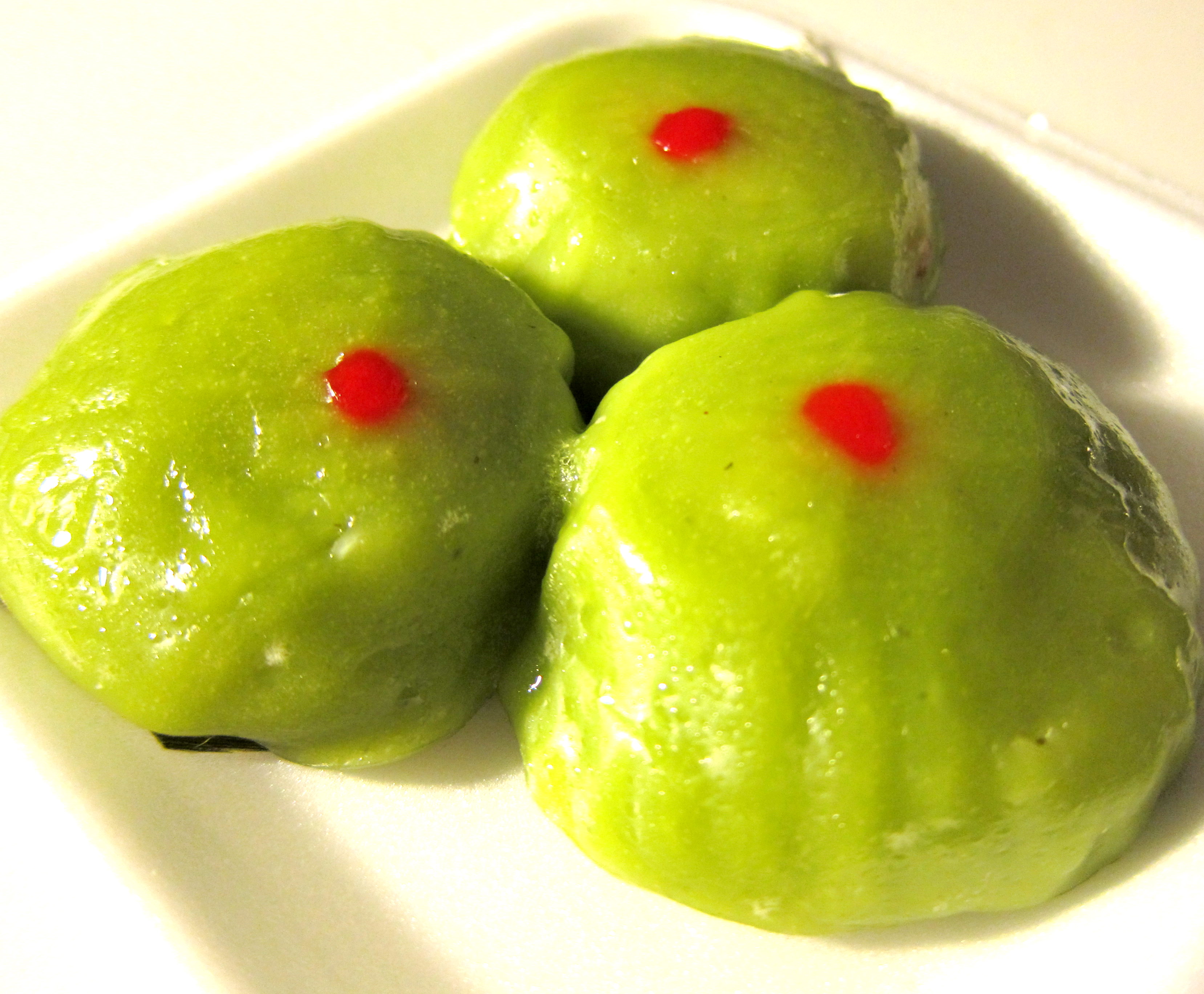

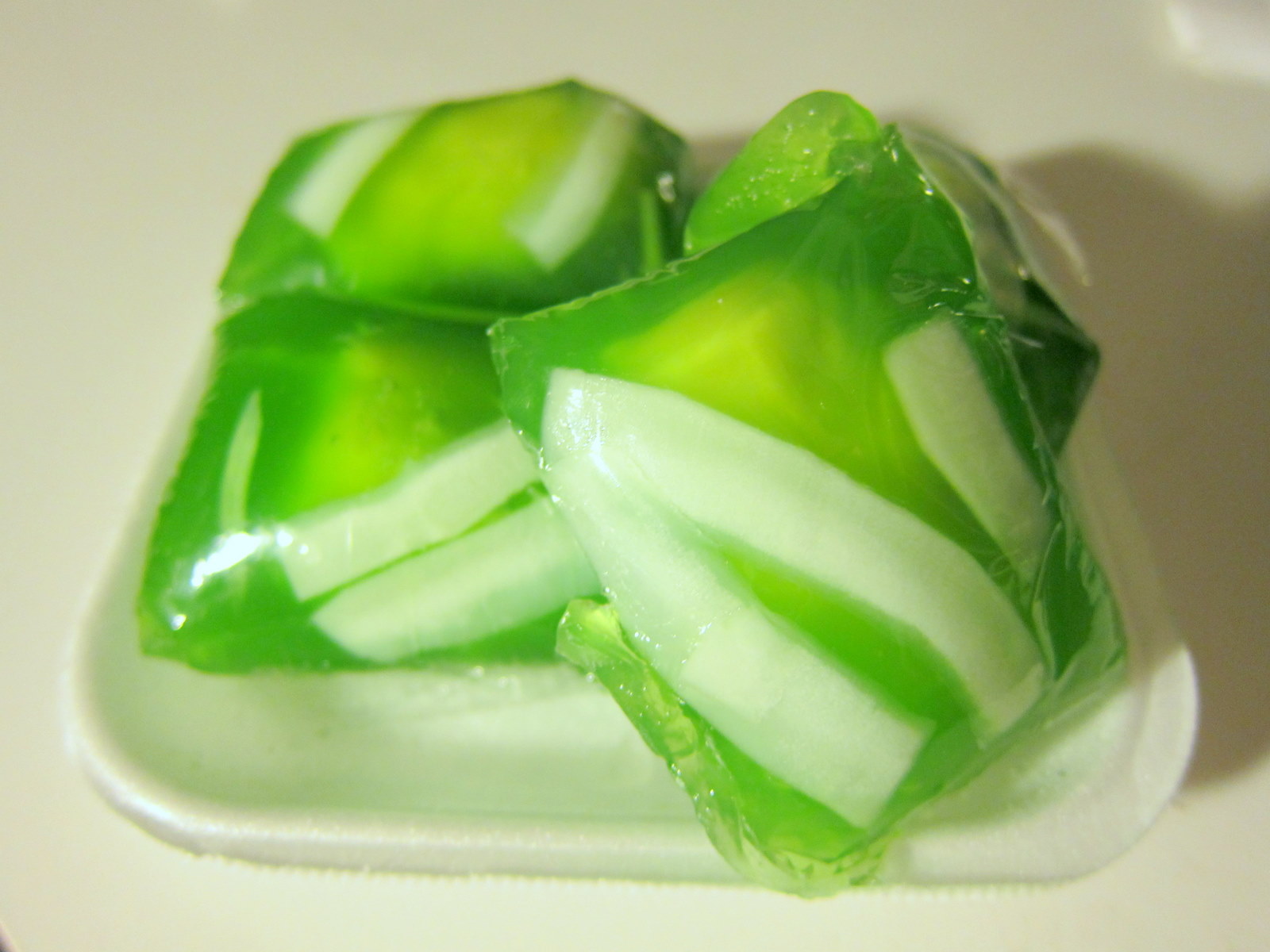
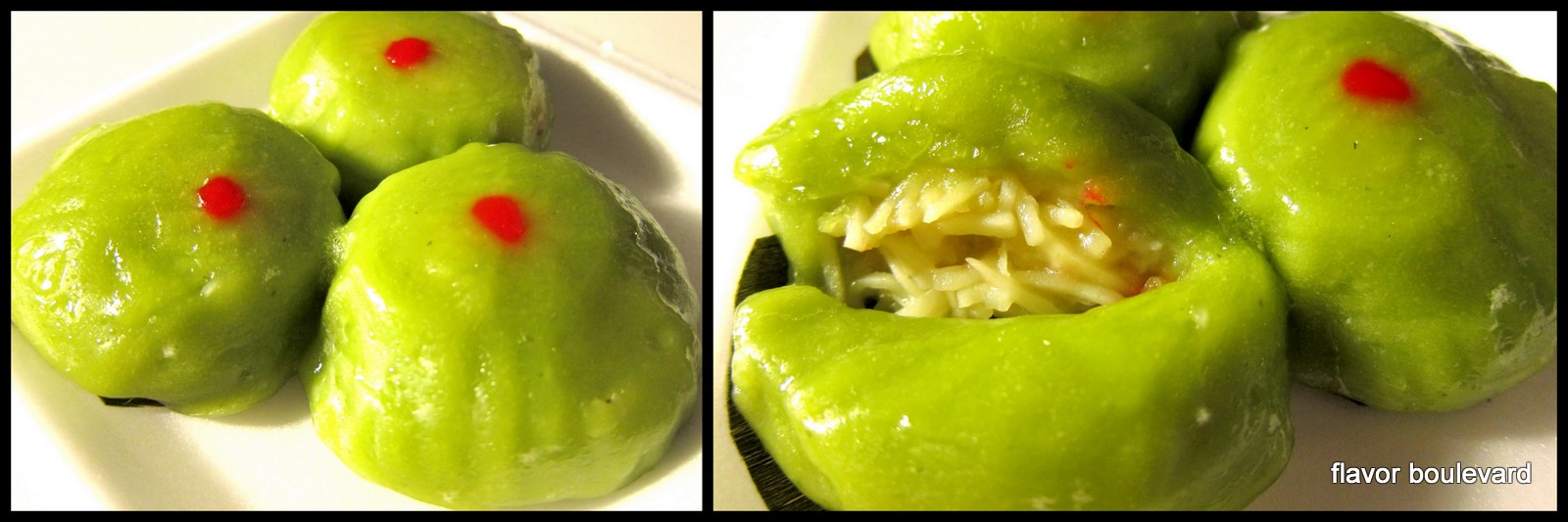
For twenty five years I’ve heard and used the expression “bánh ít trao đi, bánh quy trao lại” (“give bánh ít, get bánh quy” or “you scratch my back and I’ll scratch yours”) in a million occasions, but not once did I know what bánh quy was. At home we call cookies bánh bích-quy (biscuit) and some shorten it to bánh quy, but the biscuit and the bánh ít are too different from each other to be consider equivalents, and it’s reasonable to guess that the idiom came about before the introduction of Western food into Vietnam. So confused I was. Then one day while foraging the pile of snacks at Alpha Bakery, I almost flipped backward as I found a package of three green mochi’s labeled “bánh quy“.

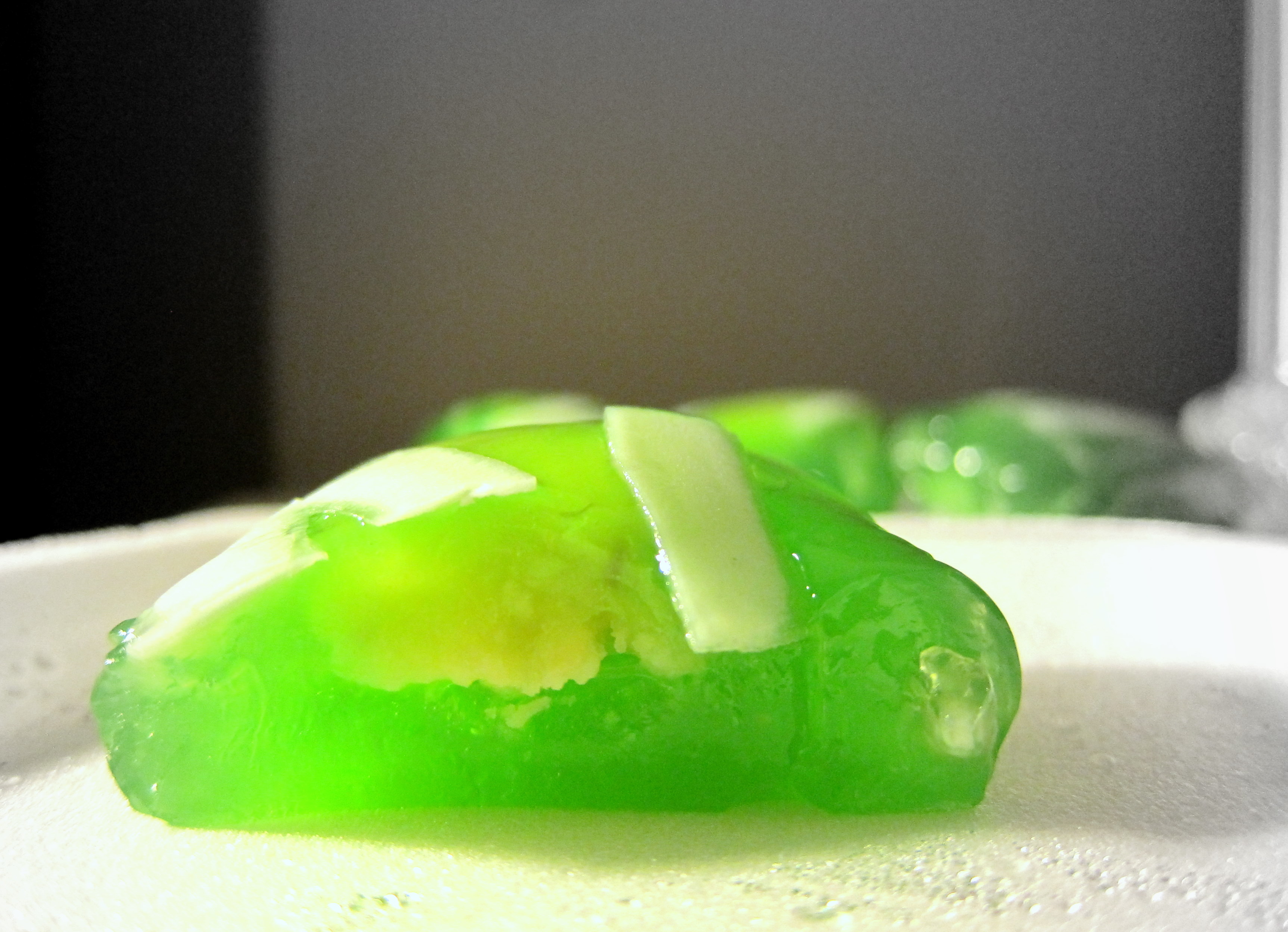
They’re round and flat at the bottom, each placed on a small cut of banana leaf, purposefully shaped like a turtle shell resting on wet grass. If you look closely you can even see some faint crevices near the rim. So there, mystery unveiled: “quy” means “turtle” in Han-Viet, and the banh gets its name from its look.
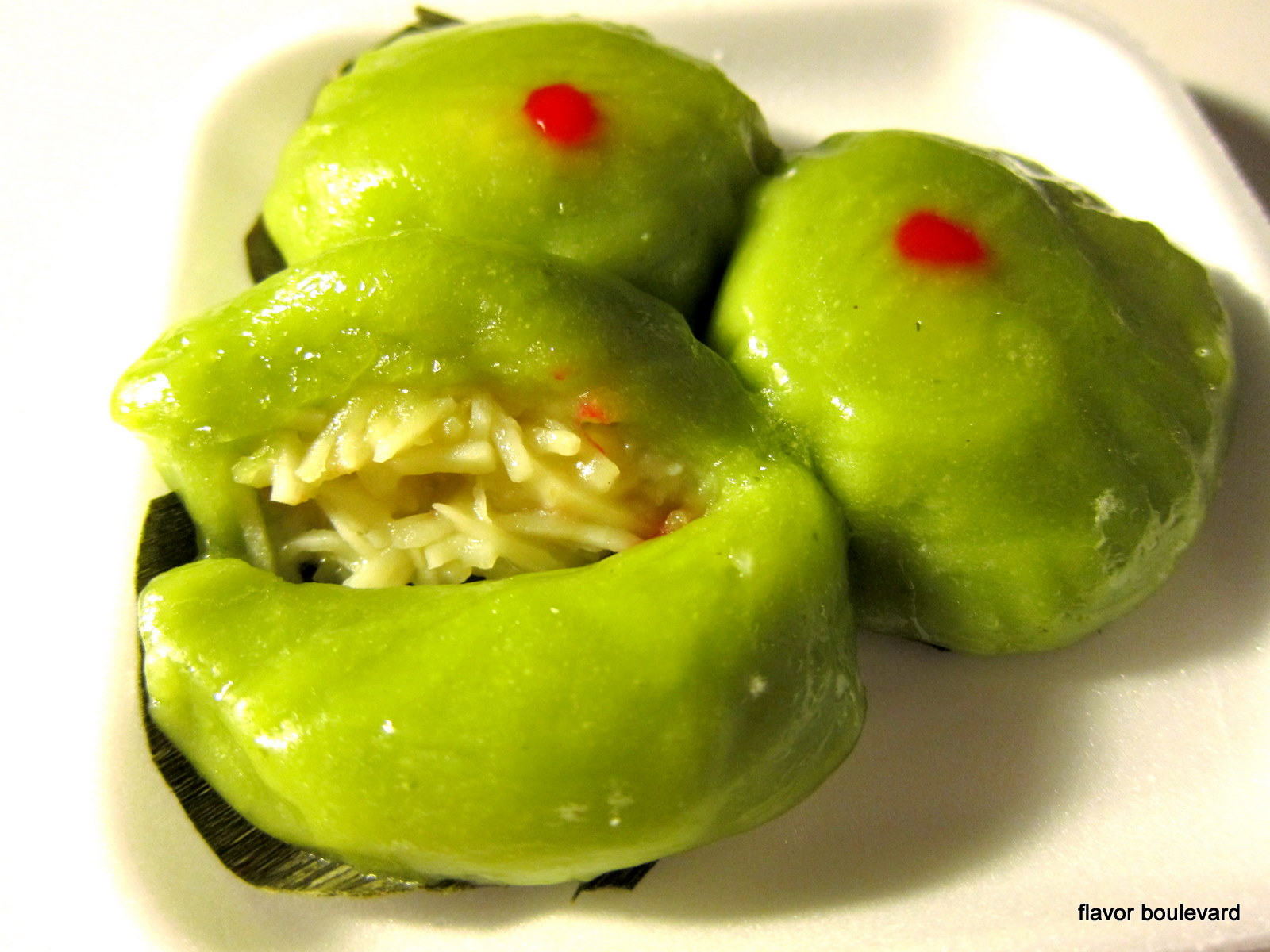

Content-wise, bánh quy is indeed just a smaller, rounder, flatter version of bánh ít: sticky rice, tapioca starch, salt, sugar, oil, and a sweet filling. Back in the day, the turtles had either a red or a yellow dot to distinguish between coconut and mung bean paste, but it seems these days only the coconut turtles are still around. Each banh is just big enough and tall enough to fit snuggly in a baby’s palm. Two or three adult bites and you suddenly wonder, hey, where did my sugary, chewy soft bun go?

Buy three at the store for $1.50. Also, look for this other type of bánh ít: bánh gai (bánh ít with thorn leaf extract)

Address: Alpha Bakery & Deli (inside Hong Kong City Mall)
11209 Bellaire Blvd # C-02
Houston, TX 77072-2548
(281) 988-5222

Previously on Sandwich Shop Goodies: bánh da lợn (pig skin pie)

This post is submitted to Delicious Vietnam #12, April edition, hosted by Anh of A Food’s Lover Journey. I’m so looking forward to the roundup this month!

Hương Giang – Savour Huế in Houston

March 23, 2011 By: Mai Truong Category: Central Vietnamese, Houston, noodle soup, sticky rice concoctions, The more interesting


I lost my memory card. If you’re a food blogger too you’d know how devastated I felt: the first advice to a food blogger these days is “good pictures”. Well, the pictures I took at Hương Giang are amazing, they just no longer exist. But, pictures or not, as my professor Lawrence Hall would say in his British tongue, “you can’t stop me,” or in this case, I can’t stop myself from blogging about the restaurant.

Is their food that good? Hương Giang takes a shy, small square in the parking lot at the corner of Bellaire and Boone. If you drive westward on Bellaire Blvd, you’ll see its sign on the left before you reach Hong Kong Market. It’s really a tucked-away place for scoffers, the outlook unimpressive, the sign blue and white like a tired worker shirt. The inside is similar to any average pho joints you’ve seen, wiped clean and plastic cheap. I knew my mom wouldn’t come here if not for blogging’s sake, but in this city it’d be hard to get a menu more Huế than this one.

There are pictures in the menu and printouts taped to the wall to tell you what the specials are. For us it’s a matter of getting what we’ve heard of but not had: gỏi mít tôm thịt, bánh ít ram, cơm hến, and bún suông.

Gỏi mít tôm thịt is jackfruit salad with boiled shrimp and pork, and like other Vietnamese gỏi, it’s served cold with rice cracker (bánh tráng nướng) for shoveling and scooping. The airy blandness of a coal-toasted sesame rice paper elevates the lime juice, the pepper, the cilantro in a gỏi. The kitchen makes a slight mistake by bringing out a plate of gỏi mít hến instead, where the boiled pork and shrimp are replaced by handfuls of tiny basket clams (hến). These freshwater bivalves are connected to Huế like McDonald’s to Americanization. As small as a finger nail, each hến constitutes a second of chewing. As a stir-fried bunch mixed with young jackfruit flesh, the collection feels grainy and humble like a fisherman’s kitchen by the riverside. The color, too, is earthy: blackish-lined ivory hến,  pale brown jackfruit, and a bit of green cilantro.

Cơm hến offers more or less the same atmosphere as the salad, except the rice amplifies the grainy texture in place of the jackfruit’s fleshy blend, no rice cracker presents to break the unanimity, and the hến‘s natural sweetness here isn’t damped by any lime juice. When there isn’t just a few, but at least a hundred of these quiet lives in a bowl of cơm hến, you can’t help but feel the responsibility to treasure each spoonful. It’s the least you can do for the dignity of those tiny freshwater basket clams.

If cơm hến were hamburger, then bánh ít ram would be mac ‘n cheese. It’s not super well known, but anyone who knows Hue food knows this sticky (rice) business. I first learned of bánh ít ram from noodlepie, Ravenous Couple call them fried mochi dumpling (and you really can’t get a better looking picture of bánh ít ram than what the couple styled on their site). Each ping-pong-sized dumpling carries a marvelously inviting look: a plump, shiny round ball on a golden base, cut in half and there snuggle rosy bits of shrimp and char siu pork. Each bite is a step into a river: first soft, then sinking, then hitting the crusty bottom. With or without the mixed fish sauce, savory bánh ít ram, also called bánh ram ít by the natives, is a fair partnership between the steamed bánh ít and the deep fried bánh ram, with each component designed to excite the other. So why is it not as popular as bánh bèo? Because it’s hard to go down the second time. One bánh ít ram is good, two are too many. Ten on a plate, like what we get at Hương Giang, becomes a bloody battlefield.

Thankfully we are a team of three, and we rotates plates to share both the good and the challenging. And thankfully we get bún suông. This noodle soup draws a fine but successful line between being too meaty and being too thin, as it contains both. Ample cuts of chả cá (fish cake, similar to eomuk), chả lụa (silk sausage), and juicy shrimps weave among the angel hair rice vermicelli, all soaked in a slim sweet broth. Bún suông at Hương Giang tastes pure like bún mộc, quite a contrast from the definitions I’ve found online, whose broth is as thick as a deep South accent of the cooks said to invent the noodle soup.

If there are indeed two types of bún suông, the southern style and the Hương Giang style, then I’d choose the latter any day. If the southern style is really the only traditional style, then I’d go to Hương Giang just for their bún suông. You know you can trust a chef who has created something so delicate, so heart-warming, so balanced, and so very Huế.

Address: Hue Huong Giang (near Hong Kong Market)
11113 Bellaire Boulevard
Houston, TX 77072-2607
(832) 328-1308

Money matter:
gỏi mít hến (6.25) + bánh ít ram (6.50) + bún suông (6.50) + cơm hến (8.50)
= $27.25 a big lunch for three

Candied cà-na (white canarium or Chinese olive)

March 12, 2011 By: Mai Truong Category: California - The Bay Area, Fruits, One shot, Southern Vietnamese, sweet snacks and desserts, The more interesting


It’s not the black stuff they throw on your pizzas or the green thing they toothpick on your sandwich. How many of us city kids have tasted the tartness with a tiny sweet afterpunch of this Mekong delta fruit? It’s addictive like fresh squeezed orange juice on a summer day. Speaking street tongue, it’s nature’s crack in oblong shape.

Eat ’em fresh with chilipepper salt, or candy them with sugar and heat, it’s how kids down South do it with the cà na they shake off from bushes on the riverbanks. And argue if you may, kids know tasty food. The shape is really the only link cà na has with the Western olive (Olea europaea), though it’s at least two times bigger. Does the name “cà na” mean anything?

“Cà” is tomato, and “na” is the northern word for sweetsop, two totally unrelated species to this ovoid fruit. So “cà na” is not a compound noun. I’m no etymologist but here’s my best guess: “cà na” |kah nah| is a shortened vietnamization of the Thai word “kanachai”, from which cultigen taxonomists derive the the scientific name “canarium”, a genus with about 75 species native to the tropics. The cà na we eat and love from those riverbank bushes belongs to the species Canarium nigrum (black canarium) and Canarium album (white canarium), or “trám đen” and “trám trắng” in pure Vietnamese. Another delta variety is Canarium subulatum, pointy at both ends and sappy like green bananas.

Words on the net claim that cà na‘s acidity is good when you have a cold, drink too much, or wants to lower your weight, thus not so recommended for skinny sticks like me. I’ve never popped a fresh one myself, but this is the most (and only) mouth-watering description I could find on the net (translated from the Vietnamese original):

Every year, in roughly August or September, when the Mekong flushes the paddy fields, the cà na trees bear their first fruits. What could be better than rowing a canoe downstream, then tying it to a cà na trunk base by the riverbank to cast your fishing net, and while waiting, dip a bursting green ripen fruit into chilipepper salt to soak your soul with its wild and clean sweetness?


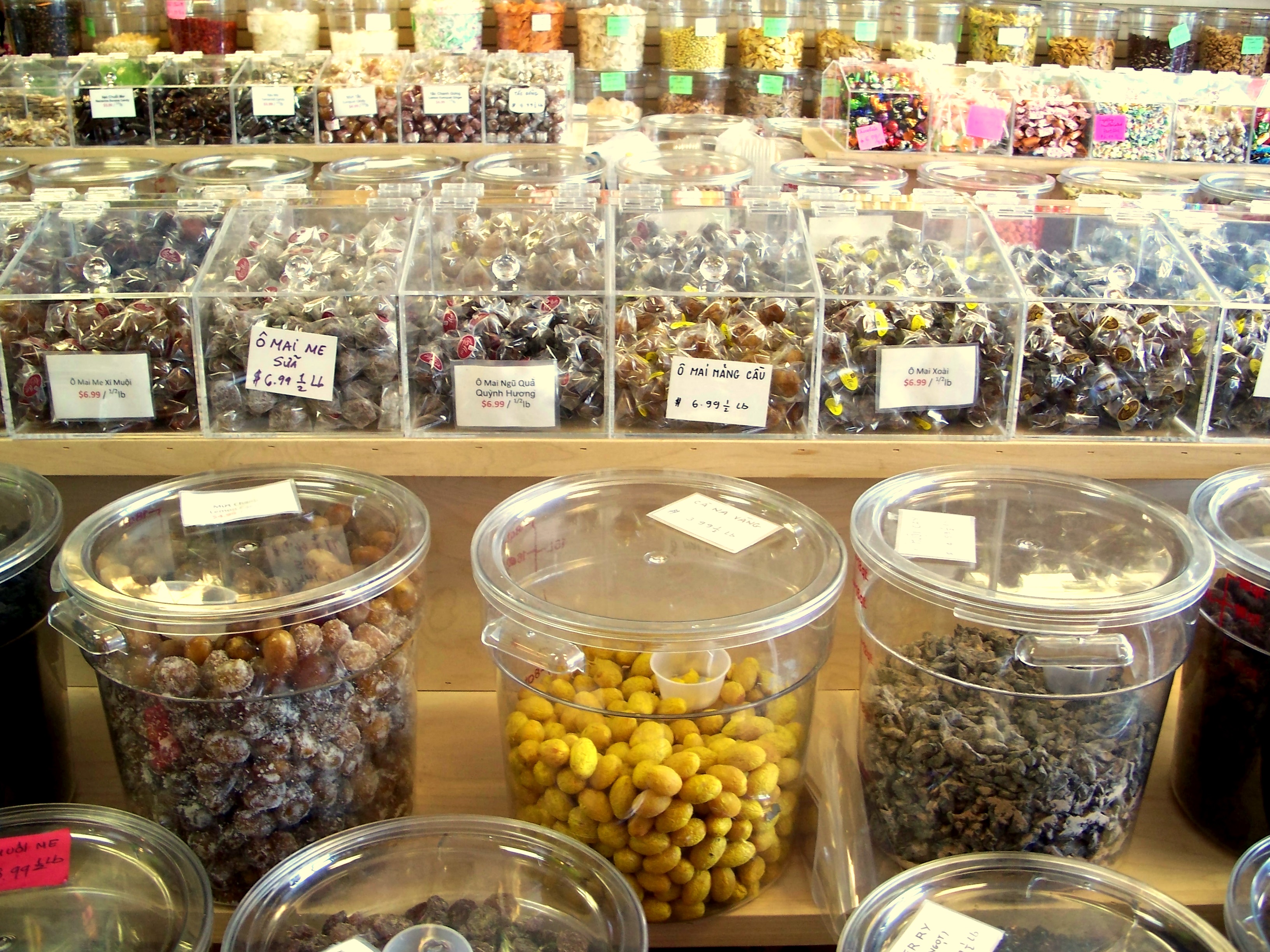
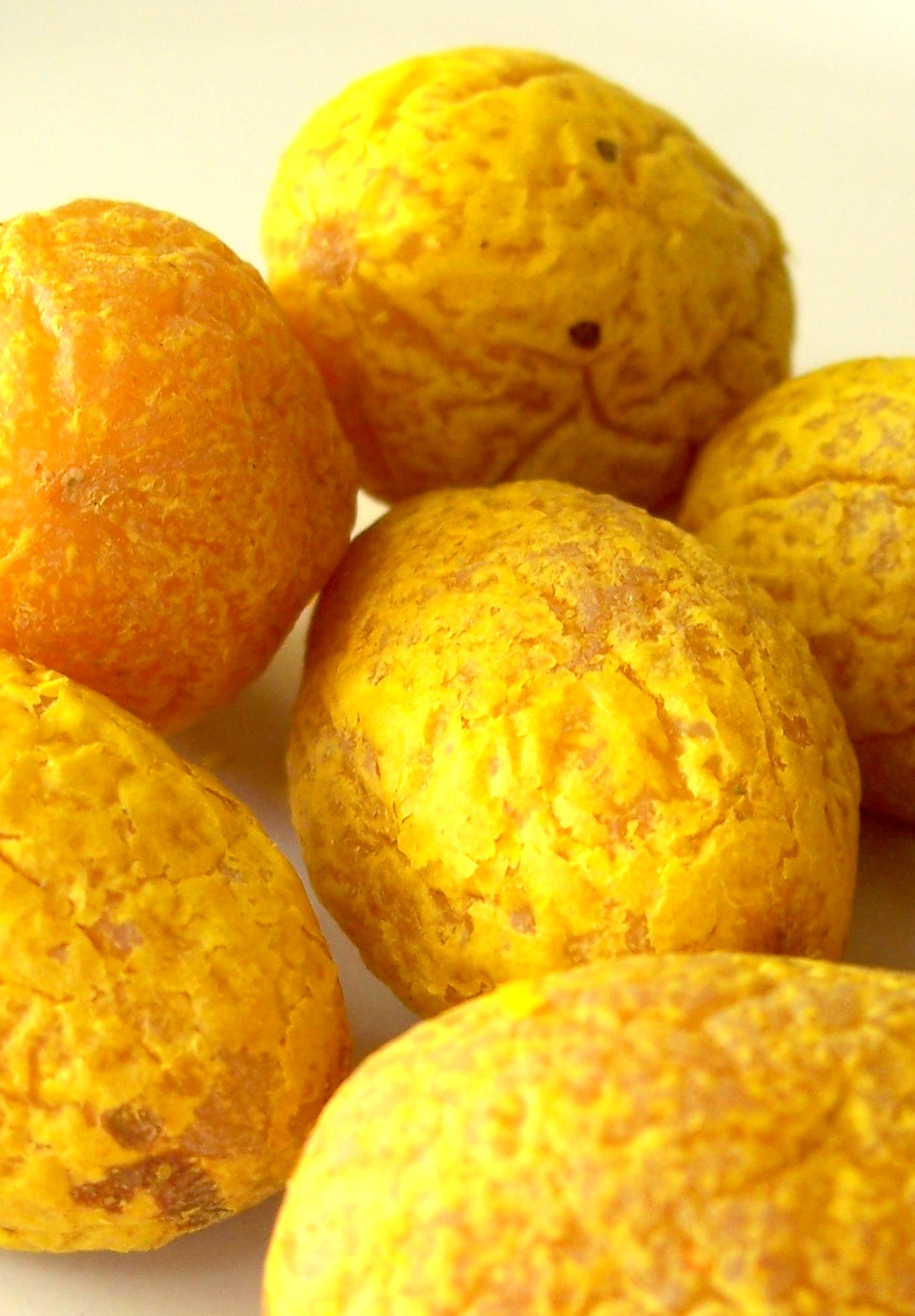
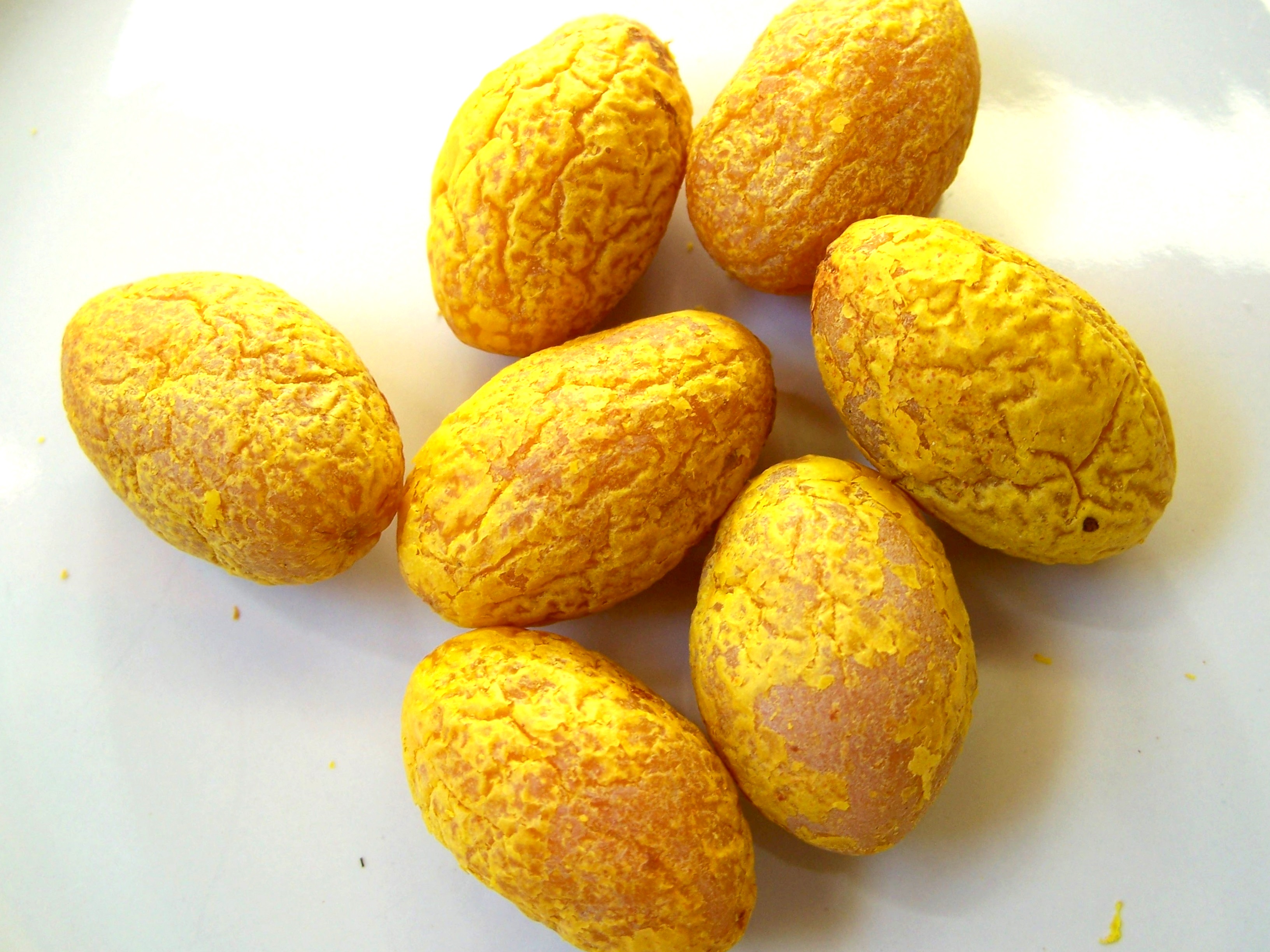
The first cà na‘s I’ve had are bright yellow with cracked skin, as big as a big green grape, resembling petrified dinosaur eggs, sold in glass jar among the ô mai and the salted plums.


The first nibble must be executed with caution. It’s firm and sound, with one big hard seed. No wonder the folks at home call the American football the cà na ball: they look and feel the same, only smaller. The flesh is dense like an old coconut’s meat, sour like lemon leaves, yet sweet like licorice blended with a dash of sea salt. How they’re made is a mystery to me.

Address: Vua Khô Bò & Ô Mai
2549 S King Rd #A-B
San Jose, CA 95121
(408) 531-8845

Also from here, also fruitilicious:
1. banana tootsie roll
2. ô mai (spiced fruit ball)

Other informative links on the Chinese olives:
a list of different cultivars in China
Autumn olive


This post is submitted to Delicious Vietnam #11, March edition, hosted by The Culinary Chronicles. I’ll head to her blog for more yummy posts on Vietnamese food this month, and many thanks to the Ravenous Couple and Anh for creating this event!
Sandwich shop goodies 14 – Bánh da lợn (pig skin pie)

March 06, 2011 By: Mai Truong Category: Houston, One shot, sticky rice concoctions, sweet snacks and desserts, Vietnamese


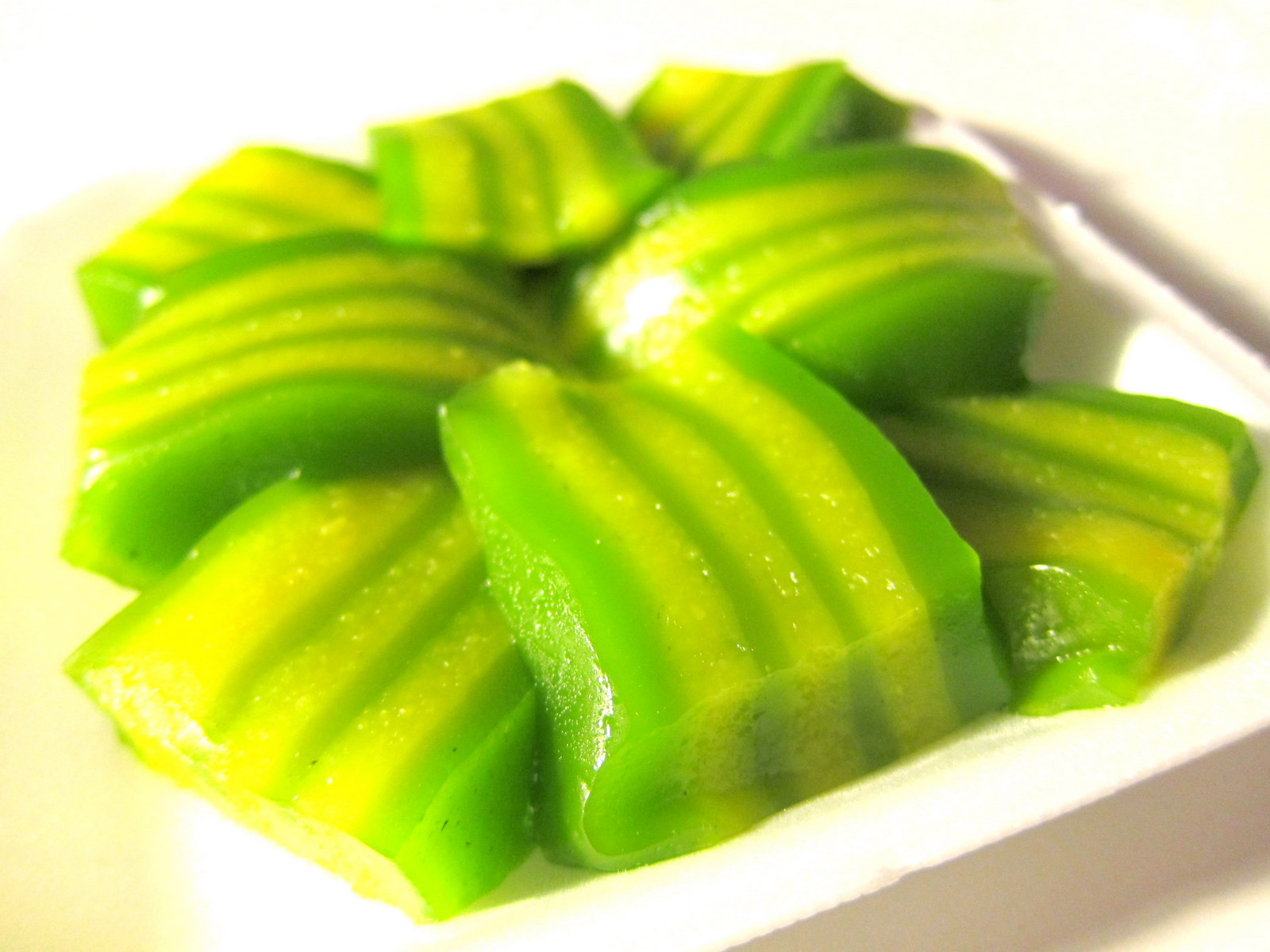
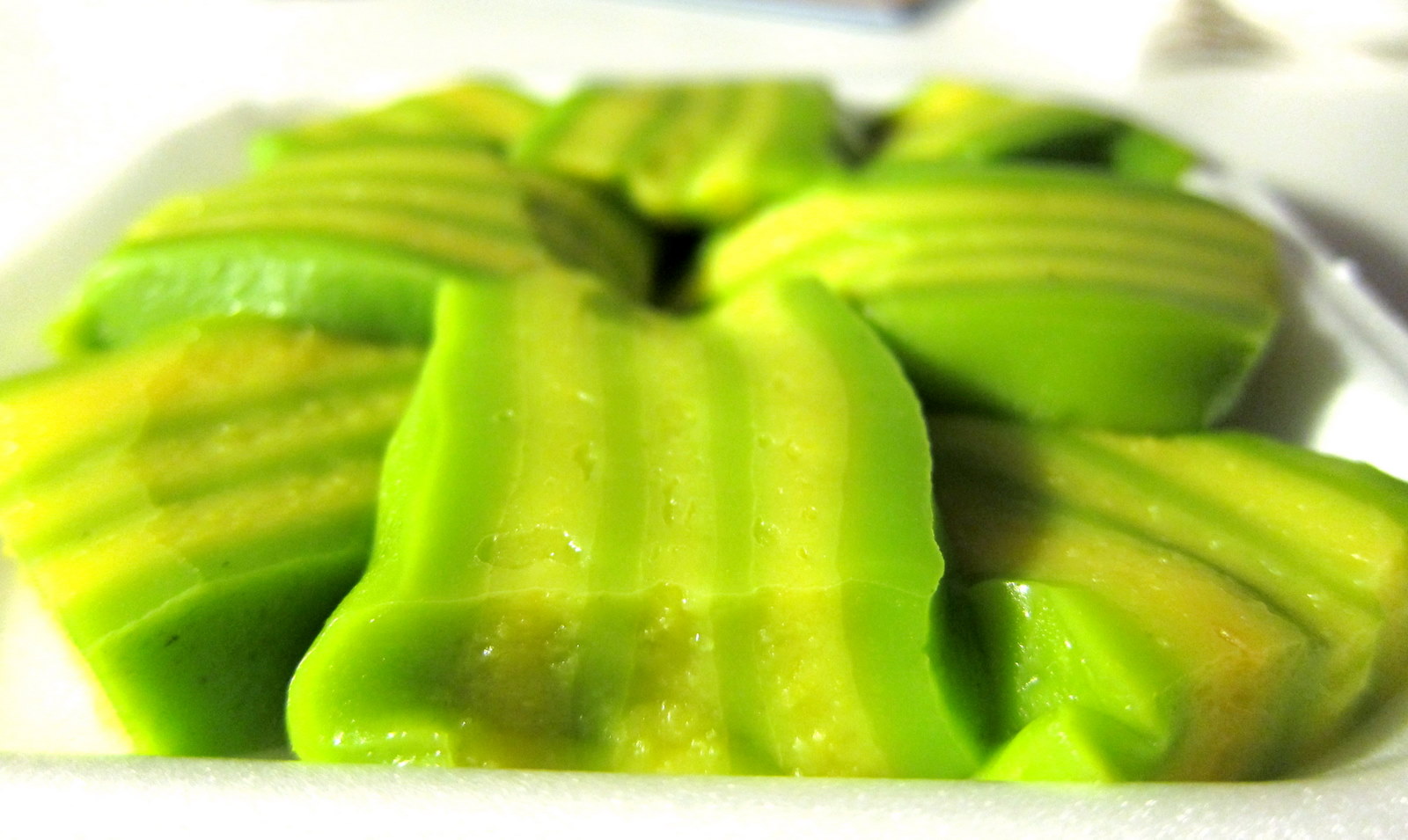
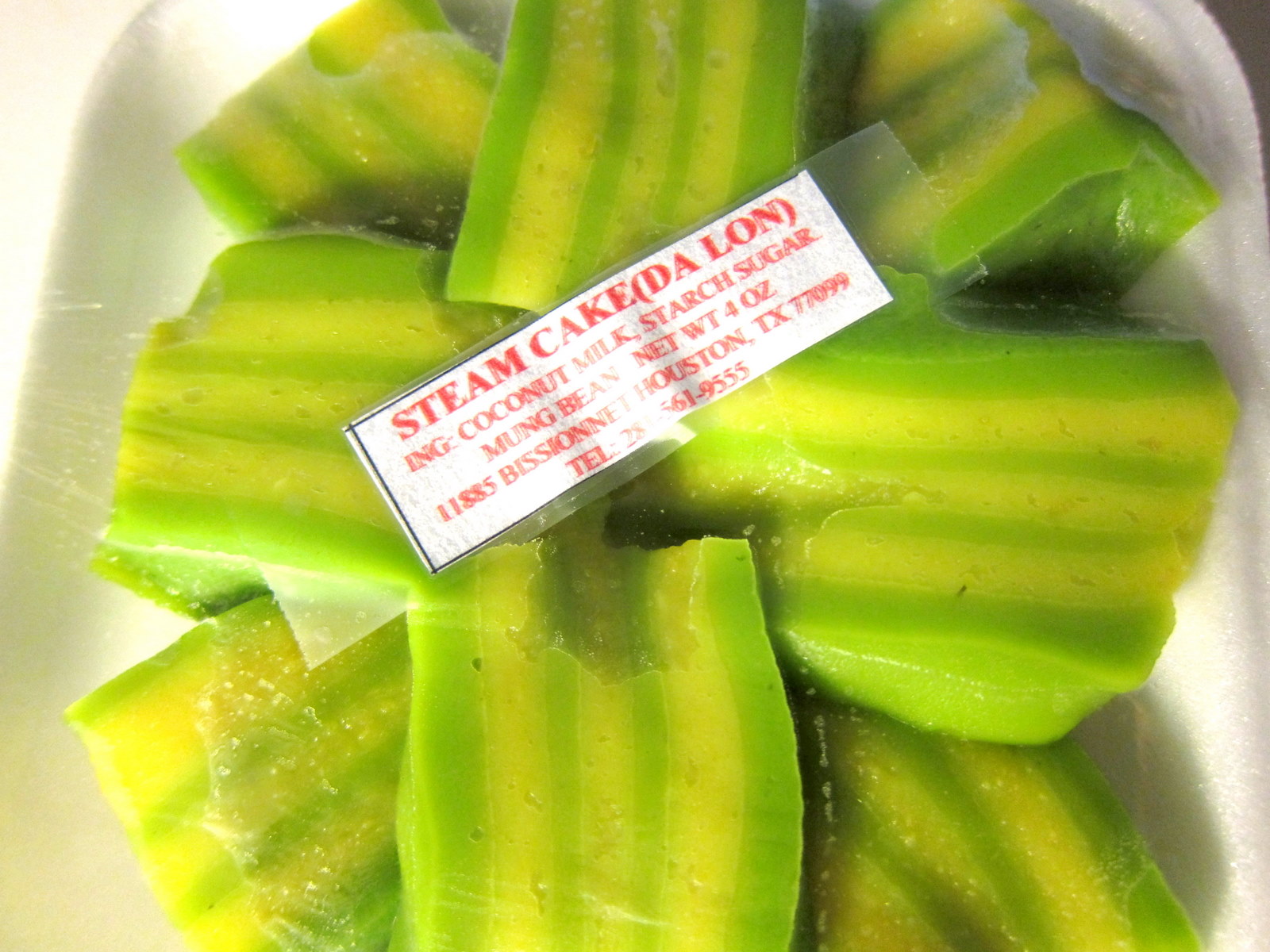
This is no stranger in the Vietnamese food biz: the layered pastry that gets its name from looking like pork belly, except green and yellow. Of course it doesn’t contain any pork skin, it’s sweet, sometimes may even be too sweet. Dad used to buy a whole pie home, as big as a platter and as warm as a father’s hand. From that same bakery somewhere in the market alley, he would buy bánh chuối nướng (bread pudding) too, which I always preferred to the bánh da lợn. But thinking back on those days when we lived near Bà Chiểu Market, it was certainly the best pig skin pie I ever ate.


Many years have passed, and many bánh da lợn have been eaten by me, both in its homeland and across the seas. The best way, I figured, to slaughter these chewy beasts is to peel off the layers one by one, when it’s warm. That wet, smooth skin of tapioca flour, when warm, is fragile. You don’t want to break it while peeling, and you want to drop it whole in your mouth to wrestle with its resilience, all the while inhaling the sweetness of pandan leaves and vanilla fused in its tone.

Simply put, a cold “pig skin” is a dead “pig skin”. A warm mung bean paste layer is also less sweet than a cold one, and thank goodness the bean layers are always one fewer than their tapioca neighbors. The pies Dad bought from that market bakery would have white chewy layers too, and the green ones didn’t look radioactive green like those we get from sandwich shops these days. Ah marketing strategies, just like somewhere in Vietnam someone thought of calling it “bánh chín tầng mây” (cloud nine pie) (because pork skin doesn’t ring any two-cent poetic sound), or when the tapioca layer turns dark purple, because of either magenta plant‘s leaf extract or food coloring, and the bean layer light purple because of taro.


Whatever the case, the original bánh da lợn is still the best. I looked through 51 pages of Google search for its origin, which seems likely lost through generations of home cooking and street food mingling. You see, it was never really a praiseworthy, historically recorded invention in the kitchen. There’s no village or province associated with the best bánh da lợn. It’s probably from the South, even if “lợn” is the Northern word for “pig”. It’s a product from a steamer, it’s cheap, it has texture, kids like it, Dad likes it. That’s all I know.

And by the way, Alpha Bakery & Deli sells some good, thinly sliced, warm numbers for a buck fifty.

Address: Alpha Bakery & Deli (inside Hong Kong City Mall)
11209 Bellaire Blvd # C-02
Houston, TX 77072-2548
(281) 988-5222

Previously on Sandwich Shop Goodies: bánh xu xê (couple cookie)
Next on Sandwich Shop Goodies: bánh quy (turtle mochi)

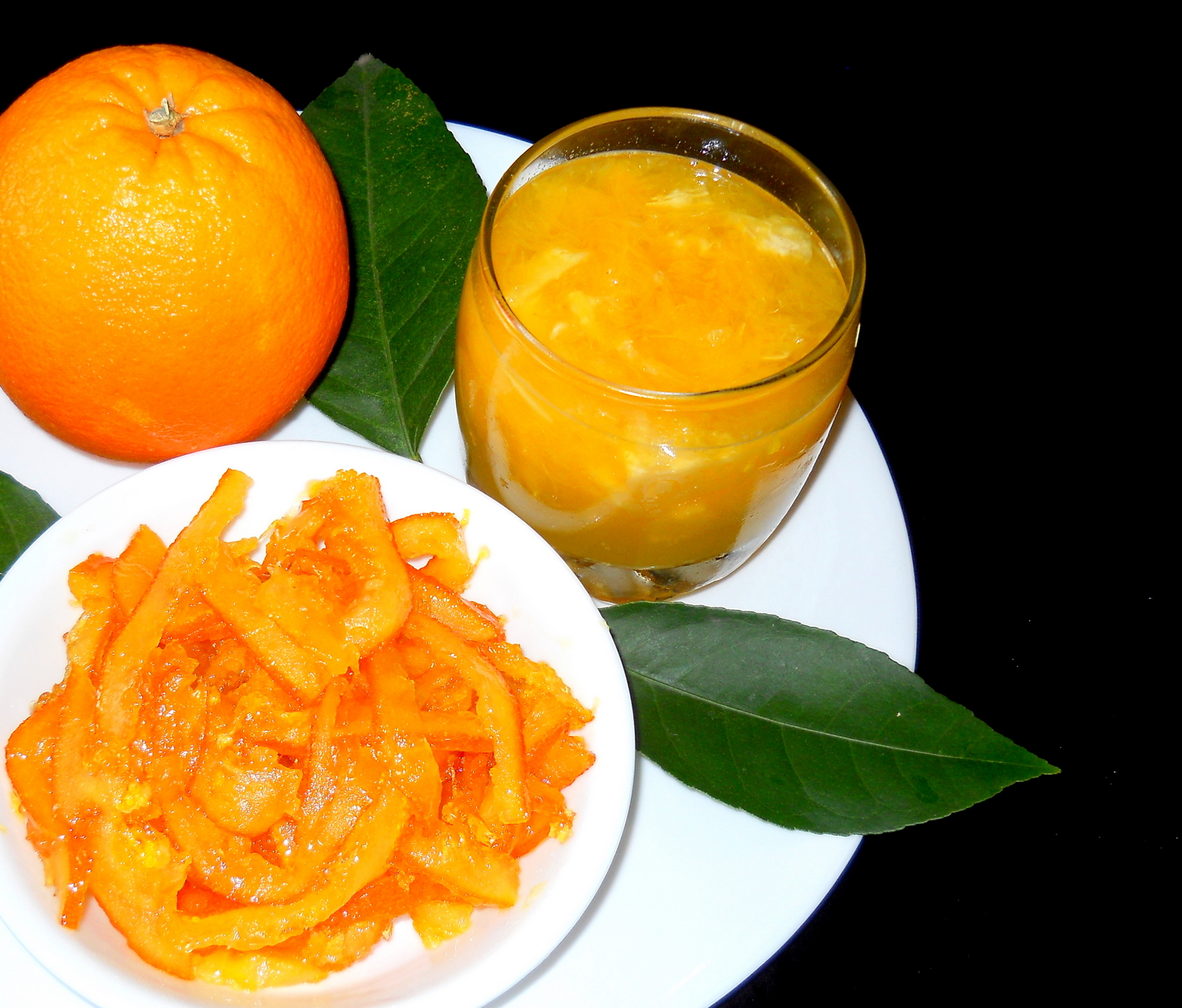
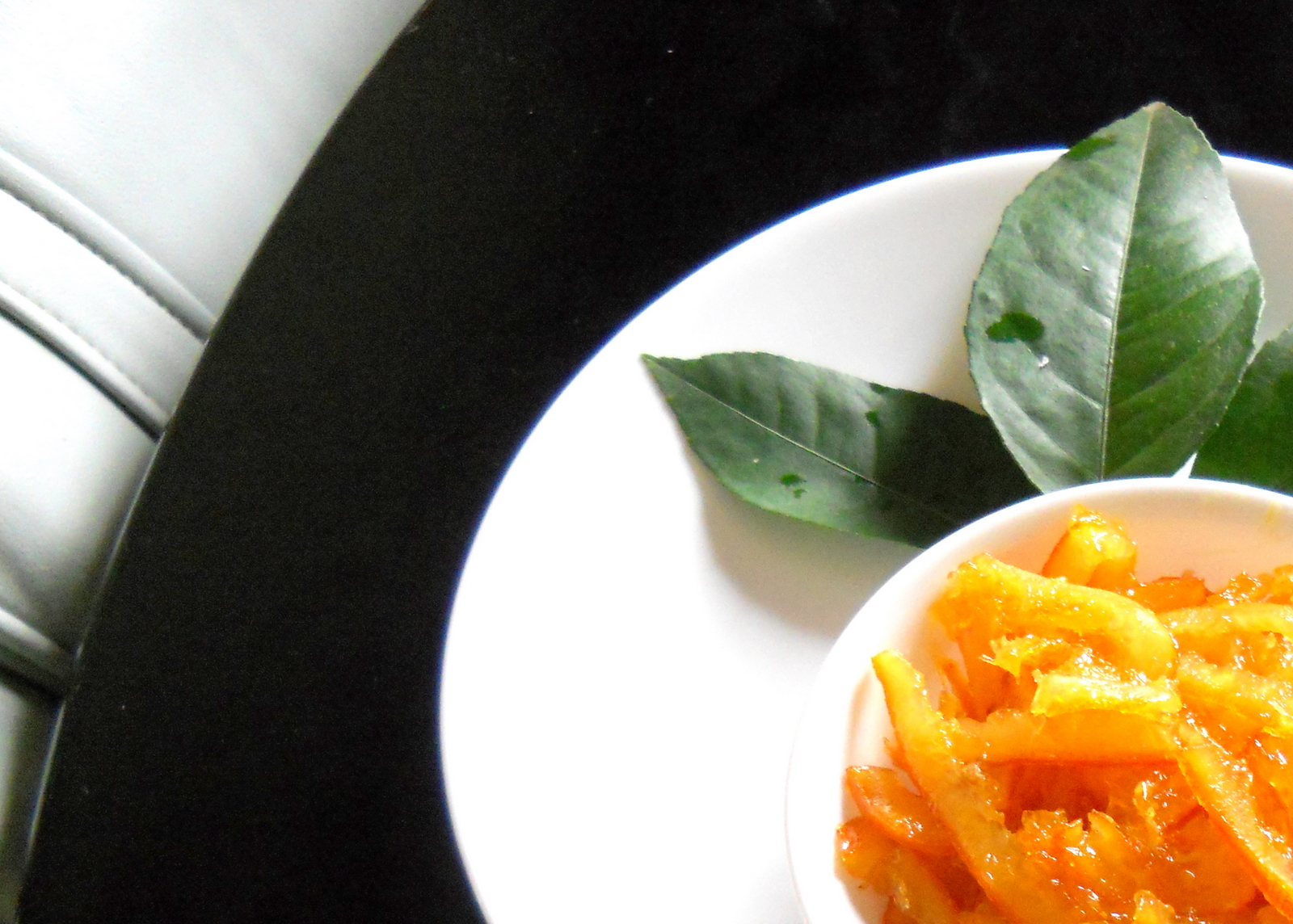
Mom’s Cooking #1: Candied orange peel with pulp

March 03, 2011 By: Mai Truong Category: Fruits, RECIPES, sweet snacks and desserts, Vietnamese

*Guest post in Vietnamese by my Mom, translated by me*


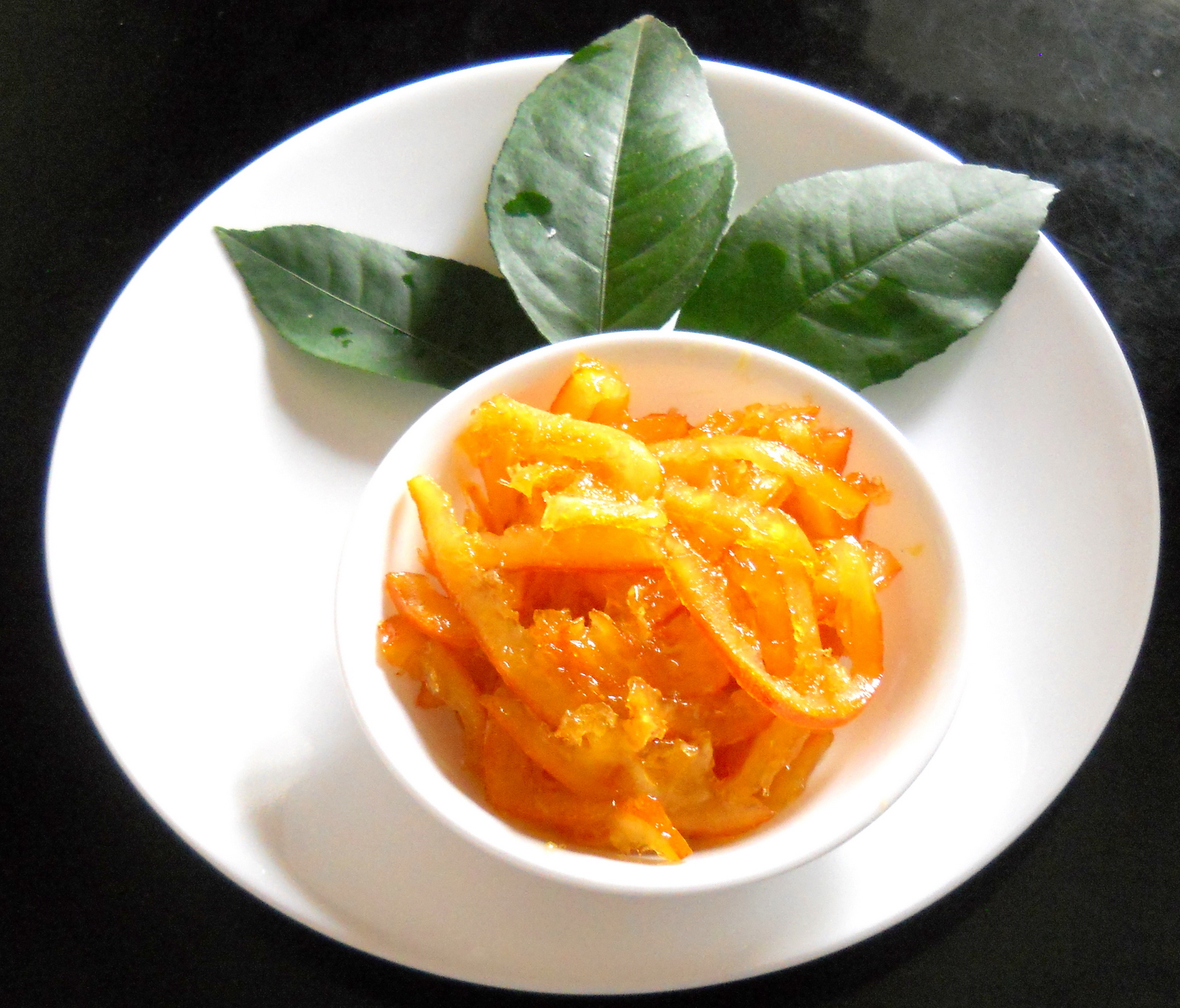
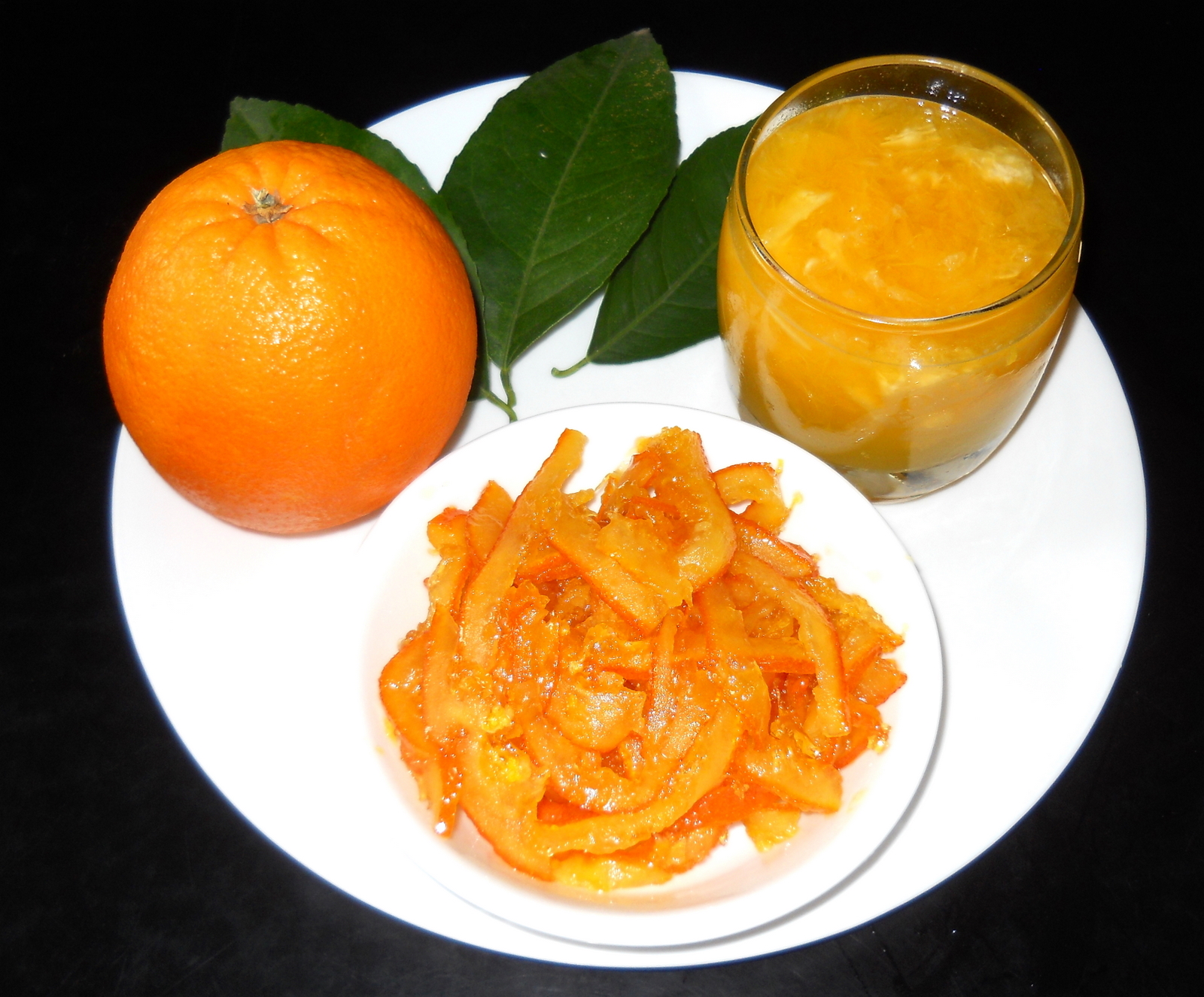
My daughter and her friends always like my fresh squeezed orange juice, so every time she visits home in the summer and winter break, we drive up to the Farm Patch Produce Market in College Station to buy navel oranges. The grocery stores have navel oranges too, of course, but for some reason Farm Patch always have the best. Their rotund shape, their bright color, their rugged skin similar to that of the Vietnamese cam sành, all promise a slender sweetness contained, not to mention the little twin at the apex, darling like a hidden Christmas gift. These oranges are so well worth the two hour drive that I regret throwing them away after juicing, so I thought, why not make “mứt cam“, candied orange peel?


The simple ingredients:
– 2 oranges
– 10 tbs sugar or to taste
– 1 cup water


The simple method:
– Wash and squeeze out juice from the oranges, then slice the peel (with pulp attached) into strips.
– Mix 10 tbs sugar with water and simmer on low heat for roughly 15 minutes. Use a pair of chopstick to test: dip the chopsticks into the boiling sugar liquid, lift up and separate the chopsticks, if a sugar silk strand forms in between then the mixture is ready for the next step.
– Add orange peel strips, continue simmering on low heat for about 30 minutes, stir occasionally to make sure the sugar coat and soak the peel evenly.
– When all liquid evaporates and the peels feel jammy, turn off heat.
– Put candied peel in glass jar, wait until it’s cool to seal and store in refrigerator.


This candied orange can also be eaten with toast like marmalade, its sweetness stark, its texture crunchy, a natural minty sweep from the peel even gives it a healthy sense. They say eating it helps improving sore throats. I think making it helps improving patience. 🙂


This post is submitted to Delicious Vietnam #11, March edition, hosted by The Culinary Chronicles. I’ll head to her blog for more yummy posts on Vietnamese food this month, and many thanks to theRavenous Couple and Anh for creating this event!

Tags:

Red Pier on Milam Street

February 20, 2011 By: Mai Truong Category: Comfort food, Houston, noodle soup, sweet snacks and desserts, Vietnamese


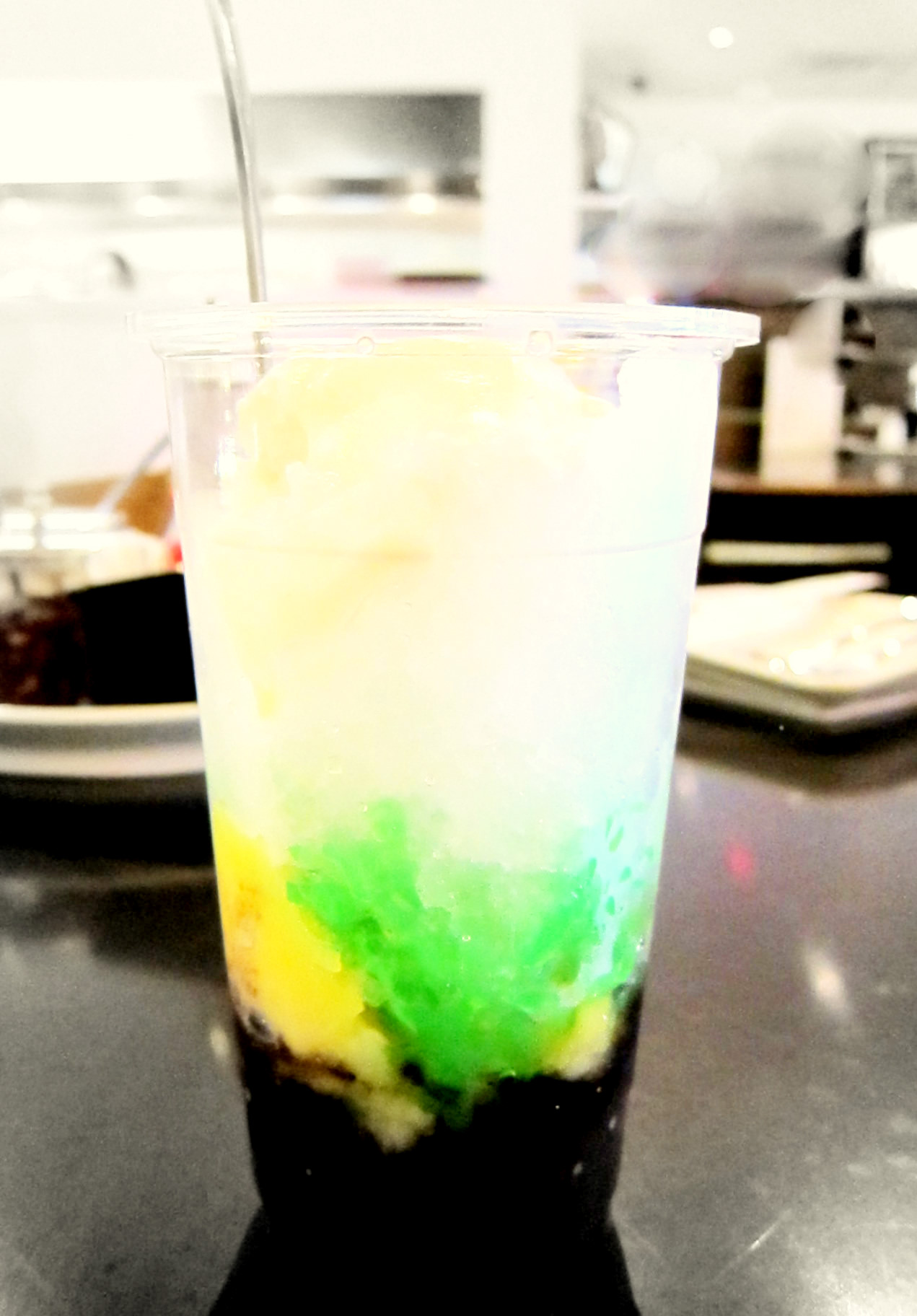
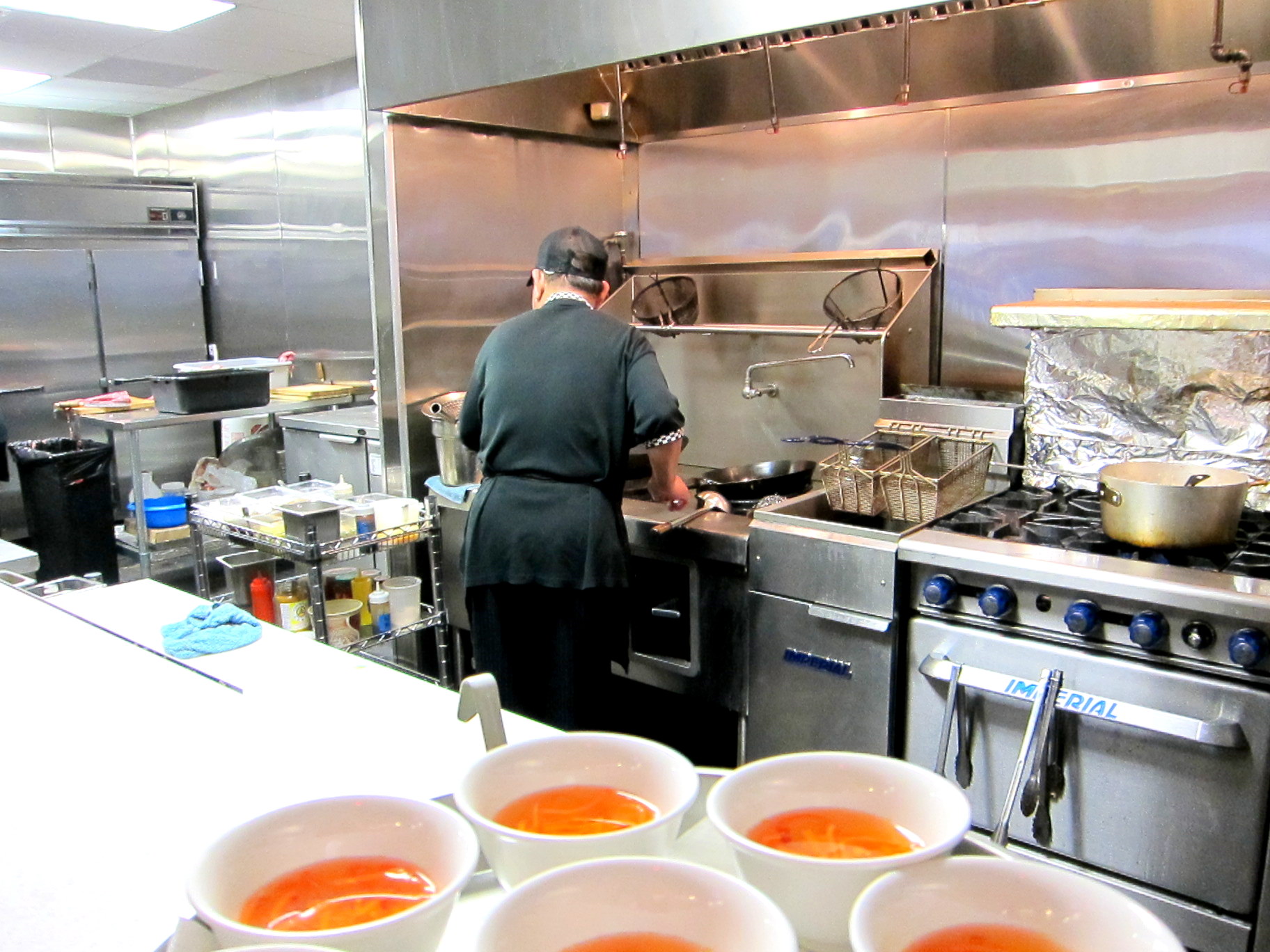
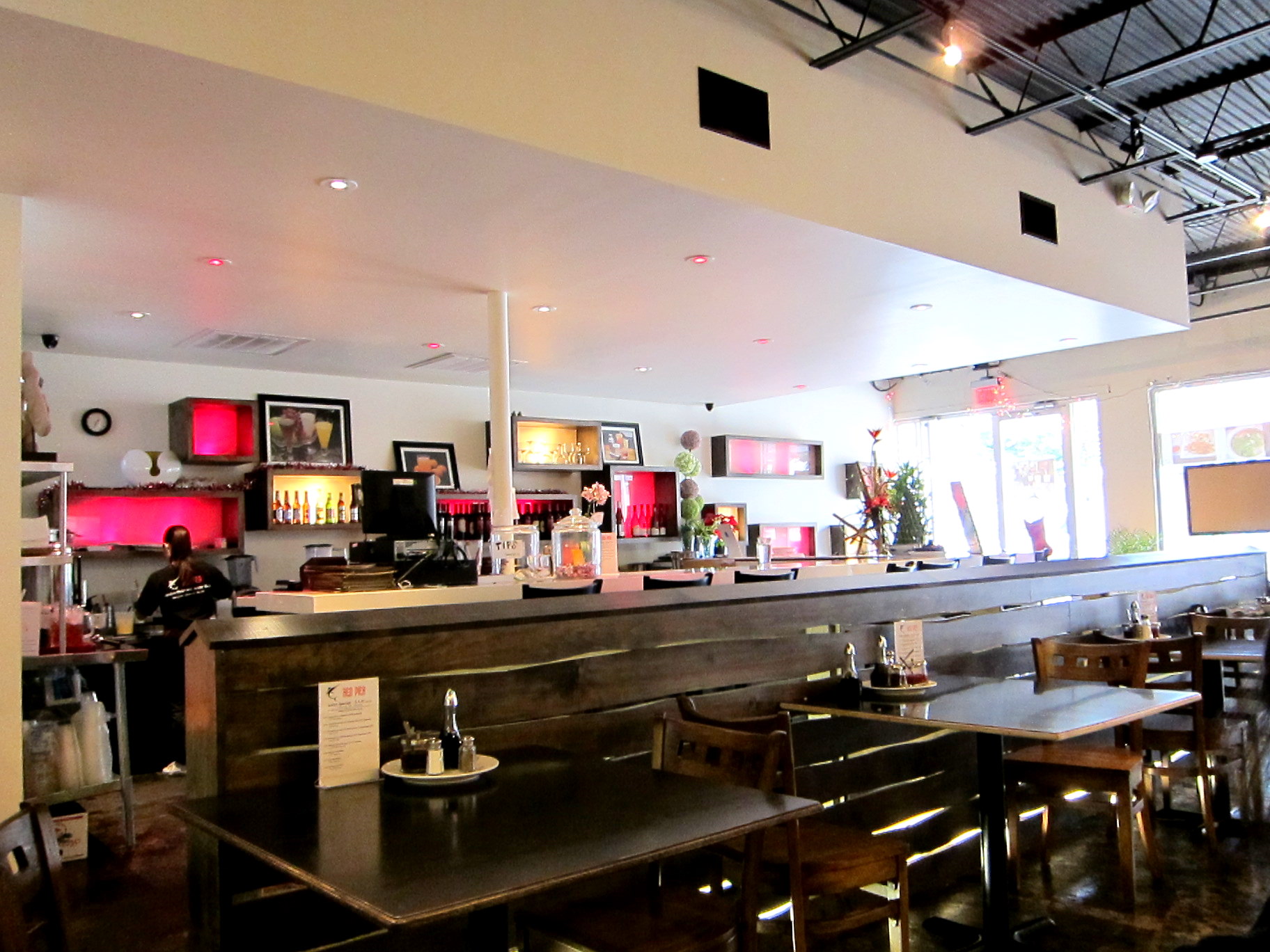
Among the countable Vietnamese restaurant owners that ever bother to make their menus available on the web, Kim Châu and her husband put together quite a decent site for their Red Pier: black background, colorful foods, dazzling images of the bar and the walls, names and prices of 166 dishes minus dessert. Red Pier is a go-to when you work in the ‘hood, have an hour for lunch, and just want some normal noodle soup or vermicelli at a reasonable price. Or when you crave something sweet and cold and nutty, like a chè ba màu (trichromatic bean and tapioca ice).


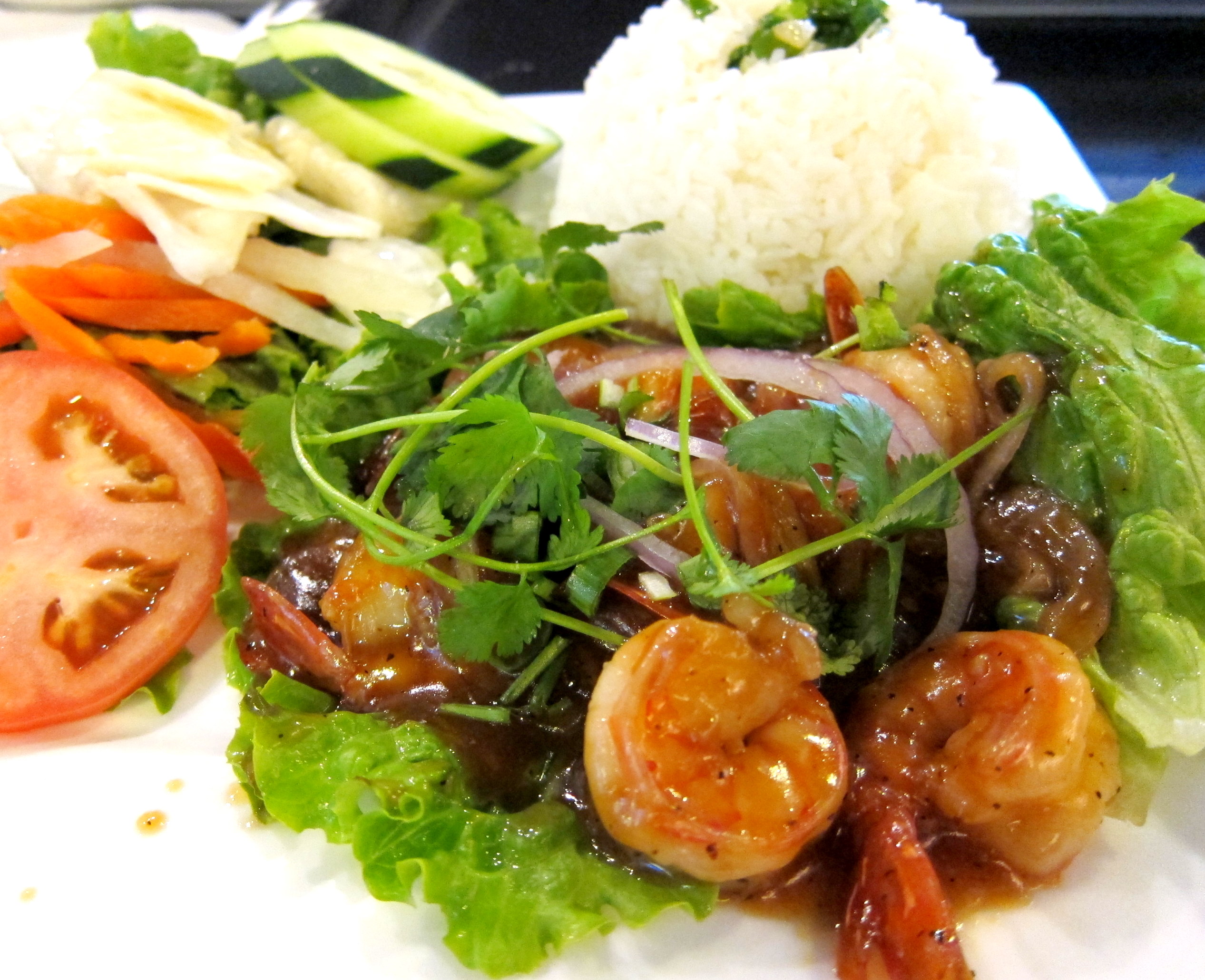
Don’t drive too fast down the one-way Milam, you’d miss the restaurant for sure. It took us a few loops around until we pulled into the right parking lot, just across the street from the proprietors’ other business, Kim Châu Jewelers, on the left side. Also, don’t order Cơm Tôm Rim (rice with caramelized shrimp), unless you’re having salt-deficiency. If you must, Chè Ba Màu proves to be a comforting three-buck companion.


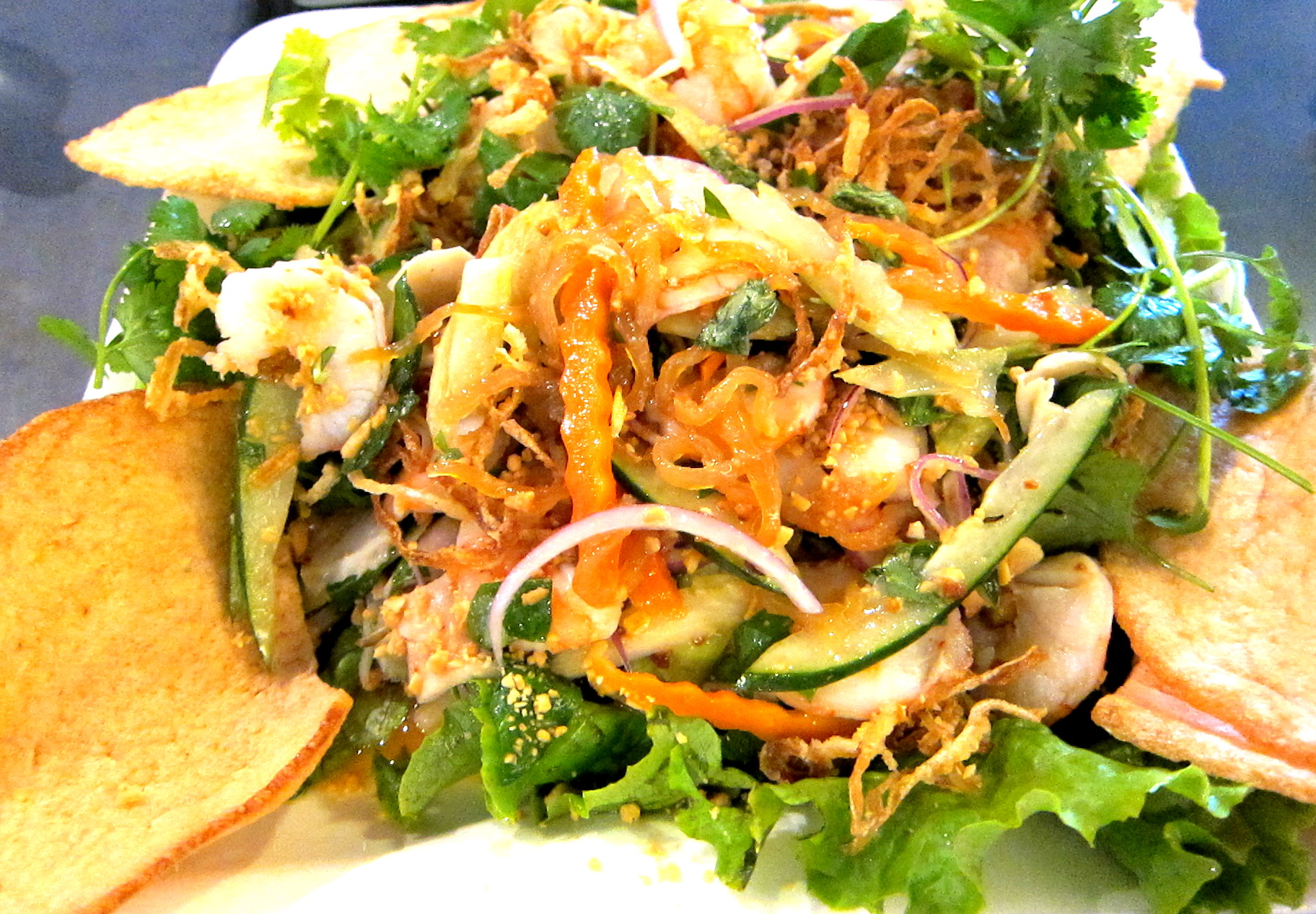
Do order #1: Gỏi Sứa Tôm Thịt (jellyfish salad with shrimp and pork), the only setback is its chilipepper overload, which I’m sure you can ask the cook to take it down a few notches. The thinly sliced  jellyfish blends rather too well with carrots and cucumber strings you’d have to look to notice its cold, clean elastic crunch. Gỏi Sứa Tôm Thịt is one of the house specials that Red Pier emphasizes on their TV advertisement, and combined with large shrimp crackers it’s certainly a better execution of jellyfish than duck tongue and jelly fish at Chinese dim sum halls.


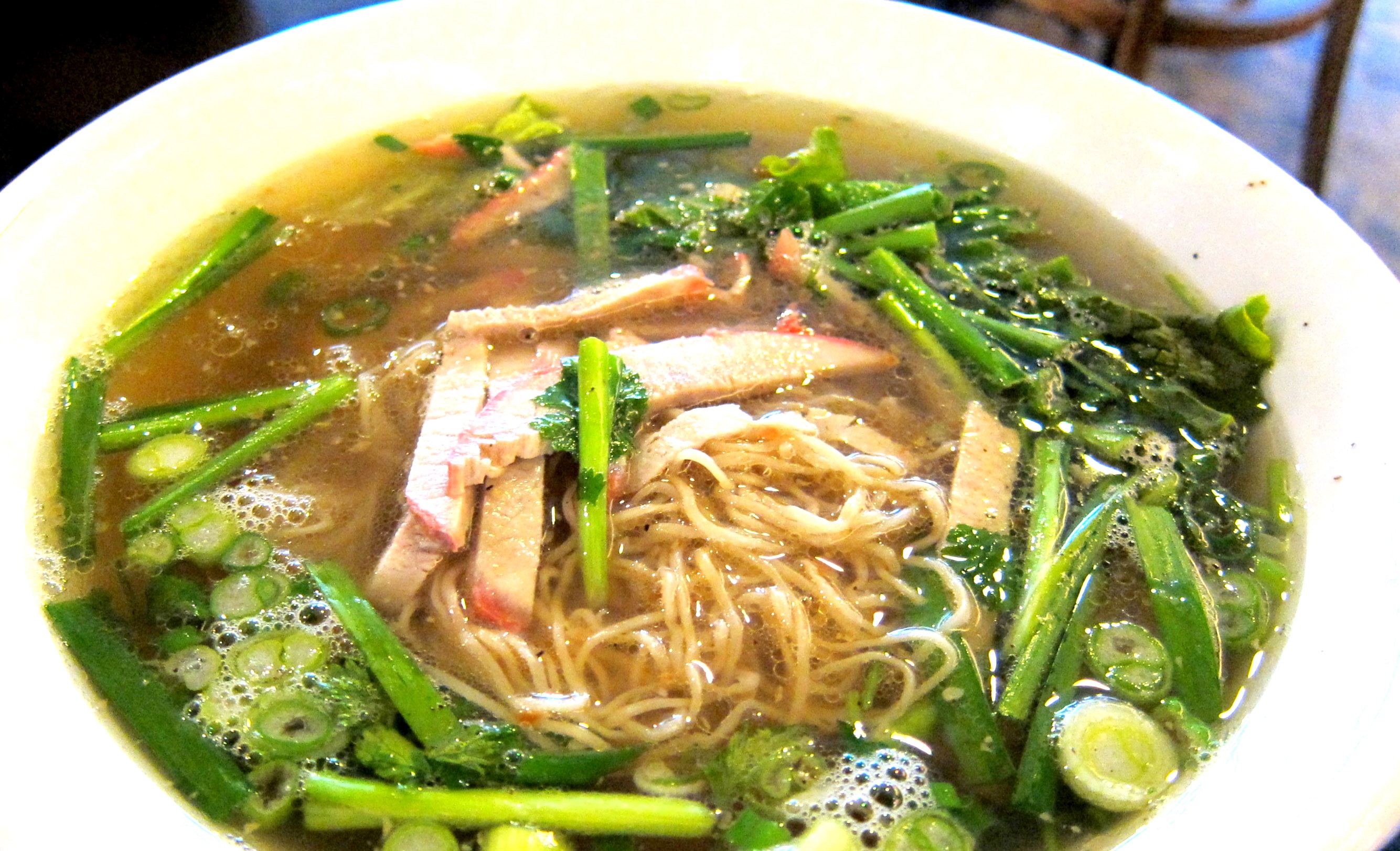
Do order #2: Mì Xá Xíu (char siu egg noodle soup). This is a cheap (only $6.25) and satisfying deal. It’s slightly more involved than Wiki Wiki’s saimin bowl, with crispy green onions and a meaty sweet broth.


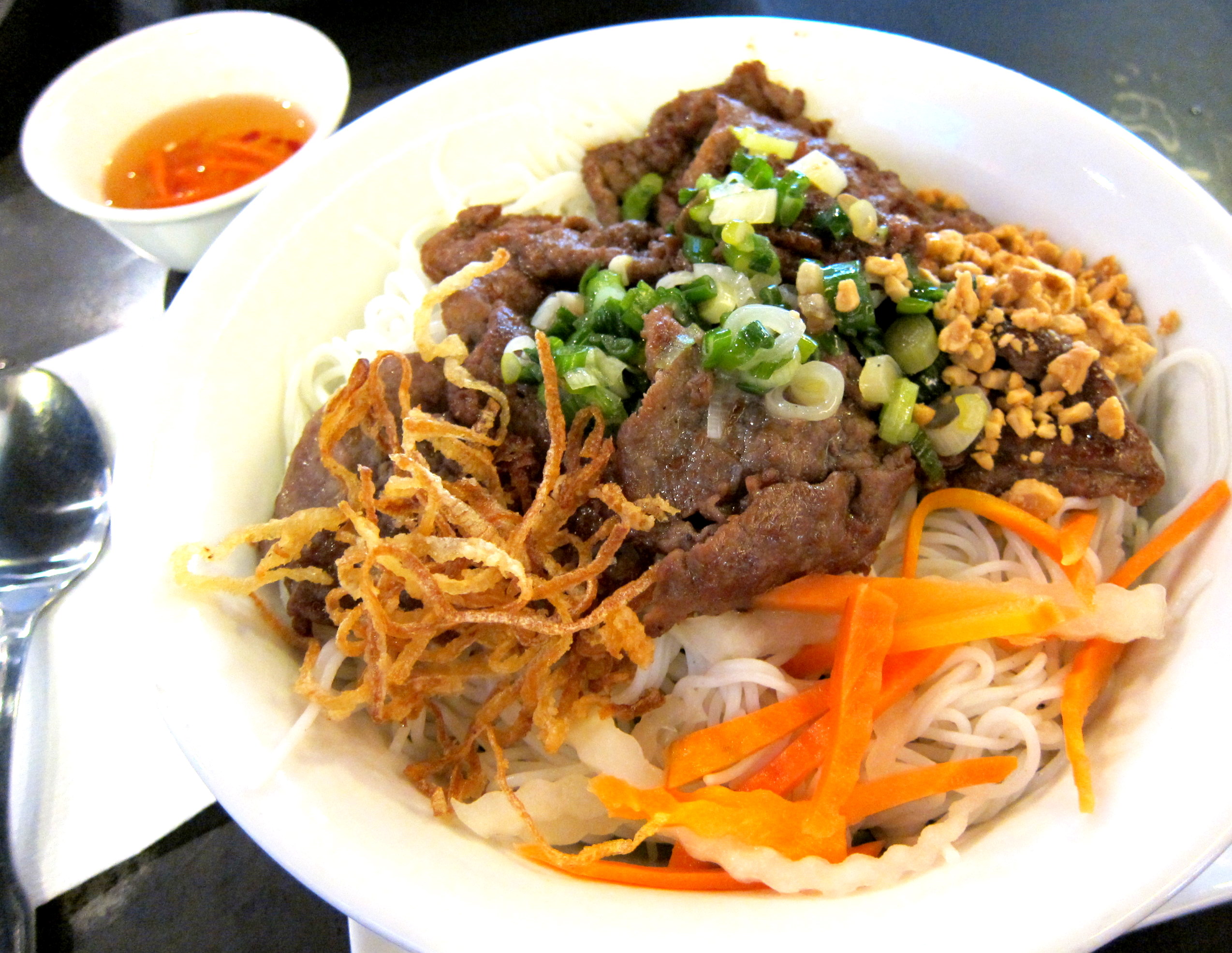
Do order #3: the classic cold rice vermicelli (Bún) with the not so classic grilled beef (Bò Nướng), certainly bathed in nước mắm and garnished with chopped green onion seasoned in lard (mỡ hành), crushed peanuts, fried shallots, pickled carrots and daikon. For the greens lovers there’s that hidden pile of bean sprouts and shredded cucumber at the bottom, whose texture matches that of neither bún nor beef. (Now that I think of it, bibim nangmyeon also has bean sprout and cucumber, so it must be a cold noodle thing.)


Overall, Little Mom found the place less than pristine as the stir-fry smell sweeps over the metallic kitchen counter into the dining area. Red Pier’s chefs also take a tad too much liberty with the seasonings. But not all Vietnamese restaurants have jellyfish salad and friendly service, and usually the ones with 166 items on their menu don’t execute any of them too well, so I’d give Red Pier a B if the red-and-ebony dining box were a student in my class.

Address: Red Pier Vietnamese Restaurant
2704 Milam St
Ste C
Houston, TX 77006
theredpier.com
(713) 807-7726
(information from der Miller: Red Pier and Les Givral’s Sandwiches are sister businesses, both on Milam St.)


Lunch for 3:
Medium jellyfish salad (9.95) + grilled beef vermicelli (6.95) + rice & caramelized shrimp (7.75) + char siu noodle soup (6.25) + bean & tapioca ice (3.00) + tax
= $36.70

Sandwich Shop Goodies 13 – Bánh xu xê (couple cookie)

February 12, 2011 By: Mai Truong Category: Houston, Northern Vietnamese, One shot, sweet snacks and desserts, Vegan


When you reach(ed) mid 20s, don’t you just hear all sort of marriage announcements popping up among your social circle? By the time of college graduation, half the girls I know have gotten their wedding registry up on Facebook, and I thought okay it’s just an American thing (the wedding I mean, though the registry is American too). Then this past Christmas my best college friend missed our annual reunion for his big day in India, and another pal who I thought was still wandering the streets of Chengdu dropped the bomb that he’s engaged. Then I got news that two of my eleventh grade buddies in Vietnam are going to say the vows (not to each other) within this year. Then it really hits me.

I haven’t written about any wedding party food, even though I’ve been to many weddings :D. So why not celebrate this year’s Valentine’s day with a Vietnamese confection whose name derives from the main characters of any wedding: bánh xu xê, originally called bánh phu thê, or “husband (and) wife”?

My translation “couple cookie” is for the sake of consonant concordance. They are similar to neither American cookie, Scottish cookie nor British cookie. These little bouncy sweet green pillows get their names from being gift desserts at Vietnamese couples’ engagements back in the day, when they used banana leaves to make little boxes instead of a double layer of cellophane wrapper. At one point the adults called them bánh phu thê, then the kids mispronounced it to bánh xu xê (|soo-seh|) and the name stuck. Technique-wise, it takes a grandmother’s experience to make a mixture of sticky rice flour, arrowroot starch and water into a translucent jello casing that is resilient but not sticky. Some of us might find its crunch-chewy texture too rubbery, other would question its lack of flavor, but the skill of transforming ingredients alone is admirable, and I like chewing. 🙂 In fact I like the outer layer more than the filling.

Traditionally, taro cut into strips are mixed with the cooked batter to give onyx-like patterns, while the modern concoctions can have sesame seeds on top or dry coconut strips within to spice up the homogeneity. The fancy pâtissiers of old Northern Vietnam villages might also sprinkle a few drops of pomelo flower extract into the mung bean paste filling for enhancing fragrance. But I wouldn’t expect that from our local sandwich shops in the States, not when it’s less than $2 for a pack of four.


It’s the kind of sweet you either love or hate. My mom loves it. The Gastronomer suggests using it to pelt your loved ones. It’s the perfect representation of a marriage really, and I’m not talking about the symbolic meaning of glutinous rice (bonding) and all. Its shiny outlook is inviting – everybody likes to get married, then you take a bite and find it tough, lackluster, disappointing, at the least not quite as expected – the post-wedding depression, then you get to the core and discover some tender sweetness after all. 🙂

Got ’em from: Alpha Bakery & Deli (inside Hong Kong City Mall)
11209 Bellaire Blvd # C-02
Houston, TX 77072-2548
(281) 988-5222

Previously on Sandwich Shop Goodies: chuối nếp nướng (grilled banana in sticky rice)
Next on Sandwich Shop Goodies: bánh da lợn (pig skin pie)

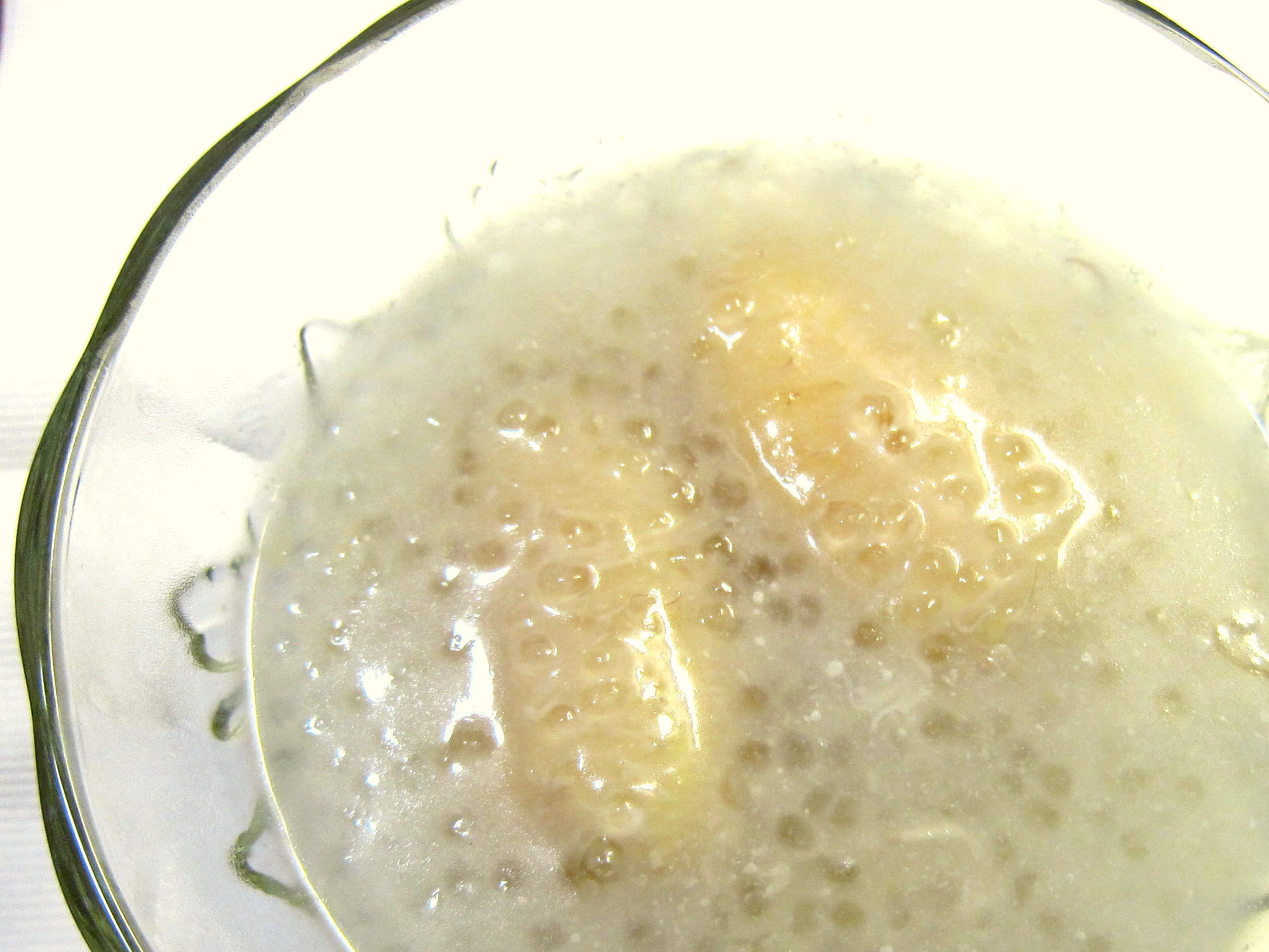
Chè chuối chưng (banana tapioca pudding)

February 08, 2011 By: Mai Truong Category: Comfort food, RECIPES, Southern Vietnamese, sweet snacks and desserts


Every once in a while when the planets align the right way with the constellations, I get into cooking mode. Then I ask my mom how to make certain things, usually easy stuff, spend at least an hour at the grocery, another half a day in front of either the sink or the stove, washing, churning, tasting, sprinkling, and tasting again. Saying that I like to cook would be like saying students hate holidays, but somehow the little accomplishment at the end of a cooking session always makes me glee, partly because I wouldn’t have to worry about dinner in the few days after. (Since the first day I had a kitchen(ette), I’ve only made savory dishes.) This time is special: I didn’t spend half a day in the kitchen, and the little accomplishment is a dessert.

Now this might actually means I have che instead of rice for dinner in the next few days :-P, but all is well as my banana che is not in the least coyingly sweet like che from sandwich shops.


Recipe adapted from Mom’s instruction:

Chè chuối chưng (banana tapioca pudding) (“chưng” means “display”, in this case to indicate the type of banana one would use for this dessert, not “tapioca”)

Ingredients:
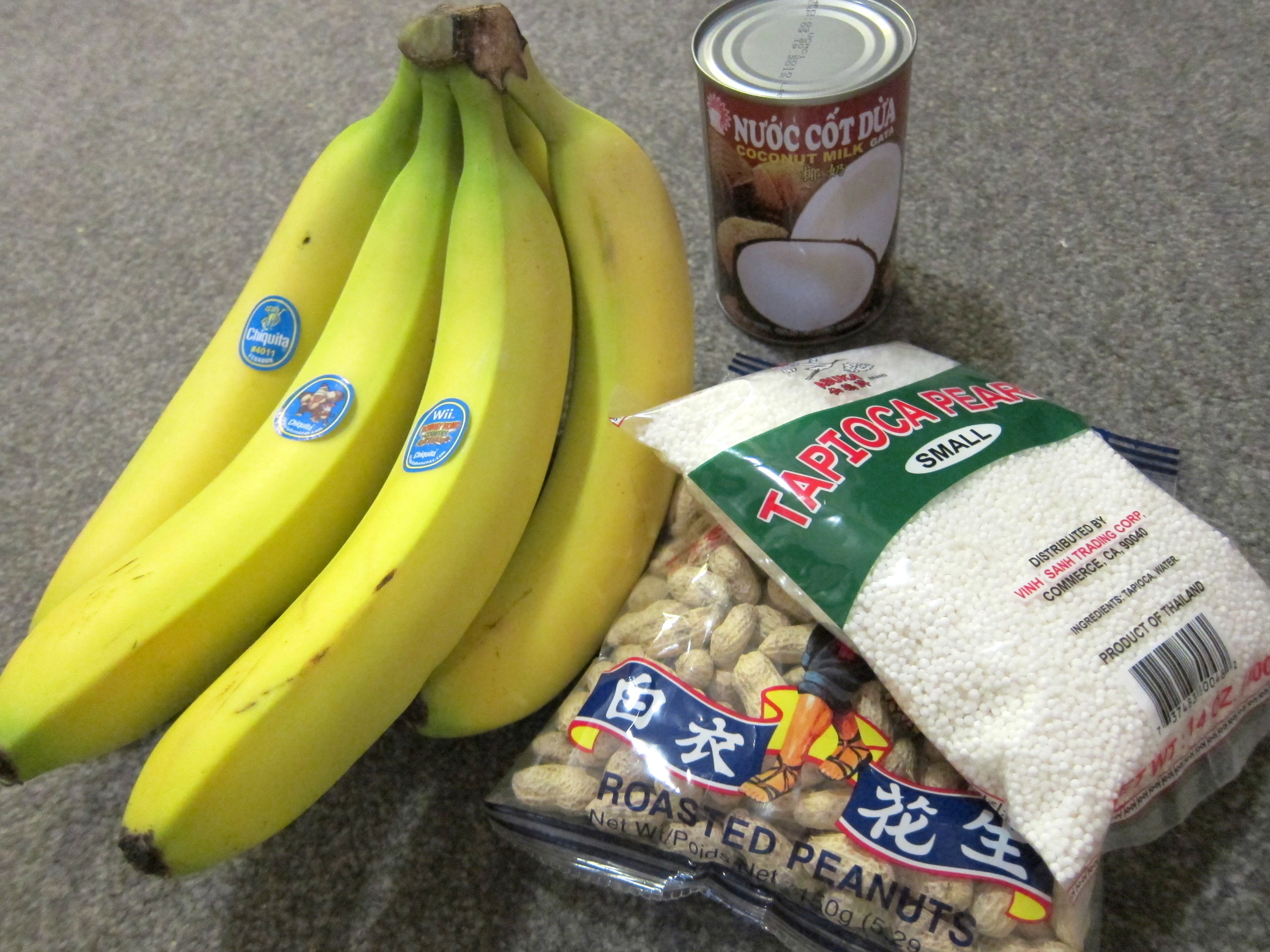
– About 3 lbs of just-ripe banana (~6 big Cavendish bananas, or 12-15 chuoi su if you can find them).
– 1 can of coconut milk
– 100-150g tapioca pearl (bột báng), the small kind (packaged as dry white dots ~1.5mm in diameter). I got a 400g package from 99 Ranch Market in El Cerrito, so I’d imagine every Asian market has a few packs tucked on their shelves.
– water, sugar, salt
– roasted peanuts (the plain, unflavored kind)


Preparation:
– Gently wash and rinse the bot bang with cold water once, then leave it soak in water.
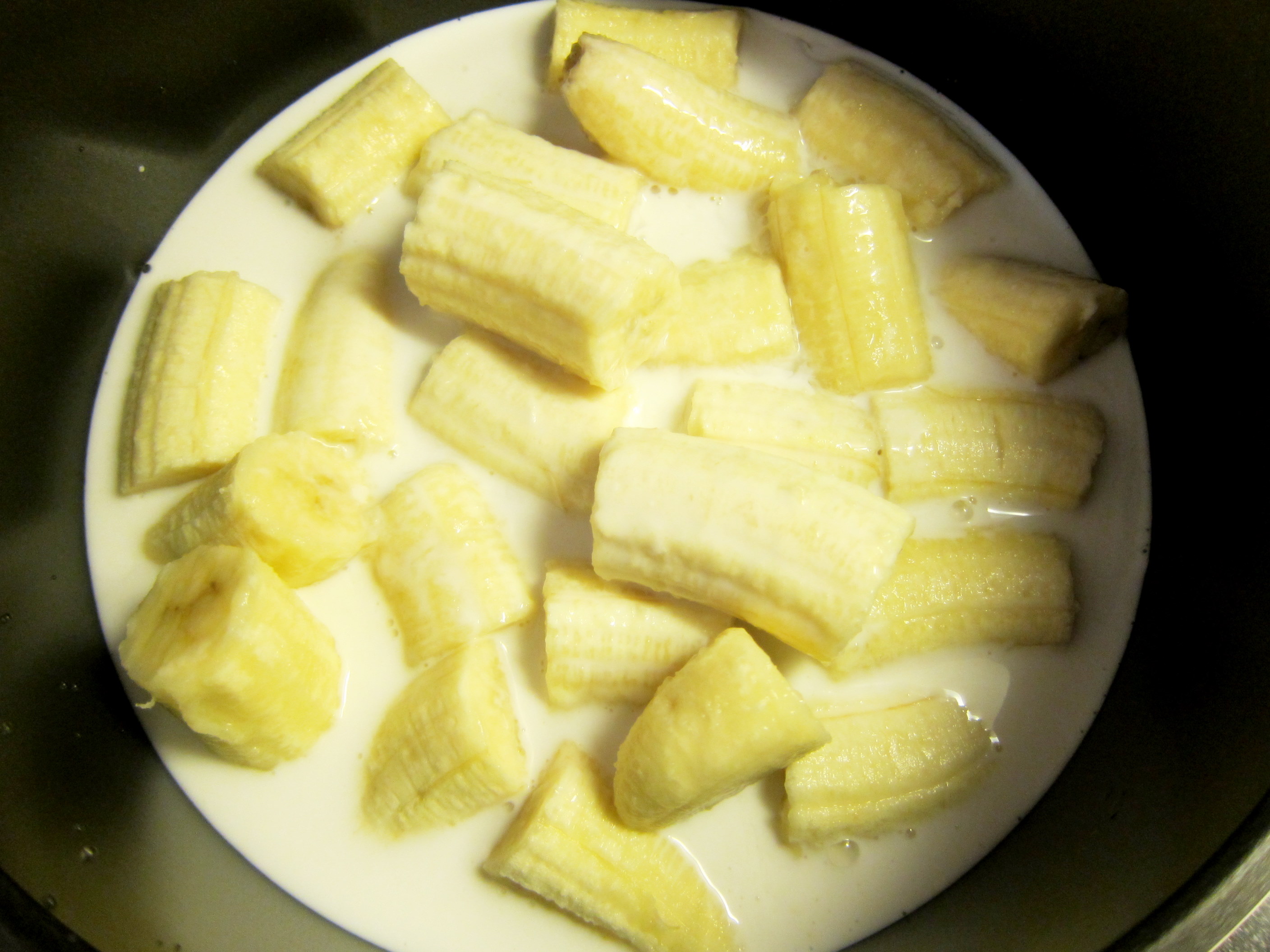
– Cut the bananas into 2-3 inch long sections, soak in salt water (2 tsp salt for roughly half a big pot of water, the same pot you’re going to cook che in) for 5-10 minutes. This step is to get rid of, or at least reduce, the clinging underripe aftertaste of Cavendish banana in Vietnamese desserts; you can skip this step if you use chuoi su.
– Shell peanuts if necessary, then crush ’em up. (Mudpie puts them in a ziploc bag and pounds on them with an ice cream scoop, it works well :D)
– Take out the bananas, drain water, wash pot, put bananas back in. Pour 1 can of coconut milk into pot, then use the same can to measure and add 2 cans of water.


Cooking
– Wait for banana, coconut milk and water to boil, add a pinch of salt and a lot of sugar to taste. (I added about 10 tbs sugar when Mudpie expresses some concern, tastes, and stops me.)
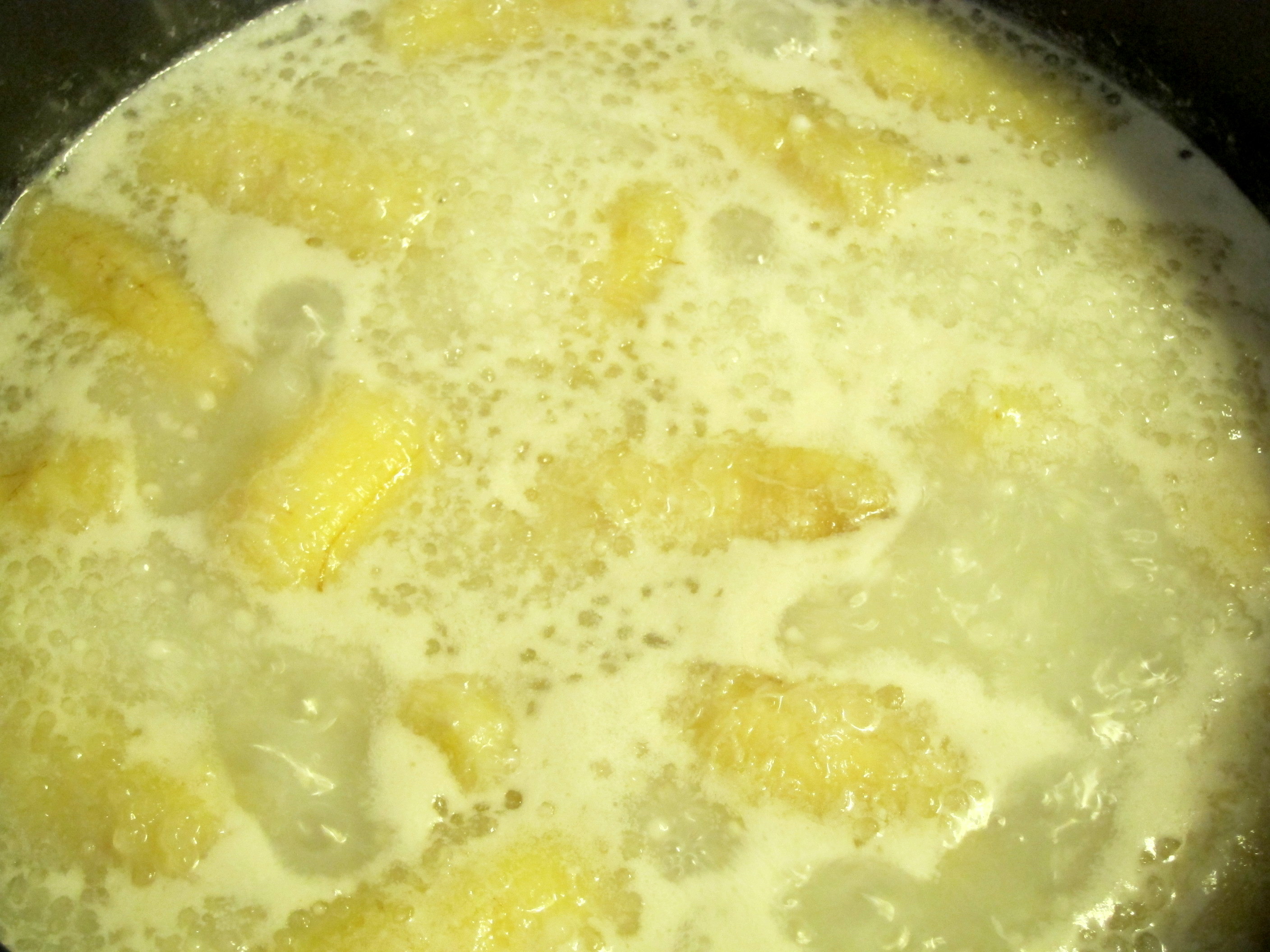
– When the mixture boils, add bot bang (after draining them, of course), gently stir once or twice to spread them out evenly in the pot.
– Bot bang will expand, at least quadruple in size. Do not stir too much or you’d burst the pearls and get tapioca porridge. Let the pot bubble until the bot bang all turn completely translucent (if you see a tiny needle-point size dot of white in the center, it’s not cooked yet).
– Turn off the heat. The pudding will be quite fluid when it’s still hot, and will thicken as it cools down.

Serving
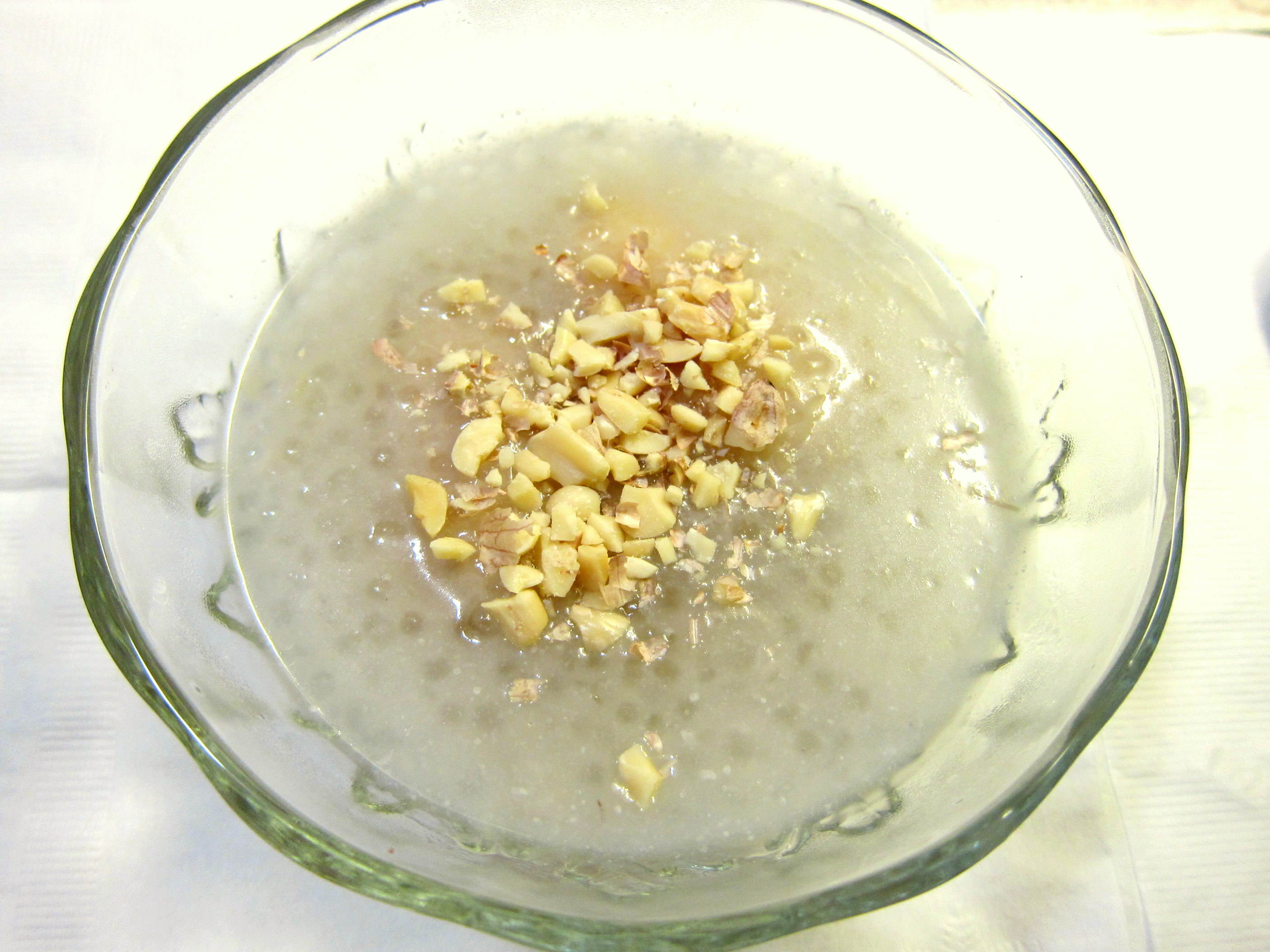
It can be served either hot or chilled, with or without some crushed roasted peanuts on top. Mudpie prefers it warm fresh from the pot, my mom prefers it refrigerated.


A small variation of che chuoi chung is chè bà ba, where you add taro (or cassava), cubed and cooked in coconut milk and water before the bananas. My mom says che chuoi chung is the simplest kind of che to make. As long as the bananas are soft and sweet, the tapioca pearls chewy and fully puffed, the coconut milk gives just a shy squeeze of fruity richness, and the pudding smells like a ripe summer afternoon, you know someone will come back for a second bowl of your chè chuối chưng.


– Submission to Delicious Vietnam 10, a monthly blogging event created by Anh of A Food Lover’s Journey and Hong & Kim from Ravenous Couple – This February edition is hosted by me, so send your delicious writings (your name, your blog’s name, post title, and a brilliant image of the dish) to mai [at] flavorboulevard [dot] com by Sunday February 13. 🙂

Candied fruits for a candy Year of the Cat

February 03, 2011 By: Mai Truong Category: California - The Bay Area, Festivals, Fruits, sweet snacks and desserts, Vegan, Vietnamese


Its popularity might have declined over the years in Vietnam, but to the Vietnamese expats, mứt Tết remains one of the few links home to resurrect our new spring festival atmosphere on foreign lands. As far as I know these candied fruits are unique to the Vietnamese New Year (Tết), just like the tteokguk and the yakwa to the Korean Seolnal. They are holiday gifts to friends and family, offerings at the altars to ancestors and deities, little snacks for children, tea confections for adults, and vegan treats for those who refrain from eating meat at the year’s beginning.


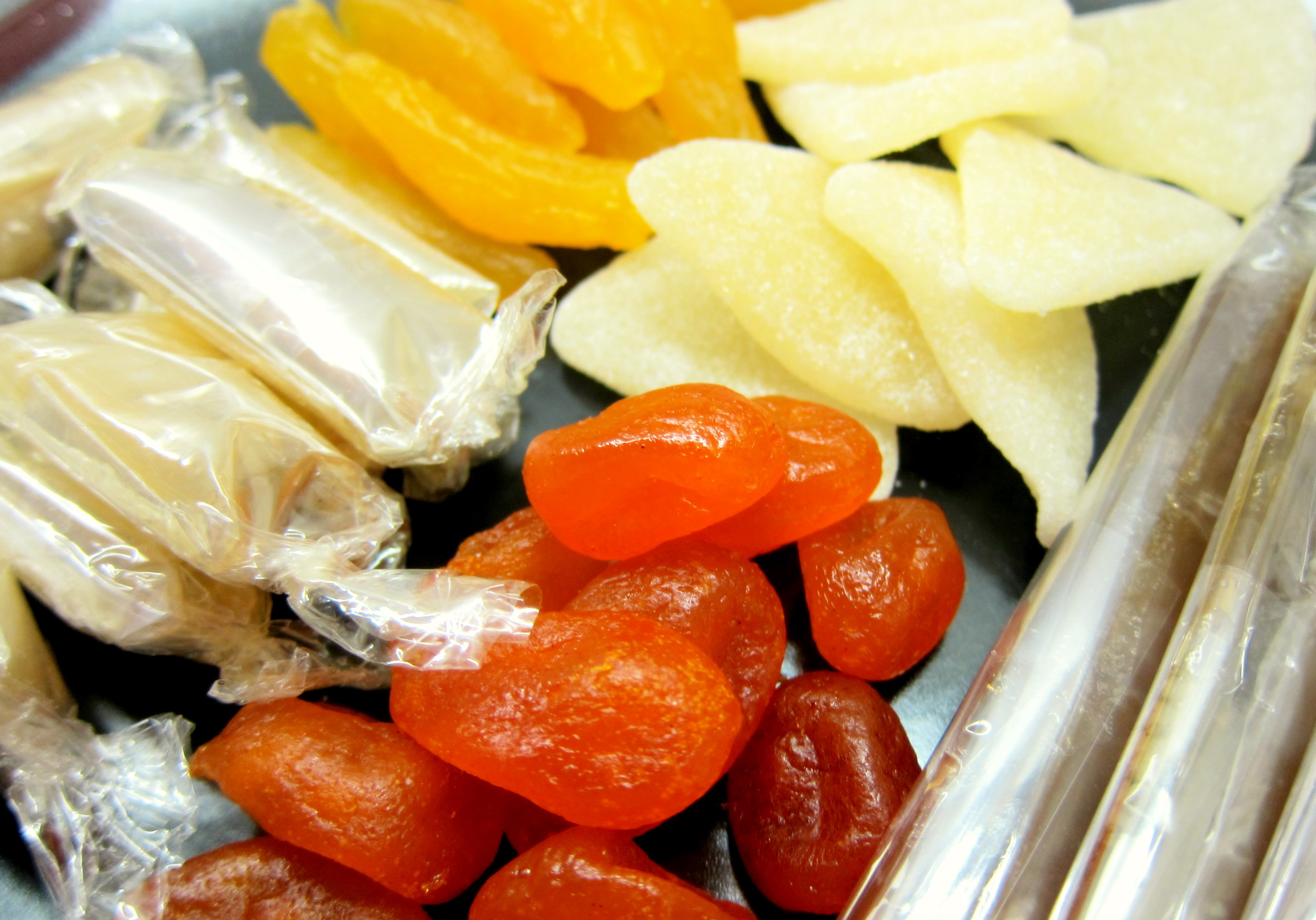
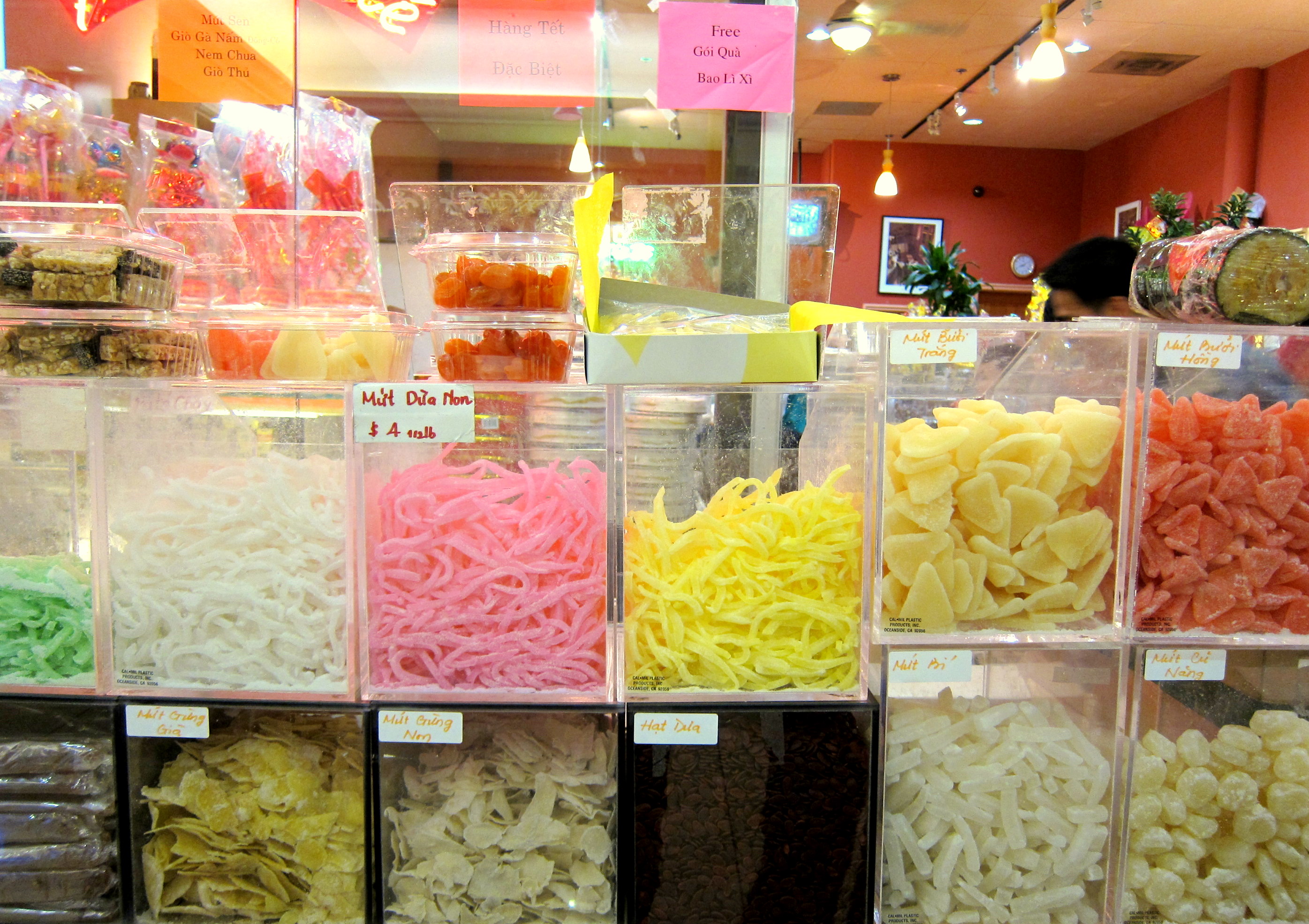
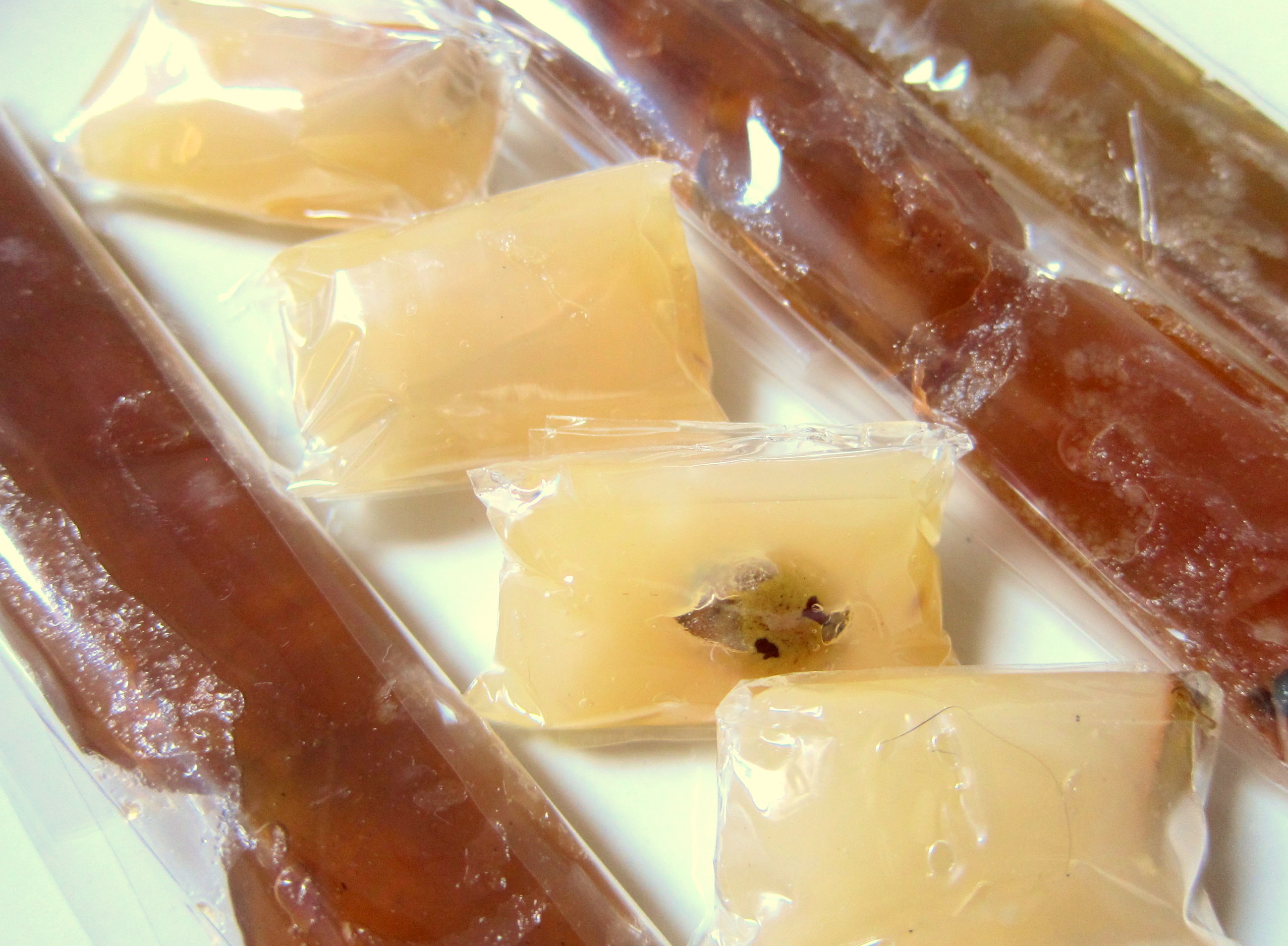
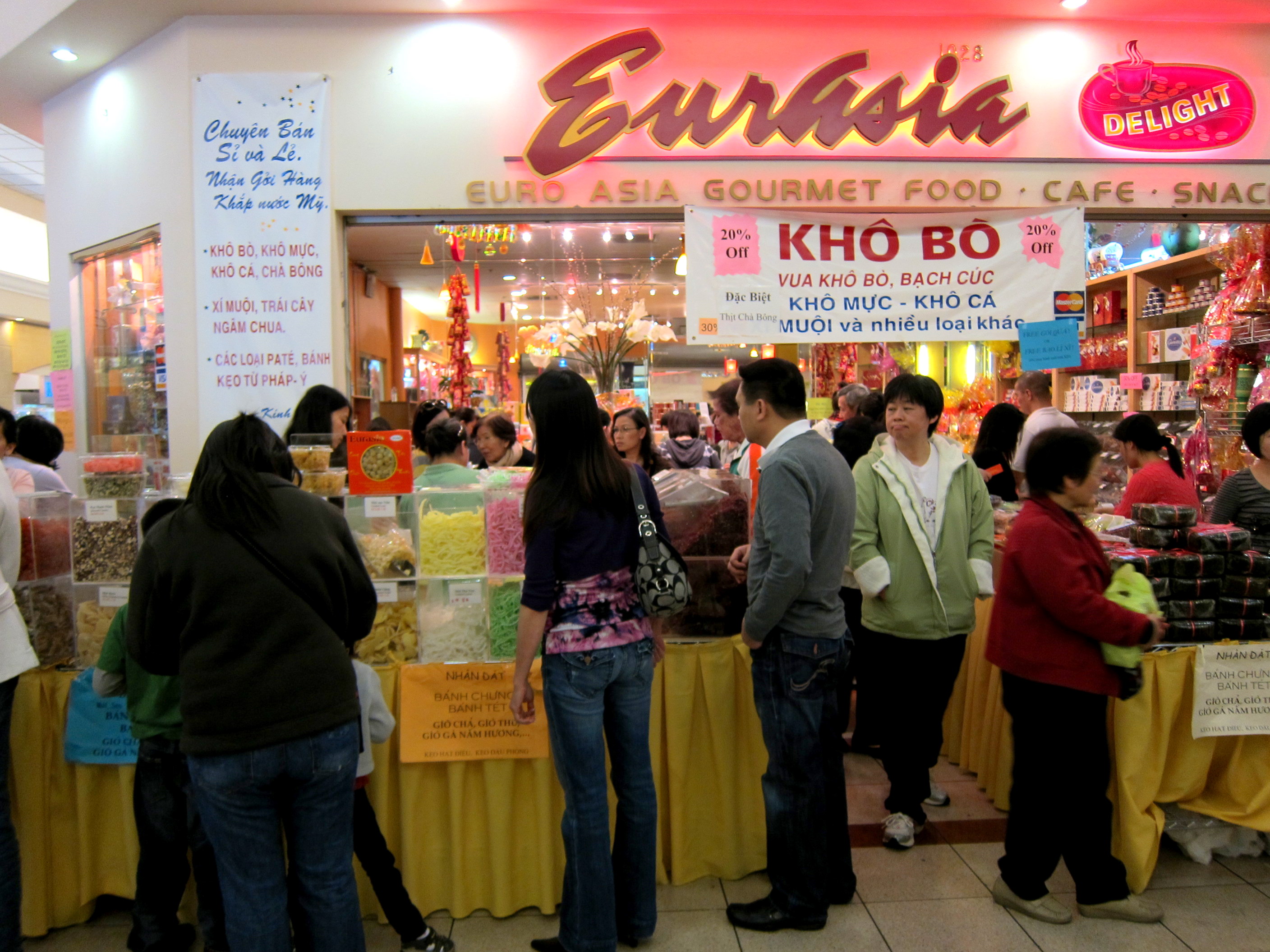
Mứt can be divided into two types: wet and dry. Visit any beef jerky (khô bò) and salted plums (xí muội) stores in Vietnamese shopping malls in the Tet season, you’d see a swarm of mứt in glass jars, the wet kinds wrapped in crunchy paper and the dry kind laying bare. The two most common wet mứt are tamarind (me) and soursop (mãng cầu). The former is kept in its scrawny form, with a few rope-like fibrous strings along the fruit’s length, which is to be discarded when eating, of course.


Tamarind mứt should be amber brown, chewy, and a little more sour than sweet. Tamarind is notorious for its medicinal effect, so be careful not to consume too many sticks at once. A similar chewy wet mứt is the soursop, but it’s always milkish white, doesn’t retain the fruit’s shape, and people tend to put too much sugar in the churning process.

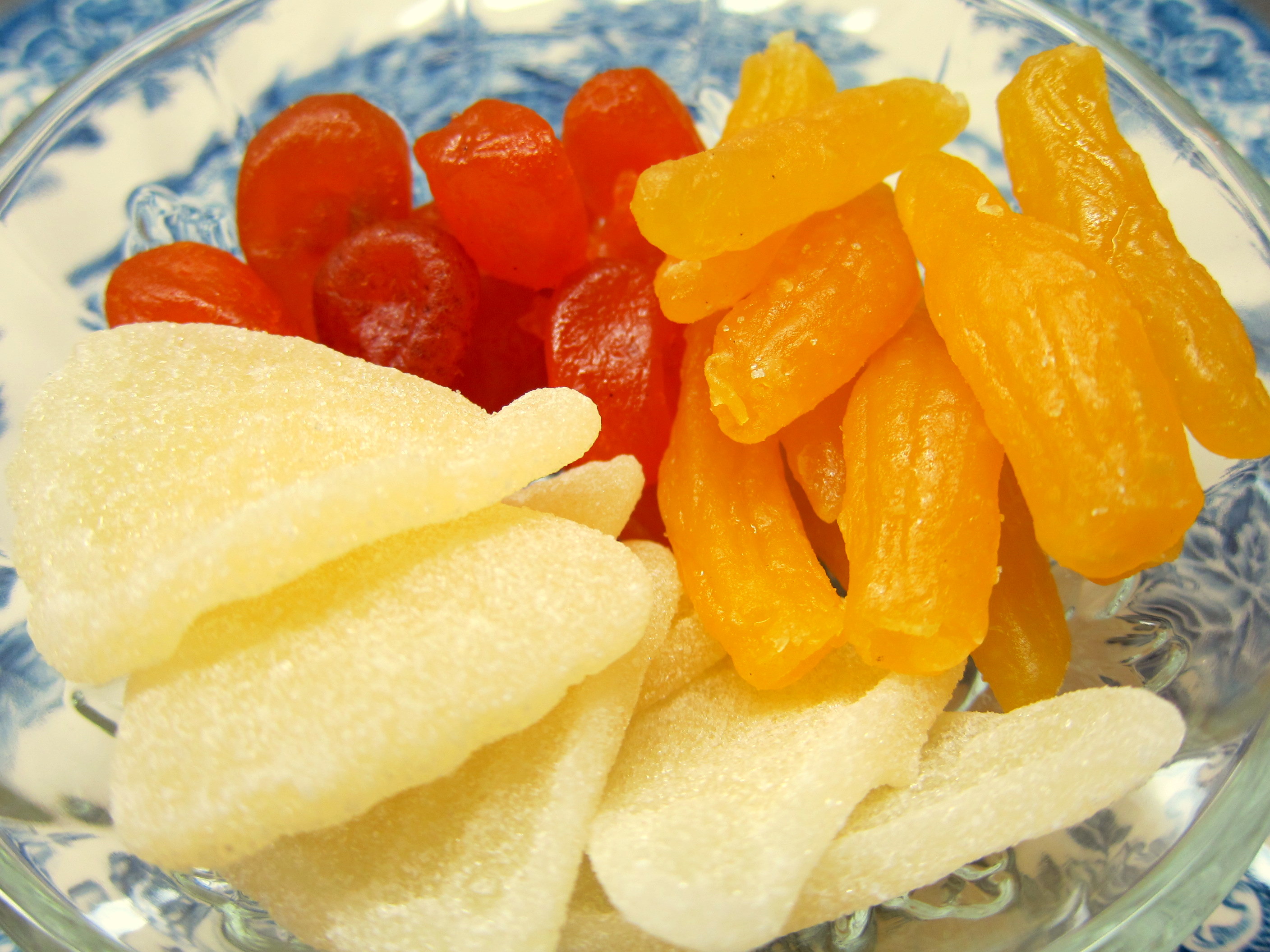
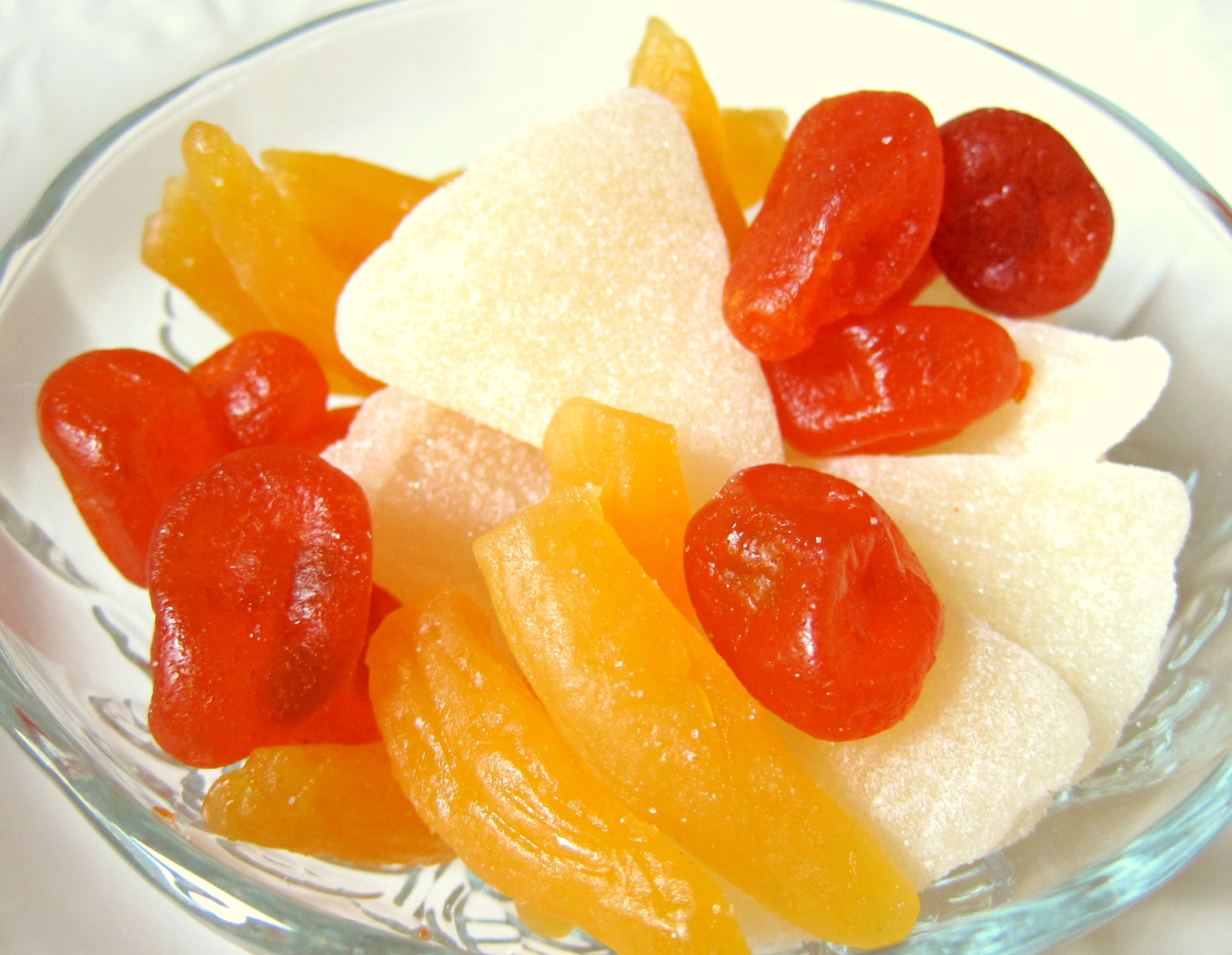
On the dry side you can find some twenty common kinds, spanning both fruits and non-fruits (nuts and roots): coconut, persimmon, lotus seed, tomato, ginger slice, carrot, winter melon, apple, lemon, guava, water chesnut, etc. I’m particularly fond of the crunchy, aromatic coconut ribbons which as a kid I liked to hold in my mouth for hours to melt off all but the coconut itself; but this year I refrained from buying them to try the other kinds instead.


As advertised by the lady of the store, the scarlet kumquat mứt (mứt tắc) is “good enough to die for”. I’d say its texture is fresh, its color attractive, it’s not too killingly sweet (always a plus for these candied pieces), and it’s a thousand times better than the cherry they put in your hot fudge sundae. 😉 Word of mouth is it can help with digestion and lowering body temperature, and if you drink too much alcohol perhaps pack a few of these to detoxicate (or just don’t drink!).

The sweet potato mứt (mứt khoai lang) are warm yellow inch-long sticks without powder sugar coating, as dense as a medium boiled egg yolk and as sweet as the root itself. In a blind taste test, the first bite makes you think it resembles sweet potato, then the second casts some doubt because it’s denser and more consistent than sweet potato. It has the same medicinal effect as tamarind, but to a lesser degree.


Mudpie’s favorite of the five is labelled pomelo (bưởi), but it’s most likely the pomelo skin, sun-dried and pan-sweetened and powder-sugar-coated like American candies. It feels so light almost porous, the center has a subtle citrus pinch that would marry well a cup of hot chrysanthemum tea.

In the end, there’s no telling which kind of mứt everyone would like best, but there’s always some kind somewhere to each person’s liking. When you buy mứt, ask for a sample before settling on a 1-lb pound package, you can’t judge a mứt by its cover. Usually they cost $3-5 per half pound, and each little bite-size is packed with enough sugar that it’s best, though it may appear cheap, to buy $1-2 each kind, and buy many kinds. 🙂


Where I get my mứt this year: Eurasia Delight (inside Grand Century Mall)
1111 Story Rd Ste 1028
San Jose, CA 95122
(408) 293-1698

Tags: , ,

Dreams & Conference – Day 2, World Cafe and El Patio

January 11, 2011 By: Mai Truong Category: sweet snacks and desserts


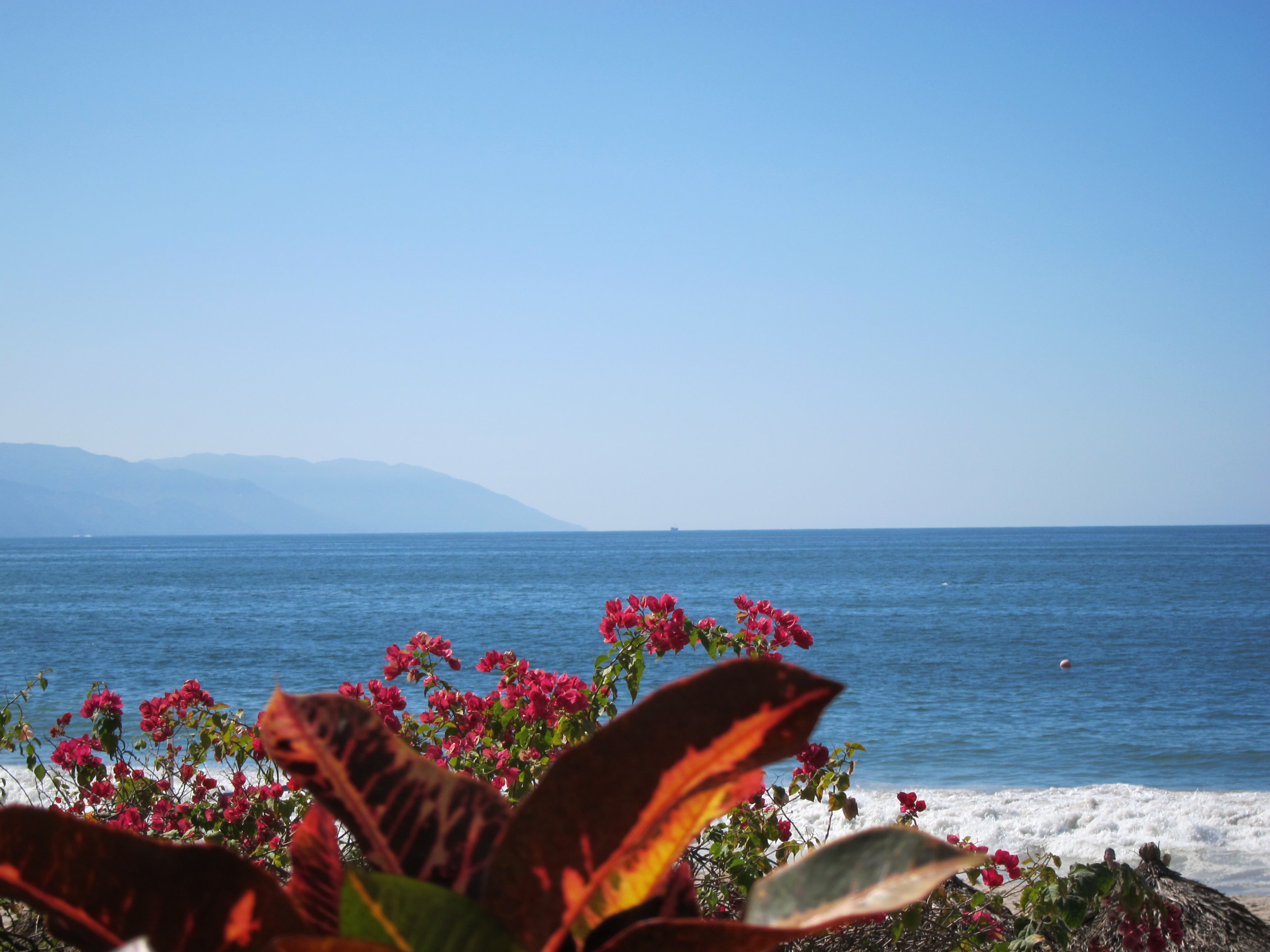
In all honesty, most of us go to Cosmology on the Beach (CotB) for the cosmology part, but one may seriously wonder how the participating number would change if the organizers took out the beach part. (And I said “most” because a few of the conference attenders here bring along children, who will definitely become cosmologists one day if they play at CotB today. ;-)) Now I certainly can live without the beach, the waves are alluring but the sand is not, but I might just punch a baby seal if the free dining were taken out of the package. Yesterday we took full advantage of the room service and Oceana. Today… well the nice thing about eating is that everyday you can start anew.


Four hours of lecture begin at 8:30 am, with plenty of soft drinks, milk, coffee, sweet pastries, no meat however, and bottled water on the tables. When the clock ticks near 1 pm, the brain is saturated with graphs and equations, some of which are secretly disposed in lieu of thoughts for food. Less than 15 minutes after Oliver Zahn gives his concluding line on CMB lensing, the crowd has shifted from Conference Room A to World Cafe.


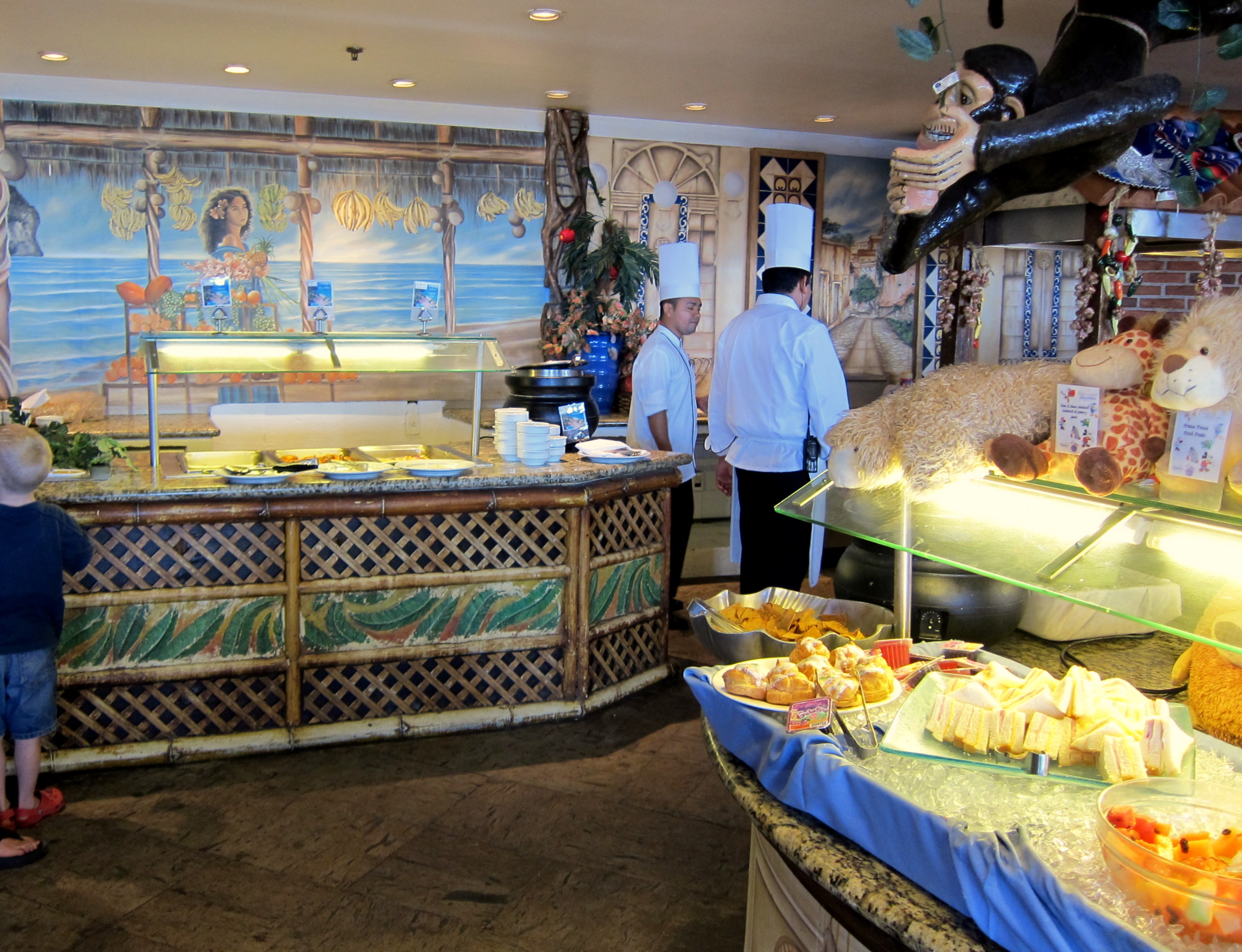
Supposedly it’s a buffet of international cuisines, but few things are not associated with Mexican food: stir fried noodle, stir fried vegetable in brown sauce, macaroni and cheese, and California rolls. The rest is primarily meat: grilled pork chop, flank steak, fried chicken, et cetera.


The more interesting selection is rather limited, but every one of it is worth the bite. The chicken on a corn flour tortilla-like shell is messy and filling; the simple-looking pastry square tastes like cheese pizza but flaky like a patechaud and has shrimp bits for surprise; a batter-fried bundle made of thin sheets of crab meat is refreshingly succulent; and the flank steak roll with cabbage in the middle is the savoriest of all.


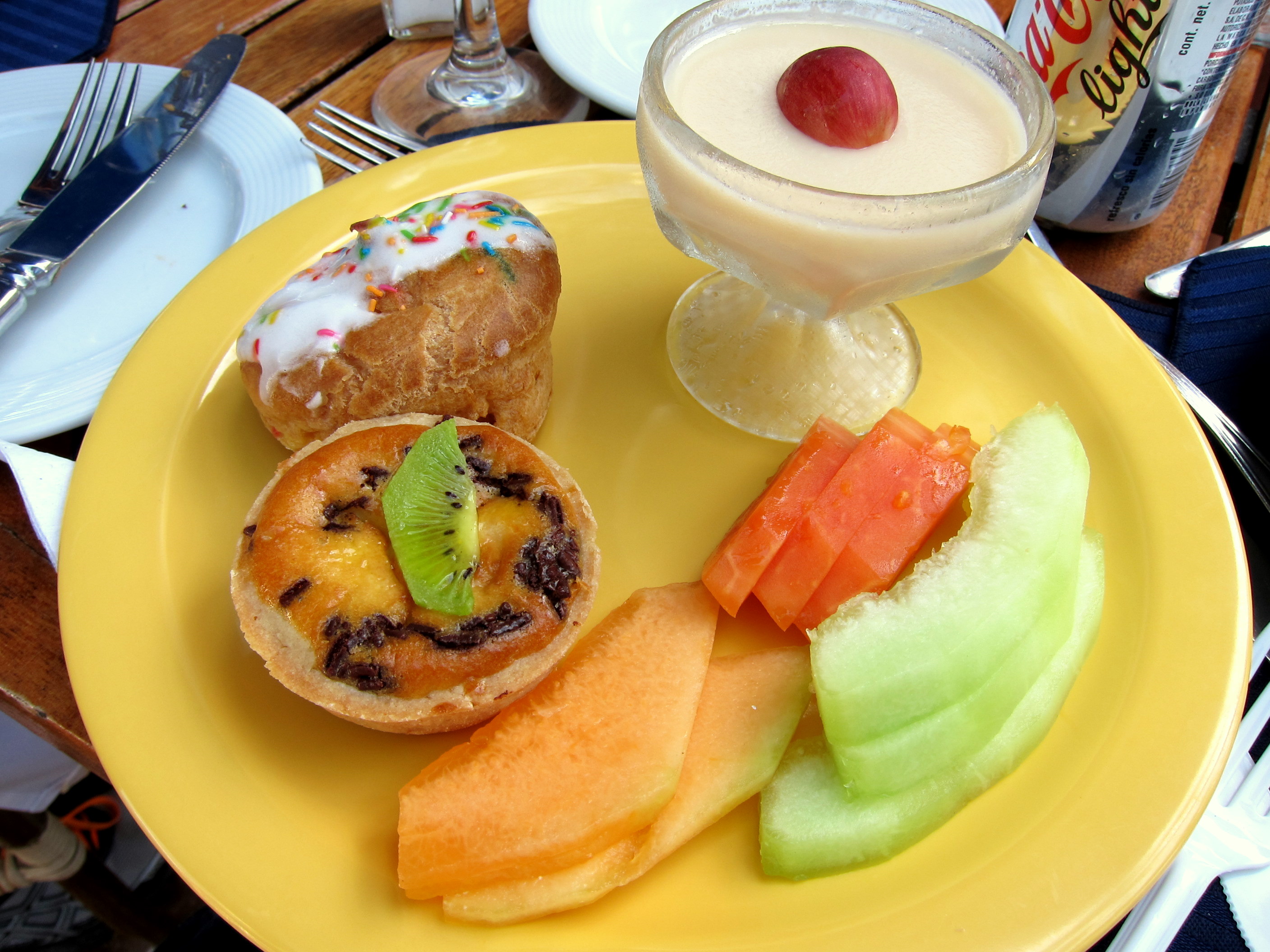
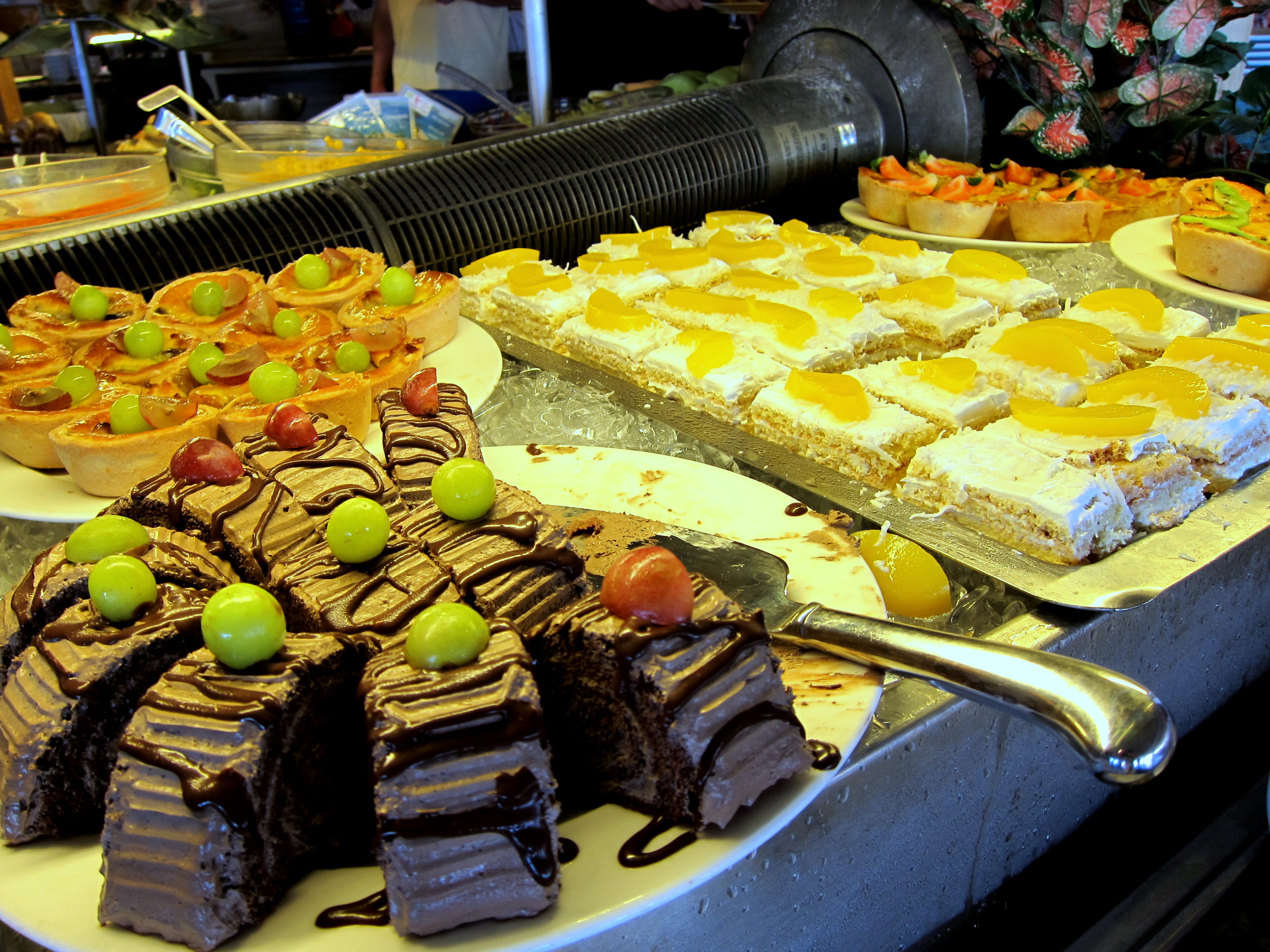
The colorful dessert array has very handsome chunks of chocolate Swiss roll, which I resist in order to try a chocolate chip cupcake-like kolache adorned with a kiwi slice…


… along with a gigantic cream puff that quickly gets too sweet, a milky jello, and some juicy fleshy fruits to clear the load of animal fat excess I’ve consumed in this buffet lunch.


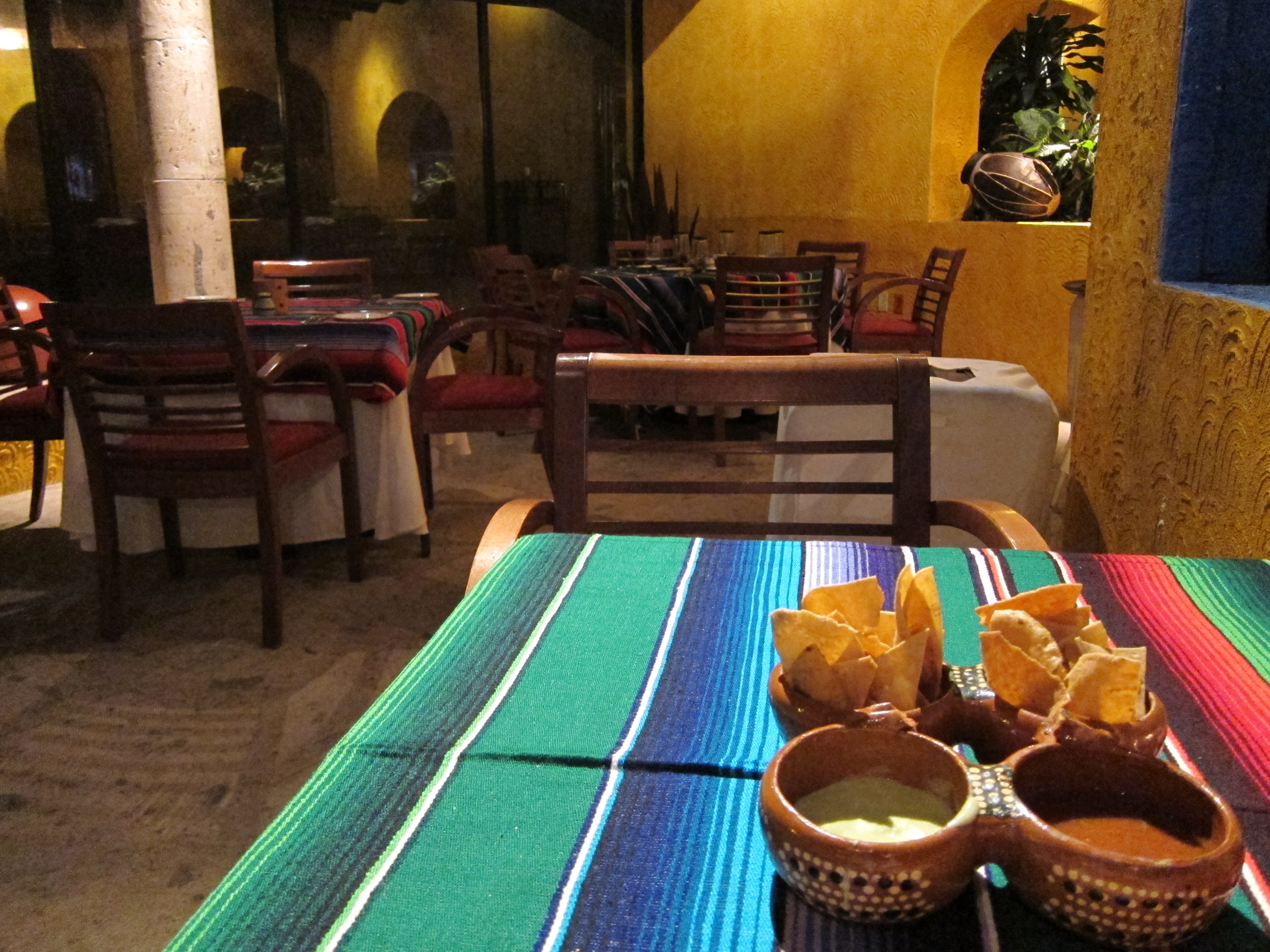
“We’ll get some veggie at dinner,” I tell myself. Wishful thinking. I wander alone trying to find the Italian restaurant Portofino, but end up in front of El Patio, a casual dinner spot for Mexican specialties. Two months ago I would have continued on my quest for Portofino, but the scrumptious tacos at Tacubaya have changed Mai; besides, how can I be a proper foodie without trying Mexican food while staying in Mexico?


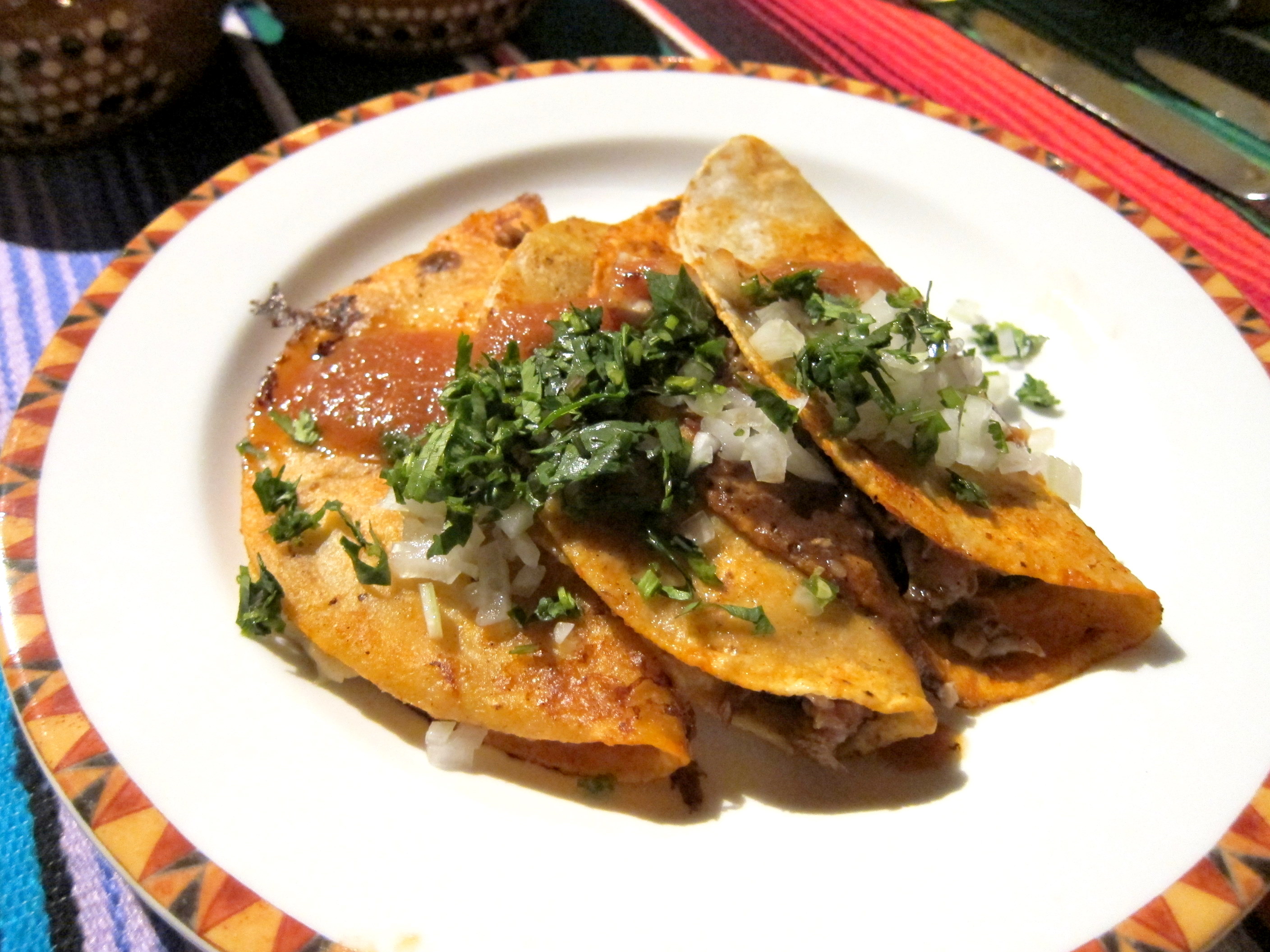
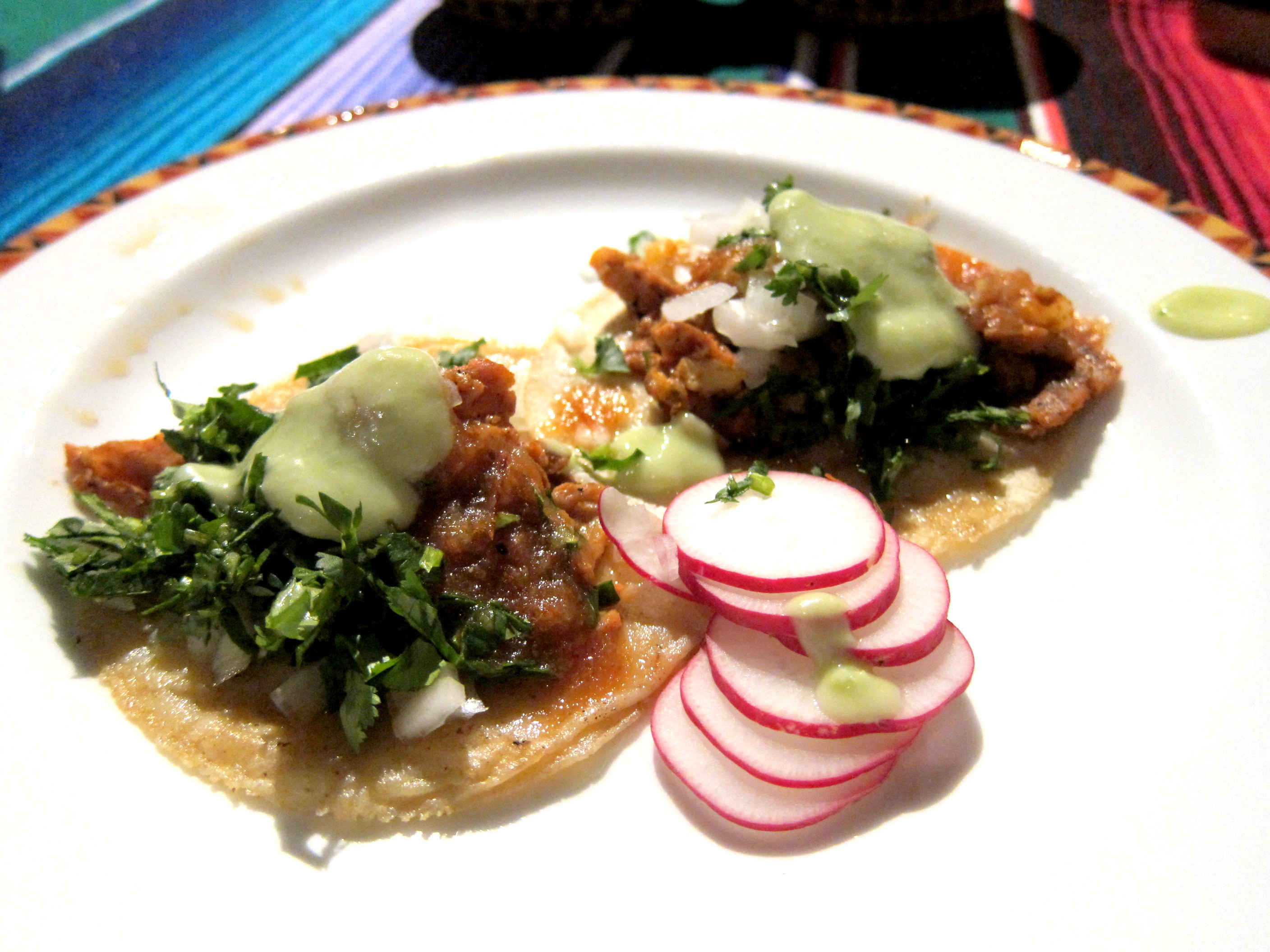
The opening of the night is two beef and pork tacos, deadly messy (my poor purse gets a share of sauce) but undeniably tasty.


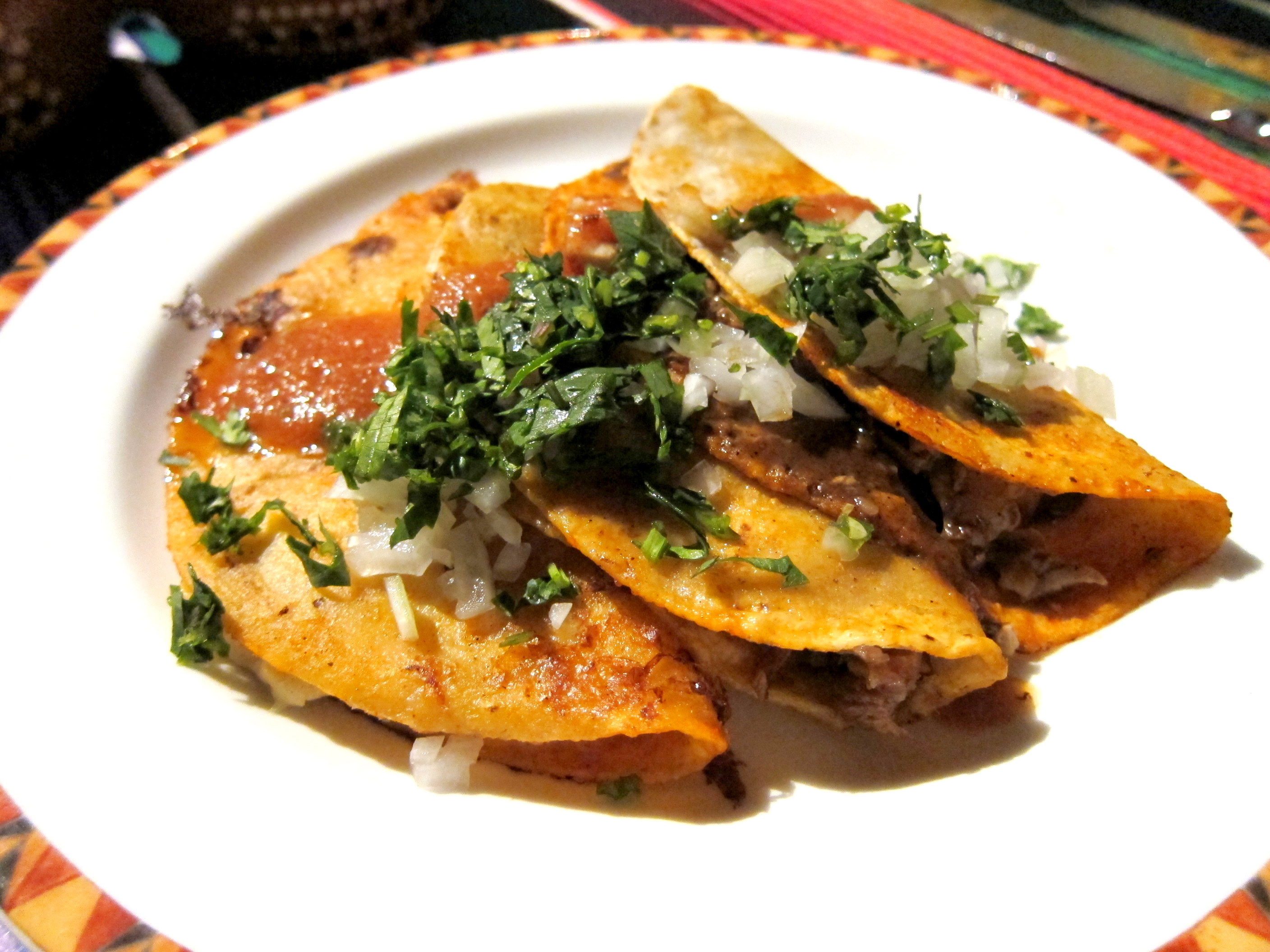
Likewise, the three authentic grandma’s recipe basket tacos, each with a different filling: chicken, beef, and mash potato, prove themselves worthy of being in the authentic section at a tourist resort. The chicken, sweetened by a chocolate sauce, ranks the best, and the potato comes close in second if you wait until it cools.


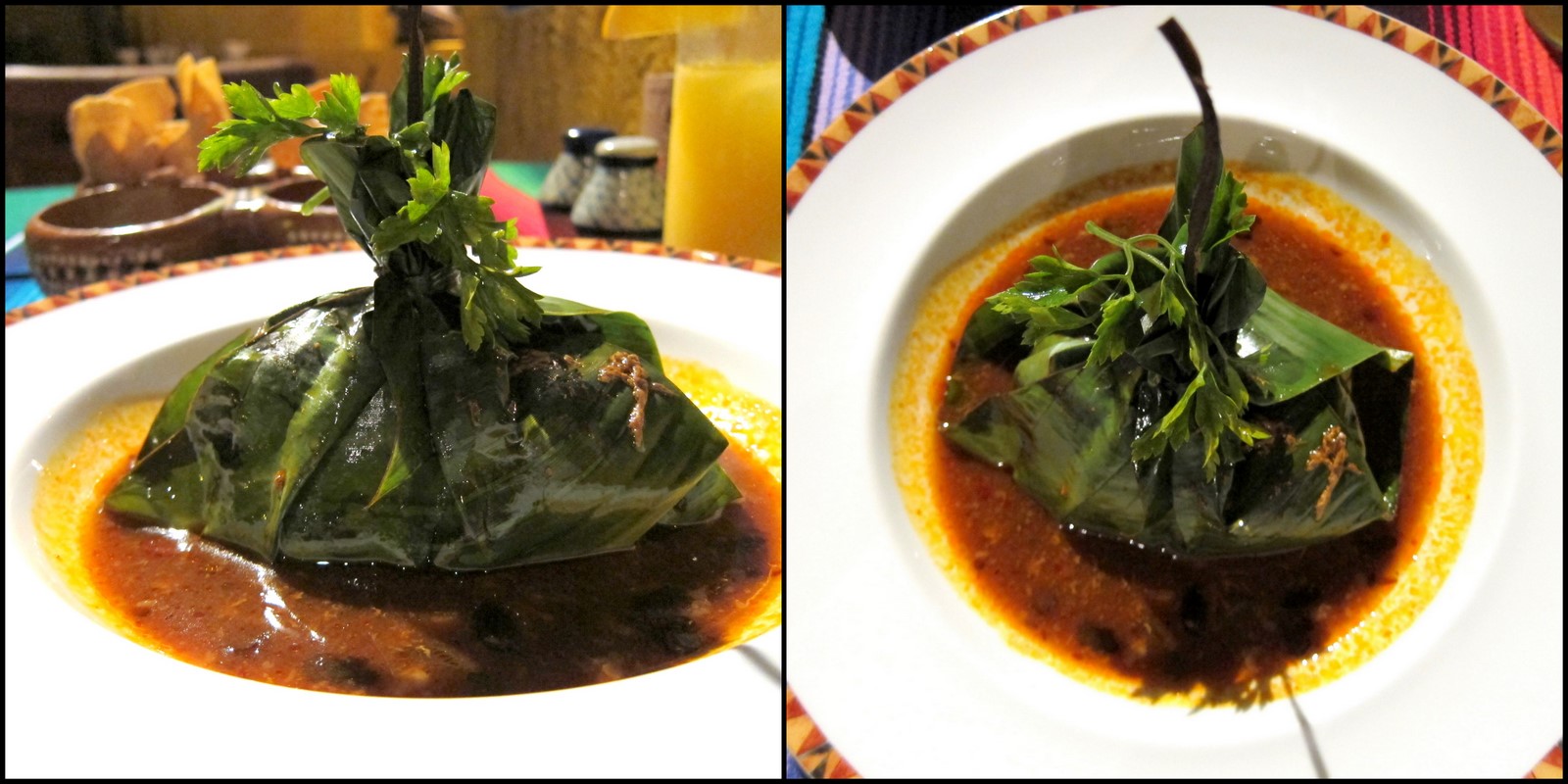
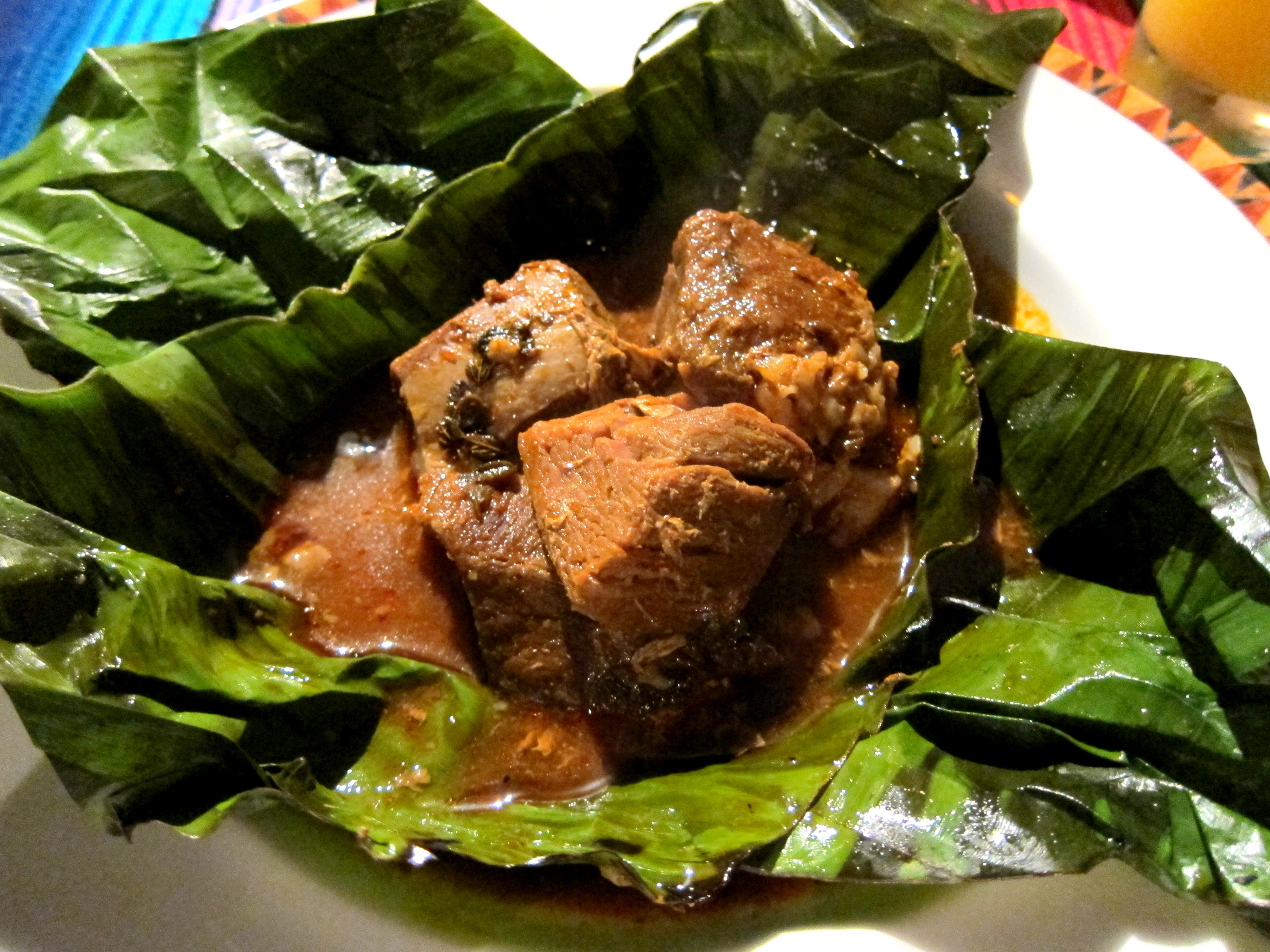
The entree, guaranteed by our friendly waiter as “not at all spicy,” jumps out to me as the most authentic and exotic on the menu: veal mixiote – a pit barbecued chunk soaked in Guajillo chile sauce and wrapped in blue agave cactus leaf.


Unfortunately, the veal is rather too salty and the bare meat dish does not match my expectation. feeling bad about leaving half of the veal on plate, I sheepishly ask our waiter to recommend a dessert.


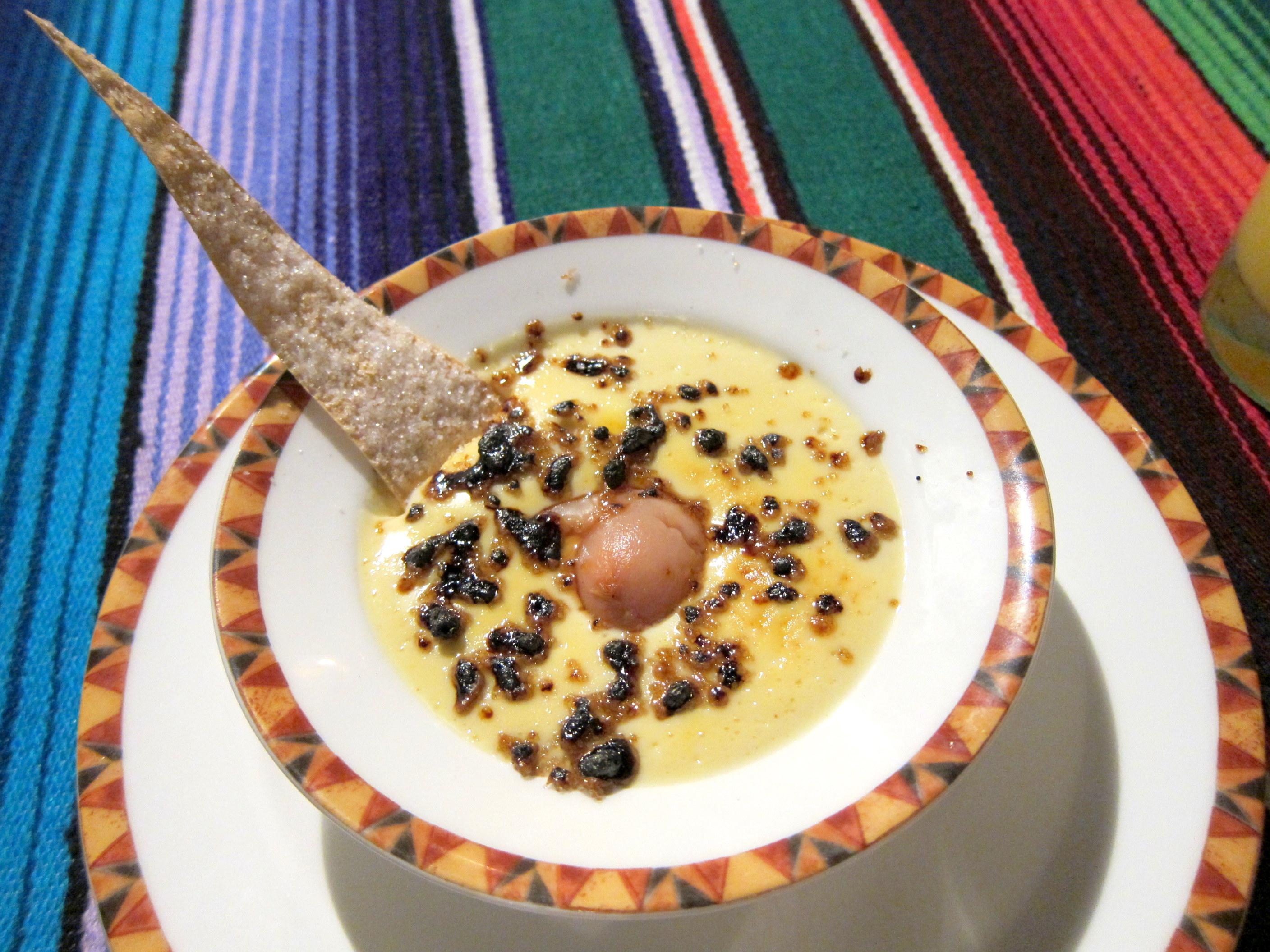
He says with utmost immediacy and certainty: “Creme brulee.” So be it, a creme brulee with lychee and passion fruit. There is no visible passion fruit, but the burn caramel bits give a wonderful accent to the creamy bowl, and like always, I save the lychee for last. 🙂

More Puerto Vallarta:
Dreams & Conference – Day 1, dinner at Oceana