Flavor Boulevard

We Asians like to talk food.
Subscribe

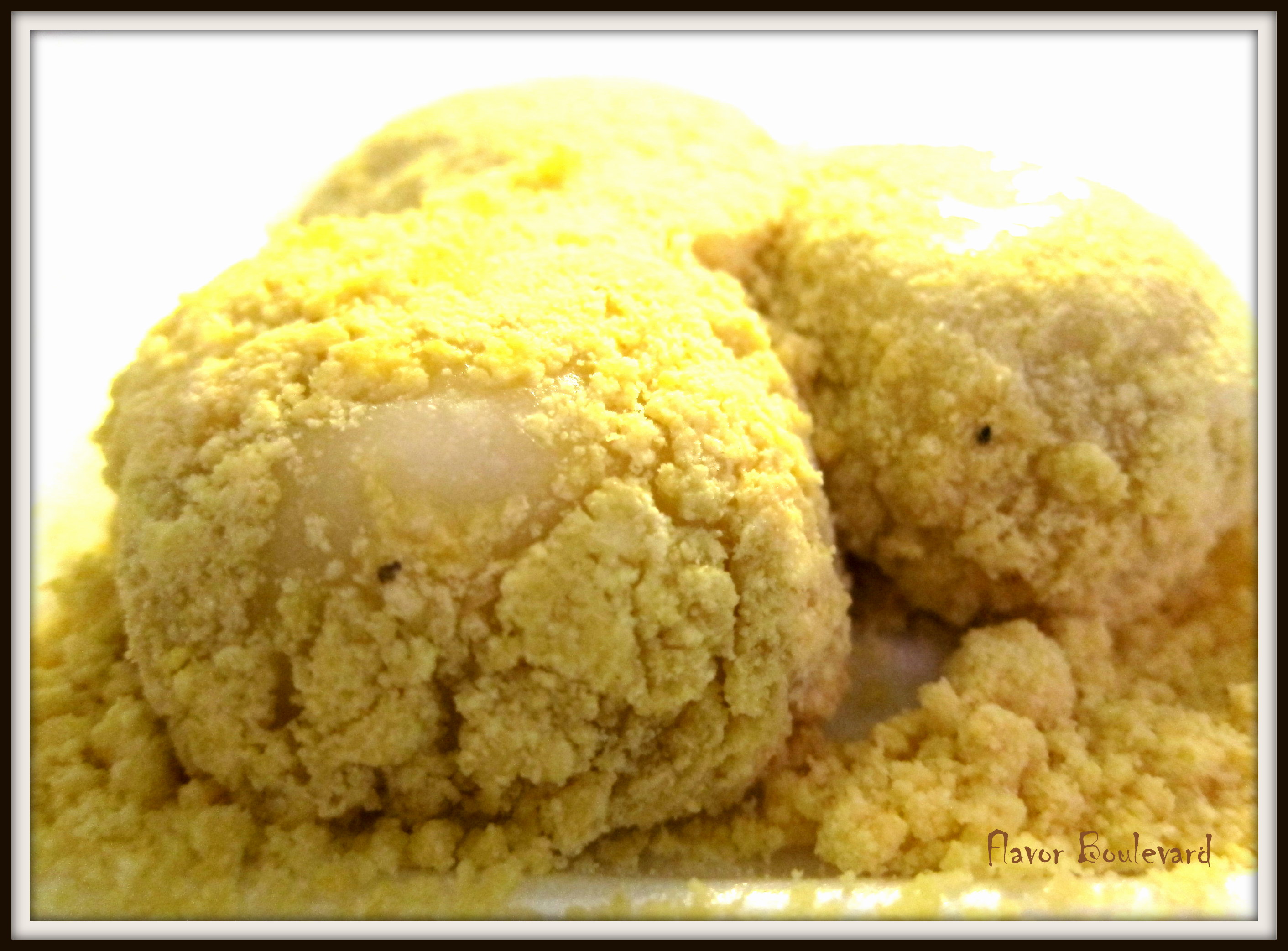
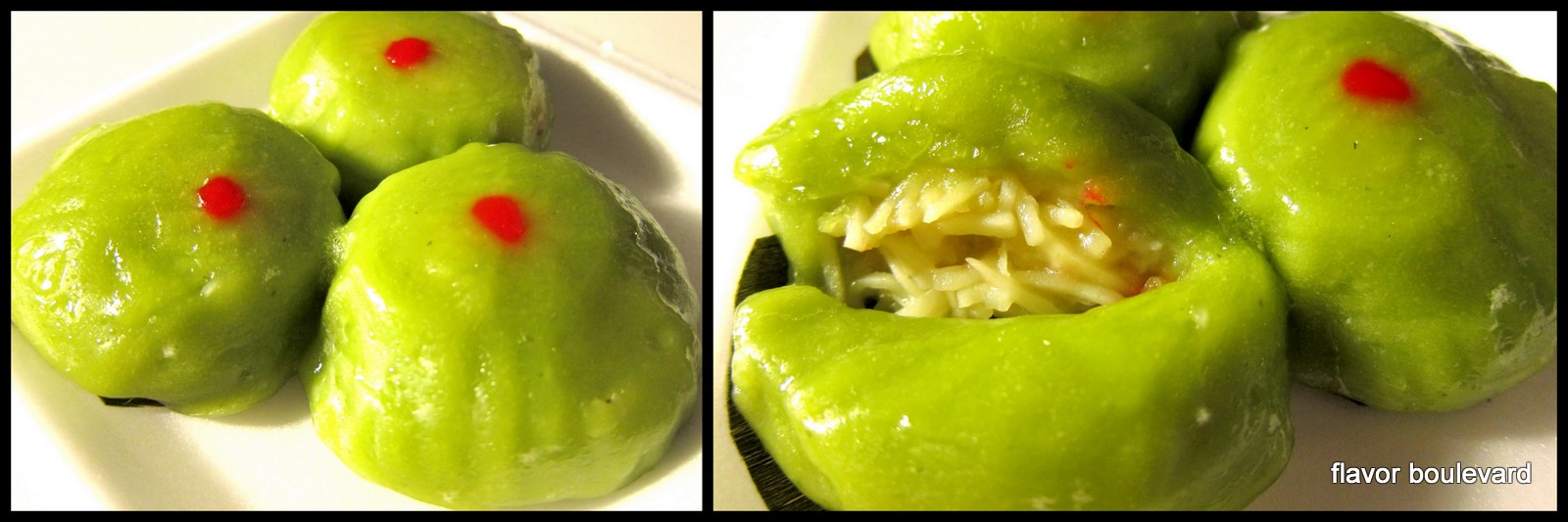
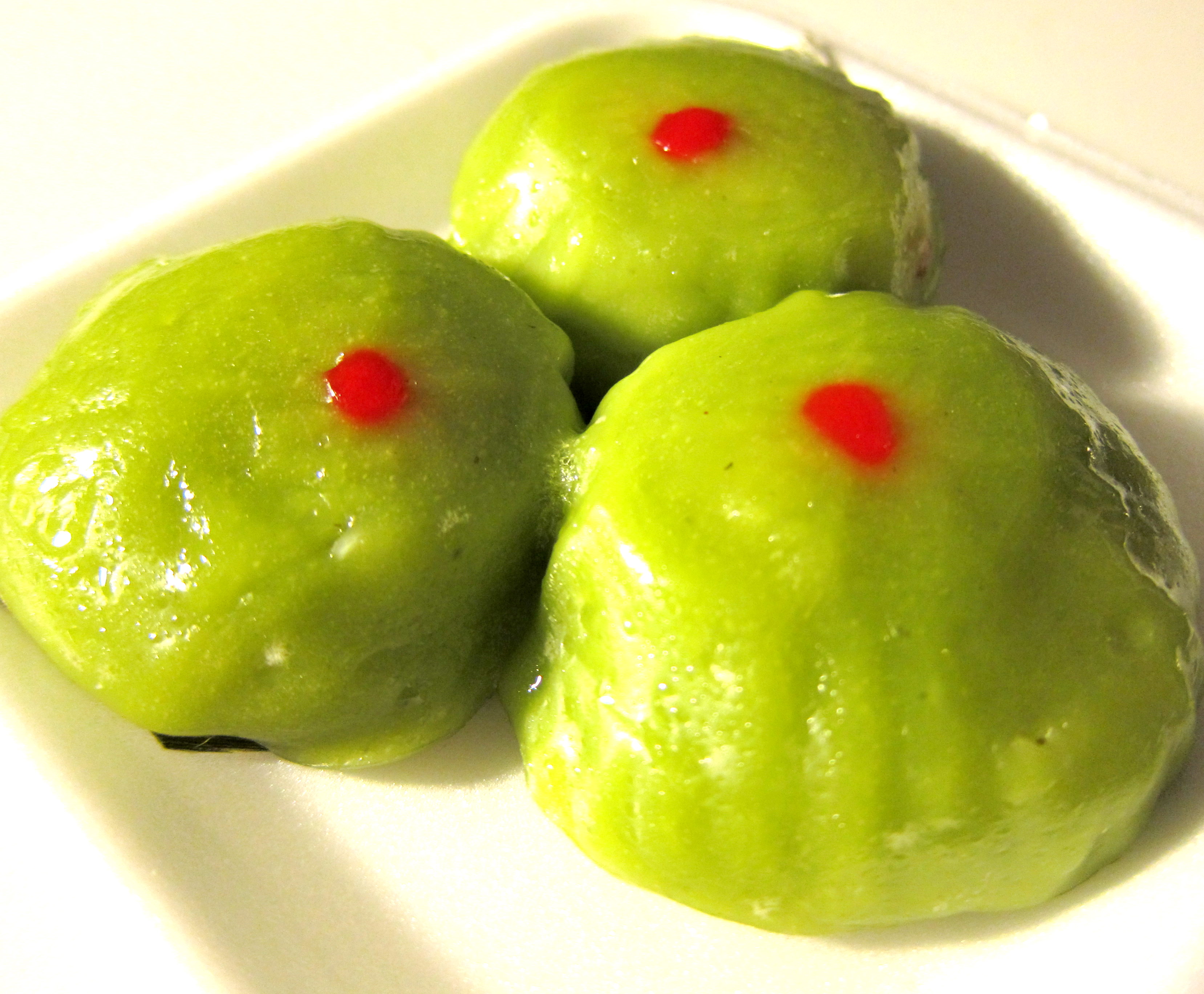
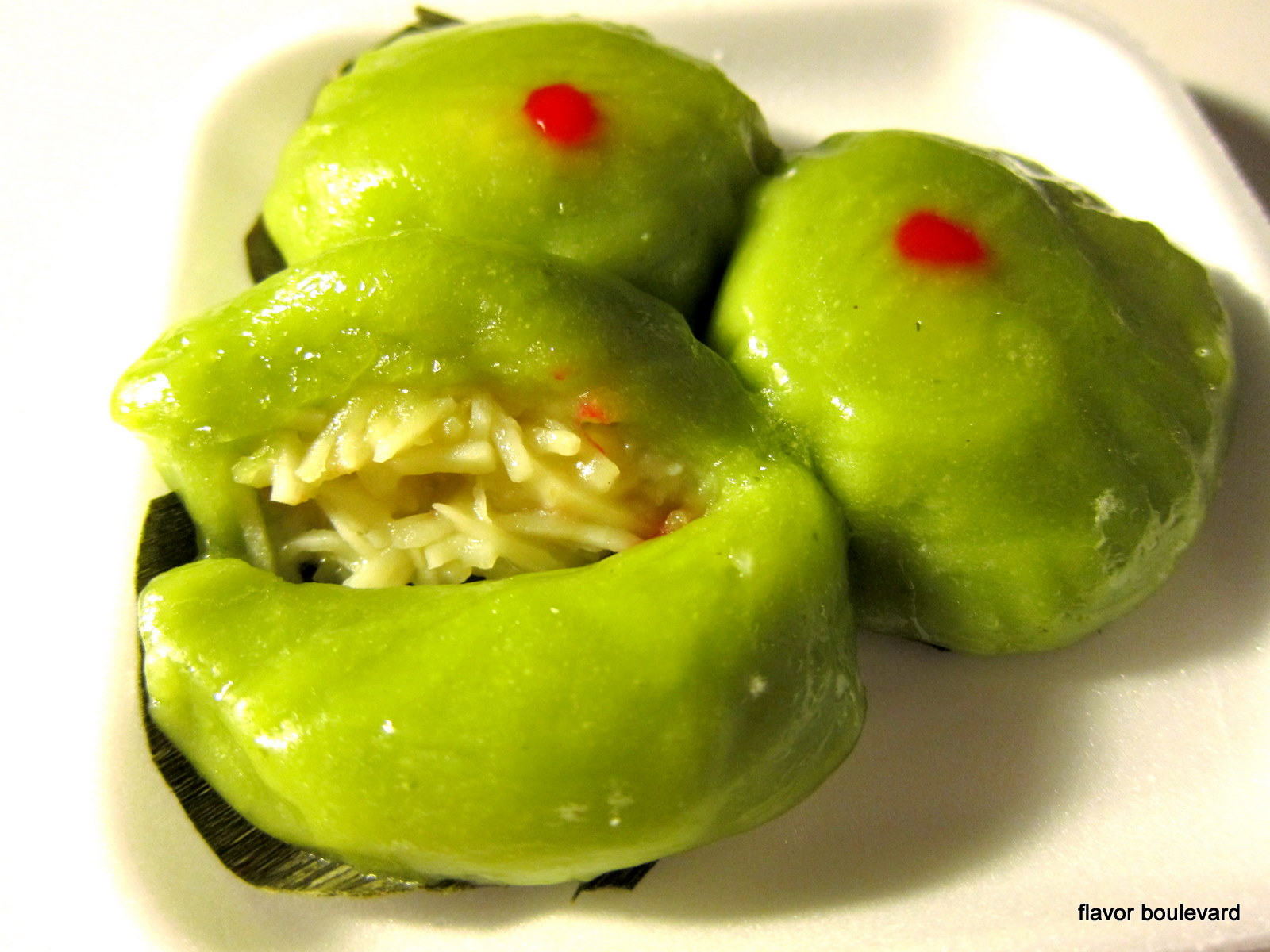
Sandwich Shop Goodies 21 – Bánh dầy đậu (Vietnamese mung bean mochi)

July 11, 2012 By: Mai Truong Category: Houston, Northern Vietnamese, One shot, sticky rice concoctions, Vegan


Legend said the first ever bánh dầy (pronounced |beng yay|) was a flat thick bun of cooked-and-pounded sticky rice, white and chewy and not recommended for dentures. The prince, taught by a Bodhisattva in his dream, made it to represent the sky, and bánh chưng to represent the earth. I don’t think the sky is chewy, but I really like it when it’s white. I also like banh day with silk sausage a lot. But somewhere along the history of Vietnam, somebody gave banh day a mung bean filling, softened the dough (which means more pounding for the sticky rice), rolled it into the size of a pingpong ball, and coated it with mung bean powder. I can NEVER get enough of this thing.

$2 for 3. Found at: Alpha Bakery & Deli (inside Hong Kong City Mall)
11209 Bellaire Blvd # C-02
Houston, TX 77072-2548
(281) 988-5222

Unfortunately, I love them so much that the store-bought version just doesn’t do it for me. With Little Mom’s help, a batch has been made. A recipe is on the way. (UPDATE: the recipe is here.)

Previously on Sandwich Shop Goodiescudweed sticky rice (xôi khúc)

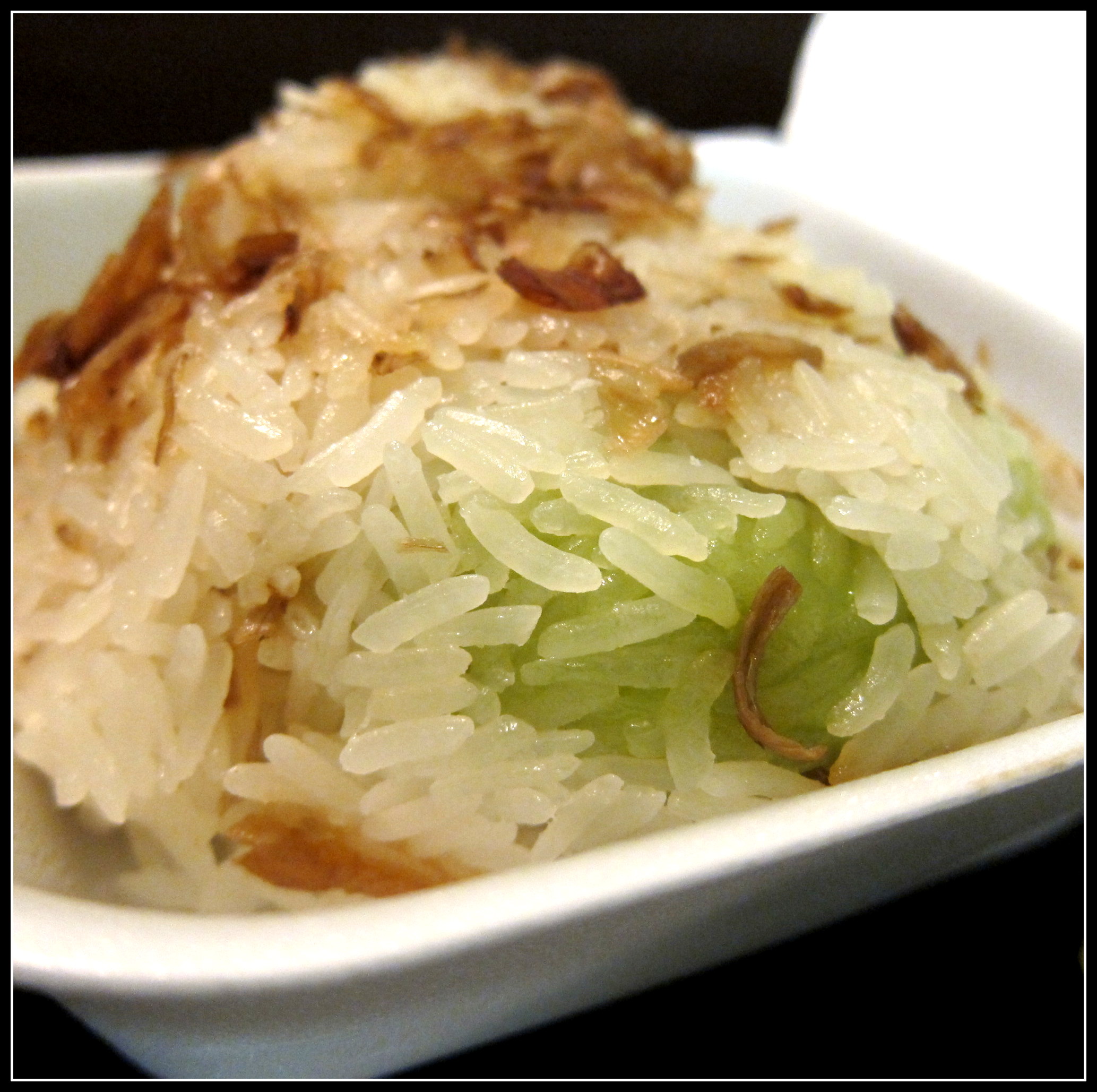
Sandwich Shop Goodies 20 – Xôi khúc – Jersey cudweed sticky rice

May 27, 2012 By: Mai Truong Category: Houston, Northern Vietnamese, One shot, sticky rice concoctions


There’s a Vietnamese song that starts like this: “Ten years pass by without seeing each other, I thought love had grown old/ Like the clouds that have flown by so many years, I thought we had forgotten.”(*) It then went on to say, as you might expect, that the narrator still yearns for that love like ten years ago. An even more dramatic thing happens to me: I still crave xôi khúc with the same passion of the last time I had it, which was twenty years ago.

The lady who sold xôi khúc (xôi cúc if you’re from the South)(*) near our elementary school was old. In her sixties at least. She was clean, so Little Mom bought xôi from her. We never had xôi khúc from anyone else, and I don’t remember seeing anyone else selling it. Loosely wrapped in banana leaves like all other xôi(*), her xôi khúc beamed with the smell of ground black pepper in the bean paste and the cool, herbal flavor of the steamy sticky rice. After the lady stopped showing up in the mornings with her basket, we stopped having xôi khúc for breakfast.

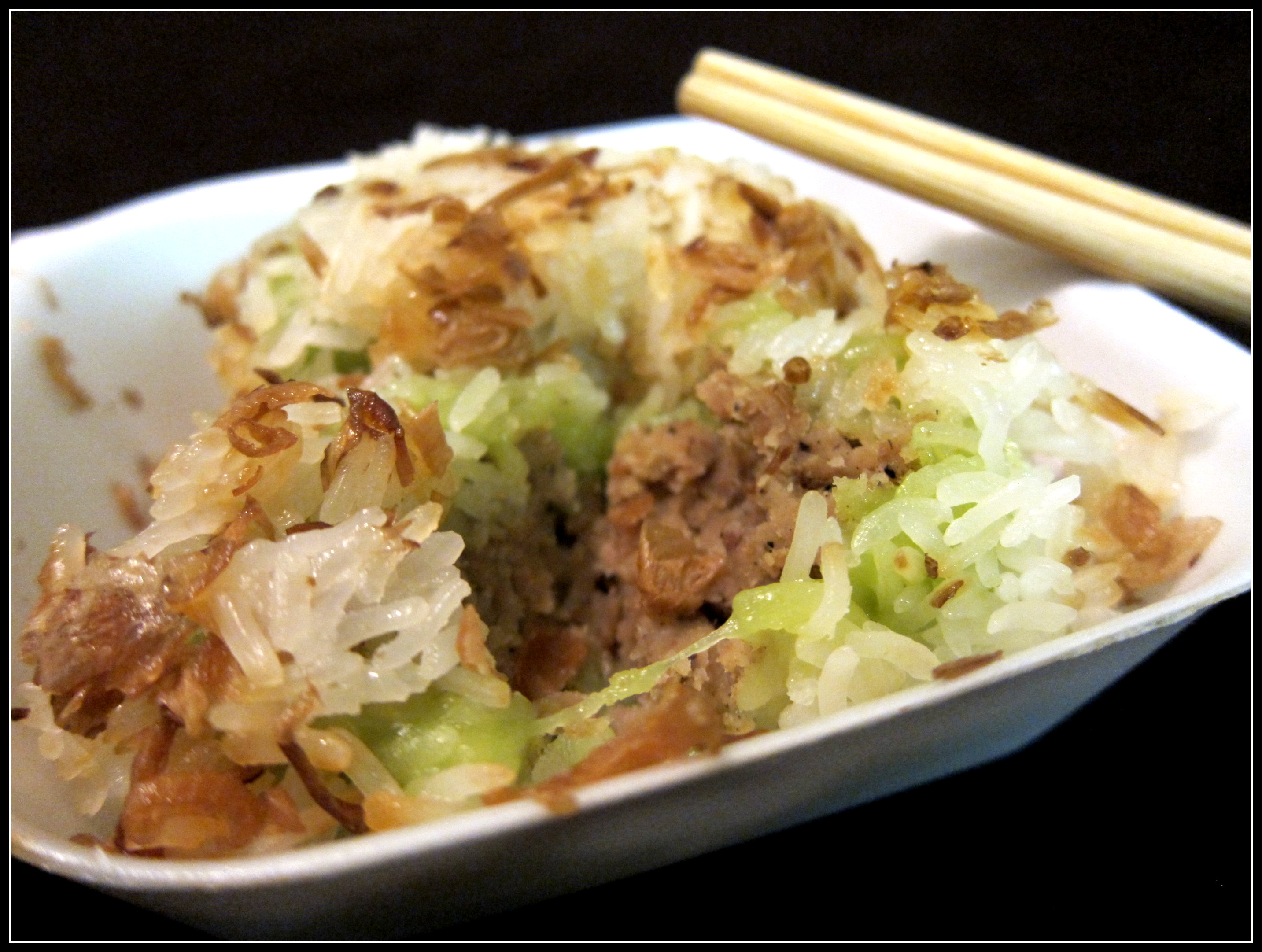
Xôi khúc is too much of a hassle for living-alone home cooks. First of all, you need the leaves that make xôi khúc xôi khúc: the not-so-popular-and rau khúc (“rau” is greens)(***) whose English name I could find only after I found out its Japanese name from the blog of a Vietnamese expat in Japan, and I don’t even know Japanese. The Japanese use this grass in their kusa mochi, a category of grass mochi to which the yomogi daifuku belongs. De javu. The Vietnamese grind it up and use the juice to knead sticky rice flour into a dough and make xôi khúc. The dough coats a ball of savory mung bean paste, the whole thing is laid between thin layers of sticky rice and steamed. In the end, you get a handful of something with grains of sticky rice on the outside, so its appearance is like xôi, and a ball of grassy sticky rice dough with bean paste filling on the inside, so its construction is like bánh (anything made of dough). Hence its name varies: bánh khúc, xôi khúc, xôi cúc (the Southerners’ simplified pronunciation).


Today, I’ve reunited with xôi khúc. This small store in Bellaire, packed with xôi, chè, savory foods and customers at 9 on a Sunday morning, sells xôi khúc1 đồng 1 viên ($1/ball), each ball as big as a lemon, two of them fit snuggly in a white styrofoam box. The rice scoop digs into the tray. A slight bounce and the soft sticky rice separates. A familiar peppery smell infiltrates my veins. The guy asked if I’d like to top them with a few spoonfuls of fried shallots. Yes, please!

Address: Đức Phương Thạch Chè
11360 Bellaire Blvd
Houston, TX 77072
(281) 498-1838
(also in the Vietnamese Veteran Memorial area, near Giò Chả Đức Hương where Little Mom buys silk sausage)

Previously on Sandwich Shop Goodiessesame beignet (bánh tiêu)

(*): Vietnamese lyrics: “Mười năm không gặp tưởng tình đã cũ/ Mây bay bao năm tưởng mình đã quên”. The song is titled Mười Năm Tình Cũ (“love dated ten years”). You can listen to it here.
(**): xôi is steamed sticky rice, either mixed with beans (sweet xôi) or eaten with meat (savory xôi). I’ve written about xôi bắp (corn xôi) and xôi đậu (peanut xôi) before.
(***): Gnaphallium affine, Jersey cudweed in English, hahakogusa (ハハコグサ in Katakana or “母子草” in Kanji) in Japanese. My inner linguistics savvy especially likes the Japanese name: 母 (haha) is Kanji for mother, 子 (ko) child, and 草 (gusa) grass: so rau khúc is Mother [and] Child Grass (mẫu tử thảo).

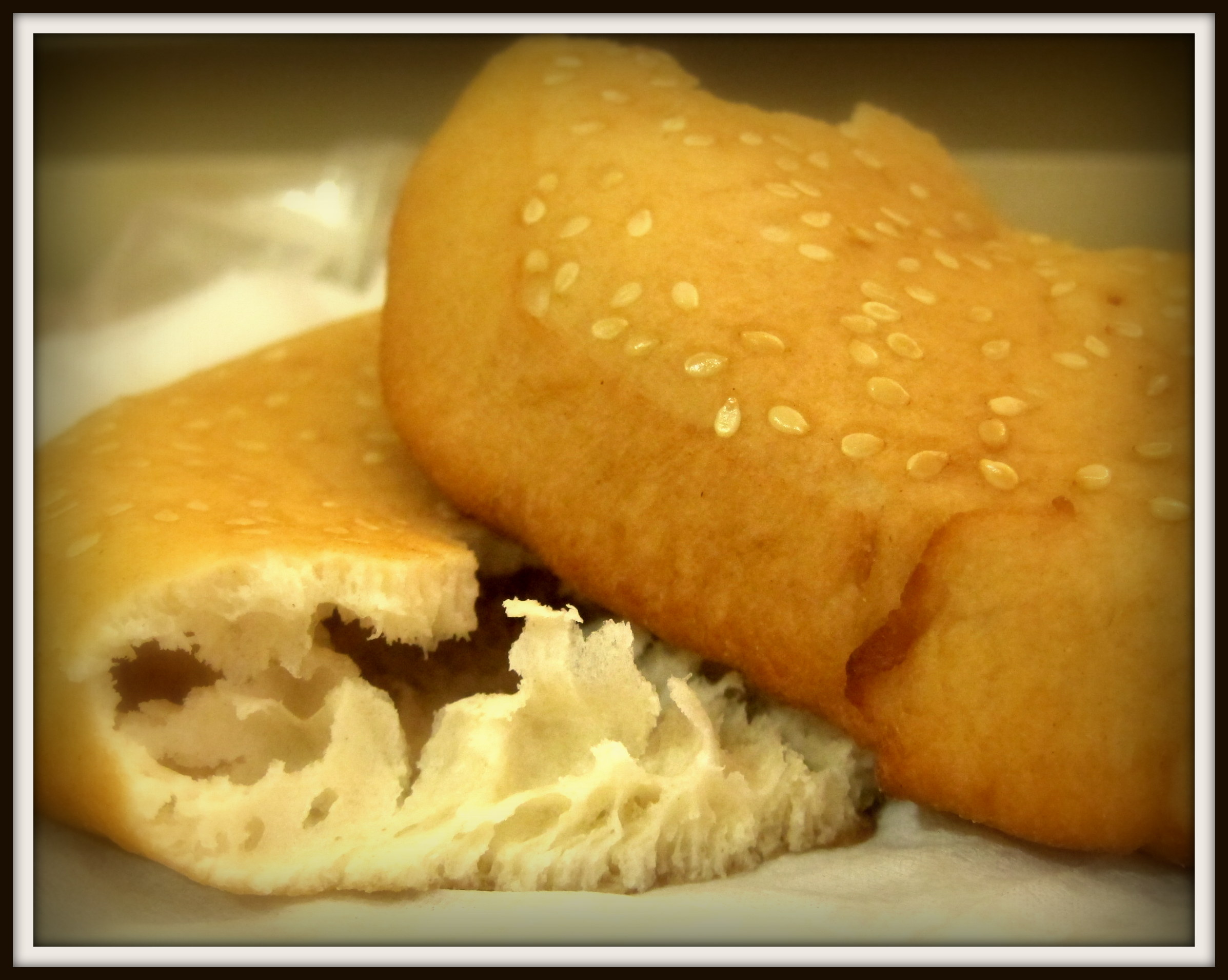
Sandwich Shop Goodies 19 – Bánh tiêu (Chinese sesame beignet)

April 03, 2012 By: Mai Truong Category: California - The Bay Area, Chinese, One shot, savory snacks, Southern Vietnamese


Little Mom and I… we just have different tastes. She likes seafood. She prefers crunchy to soft. She doesn’t like sticky rice (!) She thinks the mini sponge muffins (bánh bò bông, the Vietnamese kind) are sourer than the white chewy honeycombs (bánh bò, the Chinese kind). I beg to differ. The mini sponges can be eaten alone; the honeycombs are almost always stuffed inside a hollow fried doughnut that is more savory than sweet: their sourness needs to be suppressed by the natural saltiness of oil and the airy crunch of fried batter. That doughnut, brought to us by the Chinese and called by us “bánh tiêu“, saves the honeycombs.

The honeycombs could go hang out with the dodo for all I care, but this Saigonese would always appreciate a well-fried bánh tiêu. At any time of the day, one would be able to spot a street cart with the signature double-shelf glass box next to a vat of dark yellow oil. The oil gets darkened from frying too many doughnuts too many times. Sure, it isn’t healthy. But should you really care about health when you eat fried dough?

“Fried dough has appeared in different forms – round, square, triangular, twisted – under many different names. The Dutch settlers had olykoeks (oily cakes); the French in Louisiana had beignets; the Spanish from Mexico made puchas de canela; and the Pennsylvania Germans made fastnachts around Lent.” (Jill MacNeice, “Doughnuts“, in the Roadside Food collection) Now I may add that the Vietnamese in California and Texas have bánh tiêu. One quality of bánh tiêu to make it superior over the other fried doughs: it isn’t coated in powder sugar. Studded with white sesame on one side, it tastes subtly salty of dough, fat, and roasted grain.

An excerpt about Vietnamese vendors making dầu cháo quẩy and bánh tiêu:

Vốc một nhúm bột khô rải đều trên bề mặt miếng gỗ đã trơn bóng – cốt để bột nhồi không bị dính – tiếp tục ngắt một cục bột đã ủ cho lên men, nhẹ nhàng vuốt dọc rồi dùng cây lăn cán qua, miếng bột đã được kéo ra thành một dây bột dài mỏng đều. Người bán lại tiếp tục dùng một thanh tre cật mỏng, xắn bột thành từng miếng đều nhau. Xếp chồng hai miếng bột lên rồi dùng một chiếc đũa ấn mạnh ở giữa, thế là đã được miếng bột “chuẩn” để làm bánh quẩy. Còn bánh tiêu thì phải qua công đoạn vốc một nắm mè vất ra giữa miếng gỗ để mè tự rải đều, sau đó mới dùng bột đã ủ đã nhồi cán thành miếng tròn dẹp, một mặt dính mè, một mặt không.
[…]
Bánh quẩy và bánh tiêu thường bán chung, có lẽ chủ yếu là vì hai loại bột làm bánh này không khác nhau là mấy. Cũng bột mì nhồi với bột khai là chính. Nhưng với bánh quẩy, người ta cho thêm chút muối, chỉ một chút thôi đủ để bánh không lạt lẽo, nhưng vẫn còn giữ được độ ngọt nguyên thủy của bột mì.
Còn với bánh tiêu, người ta lại cho thêm ít đường, cũng rất ít, đủ để làm dậy hơn vị ngọt của bột. Vị ngọt của bánh tiêu vì thế rất nhẹ, không như những loại bánh ngọt khác. Với bánh tiêu, người mua cũng không đòi hỏi phải giòn đến như bánh quẩy. Cái hấp dẫn ở bánh tiêu lại là ở những hạt mè thơm ngậy. Những hạt mè trắng li ti sau khi chiên trở nên căng mẩy, quyện với mùi thơm của bột mì chiên giòn trở nên hấp dẫn kỳ lạ. Nếu như bánh quẩy thường được cho vào dùng chung với cháo, với phở thì bánh tiêu thường được dùng kèm với bánh bò. Xẻ đôi chiếc bánh tiêu, kẹp vào giữa miếng bánh bò nữa là được một loại hương vị khác hẳn. Cái mềm xốp của bánh bò khiến bánh tiêu – vốn hơi khô – trở nên dễ ăn hơn, đỡ ngán hơn. Các loại nhân ăn kèm bánh tiêu cũng khá phong phú, tùy sở thích mỗi người. Có người mách nhau kẹp xôi vào giữa, ăn cũng rất ngon, lại có thể thay quà sáng. Có người lại thích nhân “cadé”, là loại nhân làm bằng trứng gà có vị béo ngầy ngậy, rất hợp với bánh tiêu.

Translated and abridged:

[The vendor] scoops up some flour and sprinkles them on the shining flat wooden board, to keep the dough from sticking, then he pinches off a ball of fermented dough, gently pulls it and runs the rolling pin once over to stretch the ball into a thin strip. Then he grabs a sharp bamboo stick, swiftly cuts the strip into smaller, even strips. Putting two strips on top of each other, pressing a chopstick down in the middle, and he gets a “standard” piece of bánh quẩy ready to fry. For bánh tiêu, he would need to sprinkle a pinch of sesame seeds on the board, then flatten the dough into disks, one side studded with seeds, the other side having none.
[…]
Bánh quẩy and bánh tiêu are often sold together because they have similar dough. Mainly, flour and baking soda. For bánh quẩy, they add some salt to make it savory, but not too much that it would diminish the flour’s natural sweetness. But for bánh tiêu, they would add a pinch of sugar to boost that sweetness. Bánh tiêu doesn’t have to be as crunchy as bánh quẩy either. Its goodness lies in the sesames’ fragrant nuttiness. As bánh quẩy is often eaten with rice porridge or noodle soup, bánh tiêu goes with bánh bò. Slit the bánh tiêu open, stuff in a piece of the soft white honeycomb bánh bò, and you get a whole new snack. Some people substitute bánh bò with sweet sticky rice or with egg custard, that really fattens it up.

In Saigon, Vietnam: 1000 VND each.
At Bánh Mì Ba Lẹ, Oakland: 1 USD each. (1 USD ~ 20000 VND)

Address: Bánh Mì Ba Lẹ (East Oakland)
1909 International Blvd
Oakland, CA 94606
(510) 261-9800

Previously on Sandwich Shop Goodiessteamed taro cake (bánh khoai môn hấp)
Next on Sandwich Shop Goodies: Xôi khúc (cudweed sticky rice)

Sandwich Shop Goodies 18 – Vegan steamed taro cake (bánh khoai môn hấp)

June 28, 2011 By: Mai Truong Category: Houston, One shot, sweet snacks and desserts, Vegan, Vietnamese


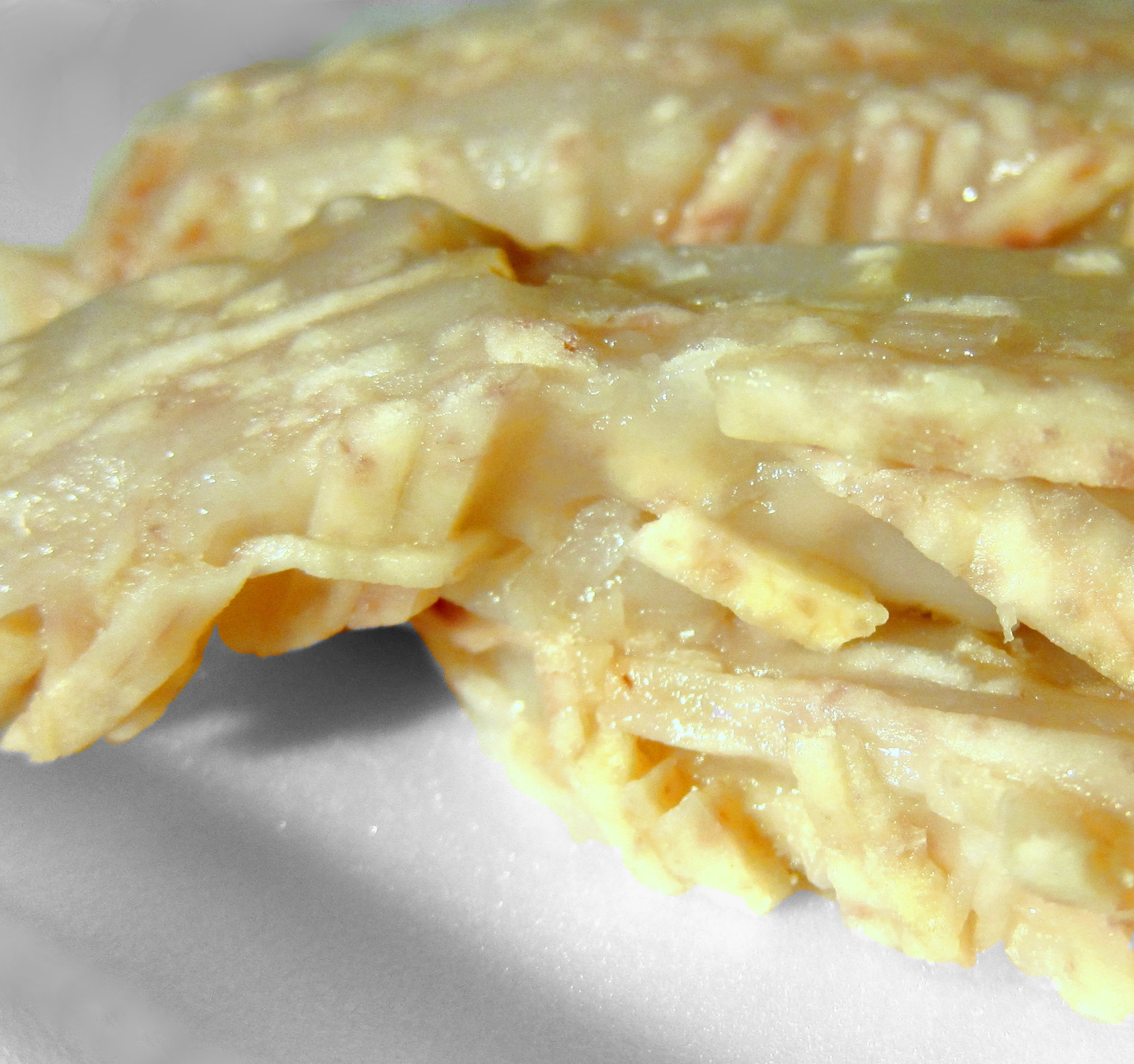
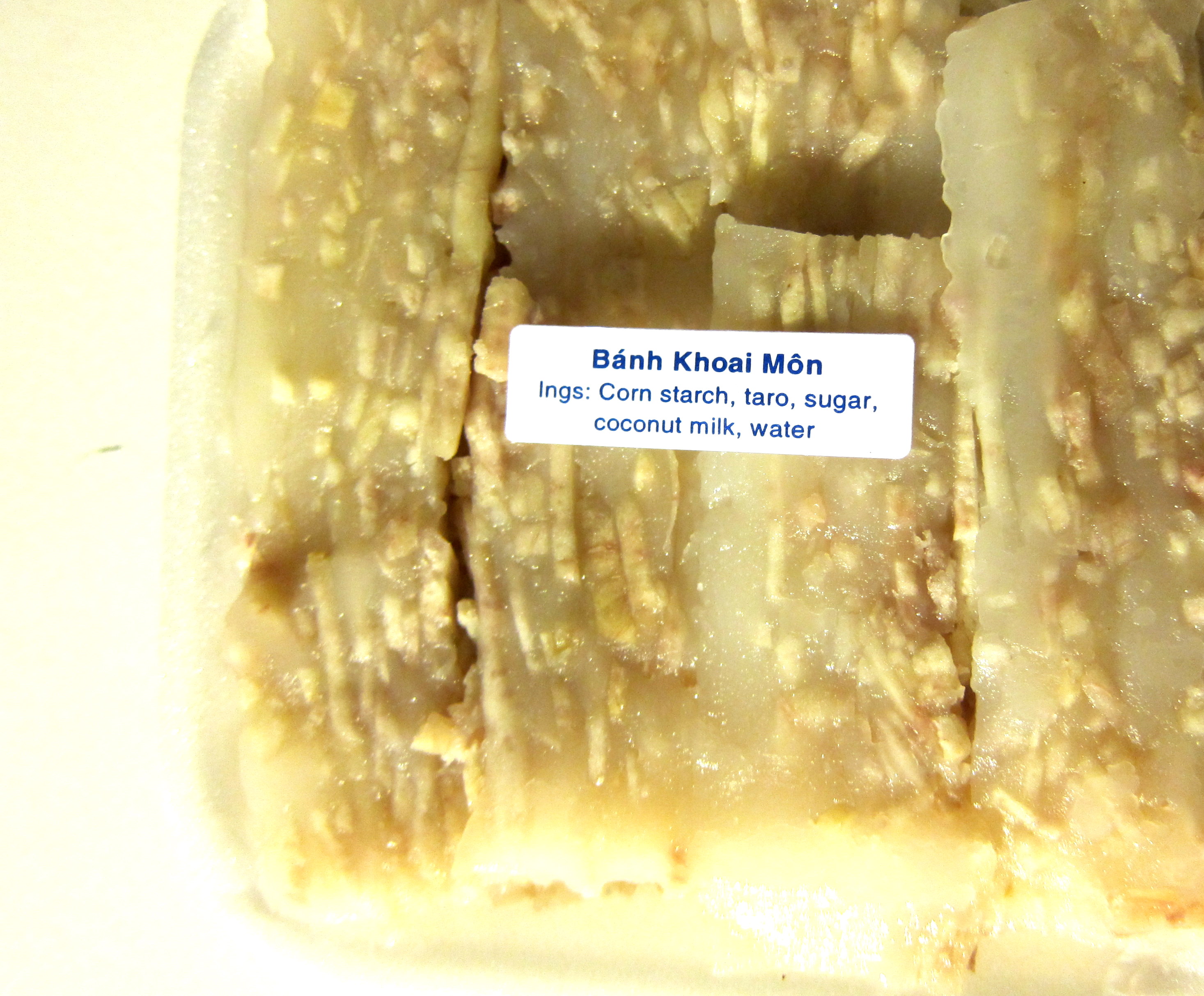
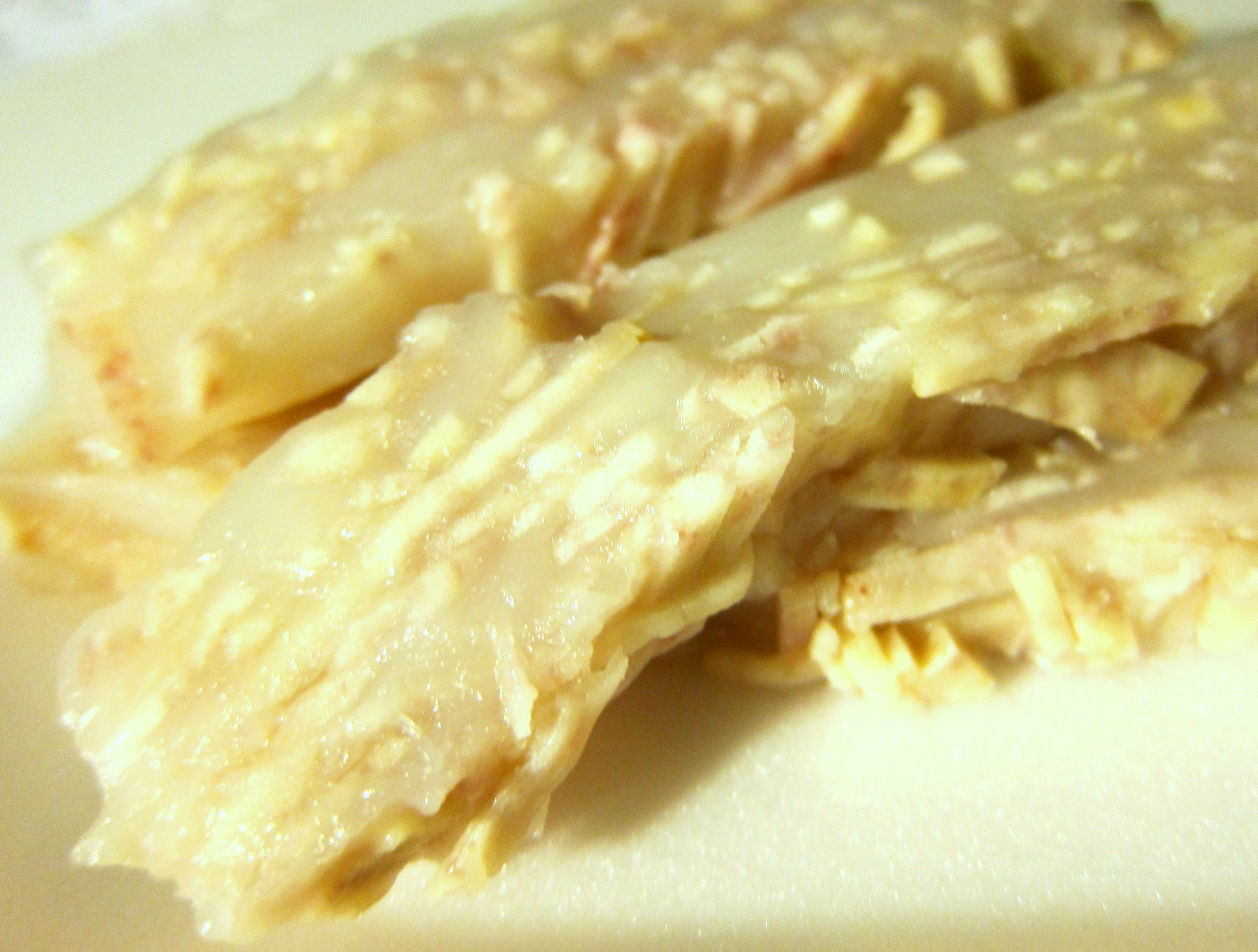
It is not pretty, but from the label I knew right away that it would be good. Strips of nutty taro embedded in soft-chewy tapioca just got on my list of things to make, if I ever feel like cooking. That can mean only one thing: the online recipes seem that simple.


If you google “bánh khoai môn hấp“, and presumably you read Vietnamese, the first links you find will contain something like dried shrimps (tôm khô) and pork, perhaps some mỡ hành (green onion in lard), too. That version is similar to Woo Tul Gow (or Woo Tau Ko). I haven’t tried that nor seen it in any cling-wrapped styrofoam plate at banh mi shops. If you don’t read Vietnamese, well… that’s why you have me :D: I translate. Here’s the Vietnamese recipe of the (vegan) steamed taro cake from Thư Viện Phật Học (The Library of Buddhist Studies), which most resembles what I’ve gotten from Alpha Bakery & Deli. Actually, this recipe sounds better.

Like most Vietnamese recipes online, this one lacks precise measurement (which I agree with to some extent, but that’s beyond the scope of this post). So I searched around and found a more detailed but also more complicated recipe, and here’s my wanna-be-clever combination of the two:

The minimalist’s vegan steamed taro cake (bánh khoai môn hấp)

– 1 lb taro
– 1 bag (200 g) of tapioca flour (bột năng)
– 50 g rice flour
– 150 g sugar
– 2 cans of coconut milk (oooh coconuty!)
– 2 cups of water
Mix tapioca flour, rice flour, sugar, water, and coconut milk together.
With the taro roots: wash, peel, slice into strips (as thick as you’d like, but I’d imagine the thicker they are, the longer it takes to cook the cake).
Gently mix the taro strips with the batter (don’t make mashed taro or you’ll get Kanom Pheuak).
Boil water. Steam the taro-batter mix for 45 minutes or until a toothpick comes out clean.

Fancier versions would include pandan leaves and vanilla, or alternating layers of tapioca and taro.


This is one of the few times when “cake” is not too far off from “bánh“: bánh khoai môn hấp is semi sweet, soft, meatless, and too light to make a meal by itself.

If you try this recipe, do let me know how it goes.
Otherwise, I found it here once for a buck fifty:
Alpha Bakery & Deli (inside Hong Kong City Mall)
11209 Bellaire Blvd # C-02
Houston, TX 77072-2548
(281) 988-5222

Previously on Sandwich Shop Goodies: mung bean milk (sữa đậu xanh)
Next on Sandwich Shop Goodies: Chinese sesame beignet (bánh tiêu)

Sandwich shop goodies 17 – Mung bean milk

May 13, 2011 By: Mai Truong Category: California - The Bay Area, Comfort food, Drinks, One shot, Vietnamese

Do you like soy milk?
No? Well, someone once told me that if you don’t expect milk when you drink soy milk, then you’d enjoy it.
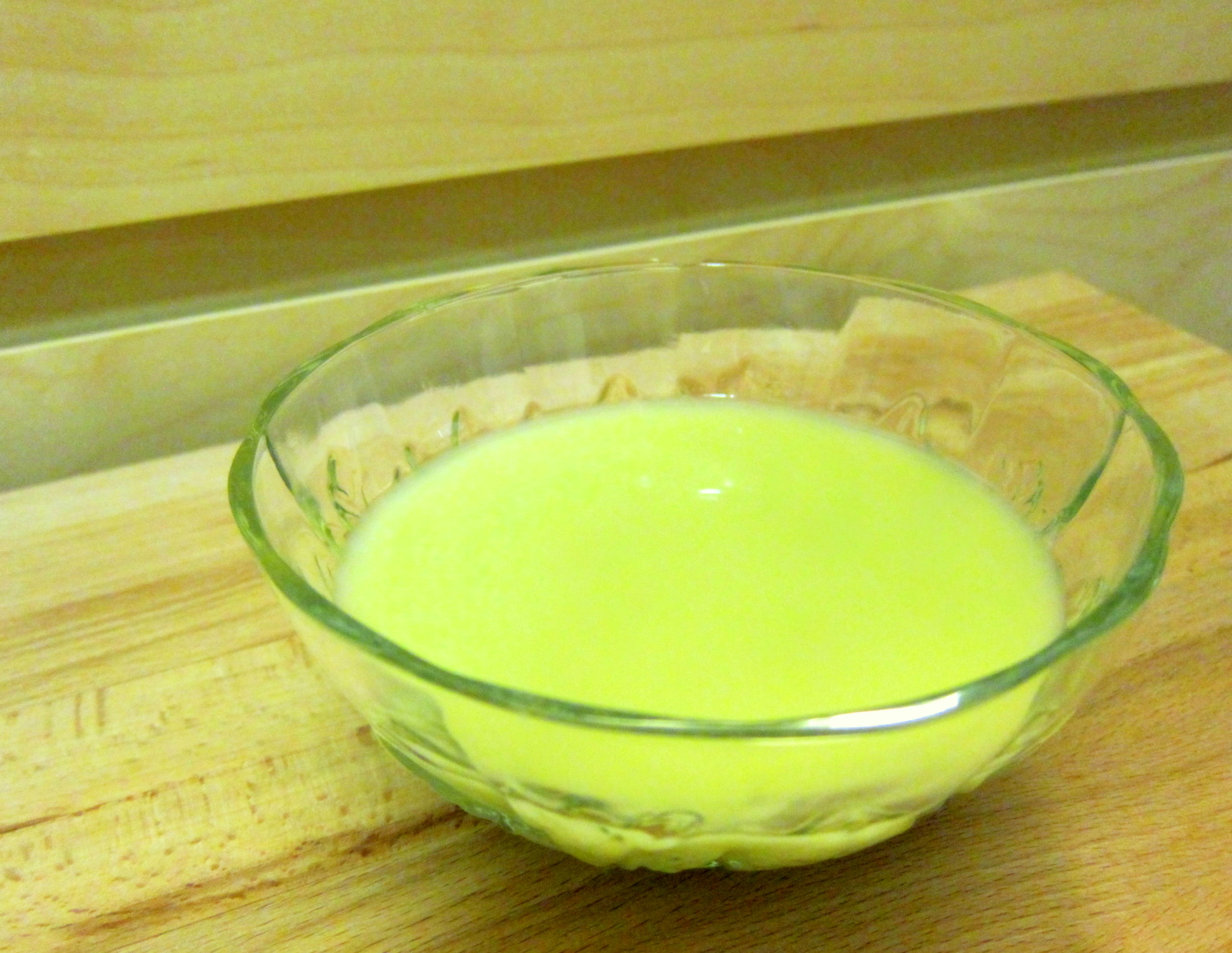
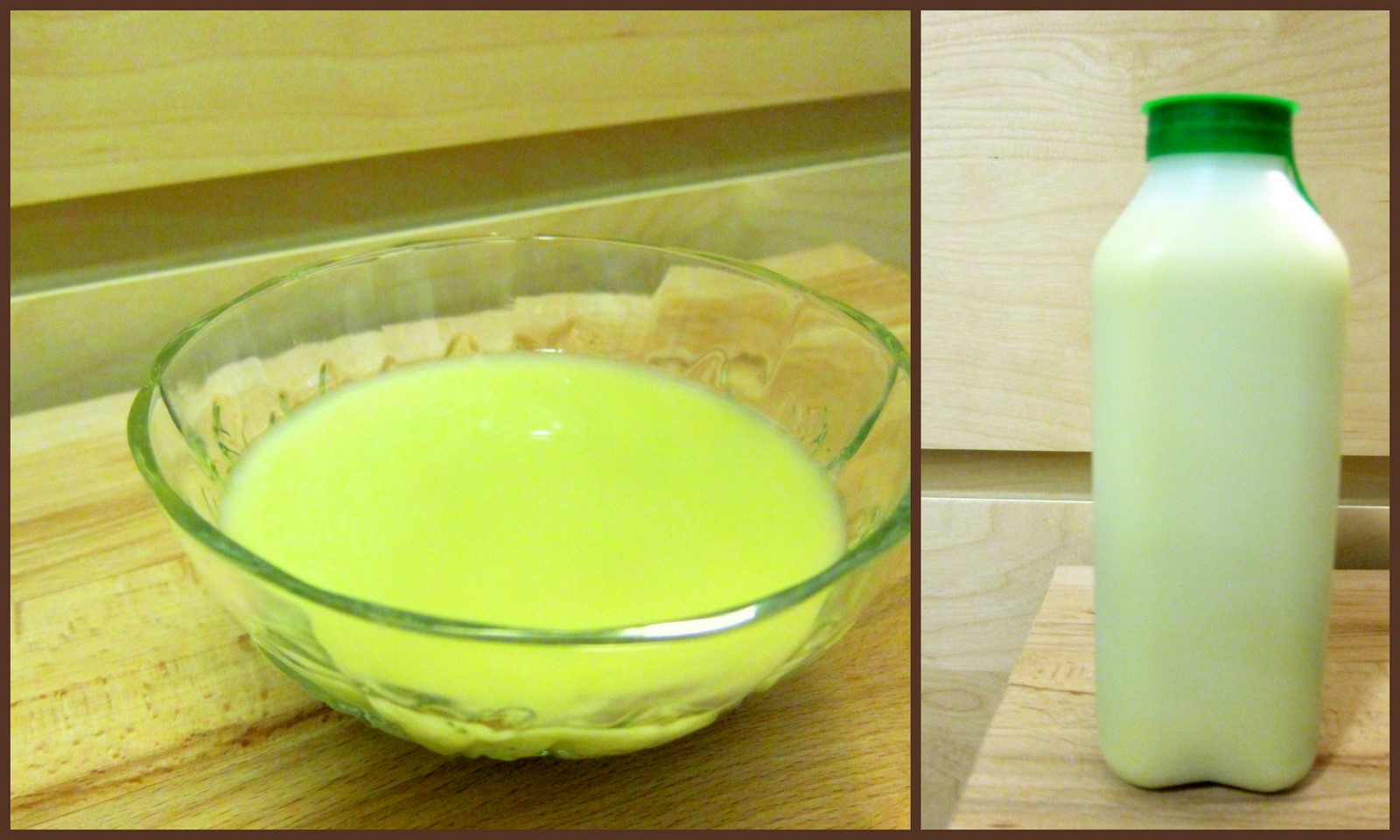
Yes? Then you might just prefer this luscious, green, liquefied nourishment to soy milk.
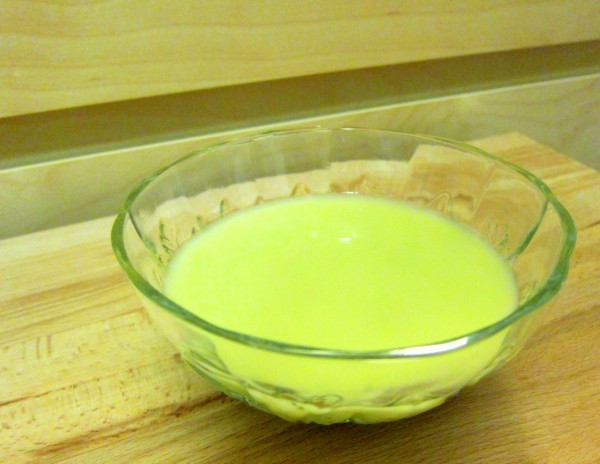

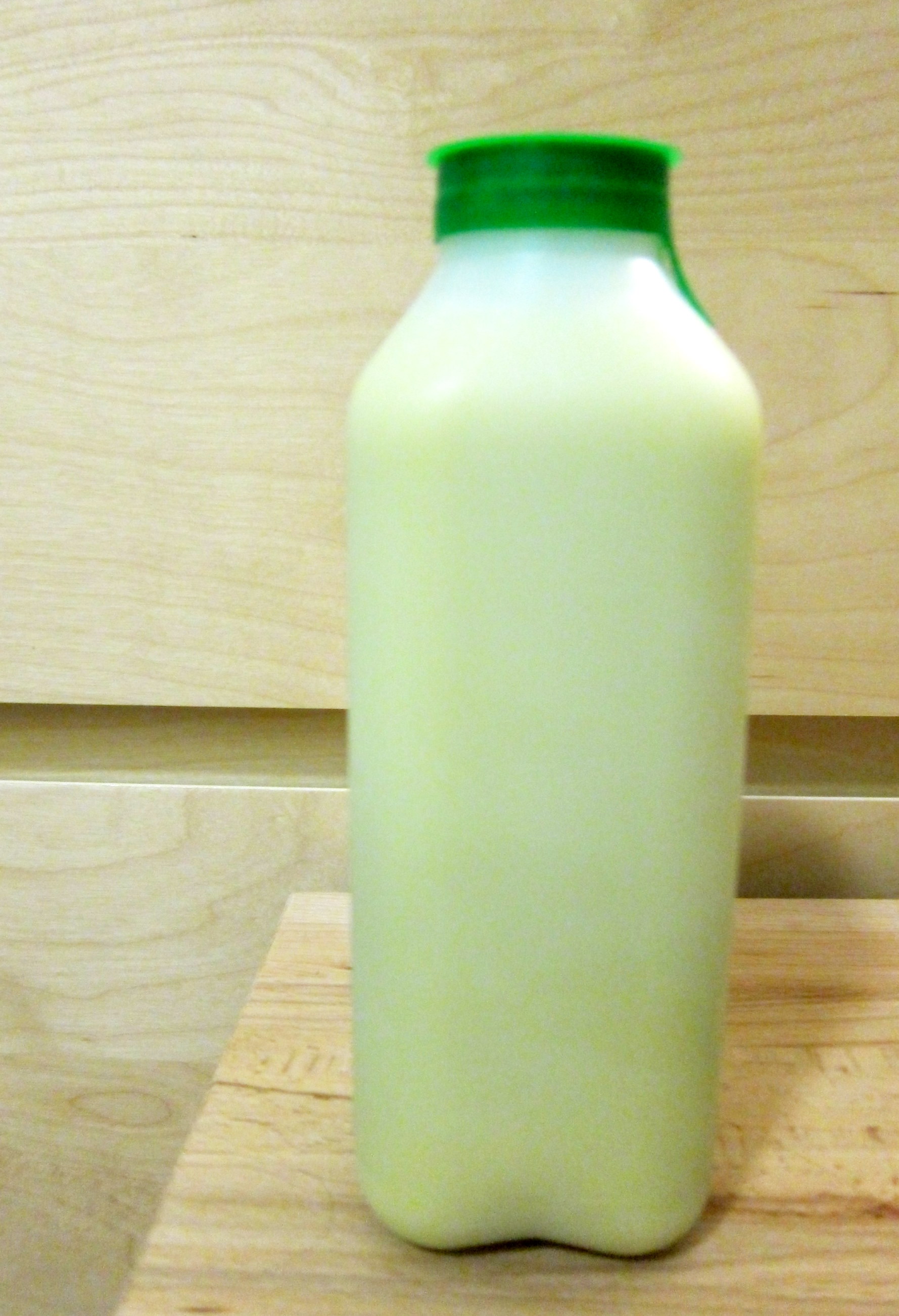
Not only is it nuttier, mung bean milk also feels more natural and more local than the modern soy milk. From the cheap plastic bottle with a green plastic cap and no label (that means no half-stamped “Sell by…” either), you can probably tell that it didn’t go through any metallic machine with pulleys and tubes. Whoever makes this mung bean milk probably soaks the beans overnight in a dented aluminum basin, boils the extract at 2 am in a sooty pot, and bottles the final liquid via a red plastic funnel that looks just like the one they always use for oil change. It doesn’t really matter as long as the delivery of a fresh batch comes at 6. The sandwich shop unstretches its iron folding doors. The customers start buzzing in. At 11 I came. I grabbed a bottle at the cashier. It was warm.
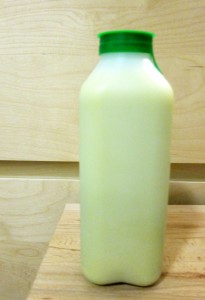

Two and a half hours later I got home and the milk got cold. I packed the 16 oz bottle into my minifridge next to the banh mi and banh bao (from the same store), sighing in relief that it’s just short enough to stand fit on the upper shelf. Was the bottle I had back then also about this size? How many years ago since I had last tasted that nuttiness in a glass? I dialed, “Mom, guess what I bought today! Sữa đậu xanh!”

On the other end of the phone I could hear her eyes widened and her lips part into a half moon shape. She’s happy. Every day for some time between my fourth and sixth years, Little Mom used to buy me a pint of mung bean milk from a grandmother of one of Dad’s students, and it had to be that grandmother because of her indisputable cleanliness. When I was 6, we switched to the packages of Vinamilk’s pasteurized fresh (cow) milk, a more convenient alternative to get in loads per week. Actually, I remember the cow milk packages with light blue words printed on white and the typical picture of a black-and-white Holstein cow, but not the mung bean milk bottles, barely the fact of drinking it every day. The point is, even in the Saigon of the ‘80s, mung bean milk was rarer and pricier than cow milk. Today, Bánh Mì Ba Lẹ in Oakland sells $2.50 for every 16 oz bottle, roughly six times more expensive than a gallon of cow milk, which you can get on average for $2.99 at your local grocery. Not that the price always represent the taste, but if I were a cow I would sulk a little, knowing that those helpless bird-eye seeds could produce something more valuable than my giant rectangular body could.

Now, about the taste… I’ve tried mung bean milk both ways: chilled in the fridge and warmed up in the microwave. Warm is better. Warm embraces the sweetness instead of masking it. Warm sooths your sensors from the tongue all the way down the esophagus. Warm also elevates the fragrance of pandan leaves and mung bean.
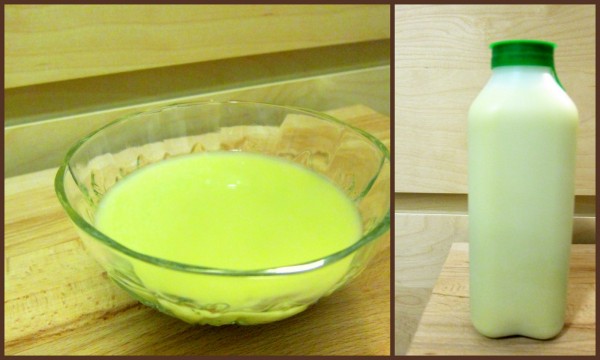

I wanted to stock up on the stuff so much I came back the next Sunday afternoon to buy off their last 4 bottles: 2 on the counter and 2 from the fridge. I refrigerated them all and refrained from drinking them that night; like a poor drug addict I tried portioning whatever little amount I had for the whole week: 1 bottle per two days seemed satisfactory. But ah the best-laid schemes gang aft agley, Wednesday morning one bottle turned sour on me.

“There goes three precious pints down the drain,” thought I. But it turned out the remaining two were fine. ‘t was one from the counter that got ruined. The cold ones stayed for 6 days. So unless you drink it within two days, buy the refrigerated bottles, keep fridging, then shake it well and warm it up with a microwave when you drink.

One last bit to tell you how stingy I get when it comes to mung bean milk: I drank and drank and at the bottom there was the thick beany leftover, I poured in some water, shook it up, more mung bean milk for me.

Address: Bánh Mì Ba Lẹ (East Oakland)
1909 International Blvd
Oakland, CA 94606
(510) 261-9800

Previously on Sandwich Shop Goodies: nước rau má (pennywort juice)
Next on Sandwich Shop Goodies: bánh khoai môn hấp (vegan steamed taro cake)

This post is submitted to Delicious Vietnam #13, May edition, hosted by Jing of My Fusion Kitchen.

Sandwich Shop Goodies 16 – Nước rau má (pennywort drink)

April 23, 2011 By: Mai Truong Category: California - The Bay Area, Drinks, One shot, Vietnamese


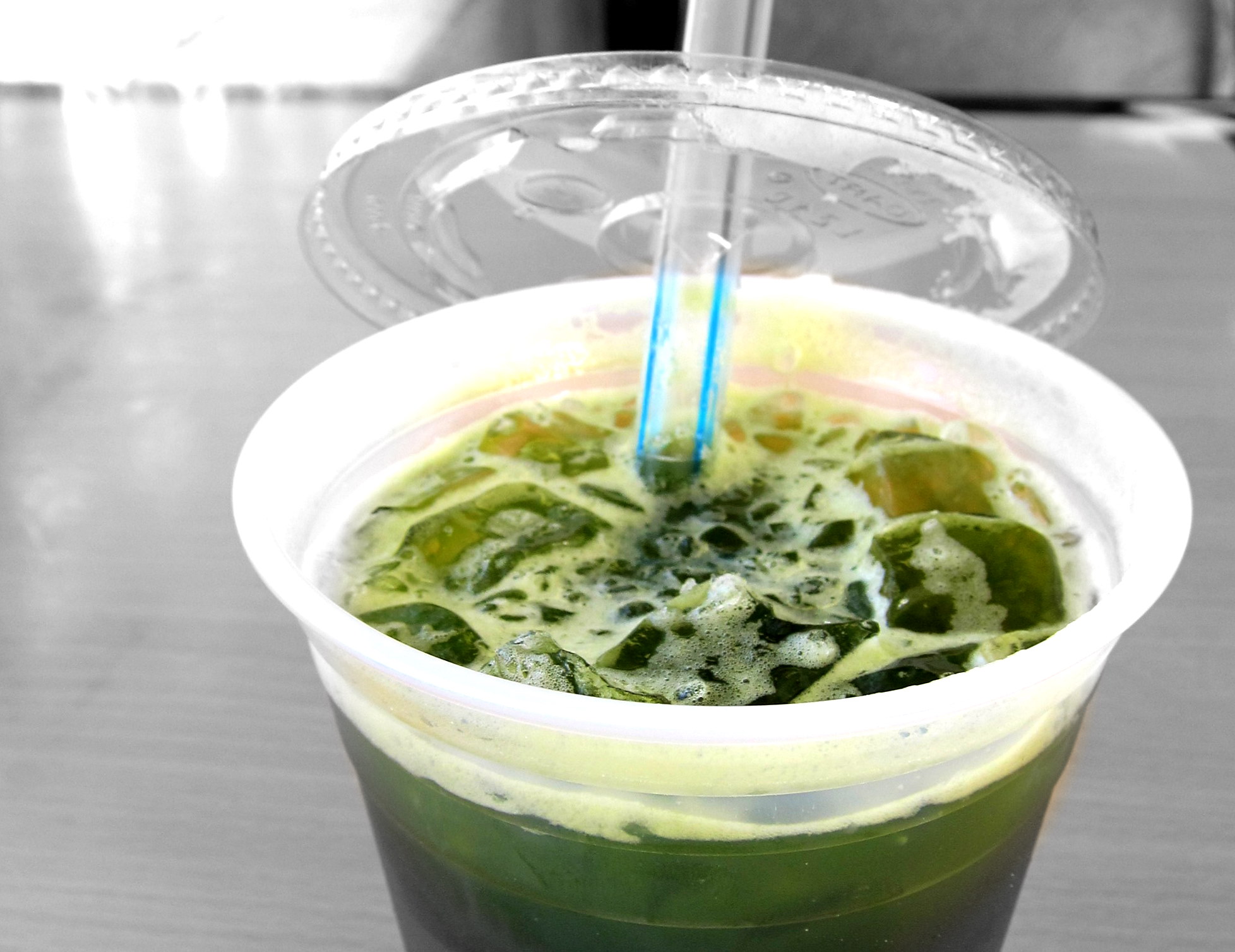
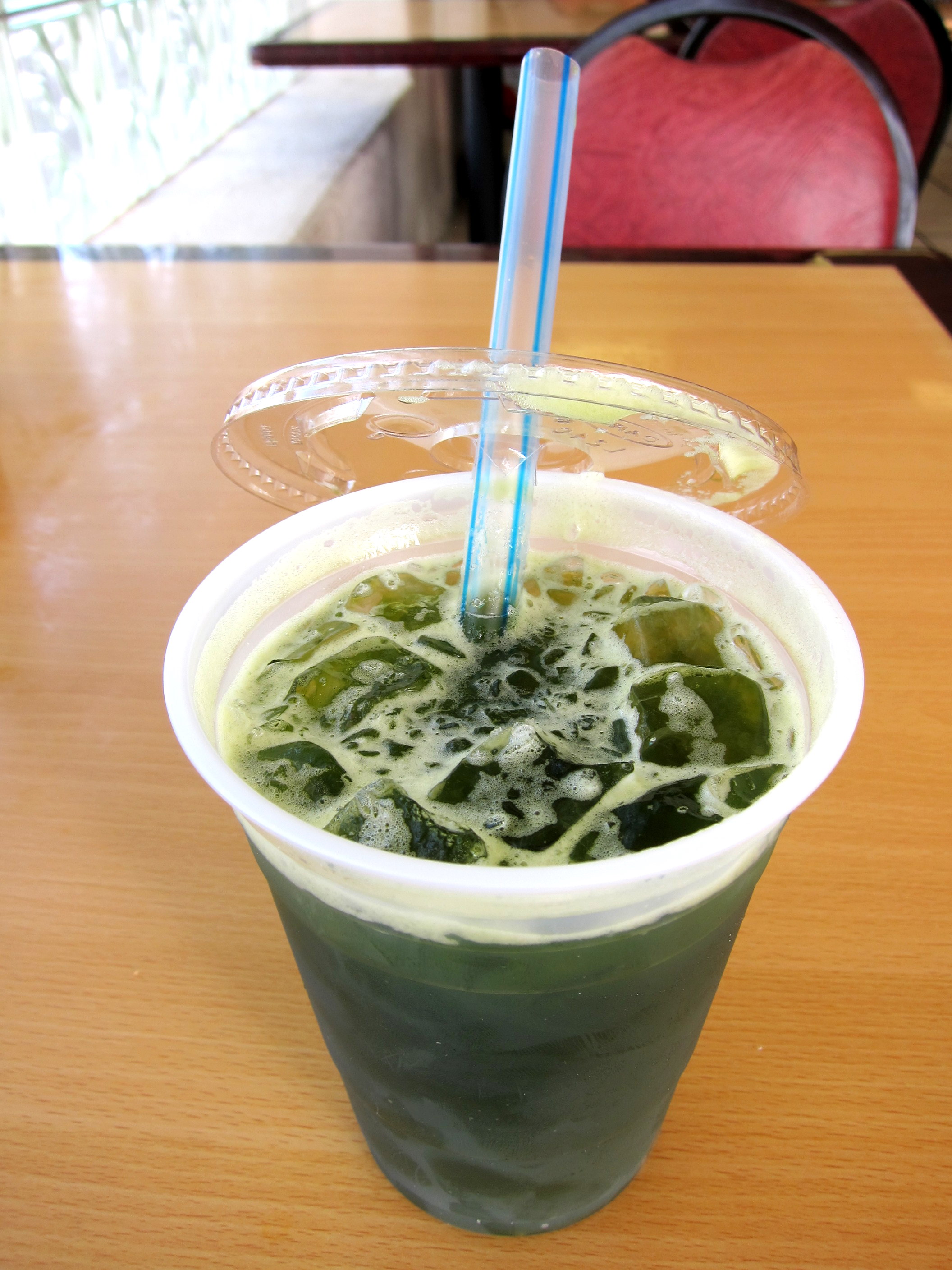
Emerald green. Chilled. Clear. Leafy. Mildly sweet (sugar is added). Every time I pass by a patch of fuzzy spring grass, I dream of munching a tuft and inhaling the lush, youthful aroma of those dew- and rain-soaked blades. This two-dollar drink in this plastic cup is my dream come liquefied.

Lately I have been slacking on the blogging front, mainly because I took on an editing job to compensate for my unwillingness to cook. Ironically, now my eating out budget has increased but I have neither time to eat nor to write about the stuff that I eat. On top of that, the last few weeks of the semester are, naturally, the time to sprint at the end of the marathon and the professors make sure that slacking means death (no joke). But sometimes it backfires when you’re too stressed, you ditch your homework, set out on an hour bus ride to your Vietnamese sandwich shop, order a cup of pennywort drink, and drown your sleep deprivation in eavesdropping others’ conversations.


Little Mom used to make pennywort soup, the best remedy for hot weather and rising body temperature it was. Dad used to eat them raw. The plants almost grow wild, so the leaves cost next to nothing (I wonder why its English name isn’t “pennyworth”). On the streets pennyworth drinks usually get advertised on the same raggedy carts that sell sugarcane juice and fruit smoothies. Those “Nước Mía – Rau Má – Sinh Tố” surrounded with pictures of pineapple and avocado painted on the aluminum sides are a part of every Saigon school front.

But the cup at Bánh Mì Ba Lẹ was my first. There’s the familiar leafy taste in mom’s soup of years back, but the chilled sweetness is refreshingly new. A few tables away, a boy with Tintin‘s hair and two girls were also sipping their rau má. They speak in my mother tongue, yet somehow it sounds so foreign.

Address: Bánh Mì Ba Lẹ (East Oakland)
1909 International Blvd
Oakland, CA 94606
(510) 261-9800

Previously on Sandwich Shop Goodies: bánh quy (turtle mochi)

Sandwich shop goodies #15 – Bánh quy (turtle mochi)

March 31, 2011 By: Mai Truong Category: Houston, One shot, Southern Vietnamese, sticky rice concoctions, sweet snacks and desserts


Of my two hundred fifty some posts so far, this Sandwich Shop Goodies series brings me the most joy when writing and also takes me the longest time per post. It’s a collection of the bits and pieces that cost next to nothing. You may say why of course, how can a mere grad student afford The Slanted Door, The French Laundry, or our local Chez Panisse et al. Now although my salary certainly factors in my grocery list, the truth is I’ve lost interest in the uptown food scene. It dazzles like fireworks, and also like fireworks, it doesn’t stay. The mixing and matching of the freshest and strangest ingredients has blended so many nationalities into one that it loses culture like a smoothie losing texture. Those fancinesses don’t have a home. Meanwhile, I can spend days googling an obscure street snack and still regret that I haven’t spent more time, because I know that someone somewhere out there has an interesting story surrounding its identity that I haven’t heard. With such food there’s more than what goes into the pot that I can mention. For example, a simple sticky rice treat has made its way into an idiom, no less.


For twenty five years I’ve heard and used the expression “bánh ít trao đi, bánh quy trao lại” (“give bánh ít, get bánh quy” or “you scratch my back and I’ll scratch yours”) in a million occasions, but not once did I know what bánh quy was. At home we call cookies bánh bích-quy (biscuit) and some shorten it to bánh quy, but the biscuit and the bánh ít are too different from each other to be consider equivalents, and it’s reasonable to guess that the idiom came about before the introduction of Western food into Vietnam. So confused I was. Then one day while foraging the pile of snacks at Alpha Bakery, I almost flipped backward as I found a package of three green mochi’s labeled “bánh quy“.

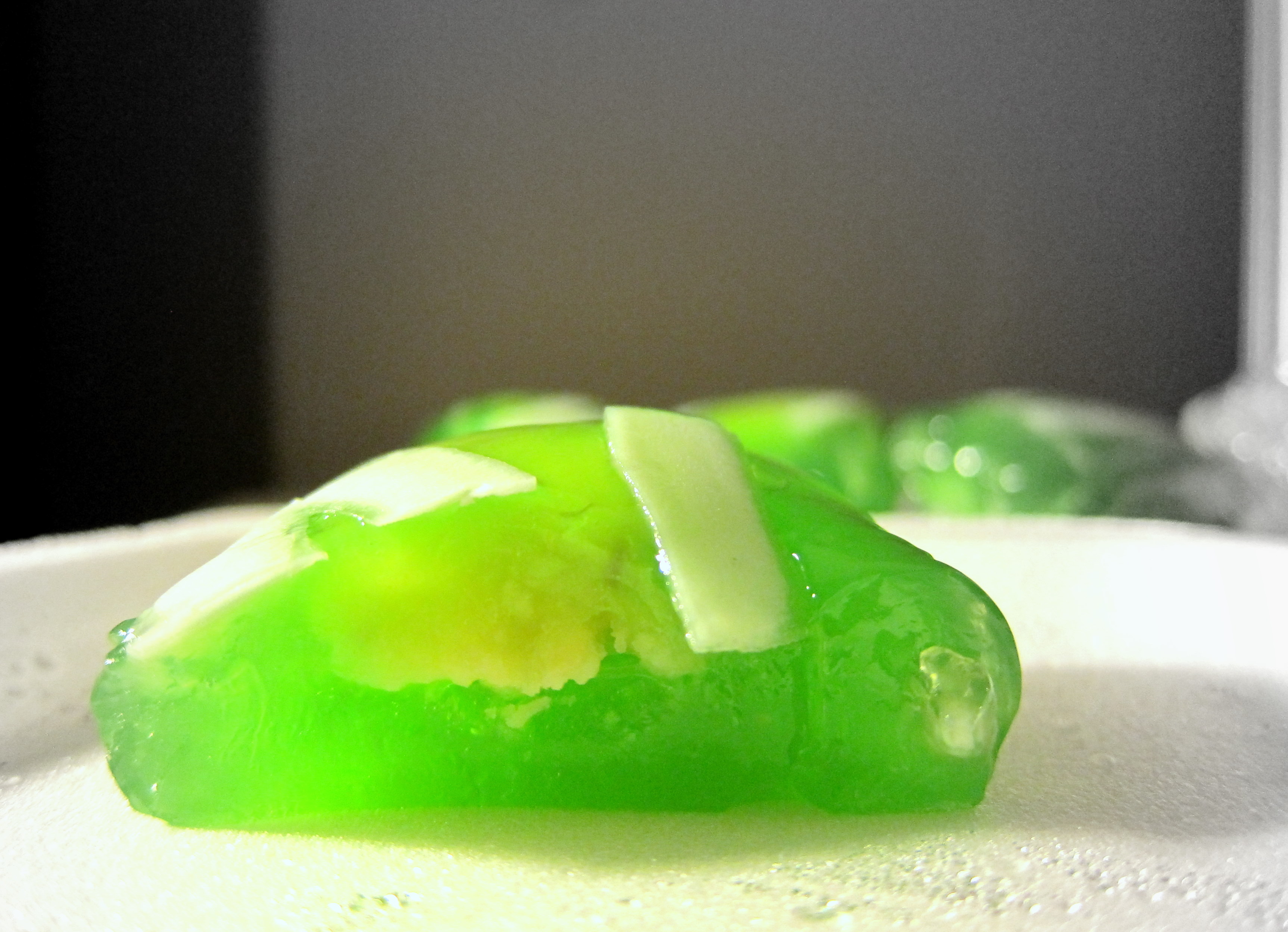
They’re round and flat at the bottom, each placed on a small cut of banana leaf, purposefully shaped like a turtle shell resting on wet grass. If you look closely you can even see some faint crevices near the rim. So there, mystery unveiled: “quy” means “turtle” in Han-Viet, and the banh gets its name from its look.


Content-wise, bánh quy is indeed just a smaller, rounder, flatter version of bánh ít: sticky rice, tapioca starch, salt, sugar, oil, and a sweet filling. Back in the day, the turtles had either a red or a yellow dot to distinguish between coconut and mung bean paste, but it seems these days only the coconut turtles are still around. Each banh is just big enough and tall enough to fit snuggly in a baby’s palm. Two or three adult bites and you suddenly wonder, hey, where did my sugary, chewy soft bun go?


Buy three at the store for $1.50. Also, look for this other type of bánh ít: bánh gai (bánh ít with thorn leaf extract)

Address: Alpha Bakery & Deli (inside Hong Kong City Mall)
11209 Bellaire Blvd # C-02
Houston, TX 77072-2548
(281) 988-5222

Previously on Sandwich Shop Goodies: bánh da lợn (pig skin pie)

This post is submitted to Delicious Vietnam #12, April edition, hosted by Anh of A Food’s Lover Journey. I’m so looking forward to the roundup this month!

Sandwich shop goodies 14 – Bánh da lợn (pig skin pie)

March 06, 2011 By: Mai Truong Category: Houston, One shot, sticky rice concoctions, sweet snacks and desserts, Vietnamese


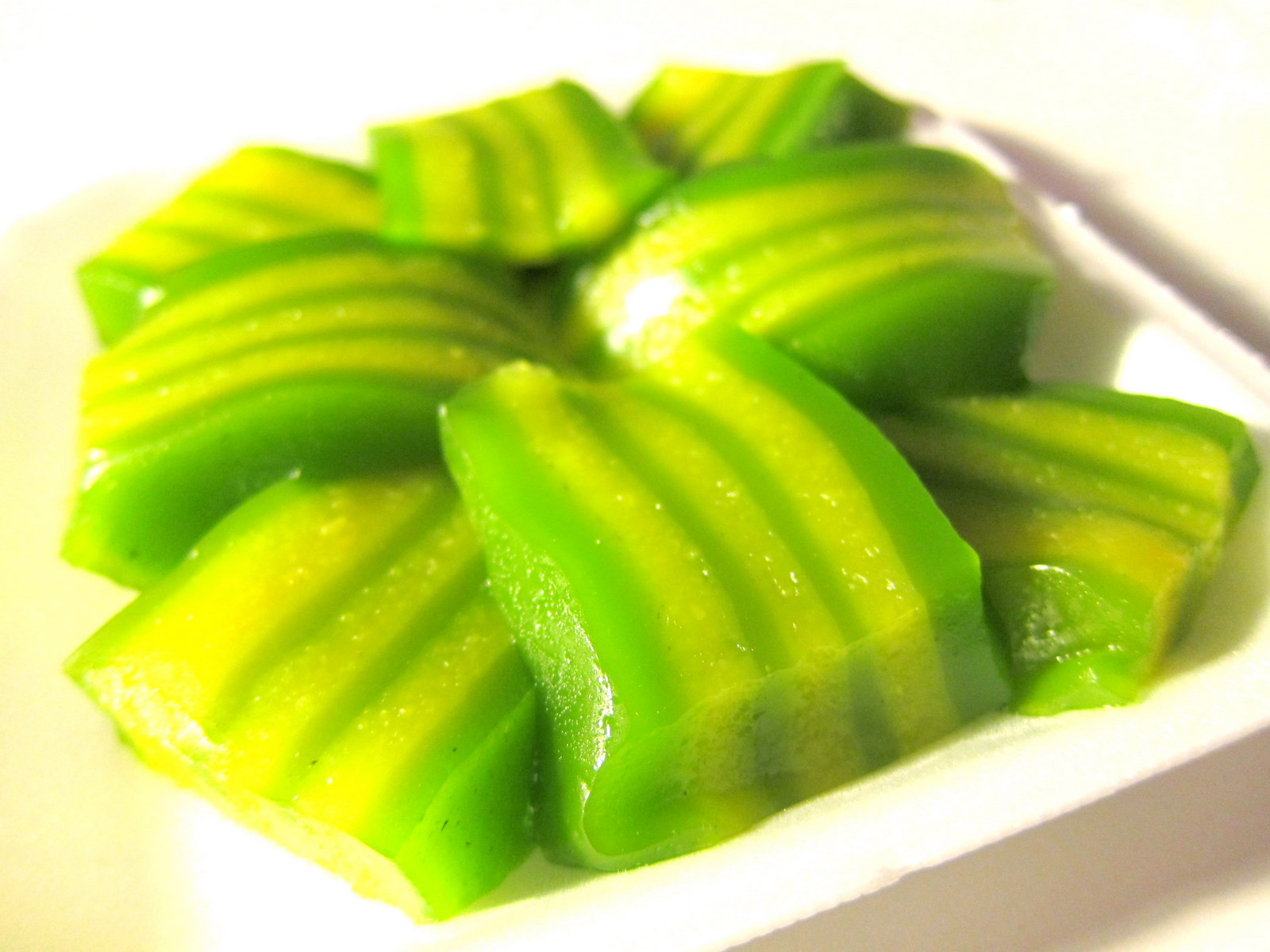
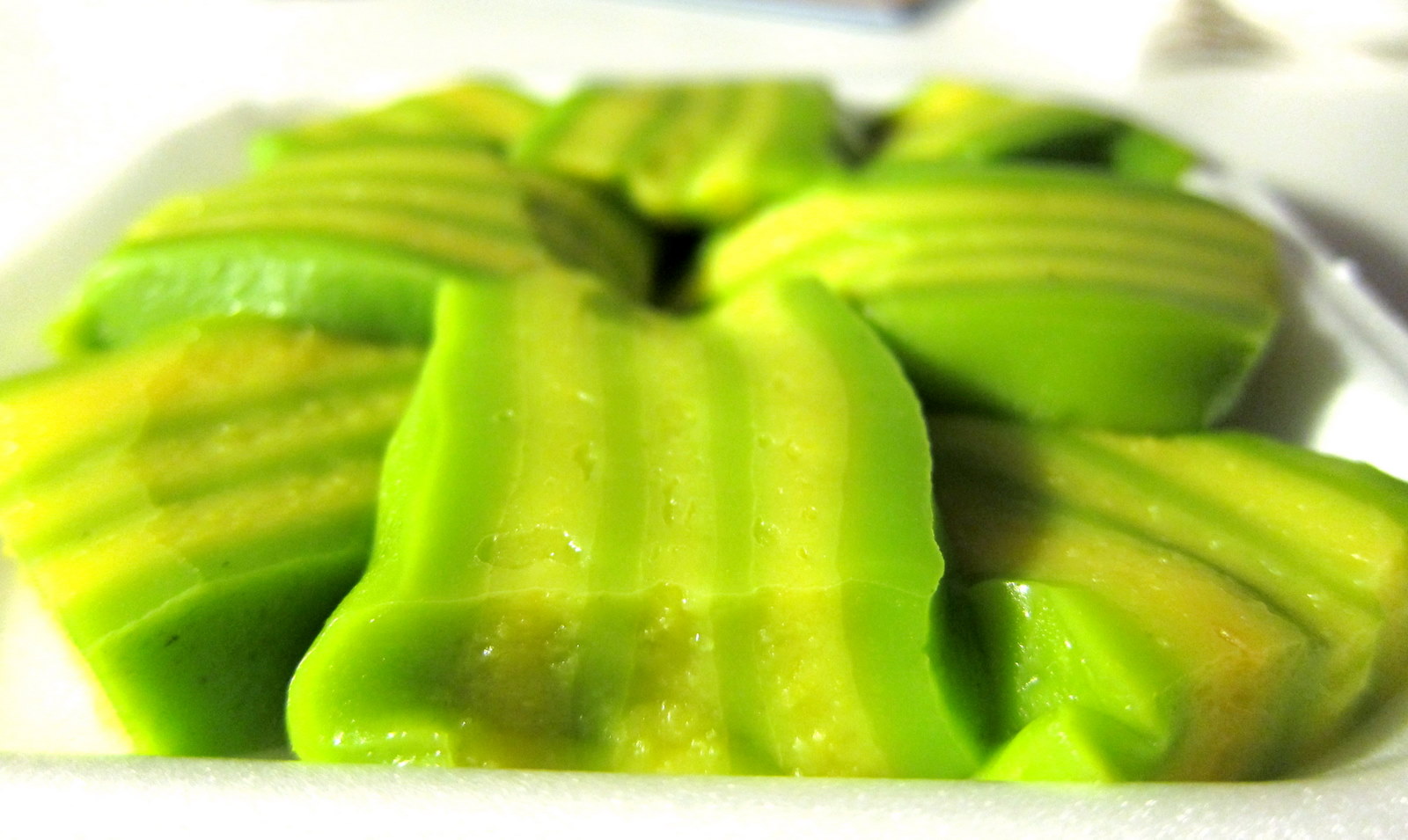
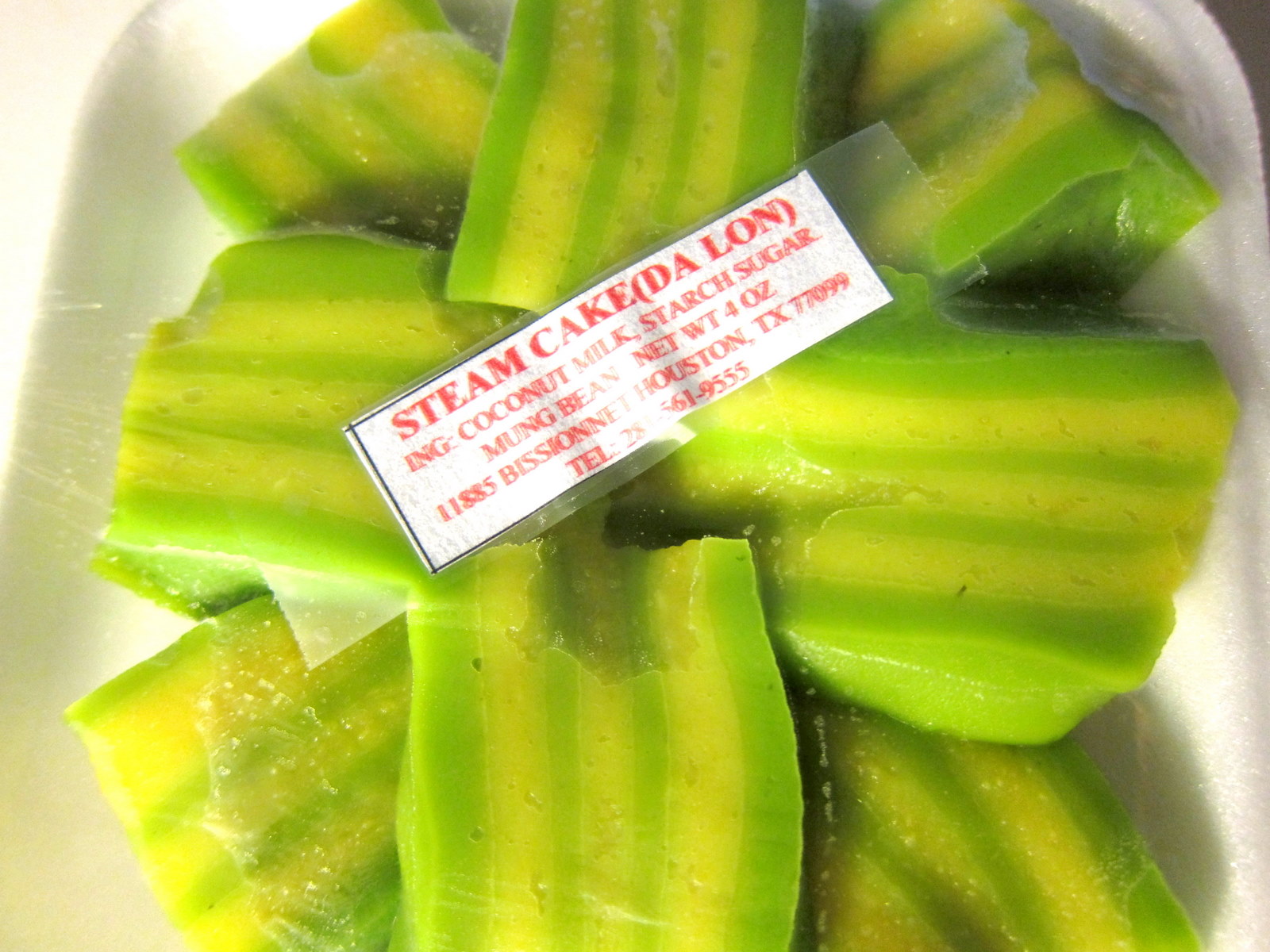
This is no stranger in the Vietnamese food biz: the layered pastry that gets its name from looking like pork belly, except green and yellow. Of course it doesn’t contain any pork skin, it’s sweet, sometimes may even be too sweet. Dad used to buy a whole pie home, as big as a platter and as warm as a father’s hand. From that same bakery somewhere in the market alley, he would buy bánh chuối nướng (bread pudding) too, which I always preferred to the bánh da lợn. But thinking back on those days when we lived near Bà Chiểu Market, it was certainly the best pig skin pie I ever ate.


Many years have passed, and many bánh da lợn have been eaten by me, both in its homeland and across the seas. The best way, I figured, to slaughter these chewy beasts is to peel off the layers one by one, when it’s warm. That wet, smooth skin of tapioca flour, when warm, is fragile. You don’t want to break it while peeling, and you want to drop it whole in your mouth to wrestle with its resilience, all the while inhaling the sweetness of pandan leaves and vanilla fused in its tone.

Simply put, a cold “pig skin” is a dead “pig skin”. A warm mung bean paste layer is also less sweet than a cold one, and thank goodness the bean layers are always one fewer than their tapioca neighbors. The pies Dad bought from that market bakery would have white chewy layers too, and the green ones didn’t look radioactive green like those we get from sandwich shops these days. Ah marketing strategies, just like somewhere in Vietnam someone thought of calling it “bánh chín tầng mây” (cloud nine pie) (because pork skin doesn’t ring any two-cent poetic sound), or when the tapioca layer turns dark purple, because of either magenta plant‘s leaf extract or food coloring, and the bean layer light purple because of taro.


Whatever the case, the original bánh da lợn is still the best. I looked through 51 pages of Google search for its origin, which seems likely lost through generations of home cooking and street food mingling. You see, it was never really a praiseworthy, historically recorded invention in the kitchen. There’s no village or province associated with the best bánh da lợn. It’s probably from the South, even if “lợn” is the Northern word for “pig”. It’s a product from a steamer, it’s cheap, it has texture, kids like it, Dad likes it. That’s all I know.

And by the way, Alpha Bakery & Deli sells some good, thinly sliced, warm numbers for a buck fifty.

Address: Alpha Bakery & Deli (inside Hong Kong City Mall)
11209 Bellaire Blvd # C-02
Houston, TX 77072-2548
(281) 988-5222

Previously on Sandwich Shop Goodies: bánh xu xê (couple cookie)
Next on Sandwich Shop Goodies: bánh quy (turtle mochi)

Sandwich Shop Goodies 13 – Bánh xu xê (couple cookie)

February 12, 2011 By: Mai Truong Category: Houston, Northern Vietnamese, One shot, sweet snacks and desserts, Vegan


When you reach(ed) mid 20s, don’t you just hear all sort of marriage announcements popping up among your social circle? By the time of college graduation, half the girls I know have gotten their wedding registry up on Facebook, and I thought okay it’s just an American thing (the wedding I mean, though the registry is American too). Then this past Christmas my best college friend missed our annual reunion for his big day in India, and another pal who I thought was still wandering the streets of Chengdu dropped the bomb that he’s engaged. Then I got news that two of my eleventh grade buddies in Vietnam are going to say the vows (not to each other) within this year. Then it really hits me.

I haven’t written about any wedding party food, even though I’ve been to many weddings :D. So why not celebrate this year’s Valentine’s day with a Vietnamese confection whose name derives from the main characters of any wedding: bánh xu xê, originally called bánh phu thê, or “husband (and) wife”?

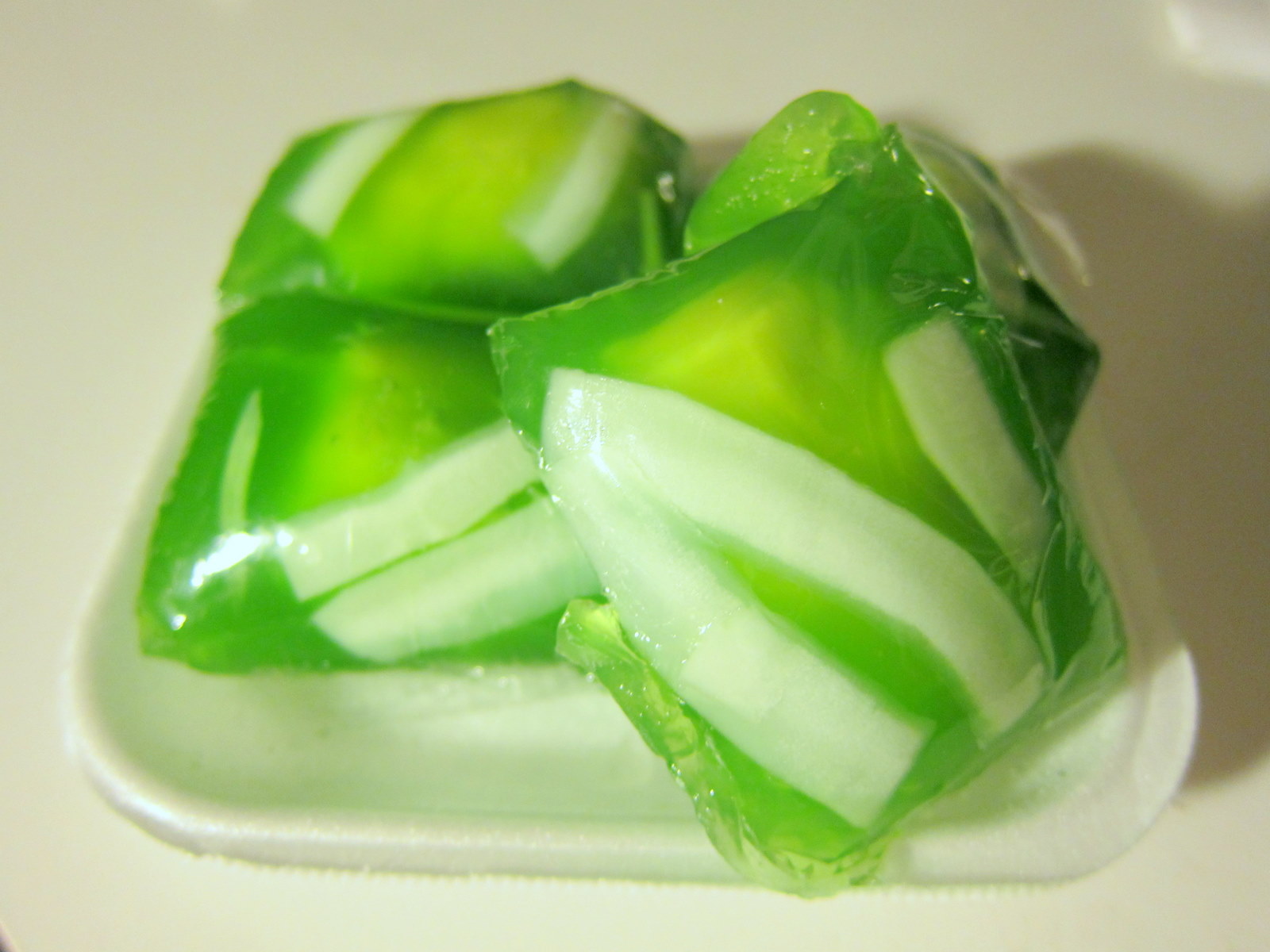
My translation “couple cookie” is for the sake of consonant concordance. They are similar to neither American cookie, Scottish cookie nor British cookie. These little bouncy sweet green pillows get their names from being gift desserts at Vietnamese couples’ engagements back in the day, when they used banana leaves to make little boxes instead of a double layer of cellophane wrapper. At one point the adults called them bánh phu thê, then the kids mispronounced it to bánh xu xê (|soo-seh|) and the name stuck. Technique-wise, it takes a grandmother’s experience to make a mixture of sticky rice flour, arrowroot starch and water into a translucent jello casing that is resilient but not sticky. Some of us might find its crunch-chewy texture too rubbery, other would question its lack of flavor, but the skill of transforming ingredients alone is admirable, and I like chewing. 🙂 In fact I like the outer layer more than the filling.

Traditionally, taro cut into strips are mixed with the cooked batter to give onyx-like patterns, while the modern concoctions can have sesame seeds on top or dry coconut strips within to spice up the homogeneity. The fancy pâtissiers of old Northern Vietnam villages might also sprinkle a few drops of pomelo flower extract into the mung bean paste filling for enhancing fragrance. But I wouldn’t expect that from our local sandwich shops in the States, not when it’s less than $2 for a pack of four.


It’s the kind of sweet you either love or hate. My mom loves it. The Gastronomer suggests using it to pelt your loved ones. It’s the perfect representation of a marriage really, and I’m not talking about the symbolic meaning of glutinous rice (bonding) and all. Its shiny outlook is inviting – everybody likes to get married, then you take a bite and find it tough, lackluster, disappointing, at the least not quite as expected – the post-wedding depression, then you get to the core and discover some tender sweetness after all. 🙂

Got ’em from: Alpha Bakery & Deli (inside Hong Kong City Mall)
11209 Bellaire Blvd # C-02
Houston, TX 77072-2548
(281) 988-5222

Previously on Sandwich Shop Goodies: chuối nếp nướng (grilled banana in sticky rice)
Next on Sandwich Shop Goodies: bánh da lợn (pig skin pie)

Sandwich shop goodies 12 – Chuối nếp nướng (grilled banana in sticky rice)

November 30, 2010 By: Mai Truong Category: California - The Bay Area, One shot, savory snacks, Southern Vietnamese, sticky rice concoctions, Vegan


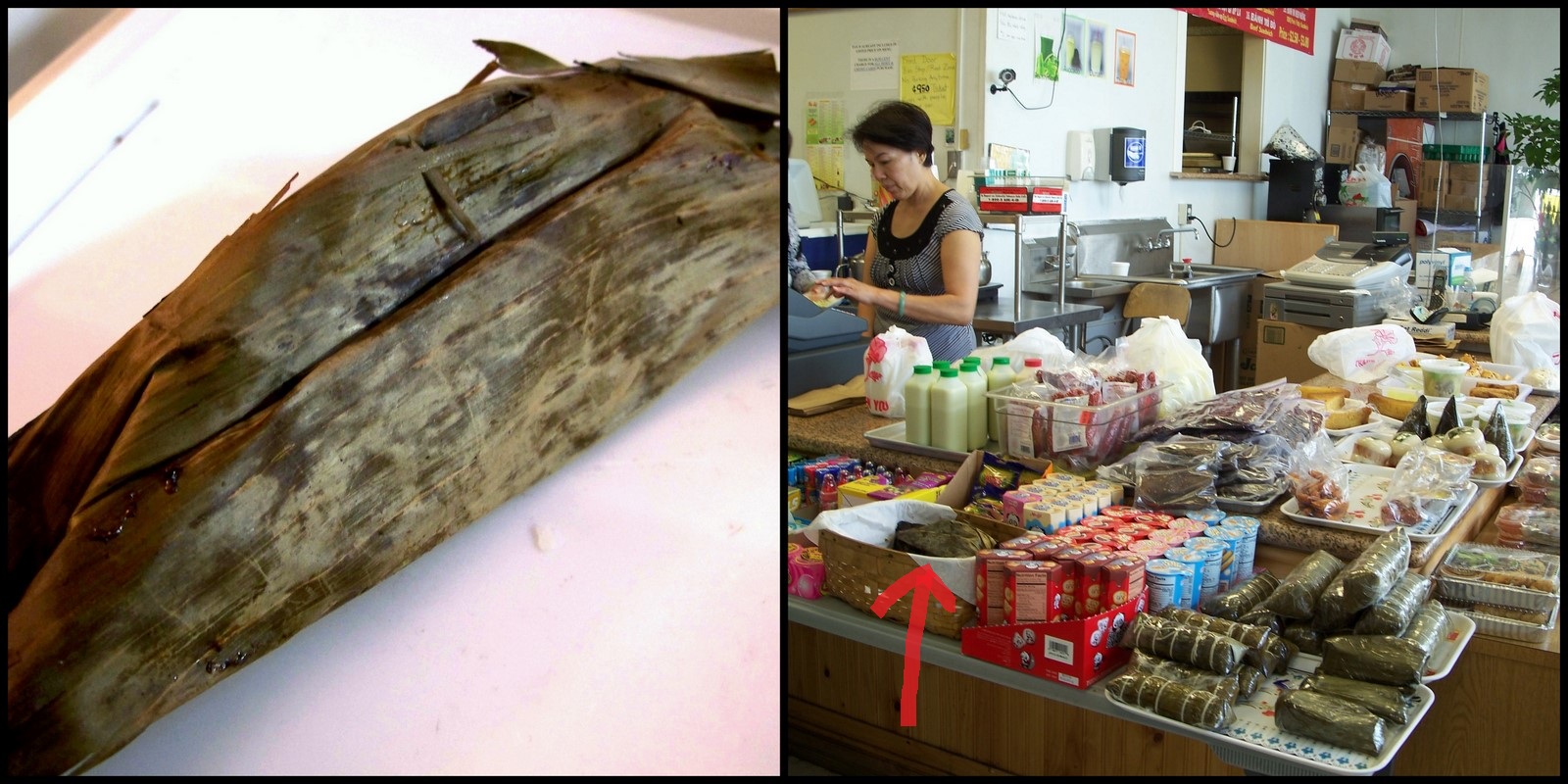
They all look the same. A myriad of things wrapped in wilted banana leaves sitting on the counter at a banh mi shop. Few patrons seem to notice the snacks as they occupy themselves with sandwich orders and the more meal-like rice or noodle to-gos, so much to the extent that the sellers too have little interest in selling their counter treats. Humbly, I point to these slender, charred and dry parcels piled in a box near the Pockys and inquire about their name. The hostess throws me half a glance infused with boredom, “Chuối nướng,” she moves her lips. So “grilled banana” they are.


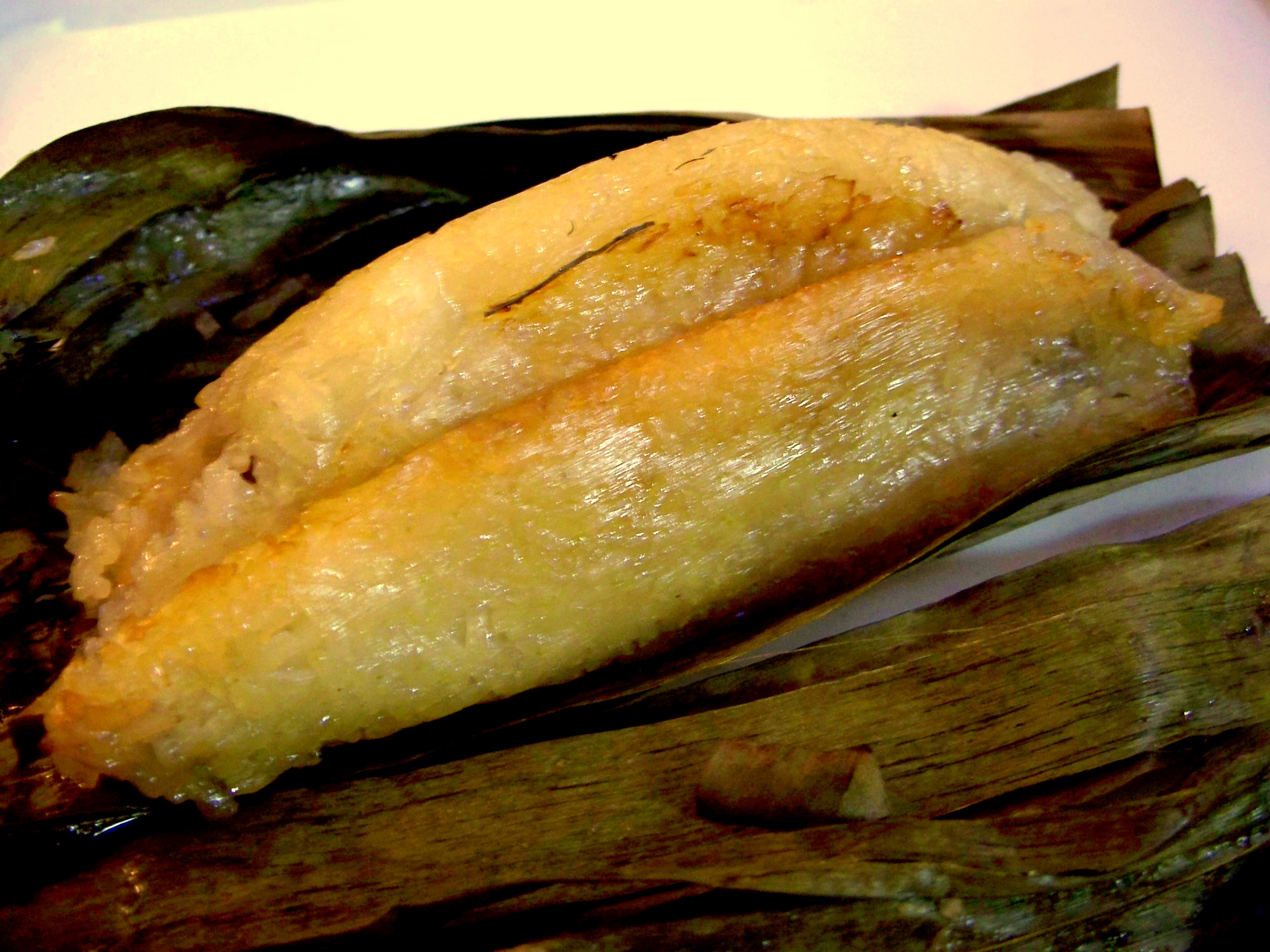
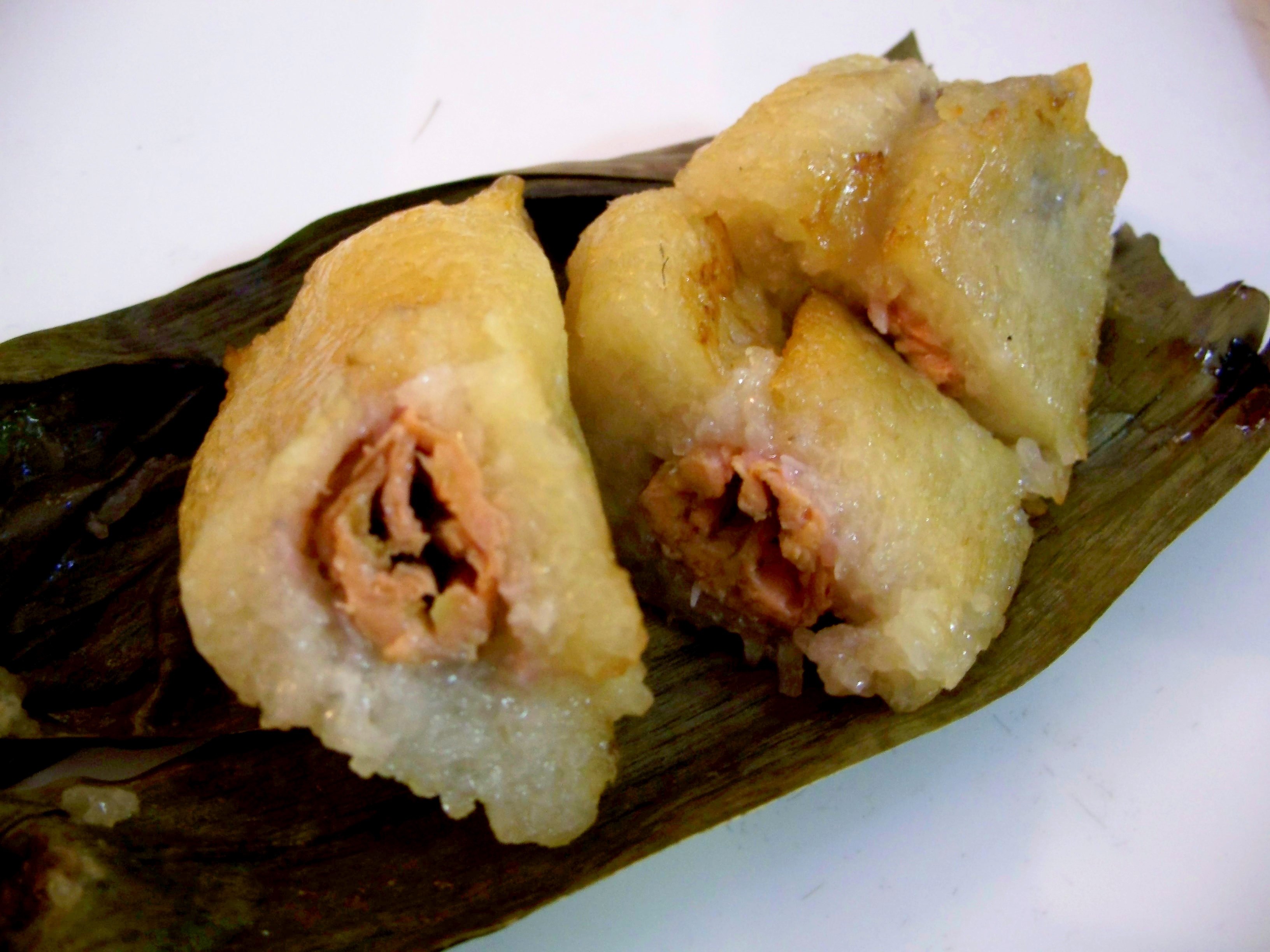
It takes an utterly simple form: a banana inside a sticky rice shell inside a banana leaf, charcoal grilled. Crispy, then chewy, then gooey sweet it goes as you sink your teeth through the bounteousness. It’s the factoriless meatless corn dog sans wooden stick of Southern Vietnam. Children would wait around old grandmas in the ‘hood to watch them grill the banana dogs and drool; adults would grab the banana dogs for breakfast, lunch, or late night snack when a wind chills and the grill warms.

It’s one of those things that can’t go wrong. Some cook the sticky rice plain, then serve the grilled dog sectioned and bathed in coconut milk with a pinch of sesame salt or peanut salt. Others do it My Tho style: the sticky rice is cooked in coconut milk and later mixed with coconut shavings before wrapped and grilled. Many cloth their nana dogs with just a band of nana leaf, mainly for easy handling of the sticky rice on the grill and near other dogs, but the dogs get crispier too. Meanwhile, Ba Lẹ ladies bundle up their dogs like they would with bánh tét, less charred, more aroma from the leaves.


Like banana bread pudding, banana dogs are exclusively made with chuoi su, a solid, stout, dense and white banana that grows like weed in the Asian tropics but is nonexistent in the States. The sad substitute Cavendish lacks consistency and sweetness and gooeyness. Yet, chuối nếp nướng still hits the spot like waltzing in the rain.

These nana ricewiches, as Noodlepie lovingly nicknamed, were 2000VND a steal (~10 US cents with the current exchange rate) in 2005. In 2007 the Gastronomer took the bite for 3000VND. I have no idea how much they cost now on the Saigon streets, with crazy inflation it might just be 10000 for all I know. But here at Bánh Mì Ba Lẹ in Oakland, nana dogs will go home with you for $1.75 each.

Address: Bánh Mì Ba Lẹ (East Oakland)
1909 International Blvd
Oakland, CA 94606
(510) 261-9800

Previously on Sandwich Shop Goodies: khoai mì hấp (steamed cassava)
Next on Sandwich Shop Goodies: Bánh xu xê (couple cookie)