Flavor Boulevard

We Asians like to talk food.
Subscribe

Archive for the ‘Comfort food’

one shot: Clay pot rice and beef

December 09, 2015 By: Mai Truong Category: California - The Bay Area, Comfort food, One shot, Vietnamese

saigon_express-claypot_rice
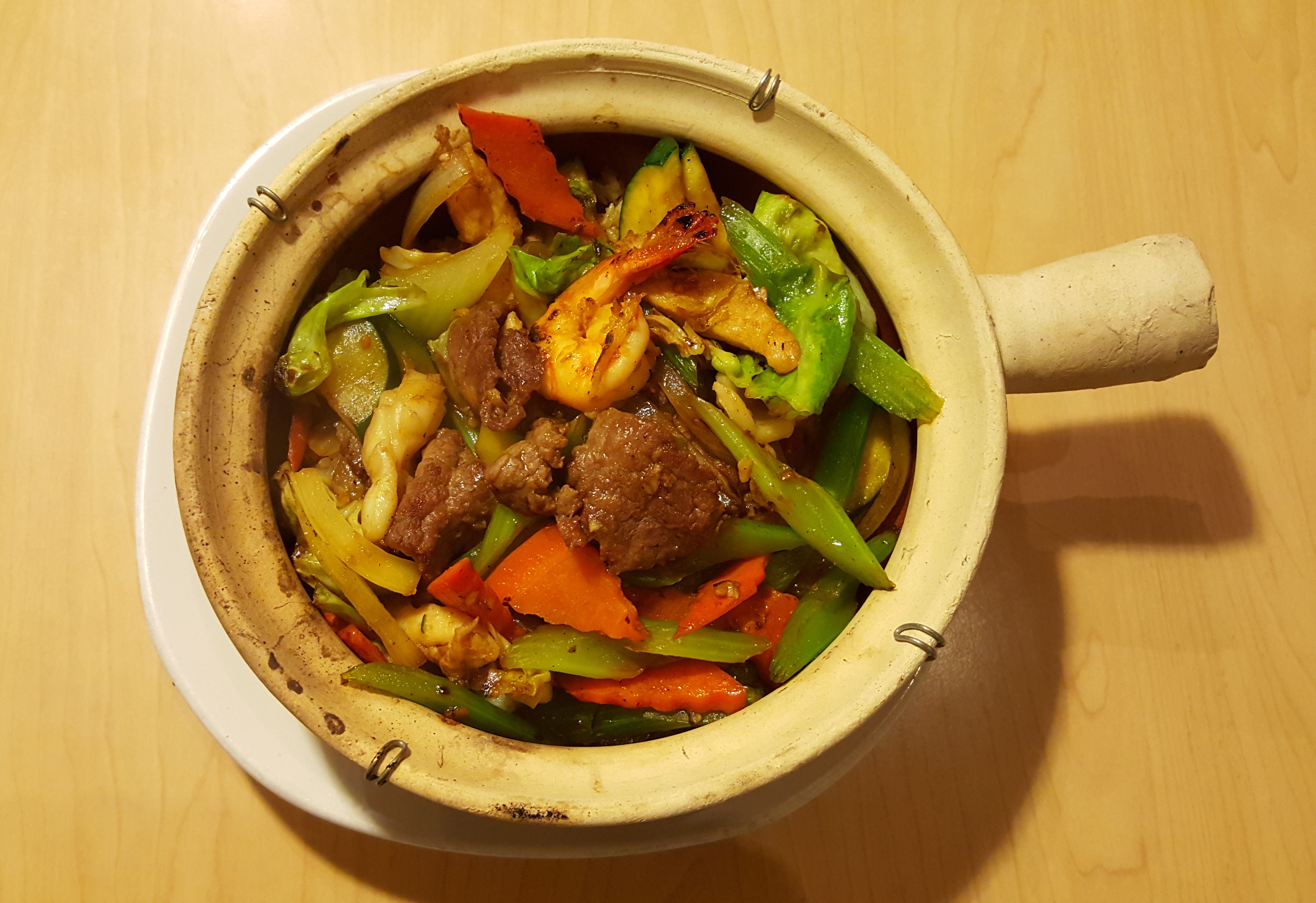
This is Vietnamese clay pot rice at Saigon Express. The pot comes sizzling hot, and after 5-10 minutes, we have a nice rice crust at the bottom, while the top is flavored with the sauce from the meat and vegetable. I wish there were more rice just because the sauce is so good, but I already get quite full with this portion every time.

The closest resemblance I can think of is the Korean dolsot bibimbap. In this Vietnamese case, there’s no kimchi, no gochujang, you don’t have to add anything to the already well seasoned toppings. I like this completeness of the rice bowl, as they say about the donburi (watch this Shokugeki no Soma episode for the donburi reference – ignore the sexy stuff, though, just focus on the food).

It’s amazing how much a restaurant can change over the years, or how much dining with a companion can change your perception of the restaurant (did they even have this clay pot rice back then?). I was not so impressed before. This time, it’s a change for the *much* better.

Side details: the hosts are nice, welcoming aunt-like ladies, who are more than willing to customize your order (cut the broccoli, not too much carrots, etc.). Each bowl costs around $9.

Address: Saigon Express
2045 Shattuck Ave
Berkeley, CA 94704
They close on Sunday (T__T)

Pho in Hawaii

August 25, 2015 By: Mai Truong Category: Comfort food, noodle soup, Travel, Vietnamese

Near our hotel is a shopping center, where we regrettably spent more time than we should have, eating overpriced fried rice (P.F. Chang’s, no less, T__T) and okonomiyaki. The reason is just that it was hot. Unbearably, relentlessly, suppressively hot. We couldn’t walk for five minutes without perspiring like the underside of the lid of a cheap rice cooker right after the rice is cooked. Being the indoor sloths we are, we ditched the inner foodie, became the very tourists lounging out at American chain restaurants while on vacation whom we cannot understand, and dined at the mall. It was actually satisfying.

pho-factory-waikiki
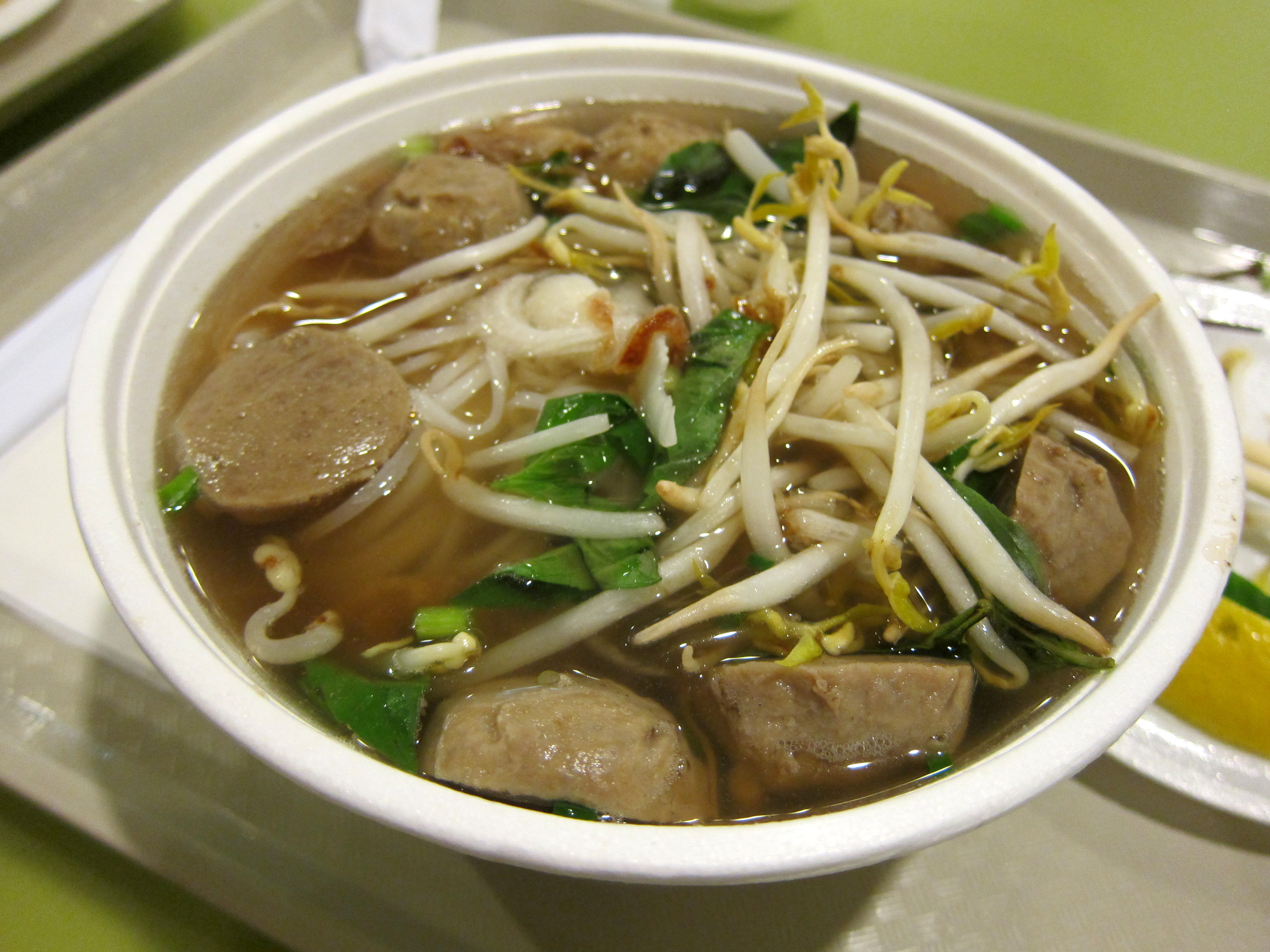
Meatball pho at Pho Factory in Royal Hawaiian Center (9.10).

oxtail-pho
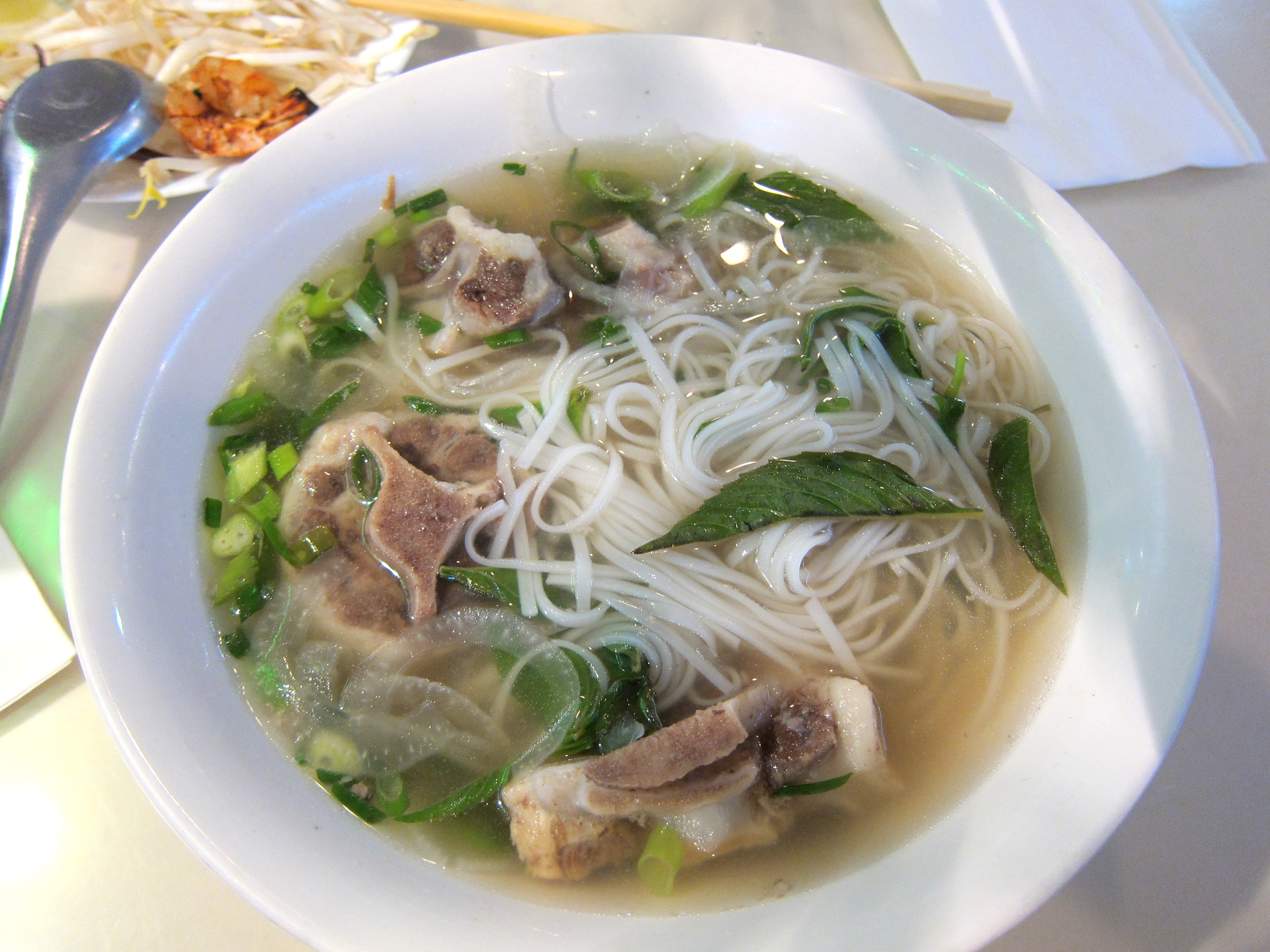
Oxtail pho at Pho Old Saigon (14.60). I haven’t seen oxtail pho in the mainland, but it’s strangely and pleasantly everywhere in Oahu’s pho menus. Pho Factory also serves it. The oxtail is meaty, softer (fattier) than the usual rare steak/brisket option.

Pho Old Saigon is your typical Vietnamese pho shop in the States: rectangular dining room with the cashier in the back, no frills, laminated menu, plastic chopsticks.

Pho was a light, easy-to-eat, good-at-all-time meal on those hot days.

Address: Pho Old Saigon Vietnamese Restaurant
2290 Kuhio Avenue
Honolulu, HI 96815

Tags: , ,

Cheapest eat in Waikiki: udon at Marukame

August 11, 2015 By: Mai Truong Category: Comfort food, Japanese, noodle soup, Travel

marukame-udon-bukkake-udon
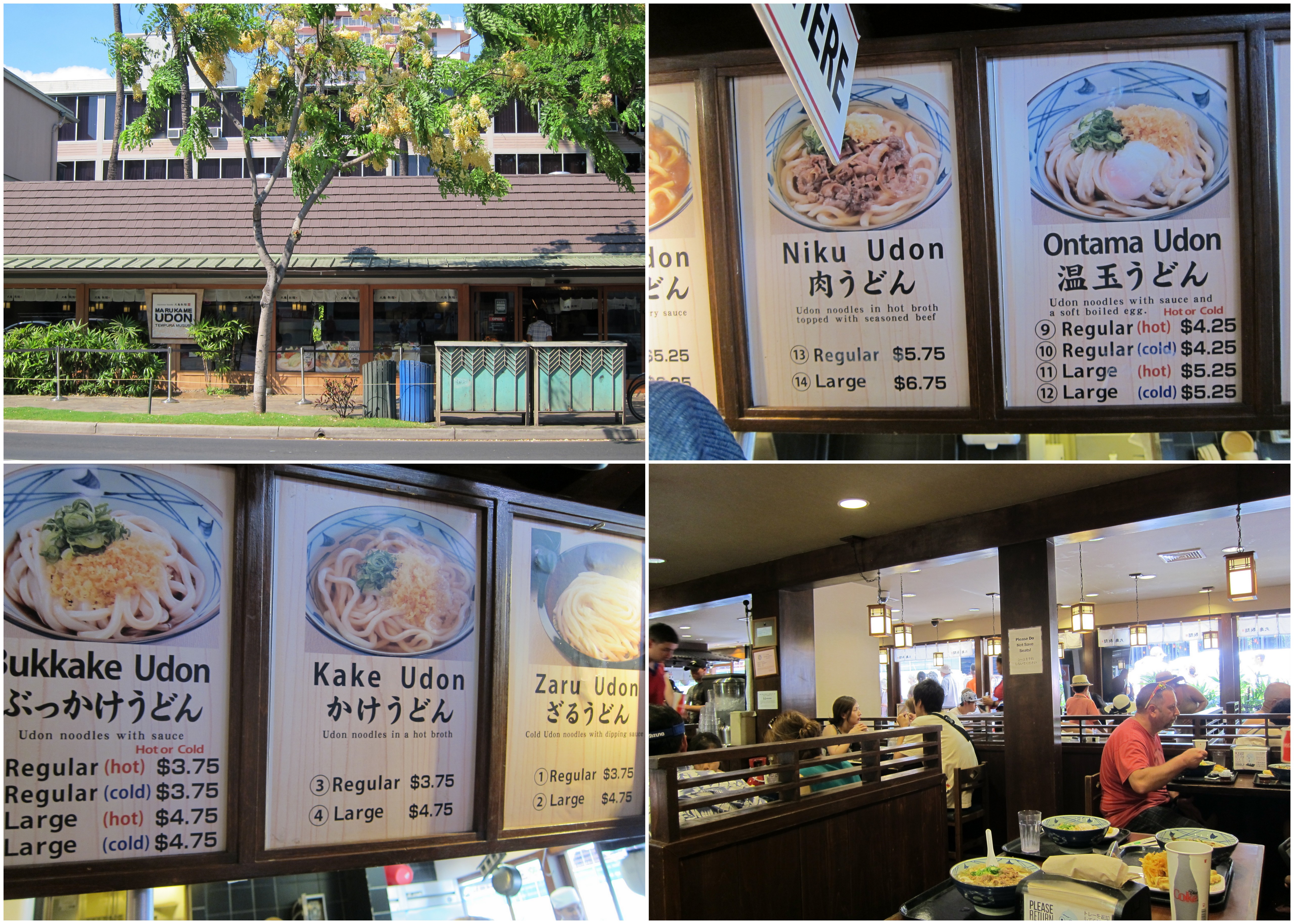
Everything in the touristy Waikiki is designed to scorch your wallet, but Marukame Udon does it most gently: each bowl of udon sets you back only around 5, which can be even cheaper than Coconut Cafe’s shave ice!

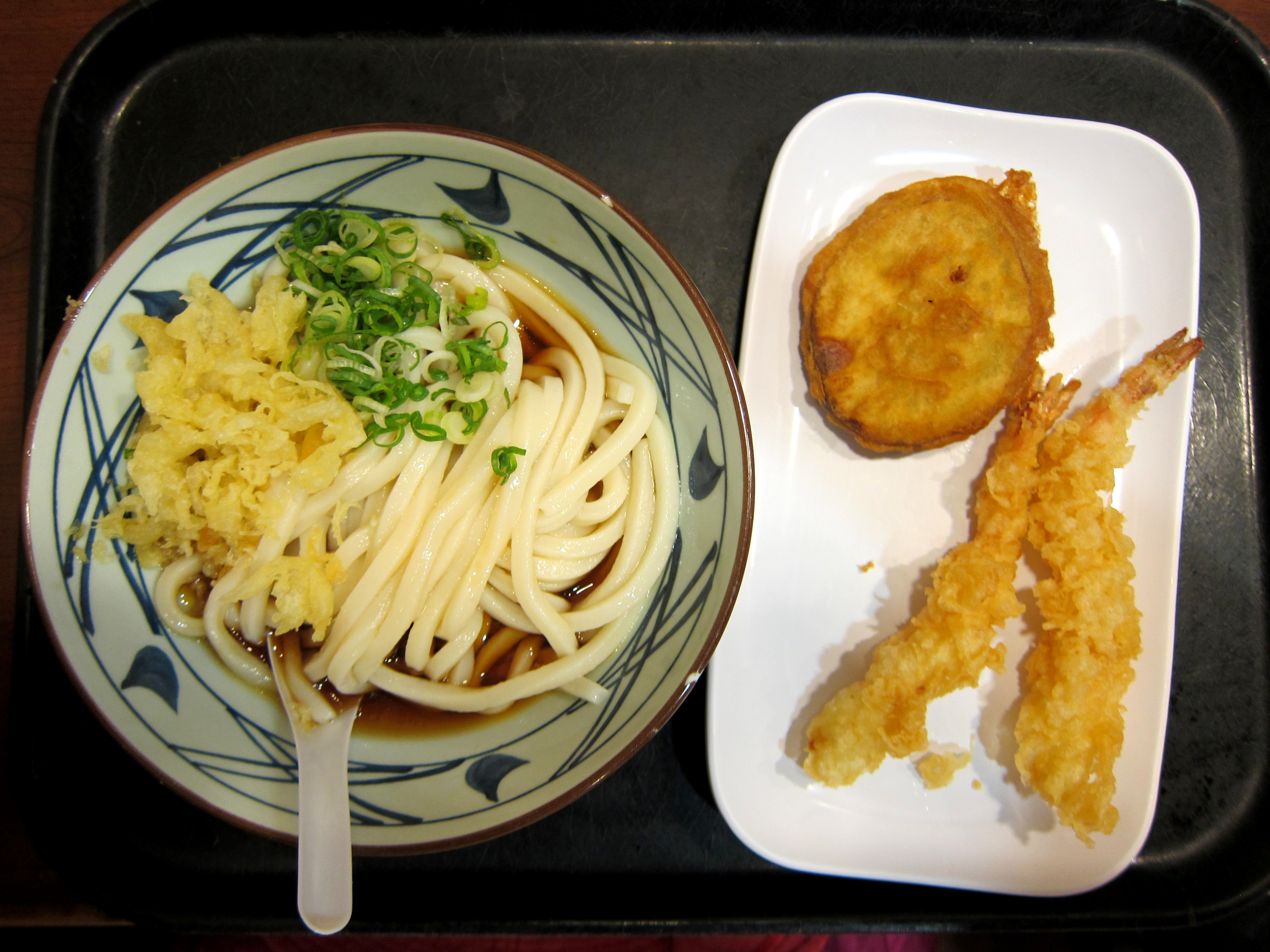
This bukkake udon in cold broth is only 3.75, and it’s good, especially to give us some relief from the heat and humidity.
Granted, because we add the goodies, the ticket goes up fast: shrimp tempura is 1.75 each, sweet potato tempura is 1.25 each, etc.

Marukame Udon-001
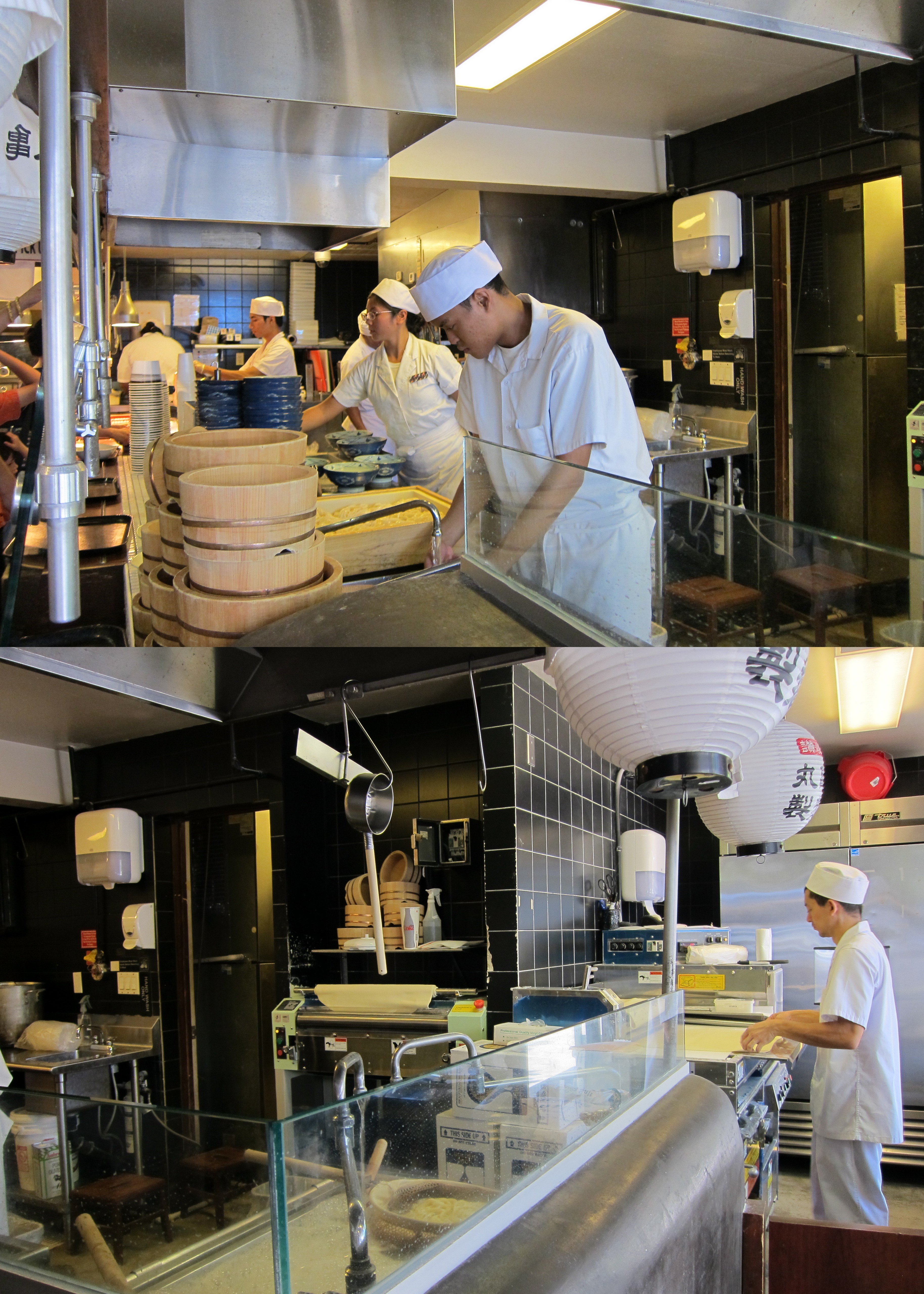
What’s even better is the self-serving, cafeteria style: grab a tray, place your noodle order, take noodle, grab a few tempuras, pay, find a seat. Fast, efficient, and no tip.

Another plus: the noodles are made in the house.

Another plus: the noodles are made in the house.

The ONLY downside? The line gets **long** early (but it does move fairly quickly).

Address: Marukame Udon
2310 Kuhio Avenue, Suite 124
Honolulu, HI 96815

Kaze: the place to go when you crave ramen in Berkeley

March 14, 2015 By: Mai Truong Category: California - The Bay Area, Comfort food, Japanese, noodle soup

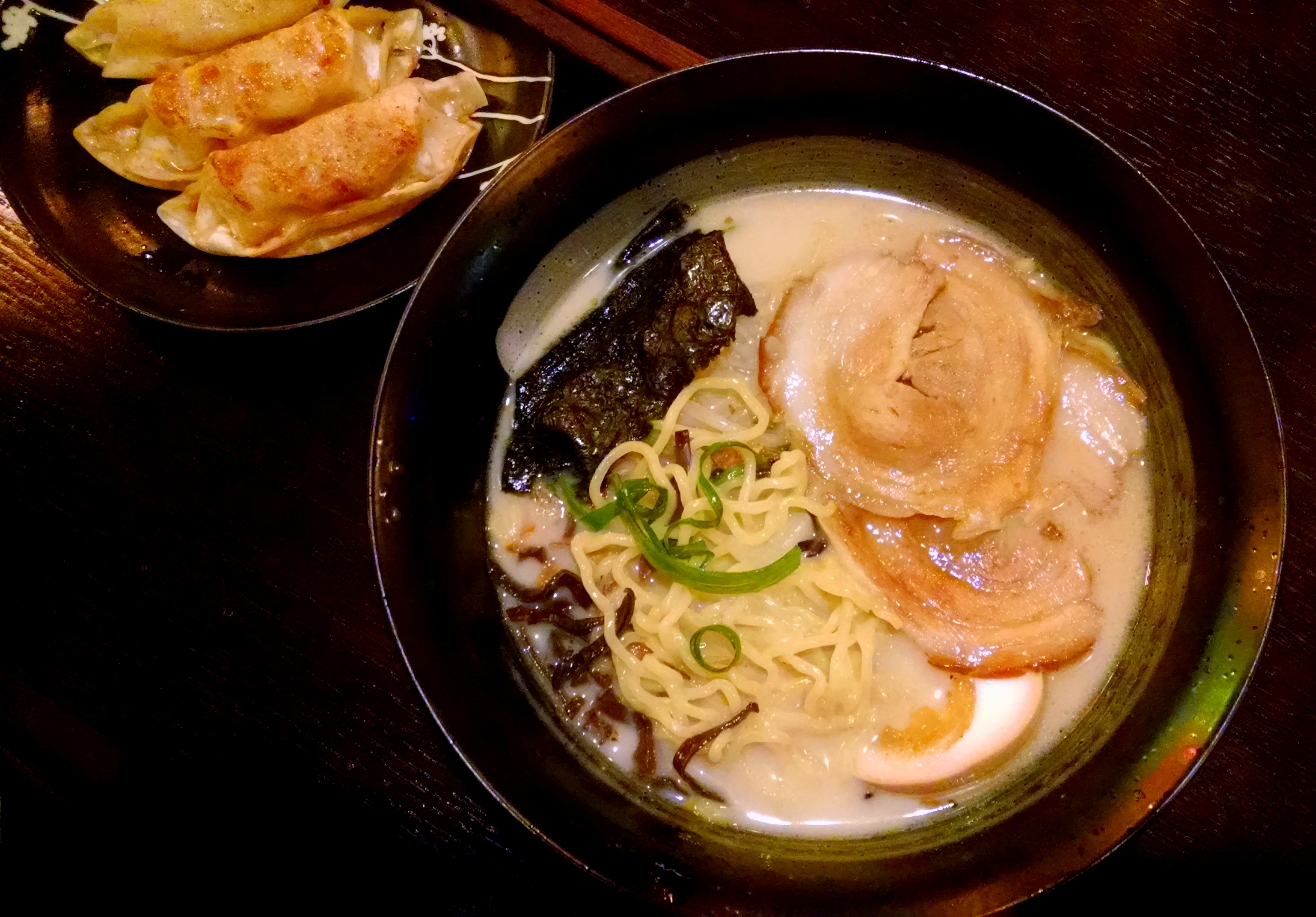
Tonkotsu ramen with a side of gyoza. ($10.99)

Kaze, Berkeley:  tonkotsu ramen with a side of gyoza. ($10.99)

This little shop opens sometime last winter, it looked unassuming then, but now it is packed every time I come, so I think it’s safe to assume that it’s packed almost everyday if not always.

People on the East Bay think of The Ramen Shop when they think of ramen, simply because until now there has been no other shop that really specializes in ramen. There’s ramen at sushi places, izakaya places, and some random places that should have nothing to do with ramen. Hence, the consistently ridiculous 2-plus-hour wait at The Ramen Shop. Now, let’s do a check-and-compare list between Kaze and The Ramen Shop (TRS):

1. Taste: Kaze/TRS = 8/10. TRS is 10 only for comparison purposes between the two, not because it is the best I’ve ever had in my life (there are many better, just not in the area). Kaze is 8 because on certain days it comes close to TRS, on other days the soy-sauced egg is a little too soy-saucy, but it has the right creamy gooeyness of soft-boiled eggs, the chashu is meaty (it sounds obvious but not enough places get this right), and the tonkotsu soup is rich and satisfying.

2. Location: Kaze/TRS = 10/5. I’m biased. I live in Berkeley, Kaze is in Berkeley, TRS is a 30-minute bus ride away plus the time to wait for the bus, which is indefinite.

3. Wait time to be seated: Kaze/TRS = 10/1. Kaze is busy too, and it’s half the size of TRS, but it doesn’t have the bar and the hipsters lingering after dessert without thinking of other customers in line (a table of 4 at TRS, sitting right next to the people in line, was taking their sweet time after coffee). Naturally, the wait at Kaze is 15 minutes at most.

4. Cost: Kaze: 8.99 for normal ramen (shio, shoyu, miso, tonkotsu), 9.99 for black garlic oil ramen (basically a spicy tonkotsu ramen). TRS: 16.5 if you want veggie ramen, 17.5 for ramen with meat. TRS, thank you for adding stuff like innovation and atmosphere to the ramen, we wouldn’t know what to do without them.

5. Atmosphere: who cares about atmosphere when you eat ramen?!

It is not to say that I don’t like TRS. It’s a great place, and they use sustainably grown ingredients. But with Kaze’s opening, my ramen craving is satisfied for so much less time and effort.

Address: Kaze Ramen
1956 Shattuck Ave (2 minute walk north from downtown Berkeley)
Berkeley, CA 94704
(510) 883-1388

Sai the Izakaya

December 15, 2014 By: Mai Truong Category: Comfort food, Flavor Japan, Japanese, Travel

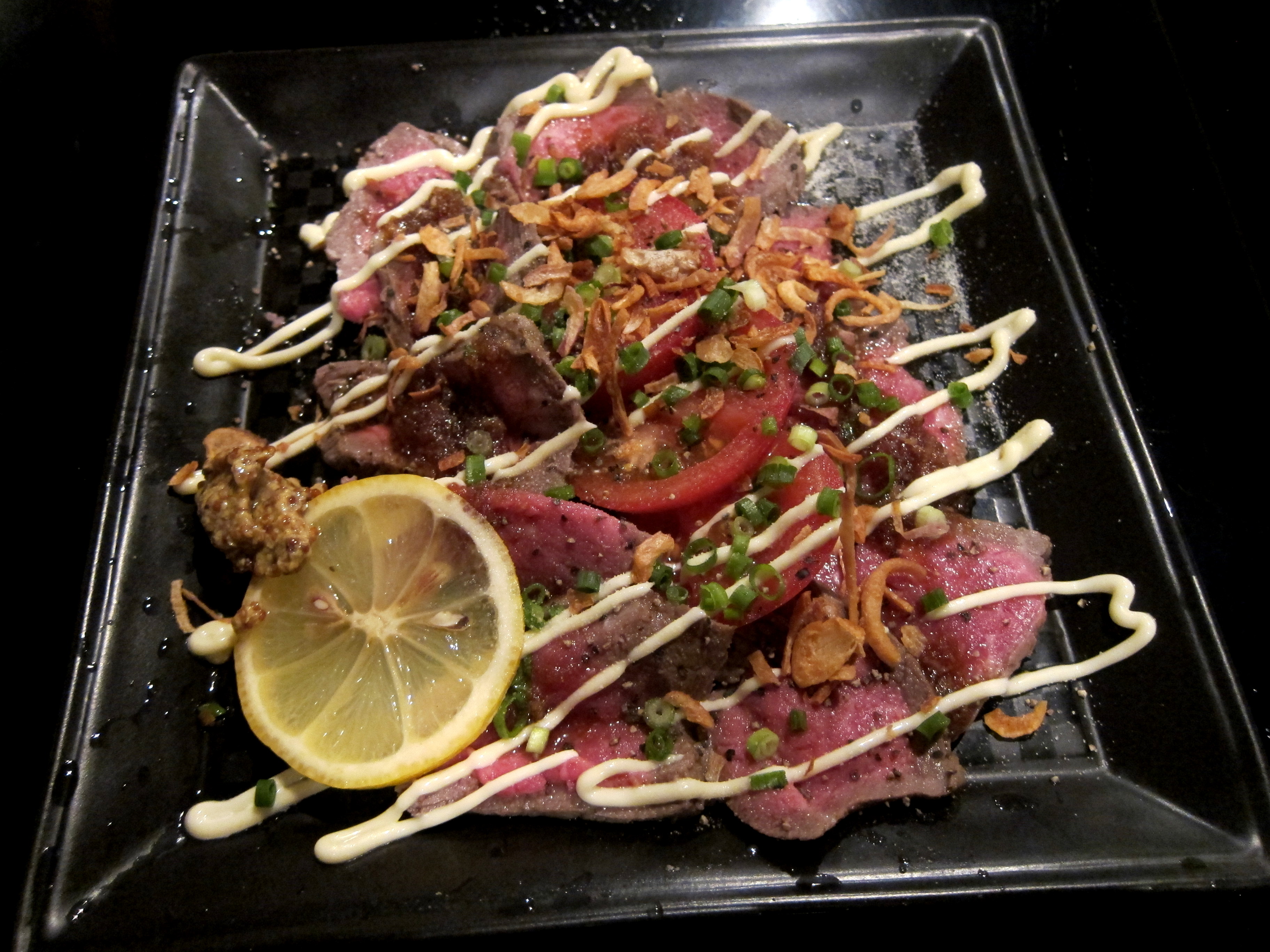
sai-beef
Izakayas in the Bay Area mostly target customers with a lot of money to spare (looking right at you, Ippuku!). Although there are merits to that (it costs to support local business and ethical ways of raising animals), a meal at these places is just not the same as sitting in a small neighborhood izakaya, talking to the chef who’s cooking 5 feet away from you, smelling the smoke from both the food and the tobacco of the nearby customer (who you may know by name), and inhaling your food, which comes in big bowls, to your heart’s content. I love neighborhood izakayas in Tokyo.

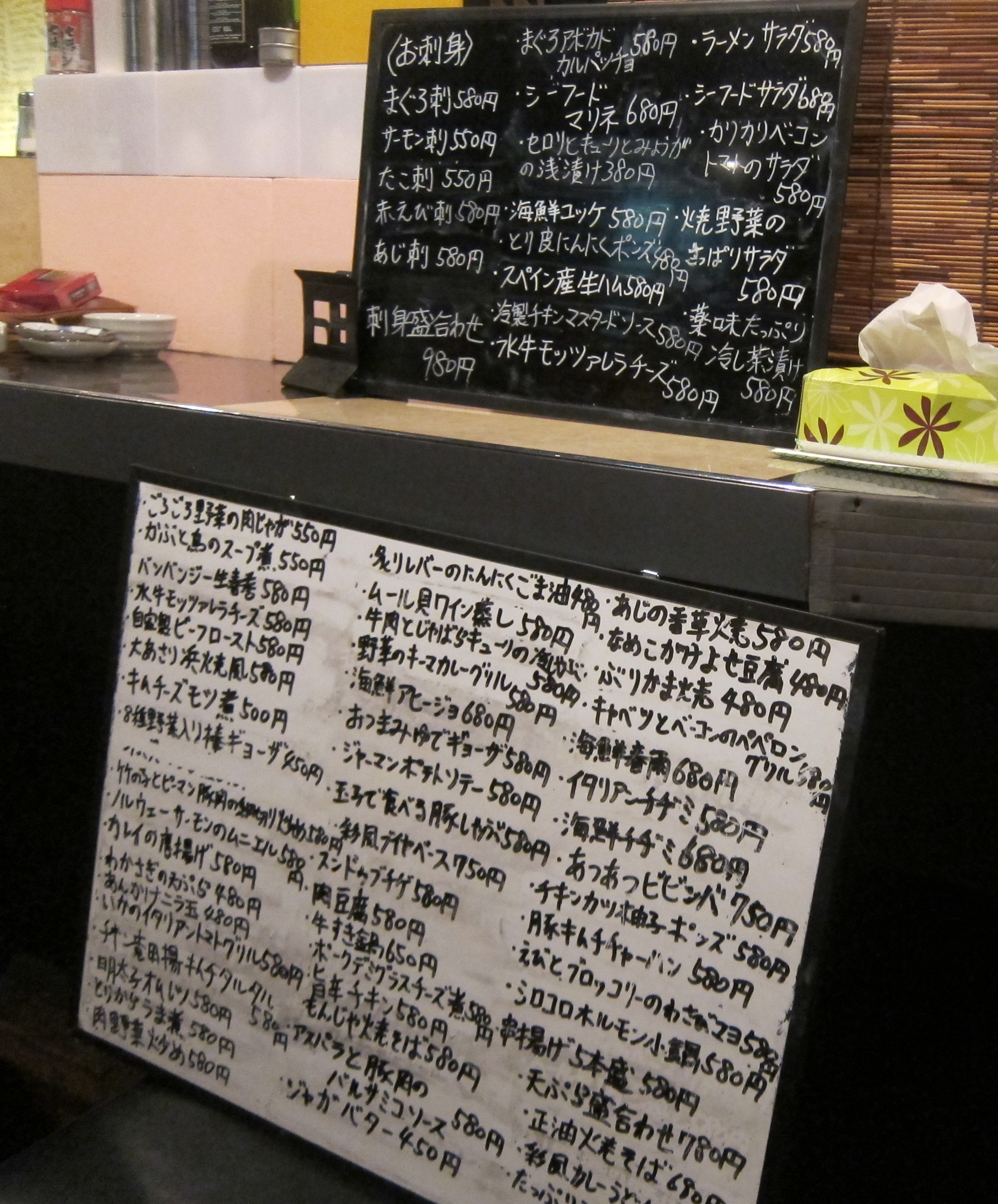
sai-near-kameari-eki sai-menu
Sai is one of them. This place jumps to mind when I think of izakayas nowadays. One big reason is that when I had a homestay in Japan, my host family took me there one night and it was a perfect family experience. If I had discovered the place myself (which I’m not sure is possible), I wouldn’t know what to order (the menu is 90% kanji @_@), I wouldn’t have had two parental figures to share the meal with (traveling alone makes you want to spend time with your parents more, doesn’t it?), nobody would have introduced me to the chef, and the chef wouldn’t have encouragingly complimented my mediocre Japanese.

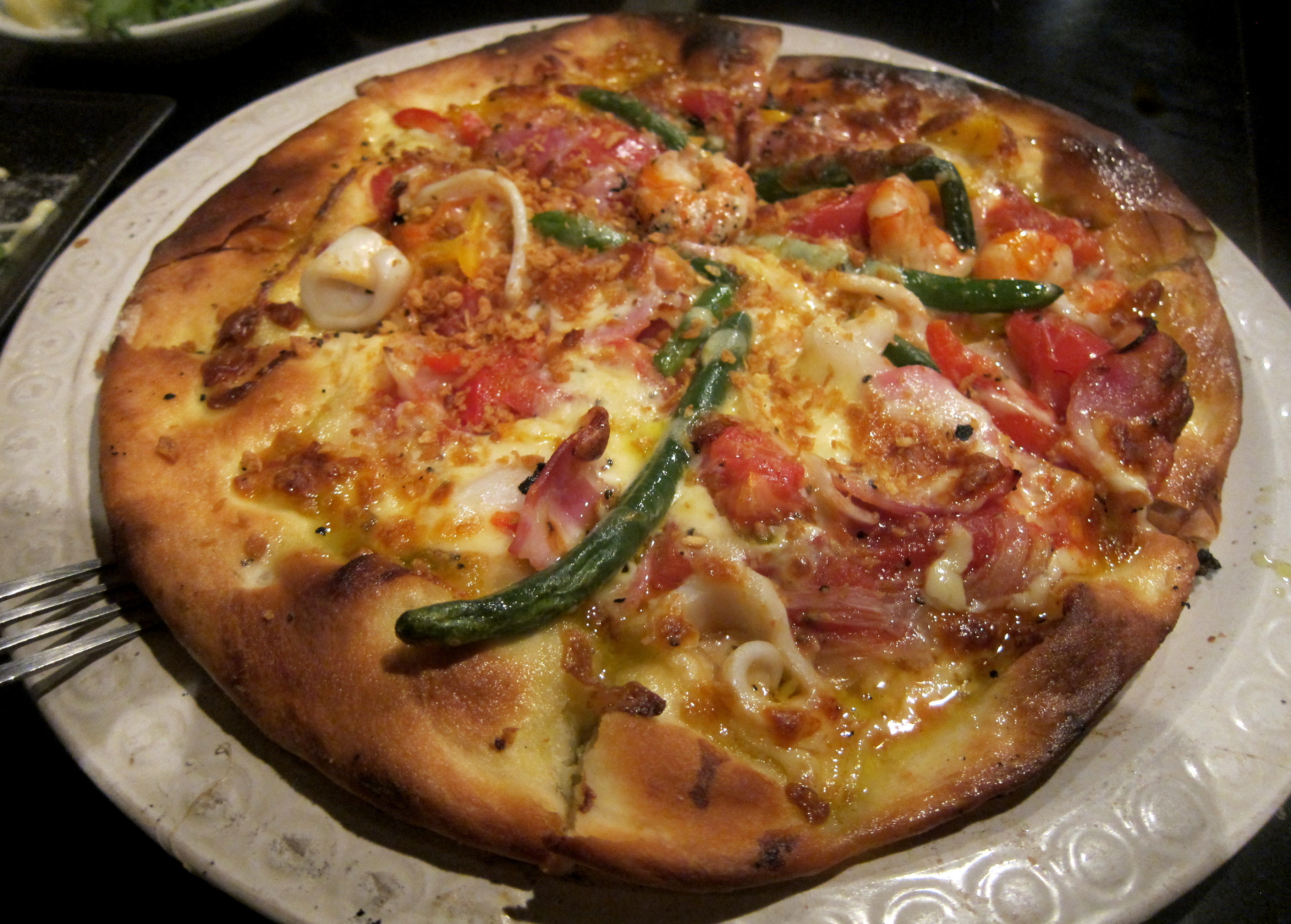
Another reason is that Sai has crazy good comfort foods, one of which is the chef’s homemade pizza.

sai-pizza
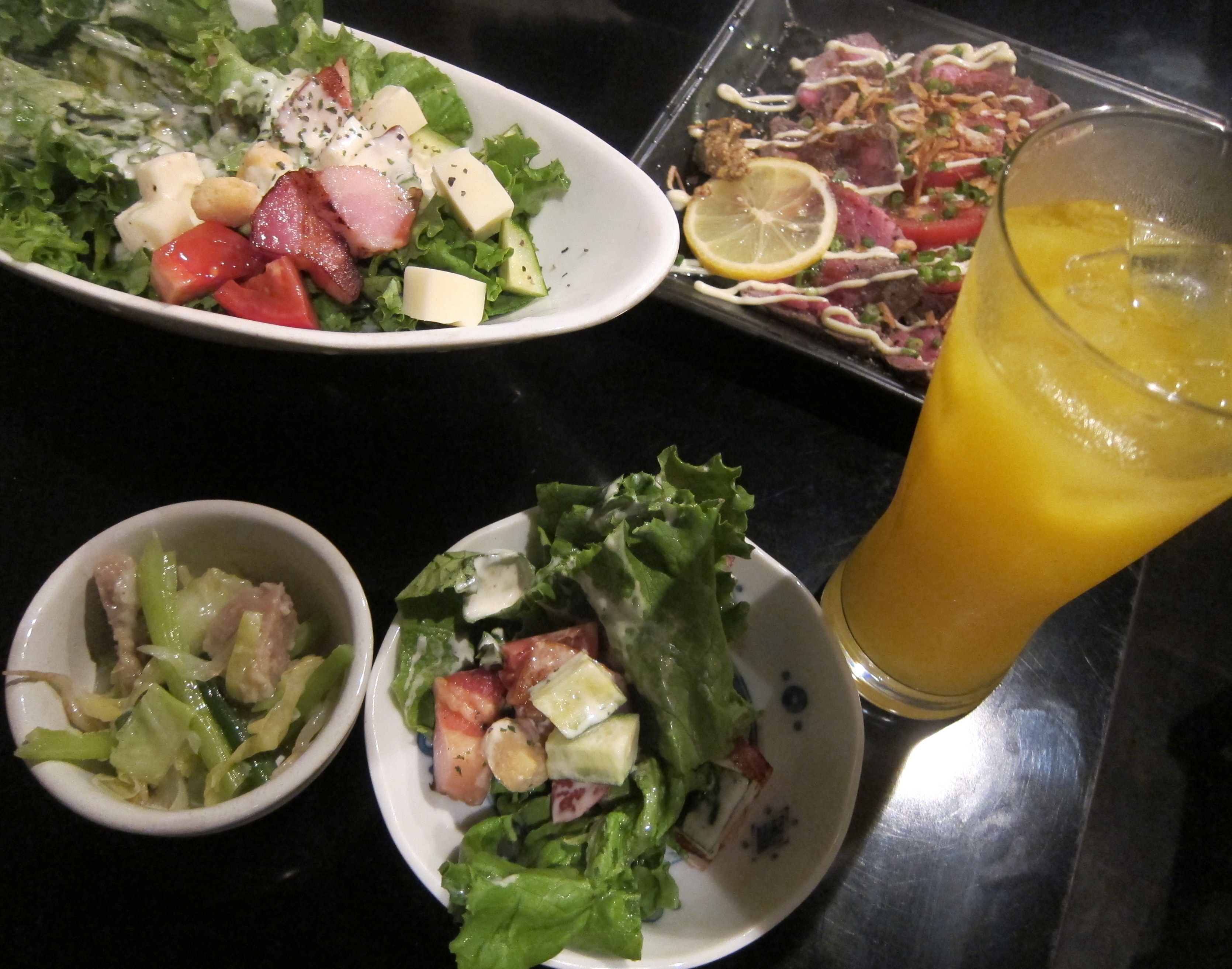
The salad with tomato, ham, cheese and a special dressing:

sai-salad
(Koichi san, my host dad, told me that at izakayas, you have to order a drink (non-alcoholic is okay), ordering water is rude because water is free and izakayas are drinking establishments. Hence the orange juice for me…)

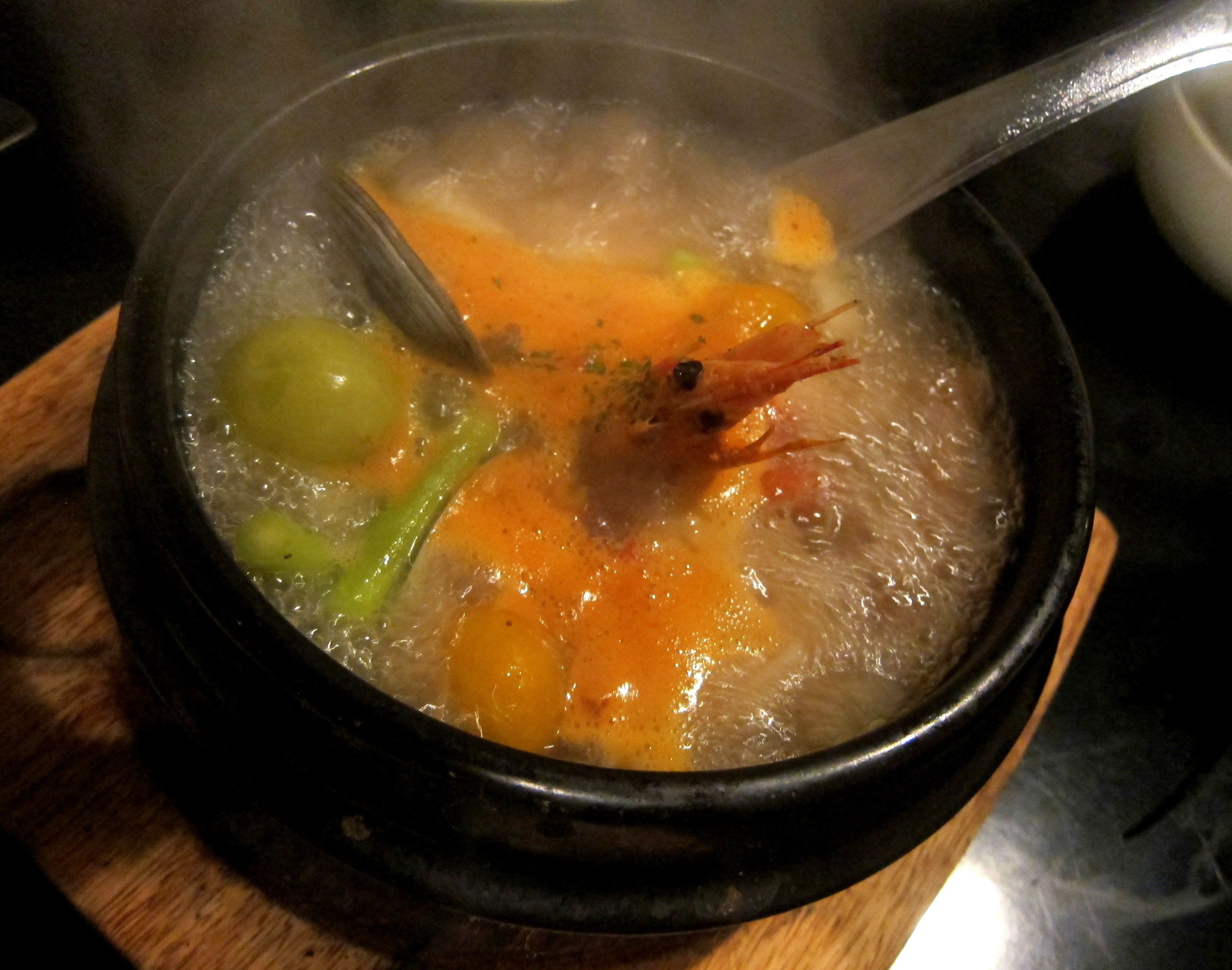
And the bubbling hot seafood soup with a cute big shrimp:

sai-seafood-soup
The soup is reddened with tomato, not chili pepper, which makes it fully enjoyable for cat-tongue people like me and perfect for all weather.

sai-inside
I don’t know what these dishes are called in Japanese (my best bet is the pizza, but there are different types), and no way am I going to read that kanji-full menu in a tolerable amount of time before the chef thinks I’m just there to read the menu (T__T). When I come back to Sai, they won’t be the same dishes, but as long as the chef is the same, a hearty feast is guaranteed.

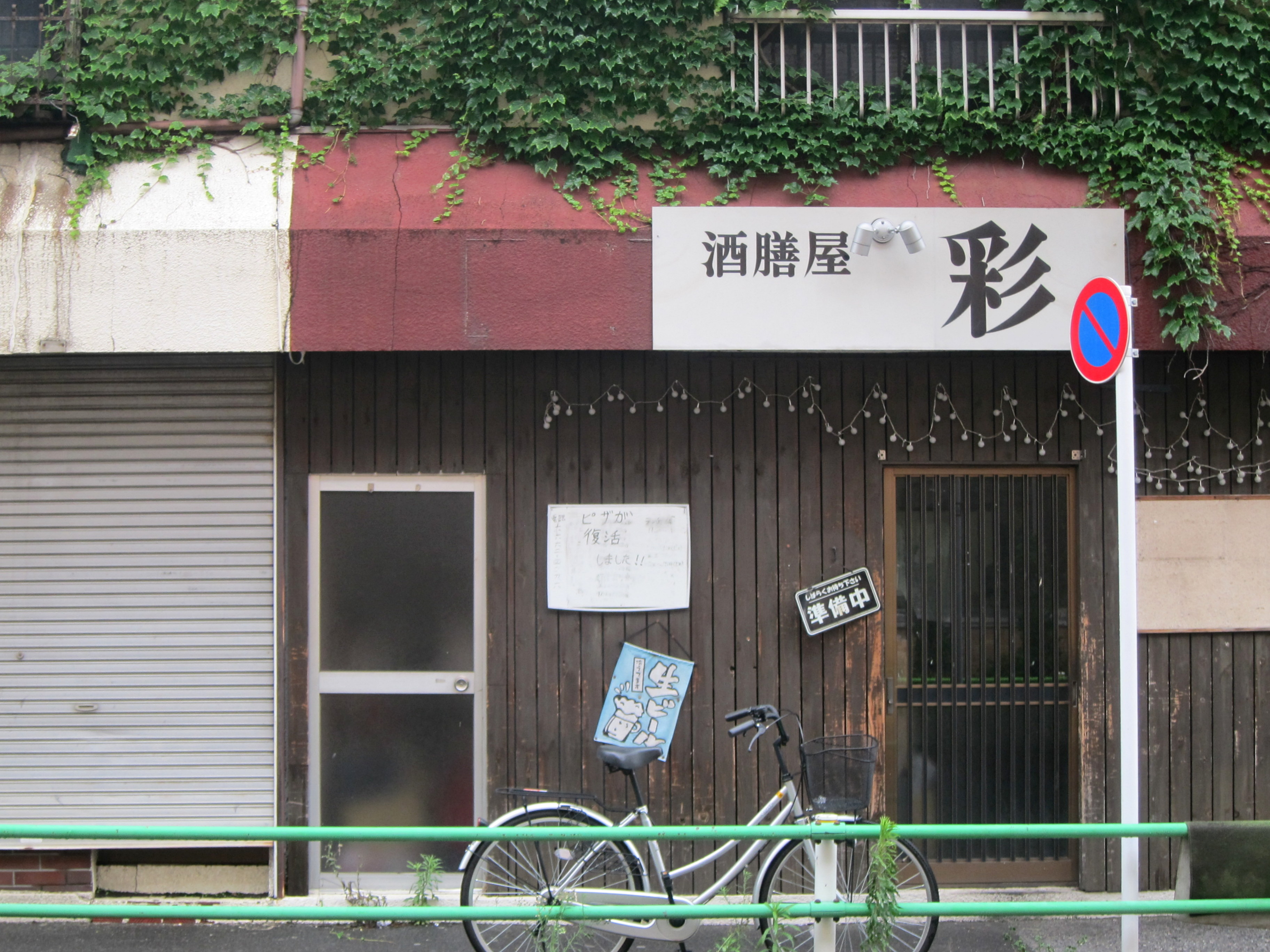
Address: Sai (彩)
About 0.5 mile south of Kameari station (Katsushika), in 2 Chome, near Welcia Katsushika Kameari Shop

PLANT in Itaewon

September 02, 2014 By: Kristen Category: Comfort food, Flavor Abroad: Boulevard-ing in Seoul, Korean, Travel, Vegan

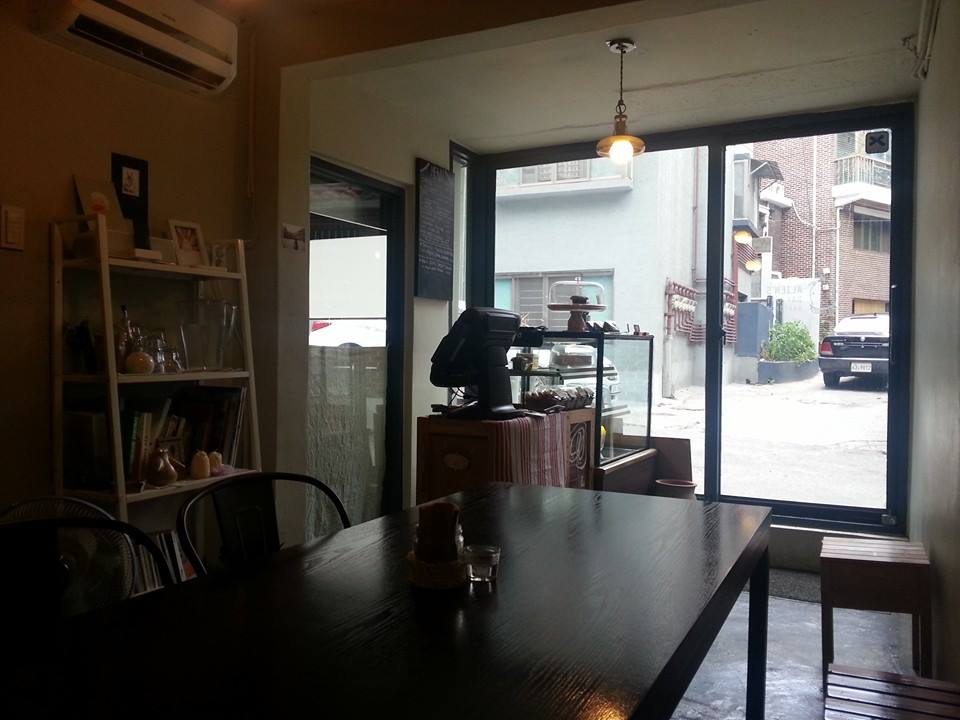
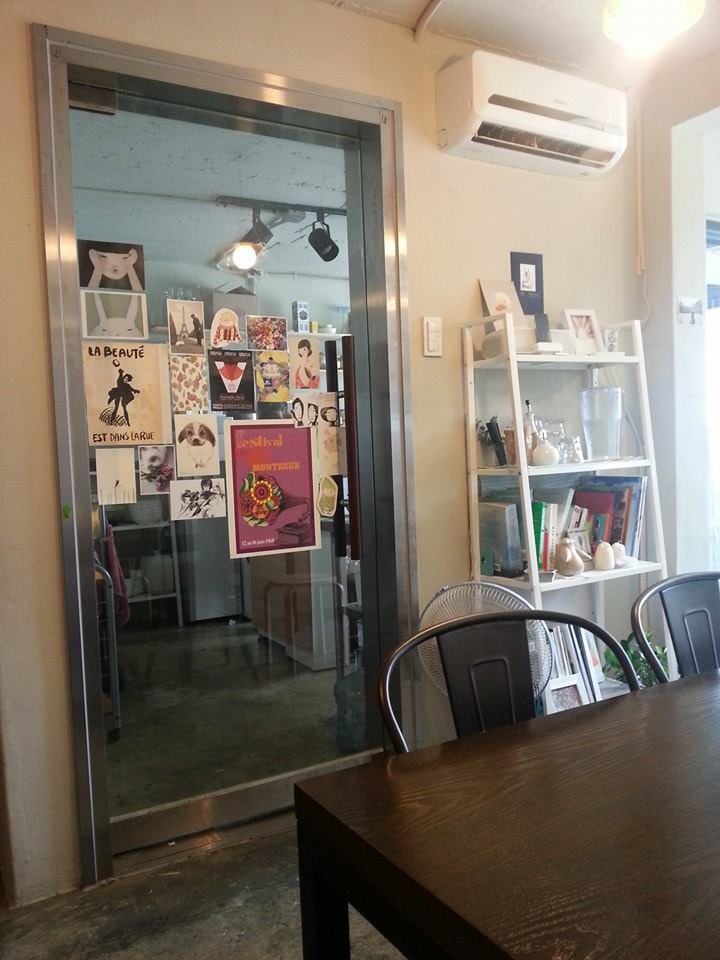
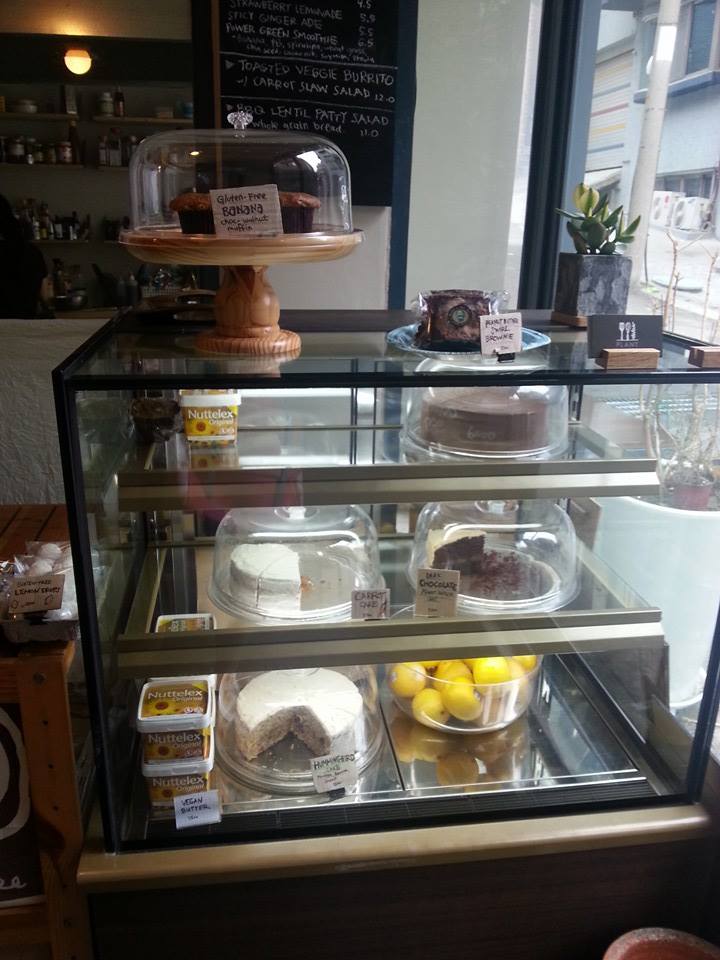
It has been a little over 2 weeks since I have arrived in Seoul, although it feels alternatively like I’ve only just arrived here and like I have been here for ages! I have to be honest in writing that I still feel homesick at times and that adjusting is a little more difficult when I realize that I’ll be staying in Seoul for a longer time period than just a vacation. I just began Korean language classes and may potentially audit a course with my faculty advisor at Ewha so I think the routine of being a student will help me to feel more settled. Of course, my partner and his family have been so supportive as well and I feel so lucky to have them because otherwise I would be even more of a nervous wreck than I already am! I supposed I should move on to the food though…this time, I am profiling a restaurant that I ate at over the summer with a friend. The restaurant’s name is PLANT and it is located in Itaewon, an area of Seoul that is particularly known for being foreigner-friendly. I knew of the restaurant through the owner’s food blog, Alien’s Day Out, which I had been following for a while! The restaurant is entirely vegan and while I normally am not drawn to vegan restaurants, the food porn on the blog has had me hooked. After a year of being tortured by those amazing photographs, I finally had the opportunity to go to the restaurant and try it. 10438992_10152441365190733_1806854670800582791_n The restaurant is super cute with comfortable cushions on the back wall and despite its small size, it is super cozy and just the embodiment of cute. 10303879_10152441365275733_5931183127998558142_n 10388648_10152441365565733_5180804222809846540_n 1525023_10152441365405733_5807953518272144772_n The chef and blogger’s specialty is desserts, but I found myself drawn more to the savory dishes, but that is solely because I am just now a cake or heavy dessert person. Which is not to say that these desserts weren’t amazing, because they definitely were! It’s just that I would always pick amazing savory foods over amazing desserts! In any case, the food here was simply amazing and definitely lived up to my expectations! We began with some drinks:

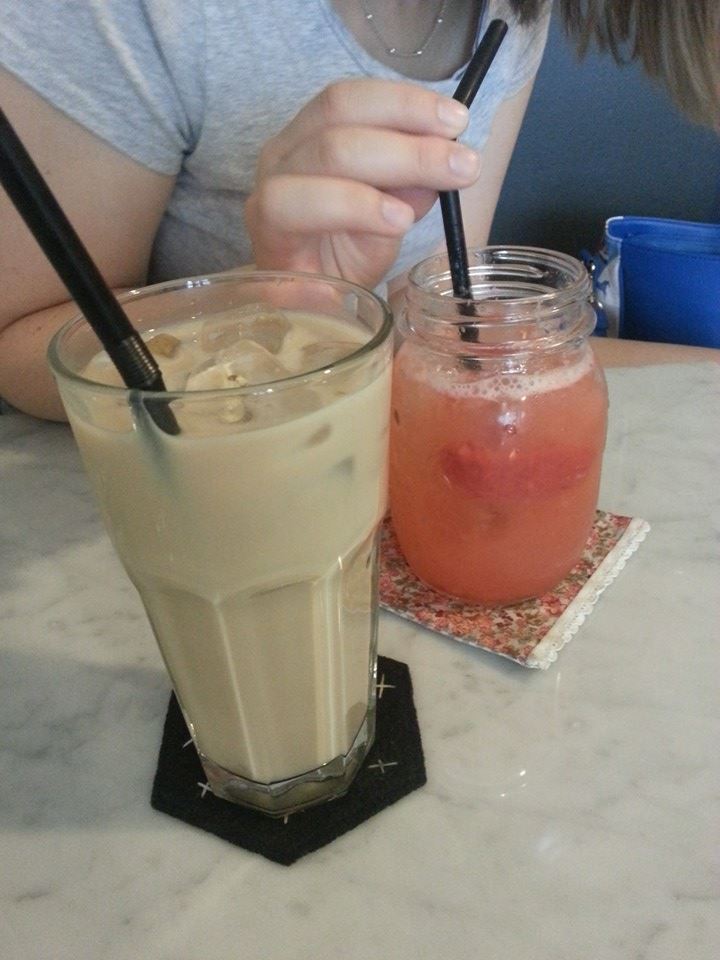
Soy milk tea (right) and strawberry lemonade (right)

Soy milk tea (right) and strawberry lemonade (right)

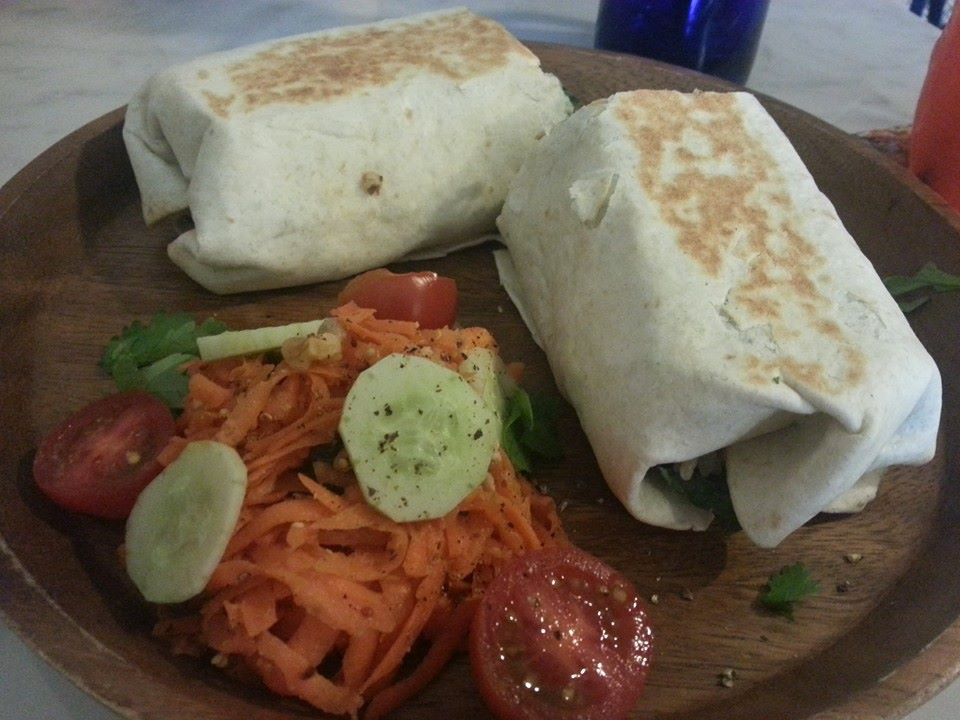
My lactose-intolerant body was very happy for the soy milk tea. The strawberry lemonade was perfect for a hot and humid Seoul summer. As for the food, this is where I was really blown away. Between my friend and I, we ordered as much of the menu as possible and seeing that there are two savory choices that rotate every day, we got both:

Vegan burrito

Vegan burrito

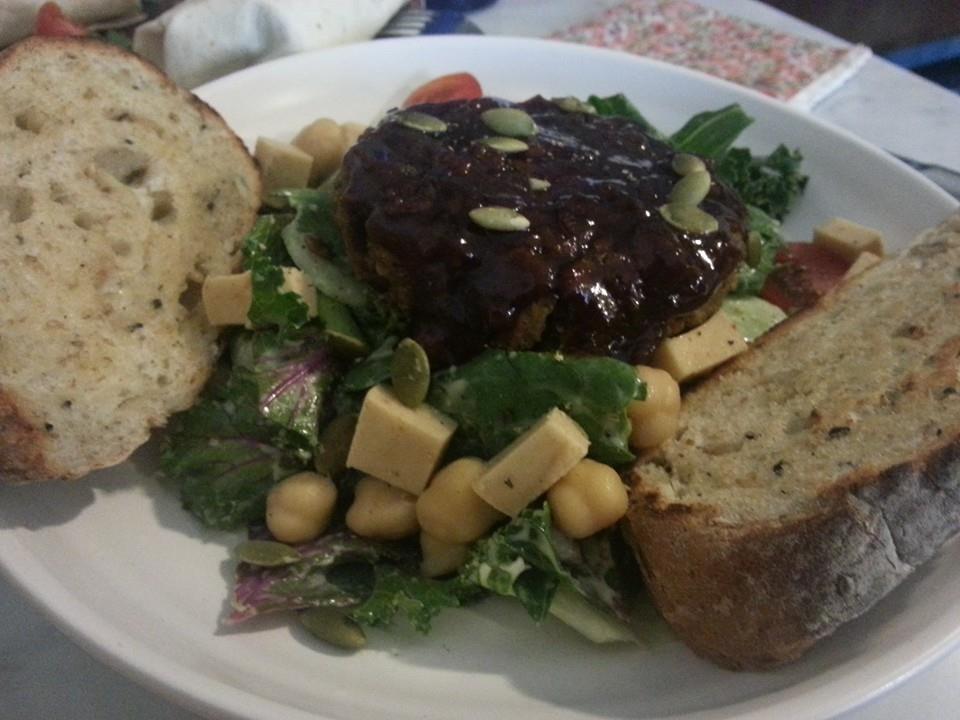
Lentil burger salad

Lentil burger salad

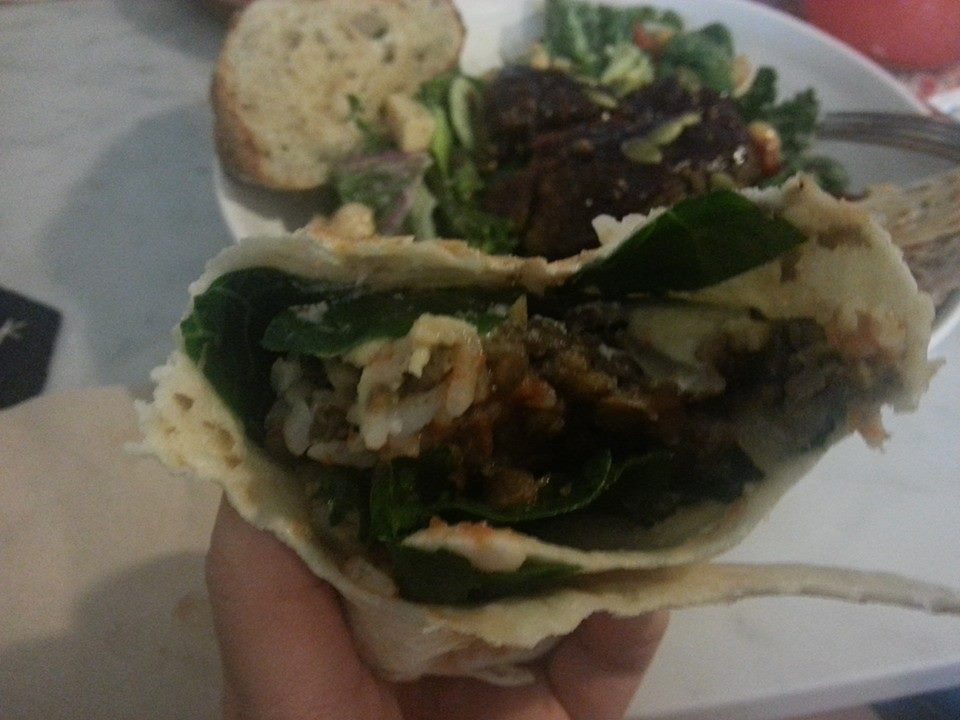
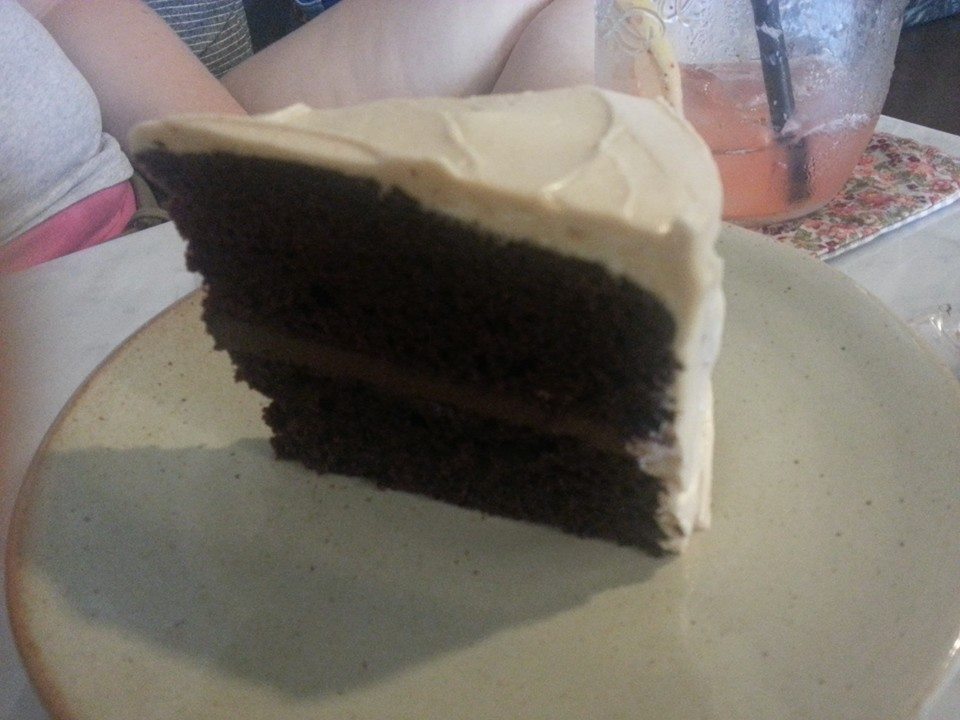
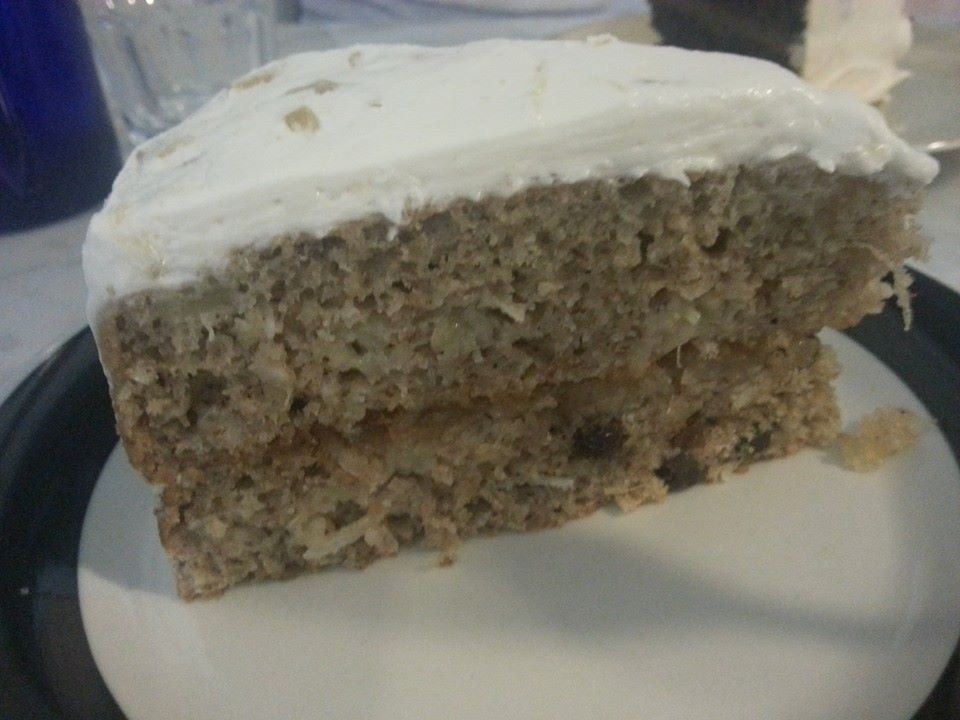
I have to admit that my mind is a little fuzzy and I cannot remember what was inside the burrito, but I did manage to take a photograph of the innards: 10363810_10152441366365733_817639050780328110_n I was blown away by both the burrito and the salad, but between the two, I think the salad stole the day for me. The lentil burger was smothered with a sauce that tasted very similar to a barbecue sauce and it was so rich that I felt as if I was eating a meat burger. I wanted more burgers despite being stuffed. The dressing was amazing as well: it tasted like a Caesar dressing and the little pieces of tofu(?) had the texture of foie gras terrine – smooth, rich, buttery, and just melts in the mouth. YUM. And on top of that, crusty bread. The non-vegan in me craved some butter and salt on top of the bread, but I was happy noshing on the bread on its own. Even though I was full after the feast, we could not skip out on desserts, especially since I have been tantalized by so many photographs of delicious desserts. We had two slices of cake: dark chocolate peanut butter cake and hummingbird cake, which consists of pineapple, banana, and coconut. YUM YUM YUM. I am not a chocolate cake person but I enjoyed this cake, especially that peanut butter frosting. If I could, I would eat an entire jar of it. As for the hummingbird cake, the fruitiness fit my style more and I love the dried bits of fruit inside.

Dark chocolate peanut butter cake

Dark chocolate peanut butter cake

Hummingbird cake

Hummingbird cake

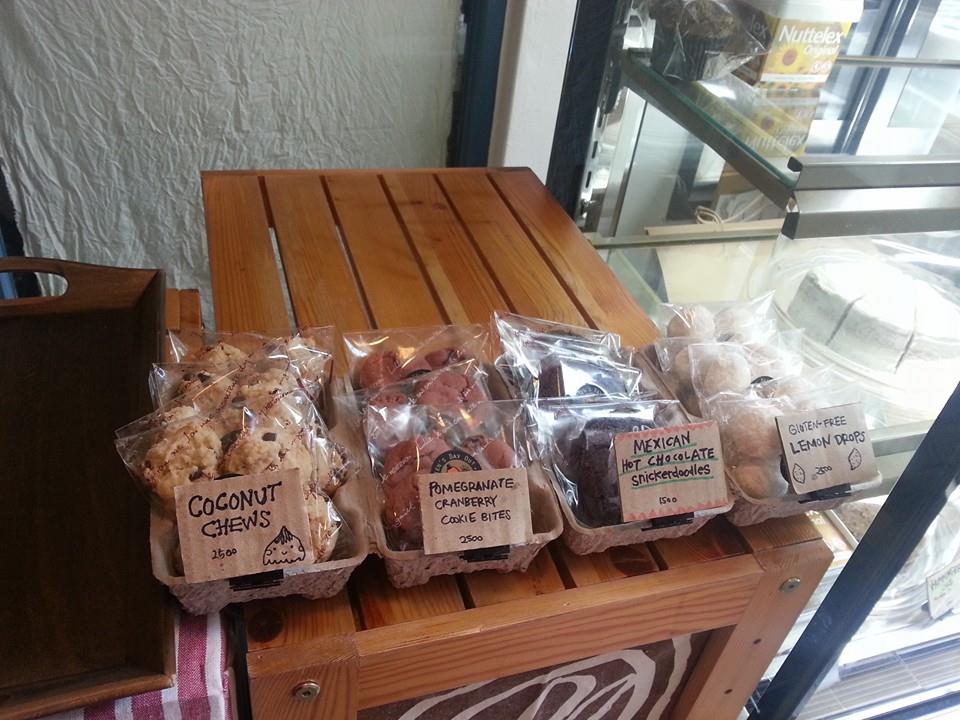
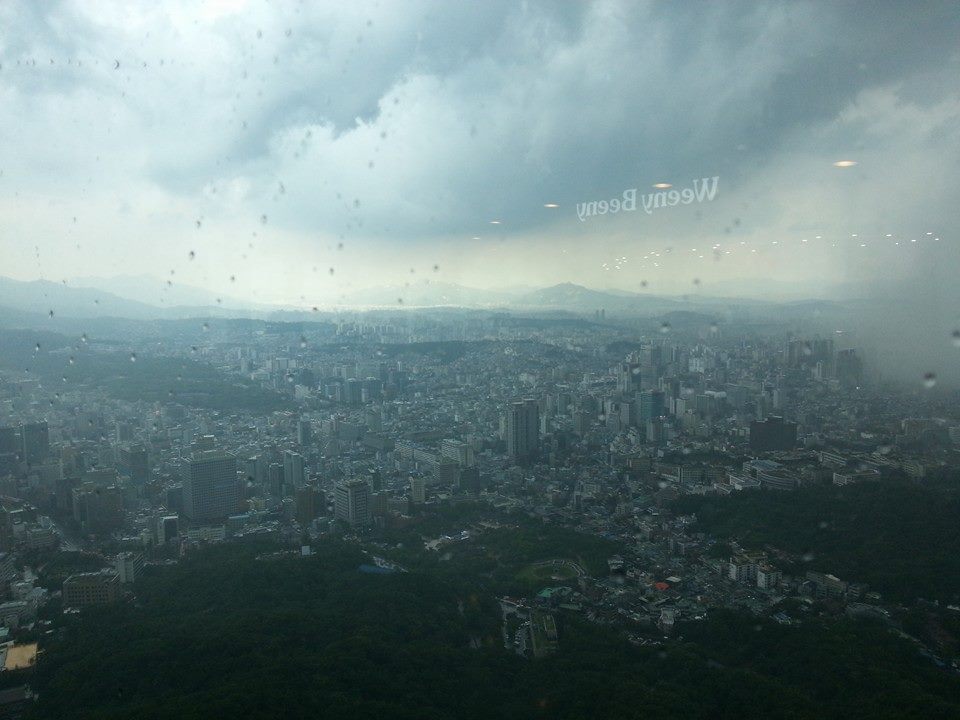
The food was so good that we got some little snacks to take out! We ended up noshing on them a few hours later while lounging on the top of Namsan Tower! 10441366_10152441365465733_2432992531667197389_n My favorite were the Mexican Hot Chocolate Snickerdoodles – it ended up being the most popular among me, my friend, and my partner. The coconut chews were a close second and they tasted like coconut macaroons. The pomegranate cranberry cookie bites received mix reviews, but I liked the tartness of the little cookie. The gluten free lemon drops were not liked by my friend and partner – the taste was described as “weird,” but I still enjoyed them, although I would agree that the Mexican Hot Chocolate Snickerdoodles stole the show. They were perfect though to sustain us after our trek to Namsan through the rain.

High-fiving the Seoul mascot!

High-fiving the Seoul mascot!

Rainy day view

Rainy day view

SO much rain

SO much rain

Noodle soup: Banh canh Que Anh & Que Em

April 23, 2014 By: Mai Truong Category: Central Vietnamese, Comfort food, Houston, noodle soup, Southern Vietnamese

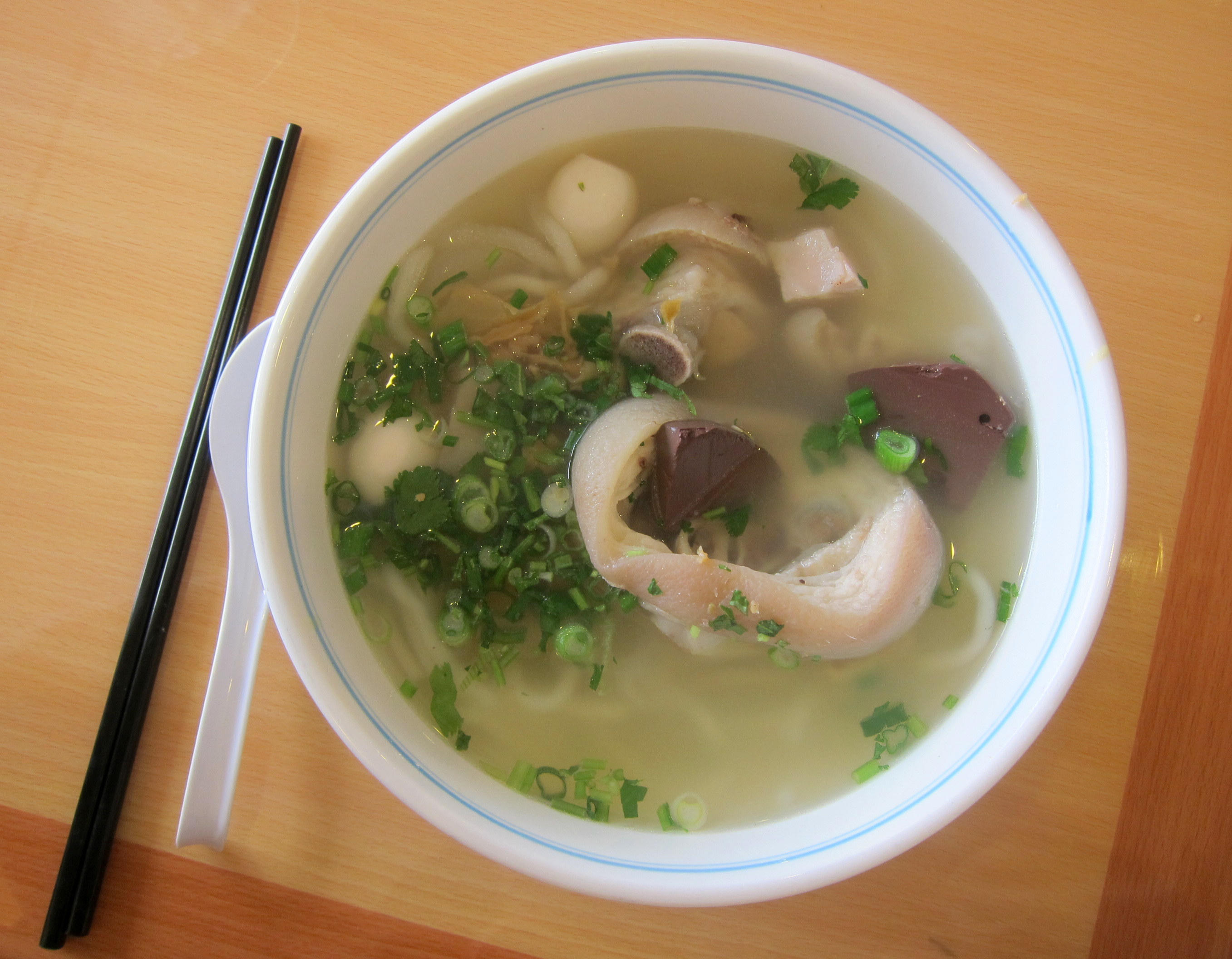
qae-banh-canh-tra-vinh
Quite possibly the cheesiest name of a store I’ve ever seen: Bánh Canh Quê Anh & Quê Em – “bánh canh [from] your hometown and my hometown” (it doesn’t sound cheesy translated into English, but trust me, it’s like Twilight’s Edward Cullen in noodle soup form). Which is actually fitting, since banh canh is commoner’s grub, not a bourgeois lunch. You won’t find a classy madame dressing up just to go out for banh canh. The poor thing will never be elevated to the level of pho. I love it.

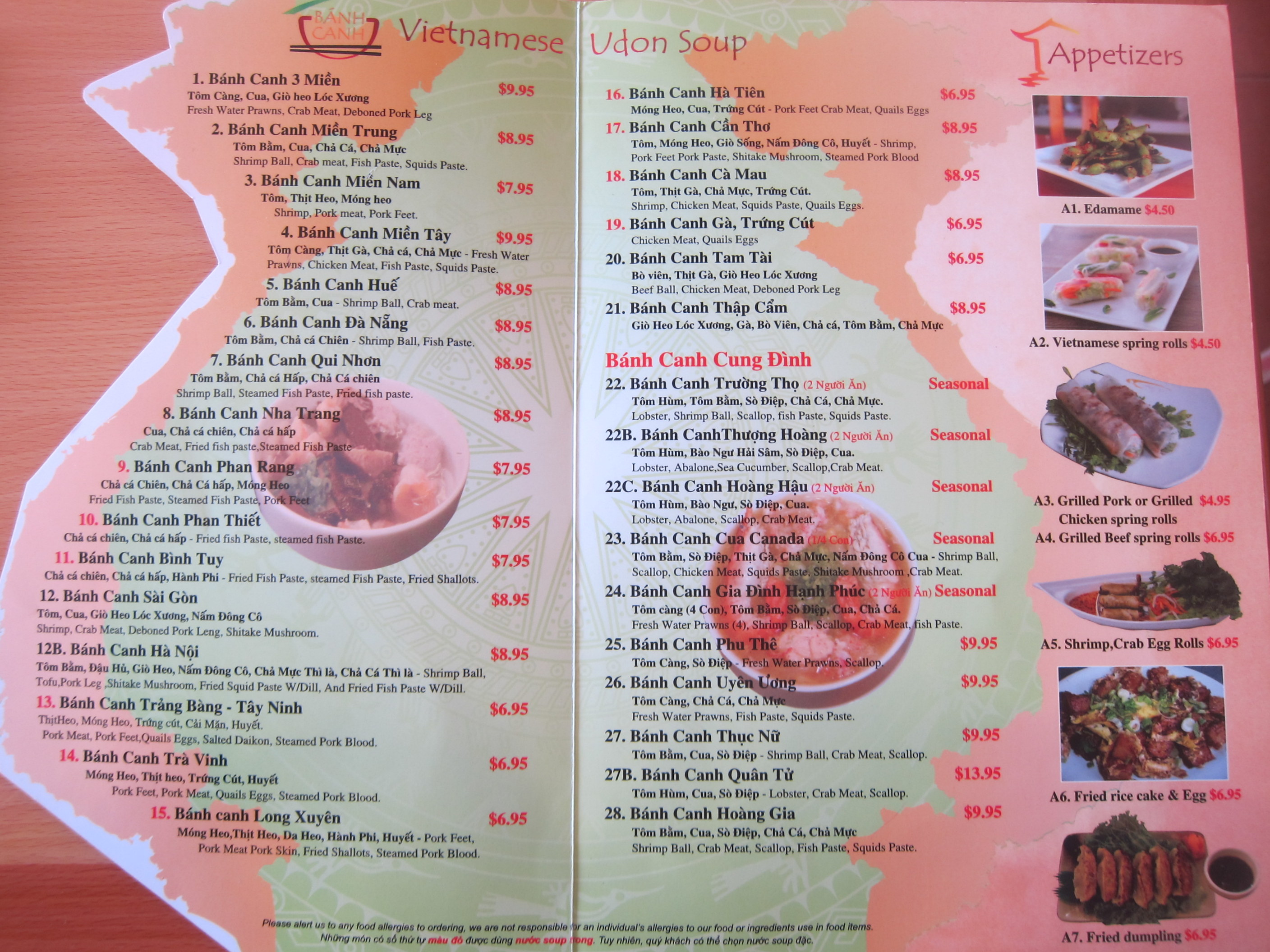
I grew up eating it before I was born (literally). Backstory can be told in person, but despite eating so many bowls, I never knew that there was so many types of banh canh. Que Anh & Que Em offered 30 types (see menu at the bottom), 14 of which are no more traditional than the Spider Roll, but the other 16 are attached to geographical regions in Vietnam, and thus, in this case, more meritable.

Banh canh is a thick, chewy, slippery rice noodle (with tapioca starch). It’s similar enough to udon in appearance and texture (as the shop aptly translates it to “Vietnamese udon”), but also entirely different (udon is made from wheat).
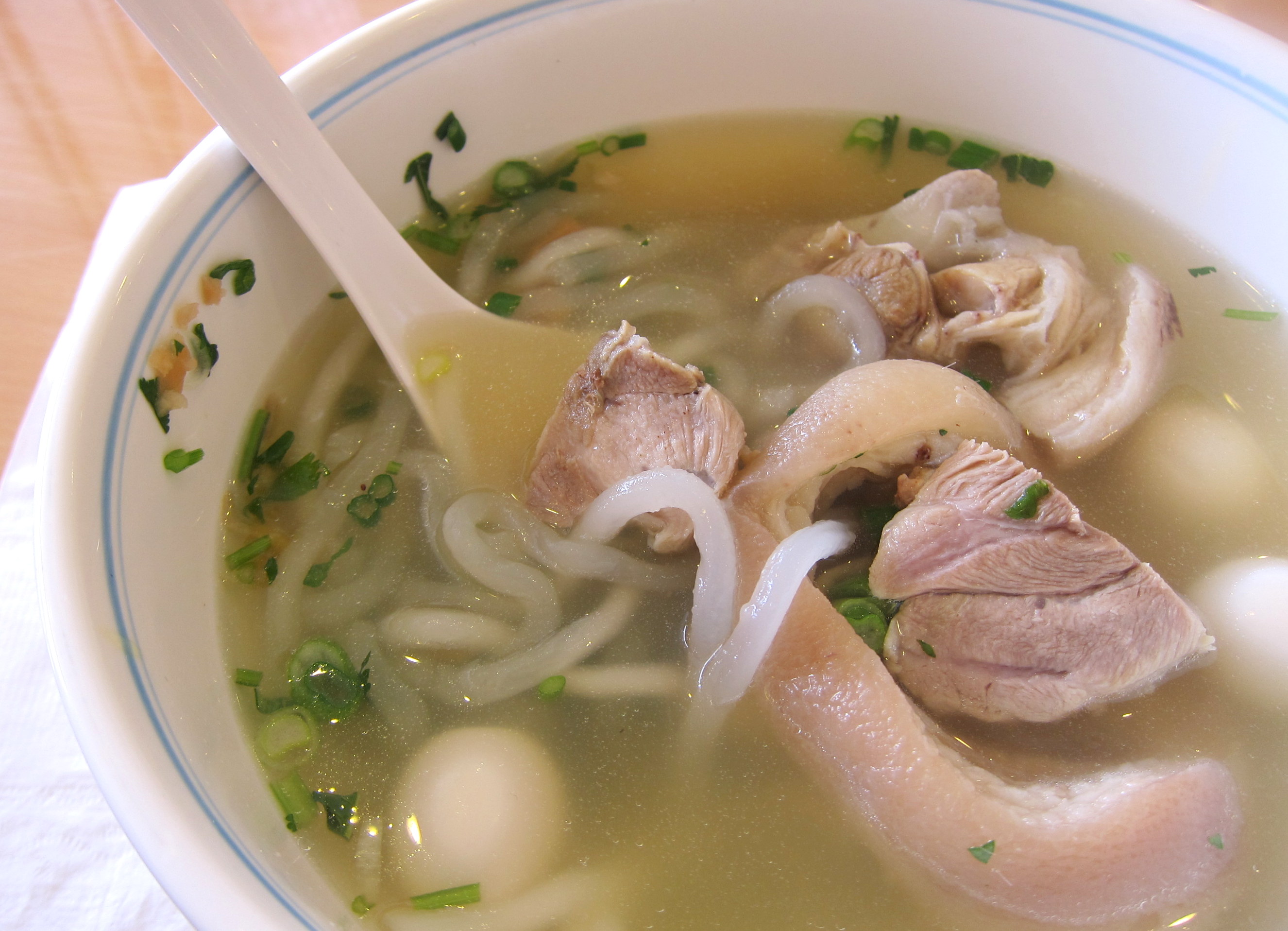
qae-banhcanh-closeup
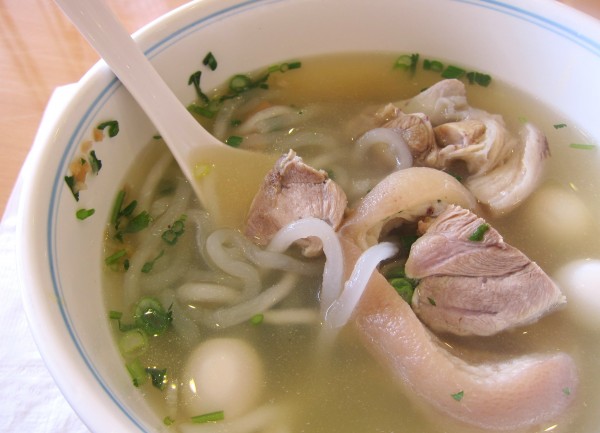
Close-up of my order: banh canh Tra Vinh – pork, pig trotter, quail eggs, pig blood in a clear, light broth. The classic when people think of banh canh. I can do without pig blood, which I transferred to Dad’s bowl, and the quail eggs (fresh quail eggs are great, but these taste like the canned version). In fact, the noodle and the broth alone are sufficient.
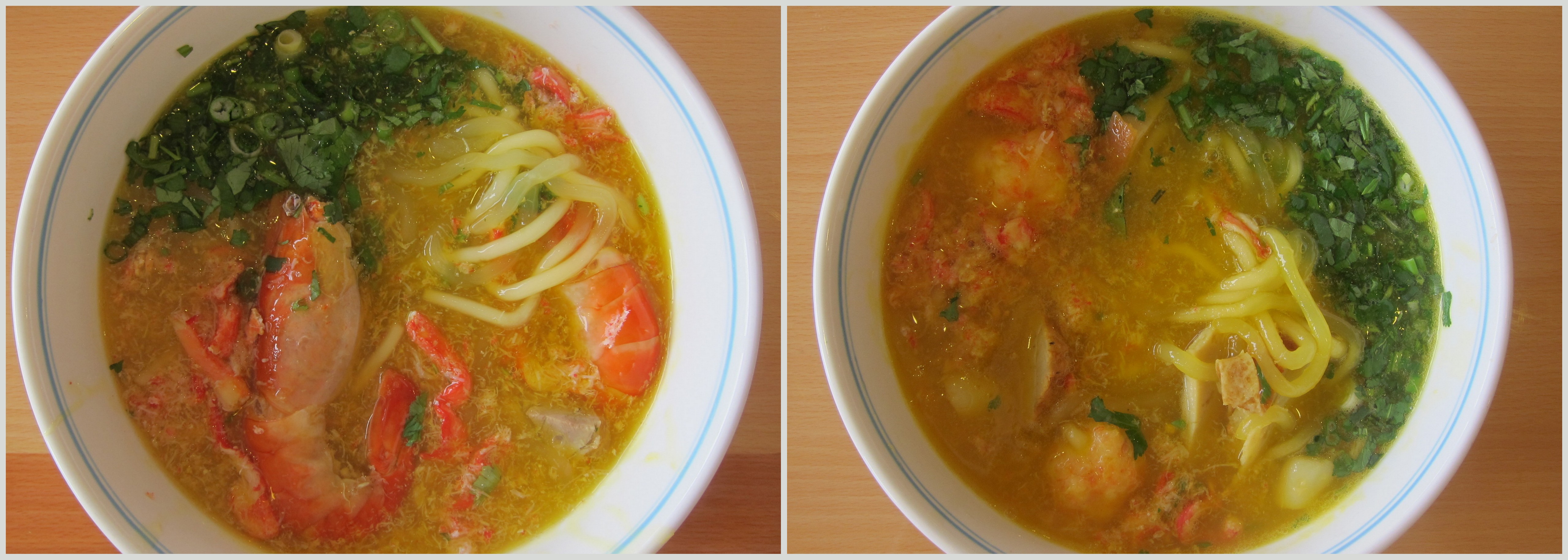
qae-bc3mien-bchoanggia
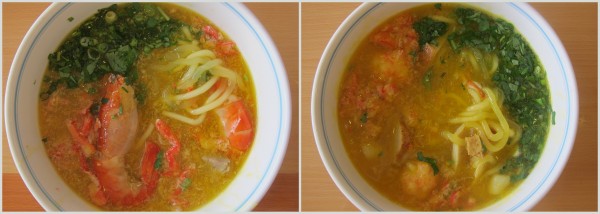
From left: Dad’s and Mom’s orders: banh canh 3 mien (“banh canh of all three regions”) and banh canh hoang gia (“royal banh canh”). Both names are only meant to illicit interest, the same way “Pho Dac Biet” is really not all that special. The broth of both bowls is thickened, yellow (with turmeric?) and taste richly of seafood, as both are loaded with crab meat and shrimps.
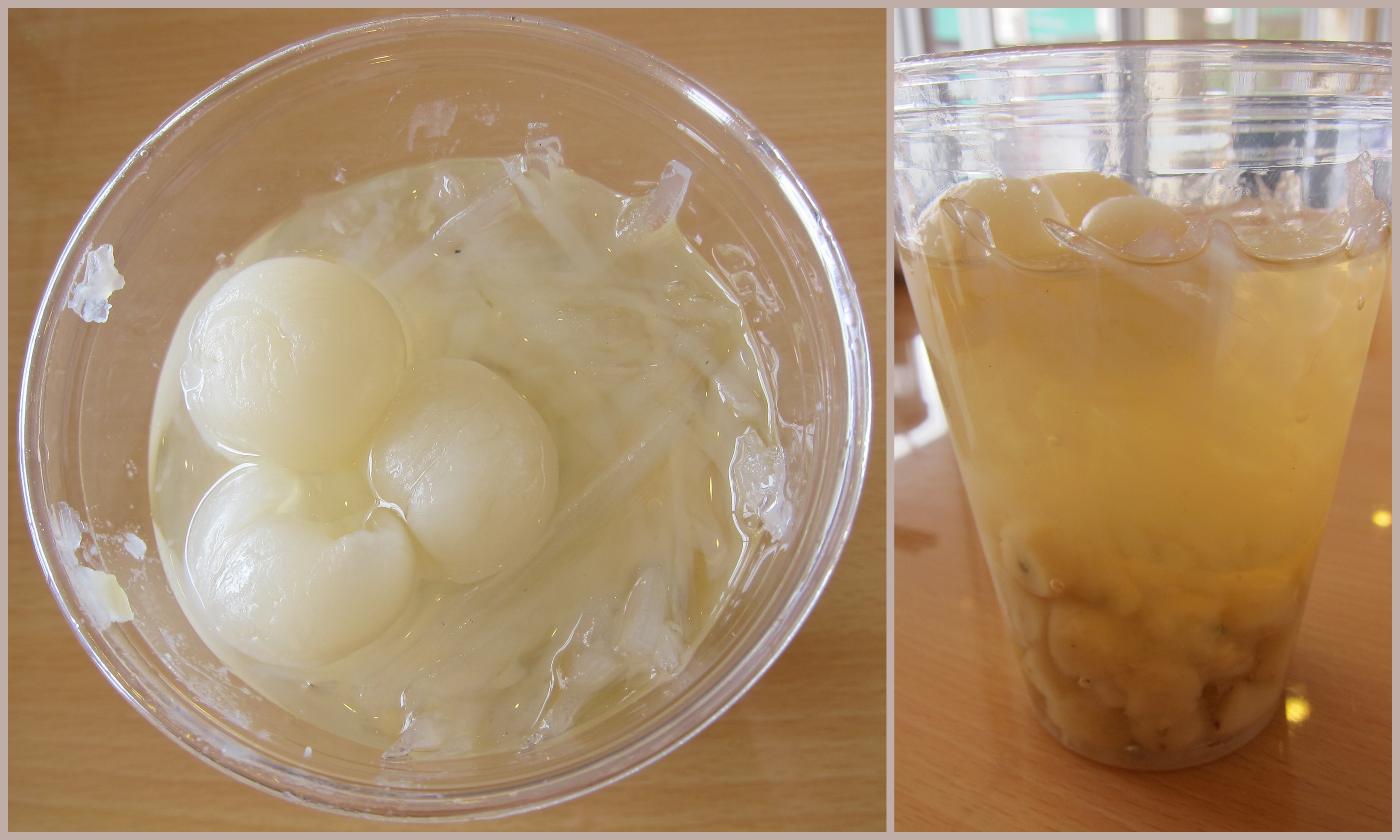
qae-che-longnhanhatsen
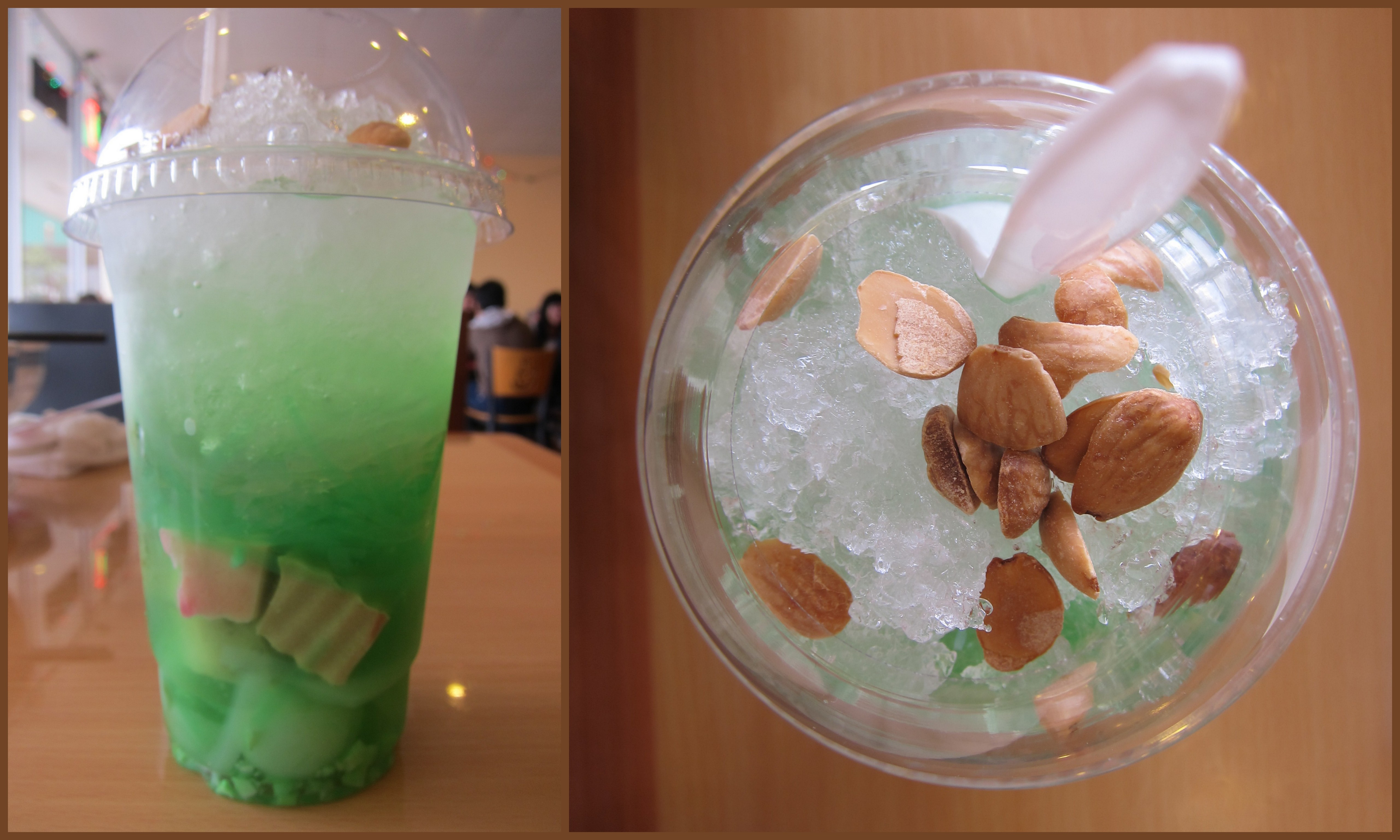
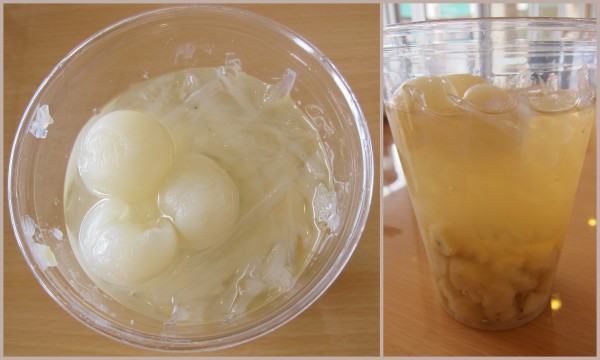
Desserts, of course. che long nhan hat sen – longan and lotus seed che… (I got the same thing at Danh’s Garden too, it’s gently sweet, fruity, and hard to get tired of.)
qae-chekhucbach
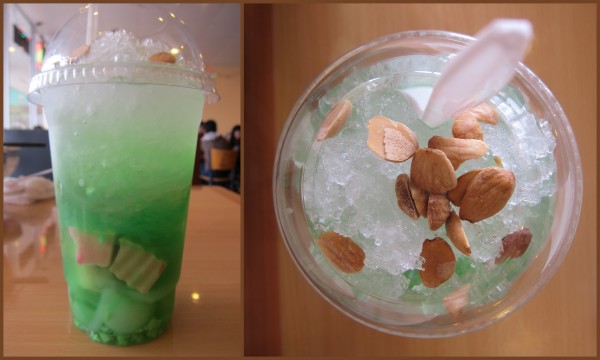
… and che khuc bach – lychee, some chewy tapioca thing, some chewy milky jello thing, and some nuts. A popular che in Vietnam these days.  Here’s a video to make che khuc bach, which the author loosely calls “almond panna cotta lychee dessert”.
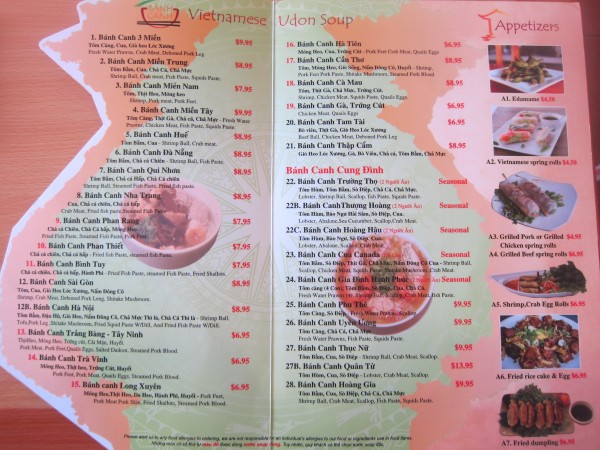
qae-menu
I miss Vietnamese food. It’s been only three days since I left for the mountain on another observing run. Every time I’m in the mountain I’m reminded of what a privileged life I have. I miss being a stone’s throw away from darling nigiri, banh mi, mordin, etc. There’s no Asian restaurant in Big Pine, the nearest congregation of human from the observatory. Then again, it’s already a huge privilege to stay at CARMA, with a private bedroom and bathroom, eating juicy fresh apples and having nutritious meals hot and ready twice a day…

Address: Banh Canh Que Anh & Que Em
11210 Bellaire Blvd, Ste 133
Houston, TX 77072
(281) 416-5316

one shot: homemade hu tiu

January 08, 2014 By: Mai Truong Category: Comfort food, noodle soup, One shot, RECIPES, Southern Vietnamese

hu-tiu-bot-loc
From Mom: hủ tíu bột lọc.

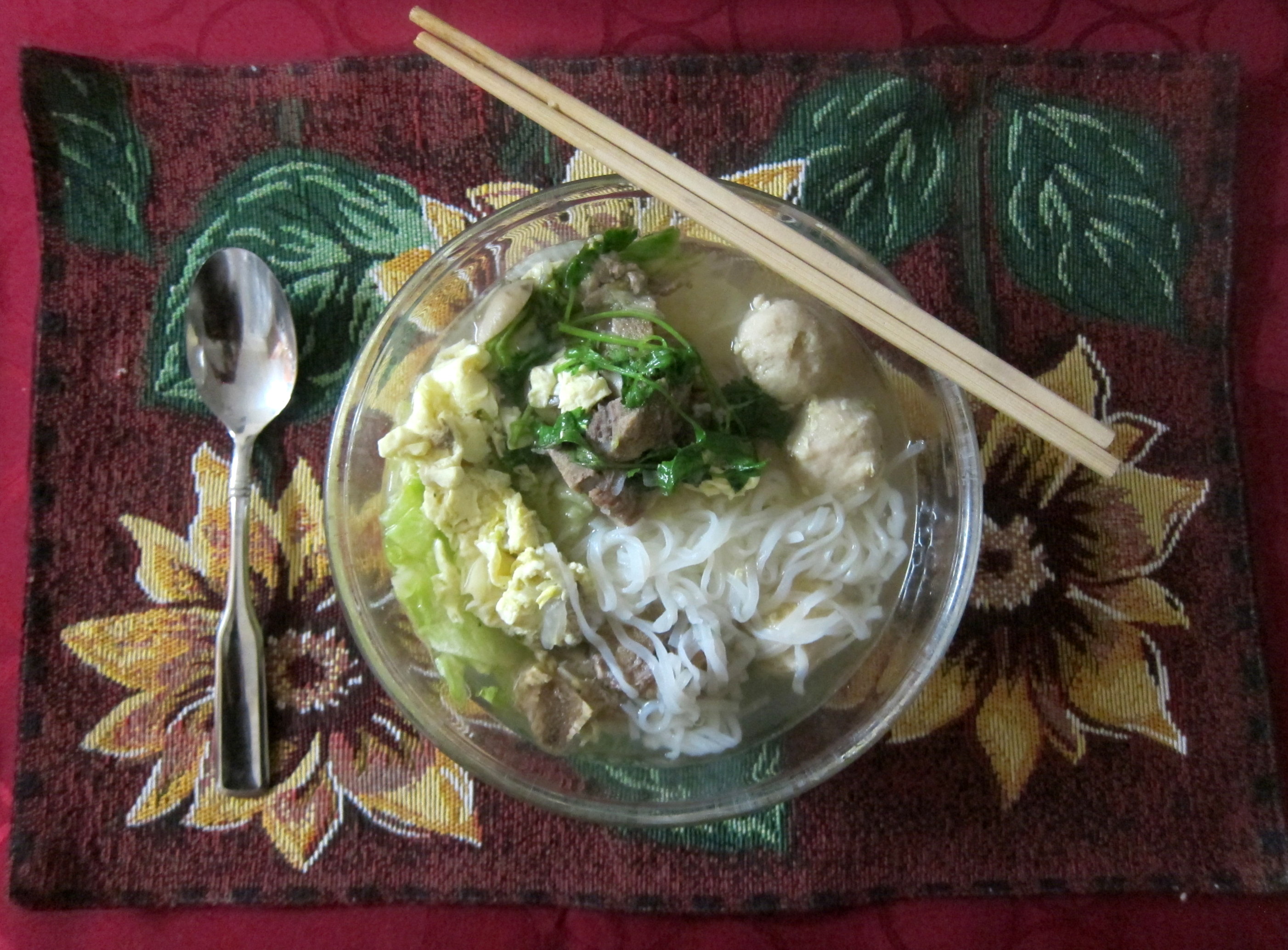
Hu tiu is a common type of rice noodle in Southern Vietnam, often served in noodle-soup form, the noodle soup dish is of course also called “hu tiu“. The usual hu tiu noodle is characterized by its thin shape and chewy texture. Vietnamese love chewy noodles just as much if not more than any other country, so people began using various methods to make hu tiu (*) chewier (the soaking time before grinding, the grinding, washing the rice flour, the mixing ratio with water and other types of starch, the thickness to spread the mixture into a film, the temperature and time to steam it). Bánh bột lọc(**), a type of savory snack, is made with tapioca starch (cassava flour), so I guess hủ tíu bột lọc also contains tapioca starch.

I spent an hour googling but expectedly found little and contradicting information about hu tiu bot loc – nobody in the business would reveal their secret. What I found online is hu tiu bot loc originated from Cần Thơ, and what I found in my bowl are fat (and flat) strings, whose color is clearer and texture is chewier than both the normal (and thin) hu tiu and hu tiu dai (“chewy hu tiu”).

Mom’s hu tiu bot loc: (good luck getting a more detailed recipe than this one from Vietnamese moms!)
– boil dry hu tiu (sold at stores), immediately wash in cold water to preserve chewiness and prevent them from sticking together, set aside
– simmer pork bones to make broth, add salt to taste
– eventually, add pork, beef balls and eggs
– finally, add hu tiu and cilantro

Foodnote:
(*) – That link is written in Vietnamese but the pictures are instructive enough to get an idea of the hu-tiu making process.
(**) – What does “bột lọc” mean? Literally, “bột” is flour, and “lọc” is to distill, so “bột lọc” means “clear flour”.

Comfort food at the Taiwan Restaurant

November 20, 2013 By: Mai Truong Category: California - The Bay Area, Chinese, Comfort food

twr-starters
Partly because of my busy schedule, partly because of the lack of good Vietnamese food in Berkeley, I haven’t had Vietnamese food for months. I miss it, of course. Luckily, the neighboring cuisines share so much similarities that my “comfort food” category has steadily expanded to enclose most of East Asia. If for some reason America and I don’t get along, I think I can happily merge into Taiwan and Japan (not sure about Korea – their food is too spicy…).

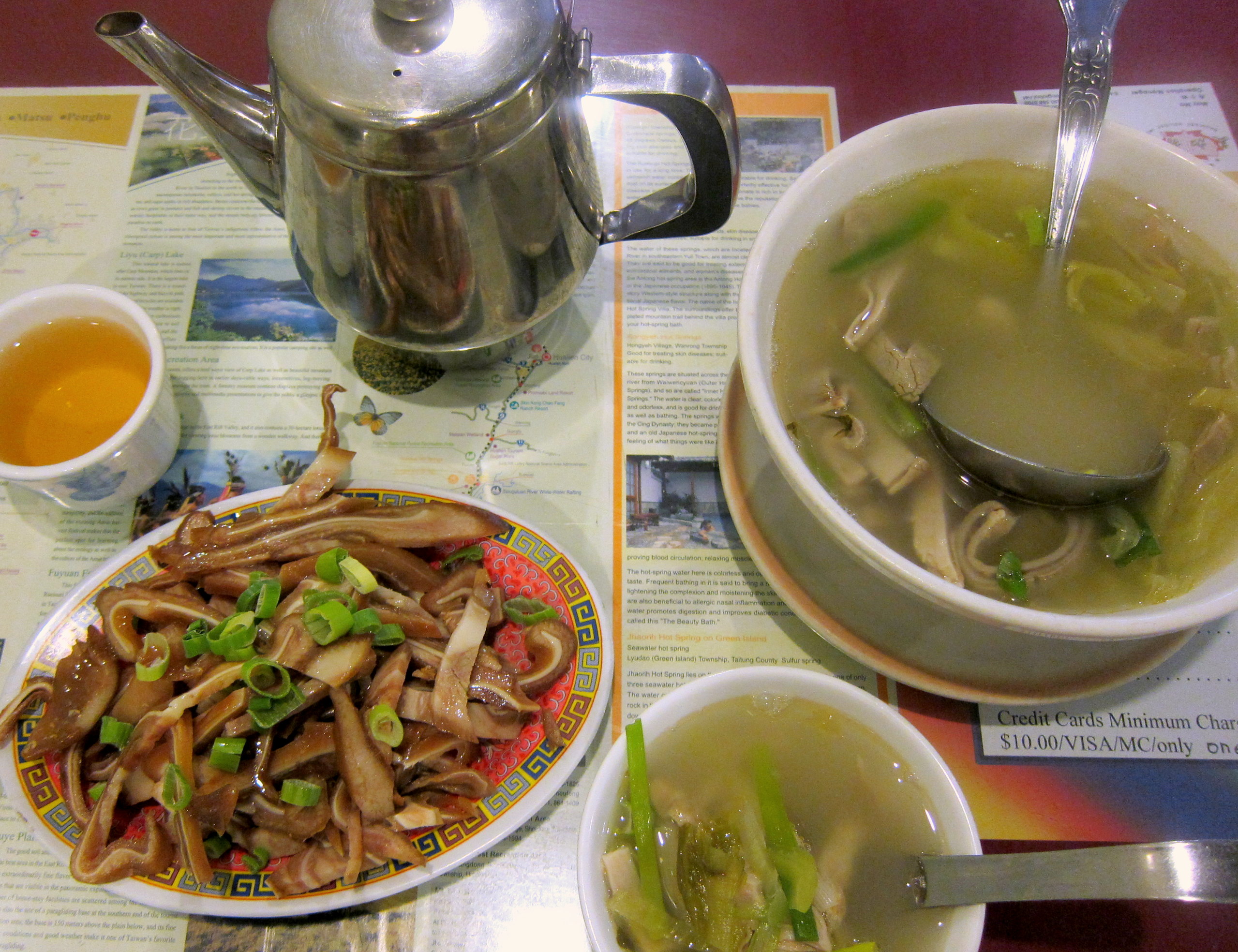
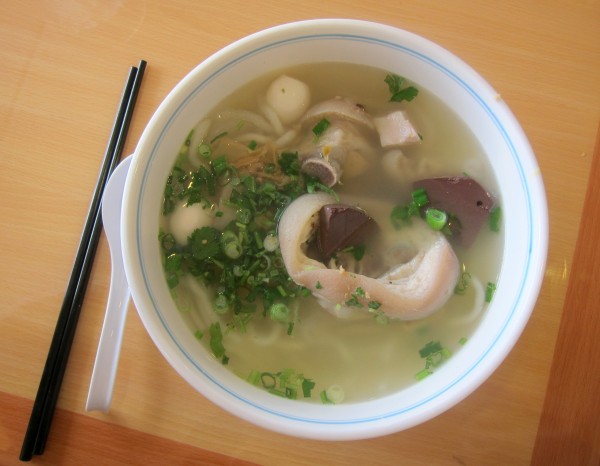
So when I crave comfort food, if it’s Sunday or Monday and Musashi is closed, I go down University Avenue to the Taiwan Restaurant. It’s the purple building next to Anh Hong, and it’s another case of generic-names-hence-don’t-go-there type of restaurant. However, two Taiwanese told me that it was “good enough” – the owner of Asha Tea House across the street, and Kristen. As with any Asian eating establishment, you have to know what to get at the Taiwan Restaurant, otherwise you end up with oily overload. I haven’t strayed once out of the usuals. It’s comfort food, there’s no need to change it. In fact, I come here just for one type of soup: the pickled cabbage soup with tripe.

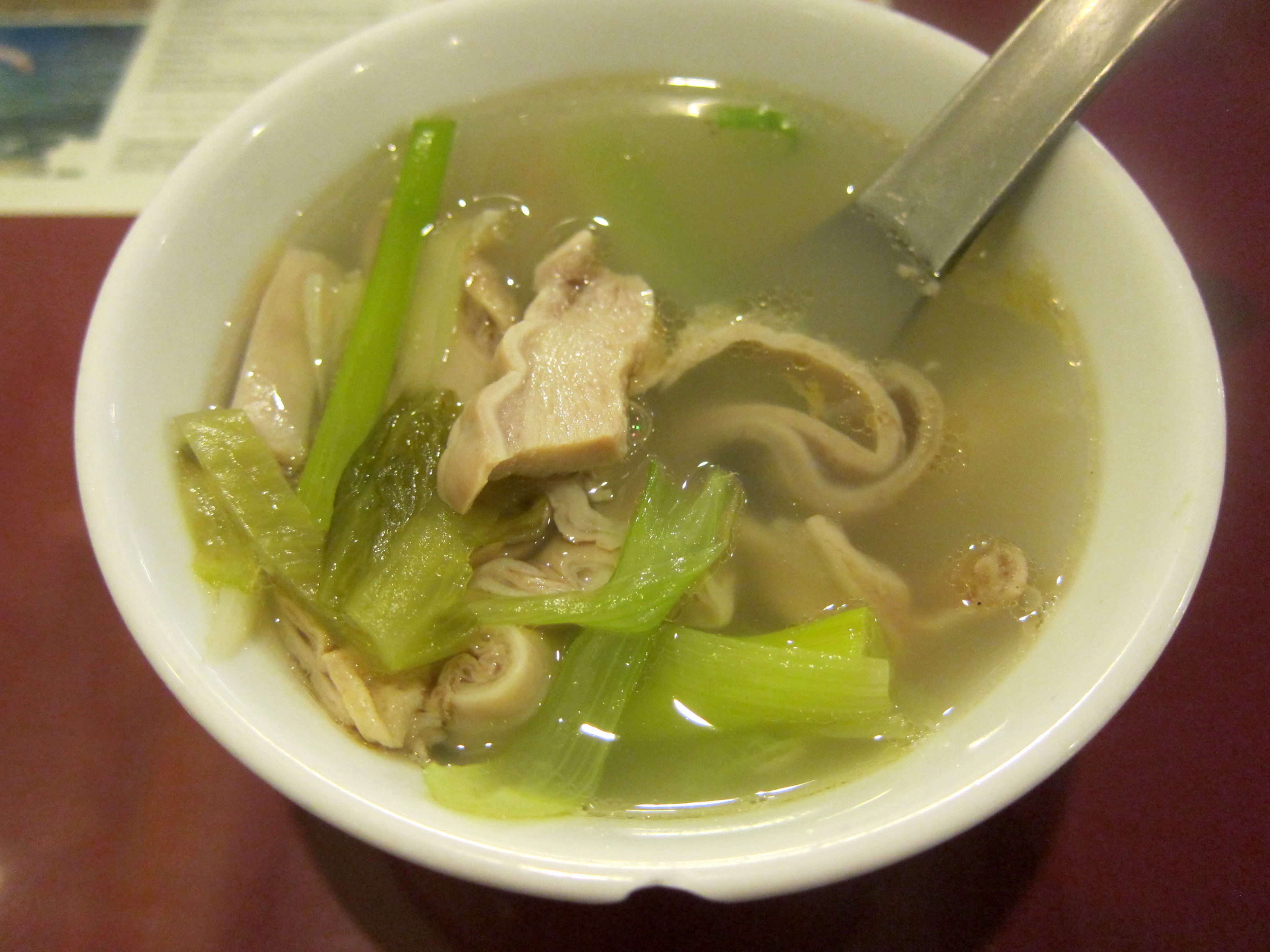
twr-pickled-cabbage-soup
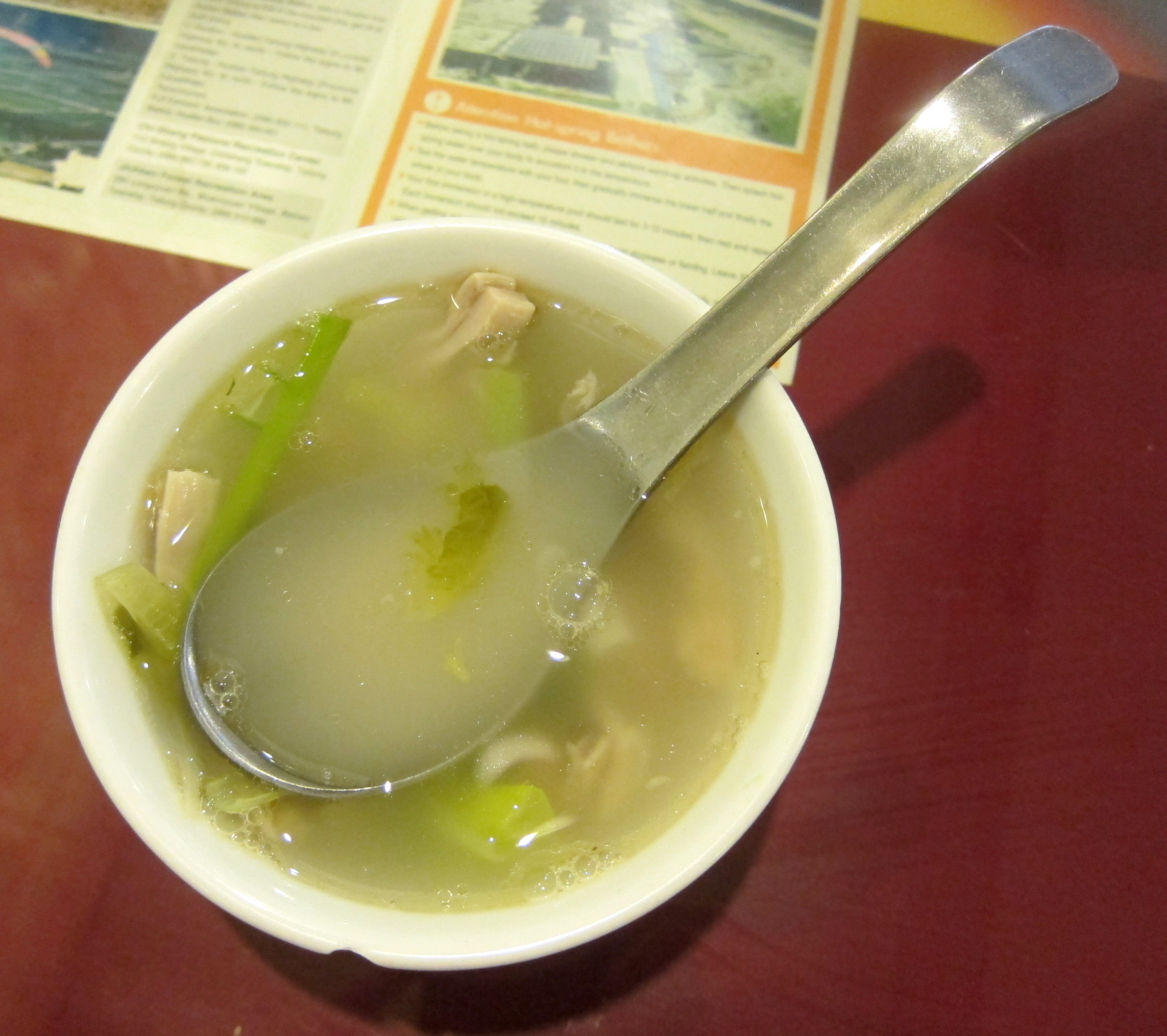
Currently, this is my favorite soup in the whole Bay Area (not counting noodle soups, of course!). Nowhere else serves it. (The second time I ordered it, the waiter skeptically asked me if I knew what it was.) The pickled cabbage (Chinese pickled cabbage, similar to Vietnamese dưa muối) makes the broth sour and clear, the pork tripe is chewy and smooth. I would drink it to the last drop, and it delights even a grumpy stomach.

twr-soup-spoon
I’ve never seen such a spoon before.

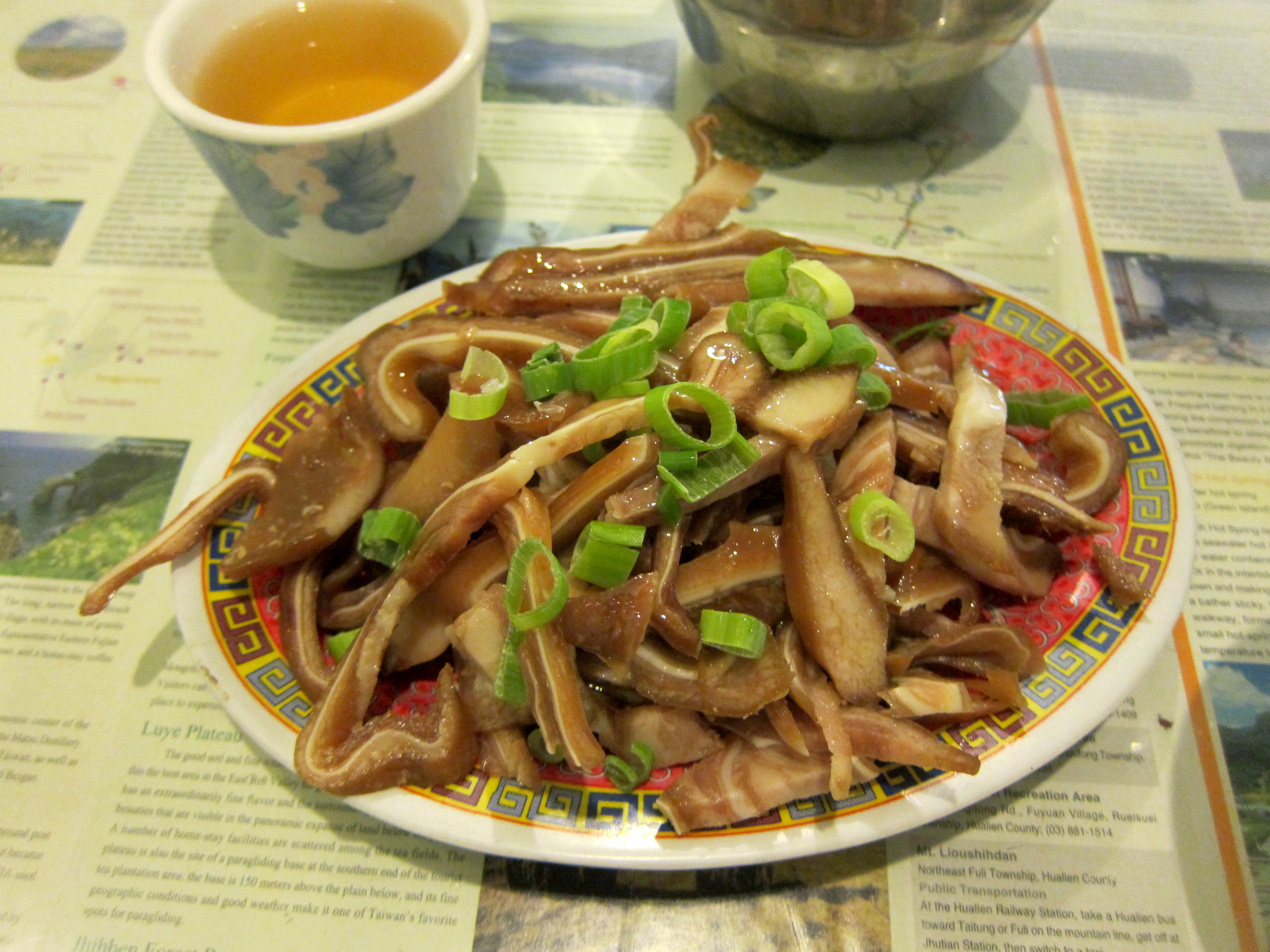
twr-pig-ears
Much to Mom’s chargrin, I pay no heed to the cleanliness behind the scene when I order at restaurants. Pig ears are crunchy and not so fatty – good enough for me (^_^).

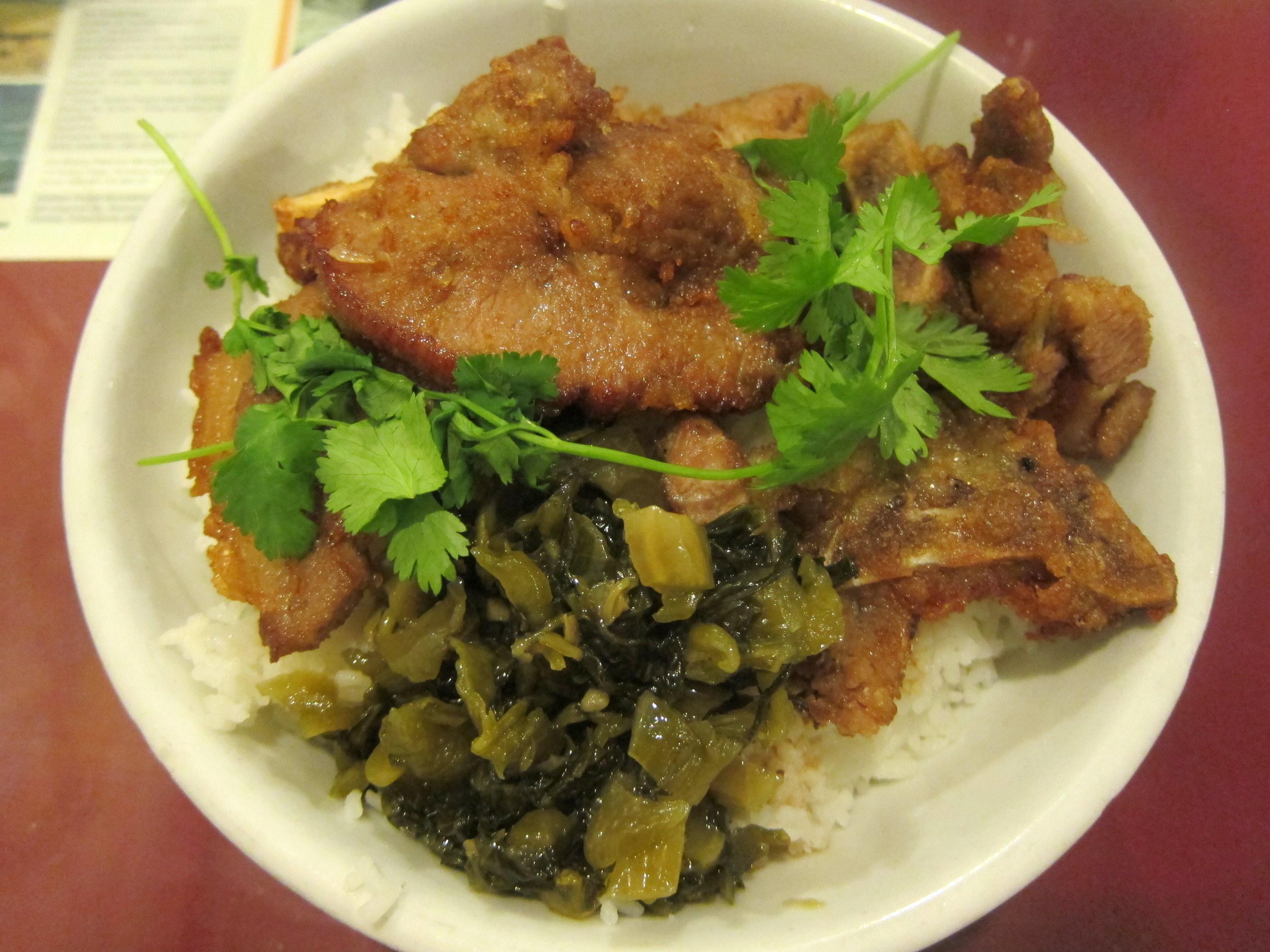
twr-fried-pork-chops
Kristen introduced me to this dish – fried pork cutlet on rice with sweet pickled greens. It’s actually pretty oily, but the rice is soaked with the sweet and savory pork sauce… I intended to save half for the next day but in the end I cleaned up the bowl.

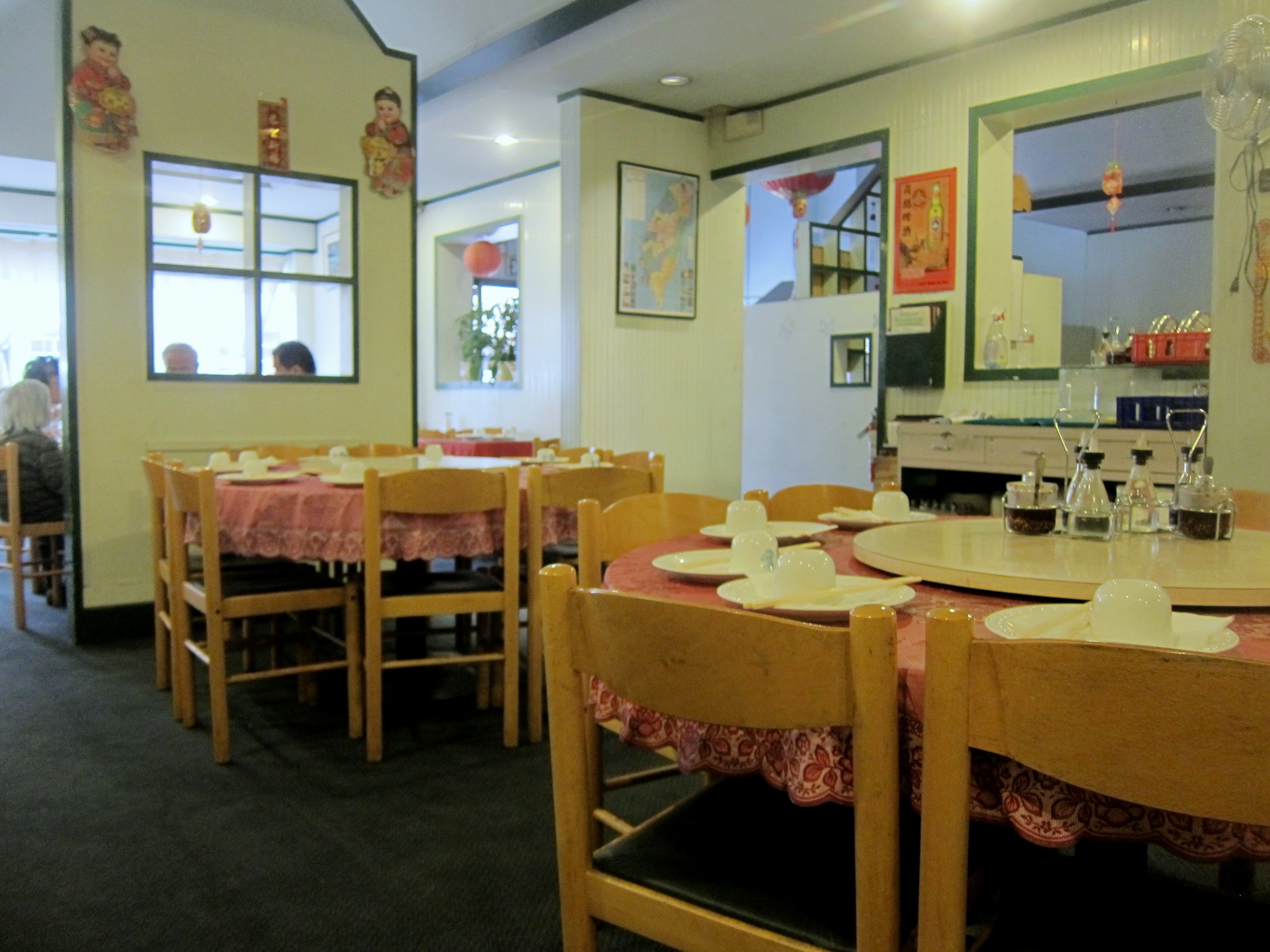
taiwan-restaurant-berkeleyThe last time I went, I paid a little more attention to the decoration (because the server forgot to bring me my pork, and I was just sitting there nibbling on the pig ears pretending to be cool). It looks rather classically Chinese – red lanterns and red table-clothed tables, all faded into a shade of cerise – hinting at some forgotten intention of being on the higher end. At the very least, it was set up to be a restaurant, not a simple food shack. Yet the food is cheap (these 3 dishes plus tip cost a meager $20.66), the atmosphere is utterly casual, and customers like me don’t ever think of its food as more than comfort food. The Taiwan Restaurant is, as its website claims, “the first restaurant in this country to serve Taiwan’s version of China’s epicurean delights”. I felt somewhat sad thinking that it has lost the glory that it might have once had.

The most pleasant surprise that prompted me to write about it was actually its tea. You know how all Chinese restaurants serve some kind of watered down “tea”, usually jasmine-flavored? The Taiwan restaurant actually serves Baochong. Watered down, but it’s still a legitimate Taiwanese oolong. I don’t know why I didn’t notice this before, but now that I have, I have enough reasons to recommend this restaurant to everyone. It is indeed “good enough”.

Address: Taiwan Restaurant
2071 University Avenue,
Berkeley, California
(510) 845-1456
Why I Love Fried Rice

November 03, 2013 By: Kristen Category: Comfort food, Korean, RECIPES

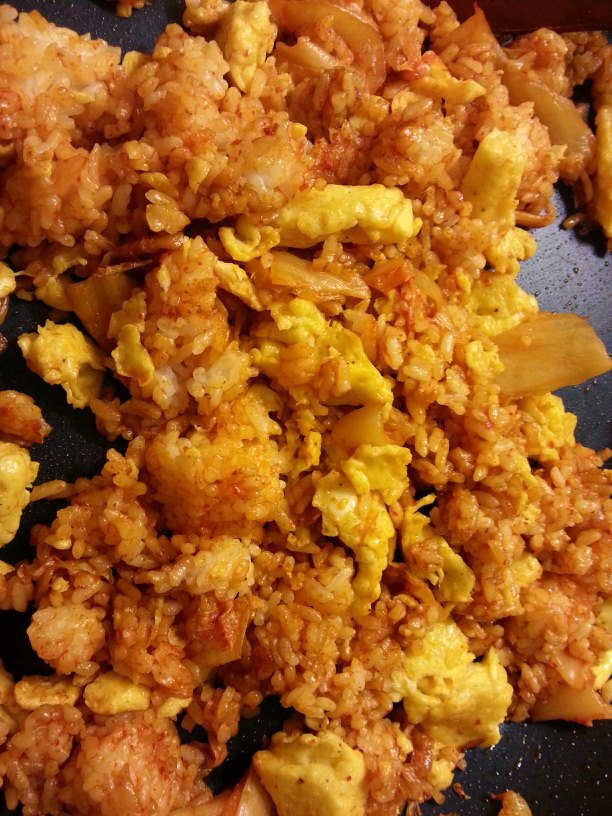
Yangzhou fried rice, kimchi fried rice, chicken and salt cod fried rice, whatever-that’s-in-your-refrigerator fried rice…I love it all. Fried rice is the ultimate comfort food – it’s filling, healthy-ish (if you put in a lot of vegetables), and just hits the spot every time. Perhaps the best thing about fried rice is how easy it is to make at home!

As someone who is still really learning how to cook, trying out a new recipe usually means that I’ll be spending anywhere from 30min – 2 hours in the kitchen (actually sometimes it takes me 30min just to prep everything because of my lack of knife skills). So for me, when I want a quick meal because I need to get back to reading or studying, or just because I don’t feel like devoting that much time to cooking, my go-to is always making fried rice. It usually takes me 15-20 minutes to cook fried rice at the most and while it probably is not the healthiest meal to eat every day, I usually end up making some kind of stir fry or fried rice at least 3-4 times a week because of how easy it is. Also, since fried rice is by nature something that requires the usage of pantry ingredients, I never have to worry about buying fancy ingredients.

1004545_10151924810260733_669571591_n

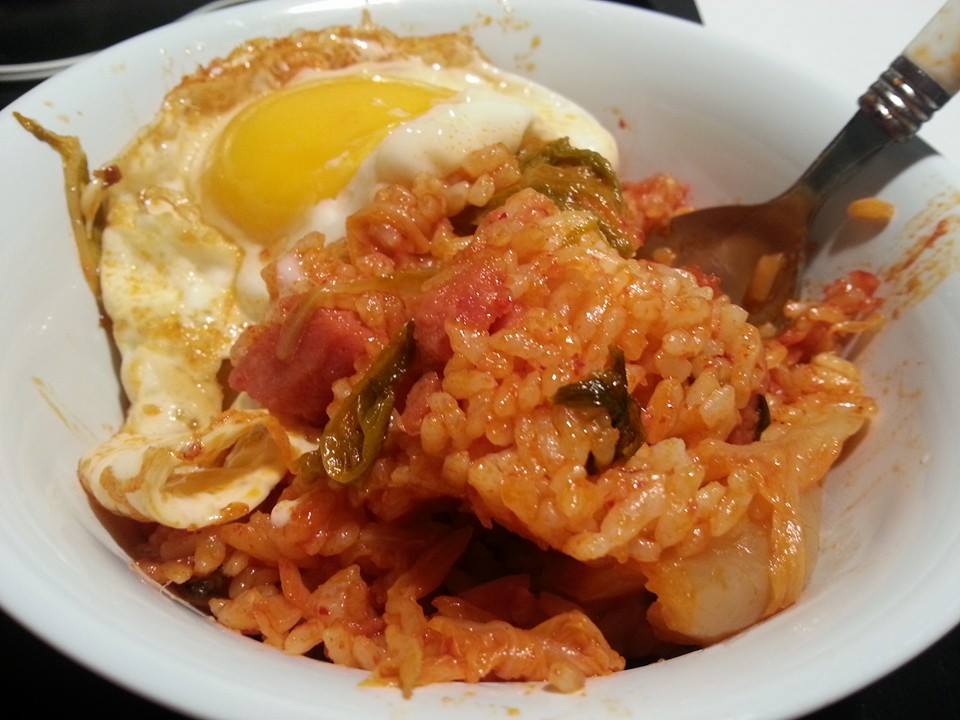
Here’s my very simple kimchi and spam fried rice recipe! It’s spicy, sweet, and salty and takes about 20 minutes altogether to make from prep to cooking (and probably 10 minutes for washing up afterwards or less if you eat straight from the pan, which I do sometimes when I’m lazy).

Spam and Kimchi Fried Rice Recipe – serves 2

I’ve made this recipe countless times and I’ve gotten to the point where I can probably do it in my sleep. I don’t have a source for this recipe since I’ve based the taste off of the kimchi fried rice from Kimchi Garden and then the more I made it the more I changed it to suit my taste. I tend to not follow recipes very well and work mostly from look and taste, so my measurements may not be entirely accurate and may not suit everyone’s taste, so some adjusting may be needed depending on how spicy, sweet, sesame oily, kimchi-y, etc. tasting you want it.

Ingredients:

  • Rice: 1 cup (My rice cooker makes 2 cups and I usually take half of that for 2 people. Also, I tend to use fresh rice more than refrigerated rice and never really noticed that much of a difference, but maybe it’s because I prefer my fried rice to still be a little sticky.)
  • Kimchi: About 2 cups roughly chopped kimchi or enough to suit your taste.
  • Spam: 1/3 of a block of Spam, diced
  • 2 teaspoons toasted (or regular) sesame oil (1 for initial stir-frying, 1 for finishing)
  • 1 teaspoon brown sugar or regular sugar (use less or more depending how much kimchi you use)
  • 1 tablespoon gochujang (more or less depending on how spicy you like it – 1 tablespoon makes for a *pretty* spicy fried rice)
  • 2 eggs
  • 1 teaspoon olive oil (or any kind of oil, including sesame) for the eggs

Instructions:

  1. Heat up 1 teaspoon of sesame oil over medium high in a relatively large frying pan or wok. I always prefer woks instead of pans because when I flip over the rice with my spatula, it doesn’t fall over the sides.
  2. When oil starts to crackle a little, put 2 cups of kimchi and diced Spam into wok. Stir-fry, making sure that nothing is burning (adjust heat if necessary to medium).
  3. When the kimchi begins to release some liquid and starts turning a little translucent, add in a teaspoon of brown sugar. A caramel-y thick sauce should start forming with the kimchi liquid. Stir-fry a bit longer (about 3-5 min) until Spam starts browning a bit.
  4. When the kimchi and Spam look like they’re cooked enough to eat on its own, add the rice in. Break  up clumps of rice with spatula and mix thoroughly. Leave some of the rice at the button to get it a little burned or crispy if you like it (it’s my favorite!). If not, keep on stirring!
  5. Add in tablespoon of gochujang and mix thoroughly so that it distributes evenly. It’s a thick sauce so it may take quite a bit of stirring before it’s fully incorporated. (Usually this process from when you add the rice to fully incorporating the gochujang takes about 5-7 min.)
  6. The mixture will probably be looking a little dry, so add another teaspoon of sesame oil and mix thoroughly. Set burner to “warm” or remove from heat.
  7. In another pan, add a teaspoon of sesame oil or regular olive oil. Crack 1 or 2 eggs and cook like you would normally to whatever level of doneness you prefer. (I make sunny-side-up fried eggs by cooking for about ~2 minutes on medium high heat and then ~2-3 minutes on medium low with a lid.)
  8. Place egg on top of fried rice and you’re ready to eat!
581935_10151498636045733_927445069_n

Kimchi fried rice is the best~