Flavor Boulevard

We Asians like to talk food.
Subscribe

Archive for the ‘noodle soup’

Pho in Hawaii

August 25, 2015 By: Mai Truong Category: Comfort food, noodle soup, Travel, Vietnamese

Near our hotel is a shopping center, where we regrettably spent more time than we should have, eating overpriced fried rice (P.F. Chang’s, no less, T__T) and okonomiyaki. The reason is just that it was hot. Unbearably, relentlessly, suppressively hot. We couldn’t walk for five minutes without perspiring like the underside of the lid of a cheap rice cooker right after the rice is cooked. Being the indoor sloths we are, we ditched the inner foodie, became the very tourists lounging out at American chain restaurants while on vacation whom we cannot understand, and dined at the mall. It was actually satisfying.

pho-factory-waikiki
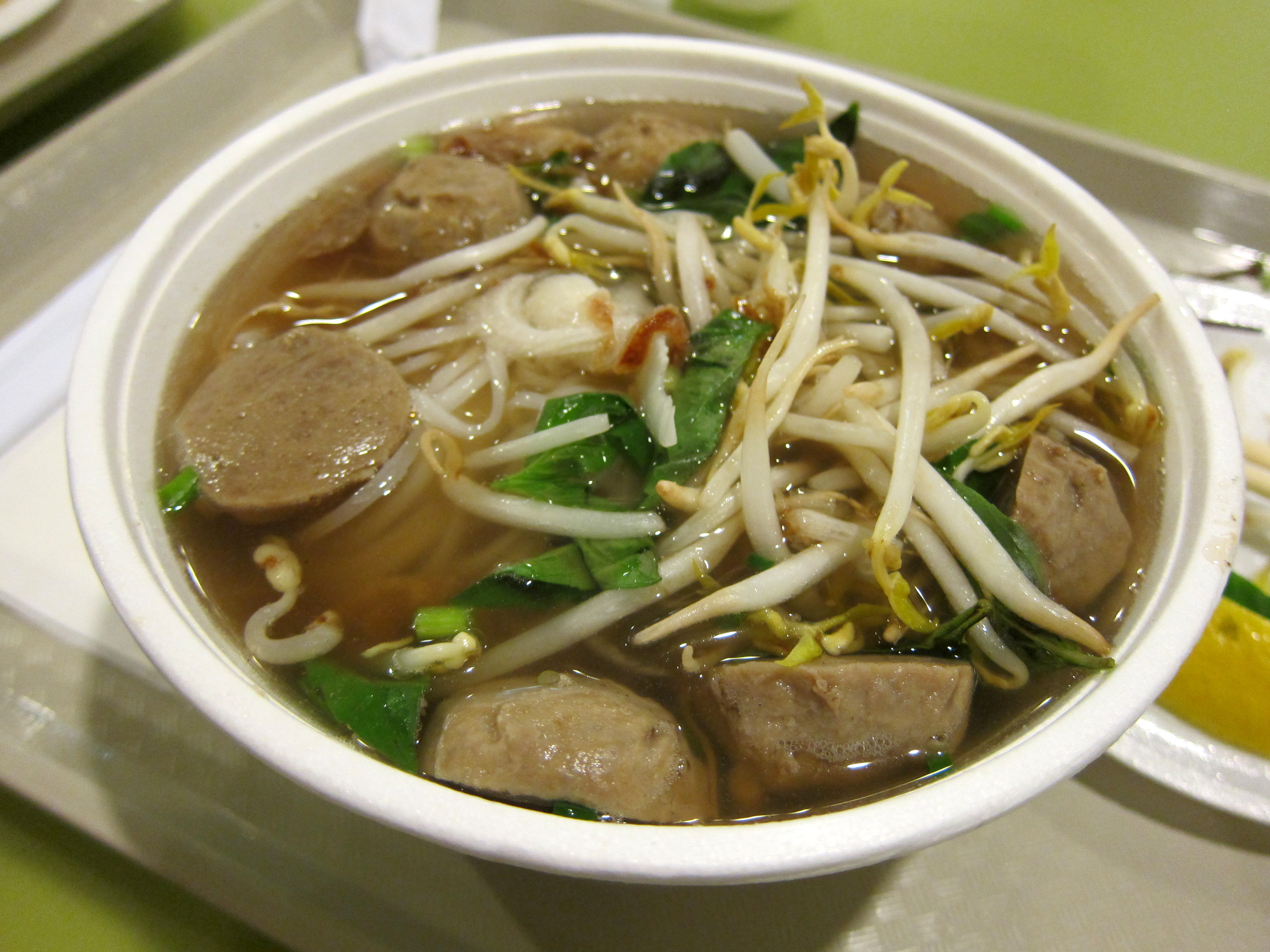
Meatball pho at Pho Factory in Royal Hawaiian Center (9.10).

oxtail-pho
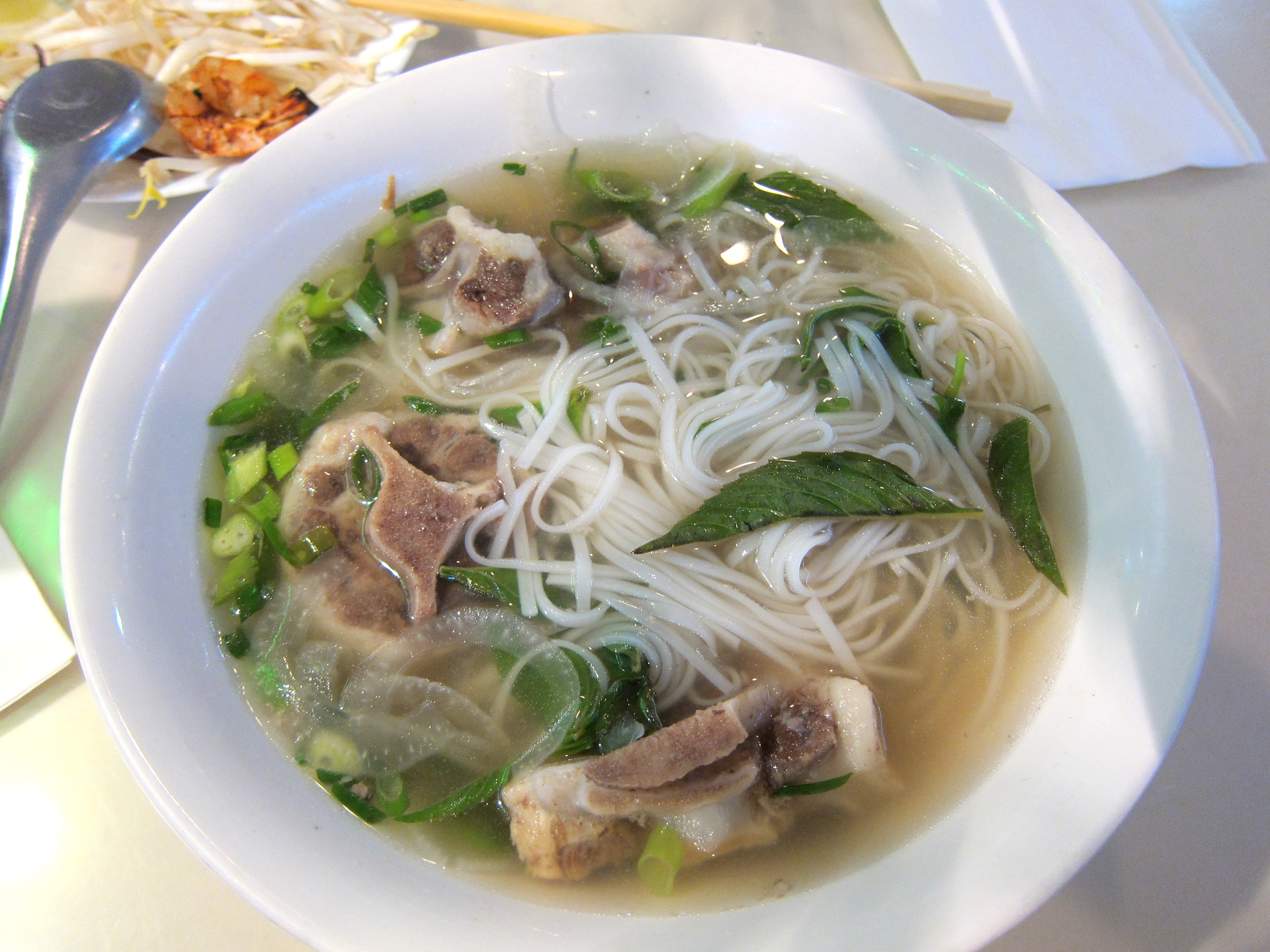
Oxtail pho at Pho Old Saigon (14.60). I haven’t seen oxtail pho in the mainland, but it’s strangely and pleasantly everywhere in Oahu’s pho menus. Pho Factory also serves it. The oxtail is meaty, softer (fattier) than the usual rare steak/brisket option.

Pho Old Saigon is your typical Vietnamese pho shop in the States: rectangular dining room with the cashier in the back, no frills, laminated menu, plastic chopsticks.

Pho was a light, easy-to-eat, good-at-all-time meal on those hot days.

Address: Pho Old Saigon Vietnamese Restaurant
2290 Kuhio Avenue
Honolulu, HI 96815

Tags: , ,

Cheapest eat in Waikiki: udon at Marukame

August 11, 2015 By: Mai Truong Category: Comfort food, Japanese, noodle soup, Travel

marukame-udon-bukkake-udon
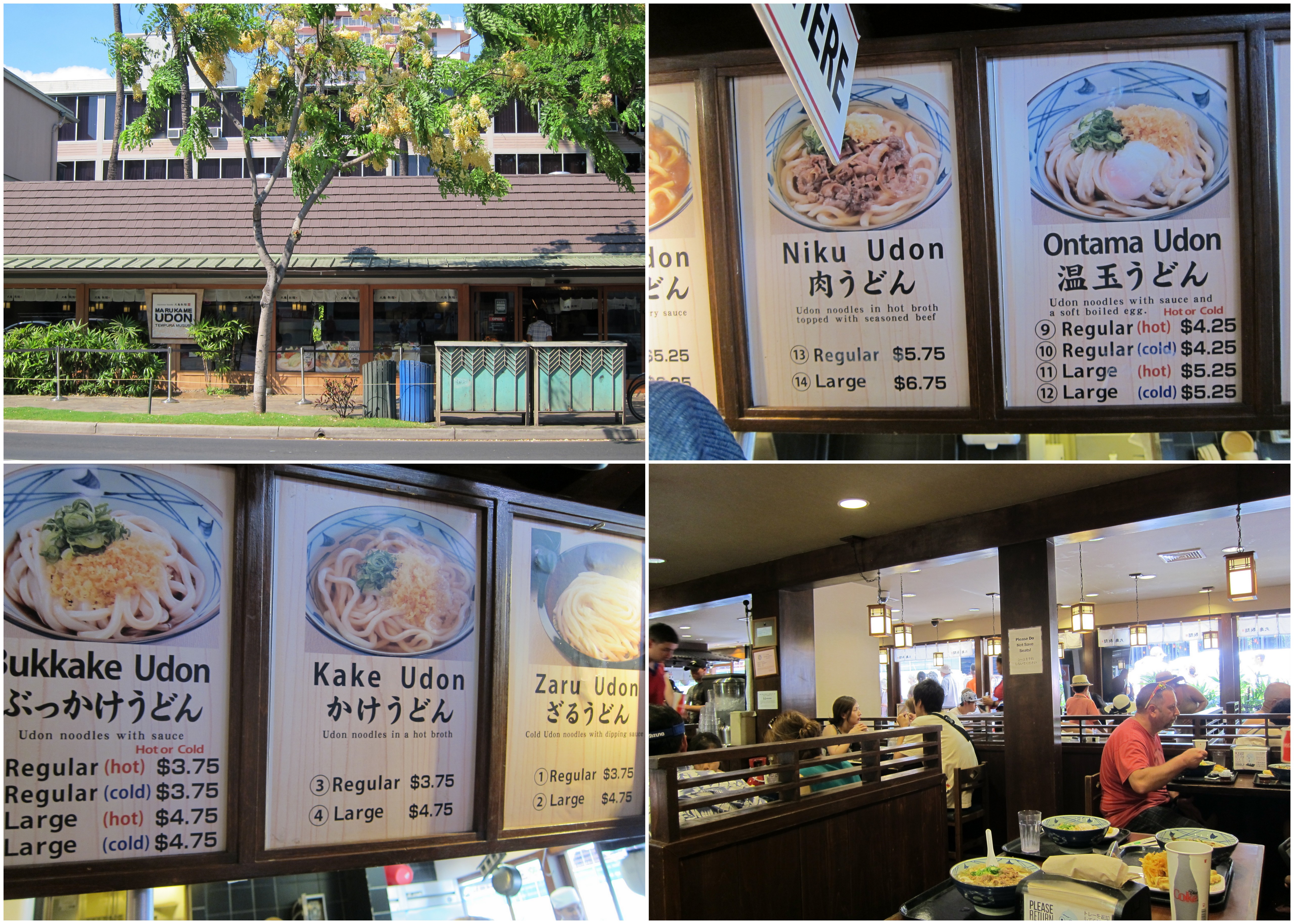
Everything in the touristy Waikiki is designed to scorch your wallet, but Marukame Udon does it most gently: each bowl of udon sets you back only around 5, which can be even cheaper than Coconut Cafe’s shave ice!

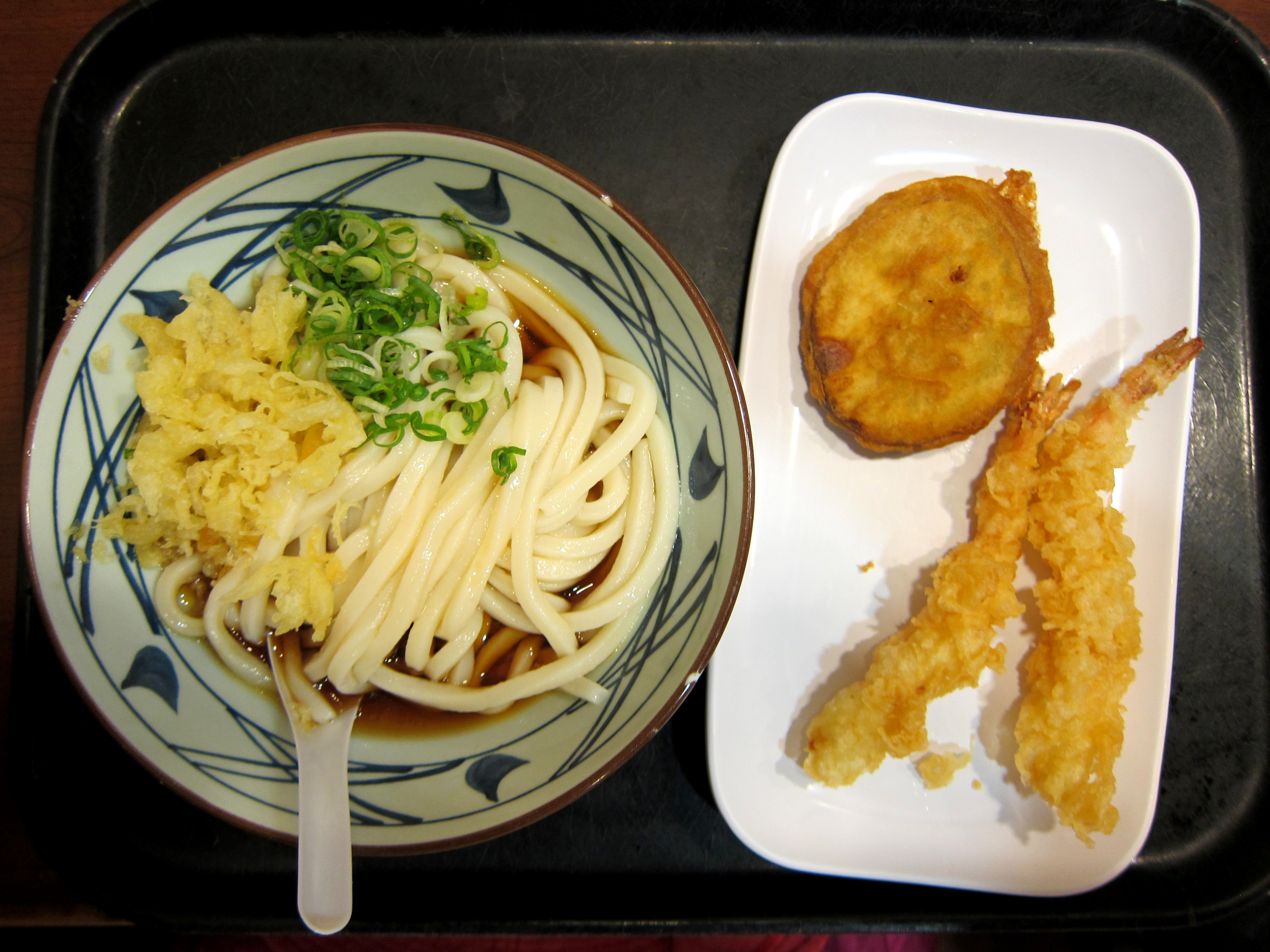
This bukkake udon in cold broth is only 3.75, and it’s good, especially to give us some relief from the heat and humidity.
Granted, because we add the goodies, the ticket goes up fast: shrimp tempura is 1.75 each, sweet potato tempura is 1.25 each, etc.

Marukame Udon-001
What’s even better is the self-serving, cafeteria style: grab a tray, place your noodle order, take noodle, grab a few tempuras, pay, find a seat. Fast, efficient, and no tip.

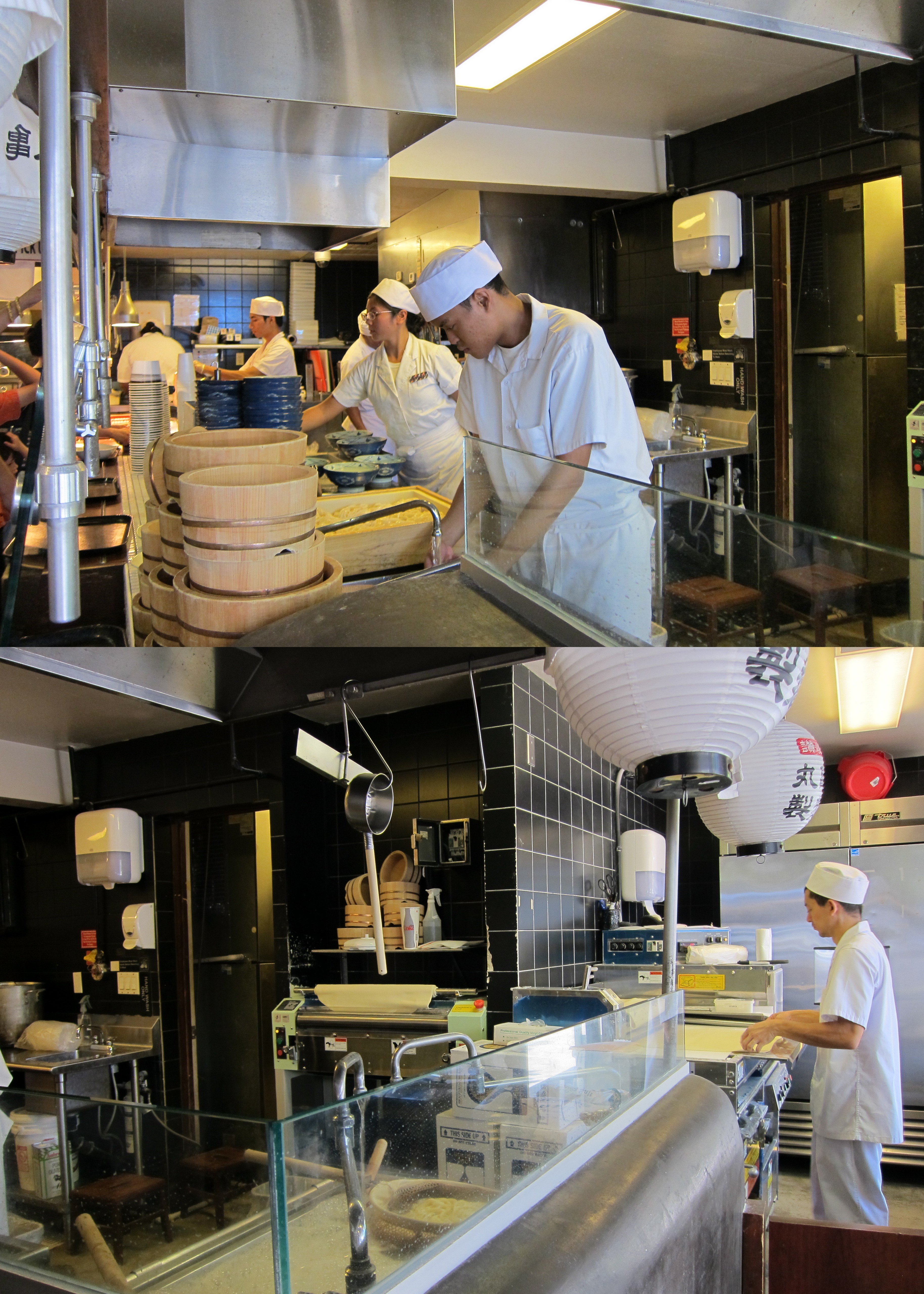
Another plus: the noodles are made in the house.

Another plus: the noodles are made in the house.

The ONLY downside? The line gets **long** early (but it does move fairly quickly).

Address: Marukame Udon
2310 Kuhio Avenue, Suite 124
Honolulu, HI 96815

One Hot Pot & Grill: countryside taste for city price

June 10, 2015 By: Mai Truong Category: Houston, noodle soup, Southern Vietnamese

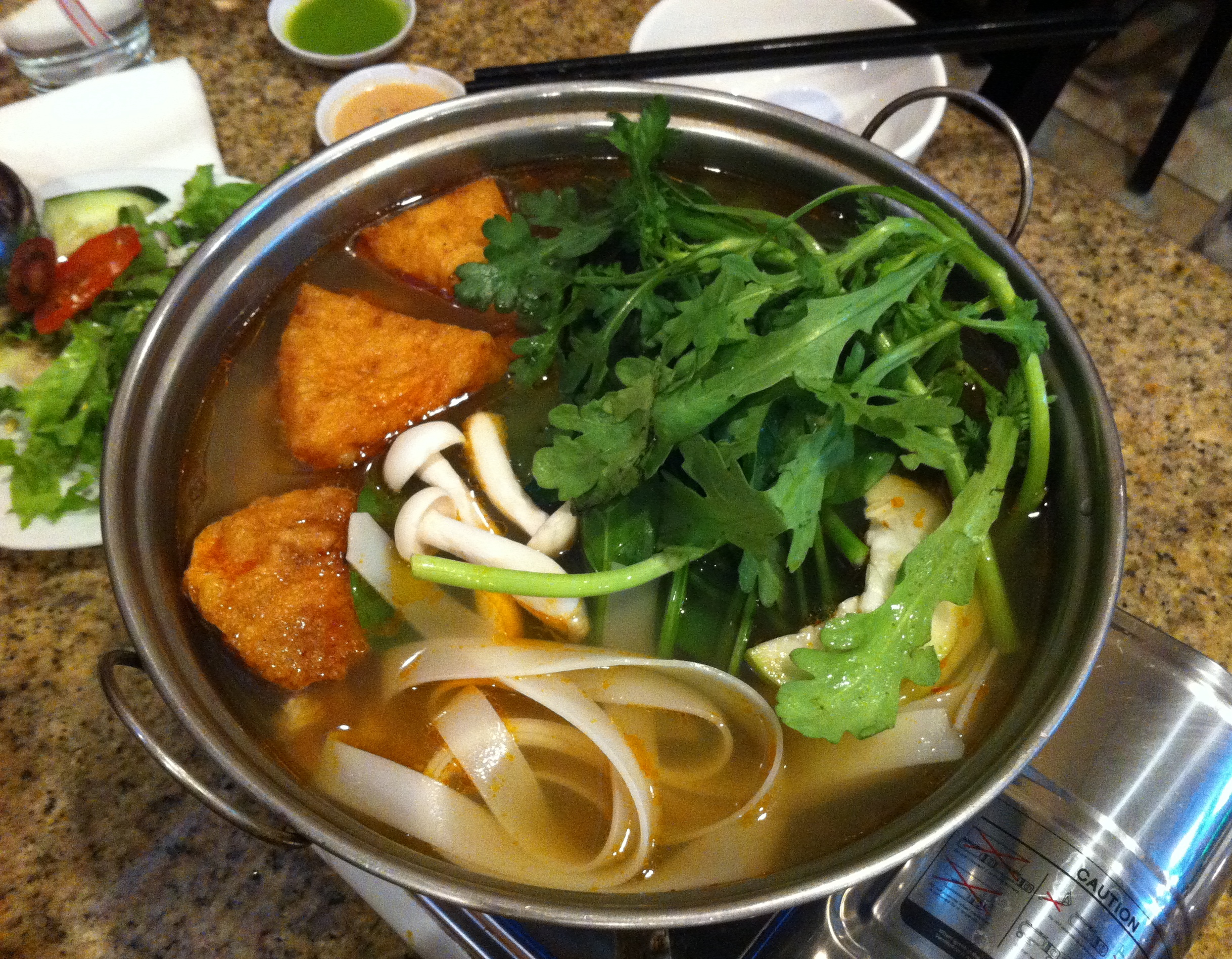
lau-rieu-cua-dong
These days I keep craving noodle soups. There’s just no end to it. Plus, it rained this morning. If I were in Houston, I would go downtown to get this: a crab noodle hotpot (lẩu riêu cua đồng).

The crabs are tiny freshwater paddy crabs, pounded into a paste and strained to make the broth. Throw in some crab meat and fried tofu, some light seasoning, and you get a bubbling soup to dunk your noodles and vegetables. The size of the hotpot in this shop is enough for two, you have to pay a few dollars extra for some chrysanthemum greens (cải cúc or tần ô) and some thin rice vermicelli (they absorb the broth better than the flat kind), but the package doesn’t taste complete without them.

What does this hotpot taste like? Imagine yourself in a remote area on a mildly hot day (not blazing though), sitting on a low chair under the shade, looking out to some green rice paddy in Can Tho, a canal in Giethoorn, or some other kind of open field with flowing water. You’re hungry but not famished, it’s hot enough that you just want something light and sweet but not ice cream. Something that goes down with no effort on your end (and requires little effort on your stomach later too). That’s what this hotpot tastes like.

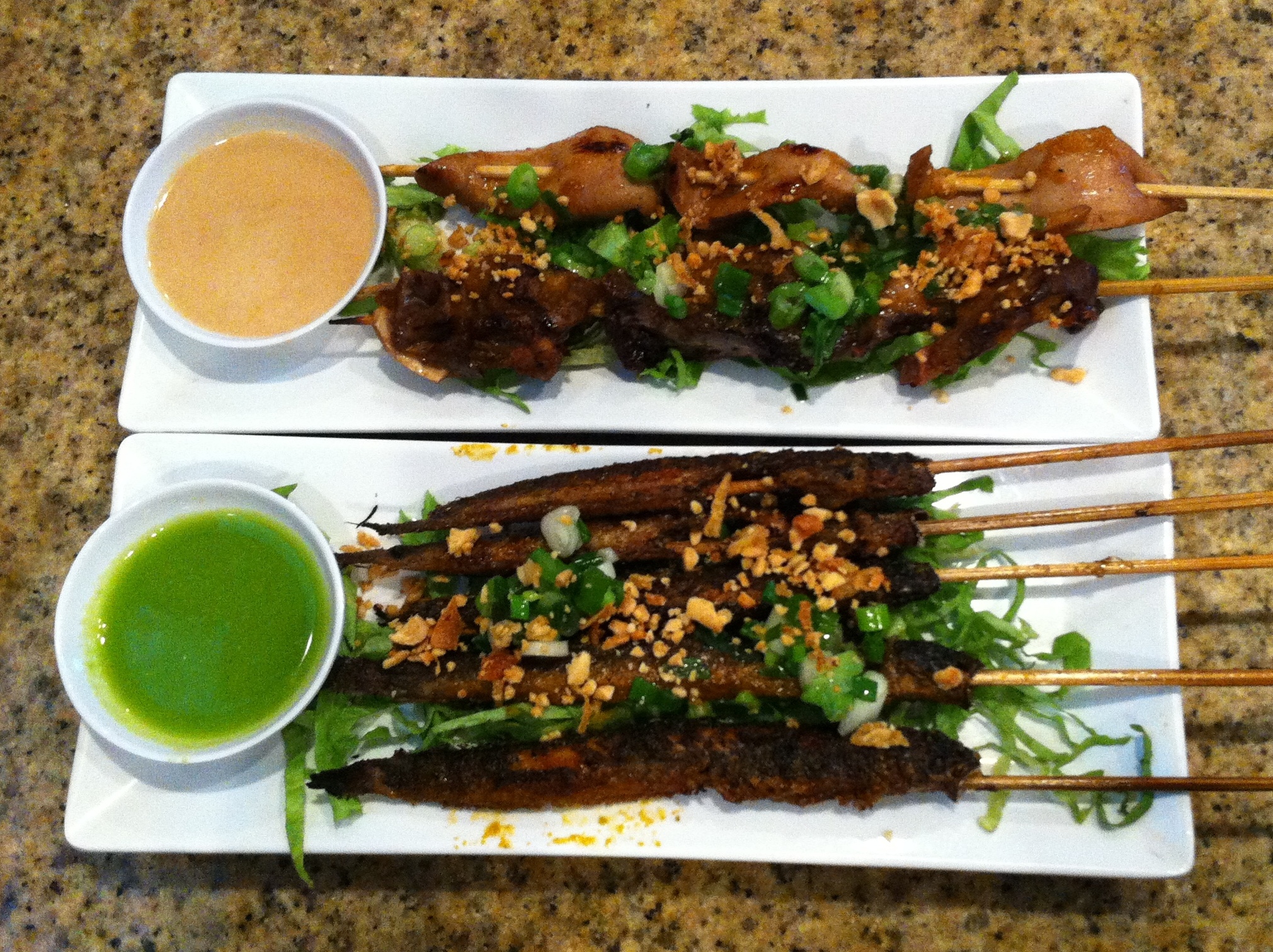
ohpg-grilled-skewers
To spice things up a little, there are skewers. Organ meats and grilled fish. A brief trip to the countryside for $35.67. Slightly overpriced compared to other Houston restaurants, but worth it.

Now where can I get something like this in the Oakland-Berkeley area though…

Address: One Hot Pot and Grill
12148 Bellaire Blvd, Suite 111
Houston, TX 77072
(281) 564-4063
Light dinner for 3: 1 crab hotpot ($15.99) + 1 saffron grilled goby fish (cá kèo, $4.99) + 1 lemongrass grilled pig heart and kidney ($4.99) + 1 chrysanthemum greens ($3.99) + 1 rice vermicelli ($2.99) + tax = $35.67
The service is also nice.

Tycoon Thai, and memories of Mama Lan’s

April 12, 2015 By: Mai Truong Category: California - The Bay Area, noodle soup

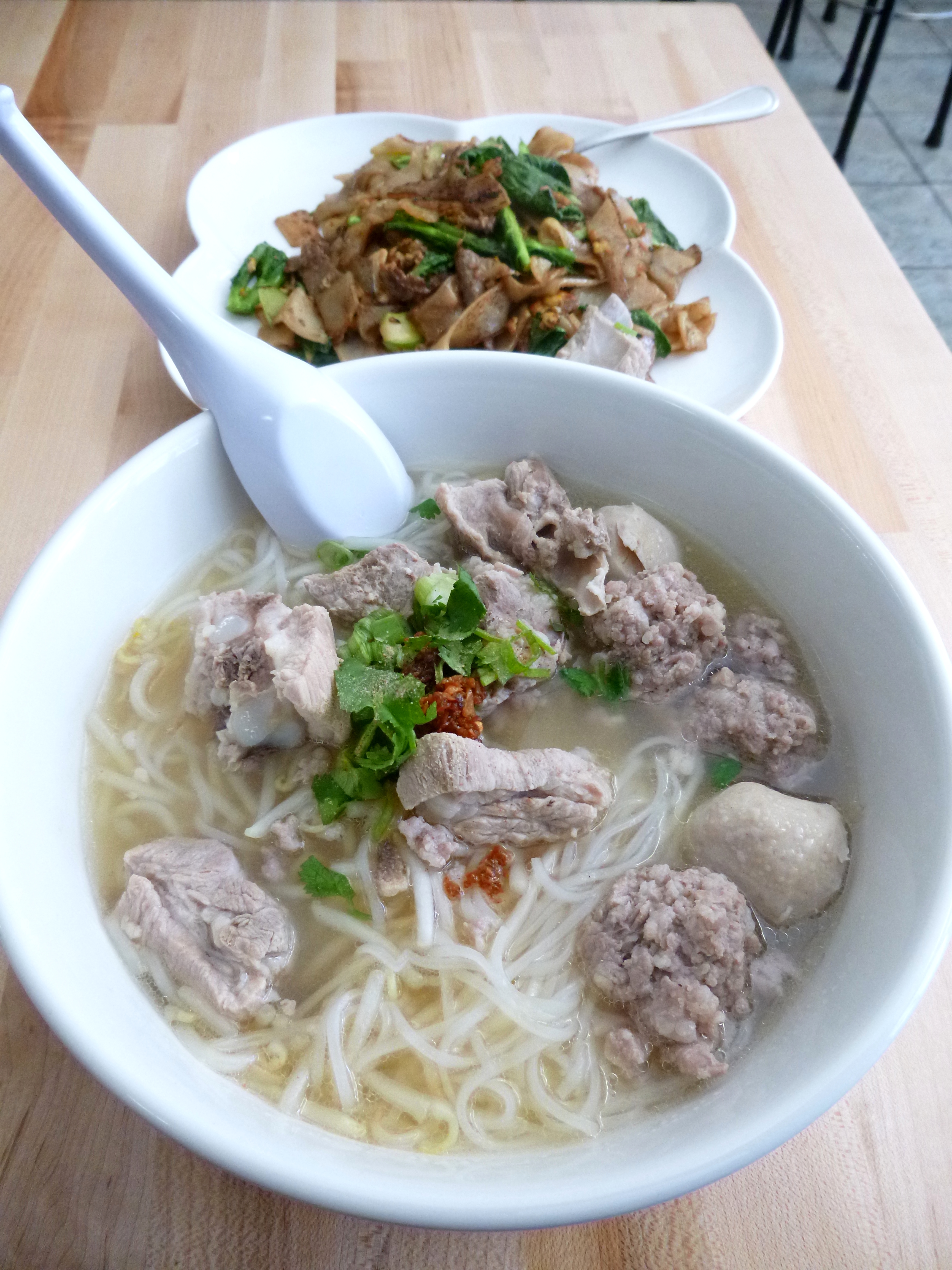
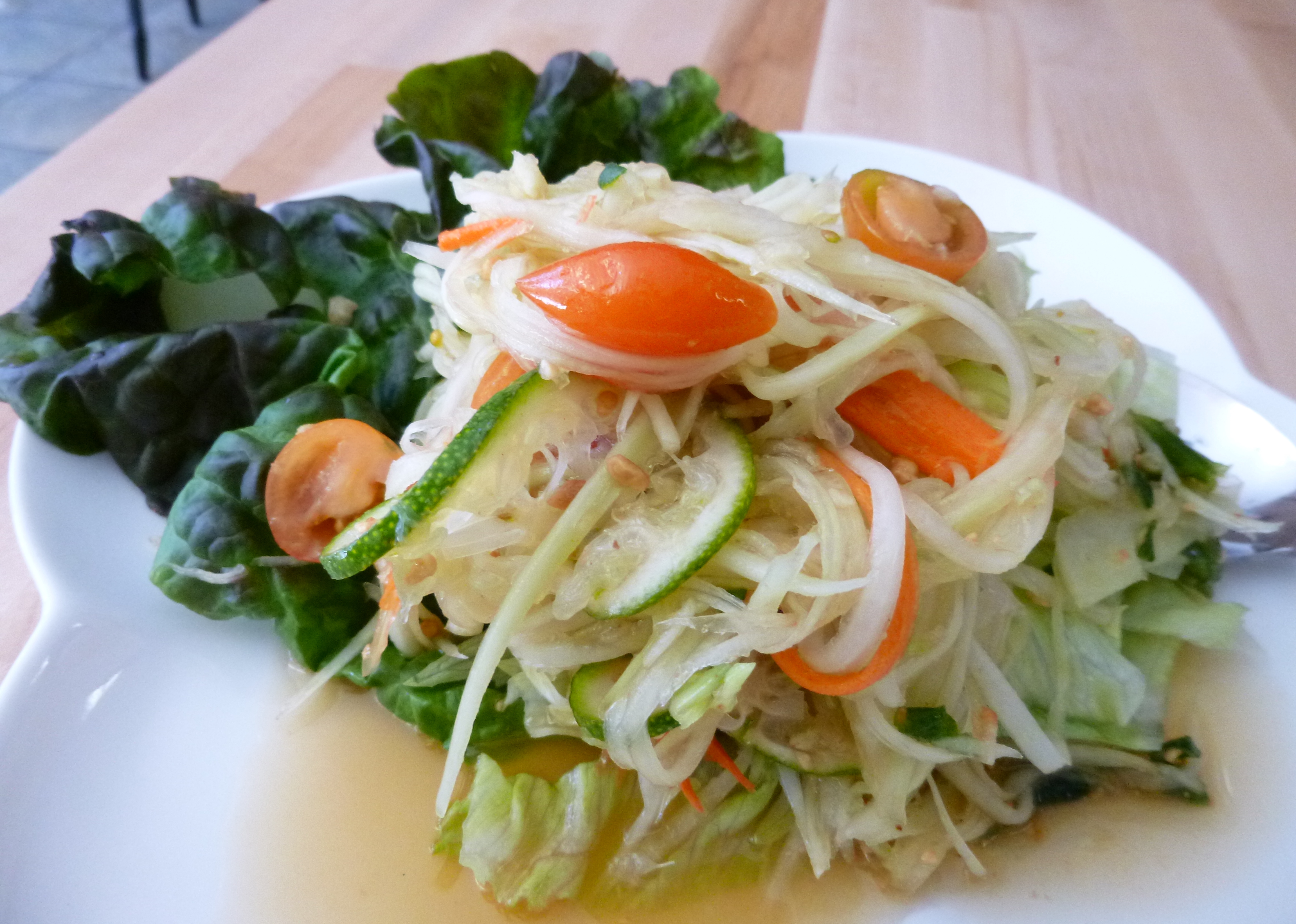
tycoon-guay-tian-kra-dook-moo
Living in the Westbrae area of Berkeley, I used to drive past Mama Lan’s daily. In its heyday Mama Lan’s was a great example of a neighborhood cafe – terrific dishes that satisfied with affordable prices. Mama Lan passed away before 2000 and her son took over the shop, keeping it open for a few years after. During Mama Lan’s time in the kitchen, the Vietnamese/Thai menu skewed French in an elegant way – she had a light touch with the hot peppers and garlic and her dishes often had a sweeter, more herbaceous profile. Seafood (crab!) was her specialty, coupled with rich chicken or pork – based broths, rich in ginger, cilantro, lemongrass, lime and coconut milk.

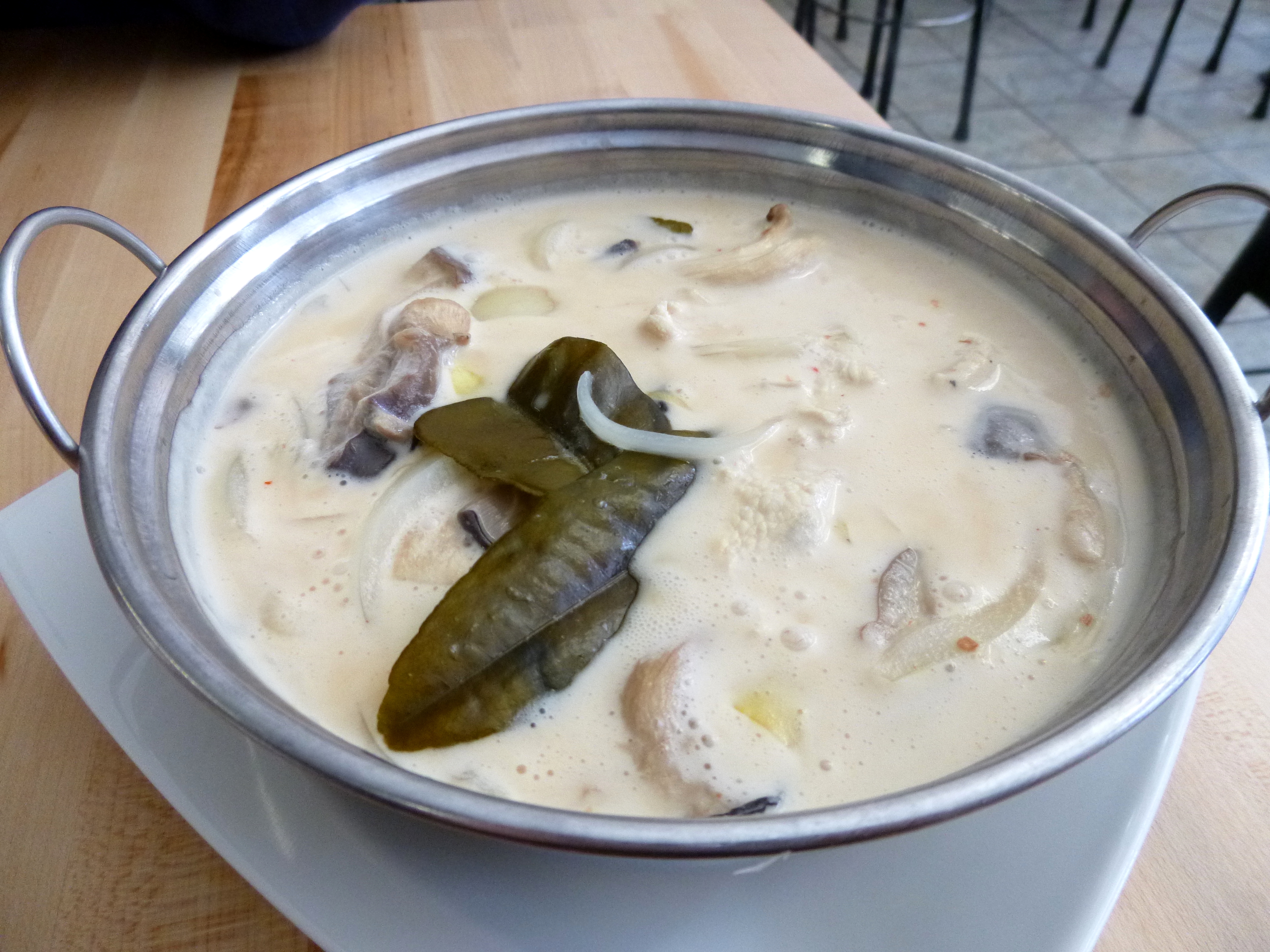
A version of the Thai coconut milk and chicken broth soup with mushrooms and vermicelli noodles, and all the aforementioned seasoning (tom kha) was served piping hot and super thick from the noodles. I LOVED that soup. Green papaya salad containing both shrimp and julienned pork was tangy with lime, not hot, and umami- rich from the pork- it was addictive. After Mama Lan died, the dishes were substantially changed: the tom kha mainly tasted of evaporated milk and the papaya salad was a pallid shadow of its former self. Thanks to Tycoon Thai, I found the taste of Mama Lan’s soup again.

tycoon-tom-kha
Tycoon Thai Restaurant recently opened on O’Farrell, between the Little Saigon district and the theater district west of Union Square. Yes, I am talking about the northern end of the Tenderloin district, but don’t let that stop you from trying out this chic addition to the neighborhood. We tried it after spending the morning at the Asian Art Museum.

tycoon-papaya-salad
On our first visit Ken and I shared the requisite order of spring rolls- satisfactory, if not special. Then out came the tom kha and the Thai version of green papaya salad (they also have a Lao version, hotter and more sour tasting). Both the salad and the soup were of a generous size and more than enough for two. The tom kha with chicken option, sweet and tangy from lemongrass and kaffir lime leaves, tasted just like that remembered soup from Mama Lan’s.

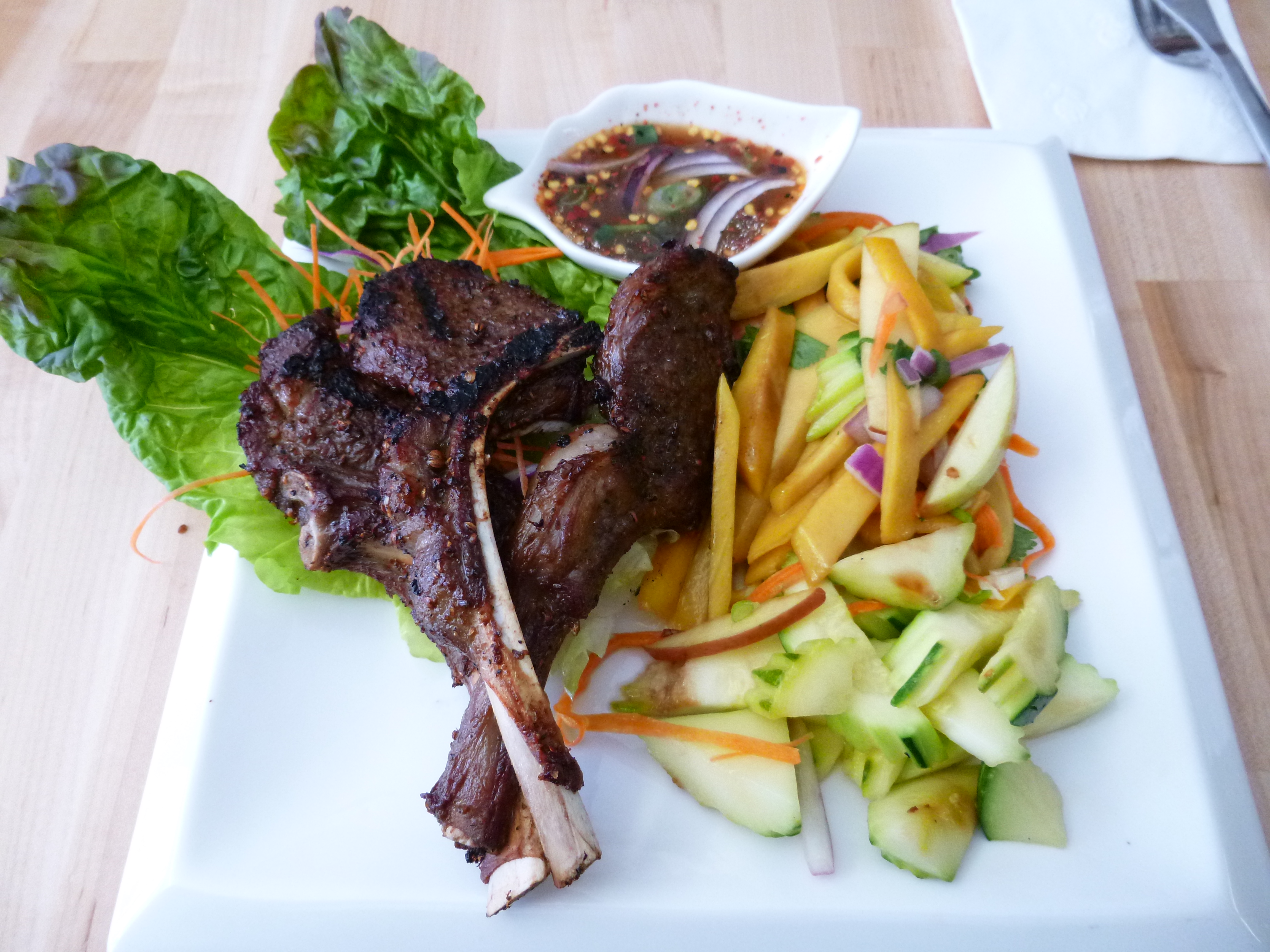
tycoon-lamb
I also ordered a lunch entree of “Tycoon Sexy Lamb Chops” – three tasty marinated and charbroiled lollipop chops, sitting on a tangy mango and red onion salad with a side of cooked zucchini. I’m not sure what made the chops “sexy” (and I don’t want to know!) but by the second chop I was feeling mighty happy.

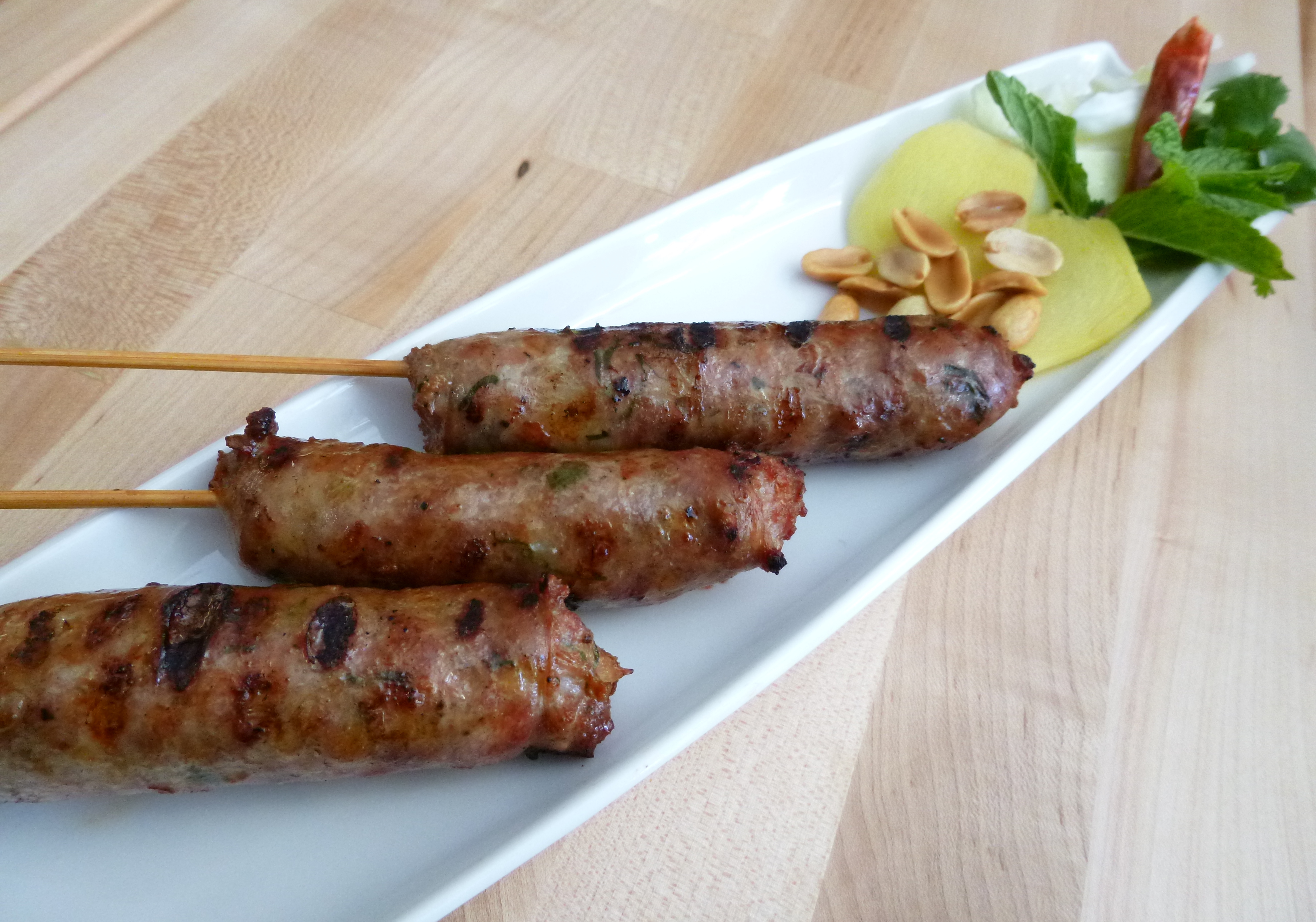
tycoon-sai-ua
On our next visit, we shared an appetizer of sai ua – grilled links of sausages (3 per order) – full of pork and herbs, earthy and not at all “hot”, pad see you – a thick rice noodle stir-fry with broccoli and beef, and a big bowl of cellophane noodles in a rich broth with both pork spare ribs and ground pork balls (guay tian kra dook moo). There are also numerous curries, stir-fry dishes, and noodles available; one can even get a whole Tilapia, deep fried.

The food selections here are a bit more expensive than the utilitarian but busy Turtle Tower on Larkin, but parking was a wee bit easier on both occasions. Tycoon Thai puts a big smile on my face just thinking about that tom kha (and those lamb chops, too!). We’ll certainly be back!

Address: Tycoon Thai
620 O’Farrell St. (at Leavenworth St.)
San Francisco, CA 94109
(415) 796-3391
Open time: 11 am – 10 pm Sun-Thur; 11 am – 1 am Fri-Sat

———————————————————————————————-
Guest post by Nancy Togami, an expert on neighborhood favorites such as Shanghai Dumpling King and Jodie’s.

Kaze: the place to go when you crave ramen in Berkeley

March 14, 2015 By: Mai Truong Category: California - The Bay Area, Comfort food, Japanese, noodle soup

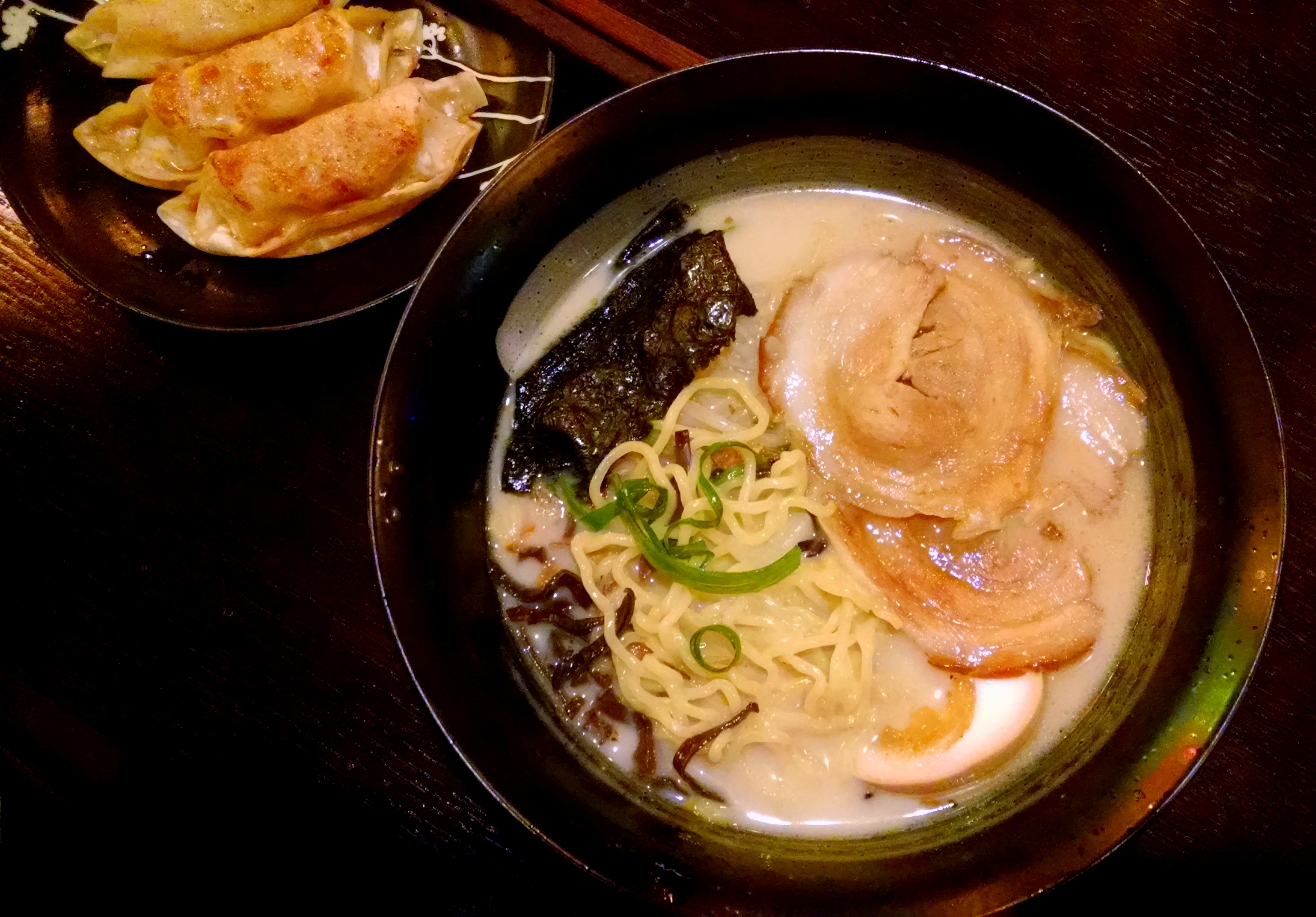
Tonkotsu ramen with a side of gyoza. ($10.99)

Kaze, Berkeley:  tonkotsu ramen with a side of gyoza. ($10.99)

This little shop opens sometime last winter, it looked unassuming then, but now it is packed every time I come, so I think it’s safe to assume that it’s packed almost everyday if not always.

People on the East Bay think of The Ramen Shop when they think of ramen, simply because until now there has been no other shop that really specializes in ramen. There’s ramen at sushi places, izakaya places, and some random places that should have nothing to do with ramen. Hence, the consistently ridiculous 2-plus-hour wait at The Ramen Shop. Now, let’s do a check-and-compare list between Kaze and The Ramen Shop (TRS):

1. Taste: Kaze/TRS = 8/10. TRS is 10 only for comparison purposes between the two, not because it is the best I’ve ever had in my life (there are many better, just not in the area). Kaze is 8 because on certain days it comes close to TRS, on other days the soy-sauced egg is a little too soy-saucy, but it has the right creamy gooeyness of soft-boiled eggs, the chashu is meaty (it sounds obvious but not enough places get this right), and the tonkotsu soup is rich and satisfying.

2. Location: Kaze/TRS = 10/5. I’m biased. I live in Berkeley, Kaze is in Berkeley, TRS is a 30-minute bus ride away plus the time to wait for the bus, which is indefinite.

3. Wait time to be seated: Kaze/TRS = 10/1. Kaze is busy too, and it’s half the size of TRS, but it doesn’t have the bar and the hipsters lingering after dessert without thinking of other customers in line (a table of 4 at TRS, sitting right next to the people in line, was taking their sweet time after coffee). Naturally, the wait at Kaze is 15 minutes at most.

4. Cost: Kaze: 8.99 for normal ramen (shio, shoyu, miso, tonkotsu), 9.99 for black garlic oil ramen (basically a spicy tonkotsu ramen). TRS: 16.5 if you want veggie ramen, 17.5 for ramen with meat. TRS, thank you for adding stuff like innovation and atmosphere to the ramen, we wouldn’t know what to do without them.

5. Atmosphere: who cares about atmosphere when you eat ramen?!

It is not to say that I don’t like TRS. It’s a great place, and they use sustainably grown ingredients. But with Kaze’s opening, my ramen craving is satisfied for so much less time and effort.

Address: Kaze Ramen
1956 Shattuck Ave (2 minute walk north from downtown Berkeley)
Berkeley, CA 94704
(510) 883-1388

Chuseok Meal: 칼국수 (Kalguksu)

September 16, 2014 By: Kristen Category: Flavor Abroad: Boulevard-ing in Seoul, Korean, noodle soup

Chuseok (추석) is a major holiday in South Korea; this year the holiday fell on September 8th. Chuseok celebrates the harvest and is referred to as “Korean Thanksgiving” and is similar to other harvest festivals that follow the lunar calendar, such as the Mid-Autumn Festival (中秋节, zhongqie jie). It is seen as a time to spend with family and so people usually leave the major cities (such as Seoul) to go back to their hometowns to spend time with their families. This Chuseok, I had the pleasure of spending time with my partner’s family.

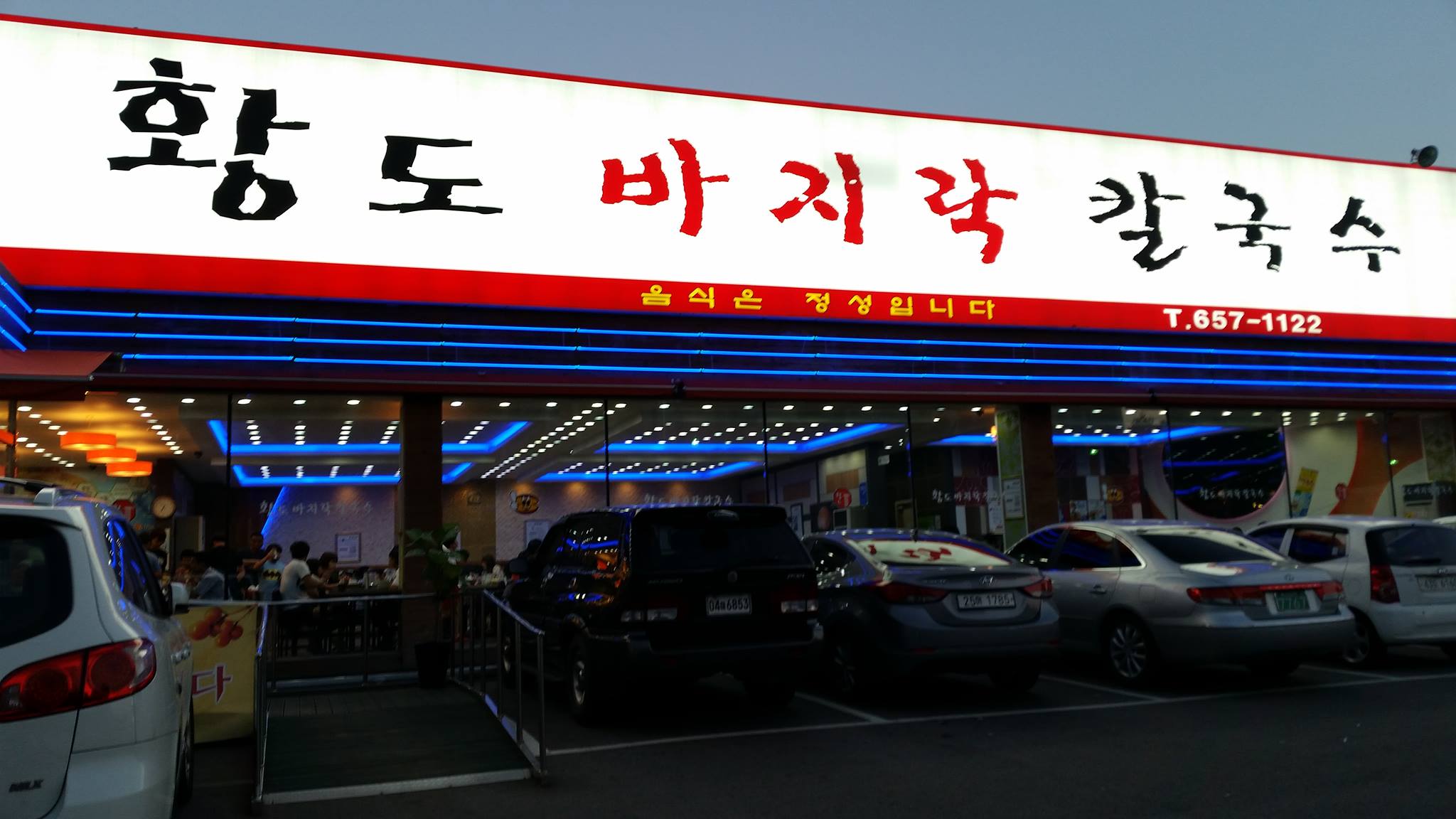
We ended up eating out on Chuseok day itself and to an amazing restaurant, both in taste and in the amount of food! The restaurant is large and spacious. The name is 황도 바지락 칼국수 (Huangdo pajirak kalguksu…I’m not sure if this is the right romanization, so please correct me if I’m wrong…I’m still terrible at translating Korean sounds ㅠㅠ).

10686415_10152636141495733_736250918_o

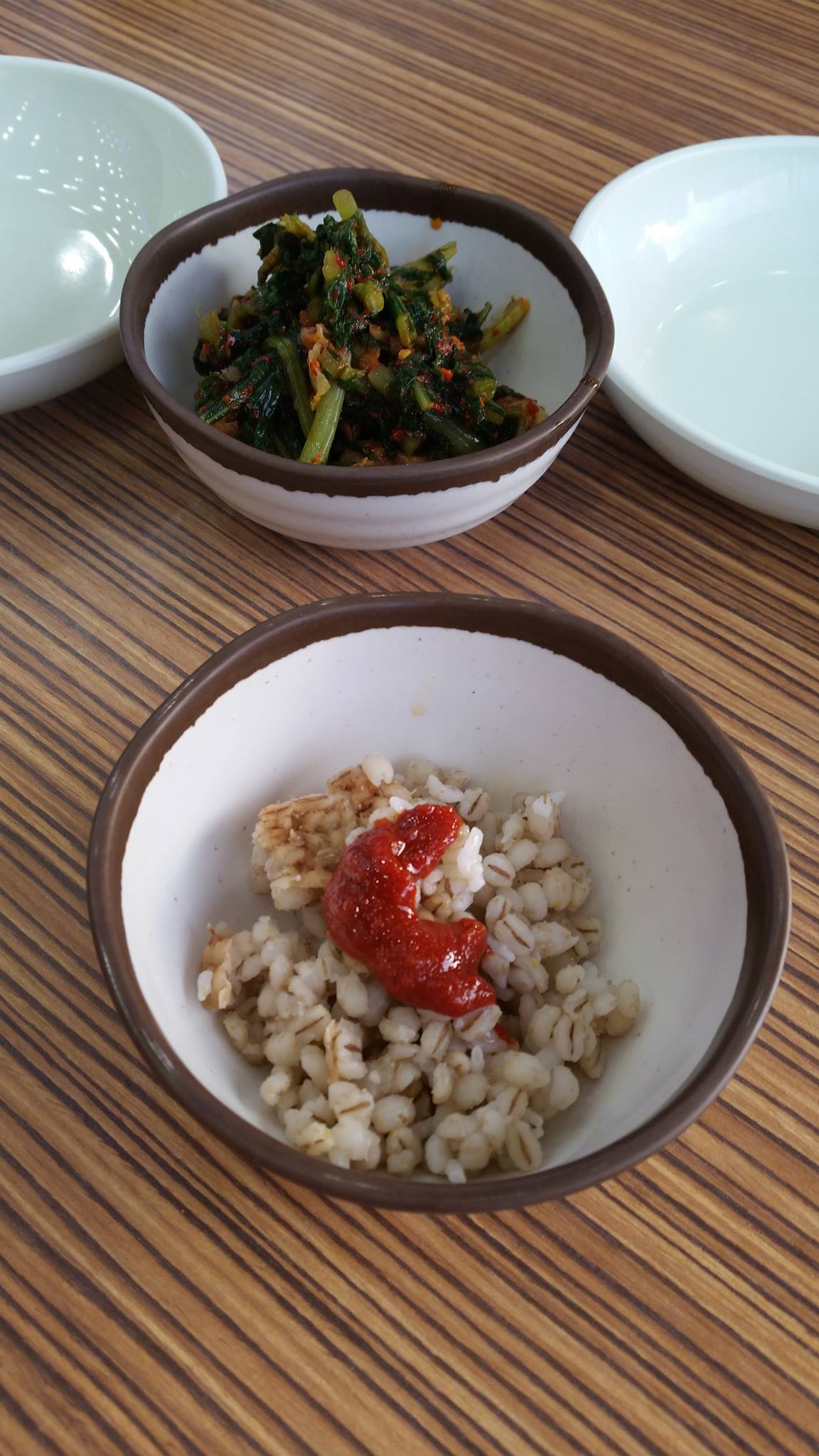
Once we got inside and ordered our main dish (칼국수, kalguksu), we headed over to the self-serve bar, which consisted of do-it-yourself “barley meal” (보리밥 boribap). I haven’t have known how to assemble the dish on my own, but turns out it’s pretty simple! Take a scoop of barley, a dabbling of gochujang, and a dash of sesame oil. Add in some 열무김치 (young radish kimchi) and mix a la bibimbap!

10677447_10152636069110733_1562000367_o

This proved to be a great starter to whet our appetites, but if I had known the size of the main dish, I would have been a little more careful about the amount of boribap I ate!

10621426_10152636077925733_1672102687_o

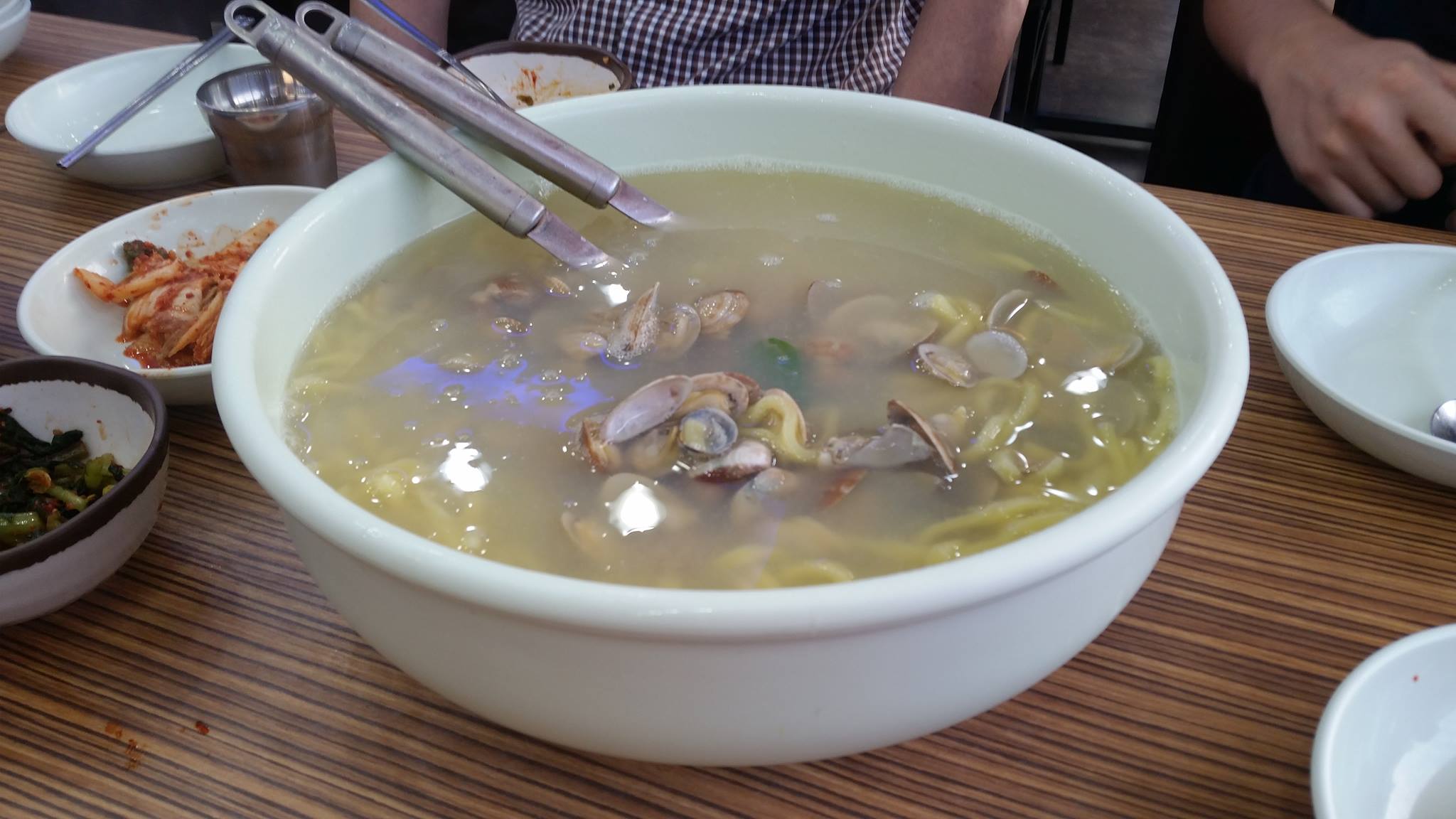
It’s extremely difficult to really see the scale of this bowl from the picture, but it was the size of a small tub. In fact, it is probably the same size as my laundry bucket! I was informed that this is the 3-person-sized bowl (we had 4 people with us) so I am a little nervous to even think about how big this soup can get. Eating noodles from a tub was definitely an interesting experience…

10678209_10152636081035733_1540265310_o

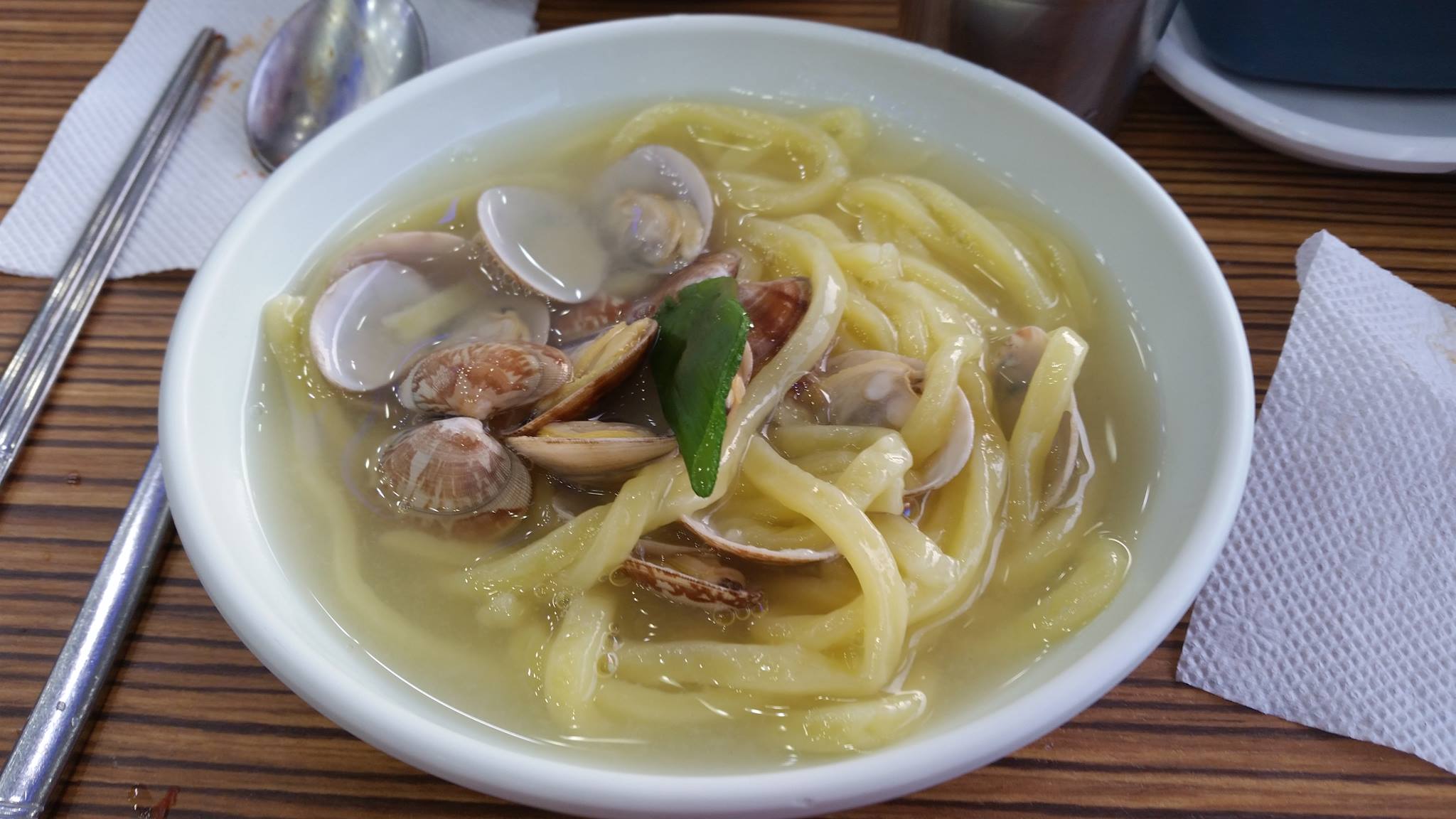
Here is a picture of my (normal-sized) bowl. I was amazed by this dish…the broth is so light and tasted wonderfully of clam broth. It brought me right back to my New England roots! The clams weren’t super exciting, but they were addicting to eat, although I have to admit that I liked the broth more than the actual clams. The noodles were wonderfully cooked and had a nice chew to it and did not get soggy even after I went back for thirds! I got full fast though because I ended up gulping so much of the broth! This was an amazingly delicious restaurant and spending the holiday with my partner’s family was very nice, especially since I don’t have my own family here in Seoul with me.

There are so many Korean dishes that I have never heard of and I look forward to continuing to blog about my eating experiences!

Flavor Japan – Noodles

July 10, 2014 By: Mai Truong Category: Flavor Japan, Japanese, noodle soup, Travel

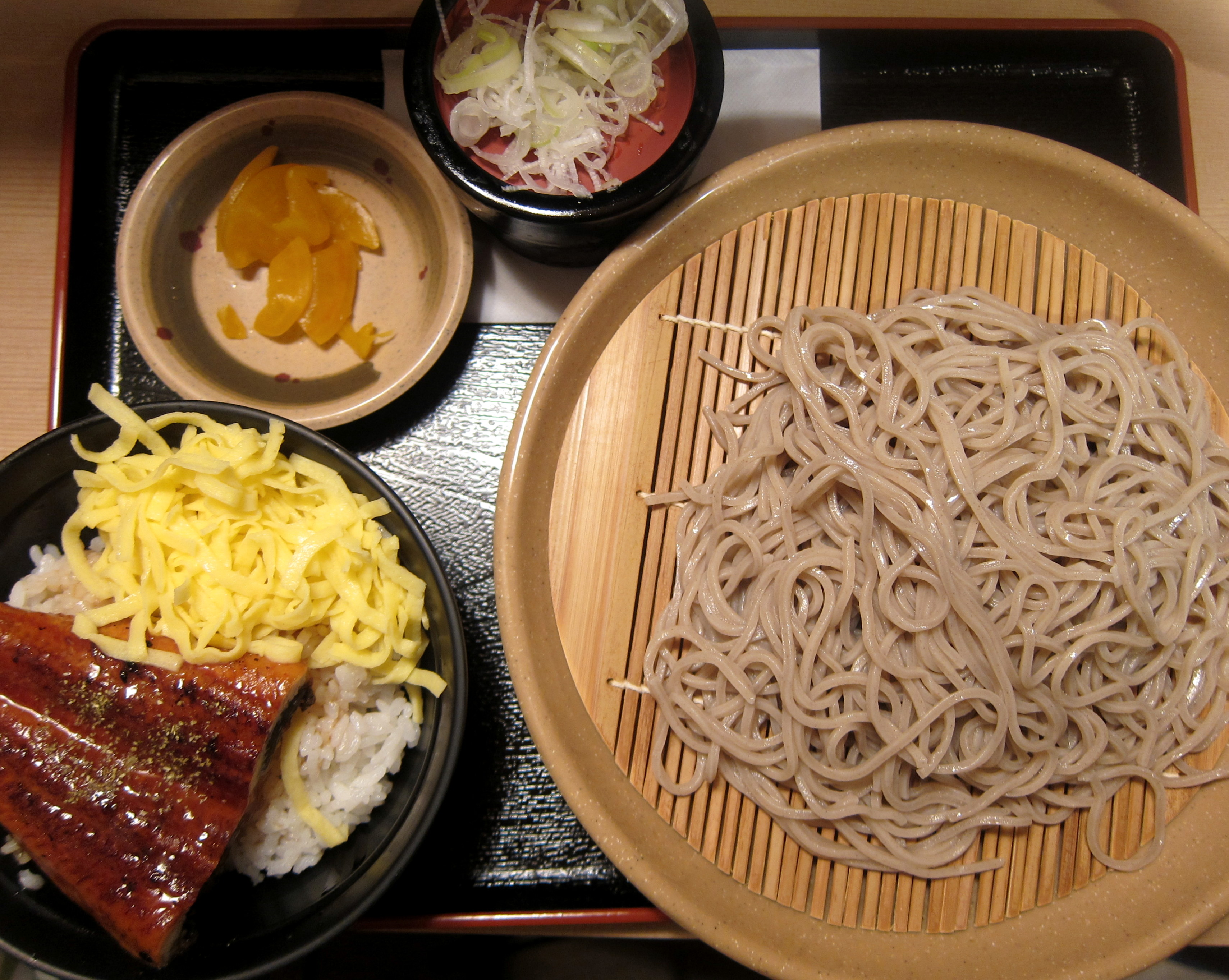
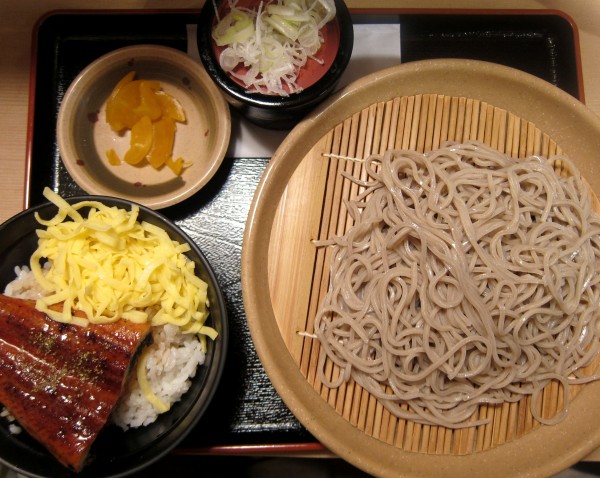
Unagi rice with cold soba (680 yen) at some noodle shop on Waseda Dori, Chiyoda.

Unagi rice with cold soba (680 yen) at some noodle shop on Waseda Dori, Chiyoda.

When I was slurping ramen with Mai at The Ramen Shop, I vowed to drown myself in ramen when I get to Japan. When I’m in Japan, I get so overwhelmed that I resign to konbini foods. It is too easy to find a soba, udon or ramen joint in Tokyo, the former two often together. Every 20 meter is likely to pack a few shops, and any shop we see likely serves superior fares to the places we’ve tried in the States. June air in Tokyo is as heavy as the steam from the bowl, but it never stops our appetite.

One minor setback: the order machine. It’s simple enough: you decide what you want, insert the money, push a few buttons (or one, if you don’t want to add anything to your order). The problem is reading the all-Japanese labels. I always feel like an idiot when I stare it down for minutes when everyone just punches away. Granted I’ve never taken less than 2 minutes with a candy vending machine in the States either.
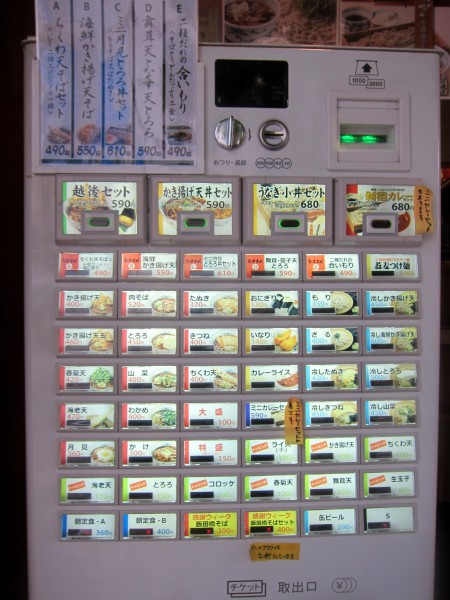
soba-shop-machine

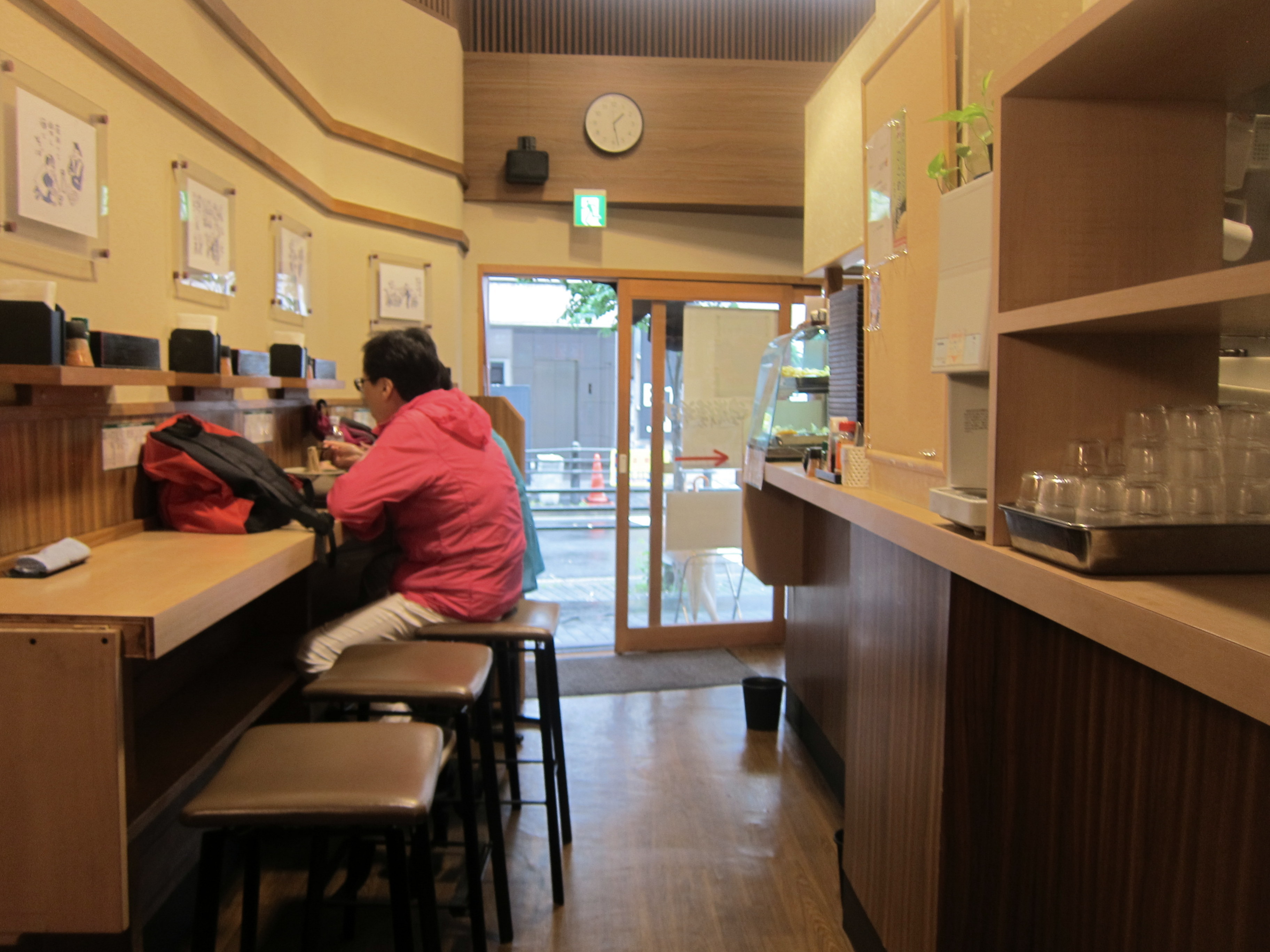
Inside a soba and udon shop on Waseda street:
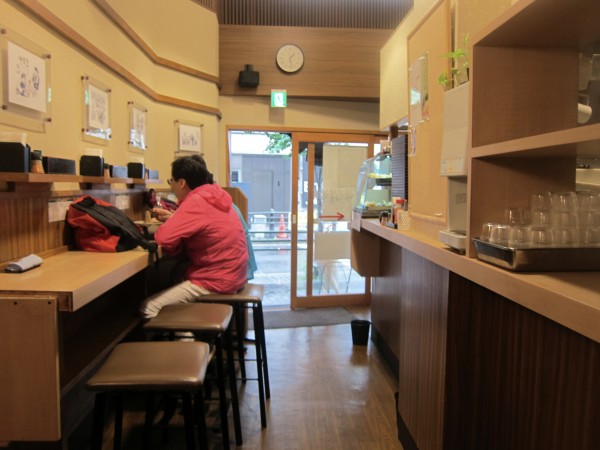
soba-shop-on-waseda-dori
We didn’t pick this place for any reason other than it being on our way to Yasukuni shrine, but I had the best soba here.
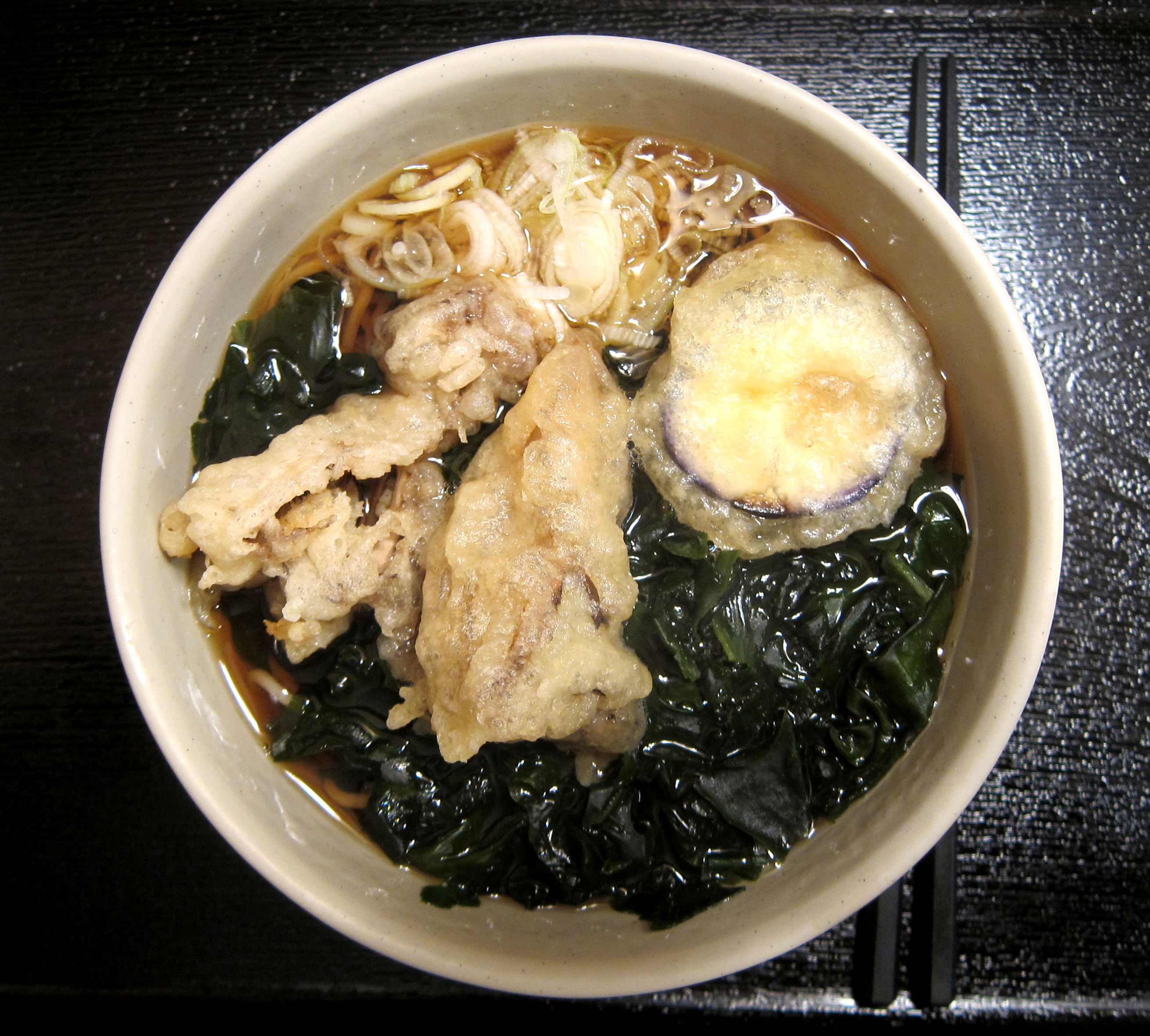
wakame-soba
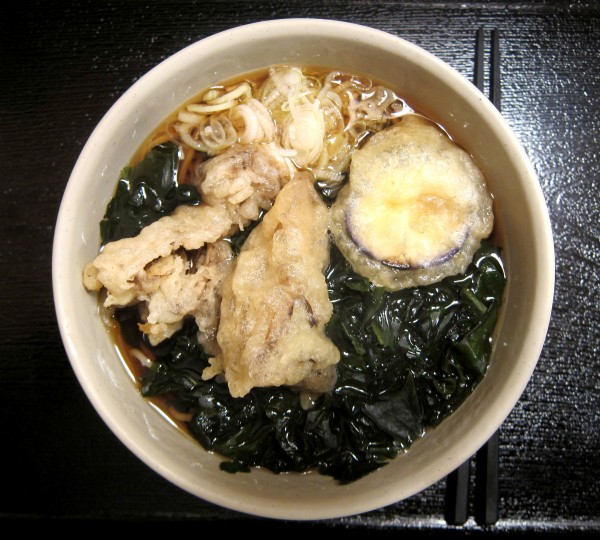
A simple hot soba with wakame (sheets of seaweed – the dark green stuff) and tempura mushroom. You can have the tempura on the side or in the soup, I opted for in the soup because I just love the crunchy texture on the verge of turning soggy. The wakame soba by itself would have been 400 yen, tempura boosted it to 470 yen.

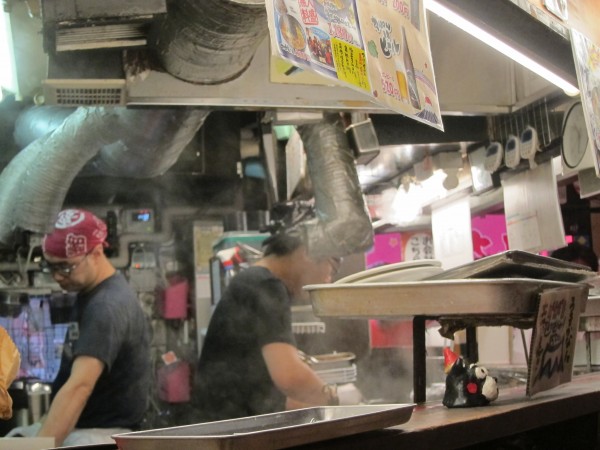
The much shorter wait helps: you place the order and get your noodle in hardly 2 minutes. Not because this place was relatively empty. Jangara in Akihabara had a line of tens of salarymen out the door, and my noodles came out before I could even take a picture of the menu.
jangara-cute
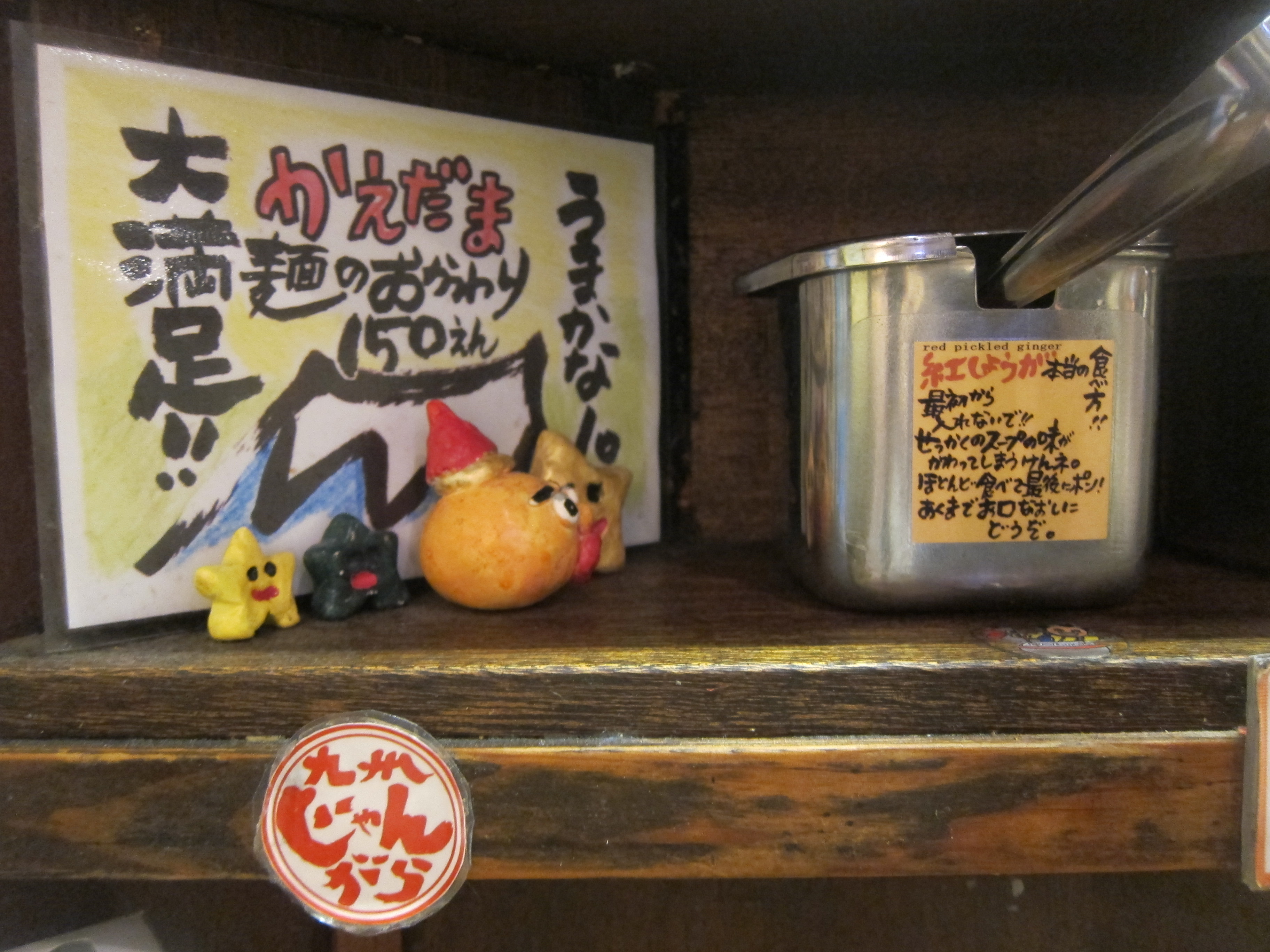
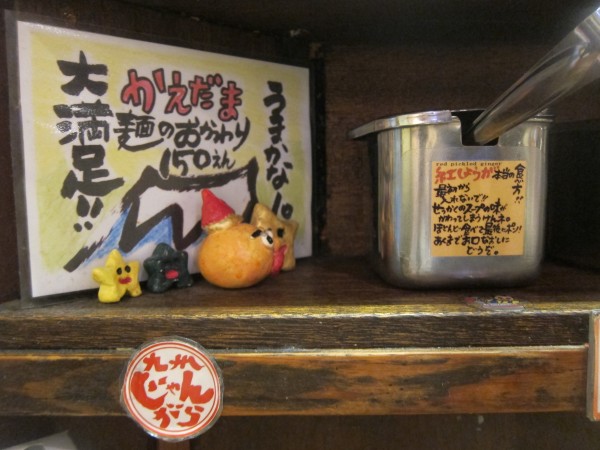
The Jangara I visisted is a tiny ramen shop in a sidestreet in Akihabara and known for its Kyushu-style ramen (fatty rich broth from pork bones). An acquaintance recommended this place as his childhood favorite and a contributor to propel the status of Kyushu ramen and shape the modern ramen scene in Tokyo. There’s a Jangara in Harajuku with English menu. This one doesn’t (or they didn’t give me one). I was ushered into the very last counter seat (thank god! I was worried that I’d be put between two serious-looking Japanese men and be judged for taking pictures and eating slowly) and given an all-Japanese menu. (Much preferable to the buttons and machines though!)
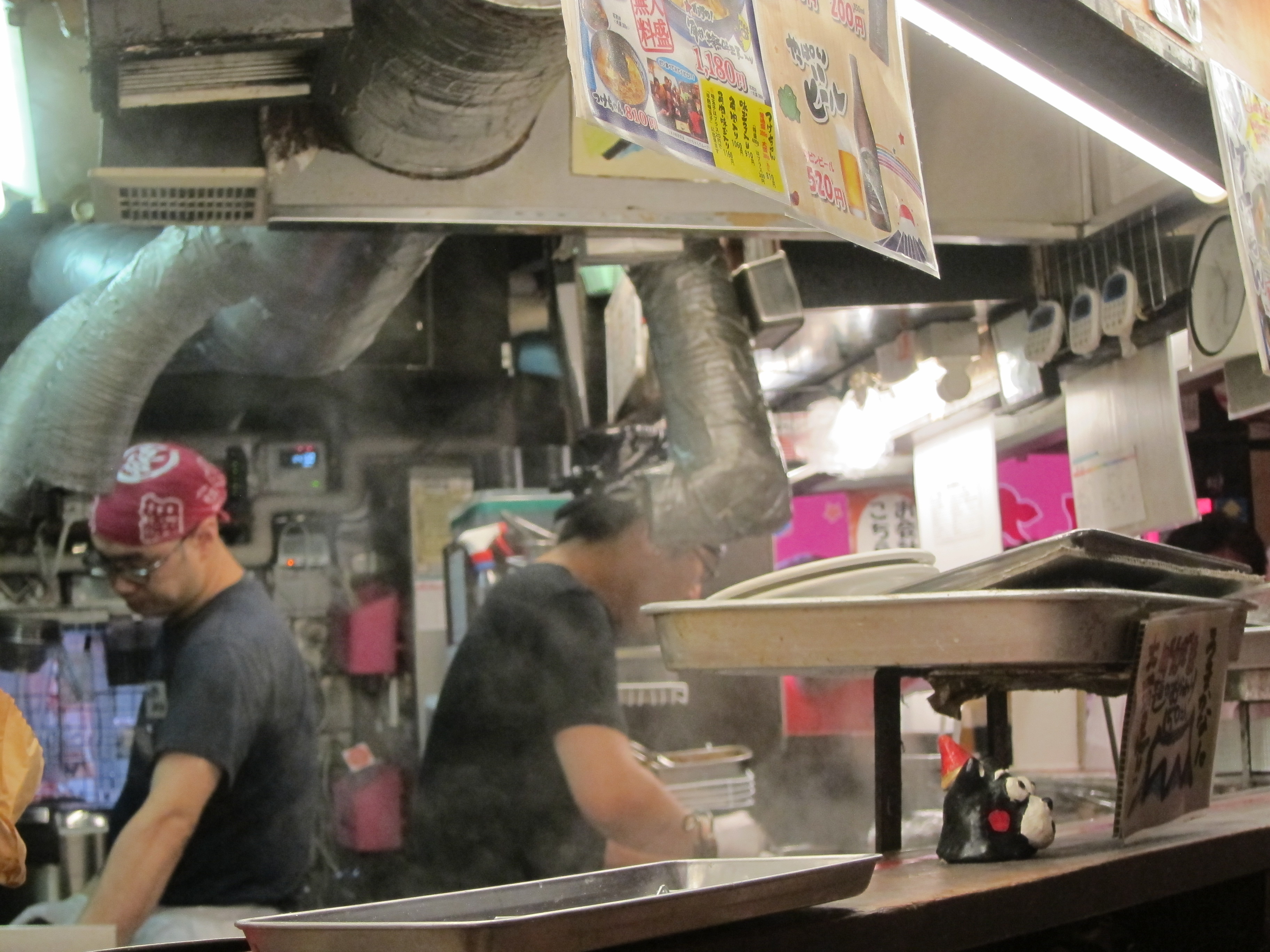
jangara-ramen-cooks
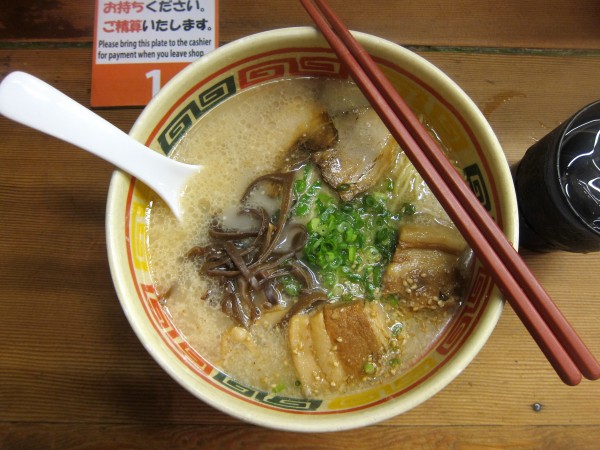
I sticked to the top few choices that had “Jangara” in the name, and managed to make out “meat” in the sea of kanjis. That was the most important thing, so I thought.
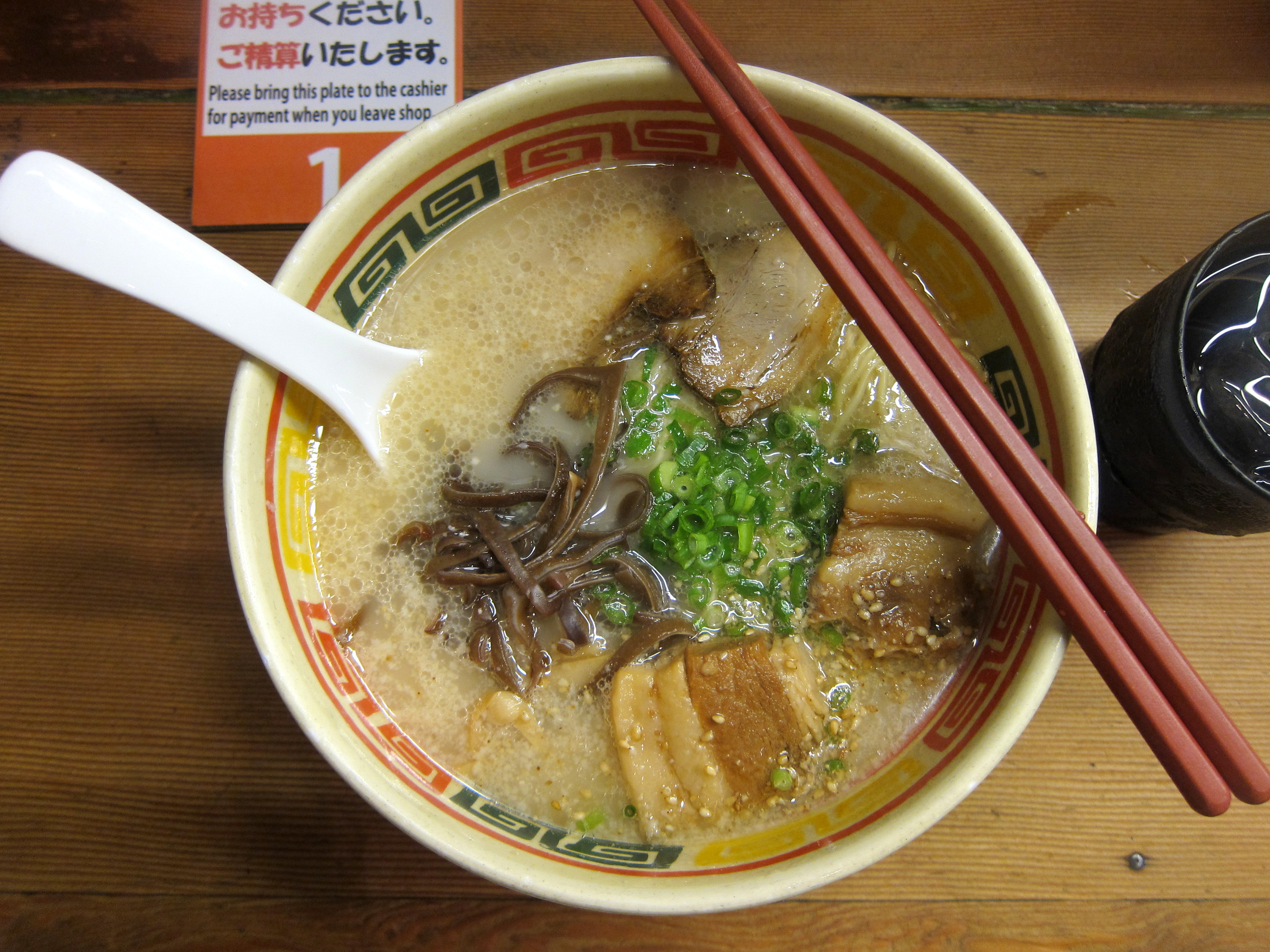
jangara-ramen
However, I should have studied harder and remembered the character for “egg”, because my ramen did not have a soft-boiled egg. The customer next to me (a few of them actually, they came and went so fast while I was there that I lost count) all had eggs. 🙁 Regardless, this is the best ramen I’ve ever had. Yes, the broth is superior (rich and hot like melted garlic butter), but the noodle won me over. It was round and thin, very slightly curled, and just the right amount of chewiness. The pork belly was a nice accessory but far from necessary.
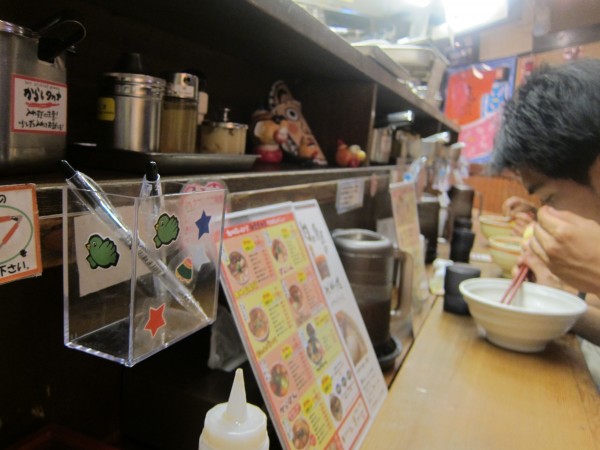
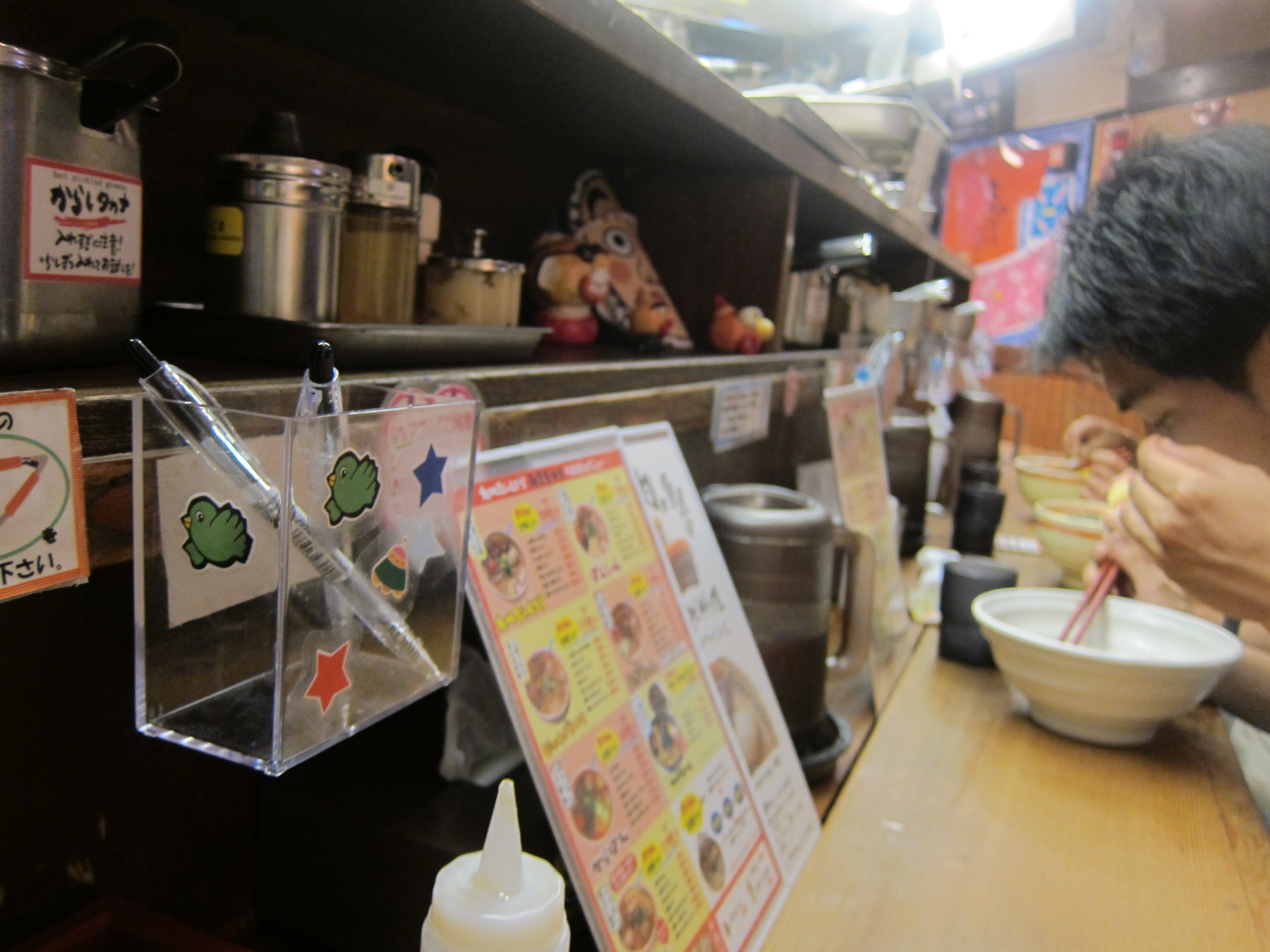
jangara-customers
I still wonder how the salarymen could eat so fast (and drank the whole bowl of broth too!). It made me feel bad that I took about 10 minutes total and couldn’t finish my broth (I didn’t want to burst). I tried very hard to sink into my corner and weaseled my way out as quietly as possible. Hopefully nobody noticed the only girl in the flow of customers.

Address: Kyushu Jangara (九州じゃんがら)
Sotokanda 3-11-6, Chiyoda-ku, TOKYO
(West of Akihabara station)
Jangara ramen with pork: 800 yen

(To be continued)
————————————————————————————

Guest blogged by C. from Katsushika, Tokyo
C. is Asian, female, something of a frivolous nature that wishes to go only by C. and so kindly agrees to blog while Mai is head-deep in work and Kristen is away in Seoul.

Tags: , ,

Noodle soup: Banh canh Que Anh & Que Em

April 23, 2014 By: Mai Truong Category: Central Vietnamese, Comfort food, Houston, noodle soup, Southern Vietnamese

qae-banh-canh-tra-vinh
Quite possibly the cheesiest name of a store I’ve ever seen: Bánh Canh Quê Anh & Quê Em – “bánh canh [from] your hometown and my hometown” (it doesn’t sound cheesy translated into English, but trust me, it’s like Twilight’s Edward Cullen in noodle soup form). Which is actually fitting, since banh canh is commoner’s grub, not a bourgeois lunch. You won’t find a classy madame dressing up just to go out for banh canh. The poor thing will never be elevated to the level of pho. I love it.

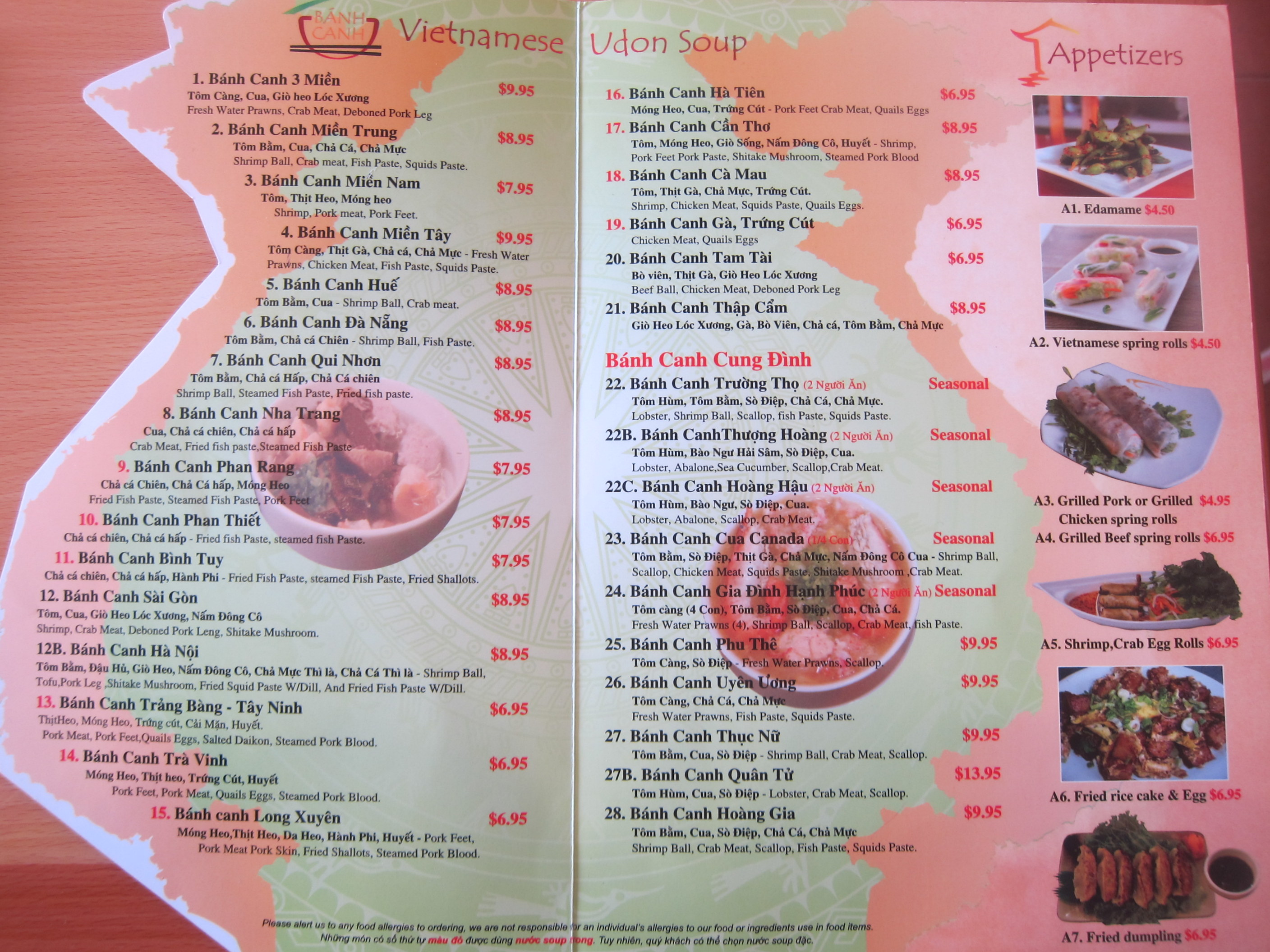
I grew up eating it before I was born (literally). Backstory can be told in person, but despite eating so many bowls, I never knew that there was so many types of banh canh. Que Anh & Que Em offered 30 types (see menu at the bottom), 14 of which are no more traditional than the Spider Roll, but the other 16 are attached to geographical regions in Vietnam, and thus, in this case, more meritable.

Banh canh is a thick, chewy, slippery rice noodle (with tapioca starch). It’s similar enough to udon in appearance and texture (as the shop aptly translates it to “Vietnamese udon”), but also entirely different (udon is made from wheat).

qae-banhcanh-closeup
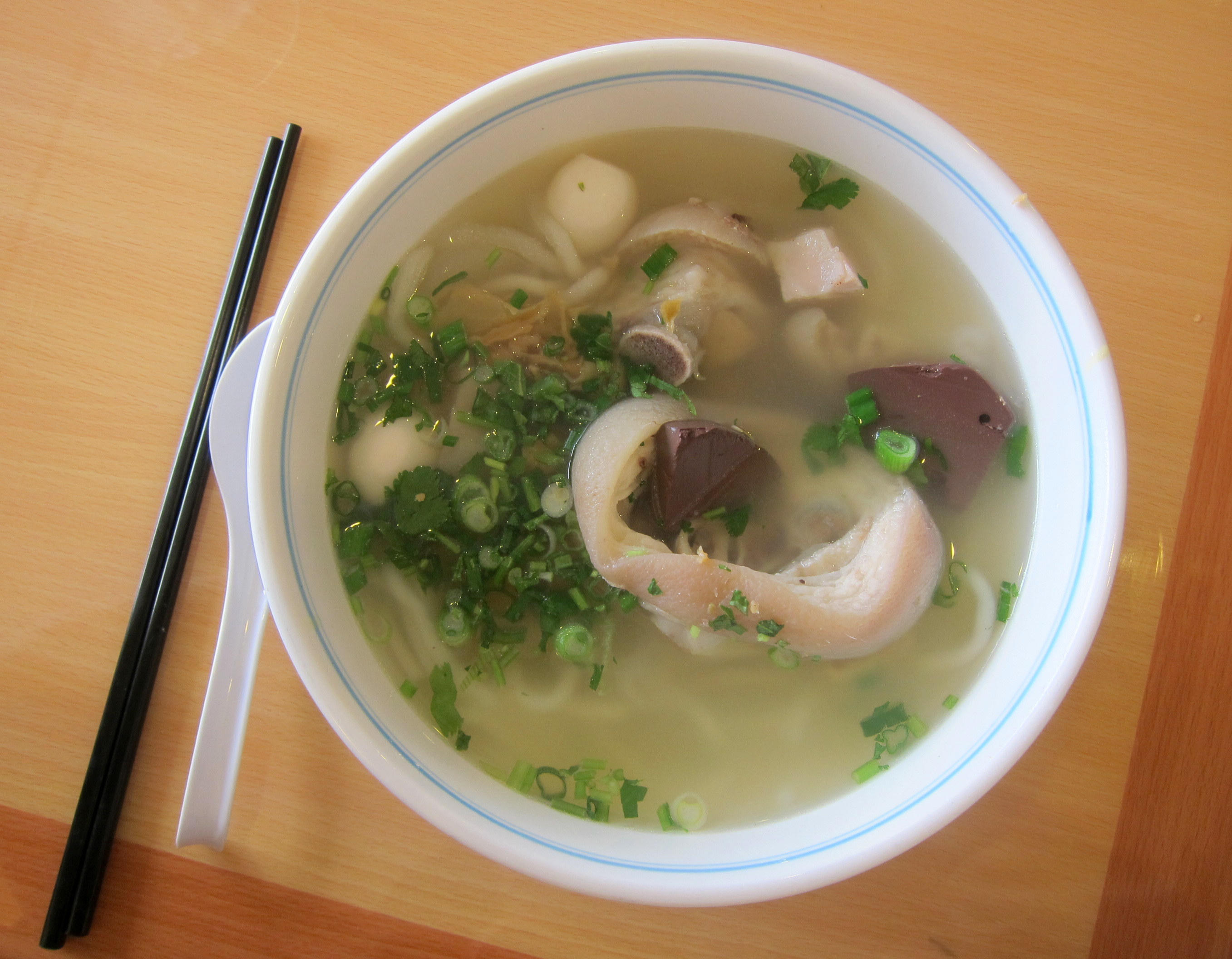
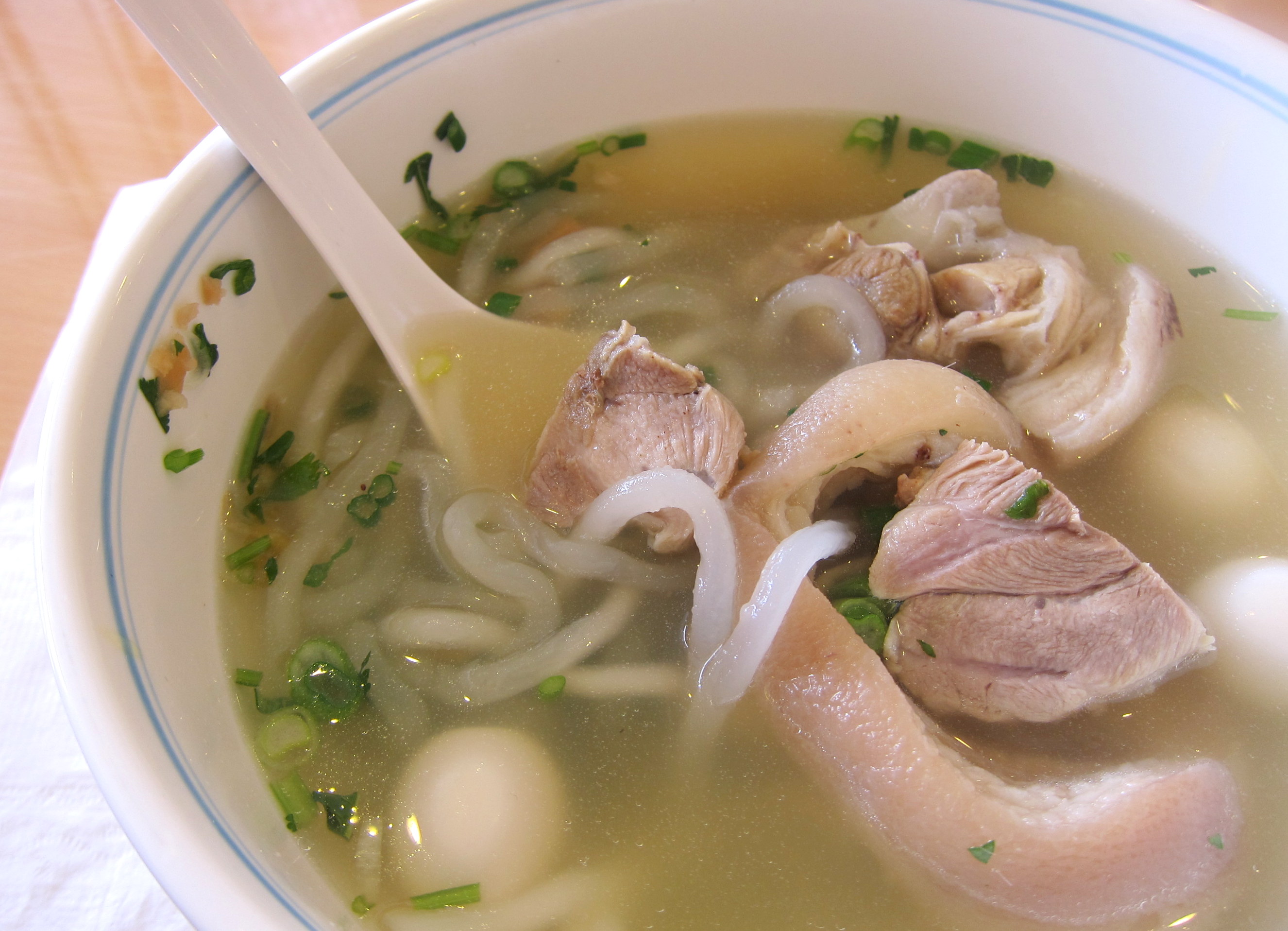
Close-up of my order: banh canh Tra Vinh – pork, pig trotter, quail eggs, pig blood in a clear, light broth. The classic when people think of banh canh. I can do without pig blood, which I transferred to Dad’s bowl, and the quail eggs (fresh quail eggs are great, but these taste like the canned version). In fact, the noodle and the broth alone are sufficient.

qae-bc3mien-bchoanggia
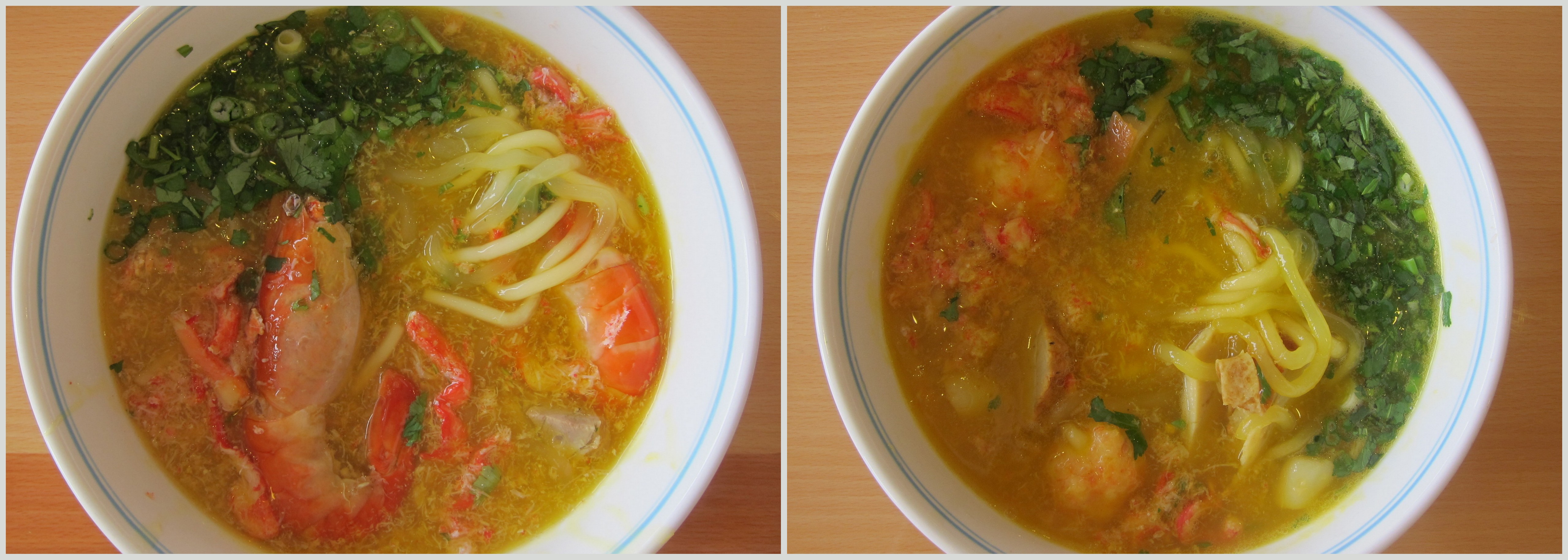
From left: Dad’s and Mom’s orders: banh canh 3 mien (“banh canh of all three regions”) and banh canh hoang gia (“royal banh canh”). Both names are only meant to illicit interest, the same way “Pho Dac Biet” is really not all that special. The broth of both bowls is thickened, yellow (with turmeric?) and taste richly of seafood, as both are loaded with crab meat and shrimps.

qae-che-longnhanhatsen
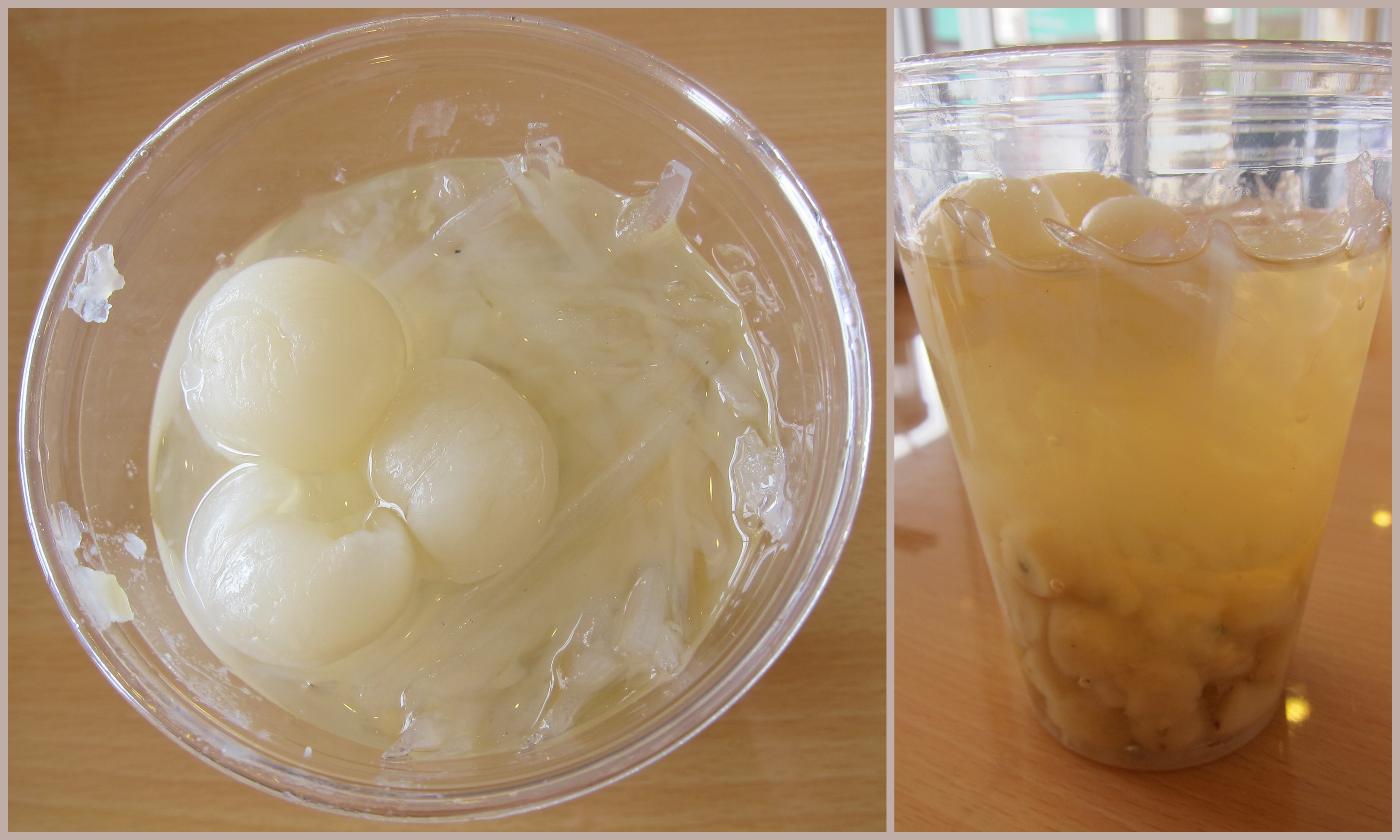
Desserts, of course. che long nhan hat sen – longan and lotus seed che… (I got the same thing at Danh’s Garden too, it’s gently sweet, fruity, and hard to get tired of.)

qae-chekhucbach
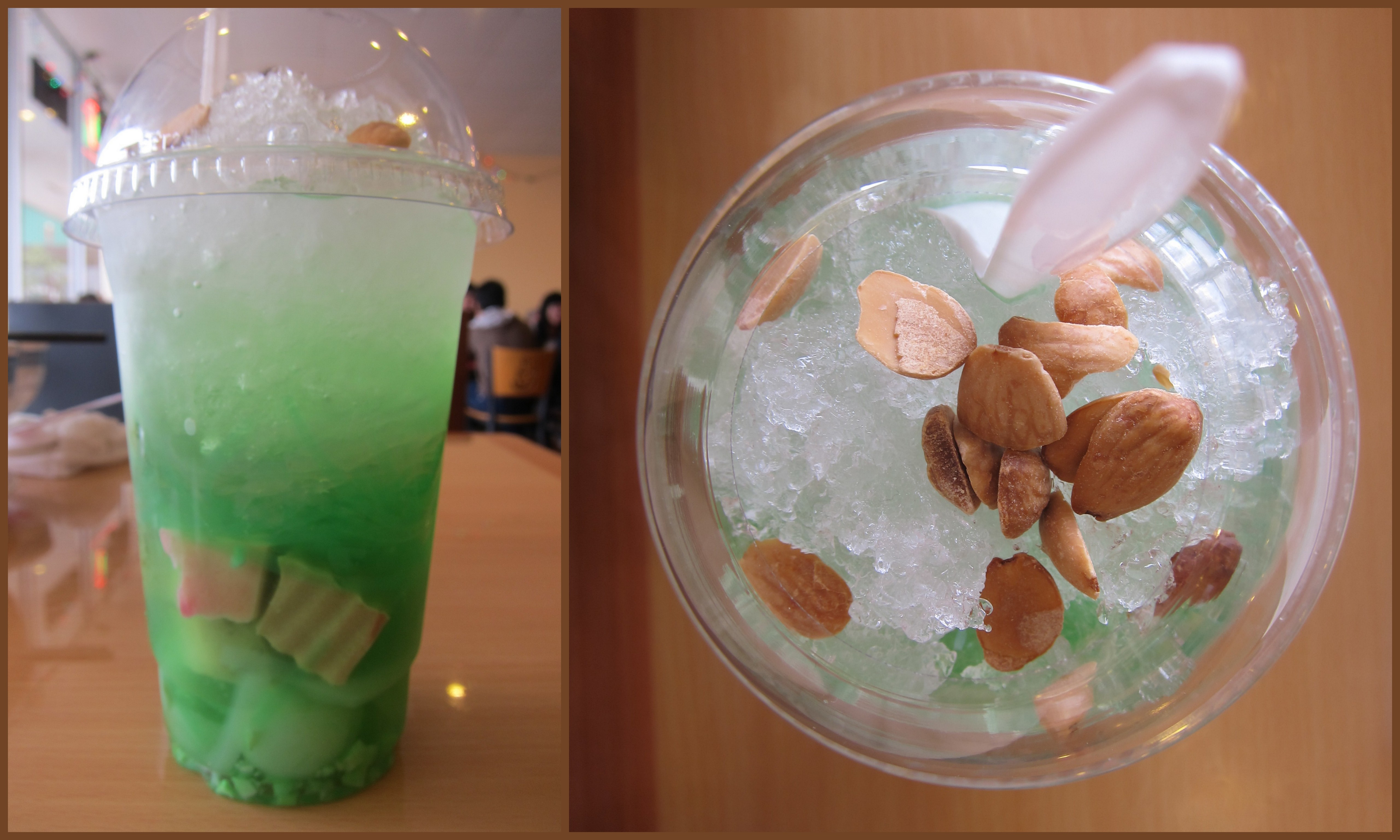
… and che khuc bach – lychee, some chewy tapioca thing, some chewy milky jello thing, and some nuts. A popular che in Vietnam these days.  Here’s a video to make che khuc bach, which the author loosely calls “almond panna cotta lychee dessert”.

qae-menu
I miss Vietnamese food. It’s been only three days since I left for the mountain on another observing run. Every time I’m in the mountain I’m reminded of what a privileged life I have. I miss being a stone’s throw away from darling nigiri, banh mi, mordin, etc. There’s no Asian restaurant in Big Pine, the nearest congregation of human from the observatory. Then again, it’s already a huge privilege to stay at CARMA, with a private bedroom and bathroom, eating juicy fresh apples and having nutritious meals hot and ready twice a day…

Address: Banh Canh Que Anh & Que Em
11210 Bellaire Blvd, Ste 133
Houston, TX 77072
(281) 416-5316

one shot: homemade hu tiu

January 08, 2014 By: Mai Truong Category: Comfort food, noodle soup, One shot, RECIPES, Southern Vietnamese

hu-tiu-bot-loc
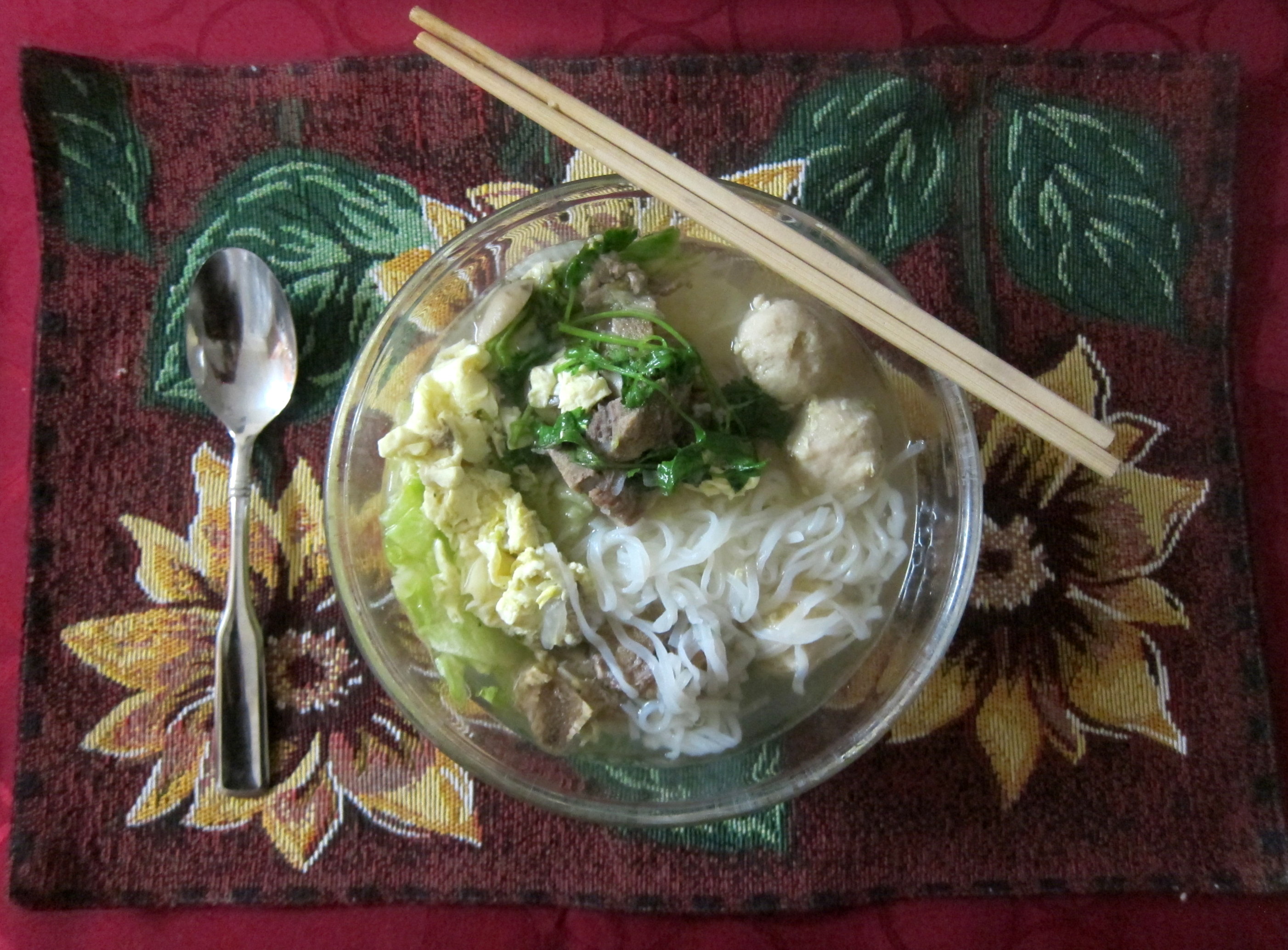
From Mom: hủ tíu bột lọc.

Hu tiu is a common type of rice noodle in Southern Vietnam, often served in noodle-soup form, the noodle soup dish is of course also called “hu tiu“. The usual hu tiu noodle is characterized by its thin shape and chewy texture. Vietnamese love chewy noodles just as much if not more than any other country, so people began using various methods to make hu tiu (*) chewier (the soaking time before grinding, the grinding, washing the rice flour, the mixing ratio with water and other types of starch, the thickness to spread the mixture into a film, the temperature and time to steam it). Bánh bột lọc(**), a type of savory snack, is made with tapioca starch (cassava flour), so I guess hủ tíu bột lọc also contains tapioca starch.

I spent an hour googling but expectedly found little and contradicting information about hu tiu bot loc – nobody in the business would reveal their secret. What I found online is hu tiu bot loc originated from Cần Thơ, and what I found in my bowl are fat (and flat) strings, whose color is clearer and texture is chewier than both the normal (and thin) hu tiu and hu tiu dai (“chewy hu tiu”).

Mom’s hu tiu bot loc: (good luck getting a more detailed recipe than this one from Vietnamese moms!)
– boil dry hu tiu (sold at stores), immediately wash in cold water to preserve chewiness and prevent them from sticking together, set aside
– simmer pork bones to make broth, add salt to taste
– eventually, add pork, beef balls and eggs
– finally, add hu tiu and cilantro

Foodnote:
(*) – That link is written in Vietnamese but the pictures are instructive enough to get an idea of the hu-tiu making process.
(**) – What does “bột lọc” mean? Literally, “bột” is flour, and “lọc” is to distill, so “bột lọc” means “clear flour”.

One shot: Ramen Underground ramen

October 09, 2013 By: Mai Truong Category: California - The Bay Area, Japanese, noodle soup, One shot

ramen-underground-sf
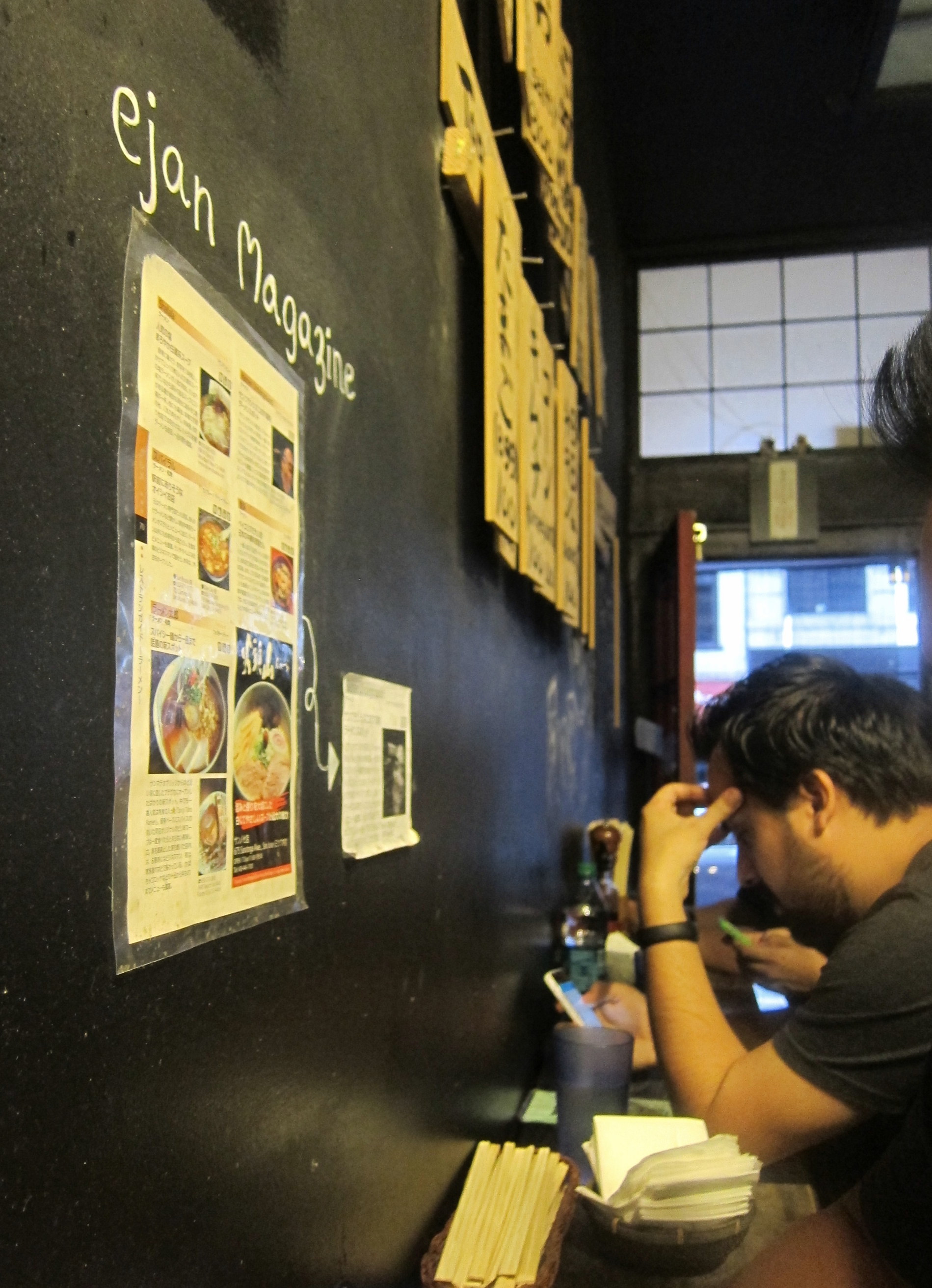
This ramen shop in the Financial district looks cute. Black walls with Japanese writings, a clock with numbers spelled out in hiragana, and a t-shirt that (I assume) sells for 3000 yen (~30 USD). The owners seem to try keeping it as hole-in-the-wall as possible (to make it appear authentic?). Of course, despite what the name might suggest, it’s not actually underground, nor do you need any special thing to get in.

All basic ramens are $8 with $1 toppings. The basic ramen contains your choice of broth, pork (chashu), scallion and mushroom.

ramen-underground-ramen
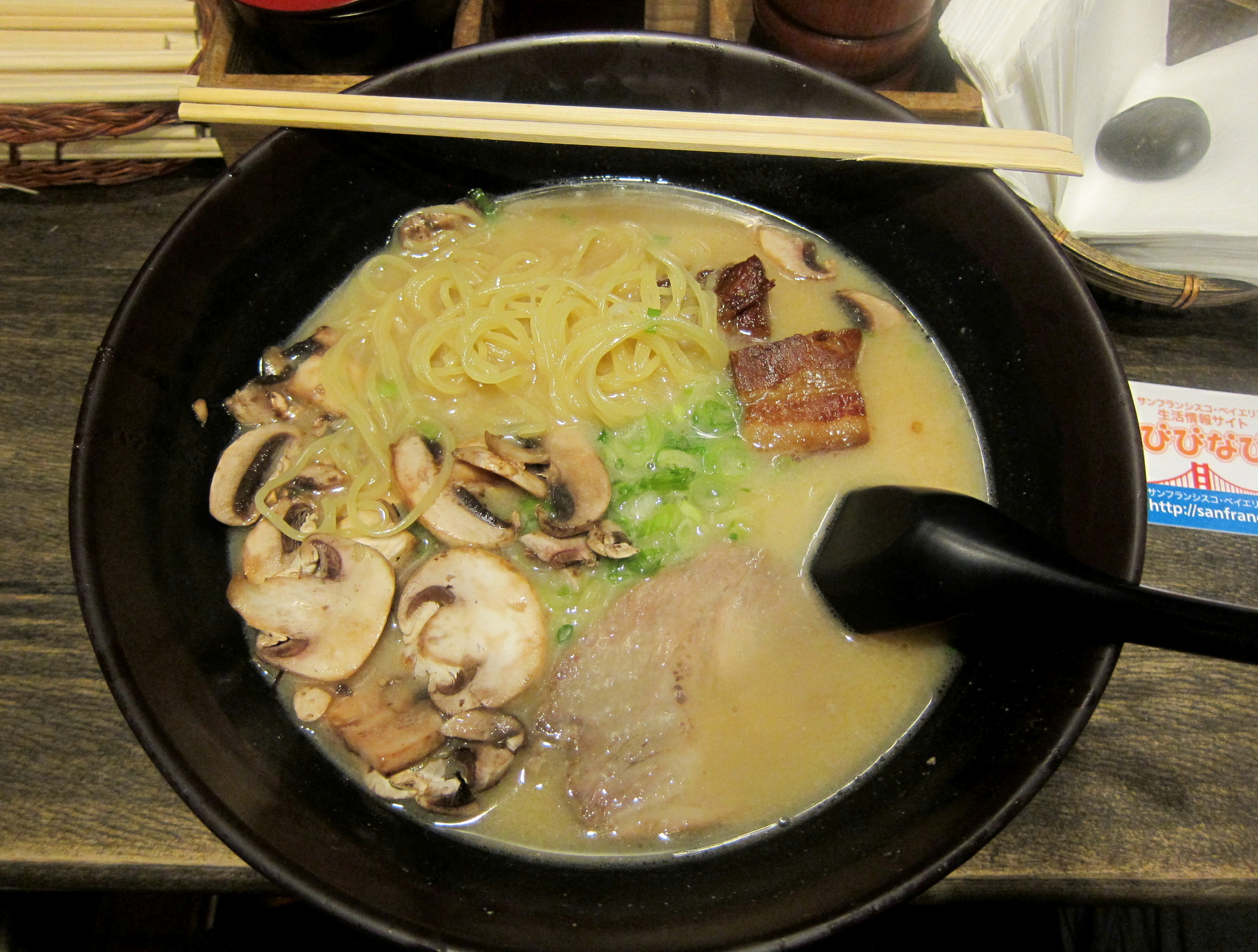
My miso ramen with extra kakuni (braised pork belly). The mushroom is raw (not only is that just wrong – think about cold mushroom in a luke warm broth! bleh!, enoki would have made a MUCH better ramen companion than portobello T_T). There’s ONE puny slice of chashu. The broth is fine but it’s missing something… (more pork, probably!!!) At least the noodle is chewy.

If you’re curious, this is what disappointment tastes like.

(Actually we later realized that we should have asked for an egg, that’s what missing. But still, we could really use another slice of pork…)

Address: Ramen Underground
355 Kearny Street
San Francisco, CA 94108

It’s packed when we went for dinner and online reviews suggest that there’s always a line at lunch, but San Francisco, when will you stop hyping up every. single. thing!