Flavor Boulevard

We Asians like to talk food.
Subscribe

Tofu misozuke – the vegan cheese
November 25, 2011 By: Mai Truong Category: Japanese, Review of anything not restaurant, The more interesting, Vegan

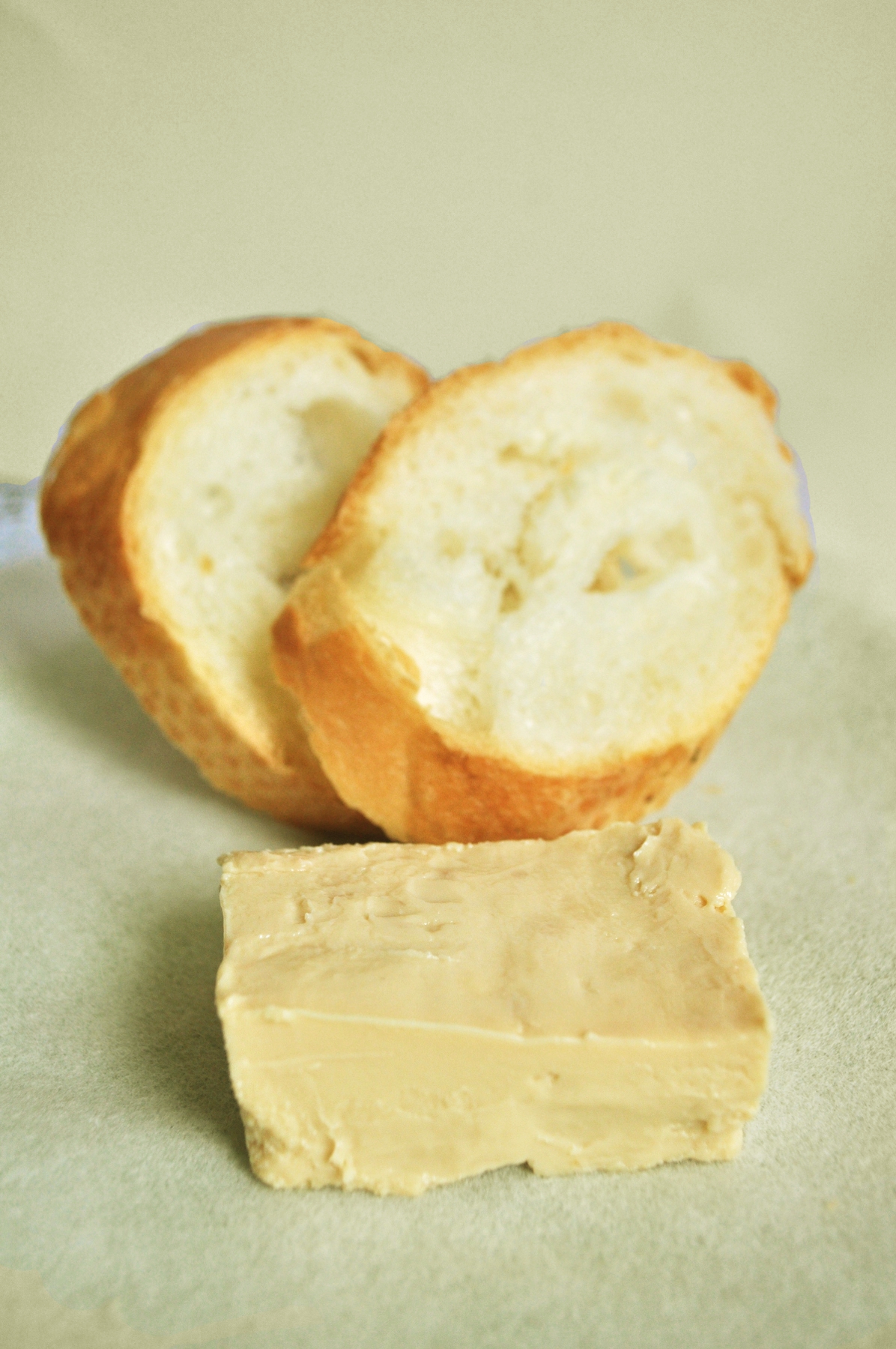
Tofu misozuke. Image courtesy of Rau Om

Every Saturday in Sunnyvale and every Sunday in Palo Alto, Oanh sets up the tables. She hangs a white banner with a simplified lavender elephant and the word “Rau Om” in calligraphic green, and a poster featuring a little mouse prancing with a block of tofu on his back, with the word “Mice eat Rau Om’s Tofu Misozuke” below. Then she arranges dozens of little bamboo and plastic wrap packets on the table, each containing a block of tofu in beige paper, about as big as a match box. Then she’s ready for the Farmers Market. And the tofu is ready to be sold out, every last one of them.

Over two years of experimenting, Oanh says, including lots of PubMed searching, an 18th century manuscript in old Japanese, and who knows how many pounds of firm tofu. It all started with an accidental find in Tokyo’s night food scene in 2009, and here they are, at a Californian Farmers Market, offering a Japanese elder a taste that brings her decades back home. It’s like the tofu has achieved its American dream.

When I first had my tongue on Rau Om’s tofu misozuke at one of Oanh’s dinners, I thought wow, this stuff feels like La Vache qui Rit. It’s exactly that texture, that kind of tender springiness of a creamy cheese that bounces when you touch and has no resistance when you cut, the kind of softness on the verge of melting, like that of a 64°C slow-poached egg yolk. When the taste starts to register, like a tenth of a second later, it’s a whole different affair. There’s some brininess, some tingling sensation, but there’s no fat. It’s a creamy cheese that isn’t at all fatty, naturally, because it’s a vegan cheese. The brininess comes from the miso, and the tingling sensation comes from the sake. A few seconds deeper is the soothing sweetness of soy and sugar.

I fell for it. I know I’m going to sound like a tofu freak now, one that might as well protest for the civil right of the tofu and occupy the supermarket because soy is the 99%, but this meat lover is gonna say it: tofu is a really freaking awesome invention in food history. If people say it tastes plain with a frown, I say they don’t know how to appreciate the “plain” taste. That’s the taste of water and steamed rice, the flat tone in music, and the white space in photography. It’s better than good, it’s a necessity. When I’m tired, I crave exactly that taste. Then there are a hundred ways to make tofu depart from plaindom. And the Rau Om couple succeeded splendidly in one of them: make tofu into tofu cheese (tofeese? :D).

Oanh and Dang also let me try a wedge of kombu-wrapped tofu. The kombu attenuates the miso saltiness and promotes the aged sweetness. The kombu tofu misozuke is one level deeper than the tofu misozuke. I was hoping to buy it last time, but:

FlavorBoulevard: Did you wrap this new batch of tofu misozuke in kombu?
Oanh: No. We’ll roll out the kombu-wrapped tofu misozuke in a few months, and it’ll be clearly labeled as such.

FB: What kind of tofu do you use? In your blog, you wrote “firm tofu”, but would you like to elaborate?
Oanh: We are buying regular tofu from the supermarkets. A to do item for us is to look for a local source for tofu.

FB: What about the miso?
Oanh: One of the first recipes we found specified white or yellow miso. We did some experiments with other types of miso and found the results less than satisfactory, with all the caveats that come with a negative result.

FB: How long does each batch take?
Oanh: The miso flavor permeates the tofu almost immediately, but to get to the right creamy texture, it takes at least 2 months.

FB: How long can the tofu stay good (refrigerated) after packaging?
Oanh: About a month.

FB: Currently the tofu misozuke is marked at $7/packet (2.5-3.0 oz). Based on what standard did you set the price? Are you worried that it might be a bit high for the general market?
Oanh: The price is as affordable as we can make it given the production costs and is at a comparable level to other artisanal hand-made cheeses. Like fine cheeses, the process of making tofu misozuke is labor intensive, both during the initial production and regularly during the aging process which lasts at least 2 months. That’s not even counting our research cost, which we figured was just part of our food budget, the price of our food obsession.

FB: Can it be used in cooking, like in soup or pizza? Or salad? Would the flavor diminish in the process?
Oanh: Yes, it’s definitely can be used in cooking. The flavor is intense enough to stand up to the cooking process. We once used it in a squash blossom & beef dish. We definitely can see it work in salad. We had a post a while back about some of the uses of tofu misozuke. We’ve also used it in place of chao (Vietnamese fermented tofu) to make duck hot pot, and we recently found out that it worked very well with prosciutto.
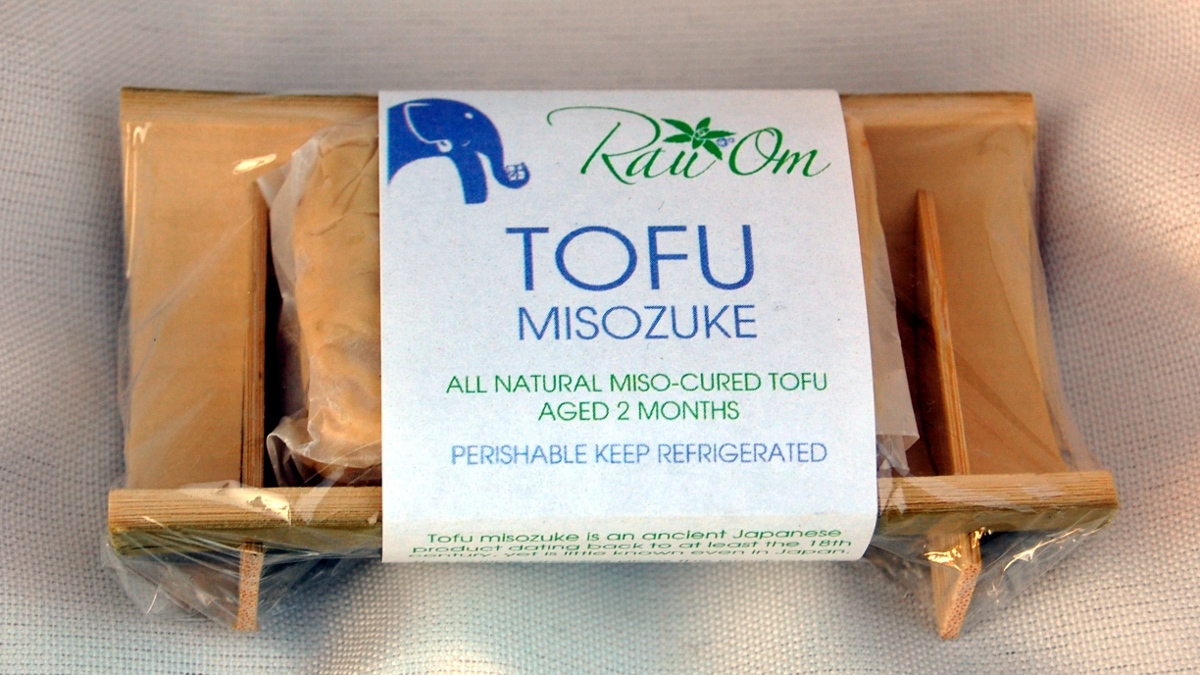
Tofu misozuke package. Image courtesy of Rau Om

In the States, you can’t find this kind of vegan cheese anywhere but the Rau Om online store and their Farmers Market tents. Or you can spend 2 months making it at home, following Rau Om’s recipe, assuming that you succeed on the first try. I wouldn’t. Rau Om’s tofu misozuke, in its offwhite color and handmade packaging, is very Hollywood-girl-next-door from appearance to content: her hairdo doesn’t sparkle, but once you know her, you fall helplessly in love, especially if you are any of the followings: tofu aficionado, cheese aficionado, vegan, and foodie.

Basically, tofu misozuke can be used anywhere cheese and soybean paste can be used, but as my friend Masaaki Yamato says, that would be like using caviar to make soup. A wise man would enjoy tofu misozuke alone with an ochoko of sake, and let his senses fly.

(UPDATE: I enjoy it with genmaicha, or a sweet oolong ;-))

DISCLAIMER: I received no free product or monetary gift in exchange for this review.

Tags:

Maria’s in Santa Fe

November 21, 2011 By: Mai Truong Category: Drinks, Won't go out of my way to revisit


A Facebook ad reminded me of this place. Words of mouth from the previous conference attendants say it’s *the* place to go to in Santa Fe if you like “real” margaritas. It’s also the place where I first learned that tequila is made from the blue agave plant, which is *not* a cactus, and that there’s a spirit called mezcal, which is not as popular as tequila but seems to taste better. When you sit next to someone you just met for the first time but feel like having a meaningful conversation, food and drink makes an educational topic.

Because Little Mom would be scolding me as soon as she reads this (for good reasons), I should tell her now to rest assured that the highest quantity of alcohol I’ve ever had and will ever have is in her red wine pineapple dessert. Although I don’t drink, I do feel like I should know something about the alcohols, just the way I did my high school research projects on psilocybin mushrooms and corundum. Information is fun.

And so was the trio that played music for us at Maria’s that night.
—- Unfortunately, the food was bad —-
Like Little Mom says, drunk people can’t tell what they’re eating, so it makes perfect sense that the sober taste buds wouldn’t tolerate pub food. I ordered half a chicken and it was dry enough to make into yarn, but it was July, just a bit too early for a sweater.

Now for the bookkeeping part:

  1. Pictured is the flight of three 90-proof-or-higher mezcals ($14): Del Maguay Chichicapa, Sombra, and Los Nahules. The acrid smell increases in that order, but so does the “good” taste, described as “smokey with a fruity hint” by Amol.
  2. The yarn chicken was called Galisteo Chicken ($14.95), “a Maria’s exclusive,” parboiled, deep fried, and smothered in fresh chile salsa. One thing I’ve learned in Santa Fe: the vegan dishes taste better than the meats here.

Black tea rice

November 08, 2011 By: Mai Truong Category: Central Vietnamese, RECIPES, Vietnamese


Something occurred to me within the last month: I probably should learn to pair drinks with food, but I hardly drink anything beside water and soymilk. Now I would *love* to learn about the different kinds of water, but living in the city makes it a bit difficult, and soymilk can’t be paired with everything like wine (yet). Coffee, alcoholic beverage, juice? Didn’t quite catch on. So what does that leave me? Tea. A quest takes form: Mai is going to learn tea.

And Mai will cook with tea, too. Because boiling water to drink tea takes some work, I might as well make it worth a meal. How much influence the ochazuke at Mifune had on me, I’m not sure, but during the two minutes of wringling my brain out for some easy way to use tea in food, the first thing that came to mind was cooking rice with tea. Now that’s the difference between my tea rice and the ochazuke: my tea rice is rice cooked with tea, and the ochazuke is rice eaten with tea, like a soup.

As with everything, there’s the easy way and the hard way to make tea rice.
The hard way: use loose leaf tea
– Pros: the tea quality (fragrance, taste, intensity)
– Cons:
—— If make tea first, then use tea instead of water to cook rice: extra step of cooking = time cost
—— If put tea leaves and rice altogether and cook: you’d have to either eat the tea leaves with the rice (the textures don’t match), or pick it out by hand. This obstacle can be remedied with a small mesh bag, though, if I had one.
The easy way: use tea bags. The pros and cons are just the opposite of the hard way.

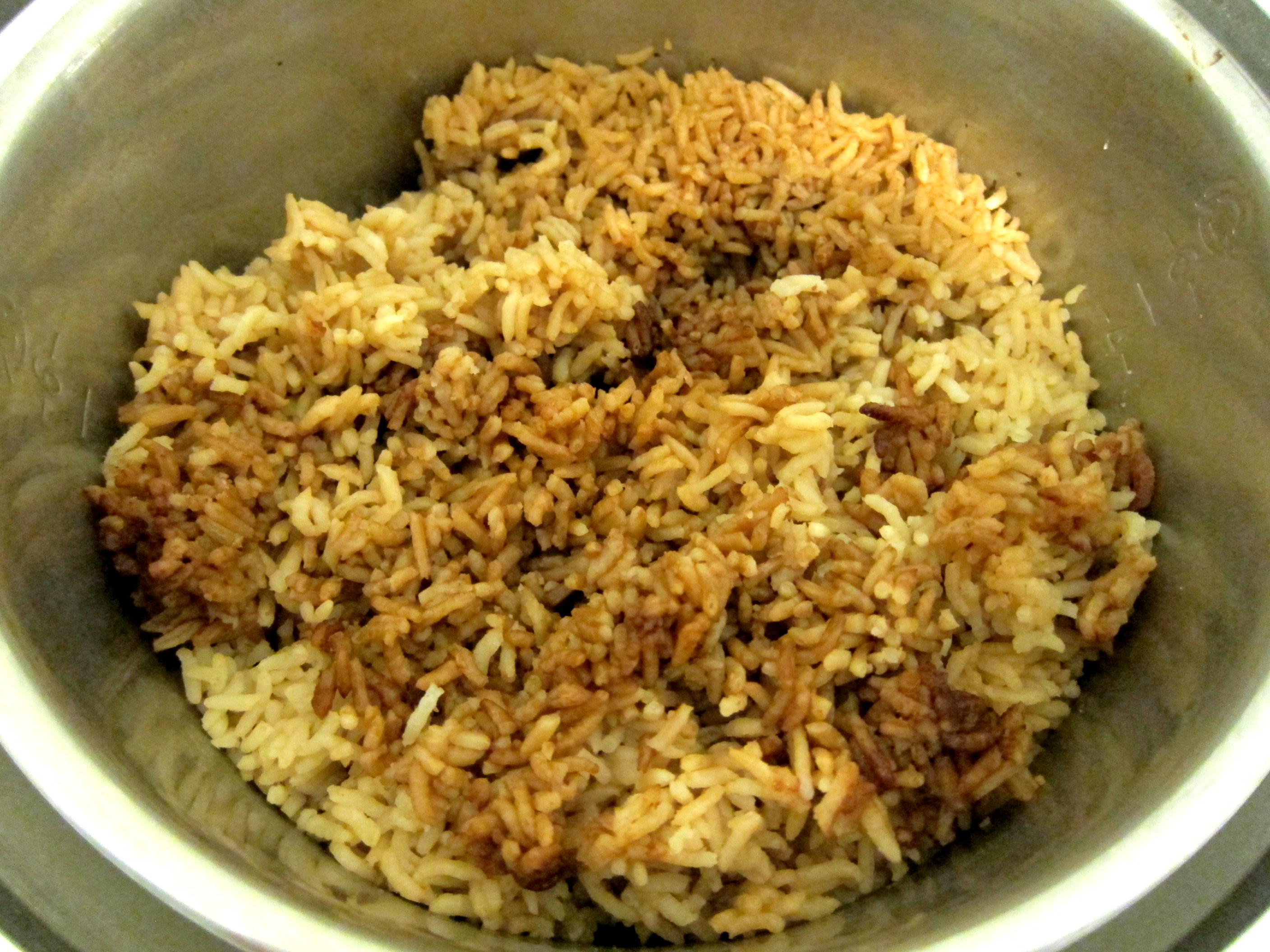
If you know me, my very under-equipped kitchen, and my minimalist attitude with time, you know what I chose to do: I let the tea bags float in the water and the rice cooker do its job.


Unlike my other whimsical cooking experiments, tea rice is something I’ve actually made more than one time. I feel so matured. After all those times, I’ve learned that:
1. Green tea gives the rice the tea fragrance, and black tea gives it the tea taste, but neither gives enough of both. White tea is out of the question, unless you’re really proud of your tea sensitivity.
2. One tea bag per cup of water is sufficient. (But how many cups of water per cup of rice is a different matter: it depends on the rice.)
3. Tea rice soaks up the moisture more than normal white rice. You know how the lid of the rice cooker usually has a lot of water droplets on its underside when you open the cooker? When you cook with tea, the lid is almost dry.

As per Little Mom’s suggestion, I combined green and black tea into my latest batch. Three cups of rice, four cups of water, 3 black tea bags, 2 green tea bags. It came out healthily browned, smelling herbal, and tasting clean. Tea rice has an enticing bitter hint and a sweet aftertaste, which is likely the rice’s natural sweetness enhanced by the tea’s lasting subtlety.

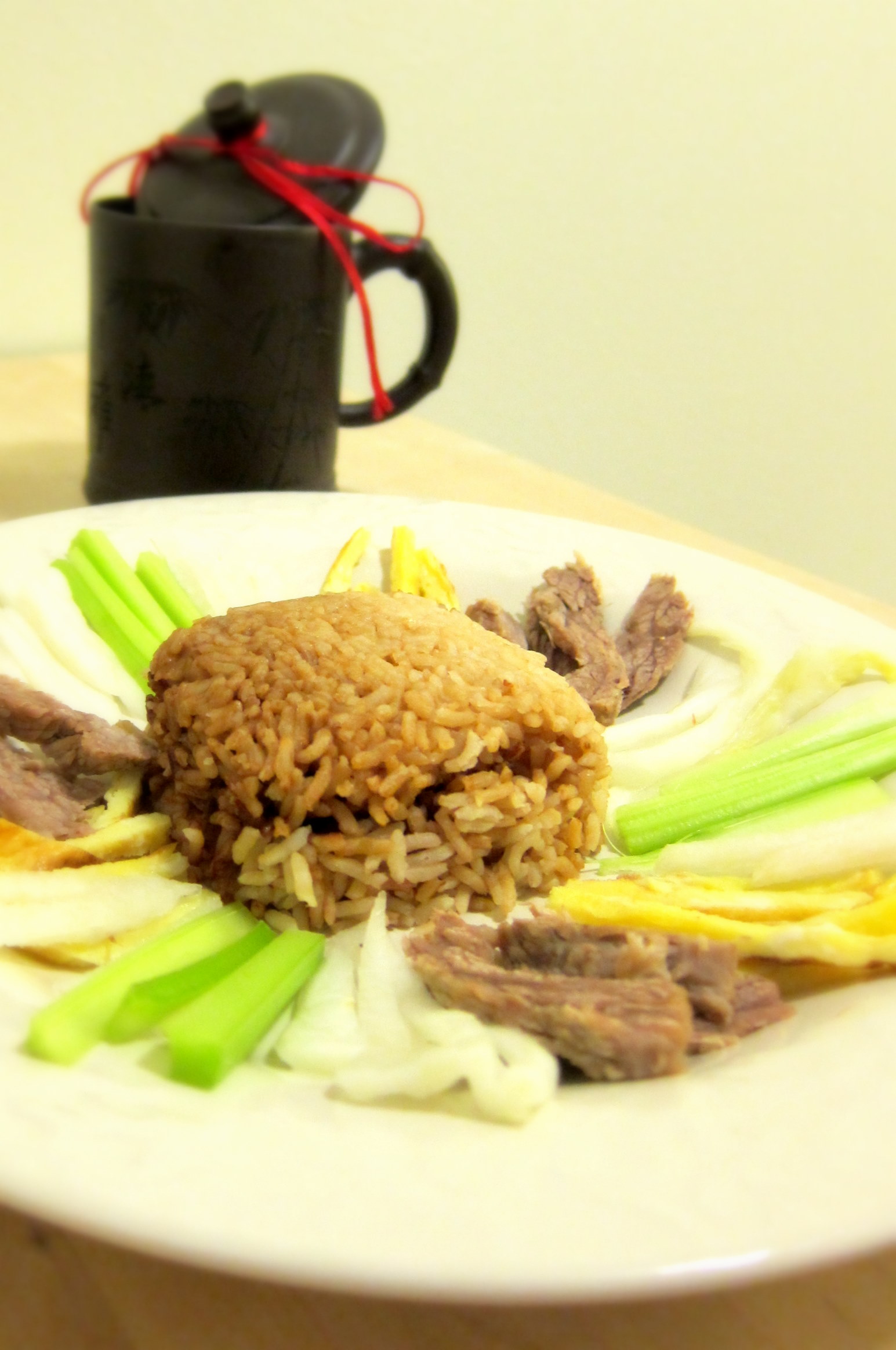
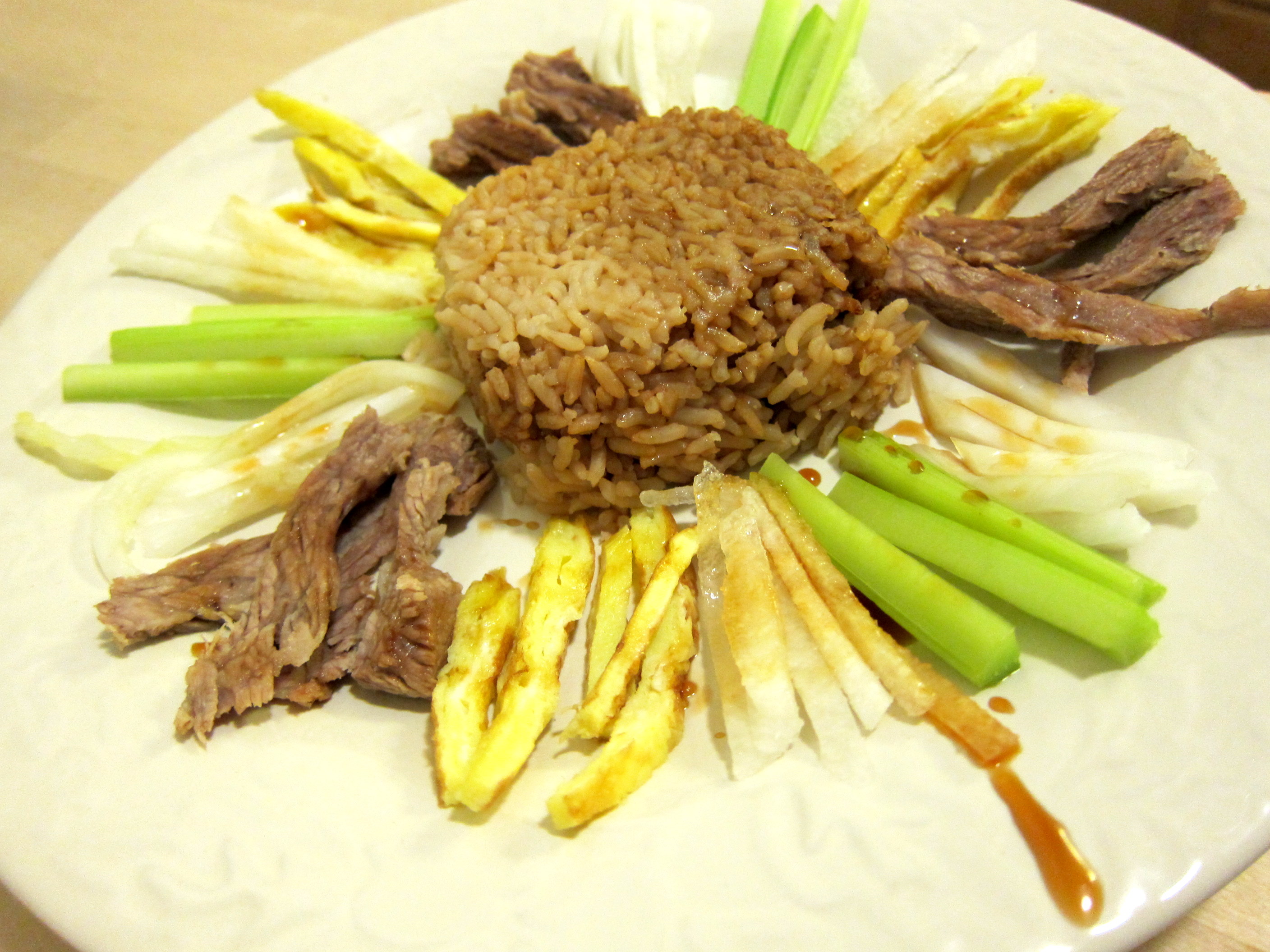
But tea rice needs companions, too, something savory enough to make it exciting but plain enough to not overpower its flavors. A thought came, and I nearly cried for missing a Halloween post. So, in the spirit of early November, which is late Halloween, I present to you Black Tea Hades Rice (cơm âm phủ trà đen):


Hades Rice belongs to Huế cuisine, featuring julienned meat, omelet, and vegetables. Such delicate texture of the accompaniments make this style best spotlight the tea rice.

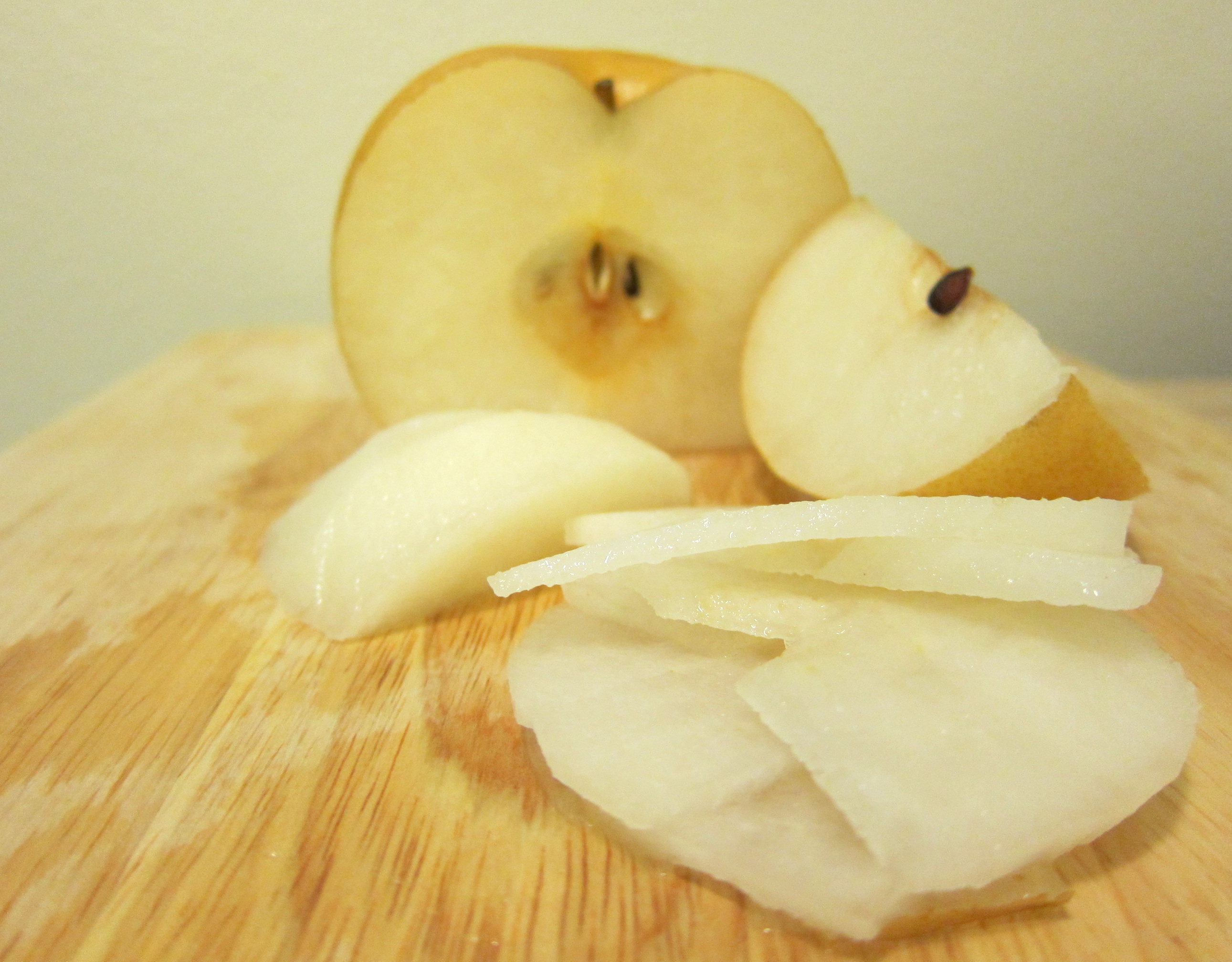
Fried egg, fresh celery, Asian pear, white baechu kimchi (dongchimi style), and boiled brisket were what I could whip out from the fridge, but the silk sausage would be nice to have. Drizzle some sweet garlic soy sauce on top, and the rice just sings. 🙂


This is my contribution to Delicious Vietnam of November, hosted by Sandy of Ginger and Scotch. Can’t wait to see what’s on the table at this 19th round. 🙂
*Delicious Vietnam is a monthly blogging event created by Anh of A Food Lover’s Journey and Hong & Kim from Ravenous Couple.

Mifune’s uniqueness

November 03, 2011 By: Mai Truong Category: California - The Bay Area, Japanese


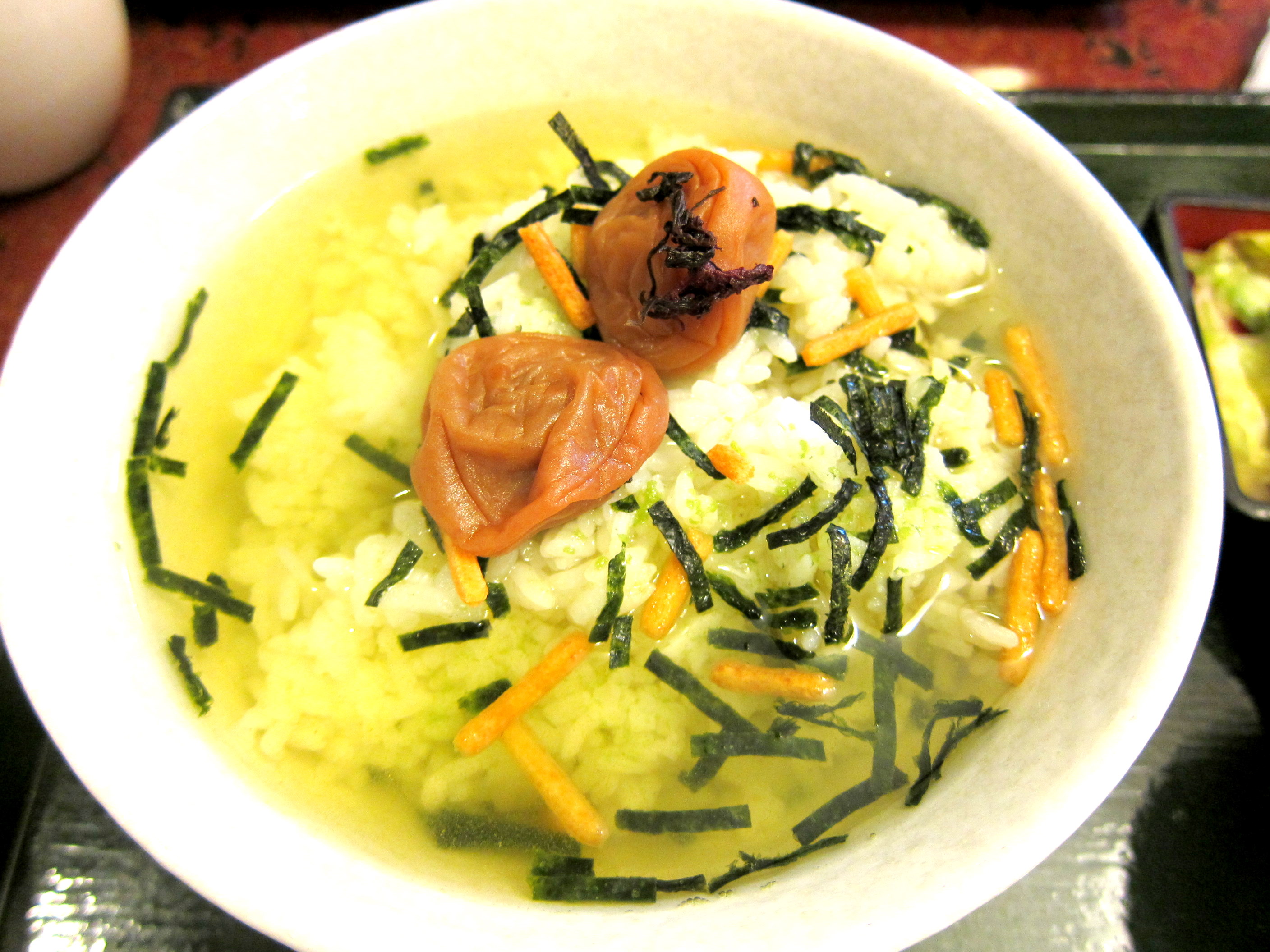
I’m trying to think of the reasons I keep confusing myself between Mifune (San Francisco) and Miyuki (North Berkeley) when I tell people about them. Admittedly they share some obvious similarities, as much as any Japanese restaurant would be similar to another Japanese restaurant. Miyuki is for donburi, and Mifune is for udon and soba. Not only that they’re totally unrelated, I also remember them for different reasons. But that in itself is another similarity: what makes me remember them is not the focus of their menus. When I think of Miyuki, I think of its eggroll and mango icecream dessert. When I think of Mifune, I think of its green tea rice.

Ochazuke (green tea rice) is not uncommon among Japanese and those who know Japanese food, but it’s uncommon in Japanese restaurants in America. In fact, I just now looked at every available menu in San Fran Japantown, and found no ochazuke. Mifune doesn’t have its menu online.

Like kimchi fried rice (and really, any kind of fried rice), ochazuke makes good use of leftover rice. Unlike fried rice, ochazuke is not fried. It’s soupy, with green tea being the soup. When you think about it, it’s not really that strange. A number of Vietnamese people, Little Mom for instance, like to pour the Vietnamese brothy soups (canh) into rice, the rice is thus flavored and not lumped together, making it easy and quick to eat. The Koreans have guk bap (국밥). I understand the principles, but personally, I don’t condone the practice. Rice is rice, soup is soup, and rice isn’t chewy like noodle to go with soups.

And this green tea does very little to flavor the rice. One could say the green tea is the cameraman, not the singer in this bowl, but simply put, it’s just outshone by the salty plum and the nori strips. That said, in hindsight, as much as I was bored by the tea-less taste of a watery rice, and as I’ve never had ochazuke anywhere else, it became a fond definition of Mifune, one that stays dormant for months and certainly has some influence on my next post.

Address: Mifune
1737 Post St.
San Francisco, CA 94115
(inside Japantown)

one bite: Miyuki sweet

November 01, 2011 By: Mai Truong Category: California - The Bay Area, Japanese, One shot, sweet snacks and desserts


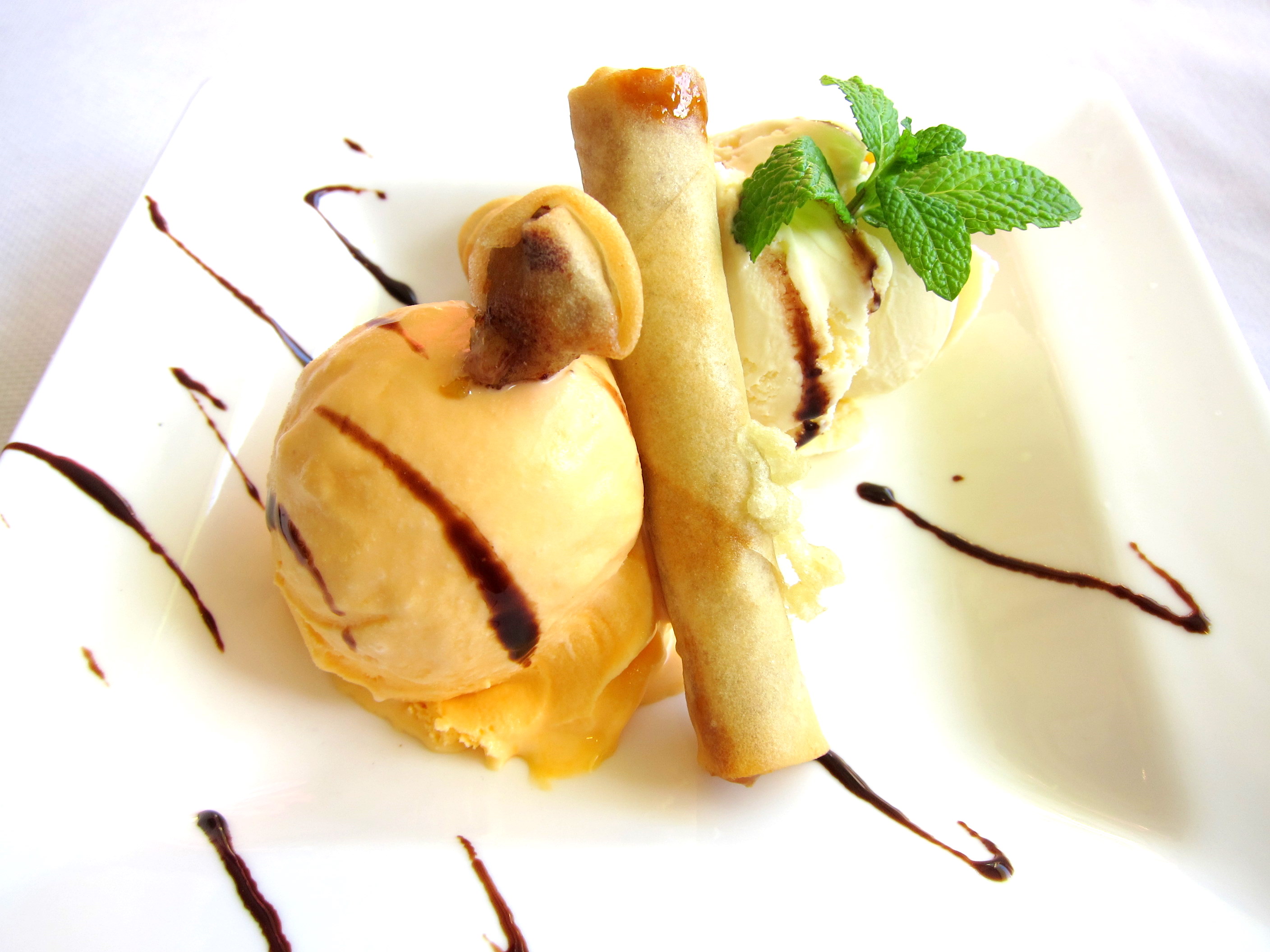
Who goes to a sushi and donburi house to get dessert? Me. It got it all. Tropical, fried, icecreamy, salty, nutty, fruity. It’s the dessert of Miyuki.

Miyuki sweet: eggroll filled with banana and pine nut to pair with vanilla and mango ice cream. Ah, and a dash of chocolate syrup, of course.

Address: Miyuki
1695 Solano Avenue
Berkeley, CA 94707
(510) 524-1286

More Asian post-rice desserts: banana “ice cream”, bean pudding and bean shaved ice

Domain fight?

October 25, 2011 By: Mai Truong Category: Chinese, Opinions

Okay so this is sort of interesting. Because it hasn’t happened to me before.

Oct 24: I received an email from YGNetWorldLTD.com informing me that company T (let’s call them T for now) in China has just registered “FlavorBoulevard” as their domain name in China and Asia (flavorboulevard.cn, flavorboulevard.com.cn, flavorboulevard.asia, etc.) and that I needed to contact them if I want to object this and secure my trademark. Okay.

Oct 25: Company T emailed me, saying “We hope your company will not object our application, because this name is very important for our products in Chinese and Asian market. We don’t want your company to use this name in China and Asia, we believe our company will become the legal owner of this name in China and Asia. Even though Mr. [YGNetWorldLTD.com Manager] advises us to change another name, we will persist in this name and permanent registration of this name.”

Now it’s not like my FlavorBoulevard has a huge Chinese market (for the time being? :-P), but:
1. I thought long and hard for this name too, and I’ve used it for 1 year 8 months and 25 days.
2. I don’t want my website to be associated with a Chinese company.
3. “We don’t want your company to use this name in China and Asia”. Doesn’t this sound kinda rude? Dear T Ltd., I don’t want you to steal my blog’s name in China and Asia.

Am I being absurdly greedy?

On second thought, would it be actually better for me and worse for T if they did have flavorboulevard.com.cn? I mean, all those people who forget to type the .cn part would end up on my page, right? So did they not think this through, or am I missing something?

UPDATE (Oct 26): Peter is right, they kindly suggest that I buy the .cn and .asia domains. You bet I won’t.

Tags:

The unpredictable Myung Dong

October 16, 2011 By: Mai Truong Category: Comfort food, Houston, Korean, noodle soup


Unpredictability #1: “Are you opened today?”
Before you set your GPS to Myung Dong in Houston, make sure you call and ask that question in the clearest, simplest way possible. Aaron tried different versions, most were a bit too elaborately polite with a perfect American accent, and only succeeded in confusing the poor old man. I tried it once and got the answer “Yes, open.” We hopped en route.


(If you don’t call, there’s a slim chance that your schedule will coincide with the owner couple’s schedule, which depends on the lady’s health, and she’s the only chef. That slim chance didn’t happen for me the first time I set out for Myung Dong.) The limited English conversation is nothing uncommon at Korean and Vietnamese mom-and-pop diners, but I have to mention it because it’s one of those things that make me classify Myung Dong as more “authentic” than the other Korean restaurants in Houston. The second thing is that its name doesn’t contain “Seoul” or “Korean”, they go more local: Myungdong (명동) is a part of Seoul (in Vietnam, its equivalent would be a phường). The third thing is that its name contains its specialty: kalguksu (칼국수). In fact, that’s the only part of the name still visible on the sign, the Myungdong part has faded completely, which explains why we couldn’t find it the first time (aside from the other fact that we couldn’t read Korean at the time)*.

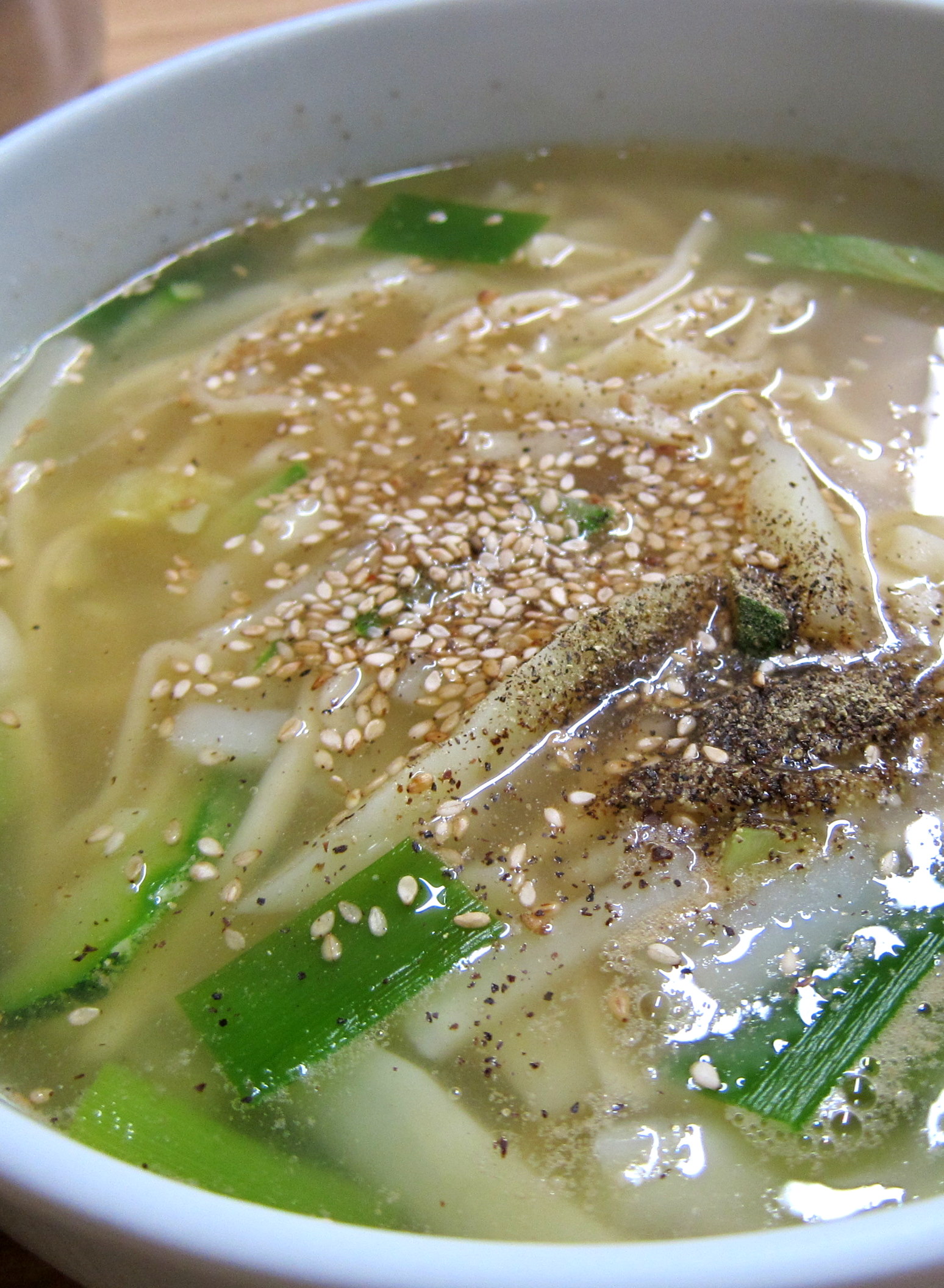
Of course we ordered it. It was the first kalguksu I’ve ever had. It’s a handmade, knife-cut noodle in soup, and this version has only noodle, broth, and vegetables. The broth was sweet and deep, the noodles were wonderfully chewy. But kalguksu is like fireworks, the first two minutes are great, then you ask yourself “just when is it gonna end?”. Now that I’ve had kalguksu, unless I get a two-minute-size bowl, I doubt I will gather enough curiosity for a second kalguksu in my life**.


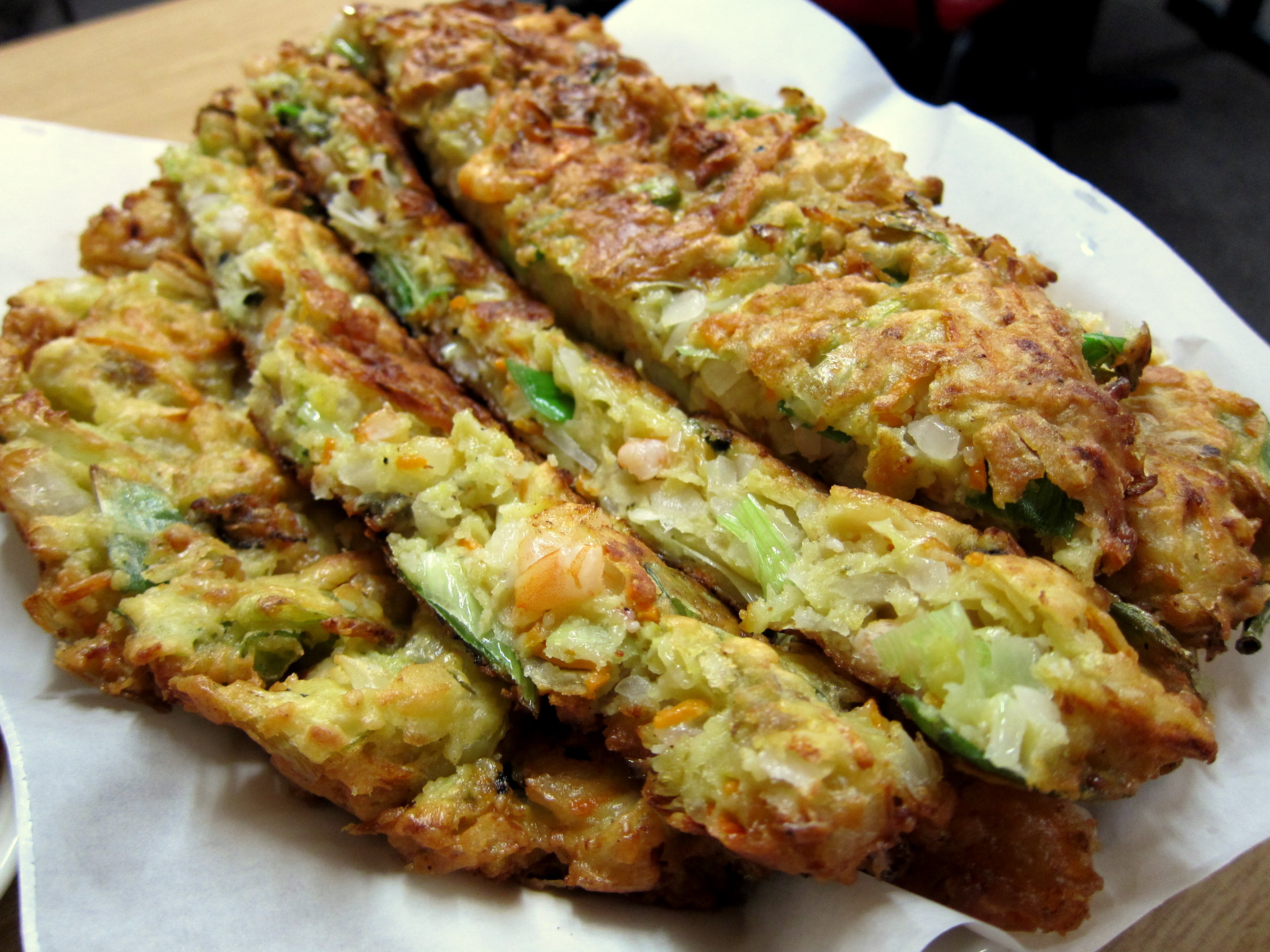
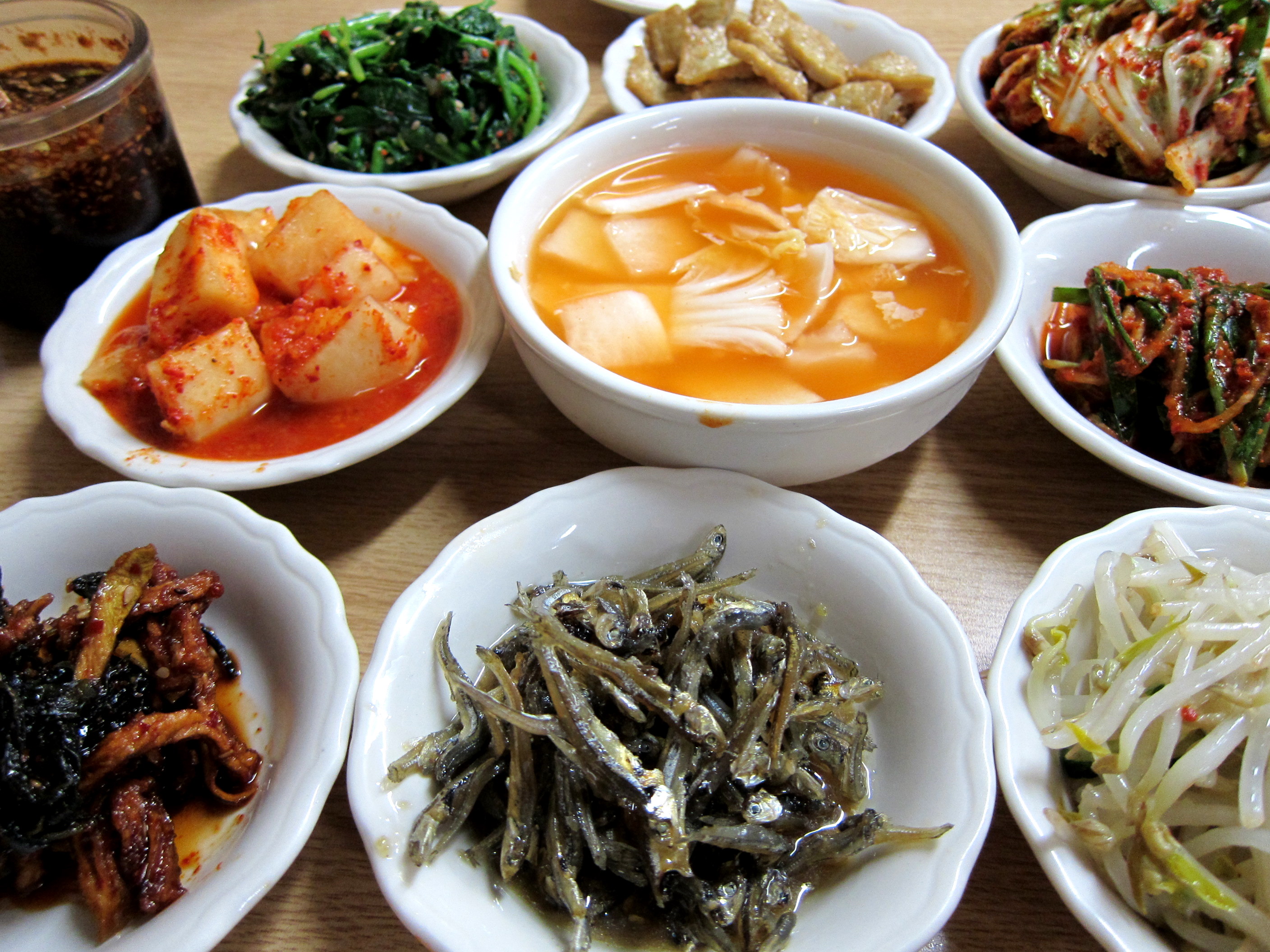
But kalguksu was still a memorable thing. In my Commis post I went off on the memorability of meals, and here I go again. Myungdong has something worth remembering: the portion (Unpredictability #2). Aaron and I each ordered a dish, him the kimchi duaeji bokkeum (김치 돼지 볶음, stir-fried pork with kimchi) and me the kalguksu, and we decided to share a pajeon (it was a really good pajeon too, thick, crispy, airy, and chewy, oh, and not oily). The usual banchans came. We were both starving like baby goats. Then the big stuff came, covering the whole table. A diligent hour later, in Aaron’s words, “it looks like we hadn’t eaten anything at all”. We looked at the old man with hopeful eyes, for boxes. Many boxes. Also in Aaron’s words, “he’s quietly laughing at us: gotcha, foreigners, didn’t know what you were getting into, did you”. He did laugh with us, a very congenial laugh of old men, as he poured the goods into the containers and loaded the containers into a cardboard box. Aaron had enough food for the next week. And Aaron is no timid diner.


Address: Myung Dong Kalguksu
6415 Bissonnet St
Houston, TX 77074
(713) 779-5530

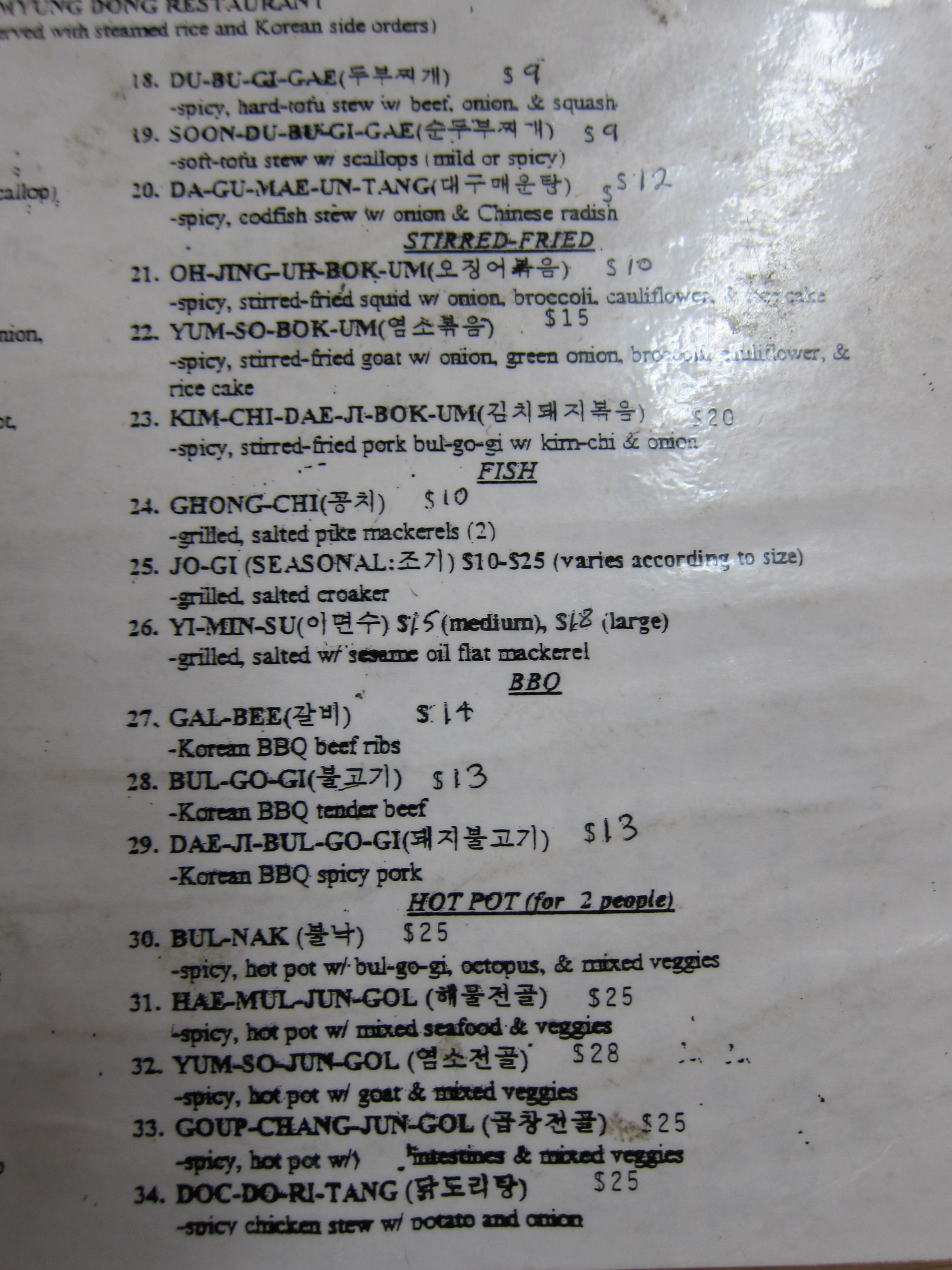
Dinner for so many more than two: $50. See Menu pages 1 and 2.

(*) It’s a neon green one-story house with no door sign. Very noticeable. If in doubt, ask the people in the same parking lot, they’ll confirm “The Chinese restaurant? Yes, that’s it there!”
(**) This is why I didn’t get kalguksu at To Hyang, although it’s one of their recommended’s. In a few ways, such as the homemade kimchis on the table, Myung Dong is similar to To Hyang. When my Korean is better, I’ll ask them if they grow herbs in the back too.

I had high expectation for Commis

October 13, 2011 By: Mai Truong Category: American, California - The Bay Area, Won't go out of my way to revisit


The difference between a bowl of ramyeon at Gomnaru and a six-course dinner at Commis is the ratio of satisfaction to expectation. This is how I rank my foods, which allows me to enjoy a Cheetos just as much as any prime ribs done well, perhaps even more. There are certain extremes, like the cafeteria at Berkeley and LBL, no matter how low I set my bar, they manage to wow me with their ability to ruin everything, including fried rice. Anyhow, I figured that it’s only respectful to the chefs that I go to a well applauded, top ranking restaurant with high expectation. But for Commis, I think my expectation was a bit too high.

The ingredients: fresh, interesting, nothing to complain about. The techniques: nothing I know enough to comment about. The combinations: hmm… An hour after dinner, Rob asked me: “How would you describe your dinner tonight in four sentences?” “Four?” “Three. Ask me again and I’ll say two.” The truth is I would rather sum it up in one: “I don’t remember”.

I can remember vividly the banh mi a vendor sold in front of my high school ten years back, the way its charred meatballs melted in my mouth, its yellow mayonnaise, its crumbs broke free into the motobike-exhaust-filled air. I can remember equally vividly the chicken crepe I bought a rainy night in Seattle four years back, the running warmth of its cheese, its springy softness, my frozen fingers. Just how was the poached egg, or the soup, or the dessert at Commis last Wednesday night? I can’t even remember what’s in the soup.


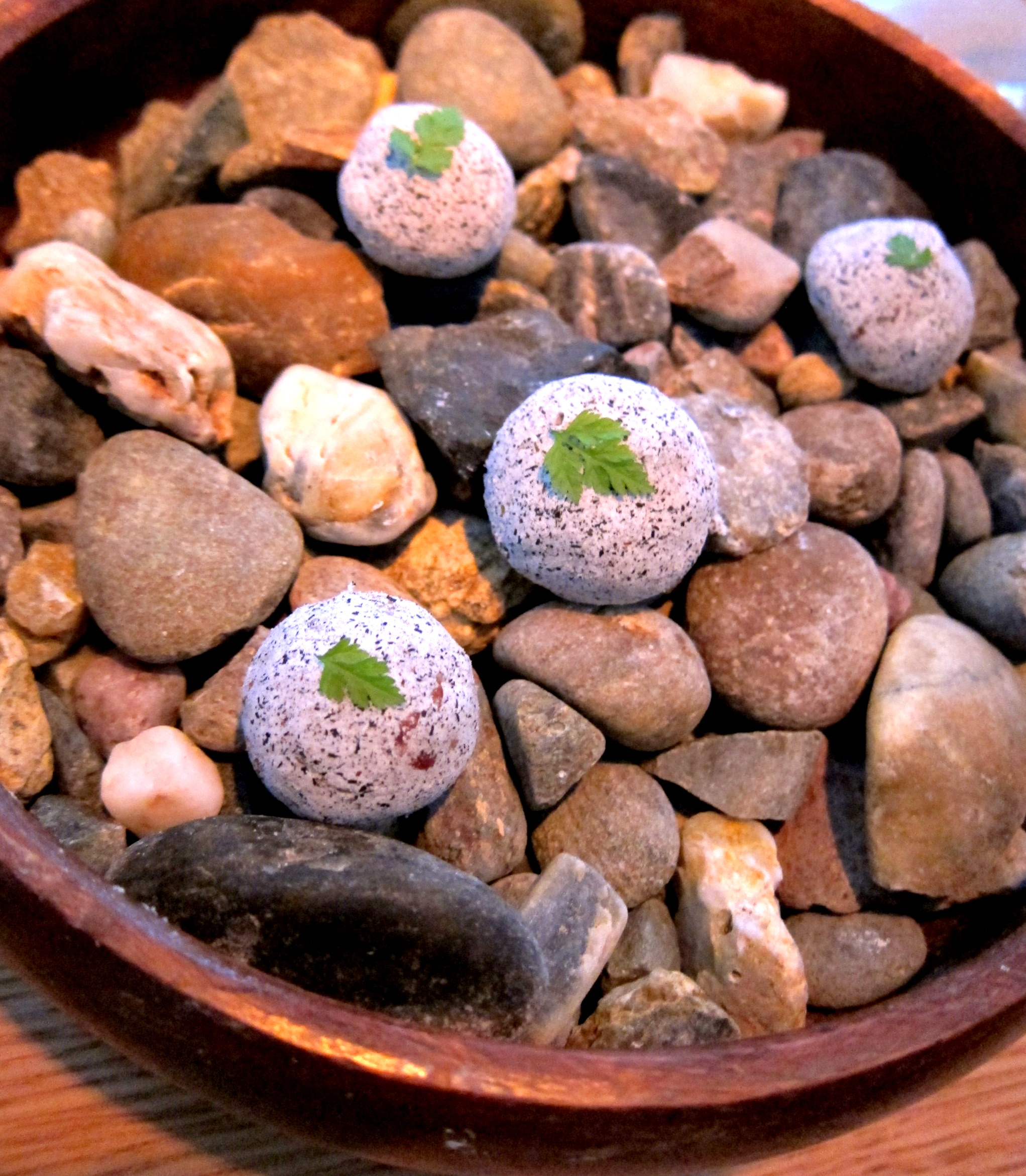
For every course, like at any fine restaurant, our hostess arrived with a gently toned, slurred-together string of ingredients, of which I could hear the first and the last words and consonants in between. I am not skilled enough to detect a sprinkle of tarragon just by tasting, so I base my judgement on the harmony. Scallop-like monkfish paired with grainy beans was the most discordant in texture, and its accompanying sauce was a bit too fishy and too salty. The opening cookie excited us in its rock-like appearance but hit a dry tune, I suspect a pebble size would be more palatable. The ending nectarine jelly invited little attention and tasted too sweet. Intermittently flared a few high notes, such as the dill weed‘s tanginess in a cauliflower-potato-salad combo, or the pistachio sauce tightened with a radish zest of horsegrass (one of these days I will find it on Google).


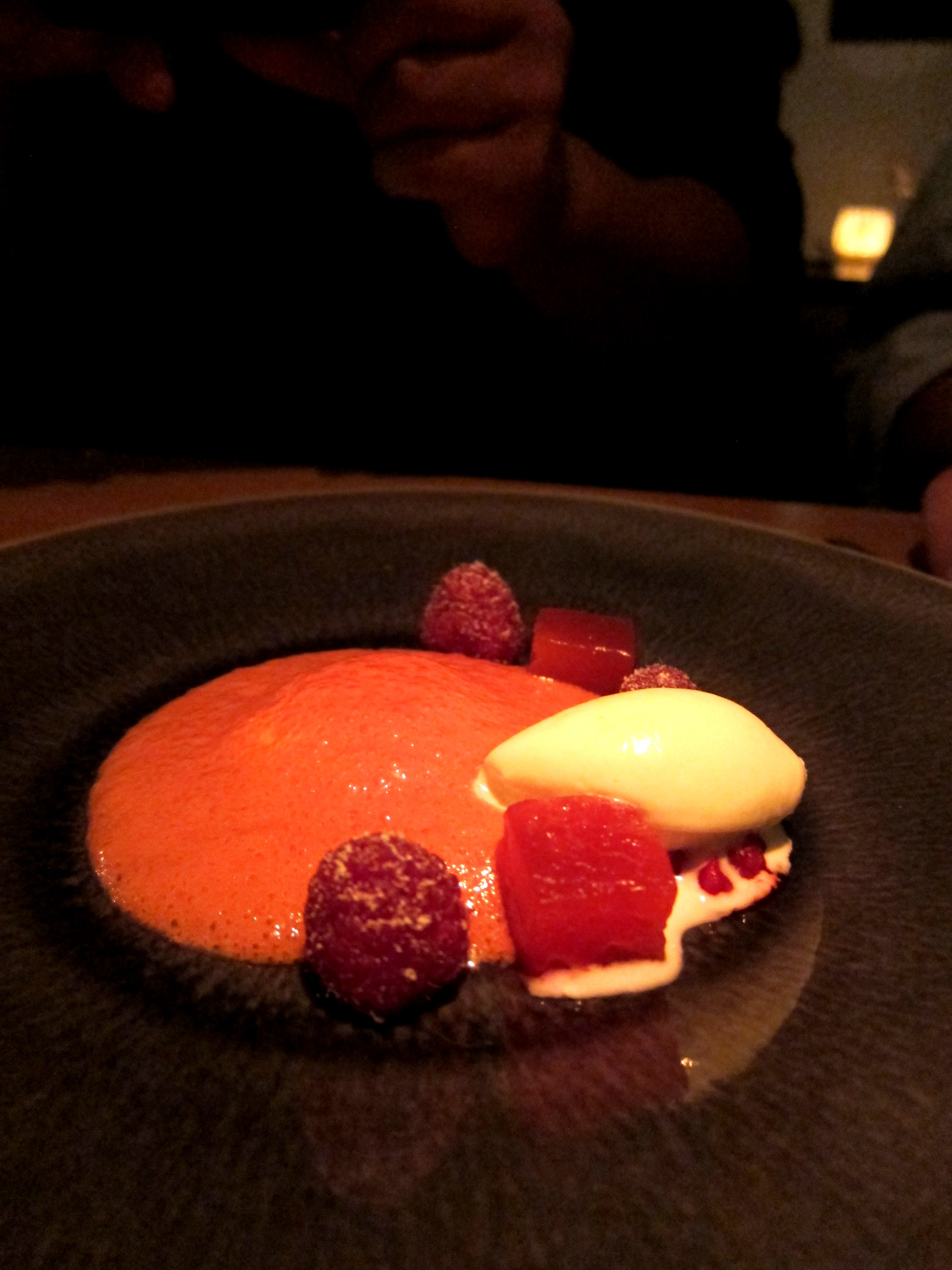
The most memorable piece of the night was a cucumber, green apple, and eucalyptus palate-cleanser. It was what it sounds like: a sorbet. The cucumber made a profound impression. I would trade the whole dinner for another shot glass of this. But the sorbet alone does not make the meal worth its hundred dollar value or make it stand out.

It was neither too good nor too bad. It was like a landscape painting with excruciating details and no focus. There could be a better night, but tonight’s impression was not enough to prompt a revisit, so there won’t be a better night. The next time I pass by Commis‘ signless glass door, I’ll just pass by.

Tags:

La Boca – 80 Percent Good

October 08, 2011 By: Mai Truong Category: savory snacks, Won't go out of my way to revisit


Bob’s and Dang’s comments on my Kiraku post prompted me to wiki “octopus”. In a way, I needed to remind myself that computers are wonderful creatures that don’t always give me incomprehensible error messages. Then I got reminded of my most memorable experience with octopus on a plate. It was in Santa Fe this past summer.

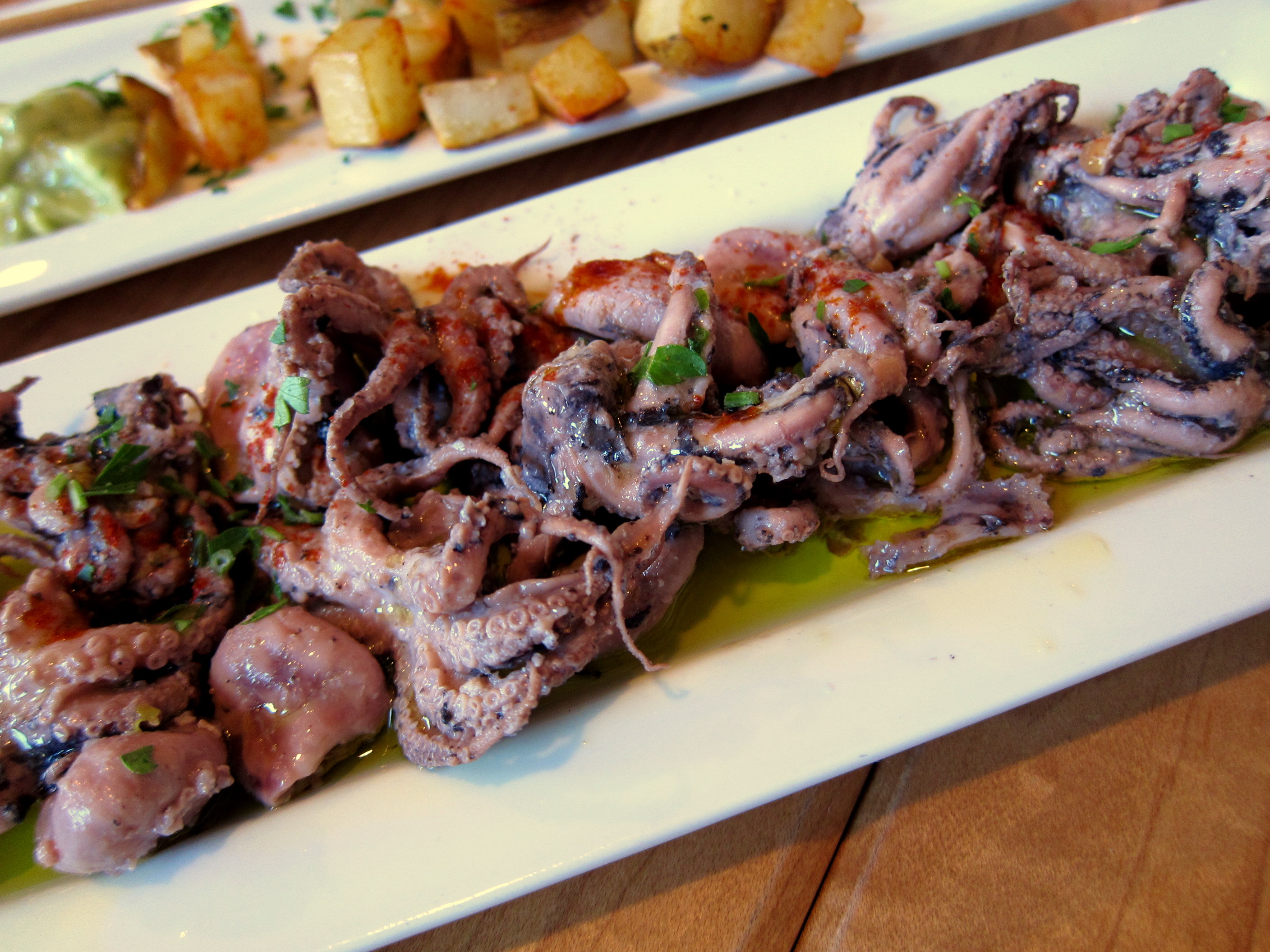
When there are good news and bad news, I prefer to hear the bad news first, so that’s how I’ll start describing La Boca. Their octopus was terrible. Octopuses are chewy things, and I have never had any octopus as opposite from chewy as this one. Pulpo, as called on the menu, sliced and dressed in pimenton, olive oil, lemon juice and seasalt, sounds like a wonderful refreshment after touring Santa Fe under the flamboyant sun. Well, if you give this octopus to a green octopus-looking alien who hasn’t the slightest preconception of what octopus tastes like, he would most likely go home defining octopus as beans. Yes, it was dense and grainy like bean.

Blame no one but ourselves for ordering raw seafood in the middle of the desert. The rest of the meal, here comes the good news, was tasty.


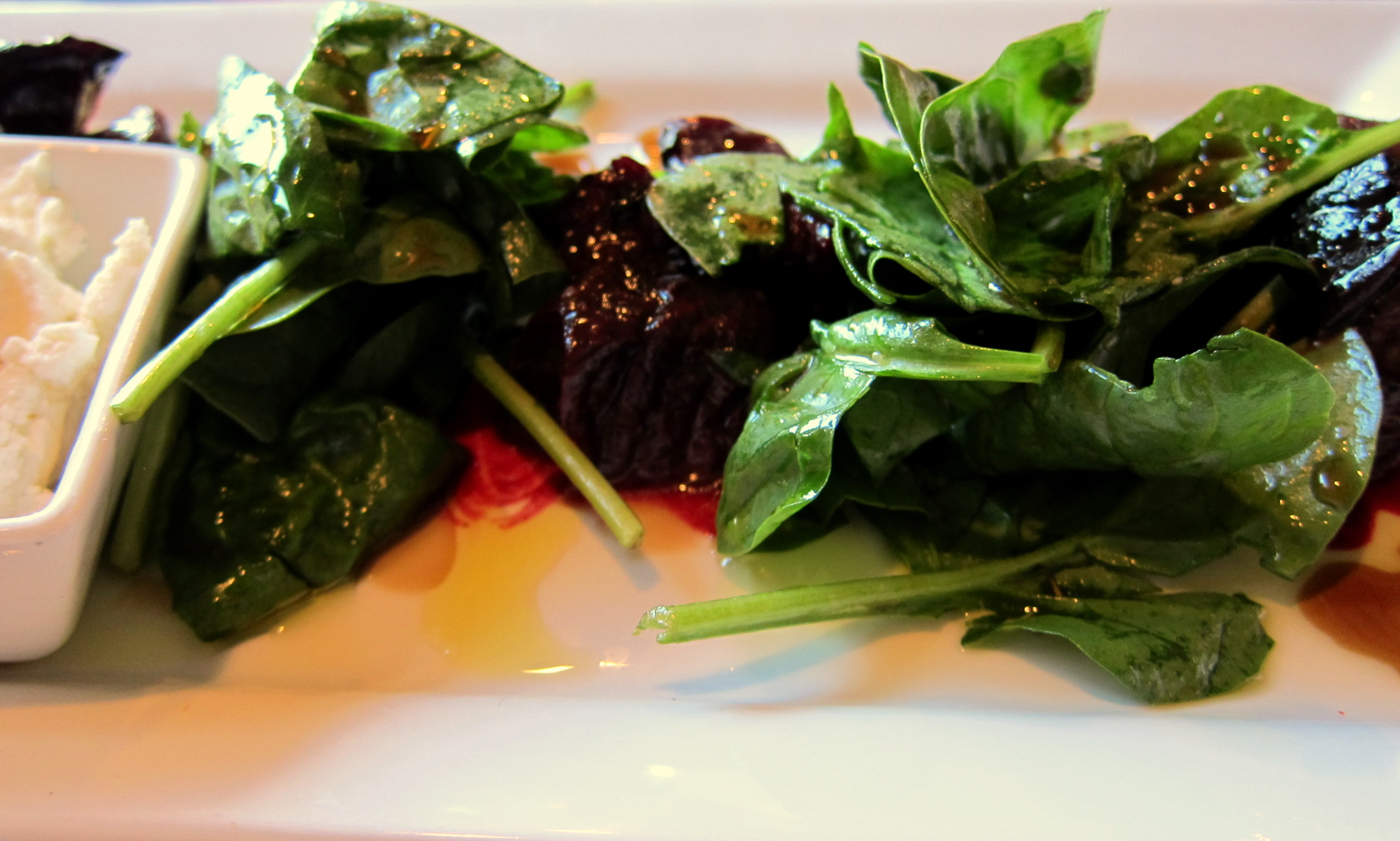
Spinach salad with roasted beets, goat cheese, red onion, pomegranate vinaigrette. I’ve never had bad roasted beets (I would say the same thing for octopus prior to this day), and pomegranate vinaigrette sounds just right.


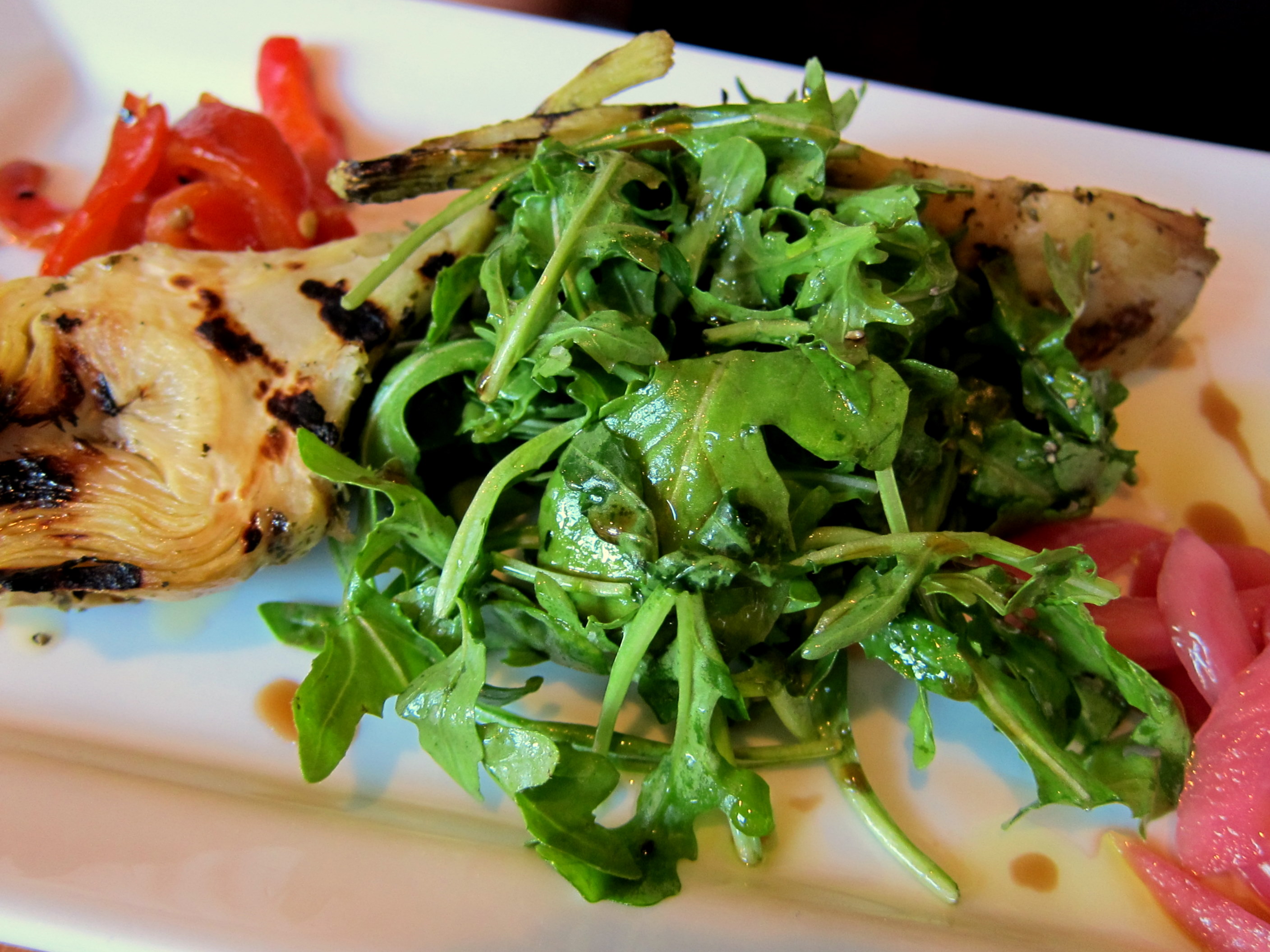
Grilled artichoke salad with jamon Serrano, arugula and aged cherry vinaigrette. Grilled artichoke is nutty, the right kind of nutty. And again, how I like fruity vinaigrettes!


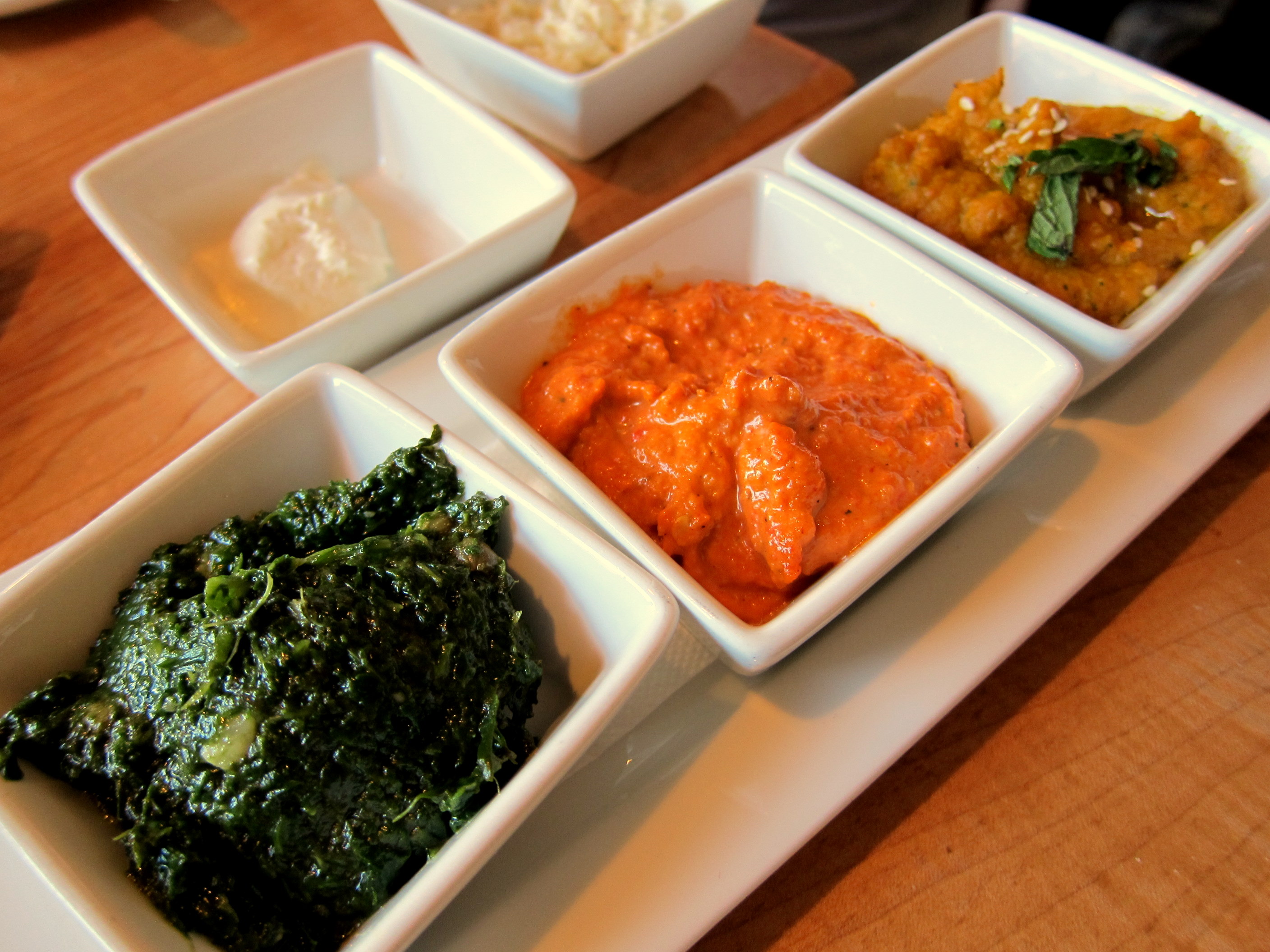
Tapas trio: hummus, red pepper-almond spread, goat cheese, spinach, raisin, capers, and flatbread to scoop. Me most impressed with the spinach dip while the girl friends fell for the spicy almond spread.


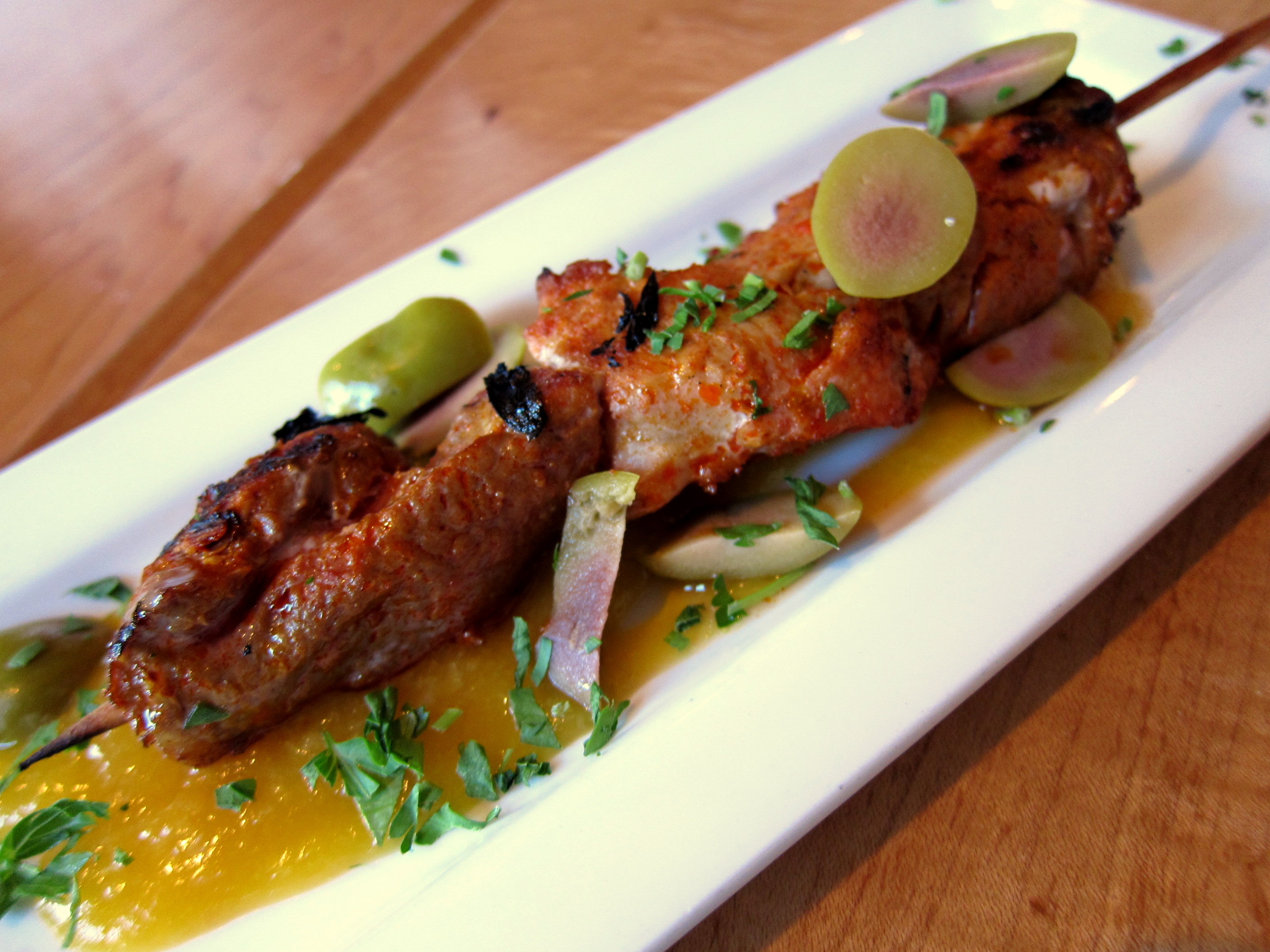
Pincho de puerco: free range pork skewer with apricot honey and green olives. It would have been a great one had the pork not been so chewy. The wrong kind of chewy.


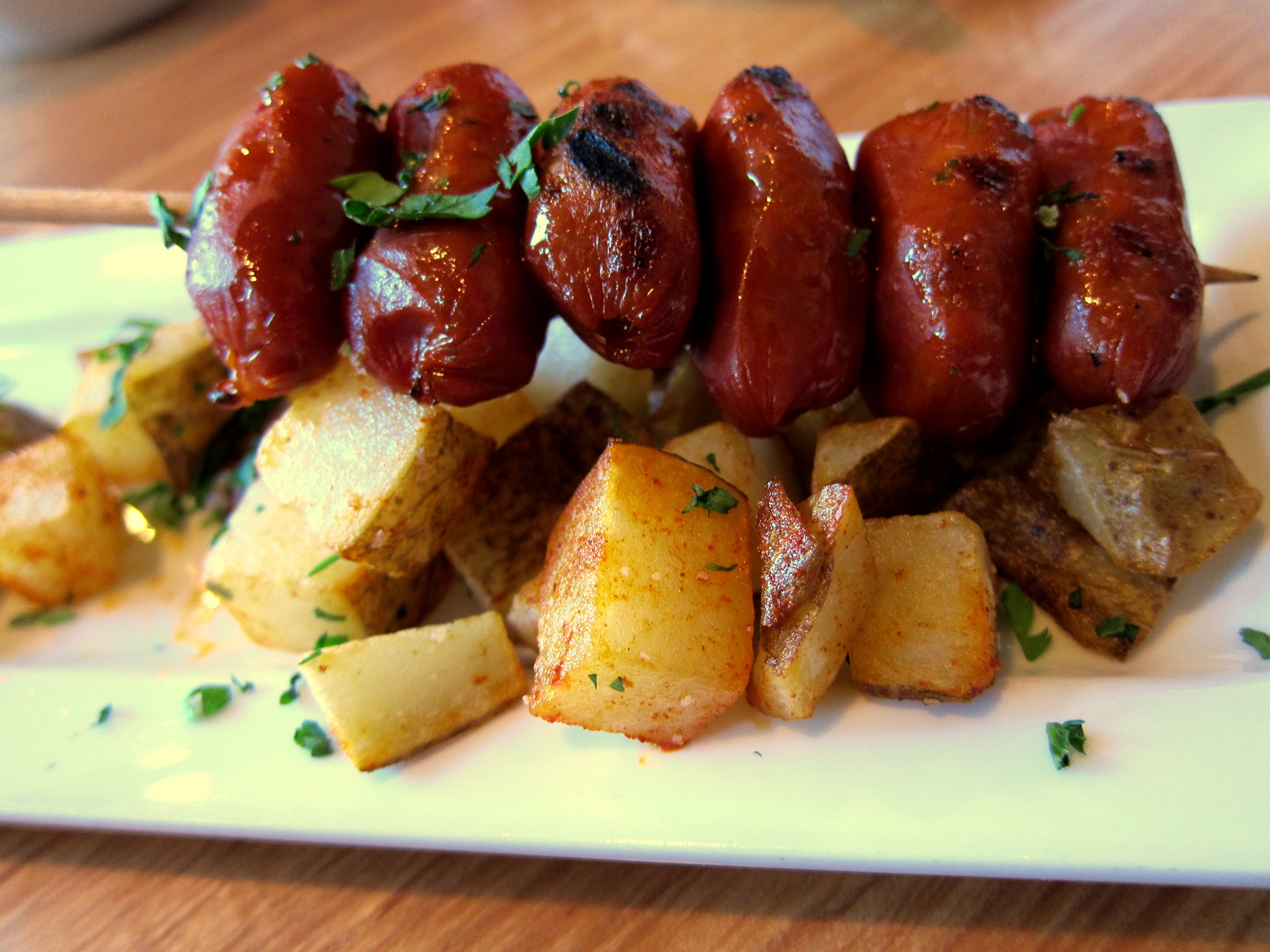
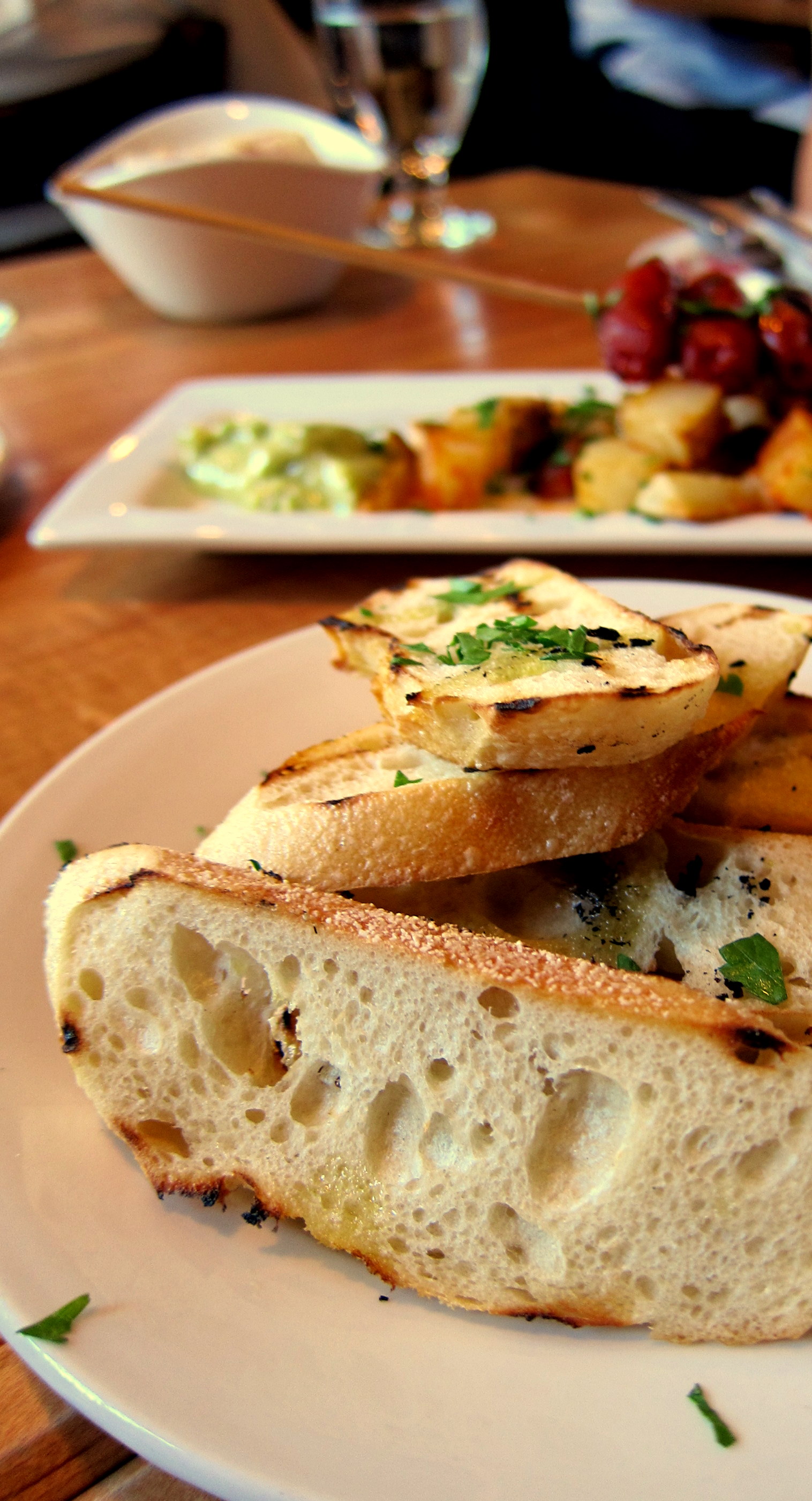
Cantimpalitos: grilled mini chorizos, garlic aioli, and potatoes. Hyunmi liked the potatoes, and that’s all that matters. 🙂


It’s one of those meals that makes me consider going vegan: the pasture was indeed greener there.

Dinner for four: ~$70 (We had to run for the last bus so we couldn’t even wait for the check…)
Address: La Boca
72 W Marcy St
Santa Fe, NM 87503
(505) 982-3433

Korean chilled noodle soup with a few Vietnamese twists

September 27, 2011 By: Mai Truong Category: Korean, noodle soup, RECIPES, Vietnamese


Sometimes my craziness surprises myself. I woke up one morning, reflecting that the week’s been warm, and decided to make mul naengmyeon (물 냉면). Weeks earlier, I bought the buckwheat noodles but never had the time to cook, or the mood. Now I still don’t have time to cook, but today is the day. I remember the main ingredients of a true Korean naengmyeon, but just to make sure that I don’t have them, I look at Maangchi’s recipe anyway.

Beef bones? No. Mushroom? No. Dried anchovies? No. Kelp? No. Yeolmu kimchi juice? Hah. In my dreams. I don’t even have cucumber. Am I going to the store? Of course not. The wind might blow away my cooking mood, which is already rare as it is. Besides, I have a blind confidence that what I do have will make a fine bowl. The deaf ain’t scared by gun fires, they (we Vietnamese) say.

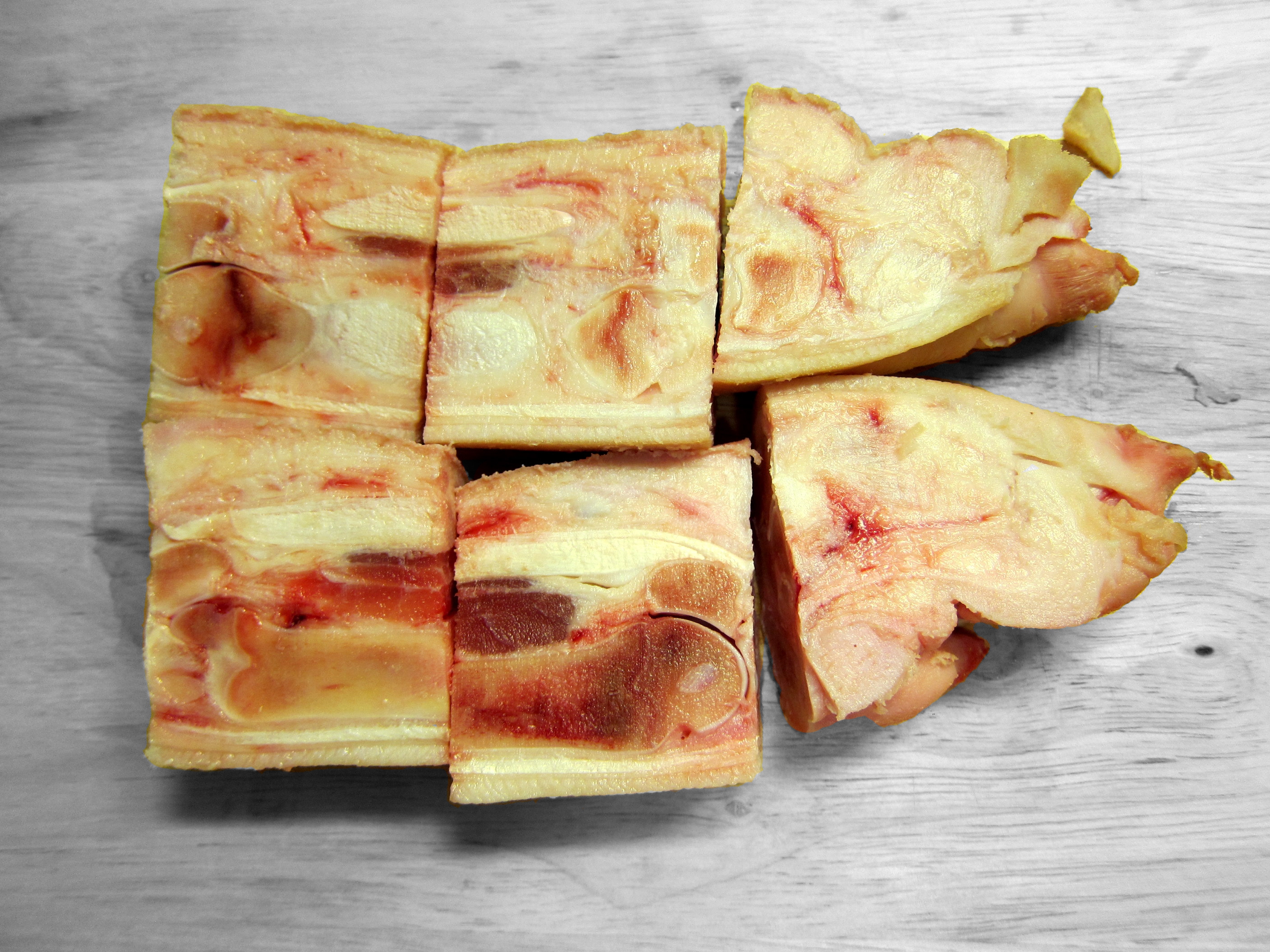
Naengmyeon has three fundamental components: the broth, the buckwheat noodle, and the toppings. The broth needs to be clear and slender. To get the sweetness, I substitute beef bones by pig trotters. They have plenty of bones, and unfortunately also plenty of gelatin, but as long as I skim off the fat while the stock boils uncovered, my broth is clear. In place of dried anchovies, I use fish sauce. So far so good.


The tricky part is the yeolmu kimchi juice, or some kind of dongchimi. Naengmyeon, unlike all other noodle soups, can be eaten cold because the tangy, bitter kimchi juice freshens the otherwise fatty stock. More acridity comes from the mustard, but I don’t like mustard so I (coincidentally) miss it from the noodle package. Anyways, no dongchimi in sight, what to do? I just use normal kimchi. Currently I have a jar of cabbage kimchi, but any kimchi would do. The fermented, spicy, and sour flavor is our goal. Churn a handful of kimchi in some cold water, then mix with the cooled broth to taste, it comes out just as well had it been yeolmu kimchi juice.

The noodle: boiled and cooled.


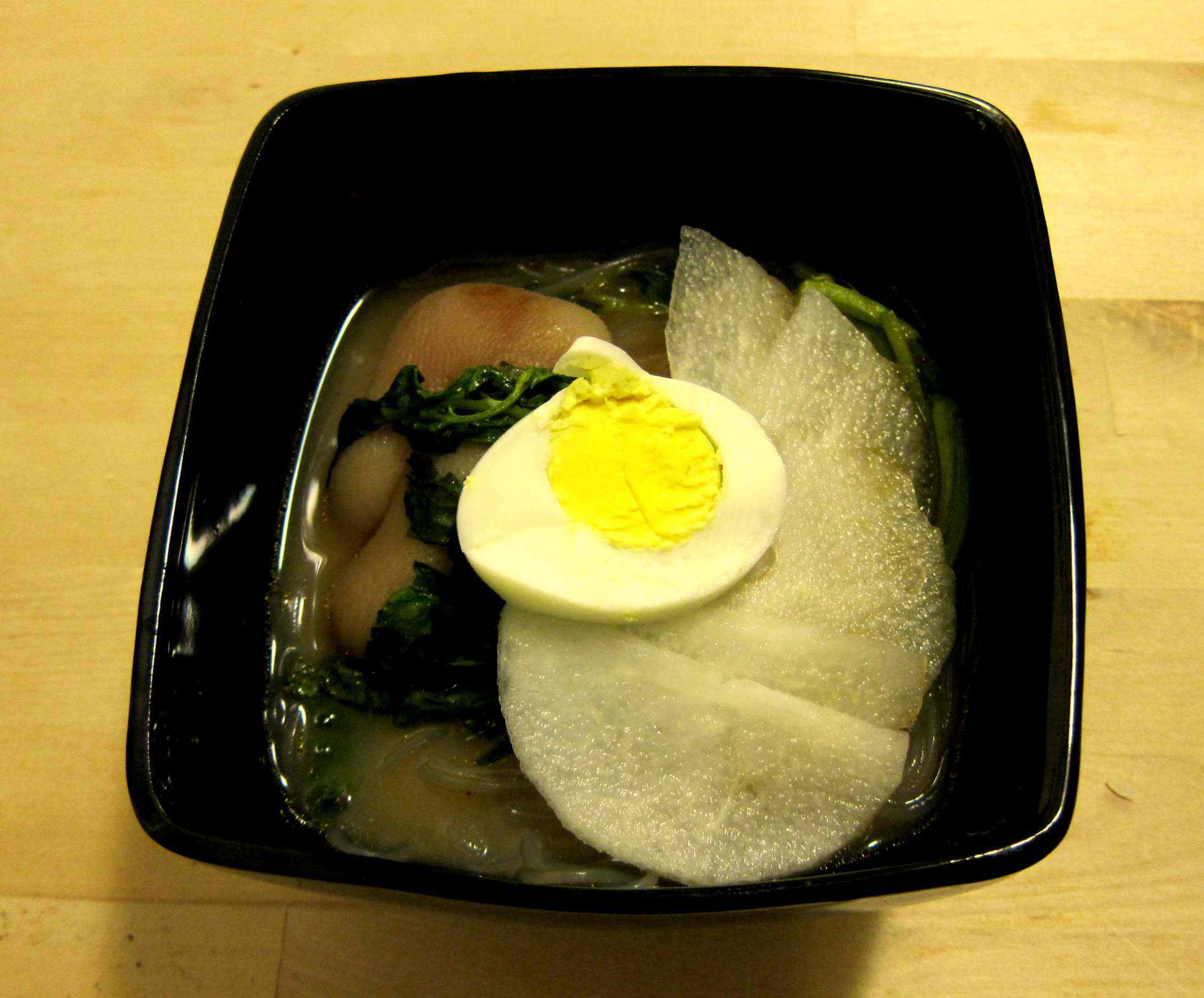
The toppings. Because I’m making the soup version, mul naengmyeon, I don’t need the pepper flakes, pepper paste, ginger, and onion, all of which I don’t have, to make the spicy sauce for the bibim nangmyeon. (You may also wonder what kind of kitchen doesn’t have onions.) Mul naengmyeon toppings are simple: hard boiled egg, cucumber, and Asian pear. The cucumber and the pear, as you might guess, are for crispiness and coolness. I don’t have cucumber so I double the pears. In fact, there’s no such thing as too much pear. It’s sweet, crunchy, and refreshing. It defines naengmyeon.

Another twist I came up with to maximize the freshness: add watercress. Right before serving. Not only does it herbalize and lighten the broth, the porous stems complete the textural spectrum. Just out of curiosity, I also try it hot. Then it’s just jokbal myeon, or miến giò. 😛 In one single bowl is every ingredient that I love: chewy noodle, pig feet, kimchi, and pears. Delicioso.

Mai’s extremely simplified take on mul naengmyeon:
Jokbal Mul NaengmyeonMiến Giò Lạnh
Ingredients: (6 servings)
– 2 lbs pig trotters
– kimchi
– buckwheat noodle (naengmyeon, or miến kiều mạch)
– 1 Asian pear
– 3 hard boiled egg
– watercress (optional)
– 2 tbs Red Boat fish sauce
– Other possibilities: chrysanthemum greens and night scented lily (bạc hà) to clarify the broth.

Preparation:
– The broth: Put washed pig feet in cold water with a pinch of salt. Bring to a boil. Dump out the water, rewash the pig feet in cold water. (This first boil is to get rid of the piggy smell, said Little Mom.) Boil the trotters again, uncovered to keep the stock clear. Skim off the white fat layer frequently. Boil until tender. (This second boil takes about 2 hours.)
—- Add fish sauce near the end. Too much fish sauce would muddle the broth. I use 2 tbs fish sauce and some salt to keep it light. No sugar.
—- Mix a handful of kimchi with cold water, then add to the cooled broth. For less sourness, add the kimchi directly to the broth right before turning off the heat.

– The noodle: boil 3-4 minutes, then rinse under cold water to increase the chewiness and remove the starch.

– The toppings:
—- One or a few slices of hard boiled eggs.
—- A few thin slices of Asian pear. A trick I learn from Maangchi’s recipe: keep the pear slices in cold sugar water to preserve its color and sweetness.
—- A few sprigs of watercress.

Serve cold: refrigerate for 20 minutes or add crushed ice.
Serve hot: like every other noodle soup.


When was the last time I made noodle soup? It was bún bung, exactly one year ago! (Sep 25, 2010 – Sep 25, 2011). Ironically, real bún bung calls for pig feet, and I had to use beef bones. Now real naengmyeon needs beef bones, and I use pig feet.

I think I’ve vietnamized this unique Korean noodle soup enough that it’s qualified as a Vietnamese dish to submit to Delicious Vietnam, a monthly blogging event created by Anh of A Food Lover’s Journey and Hong & Kim from Ravenous Couple. In fact, that’s just what I’ll do. Thank you Bonnibella for hosting the 18th round. 🙂