Flavor Boulevard

We Asians like to talk food.
Subscribe

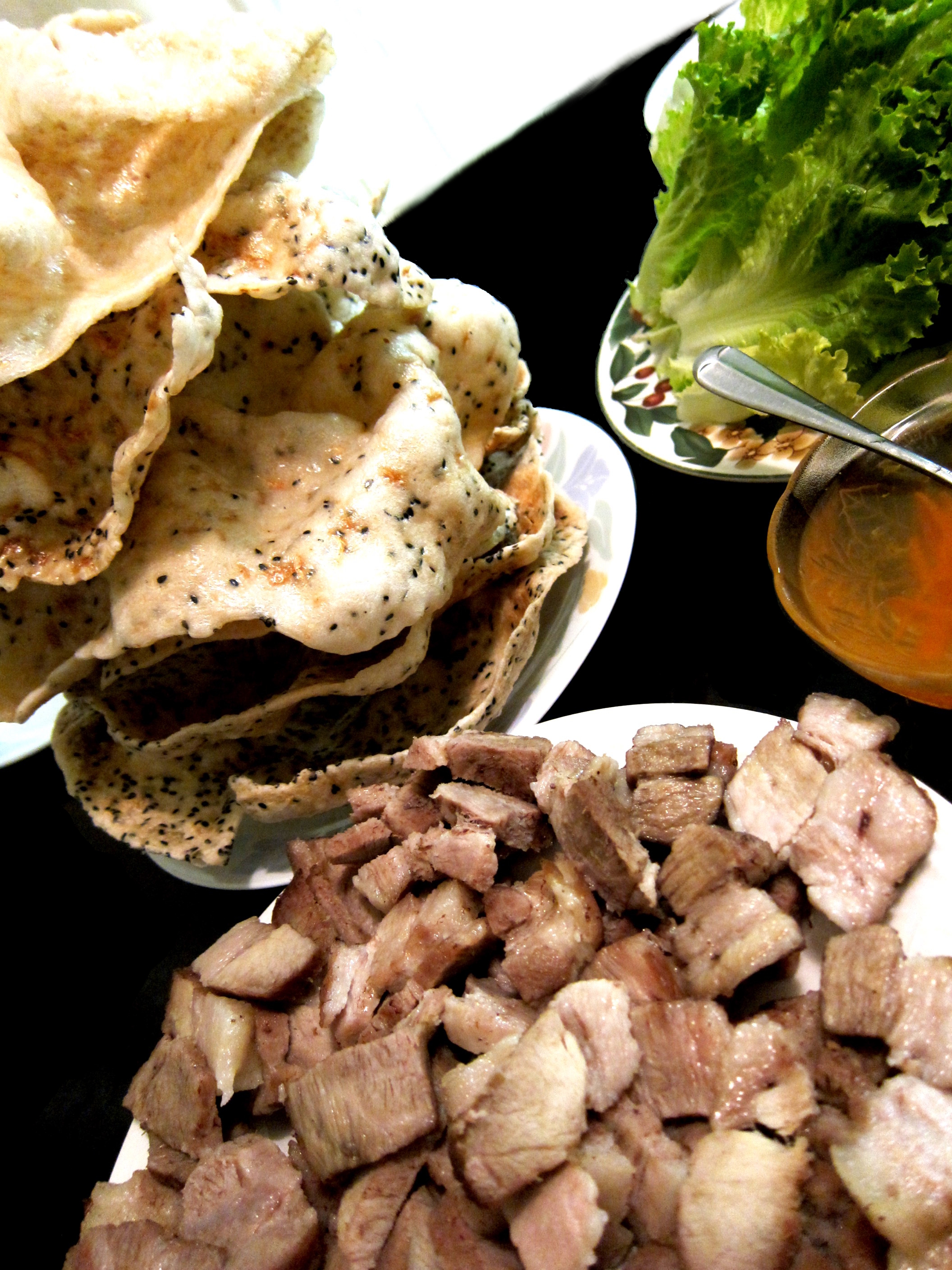
Central Vietnamese rice cracker roll (bánh đa cuốn thịt)

January 22, 2012 By: Mai Truong Category: Central Vietnamese, RECIPES


It’s the 29th of the 12th month in the lunar calendar. The last day of the Year of the Cat. The last day before Tet officially starts. But the preparation for Tet is also Tet. Having a good time is also Tet. Being home is also Tet. 🙂 One of the best parts of being home is not just getting to eat a lot. It’s getting to eat a lot of food that I would never have known otherwise. This time, Little Mom introduced me to the Central Vietnamese fun of a rice cracker roll.

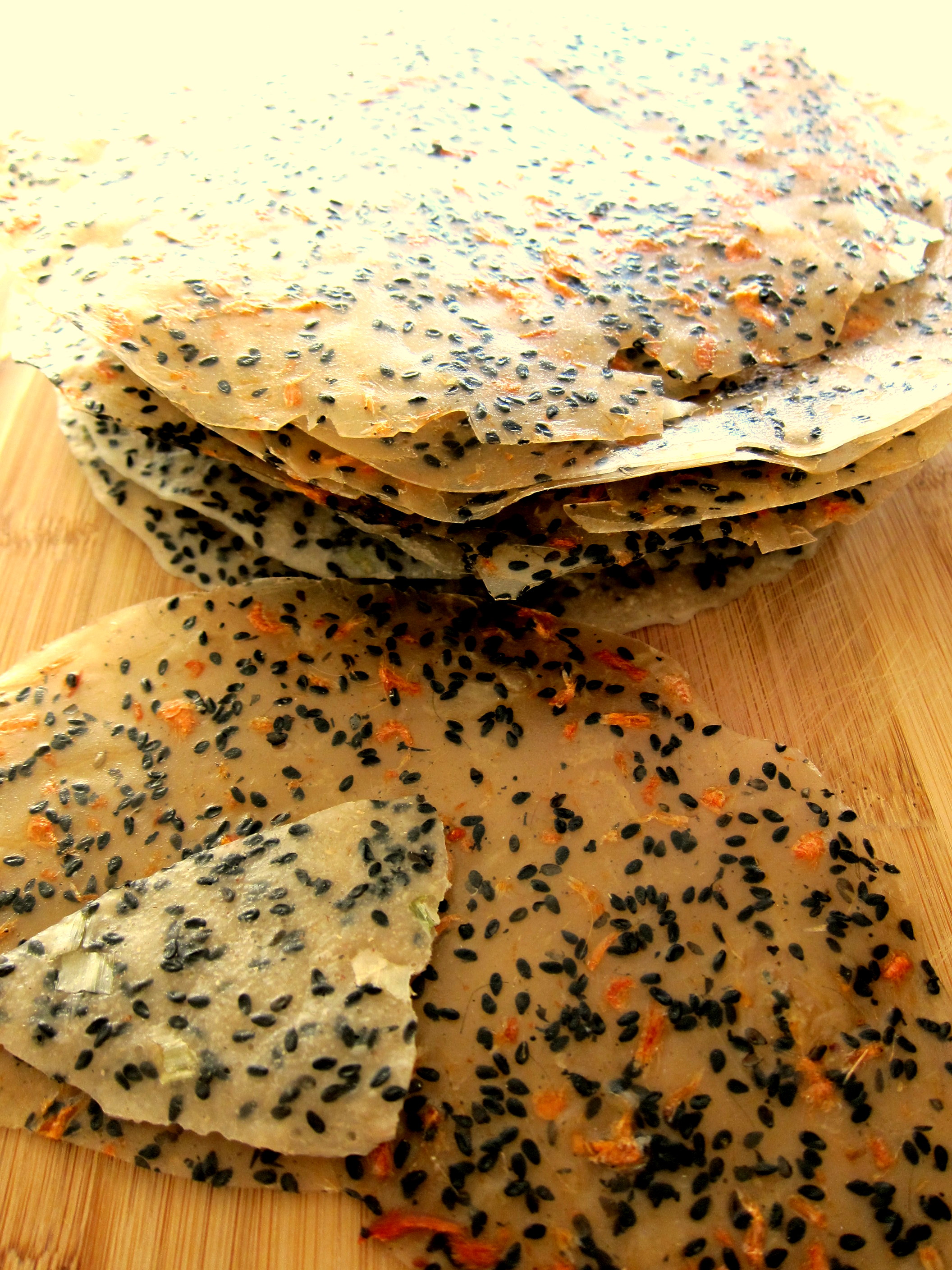
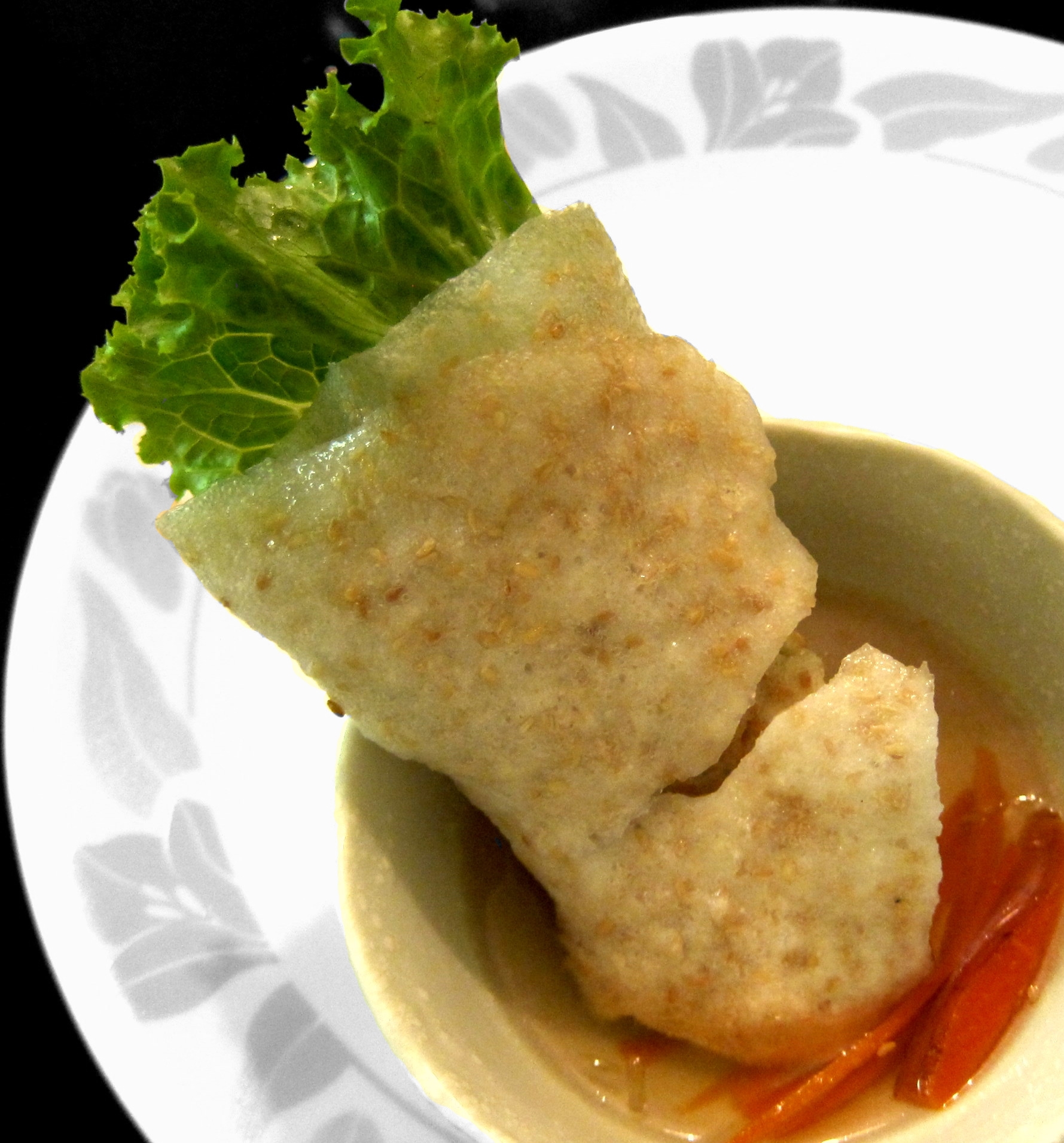
When I first heard the name, I thought I heard it wrong: how can you make a roll out of a stiff, crunchy, airy rice cracker (which we call a bánh tráng nướng in the South, or bánh đa in the North)? Simple. You dip it into water. Just like you would with the normal dry rice papers to make gỏi cuốn or chả giò.


Except in this case, you get an extra thick roll with some crunch and air in the bite, and the nuttiness of thousands of sesame seeds ingrained in every bánh đa. The filling is simple, too: boiled pork and fresh greens. Then dip it into the ever-flavorful mixed fish sauce. Mmmmm… Delicious Lunar New Year!


P.S.: Toasting a rice cracker on open fire is cool but not exactly easy to do (for example, I only have an electric stove). So we toast them in the microwave, 1 minute each side for even crunchiness. 😉 It’ll pop like firecrackers in the mouth. 😀

My twelve best meals in the Year of the Cat

January 20, 2012 By: Mai Truong Category: Opinions

Appetizers from Saigon Buffet

Today marks the 28th day of the 12th month of the Year of the Cat, and it’s not the Year of the Rabbit because I’m Vietnamese. This year started with a piping jeongol at Casserole House and will be ended with a cup of Tieguanyin in bed. This year my luck has brought me new friendships with some admirable people and bolstered old friendships that have last almost a decade. I’ve eaten more, and I’ve disliked more. But there are meals that I truly like. In this list of no particular order, the setting and the price are secondary to the taste, and not all of the dishes are breathtaking (but they’re good). These meals are the best because each of them either has something that I remember (most often the dessert :D) or was shared with someone that I like. 🙂

It would be unfair to include Little Mom’s meals in this list, they’d take up the whole list. 🙂

1. My first (and still only) Cambodian dinner at Battambang, Oakland. I’m not sure if I should continue exploring the Cambodian front. If I do, it’d be more for linguistic purpose than culinary adventure because the tastes are too similar to the typical Vietnamese menus. Regardless, what makes this meal standout was the dessert: jackfruit in warm coconut milk, simple but so satisfying.

2. A less typical taste of Huế at Hương Giang, Houston. Most Vietnamese shops in the States feature Southern Vietnamese cuisine, the most Central Vietnamese things one can get are bánh bèo and bún bò Huế. Hương Giang doesn’t have a strong outlook, but its food is memorable.


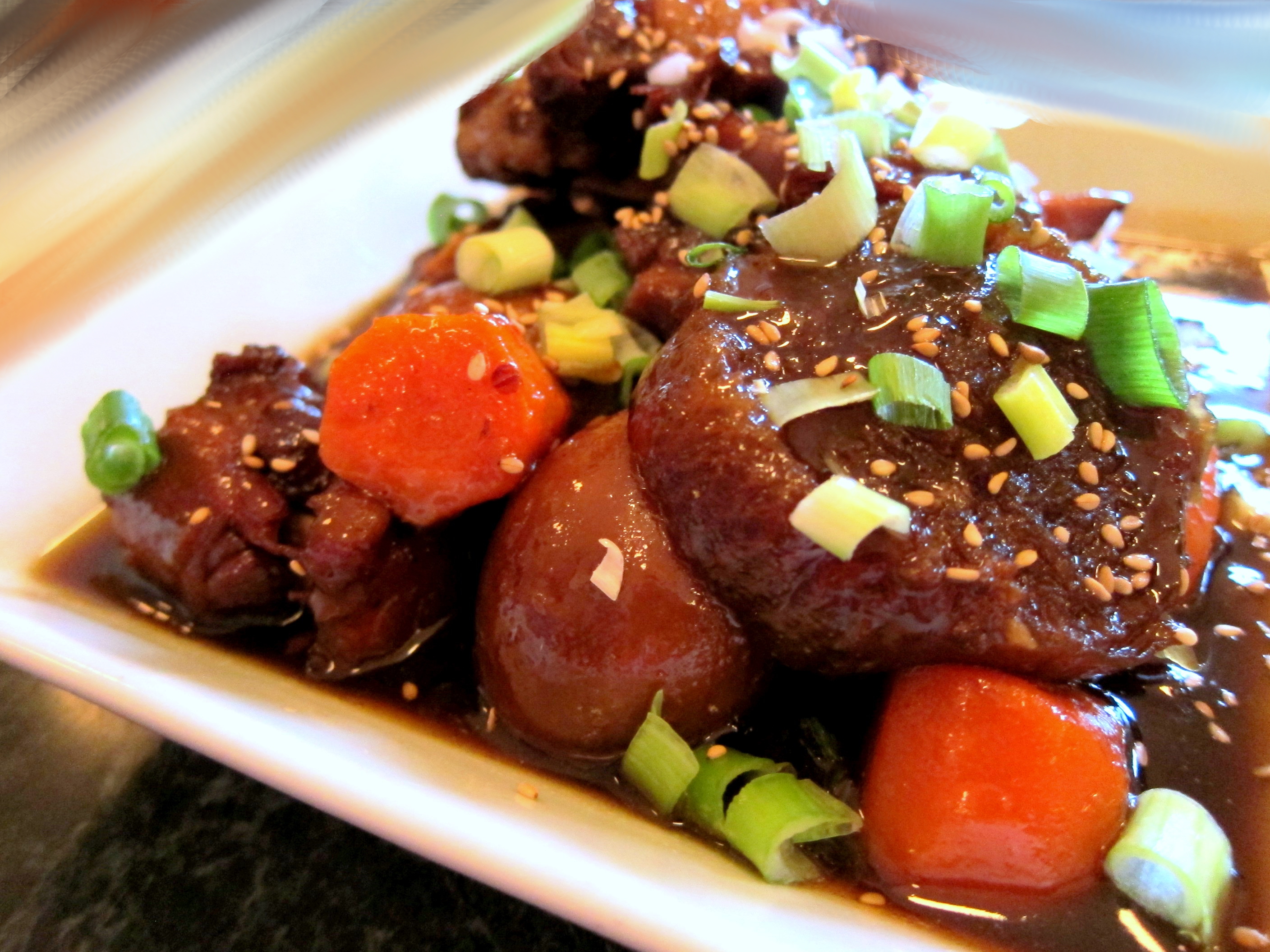
3. Dining with the culinary experts at To Hyang, San Francisco. I stayed quiet the entire night to listen to everyone’s stories and wondered when I’ll know as much as they do. An educational dinner with extra-rich braised oxtail and extra-fresh pork belly salad to boost.

4. Lunch at the Super H Mart food court, Houston. It’s fast and tasty. The jajangmyeon (Korean black bean sauce noddle) from Daddy & Daughter is the best jajangmyeon I’ve ever had. The food court doesn’t charge less than the restaurants, but you could say that the convenience makes up for the ambiance.

5. Lunch at Saigon Buffet, Houston. Sadly, this place has closed.

6. Dinner at the Belgian restaurant La Frite in San Antonio. The crowd was huge, the food was slow to come, but everything tasted as it should. Its expected perfection is memorable.

7. Probably the most cost-effective three-course lunch anywhere, at Il Piatto, Santa Fe. Another perfect meal where everything was delish. And the company was great. 😉 I would include in this list the windy afternoon when Yookyung, Jen, Hyunmi and I lazed out at the rooftop bar overlooking Santa Fe, but I don’t think margaritas and Coke count as a meal.

8. Dinner with Rau Om in Palo Alto. There’re too many memorable things here to list, so please just click on the link. Oh, and I would really like me some amazake now.


9. Dinner at the House of Prime Ribs, San Francisco. It was fun, the company was excellent, the food was hearty, the vegan bread stick was the best.

10. My first time at an izakaya: Kiraku in Berkeley. I can still feel the crunchy lotus root chips and corn fritters.

11. The gargantuan dinner at Myungdong Kalguksu, Houston. The atmosphere cannot get any more family-like. They don’t have a consistent opening hour, but they have the best pajeon (Korean pancake) in town.

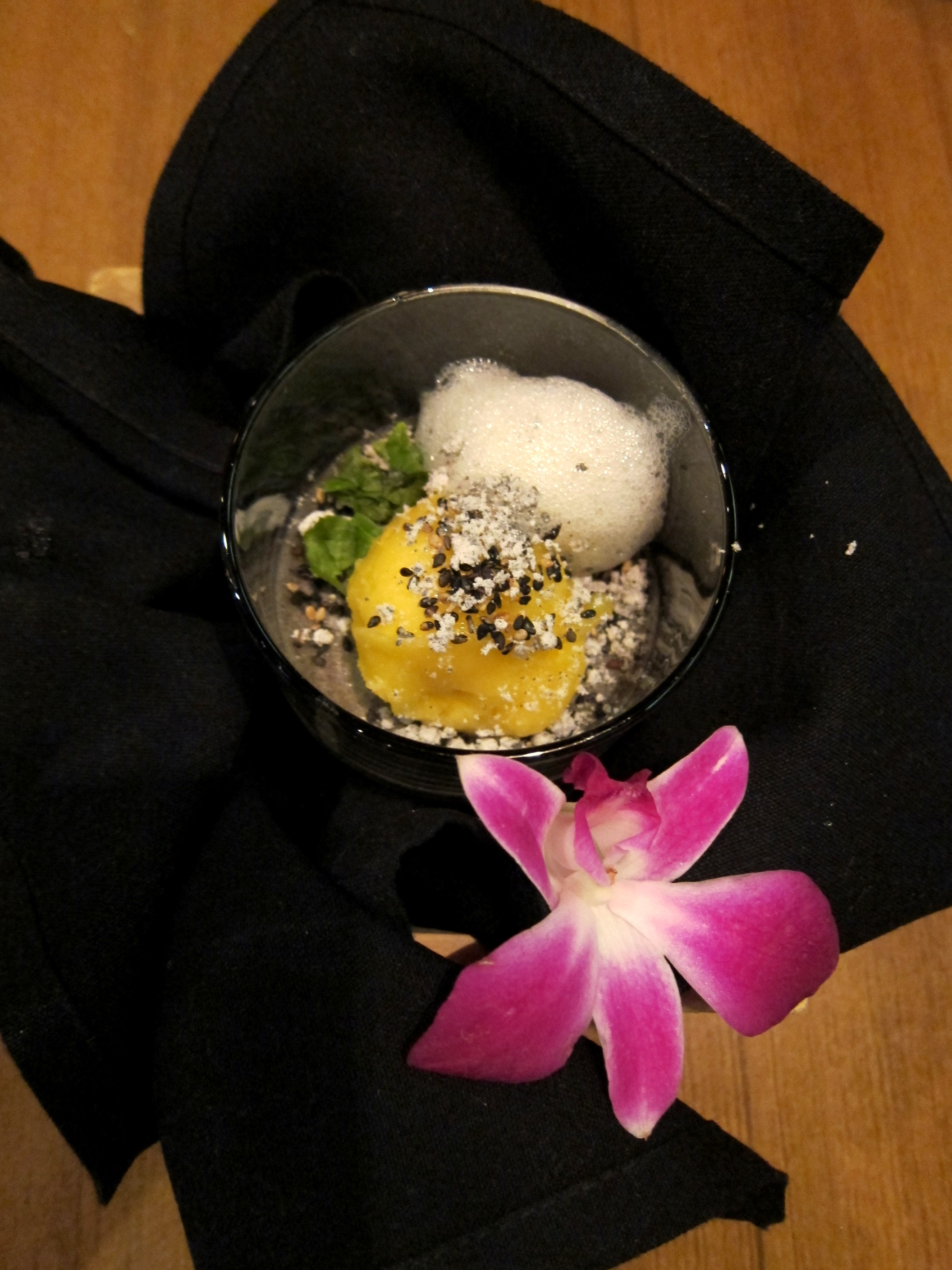
12. Christmas Eve dinner at Kata Robata, Houston. Everything is good, but the sesame panna cotta was the best dessert of the year. 🙂

Thank you, Cat! And welcome, Dragon!

Tags:

Rustic Italian in the old tavern

January 14, 2012 By: Mai Truong Category: Comfort food, Houston


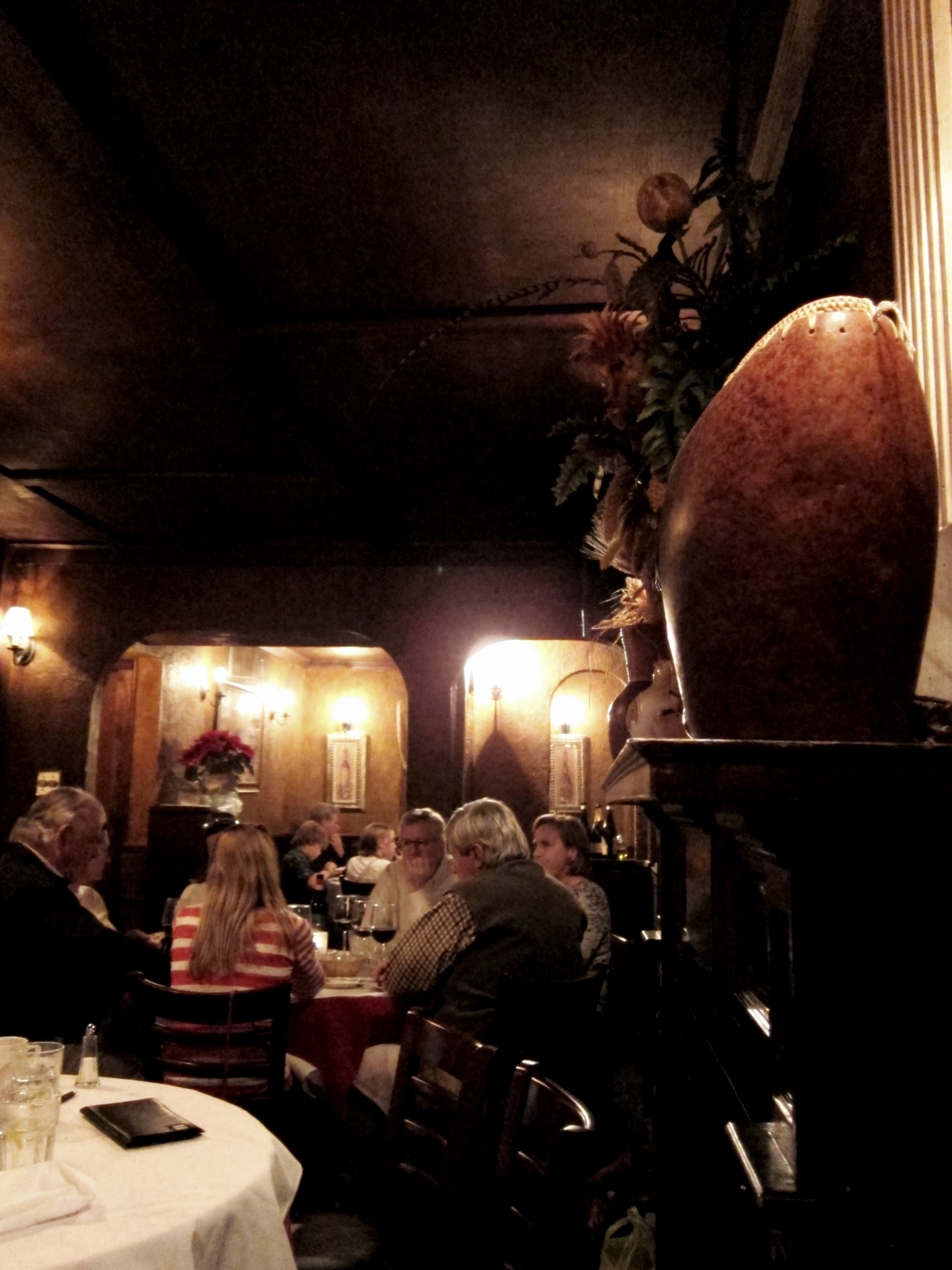
The 7-year-old Antica Osteria is much too young to be one of “the nurseries of our legislators”, but it sure feels like one: warm brick walls, dark wood work, an old house nested in the green, sleepy residential area northwest of Rice University, and a patronage mainly composed of old white men. The smell of books might have been replaced by the smell of pasta and cheese (this place was previously a bookstore), but Chef Velio Deplano and his partner Ray Memari have kept Antica Osteria in that hidden, rustic, peaceful feeling of a bookstore. The gentle orange light made me excited like a drifting sailor seeing a lighthouse.


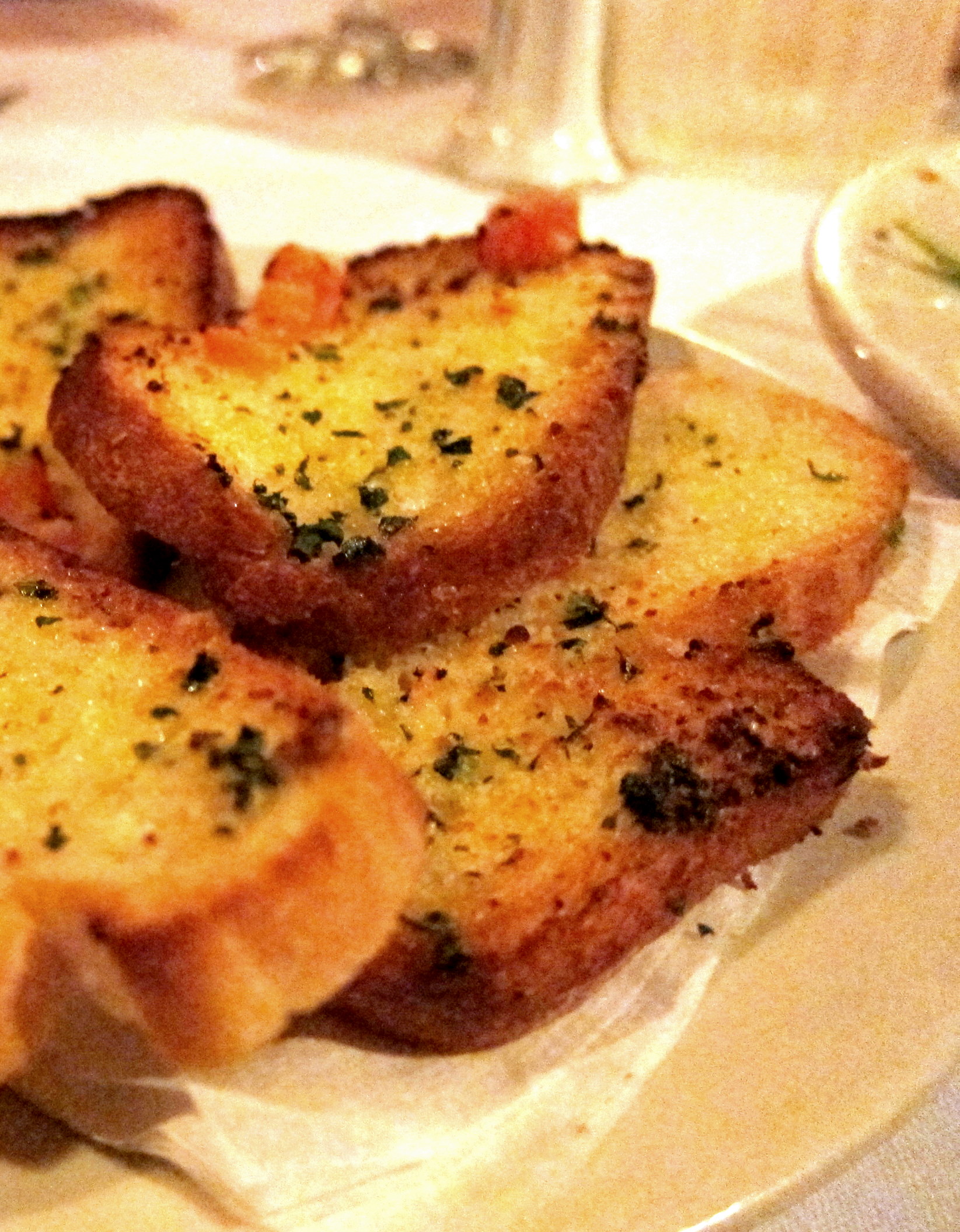
Normal bread and butter, not bread, vinegar and oil, accompanied our post-ordering conversation, followed by some airy garlic bread. A tiny voice in some little corner in my mind whispered that the garlic bread was waiting for the salad to travel down the pipe, but who could resist such beautiful orange color. We made sure that the garlic bread’s presence on the table was as fleeting as its texture. 😉


The insalata campagnola was great by itself anyway. The buffalo mozzarella, plain with a nutty lightness of marshmallow, deems superior to mozzarella from cow milk. I grew up hearing that water buffalo meat is leaner and “whiter” than beef (as in white meat vs. red meat, no racist joke here), so I was appalled to learn that water buffalo milk is much richer (higher levels of protein, fat, and minerals) than cow milk. (To produce 1 kg of cheese, 5 kg of water buffalo milk is needed versus 8 kg of cow milk.) The richness really doesn’t show in this cheese ball though, it’s like eating air.


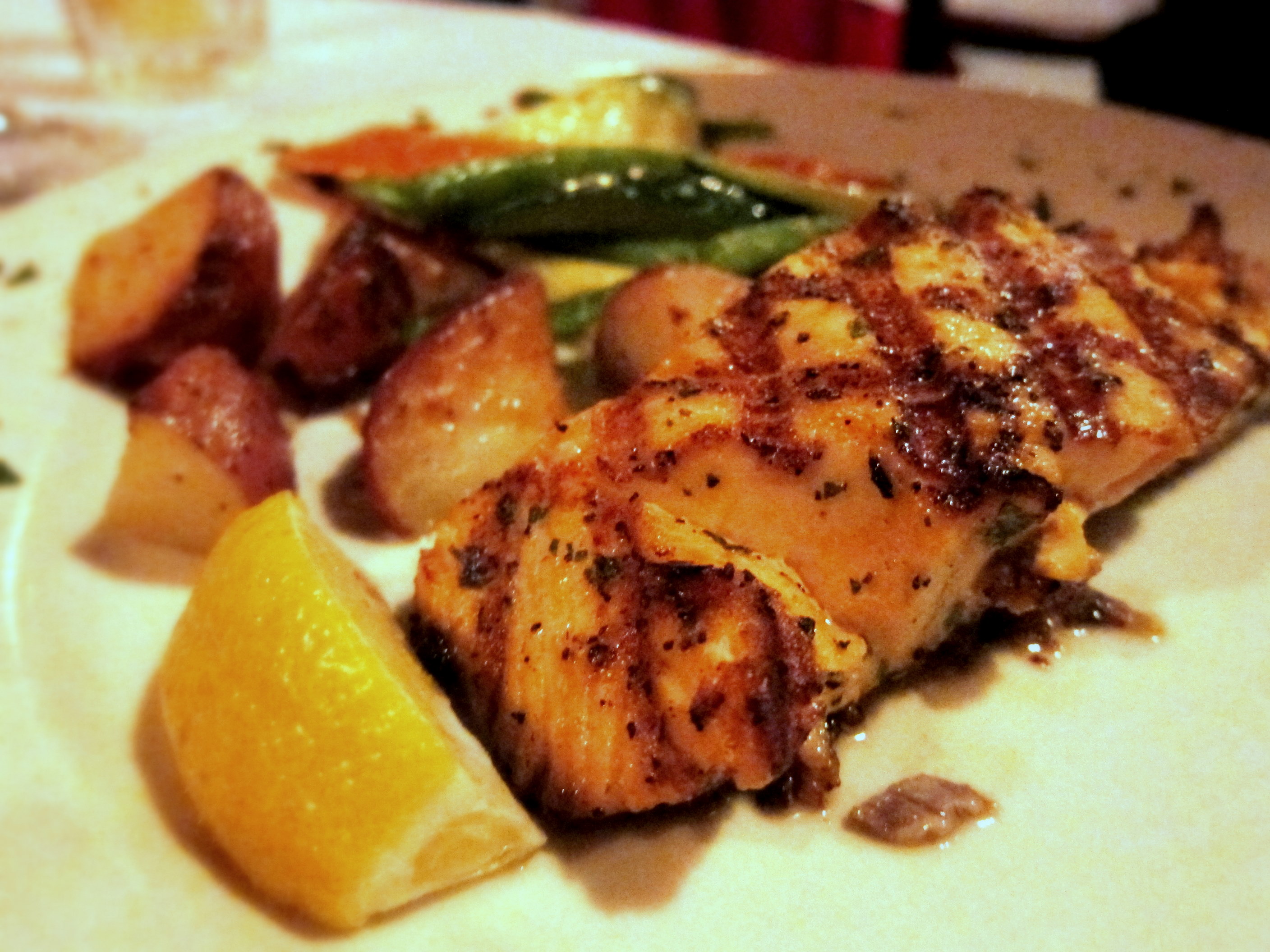
I guess Varun didn’t feel particularly adventurous that day, as if one could ever be adventurous in an Italian restaurant, seeing that he got grilled salmon. As long as he’s happy…


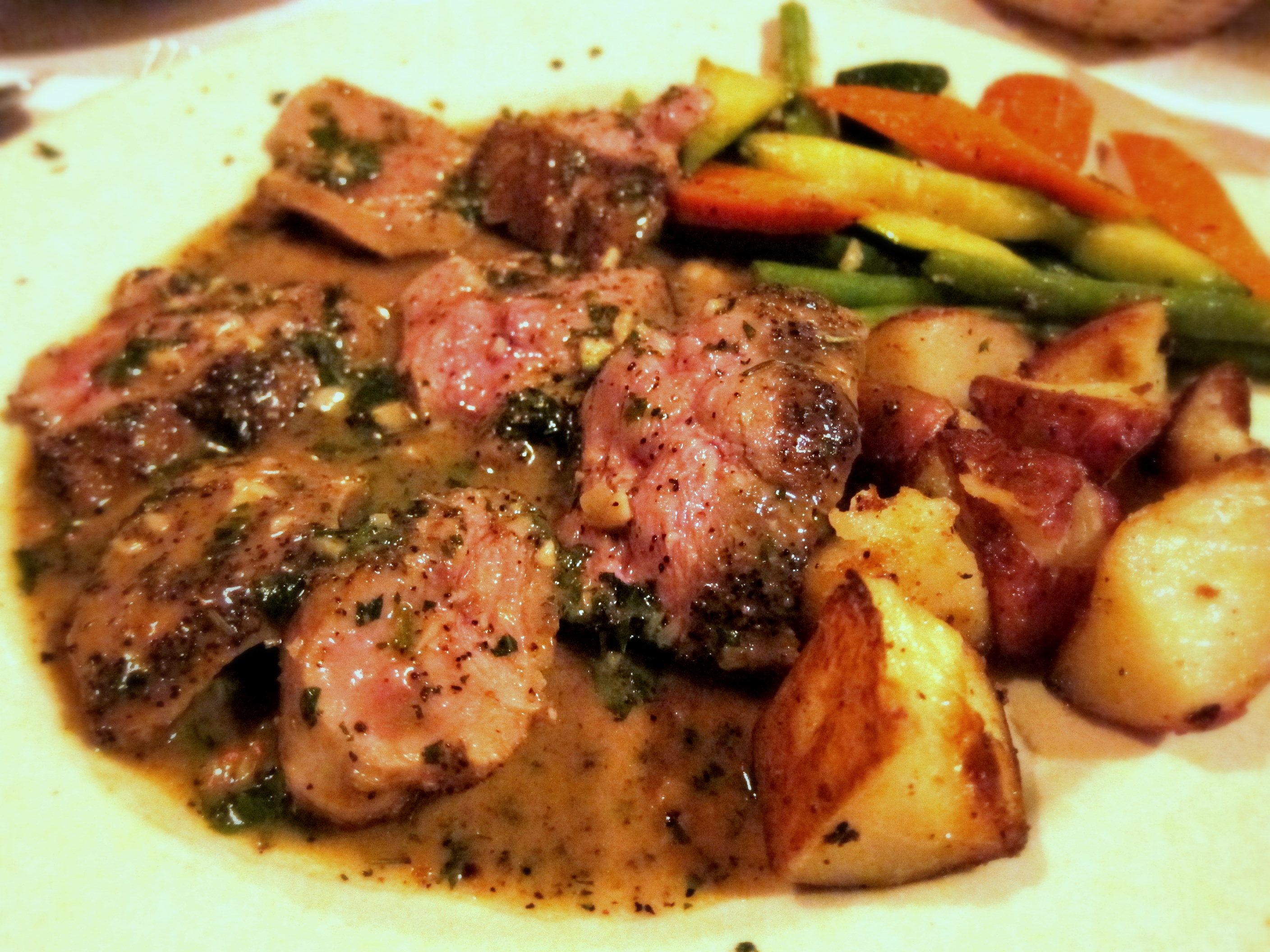
I got petto d’anatra al pepe nero (black pepper pan-fried duck). It’s good, but again, not adventurous either.


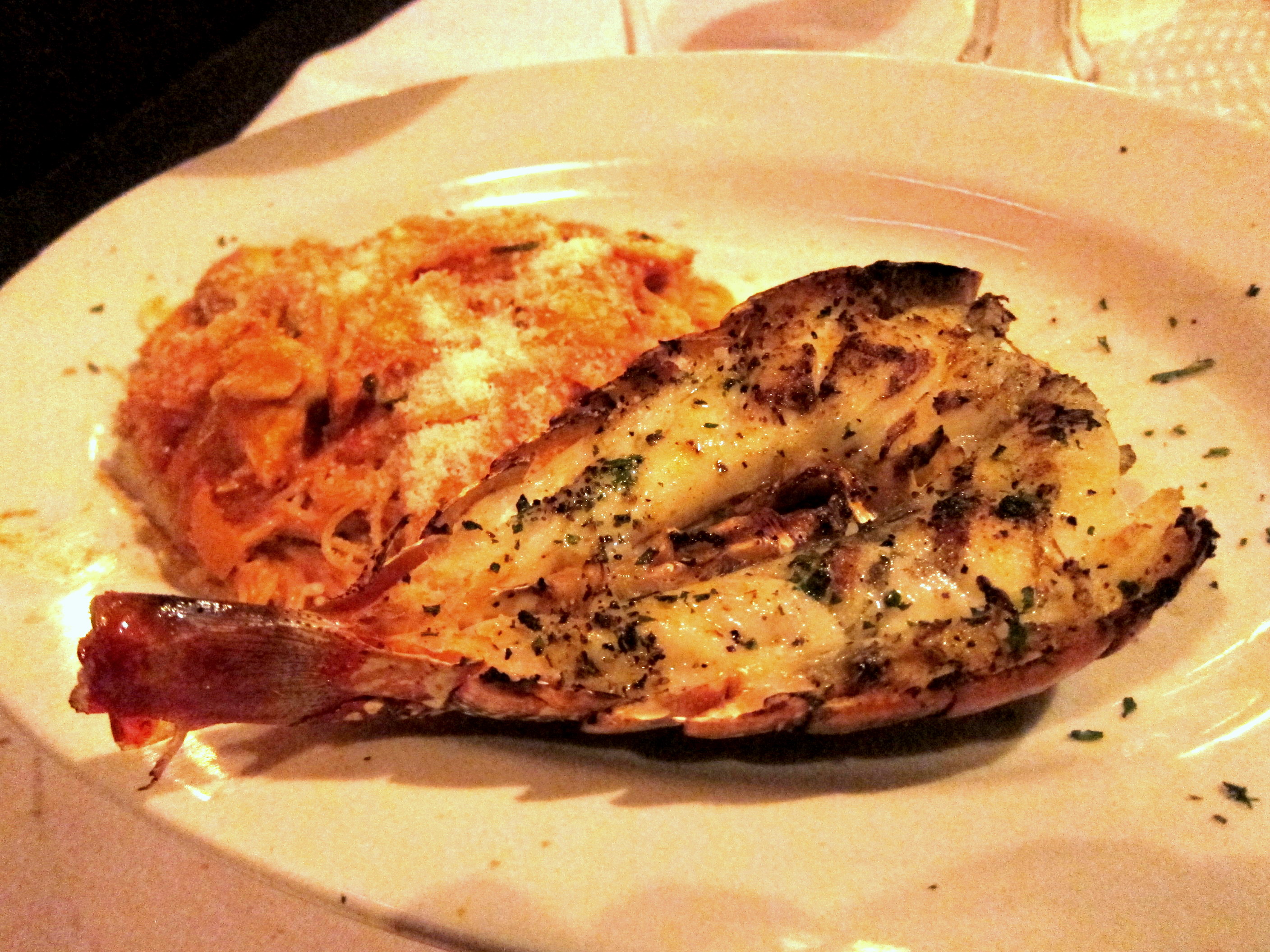
The most exciting thing of the night was Aaron’s choice, also a special del giorno: cappellini aragosta, or angel hair pasta with lobster. Not that it was anything few people dare to eat, but the battle between Aaron and the lobster tail was captivating. Battle Aragosta. I can imagine directing a dinner date scene where the heroine of my movie has such trouble eating lobster and the guy finds it both uncouth and endearing at the same time. 😀 That said, I never order lobster.

Address: Antica Osteria
2311 Bissonnet
Houston, TX 77005
(713) 521-1155

Dinner for three: $95.26

French and Texan intertwined at Phillippe of Houston

January 11, 2012 By: Mai Truong Category: American, French, Houston


Every year just after the winter holiday hustle and bustle, Mom and Dad let me choose a restaurant for my early birthday dinner. Last year it was Martin’s Place for barbecue. Dad never tells me no, but let’s just say that Mom didn’t feel too confident of my aesthetics since then. This year she gently insists on French. But I manage to sneak in a twist of Texas. 😉

After all, Chef Philippe Schmit dubbed himself the French Cowboy. His two-story Philippe Restaurant & Lounge opened last February just a mile north of The Galleria. Looking out to the Houston’s limitless horizon, the second-floor dining room is bathed in a warm chocolate hue of the furniture, accented with soft vanilla light and word decorations made of Chef Schmit’s quotes in watermelon red. In contrast, the menu is bold, extensive, spanning from Texas BBQ and cactus to foie gras and fish pâté, from the classic croque monsieur to the carefree duck confit tamales; there’s a little something for everyone.


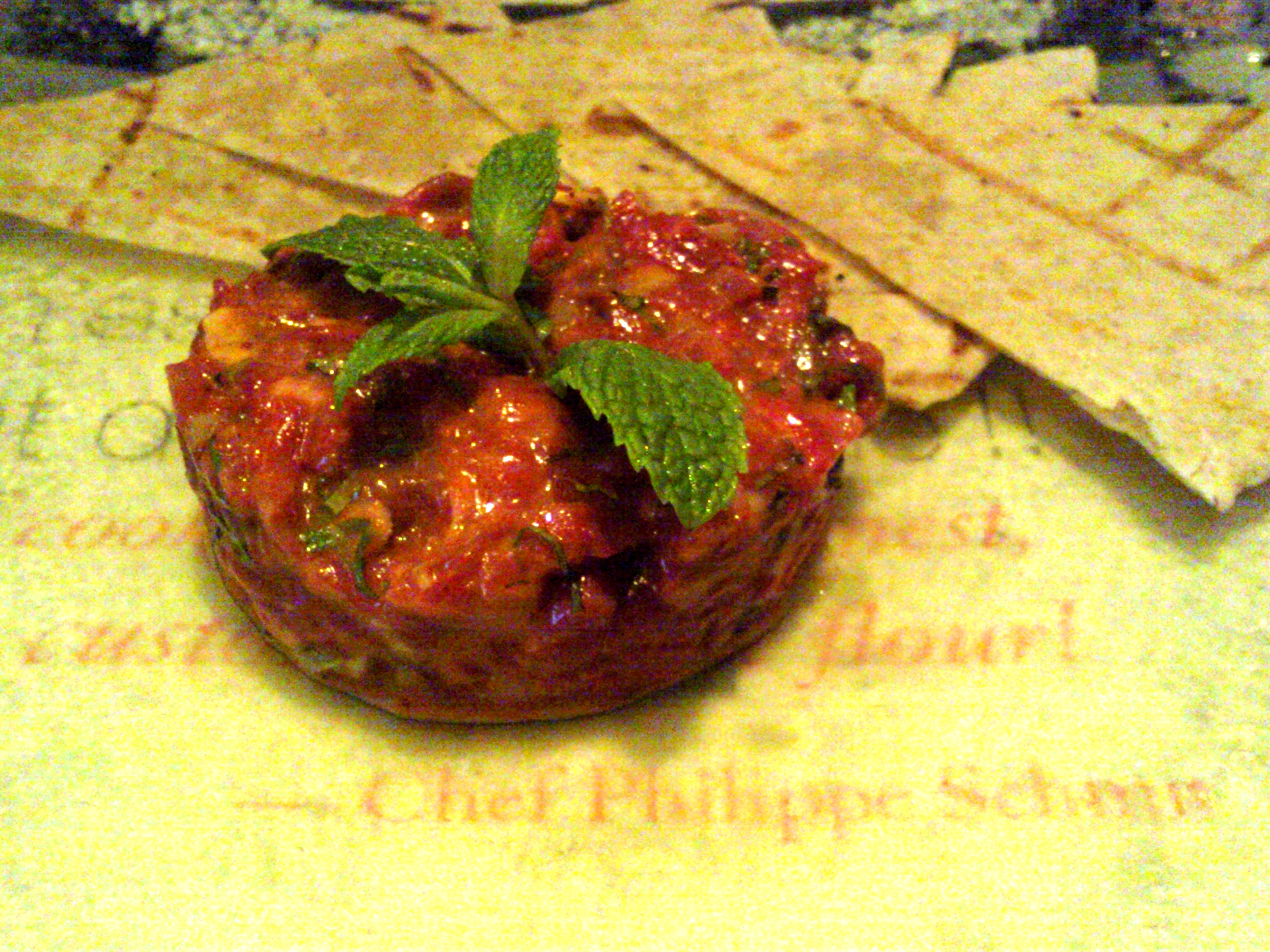
“The Moroccan”, beef tartare with raisin, almond and the Tunisian hot sauce harrisa served with flat bread, rings amazingly close to Mexican flavors.


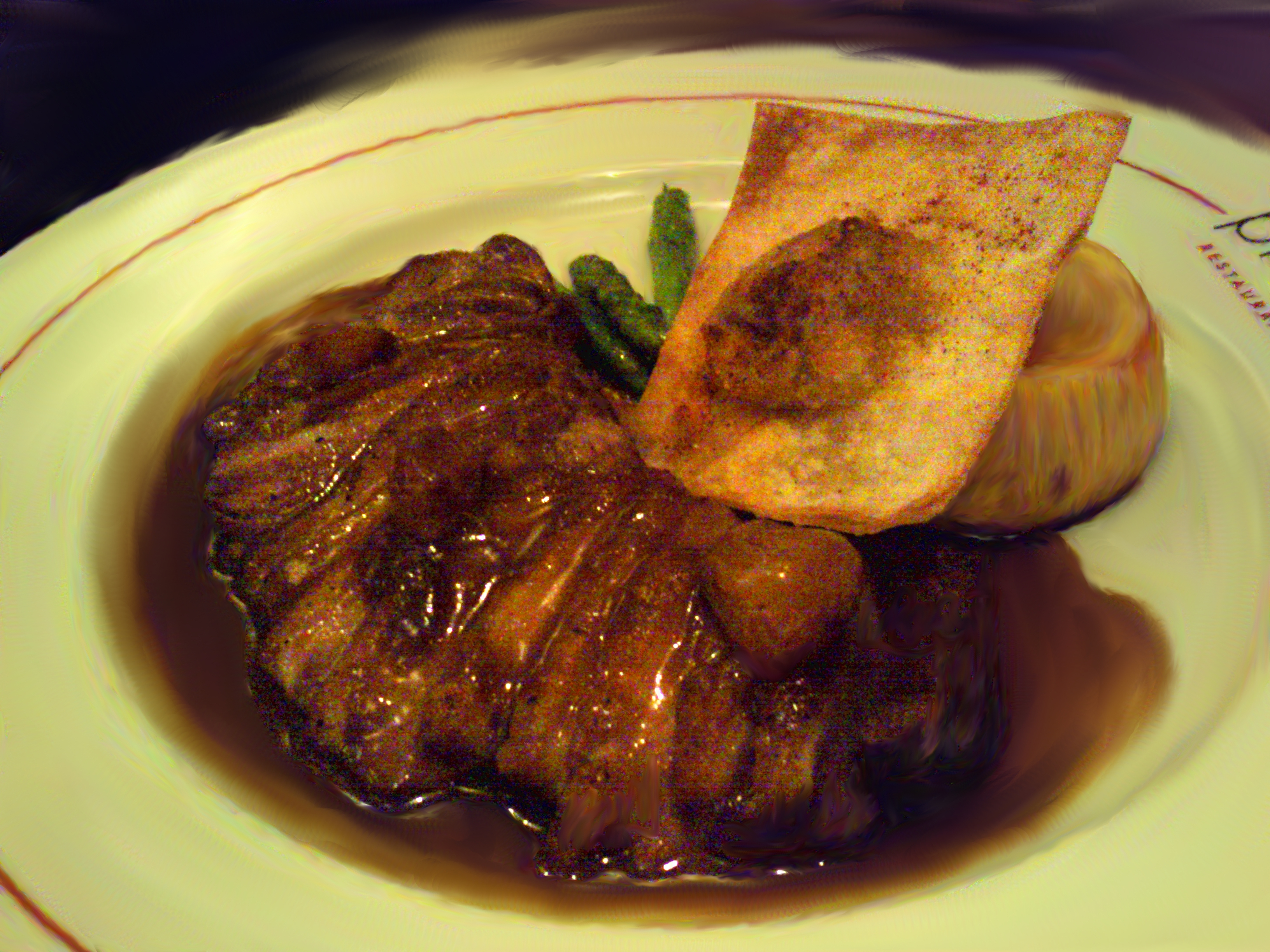
The roasted duck magret is drowned in a rich clementine-Cognac sauce and accompanied by one crispy fried duck confit ravioli on a lustrous carrot flan.


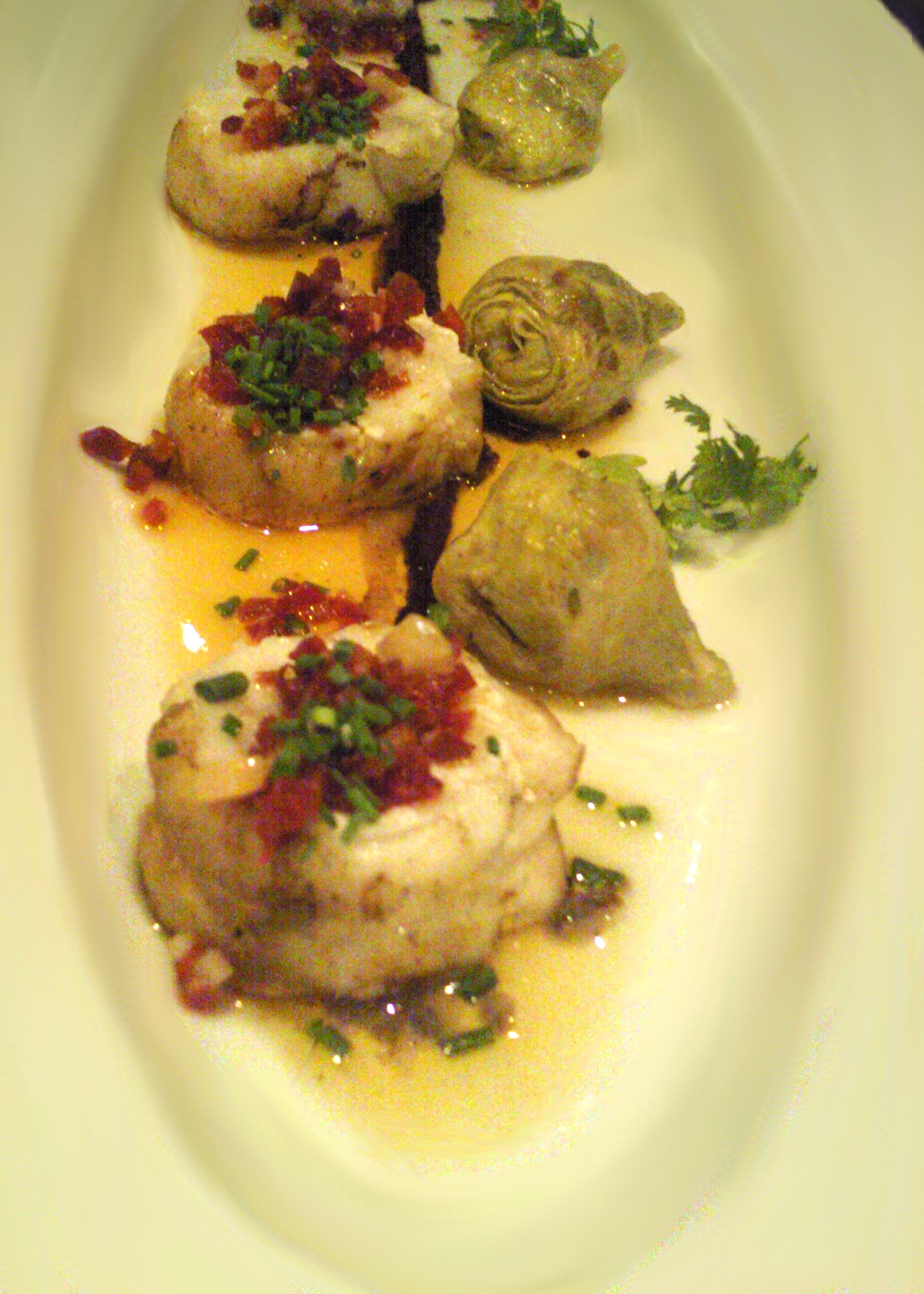
The four monkfish medallions topped with sun-dried tomato tapenade are pleasing. Although their texture errs on the dry side, the supple artichoke confit makes a fine complement.


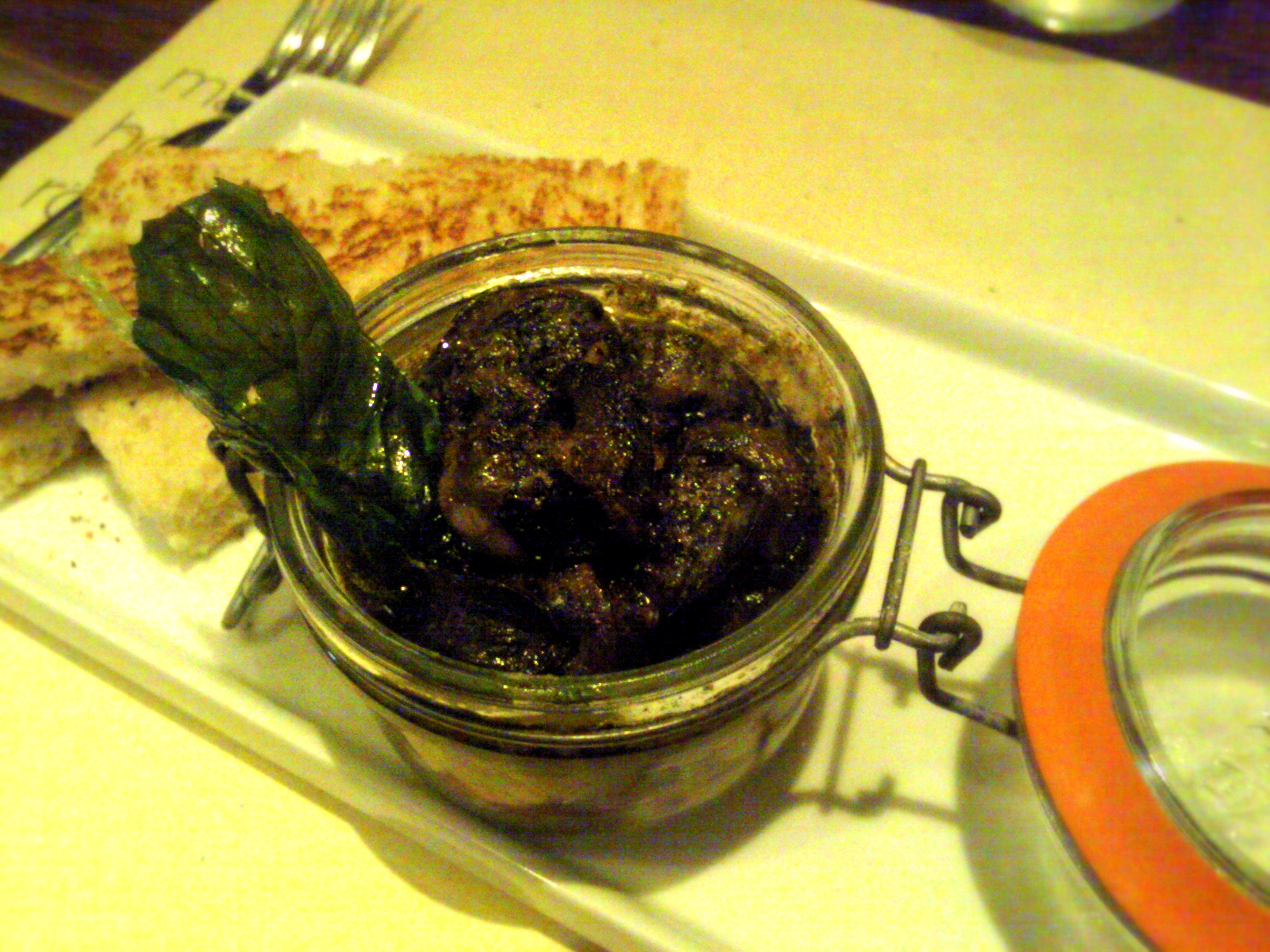
The most pleasant surprise must be the garlic-butter escargots, listed among the “contained decadence”, served in a jar with airy brioche toast on the side. On one hand, my Vietnamese friends have chastised me many times for not having eaten snails ever; on the other hand, Little Mom isn’t a snail advocate. Today, the snails win. In Mom’s words: these snails have the fragrance of the roots of rice plants, the earthy but comforting hint of mud and grass. To me, they’re like chubby shiitake smothered in fennel puree and a “tipsy mushroom” paste. It’s a good first impression.

And finally, the deciding factor in my choice of restaurants: the desserts.


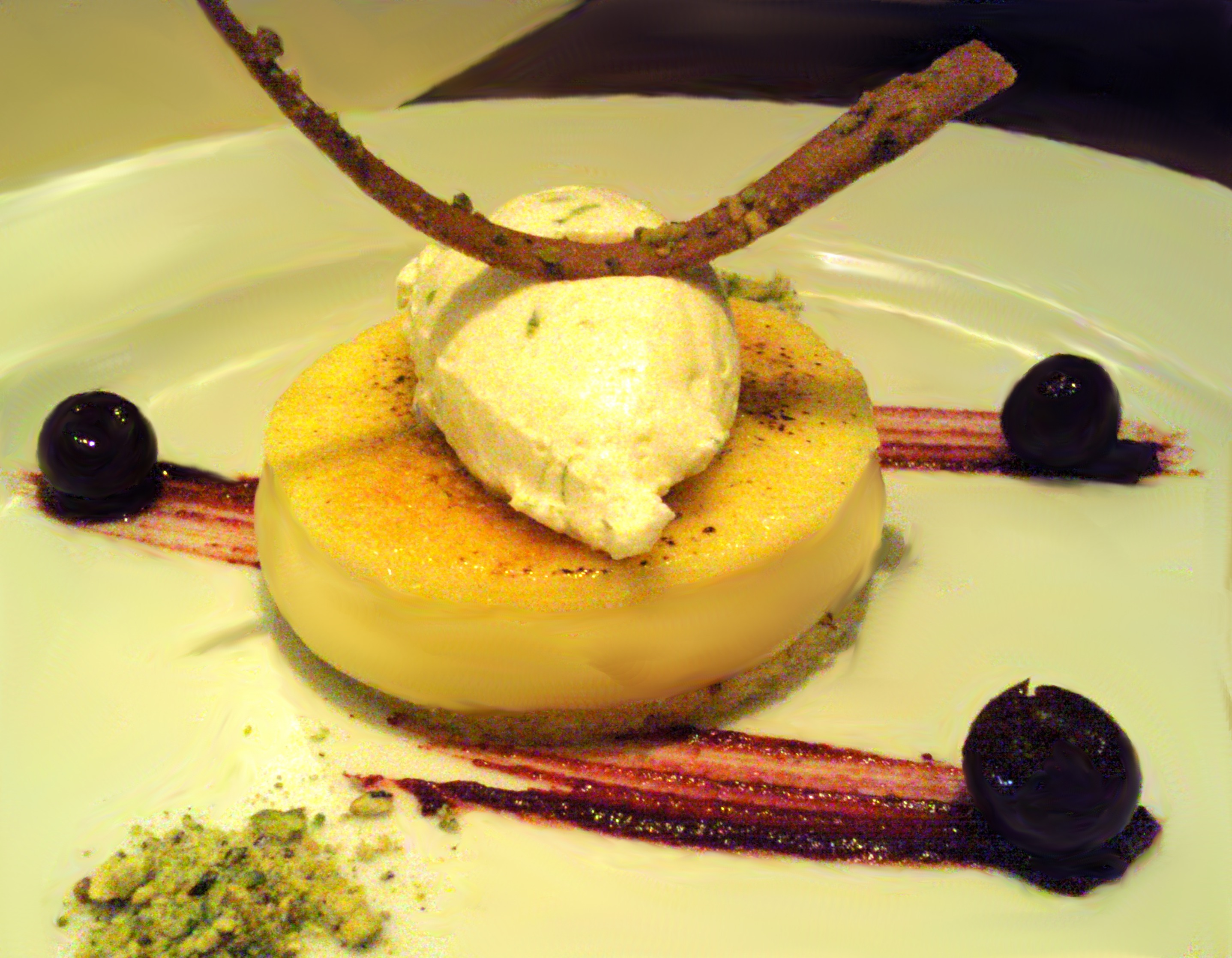
A smooth tonka bean creme brulee. The lime scent in the chantilly is a bit too faint for me, and the liqueur taste in the griottines is a bit too strong that I almost felt drunk (guess I’m not cut out for Western alcohol); besides, I’ve never fancied whipped cream and candied cherries. But Little Mom likes this one. And I like that there are three cherries for our family of three bears. 😀


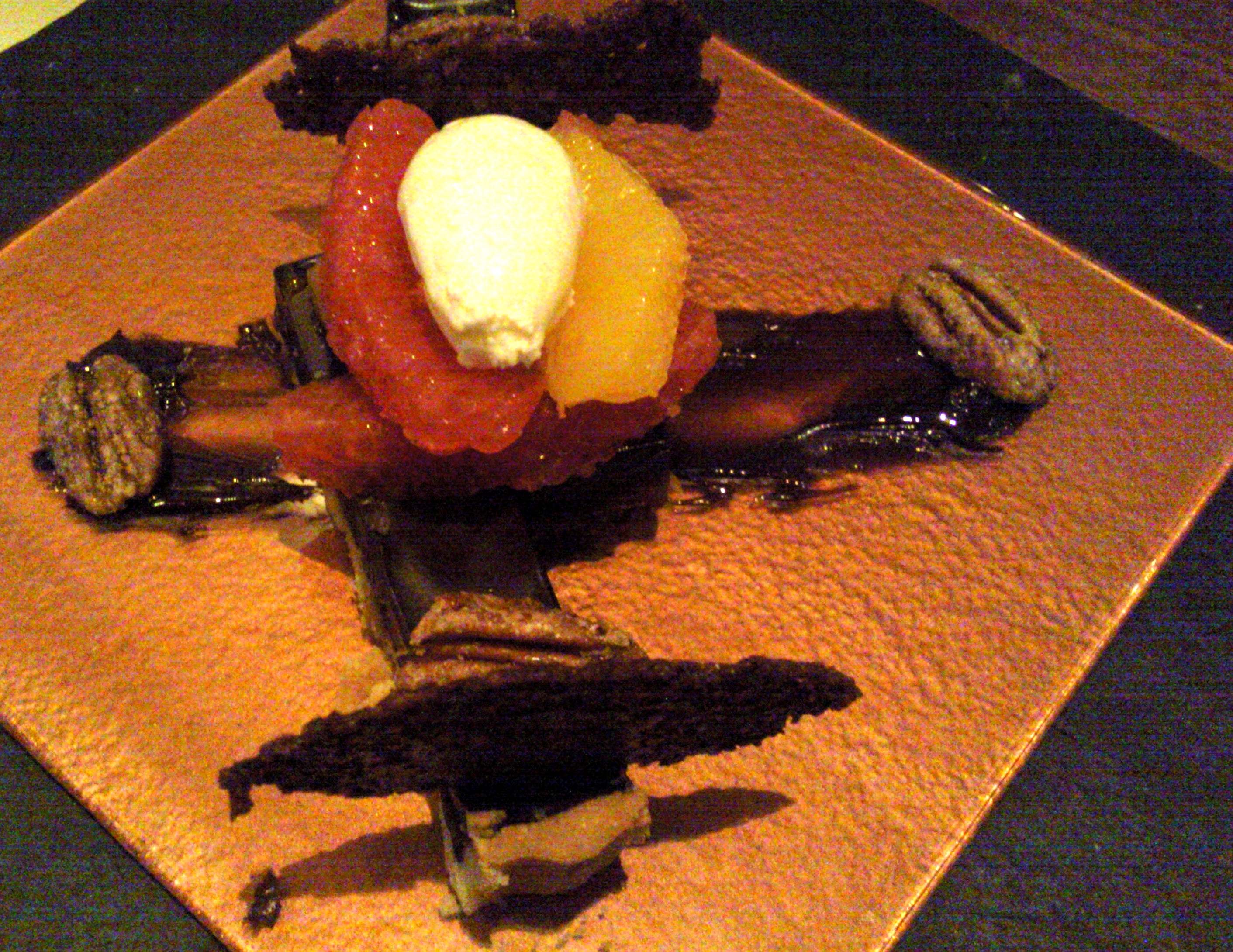
The second dessert, plated like the setting sun on a mountain range, is much richer than the first, as it’s whimsically named the “Texas Millionaires tart”. Decadent chocolate and lace cookies are tempered by the super sour grapefruit. To top it off, the jasmine ice cream is a sweet lullaby.

As we get to the desserts, the dinner rush starts, the patrons fill the room, but the atmosphere remains easy. A waiter, tall and slouching, whose bushy Abraham Lincoln’s goatee makes him look like a toothbrush, leisurely takes a gander into the bright night cityscape. Through the voluptuous portions and the rich sauces, Philippe the Restaurant embodies Houston: bountiful, down-to-earth, wittily romantic. And above all, it is wholeheartedly welcoming.

Address: Philippe Restaurant and Lounge
1800 Post Oak Blvd, Suite 6110
Houston, TX 77056
(713) 439-1000
www.philippehouston.com

Tricitronnade – Three-in-one Lemonade

January 08, 2012 By: Mai Truong Category: Drinks, RECIPES, Vietnamese


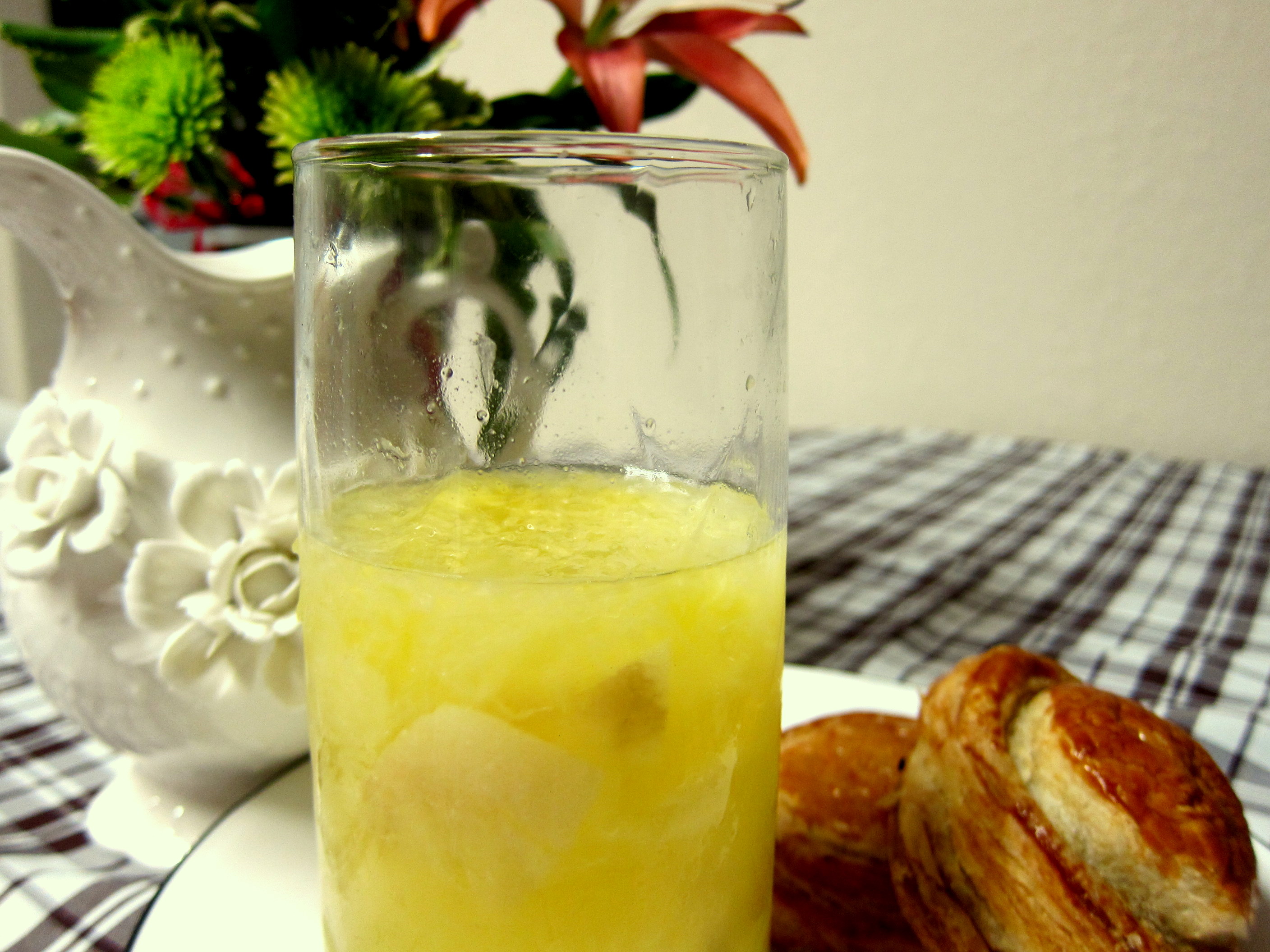
The triple punch from Little Mom: orange, lemon, and salted lime.

Like instant ramen and popsicles, it all started from the leftovers: half a glass of a-little-too-salty salted lime drink, half a too-sour-to-eat orange, another half glass of normal lemonade (although Little Mom’s lemonade is not quite like any other lemonade, in a good way), and an ounce of reasoning. There was no sense in keeping them separately. The combined power shines a sweet yellow of tourmaline, smells like an orchard near the harvesting season, and tastes good enough to get me all poetically cheesy.

Below is Little Mom’s recipe for the salted lime. As for the recipe of this “tricitronnade”, I would imagine that the orange doesn’t have to be sour. 😉

Vietnamese Salted Lime (Chanh muối)

Step 1: zest the limes. You can do this by shaving off the zest (flavedo) with a peeler or rubbing the limes on a rough surface until it loses most of its green color. But keep the white pith (albedo) in tact; if the albedo breaks and the juice leaks out, that lime is no good to make salted lime.
Step 2: blanch the zested limes. Then leave them out to cool.
Step 3:
– Boil salt water. For every 12 limes, mix 14 cups of water with 1 cup of salt and boil.
– Let the salt water cool.
– In a clear plastic/glass jar, submerge the blanched limes in the salt water. Cover.
– Put the jar under sunlight for 1 week. I asked Mom if the jar can be opaque (like a clay jar), and she said that she has only seen chanh muối made in translucent jars. I guess you want the limes to see the sun, not just feel the heat. 🙂
– Discard the liquid after 1 week.

Repeat Step 3 three times, but for the last week, keep the liquid. By now the limes should expand to the size of lemons, their peels are melting soft, they can be eaten whole, and they stay good forever. Smash up one lime in water and add sugar to make 2 glasses of chanh muối.

Year in, year out, savoring the savoriest of pork

December 31, 2011 By: Mai Truong Category: Comfort food, One shot, Southern Vietnamese


If you had to choose, what is the most Vietnamese dish? If you are a Vietnamese expat, what would make your mouth water the most just thinking about? What is the food, the smell, the taste that when you see or hear some stranger is savoring, you’d immediately think, “hey, he must be my fellow countryman”?

One of my friends lives in Freiburg, Germany. There is one Vietnamese restaurant 1 km away from the University, der Reis-Garten, and it is the only Vietnamese restaurant in a 40-km radius (the next one is across the border: Le Bol d’Or in Wintzenheim, France). For over 6 years living away from home, he survived on pasta and tomato sauce, students don’t have time. One day, external circumstances have finally driven him to decide that he no longer needs to suppress his cravings out of consideration towards his Germanic housemates. He bought a bottle of fish sauce. The next day he made thịt kho. That makes it official: he’s Vietnamese, and he hasn’t forgotten it.


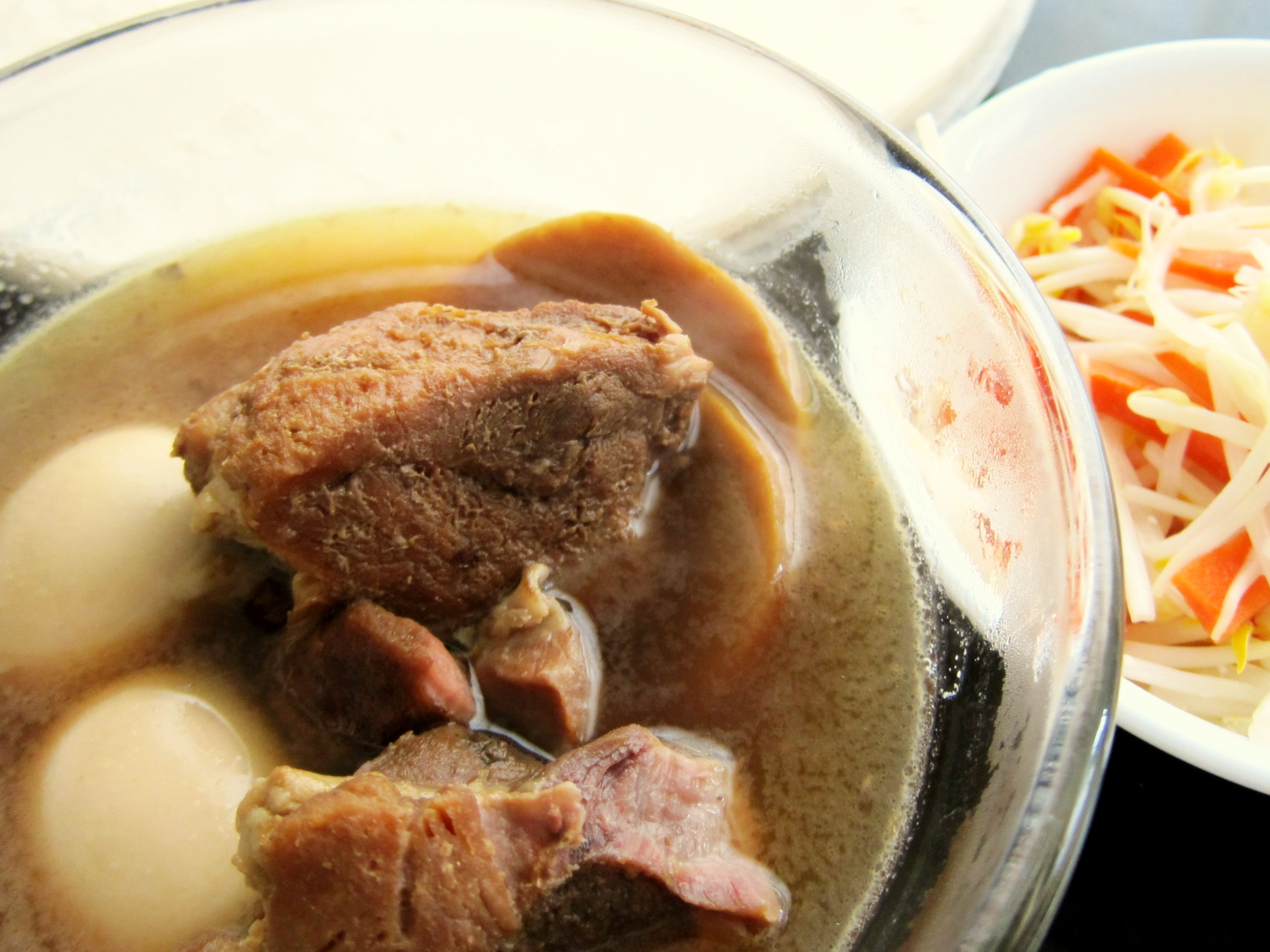
“Success?” “Did you add coconut juice?” “Do you have eggs in the pot?” “Do you have chả lụa too?” The questions come showering on Facebook. We cheered him on with the same salivating imagination no matter which region of Vietnam we are from and where we are living: the fatty chunks of pork so tender that a plastic chopstick can cut through, the amber sauce, with which the hard boiled eggs are imbrued from yolk to white. The fatty, sweet, and salty pork must be freshened up with the crunchy, sour, cold dưa giá (pickled beansprout). The pure fish sauce makes an intoxicating savory smell that permeates the whole house, seeps through the window into the courtyard to the next door neighbor, induces a Vietnamese to lick his lips thinking of his mother’s meals and perhaps, a Westerner to cringe. But why should a cringe matter? The pure fish sauce deepens the savoriness of the meat sauce, making it the best thing to pour over a steamy bowl of white rice. My friend said all he need is this amber meat sauce and dưa giá to down a few bowlfuls. Of course, I agree.

The first weekend I got home, Little Mom sat me down in front of thịt kho, dưa giá, rice, and rice paper. All kinds of rice papers come from all over Asia, but those are for calligraphy and painting. Edible rice paper comes from Vietnam and Vietnam only. A pet peeve of mine is getting served those “spring rolls” made with wonton wrappers in American Vietnamese eateries, like a lumpia. A Vietnamese spring roll must be rolled with the translucent, veil-thin, made-of-rice-flour rice paper. Rolling it with any other kind of wrapper is an unpatriotic insult to Vietnamese cuisine. Anyway, my mom sat me down in front of her succulent slow braised pork, pickled beansprout, rice, and rice paper. Then she said go for it, and boy did I go. I made little wraps of pork and sprouts to dip into the sauce. I poured the sauce over rice. I dipped plain rice paper into the sauce. I made some more wraps and filled another rice bowl. It’s almost barbaric. The comfort of an old country taste is multiplied by the comfort of home. The eyes and tongue are no longer the principle critics, but all five senses are involved: the smell of the sauce, the sound of the sprouts collapsing between bites, the delicate touch much needed in rolling the rice paper. Each bite I took embodied the ordinary, simple, honest Southern cooking and the skillfully honed tradition of hundreds of years: thịt kho is a must-have in our Tet feast, like the turkey at Thanksgiving, the songpyeon on Chuseok, or the ozoni for Shogatsu. Well, it’s not Lunar New Year now, but it is a New Year. Maybe I’ve grown old, but I find that nothing beats celebrating the holidays at your family’s dinner table with family comfort food. 🙂

As I’m writing this post, the fireworks are going off right outside the windows, talk about food setting off fireworks ;-). Happy 2012! And may Vietnam be delicious always! 🙂

The night before Christmas at Kata Robata

December 25, 2011 By: Mai Truong Category: Houston, Japanese, The more interesting


Last night I was reading this manga, Oishii Kankei (“Delicious Relationship”), and two things there reminded me of my family: a family of three who love to eat out and explore new restaurants, and the girl who can’t cook (but she has a better sense of taste than me, it’s a story after all ;-)). I also got reminded of a ton of Japanese food, although the main plot revolves around French cuisine and a fictional restaurant in Tokyo called Petit Lapin (“Little Rabbit”). I’ve been in the mood for something comforting, and Little Mom wants to have some Japanese food that isn’t sushi, so we decided on Kata Robata for our Christmas Eve. Actually Oanh recommended this place to me just before my flight to Houston, and I trust her when it comes to the Land of the Rising Sun. My dad’s opinion today? He had to come whether he wanted to or not. That’s Beauty #27 of a family of three: odd number makes decisions come easy. 😉

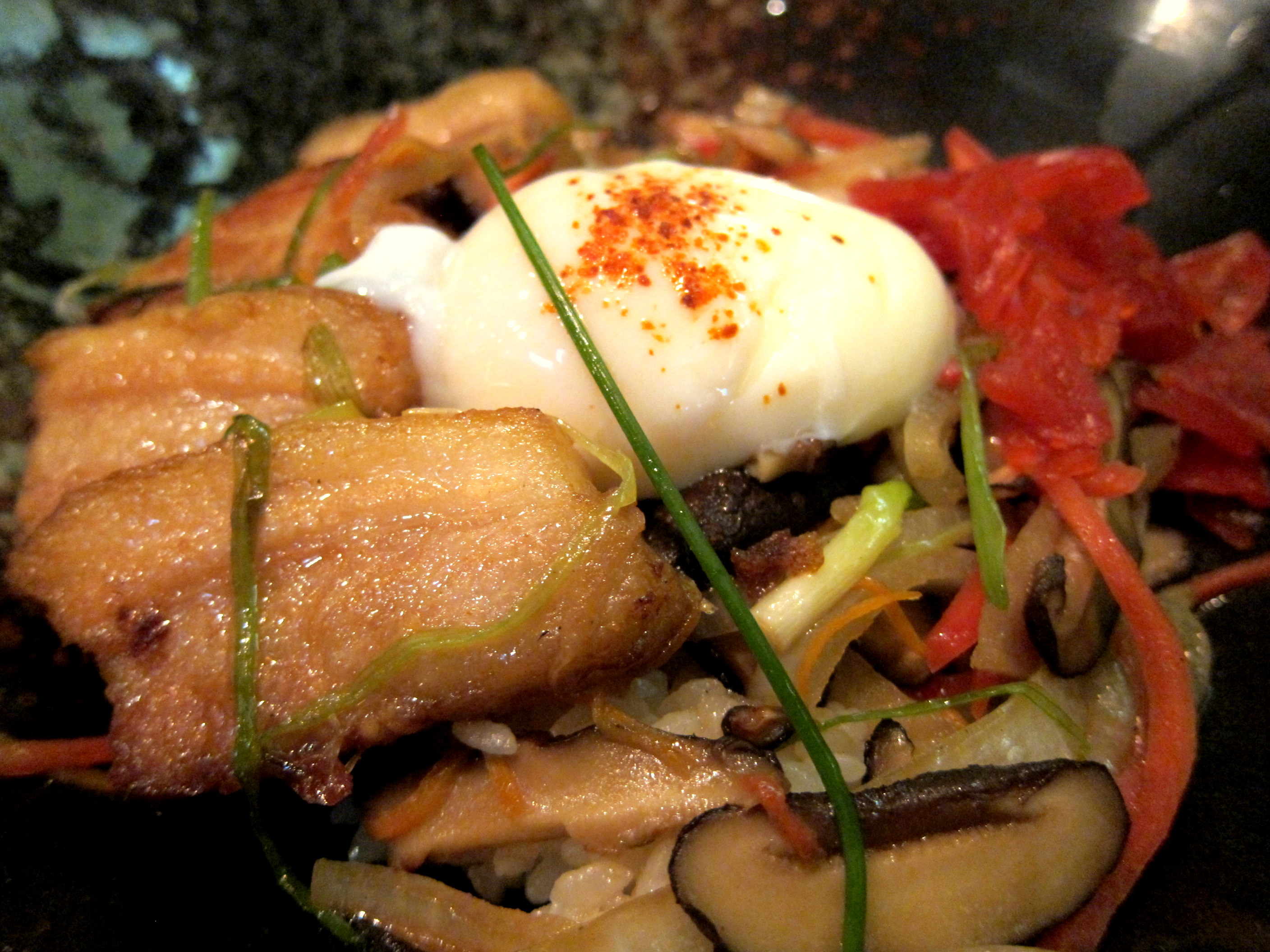
Thank goodness, he liked it here. Or should I say, he *loved* the kakuni don.


The rice, wet with the runny yolk of a 60-degree soft-boiled, was aptly seasoned by the rich sauce of the sweetly soy-braised slow-cooked pork belly (kakuni). The kakuni was a tad too fatty, but the seasoning strikes home just right. Little Mom fancied the juicy shiitake, and Mai the crunchy pickled radish. A little something for everyone makes the don truly comfort food.
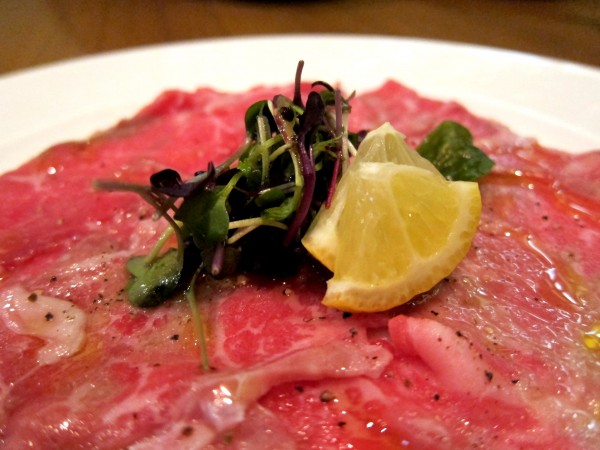

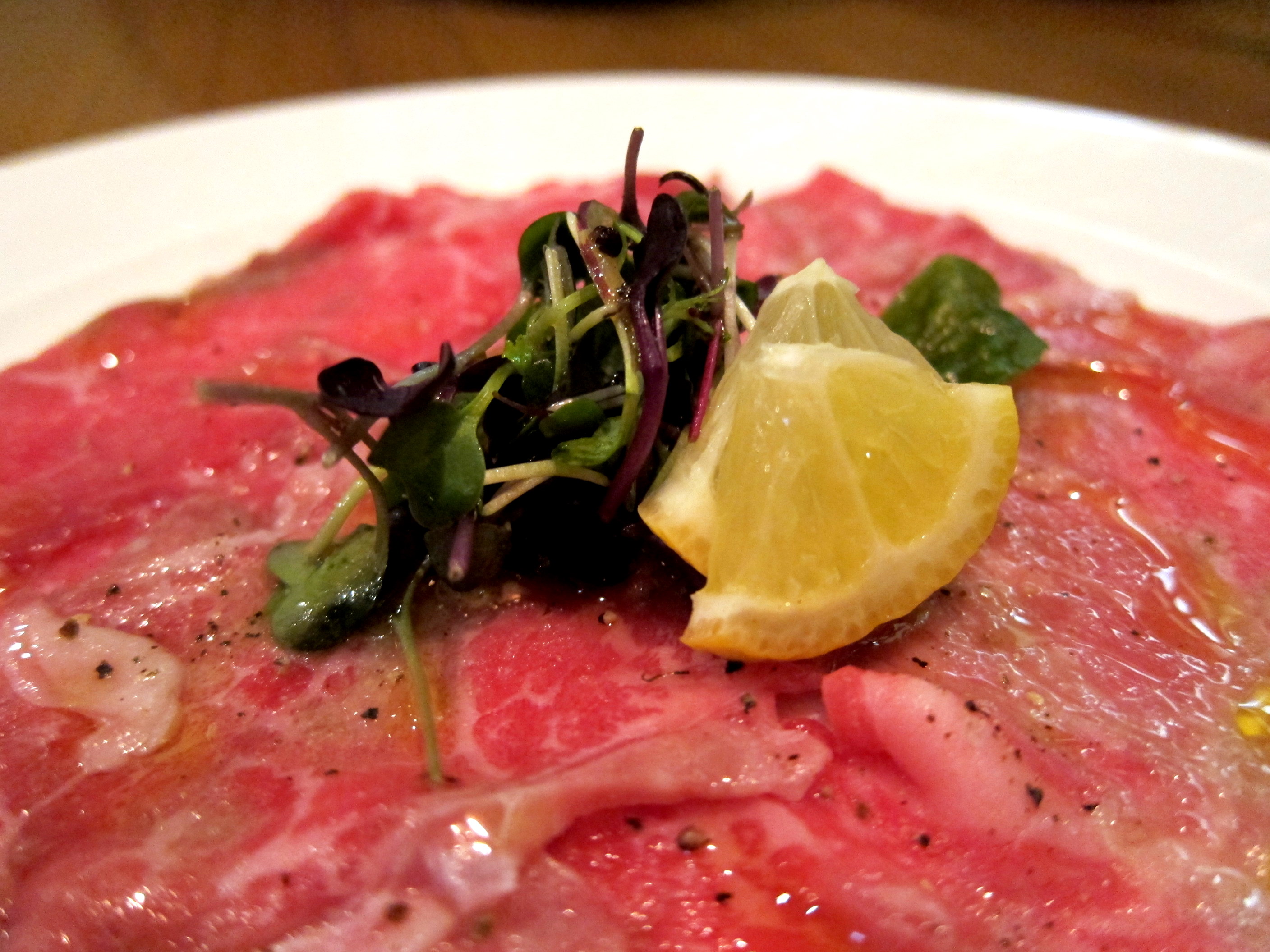
The cold plate. At first they hesitated (Vietnamese don’t like things raw), but the American Kobe beef carpaccio charmed The Parents at first bite. They said it’s the thinness of the slices, whose texture reminded me of salmon sashimi, but I think it’s the olive oil dressing and the yuzu juice.


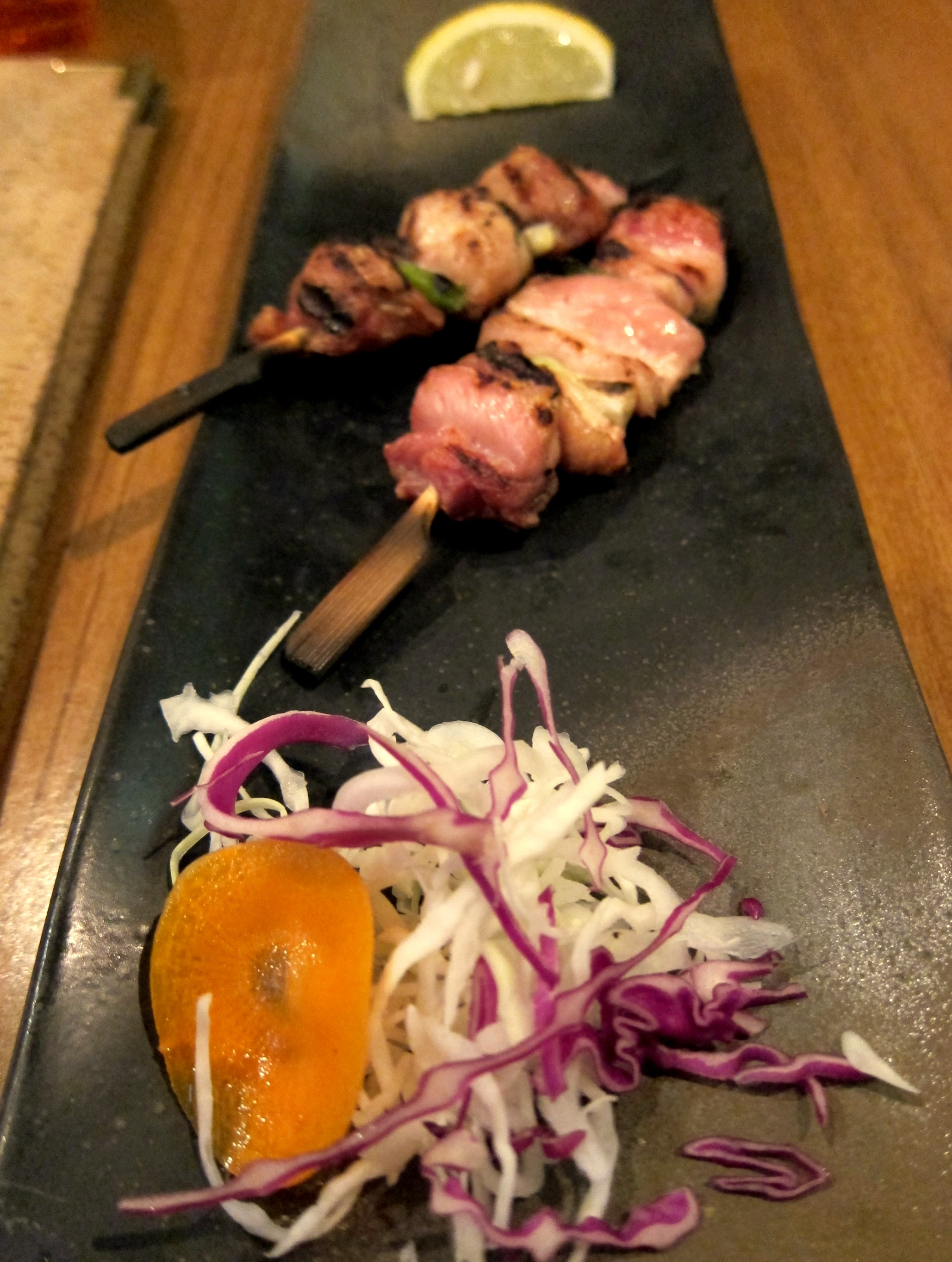
The yakitori, too, was surprisingly fish-like in texture. But yakitori is yakitori, nothing you can’t make at home.
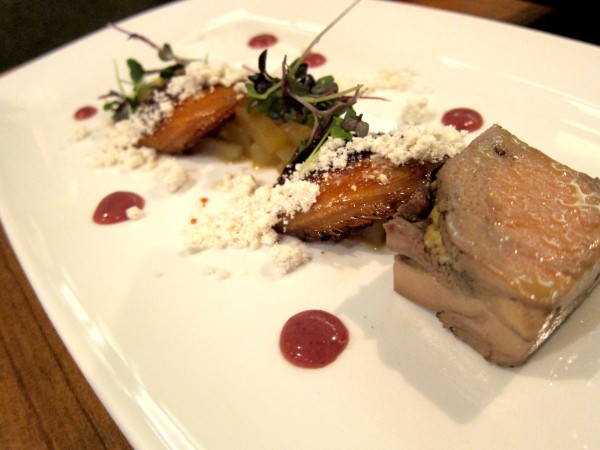

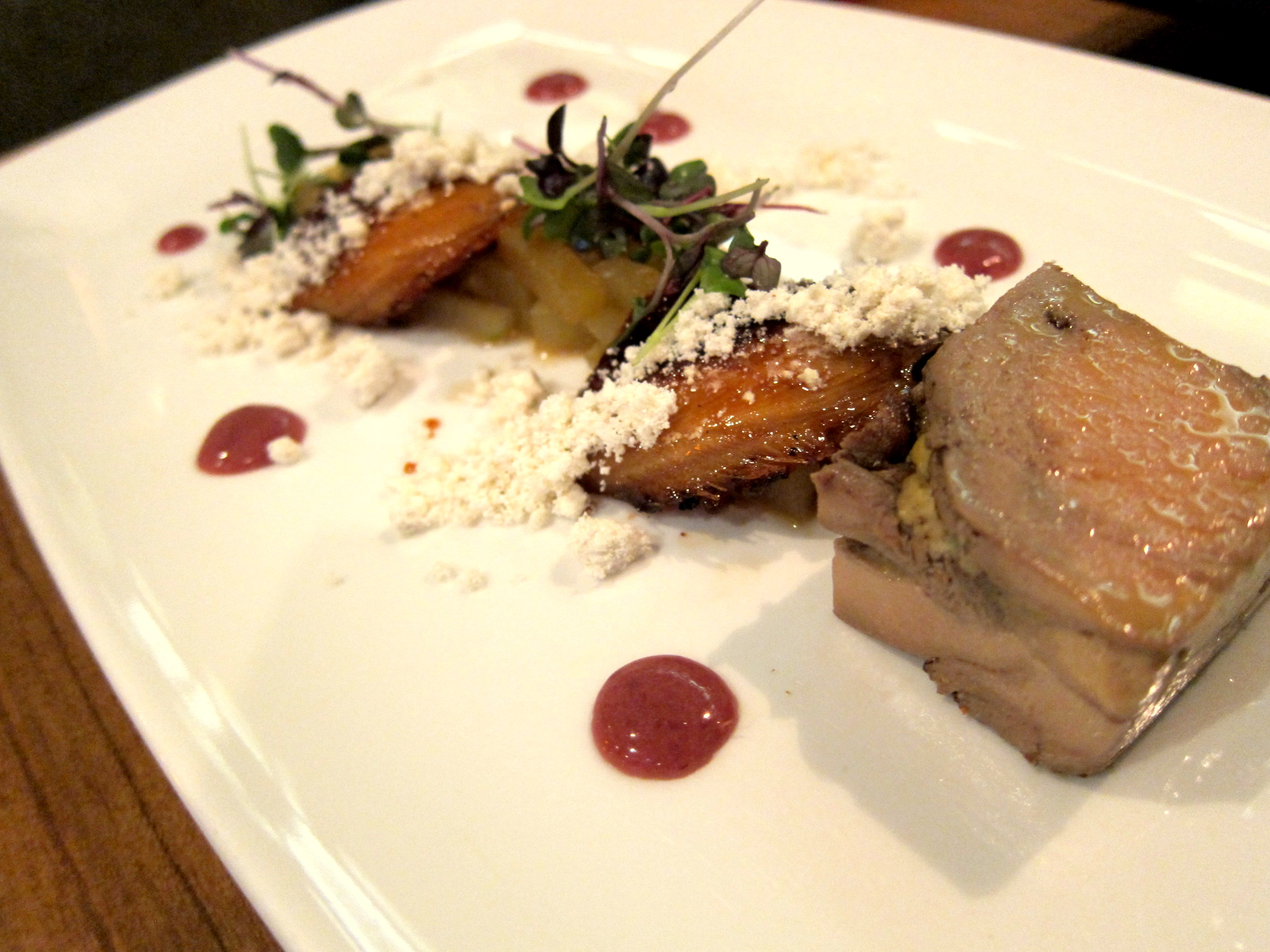
Brought forth at the same time with the yakitori was the fois gras and unagi. At first I was debating between this and the miso-crusted bone marrow, but Little Mom, an eel fan, cast her vote on the former, which also has bone marrow, in powder form. The accompanying pickled apple and the huckleberry sauce were more high school cheerleaders than Broadway stars. That big fat slab of foie gras needed some searing and slicing to pair with the delicate unagi. But the bone marrow powder was rather perfect: it had the salty richness of katsuobushi, the creamy innocence of feta cheese, and the fluffy, melting texture of snow.
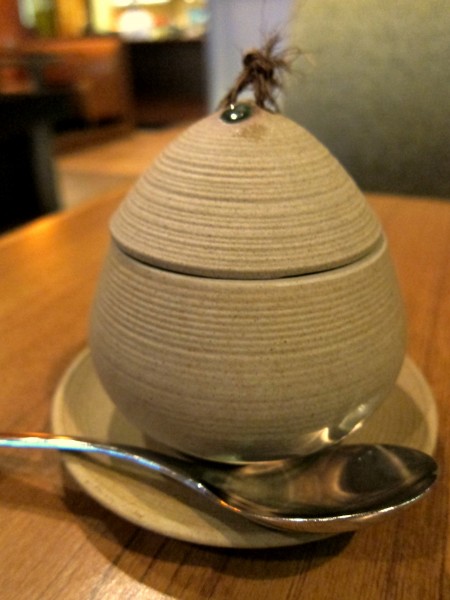

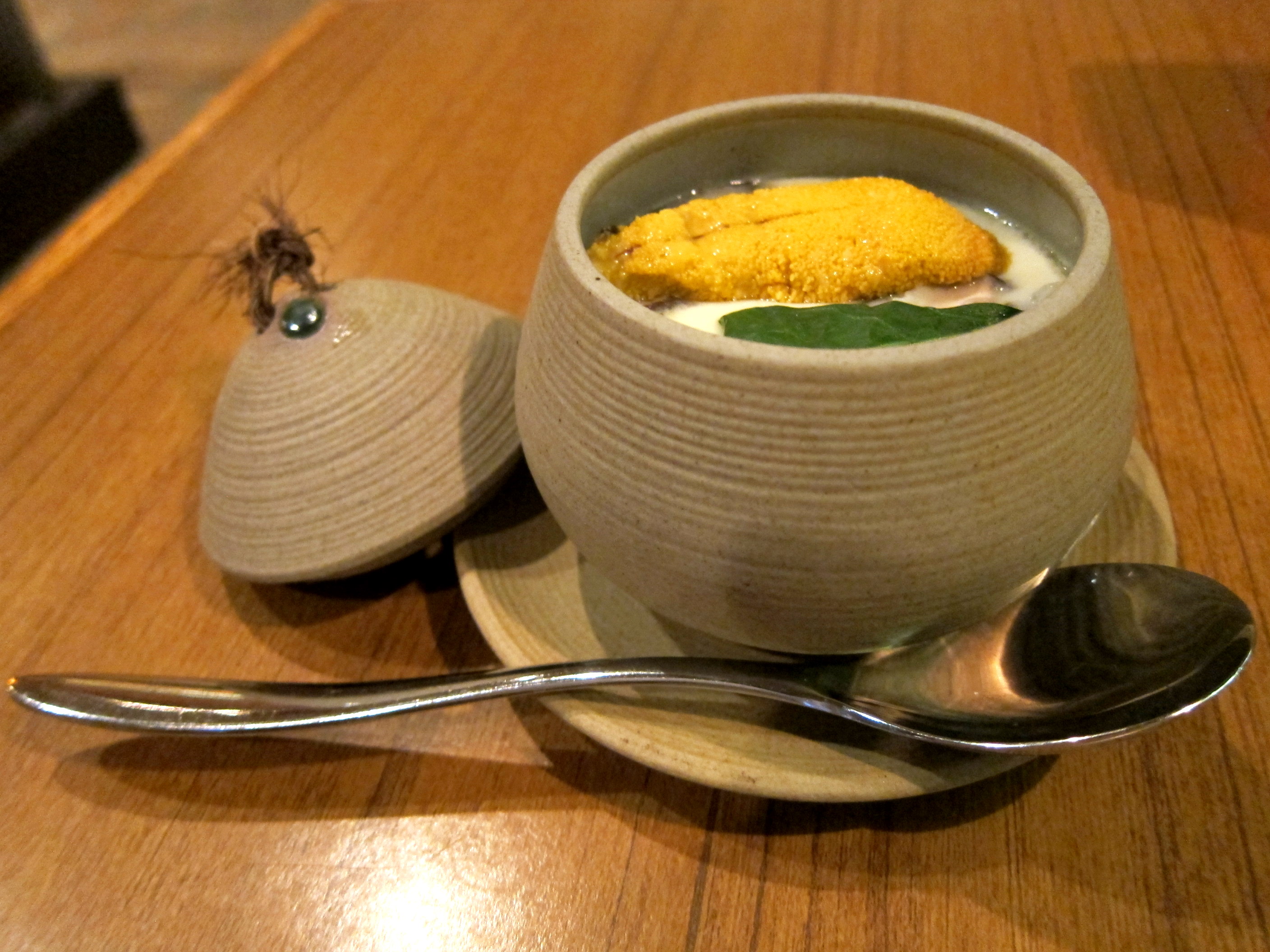
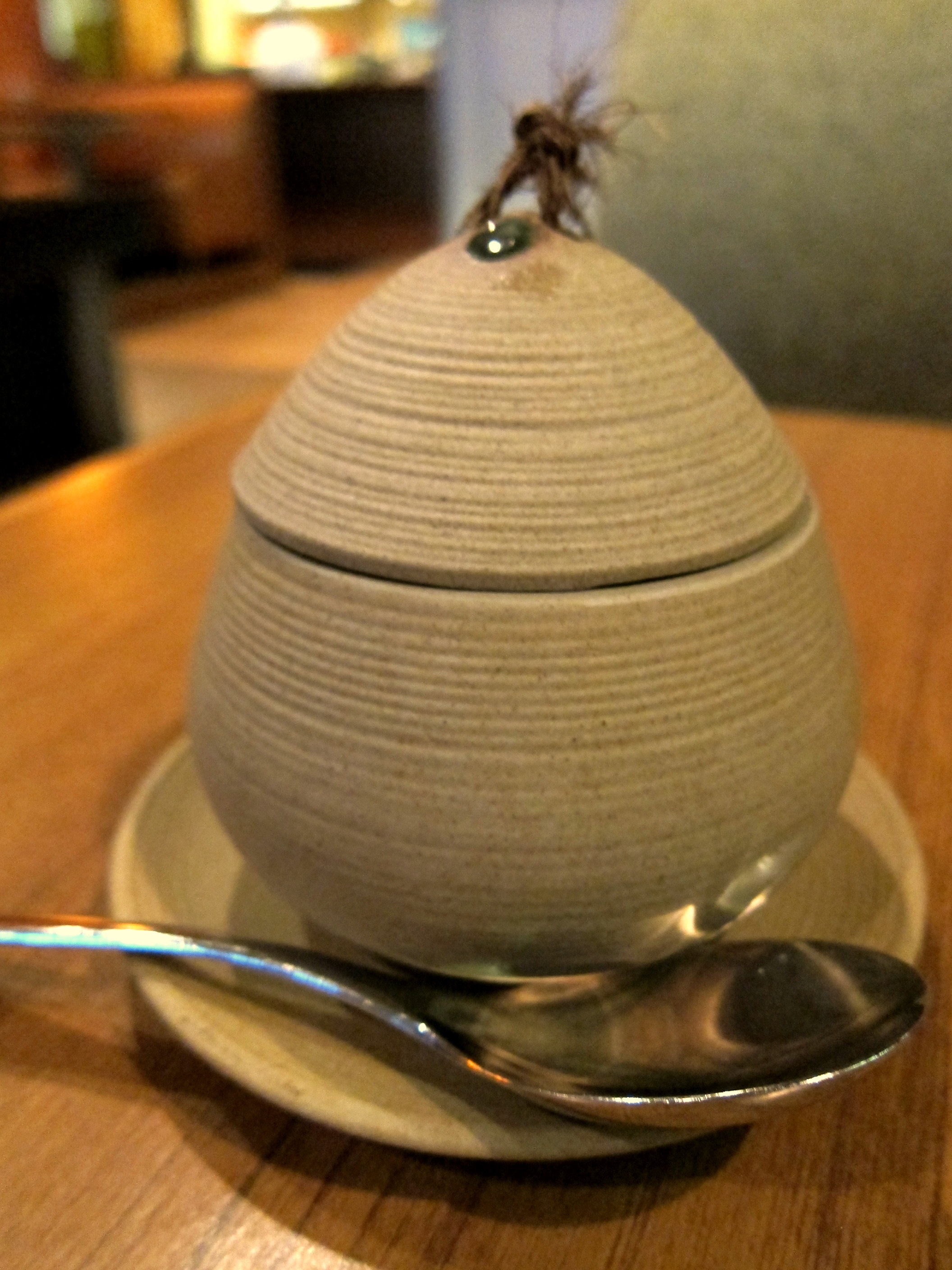
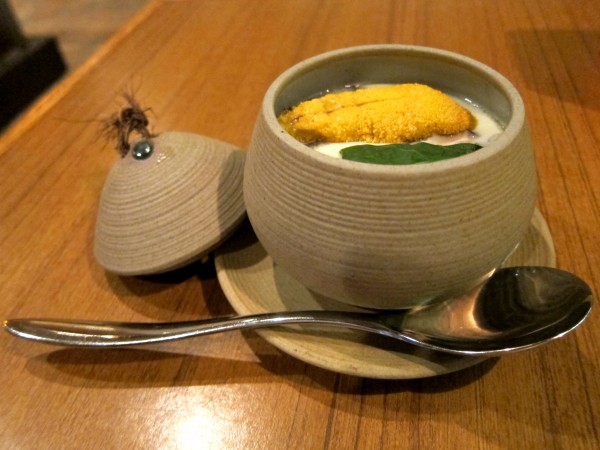
The starter didn’t arrive until almost the end (it would have been the end if we didn’t also order a shoyu ramen). But it was well worth the wait. Little Mom placed this uni chawanmushi top of tonight’s dinner mainly for its yuzu egg custard and ginkgo nuts. The chicken and shrimp bits were not too necessary, but the uni was fresh.
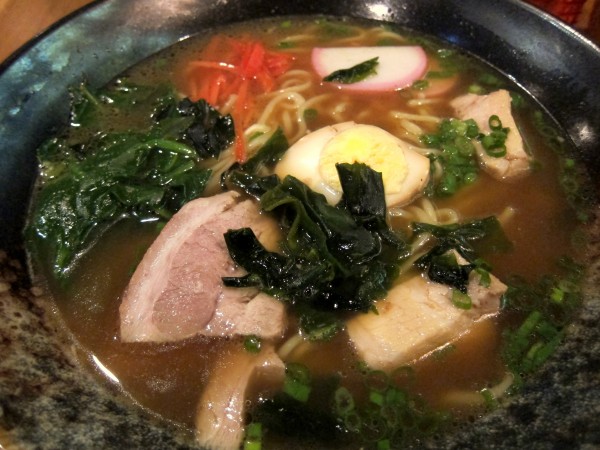

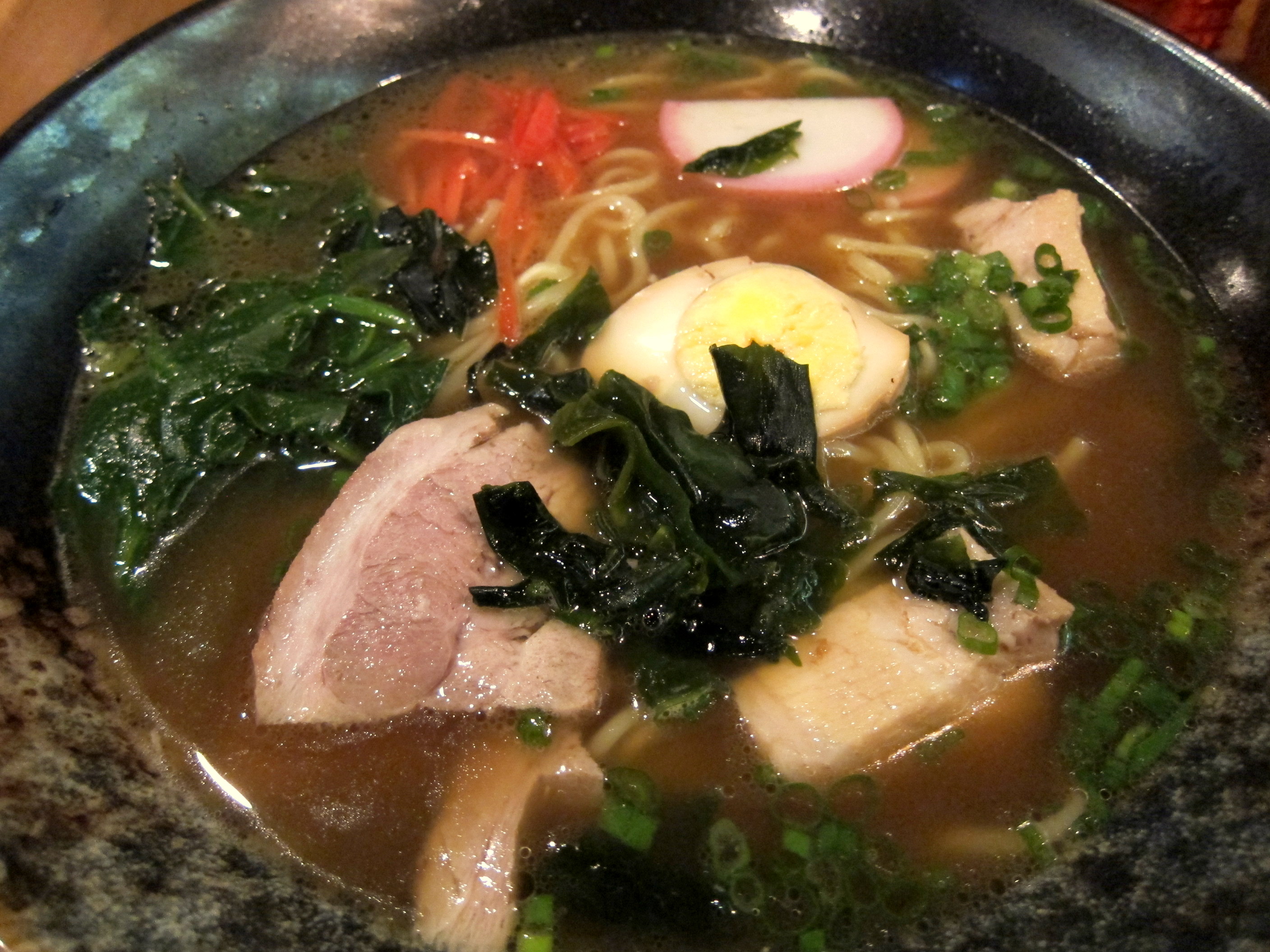
And a bowl of noodle soup to wash everything down. The broth erred on the salty side but the charsiu pork was perfect. No menma (bamboo shoot), and the noodles were more straight than curly. It’s a hearty bowl and just fatty enough to make Dad happy. 😉
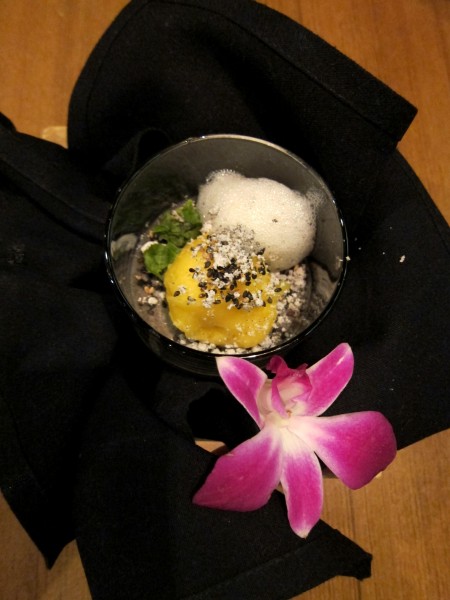

For dessert, our host tried to lure us into either a fancy chocolate roll (with coffee cream, red bean puree and lemon gel) or a liquid-nitrogened white chocolate namelaka (with green tea streusel and huckleberry curd), but I insisted on the December 24 special: black sesame panna cotta, topped with mango sorbet, candied sesame, sesame soil, and ginger foam. I’ve never had any bad sesame treats, and this springy, fragrant, sweet but mild one is another triumph. The mango sorbet is bit tart like a puffy porcupine: it’s from a real fresh mango (yes, as opposed to a fake one).

I think we’ve done pretty well covering all bases: rice, noodle, seafood, chicken, pork, beef, from street to posh, from East to West. What does this dinner have to do with Oishii Kankei? Nothing. I just wanted to mention a manga worth reading for food fans.
How many stars for this restaurant? Like Imamura-san said about Petit Lapin: One. The food is good. 🙂

Address: Kata Robata
3600 Kirby Dr. Suite H
Houston, TX 77098
(713) 526-8858

The damage: dinner for 3 – $84.44

The zen in cooking

December 16, 2011 By: Mai Truong Category: Opinions

There’s nothing zen-like about cooking. It has fire, it involves knives and all sorts of dangerous weapons, it requires the death of plants and animals. It requires speed: bad timing means either a burnt cookie or lunch at 5 pm (if preparations started at 9). Its purpose is consumption. Cooking by nature is so active and outward that it’s the opposite of zen. But in today’s Western hemisphere, zen has become an attractive concept: something that every field could claim to have to romanticize itself: zen in skateboarding, zen in running, zen in pistol shooting (sure…), zen in the art of digital privacy (?!), and my personal favorite: zen of the alcohol stove. Naturally, why wouldn’t zen be in the culinary media?

Just as I don’t appreciate the all-too-casual usage of “Buddha” in naming vegetarian concoctions, I don’t appreciate this “zen-ization” of everything from stove to pistol. The word is simply exploited. It’s become an eye-catcher. It’s commercialized. Most of the things with the title “Zen in the Art of [insert gerund]” have nothing to do with zen, which their authors also explain in the text. But zenization has its good points:

1. It can reflect the people’s true attempt to seek their peace of mind in whatever they’re doing, which could be a good thing as long as they’re also trying to minimize their activity’s damage to the world. So zen in martial arts is sensible. Zen in shooting? Only if your target is a board and your mind has no intention of damaging the board.

2. It can induce a (small) number of people to actually learn about zen before throwing the word around.

3. It boosts creativity. (See examples above.)

Right now, I’m practicing zen in cosmology, or should I say, zen in doing cosmology research. If you sit in front of a computer everyday for over 8 hours, it’s pretty close to meditating. If you battle with computer programs everyday, you learn patience (cuz you probably shouldn’t beat the computers to death). You also learn the zen in Googling and the zen in asking your advisor for help. The moment you start dreaming about your code signifies your becoming one with the digital nature. When you fix that segmentation fault, you’ve reached Nirvana.

Unfortunately I’m only between the next-to-last step and the last step, so Flavor Boulevard will continue its winter sleep. Meanwhile, let’s watch some zen in cooking.

P.S.: It’s not a bad episode. It’s just a little forced. And Elizabeth Andoh reminds me of Alice Waters.

P.P.S.: Dear Blog: I shall return after I make peace with the computer program. If I don’t survive, remember that I love you.

Tags:

Why “Off the Grid” in North Berkeley?

November 30, 2011 By: Mai Truong Category: California - The Bay Area, Festivals


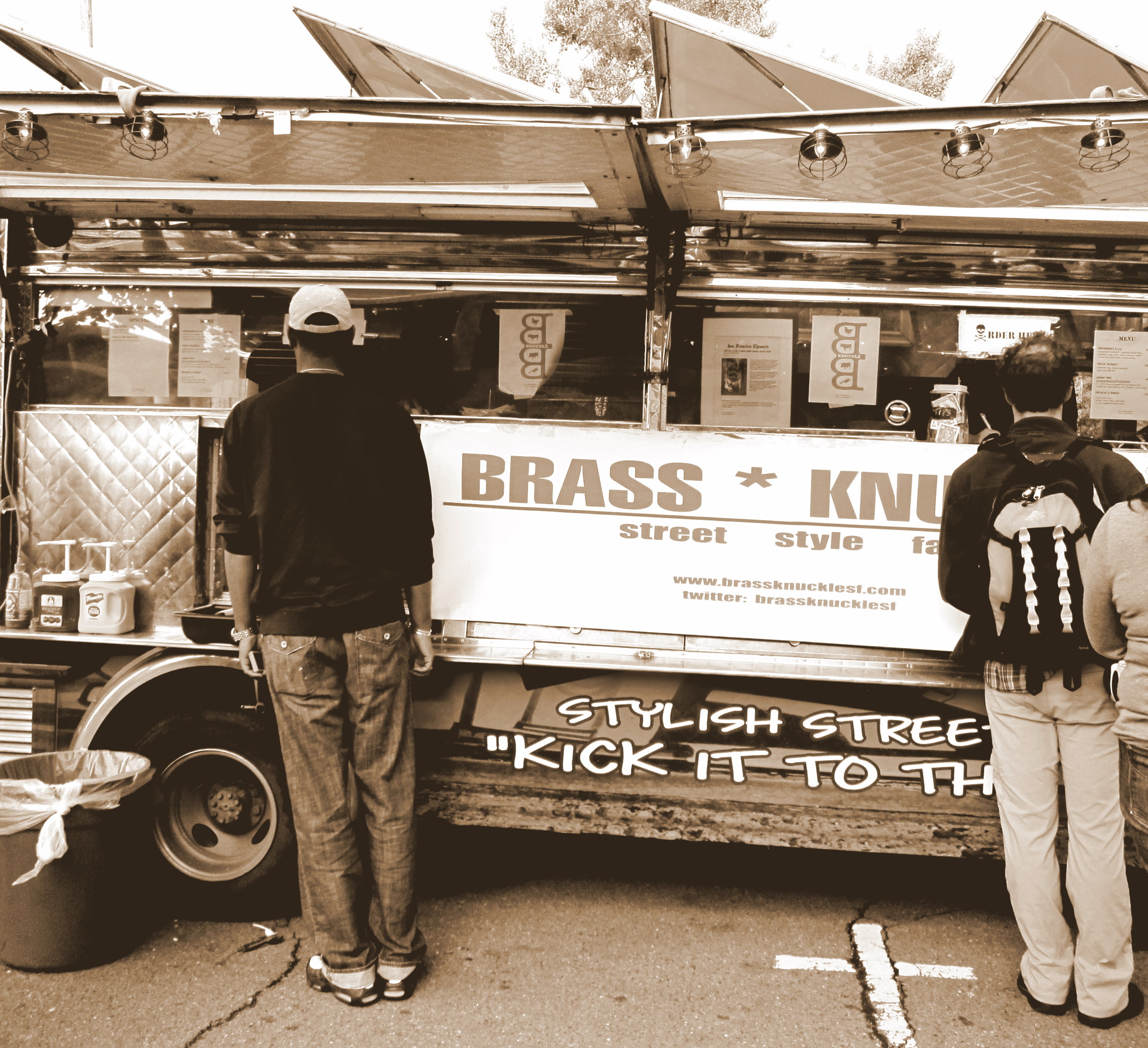
After so many years, and it’s been only a little over three years for me, of actively paying attention to food, I’ve become, unrighteously and shamelessly, somewhat of a food snob: very few things can excite me. And yet, it doesn’t take much more than a sandwich to keep me up at night (that, and my research). Originally, I had a draft for Off the Grid in North Berkeley, then I let it stew for centuries because I thought oh well, it’s just a food truck event, a new fad in town, who knows how long it will last. I still don’t get the name of the event: ten or fewer food trucks and hundreds of Berkeleyans gather where Shattuck meets Rose every Wednesday evening, from 5 to 9. Lines form, some short, some long. I still don’t get all the raves for Cupkates (or any cupcake trucks for that matter). There were things I regretted buying, and things I would never stand in line for. But there’s this sandwich, powerful enough to drag me back to Off the Grid, to stand in line, and to finish my draft.


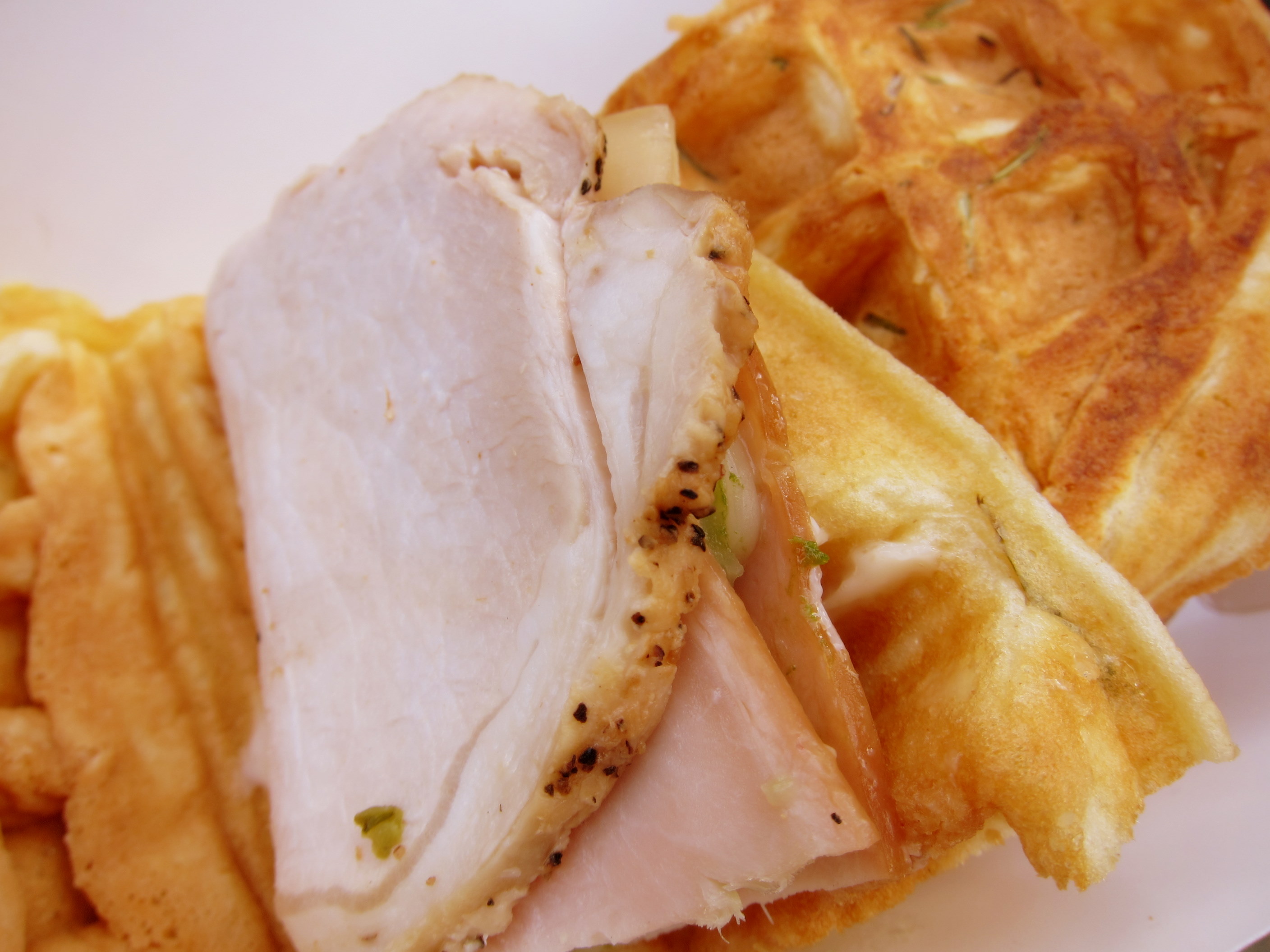
It’s the Notorious PIG, from the Brass Knuckle.

The people in line pronounced it “Pea-Eye-Gee”, I don’t know why. You have to spell out the letters because they’re capitalized? It makes sense to me to be just “pig” because it’s roast pork ham on a waffle. (UPDATE: now that Bob has explained, I know why: I’m just not American.) Anyway, it’s %##$@&* GOOD. The soft, pristine, plump layer of pork. The light, fluffy crisp of the waffle. And the rosemary in the waffle. Oh dear.


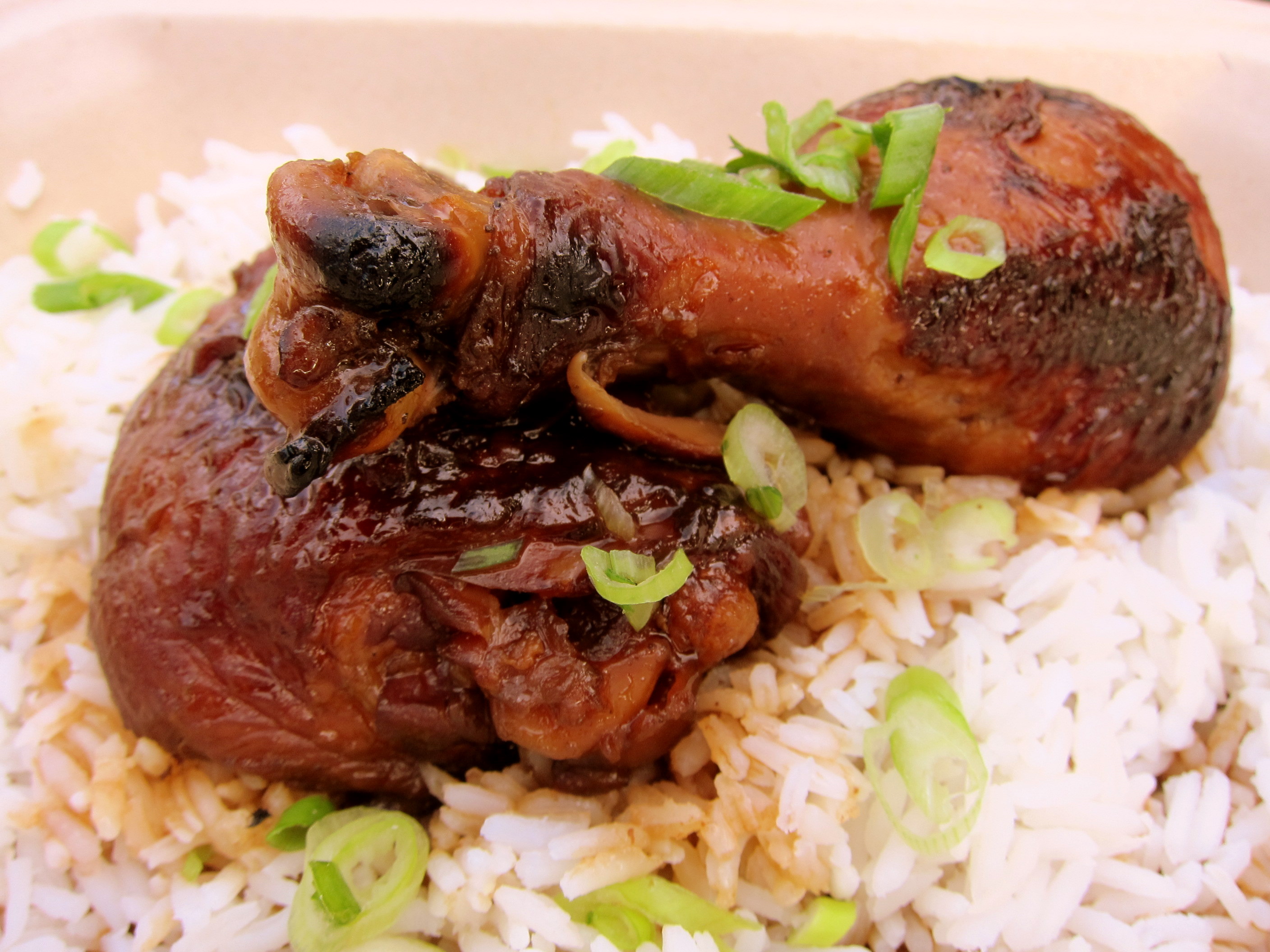
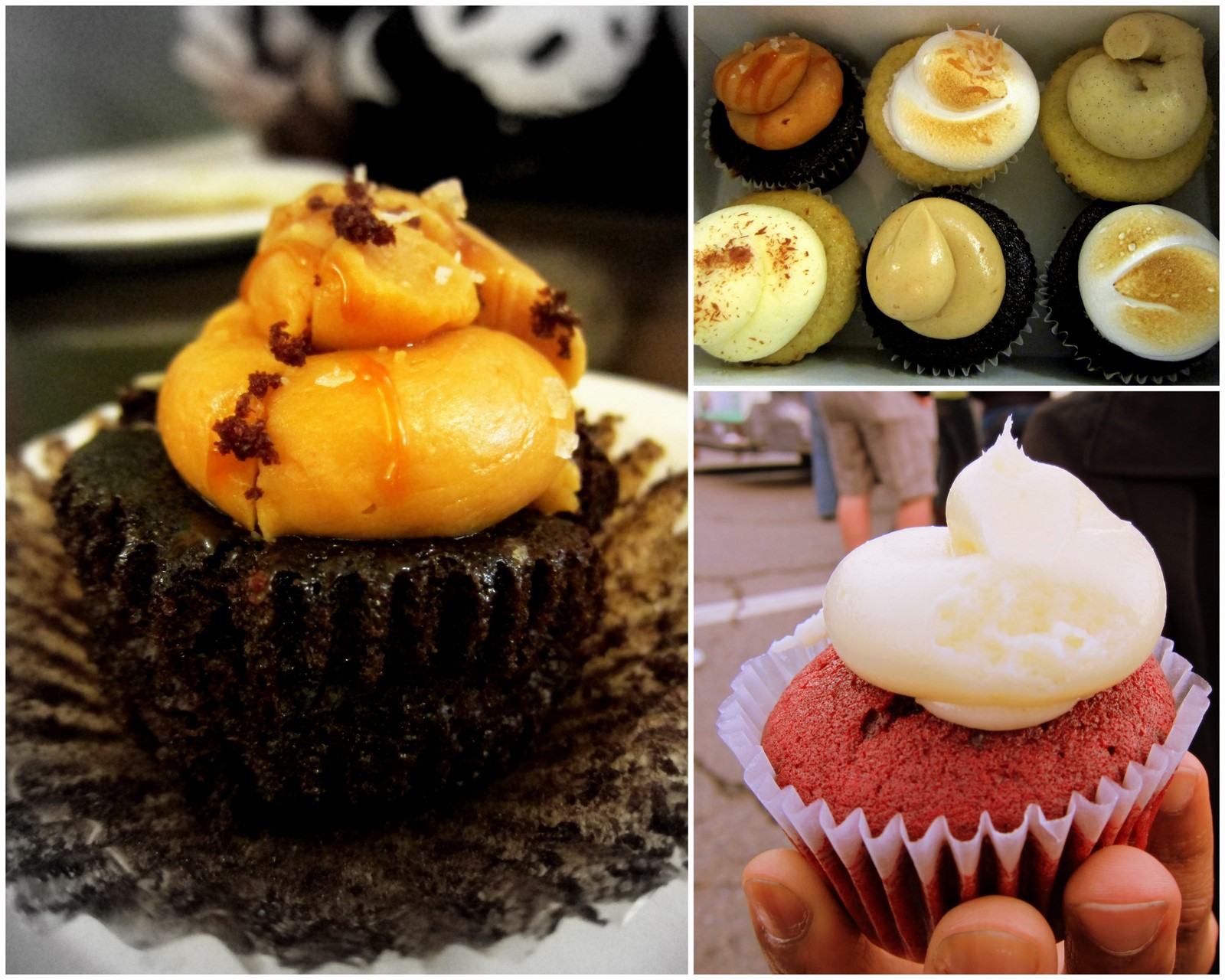
Hapa SF had some yummy chicken adobo. Fins on the Hoof had some terrible peach and goat cheese salad.  Cupkates has some seriously sweet cupcakes.


Last time I spent ’bout $40 on various things here. Next time, it’d be $40 on the pork waffle sandwiches alone.

The trick to a good bowl of Mongolian grill

November 28, 2011 By: Mai Truong Category: Comfort food, Houston, One shot


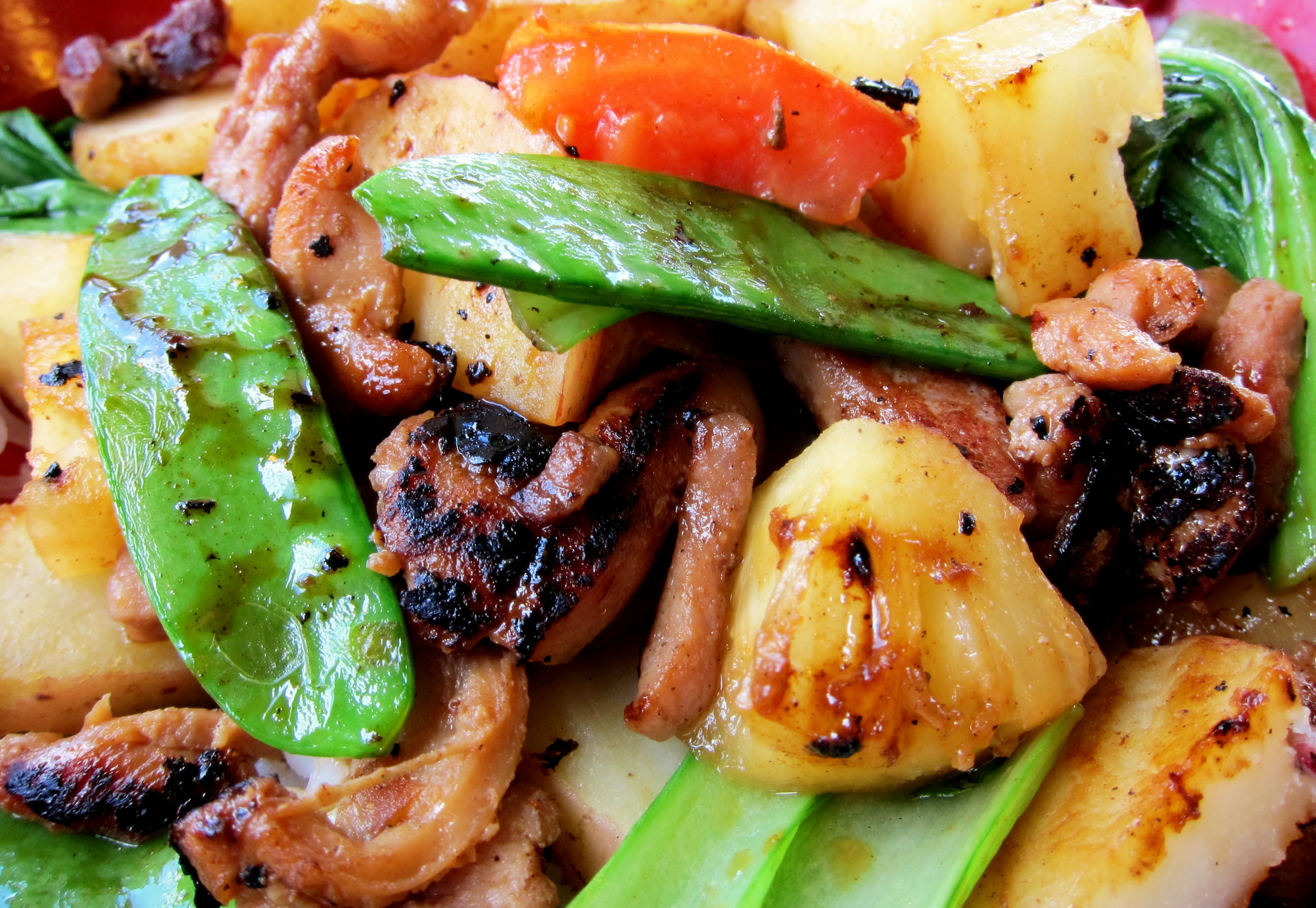
Great Khan is big, clean, American-looking, and in Houston. Little Mom took me here. It’s an ideal place to get glutton and gain some weight, that probably was her intention for me. The idea is splendid: ~$8 for the first bowl, which includes a small bowl of meat, a small bowl of vegetables, rice or noodle of choice (or both), and an extra $2 for unlimited extra food if you’re still hungry. The “wok” masters gather at the big grilling platform in the middle (no wok), waiting for you to hand over what you think would constitute the best bowl of Mongolian grill. Confronted by rows of shining vegetables and meats and a dozen kinds of sauces, you’re tempted to pile and press as many different things as possible into the little bowls. Over the years, I’ve had my share of stirfries (a Mongolian grill is really a stirfry). To put it more bluntly, I’m Vietnamese, I know stirfries. Truth is, a good stirfry is a simple stirfry.

0. The starch: choose thin rice vermicelli
That stuff soaks up the sauce the best and meshes well with other things texturally. Thick noodle would be too bland and oily. Rice would be too crumbly.

1. The meat: choose pork.
If you’re vegan, don’t choose tofu. In my last post I claimed tofu was the coolest of the cools, but in a stirfry, the tofu can never soak in enough sauce for the life of it.
Fish is a no-no.
Chicken is too dry. Beef is too tough.
Shrimp and squid: okay.
If you don’t eat pork, you might as well be vegan.

2. The vegetables: get pineapple.
Pineapple isn’t a vegetable, but the point is it’s good. It’s the best thing in stirfries. I’d forsake the pork for the pineapple. Its tart sweetness enlivens the taste buds, its juice keeps the rice and the noodle moist, its acidity tenderizes the meat.
Don’t get: broccoli (takes up too much room of your specious little bowls), waterchesnut, snap pea, carrot (too crunchy, discordant texture), mushroom (too chewy), beansprout (too long and stringy), tomato (pretty, but good for nothing)
Do get: sweet onion, potato, garlic, bokchoy

3. The sauce: choose anything with soy and garlic.
A stirfry is no stirfry without garlic. Avoid the sweet and sour, it tastes artificial. If you got pineapple, you got the sweet-and-sour part covered.

When our hostess brought the bowl, all steamy and tossed and glistering with flavors, I smirked in my head: meh, I’ll definitely have to go for seconds. But the seconds never got to see the light of day, because after one such serving I only had room for one thing: more grill, or dessert, and dessert won.


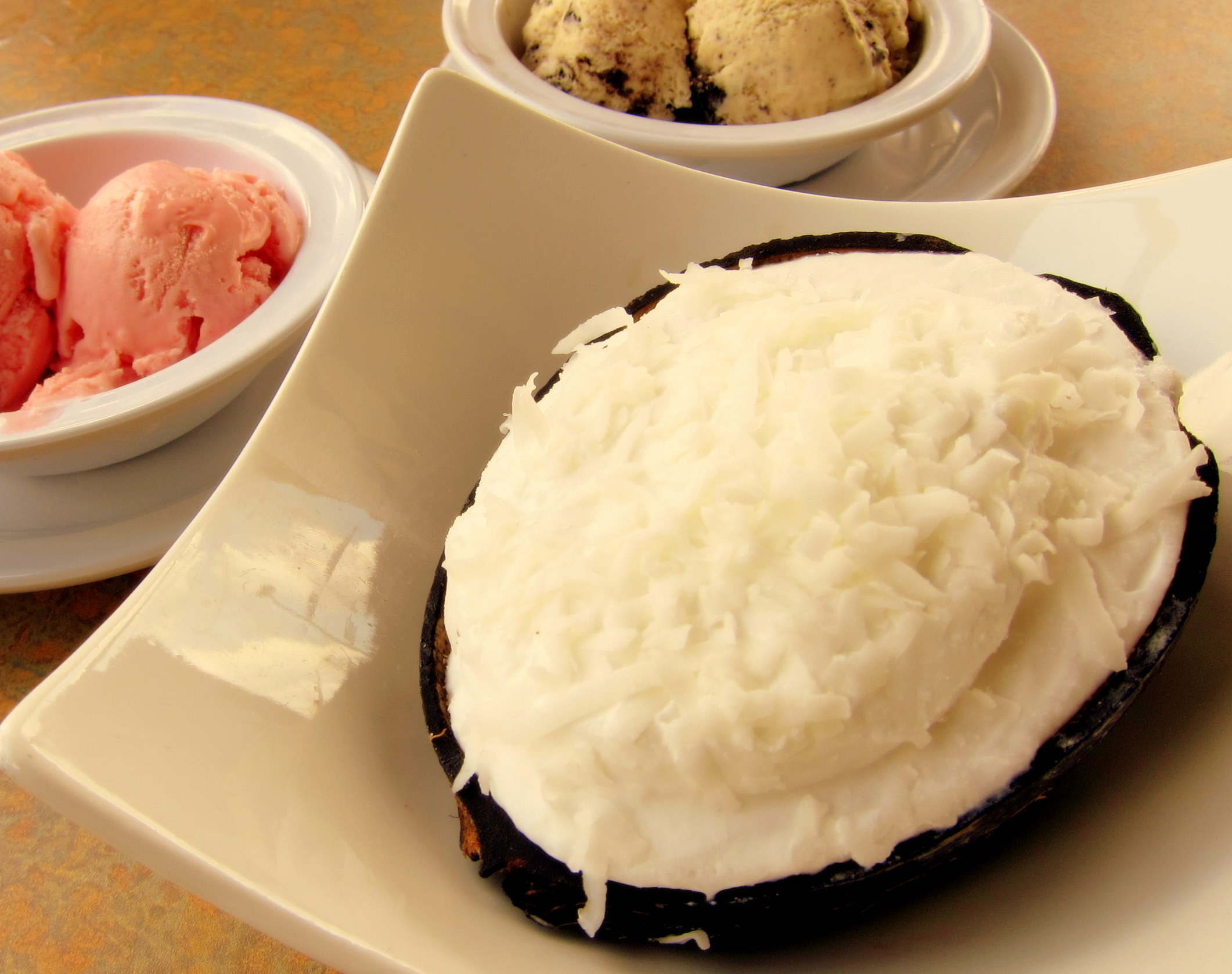
4. Dessert: get the coconut sorbet with coconut shaving. It’s heaven in a coconut shell.

Address: Great Khan Mongolian Grill
2150 South Highway 6 #200
Houston, TX 77077
(281) 531-1122
Lunch for three: $32.39