Flavor Boulevard

We Asians like to talk food.
Subscribe

Archive for the ‘Houston’

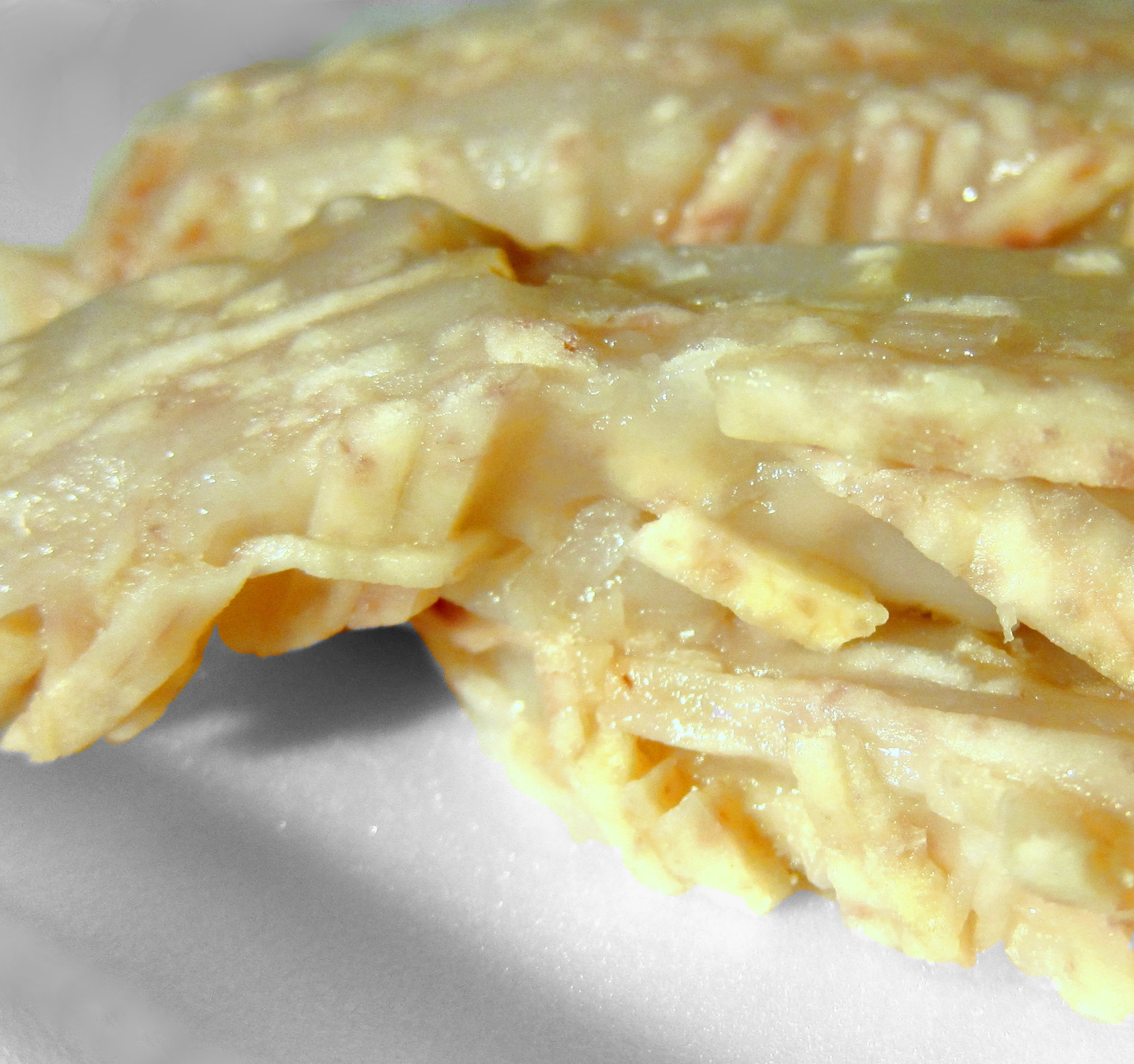
Sandwich Shop Goodies 18 – Vegan steamed taro cake (bánh khoai môn hấp)
June 28, 2011 By: Mai Truong Category: Houston, One shot, sweet snacks and desserts, Vegan, Vietnamese


It is not pretty, but from the label I knew right away that it would be good. Strips of nutty taro embedded in soft-chewy tapioca just got on my list of things to make, if I ever feel like cooking. That can mean only one thing: the online recipes seem that simple.
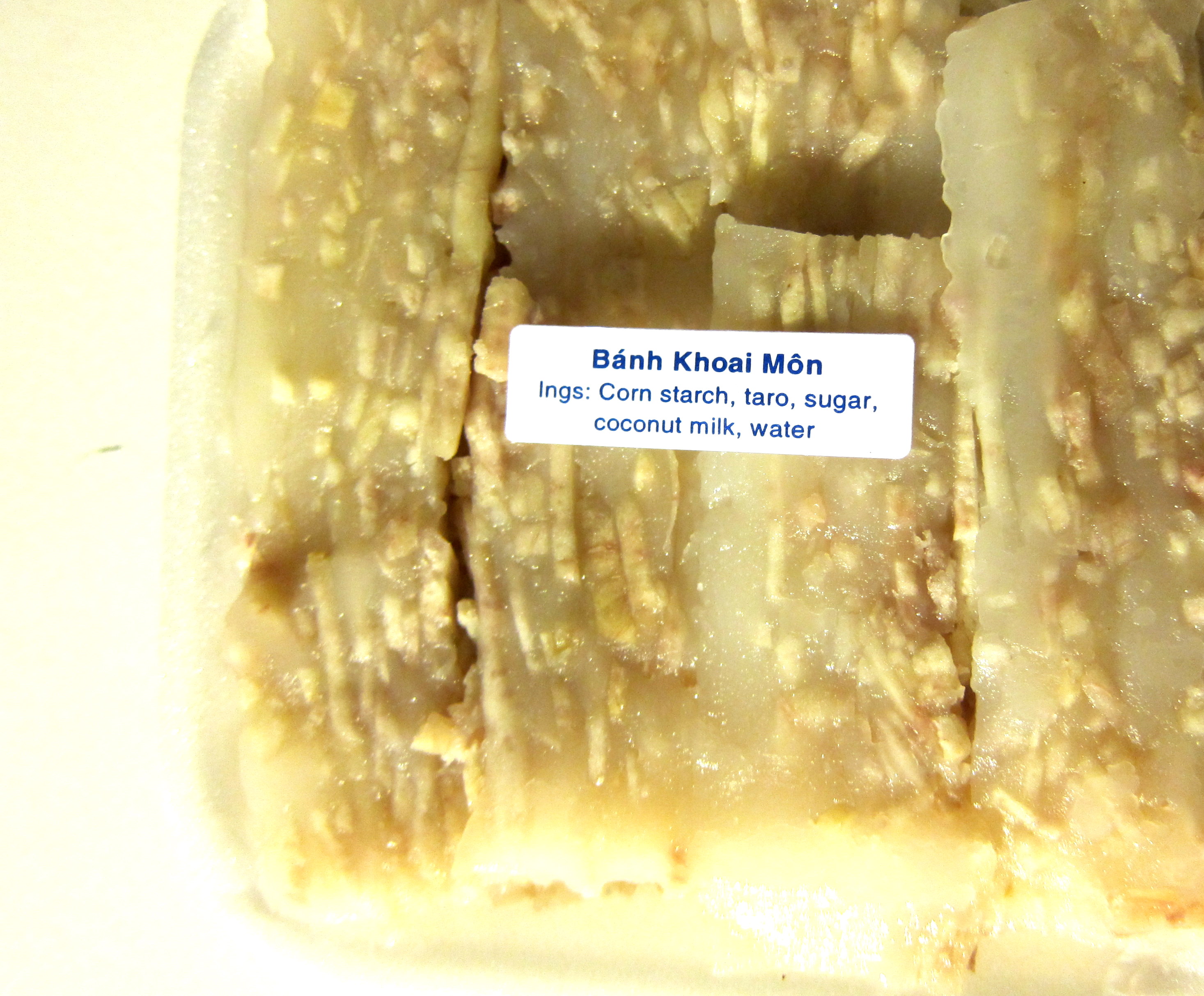

If you google “bánh khoai môn hấp“, and presumably you read Vietnamese, the first links you find will contain something like dried shrimps (tôm khô) and pork, perhaps some mỡ hành (green onion in lard), too. That version is similar to Woo Tul Gow (or Woo Tau Ko). I haven’t tried that nor seen it in any cling-wrapped styrofoam plate at banh mi shops. If you don’t read Vietnamese, well… that’s why you have me :D: I translate. Here’s the Vietnamese recipe of the (vegan) steamed taro cake from Thư Viện Phật Học (The Library of Buddhist Studies), which most resembles what I’ve gotten from Alpha Bakery & Deli. Actually, this recipe sounds better.

Like most Vietnamese recipes online, this one lacks precise measurement (which I agree with to some extent, but that’s beyond the scope of this post). So I searched around and found a more detailed but also more complicated recipe, and here’s my wanna-be-clever combination of the two:

The minimalist’s vegan steamed taro cake (bánh khoai môn hấp)

– 1 lb taro
– 1 bag (200 g) of tapioca flour (bột năng)
– 50 g rice flour
– 150 g sugar
– 2 cans of coconut milk (oooh coconuty!)
– 2 cups of water
Mix tapioca flour, rice flour, sugar, water, and coconut milk together.
With the taro roots: wash, peel, slice into strips (as thick as you’d like, but I’d imagine the thicker they are, the longer it takes to cook the cake).
Gently mix the taro strips with the batter (don’t make mashed taro or you’ll get Kanom Pheuak).
Boil water. Steam the taro-batter mix for 45 minutes or until a toothpick comes out clean.

Fancier versions would include pandan leaves and vanilla, or alternating layers of tapioca and taro.
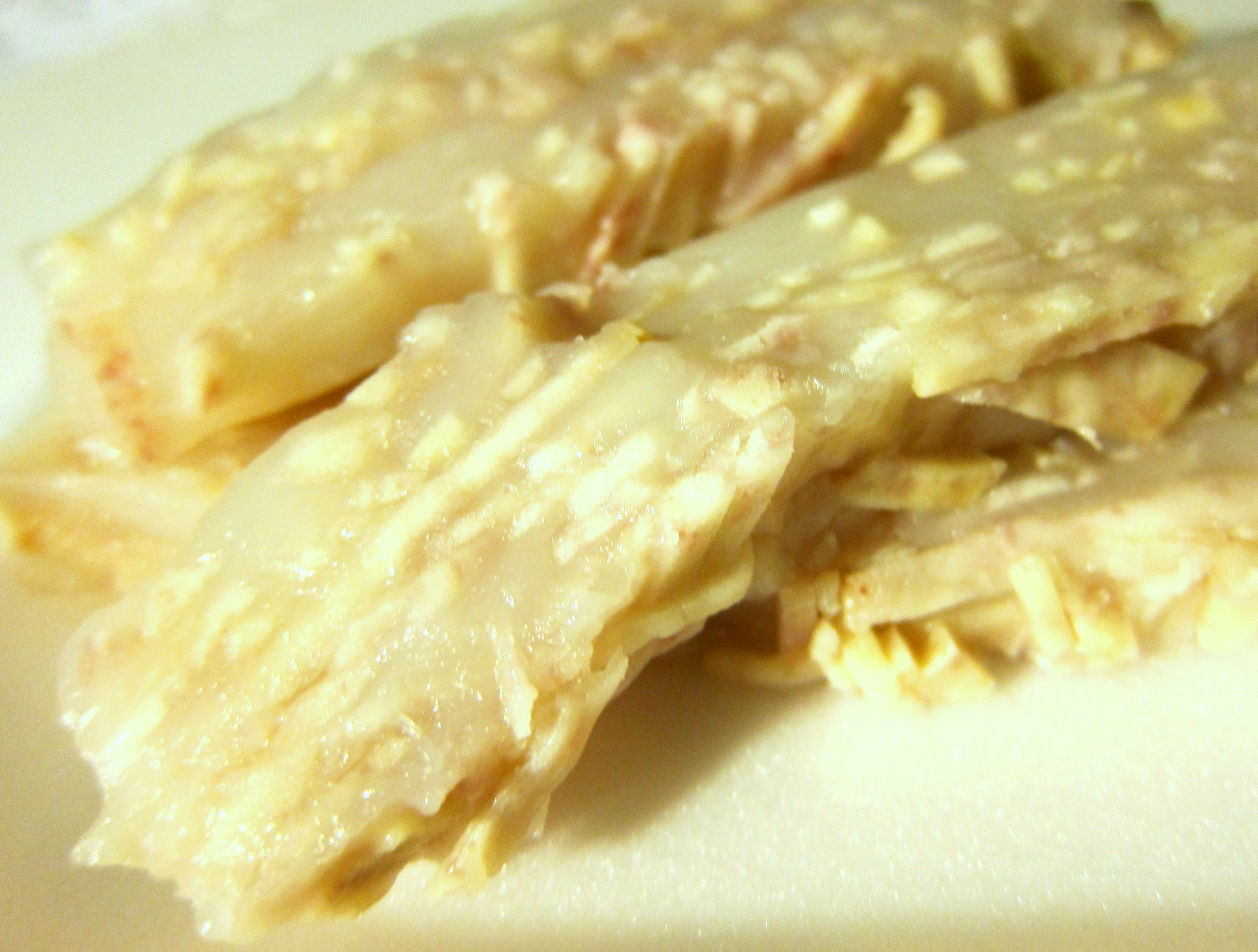

This is one of the few times when “cake” is not too far off from “bánh“: bánh khoai môn hấp is semi sweet, soft, meatless, and too light to make a meal by itself.

If you try this recipe, do let me know how it goes.
Otherwise, I found it here once for a buck fifty:
Alpha Bakery & Deli (inside Hong Kong City Mall)
11209 Bellaire Blvd # C-02
Houston, TX 77072-2548
(281) 988-5222

Previously on Sandwich Shop Goodies: mung bean milk (sữa đậu xanh)
Next on Sandwich Shop Goodies: Chinese sesame beignet (bánh tiêu)
The charm of crunchy-skin grilled fish

June 23, 2011 By: Mai Truong Category: Comfort food, Houston, Texas, Vietnamese


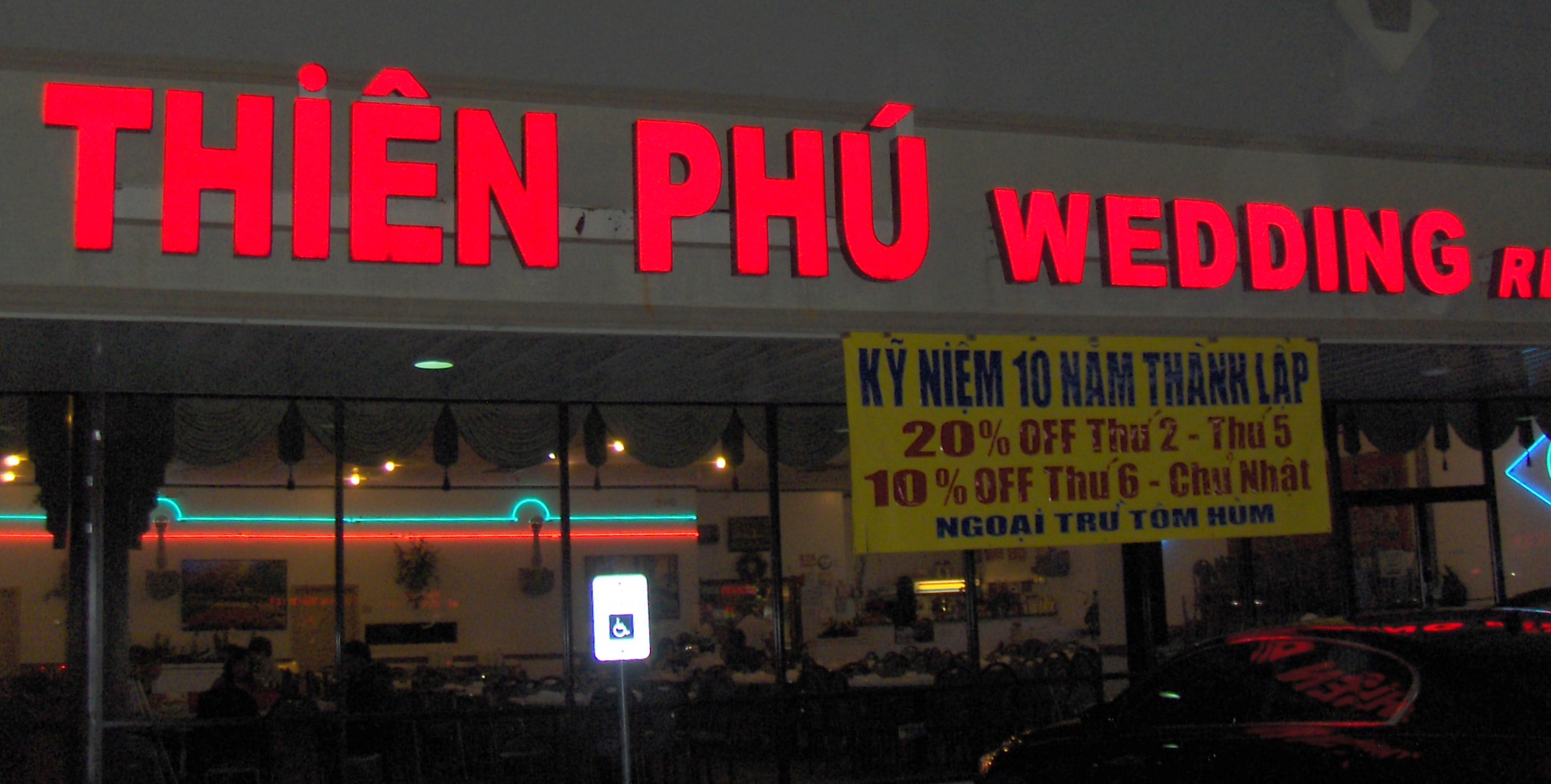
Thiên Phú has been in my draft list for over 18 months. I wanted to write a post worthy of their dishes, but a proper post requires proper pictures, and either I was too hungry at the time or I just sucked at taking pictures at the time (I still suck now, but less than before) that every single picture was blurry like a blizzard. I was more concerned about food than food blogging so I didn’t snap many shots and didn’t check the clarity of the shots I took before digging in. I also didn’t know any photo editing. Basically, I was plain dumb.

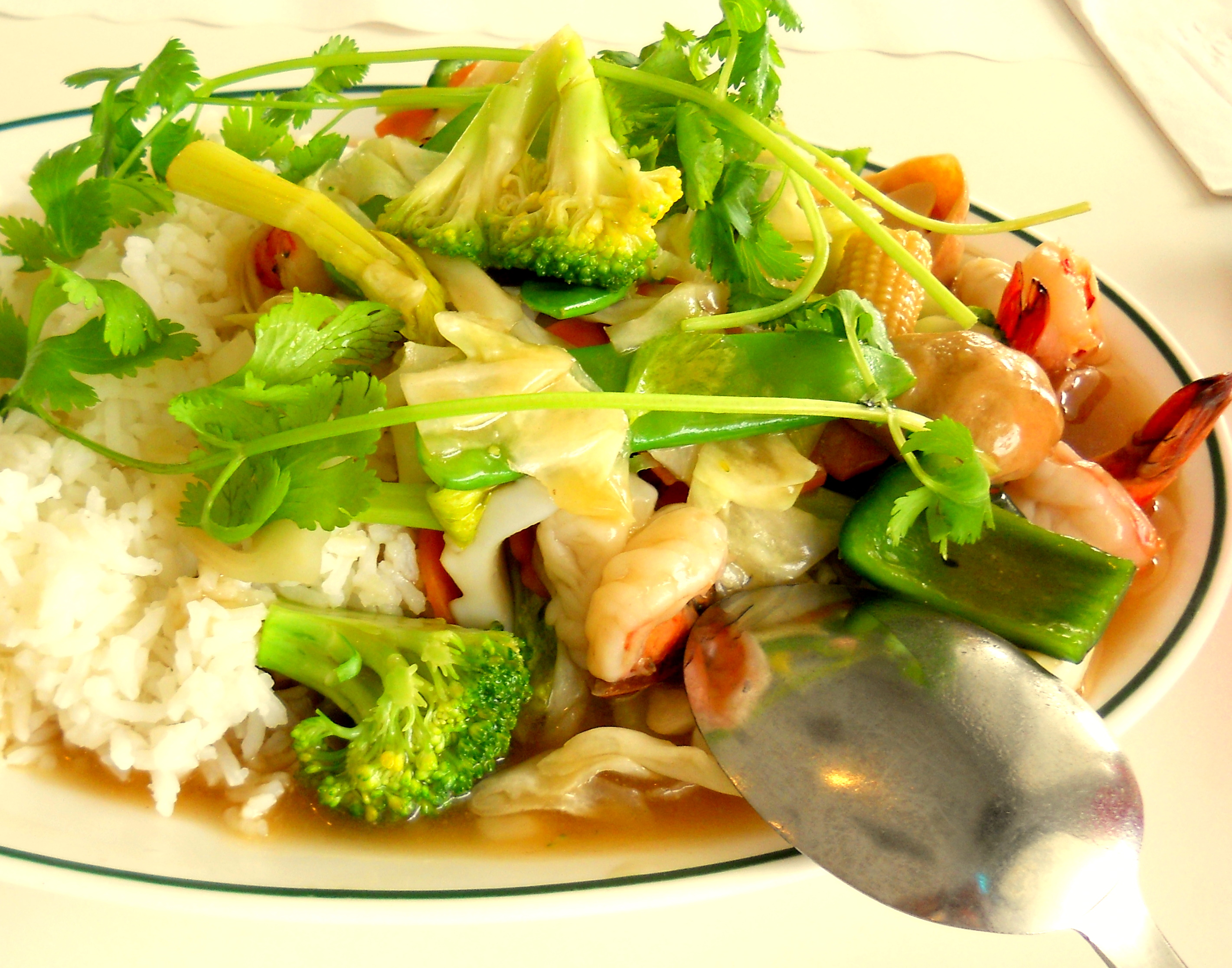
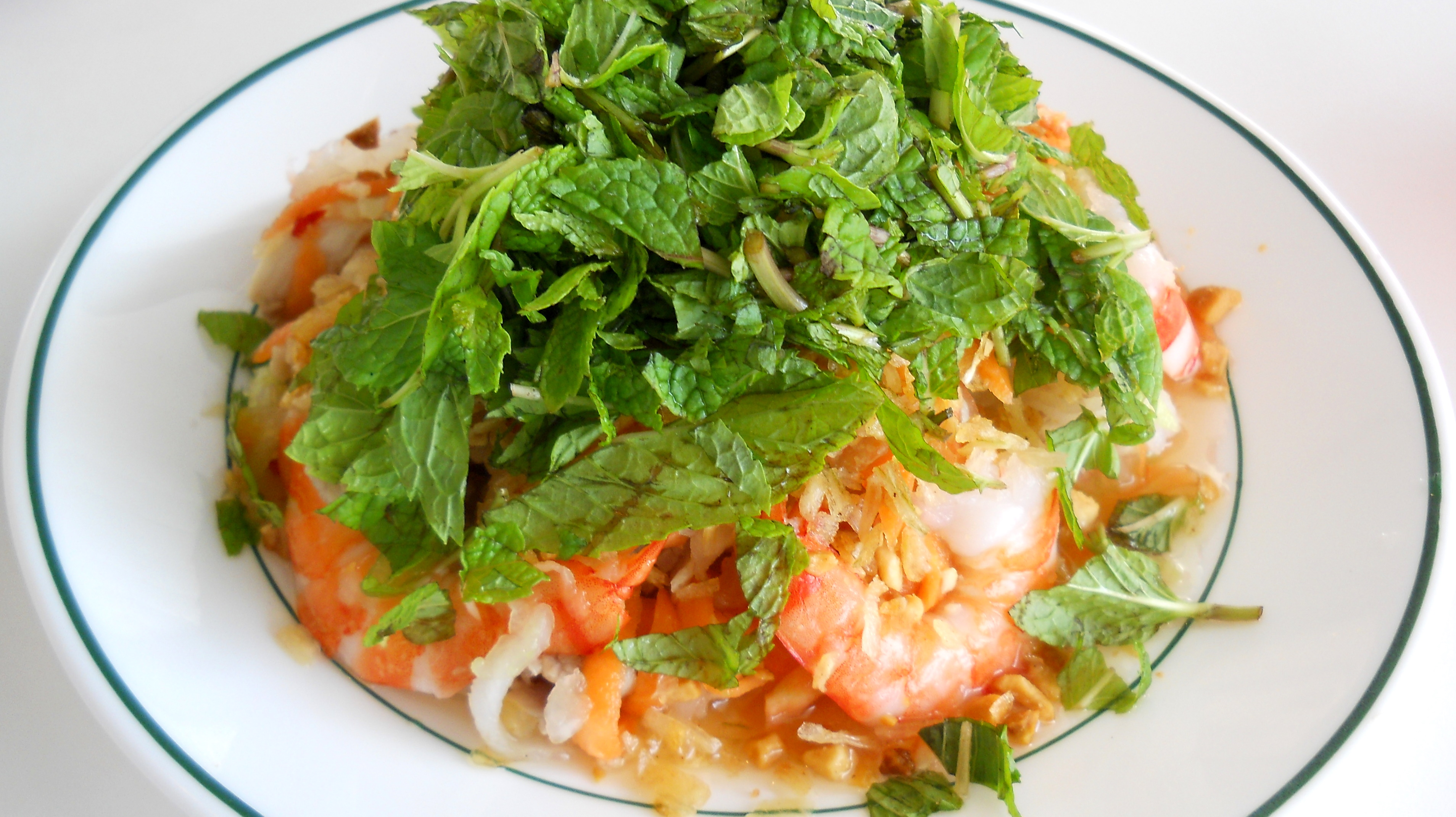
At many points I thought about abandoning the post altogether, but we had a good meal that time and I even fed the birds in the parking lot while waiting for my friends to come join us. The birds were full, we were full. The restaurant was, as usual, empty except for us (because their menu is catered to large groups and wedding parties), so we got extra attention from the staff. Such memories kept me from deleting the draft that had nothing but terrible pictures. Then my parents came to the rescue when they revisited Thien Phu in the spring and took some luminous shots, like the beef and shrimp salad above and the seafood stir fry on rice below.


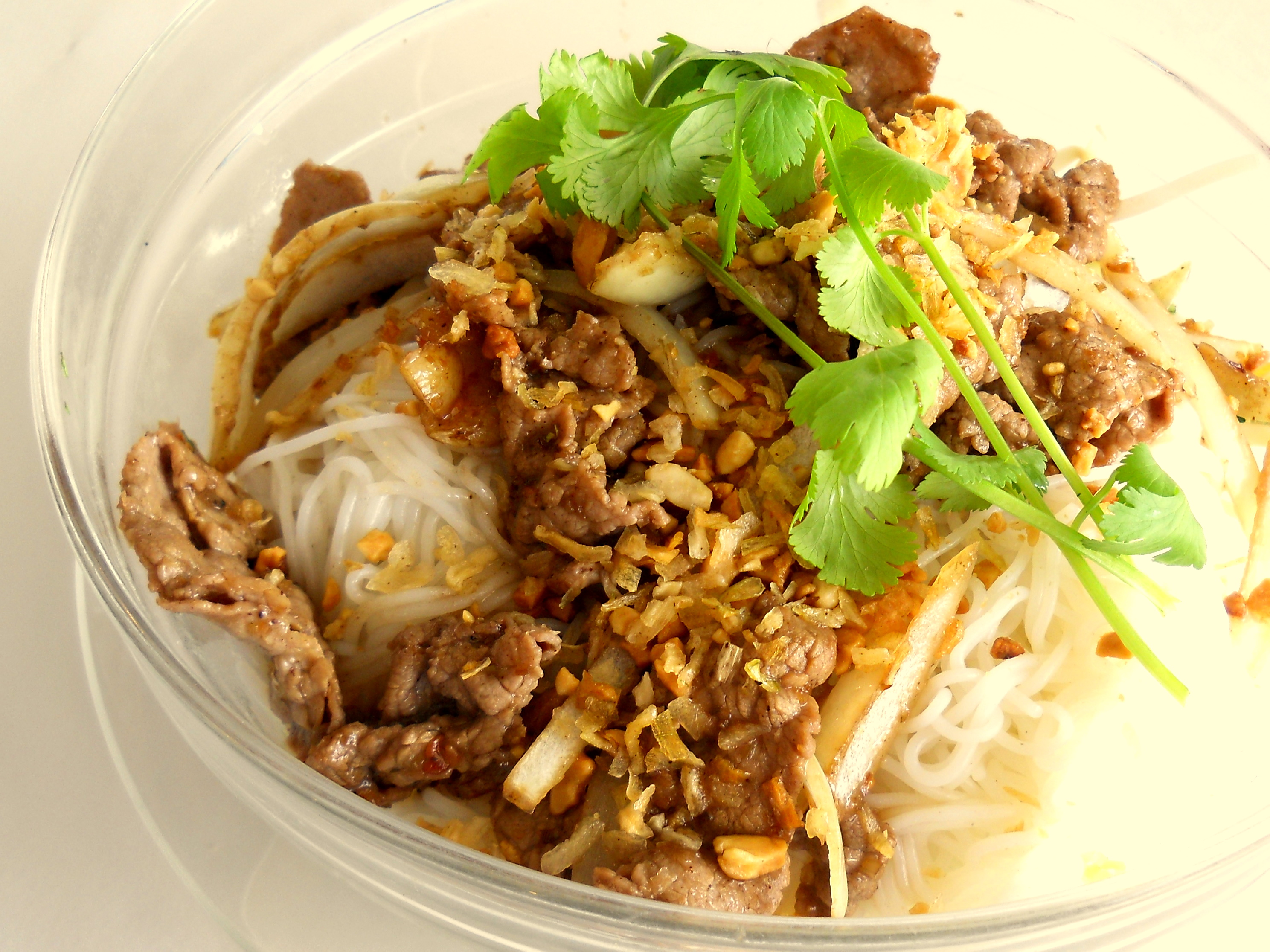
The salad, like most Vietnamese salads soaked in that half sweet, half tangy mixed fish sauce, was yummy. The seafood stir fry was nothing beyond expectation, they said, but at the very least, Thiên Phú brown sauce was not fattily thick like that goo in Phở Hà’s pan-fried phở. Dad’s vermicelli with stir fried beef was a good sweep, as evident from its picture.


If you’ve read my blog for long enough, you probably would notice that my dad almost never orders anything but beef, while Little Mom goes for shrimp or fish nine times out of ten. Naturally, Thien Phu ranks high in my parents’ list because their specialties are the 7 courses of beef and the whole grilled fish.


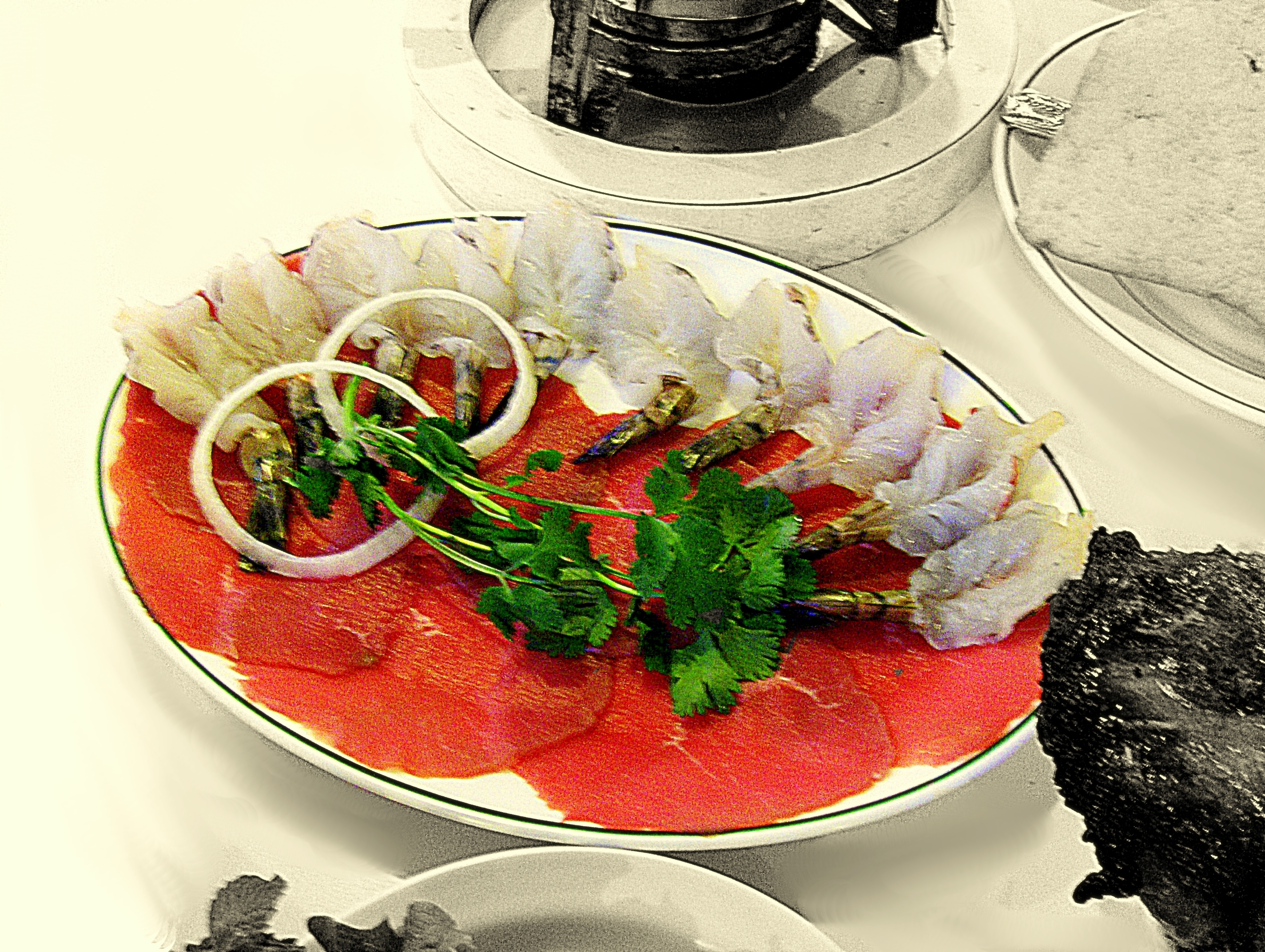
We’ve never tried all seven beef courses at once. We just choose a few that sound most savory, and for this party of 5, something shareable. Like beef that can be wrapped in rice paper and dipped in sauces. The chunky, fatty steamed beef balls (bò chả đùm) was broken into coarser bits to be scooped with a rice crackers or wrapped with lettuce. Razor-thin leaves of still red beef were dunked into heated vinegar for a simple, tender, and tangy completeness of bò nhúng dấm. Halved shrimps joined the beef in a similar fashion to make tôm nhúng dấm. Dad even dipped it in mắm nêm (ground anchovy sauce) to tighten the taste.


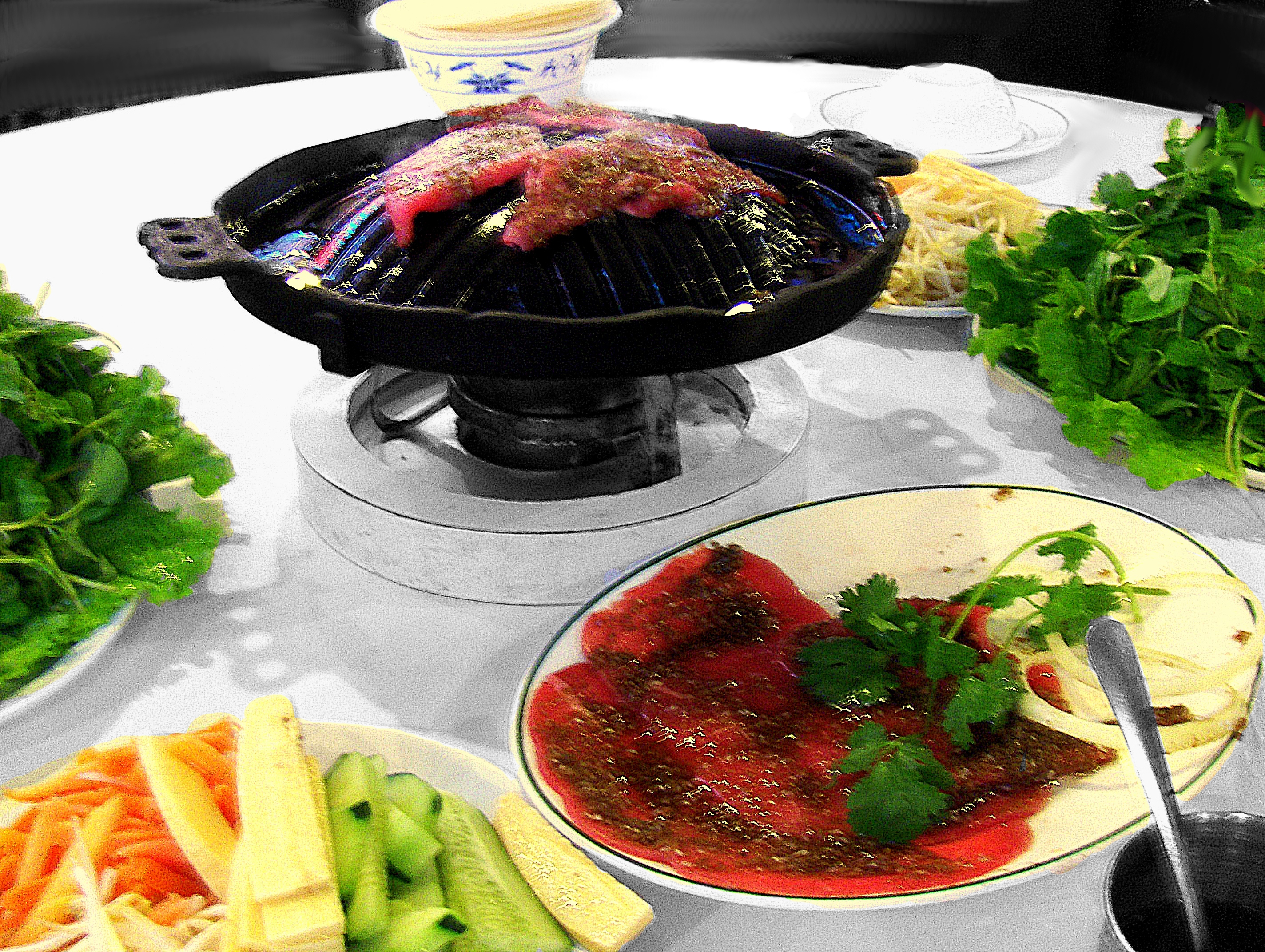
Then there’s the good old style of flopping beef slices on a hot black grill pan and hearing it sizzle while loading the wet rice paper with bean sprout, herbs, pickled radish and daikon. I also put a slice of unripe banana in my bò nướng vỉ roll because its cookie-like texture and clinging aftertaste are fun, although they don’t add much to the roll as a whole.


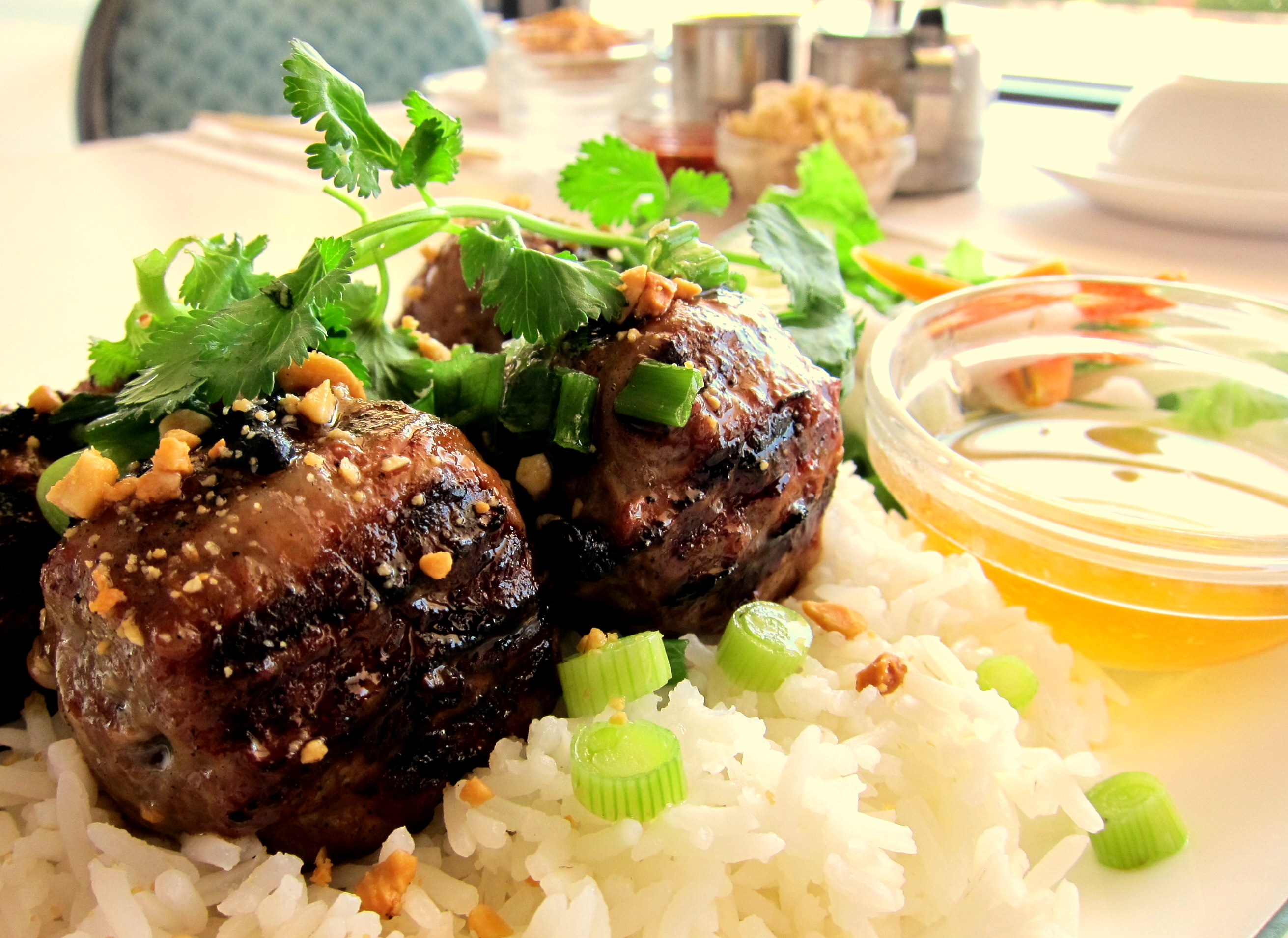
Leaving the blurry images of December 2009, we’re back to the present: grilled beef ball on rice. The marinade was sealed inside its smooth, gritty texture, each ball was so juicy it would shame a plump mango.


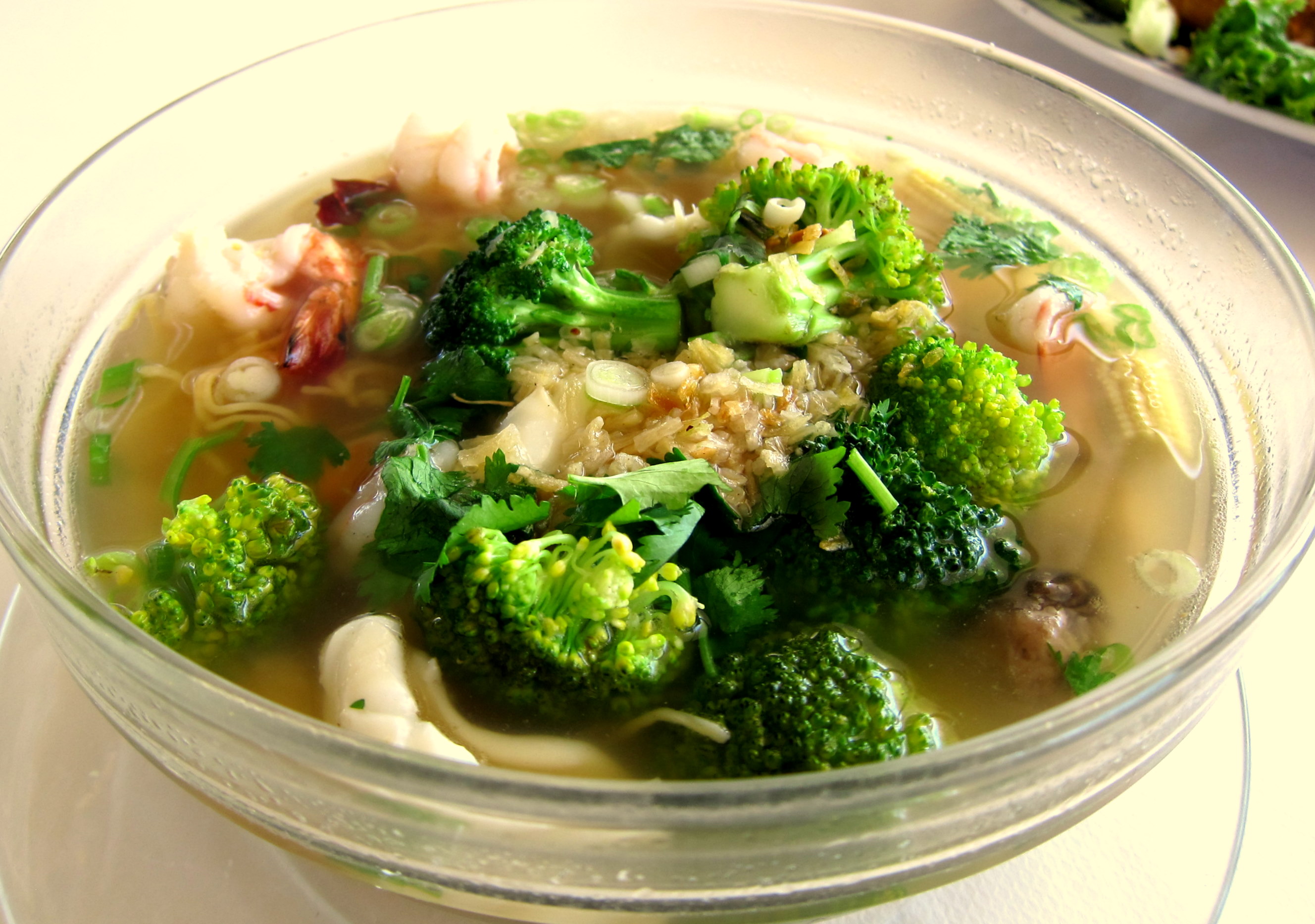
The seafood dishes are not subpar either. Loaded with shrimp, squid, and broccoli, mì hải sản (seafood noodle) had the sweetness of hủ tíu Nam Vang (Phnom Penh ka tieu) and the strength (and curly noodles) of ramen. The more broth we drank, the more delicious it got.


But there is one thing that everyone gets when they go to Thiên Phú: the crunchy-skin grilled fish (cá nướng da giòn). The whole catfish is enough for two by itself, grilled hiddenly in the kitchen until its skin breaks a crackling sound and glisters like topaz, then it’s brought out to you topped with crusted peanuts, cilantro and lime wedges. Its flesh stays white, juicy and soft. Roll up a side piece, you can savor its pristine, naturally sweet taste or dip it in nước mắm. The second grilled fish I had here this May was better than the one I had in December 2009, and so were their beef dishes. It’s good to see a good place gets better.

Just watch out for bones.


Address: Thiên Phú Restaurant
11360 Bellaire Blvd Ste 100
Houston, TX 77072
(281) 568-1448
(in the same parking lot as Giò Chả Đức Hương)

Lunch for 5: $76.03

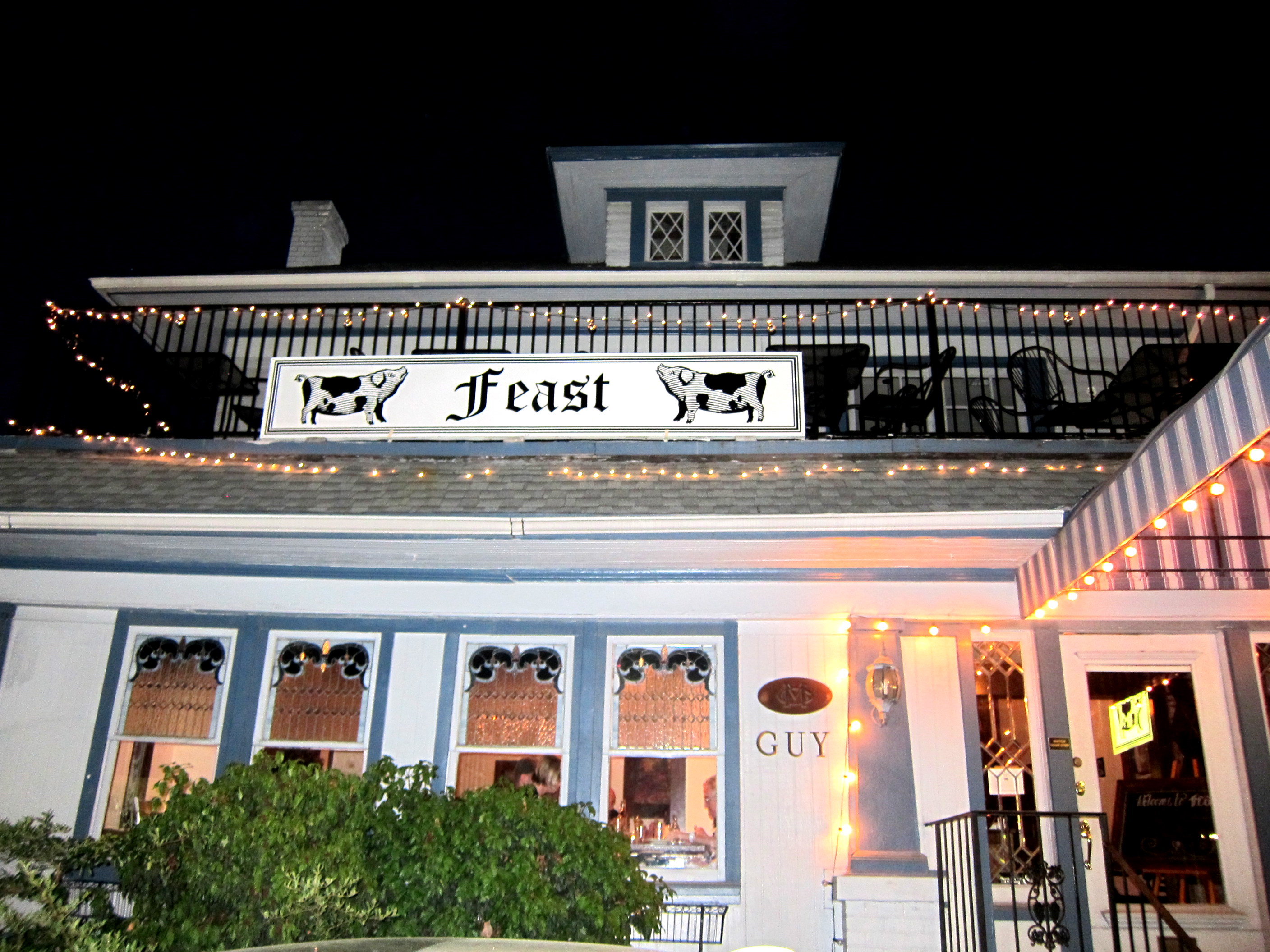
Feast – It’s probably good for your heart

June 18, 2011 By: Mai Truong Category: Houston, Won't go out of my way to revisit


Three times. Aaron and I drove up and down Westheimer three times to look for this little bitty sign of a black-and-white pig and a one-syllable name: Feast. The restaurant with over 150 glittering reviews on Yelp and several listings of Best New Restaurants appears humbly a residential-looking house, which faces a brick box called the Crabell Building and is a stone’s throw away from Hollywood Food & Cigars if you’re coming from the east. Hollywood Food & Cigars, you say? Well that was part of Varun’s instruction for us, the last two man standing as the GPS is taking over the world. (Or one man and Mai, but that’s not the point).


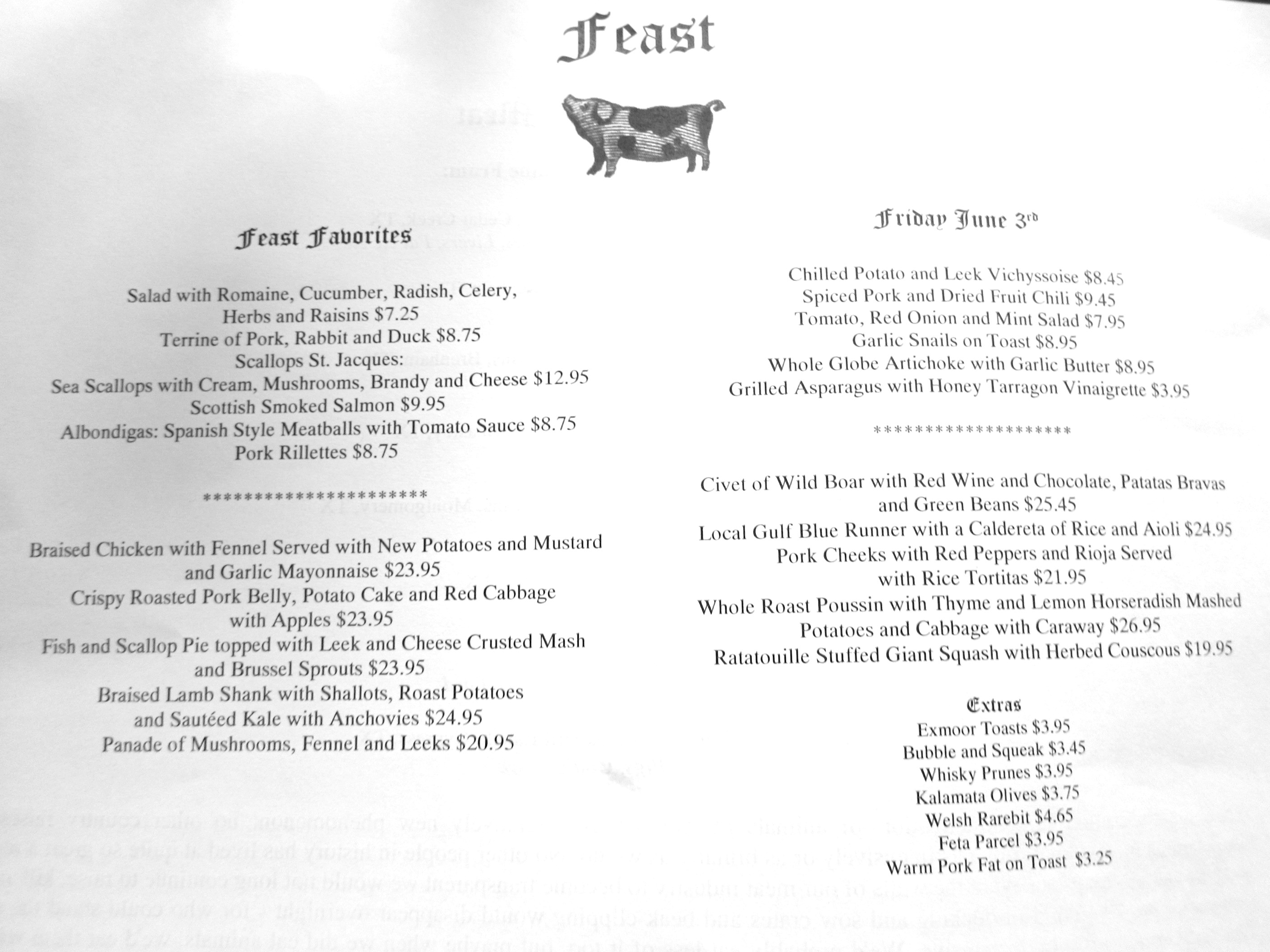
Varun had been here before on one of his food expeditions, and heaven knows why he did not veto my call when I suggested Feast for our rendezvous. I know why I suggested it: it has a daily changing menu that happened to have interesting wild games on the day I looked it up online. The day we came has more of a porky theme, presented in somewhat interesting combinations (click to see Feast Menu on Jun 3).


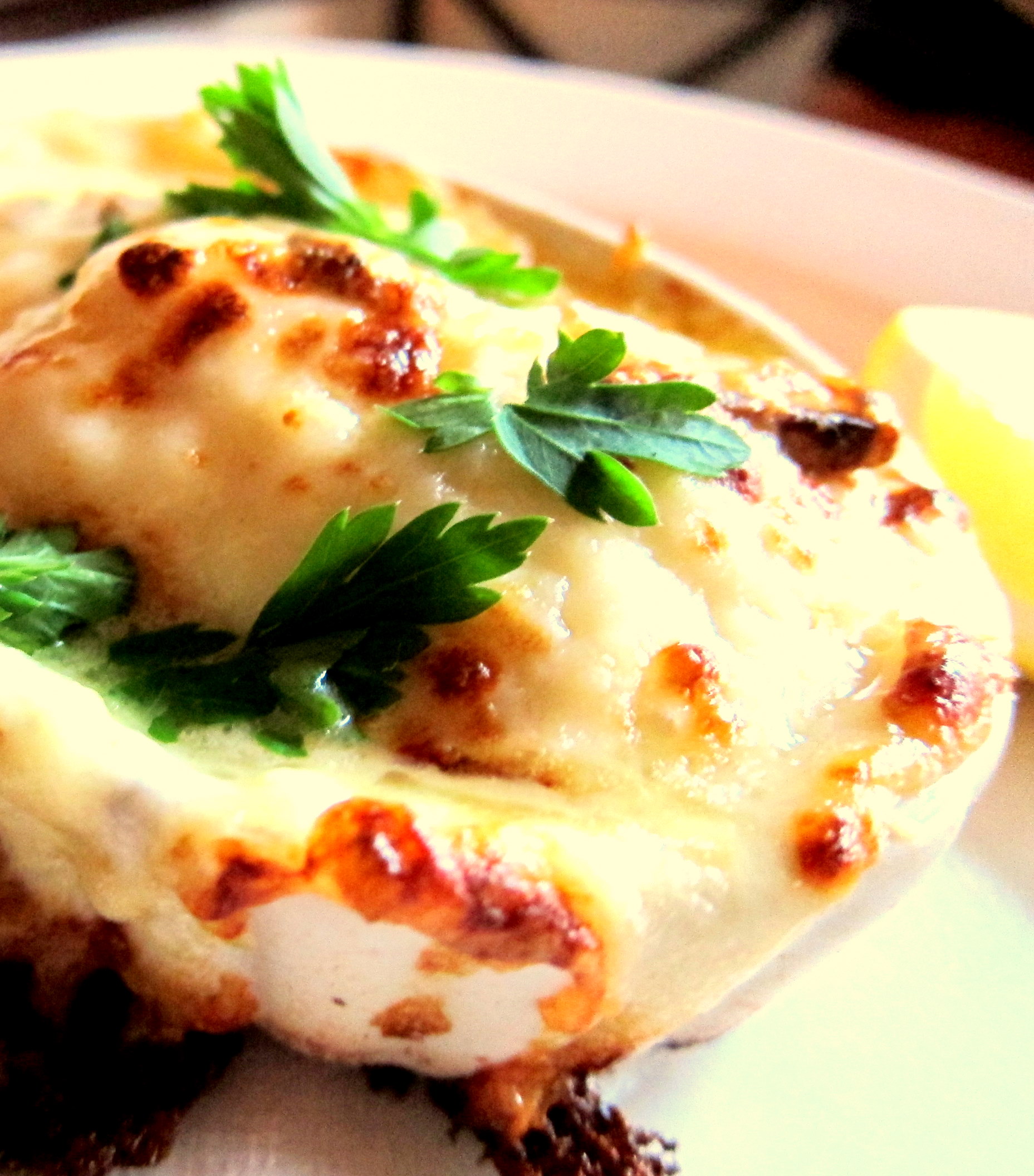
Aaron and Varun each decided on two appetizers for flexibility. If the listed price could initially throw off some shy college students, the good thing about Feast is that this is Texas we’re talking about: each appetizer is hefty enough to be a full course and the entree makes two meals. The content for us is heavy too, partly because we stayed macho and away from the salads, partly because the Scallop St. Jacques and the Potato and Leek Vichyssoise were loaded with enough cream and cheese they should just call them cheese bowls.


Normally, scallop has a chew to it, but the scallops tonight melted in my mouth almost indistinguishably from the cream sauce coating them. That wouldn’t be a bad thing if you are into drinking your food, but once you take away the texture from the scallop, it’s nothing but a blob as flavorful as it is colorful.


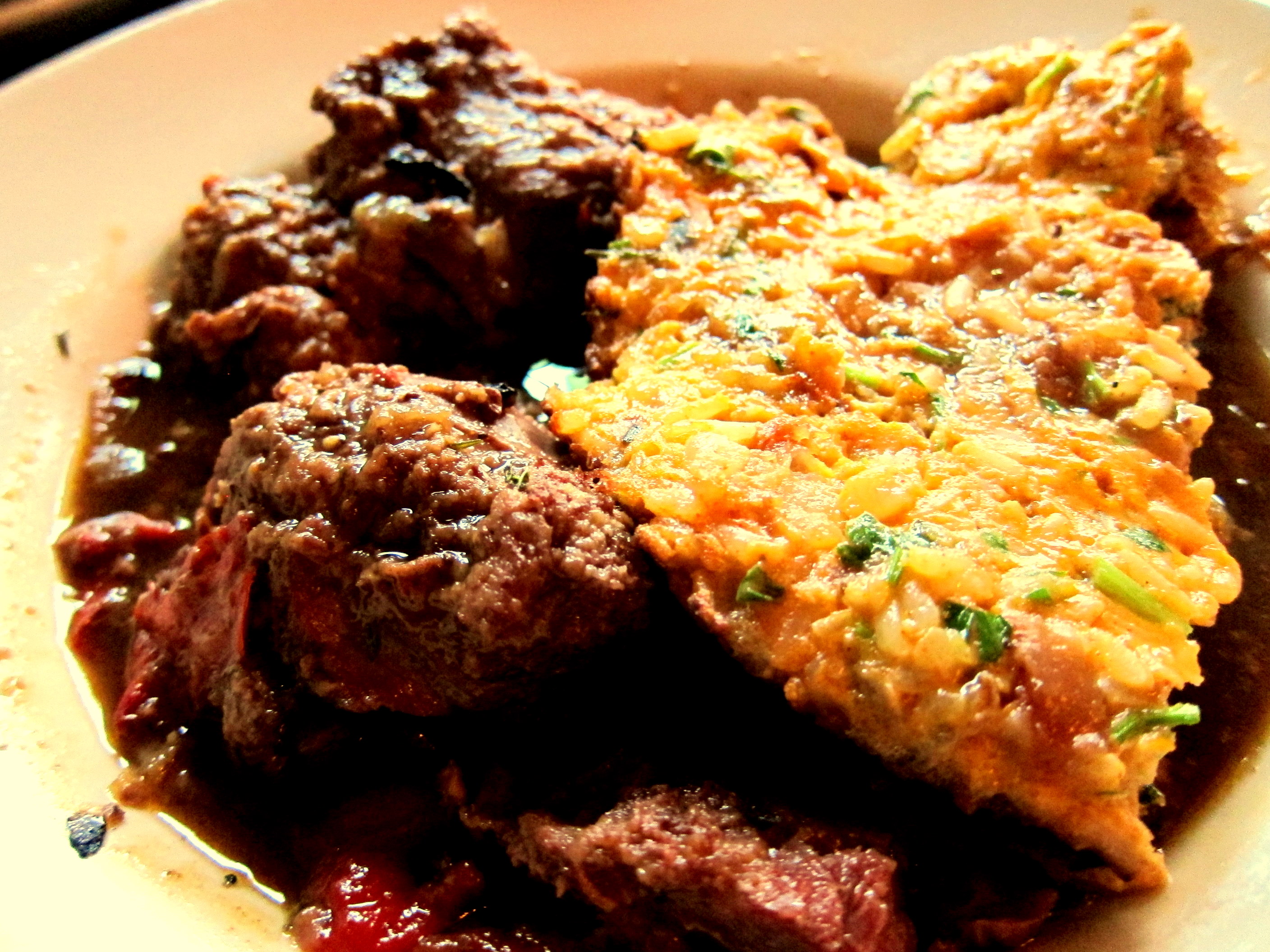
On the bright side, Feast makes stuff soft. My pork cheeks with red pepper and Rioja also melted in my mouth, its accompanying omelet-like rice tortitas (“pancakes”) were decent, although the seasoning reminded me too much of the veal mixiote I had in Puerto Vallarta. That veal was too salty, this pork was too bland, but both of them reflect a lacking attention to taste.


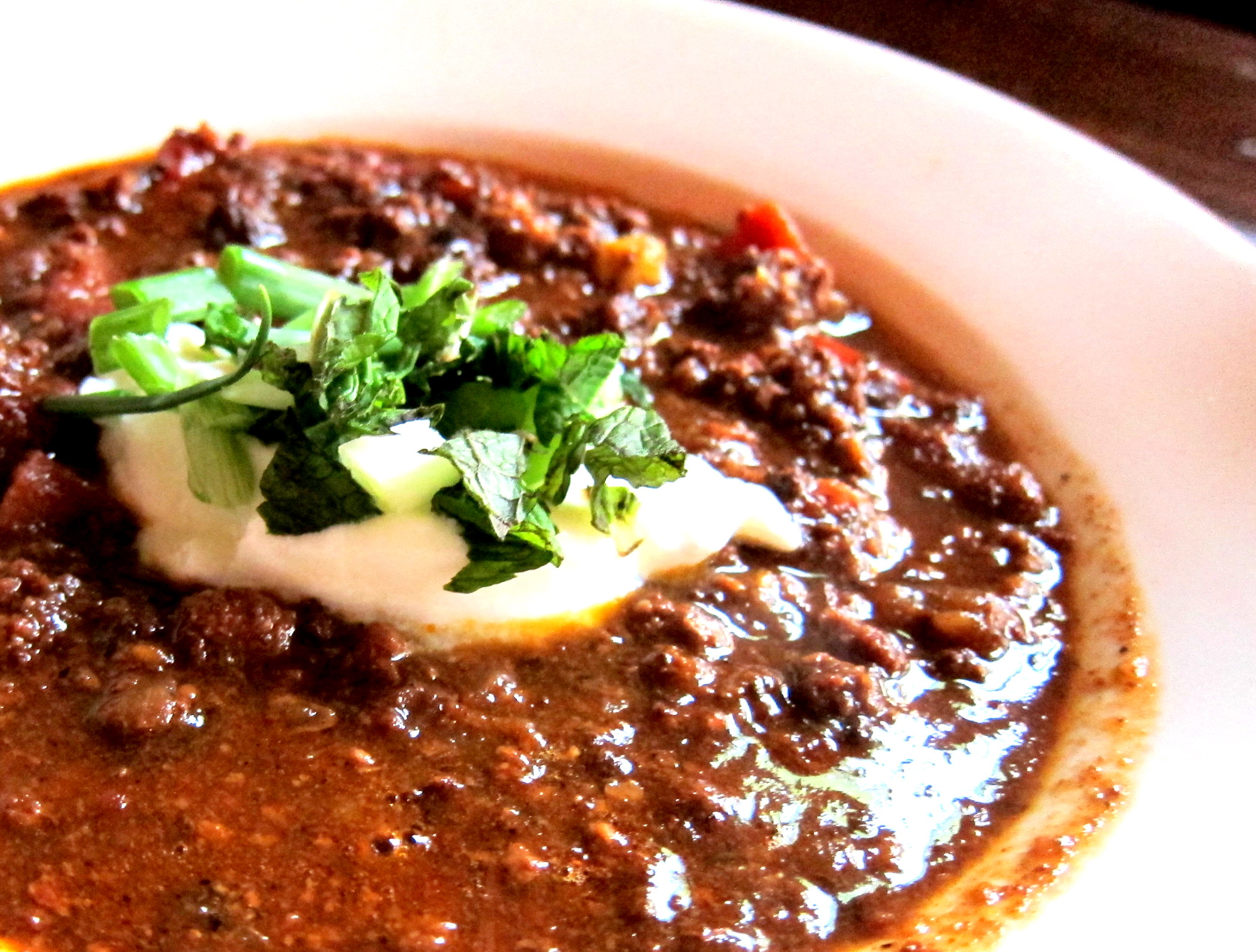
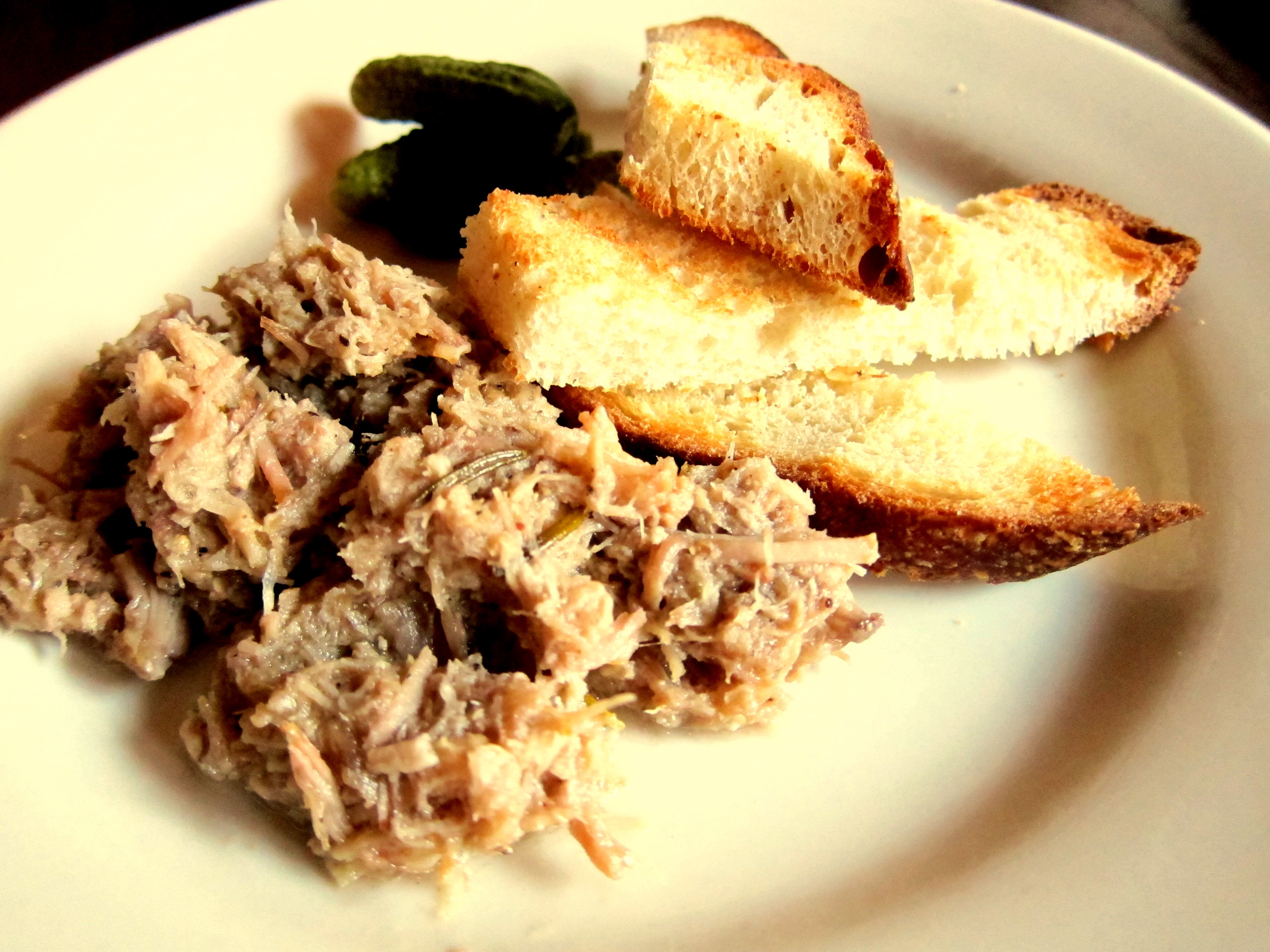
The Spiced Pork and Dried Fruit Chili was also both too seasoned and unimpressively plain at the same time, although with rare highlights of raisins. Aaron’s choice of Pork Rillettes served on toasts was arguably the most harmonic piece of the night, and the only dish that was finished.


Because Little Mom wouldn’t like me criticizing anything too much, I would rank Feast in the same category with Harry Potter and Las Vegas: stuff I don’t regret trying just so that I can tell anyone who would recommend them to me that I’ve tried them. (The night we went there, Feast was also crowded and noisy like Las Vegas.) Will I try Feast again? When I have dentures, maybe. Or when my heart can’t take any more salt.


Or when I want to be cool like Varun: order two appetizers, try one spoon from each, and eat bread with butter for the rest of the hour.


Although we felt bad about asking the waitress to describe a couple of dessert items and not ordering any, we felt great about filling up on frozen yogurt and hot fudge minutes later at Aaron’s favorite: Swirll (right next to, and I think cuter than, The Chocolate Bar).

Address: Feast
219 Westheimer
Houston, TX 77006
(713) 529-7788

Tags:

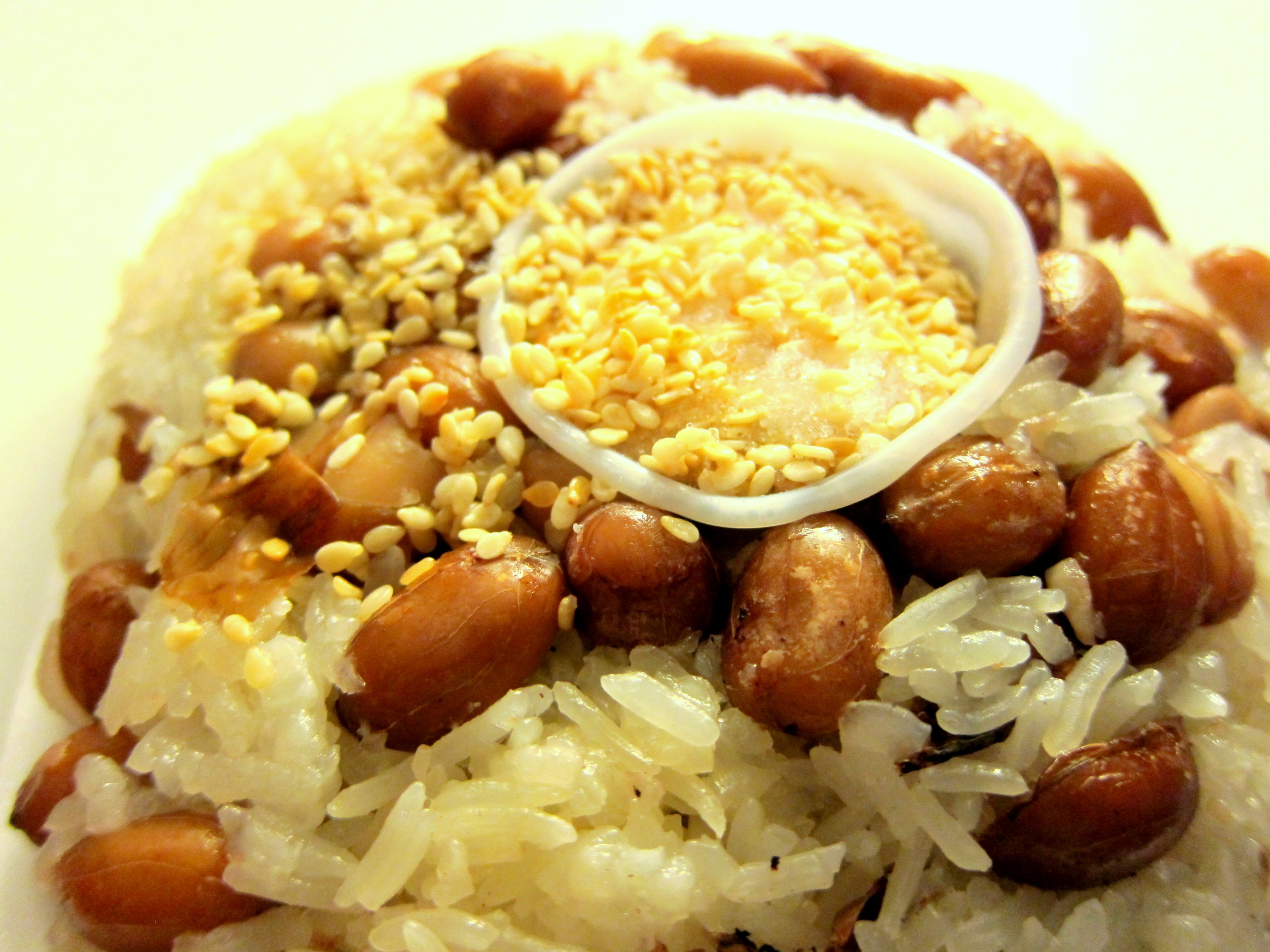
Nutty sticky rice

June 14, 2011 By: Mai Truong Category: Comfort food, Houston, One shot, Southern Vietnamese, sticky rice concoctions, Vegan


What hits the spot in the morning better than a hot packed handful of sweet sticky rice with muối mè (sesame-sugar-salt mix)? A hot packed handful of sweet sticky rice with soft steamed whole peanuts and muối mè. Xôi đậu – my forbidden childhood love.

$1.50 for a full tummy.

Mom did not want me to eat too much xôi đậu in the past because peanuts are known for producing gas excess.

Address: Alpha Bakery & Deli
11205 Bellaire Boulevard
Houston, TX 77072
(281) 988-5222

Touring the Super H Mart food court

May 30, 2011 By: Mai Truong Category: Comfort food, Houston, Korean


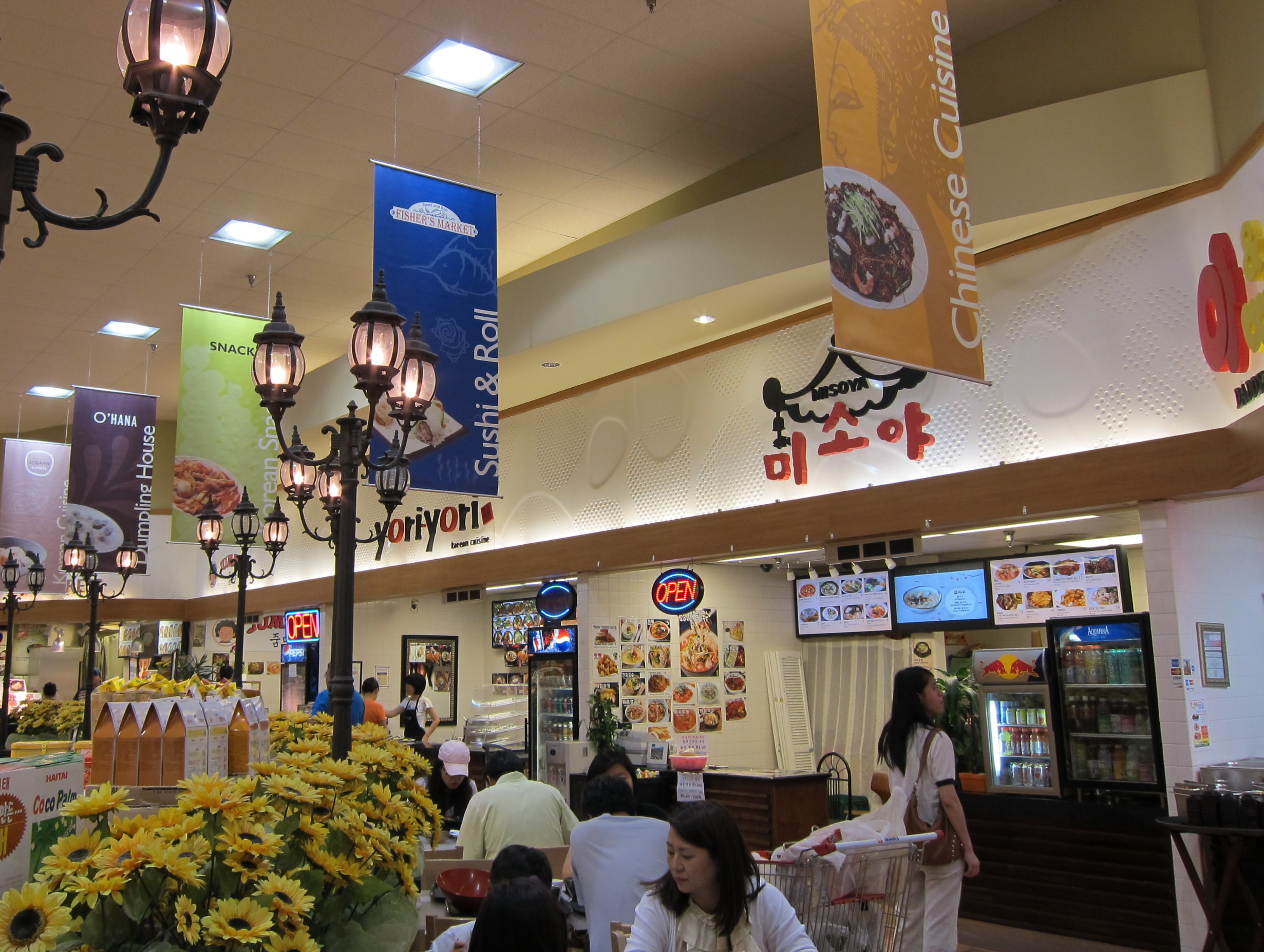
This has nothing to do with this post, but I want to say it anyway: I’ve been home for two weeks and Little Mom’s been making sure that everyday I eat breakfast, lunch, dinner, fruits, mid day snacks, late night snacks, and more snacks. “Stock up for the rest of the year cuz you don’t eat at school. I know you,” she says. 😀 I get sleepy if I’m constantly full –> now I’m sleepy all day –> now I can’t blog. On the note of abundance, this post is about 4 kiosks in the food court of the Memorial Super H Mart, where my parents will most likely frequent for a quick tasty lunch after buying the kimchis and the myulchi bokkeum.


The food court makes a wavy strip at the right end of the store, starting with Tous les Jours at the door and ending with a kiosk selling kimbab (김밥) near the kimchi section far back, the tables sealed from the view of passing shoppers by a strategic row of potato sacks and artificial sunflowers. I didn’t stand long enough in front of each kiosk to read everything cuz I feel bad facing the cashier (and possibly the owner) for too long without ordering, but it appears that almost every menu more or less has the same common Korean dishes (like bibimbap (비빔밥) and galbi tang (갈비탕)). Being in a food court made us feel soup-inclined, kinda like how we opt for phở when we want a quick fill, I guess.


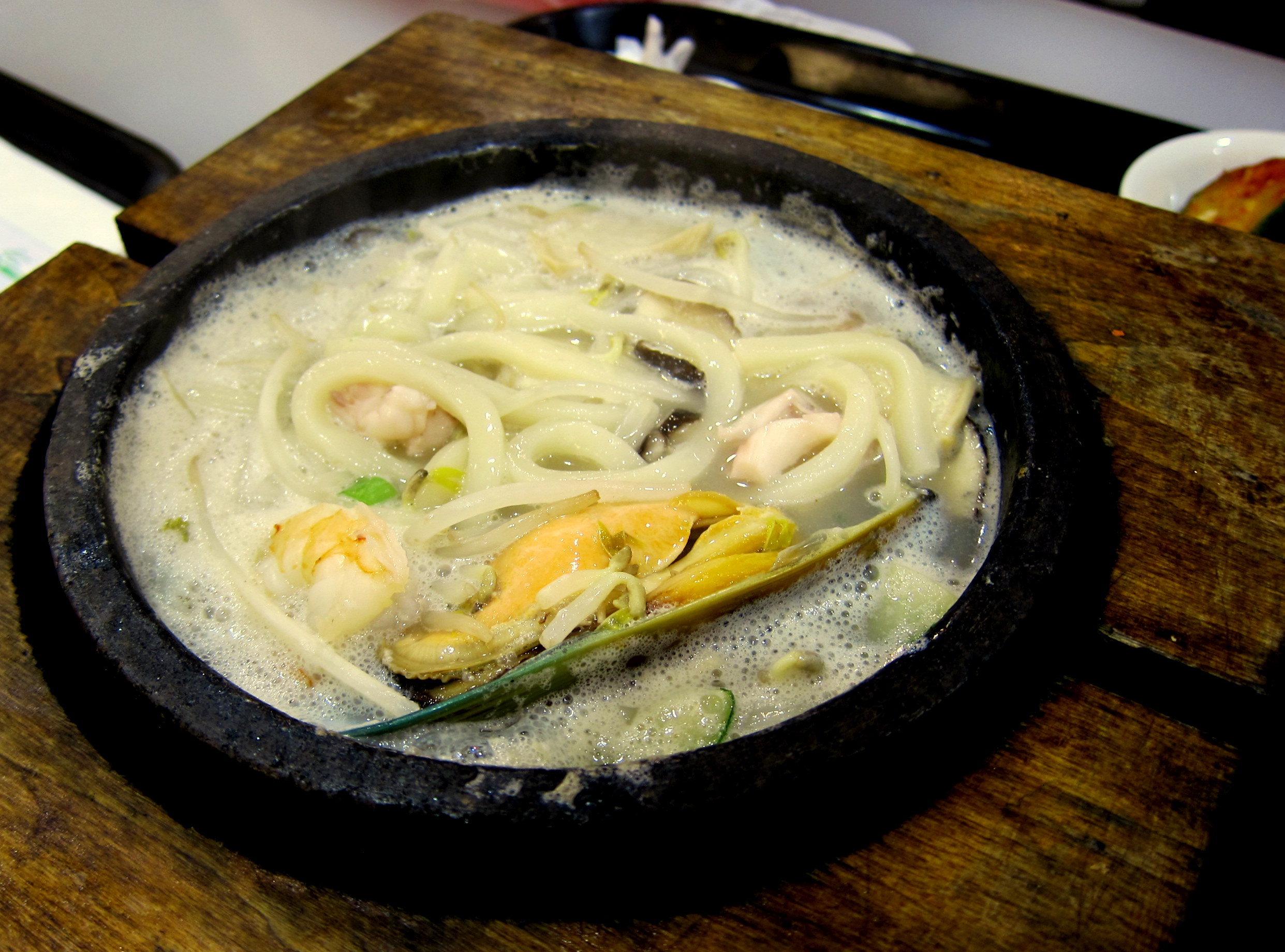
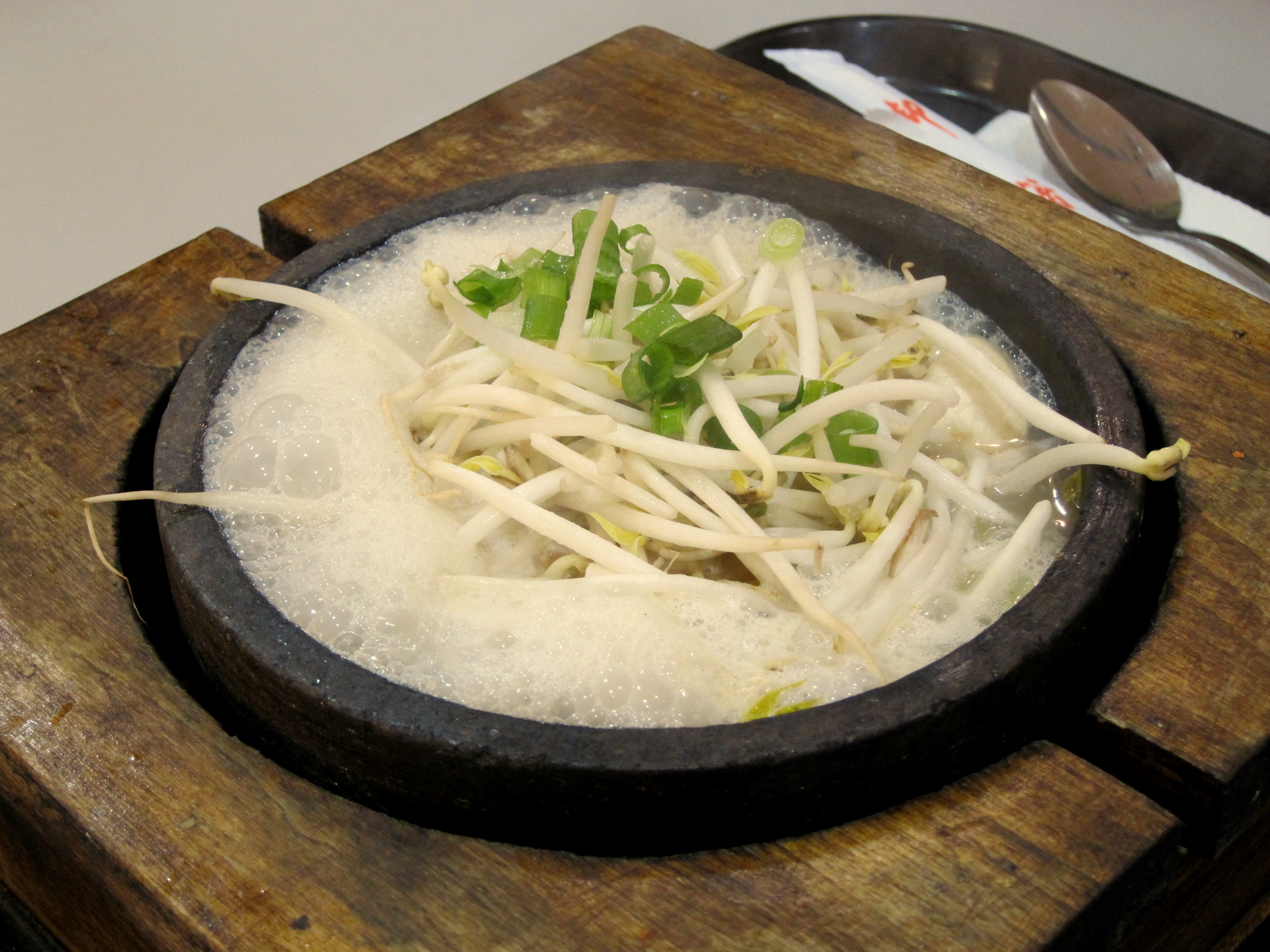
The non-spicy seafood noodle soup (#24, $8.11) from Sobahn Express (also signed as Bibijo(?!)) was ordered next to last but ready first. ‘Tis my first time seeing a stone bowl embedded in a wooden box. The box must have helped containing the heat longer cuz it was at least 20 minutes into eating and Little Mom was still blowing at every bite. It’s a good choice for her cuz she always likes it hot and the seasoning was just right to her taste.


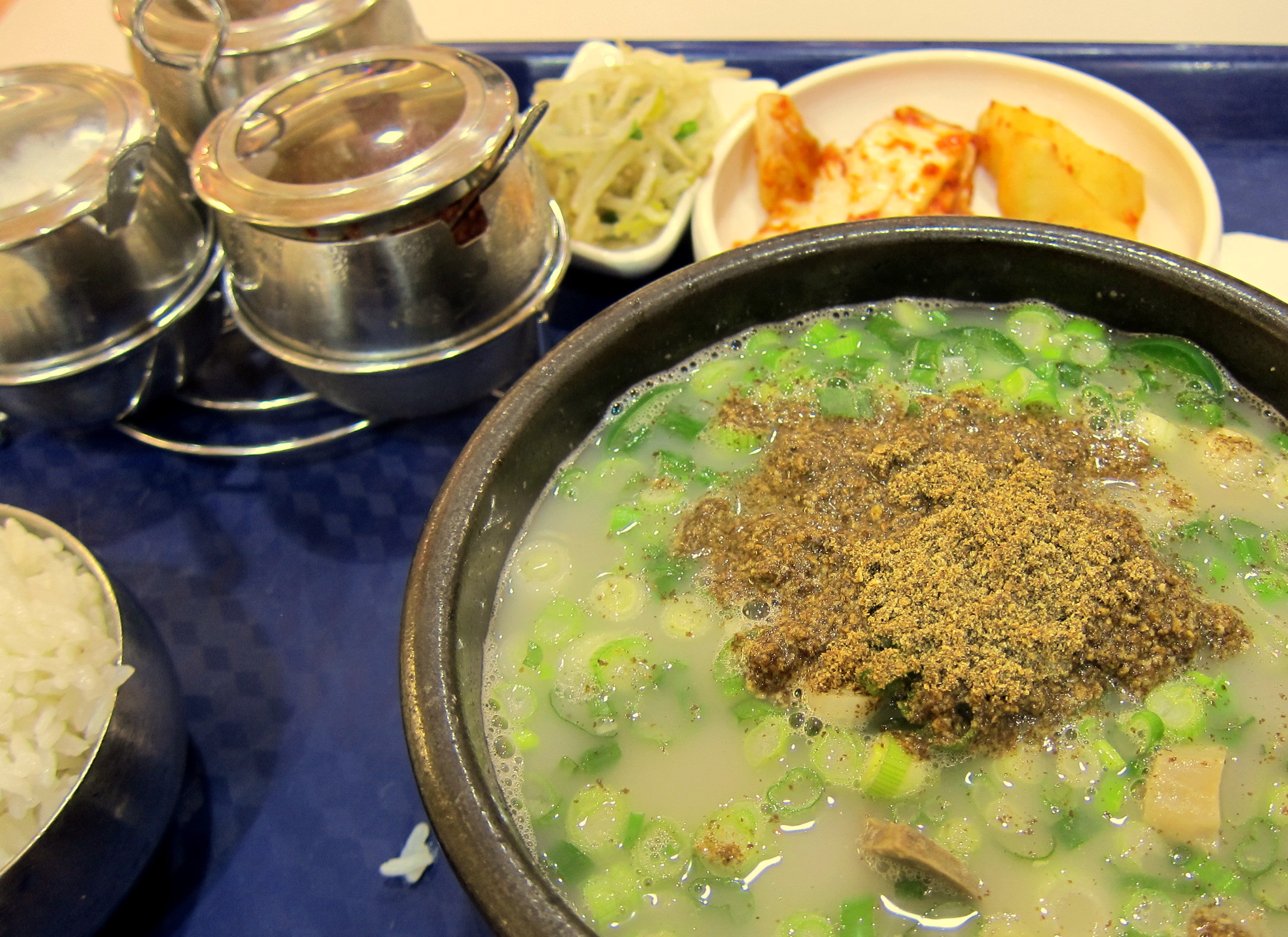
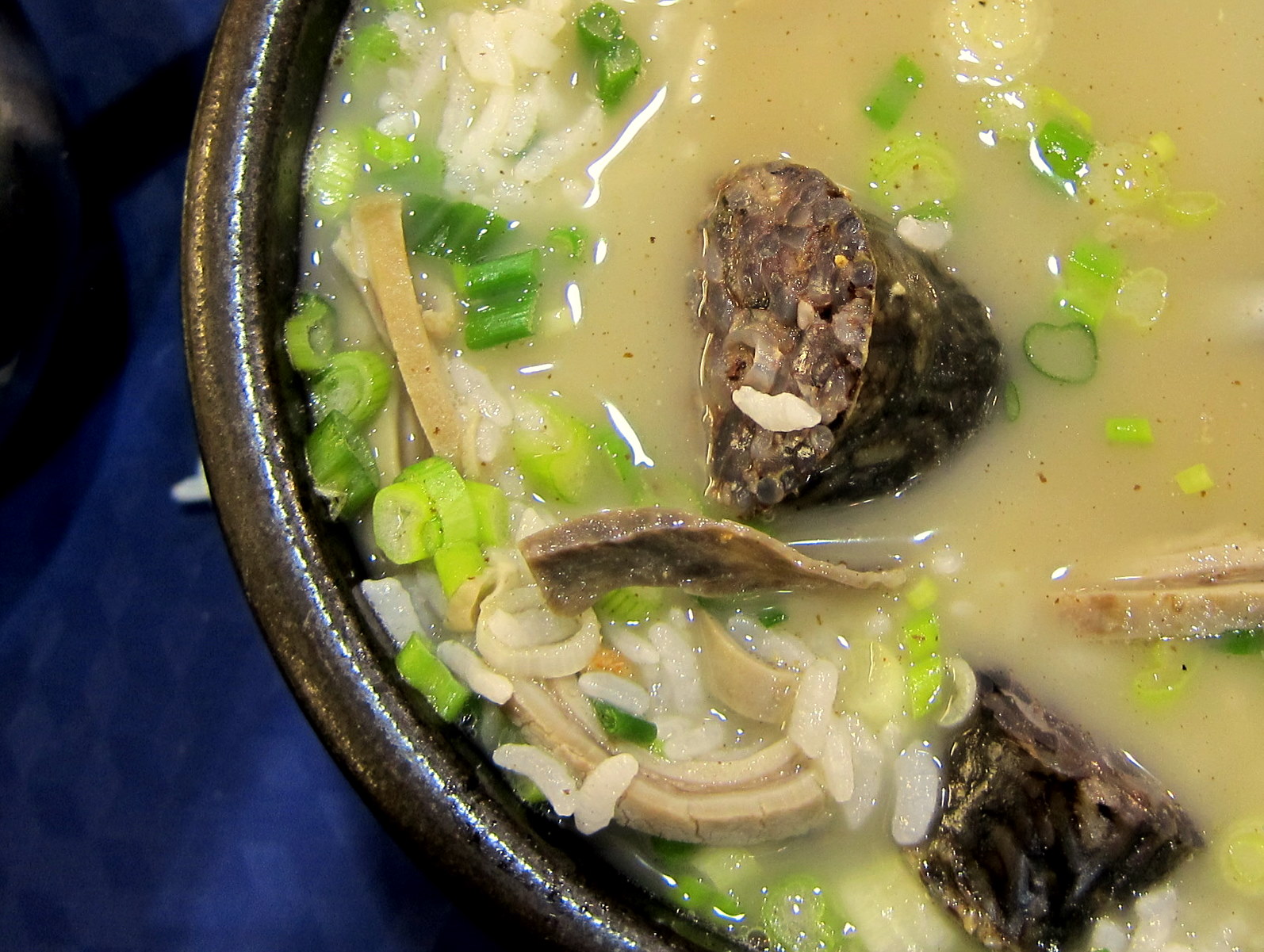
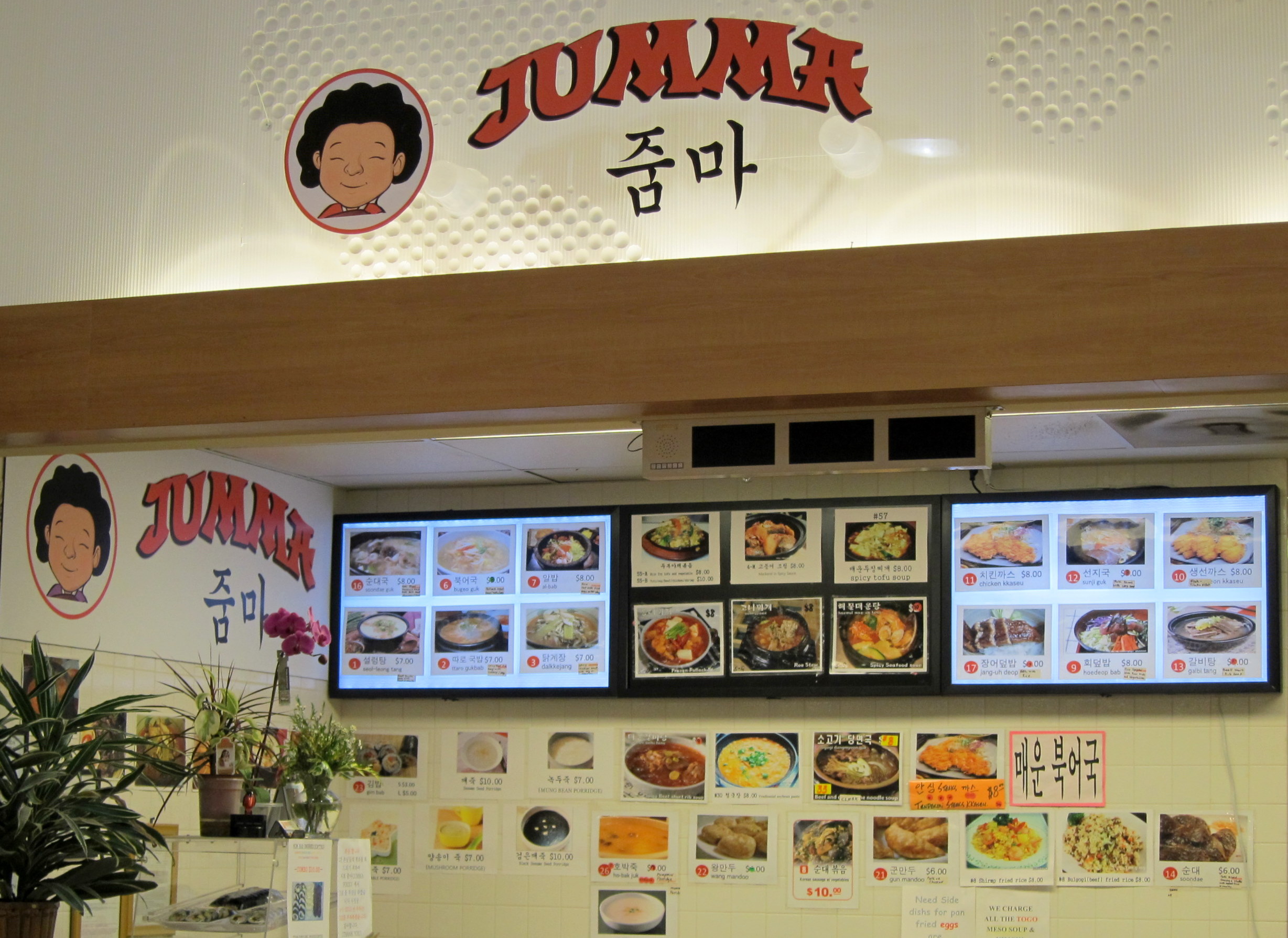
My soondae guk (순대국) ($8.66) from Jumma was ordered last and ready second. It came topped with a hefty scoop of some brown powder that looks like ground pepper and tastes like tea. It has a bland bone stock that tastes like sul lung tang (설렁탕), to which I added a few teaspoons of salt and kimchi juice. There’s no dangmyeon (당면) in the soup like sul lung tang though; I just dumped the rice into the soup. With the pig intestine and liver (yum :-D) in thin slices and the soondae (순대) in chunks, it became sorta like a bowl of Vietnamese cháo lòng (innard porridge), a street nosh for the late night drunks and the market ahjummas.


Close-up of the soondae: blood sausage stuffed with dangmyeon. It’s grainy and pretty bland.


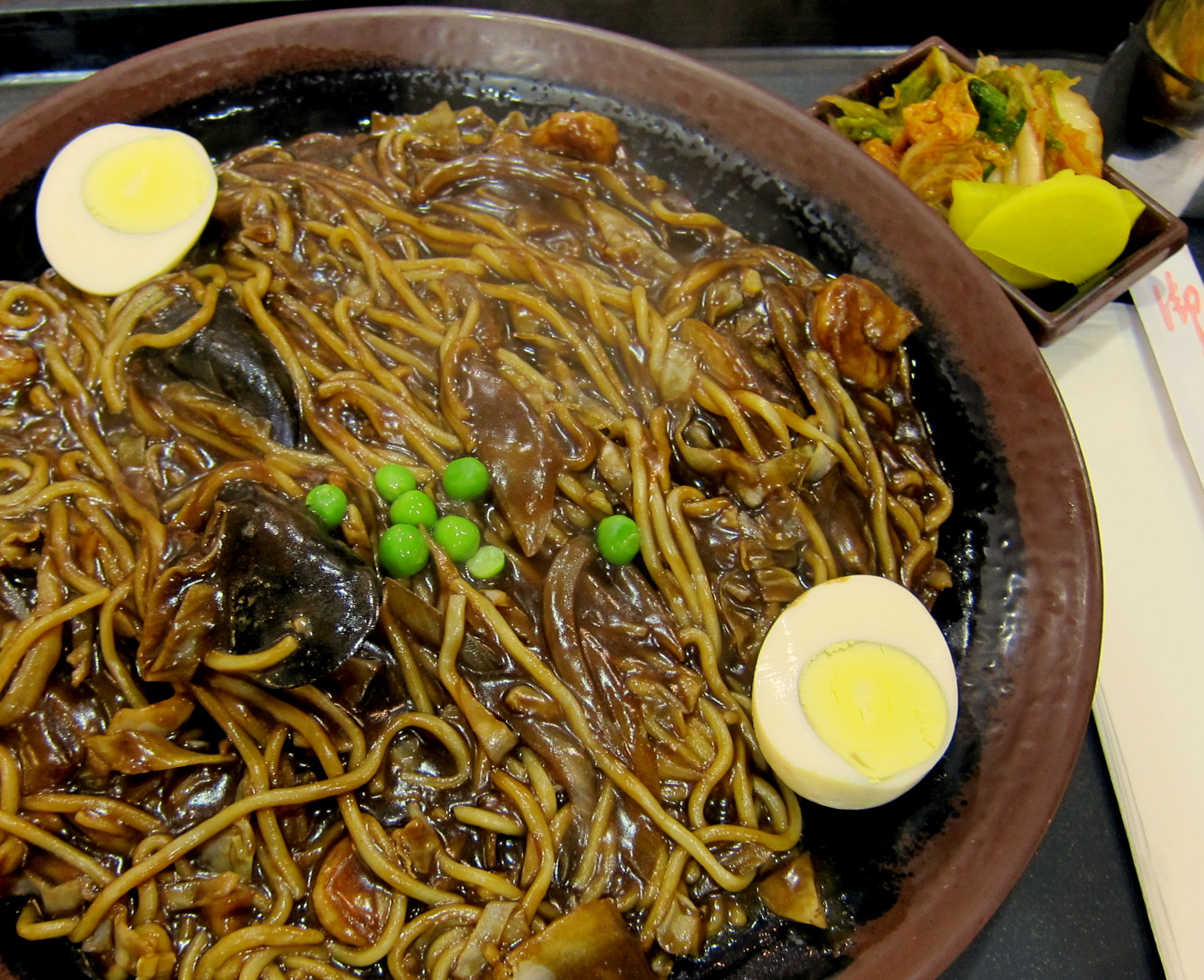
Bi had to wait for his food for so long I thought they forgot him. But the wait was totally worth it, his samsoon jajangmyeon (삼순 자장면) ($12.99) from Daddy & Daughter was the best of the three. The black soybean sauce (jajang (자장)) is sweet and thick but not fatty. Now I know why they make it look so good in dramas: it really is good. Better than chowmein and pad thai. (Once upon a time I idiotically ordered my very first jajangmyeon at a Chinese restaurant whose name I won’t say, it was so boring I had to stop after 3 bites. It goes to say that if you can’t make an ethnic dish as good as or better than the people of that ethnicity, then don’t tarnish its name by making it. Considering that jajangmyeon originates from China, it goes to say that if you can’t make your own ethnic dish as good as or better than the people of another ethnicity, then you might as well stop making it.)


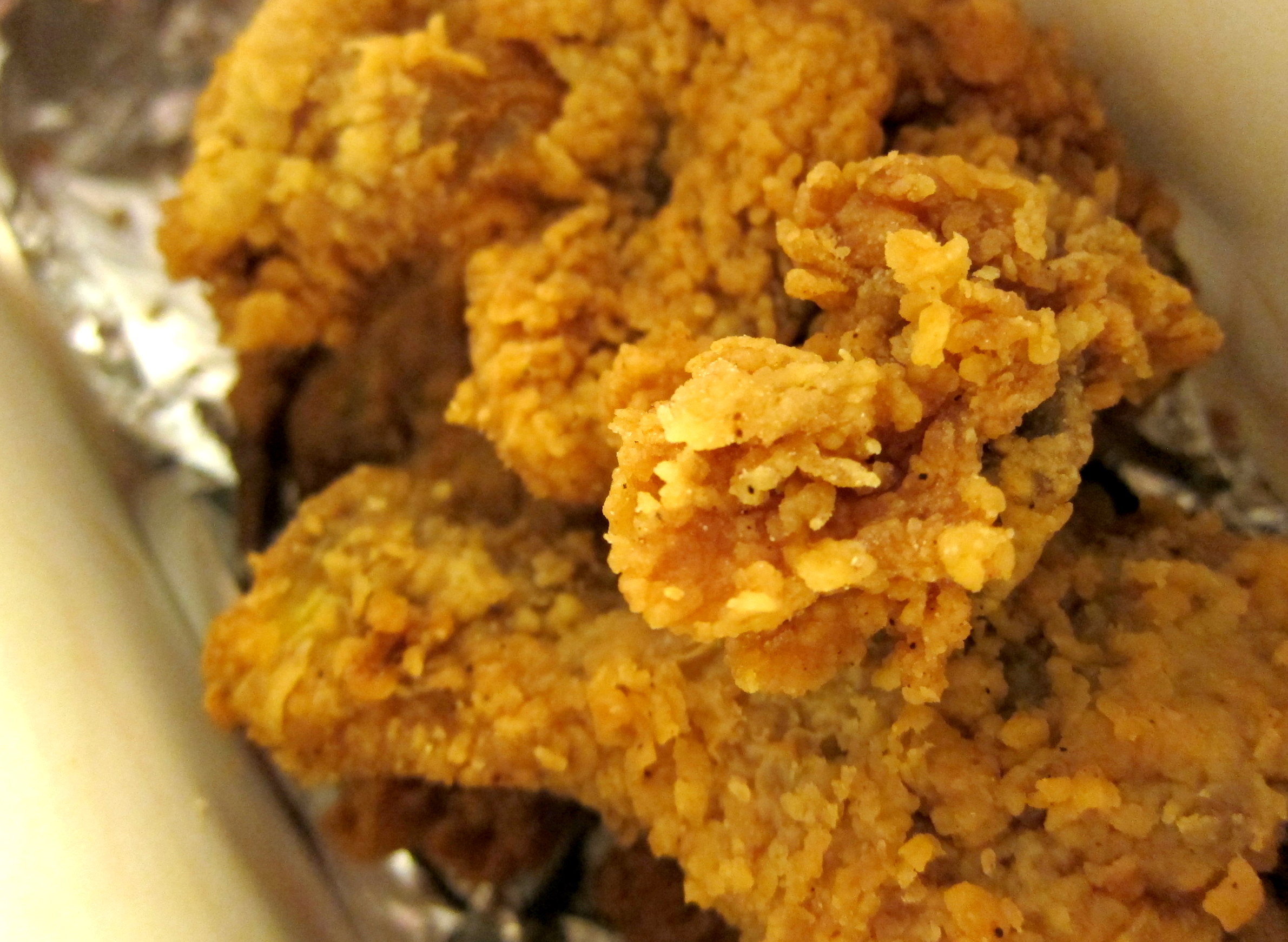
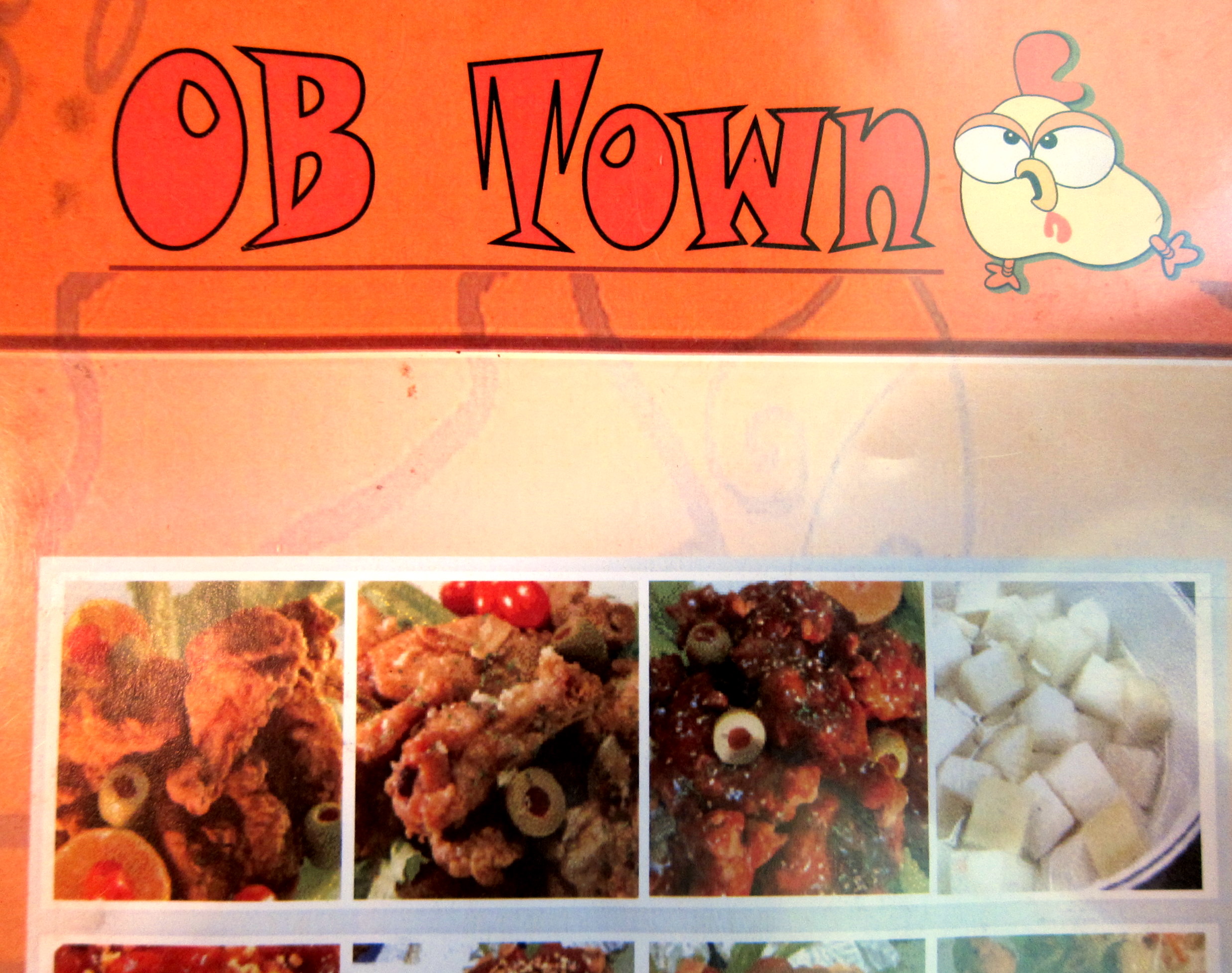
I like places like Toreore: upfront and simple about what they dish out. There are 8-10 choices of fried chicken and you need to decide if you want 7 ($8.65) or 14 pieces, but we always stick to the non-spicy kind and that leaves us one option: garlic soy sauce chicken. It ain’t no OB Chicken Town but sure is better than KFC. Mom liked the sweetness, Bi liked the juiciness, I liked that they liked it.


These Korean fried chickens have cute pictures, too. 😀


The place is crowded with the continuous flow of families and carts pre- and post-shopping but the people are quiet. The tables are not squeaky clean but a quick tissue wiping would do. Foods are served on blue plastic trays and the kimchi isn’t top notch, but you’re not paying 18 bucks a meal. The Super H Mart food court is the best among the food courts I’ve been to in terms of both taste and atmosphere. As Little Mom says, we feel at home because the shoppers here share a similar culture, yet we can also talk comfortably because the neighboring tables don’t share our language.

Address: Super H Mart food court
1302 Blalock Road
Houston, TX 77055

A quadruple mix at Saigon Buffet

May 21, 2011 By: Mai Truong Category: Comfort food, Houston, Vietnamese


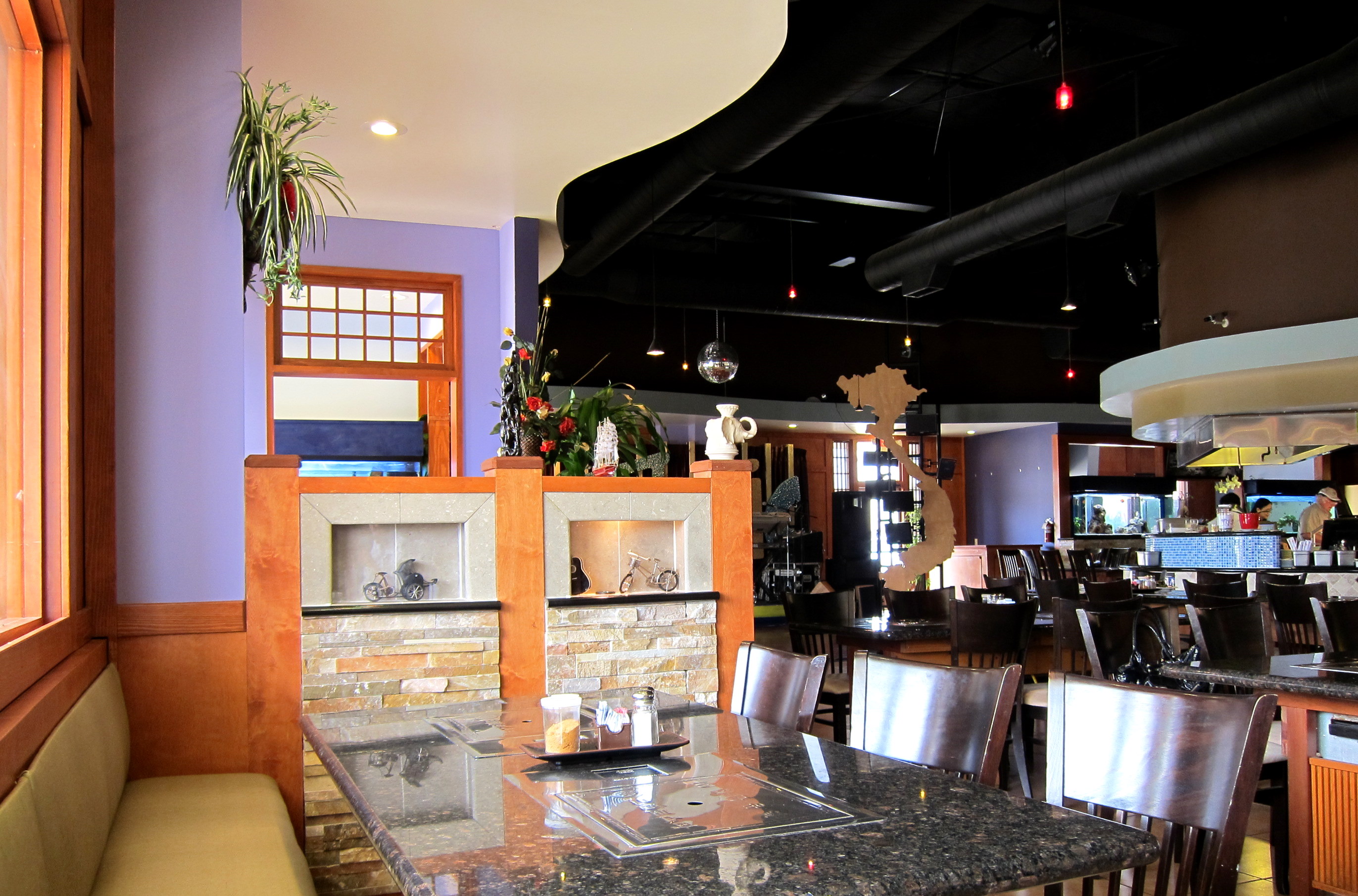
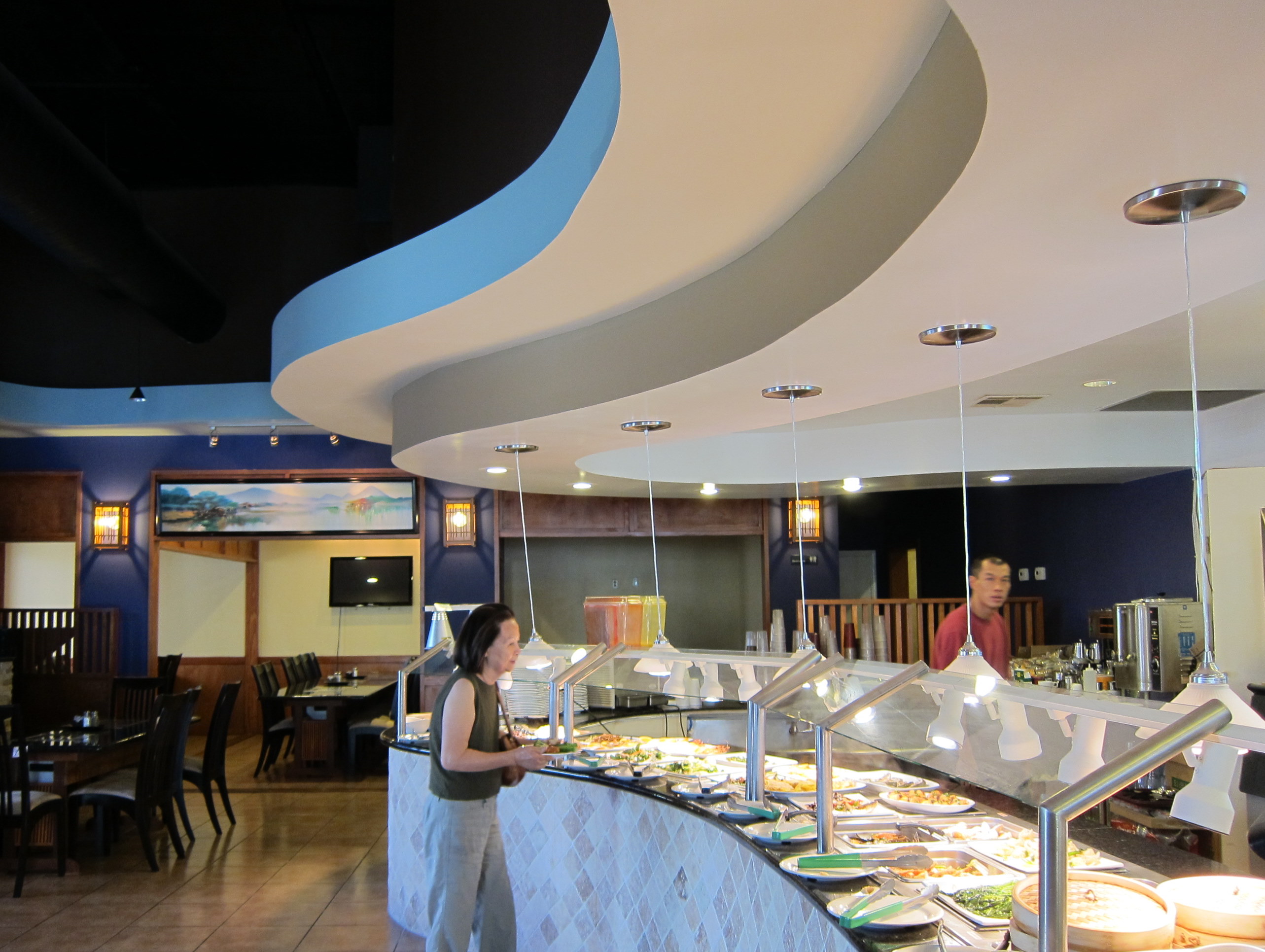
A Japanese chef, a former Korean restaurant interior, a Vietnamese manager, and a buffet menu combining all three plus Chinese. Sounds unauthentic and one-star fusion? I thought so too, I didn’t plan on blogging about Saigon’s Buffet until I was a third way through my plate. Then I scrambled for the cam to snap a few from my mom’s. Good thing it’s a buffet, can always go back for seconds.


From the far right end we gandered first through the kimchis and namuls, grouped with a bright yellow ripe mango salad mixed with gochujang and something soakingly flavorful similar to either pickled sweet onion or green papaya salad. To its left are sushi rolls and plump chunks of red tuna and orange salmon, and a few stubby octopus tentacles that I really wanted to get but didn’t know where to fit on my heaping pile.


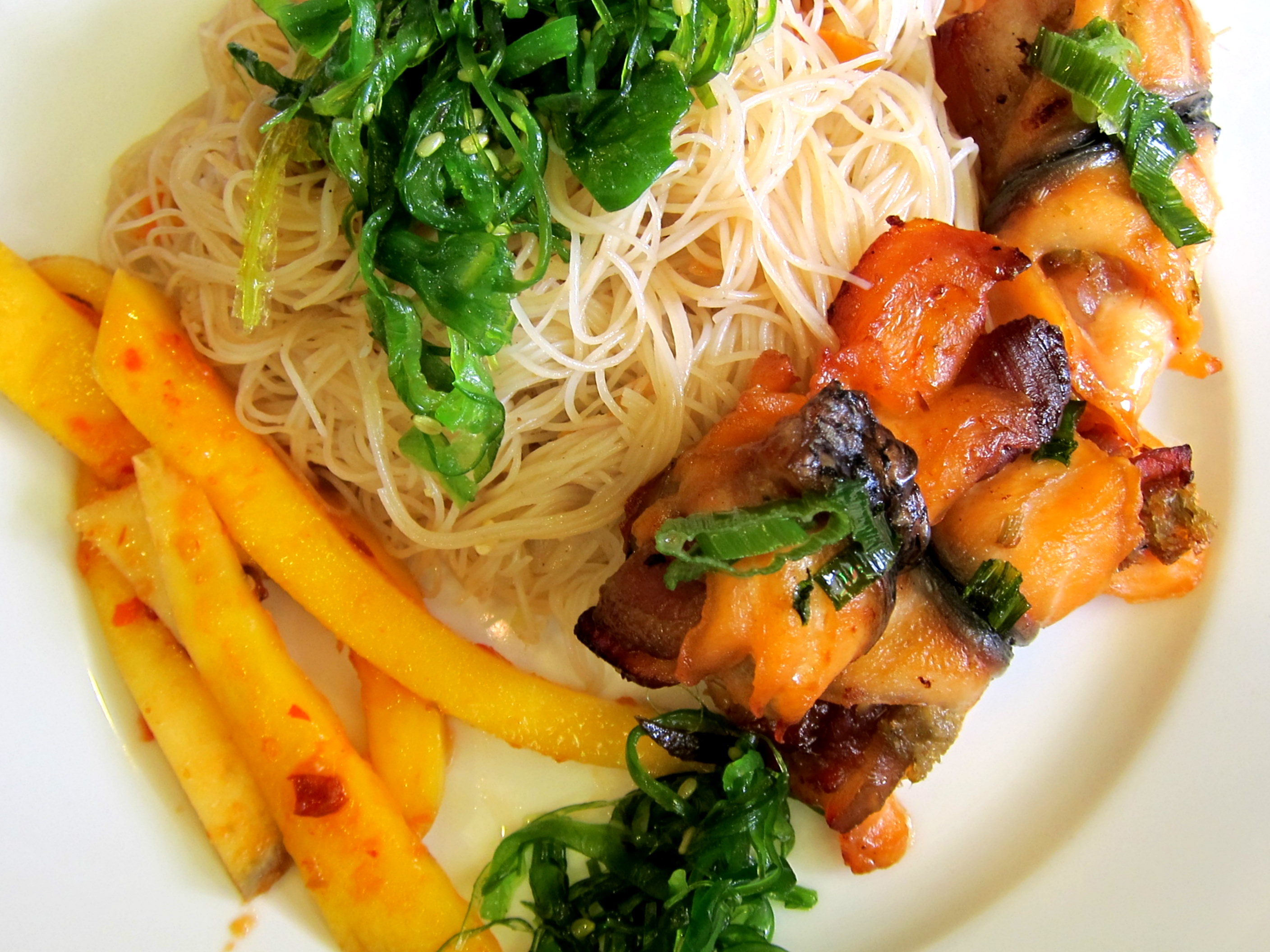
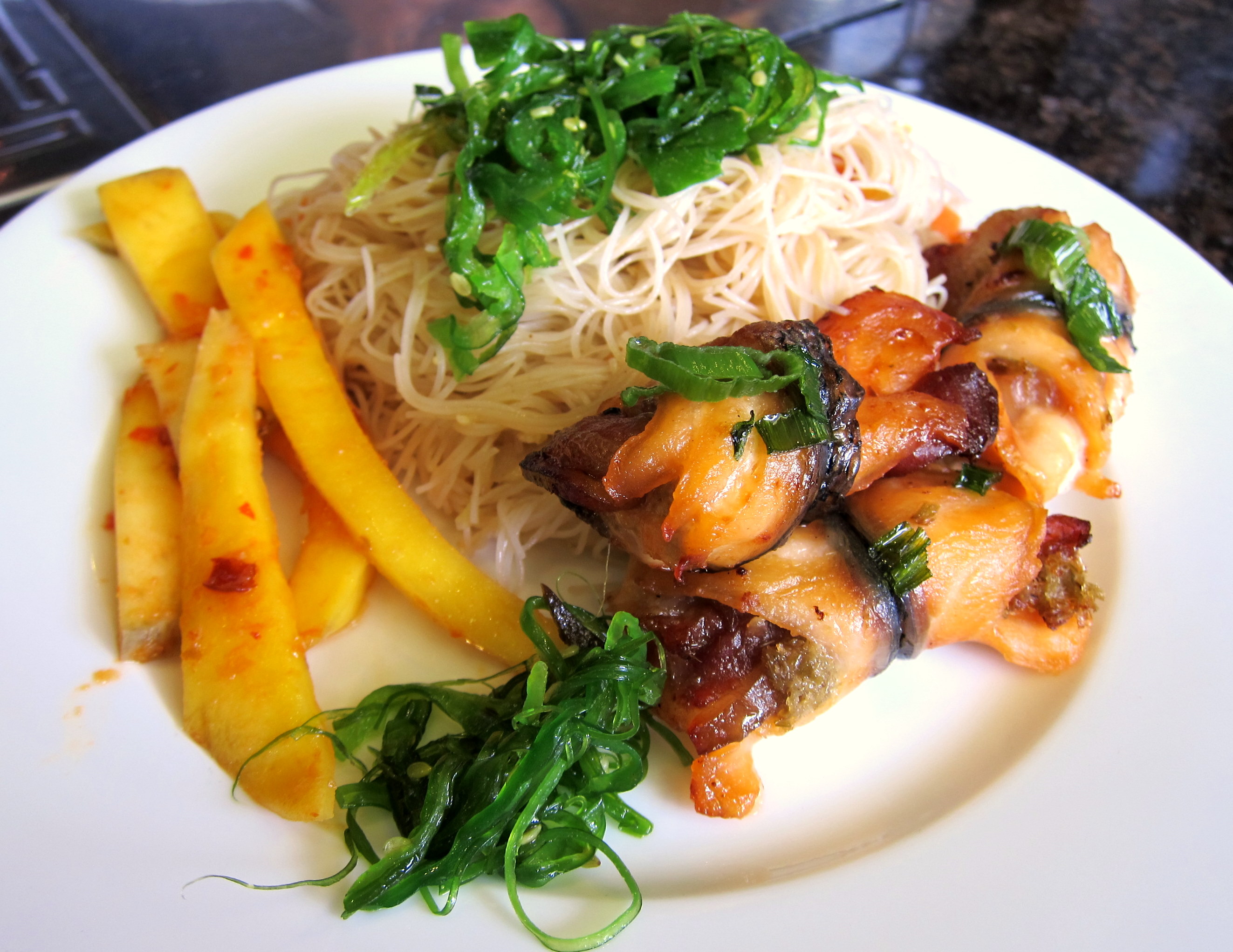
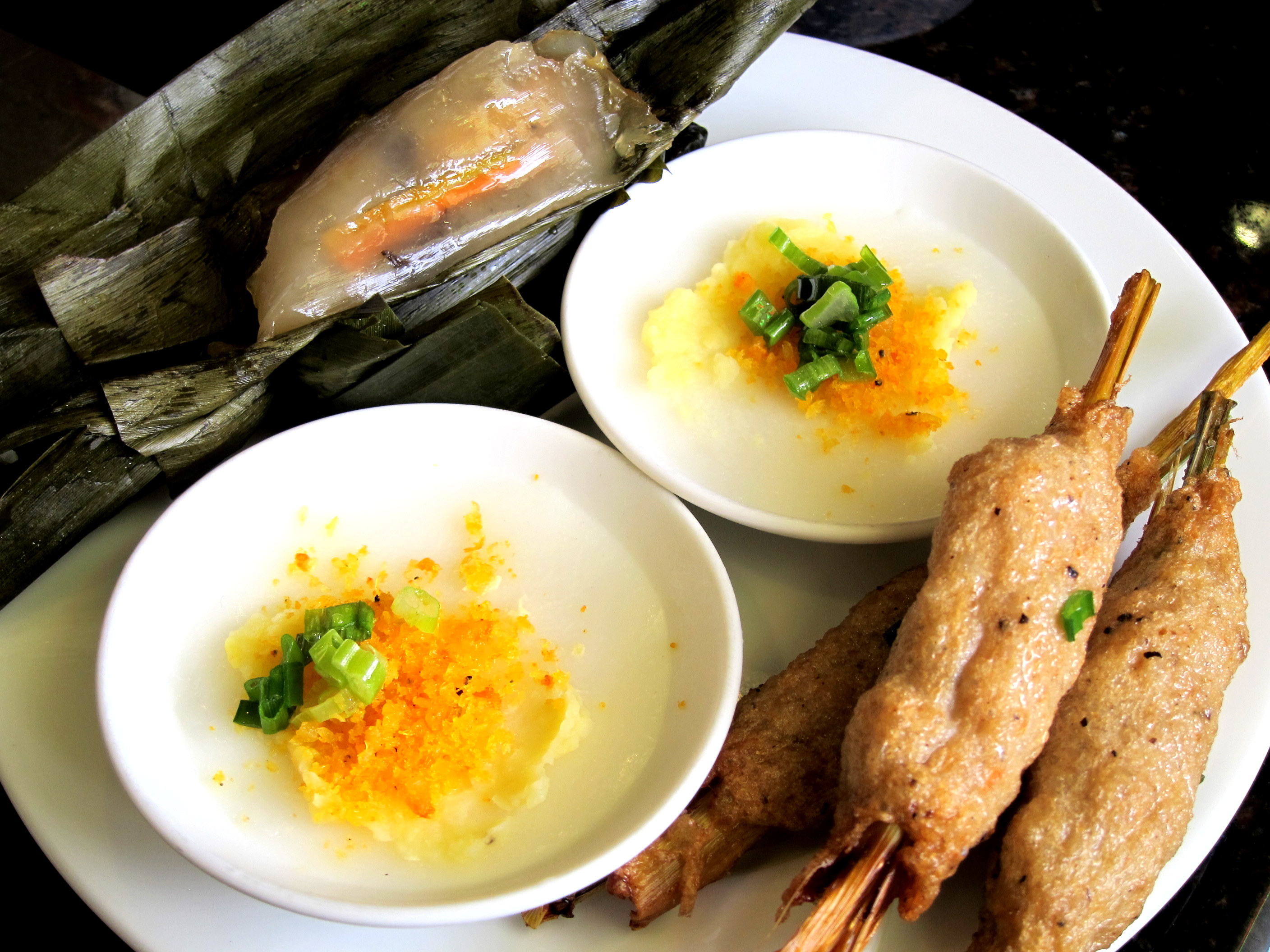
From the far back of L-shape buffet counter are fried rice, chow mein, and lightly mixed rice vermicelli (similar to bún xêu) that goes exceedingly well with the sesame-oil-sweet-smelling, cucumber-free wakame salad. Trays full of shrimps, baked salmon-wrapped pork, and grilled shrimp paste on a lemongrass stalk shine next to the more Vietnamese familiars: bánh xèo, bánh bèo, stuffed tofu in tomato sauce

Little Mom fell for the all-around-crunchy and coconut-sweet sizzling crepes right away (“better than Kim Son‘s,” said she), while I grew on the chewy leaflets of semi-translucent steamed flour encasing carrots, mushroom, and pork, which looks halfway like a bánh bột lọc and tastes halfway like a bánh giò.


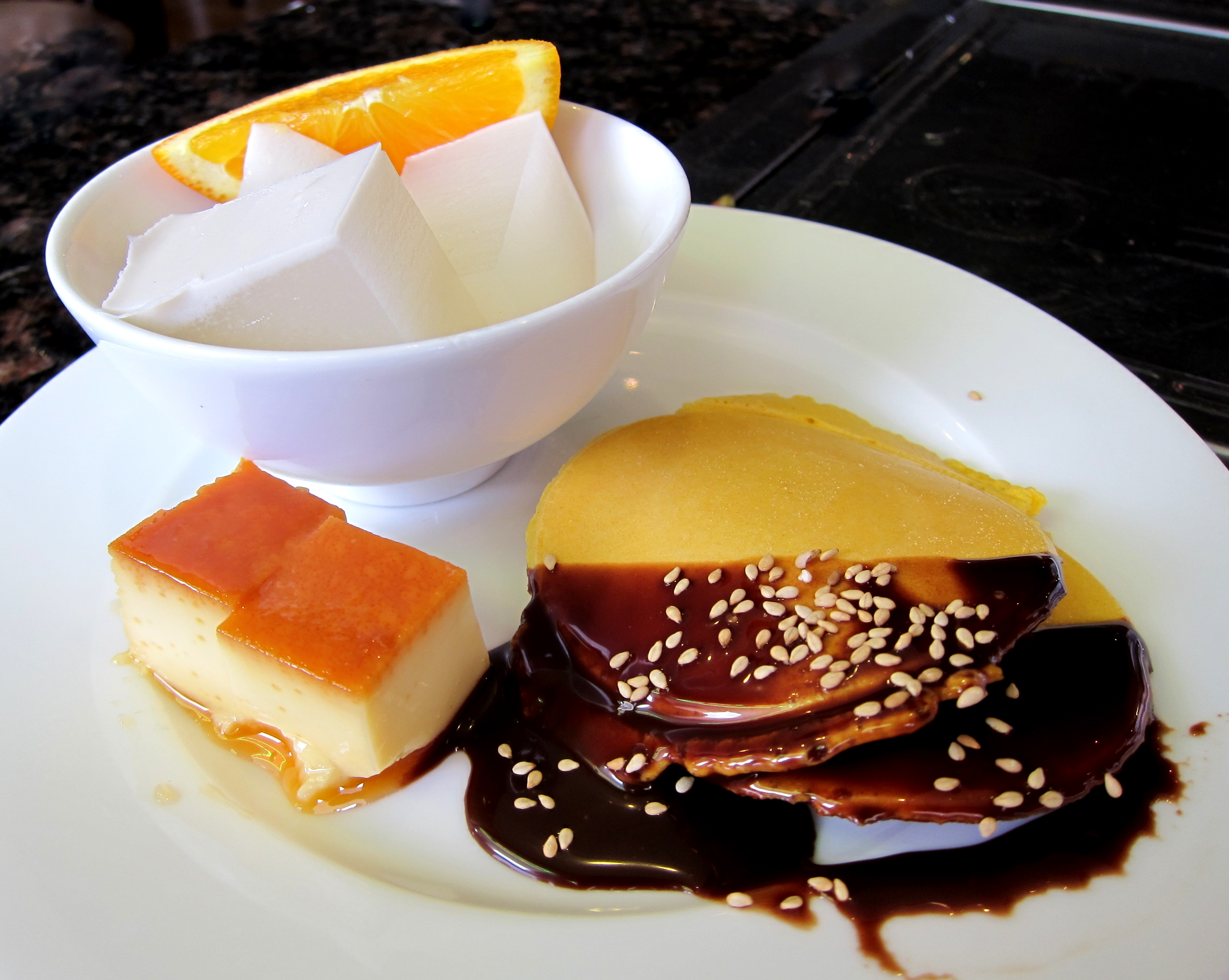
The dessert section lies between the octopus tentacles and the cashier, which is at the corner of the L. Simple, but sufficient for a cool washing-down, are the coconut milk jelly and the fruits, classic silky and Bi’s favorite is the flan, while the wafers dipped in chocolate and sprinkled with sesame seeds hit home in a nutty cheerful crunch. “Take a lot the first time,” obviously it’s not because they “charge for seconds” like the manager jokes, but because you don’t need to sample things here to be safe; everything’s better than expected. Everything’s yummy.

As we waited for the machine to print our receipt, the manager told Little Mom that the chef just brought out bún bò xào (stir-fried beef rice vermicelli), Little Mom said oh Bi likes that, had it come out earlier he woulda stuffed himself with it. And who woulda thought, the manager offered us a free to-go box with bún bò xào! It could just be the opening month (when they charge only $12.99 instead of $15.99 per person) and the beaming summer spirit, but Saigon Buffet surely had us this time. Come back we will.
Address: Saigon Buffet (previously Korean Garden Grille)
11360 Bellaire Blvd
Houston, TX 77072
(281) 879-0228

Tags:

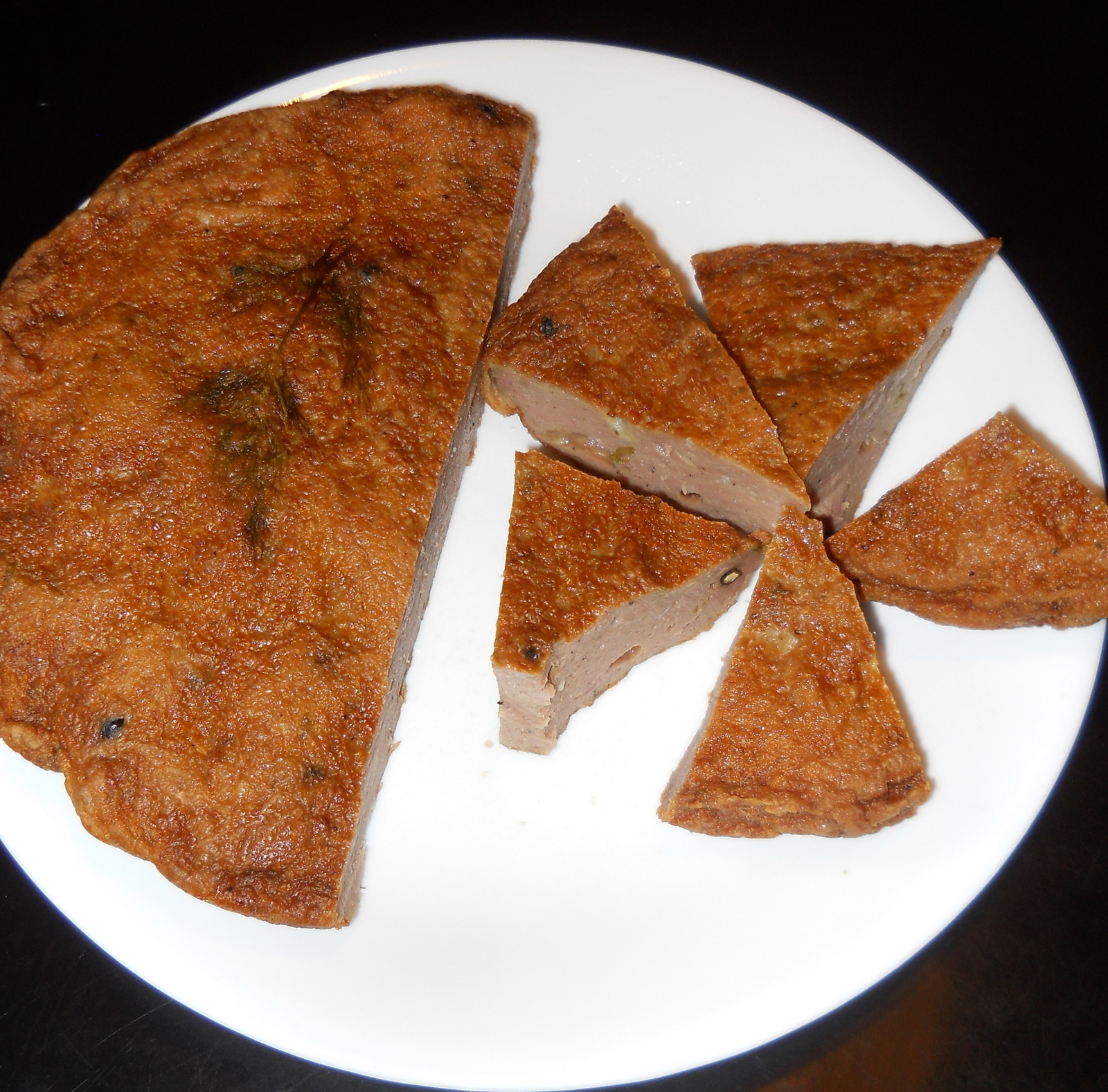
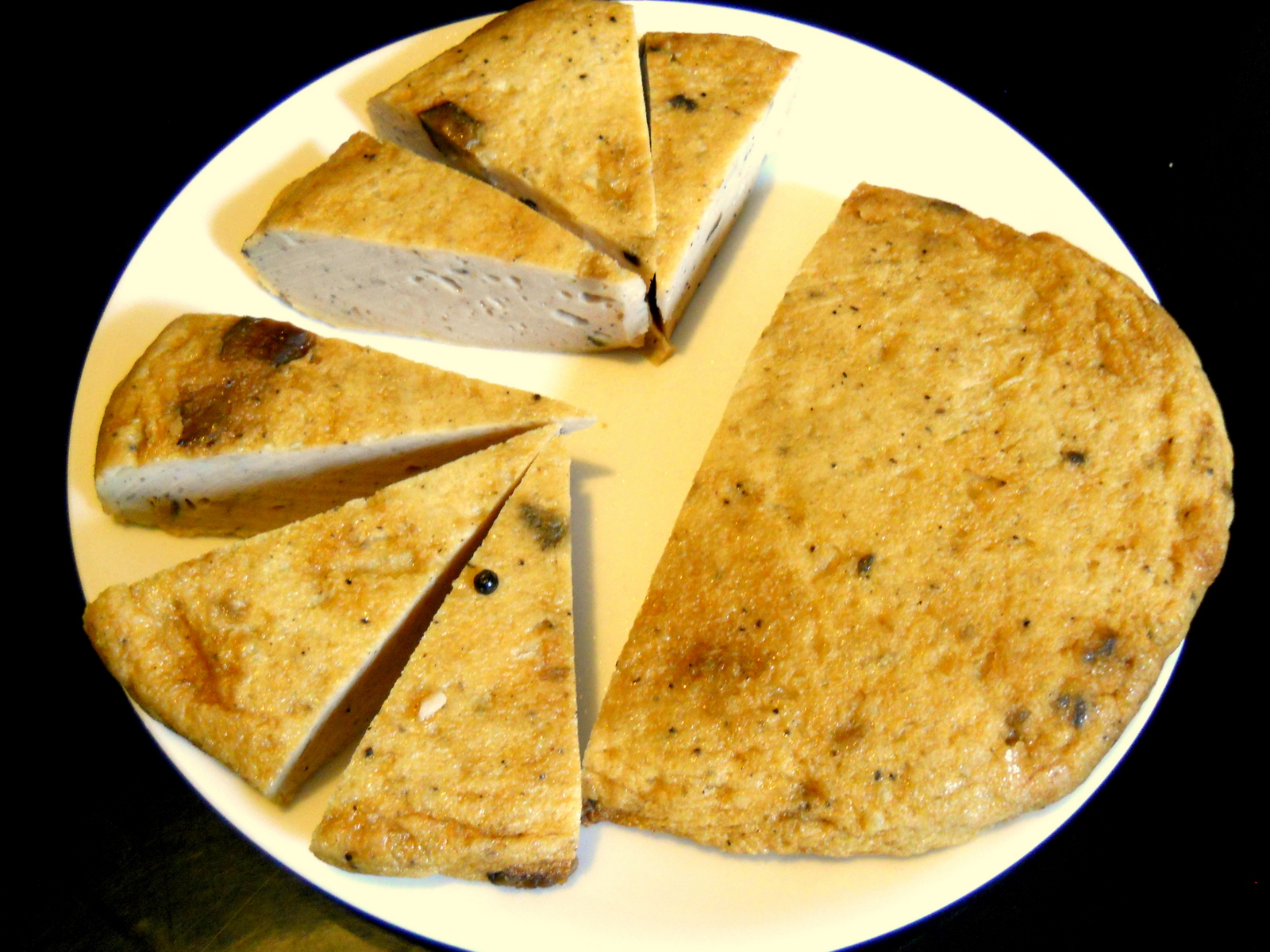
Some more chả talk – The refined tastes and textures of Vietnamese sausages

April 16, 2011 By: Mai Truong Category: Houston, Vietnamese

QUYNHCHI, aka Little MomTranslator: Mai


Most Vietnamese like chả, and I like chả even more than most people, because it tastes good, it’s good for you, and it’s good with everything. Chả appears subtly but unmistakably in noodle soups like bún bò, bún mộc, bún thangChả fares well with the lustrous steamed rolls of bánh cuốn, with bland white rice, topping sweet sticky rice, inside a crusty loaf of bánh mì… You can also eat chả by itself as a cold cut, then it tastes even better.

Why is chả good for you? Because of what comes into it and how people make it. Vegan chả aside, all chả are pure meat. Take chả lụa (silk sausage) for instance, the pork must be lean, the fresher it is from the slaughter house the higher quality the sausage has. Traditional chả makers don’t wash the pork with water but use instead a clean cloth to wipe off its excess moisture before the pasting process. These days the meat is most likely ground by machines(*), but a good log of chả used to be made from pounding and kneading the meat as one would do with sticky rice to make mochi. The pounding has its specific rhythm to success, which is a smooth, sticky, elastic mass of perfect consistency to be rolled up tight in banana leaves and boiled for hours. So if we come upon a warm log fresh out of the process, we’re guaranteed its cleanliness and pure content.

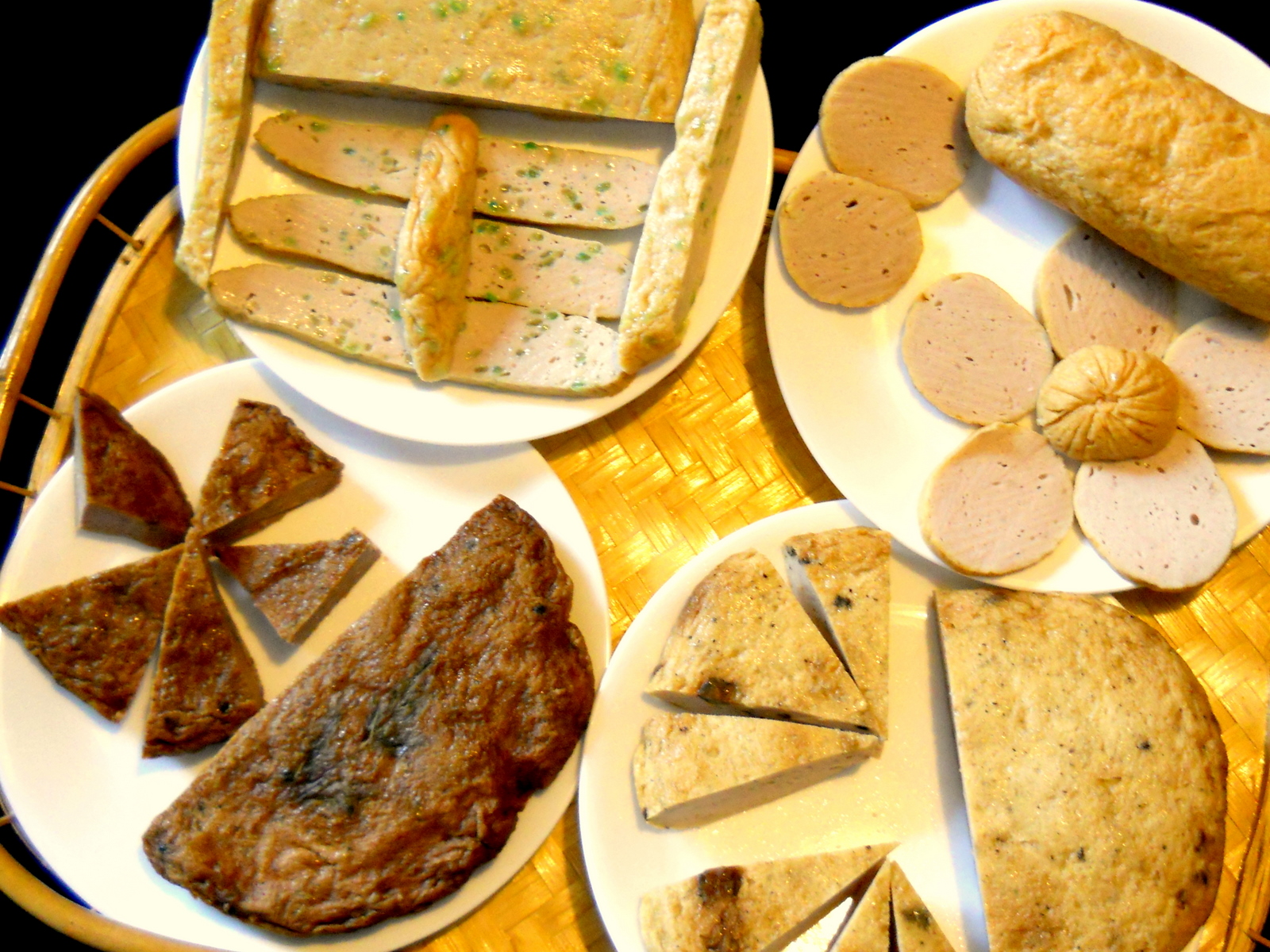
But chả lụa isn’t the only type of Vietnamese meat sausage around. Not all are made from pork, not all are served in its boiled final form, and not all contain just meat. Recently I got enticed by four types of chả from Đức Hương in Houston.


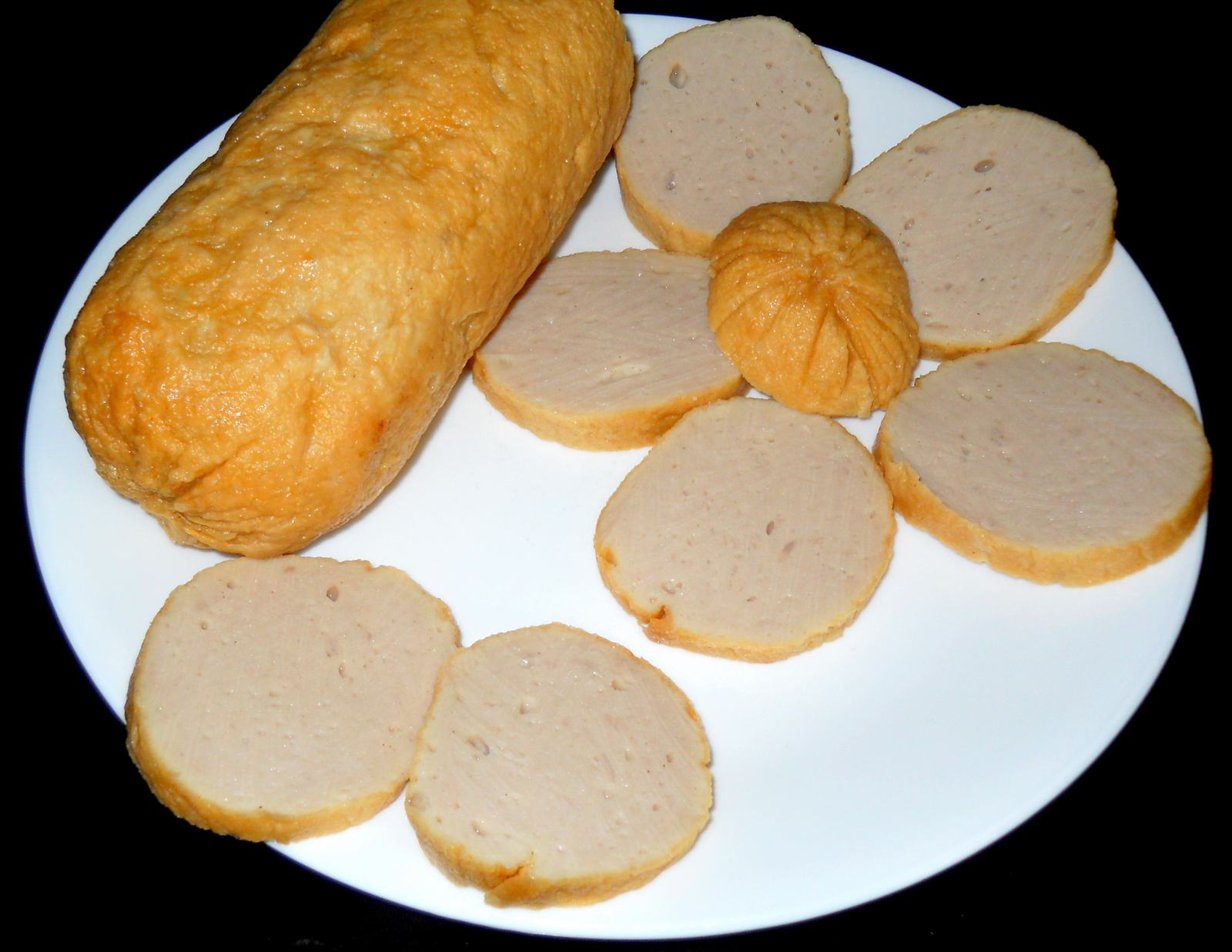
1. Chả heo chiên (fried pork chả):
Same content as chả lụa, with a textural twist. Fried chả is also in log shape, but the log is smaller than its boiled counterpart, and it has less pepper. The meat is slightly more chewy and the rim covered in the aroma of frying oil. Some of the chả lụa‘s loyal fans would detest chả chiên‘s inconsistency, but I think those bite-sized round slices that fit perfectly well in a crusty loaf of bánh mì or layer on top a scoop of hot sweet sticky rice would make quite a fair start for any busy day.


2. Chả bò chiên (fried beef chả):
Perhaps it’s because of the always-available, always-fresh-and-cheap Texas beef that a slice of beef sausage also shines a healthy golden brown hue. Although the texture errs on the hard side and the taste is a tad too spicy, the heartfelt aroma of beef entangling with a subtle fresh garlic zing makes chả bò chiên the best rice companion for the wintry months.


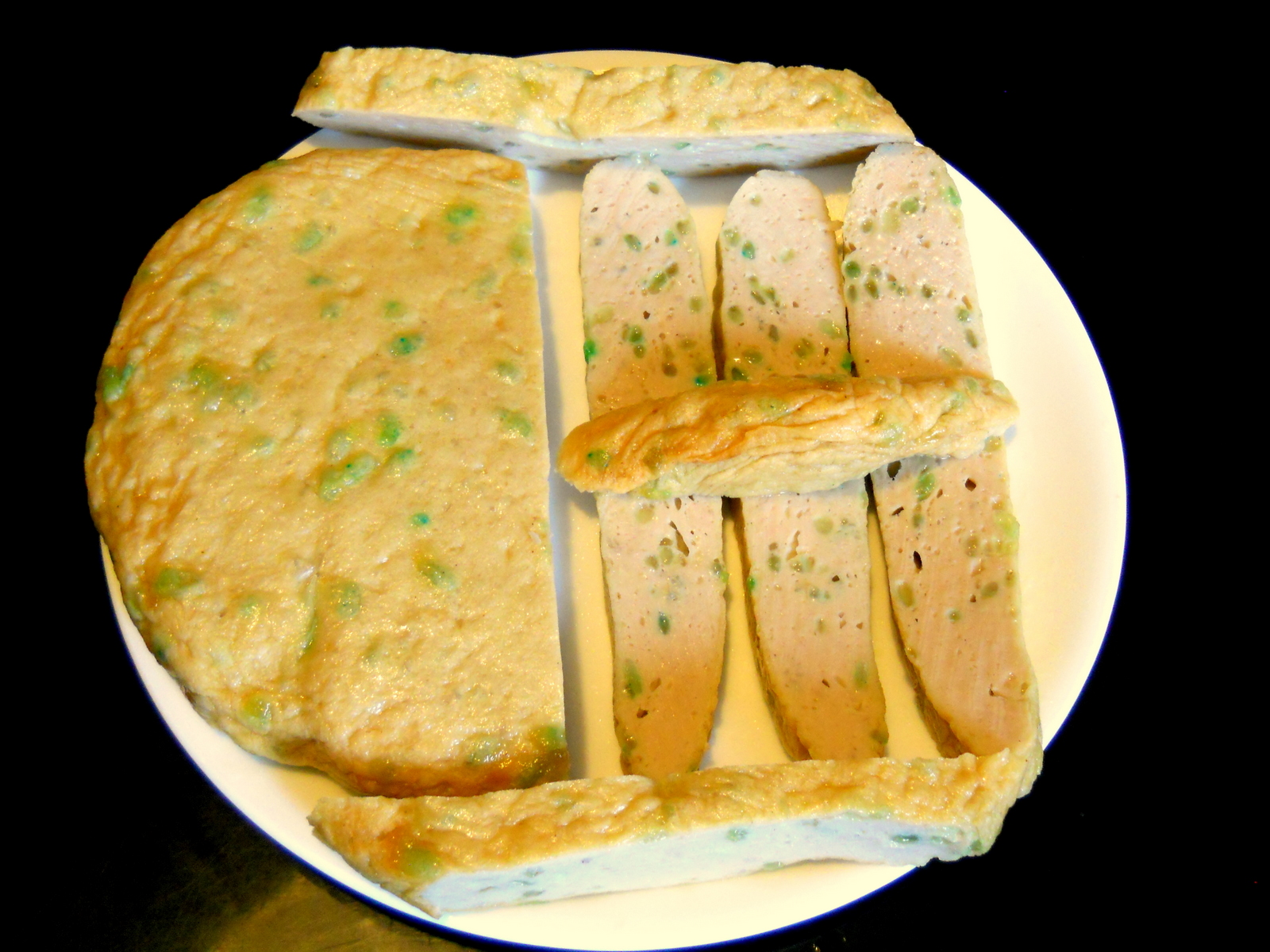
3. Chả cốm (rice flake chả):
Chả cốm is also made from pork, but like its name indicates, it contains a few handfuls of young rice flakes (cốm). The light green flakes scatter inside and on the surface of the pale beige meat log, their natural viscidity (from the heating of sticky rice) increases the meat’s chewiness and causes the appearance of gossamer strings woven into the meat when the log is sliced. Chả cốm is not as blatantly flavorful as chả bò, nonetheless a complete entity to be served by itself as a friendly witty representation of the rural Vietnam.


4. Chả gà chiên (fried chicken chả)
This turns out to be a pleasant surprise to me. The meat is neither too hard nor too soft but a bit crunchy, not fatty but savory, not strongly spiced but lingering at the tip of the tongue for quite some time. At first I actually wavered over buying the chicken sausage, but now I believe that this is the “phoenix sausage” in “peacock and phoenix sausages” (“nem công chả phượng”) that used to be offered to the monarchs and nobels of the old days. Wouldn’t you agree? 🙂

I can’t remember exactly how much each type costs, but the whole deal of four set me back by $20. That’s not expensive at all, considering the talent and the hard work poured into keeping alive a taste of that faraway home.

Address: Đức Hương Giò Chả in Bellaire, Houston
11369 Bellaire Blvd, Ste 950
Houston, TX 77072
(near the Vietnam War Memorial)
(281) 988-6155

(*): Note from Mai: double-ground meat is easier to obtain than kneaded meat, but would give the sausage a porous texture instead of a silky smooth one.

Sandwich shop goodies #15 – Bánh quy (turtle mochi)

March 31, 2011 By: Mai Truong Category: Houston, One shot, Southern Vietnamese, sticky rice concoctions, sweet snacks and desserts


Of my two hundred fifty some posts so far, this Sandwich Shop Goodies series brings me the most joy when writing and also takes me the longest time per post. It’s a collection of the bits and pieces that cost next to nothing. You may say why of course, how can a mere grad student afford The Slanted Door, The French Laundry, or our local Chez Panisse et al. Now although my salary certainly factors in my grocery list, the truth is I’ve lost interest in the uptown food scene. It dazzles like fireworks, and also like fireworks, it doesn’t stay. The mixing and matching of the freshest and strangest ingredients has blended so many nationalities into one that it loses culture like a smoothie losing texture. Those fancinesses don’t have a home. Meanwhile, I can spend days googling an obscure street snack and still regret that I haven’t spent more time, because I know that someone somewhere out there has an interesting story surrounding its identity that I haven’t heard. With such food there’s more than what goes into the pot that I can mention. For example, a simple sticky rice treat has made its way into an idiom, no less.


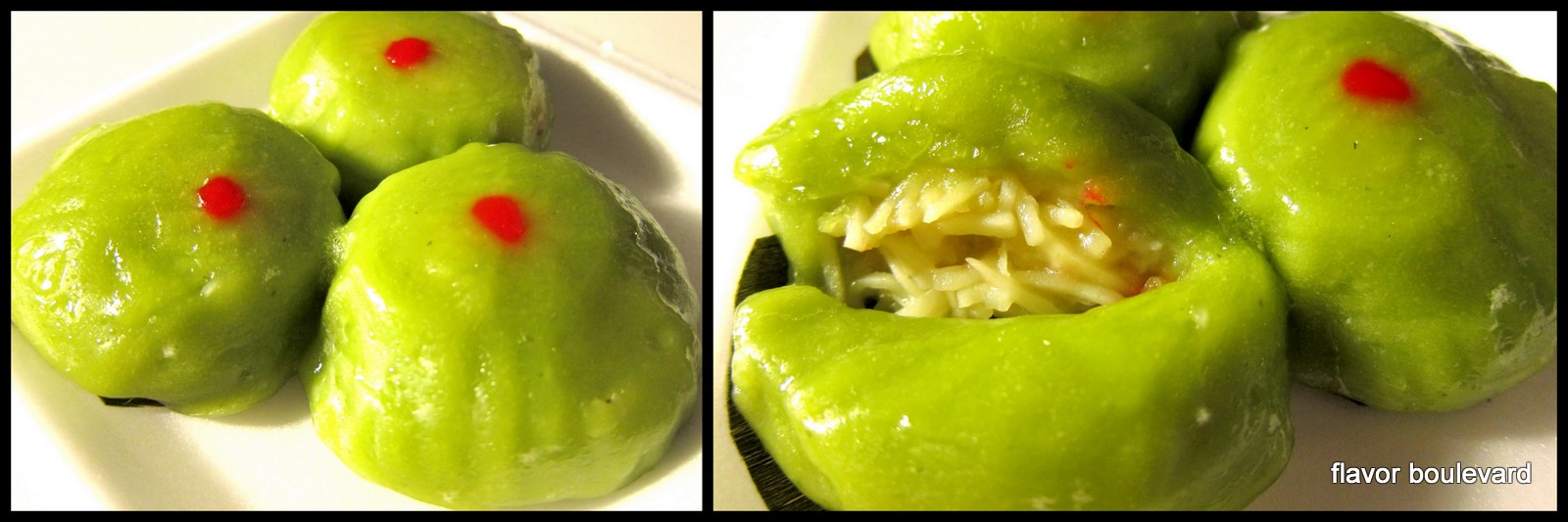
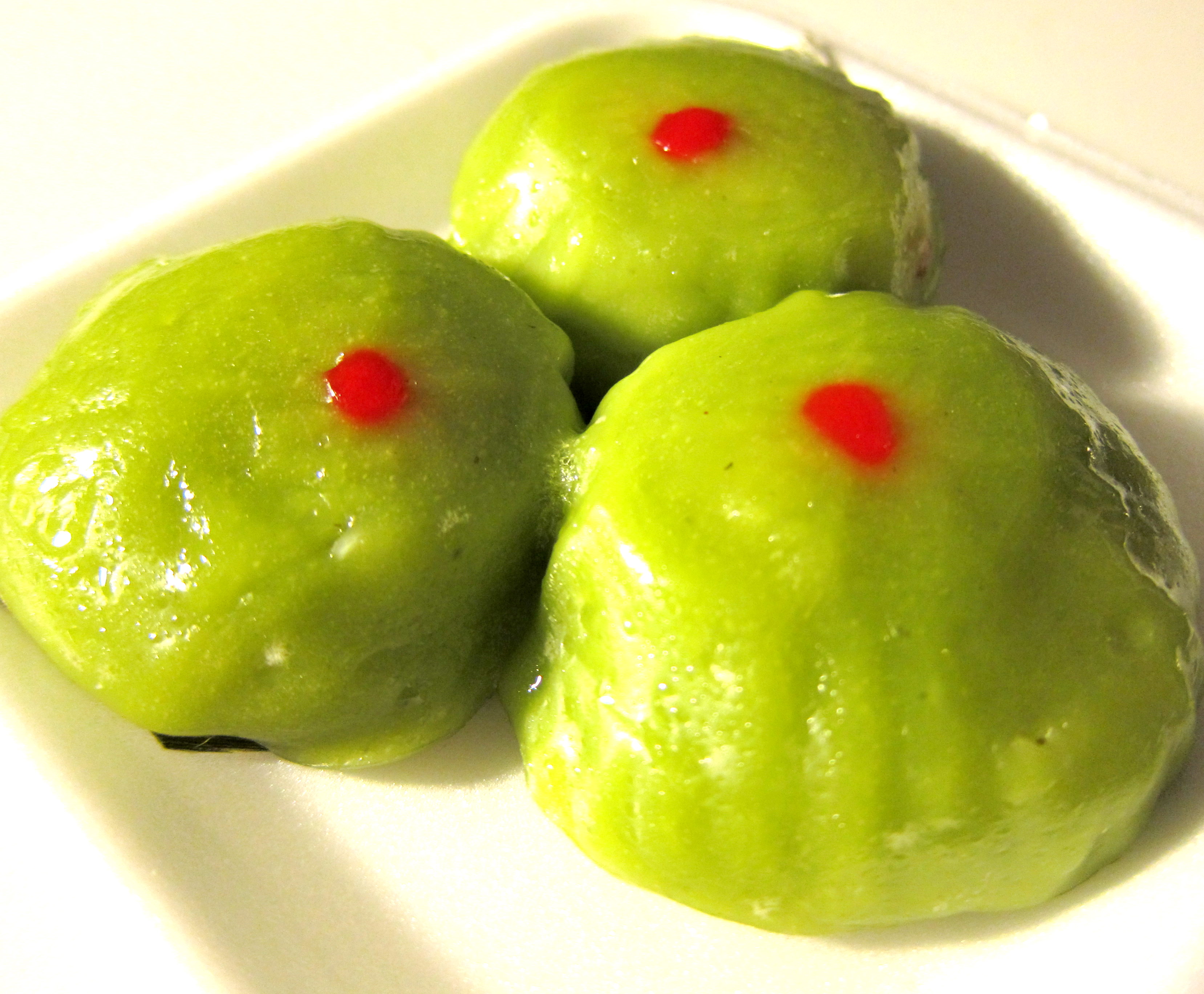
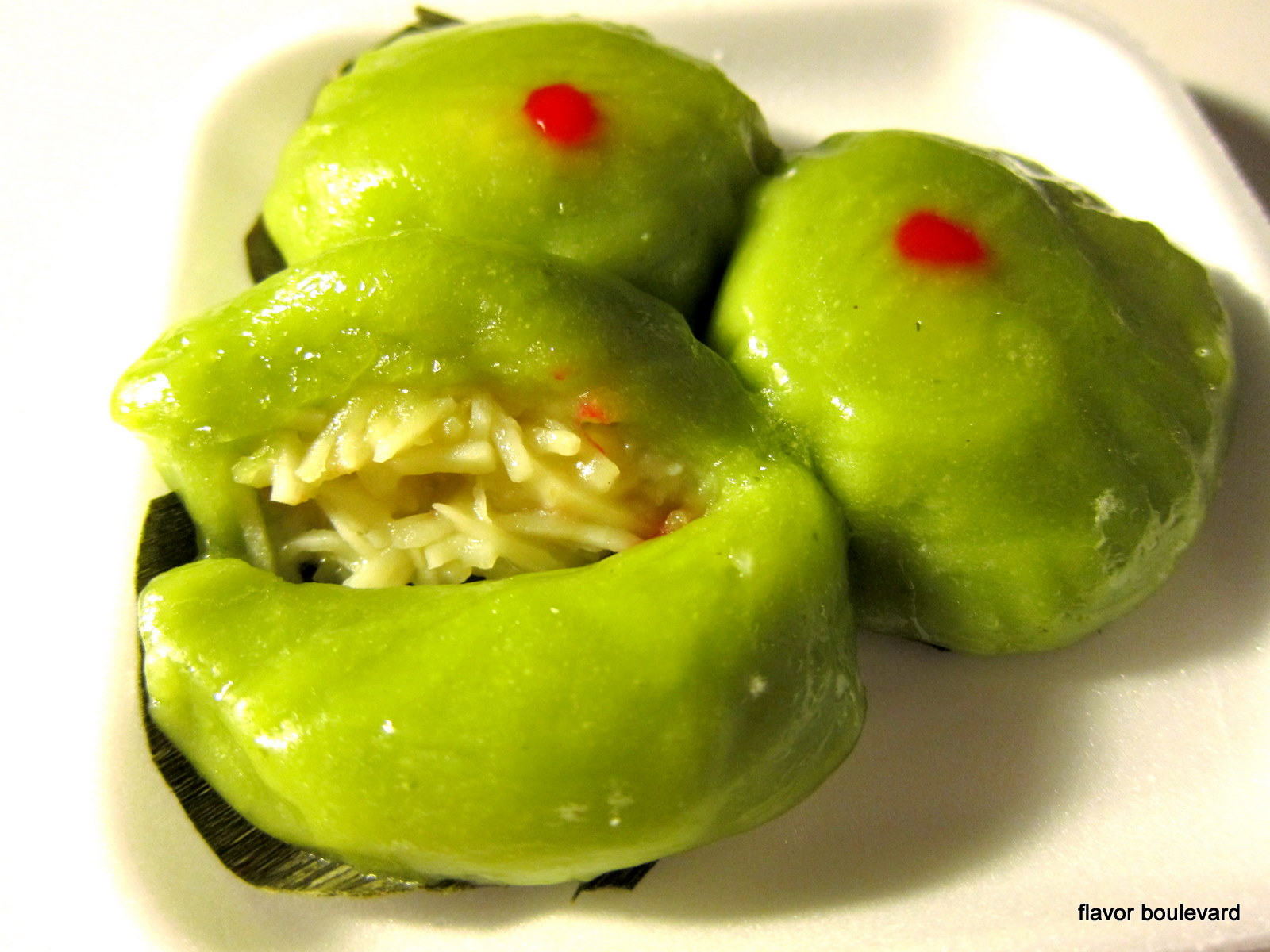
For twenty five years I’ve heard and used the expression “bánh ít trao đi, bánh quy trao lại” (“give bánh ít, get bánh quy” or “you scratch my back and I’ll scratch yours”) in a million occasions, but not once did I know what bánh quy was. At home we call cookies bánh bích-quy (biscuit) and some shorten it to bánh quy, but the biscuit and the bánh ít are too different from each other to be consider equivalents, and it’s reasonable to guess that the idiom came about before the introduction of Western food into Vietnam. So confused I was. Then one day while foraging the pile of snacks at Alpha Bakery, I almost flipped backward as I found a package of three green mochi’s labeled “bánh quy“.

They’re round and flat at the bottom, each placed on a small cut of banana leaf, purposefully shaped like a turtle shell resting on wet grass. If you look closely you can even see some faint crevices near the rim. So there, mystery unveiled: “quy” means “turtle” in Han-Viet, and the banh gets its name from its look.


Content-wise, bánh quy is indeed just a smaller, rounder, flatter version of bánh ít: sticky rice, tapioca starch, salt, sugar, oil, and a sweet filling. Back in the day, the turtles had either a red or a yellow dot to distinguish between coconut and mung bean paste, but it seems these days only the coconut turtles are still around. Each banh is just big enough and tall enough to fit snuggly in a baby’s palm. Two or three adult bites and you suddenly wonder, hey, where did my sugary, chewy soft bun go?


Buy three at the store for $1.50. Also, look for this other type of bánh ít: bánh gai (bánh ít with thorn leaf extract)

Address: Alpha Bakery & Deli (inside Hong Kong City Mall)
11209 Bellaire Blvd # C-02
Houston, TX 77072-2548
(281) 988-5222

Previously on Sandwich Shop Goodies: bánh da lợn (pig skin pie)

This post is submitted to Delicious Vietnam #12, April edition, hosted by Anh of A Food’s Lover Journey. I’m so looking forward to the roundup this month!

Hương Giang – Savour Huế in Houston

March 23, 2011 By: Mai Truong Category: Central Vietnamese, Houston, noodle soup, sticky rice concoctions, The more interesting


I lost my memory card. If you’re a food blogger too you’d know how devastated I felt: the first advice to a food blogger these days is “good pictures”. Well, the pictures I took at Hương Giang are amazing, they just no longer exist. But, pictures or not, as my professor Lawrence Hall would say in his British tongue, “you can’t stop me,” or in this case, I can’t stop myself from blogging about the restaurant.

Is their food that good? Hương Giang takes a shy, small square in the parking lot at the corner of Bellaire and Boone. If you drive westward on Bellaire Blvd, you’ll see its sign on the left before you reach Hong Kong Market. It’s really a tucked-away place for scoffers, the outlook unimpressive, the sign blue and white like a tired worker shirt. The inside is similar to any average pho joints you’ve seen, wiped clean and plastic cheap. I knew my mom wouldn’t come here if not for blogging’s sake, but in this city it’d be hard to get a menu more Huế than this one.

There are pictures in the menu and printouts taped to the wall to tell you what the specials are. For us it’s a matter of getting what we’ve heard of but not had: gỏi mít tôm thịt, bánh ít ram, cơm hến, and bún suông.

Gỏi mít tôm thịt is jackfruit salad with boiled shrimp and pork, and like other Vietnamese gỏi, it’s served cold with rice cracker (bánh tráng nướng) for shoveling and scooping. The airy blandness of a coal-toasted sesame rice paper elevates the lime juice, the pepper, the cilantro in a gỏi. The kitchen makes a slight mistake by bringing out a plate of gỏi mít hến instead, where the boiled pork and shrimp are replaced by handfuls of tiny basket clams (hến). These freshwater bivalves are connected to Huế like McDonald’s to Americanization. As small as a finger nail, each hến constitutes a second of chewing. As a stir-fried bunch mixed with young jackfruit flesh, the collection feels grainy and humble like a fisherman’s kitchen by the riverside. The color, too, is earthy: blackish-lined ivory hến,  pale brown jackfruit, and a bit of green cilantro.

Cơm hến offers more or less the same atmosphere as the salad, except the rice amplifies the grainy texture in place of the jackfruit’s fleshy blend, no rice cracker presents to break the unanimity, and the hến‘s natural sweetness here isn’t damped by any lime juice. When there isn’t just a few, but at least a hundred of these quiet lives in a bowl of cơm hến, you can’t help but feel the responsibility to treasure each spoonful. It’s the least you can do for the dignity of those tiny freshwater basket clams.

If cơm hến were hamburger, then bánh ít ram would be mac ‘n cheese. It’s not super well known, but anyone who knows Hue food knows this sticky (rice) business. I first learned of bánh ít ram from noodlepie, Ravenous Couple call them fried mochi dumpling (and you really can’t get a better looking picture of bánh ít ram than what the couple styled on their site). Each ping-pong-sized dumpling carries a marvelously inviting look: a plump, shiny round ball on a golden base, cut in half and there snuggle rosy bits of shrimp and char siu pork. Each bite is a step into a river: first soft, then sinking, then hitting the crusty bottom. With or without the mixed fish sauce, savory bánh ít ram, also called bánh ram ít by the natives, is a fair partnership between the steamed bánh ít and the deep fried bánh ram, with each component designed to excite the other. So why is it not as popular as bánh bèo? Because it’s hard to go down the second time. One bánh ít ram is good, two are too many. Ten on a plate, like what we get at Hương Giang, becomes a bloody battlefield.

Thankfully we are a team of three, and we rotates plates to share both the good and the challenging. And thankfully we get bún suông. This noodle soup draws a fine but successful line between being too meaty and being too thin, as it contains both. Ample cuts of chả cá (fish cake, similar to eomuk), chả lụa (silk sausage), and juicy shrimps weave among the angel hair rice vermicelli, all soaked in a slim sweet broth. Bún suông at Hương Giang tastes pure like bún mộc, quite a contrast from the definitions I’ve found online, whose broth is as thick as a deep South accent of the cooks said to invent the noodle soup.

If there are indeed two types of bún suông, the southern style and the Hương Giang style, then I’d choose the latter any day. If the southern style is really the only traditional style, then I’d go to Hương Giang just for their bún suông. You know you can trust a chef who has created something so delicate, so heart-warming, so balanced, and so very Huế.

Address: Hue Huong Giang (near Hong Kong Market)
11113 Bellaire Boulevard
Houston, TX 77072-2607
(832) 328-1308

Money matter:
gỏi mít hến (6.25) + bánh ít ram (6.50) + bún suông (6.50) + cơm hến (8.50)
= $27.25 a big lunch for three

Sandwich shop goodies 14 – Bánh da lợn (pig skin pie)

March 06, 2011 By: Mai Truong Category: Houston, One shot, sticky rice concoctions, sweet snacks and desserts, Vietnamese


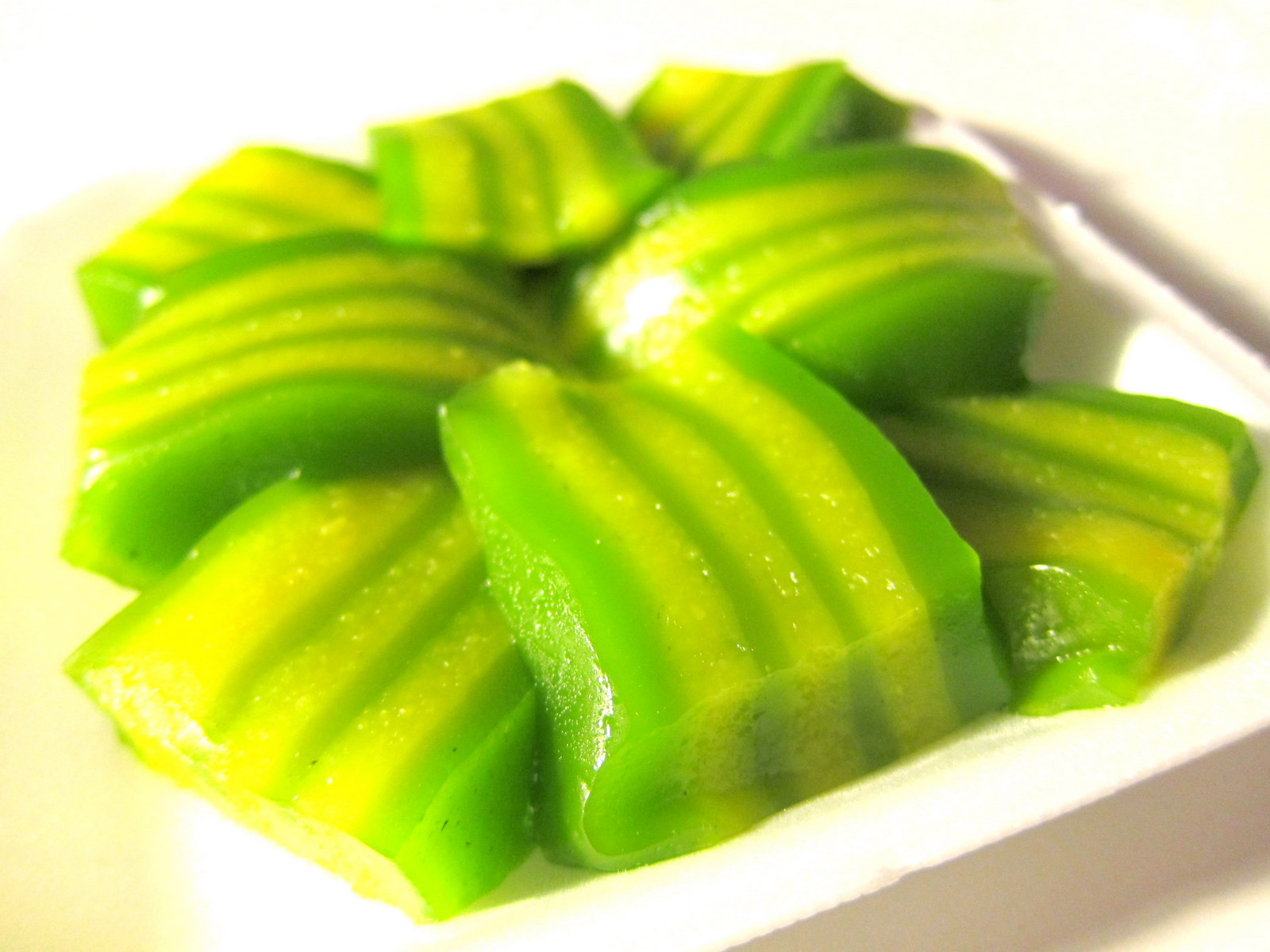
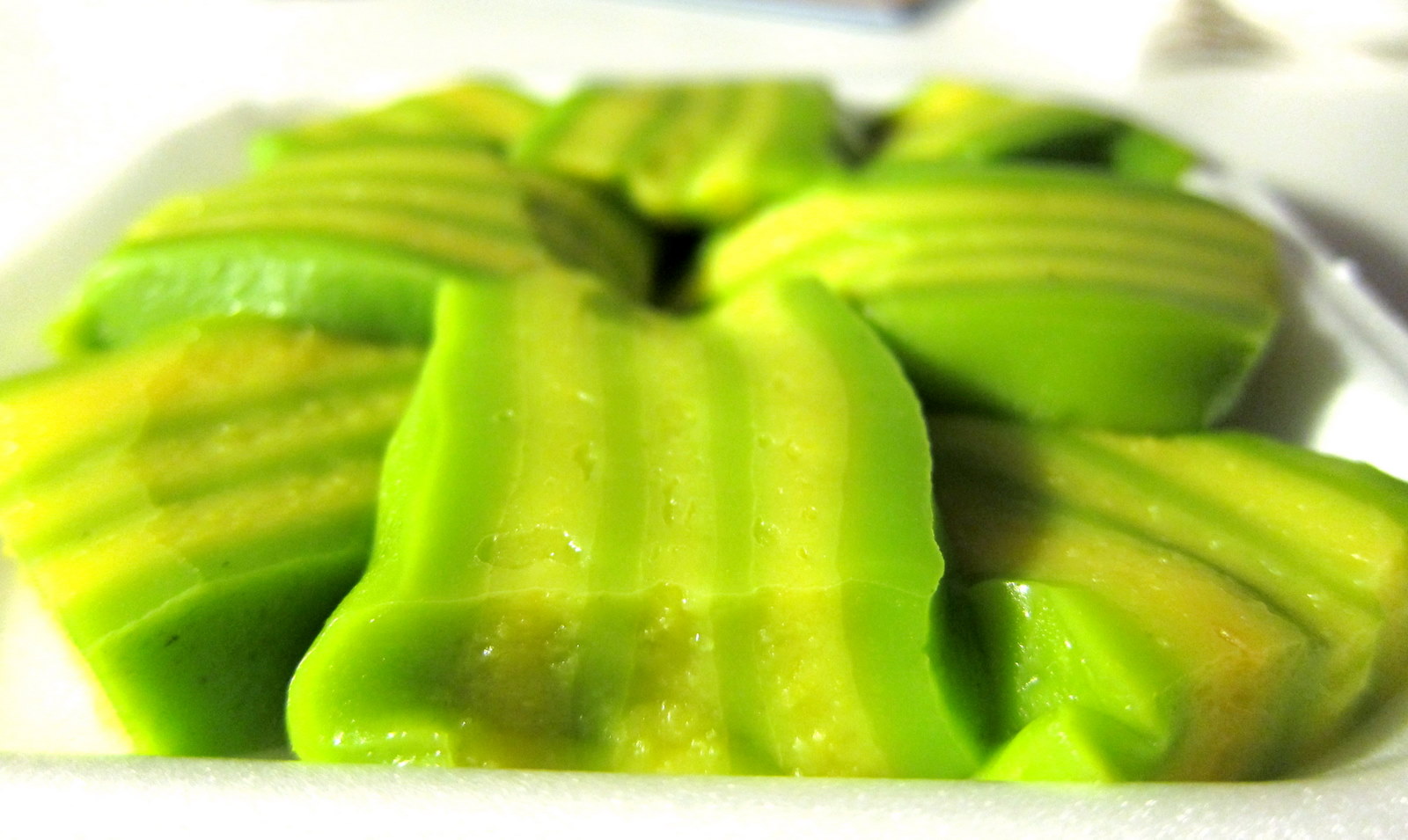
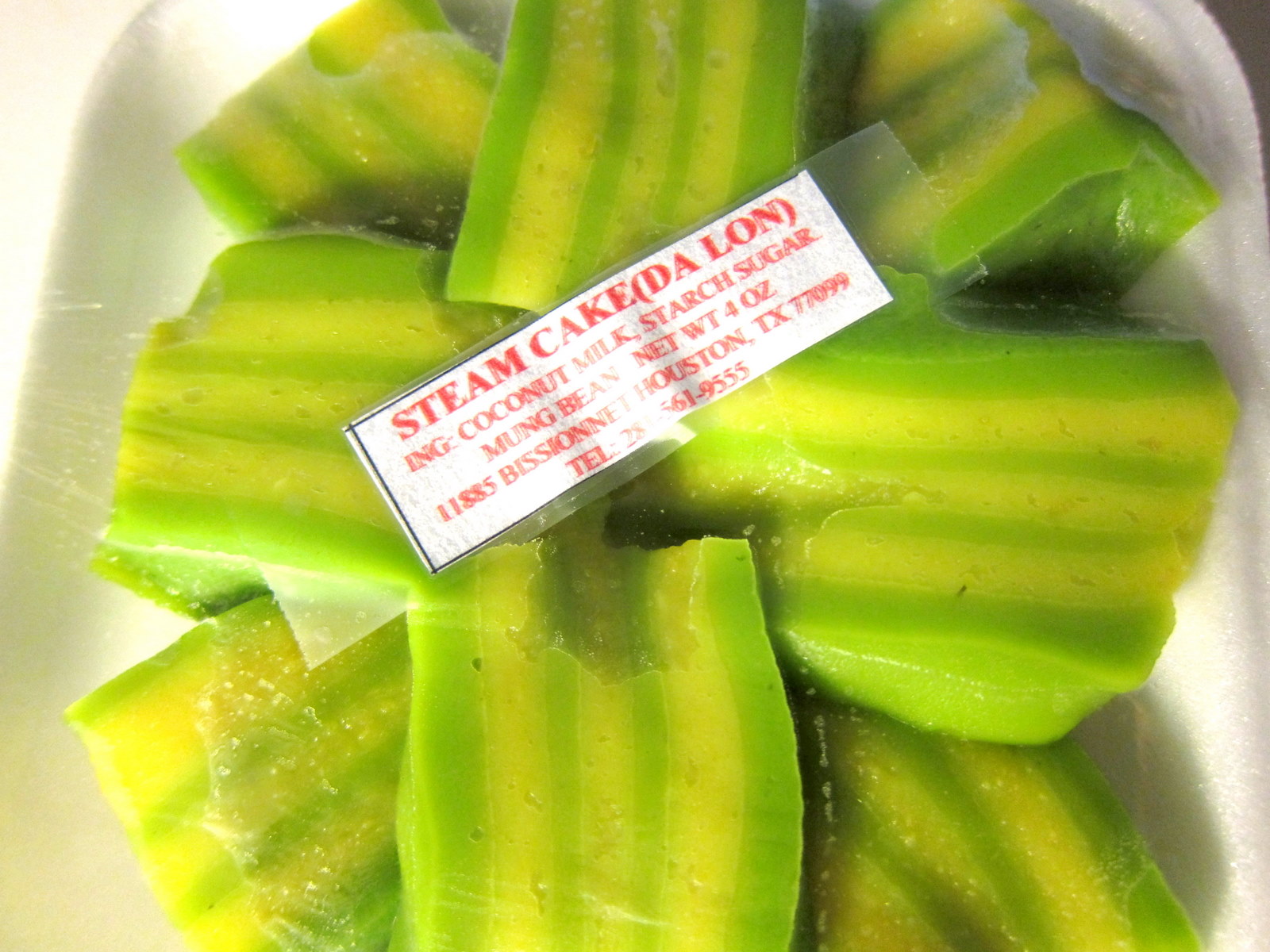
This is no stranger in the Vietnamese food biz: the layered pastry that gets its name from looking like pork belly, except green and yellow. Of course it doesn’t contain any pork skin, it’s sweet, sometimes may even be too sweet. Dad used to buy a whole pie home, as big as a platter and as warm as a father’s hand. From that same bakery somewhere in the market alley, he would buy bánh chuối nướng (bread pudding) too, which I always preferred to the bánh da lợn. But thinking back on those days when we lived near Bà Chiểu Market, it was certainly the best pig skin pie I ever ate.


Many years have passed, and many bánh da lợn have been eaten by me, both in its homeland and across the seas. The best way, I figured, to slaughter these chewy beasts is to peel off the layers one by one, when it’s warm. That wet, smooth skin of tapioca flour, when warm, is fragile. You don’t want to break it while peeling, and you want to drop it whole in your mouth to wrestle with its resilience, all the while inhaling the sweetness of pandan leaves and vanilla fused in its tone.

Simply put, a cold “pig skin” is a dead “pig skin”. A warm mung bean paste layer is also less sweet than a cold one, and thank goodness the bean layers are always one fewer than their tapioca neighbors. The pies Dad bought from that market bakery would have white chewy layers too, and the green ones didn’t look radioactive green like those we get from sandwich shops these days. Ah marketing strategies, just like somewhere in Vietnam someone thought of calling it “bánh chín tầng mây” (cloud nine pie) (because pork skin doesn’t ring any two-cent poetic sound), or when the tapioca layer turns dark purple, because of either magenta plant‘s leaf extract or food coloring, and the bean layer light purple because of taro.


Whatever the case, the original bánh da lợn is still the best. I looked through 51 pages of Google search for its origin, which seems likely lost through generations of home cooking and street food mingling. You see, it was never really a praiseworthy, historically recorded invention in the kitchen. There’s no village or province associated with the best bánh da lợn. It’s probably from the South, even if “lợn” is the Northern word for “pig”. It’s a product from a steamer, it’s cheap, it has texture, kids like it, Dad likes it. That’s all I know.

And by the way, Alpha Bakery & Deli sells some good, thinly sliced, warm numbers for a buck fifty.

Address: Alpha Bakery & Deli (inside Hong Kong City Mall)
11209 Bellaire Blvd # C-02
Houston, TX 77072-2548
(281) 988-5222

Previously on Sandwich Shop Goodies: bánh xu xê (couple cookie)
Next on Sandwich Shop Goodies: bánh quy (turtle mochi)