Flavor Boulevard

We Asians like to talk food.
Subscribe

Archive for the ‘sticky rice concoctions’

New lunar year, new me
February 02, 2013 By: Mai Truong Category: California - The Bay Area, Festivals, sticky rice concoctions, sweet snacks and desserts, Vietnamese

tet-2013Yesterday was Flavor Boulevard’s 3rd birthday. Today is my nth birthday. Back in 2010, a good friend of mine used to give me a ride to San Jose at least once every other month, sometimes more, when I got cravings for Vietnamese food, and especially when the Lunar New Year approached. When Flavor Boulevard was about one year old, things got complicated. Long story short, I hadn’t been back to San Jose for two years. – Why? You couldn’t rent a car? – Well… you know the stereotype that Asian girls can’t drive? It’s true for this one. It’s embarrassing. People, even those who don’t like driving, feel much more relaxed when they drive me than when I drive them. I’m also used to driving in Houston, where signs are helpful and people are friendly. Driving in California scares me. I’ve been here for 4 years, driven here twice, and both times reaffirmed my scare. So Vietnamese food cravings are satiated with the places in Oakland, where I can reach by bus. I don’t remember what I did for the 2012 Tet (Vietnamese lunar new year), and there seems to be no record of it on Flavor Boulevard.

Then one day Mom decided: “Rent a car and go with Kristen to San Jose. It’ll be good for you to drive, and I wouldn’t worry as much as if you drive alone.” I asked Kristen, she agreed to join me (brave girl). I felt nervous and excited. I reserved a car. Step 1 complete.

I signed the paperwork and got the key. I turned on the engine. Yes! Step 2 complete.

I drove from Enterprise to Kristen‘s house. Minus the two times people honked at me and one strange male voice “where are you going baby?” that came from nowhere (there was no green light to turn left, I got confused and stopped at the intersection for god knows how long), I’d say it went smoothly. I parked across the street from her place. The phone call “I’m here” to her was the most accomplishing moment I felt last week. Step 3 complete.

There is a huge difference between driving alone and driving with another person. It’s more huge than the difference between I-880 from Oakland to San Jose and US-59 in Houston. We arrived at the Lion Supermarket. Step 4 complete.
we-ate-in-san-jose
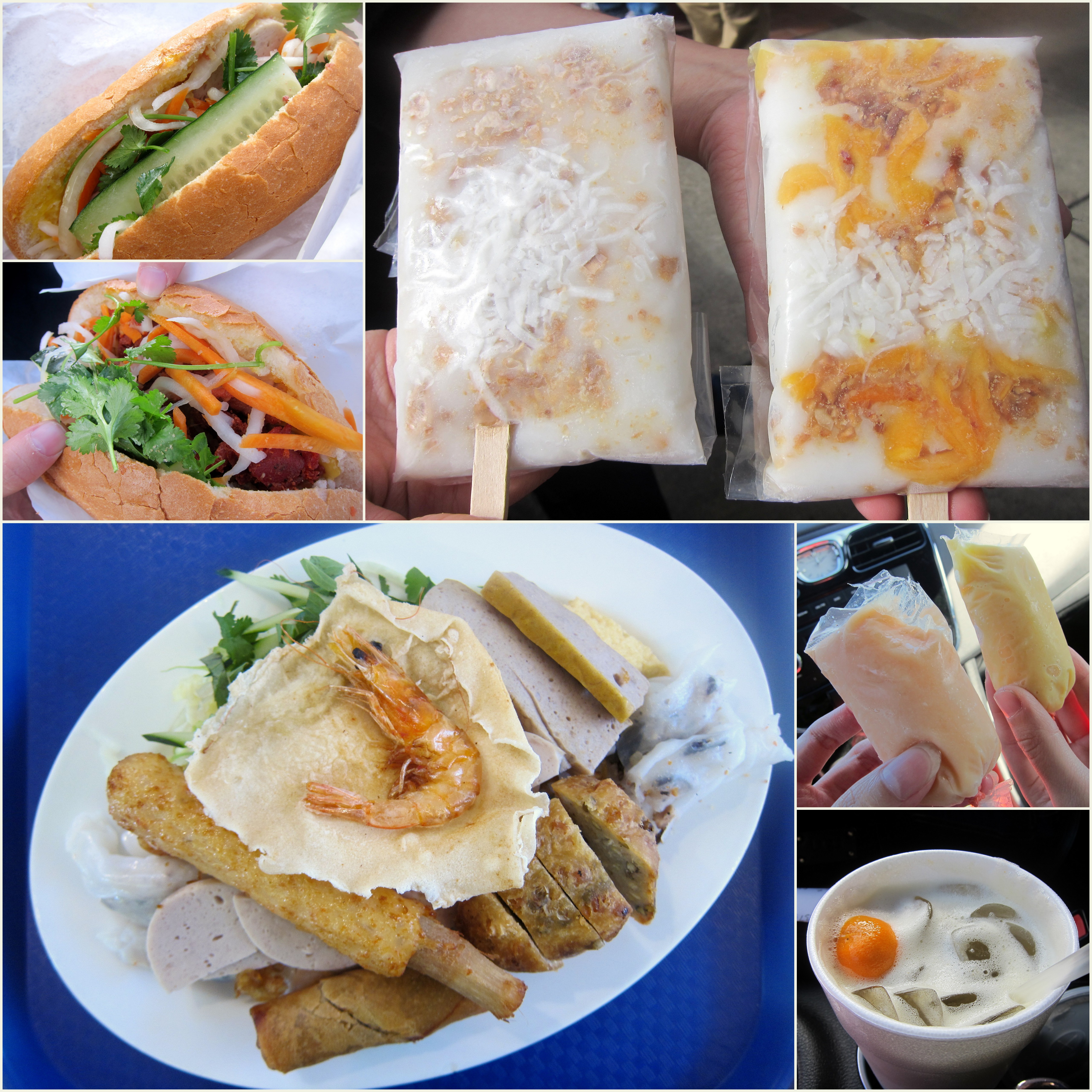
We ate.

Cold-cuts bánh mì (silk sausage and pate).
Grilled pork bánh mì (also with pate).
A wider-than-my-hand ice cream bar with frozen banana, jackfruit, coconut shavings and peanuts that sent both of us back into the car to rest. (While resting, we sipped on sugar cane juice (with a salted kumquat) and tried to figure out the flavors of two frozen treats that tasted durian one minute, passion fruit the next, and jackfruit the next next. Those were weird.)
A giganmongous plate of bánh cuốn (steamed rice roll), where the rolls (quite a few of them too) were completely buried underneath a thousand other things: an eggroll, an infinite amount of chả lụa (silk sausage), fried shrimp sausage on sugar cane stick, bánh cống (fried mung bean bread), and a shrimp wafer. (We couldn’t finish this plate. A mere $10, not the best banh cuon I’ve ever had, but the leftover was enough for my dinner.)

We bought.

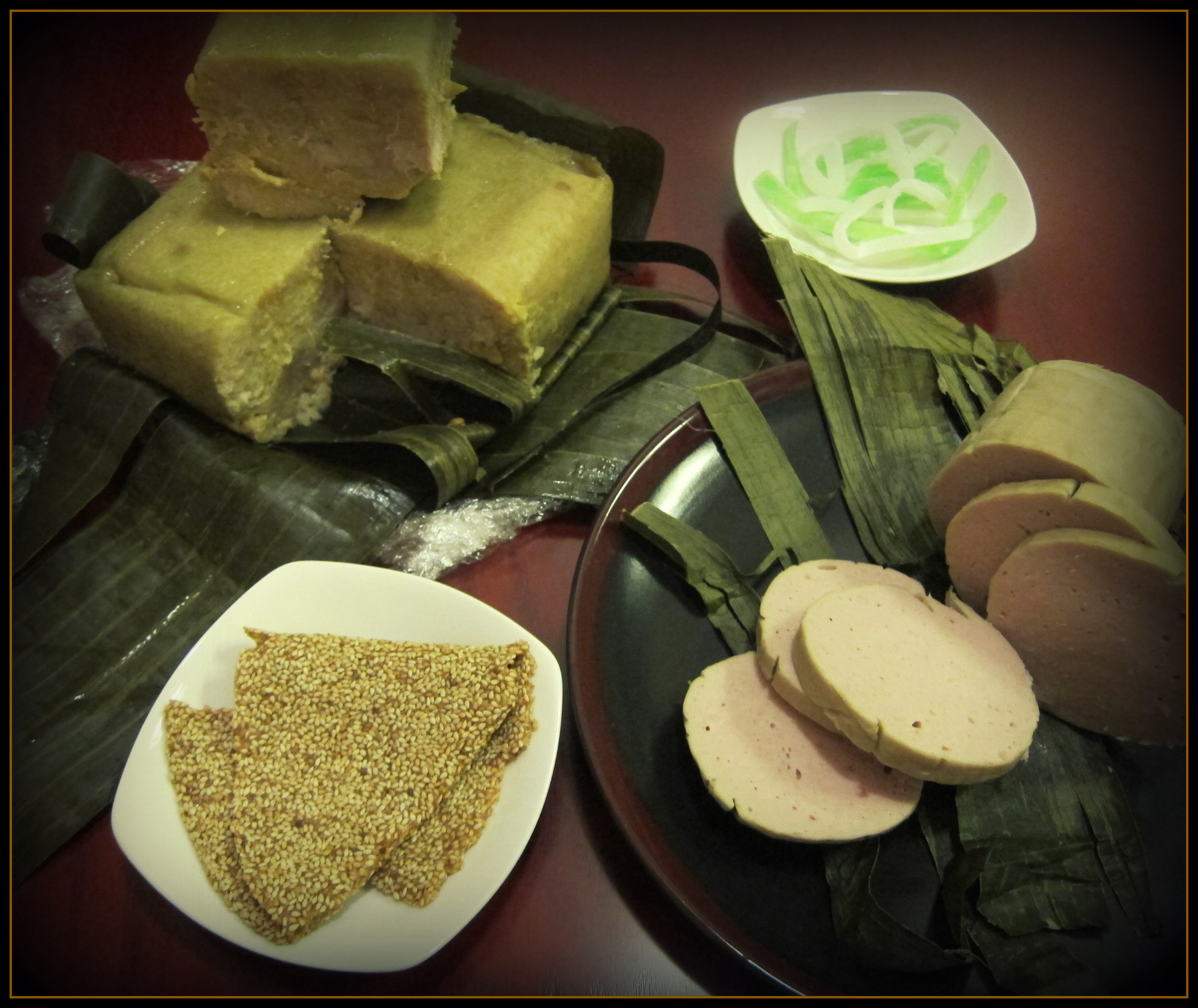
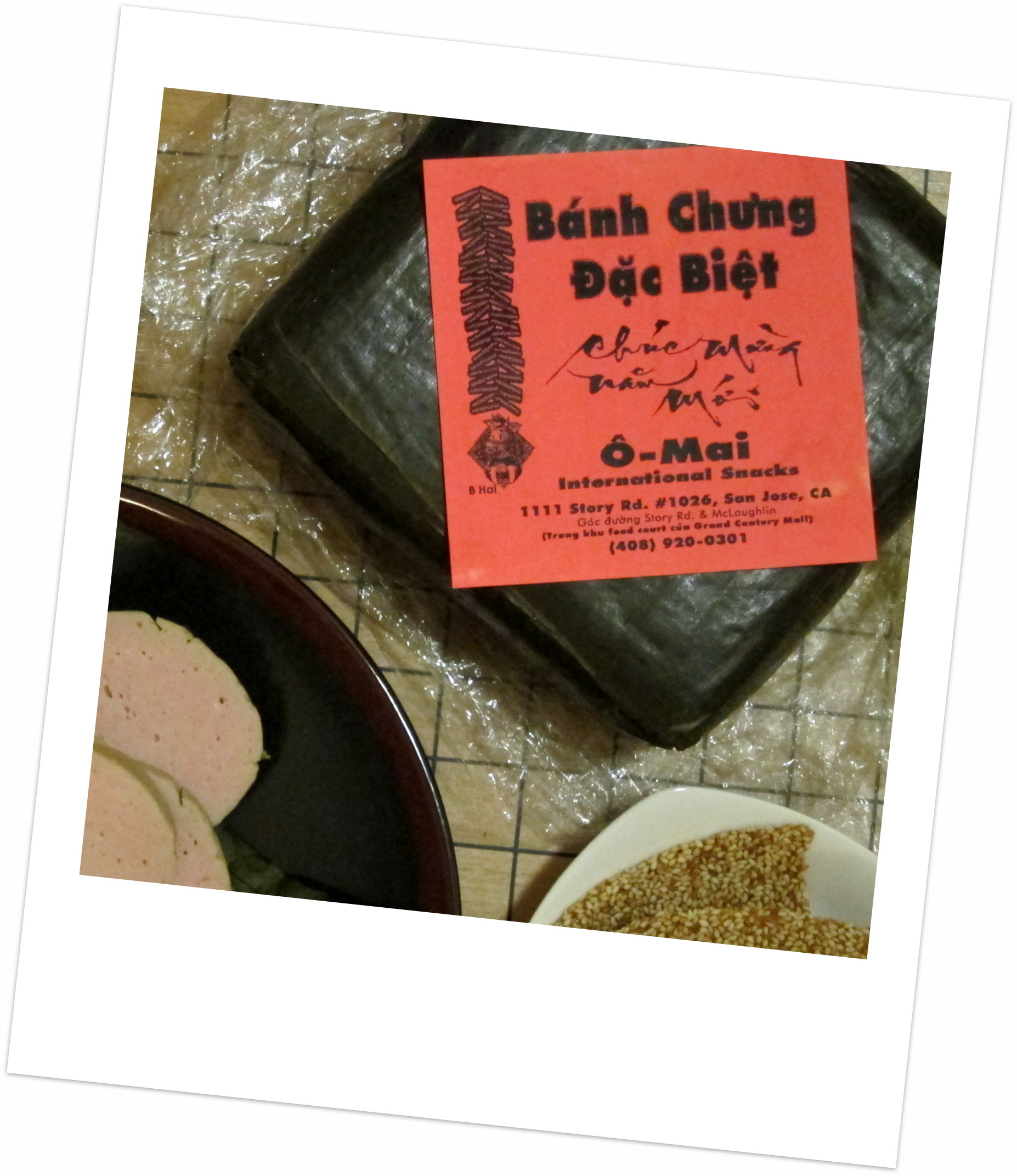
Bánh chưng for Tet.
Chewy sesame candy (mè xửng) and candied coconut strips, also for Tet.
Cha lua.
Pickled mustard greens.
Banana bread pudding.
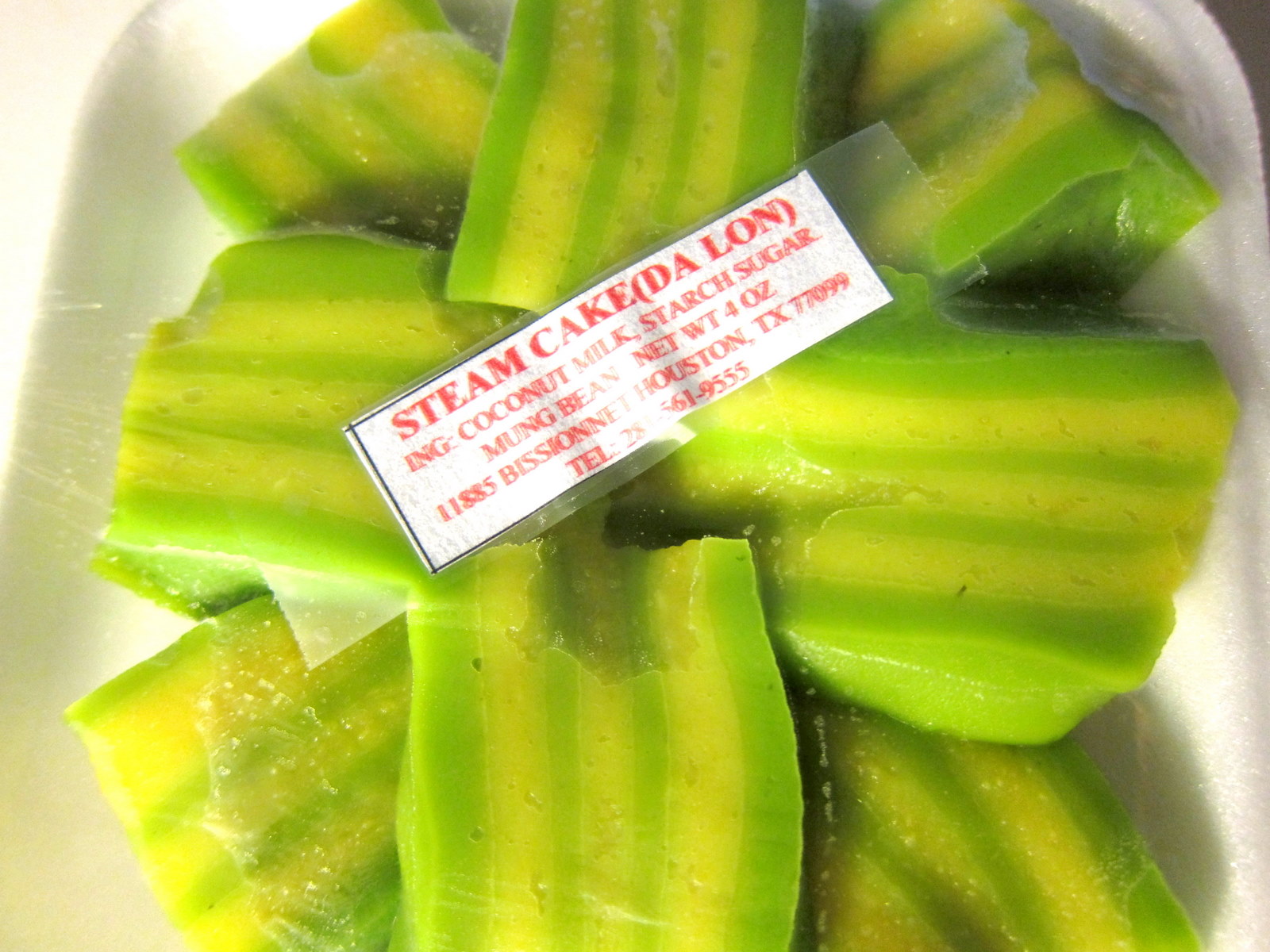
Bánh xu xê.
Some fermented tofu cookies (I haven’t tried them yet, but Kristen said she likes them, so I think I’d like them too…)
Eleven green waffles at the Century Bakery, because when you buy 10 you get 1 free.
And other food things…

We drove back.

Minus one tiny tiny incident where stupid me forgot the key inside the car, locked us out, had to call Roadside Assistance and waited 30 minutes for the rescue, I’d say Step 5 was wildly successful.

I dropped Kristen off. Refilled the tank. Drove to Enterprise. Tried to park between a gargantuan 12-seat van (or maybe 17?) and a car. Got myself halfway into the spot and literally one inch away from the van before realizing that I could either stop or crash into the van. This was 7 pm, dark enough that the pedestrians who were pointing and laughing at my ridiculous situation couldn’t really see my face (I hope). Step 6 very far from complete. I called Kristen for rescue. She and her boyfriend rushed over. It was one of those moments when your friends seem to appear with a shining halo and white wings. I felt forever indebted to them.

When that car got into the spot (Kristen‘s boyfriend moved it like nothing at all), I sighed in relief, and strangely, my fear of driving in California also evaporated. The last barrier between me and food removed. I thought about the next trip to San Jose with ease. Now I can go there any time I want. Now I can have banh chung for Tet again. Now I can go everywhere.
happy-lunar-new-year-2013
Step 7 complete.

Step 8: learn how to park.

Happy Lunar New Year! Happy birthday to me. 🙂

Addresses:
Kim’s Sandwiches
1816 Tully Rd, San Jose, CA 95122
(408) 270-8903
CD Bakery
1816 Tully Road, Store #198, San Jose, CA 95122
(408) 238-1484
Thien Huong Banh Cuon Trang Hoi
1818 Tully Rd, San Jose, CA 95122
(408) 238-8485
Century Bakery (inside Grand Century Mall)
1111 Story Rd, San Jose, CA 95122
(408) 287-9188

P.S. Check out Kristen’s post about our adventure on her blog, she described the food in details. 😉
One Bite: Tteok bokki at Crunch

August 09, 2012 By: Mai Truong Category: California - The Bay Area, Comfort food, Korean, One shot, savory snacks, sticky rice concoctions


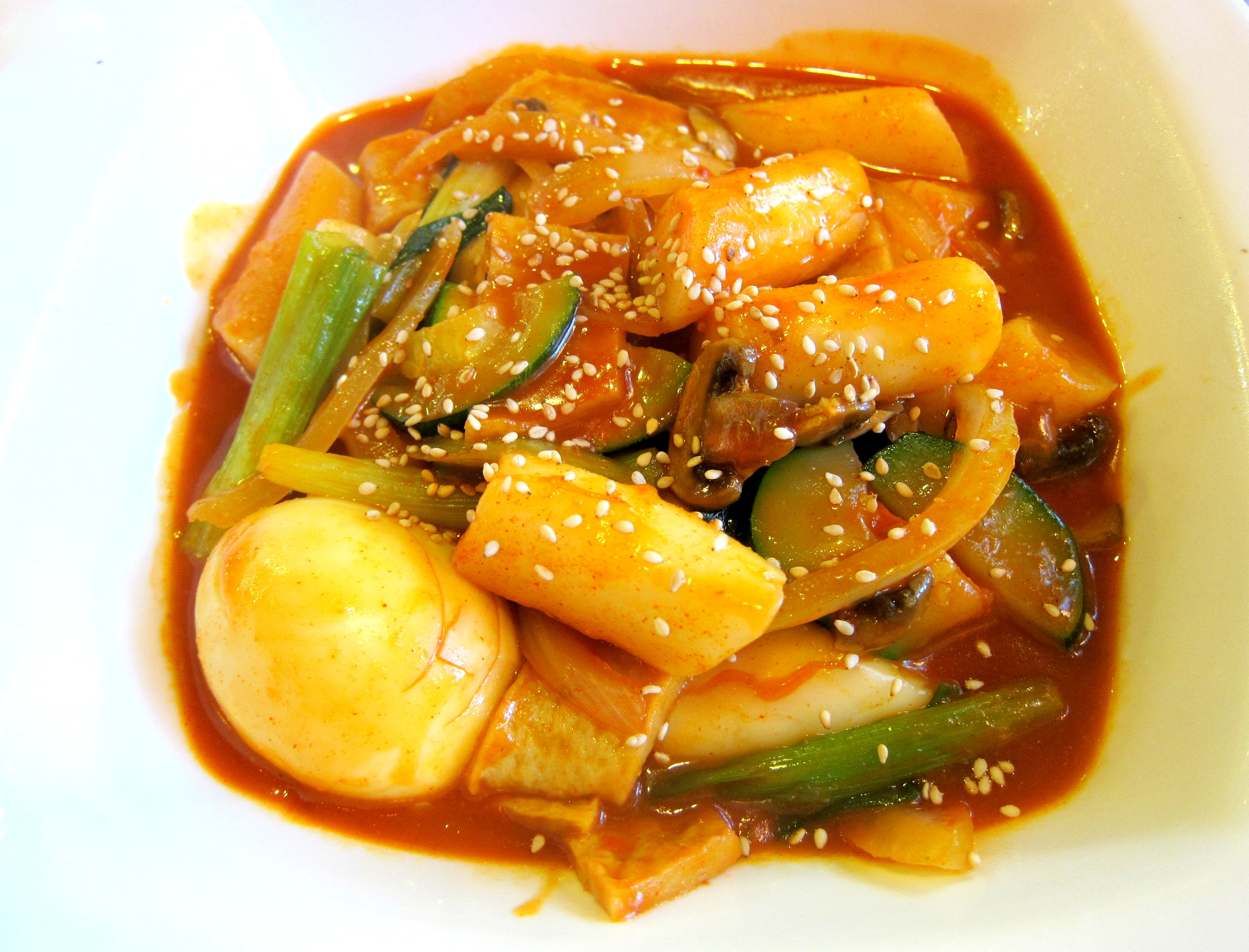
Thick sweet & spicy sauce. Soft chewy sticks of sticky rice. This is one heckuva tteok bokki. I can see myself going here for a tteok bokki takeout on movie weekends, and it’s only $7.

Address: Crunch
2144 Center St
Berkeley, CA 94704
(Downtown Berkeley)
(510) 704-1101

This place used to be a sushi joint. I ate there once. I’m glad it has changed into something much better.
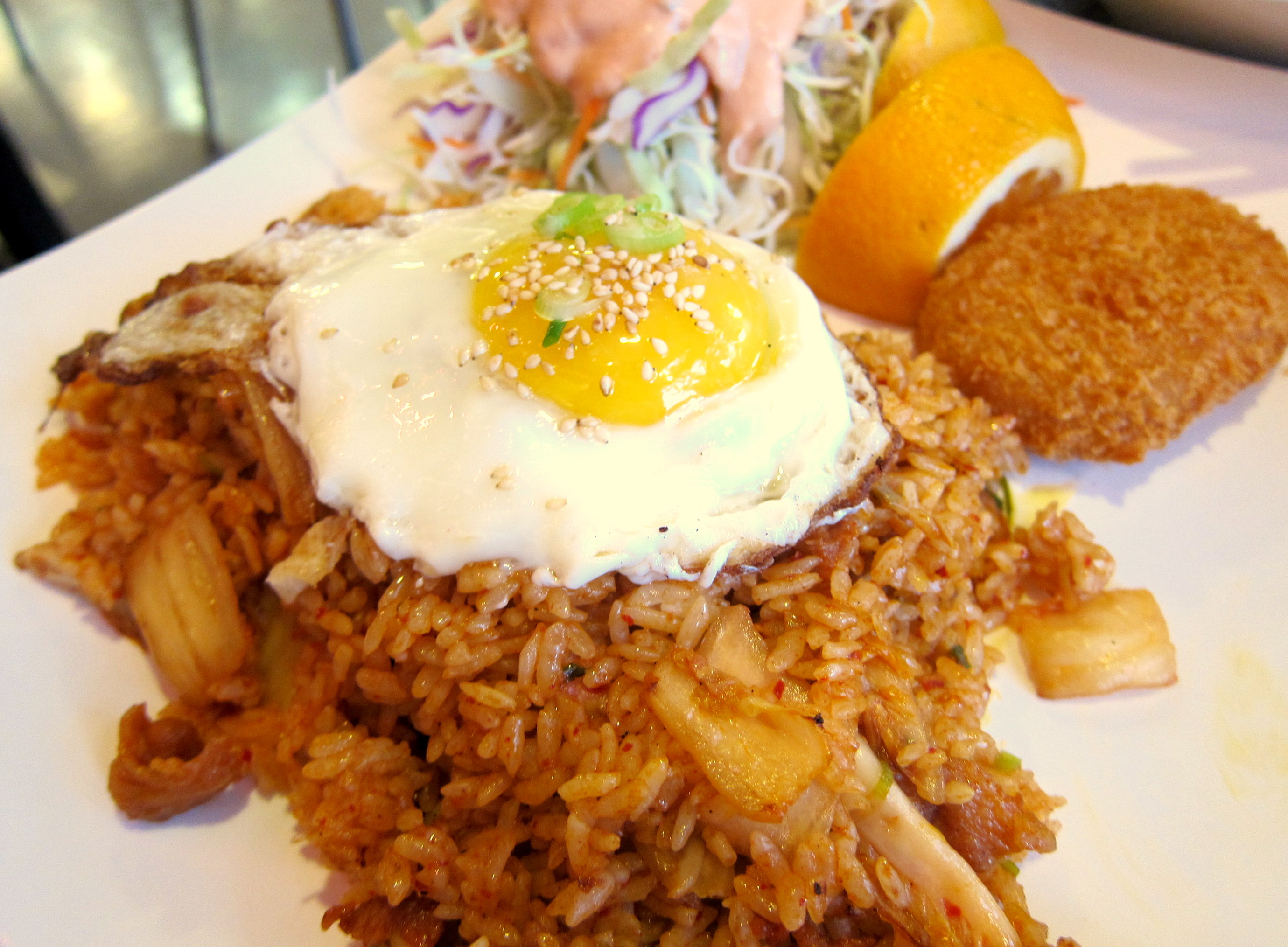
Also, Crunch gave me a humongous plate of kimchi pork fried rice that was just three spoons above my limit and not enough to take home. What should I do? Cut down or increase my limit?

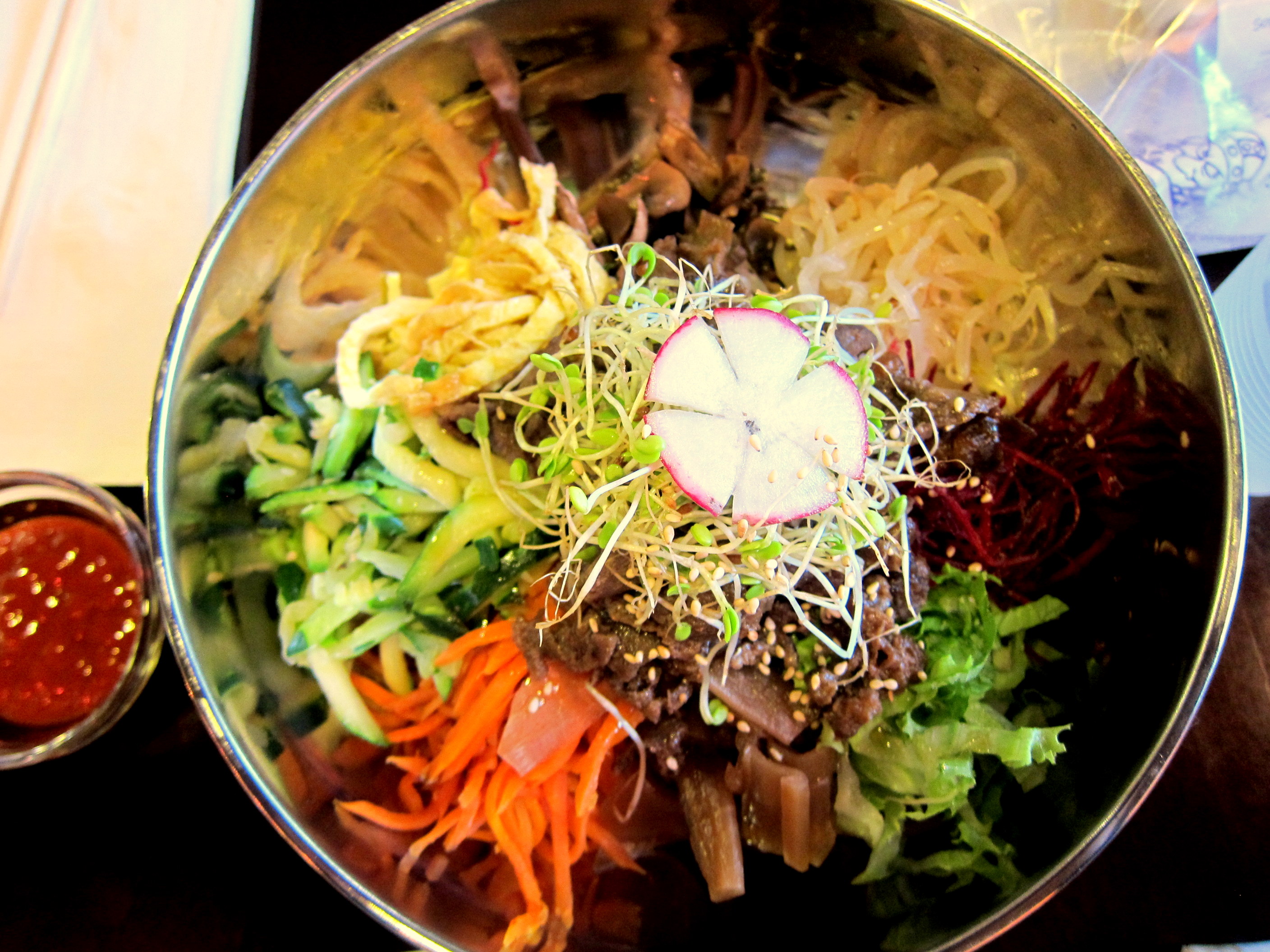
Beef bibimbap ($8)- julienned cucumber, carrots, bean sprouts, egg, lettuce and sauteed beef to be mixed with rice

Kimchi fried rice with pork ($8).

Recipe for bánh dầy đậu – Vietnamese mung bean mochi

July 23, 2012 By: Mai Truong Category: Northern Vietnamese, RECIPES, sticky rice concoctions, sweet snacks and desserts, Vegan


When I’m home, Little Mom pampers me with her food and sweeps me out of her kitchen, except when I open the fridge to snack, because her mind fixes on the idea that if she lets me touch the stove, I only make a mess. She’s right. Not to toot my own horn but when I’m home, I’m a lazy mess. So when I said Mom, let’s make bánh dầy đậu, she threw her hands up, said oh my sky there’s no more room in the fridge, made the bean paste herself, and only let me play with the dough. 😉

The mung bean paste filling is really the most important part of the Vietnamese mochi (similar to the Japanese mochi, but it’s 100% Vietnamese): you want it slightly savory, slightly sweet, and mashed. Little Mom is the queen of seasoning, so that part was flawless. My job was to knead the dough and roll up them balls. At least I didn’t have to pound steamed sticky rice into oblivion. I was kneading while watching TV with Mom. I was kneading when she sectioned her bánh bao dough into balls. I was still kneading when she wrapped the pork and egg inside the bánh bao dough. More kneading makes the mochi skin softer. After kneading, the rest was a breeze.


Bánh dầy đậu (pronounced kinda like |beng yay dou|) – Vietnamese mung bean mochi:

(Make 12 mochi)
– 250 g dried split mung bean (~ 2 cups), soaked overnight and deshelled
– 2 cup sticky rice flour
– 1 cup warm water
– 1 cup sliced mushroom
– salt and sugar to taste

The filling:
After soaking the mung bean overnight, wash away the green peel outside, we only want the yellow seed. Boil the mung bean until it’s tender. Mash the cooked bean.
Set aside 2 cup of mashed bean, let it dry and crumble to make mung bean powder.
Sautee mushroom, add the remaining mashed bean while sauteeing, add salt and sugar to taste. Let cool.
Make 12 small balls.

The mochi skin:
Pour water into the the rice flour while mixing with your hand. You should stop when the mix feels smooth but not liquidy. Add more water if the dough breaks.
Knead for at least 30 minutes.
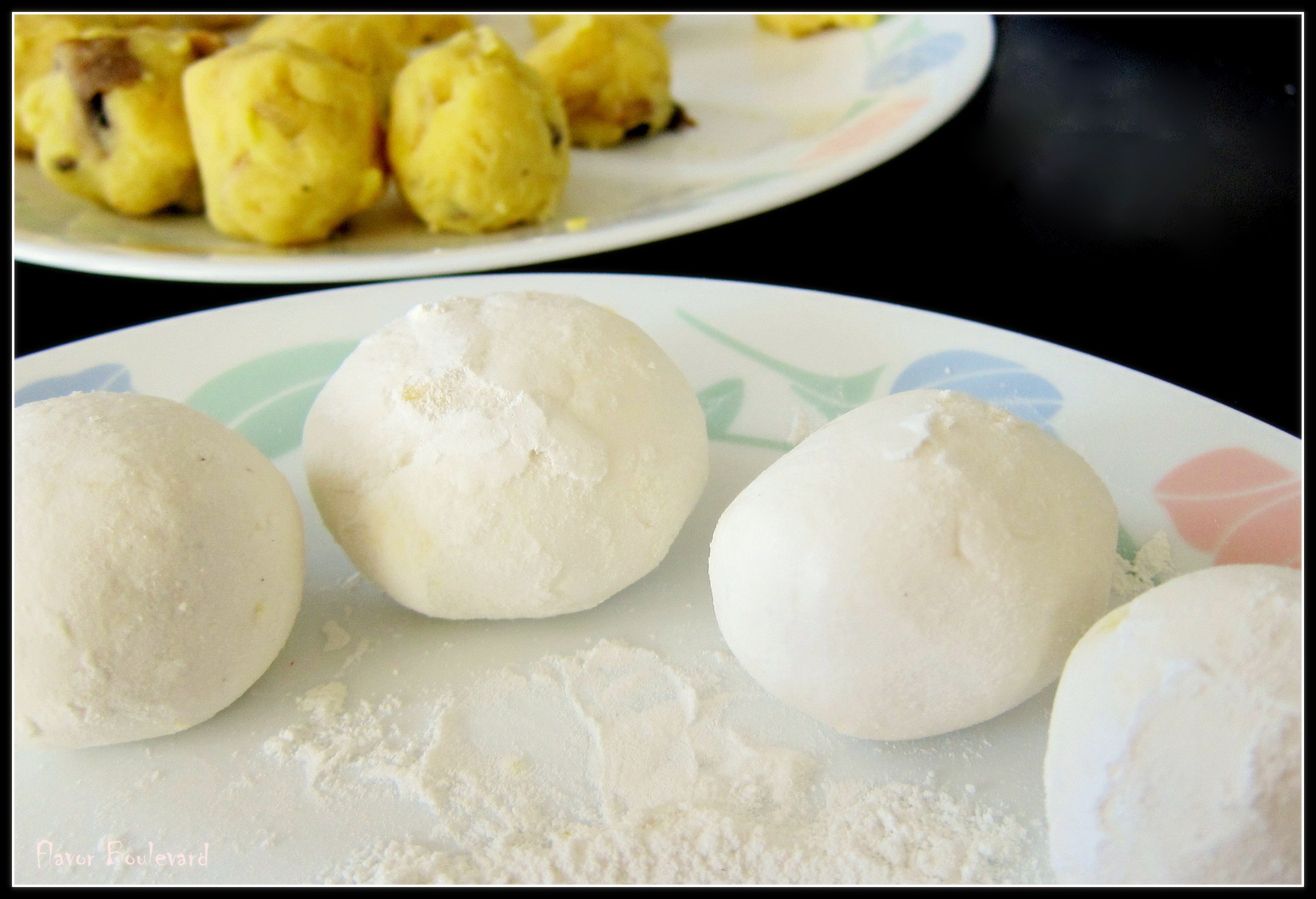
Divide into 12 balls, flatten each into a small disk.

The complete mochi:
Put the mung bean ball into the middle of the skin, wrap it up, make sure that no bean leaks out. Drop the mochi in boiling water and cook until they float to the surface. Cook for another 2 minutes just to make sure.
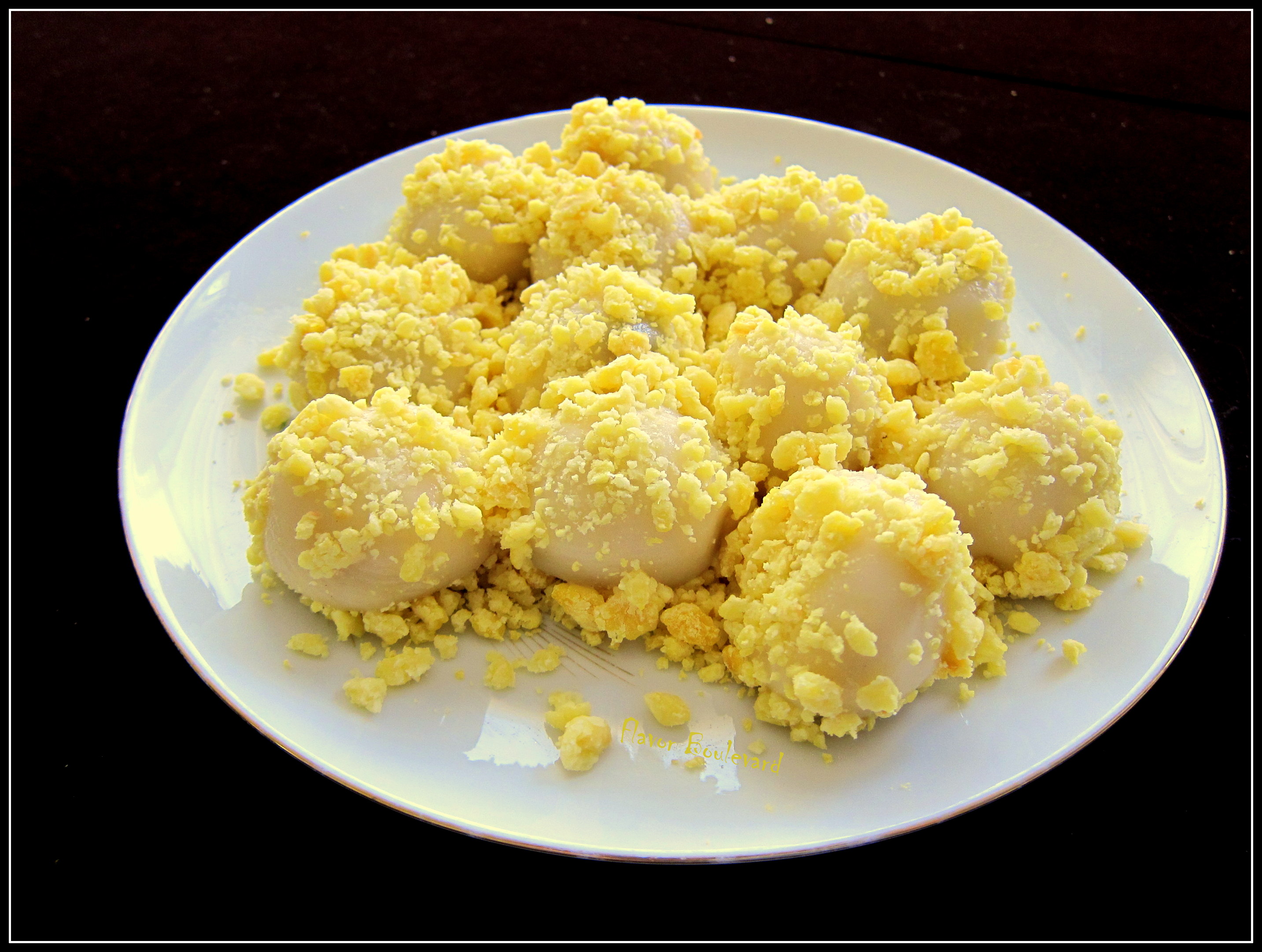
Roll the still hot mochi balls in mung bean powder. Let them cool.

Enjoy with a cup of Buddha’s Hand oolong. 🙂

Sandwich Shop Goodies 21 – Bánh dầy đậu (Vietnamese mung bean mochi)

July 11, 2012 By: Mai Truong Category: Houston, Northern Vietnamese, One shot, sticky rice concoctions, Vegan


Legend said the first ever bánh dầy (pronounced |beng yay|) was a flat thick bun of cooked-and-pounded sticky rice, white and chewy and not recommended for dentures. The prince, taught by a Bodhisattva in his dream, made it to represent the sky, and bánh chưng to represent the earth. I don’t think the sky is chewy, but I really like it when it’s white. I also like banh day with silk sausage a lot. But somewhere along the history of Vietnam, somebody gave banh day a mung bean filling, softened the dough (which means more pounding for the sticky rice), rolled it into the size of a pingpong ball, and coated it with mung bean powder. I can NEVER get enough of this thing.

$2 for 3. Found at: Alpha Bakery & Deli (inside Hong Kong City Mall)
11209 Bellaire Blvd # C-02
Houston, TX 77072-2548
(281) 988-5222

Unfortunately, I love them so much that the store-bought version just doesn’t do it for me. With Little Mom’s help, a batch has been made. A recipe is on the way. (UPDATE: the recipe is here.)

Previously on Sandwich Shop Goodiescudweed sticky rice (xôi khúc)

Sandwich Shop Goodies 20 – Xôi khúc – Jersey cudweed sticky rice

May 27, 2012 By: Mai Truong Category: Houston, Northern Vietnamese, One shot, sticky rice concoctions


There’s a Vietnamese song that starts like this: “Ten years pass by without seeing each other, I thought love had grown old/ Like the clouds that have flown by so many years, I thought we had forgotten.”(*) It then went on to say, as you might expect, that the narrator still yearns for that love like ten years ago. An even more dramatic thing happens to me: I still crave xôi khúc with the same passion of the last time I had it, which was twenty years ago.

The lady who sold xôi khúc (xôi cúc if you’re from the South)(*) near our elementary school was old. In her sixties at least. She was clean, so Little Mom bought xôi from her. We never had xôi khúc from anyone else, and I don’t remember seeing anyone else selling it. Loosely wrapped in banana leaves like all other xôi(*), her xôi khúc beamed with the smell of ground black pepper in the bean paste and the cool, herbal flavor of the steamy sticky rice. After the lady stopped showing up in the mornings with her basket, we stopped having xôi khúc for breakfast.

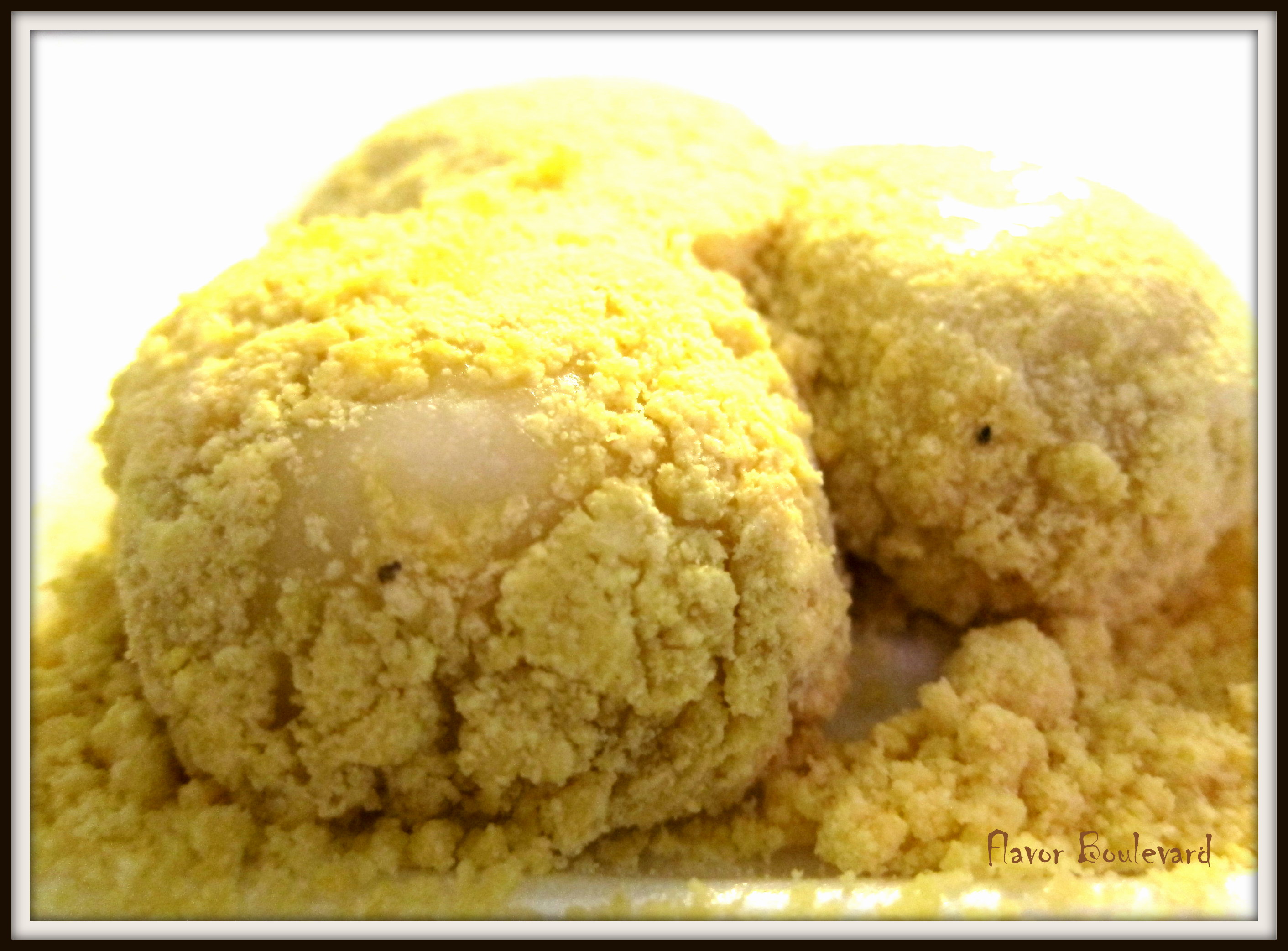
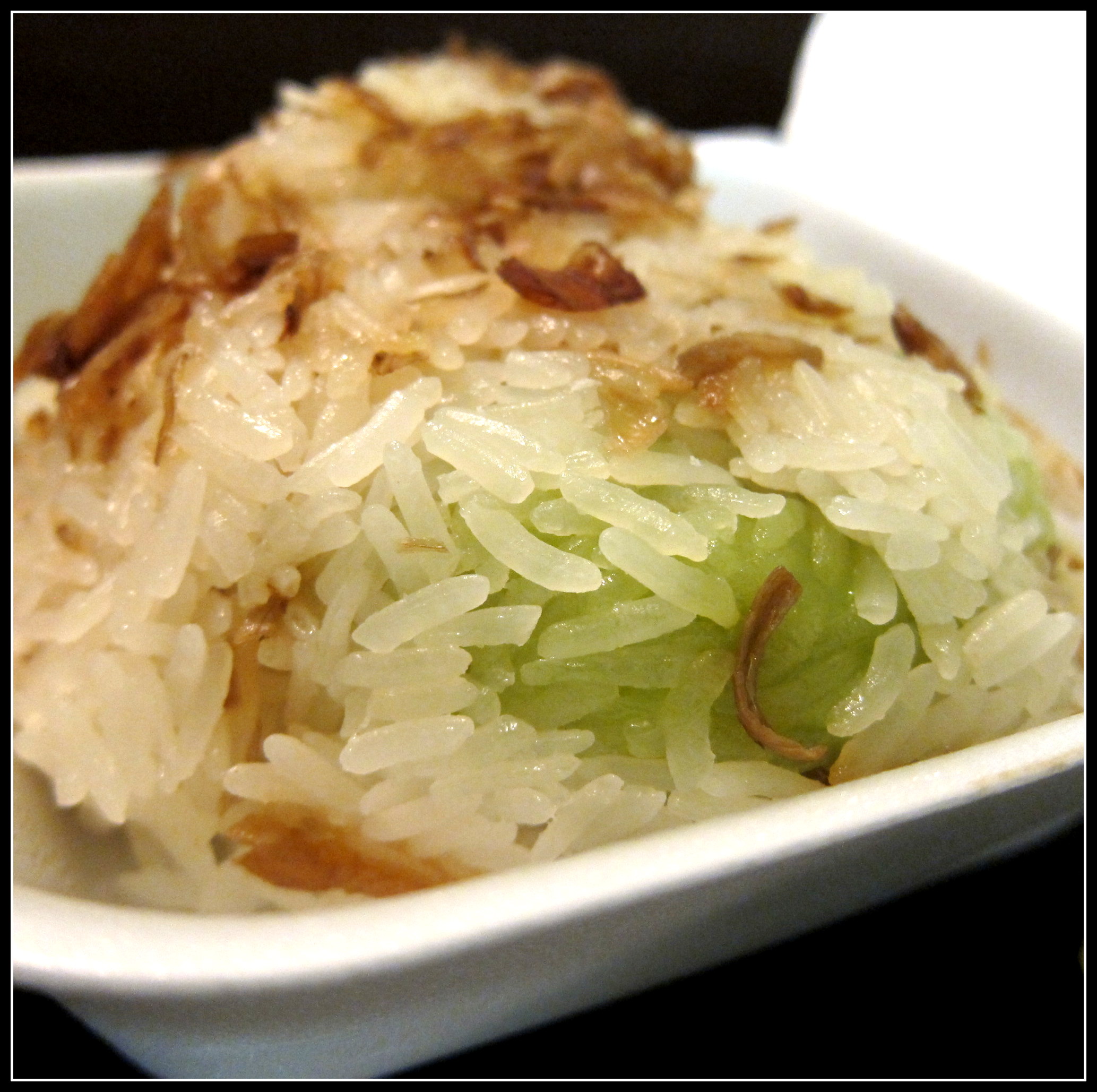
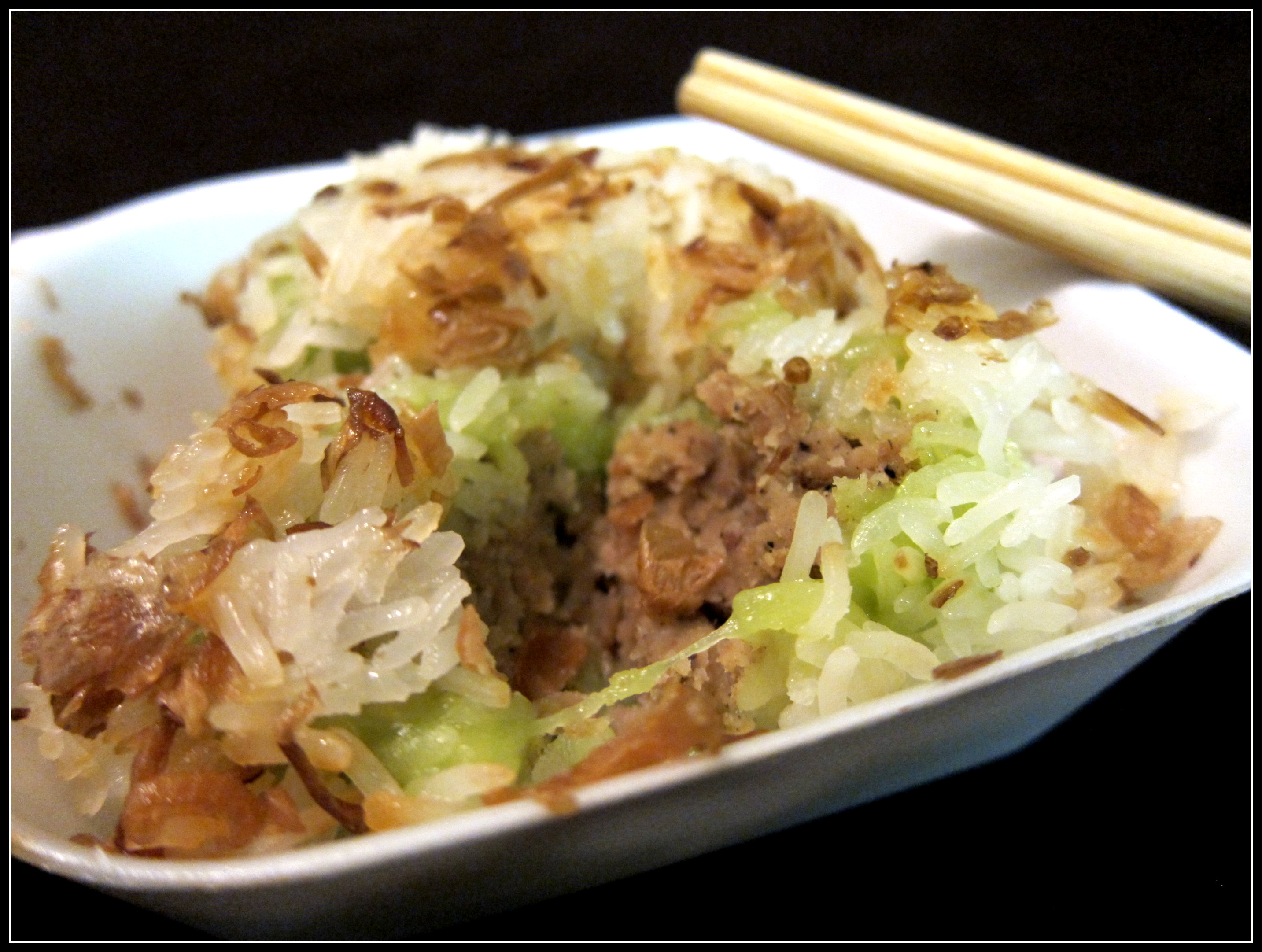
Xôi khúc is too much of a hassle for living-alone home cooks. First of all, you need the leaves that make xôi khúc xôi khúc: the not-so-popular-and rau khúc (“rau” is greens)(***) whose English name I could find only after I found out its Japanese name from the blog of a Vietnamese expat in Japan, and I don’t even know Japanese. The Japanese use this grass in their kusa mochi, a category of grass mochi to which the yomogi daifuku belongs. De javu. The Vietnamese grind it up and use the juice to knead sticky rice flour into a dough and make xôi khúc. The dough coats a ball of savory mung bean paste, the whole thing is laid between thin layers of sticky rice and steamed. In the end, you get a handful of something with grains of sticky rice on the outside, so its appearance is like xôi, and a ball of grassy sticky rice dough with bean paste filling on the inside, so its construction is like bánh (anything made of dough). Hence its name varies: bánh khúc, xôi khúc, xôi cúc (the Southerners’ simplified pronunciation).


Today, I’ve reunited with xôi khúc. This small store in Bellaire, packed with xôi, chè, savory foods and customers at 9 on a Sunday morning, sells xôi khúc1 đồng 1 viên ($1/ball), each ball as big as a lemon, two of them fit snuggly in a white styrofoam box. The rice scoop digs into the tray. A slight bounce and the soft sticky rice separates. A familiar peppery smell infiltrates my veins. The guy asked if I’d like to top them with a few spoonfuls of fried shallots. Yes, please!

Address: Đức Phương Thạch Chè
11360 Bellaire Blvd
Houston, TX 77072
(281) 498-1838
(also in the Vietnamese Veteran Memorial area, near Giò Chả Đức Hương where Little Mom buys silk sausage)

Previously on Sandwich Shop Goodiessesame beignet (bánh tiêu)

(*): Vietnamese lyrics: “Mười năm không gặp tưởng tình đã cũ/ Mây bay bao năm tưởng mình đã quên”. The song is titled Mười Năm Tình Cũ (“love dated ten years”). You can listen to it here.
(**): xôi is steamed sticky rice, either mixed with beans (sweet xôi) or eaten with meat (savory xôi). I’ve written about xôi bắp (corn xôi) and xôi đậu (peanut xôi) before.
(***): Gnaphallium affine, Jersey cudweed in English, hahakogusa (ハハコグサ in Katakana or “母子草” in Kanji) in Japanese. My inner linguistics savvy especially likes the Japanese name: 母 (haha) is Kanji for mother, 子 (ko) child, and 草 (gusa) grass: so rau khúc is Mother [and] Child Grass (mẫu tử thảo).

Sencha and yomogi mochi

April 16, 2012 By: Mai Truong Category: California - The Bay Area, Drinks, Japanese, sticky rice concoctions, sweet snacks and desserts, Vegan

The third pairing of mochi and Japanese green tea. Perfect!


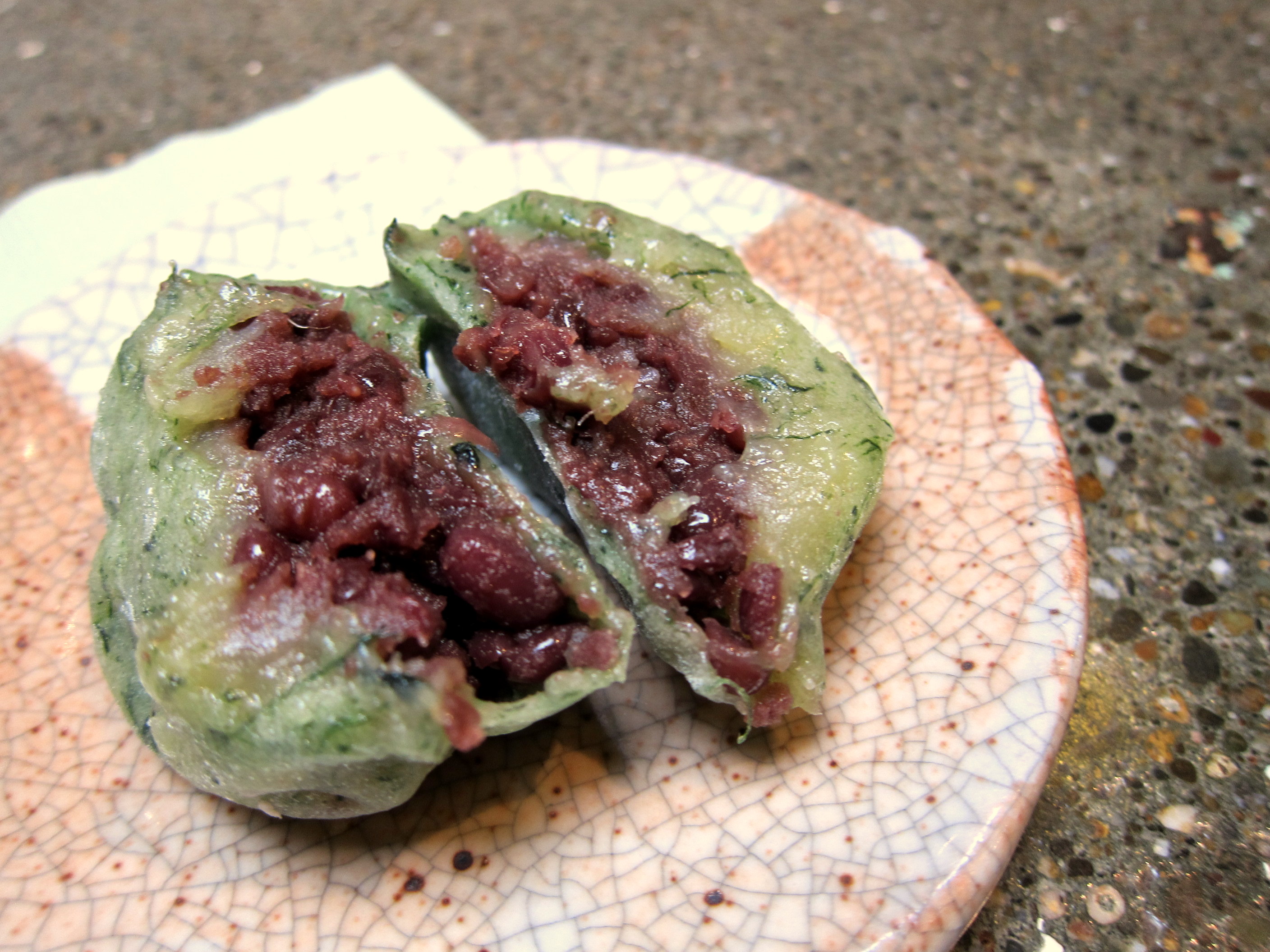
Yes, finally a mochi that goes perfectly with sencha. Yomogi (Japanese mugwort), julienned into tiny strings and mixed with the mochi dough, gives the mochi a clean, refreshing taste, which reminds me of the tip of a Vietnamese bánh ít or a bánh ít gai (*).

However, what struck me was the filling: red bean and sweet potato paste. The red bean is the main factor, the sweet potato is only at the top, closest to the doughy coat. The azuki sweetness subdues the fishiness (umami) of sencha, and the sencha bitterness subdues the sweetness. Is this why the Japanese use azuki for their desserts so often?

Why didn’t the sencha – matcha-mochi pair work as well? The matcha mochi also has azuki paste, but I think the orange juice and the walnuts distracted me. The yomogi clarifies the taste in a more floral and less bitter way than the matcha; and like saffron, sometimes a spice’s presence isn’t noticeable, but its absence would be. Anyways, this pair also shows that a simpler mochi can be a better mochi.

(*) Like mochi, bánh ít has a sticky rice dough with fillings, which can be sweet (coconut) or salty-sweet (mung bean paste). Unlike mochi, it’s all wrapped up in leaves, and it’s about 4 times bigger than a mochi. Shape-wise, mochi is most similar to bánh quy, whose green color (should) comes from pandan leaf. Similarly, the black color of bánh ít gai comes from the thorn leaf (ramie leaf), but the other ingredients are the same.

This post also appears on Tea and Mai

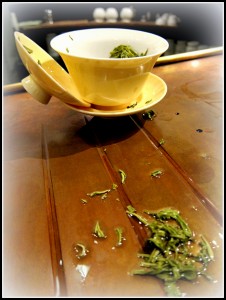
P.S. Sencha is interesting. It’s bitter at first and gets nutty later. It tastes odd at first because it’s not what you would expect from a drink, but the more you drink it, the more you’re attracted to it.

P.P.S. Yomogi mochi is also called “kusa mochi” (grass mochi). So Ms. Yuri Vaughn the mochi artist for Teance calls it “yomogi grass mochi”, which made me think that yomogi was a grass.

Nutty sticky rice

June 14, 2011 By: Mai Truong Category: Comfort food, Houston, One shot, Southern Vietnamese, sticky rice concoctions, Vegan


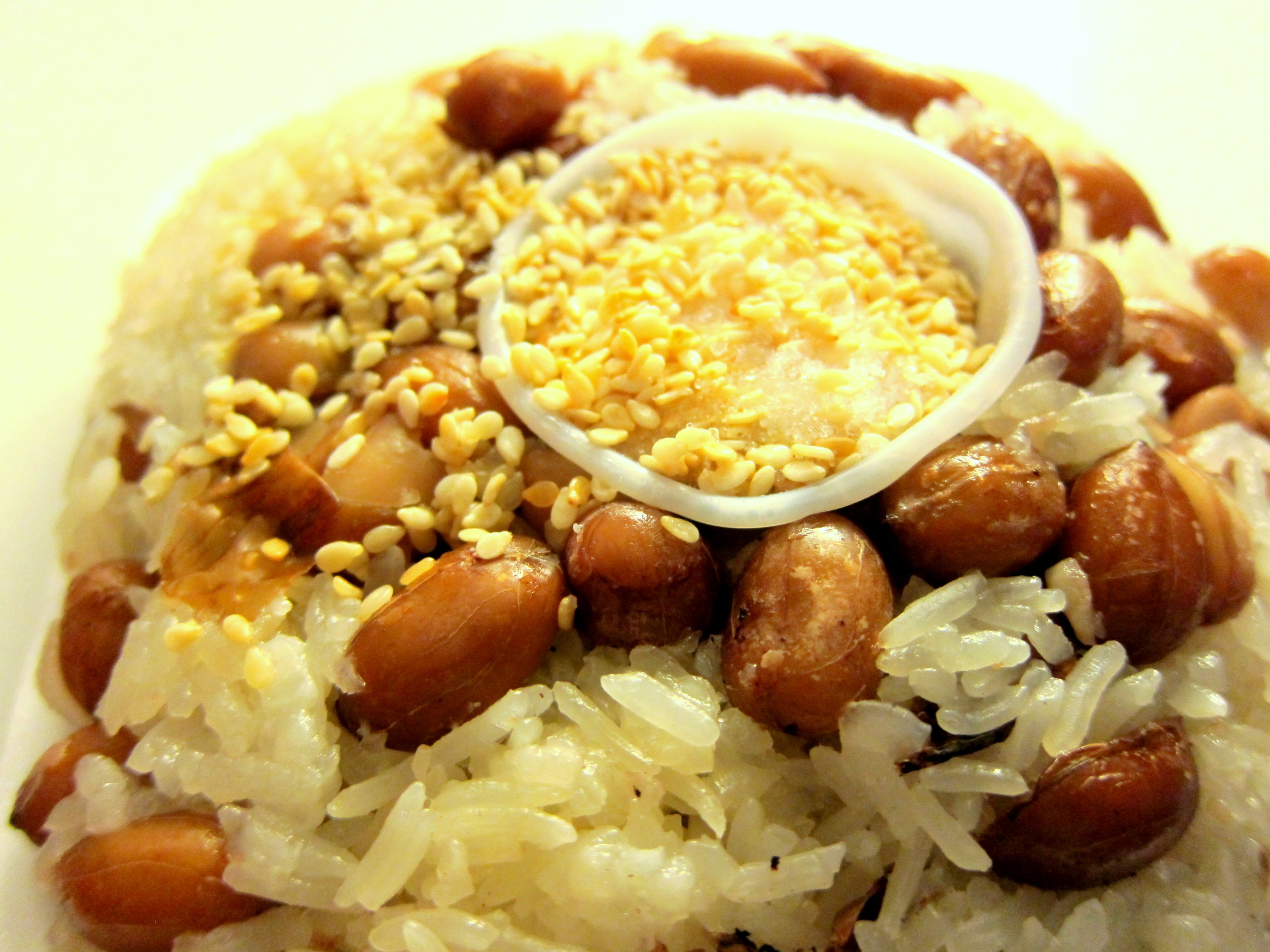
What hits the spot in the morning better than a hot packed handful of sweet sticky rice with muối mè (sesame-sugar-salt mix)? A hot packed handful of sweet sticky rice with soft steamed whole peanuts and muối mè. Xôi đậu – my forbidden childhood love.

$1.50 for a full tummy.

Mom did not want me to eat too much xôi đậu in the past because peanuts are known for producing gas excess.

Address: Alpha Bakery & Deli
11205 Bellaire Boulevard
Houston, TX 77072
(281) 988-5222

Sandwich shop goodies #15 – Bánh quy (turtle mochi)

March 31, 2011 By: Mai Truong Category: Houston, One shot, Southern Vietnamese, sticky rice concoctions, sweet snacks and desserts


Of my two hundred fifty some posts so far, this Sandwich Shop Goodies series brings me the most joy when writing and also takes me the longest time per post. It’s a collection of the bits and pieces that cost next to nothing. You may say why of course, how can a mere grad student afford The Slanted Door, The French Laundry, or our local Chez Panisse et al. Now although my salary certainly factors in my grocery list, the truth is I’ve lost interest in the uptown food scene. It dazzles like fireworks, and also like fireworks, it doesn’t stay. The mixing and matching of the freshest and strangest ingredients has blended so many nationalities into one that it loses culture like a smoothie losing texture. Those fancinesses don’t have a home. Meanwhile, I can spend days googling an obscure street snack and still regret that I haven’t spent more time, because I know that someone somewhere out there has an interesting story surrounding its identity that I haven’t heard. With such food there’s more than what goes into the pot that I can mention. For example, a simple sticky rice treat has made its way into an idiom, no less.


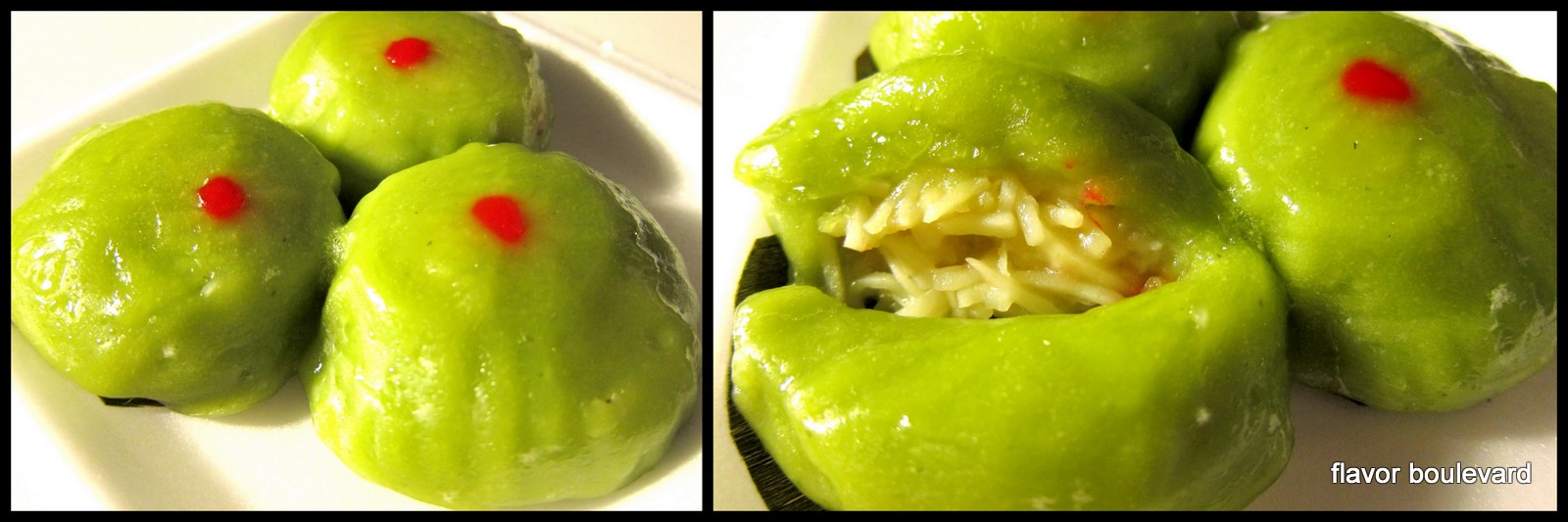
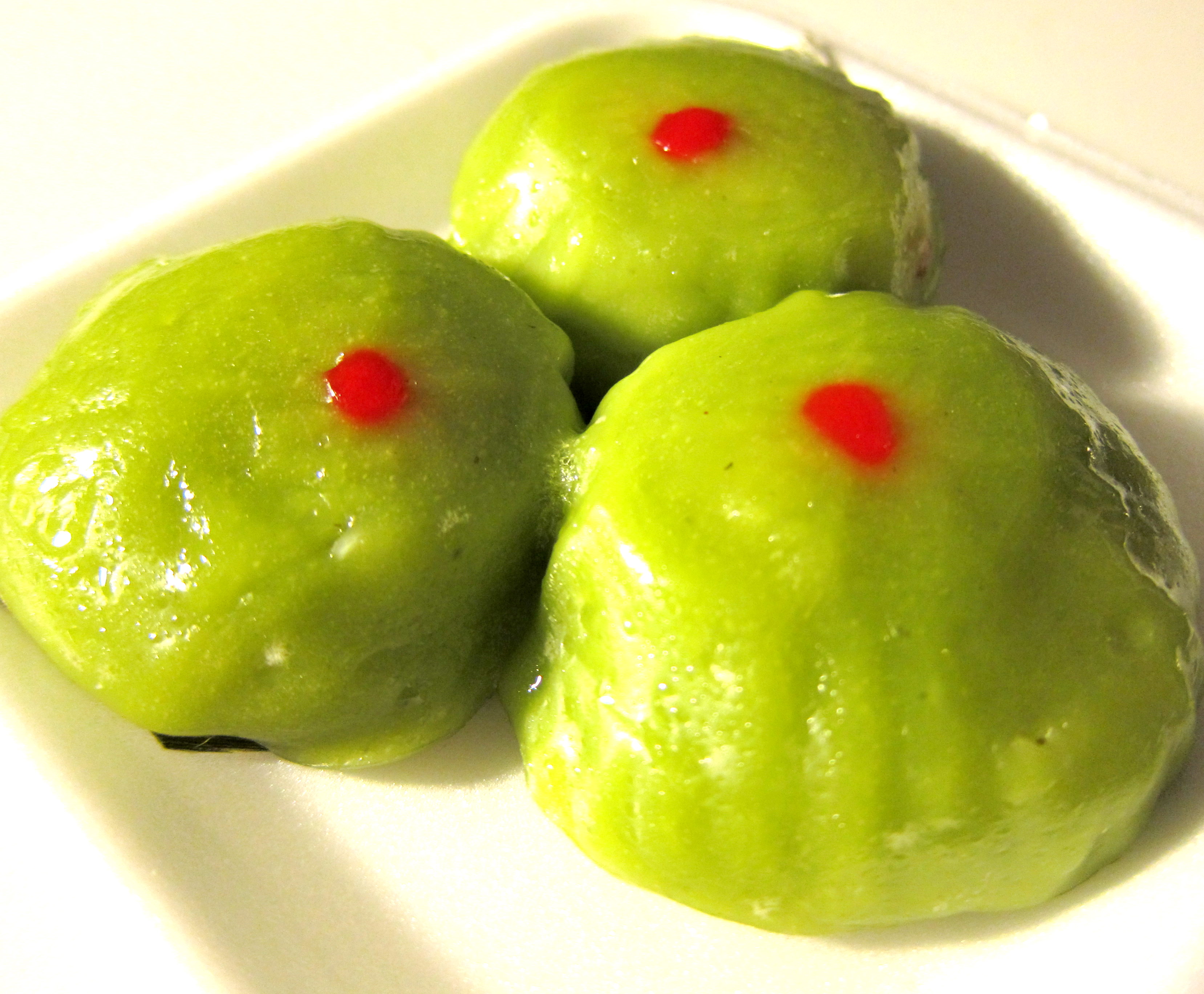
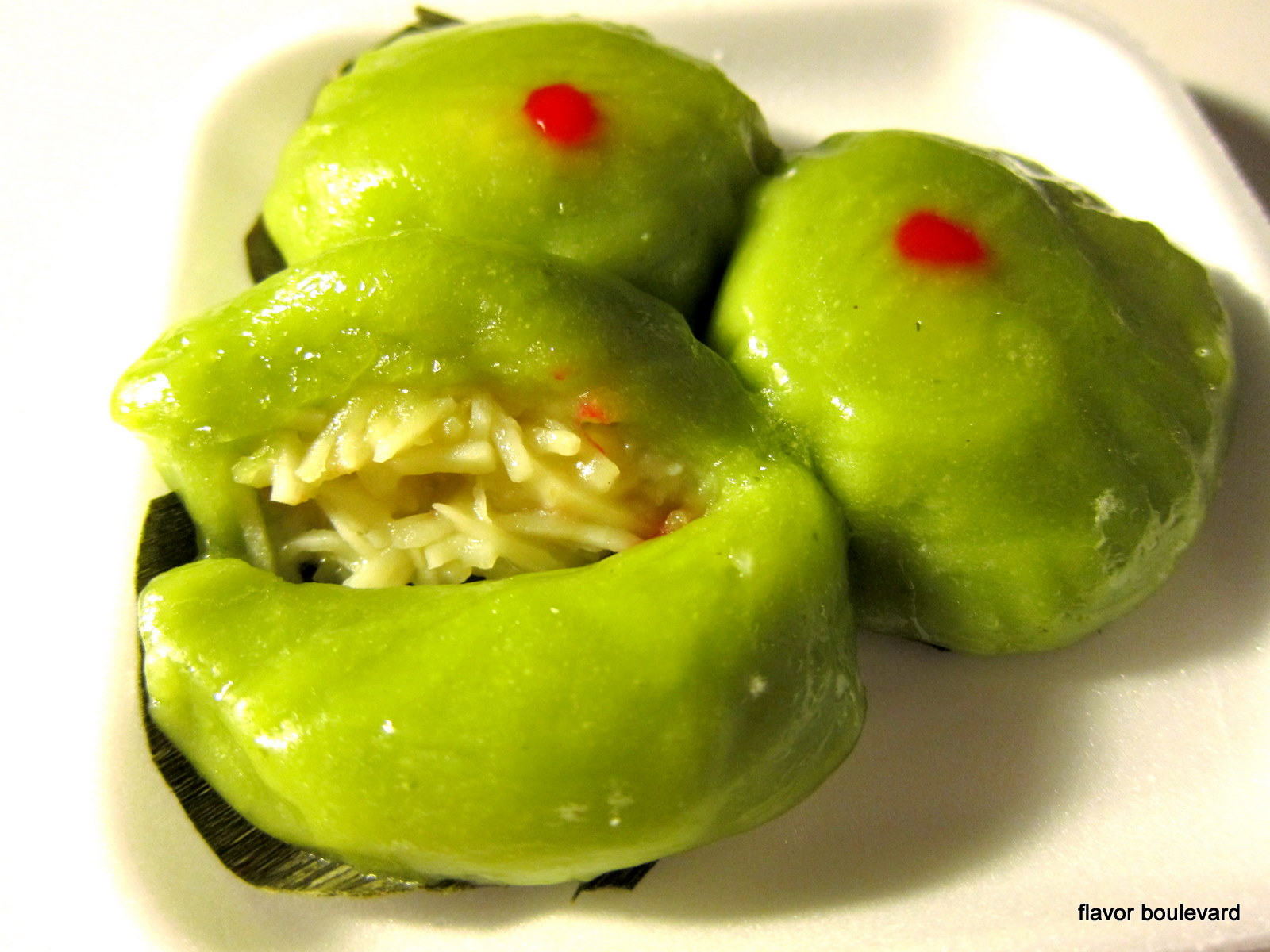
For twenty five years I’ve heard and used the expression “bánh ít trao đi, bánh quy trao lại” (“give bánh ít, get bánh quy” or “you scratch my back and I’ll scratch yours”) in a million occasions, but not once did I know what bánh quy was. At home we call cookies bánh bích-quy (biscuit) and some shorten it to bánh quy, but the biscuit and the bánh ít are too different from each other to be consider equivalents, and it’s reasonable to guess that the idiom came about before the introduction of Western food into Vietnam. So confused I was. Then one day while foraging the pile of snacks at Alpha Bakery, I almost flipped backward as I found a package of three green mochi’s labeled “bánh quy“.

They’re round and flat at the bottom, each placed on a small cut of banana leaf, purposefully shaped like a turtle shell resting on wet grass. If you look closely you can even see some faint crevices near the rim. So there, mystery unveiled: “quy” means “turtle” in Han-Viet, and the banh gets its name from its look.


Content-wise, bánh quy is indeed just a smaller, rounder, flatter version of bánh ít: sticky rice, tapioca starch, salt, sugar, oil, and a sweet filling. Back in the day, the turtles had either a red or a yellow dot to distinguish between coconut and mung bean paste, but it seems these days only the coconut turtles are still around. Each banh is just big enough and tall enough to fit snuggly in a baby’s palm. Two or three adult bites and you suddenly wonder, hey, where did my sugary, chewy soft bun go?


Buy three at the store for $1.50. Also, look for this other type of bánh ít: bánh gai (bánh ít with thorn leaf extract)

Address: Alpha Bakery & Deli (inside Hong Kong City Mall)
11209 Bellaire Blvd # C-02
Houston, TX 77072-2548
(281) 988-5222

Previously on Sandwich Shop Goodies: bánh da lợn (pig skin pie)

This post is submitted to Delicious Vietnam #12, April edition, hosted by Anh of A Food’s Lover Journey. I’m so looking forward to the roundup this month!

Hương Giang – Savour Huế in Houston

March 23, 2011 By: Mai Truong Category: Central Vietnamese, Houston, noodle soup, sticky rice concoctions, The more interesting


I lost my memory card. If you’re a food blogger too you’d know how devastated I felt: the first advice to a food blogger these days is “good pictures”. Well, the pictures I took at Hương Giang are amazing, they just no longer exist. But, pictures or not, as my professor Lawrence Hall would say in his British tongue, “you can’t stop me,” or in this case, I can’t stop myself from blogging about the restaurant.

Is their food that good? Hương Giang takes a shy, small square in the parking lot at the corner of Bellaire and Boone. If you drive westward on Bellaire Blvd, you’ll see its sign on the left before you reach Hong Kong Market. It’s really a tucked-away place for scoffers, the outlook unimpressive, the sign blue and white like a tired worker shirt. The inside is similar to any average pho joints you’ve seen, wiped clean and plastic cheap. I knew my mom wouldn’t come here if not for blogging’s sake, but in this city it’d be hard to get a menu more Huế than this one.

There are pictures in the menu and printouts taped to the wall to tell you what the specials are. For us it’s a matter of getting what we’ve heard of but not had: gỏi mít tôm thịt, bánh ít ram, cơm hến, and bún suông.

Gỏi mít tôm thịt is jackfruit salad with boiled shrimp and pork, and like other Vietnamese gỏi, it’s served cold with rice cracker (bánh tráng nướng) for shoveling and scooping. The airy blandness of a coal-toasted sesame rice paper elevates the lime juice, the pepper, the cilantro in a gỏi. The kitchen makes a slight mistake by bringing out a plate of gỏi mít hến instead, where the boiled pork and shrimp are replaced by handfuls of tiny basket clams (hến). These freshwater bivalves are connected to Huế like McDonald’s to Americanization. As small as a finger nail, each hến constitutes a second of chewing. As a stir-fried bunch mixed with young jackfruit flesh, the collection feels grainy and humble like a fisherman’s kitchen by the riverside. The color, too, is earthy: blackish-lined ivory hến,  pale brown jackfruit, and a bit of green cilantro.

Cơm hến offers more or less the same atmosphere as the salad, except the rice amplifies the grainy texture in place of the jackfruit’s fleshy blend, no rice cracker presents to break the unanimity, and the hến‘s natural sweetness here isn’t damped by any lime juice. When there isn’t just a few, but at least a hundred of these quiet lives in a bowl of cơm hến, you can’t help but feel the responsibility to treasure each spoonful. It’s the least you can do for the dignity of those tiny freshwater basket clams.

If cơm hến were hamburger, then bánh ít ram would be mac ‘n cheese. It’s not super well known, but anyone who knows Hue food knows this sticky (rice) business. I first learned of bánh ít ram from noodlepie, Ravenous Couple call them fried mochi dumpling (and you really can’t get a better looking picture of bánh ít ram than what the couple styled on their site). Each ping-pong-sized dumpling carries a marvelously inviting look: a plump, shiny round ball on a golden base, cut in half and there snuggle rosy bits of shrimp and char siu pork. Each bite is a step into a river: first soft, then sinking, then hitting the crusty bottom. With or without the mixed fish sauce, savory bánh ít ram, also called bánh ram ít by the natives, is a fair partnership between the steamed bánh ít and the deep fried bánh ram, with each component designed to excite the other. So why is it not as popular as bánh bèo? Because it’s hard to go down the second time. One bánh ít ram is good, two are too many. Ten on a plate, like what we get at Hương Giang, becomes a bloody battlefield.

Thankfully we are a team of three, and we rotates plates to share both the good and the challenging. And thankfully we get bún suông. This noodle soup draws a fine but successful line between being too meaty and being too thin, as it contains both. Ample cuts of chả cá (fish cake, similar to eomuk), chả lụa (silk sausage), and juicy shrimps weave among the angel hair rice vermicelli, all soaked in a slim sweet broth. Bún suông at Hương Giang tastes pure like bún mộc, quite a contrast from the definitions I’ve found online, whose broth is as thick as a deep South accent of the cooks said to invent the noodle soup.

If there are indeed two types of bún suông, the southern style and the Hương Giang style, then I’d choose the latter any day. If the southern style is really the only traditional style, then I’d go to Hương Giang just for their bún suông. You know you can trust a chef who has created something so delicate, so heart-warming, so balanced, and so very Huế.

Address: Hue Huong Giang (near Hong Kong Market)
11113 Bellaire Boulevard
Houston, TX 77072-2607
(832) 328-1308

Money matter:
gỏi mít hến (6.25) + bánh ít ram (6.50) + bún suông (6.50) + cơm hến (8.50)
= $27.25 a big lunch for three

Sandwich shop goodies 14 – Bánh da lợn (pig skin pie)

March 06, 2011 By: Mai Truong Category: Houston, One shot, sticky rice concoctions, sweet snacks and desserts, Vietnamese


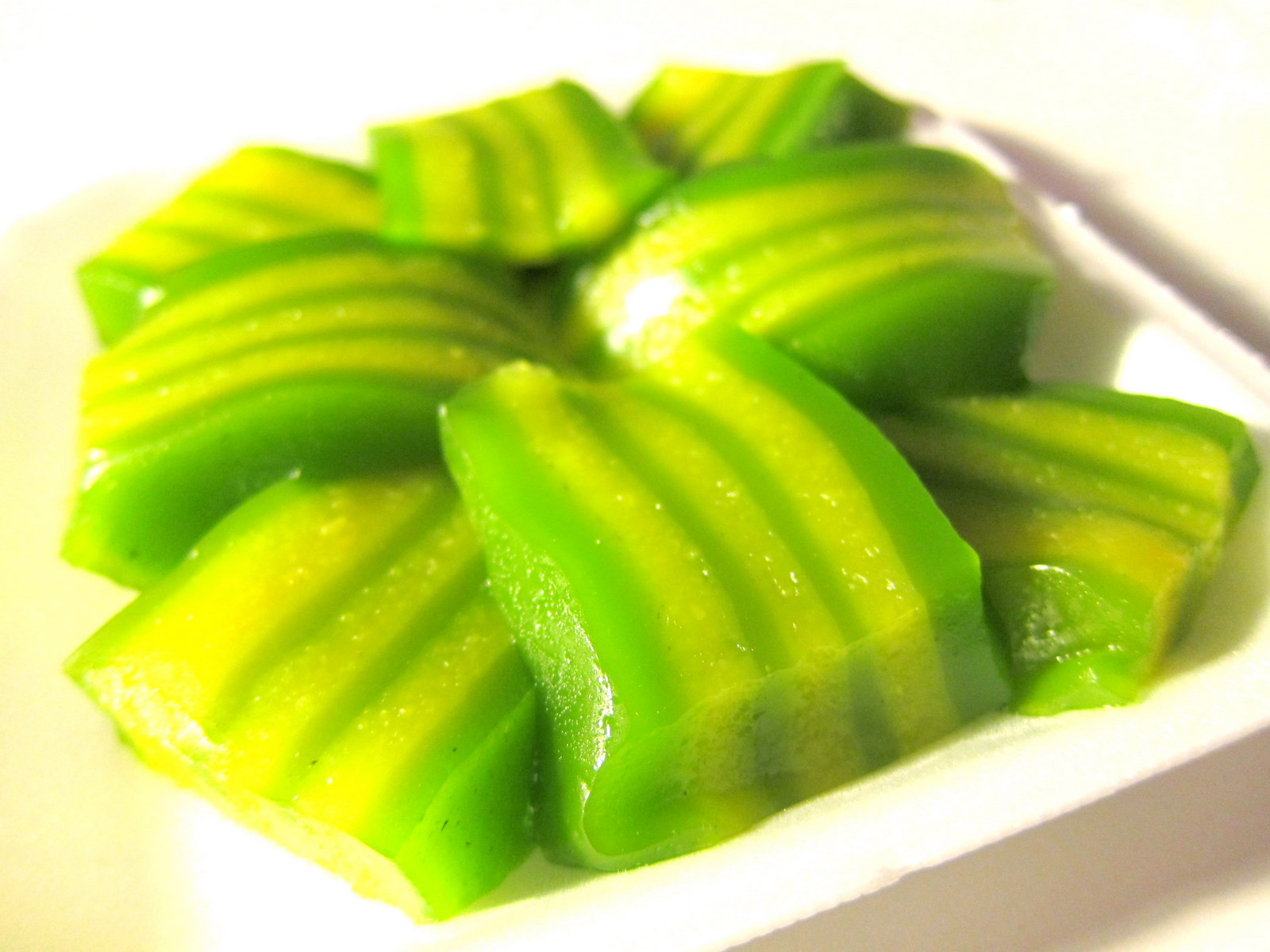
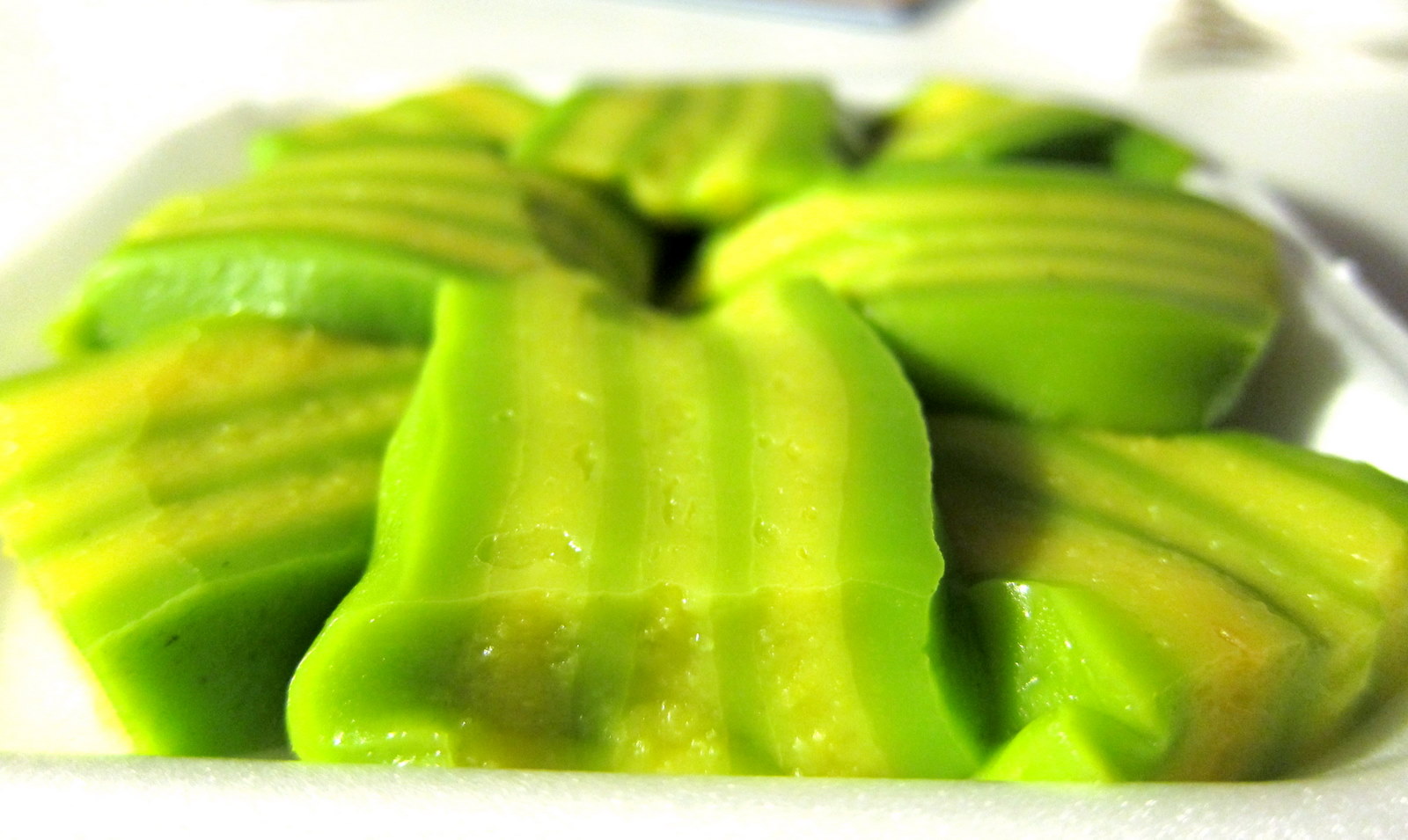
This is no stranger in the Vietnamese food biz: the layered pastry that gets its name from looking like pork belly, except green and yellow. Of course it doesn’t contain any pork skin, it’s sweet, sometimes may even be too sweet. Dad used to buy a whole pie home, as big as a platter and as warm as a father’s hand. From that same bakery somewhere in the market alley, he would buy bánh chuối nướng (bread pudding) too, which I always preferred to the bánh da lợn. But thinking back on those days when we lived near Bà Chiểu Market, it was certainly the best pig skin pie I ever ate.


Many years have passed, and many bánh da lợn have been eaten by me, both in its homeland and across the seas. The best way, I figured, to slaughter these chewy beasts is to peel off the layers one by one, when it’s warm. That wet, smooth skin of tapioca flour, when warm, is fragile. You don’t want to break it while peeling, and you want to drop it whole in your mouth to wrestle with its resilience, all the while inhaling the sweetness of pandan leaves and vanilla fused in its tone.

Simply put, a cold “pig skin” is a dead “pig skin”. A warm mung bean paste layer is also less sweet than a cold one, and thank goodness the bean layers are always one fewer than their tapioca neighbors. The pies Dad bought from that market bakery would have white chewy layers too, and the green ones didn’t look radioactive green like those we get from sandwich shops these days. Ah marketing strategies, just like somewhere in Vietnam someone thought of calling it “bánh chín tầng mây” (cloud nine pie) (because pork skin doesn’t ring any two-cent poetic sound), or when the tapioca layer turns dark purple, because of either magenta plant‘s leaf extract or food coloring, and the bean layer light purple because of taro.


Whatever the case, the original bánh da lợn is still the best. I looked through 51 pages of Google search for its origin, which seems likely lost through generations of home cooking and street food mingling. You see, it was never really a praiseworthy, historically recorded invention in the kitchen. There’s no village or province associated with the best bánh da lợn. It’s probably from the South, even if “lợn” is the Northern word for “pig”. It’s a product from a steamer, it’s cheap, it has texture, kids like it, Dad likes it. That’s all I know.

And by the way, Alpha Bakery & Deli sells some good, thinly sliced, warm numbers for a buck fifty.

Address: Alpha Bakery & Deli (inside Hong Kong City Mall)
11209 Bellaire Blvd # C-02
Houston, TX 77072-2548
(281) 988-5222

Previously on Sandwich Shop Goodies: bánh xu xê (couple cookie)
Next on Sandwich Shop Goodies: bánh quy (turtle mochi)