Flavor Boulevard

We Asians like to talk food.
Subscribe

Archive for the ‘Snacks’

What to get and not to get at Dara
October 14, 2010 By: Mai Truong Category: California - The Bay Area, Comfort food, noodle soup, sticky rice concoctions


Diagonally across the intersection from Crepevine on Shattuck are one Thai restaurant and one Thai-Lao restaurant, right next to each other. We know that it’s pretty much impossible for us to get a pure Lao dish in America, given that we can’t really tell the difference between Lao and Thai names. Still, the three-lettered word addition on the sign has an alluring effect on us mini-globavores. So we choose Dara over Cha Am.
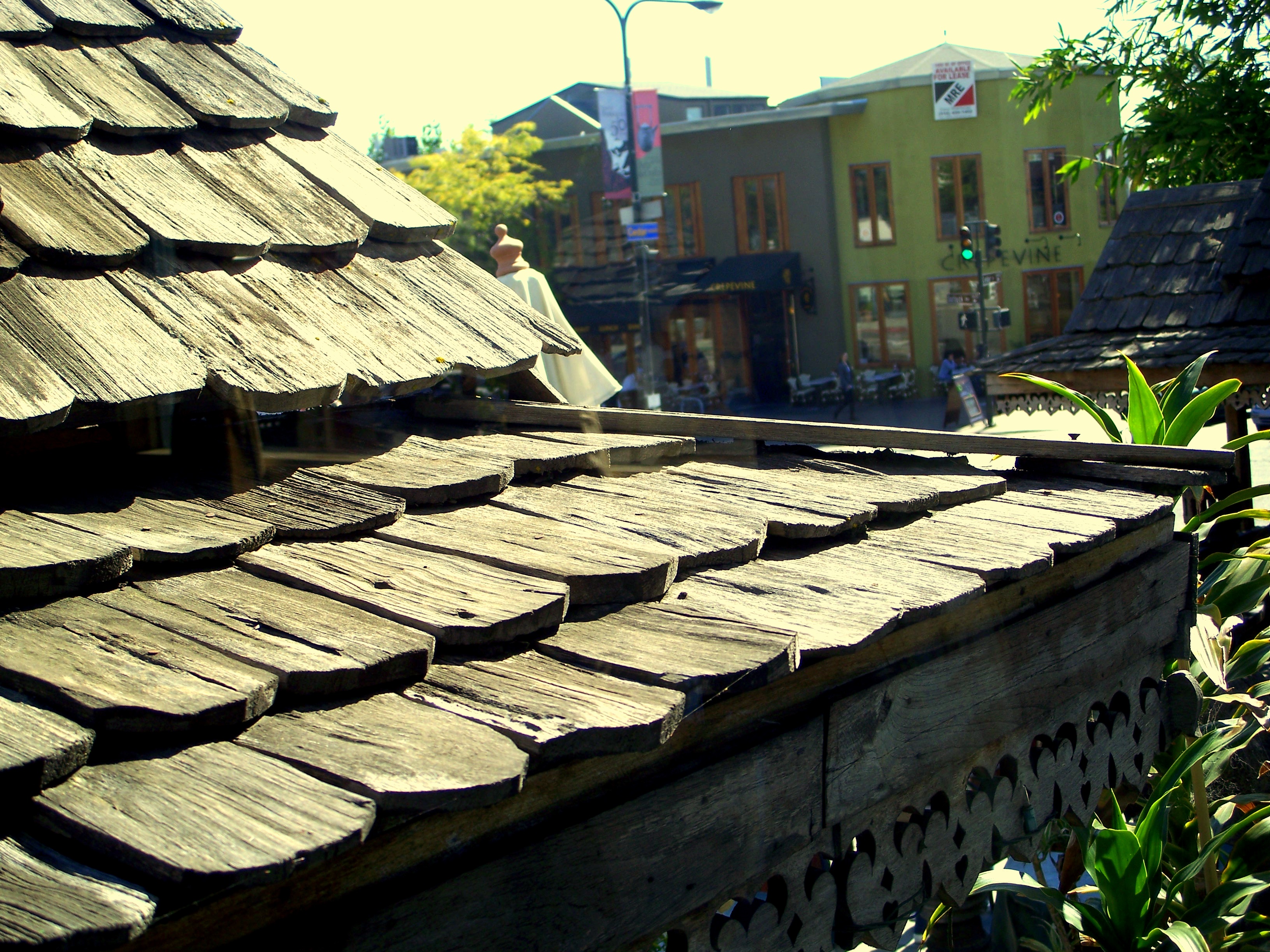
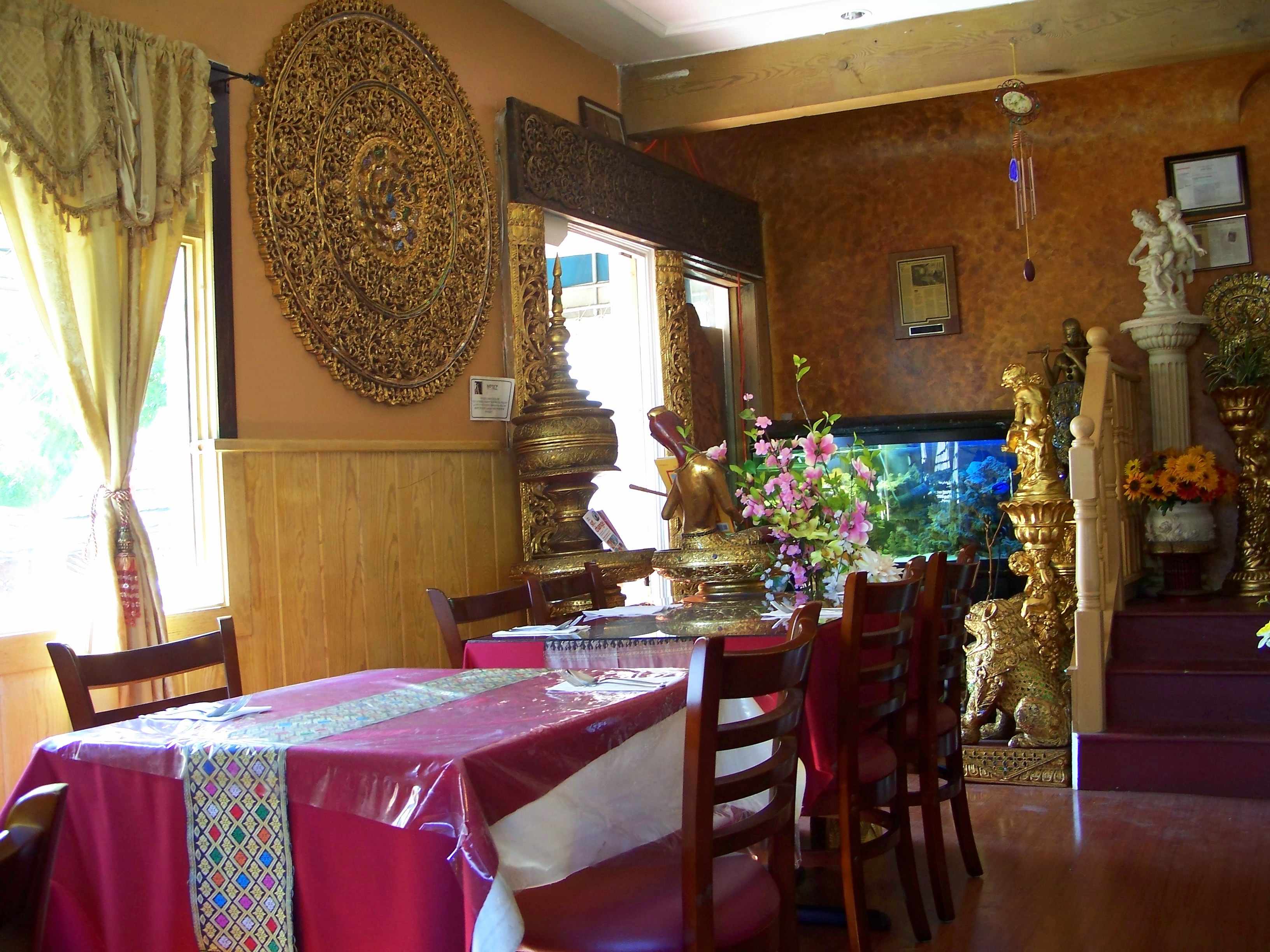

Secluded high above street level with a red brick gradation ascending up to the door, Dara offers its patrons two seating choices: out in the garden curtained by a multitude of mini palm trees, bamboos, and kalanchoes, or indoor, surrounded by faux gilded statues, metal vases, and wall ornaments. There’s no music; except for the talking in the kitchen far back, the only sound you hear here is your own voice.

The dinner menu at Dara has a list of house specialties, Lao finger foods (with familiar items like sai gauk, satay gai, noke todd, nam lao), various noodles and curries, and of course, pad thai for those who never order anything else when they go to Thai restaurants. The lunch menu is more compact and has no separation between Thai and Lao dishes. The foods range from really good, good, alright to eh-inducing, but the quick and gracious service is always the same. I ask our host if we pronounce the names correctly, he smiles and nods “of course”. I’m sure the “not” is hidden behind his big grin. 🙂
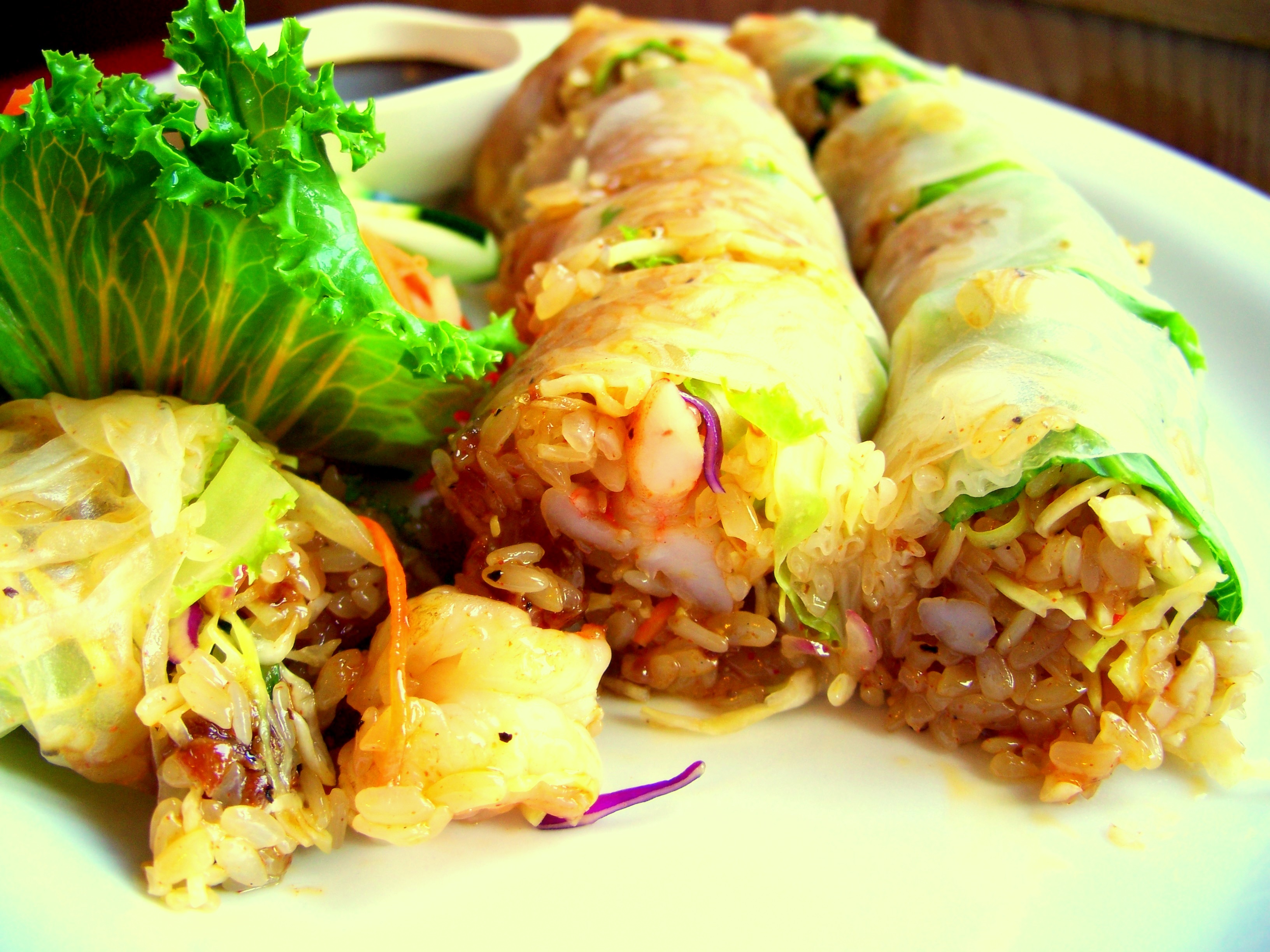

Get: sticky rice roll with peeled shrimp, wrapped in moist rice paper. Although accompanied by a thick tamarind dip, the rolls are already robust with their supple grains coated in some sweet and salty sauce. Its solid and chewy texture makes you full for hours. This is xĂŽi disguised in gỏi cuốn form, ~$9 for two fat long ones.
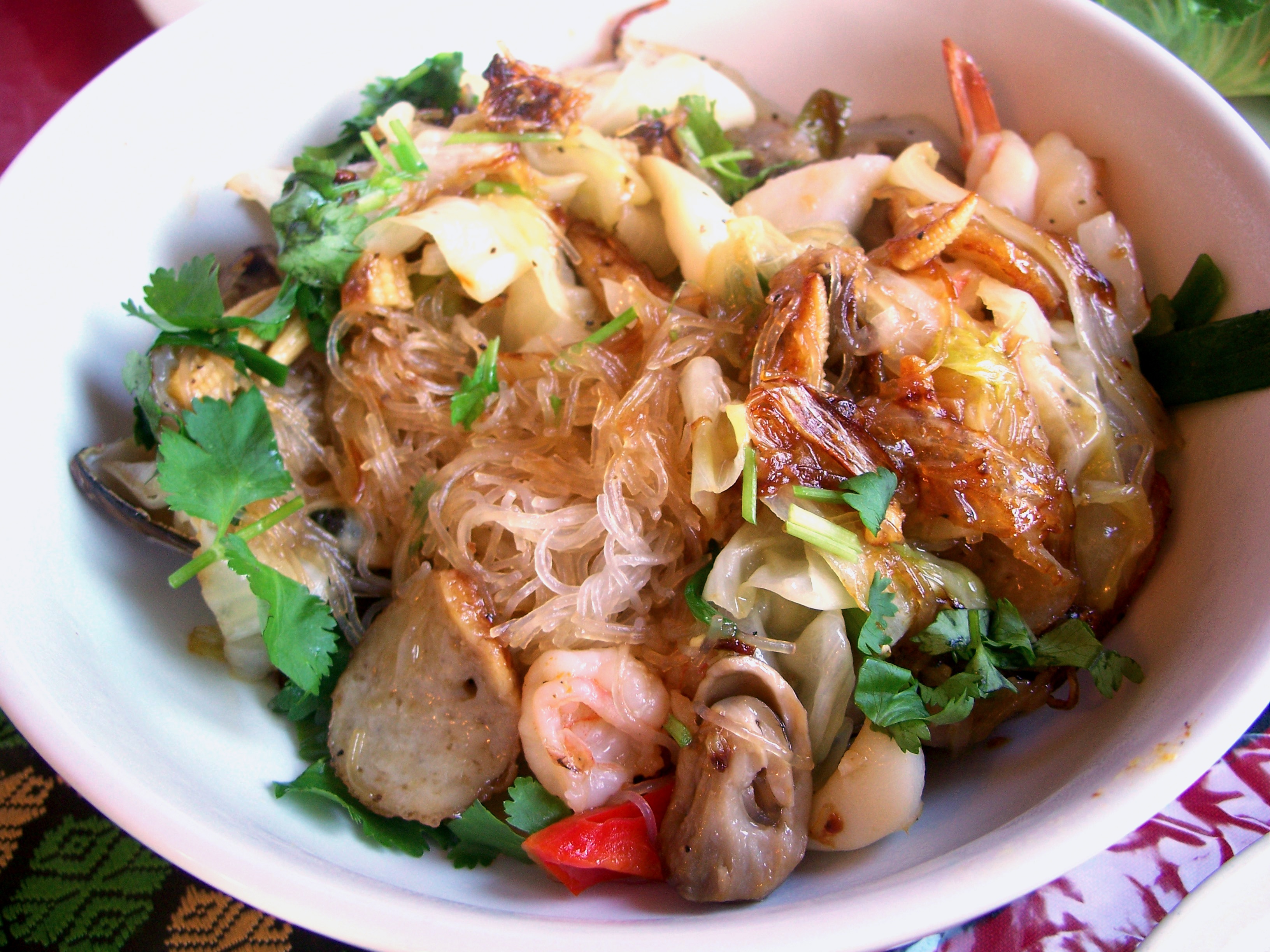

Definitely get: mor din – stir fried glass noodle with mussel, salmon, fish cake, shrimp, squid, straw mushroom, cilantro, bell pepper. All sorts of goodies for about $13. I cannot understand why pad thai is more popular than mor din. (FYI, Dara also dishes out a better mor din than Little Plearn Thai Kitchen on south Shattuck.)
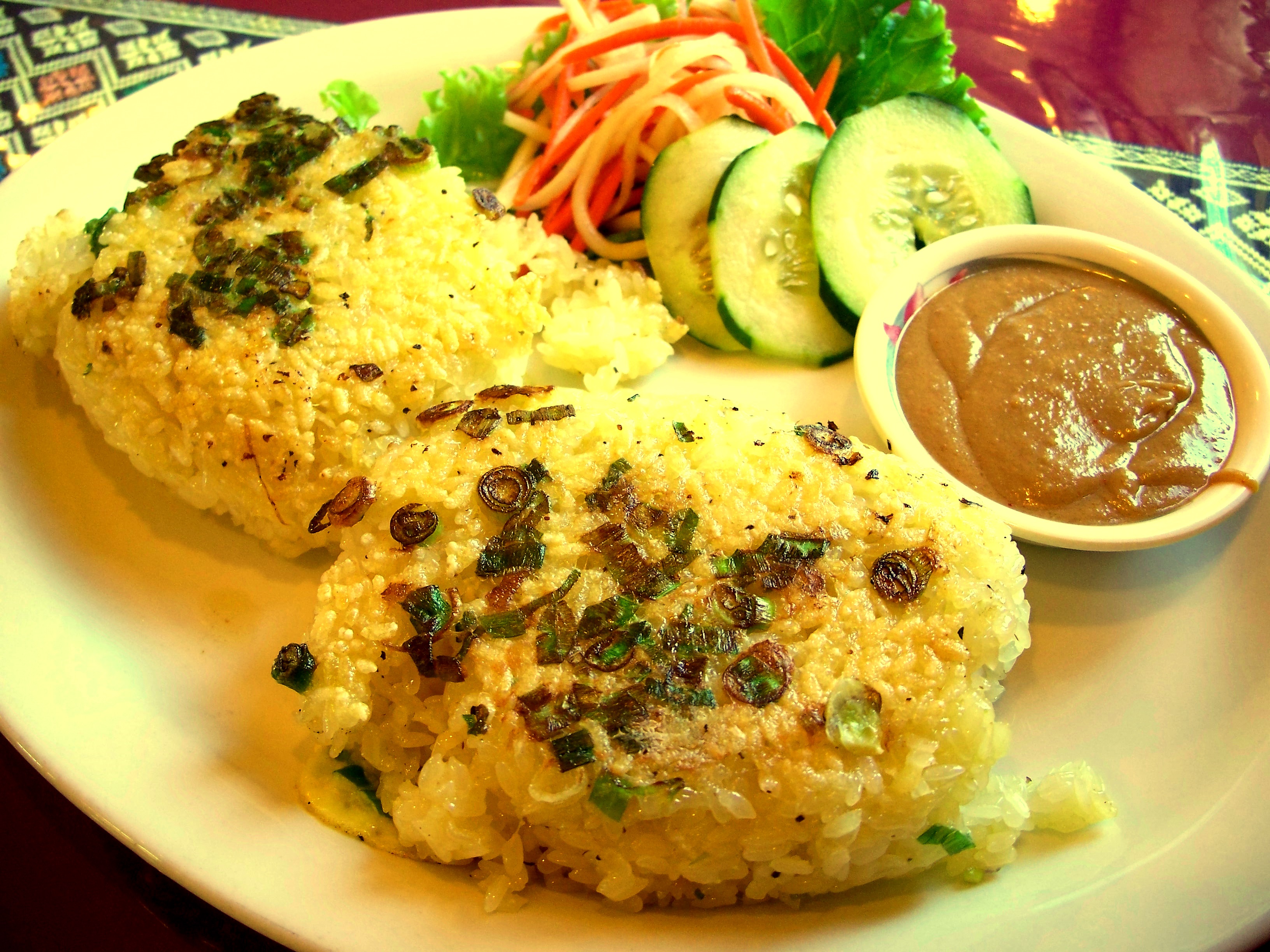

Get with caution: kao gee ($8.95) – simply a block of baked sticky rice seasoned with anchovy fish sauce, fried shallot, green onion, a little bit of egg, and peanut sauce to spread. The rice has a light crisp on the surface, but the taste, however interesting, gets monotonic after a while.
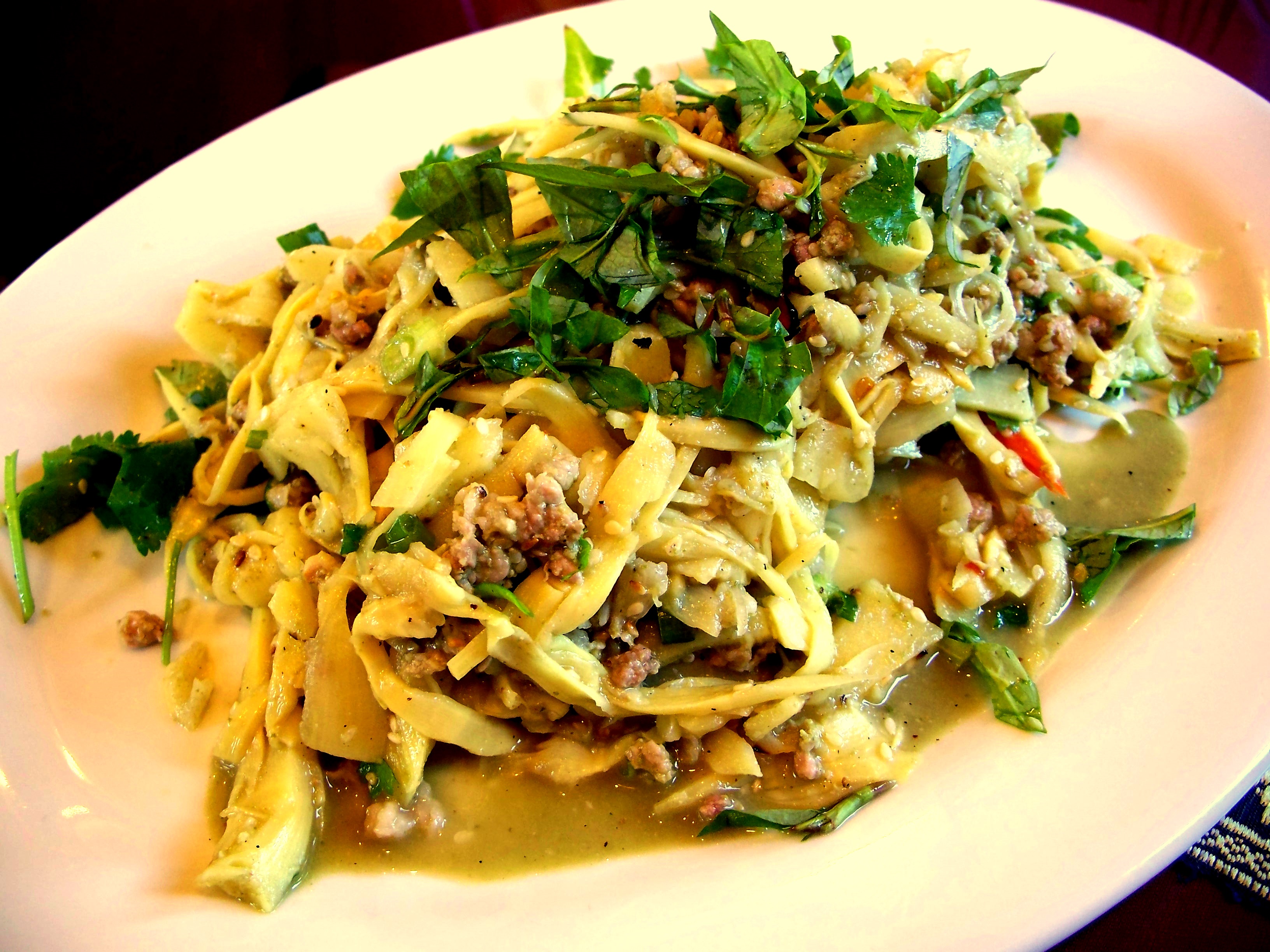

Get with caution: soub naw mai even if it’s on the House Specialties list (with kao gee). This is bamboo shoot (mai) salad with minced pork, spiced up by a generous dose of ground chili pepper, black pepper and mint. I have mixed feelings about this. It’s good at first, but then it’s too spicy for me, the bamboo shoot is refreshing at first, but then too soggy and not chewy enough. It’s good as a small side salad, but not as an $8.95 entree.
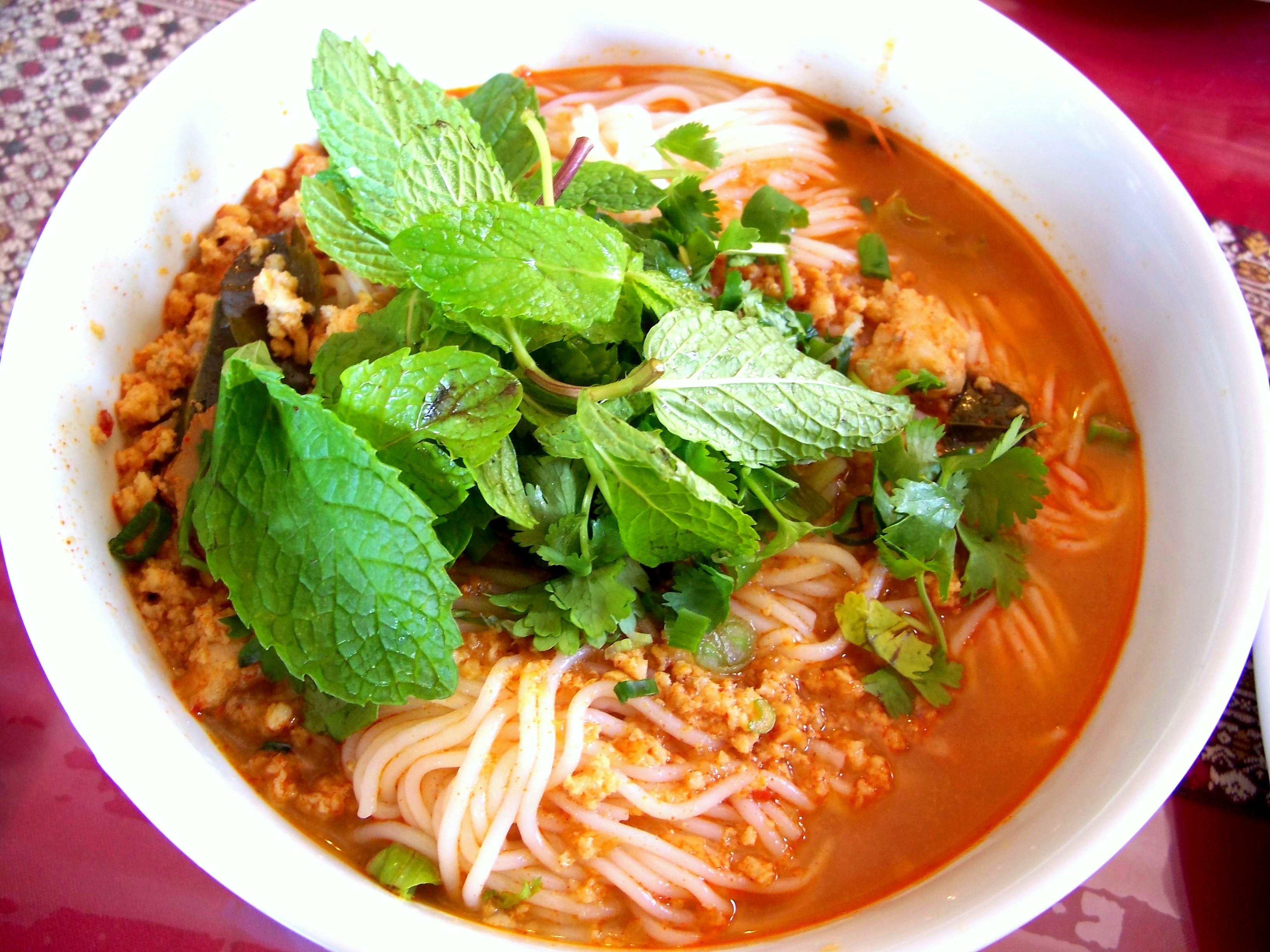

Get: catfish curry noodle soup (lunch menu, $9.95). Don’t expect to see any fish under the rice noodles, it has all dissolved in the broth. This soup is as vibrant in colors as it is in taste: sour and hot play the two high keys. I like how the main ingredient, the fish, stands behind the scene.
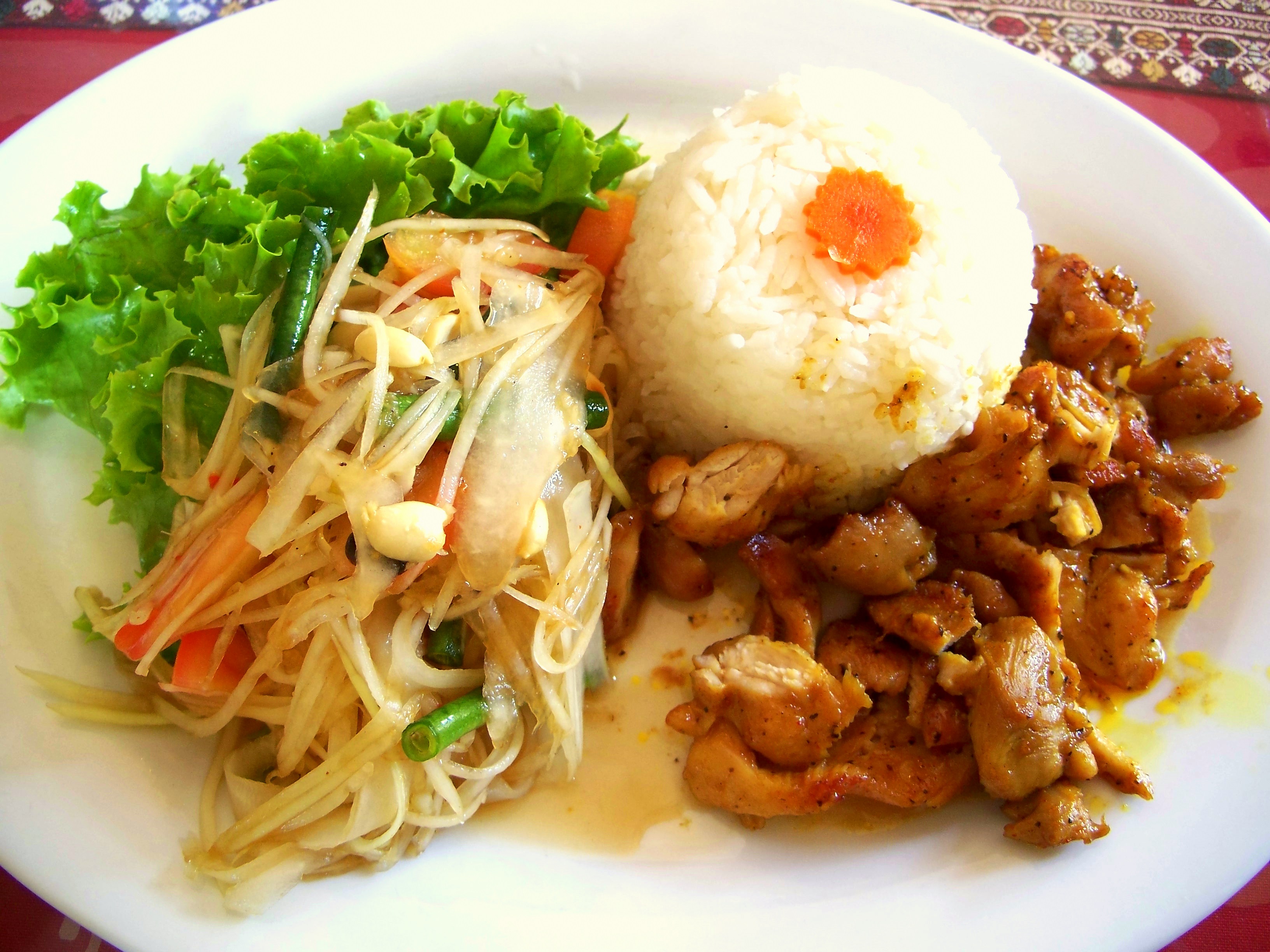

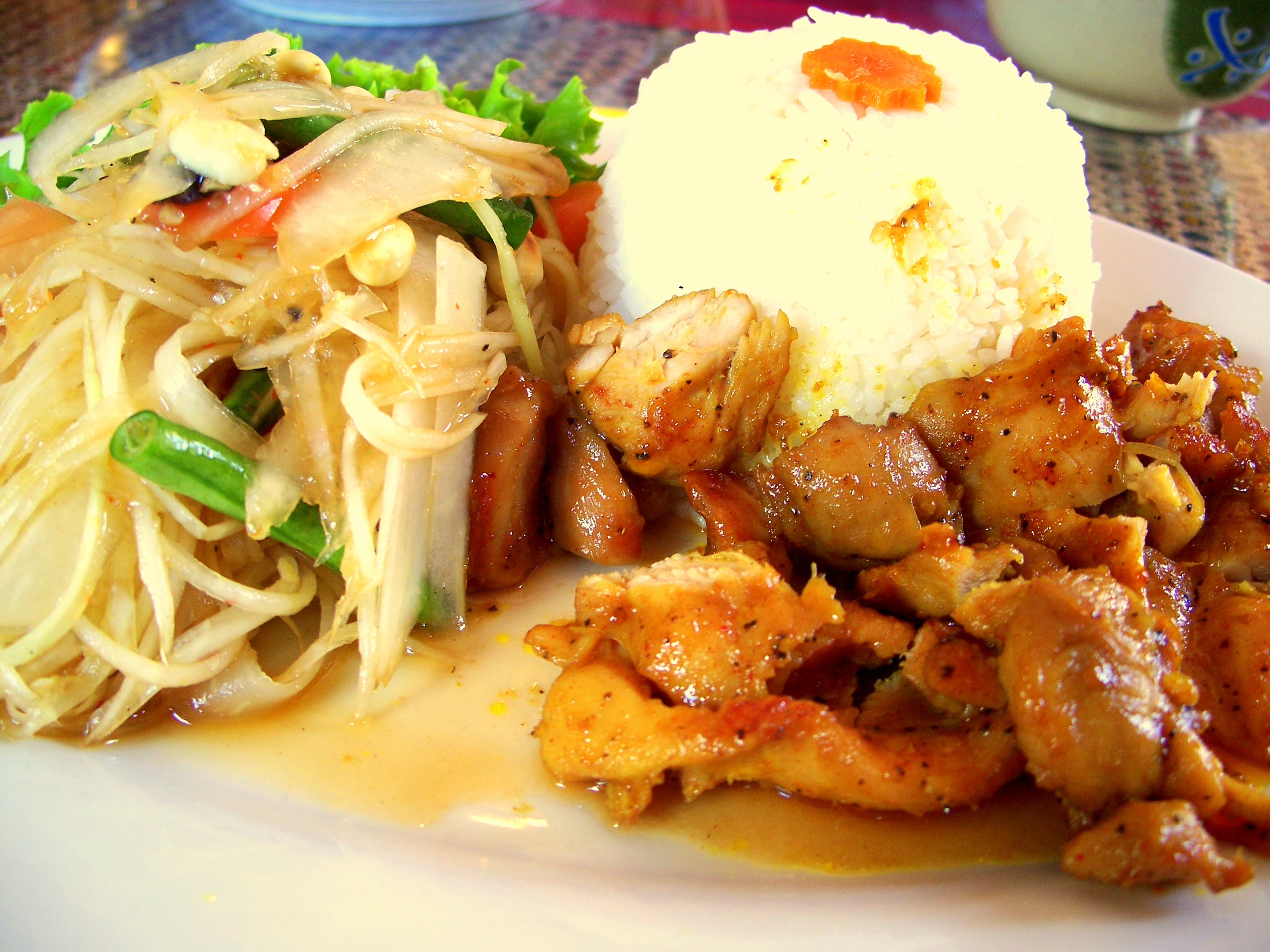
Definitely get: som tum gai yang (lunch menu, $9.95). What can go wrong with BBQ chicken (gai yang in Thai, or ping gai in Lao), simple white rice, and green papaya salad (som tum in Thai, tam mak hoong in Lao)? The portion is too small. Although I’m a meat lover, I think the mild som tum totally steals the lime light on this plate (pun intended :-P). Its crunchy strings, soaked in sugar and tangy lime juice, are fruit crack.
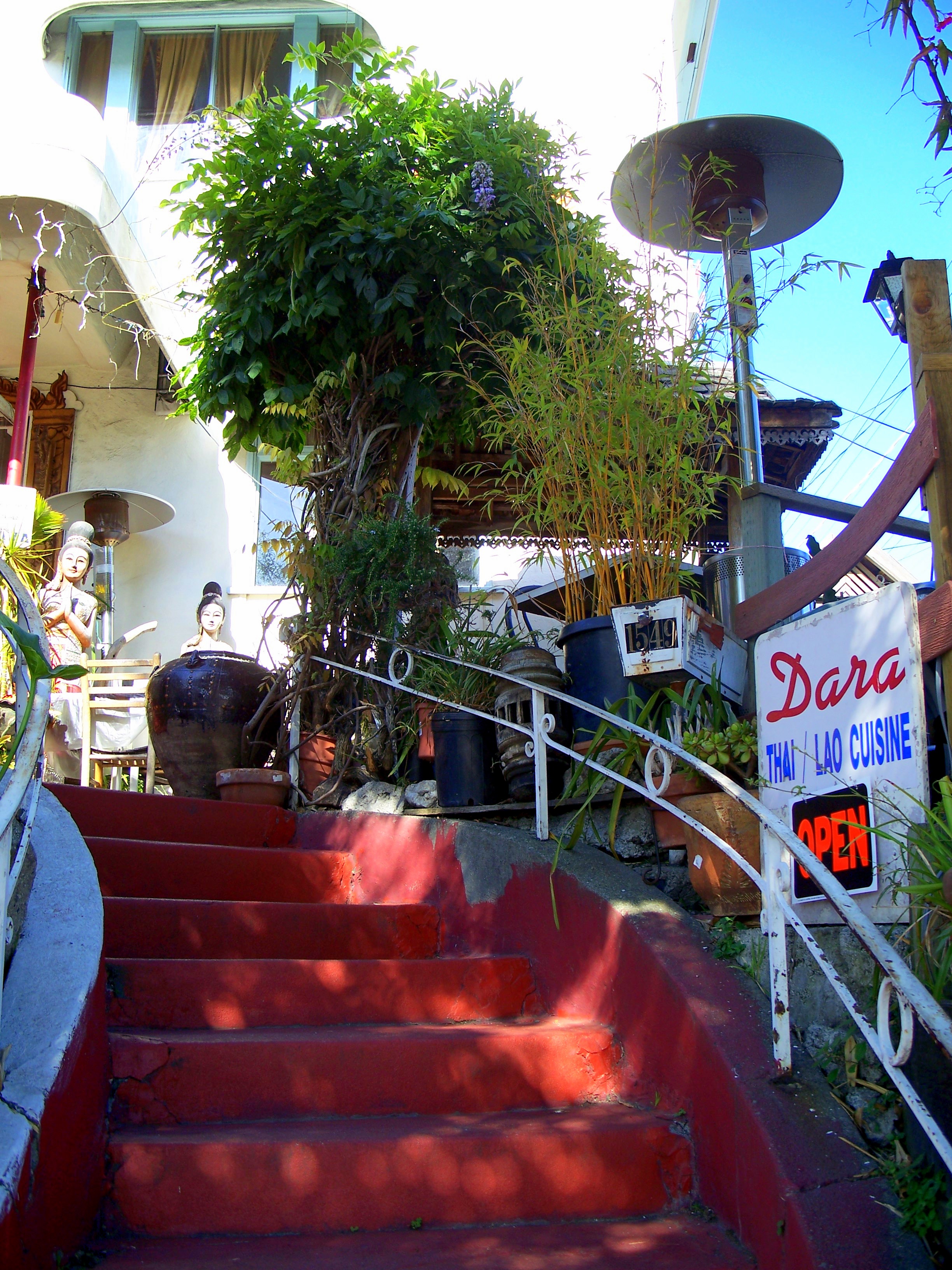

Of the limited times we’ve been to Dara, the only disappointing thing we encounter is how the diners, however young, like to order nothing more than pad thai. The playing-safe mentality is stickier than sticky rice. Seeing how big the menu is at Dara, there is one thing you should NOT GET here: pad thai.

Address: Dara Lao Thai Cuisine
1549 Shattuck Ave
Berkeley, CA 94709
(510) 841-2002

Other Thai-Lao restaurant in the vicinity:
Champa Garden
Down the Aisles 6: Asian markets’ hits and misses

October 08, 2010 By: Mai Truong Category: California - The Bay Area, Chinese, Korean, savory snacks, sweet snacks and desserts


I’ve been lying low on the blogging front for the past couple of weeks, because the school front is under serious bombarding. Having classes is one thing; having to teach, applying for stuff, looking to join a research group on top of classes is a whole different level of war. Not that I lose my appetite, but when twenty deadlines are approaching like a flock of Luftwaffe‘s Bf 109, quick filling meals trump elaborate dishes. Loco moco is a winner, but even I know that I can rely solely on gravy, egg, and hamburger patty for so long before a heart attack. Hence the deli section in supermarkets gain appeals.

But if you’re gonna buy cheap store-made food, you gotta do it in style. Apple pies, rotisserie chicken, turkey sandwiches, or those mushy bean-and-pasta salads are so 2009 (I used to buy a rotisserie chicken every week last year :-P). This year we hit up the delis in Koreana Plaza and 99 Ranch Market.


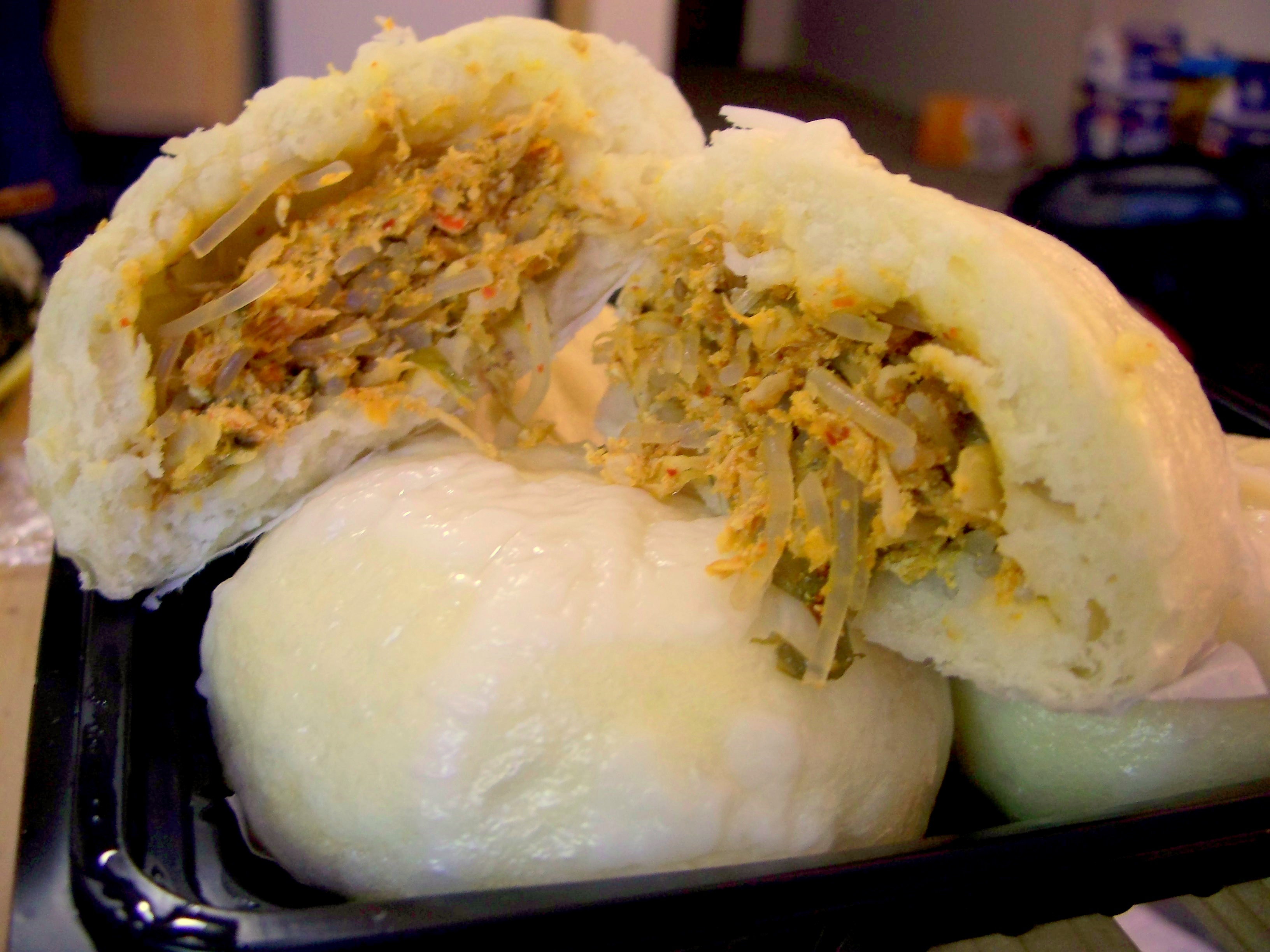
Entree 1 – kimchi big dumpling ($3.99 for 4) from Koreana. Each is as big as my fist, the dough is springy and leathery with a sour hint, the innard is not kimchi but a mixture of glass noodle with some egg/shrimp/tofu-like paste. Overall it’s rather bland.


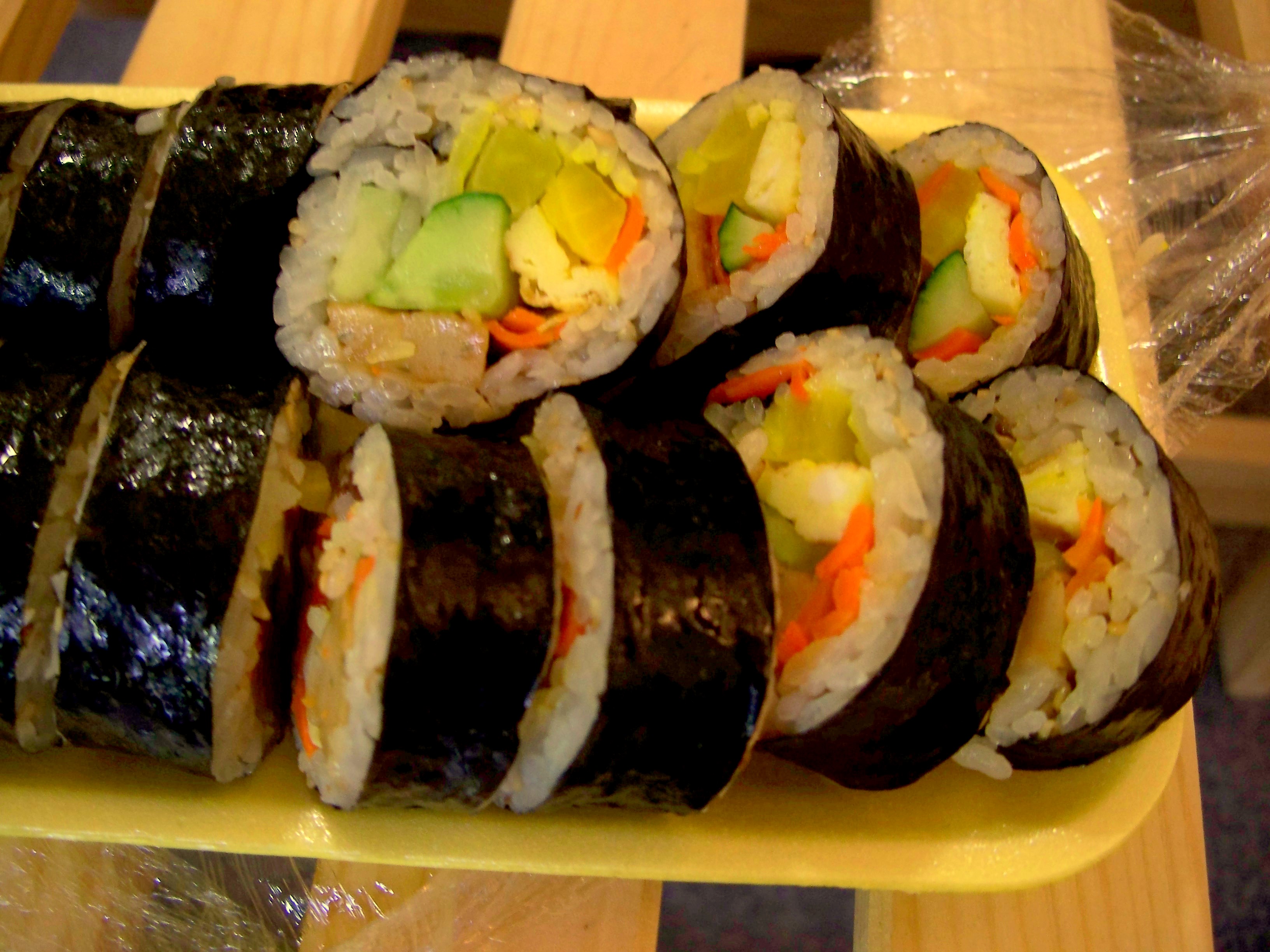
Entree 2 – kimbab ($3.99 for 2 rolls – 20 pieces) from Koreana. The kim (seaweed) always smells like the sea, but it adds an unparalleled savoriness to rice. Love it. 🙂


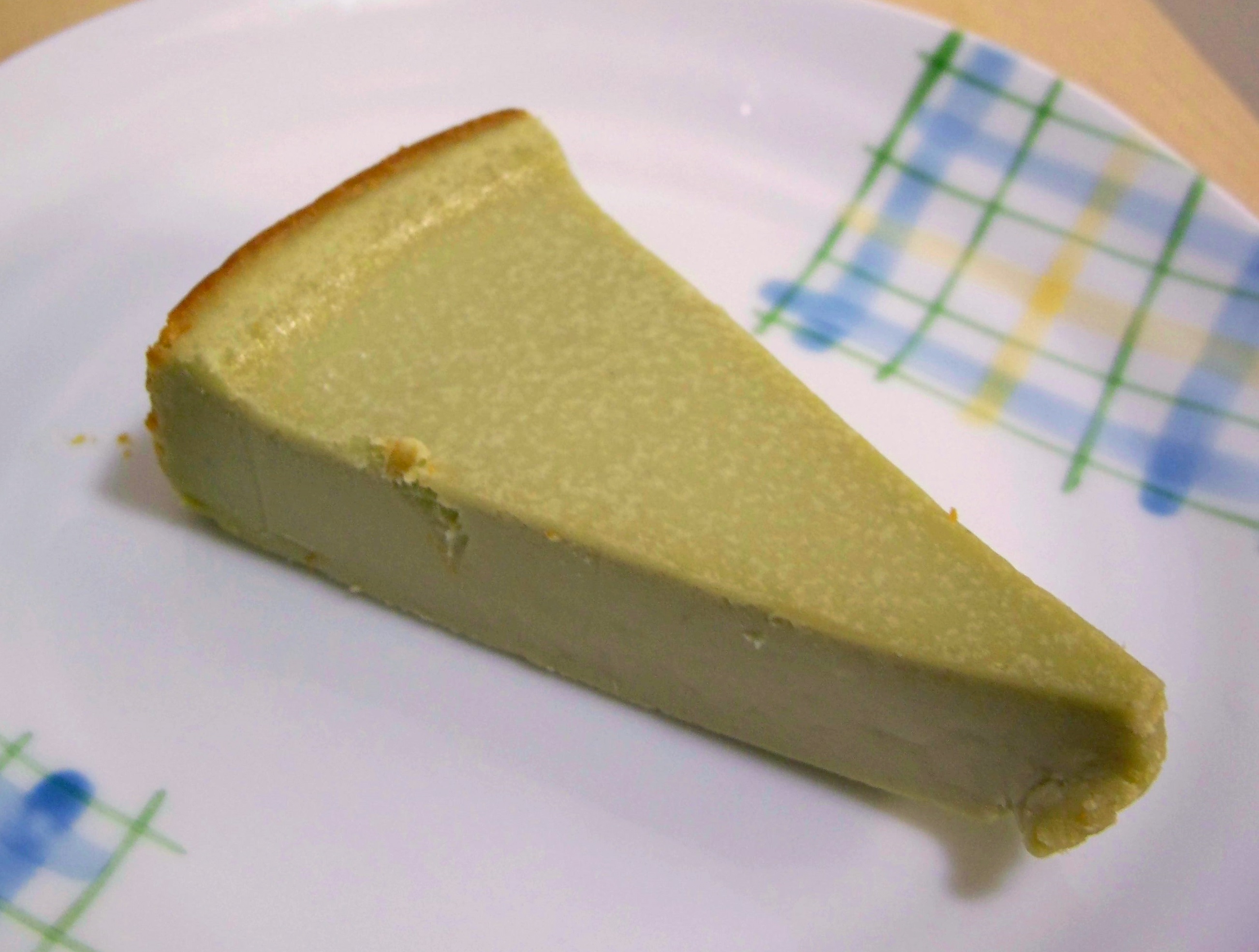
Dessert 1 – green tea cheesecake ($1.50/slice) from 99RM. The slice is only three fingers at its widest but solid as a butter stick. It’s really just like eating a wedge of gouda with some distant herbal call.


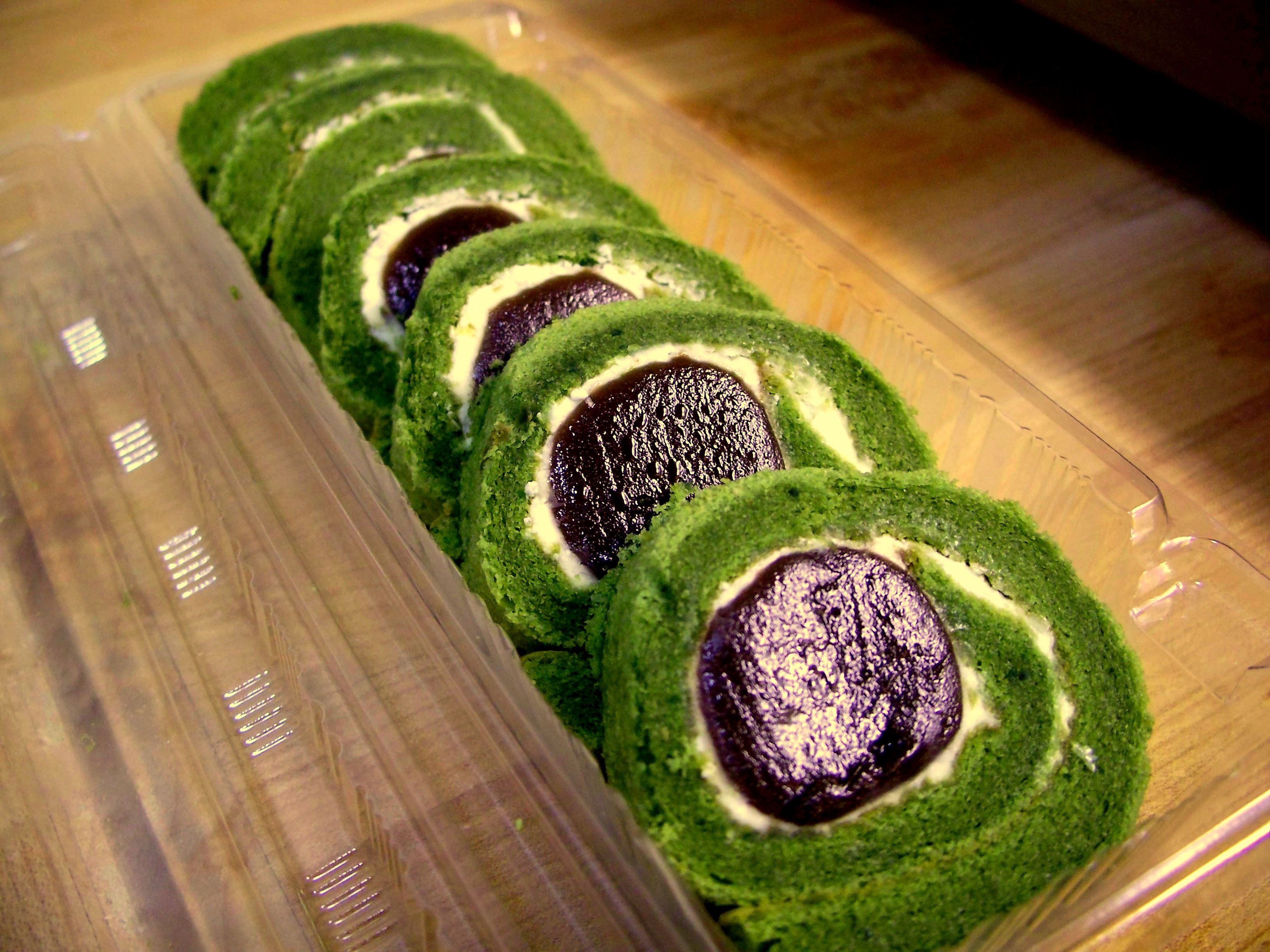
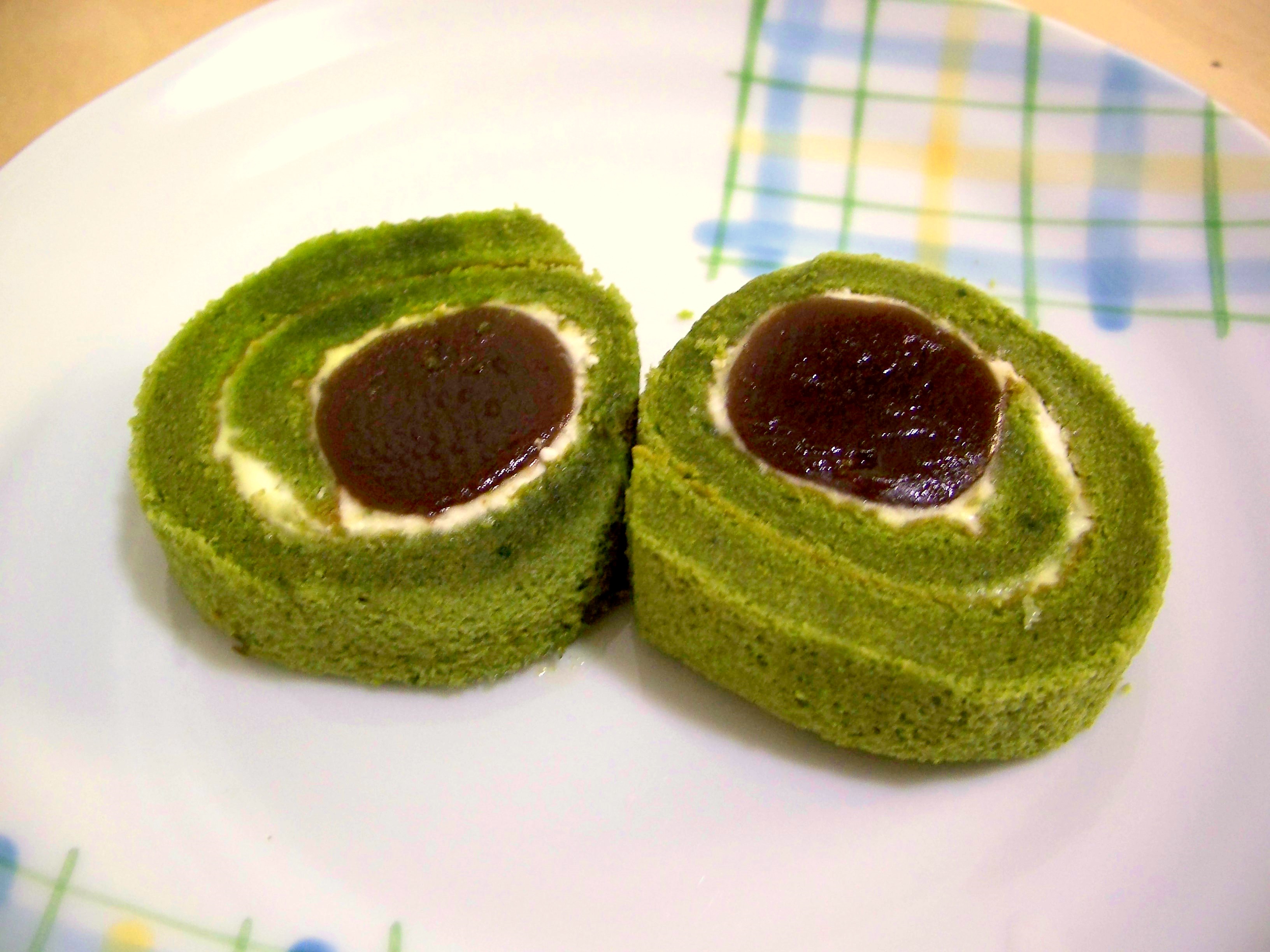
Dessert 2 – green tea red bean roll from 99RM. Sweet and chewy red bean paste, grassy plain and pillowy green tea dough, with a hair thin layer of milky cream. Petite and adorable. 🙂

Side comment, I was cheap so I was contented with drooling at the sight of the 99RM cakes. Don’t know about tastes, but the 99 Ranch’s bakery got some cake decorating skillz that make all American supermarket bakeries look like child plays.

Koreana Plaza (Oakland)
2370 Telegraph Ave (between 23rd St & 24th St)
Oakland, CA 94612
(510) 986-1234

99 Ranch Market (Richmond)
3288 Pierce St # 99
Richmond, CA 94804
(510) 558-2120

Previously on Down the Aisles: It’s It

Delicious Food Co. is one fourth delicious

September 28, 2010 By: Mai Truong Category: California - The Bay Area, Chinese, sweet snacks and desserts, Won't go out of my way to revisit


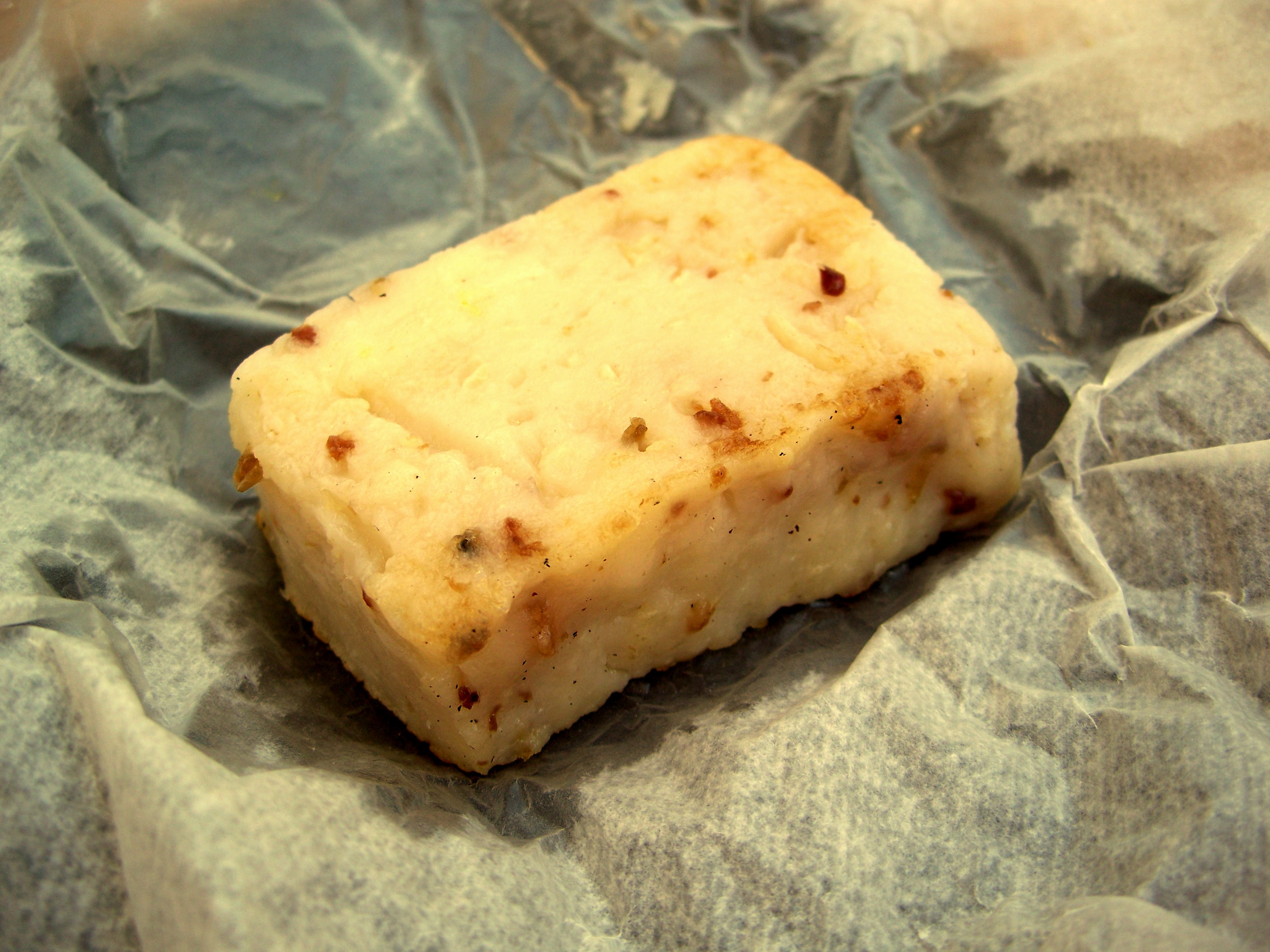
Let us all agree that food tasting is subjective, and totally unrelated to the food’s affiliation. That means even if I hate goat cheese I still find goats quite cute, and if I choose instant cup noodles over a meat-filled burrito it doesn’t mean I have something against Mexican immigrants. Now that we’ve made that clear, I’ll get to the point: I don’t like the Cantonese turnip cake (luobo gao).


We got it at a very crowded Chinese bakery in Oakland Chinatown this weekend. One white lady in line before us asked for 3 turnip cakes, and I want to stress “white” because her Western palate gave us assurance that this treat is among those rare Asian ones that are happily consumed by white people, aka it must be at least “normal” (white people, especially Caucasian Americans, are not always up to trying “new” food). So we thought we’re in for a safe bet. Turns out, turnip cake (a misnomer for daikon cake), unlike crumbly carrot cake, is an oily soft chunk most resembling a used oversize eraser, except not as gummy.

It’s neither sweet nor savory nor bland. The taste clings to the back of your throat as if you were drinking seawater covered with oil. Won’t buy again. As for the other things we got from Delicious Food Co., because I believe in happy endings, they will appear in increasing order of deliciousness.


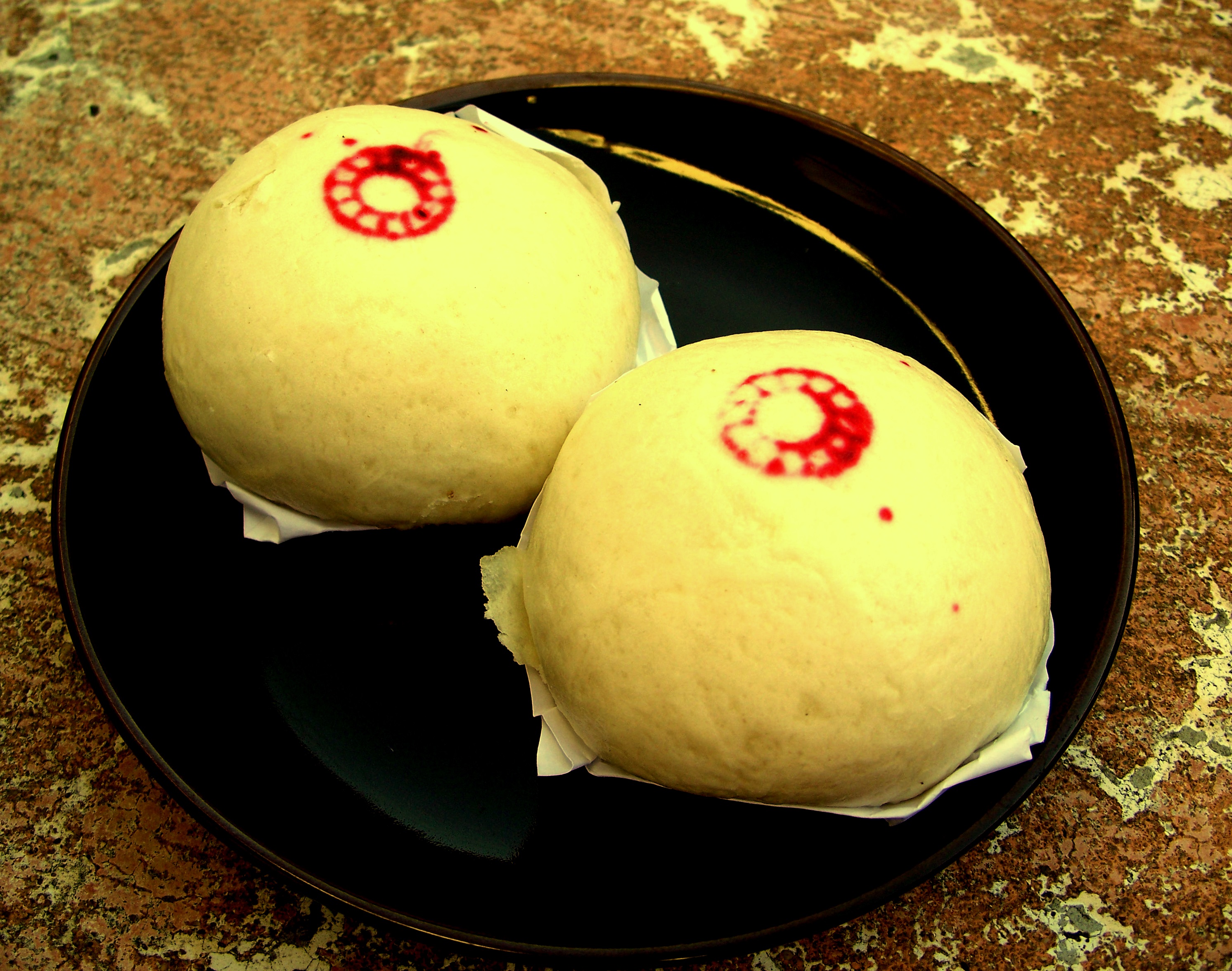
#3- Black bean bun – the middle ball of black bean, only one spoon worth, is fine, but the dough is as dry as Sahara sand.


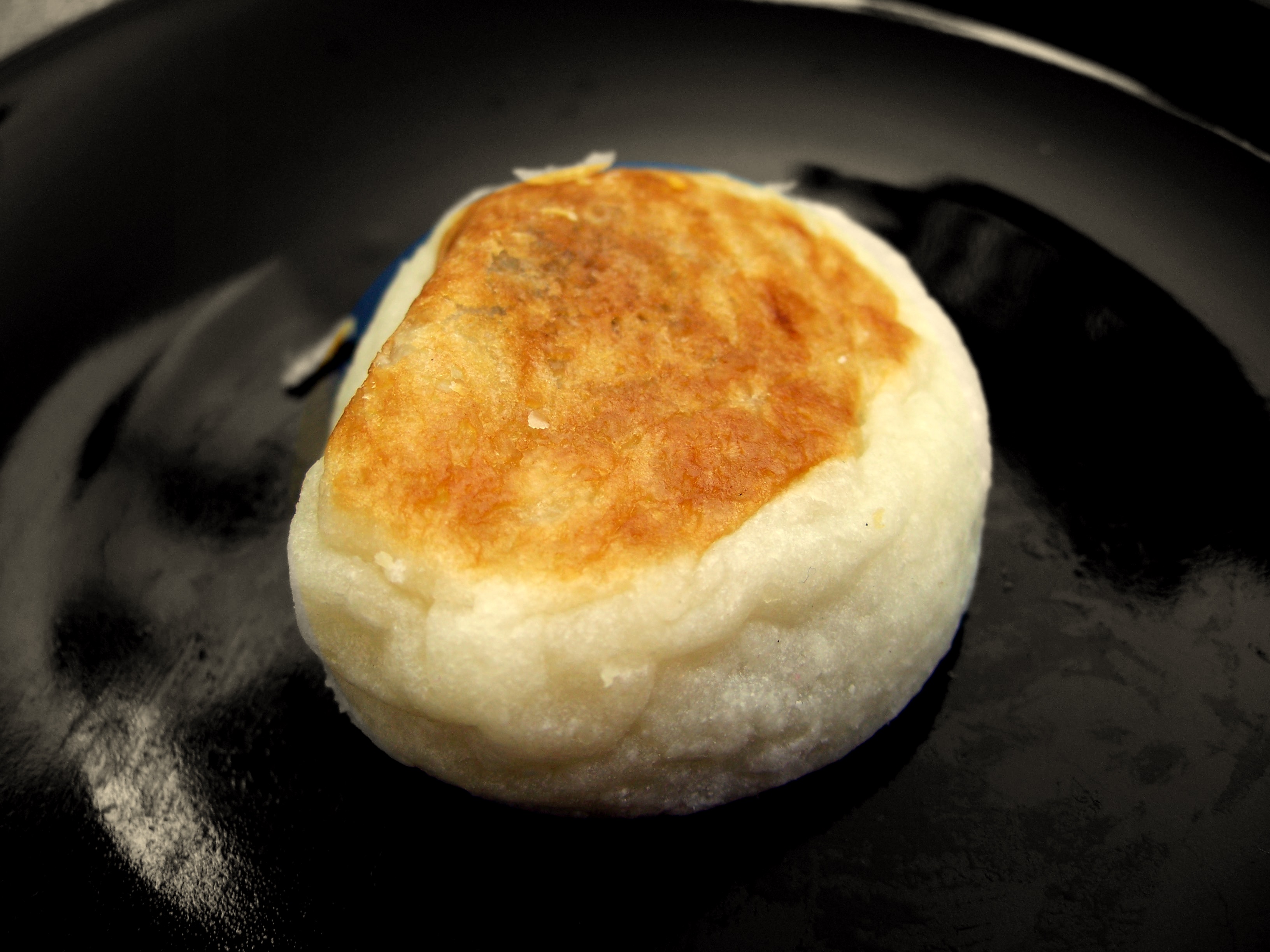
#2- No-name red bean mochi-like minibun – the mochi part is too chewy and a bit dried up, but I’d rather chewy dry than crumbly dry. Mudpie prefers the black bean bun though.


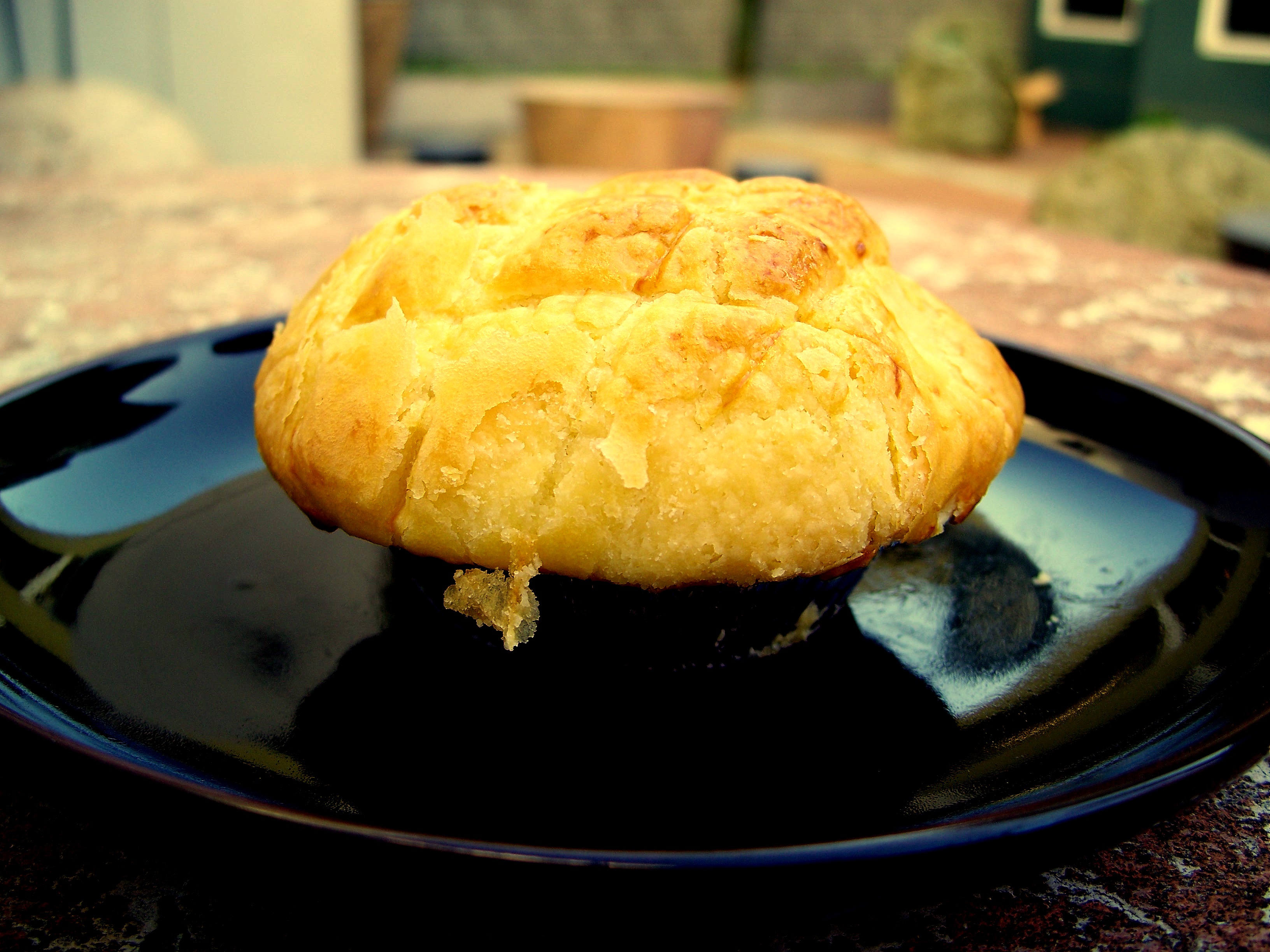
#1- Mini apple pie in foil cupcake cup – As good as you can expect from a good apple pie. The crust is moist on the inner side and crumby outside, the apple innards is just as sweet as a spoon of honey. Every bite leaves your lips a little buttery gloss, enough to make you stick your tongue out and ask for more.


I can’t say that I was impressed by anything but the extremely inexpensive price at Delicious Food Co. Four black bean buns and one of each of the other three pastries swung merely a total $5.25. That said, I’d rather them charge double that and make it taste good.

Address: Delicious Food Company (Oakland Chinatown)
734 Webster Street
(between 7th St & 8th St)
Oakland, CA 94607
(510) 893-2288

Tags:

Taiwanese pastries from Sheng Kee Bakery

September 20, 2010 By: Mai Truong Category: California - The Bay Area, Chinese, sweet snacks and desserts


Just last autumn the celebration was marked with a little piggy from Singapore. In a blink of the eye the maple tree in front of my apartment has started turning radiant again, telling us that it’s time we find ourselves in front of countless beaming mooncakes.


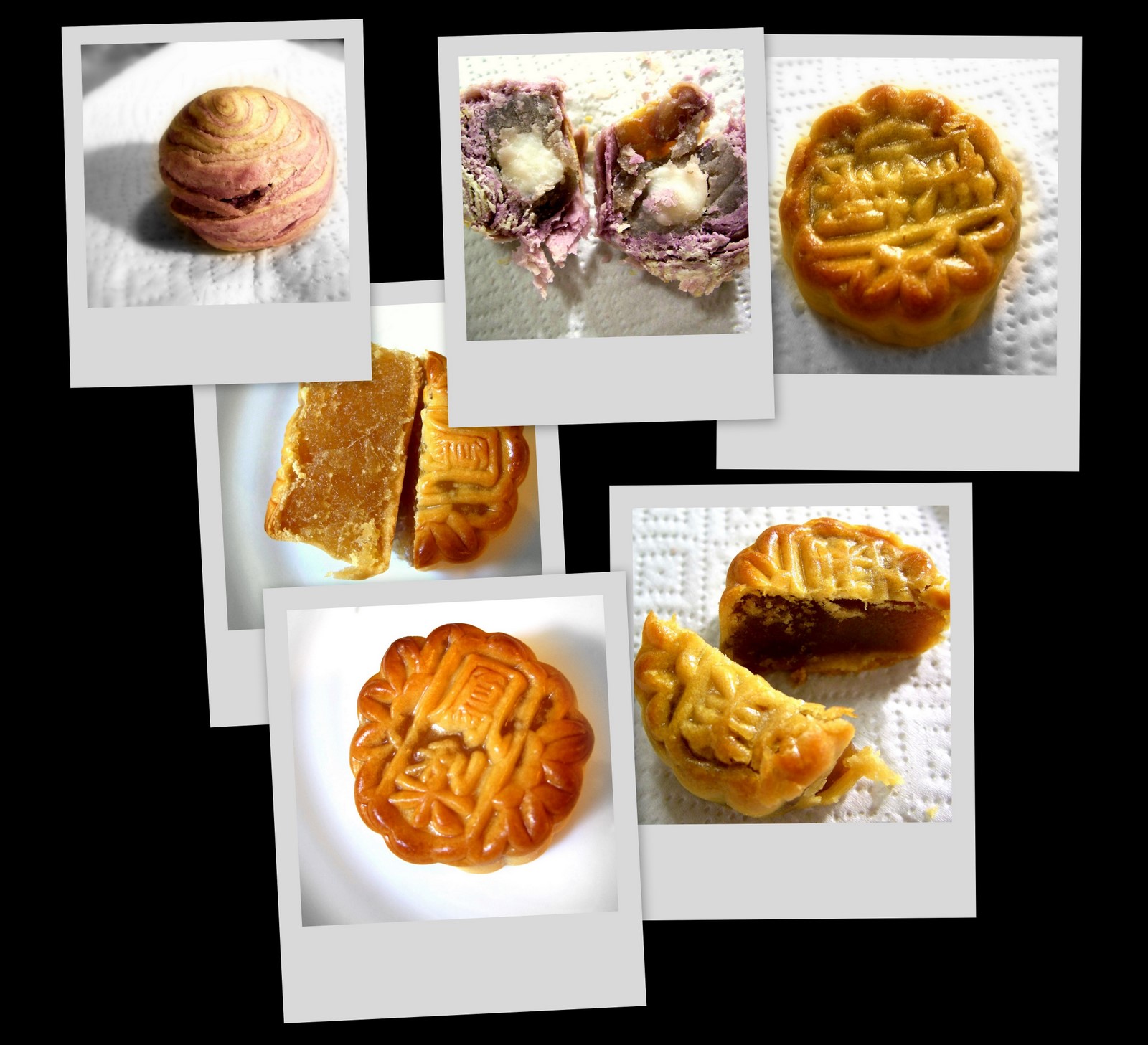
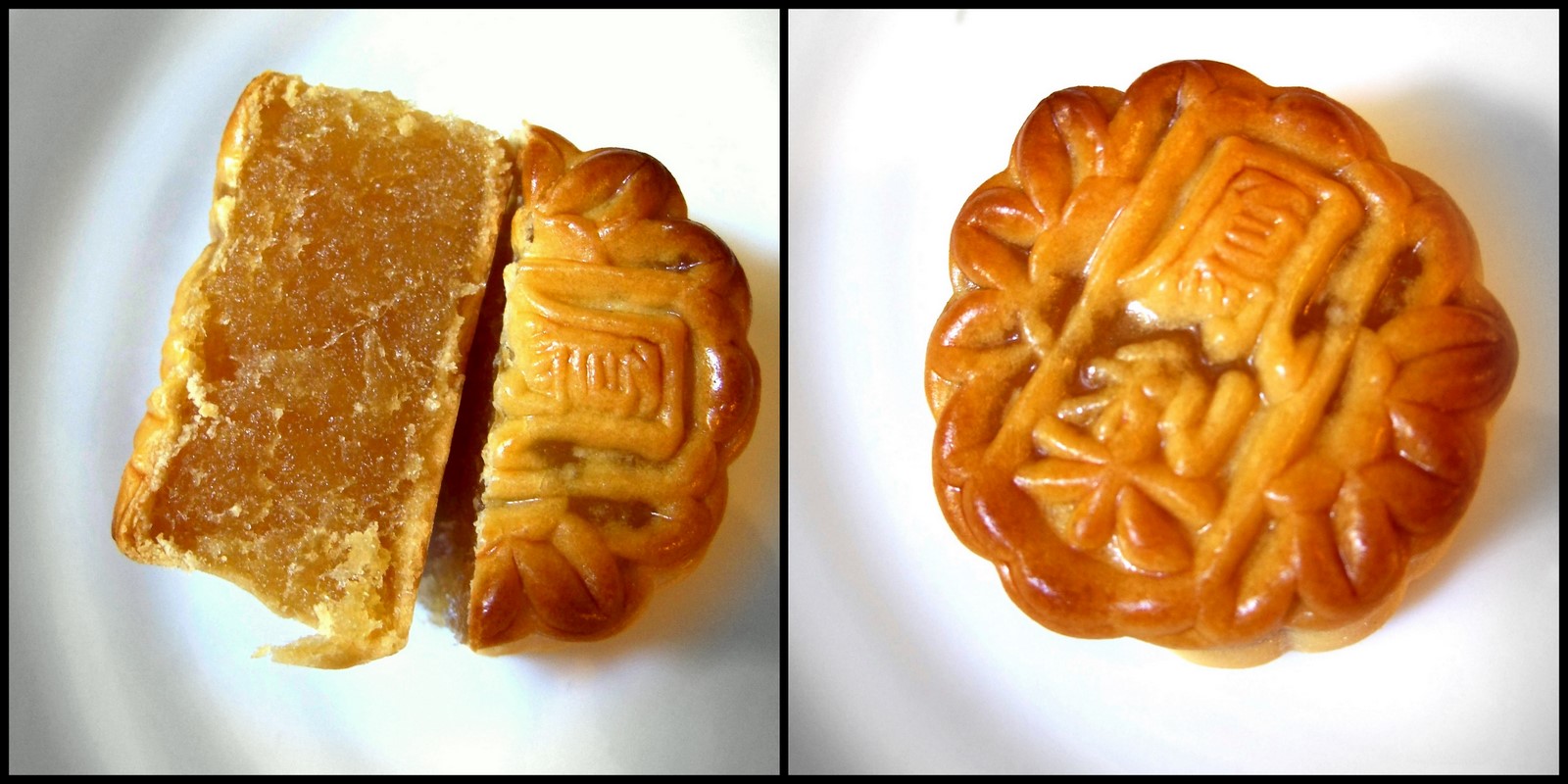
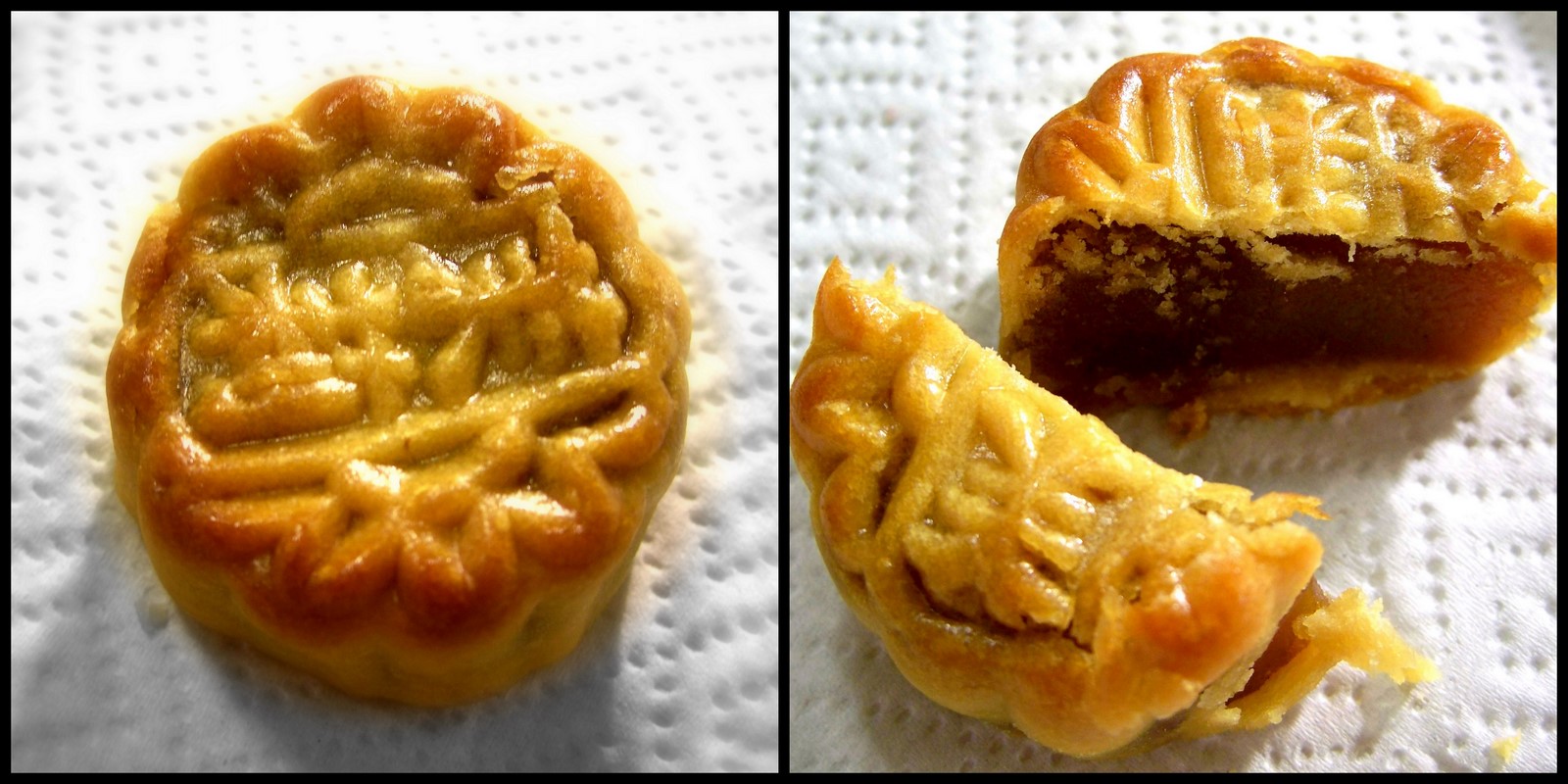
This tiny pretty bite is pineapple mooncake from Sheng Kee Bakery in the 99 Ranch Market plaza. As my reader, new friend, and Chinese food expert Kathleen Chen told me :-), 99 Ranch Market is Taiwanese-owned and the most reliable sign that a bakery is Taiwanese instead of Chinese is the pineapple cake (éłłæąšé…„). Well, the pineapple mooncake is certainly tasty, but if you know me, my taste buds are slightly influenced by my political and cultural preferences, so DOUBLE thumbs up for Taiwanese pineapple mooncake! 🙂

The nicest thing about the pineapple mooncake is that it’s not too sweet. The pineapple didn’t lose all of its tangy signature but rather just had the edges smoothened out, so to speak. Meanwhile, a little shreddy, uneven texture makes the paste more interesting.


Jasmine tea mooncake is also not too sweet, and it has the bonus aromatic herbal flavor of dried blossoms that I adore. There’s a multitude of other tea flavored mooncakes here, like oolong, black tea, and chrysanthemum and others whose names I can’t remember.


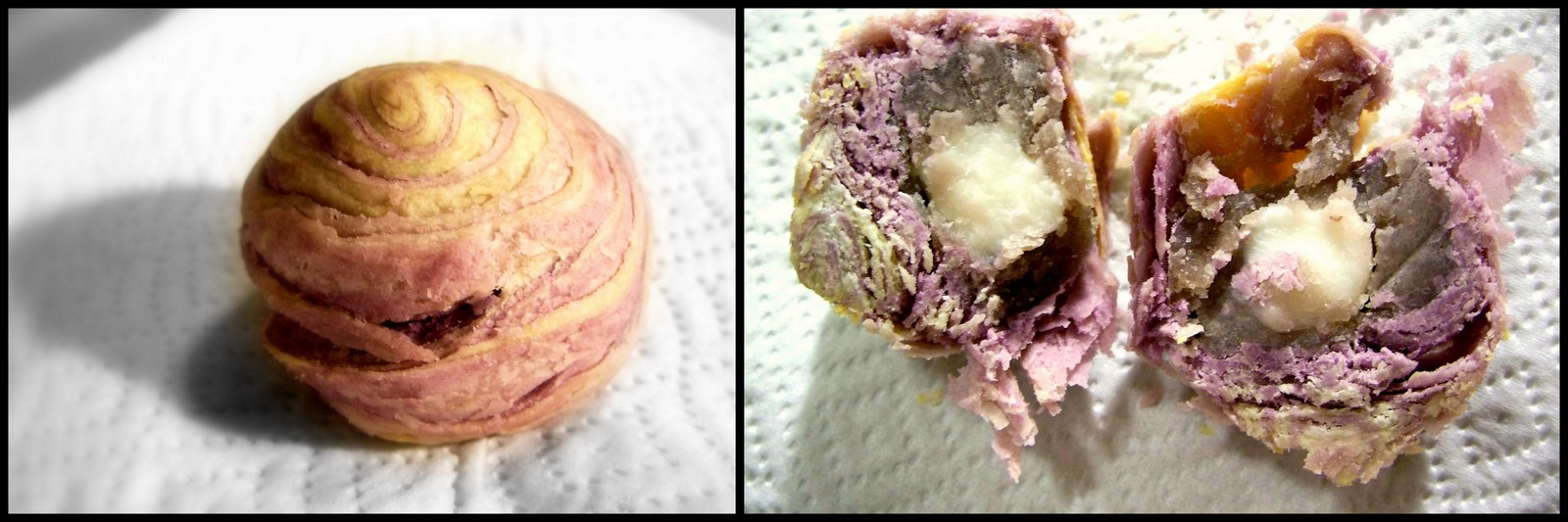
Here’s something else that looks interesting but I don’t know how to call it other than taro pastry. The outer layer is rather sweet, flaky, and practically melts in your mouth. There’s taro paste in the middle layer, which is mild and rooty nutty (taro-ey, if you know what I mean). Then there’s a soft, creamy, sweet white ball at the core and I have no idea what it is. The pastry is like a mini planet. 🙂 Hmm… maybe they should start naming new planets after food. 😀

Address: Sheng Kee Bakery & Cafe – inside 99 Ranch Market Plaza – Richmond
3288 Pierce St. #C 133
Richmond, CA 94804

Money matters: taro pastry – $1.85, small moli (jasmine) tea mooncake – $1.95, small pineapple mooncake – $1.60
The bakery also has beautiful sets of mooncakes (all sizes) in ornate boxes, but you gotta pay more for the look – ~$36 for each box with 4 large mooncakes.

Chocolate festival at Ghirardelli Square

September 14, 2010 By: Mai Truong Category: California - The Bay Area, Festivals, sweet snacks and desserts


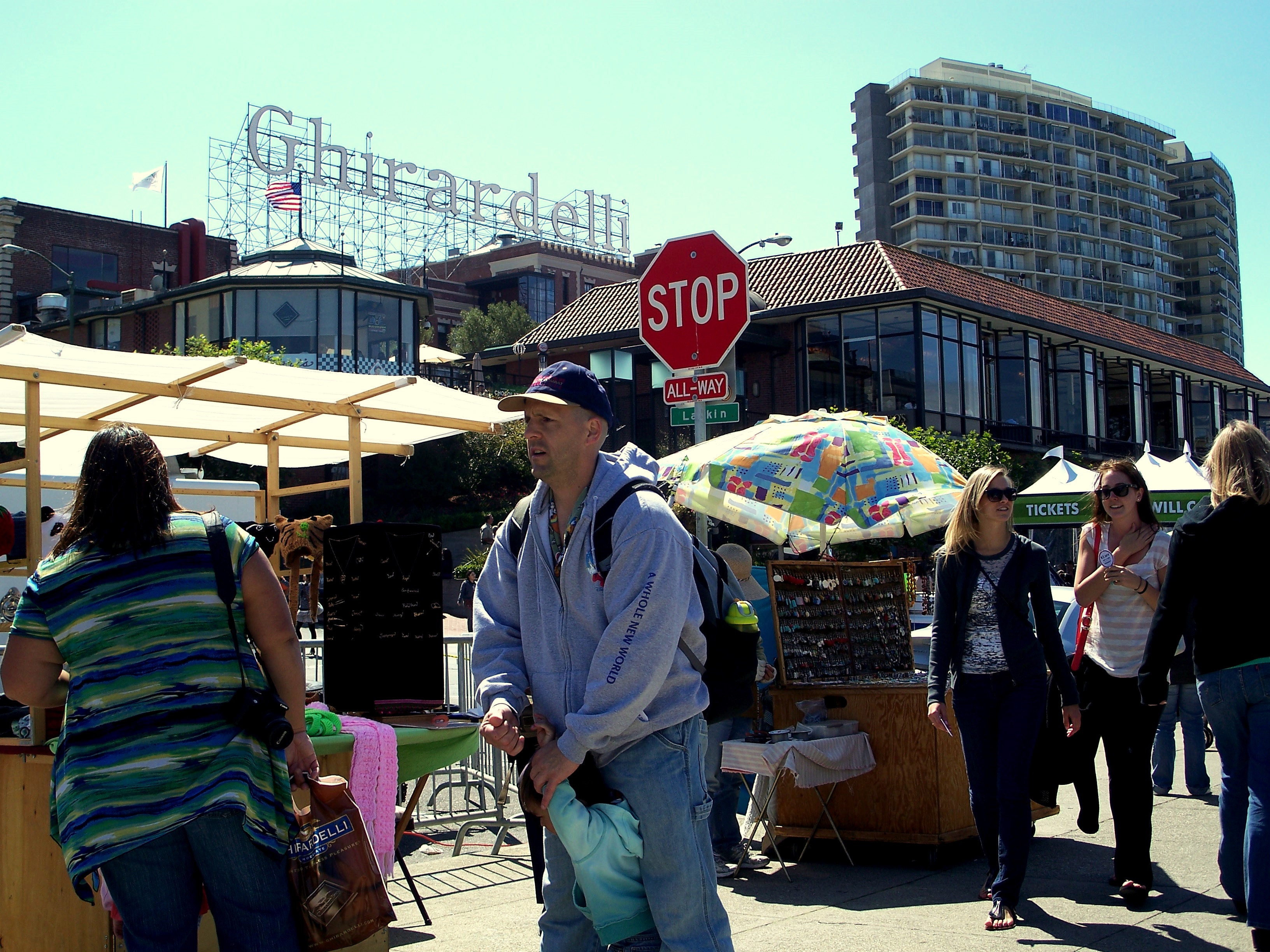
What’s with this time of the year that festivals keep popping up every weekend? Just two weeks ago my friends and I were strolling among some 60 food trucks at Jack London Square; then last week we had some awesome grilled chicken at Martin Luther King Park; and this past Sunday we wound up queuing in the shivering bay wind for some artisan desserts at Ghirardelli Square. If we keep this up(*) I will become quite athletic, all that walking and standing in (long) line build muscles, you know. 😛


So here’s the deal with the 15th annual Ghirardelli Chocolate Festival: you get a $20 ticket to try 15 samples (there are 31 total, some of them are chocolate favored alcoholic drinks); supposedly the booths started giving samples at noon, but lots of people got there earlier and lined up in front of the booths. Kara’s Cupcakes is one of those booths with a 100 feet line before it even opened. I’m not crazy about cupcakes (yeah… you can tell I’m not American) so I didn’t contribute to that line’s ridiculous length. I did contribute to the line wrapping around McCormick & Kuleto’s, but it was worth it.


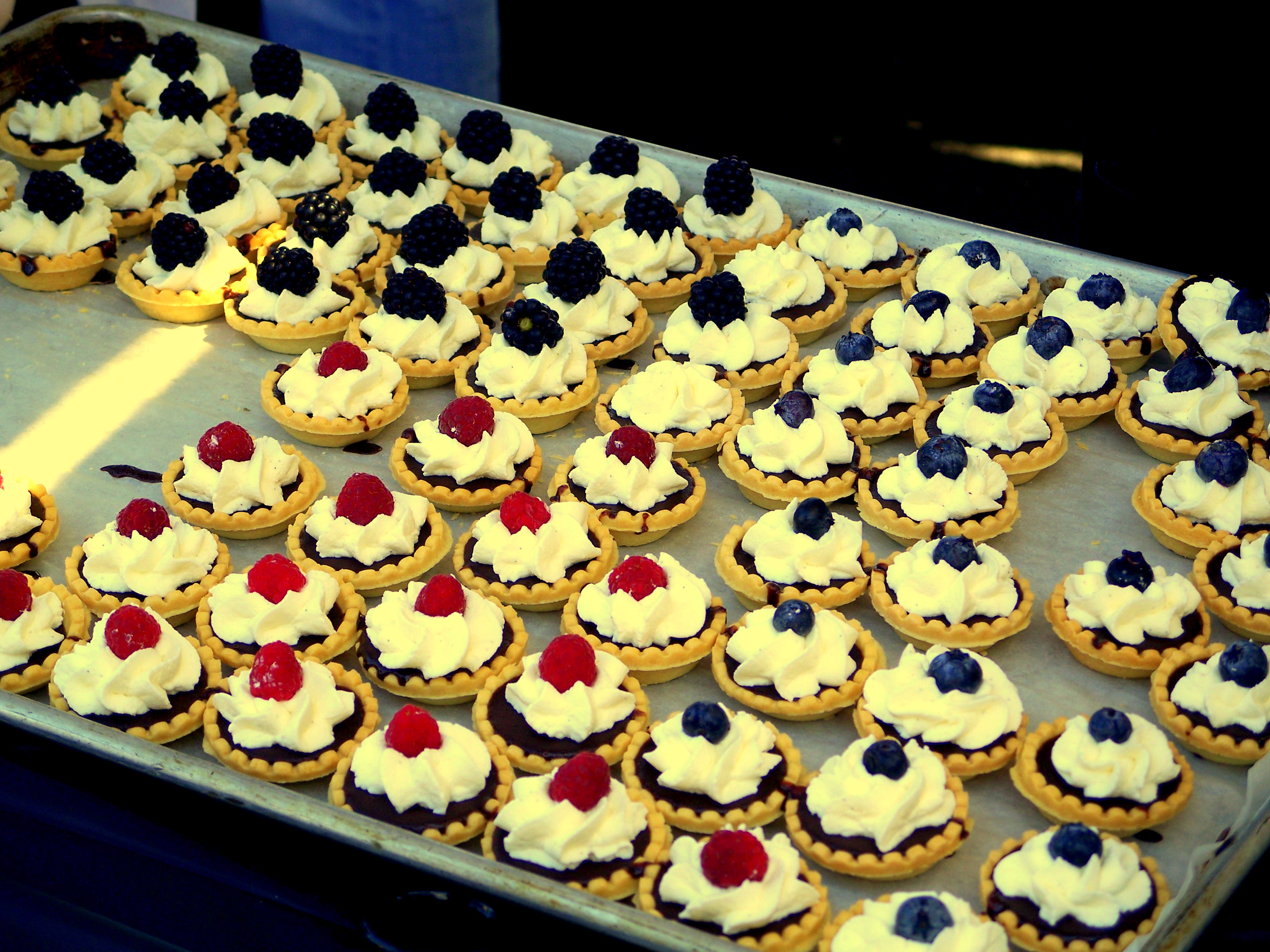
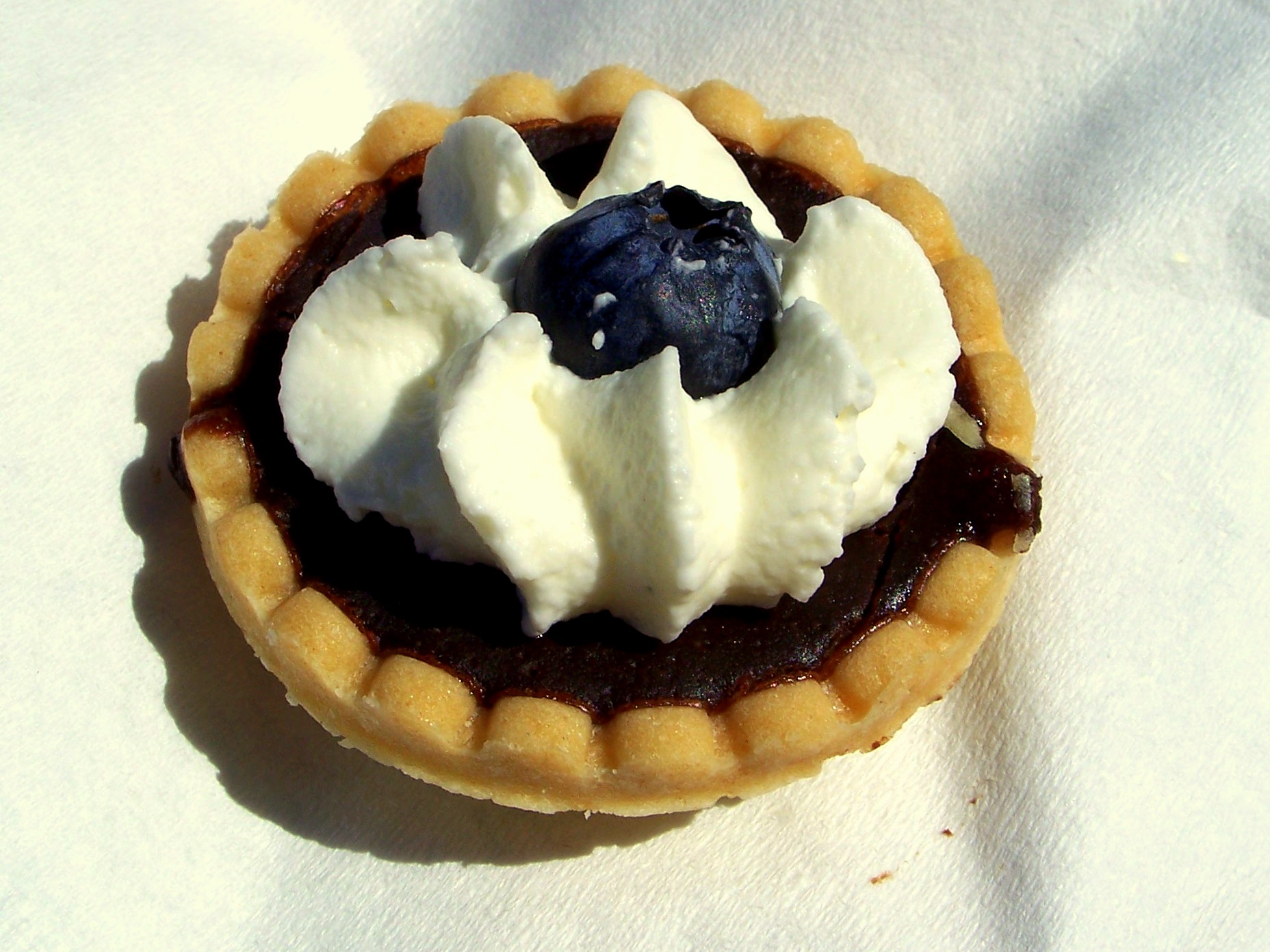
They are a seafood restaurant chain, but at this festival they whipped out flourless chocolate truffe cakes, with raspberry, blueberry, or blackberry on whip cream. The bite-sized sample was quite rich.


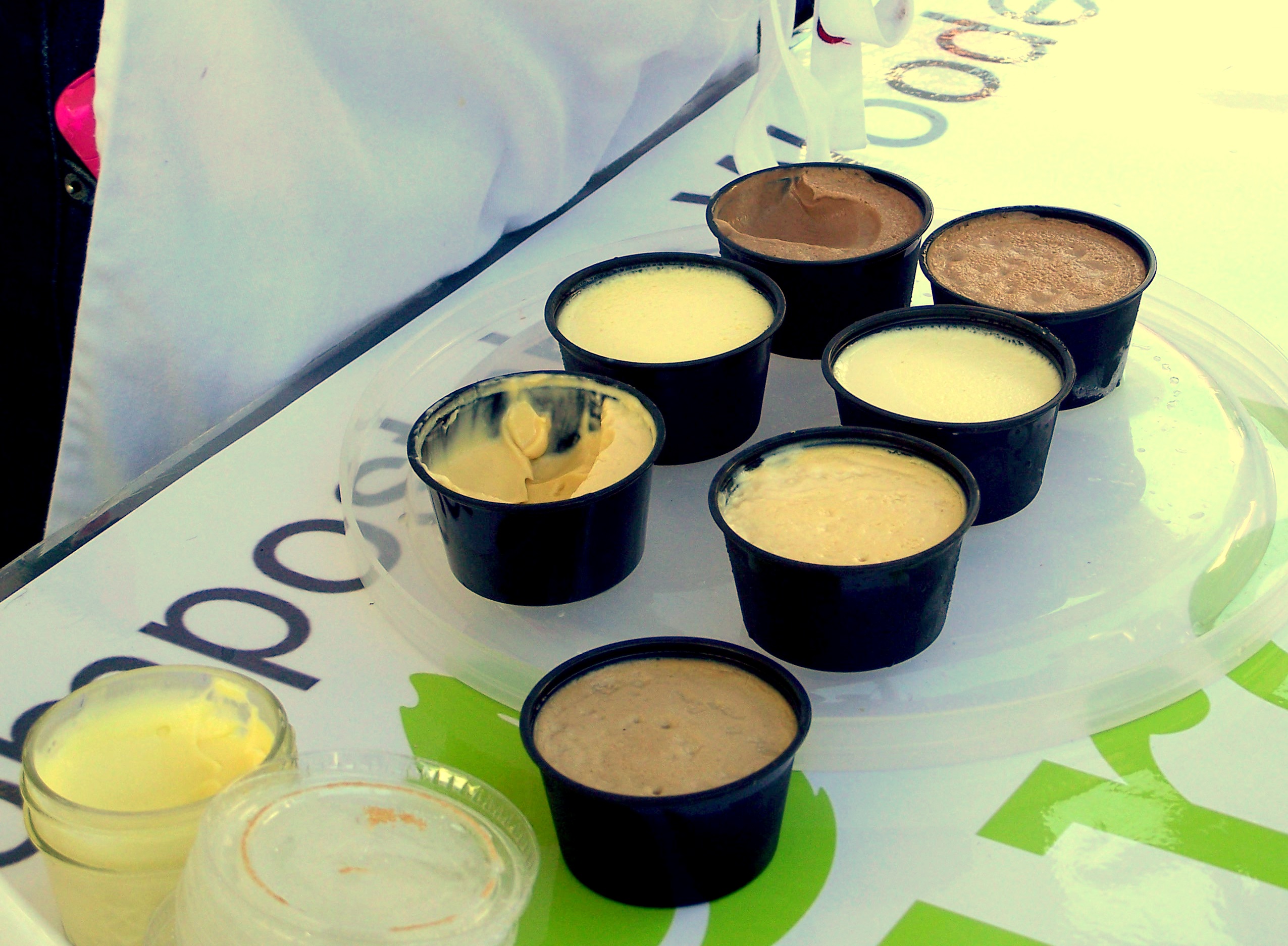
But it was among the best at the event. For one thing, we actually got a whole truffle cake, while Sweet simply gave a full spoon of crÚme brulée for each mark off the sampling ticket.


It tasted good (to quote other triers, “it tastes divine”), but one spoon? Seriously? The ticket is $20 for 15 samples, that’s $1.33 per sample, and don’t tell me an average spoon of creme brulee costs that much. Disappointed me by the rip-off.


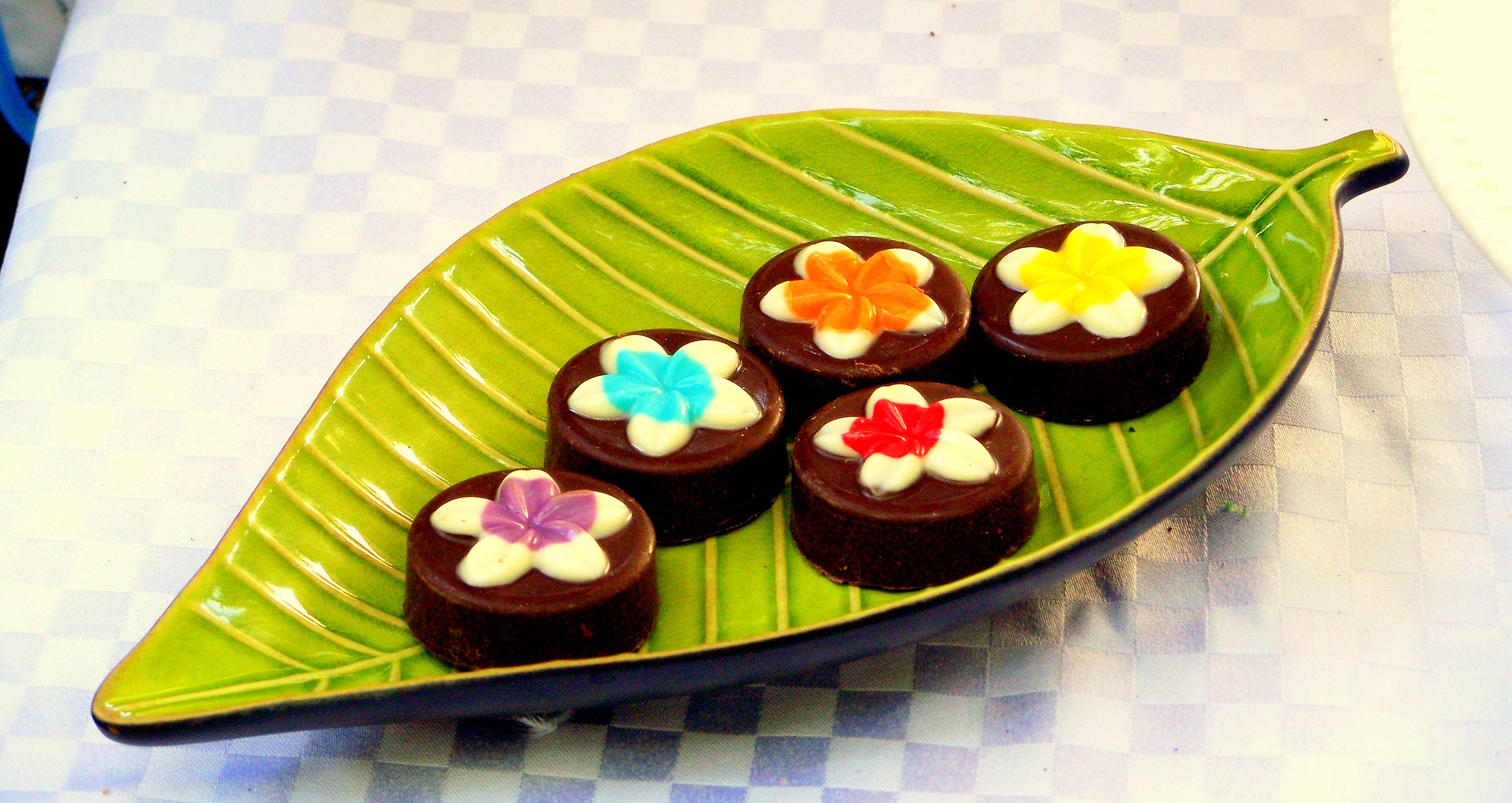
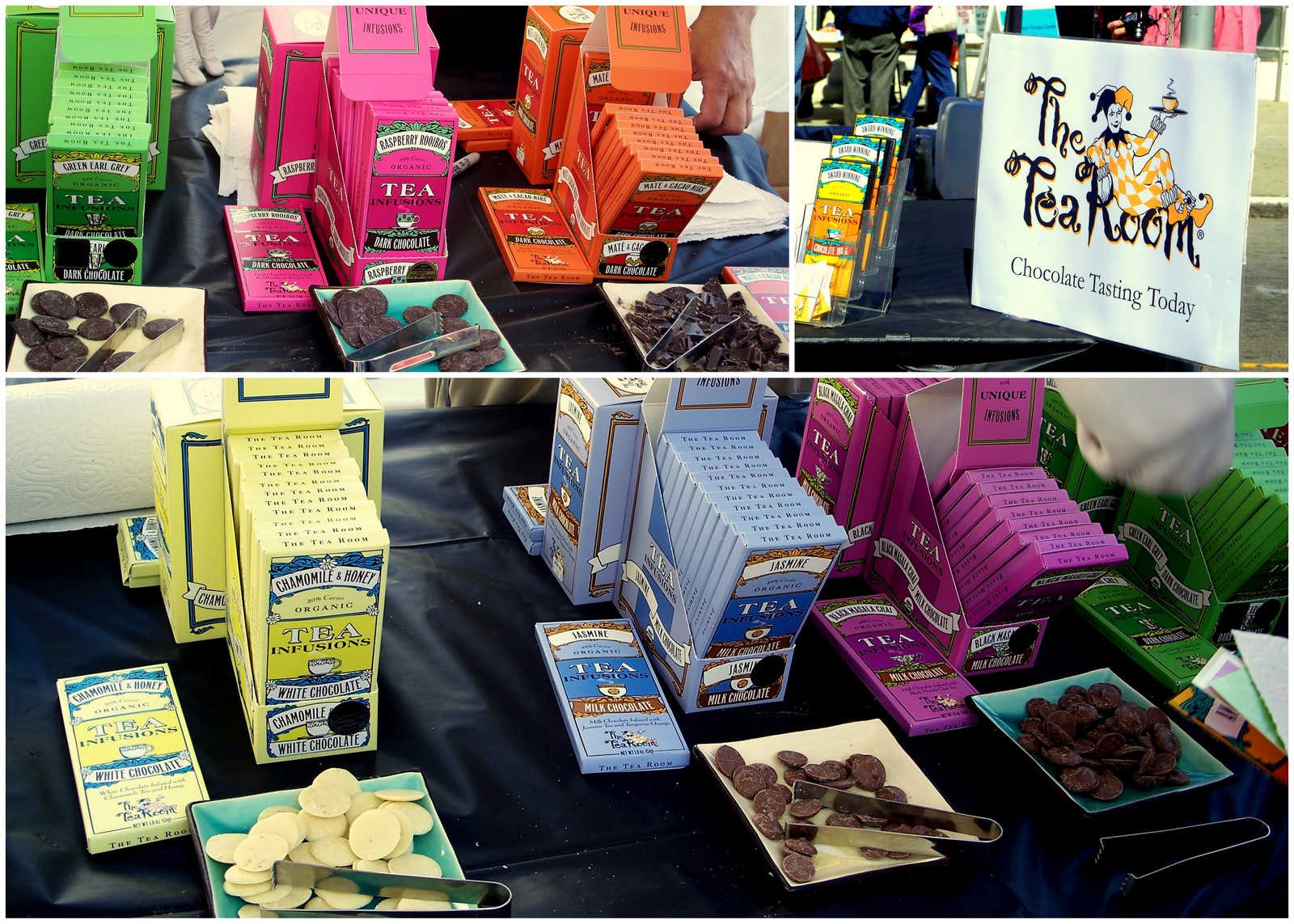
The Tea Room Chocolates gave a much better deal. We got to sample 6 types of tea-infused chocolate: 72% dark with green mate, star anise & nibs (orange), 58% dark with raspberry rooibos tea (pink), 58% dark with green earl grey tea (green), milk with black masala chai (purple), milk with jasmine tea (blue), and white with chamomile tea & honey (yellow).  The pink and the green bars were the best.


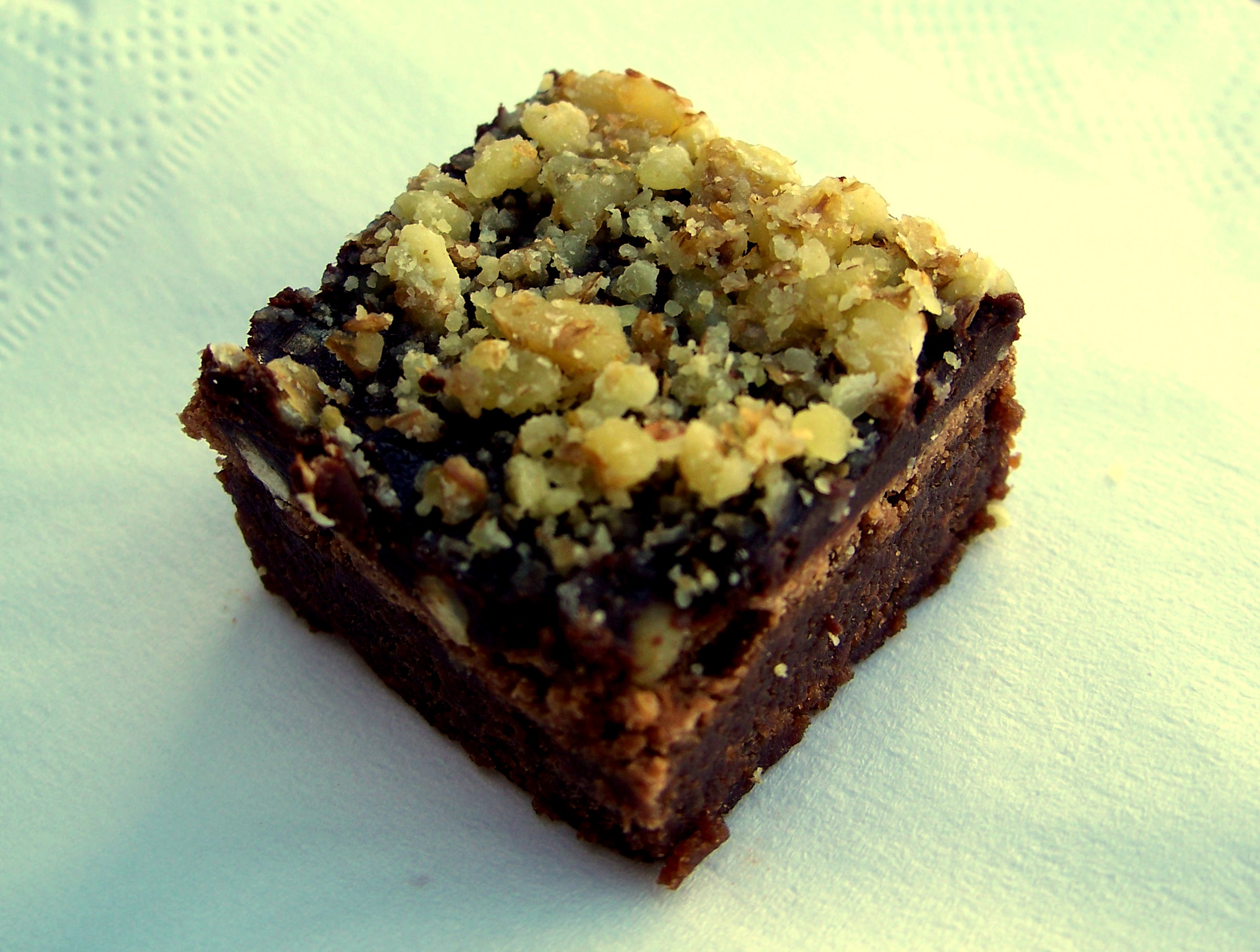
Next to Tea Room Chocolates was Ana Mandara‘s booth. According to the brochure Ana Mandara had chocolate mochi, but actually they had brownie. Very good and moist brownie, but mochi would have been a better score. On a side note, this place has an interesting (and affordable) lunch menu, which we would have tried had they not closed at 2:30. :-/


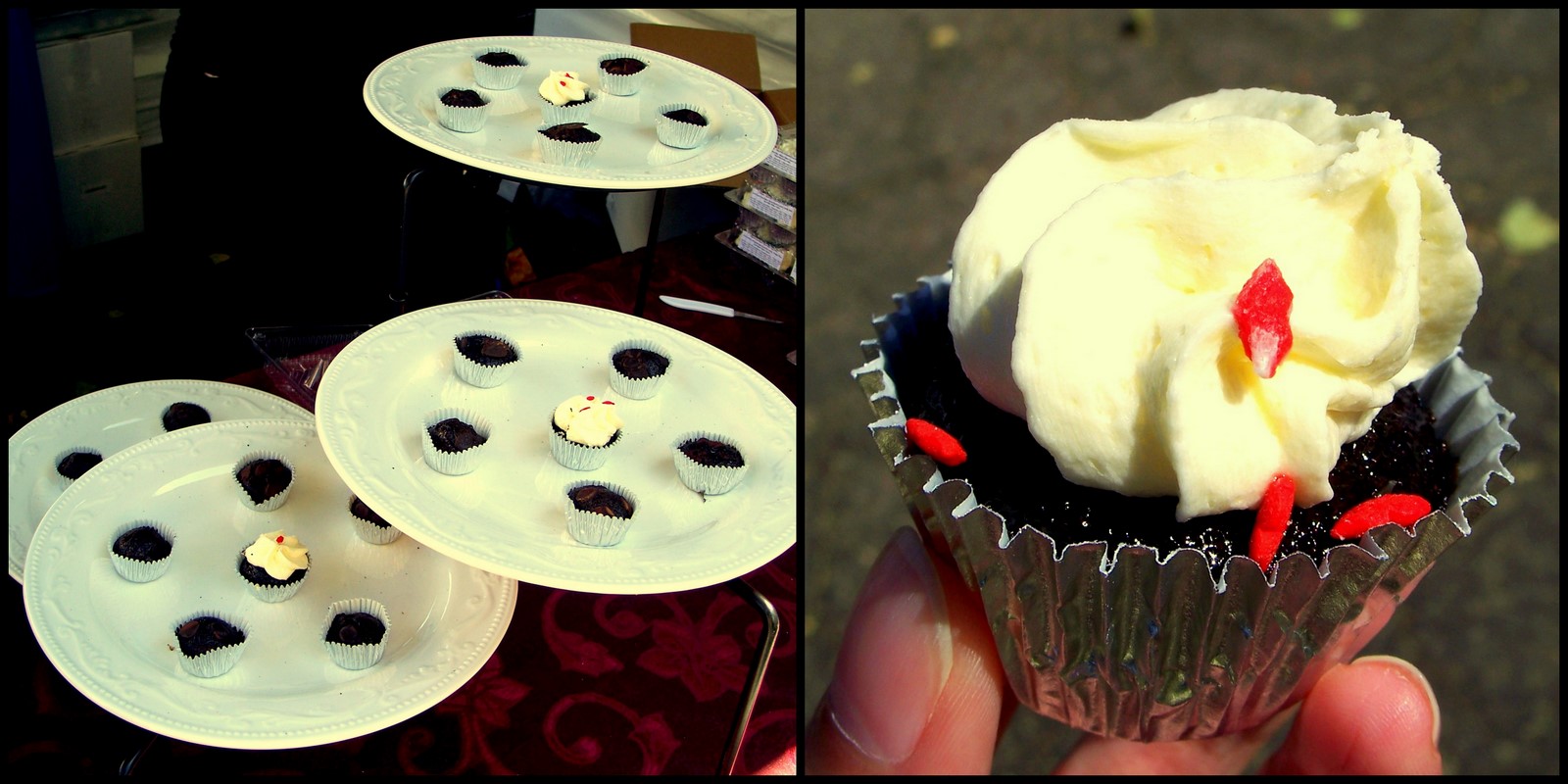
Another disappointment was the mini vegan cupcake from Eat My Love For You. It’s a cute little chocolate bite with lustrous vanilla butter cream on top. It was great during the first few seconds, but like most loves at first sight, the dazzles wore off and we got a burnt oily aftertaste. Maybe it was just an off batch.


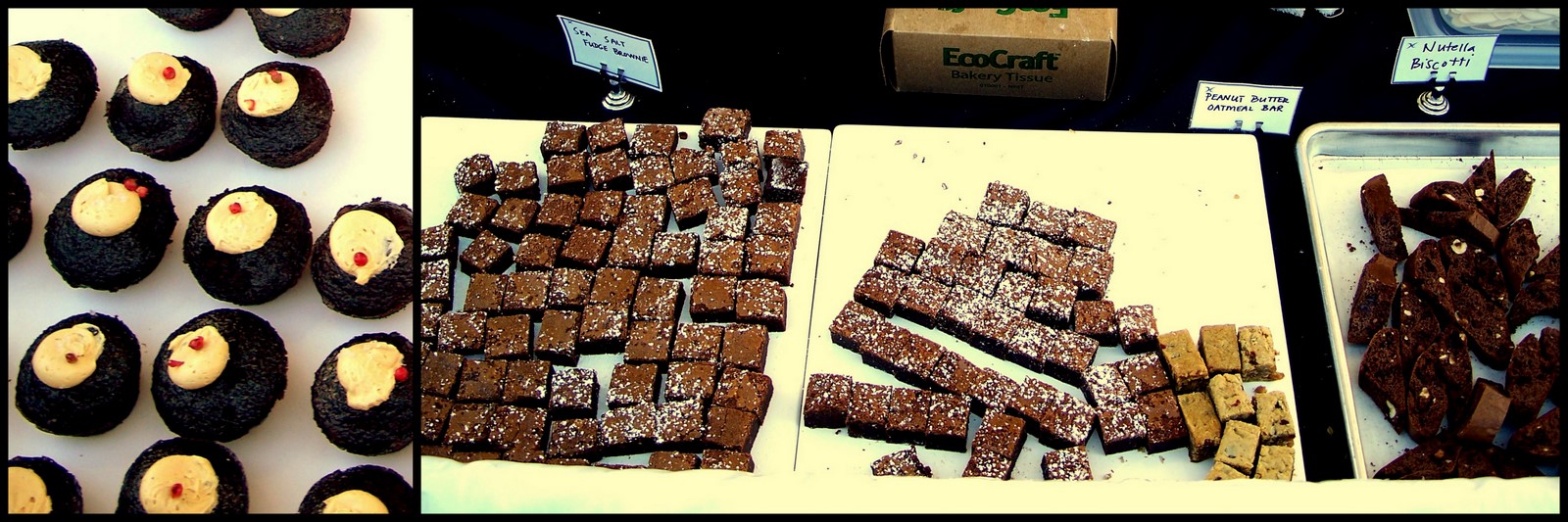
DeLise Dessert CafĂ© offered slightly more choices, cupcakes and brownies among them (surprise!), and the line was also “slightly” longer. But at least it looked out to the beach instead of others’ backs, and we can kill time watching seagulls preening themselves under the sun…


…Until we got to the goodies. The sea salt brownie was super popular, but we opted for the nutella biscotti (which was just like any other biscotti), and lemongrass ice cream. THIS ice cream alone makes the trip worth it. The lemongrass fragrance wasn’t apparent until it melted down at the back of your throat, then gently rose back to the palate like herbal tea.


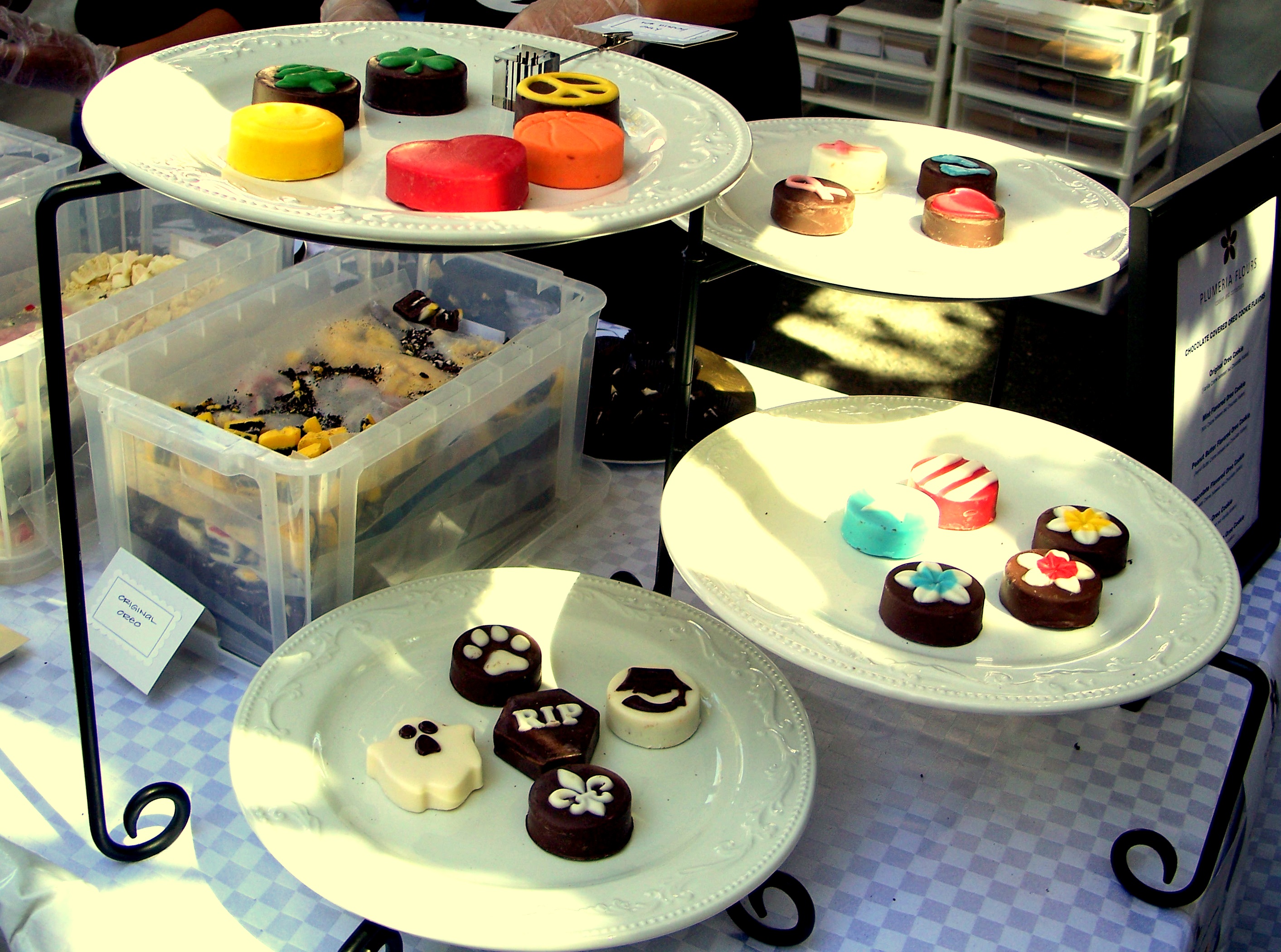
Mudpie was more enthused by the chocolate covered Oreo cookies from Plumeria Flours. You got to pick 2 types of cookies for each sample’s worth; the peanut butter and the mint were, again, good but uninteresting.


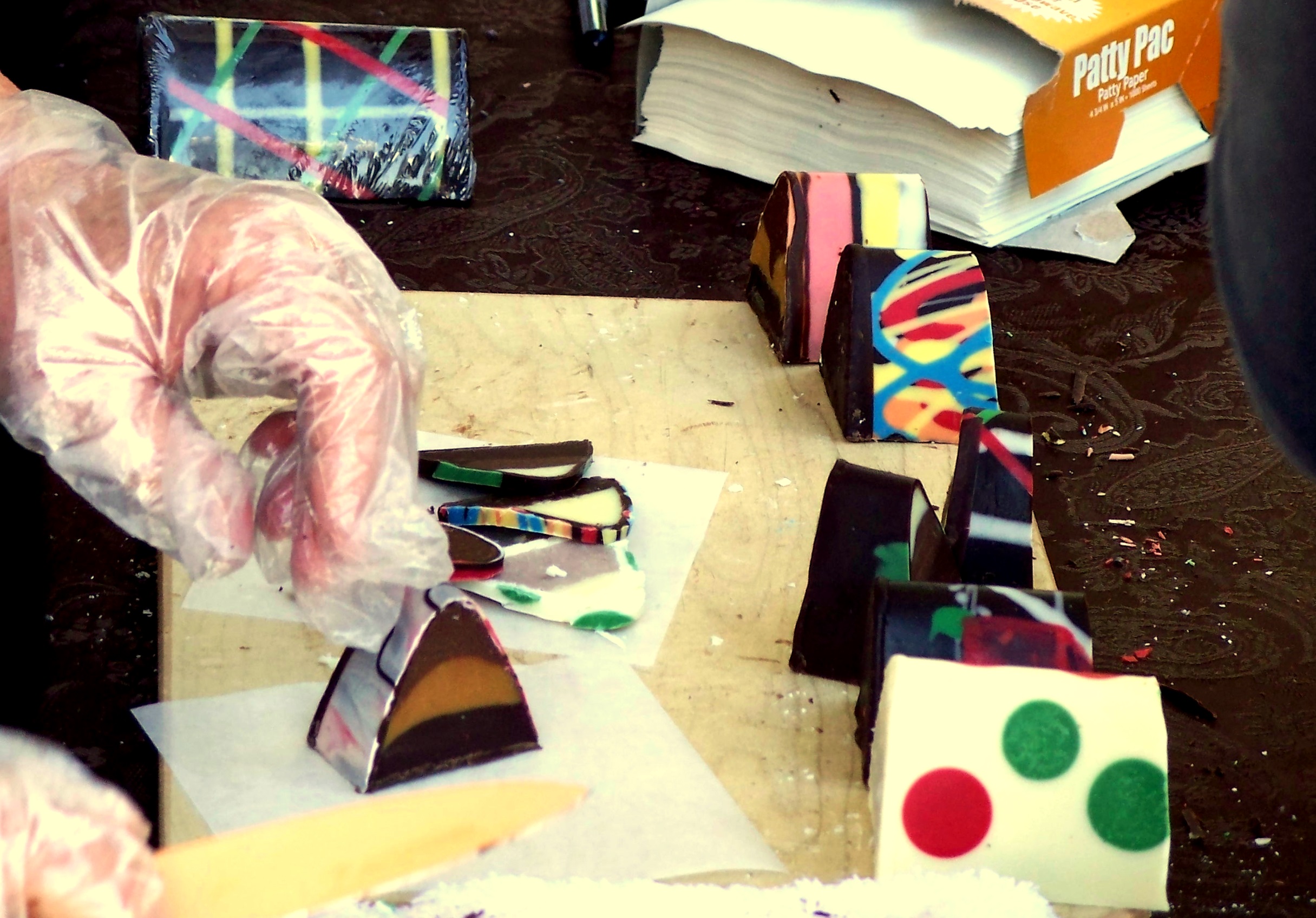
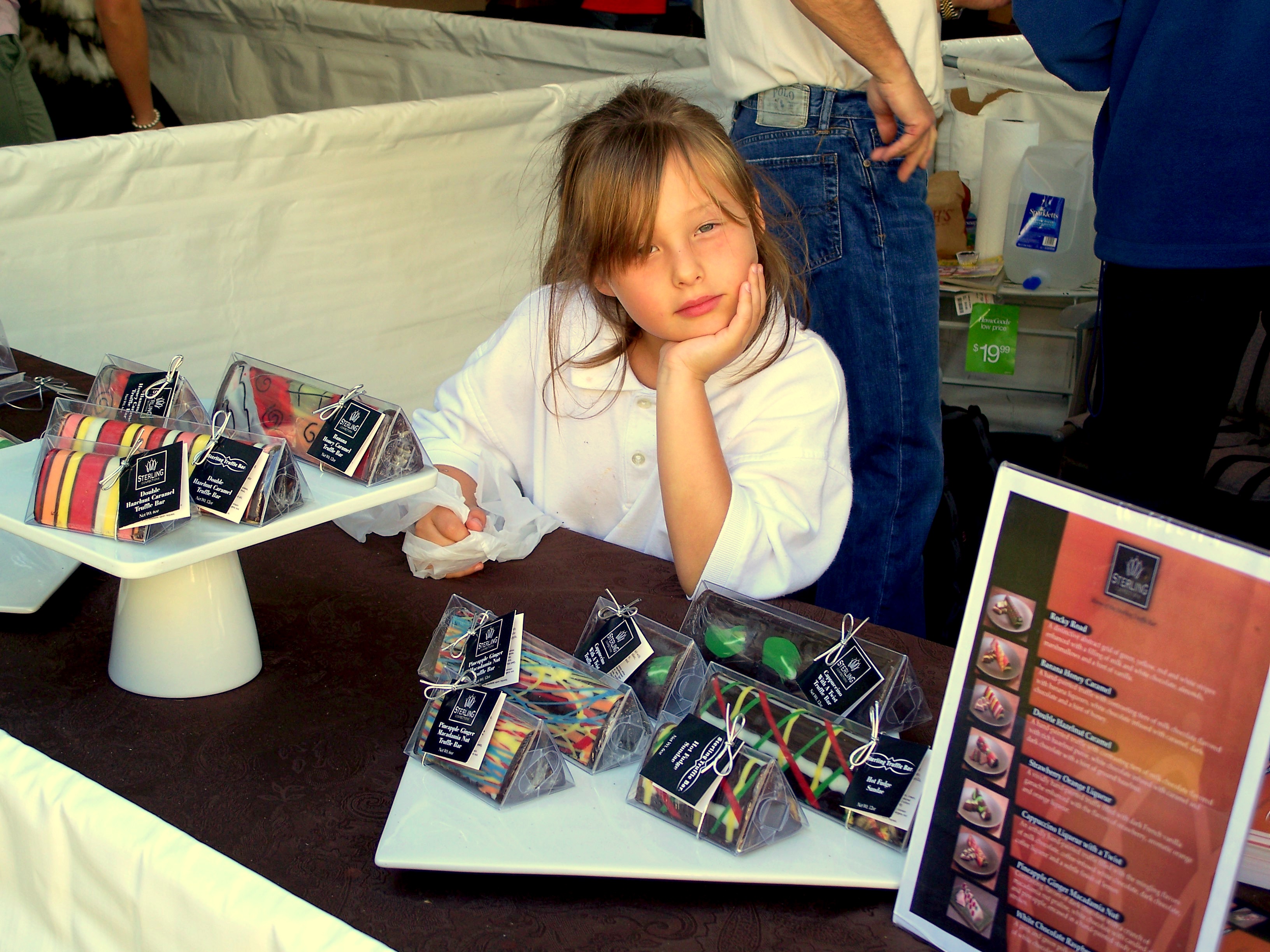
The same can be said of Sterling Confection‘s banana honey truffle bar. These intriguing sushi-looking blocks cost a whopping $25 each at the festival. Most have liqueur flavors and some (a bit too sweet) fruity touch, but the colors are the only thing exotic about them.


The upstairs (the Fountain Plaza area)  had a few more choices, not as splendidly colored as the Lower Plaza, but more (ful)filling.


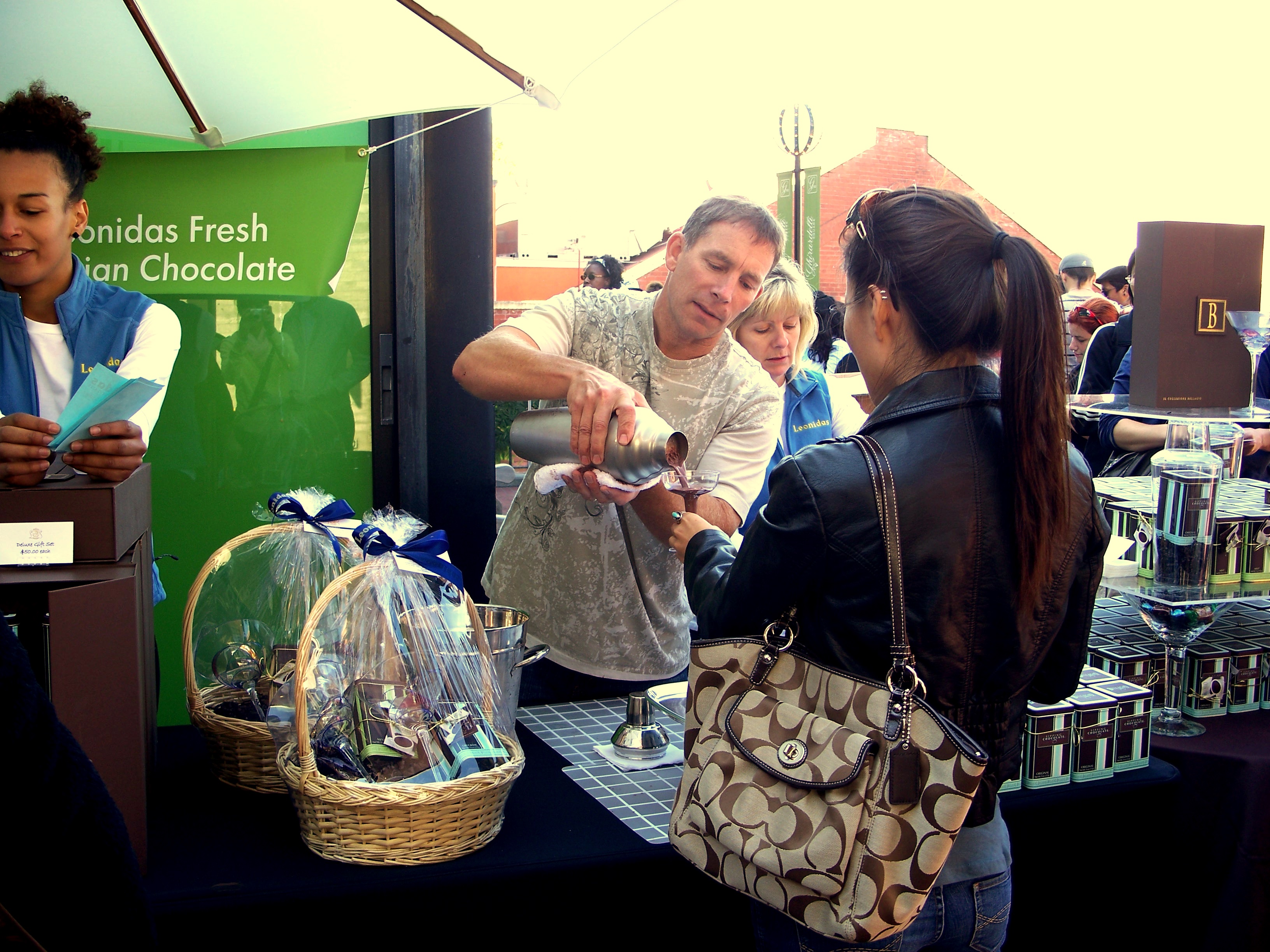
Leonidas‘ chocolate martini was exceedingly popular, the line practically connected the upper and lower plazas.


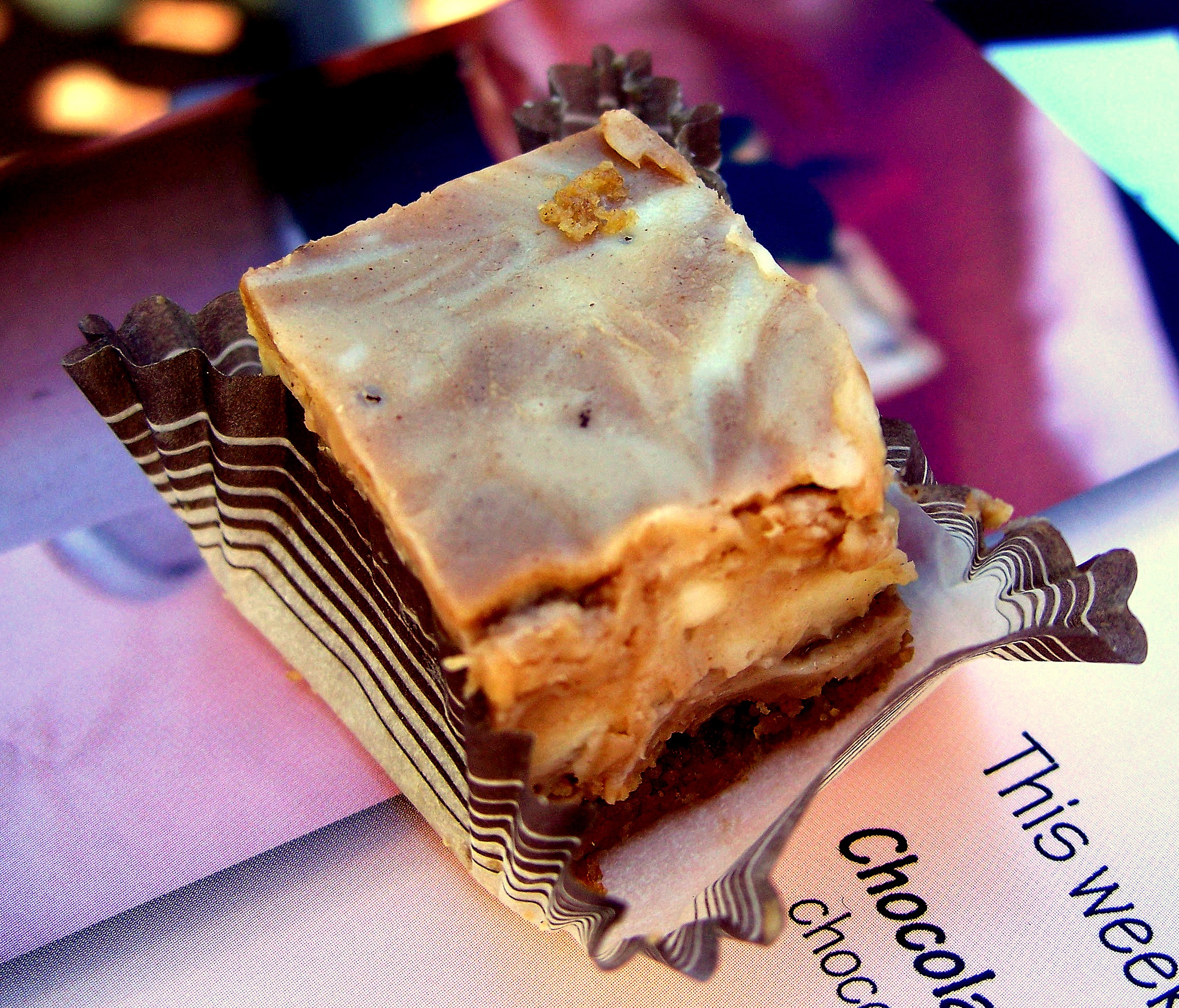
Reuschelle’s marble cheesecake bite was rich, perhaps a bit too rich. At this point all I could dream about was a full glass of ice cold water. One can only handle so much sweets in one day.


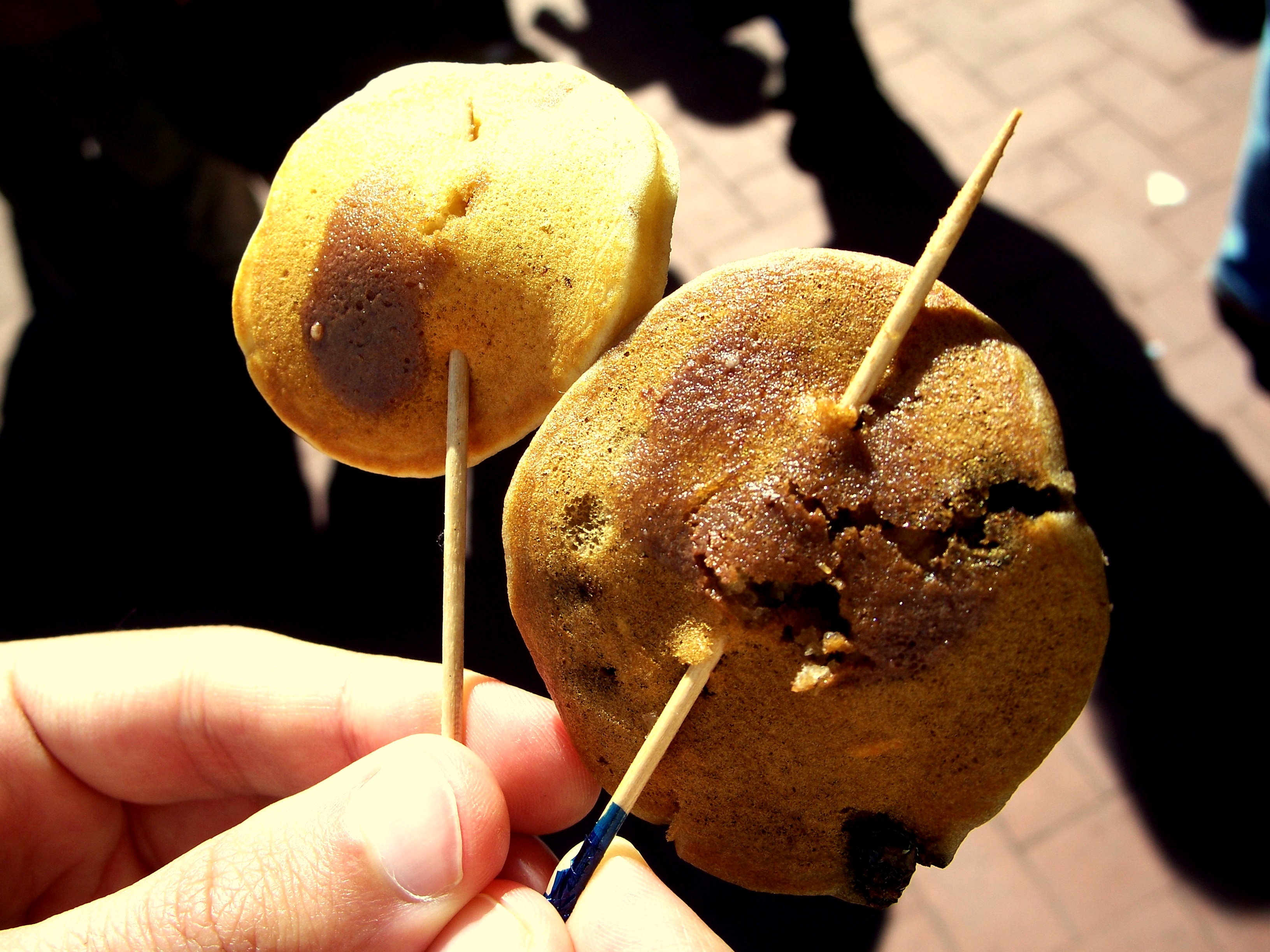
Bo’s chocolate and vanilla mini pancakes… I was getting thirstier, and wanted some real food…


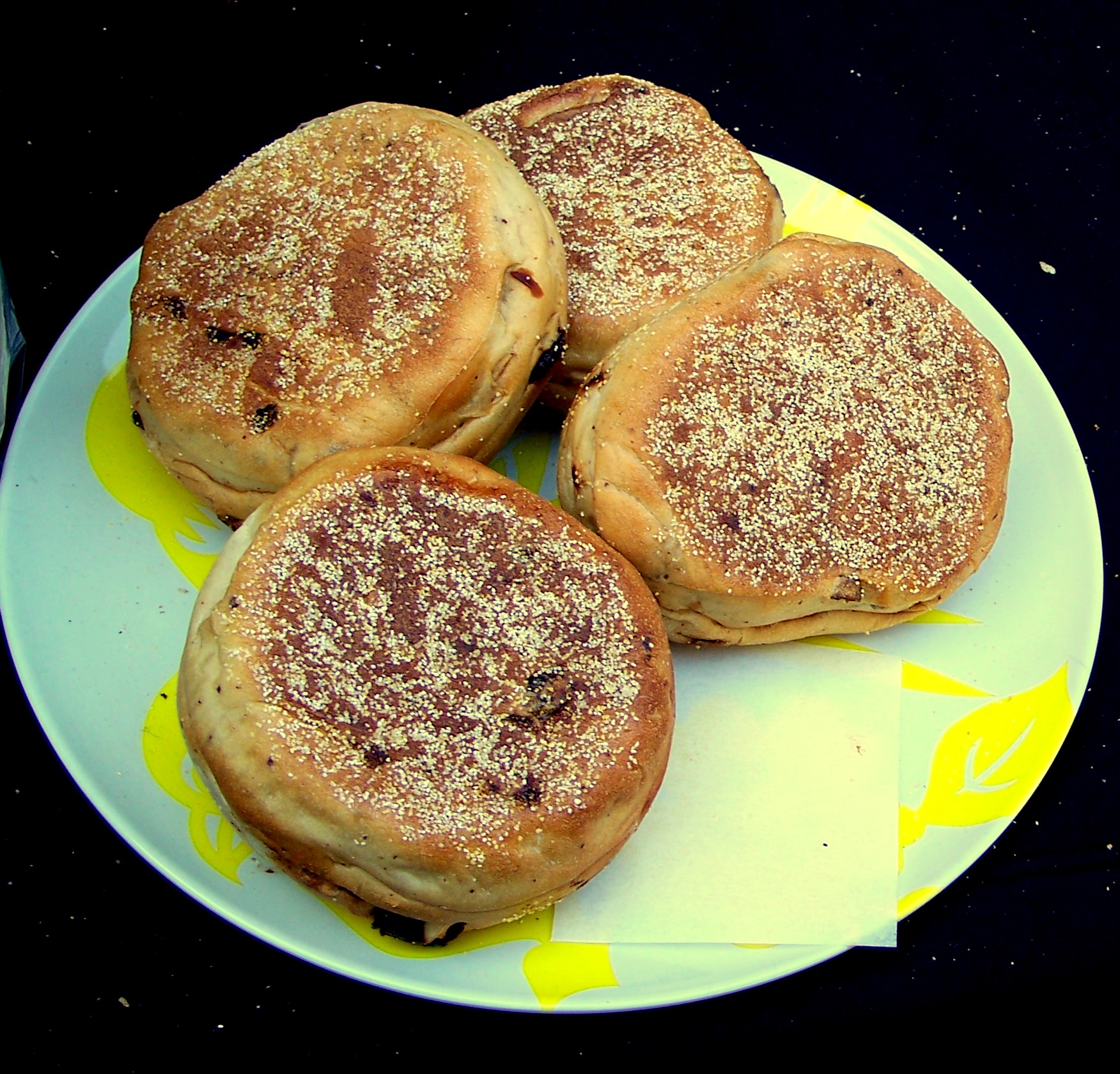
… Which explains why a piece of toasted and buttered cherry chocolate English muffin had never tasted better. Thank you, Leadbetter’s Bake Shop.

So, how was Ghirardelli’s 15th Annual Chocolate Fest? Besides the awesome lemongrass ice cream from DeLise and the tea-infused chocolates from The Tea Room, everything fell a little… unimaginative. In fact, nothing sums up the day better than the expression of this little girl at Sterling Confection‘s booth.

(*) Should I go to another food fest at the end of this month? Women of Taste sounds pretty good. 😛 But is four food festivals in one month a bit too much?

Down the Aisles 5: It’s It

August 27, 2010 By: Mai Truong Category: California - The Bay Area, Review of anything not restaurant, sweet snacks and desserts


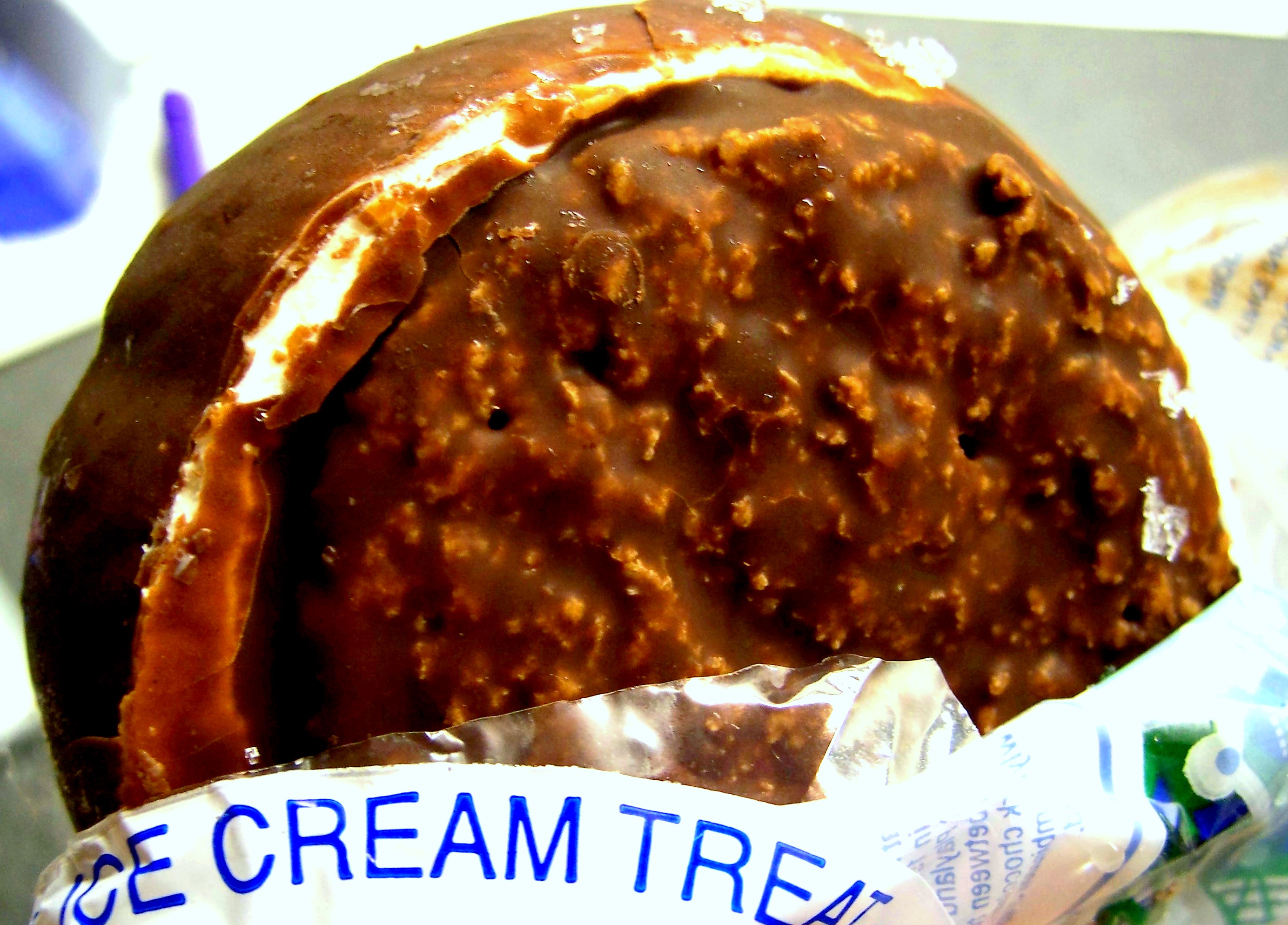
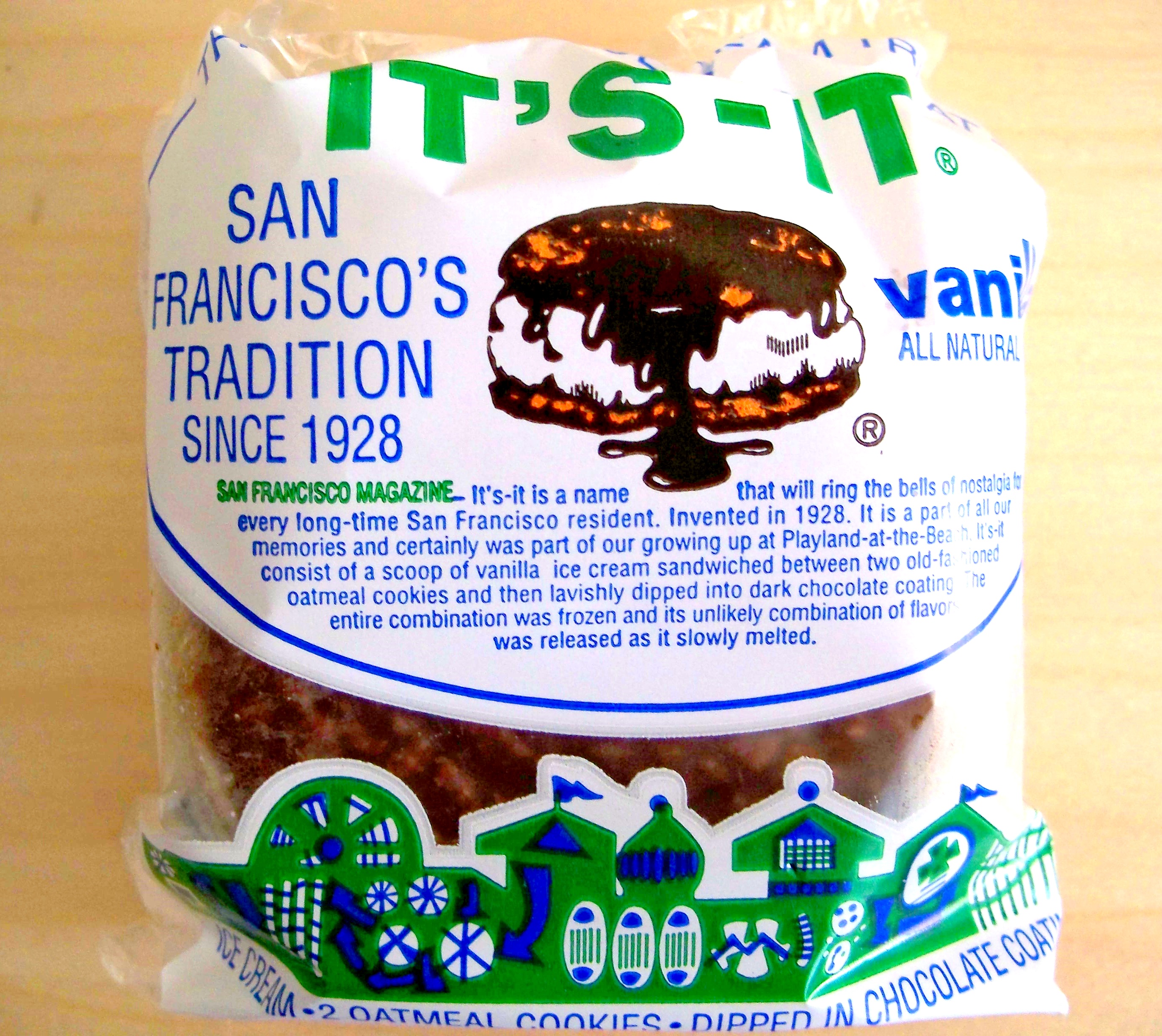
Two oatmeal cookies sandwiching a scoop of vanilla ice cream, everything encapsulated by a dark chocolate shell.

Chocolate shell with ice cream isn’t really my thing, because stuff breaks and spills, like you’re eating a hamburger and look down and see a salad on the burger’s wrapper, except now the melting ice cream replaces the lettuce and mayo. Oatmeal cookie is another not-my-thing, as it’s just too crumbly. But somehow this combination works.

The chocolate keeps the oatmeal cookies from turning into oatmeal, and the oatmeal cookies are soft and chewy enough that they don’t push ice cream out in the back (as much) when you take a bite. No wonder It‘s survived since 1928. It predates the Golden Gate Bridge by 9 years.

San Fran’s tradition sold in box of three (why 3?) for $3.69 at Safeway.
Oh, regarding health concerns (because that’s a trendy topic these days), It’s It contains no trans fat or high fructose corn syrup. Yippie!

Previously on Down the Aisles: Bubble chocolate bar

DISCLAIMER: I received no free product or monetary gift in exchange for this review.

Tags: ,

Sandwich shop goodies 10 – BĂĄnh chuối nướng (Vietnamese banana bread pudding)

August 25, 2010 By: Mai Truong Category: California - The Bay Area, Comfort food, Fruits, One shot, Southern Vietnamese, sweet snacks and desserts, Vietnamese


Every now and then I feel blessed to grow up in the tropics. It doesn’t let you wear scarves and gloves, but it has bananas. Many types of bananas. There are at least 10 common cultivars in Vietnam, most are for eating fresh as a fruit, some for eating raw as a veggie with wraps, and one is particularly favorable to be cooked in desserts. And desserts with bananas are just about the most addictive thing out there.
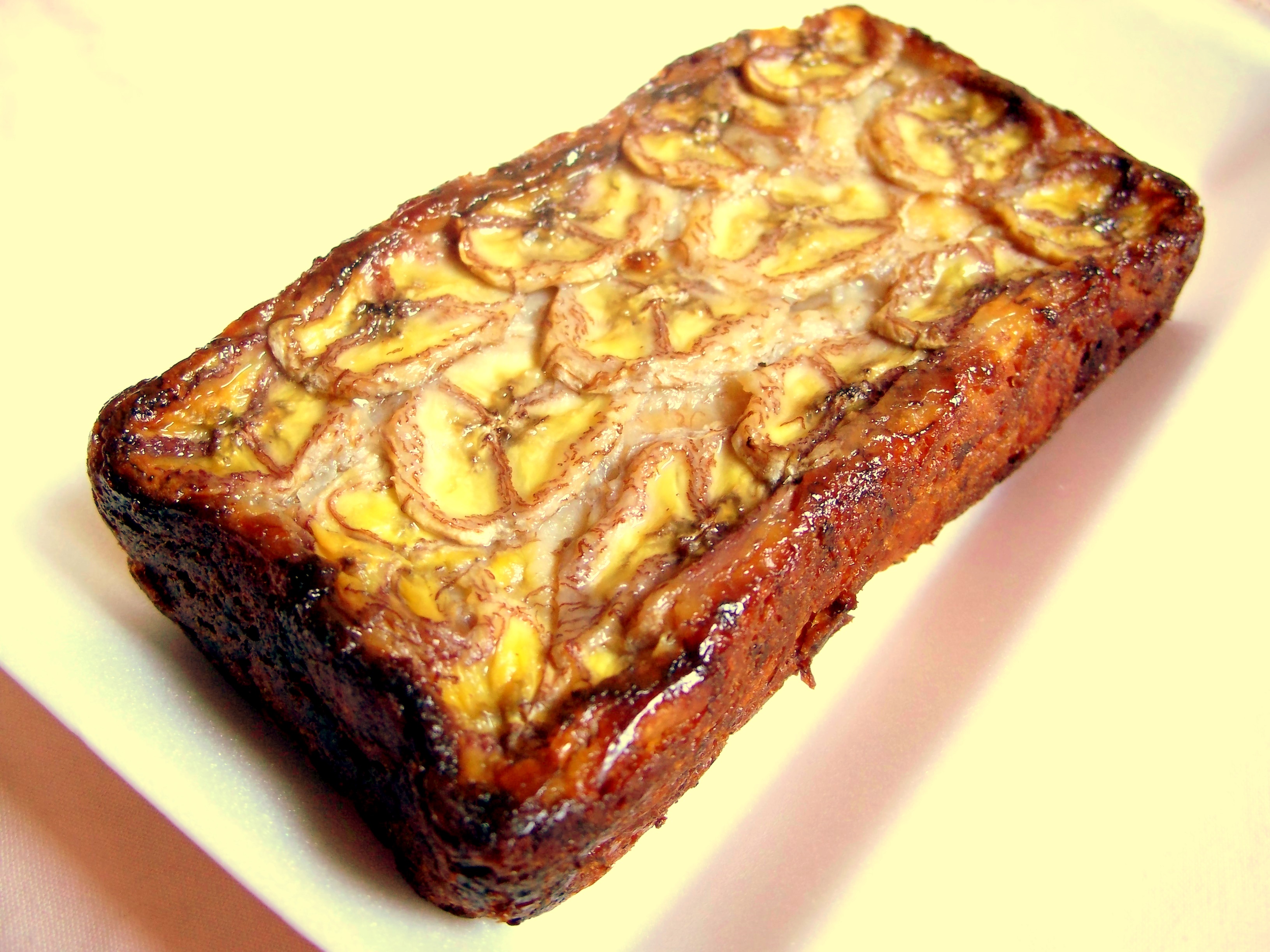
Take this banana bread pudding for instance. I intended to cut one little slice each day to savor it for over a week, but next thing I knew I was gorging half the slab after dinner. The bread is part chewy, part spongy, mostly firm, juiced up by a semisweet layer of sliced banana on top. It needs no sauce, no ice cream, no chocolate. It is good both at room temperature and right out of the fridge.

The description simply can’t capture how delicious this thing is. And it’s not even a well made banana bread pudding, you know, the type of treat that grandmother would make at home or the recipe that a vendor has perfected over ten years of peddling dessert banh’s.

It’s just a cling-wrapped 3.75-dollar piece of cake that I bought from a banh mi store. It has only one layer of bread and one layer of banana. And it is Cavendish banana, the most popular type, if not the only type at many grocery stores, of banana that Americans have known and loved.

Not that I have anything against Cavendish bananas. They’re big. They’re alright for eating fresh. But a Cavendish’s flesh is no match for chuối sứ when it comes to cooking dessert.

Chuối sứ, literally ambassador (“sứ”) banana (“chuối”), was brought to the Vietnamese royal courts by Thai ambassadors (hence it’s also called “chuối xiĂȘm”, as “XiĂȘm”  is another word for Thai). Like most bananas, chuoi su is considered native throughout Southeast Asia, where it’s known as siusok (Philippines), kluai namwa daeng (Thailand), and pisang siem (Indonesia). Scientifically, it is categorized under Triploid ABB, Musa x paradisiaca, although the latter is disputable as a general name for all bananas.

What I don’t get is the ABB classification. It signifies a below-average score, while Cavendish, a Musa acuminata, is in the AA group. Sure, chuoi su is shorter than Cavendish (less than the length of my hand from wrist to finger tip), but it is stout like a good bratwurst. In practice, chuoi su is more favorable for both eating and cooking because of its firm flesh, slightly gummy texture, and raisin-like sweetness, all of which can endure simmering, grilling, baking, steaming, and boiling. The banana just wouldn’t fall apart or lose its “honey”.

The best part is, it’s easy to grow, so it’s among the cheapest types of bananas in Vietnam’s markets. Not in America though. Which is why the banana bread pudding I have here tastes slightly sticky in the back of the throat and not as sweet as it could be. Nonetheless, it’s the champ of all sweet goodies we’ve gotten from banh mi stores so far.

Buy it: Kim’s Sandwiches, 1816 Tully Rd 182, San Jose, CA
Bake it: BĂĄnh chuối nướng recipe

Previously on Sandwich Shop Goodies: bĂĄnh bĂČ bĂŽng (steamed sponge cupcake)
Next on Sandwich Shop Goodies : steamed cassava

Sandwich Shop Goodies 9 – BĂĄnh bĂČ bĂŽng (Steamed sponge muffin)

August 12, 2010 By: Mai Truong Category: California - The Bay Area, Chinese, One shot, sweet snacks and desserts, Vegan, Vietnamese

Does this happen to you often? You give a friend something to taste, he says “It’s good. What’s it called?”. You’re stumped. The English translation is easy, but it would make no sense because the name matches neither the food, the ingredients, nor the method of cooking.


It happens to me quite often, and usually I shut off the questions with “Just eat it!”. But I wonder, too. Southern Vietnamese folks have a niche for obscure naming scheme. The names could have sprouted from some jokes, some overly simplified impromptu description they thought of at the moment, some mispronounced foreign names, who knows. The result is intelligible and untranslatable, like bĂĄnh khọt, bĂĄnh tĂ©t, cháșŁ Ä‘Ăčm. The translatable-but-not-always-understandable cases happen when they attach random verbs after the categorical nouns to make a new name, like bĂĄnh xĂšo – “sizzling banh”, bĂĄnh lọt – “falling-through banh”, bĂČ nĂ© – “dodging beef”, whatever that’s supposed to mean. BĂĄnh bĂČ belongs to this flock. Cow bĂĄnh? Unlikely, the thing is vegan to an n. I even thought about the possibility that the name is derived from its resemblance of the cow’s tripe, but they would have called it tripe bĂĄnh then. Crawling bĂĄnh? Less unlikely, more bizarre. Turns out some grandma saw the rising dough attempt to crawl over and out of the mixing bowl and thought “Gotcha! I shall name you the Crawling Banh”. Vietnamese food is so alive.

Technically the Mekong delta cooks got this recipe from Chinese immigrants and twitched things around a little. They call it “bak tong goh” (white sugar cake) in China. So plain. Bak tong go almost always gets sold with bĂĄnh tiĂȘu: you tear open the hollow doughnut, insert bak tong go into the cavity, and get a fried-steamed-fried triple layer galore. I’m not too entranced by this “white sugar cake” because of its sour hints, which come from fermenting the batter with syrup. The Vietnamese rendition of bak tong goh, bĂĄnh bĂČ, does not let the batter go sour, and is thus a charm.


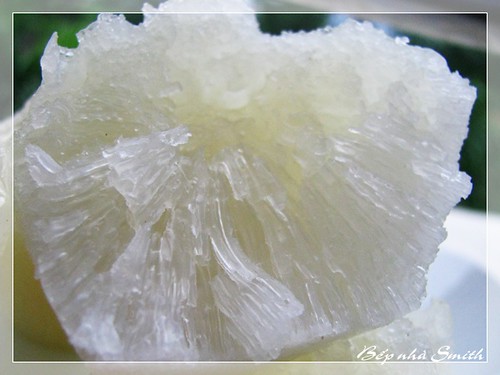
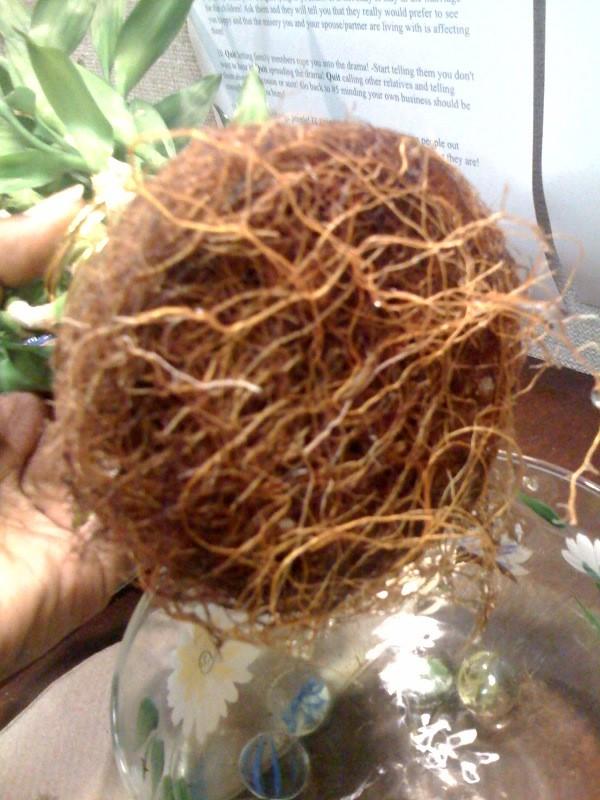
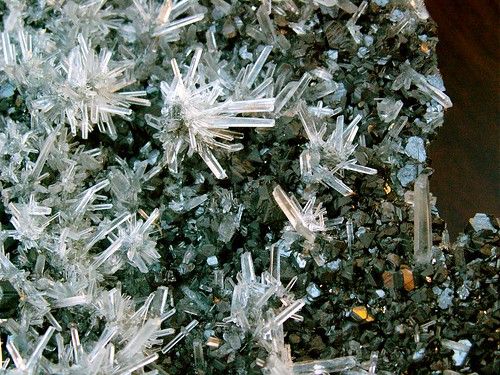
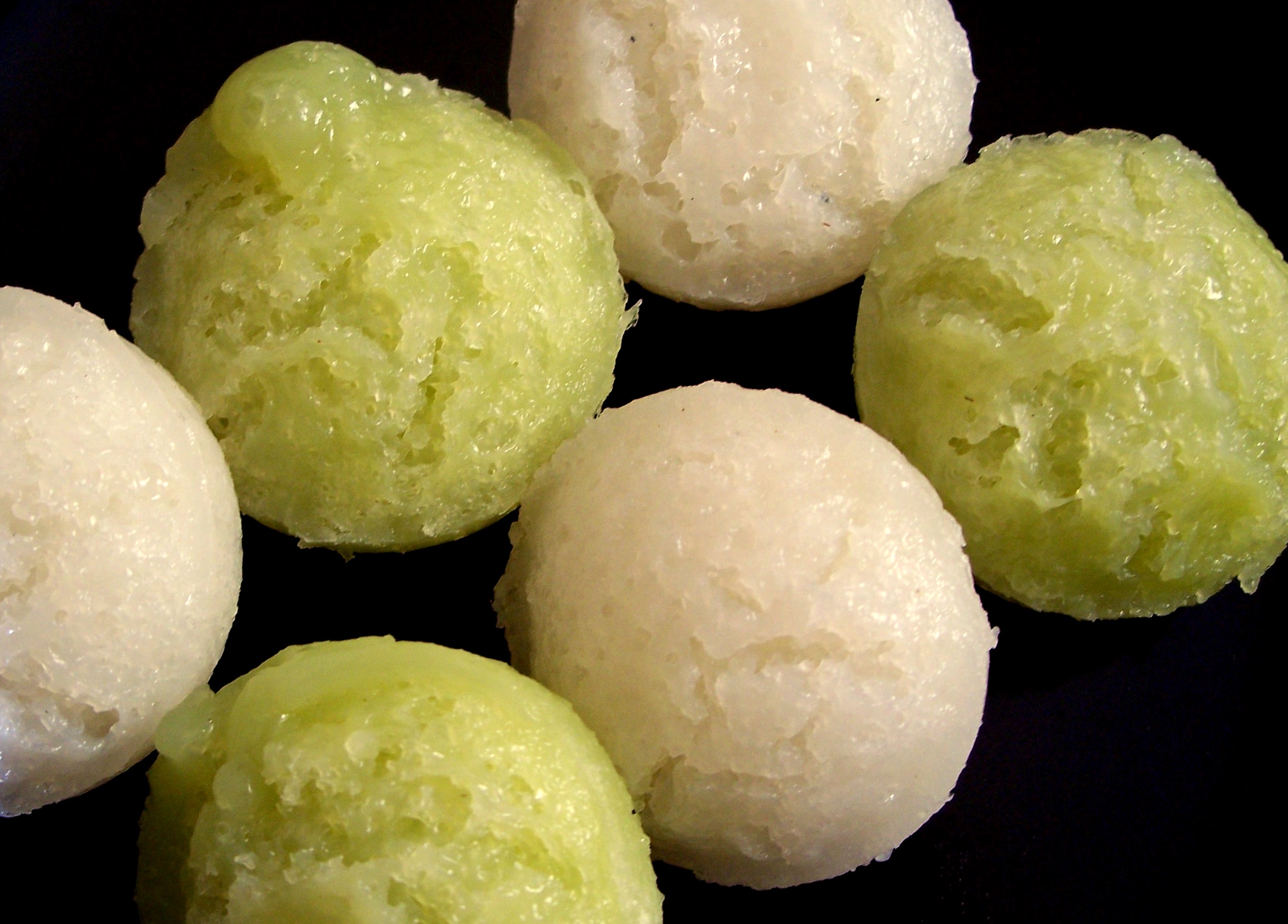
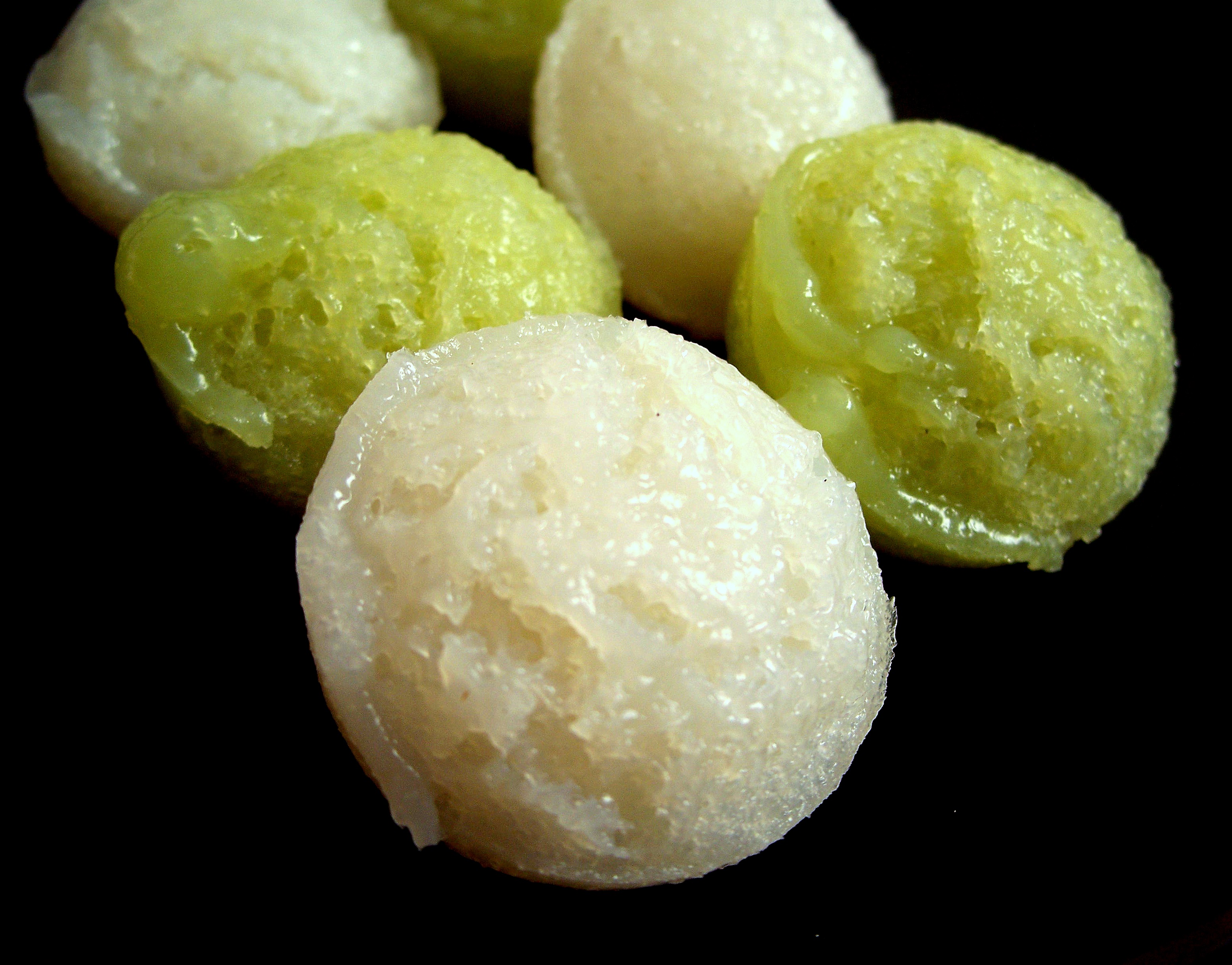
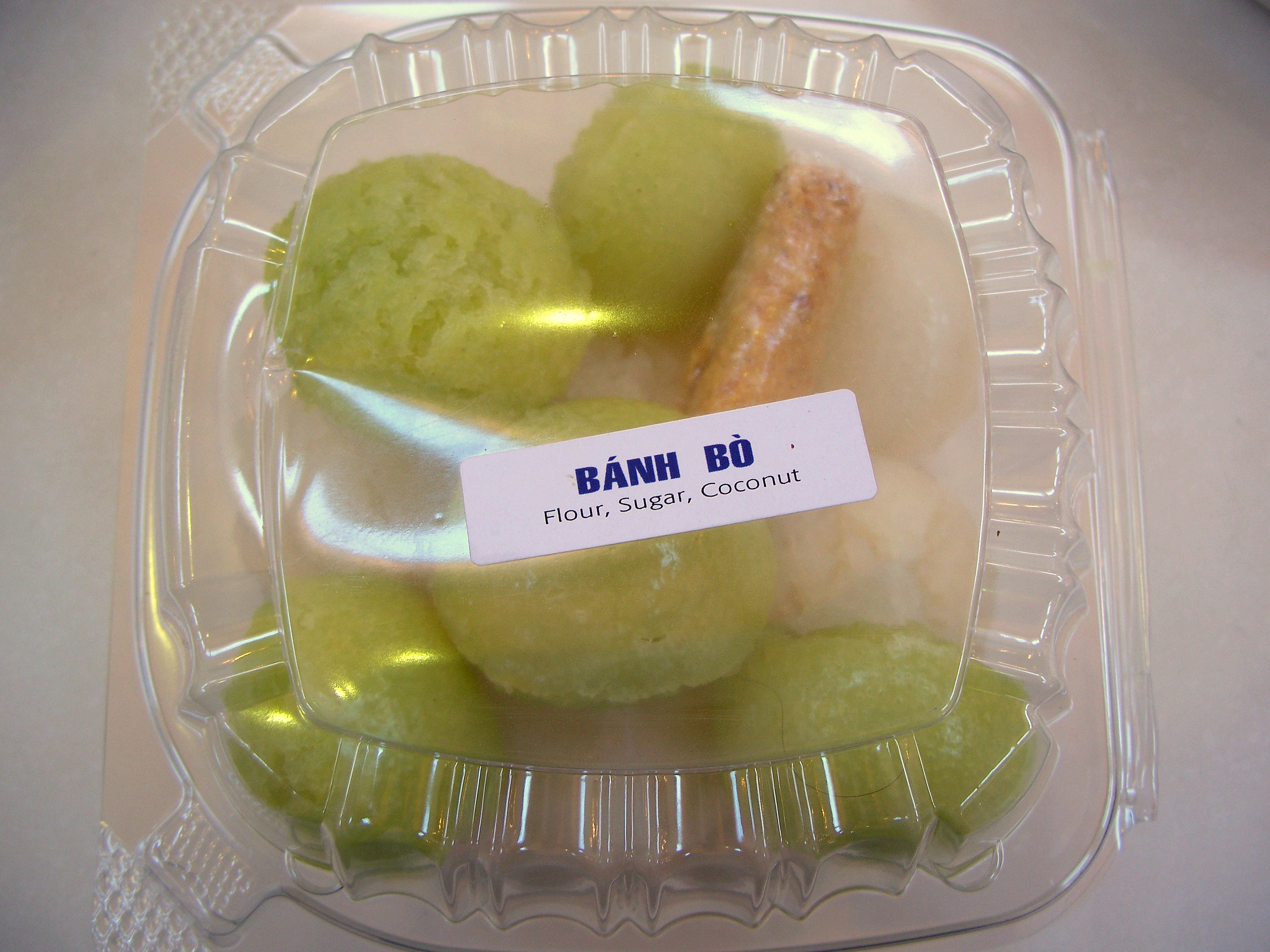
They shape like mini muffins, and look like fluff balls, so we call them bĂĄnh bĂČ bĂŽng – “fluffy bĂĄnh bĂČ”. The porous inside structure is compared with honeycombs or bamboo roots, or even crystals if you let your imagination go far enough. They’re either green or white with a coconuty sweetness, to pair with the burnt savory taste of toasted sesame, sugar and salt mix that comes sprinkling on top. They’re bouncy and chewy, and extremely light. We used to get the morning fresh batches from Ngọc SĂĄng bakery, 199 Ly Tu Trong, District 1, Saigon.


Now we settle for the plastic-packaged $2.50-worth bunch from Kim’s Sandwiches, 1816 Tully Rd #182, San Jose, CA. Certainly not half as good as the fresh ones, but it’ll do.

Previously on Sandwich Shop Goodies: bĂĄnh bao chỉ (loh mai chi)
Next on Sandwich Shop Goodies: bĂĄnh chuối nướng (banana bread pudding)

Hoang Tam at Playing With My Food has a nice simple recipe of bĂĄnh bĂČ.

Sandwich Shop Goodies 8 – BĂĄnh bao chỉ (loh mai chi)

August 01, 2010 By: Mai Truong Category: California - The Bay Area, Chinese, Comfort food, One shot, sticky rice concoctions, sweet snacks and desserts, Vegan, Vietnamese


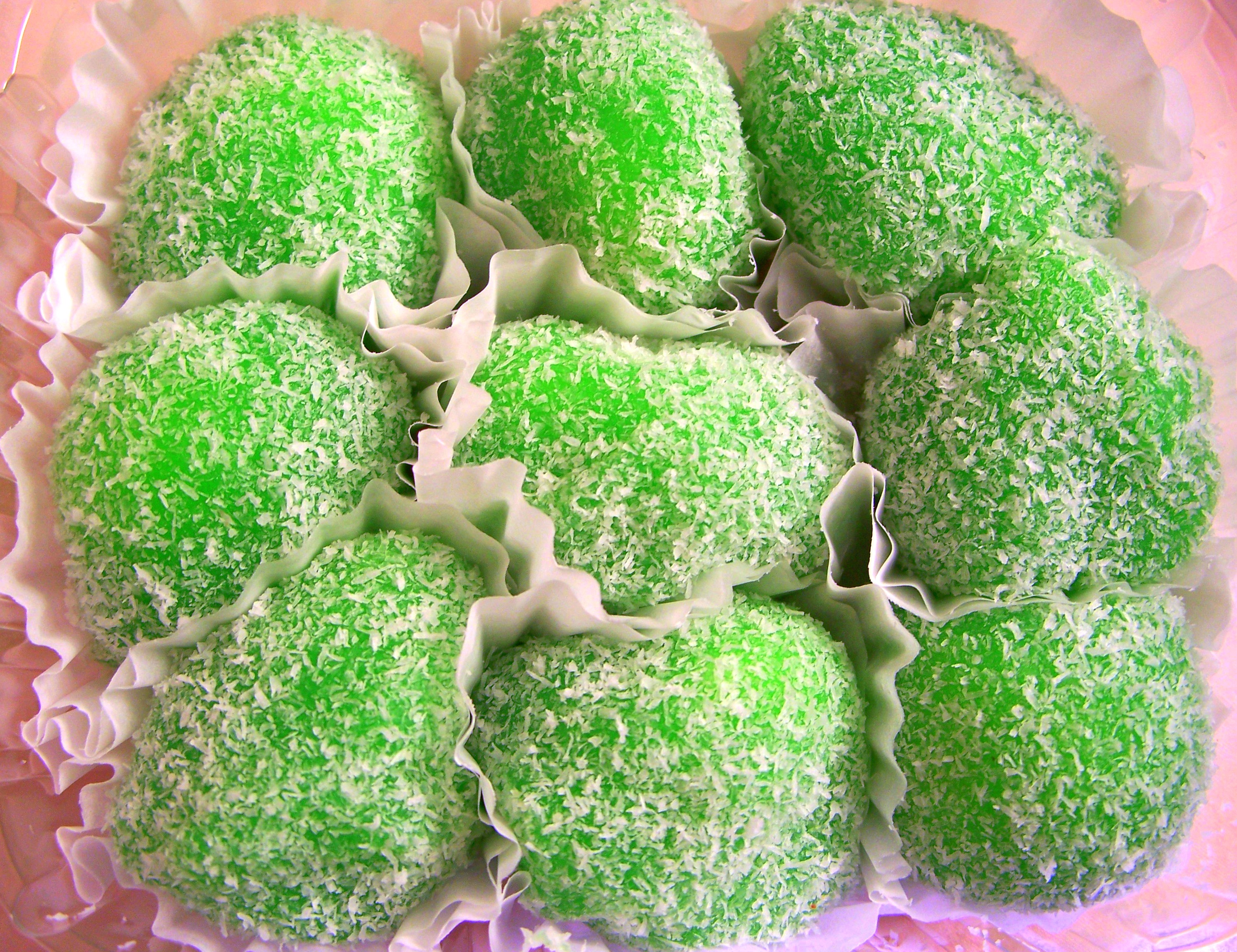
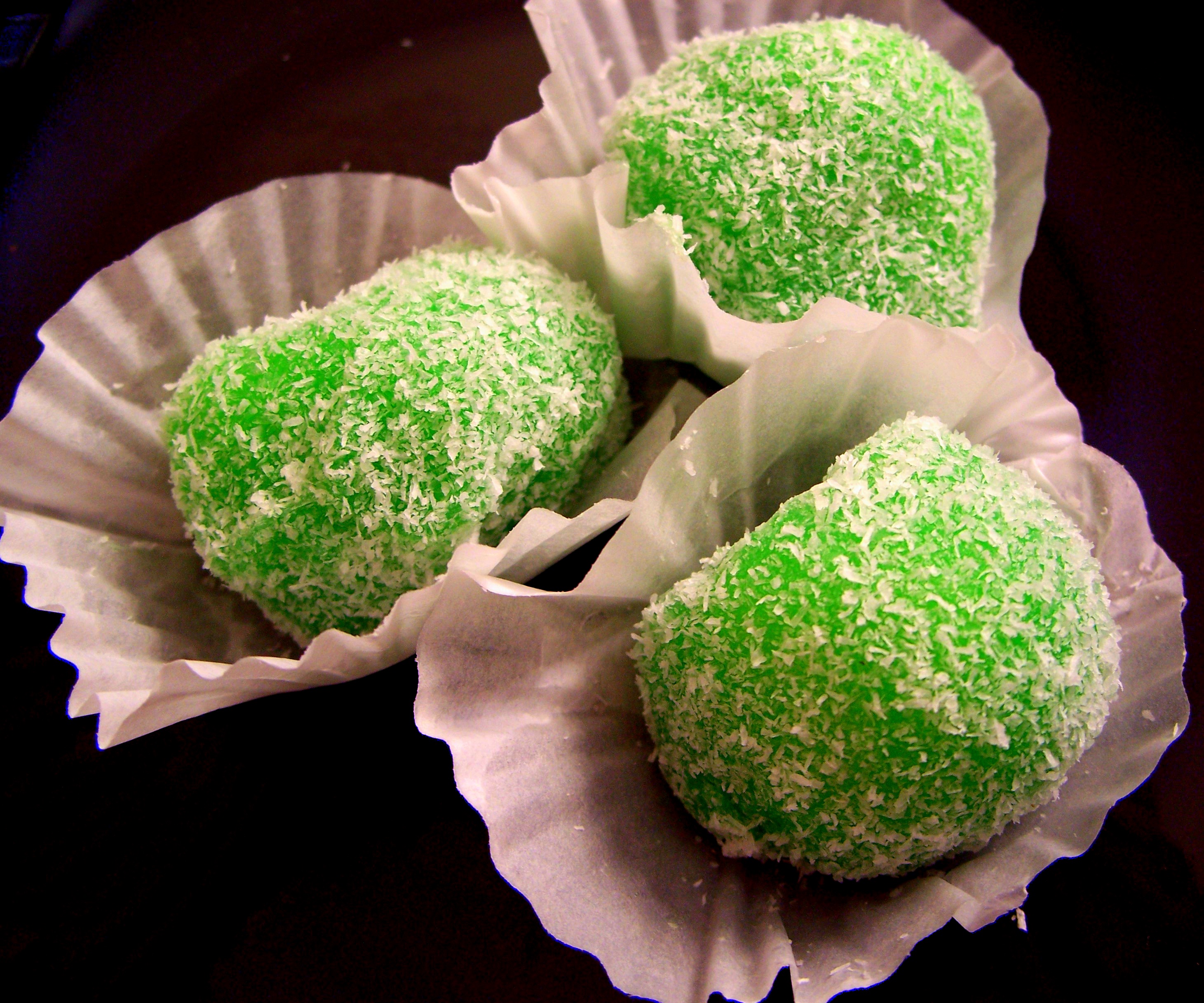
Yet another sticky rice snack that I vaguely remember eating one or twice during the early childhood, and found again in a San Jose sandwich shop more than ten years later. I was excited when I saw these green balls covered in coconut bits.

We Vietnamese call them bĂĄnh bao chỉ to distinguish from the meat-filled steamed bun made from wheat flour known to us as bĂĄnh bao. Just as bĂĄnh bao comes from China, so does bĂĄnh bao chỉ. Just as bĂĄnh bao are baozi and mantou in Mandarin, mandu in Korean, manju in Japanese, manti in Turkish, and many more, bĂĄnh bao chỉ too has its share of names.

The most-result-yielding Google search belongs to loh mai chi, commonly shown as little sticky rice flour dumplings with sweet ground peanut filling. Other variations in Malaysian and Chinese food blogs are snowball, loh mi chi, chi fa bun, muah chee (yeah, these are really cute you’d want to kiss them too)*, noh mi chi, and ma zi. Once again, I feel the need to learn Mandarin. Some say “noh mi” means “sticky rice” in Cantonese, but what does “chi” mean? Others, including the Vietnamese sites, insist that “chỉ” in bĂĄnh bao chỉ comes from “mĂ  chỉ”, which is “ma zi”, which is “sesame seed” in Mandarin, which means “mi chi” is “sesame” (recall mi lao – sesame fluff) and we’re left with “noh” being “sticky rice”. It is reasonable enough if we consider that there are four types of fillings for bĂĄnh bao chỉ: black sesame, coconut, mung bean, and peanut. But the taste I had from childhood was the salty and sweet ground peanut in a gummy, springy thin layer of white dough coated with flour. Sesame filling must be a new twist.


And so are the vibrant green color and the coconut bits. And the size. Cheap bĂĄnh bao chỉ used to be sold on wheels: an old Chinese man peddled around the neighborhood with a glass tank on the back of his worn bicycle, the tank half filled with soft white balls as big as tangerines. Now these balls are about an apricot each, fit snugly in a plastic box and sold for $2 at Kim’s Sandwiches. Not only do they lose the romantic authenticity of a street food, they also taste like soap. The green dough, instead of having pandan flavor, reeks of artificial chemicals. The mung bean paste is sickeningly sweet.

I’ve never been so disappointed with a snack food. Do NOT buy these green balls, no matter how good looking they are. Search online for loh mai chi recipes, or search the streets for old Chinese vendors.

(*) It’s hard to refrain from making the connection between muah chee and the Japanese mochi (daifuku).

The exact origin of mochi is unknown, though it is said to have come from China. The cakes of pounded glutinous rice appear to have become a New Year’s treat during Japan’s Heian period (794-1185). As early as the tenth century, various kinds of mochi were used as imperial offerings at religious ceremonies. A dictionary dating from before 1070 calls the rice cake “mochii.” Around the eighteenth century, people began to call it “mochi.” Various theories explain the name. One is that “mochi” came from the verb “motsu,” “to hold or to have,” signifying that mochi is food given by God. The word “mochizuki” means “full moon.” People of the west and southwest islands called it “muchimi,” meaning “stickiness.”

– from New World Encyclopedia

So I know everybody thinks the entire Far East gets its stuff from China (yeah… no.), but here’s a crazy idea: what if this sticky rice ball with sweet fillings actually originated from Japan, then the Chinese got hold of some, and later passed it down South?

Previously on Sandwich Shop Goodies: báșŻp háș§m (Vietnamese whole kernel grits)
Next on Sandwich Shop Goodies: bĂĄnh bĂČ bĂŽng (steamed sponge muffin)

Chinese candy talking

July 25, 2010 By: Mai Truong Category: Chinese, sweet snacks and desserts, Vegan


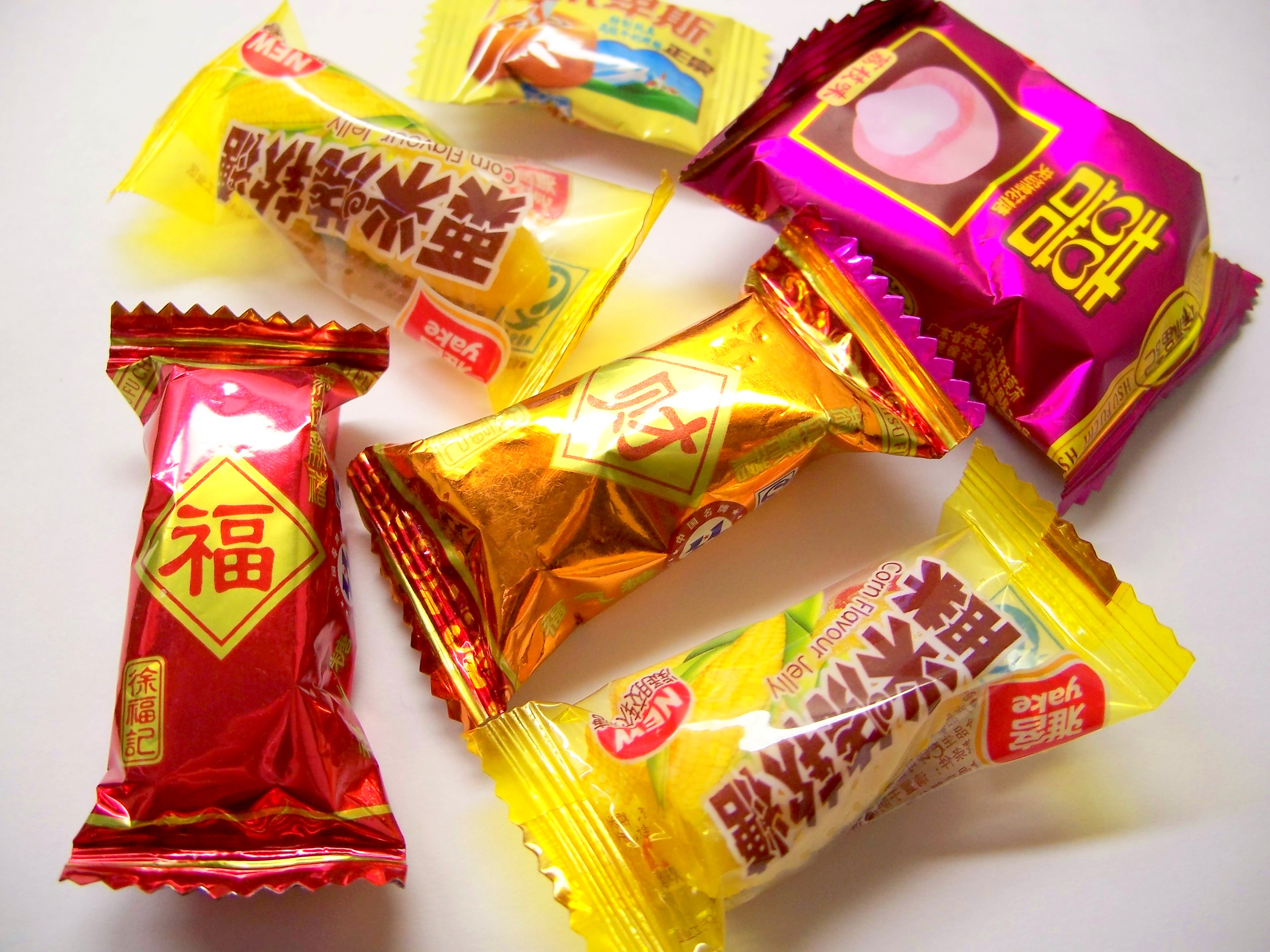
Sometimes, very seldom, I feel the urge to learn Chinese. There are just too many little Chinese things going around without English labels. In fact, the harder it is to describe, the more likely its name is all in Chinese.


Take these sweets for instance. They come in handmade red paper boxes at a wedding.


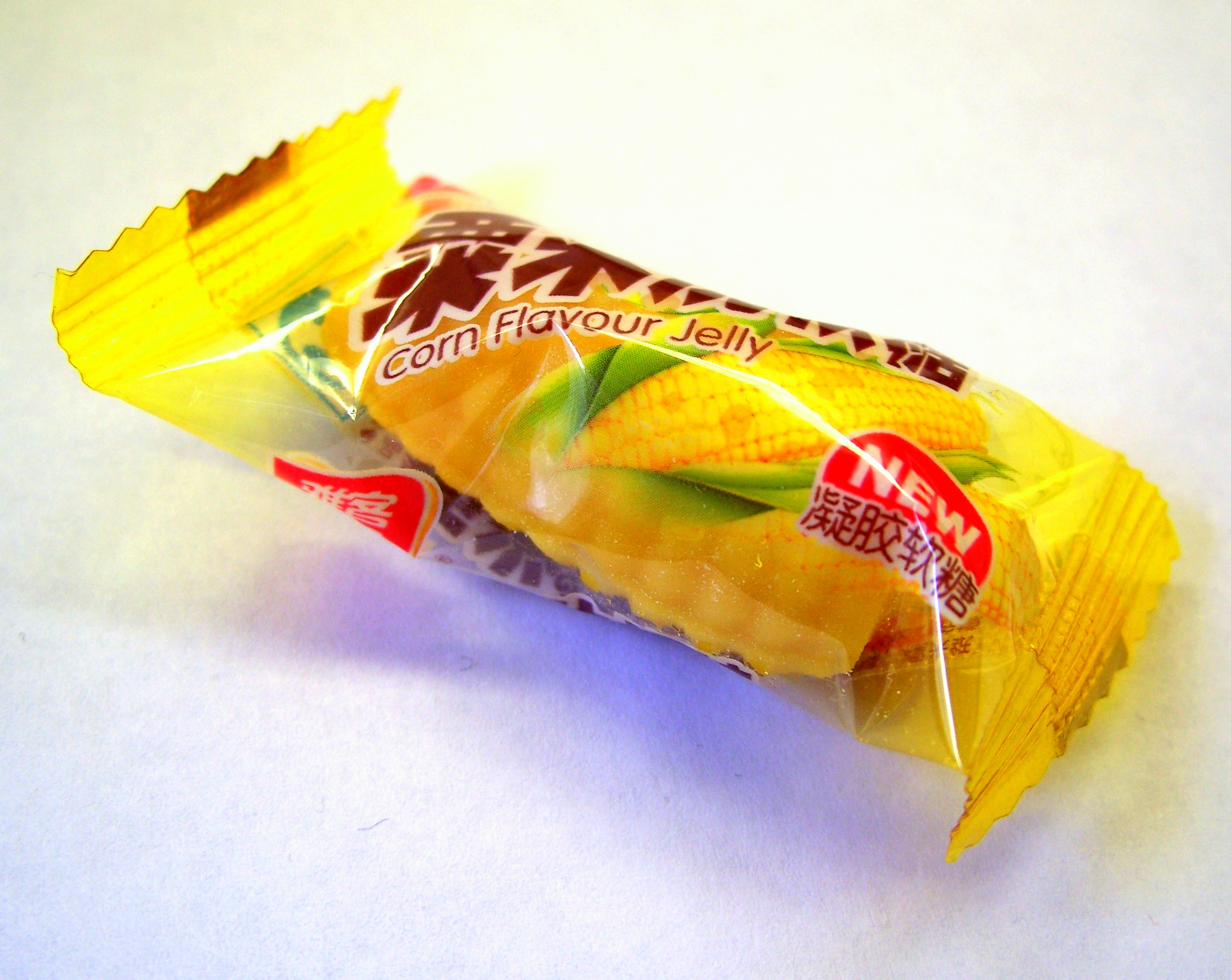
This one shapes like a corn ear, smells and tastes like corn, and aptly has an English name: Corn Flavour Jelly. A nice chew but you gotta git it down fast or you git tireduvit.


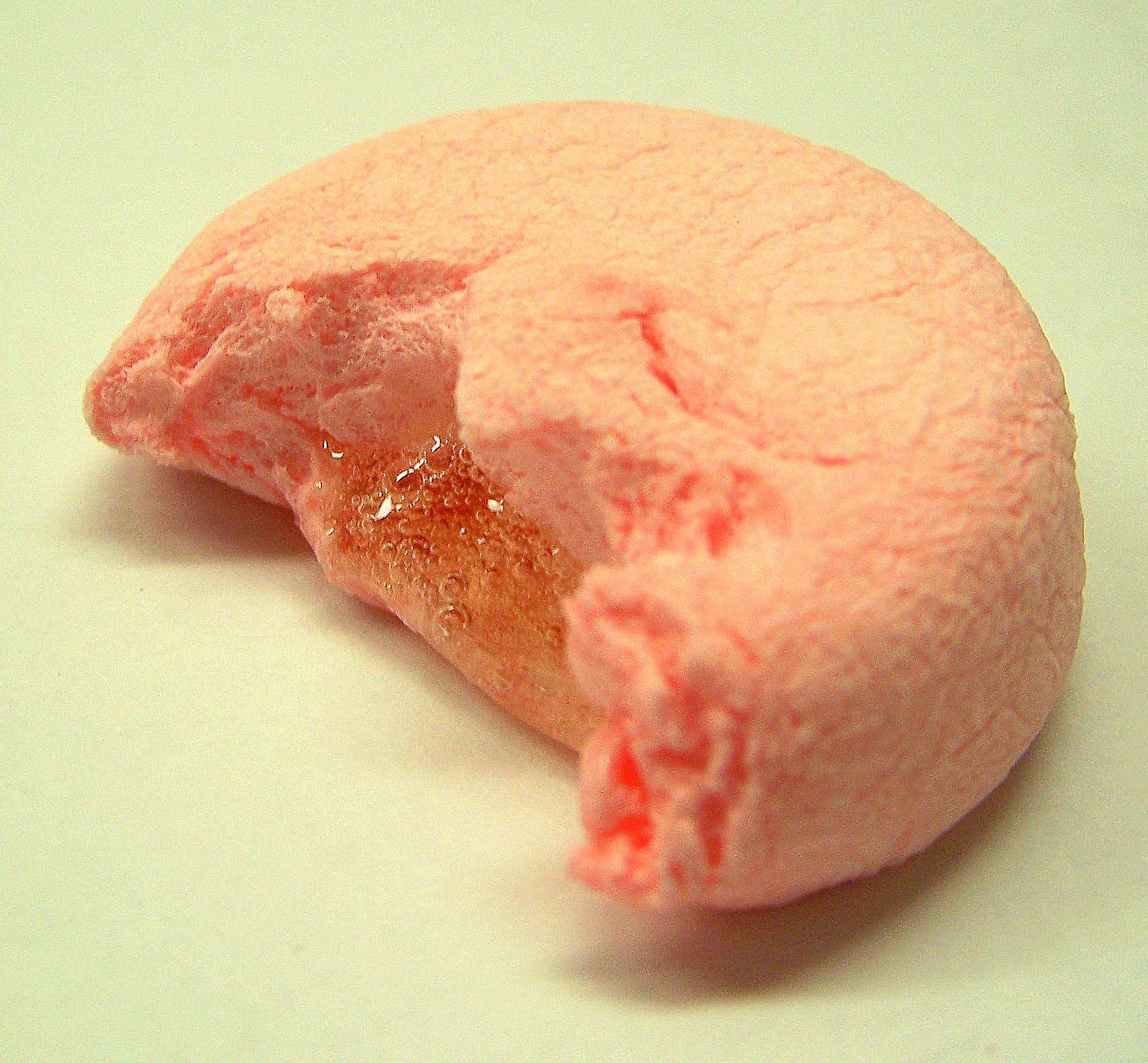
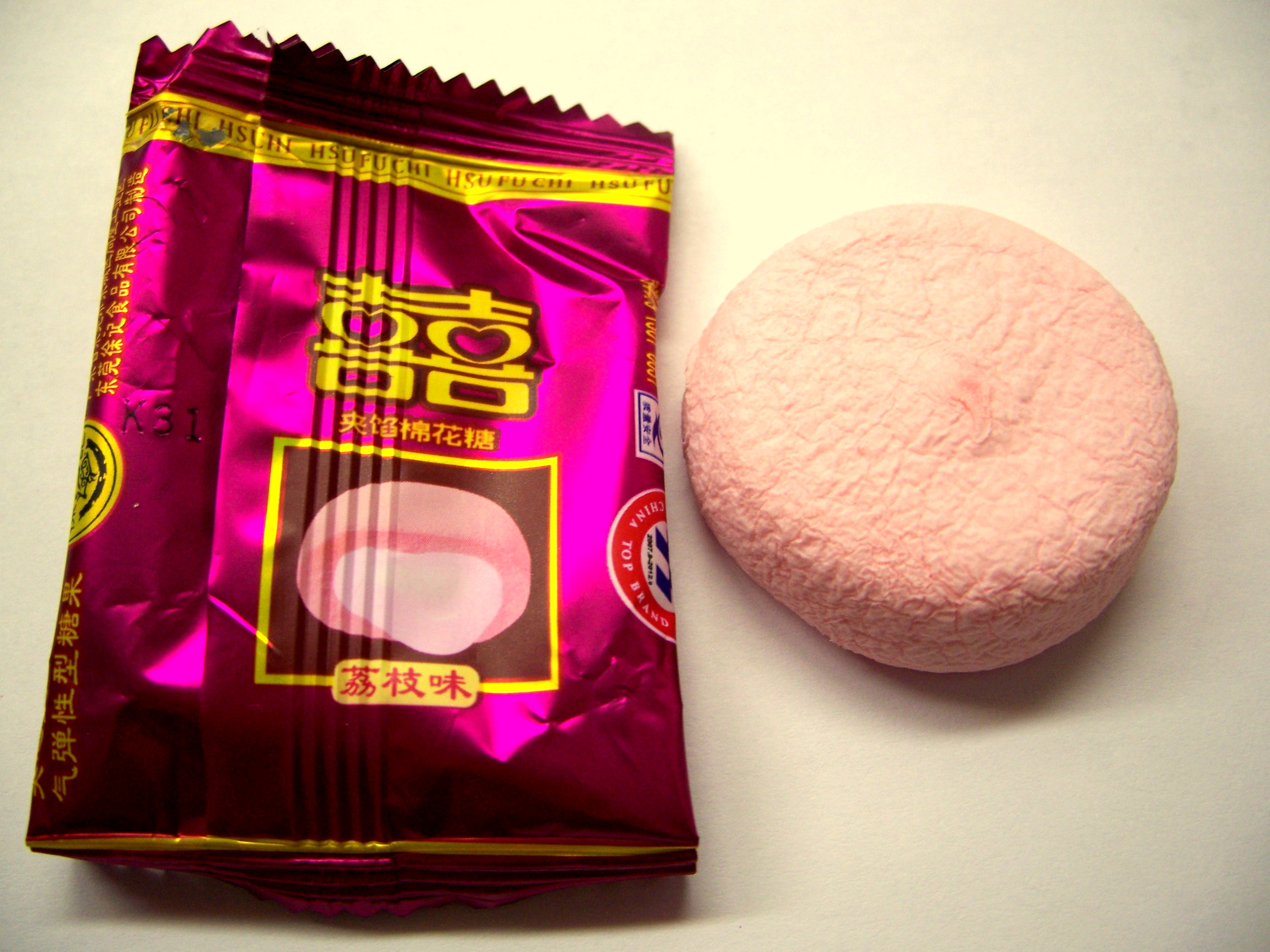
This one doesn’t have a single English word, but it has a picture to tell you what to expect. Pink for strawberry, pillowy for marshmallow, and spewing for syrup. I don’t really care if they put toxins in it, this was a good syrupy center marshmallow bite.


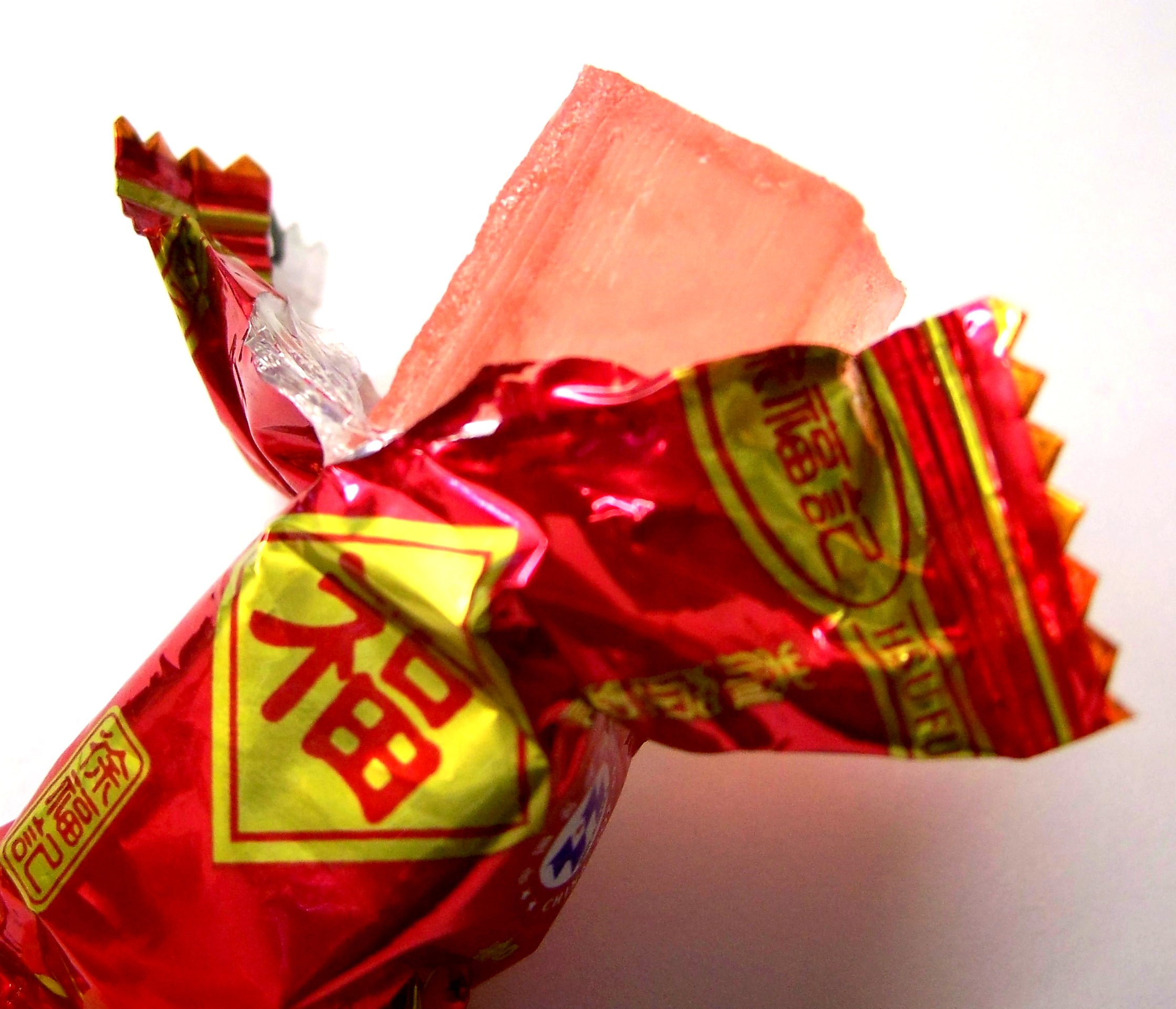
Lastly, this one has neither English nor picture. My best description: a jello stick as long as my pinky, reeking of  unidentifiable artificial chemicals. I can’t tell if it’s supposed to be strawberry or raspberry or cherry, or any flavor for that matter. The taste is about as thrilling as Jesus and Mary Chain’s Some Candy Talking:

Tags: