Flavor Boulevard

We Asians like to talk food.
Subscribe

Archive for the ‘noodle soup’

A Haiku in College Station

April 05, 2011 By: Mai Truong Category: Comfort food, Japanese, Korean, noodle soup

Afternoon leaves fall,
family of three gathers
by hot noodle soups.


How d’ya like my first ever haiku, inspired by a linner (lunch/dinner) at Haiku? 😀 5-7-5 syllables (not on, though), with kigo (seasonal reference) and kireji (cutting word) too… You can’t say I didn’t try.


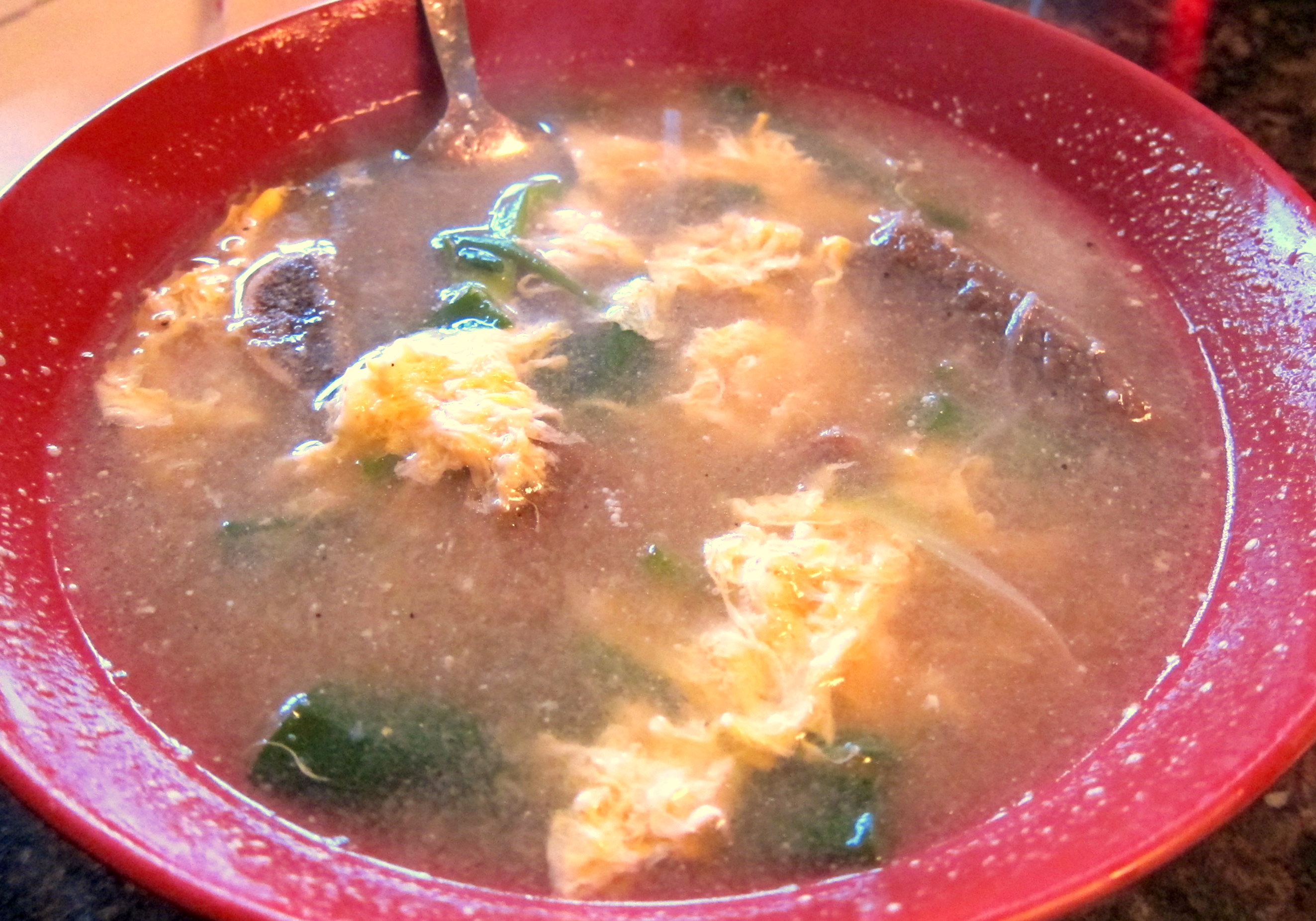
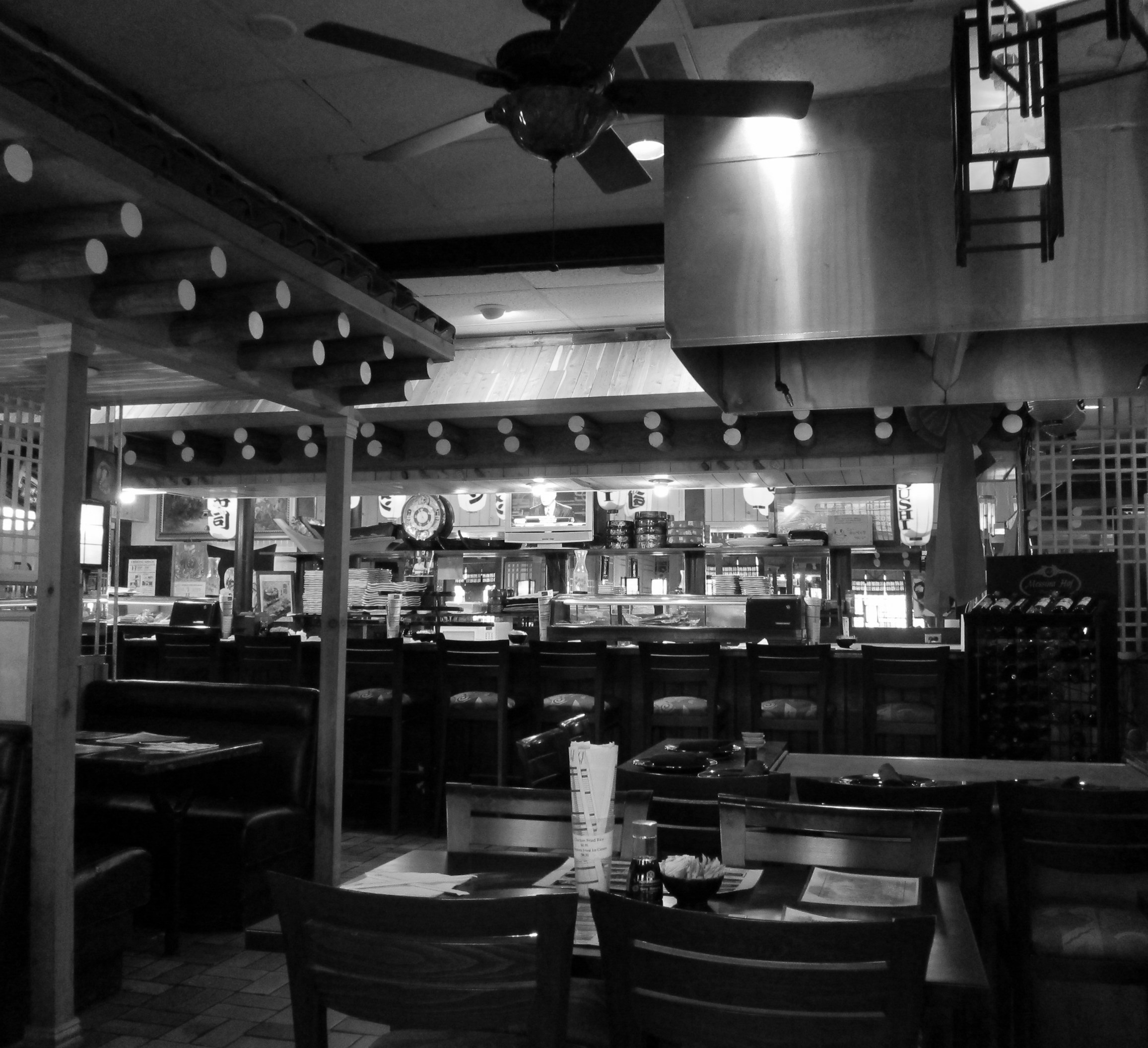
This was the easiest Japanese/Korean restaurant we could get to while driving on University. It’s more Japanese than Korean, evident from the short section of bibimbaps and whutnot among everything sushi. Seeing how this weather cries for soups, Mom decides on some piping kalbi tang (갈비탕). It’s not as oomphing good as the one I had at Bi Won in Santa Clara, just how many Koreans live in College station after all (*), but it sure is satisfying with loads of egg in a beef bone stock.


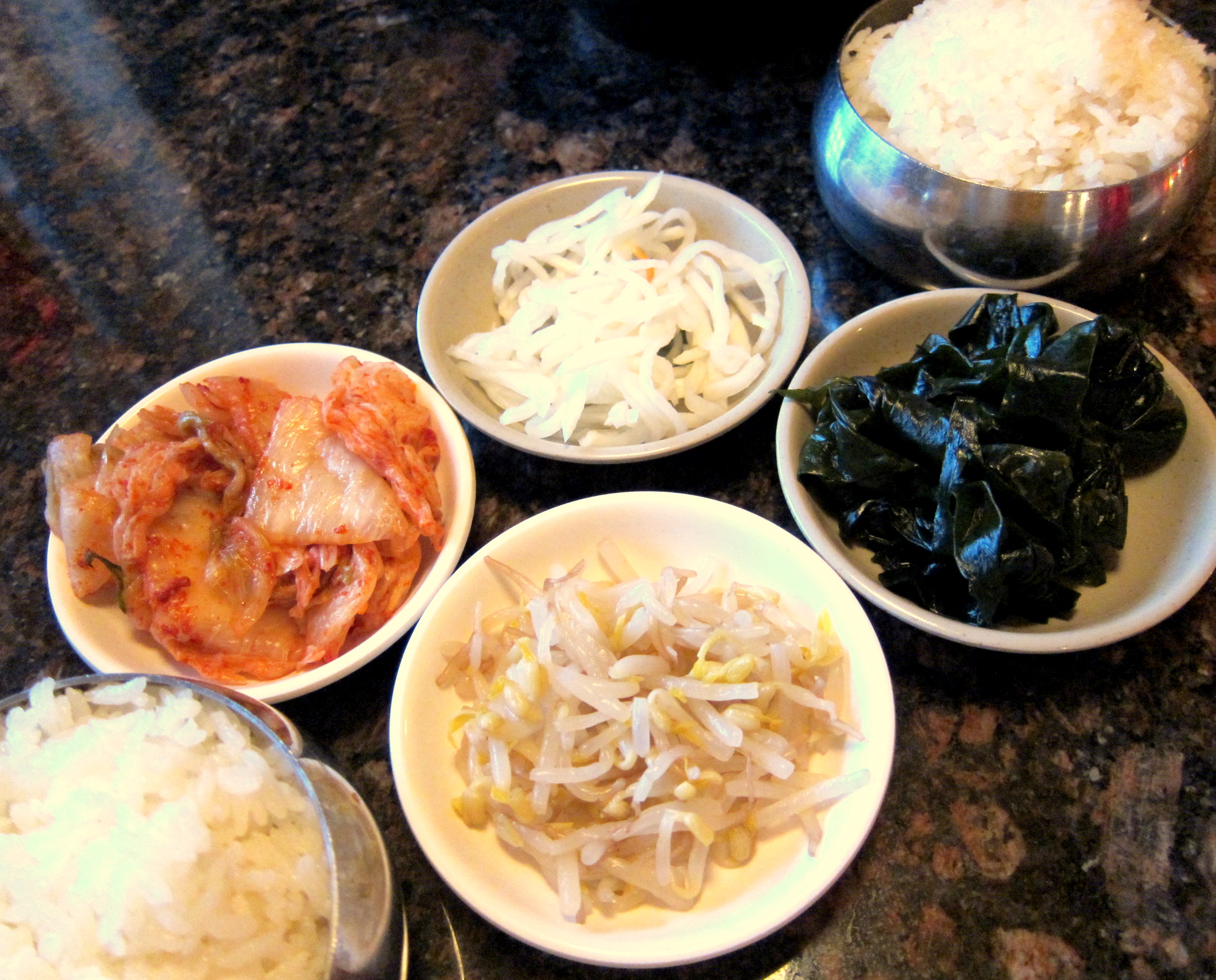
The basic banchan set (clockwise from left): baechu kimchi, shredded kohlrabi, sigeumchi namul (시금치 나물) (blanched spinach), and kongnamul (콩나물) (boiled soybean sprouts). Kimchi and rice go a long way.

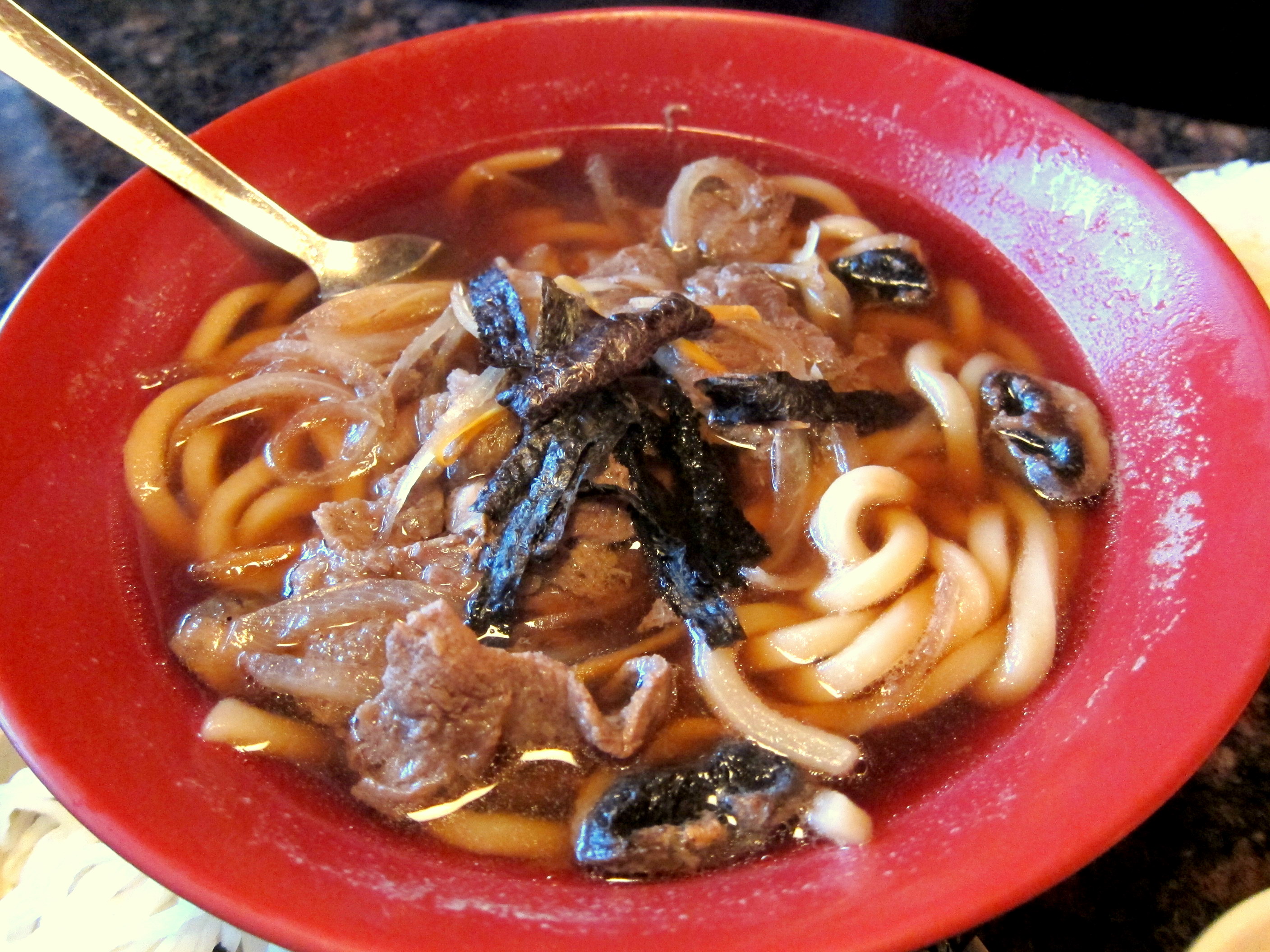
Dad and I side with more noodles than broth. Such as the chubby strings in the beef udon, where short strips of chewy black konbu (dried seaweed) and plump mushroom halves dominate the flavors.


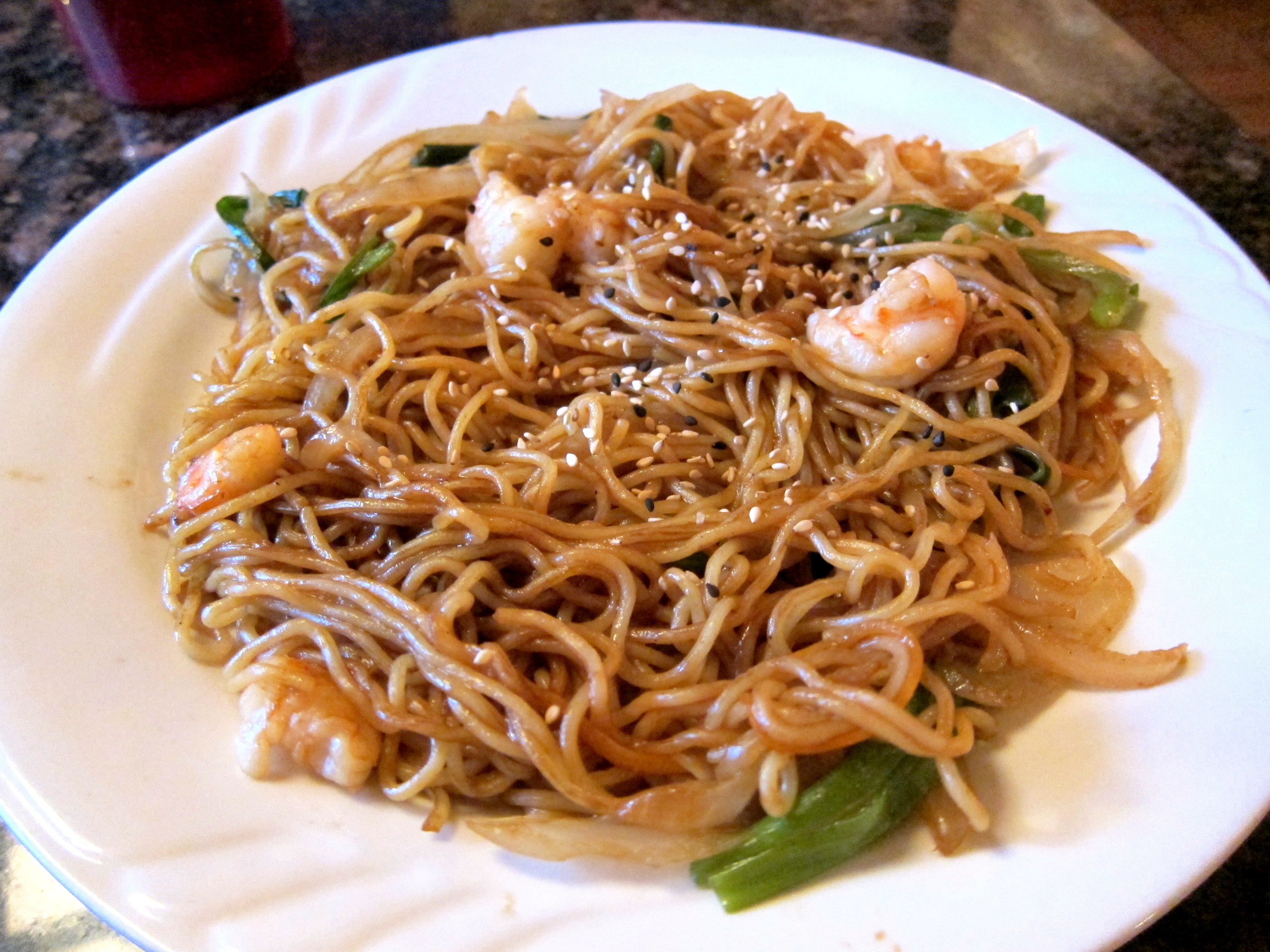
Or the al dente soba noodle stir-fried with shrimps and green onions, where sesame oil and tonkatsu sauce deliver a complete savory affair. Haiku’s yakisoba is as good as any yakisoba I’ve had, but it would have been even better if they’d tossed me double this portion. Maybe triple… I was hungry, ya know…


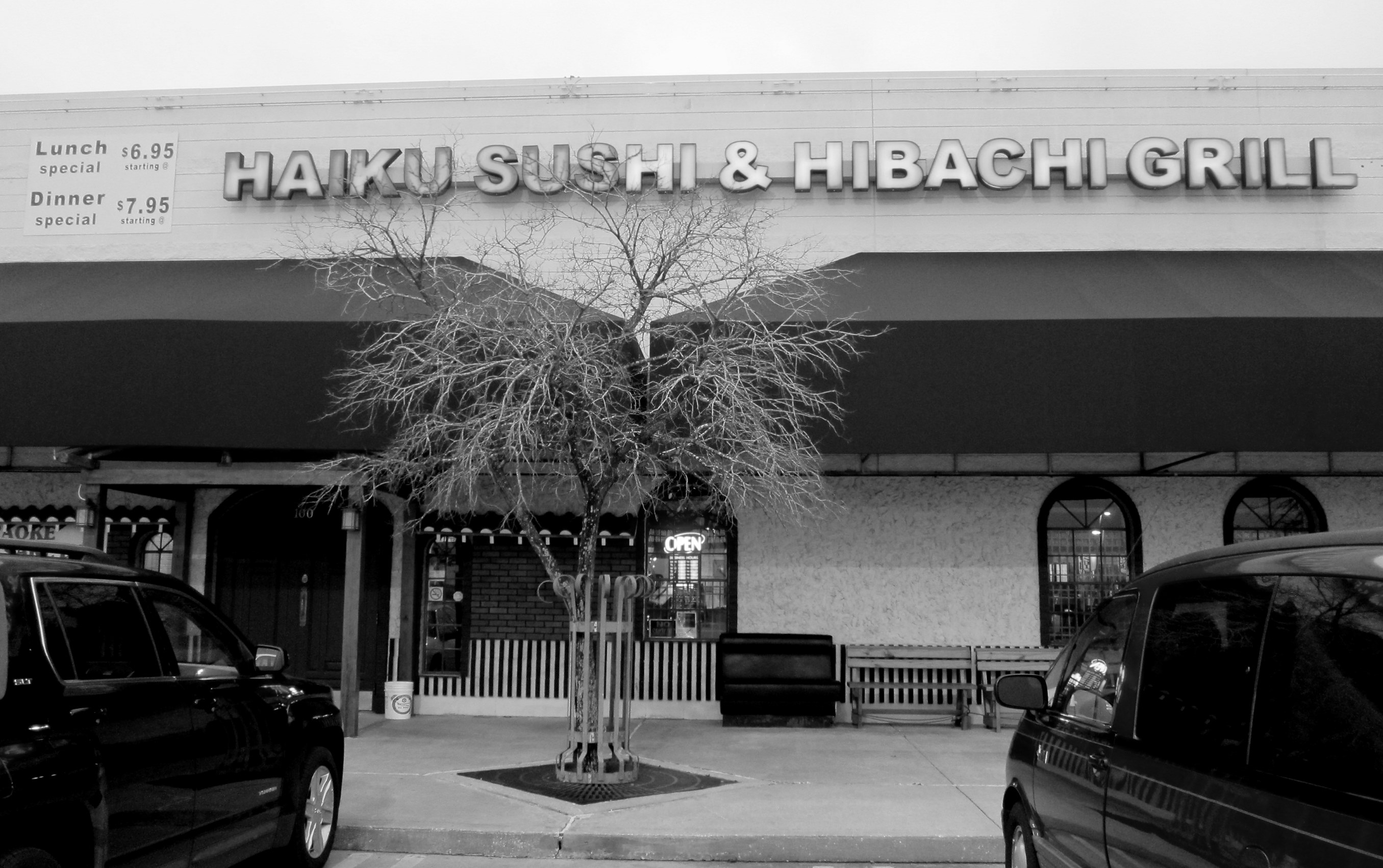
Address: Haiku Japanese Restaurant
607 E. University Drive, Suite 100
College Station, TX 77840
(979) 846-7900

Shrimp yakisoba: 9.99
Beef udon: 8.95
Kalbi tang: 11.99

Total: $33.48

(*) The answer is 1026, or 1.51% of the city population, according to the 2000 census. For comparison, the Korean population counts 1916, or 1.9% in Berkeley, and 1780, or 0.4% in Oakland, also in 2000.
Interestingly, Vietnamese counts only 274, or 0.4% in College Station, but the ratio of Korean to Vietnamese restaurants is 2:3. It’s awesome that people like pho, but yo Aggies, eat some kimchi and gogi too! Mkay?

Hương Giang – Savour Huế in Houston

March 23, 2011 By: Mai Truong Category: Central Vietnamese, Houston, noodle soup, sticky rice concoctions, The more interesting


I lost my memory card. If you’re a food blogger too you’d know how devastated I felt: the first advice to a food blogger these days is “good pictures”. Well, the pictures I took at Hương Giang are amazing, they just no longer exist. But, pictures or not, as my professor Lawrence Hall would say in his British tongue, “you can’t stop me,” or in this case, I can’t stop myself from blogging about the restaurant.

Is their food that good? Hương Giang takes a shy, small square in the parking lot at the corner of Bellaire and Boone. If you drive westward on Bellaire Blvd, you’ll see its sign on the left before you reach Hong Kong Market. It’s really a tucked-away place for scoffers, the outlook unimpressive, the sign blue and white like a tired worker shirt. The inside is similar to any average pho joints you’ve seen, wiped clean and plastic cheap. I knew my mom wouldn’t come here if not for blogging’s sake, but in this city it’d be hard to get a menu more Huế than this one.

There are pictures in the menu and printouts taped to the wall to tell you what the specials are. For us it’s a matter of getting what we’ve heard of but not had: gỏi mít tôm thịt, bánh ít ram, cơm hến, and bún suông.

Gỏi mít tôm thịt is jackfruit salad with boiled shrimp and pork, and like other Vietnamese gỏi, it’s served cold with rice cracker (bánh tráng nướng) for shoveling and scooping. The airy blandness of a coal-toasted sesame rice paper elevates the lime juice, the pepper, the cilantro in a gỏi. The kitchen makes a slight mistake by bringing out a plate of gỏi mít hến instead, where the boiled pork and shrimp are replaced by handfuls of tiny basket clams (hến). These freshwater bivalves are connected to Huế like McDonald’s to Americanization. As small as a finger nail, each hến constitutes a second of chewing. As a stir-fried bunch mixed with young jackfruit flesh, the collection feels grainy and humble like a fisherman’s kitchen by the riverside. The color, too, is earthy: blackish-lined ivory hến,  pale brown jackfruit, and a bit of green cilantro.

Cơm hến offers more or less the same atmosphere as the salad, except the rice amplifies the grainy texture in place of the jackfruit’s fleshy blend, no rice cracker presents to break the unanimity, and the hến‘s natural sweetness here isn’t damped by any lime juice. When there isn’t just a few, but at least a hundred of these quiet lives in a bowl of cơm hến, you can’t help but feel the responsibility to treasure each spoonful. It’s the least you can do for the dignity of those tiny freshwater basket clams.

If cơm hến were hamburger, then bánh ít ram would be mac ‘n cheese. It’s not super well known, but anyone who knows Hue food knows this sticky (rice) business. I first learned of bánh ít ram from noodlepie, Ravenous Couple call them fried mochi dumpling (and you really can’t get a better looking picture of bánh ít ram than what the couple styled on their site). Each ping-pong-sized dumpling carries a marvelously inviting look: a plump, shiny round ball on a golden base, cut in half and there snuggle rosy bits of shrimp and char siu pork. Each bite is a step into a river: first soft, then sinking, then hitting the crusty bottom. With or without the mixed fish sauce, savory bánh ít ram, also called bánh ram ít by the natives, is a fair partnership between the steamed bánh ít and the deep fried bánh ram, with each component designed to excite the other. So why is it not as popular as bánh bèo? Because it’s hard to go down the second time. One bánh ít ram is good, two are too many. Ten on a plate, like what we get at Hương Giang, becomes a bloody battlefield.

Thankfully we are a team of three, and we rotates plates to share both the good and the challenging. And thankfully we get bún suông. This noodle soup draws a fine but successful line between being too meaty and being too thin, as it contains both. Ample cuts of chả cá (fish cake, similar to eomuk), chả lụa (silk sausage), and juicy shrimps weave among the angel hair rice vermicelli, all soaked in a slim sweet broth. Bún suông at Hương Giang tastes pure like bún mộc, quite a contrast from the definitions I’ve found online, whose broth is as thick as a deep South accent of the cooks said to invent the noodle soup.

If there are indeed two types of bún suông, the southern style and the Hương Giang style, then I’d choose the latter any day. If the southern style is really the only traditional style, then I’d go to Hương Giang just for their bún suông. You know you can trust a chef who has created something so delicate, so heart-warming, so balanced, and so very Huế.

Address: Hue Huong Giang (near Hong Kong Market)
11113 Bellaire Boulevard
Houston, TX 77072-2607
(832) 328-1308

Money matter:
gỏi mít hến (6.25) + bánh ít ram (6.50) + bún suông (6.50) + cơm hến (8.50)
= $27.25 a big lunch for three

Red Pier on Milam Street

February 20, 2011 By: Mai Truong Category: Comfort food, Houston, noodle soup, sweet snacks and desserts, Vietnamese


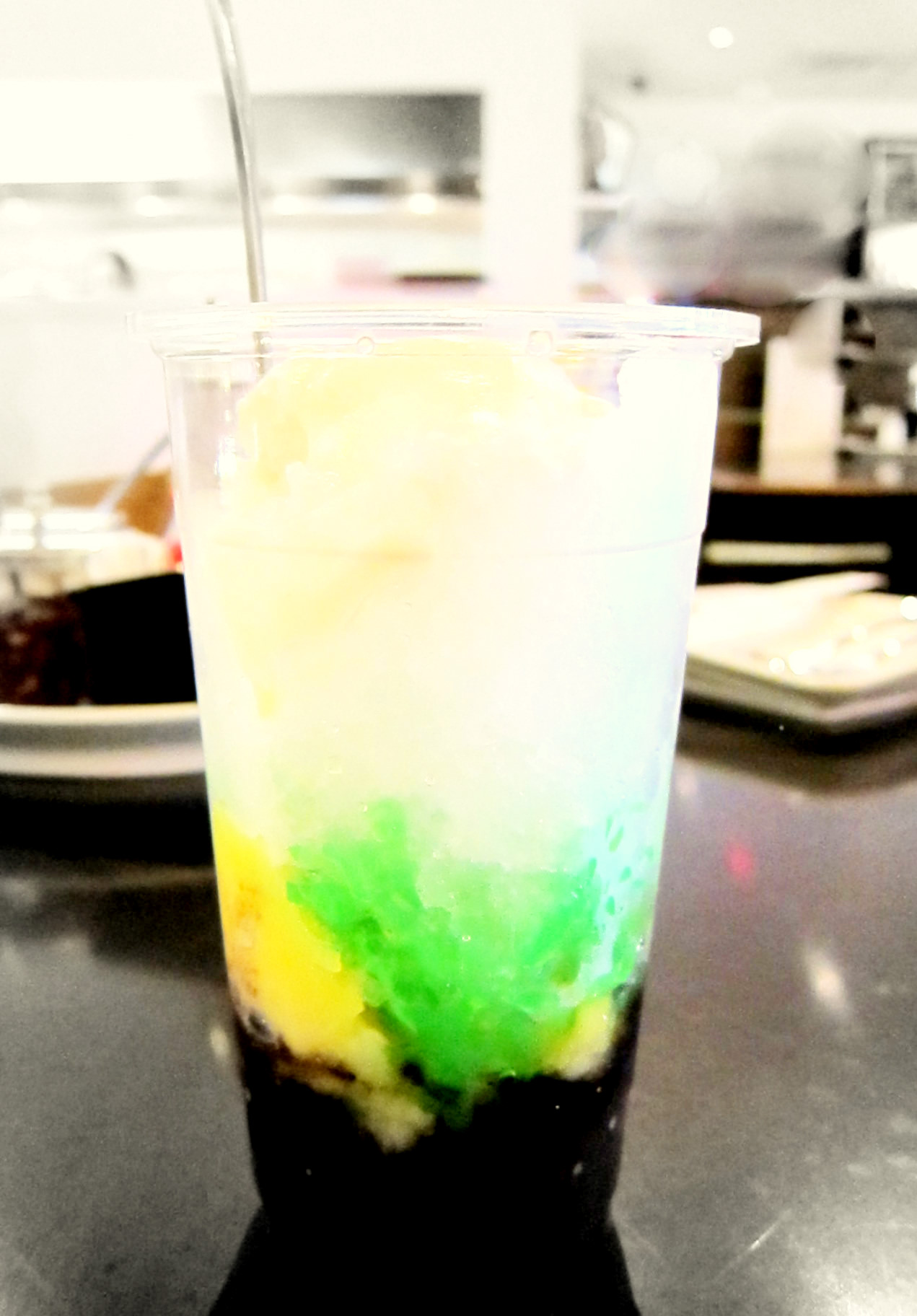
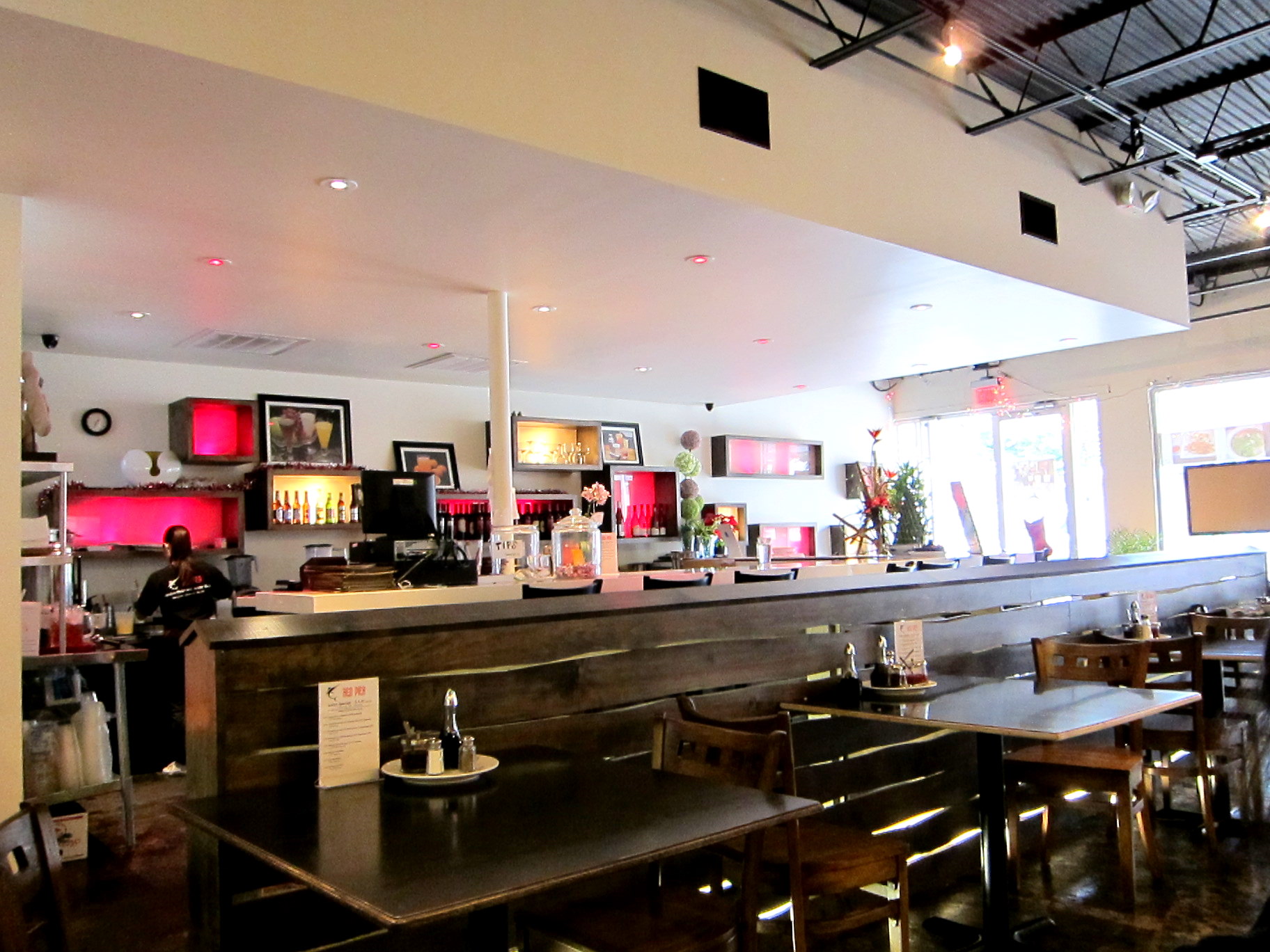
Among the countable Vietnamese restaurant owners that ever bother to make their menus available on the web, Kim Châu and her husband put together quite a decent site for their Red Pier: black background, colorful foods, dazzling images of the bar and the walls, names and prices of 166 dishes minus dessert. Red Pier is a go-to when you work in the ‘hood, have an hour for lunch, and just want some normal noodle soup or vermicelli at a reasonable price. Or when you crave something sweet and cold and nutty, like a chè ba màu (trichromatic bean and tapioca ice).


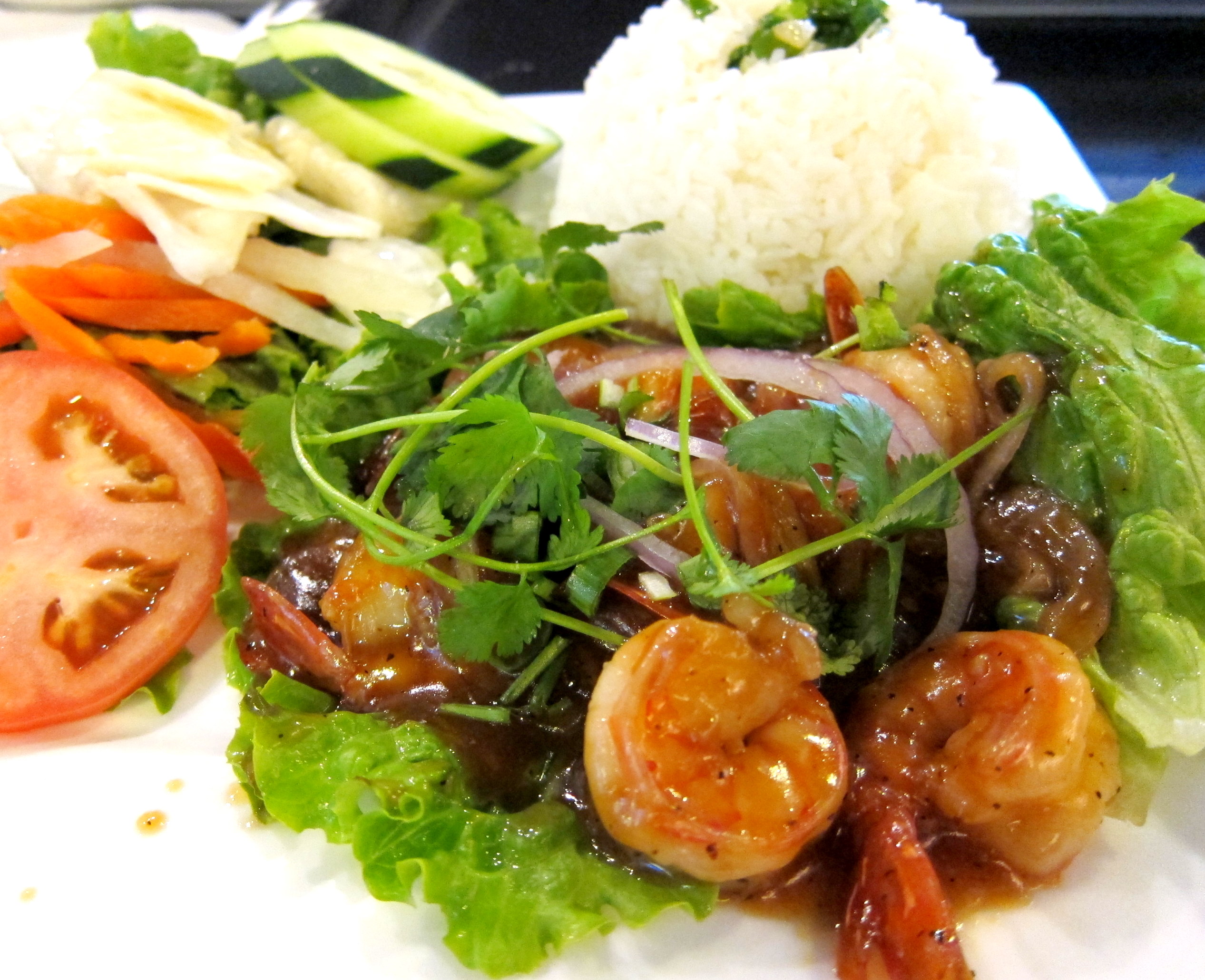
Don’t drive too fast down the one-way Milam, you’d miss the restaurant for sure. It took us a few loops around until we pulled into the right parking lot, just across the street from the proprietors’ other business, Kim Châu Jewelers, on the left side. Also, don’t order Cơm Tôm Rim (rice with caramelized shrimp), unless you’re having salt-deficiency. If you must, Chè Ba Màu proves to be a comforting three-buck companion.


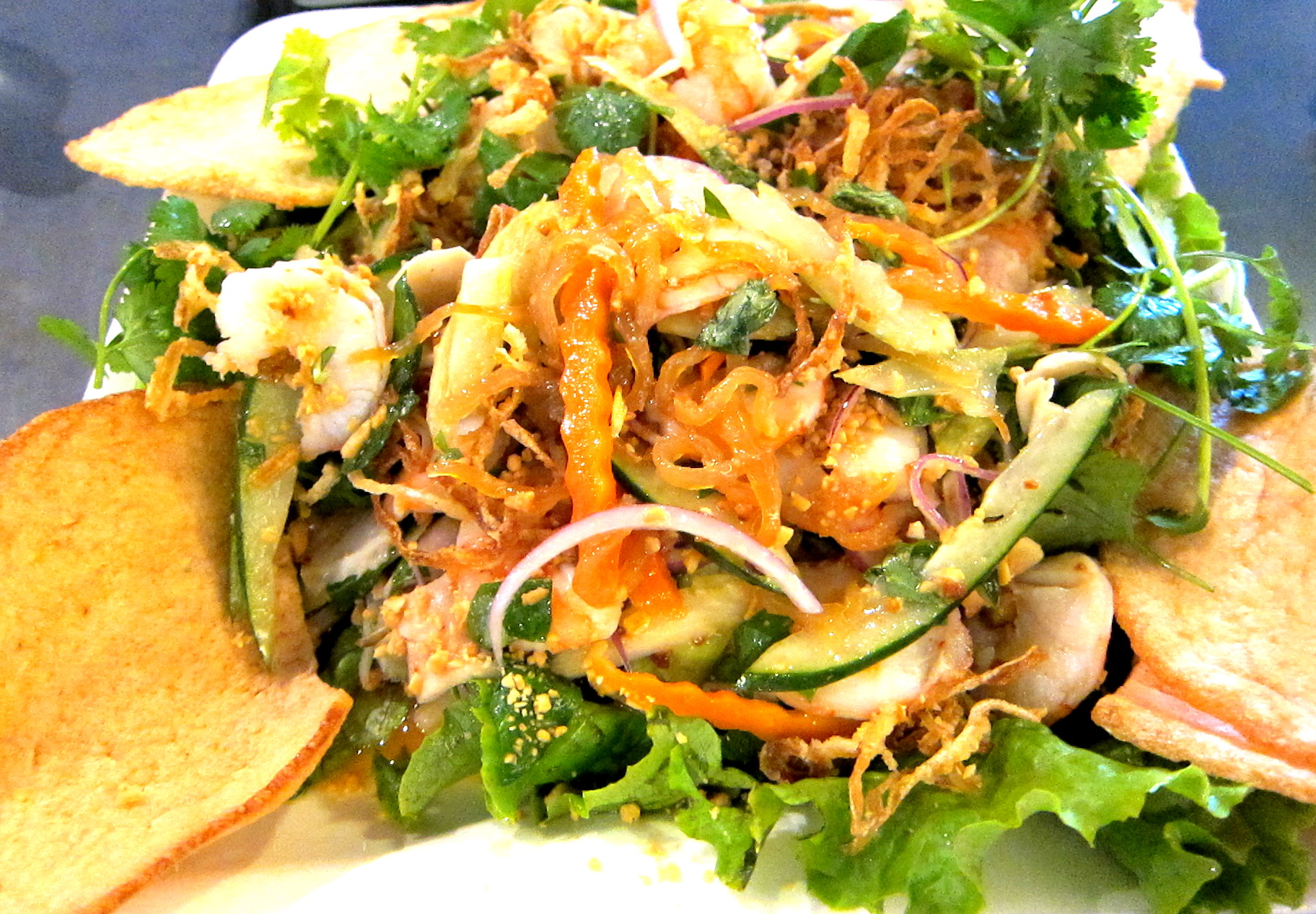
Do order #1: Gỏi Sứa Tôm Thịt (jellyfish salad with shrimp and pork), the only setback is its chilipepper overload, which I’m sure you can ask the cook to take it down a few notches. The thinly sliced  jellyfish blends rather too well with carrots and cucumber strings you’d have to look to notice its cold, clean elastic crunch. Gỏi Sứa Tôm Thịt is one of the house specials that Red Pier emphasizes on their TV advertisement, and combined with large shrimp crackers it’s certainly a better execution of jellyfish than duck tongue and jelly fish at Chinese dim sum halls.


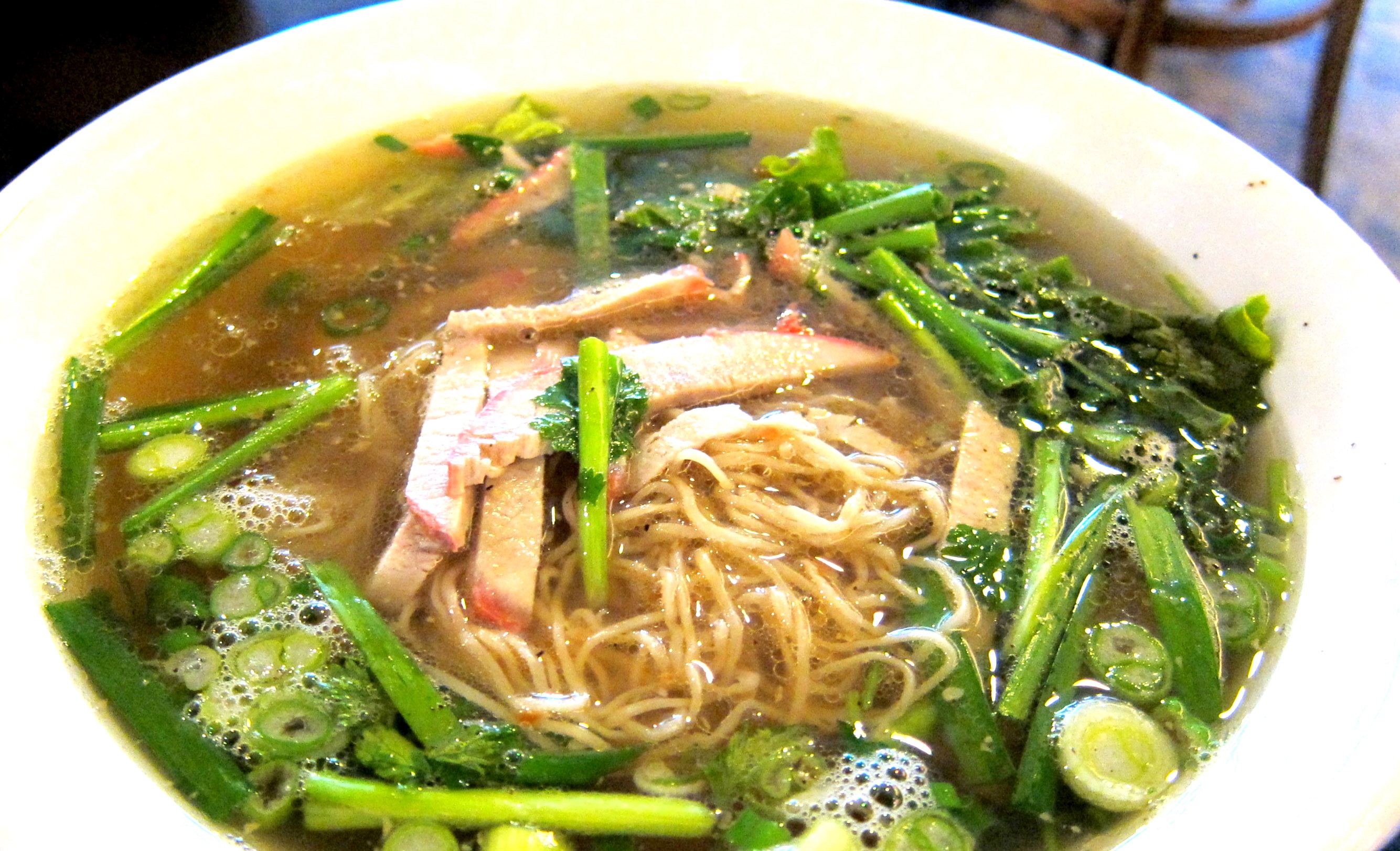
Do order #2: Mì Xá Xíu (char siu egg noodle soup). This is a cheap (only $6.25) and satisfying deal. It’s slightly more involved than Wiki Wiki’s saimin bowl, with crispy green onions and a meaty sweet broth.


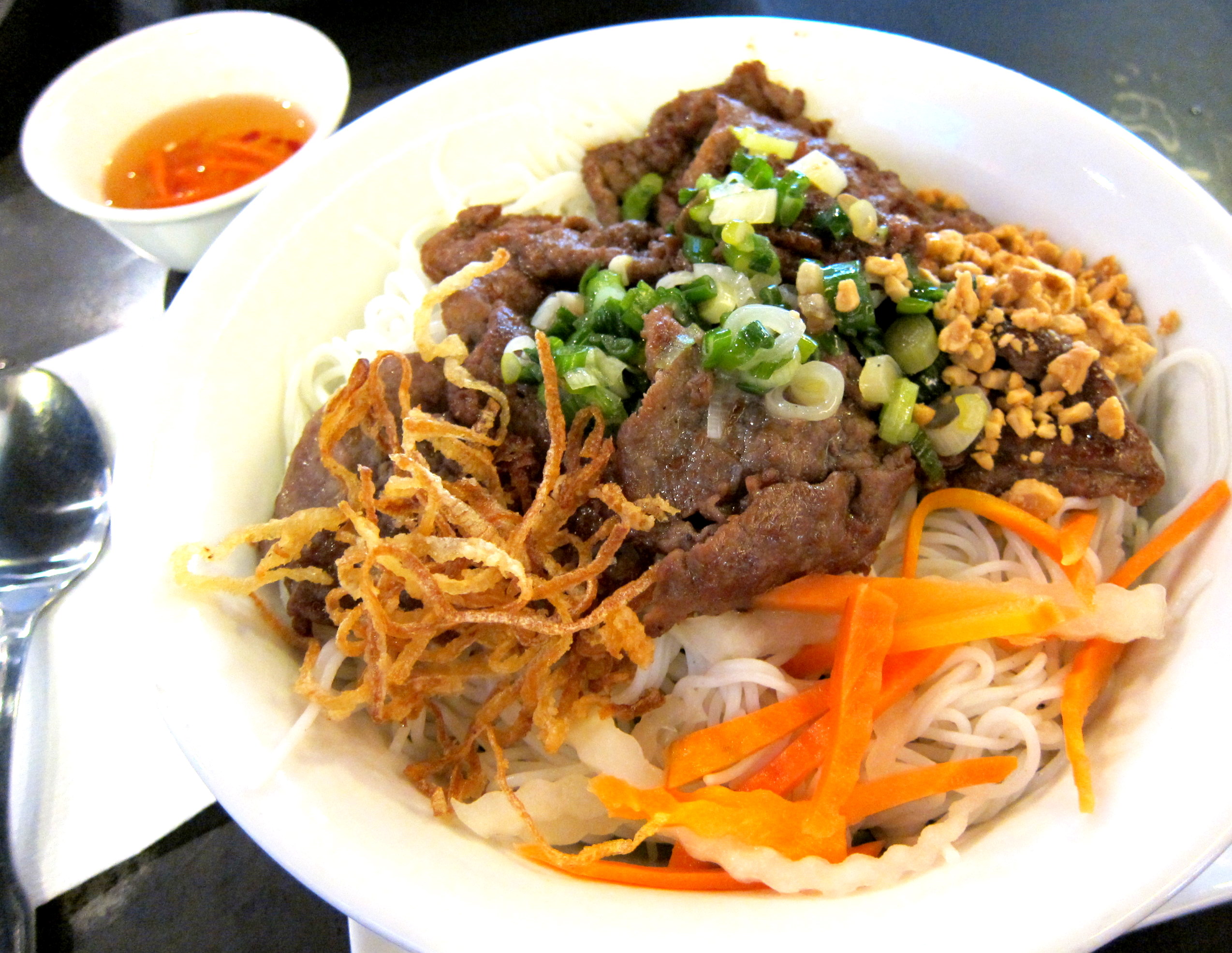
Do order #3: the classic cold rice vermicelli (Bún) with the not so classic grilled beef (Bò Nướng), certainly bathed in nước mắm and garnished with chopped green onion seasoned in lard (mỡ hành), crushed peanuts, fried shallots, pickled carrots and daikon. For the greens lovers there’s that hidden pile of bean sprouts and shredded cucumber at the bottom, whose texture matches that of neither bún nor beef. (Now that I think of it, bibim nangmyeon also has bean sprout and cucumber, so it must be a cold noodle thing.)


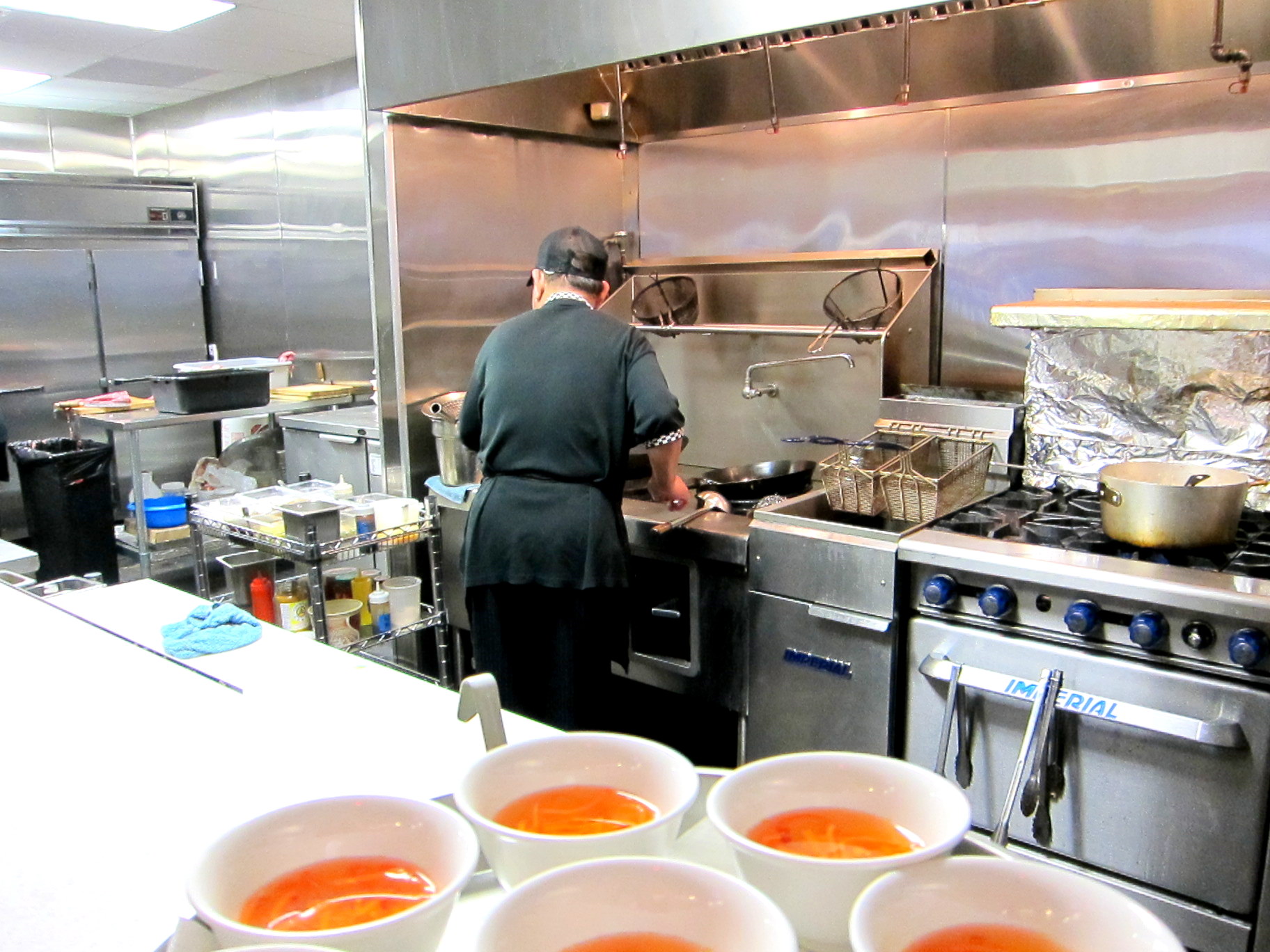
Overall, Little Mom found the place less than pristine as the stir-fry smell sweeps over the metallic kitchen counter into the dining area. Red Pier’s chefs also take a tad too much liberty with the seasonings. But not all Vietnamese restaurants have jellyfish salad and friendly service, and usually the ones with 166 items on their menu don’t execute any of them too well, so I’d give Red Pier a B if the red-and-ebony dining box were a student in my class.

Address: Red Pier Vietnamese Restaurant
2704 Milam St
Ste C
Houston, TX 77006
theredpier.com
(713) 807-7726
(information from der Miller: Red Pier and Les Givral’s Sandwiches are sister businesses, both on Milam St.)


Lunch for 3:
Medium jellyfish salad (9.95) + grilled beef vermicelli (6.95) + rice & caramelized shrimp (7.75) + char siu noodle soup (6.25) + bean & tapioca ice (3.00) + tax
= $36.70

Kim Son’s Tet in woven baskets

February 09, 2011 By: Mai Truong Category: Festivals, Houston, noodle soup, Vietnamese

*Guest post in Vietnamese by my Mom, translated by me*


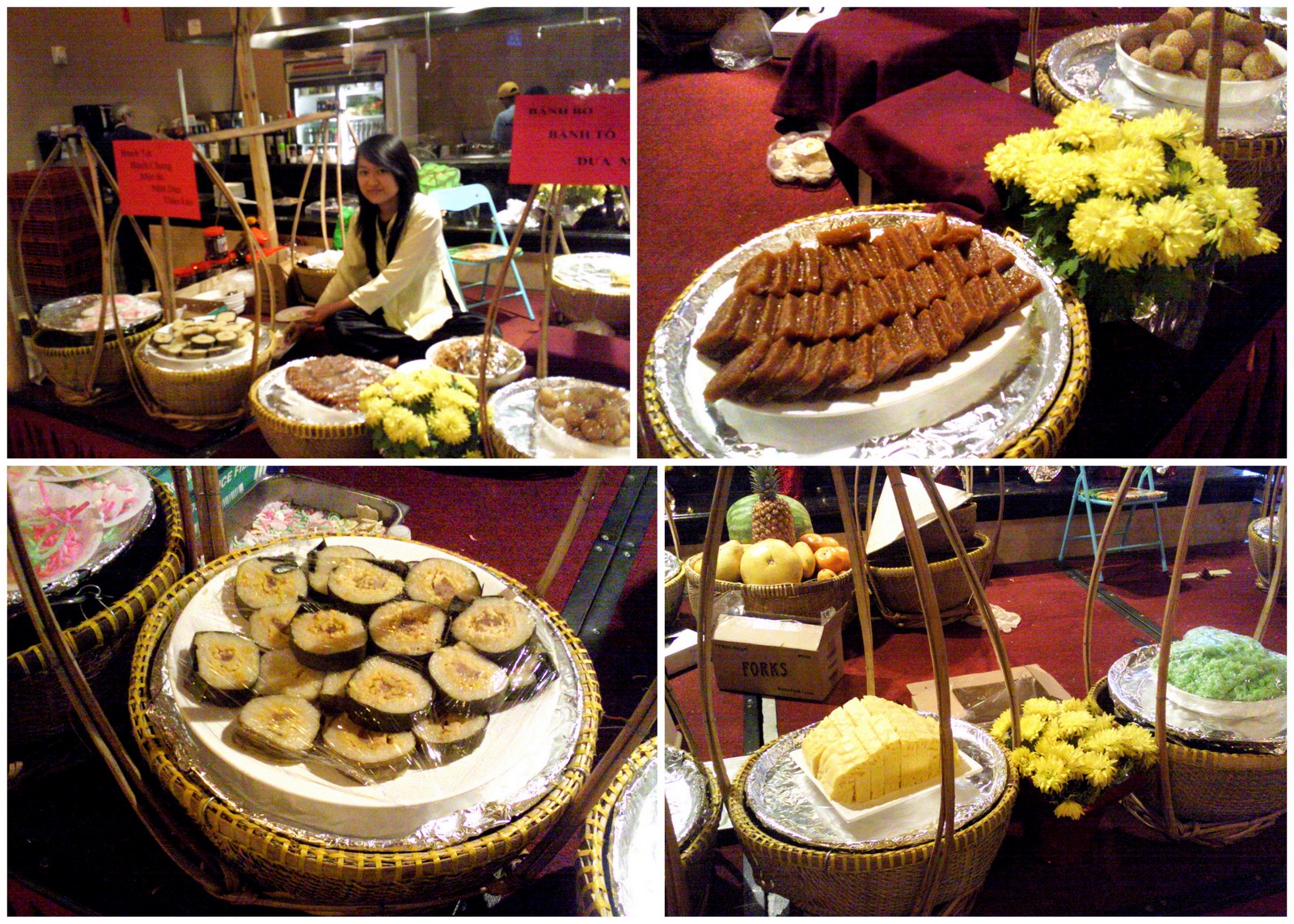
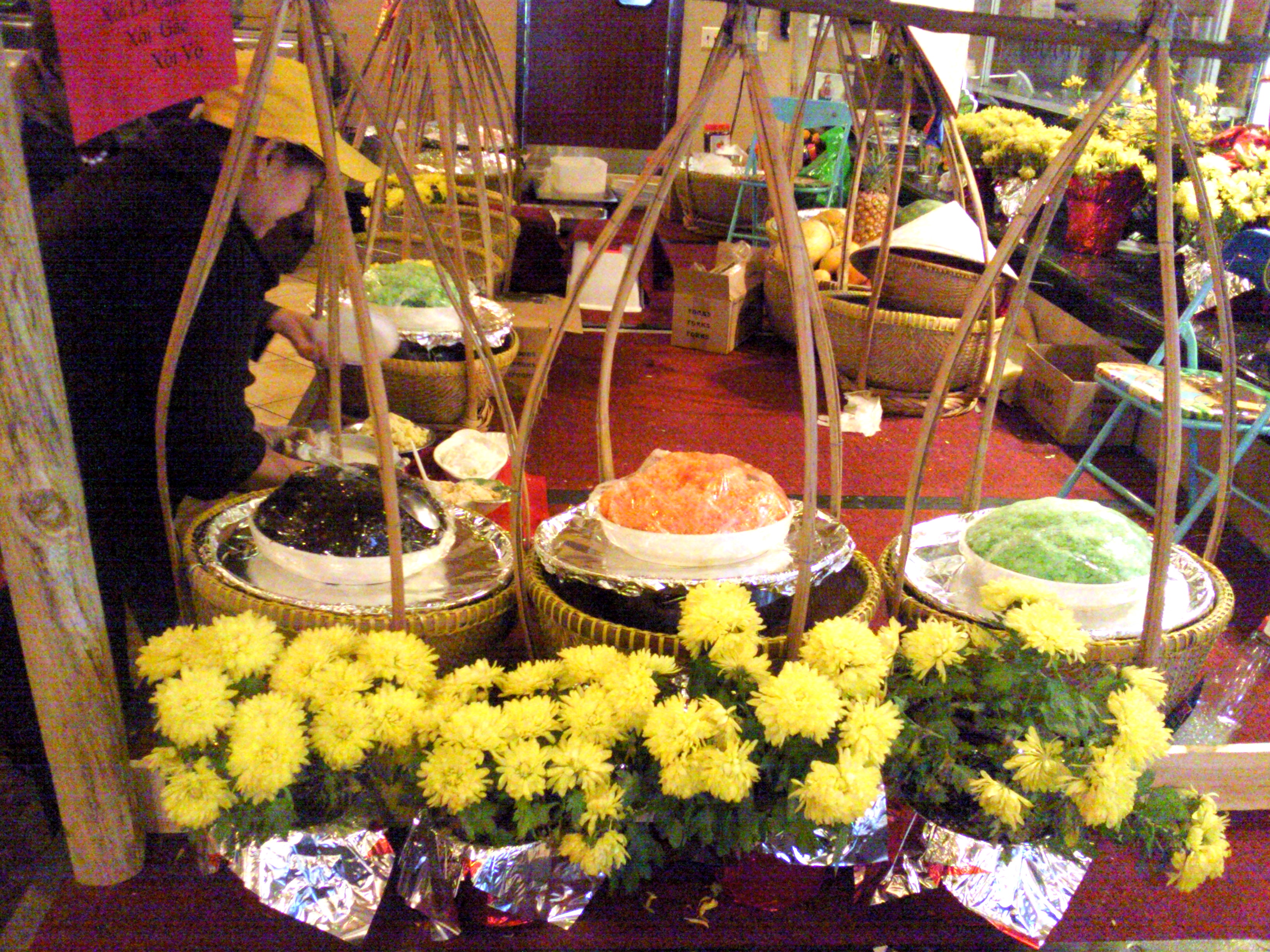
Back in the day, I seldom ate from street stalls or vendors’ baskets, my conscience imprinted with my mother’s unmovable doubt on the street food’s cleanliness. Nonetheless, I scurry with no hesitation to make it to Kim Son for lunch today, just because the TV news last night showed that Kim Son has a 9-day New Year food festival where the goodies are sold in baskets, mimicking the vendor stalls in Vietnam.


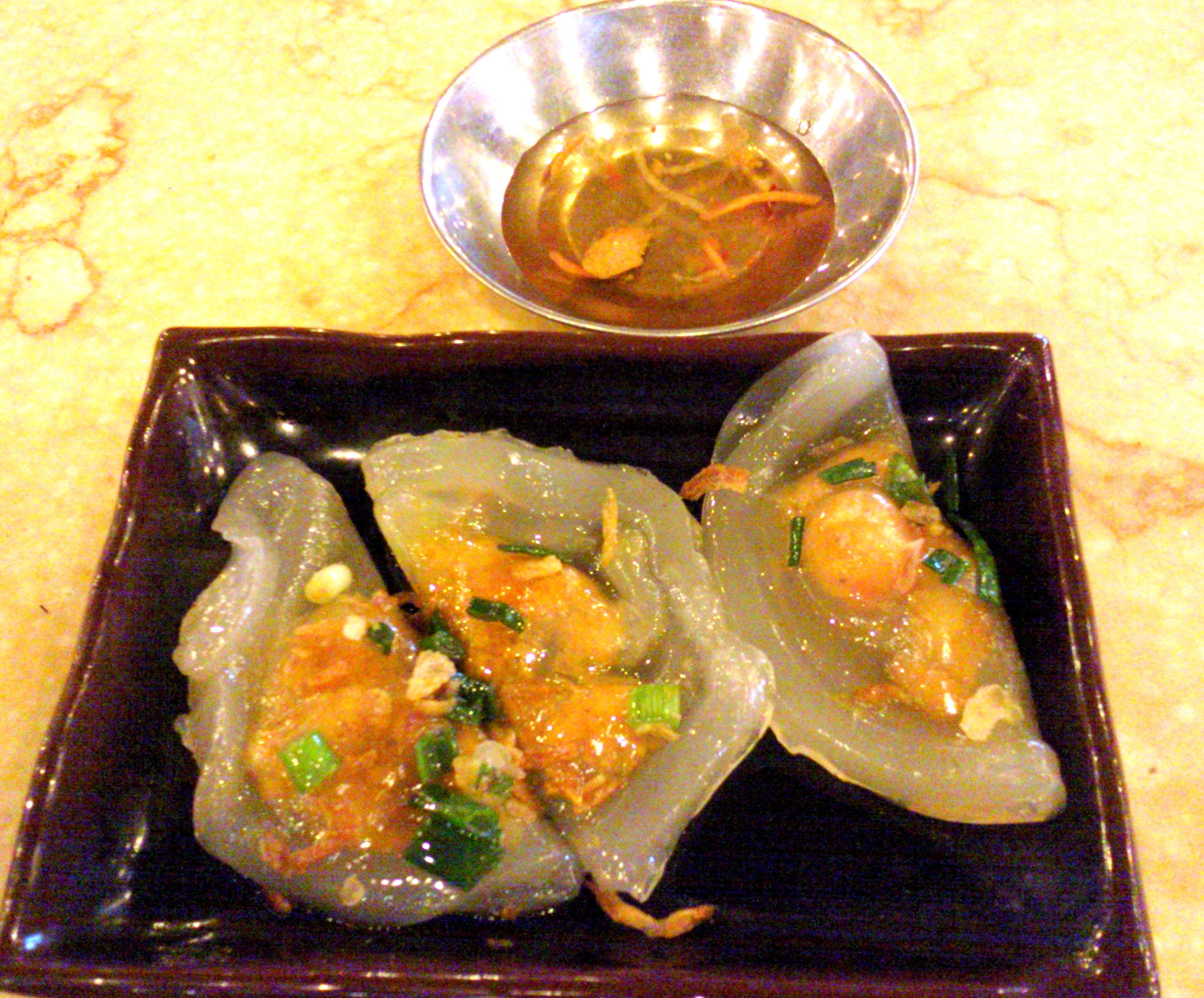
Like usual, the display is a buffet style, but this week the dining hall is decorated with flowers, fruits, and Tet greetings, the food selection is also larger and more interesting than normal days. I notice thịt kho and dưa giá (slow braised pork and pickled bean sprout, two traditional Tet savory dishes), bánh xèo (sizzling crepe), bánh bèo (water fern banh), bánh bột lọc (translucent banh) bánh cống (mung bean fried muffin).


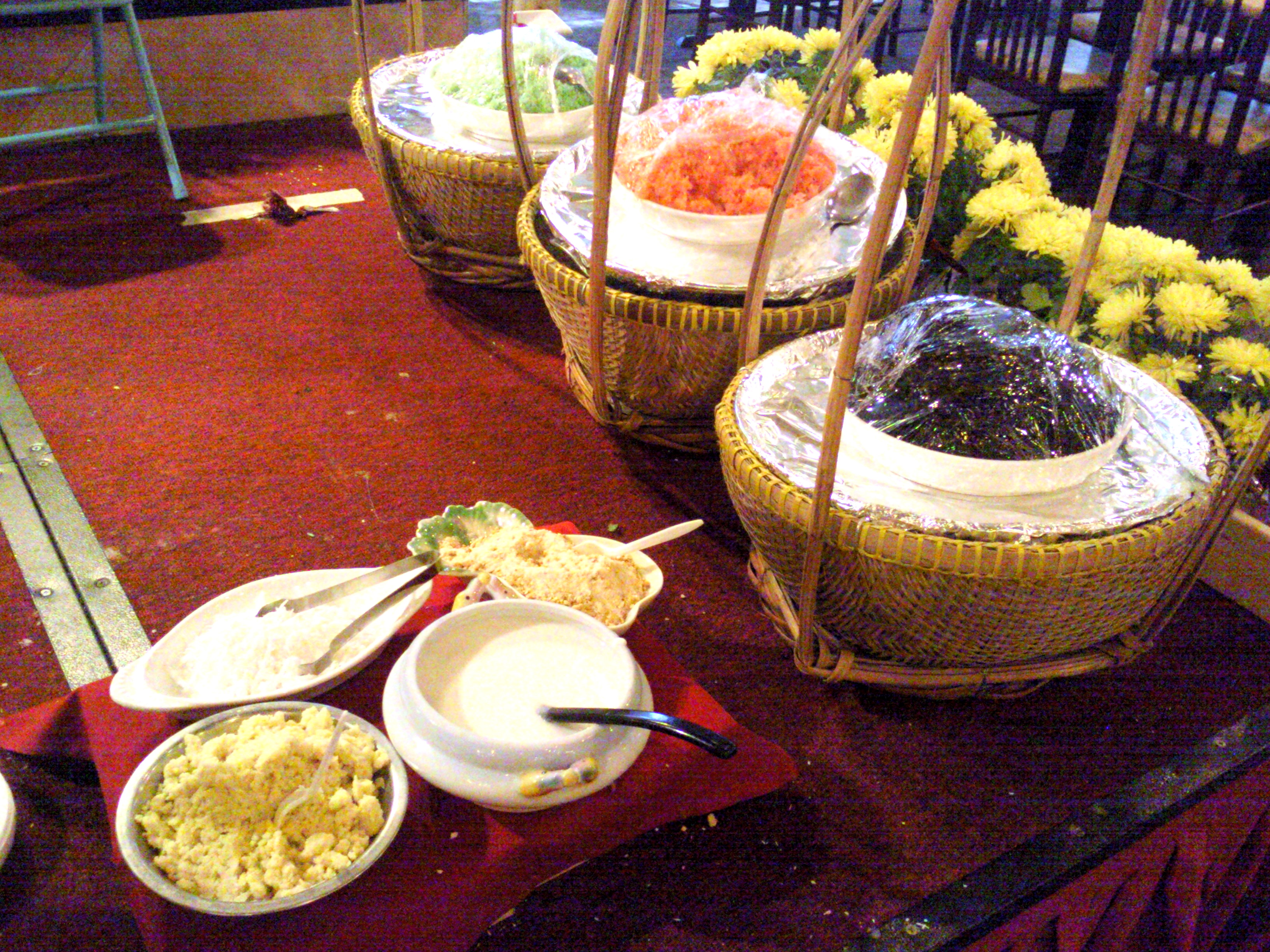
In the baskets lie a few types of xôi, bánh tét, and mứt. A tightening mix of homesickness and joy rushes through me as I see woven baskets, bamboo shoulder poles, and the waxy green banana leaves holding and covering morsels of Tet.


We load our first plate with seven-course beef, though the kitchen churns out only four: grilled beef (bò nướng vỉ), beef loaf (bò chả đùm), lolot beef (bò nướng lá lốt), and beef sausage in omental fat casing (bò mỡ chài). The little pinky-length fat beef sausages are extraordinarily tender, grilled on medium fire and so well seasoned they have the sweet smell of talents.


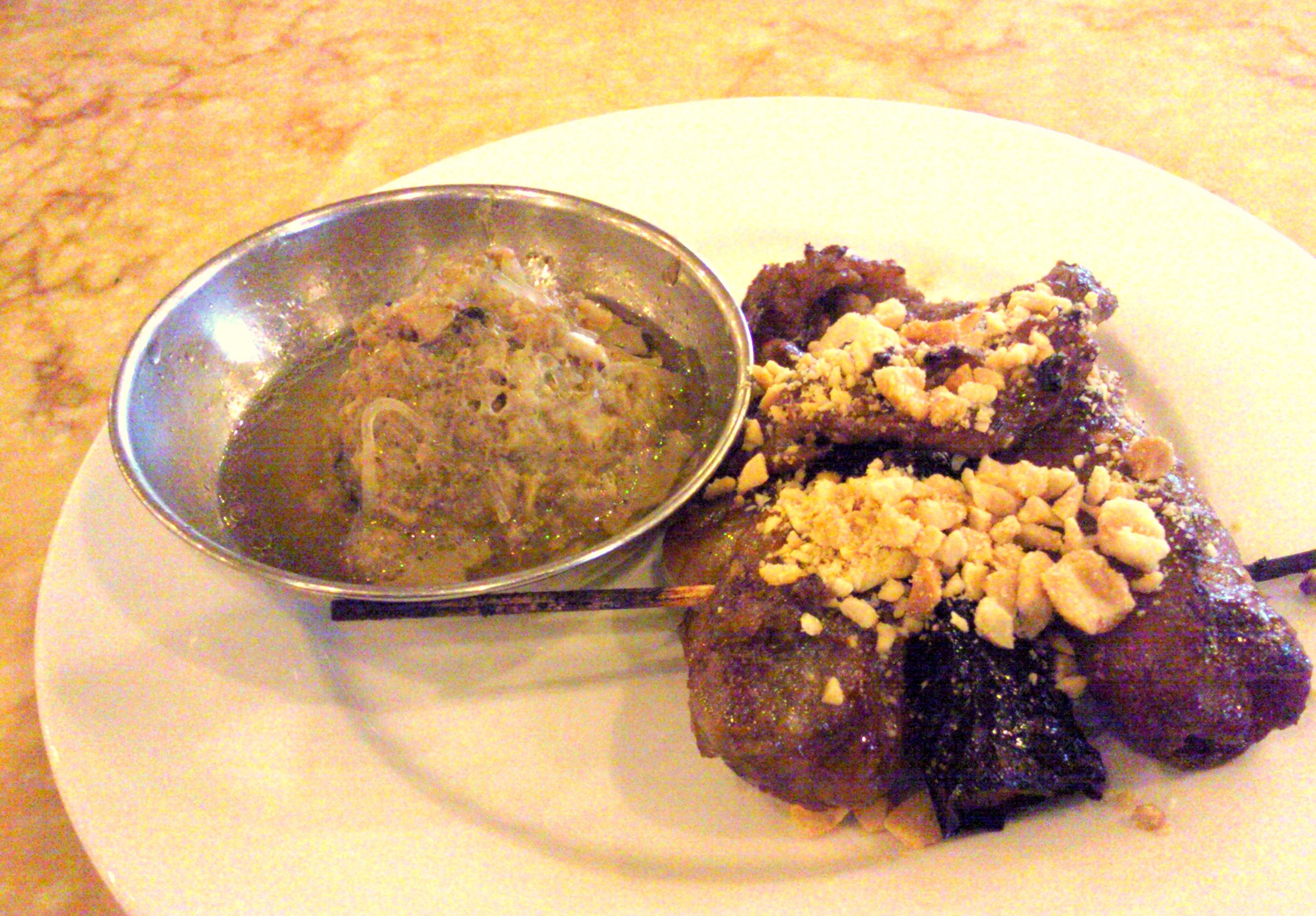
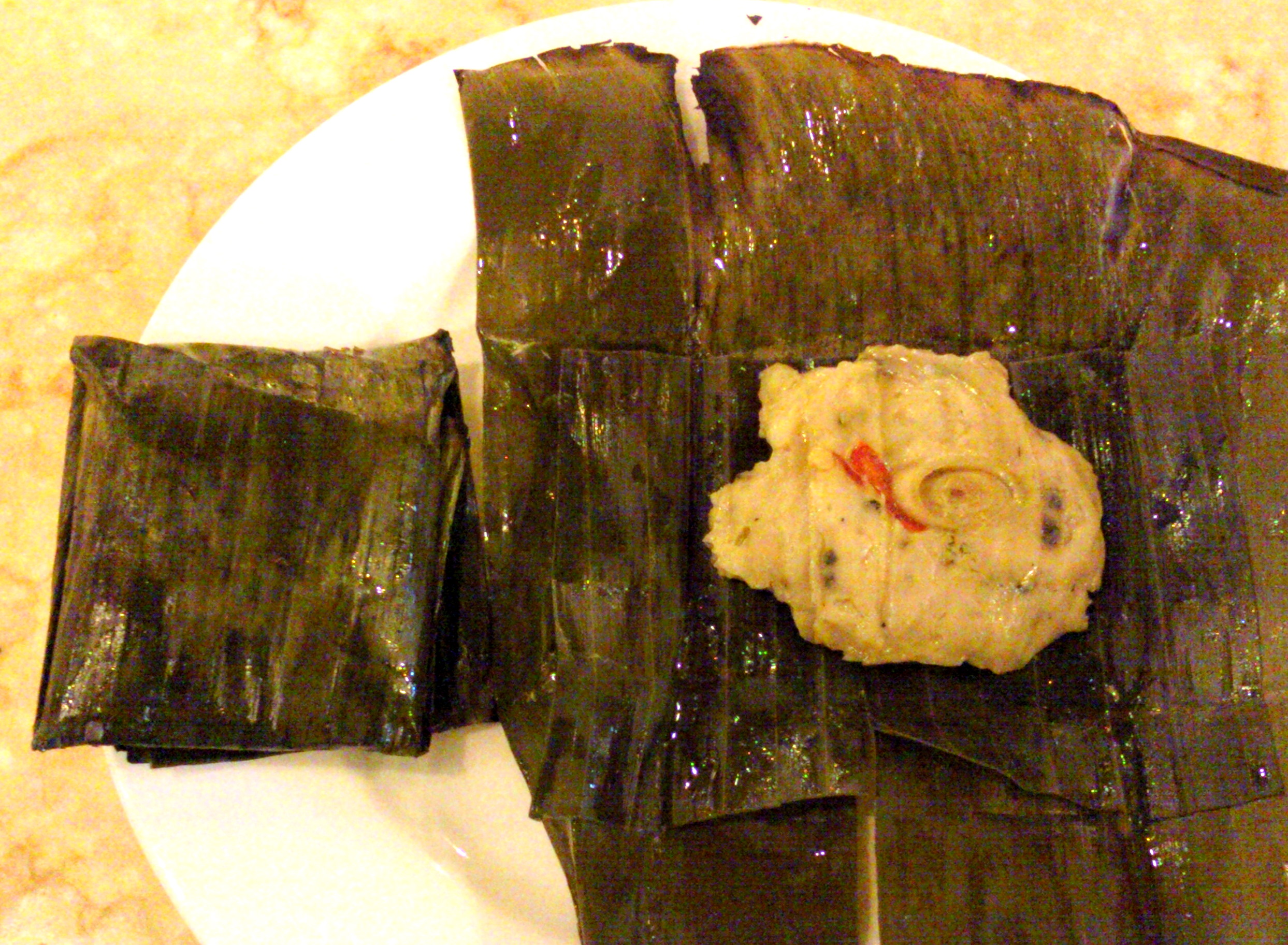
Meanwhile, my husband chooses the restaurant’s recommended special of the day: grilled snail sausage in banana leaves. I don’t like snails but have a taste anyway just out of curiosity. It is slightly spicy, but I get blown away. There is no hint of the wet and grassy snail scent that used to give me goosebumps when I was little. The banana leaf wrapping protects the velvety sausages from the burnt smell of open fire grilling, and gives it a sweet green aroma of summer breeze. As much as I like fish, I must admit these are better than the Indonesian fish sausages I’ve had a few months ago.


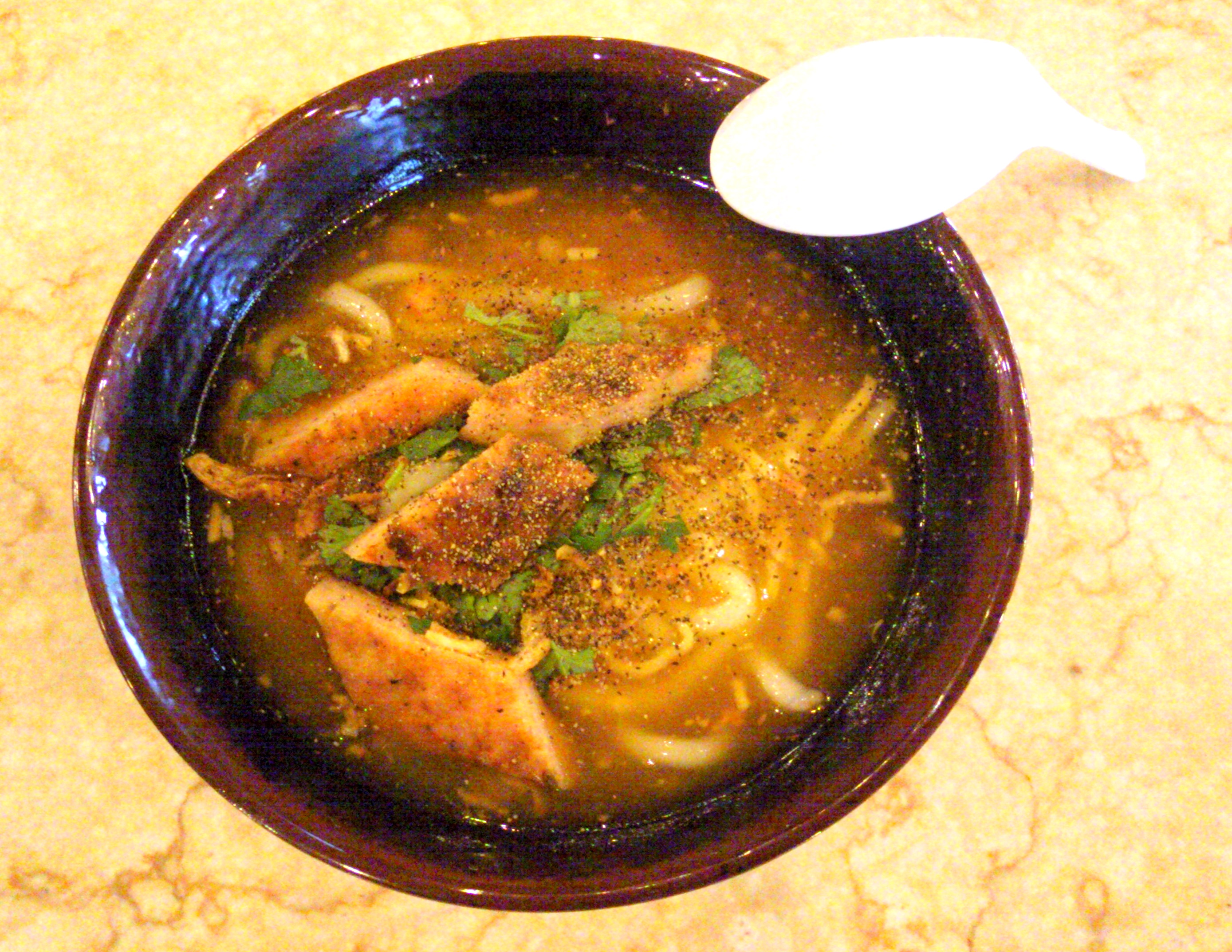
Another special is bánh canh cua Nam Phổ. I only learned about Nam Phổ, a village in central Vietnam, and its famous udon-like noodle soup from books, so I am overjoyed to see the real thing on the menu today. Bits of crab meat amidst chubby slick chunks of banh canh in a scarlet broth rich of crab sauce is the loveliest sight of all noodle soups. Banh canh Nam Pho, unlike banh canh of the South, doesn’t have loads of shrimp or pork, the broth isn’t starkly clear, yet its thickness delivers just a mellow natural sweetness. The first bite reveals little taste, but the second, the third, and a few sips of the broth in between start to sweep in waves of riverbank wind and meadow fragrance.


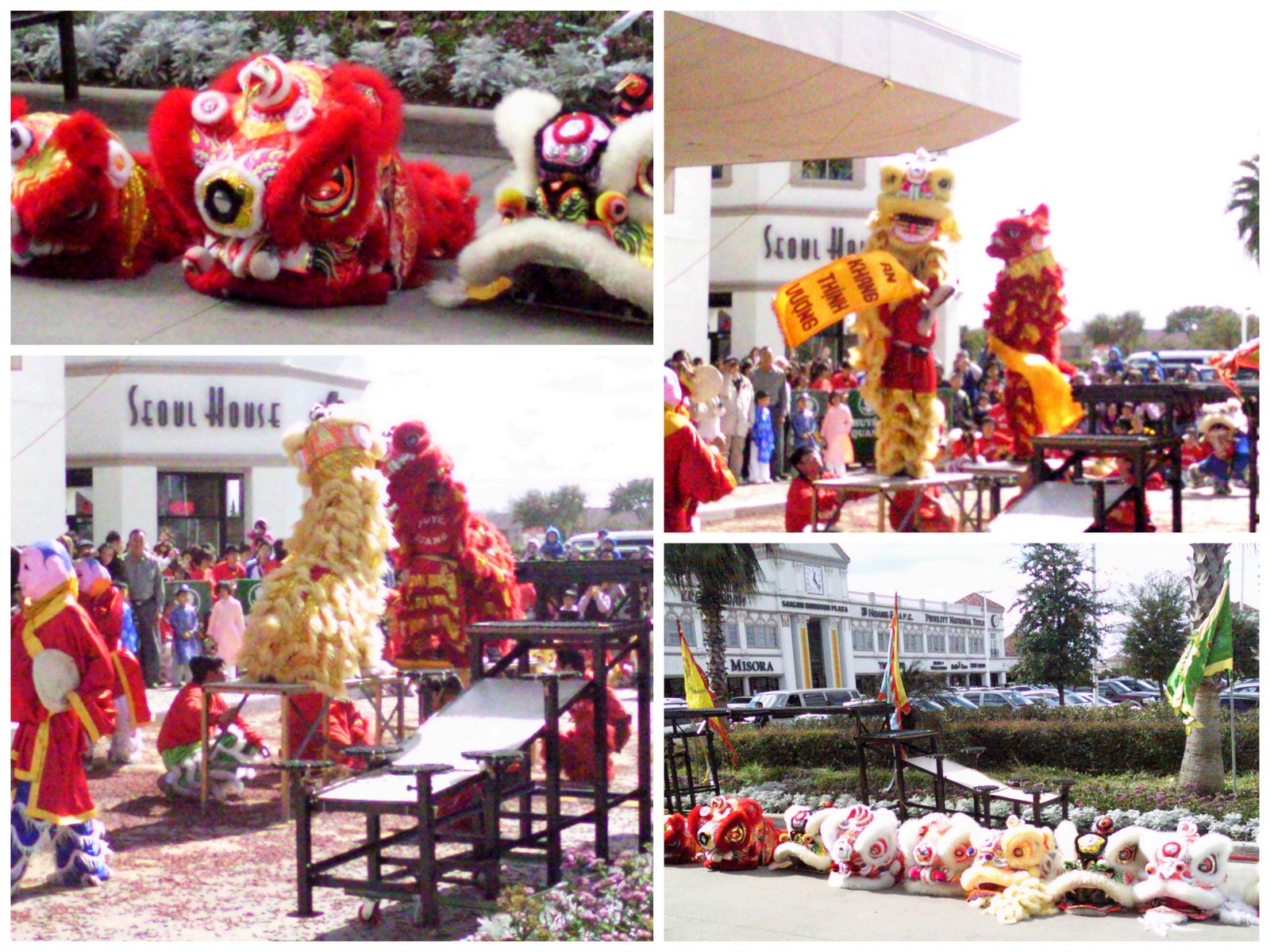
The country lunch sets us back $35.75 and 90 minutes. As we get ready to leave at 12:30, the parking lot gets ready for a massive lion dance and firecracker show. The sight of sixteen gaudy lions and hundred-meter long red squib strings and their boisterous sounds follow me all the way home, as I think of how we, the Asian expats, try to bring with us our lunar new year and our motherlands wherever we go.


Address: Kim Son Restaurant
10603 Bellaire Blvd
Houston, TX 77072
(281) 598-1777

This post is included in the February 2011 edition of Delicious Vietnam, a blogging event organized by Anh from A Food Lover’s Journey and Hong and Kim from Ravenous Couple.

Sul Lung Tang at Kunjib Restaurant

November 26, 2010 By: Mai Truong Category: California - The Bay Area, Korean, noodle soup


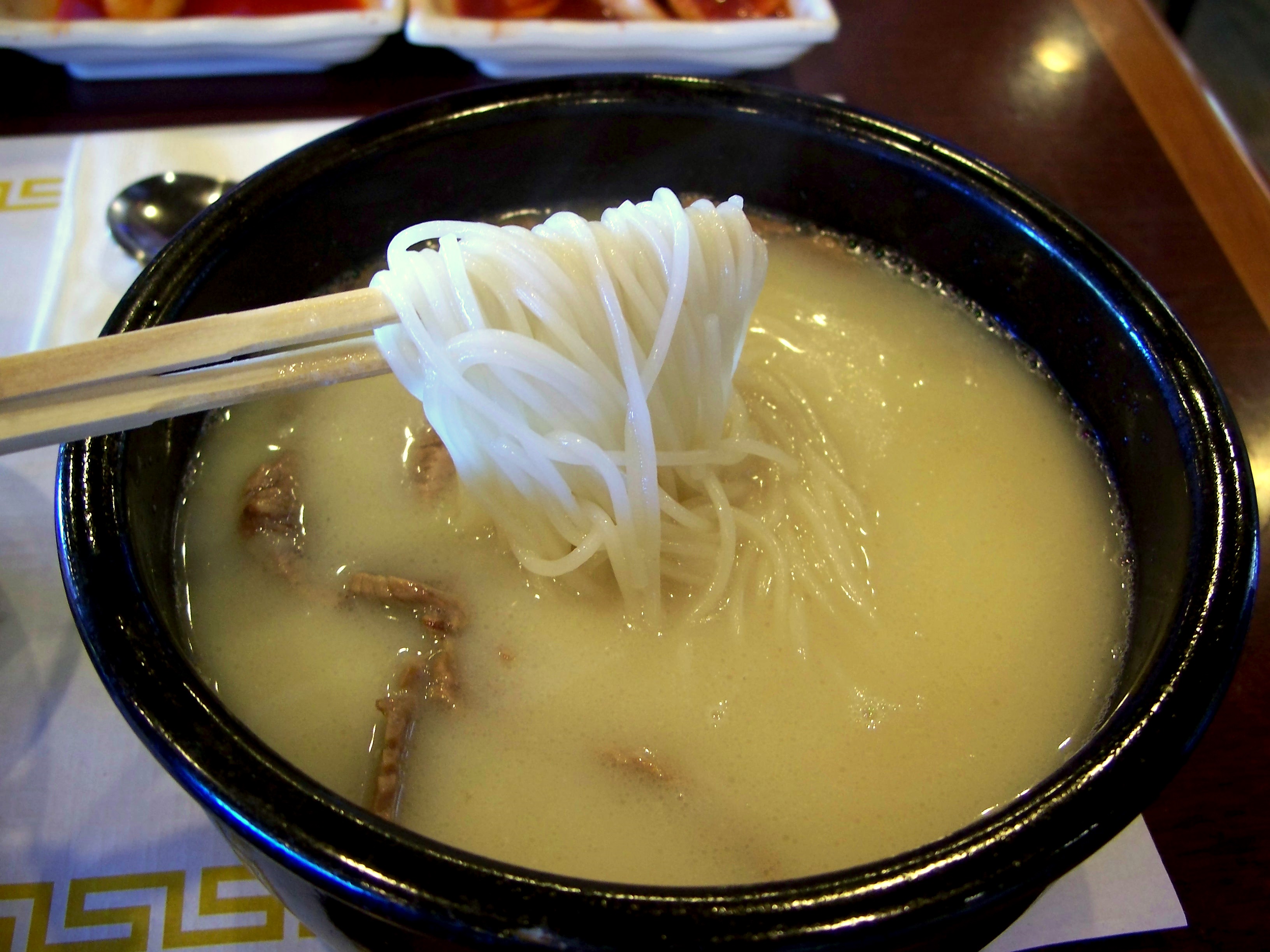
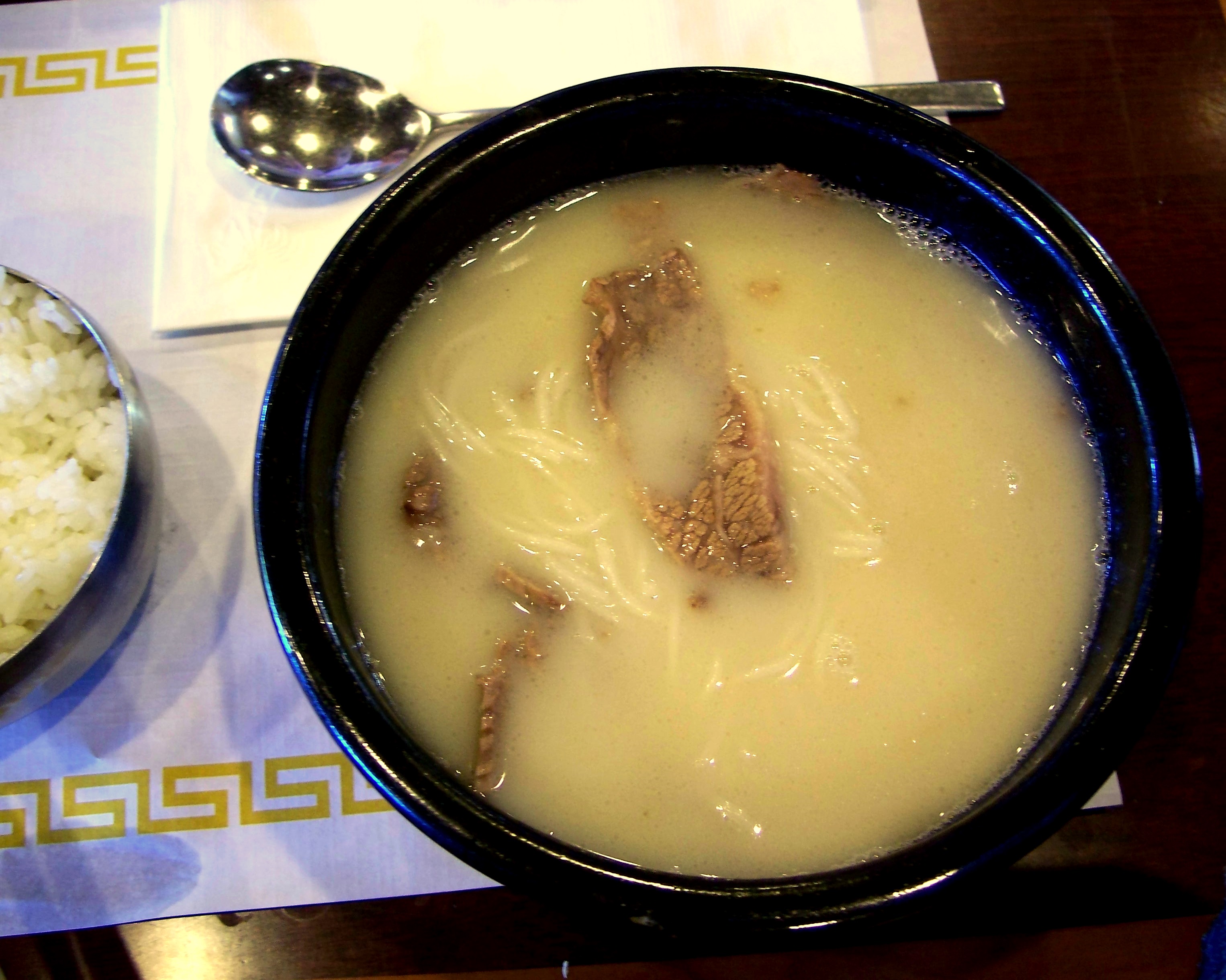
The black stone bowl brought out, fuming. The milky ivory broth pulses inside, playfully revealing strips of browned beef. Dig a little deeper, my chopsticks find supple strands of white, thin as spaghetti and slick as bubble tea. I submerge the metal spoon into the liquid, the cream parts and congeals. I take a sip.

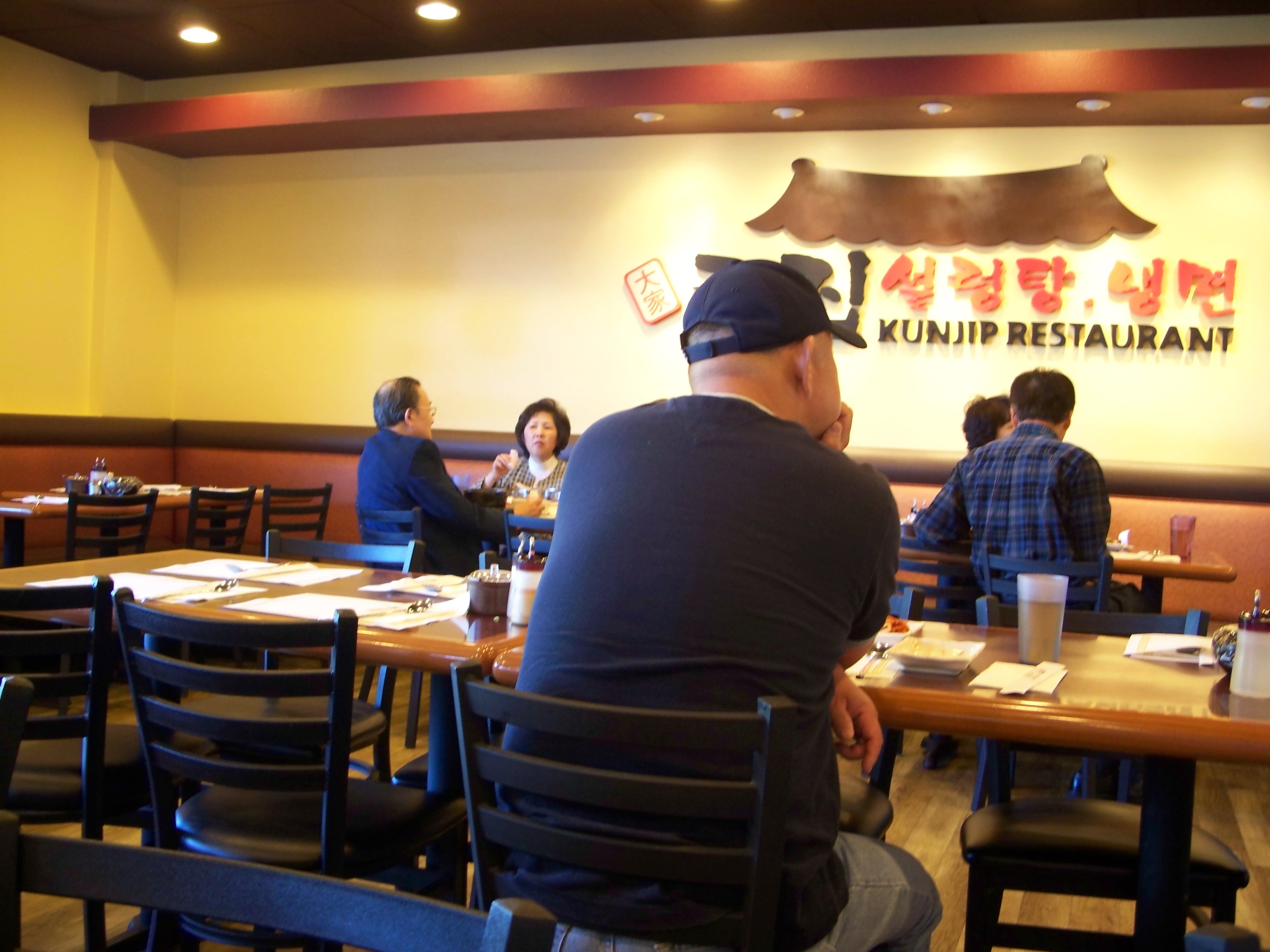
A few months ago a friend recommended Kunjib as a Korean restaurant unlike any I had been to, and indeed it is. The moment we walk in, the hostesses greet us with twittering an nyong ha sye yo and something that I can only guess to mean “table for two, right?”. I wish I had memorized the phrase list from Sura before coming here, but our waitress quickly realizes that we are different from their other customers and switches to near perfect English. Regardless, I’ll sign up for Korean 1 in the fall semester, I’ve already gotten the Hangul alphabet sorta down. 😉


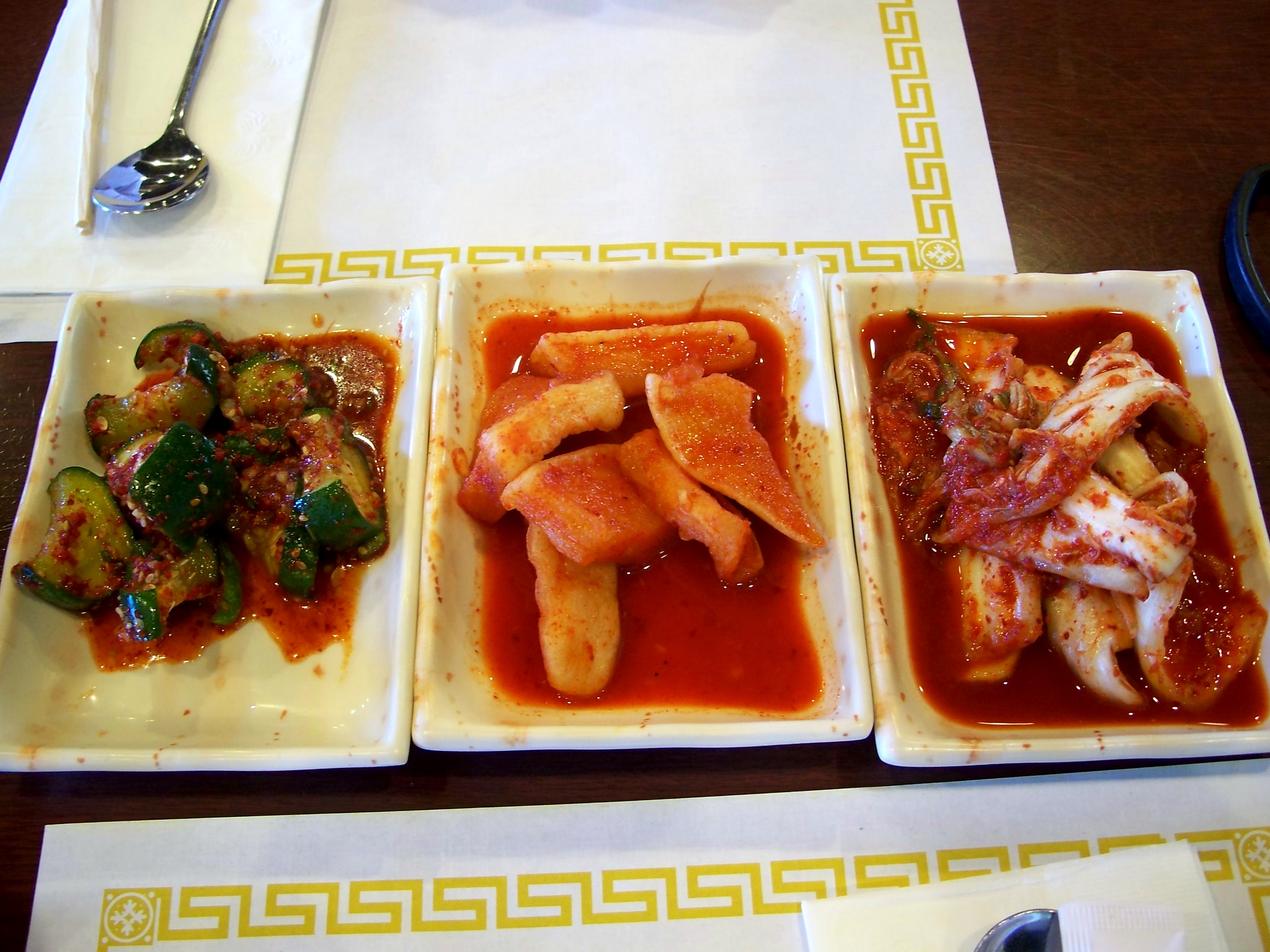
Kunjib is a restaurant of few and focus: white plates, square bamboo chopsticks, tables set connected in straight rows, little decoration, a corner wall TV tuned to Korean channels, icy cold corn tea, a menu of 11 dishes, a set of 3 kimchis.


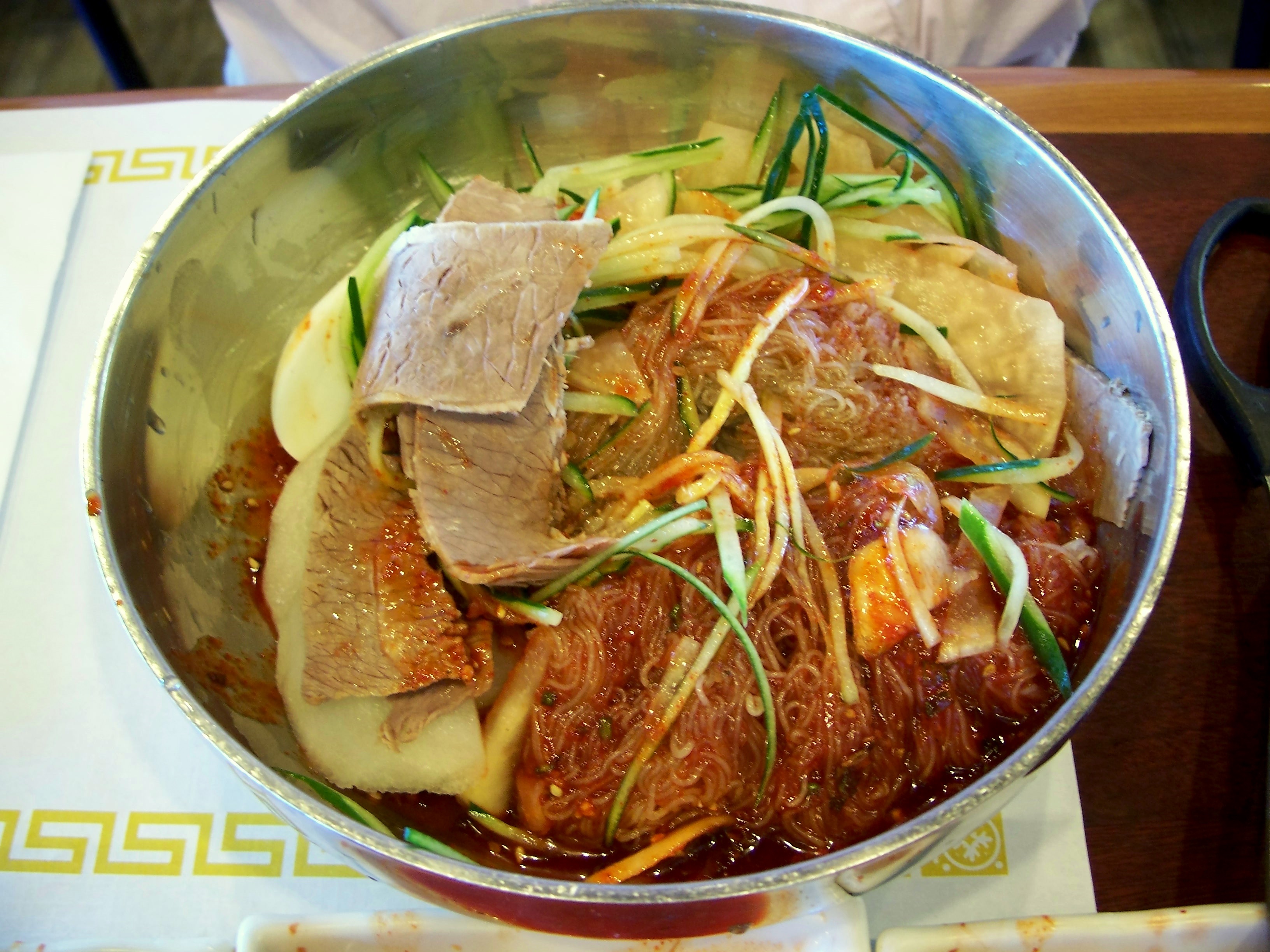
The kimchi here is spicier than those I’ve had before – there is still some leftover in my fridge after eating one or two pieces with rice each day for a week. The bibim naengmyeun (비빔 냉면 mixed cold noodle) is also ladened with gochujang (고추장), its color as crimson as the eclipsed moon. Our waitress instructs us to use a pair of scissors to snip the buckwheat noodles into mouth-sized bundles, and Mudpie deftly mixes up the meat and sliced vegetables with the same enthusiasm used to reserved for only dolsot bibimbap.


So with all the chili pepper galore on the table, I don’t expect my sul lung tang (설렁탕 ox bone soup) to be mild. I submerge the metal spoon into the liquid, the cream parts and congeals. I take a sip.


It’s pure bone marrow and collagen in liquid form. It’s as thick as whole milk diluted in water, and as savory as white rice. There is a whispering sweetness in the broth, detectable only when you drink it by itself and vanishing as soon as you get to the noodle or the meat. I love the noodle in galbi tang (갈비탕), but the noodle in sul lung tang clouds my palates.

In the end, sul lung tang is a soup of subtlety, so should I learn to like it in its purest form, or should I add salt?


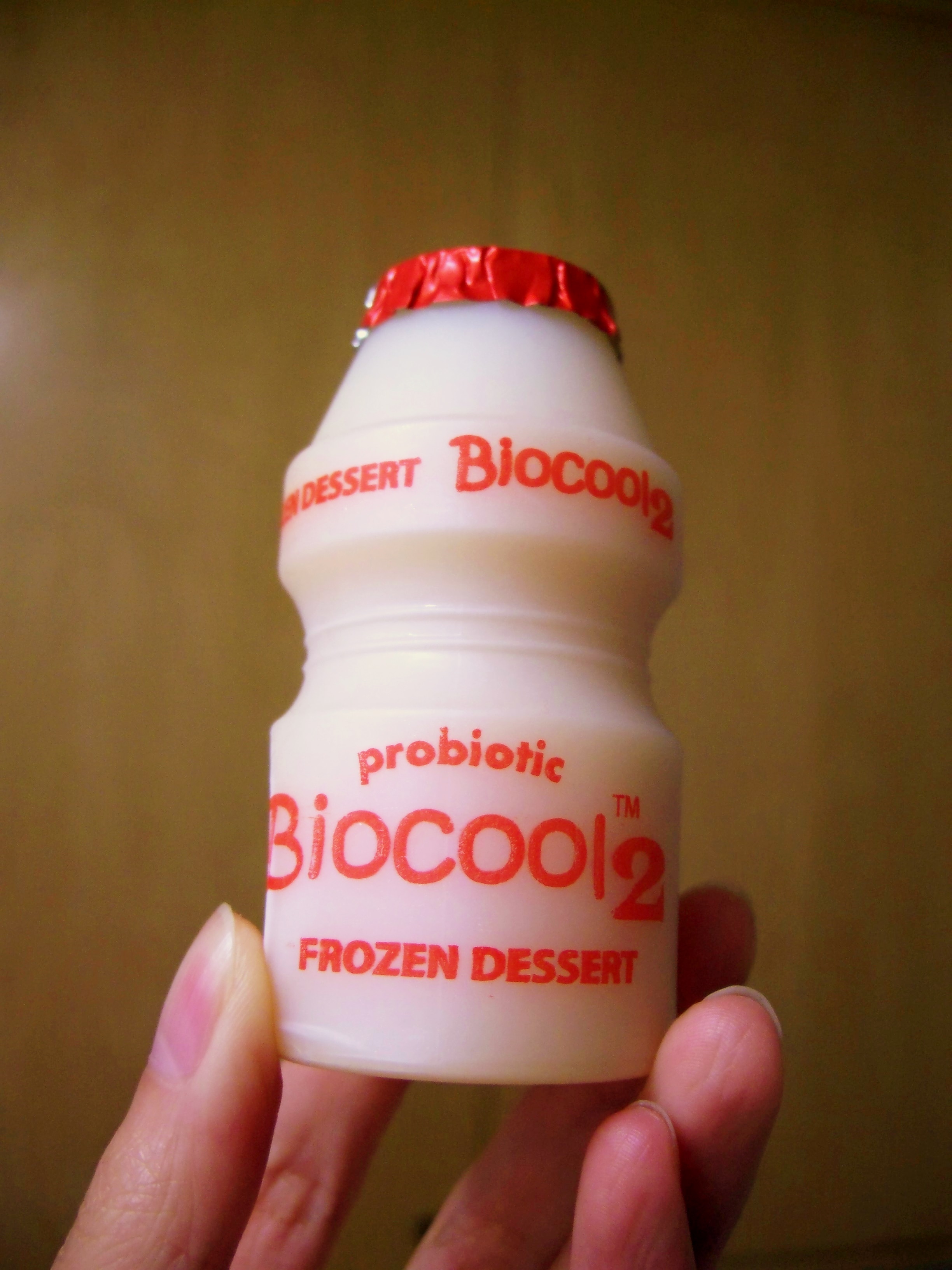
After fierce cold noodle and shy beef soup come teeny tiny bottles and the check. Back of bottle says “Frozen Dessert: Biocool 2 – Win Soon Inc., South Gate, CA 90280. 62ml (2.1 fl.oz).” To Mudpie, the white flow “tastes like SweeTarts“; to me it sings liquid yogurt: a little fruity, a little tart, a little milky. Pretty good. Mudpie claims Koreana sells the exact same baby bottles.

Address: Kunjib Restaurant
1066 Kiely Blvd
Santa Clara, CA 95051
(408) 246-0025

Do you like it when things change?

November 18, 2010 By: Mai Truong Category: California - The Bay Area, Korean, noodle soup, Opinions

This past weekend I found out that my favorite sushi house has replaced their usual corn tea with green tea, and my favorite Korean restaurant has changed name.


Berkel Berkel is now Cho Korean B.B.Q. The Berkel Berkel sign is still outside, the wooden door is still there, the paper lanterns are still there. But the old man is not. The familiar homey vibe is lost, drown in the blasting music and the attentive service of the hosts. I appreciate the smiles and the banchan and drinks brought to the table and the frequent check-ins for refills, but I miss getting my own kimchi and pouring my own tea from the kettle. I miss the old man behind the counter with his strong accent.


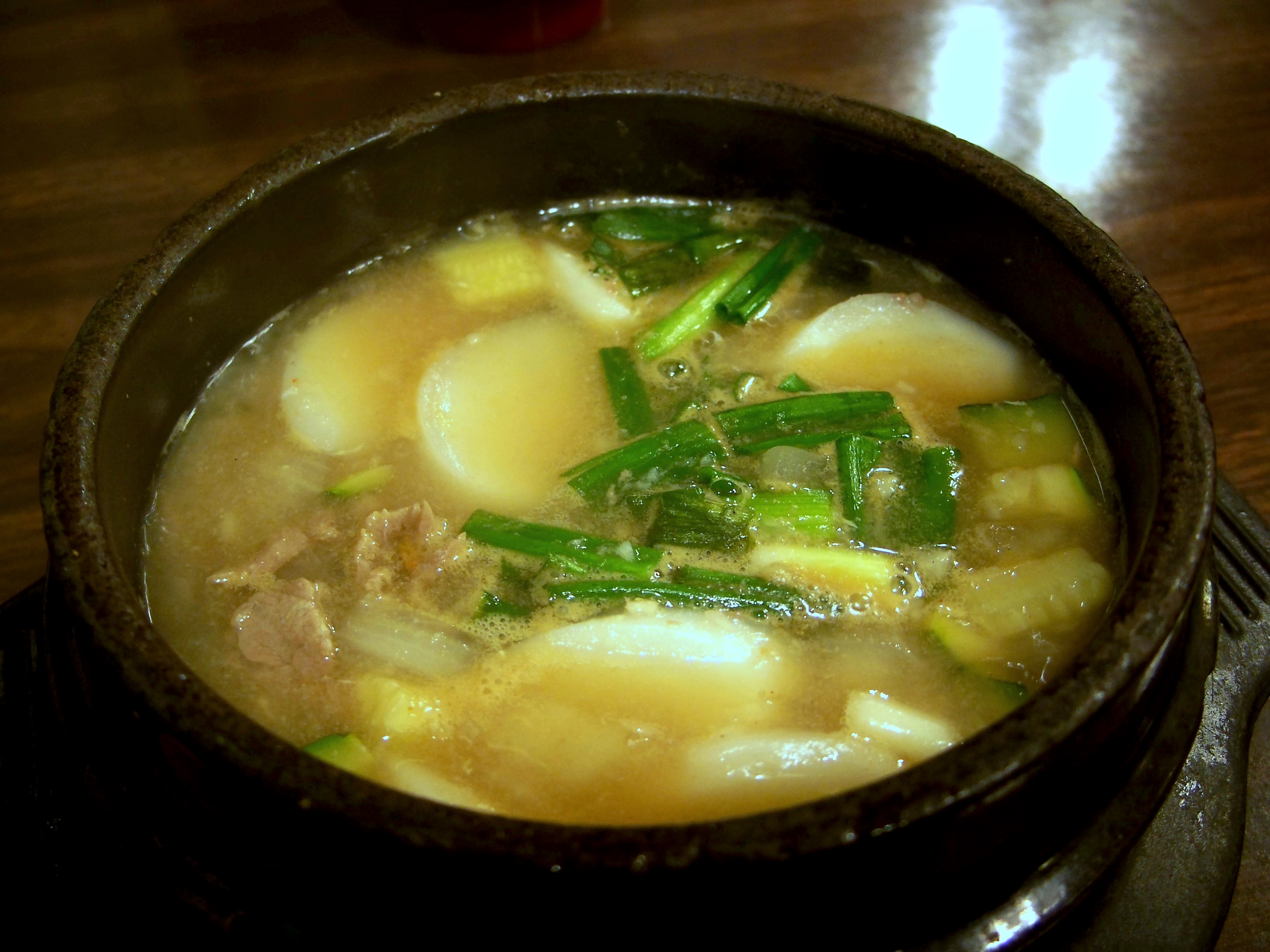
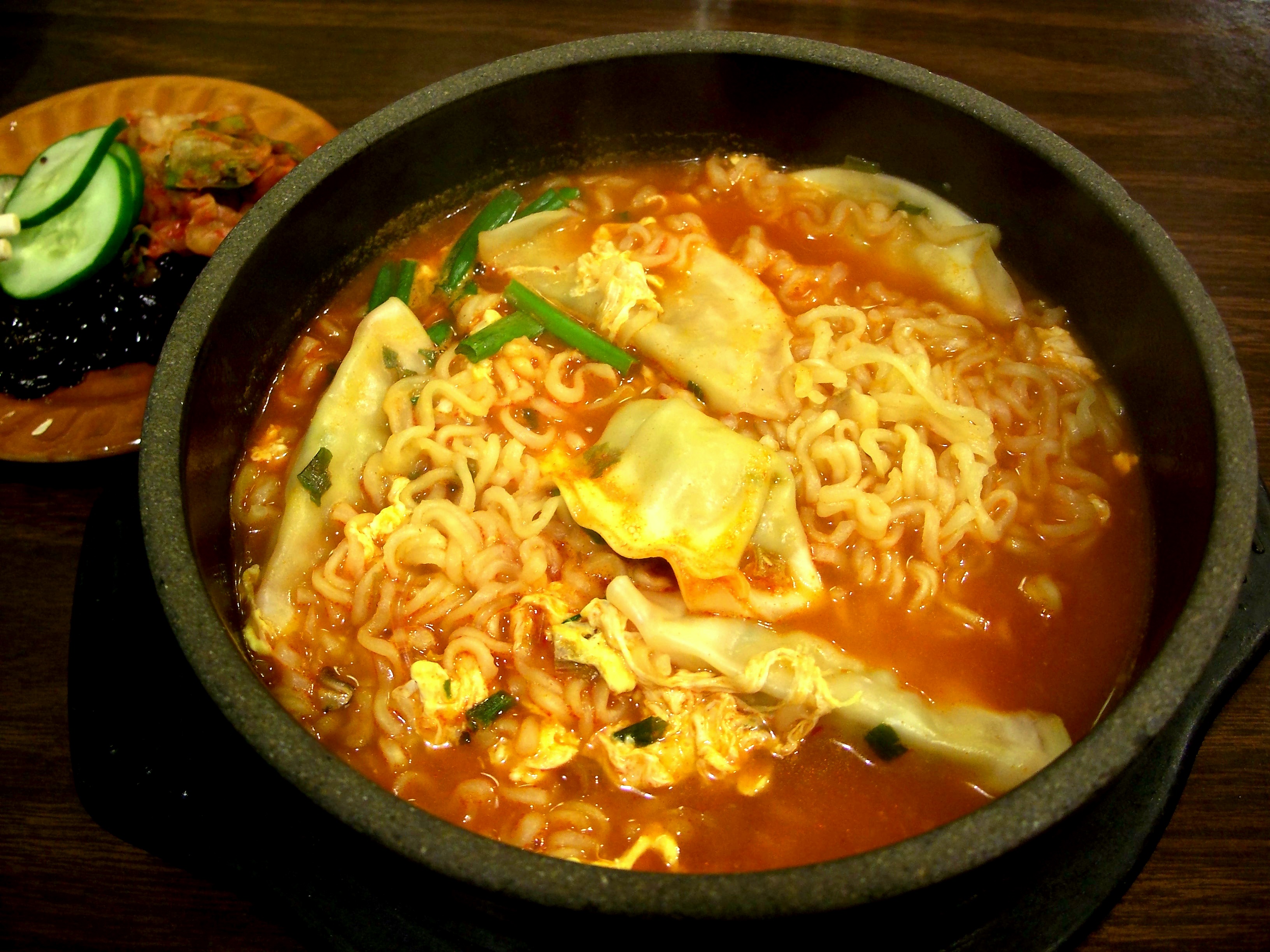
The kimchi selection is still the same: baechu, cucumber, and kongjaban (콩자반). Mudpie got bulgogi ddukbaegi (불고기 뚝배기 beef stew clay pot) with green onion, mushroom, and potato noodle in sweet broth. I got ramyeon (ramen) with dumplings. Being a tad spicy, once again my choice was less savory than Mudpie’s choice. Objectively, the food is still good for its price, but I wonder how my feelings for Cho would be different if I had not been to Berkel Berkel before. I do hope that Cho will flourish, just like our favorite Bánh Cuốn Tây Hồ in Oakland has changed for the better.

Things change. Feelings change. I change. I just wish that the things I hold dear will change with me so that together, we remain the same.

Dinner for two: ddukbul ($6.95) + ramyeon ($5.25) + tax = $13.00
They do take out orders, and open daily 10:30am-10:00pm, whereas Berkel Berkel closed on Sunday. 🙂

Address: Cho Korean B.B.Q. (former Berkel Berkel)
2428 Telegraph Avenue
Berkeley, CA 94704
(510) 981-1388

Best Pho in the Bay

October 19, 2010 By: Mai Truong Category: California - The Bay Area, noodle soup, Vietnamese

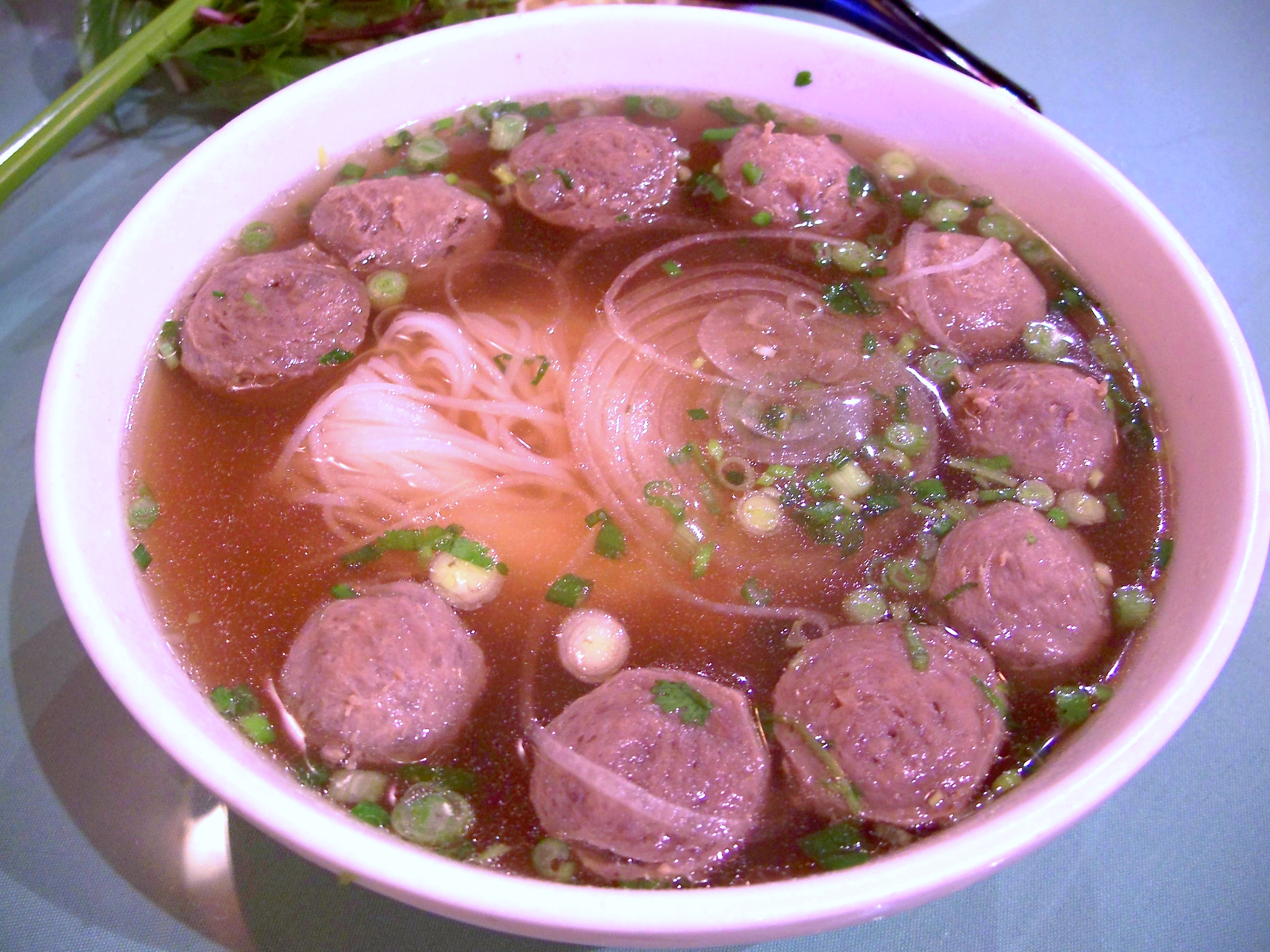
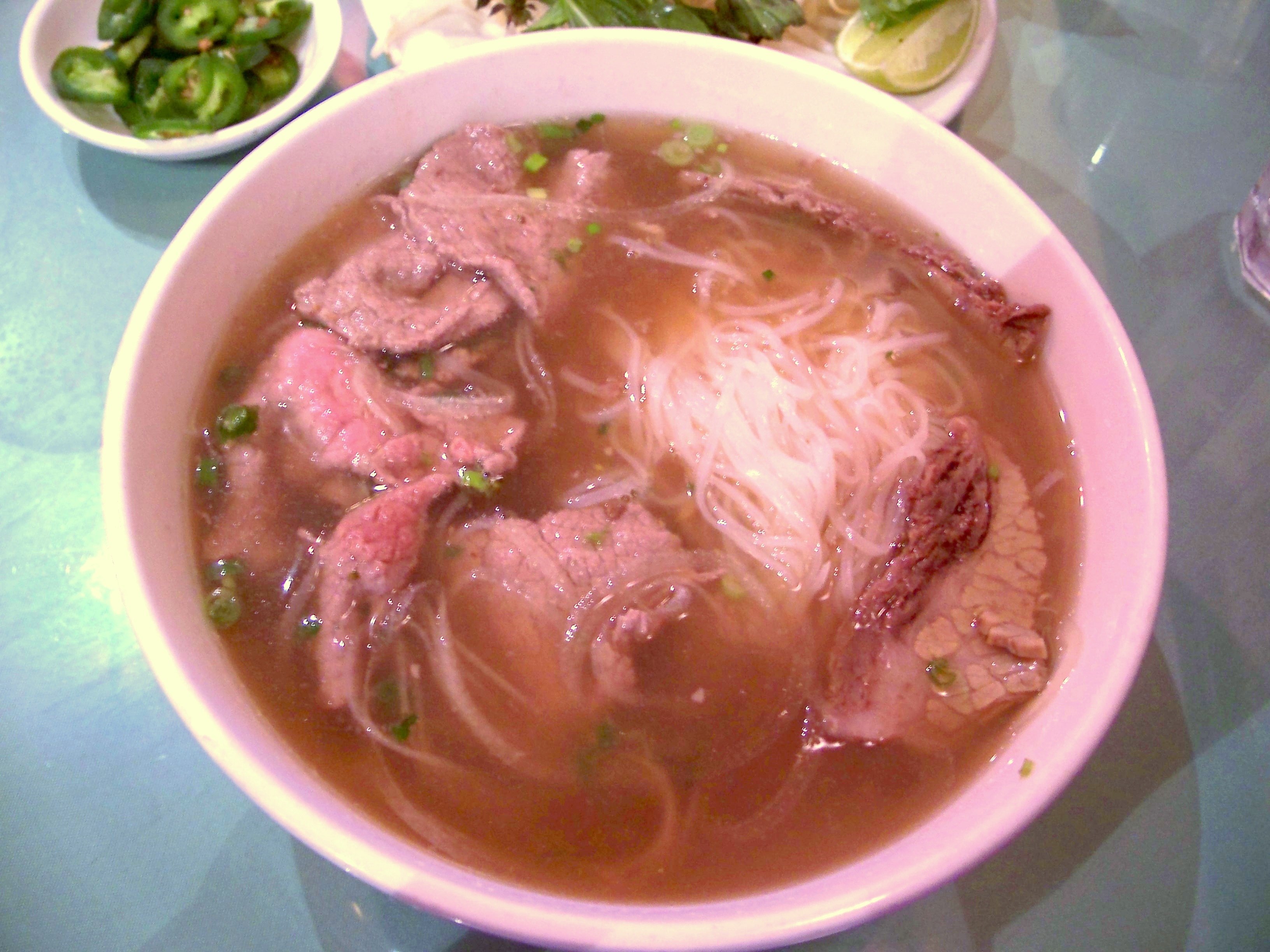
If you ask me a few weeks ago, which place has the best pho in the Bay Area outside of San Jose, I would not give a straight answer. I would instead say that the speediest pho is at Le petit Cheval on Bancroft, at most 5 minutes after ordering and a bowl is steaming up your nose; the most spacious pho restaurant is Phở Vỉ Hoa in Los Altos; the lowest price of a sliced beef number is about $6; and upon slurping you usually can’t escape a tightened, salty lingering at the back of the throat, reminiscence of the seasoning package that comes with your instant $1 pho.

If you ask me now, I’d say without hesitance: Le Regal has the best pho in the Bay, and possibly one of the best I’ve ever had I still don’t have the answer yet: UPDATE on October 15, 2011: Le Regal’s pho broth has become fatty and bland, it is now one of the worst pho I’ve ever had…

The following is but a beautiful memory: 🙂


The main reason for this definite conclusion is the lack of that post-slurping tightened, salty aftertaste. It does hurt my pocket a little paying $8-9 for a wad of thin, chewy noodle, a hefty plate of bean sprouts, and meat. But the broth is the deciding factor, and this broth is at least twice as good as any other broth outside San Jose.


Inside San Jose, I haven’t ordered any pho. Cuz if you’re already in Vietnamese town, shame on you for sticking to only that one dish.

Address: Le Regal
2126 Center Street
Berkeley, CA 94704
(510) 845-4020

What to get and not to get at Dara

October 14, 2010 By: Mai Truong Category: California - The Bay Area, Comfort food, noodle soup, sticky rice concoctions


Diagonally across the intersection from Crepevine on Shattuck are one Thai restaurant and one Thai-Lao restaurant, right next to each other. We know that it’s pretty much impossible for us to get a pure Lao dish in America, given that we can’t really tell the difference between Lao and Thai names. Still, the three-lettered word addition on the sign has an alluring effect on us mini-globavores. So we choose Dara over Cha Am.


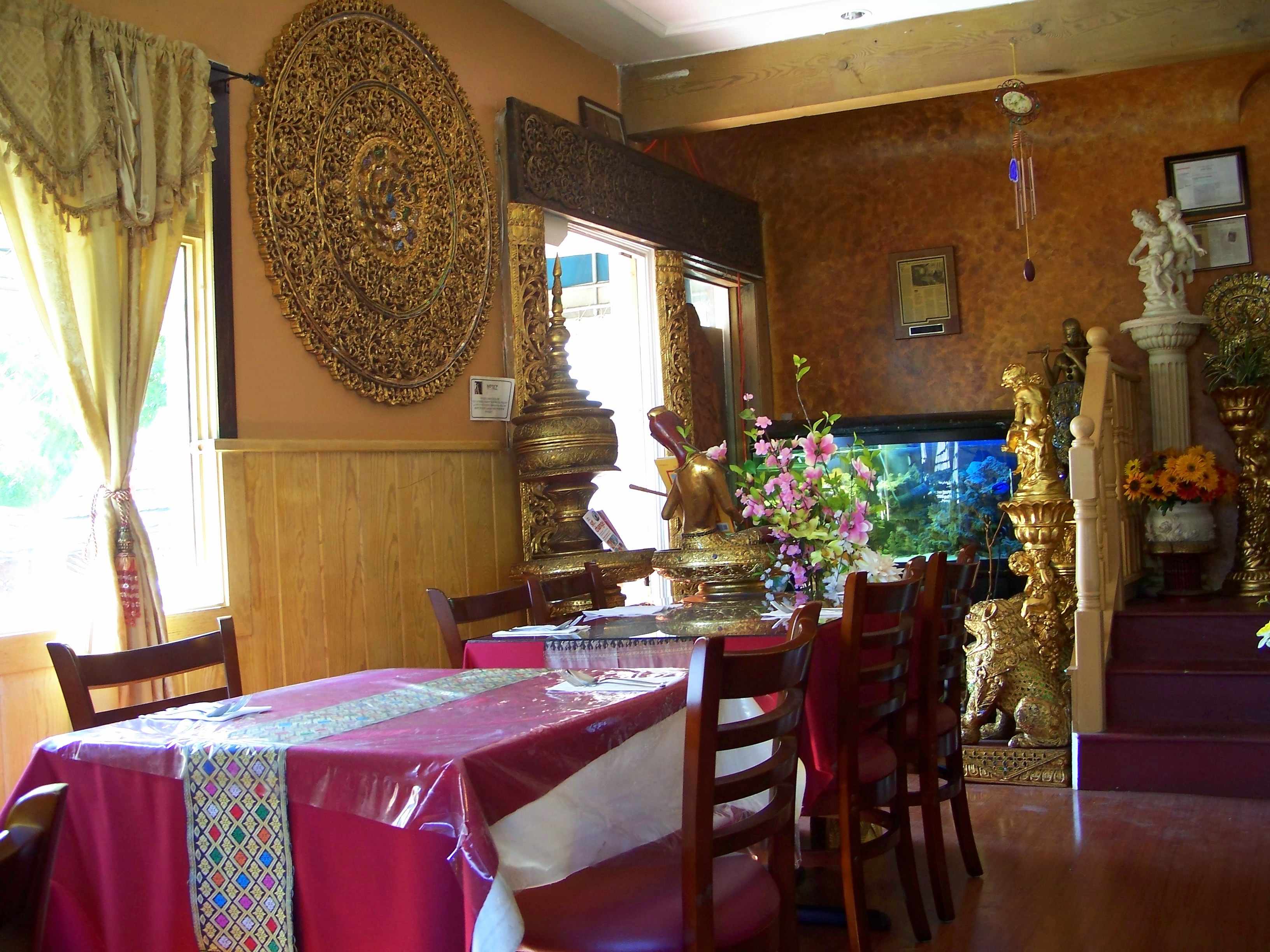
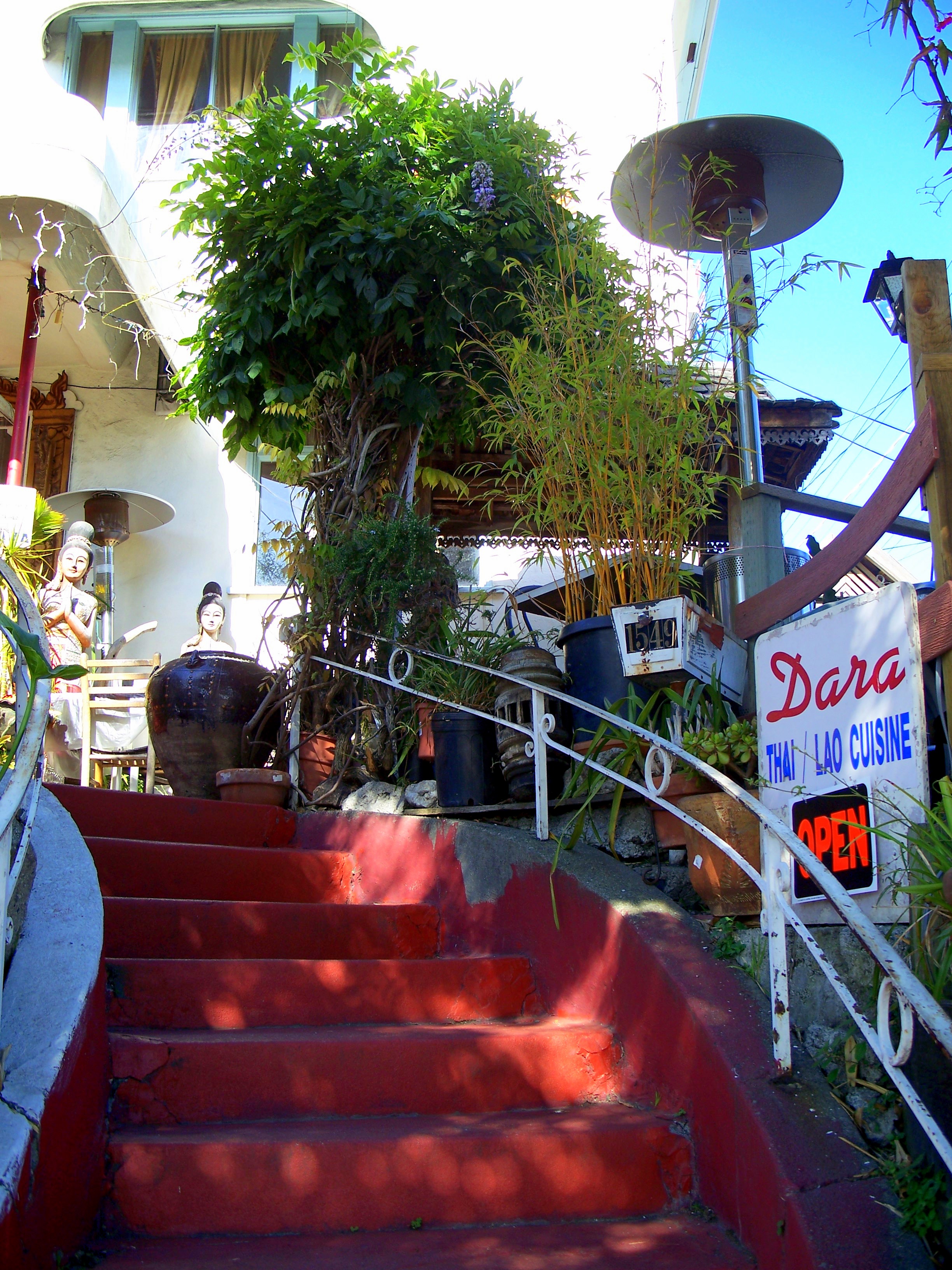
Secluded high above street level with a red brick gradation ascending up to the door, Dara offers its patrons two seating choices: out in the garden curtained by a multitude of mini palm trees, bamboos, and kalanchoes, or indoor, surrounded by faux gilded statues, metal vases, and wall ornaments. There’s no music; except for the talking in the kitchen far back, the only sound you hear here is your own voice.

The dinner menu at Dara has a list of house specialties, Lao finger foods (with familiar items like sai gauk, satay gai, noke todd, nam lao), various noodles and curries, and of course, pad thai for those who never order anything else when they go to Thai restaurants. The lunch menu is more compact and has no separation between Thai and Lao dishes. The foods range from really good, good, alright to eh-inducing, but the quick and gracious service is always the same. I ask our host if we pronounce the names correctly, he smiles and nods “of course”. I’m sure the “not” is hidden behind his big grin. 🙂


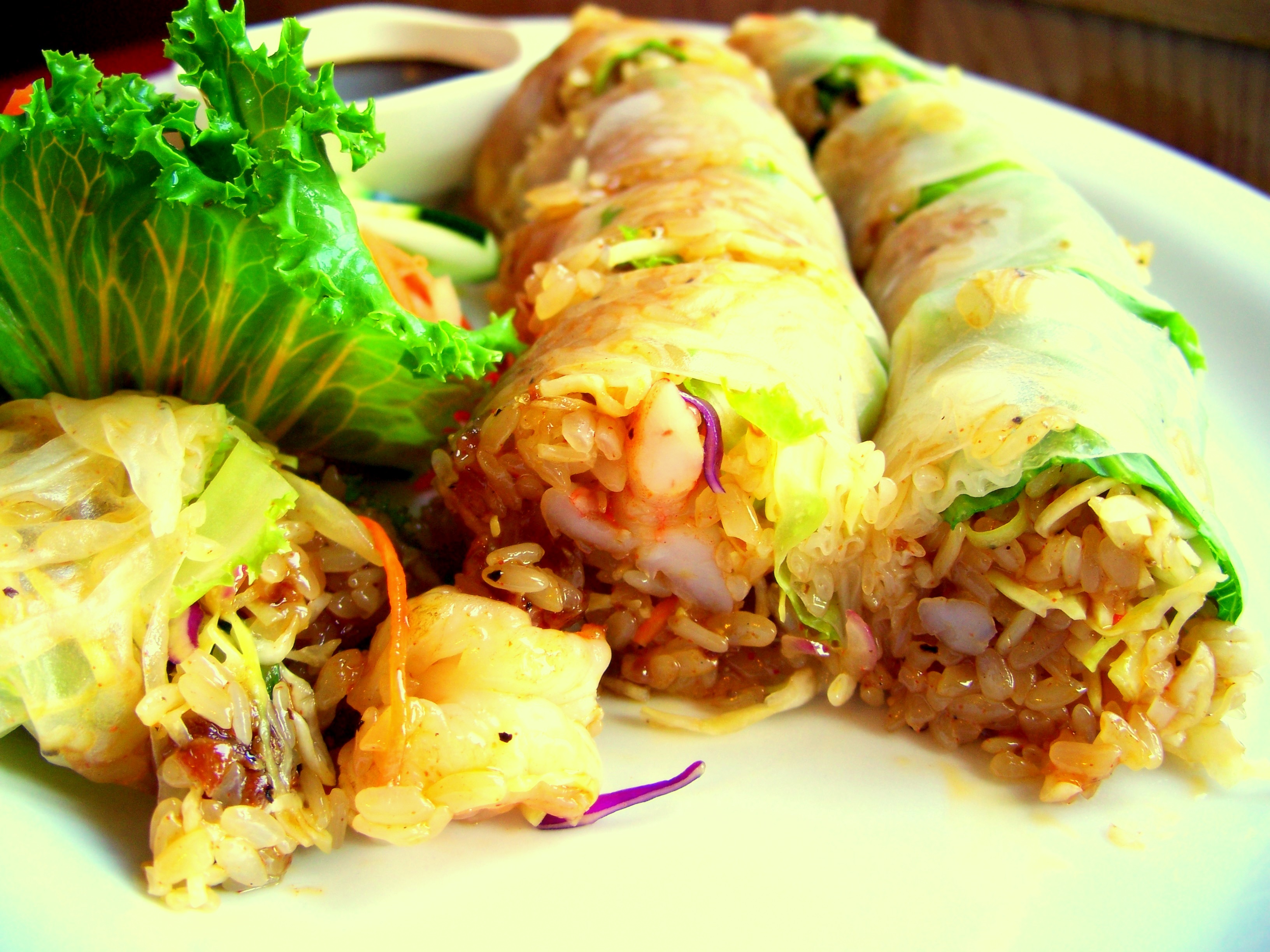
Get: sticky rice roll with peeled shrimp, wrapped in moist rice paper. Although accompanied by a thick tamarind dip, the rolls are already robust with their supple grains coated in some sweet and salty sauce. Its solid and chewy texture makes you full for hours. This is xôi disguised in gỏi cuốn form, ~$9 for two fat long ones.


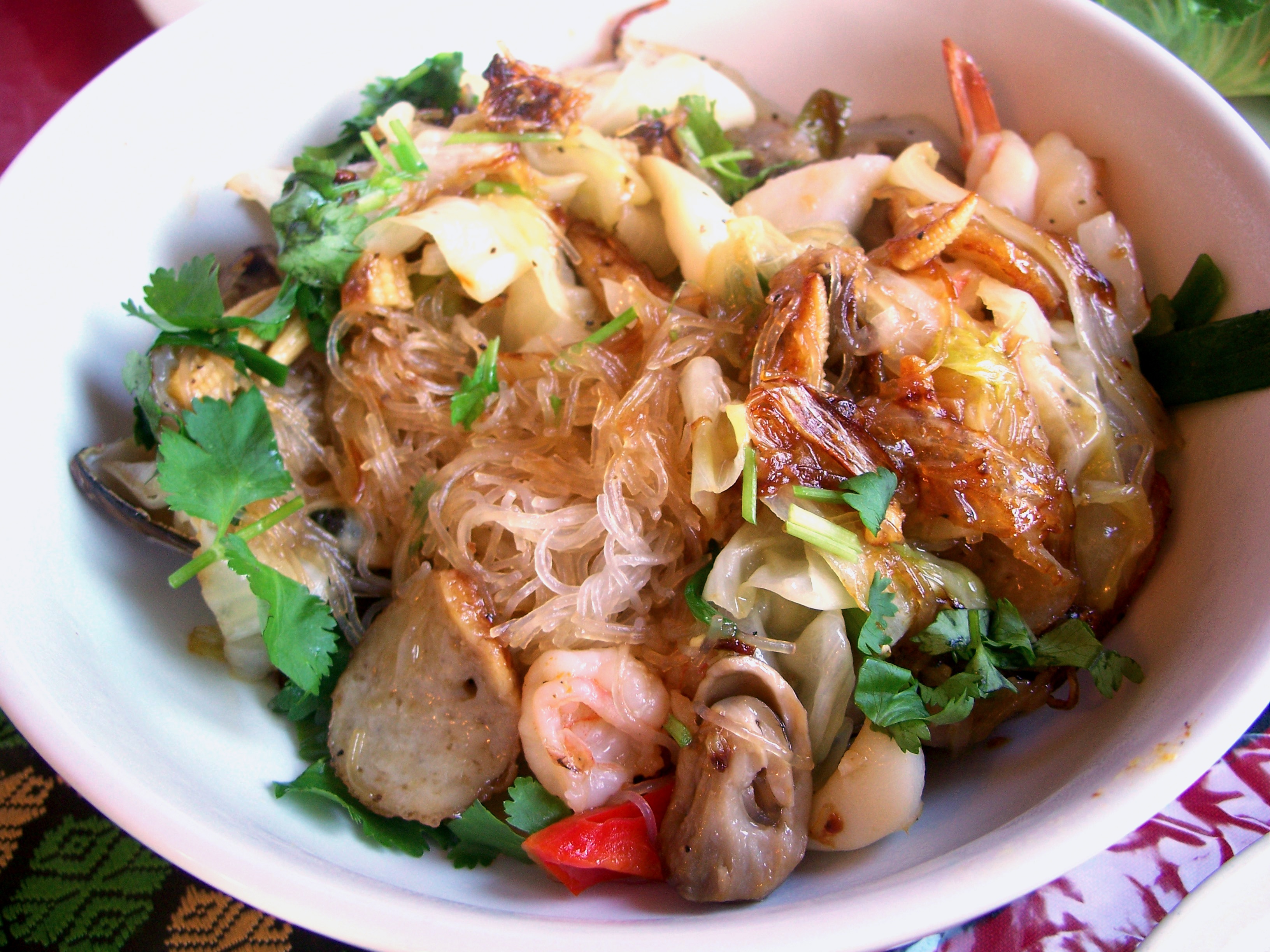
Definitely get: mor din – stir fried glass noodle with mussel, salmon, fish cake, shrimp, squid, straw mushroom, cilantro, bell pepper. All sorts of goodies for about $13. I cannot understand why pad thai is more popular than mor din. (FYI, Dara also dishes out a better mor din than Little Plearn Thai Kitchen on south Shattuck.)


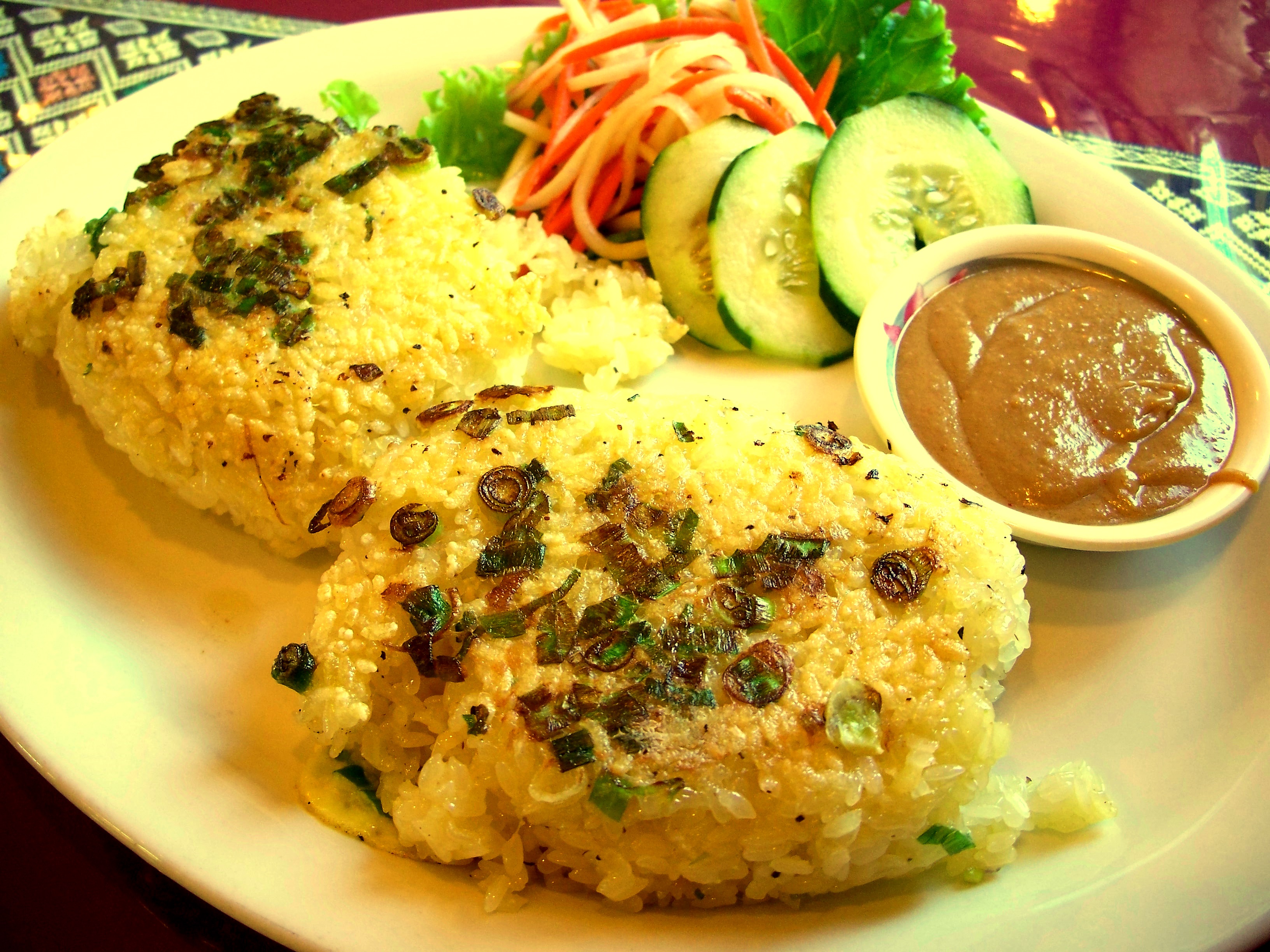
Get with caution: kao gee ($8.95) – simply a block of baked sticky rice seasoned with anchovy fish sauce, fried shallot, green onion, a little bit of egg, and peanut sauce to spread. The rice has a light crisp on the surface, but the taste, however interesting, gets monotonic after a while.


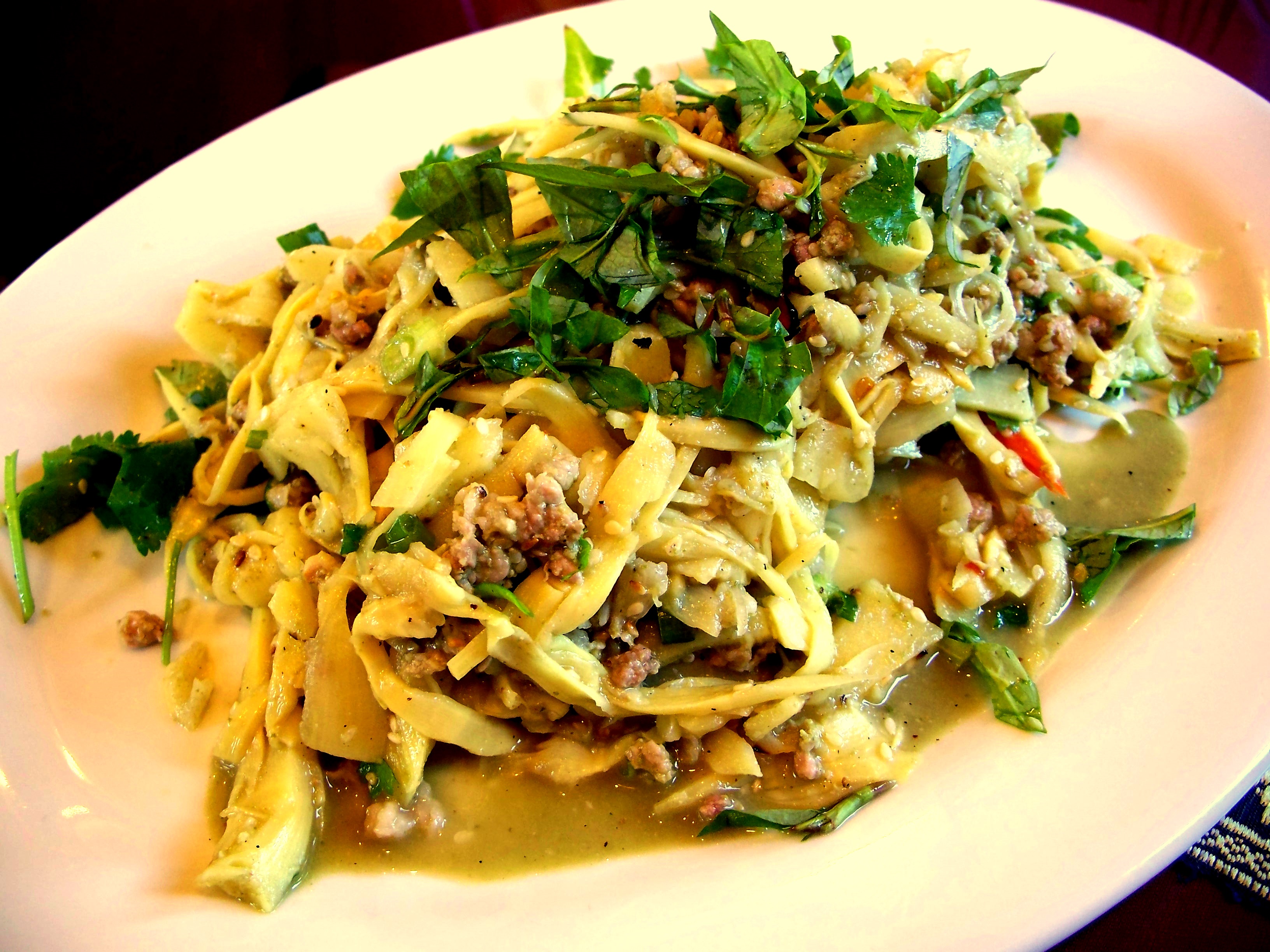
Get with caution: soub naw mai even if it’s on the House Specialties list (with kao gee). This is bamboo shoot (mai) salad with minced pork, spiced up by a generous dose of ground chili pepper, black pepper and mint. I have mixed feelings about this. It’s good at first, but then it’s too spicy for me, the bamboo shoot is refreshing at first, but then too soggy and not chewy enough. It’s good as a small side salad, but not as an $8.95 entree.


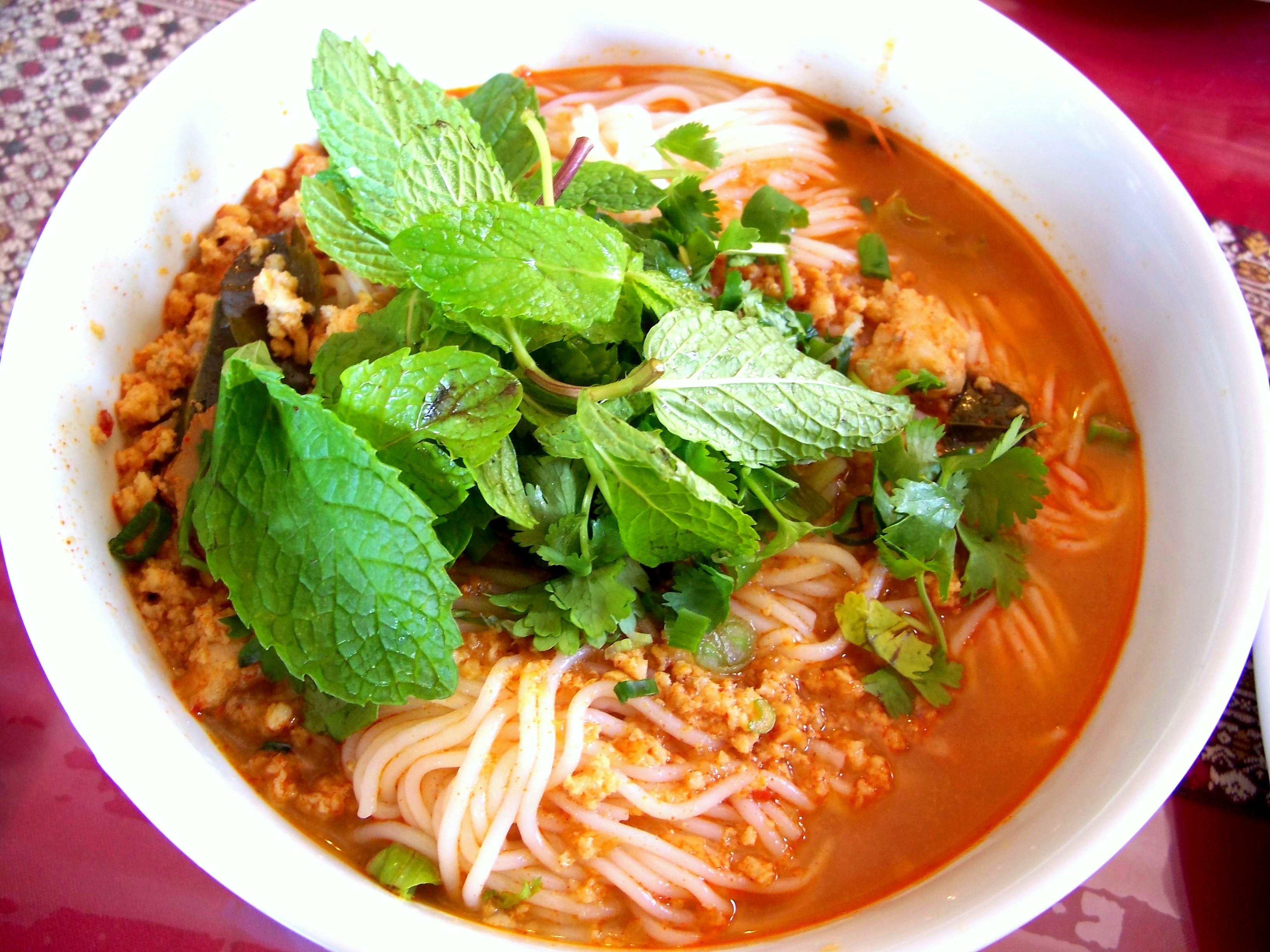
Get: catfish curry noodle soup (lunch menu, $9.95). Don’t expect to see any fish under the rice noodles, it has all dissolved in the broth. This soup is as vibrant in colors as it is in taste: sour and hot play the two high keys. I like how the main ingredient, the fish, stands behind the scene.


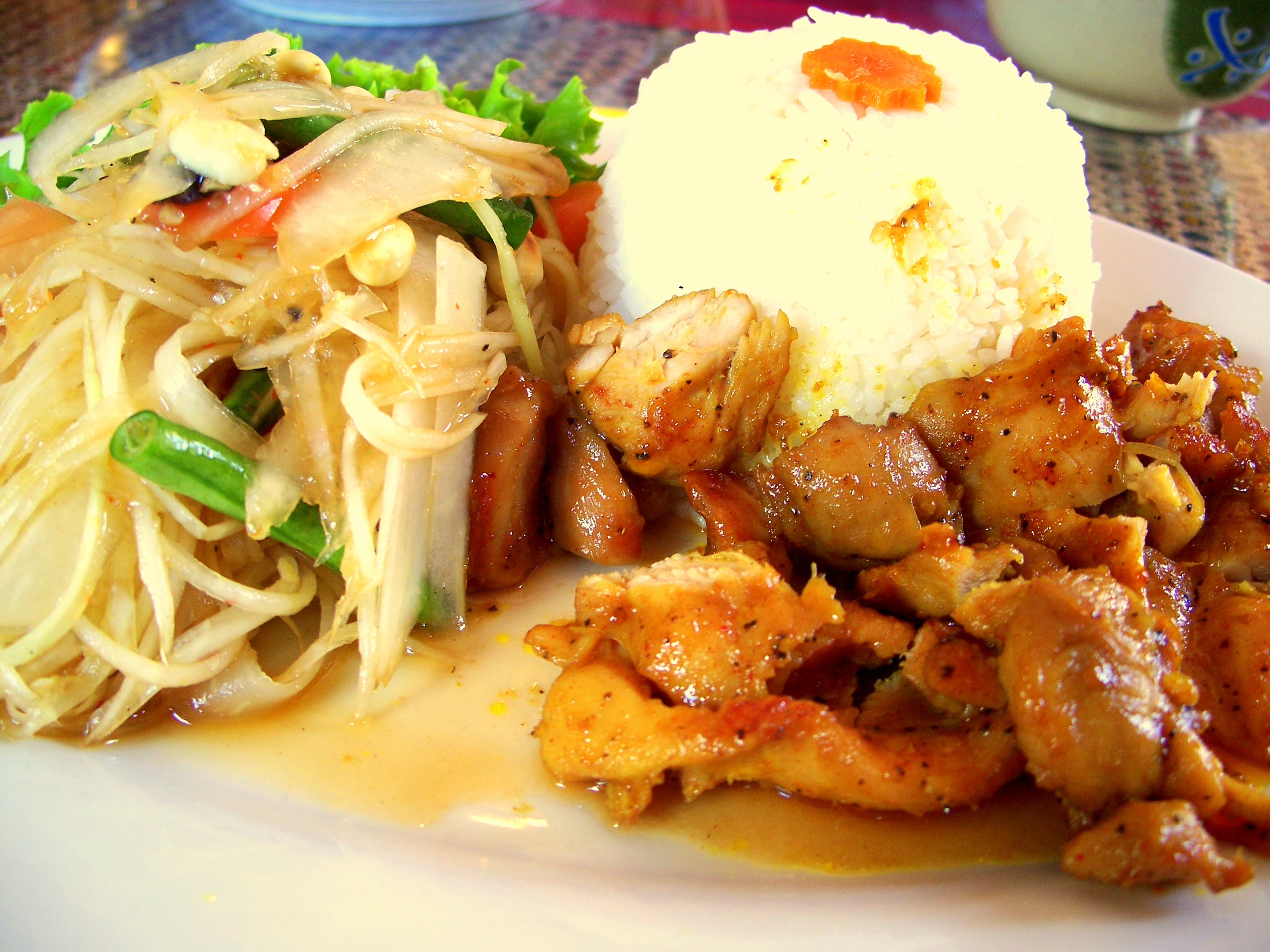
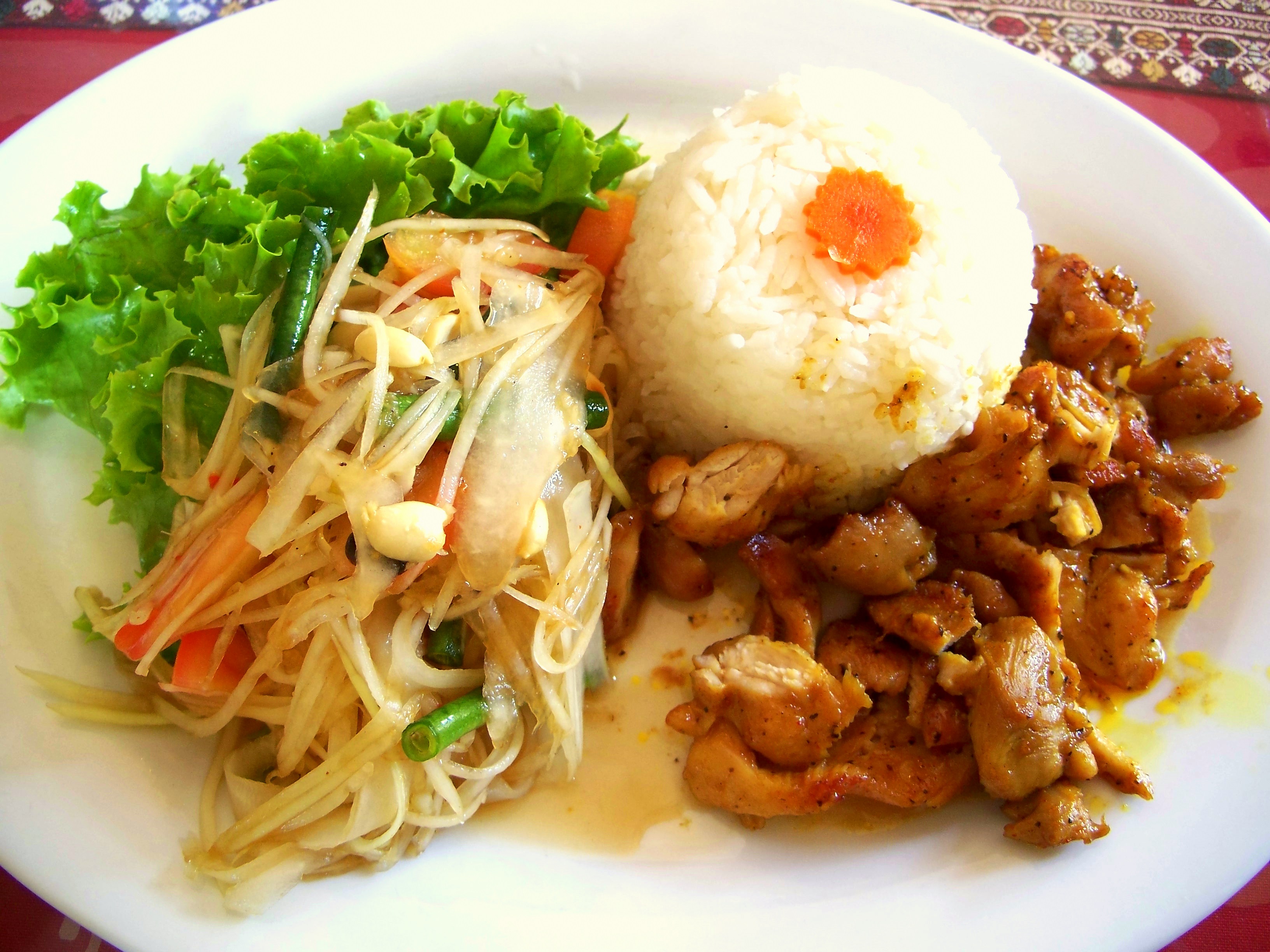
Definitely get: som tum gai yang (lunch menu, $9.95). What can go wrong with BBQ chicken (gai yang in Thai, or ping gai in Lao), simple white rice, and green papaya salad (som tum in Thai, tam mak hoong in Lao)? The portion is too small. Although I’m a meat lover, I think the mild som tum totally steals the lime light on this plate (pun intended :-P). Its crunchy strings, soaked in sugar and tangy lime juice, are fruit crack.


Of the limited times we’ve been to Dara, the only disappointing thing we encounter is how the diners, however young, like to order nothing more than pad thai. The playing-safe mentality is stickier than sticky rice. Seeing how big the menu is at Dara, there is one thing you should NOT GET here: pad thai.

Address: Dara Lao Thai Cuisine
1549 Shattuck Ave
Berkeley, CA 94709
(510) 841-2002

Other Thai-Lao restaurant in the vicinity:
Champa Garden

Szechwan slurpings in Oakland Chinatown

October 04, 2010 By: Mai Truong Category: California - The Bay Area, Chinese, noodle soup


What would you prefer to order, something whose name you don’t understand, or something whose name you do understand but the combination of ingredients is strange to you? The biggest problem we face at Chinese restaurants in Chinatown is that the waitresses don’t know much English, and we know zero Chinese. We can’t ask about the dishes and have to rely solely on the English description, if it is written, which leads to the second problem: all the descriptions are the same.

Not just that. If you are not Chinese and have spent many years eating $7 Chinese buffets like me, you probably know that there’s hardly any difference between Szechwan chicken, orange chicken, sweet and sour chicken, and whatever chicken. Same goes for fried rice, chow mein, vegetables, and other edibles, which appear identical everywhere (unless it’s really bad). So imagine my excitement of spotting “tai lou mein” and “pickle and pork rice noodle soup” as I flipped through the menu at Szechwan Restaurant on 8th Street. We’ve never heard of those things.


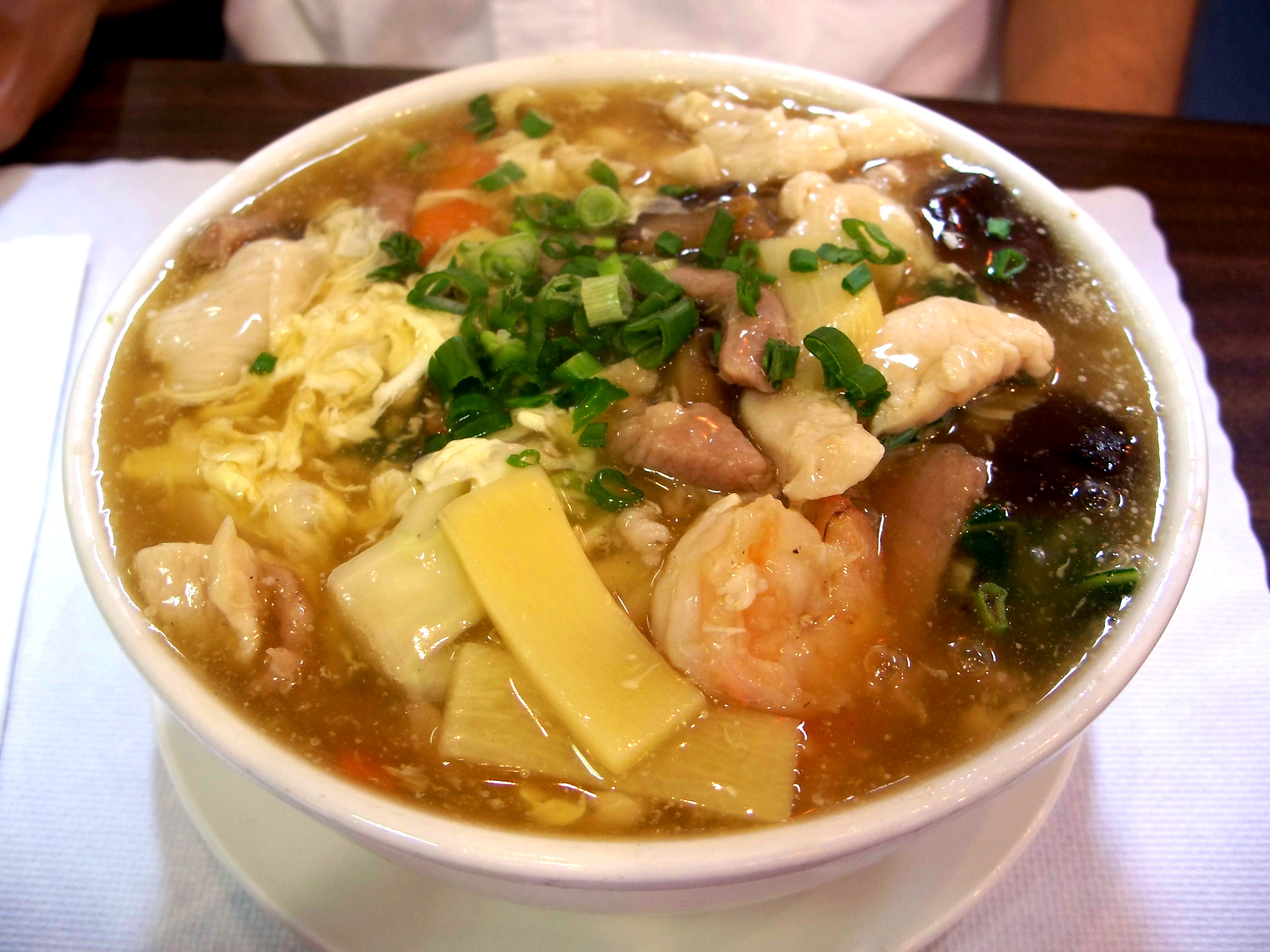
The tai lou mein is, unexpectedly, a bowl of noodle soup. (We thought we’re in for stir fried noodles.) It’s the same thick round egg noodle in chow mein, drenched in a very slightly corn-starchy sweet broth with fresh bamboo shoots, shrimp, pork, chicken, mushroom, carrots, and a cracked egg (which the waitress called “scrambled egg”), topped with green onions. It turns out a safe good bet. From a reliable source we learn that perhaps the pinyin transcription of the name should be da lou mein instead of “tai lou mein”.


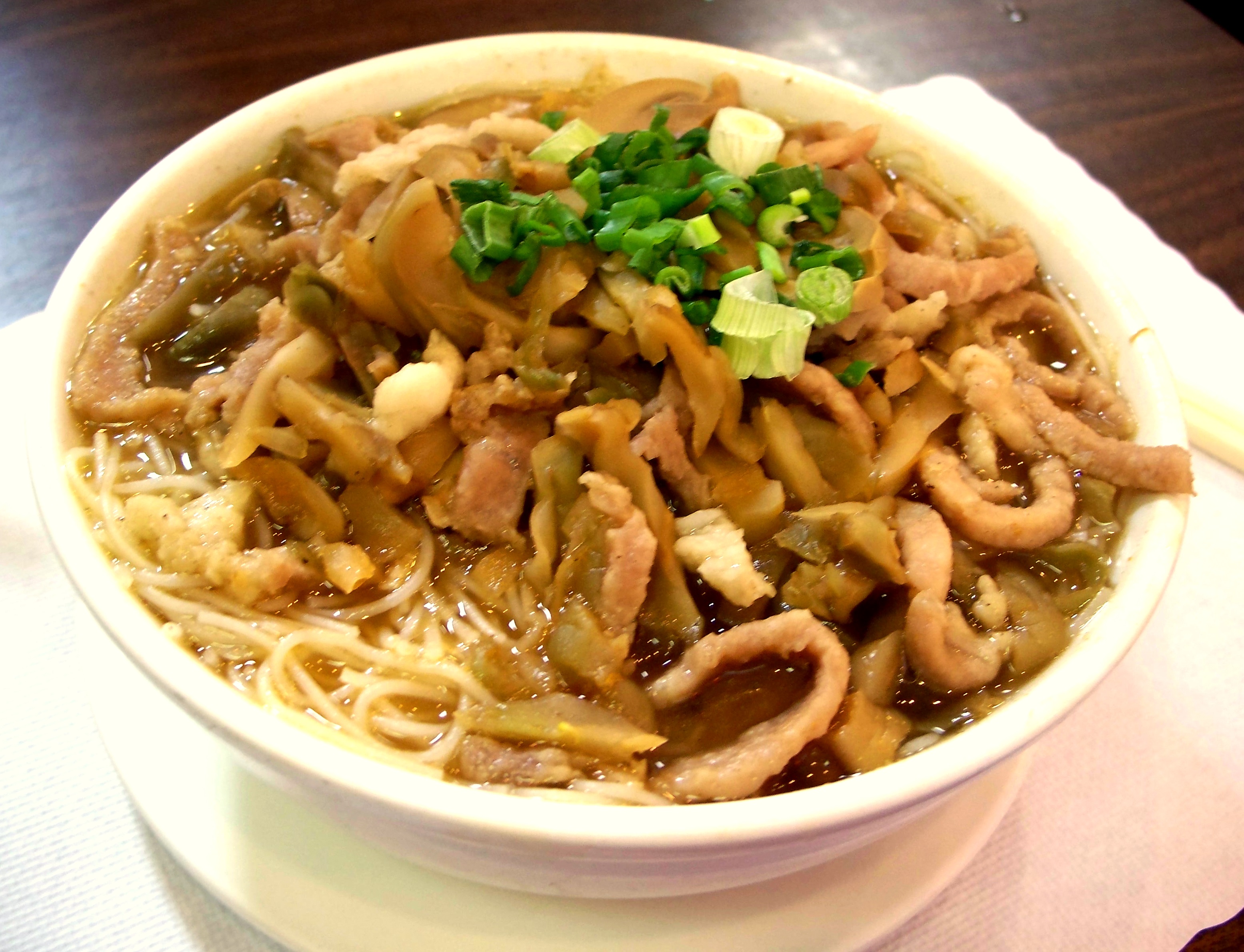
The pickle and pork noodle soup (榨菜肉絲麵 zha chai rou si mein) is my new love. Compared to da lou mein, it has far fewer visible ingredients, but the balancing of flavors and healthiness are superb. I’ve never had pickles in noodle soup, but the idea is not too far stretched from Vietnamese sour soups with pickled bokchoy (canh dưa chua), so why worry? The pickle (zha chai) in zha chai rou si mein is made from knobby stems of a type of mustard green. Sliced into short strips, zha cai resembles stir fried bitter melon in texture (solid and crunchy with a soft core). Eaten alone, zha chai has a salty zing to keep your tongue on its toes (and Mudpie away from the bowl). Meddled with shredded pork and noodle, the zing diminishes almost completely. Its sourness clears and freshens the broth like white paint on old walls. Rice noodle makes an even better match. On a sick or cold day, I’d rank zha chai rou si mein right up there with phở and bún mộc.

The two giant bowls cost under $6 each, and unless you have a whale stomach it’s unlikely that you would have room for dessert. Now, if you do want to order dessert (soybean curd, almond jelly, and some two other things), it’s best to get a menu and point it out to the waitress, or speak Chinese. The waitresses do not know the word “dessert”. And be patient, because they are very cordial to you. 🙂

Address: Szechwan Restaurant (Oakland Chinatown)
366 8th Street
Oakland, CA 94607-4241
(510) 832-7878

Bún bung, sort of…

September 25, 2010 By: Mai Truong Category: Comfort food, noodle soup, Northern Vietnamese, RECIPES, Vietnamese


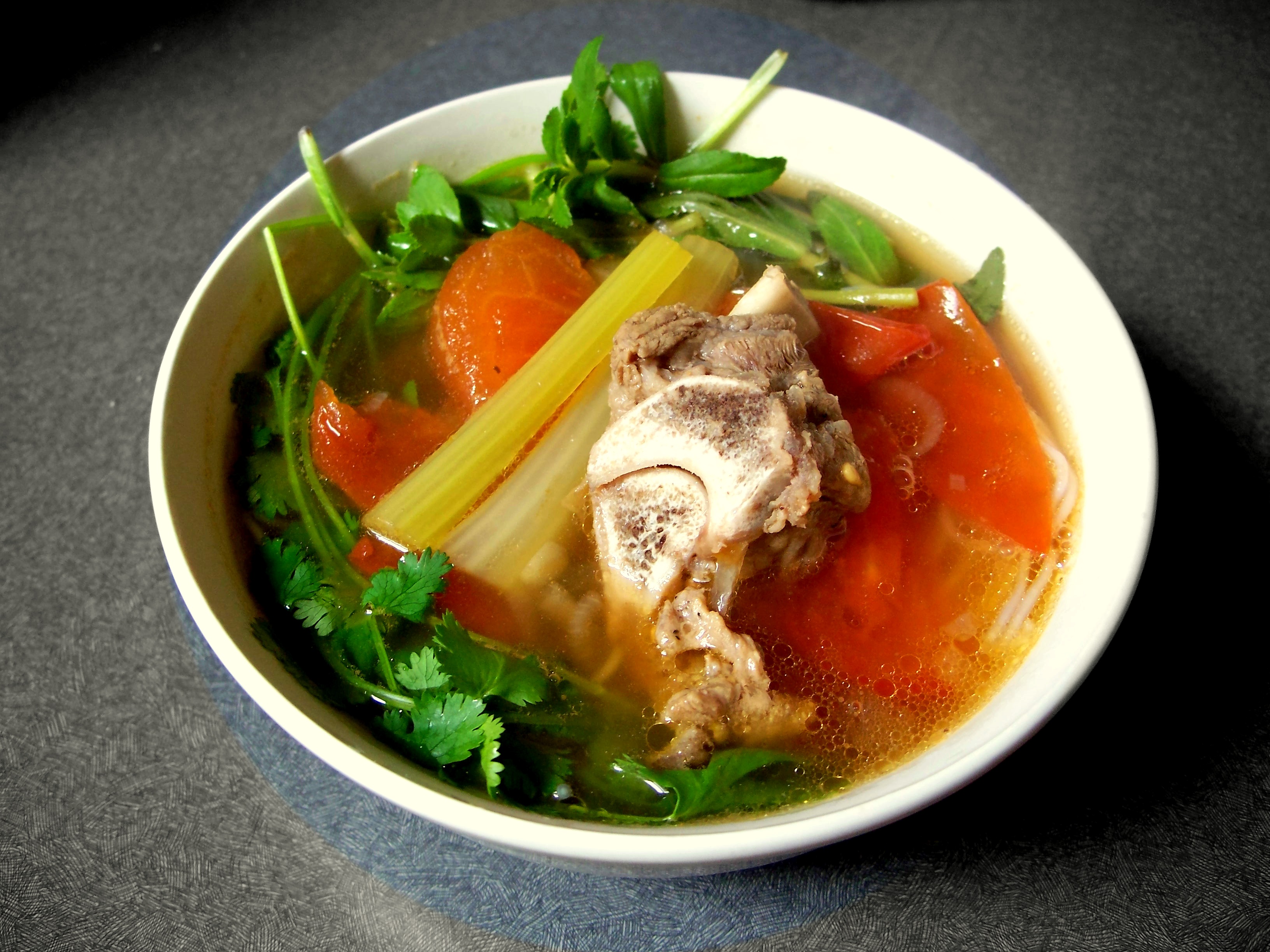
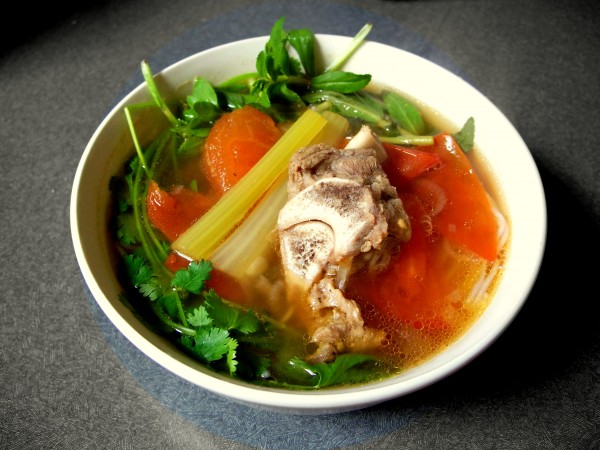
The scent pierces through the air, half like fresh lime and half like mint, liberating. The broth is fulfilling like juice from a just-ripe fruit, coating every strand of vermicelli and making them supple like newly washed hair. There is red, white, bright green, fall-leaf yellow green, and the earthy sepia tone of bone meat. My first bowl of bún bung.

Bún bung is a noodle soup of the North. Not having been to Hanoi, I learnt about bún bung from the interweb and tasted it via imagination. My mom has heard of it, but Saigon doesn’t have it, and I don’t know how popular it is in Hanoi today. It wouldn’t surprise me if the old fashion noodle soup is only half surviving in the baskets of old ladies dressing in brown and having their teeth dyed black. Anyway, it has a funny name. Bún (pronounced like “boon” with a quick rising accent) is just the usual rice vermicelli. Bung (pronounced like “bung” in “übung” in German – English doesn’t have this sound) is the method of cooking: stir fry first, then simmer until boil in water. There’s no adequate translation of the name into English, other than “bung noodle soup”. But to me, it’s funny because bung sounds like boom, or bloom (as in flower blooming). For sure, the soup is a flavor bouquet.
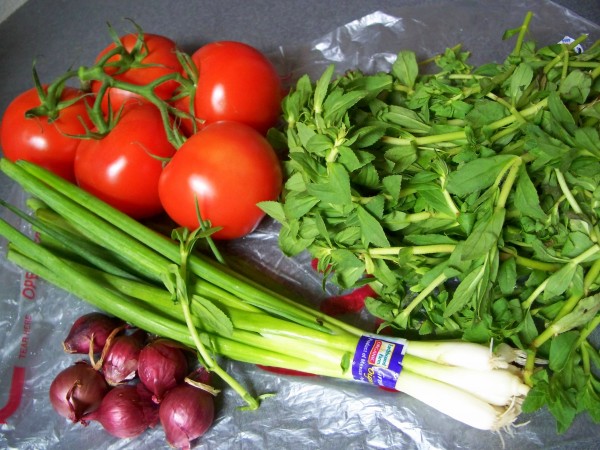

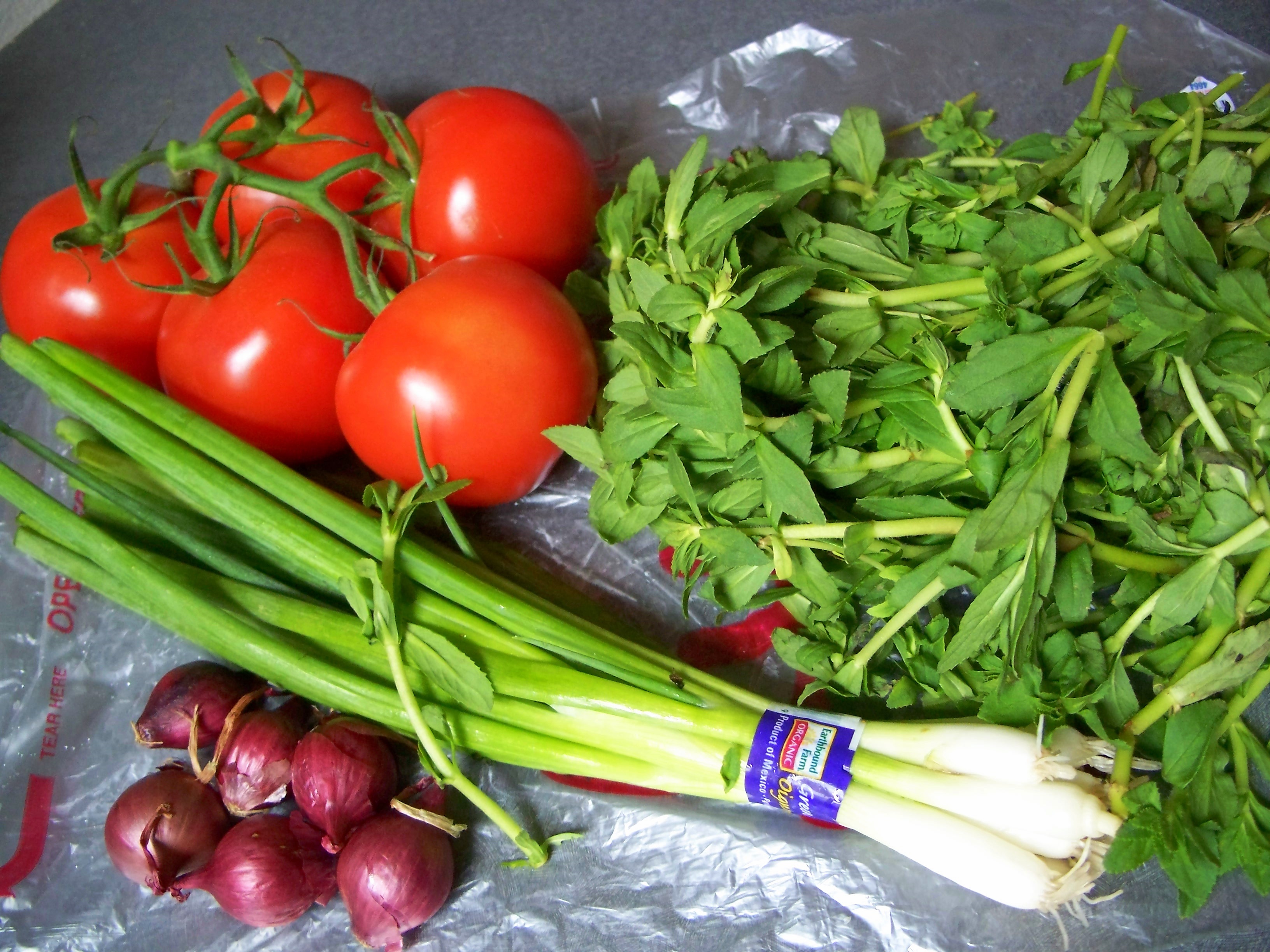
Compared to other noodle soups, bún bung requires little time, few ingredients, and not so much attention. It is sort of close to canh chua (sour soup) in the South, but instead of fish they use pig trotters to get the protein sweetness, and instead of rice it’s eaten with bún. It’s also a little close to canh bún cá (fish noodle soup, also of the North), except for the sour taste, because of the use of rau ngổ (L. aromatica, or rice paddy herb, top right corner in the above picture).

What does “ngổ” mean? I have no idea. But the taxonomists couldn’t be more right labeling it “aromatica,” because its scent permeates the room like a direct spray of Febreze, once just after I open the bag and the second time when I pour hot broth over it.  The scrawny, airy stems with slender leaves taste a little bitter eaten raw, but comfortably sleek and crunchy like water spinach. In Vietnam,  rau ngổ is dirt cheap. In America, it’s $8.99/lb (at 99 Ranch Market). Thankfully the quarter pound bunch I get is more than enough for 6 servings of bún bung.

Also an important ingredient in bún bung (as well as other Vietnamese sour soups) and also named for its aroma is dọc mùng (night-scented lily). Its soft spongy texture is irreplaceable by other vegetables, but good luck finding it in grocery stores. I have to use celery to substitute. The upside is that celery is much easier to wash, while night-scented lily can give you some itchy hands.

That aside, my bún bung uses beef neck bone instead of pig trotters, soy sauce instead of fish sauce, and skips the tumeric powder entirely. But I bunged the bones, so it is bún bung. 🙂

— für Đại

Mai’s bún bung (due to lack of ingredients at the grocery stores she goes to):
(Prepping and cooking time: 2 hours – 6 servings)
– 1.5lbs beef neck bones (or any kind of chunky bone with meat on it)
– 5 tomatoes, cut into wedges (this is a lot of tomatoes, since I don’t have any sour fruit)
– a few celery stalks cut and split into small sticks
– 300g rice vermicelli
– coriander, purple pearl onion, green onion, rice paddy herb (rau ngổ)
– 2 tbs soy sauce, salt and (a lot of) sugar to taste

1. Marinate the bones in diced onion, chopped garlic, 1 tbs salt and 4 tbs sugar.
2. In a big hot pot, sauté purple onion with oil until it smells good (which is pretty quickly), then dump the bones in and stir-fry until brown. Pour as much water as you want (this is the soup stock) and let it simmer. Skim off the foamy fatty layer on top to keep the stock reasonably clear.
3. Meanwhile, cook the rice vermicelli (like cooking pasta), drain and set aside. Wash and cut the greens (night-scented lily, rice paddy herb, green onion, coriander).
4. When the stock boils, add tomatoes into the stock. Wait until boiling again, add 2 tbs of soy sauce, salt and sugar to taste. Add the celery sticks. Keep it hot for serving.
5. Serving: in a bowl put some noodle and vegetables, then pour a few ladles of broth over, make sure you get some tomato and celery too. I also like to eat the meat off the bones. Sprinkle some green onion, coriander, and pepper on top.


Actual bún bung:
(Recipe translated from source, not sure how many servings this gives)
– 1 pig foot (doesn’t sound enough to me, maybe they meant 1 leg? But that’s too much…)
– 4 night-scented lily (dọc mùng) stems, cut into 2-3 inch sticks.
– 6 tomatoes, cut into wedges
– 1kg rice vermicelli
– tamarind or some sour fruit
– tumeric powder, coriander, purple pearl onion (sliced), green onion, rice paddy herb (rau ngổ)
– fish sauce, salt, sugar, black pepper

1. Cut the pig trotter(s) into big chunks and marinate in 2 tbs fish sauce and 2 tbs tumeric powder.
2. In a big hot pot, sauté purple onion with oil until it smells good (which is pretty quickly), then dump the trotters in and stir-fry until brown. Pour as much water as you want (this is the soup stock) and let it stew (pig trotters take time to soften).
3. Meanwhile, cook the rice vermicelli (like cooking pasta), drain and set aside. Wash and cut the greens (night-scented lily, rice paddy herb, green onion, coriander). Mix them with a little bit of salt. Let sit in 5 minutes. Gently squeeze off some water, wash the greens again and mix it with a pinch of tumeric powder.
4. When the trotters are soft, add tomatoes and the sour fruit into the stock. Wait until boil, sift out the sour fruit and add seasonings to taste. Add the night-scented lily sticks. Keep it hot for serving.
5. Serving: in a bowl put some noodle and vegetables, then pour a few ladles of broth over, make sure you get some pig trotter cuts, tomato and night-scented lily sticks too. Sprinkle some green onion, coriander, and pepper on top.

Bon appetit!


– Submission to Delicious Vietnam, a monthly blogging event created by Anh of A Food Lover’s Journey and Hong & Kim from Ravenous Couple
Tags: