Flavor Boulevard

We Asians like to talk food.
Subscribe

Archive for the ‘noodle soup’

Wiki Wiki Hawaiian BBQ – What would be cut?

September 22, 2010 By: Mai Truong Category: California - The Bay Area, noodle soup

Speaking of unpopular authentic dishes taken off the serving tray, I’m reminded of the Hawaiian place on Shattuck. I overheard the owner say that he would have to remove some stuff from the now-three-page menu. There’s business, most are lone diners and take-outs, but naturally business is not the same for every item. Once a middle-aged man ordered 20 spam musubis to-go, and I imagine this is nothing unusual for a $2 nori-wrapped solid brick of rice with one slice of browned processed succulence. It’s just a good deal, it tops the chart in terms of convenience times filling factor divided by cost. If you’re a Berkeley student, I guarantee you can’t dig up a better combination of those quantities in this area. So the spam musubis are safe, but who are (not) on the chopping block?
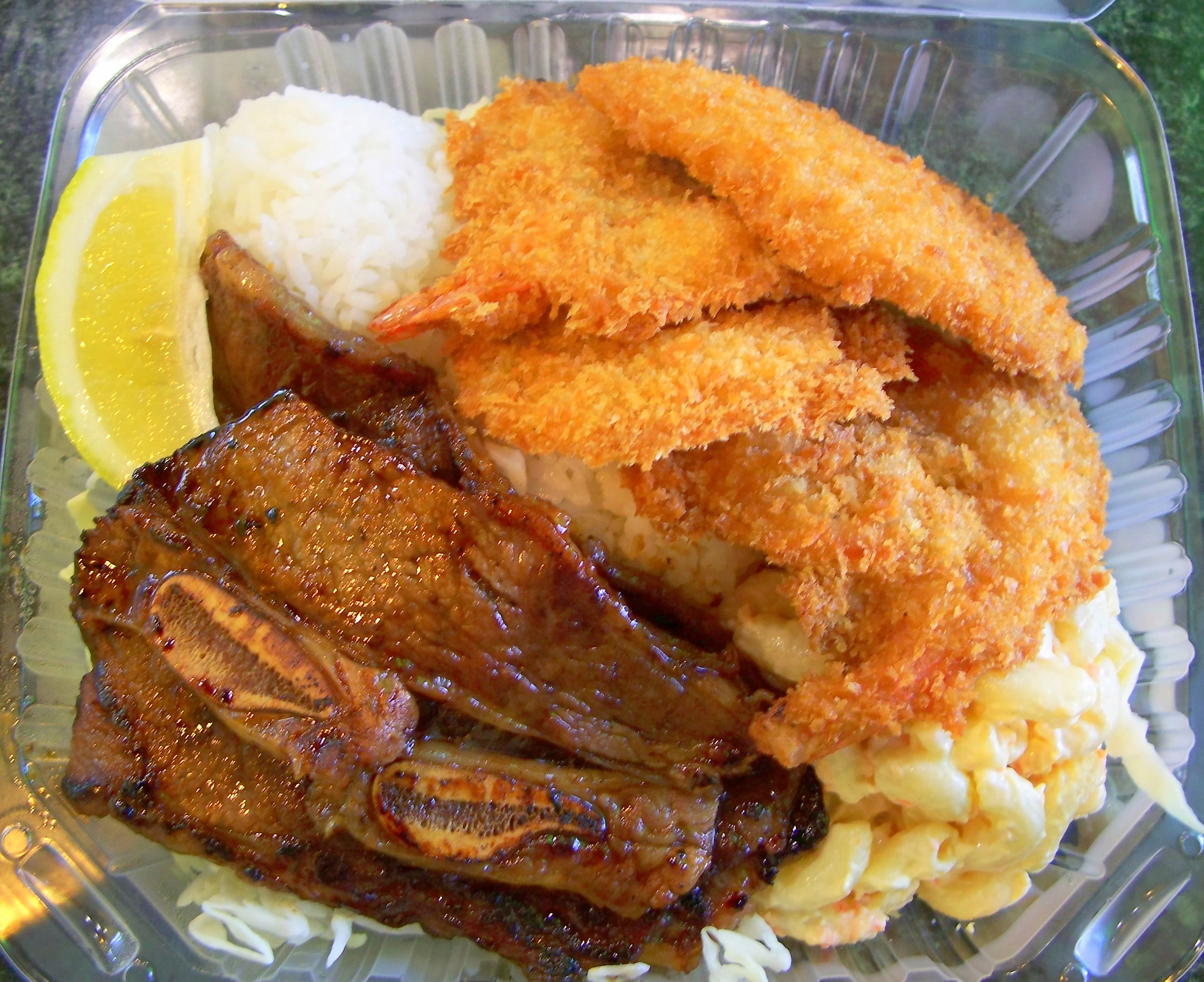

The barbecued meat and fried seafood? I don’t think. BBQ is in the name. You can snob up your chin about meat quality, but don’t tell me that the smell of caramelized grilled short ribs doesn’t wet your tongue. Crunchy fried mahi mahi and fan-shaped split shrimp offer more texture than taste, so I might worry a tad for them. For $8.25, the seafood combo (pictured) doesn’t deliver as much as the $7.75 BBQ mixed plate (teriyaki steak, short ribs, and chicken).
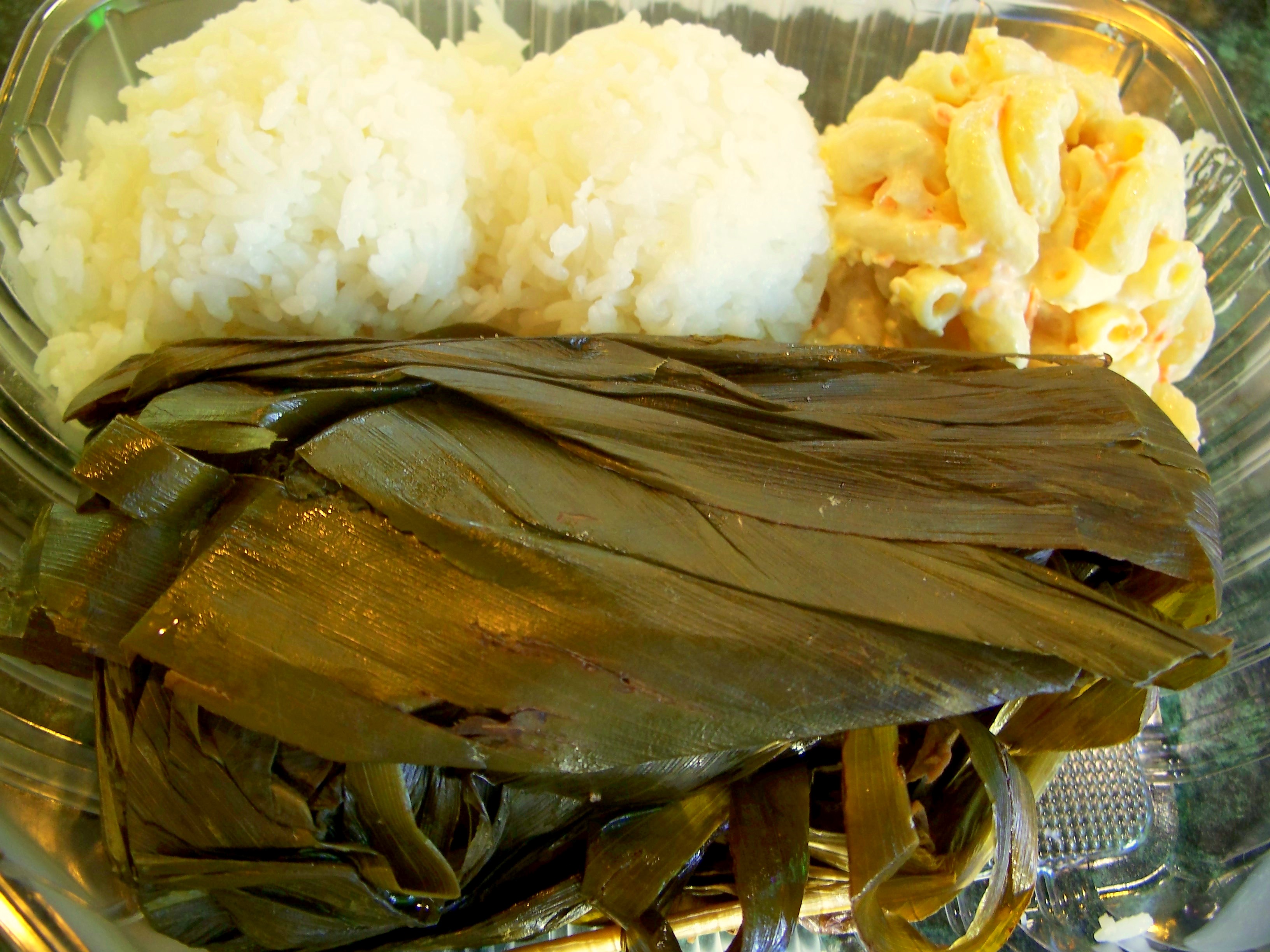

Not all meat is popular, though. Take fresh pork lau lau for instance. You are presented with a leaf bundle next to the usual three scoops, one of cheesy cold macaroni salad and two of white rice. You unwrap the leaves like one unwinding a silkworm’s cocoon, only to find more greens inside that baffles you “is this edible? should I keep unwrapping?” You sample a bit of that green mash, and feel smoothness sliding down your throat. It’s like overcooked spinach coated with beef fat. The meat is similar, like a plainer sister of the Vietnamese meat kho minus the sugar and the sauce. Then something fishy creeps up to the base of your teeth. Fish that you can’t see but it is there, so well woven into the pork and the greens that the taste is but a wisp of its slippery skin. You may notice that the whole experience sounds like a butter pool, and indeed it is. Plain and fattily smooth. Perhaps it slides down too smoothly to grab hold of my interest. $7.25 is quite reasonable for a fistful load of “taro leaves, pork, butterfish, and salt, all wrapped in Ti leaves“, but if you didn’t grow up with the taste, you wouldn’t miss it. I suspect pork lau lau will say bye bye. :-/
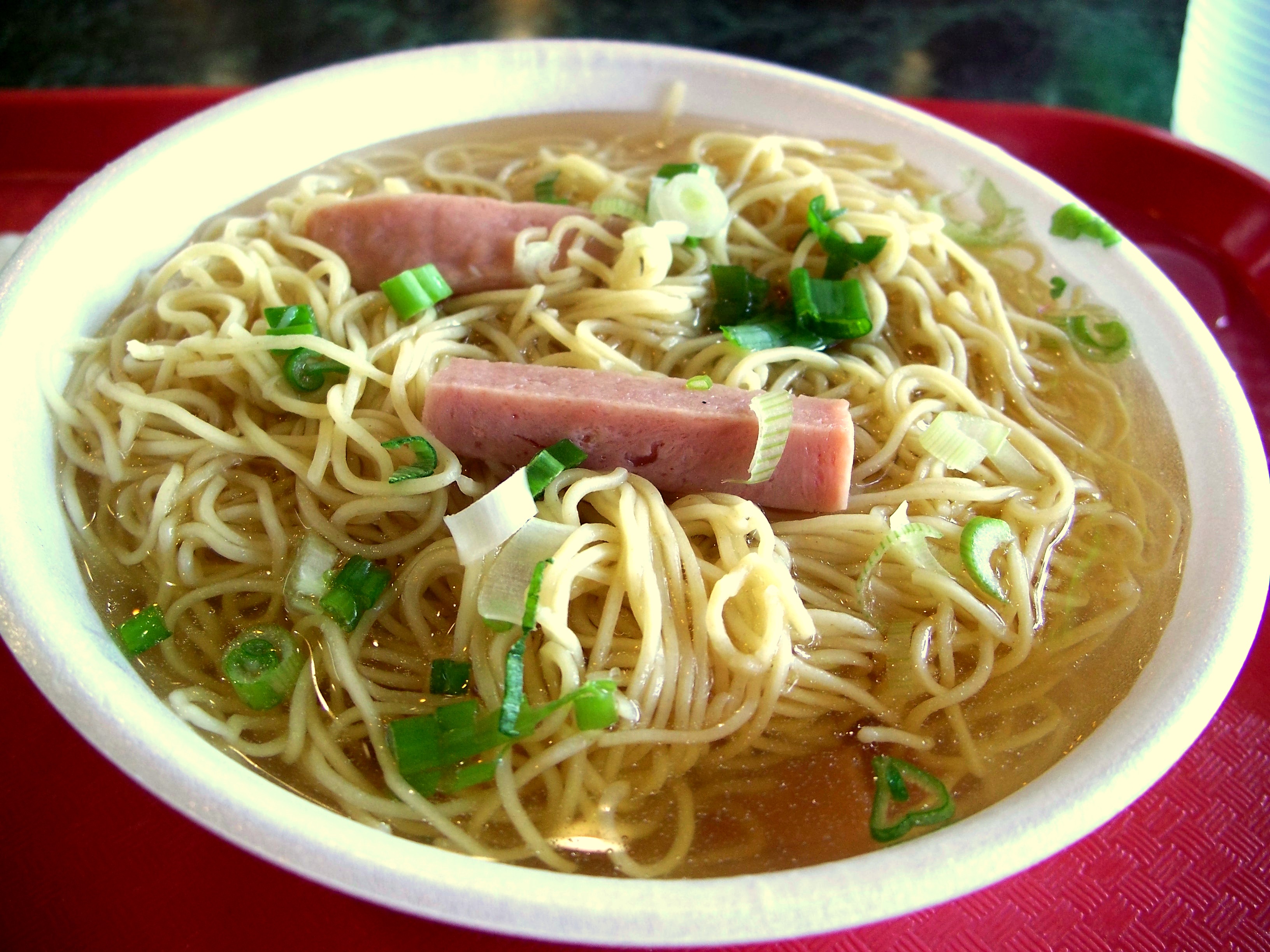

Saimin is likely another go-er, though for a different reason. If pork lau lau is at the very least respectable for its interesting ingredients, the barebone saimin’s simplicity doesn’t justify its price. At $3.25 you get a wad of egg noodle in salted broth, four rosy fingers of spam and a sprinkle of green onion rings. But, to be fair, I’d like to try Wikiwiki saimin with egg and BBQ chicken before I finalize the sentence.
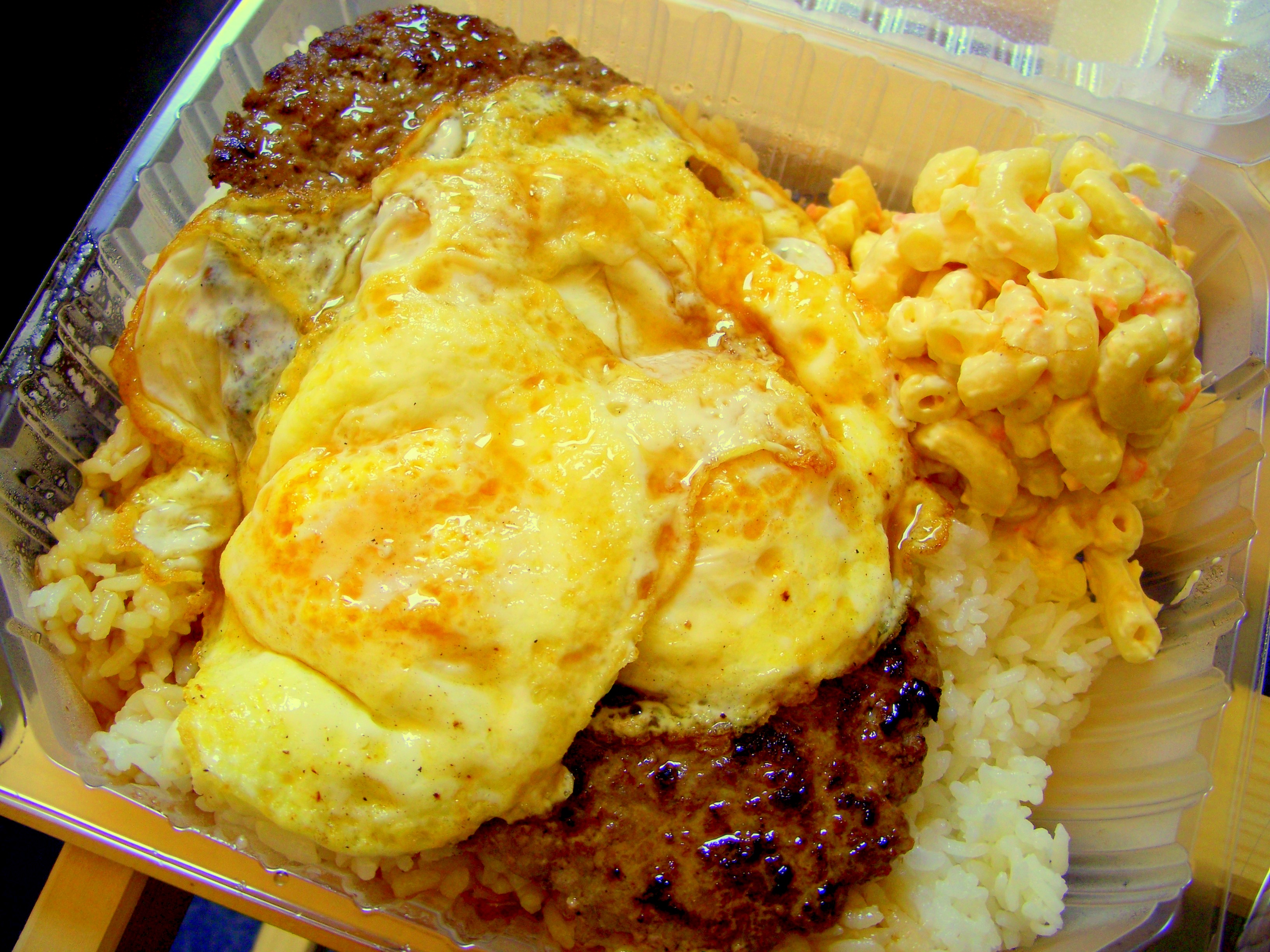

The one thing that Wiki Wiki should keep even till word’s end is in this last picture. When you hear that sizzling sound the patty makes on the grill, suddenly something’s awake in you. But the meat isn’t the best part. It’s the rice smothered in a thick peppery gravy, further thickened by two running yolks. Every spoon glosses your upper lip. It’s just yellow and brown and unpretentious like an old friend’s laugh.

The loco moco made me like Wiki wiki, just like the oksusu cha sprouted my love for Berkel Berkel. Something about it (most likely its $6.50 price :-P) connects generations of Cal bears. I was reading Zach Mann’s post at The Eaten Path and I saw “that Shattuck Blvd discount diner,” and suddenly I felt that Zach Mann wasn’t a stranger anymore. Well, I’m sure I’m still a stranger to him, but hey, we ate at the same place, perhaps sat at the same shiny metallic table, and independently felt the same way about a meal sold in transparent plastic box. You can trust us on our assessment of Wiki Wiki’s loco moco. It won’t go off the menu. It can’t.


Address: Wiki Wiki Hawaiian BBQ
2417 Shattuck Ave
Berkeley, CA 94704-2022
(510) 548-3936
Tags:

Pho Danh – Making a name

June 27, 2010 By: Mai Truong Category: Comfort food, Houston, noodle soup, One shot, Texas, Vietnamese


Chain means reliability. Berkeley’s snobbish take against big franchise and corporations plays to my blogging advantage, but there always lies the uncertainty. It could be a very good looking, cozy little restaurant with quaint menus, and mediocre food. They could have a long line of people waiting in the cold to be seated, and mediocre food. Somehow people sitting about you are all hyped up by the new raw or vegan order, but you just can’t enjoy yours because it’s mediocre food. When a business is the only of its name, there’s just no guarantee that it’s palatable to everyone, no matter how many stars it gets on Yelp or votes by the locals. Franchise takes care of that. I don’t know how. But I haven’t met anyone who doesn’t objectively like Burger King, Subway, Yogurt Land, KFC, et cetera (I say “objectively” because taste buds can be clouded by health conscience, religious reasons and who knows what). Some Vietnamese businesses, though still in much smaller scale, have also established their chain names. For banh mi, we almost always go to Lee’s Sandwiches or Huong Lan. For cha lua, we trust Gio Cha Duc Huong. When we’re in Houston, we go to Phở Danh to slurp noodle soups.


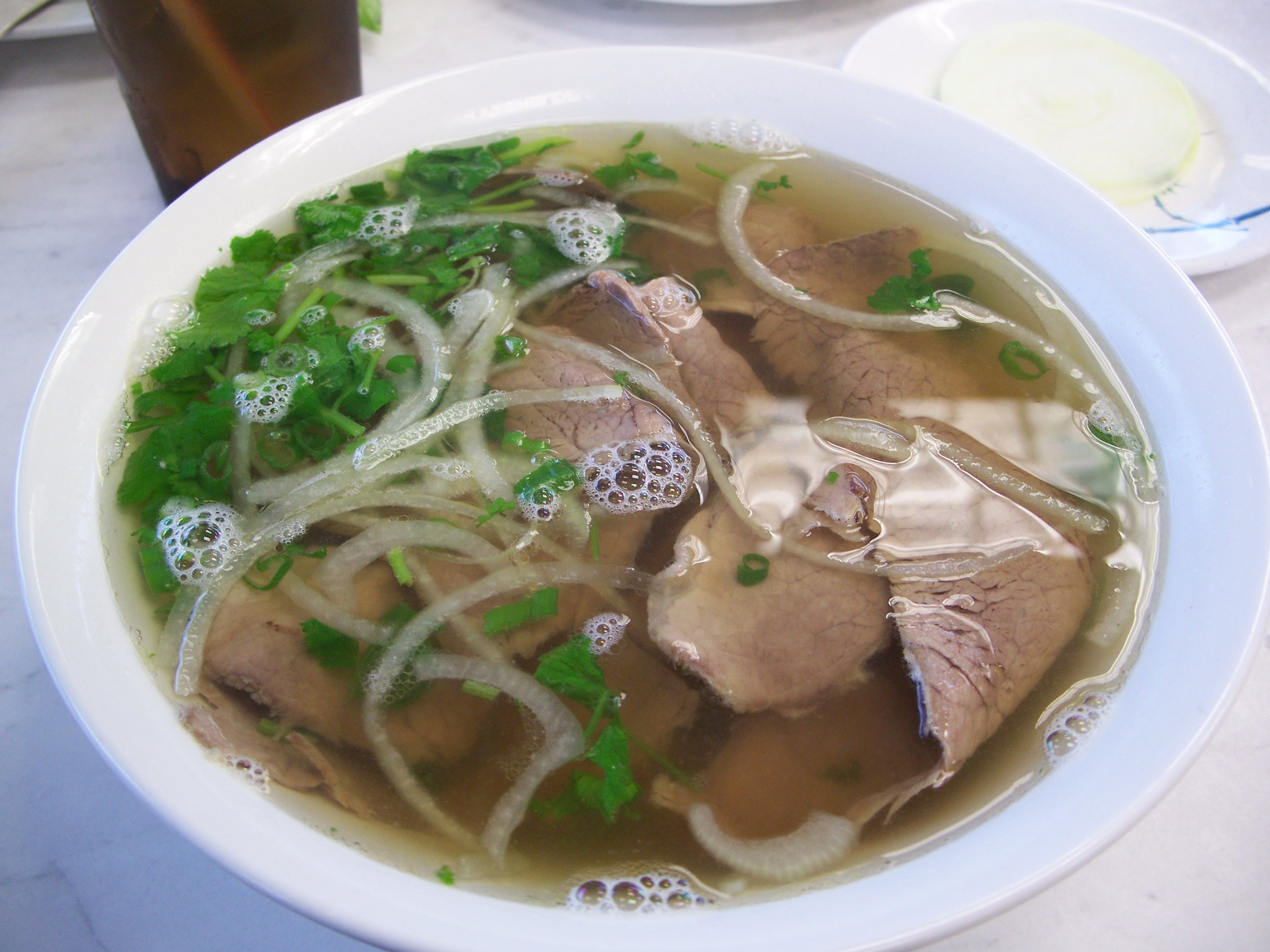
All three locations in Houston have the same silvery ambiance: white walls, glass door, formica tables, simple chairs, bright lights, white melamine dishware. We always get the same things here: pho bo tai for Dad, pho bo chin for Mom and me.

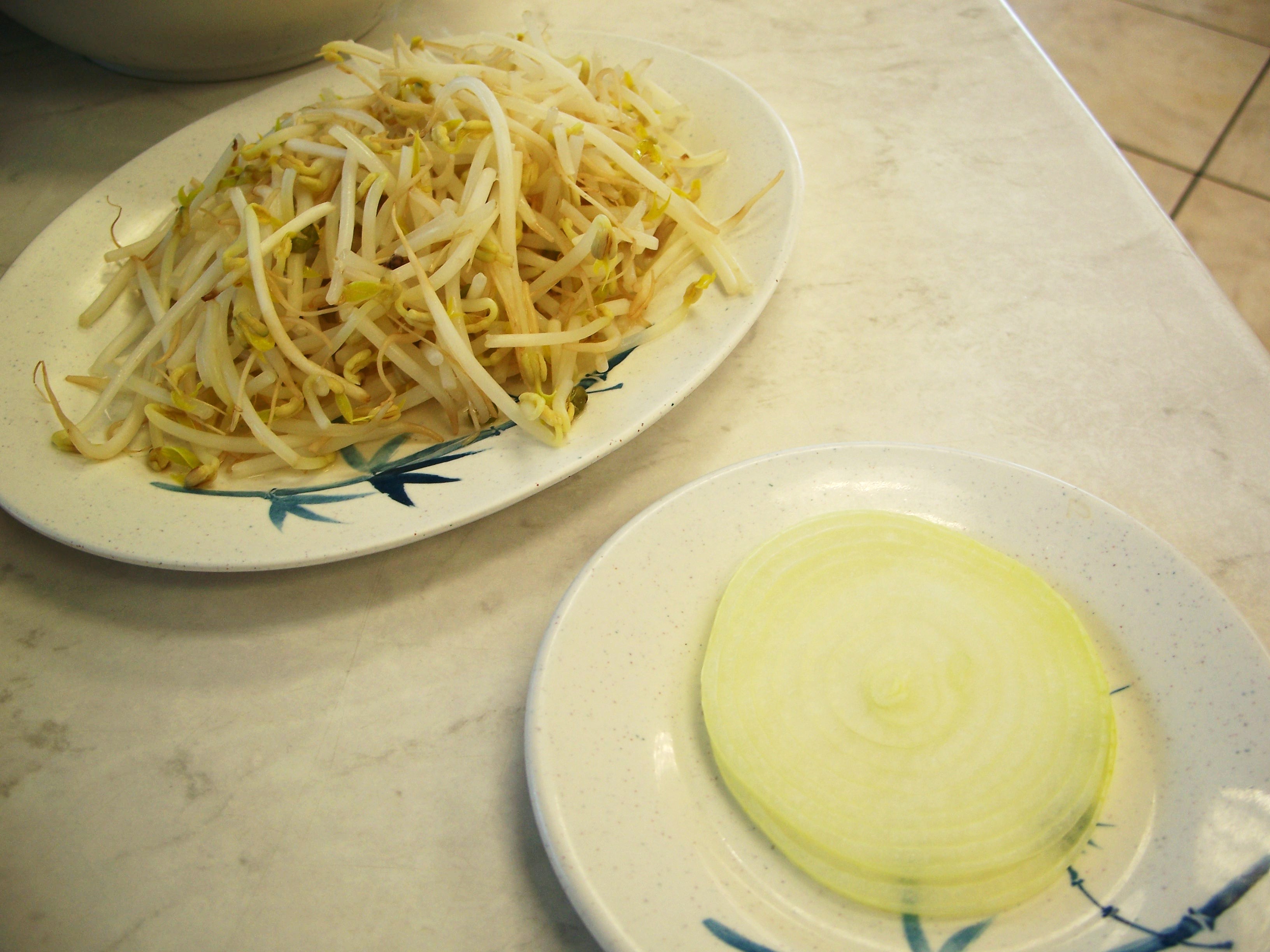
Mom always asks for extra giá trụng, blanched bean sprouts. And Dad always asks for hành dấm, pickled onion. Both are free.


He never asks for hành dấm anywhere else, making me wonder if it’s some special thing of Pho Danh. Vinegar and sugar soften the onion’s pungent flares, but keep it crisp and clean. I submerge it into the steaming broth. Dad savors it alone, one ring at a time.


Pho Danh in Texas

3 locations in Houston:
– 11209 Bellaire Blvd – (281) 879-9940
– 13480 Veterans Memorial Drive‎ – (832) 484-9449
– 11049 FM 1960 Rd‎ – (281) 890-4011

1 location in Austin:
– 11220 North Lamar Boulevard, Austin, TX‎ – (512) 837-7800‎

Tags:

Phở Hòa – Is it just another noodle joint?

March 20, 2010 By: Mai Truong Category: California - The Bay Area, Comfort food, noodle soup, Vietnamese


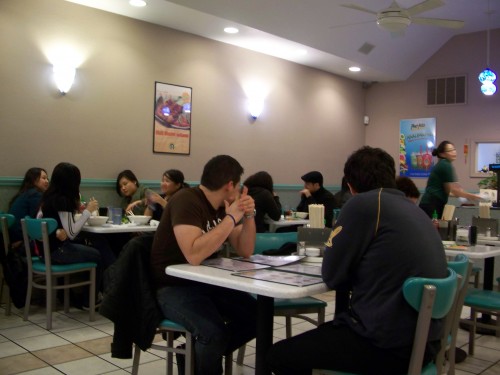
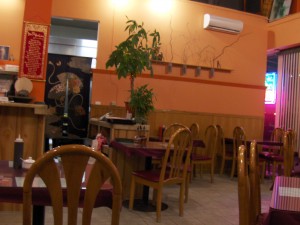
It looks like one of those noodle houses on the roadside with plastic chairs, formica tables, laminated menu, and plain white neon lights. Actually, it is one, but with green cushion chairs. The atmosphere is so casual, the slurping scenes so familiar I could almost hear motorbike engines and vendors’ calls around Saigon. Everywhere I look, Berkeley brings back memories of Binh Thanh and Tan Binh Districts with its frameless mix of dashing modernity and forlorn architecture, damp narrow alleys separating discordantly colorful buildings, shoe mending stores tucked between pricey diners, Vespas, bicycles, cars, trucks, men in suit and men in rag, the only thing missing is a xich-lo. Like it or not, this world doesn’t stay outside noodle houses like Pho Hoa, you can eat while feeling life scurry on the pavement. The diners casually bring the commonest of life into their chatter. The kitchen brings the commonest of noodle soup onto the table.

But only they added a twist to it. Of course eighty percent of the menu is laminated with things every pho joint would have: pho. Pho of all varieties, Steak, Brisket, Chicken, Tendon, Flank, Tripe, Meatball.  Then at the very bottom of the page, estranged by all other pho’s, is Seafood Sour.


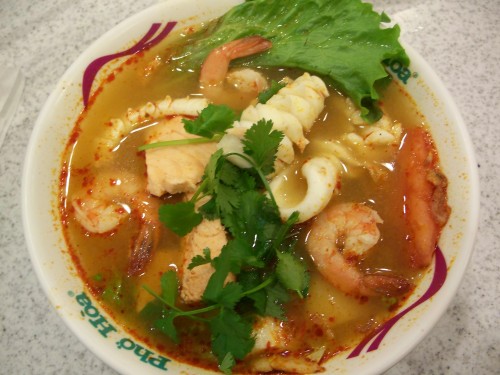
I first heard of sour pho a few months ago. The regional specialty of northern province Lạng Sơn sounds exciting: tamarind sauce, a ladle or two of chicken broth, a handful of chicken meat and innards, fried shallot and crushed peanuts, structurally somewhat like mỳ Quảng (Quảng Nam noodle) and cao lầu (Hội An noodle). So as soon as I saw “sour pho”, I leaped at the chance. Fifteen minutes later, the eight-dollar-and-ninety-five-cent chance looked me in the eye with fiery inquisition, “maybe it’s a little too much chili paste?” I sniffed and hawked, blew and gulped, a sip of water now and then between spoonfuls of the clear red broth. It is definitely not the sour pho of Lang Son. Not only copious amount of squid, shrimp and salmon replaces chicken gizzards, but the sourness comes from pineapple and tomato instead of tamarind, and your rice noodle gets lost in the sea. It is pho and canh chua entanglement, harmoniously with joy in crescendo.

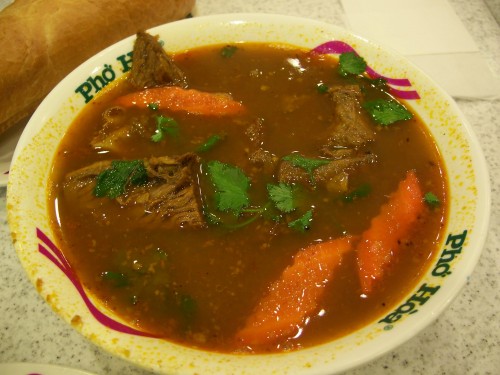
But some part of me will forever crave meat. Big chunks. Marinated. Sauce dripping. A tad of fat to loosen the muscle. Bits of tendon to brighten the chew. Meat that is bold and brown. Like a beef stew.

We found it demoted to the menu’s bottom league with Seafood Sour.  Bò kho is Vietnamese beef stew with a complex wealth of tastes, a French-influenced Southerner’s display of abundance, and an ambrosial love of Mudpie. Star anise and cinnamon link bo kho with pho, annato seeds make it color-stricken like claypot fish, nuoc mam gives it the regional stamp. All for a mere $7.65. The quality doesn’t lie in the beef, but in every bite of baguette wholeheartedly dipped in that rich, peppery, daring juice. E V E R Y bite. Only found at:

Pho Hoa Noodle Soup
2272 Shattuck Avenue
Berkeley, CA 94704
(510) 540-9228

UPDATE: This location is now closed.

Other pho houses in Berkeley: Le Petit Cheval (student-pocket-friendly), Le Regal (big-pocket-friendly)

Banh cuon, bun, and beyond – Tay Ho #9

March 04, 2010 By: Mai Truong Category: California - The Bay Area, Central Vietnamese, Comfort food, noodle soup, Northern Vietnamese, Vietnamese

bun_moc
I have discovered another great soup. My fingers trembled with anticipation over the sweet aroma, the shining aurulent broth, those fragile fatty bubbles that form a thin film on the surface, the promising dapple of fried shallot,… and the pictures got all blurry. So just squint your eyes and pretend for the moment that you’re hunching over a bowl of piping hot succulence and the steam makes your eyes hazy. Can you smell that sweet aroma? No? Grab a chair at Bánh Cuốn Tây Hồ #9 in North Oakland, ask for a bowl of bún mộc, and find out for yourself.

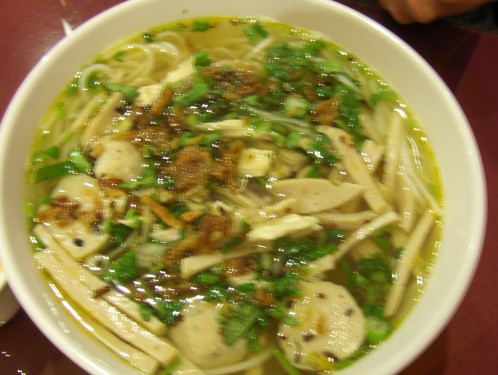
Before diving thy chopsticks into the noodle soup, let us start with the name. It can be spelled either bún mọc or bún mộc, the hat on the “o” changes the word’s meaning and thus the name’s origin, but nobody is certain which one is correct. “Mộc” means “simple”, the broth is simply boiling water savorized by salt, pepper, nuoc mam, pork, shiitake, and wood ear mushroom.  “Mộc” also means pork paste (twice-ground or pounded pork, seasoned, known as “giò sống” in Vietnamese), which is the central ingredient in the original soup but not in the rendition at Tay Ho #9. I like gio song, but sliced meatballs and cha lua (silk sausage) make a trustworthy substitution. The cook here also threw in some shredded chicken breast as a reassurance of familiar fixings. Now if you drop the hat on the “o”, “Mọc” is the nickname of the former village Nhân Mục, a part of west Hanoi today. This village can very well be the hometown of the meat-laden rice noodle soup, hence the noodle soup’s name. However the spelling goes, all we southerners know is bun moc comes from the north and is less than popular in Saigon. Most Vietnamese immigrants in the Star Flag States are southerners, so bun moc is even harder to find on the menus here. But as long as there’s a kitchen somewhere churning out these mouth-warming, bellicious bowls, there will be my pair of chopsticks eager for a hearty winter fling.

In the mood for something a little more adventurous?

bun_bo_Hue
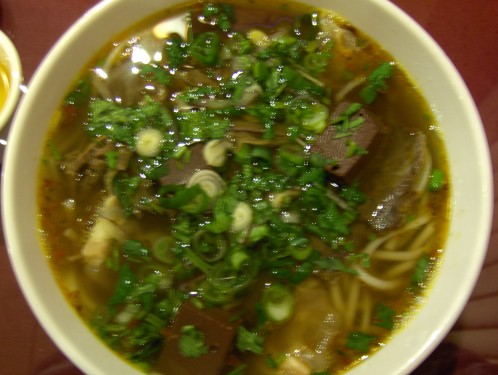
If bun moc might seem on the mild side, you know, ground pork and white meat, and healthy mushroom for crying out loud, then bun bo Hue would spice up the buds. Bun bo Hue is synonymous with chili paste and satay, there’s just no way out of the heat. There’s no way out of the brutal assortment either, beef chunks, gelatinous cubes of congealed pork blood, some hasty slanted cuts of pig trotter. The blood cube doesn’t taste bloody though, it’s rather bland (naturally, it’s cooked and unseasoned) and only for textural purposes. I’ve sampled this beef noodle soup at Kim Son and Bun Bo Hue Co Do, but third time is indeed a charm, I enjoyed it at Tay Ho. Either that or the hostess’s friendliness, a rare delight to diners in Vietnamese restaurants, which alone makes me want to go back to this place.

Banh_Cuon_Tay_Ho_9_Oakland

1 bún bò Huế + 1 bún mọc + 1 large bánh cuốn to-go for lunch the next day: $22.67

Address: Tây Hồ Restaurant – Bánh Cuốn Tây Hồ #9
344B 12th Street
Oakland, CA 94607
(510) 836-6388

More on Bánh Cuốn Tây Hồ: Tây Hồ #8 in San Jose and Tây Hồ #18 in Bellaire, Houston.

Also check out Bánh Cuốn Hoa II in Houston, they have nice duck noodle soup (bún măng vịt).

Banh Cuon Hoa II in Bellaire

February 17, 2010 By: Mai Truong Category: Comfort food, Houston, noodle soup, savory snacks, Texas, Vietnamese


If I had to pick one Vietnamese dish made from rice flour and eat it everyday for the rest of my life (whole grain white rice doesn’t count), then bánh cuốn would be it. These rolls of thin rice sheet, filled with minced pork and woodear mushroom, gently dipped in nước mắm, make the perfect warm breakfast, light lunch, and quirky dinner. The question is where to find them. Bánh Cuốn Tây Hồ tops the chart everywhere from Texas to Cali, but does Bánh Cuốn Hoa II come close? Maybe rival? Miss by a long shot?

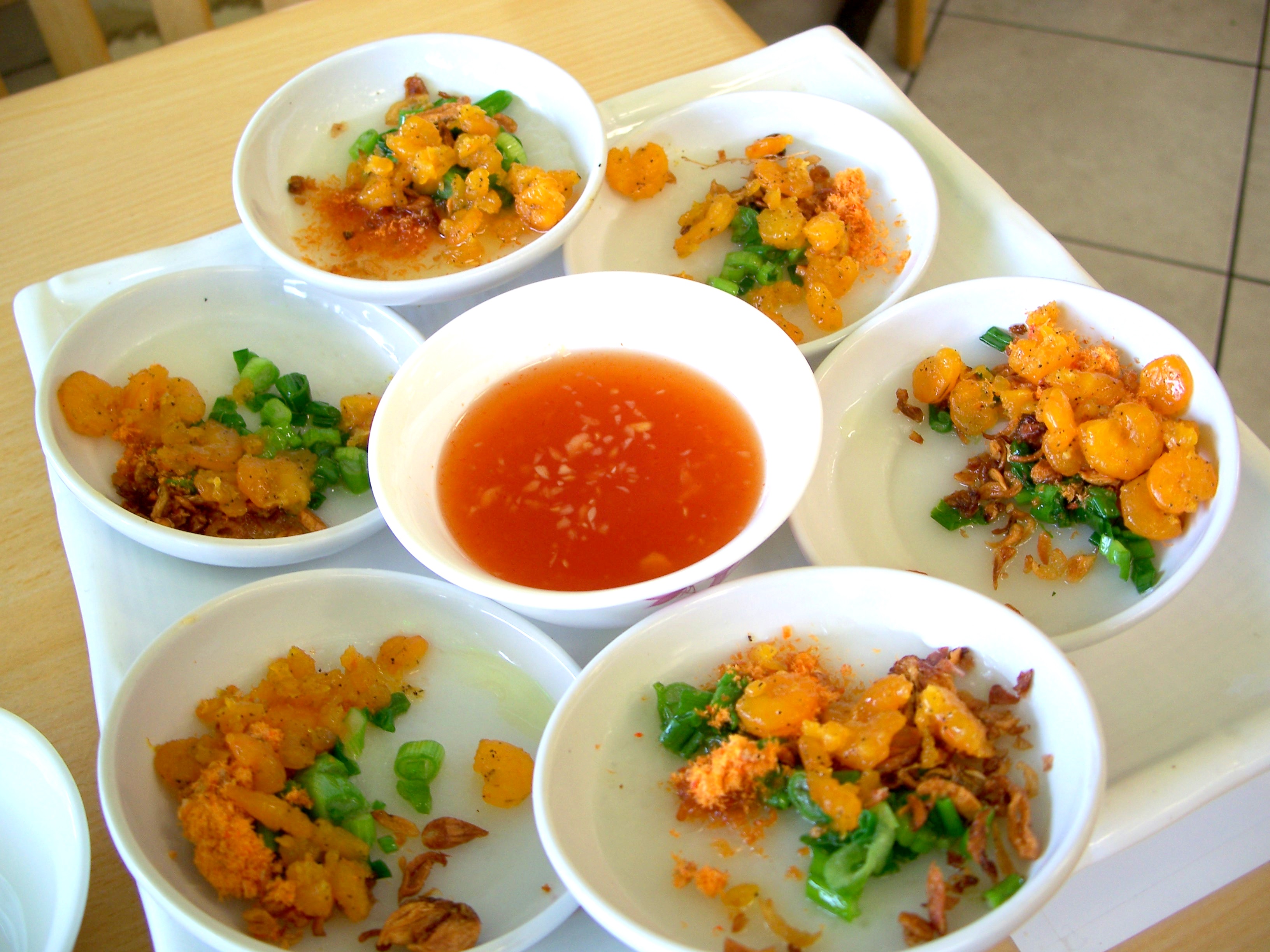
I cheated a bit at the beginning. The first picture isn’t bánh cuốn, but bánh bèo, a rice flour spinoff drafted in the shape and size of waterferns, hence its name. Flooded with nước mắm, they make great appetizers while we were waiting for bánh cuốn.


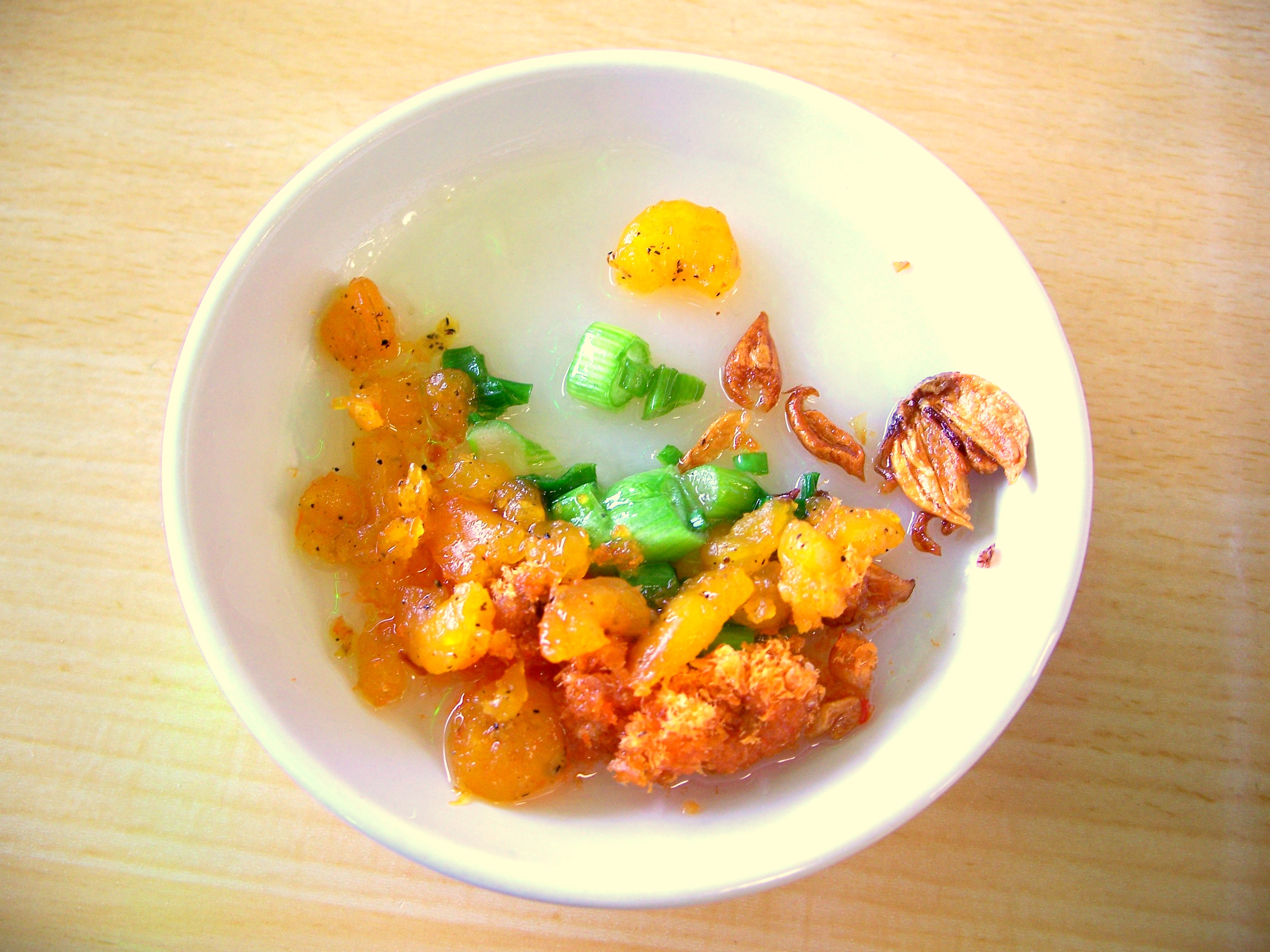
Bánh bèo comes with a few toppings: fried shallot, chopped green onions, and tôm chấy (dry fried shrimp). The tôm chấy I usually have are totally desiccant, ranging anywhere between flaky and powdery, but these (I’m guessing homemade) shrimps are still plump, and more sweet than salty. It’s not a bad twist from the usual though. The flour part is a bit tired, they broke easily into pieces the moment my chopsticks pinched them. Bánh Hỏi Châu Đốc does it better.


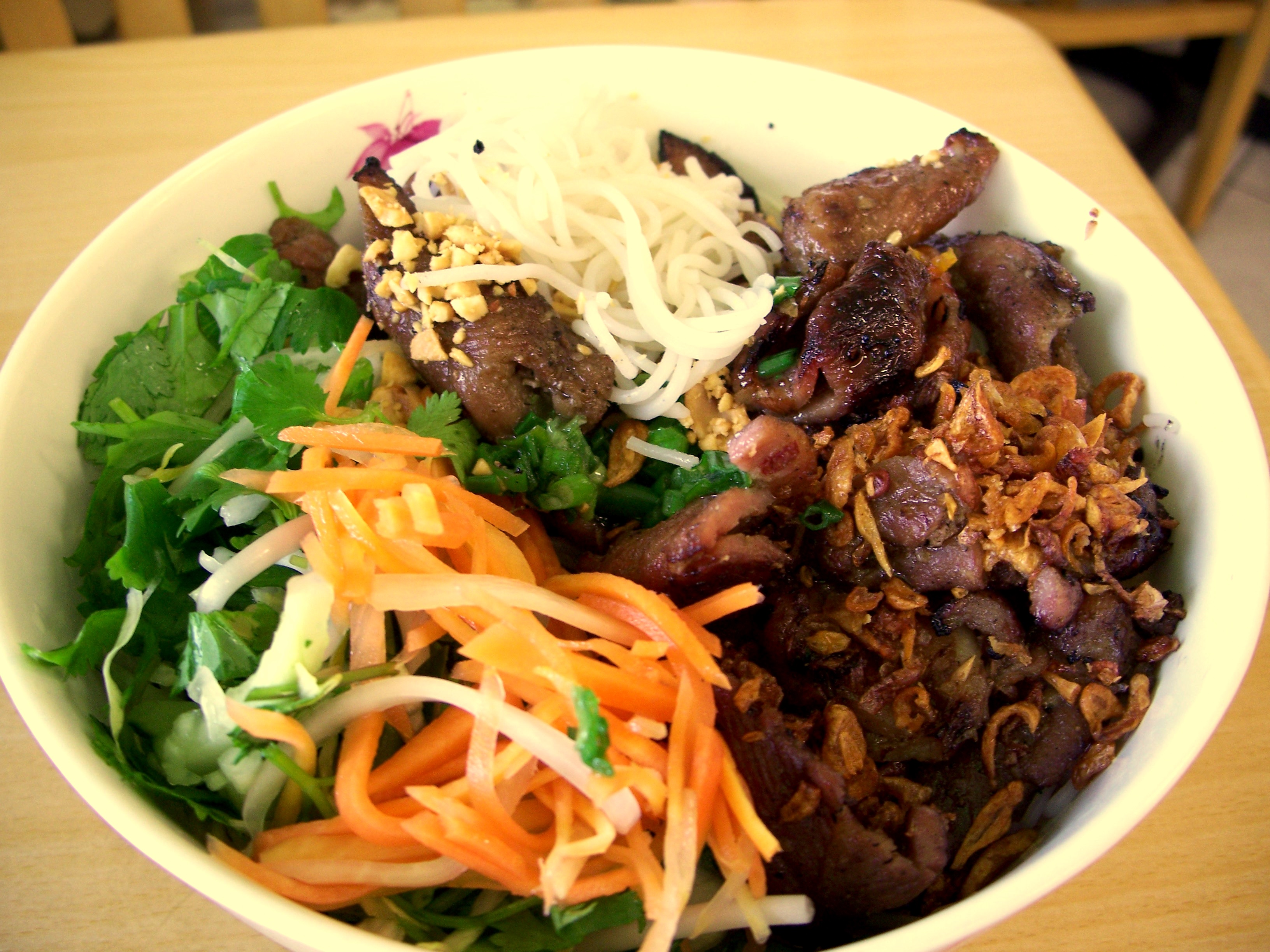
Because it is very hard to go wrong with grilled meat, it’s always safe to get bún thịt nướng on first try at a new restaurant, also a friendly choice for those who have not had Vietnamese cooking before, want to try, but are still cautious. There’s no weird stuff, just rice noodle, crushed peanuts, vegetable and honest grilled pork. Nước mắm seasoned with a tidbit chili paste, a lot of sugar, and a squeeze of lemon juice would spike the taste to infinite pleasure. Bánh Cuốn Hoa II nailed it with a supertender juicy marinated pork.


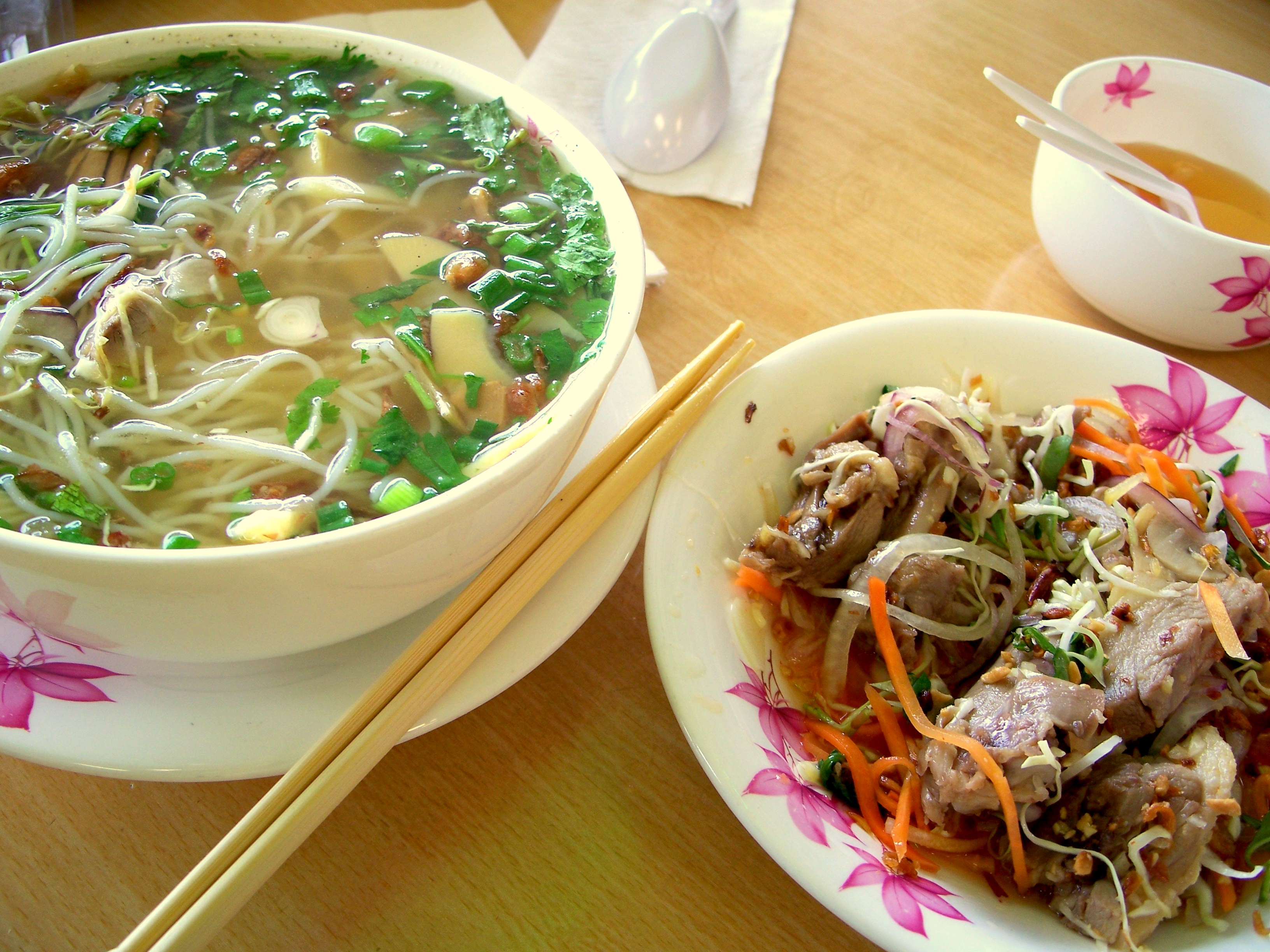
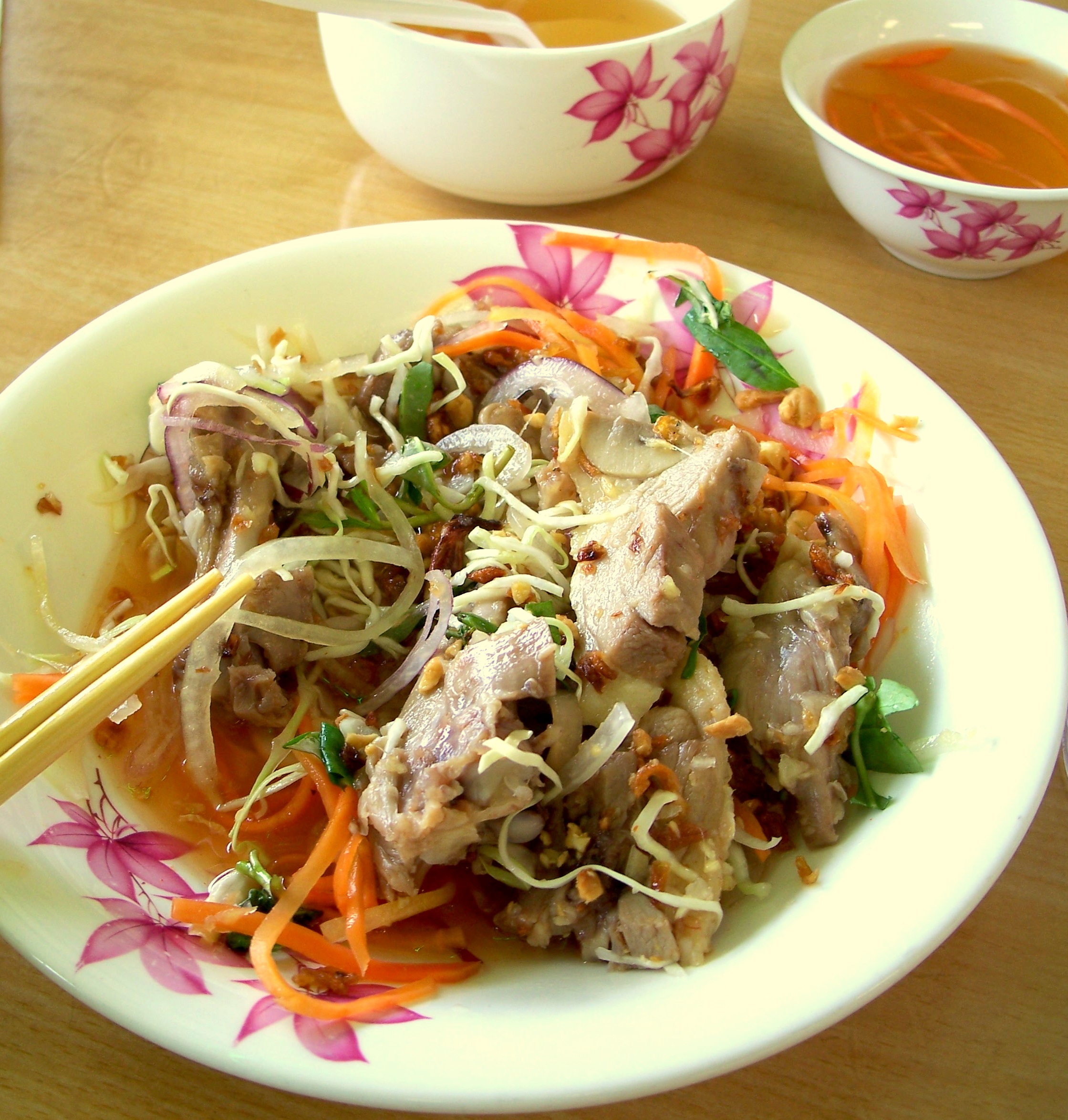
As much as my dad is a fan of grilled meat, my mom is loyal to noodle soups. She ordered bún măng vịt (vermicelli soup with duck and bamboo shoot), which actually comes in two parts: the duck salad (gỏi vịt) and the bamboo shoot soup (bún măng) with no duck. Dunk the duck into the soup and you get duck soup :-).


The broth is quite pure and slender, free of fatty bubbles floating on the surface, not as heavily seasoned as pho or hu tiu broth, simply refreshing. As for the bamboo shoots, there were both the fresh kind and the re-hydrated dried kind. The dried kind is a tad firmer and more squid-like than the fresh kind. A lovely texture. Boiled duck is also very tender and flavorful.


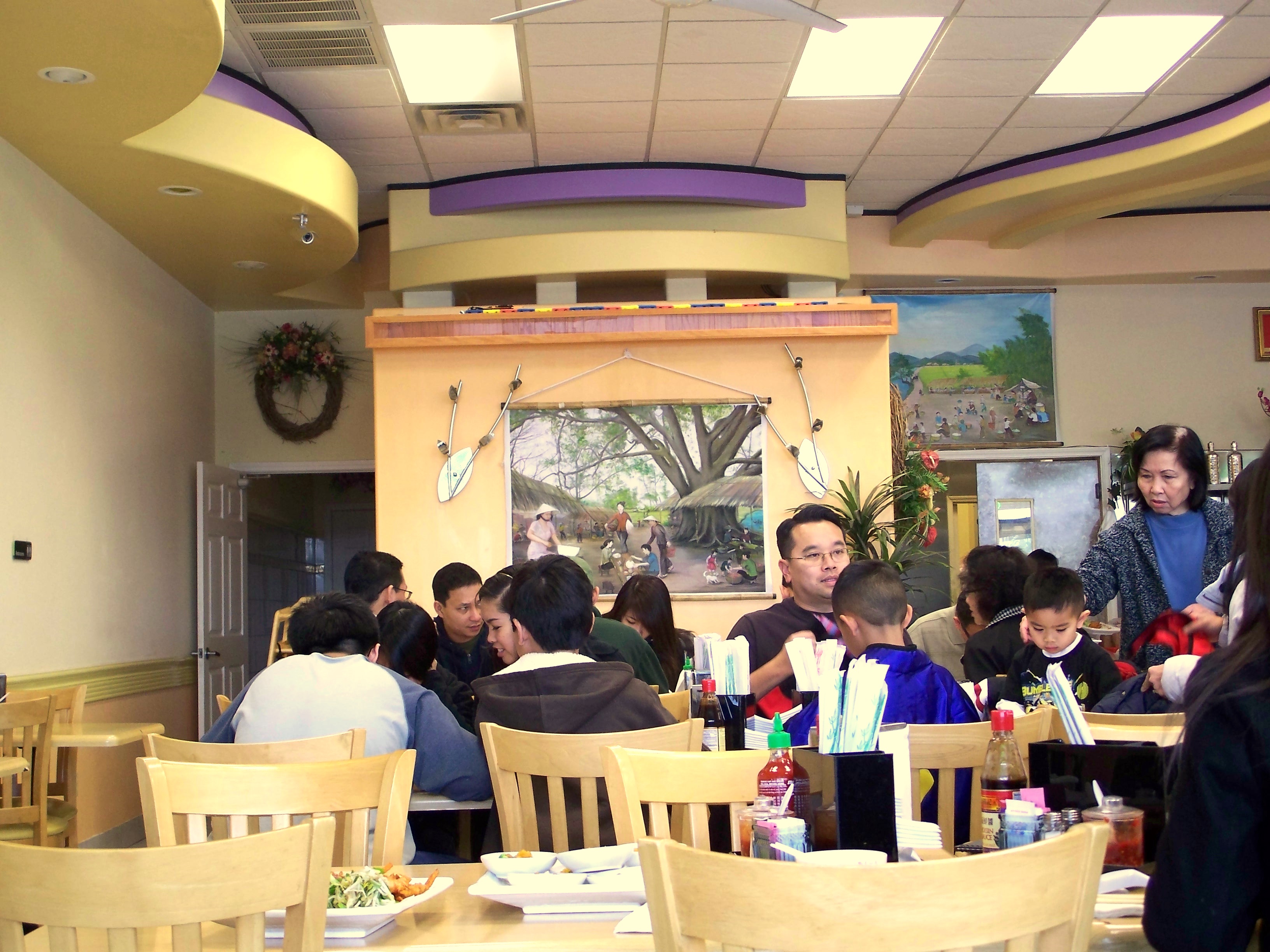
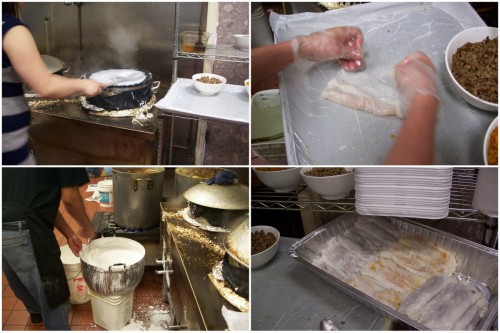
Bánh Cuốn Hoa II has a pretty clean look. Varnished wooden chairs and tables, high ceiling, humble paintings of Vietnamese countryside sceneries on the walls. I took a peek into their kitchen to capture the banh cuon production line.

Clockwise from bottom left: 1. stirring the liquid batter (rice flour with water); 2. spreading a laddle of batter on a hot flat surface; 3. making a roll; 4. 3 kinds of final products: normal bánh cuốn (with minced pork and mushroom), bánh cuốn tôm chấy (dry fried shrimp), and bánh cuốn thịt nướng (grilled pork).

Banh cuon Hoa II
The lady was just too fast for my camera, I missed capturing the crucial step where she gently used a long chopstick to take the thin rice veil off the cooking surface and whip it aside for the rolling chef.


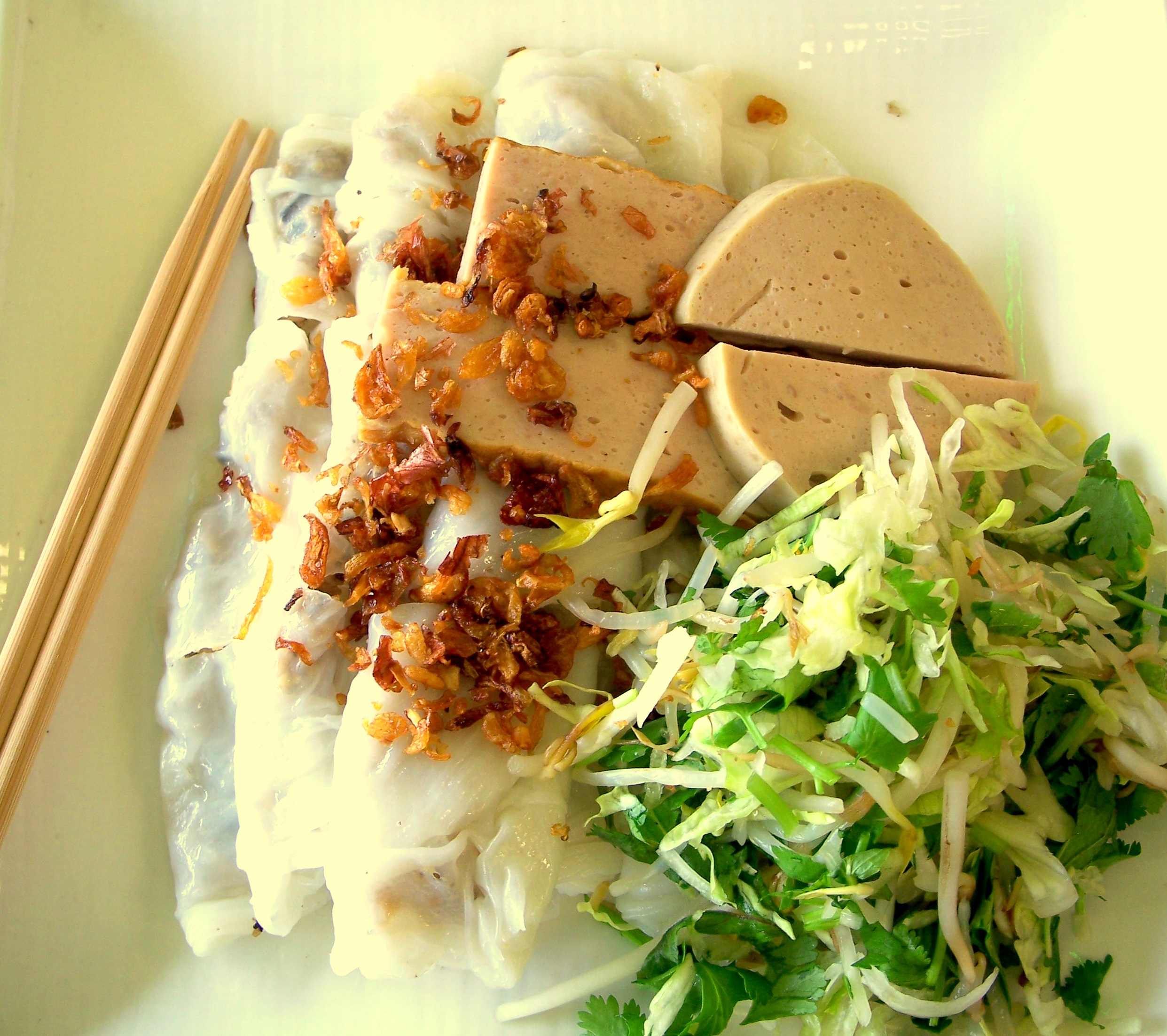
So here it is, the restaurant’s signature plate: bánh cuốn topped with cha lua, bean sprouts, greens, and fried shallots. The filling is good. The sheet is thin and not oily. But the flour has a sour hint. Bánh Cuốn Tây Hồ is still the champion of bánh cuốn.

Banh_Cuon_Hoa_II

Price: a very reasonable lunch for 3:
1 bánh bèo + 1 bún thịt nướng + 1 bún măng vịt + 1 bánh cuốn = $24.57

Address: Banh cuon Hoa II
11169 Beechnut St. #K
Houston, TX 77072

Take a look at RavenousCouple’s recipe for bún măng vịt, it’s my new fav noodle soup.

Update: the amazing pictures and recipe for homemade banh cuon, also from RavenousCouple.

Anzu revisited

February 03, 2010 By: Mai Truong Category: California - The Bay Area, Japanese, noodle soup, savory snacks

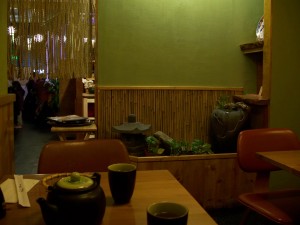
Anzu_Berkeley_interiorAlthough we try to be objective, numerous factors always manage to skew our view in one way or another. Surely there are objective facts, like the restaurant is small or the fries are spicy, but generally the taste can be affected by the conversation of a nearby dining couple, the window seats looking out to a blazing sun, an unusual day at work, or sometimes just the unwillingness to compliment. The mood makes the food. My mood wasn’t particularly bad last time I was at Anzu, but it was particularly good this time I was there, as we were seated in this half-hidden corner. The bamboo curtain half obscured the view, the brown and green room was half sedative. The oksusu cha was half surprising, but fully pleasant.
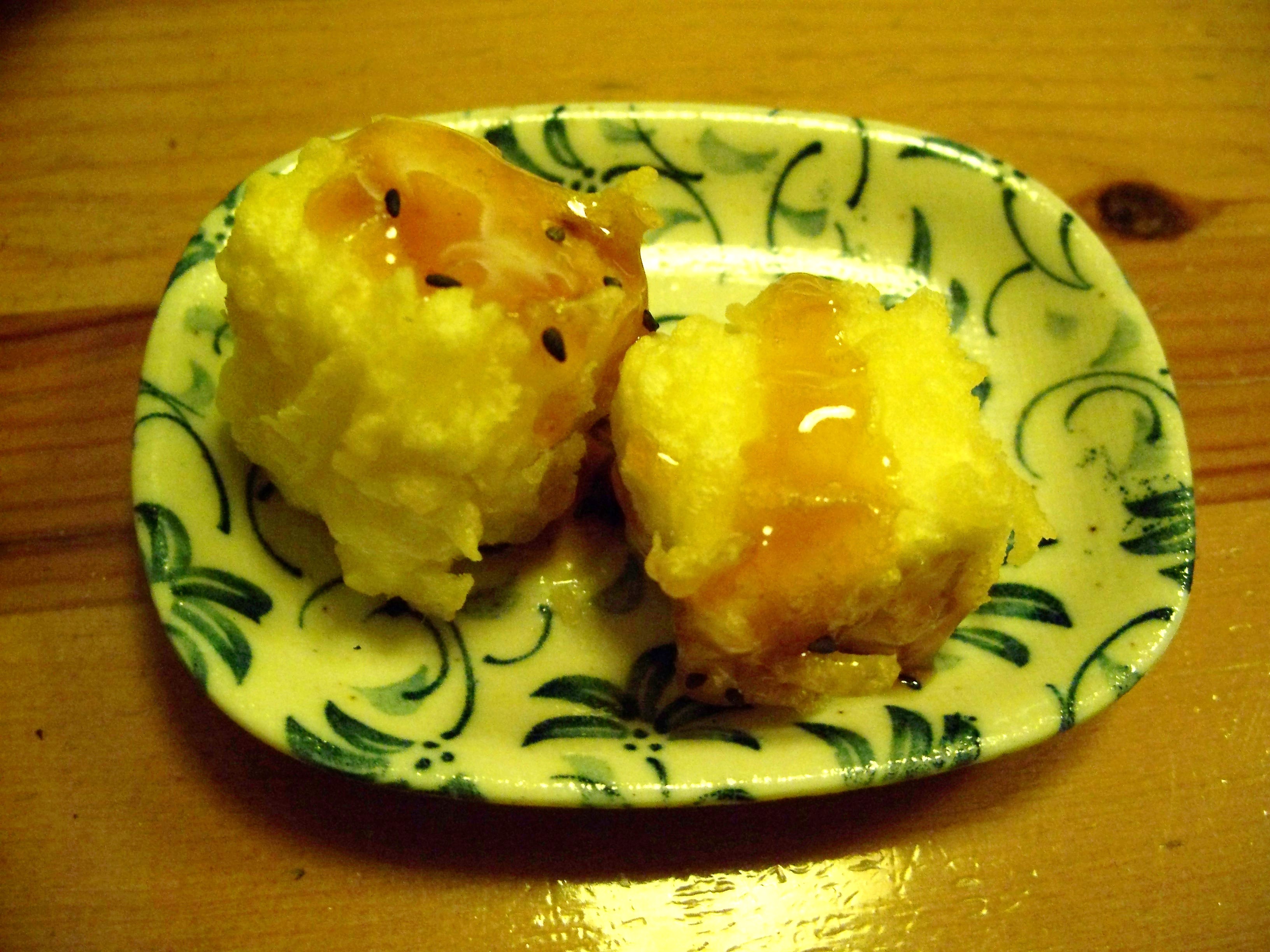

We didn’t expect to be seated in such nice seclusion, nor did we anticipate an appetizer. But now that it came, two small cubes of fried tofu with honey,we seemed to recall that last time they also gave us something small for taste opening – a couple of gyozas it was. The tofu beats the gyoza. A thin crunchy crust contrasts yet complements the soft-almost-to-creamy inside, same with the bean blandness and the honey sweetness. Tofu can really do wonders sometimes.


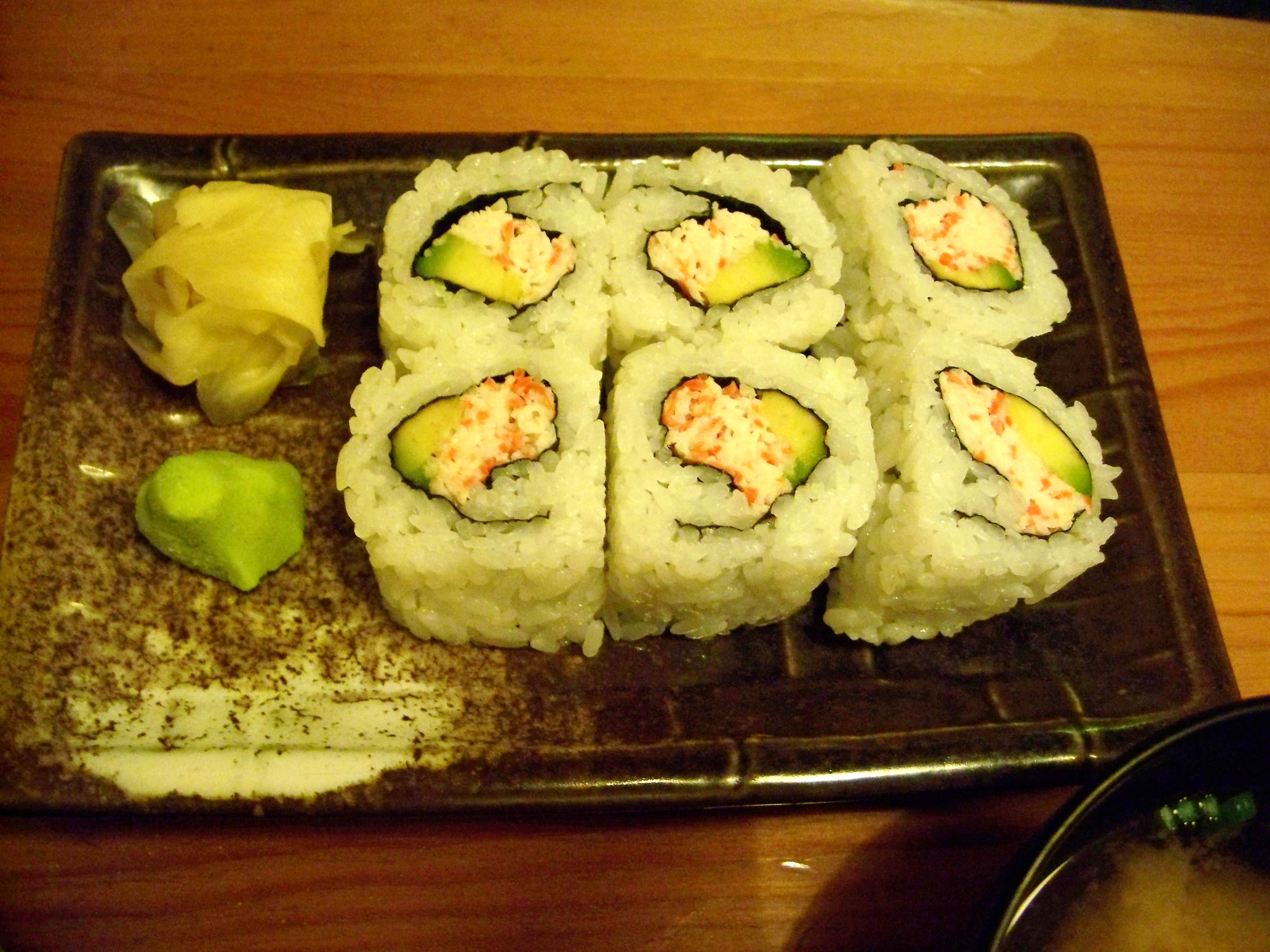
For the main course, Anzu offers some good deals with combinations, such as a bento-box meal – like what we ordered last time – or the sushi-udon pair which we got today. The sushi comes in a full roll (6 pieces), with thinly sliced ginger and wasabi for kicks. But really, you don’t need kicks with California rolls, the nori’s salty streaks and avocado’s buttery dollop suffice. I also believe that what we have here was real crab meat, not surimi, because it wasn’t rubbery. It was good.


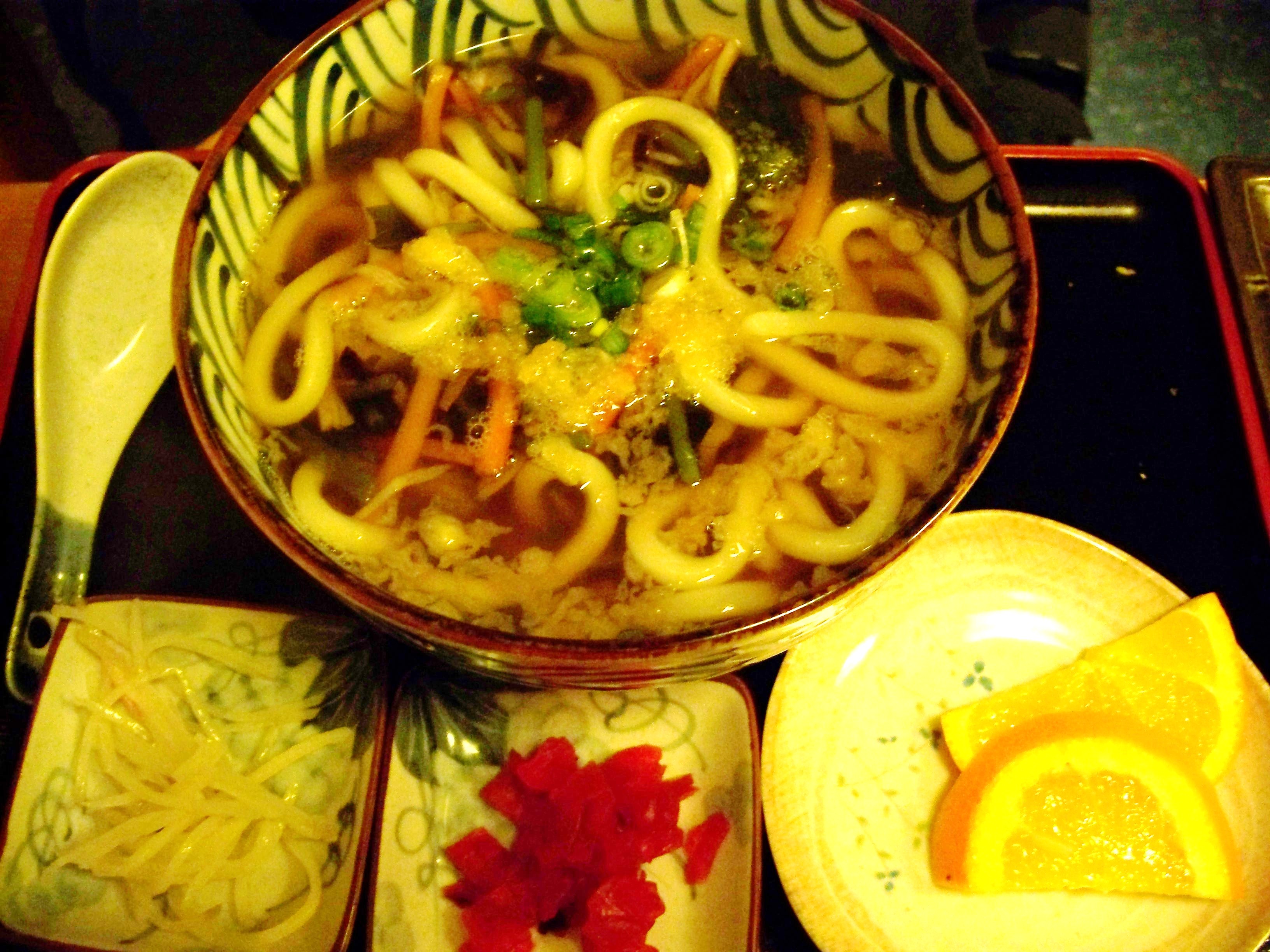
The sansai udon was also a delight. Thick wheat noodle in vegetable broth, it tastes far more interesting than it sounds. The stock is so pure and yet so relishing, with a profound taste of shungiku (Garland chrysanthemum, or rau tần ô). There was also an unsolved mystery: the pickled “bean sprouts” (translucent strands at the left corner). They look like bean sprouts, but only from a distance: close circumspection revealed rectangular cuts.  They also taste starchy like some kind of root. I incline to say turnip, as such texture is midway between the porous crunch of jicama and the granulous dense of potato. Whatever it was, it had a great companion – some kind of pickled radish in ruby color. It was like a sour candy, all different tangy levels sang a song in unison, the song is called “The Best Pickle I’ve ever Had”.

Yes, this visit was full of cute little surprises. What can I say, subjective factors aside, some restaurants are like a bunch of grapes, you wouldn’t stop eating the bunch just because the first grape you picked out happens to be a bit sour. Anzu at Berkeley is such a place, and this time, the grape was perfect.

Dinner for two (free appetizer, 1 California roll, 1 udon, 1 tonkatsu): $15.04

Anzu Japanese Cuisine at Berkeley
2433 Shattuck Ave, Berkeley, CA 94704
(510) 843-9236

P.S. Anzu also has an excellent salad dressing made of peanut sauce, mayonnaise, and a bit of seasoning. The salad comes with the entree, no extra fee.

Update: the “bean sprouts” are actually kohlrabi (German turnip, or su hào). Thanks to my mom who knows every ingredient upon hearing the description of the texture!

Fast pho at Le Cheval

September 17, 2009 By: Mai Truong Category: California - The Bay Area, noodle soup, Vietnamese

There is this McDonald’s pretty much right across the street from the old Physics building where I went to college. It made good business. College kids, tight pockets, tight schedule, empty stomach, of course. But good old days are no more. The Big M is nonexistent here, although all the above conditions still hold. The Physics building is inconveniently located in the middle of campus, which is at least 15 minutes strolling to the nearest food in any direction (on-campus diners don’t count). The shortest voyage if you’re facing south leads to the corner Durant-Bowditch. A yellow sign gently says “Le Cheval – Saigon Cuisine, Est. 1986”, with green vines, sunshine patio, and “cash only”.

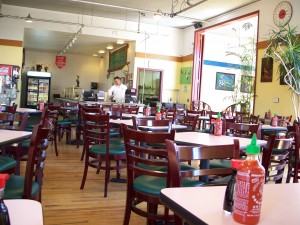
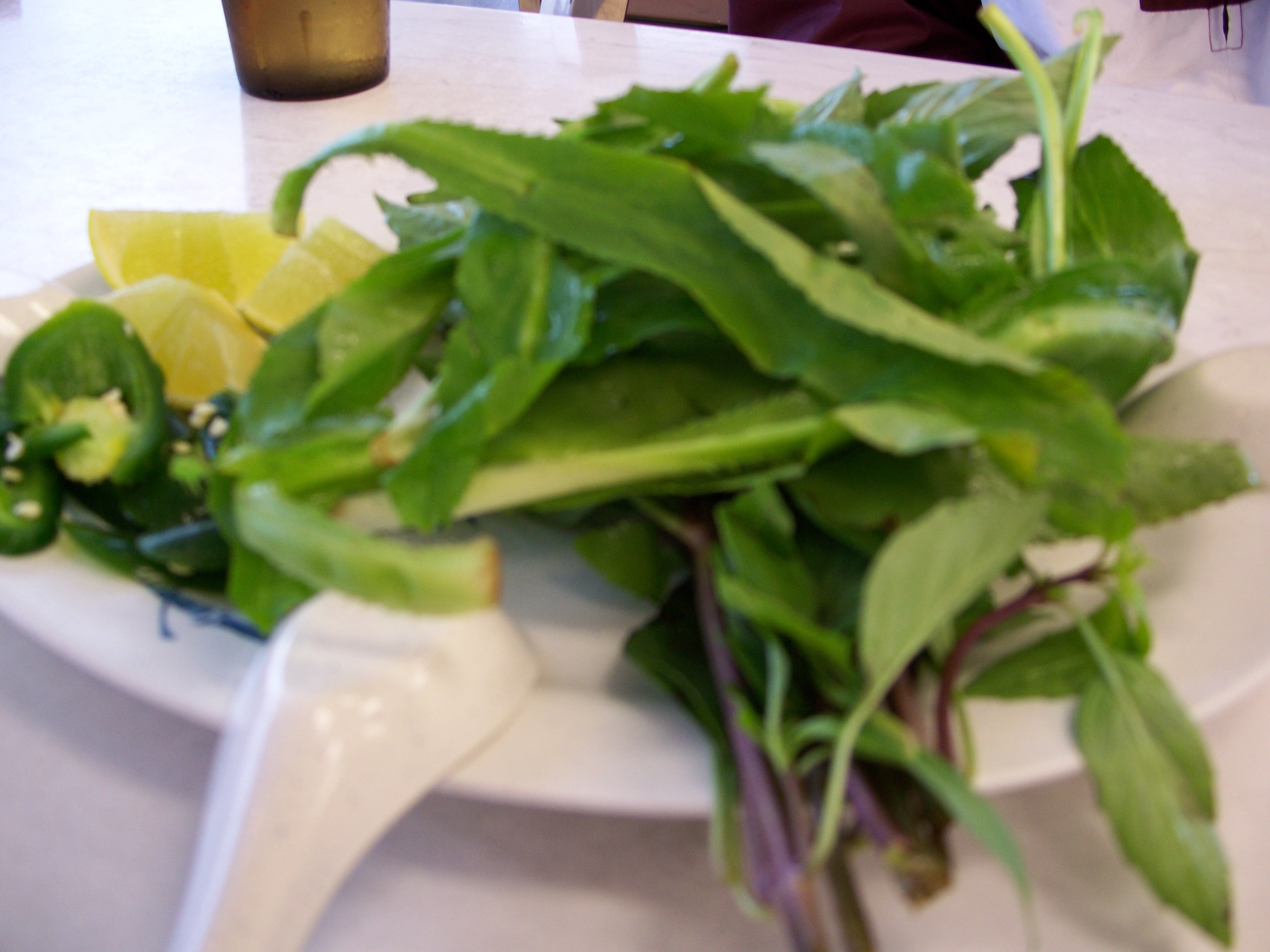
Le_Cheval_BerkeleyThe place is usually packed during lunch peak. (This picture was taken at 3 pm.) There are about a dozen dishes on the counter, you pay a fix price for a combo rice plate, and make your own. I haven’t tried those, because it would take more time than to order a bowl of pho. Actually I said “noodle soup”, and the white man at the cashier politely asked, in well-toned Vietnamese, “phở bò?” :-). I paid, poured myself a glass of water, sat down with a number. Two minutes later a guy, tray in hand, zigzagged from the back kitchen through numerous chairs and conversations. My pho was ready, snuggly next to the usual bountiful plate of bean sprouts and mints. I don’t recall my double cheeseburgers coming to me faster than that, especially when there are 50 customers around. Arguably, this phở is a more heart-warming encounter. What else would you expect from a big bowl with lotsa meat?

Speediness aside, Le Cheval has something else worth coming for: phở sans broth and all that steamy business. I haven’t seen this dish anywhere else. It appears under the name “stir-fried phở” on page 3 of the menu. It has the combined quality of pad thai and jap chae. A delicate yet enduring texture. It’s phở you can eat with a fork and ease. It’s phở you can take your time handling without making it disintegrate into the sea of broth. And take time you must, for it’s a big plate.

The veggies and shrimps are just makeup on a natural beauty, and probably for the health-conscious. The noodle is already savoury by itself.

Side note: the chopsticks here might be a little too short, and I always get loaded with guilt when putting my finished bowl (with broth) into the plastic bins for dirty dishes. Fatty liquid streaming out and coating the bowls isn’t a pretty sight. On the plus size, self-service saves you on tips, and all the more reason to order pho xao if you have time.

Address: Le Petit Cheval
2600 Bancroft Way (between Bowditch St and College Ave)
Berkeley, CA 94704
510-704-8018

Rice noodle day in Banh Hoi Chau Doc, Bellaire

July 06, 2009 By: Mai Truong Category: Houston, noodle soup, Southern Vietnamese, Texas, Vietnamese

Vietnamese places usually don’t appear on the web, why? Because they already paid for ads on Vietnamese newspapers and radio station. Of course the ads are in Vietnamese. There are a little over 30,000 Vietnamese in Houston. It’s amazing how such a small community can sustain its numerous restaurants, with customers primarily themselves. I think I’ve said the word “Vietnamese” enough times for the month. But let me say it one more. Vietnamese must really like to eat out.

So we found a new address in one of the newspapers. We arrived past lunch time, so it felt as if we rented out the whole place. The hostesses seem to be enjoying their leisurely afternoon snack as well, they sat at a nearby table watching TV with us. A flat screen on the wall with documentary films about Vietnam.

Anyway, let’s start with an appetizer.

This is for 3 people to share. Each bánh bèo (water fern bánh) is like a really thin mini rice-pancake, steamed instead of fried, topped with dried shrimp powder, scallions, and guess what, mung bean paste (once again, Mr. Mung Bean won the competition and became Paste of Choice). The final and most important touch is the nước mắm (fish extract sauce). Bánh bèo, like other Central Vietnamese dishes, cannot go without nước mắm. I’m not exactly sure what the coconut milk is doing there. The thinner the pancake is, the harder it is to eat with chopsticks, or any kind of utensils you can think of, because it’s slippery and fragile like jello. But only the thinnest kind is the best kind. Too thick, and all there is is a block of utmost boring rice pudding. So, I’d say these were above average. Onto the main course.

Bánh tầm bì thịt nướng (bánh tầm with shredded pork skin () and grilled pork). I’m confused by the Vietnamese naming system sometimes, there’s not much “bánh”-ness about this cold udon-like noodle. Authentically it should be shorter and fatter. They really gave us a behemoth bowl here, filled with noodle, peanuts, sliced pork skin (), and veggie, but only one skewer of pork! A little blackened. Good pork though. Can crispy-edge grilled pork ever not taste good?

Bánh canh cua (bánh canh with crab). Yet another rice noodle variation, strangely named “bánh”. I think this restaurant uses the same type of noodle for the soup and the grilled pork dish above. The orange color is from gạch cua (something under the crab shell whose English name I know not). The mysterious substance supposedly is stirred in frying pan until gooey and gives the broth a natural sweetness. I’m not big on sea crawlers. My mom likes it.

Bánh hỏi thịt nem nướng (bánh hỏi with grilled pork and grilled nem – a kind of pork sausage). It’s among the more expensive dishes in Saigon and the abroad, but cheap in the provinces where it was first made. The intricate nets of rice vermicelli gives the tongue a fun texture. Chopped scallions swiftly stir-fried with olive oil and a tad salt gives the sleek taste. Generous sum of sliced cucumber, bean sprout, pickled carrots and the backyard herbs counterbalances the carcinogenic charred and brined meat. Nước mắm is also a must. This plate rightfully makes the restaurant’s name.

Bánh hỏi Châu Đốc

Lunch for three: Bánh bèo tôm cháy: 4.95, bánh canh thịt cua: 6.95, bánh hỏi thịt nem nướng: 9.95, bánh tầm bì thịt nướng: 7.95. Total: $29.80.
Address: 10800 Bellaire Blvd, Houston, TX 77072.

If I recall correctly, the menu does have brief English descriptions, and the young waiter seemed more comfortable speaking English than Vietnamese.

100 years a nation’s soul food

January 28, 2009 By: Mai Truong Category: noodle soup, Opinions, Vietnamese

Eight interesting facts about pho: (picked and translated from source)

1. During 1908-1909, steam boats were a popular means of transportation from Hanoi to other cities in the North, and pho started out as a vendor food sold in numbers at river ports. From 1930, pho was popular in the cities, some pho restaurant in Hanoi served until 4 AM.

2. Originally there was only pho with well-done beef. Rare beef was a latter innovation, and only became dominant after 1954.

3. Within the first decade when pho was popular, many cooks tried to add different twists and turns to the dish, however, not all could satisfy the public taste. A few variations that we don’t see today are pho in the Jean de Puis neighborhood (Hang Chieu, Hanoi) with sesame oil and tofu (1928), pho gio (rolls of sliced beef), pho Phu Doan with ca cuong extract(*).

4. Chicken pho first appeared in 1939, when beef was not sold on Wednesday and Friday, and there was no fridge.

5. Pho sot vang is a nice mix of Vietnamese and French cuisine: the chunks (not slices) of beef are seasoned and stewed in wine (vang), then added atop the pho. (This is the first time I’ve heard of this type of pho)

6. Pho did not migrate to the South until 1954 – when the Geneva treaty was signed and Northerners migrated to the South to escape the rule of Communists. This is the historical mark of pho spreading all over the country.

7. Southern pho, easy-going and generous like the Southern Vietnamese, have add-ons that its Northern brother didn’t think of: bean sprouts, fresh herbs, a little sugar in the broth, hoisin sauce and hot sauce.(**)

8. A few famous Pho restaurants in Vietnam (that I’ve seen in Houston and California, but I’m not sure if they are the real deal): pho Tàu Bay (“airplane”) (Hanoi, 1950)(***), pho Thìn (Hanoi, 1955), pho Hòa-Pasteur (Saigon, 1960).

* I had this extract once in a bowl of bun moc, just a drop, literally, and it’s so strong it killed the broth and my appetite. The only other time I had something to that effect was when I dunked sushi in wasabi.
** Pho shacks in the North still hesitate to serve all these condiments today, which in my opinion is quite understandable. The veggies only clutter the soup and get you full more quickly. The sauces only overpower the natural broth (which already has at least a dozen different ingredients), and distract you from the real taste of pho.
*** The first owner of pho Tau Bay did not name it so. A friend gave him a pilot helmet, which he really liked and wore often. Customers then started calling him “ong tau bay” (Mr. Airplane) (?!) and the name stuck.

Tags:

Sleeky banh soup

January 09, 2009 By: Mai Truong Category: Central Vietnamese, Comfort food, Houston, noodle soup, Southern Vietnamese, Texas, Vietnamese


Almost every Sunday we make a trip to Bellaire to get the usual supply of patechaud, cha lua, banh gio, and the like. Almost every Sunday the question’s asked: where will we eat today? Well, there are two choices: the all-too-familiar Kim Son, and the more adventurous find which can be anything Little Mother saw in the local Vietnamese newspaper ads. We’ve had our handfuls of adventurous finds, all are good, but as usual smaller places don’t have a big selection, the menus are either common banh mi and pho, or grandiose names we don’t particularly care for. Mother is also easily shy away by the appearance of a restaurant: if the setting doesn’t look good, the food won’t taste good. So back we headed to Kim Son today…

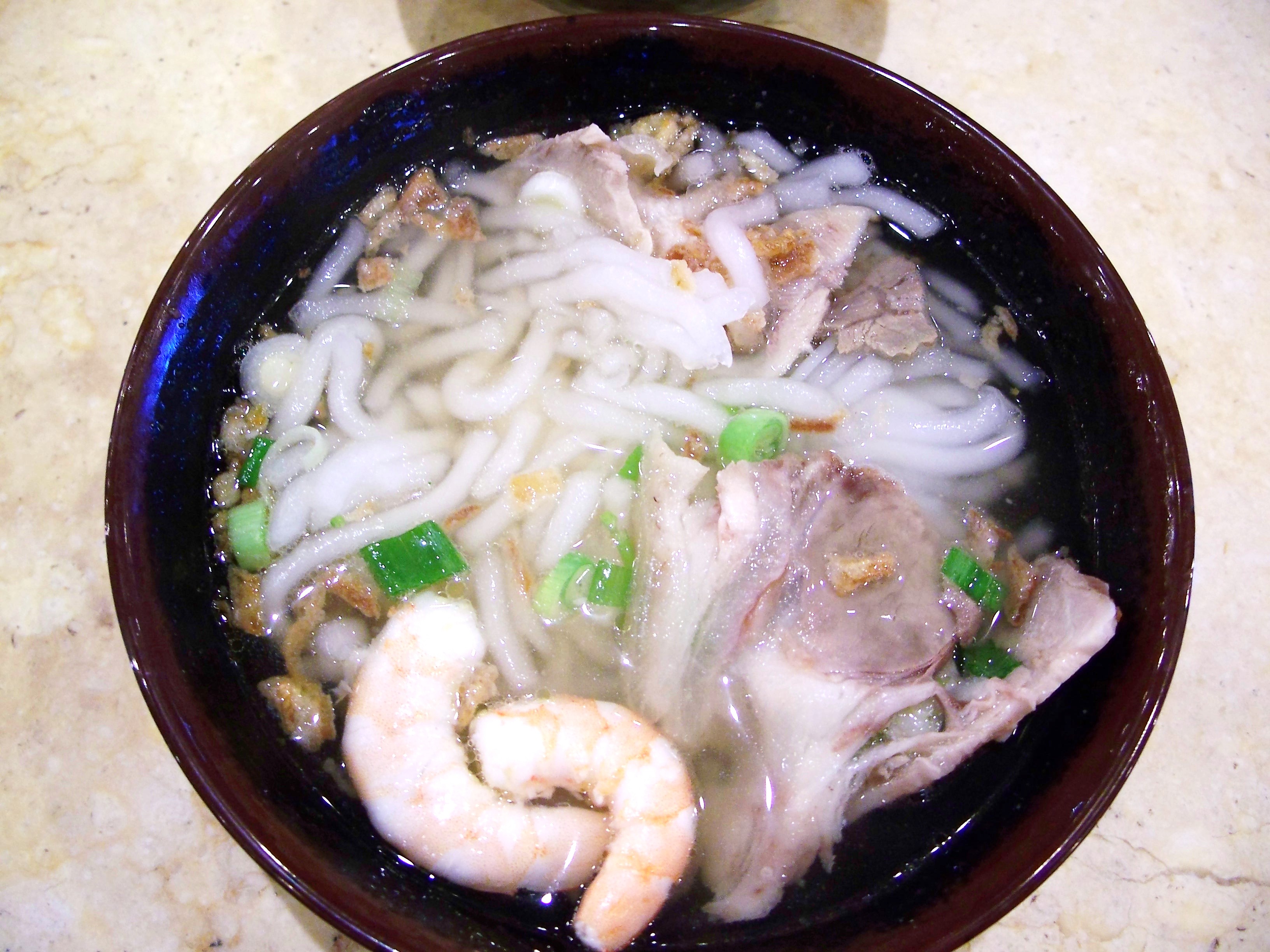
We opted for the popular choice of a lunch buffet. We got there early enough, meaning at 11, when it’s just opened and there was banh canh. 15 minutes later and it was all gone. Out of banh canh noodle they said. The soup is not left unattended like the rest of the food trays known and visited by many. No, that would have reduced the availability to 5 minutes. It’s hidden in the right corner of the diner, in something can appropriately be called a kitchen box, with fellow roasted ducks and another noodle soup of the day. You go over there, order, stand around watching the cook slap a bunch of noodle, shrimp and pork, and pour a couple ladles of steaming broth into your bowl, you go back to your seat and start slurping. It’s really slurping, even chopsticks have a hard time holding the noodles in place long enough, don’t even try spoon and fork. They’re quick, short, round, and annoyingly feeble. It’s too easy to break them, but it’s hard to put them in your mouth before you flick a drop of broth to somewhere it shouldn’t be. The taste is worth the sloppy embarrassment, though. Banh canh and hu tiu are somewhat similar, the final touch in each bowl is a dollop of mo hanh (chives stir fried in lard and fried shallots). It adds savoriness, enhances the mix of meaty and sweet. A very hearty soup. I even drank the broth. The small bowl is a perfect belly hit.


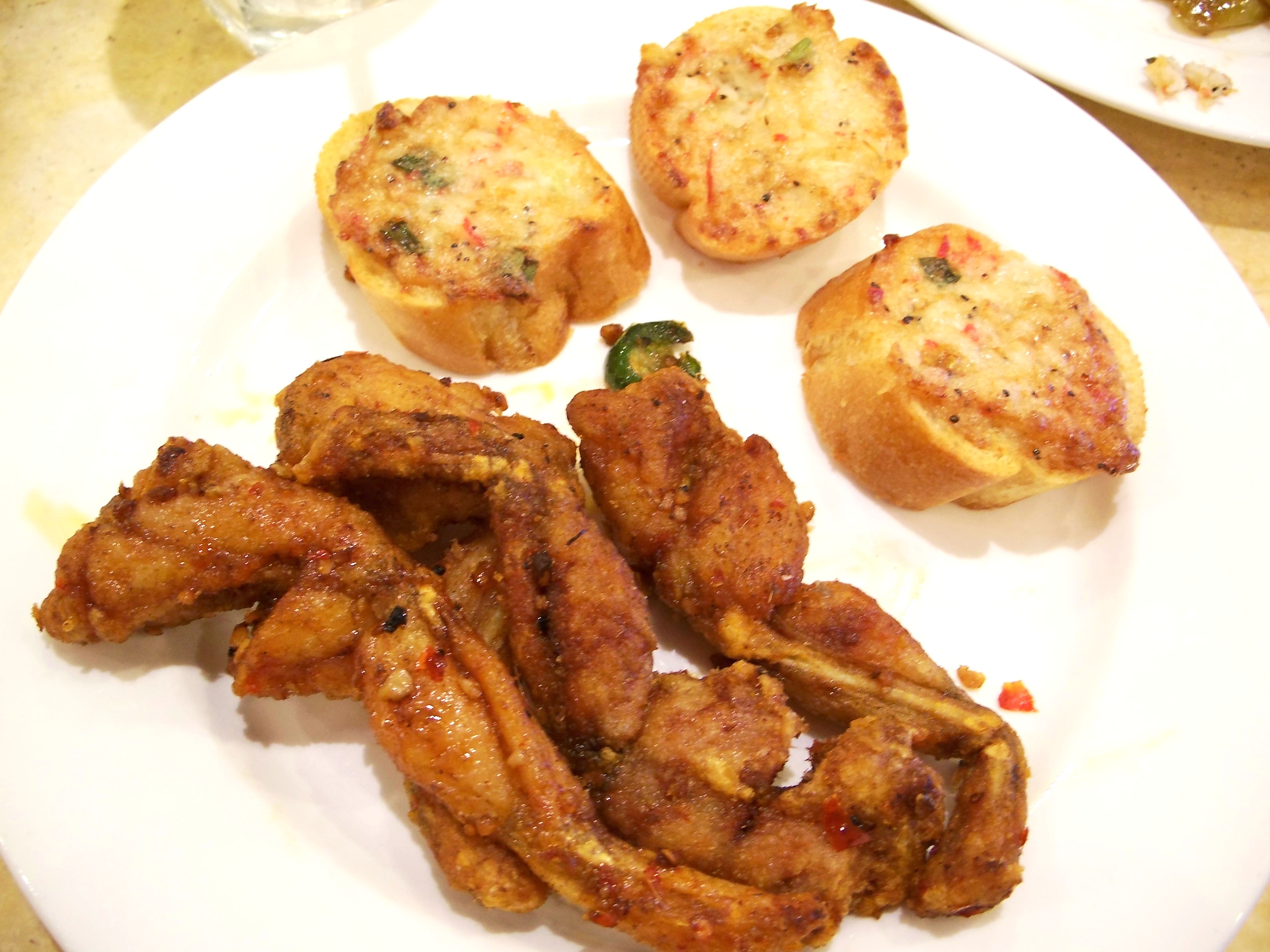
Not to be healthy I packed a few frog legs and fried shrimp-pasted toasts down my throat afterwards. Great baguette. Frog legs would have been great too if not for the irritatingly overloaded hot pepper. When something’s hot, it’s just hot. Hot overpowers everything. Can’t taste another daggum flavor, if there were any. Dunno about you but I find that boring. The meat is kinda dry (I would be too if I were covered in hot pepper) and sinewy. But they do look sporty, don’t they? 🙂


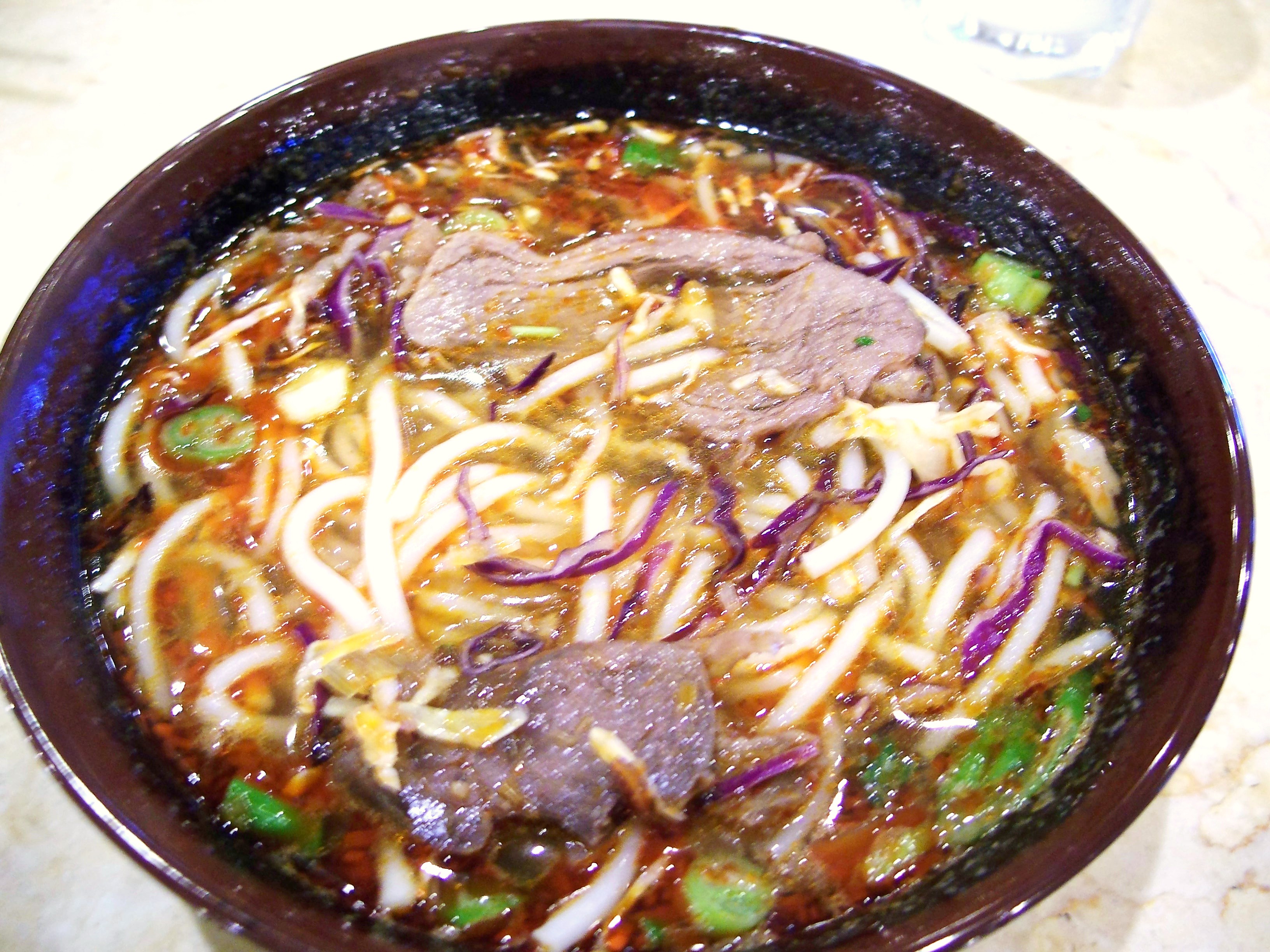
The other soup of the day was bun bo Hue, which we’ve had, and I’ve blogged, here. Looks good, eh? Spicy, too. It’d be good to have intermittent sips of water, given you have a full glass. Kim Son is usually crowded after 11:30, at which time there are too few waiters for too many tables, and it’s expected that you fend for yourself. Yes, that means no refill. Vietnamese scoffers are used to drinking only after the meal anyway. They believe that drinking during eating would result to feeling full immaturely, or making your belly bigger. Maybe that’s why my jeans feel tight…