Flavor Boulevard

We Asians like to talk food.
Subscribe

Ethiopian at Cafe Eritrea D’Afrique, maybe?
December 06, 2010 By: Mai Truong Category: California - The Bay Area


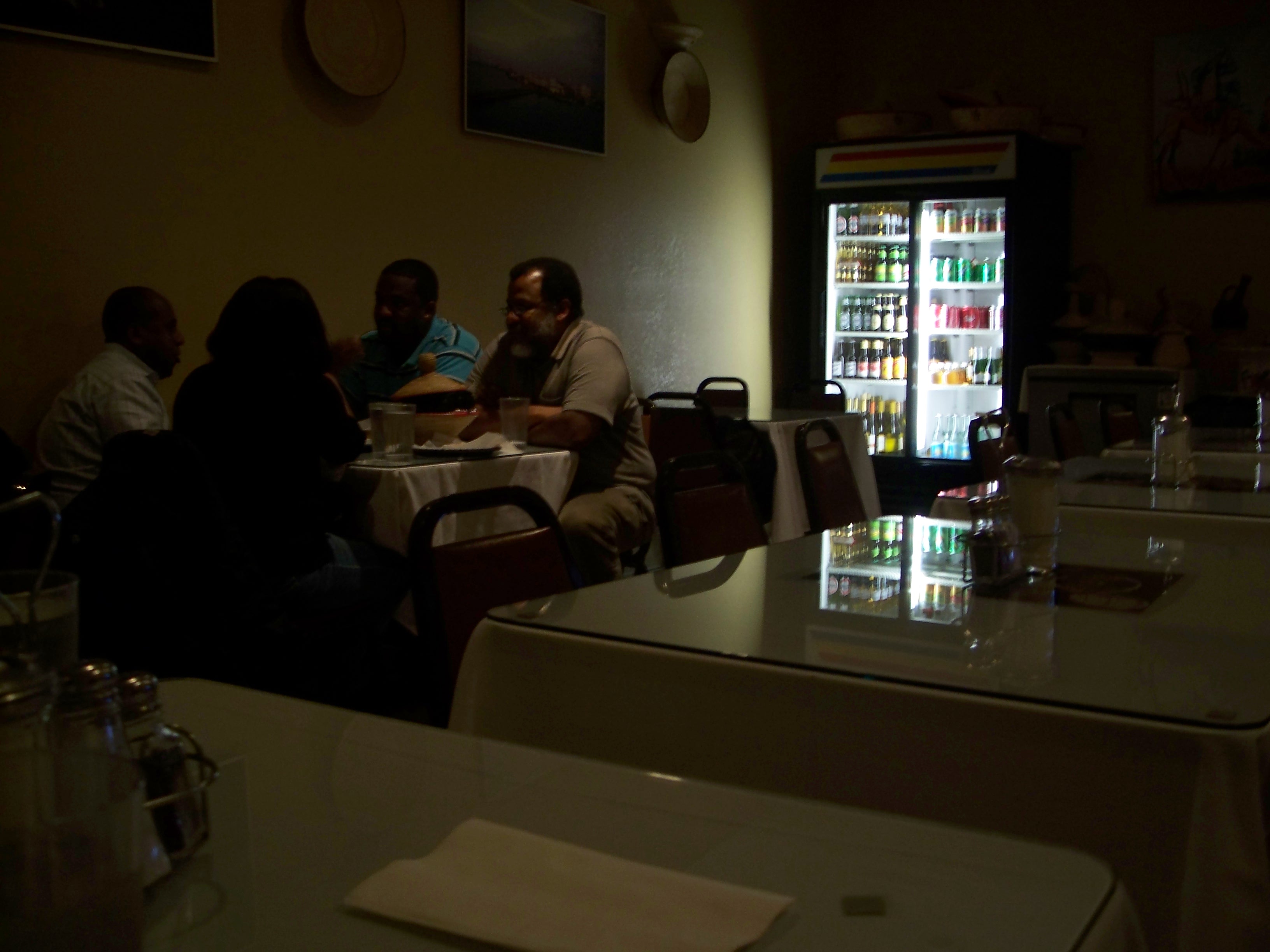
Usually I have no problem remembering restaurant names, both foreign and English. But Eritrea D’Afrique is for some reason a tricky business, I have to search for the receipt to get the name right. And it’s not just the name, its entrance is tricky too. We see the sign, we see people inside, we try what we think to be the door, which is locked. Confused and slightly embarrassed with bypassers, we look through another door to its right and see a bar. It turns out the bar is part of the cafe. Inside, the spacious, curtained and dimly lit dining room has three table occupied, all by Africans who seem quite at home with the place and converse in their own language. Always a good sign.

I notice them using their hands to scoop up food, just like the Indians, and a thought of worry comes. Sure, we eat pizza, spring rolls, goi cuon, fruits, bread, fried chicken, ribs, and a gazillion other things with hands, but it’s dubious how much bean and salad I can gather with the tip of my fingers. It’s the efficiency, not the messiness, that makes me consider a fork, which turns out to be unnecessary. Because unlike the Indians, the Eritreans use more than just fingers to scoop. In fact, their injera should win the prize for the most efficient utensil out there.
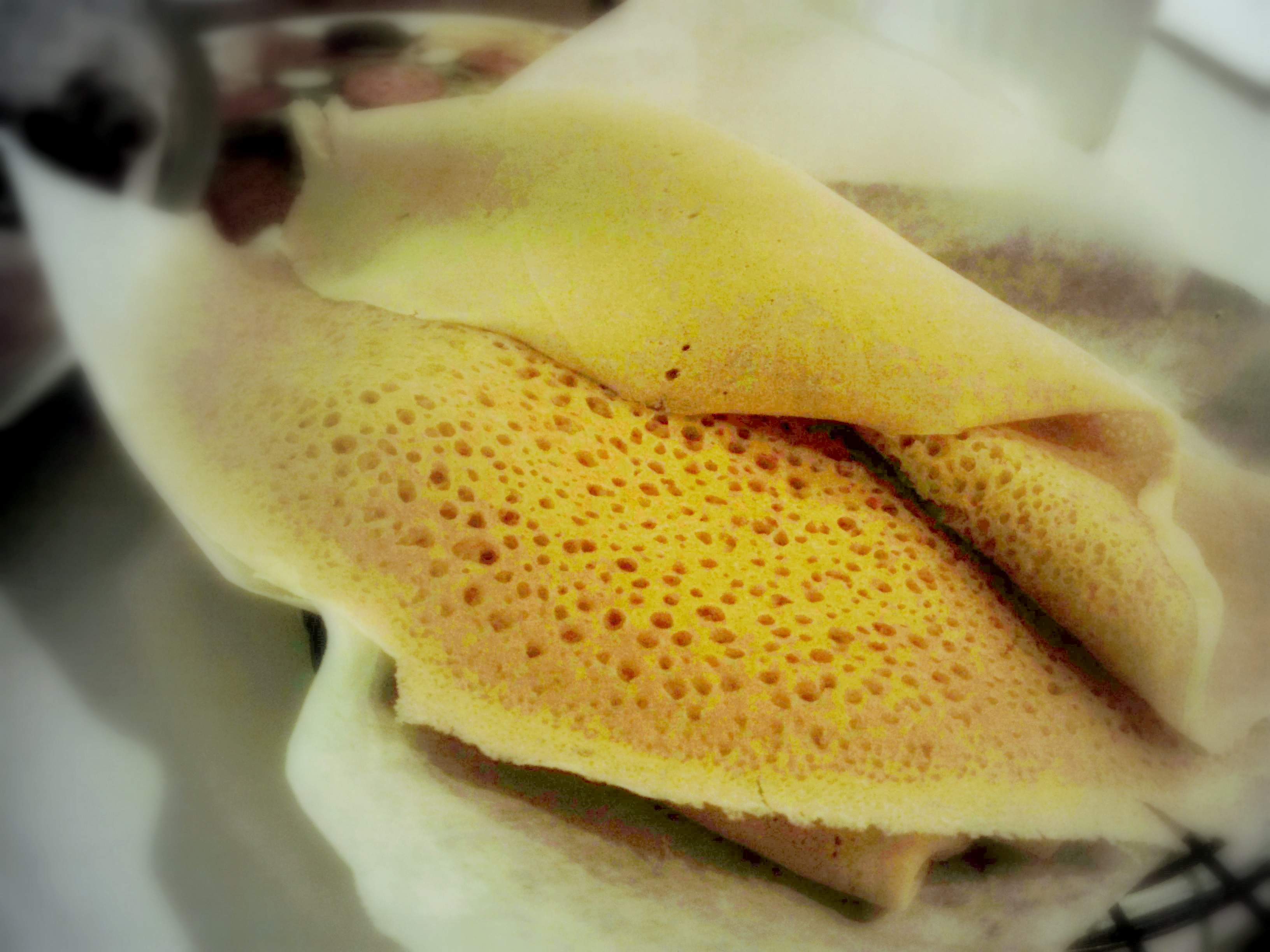

First of all, it’s thin, resilient, and easy to handle. You tear a piece, you scoop, you wipe the plate. Secondly, its porous side grasps, soaks, and holds soft food like no other. And finally, it’s edible. How many utensils in the world can be stuffed in the mouth and digested in the stomach? It’s airy, spongy, it’s a little sour, it’s a snack by itself and a flavorful addition to other foods. It’s brilliant.
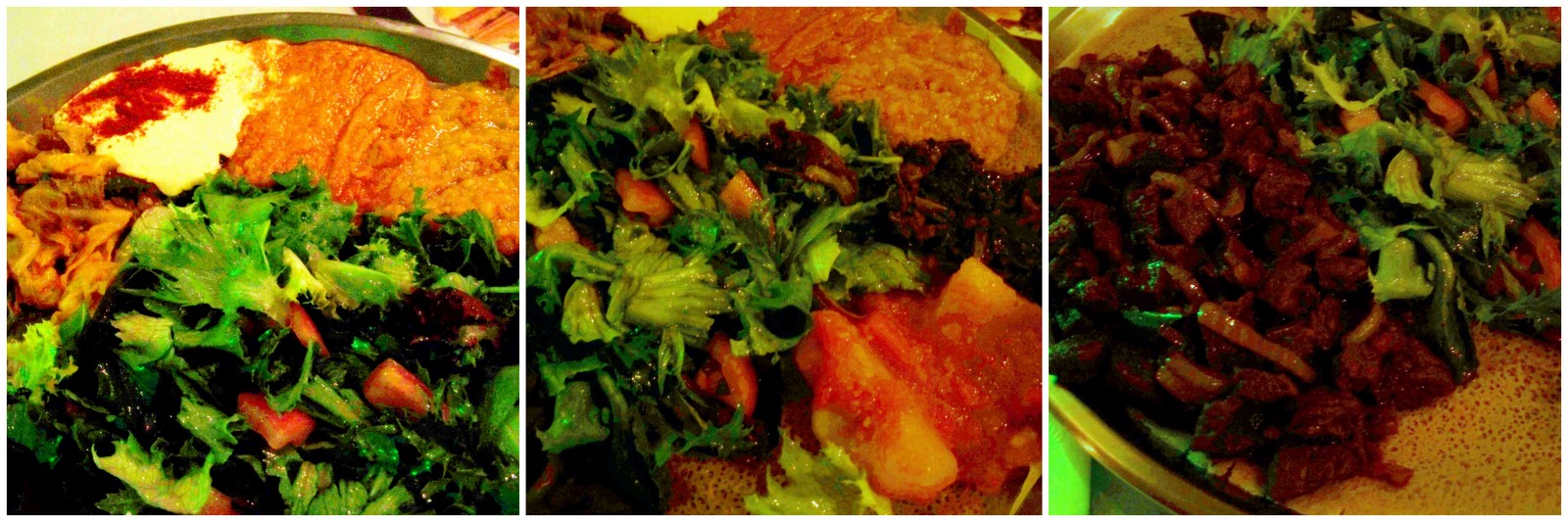

Not to mention it’s also a serving plate. Topped with our seven-coursed veggie samplers and a heap of stir fried beef. The veggies remind me of Istanbul Grill‘s appetizer collection: there’s humus, cabbage and green beans, hamlee (collard greens), shiro (chick pea puree), birsin (split lentil stew), potatoes, and salad in the middle. The shiro and birzin are expectedly similar, both with a natural subtle sweetness of legumes, but birsin resembles creamed corn while shiro is closed to Mexican refried bean. I’m not crazy for humus, the hamlee can go, but I wish they gave us more of that mushy, saucy, savory cabbage.
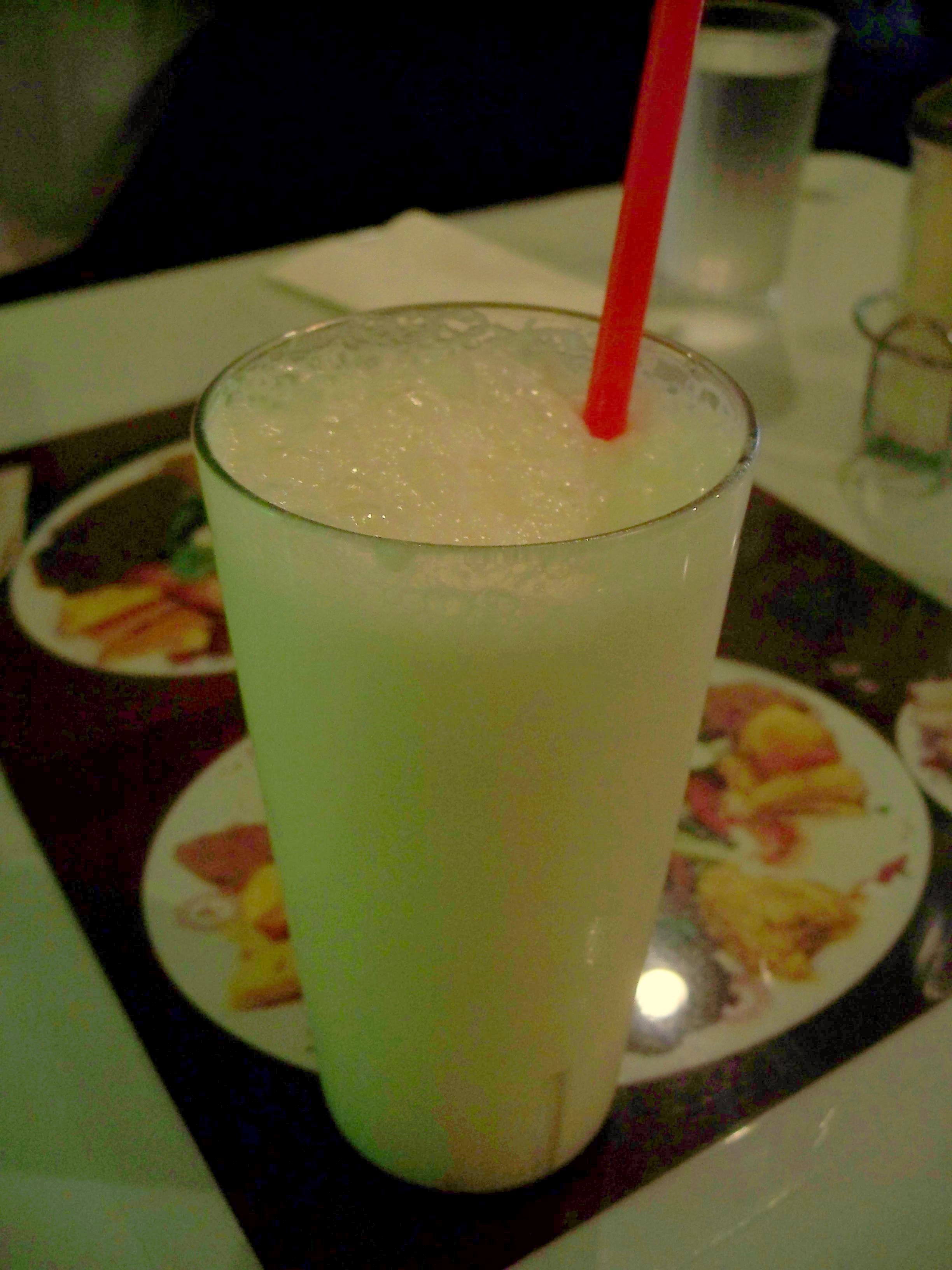

I wouldn’t mind a total vegan Eritrean meal, since the veggie flavorings are not too different from the meat flavorings. The texture contrast, however, is a nice change, going from mushy cabbage and beans to charred, hardened, cubed beef. Mild kulwa, beef stir fried in spiced butter, garlic, onion, and pepper, does not sound like something that can easily go wrong, and it doesn’t.  In some way, it’s just a smaller, sharper, tangier version of the Vietnamese bo luc lac. In the end, my Asian palate prefers some sweetness in the savories, so the frothy orange cream with ever-so-subtle orange juice and honey is a heavenly nectar. Even the sound of them squeezing and frothing it in the kitchen is music to my ears.
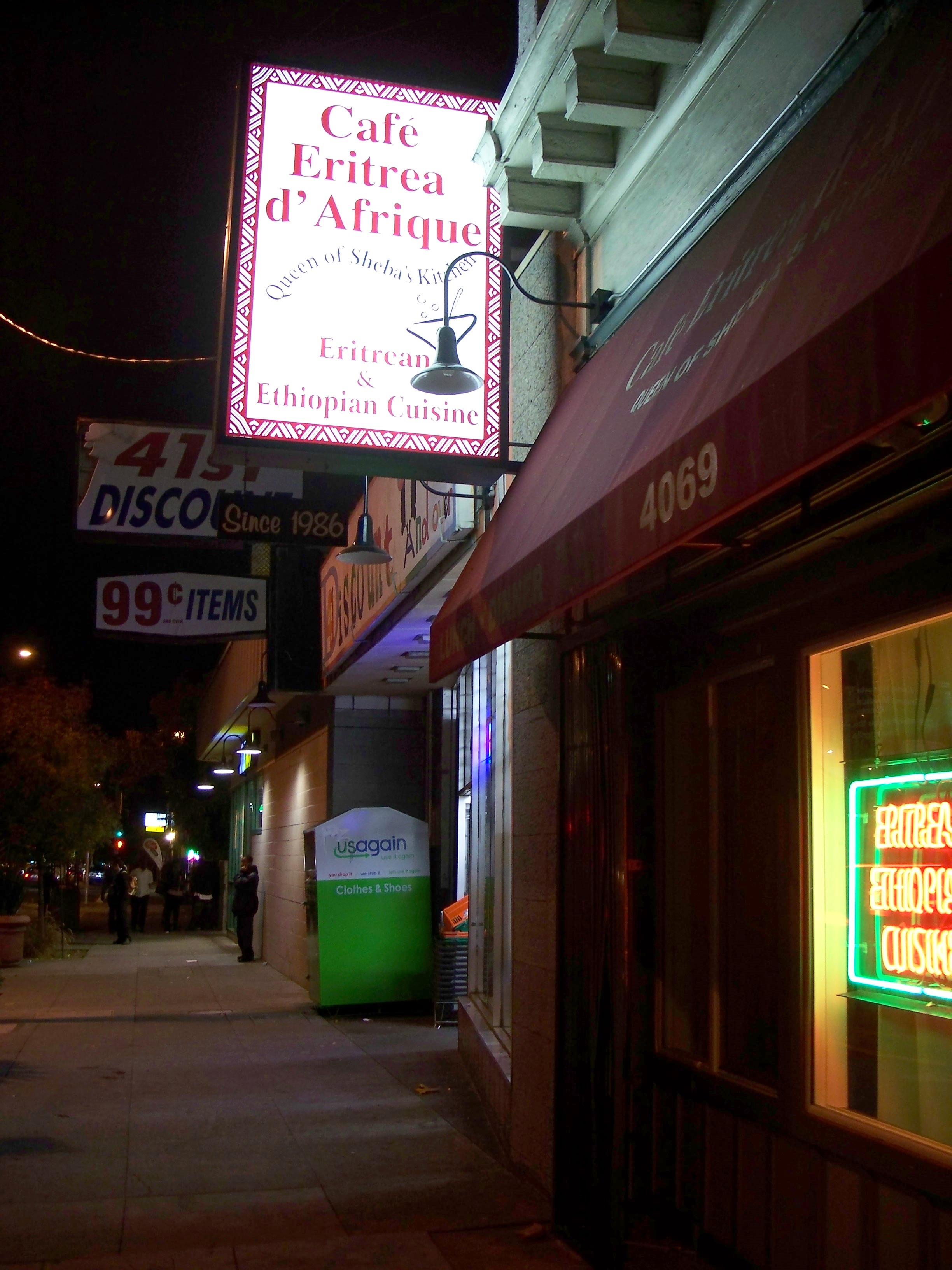

Prior to today I’d known of Ethiopia but not Eritrea. The geographical proximity of the two countries must imply cuisine similarities, but how similar? Is it like Lao and Thai? Or is it more like Korean and Japanese? Considering Oakland has a whole street of Ethiopian restaurants (while the whole East Bay has only one address for Indonesian food), I felt both excited and obligated to try Ethiopian for the first time, but perhaps this is more like my halfth time?

Address: Cafe Eritrea D’Afrique (North Oakland)
4069 Telegraph Ave
(between 40th St & 41st St)
Oakland, CA 94609
(510) 547-4520
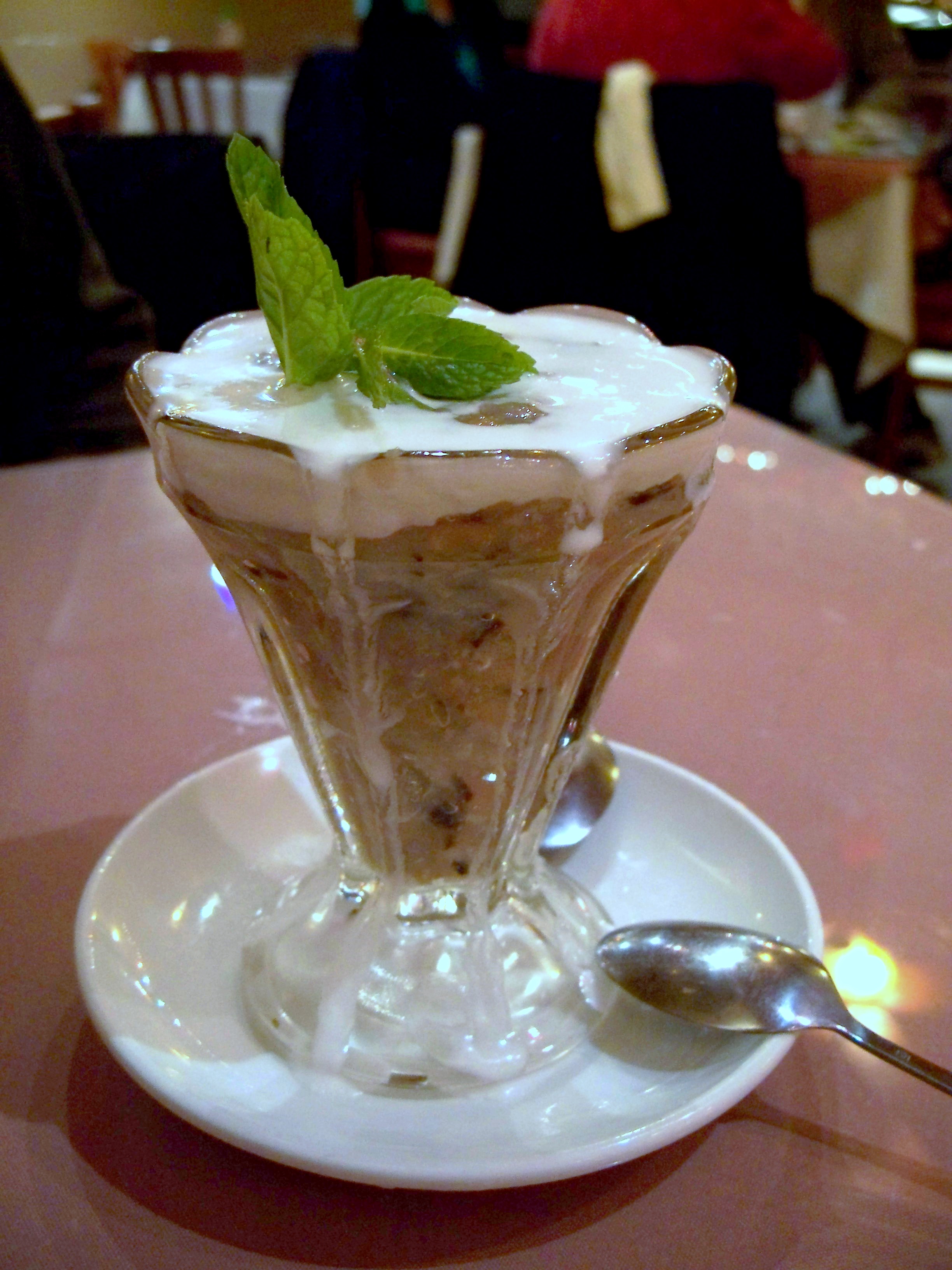
Desserts at Vietnamese restaurants

December 02, 2010 By: Mai Truong Category: California - The Bay Area, Comfort food, sticky rice concoctions, sweet snacks and desserts, Vietnamese


Raise your hand if you’ve ordered dessert at a Vietnamese restaurant. What? Vietnamese restaurants have desserts? Yep, they do. But they’re always on the last page of the menu, which you never get to because you stop at number 1 – Pho dac biet (special noodle soup) or summ’n. Besides, nobody ever bothers to ask if you’d like to have dessert before they bring out your check. And besides, pho usually fills up the once empty cavity, so no more room for sugar loads. But next time it’s okay to leave some broth and some noodle behind, cuz they do have some delicious sweet deals outback. Not bubble teas.


Black eyed pea che is one. Mushy, plump peas dissolve on your tongue with gooey sticky rice and coconut milk. I adore che dau trang at Kim Son and at Lee’s Sandwiches in Houston, but this beauty in a glass served at Le Regal does not disappoint either. Of course, do NOT eat the mint, as much as I’m for flavor mixings, this mint is purely a matter of decor.


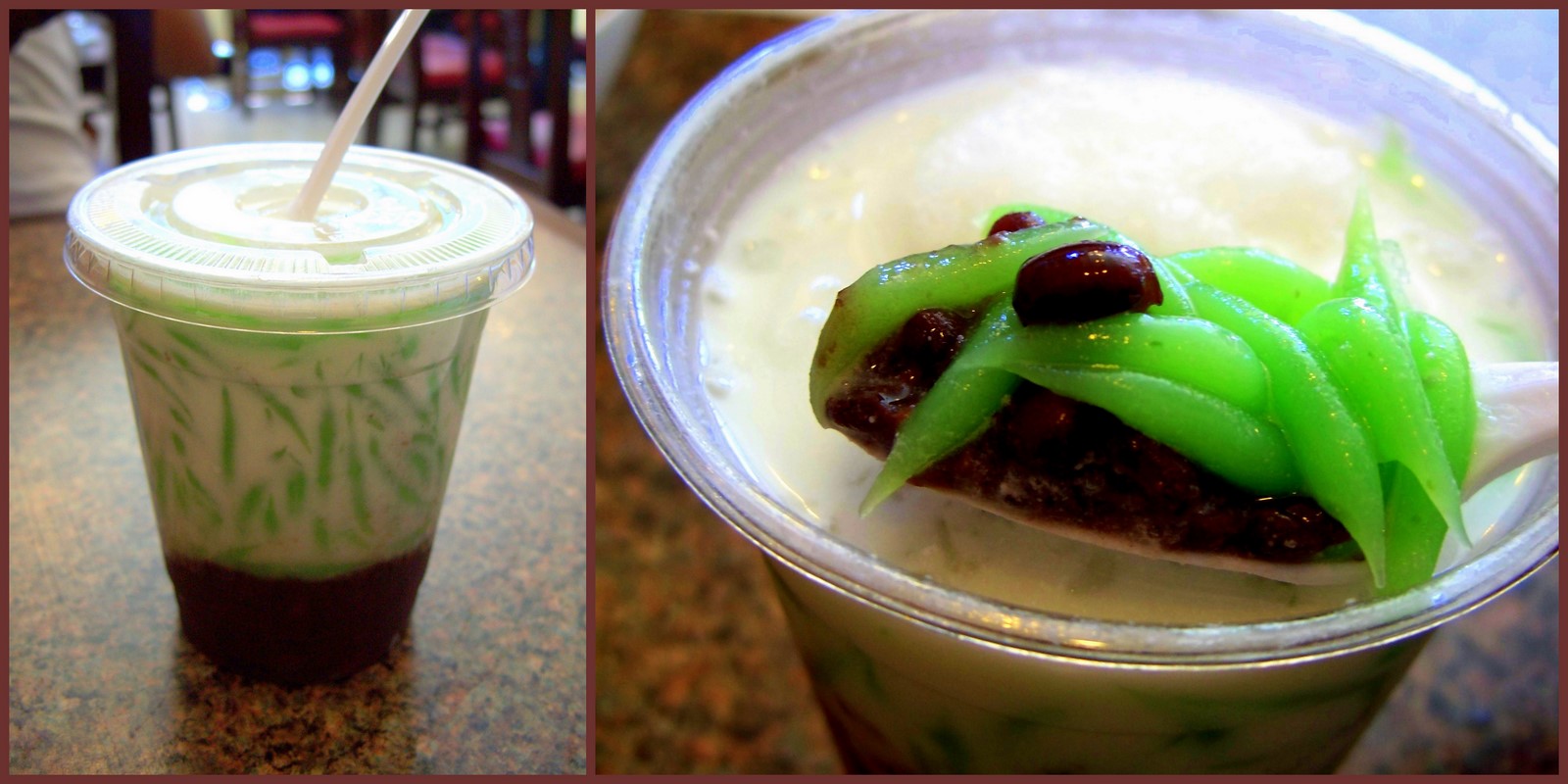
Also che, but without sticky rice is chè đậu đỏ bánh lọt: sweety sweet and mushy red bean at the bottom, bland chewy green tapioca worms floating in coconut milk and shaved ice on top. Personally I think the shaved ice can get lost because it only dilutes the coconut milk, but this chilled cup of che is more revitalizing than eating ice cream in wintry days (no sarcasm, if you haven’t tried ice cream in the cold, you’re missing out big time). Kudos to Banh Cuon Tay Ho #8 in San Jose for this beany treat.


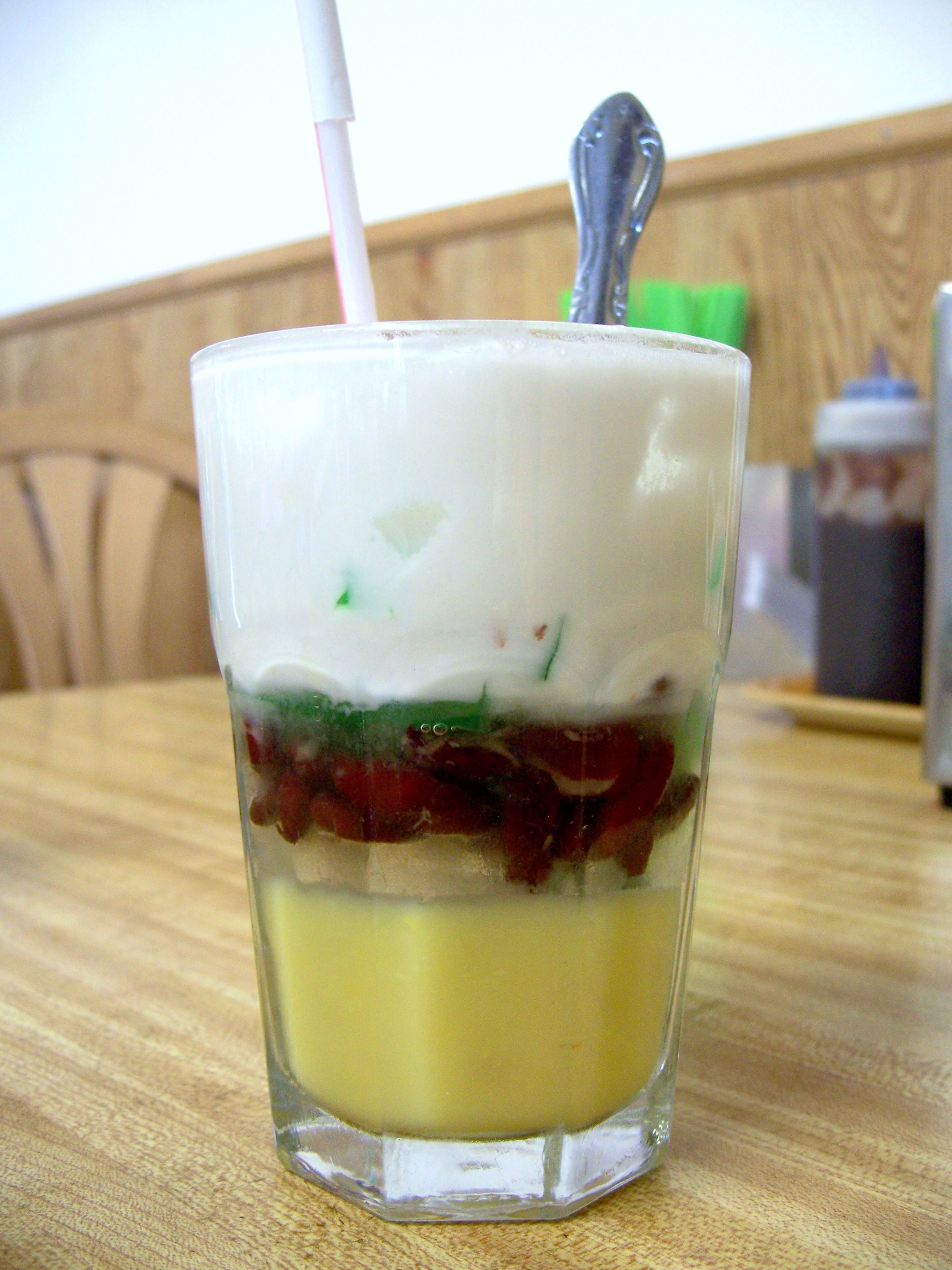
Yet another che. You got it, there’s coconut milk :-P. I can’t quite figure out why Phở Hòa Lão II (Oakland) probably calls this thing chè ba màu, or tricolored che, where it actually has four colors: yellow of mung bean paste, red of red beans, green of tapioca, and white of buttery coconut milk, unadulterated by ice as the che is refrigerated. The only complaint would be its capability to fill me up for hours for only $2.10.


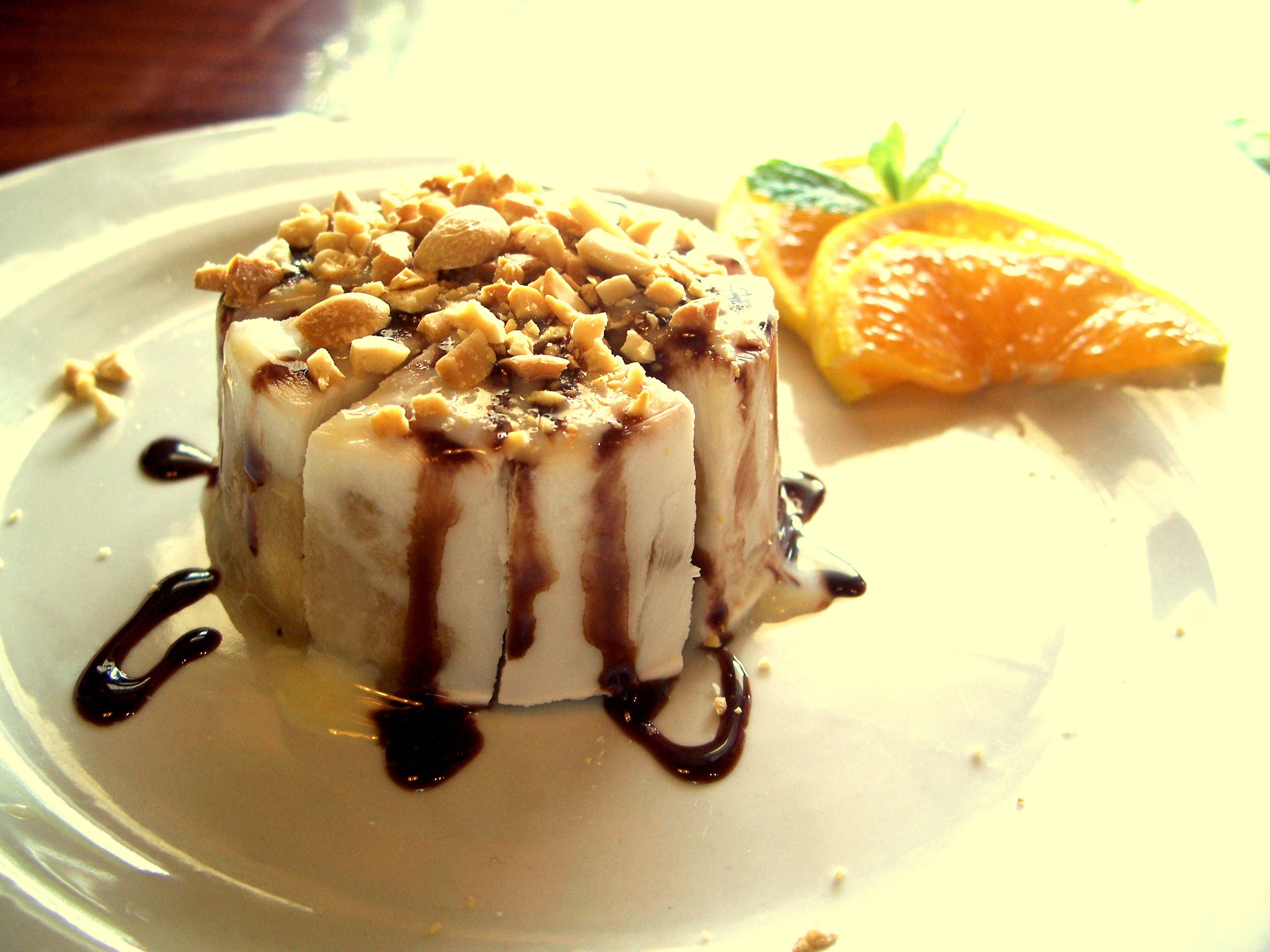
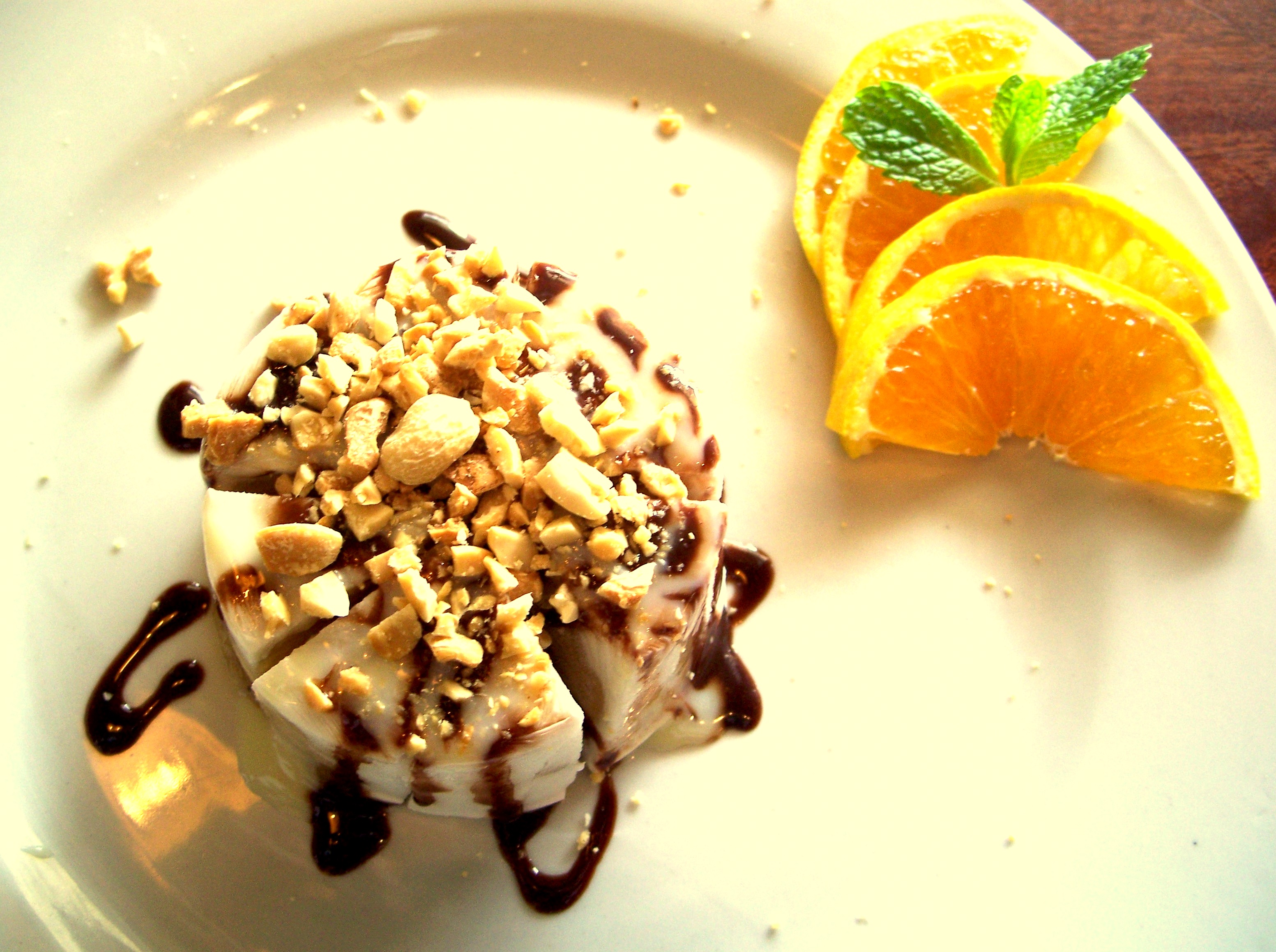
Desserts at Binh Minh Quan cost slightly more, ranging from $3-5 each, but they also have more than just che. This beautifully crafted block of kem chuoi (frozen banana) is a three-buck wow-er: sliced banana with coconut milk hardened together, drizzled with chocolate syrup and crusted with ample peanut bits. The icy salty sweetness sends shivers down my spine.

Bánh Cuốn Tây Hồ #8 (San Jose)
2895 Senter Rd
San Jose, CA 95111
(408) 629-5229
Le Regal (Downtown Berkeley)
2126 Center Street
Berkeley, CA 94704
(510) 845-4020
Bình Minh Quán (Oakland Chinatown)
338 12th St
Oakland, CA 94607
(510) 893-8136
Phở Hòa Lão II (Oakland Chinatown)
333 10th St
Oakland, CA 94607
(510) 763-8296

Sandwich shop goodies 12 – Chuối nếp nướng (grilled banana in sticky rice)

November 30, 2010 By: Mai Truong Category: California - The Bay Area, One shot, savory snacks, Southern Vietnamese, sticky rice concoctions, Vegan


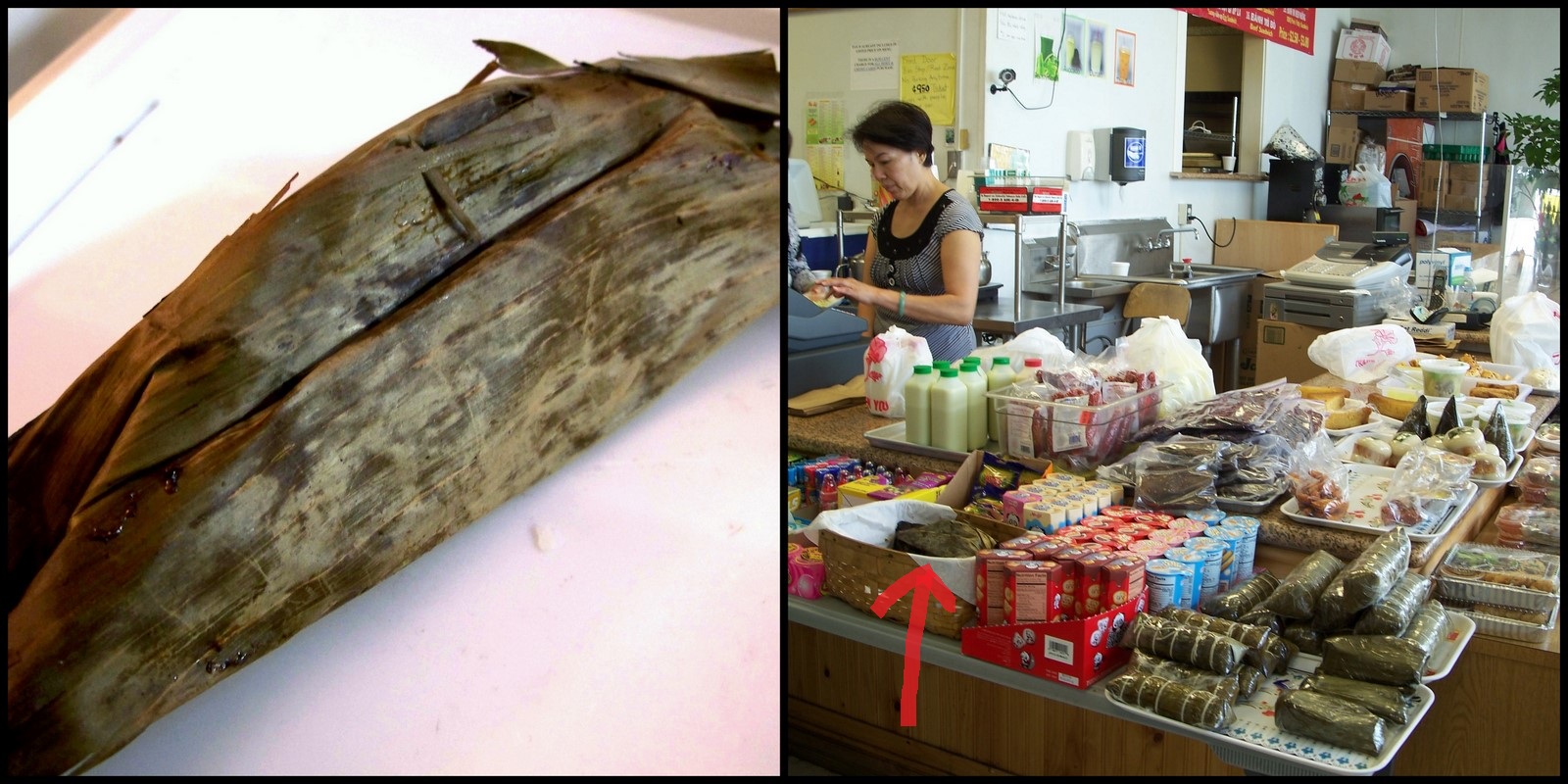
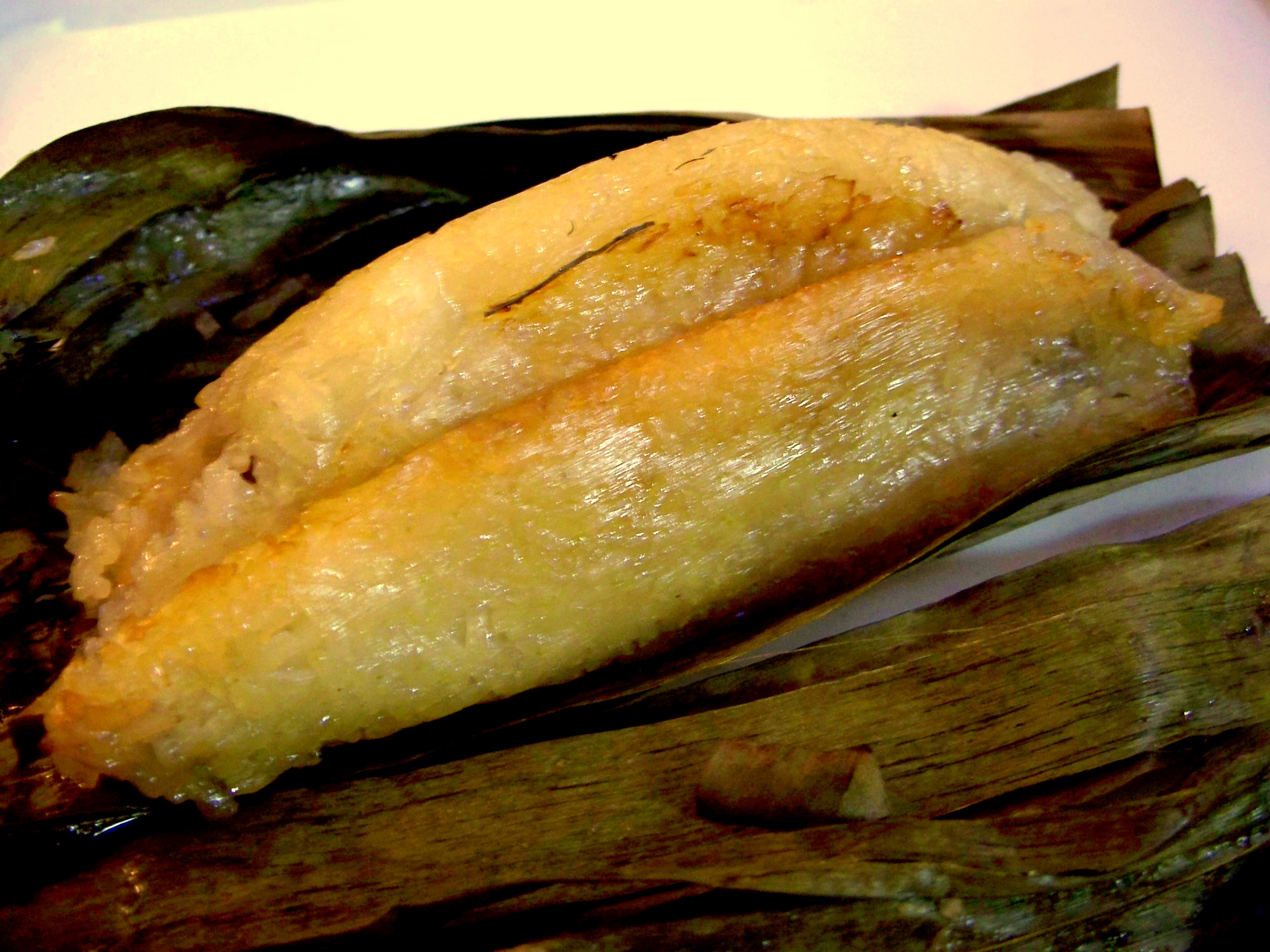
They all look the same. A myriad of things wrapped in wilted banana leaves sitting on the counter at a banh mi shop. Few patrons seem to notice the snacks as they occupy themselves with sandwich orders and the more meal-like rice or noodle to-gos, so much to the extent that the sellers too have little interest in selling their counter treats. Humbly, I point to these slender, charred and dry parcels piled in a box near the Pockys and inquire about their name. The hostess throws me half a glance infused with boredom, “Chuối nướng,” she moves her lips. So “grilled banana” they are.


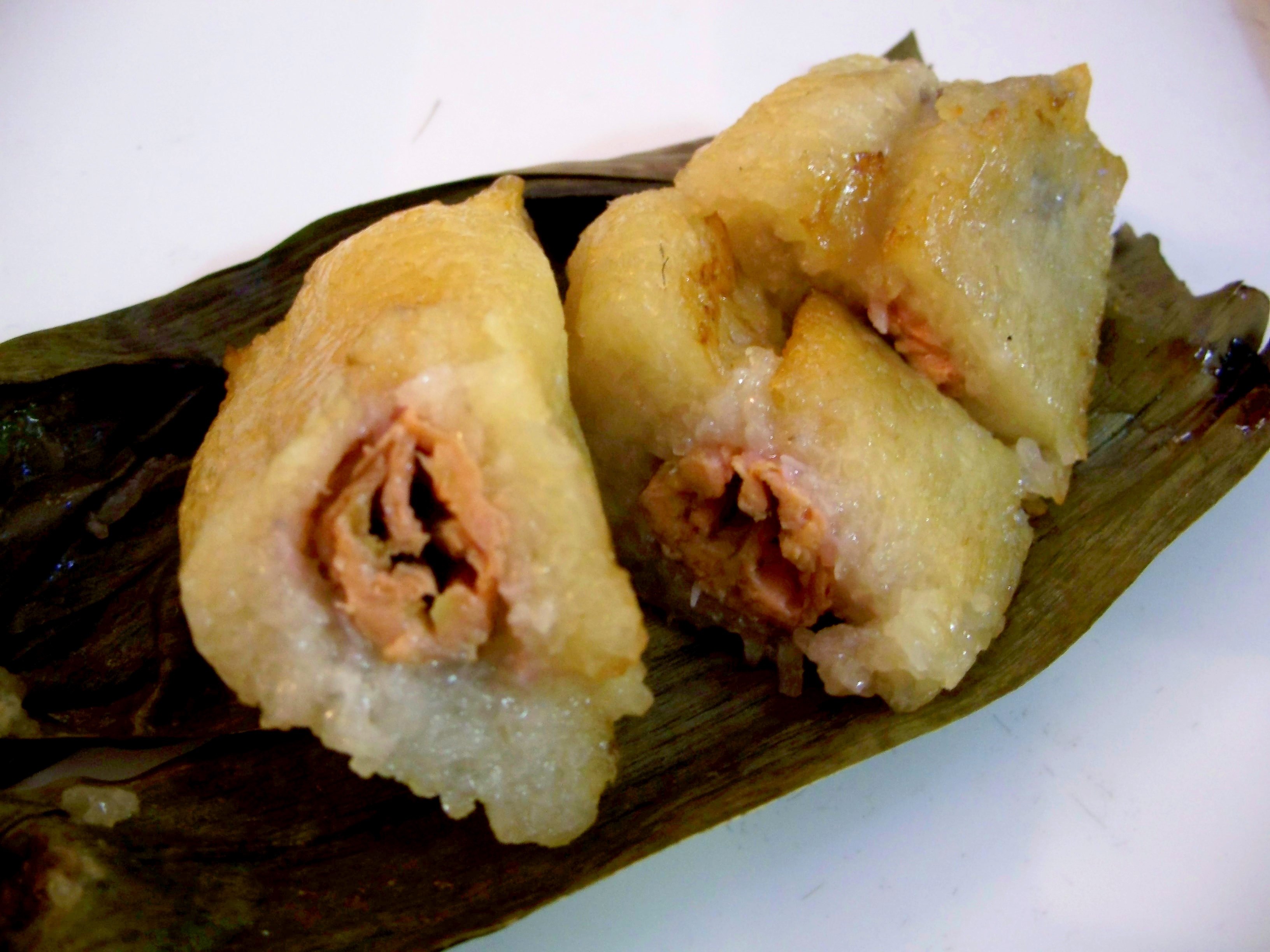
It takes an utterly simple form: a banana inside a sticky rice shell inside a banana leaf, charcoal grilled. Crispy, then chewy, then gooey sweet it goes as you sink your teeth through the bounteousness. It’s the factoriless meatless corn dog sans wooden stick of Southern Vietnam. Children would wait around old grandmas in the ‘hood to watch them grill the banana dogs and drool; adults would grab the banana dogs for breakfast, lunch, or late night snack when a wind chills and the grill warms.

It’s one of those things that can’t go wrong. Some cook the sticky rice plain, then serve the grilled dog sectioned and bathed in coconut milk with a pinch of sesame salt or peanut salt. Others do it My Tho style: the sticky rice is cooked in coconut milk and later mixed with coconut shavings before wrapped and grilled. Many cloth their nana dogs with just a band of nana leaf, mainly for easy handling of the sticky rice on the grill and near other dogs, but the dogs get crispier too. Meanwhile, Ba Lẹ ladies bundle up their dogs like they would with bánh tét, less charred, more aroma from the leaves.


Like banana bread pudding, banana dogs are exclusively made with chuoi su, a solid, stout, dense and white banana that grows like weed in the Asian tropics but is nonexistent in the States. The sad substitute Cavendish lacks consistency and sweetness and gooeyness. Yet, chuối nếp nướng still hits the spot like waltzing in the rain.

These nana ricewiches, as Noodlepie lovingly nicknamed, were 2000VND a steal (~10 US cents with the current exchange rate) in 2005. In 2007 the Gastronomer took the bite for 3000VND. I have no idea how much they cost now on the Saigon streets, with crazy inflation it might just be 10000 for all I know. But here at Bánh Mì Ba Lẹ in Oakland, nana dogs will go home with you for $1.75 each.

Address: Bánh Mì Ba Lẹ (East Oakland)
1909 International Blvd
Oakland, CA 94606
(510) 261-9800

Previously on Sandwich Shop Goodies: khoai mì hấp (steamed cassava)
Next on Sandwich Shop Goodies: Bánh xu xê (couple cookie)

Finger split banana

November 28, 2010 By: Mai Truong Category: Fruits, Opinions


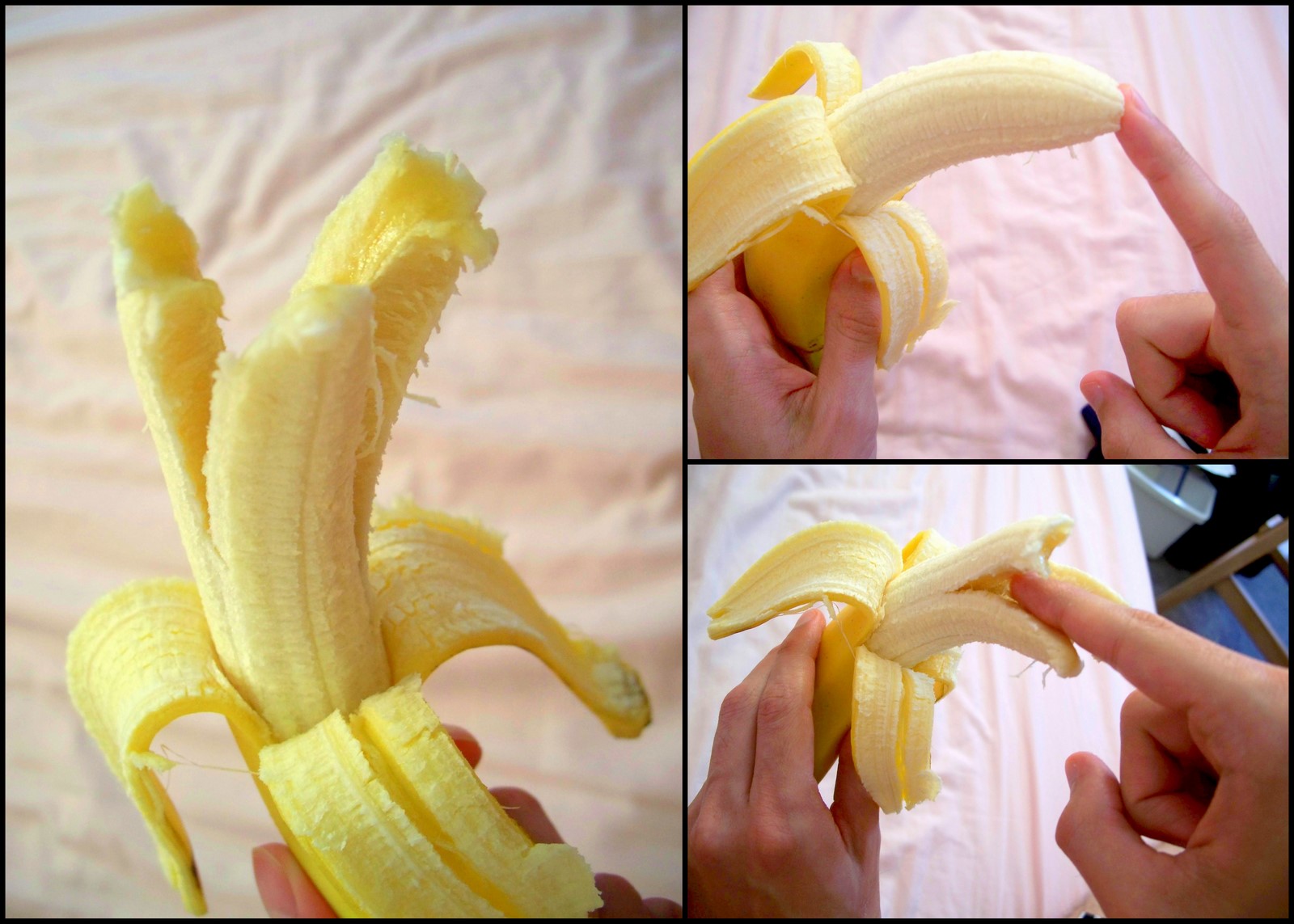
So I just learned this cool thing you can do with a banana finger and your finger. It works better with not-so-ripe bananas of course. Three way split all the times. Credit to Mudpie.

Then I told my mom about it. She said “Duh. You just now know?” 😀

For comeback, I told her (again, credit to Mudpie for telling me) that banana is used as a unit in measuring radioactivity. Like all foods (and living things, including you), banana radiates. It just happens that banana contains the radioactive isotope Potassium-40 (19 protons and 21 neutrons, 1 neutron more than stable Potassium) which makes it radiate a little bit more than other things. Fortunately for us the half life of Potassium-40 is over a billion years, so the amount of radiation a banana produces is less than 1/365 times the increase in cancer risk caused by 40 tablespoons of peanut butter.

In short, bananas may cause false alarm on nuclear radiation sensors at US ports, but it’s perfectly safe to eat one or two of them per day. 🙂 Or, if you’d like a stronger radiation dose, smoke one cigarette per year.

Tags:

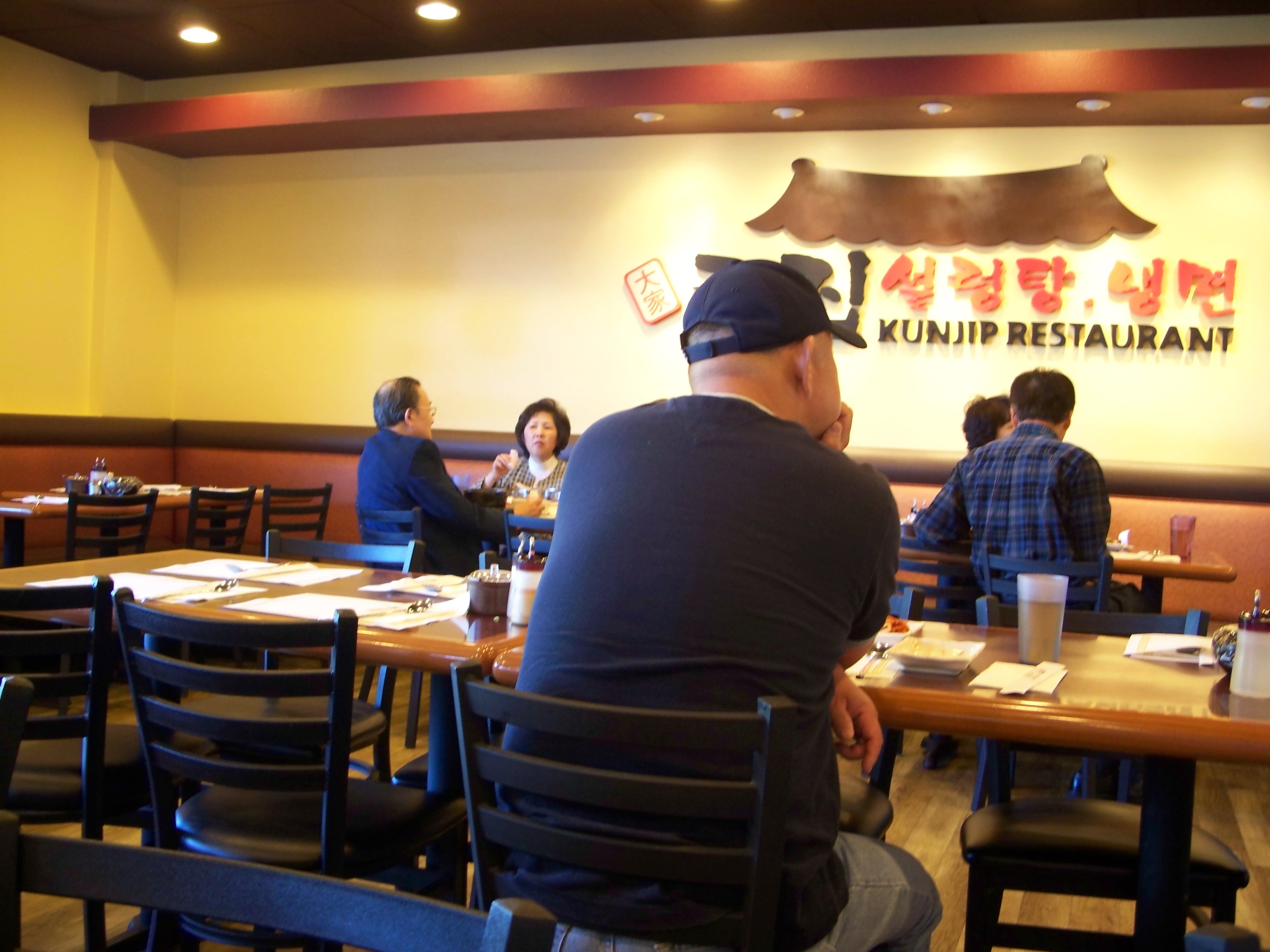
Sul Lung Tang at Kunjib Restaurant

November 26, 2010 By: Mai Truong Category: California - The Bay Area, Korean, noodle soup


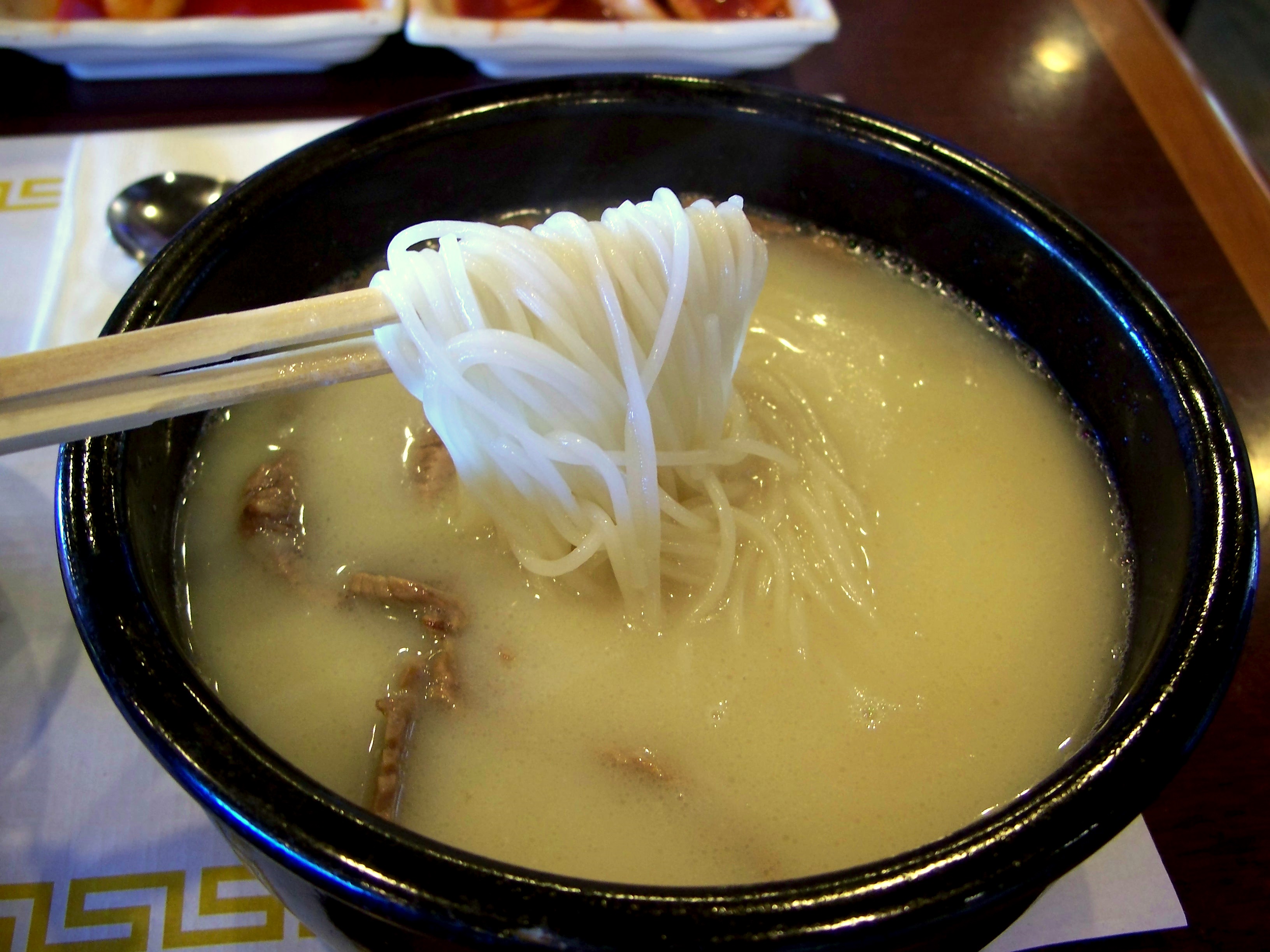
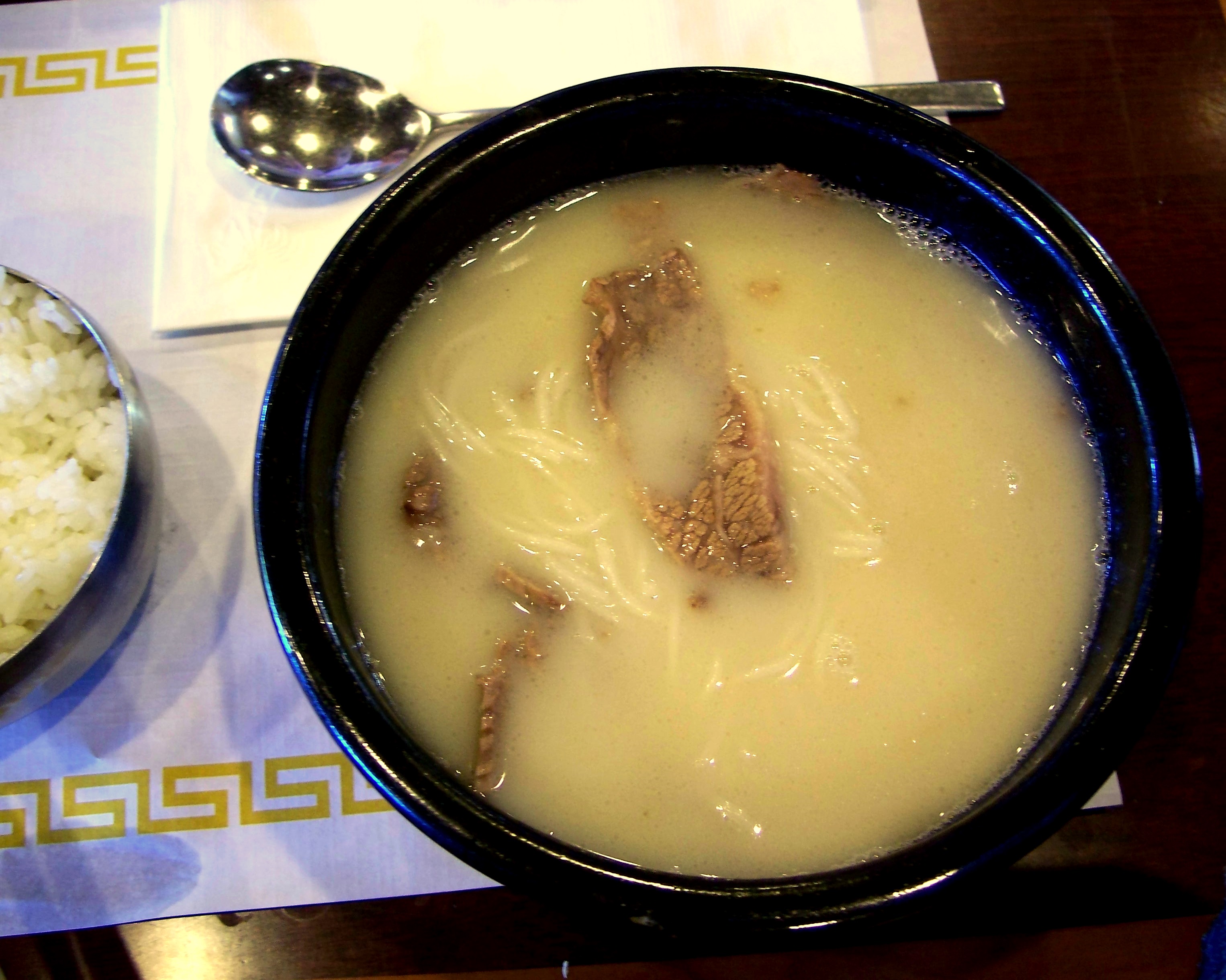
The black stone bowl brought out, fuming. The milky ivory broth pulses inside, playfully revealing strips of browned beef. Dig a little deeper, my chopsticks find supple strands of white, thin as spaghetti and slick as bubble tea. I submerge the metal spoon into the liquid, the cream parts and congeals. I take a sip.

A few months ago a friend recommended Kunjib as a Korean restaurant unlike any I had been to, and indeed it is. The moment we walk in, the hostesses greet us with twittering an nyong ha sye yo and something that I can only guess to mean “table for two, right?”. I wish I had memorized the phrase list from Sura before coming here, but our waitress quickly realizes that we are different from their other customers and switches to near perfect English. Regardless, I’ll sign up for Korean 1 in the fall semester, I’ve already gotten the Hangul alphabet sorta down. 😉


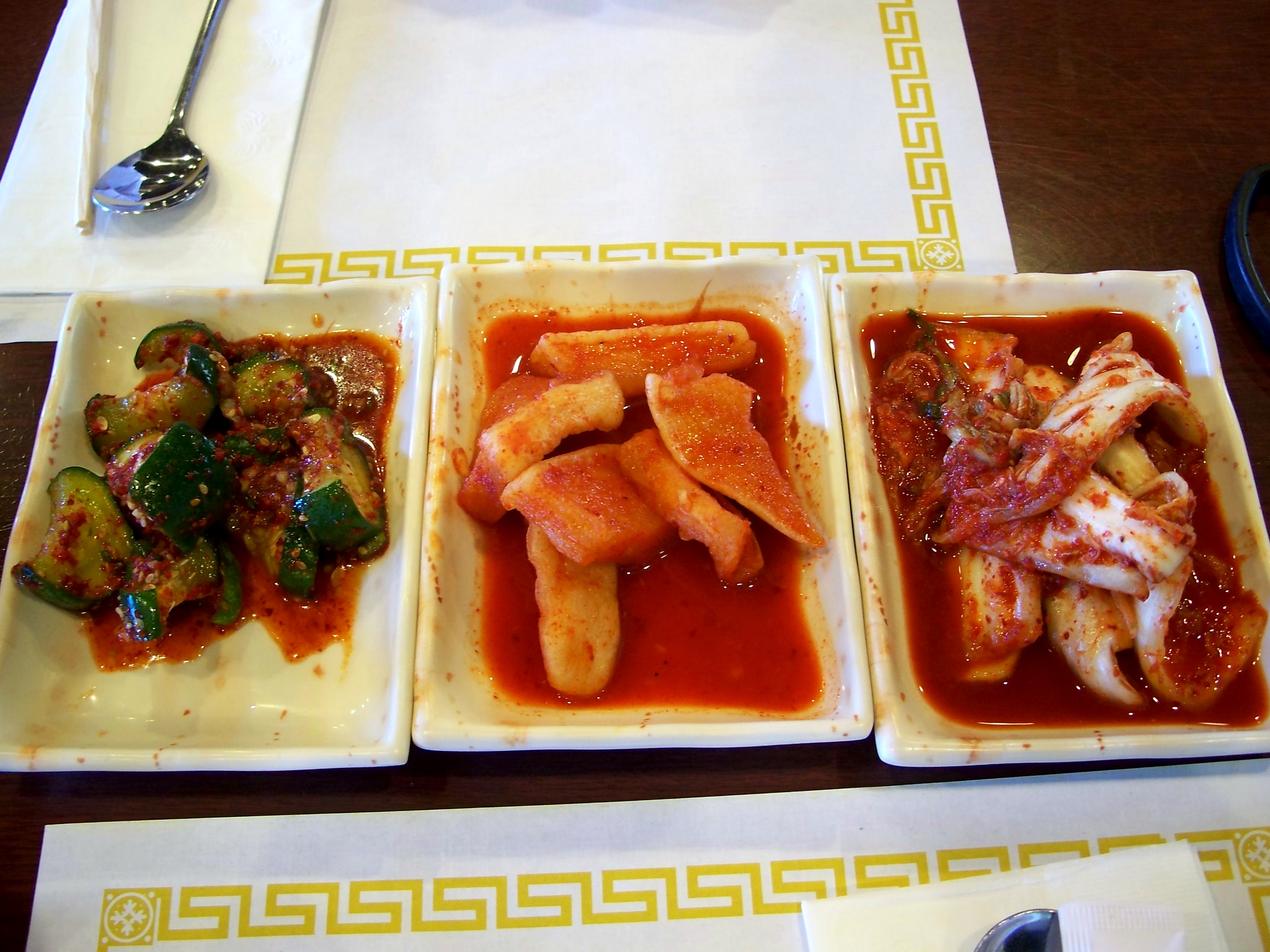
Kunjib is a restaurant of few and focus: white plates, square bamboo chopsticks, tables set connected in straight rows, little decoration, a corner wall TV tuned to Korean channels, icy cold corn tea, a menu of 11 dishes, a set of 3 kimchis.


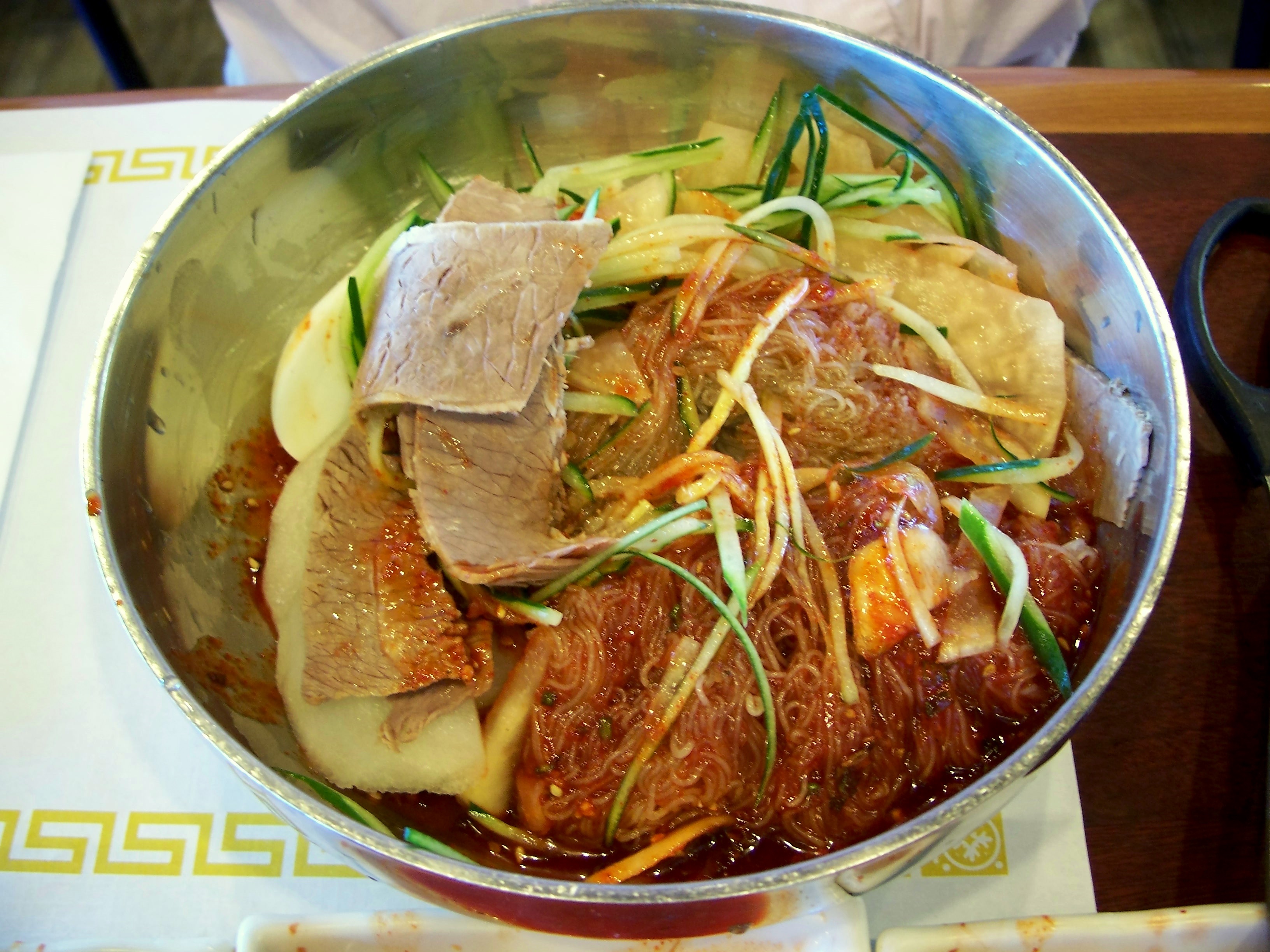
The kimchi here is spicier than those I’ve had before – there is still some leftover in my fridge after eating one or two pieces with rice each day for a week. The bibim naengmyeun (비빔 냉면 mixed cold noodle) is also ladened with gochujang (고추장), its color as crimson as the eclipsed moon. Our waitress instructs us to use a pair of scissors to snip the buckwheat noodles into mouth-sized bundles, and Mudpie deftly mixes up the meat and sliced vegetables with the same enthusiasm used to reserved for only dolsot bibimbap.


So with all the chili pepper galore on the table, I don’t expect my sul lung tang (설렁탕 ox bone soup) to be mild. I submerge the metal spoon into the liquid, the cream parts and congeals. I take a sip.


It’s pure bone marrow and collagen in liquid form. It’s as thick as whole milk diluted in water, and as savory as white rice. There is a whispering sweetness in the broth, detectable only when you drink it by itself and vanishing as soon as you get to the noodle or the meat. I love the noodle in galbi tang (갈비탕), but the noodle in sul lung tang clouds my palates.

In the end, sul lung tang is a soup of subtlety, so should I learn to like it in its purest form, or should I add salt?


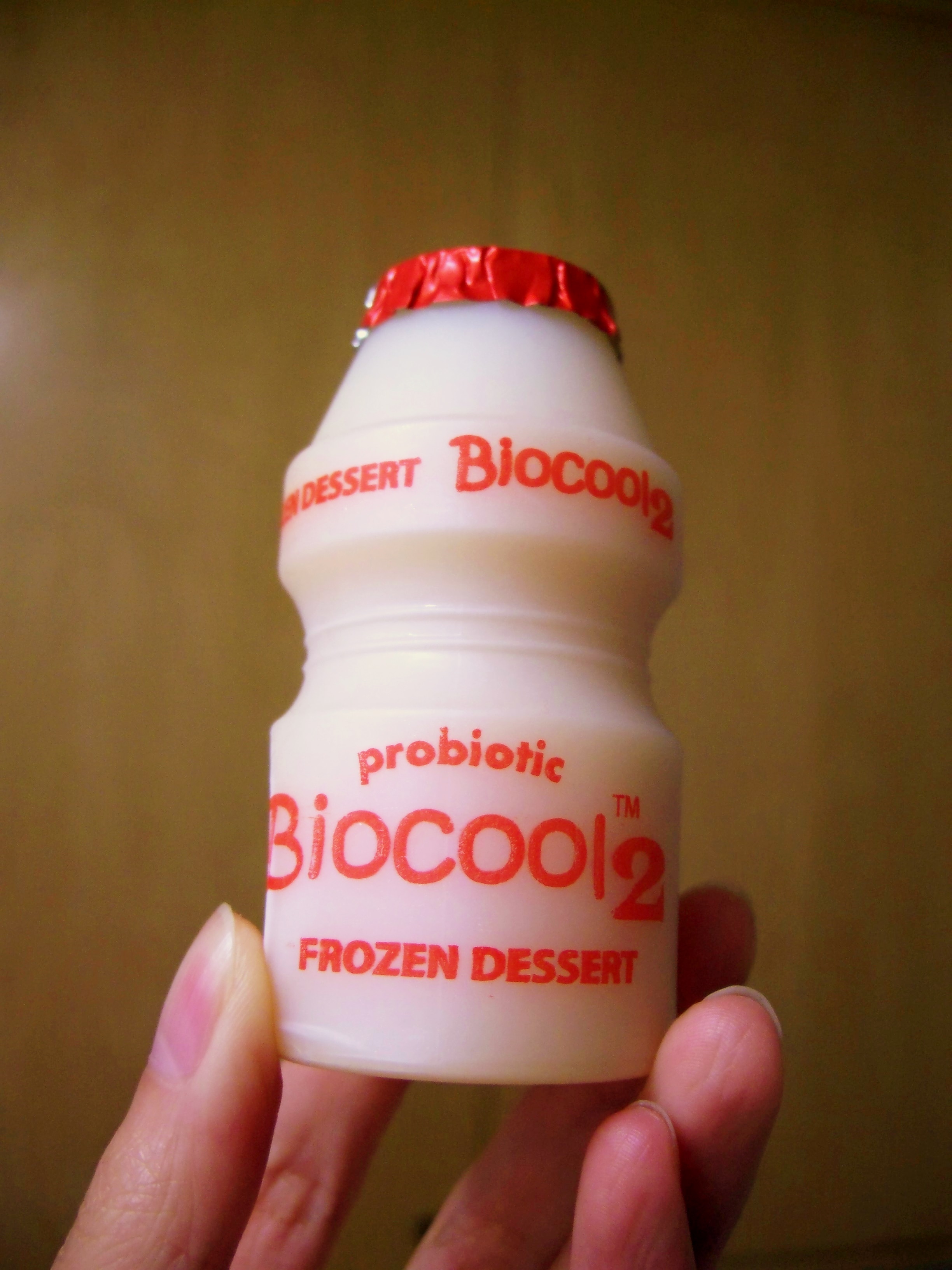
After fierce cold noodle and shy beef soup come teeny tiny bottles and the check. Back of bottle says “Frozen Dessert: Biocool 2 – Win Soon Inc., South Gate, CA 90280. 62ml (2.1 fl.oz).” To Mudpie, the white flow “tastes like SweeTarts“; to me it sings liquid yogurt: a little fruity, a little tart, a little milky. Pretty good. Mudpie claims Koreana sells the exact same baby bottles.

Address: Kunjib Restaurant
1066 Kiely Blvd
Santa Clara, CA 95051
(408) 246-0025

Thanksgiving on Bus 18

November 26, 2010 By: Mai Truong Category: American, California - The Bay Area, Opinions


Direction: Montclair. Shattuck & Durant. The man sits at the first row, holding a bouquet of lilies and chrysanthemums wrapped in brown paper, whose wrinkles almost blend in with his hand. He asks if anyone knows what time it is. I say “Twelve” a few times, he just gazes at me half blankly, half confused. The bus driver says “Twelve o’clock”. He nods, then mumbles something about hoping that “she will be there”. When the bus turns onto Martin Luther King Jr., he gets off, thanking the driver four or five times, looking lost.

Direction: Montclair. Martin Luther King Jr. & 46th Street. A woman in her thirties waddles on, asking how much the fare is. Two dollars. She reaches in her grey windbreaker’s pocket for a handful of coins. Missing a quarter. She waddles to a seat, searches her purse, asks if anyone has change for a dollar. Silence. Silence. For 20 seconds. Finally another woman searches her purse and find some coins. Just enough time for the first woman to drop the last quarter into the slot, then she gets off. Her steps heavy, torpid, and somewhat lost.


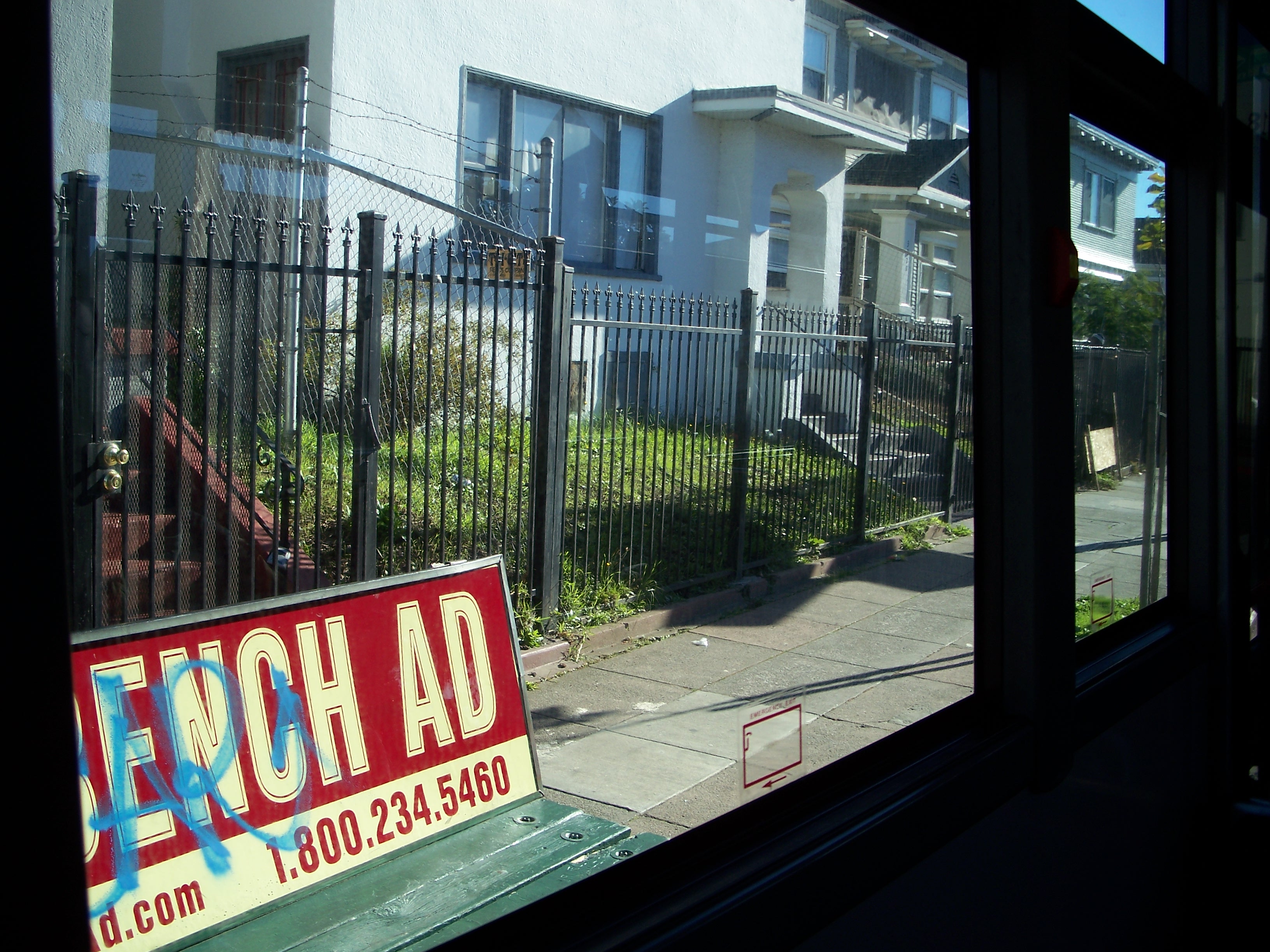
The bus is unusually light today. Its four passengers glue their eyes on the window as it glides pass old houses covered in fading blue and orange paints. Tilting fences. Barb wires. Old couches in tiny gardens full of weeds and pots. Graffiti. Empty parking lots. Porches without people because of the chilly winds. A few overweight black men crouching in their coats, waiting for a bus. A few black boys languidly crossing the streets.


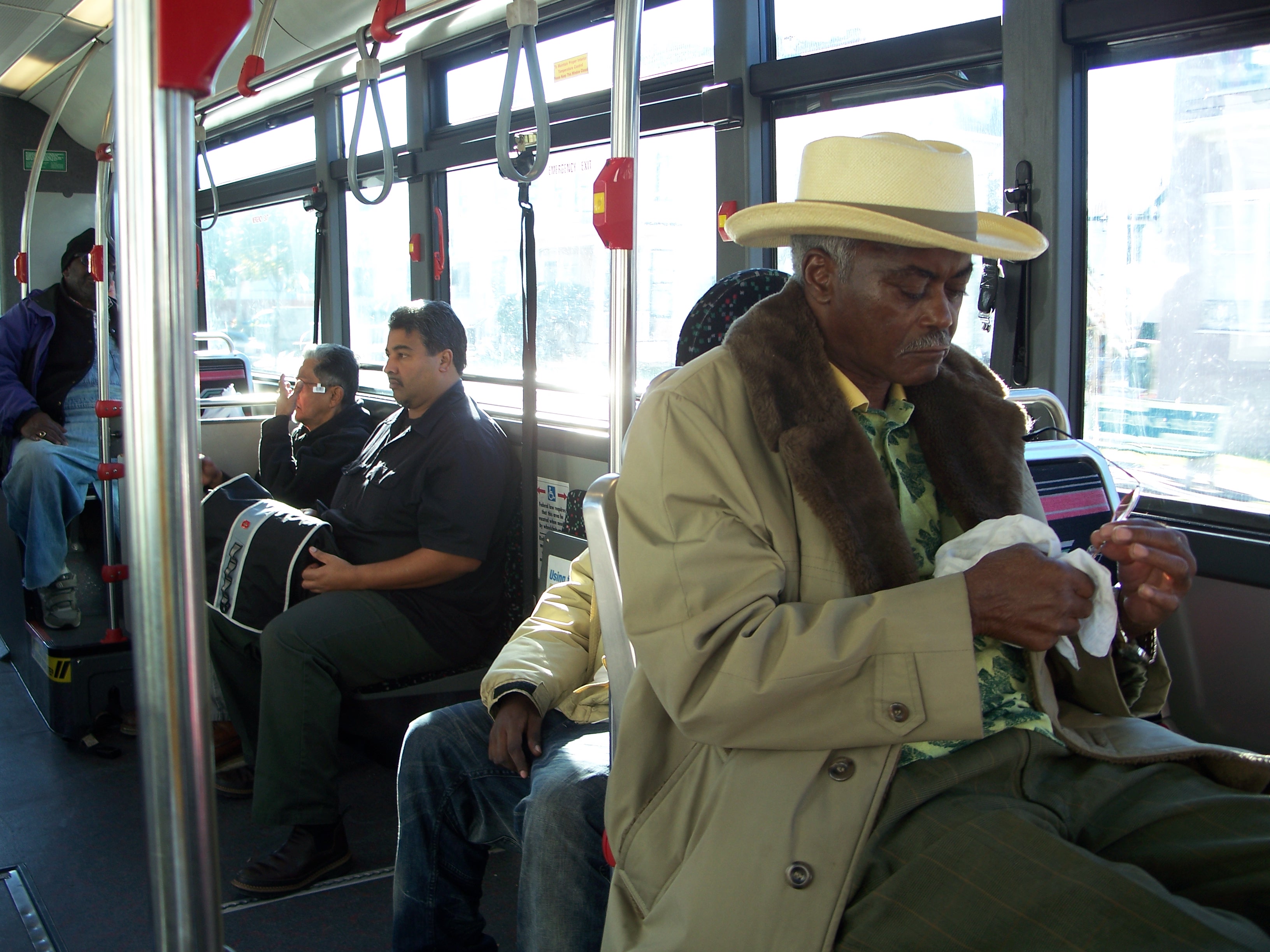
Direction: Albany. 12th & Webster. 1:40 pm. The wind isn’t so bad like in the morning.  The bus has nine or ten passengers. One man with dirt on fingers and gloves in pocket loudly voices his disapprovals at construction work condition to another. One man quietly cleans his glasses. The rest stares out the window. Everyone travels alone.

But, everyone receives a softly “Happy Thaksgiving” from the driver as they get off. Somehow, that makes the bus feel warmer. 🙂

*As far as I’ve riden Bus 18 connects downtown Oakland with North Berkeley. Usually it’s overpacked with people in suits and in rags, stale air, the smell of homelessness… But yesterday it seems to transport only lonely lives. – 25. November 2010

The story of Bún Xêu

November 24, 2010 By: Mai Truong Category: Comfort food, Northern Vietnamese, RECIPES, Vegan


“Are you giving Thanks?”, asks Der Miller. I should. It is my first independent Thanksgiving. There will be no turkey, not because they’re not that tender but because it’s cruel to take their lives on the day that everyone else celebrates. There will be no green bean casserole or sweet potato with marshmallow, not because I’m lazy but because I have no oven. There will be no cranberry sauce or stuffing, for no shining reason. I’ll just make the one thing that is both simple and not ramen: bún xêu.

Over 2000 years ago lived a king in a foreign land, who ordered his royal kitchen staff to prepare a party to welcome his future son-in-law from another foreign land. Naturally the king wanted a feast with national specialties, which included a type of rice flour pastry with sweetened mung bean paste. The flour had to be made in the morning of the same day to avoid it turning sour, and one young kitchen helper, who probably liked to get up early as much as I do, was in charge of preparing the batter.

Instead of mixing rice flour and water in a bowl, the half-closed-eye boy happened to use a strainer instead, which, fortunately, was placed on a pot of boiling water. When he realized what was going on, the needed pastry batter had long turned into fine strings of rice noodle. The chef caught the boy’s mistake, but sympathizing with his weariness, told him to pick some herbs in the garden and use fried lard pebbles to make stir fried noodle for the kitchen staff’s breakfast. In that season, only water celery was in abundance.

A servant of the king dropped by the kitchen to check on the preparation process, and was charmed by the aroma of water celery and lard. He asked for the dish’s name. The chef, panicked by the boy’s mistake, intended to say “xào” (|xao|, “stir fry”) but mispronounced it into “xêu” (|seh-oo|). The servant took a taste, liked it, and ran off to tell the king about a new creation named xêu, then the king went to the kitchen to try it himself. This is when matters really got out of Kitchen Boy’s hands: xêu was ordered to be served at the party that day.

Over 2000 years later, bún xêu, however so simple, is still considered a historically valued specialty of the Cổ Loa Citadel region, just 20km north of Hanoi today. The creation of rice vermicelli (“bún”) would not have happened in Northern Vietnam then, had the kitchen boy not been drowsy, the chef not sympathetic and creative, the servant not curious, and the king not open-minded. And so it goes the story of bún xêu. 🙂

Bún xêubún xào cầnstir fried rice noodle with celery

The main ingredients:
– Rice Vermicelli (sold at Asian markets with the label “Bún Khô“)
– Celery (good luck finding water celery im Supermarkt, so the normal chubby stalks are quite alright), sliced into finger long sticks.
– Lard, or Cooking Oil
– Salt, Pepper, Sugar

The supporting roles: Onion, Garlic, Mushroom, Green Onion, Coriander, Egg, Soy Sauce or Fish Sauce.

Blanch the bun and set aside. Make a thin omelet, set aside till cool, slice into strips. Sautee the garlic, onion, sliced mushroom, celery, and green onion (in that order), add a little bit of water, season to taste.
Now you have two choices:
1. Add the bun into the veggie skillet and spatula it like mad until everything entangles together. Re-add seasonings to taste. Pro: stuff mixes well. Con: your bun can get mushy, stick together, and be shortened to the size of rice grains. It all depends on how mad your spatula skill is.
2. Put a wad of bun on a plate, scoop some mixed veggie and sauce onto the bun, and mix while you eat. Pro: long noodle strands preserved, chewiness preserved. Con: it’s not really “bún xào” if the “bún” wasn’t “xào” (stir fried).

Decorations: omelet strips and coriander.

Happy Thanksgiving to you too, Turkey!


– Submission to Delicious Vietnam 8, a monthly blogging event created by Anh of A Food Lover’s Journey and Hong & Kim from Ravenous Couple

Do you like it when things change?

November 18, 2010 By: Mai Truong Category: California - The Bay Area, Korean, noodle soup, Opinions

This past weekend I found out that my favorite sushi house has replaced their usual corn tea with green tea, and my favorite Korean restaurant has changed name.


Berkel Berkel is now Cho Korean B.B.Q. The Berkel Berkel sign is still outside, the wooden door is still there, the paper lanterns are still there. But the old man is not. The familiar homey vibe is lost, drown in the blasting music and the attentive service of the hosts. I appreciate the smiles and the banchan and drinks brought to the table and the frequent check-ins for refills, but I miss getting my own kimchi and pouring my own tea from the kettle. I miss the old man behind the counter with his strong accent.


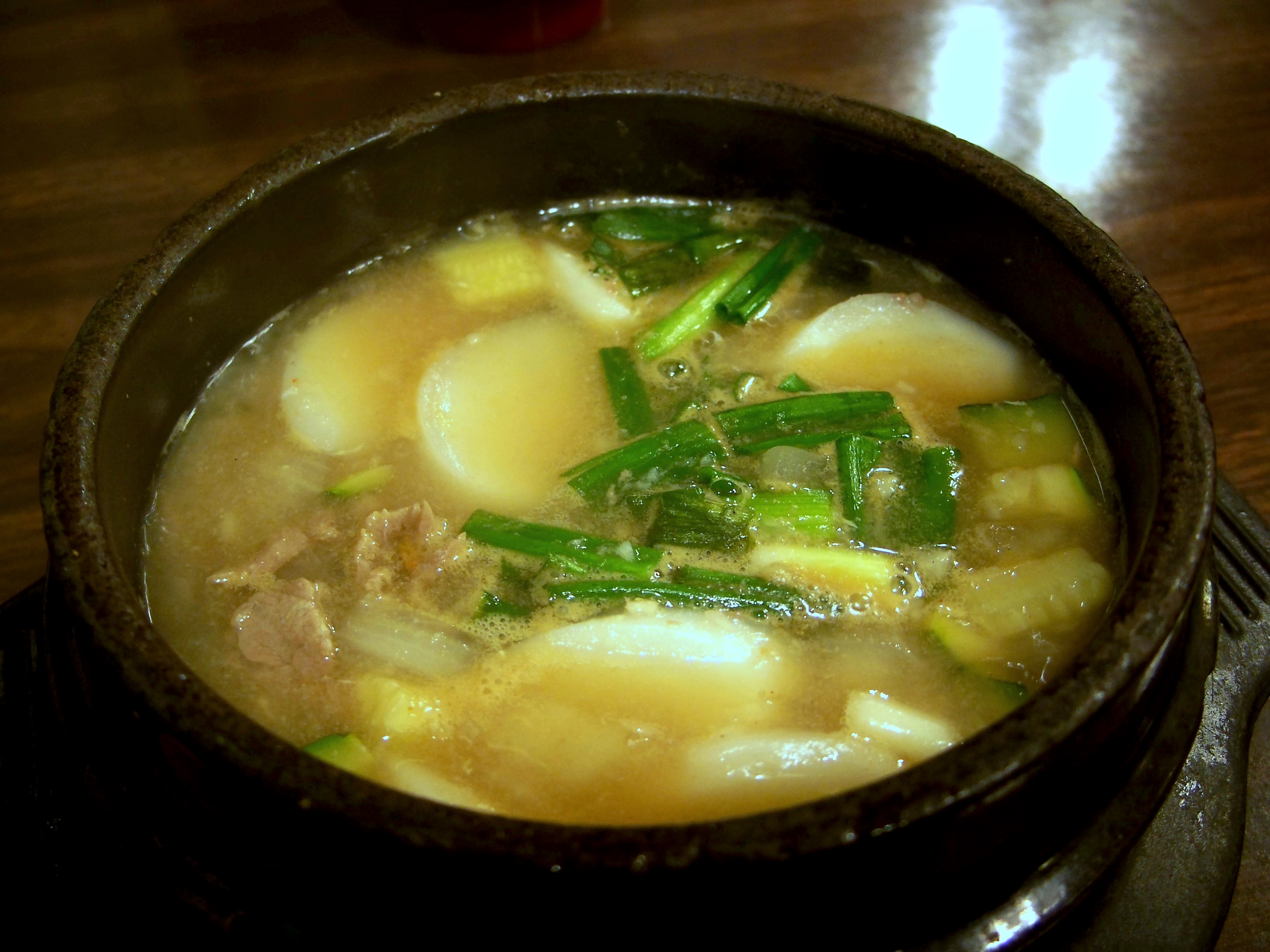
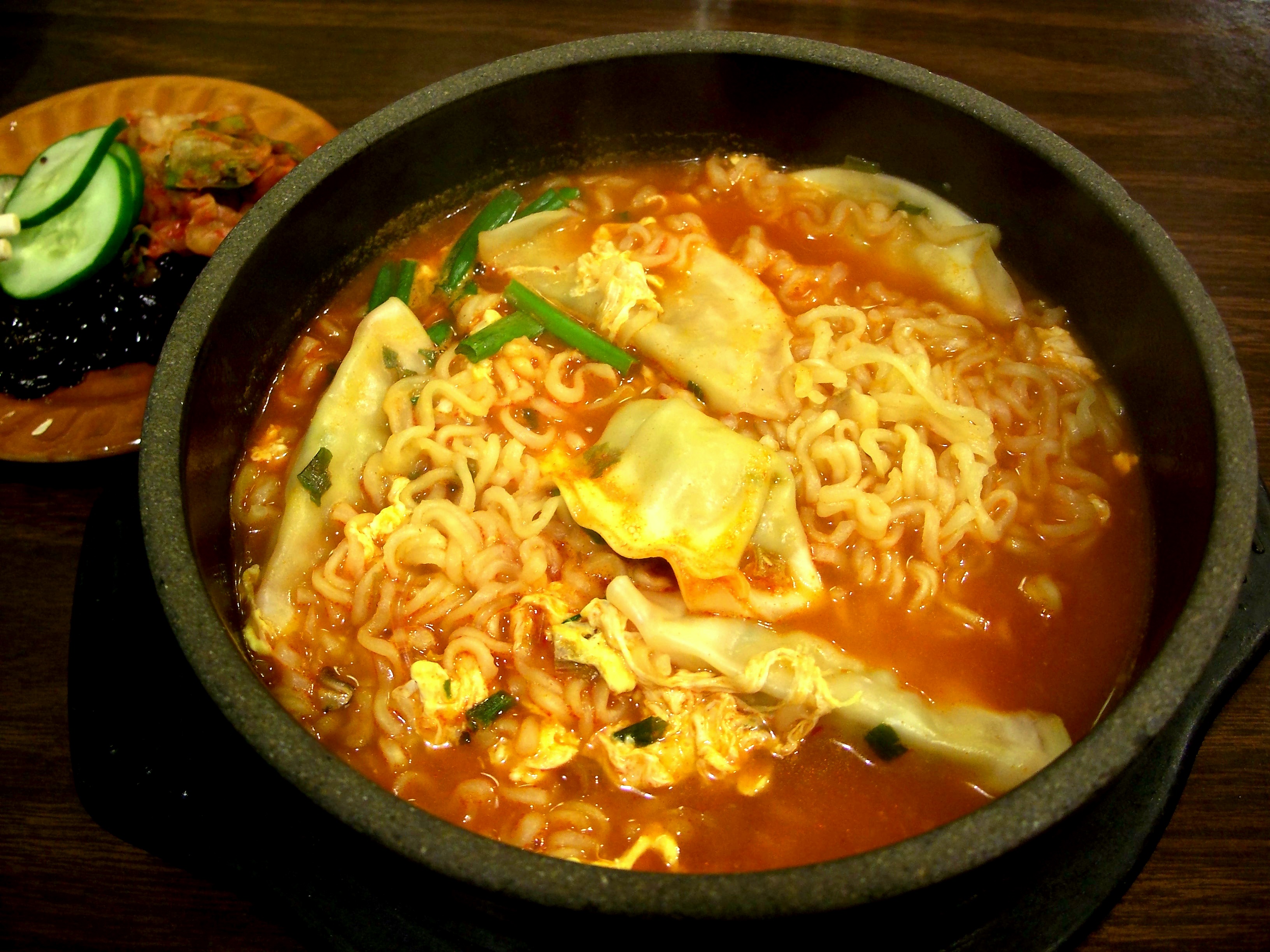
The kimchi selection is still the same: baechu, cucumber, and kongjaban (콩자반). Mudpie got bulgogi ddukbaegi (불고기 뚝배기 beef stew clay pot) with green onion, mushroom, and potato noodle in sweet broth. I got ramyeon (ramen) with dumplings. Being a tad spicy, once again my choice was less savory than Mudpie’s choice. Objectively, the food is still good for its price, but I wonder how my feelings for Cho would be different if I had not been to Berkel Berkel before. I do hope that Cho will flourish, just like our favorite Bánh Cuốn Tây Hồ in Oakland has changed for the better.

Things change. Feelings change. I change. I just wish that the things I hold dear will change with me so that together, we remain the same.

Dinner for two: ddukbul ($6.95) + ramyeon ($5.25) + tax = $13.00
They do take out orders, and open daily 10:30am-10:00pm, whereas Berkel Berkel closed on Sunday. 🙂

Address: Cho Korean B.B.Q. (former Berkel Berkel)
2428 Telegraph Avenue
Berkeley, CA 94704
(510) 981-1388

Down the Aisles 7: Lady apples and pudding cups

November 12, 2010 By: Mai Truong Category: California - The Bay Area, Fruits


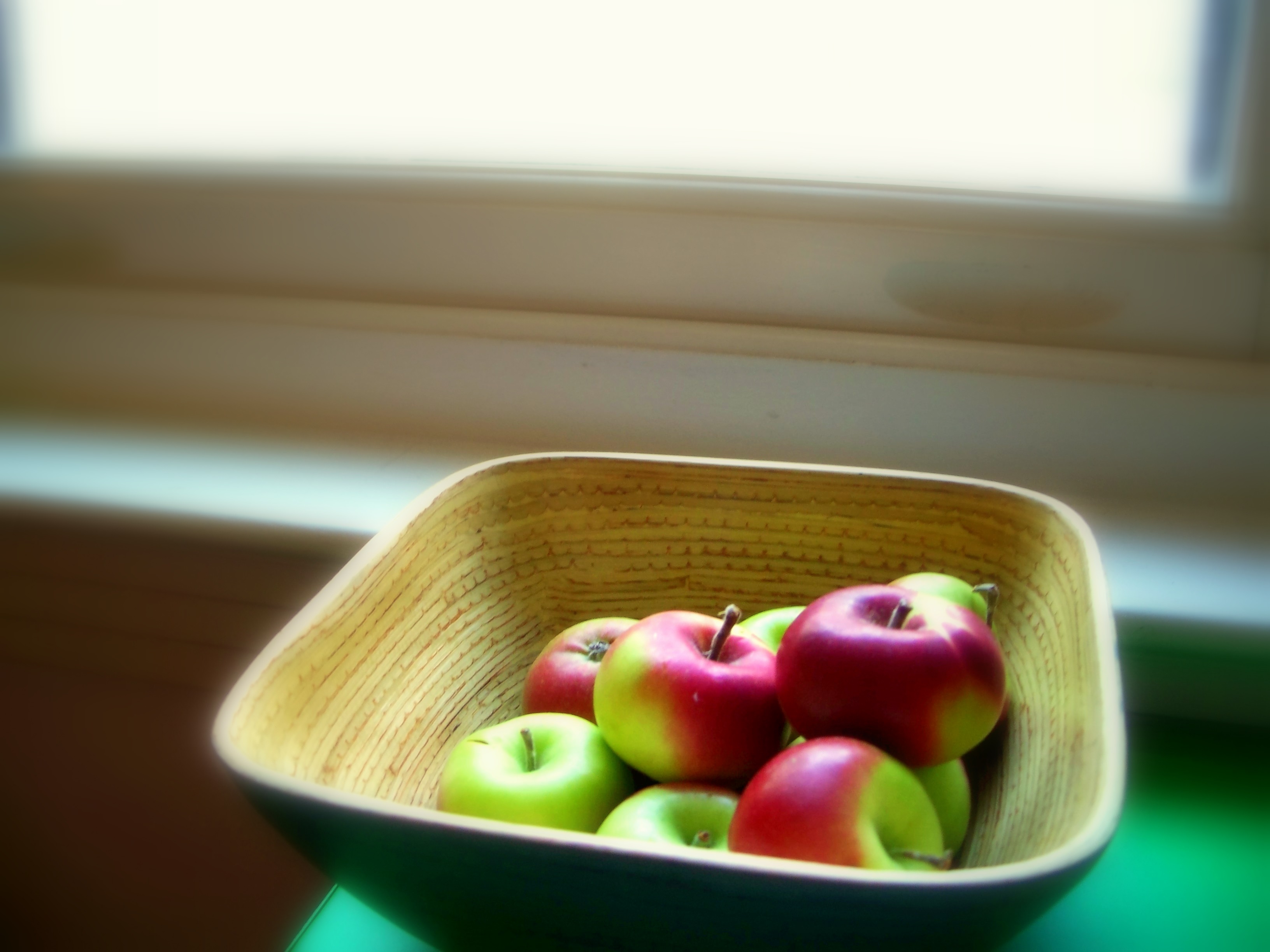
These plum-sized apples belong to one of the oldest cultivars first known to the Romans, but I only saw them for the first time at Lucky last weekend. Some have a rosy cheek on one side, some are burgundy all around the upper half, like a little rotund Red Riding Hood with greenish yellow gown.

The cheerfully color-contrasted skin feels waxy smooth as I run them under the faucet. Memories of Thai apples (poodza) rush through my fingers, but Thai apples are whole green and oblong with a pointy bottom, the Ladies here are shaped like mochi dumplings slightly squished by two fingers at both ends. I pick one up close to my mouth, before the lips can get to its skin, the nose already catches a fresh swift of the dimple where its stem sprouts.


It’s crisp, like a pile of crunchy leaf. Its sweetness and tartness are lady-like.

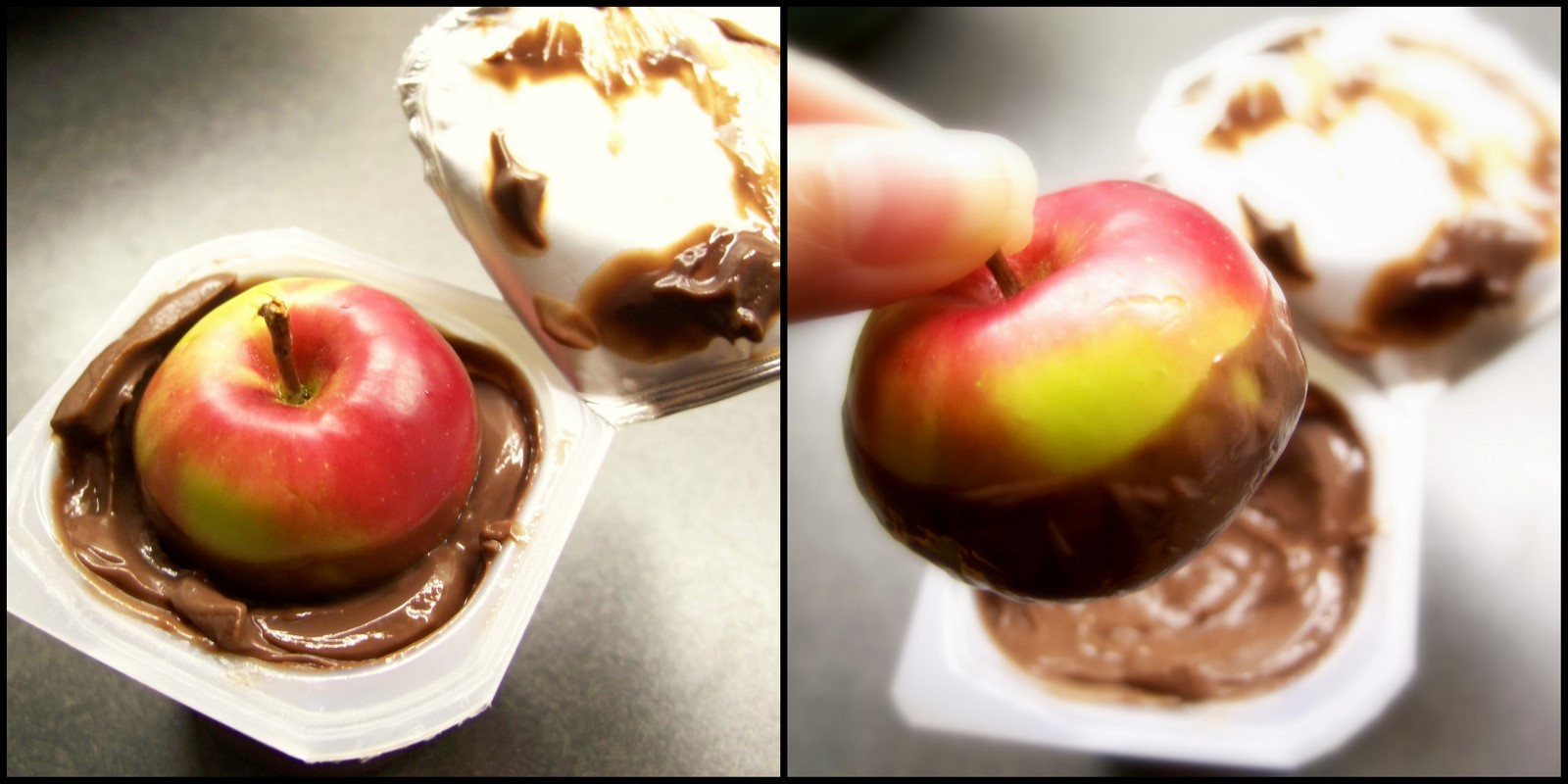
One of my advisors likes to eat the entirety of an apple minus the stem and the seeds. He doesn’t leave a core. Which makes me think he’d love to pop these whole in the mouth, especially since their seeds are just as big as a red globe grape’s seed. I instead dip one into a chocolate pudding cup and pinch off small bites. It’s better than chocolate covered strawberries.

$2 for 10 momentary joys.

Tags:

Can any fish make good clay pot fish?

November 11, 2010 By: Mai Truong Category: California - The Bay Area, Southern Vietnamese


No.

The red snapper at Anh Hong Berkeley is thoroughly coated with caramelized sugar and fish sauce, but its flaky flesh stays dry like terracotta tiles. The seawater has rooted too deeply in each fiber to blend with the sweetness. Salmon would be even worse.

Experience says bitter lá lốt can be tamed, but only fresh water fish, like catfish, can make a clay pot sing.