Flavor Boulevard

We Asians like to talk food.
Subscribe

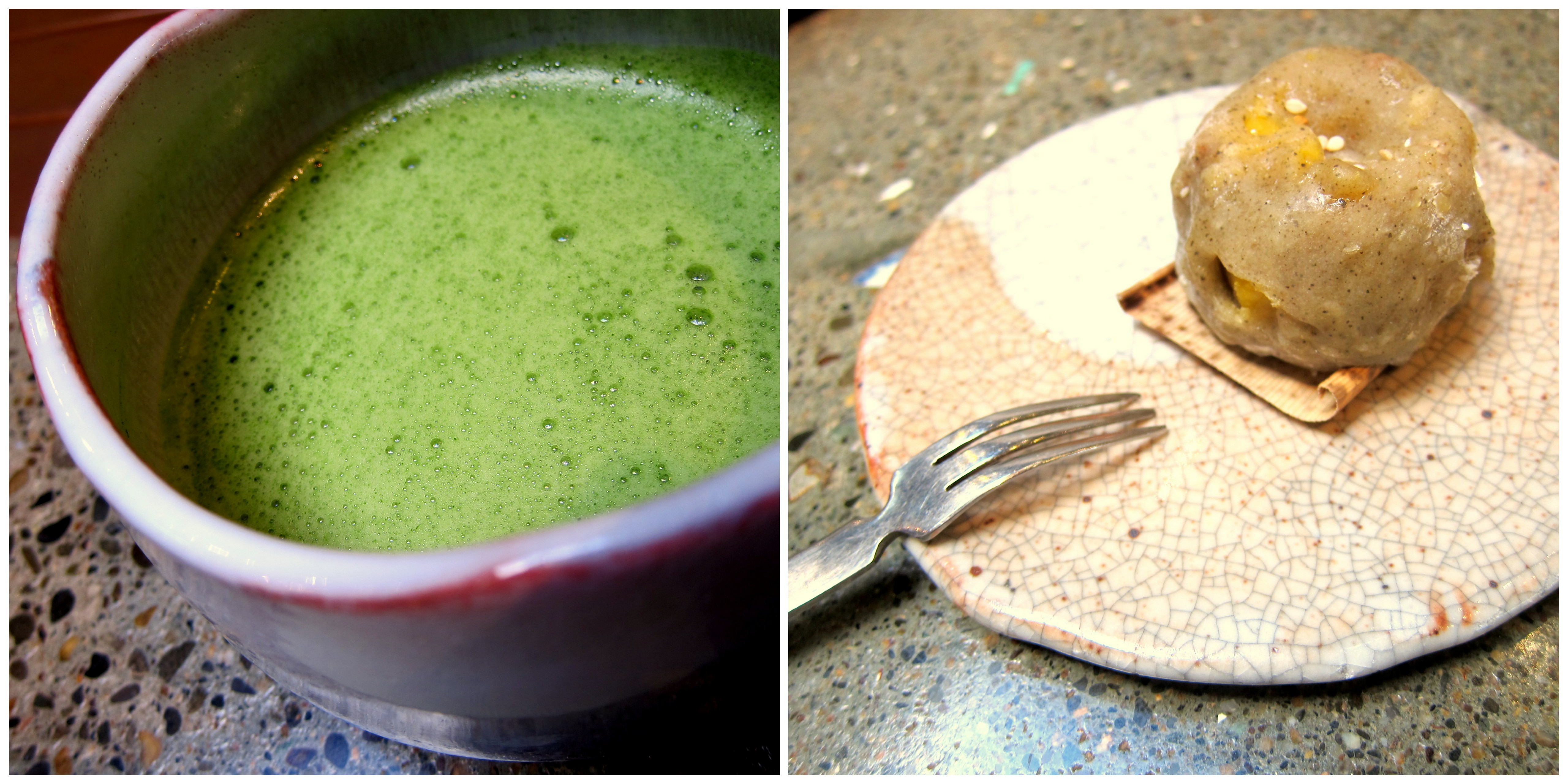
Sencha and yomogi mochi

April 16, 2012 By: Mai Truong Category: California - The Bay Area, Drinks, Japanese, sticky rice concoctions, sweet snacks and desserts, Vegan

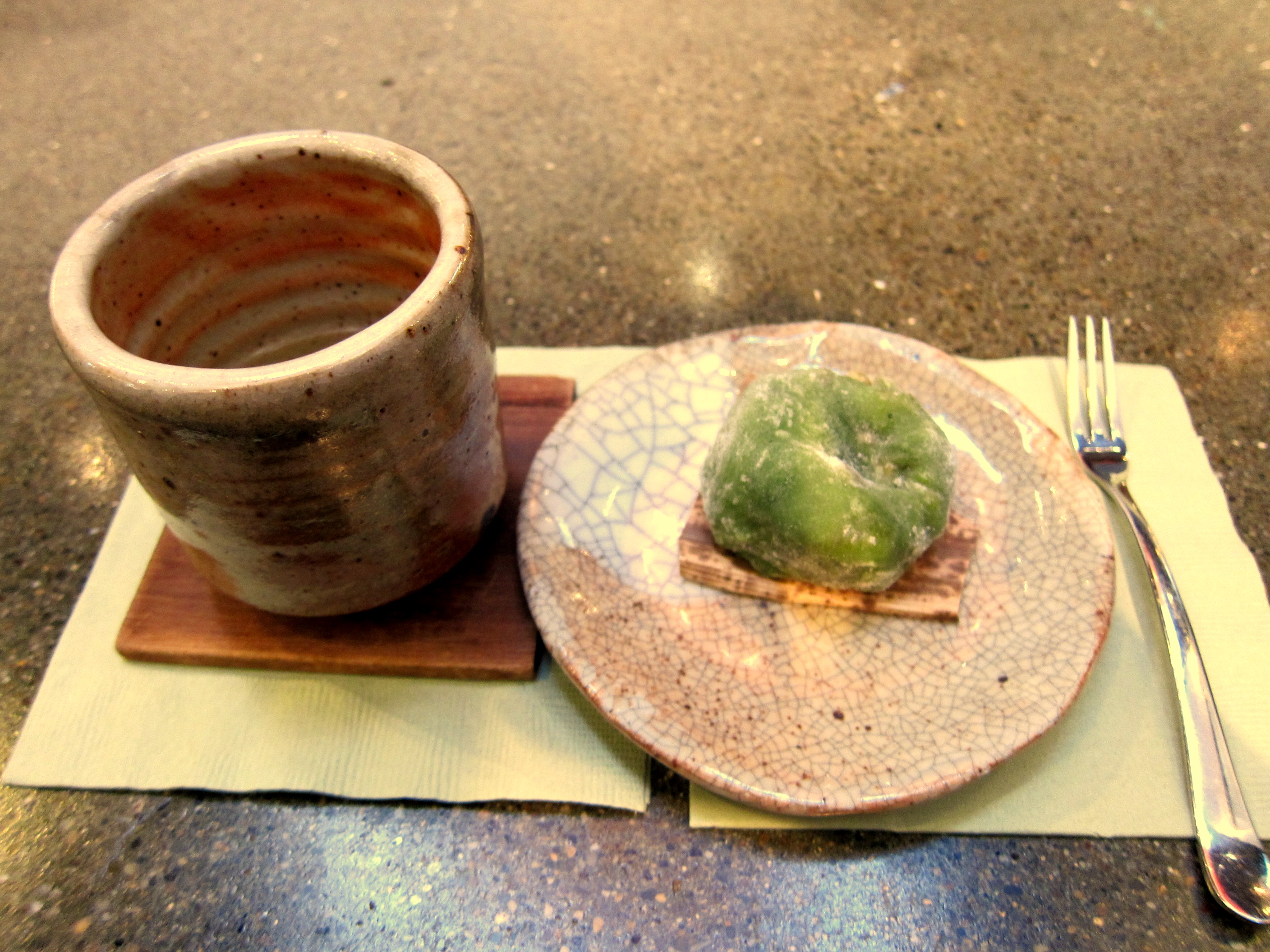
The third pairing of mochi and Japanese green tea. Perfect!
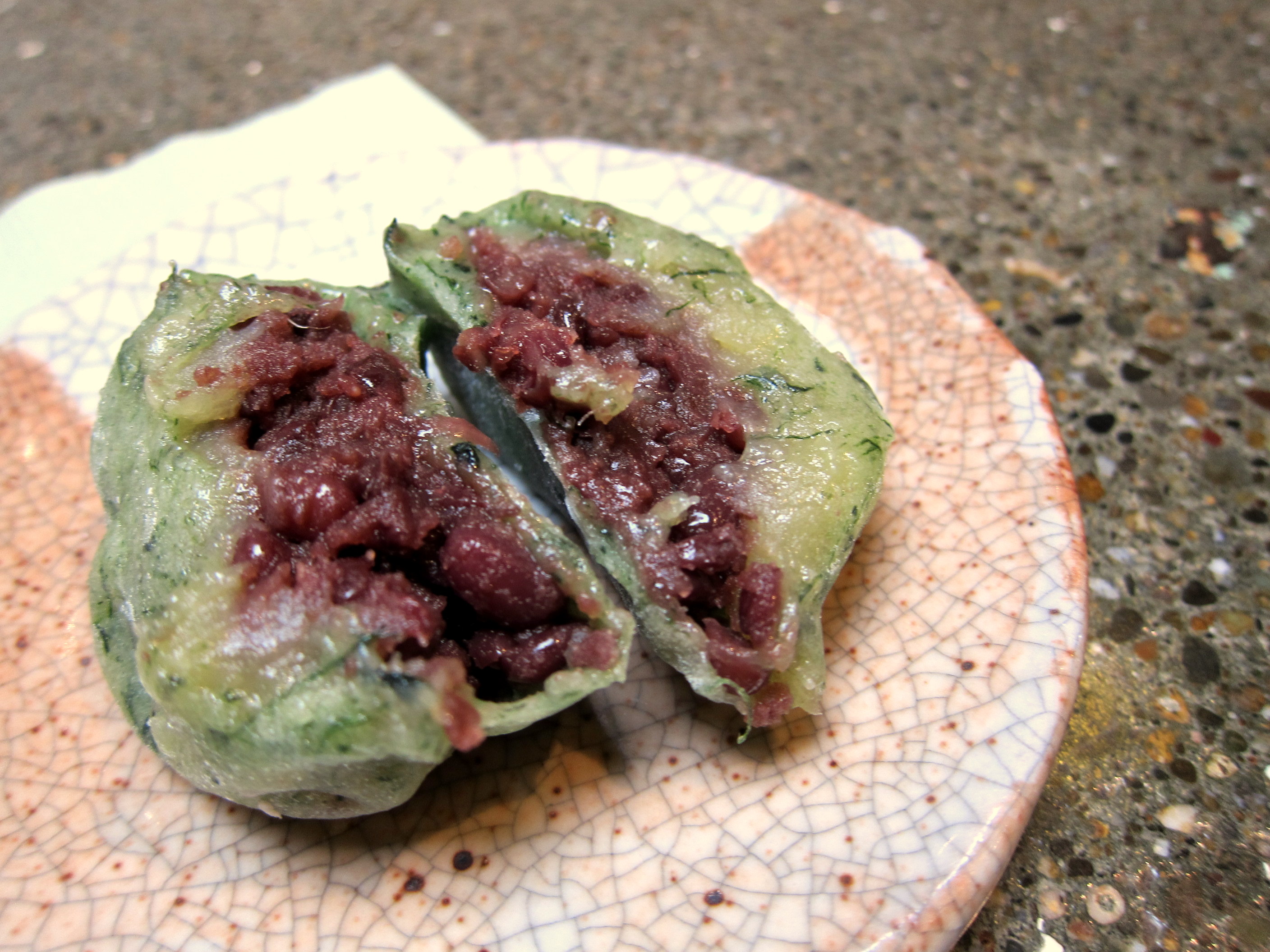

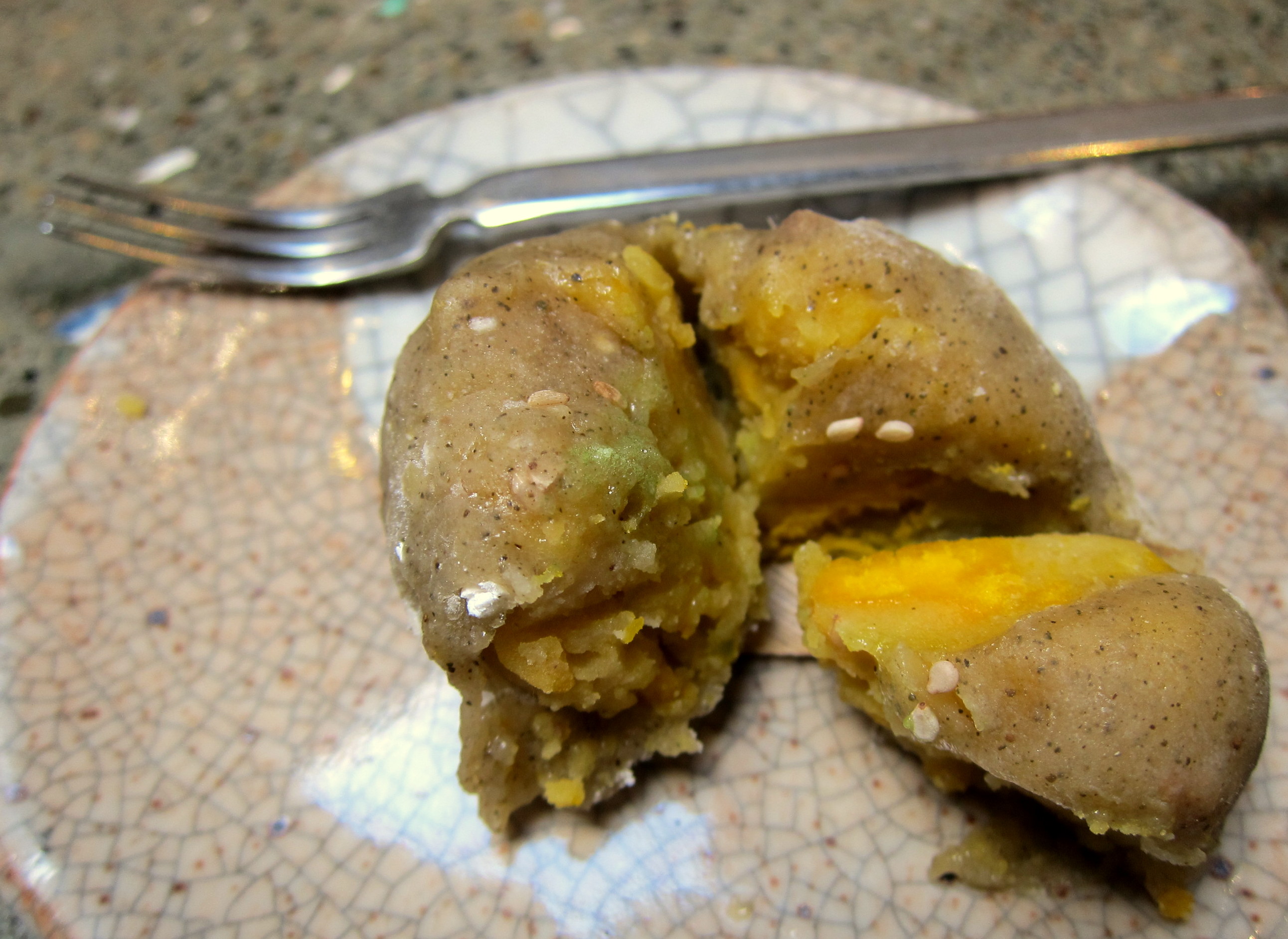
Yes, finally a mochi that goes perfectly with sencha. Yomogi (Japanese mugwort), julienned into tiny strings and mixed with the mochi dough, gives the mochi a clean, refreshing taste, which reminds me of the tip of a Vietnamese bánh ít or a bánh ít gai (*).

However, what struck me was the filling: red bean and sweet potato paste. The red bean is the main factor, the sweet potato is only at the top, closest to the doughy coat. The azuki sweetness subdues the fishiness (umami) of sencha, and the sencha bitterness subdues the sweetness. Is this why the Japanese use azuki for their desserts so often?

Why didn’t the sencha – matcha-mochi pair work as well? The matcha mochi also has azuki paste, but I think the orange juice and the walnuts distracted me. The yomogi clarifies the taste in a more floral and less bitter way than the matcha; and like saffron, sometimes a spice’s presence isn’t noticeable, but its absence would be. Anyways, this pair also shows that a simpler mochi can be a better mochi.

(*) Like mochi, bánh ít has a sticky rice dough with fillings, which can be sweet (coconut) or salty-sweet (mung bean paste). Unlike mochi, it’s all wrapped up in leaves, and it’s about 4 times bigger than a mochi. Shape-wise, mochi is most similar to bánh quy, whose green color (should) comes from pandan leaf. Similarly, the black color of bánh ít gai comes from the thorn leaf (ramie leaf), but the other ingredients are the same.

This post also appears on Tea and Mai

P.S. Sencha is interesting. It’s bitter at first and gets nutty later. It tastes odd at first because it’s not what you would expect from a drink, but the more you drink it, the more you’re attracted to it.

P.P.S. Yomogi mochi is also called “kusa mochi” (grass mochi). So Ms. Yuri Vaughn the mochi artist for Teance calls it “yomogi grass mochi”, which made me think that yomogi was a grass.
Welcome back, Appetite!

April 09, 2012 By: Mai Truong Category: California - The Bay Area, Comfort food, One shot


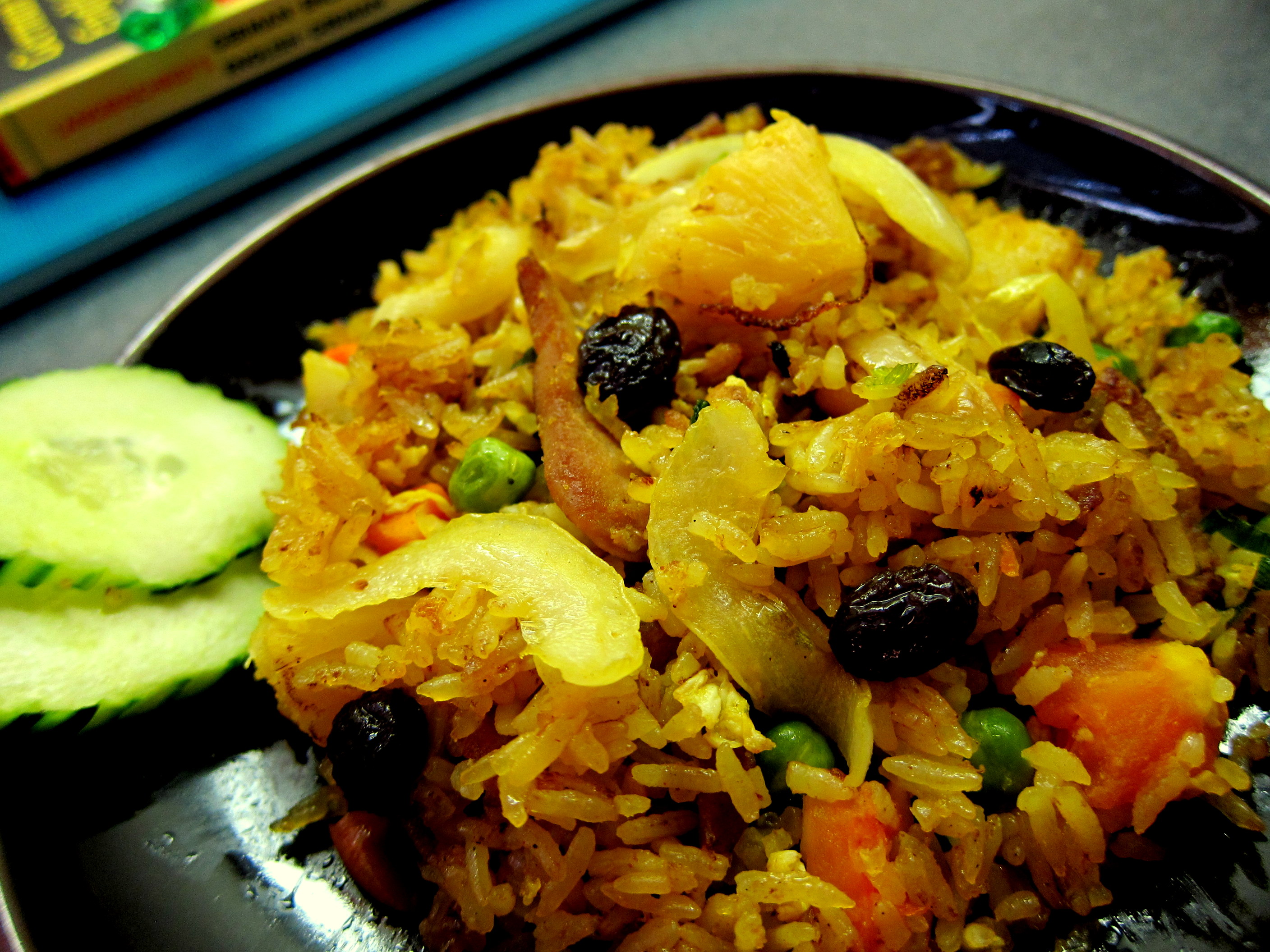
Pineapple fried rice, with tomato, eggs, cashew nut, onion, pork, and the highlight: raisin.

So simple. So good.

I’m not crazy about Thai food, but this is the first time in a month that a meal tastes better than my expectation. Welcome back, Appetite!

Address: Racha Cafe
2516 Telegraph Avenue,
Berkeley, CA
(510) 644-3583
Lunch for one: $8.65

Matcha and kabocha mochi

April 06, 2012 By: Mai Truong Category: California - The Bay Area, Drinks, Japanese, sweet snacks and desserts, Vegan

Another pairing of Japanese tea and Japanese snack. A bowl of matcha is supposed to suffice your daily vegetable need because you’re actually consuming the leaves themselves, in powder form.


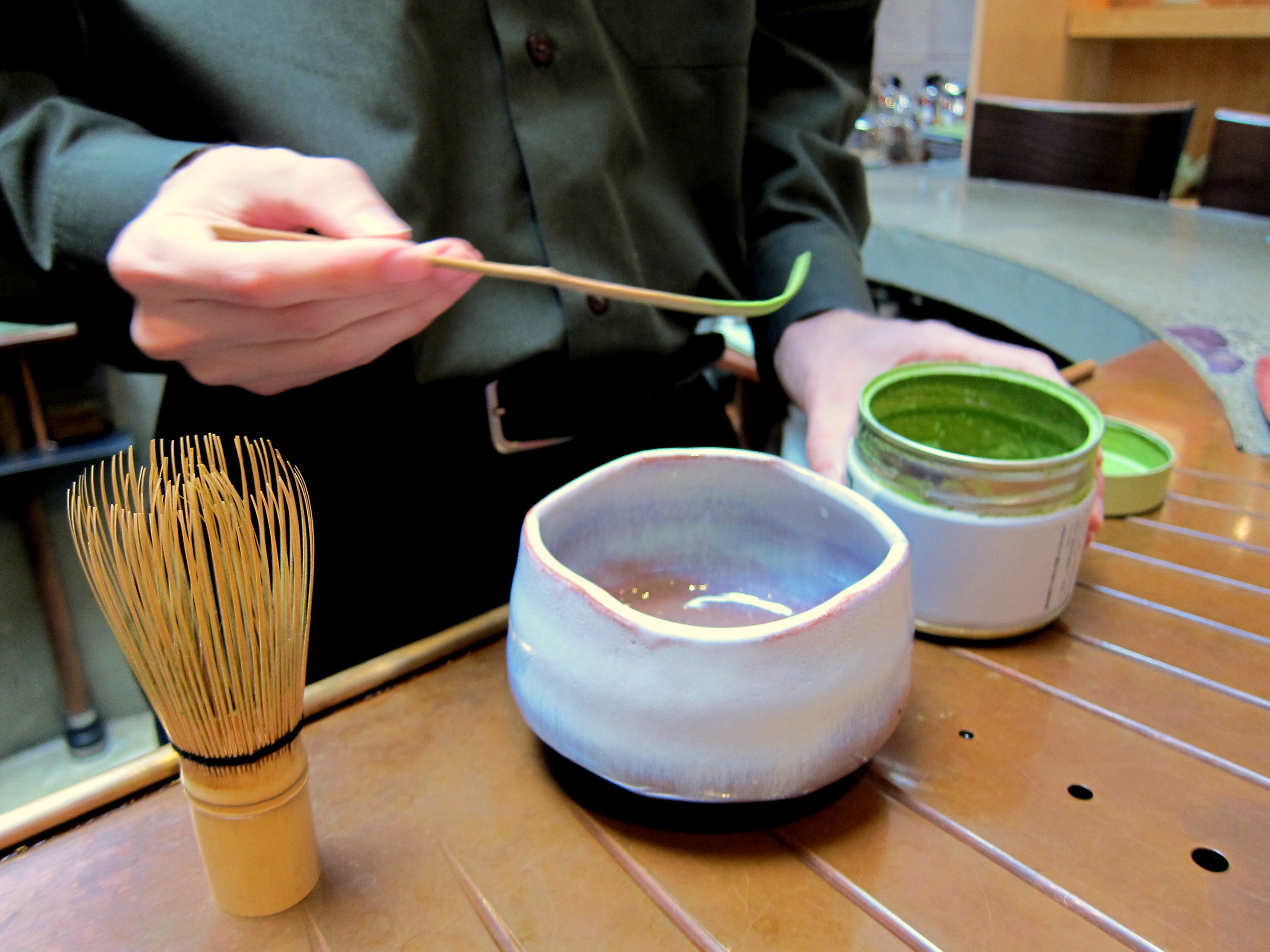
Matcha is served in a bowl. Mix water (205 F) with the matcha powder using a whisk, whose look reminds me of a yard broom in Vietnam, and there is no steeping time to watch out for, which I like. The whisk makes the tea foam up. The lady sitting next to me said that the foam turns her off visually, but actually the foam adds an interesting dimension to the tea. For one, it abates the seaweed taste because the foam is a cushion layer between the tea and the palate, preventing the palate to fully experience the tea. Secondly, together with the powder, it enhances the nuttiness of the tea. Near the end of the bowl, when there is more powder, the tea is extra nutty, akin to mungbean milk.


Unfortunately, this nuttiness does not enhance the nuttiness of the kabocha mochi but competes with it. The mochi this time has a hojicha-flavored coat and a filling of cinnamon, walnut and kabocha (a kind of winter squash, also known as the Japanese pumpkin). Contrary to my hesitance, the cinnamon was too faint to be detected (no, I don’t like cinnamon), and the mochi is mild overall. It is not too sweet.


Instead of being steamed-dried like other Japanese teas, hojicha is roasted in porcelain over charcoal, so the green tea becomes much milder than sencha. The kabocha is similar to a plain, grainy, white sweet potato in both taste and texture. (The red mushy sweet potato is sweeter than the white kind.) Because both the tea and the snack are grainy, matcha-kabocha mochi is not a good match together, although I really like them both separately.

A better pairing would be matcha with matcha mochi, and sencha with hojicha-kabocha mochi, because you want something sweet tempered by something a tad bitter, and something clear with something nutty. Nonetheless, I still think that sencha is an entree tea, not a dessert tea. So the hojicha-kabocha mochi would be better enhanced by something strong in fragrance like jasmine green tea.

This post also appears on Tea and Mai

Sandwich Shop Goodies 19 – Bánh tiêu (Chinese sesame beignet)

April 03, 2012 By: Mai Truong Category: California - The Bay Area, Chinese, One shot, savory snacks, Southern Vietnamese


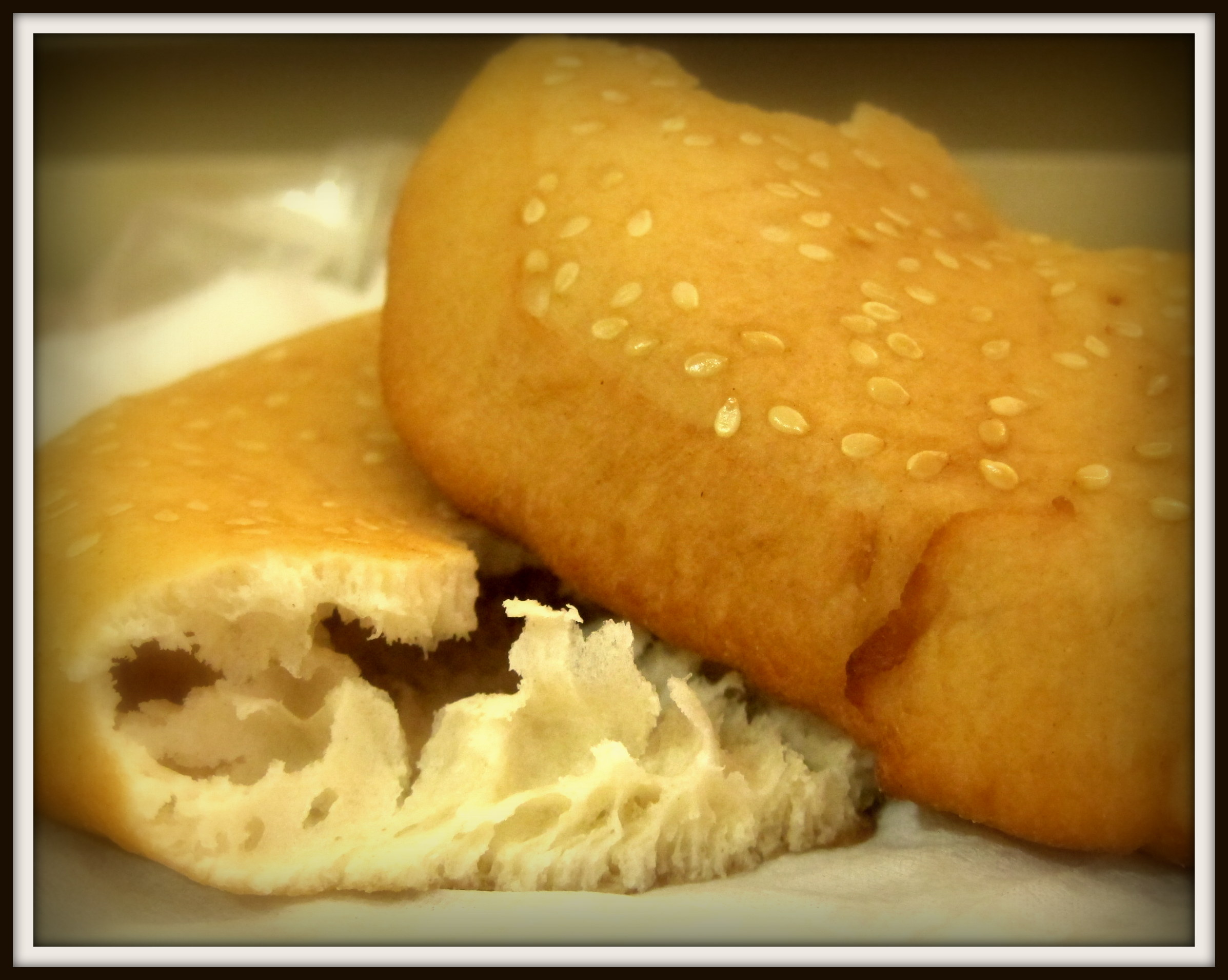
Little Mom and I… we just have different tastes. She likes seafood. She prefers crunchy to soft. She doesn’t like sticky rice (!) She thinks the mini sponge muffins (bánh bò bông, the Vietnamese kind) are sourer than the white chewy honeycombs (bánh bò, the Chinese kind). I beg to differ. The mini sponges can be eaten alone; the honeycombs are almost always stuffed inside a hollow fried doughnut that is more savory than sweet: their sourness needs to be suppressed by the natural saltiness of oil and the airy crunch of fried batter. That doughnut, brought to us by the Chinese and called by us “bánh tiêu“, saves the honeycombs.

The honeycombs could go hang out with the dodo for all I care, but this Saigonese would always appreciate a well-fried bánh tiêu. At any time of the day, one would be able to spot a street cart with the signature double-shelf glass box next to a vat of dark yellow oil. The oil gets darkened from frying too many doughnuts too many times. Sure, it isn’t healthy. But should you really care about health when you eat fried dough?

“Fried dough has appeared in different forms – round, square, triangular, twisted – under many different names. The Dutch settlers had olykoeks (oily cakes); the French in Louisiana had beignets; the Spanish from Mexico made puchas de canela; and the Pennsylvania Germans made fastnachts around Lent.” (Jill MacNeice, “Doughnuts“, in the Roadside Food collection) Now I may add that the Vietnamese in California and Texas have bánh tiêu. One quality of bánh tiêu to make it superior over the other fried doughs: it isn’t coated in powder sugar. Studded with white sesame on one side, it tastes subtly salty of dough, fat, and roasted grain.

An excerpt about Vietnamese vendors making dầu cháo quẩy and bánh tiêu:

Vốc một nhúm bột khô rải đều trên bề mặt miếng gỗ đã trơn bóng – cốt để bột nhồi không bị dính – tiếp tục ngắt một cục bột đã ủ cho lên men, nhẹ nhàng vuốt dọc rồi dùng cây lăn cán qua, miếng bột đã được kéo ra thành một dây bột dài mỏng đều. Người bán lại tiếp tục dùng một thanh tre cật mỏng, xắn bột thành từng miếng đều nhau. Xếp chồng hai miếng bột lên rồi dùng một chiếc đũa ấn mạnh ở giữa, thế là đã được miếng bột “chuẩn” để làm bánh quẩy. Còn bánh tiêu thì phải qua công đoạn vốc một nắm mè vất ra giữa miếng gỗ để mè tự rải đều, sau đó mới dùng bột đã ủ đã nhồi cán thành miếng tròn dẹp, một mặt dính mè, một mặt không.
[…]
Bánh quẩy và bánh tiêu thường bán chung, có lẽ chủ yếu là vì hai loại bột làm bánh này không khác nhau là mấy. Cũng bột mì nhồi với bột khai là chính. Nhưng với bánh quẩy, người ta cho thêm chút muối, chỉ một chút thôi đủ để bánh không lạt lẽo, nhưng vẫn còn giữ được độ ngọt nguyên thủy của bột mì.
Còn với bánh tiêu, người ta lại cho thêm ít đường, cũng rất ít, đủ để làm dậy hơn vị ngọt của bột. Vị ngọt của bánh tiêu vì thế rất nhẹ, không như những loại bánh ngọt khác. Với bánh tiêu, người mua cũng không đòi hỏi phải giòn đến như bánh quẩy. Cái hấp dẫn ở bánh tiêu lại là ở những hạt mè thơm ngậy. Những hạt mè trắng li ti sau khi chiên trở nên căng mẩy, quyện với mùi thơm của bột mì chiên giòn trở nên hấp dẫn kỳ lạ. Nếu như bánh quẩy thường được cho vào dùng chung với cháo, với phở thì bánh tiêu thường được dùng kèm với bánh bò. Xẻ đôi chiếc bánh tiêu, kẹp vào giữa miếng bánh bò nữa là được một loại hương vị khác hẳn. Cái mềm xốp của bánh bò khiến bánh tiêu – vốn hơi khô – trở nên dễ ăn hơn, đỡ ngán hơn. Các loại nhân ăn kèm bánh tiêu cũng khá phong phú, tùy sở thích mỗi người. Có người mách nhau kẹp xôi vào giữa, ăn cũng rất ngon, lại có thể thay quà sáng. Có người lại thích nhân “cadé”, là loại nhân làm bằng trứng gà có vị béo ngầy ngậy, rất hợp với bánh tiêu.

Translated and abridged:

[The vendor] scoops up some flour and sprinkles them on the shining flat wooden board, to keep the dough from sticking, then he pinches off a ball of fermented dough, gently pulls it and runs the rolling pin once over to stretch the ball into a thin strip. Then he grabs a sharp bamboo stick, swiftly cuts the strip into smaller, even strips. Putting two strips on top of each other, pressing a chopstick down in the middle, and he gets a “standard” piece of bánh quẩy ready to fry. For bánh tiêu, he would need to sprinkle a pinch of sesame seeds on the board, then flatten the dough into disks, one side studded with seeds, the other side having none.
[…]
Bánh quẩy and bánh tiêu are often sold together because they have similar dough. Mainly, flour and baking soda. For bánh quẩy, they add some salt to make it savory, but not too much that it would diminish the flour’s natural sweetness. But for bánh tiêu, they would add a pinch of sugar to boost that sweetness. Bánh tiêu doesn’t have to be as crunchy as bánh quẩy either. Its goodness lies in the sesames’ fragrant nuttiness. As bánh quẩy is often eaten with rice porridge or noodle soup, bánh tiêu goes with bánh bò. Slit the bánh tiêu open, stuff in a piece of the soft white honeycomb bánh bò, and you get a whole new snack. Some people substitute bánh bò with sweet sticky rice or with egg custard, that really fattens it up.

In Saigon, Vietnam: 1000 VND each.
At Bánh Mì Ba Lẹ, Oakland: 1 USD each. (1 USD ~ 20000 VND)

Address: Bánh Mì Ba Lẹ (East Oakland)
1909 International Blvd
Oakland, CA 94606
(510) 261-9800

Previously on Sandwich Shop Goodiessteamed taro cake (bánh khoai môn hấp)
Next on Sandwich Shop Goodies: Xôi khúc (cudweed sticky rice)

I can’t think of a title for Tofu Village

April 01, 2012 By: Mai Truong Category: Comfort food, Houston, Korean, noodle soup


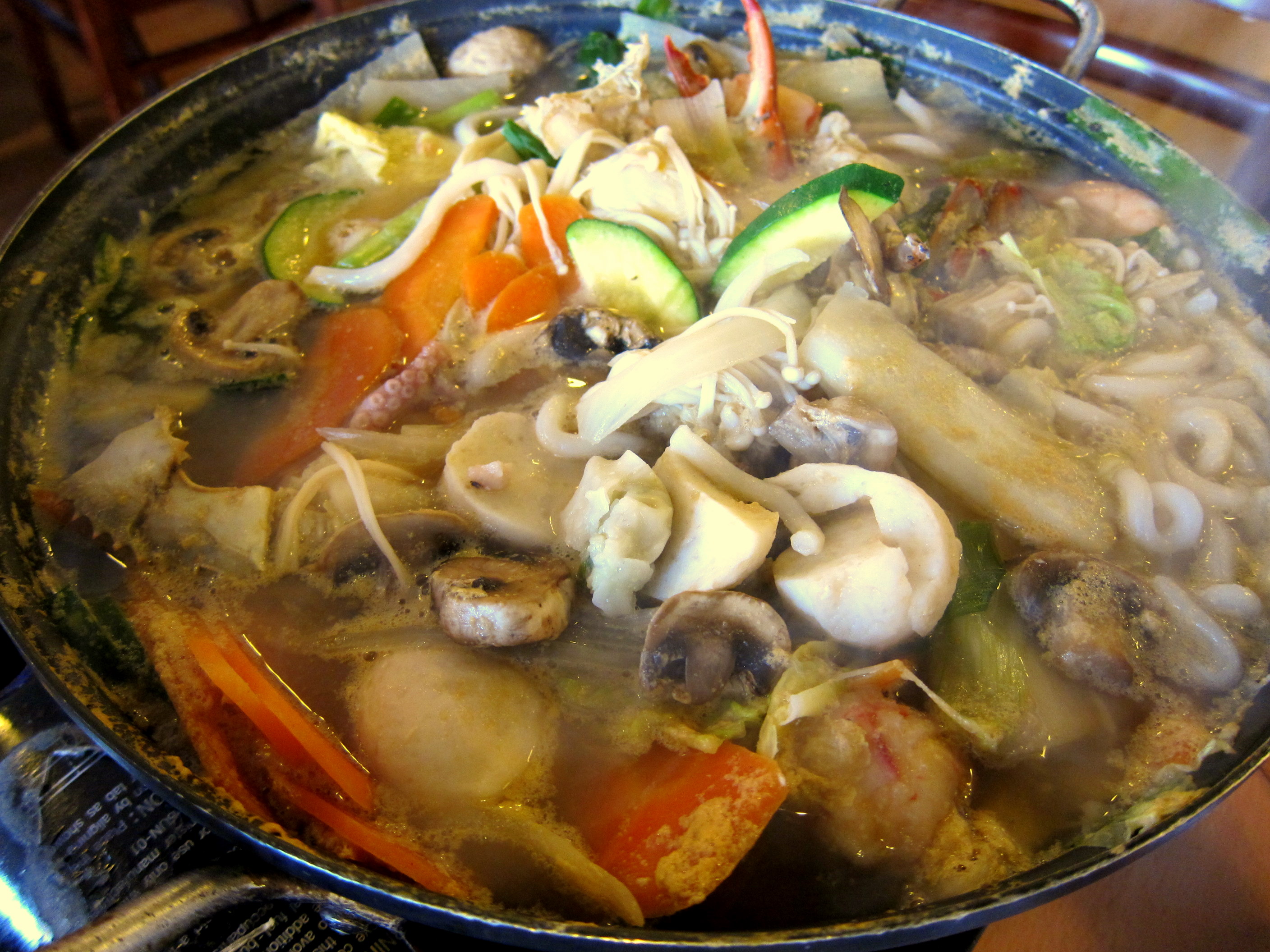
Lately I think I’ve reached a wall in terms of Korean food. To be precise, the Korean food that I can get my hands on, i.e., in the Bay and in Houston. Every Korean restaurant here, in strikingly similar manner to Vietnamese restaurants, has the same menu as every other Korean restaurant. The menu may contain a hundred things, but it boils down to maybe ten, with tiny variations.


To be blunt, I’m bragging that I can name practically every dish on a Korean menu in the States. The novelty is gone. Little knowledge is left to obtain. But just as I don’t stop going to Vietnamese eateries altogether, I still like to share a big Korean meal with Mom and Dad. A bubbling jeongol, rice and banchan always give the familiarity that a Western meal cannot.


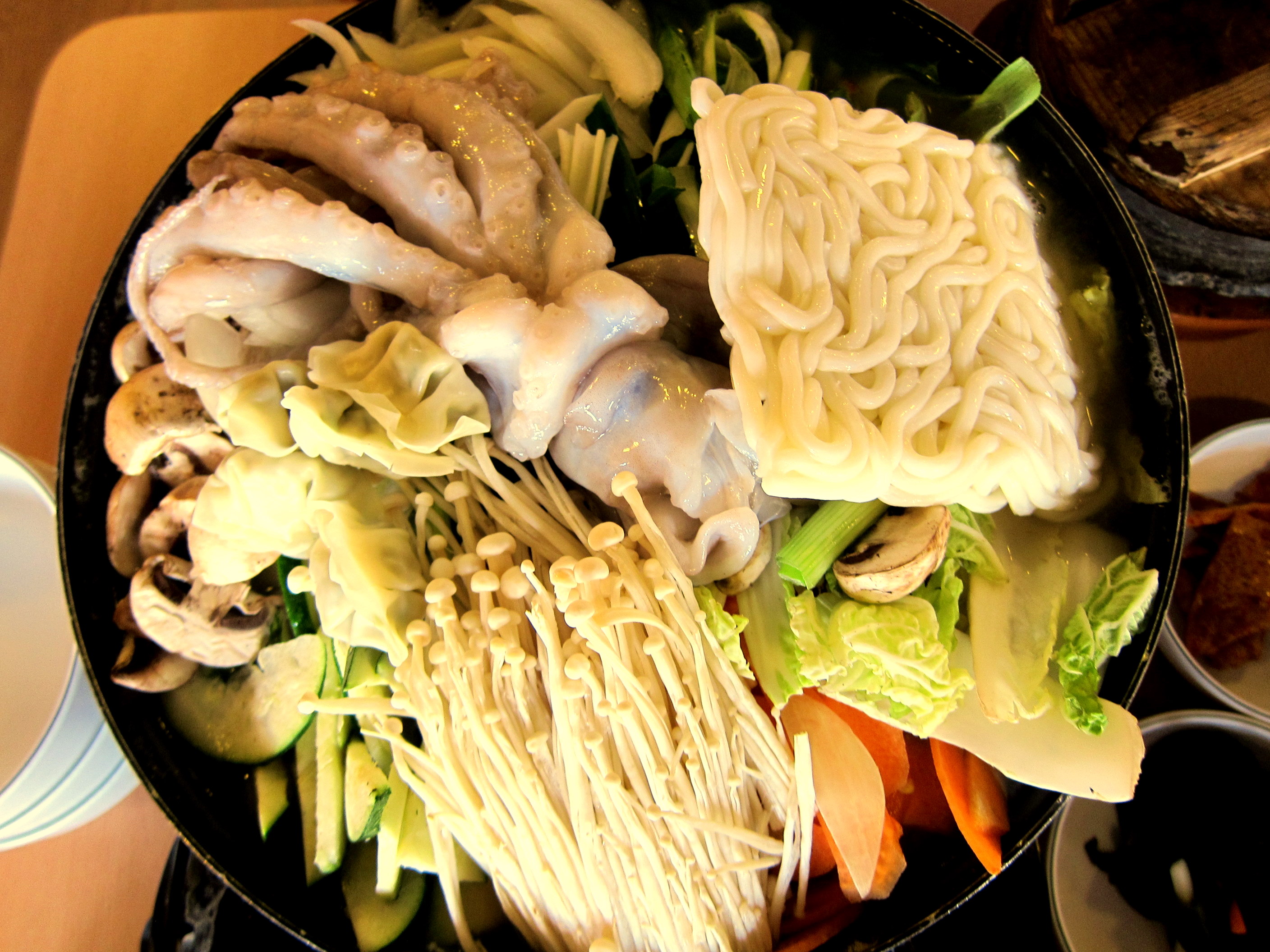
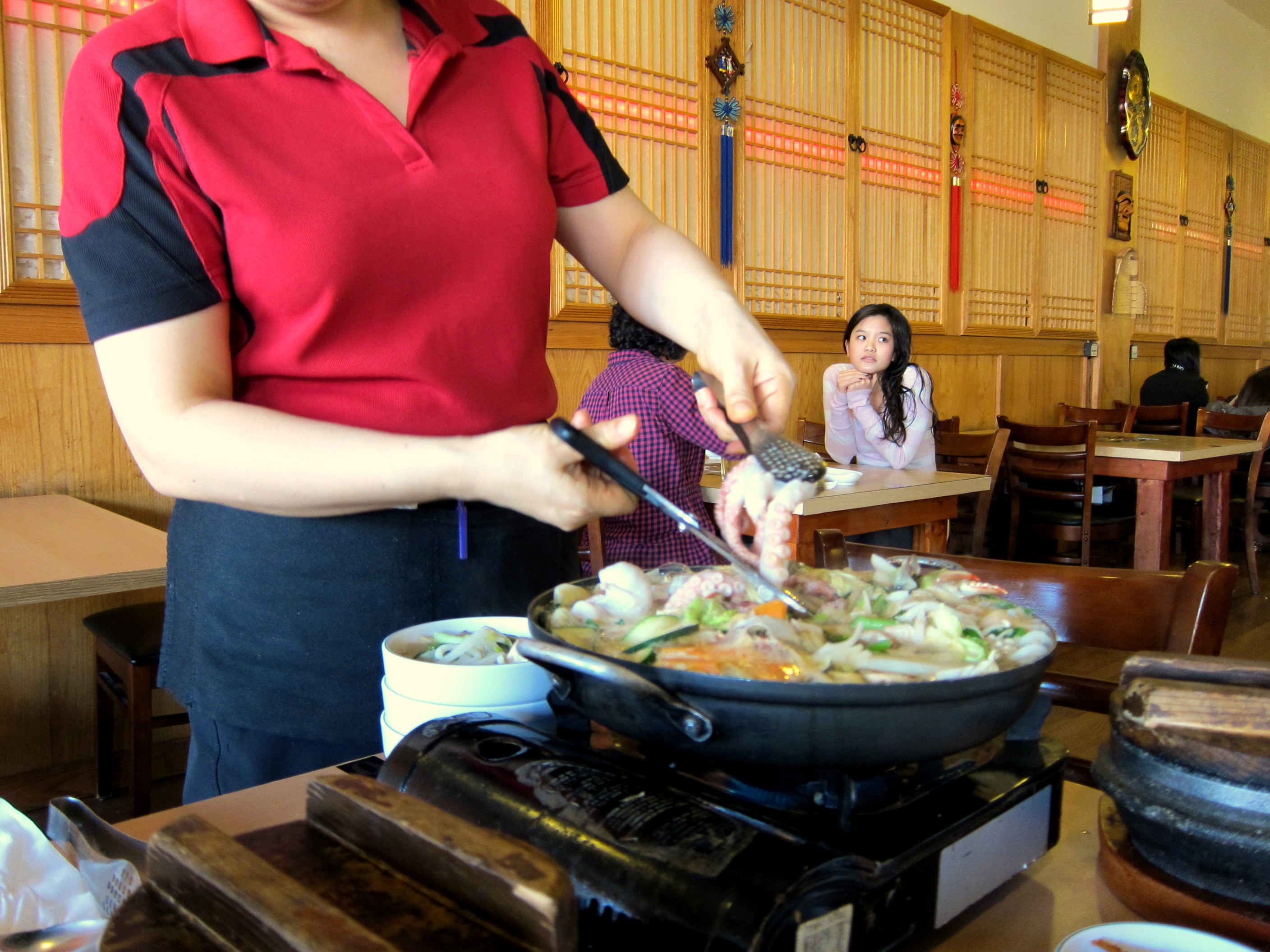
That said, there are a few things that I’m still not used to, such as the scissors. The lady was cutting up the crabs and octopus with big black scissors. I admit their convenience, but I get the weird feeling that she is cutting flowers. Why? I don’t know. Anyway, I didn’t eat the crabs because I don’t care for crabs, but I like the octopus. I think I might prefer octopus to squid. The broth is also just right.


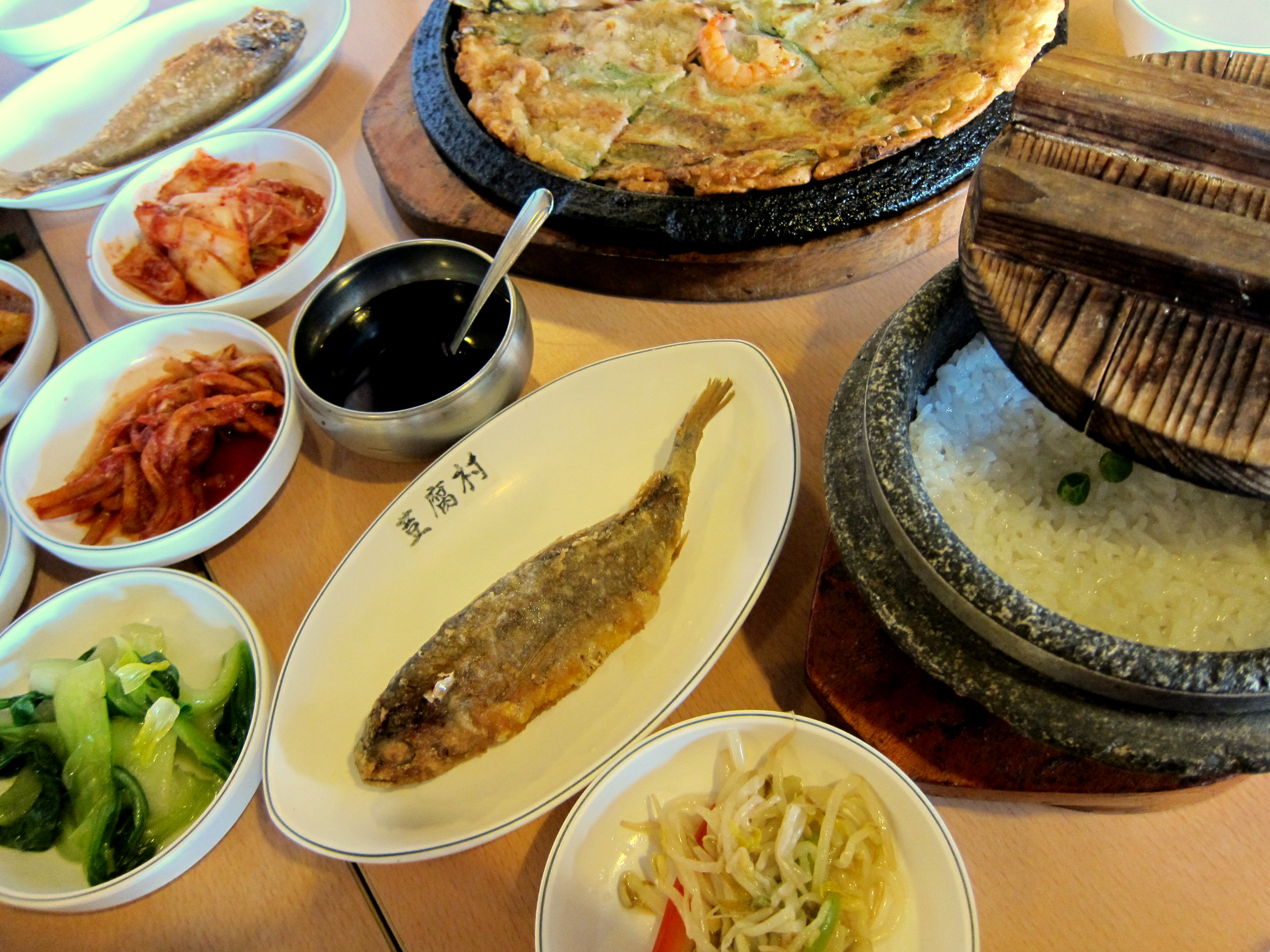
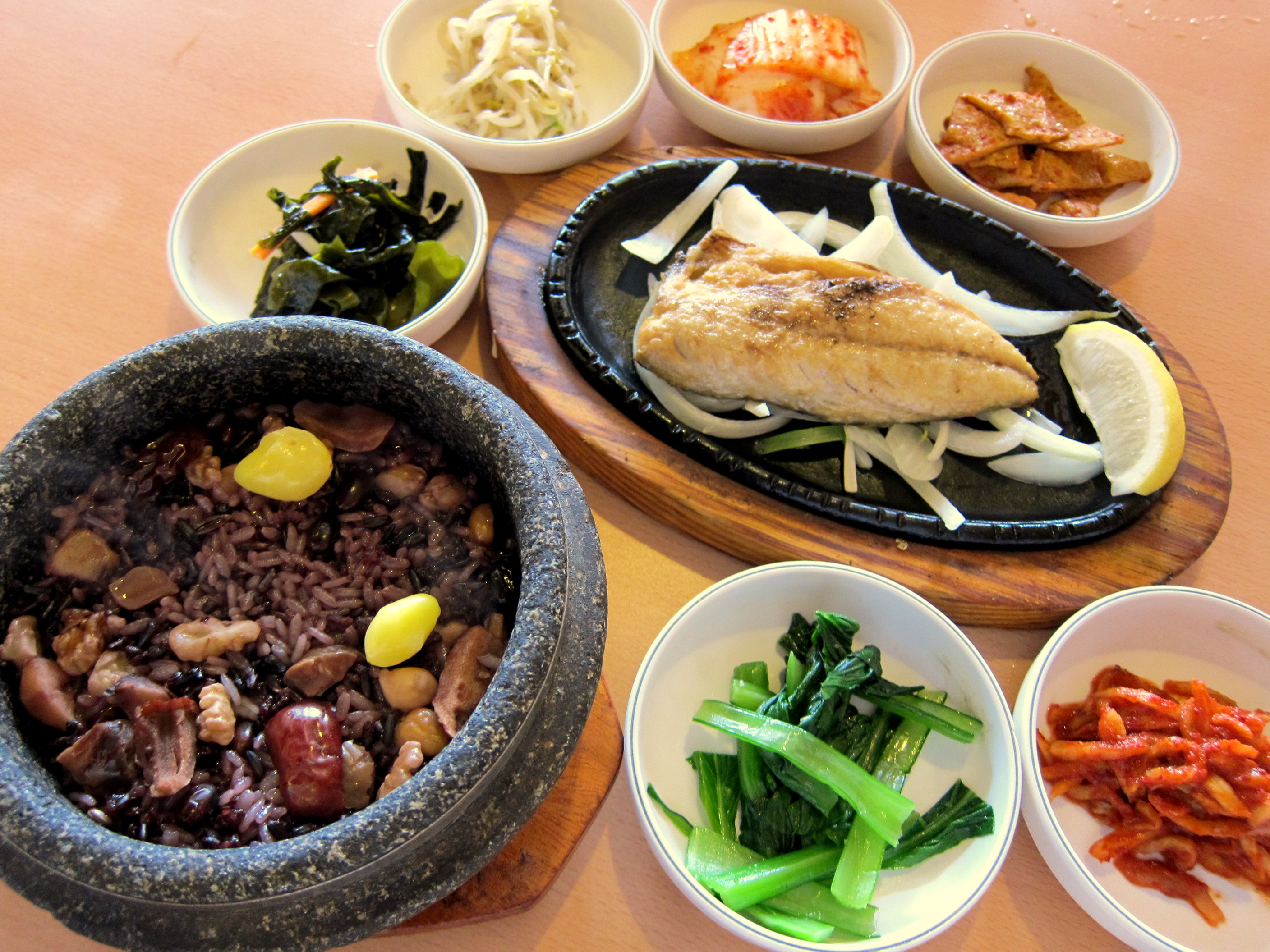
The banchan is standard, but they include two fried fish for every order of jeongol. Little Mom likes fried fish. 🙂


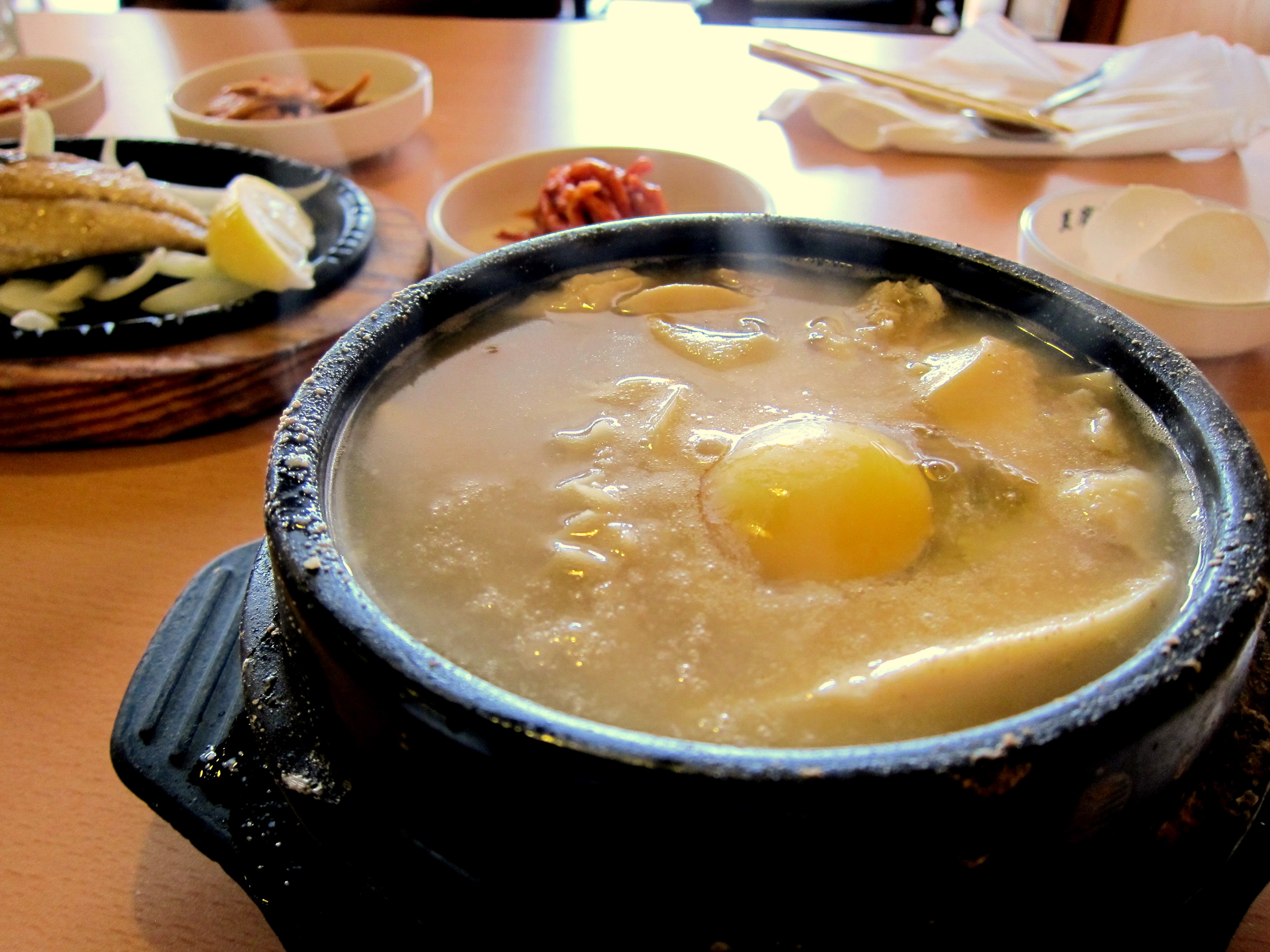
The soondubu with tripe and intestine is also nice: soft tofu in contrast with crunchy tripe and chewy intestine. Well, Tofu Village would not live up to its name if its soondubu wasn’t good.


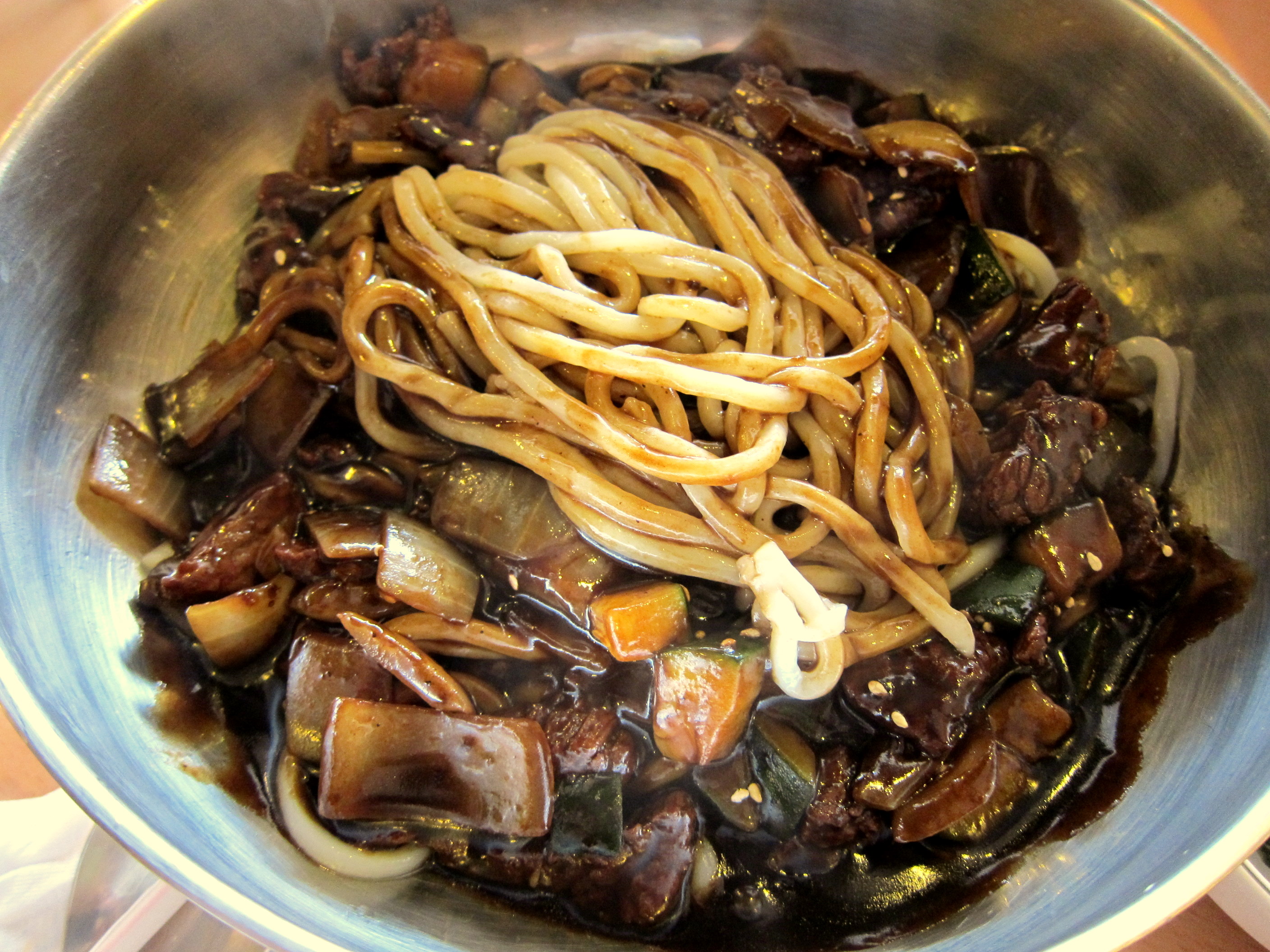
The jajangmyeon is a slight disappointment, compared to the one at Daddy and Daughter‘s in the H-Mart food court. The sauce is not sweet enough. Being served in an inox bowl makes it lose its heat too quickly. The noodles are also too thick.


One thing that I try here without having tried before is the “nutrition rice”, which is blackish purple rice (nếp than) with walnuts, dried jujubes, peanuts, and two yellow nuts whose name I don’t know. I like white rice because like water, white rice keeps your palates clean for the other dishes, but not only is this nut-mixed rice fun to eat, it also deems the mackerel and the kimchi unnecessary.


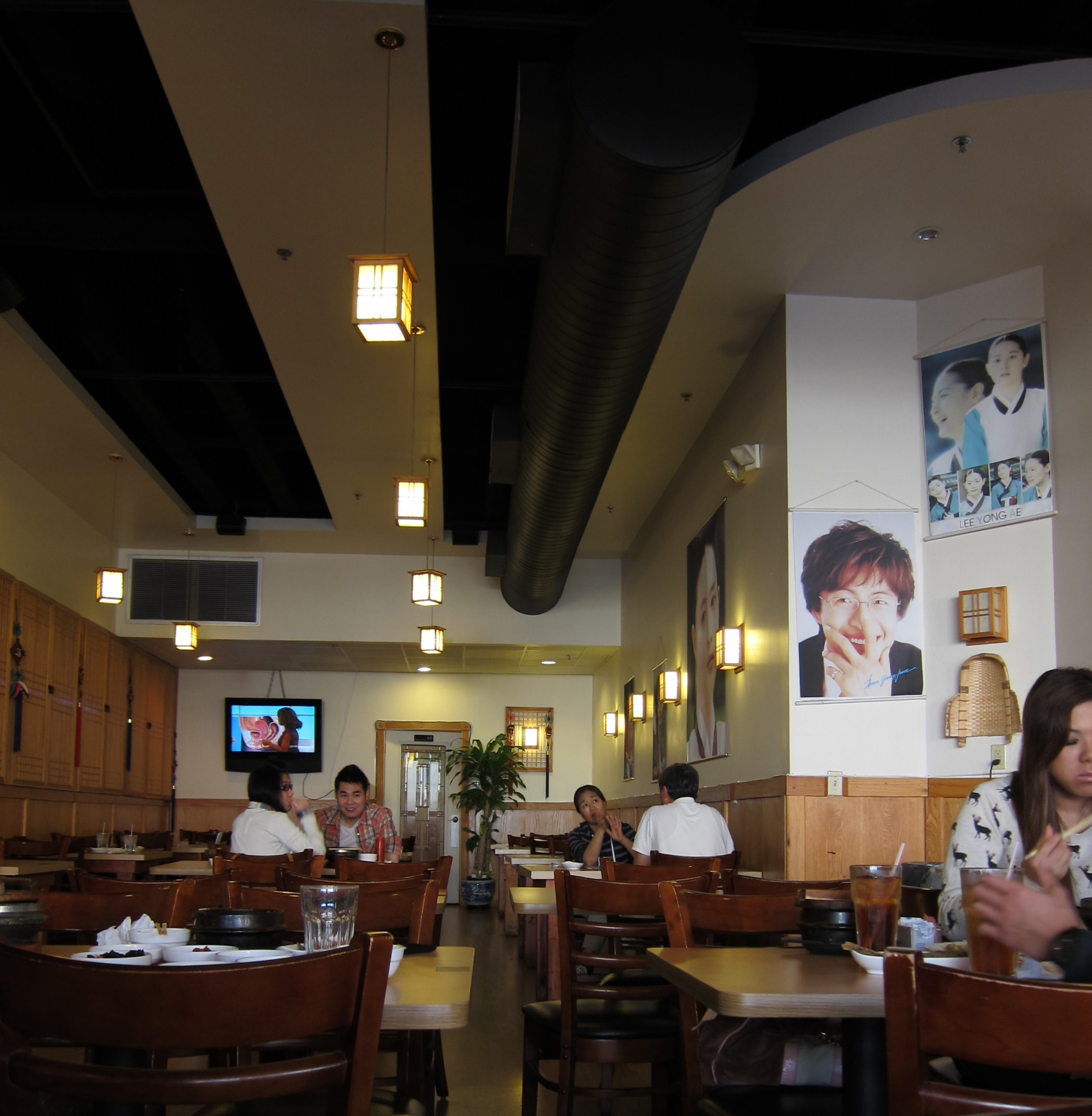
The biggest identifier of Tofu Village must be the celebrity posters on the wall. At least that’s how Aaron and I knew that we were talking about the same Korean restaurant when he mentioned that his group has a new place to frequent. Would I frequent it myself? The name “Tofu Village” does sound a little Americanized, and I can’t say that everything I ordered was stellar, but to be fair, what I ordered were not the common dishes that people order at a Korean restaurant here. Naturally, the chefs would be more comfortable with what they expect the customers to get. So next time I’ll get something more standard, with tofu. 😉

Address: Tofu Village (두부 촌)
9889 Bellaire Blvd #303
Houston, TX 77036

Friday afternoon, Bistro 1491

March 30, 2012 By: Mai Truong Category: American, California - The Bay Area, Comfort food, One shot

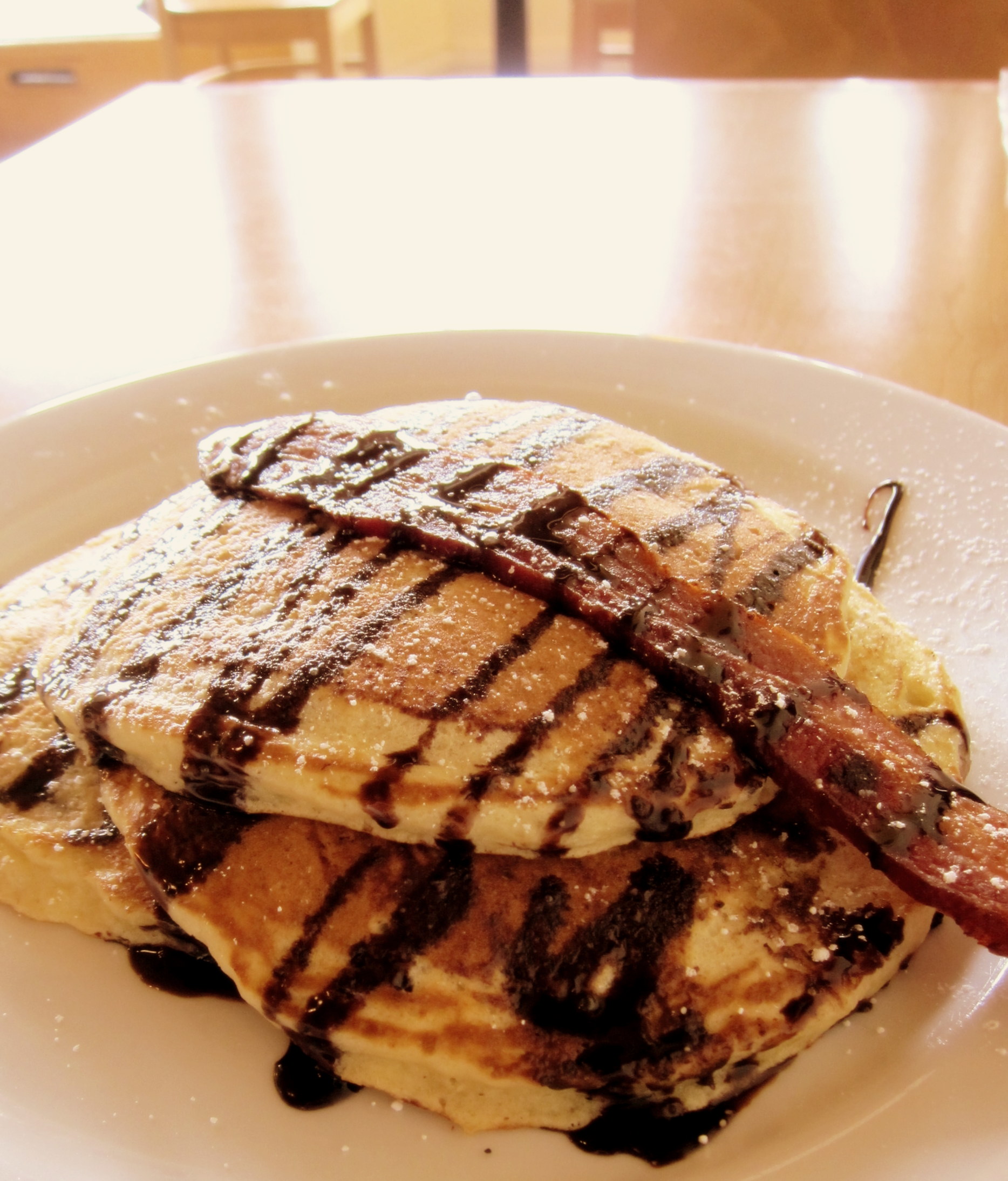
The sky is grey. The ipod plays Gustav Mahler’s piano quartet in A minor. One hand turns the page to Der Prokurator. The other hand maneuvers the fork into a stack of three pancakes. Oozing chocolate chips and a thick strip of bacon.


Bistro 1491 sits, in fact, at 1491 Solano Avenue. Somehow I keep thinking that the name is 1941. It feels so. The burn orange walls, the abstract paintings, the white-haired ladies by the window.

The pancakes are fluffy, soft, good at first, the bacon is at the right saltiness. The maple syrup errs on the watery side, or maybe it’s just overwhelmed by what’s supposed to be dark chocolate but turns out too sweet. About 60% dark. A heavy feel sets in after the pancakes are gone, what’s left on the plate are messy streaks of brown chocolate and faint yellow syrup. It could almost make a hasty painting. But hasty does not suit this scene.

Address: Bistro 1491
1491 Solano Ave
(between Santa Fe Ave & Curtis St)
Albany, CA 94706
(510) 526-9601
Breakfast at noon: dark chocolate & bacon pancakes – $8.65

Bánh bèo tips from Mrs. Tự

March 28, 2012 By: Mai Truong Category: Central Vietnamese, Houston, Opinions, RECIPES, Vietnamese


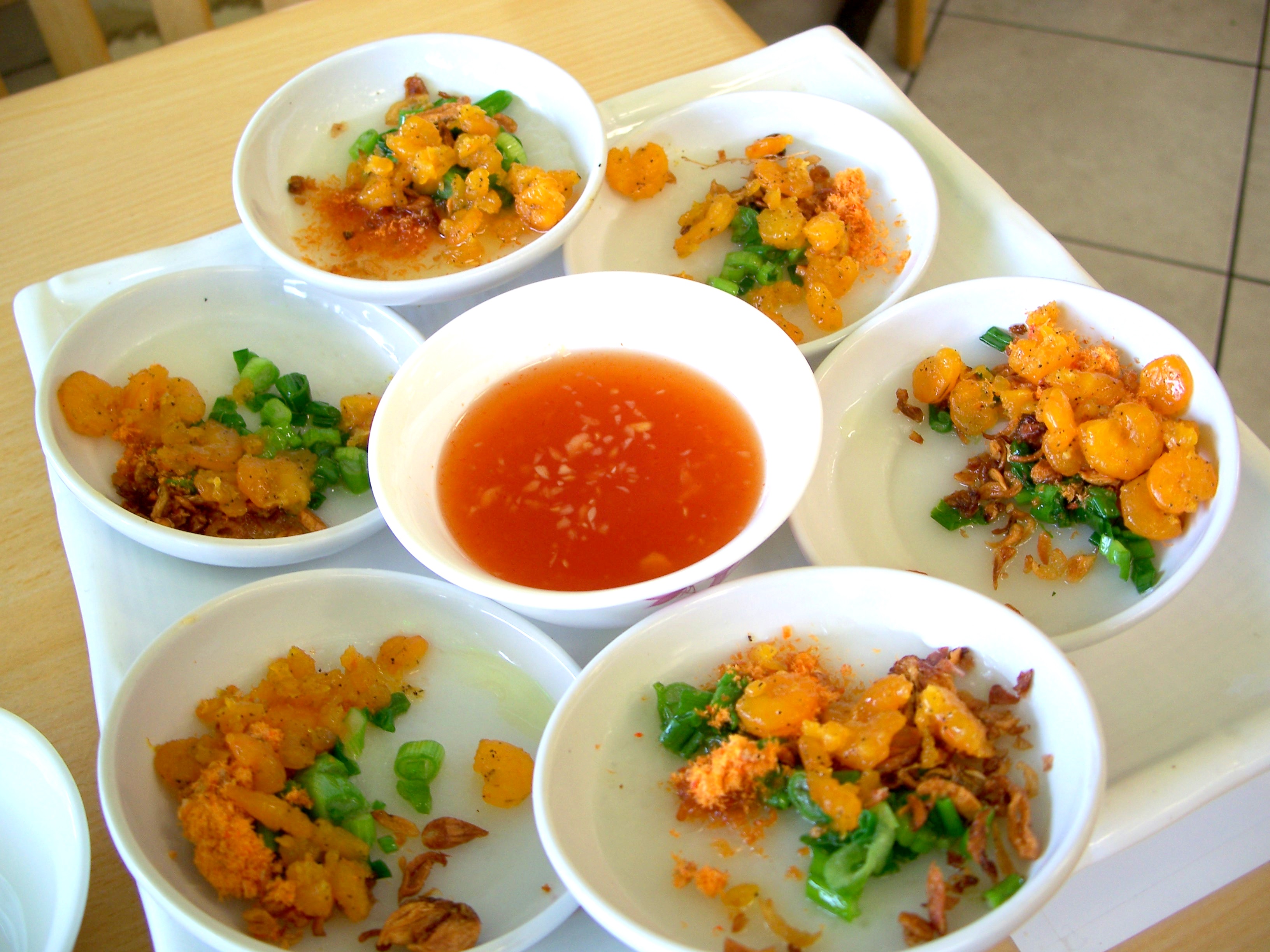
A couple of millimeters thin, chewy, savory, bánh bèo, the waterfern-shaped appetizer, is as familiar to the Vietnamese dining tables as crab cakes to Americans. But not everyone makes it at home because it takes more time than its worth: make the rice flour batter, steam the banh, make the toppings, mix the fish sauce. In fact, I’ve had homemade bánh bèo only once, and it was at my friend’s family restaurant. That said, there are skilled and dedicated grandmas who insist on making everything from scratch for the best bánh bèo. One of them is Mrs. Tự, and Little Mom happened to see one episode of her cooking show on TV last week.

So below are some tips on bánh bèo from Mrs Tự, collected from the show Nghệ Thuật Nấu Ăn Bà Tự (The Cooking Arts of Mrs Tự) on Global TV Houston.

1. Texture:
The thinner bánh bèo is the better bánh bèo. Of course, resilience is a must, it should not be as chewy as a mochi, but it should have enough strength to hold itself together as the eater picks it up with chopsticks. How to make a thin but resilient bánh bèo? Heat the bánh bèo plates (or molds)* in the steamer before pouring in the batter and steaming the bánh. I suspect that this preheating helps cook the batter evenly in all directions, instead of having the bottom cold and cooking it with steam from only the top surface during the first few moments.

2. Toppings:
Bánh bèo of the South has savory mung bean paste for topping, and bánh bèo Huế usually has pan-dried shrimp (tôm chấy), which blogger Tran Ngoc Kha translated as cotton shrimp for its fluffy texture. Fresh shrimp** (with head, legs, shell, everything) goes without saying: while peeling off the shell, you can keep the gạch, a substance located in the head of the shrimp that becomes reddish orange when cooked, to sweeten and fatten the toppings***. How to make the shrimps dry and fluffy? Microwave the peeled shrimps so that the meat is red, plump, and has a spring to it. Then pound the shrimps to break up the bodies, but not to a paste. And fry it on high heat with constant shuffling.

But bánh bèo can also be topped with pork rind. To make the pork rind, Mrs. Tự would slice the skin off the pork belly, boil it, cut into thin strips, refrigerate them, and finally deep fry them. The refrigerating step prevents the fat from shooting everywhere while frying. How to tell when the skin is refrigerated long enough? If you bend the strip and it gives a loud, clean snap, it’s done.

Then there is also topping made with bean paste, meat and tapioca, seen on bánh bèo in Quảng Nam Đà Nẵng. The better tapioca flour (bột năng) is not the white powder straight from the bag, but that which is pan-dried to really rid of moisture. How to know when the flour is dry enough? Mrs. Tự puts either a pandan leaf or a piece of a banana leaf into the wok as she constantly stirs the flour, the heat from the flour vaporizes the moisture in the leaf, when the leaf dries up and becomes crunchy, the flour is done.

(*) Bánh bèo should be made in mini shallow cups (like sauce cups) made of porcelain. The molds are convenient but render a metallic taste, the bánh bèo would be too thick and oily because the molds have to be greased before steaming.
(**) Some places serve up bánh bèo tôm chấy with packaged dried shrimp (tôm khô). Never go there.
(***) Crabs have more gạch than shrimps, so gạch cua (gạch from crabs) is more well-known in Vietnamese cooking. In Japanese, gạch cua is indeed kanimiso, the brownish grey substance that is a mix of the crab’s internal organs (brain, liver, pancreas, intestine, eggs, etc.). Good stuff. 🙂

Tags:

Slice of Happiness and Houston food truck events

March 22, 2012 By: Mai Truong Category: American, Houston


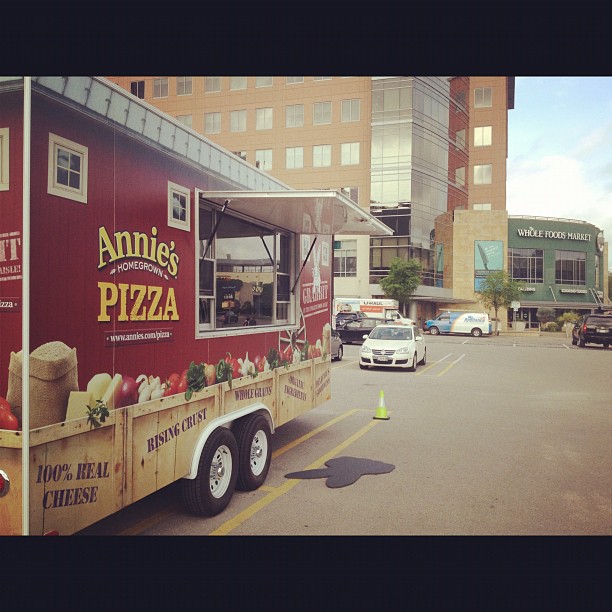
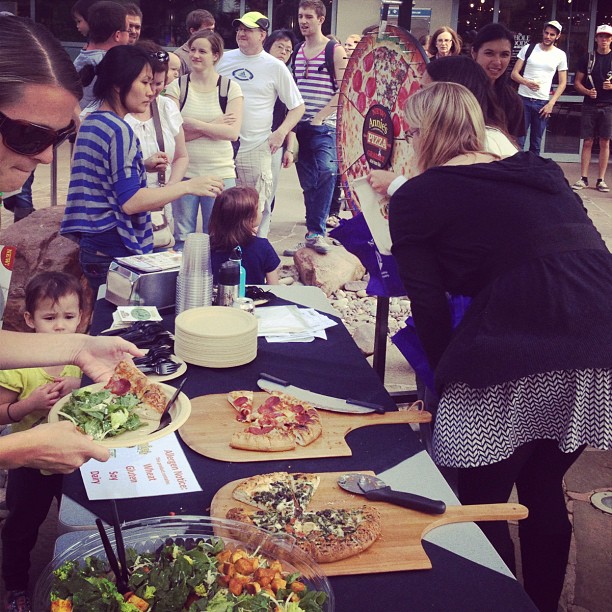
If you’re a student, you know the significance of frozen pizza. It comes only second to instant noodles, i.e., packaged ramen, and on some days I might even argue that it’s better than instant noodles in terms of efficiency. There are three sections that I always check when I go to the groceries: the noodles, the ice cream, and the frozen pizza. Yesterday when I first learned of Annie’s, I went to their website and found out that Berkeley Bowl carries their product, so I’ll be looking for it, but if you’re in Houston and got some time to kill this weekend, why not beat me to a slice of “the first-ever-certified organic rising crust frozen pizza”?

Annie’s will hold their “Slice of Happiness” tour during lunch hours at four Whole Food locations from this Friday to next Monday: 4004 Bellaire Blvd – Friday, March 23 (11 am – 2 pm), 11145 Westheimer Road – Saturday, March 24 (10 am – 1 pm), 701 Waugh Drive – Sunday, March 25 (10 am – 1 pm), and 2955 Kirby Drive – Monday, March 26 (11 am – 2 pm).

The tour will feature their recent February-launched pizzas in four flavors.


The most interesting thing of the tour, though, is the Truck Farm, an herb garden in the bed of a pickup truck. Finally, a good use of the space that’s hardly ever used but consumes a lot of energy. It actually seems quite feasible to implement in every household if the garden could be set on a removable platform, so you can leave it in your garage for a day in case you actually need the truck bed to move furniture or your garden hose.


Anyway, that got me thinking about the food truck trend in my neck of the wood, Houston. This May 12-13 will see the second annual Haute Wheels. From the list of participating trucks, it appears to have, as expected, a fair amount of mixing between Asian and Southern cooking, with lotsa meat (of course, that’s how Houston rolls), but pretty much everything is comfort food. Nothing too out there. I wouldn’t expect vanilla ice cream topped with mealworm. But that’s actually good: food trucks weren’t created to carry crazy foods or culinary inventions, they were meant for specific comfort food mastered by vendors to satiate the common people’s palate. They shouldn’t be strange. They just have to taste excellent.

Tags:

FIVE and a Flavor Giveaway

March 21, 2012 By: Mai Truong Category: American, California - The Bay Area, Comfort food, The more interesting


Dressed in black and white patterns from walls to chairs, FIVE spots a slightly older, more refined atmosphere for casual hotel dining just above the Berkeley BART station. I meant to go here after someone said that he finally understood the rave behind “chicken and waffle” after he had it during FIVE’s After Hour Happy Hour. If that dry white meat and cake-like bread at FIVE was that good, then surely the other things wouldn’t disappoint. Now nothing on the regular dinner menu costs 5 bucks like the Happy Hour (7-9 pm) nosh, but I got hungry before 7 pm, so I dashed in on what seemed to be a busy night. The hotel is hosting some conference. Nobody wanted to eat with me today, but one beauty of going alone is that you can always get a table.

That said, if you have a party of 4 or less and would like to raid FIVE, which you should, I have a FIVE Vip Card “valid for a 20% discount in FIVE” to give you. Here’s how to get it:

Leave me a comment below by midnight March 31, and if the number of comments is more than 1, which would make me ecstatic :D, then the winner will be chosen by a random number generator. The card is valid until July 31st, 2012. The winner will receive the card by mail or in person.

Here’s why you should eat at FIVE:

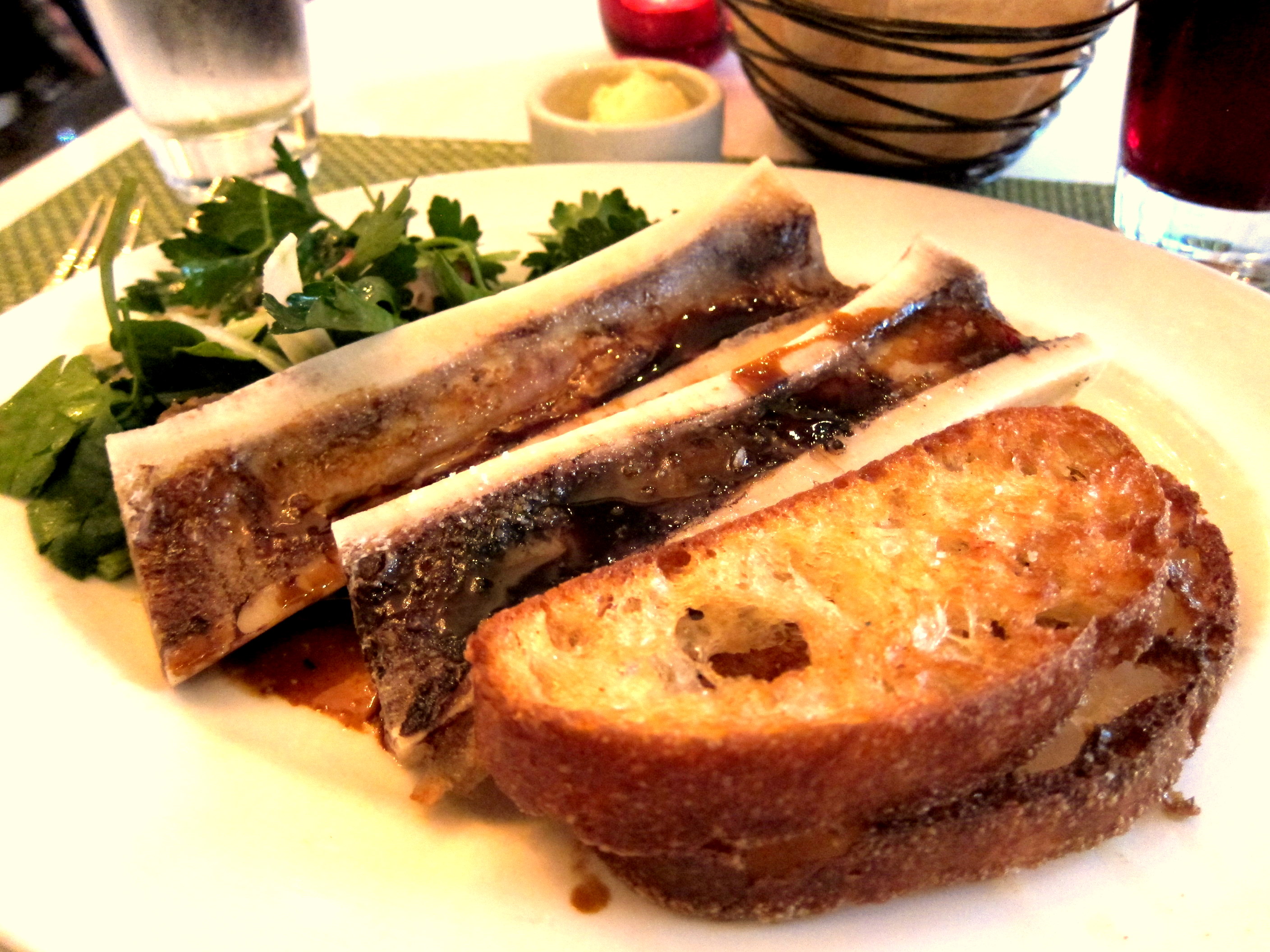
Appetizer: roasted bone marrow on crunchy fried bread with parsley and pickled shallot salad ($9). The bone marrow is rich and fatty, as expected from a cow leg bone. The salad is dressed in a light bordelaise, sweet, taut, and feisty. The fried toast is a guilty pleasure.


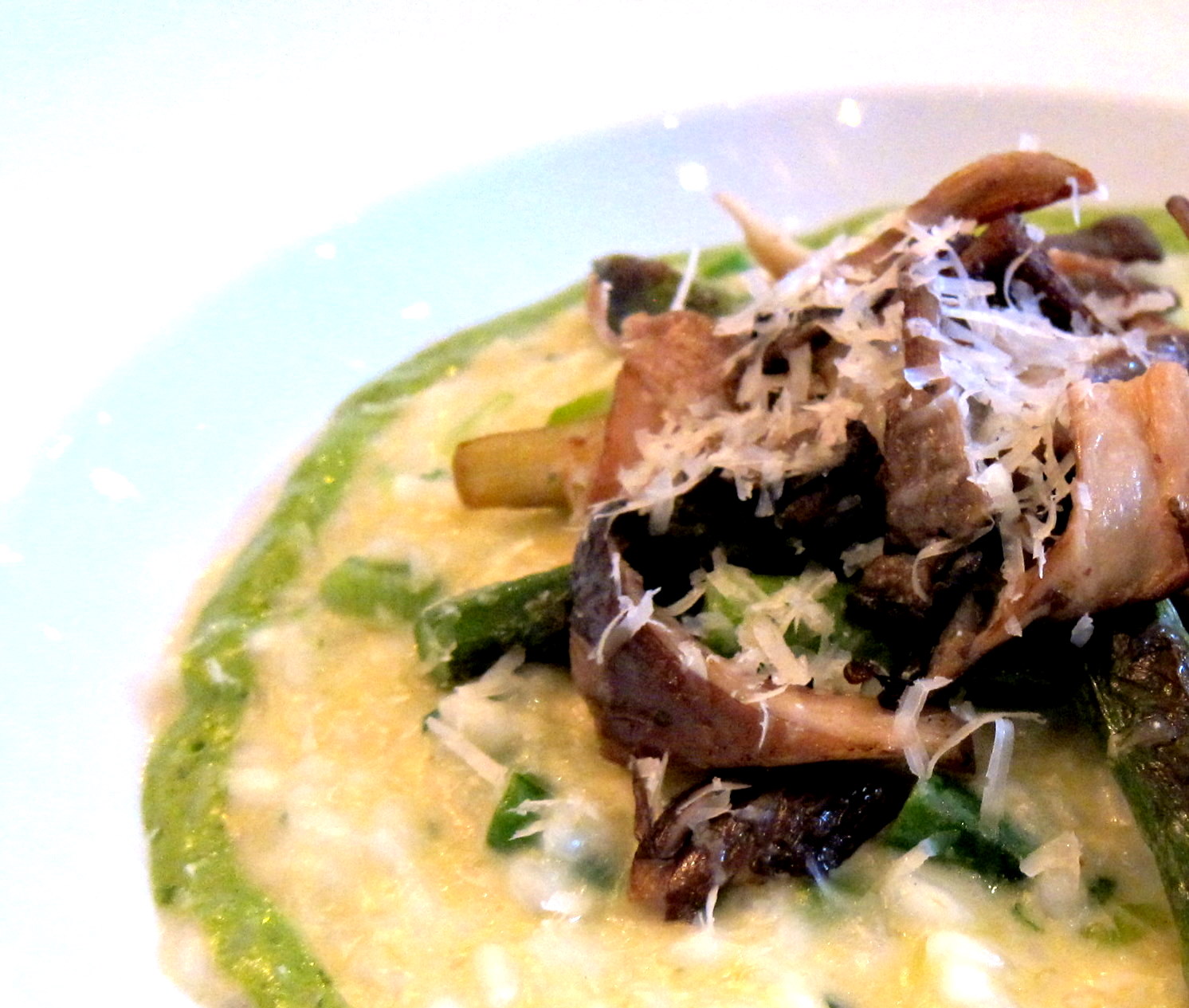
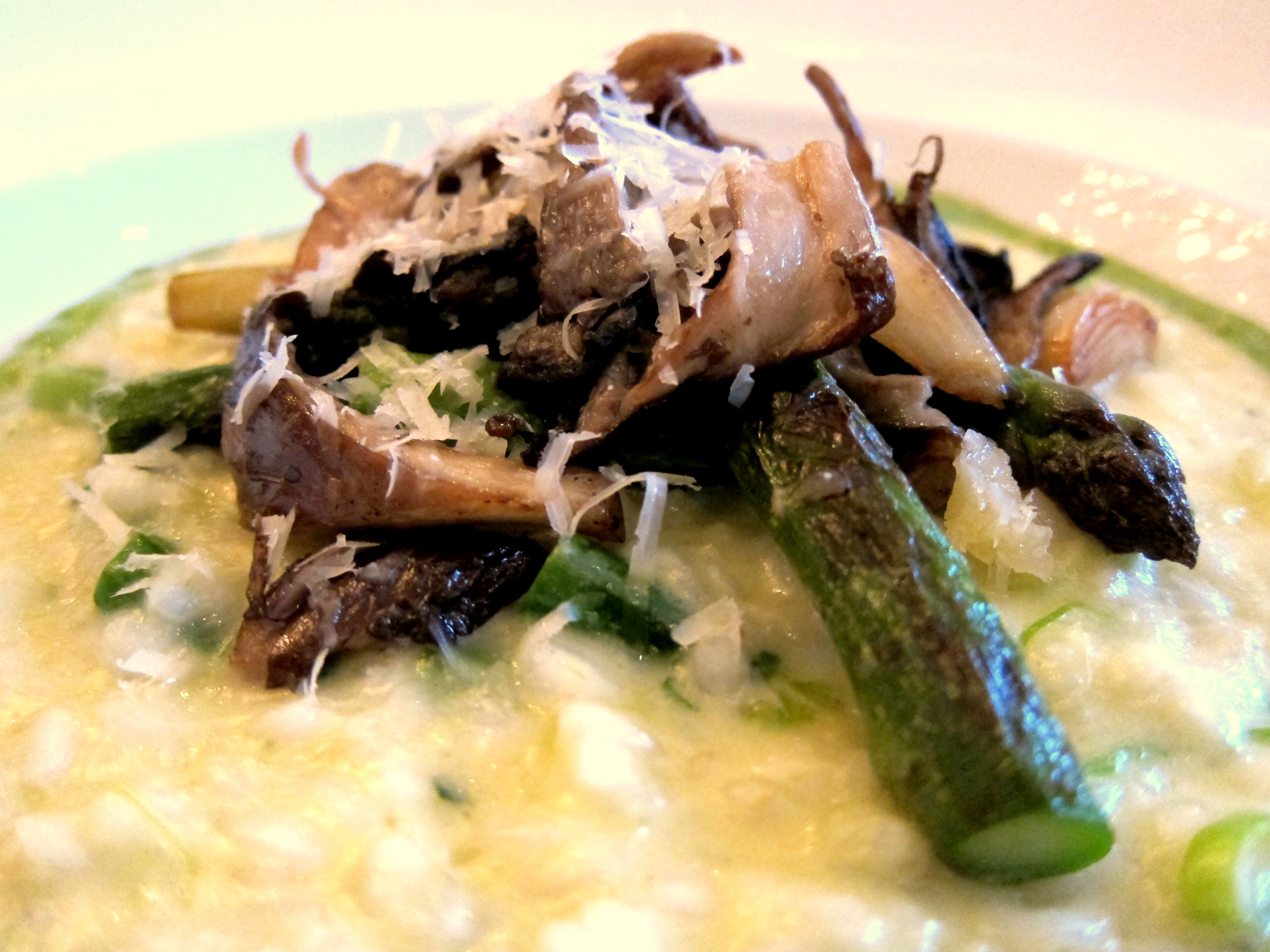
Main: creamy green garlic risotto with grilled asparagus, oyster mushroom, shallot, and pesto aioli ($16). The ladies next to me got the prix fixe, which also featured this risotto with shrimp, and they kept complimenting how good it was. The charred, salted touch of the vegetables is the highlight.


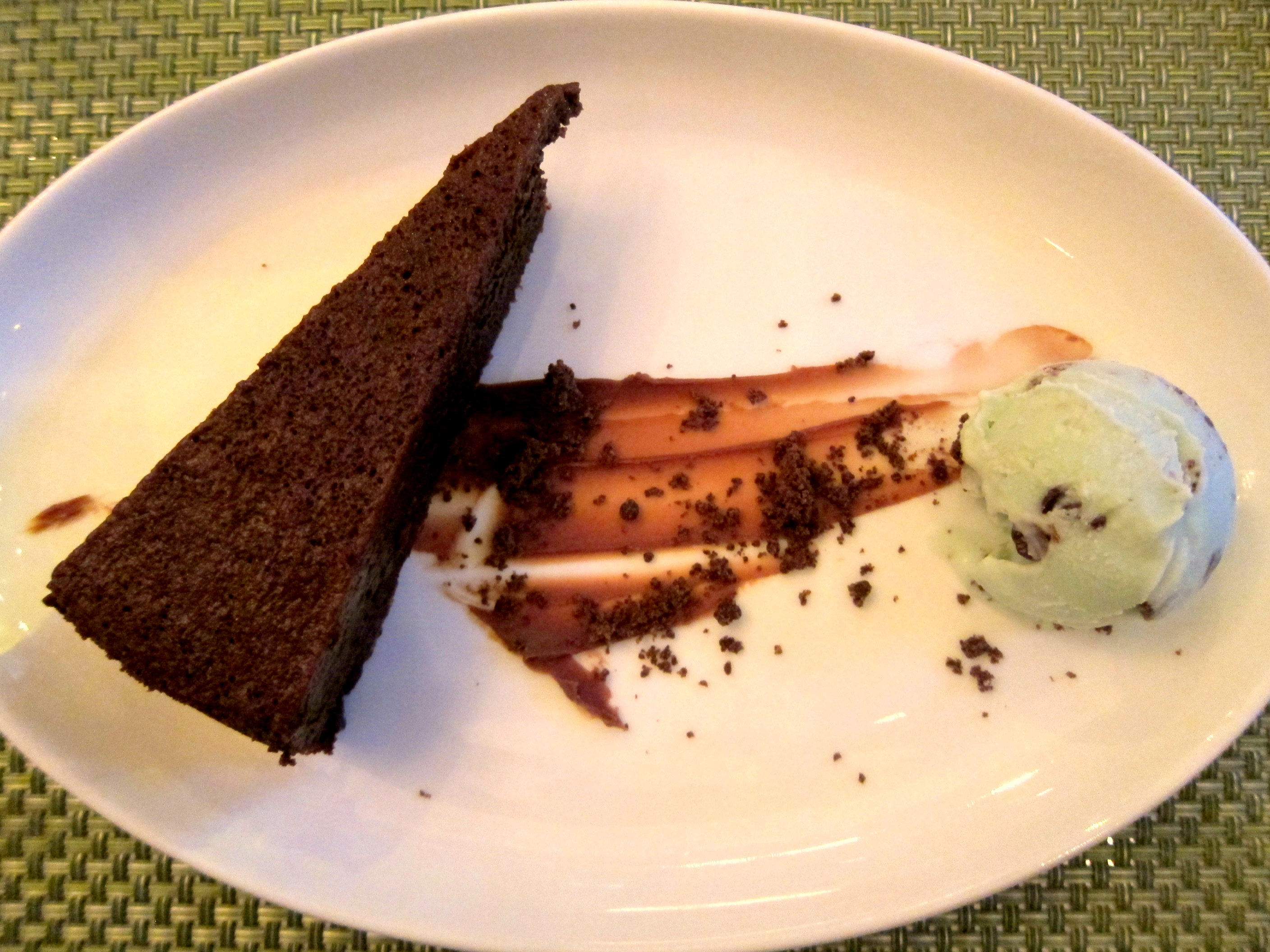
Dessert: dark chocolate torte with a milk chocolate ganache and mint chocolate chip ice cream ($8). I asked my server what was the least sweet desserts tonight (the other choices were butterscotch pudding, walnut carrot cake, and coconut cream pie), and he suggested this torte. It is rich, but it is indeed not too sweet. My only complaint is that the ice cream scoop is too far away from the cake, making it difficult to get both cake and ice cream in one bite. At the end, I had a puddle on my plate.


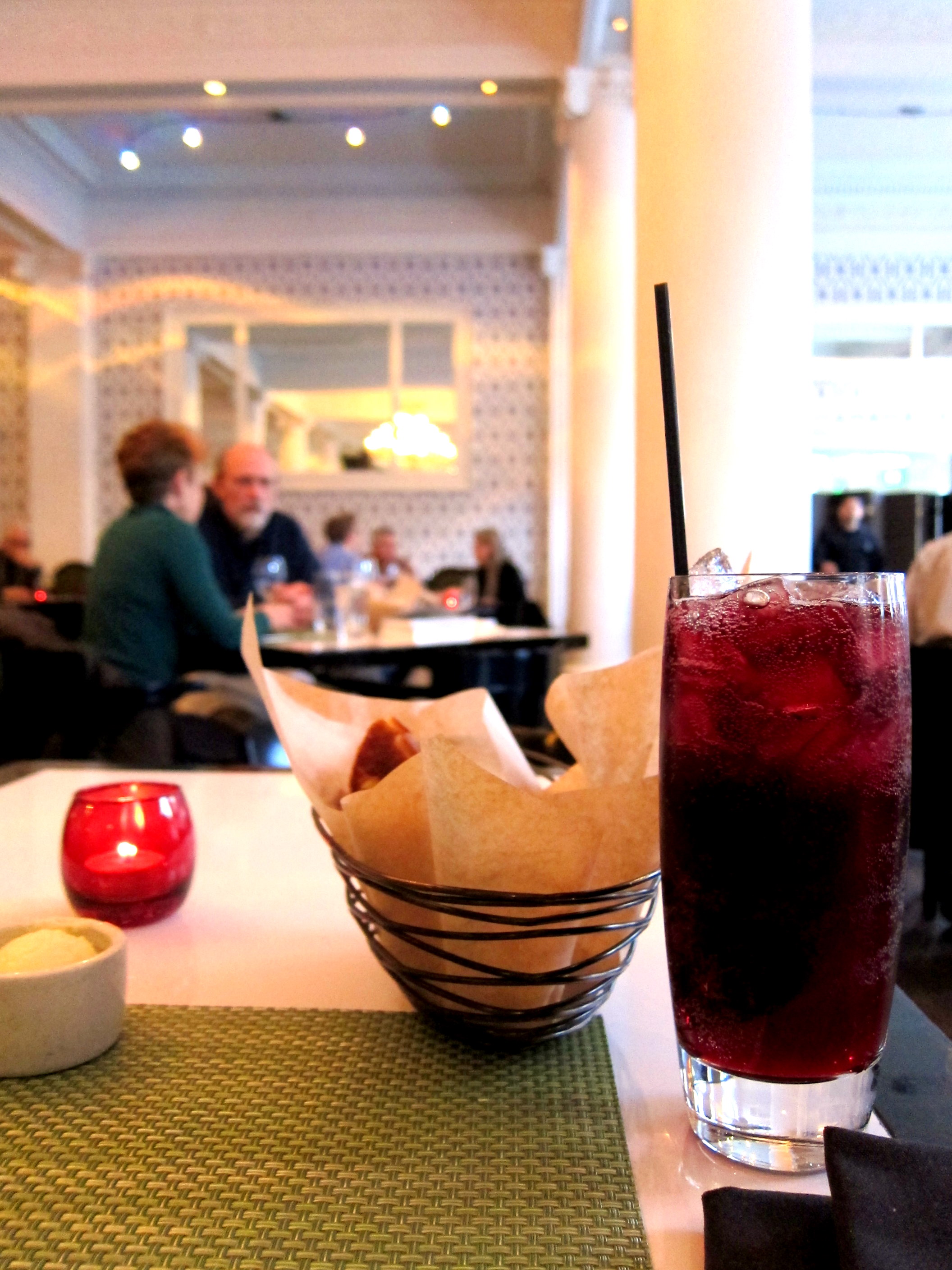
The starter bread is crunchy on the outside, soft and airy on the inside, and perfect without butter. Now that I think about it, FIVE must be quite good with breads: waffle, starter bread, and the fried toast with bone marrow are proof. Because the restaurant had run out of pear sparkle, I might have made a mistake ordering the blood orange sparkle instead of the apple kind; I also chose the pretty simple stuff, nonetheless, it was a pleasing meal. So the more interesting things like monkfish wrapped in prosciutto or herb roasted pork loin might be even better. 😉

Address: FIVE Restaurant and Bar
2086 Allston Way,
Berkeley, CA
(510) 225-6055

Money matter: 3-course dinner for one – $40.28

Sencha and Mochi

March 19, 2012 By: Mai Truong Category: California - The Bay Area, Drinks, Japanese, sweet snacks and desserts, Vegan


Sencha in yunomi, a typical Japanese thick, tall teacup, whose name I’ve yet to find out, accompanied by a matcha mochi, whose fillings include: satsuma sweet potato, red bean paste, orange juice and walnuts. (Thanks Masaaki for telling me the name of the cup in Japanese.)

The mochi, handmade and delivered by a mochi lady every week to Teance, is refreshing both in look and in taste. The green tea flavored chewy coat is cool and light. The filling, although dominated by red bean, is not too sweet. I opted for one with less nuts because I didn’t think that I would want such contrast in texture. The mochi lady is a small, timid Asian lady, who smiled so happily when I described her mochi as “refreshing”, and who showed me that I should dip my fork into tea or water before cutting the mochi so that it would not be sticky. Yes, it worked, the fork went straight through with such ease. Now it makes sense why we can chew without the mochi sticking to the teeth.

This is my second time having sencha, if we don’t count the time I had genmaicha at Ippuku (genmaicha is lower-grade sencha with roasted rice), and the seaweed taste of sencha has grown on me. However, I am not convinced that the sencha is a good match for the mochi. Both are good by themselves, but I think the sencha should be an entree tea, not a dessert tea. Its seaweed taste would enhance something savory. A mochi would fare much better with a light, floral tea that isn’t too dry, like Yellow Gold, Royal Courtesan, or Darjeeling First Flush.

Sidenote: this sencha at Teance is the hand-picked Yakichi sencha, named after the farm “founded by Mr. Shimooka[…]. Yakichi sencha is an eight-time Ministry of Agriculture award winner, and also the winner of the highest agricultural award, the Imperial Prize. […] This traditional Japanese tea is shade grown (kabuse) in the mountains above Uji.” (description from Teance webpage)

Meghan explained to me that shade grown leaves are of higher quality because when the plant is shaded, it has to produce more chlorophyll to balance the lack of sunlight, resulting in a greener leaf (or maybe a darker green leaf?). According to The Tea Detective, “the increased green chlorophyll pigment changes the natural balance of caffeine, sugars, and flavanols in the leaf. It also increases L-theanine, an amino acid found naturally in tea, that adds a unique vegetal quality to the flavor, and helps counteract some of the stimulant effects of caffeine, thus having a relaxing effect on the body, yet an alert state of mind. Photosynthesis reduces L-theanine and increases tannins, the compounds responsible for teas astringency.” Basically, kabuse (shade grown tea) is sweeter, less bitter, and less dry.

Address: Teance Fine Teas Store
1780 Fourth Street
Berkeley, CA 94710
510-524-2832
Money matter: the mochi is $4 each. A little pricey, but somehow it seems reasonable to me.

This post also appears in Tea and Mai