
Matcha and kabocha mochi
Another pairing of Japanese tea and Japanese snack. A bowl of matcha is supposed to suffice your daily vegetable need because you’re actually consuming the leaves themselves, in powder form.
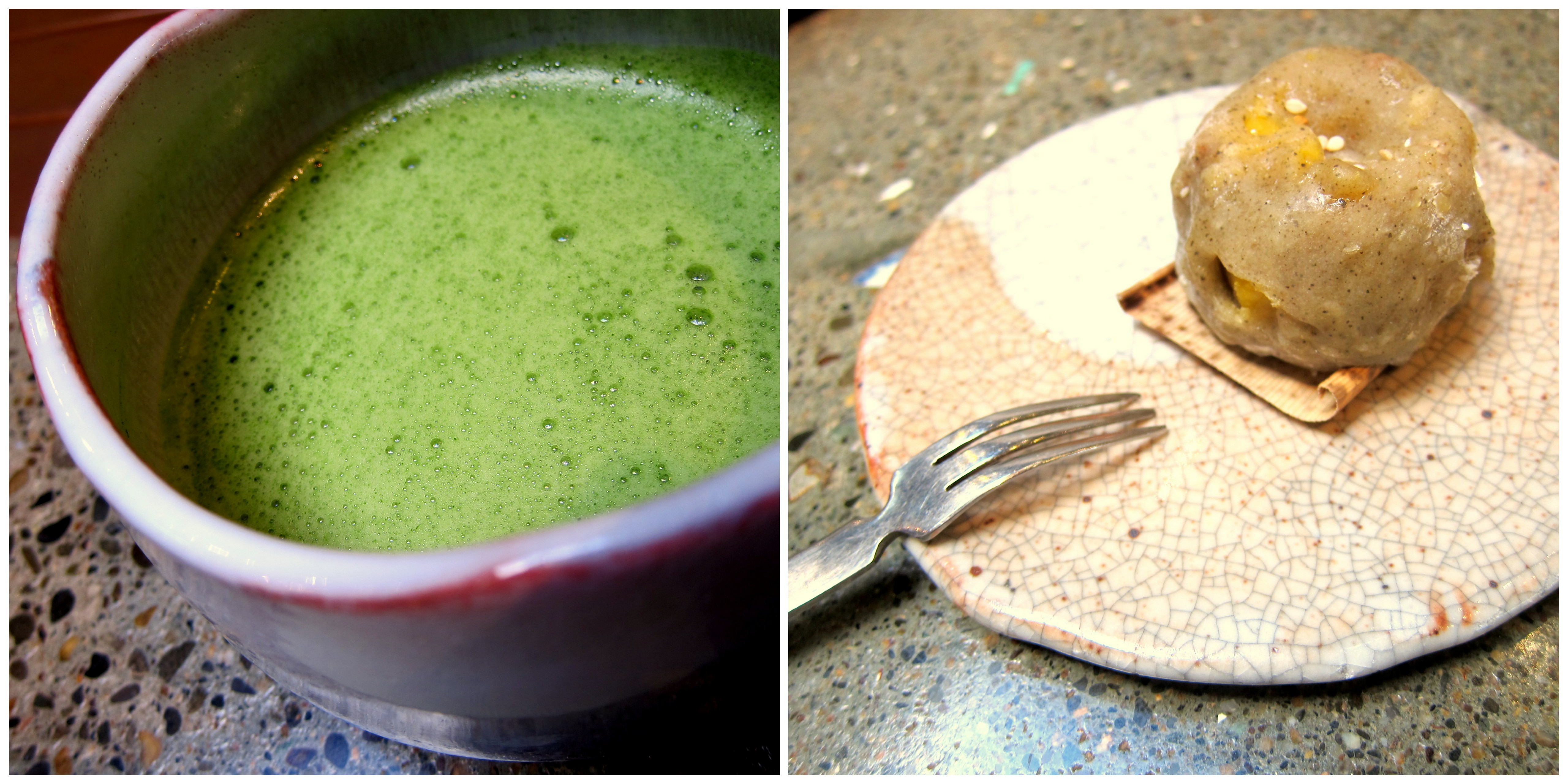
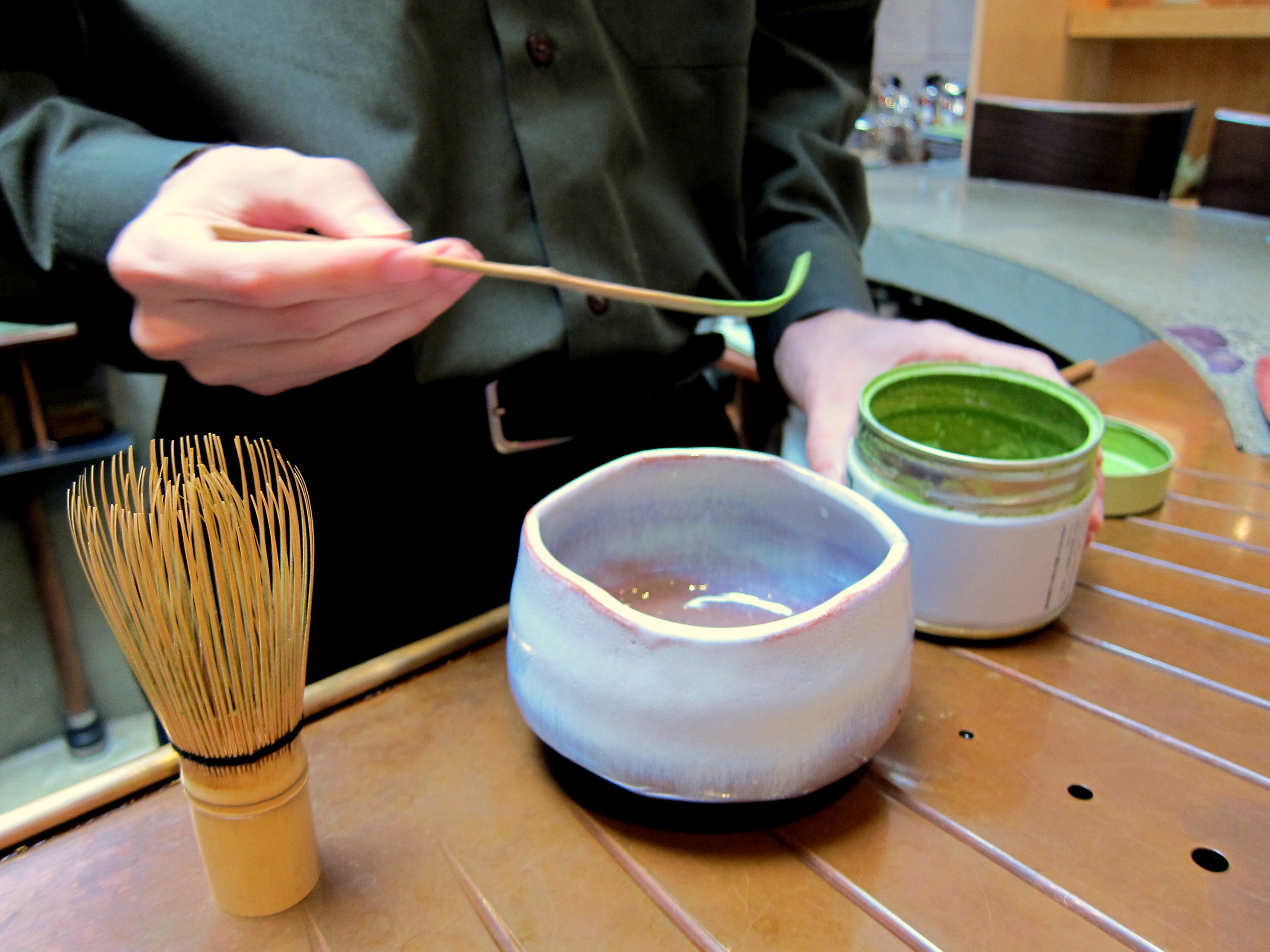
Matcha is served in a bowl. Mix water (205 F) with the matcha powder using a whisk, whose look reminds me of a yard broom in Vietnam, and there is no steeping time to watch out for, which I like. The whisk makes the tea foam up. The lady sitting next to me said that the foam turns her off visually, but actually the foam adds an interesting dimension to the tea. For one, it abates the seaweed taste because the foam is a cushion layer between the tea and the palate, preventing the palate to fully experience the tea. Secondly, together with the powder, it enhances the nuttiness of the tea. Near the end of the bowl, when there is more powder, the tea is extra nutty, akin to mungbean milk.
Unfortunately, this nuttiness does not enhance the nuttiness of the kabocha mochi but competes with it. The mochi this time has a hojicha-flavored coat and a filling of cinnamon, walnut and kabocha (a kind of winter squash, also known as the Japanese pumpkin). Contrary to my hesitance, the cinnamon was too faint to be detected (no, I don’t like cinnamon), and the mochi is mild overall. It is not too sweet.
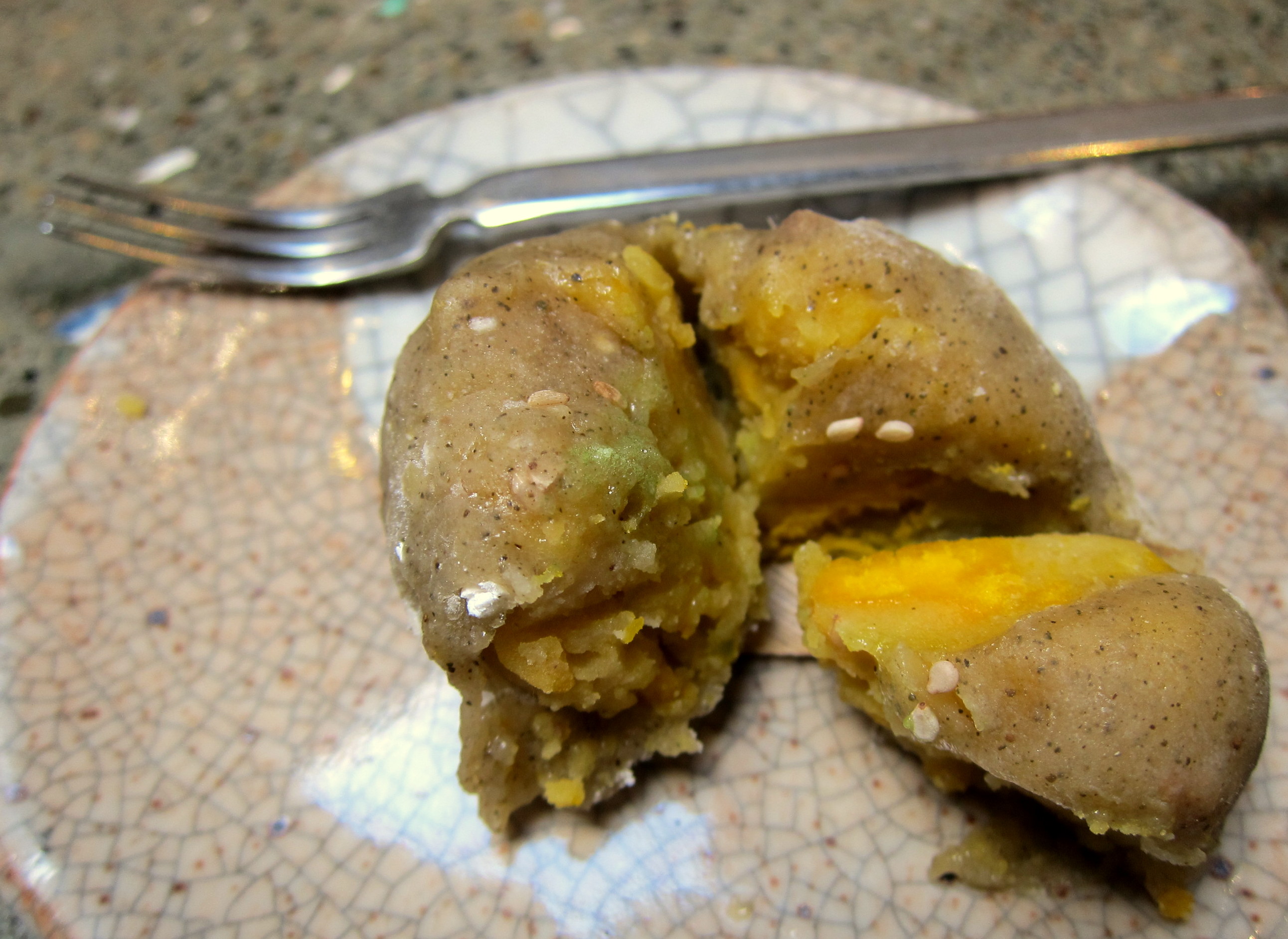
Instead of being steamed-dried like other Japanese teas, hojicha is roasted in porcelain over charcoal, so the green tea becomes much milder than sencha. The kabocha is similar to a plain, grainy, white sweet potato in both taste and texture. (The red mushy sweet potato is sweeter than the white kind.) Because both the tea and the snack are grainy, matcha-kabocha mochi is not a good match together, although I really like them both separately.
A better pairing would be matcha with matcha mochi, and sencha with hojicha-kabocha mochi, because you want something sweet tempered by something a tad bitter, and something clear with something nutty. Nonetheless, I still think that sencha is an entree tea, not a dessert tea. So the hojicha-kabocha mochi would be better enhanced by something strong in fragrance like jasmine green tea.
This post also appears on Tea and Mai


Very interesting subject, thanks for posting.
1Definitely, what a magnificent website and revealing posts, I definitely will bookmark your blog.Best Regards!
2My brother recommended I might like this website. He was entirely right. This publish truly made my day. You cann’t consider simply how so much time I had spent for this information! Thank you!
3you’re in point of fact a just right webmaster. The website loading speed is amazing. It seems that you’re doing any distinctive trick. Moreover, The contents are masterwork. you have performed a fantastic job on this matter!
4Attractive section of content. I just stumbled upon your site and in accession capital to assert that I get actually enjoyed account your blog posts. Any way I’ll be subscribing to your augment and even I achievement you access consistently fast.
5You should take part in a contest for one of the best blogs on the web. I will suggest this web site!
6Merely wanna state that this is extremely helpful, Thanks for taking your time to write this.
7I’ve been exploring for a little for any high quality articles or blog posts on this sort of area . Exploring in Yahoo I at last stumbled upon this web site. Reading this information So i am happy to convey that I have a very good uncanny feeling I discovered exactly what I needed. I most certainly will make sure to do not forget this website and give it a look on a constant basis.
8I have learn a few good stuff here. Certainly price bookmarking for revisiting. I surprise how so much effort you set to create such a wonderful informative web site.
9he blog was how do i say it… relevant, finally something that helped me. Thanks
10I enjoy the efforts you have put in this, regards for all the great content.
11whoah this weblog is great i love reading your articles. Stay up the great work! You recognize, many persons are looking around for this information, you can help them greatly.
12I’m really loving the theme/design of your website. Do you ever run into any internet browser compatibility problems? A small number of my blog audience have complained about my blog not working correctly in Explorer but looks great in Chrome. Do you have any ideas to help fix this problem?
13Hi, just required you to know I he added your site to my Google bookmarks due to your layout. But seriously, I believe your internet site has 1 in the freshest theme I??ve came across. It extremely helps make reading your blog significantly easier.
14Hey! Would you mind if I share your blog with my twitter group? There’s a lot of folks that I think would really enjoy your content. Please let me know. Many thanks
15Hey, you used to write fantastic, but the last few posts have been kinda boring… I miss your super writings. Past few posts are just a little out of track! come on!
16Hi! I know this is kinda off topic but I was wondering which blog platform are you using for this website? I’m getting sick and tired of WordPress because I’ve had problems with hackers and I’m looking at options for another platform. I would be great if you could point me in the direction of a good platform.
17