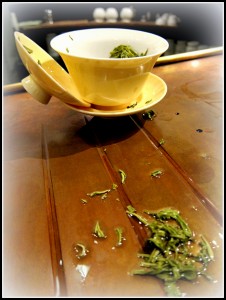
Party like spring harvest time
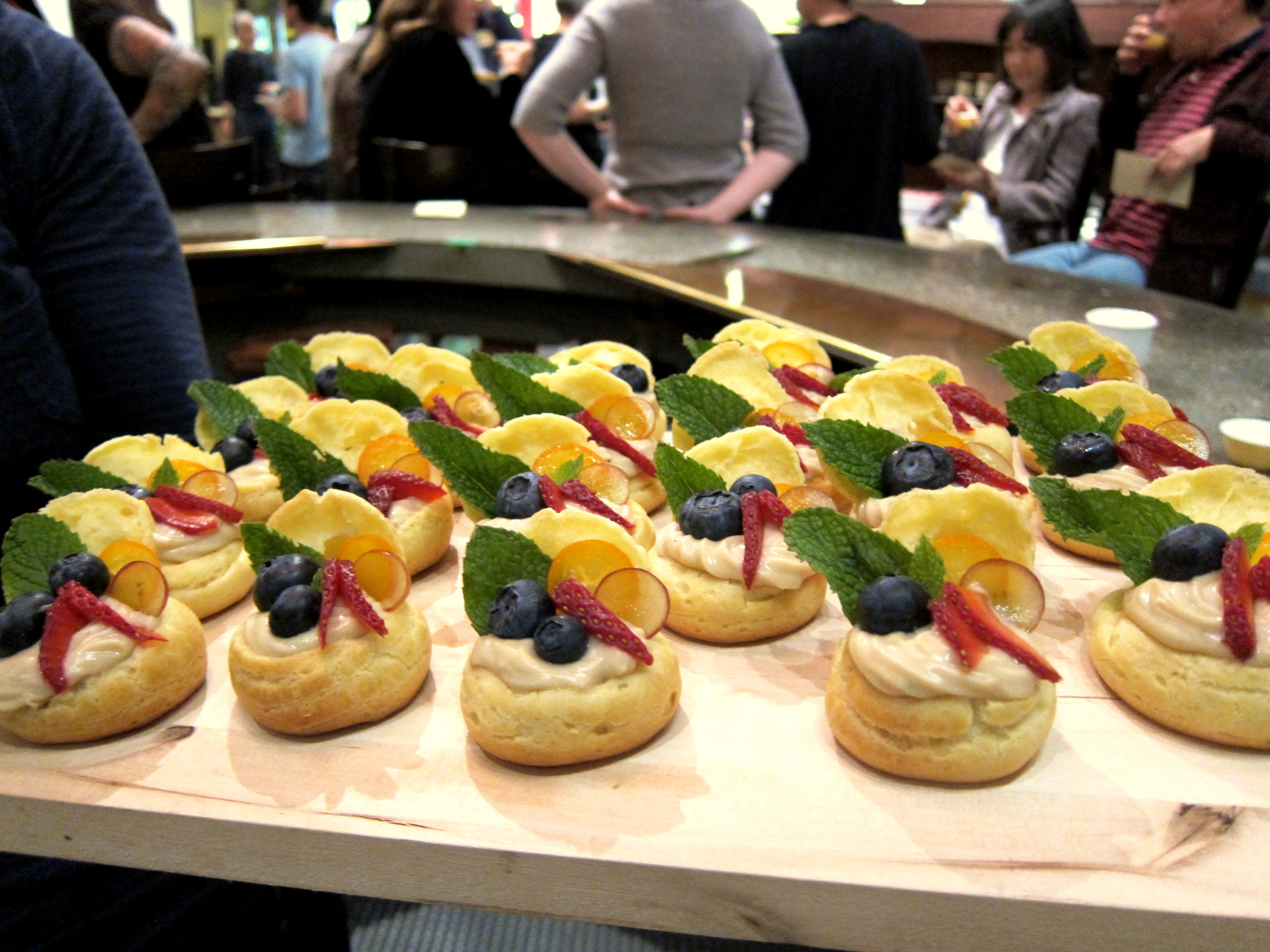
And eat an amazing cream puff. (Cream puffs >>>>>>>>>>>>>>> Cupcakes) Click to see my post on the Spring Harvest Tea Party at Teance tonight. We drank some eye-opening teas, literally and figuratively.
And eat an amazing cream puff. (Cream puffs >>>>>>>>>>>>>>> Cupcakes) Click to see my post on the Spring Harvest Tea Party at Teance tonight. We drank some eye-opening teas, literally and figuratively.
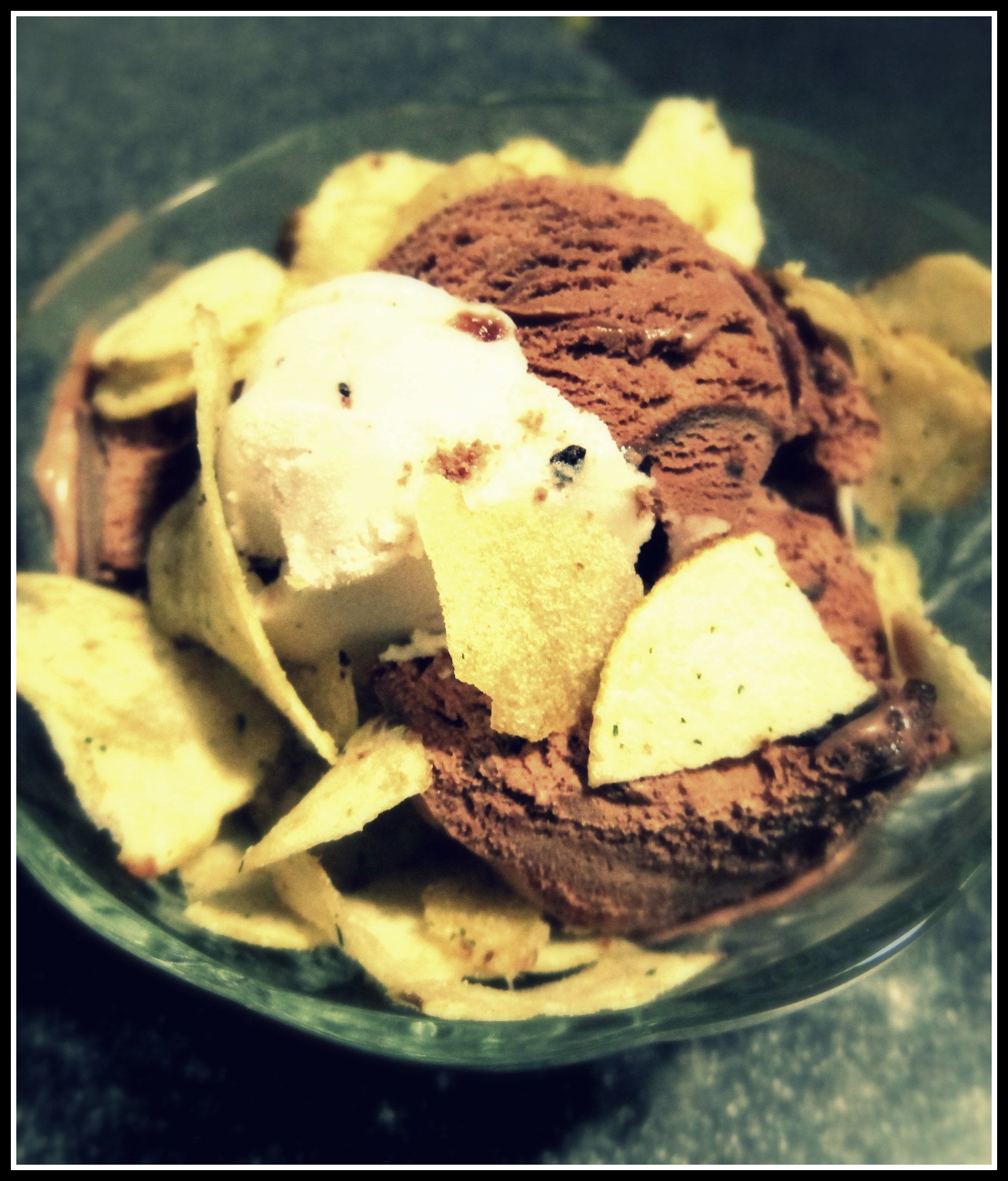
– 2 scoops Dreyer’s Double Fudge Brownie ice cream
– 1 scoop Ben & Jerry’s Cherry Garcia froyo
– A handful of potato chips
Use the potato chips to scoop the ice cream. They may break, in which case lick your finger and get a spoon.
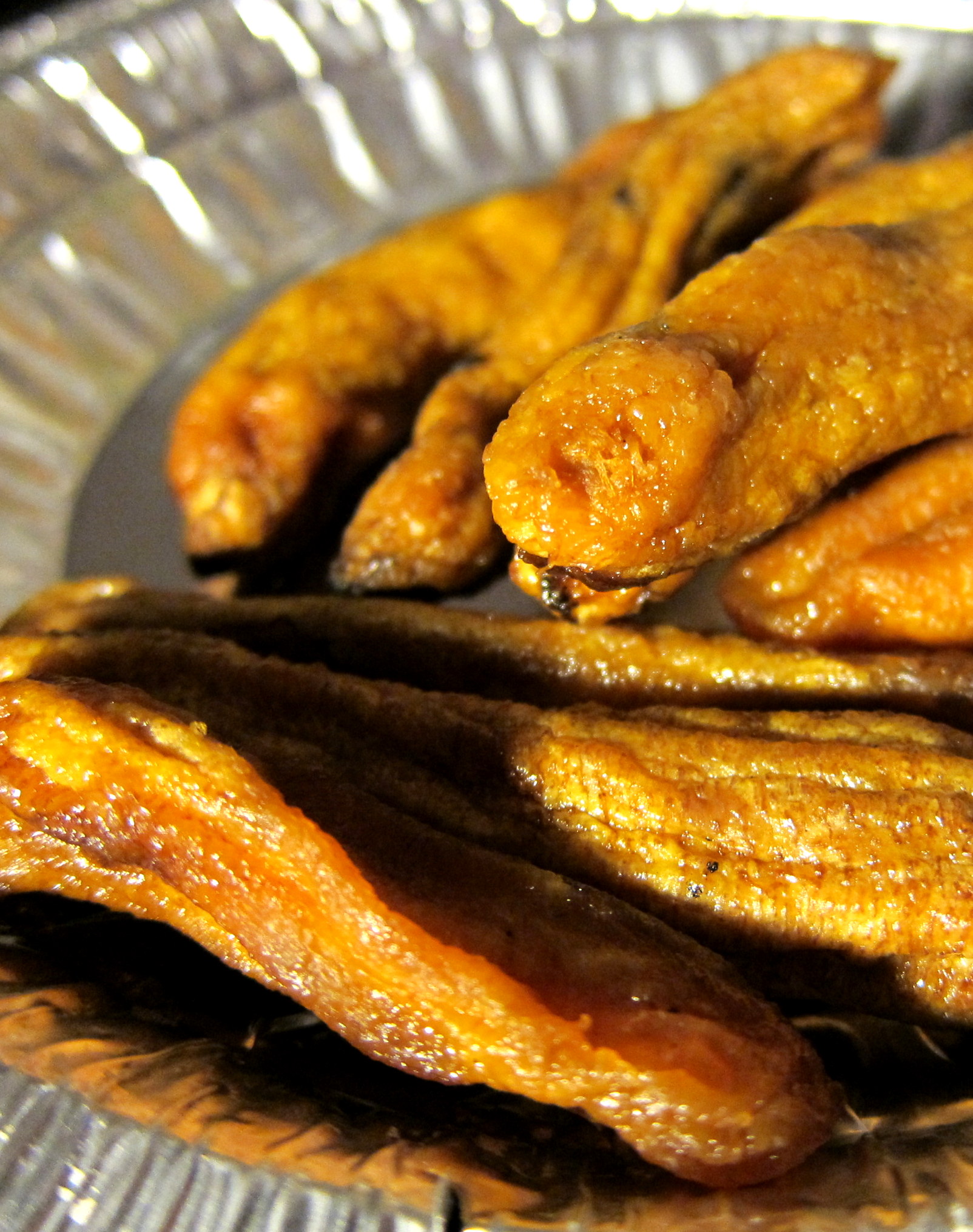
They aren’t banana chips. Those are crunchy, not very sweet, and make you thirsty. These are chewy and packed with honey sweetness. They’re as addicting as soft-baked chocolate chip cookies and as healthy as dried blueberries. At least I like to think so when I nibble twenty of them in one go.
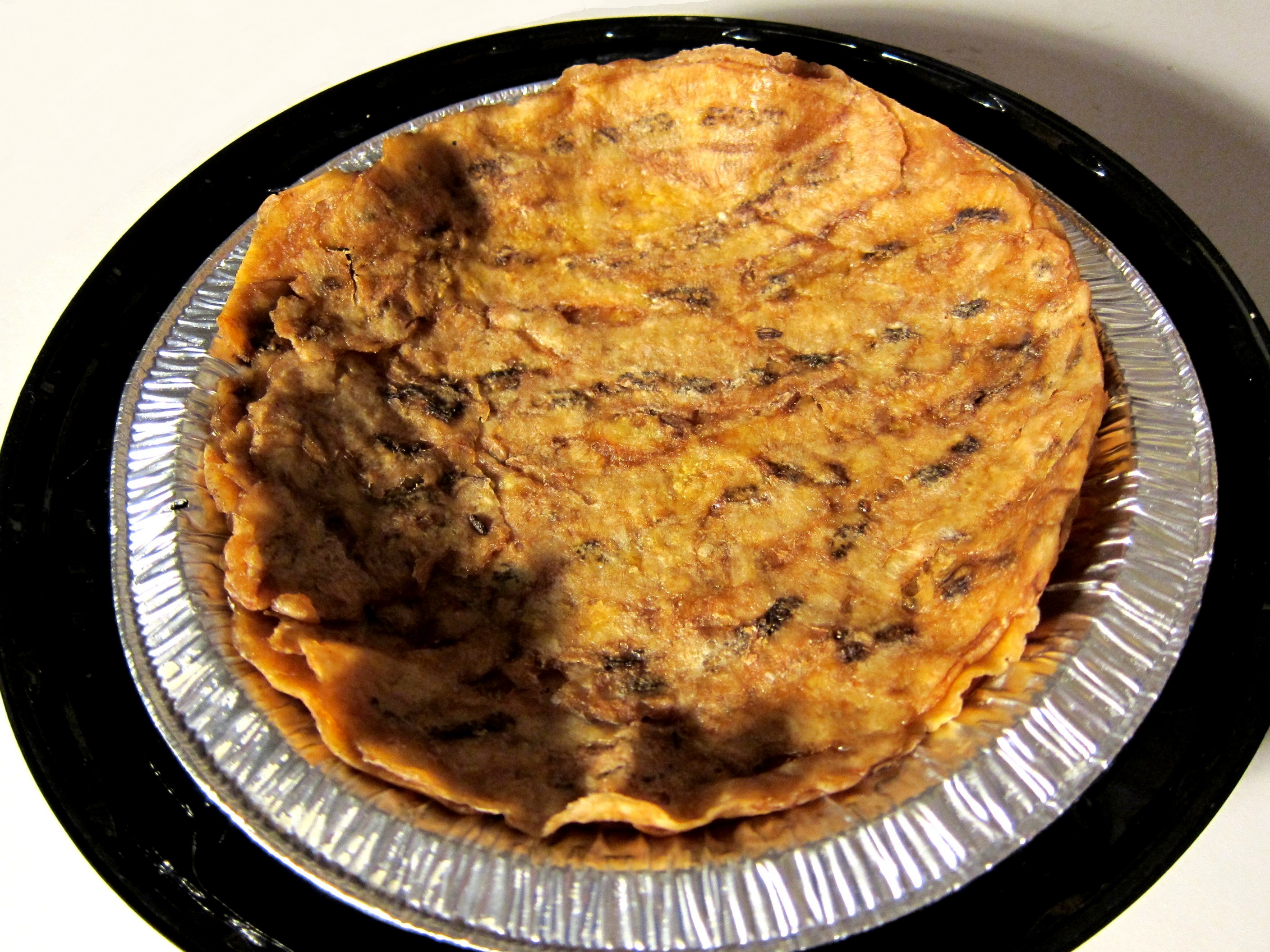
Chewy dried bananas come in many shapes and sizes. Some were pressed into flat sheets (3-5 bananas to make a sheet), laid on bamboo panels and dried under the sun. Cà Mau is known for this kind of chuối khô, the main ingredient of the other 101 banana snack things in the South, e.g., banana candies.
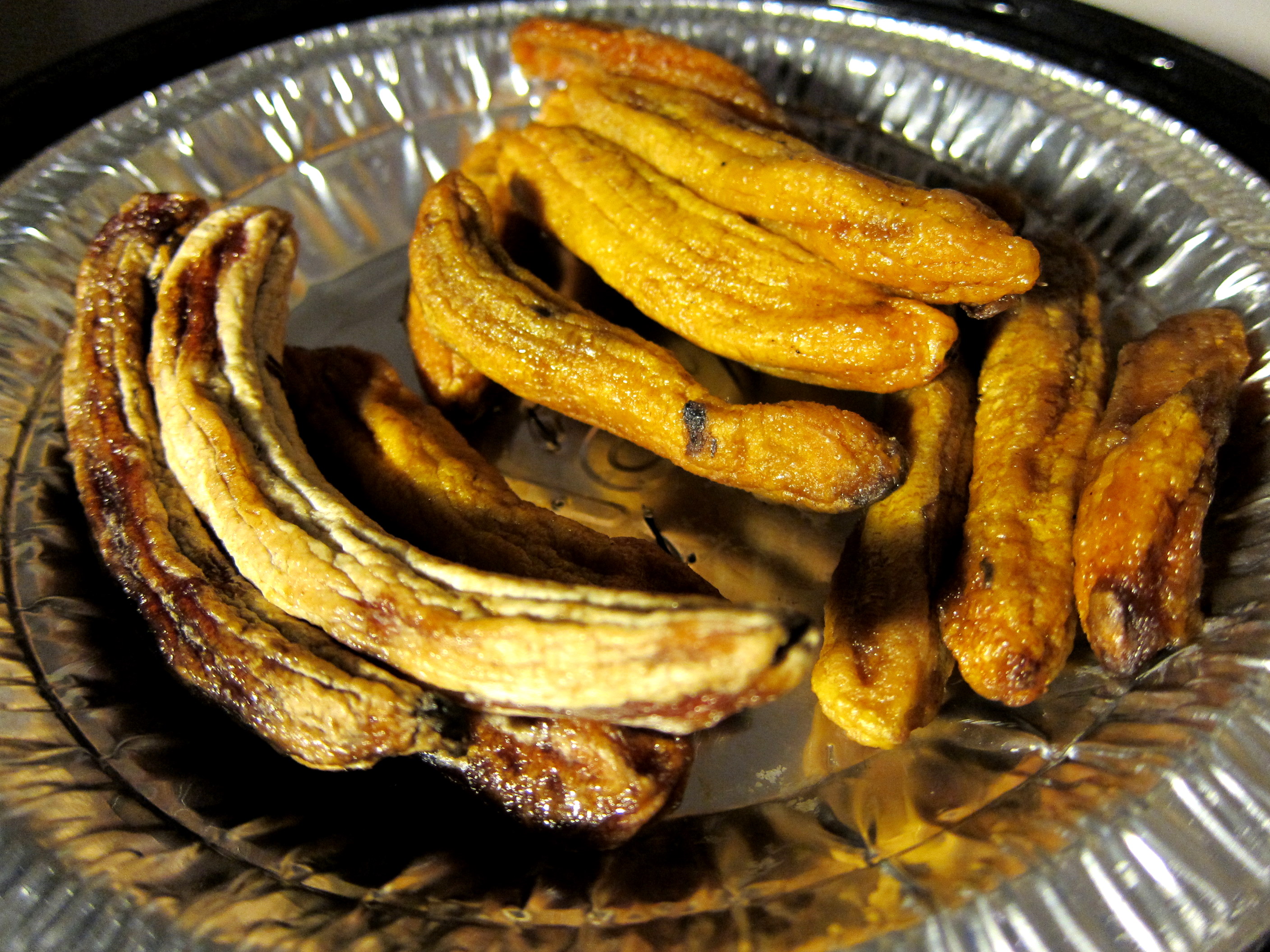
Other bananas are dried whole, and they turn into finger-long wrinkly banana fingers. Eurasia Delight sells two kinds: the normal chuối khô – more caramel looking, shinier, sweeter, shorter and chewier, the “organic” chuối khô – whiter, dryer, longer, not as good.
Flat or whole, I see a pot load of potential for these dried bananas in both the savories and the desserts. [To be continued]
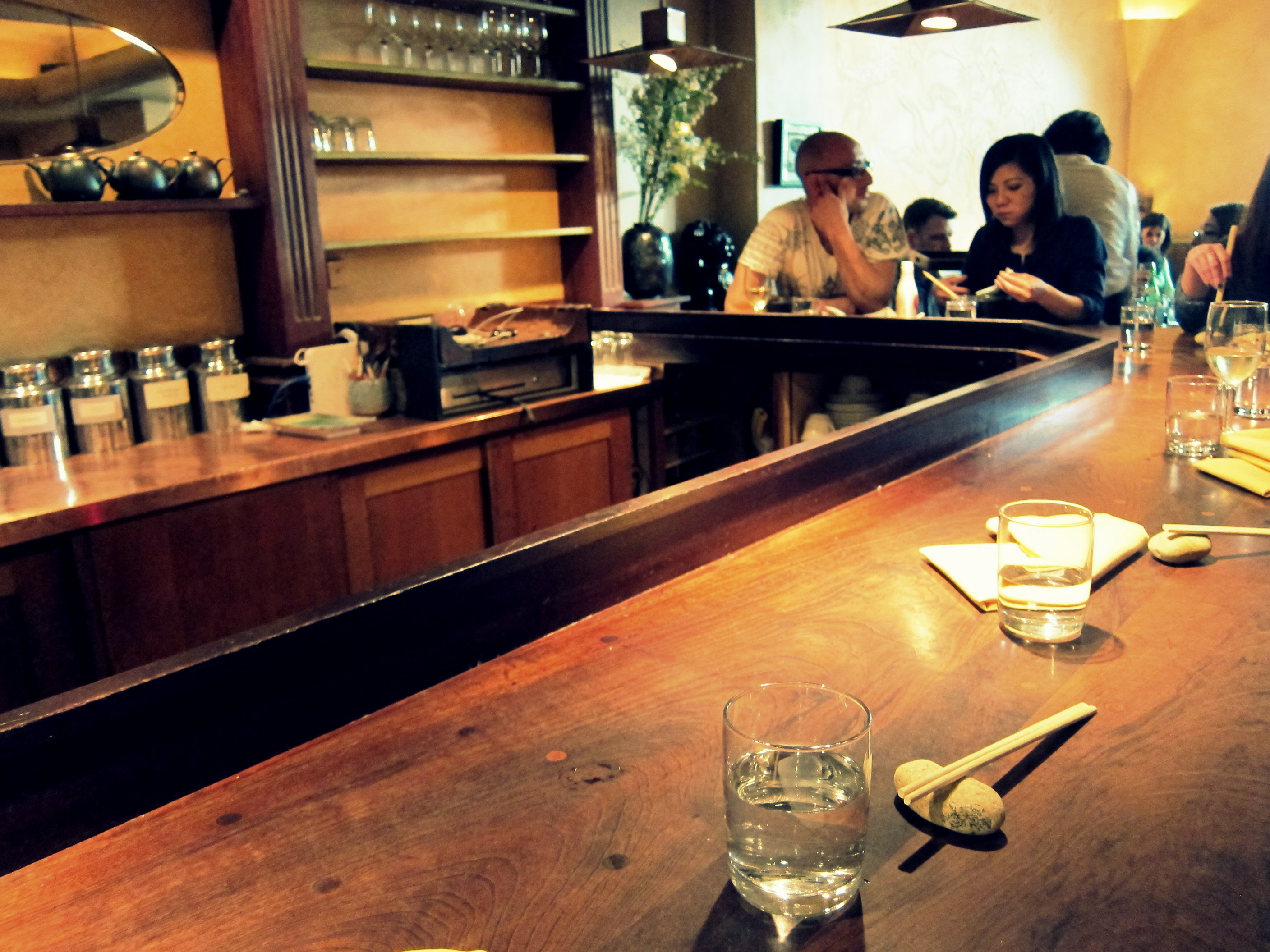
After a 5-course afternoon tea, the three of us felt our stomachs’ calling. The wind blew chilly moisture from the sea. A hearty dinner of noodle in hot broth would hit the spot, one that was saturated with oolong. Quite appropriately, we walked into O Chamé, meaning “eye of tea”(*) literally and “playful little one” colloquially. It’s Mother’s Day, no reservation, we couldn’t be any luckier that the guy found us three seats at the end of the bar.
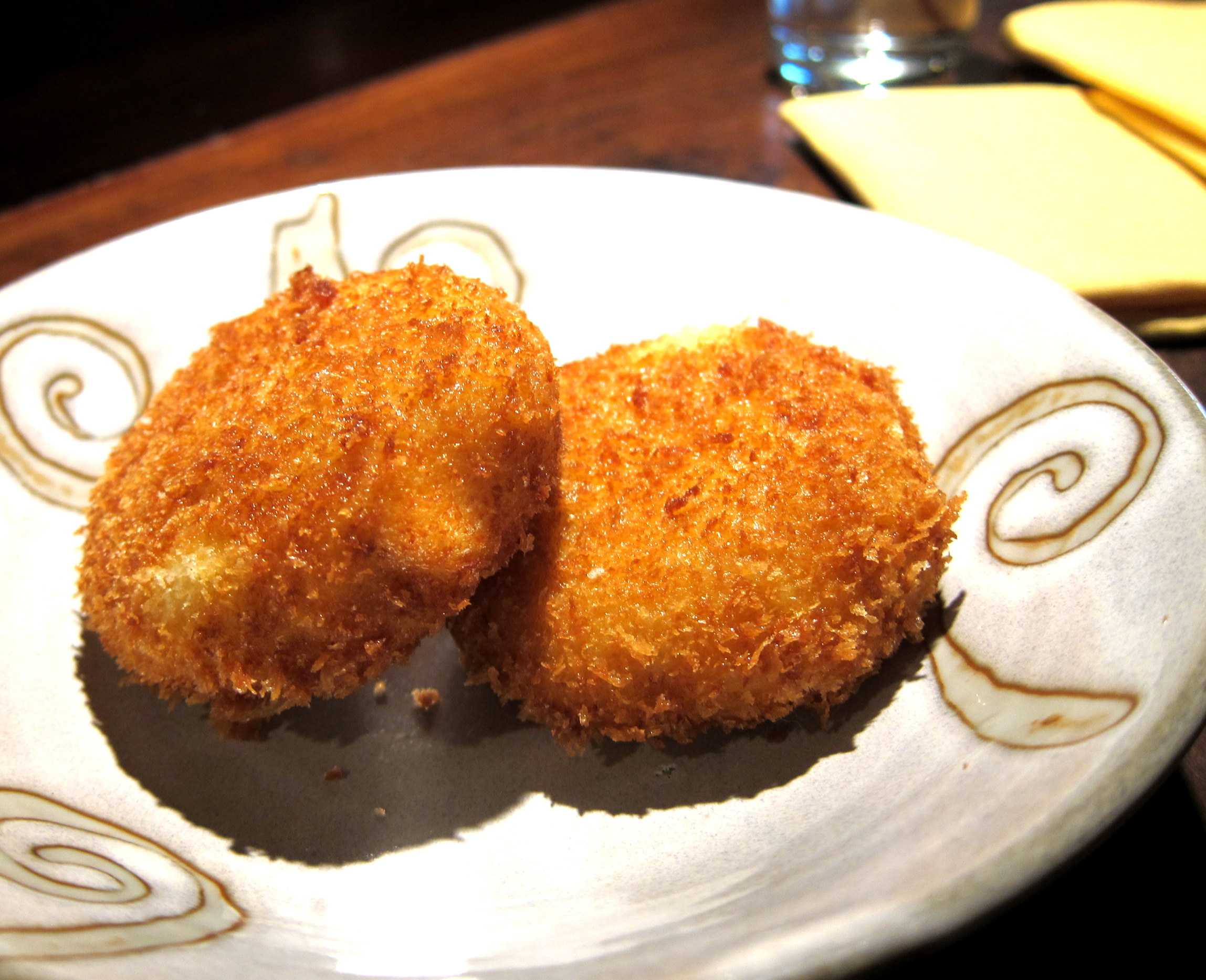
Of course, who would skip the appetizers. And of course, we couldn’t decide on just one appetizer, so we ordered three. The potato and snow crab croquette ($8.50), buttery but mild, tastes ten times better after a dip in the plumier-than-usual-and-not-too-sour tonkatsu sauce. Usually I don’t dip my stuff, but the sauce is a must here.
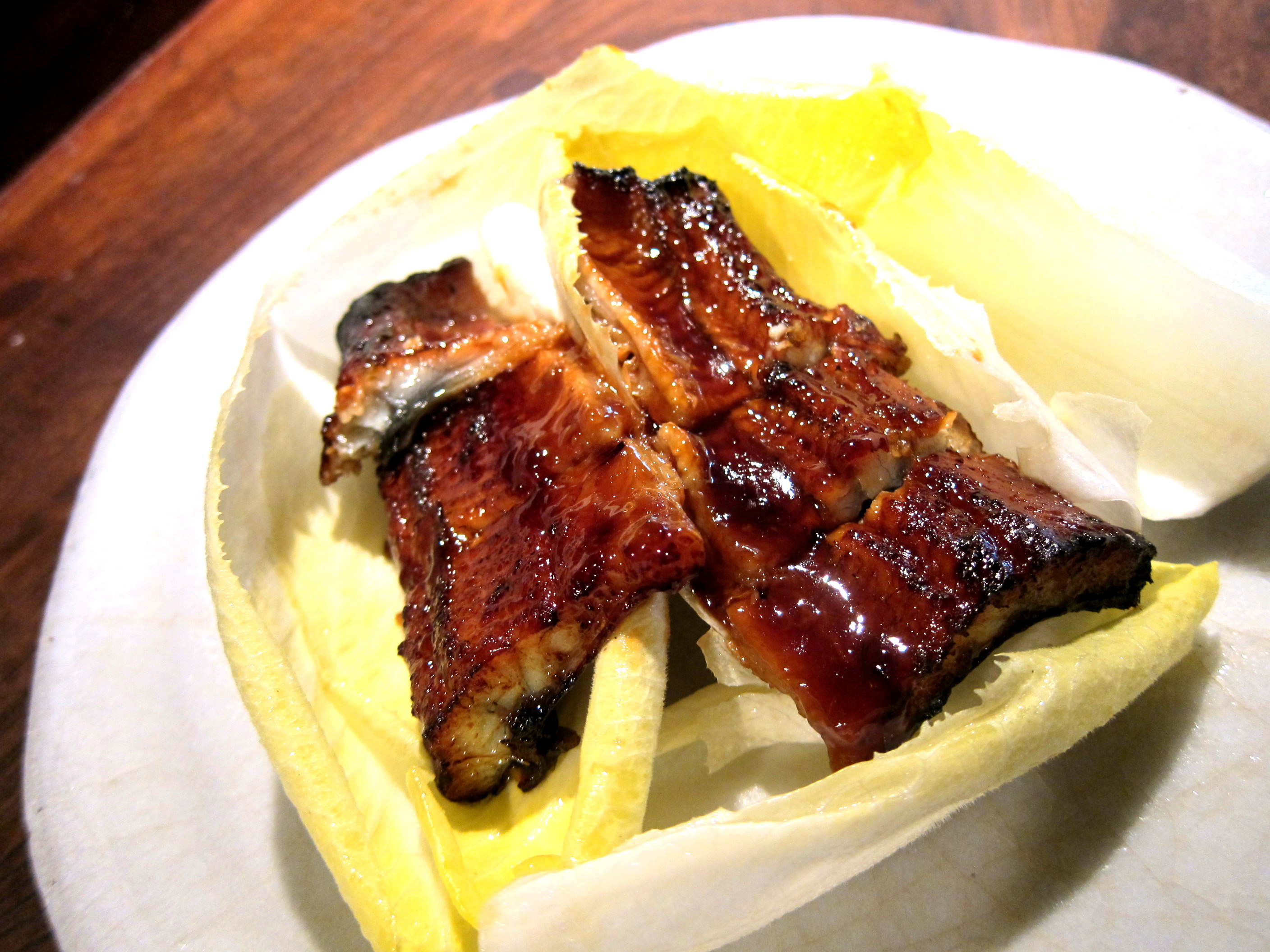
The grilled, caramelized eel ($10.50), Kristen’s choice, is great. Little Mom loves eel, and she would love this. Happy Mother’s Day, Mom! 🙂 A bite into the crisp endive releases a burst of sharp, almost minty air to balance the eel’s fatty sweetness.
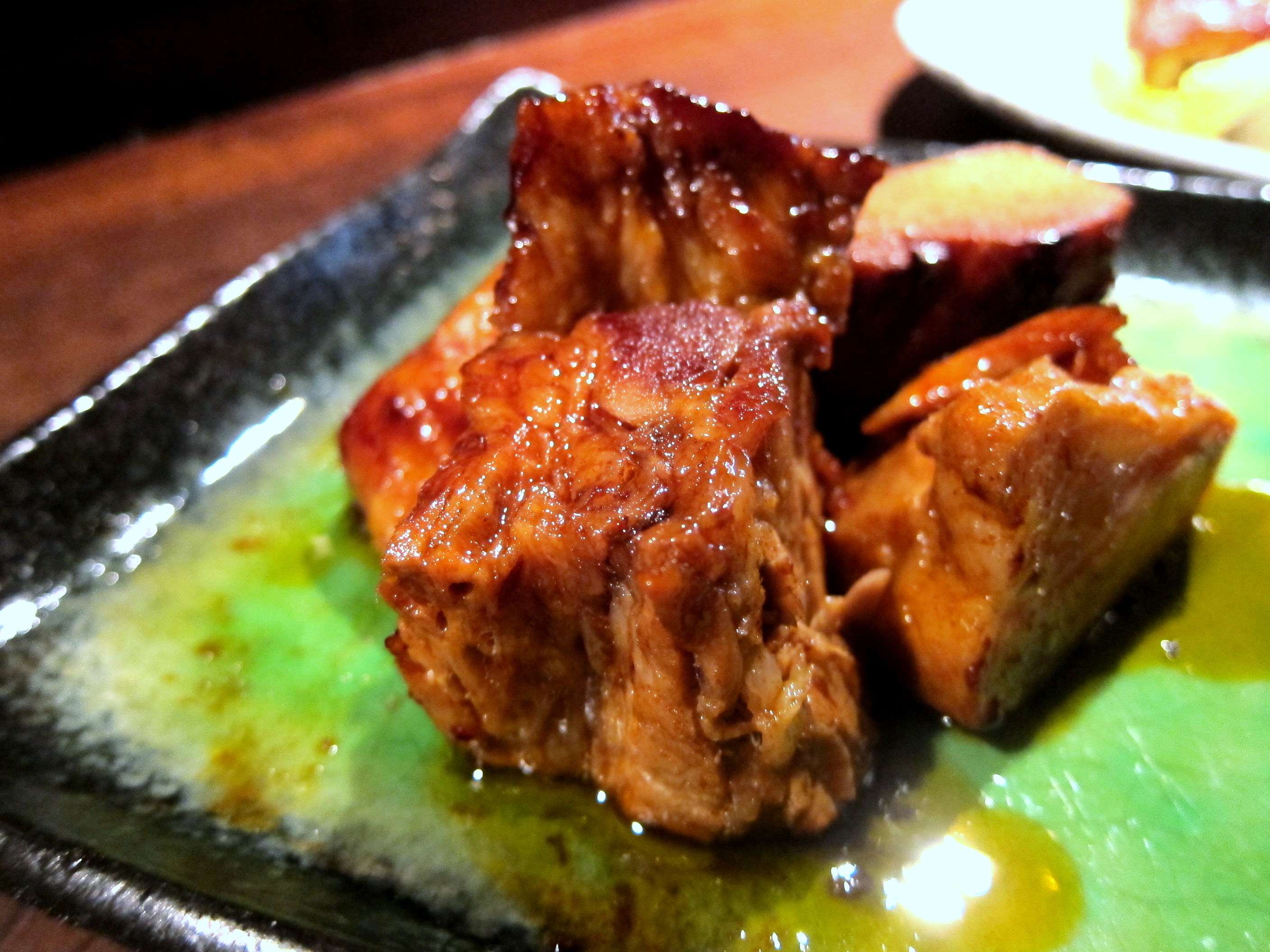
Another fatty, sweet thing is the braised pork ribs with ginger and lemon ($8.50), so sweet I could detect neither ginger nor lemon. The leaner pieces looked soft but not too thrilling. One must go for the pieces with lotsa fat and semi-charred ends, those are gold.
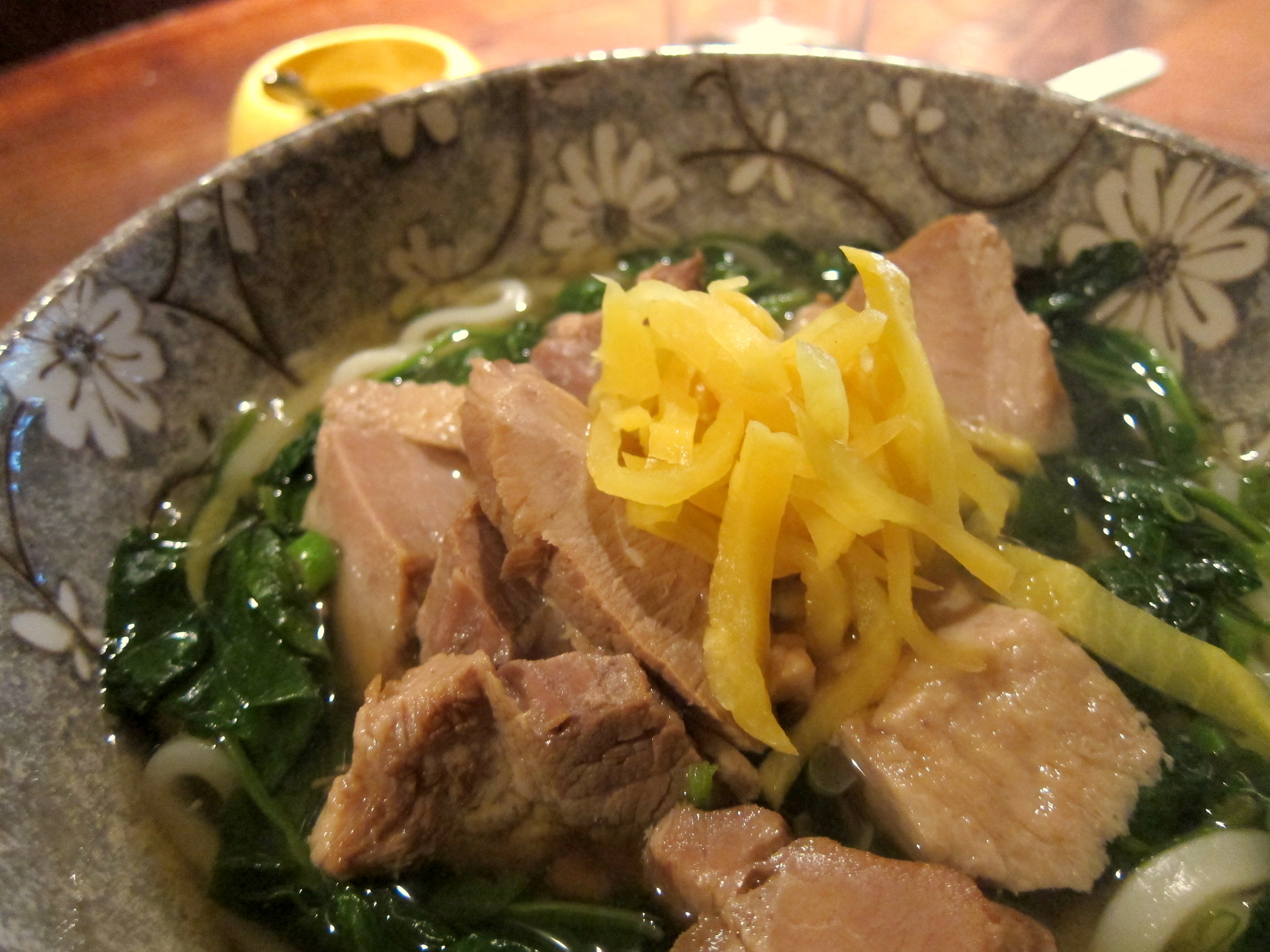
Then came the reason we decided on O Chamé: the noodle soups. The broth is light yet hearty. Actually, I’m still in tea mode so I can only think of the word “full-bodied” to describe it. Tender pork as the base, smooth spinach for texture, and thin strips of takuan (pickled daikon) to freshen it up. Both Tiana and Kristen settled on this pork shoulder udon ($14.50). My normal self would, too.
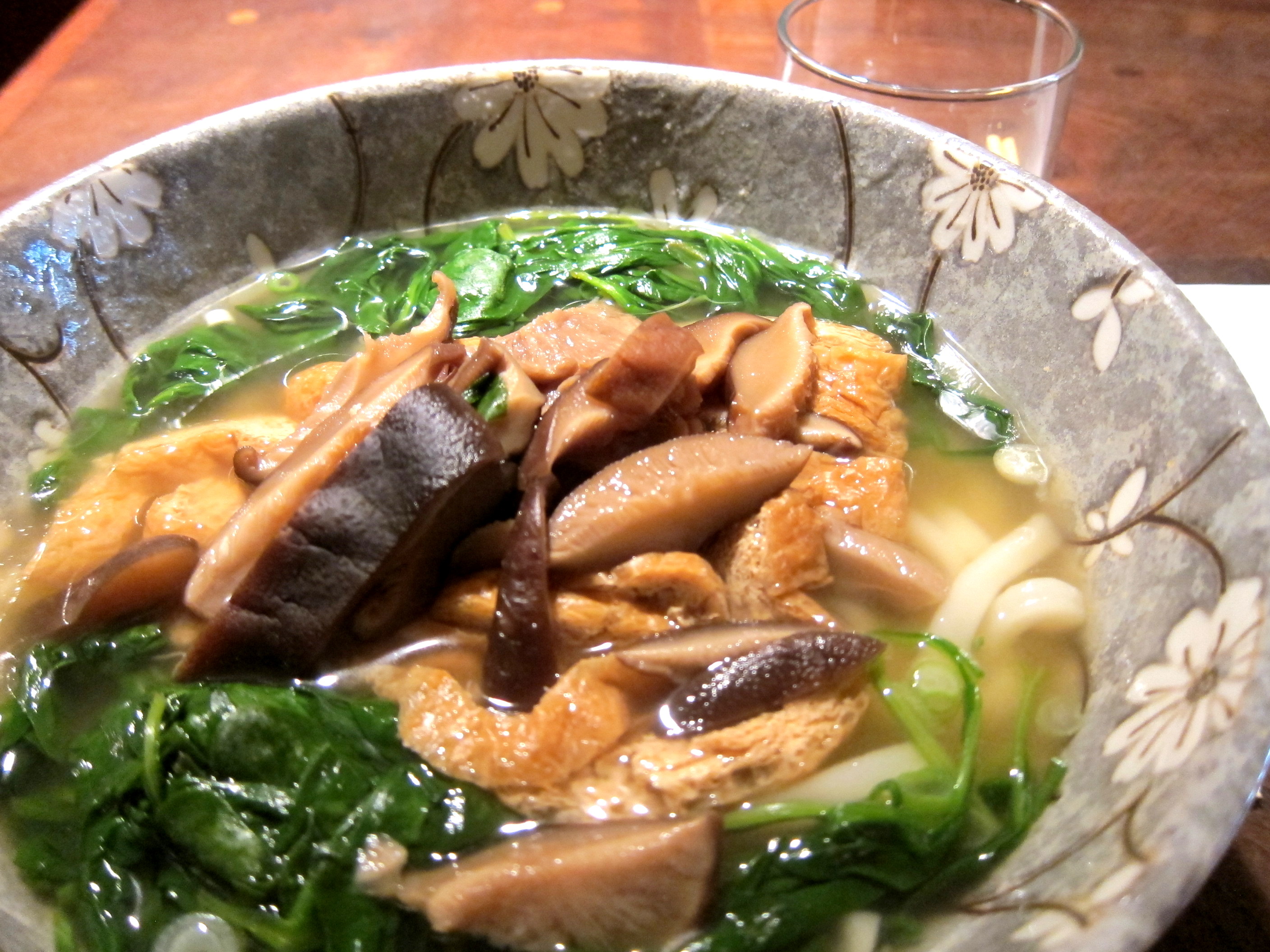
But I chose the tofu udon instead. Lately I’ve decided that I should gauge a restaurant based on their vegetarian/vegan numbers because it’s hard to make vegan stuff taste good (unless it’s a dessert). This shiitake-spinach-aburage (fried tofu skin) udon (13.50) passes the bar, but it would be nice had it been entirely vegan. The broth is a fish stock flavored by the earthy sweetness of mushroom. I prefer the vegan udon at Anzu, whose broth has the more refreshing note of chrysanthemum greens.
Our face bathed in the steam, our stomach getting packed. It was hot. We were dead full half way through the bowl. I did my best picking up all of my spinach and mushroom, but shamefully left half the broth and a third of the noodle. We thought we couldn’t eat anymore, but then we flipped the page and stared at the desserts, then looked among ourselves and grinned: “I don’t think we’re ever too full for ice cream”. 😀 Just one dessert is not gonna hurt. The agony was when we narrowed our choices to four (from nine): sherry custard, poached pear with berries, truffle torte, and what we ended up getting following the waitress’s suggestion: two scoops of caramel balsamic gelato ($5).
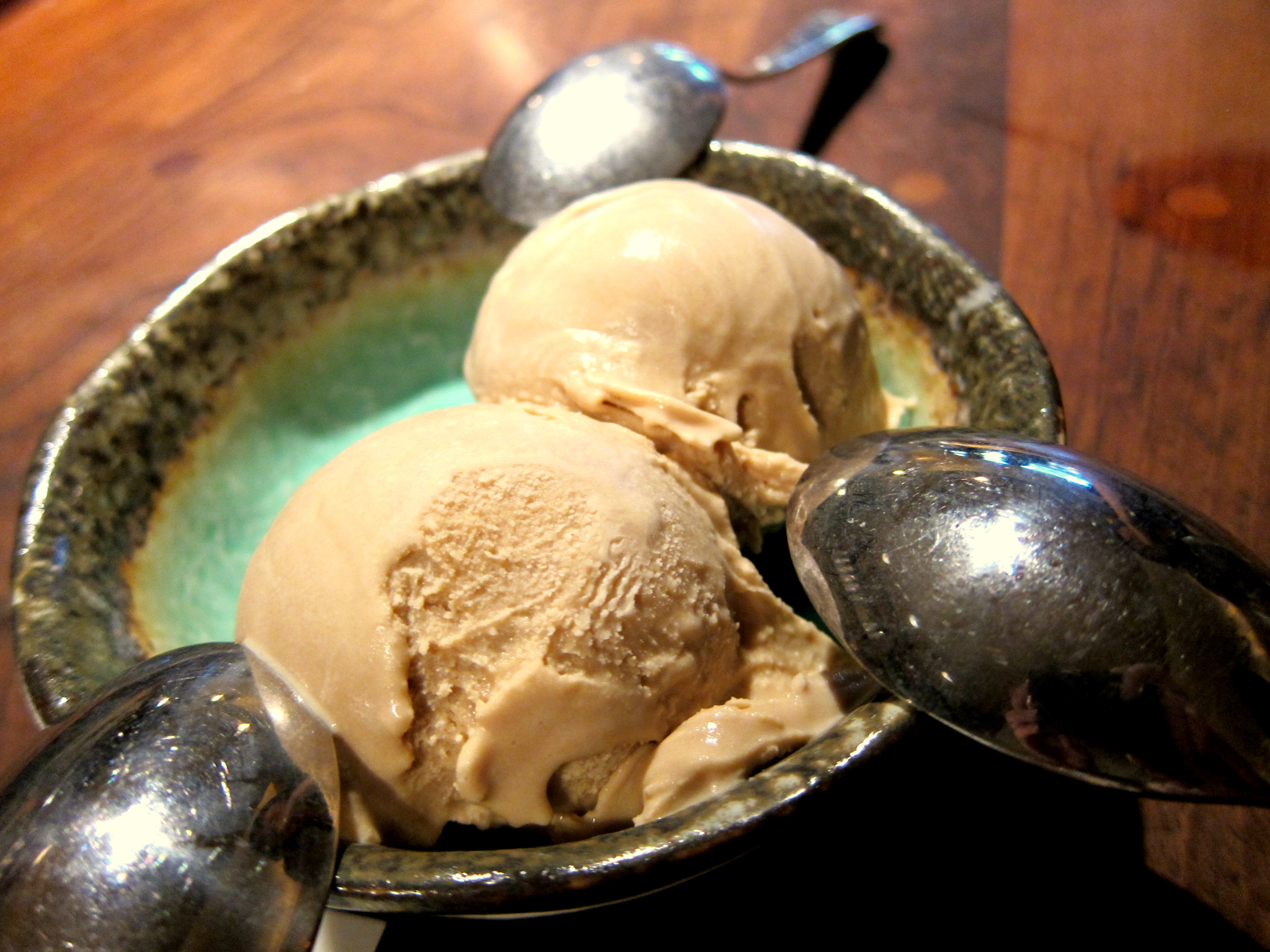
The first spoon was, well, interesting. But it grows on you. It has a bite to it. Kinda feisty, or in Kristen’s words, “like yogurt”, which makes sense because both balsamic vinegar and yogurt are products of fermentation, works of microbes, and sour. Definitely worth squeezing in at the last minute.
Address: O Chamé
1830 4th Street
Berkeley, CA 94710
(510) 841-8783
Dinner for three + tax: $81.56
(*) At first I pronounced it |oh-shah-mei|, like a French thing, you know. But seeing its meaning, I guess it must be |oh-jah-mei|, like “cha” (tea) in sencha.
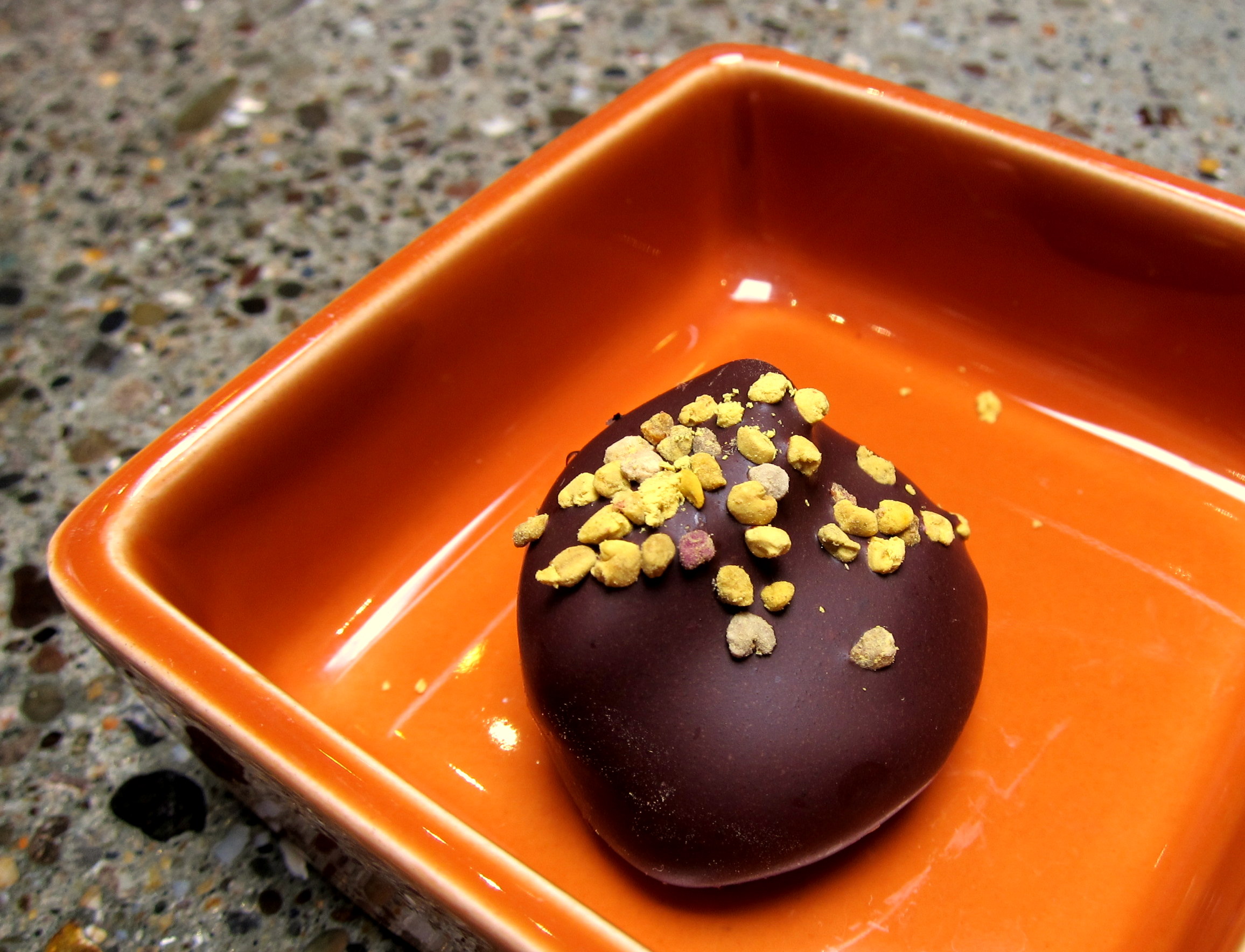
The best (known) green tea of China. The cream of the cream of the crop. I feel sophisticated just drinking it. Paired with a tangerine bee pollen truffle and I almost hear little cherubim playing the lyre.
You can read the whole story in my journal Tea & Mai. I’m off to dance in my head.
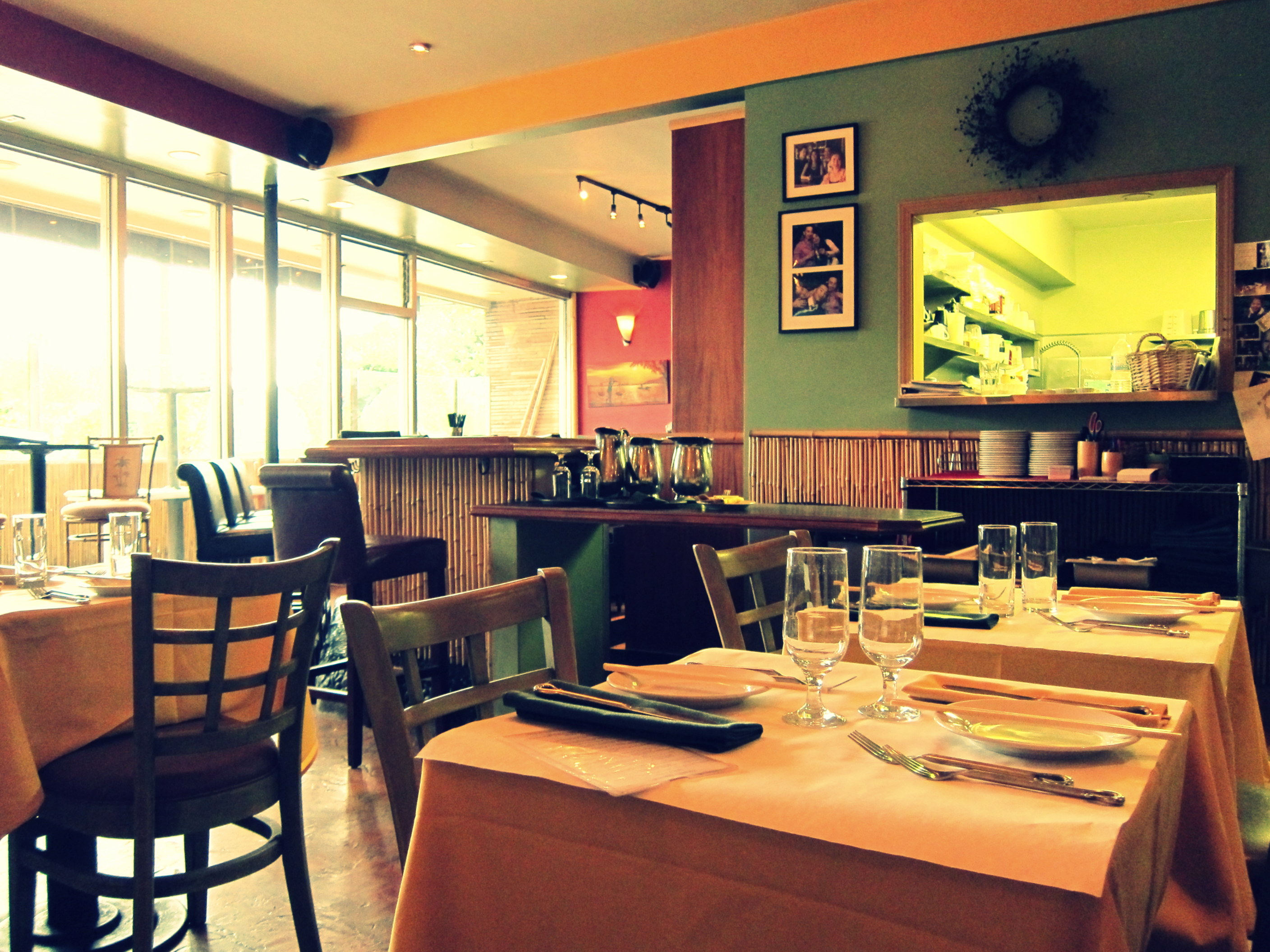
“You girls know how to eat”, our hostess smiled at us, the check attached. Ten things. At a tapas place like Vanessa’s Bistro where everything sounds tasty, I’d say we did a pretty good job narrowing down our choices, and we asked for the house recommendations only three times. All rendered success.
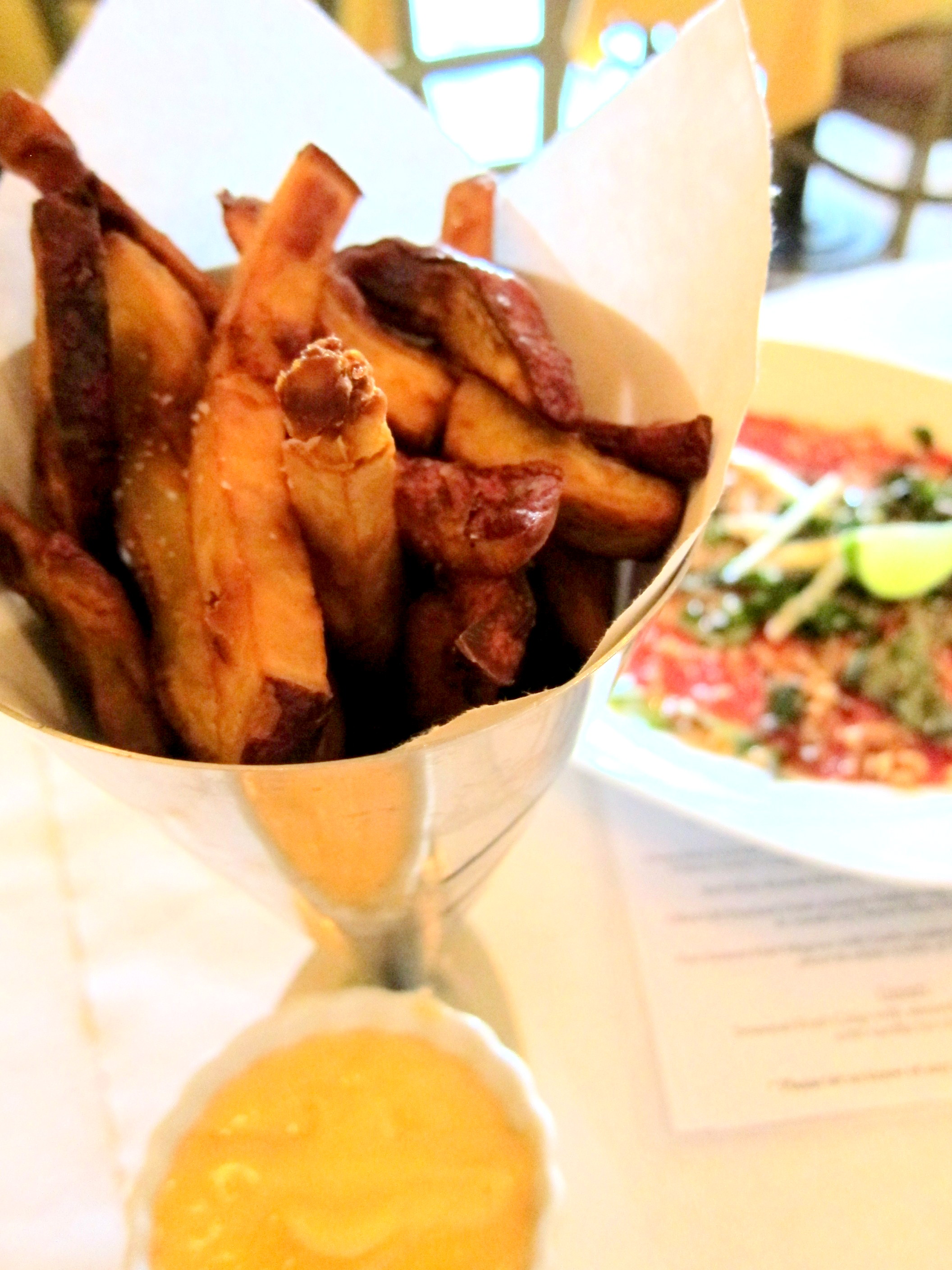
The first decision was the easiest: we’d got to get the sweet potato fries. Neither mushy like their orange cousins nor mealy like the white kinds, these Okinawan sweet potatoes, or purple yams, are sturdy in texture and just gently sweet. With or without the ginger aioli, they were loved. The small plates also stood alone splendidly, not that their dipping sauce came short.
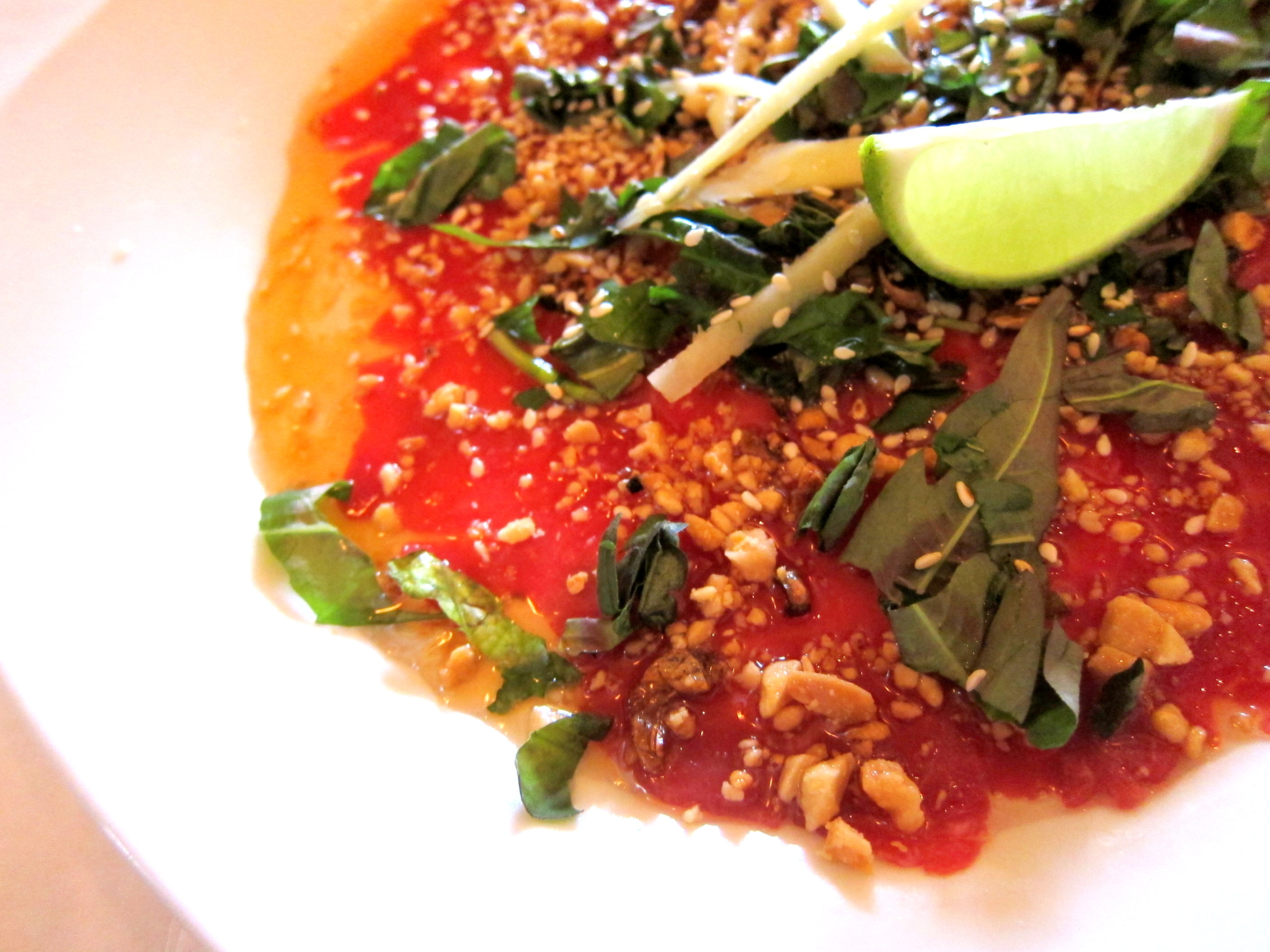
Black pepper cured filet carpaccio with roasted peanuts, fried shallots and Asian mint (húng quế). A twist on the classic Vietnamese bò nhúng dấm (carpaccio with vinegar) bò tái chanh (carpaccio with lime). (Thanks for the correction, Linh-Dang!)
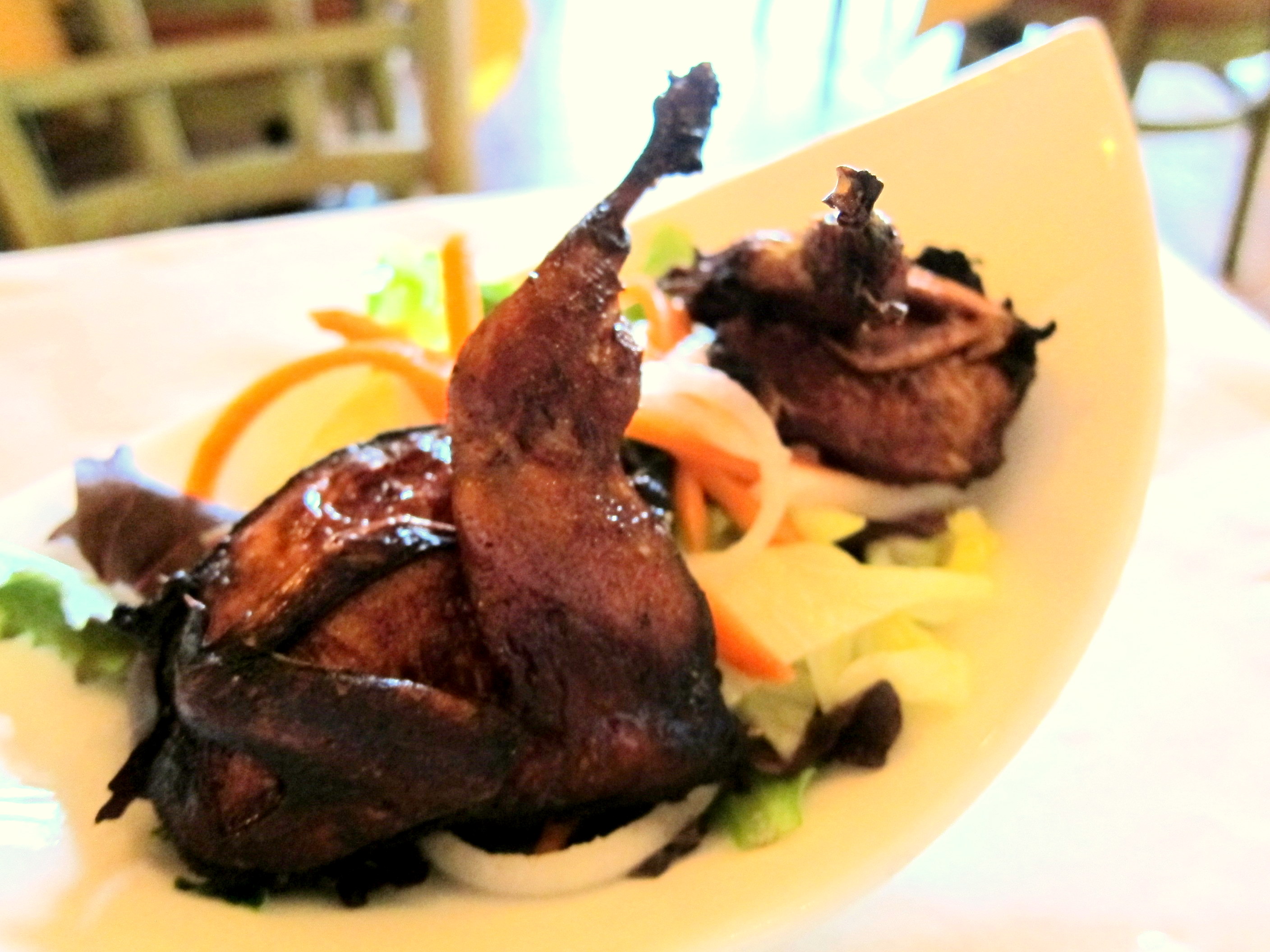
Crispy quail marinated in five spices and honey, with a light mixed fish sauce. Classic Vietnamese.
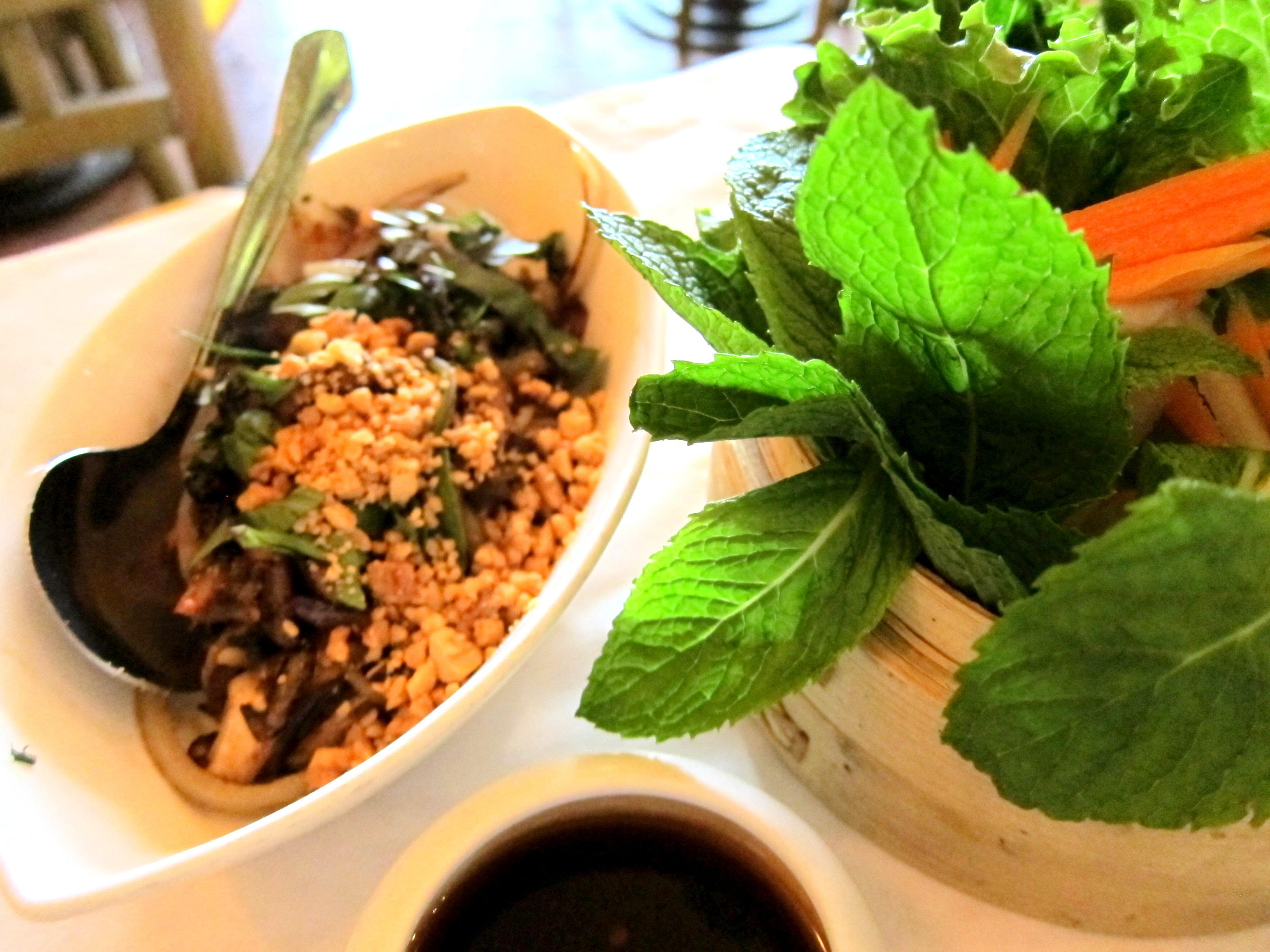
Doesn’t look like much but it’s my favorite of the night: Maple Leaf duck confit lettuce wraps with mushroom, onion and roasted peanuts; a sweet, slightly zesty black bean sauce for dipping. The pickled radish and daikon carry a gentle fruity note, had our hostess not been so busy with the other tables I would have asked her what kind of vinegar they used to pickle.
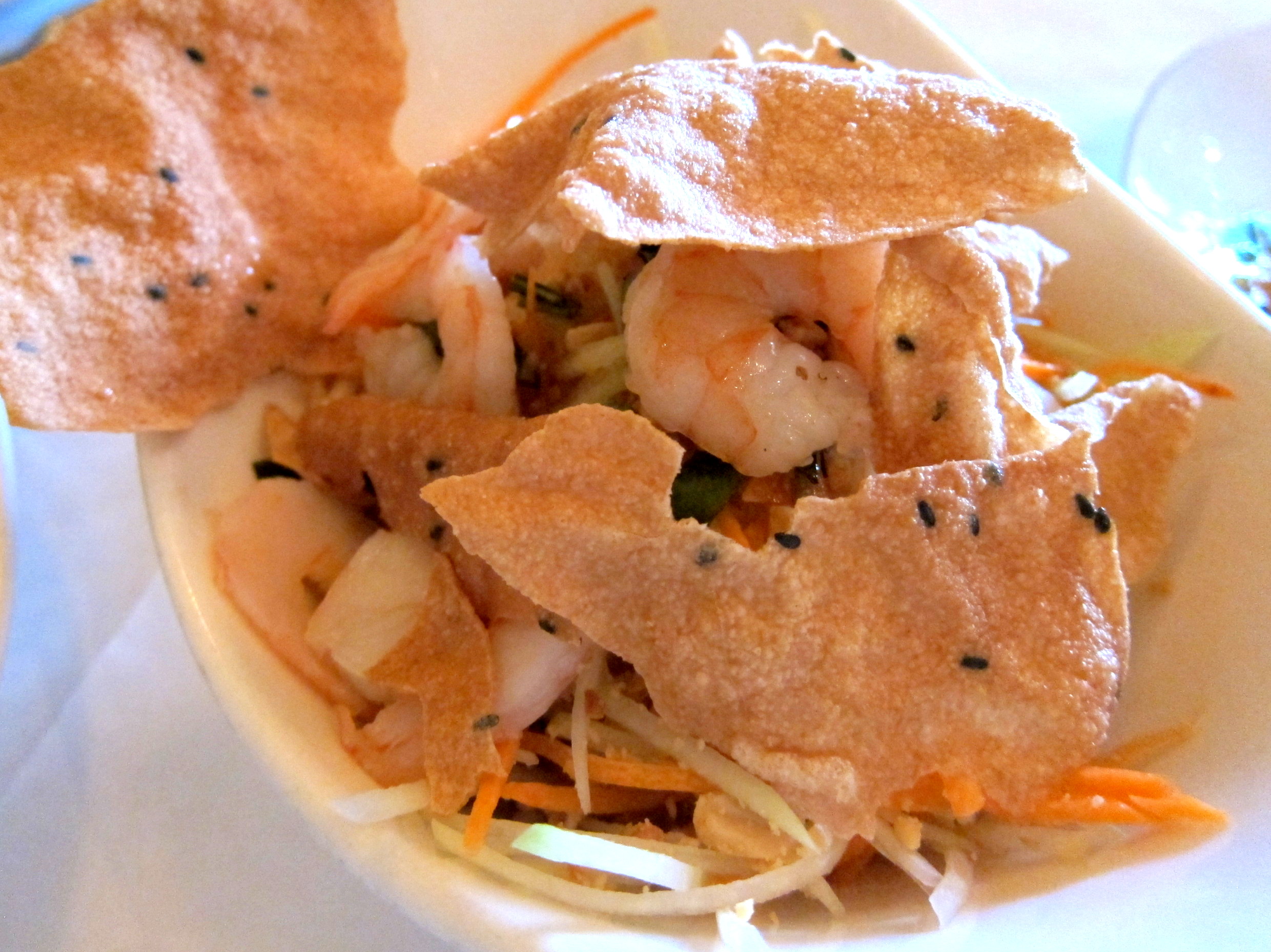
Green papaya salad with poached prawn, roasted peanuts and Asian mint. A hint of fish sauce. Pieces of sesame crackers, substituting for the traditional shrimp crackers or rice crackers.
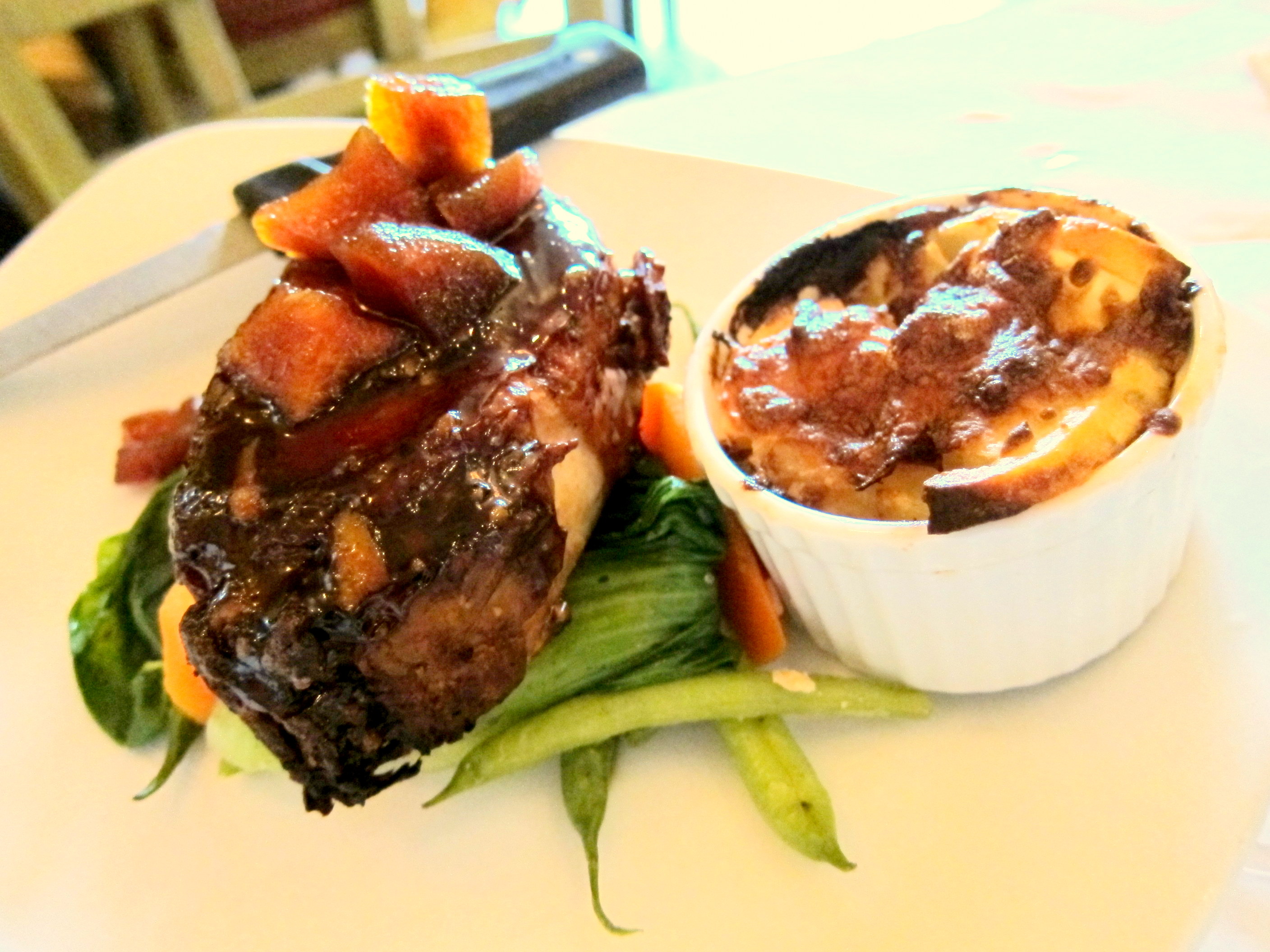
Pork loin marinated in molasses and slow roasted to a crusty outside, unfortunately a tad dry inside, topped with a lovely Fuji apple chutney and accompanied by an average potato gratin.
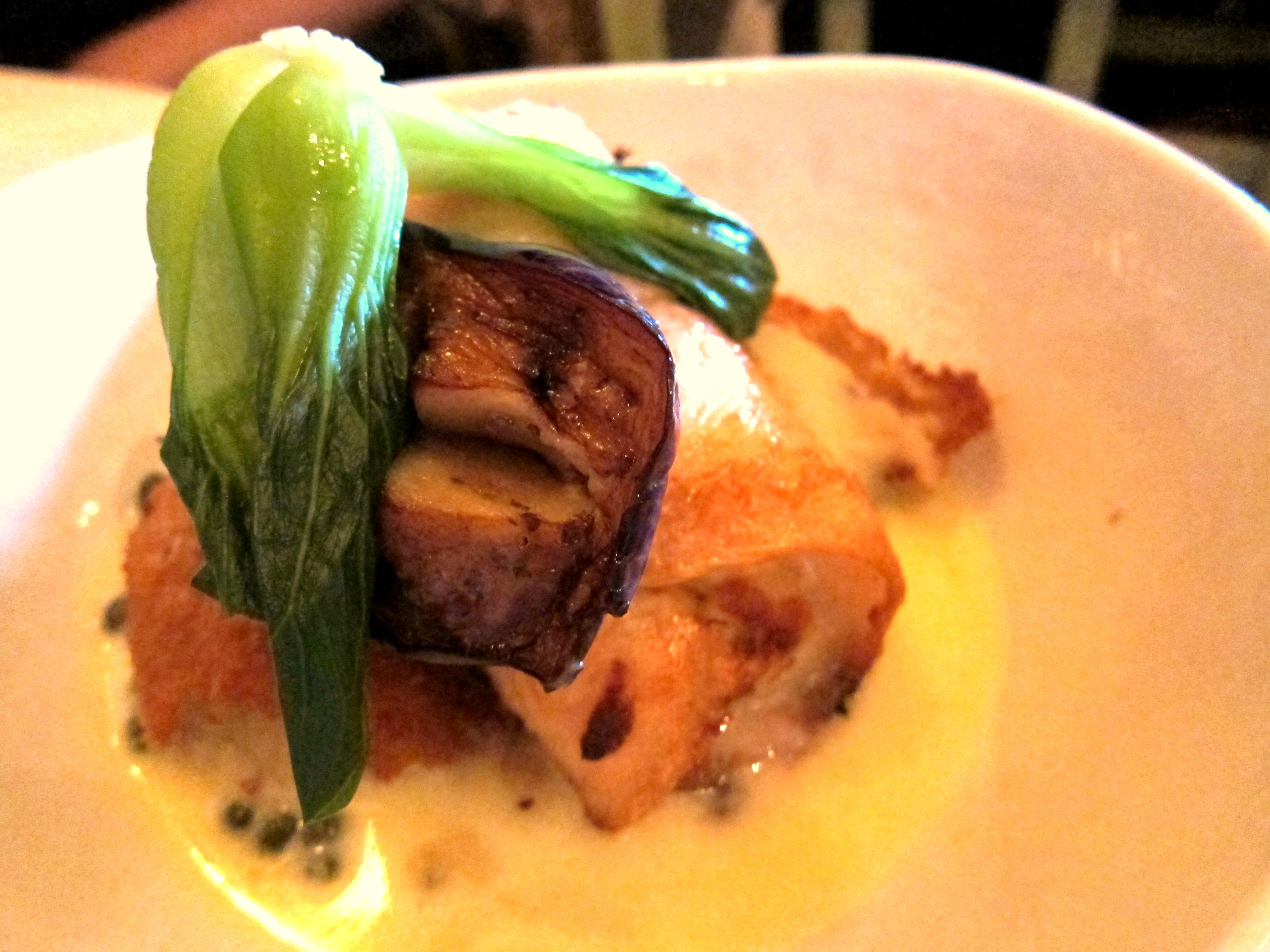
Dungeness crab and mozzarella rolled in an oven-baked petrale sole filet, which was dressed in a lemon caper beurre blanc. The accompanied potato croquet is nothing to write home about, but we left no trace of the fish roll. It’s a Vanessa’s Special that doesn’t get served every night, we’re told.
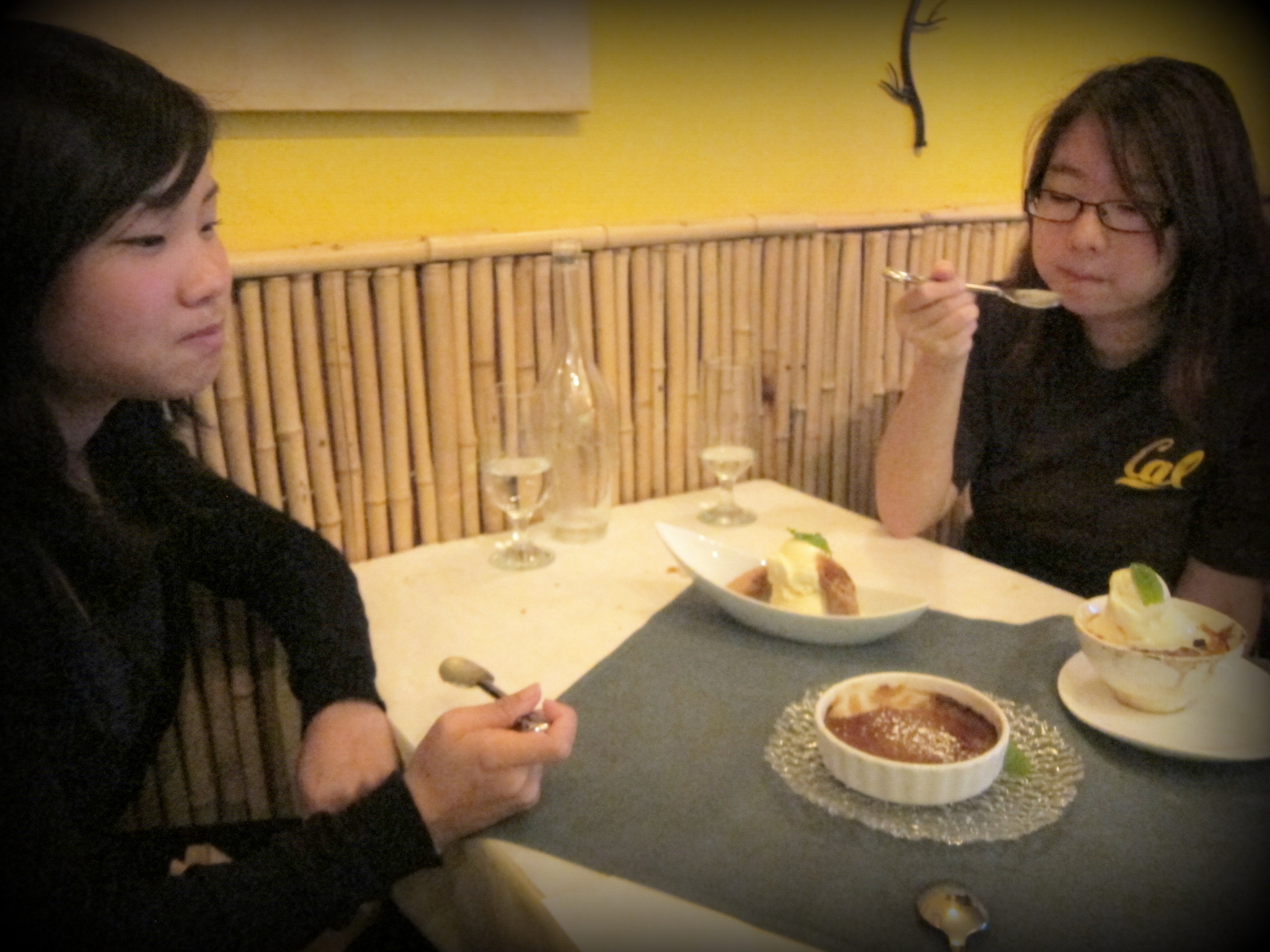
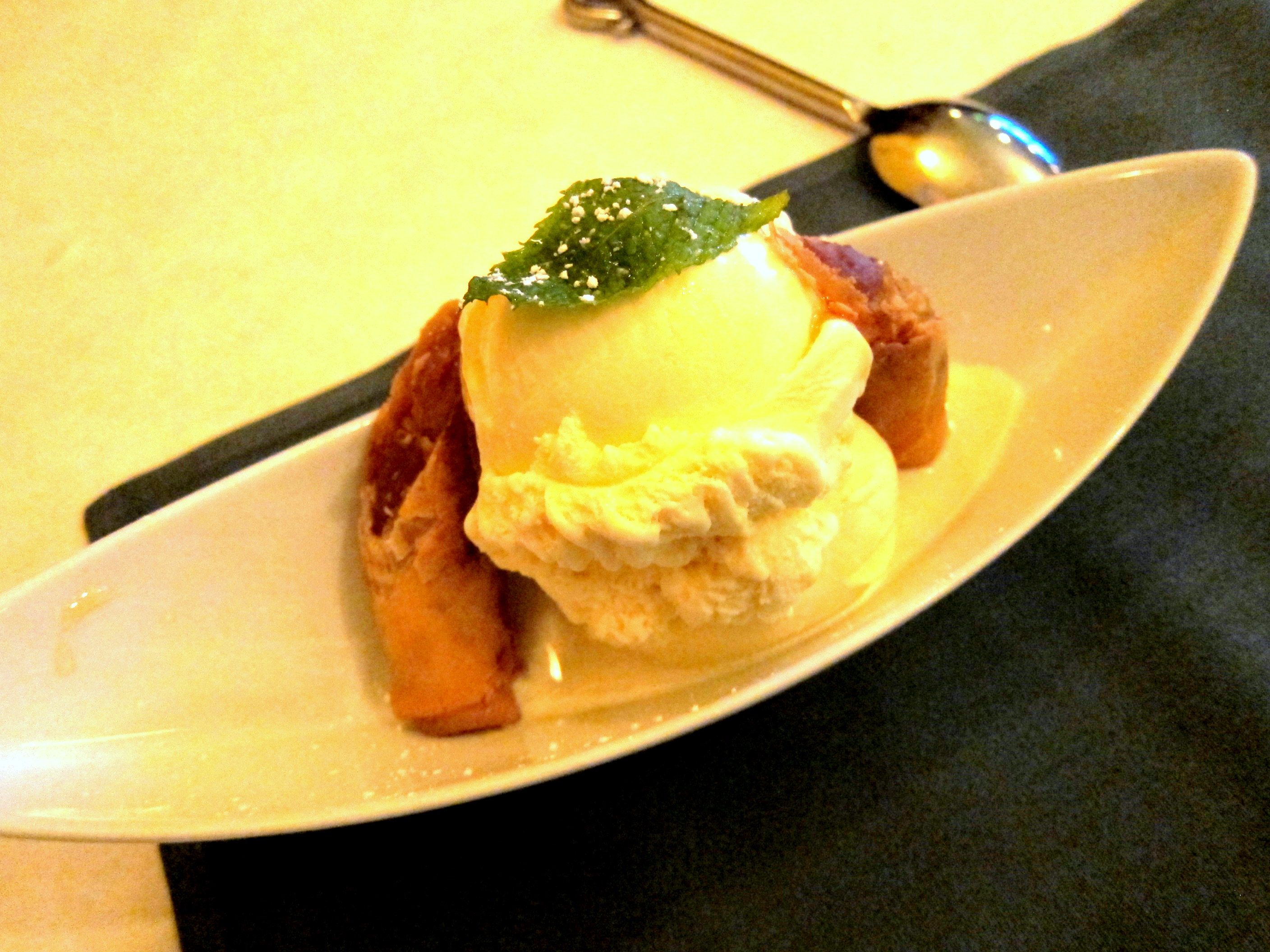
And desserts, of course. Fuji apple and coconut eggroll with vanilla ice cream. Good ol’ comfort.
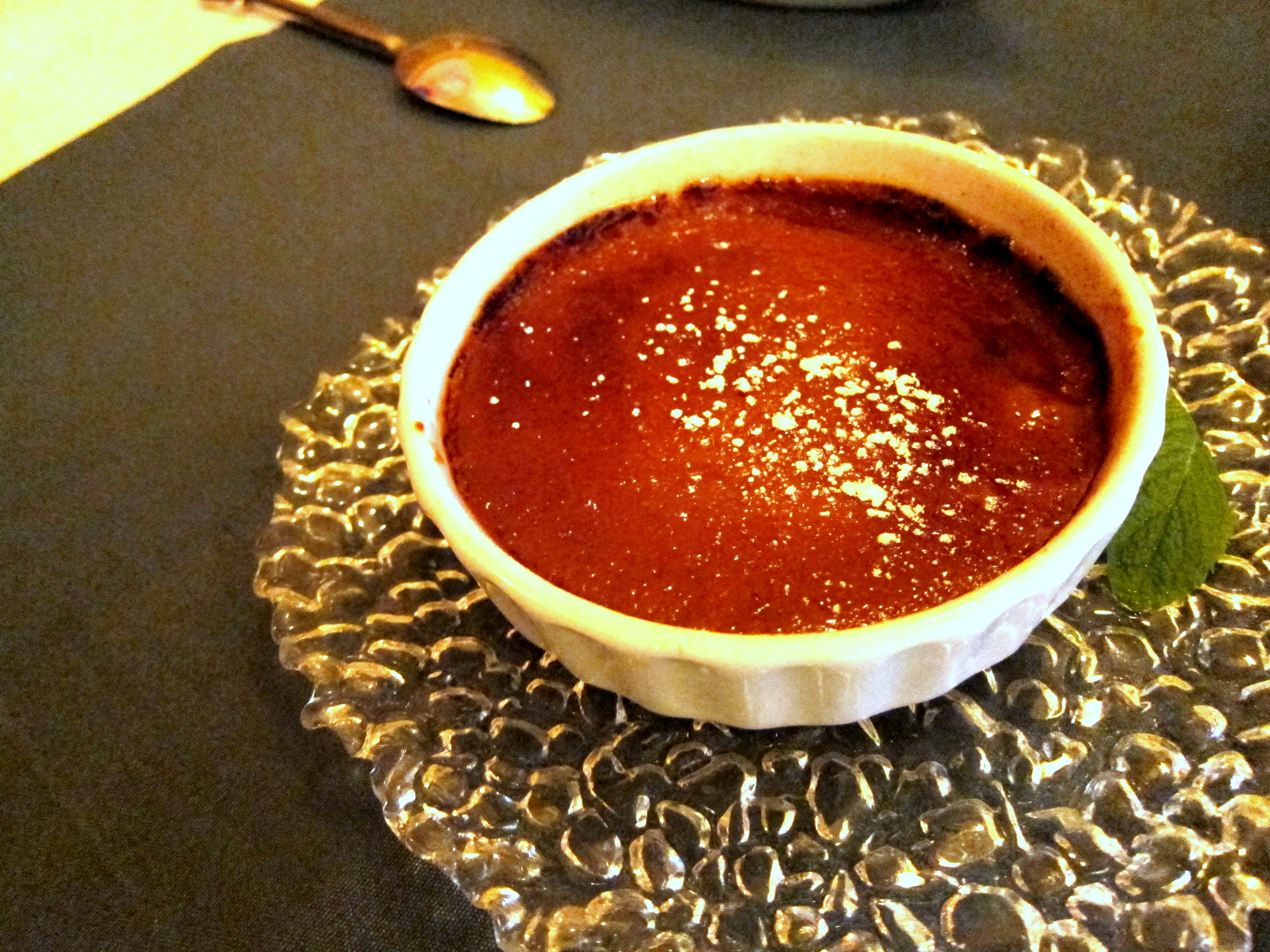
A ginger molasses creme brulee. Charming at first bite but quickly grew too rich.
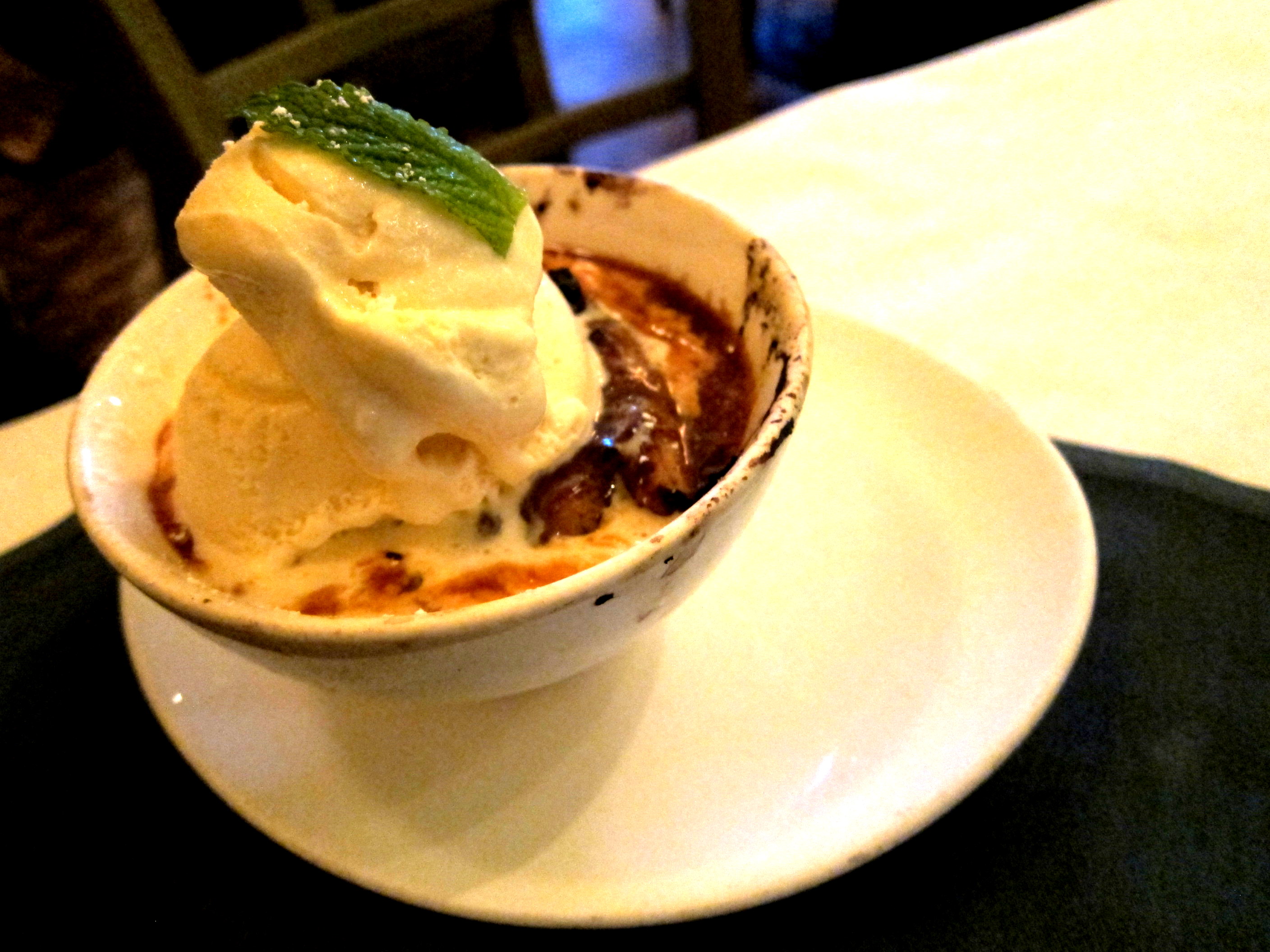
Banana, raisin and peach bread pudding with vanilla ice cream. Good ol’ comfort once again.
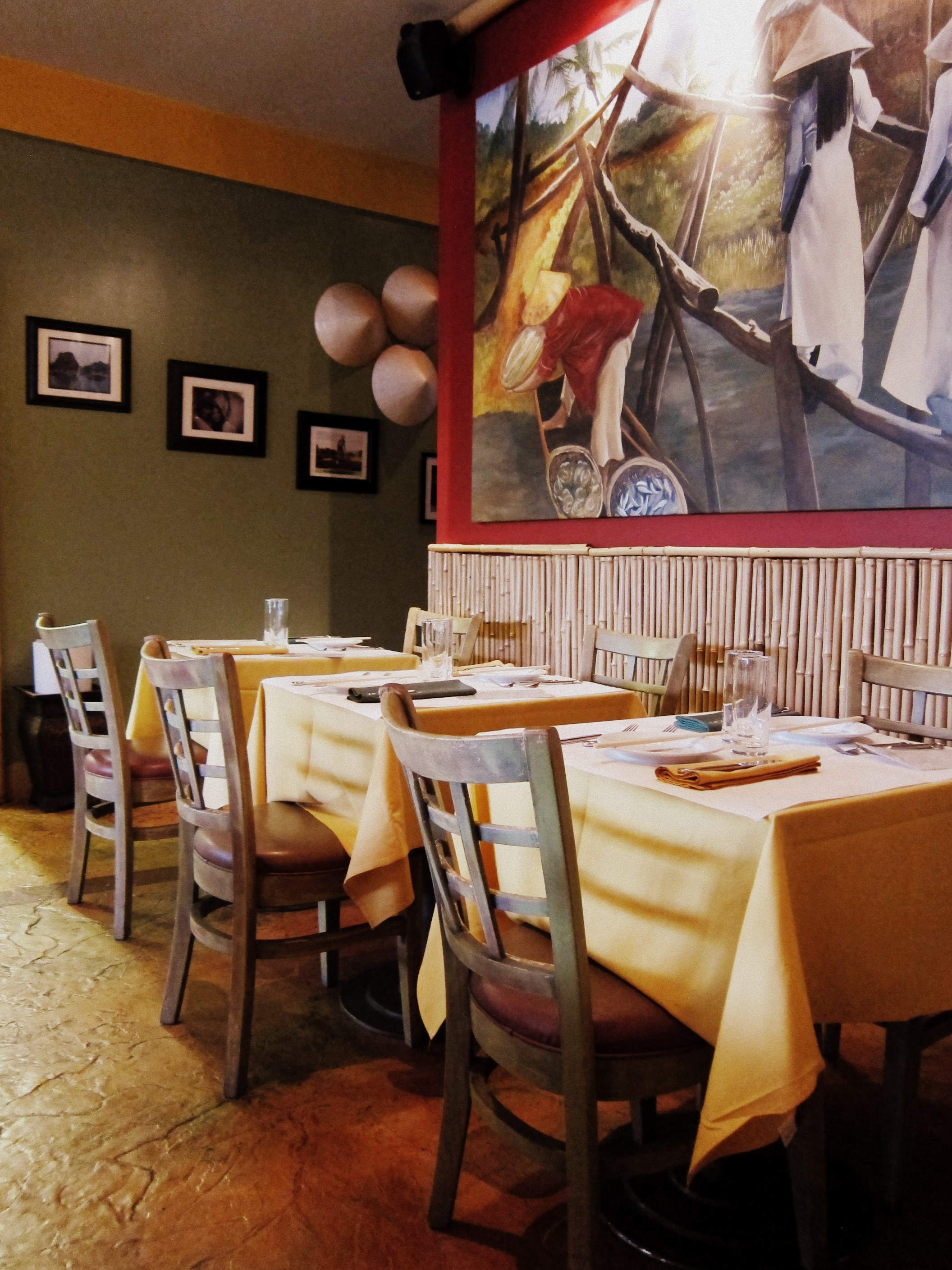
It’s been a while since I’ve dug into Vietnamese food, mostly because I’m afraid of getting less than I expect. The same thing happens to my Chinese, Korean and Japanese friends with their respective cuisine: we compare the “authentic” stuff at the restos with what our mom makes or what we remember eating in our motherland, and we shrug. Now Vanessa’s Bistro didn’t disappoint. It doesn’t dwell on authenticity, then again, the nature of Vietnamese cuisine speaks mix-and-match. The restaurant looks Western but it smells Vietnamese. The plates and their names are dressed up in French but the core ingredients ring familiar tunes. Everything is sweet and savory. We intentionally ignored the more Vietnamese shaken beef (bò lúc lắc) and claypots to have room for innovations, and innovations we got, but it’s nice to see that the roots are still there. 🙂
Address: Vanessa’s Bistro
1715 Solano Ave
Berkeley, 94707
(510) 525-8300
www.vanessasbistro.com
Dinner for three (ladies): $97.89
Recently I’ve received an increasing number of requests to guest-post on my site, which makes me ecstatic, but it also sets me in a difficult position to evaluate what is interesting. Of the millions of food blogs out there, what makes yours interesting? It’s you. Your voice, your emotions and your own experience with the food can set your post miles above a recipe that I can find just 0.2 seconds after I google its name. I’m no professional blogger, but I’ve read a fair share of food blogs, and from the ones that I keep returning to, I’ve learned and formed my own set of guidelines on how to write a post (which I try to follow, sometimes more successful than others).
In general, recipe posts have more room for personal stories, and they also comprise the most common type of food blogs (small sample: of the top 50 food blogs on Delish, 43 are recipes), so these guidelines are more geared toward recipe blogging than reviews. I’m gonna skip the photos, although they’re important, they’re the varnish and the writing is the wood.
1. Write statements with specific details, geographically and historically. Let’s say you want to write about grilled catfish. You need an opening sentence. Your first thought is “When it comes to catfish, there are many American dishes. They are mouthwatering and delicious.” These two sentences sound choppy and unimpressive, so you can remodel them into “Our American cuisine has no shortage of mouth-watering dishes with catfish, such as Catfish Tuscany and Catfish Gumbo.” Then you give more background details to it: in which regions in America are these dishes most common, who usually like them; or give a more personal touch: do you have a childhood story related to one of these catfish dishes, how did you come to like catfish or fish in general, etc.
2. Be confident with your opinions, but respect your readers. You’re not trying to give a lecture, you’re just telling a story. Sometimes a confident statement may sound a little bit too direct and confrontational. For example, “you should eat catfish because it is healthy” sounds like an order, but softening it to “my mother always tells me to eat catfish because it is healthy” offers not only consideration but also a personal story and a third opinion (your mom’s), which gently boosts the credibility of your statement. The use of “you” should be minimal, unless you want to make it sound like a conversation, which you should.
3. Give reasons. Why is catfish good for health? Include scientific facts if possible. Include your grandmother’s experience is even better: 1. It’s personal; 2. It’s most likely universal, somehow all grandmothers think the same; 3. It’s proven with time.
4. Tell a story. How did you come up with this recipe? How is your recipe different from other recipes of grilled catfish? Basically, what makes your recipe unique? What have you discovered while making this recipe, using this product, or eating this dish? James Boo and his co-writers on The Eaten Path tell some of the best stories.
5. How flexible is your recipe? Can I use brown rice instead of basmati rice, pork bone instead of beef bone, or blueberries instead of raisins? For a review, how adaptable is the dish or the product? Can it be eaten any time of the day, any season of the year? What kind of beverage would it go well with? What changes can/should be made if I want to make it for my grandmother’s cousin who has dentures and is fond of duck tongue?
6. Tell us about the result. What do you think about your recipe after you eat it? Is it perfect? Did it give you a split second of enlightenment? Is there anything you should have done differently or is there anything you would like to experiment next time you make it? Will you make it again? Did your best invention give you the worst stomachache the following day? Did anyone beside you eat it, if so, what did they think? The answers to these questions add personality to your post and complete your story.
7. Google is your best friend. And like with your best human friend, you should prepare to spend a lot of time with Google. There are already a lot of information out there, simply reciting the first link you find is not going to make your post any better than that link. What the reader needs is all of that information in one place, so that they can quickly go back and look up for it as needed. I spent 2 days browsing through 50 pages of articles on the ash sticky rice dumpling (bánh ú tro), most are copies of one another, to get enough information for my post. The more inclusive your post is, the more useful it is for the reader. Your reader is spending their valuable time to read your post, so you have to invest your time to research before you write.
Also make sure to cite your sources. Citation doesn’t take away your expertise, it proves it.
8. Be funny. This point is always mentioned in every blogging to-do list, and it’s the hardest point to follow. How can you be funny? I try, but I don’t know if I’ve ever succeeded because nobody has ever told me that I’m funny. But here’s a trick I’ve learned from noodlepie: you can be funny by referencing funny things. Use the built-in links to your advantage. Those who bother to click on them, get the hidden jokes.
9. Be open about yourself. Be personal. If you don’t want the world to know about you, maybe you should set your blog private, or blog in your head. Besides, the world is not out to get you, unless you’re a serial killer on Interpol‘s wanted list who also enjoys seeking out the most authentic pad thai in the States, in which case you probably shouldn’t blog about where you just had lunch… (or maybe you should?)
To sum it up, a good blogging tone is confident, respectful and open. Content-wise, be informative. Ask yourself while writing: have I learned something new? If you don’t learn anything new while writing your post, that means you haven’t done enough research and your post is useless. Even if you think of the entire post all by yourself in one go, there are always numbers and statistics that you can add to bolster your arguments, or fun facts to make your baked potato not so trivial, or new words that you procure from thesaurus.com to avoid repeating yourself. If you learn something new while writing your post, chances are your readers will learn something new from your post, and that newly acquired knowledge will prompt them to think of your blog as a valuable source, and they will come back.
This post was written after an allnighter. Now the author has learned what her third alarm, which she always sleeps through, sounds like.
Today I make a list to re-evaluate my blogging life.
Recipe posts:
Pros:
Difficulties:
Review posts:
1. Restaurant reviews:
Pros:
Difficulties:
2. Product reviews:
Pros:
Difficulties:
Conclusion: for these past 4 years I’ve chosen the worst possible kind of food blogging… And I shall not change.
Did I miss anything in the list?
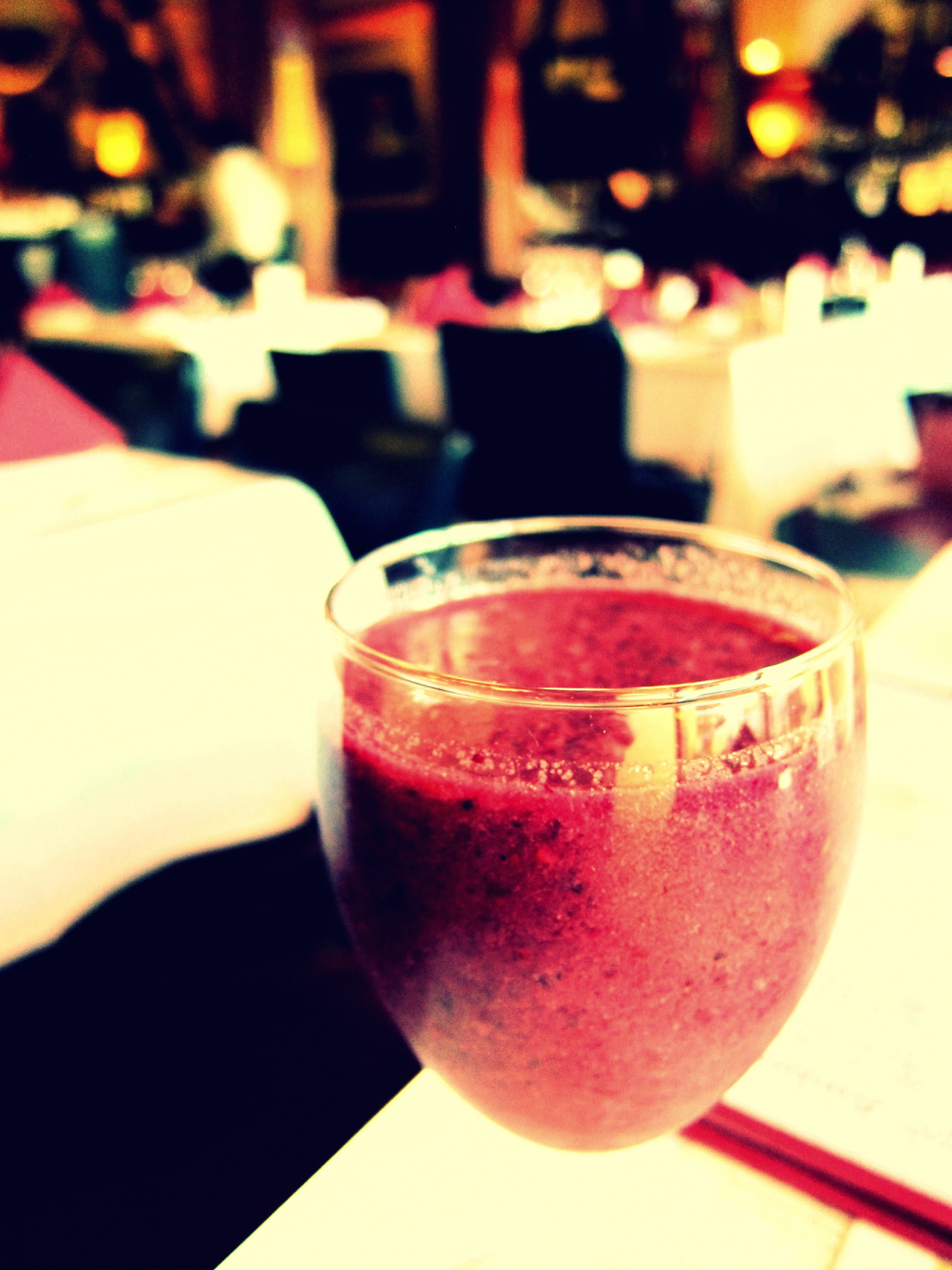
Last year I had a great meal at Himalayan Flavors, starting with a reddish purple smoothie whose ingredients I no longer remember and can’t find anywhere on their current menu, and ending with a mango dessert. The owner is Nepalese, so technically, the food is Nepalese, which is too similar to Indian for me to discern because I haven’t had much of either. A quick Google search renders over 6 million results, but the actual number of differences between Nepalese and Indian foods are few and easy enough to remember:
Source: Binaya Manandhar
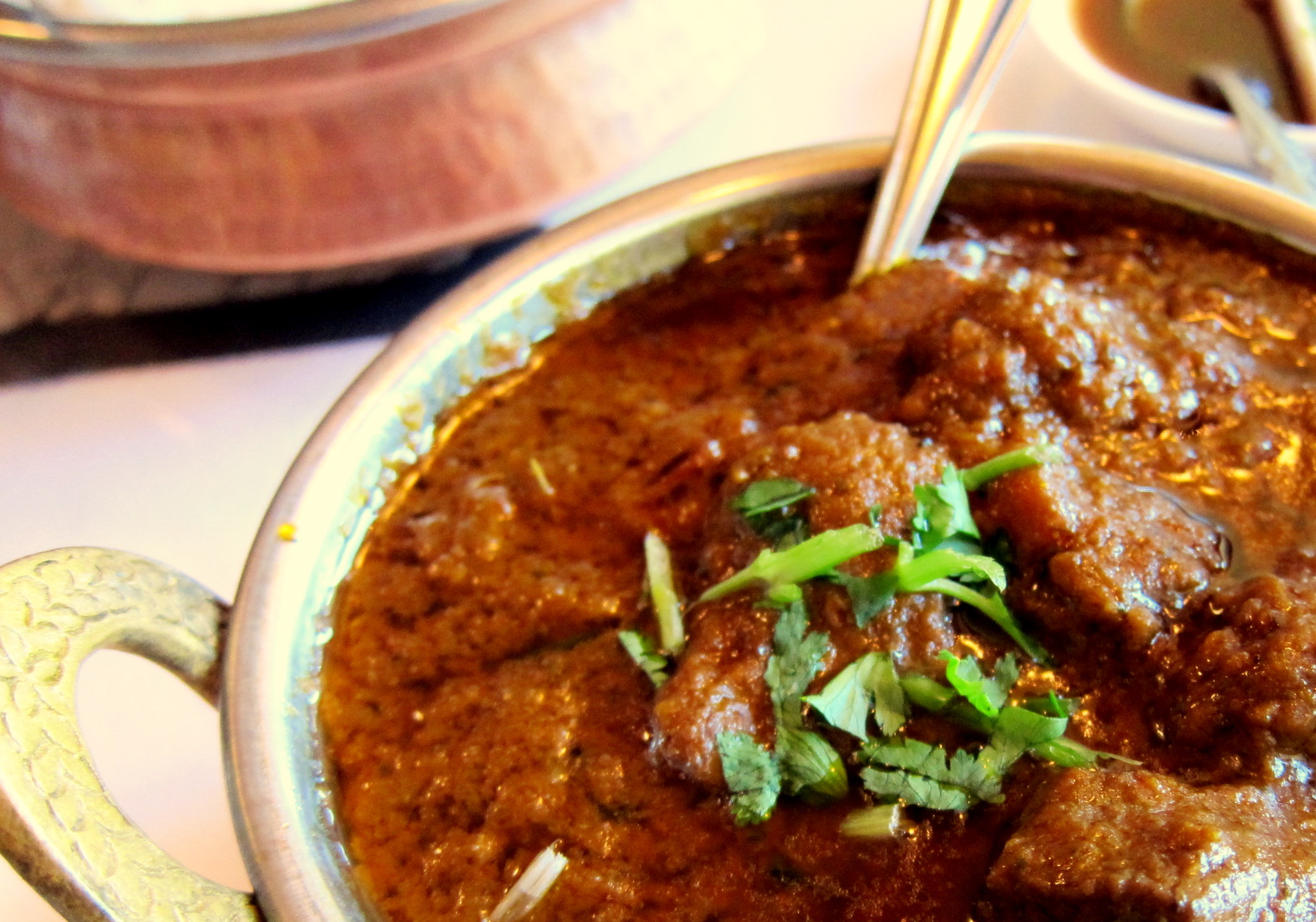
In more details:
[…] Rajesh Karmacharya, owner of Cumin restaurant (recent winner of a Michelin Bib Gourmand award), explained that Nepalese curries are generally based on tomatoes, not yogurt or coconut milk, as in India. Nepalis also use fewer and milder spices than Indians. A standard Nepalese masala (spice mixture) contains cumin, coriander, ginger, garlic, fenugreek and jimbu, an aromatic grass that resembles chives. Hotness comes from chilies or a berry called timur, similar to Szechwan pepper.
The influence of China and Tibet is apparent in the popularity of noodles, bamboo shoots, soybeans and momos — small steamed or sauteed dumplings filled with meat or vegetables. Momos became the most popular street food in Katmandu after Tibetan refugees opened stalls there in the 1960s. […]
Source: The Chicago Tribune
Indeed, what the owner suggested to us in our most recent visit were vegetable thukpa (a noodle dish with a little bit of thin broth) and aloo tama bori (sauteed potatoes and vegetables), both have bamboo shoots and tomato, neither are spicy or sweet, and neither are pasty. The lamb tarkari (a kind of curry stew described in detail as “boneless lamb pieces cooked in Himalayan Flavors special sauce herbs and spices”) is also quite mild.
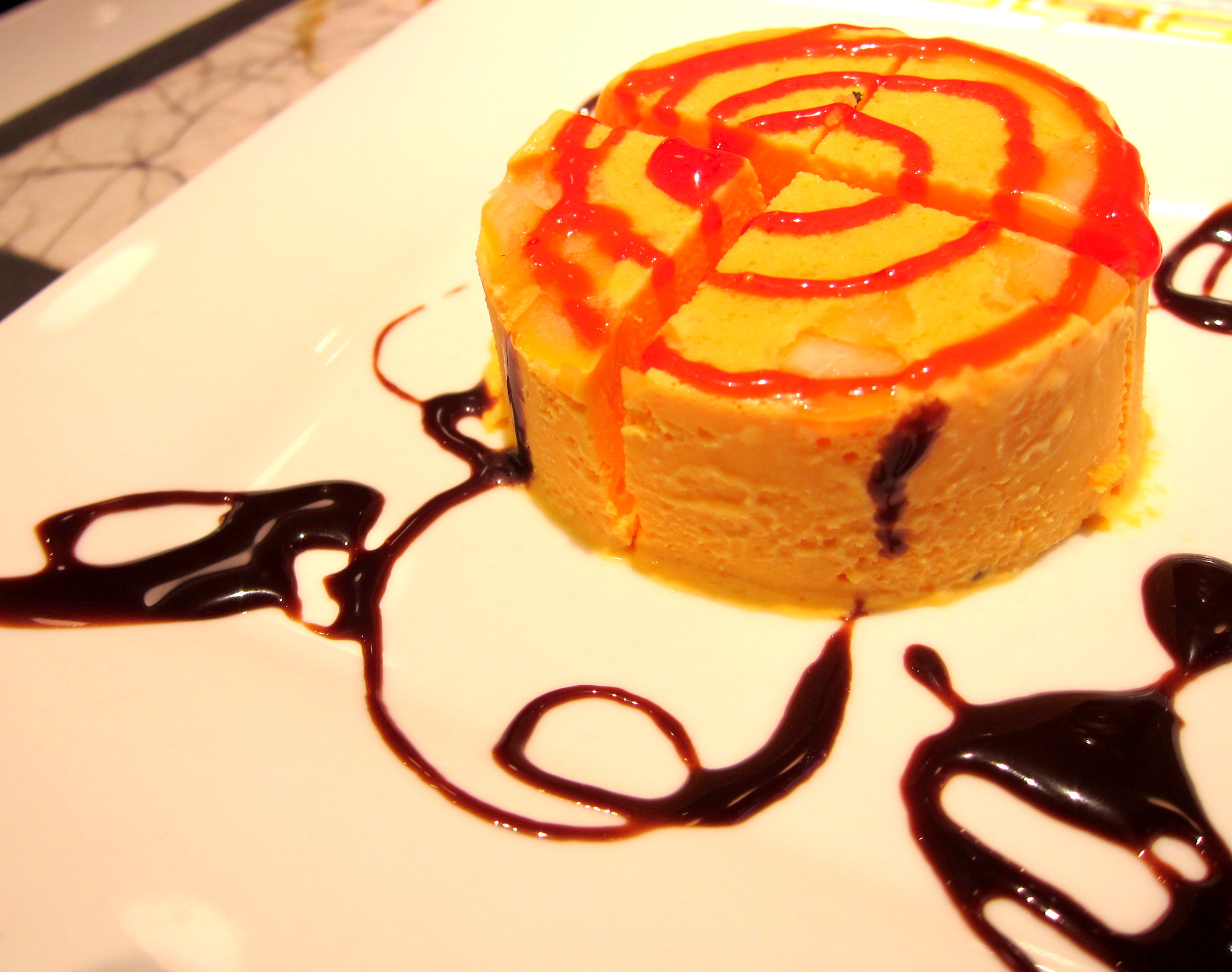
But like most restaurants that I like, Himalayan Flavors scored me in because of their desserts. I knew we got something mango the first time, and its goodness never left me, so I came back. This time the presentation changed from an ice cream block with red syrup drizzled on top and chocolate syrup on the side to a shovel of yellow snow with almond shavings, but it is still mango kulfi. And I still love it. Here’s a memoir of the first mango kulfi (with chocolate):
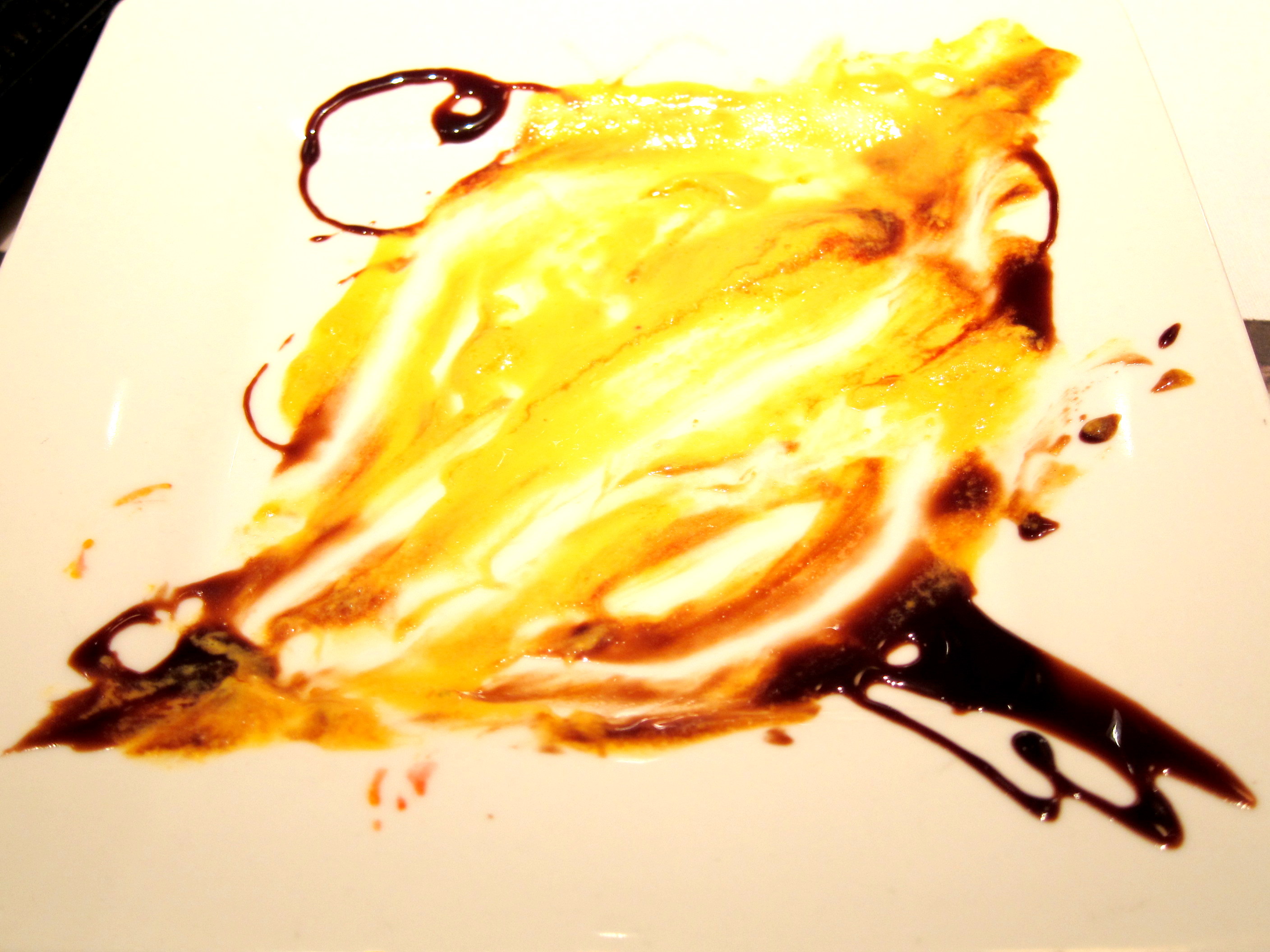
It’s my art. Don’t you criticize. 😉
Ah, this time, I forgot to check the bar for the smoothies, I wonder if they still make only one kind each day. Just a reason for me to come back.
Address: Himalayan Flavors
1585 University Ave
Berkeley, CA 94703
(510) 704-0174
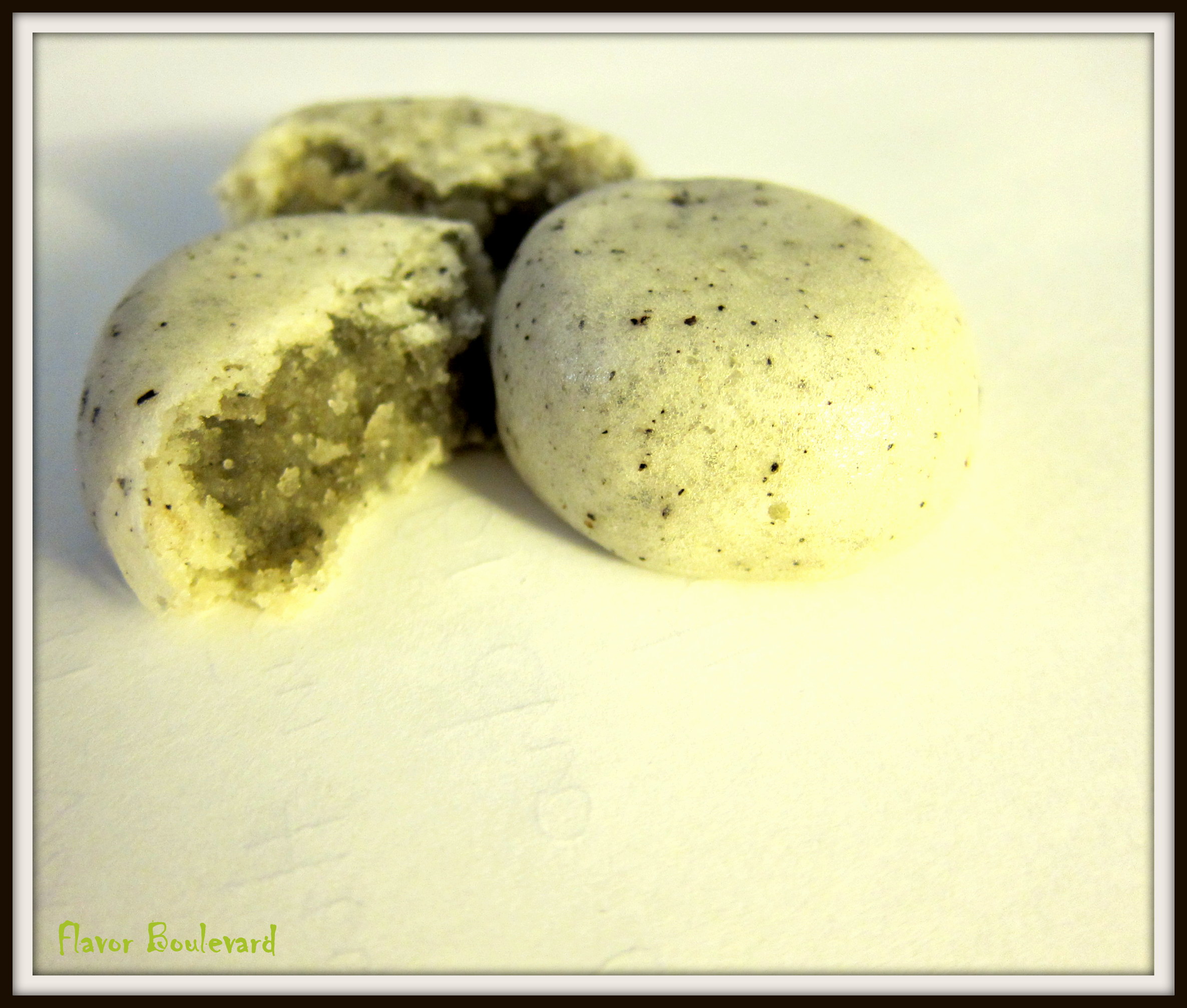
Technically, ごま蒸し饅頭 (goma mushi manjuu) means Steamed Sesame Bun (as a friend told me), but I’m a firm believer that proper nouns, i.e., names, cannot be translated without losing some of their meaning. Since there is no sufficient translation already, I might as well make the English name suitable to describe the object instead of sticking to the literal translation. Hence, to distinguish these little buns from the gazillion of buns in the Far East, I shall call them “buttons”.
Flaky, multi-super-thin-layered dough. Semi-sweet black sesame paste. Adorable, in every sense of the word.
Here’s the label, for those who can read Japanese:
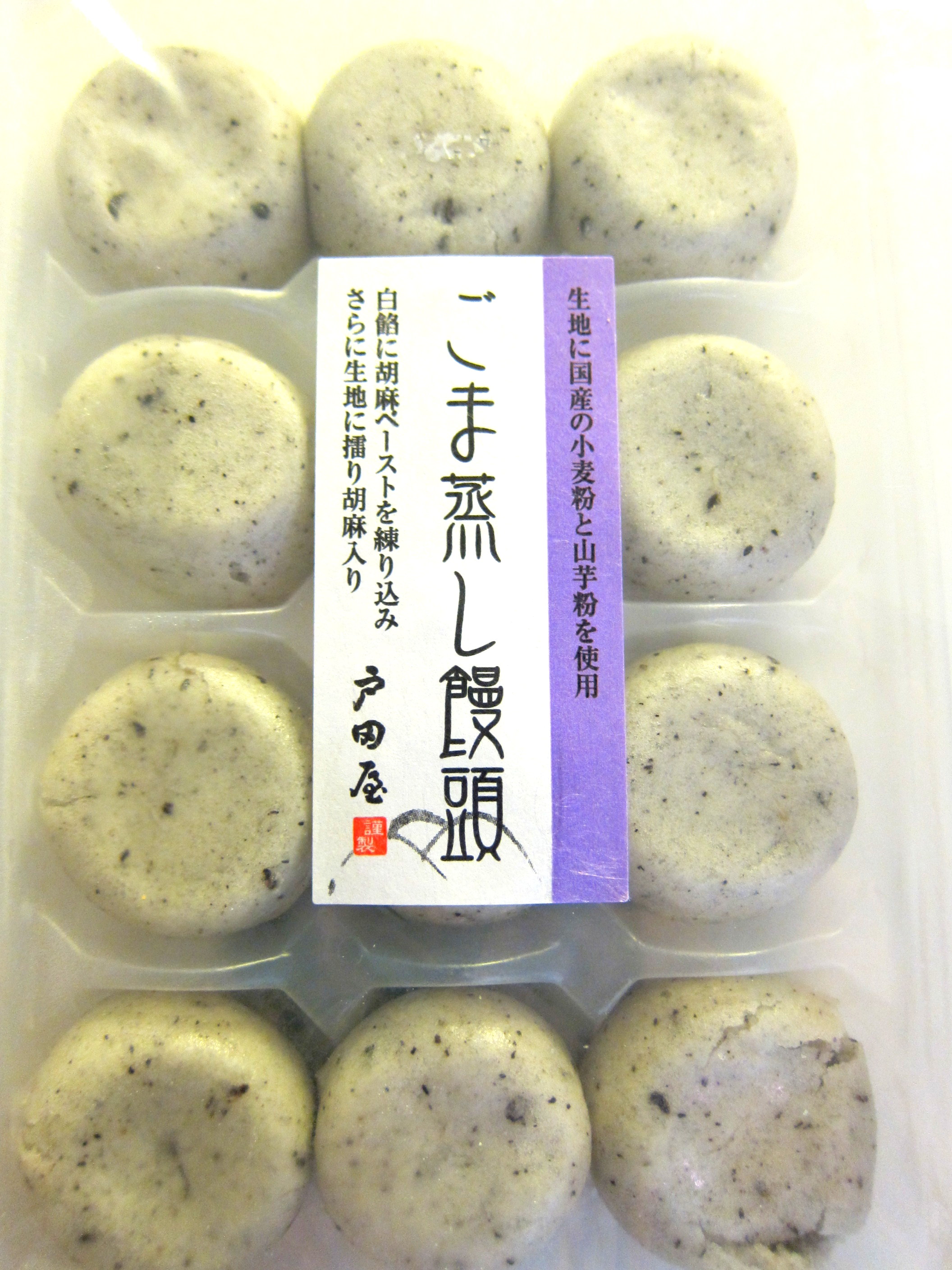
From Super H Mart, Houston, 12 buttons for $3.