Flavor Boulevard

We Asians like to talk food.
Subscribe

Summer Festival in Concord
August 17, 2012 By: Mai Truong Category: Japanese, Opinions, The more interesting

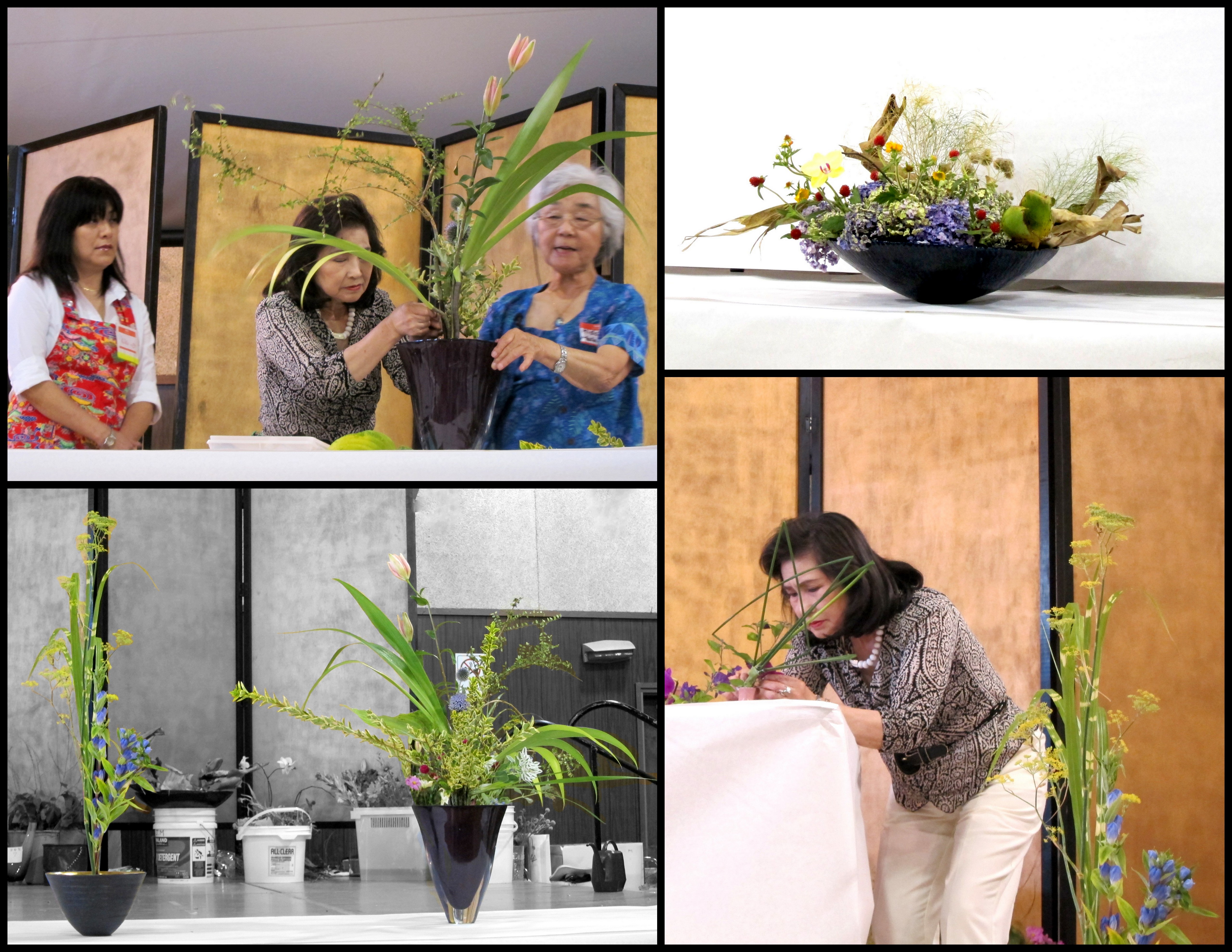
Clockwise from top left: Master Hideko Metaxas (in blue) and two assistants arranging an example of Rikka Shofutai; a free-style arrangement in honor of the victims and the philanthropists in the Tohoku Tsunami 2011; an Ikenobo sensei arranging a free-style display; Shoka (left) versus Rikka (right)

Learn something new everyday. At the Japanese American Summer Festival in Concord this year, I absorbed an hour of Ikenobo ikebana art, which is really, really, really rudimentary, but at least now I know that the Rikka style involves nine elements, and the Shoka style three elements (heaven, earth and man).

That day was also the first I’ve heard of the “Three Friends of Winter” sho chiku bai (pine, bamboo and plum), and this astonished me because 1. I’d never encountered any old Chinese things that my mom hasn’t told me about, and 2. it involves plum blossom, which is my name. There’s no way I wouldn’t know that my name is part of a trio that appears in Asian arts and folklores at lunar new year time. My memories must have been failing. 🙁 Anyhow, Nancy made a beautiful onigiri box that follows the sho chiku bai theme:
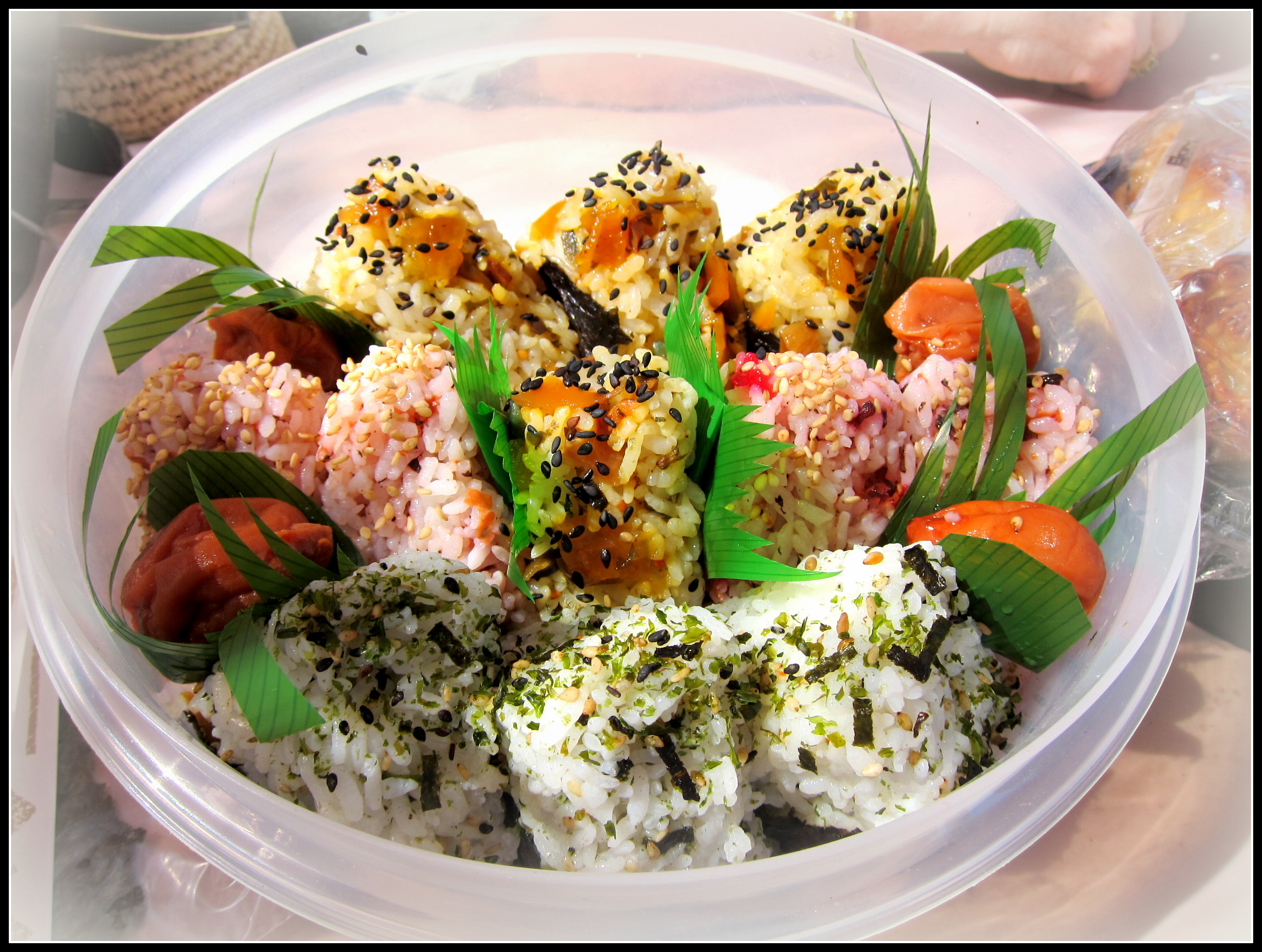
Homemade sho chiku bai onigiri by Nancy Togami: white onigiri with aonori and sesame (sho), yellow onigiri with fukujinzuke (chiku), and pink umeboshi onigiri (bai)

The rice balls, particularly the fukujinzuke ones (soy sauce pickles), go oh so well with the teriyaki chicken sold at the festival. For $5 you get a quarter of a chicken, either white or dark meat. I chose dark meat of course, a big juicy leg and thigh, but the white meat that Nancy picked also looked gleaming. Kenji-san went with 8 skewers of beef teriyaki for $8. We noshed while listening to the taiko drum performance. In the 110-degree heat, I tried not to stare at the kids swooshing their shaved ice, diverted my thoughts instead to the juniper and Japanese maple bonsai.
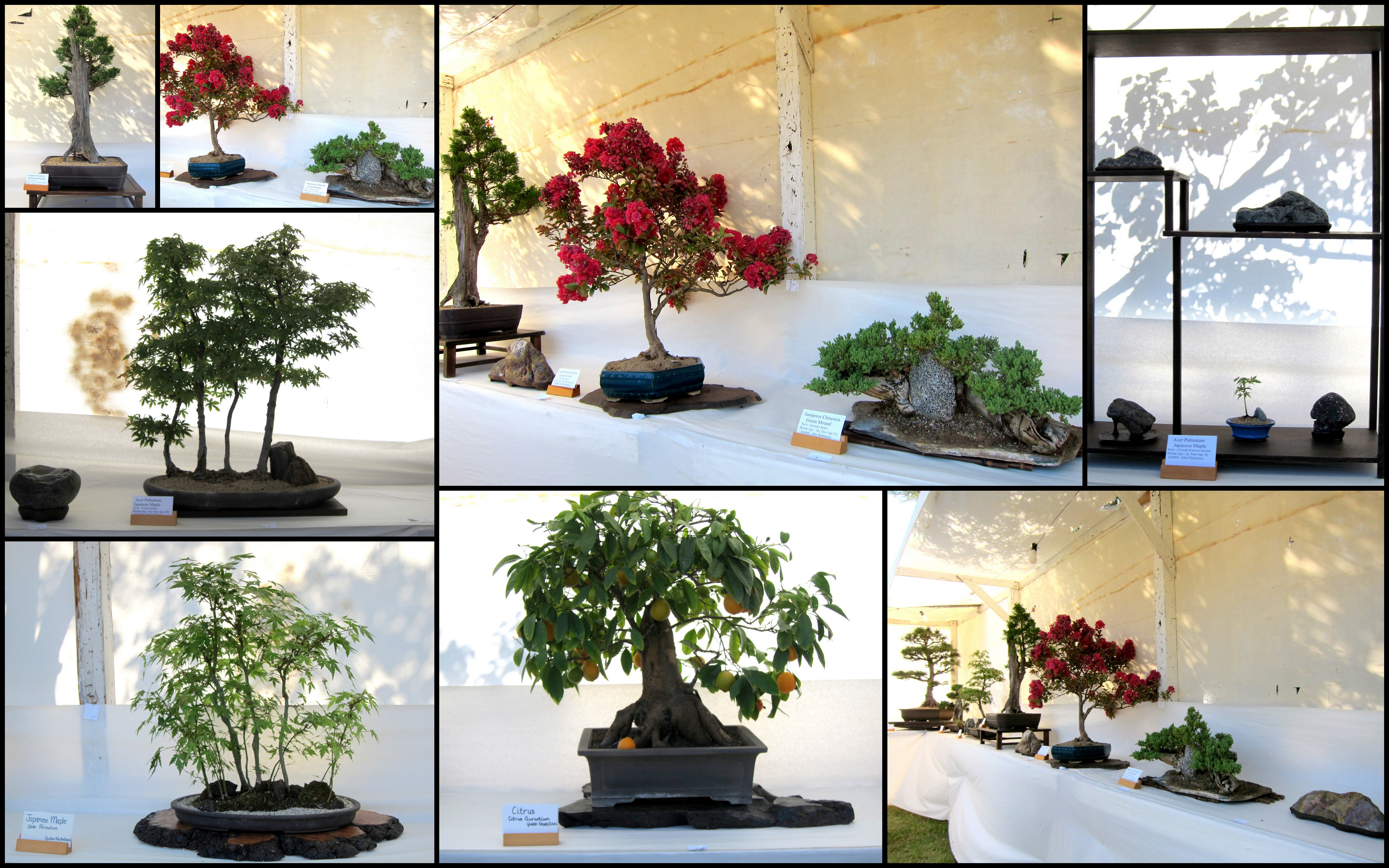

Mom is an avid believer against potted plants and caged birds, and I don’t even support cutting grass. But these miniature trees are undeniably works of art.

That said, if Mom and I were given one of these, first thing we do is removing the tree from the pot and digging it a nice warm hole in our front yard. 😉
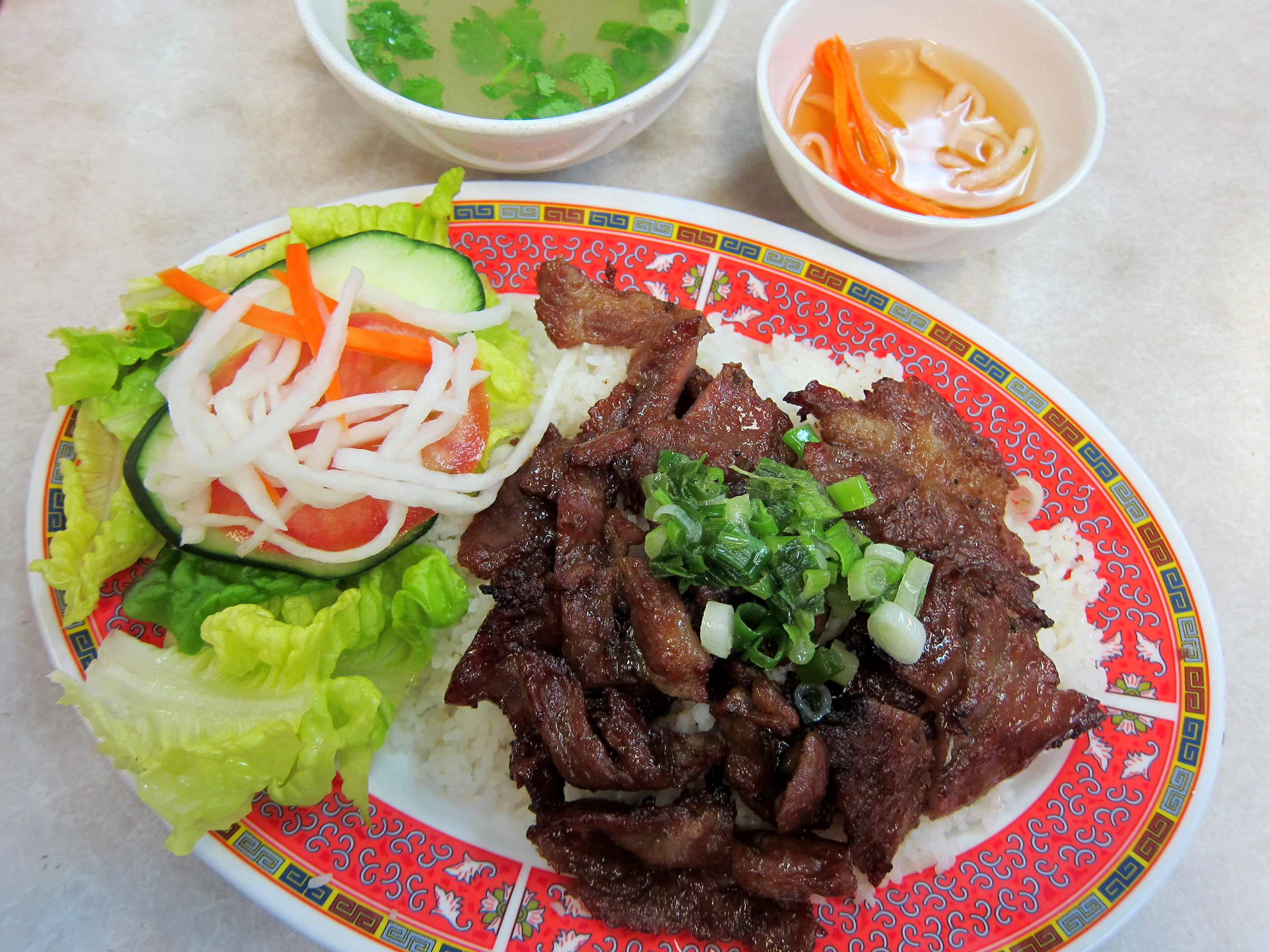
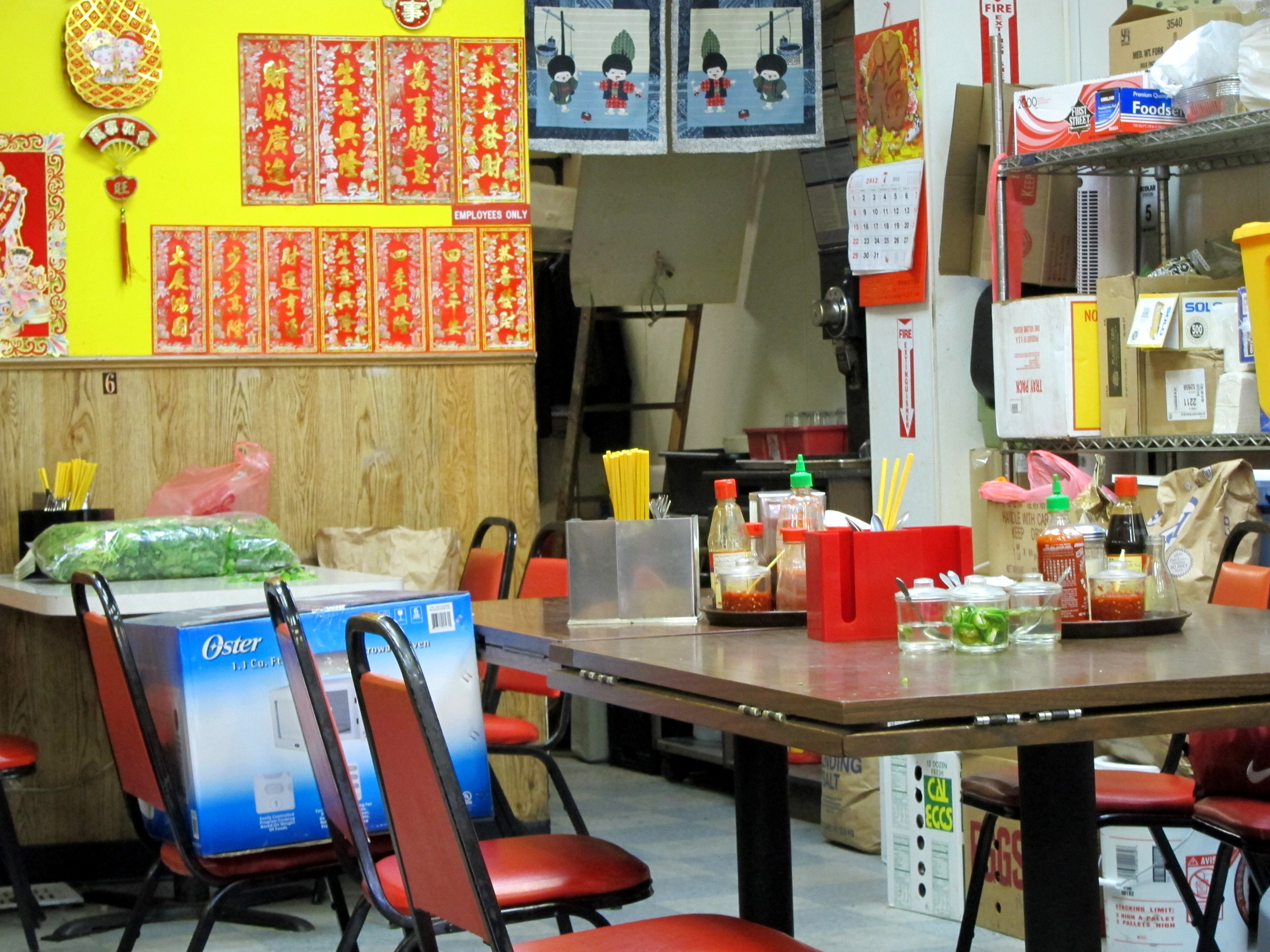
Com tam at a tiny joint in Oakland Chinatown

August 14, 2012 By: Mai Truong Category: California - The Bay Area, Comfort food, One shot, Opinions, Vietnamese

A guy waved a bottle in front of me. “Nesquik?”, he asked. I shook my head no thanks. Five seconds after he walked away, I realized my stupidity. I missed a free bottle of Nesquik! I don’t remember drinking Nesquik for the past 15 years, or ever, but I know what it tastes like, and I like chocolate. Why did I say no?!

Because I live in Berkeley. One thing Berkeley trains you very well for is saying no. Each time you walk pass a homeless man or woman, whether he or she asks for spare change or curses you off or shouts “nice dress”, you silently say no. Each time an activist steps up to you and says “Hi how’s it going? Would you have a minute to talk about …?” and you can barely tell what it’s about because he or she squeezes those two sentences in the hundredth of a second you lift your foot, you say no, usually with a smile because you feel bad. So you prepare this automatic respond when a stranger sticks something under your nose: No thank you. And you end up missing the free Nesquik.

But Berkeley also makes you nicer. And it’s not because the hippies convince you about world peace or anything. First it’s because you travel by bus. The bus always comes late, and not everyone sitting next to you has showered in the past 30 days, so you learn patience. Second, it’s because, as the saying goes, “it’s Berkeley, you can do anything“, and people, including you, wouldn’t bat an eye, so you learn acceptance. Then there’s the protests (boy do Berkeley students love protests, although those never yield any result beside some kid ending up behind a police car). I could list a dozen other reasons. But mostly, it’s because you see everybody from every corner of the world. My first encounters with the Serbian, Iranian, Bosnian, Tibetan, Korean, Japanese, Eritrean, Ethiopian people, and the smell of marijuana all happened in Berkeley. And those encounters (except the marijuana) quickly became friendships.

So I used to get a little uneasy, and I’m ashamed to admit this because I know it’s mean, when I saw Chinese people selling Vietnamese food. Here’s what I think: they don’t make it right, so they shouldn’t call it Vietnamese food. (I’m disturbed when Vietnamese people sell bad Vietnamese food too, because that’s disrespecting your own people.) And I avoided Vietnamese restaurants owned by Chinese. But when I strolled all over Oakland Chinatown last week, there were some occasional raindrops, the sky was grey, it was getting cold, and I just visited the Japanese Buddhist Church for the O-bon festival. All of those things put me in an exceptionally good mood. Although I set out to find Vietnamese snacks, it quickly became clear that I wasn’t going to find any, so when I walked by a window sign of “banh mi, bun bo Hue, banh canh” and a list of other Vietnamese staples, I caved.

Five minutes later, I ordered a cơm tấm (broken rice) with grilled pork “for here”. The lady pointed me to Table 2 (Let’s refer to her as Lady 2 from now on, many ladies worked at this joint). I put down my bags.

Then she exchanged a couple of words including “xiè xiè” to a couple sitting at Table 4. Yep. It’s Chinese people selling Vietnamese food.

Well, that’s okay, I diverted my gaze to the TV, Lady 2 also made herself a bowl of noodle soup and watched a Vietnamese movie while eating. It was hard to hear the TV because the following things happened during the course of my dinner: a customer dashed out into the street while Lady 2 shouting after him in Vietnamese to tell him to run slower, Table 4 chatted loudly in Chinese upon his return, Vietnamese customers coming in to buy banh mi and cha lua to go (the only dine-in people were Chinese and me), and as I scooped up the few last spoons of rice, a fight broke out outside, which caused Lady 2 and everyone else rushing to the street. I had to stop Lady 2 to pay, her eyes still directed a yearning gaze door-ward.


When I told my mom about the fight, she suggested against going back to such place, who knows when the fight will take place in the restaurant. I see her point, but I think I’d risk it. The com tam, and that includes the grilled pork, the broken rice, the nuoc mam and the pickled carrots and daikons floating in it, was beyond perfect. 🙂

Price: $6.75
Address: Ba-Lê Deli, Coffee, Restaurant
812 Franklin St (between 8th and 9th St.)
Oakland, CA
(510) 465-3522

The Duck Restaurant in Piedmont

August 11, 2012 By: Mai Truong Category: American, California - The Bay Area, The more interesting


Ever since the steamed duck at Shanghai Dumpling King, I’ve been haunted by the juiciness of a duck done right.

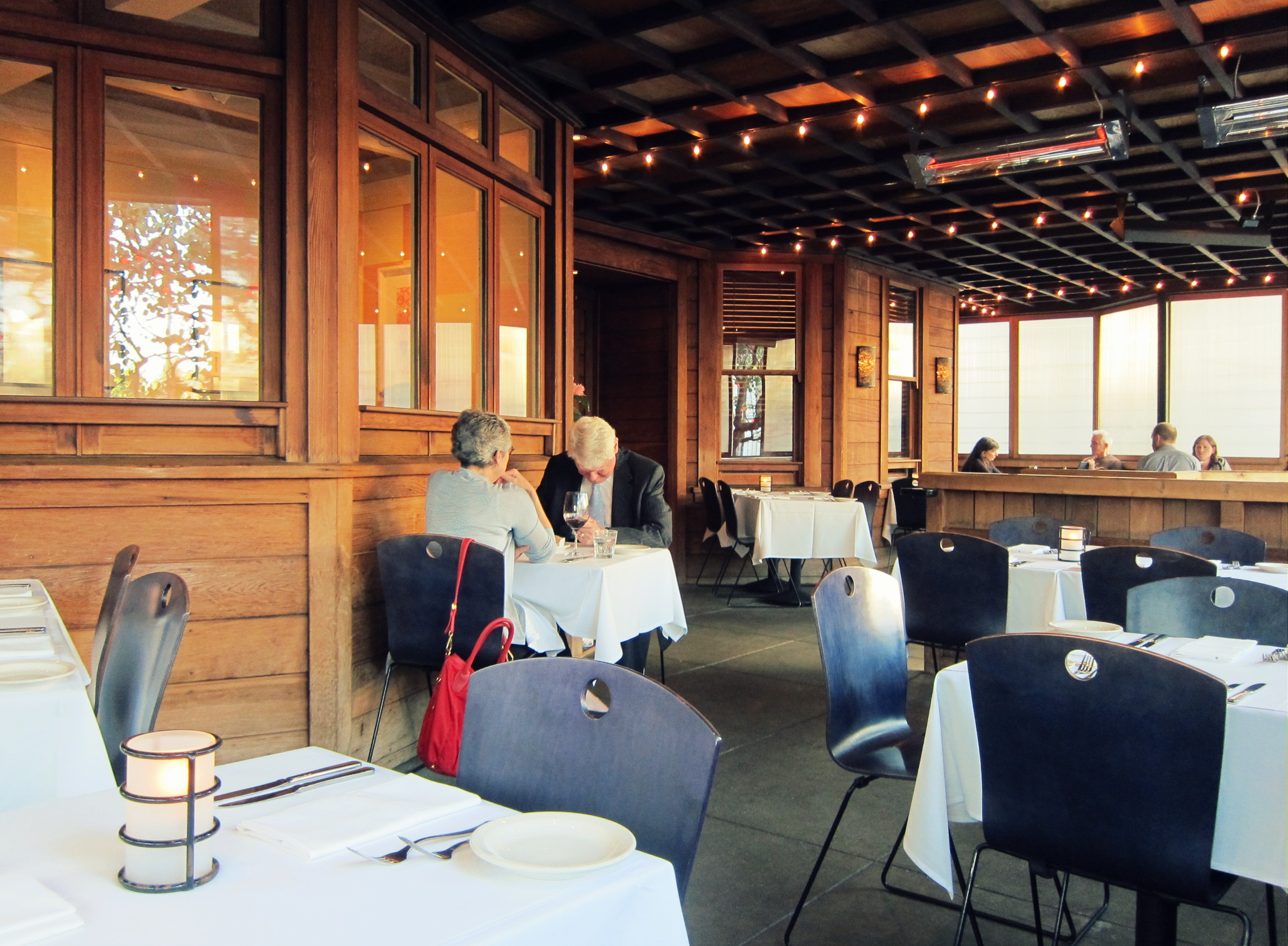
When my friend Kristen and I walked down Piedmont looking for dinner, we passed several doors but like shopping for clothes, as Kristen pointed out, none “jumped out” to us. There was one sign that we read “Pork Avenue” and crossed the street all excited for, but it was “Park Avenue“. On the way was also the curiously crowded Fenton Creamery, to me their selections aren’t that interesting. When the street started to look devoid of both restaurants and humans and hope had dwindled from a tteok in tteok bokki to a strand of angel hair, we found Bay Wolf. The duck liver flan and roasted duck with polenta sold us.

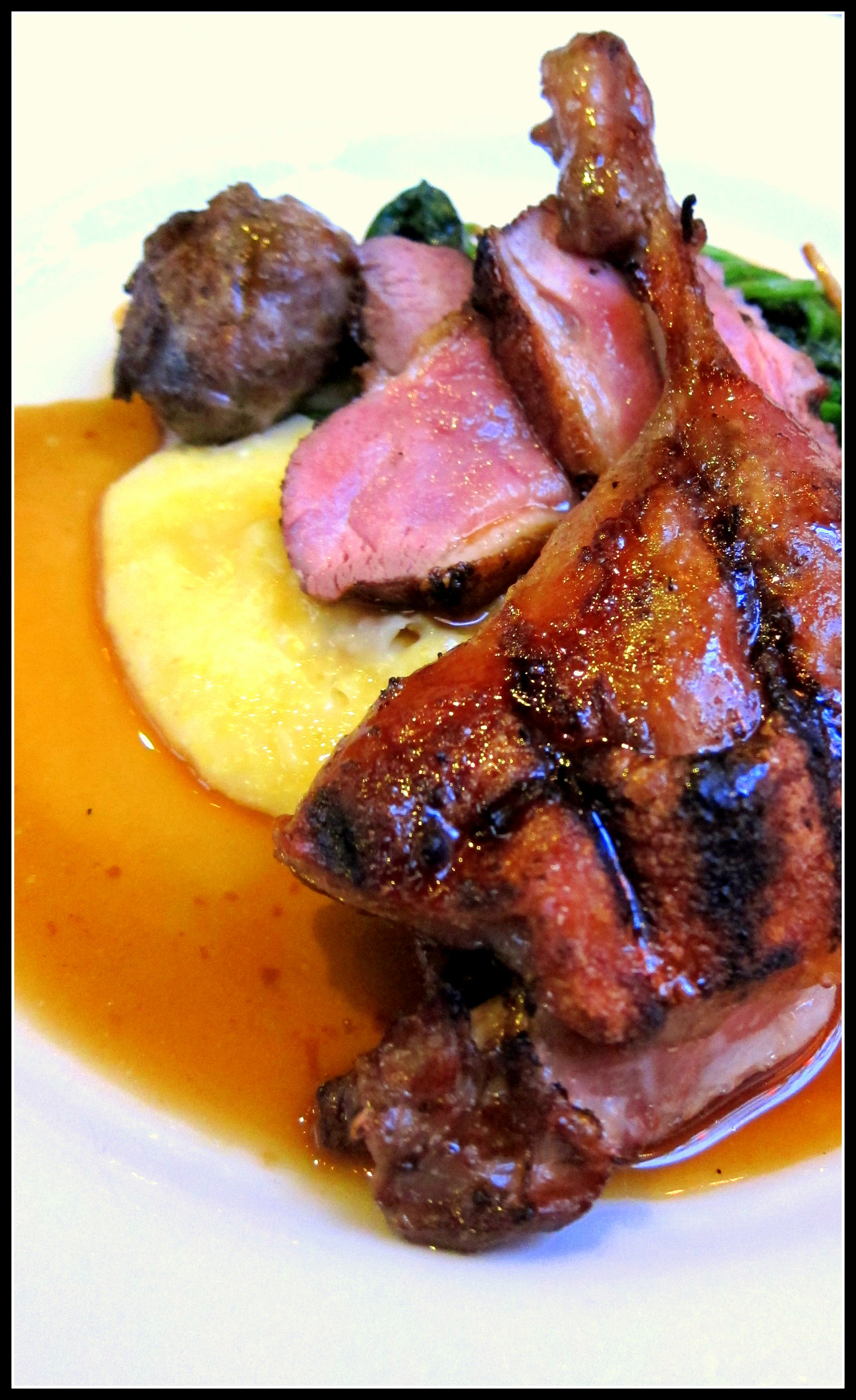
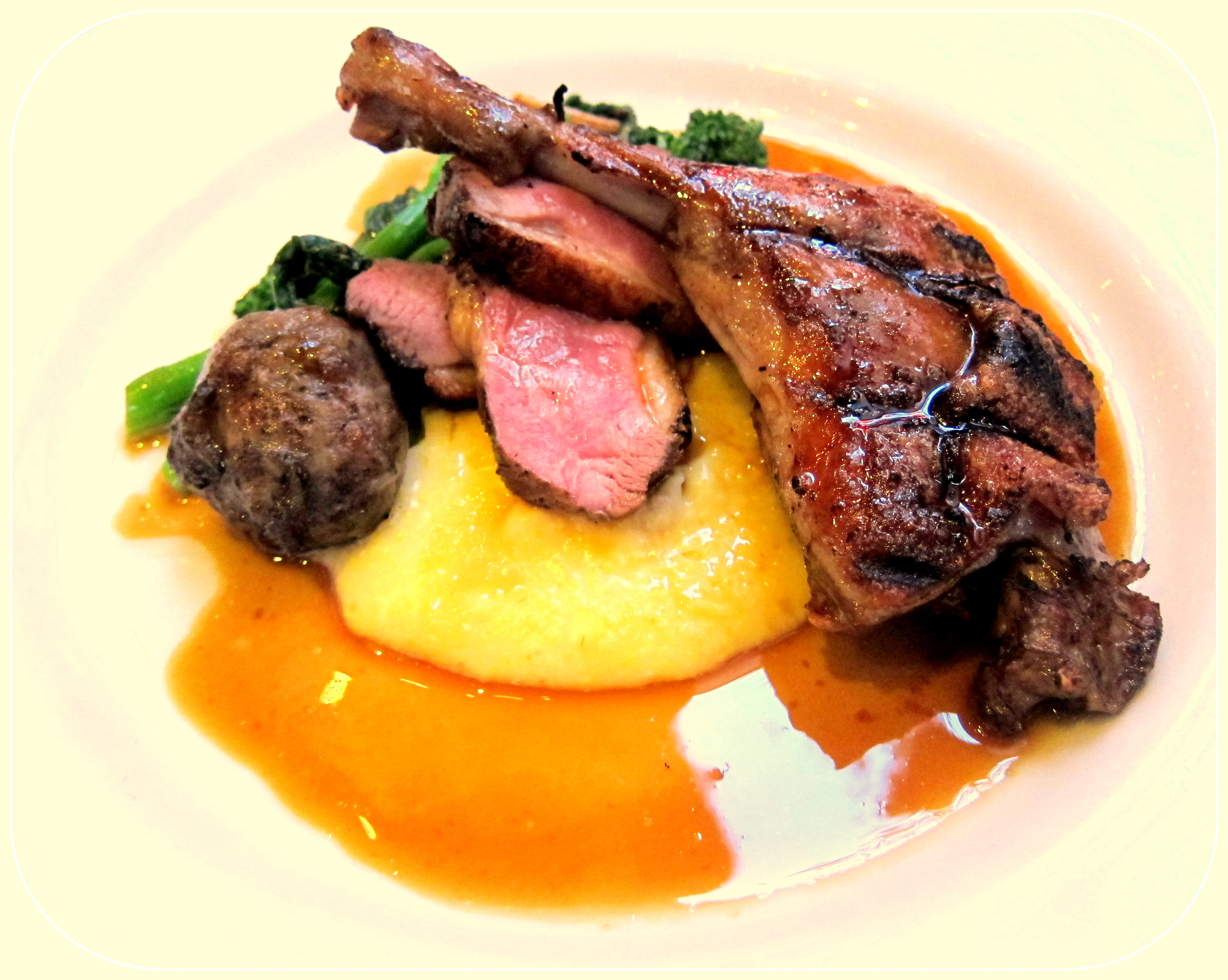
Bay Wolf specializes in duck. Their menu changes weekly but they always have two duck dishes, one appetizer and one entree. Both sing. Even the polenta was good, must be that honey-lavender gastrique that we had to wipe clean with bread after we ate the duck leg to the bone. 😉
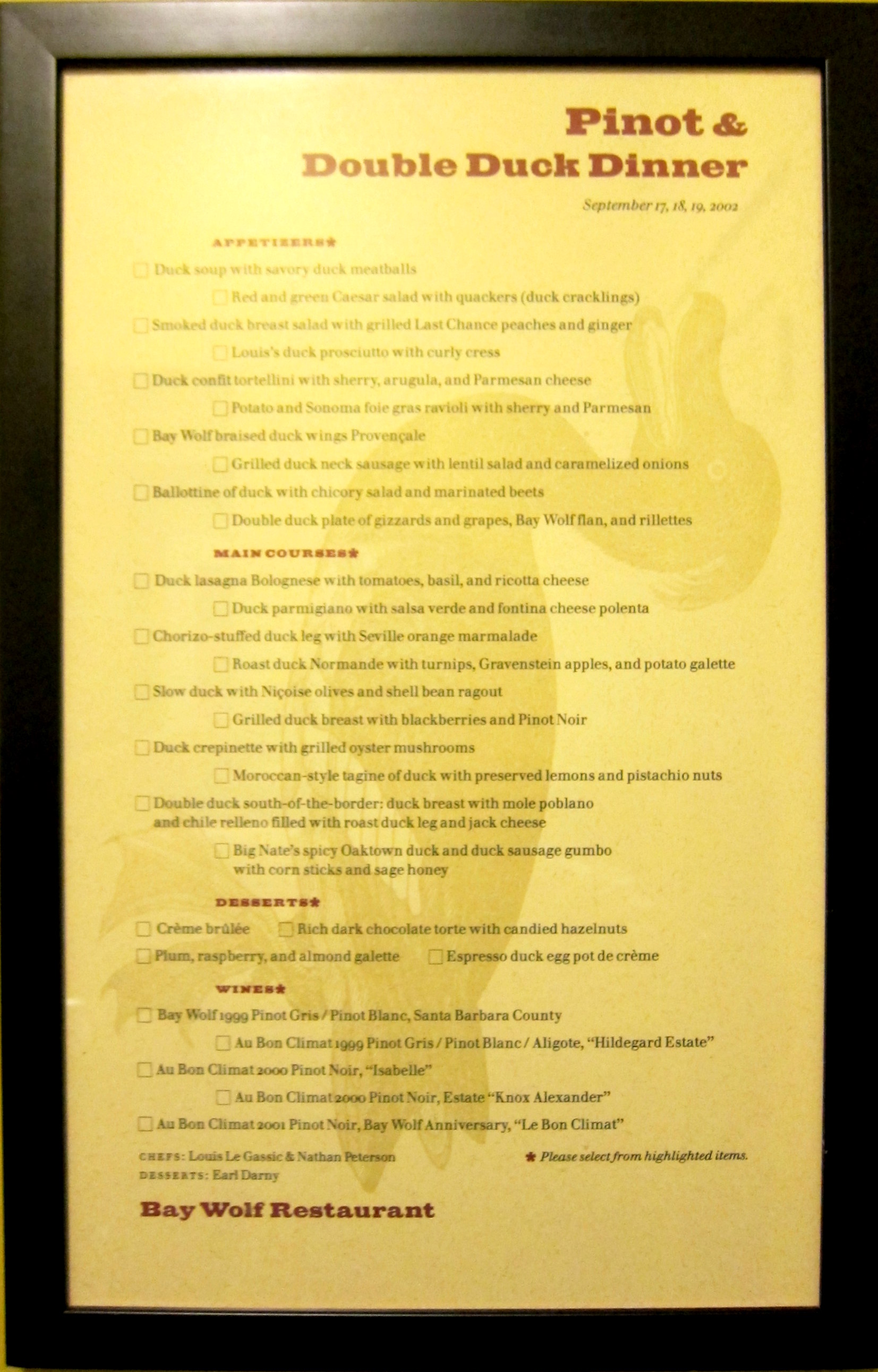
After dessert, some unknown force compelled me into the washroom, where I saw the Pinot & Double Duck Dinner dated September 17, 18, 19, 2002. Every dish was a duck dish: duck prosciutto with curly cress, grilled duck neck sausage with caramelized onion, duck lasagna Bolognese; even dessert: Espresso duck egg pot de crème.


So I did what I’ve never done (because I’m a foreigner and still feel nervous talking on the phone in English): I called the restaurant three days after my meal, thanking them, and asking if Bay Wolf will have another Double Duck Dinner like that in the future. Mark your calendar, pals, September 16-18 this year.

Address: Bay Wolf
3853 Piedmont Avenue
Oakland, CA 94611
(510) 655-6004
www.baywolf.com

Dinner for 2: $77.76

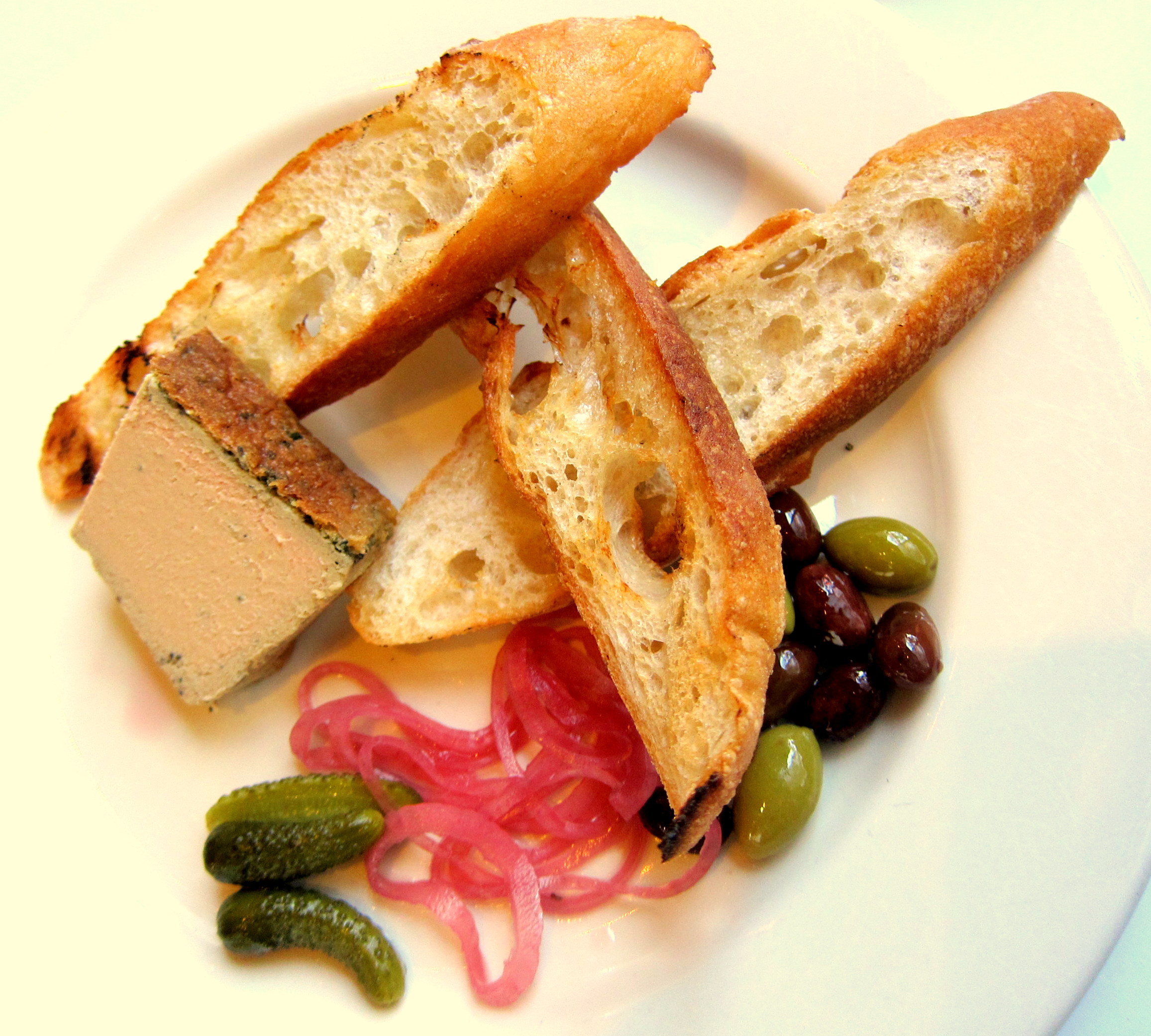
Duck liver flan with grilled Acme bread, pickled onion, cornichon and olives ($8.50). The pate is smooth and rich. The pickles add just the right zing.

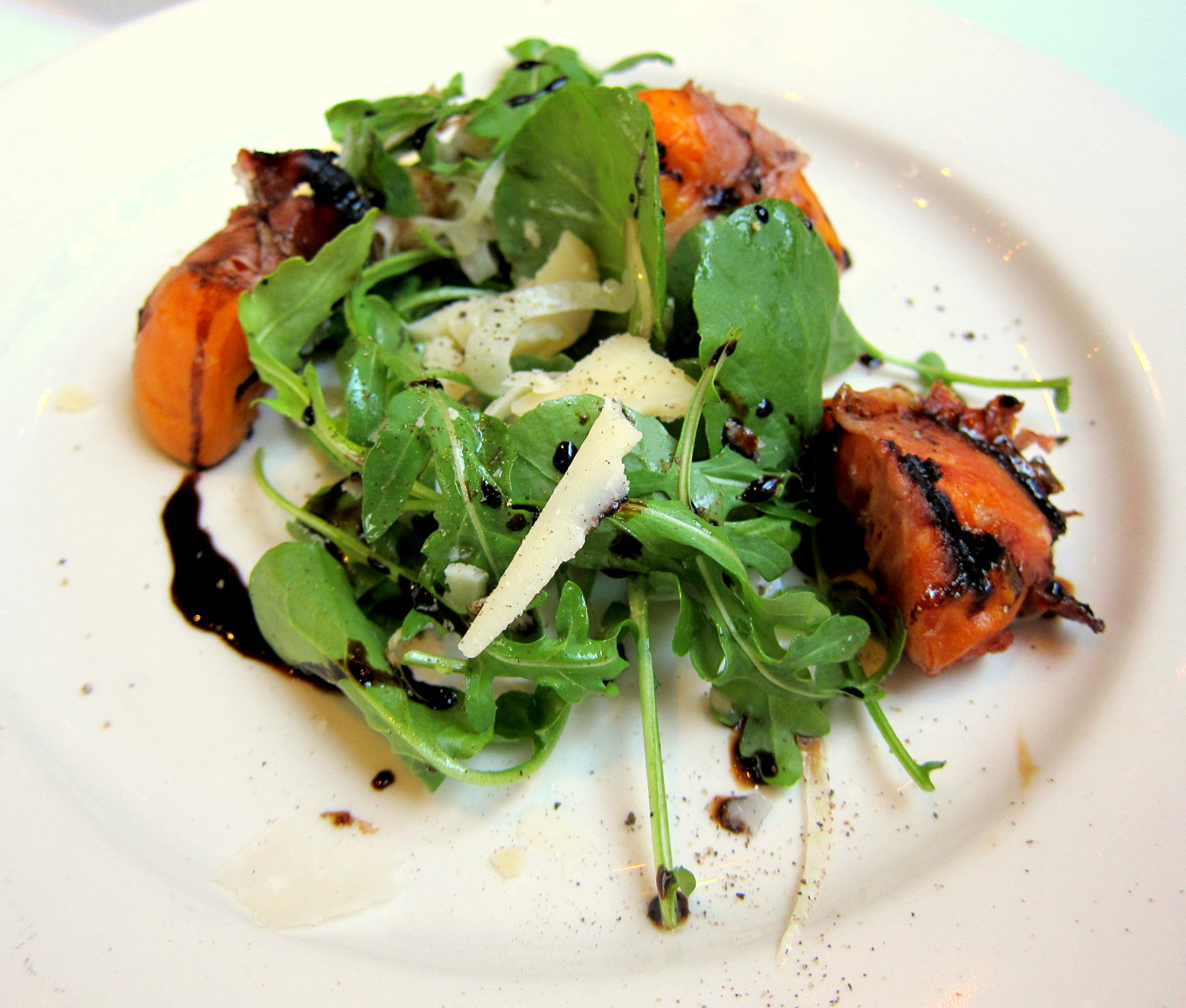
Grilled prosciutto-wrapped apricots with ancho cress and parmesan ($9.50). The apricots were a bit too tart, another two layers of proscitto would have balanced it out.

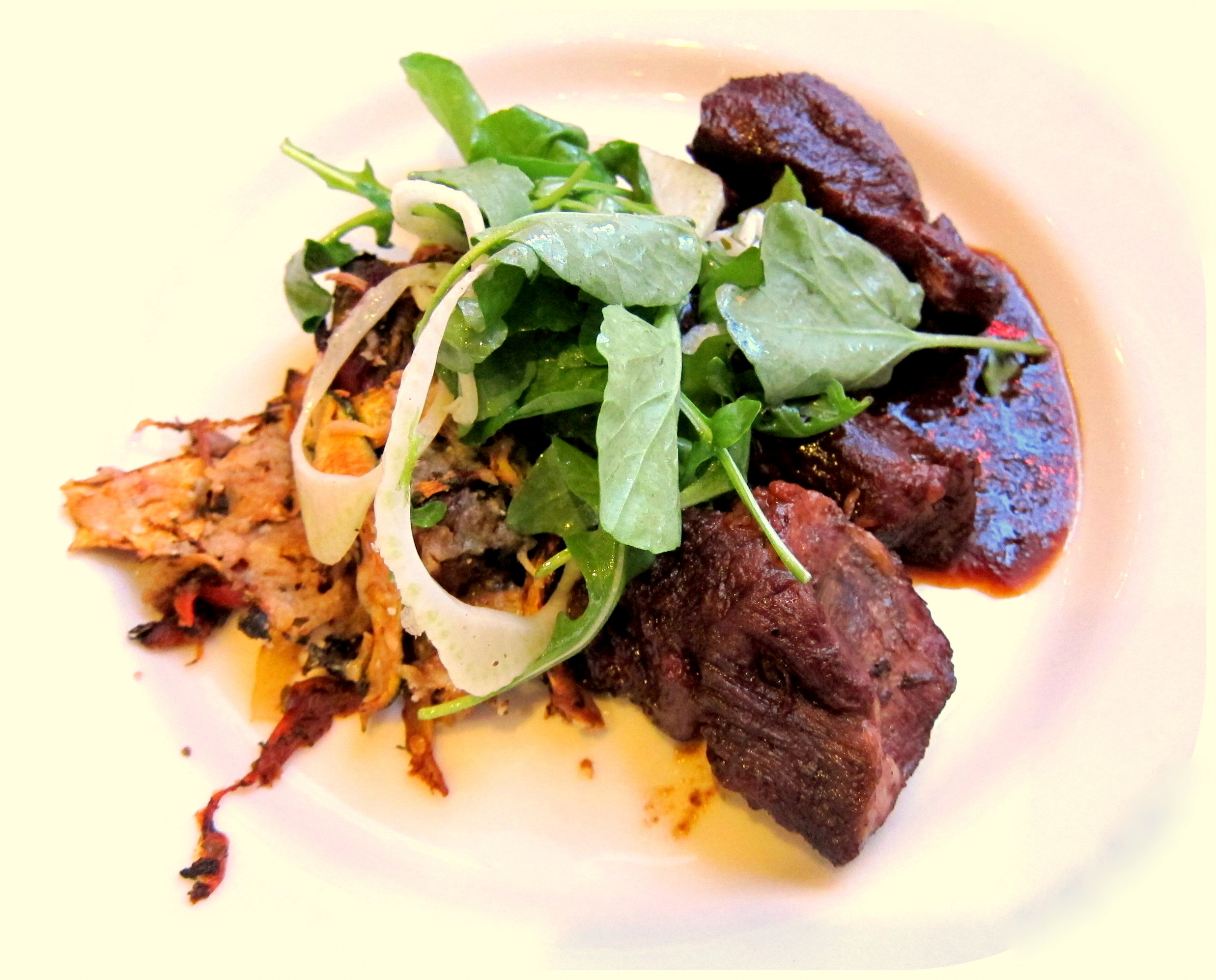
Slow-cooked lamb shoulder with vegetable tian and red wine reduction ($23). The tian consists of zucchini, tomato and eggplant. The lamb was a little stringy.

Liberty Ranch duck with polenta, rapini and honey-lavender gastrique ($24). A truly flawless delight.

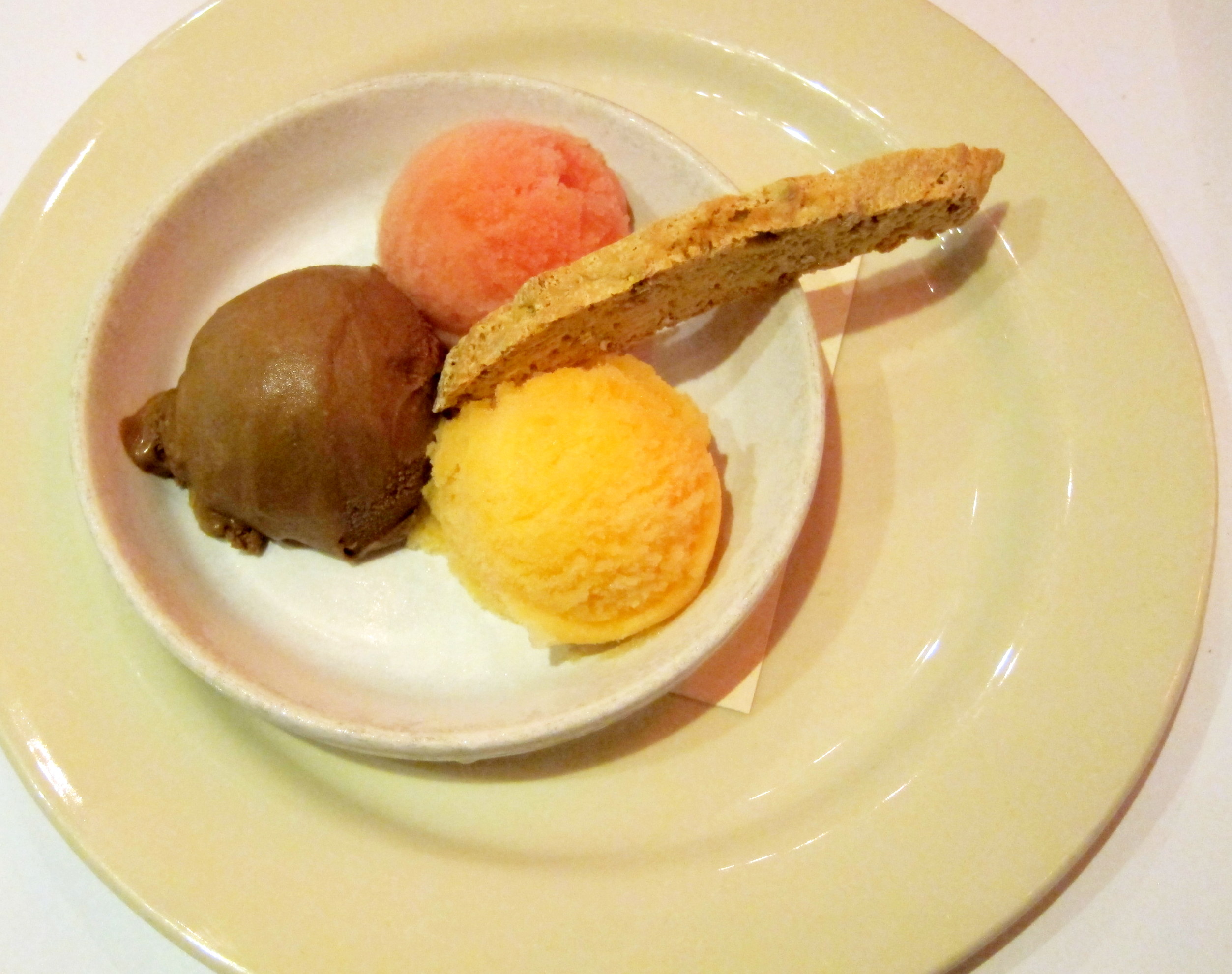
Seasonal sorbet: chocolate-coconut, ambrosia white melon, and watermelon-mint ($6.50). The two melon scoops have a faint taste of melon seeds. Combining all three in one bite is the way to go.

One Bite: Tteok bokki at Crunch

August 09, 2012 By: Mai Truong Category: California - The Bay Area, Comfort food, Korean, One shot, savory snacks, sticky rice concoctions


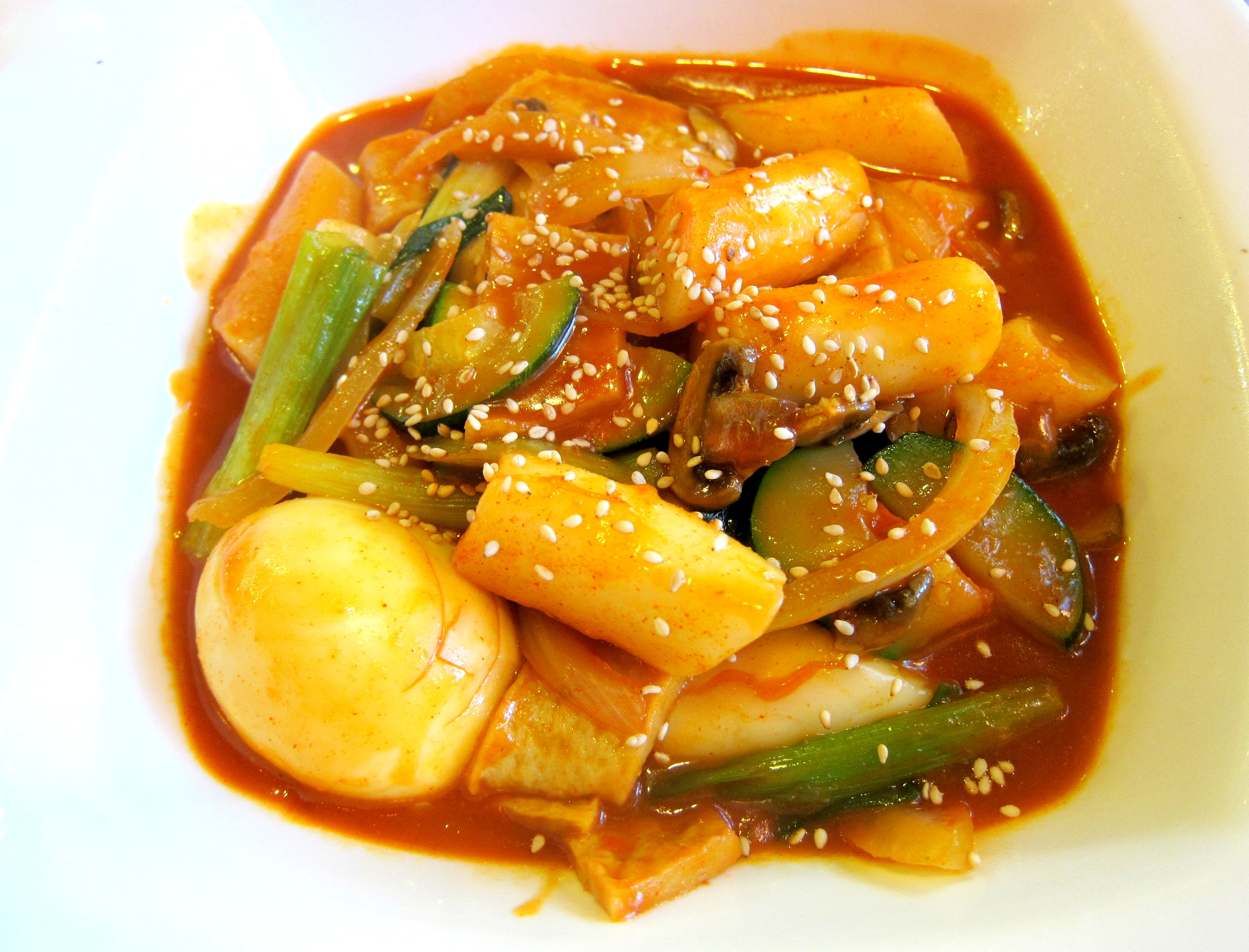
Thick sweet & spicy sauce. Soft chewy sticks of sticky rice. This is one heckuva tteok bokki. I can see myself going here for a tteok bokki takeout on movie weekends, and it’s only $7.

Address: Crunch
2144 Center St
Berkeley, CA 94704
(Downtown Berkeley)
(510) 704-1101

This place used to be a sushi joint. I ate there once. I’m glad it has changed into something much better.
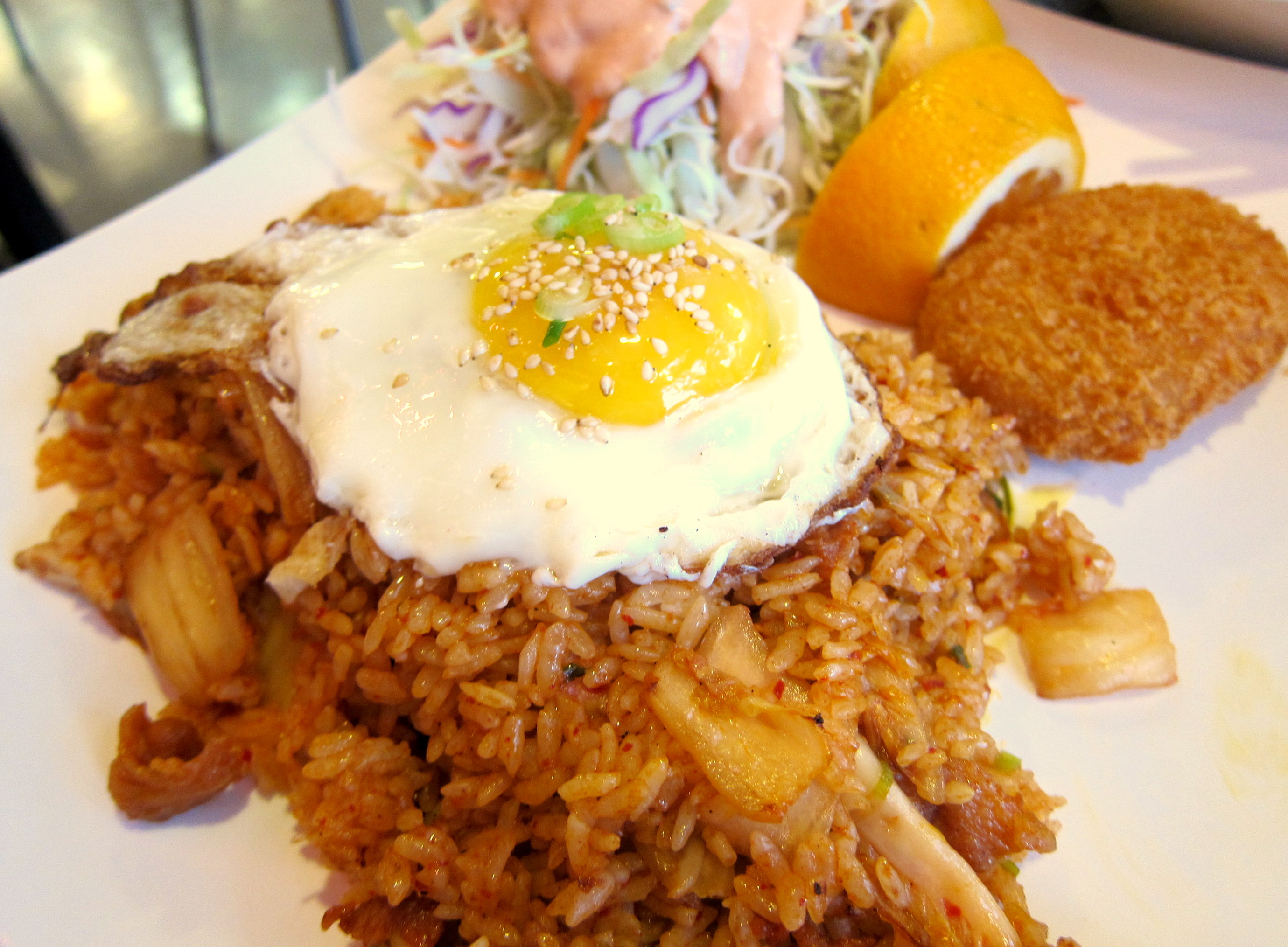
Also, Crunch gave me a humongous plate of kimchi pork fried rice that was just three spoons above my limit and not enough to take home. What should I do? Cut down or increase my limit?

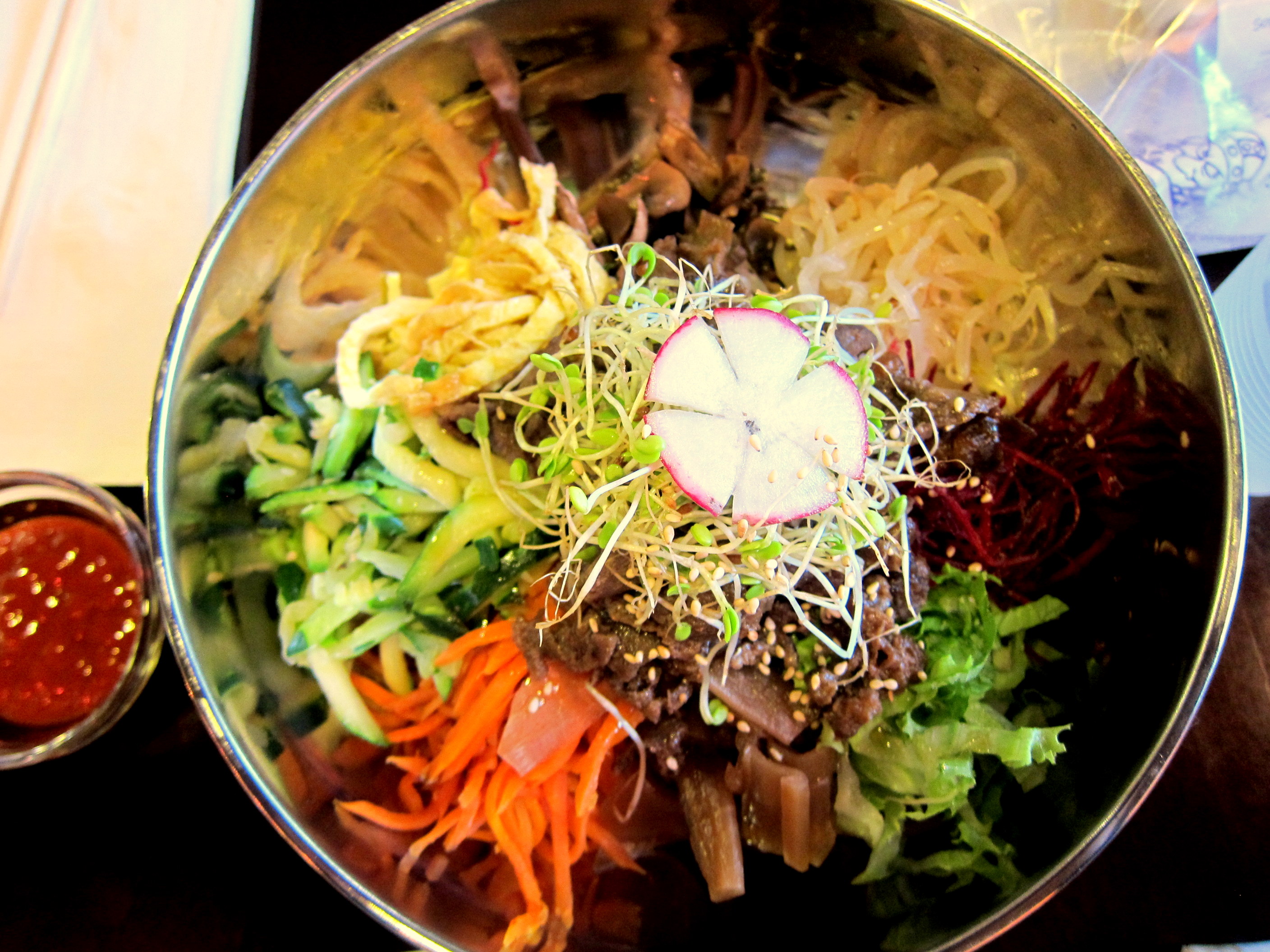
Beef bibimbap ($8)- julienned cucumber, carrots, bean sprouts, egg, lettuce and sauteed beef to be mixed with rice

Kimchi fried rice with pork ($8).

More Peach? Make Peach Sauce.

August 06, 2012 By: Mai Truong Category: American, Fruits, RECIPES, Vegan

[…] now the hand is coming back. And I think that has a lot to do with food. Farming is gonna be hip again and people are going to think about the things they’re contributing to society.
[…] Hopefully what this is leading to is people learning to shop like all good chefs do: We go and get all the best [stuff] and come home and figure out what we’re gonna make. Italy became cool in the gastronomic world in the ’70s because people went there and the what-the-[stuff] moments or the holy-[stuff] moments were never based on truffles or super-intense technique. It was more like, “God, this is spaghetti and zucchini, and it’s this good?” It was because there was no noise in it. It was spaghetti and garlic and zucchini in season.

– Mario Batali, Batali Beat, Lucky Peach Issue 3, 2012 –

No doubt Lucky Peach is not big on sensoring rough language (I’m old fashioned, so I bleeped them out myself), but the point is with all these new cooking shows, chefs have attained celebrity status (Now the Bay Area has its own cooking show: The Big Dish), and for a really brief moment, I had thought about becoming a chef. On the way to Teance I see this culinary school, and as if I hadn’t had enough on my plate already, I memorized the name and Googled it when I got home. I seriously thought about taking a class. Thank goodness it costs a little more than I expected.

Cooking school is not the best route to chef-dom, though, because “not a single chef I interviewed said that culinary school made any difference in either hiring decisions or an individual employee’s success,” said Mark Wilson (Should You Go to Culinary School? (Maybe, But Probably Not)).

As one chef put it, and I can’t remember who(!), it goes something like this: “if you want to be a chef, you got to ask yourself: do you truly love washing dishes?

I don’t.

So that’s that. Now I choose the easy route: I’m a chef in my own kitchen, and to follow the trend, I’ll attempt to cook with the season. How do I know what’s in season? I go to the grocery store and see what’s most abundant (not necessarily what’s cheapest, because the out-of-season may look so sad that they’re on ridic sale). For now, it’s peach.


Basic Peach Sauce (adapted from Mario Batali’s Basic Tomato Sauce)
(make 2 cups)

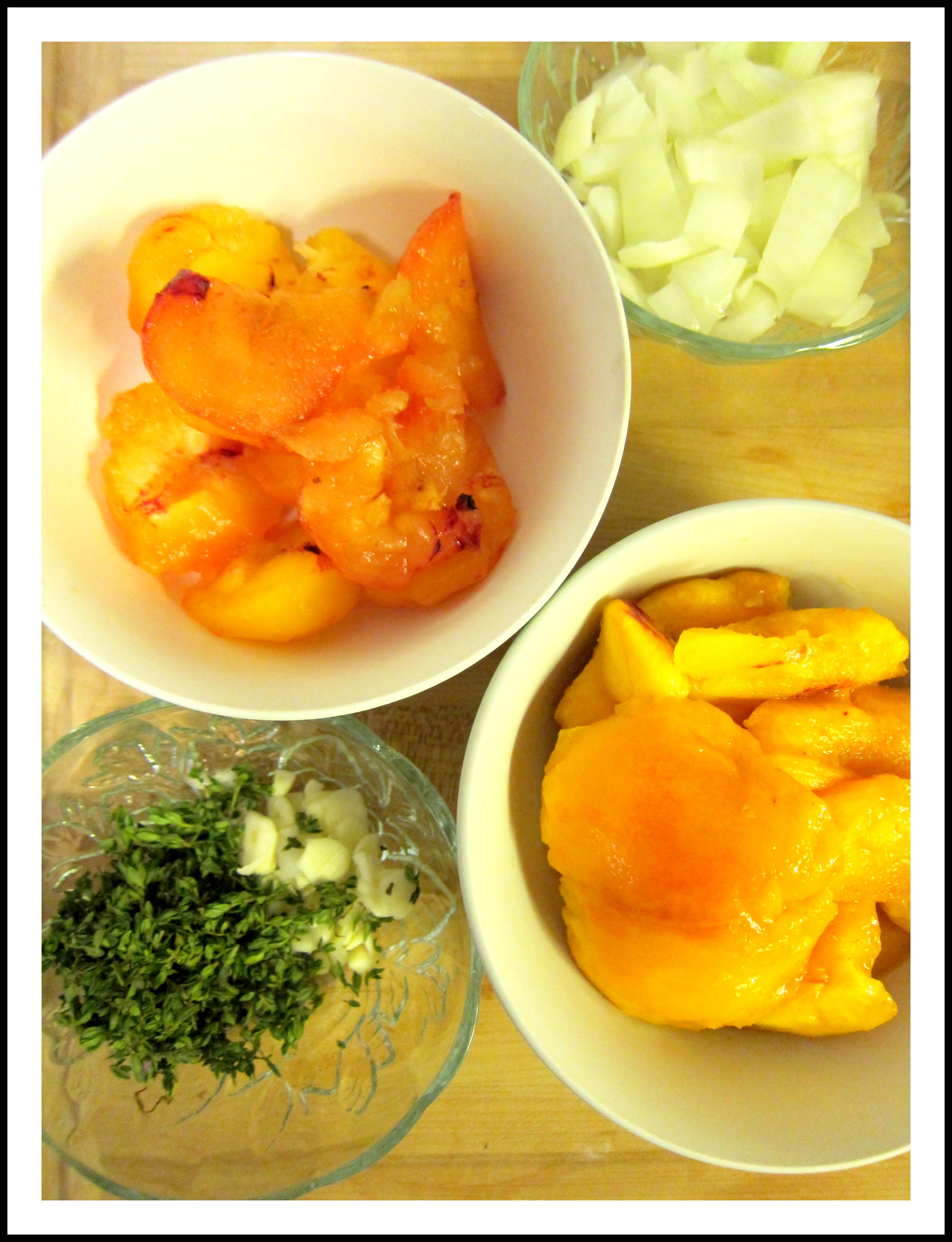
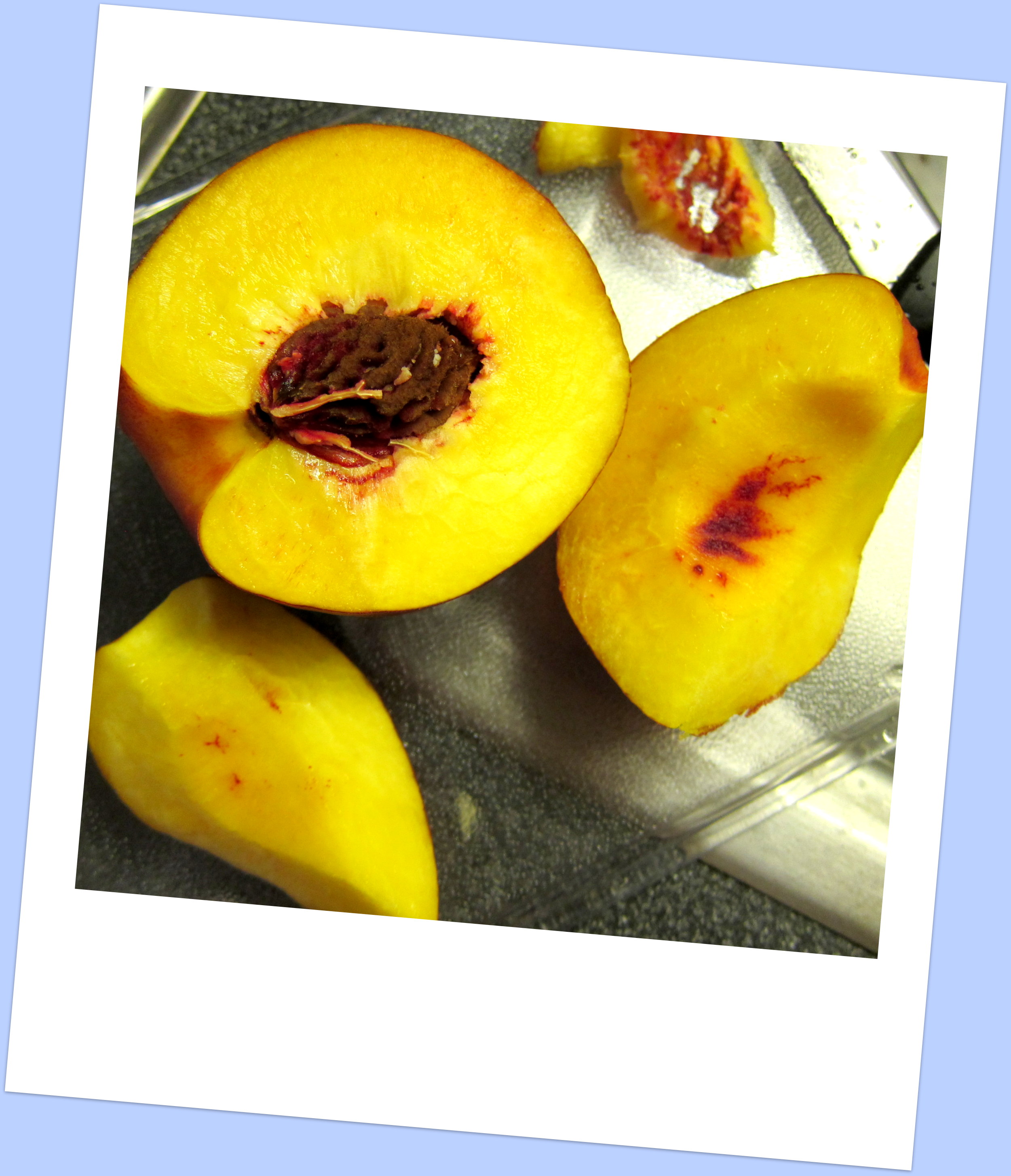
– 3 peaches (let it ripe until it’s a little mushy), peeled, pitted and mashed by hand
– 4 plums, peeled, pitted and mashed by hand
– 1 onion, diced
– 4 cloves of garlic, thinly sliced
– 1/4 cup olive oil
– 2 tbs chopped fresh thyme leaves (I use lemon thyme, it makes the whole room aromatic!), or 1 tbs dried thyme
– salt

In a 3-qt saucepan, heat the olive oil over medium heat, add garlic and onion, saute until soft and slightly brown. Add thyme.
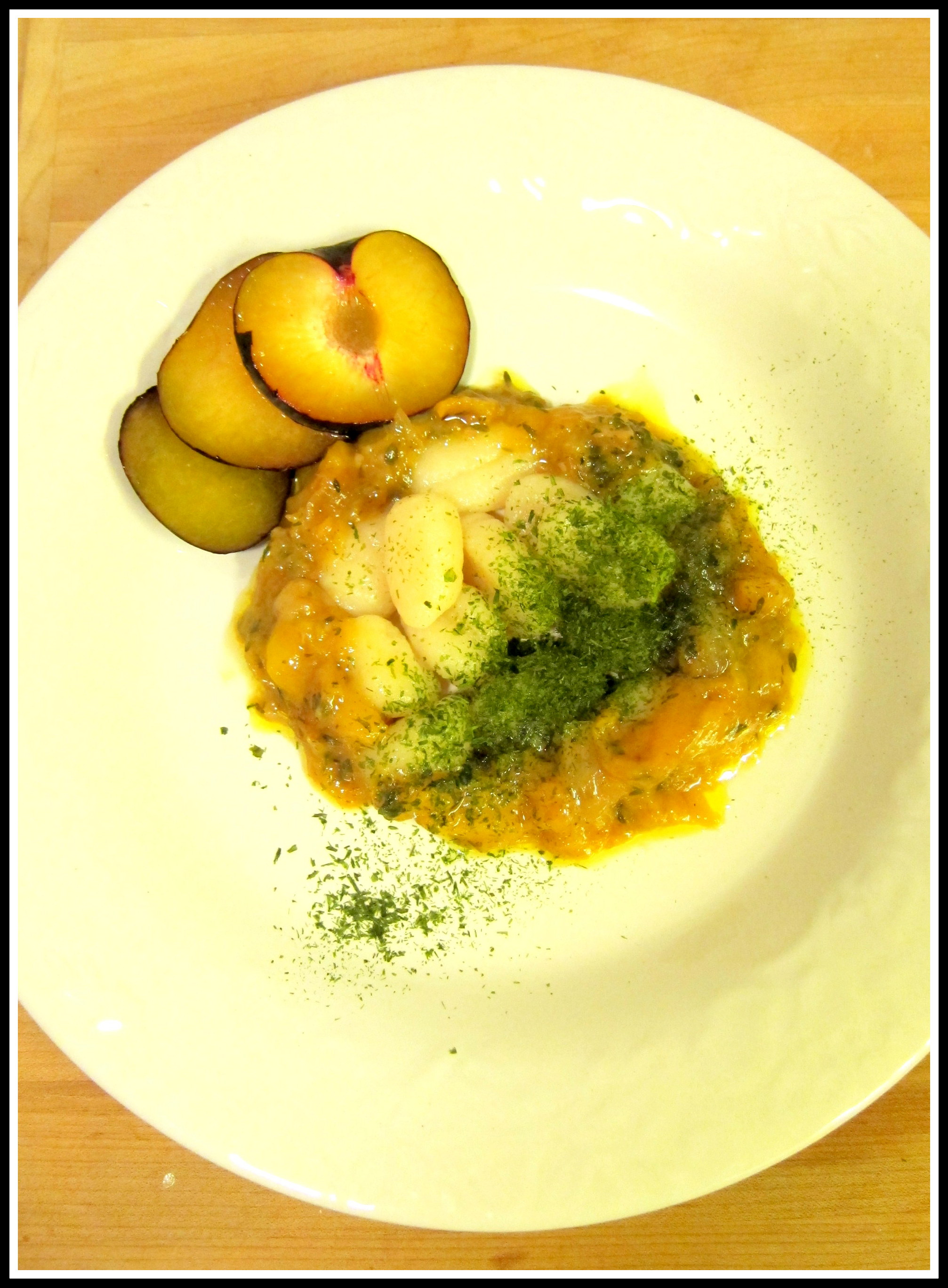
Add peach and plum, bring it to a boil. Simmer for about 30 minutes, stir often (the peach likes to stick to the bottom). Season with salt and serve. (I use it with sweet potato gnocchi)
According to Batali: “this sauce holds for 1 week in the fridge or up to 6 months in the freezer“.

This is my third and last session with peach this season, the first two are Peach Mul Naengmyeon and Bouquet Peach Gyoza.

Tags: , ,

For the Summer: Gyoza with Fruits and Flowers

August 03, 2012 By: Mai Truong Category: Fruits, RECIPES, savory snacks, Vegan, Vietnamese


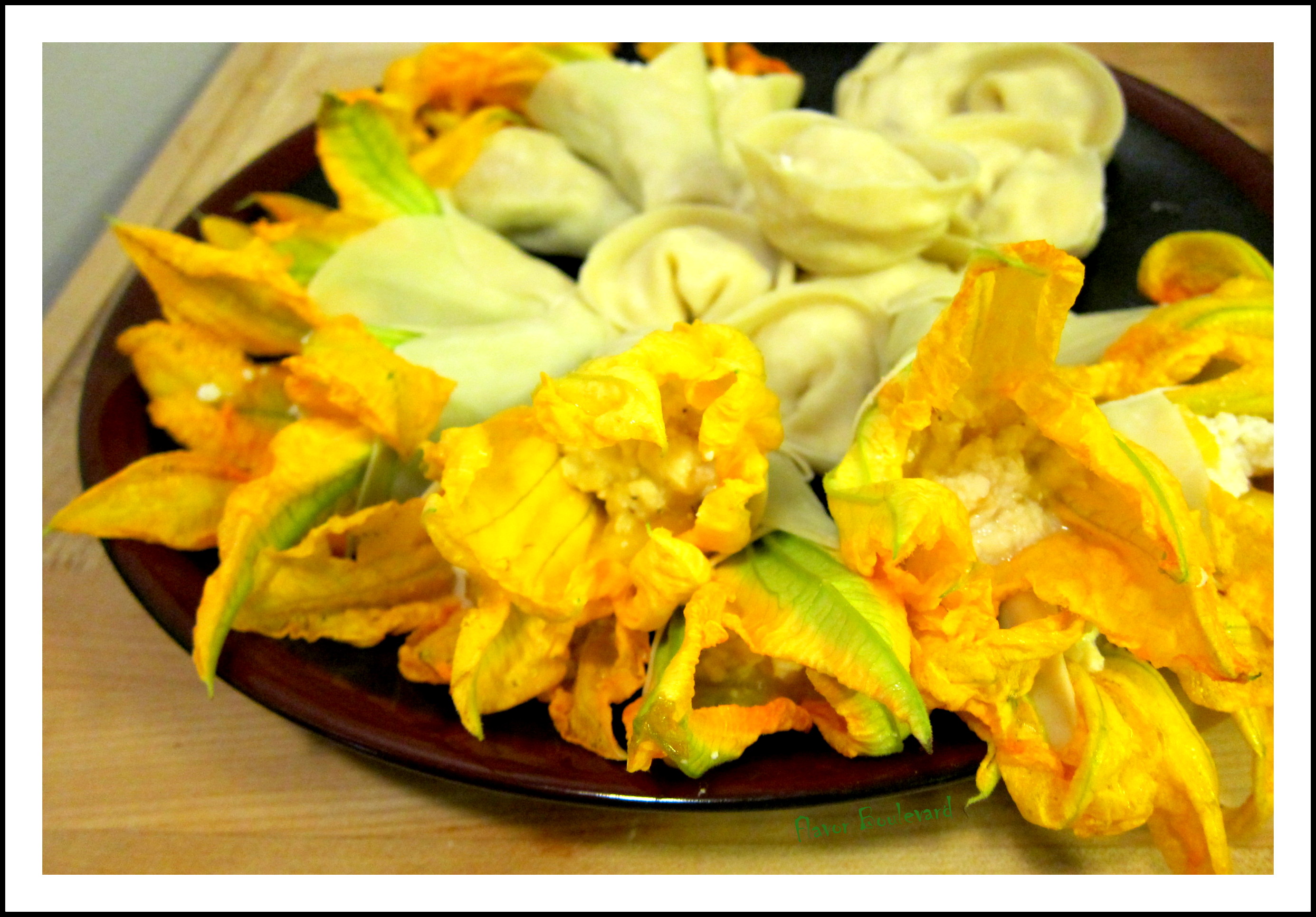
What can you do with 24 squash blossoms?

Twenty-four is too few for squash blossom canh, a clear soup that Mom used to make when I was little. The flower is the only thing of a pumpkin plant (squash blossom in Vietnam is pumpkin blossom) that I didn’t mind eating (I hate pumpkin). The flowers perish too quickly that American grocery stores almost never carry them(*). That scarcity, I can only guess, also raises them to the exotic level that makes the modern American restaurants include the word in their menu around this time of the year (summer squash blossom season) and feature a mere 3-5 flowers on a plate amidst the more common vegetables like zucchini and cauliflower. The craze has been around for at least a decade, Carolyn Jung said, and I don’t see it wilt away anytime soon.

Although I dislike the place at first because it’s always too crowded, Berkeley Bowl gradually grew on me. It started when I realized, after many years away from Vietnam and living just a bit inconveniently far from the Asian markets, that I haven’t seen certain grocery items for ever, for example, woodear mushroom (nấm mộc nhĩ) and straw mushroom (nấm rơm). Then one day I ran into them at Berkeley Bowl. I was like, oh? they have that here?! It’s a great moment. One where you reunite with old friends, and if we should speak in grand terms, it reminds me to appreciate growing up in Vietnam and in my family, the lack of either component would have resulted in a much, much poorer experience with food.

Sometimes that great feeling clouds my better judgment. You know, when people dig out a picture of their middle school gang from a notebook, buck teeth and silly hair or whatever, they feel compelled to put it on Facebook. When I saw the squash blossoms at Berkeley Bowl, I felt compelled to get them home. Not that I knew what to do with them or had time to cook them.


Mom suggested stuffing them with ground pork. I’ve had them stuffed with cheese and batter-fried. But it’s summer. Peaches are in season. This something I make with squash blossoms should taste light and fresh like the flowers it bears.

Bouquet Nectarine Gyoza
– Squash blossoms (the male blossoms, because they’re big enough to stuff)
– medium firm white tofu
– gyoza skin (wrappers)
– 1 yellow nectarine, diced (If you use peach, peel off the skin because peach has fuzz)
– sugar, salt, pepper to taste
– a steamer

Rinse the squash blossoms under cold water, peel off the dark green spikes at the base. Also break off the stem, if there’s any.
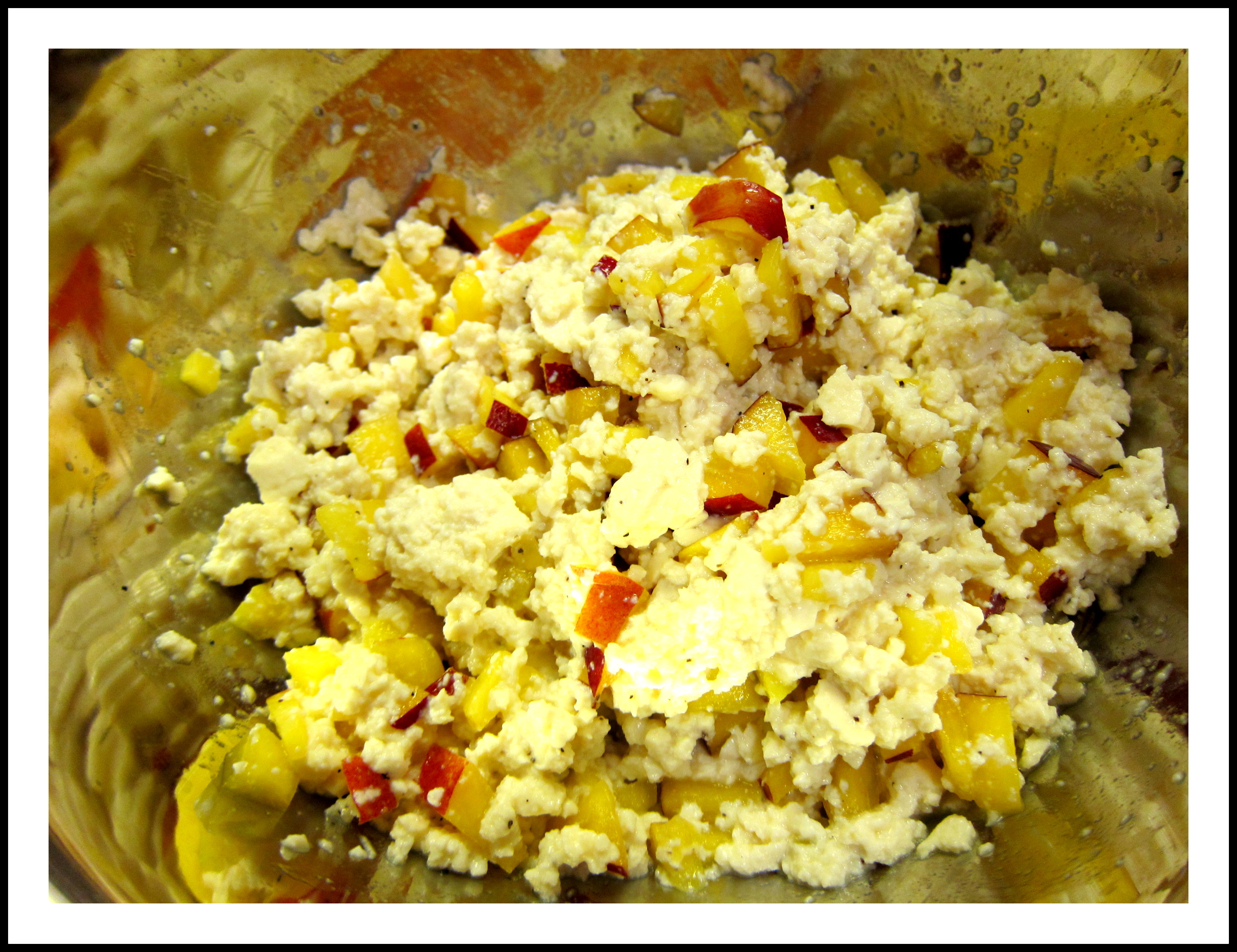
Mash the tofu by hand while mixing it with the diced nectarine. Add salt, sugar and pepper to taste.
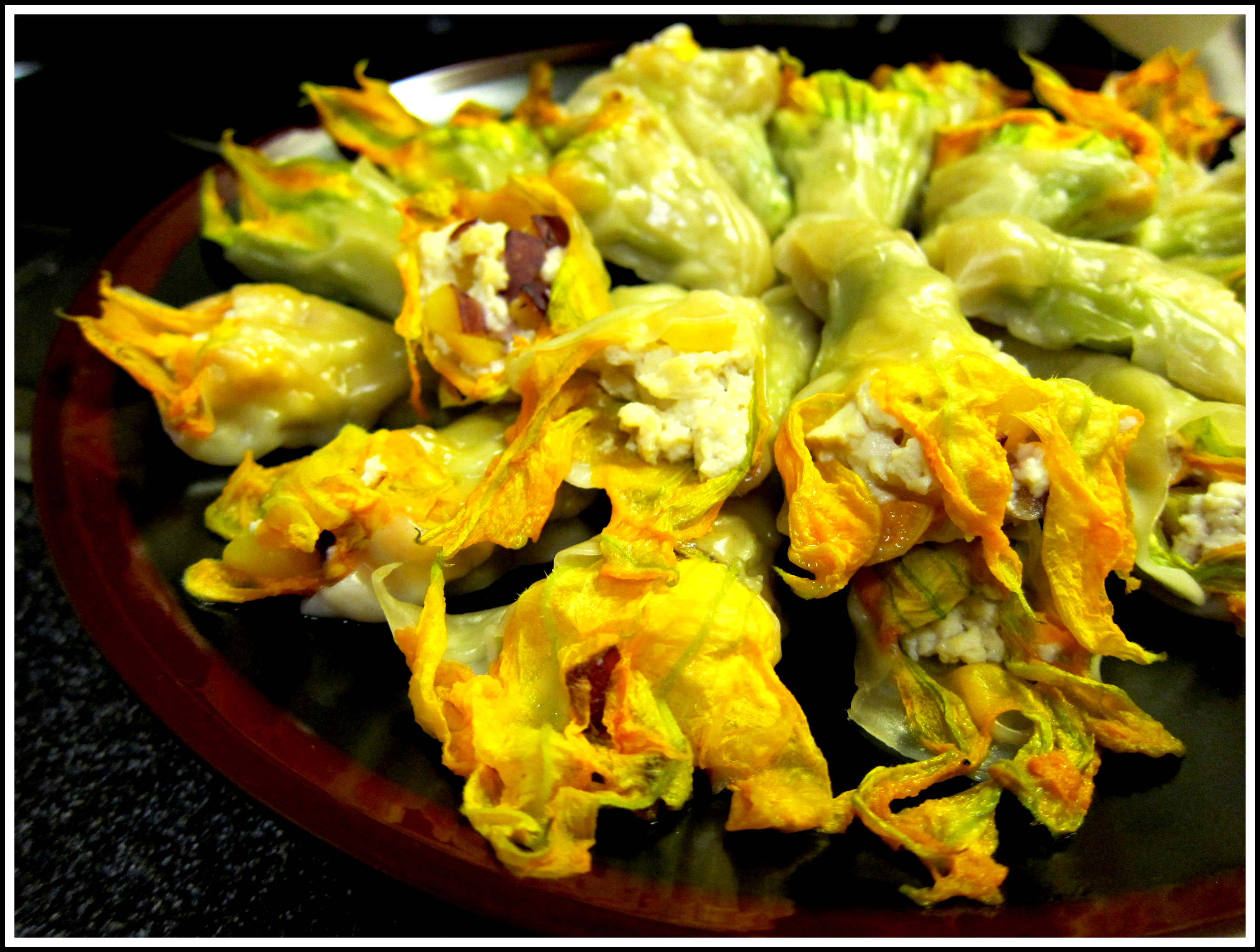
Gently stuff the nectarine-tofu mix into the squash blossom.
Wrap a gyoza skin outside the blossom, leaving at least the top half of the petals exposed.
Steam until the gyoza skin turns translucent (5-10 minutes). The flower petals will wilt but still retain their color and the bottom half should still be a tad crunchy.
Take out and let cool.

UPDATE: pan-fried these to make them taste better (albeit less healthy  :-D)


(*) Every website I’ve looked claims that squash blossoms can only stay fresh in the fridge up to 2 days under precise condition. Well, what you see in the picture “pre-steamed gyoza” are squash blossoms after 8 days in the fridge.

Ten-minute noodle and nectarine

August 01, 2012 By: Mai Truong Category: Korean, noodle soup, RECIPES


It’s summer. Time for cold noodle. Refrigerated, ice-cold noodle. And all it takes is 10 minutes (that includes water-boiling time).

Traditionally, the Koreans sweeten mul naeng myeon (물 냉면, “water cold noodle”) with sliced Asian pear and julienned cucumber. Asian pears are not yet in season (I don’t really know when its season is, but the tiny ones at Berkeley Bowl look too sad to slice), and when I want to cook my naeng myeon, like always, I never have what the recipe calls for, even if it’s just cucumber. So I did what everyone would.

I ignored the recipe.


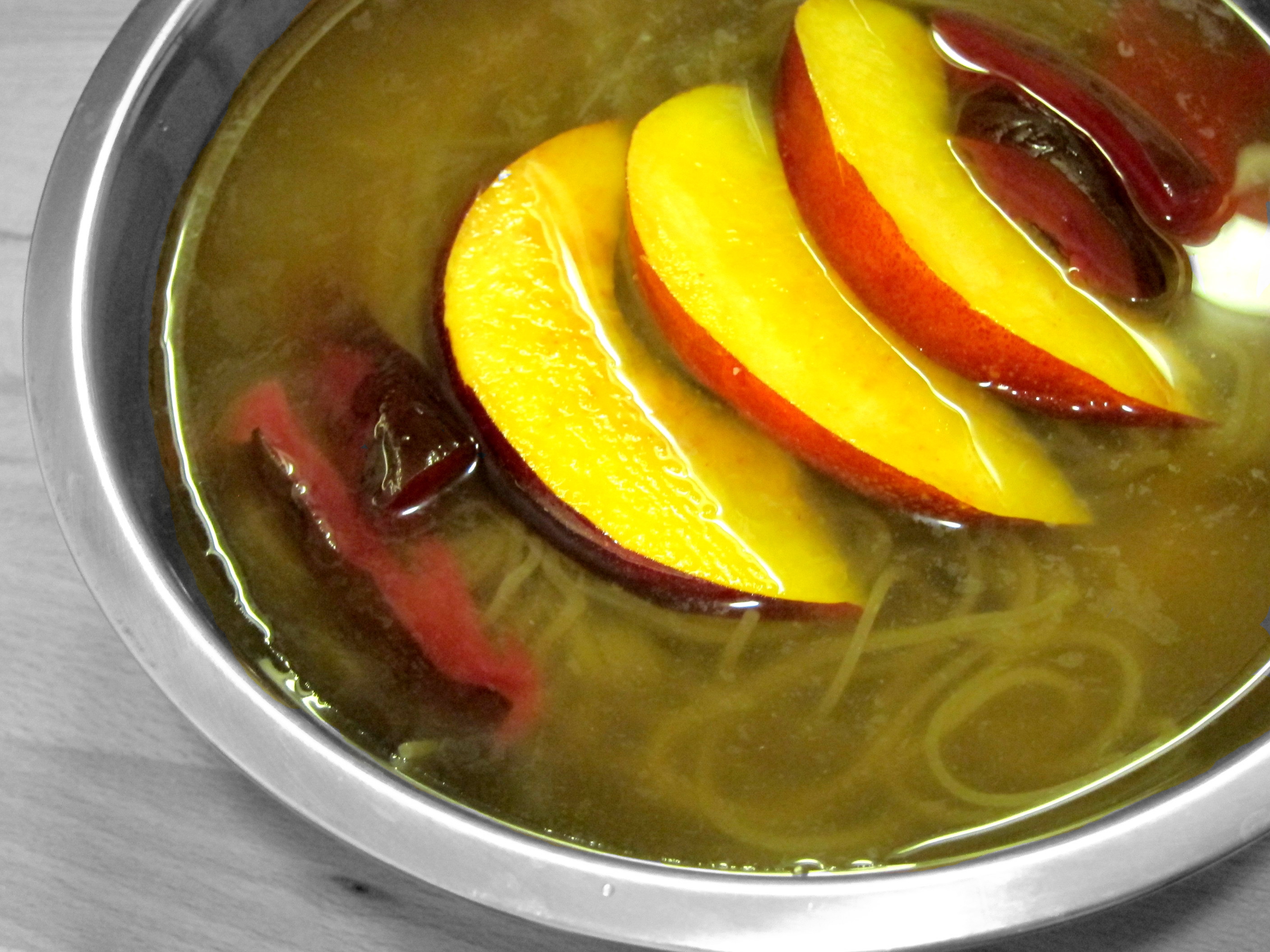
I used nectarine in place of pear and pickled cucumber (shiba zuke) for fresh cucumber. Works out great. Nectarine is sweeter than pear. 🙂


Almost-instant Korean Cold Noodle with Nectarine (make 1 serving)

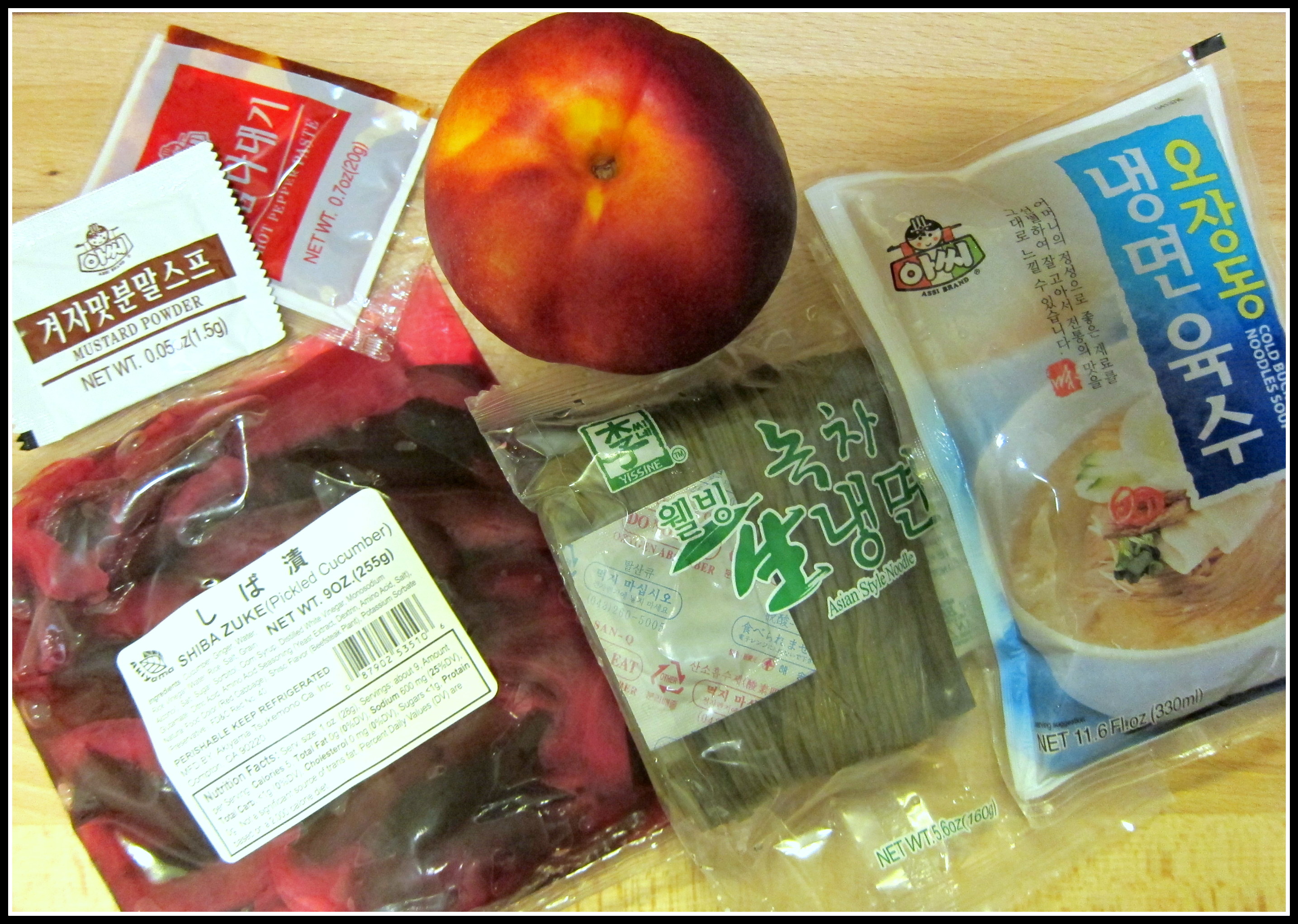
– 1 bag of mul naeng myeon (물 냉면) (can be found at your local Korean market). This thing contains 2 packets of buckwheat noodle, 2 packets of cold broth, 2 packets of mustard seed, 2 packets of pepper paste (in case you just want naeng myeon without mul (water)). Just take 1 of each.
– 1/4 slightly unripe nectarine, sliced
– a few pieces of pickled cucumber (shiba zuke)
– water
– a pot

Boil water. Cook the noodle in 1 minute, then drain under running cold water. Let cool. Slice the nectarine.
In a bowl, place the noodle, top it with pickled cucumber and nectarine. Pour the chilled broth. Add the mustard seed if you like. Put the bowl back into the fridge to make it colder.
Quench your thirst.

Rice Paper Kimchi Roll – a cross between ssam bab and fresh spring roll

July 29, 2012 By: Mai Truong Category: Comfort food, Korean, RECIPES, Vietnamese

How can you bring kimchi to lunch at work without the smell of fermented cabbage?

I like the garlic smell of my homemade kimchi, but I’m not sure if I want my office to smell like it. Besides, I’m not a fan of bringing multiple containers to work. I don’t even want people to see me with a fork at my desk, and it’s even worse with an empty but dirty container. The ideal lunch is some kind of finger food, preferably balanced.

One afternoon, I decided to make ssam bab, a kind of roll with napa cabbage kimchi outside and stir-fried rice inside that I first saw in Kimchi Family and never in real life. You can find kimbab (rice roll in kim – seaweed) for very reasonable price in the Asian Ghetto just south of campus, but no Korean restaurants in the Bay dish out ssam bab. The only problem: I cut the napa cabbage leaves in half when I made kimchi, so now the leaves are not big enough to wrap up the rice, and things fall apart. Well, if I can’t make it the Korean way, I’m making it the Vietnamese way.

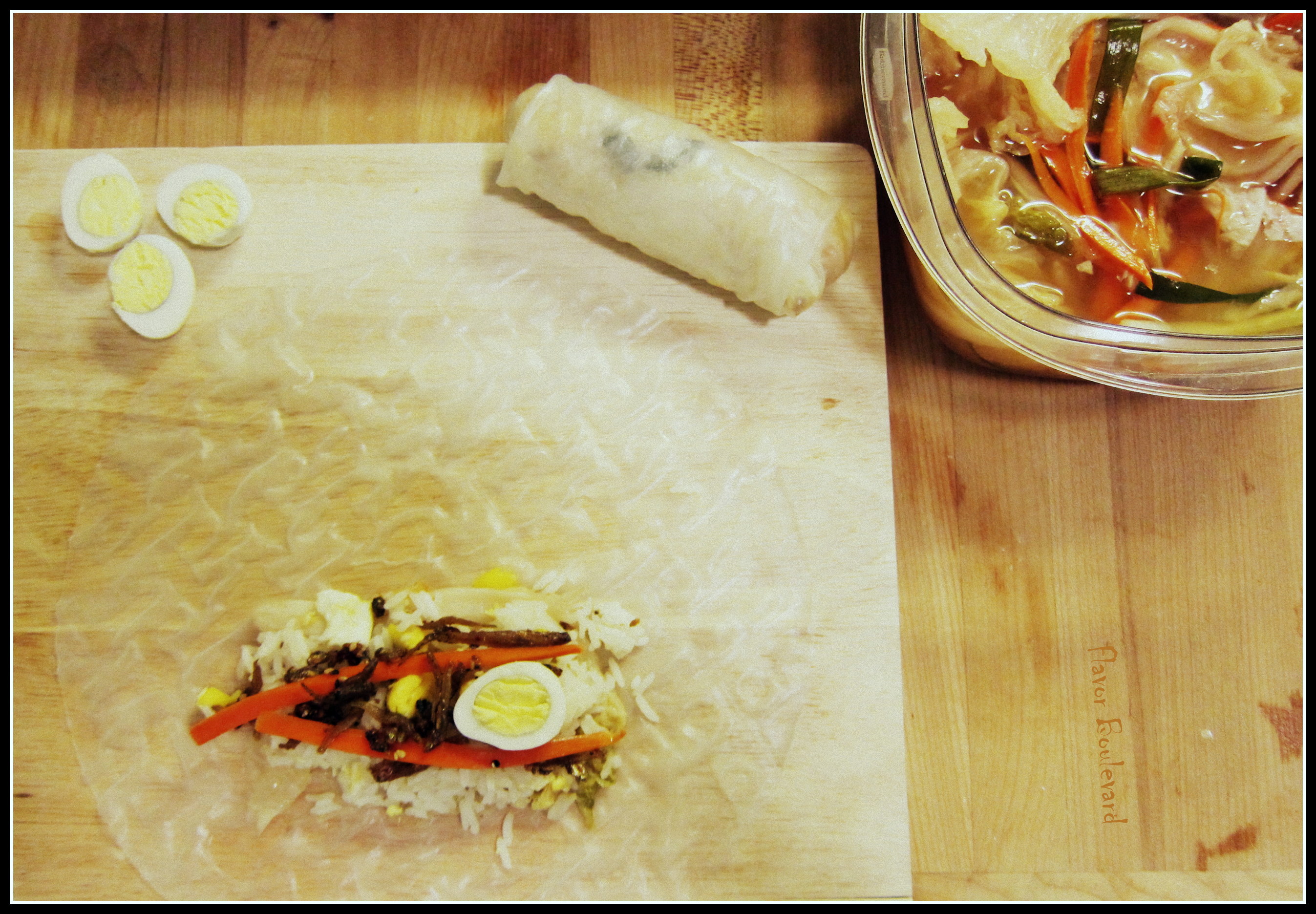
I use rice paper to wrap the ssam bab. The result: a cross between ssam bab and fresh spring roll. The perfect triple-layer balance: rice-kimchi-rice. The rice paper blocks the kimchi smell from diffusing across the room, keeps the roll intact thanks to its elasticity, and makes a clean, grease-less, non-sticky wrapper. The kimchi gives the roll a sour, spicy, garlicky edge so we don’t need a dipping sauce. Texture-wise, a bite takes us from chewy rice paper to juicy but crisp kimchi to the soft rice mixed with crunchy fried anchovy. Three of these rolls fill me up, but I chomp another just because.

Korean ssam bab: sauté pork and kimchi, mix with hot steamed rice, roll in a leaf of pickled napa cabbage, tie the roll with a leaf of cooked green onion.

Rice Paper Kimchi Roll

(make 20 rolls)
– 1 clove garlic, thinly sliced and browned
– 6 eggs, scrambled with garlic, and salt and sugar to taste
– 2 cups rice, cooked
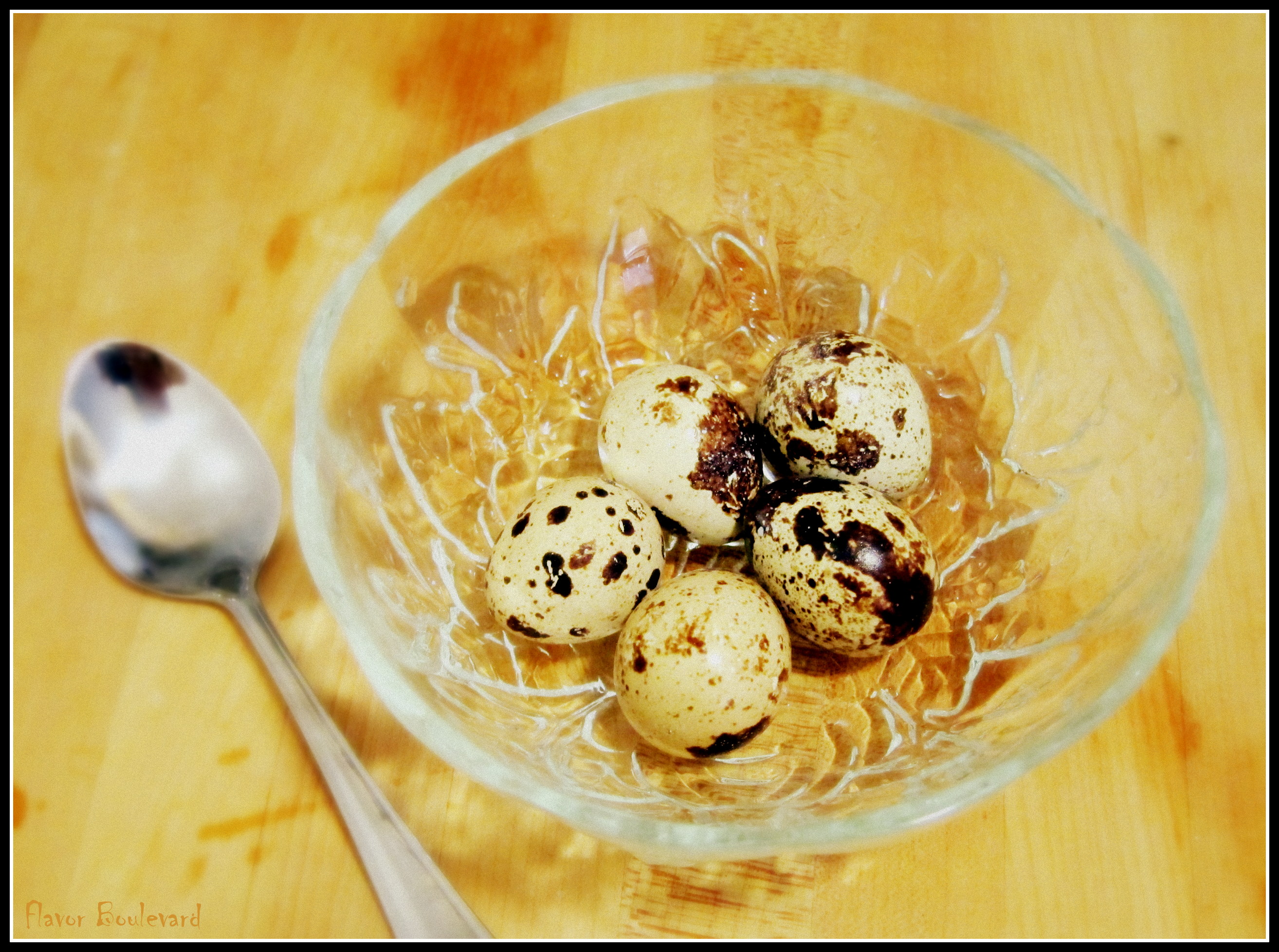
– 10 quail eggs, halved
– 20 sheets rice paper
– 1 cup fried anchovy (myeolchi bokkeum)
– 20 pieces napa cabbage kimchi, the best size is 1.5 inches x 3.5 inches

Mix the scrambled eggs with the cooked rice.
Wet a sheet of rice paper in warm water until it’s soft, spread the rice paper on a plate or a chopping board.
On the rice paper, layer a piece of kimchi, some egg rice (about 1 tablespoon), a few row of fried anchovies, half a quail egg.
Fold the rice paper up along the kimchi piece to cover the filling, then fold the ends over.
Roll. The edge of the rice paper will stick naturally to the roll if the rice paper is moistened enough.

The rolls will stay good in the fridge for 4 days. Cover 3 rolls with a moist paper towel and microwave on high for 1 minute to regain freshness.

Pair Dim Sum with Tea at Shanghai Dumpling King

July 26, 2012 By: Mai Truong Category: California - The Bay Area, Chinese


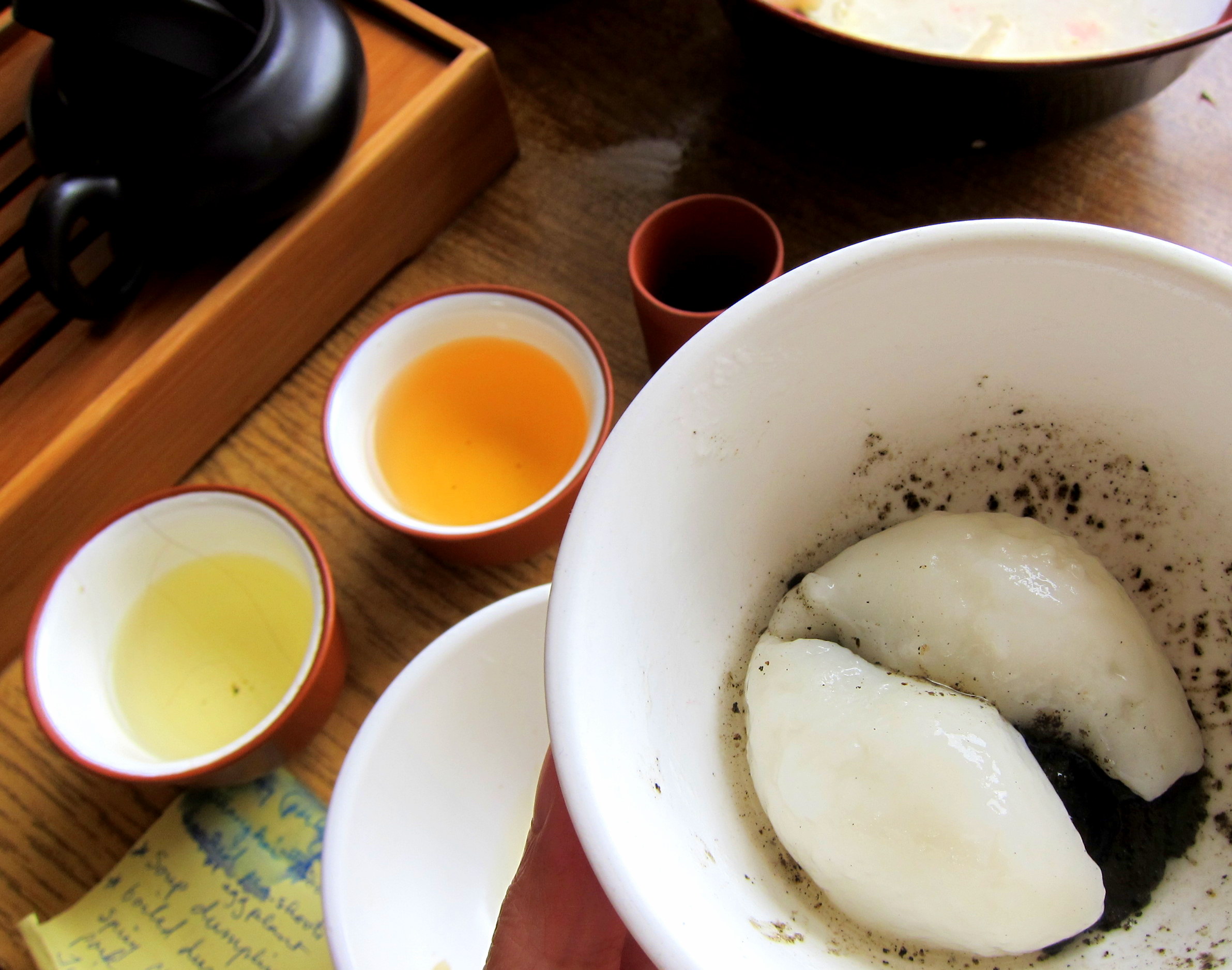
The waiter brought out a kettle of tea, but Nancy Togami waved him back, asking for just plain hot water. Carefully, she used her thermometer to check the water temperature. One hundred and eighty degree Fahrenheit, too cool to steep the Baochong and Phoenix Honey that she brought. But Nancy brought her own water too, which measured close to 200 degrees, so we used her water instead. I’ve never brought my own tea to a restaurant, but it makes sense: people bring their own wine to restaurants, and when you have good teas, there’s no reason to refrain from pairing them with good food. The dim sum at Shanghai Dumpling King proved to be perfect experiment material.

Without Nancy, I probably would never have known of this hole in the wall way out on the west side of San Fran, and probably too lazy to get here because it’s not 2 blocks away from the BART and I’d doubt the dim sum would be worth anything farther than that. Now, dim sum are good. You have to really suck as a cook to make ground meat in a piece of dough taste bad (it happens, though), and I crave potstickers and xiao long bao at least once every other night, but the gap between the potsticker in my head and the potsticker in my mouth always ended up bigger than my head, so I can’t comprehend it. There’s some kind of epiphany reaction I want to get from eating dim sum that I’ve never gotten. But I think today came really, really close. Because of a duck and two teas.


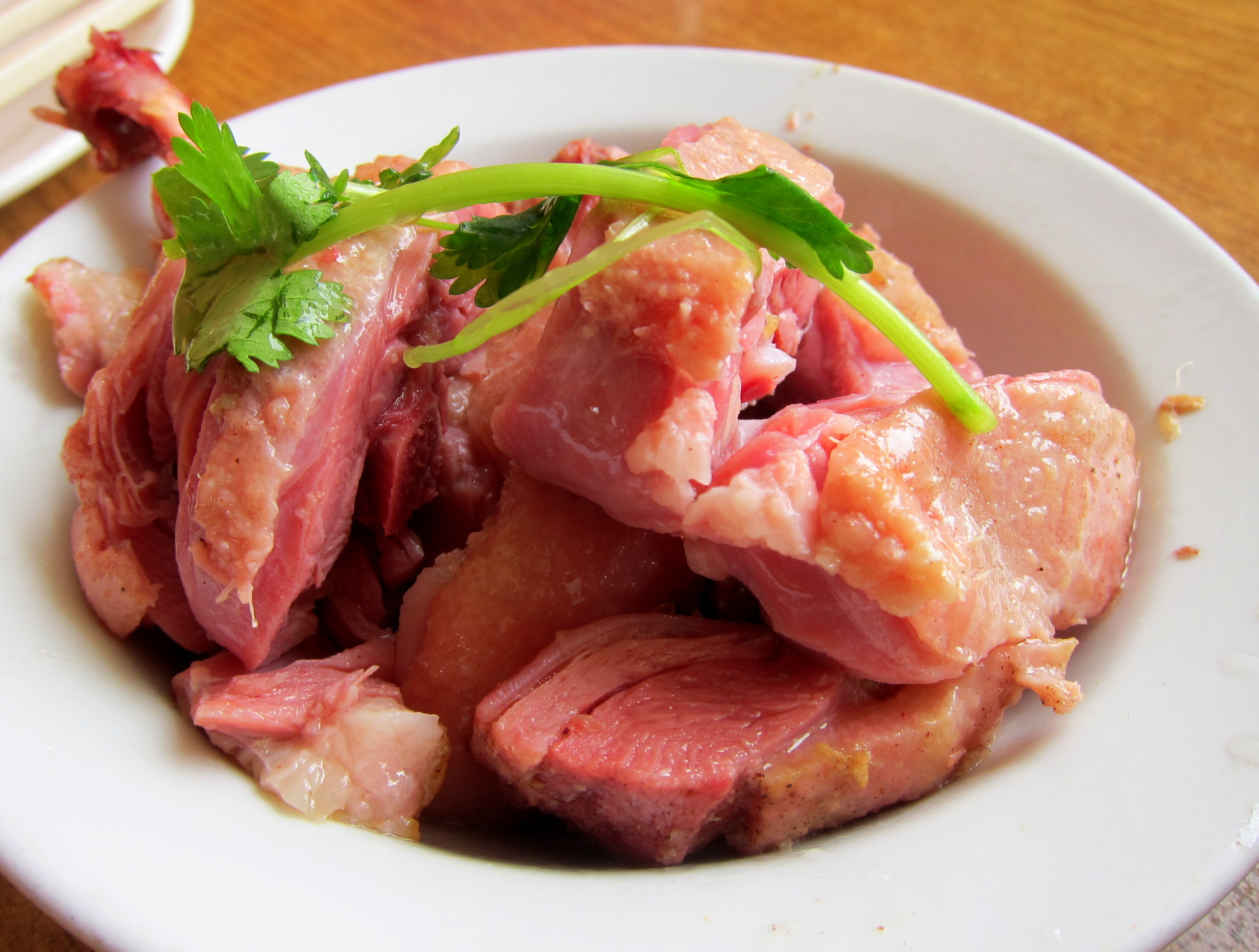
The duck set the mood. We stood in front of the restaurant before it opened, so they had to rush setting up things to let us in. We were the first customers of a Sunday. Few minutes after we placed our order, the guy strode out asking if we would like some duck, the kitchen just finished steaming one. Yes, of course, we said. Out came small chunks of legs and thighs in a simple white bowl with a sprig of coriander, the meat still pink, the skin moist in a sunglow shade. It’s not chewing gum and it doesn’t fall apart like cornmeal, it has all the right tenderness, the right juiciness, the right saltiness. I couldn’t pry any information from the waiter except that it’s steamed. But they must’ve put something in the water.


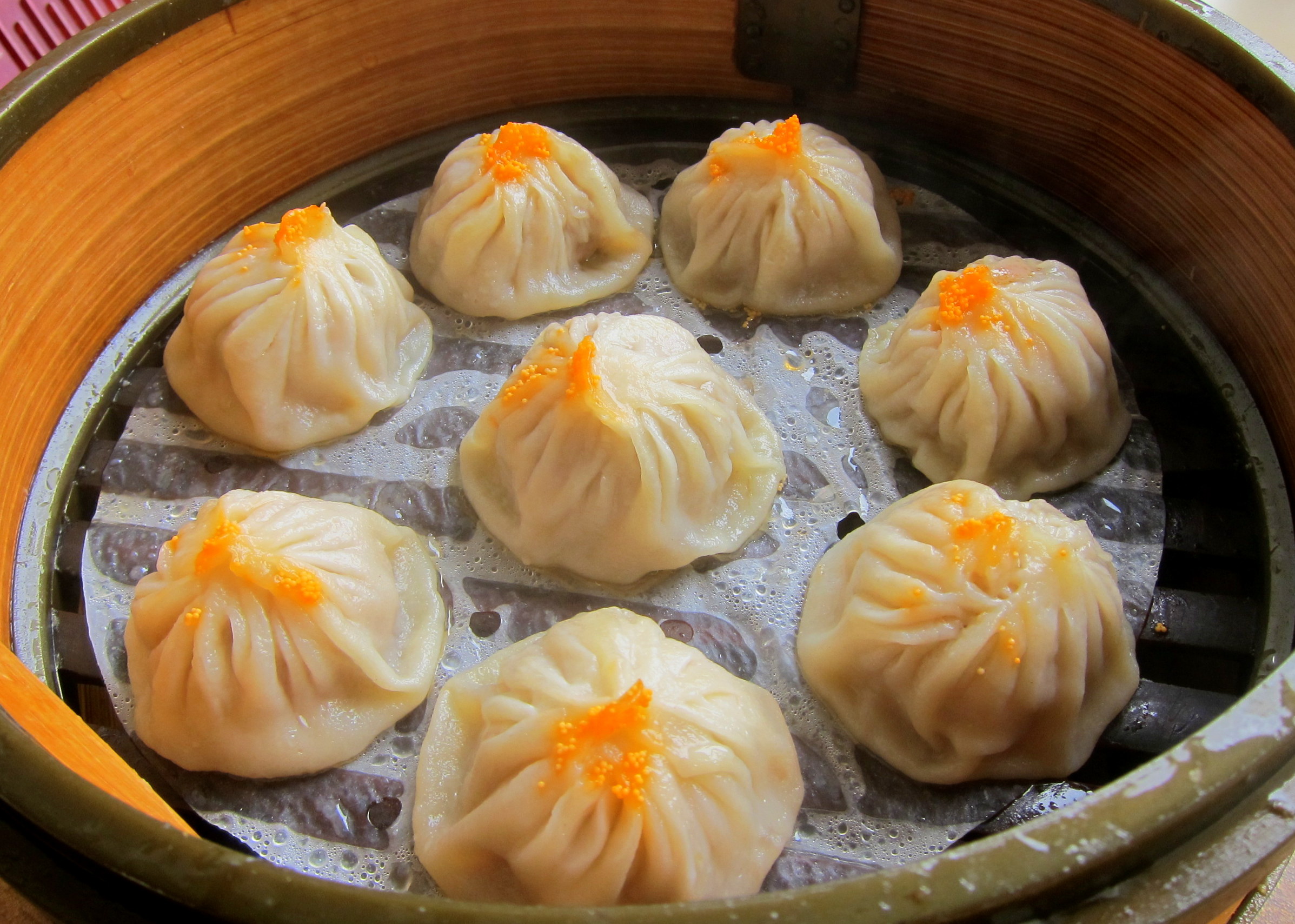
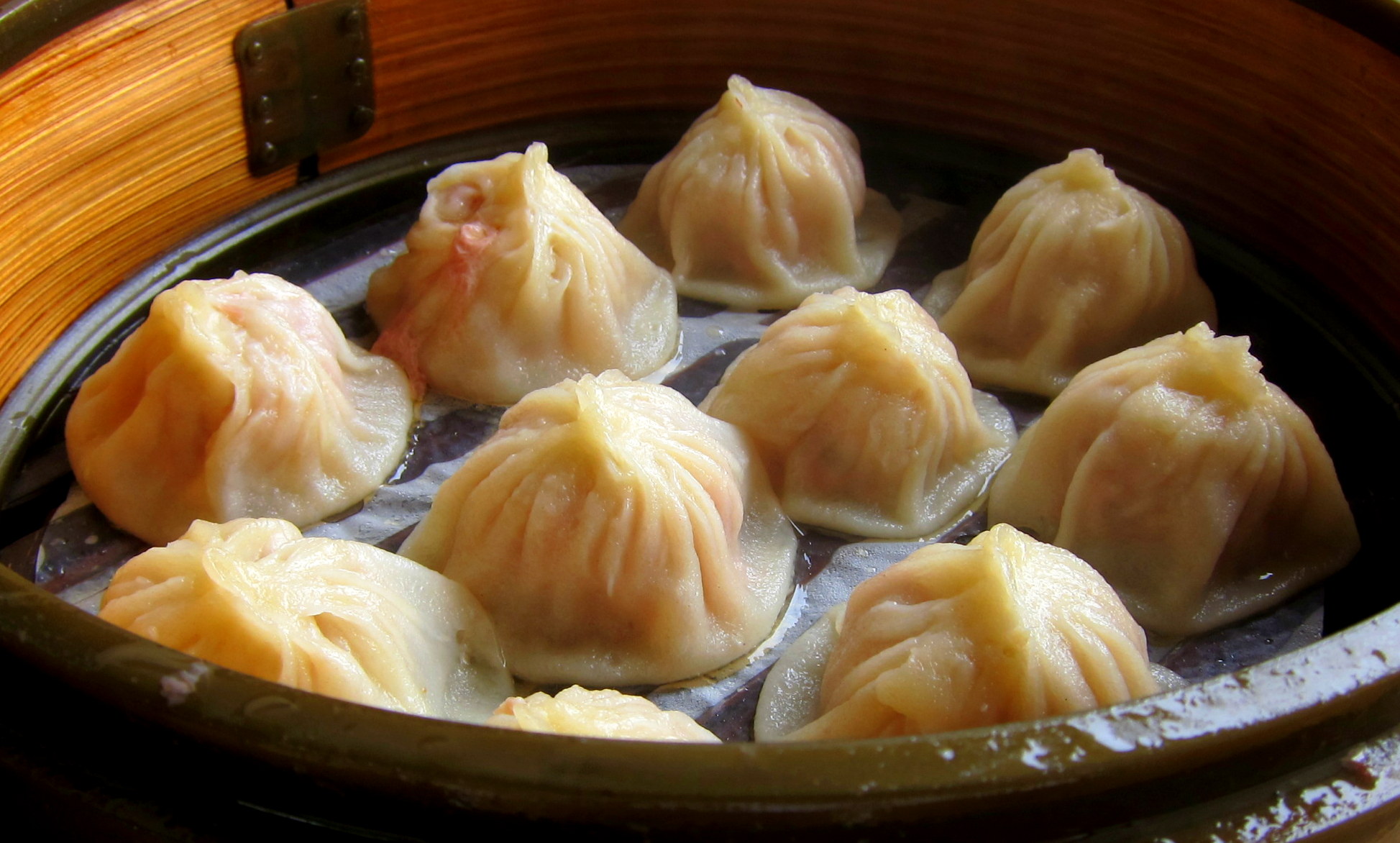
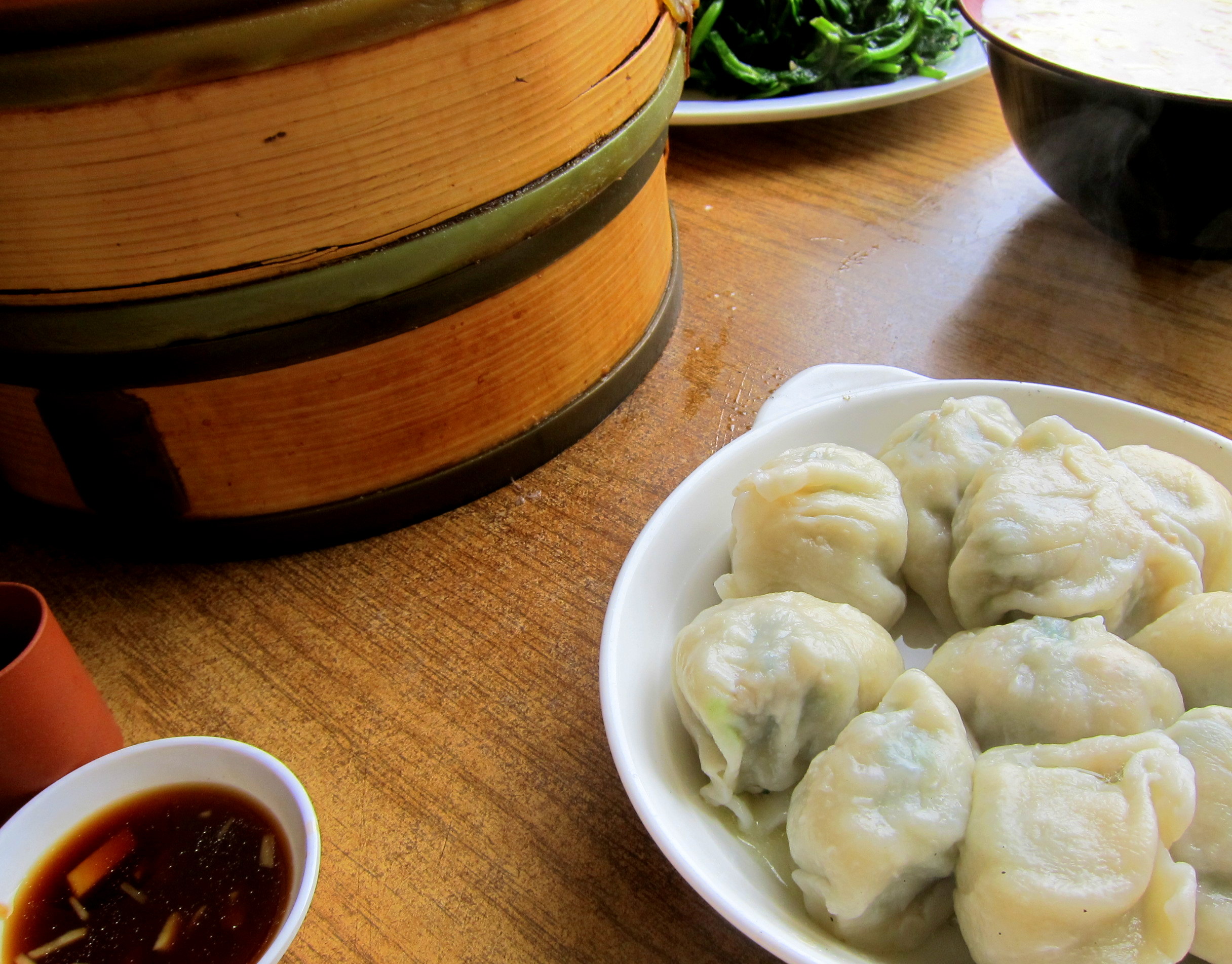
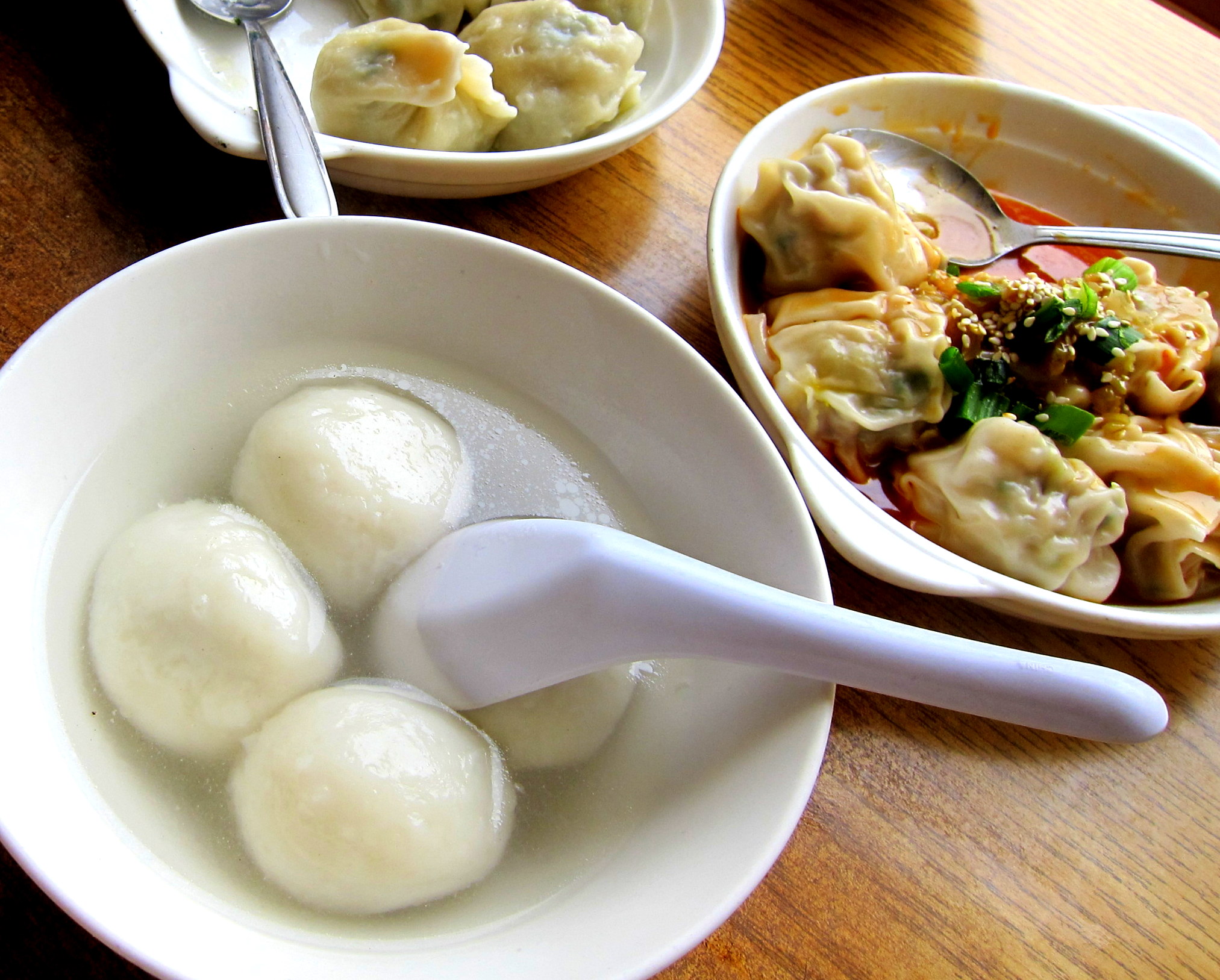
The Hung Zhou crab and pork dumpling (Hung Zhou xie ruo xiao long bao) and the Shanghai soup dumpling (Shang Hai xiao long bao) both contain half a spoon’s worth of broth. They’re the juiciest xiao long bao I’ve found anywhere, and the Hung Zhou xie ruo ones are packed with enough savory sweetness on their own that they don’t need the vinegar and soy dipping sauce.


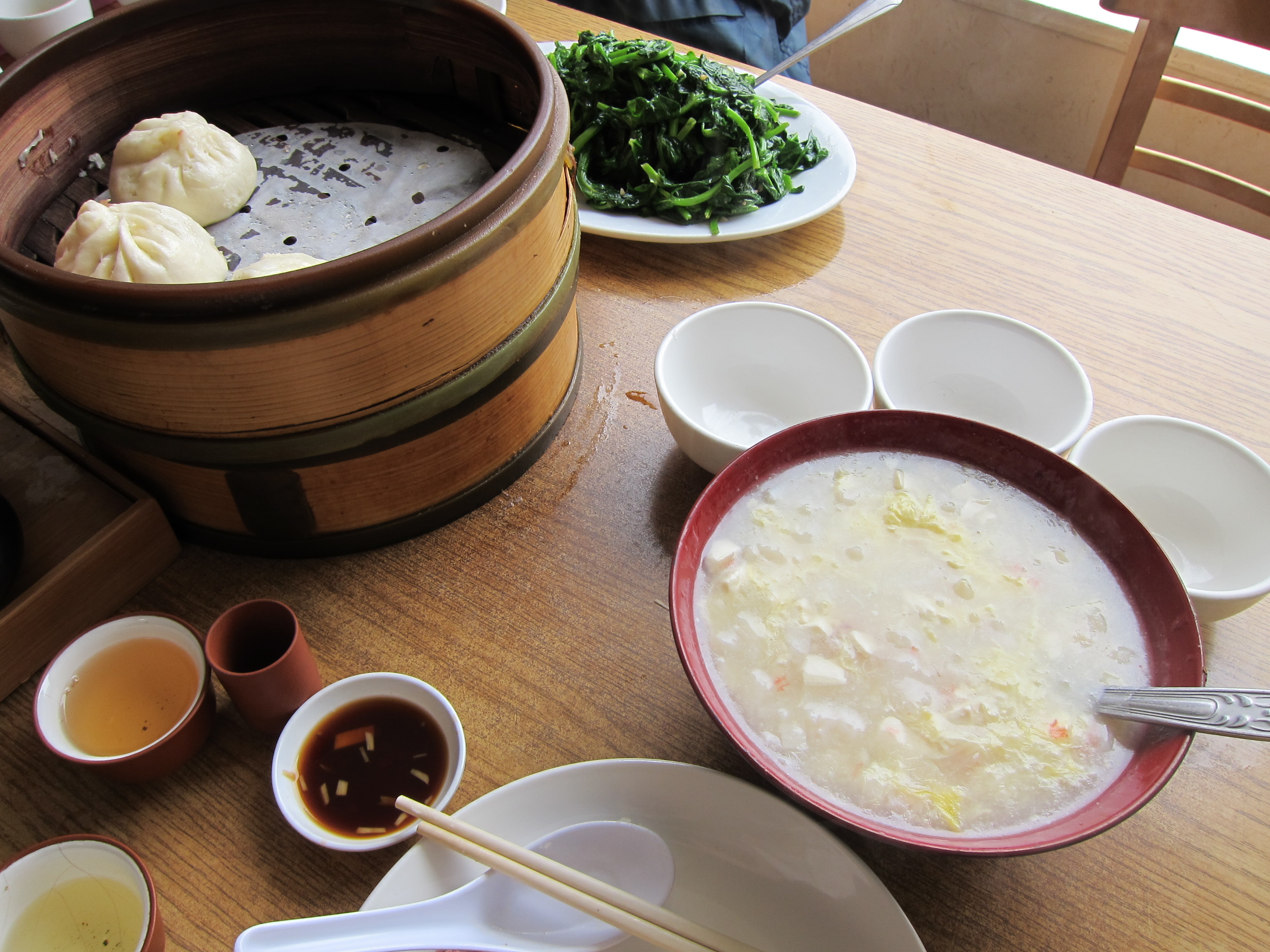
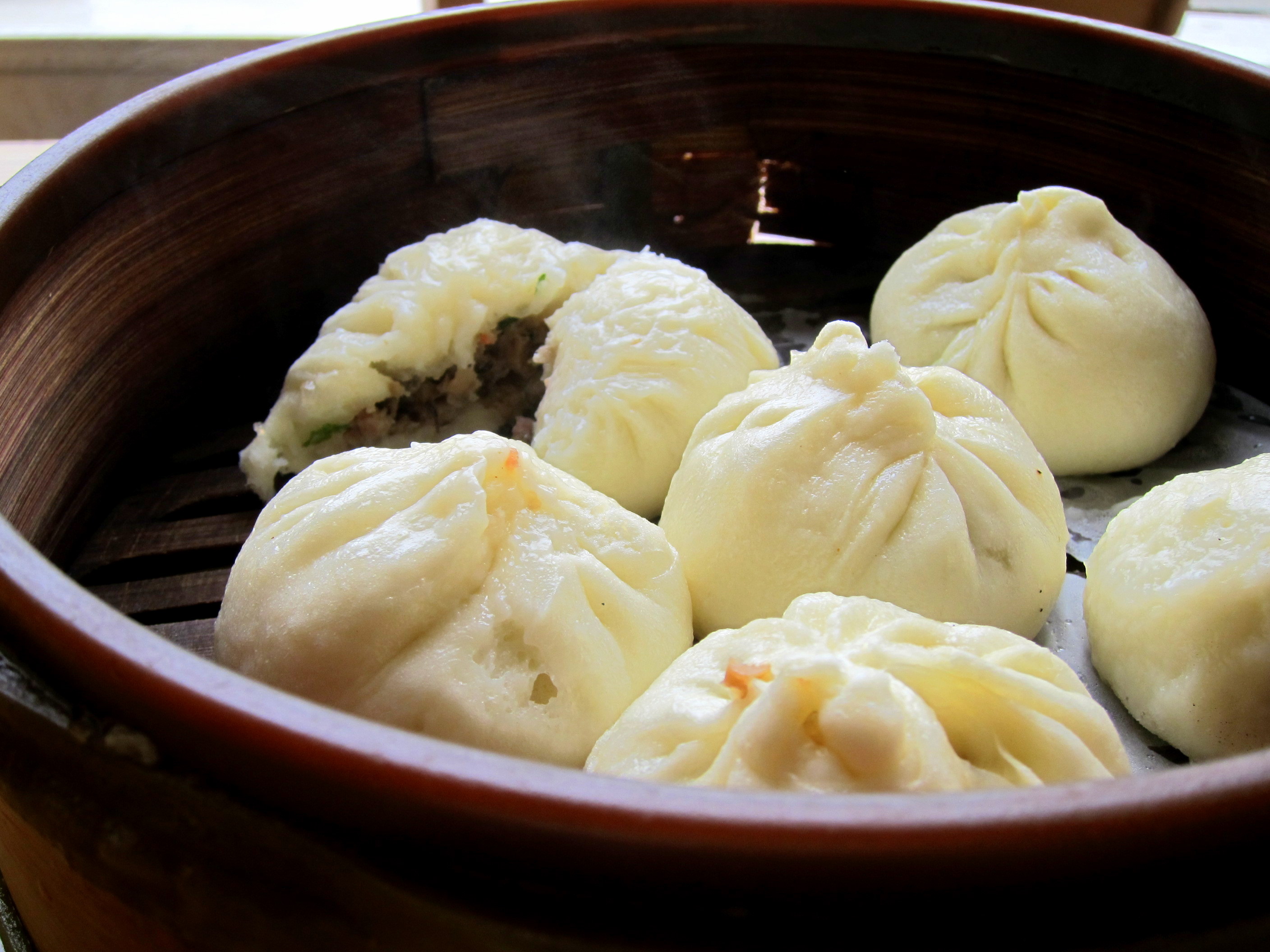
We got too absorbed in the xiao long bao that we didn’t pair any tea until the seafood and tofu eggdrop soup and the Tian Jing go bu li bao (steamed wheat dumpling with pork, mushroom and rice noodle inside) came. One one hand, Baochong, a light Taiwanese oolong, accentuates the chive in the bao, and the bao intensifies the Baochong’s floral note, so the pair just blooms in your mouth.

On the other, Phoenix Honey is a stronger oolong with a roasty profile and a sweetness of lychee, which complements the soothing eggdrop soup.


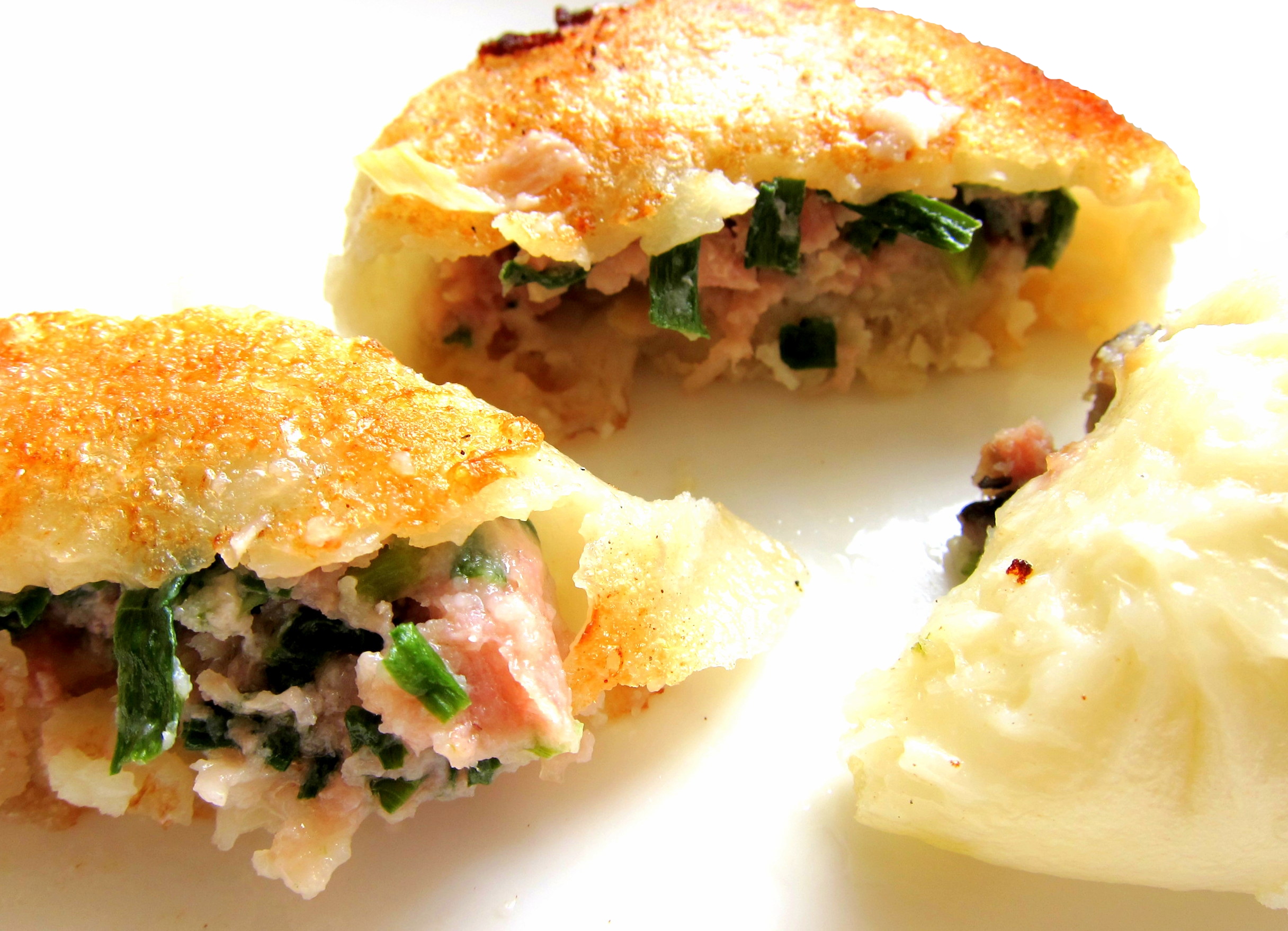
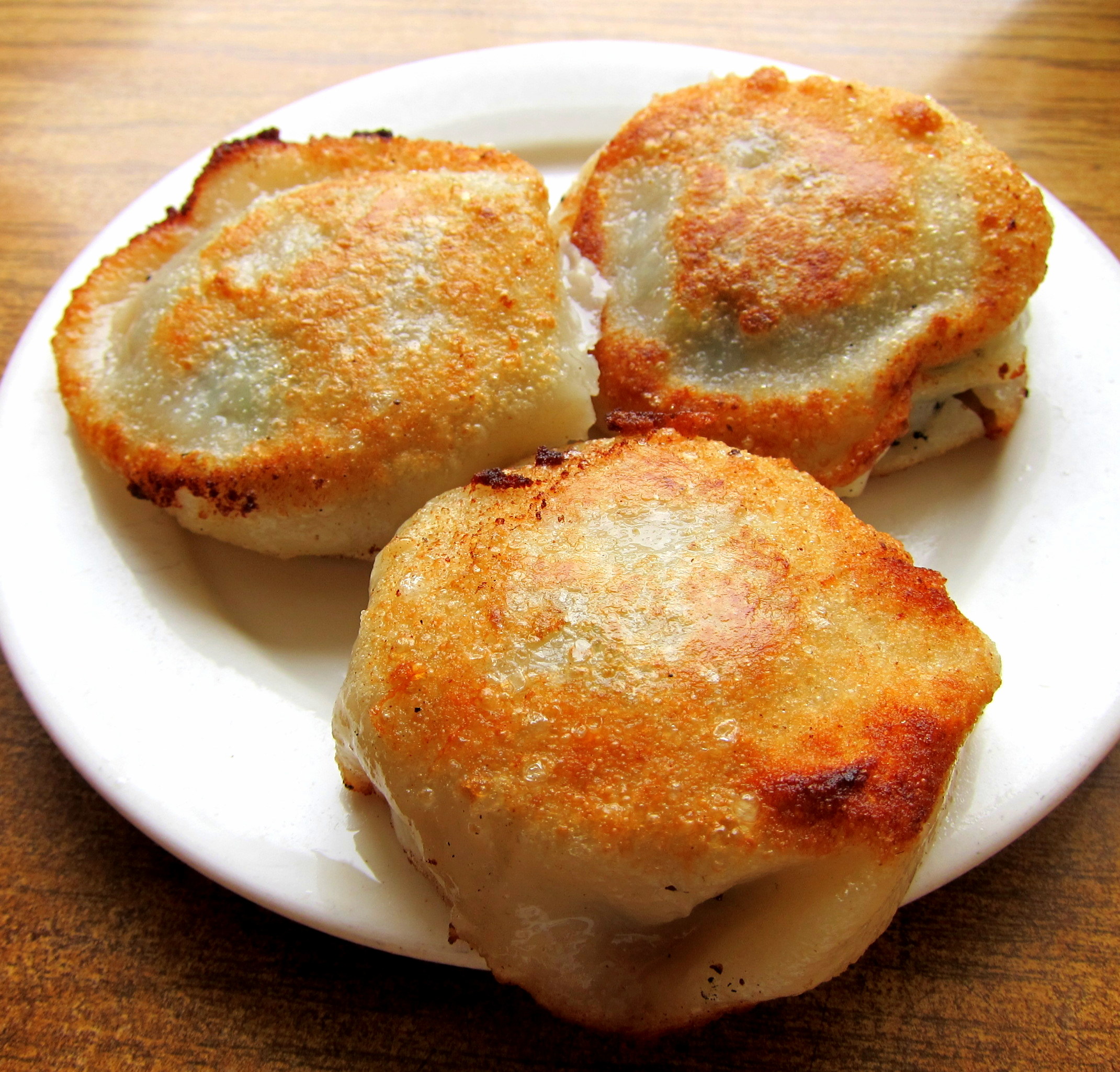
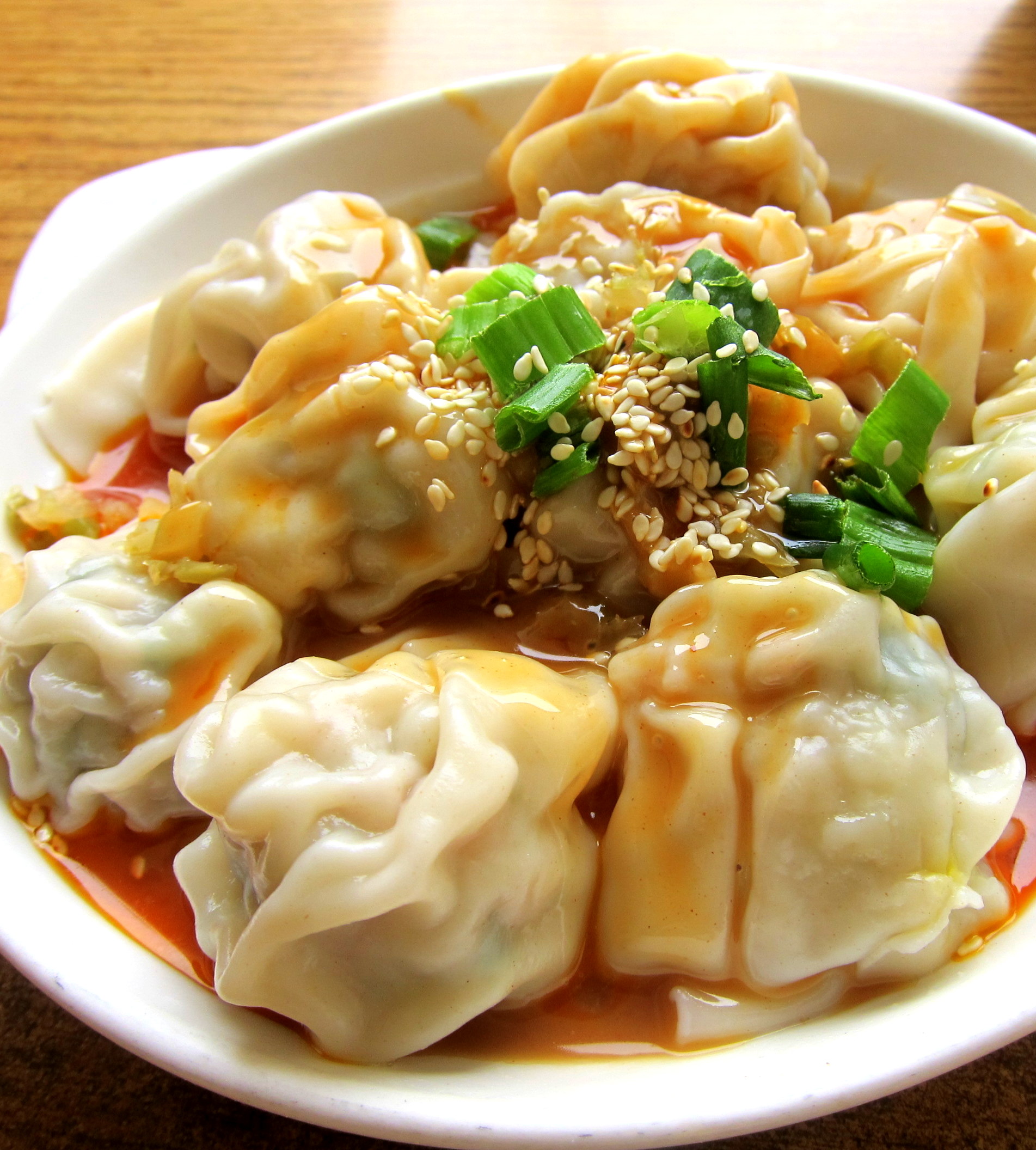
The spicy pork dumpling (xian shui jiao) kicked us in the throat, although we asked for “not too spicy”, but Baochong can sooth the spark away. The pan fried chive and pork dumpling (jiu cai xian bing) and Baochong made another floral pair, similar to their steamed smaller brothers. Phoenix Honey brought forth the nuttiness of fresh-but-need-more-salt peashoots.


Soon we figured out the rules: lighter tea with more flavorful dumplings, darker tea with milder ones. The sesame mochi in hot water (zhi ma tang yuan) is bland outside and intensely sweet inside, so neither tea had a noticeable effect on it, but the Phoenix Honey added a nice roasty finish that spotlighted the nuttiness of sesame.

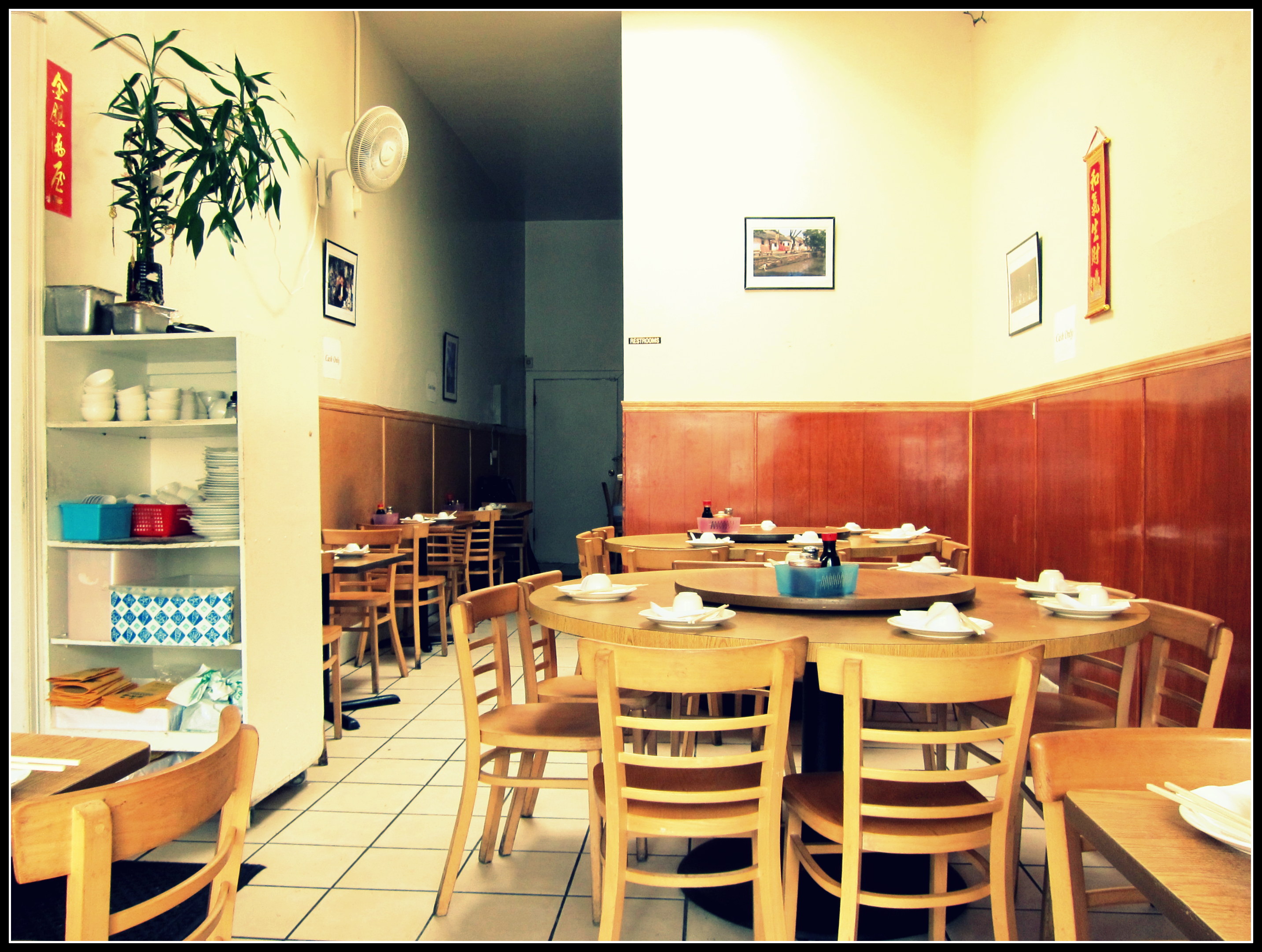
The restaurant before 10:30. Half an hour later we got people sitting back-to-back with us and a line spewing out of the door.

After eating here, I regained faith in dim sum. I can look pass the obnoxious name. The duck helped. And the teas helped a bunch. Infusion after infusion, they kept their flavors and washed clean the dumplings’ grease, which was surprisingly scarce to begin with. Nancy was worried that the restaurant might not like us brewing our own tea. But we were seated by the window, our table filled with bamboo baskets, I was aiming my camera at all kinds of angles, Ken helped me rearranging the plates for the pictures, and Nancy was drawing in the aroma of a fresh cup. Old Chinese ladies walking on the streets kept stopping to look at our table with unhidden interest. I think we made a good window display. At the end, before politely asking us to leave the table for another group waiting, our waiter commented with much pleasantry: “You guys drink tea!”

Address: Shanghai Dumpling King
3319 Balboa Street
San Francisco, CA 94121‎
(415) 387-2088

Big lunch for three: ~ $62
This post also appears on Tea & Mai.

Recipe for bánh dầy đậu – Vietnamese mung bean mochi

July 23, 2012 By: Mai Truong Category: Northern Vietnamese, RECIPES, sticky rice concoctions, sweet snacks and desserts, Vegan


When I’m home, Little Mom pampers me with her food and sweeps me out of her kitchen, except when I open the fridge to snack, because her mind fixes on the idea that if she lets me touch the stove, I only make a mess. She’s right. Not to toot my own horn but when I’m home, I’m a lazy mess. So when I said Mom, let’s make bánh dầy đậu, she threw her hands up, said oh my sky there’s no more room in the fridge, made the bean paste herself, and only let me play with the dough. 😉
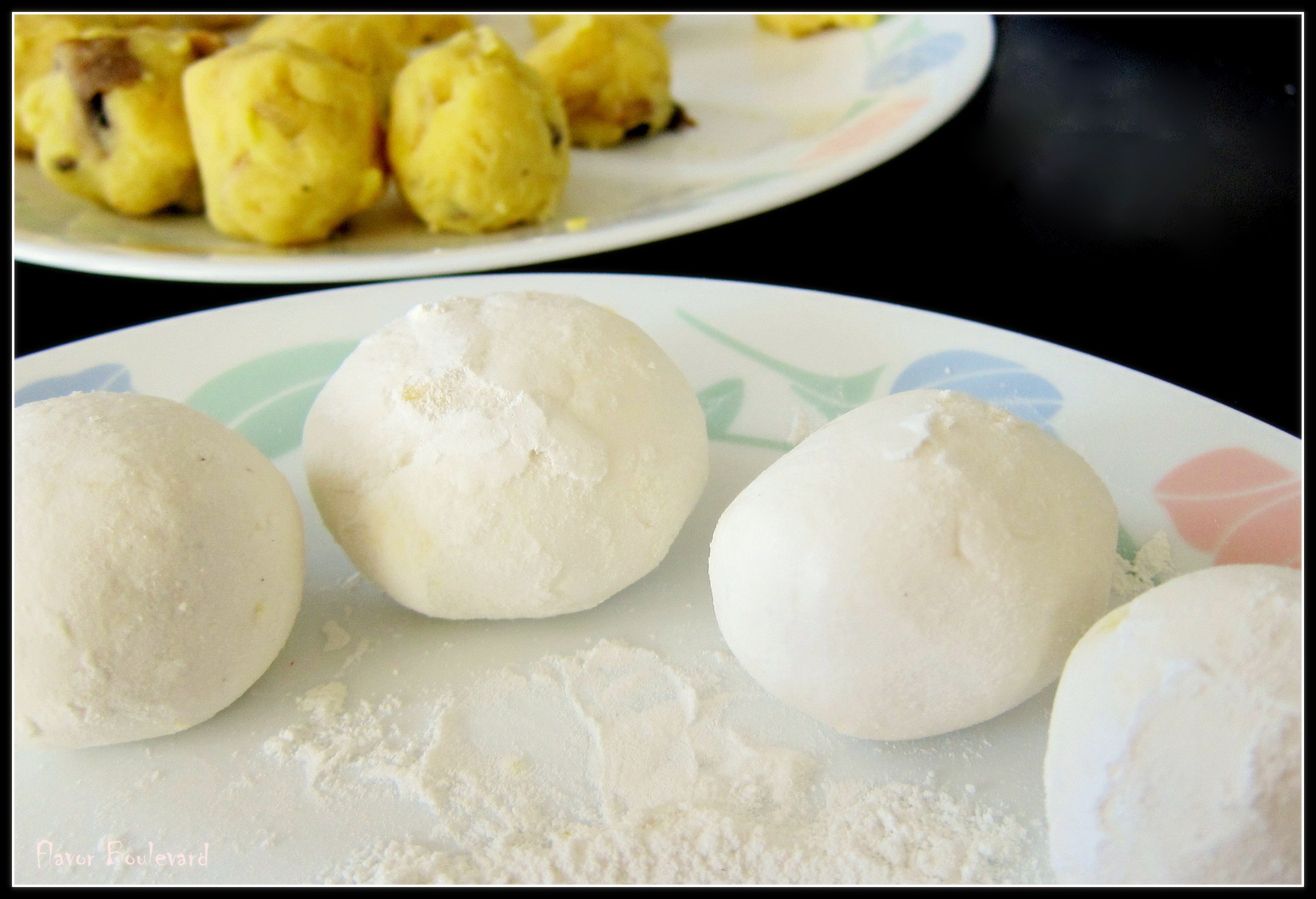
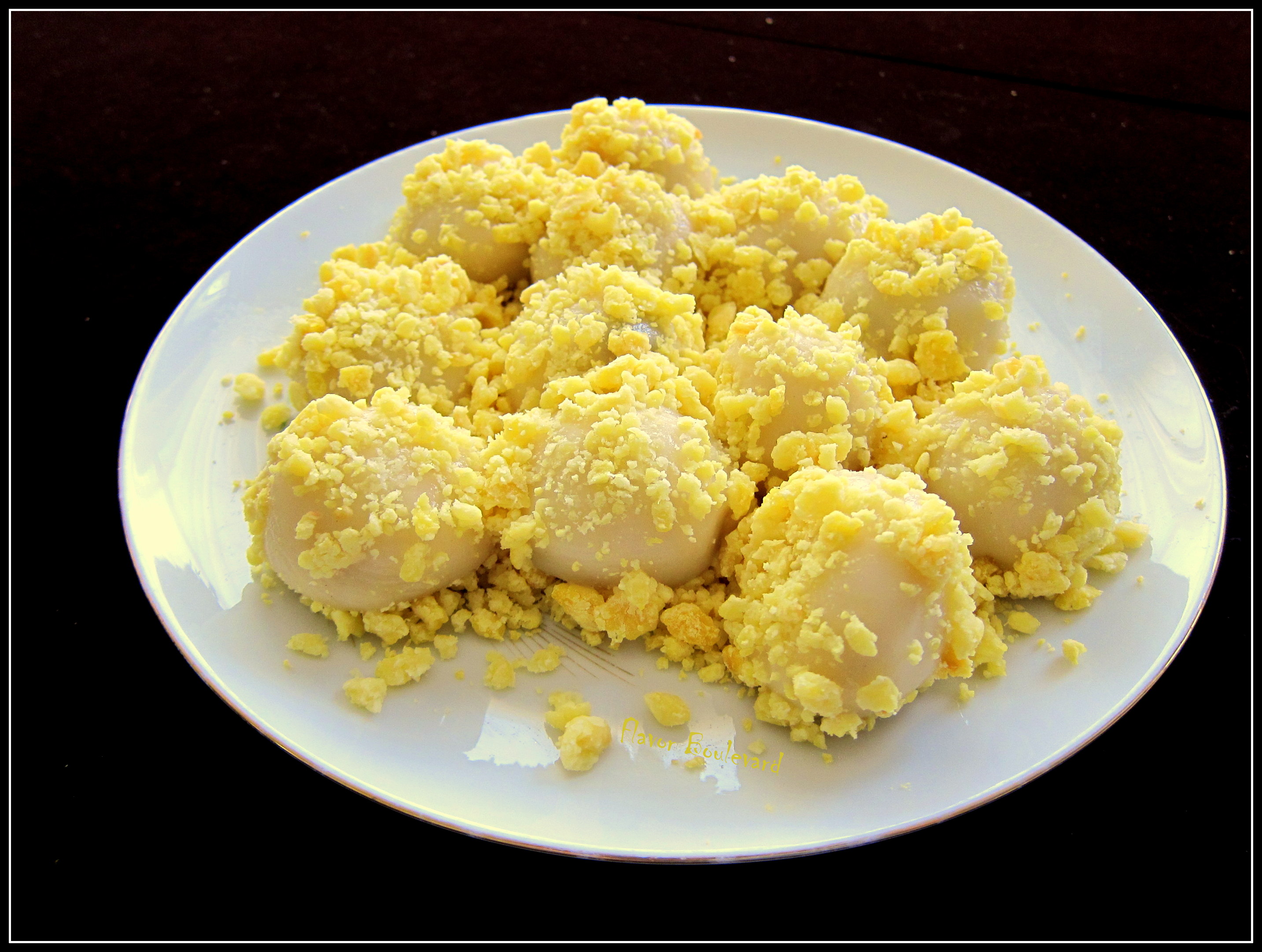
The mung bean paste filling is really the most important part of the Vietnamese mochi (similar to the Japanese mochi, but it’s 100% Vietnamese): you want it slightly savory, slightly sweet, and mashed. Little Mom is the queen of seasoning, so that part was flawless. My job was to knead the dough and roll up them balls. At least I didn’t have to pound steamed sticky rice into oblivion. I was kneading while watching TV with Mom. I was kneading when she sectioned her bánh bao dough into balls. I was still kneading when she wrapped the pork and egg inside the bánh bao dough. More kneading makes the mochi skin softer. After kneading, the rest was a breeze.


Bánh dầy đậu (pronounced kinda like |beng yay dou|) – Vietnamese mung bean mochi:

(Make 12 mochi)
– 250 g dried split mung bean (~ 2 cups), soaked overnight and deshelled
– 2 cup sticky rice flour
– 1 cup warm water
– 1 cup sliced mushroom
– salt and sugar to taste

The filling:
After soaking the mung bean overnight, wash away the green peel outside, we only want the yellow seed. Boil the mung bean until it’s tender. Mash the cooked bean.
Set aside 2 cup of mashed bean, let it dry and crumble to make mung bean powder.
Sautee mushroom, add the remaining mashed bean while sauteeing, add salt and sugar to taste. Let cool.
Make 12 small balls.

The mochi skin:
Pour water into the the rice flour while mixing with your hand. You should stop when the mix feels smooth but not liquidy. Add more water if the dough breaks.
Knead for at least 30 minutes.
Divide into 12 balls, flatten each into a small disk.

The complete mochi:
Put the mung bean ball into the middle of the skin, wrap it up, make sure that no bean leaks out. Drop the mochi in boiling water and cook until they float to the surface. Cook for another 2 minutes just to make sure.
Roll the still hot mochi balls in mung bean powder. Let them cool.

Enjoy with a cup of Buddha’s Hand oolong. 🙂