Flavor Boulevard

We Asians like to talk food.
Subscribe

Alone in the Kitchen with an Onion

July 20, 2012 By: Mai Truong Category: Book, Opinions, RECIPES, Review of anything not restaurant


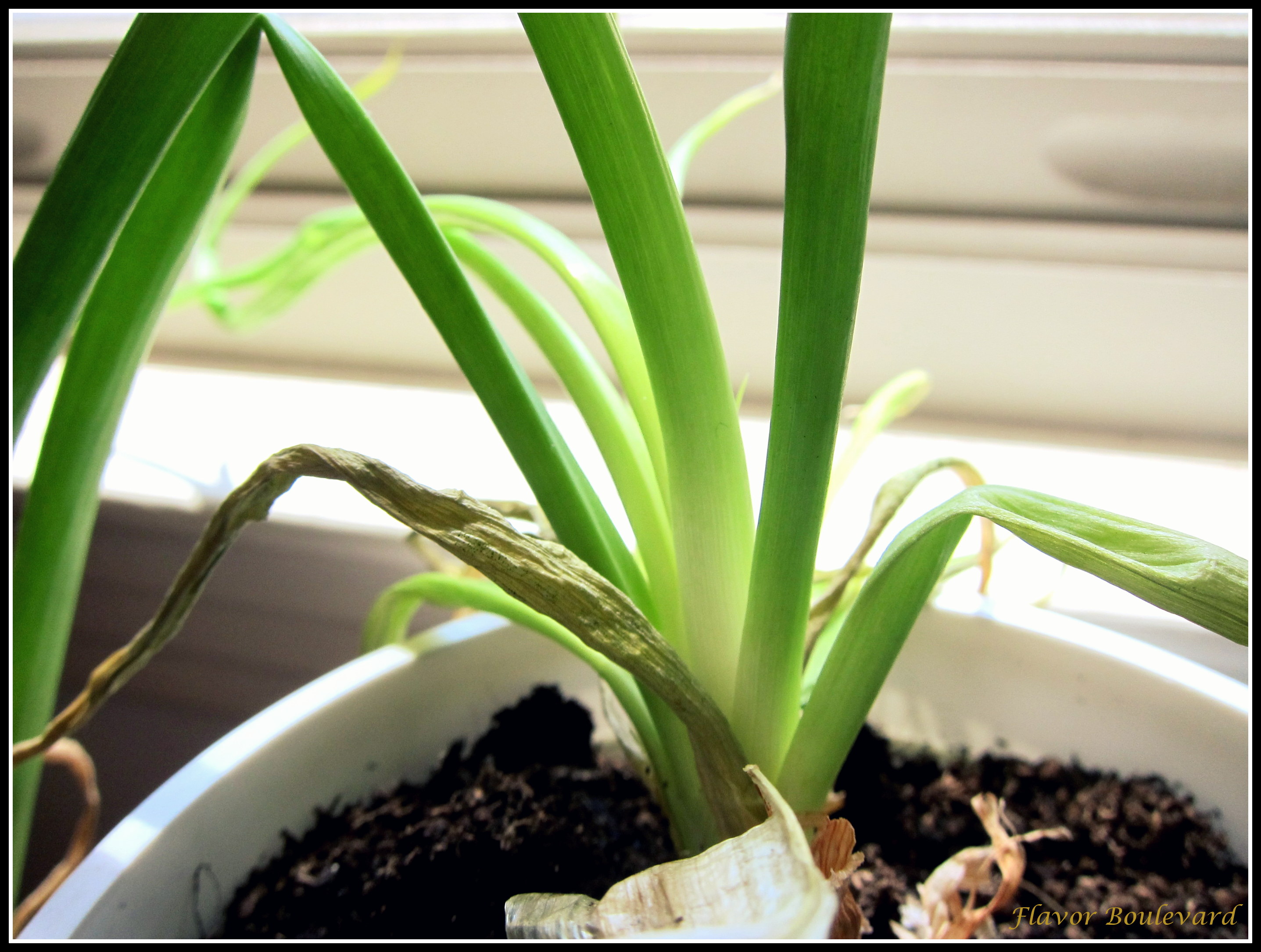
One of my onions grew a plump white sprout.

So plump that I couldn’t bring myself to throw it out. I left it alone for a week.

Then two weeks.

Then three weeks.

It kept getting taller and plumper. At some point the unthinkable thought of throwing it out became the unthinkable thought of letting it die. For a thing trying so hard to live on nothing, what kind of creature am I to thwart its life? So I placed it in a clean container that used to contain prunes, put in some soil leftover from another plant that I’ve long transfered the custody to my mom for its better chance of survival, and poured in water. I told my mom about it, but she said don’t have high hope. I wasn’t hoping for anything, I just wanted to give it what it wants: soil and water. I placed the pot outside during the day and took it in at night so that it doesn’t get cold. The sprout grew, turned green, and another leaf came out. Then I took a trip home for two weeks, thinking that the onion, having a watery body, should be okay without watering for two weeks.

When I came back, I saw the prettiest thing I’ve ever seen of an onion: several skinny green long stalks sprouting out, tall and cheerful. Thank you for surviving, Onion. You make the apartment alive.

I’m not complaining that I’m living alone. I chose this studio apartment instead of sharing because I was looking forward to living alone all my college years. My college roommates were nice people, I don’t dislike them. One girl was there for maybe 2 weeks total the entire year we shared the dorm room, I liked her. There are just songs I want to turn the volume up to for hours on end, meals I wanted to eat while watching a movie on the computer, times to laugh or cry without explaining to two quizzical and not necessarily empathetic eyes. Times to do crazy dance. Times to burn stuff in the microwave and send the alarm screaming. I was tired of asking for and giving explanations. The best thing about living alone is that you can do whatever you want.

The worst thing about living alone is that you can do whatever you want. The only thing I’ve cooked for myself since February is garlic scrambled egg and rice. I skip lunch everyday. I thought I was bad. But Ann Patchett stuck to her Saltine diet for months: “I ate slices of white cheese on Saltines with a dollop of salsa, then smoothly transitioned to Saltines spread with butter and jam for dessert. I would eat as many as were required to no longer be hungry and then I would stop. […] Day after day, month after month, I stuck to my routines like a chorus girl in the back row.” Actually, maybe her diet has more variations than mine. But you get the point. Dining alone means dining with the person who you want to hide and to expose to the world at the same time, the person that only you know.

That person takes many forms, and that person goes through many phases, some pleasant, some weird, most are captured in the collection Alone in the Kitchen with an Eggplant. The beans and cornbread phase (Jeremy Jackson), the asparagus phase (Phoebe Nobles), the chili phase (Dan Chaon), the instant noodle phase (Rattawut Lapcharoensap) (I’ve gone through this phase my self – Sapporo Ichiban, original flavor – until Berkeley Bowl rearranged their aisles and I couldn’t find the packages for weeks, I contemplated boycotting Berkeley Bowl). There’s eating alone with glory, enthusiasm (Mary Cantwell, Dining Alone), a sense of self-declaration, independence, defiance (Jami Attenberg, Protective Measures), most often for a lady at a restaurant, and usually in the first days of eating alone. There’s eating alone to observe (Colin Harrison, Out to Lunch), to indulge (Anneli Rufus, White-on-White Lunch for When No One is Looking), to be relentlessly particular about your food and give no room for compromise (Erin Ergenbright, Table for One). These things happen when one has been eating alone for a long time, and accept it.

There’s happy eating alone because of a desperate need to escape the everyday hustle (Holly Hughes, Luxury), the joy is temporary like fireworks. There’s sad eating alone with a boiling thirst for companions (Laura Calder, The Lonely Palate). Then there’s the mellow eating alone because of permanent solitude, and although feeling lonely to the bones, in some way the lone diner religiously ties himself to that loneliness as if he couldn’t live without it, his repetitive meal is his only and last company. “What does an introvert do when he’s left alone? He stays alone.” (Jeremy Jackson, Beans and Me)

The person with whom I dine the most, me, has taken all of these forms. I found that amusing and sad, but to make things worse, I saw my friend in Haruki Murakami’s The Year of Spaghetti, “[tossing one handful of spaghetti after another into the pot] like a lonely, jilted girl throwing old love letters into the fireplace”. Eating alone is like dressing yourself when you’re invisible, you know you should make it good, but you wonder if it’s worth the hassle. Is that why the masked superheroes never change their outfit?

I noticed my onion doesn’t like direct sunlight, and it needed more soil, so today I went to a garden store begging for a plastic bag of soil. (I thought about digging up a cup from the neighborhood at night, but that wouldn’t sit right.) On the bus, I sat across from a boy, 12 years old he said, just far enough that he didn’t notice me watching him eat and close enough to see that it was gomiti in a loose broth with bits of carrots and green bellpeppers. Then I realized the book forgot one kind of eating alone: eating alone among a lot of people who aren’t eating. What do you feel then?

Garlic Scrambled Eggs over Rice (serves one for 3 meals)
– 4 cups rice
– 8 eggs
– 1/2 clove garlic, thinly sliced
– 1 tsp salt
– 2 tbs sugar
– 1 tsp oil

Cook rice. Oil the pan. Brown the garlic(*). Break and scramble the eggs. Add sugar and salt. Serve on or mix with rice.

(*) I used to add onion too, until Onion sprouted into a friend.
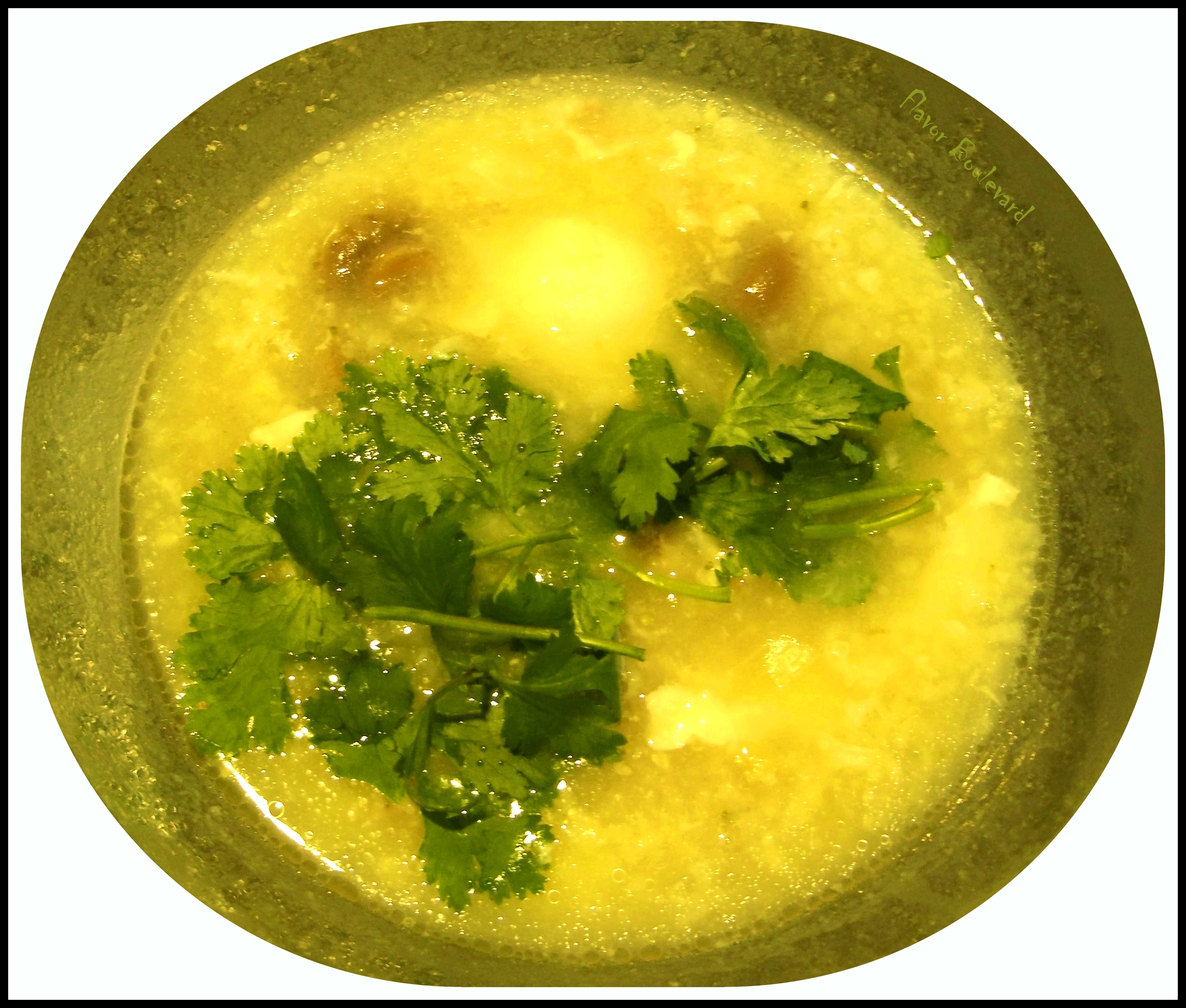
Mom’s cooking #4 – Beef porridge

July 18, 2012 By: Mai Truong Category: Comfort food, RECIPES, Vietnamese

Guest post by Mom, loosely translated by me

There are mornings, even on weekends, when I wake up feeling like a stone (Mai: she means it figuratively, the supermodel BMI runs in our family 😉) and still have to get out of bed because of the mountain of work waiting. Not work at work, but work around the house. Laundry, cleaning the bathrooms, tidying the bedrooms, grocery, and especially cooking even when I have no appetite. When those mornings happen, I think of something easy to make and easy to eat. Naturally, porridge comes to mind. My daughter doesn’t like porridge, but when she’s not home I can prepare it for her dad and me for lunch and maybe dinner, too. I like porridge: mung bean porridge, fish porridge, chicken porridge, pork porridge… and beef porridge for today.
Beef Porridge (serving 3)
– 1 cup cooked rice
– 2 lb pork bone
– 1 lb ground beef
– 8 oz champignon mushroom
– 1/2 sweet onion, minced
– 1 tbs minced garlic
– salt and sugar to taste (e.g., 1/2 tsp salt, 1 tsp sugar)
– a pinch of ground black pepper
– green onion and coriander
– 3 eggs

Simmer the pork bones to make stock, remove all the white floating foam. Use cooked rice instead of uncooked rice so that the porridge is soft but the grains don’t disintegrate, and the bottom layer doesn’t get sticky and burnt.
Season the beef with garlic, onion, salt, sugar and black pepper. Scoop spoonfuls of meat into the boiling stock. When the stock boils again, add rice. Simmer on low heat for 30 minutes. Do NOT stir. Once the porridge becomes really mushy, add mushroom. In a bowl, whisk up the eggs with chopsticks and dribble it into the boiling stock. Re-season if necessary before turning off the heat.
Garnish with green onion and coriander. Serve hot.

Beef porridge is easy to make (Mai: in my book anything with more than 3 ingredients ain’t no breezy game), not elaborate but healthy for the old and young, strong and sick. I feel lighter after I eat a bowl. How can our mind weigh down anymore when our body is elevated by something so hearty and warm?

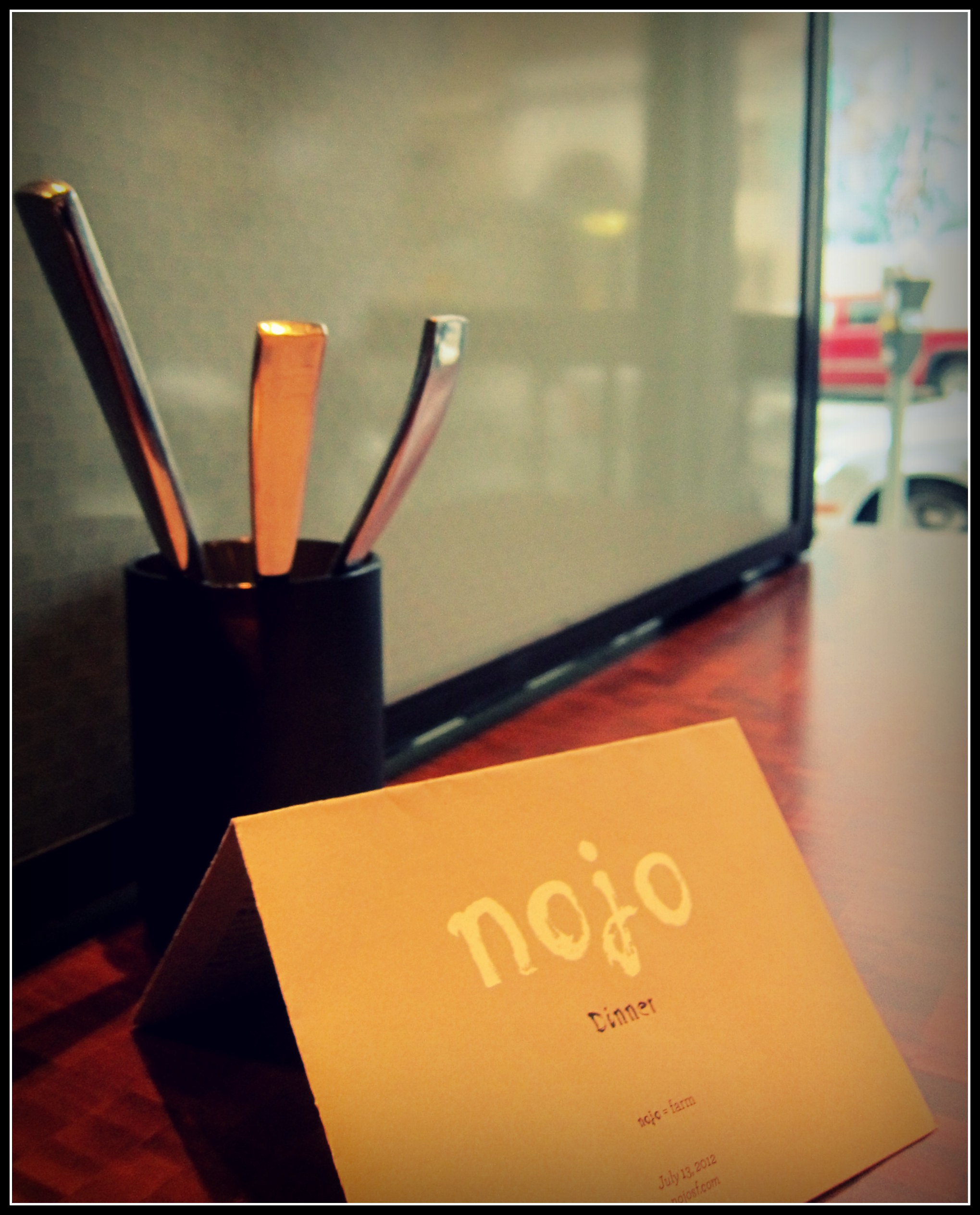
Miso Omakase at Nojo

July 15, 2012 By: Mai Truong Category: California - The Bay Area, Japanese, The more interesting


Is it miso season? (Miso has a season?) Berkeley Bowl puts out about 10 different kinds of miso in their “international” aisle, and Nojo advertises a seasonal 5-course miso omakase menu on Black Board Eats. Usually the Black Board Eats emails go straight into the trash, which I kinda feel bad about because I signed up for their newsletter after all, but thank goodness I did read it that morning. That night I got the code, called my friend, and we went to Nojo.

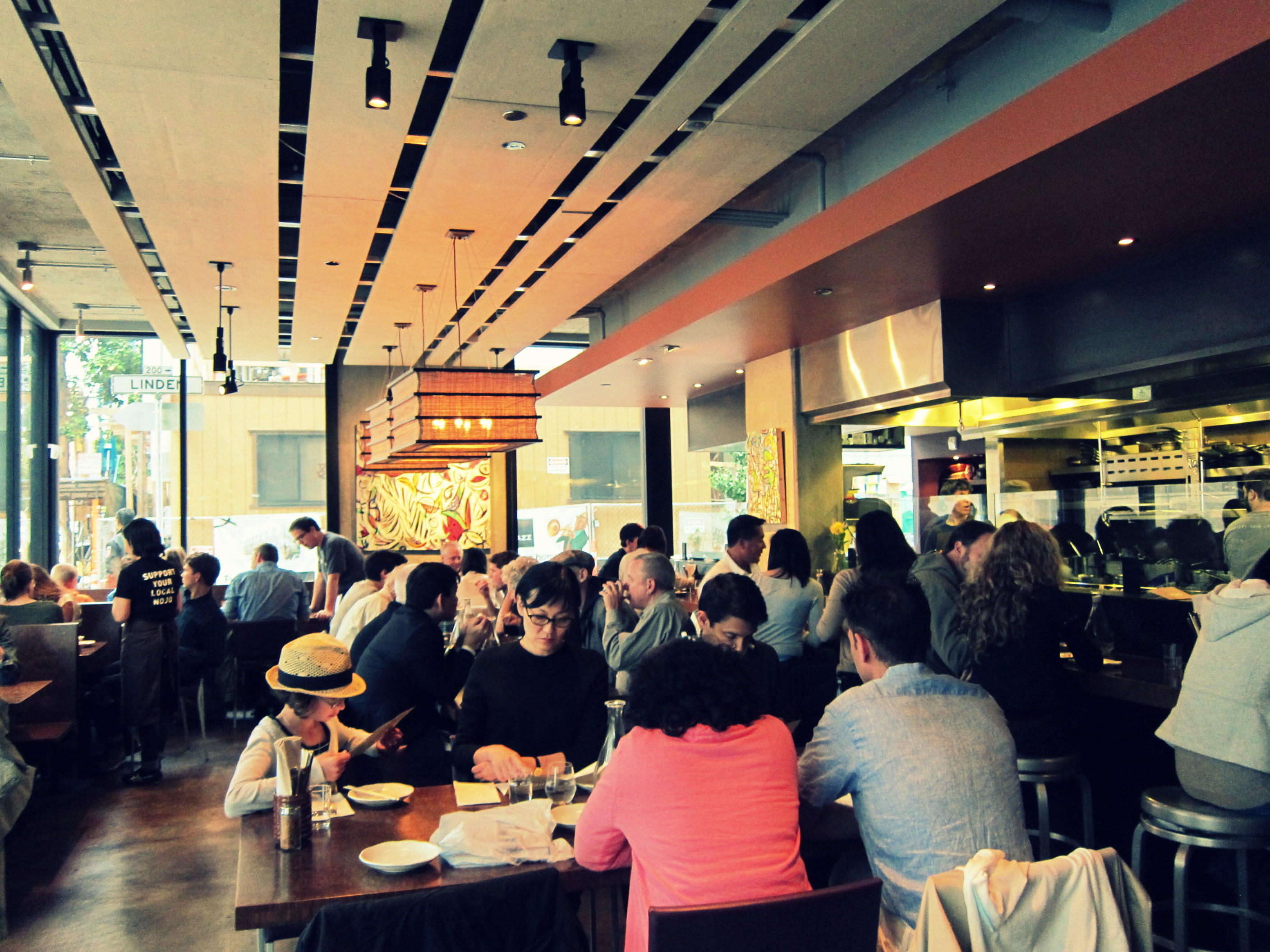
We were seated at the counter, but not the one facing the chefs, that would have been nice, this was a small counter facing the wall near the door. The wall looks pretty cool but we felt kinda weird at first, what with the other customers crowding the tables and here the three of us facing a wall next to a middle-aged man. We felt outcast. But Nojo doesn’t take reservation for party under 6, only a phone call an hour before you arrive to put your name on the waiting list, guess I should have called more than an hour earlier, what was I thinking following the rules? But the servers, inked and all, are really nice, the water was clear and sweet, the sunflowers smelled good, and the middle-aged man left minutes after we sat down.

And the food.

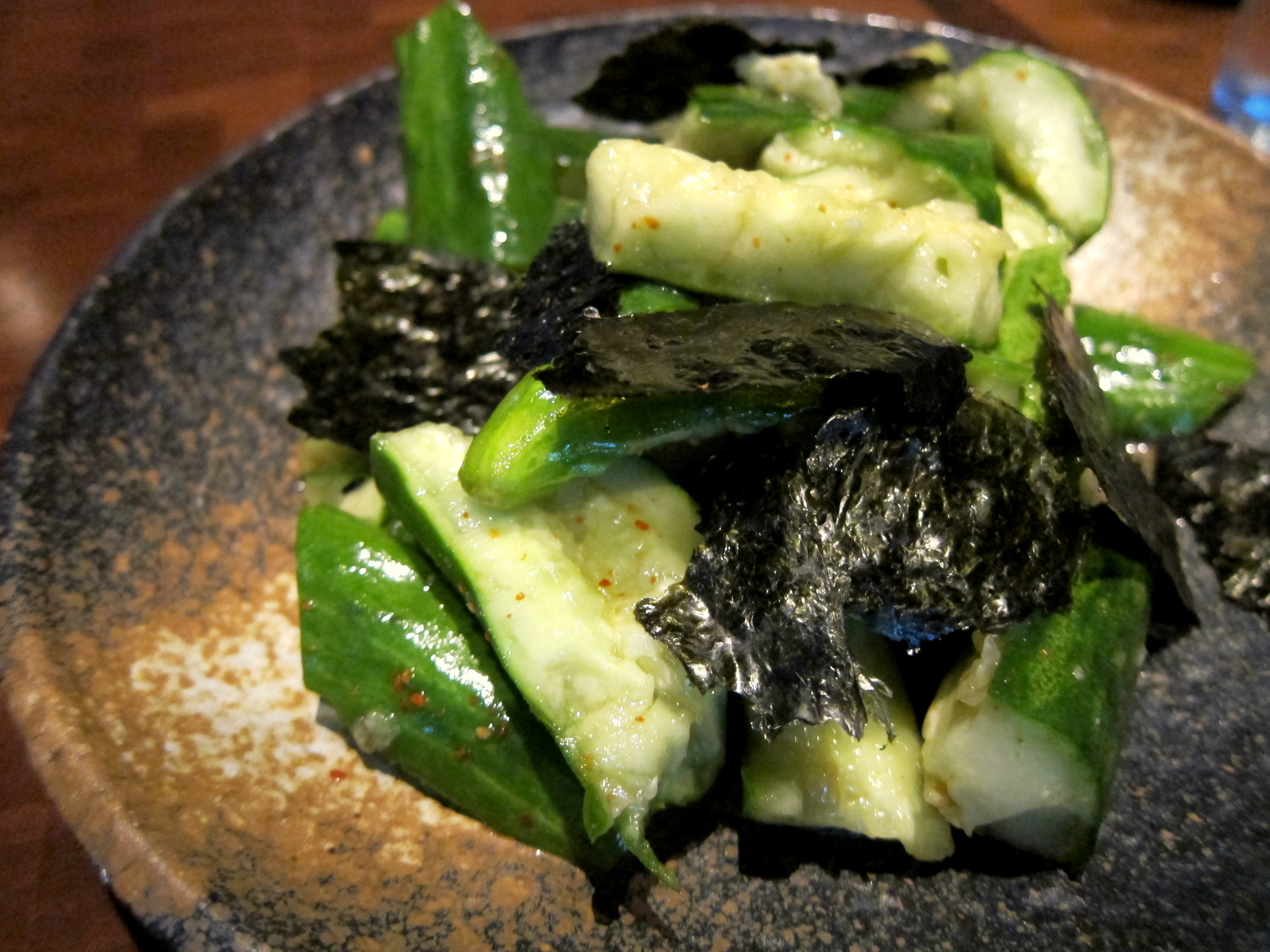
Cucumber salad with shichimi and nori. Shichimi is a chili pepper mix with (supposedly) 6 other spices, but they sprinkled just enough to give the cold thing a kick, not spicy. There’s more shichimi on the counter for the duller tongues people who like spicy food.

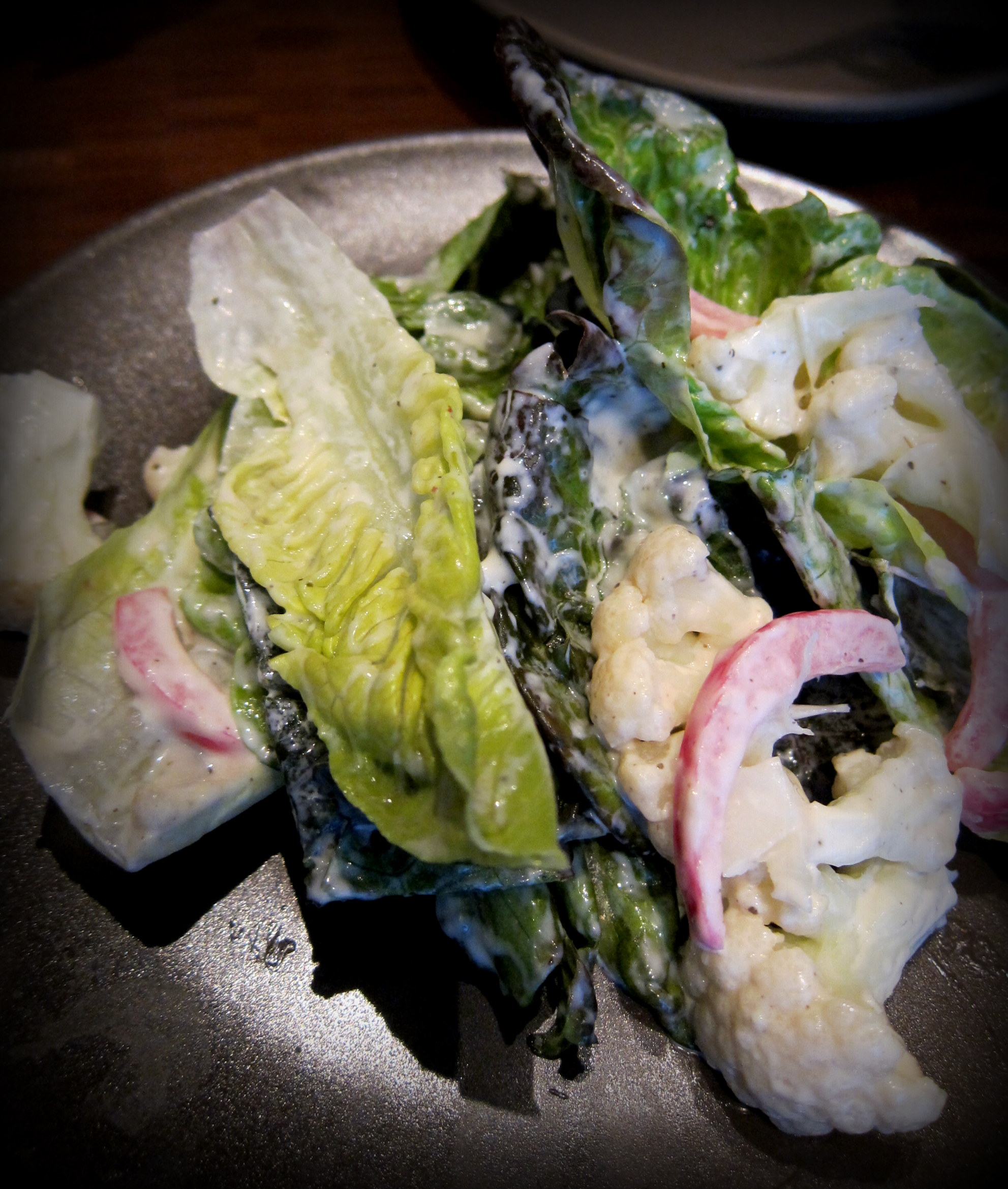
Miso Omakase Course 1: a simple salad of Little Gem lettuce and cauliflower with shiromiso (white miso) dressing. The pickled red onion was the real little gem.


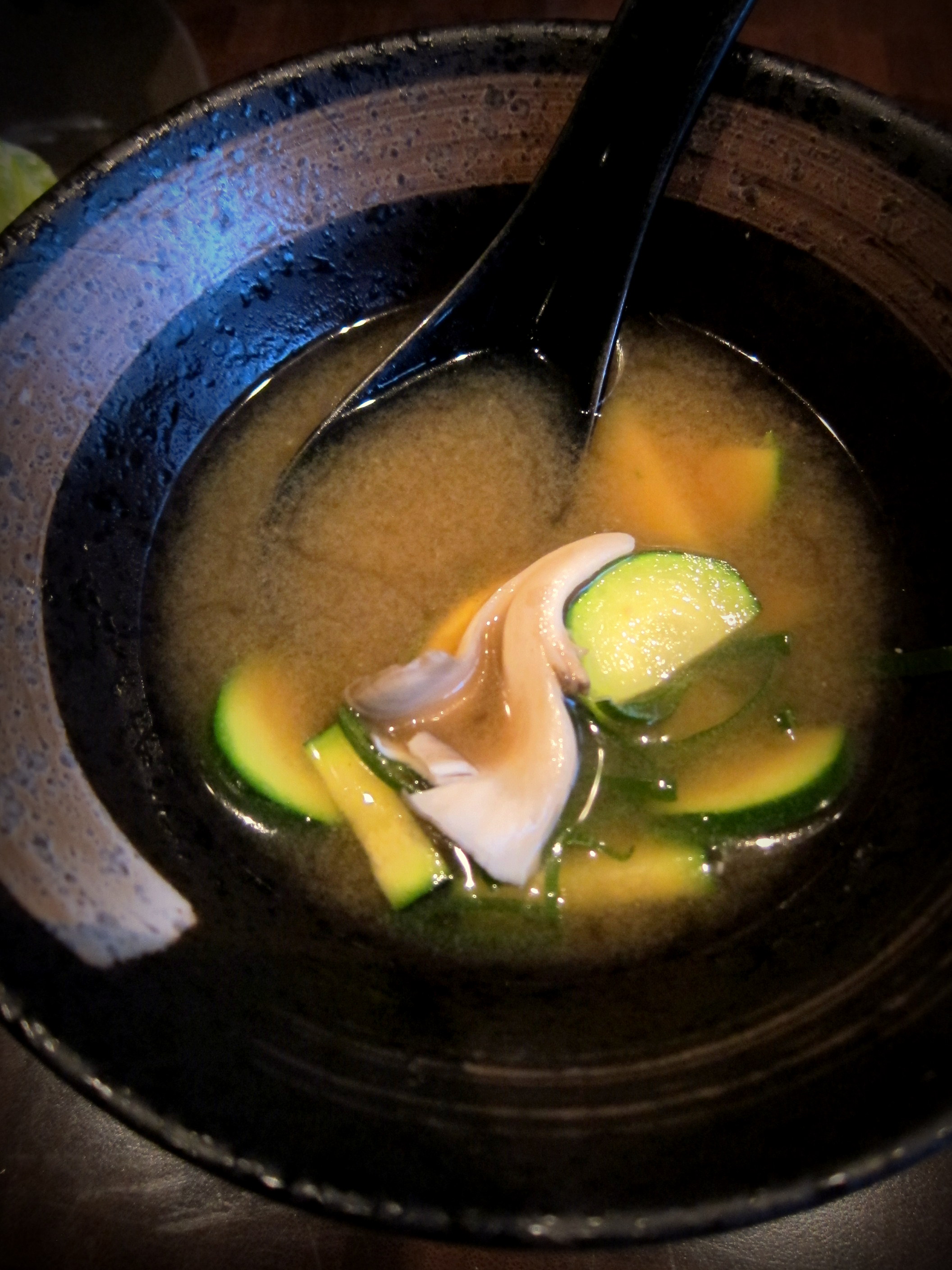
Miso Omakase Course 2: miso soup with oyster mushroom and butternut squash. Hearty. San Francisco gets cold at night, so this helps.


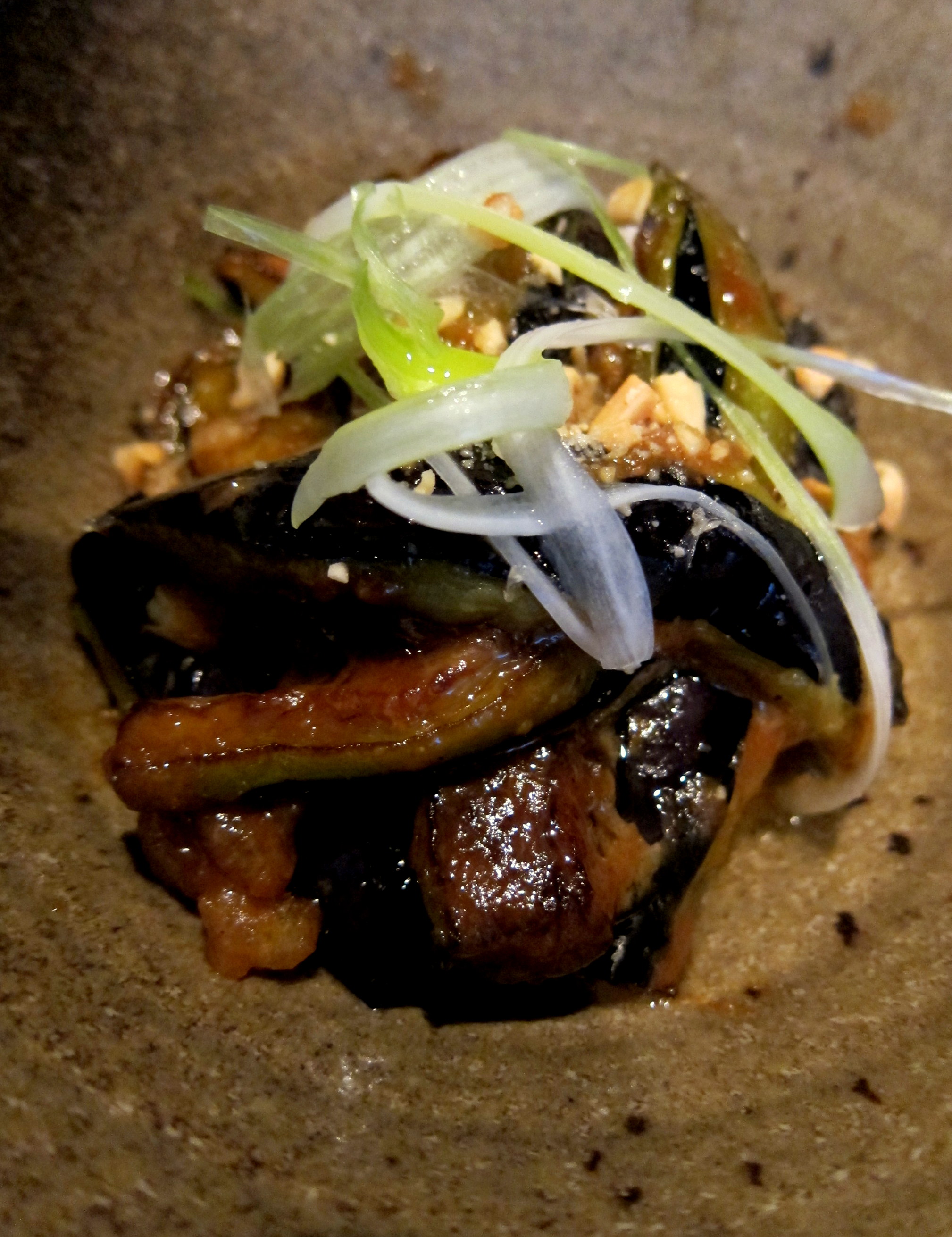
Fried eggplant with akamiso (red miso) and peanut sauce, topped with julienned leek. Eggplants have never been my favorite fruit and will never be even if I go vegan, but this miso eggplant was better than the grilled pork jowl and the garlic-barley miso butter chicken (Miso Omakase Course 3), both of which tip-toed on the salty side.


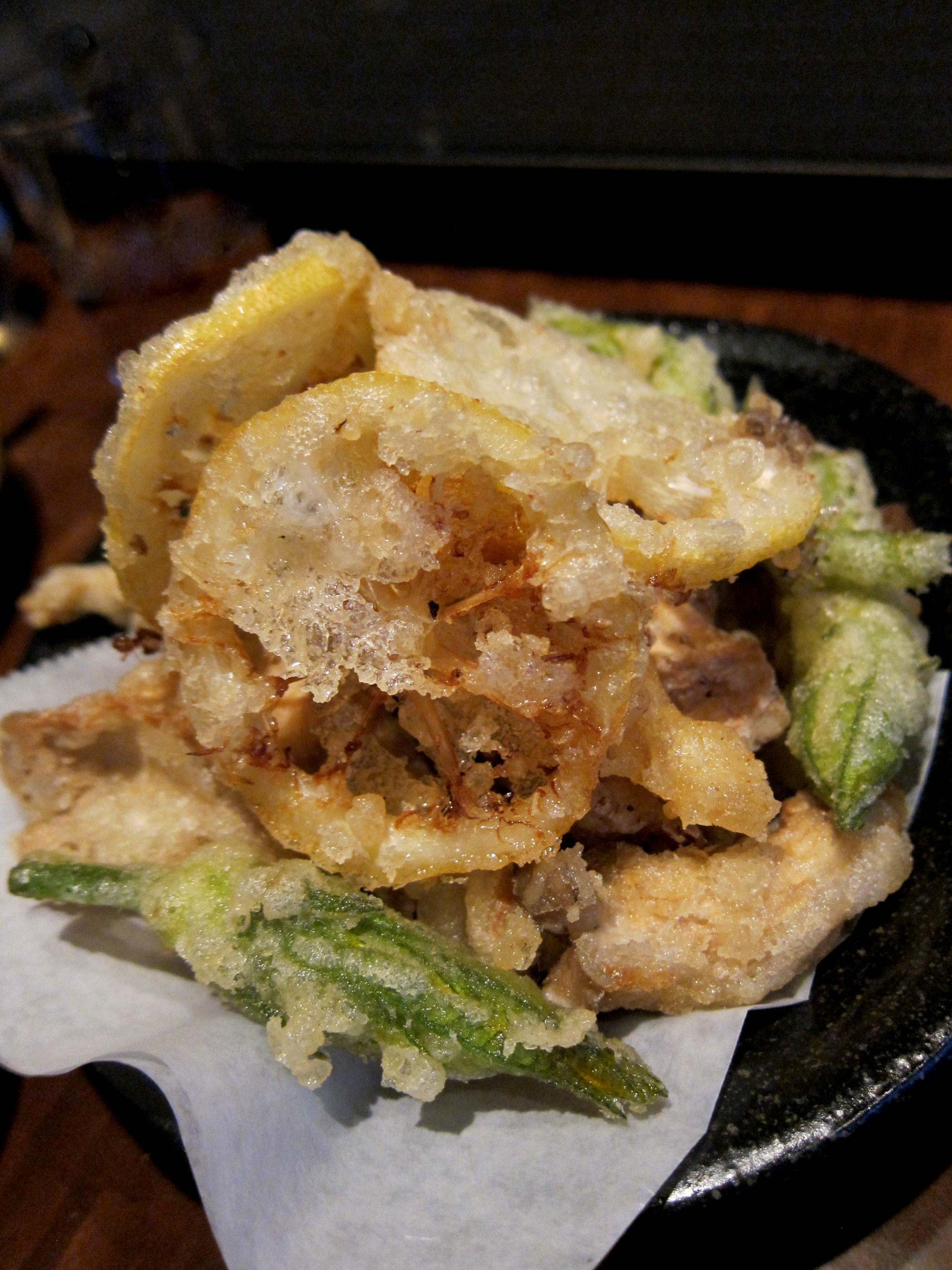
Tempura tree oyster mushroom, squash blossom and lemon, to be dipped in a zesty ponzu mayonnaise.


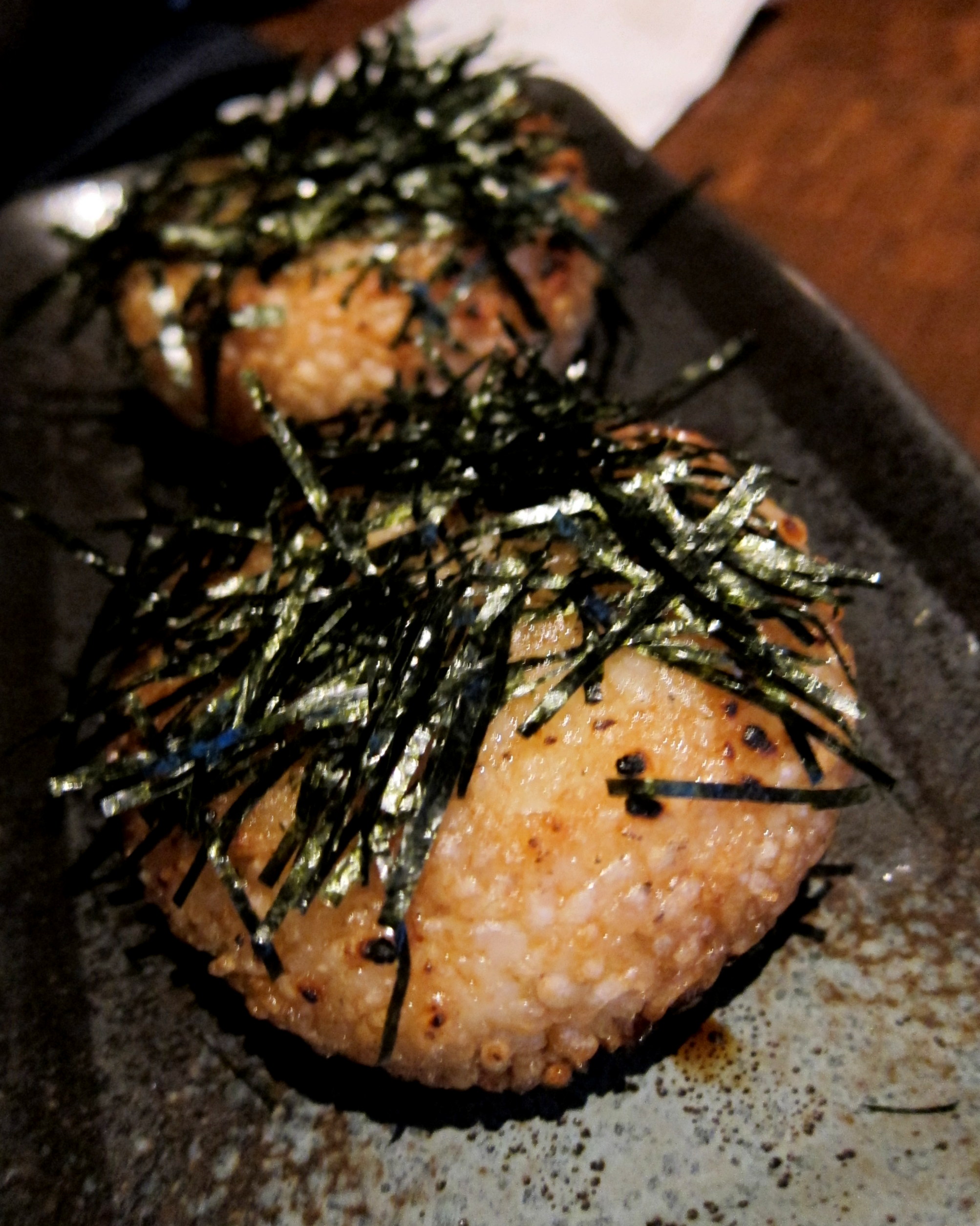
We didn’t expect a fried thing when we ordered the rice balls with tare and nori, but the surprise was welcome.


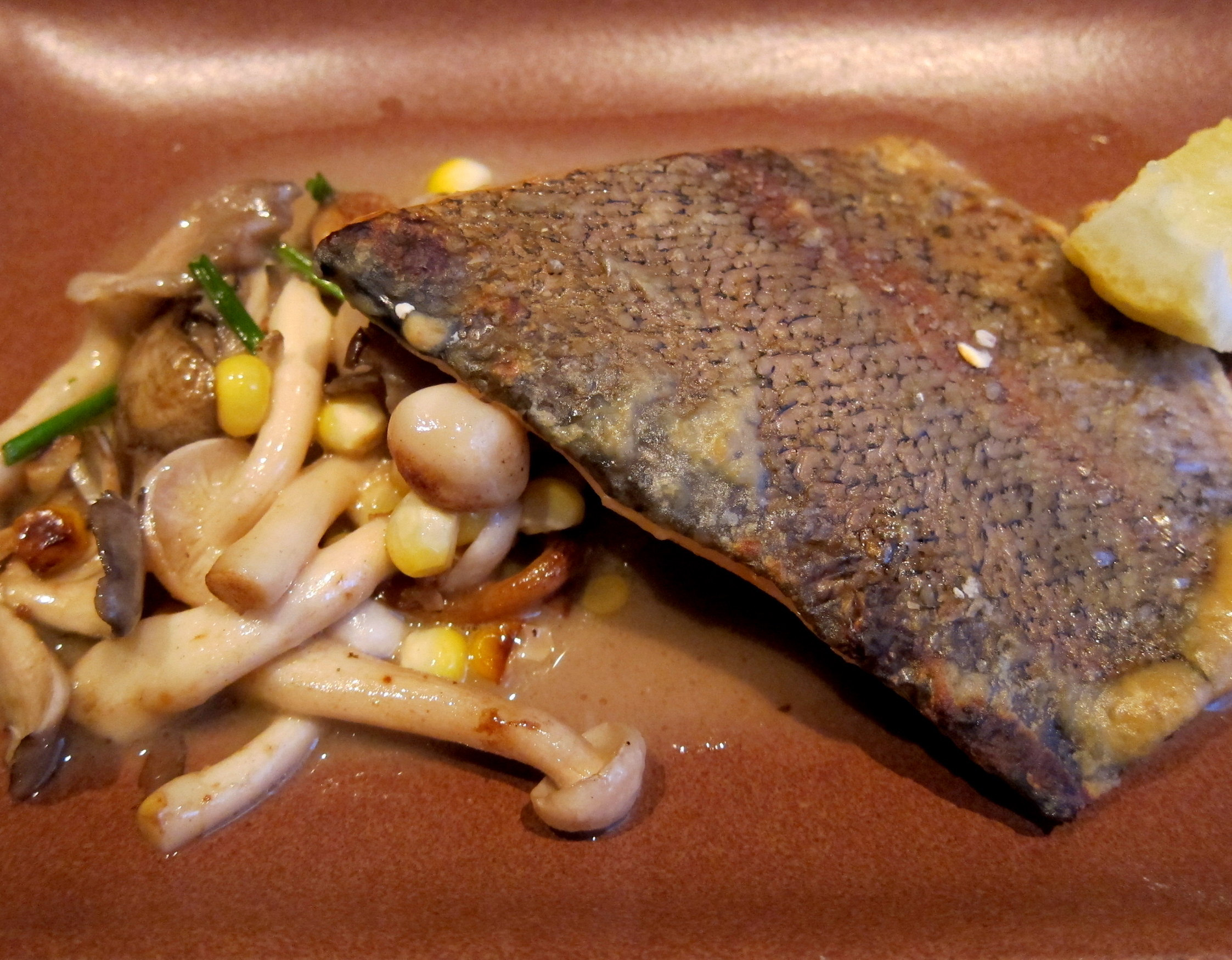
If I was skeptical about anything in the Miso Omakase menu, it was the shiromiso-glazed trout. But its sweet creamy sauce blew my doubt away, the rice ball was great for sweeping up every last drop.


Miso Omakase Course 5: buckwheat & beer crepe, a drizzle of ginger-muscovado syrup, blueberry compote on top and shiromiso ice cream. We thought muscovado was a cross between muscat the grape and avocado (weird, I know, but possible, right?), but we asked, it’s a brown sugar.


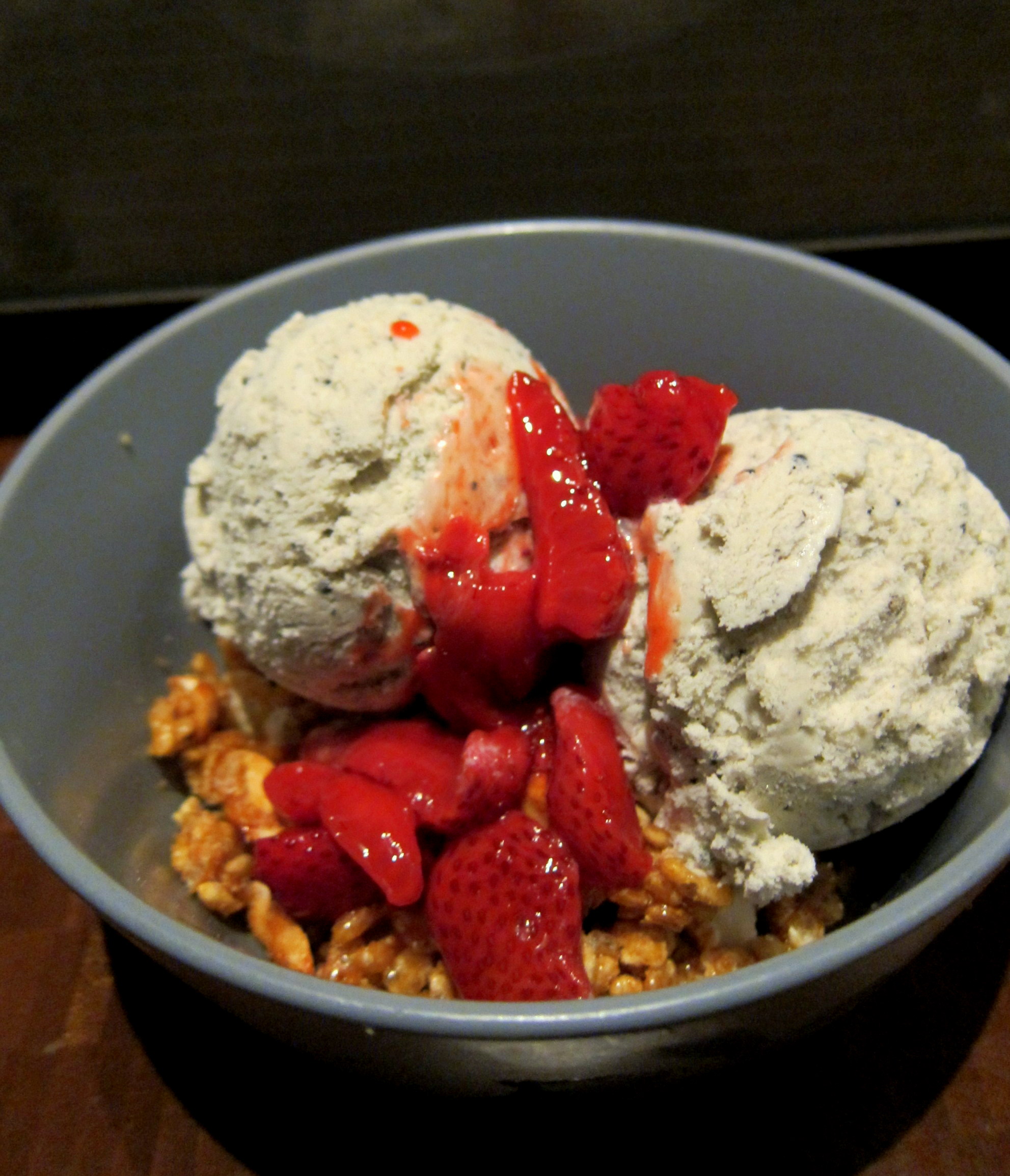
And of course, kurogoma (black sesame) ice cream with roasted strawberries on a bed of “peanut thunder crackers”, which is like peanut brittle and caramel popcorn intertwined, multiplied the goodness by 85.


You know how people can just tell that something’s good when they see it, for no reason at all? That’s how it was with Nojo for me. Every izakaya in the Bay has the same kind of yakitori on the stick, the same expensive price, the same raves on Yelp, and I don’t know why I wanted to go to Nojo, but now I’m recommending it to everyone I talk to. Was it the kikubari exuding from the friendly staff, inked and all and warmly smiling as they strode between tables? Was it the simple but flawless food? But I didn’t know any of that before I came.

Somewhere in me, I just knew. Miso is in.

Address: Nojo (which means “farm” in Japanese)
231 Franklin St.
San Francisco, CA
(415) 896-4587

Dinner for three: $99.82

Kitchen hour: quasi-Osaka Okonomiyaki

July 13, 2012 By: Mai Truong Category: Comfort food, Japanese, RECIPES, savory snacks


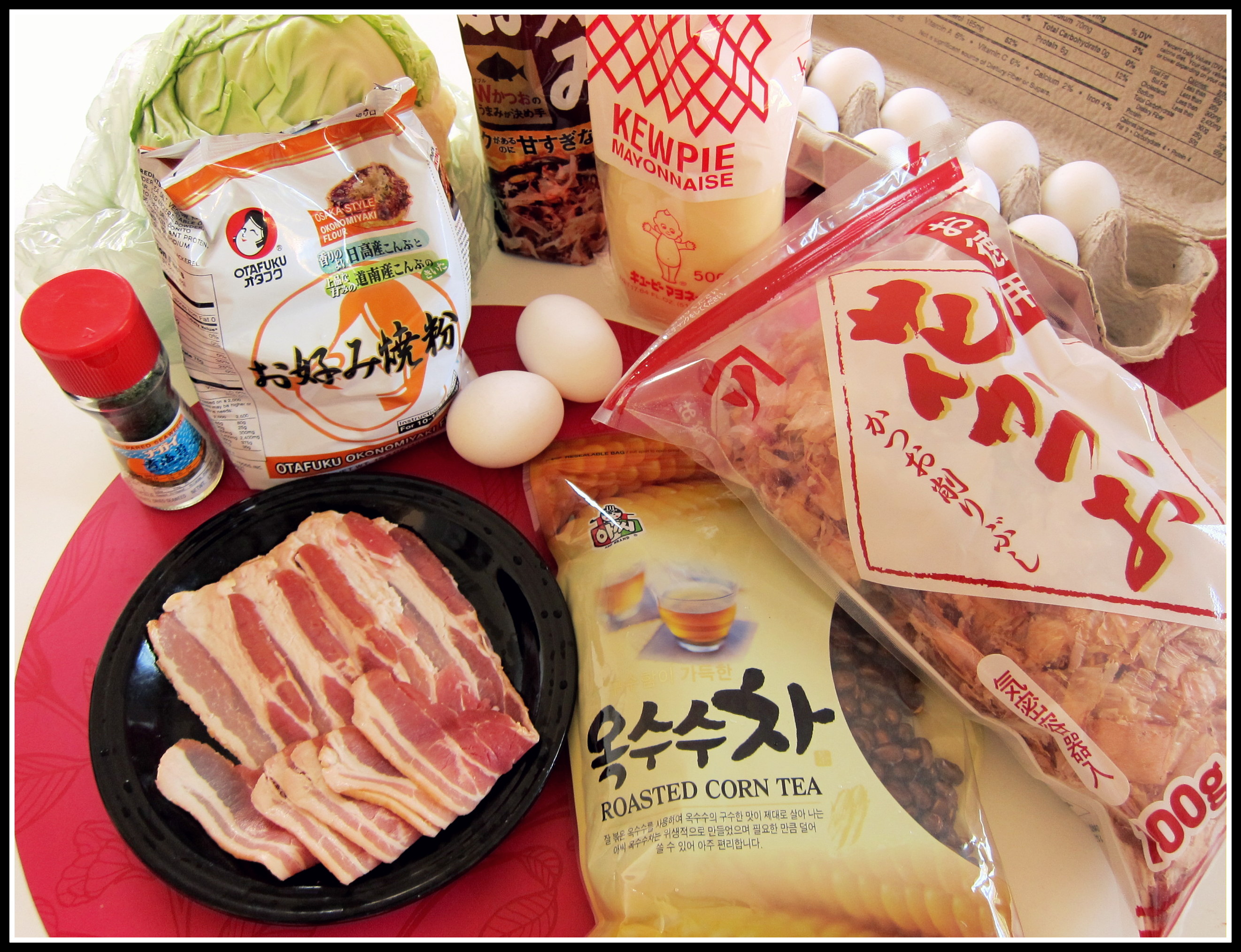
When I walked down that aisle, I beamed with pride. In my hand, a bag of okonomiyaki flour, a bag of katsuobushi, bottles of sauces and aonori. Kristen took care of the cabbage and meats. Pancake day. Osaka style. At least that was the plan.

We didn’t plan on being authentic. We couldn’t. An American-born Taiwanese and a Vietnamese who haven’t lived in Japan at all are not gonna make an “authentic okonomiyaki” on first try. That’s why we chose premixed okonomiyaki flour instead of grating a nagaimo, bottled mayonnaise instead of whipping up eggs and oil ourselves. But just the thought of making our own okonomiyaki in whatever shape we want and however we want it, not having to go anywhere and regretting over soggy, over-salted mashes called okonomiyaki, generated the we-can-own-this attitude that guaranteed pride no matter what the outcome. It’s a sort of defiance after too many letdowns. Instead of mixing flour with water, we boiled roasted corn and mixed flour with corn tea.

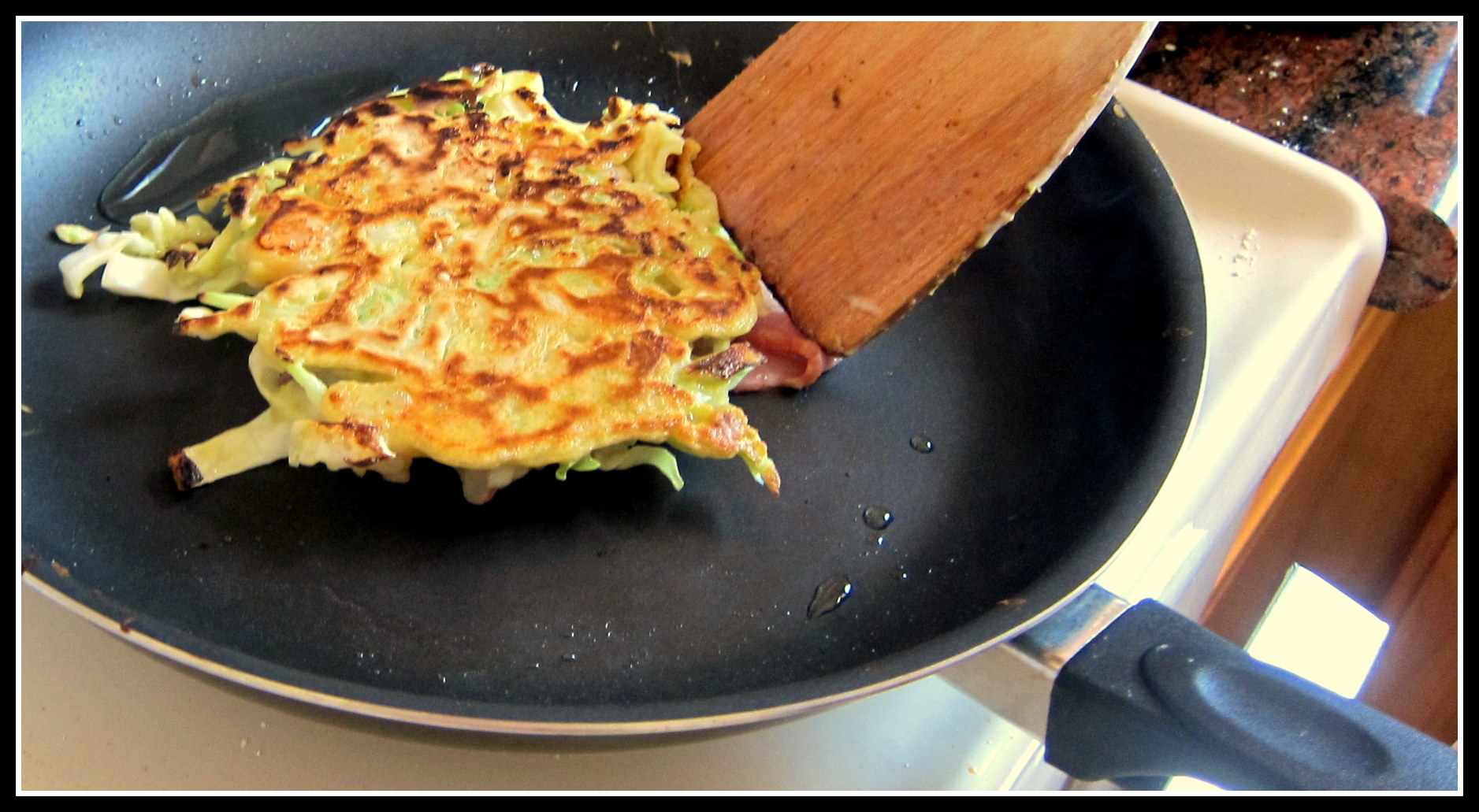
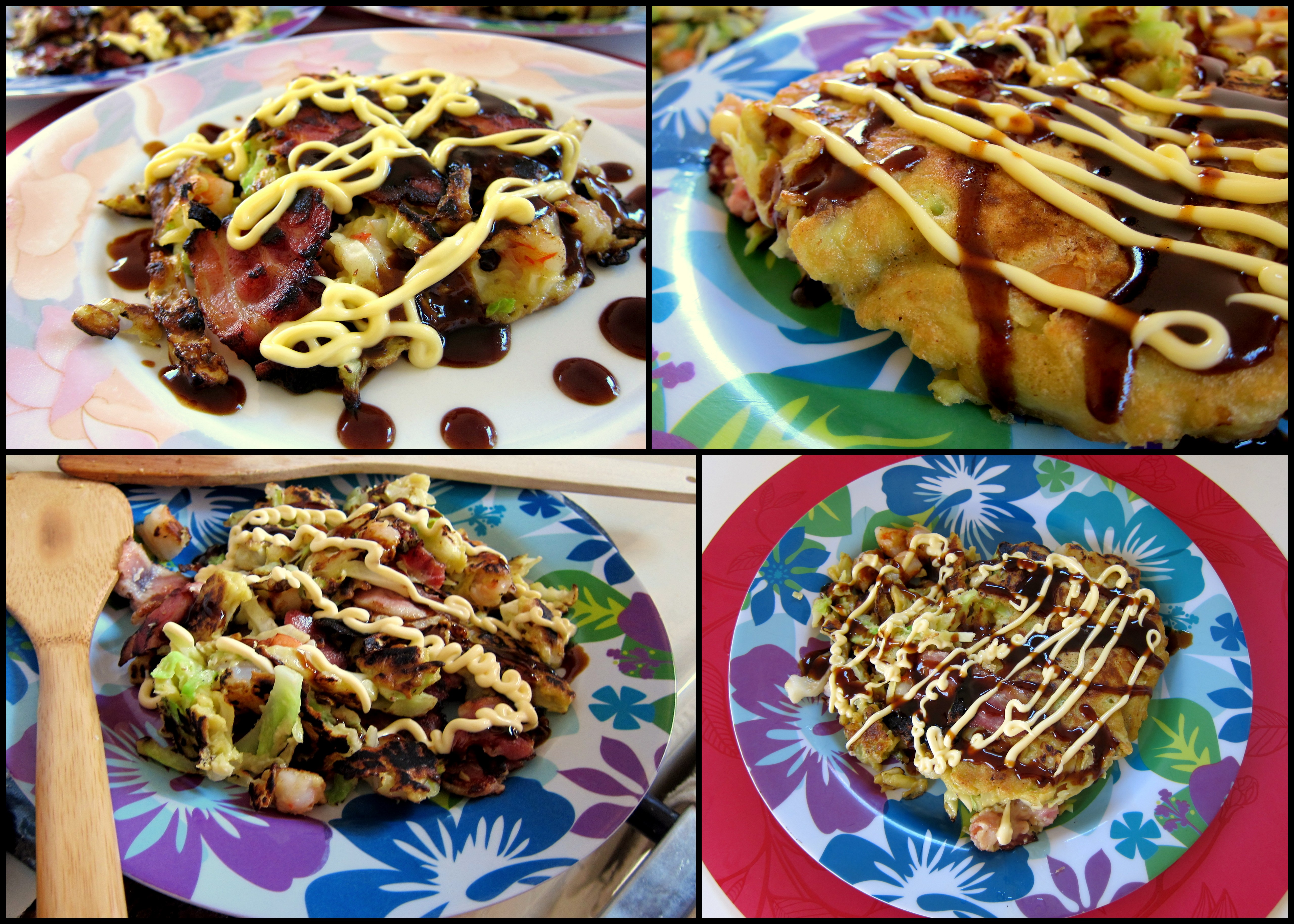
Apart from that and the avoidance of green onion (I’d add green onion if I’m making pajeon – green onion pancake, but not okonomiyaki), and impatience – pouring more corn tea than I should, then the batter was too thin and I added some more flour and the batter went too thick, eventually I got double what I intended for, which also helped because we had a lot of cabbage – we followed the Best Okonomiyaki recipe pretty closely until the next-to-last step. Once I made too big a pancake, so when I flipped it, only half got flipped. I got omelet instead of okonomiyaki, but shape doesn’t matter, right? Ah, there was also a time when I forgot to layer the bacon on top of the pancake before flipping it, so the bacon was added to the bottom instead of the top, but that’s just a matter of perspective. 😉


Quasi-Osaka Okonomiyaki (serving 2)
[adapted from Best Okonomiyaki recipe]

1 cup okonomiyaki flour (100 g)
2/3 cup corn tea
2 eggs
1/5 head of cabbage, sliced into 2-mm-thick strips
9 strips of fresh bacon, cut into 3-inch-long (8 cm) pieces or however you like
100g raw shrimp, peeled and diced
Kewpie mayonnaise
Okonomiyaki sauce
Aonori (seaweed flake)
Katsuobushi (bonito flakes)


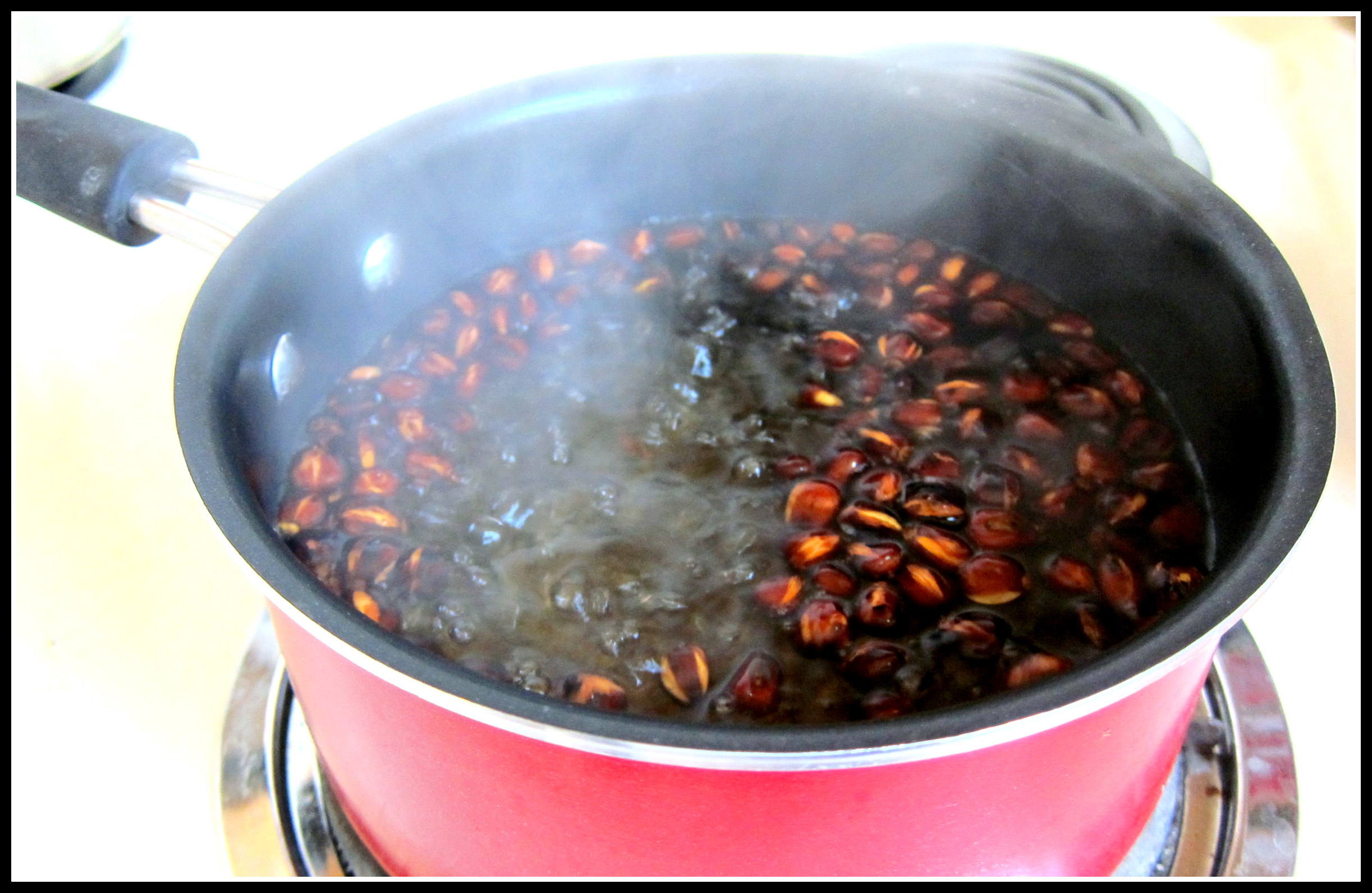
Boil the roasted corn kernels to make corn tea (옥수수 차 oksusu cha). I just take a handful and throw in a pot of water, you should rather go heavy than light on the kernel, it makes the tea sweeter. Let the tea cool.


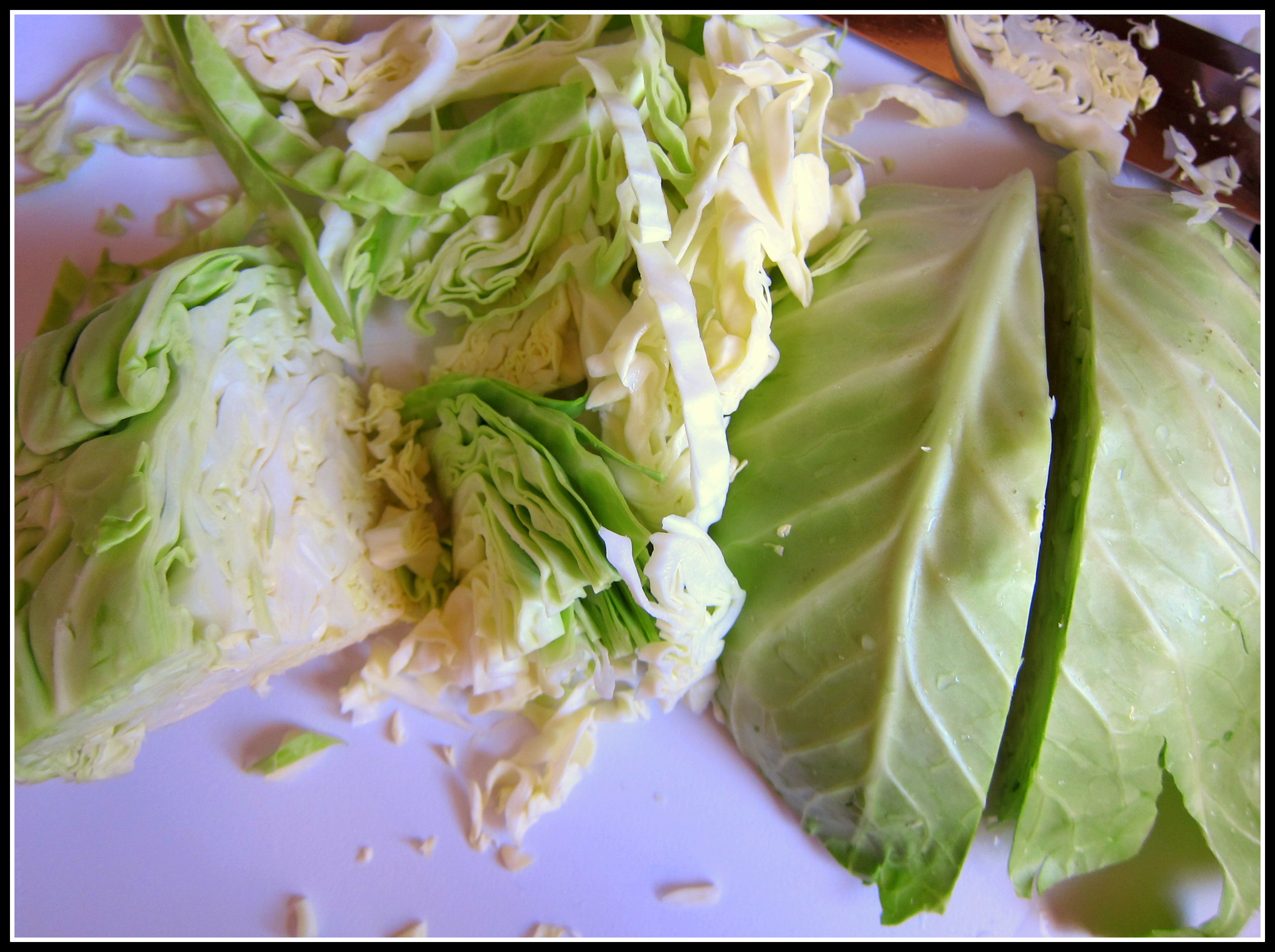
Chop the cabbage. Time to show your prowess of chopping without looking, which I can’t do. You’d end up with a LOT of cabbage. Make cabbage salad with kimchi.


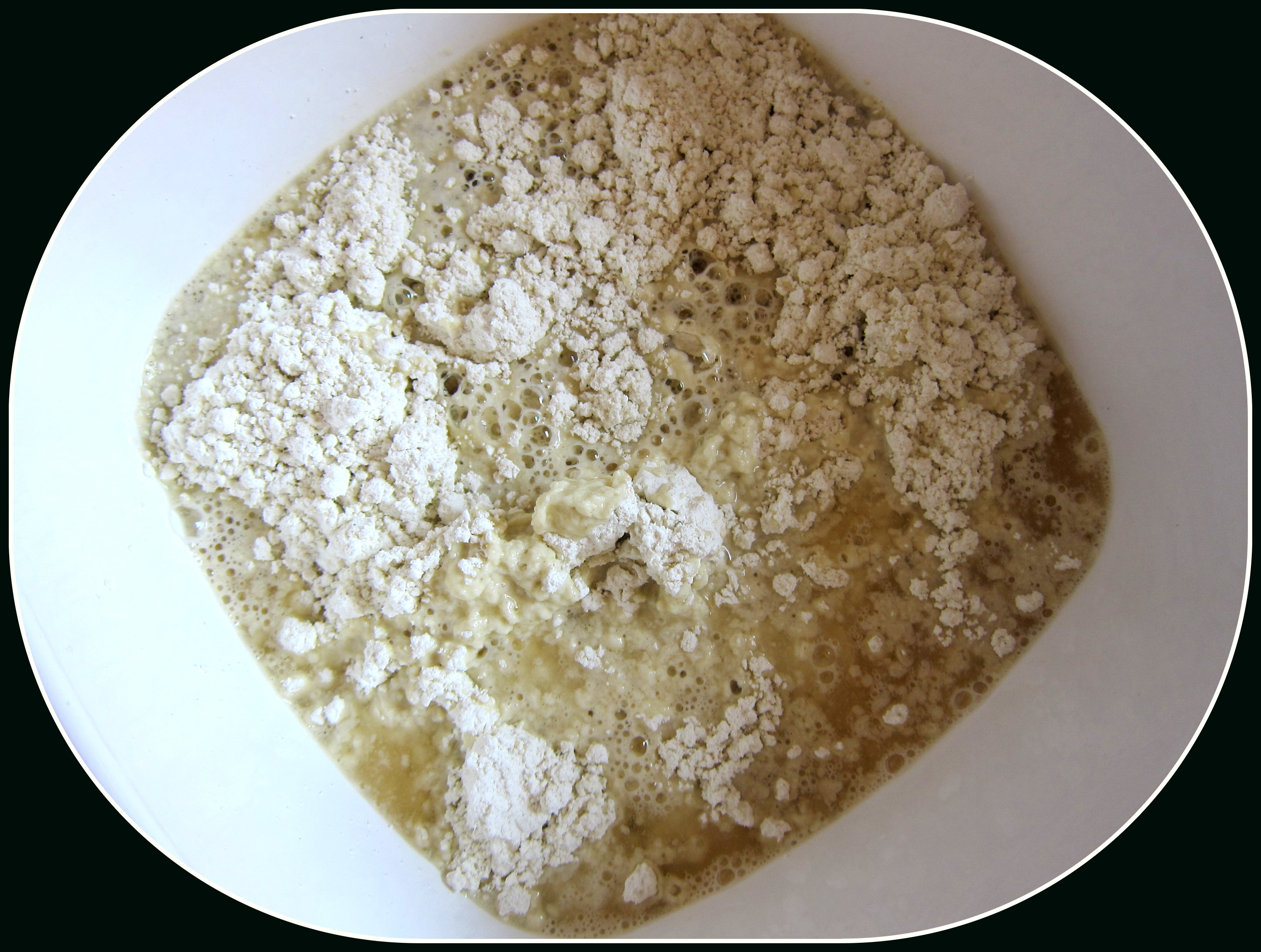
Mix flour with corn tea.


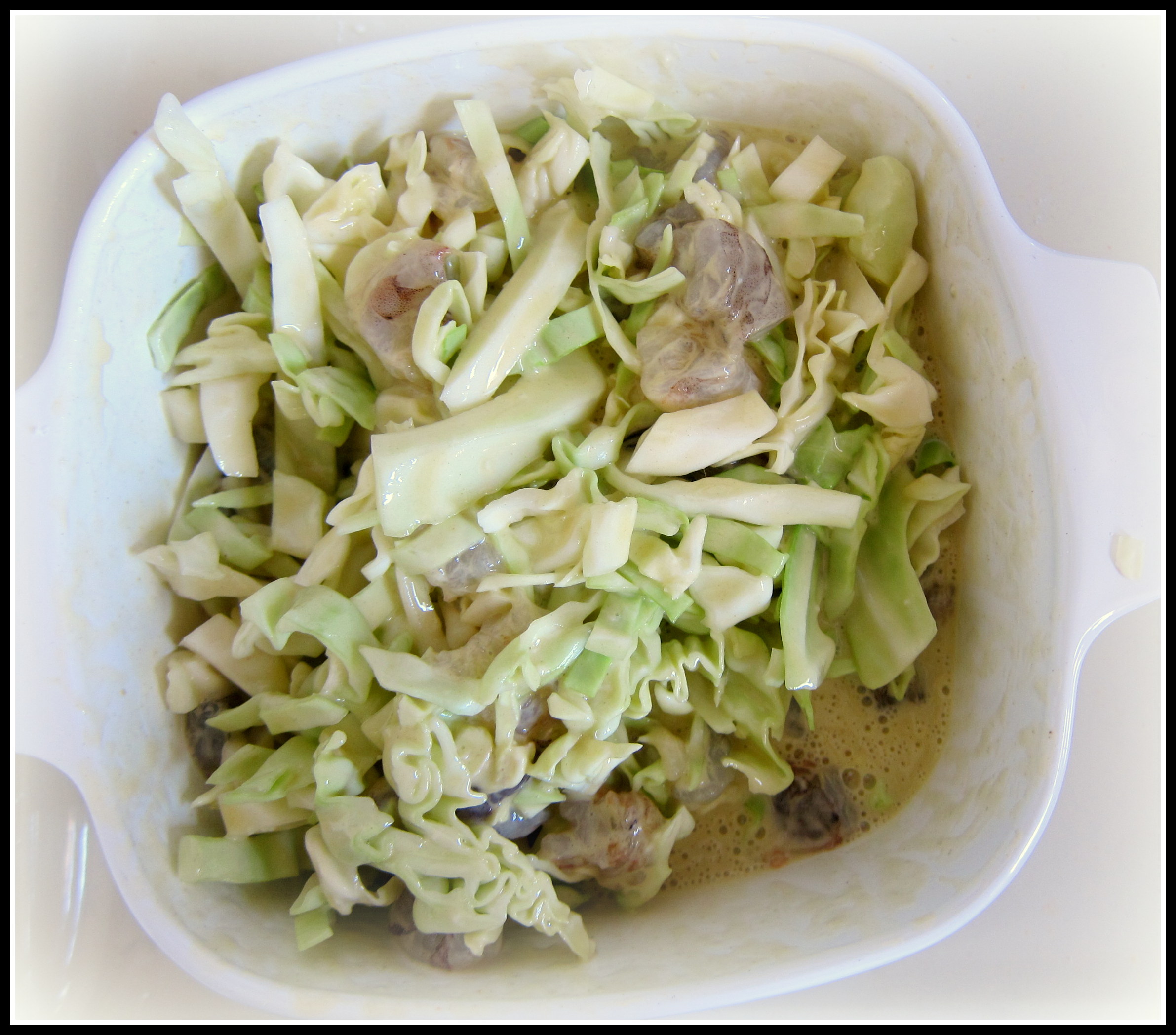
Add cabbage, diced shrimp and eggs into the flour. Mix like you never mix before.


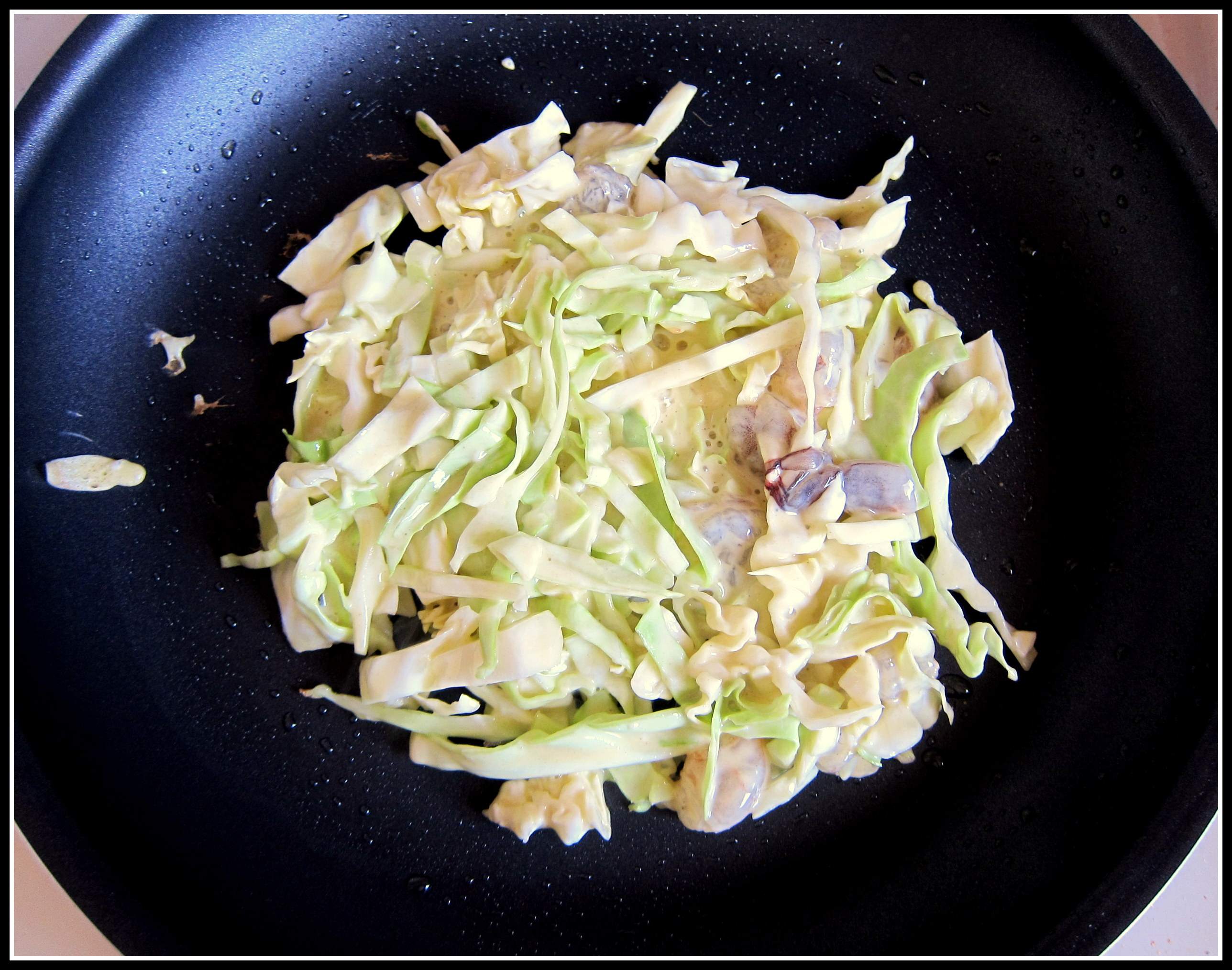
Plop some of the mix onto a hot, lightly oiled skillet and spread it into whatever shape, canonically a disk. Four inches across will make it easiest to flip and big enough to be a meal.


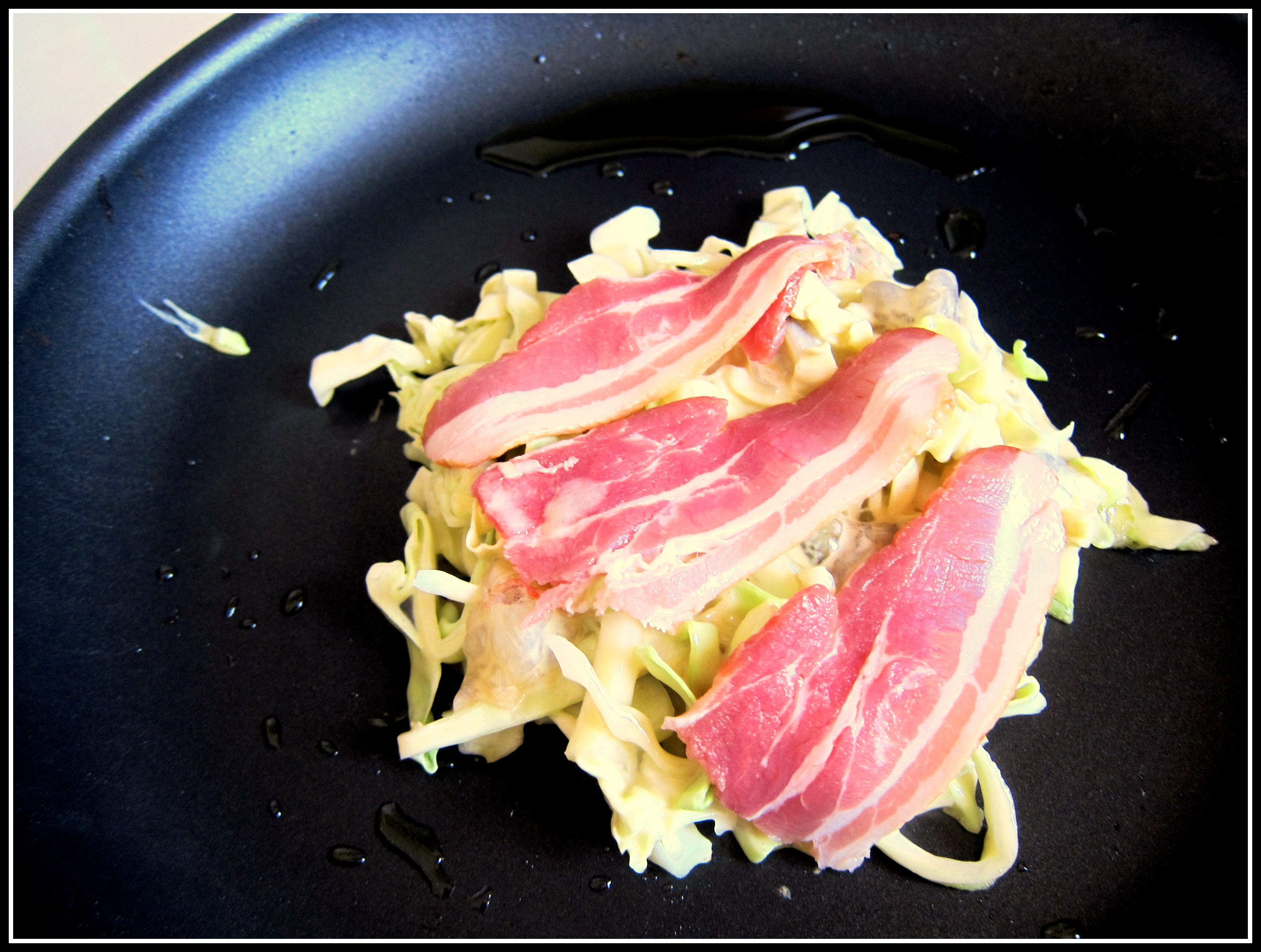
Layer bacon strips on top. Let it sit for 3-4 minutes on medium-high heat.


Flip. And DO NOT PRESS it down. You want the air in there for crunch. Let it cook for another 2-3 minutes.


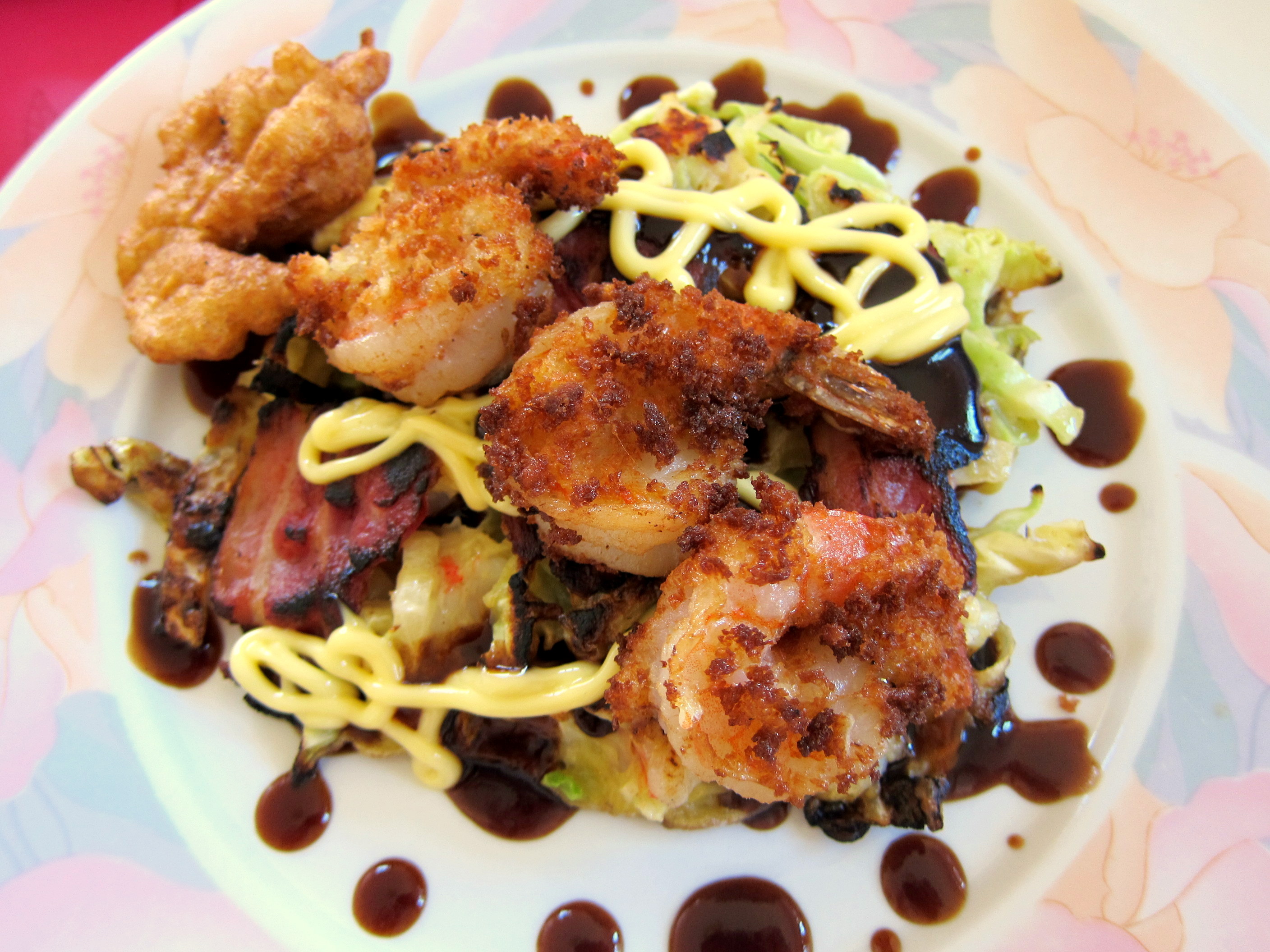
Spatula it out onto a plate. Sprinkle copious amount of aonori and katsuobushi (which we forgot to do! But we used tempura shrimp to make up for that later). Squeeze mayonnaise and okonomi-sauce into your desired pattern. Or make a heart-shaped pancake, like Kristen.

Here, a lesser writer would put something cliche like “this is the best okonomiyaki I’ve ever gulfed down”.

This is the best okonomiyaki I’ve ever gulfed down.


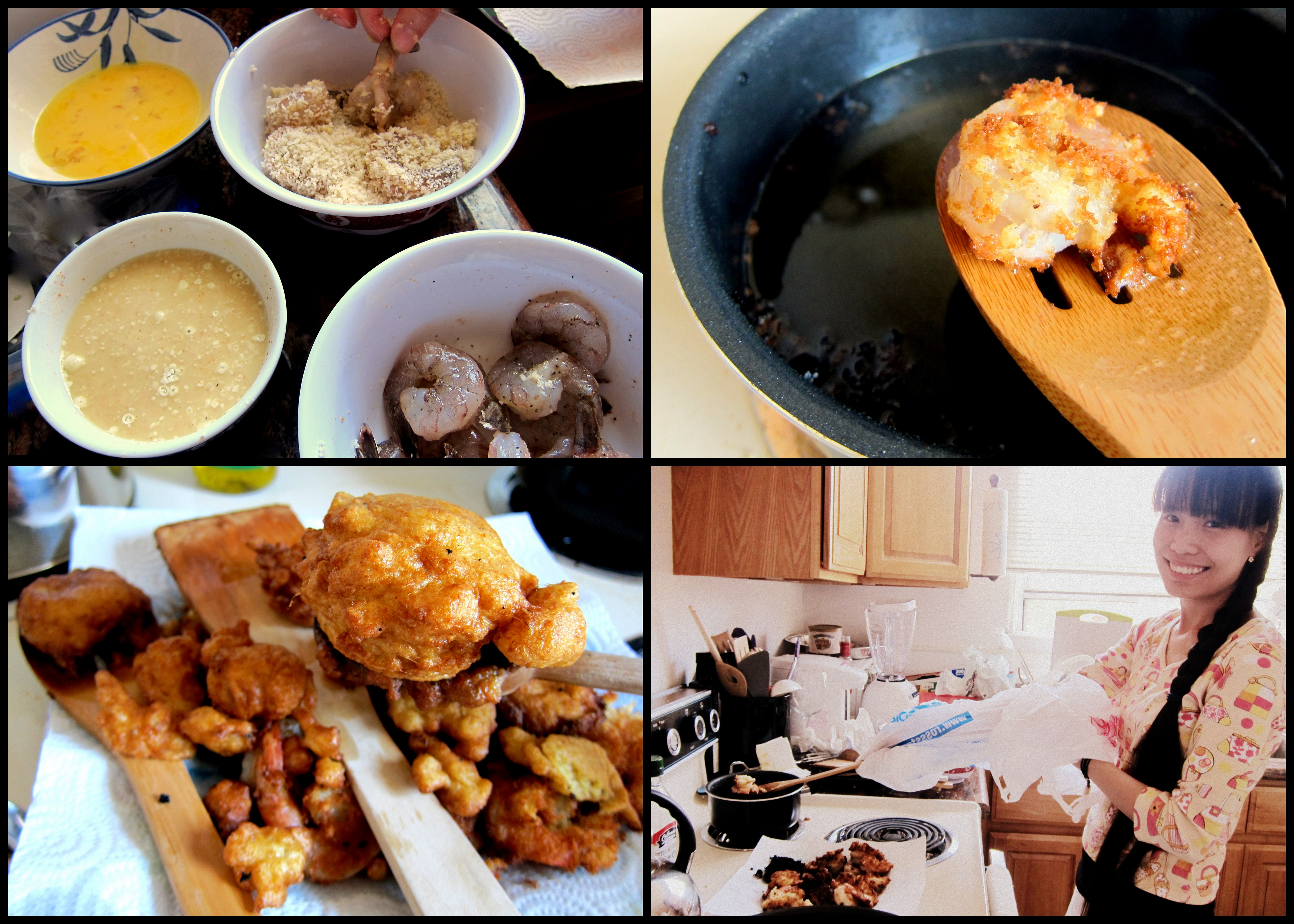
If you bought extra shrimp, make shrimp tempura. We decided this on a wimp and protected ourselves from flying oil with plastic bags. Recommended for entertainment. 😉


With leftover batter after deep frying the shrimps, make fried dough. Drizzle syrup and eat them as dessert. Can you see the shrimp imposter? 😉

Future prospects: grating nagaimo, making our own sauce, other styles of okonomiyaki.

Sandwich Shop Goodies 21 – Bánh dầy đậu (Vietnamese mung bean mochi)

July 11, 2012 By: Mai Truong Category: Houston, Northern Vietnamese, One shot, sticky rice concoctions, Vegan


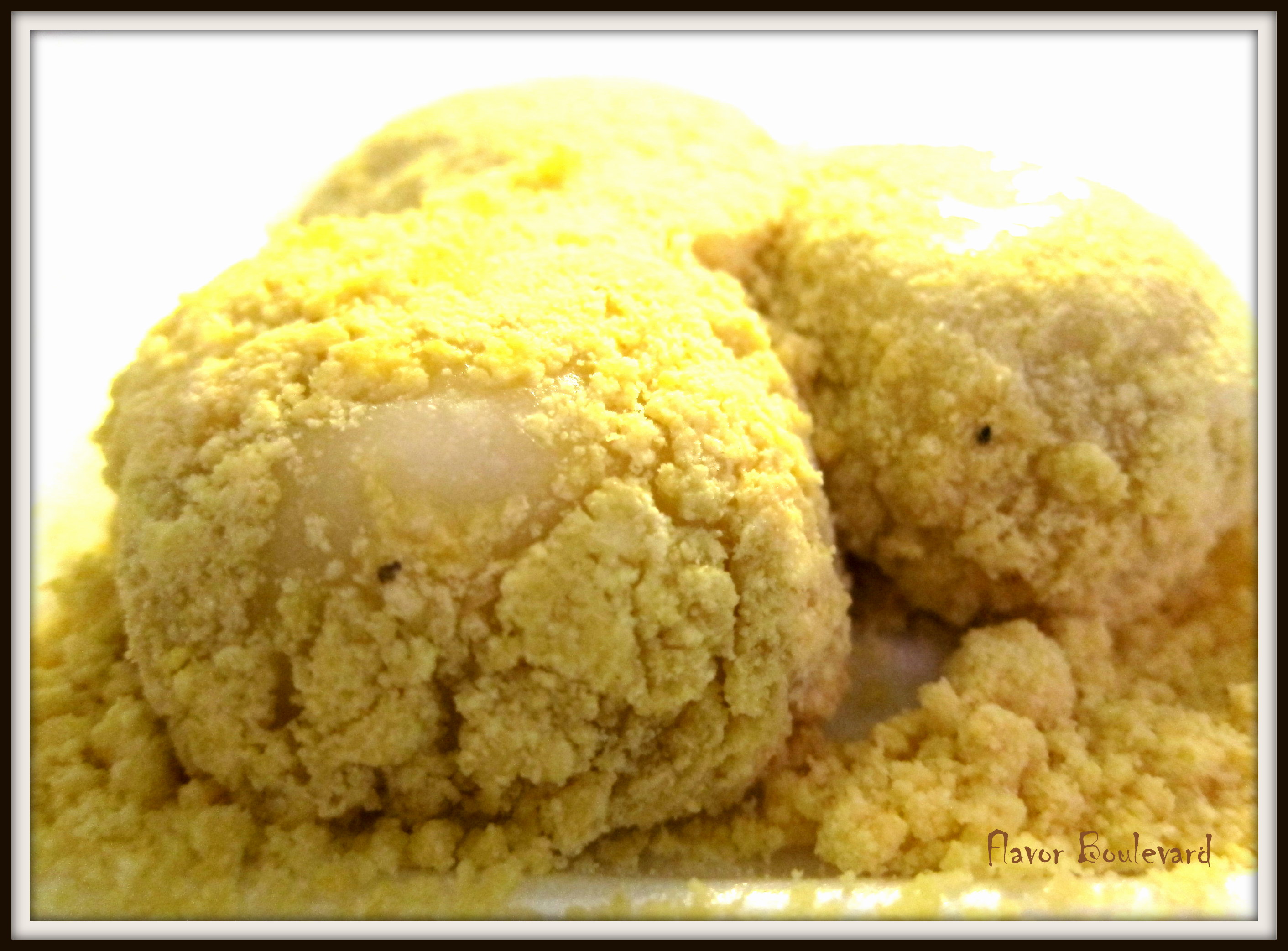
Legend said the first ever bánh dầy (pronounced |beng yay|) was a flat thick bun of cooked-and-pounded sticky rice, white and chewy and not recommended for dentures. The prince, taught by a Bodhisattva in his dream, made it to represent the sky, and bánh chưng to represent the earth. I don’t think the sky is chewy, but I really like it when it’s white. I also like banh day with silk sausage a lot. But somewhere along the history of Vietnam, somebody gave banh day a mung bean filling, softened the dough (which means more pounding for the sticky rice), rolled it into the size of a pingpong ball, and coated it with mung bean powder. I can NEVER get enough of this thing.

$2 for 3. Found at: Alpha Bakery & Deli (inside Hong Kong City Mall)
11209 Bellaire Blvd # C-02
Houston, TX 77072-2548
(281) 988-5222

Unfortunately, I love them so much that the store-bought version just doesn’t do it for me. With Little Mom’s help, a batch has been made. A recipe is on the way. (UPDATE: the recipe is here.)

Previously on Sandwich Shop Goodies: cudweed sticky rice (xôi khúc)

White Kimchi for amateurs and Kimchi Cabbage Salad

July 08, 2012 By: Mai Truong Category: Korean, RECIPES

A week we waited. Today had the moment of truth arrived.


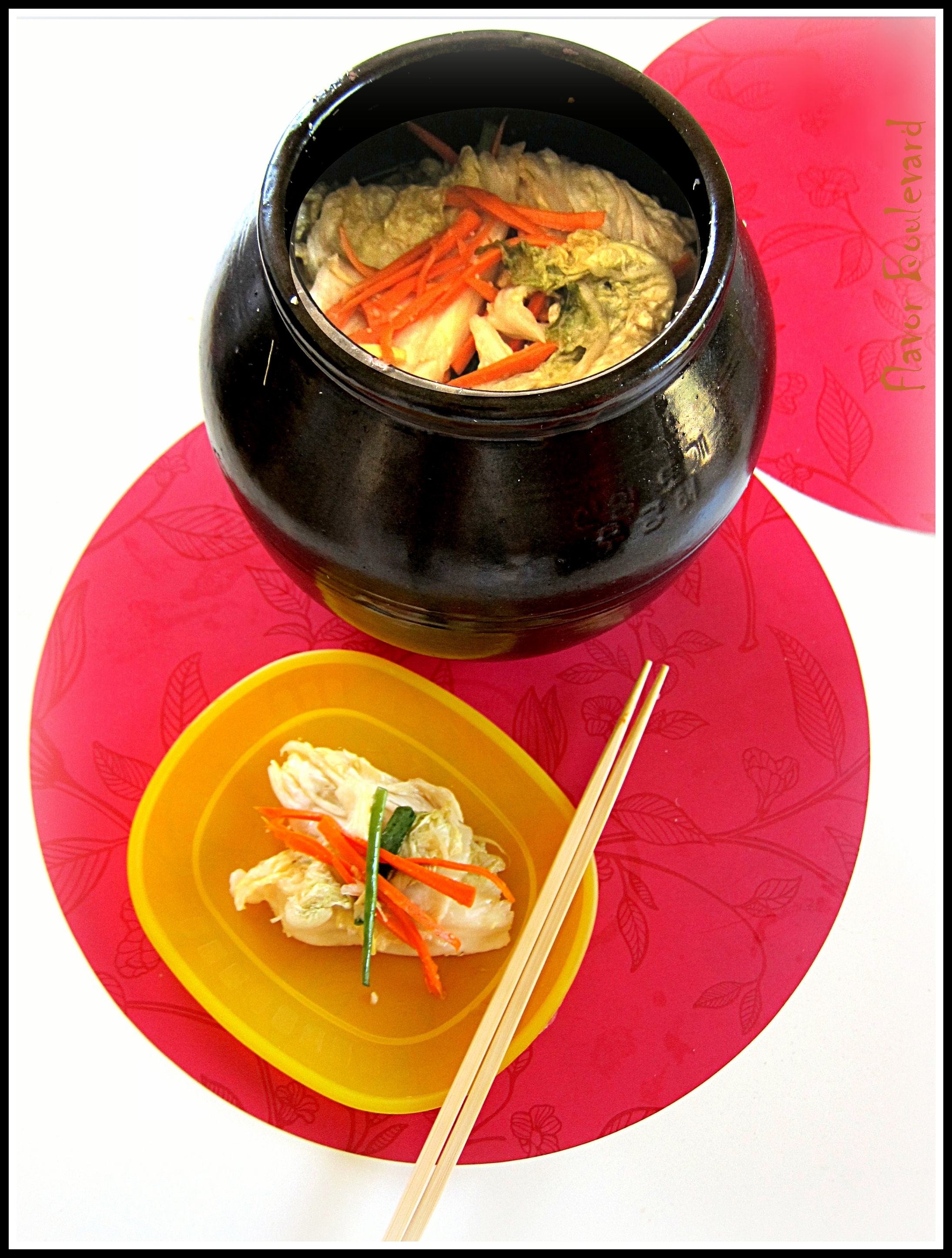
Open the jar we did. Saw some white stuff on the top layer that initially worried us but turned out to be just bits of ground garlic. Off we scraped them anyway, and to check the pickle juice that heavy jar we tilted. Little Mom, who more than anyone I know carrots and bean sprouts and bokchoy pickled has, to me revealed that if the juice is cloudy, the smell “sour in a bad way” and the cabbage disintegrating, into the trash go the kimchi must. But clear is the juice, garlicky and sour in a good way the smell, and crunchy the cabbage. Few moments in life there are when I feel so happy that I get quiet for fear of having mistaken. This is one of those. Followed by a high five and a hug with Kristen.

And yes, being someone who hardly ever cooks then succeeding at making kimchi on first try will make you speak like Yoda. On our side the Force is today.


Okay, so we tried to follow Dave Chang’s recipe in Lucky Peach #2, but we bought a head of napa cabbage big enough to hatch a T-Rex, so we scaled things up a tad (although Chang didn’t specify how heavy “a head” of cabbage weighed).

White Napa Cabbage (Baechu) Kimchi (white because it’s not red – no chili massacre)

– 1 head of napa cabbage (our receipt said 1 lb, but I could’ve sworn it really didn’t feel like 1 lb, more like 3)
– 1 bulb of garlic (~15 cloves)
– 2-inch piece peeled ginger (to puree)
– Another 2-inch piece peeled ginger – julienne this one
– 3/2 cups corn syrup
– 4 tbs salt
– 3 tbs sugar
– 1/2 cup soy sauce
– 1/2 cup rice vinegar
– 2 carrots, julienned
– 6 scallions, cut into 2-inch pieces

Follow our 9 steps to a jar of crunchy, sour, fresh kimchi-like napa cabbage! 😉


Bonus Recipe: KIMCHI CABBAGE SALAD
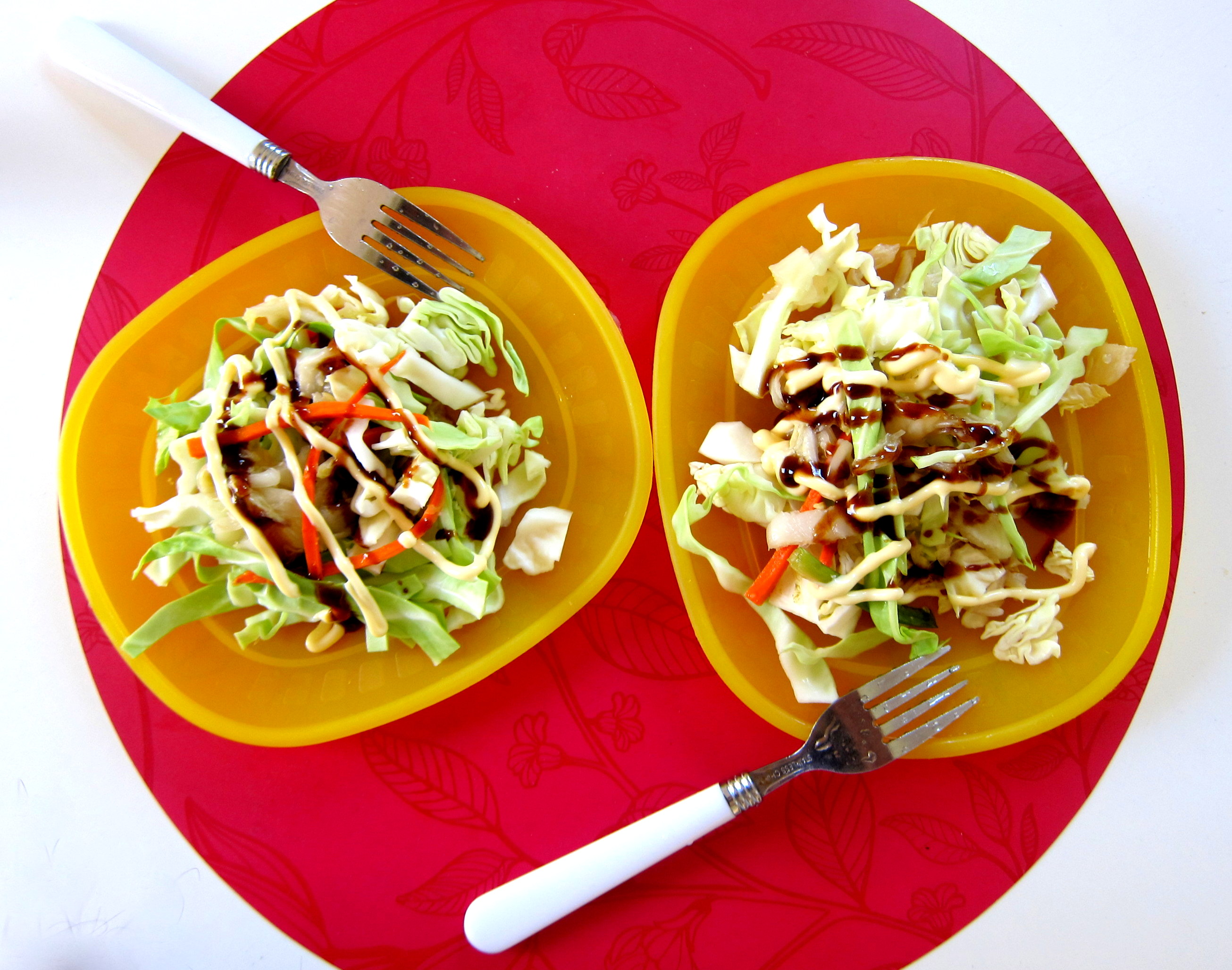
Julienne cabbage. Slice up baechu kimchi. Mix. Garnish with Kewpie Mayonnaise, salt and okonomiyaki sauce. Nom.

Why okonomiyaki sauce? More on that later.

Tags:

Little Cafe Du Bois in Kingwood

July 06, 2012 By: Mai Truong Category: French, Houston


Little Mom likes Houston because it’s big, I’ve grown to like Berkeley because it’s so tiny I can get around without a car. Little Mom likes our big garden where she can grow 20 trees and who knows how many rose bushes, I’m content with my little dried-plum-container-turned-flower-pot in which I grow my onion. Point is, Little Mom likes big things, and I, well, sometimes like and most of the time don’t mind small things. But as often as she likes big restaurants, Little Mom likes little Cafe Du Bois in Kingwood.


It makes me feel better than if I had liked Cafe Du Bois myself. The joy when you pick out a place and your company likes it, the more important the company to you the bigger the joy, and to top that with a company of people with sensitive, rarely pleased tastebuds, it feels like winning the lottery. And here my mom suggested that we should go to Cafe Du Bois again.


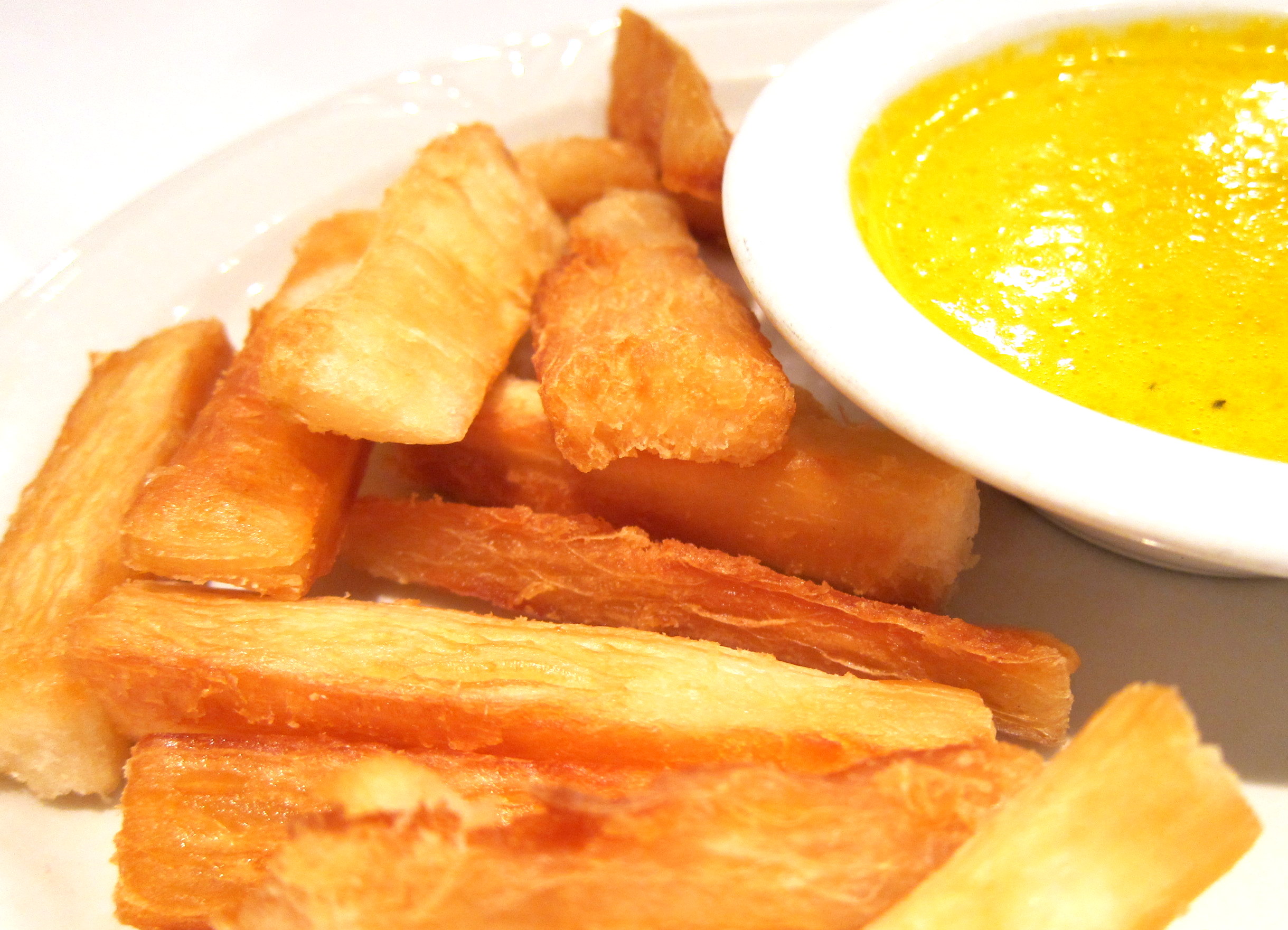
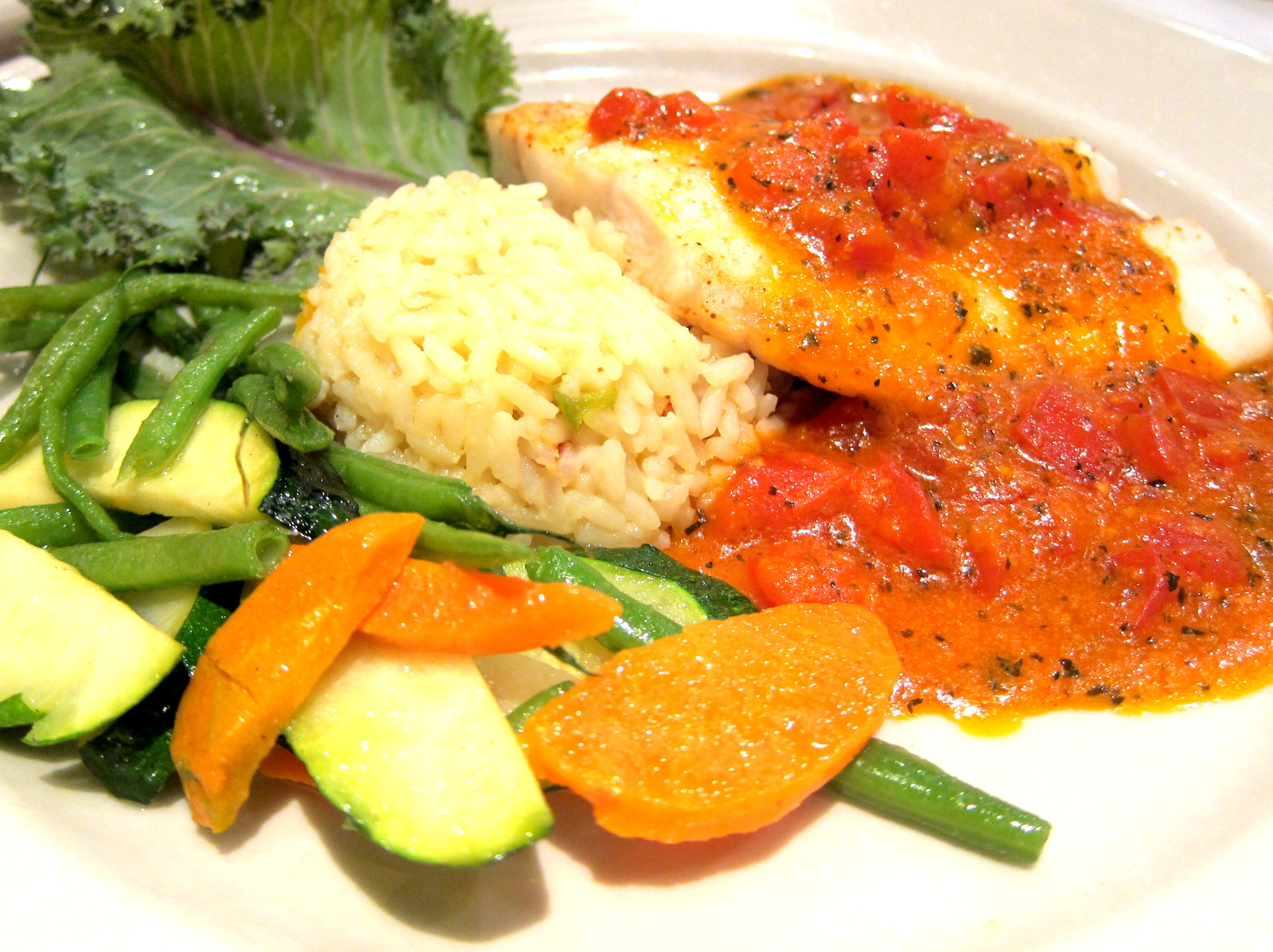
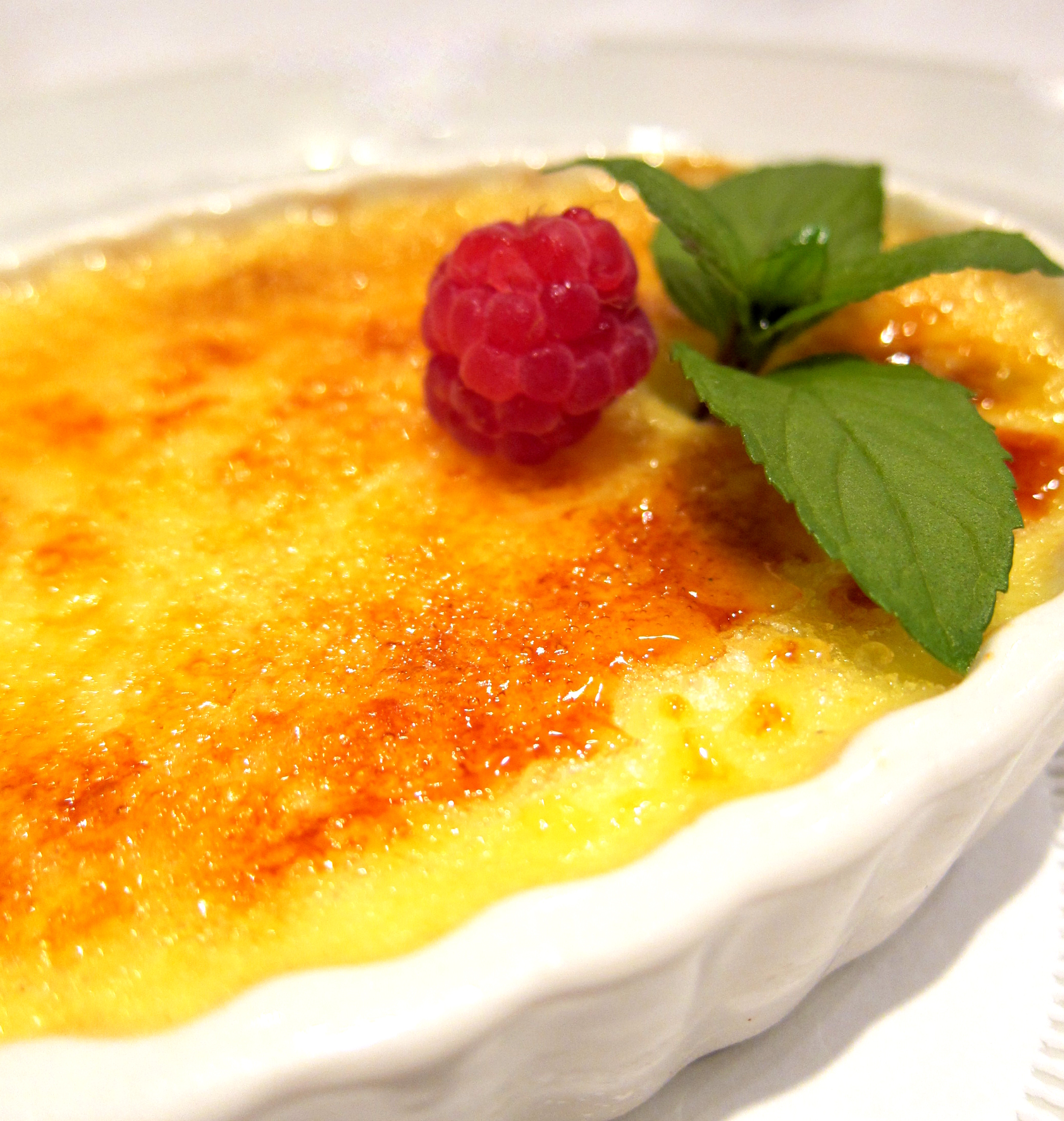
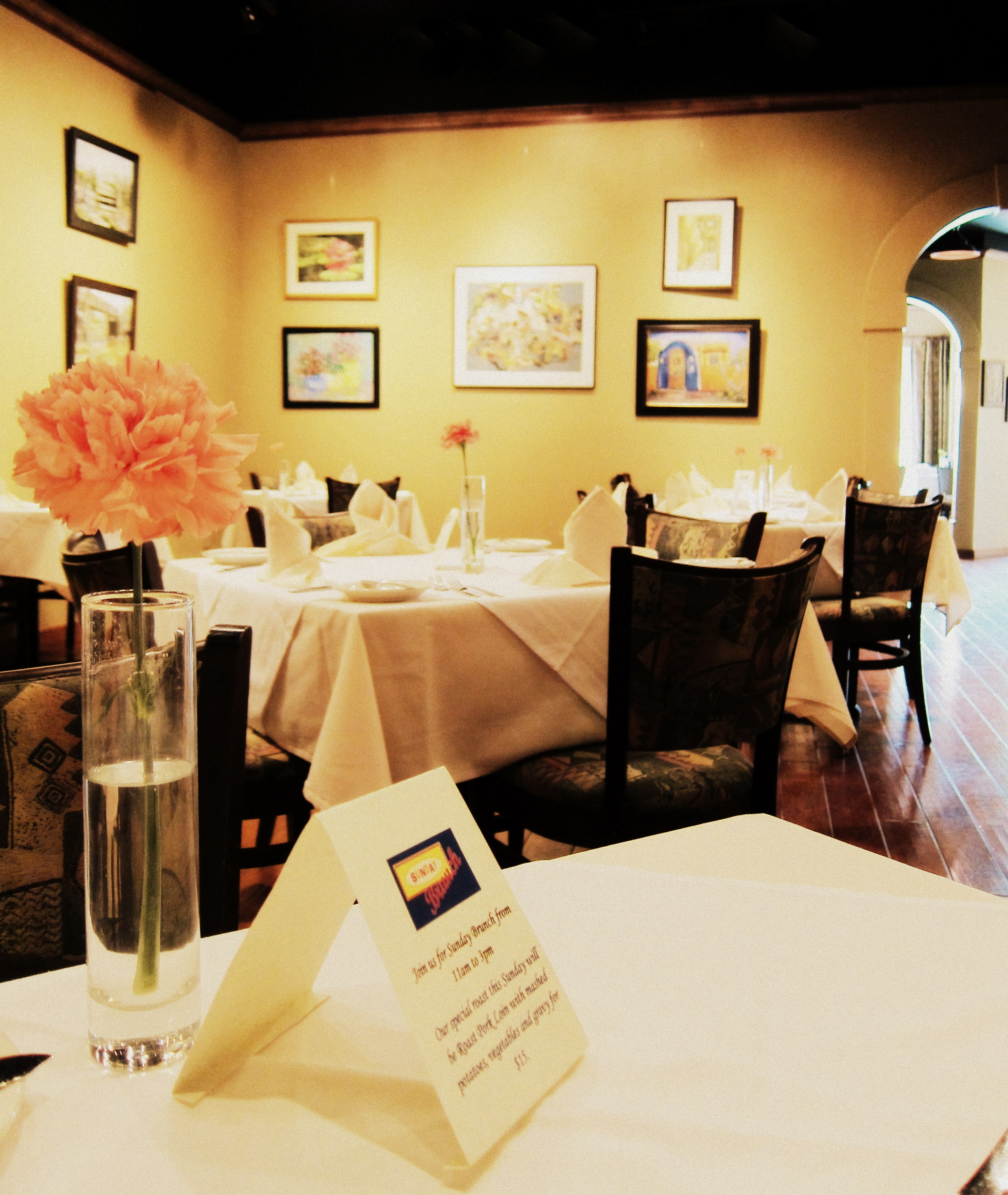
She likes it for the roasted red snapper on rice with a light cream and tomato basil sauce, for being a mere 10 minutes from our house, for the slow, peaceful air of a little French restaurant way in the back of Kingwood Town Center – two old men finished eating before us, us, and another old man who was about to get his order after sipping wine for 30 minutes as we were waiting for our check seemed to be the only customers at lunch that Sunday. The carrot sauce was not too impressive, but she likes the fried yucca. She likes some of many paintings for sale on the walls. The bread was great. She likes the peach carnations on the white table cloths. She loves the creme brulee.


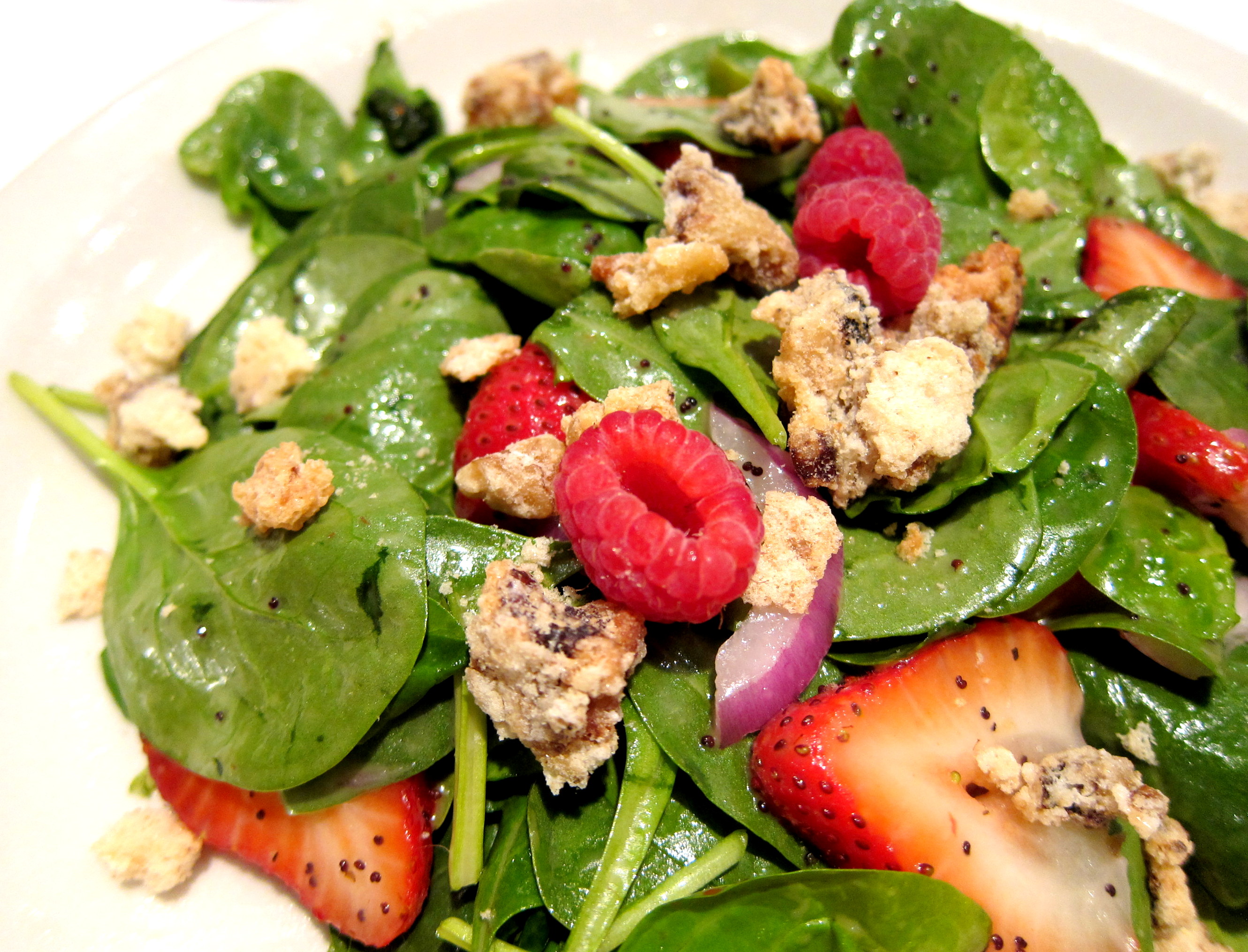
I remember the spinach and strawberry salad being a hair too sweet, the crab cake sandwich a bit dry, the shrimp primavera pretty cheesy. But you know what, Little Mom’s red snapper was good. So I like Cafe Du Bois.

Address: Cafe Du Bois
2845A Town Center Circle West
(Kingwood Town Center)
Kingwood, Texas 77339
(281) 360-2530

Cheap eats at Koreana

July 05, 2012 By: Mai Truong Category: California - The Bay Area, Comfort food, Korean, savory snacks


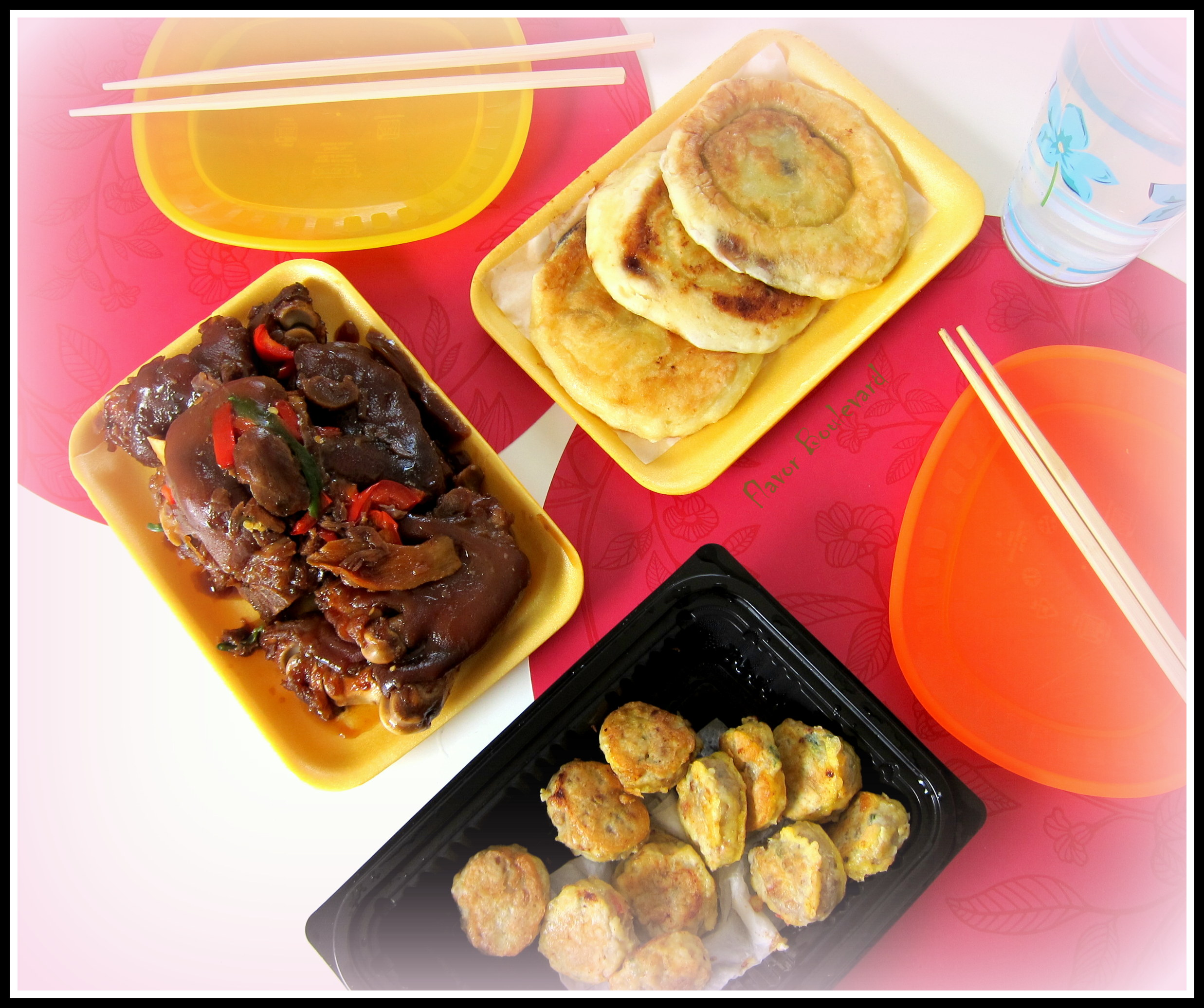
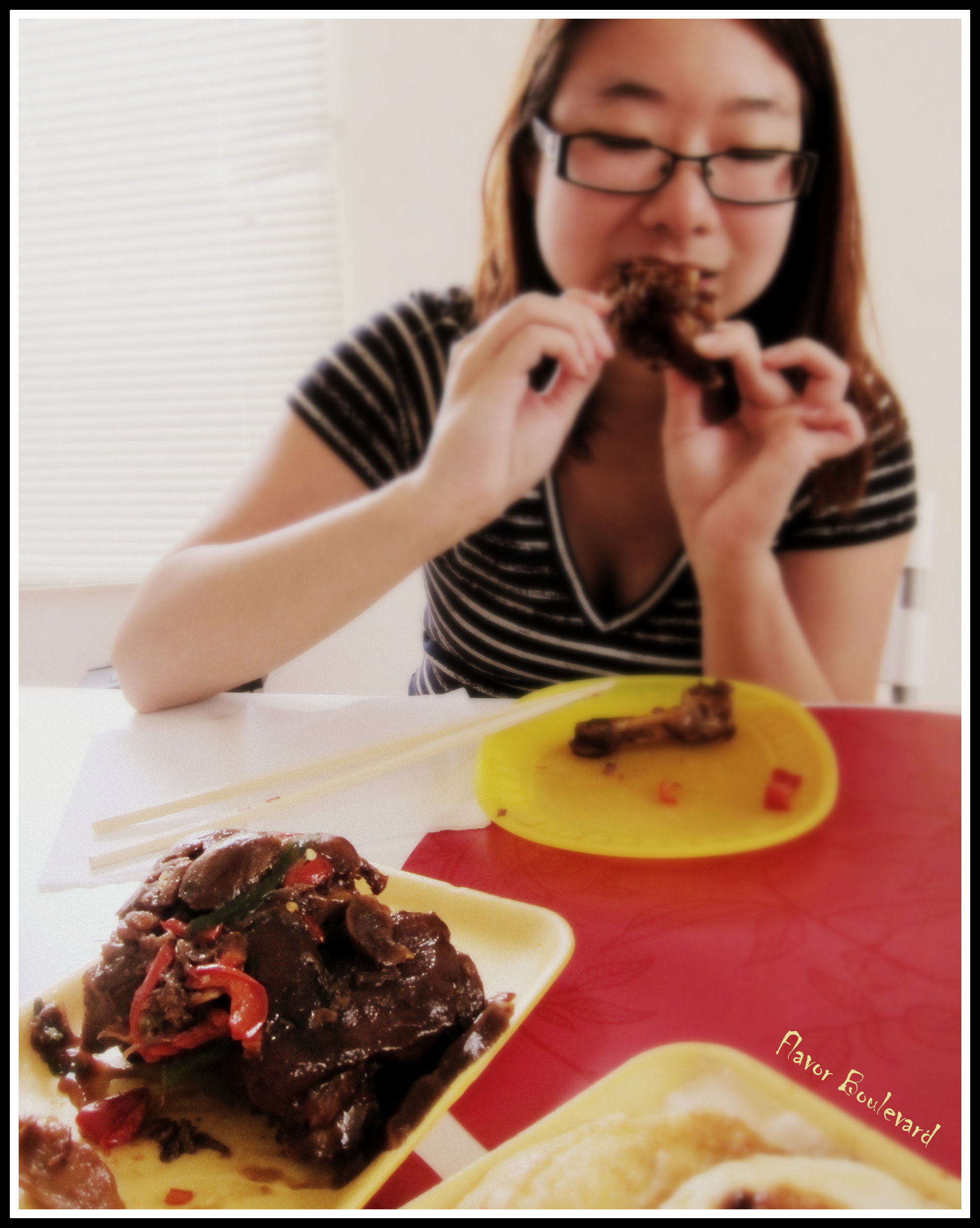
Put me next to a pig foot and I turn into a total nut case. But boy, these chunkies, sweet, salty, chewy, just a little spicy… I cleaned the bones until they were white.


A feeble attempt at including some starch to our lunch: ground beef and pork coins covered in batter and fried.

Dessert: ho tteok (호떡) – chewy sweet pancake with some kind of syrup or melted brown sugar filling, and the best part? They’re not too sweet!

Ready-to-go lunch for two: ~$15
Address: Koreana Plaza
2370 Telegraph Avenue
Oakland, CA 94612
(510) 986-1234

Kitchen hour: Make White Baechu Kimchi

July 01, 2012 By: Mai Truong Category: Korean, RECIPES, Vegan


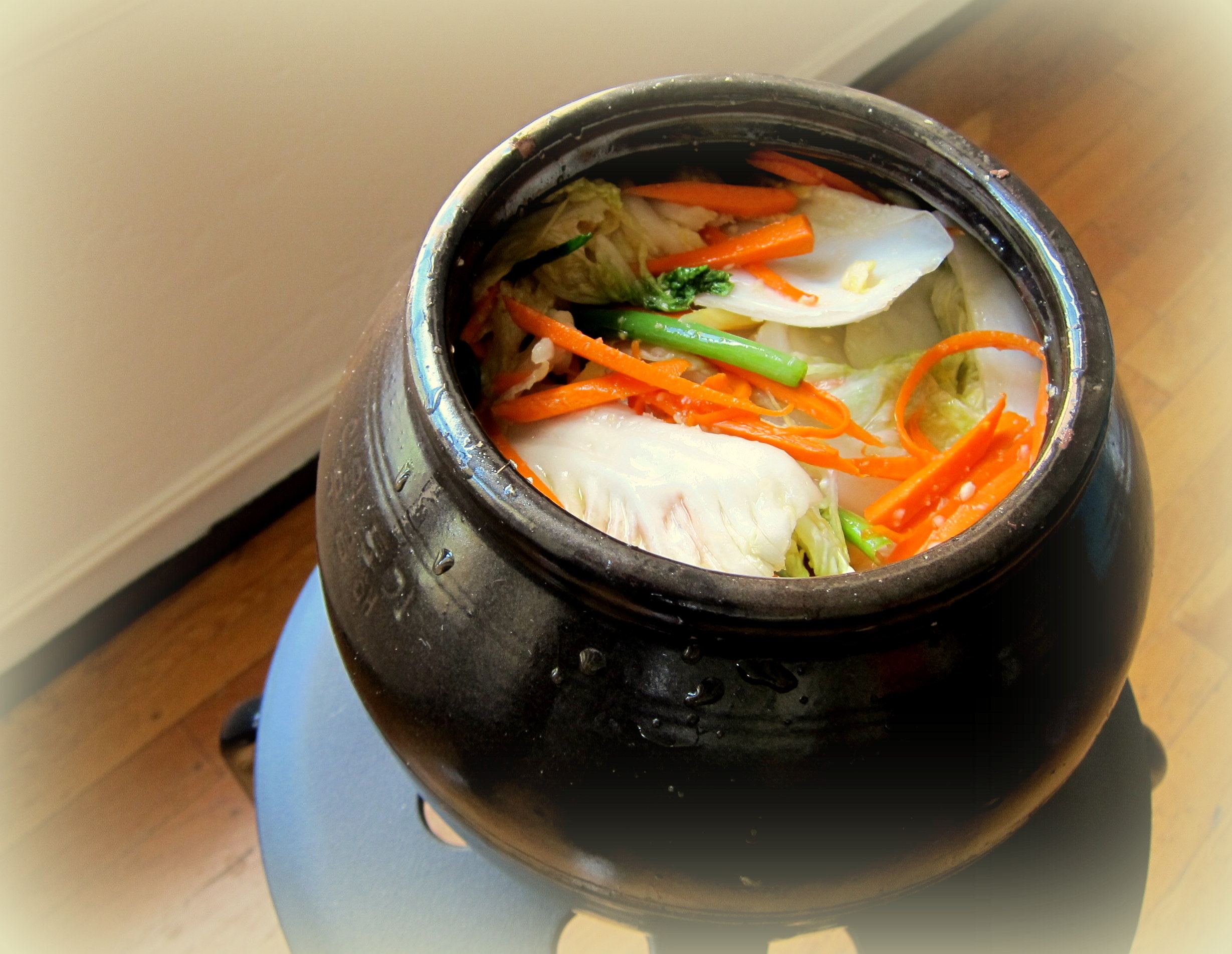
Yesterday is momentous. Here we are, making kimchi. Is that a big deal? Yes. There’s a joke that if you’re gonna get married into a Korean family you’d better learn how to make kimchi. It’s just pickled vegetables, but it has an entire nation behind its back (and a pretty proud one at that), so you can’t mess with it and expect something good to happen. So here we are, jotting down the recipe from Lucky Peach Issue 2, going to Koreana, buying a clay jar to show that we mean business. Glass jars are so… see-through? (And no, there’s no Korean wedding that I know of… for now. Maybe Kristen will shoot me an invitation to her big day next month with Park Hyunbae and now she’s just using the delicious drama Kimchi Family as an excuse, and I’m her Guinea pig. :-D)

But yeah, for now, Kimchi Family is the main reason to our story. It’s a Korean food drama, and it’s delicious. Not only do they show tasty pictures of kimchi glistering and steaming under the sun beam, they make food making seem peaceful! It’s not like Food Network competition stuff where all you see are burly husky men (and unfortunately, women) with glowing red face running like mad in the kitchen with a clock ticking to death, a host rushing out 300 words per minute, knives and flames flaring up everywhere. Nah, Kimchi Family shows two sisters gently mixing and stuffing kimchi into jars, telling stories in their gentle voice and ending their scene always with a gentle smile. Between them and the competition chefs, we think they look cooler. So we bought a clay jar to make kimchi.

DAY 1
Step 1: Wash the clay jar with salt and water, wipe dry. Actually, we didn’t do Step 1 until after we finished Step 6, but anyway.


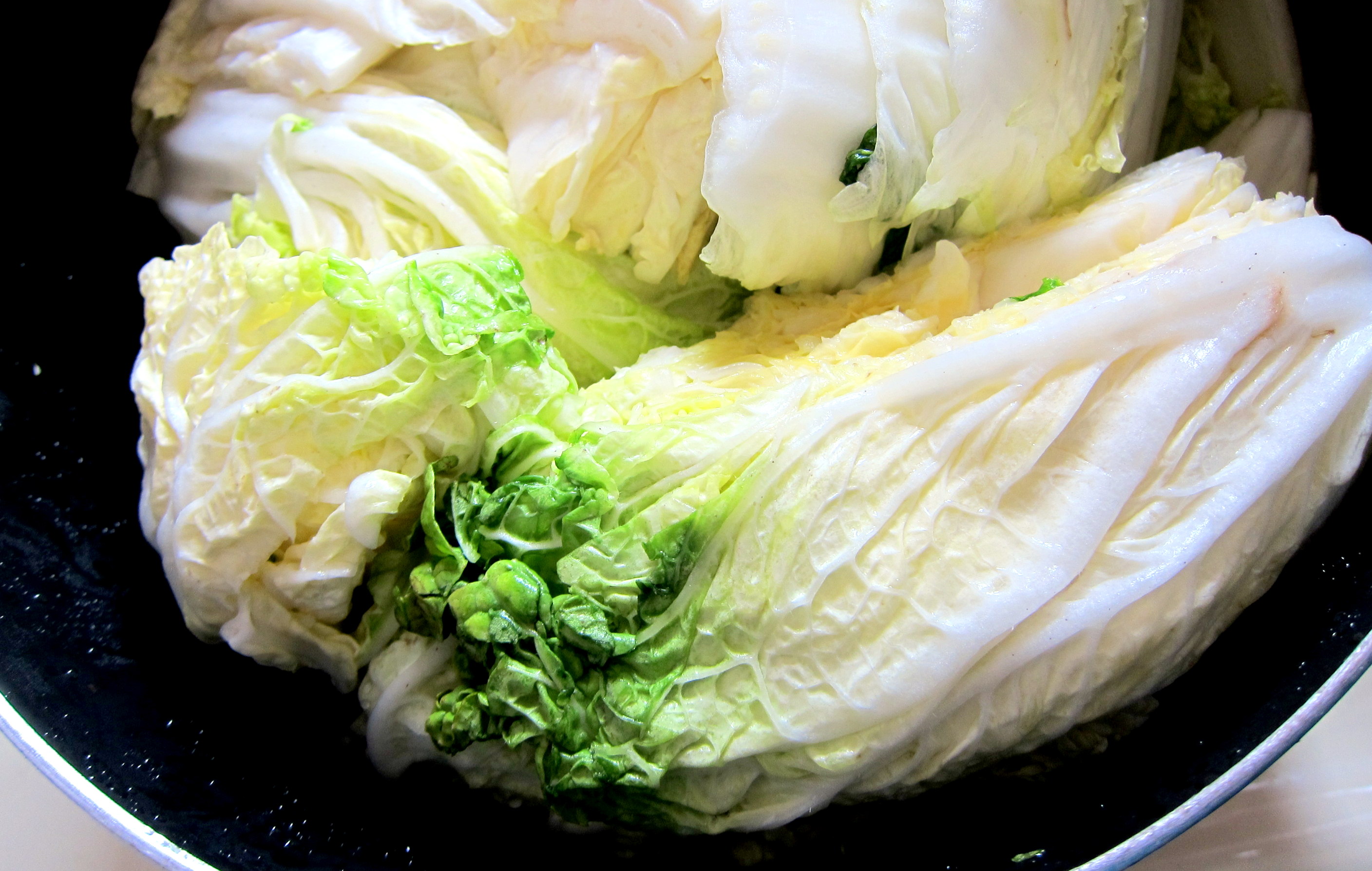
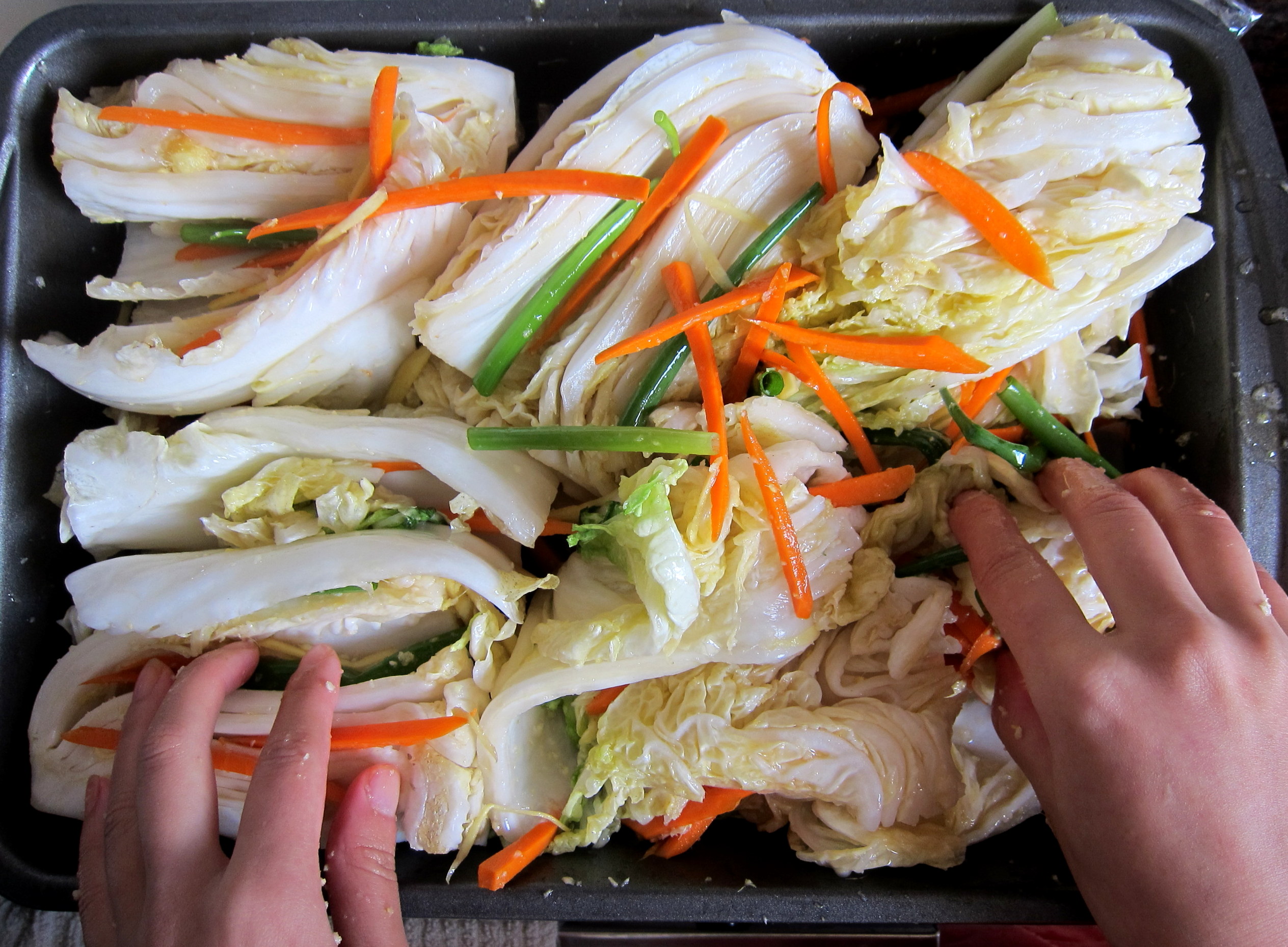
Step 2: Wash, peel off funny-looking leaves from the napa cabbage. Cut it up and mix the parts with salt and sugar. Let the bundle sleep in the fridge overnight. (How should you cut it up? Dave Chang said in his Lucky Peach recipe to cut into 4 quarters length-wise, then into 2-inch pieces, but his recipe calls for the oh-so-American glass jar. The movies usually show grandmas stuffing chili sauce in between the leaves of the whole cabbage, so romantically we guess we shouldn’t even cut it up, but we chose the mid-ground: 4 quarters length-wise, then halve them, so 8 pieces total.)

DAY 2


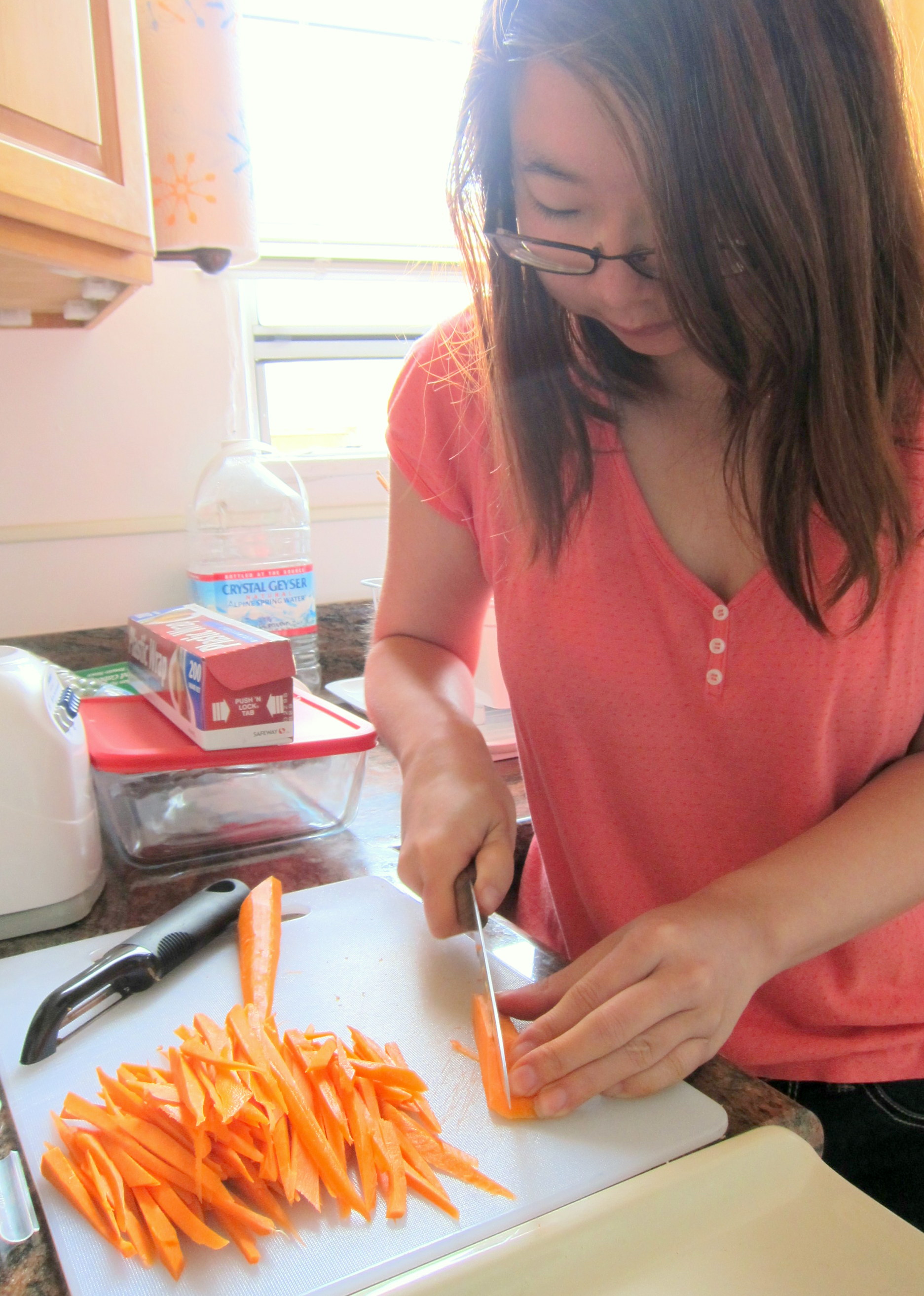
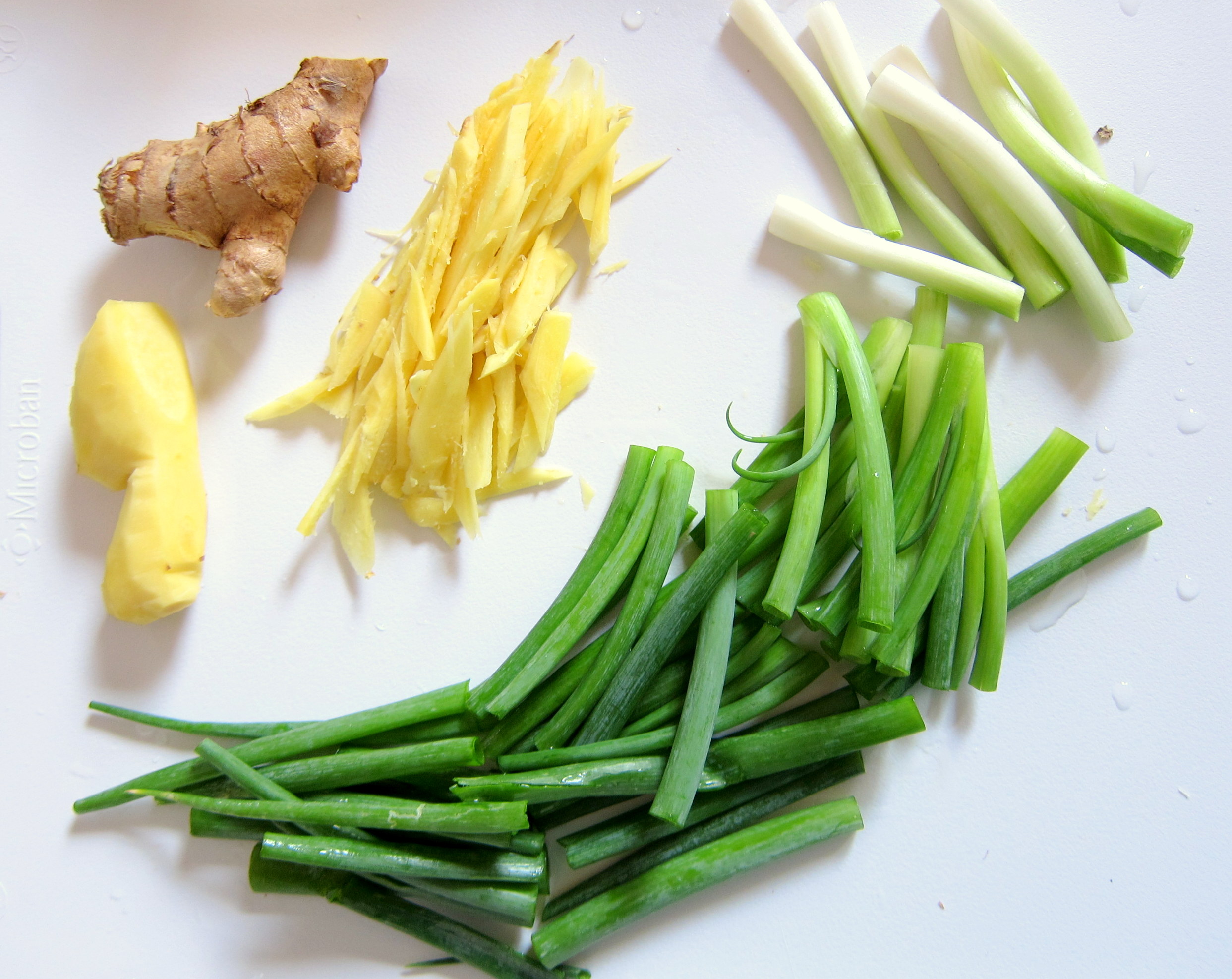
Step 3: Julienne carrots, julienne ginger, cut green onion into 2-inch-long sticks.
Step 4: In a juicer, blend together garlic, ginger, and corn syrup.
Step 5: Mix garlic-ginger-syrup sauce with soy sauce and vinegar.
Step 6: Drain the napa cabbage from its salty water.


Step 7: Rub the sauce in Step 5 into every crevice of the brined cabbage, mix green onion and carrots for colors.


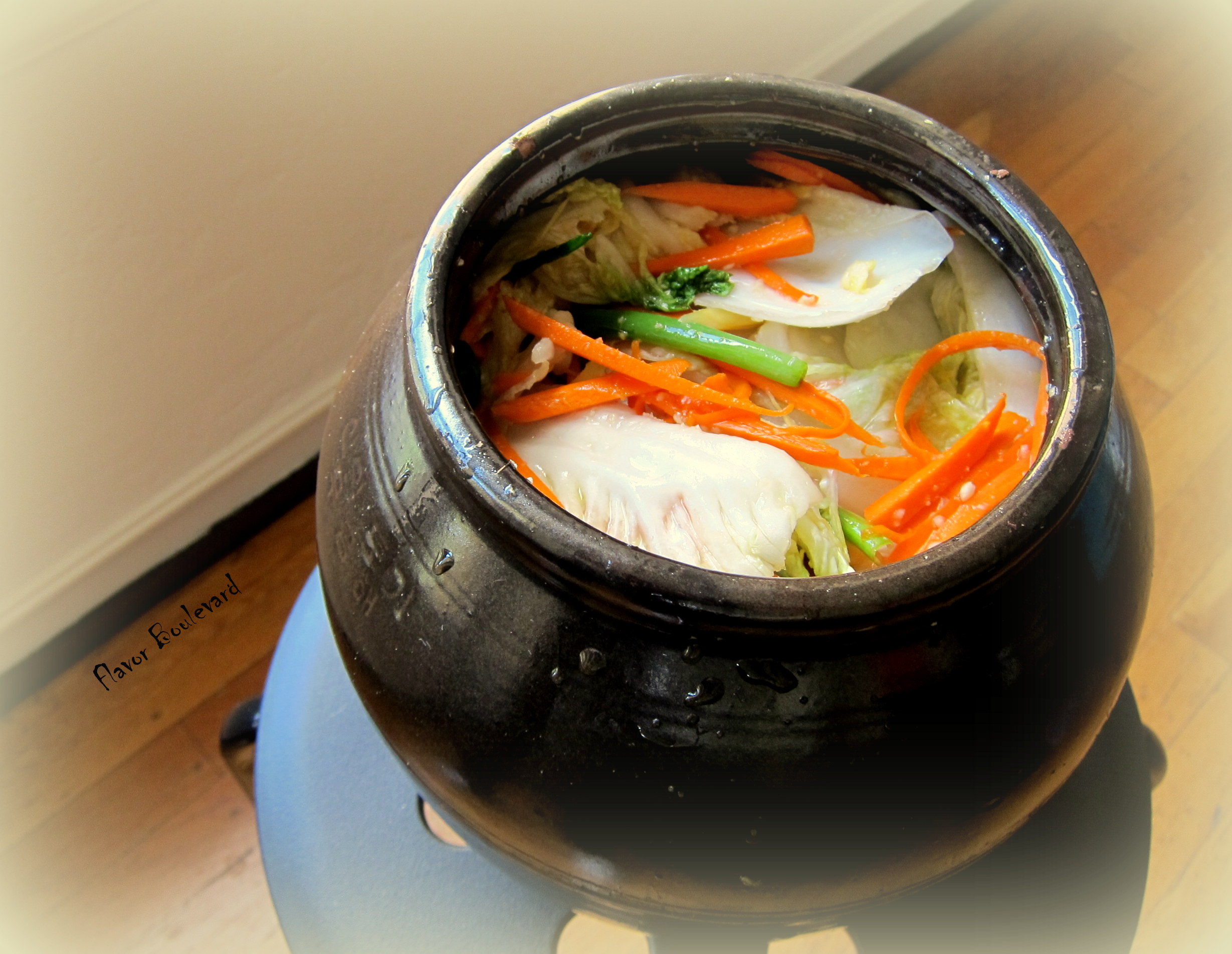
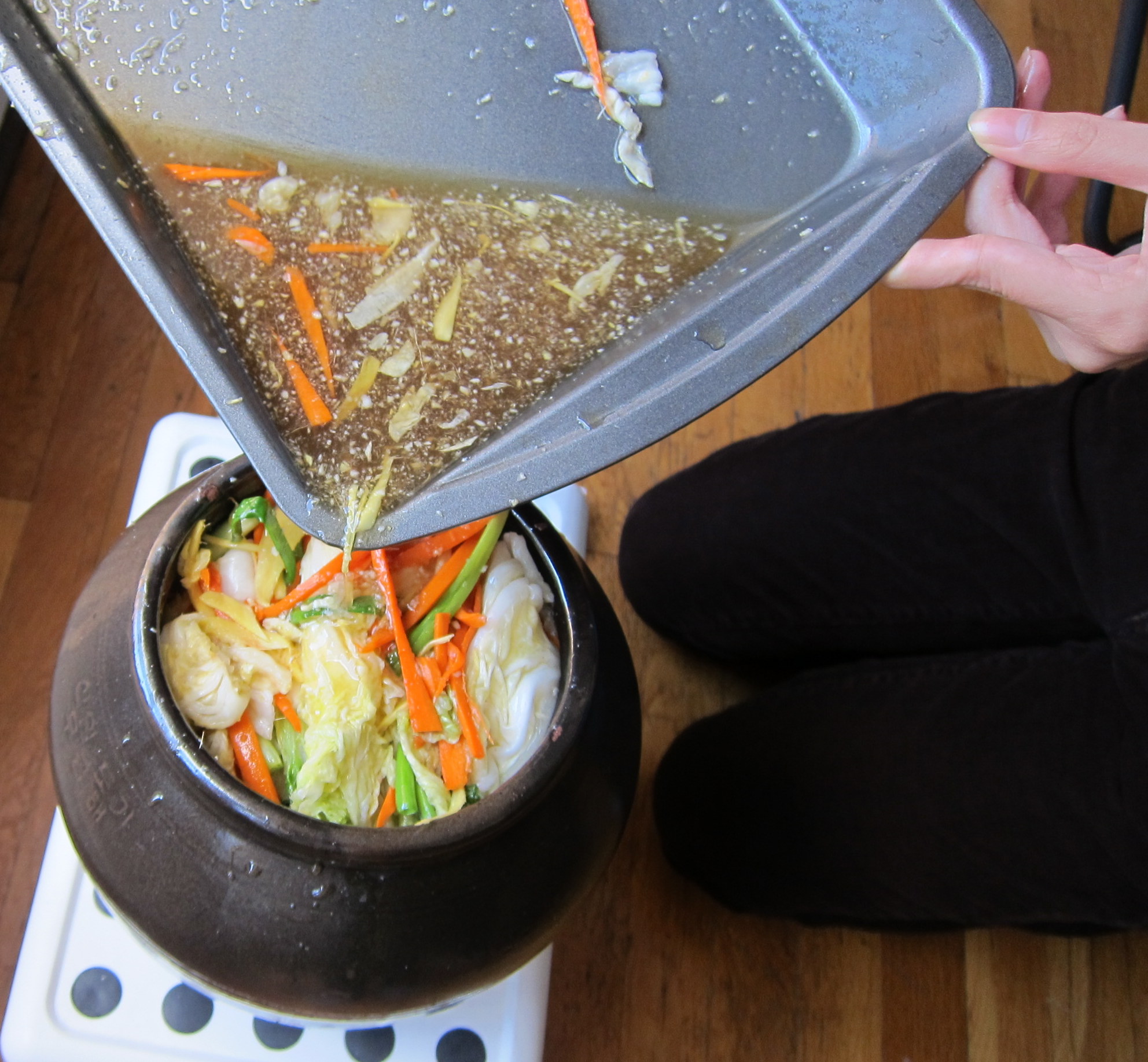
Step 8: Stuff the vegetables into the jar and pour the sauce on top.


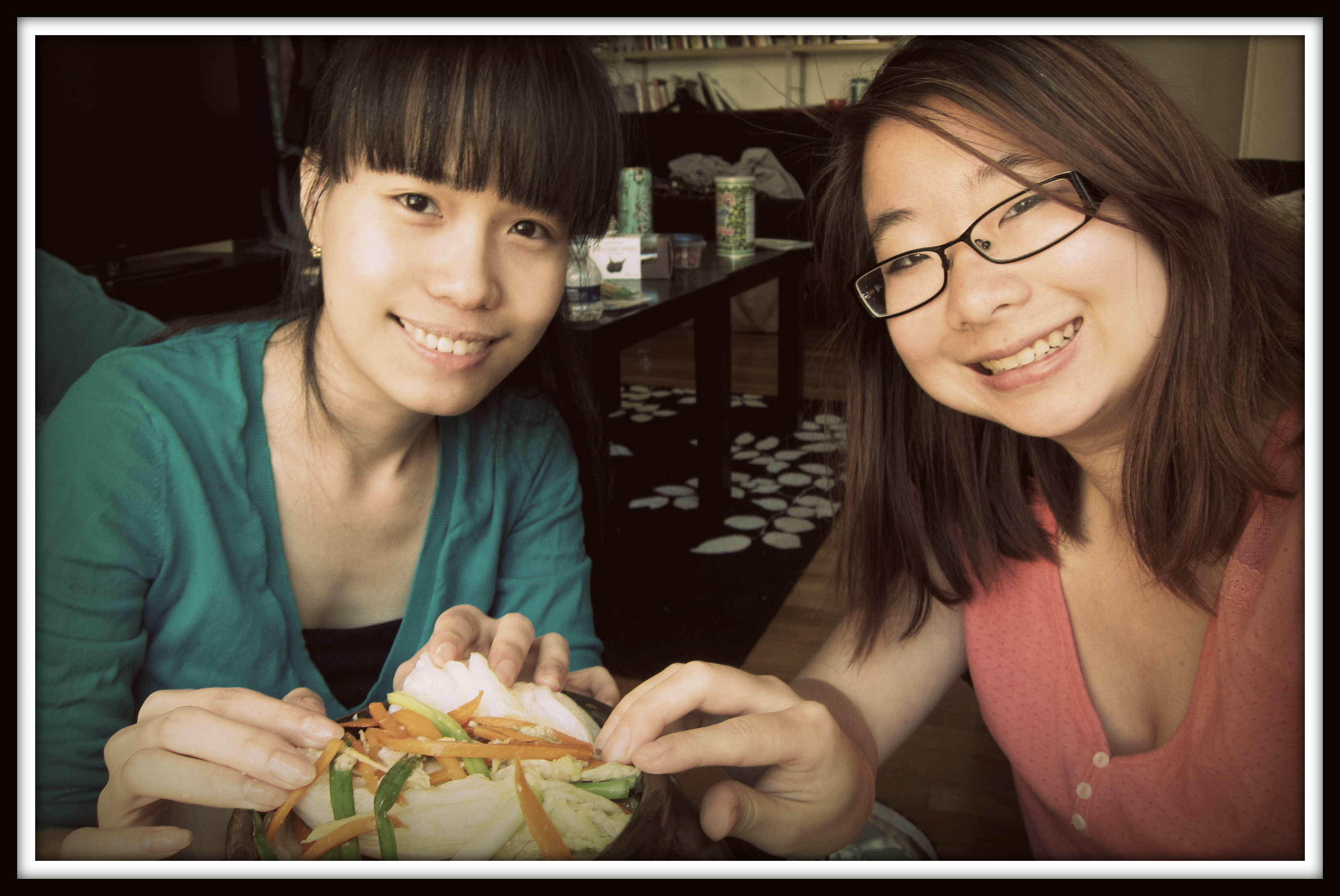
Step 9: Smile and take a picture.

Now let’s wait 7 days and hope that the kimchi will turn out well. If it does, the ingredient list with all precise measurements will be updated. If not, there’ll be some massive cleaning up to do, but you won’t hear about it.

Tags:

The last of June – Gregoire

June 30, 2012 By: Mai Truong Category: California - The Bay Area, French, sandwiches, Vegan


Few Berkeley residents, minus the homeless people (I think), haven’t at least heard of Grégoire. Everyone I’ve talked to has eaten here, even my freshman students. Technically I also have, but only for desserts. Somehow the menu on the days that I looked never struck lightnings on me. I might have been looking on the wrong days. Then I stopped treking this part of town for over 6 months, minus a trip to Imperial Tea Court that turned out somewhat disappointing, which shot me back to Fourth Street. When the whole tea business got serious, I kinda started eating to subsist more than to eat. I stopped actively hunting for special things. I don’t think of restaurants anymore. Chinese fried rice has been a staple for the last 7 days, with intermissions of frozen pizza and ramen. That reminds me, Berkeley Bowl no longer carries Sapporo Ichiban, and I’m mad. Of course, if delicious-sounding food just rolls up to me, I’d take it. Like today, we’re close to Grégoire, and Grégoire (finally) has something that caught my eye.


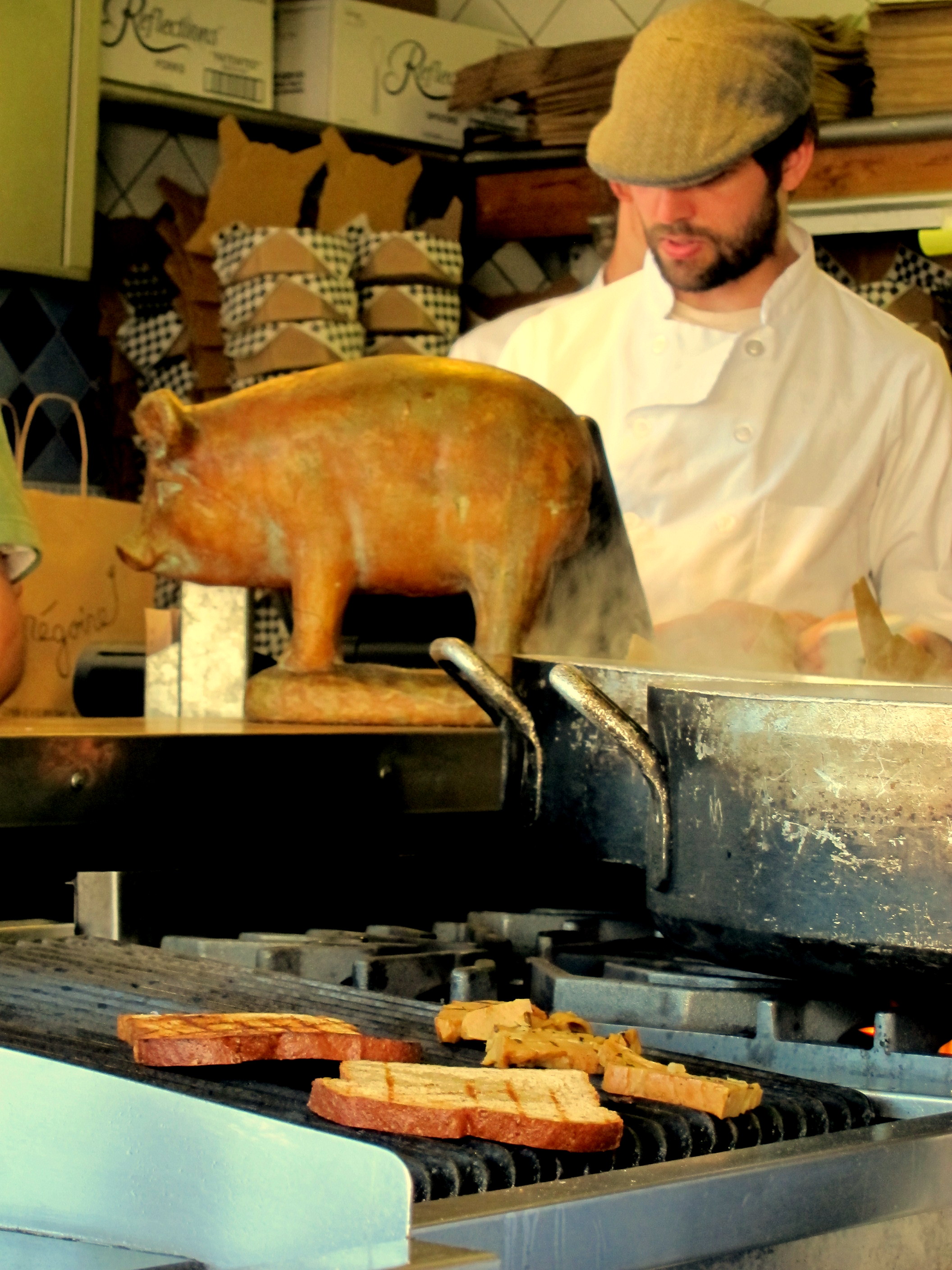
My lunch gleaming on the grill.


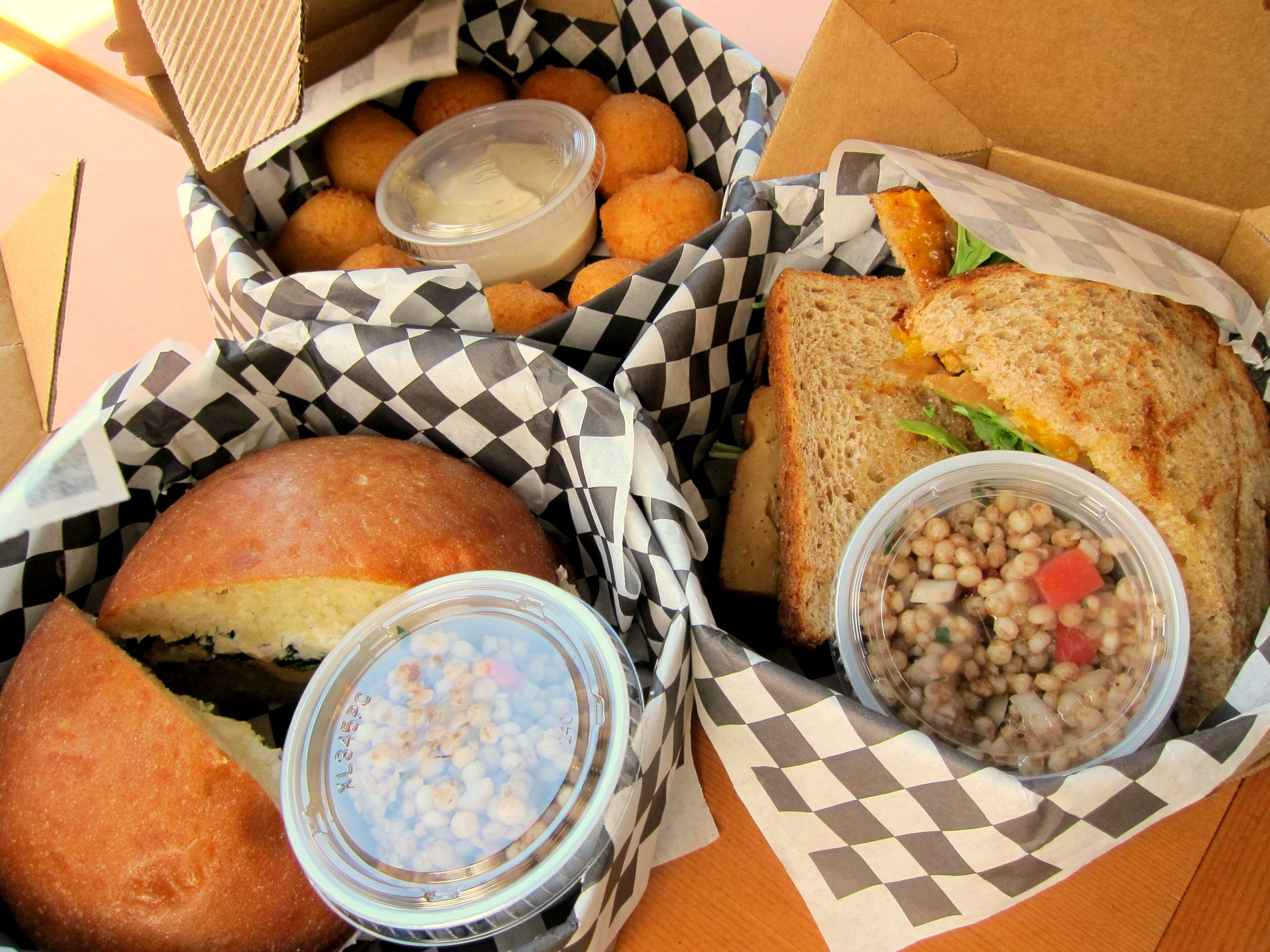
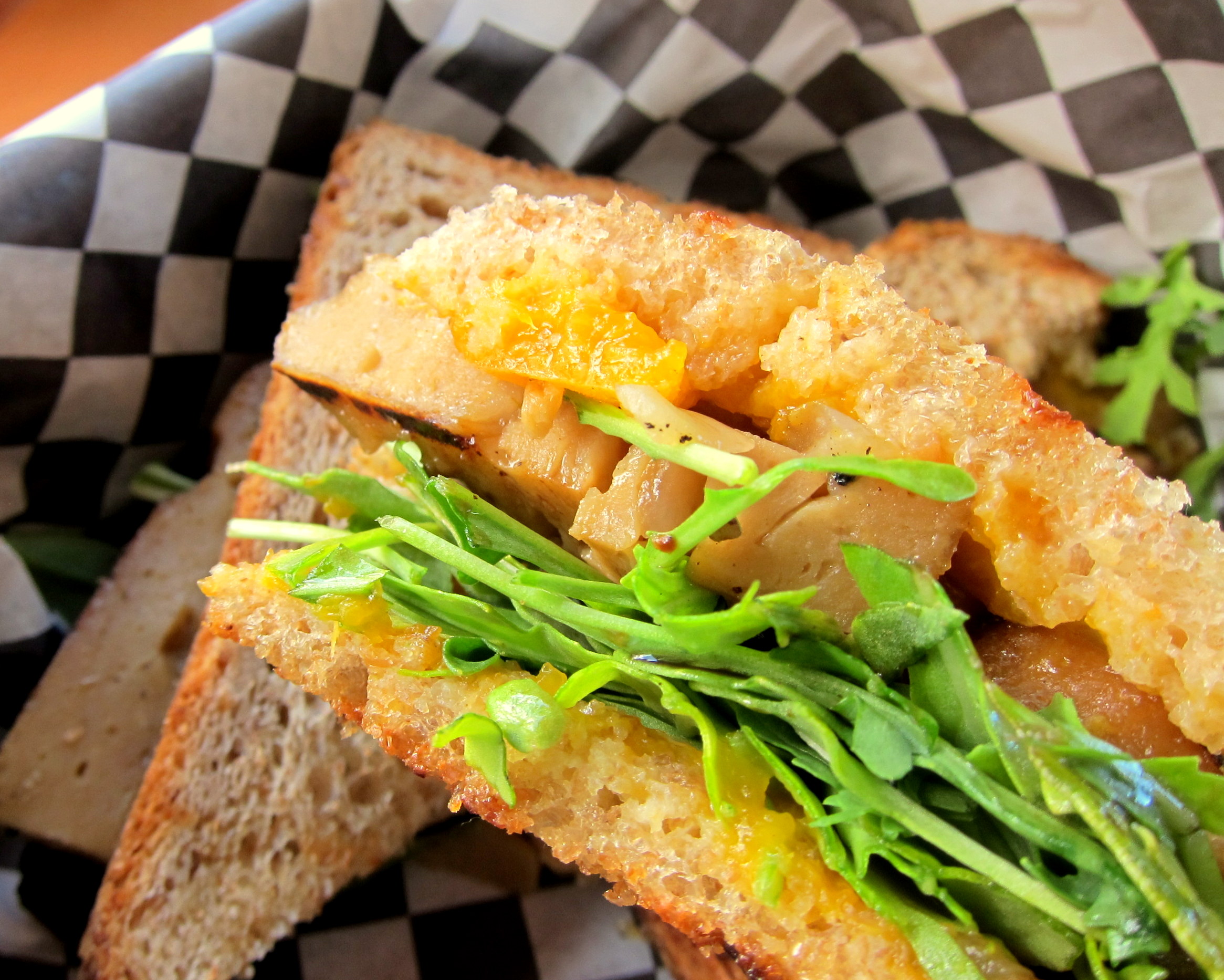
Stephen’s marinated grilled house-made seitan with apricot compote & arugula on grilled wheat bread ($7). Guess I’m attracted to savories with fruits.

The best part is, this month’s menu will be changed tomorrow. Today’s the last day of June. My seitan sandwich and I were destined for each other today.

Address: Grégoire
2109 Cedar Street
Berkeley, CA
(510) 883-1893

Tags: