Flavor Boulevard

We Asians like to talk food.
Subscribe

Archive for the ‘Southern Vietnamese’

Nutty sticky rice

June 14, 2011 By: Mai Truong Category: Comfort food, Houston, One shot, Southern Vietnamese, sticky rice concoctions, Vegan


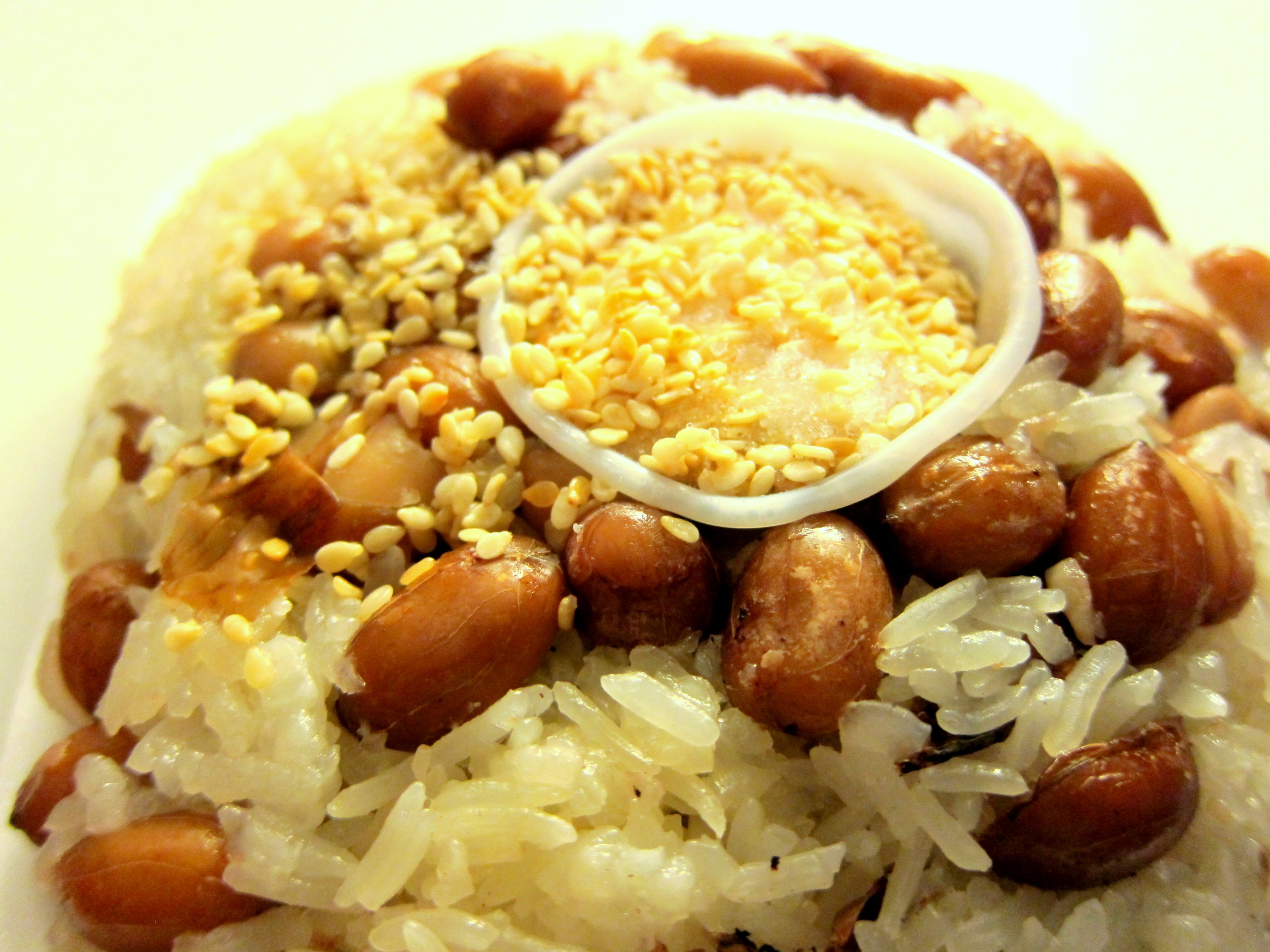
What hits the spot in the morning better than a hot packed handful of sweet sticky rice with muối mè (sesame-sugar-salt mix)? A hot packed handful of sweet sticky rice with soft steamed whole peanuts and muối mè. Xôi đậu – my forbidden childhood love.

$1.50 for a full tummy.

Mom did not want me to eat too much xôi đậu in the past because peanuts are known for producing gas excess.

Address: Alpha Bakery & Deli
11205 Bellaire Boulevard
Houston, TX 77072
(281) 988-5222

Sandwich shop goodies #15 – Bánh quy (turtle mochi)

March 31, 2011 By: Mai Truong Category: Houston, One shot, Southern Vietnamese, sticky rice concoctions, sweet snacks and desserts


Of my two hundred fifty some posts so far, this Sandwich Shop Goodies series brings me the most joy when writing and also takes me the longest time per post. It’s a collection of the bits and pieces that cost next to nothing. You may say why of course, how can a mere grad student afford The Slanted Door, The French Laundry, or our local Chez Panisse et al. Now although my salary certainly factors in my grocery list, the truth is I’ve lost interest in the uptown food scene. It dazzles like fireworks, and also like fireworks, it doesn’t stay. The mixing and matching of the freshest and strangest ingredients has blended so many nationalities into one that it loses culture like a smoothie losing texture. Those fancinesses don’t have a home. Meanwhile, I can spend days googling an obscure street snack and still regret that I haven’t spent more time, because I know that someone somewhere out there has an interesting story surrounding its identity that I haven’t heard. With such food there’s more than what goes into the pot that I can mention. For example, a simple sticky rice treat has made its way into an idiom, no less.


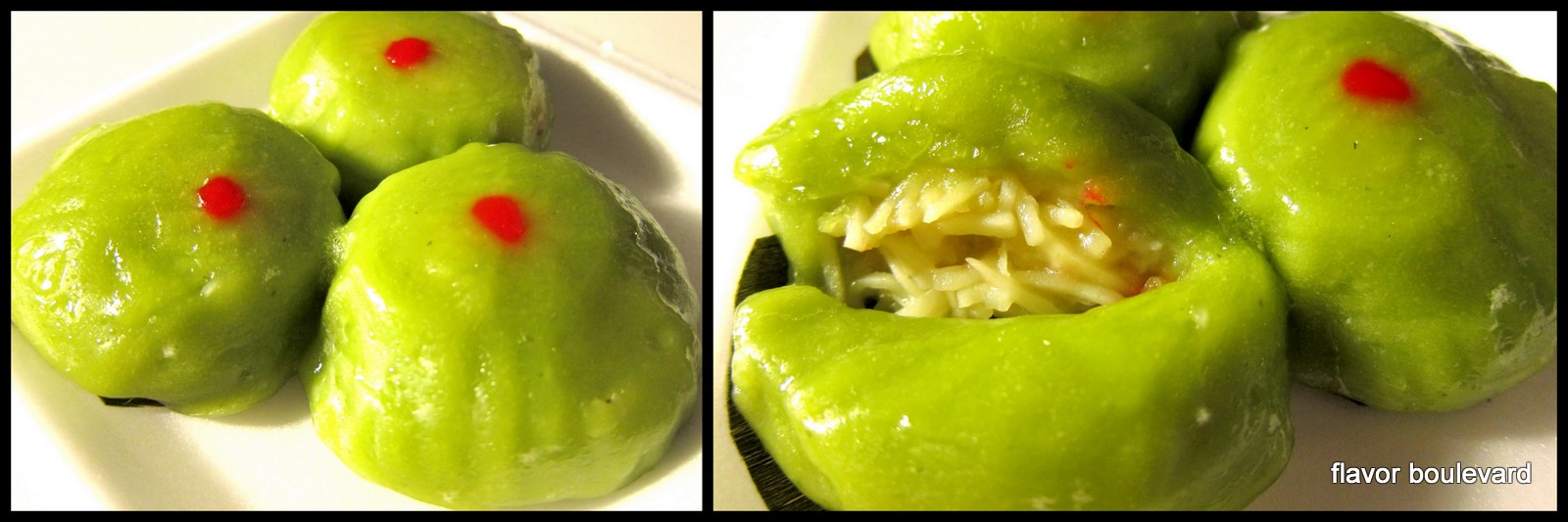
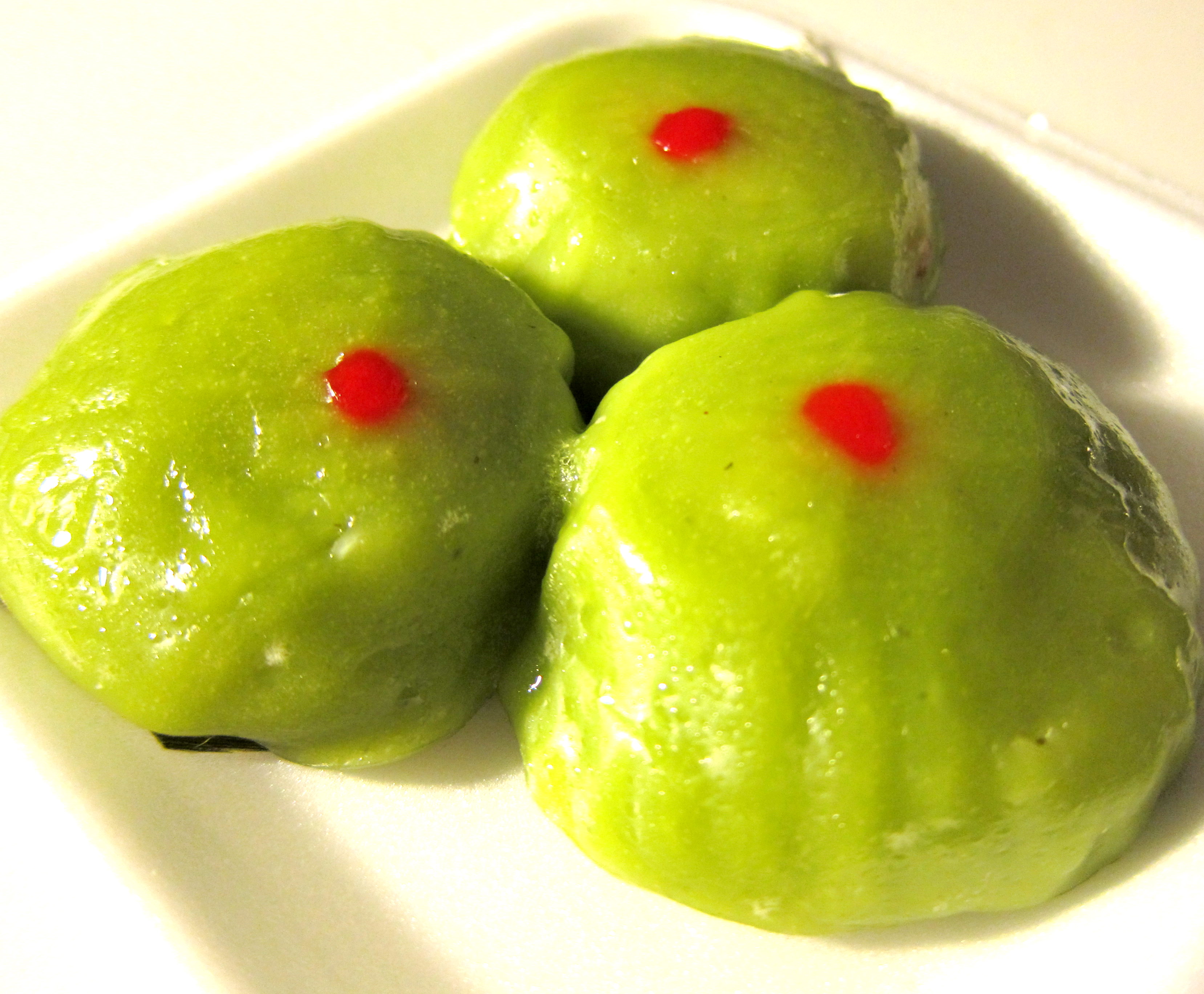
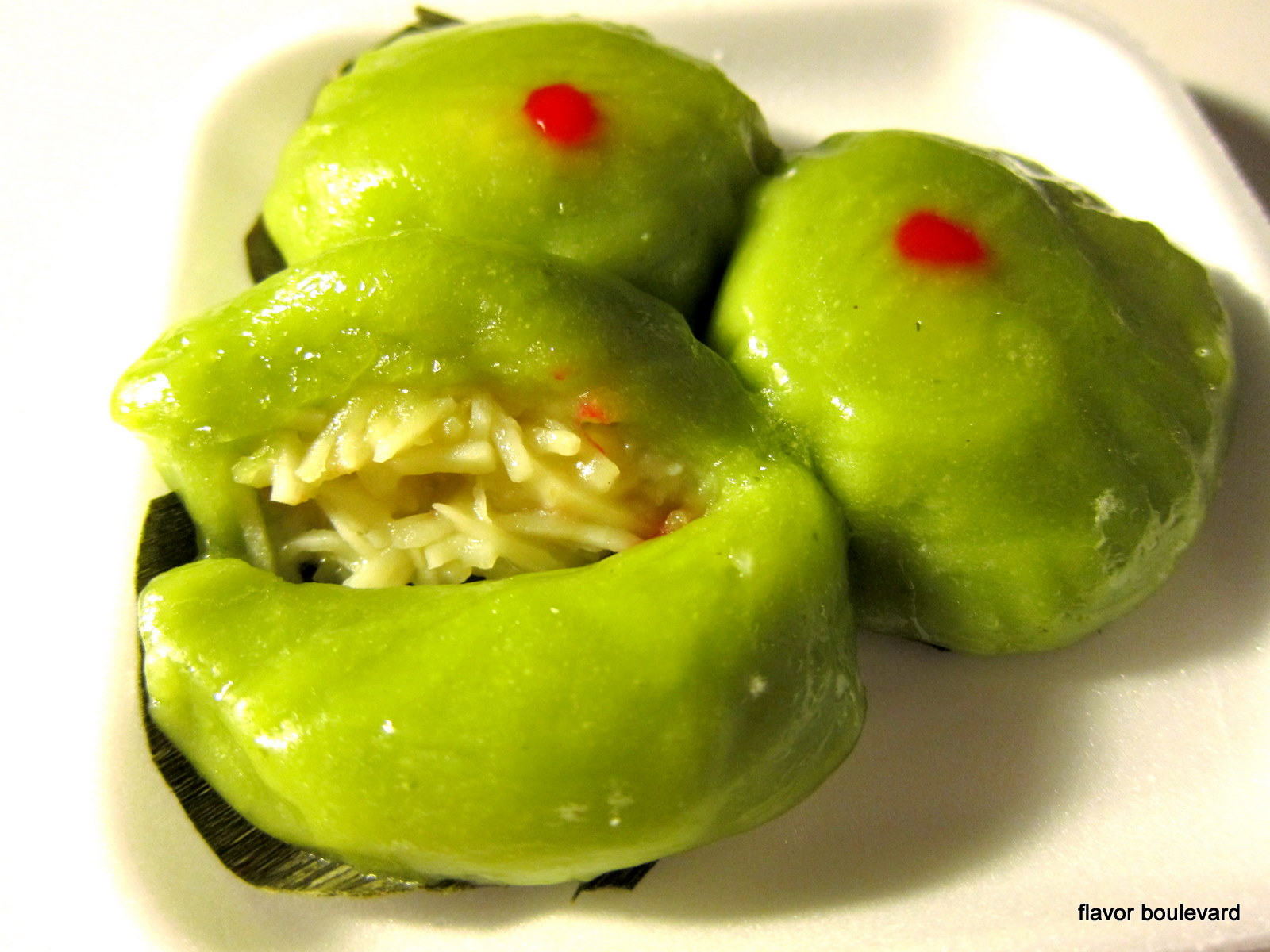
For twenty five years I’ve heard and used the expression “bánh ít trao đi, bánh quy trao lại” (“give bánh ít, get bánh quy” or “you scratch my back and I’ll scratch yours”) in a million occasions, but not once did I know what bánh quy was. At home we call cookies bánh bích-quy (biscuit) and some shorten it to bánh quy, but the biscuit and the bánh ít are too different from each other to be consider equivalents, and it’s reasonable to guess that the idiom came about before the introduction of Western food into Vietnam. So confused I was. Then one day while foraging the pile of snacks at Alpha Bakery, I almost flipped backward as I found a package of three green mochi’s labeled “bánh quy“.

They’re round and flat at the bottom, each placed on a small cut of banana leaf, purposefully shaped like a turtle shell resting on wet grass. If you look closely you can even see some faint crevices near the rim. So there, mystery unveiled: “quy” means “turtle” in Han-Viet, and the banh gets its name from its look.


Content-wise, bánh quy is indeed just a smaller, rounder, flatter version of bánh ít: sticky rice, tapioca starch, salt, sugar, oil, and a sweet filling. Back in the day, the turtles had either a red or a yellow dot to distinguish between coconut and mung bean paste, but it seems these days only the coconut turtles are still around. Each banh is just big enough and tall enough to fit snuggly in a baby’s palm. Two or three adult bites and you suddenly wonder, hey, where did my sugary, chewy soft bun go?


Buy three at the store for $1.50. Also, look for this other type of bánh ít: bánh gai (bánh ít with thorn leaf extract)

Address: Alpha Bakery & Deli (inside Hong Kong City Mall)
11209 Bellaire Blvd # C-02
Houston, TX 77072-2548
(281) 988-5222

Previously on Sandwich Shop Goodies: bánh da lợn (pig skin pie)

This post is submitted to Delicious Vietnam #12, April edition, hosted by Anh of A Food’s Lover Journey. I’m so looking forward to the roundup this month!

Candied cà-na (white canarium or Chinese olive)

March 12, 2011 By: Mai Truong Category: California - The Bay Area, Fruits, One shot, Southern Vietnamese, sweet snacks and desserts, The more interesting


It’s not the black stuff they throw on your pizzas or the green thing they toothpick on your sandwich. How many of us city kids have tasted the tartness with a tiny sweet afterpunch of this Mekong delta fruit? It’s addictive like fresh squeezed orange juice on a summer day. Speaking street tongue, it’s nature’s crack in oblong shape.

Eat ’em fresh with chilipepper salt, or candy them with sugar and heat, it’s how kids down South do it with the cà na they shake off from bushes on the riverbanks. And argue if you may, kids know tasty food. The shape is really the only link cà na has with the Western olive (Olea europaea), though it’s at least two times bigger. Does the name “cà na” mean anything?

“Cà” is tomato, and “na” is the northern word for sweetsop, two totally unrelated species to this ovoid fruit. So “cà na” is not a compound noun. I’m no etymologist but here’s my best guess: “cà na” |kah nah| is a shortened vietnamization of the Thai word “kanachai”, from which cultigen taxonomists derive the the scientific name “canarium”, a genus with about 75 species native to the tropics. The cà na we eat and love from those riverbank bushes belongs to the species Canarium nigrum (black canarium) and Canarium album (white canarium), or “trám đen” and “trám trắng” in pure Vietnamese. Another delta variety is Canarium subulatum, pointy at both ends and sappy like green bananas.

Words on the net claim that cà na‘s acidity is good when you have a cold, drink too much, or wants to lower your weight, thus not so recommended for skinny sticks like me. I’ve never popped a fresh one myself, but this is the most (and only) mouth-watering description I could find on the net (translated from the Vietnamese original):

Every year, in roughly August or September, when the Mekong flushes the paddy fields, the cà na trees bear their first fruits. What could be better than rowing a canoe downstream, then tying it to a cà na trunk base by the riverbank to cast your fishing net, and while waiting, dip a bursting green ripen fruit into chilipepper salt to soak your soul with its wild and clean sweetness?


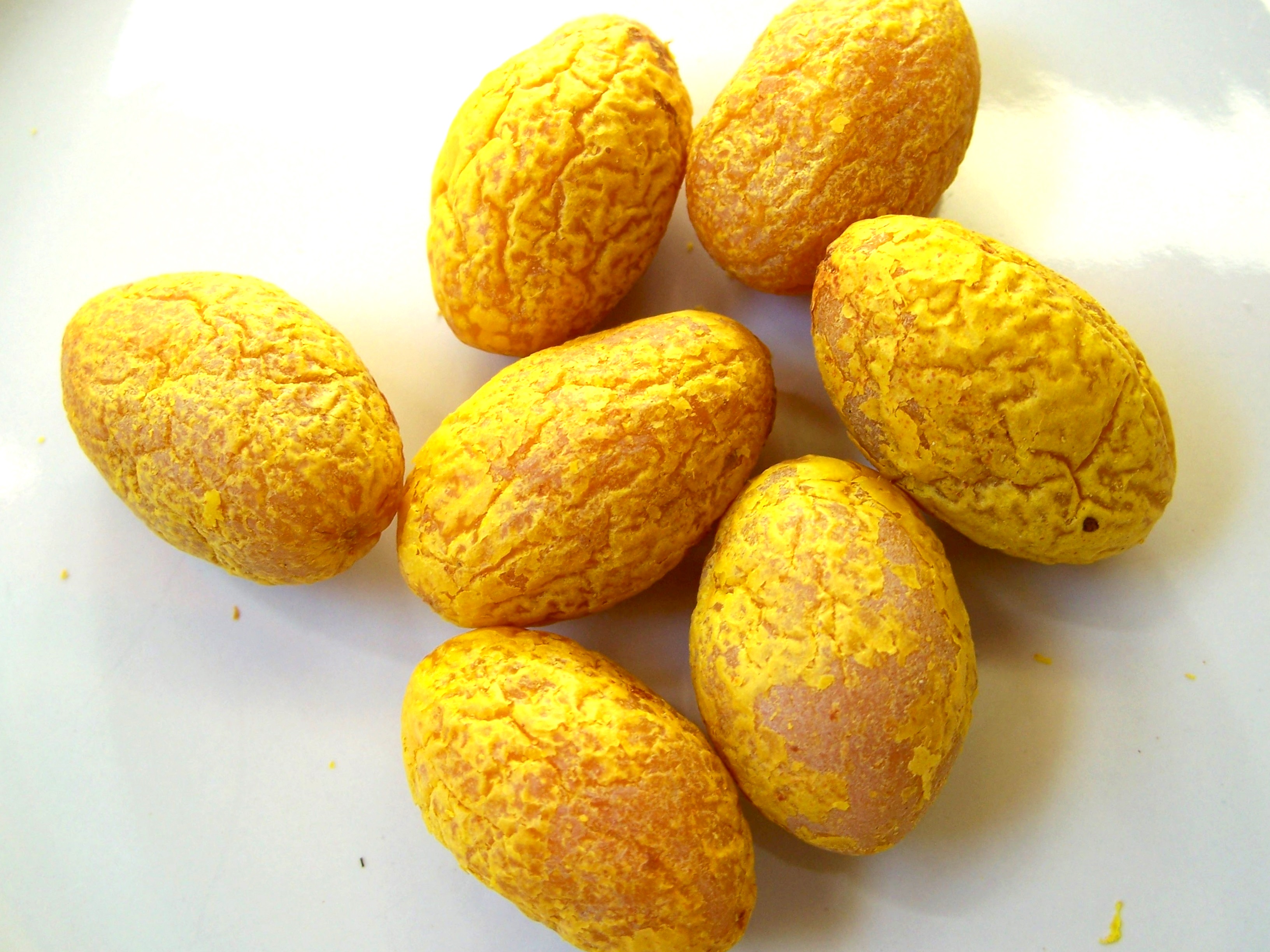
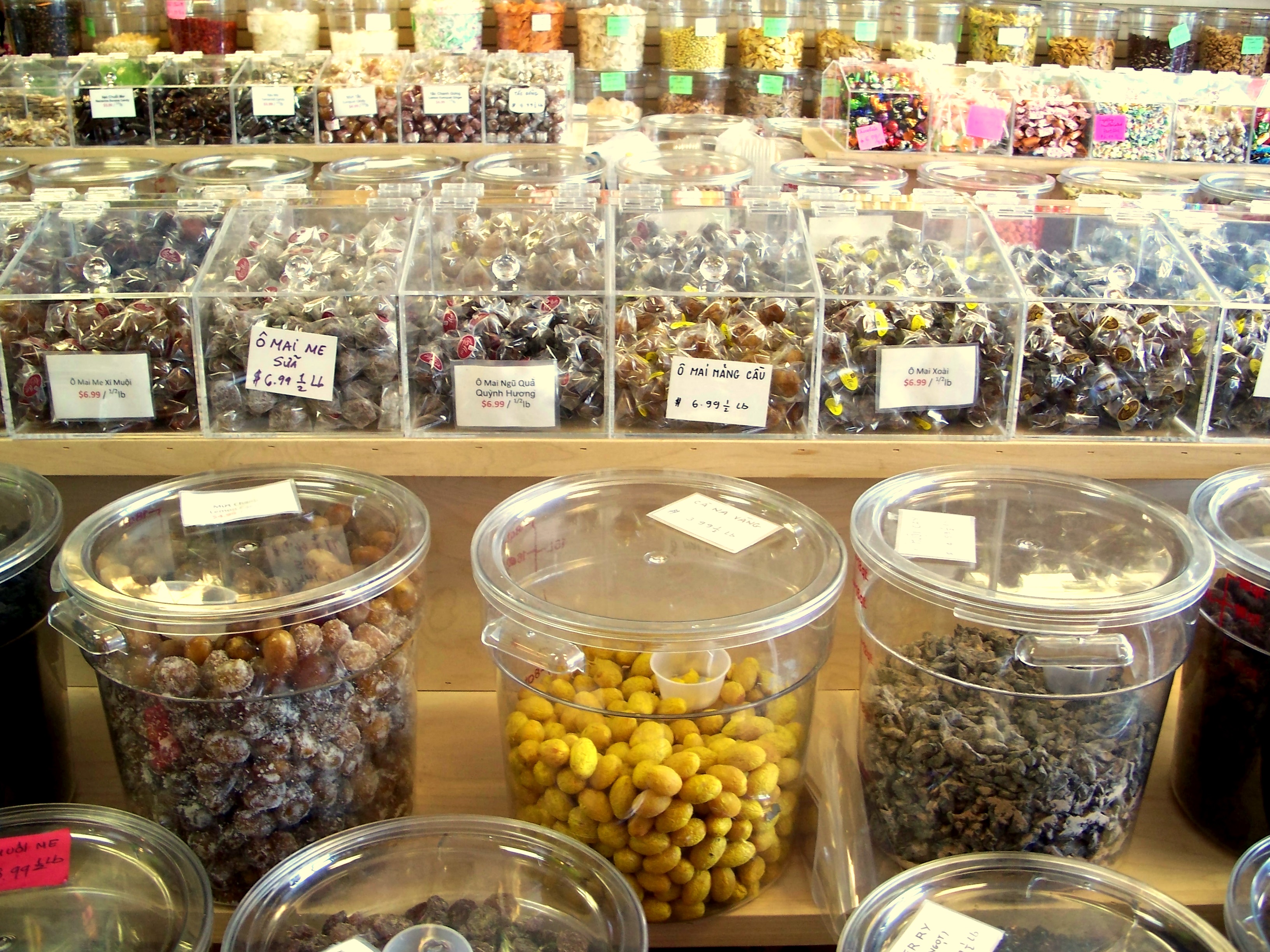
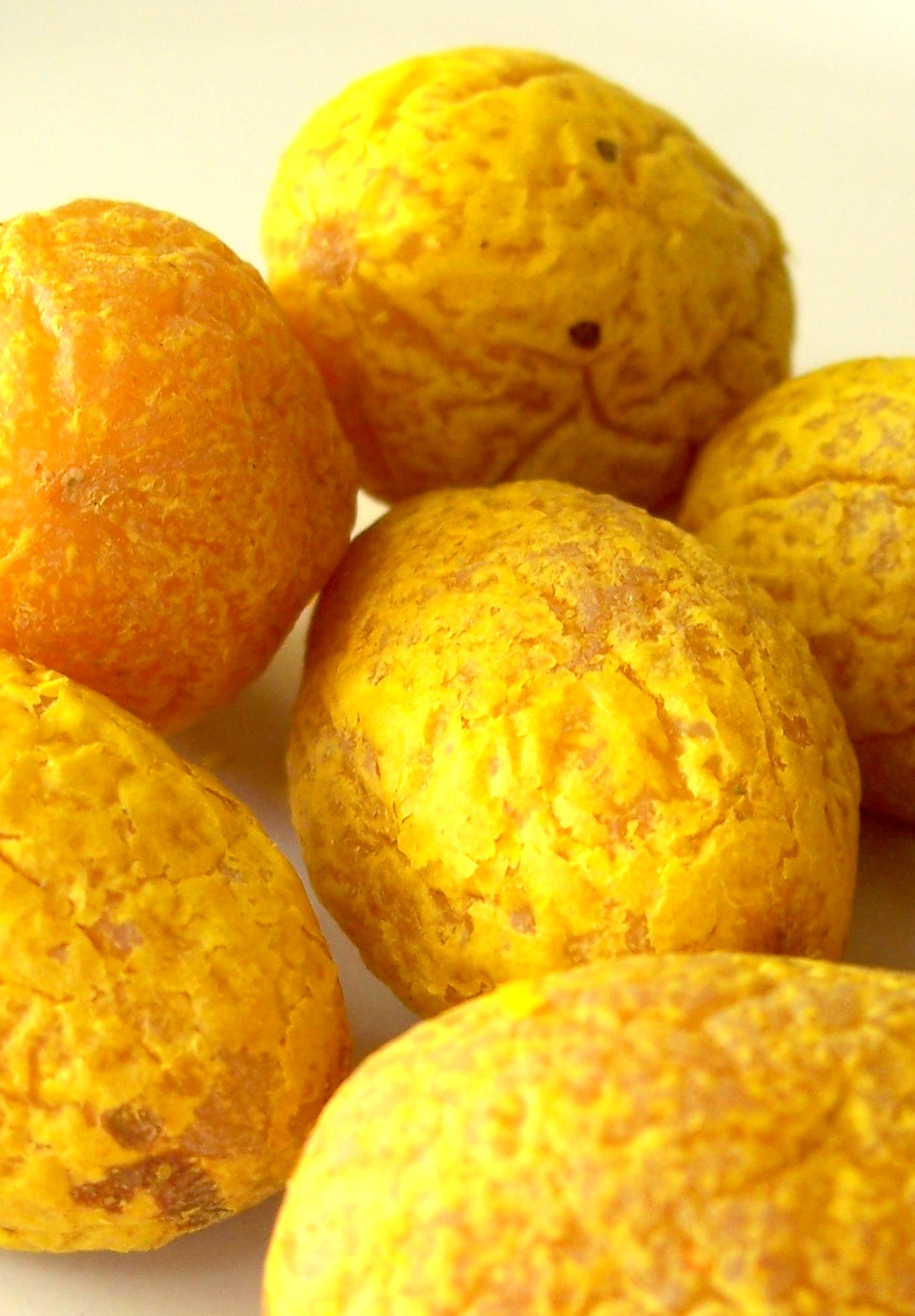
The first cà na‘s I’ve had are bright yellow with cracked skin, as big as a big green grape, resembling petrified dinosaur eggs, sold in glass jar among the ô mai and the salted plums.


The first nibble must be executed with caution. It’s firm and sound, with one big hard seed. No wonder the folks at home call the American football the cà na ball: they look and feel the same, only smaller. The flesh is dense like an old coconut’s meat, sour like lemon leaves, yet sweet like licorice blended with a dash of sea salt. How they’re made is a mystery to me.

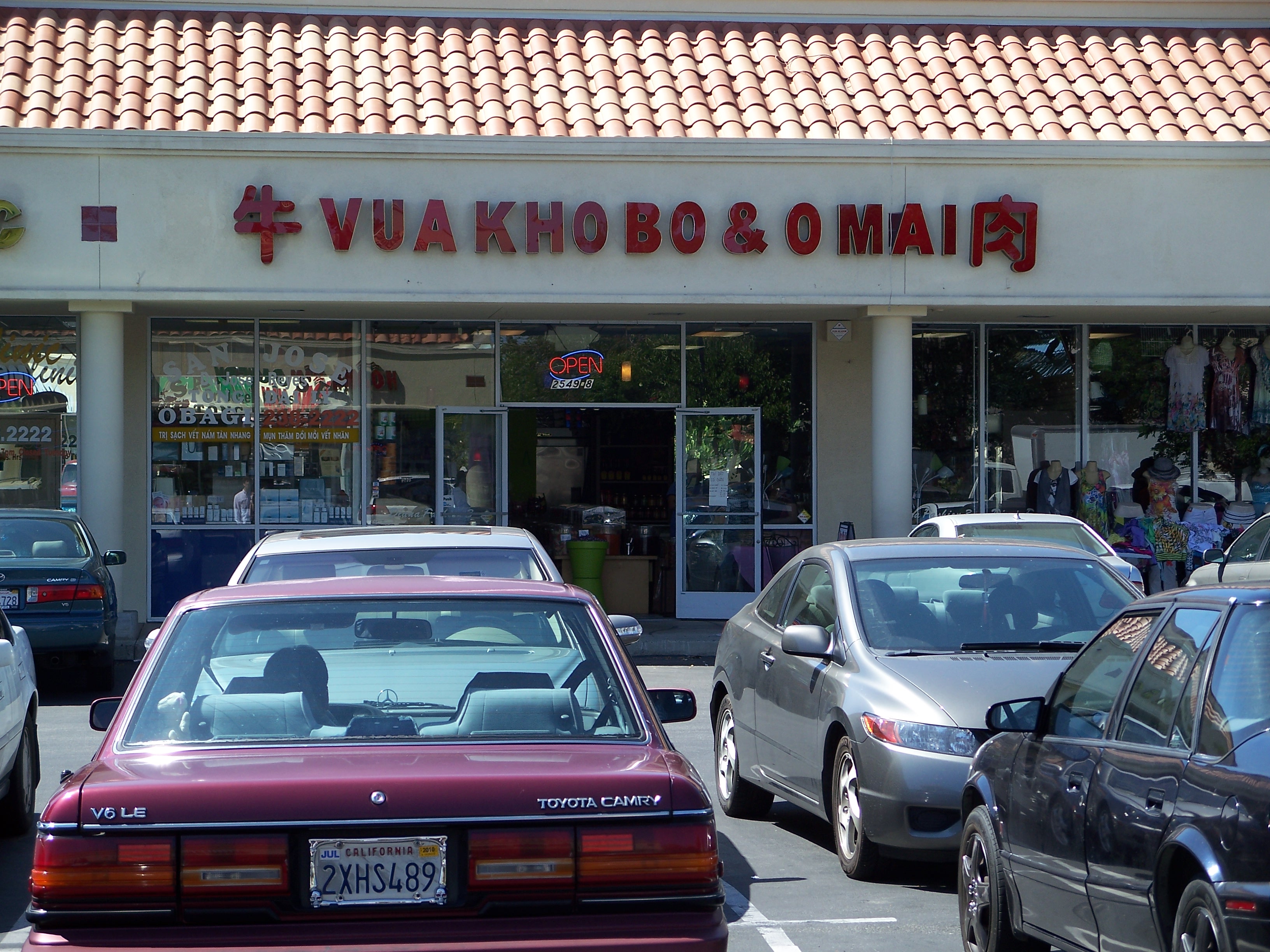
Address: Vua Khô Bò & Ô Mai
2549 S King Rd #A-B
San Jose, CA 95121
(408) 531-8845

Also from here, also fruitilicious:
1. banana tootsie roll
2. ô mai (spiced fruit ball)

Other informative links on the Chinese olives:
a list of different cultivars in China
Autumn olive


This post is submitted to Delicious Vietnam #11, March edition, hosted by The Culinary Chronicles. I’ll head to her blog for more yummy posts on Vietnamese food this month, and many thanks to the Ravenous Couple and Anh for creating this event!

A spot for beef stew (bò kho)

March 09, 2011 By: Mai Truong Category: California - The Bay Area, Comfort food, Southern Vietnamese


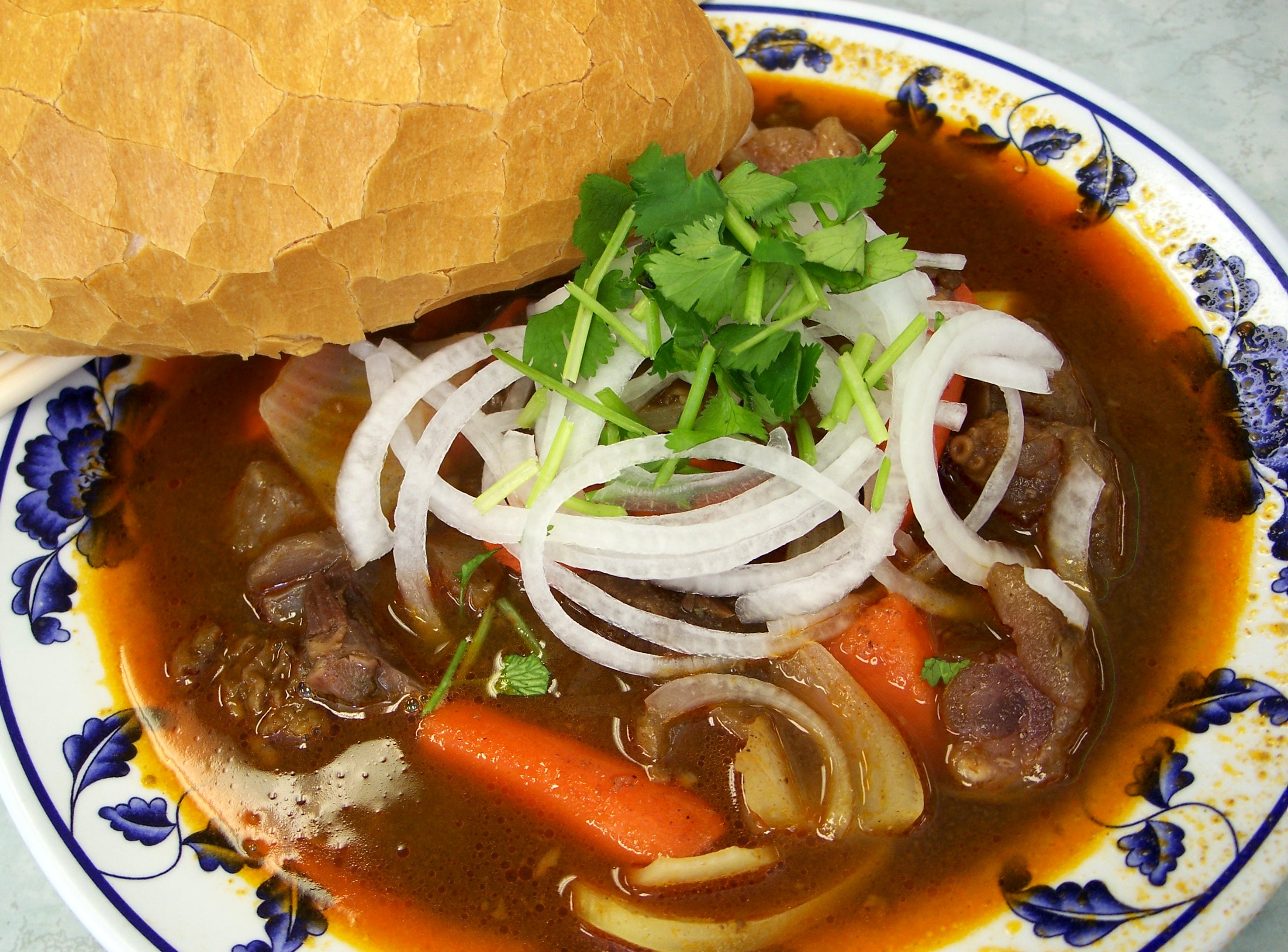
When Phở Hòa on Shattuck closed down, a part of me collapsed. No more bò kho? Granted that I can only have a bite or two in one sitting, or Mom would be worried about bò kho giving me a fever, it’s still comforting to know that a bowl of this supertender beef stew is only a few minutes walk away, or simply that it exists at a restaurant. Many a times I have seen Vietnamese restos, especially those in Houston, advertise bò kho on their menu but claim that they’re out of it when you order. So I felt in quite a shock fearing that bò kho has left me alone for good.

Then Mudpie, also a bò kho fan, found Phở Hà. We went and asked to make sure they have it. It’s no Berkeley, Phở Hà is in San Jose, but we’ll take what we can get.


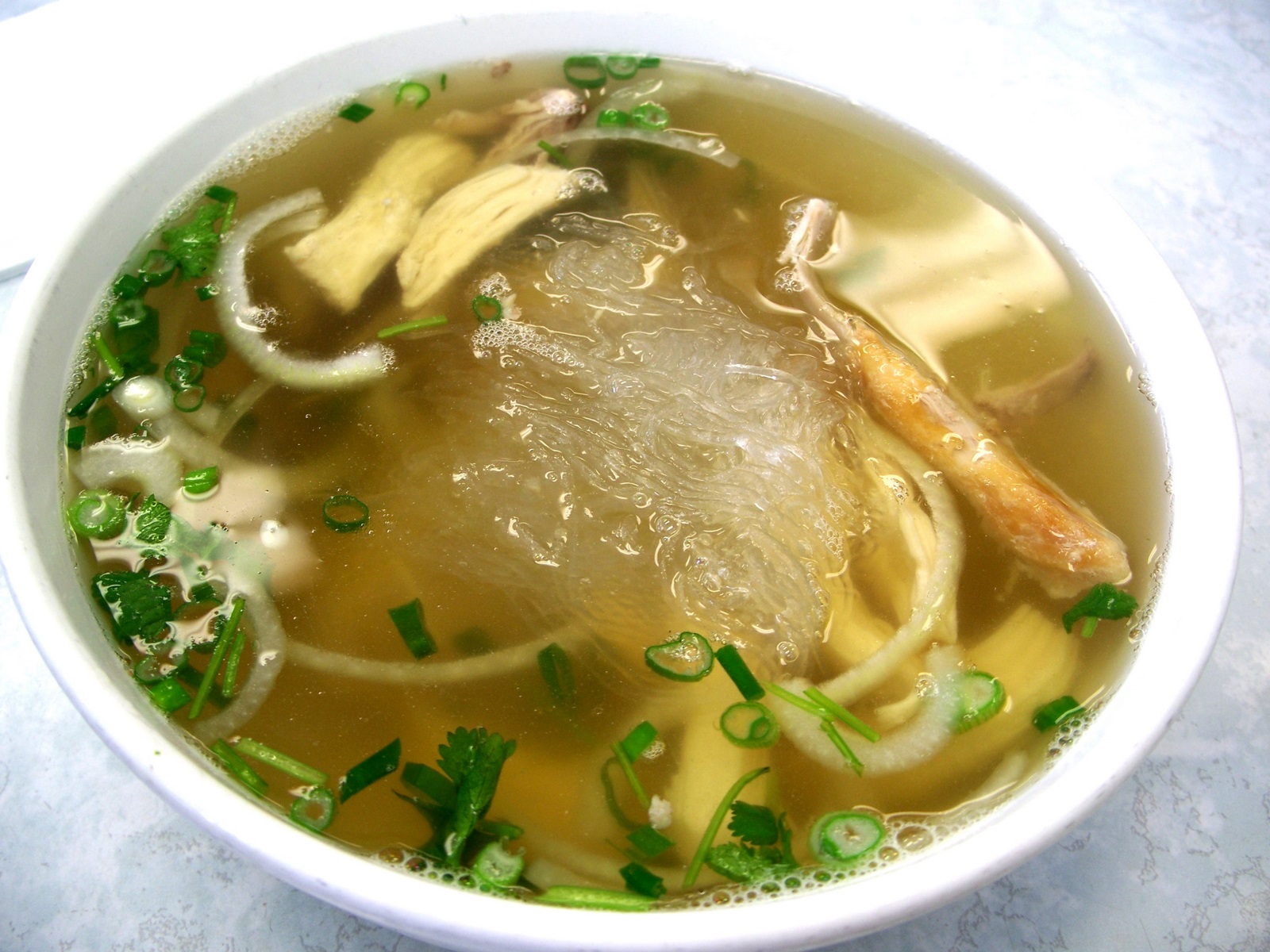
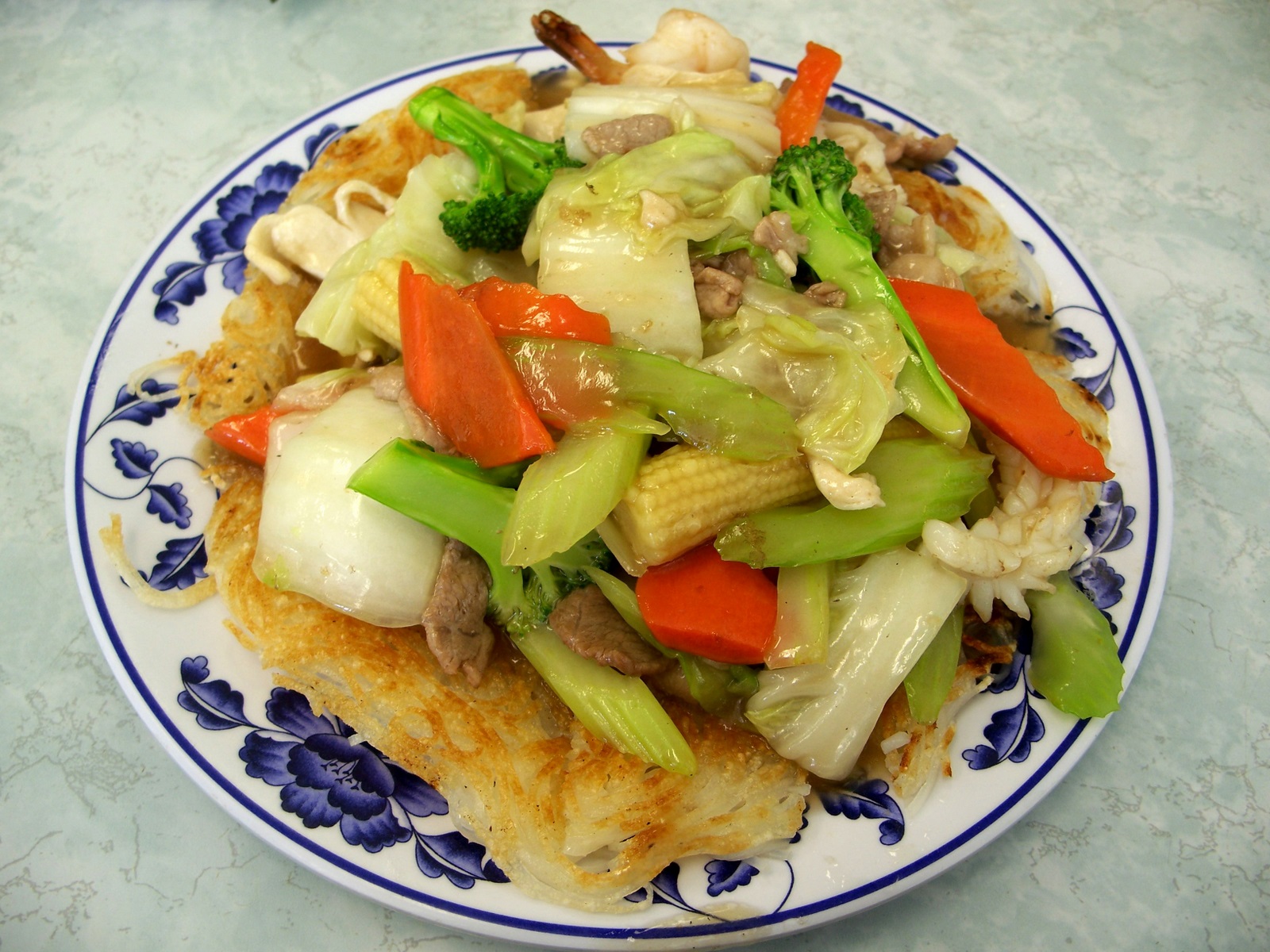
Their plastic bowls and utensils aren’t all that splendid. Their miến gà (cellophane noodle soup with chicken) is decent but their phở áp chảo (pan-fried rice noodle) is too overfilled with thick brown sauce to sing.


Nonetheless, we’ve come here for bò kho after all. And both Dad and Mudpie use up their whole loaf of crusty bread to wipe clean every last bit of that red, spice-ladened beefy juice. I’d say the trip ends well. 🙂

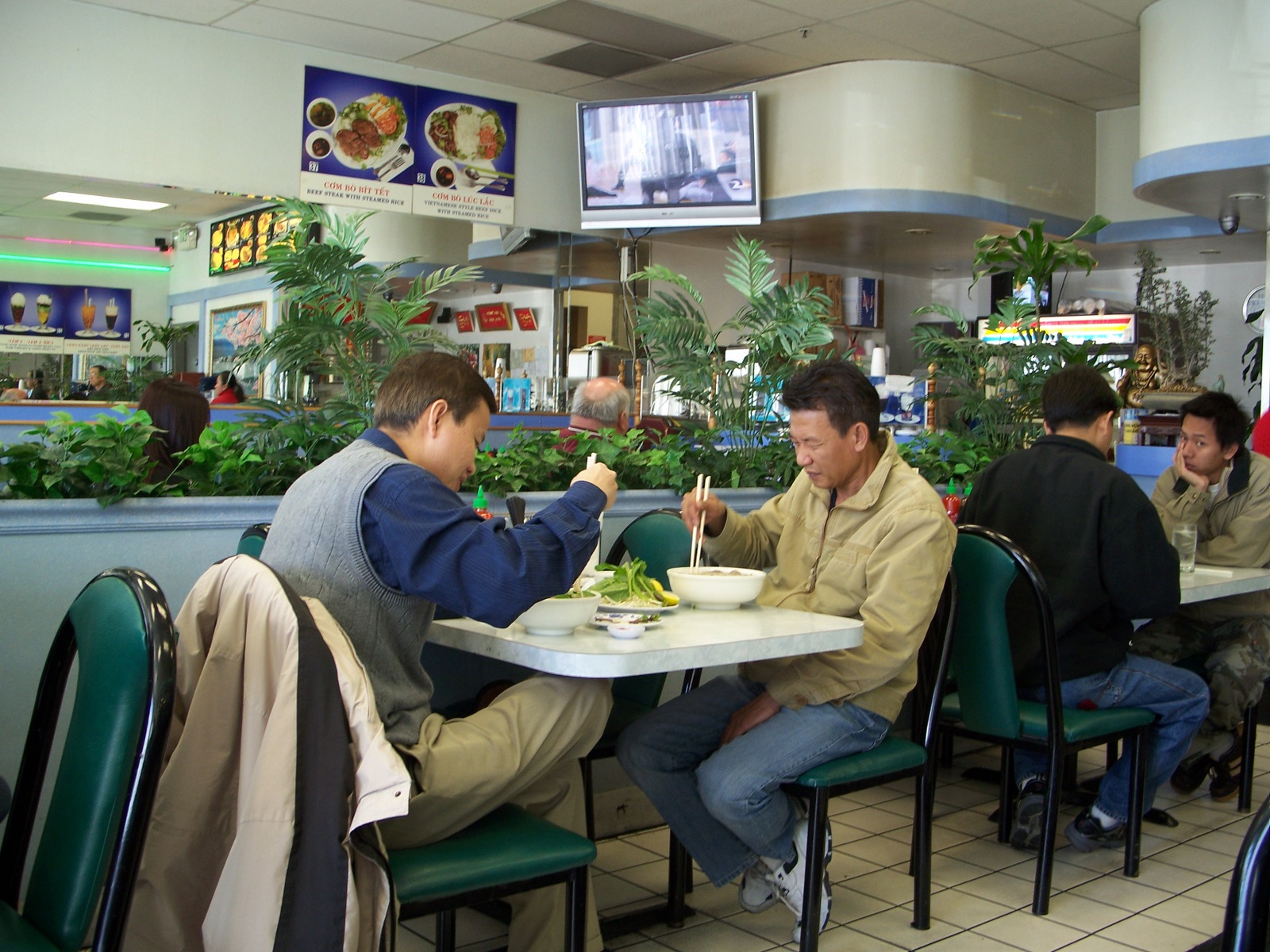
Author's disclaimer: these two men, who are leisurely enjoying the noodle soup, are NOT Dad and Mudpie

Address: Phở Hà (next to the Grand Century Mall)
951 McLaughlin Avenue
San Jose, CA 95122-2612
(408) 280-0381

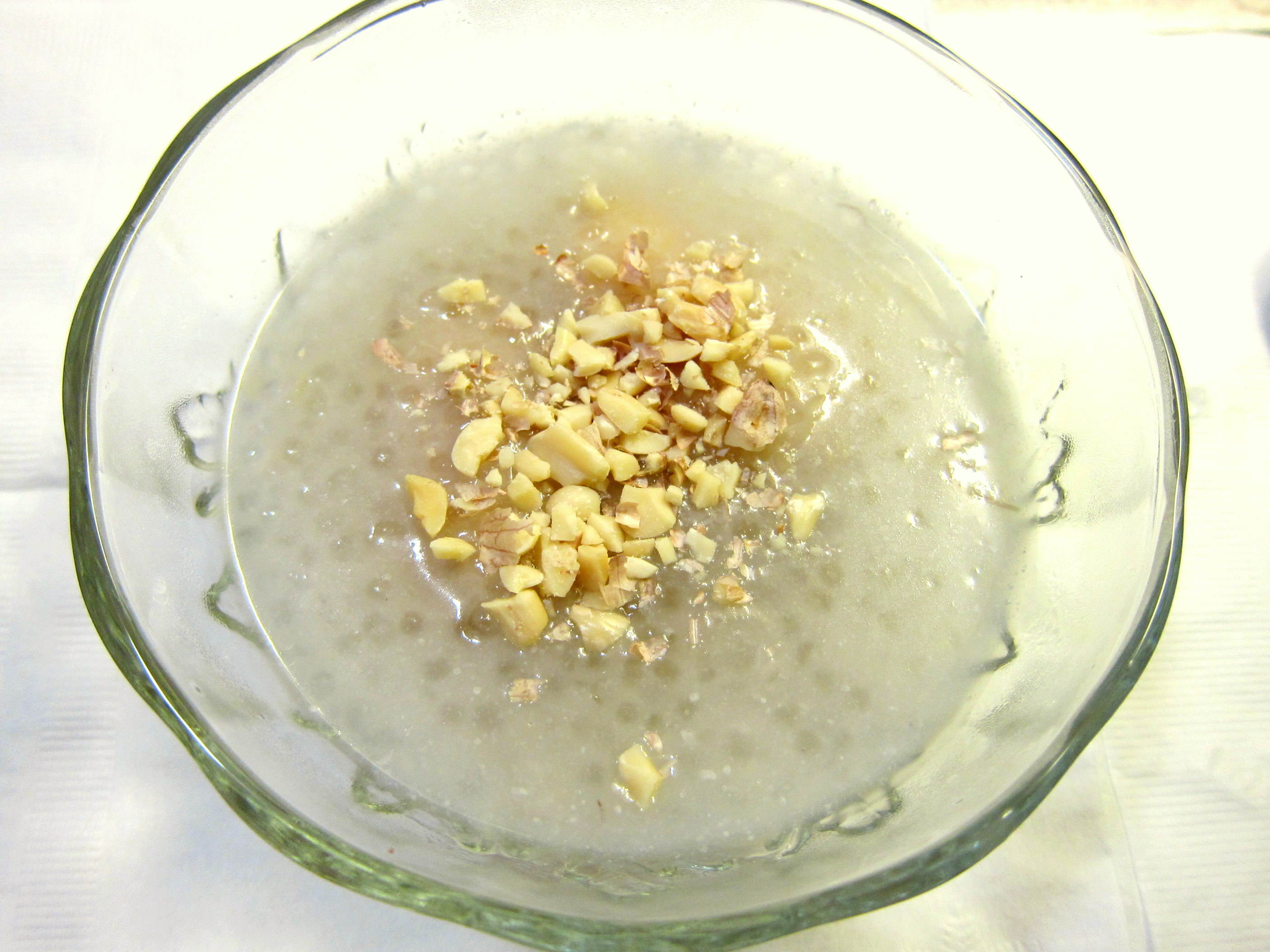
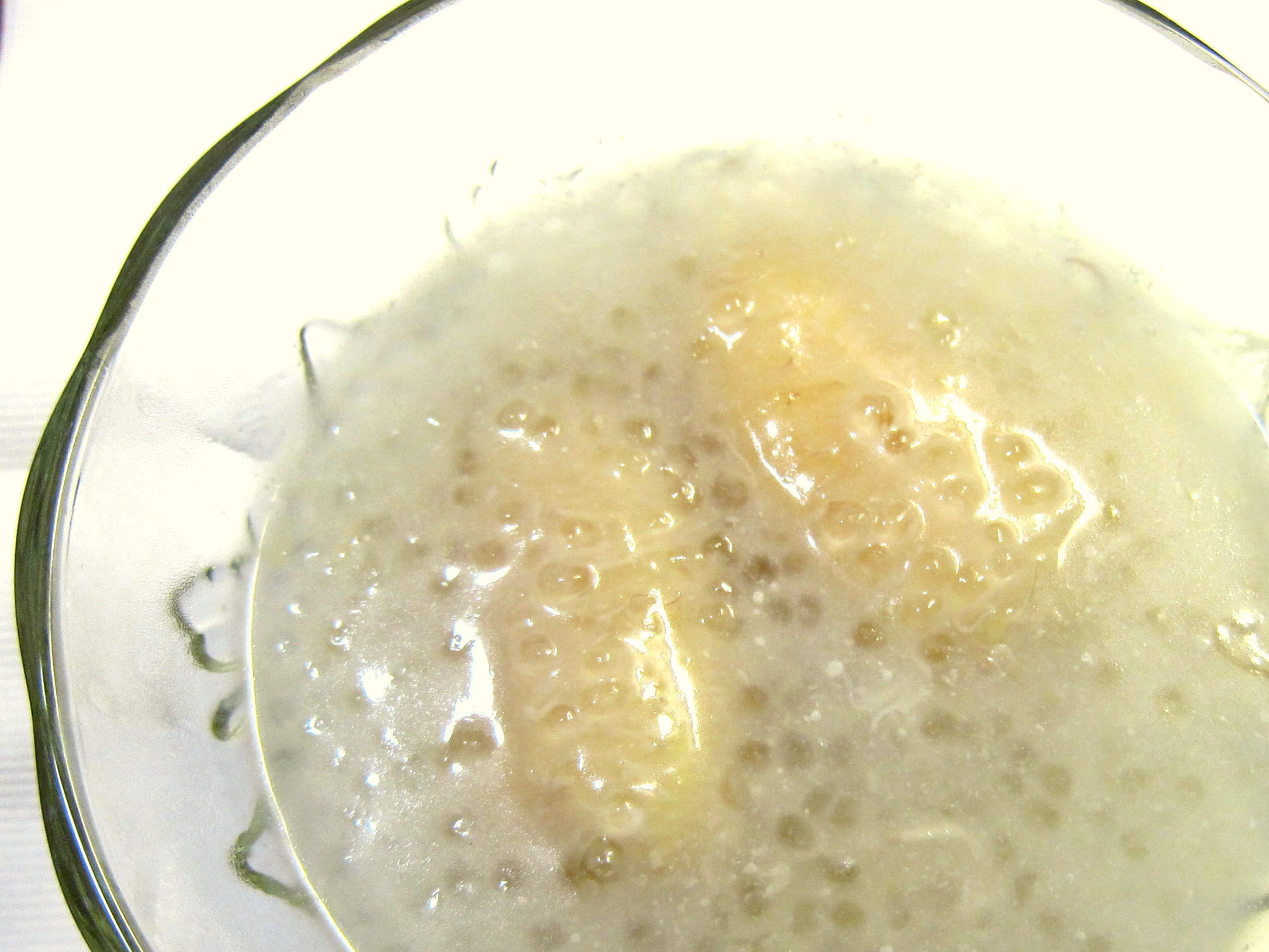
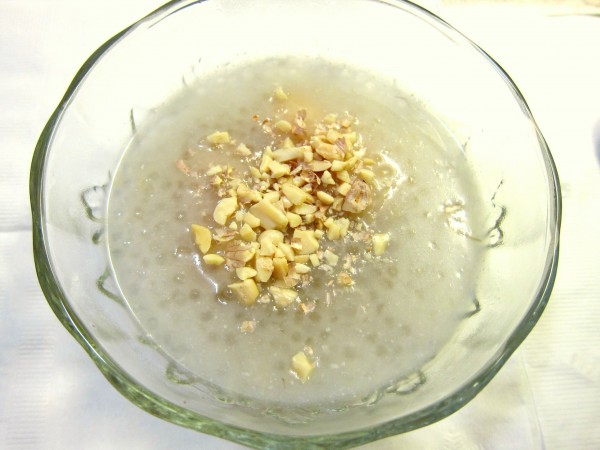
Chè chuối chưng (banana tapioca pudding)

February 08, 2011 By: Mai Truong Category: Comfort food, RECIPES, Southern Vietnamese, sweet snacks and desserts


Every once in a while when the planets align the right way with the constellations, I get into cooking mode. Then I ask my mom how to make certain things, usually easy stuff, spend at least an hour at the grocery, another half a day in front of either the sink or the stove, washing, churning, tasting, sprinkling, and tasting again. Saying that I like to cook would be like saying students hate holidays, but somehow the little accomplishment at the end of a cooking session always makes me glee, partly because I wouldn’t have to worry about dinner in the few days after. (Since the first day I had a kitchen(ette), I’ve only made savory dishes.) This time is special: I didn’t spend half a day in the kitchen, and the little accomplishment is a dessert.

Now this might actually means I have che instead of rice for dinner in the next few days :-P, but all is well as my banana che is not in the least coyingly sweet like che from sandwich shops.

Recipe adapted from Mom’s instruction:

Chè chuối chưng (banana tapioca pudding) (“chưng” means “display”, in this case to indicate the type of banana one would use for this dessert, not “tapioca”)

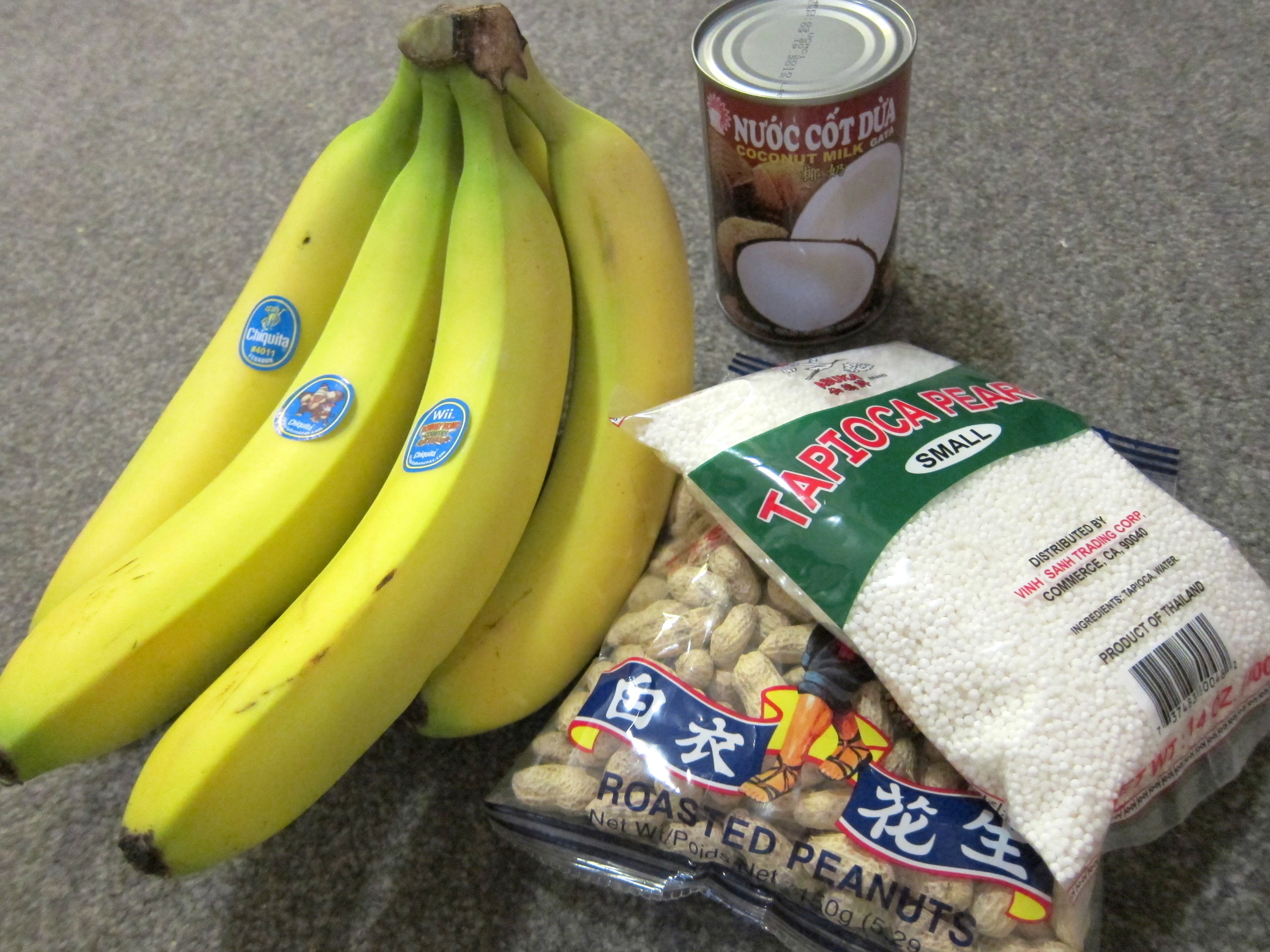
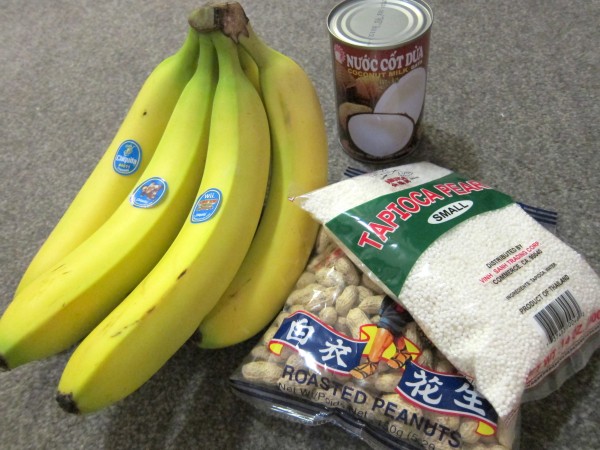
Ingredients:
– About 3 lbs of just-ripe banana (~6 big Cavendish bananas, or 12-15 chuoi su if you can find them).
– 1 can of coconut milk
– 100-150g tapioca pearl (bột báng), the small kind (packaged as dry white dots ~1.5mm in diameter). I got a 400g package from 99 Ranch Market in El Cerrito, so I’d imagine every Asian market has a few packs tucked on their shelves.
– water, sugar, salt
– roasted peanuts (the plain, unflavored kind)
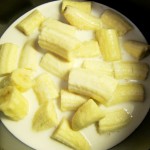

Preparation:
– Gently wash and rinse the bot bang with cold water once, then leave it soak in water.
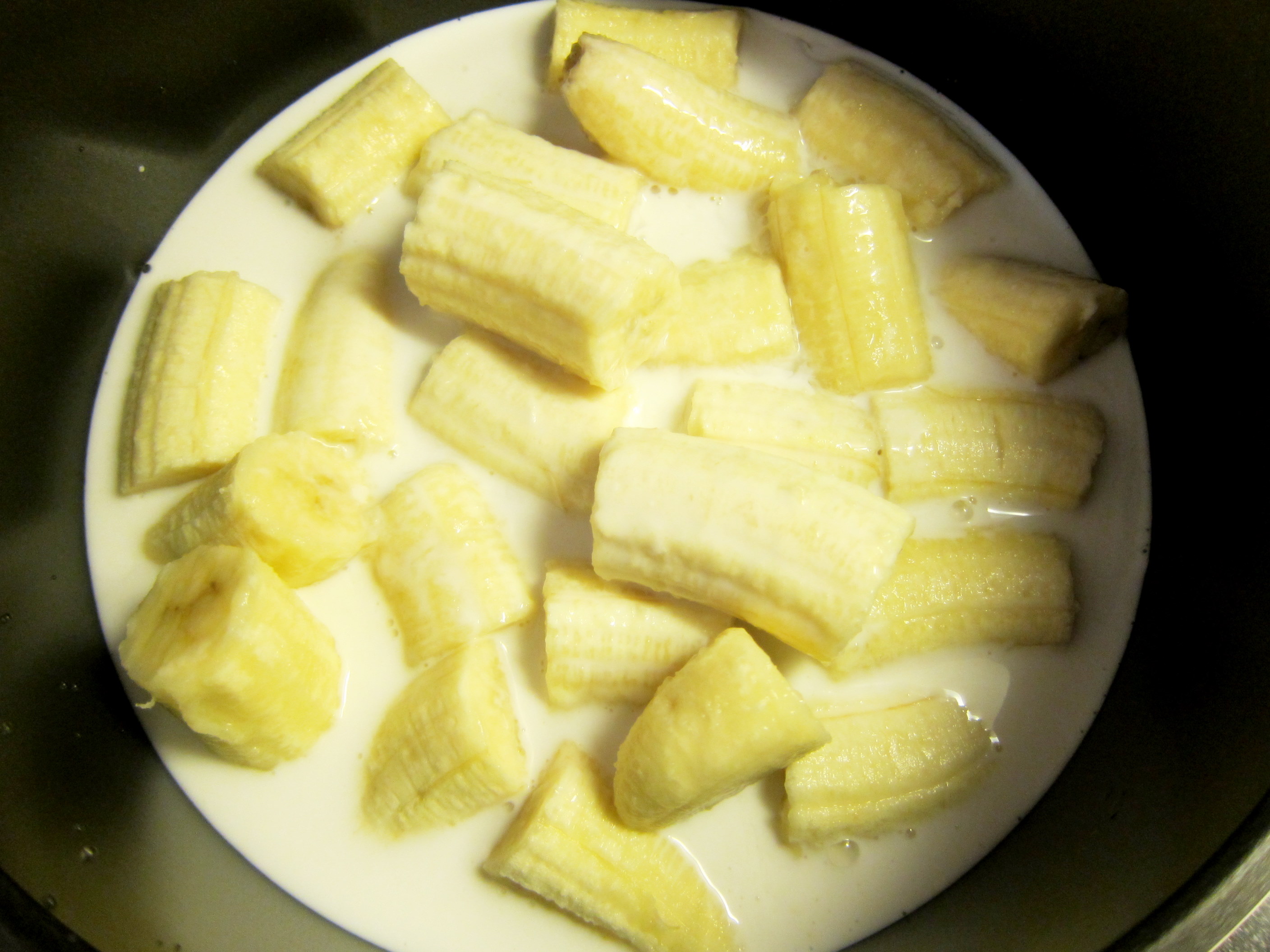
– Cut the bananas into 2-3 inch long sections, soak in salt water (2 tsp salt for roughly half a big pot of water, the same pot you’re going to cook che in) for 5-10 minutes. This step is to get rid of, or at least reduce, the clinging underripe aftertaste of Cavendish banana in Vietnamese desserts; you can skip this step if you use chuoi su.
– Shell peanuts if necessary, then crush ’em up. (Mudpie puts them in a ziploc bag and pounds on them with an ice cream scoop, it works well :D)
– Take out the bananas, drain water, wash pot, put bananas back in. Pour 1 can of coconut milk into pot, then use the same can to measure and add 2 cans of water.
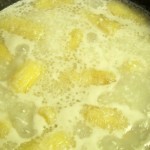

Cooking
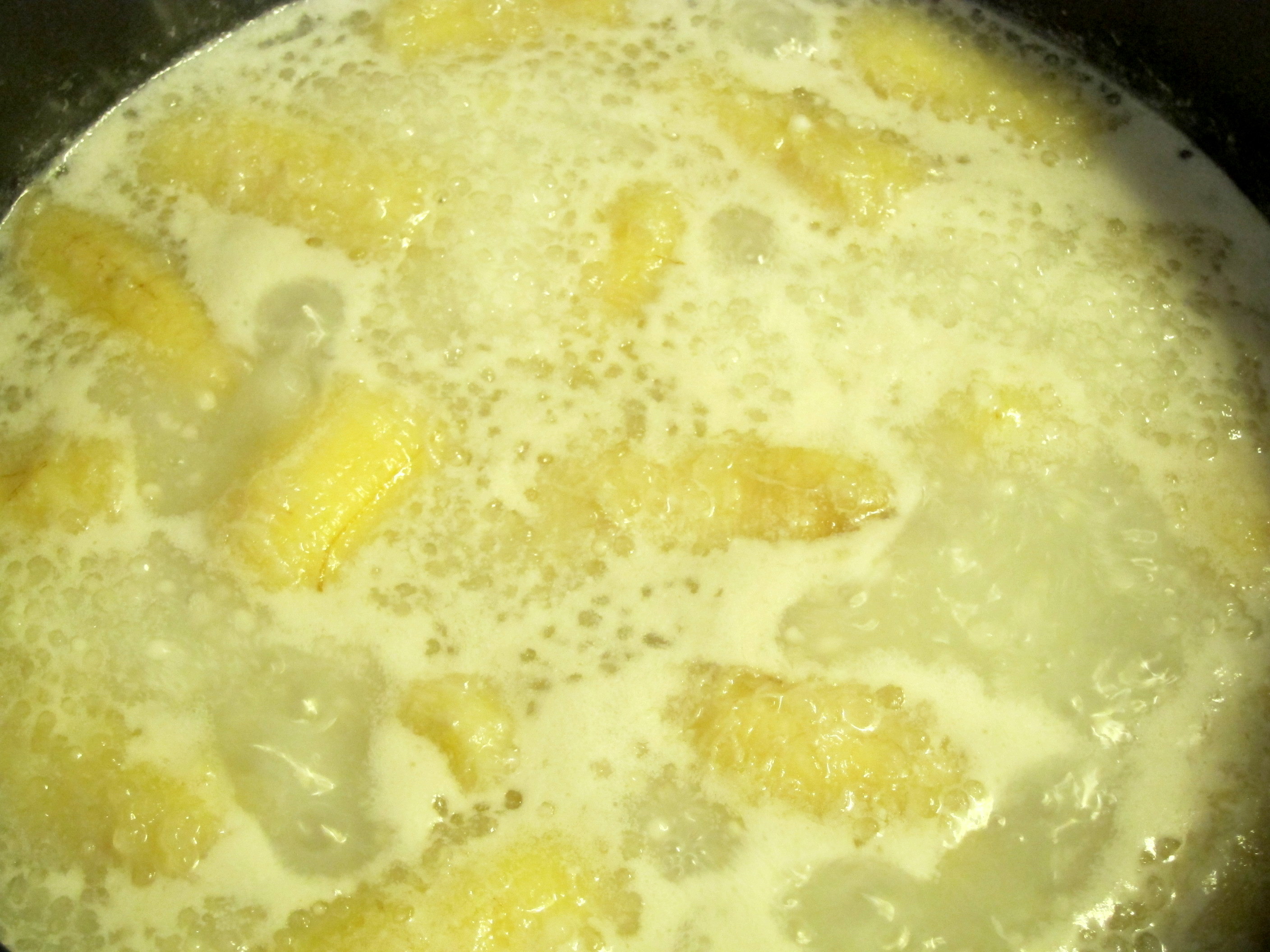
– Wait for banana, coconut milk and water to boil, add a pinch of salt and a lot of sugar to taste. (I added about 10 tbs sugar when Mudpie expresses some concern, tastes, and stops me.)
– When the mixture boils, add bot bang (after draining them, of course), gently stir once or twice to spread them out evenly in the pot.
– Bot bang will expand, at least quadruple in size. Do not stir too much or you’d burst the pearls and get tapioca porridge. Let the pot bubble until the bot bang all turn completely translucent (if you see a tiny needle-point size dot of white in the center, it’s not cooked yet).
– Turn off the heat. The pudding will be quite fluid when it’s still hot, and will thicken as it cools down.

Serving
It can be served either hot or chilled, with or without some crushed roasted peanuts on top. Mudpie prefers it warm fresh from the pot, my mom prefers it refrigerated.
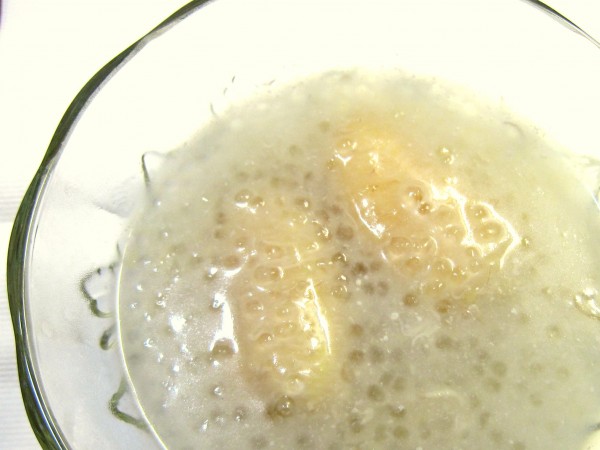

A small variation of che chuoi chung is chè bà ba, where you add taro (or cassava), cubed and cooked in coconut milk and water before the bananas. My mom says che chuoi chung is the simplest kind of che to make. As long as the bananas are soft and sweet, the tapioca pearls chewy and fully puffed, the coconut milk gives just a shy squeeze of fruity richness, and the pudding smells like a ripe summer afternoon, you know someone will come back for a second bowl of your chè chuối chưng.

– Submission to Delicious Vietnam 10, a monthly blogging event created by Anh of A Food Lover’s Journey and Hong & Kim from Ravenous Couple – This February edition is hosted by me, so send your delicious writings (your name, your blog’s name, post title, and a brilliant image of the dish) to mai [at] flavorboulevard [dot] com by Sunday February 13. 🙂

Toothsome nana tootsie

December 08, 2010 By: Mai Truong Category: Comfort food, Fruits, One shot, RECIPES, Southern Vietnamese, sweet snacks and desserts, Vegan


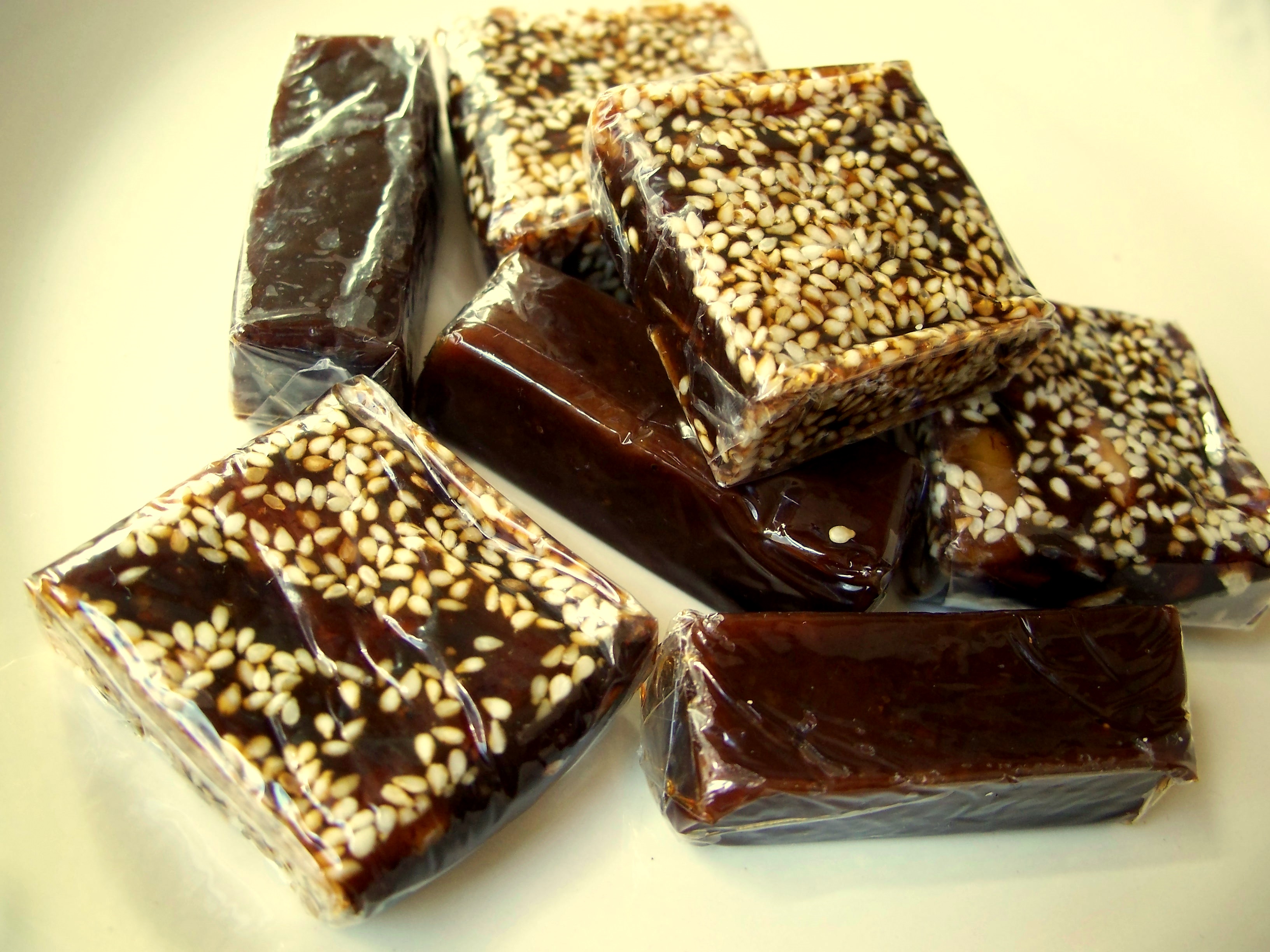
Last night I dreamed of these brown sticks in cellophane wrappers. The sound of crunchy plastic unraveled. The smooth yet sticky, dried-syrup-like surface that easily gives way to the pinch of two nails. An ever so lightly sweet, fruity, malty breath whizzing up as your nose closes in…

I woke up feeling as though there were some of those pieces melting on my tongue. But the best part of eating a banana tootsie roll, if I may call it so despite it having no relationship to the Tootsie Roll, is, like with the real Tootsie rolls, the chew. You chew it and notice it get smaller, but not any less sweet or less gummy. And it’s only as sweet as a just ripe banana, yet with an alluring touch of coconut.

The chewy banana candy is a Mekong delta specialty, where siem bananas grow more easily than rice. The stout, dense, supple bananas either make their way into che, bread pudding, wrapped and grilled in sticky rice, flattened and sun-dried, or cooked in some recipes that are only passed down from mothers to daughters. I just know that whenever we traveled to or a friend of the family came back from the My Tho, Ben Tre region, I got a bag of keo chuoi – banana candy (pronounced somewhat like |keo jui|), or keo dua (|keo yua|) – coconut candy. Banana candies are less sweet and less strenuous to the jaw than the coconut ones; some are coated with roasted sesame seeds, some contain crushed peanuts or ginger bits, but I like the plain, pure, consistent banana kind the best.

Keo Chuoi (banana chewy candy) –
Ingredients
– 3 bags of whole dried bananas
– 1 coconut
– 1 ginger root, roasted and crushed peanuts (if you like some texture variation)
– Sugar, 1 tsp lime juice
– cellophane candy wrapper

Slice thinly the dried bananas, coconut, and ginger. Stir banana and sugar in a skillet on low heat (add at least half as much sugar as banana), add coconut (and ginger if wanted), stir constantly to avoid them burnt. Add lime juice to keep the mixture gooey. Add peanuts when the mixture is homogeneous and start to harden. Take out, flatten and smoothen the surface (add a sesame coat now if you want), wait until cool then cut and wrapped in cellophane wrappers.
If you can’t find dried bananas, try using a blender to mix banana, coconut, and ginger together, and do every subsequent step the same way.
(Recipe not yet tried :-P, translated from Vietfun)


Ze kwik-n-easy vay:
Vua Khô Bò & Ô Mai (loosely translated: “King of Beef Jerkies and Dried Huamei“)
2549 S King Rd #A-B
San Jose, CA 95121
(408) 531-8845

Go bananas a few other ways:
banana ice cream
banana dog
banana bread pudding
banana in sticky rice log

Tags: ,

Sandwich shop goodies 12 – Chuối nếp nướng (grilled banana in sticky rice)

November 30, 2010 By: Mai Truong Category: California - The Bay Area, One shot, savory snacks, Southern Vietnamese, sticky rice concoctions, Vegan


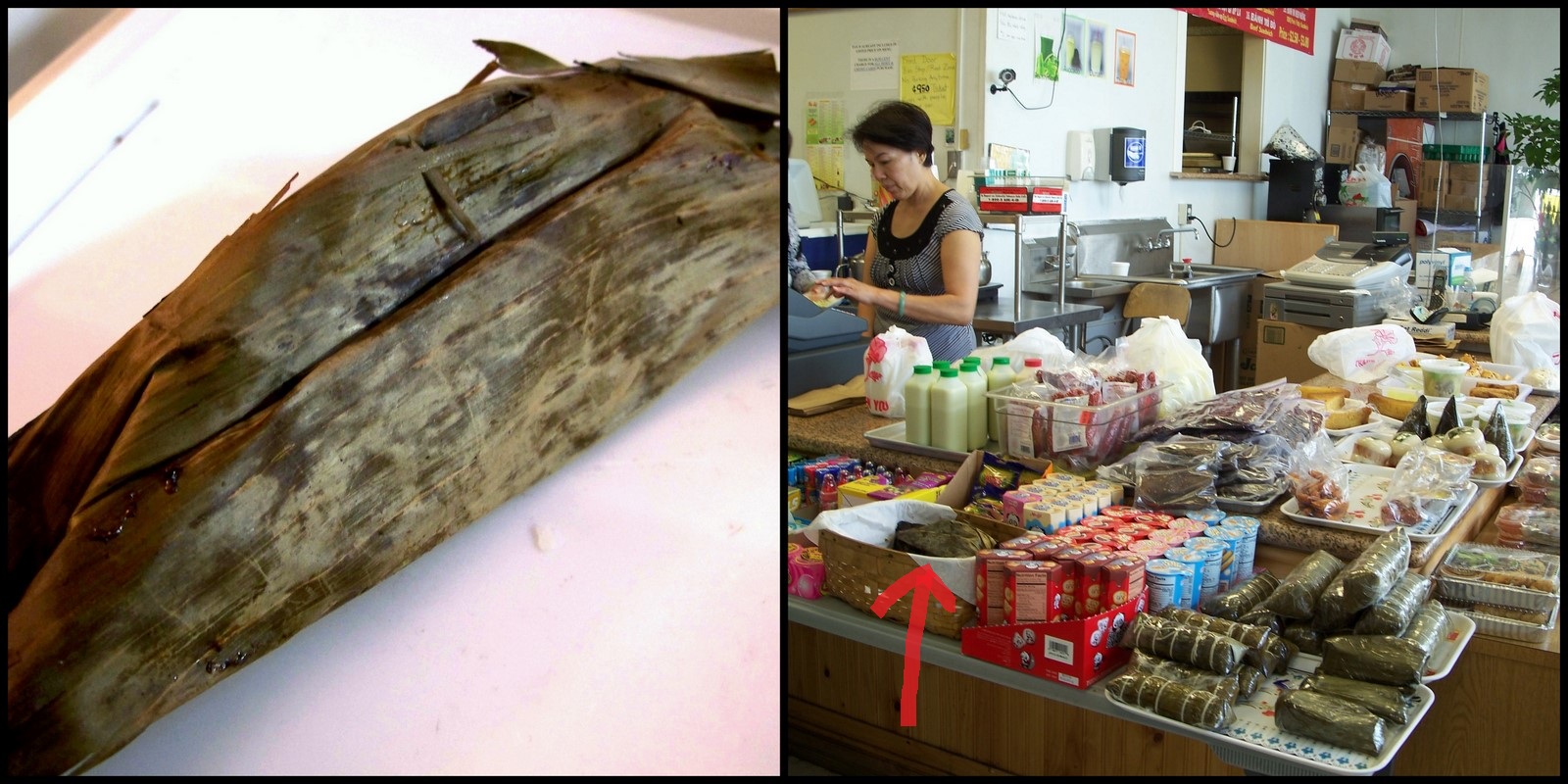
They all look the same. A myriad of things wrapped in wilted banana leaves sitting on the counter at a banh mi shop. Few patrons seem to notice the snacks as they occupy themselves with sandwich orders and the more meal-like rice or noodle to-gos, so much to the extent that the sellers too have little interest in selling their counter treats. Humbly, I point to these slender, charred and dry parcels piled in a box near the Pockys and inquire about their name. The hostess throws me half a glance infused with boredom, “Chuối nướng,” she moves her lips. So “grilled banana” they are.


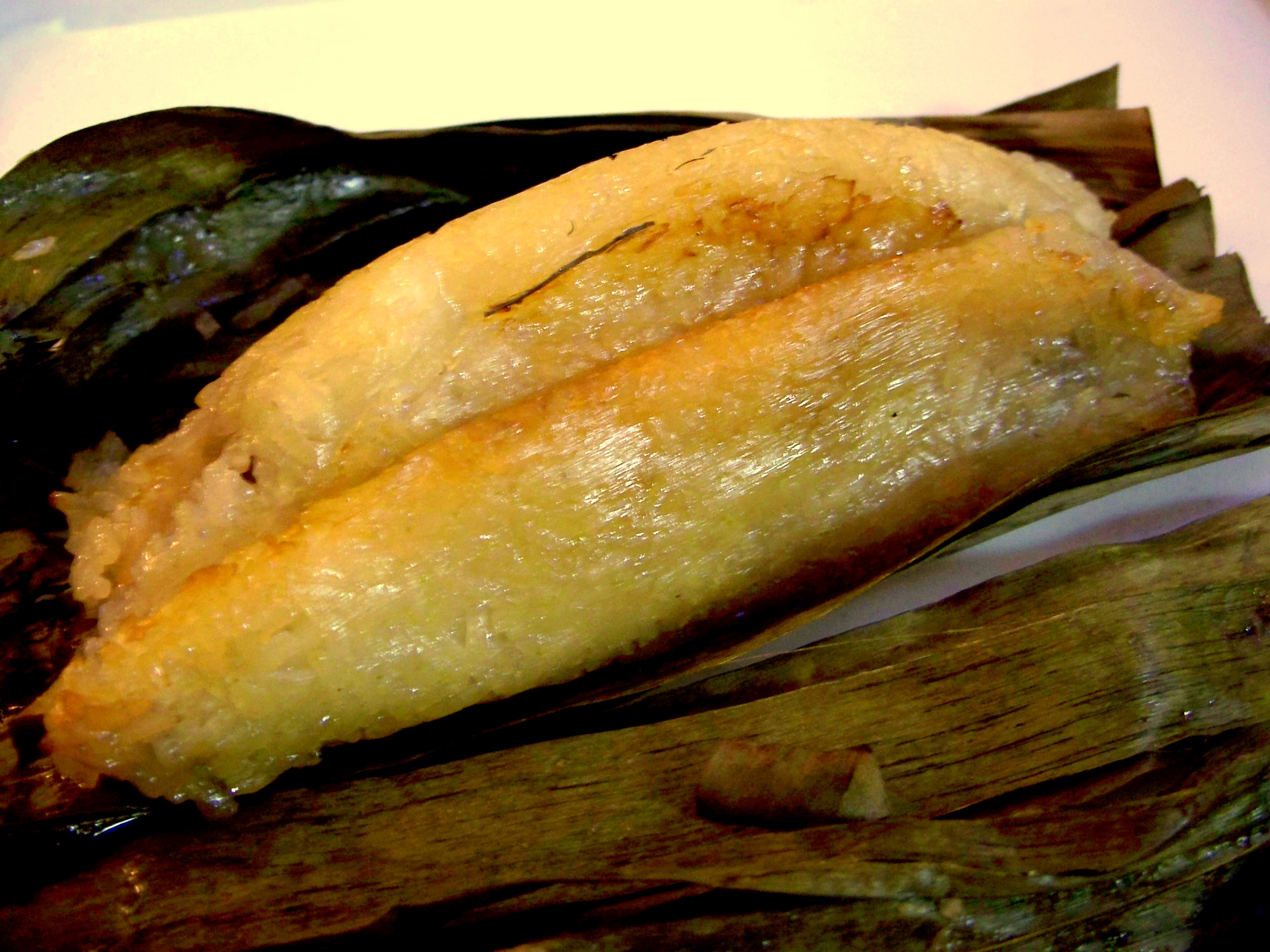
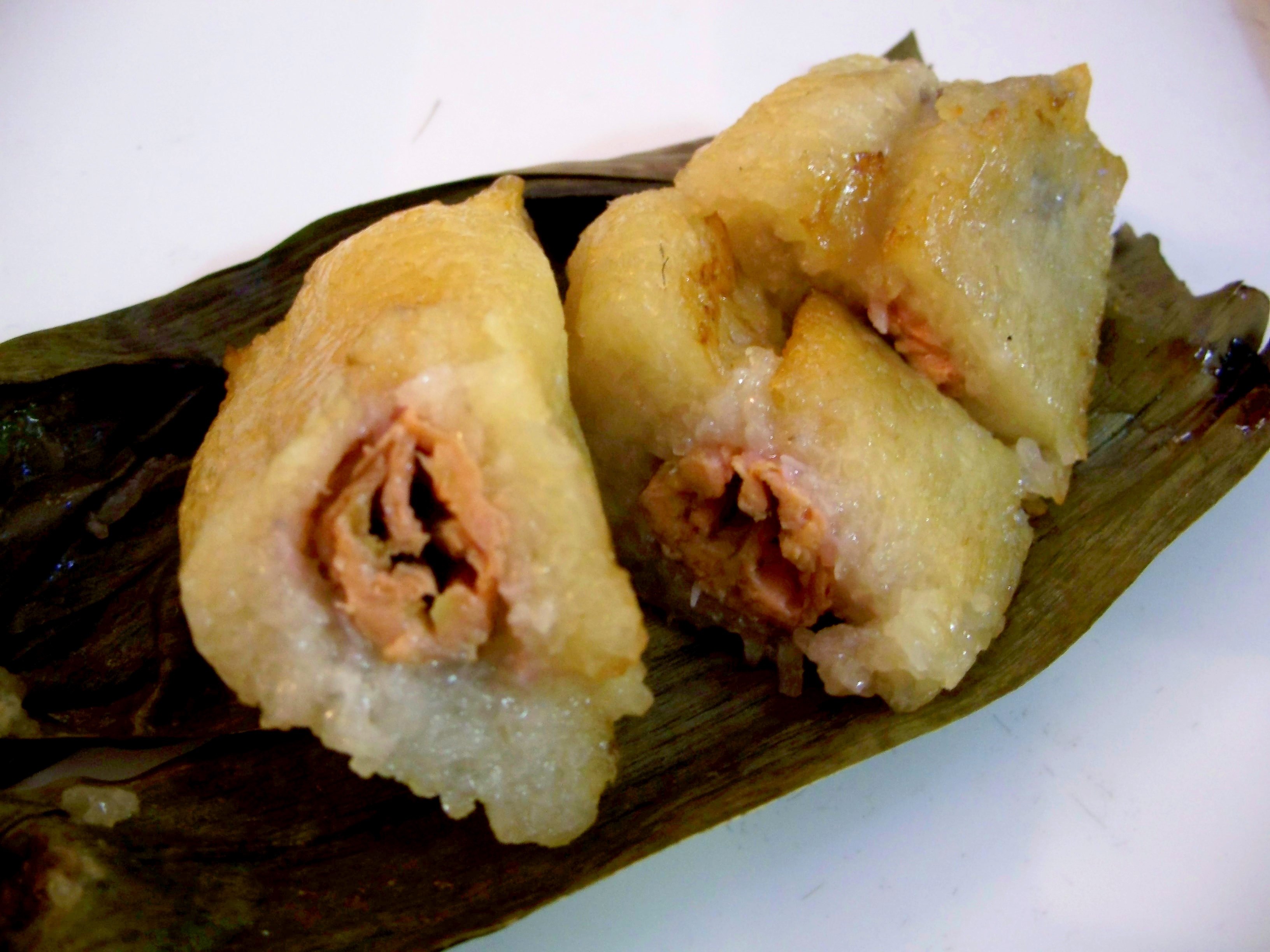
It takes an utterly simple form: a banana inside a sticky rice shell inside a banana leaf, charcoal grilled. Crispy, then chewy, then gooey sweet it goes as you sink your teeth through the bounteousness. It’s the factoriless meatless corn dog sans wooden stick of Southern Vietnam. Children would wait around old grandmas in the ‘hood to watch them grill the banana dogs and drool; adults would grab the banana dogs for breakfast, lunch, or late night snack when a wind chills and the grill warms.

It’s one of those things that can’t go wrong. Some cook the sticky rice plain, then serve the grilled dog sectioned and bathed in coconut milk with a pinch of sesame salt or peanut salt. Others do it My Tho style: the sticky rice is cooked in coconut milk and later mixed with coconut shavings before wrapped and grilled. Many cloth their nana dogs with just a band of nana leaf, mainly for easy handling of the sticky rice on the grill and near other dogs, but the dogs get crispier too. Meanwhile, Ba Lẹ ladies bundle up their dogs like they would with bánh tét, less charred, more aroma from the leaves.


Like banana bread pudding, banana dogs are exclusively made with chuoi su, a solid, stout, dense and white banana that grows like weed in the Asian tropics but is nonexistent in the States. The sad substitute Cavendish lacks consistency and sweetness and gooeyness. Yet, chuối nếp nướng still hits the spot like waltzing in the rain.

These nana ricewiches, as Noodlepie lovingly nicknamed, were 2000VND a steal (~10 US cents with the current exchange rate) in 2005. In 2007 the Gastronomer took the bite for 3000VND. I have no idea how much they cost now on the Saigon streets, with crazy inflation it might just be 10000 for all I know. But here at Bánh Mì Ba Lẹ in Oakland, nana dogs will go home with you for $1.75 each.

Address: Bánh Mì Ba Lẹ (East Oakland)
1909 International Blvd
Oakland, CA 94606
(510) 261-9800

Previously on Sandwich Shop Goodies: khoai mì hấp (steamed cassava)
Next on Sandwich Shop Goodies: Bánh xu xê (couple cookie)

Can any fish make good clay pot fish?

November 11, 2010 By: Mai Truong Category: California - The Bay Area, Southern Vietnamese


No.

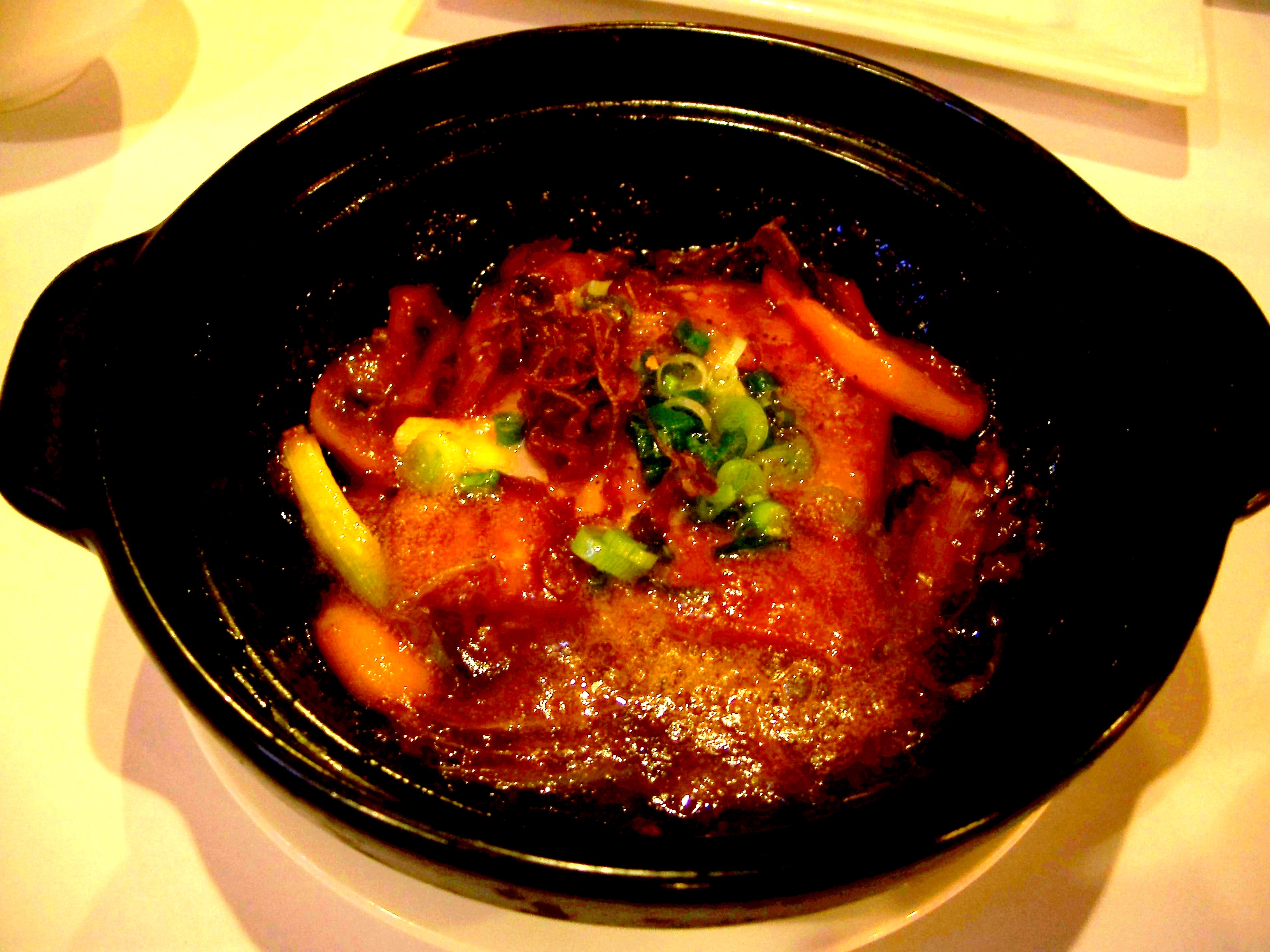
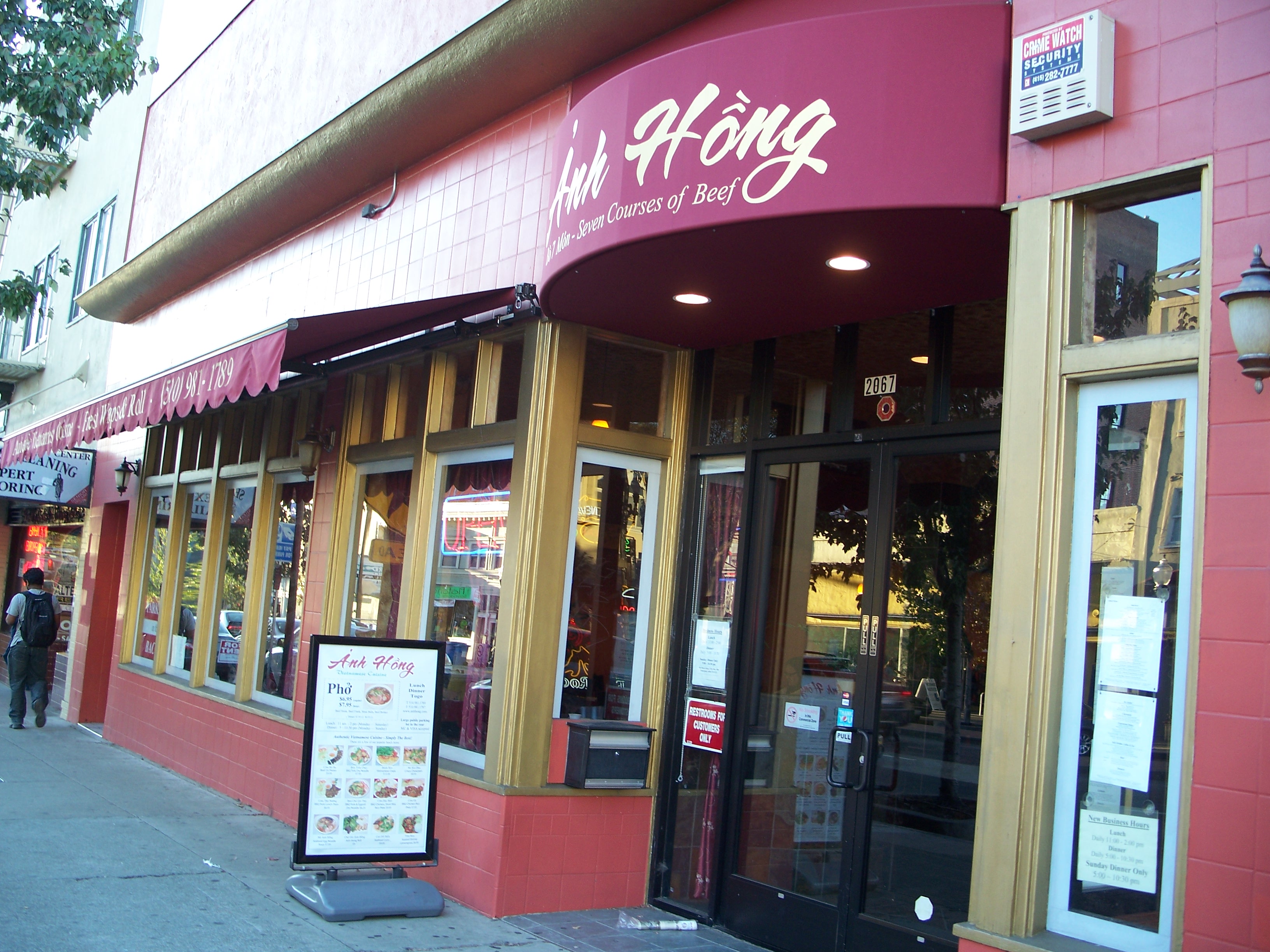
The red snapper at Anh Hong Berkeley is thoroughly coated with caramelized sugar and fish sauce, but its flaky flesh stays dry like terracotta tiles. The seawater has rooted too deeply in each fiber to blend with the sweetness. Salmon would be even worse.

Experience says bitter lá lốt can be tamed, but only fresh water fish, like catfish, can make a clay pot sing.

Sandwich shop goodies 11 – Steamed cassava

November 09, 2010 By: Mai Truong Category: California - The Bay Area, Comfort food, One shot, savory snacks, Southern Vietnamese, Vegan, Vietnamese


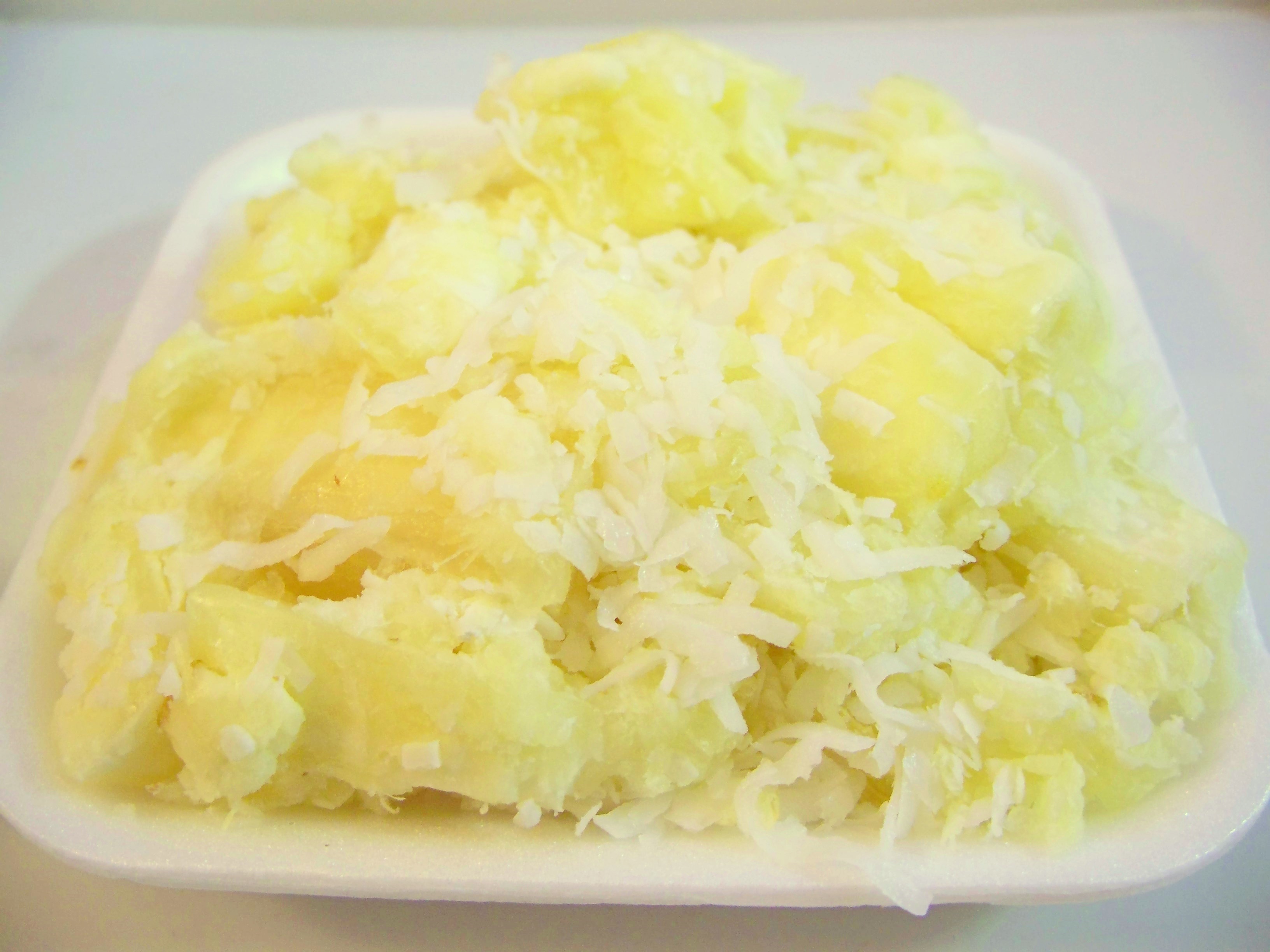
My mom is a skeptic about street snacks, most of the time because of the fingers handling them, but this thing passed. Like xoi, it should always be served hot right out of the steamer. Cool it down with a few blows of air and hurry it in the mouth; it may be wet and chewy, or it may be floury and nutty. But it’s distinctively cassava.

Back home, khoai mì hấp (steamed cassava) is among the cheapest Saigon street scoffs, because khoai mì (cassava root) is cheap (2000VND/kg these days, about 5 cents/lb), and the making is beyond simple. You boil the roots, then keep it warm and moist in a steamer. Unlike banh bao vendors, you keep the lid open to let out burly rolls of steam and invitation. The cone hat ladies sometimes add pandan leaves in the water, those ivory chunks then smell as sweet as spring rains. A customer comes, you scoop him a few palmfuls into a nylon bag and forget not the coconut shavings and the classic salt-sugar-sesame mix. A true street scoffer would eat with his fingers, probably holding the thick center string (the root’s woody cordon) to nibble on without touching its hot flesh.

I mix salt, sugar and my memory of what steamed cassava should taste like into the $1 prepackaged clump at Bánh Mì Ba Lẹ in Oakland, after microwaving it for one minute. The roots are dry and flavorless, probably out from a frozen section. But I taste only my younger days.

Address: Bánh Mì Ba Lẹ (East Oakland)
1909 International Blvd
Oakland, CA 94606
(510) 261-9800

Previously on Sandwich shop goodies: Bánh chuối nướng (Vietnamese banana bread pudding)
Next on Sandwich shop goodies: chuối nếp nướng (grilled banana in sticky rice – banana dog)

Beef wrap n’ roll

September 11, 2010 By: Mai Truong Category: California - The Bay Area, Comfort food, Southern Vietnamese, Vietnamese


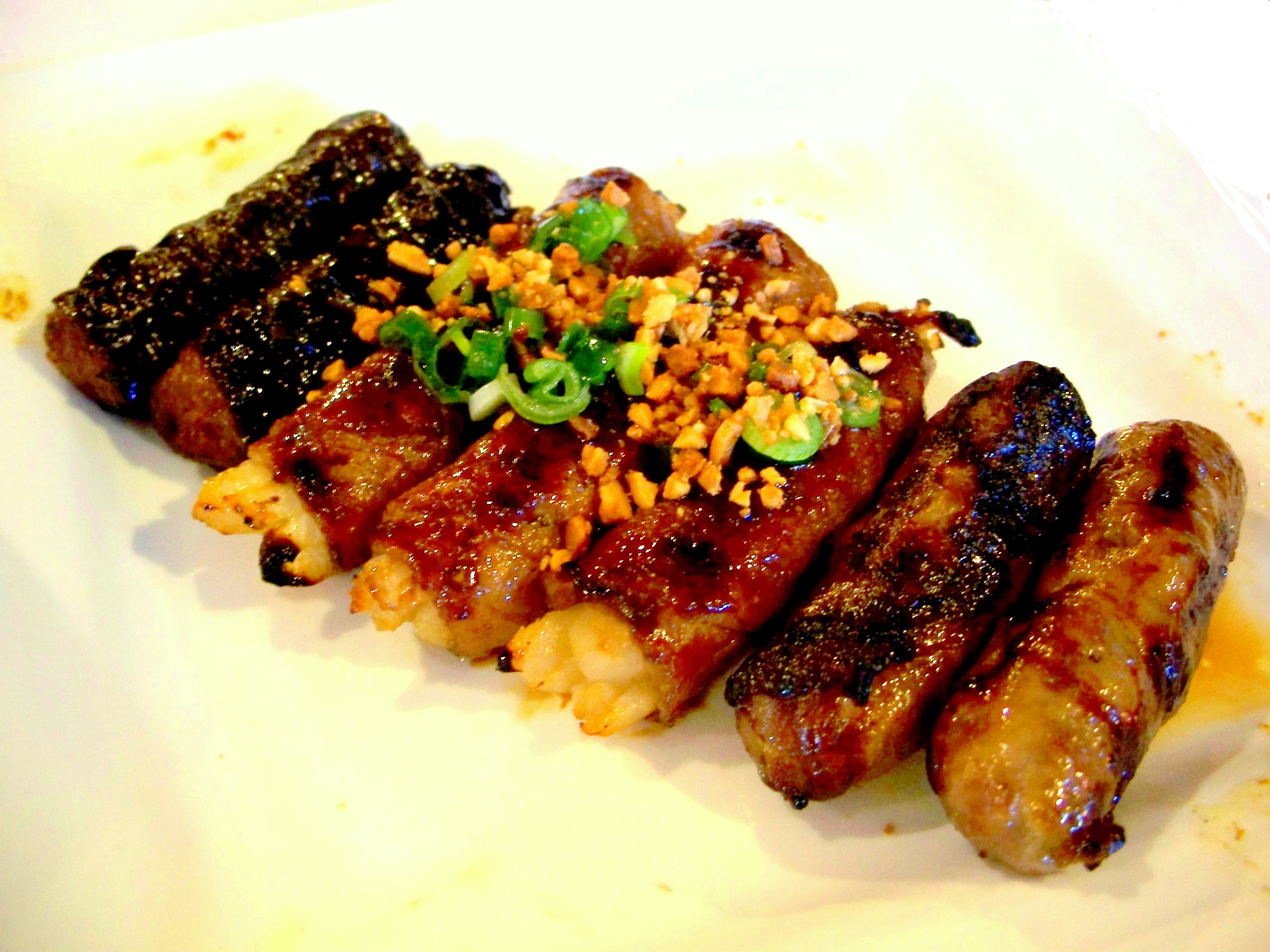
It took me six years eating steaks and potatoes and one evening of eating beef sausages rolled with greens and rice paper to realize that perhaps the best way to eat meat is to eat it with vegetables. No hard feelings, dear steak, you are like pure chocolate, and bulgogi in lettuce wrap is like orange flavored chocolate. Then you add pickled carrots and daikon, minty herbs, rice paper, sweet and sour nước mắm, and the beef is bound to take off just like the Apollo 11.


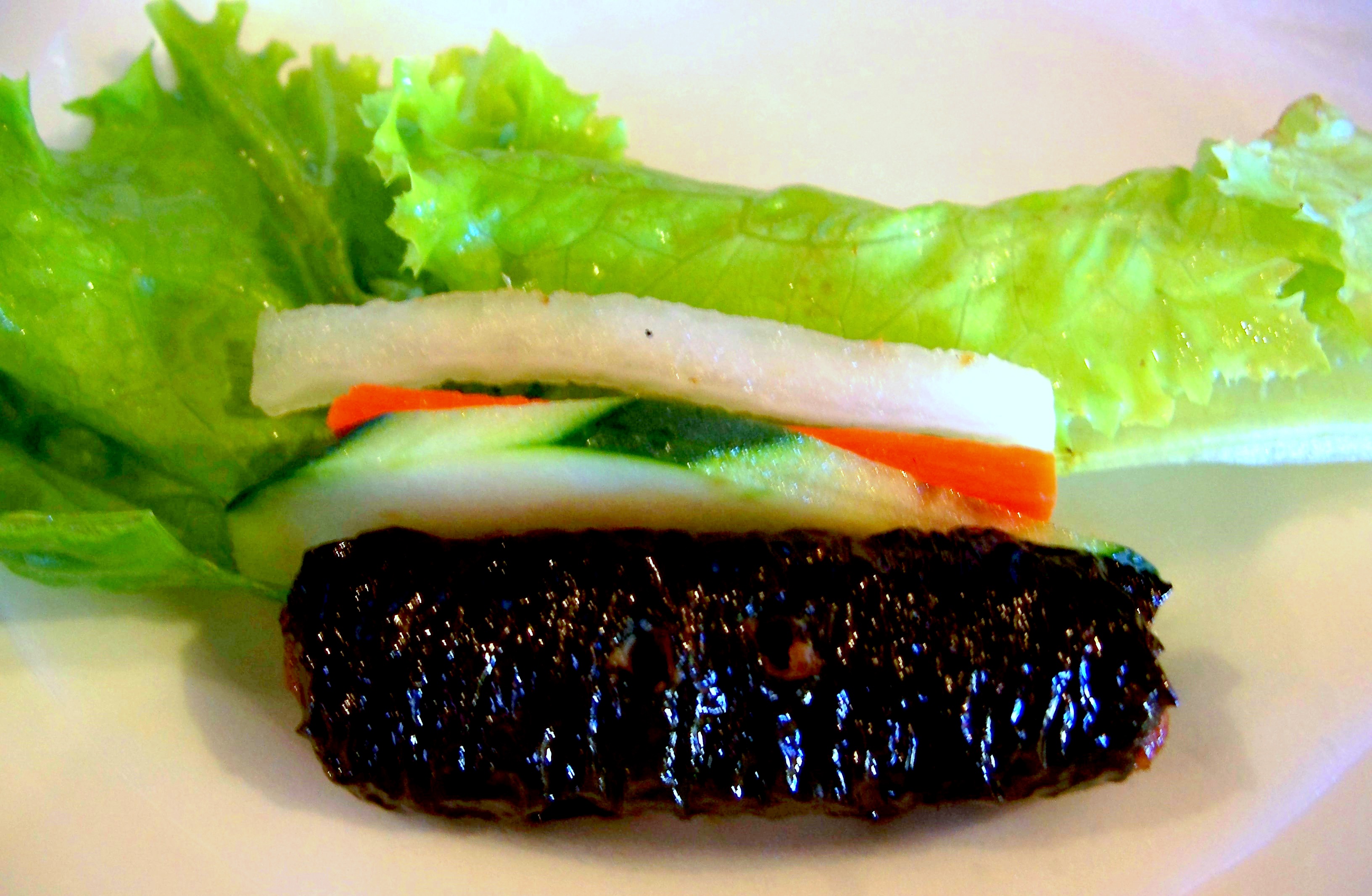
Such revelation dawned on me when I took the first bite of a bò lá lốt roll at Ánh Hồng in Berkeley. Ánh Hồng was famous in the old Saigon for their creation of the seven courses of beef, a menu that other Vietnamese restaurants quickly imitated to serve big parties. Despite knowing the menu’s popularity, I rarely thought of its main items as desirable, simply because, for instance, I wasn’t a fan of the wild betel leaf (lá lốt in Vietnamese and cha phloo in Thai) that wraps outside the ground beef. It’s usually a little bitter, and it overshadows the meat flavor. But Ánh Hồng really proves that their popularity (4 locations in North California and another 2 in the southern part) is backed up by some solid tasty goods. Somehow, unlike any I’ve tried before, their bò lá lốt is not at all bitter.


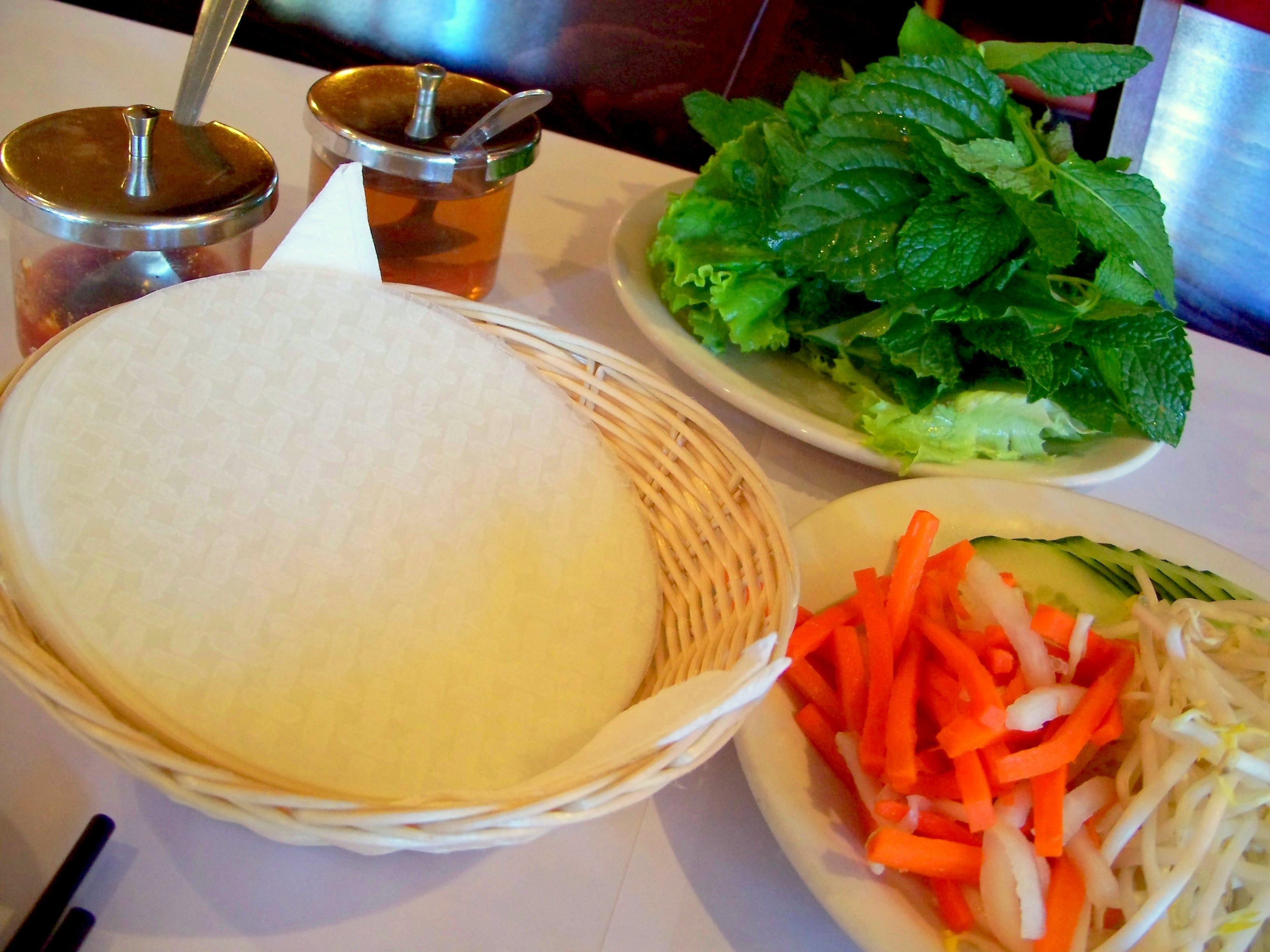
Their bánh tráng (rice paper) is also perfect for making fresh spring rolls, thin enough so that you can taste every ingredient, yet elastic enough to stretch and wrap up the sharp corner of lettuce stems without rupturing. The traditionalcondiment to dip the rolls is mắm nêm (fermented fish paste), but to accommodate foreigners (and Vietnamese like me :-P) who aren’t familiar with the sauce’s pungency, Ánh Hồng serves things up with sweet and sour nước mắm (salty fish extract mixed with lime, chili pepper and sugar). It’s amazing how nước mắm works with everything. But, because the meat is already so well seasoned, you don’t have to dip the rolls into any sauce to make the flavors shine.


The pickled carrot and daikon can be a little too sour, but their texture blends better with the ground meat than fresh bean sprouts’ does.


As much as the bò lá lốt turns out far better than expected, I would still say that it’s not the best course in the set. Bò nướng sả (lemongrass grilled beef slices) rolled up with sauteed sweet onion in the core raises the bar by a slight amount, and the succulent sausages of bò mỡ chài (ground beef wrapped in a thin, lacey layer of pig’s omental fat) definitely takes first place. Of course, all taste best when wrapped in greens.

What’s even better is the joy of legitimate playing with your food: you pick , you wrap, you roll, you dip. It’s a feast whether you go alone or with company. It’s feasting South Vietnam style.


Address: Ánh Hồng Restaurant – 7 Courses of Beef
2067 University Avenue
Berkeley, CA 94704
(510) 981-1789

Sample plate – 3 courses of beef (bò lá lốt, bò nướng sả, bò mỡ chài): 9 rolls for $12

*Why would I walk half a mile to feast alone on a Friday evening? Because this post is to celebrate my “uncle” turning 23. He likes Vietnamese, meat, and Southerners’ dishes. Happy Birthday, Nguyên! 🙂