Flavor Boulevard

We Asians like to talk food.
Subscribe

Archive for the ‘Vegan’

The story of Bún Xêu

November 24, 2010 By: Mai Truong Category: Comfort food, Northern Vietnamese, RECIPES, Vegan


“Are you giving Thanks?”, asks Der Miller. I should. It is my first independent Thanksgiving. There will be no turkey, not because they’re not that tender but because it’s cruel to take their lives on the day that everyone else celebrates. There will be no green bean casserole or sweet potato with marshmallow, not because I’m lazy but because I have no oven. There will be no cranberry sauce or stuffing, for no shining reason. I’ll just make the one thing that is both simple and not ramen: bún xêu.

Over 2000 years ago lived a king in a foreign land, who ordered his royal kitchen staff to prepare a party to welcome his future son-in-law from another foreign land. Naturally the king wanted a feast with national specialties, which included a type of rice flour pastry with sweetened mung bean paste. The flour had to be made in the morning of the same day to avoid it turning sour, and one young kitchen helper, who probably liked to get up early as much as I do, was in charge of preparing the batter.

Instead of mixing rice flour and water in a bowl, the half-closed-eye boy happened to use a strainer instead, which, fortunately, was placed on a pot of boiling water. When he realized what was going on, the needed pastry batter had long turned into fine strings of rice noodle. The chef caught the boy’s mistake, but sympathizing with his weariness, told him to pick some herbs in the garden and use fried lard pebbles to make stir fried noodle for the kitchen staff’s breakfast. In that season, only water celery was in abundance.

A servant of the king dropped by the kitchen to check on the preparation process, and was charmed by the aroma of water celery and lard. He asked for the dish’s name. The chef, panicked by the boy’s mistake, intended to say “xào” (|xao|, “stir fry”) but mispronounced it into “xêu” (|seh-oo|). The servant took a taste, liked it, and ran off to tell the king about a new creation named xêu, then the king went to the kitchen to try it himself. This is when matters really got out of Kitchen Boy’s hands: xêu was ordered to be served at the party that day.

Over 2000 years later, bún xêu, however so simple, is still considered a historically valued specialty of the Cổ Loa Citadel region, just 20km north of Hanoi today. The creation of rice vermicelli (“bún”) would not have happened in Northern Vietnam then, had the kitchen boy not been drowsy, the chef not sympathetic and creative, the servant not curious, and the king not open-minded. And so it goes the story of bún xêu. 🙂

Bún xêubún xào cầnstir fried rice noodle with celery

The main ingredients:
– Rice Vermicelli (sold at Asian markets with the label “Bún Khô“)
– Celery (good luck finding water celery im Supermarkt, so the normal chubby stalks are quite alright), sliced into finger long sticks.
– Lard, or Cooking Oil
– Salt, Pepper, Sugar

The supporting roles: Onion, Garlic, Mushroom, Green Onion, Coriander, Egg, Soy Sauce or Fish Sauce.

Blanch the bun and set aside. Make a thin omelet, set aside till cool, slice into strips. Sautee the garlic, onion, sliced mushroom, celery, and green onion (in that order), add a little bit of water, season to taste.
Now you have two choices:
1. Add the bun into the veggie skillet and spatula it like mad until everything entangles together. Re-add seasonings to taste. Pro: stuff mixes well. Con: your bun can get mushy, stick together, and be shortened to the size of rice grains. It all depends on how mad your spatula skill is.
2. Put a wad of bun on a plate, scoop some mixed veggie and sauce onto the bun, and mix while you eat. Pro: long noodle strands preserved, chewiness preserved. Con: it’s not really “bún xào” if the “bún” wasn’t “xào” (stir fried).

Decorations: omelet strips and coriander.

Happy Thanksgiving to you too, Turkey!

– Submission to Delicious Vietnam 8, a monthly blogging event created by Anh of A Food Lover’s Journey and Hong & Kim from Ravenous Couple

Sandwich shop goodies 11 – Steamed cassava

November 09, 2010 By: Mai Truong Category: California - The Bay Area, Comfort food, One shot, savory snacks, Southern Vietnamese, Vegan, Vietnamese


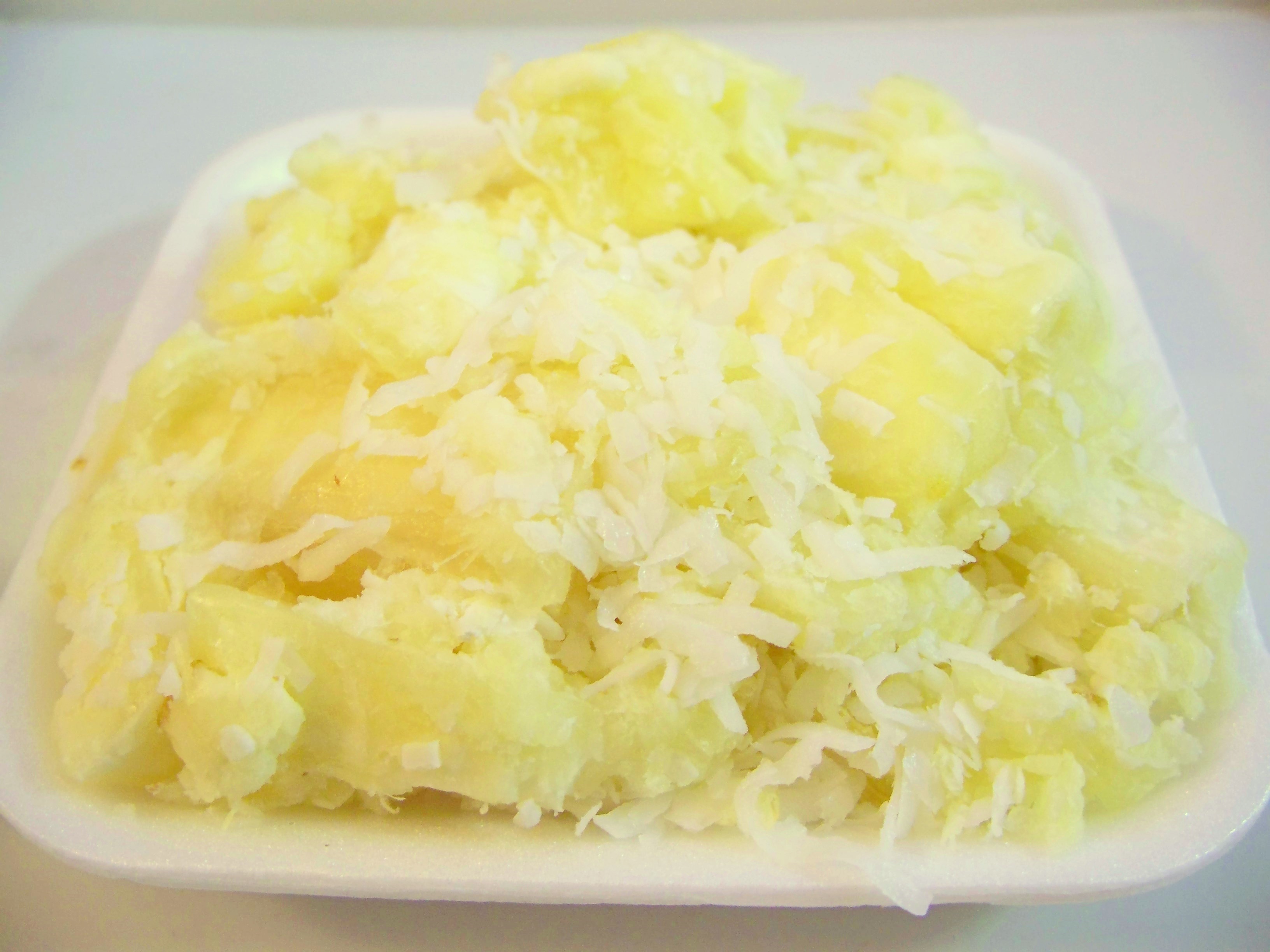
My mom is a skeptic about street snacks, most of the time because of the fingers handling them, but this thing passed. Like xoi, it should always be served hot right out of the steamer. Cool it down with a few blows of air and hurry it in the mouth; it may be wet and chewy, or it may be floury and nutty. But it’s distinctively cassava.

Back home, khoai mì hấp (steamed cassava) is among the cheapest Saigon street scoffs, because khoai mì (cassava root) is cheap (2000VND/kg these days, about 5 cents/lb), and the making is beyond simple. You boil the roots, then keep it warm and moist in a steamer. Unlike banh bao vendors, you keep the lid open to let out burly rolls of steam and invitation. The cone hat ladies sometimes add pandan leaves in the water, those ivory chunks then smell as sweet as spring rains. A customer comes, you scoop him a few palmfuls into a nylon bag and forget not the coconut shavings and the classic salt-sugar-sesame mix. A true street scoffer would eat with his fingers, probably holding the thick center string (the root’s woody cordon) to nibble on without touching its hot flesh.

I mix salt, sugar and my memory of what steamed cassava should taste like into the $1 prepackaged clump at Bánh Mì Ba Lẹ in Oakland, after microwaving it for one minute. The roots are dry and flavorless, probably out from a frozen section. But I taste only my younger days.

Address: Bánh Mì Ba Lẹ (East Oakland)
1909 International Blvd
Oakland, CA 94606
(510) 261-9800

Previously on Sandwich shop goodies: Bánh chuối nướng (Vietnamese banana bread pudding)
Next on Sandwich shop goodies: chuối nếp nướng (grilled banana in sticky rice – banana dog)

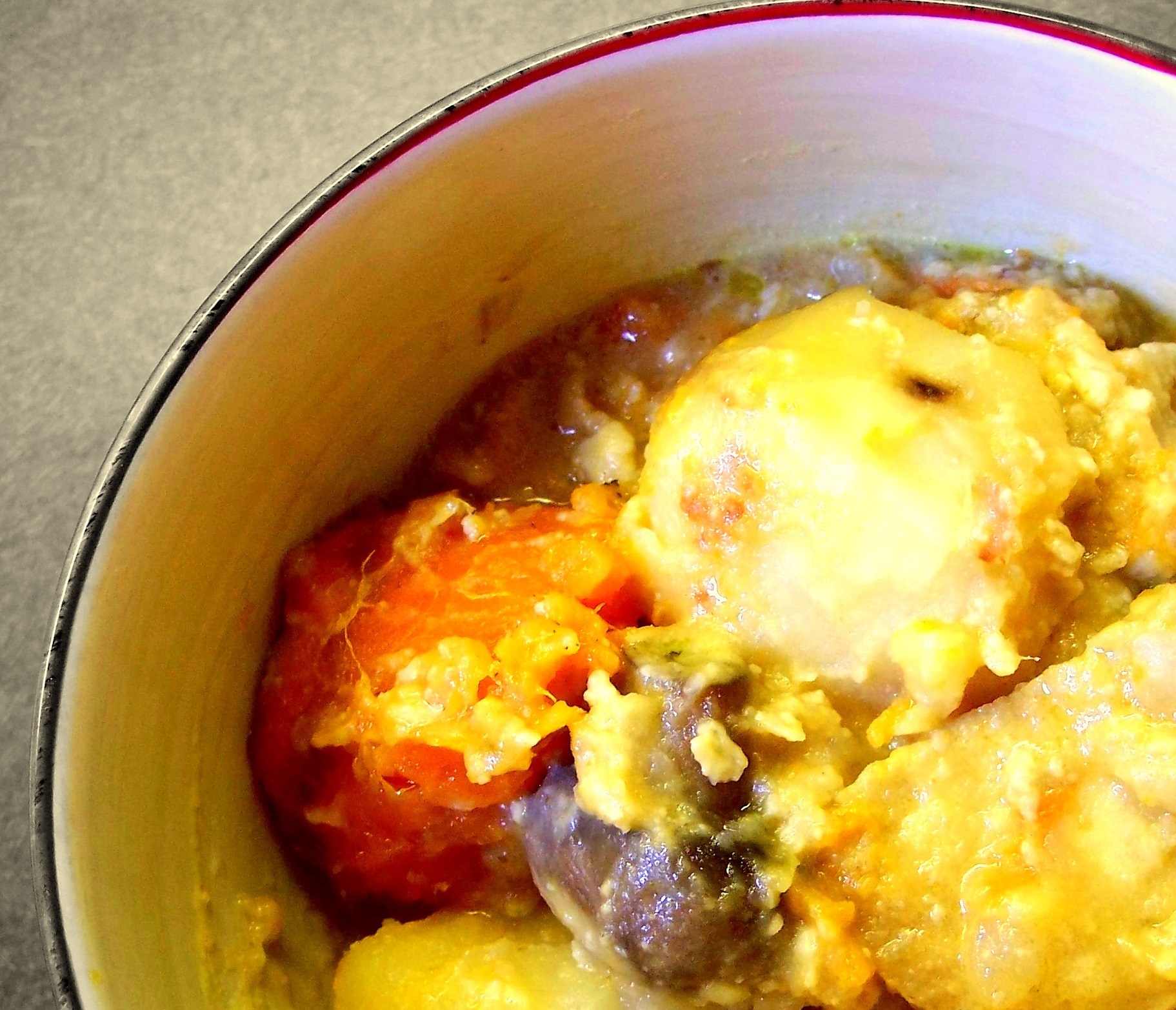
Got time? Make vegan curry.

September 07, 2010 By: Mai Truong Category: RECIPES, Vegan

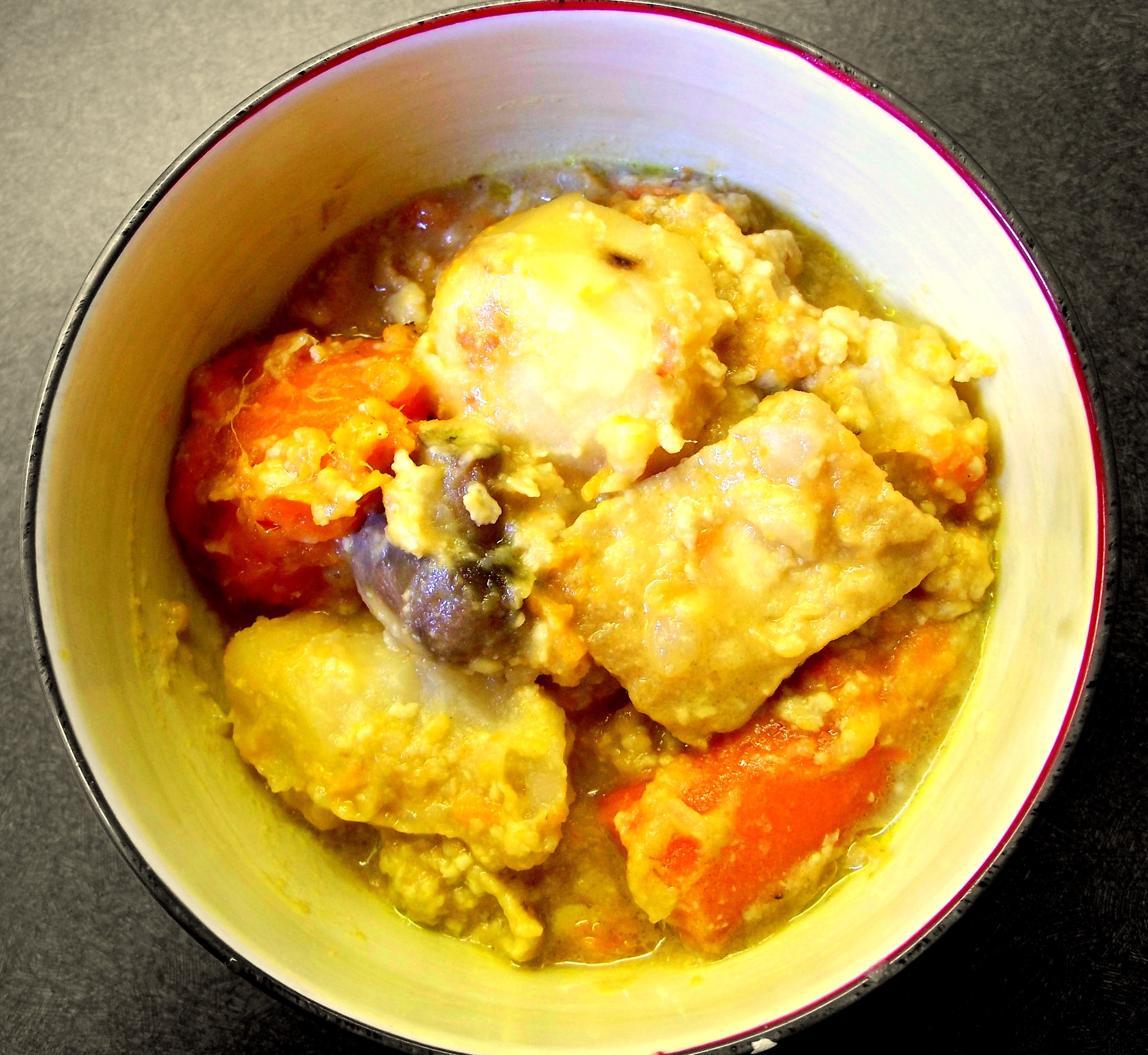
CAUTION: Don’t make this curry when you’re in a hurry. If you’ve got half a day to kill, then a trip to to the groceries and a couple of hours in the kitchen might be fun.


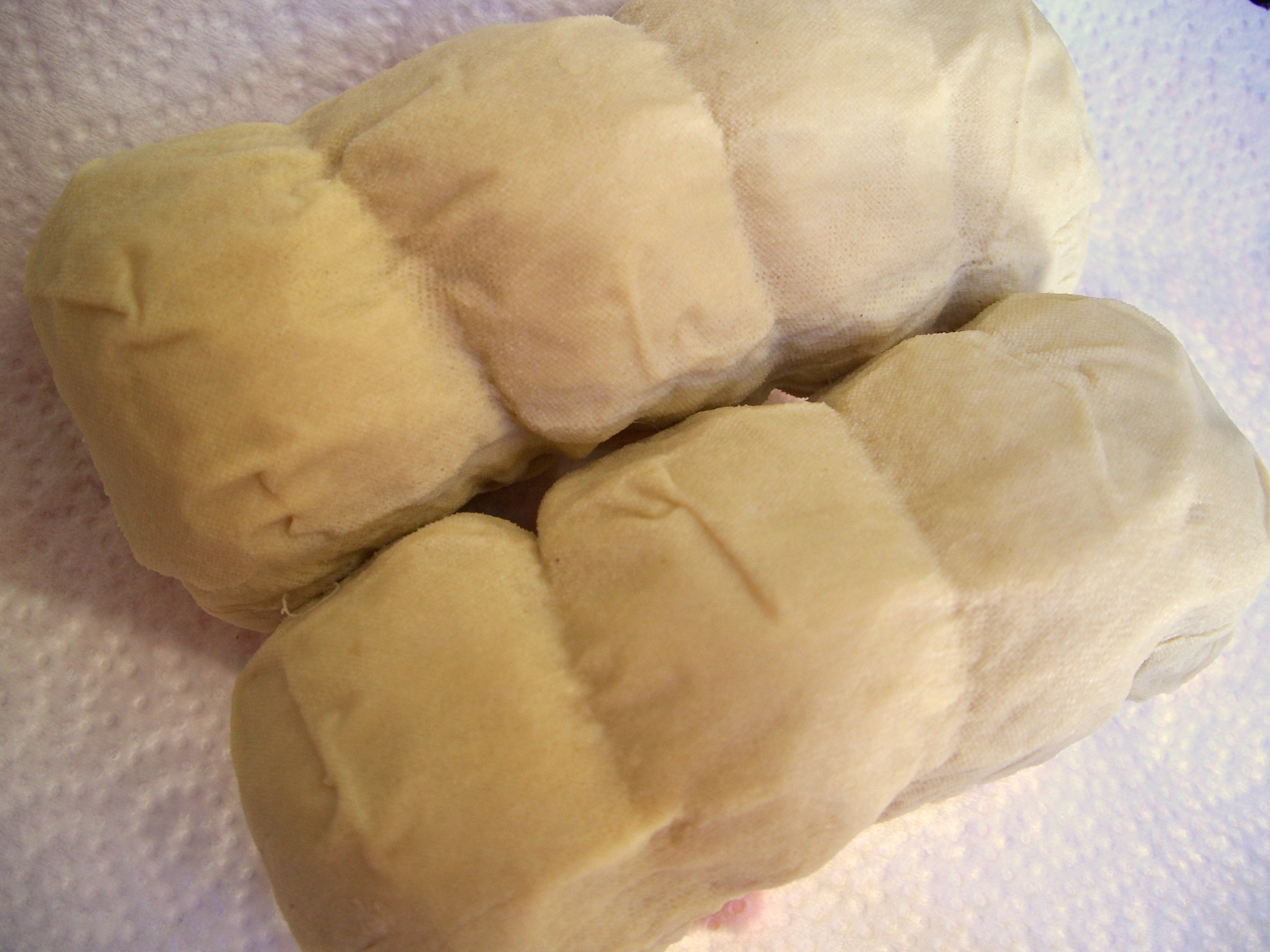
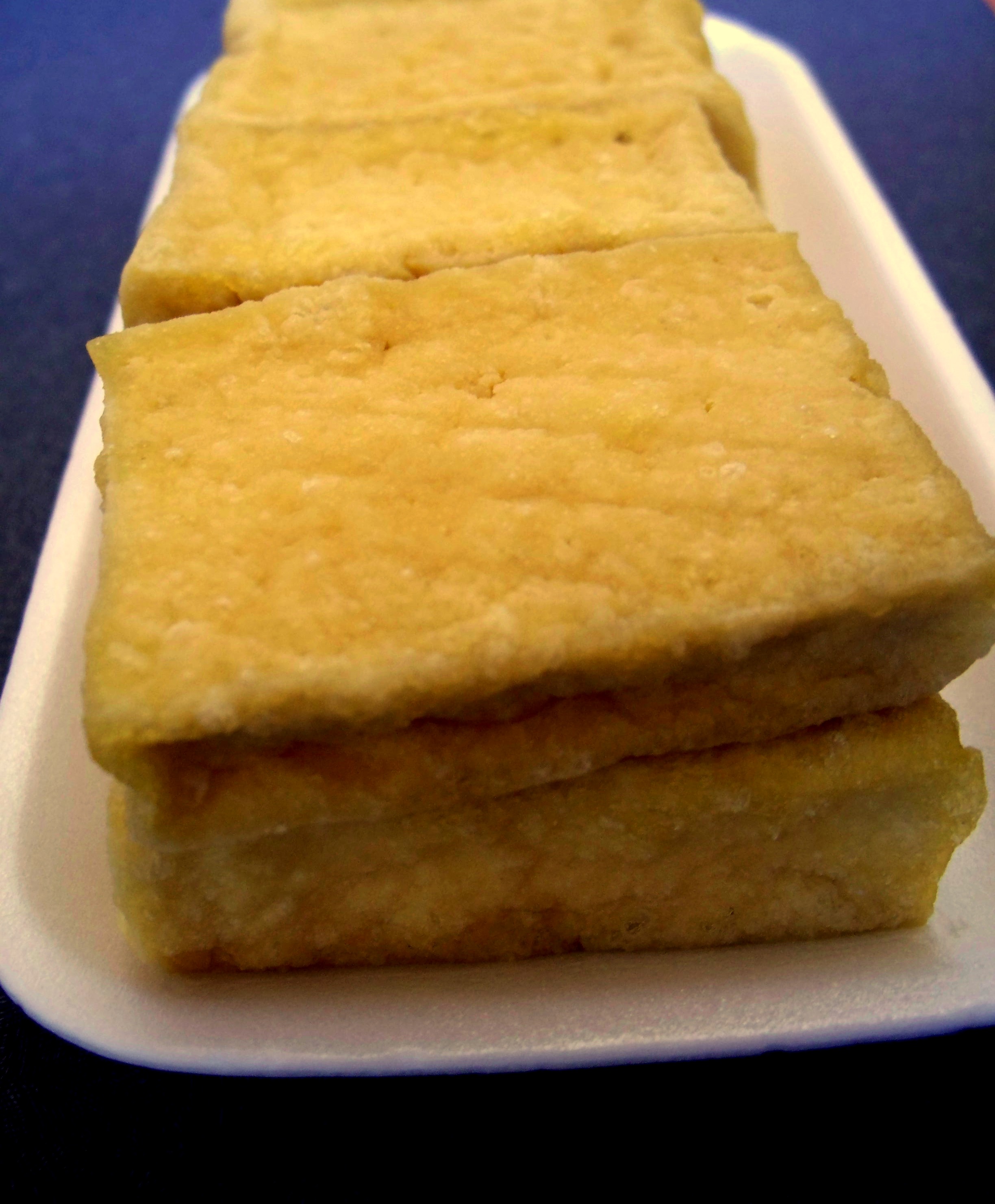
At the groceries: grab 3-4 plump potatoes, 2-3 red yams/sweet potatoes, carrots, mushroom, yellow fried tofu, fresh gluten meat, 1 can of coconut milk. The fresh gluten meat is white, slightly layered, with a wet, bouncy texture, usually sold in packages of 2-4 blocks. Do not get the canned kind, or the kind that looks like bread. If fresh gluten meat is nowhere to be found (as happened to me at 99 Ranch Market), “vegan chicken” might substitute.


At the sink: peel all potatoes, sweet potatoes, and carrots. Cut them into big chunks (at least a finger digit thick) so that they won’t just dissolve in the curry later. Cut the fried tofu and gluten meat into similarly thick chunks.


At the stove:

STEP 1: Fry everything (except the mushroom) separately. This is the time consuming part, since you have to oil the pan, heat the pan, fry the potatoes until one side is brownish golden, flip to the other side and do the same, take out the potato, and do it again for 4 more ingredients. Frying helps firming the surface of the chunks (again, to prevent dissolving) and adds flavor to the curry. Remember to use vegetable oil only, since this is vegan.


STEP 2: Sauté diced garlic in a pot until golden. Turn off the heat. Put the fried ingredients and mushroom into a big pot. And I mean a really big pot. It’s amazing how just a few tuberous roots, chunks of tofu, and a small box of mushroom can fill up the whole pot.

STEP 3: Seasoning. Add sugar, salt, and curry powder into the pot. My mom’s recipe calls for the salt:sugar ratio of 1tsp:4tbs, that means for a pot like this you’ll need about 2.5 teaspoons of salt and 10 tablespoons of sugar. Add curry powder to your liking, 1 tsp is enough for coloring, 3 tsp should be enough for flavoring. I used the curry powder that has garlic, ginger, clove, fennel, and cumin.
Side note: you don’t need to get the exact seasoning formula at this stage. You can always add more salt, sugar, and curry when it’s done cooking. It’s easier to taste everything then.

STEP 4: Add 1 can of coconut milk into the pot. Yes, the whole can. Add water until everything is just submerged in liquid.

STEP 5: Cook uncovered on medium heat until boil. Then keep cooking for another 15 minutes. Check to see if the potatoes are cooked by inserting a chopstick (or anything similar) into a chunk of potato, if the chopstick goes through easily, then it’s done.
Side note: Stirring is not necessary while cooking. You can stir if you want, but then you’d risk turning the sweet potatoes and/or the “vegan chicken” into mush (like me :P). Fresh gluten meat wouldn’t turn mushy, so if you can get it you’re in good shape.

Finally


At the table: serve warm with bread or rice.

Tags:

Sandwich Shop Goodies 9 – Bánh bò bông (Steamed sponge muffin)

August 12, 2010 By: Mai Truong Category: California - The Bay Area, Chinese, One shot, sweet snacks and desserts, Vegan, Vietnamese

Does this happen to you often? You give a friend something to taste, he says “It’s good. What’s it called?”. You’re stumped. The English translation is easy, but it would make no sense because the name matches neither the food, the ingredients, nor the method of cooking.


It happens to me quite often, and usually I shut off the questions with “Just eat it!”. But I wonder, too. Southern Vietnamese folks have a niche for obscure naming scheme. The names could have sprouted from some jokes, some overly simplified impromptu description they thought of at the moment, some mispronounced foreign names, who knows. The result is intelligible and untranslatable, like bánh khọt, bánh tét, chả đùm. The translatable-but-not-always-understandable cases happen when they attach random verbs after the categorical nouns to make a new name, like bánh xèo – “sizzling banh”, bánh lọt – “falling-through banh”, bò né – “dodging beef”, whatever that’s supposed to mean. Bánh bò belongs to this flock. Cow bánh? Unlikely, the thing is vegan to an n. I even thought about the possibility that the name is derived from its resemblance of the cow’s tripe, but they would have called it tripe bánh then. Crawling bánh? Less unlikely, more bizarre. Turns out some grandma saw the rising dough attempt to crawl over and out of the mixing bowl and thought “Gotcha! I shall name you the Crawling Banh”. Vietnamese food is so alive.

Technically the Mekong delta cooks got this recipe from Chinese immigrants and twitched things around a little. They call it “bak tong goh” (white sugar cake) in China. So plain. Bak tong go almost always gets sold with bánh tiêu: you tear open the hollow doughnut, insert bak tong go into the cavity, and get a fried-steamed-fried triple layer galore. I’m not too entranced by this “white sugar cake” because of its sour hints, which come from fermenting the batter with syrup. The Vietnamese rendition of bak tong goh, bánh bò, does not let the batter go sour, and is thus a charm.


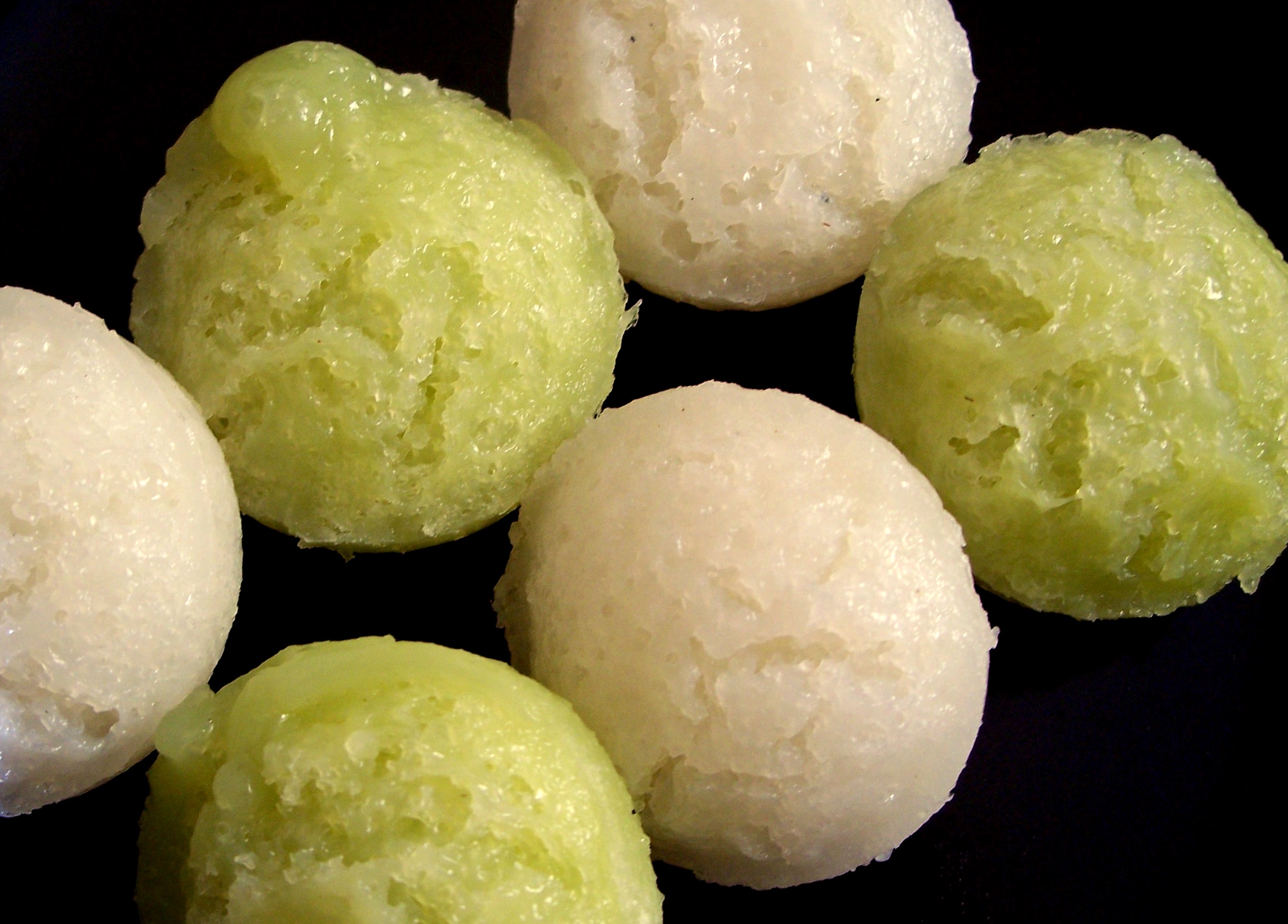
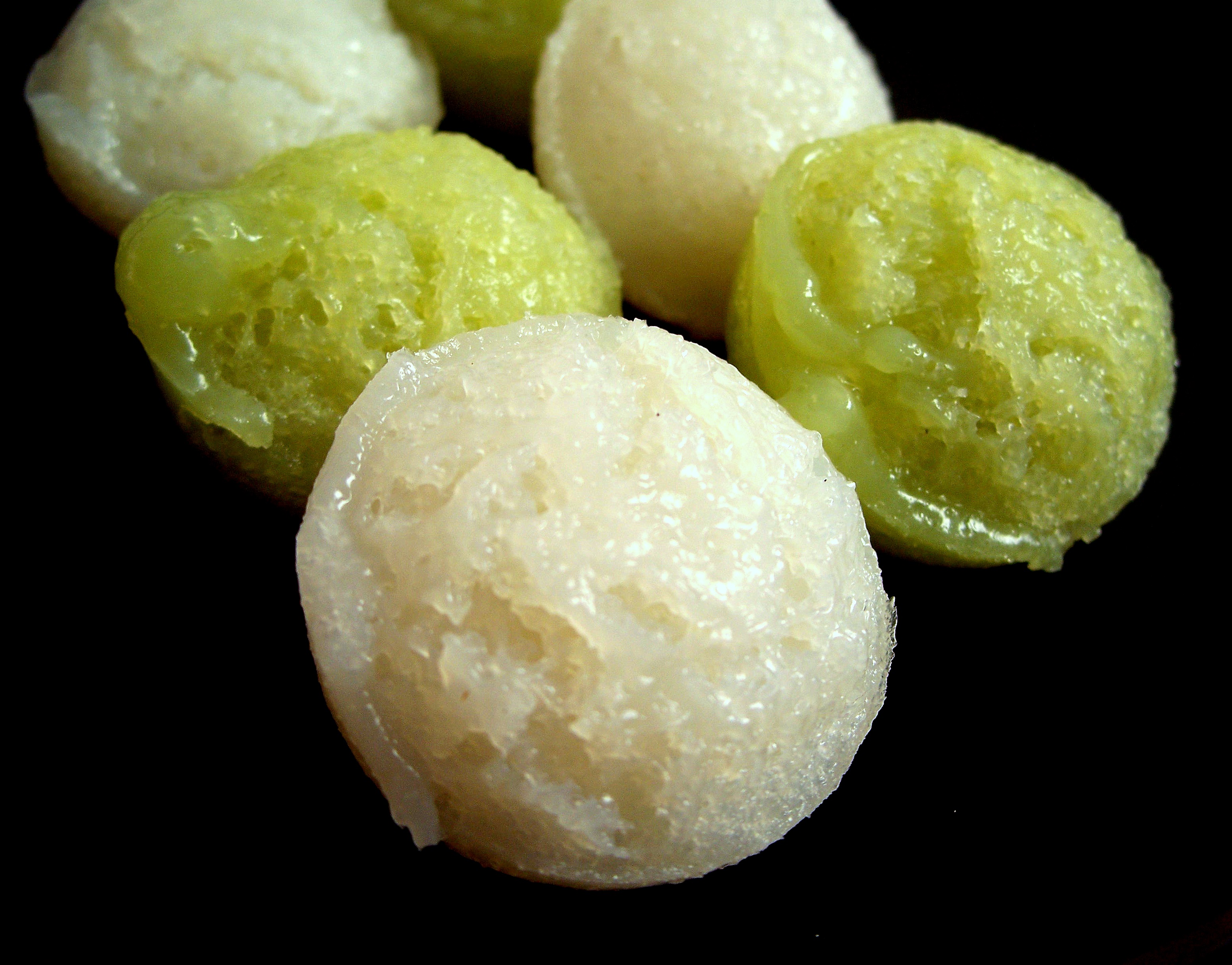
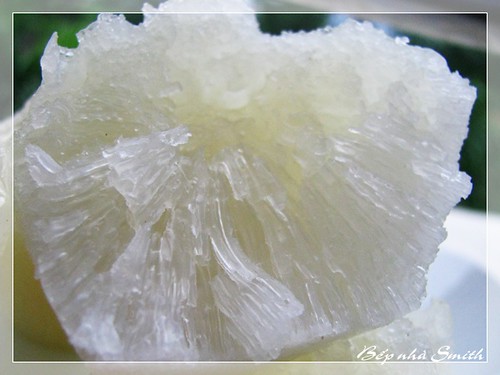
They shape like mini muffins, and look like fluff balls, so we call them bánh bò bông – “fluffy bánh bò”. The porous inside structure is compared with honeycombs or bamboo roots, or even crystals if you let your imagination go far enough. They’re either green or white with a coconuty sweetness, to pair with the burnt savory taste of toasted sesame, sugar and salt mix that comes sprinkling on top. They’re bouncy and chewy, and extremely light. We used to get the morning fresh batches from Ngọc Sáng bakery, 199 Ly Tu Trong, District 1, Saigon.


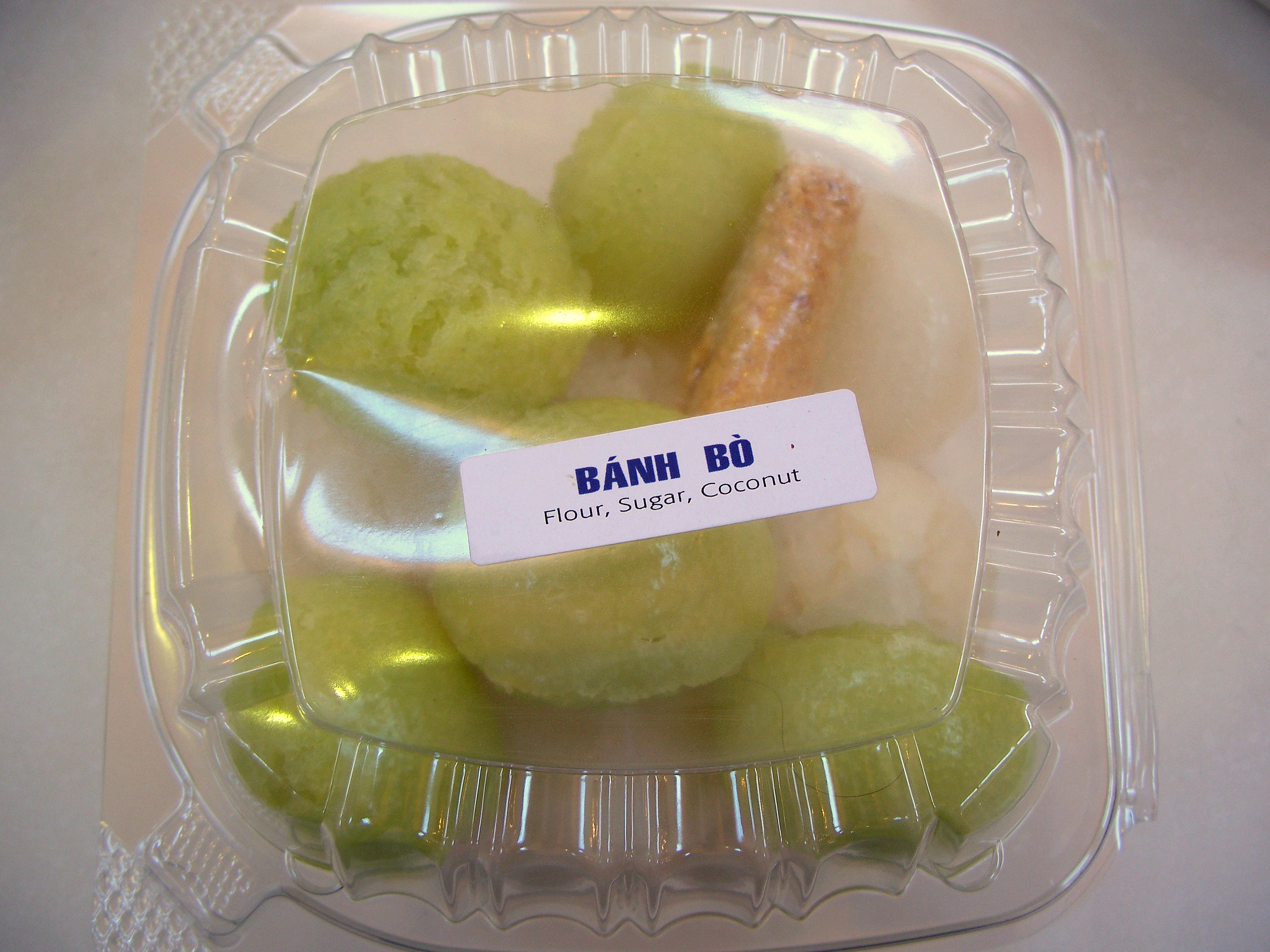
Now we settle for the plastic-packaged $2.50-worth bunch from Kim’s Sandwiches, 1816 Tully Rd #182, San Jose, CA. Certainly not half as good as the fresh ones, but it’ll do.

Previously on Sandwich Shop Goodies: bánh bao chỉ (loh mai chi)
Next on Sandwich Shop Goodies: bánh chuối nướng (banana bread pudding)

Hoang Tam at Playing With My Food has a nice simple recipe of bánh bò.

Sandwich Shop Goodies 8 – Bánh bao chỉ (loh mai chi)

August 01, 2010 By: Mai Truong Category: California - The Bay Area, Chinese, Comfort food, One shot, sticky rice concoctions, sweet snacks and desserts, Vegan, Vietnamese


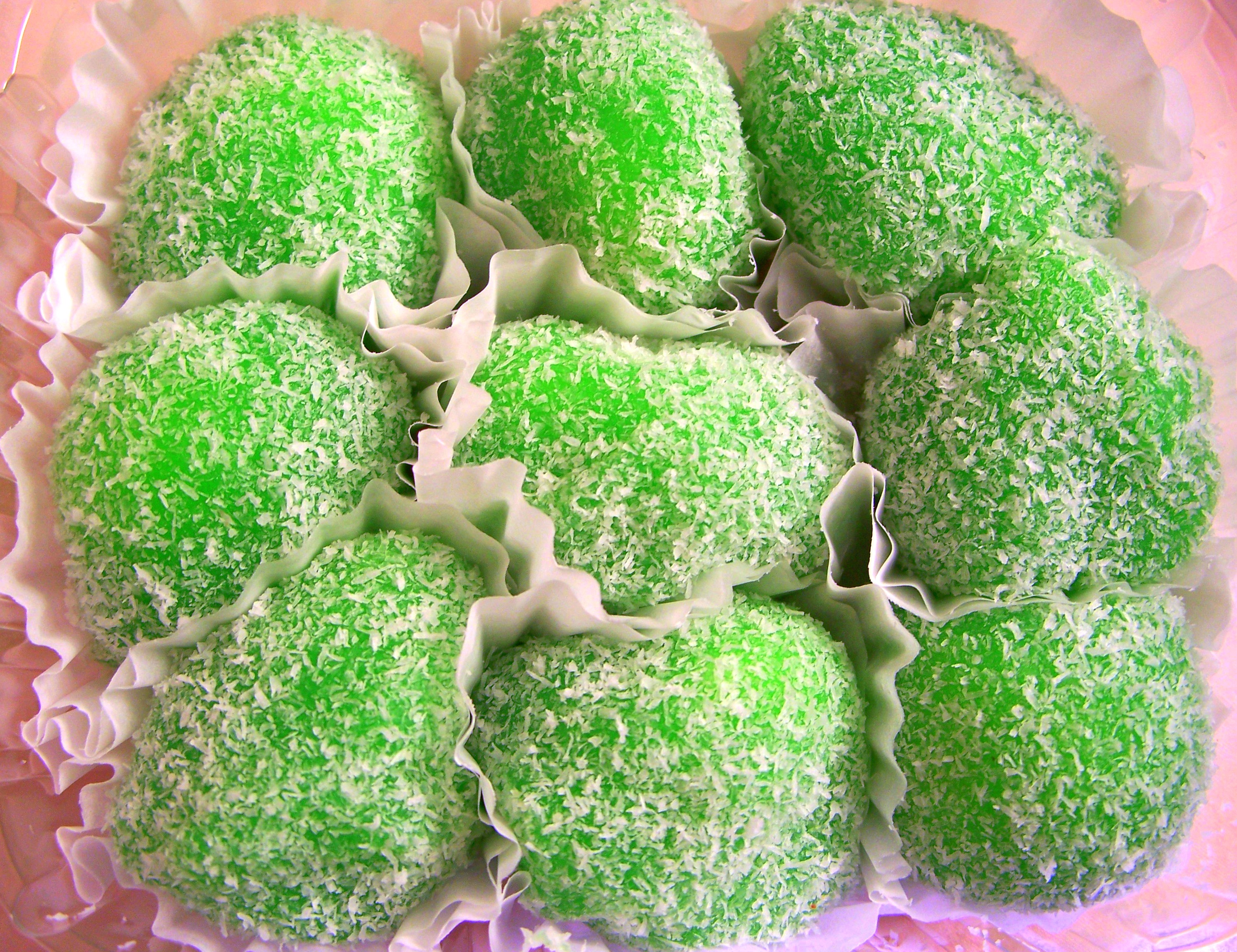
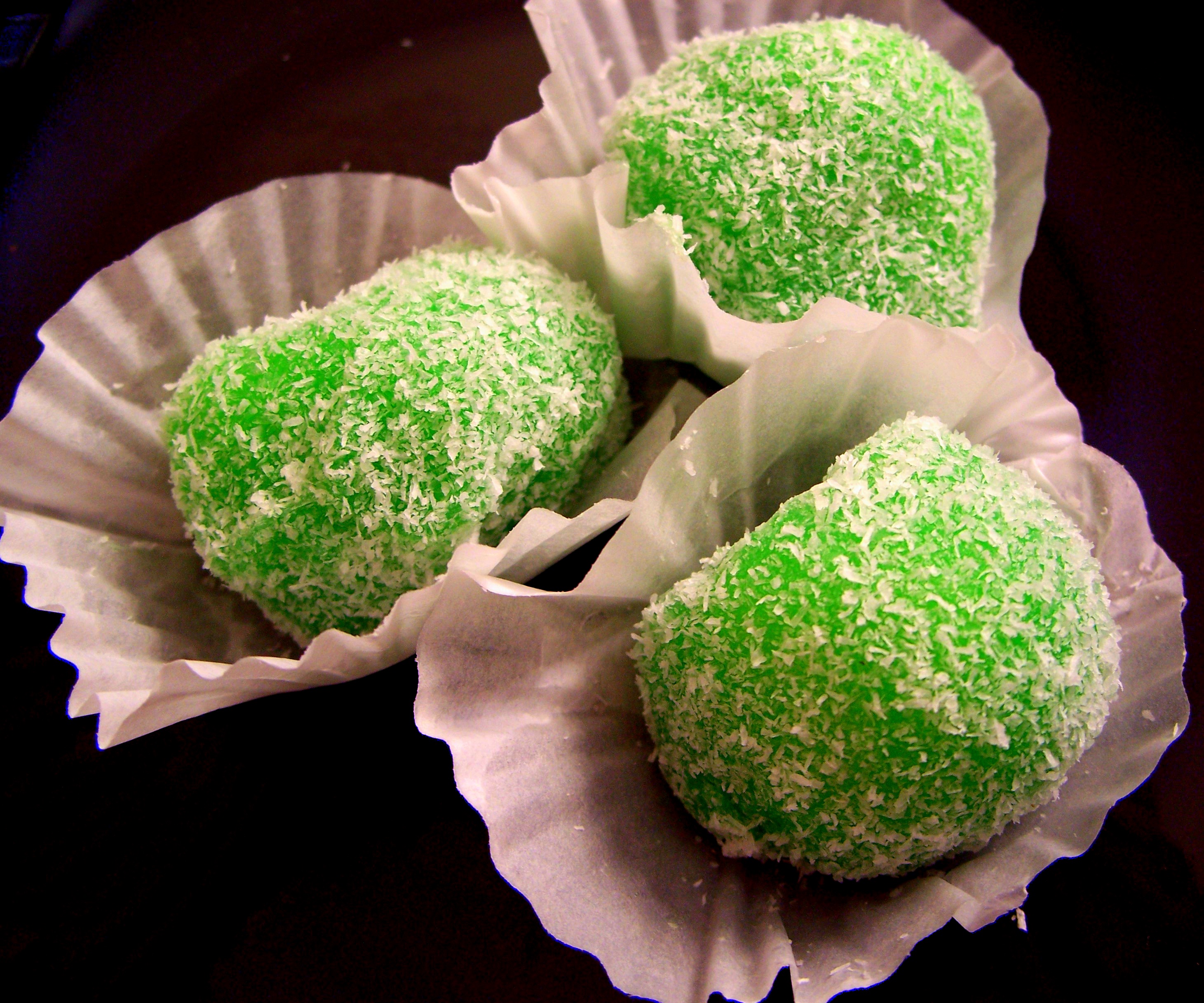
Yet another sticky rice snack that I vaguely remember eating one or twice during the early childhood, and found again in a San Jose sandwich shop more than ten years later. I was excited when I saw these green balls covered in coconut bits.

We Vietnamese call them bánh bao chỉ to distinguish from the meat-filled steamed bun made from wheat flour known to us as bánh bao. Just as bánh bao comes from China, so does bánh bao chỉ. Just as bánh bao are baozi and mantou in Mandarin, mandu in Korean, manju in Japanese, manti in Turkish, and many more, bánh bao chỉ too has its share of names.

The most-result-yielding Google search belongs to loh mai chi, commonly shown as little sticky rice flour dumplings with sweet ground peanut filling. Other variations in Malaysian and Chinese food blogs are snowball, loh mi chi, chi fa bun, muah chee (yeah, these are really cute you’d want to kiss them too)*, noh mi chi, and ma zi. Once again, I feel the need to learn Mandarin. Some say “noh mi” means “sticky rice” in Cantonese, but what does “chi” mean? Others, including the Vietnamese sites, insist that “chỉ” in bánh bao chỉ comes from “mà chỉ”, which is “ma zi”, which is “sesame seed” in Mandarin, which means “mi chi” is “sesame” (recall mi lao – sesame fluff) and we’re left with “noh” being “sticky rice”. It is reasonable enough if we consider that there are four types of fillings for bánh bao chỉ: black sesame, coconut, mung bean, and peanut. But the taste I had from childhood was the salty and sweet ground peanut in a gummy, springy thin layer of white dough coated with flour. Sesame filling must be a new twist.


And so are the vibrant green color and the coconut bits. And the size. Cheap bánh bao chỉ used to be sold on wheels: an old Chinese man peddled around the neighborhood with a glass tank on the back of his worn bicycle, the tank half filled with soft white balls as big as tangerines. Now these balls are about an apricot each, fit snugly in a plastic box and sold for $2 at Kim’s Sandwiches. Not only do they lose the romantic authenticity of a street food, they also taste like soap. The green dough, instead of having pandan flavor, reeks of artificial chemicals. The mung bean paste is sickeningly sweet.

I’ve never been so disappointed with a snack food. Do NOT buy these green balls, no matter how good looking they are. Search online for loh mai chi recipes, or search the streets for old Chinese vendors.

(*) It’s hard to refrain from making the connection between muah chee and the Japanese mochi (daifuku).

The exact origin of mochi is unknown, though it is said to have come from China. The cakes of pounded glutinous rice appear to have become a New Year’s treat during Japan’s Heian period (794-1185). As early as the tenth century, various kinds of mochi were used as imperial offerings at religious ceremonies. A dictionary dating from before 1070 calls the rice cake “mochii.” Around the eighteenth century, people began to call it “mochi.” Various theories explain the name. One is that “mochi” came from the verb “motsu,” “to hold or to have,” signifying that mochi is food given by God. The word “mochizuki” means “full moon.” People of the west and southwest islands called it “muchimi,” meaning “stickiness.”

– from New World Encyclopedia

So I know everybody thinks the entire Far East gets its stuff from China (yeah… no.), but here’s a crazy idea: what if this sticky rice ball with sweet fillings actually originated from Japan, then the Chinese got hold of some, and later passed it down South?

Previously on Sandwich Shop Goodiesbắp hầm (Vietnamese whole kernel grits)
Next on Sandwich Shop Goodiesbánh bò bông (steamed sponge muffin)

Chinese candy talking

July 25, 2010 By: Mai Truong Category: Chinese, sweet snacks and desserts, Vegan


Sometimes, very seldom, I feel the urge to learn Chinese. There are just too many little Chinese things going around without English labels. In fact, the harder it is to describe, the more likely its name is all in Chinese.


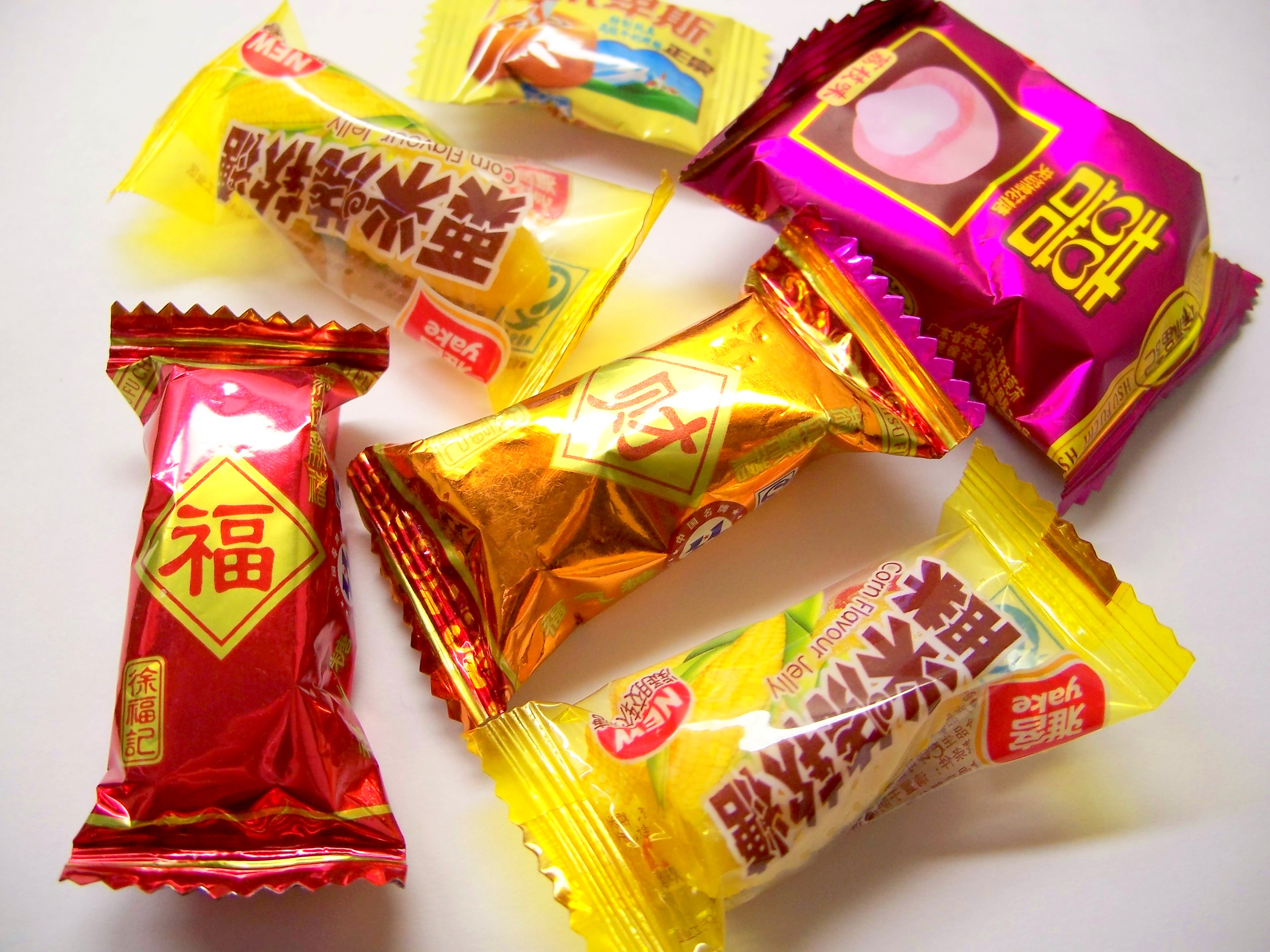
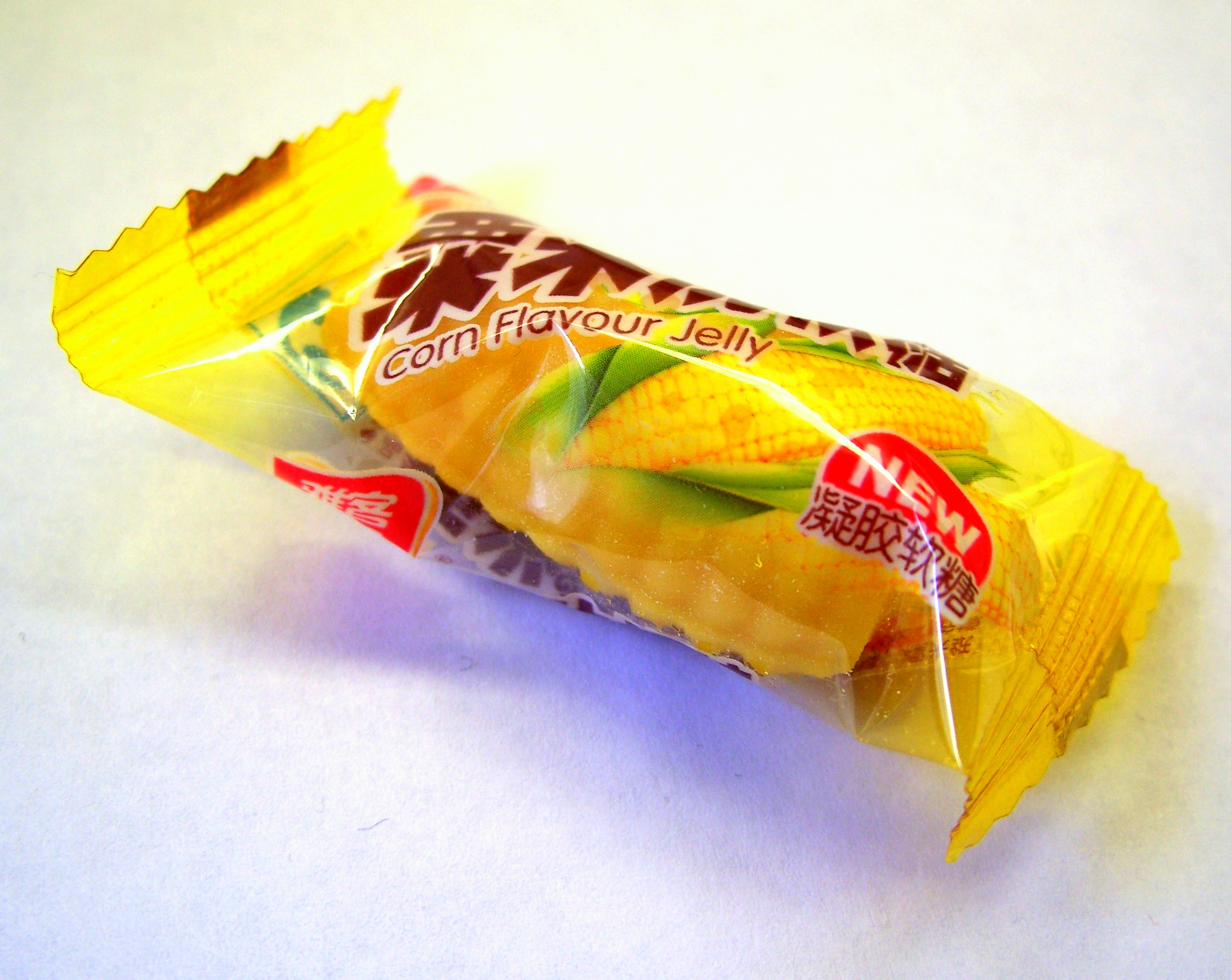
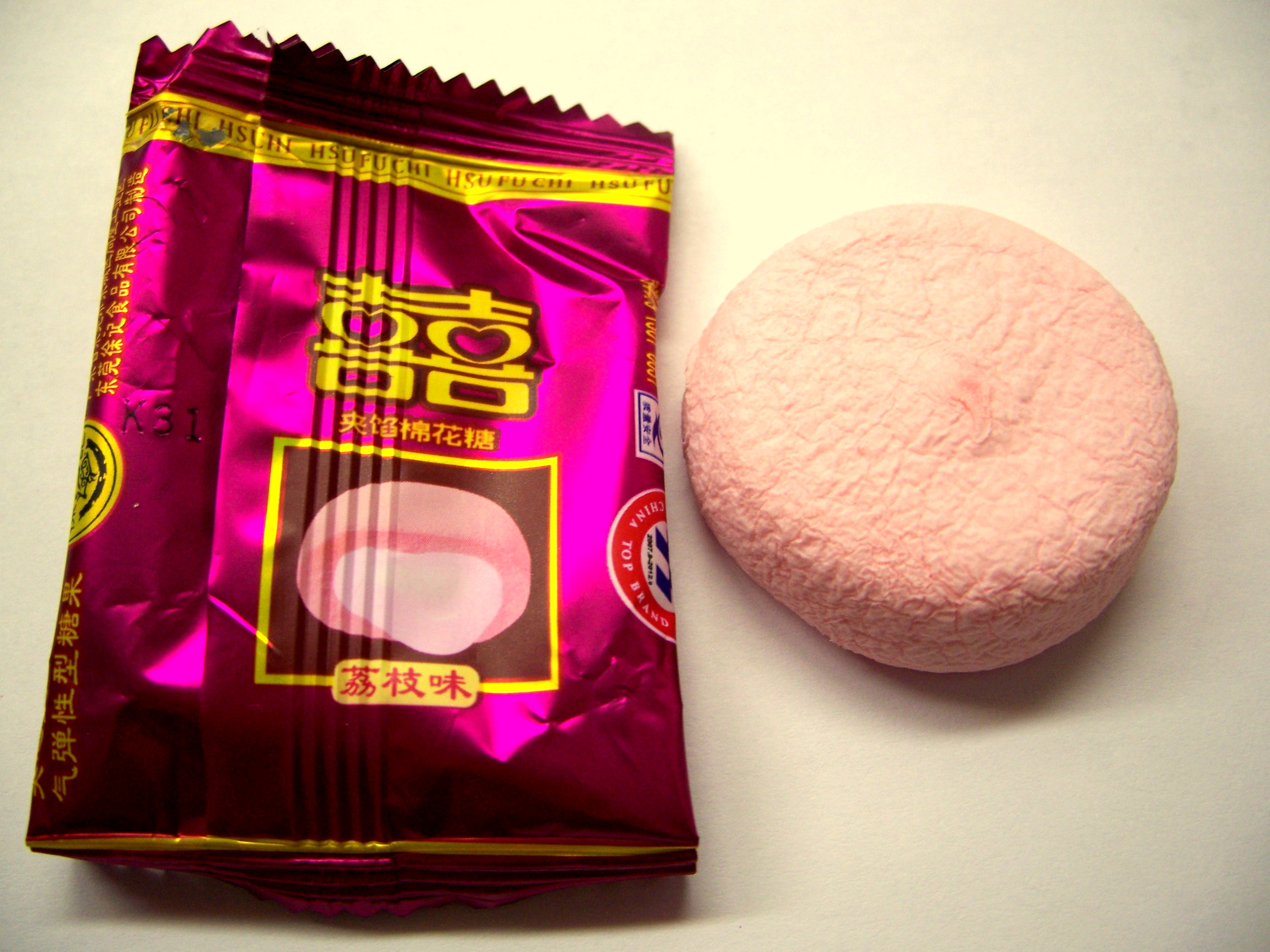
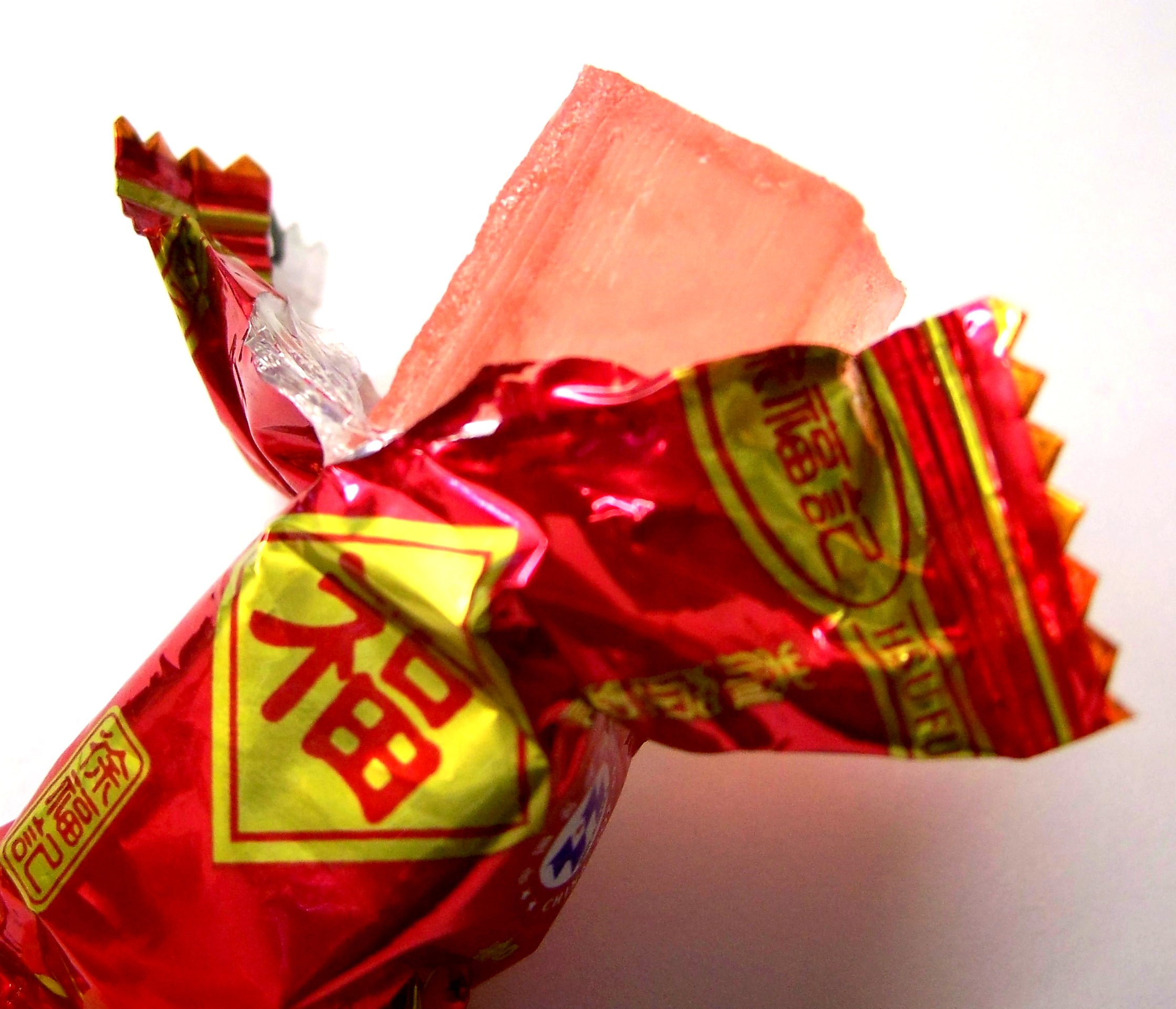
Take these sweets for instance. They come in handmade red paper boxes at a wedding.


This one shapes like a corn ear, smells and tastes like corn, and aptly has an English name: Corn Flavour Jelly. A nice chew but you gotta git it down fast or you git tireduvit.


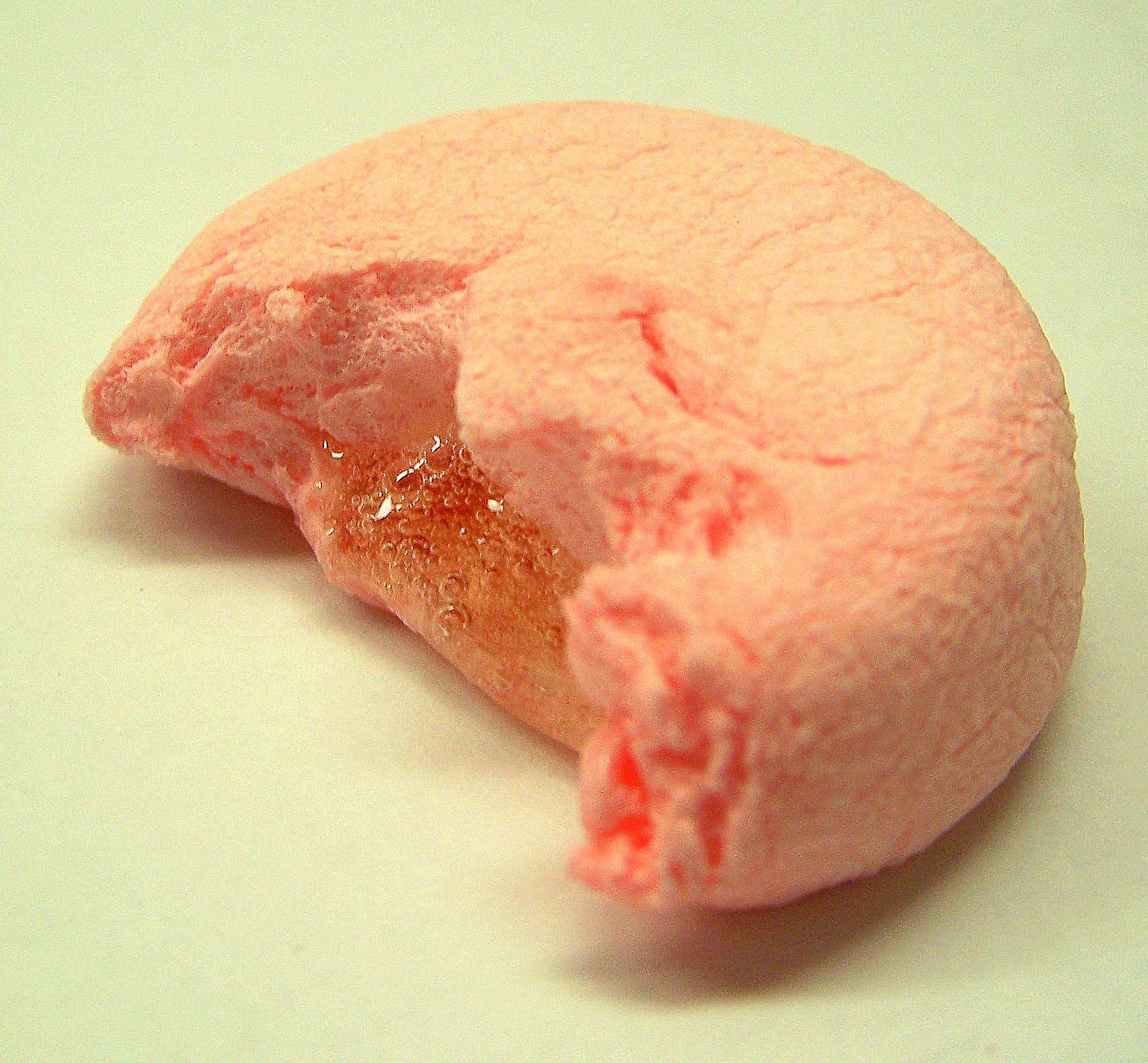
This one doesn’t have a single English word, but it has a picture to tell you what to expect. Pink for strawberry, pillowy for marshmallow, and spewing for syrup. I don’t really care if they put toxins in it, this was a good syrupy center marshmallow bite.


Lastly, this one has neither English nor picture. My best description: a jello stick as long as my pinky, reeking of  unidentifiable artificial chemicals. I can’t tell if it’s supposed to be strawberry or raspberry or cherry, or any flavor for that matter. The taste is about as thrilling as Jesus and Mary Chain’s Some Candy Talking:

Tags:

Sandwich shop goodies 7 – Bắp hầm (Vietnamese whole kernel grits)

July 19, 2010 By: Mai Truong Category: California - The Bay Area, Comfort food, One shot, savory snacks, Vegan, Vietnamese


Corn must be my favorite grain. Growing up with very limited access to street food, I used to fix my eyes on the corn carts and baskets of market women near home, secretly drooling. They had a big steamer packed with corn ears still wrapped in their wilted yellow husks and brown silk, sometimes a glass shelf with peeled ones, white and shiny and plump. I was always so happy when Dad bought xôi bắp, sweet corn and sticky rice, for breakfast. Then at night there was corn-on-the-cobs grilled by coal fire and smothered with lard and green onions. It’s better than butter, no doubt. At che stalls there was corn pudding with coconut milk, which I like when it’s warm and gooey. And that was all the Vietnamese corn stuff I knew.

Not until recently that I came across another corn thing, a midfielder between chè bắp (corn pudding) and xôi bắp, and porridge too. I hate porridge, but I love this stuff.

Some people just call it “bắp nấu”, “cooked corn”, either to make sure that we know we’re not eating raw ones or to confuse questioners with the boiled whole ears, also known as bắp nấu. The more careful gourmands label it “bắp hầm“, literally “simmered corn”, since the hulled kernels are slow cooked until saturated with water and soft like a canned sweet pea. But it’s not mush, the corn still retains a tiny bit of chewiness that entertains the gums.


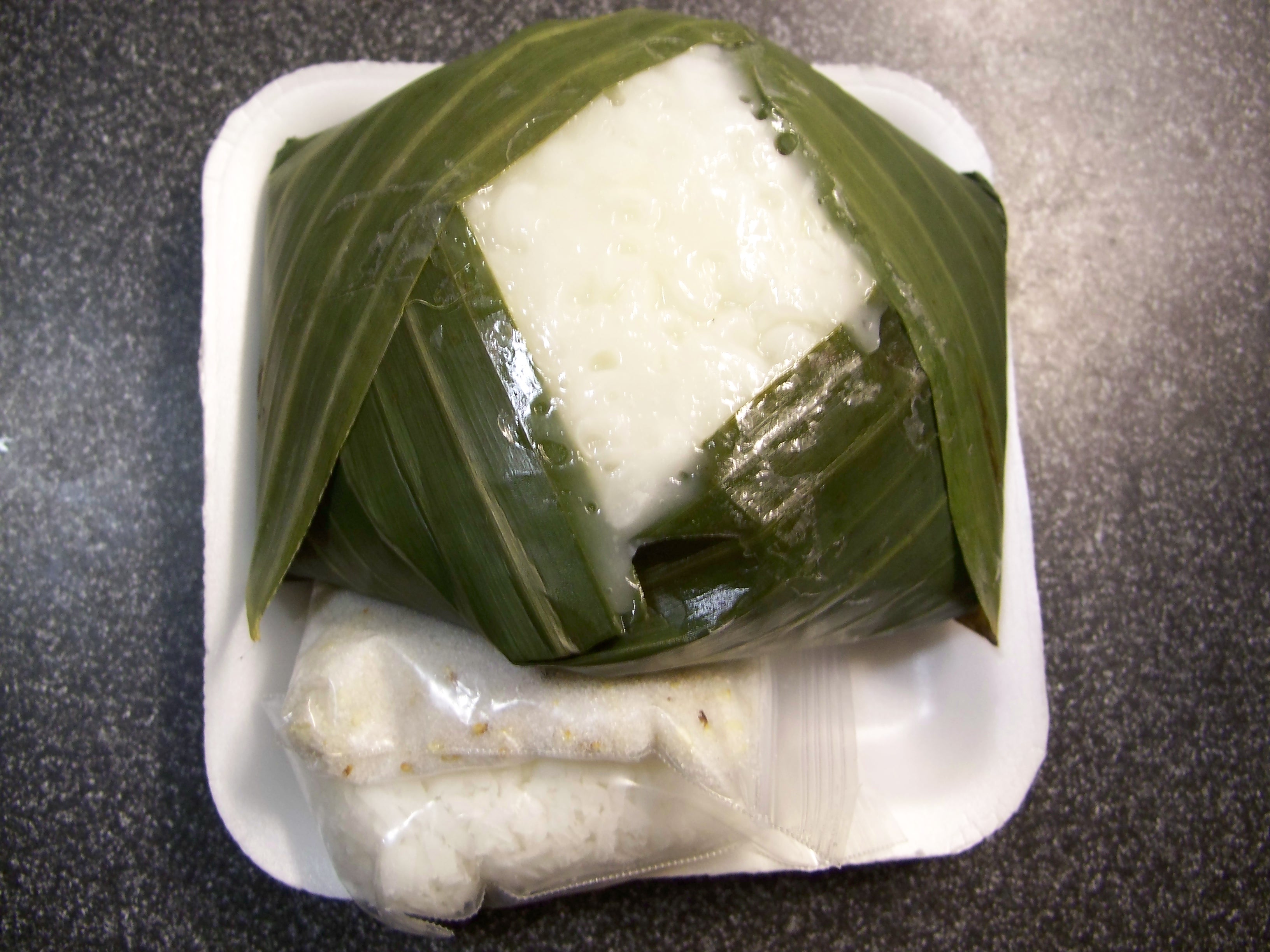
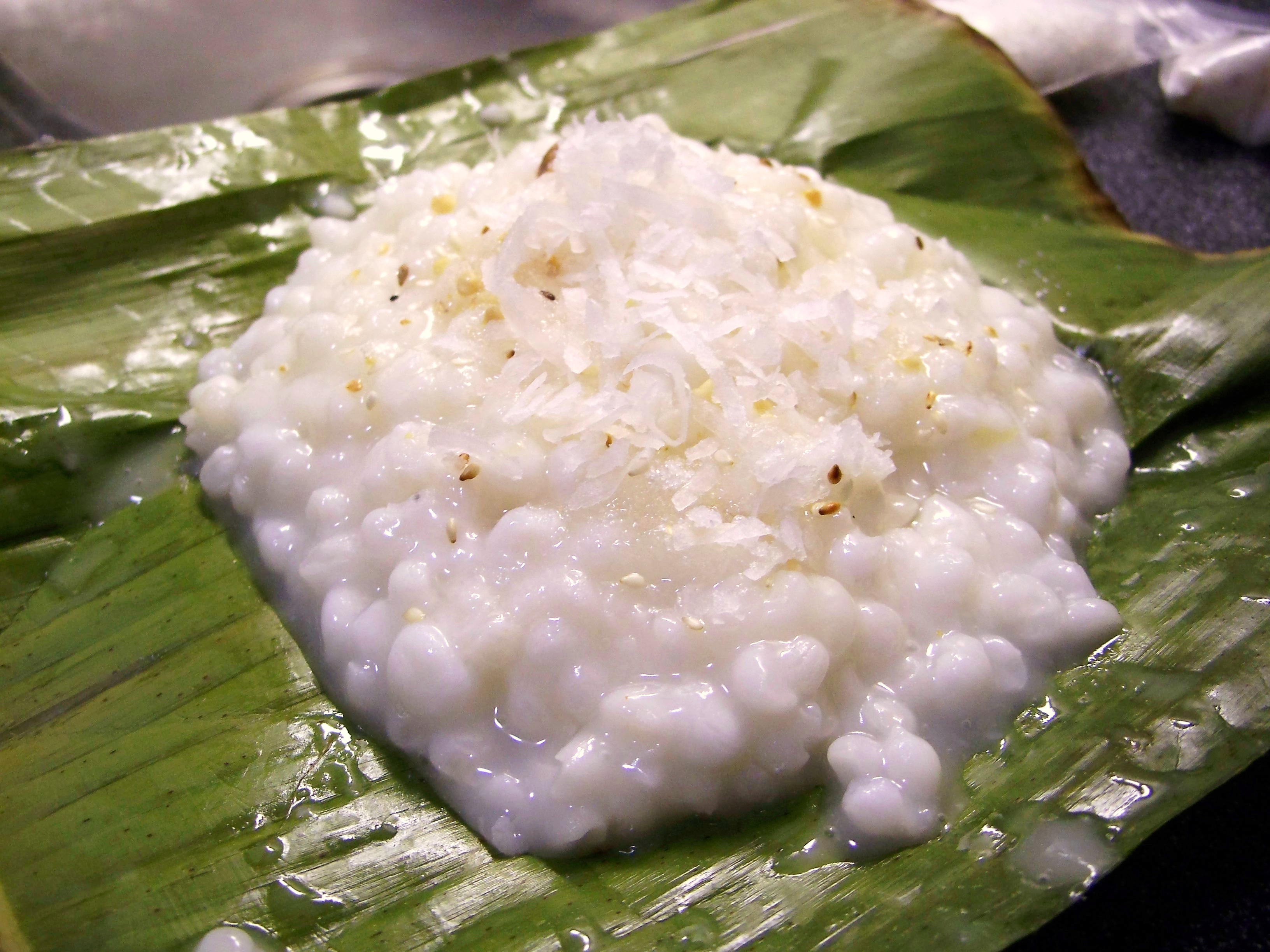
The classic vendor look is a ladle of hot white bubbly goo half wrapped in banana leaf, a few spoons of SSS (sugar-salt-sesame) mix huskily dumped on top, a tuft of coconut shreds on top of all, and a finger-long piece of banana leaf stem to scoop.

The sandwich store look has the SSS mix and coconut in tiny Ziploc pouches, a half pound of corn in banana leaves, all cling wrapped on a styrofoam plate and sent home with a plastic spoon.  It’s sleek alright.

Makes awesome meals on vegetarian days!

The white easy package sells for two bucks at Huong Lan Sandwich #4 in Milpitas (41 Serra Way, Suite 108, CA 95035). My guess would be 2000VND (~11 cents) if you buy it in Vietnam, anyone knows?

Previously on Sandwich Shop Goodies: bánh dừa (coconut sticky rice stick)
Next on Sandwich Shop Goodies: bánh bao chỉ (loh mai chi – Chinese sticky rice flour ball with sweet fillings)

Sandwich Shop Goodies 6 – bánh dừa (coconut sticky rice stick)

July 15, 2010 By: Mai Truong Category: California - The Bay Area, One shot, savory snacks, sticky rice concoctions, Vegan, Vietnamese


If anything can be called the Vietnamese granola bar, it’s bánh dừa.

Coconut bánh. The simple name lends room for innocent confusions with the French Coco au Miel, the Malaysian kuih binka gandum, the coconut cookies, and a whole flock of other Vietnamese coconut treats also known as bánh dừa (with some additives like “grilled”, “honeyed”, or “lemon”). People of the deep south don’t get too fancy with names: when the bánh has coconut milk mixed with sticky rice and is wrapped in coconut leaves, it has every right to be call a coconut bánh. Besides, children identify it by the unique look.

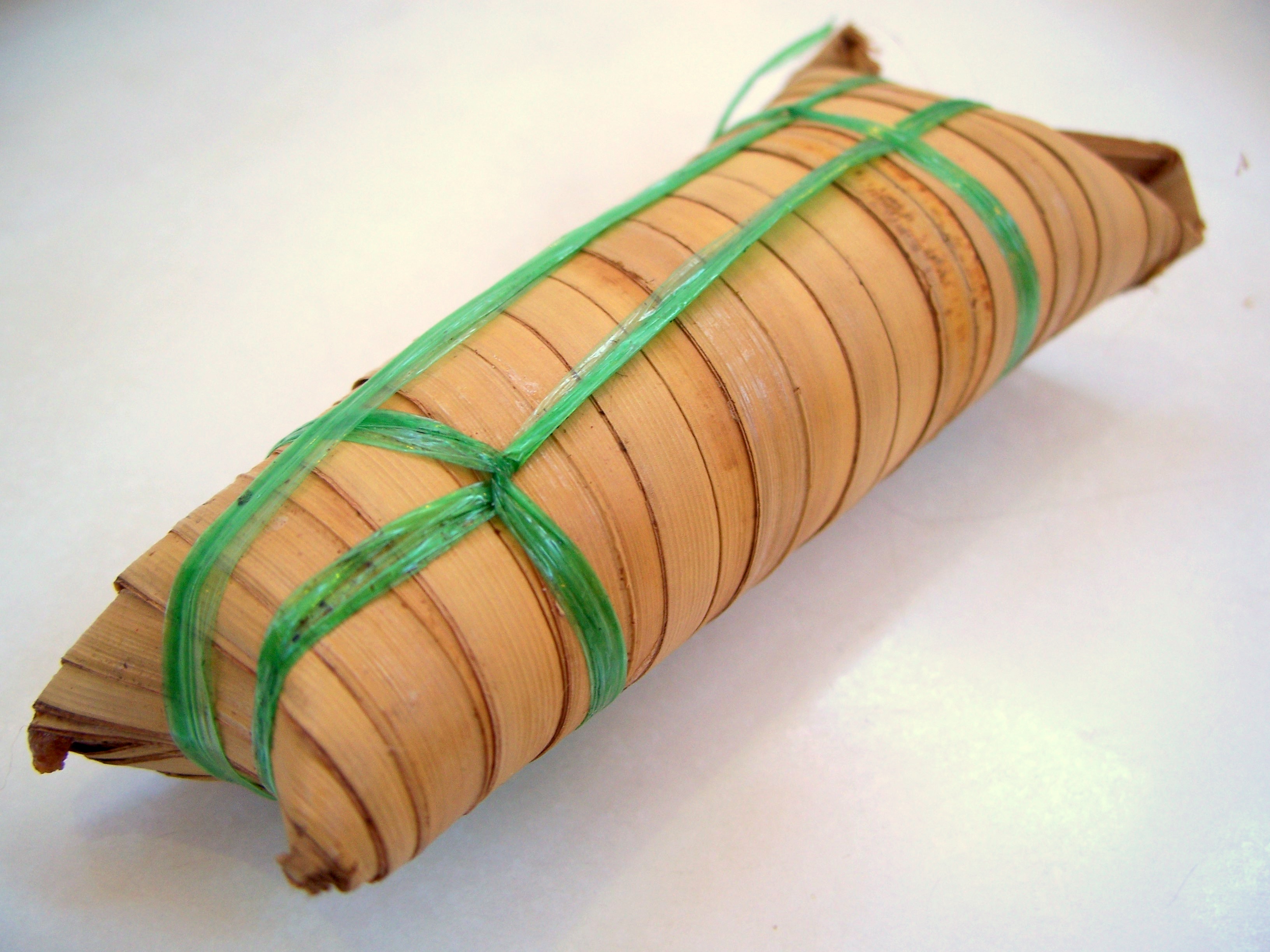
A stiff, almost cylindrical case, as long as a palm and almost two fingers wide, is made from wrapping one single young coconut leaf around hours of training, to protect the glutinous rice and bean paste core for days in the tropics’ heat. The one I bought stays good for two weeks in the fridge, unwrapped.


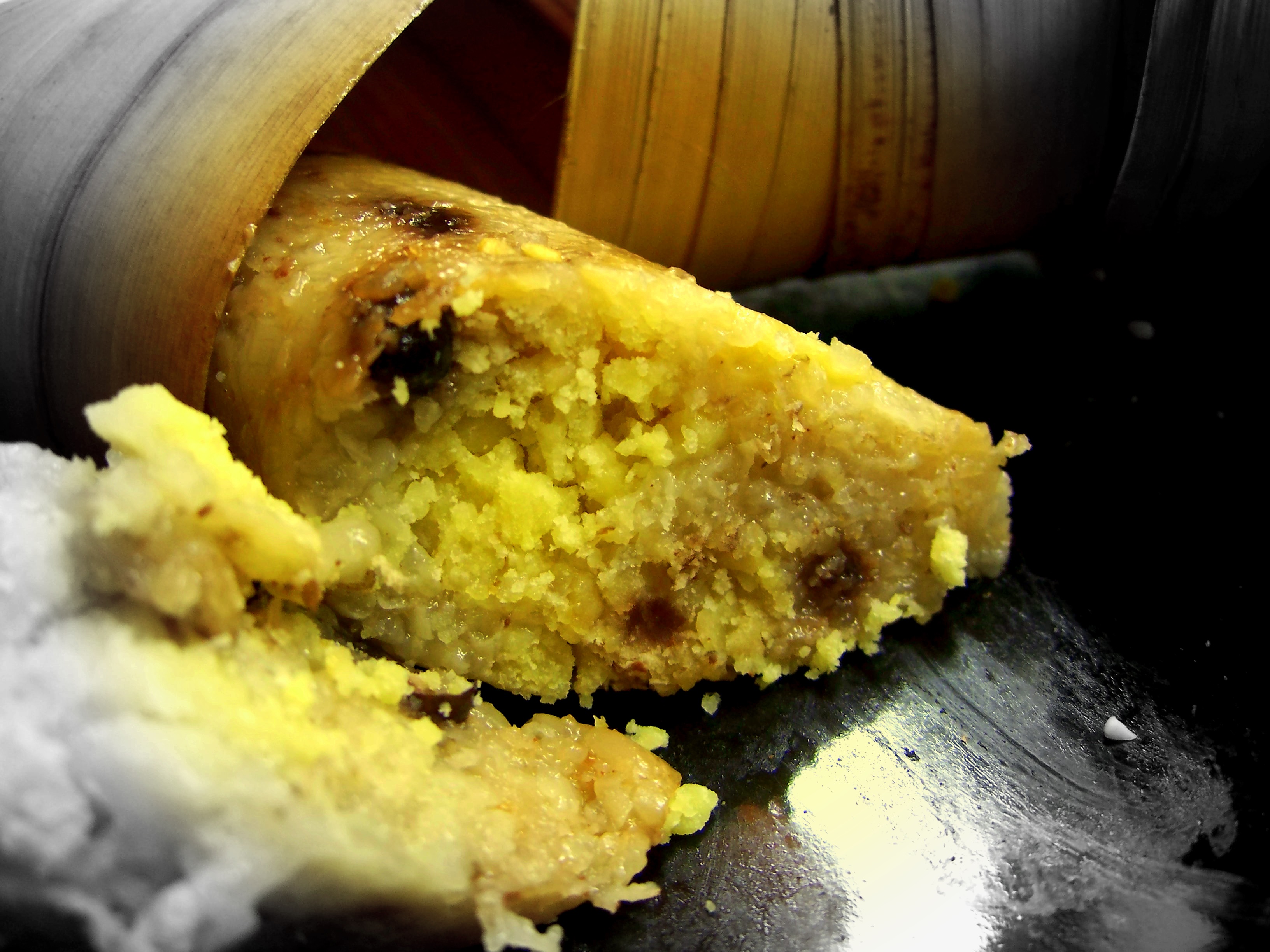
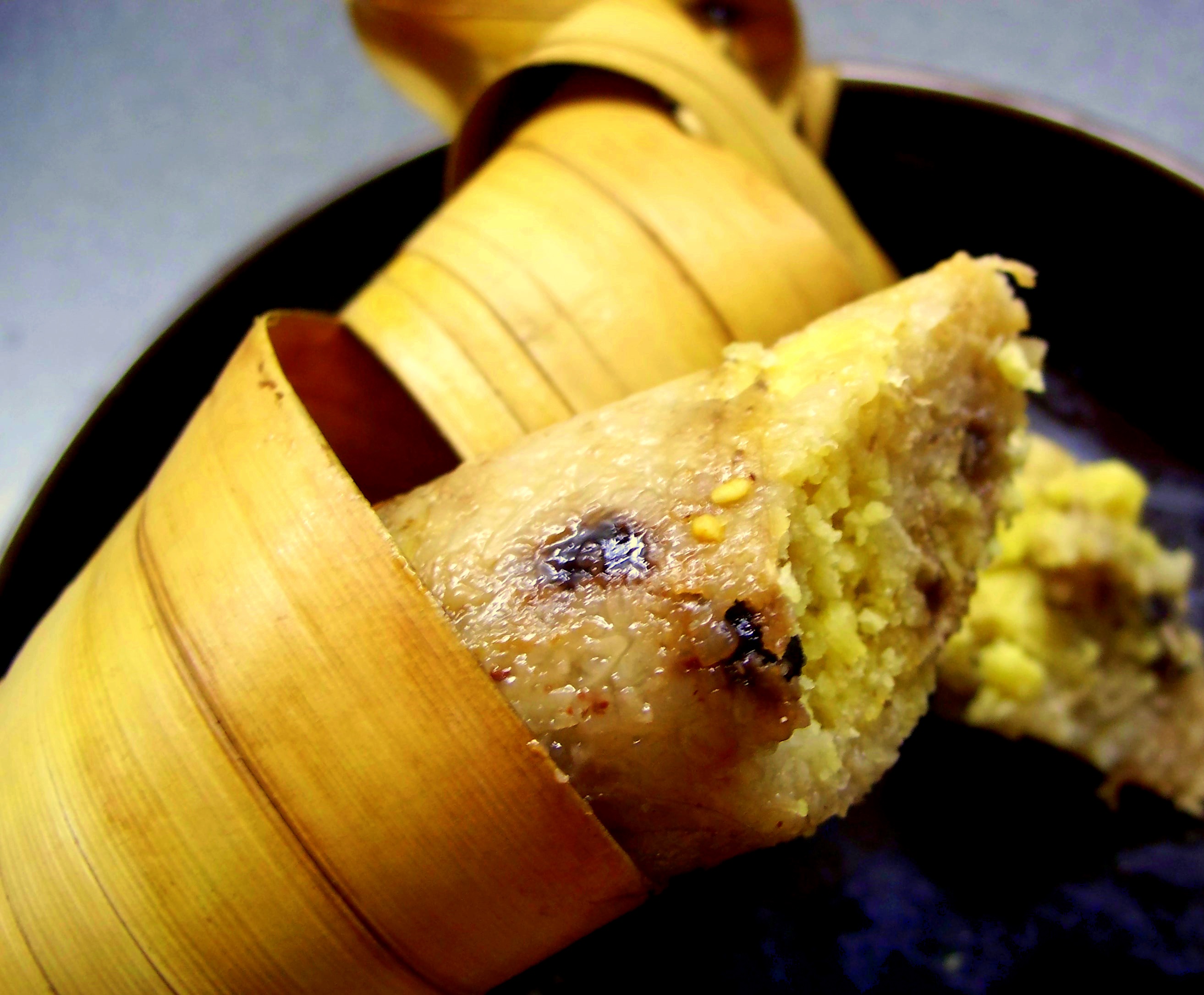
Such longevity expectedly costs a good deal of skill and time. Wax sticky rice, a special cultivar in Vĩnh Long known for its gumminess and fragrance, is soaked in water at midnight. The banh makers wake up at 4am to wash the sticky rice as carefully as six to seven times to get rid of bran and dirt, the first step to delay spoilage. Washed sticky rice is then air dried, while the banh makers squeeze coconut milk out of grated coconut and wrap up the leafy tubes, which could turn an ugly wilting purple unless put in the shade. Dried sticky rice is mixed with coconut milk, salt and sugar, sometimes black beans, into a gooey mess to be portioned into the tubes. The first one third of the tube is sticky rice, then comes mung bean paste or half a ripe banana, and more sticky rice to fill up the tube. I will forever be puzzled by how to make the sweet filling perfectly in the middle of the sticky rice layer. There is also no clear instruction on how to tie up the banh with a string, but rest assured that there are many ways to get it wrong. If the string is too tight, sticky rice can’t rise and your bánh dừa is one dry stick. If the string is too loose, water vapor seeps in while steaming, your bánh dừa becomes half-porridge and spoils fast.

By 7am all wrapping is done, banh makers throw their sticks, now strung together in small bundles, into the boiling steamer for a solid 5 hours. The steam water is often mixed with alum to keep the case’s healthy yellow color, but too much alum can make the banh turn sour. At noon, fresh bánh dừa is ready for the markets.


Holding the light and compact banh in hand, I picture country kids of the Mekong Delta stick these coconut sticky rice sticks in their pockets and school bags for an early morning in the rice paddies, an afterlunch snack, a quick filler while running around with the kites. The coconut leaf unwraps swiftly with no effort, reveal a firm and chewy, fatty and nutty, salty and earthy treat that requires no reheating  or refrigerating. Some may see it as merely a miniature bánh tét, but the coconut leaf gives bánh dừa its signature fragrance and a deserving separation from the banana leaf wrappers.

Bánh dừa is cheap. Ten years ago the Southern Vietnamese villagers sold them for 500VND a stick. Inflation brings it up to 2000VND these days, roughly 11 US cents.  The ones in San Jose banh mi stores cost one wild buck each, but they often lie on the counter unnoticed for who knows how long. “Posh” customers don’t go for the leafy wrapped treats when plastic and styrofoam and colorful packaging look more sanitized. City kids are not attracted to these because they don’t scream chocolate and sugar. Like the old country ham of North Carolina, bánh dừa has fallen out of the trend, and most of their makers have long put away the steamers for something more profitable.

I had a bánh dừa for dinner today. How much longer will its kind stay in the market to compete against the Western sweets? I don’t know.

————————–

Got it from: Kim’s Sandwiches
(in the Lion Supermarket area)
1816 Tully Rd 182, San Jose, CA 95111
(408) 270-8903

—————————
Previously on Sandwich Shop Goodies: bánh khảo/bánh in
Next on Sandwich Shop Goodies: bắp hầm (Vietnamese whole kernel grits)

Sandwich Shop Goodies 5 – Bánh khảo (bánh in)

July 11, 2010 By: Mai Truong Category: California - The Bay Area, Northern Vietnamese, One shot, sticky rice concoctions, sweet snacks and desserts, Vegan, Vietnamese


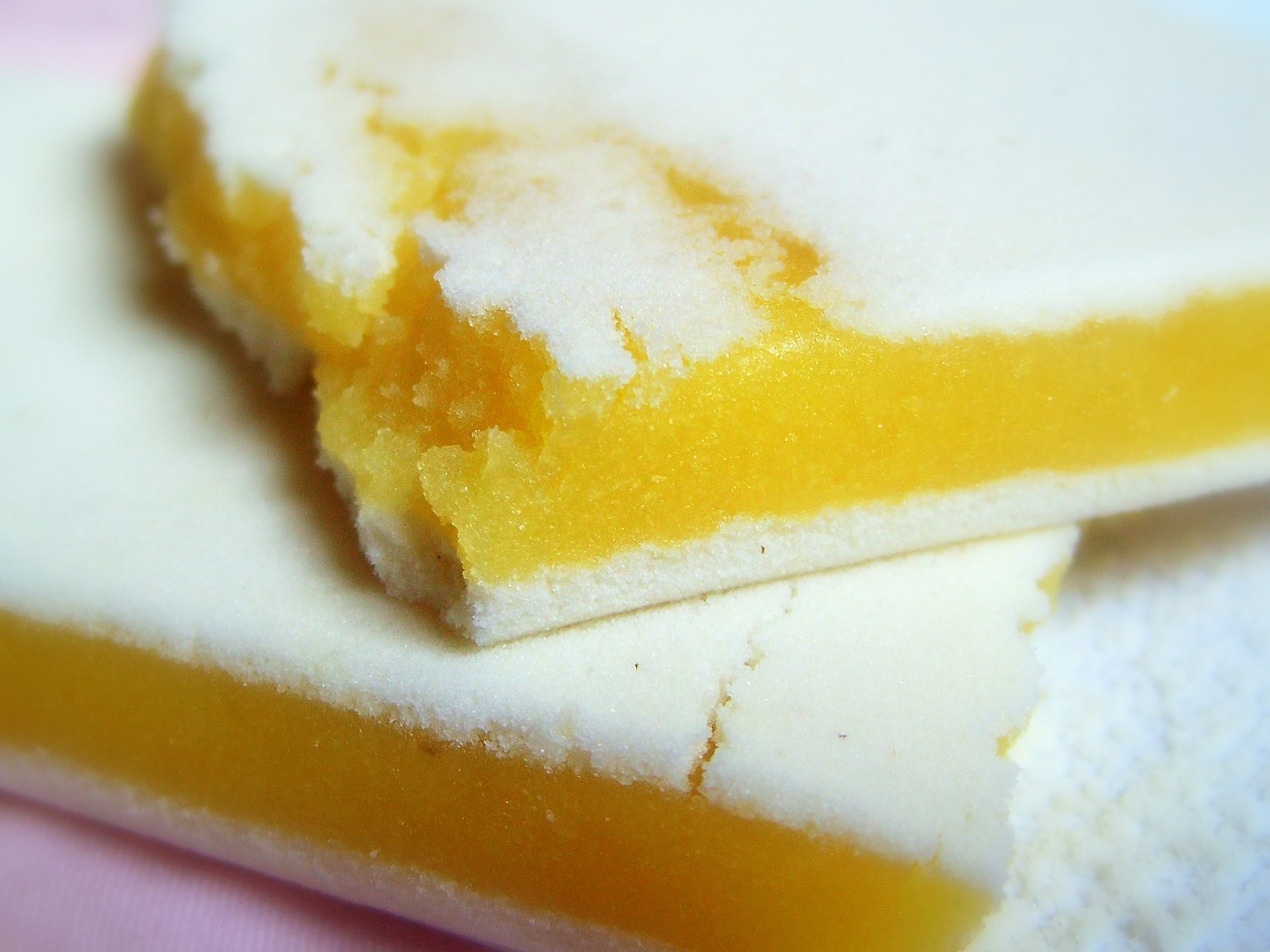
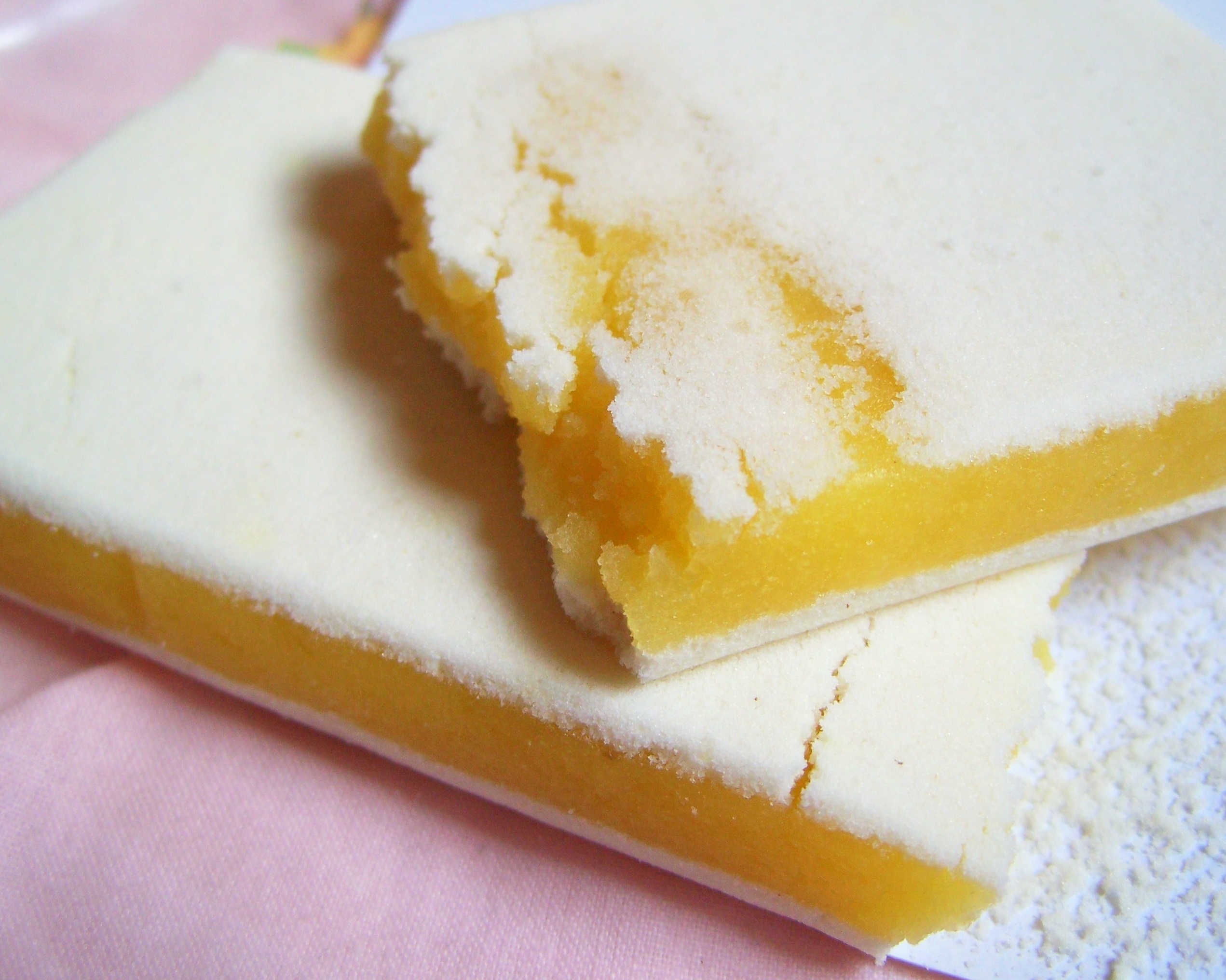
It looks just slightly bigger than a chocolate bar, and about as thick. It has three thin layers, one bright yellow sandwiched between two whites, like a rectangular slice of hard boiled egg. The humble appearance of bánh khảo, like so many other Vietnamese old school treats, masks tremendous creativity and skill of the country’s villagers.

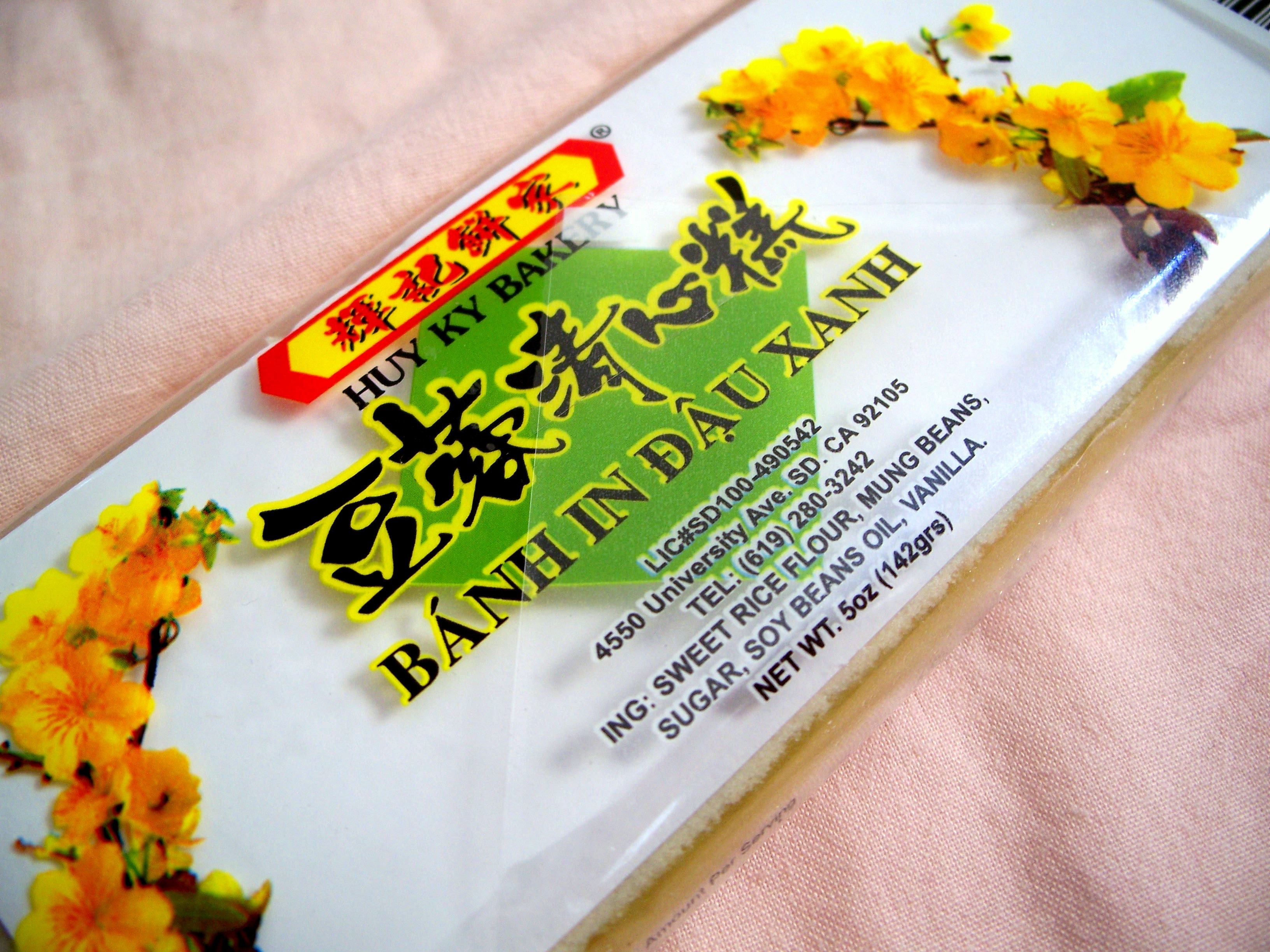
And so little is known about it. Some just say it came from the Chinese immigrants, others believe it’s a special fare of the Tày, an ethnic group in the second-farthest-north-border province Cao Bằng, where Chinese influence seeps through the forests and mutates with a mountainous feel. All we know is when you go to Cao Bằng, you get a bar of “pẻng cao” (bánh khảo) for 1000VND (less than 6 US cents), whose middle layer can either be sweet with peanuts and honey, or savory with sliced fatty pork.


The savory kind is a staple to the Tày people. The flour from roasted sticky rice grains, let sit overnight, mixed with sugar and pressed into a thin sheet,  somehow can stay good for a whole month. Its light weight makes a good dry snack to pack for long trips in the mountains. But when it goes south to the Red River Delta and all the way down to Saigon, pork slices and peanuts give way to the all time popular mung bean paste. Bánh khảo looses savoriness and gains homogeneity. It becomes bánh in nhân đậu xanh.


Chewy and grainy. Not too sweet, rather mild. To be eaten slowly between sips of tea to avoid coughing or throat irritation. That’s the nature of two layers of sandy white sticky rice flour sandwiching one of bright yellow mung bean paste, like a rectangular slice of hard boiled egg.

Dull sidenote: not the stuff you’d want to make at home with roasting and grinding and pressing, when it costs 2 bucks and a quarter at any Vietnamese sandwich shops in San Jose, Kim’s for example.

Previously on Sandwich Shop Goodies: sweet corn xôi
Next on Sandwich Shop Goodies: bánh dừa (coconut sticky rice stick)

Sandwich shop goodies 3 – Bánh ú tro (Vietnamese-adapted jianshui zong)

July 01, 2010 By: Mai Truong Category: California - The Bay Area, Chinese, Comfort food, One shot, sticky rice concoctions, sweet snacks and desserts, Vegan, Vietnamese

It’s been two weeks, but better late than never. After I read Jessica’s zong zi post on Food Mayhem, images of amber tedrahedra just wouldn’t leave me alone. I talked to my mom about them, and I could hear her voice crackle with sweet memories over the phone. We haven’t had these sweet little things for years. We used to eat them by the dozens every lunar May. Like most Saigonese, we didn’t do anything huge to celebrate Tet Doan Ngo, but bánh ú tro was too scrumptious a tradition to pass.

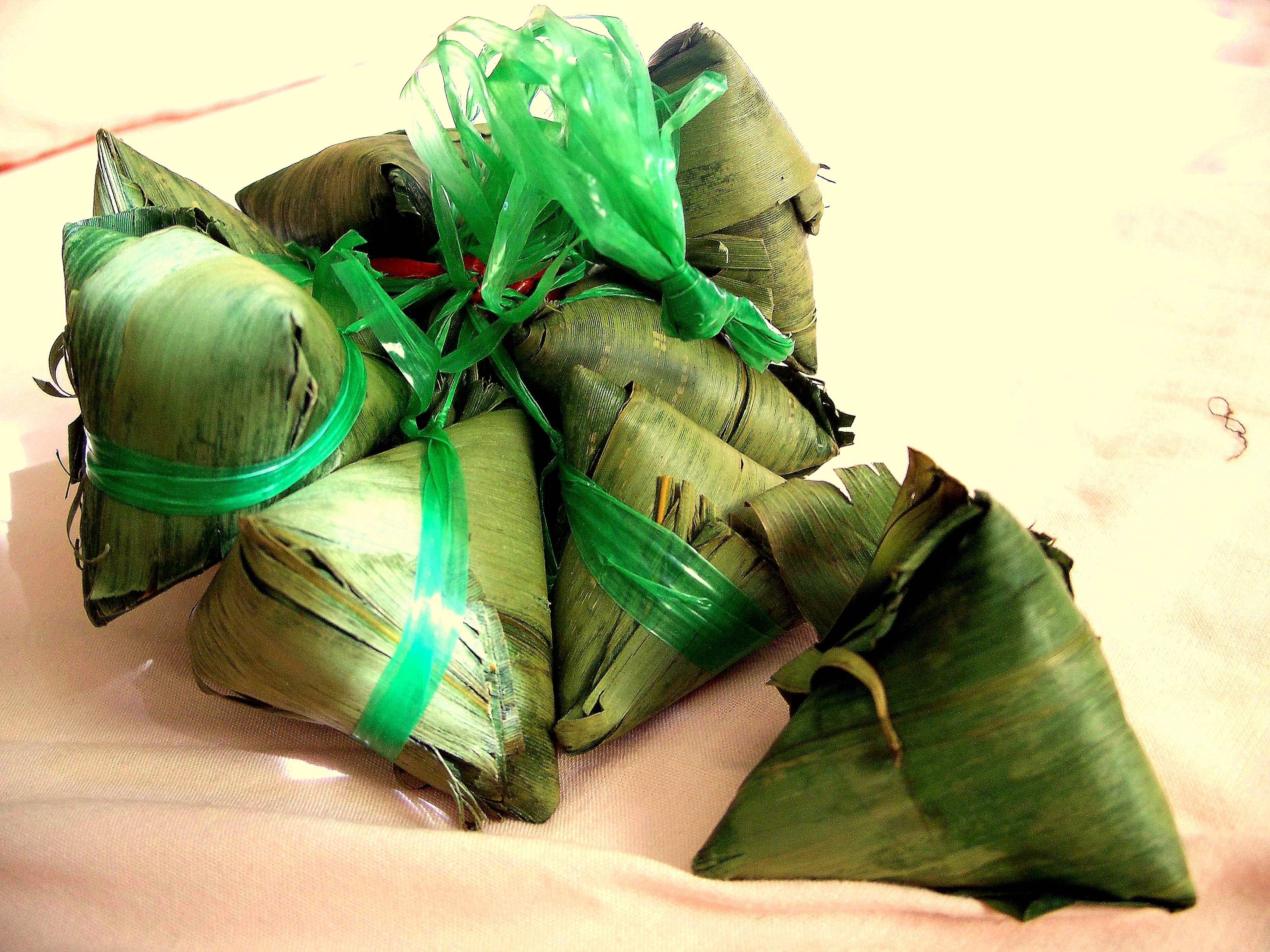
Each pyramid is just a little over an inch tall, whichever way you roll it. It’s unclear whether the traditional zongzi grew smaller when Chinese immigrants share the recipe with their Vietnamese neighbors, or only the dessert zongzi (jianshui zong) is favored by the locals over savory types. Most Vietnamese have also long dissociated this sticky rice snack with the Chinese reason behind Duanwu festival, if not to assign the Fifth of Lunar May to commemorate the death anniversary of Vietnam’s legendary Mother Âu Cơ, kill off bad bugs, make ceremonial offerings to family ancestors, or simply bathe in the summer solstice’s endless sunlight. Whatever meaning someone chooses to celebrate (or not celebrate) Duanwu (Đoan Ngọ in the Vietnamese language), he can enjoy bánh ú tro all the same. And if he lives in Hội An, there’s a big chance he actually participates in making them too.

The people of Hoi An don’t make a living with bánh ú tro year round, but they keep the tradition with earnest. Within four days, 1st-4th of lunar May, everybody makes bánh ú tro. The fifth day, everybody eats bánh ú tro. The sixth day, things get back to normal. In Saigon’s markets, bánh ú tro start showing up a week or two before the Fifth, and disappear right after, my mom recalled. So when I told her that I was going to search for them after I read Jessica’s post, she said “fat chance”.

Why such rarity? After all, bánh bía, also adapted from the Chinese and also originally made just for one specific festival, shines its face all year long in every bakery and sandwich shop these days. Well, the recipe for bánh ú tro turns out to be real hard, and it’s not just the wrapping stage. The best bánh ú tro, according to Hoi An banh makers, must be wrapped with “kè” leaves from the mountains of Huế. The cleanly washed sticky rice is soaked in sesame ash water overnight (sesame plant burnt into ashes, mixed with water and sifted through sand). The ash water turns sticky rice grains into semi-powder form, giving bánh ú tro a clear amber look and a strangely light texture, unlike any other sticky rice concoctions. No wonder “ash” (tro) is part of the banh’s definitive name. (If you look at jianshui zong recipes, you’ll find lye water or alkaline water listed. More correct terms perhaps, but the horrid image on Wikipedia’s page on lye takes away my appetite. “Ash” even has a romantic ring to it, and this banh is made for a poet after all.) A bit of alum is put in the ash water to somehow keep each banh from falling apart.

Now of course sesame plants aren’t growing in everyone’s backyard to burn, so just any coal ash would do, as long as you sift the ash water carefully to avoid big pieces of charcoal in your sticky rice. Some different source suggests ash from mangrove firewood, dissolved in water for a month, but it seems to be just another grandmother’s special recipe varying by the regions. After soaking the rice for 1-3 nights, take it out and wash with cold water again.

The wrapping leaves, too, vary from place to place. Kè leaf is obviously not the most popular, as bamboo leaf and reed leaf, in their slender shape and earthy fragrance, do the job just as well. Banana leaves can be cut into wide strips to imitate bamboo leaves. Skilled banh makers can also control the colors: older leaves give darker hues,  substituting ash with white lime paste(*) lets bánh ú tro have the natural green shades from the leaves, while red lime paste causes a reddish amber shine.

Nonetheless, there exists a common wisdom regardless of ingredients: burn an incense stick when you drop the banh into water for boiling, when the incense burns out, the banh is done. Usually that takes four hours.

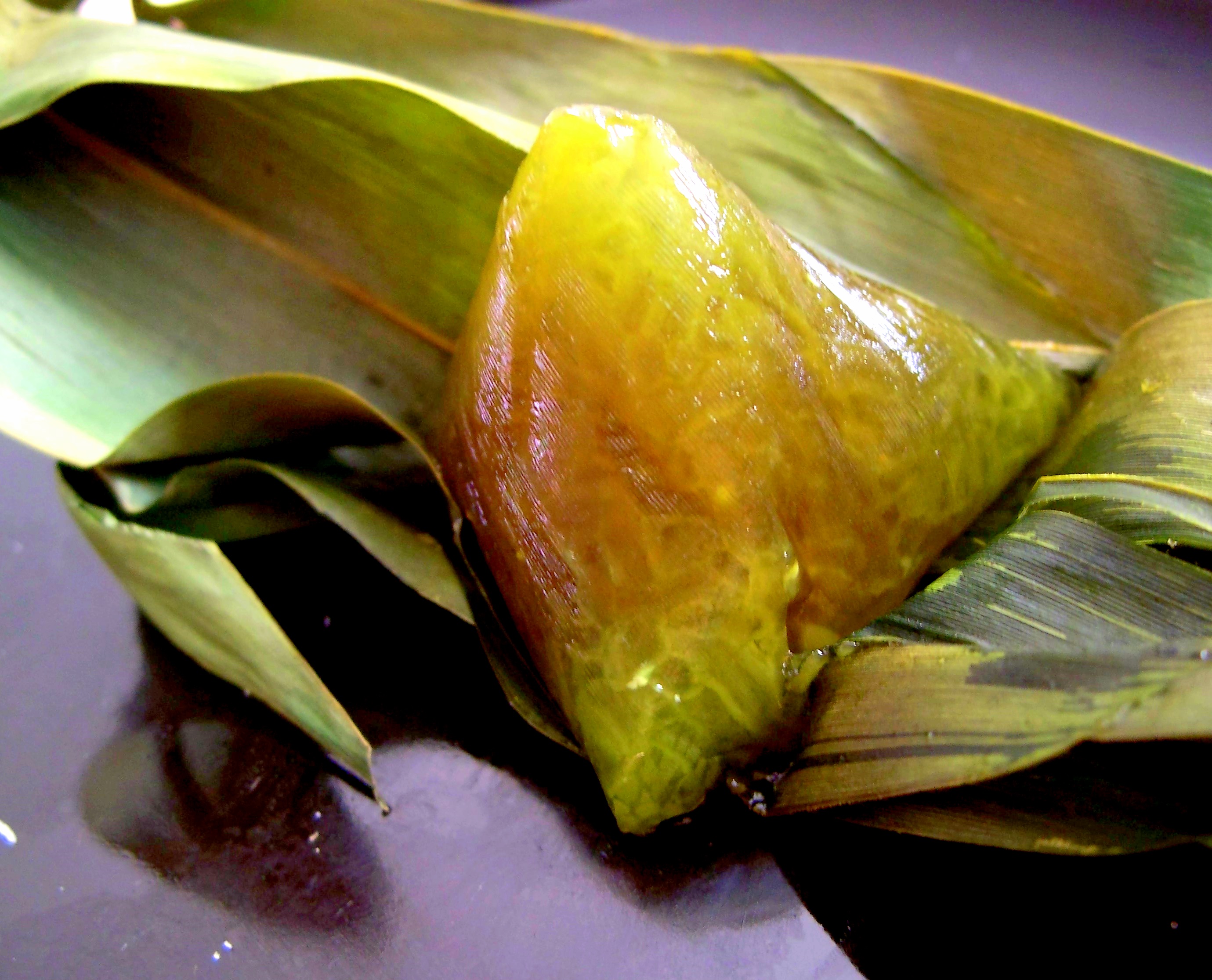
Let cool, bánh ú tro is more firm than chewy. There you can still see silhouettes of individual grains on the outside, but each banh is a solid tedrahedron of defined edges and uniform texture. It unwraps easily, parallel thread marks of bamboo leaf veins imprint on the smooth and fulfilling surfaces. It’s hardly sticky, unlike bánh ít and bánh dầy (also made from sticky rice). And it’s light. The banh’s are tied together in bundles of ten, and I can eat all ten in one sitting. (I can hardly finish one bánh ít in one sitting.) Funny, “ít” means “small in quantity”, and “ú” means “chubby”.

The traditional bánh ú tro of the North and Central Vietnam is just that, a plain chunk, good by itself to some and must be accompanied by honey or sugar to others. Then with time it got a sweetened red bean paste filling. Then a sweetened mung bean paste filling. Then a sweetened grated coconut filling. I grew up eating the red bean kind every year and thought it was the only kind. So I jumped at the first bunch I saw at Kim’s Sandwiches last Sunday, twelve days after the Fifth of Lunar May. The bunch was tied together by green nylon strings. I hurried home, unwrapped, took a bite. My mom called.
– Mom, I found them!
– Really?!?! How are they?
– Good, but why’s there no bean paste?!

Should’ve gotten the red string bunch instead.

———————————————————————-

Bánh ú tro ($3.75/10 pieces) from Kim’s Sandwiches
(in the Lion Supermarket area)
1816 Tully Rd 182, San Jose, CA 95111
(408) 270-8903

(*) Lime paste is used to eat with betel leaves and areca nuts.

Click here for a recipe of bánh ú tro (Vietnamese zong zi)

———————————————————————–

Previously on Sandwich Shop Goodies: bánh bía (Vietnamese adapted Suzhou mooncake)

Next on Sandwich Shop Goodies: corn xôi