Flavor Boulevard

We Asians like to talk food.
Subscribe

Archive for the ‘Vegan’

Sandwich Shop Goodies 18 – Vegan steamed taro cake (bánh khoai môn hấp)
June 28, 2011 By: Mai Truong Category: Houston, One shot, sweet snacks and desserts, Vegan, Vietnamese


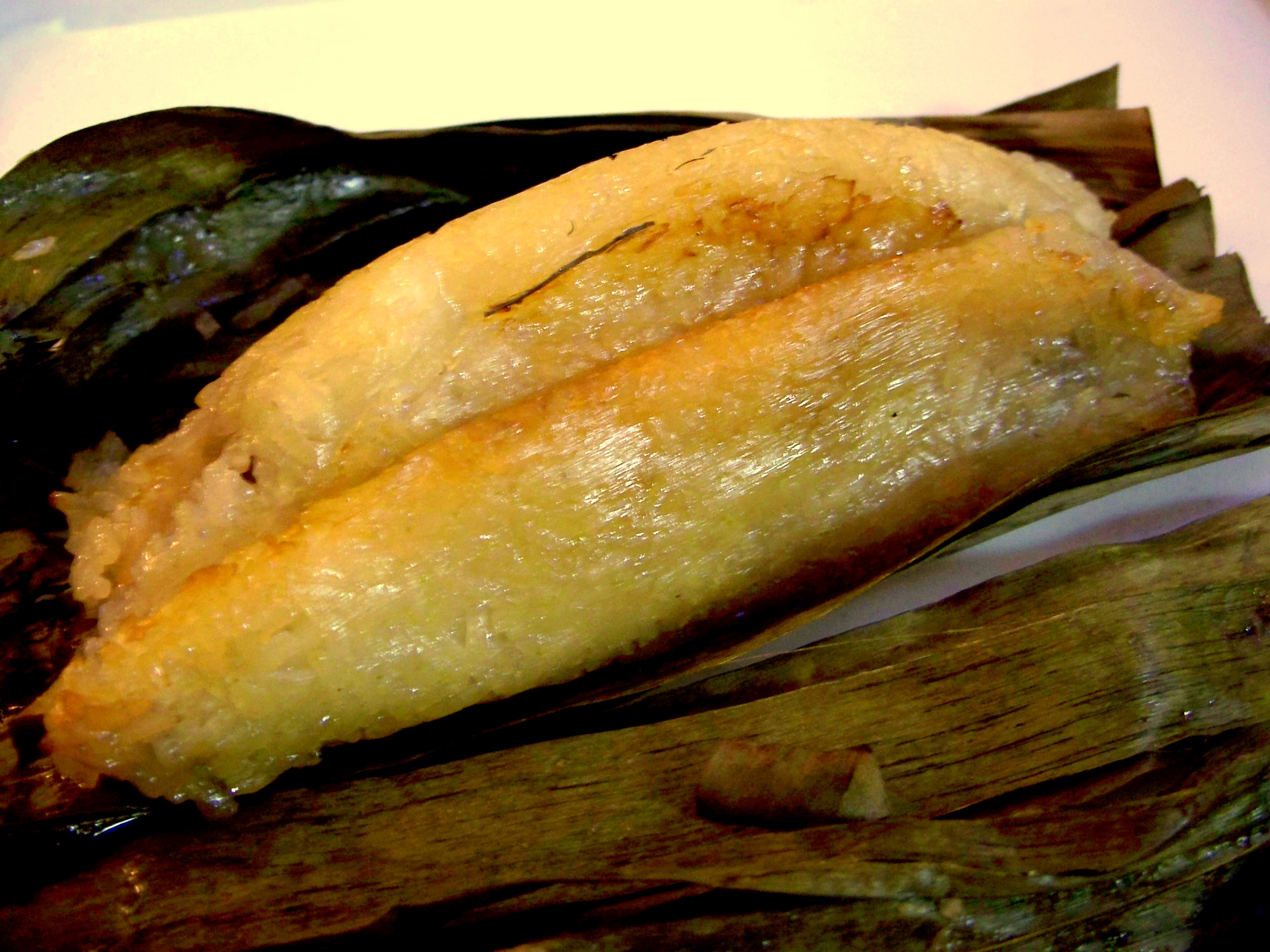
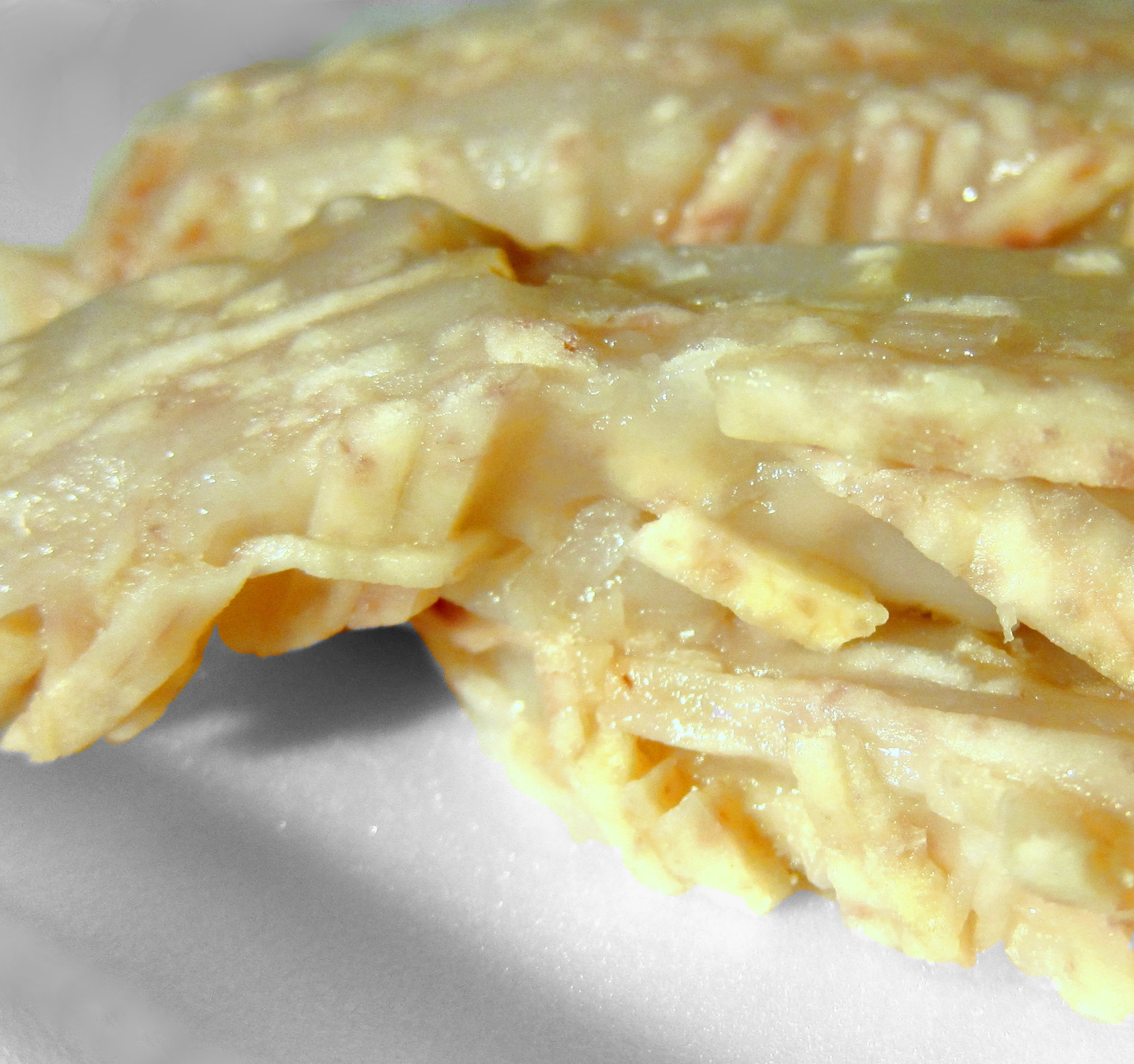
It is not pretty, but from the label I knew right away that it would be good. Strips of nutty taro embedded in soft-chewy tapioca just got on my list of things to make, if I ever feel like cooking. That can mean only one thing: the online recipes seem that simple.
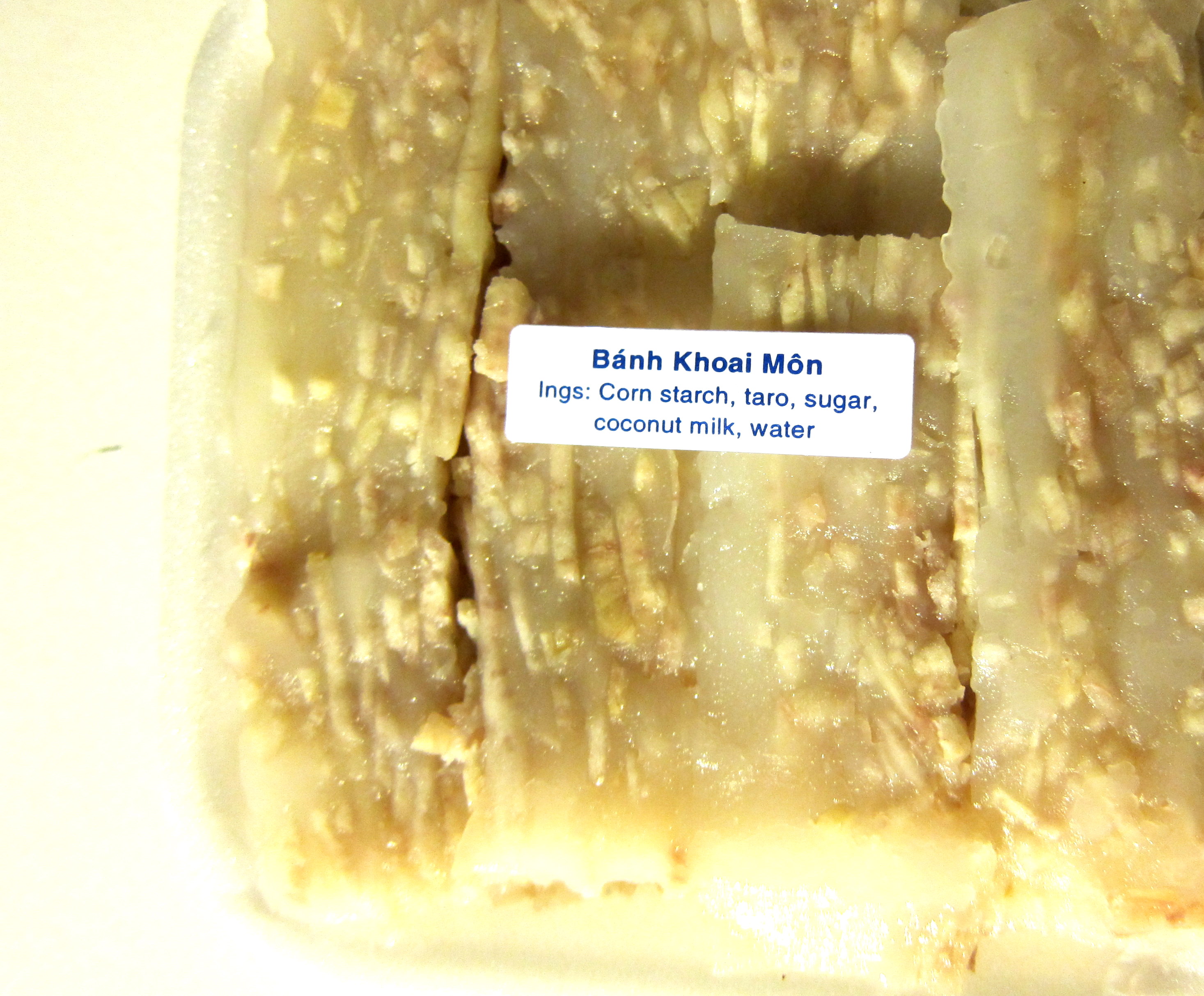

If you google “bánh khoai môn hấp“, and presumably you read Vietnamese, the first links you find will contain something like dried shrimps (tôm khô) and pork, perhaps some mỡ hành (green onion in lard), too. That version is similar to Woo Tul Gow (or Woo Tau Ko). I haven’t tried that nor seen it in any cling-wrapped styrofoam plate at banh mi shops. If you don’t read Vietnamese, well… that’s why you have me :D: I translate. Here’s the Vietnamese recipe of the (vegan) steamed taro cake from Thư Viện Phật Học (The Library of Buddhist Studies), which most resembles what I’ve gotten from Alpha Bakery & Deli. Actually, this recipe sounds better.

Like most Vietnamese recipes online, this one lacks precise measurement (which I agree with to some extent, but that’s beyond the scope of this post). So I searched around and found a more detailed but also more complicated recipe, and here’s my wanna-be-clever combination of the two:

The minimalist’s vegan steamed taro cake (bánh khoai môn hấp)

– 1 lb taro
– 1 bag (200 g) of tapioca flour (bột năng)
– 50 g rice flour
– 150 g sugar
– 2 cans of coconut milk (oooh coconuty!)
– 2 cups of water
Mix tapioca flour, rice flour, sugar, water, and coconut milk together.
With the taro roots: wash, peel, slice into strips (as thick as you’d like, but I’d imagine the thicker they are, the longer it takes to cook the cake).
Gently mix the taro strips with the batter (don’t make mashed taro or you’ll get Kanom Pheuak).
Boil water. Steam the taro-batter mix for 45 minutes or until a toothpick comes out clean.

Fancier versions would include pandan leaves and vanilla, or alternating layers of tapioca and taro.
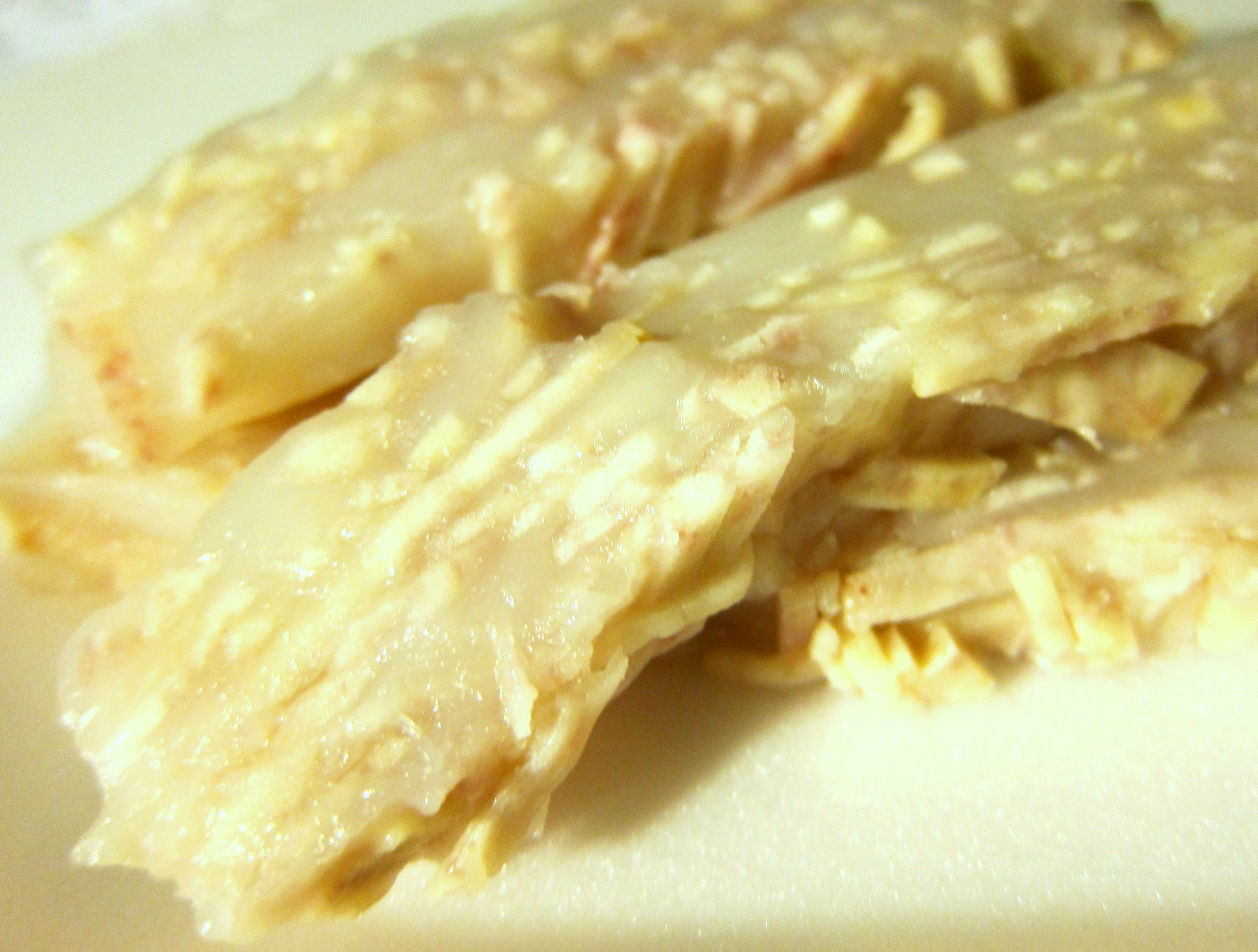

This is one of the few times when “cake” is not too far off from “bánh“: bánh khoai môn hấp is semi sweet, soft, meatless, and too light to make a meal by itself.

If you try this recipe, do let me know how it goes.
Otherwise, I found it here once for a buck fifty:
Alpha Bakery & Deli (inside Hong Kong City Mall)
11209 Bellaire Blvd # C-02
Houston, TX 77072-2548
(281) 988-5222

Previously on Sandwich Shop Goodies: mung bean milk (sữa đậu xanh)
Next on Sandwich Shop Goodies: Chinese sesame beignet (bánh tiêu)
Nutty sticky rice

June 14, 2011 By: Mai Truong Category: Comfort food, Houston, One shot, Southern Vietnamese, sticky rice concoctions, Vegan


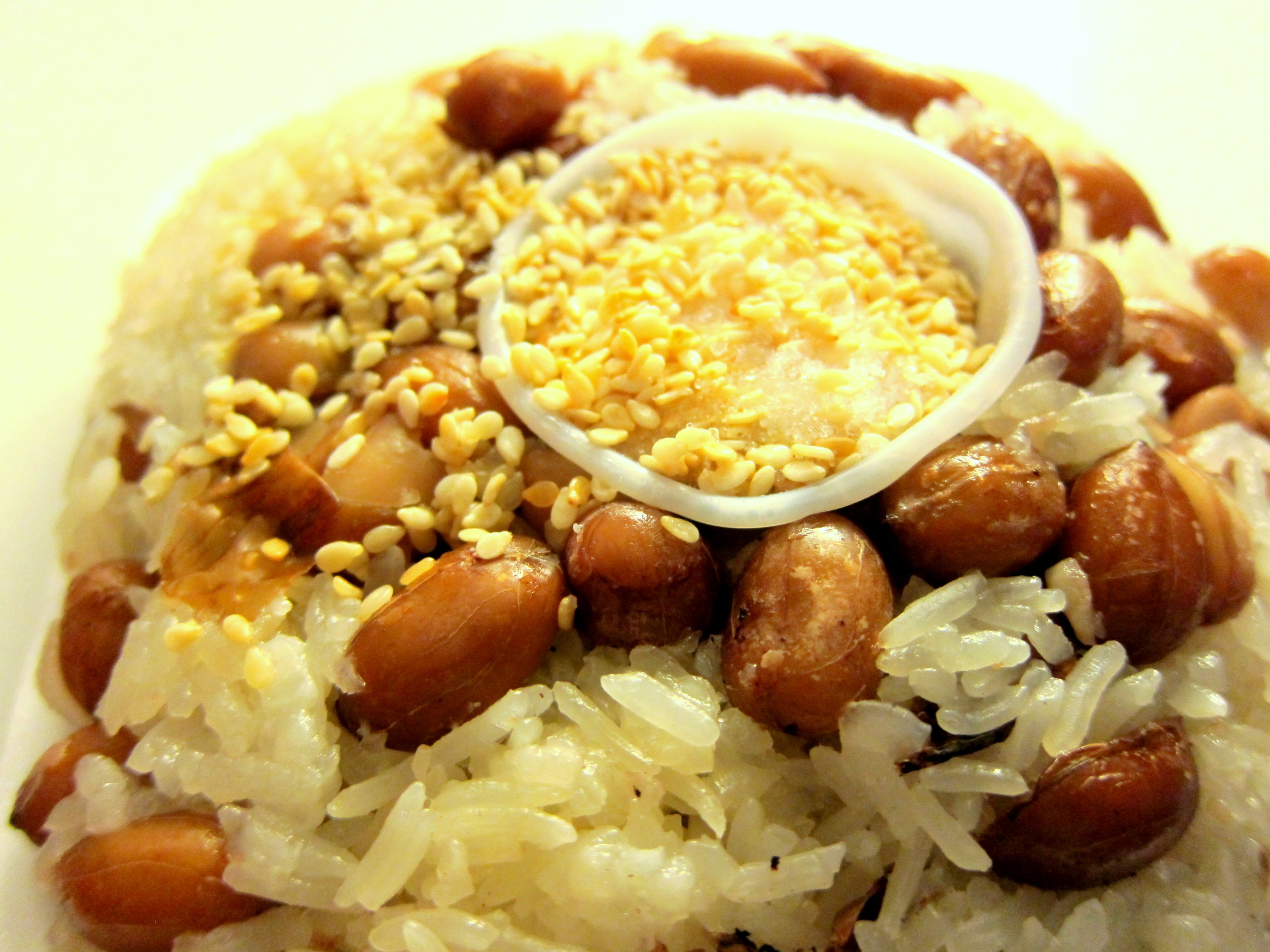
What hits the spot in the morning better than a hot packed handful of sweet sticky rice with muối mè (sesame-sugar-salt mix)? A hot packed handful of sweet sticky rice with soft steamed whole peanuts and muối mè. Xôi đậu – my forbidden childhood love.

$1.50 for a full tummy.

Mom did not want me to eat too much xôi đậu in the past because peanuts are known for producing gas excess.

Address: Alpha Bakery & Deli
11205 Bellaire Boulevard
Houston, TX 77072
(281) 988-5222

Down the Aisles 9: Green Tea Soymilk

May 13, 2011 By: Mai Truong Category: California - The Bay Area, Drinks, Review of anything not restaurant, Vegan


Brunch: WestSoy vanilla soymilk
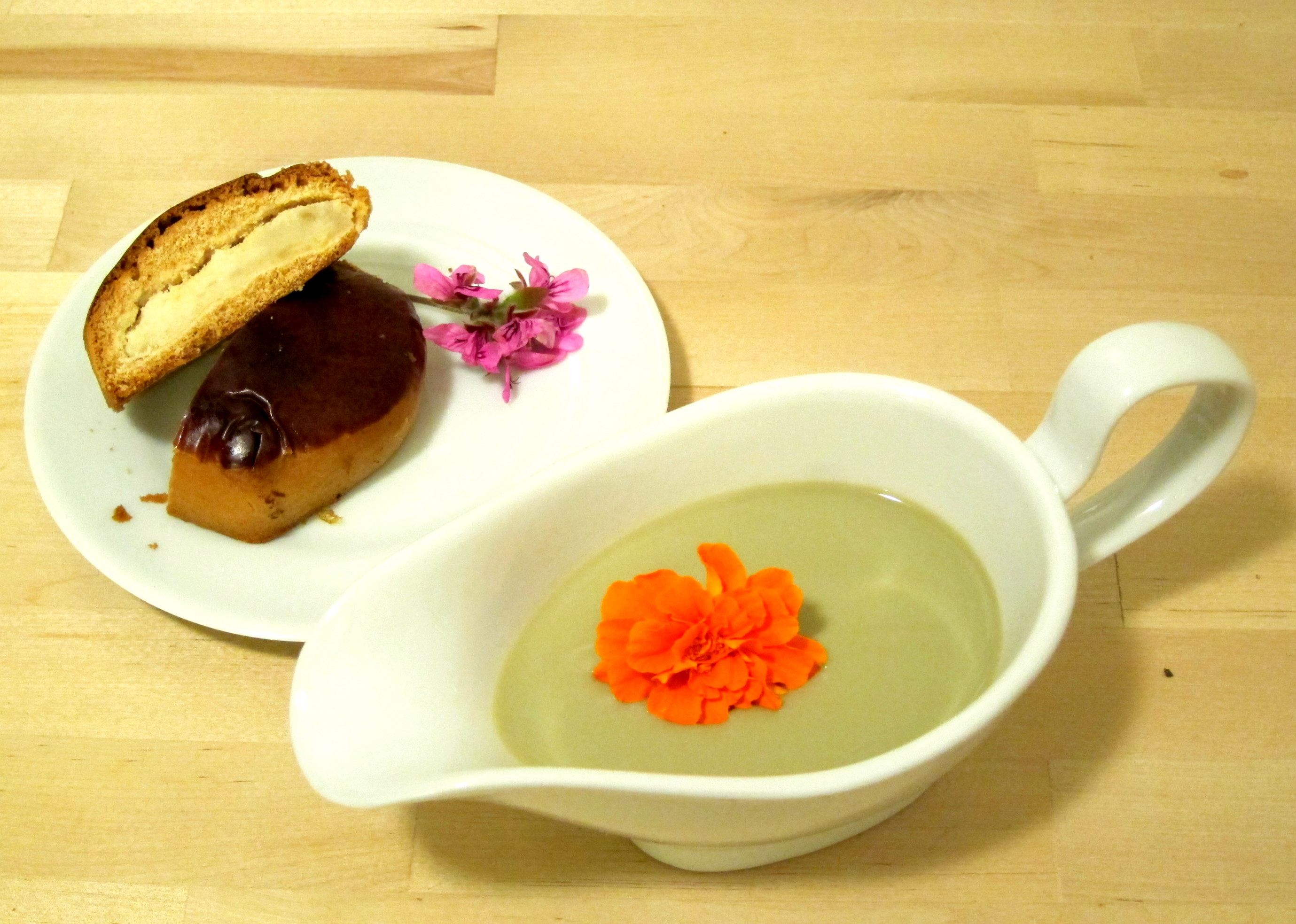
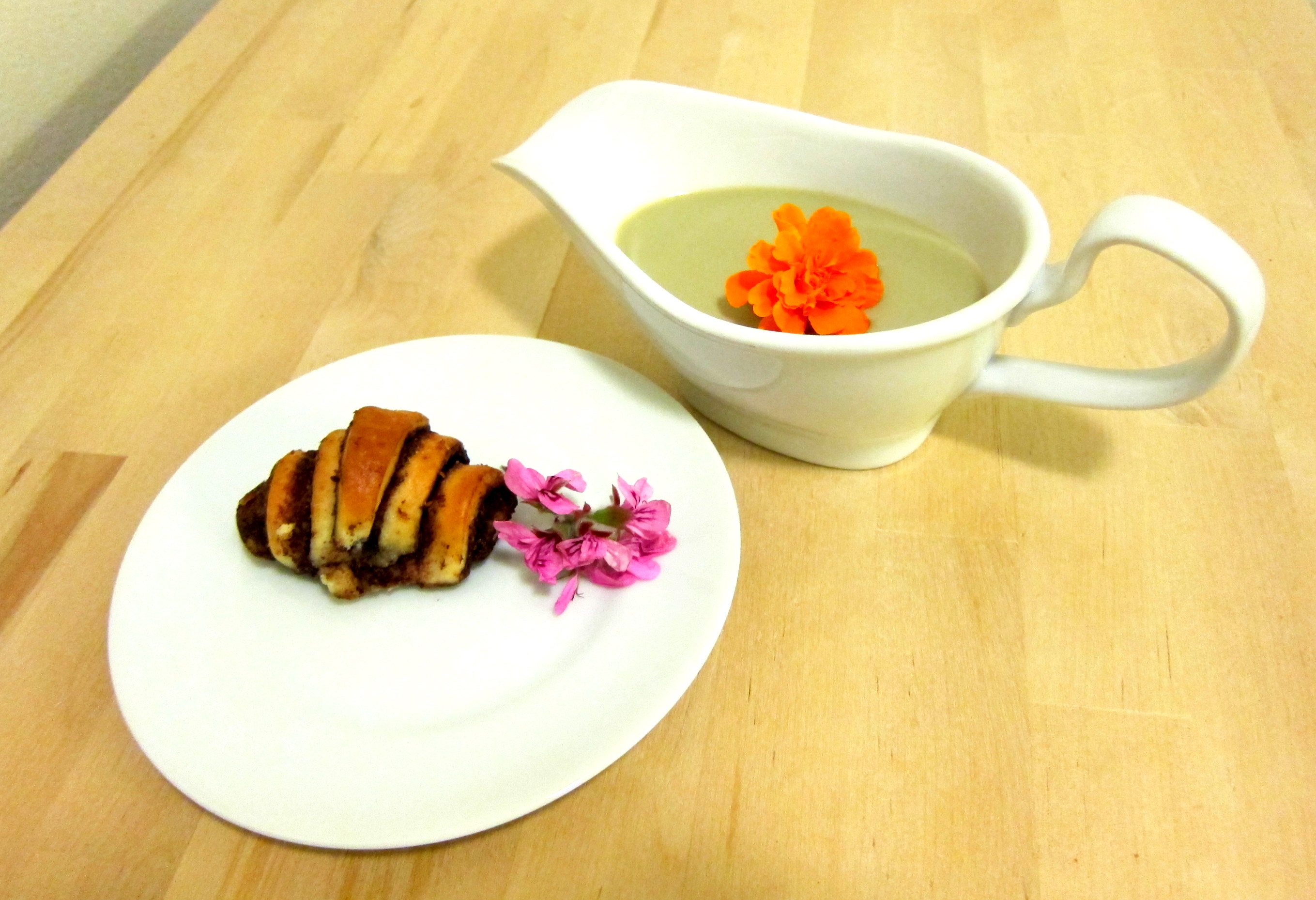
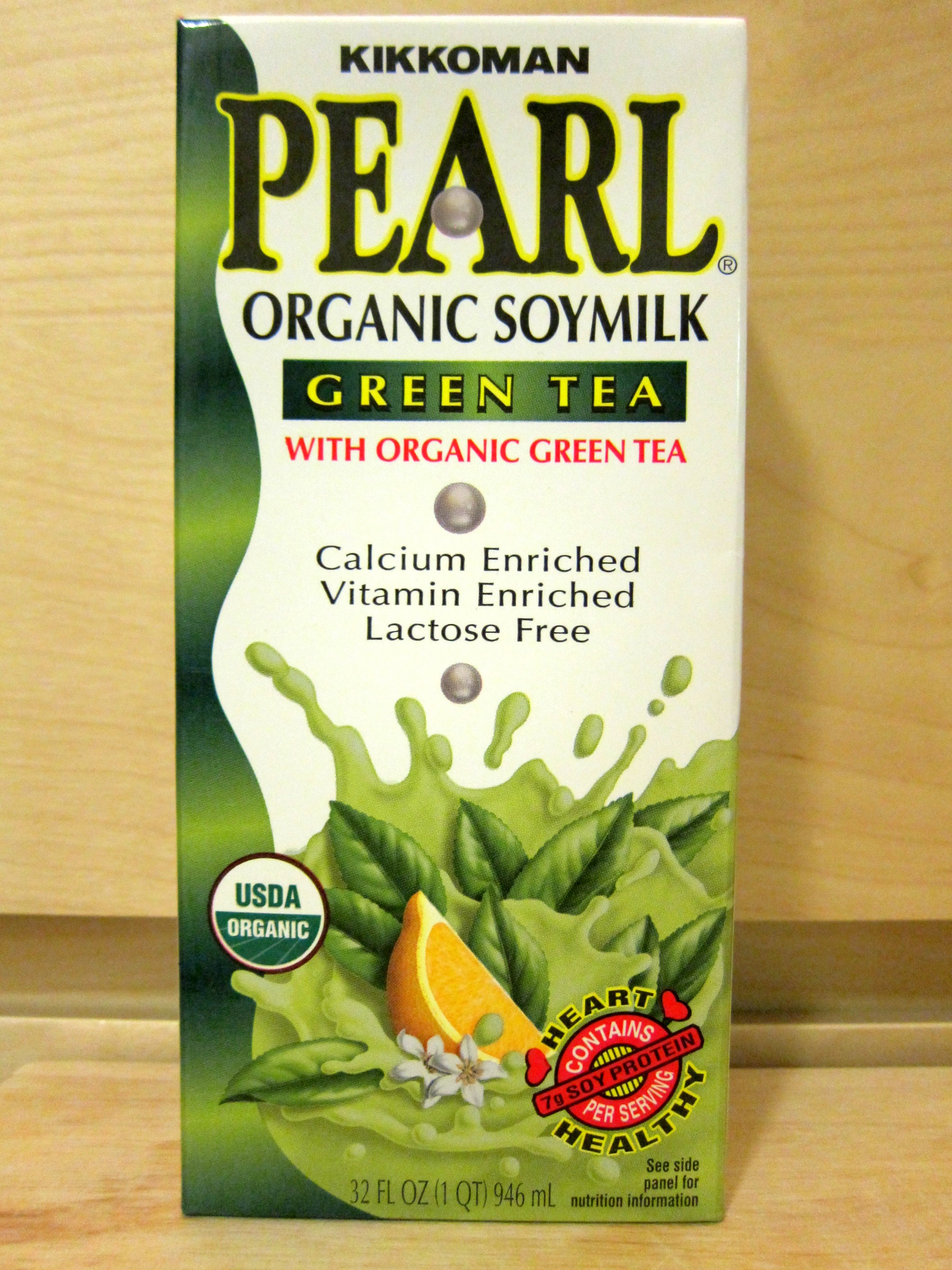
Dinner: Pearl green tea soymilk

When my green tea soymilk got scanned at the cashier, there were two reactions from the cashier girls: “Wow, this sounds awesome! I’ve never heard of it before!” and “I don’t know… it sounds a little weird to me”. Call me a Berkeley-induced hippie if you want (although I’d like to say I’m as far from being a hippie as Japan is from Berkeley), but I side with the first reaction, cuz I like green tea ice cream and I like soymilk. Now I’m addicted to this thing.


Sweet and smooth with a light-hearted, herbal accent. I finally understand why the Brits add milk to tea. In this case, it’s adding tea to milk. The mix rivals my most favorite drink number: mung bean milk.


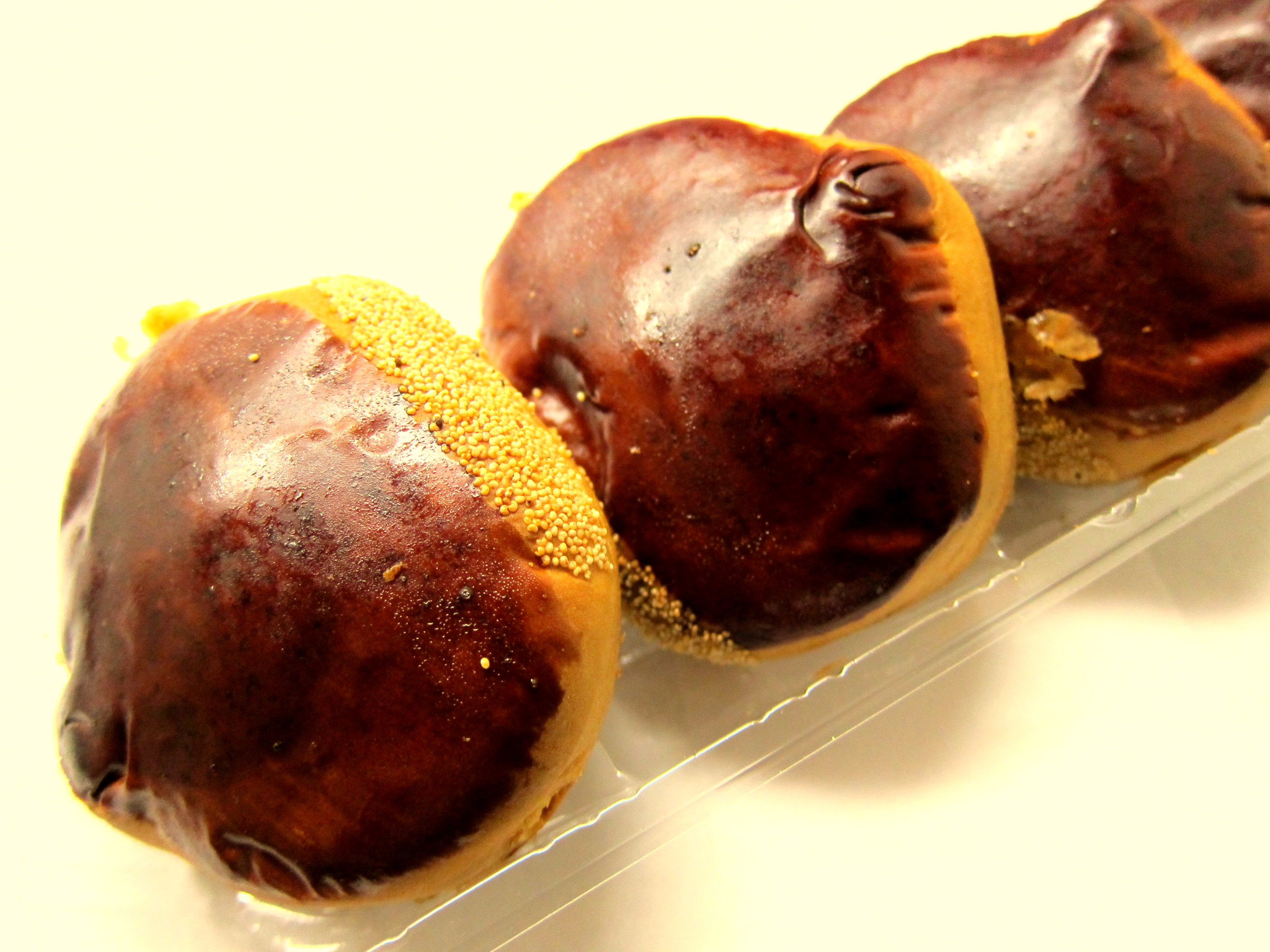
It’s great alone. It’s an elegant partner to a mini chocolate rugelach or a kuri manju, a sweet chesnut-shaped bun with white bean paste).

The budget:
1 Quart Pearl Organic Green Tea Soymilk carton – $2.85
Package of 4 Kuri Manju – $4.95
Package of 14 Green’s Chocolate Rugelach – $7.99
… all from the Berkeley Bowl

More green drinks: mung bean milk and pennywort juice

DISCLAIMER: I received no free product or monetary gift in exchange for this review.

Tags:

A Green Cafe for vegan cuisine

March 26, 2011 By: Mai Truong Category: California - The Bay Area, Vegan, Vietnamese


The American Vietnamese must not like vegan very much. (And I stress “American” because plenty of places back home specialize in making vegan dishes far tastier than their meat counterparts.) Take Berkeley for example, there’s no Vietnamese vegan diners, but I can think of at least three Chinese ones (Vegi Food, Long Life Vegi House, and Renee’s Place) and a multitude of American’s (like Cafe Gratitude, Herbivore, and Saturn Cafe). Green Cafe in Milpitas is the first Vietnamese vegan restaurant you can find south of Berkeley.


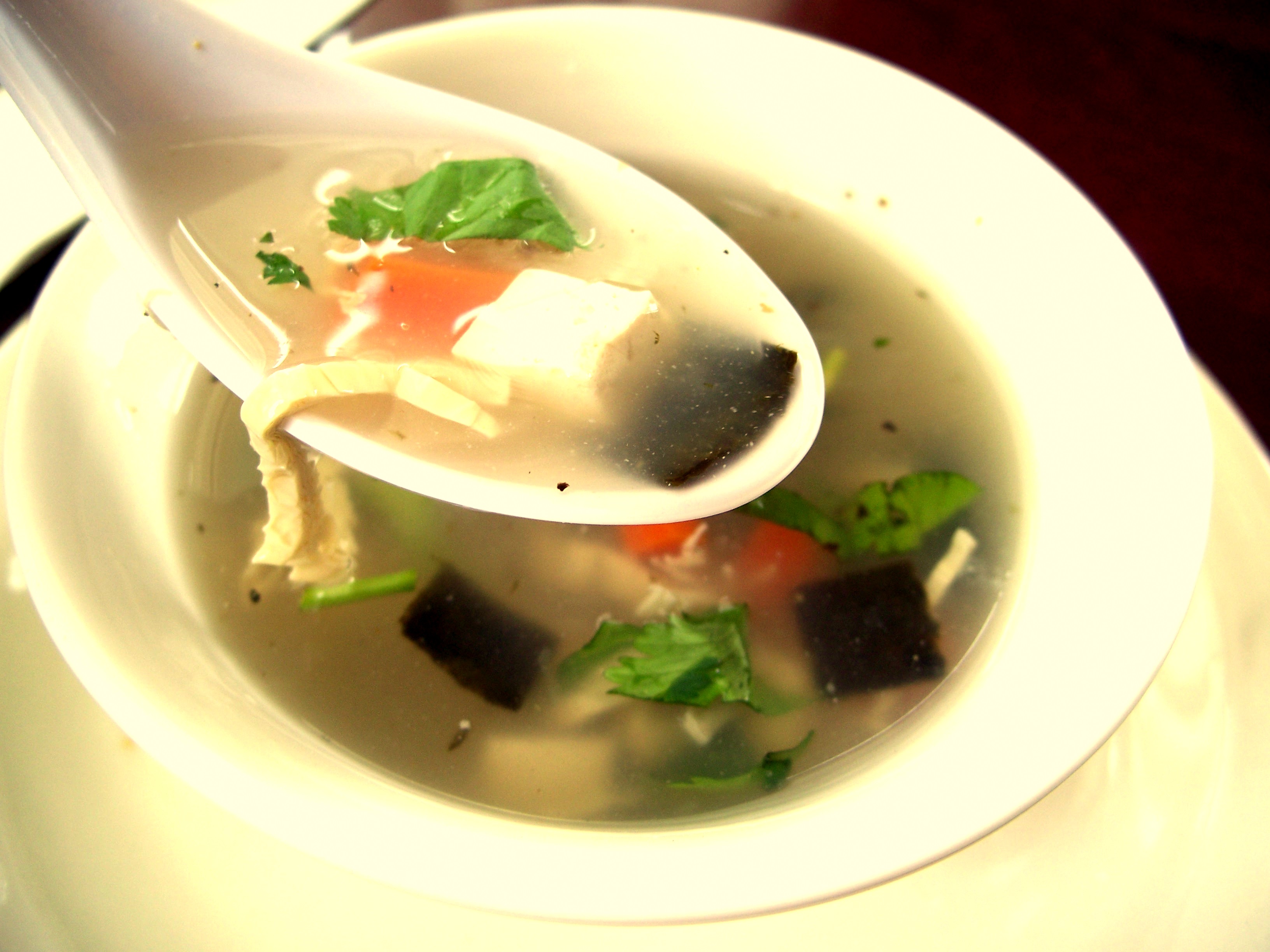
Its good points: there’s an online menu, everything costs under ten bucks, and they give you a free warm-up. The tofu soup has little black squares of dry seaweed and a soothing broth slightly thickened with tapioca starch. The soup isn’t magnificent, but nothing gets the appetite rolling better than a gulp of soup.


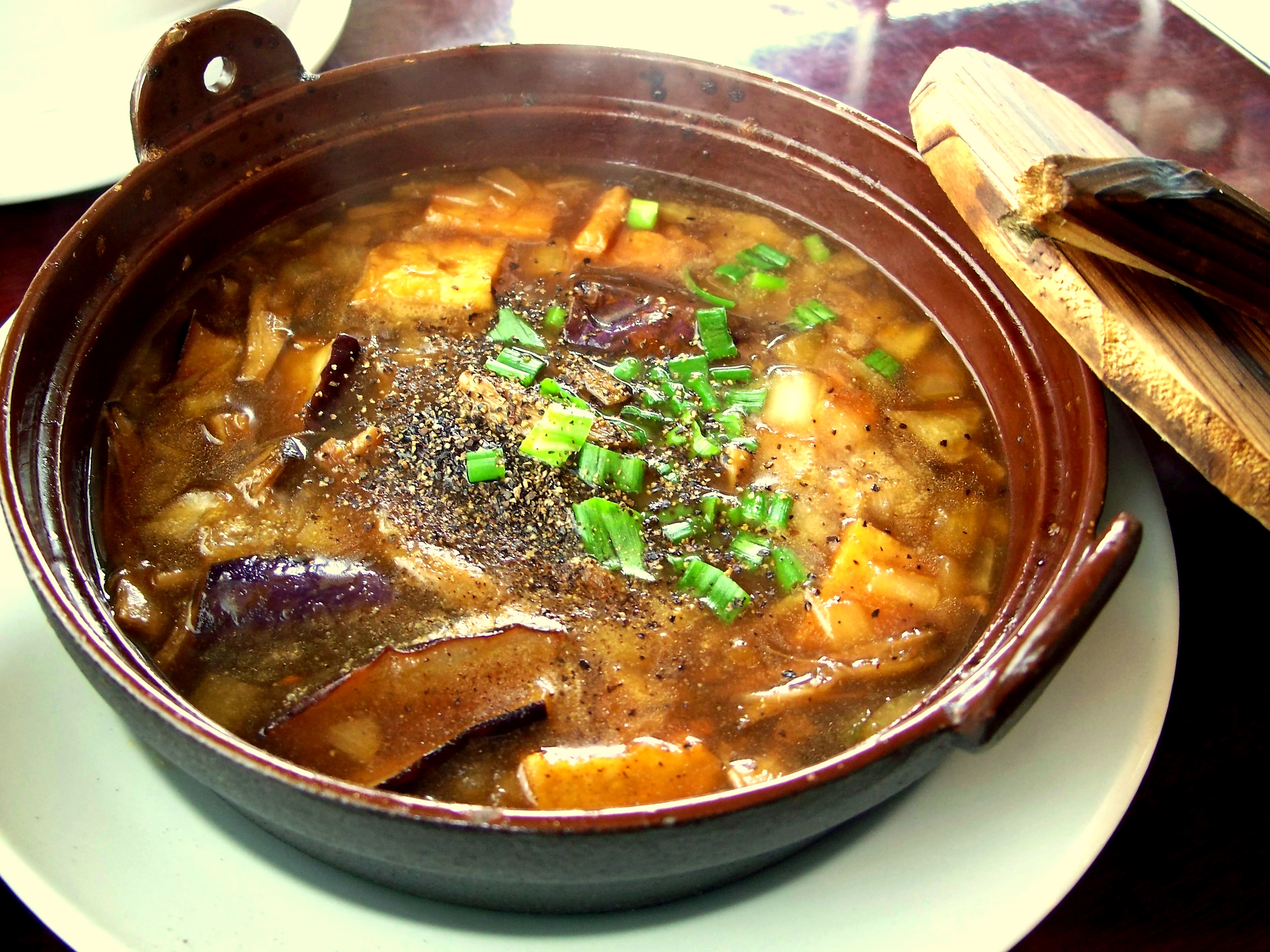
Green Cafe’s fourth good point: no item on the menu has the word “Buddha” attached to its name. Here’s a pet peeve of mine: some people casually name their stuff Buddha this and that whenever their stuff doesn’t have animal. How come I haven’t seen “Jesus steak” or “Krishna delight”? I don’t even see “Washington mix” or any of sort. Just cuz the Buddhists don’t yell at you that it’s offensive to them it doesn’t mean you can commercialize any name as you please. Anyway, Green Cafe doesn’t have any of that on their list, so I eat here in peace. Granted they do have some sequin-sparkling names like “beauty tofu eggplant claypot” or “noble broccoli” (vegan beef and broccoli stir fry). I don’t know if the broccoli is noble, but the eggplant claypot looks as good as it tastes, for eggplant at least. The sauce could use some more salt and sugar and simmering, but the spongy eggplants and mushrooms soak up enough of it to nicely complement white rice.


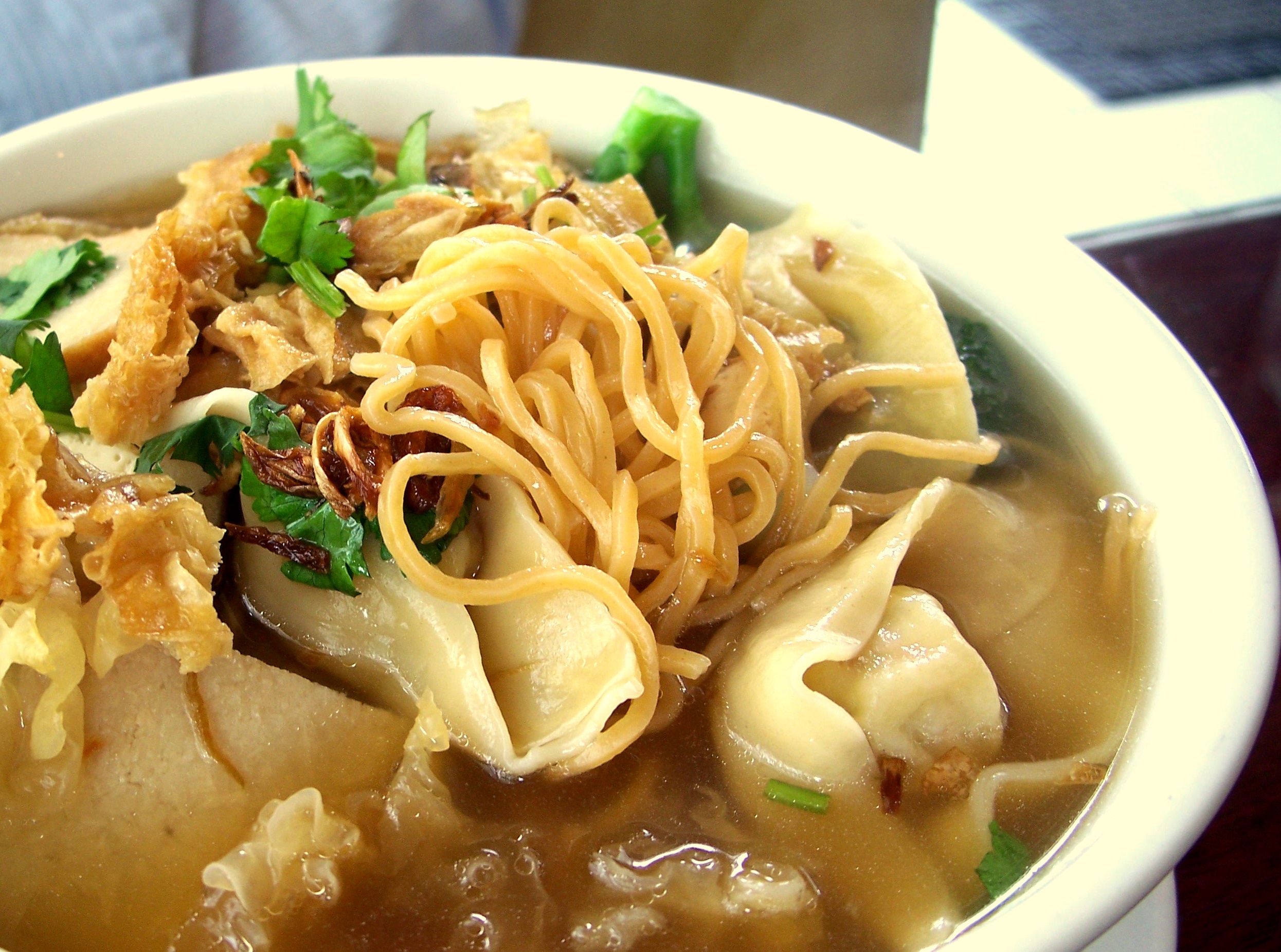
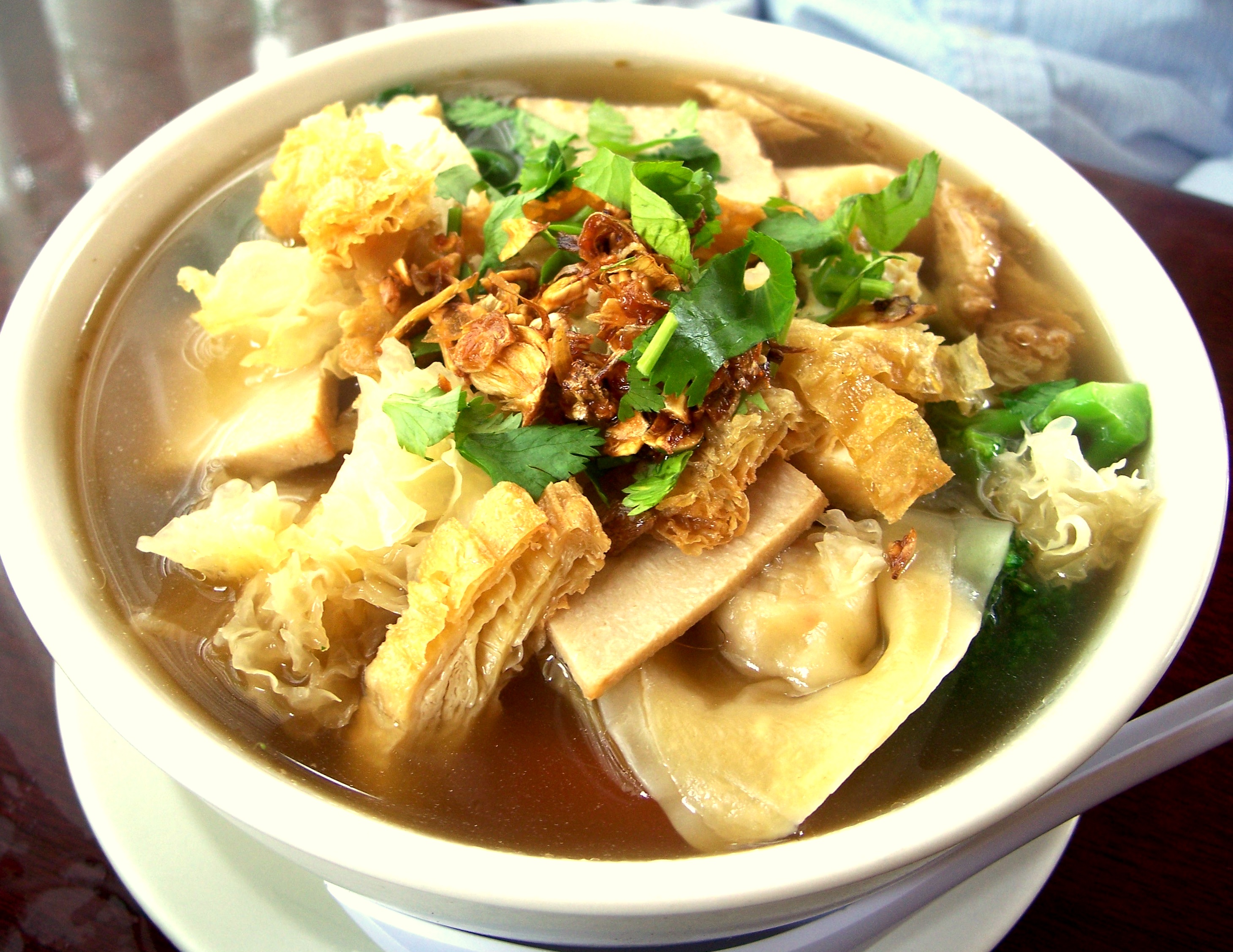
The star of our lunch is the $7.95 wonton noodle soup with soft and flaky fried tofu, snow mushroom, and fried shallot in a sweet broth. If everything on their menu is as good as this soup, Green Cafe would rival Garden Fresh on my list. Or if they have vegan shrimps.

Lunch for two: $19.06

Address: Green Cafe Vegan Cuisine
190 Ranch Drive
Milpitas, CA 95035
(408) 375-8273
http://www.greencafevegan.com/

Tags:

Spicy balls of fruit and salt

February 26, 2011 By: Mai Truong Category: California - The Bay Area, Fruits, Review of anything not restaurant, Vegan, Vietnamese


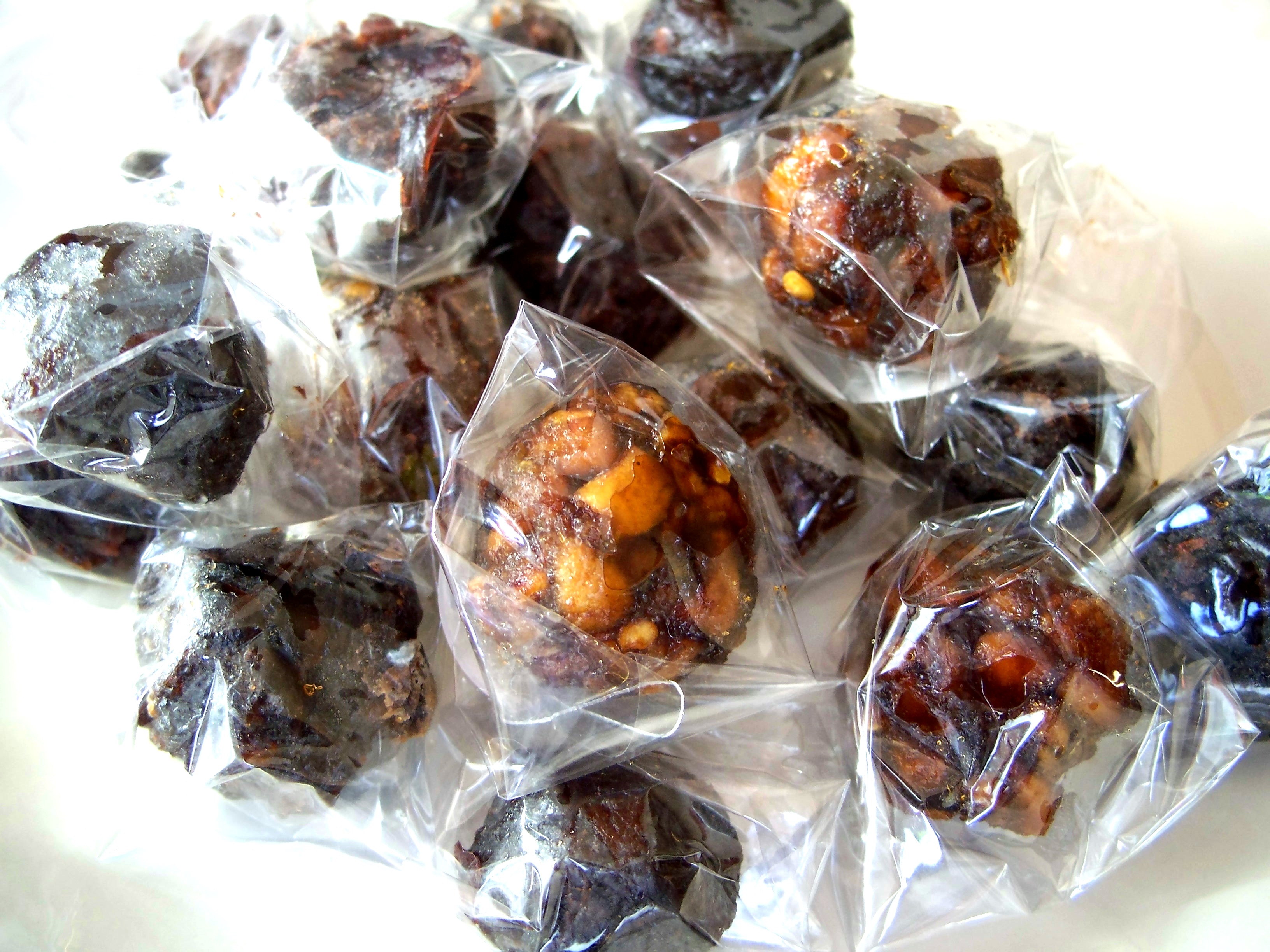
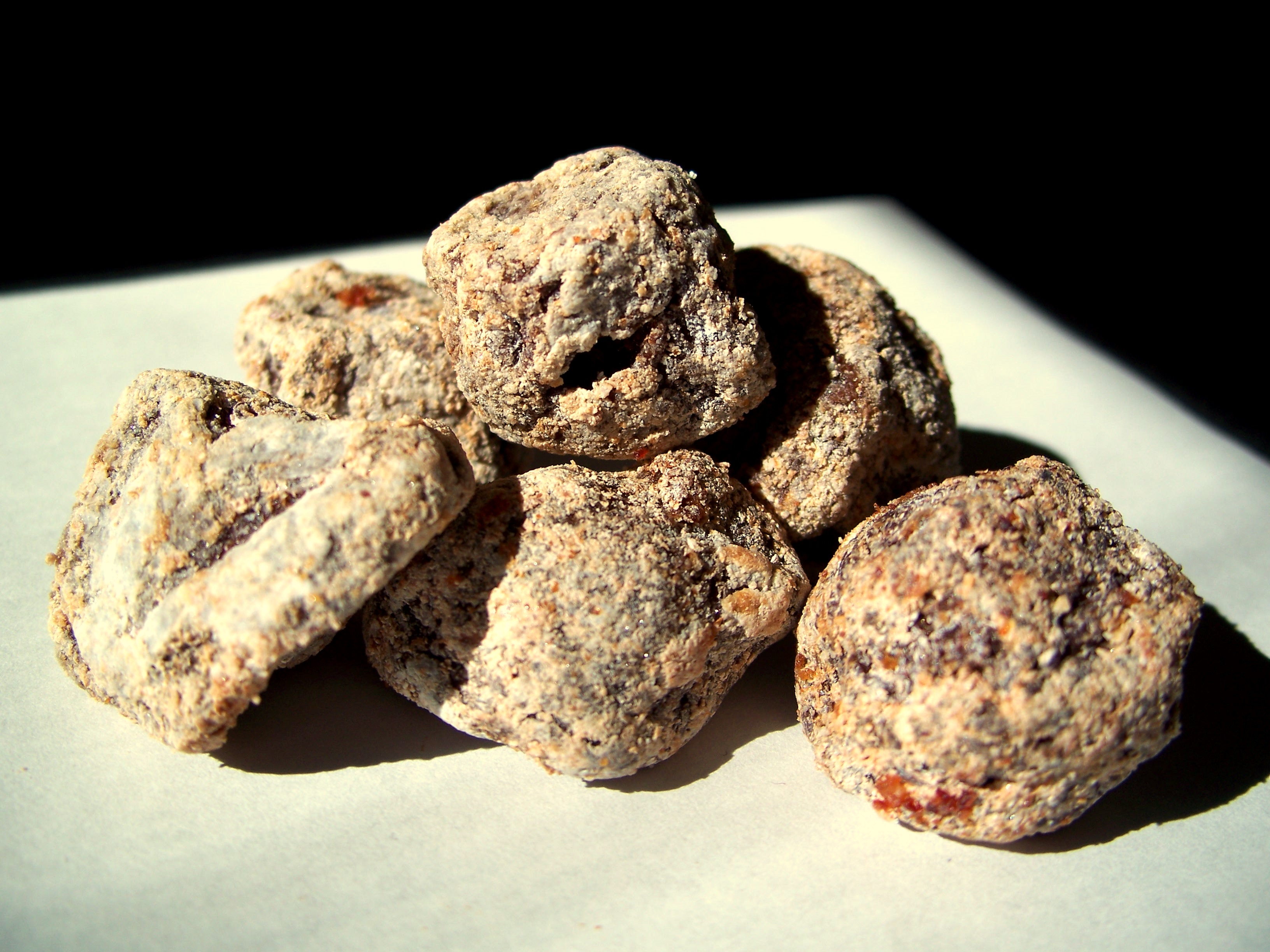
Let’s make it clear: ô mai |oh mai| is not xí muội |xi mui| (huamei), even if Wikipedia says so. The former is a cooked mixture of cut-up fruits, ginger, licorice and spices, the latter is a whole plum dried and salted.


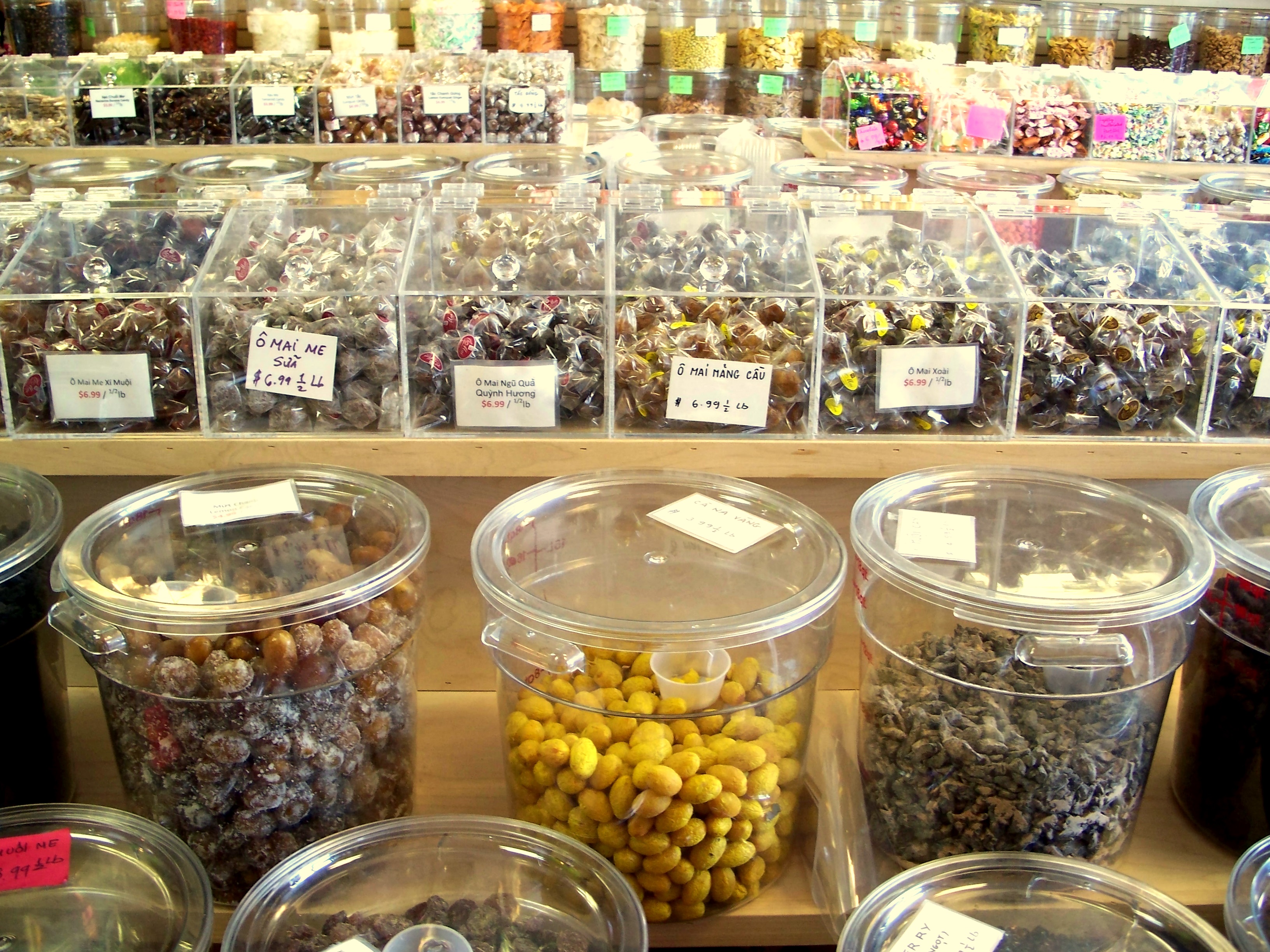
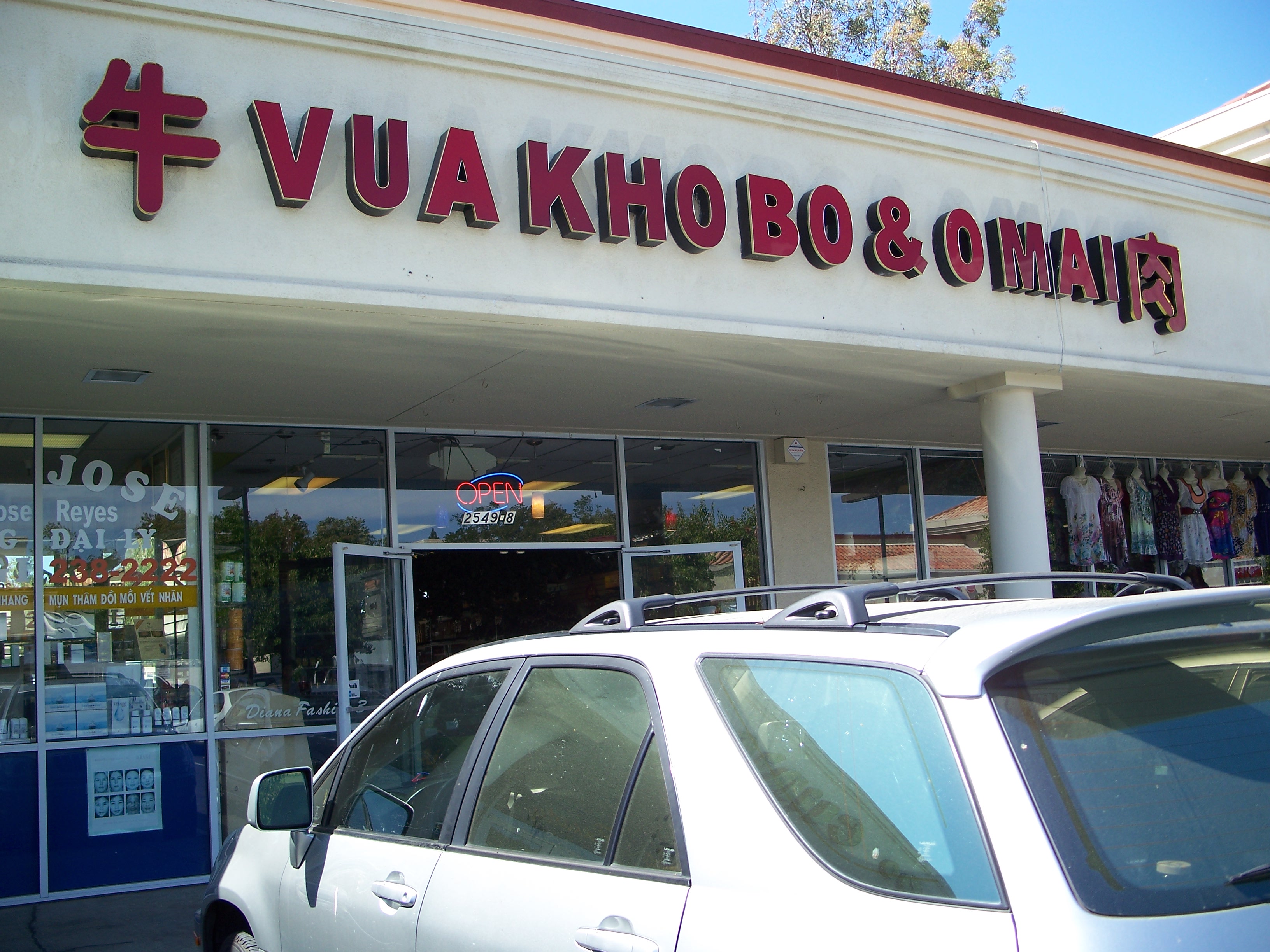
Now that’s settled, I got a bunch of ô mai from Vua Khô Bò & Ô Mai a while ago, all homemade or so the lady told. Guava, rose buds, sấu (no English name, it seems), mango, kumquat, cóc (golden apple), tamarind, and 5-fruit combo, 2 balls each at $6.99 per half pound. Sweet, spicy, chunky, velvety, gingery, tart, salty, it’s all there.

The downside: they all have the same wrapper, so except for the guava one which is extra chunky, I can’t tell which is which if my life depended on it.

And here’s some xí muội. Look more like rocks then edibles, doesn’t it? Americans like ’em not, but I find them lip-smacking good, one tiny nibble at a time.


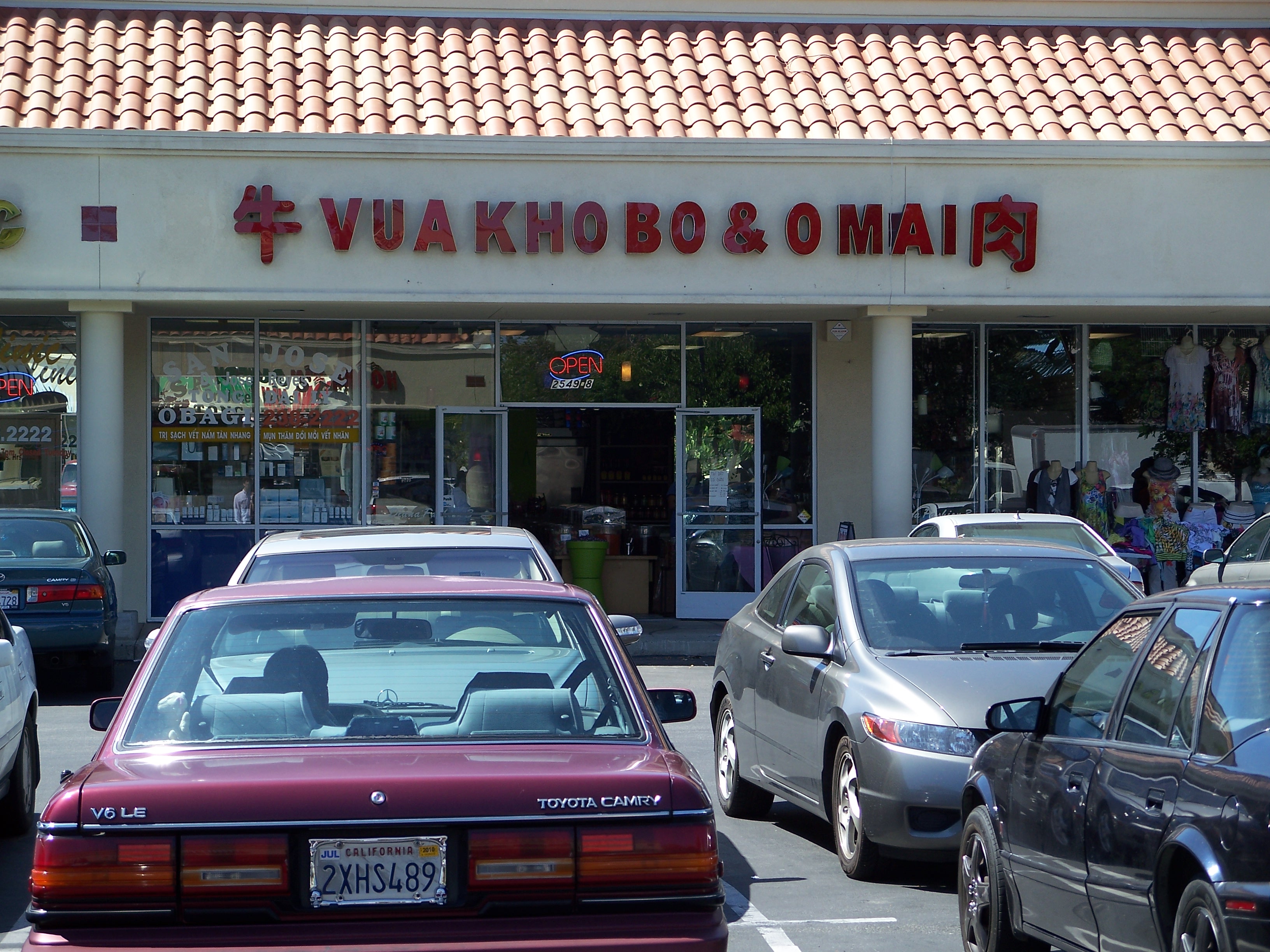
Address: Vua Khô Bò & Ô Mai
2549 S King Rd #A-B
San Jose, CA 95121
(408) 531-8845

Also from here, also fruitilicious: banana tootsie roll

Tags:

Sandwich Shop Goodies 13 – Bánh xu xê (couple cookie)

February 12, 2011 By: Mai Truong Category: Houston, Northern Vietnamese, One shot, sweet snacks and desserts, Vegan


When you reach(ed) mid 20s, don’t you just hear all sort of marriage announcements popping up among your social circle? By the time of college graduation, half the girls I know have gotten their wedding registry up on Facebook, and I thought okay it’s just an American thing (the wedding I mean, though the registry is American too). Then this past Christmas my best college friend missed our annual reunion for his big day in India, and another pal who I thought was still wandering the streets of Chengdu dropped the bomb that he’s engaged. Then I got news that two of my eleventh grade buddies in Vietnam are going to say the vows (not to each other) within this year. Then it really hits me.

I haven’t written about any wedding party food, even though I’ve been to many weddings :D. So why not celebrate this year’s Valentine’s day with a Vietnamese confection whose name derives from the main characters of any wedding: bánh xu xê, originally called bánh phu thê, or “husband (and) wife”?

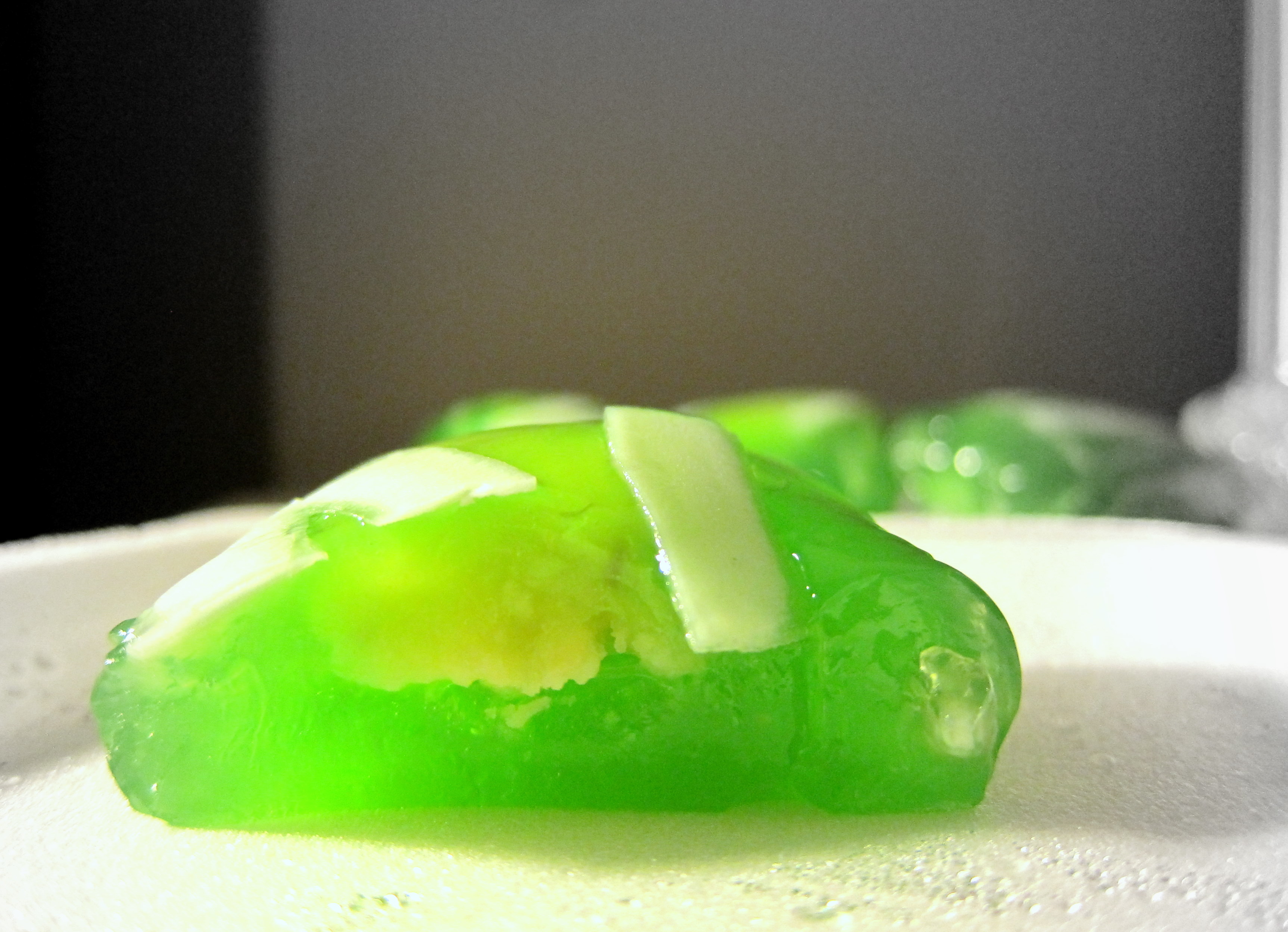
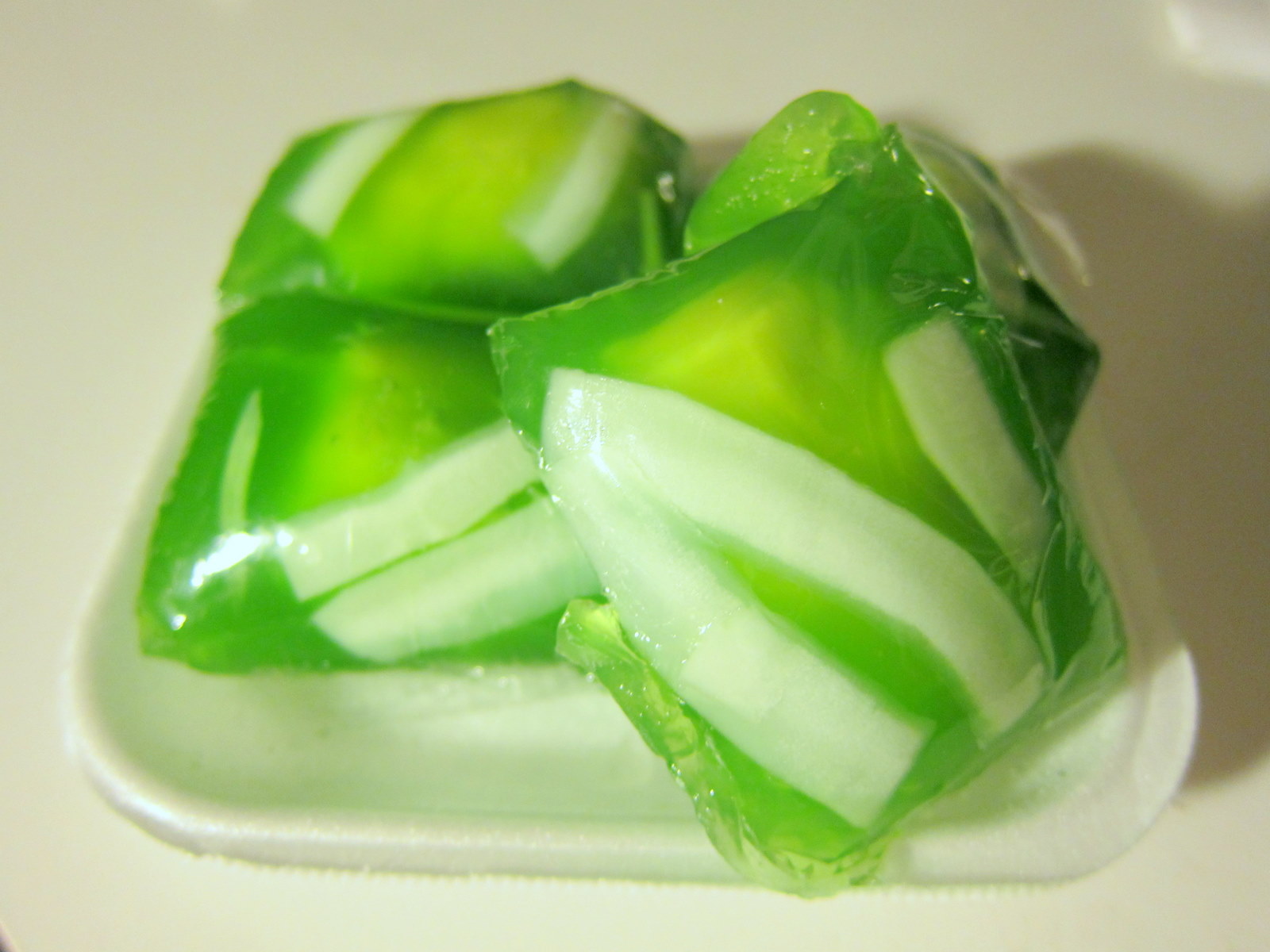
My translation “couple cookie” is for the sake of consonant concordance. They are similar to neither American cookie, Scottish cookie nor British cookie. These little bouncy sweet green pillows get their names from being gift desserts at Vietnamese couples’ engagements back in the day, when they used banana leaves to make little boxes instead of a double layer of cellophane wrapper. At one point the adults called them bánh phu thê, then the kids mispronounced it to bánh xu xê (|soo-seh|) and the name stuck. Technique-wise, it takes a grandmother’s experience to make a mixture of sticky rice flour, arrowroot starch and water into a translucent jello casing that is resilient but not sticky. Some of us might find its crunch-chewy texture too rubbery, other would question its lack of flavor, but the skill of transforming ingredients alone is admirable, and I like chewing. 🙂 In fact I like the outer layer more than the filling.

Traditionally, taro cut into strips are mixed with the cooked batter to give onyx-like patterns, while the modern concoctions can have sesame seeds on top or dry coconut strips within to spice up the homogeneity. The fancy pâtissiers of old Northern Vietnam villages might also sprinkle a few drops of pomelo flower extract into the mung bean paste filling for enhancing fragrance. But I wouldn’t expect that from our local sandwich shops in the States, not when it’s less than $2 for a pack of four.


It’s the kind of sweet you either love or hate. My mom loves it. The Gastronomer suggests using it to pelt your loved ones. It’s the perfect representation of a marriage really, and I’m not talking about the symbolic meaning of glutinous rice (bonding) and all. Its shiny outlook is inviting – everybody likes to get married, then you take a bite and find it tough, lackluster, disappointing, at the least not quite as expected – the post-wedding depression, then you get to the core and discover some tender sweetness after all. 🙂

Got ’em from: Alpha Bakery & Deli (inside Hong Kong City Mall)
11209 Bellaire Blvd # C-02
Houston, TX 77072-2548
(281) 988-5222

Previously on Sandwich Shop Goodies: chuối nếp nướng (grilled banana in sticky rice)
Next on Sandwich Shop Goodies: bánh da lợn (pig skin pie)

Candied fruits for a candy Year of the Cat

February 03, 2011 By: Mai Truong Category: California - The Bay Area, Festivals, Fruits, sweet snacks and desserts, Vegan, Vietnamese


Its popularity might have declined over the years in Vietnam, but to the Vietnamese expats, mứt Tết remains one of the few links home to resurrect our new spring festival atmosphere on foreign lands. As far as I know these candied fruits are unique to the Vietnamese New Year (Tết), just like the tteokguk and the yakwa to the Korean Seolnal. They are holiday gifts to friends and family, offerings at the altars to ancestors and deities, little snacks for children, tea confections for adults, and vegan treats for those who refrain from eating meat at the year’s beginning.


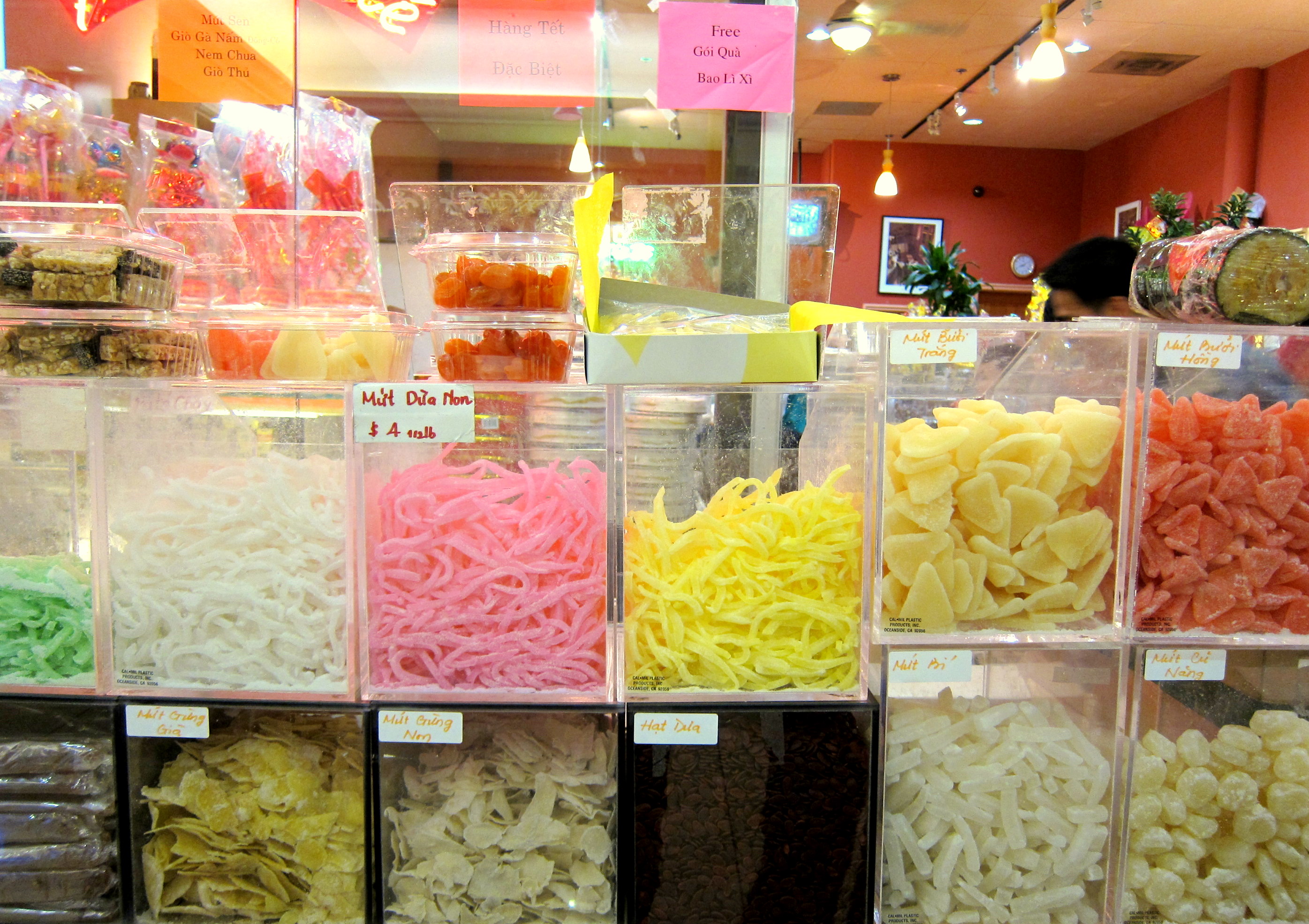
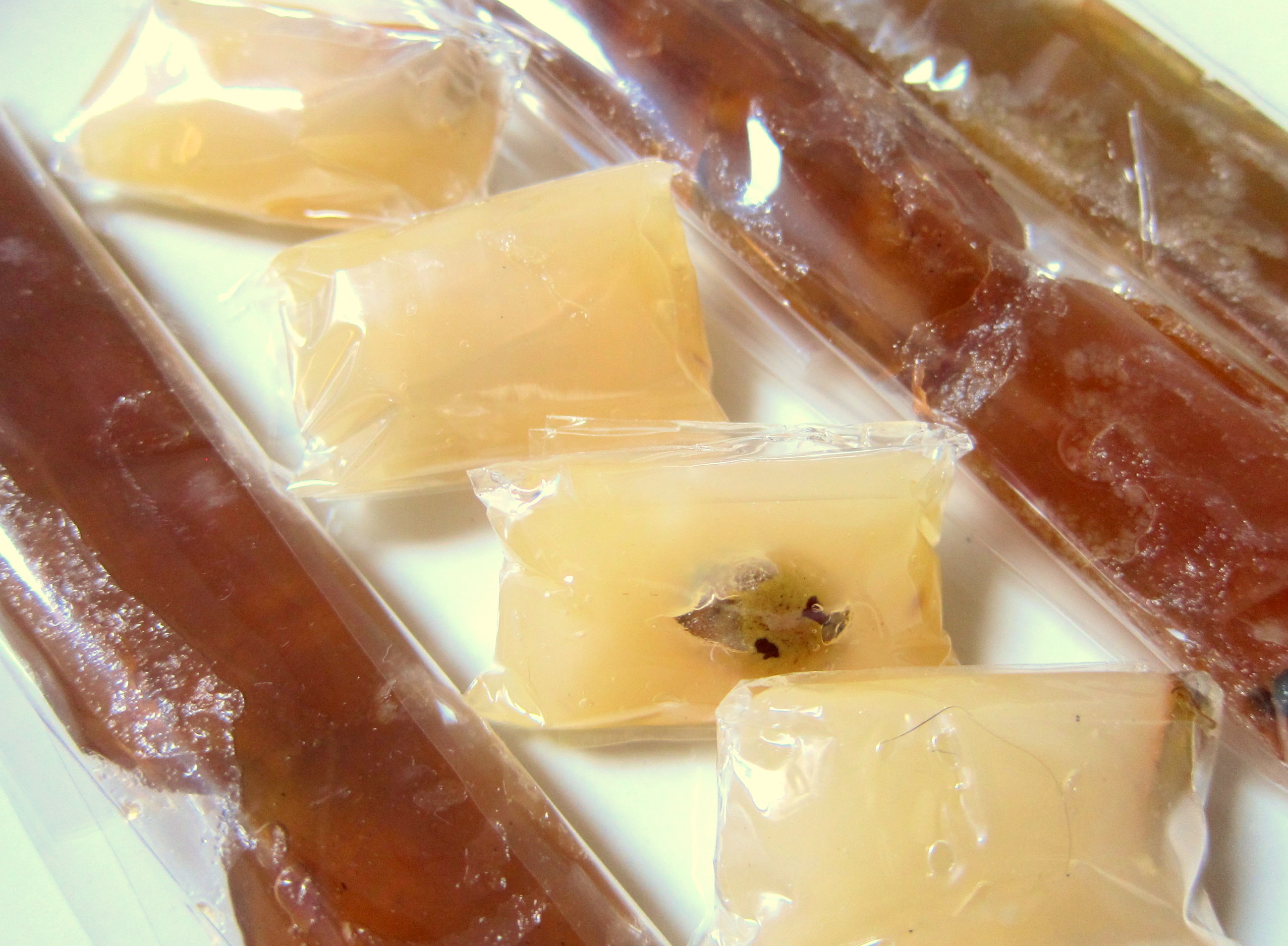
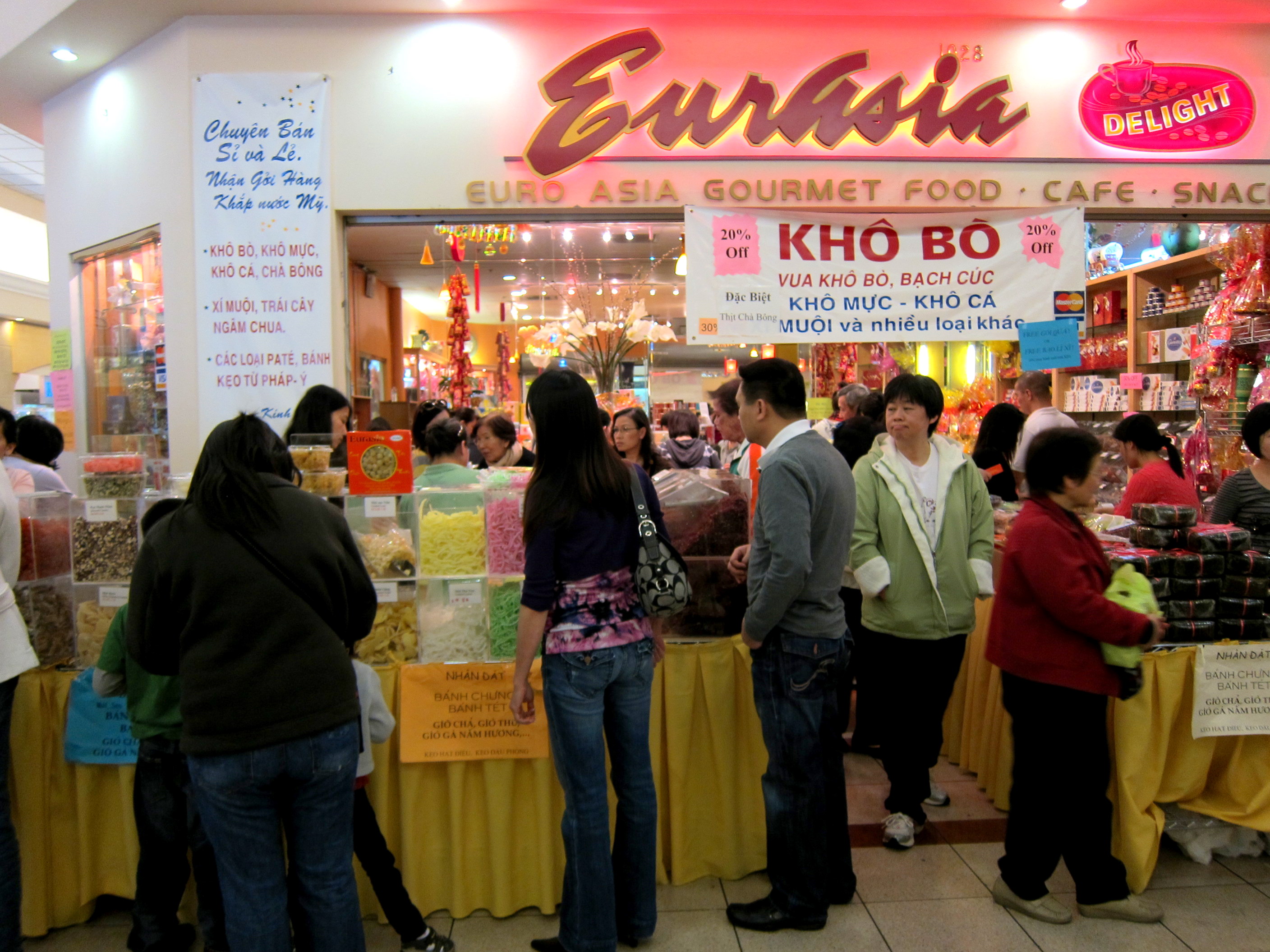
Mứt can be divided into two types: wet and dry. Visit any beef jerky (khô bò) and salted plums (xí muội) stores in Vietnamese shopping malls in the Tet season, you’d see a swarm of mứt in glass jars, the wet kinds wrapped in crunchy paper and the dry kind laying bare. The two most common wet mứt are tamarind (me) and soursop (mãng cầu). The former is kept in its scrawny form, with a few rope-like fibrous strings along the fruit’s length, which is to be discarded when eating, of course.


Tamarind mứt should be amber brown, chewy, and a little more sour than sweet. Tamarind is notorious for its medicinal effect, so be careful not to consume too many sticks at once. A similar chewy wet mứt is the soursop, but it’s always milkish white, doesn’t retain the fruit’s shape, and people tend to put too much sugar in the churning process.

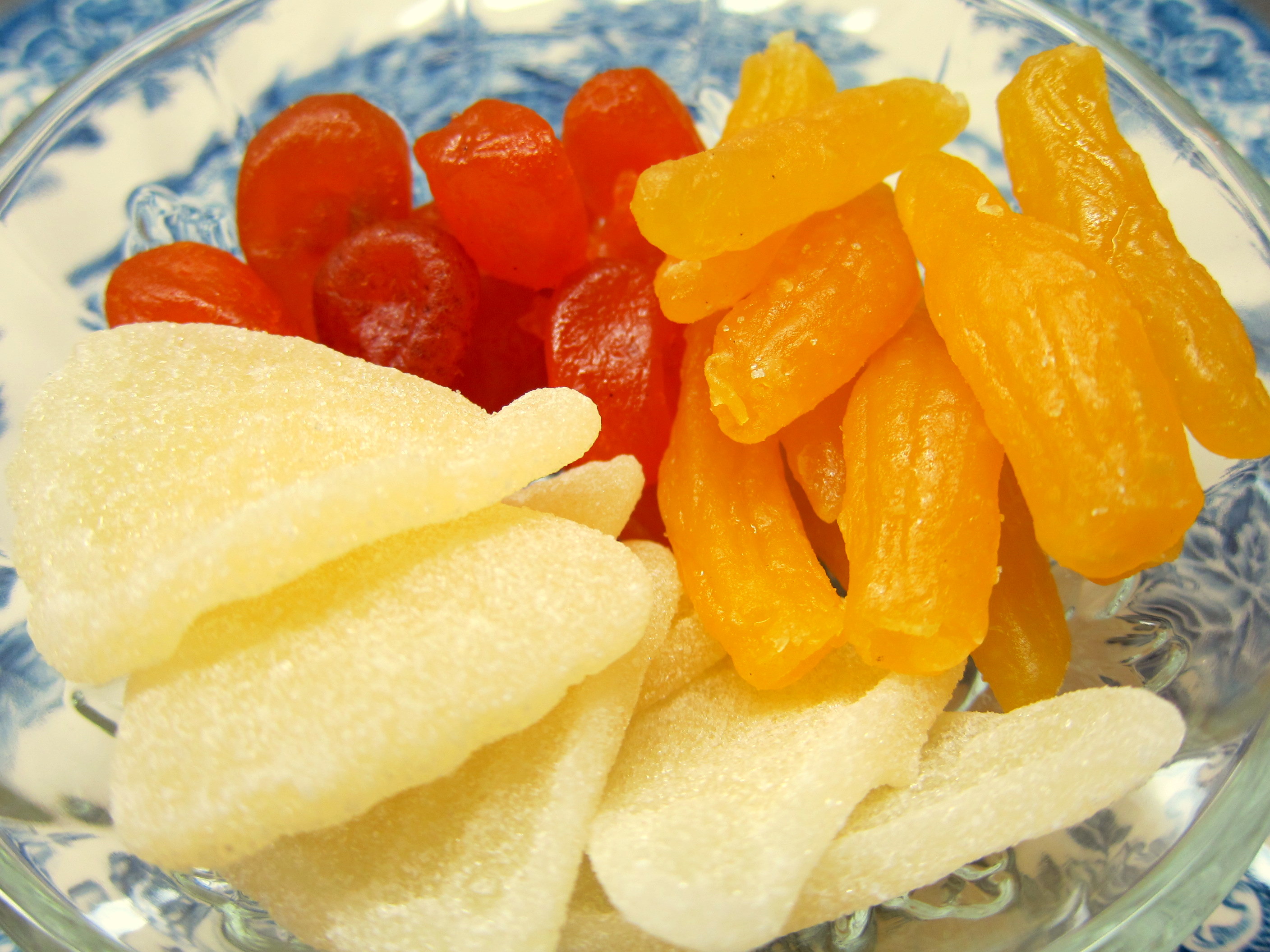
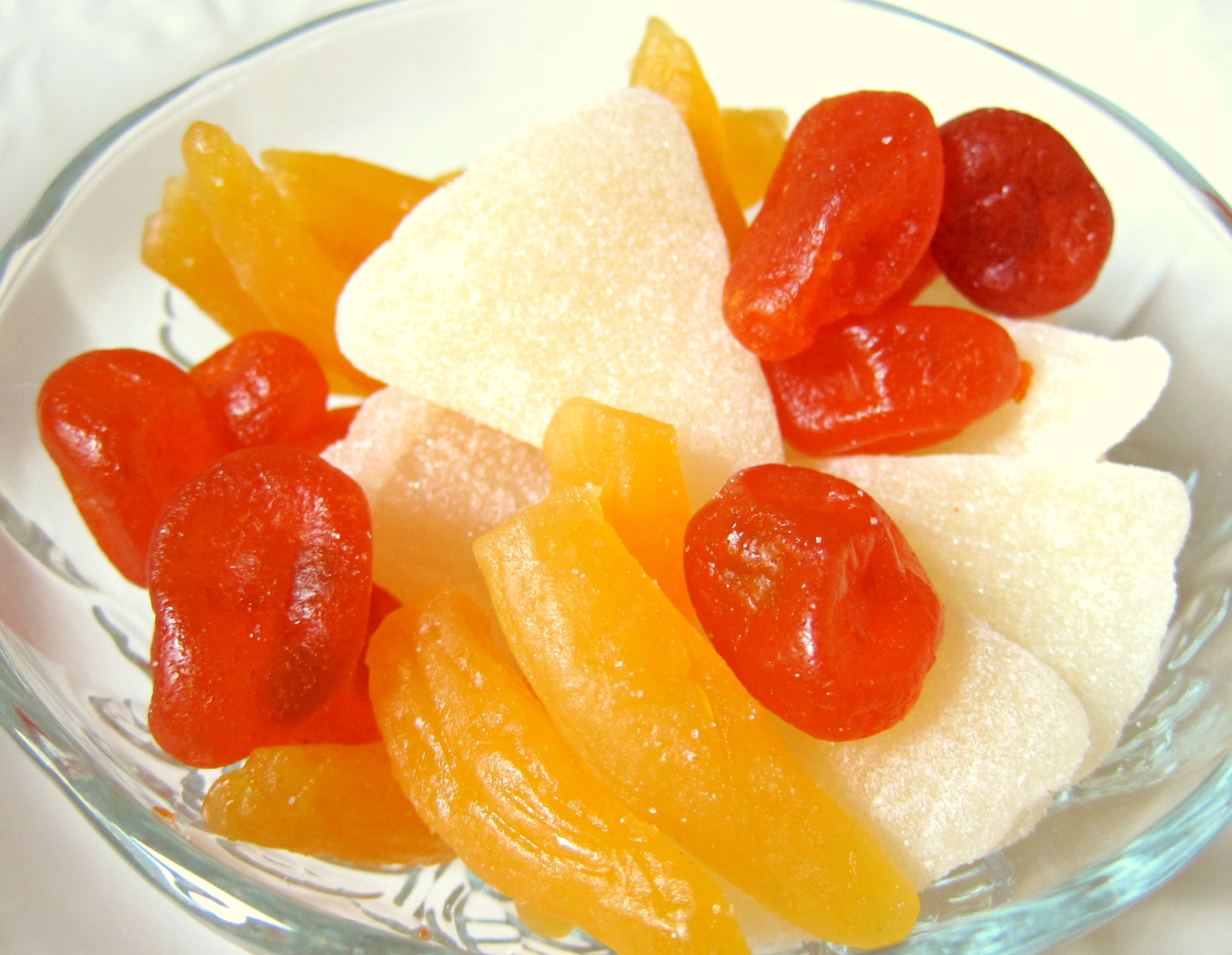
On the dry side you can find some twenty common kinds, spanning both fruits and non-fruits (nuts and roots): coconut, persimmon, lotus seed, tomato, ginger slice, carrot, winter melon, apple, lemon, guava, water chesnut, etc. I’m particularly fond of the crunchy, aromatic coconut ribbons which as a kid I liked to hold in my mouth for hours to melt off all but the coconut itself; but this year I refrained from buying them to try the other kinds instead.


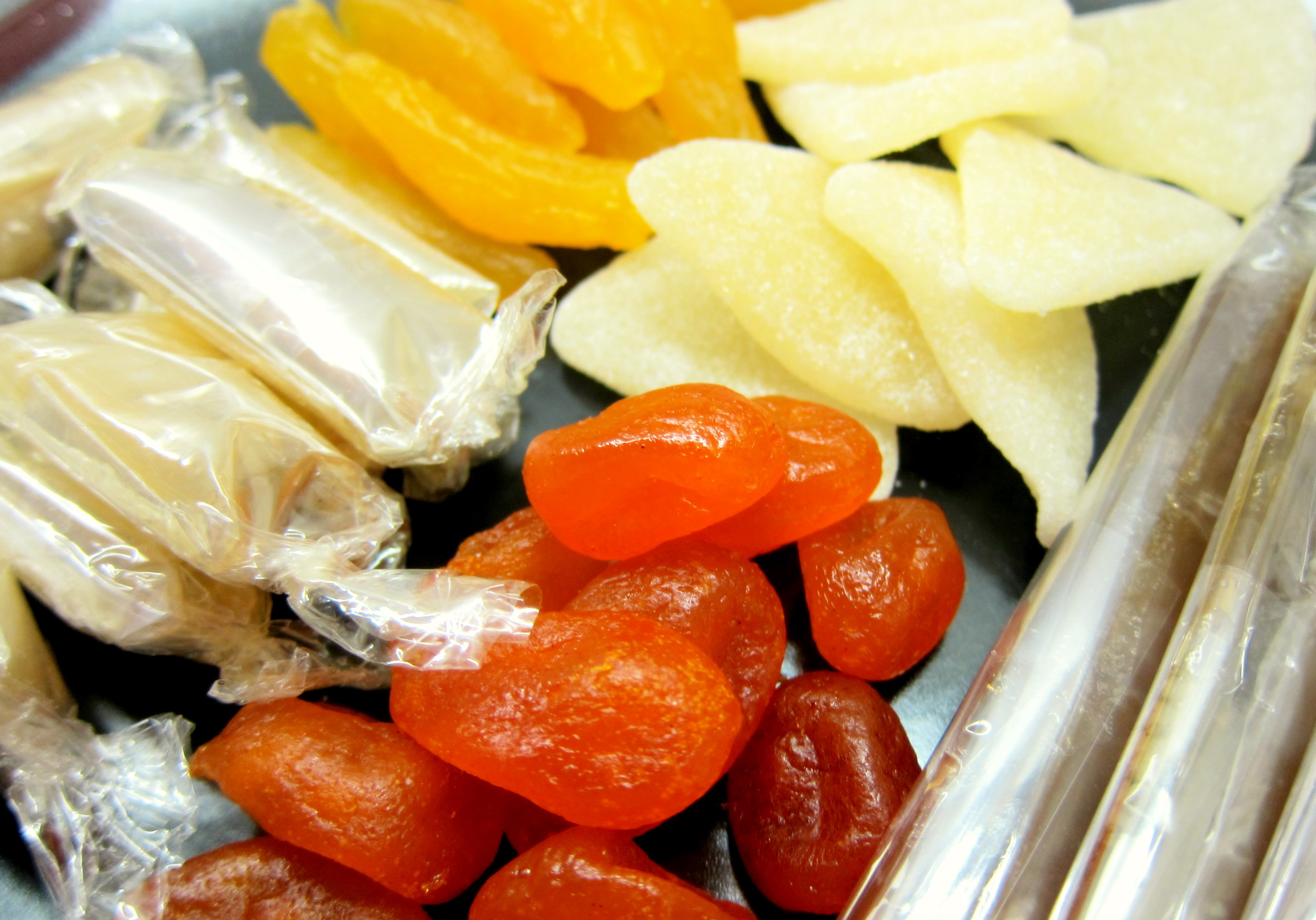
As advertised by the lady of the store, the scarlet kumquat mứt (mứt tắc) is “good enough to die for”. I’d say its texture is fresh, its color attractive, it’s not too killingly sweet (always a plus for these candied pieces), and it’s a thousand times better than the cherry they put in your hot fudge sundae. 😉 Word of mouth is it can help with digestion and lowering body temperature, and if you drink too much alcohol perhaps pack a few of these to detoxicate (or just don’t drink!).

The sweet potato mứt (mứt khoai lang) are warm yellow inch-long sticks without powder sugar coating, as dense as a medium boiled egg yolk and as sweet as the root itself. In a blind taste test, the first bite makes you think it resembles sweet potato, then the second casts some doubt because it’s denser and more consistent than sweet potato. It has the same medicinal effect as tamarind, but to a lesser degree.


Mudpie’s favorite of the five is labelled pomelo (bưởi), but it’s most likely the pomelo skin, sun-dried and pan-sweetened and powder-sugar-coated like American candies. It feels so light almost porous, the center has a subtle citrus pinch that would marry well a cup of hot chrysanthemum tea.

In the end, there’s no telling which kind of mứt everyone would like best, but there’s always some kind somewhere to each person’s liking. When you buy mứt, ask for a sample before settling on a 1-lb pound package, you can’t judge a mứt by its cover. Usually they cost $3-5 per half pound, and each little bite-size is packed with enough sugar that it’s best, though it may appear cheap, to buy $1-2 each kind, and buy many kinds. 🙂


Where I get my mứt this year: Eurasia Delight (inside Grand Century Mall)
1111 Story Rd Ste 1028
San Jose, CA 95122
(408) 293-1698

Tags: , ,

A sticky crusty crush

December 16, 2010 By: Mai Truong Category: Comfort food, RECIPES, sticky rice concoctions, Vegan, Vietnamese

Do you like that crisp, burnt, gochujang-dyed rice crust at the bottom of the dolsot when you scrape off spoon after spoon of bibimbap? If the answer is yes, I’m certain that you’d fall for this one too.

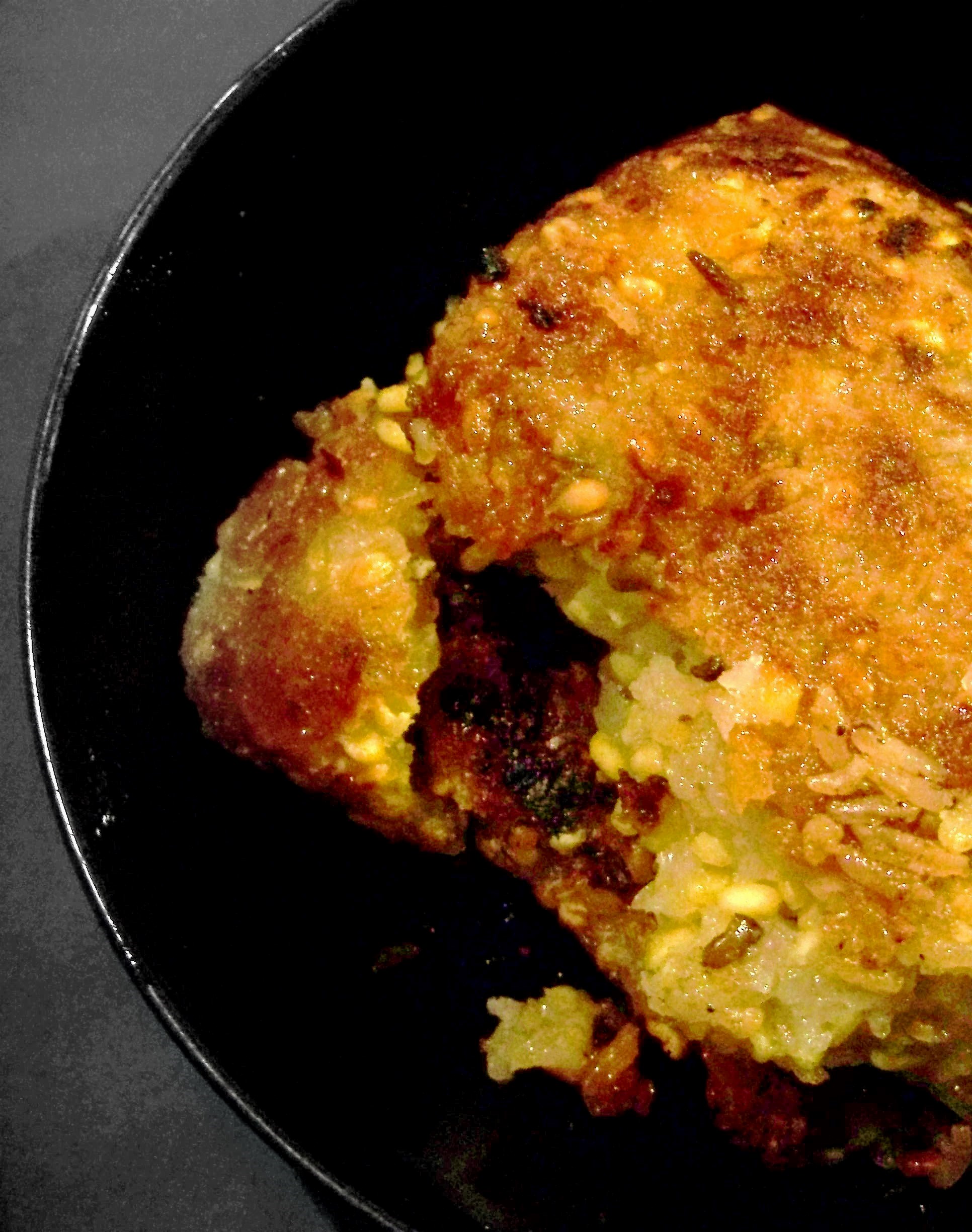
Mom cooks her xoi in a non-stick pan, with coconut milk and little water. Somehow, without a precise recipe, she can make a shell of brown, sweet and crusty sticky rice every time. Then we fight each other for it when it’s still warm and just a tad chewy, leaving the soft innard xoi for my dad.

Approximate recipe: Xôi cháy (literally “burnt xoi”, usually considered a point against the skillful xoi cooks, but I think it’s better than icing on a cake, it’s the best part of a perfectly cooked batch of xoi)
– 1 lb sticky rice
– 1/2 lbs mung bean (halved is fine, unscraped)
– 1 can of coconut milk
– 1/2 tsp salt
– sugar (lots! ~ 8-10 tbs)

Soak mung beans in water overnight to soften them, so that they get cooked faster (at about the same rate as the sticky rice). Mix sticky rice and beans together.
Put sticky rice, mung bean, a can of coconut milk, and just enough water to have the grains 1/10 inch under the liquid surface. Cook in a deep pan, covered, on medium heat. (If cooked in rice cookers, the bottom crust won’t form.)
When the mixture boils, turn the heat to low, wait about 10 minutes until most of the liquid is soaked into the grains, then use a chopstick to make holes in the mixture, allowing steam to circulate easily all around. Keep covering. Cook for another 10-15 minutes.
When rice and mung bean are soft, sprinkle salt and sugar on top, then gently mix (with chopsticks) the xoi without disturbing the bottom layer. (This is exactly what you must do when eating dolsot bibimbap, you don’t want the crust to mix with the soft part.) Make holes in the mass again. Cook for a few more minutes.
Scrape off the xoi innard first and store separately. Take out the whole crusty shell with care, or break off into chunks. Eat by itself. Flavorastic by itself.

Tags:

Toothsome nana tootsie

December 08, 2010 By: Mai Truong Category: Comfort food, Fruits, One shot, RECIPES, Southern Vietnamese, sweet snacks and desserts, Vegan


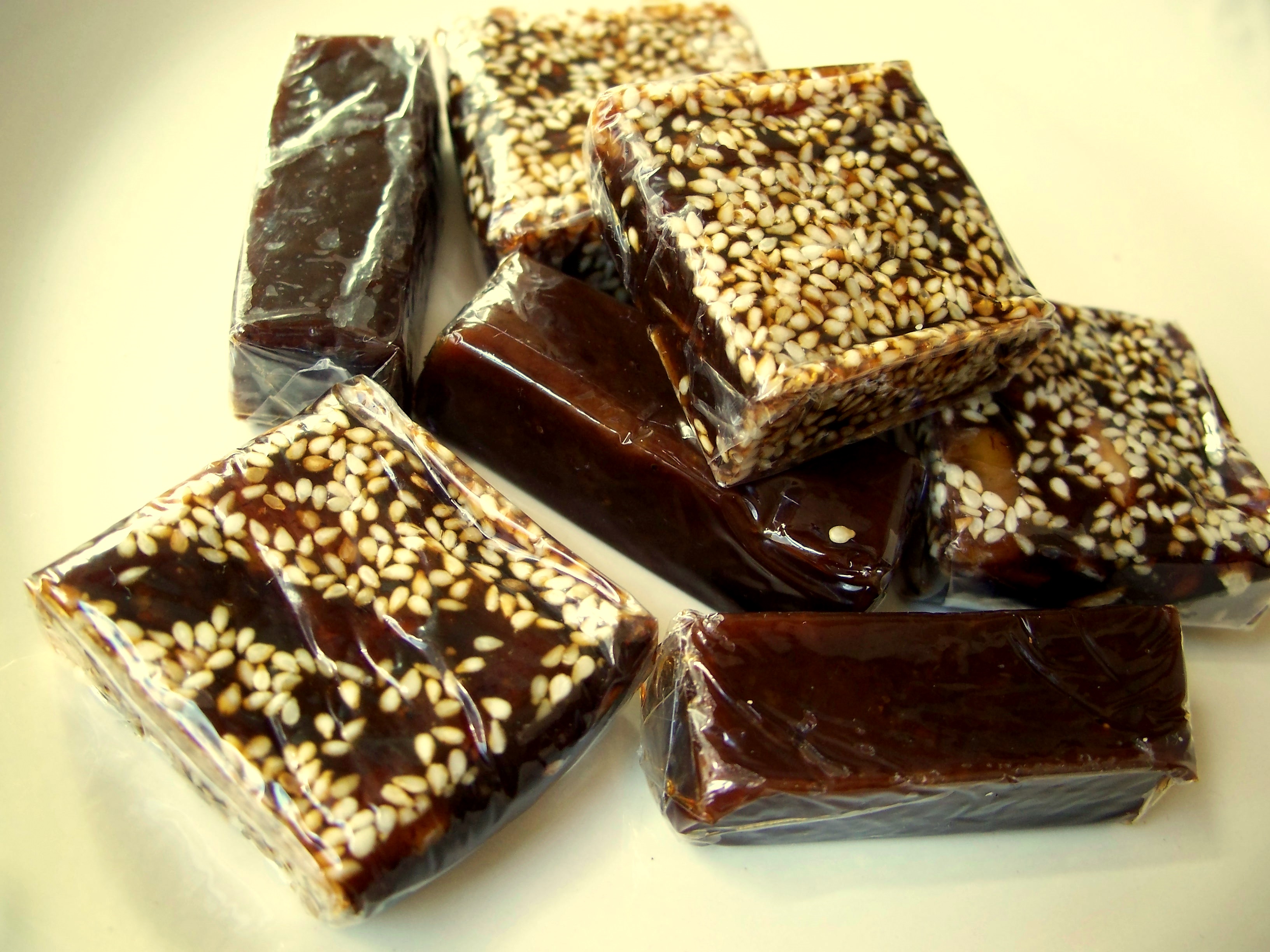
Last night I dreamed of these brown sticks in cellophane wrappers. The sound of crunchy plastic unraveled. The smooth yet sticky, dried-syrup-like surface that easily gives way to the pinch of two nails. An ever so lightly sweet, fruity, malty breath whizzing up as your nose closes in…

I woke up feeling as though there were some of those pieces melting on my tongue. But the best part of eating a banana tootsie roll, if I may call it so despite it having no relationship to the Tootsie Roll, is, like with the real Tootsie rolls, the chew. You chew it and notice it get smaller, but not any less sweet or less gummy. And it’s only as sweet as a just ripe banana, yet with an alluring touch of coconut.

The chewy banana candy is a Mekong delta specialty, where siem bananas grow more easily than rice. The stout, dense, supple bananas either make their way into che, bread pudding, wrapped and grilled in sticky rice, flattened and sun-dried, or cooked in some recipes that are only passed down from mothers to daughters. I just know that whenever we traveled to or a friend of the family came back from the My Tho, Ben Tre region, I got a bag of keo chuoi – banana candy (pronounced somewhat like |keo jui|), or keo dua (|keo yua|) – coconut candy. Banana candies are less sweet and less strenuous to the jaw than the coconut ones; some are coated with roasted sesame seeds, some contain crushed peanuts or ginger bits, but I like the plain, pure, consistent banana kind the best.

Keo Chuoi (banana chewy candy) –
Ingredients
– 3 bags of whole dried bananas
– 1 coconut
– 1 ginger root, roasted and crushed peanuts (if you like some texture variation)
– Sugar, 1 tsp lime juice
– cellophane candy wrapper

Slice thinly the dried bananas, coconut, and ginger. Stir banana and sugar in a skillet on low heat (add at least half as much sugar as banana), add coconut (and ginger if wanted), stir constantly to avoid them burnt. Add lime juice to keep the mixture gooey. Add peanuts when the mixture is homogeneous and start to harden. Take out, flatten and smoothen the surface (add a sesame coat now if you want), wait until cool then cut and wrapped in cellophane wrappers.
If you can’t find dried bananas, try using a blender to mix banana, coconut, and ginger together, and do every subsequent step the same way.
(Recipe not yet tried :-P, translated from Vietfun)


Ze kwik-n-easy vay:
Vua Khô Bò & Ô Mai (loosely translated: “King of Beef Jerkies and Dried Huamei“)
2549 S King Rd #A-B
San Jose, CA 95121
(408) 531-8845

Go bananas a few other ways:
banana ice cream
banana dog
banana bread pudding
banana in sticky rice log

Tags: ,

Sandwich shop goodies 12 – Chuối nếp nướng (grilled banana in sticky rice)

November 30, 2010 By: Mai Truong Category: California - The Bay Area, One shot, savory snacks, Southern Vietnamese, sticky rice concoctions, Vegan


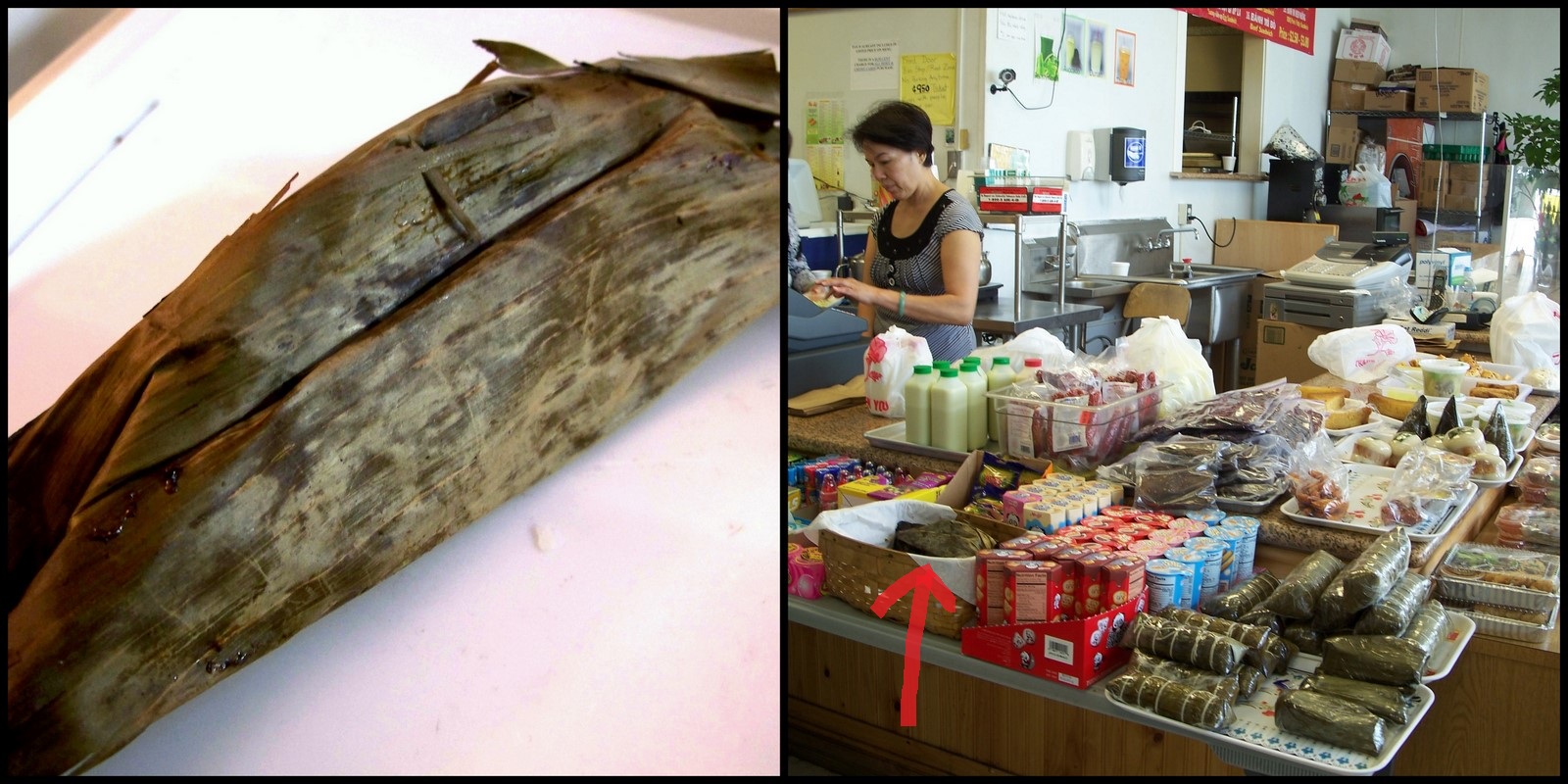
They all look the same. A myriad of things wrapped in wilted banana leaves sitting on the counter at a banh mi shop. Few patrons seem to notice the snacks as they occupy themselves with sandwich orders and the more meal-like rice or noodle to-gos, so much to the extent that the sellers too have little interest in selling their counter treats. Humbly, I point to these slender, charred and dry parcels piled in a box near the Pockys and inquire about their name. The hostess throws me half a glance infused with boredom, “Chuối nướng,” she moves her lips. So “grilled banana” they are.


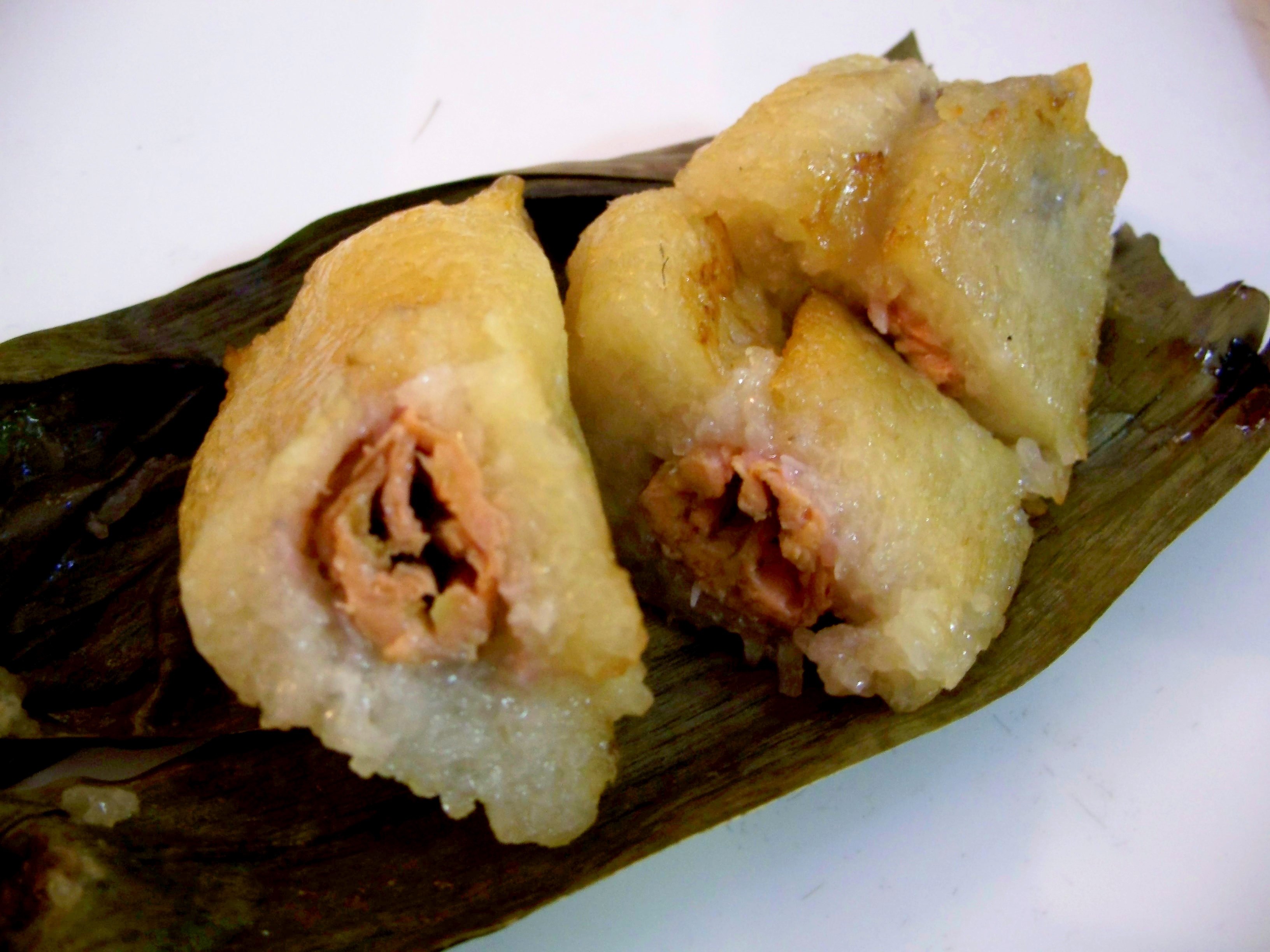
It takes an utterly simple form: a banana inside a sticky rice shell inside a banana leaf, charcoal grilled. Crispy, then chewy, then gooey sweet it goes as you sink your teeth through the bounteousness. It’s the factoriless meatless corn dog sans wooden stick of Southern Vietnam. Children would wait around old grandmas in the ‘hood to watch them grill the banana dogs and drool; adults would grab the banana dogs for breakfast, lunch, or late night snack when a wind chills and the grill warms.

It’s one of those things that can’t go wrong. Some cook the sticky rice plain, then serve the grilled dog sectioned and bathed in coconut milk with a pinch of sesame salt or peanut salt. Others do it My Tho style: the sticky rice is cooked in coconut milk and later mixed with coconut shavings before wrapped and grilled. Many cloth their nana dogs with just a band of nana leaf, mainly for easy handling of the sticky rice on the grill and near other dogs, but the dogs get crispier too. Meanwhile, Ba Lẹ ladies bundle up their dogs like they would with bánh tét, less charred, more aroma from the leaves.


Like banana bread pudding, banana dogs are exclusively made with chuoi su, a solid, stout, dense and white banana that grows like weed in the Asian tropics but is nonexistent in the States. The sad substitute Cavendish lacks consistency and sweetness and gooeyness. Yet, chuối nếp nướng still hits the spot like waltzing in the rain.

These nana ricewiches, as Noodlepie lovingly nicknamed, were 2000VND a steal (~10 US cents with the current exchange rate) in 2005. In 2007 the Gastronomer took the bite for 3000VND. I have no idea how much they cost now on the Saigon streets, with crazy inflation it might just be 10000 for all I know. But here at Bánh Mì Ba Lẹ in Oakland, nana dogs will go home with you for $1.75 each.

Address: Bánh Mì Ba Lẹ (East Oakland)
1909 International Blvd
Oakland, CA 94606
(510) 261-9800

Previously on Sandwich Shop Goodies: khoai mì hấp (steamed cassava)
Next on Sandwich Shop Goodies: Bánh xu xê (couple cookie)