Flavor Boulevard

We Asians like to talk food.
Subscribe

Archive for the ‘One shot’

Toothsome nana tootsie
December 08, 2010 By: Mai Truong Category: Comfort food, Fruits, One shot, RECIPES, Southern Vietnamese, sweet snacks and desserts, Vegan


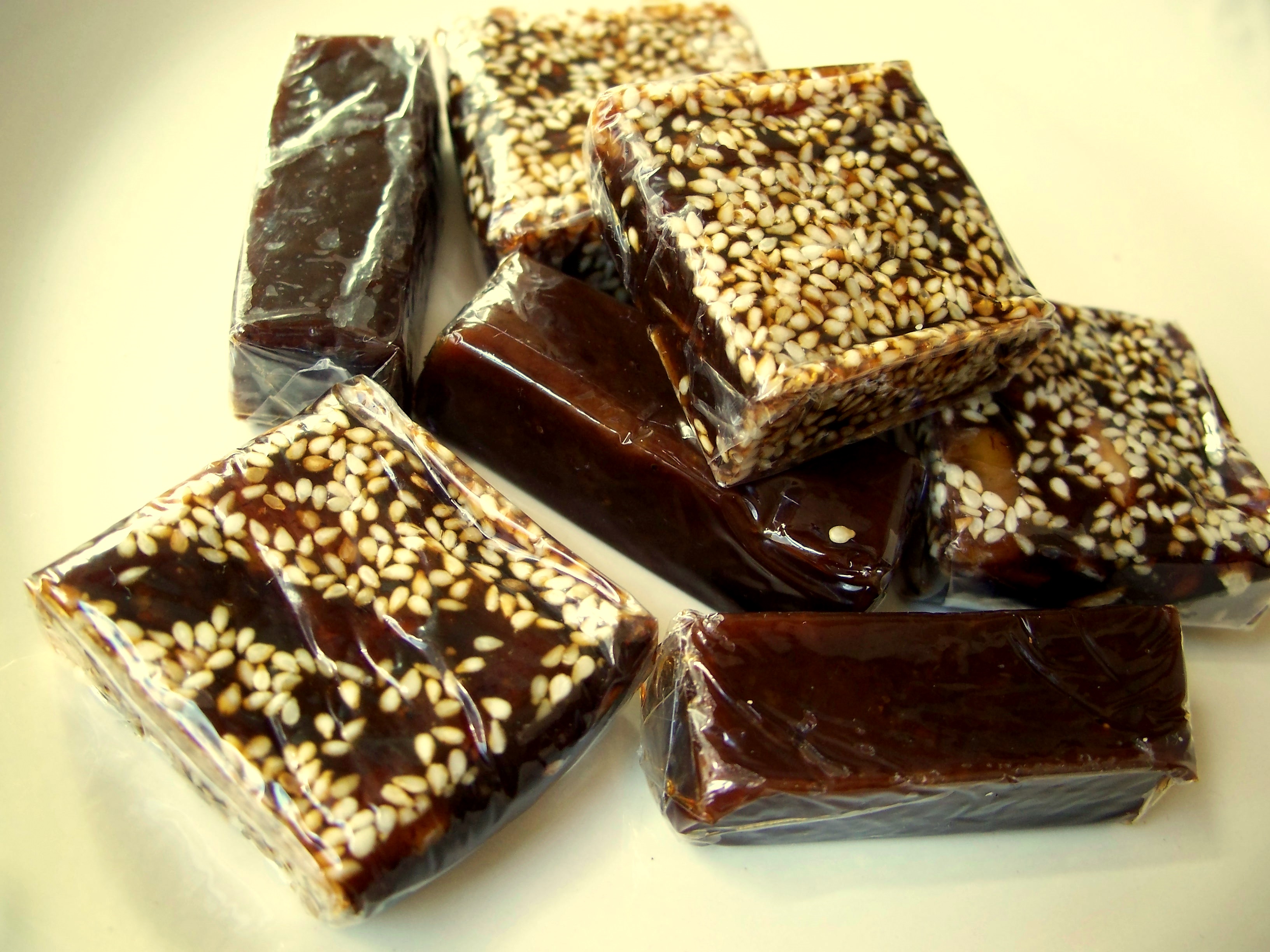
Last night I dreamed of these brown sticks in cellophane wrappers. The sound of crunchy plastic unraveled. The smooth yet sticky, dried-syrup-like surface that easily gives way to the pinch of two nails. An ever so lightly sweet, fruity, malty breath whizzing up as your nose closes in…

I woke up feeling as though there were some of those pieces melting on my tongue. But the best part of eating a banana tootsie roll, if I may call it so despite it having no relationship to the Tootsie Roll, is, like with the real Tootsie rolls, the chew. You chew it and notice it get smaller, but not any less sweet or less gummy. And it’s only as sweet as a just ripe banana, yet with an alluring touch of coconut.

The chewy banana candy is a Mekong delta specialty, where siem bananas grow more easily than rice. The stout, dense, supple bananas either make their way into che, bread pudding, wrapped and grilled in sticky rice, flattened and sun-dried, or cooked in some recipes that are only passed down from mothers to daughters. I just know that whenever we traveled to or a friend of the family came back from the My Tho, Ben Tre region, I got a bag of keo chuoi – banana candy (pronounced somewhat like |keo jui|), or keo dua (|keo yua|) – coconut candy. Banana candies are less sweet and less strenuous to the jaw than the coconut ones; some are coated with roasted sesame seeds, some contain crushed peanuts or ginger bits, but I like the plain, pure, consistent banana kind the best.

Keo Chuoi (banana chewy candy) –
Ingredients
– 3 bags of whole dried bananas
– 1 coconut
– 1 ginger root, roasted and crushed peanuts (if you like some texture variation)
– Sugar, 1 tsp lime juice
– cellophane candy wrapper

Slice thinly the dried bananas, coconut, and ginger. Stir banana and sugar in a skillet on low heat (add at least half as much sugar as banana), add coconut (and ginger if wanted), stir constantly to avoid them burnt. Add lime juice to keep the mixture gooey. Add peanuts when the mixture is homogeneous and start to harden. Take out, flatten and smoothen the surface (add a sesame coat now if you want), wait until cool then cut and wrapped in cellophane wrappers.
If you can’t find dried bananas, try using a blender to mix banana, coconut, and ginger together, and do every subsequent step the same way.
(Recipe not yet tried :-P, translated from Vietfun)

Ze kwik-n-easy vay:
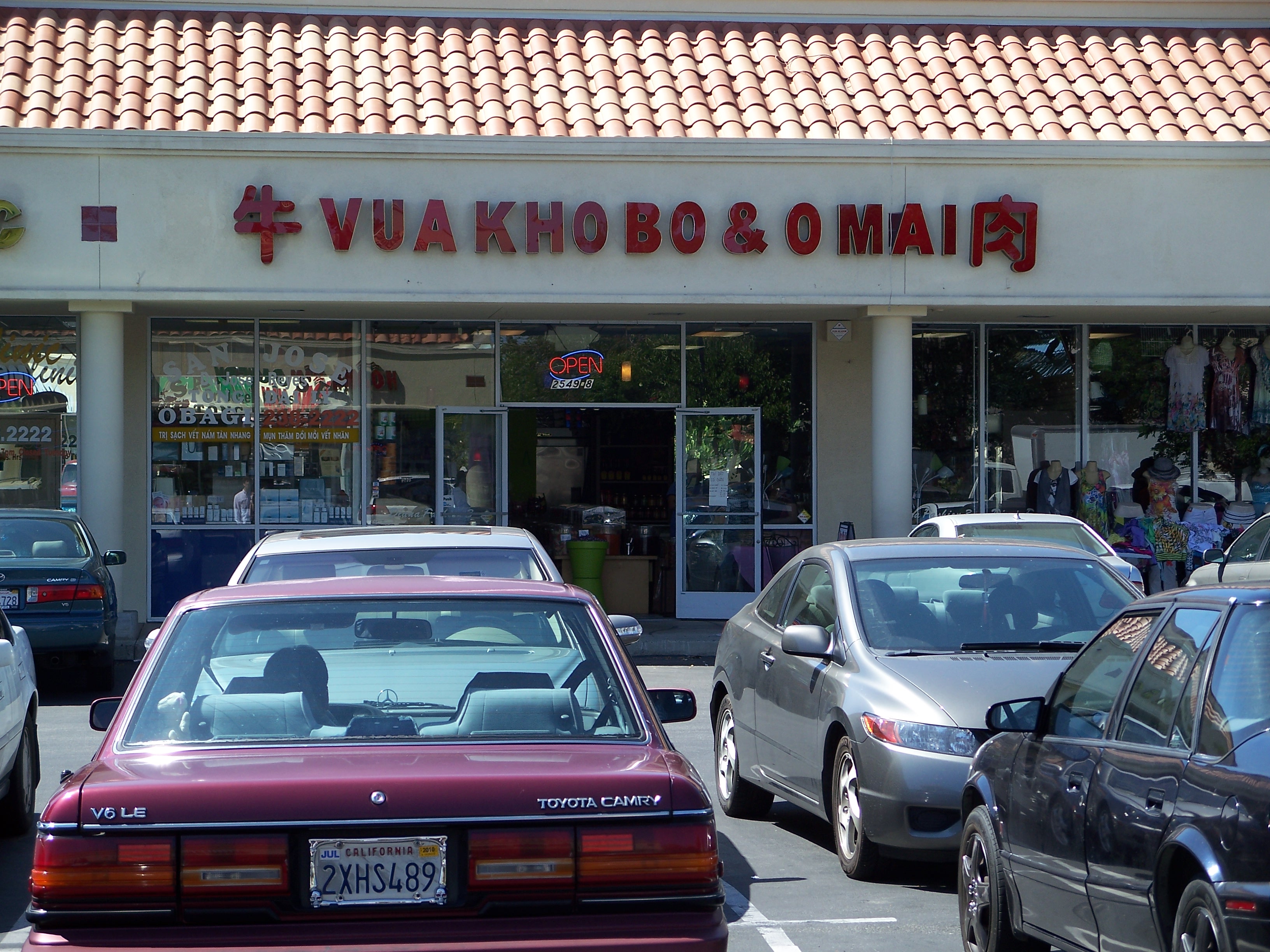
Vua Khô Bò & Ô Mai (loosely translated: “King of Beef Jerkies and Dried Huamei“)
2549 S King Rd #A-B
San Jose, CA 95121
(408) 531-8845

Go bananas a few other ways:
banana ice cream
banana dog
banana bread pudding
banana in sticky rice log
Tags: ,

Sandwich shop goodies 12 – Chuối nếp nướng (grilled banana in sticky rice)

November 30, 2010 By: Mai Truong Category: California - The Bay Area, One shot, savory snacks, Southern Vietnamese, sticky rice concoctions, Vegan


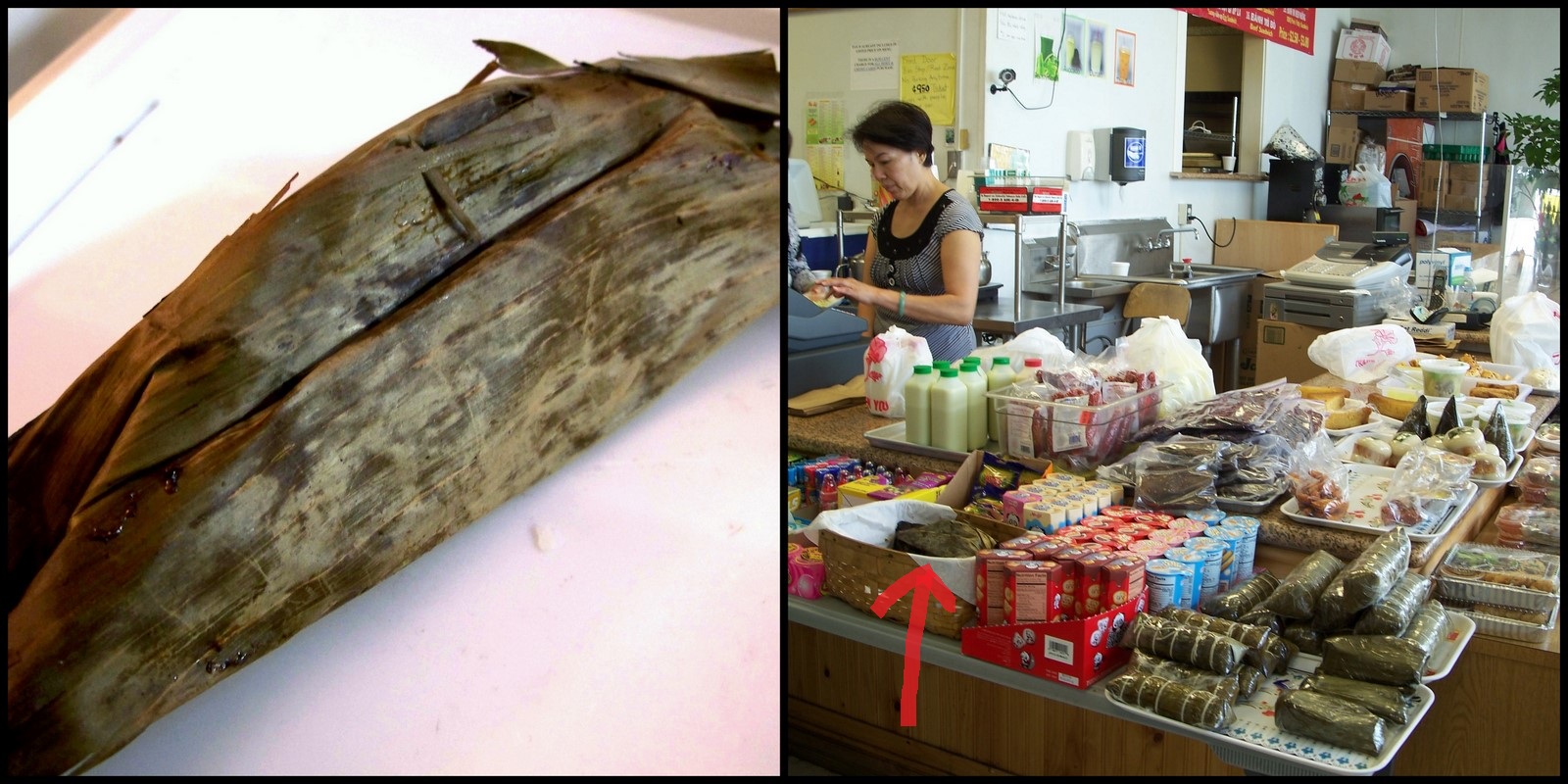
They all look the same. A myriad of things wrapped in wilted banana leaves sitting on the counter at a banh mi shop. Few patrons seem to notice the snacks as they occupy themselves with sandwich orders and the more meal-like rice or noodle to-gos, so much to the extent that the sellers too have little interest in selling their counter treats. Humbly, I point to these slender, charred and dry parcels piled in a box near the Pockys and inquire about their name. The hostess throws me half a glance infused with boredom, “Chuối nướng,” she moves her lips. So “grilled banana” they are.


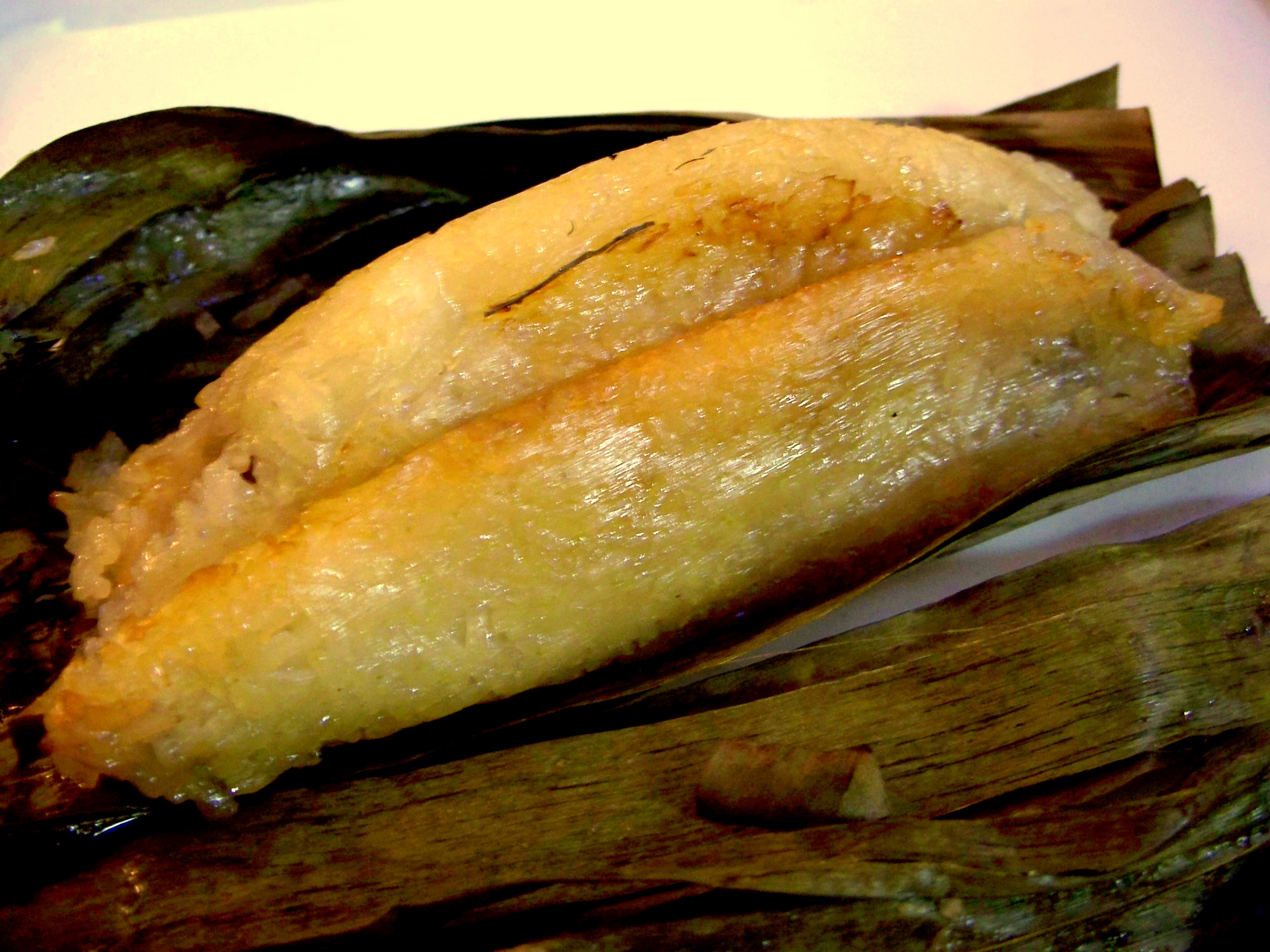
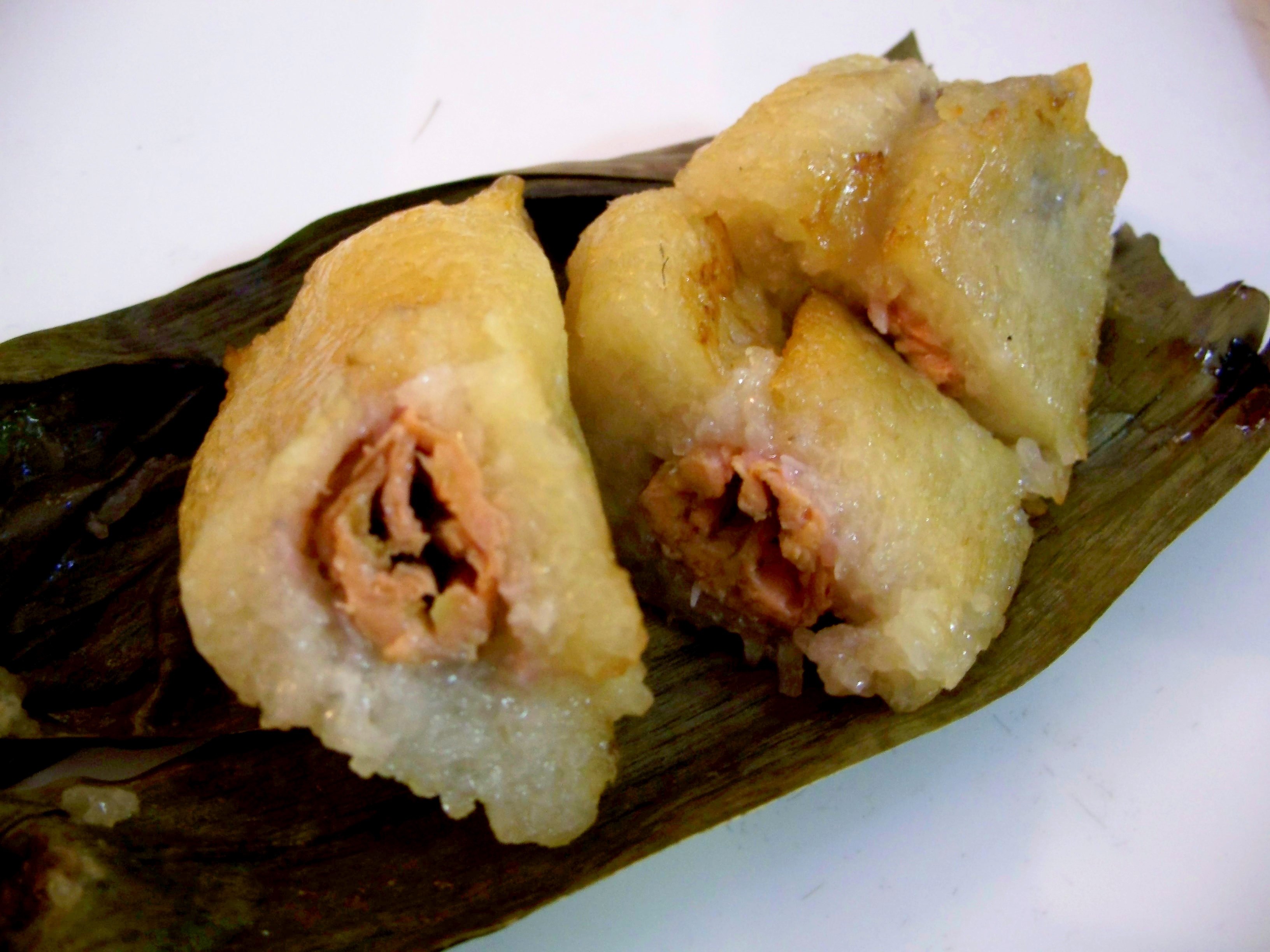
It takes an utterly simple form: a banana inside a sticky rice shell inside a banana leaf, charcoal grilled. Crispy, then chewy, then gooey sweet it goes as you sink your teeth through the bounteousness. It’s the factoriless meatless corn dog sans wooden stick of Southern Vietnam. Children would wait around old grandmas in the ‘hood to watch them grill the banana dogs and drool; adults would grab the banana dogs for breakfast, lunch, or late night snack when a wind chills and the grill warms.

It’s one of those things that can’t go wrong. Some cook the sticky rice plain, then serve the grilled dog sectioned and bathed in coconut milk with a pinch of sesame salt or peanut salt. Others do it My Tho style: the sticky rice is cooked in coconut milk and later mixed with coconut shavings before wrapped and grilled. Many cloth their nana dogs with just a band of nana leaf, mainly for easy handling of the sticky rice on the grill and near other dogs, but the dogs get crispier too. Meanwhile, Ba Lẹ ladies bundle up their dogs like they would with bánh tét, less charred, more aroma from the leaves.


Like banana bread pudding, banana dogs are exclusively made with chuoi su, a solid, stout, dense and white banana that grows like weed in the Asian tropics but is nonexistent in the States. The sad substitute Cavendish lacks consistency and sweetness and gooeyness. Yet, chuối nếp nướng still hits the spot like waltzing in the rain.

These nana ricewiches, as Noodlepie lovingly nicknamed, were 2000VND a steal (~10 US cents with the current exchange rate) in 2005. In 2007 the Gastronomer took the bite for 3000VND. I have no idea how much they cost now on the Saigon streets, with crazy inflation it might just be 10000 for all I know. But here at Bánh Mì Ba Lẹ in Oakland, nana dogs will go home with you for $1.75 each.

Address: Bánh Mì Ba Lẹ (East Oakland)
1909 International Blvd
Oakland, CA 94606
(510) 261-9800

Previously on Sandwich Shop Goodies: khoai mì hấp (steamed cassava)
Next on Sandwich Shop Goodies: Bánh xu xê (couple cookie)

Sandwich shop goodies 11 – Steamed cassava

November 09, 2010 By: Mai Truong Category: California - The Bay Area, Comfort food, One shot, savory snacks, Southern Vietnamese, Vegan, Vietnamese


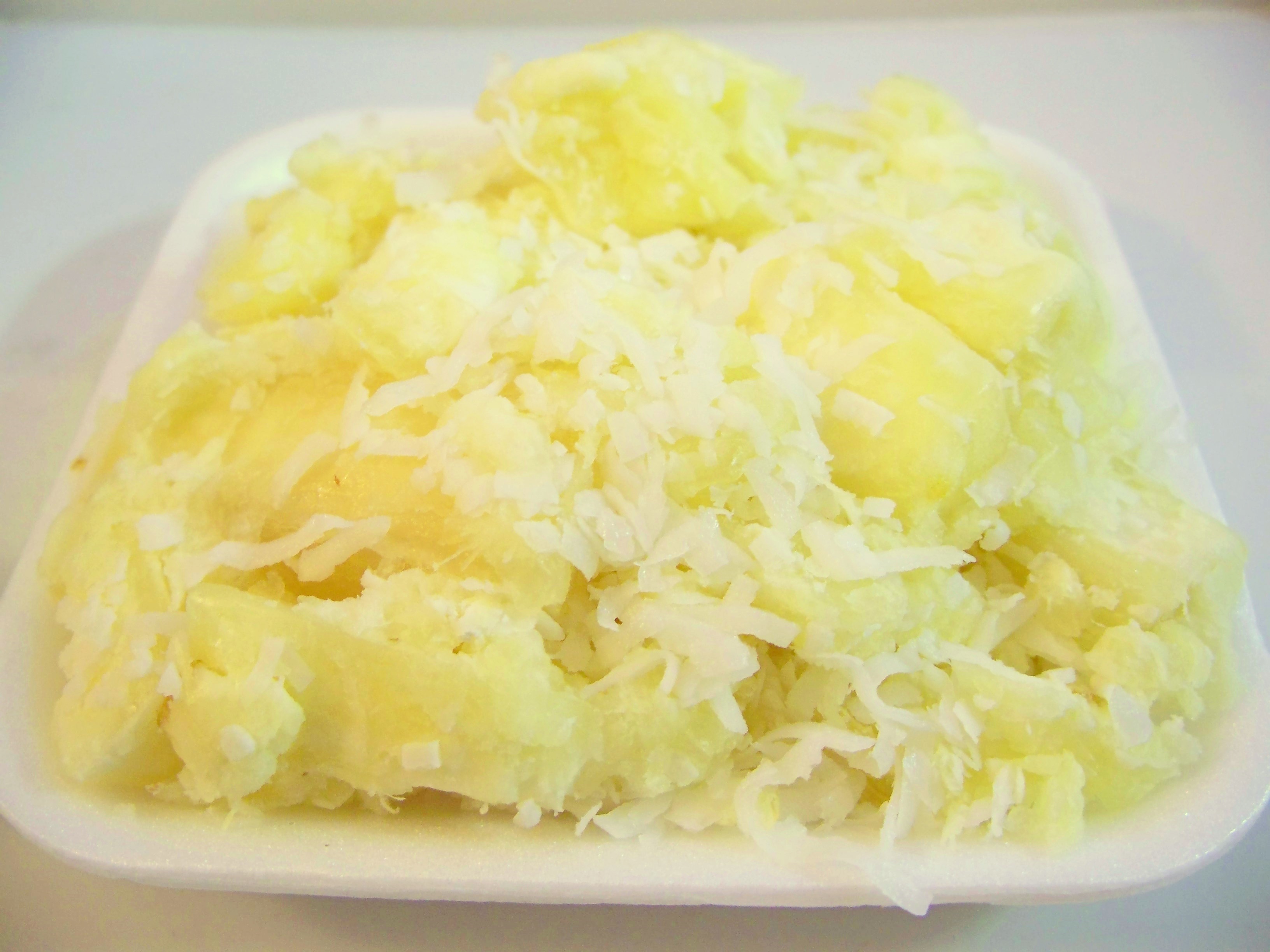
My mom is a skeptic about street snacks, most of the time because of the fingers handling them, but this thing passed. Like xoi, it should always be served hot right out of the steamer. Cool it down with a few blows of air and hurry it in the mouth; it may be wet and chewy, or it may be floury and nutty. But it’s distinctively cassava.

Back home, khoai mì hấp (steamed cassava) is among the cheapest Saigon street scoffs, because khoai mì (cassava root) is cheap (2000VND/kg these days, about 5 cents/lb), and the making is beyond simple. You boil the roots, then keep it warm and moist in a steamer. Unlike banh bao vendors, you keep the lid open to let out burly rolls of steam and invitation. The cone hat ladies sometimes add pandan leaves in the water, those ivory chunks then smell as sweet as spring rains. A customer comes, you scoop him a few palmfuls into a nylon bag and forget not the coconut shavings and the classic salt-sugar-sesame mix. A true street scoffer would eat with his fingers, probably holding the thick center string (the root’s woody cordon) to nibble on without touching its hot flesh.

I mix salt, sugar and my memory of what steamed cassava should taste like into the $1 prepackaged clump at Bánh Mì Ba Lẹ in Oakland, after microwaving it for one minute. The roots are dry and flavorless, probably out from a frozen section. But I taste only my younger days.

Address: Bánh Mì Ba Lẹ (East Oakland)
1909 International Blvd
Oakland, CA 94606
(510) 261-9800

Previously on Sandwich shop goodies: Bánh chuối nướng (Vietnamese banana bread pudding)
Next on Sandwich shop goodies: chuối nếp nướng (grilled banana in sticky rice – banana dog)

What you should eat when you’re in Texas

September 02, 2010 By: Mai Truong Category: American, Comfort food, One shot, Opinions, Texas

Not barbecue.

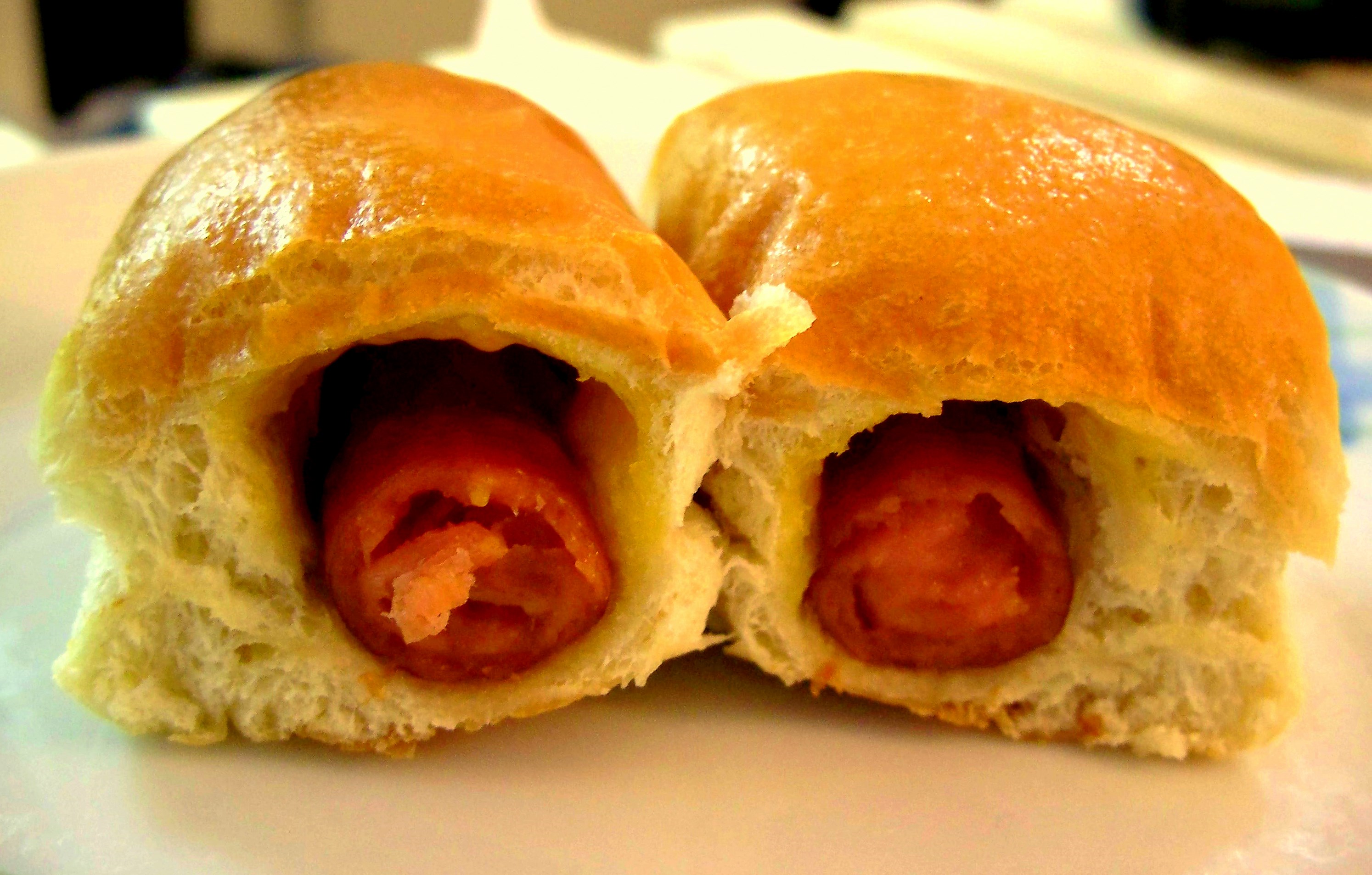
That stuff is everywhere in the South. I’m talking about something that only Texas has. Something a little sweet, a little pillowy, a little chewy, a little cheesy, a little meaty. Something that after you eat one, you just have to get another. Something that 99.91% of the time is chosen over donuts (I made up the stats, but I’ve never met anyone who picks a donut when they’re given this). My Texas friends, I miss the kolaches.


If you haven’t had it, you’re gonna say “That’s a pig-in-the-blanket, Whole Foods has loads.” No, it is far from a pig-in-the-blanket. I repeat, kolaches is NOT pig-in-the-blanket (PitB).

The difference is in the bread. PitB bread is plain, flare it up with poppy seeds and oily butter or not, it’s plain and must not be eaten without the sausage. Kolaches bread is sweet, like a Hawaiian roll*. PitB bread is dry and flaky. Kolaches bread is pillowy, slightly chewy and moist. The sausage is there for protein surplus and does not really add fireworks to the flavor. If you insist on an either-or, I’d choose the bread and toss the sausage every time. Donut shops in Houston would ask if you want the kind with cheese, say yes. The very thin inner lining of cheese makes its salty-sweet.

Then you’re gonna laugh at me and try to crumble my Texan pride, “It’s a Czech thing, not a Texas thing” and tell me to read Wikipedia.  Well, look again, the Czech kolache (pronounced |koh-lash|) is a sweet pastry with fruit jam on top. The Texan kolaches (pronounced |koh-lah-chee|) is savory with a little sausage link inside. The Texas kolaches isn’t any more Czech than the hamburger is from Hamburg.

Originally, it is a variety of the Czech kolache, referred to as “klobasnek” or “klobasnik,” which comes from “klobasek,” Czech for “sausage,” similar to “kielbasa“. But the Czechs consider the Texas kolaches a joke too far removed from their fruit-topped dessert pastries, for it has cheap cocktail sausage links instead of the huge Polish dogs. The misnomer “kolache” is perhaps due to the Houstonian Kolache Factory‘s successful advertisement of this savory breakfast on the go.

Black sheep to the Czechs or not, the Texas kolaches are extremely popular in Texas. Most donut shops have them, usually twice or three times more expensive than donuts, and all are sold out before noon. Sometimes 9 am. No kolaches left behind.

But you won’t be able to find it outside the Lone Star State. You probably will not even hear about it outside the Lone Star State. People just will not know what you’re talking about when you say “kolaches” (pronounced |koh-lah-chee|), unless they’re from Texas. Believe me, I asked my students here, in Berkeley-San Francisco, they gave me the confused eyes and directed me to Whole Foods for pigs-in-the-blanket. I’ve searched every donut shop in town, no luck. I’ve used Google Maps, AM Kolaches in Hayward is the only hit, but it’s the Czech version with fruits and cream cheese.

O Texas Kolaches, how I miss thee!

*Notes on the Hawaiian rolls: Get them! They make awesome sandwiches. Or spread pâté in the middle.

Sandwich shop goodies 10 – Bánh chuối nướng (Vietnamese banana bread pudding)

August 25, 2010 By: Mai Truong Category: California - The Bay Area, Comfort food, Fruits, One shot, Southern Vietnamese, sweet snacks and desserts, Vietnamese


Every now and then I feel blessed to grow up in the tropics. It doesn’t let you wear scarves and gloves, but it has bananas. Many types of bananas. There are at least 10 common cultivars in Vietnam, most are for eating fresh as a fruit, some for eating raw as a veggie with wraps, and one is particularly favorable to be cooked in desserts. And desserts with bananas are just about the most addictive thing out there.

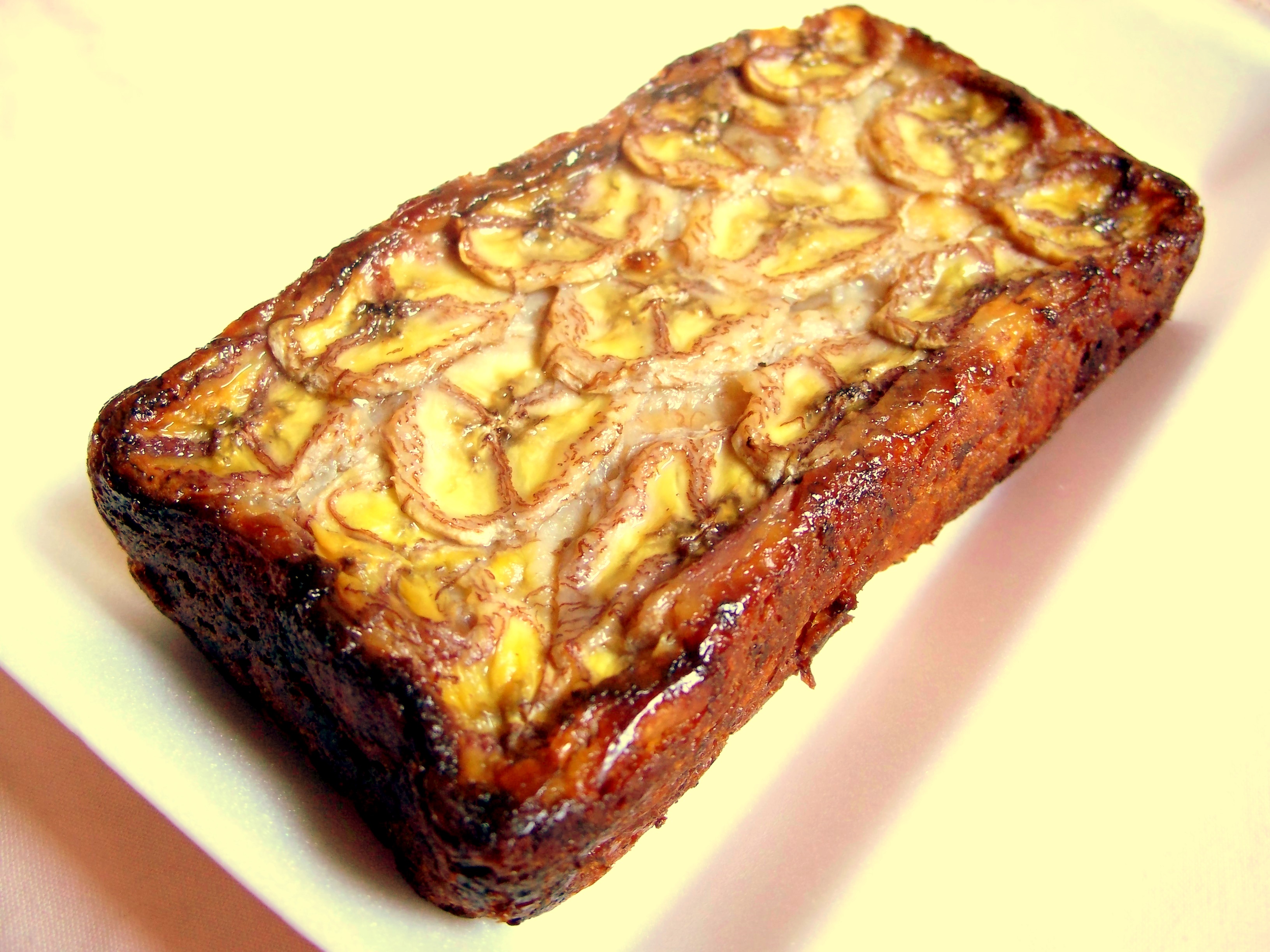
Take this banana bread pudding for instance. I intended to cut one little slice each day to savor it for over a week, but next thing I knew I was gorging half the slab after dinner. The bread is part chewy, part spongy, mostly firm, juiced up by a semisweet layer of sliced banana on top. It needs no sauce, no ice cream, no chocolate. It is good both at room temperature and right out of the fridge.

The description simply can’t capture how delicious this thing is. And it’s not even a well made banana bread pudding, you know, the type of treat that grandmother would make at home or the recipe that a vendor has perfected over ten years of peddling dessert banh’s.

It’s just a cling-wrapped 3.75-dollar piece of cake that I bought from a banh mi store. It has only one layer of bread and one layer of banana. And it is Cavendish banana, the most popular type, if not the only type at many grocery stores, of banana that Americans have known and loved.

Not that I have anything against Cavendish bananas. They’re big. They’re alright for eating fresh. But a Cavendish’s flesh is no match for chuối sứ when it comes to cooking dessert.

Chuối sứ, literally ambassador (“sứ”) banana (“chuối”), was brought to the Vietnamese royal courts by Thai ambassadors (hence it’s also called “chuối xiêm”, as “Xiêm”  is another word for Thai). Like most bananas, chuoi su is considered native throughout Southeast Asia, where it’s known as siusok (Philippines), kluai namwa daeng (Thailand), and pisang siem (Indonesia). Scientifically, it is categorized under Triploid ABB, Musa x paradisiaca, although the latter is disputable as a general name for all bananas.

What I don’t get is the ABB classification. It signifies a below-average score, while Cavendish, a Musa acuminata, is in the AA group. Sure, chuoi su is shorter than Cavendish (less than the length of my hand from wrist to finger tip), but it is stout like a good bratwurst. In practice, chuoi su is more favorable for both eating and cooking because of its firm flesh, slightly gummy texture, and raisin-like sweetness, all of which can endure simmering, grilling, baking, steaming, and boiling. The banana just wouldn’t fall apart or lose its “honey”.

The best part is, it’s easy to grow, so it’s among the cheapest types of bananas in Vietnam’s markets. Not in America though. Which is why the banana bread pudding I have here tastes slightly sticky in the back of the throat and not as sweet as it could be. Nonetheless, it’s the champ of all sweet goodies we’ve gotten from banh mi stores so far.

Buy it: Kim’s Sandwiches, 1816 Tully Rd 182, San Jose, CA
Bake it: Bánh chuối nướng recipe

Previously on Sandwich Shop Goodies: bánh bò bông (steamed sponge cupcake)
Next on Sandwich Shop Goodies : steamed cassava

Sandwich Shop Goodies 9 – Bánh bò bông (Steamed sponge muffin)

August 12, 2010 By: Mai Truong Category: California - The Bay Area, Chinese, One shot, sweet snacks and desserts, Vegan, Vietnamese

Does this happen to you often? You give a friend something to taste, he says “It’s good. What’s it called?”. You’re stumped. The English translation is easy, but it would make no sense because the name matches neither the food, the ingredients, nor the method of cooking.


It happens to me quite often, and usually I shut off the questions with “Just eat it!”. But I wonder, too. Southern Vietnamese folks have a niche for obscure naming scheme. The names could have sprouted from some jokes, some overly simplified impromptu description they thought of at the moment, some mispronounced foreign names, who knows. The result is intelligible and untranslatable, like bánh khọt, bánh tét, chả đùm. The translatable-but-not-always-understandable cases happen when they attach random verbs after the categorical nouns to make a new name, like bánh xèo – “sizzling banh”, bánh lọt – “falling-through banh”, bò né – “dodging beef”, whatever that’s supposed to mean. Bánh bò belongs to this flock. Cow bánh? Unlikely, the thing is vegan to an n. I even thought about the possibility that the name is derived from its resemblance of the cow’s tripe, but they would have called it tripe bánh then. Crawling bánh? Less unlikely, more bizarre. Turns out some grandma saw the rising dough attempt to crawl over and out of the mixing bowl and thought “Gotcha! I shall name you the Crawling Banh”. Vietnamese food is so alive.

Technically the Mekong delta cooks got this recipe from Chinese immigrants and twitched things around a little. They call it “bak tong goh” (white sugar cake) in China. So plain. Bak tong go almost always gets sold with bánh tiêu: you tear open the hollow doughnut, insert bak tong go into the cavity, and get a fried-steamed-fried triple layer galore. I’m not too entranced by this “white sugar cake” because of its sour hints, which come from fermenting the batter with syrup. The Vietnamese rendition of bak tong goh, bánh bò, does not let the batter go sour, and is thus a charm.


They shape like mini muffins, and look like fluff balls, so we call them bánh bò bông – “fluffy bánh bò”. The porous inside structure is compared with honeycombs or bamboo roots, or even crystals if you let your imagination go far enough. They’re either green or white with a coconuty sweetness, to pair with the burnt savory taste of toasted sesame, sugar and salt mix that comes sprinkling on top. They’re bouncy and chewy, and extremely light. We used to get the morning fresh batches from Ngọc Sáng bakery, 199 Ly Tu Trong, District 1, Saigon.


Now we settle for the plastic-packaged $2.50-worth bunch from Kim’s Sandwiches, 1816 Tully Rd #182, San Jose, CA. Certainly not half as good as the fresh ones, but it’ll do.

Previously on Sandwich Shop Goodies: bánh bao chỉ (loh mai chi)
Next on Sandwich Shop Goodies: bánh chuối nướng (banana bread pudding)

Hoang Tam at Playing With My Food has a nice simple recipe of bánh bò.

There can’t be more tender pork

August 06, 2010 By: Mai Truong Category: California - The Bay Area, Comfort food, One shot, Southern Vietnamese, Vietnamese

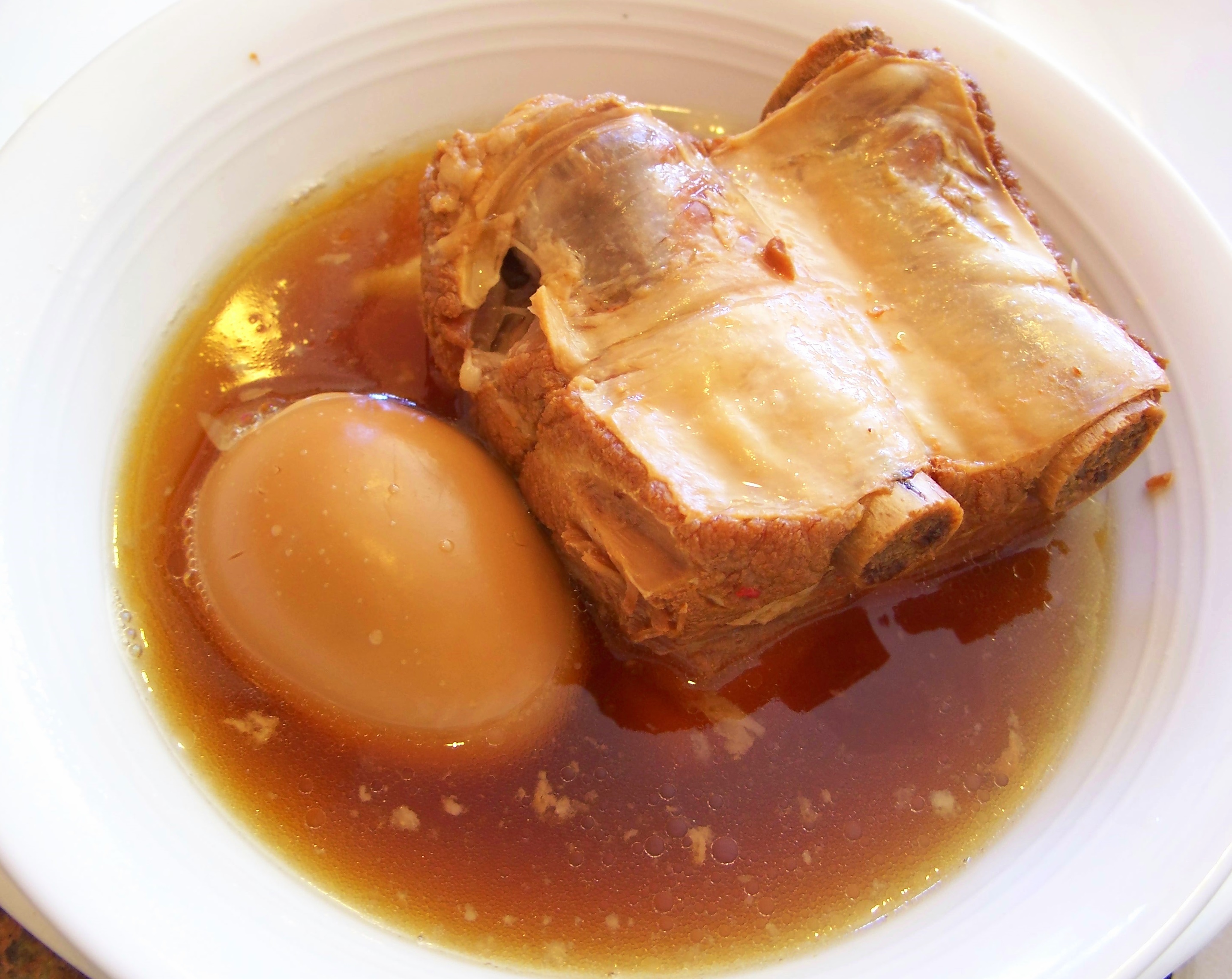
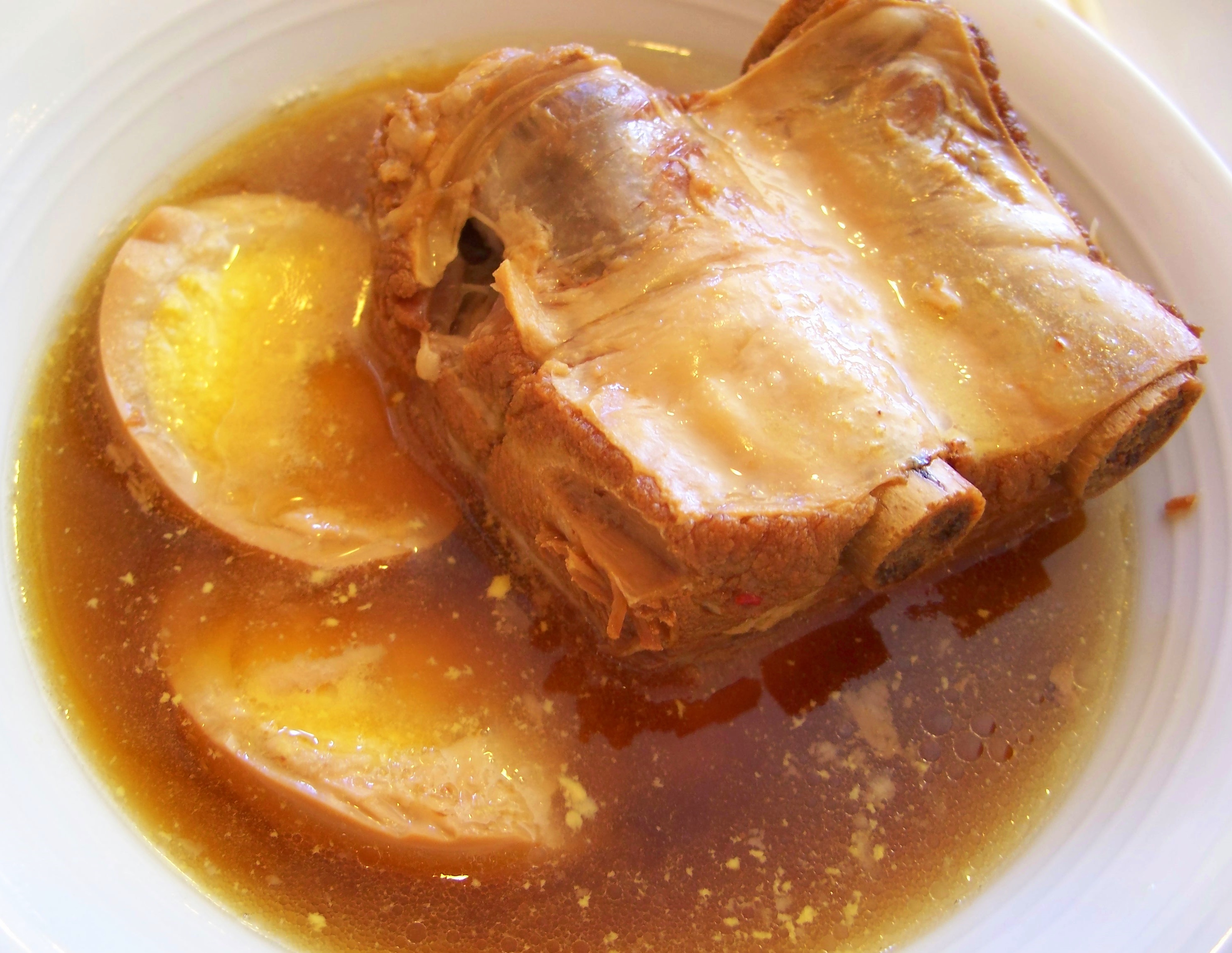
The revamped Bánh Cuốn Tây Hồ #8 dishes out some seriously tender thịt kho (fatty pork slow cooked in nuoc mam and sugar).

You know how they say this beef and that melt in your mouth? Well, I haven’t had any beef like that to testify if it’s just figurative talks, but last week I had this pork that really did melt in my mouth.

There is no need for either knife or teeth. The porcelain soup spoon cuts through three layers of skin, fat and meat as it would with a flan. The skin, which is half an inch thick and might have been chewy once, is not even as tough as jello. There is perhaps too much fat in this pork: a runny white bunch flimsily holding onto the meat (which should have been trimmed off) and bubbles floating in the sauce.

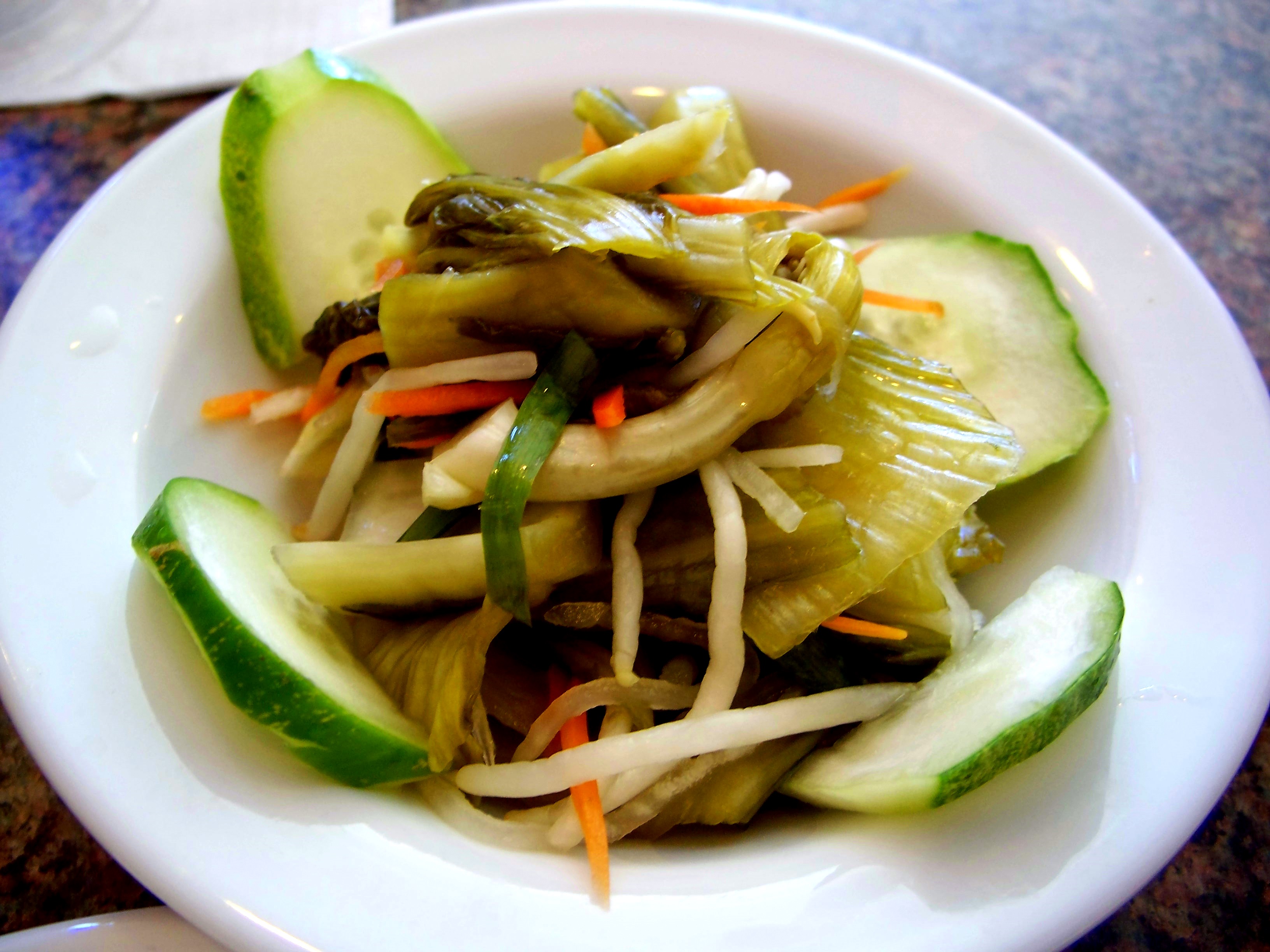
That’s how Southerners in the Mekong Delta cook their meat: huge chunks, generous seasonings, little attention to details and presentation. A few spoons of meat sauce alone is enough to flavor the rice. Overwhelmed by the fat? Tone it down with some dưa chua, pickled bok choy, carrot and daikon.

But what I like most in this lardy, homely course is not the meat, it’s the bone. Soaked in the same mixture of fish sauce and sugar, cooked for the same long time over the same heat, the bone doesn’t just dissolve like the meat, but becomes a pocket of juicy marrow. Place a bone between your jaws and press with the molars, the marrow oozes out like melting chocolate. Moving up a notch, Tay Ho’s braised pork was so cooked the bones turned into cookies. I am not exaggerating.

The second best thing in thịt kho is the eggs that have been cooked with the meat. Most savory eggs you can ever get.


Address: Bánh Cuốn Tây Hồ #8
2895 Senter Rd
San Jose, CA 95111
(408) 629-5229

Thịt kho trứng: $

Their bánh cuốn, as always, are good, but you have to pay $6.25 for only five rolls at Tây Hồ #8, whereas eight rolls of the same size would cost you $5.50 at Tây Hồ #9 in Oakland.

Sandwich Shop Goodies 8 – Bánh bao chỉ (loh mai chi)

August 01, 2010 By: Mai Truong Category: California - The Bay Area, Chinese, Comfort food, One shot, sticky rice concoctions, sweet snacks and desserts, Vegan, Vietnamese


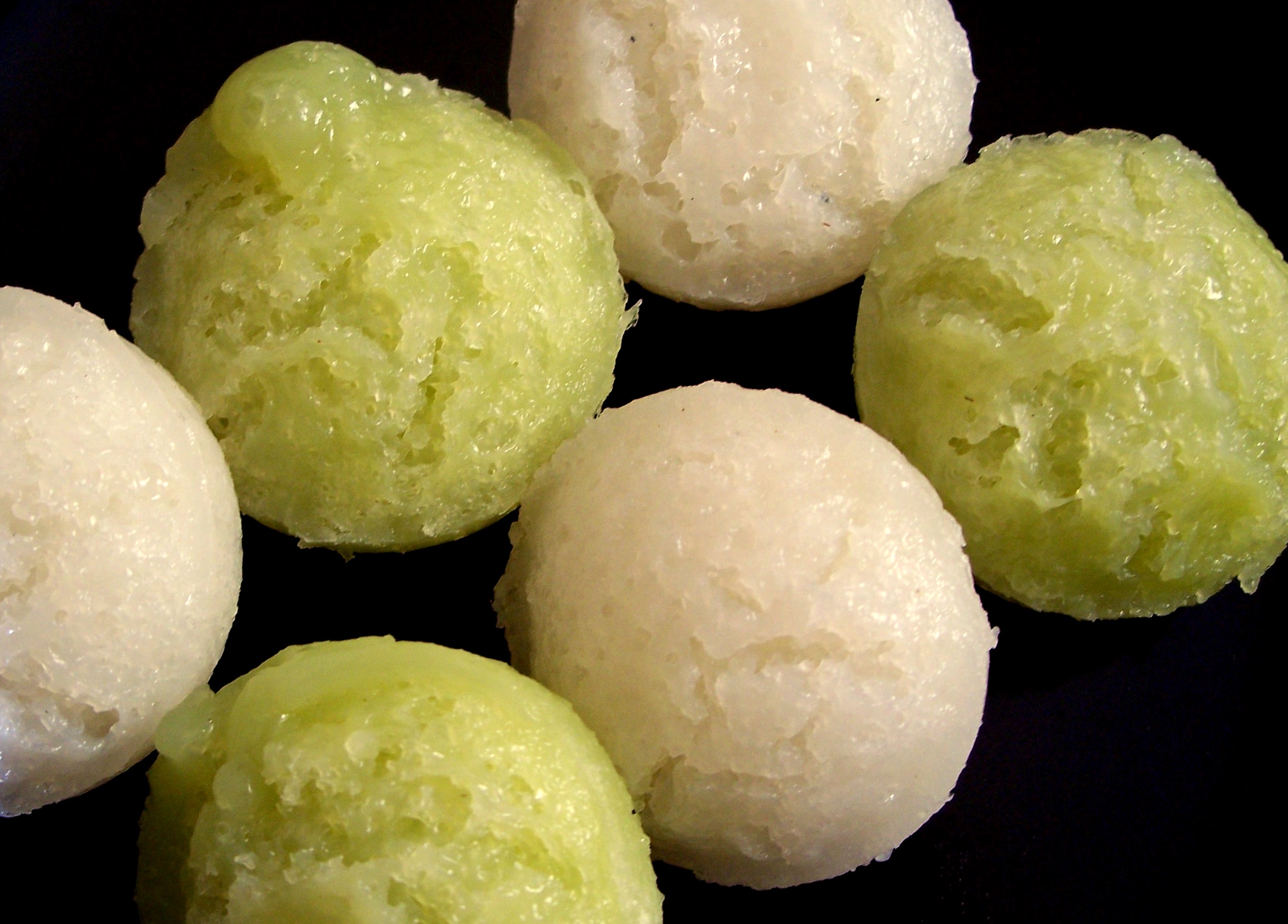
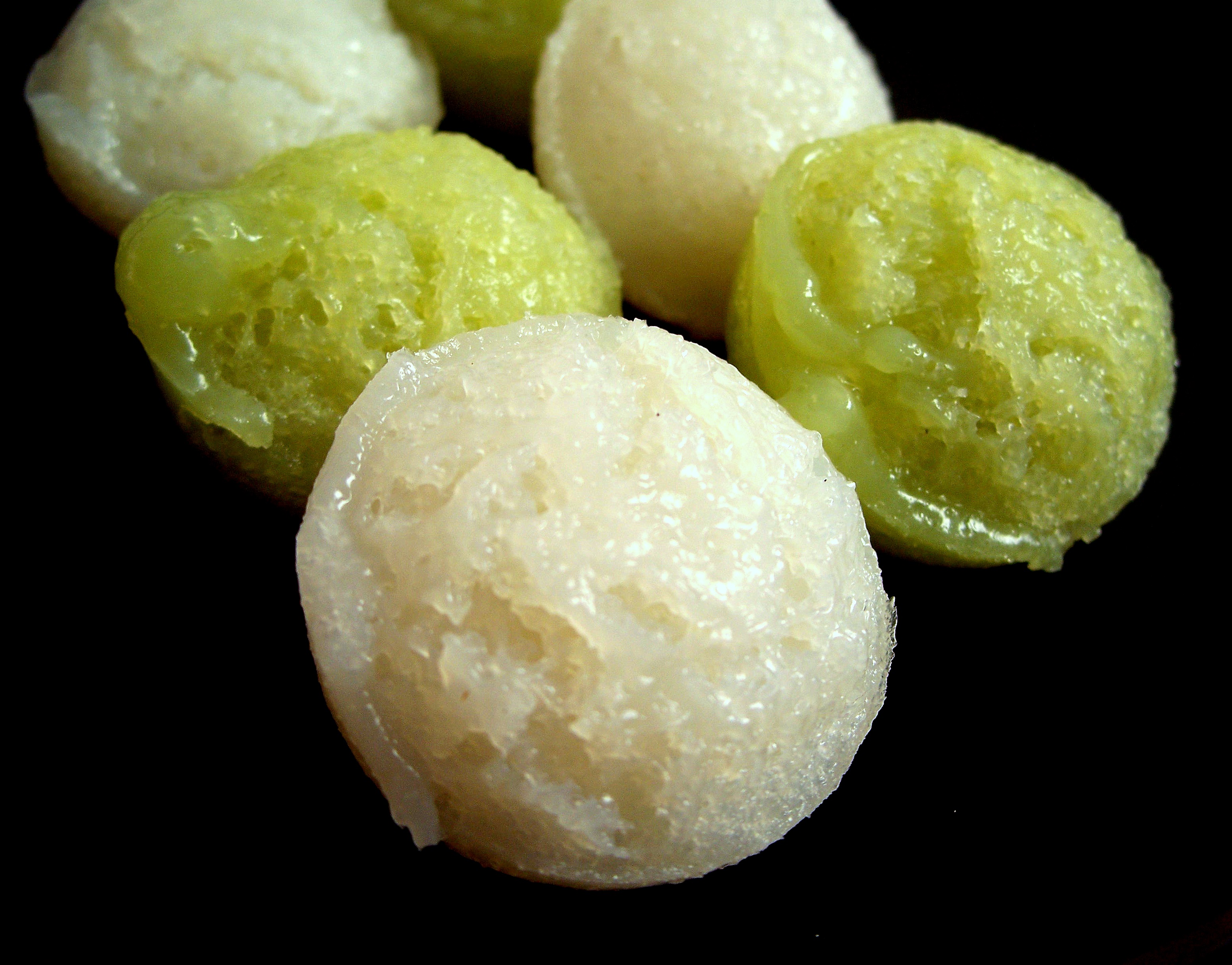
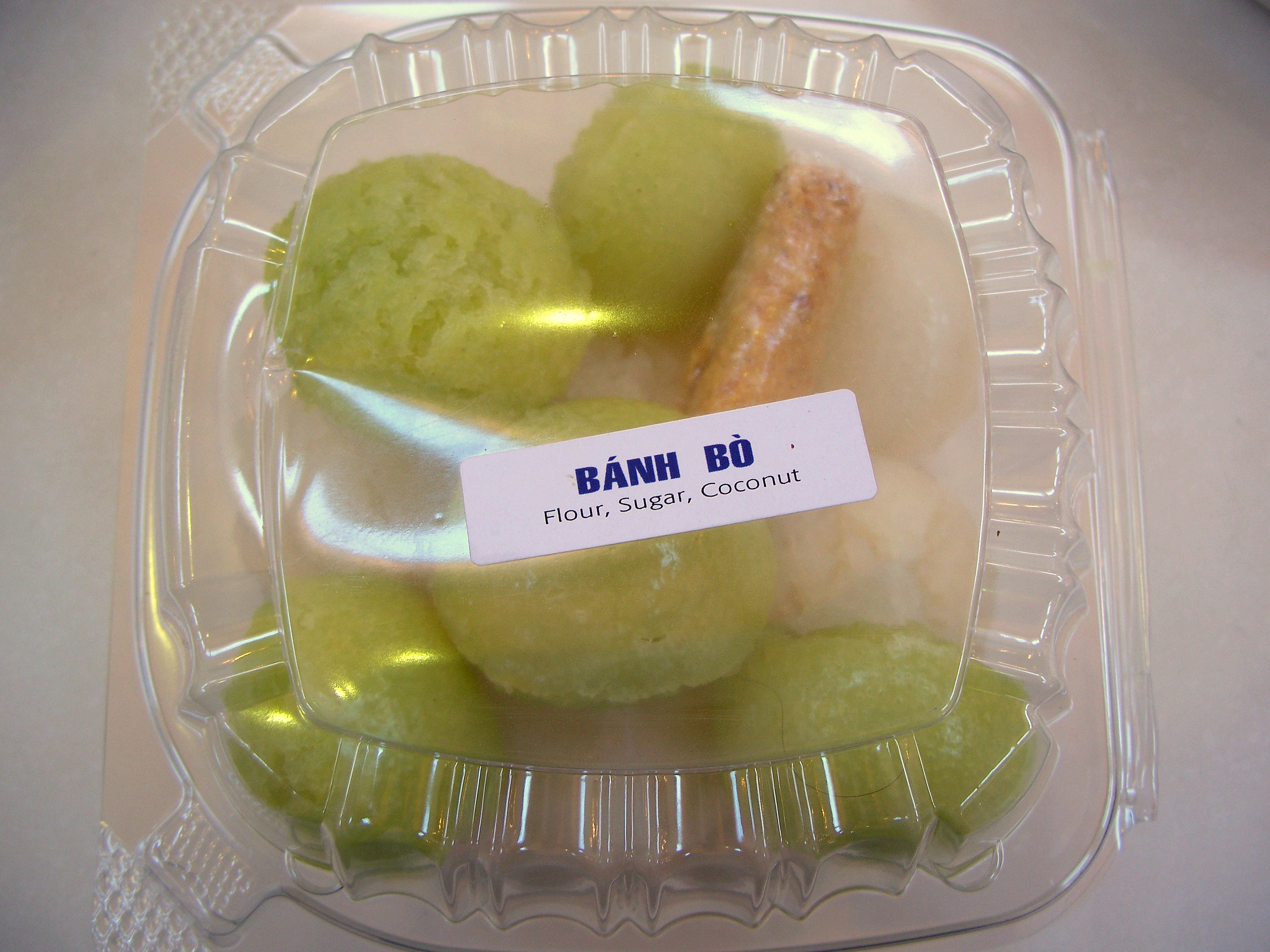
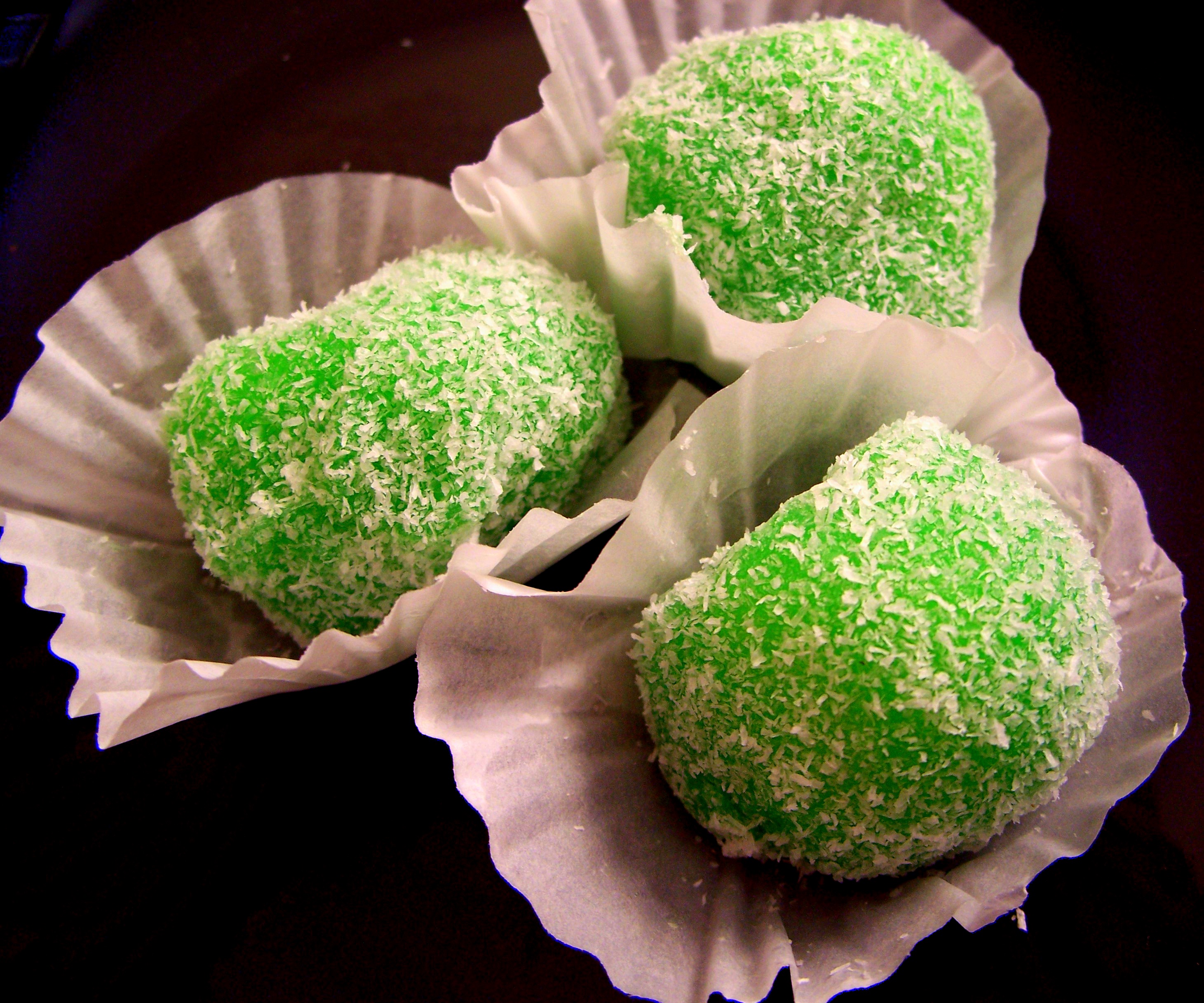
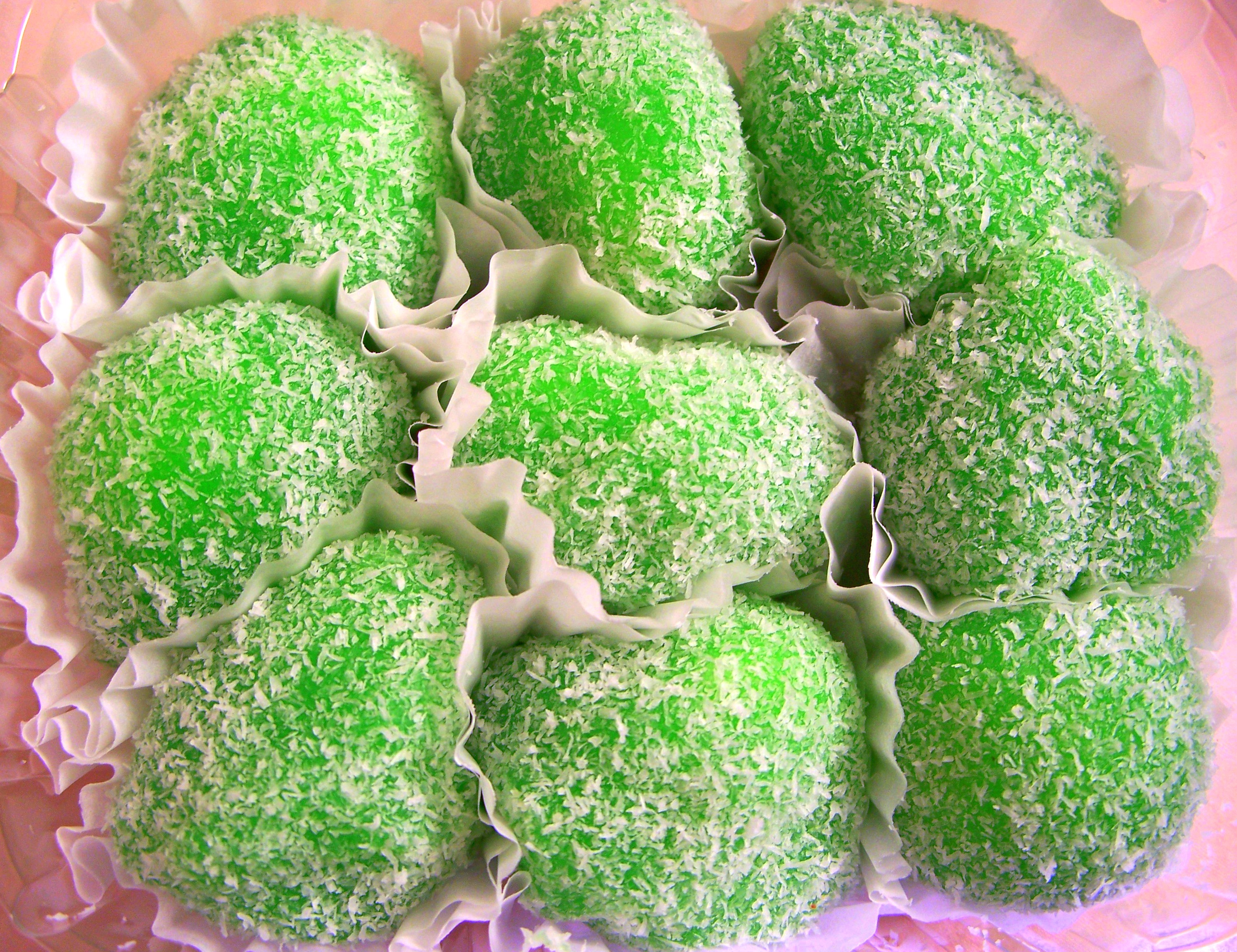
Yet another sticky rice snack that I vaguely remember eating one or twice during the early childhood, and found again in a San Jose sandwich shop more than ten years later. I was excited when I saw these green balls covered in coconut bits.

We Vietnamese call them bánh bao chỉ to distinguish from the meat-filled steamed bun made from wheat flour known to us as bánh bao. Just as bánh bao comes from China, so does bánh bao chỉ. Just as bánh bao are baozi and mantou in Mandarin, mandu in Korean, manju in Japanese, manti in Turkish, and many more, bánh bao chỉ too has its share of names.

The most-result-yielding Google search belongs to loh mai chi, commonly shown as little sticky rice flour dumplings with sweet ground peanut filling. Other variations in Malaysian and Chinese food blogs are snowball, loh mi chi, chi fa bun, muah chee (yeah, these are really cute you’d want to kiss them too)*, noh mi chi, and ma zi. Once again, I feel the need to learn Mandarin. Some say “noh mi” means “sticky rice” in Cantonese, but what does “chi” mean? Others, including the Vietnamese sites, insist that “chỉ” in bánh bao chỉ comes from “mà chỉ”, which is “ma zi”, which is “sesame seed” in Mandarin, which means “mi chi” is “sesame” (recall mi lao – sesame fluff) and we’re left with “noh” being “sticky rice”. It is reasonable enough if we consider that there are four types of fillings for bánh bao chỉ: black sesame, coconut, mung bean, and peanut. But the taste I had from childhood was the salty and sweet ground peanut in a gummy, springy thin layer of white dough coated with flour. Sesame filling must be a new twist.


And so are the vibrant green color and the coconut bits. And the size. Cheap bánh bao chỉ used to be sold on wheels: an old Chinese man peddled around the neighborhood with a glass tank on the back of his worn bicycle, the tank half filled with soft white balls as big as tangerines. Now these balls are about an apricot each, fit snugly in a plastic box and sold for $2 at Kim’s Sandwiches. Not only do they lose the romantic authenticity of a street food, they also taste like soap. The green dough, instead of having pandan flavor, reeks of artificial chemicals. The mung bean paste is sickeningly sweet.

I’ve never been so disappointed with a snack food. Do NOT buy these green balls, no matter how good looking they are. Search online for loh mai chi recipes, or search the streets for old Chinese vendors.

(*) It’s hard to refrain from making the connection between muah chee and the Japanese mochi (daifuku).

The exact origin of mochi is unknown, though it is said to have come from China. The cakes of pounded glutinous rice appear to have become a New Year’s treat during Japan’s Heian period (794-1185). As early as the tenth century, various kinds of mochi were used as imperial offerings at religious ceremonies. A dictionary dating from before 1070 calls the rice cake “mochii.” Around the eighteenth century, people began to call it “mochi.” Various theories explain the name. One is that “mochi” came from the verb “motsu,” “to hold or to have,” signifying that mochi is food given by God. The word “mochizuki” means “full moon.” People of the west and southwest islands called it “muchimi,” meaning “stickiness.”

– from New World Encyclopedia

So I know everybody thinks the entire Far East gets its stuff from China (yeah… no.), but here’s a crazy idea: what if this sticky rice ball with sweet fillings actually originated from Japan, then the Chinese got hold of some, and later passed it down South?

Previously on Sandwich Shop Goodiesbắp hầm (Vietnamese whole kernel grits)
Next on Sandwich Shop Goodiesbánh bò bông (steamed sponge muffin)

Millbrae Pancake House – Old country breakfast with a berry good twist

July 27, 2010 By: Mai Truong Category: American, California - The Bay Area, Comfort food, One shot


The most irresistible American meal is the full country breakfast. I know it’s derived from the full English breakfast and all, and it’s probably so irresistible just because who in their right mind would refuse food after a long night with an empty stomach (hence the word “fast” – not eating, in “breakfast”). And yes, there’s nothing speedy about the old country breakfast. Making pancakes, scrambling eggs, frying sausages takes a good hour off your morning, not to mention scrubbing the skillets afterwards. I probably will never make a full country breakfast at home until I have nothing better to do, but thank God for blessing America with countless roadside brick houses opened up just to serve breakfast. And may those like Millbrae Pancake House flourish despite the swamping force of IHOP and the likes, because they serve freaking good breakfast.


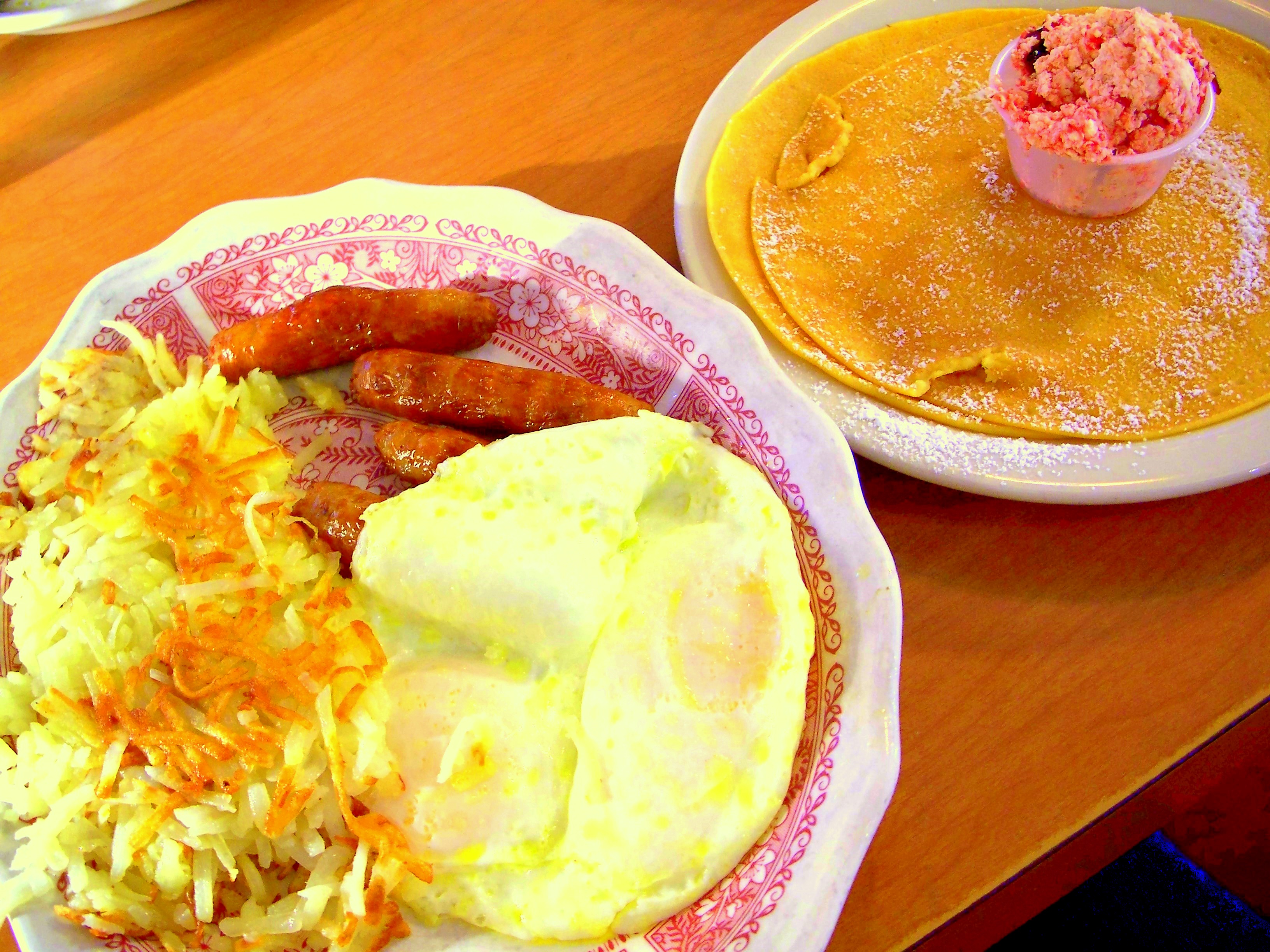
I said freaking good because I happened to order the one dish that, it turns out for the first time, everyone on Yelp seems to agree to be MPH’s best. The Swedish pancake with lingonberry butter. Have no idea how Swedish this really is, but the pancake is not the fluffy butter kind IHOP is known for, instead it’s a small flat crepe. It’s dense and has a slight sweet chew. And the lingonberry butter is butter mixed with lingonberry bits. And I spread a ton of it on my pancake. And I ate it by itself, like eating chocolate. Americans, maybe it’s time to mix raspberry, blueberry, strawberry, gooseberry, and maybe other fruits too into your butter. It kills. Just sayin’.

The rest of the breakfast was really just so so. Hash brown, two runny eggs, and four sausage links were as good as they could(should) be, but nothing unexpected. That’s ok, the Swedish deal wowed me enough.

MPH is cheap too. All that was for $7.95. The thing is, it was too much. I couldn’t finish everything, had to lean against the wall for 10 minutes in the restaurant, and almost needed a walker to get to the car. Maybe I’d be in better shape if I gorge up on these more often.

Address: Millbrae Pancake House
1301 El Camino Real
Millbrae, CA 94030-1410
(650) 589-2080‎

Sandwich shop goodies 7 – Bắp hầm (Vietnamese whole kernel grits)

July 19, 2010 By: Mai Truong Category: California - The Bay Area, Comfort food, One shot, savory snacks, Vegan, Vietnamese


Corn must be my favorite grain. Growing up with very limited access to street food, I used to fix my eyes on the corn carts and baskets of market women near home, secretly drooling. They had a big steamer packed with corn ears still wrapped in their wilted yellow husks and brown silk, sometimes a glass shelf with peeled ones, white and shiny and plump. I was always so happy when Dad bought xôi bắp, sweet corn and sticky rice, for breakfast. Then at night there was corn-on-the-cobs grilled by coal fire and smothered with lard and green onions. It’s better than butter, no doubt. At che stalls there was corn pudding with coconut milk, which I like when it’s warm and gooey. And that was all the Vietnamese corn stuff I knew.

Not until recently that I came across another corn thing, a midfielder between chè bắp (corn pudding) and xôi bắp, and porridge too. I hate porridge, but I love this stuff.

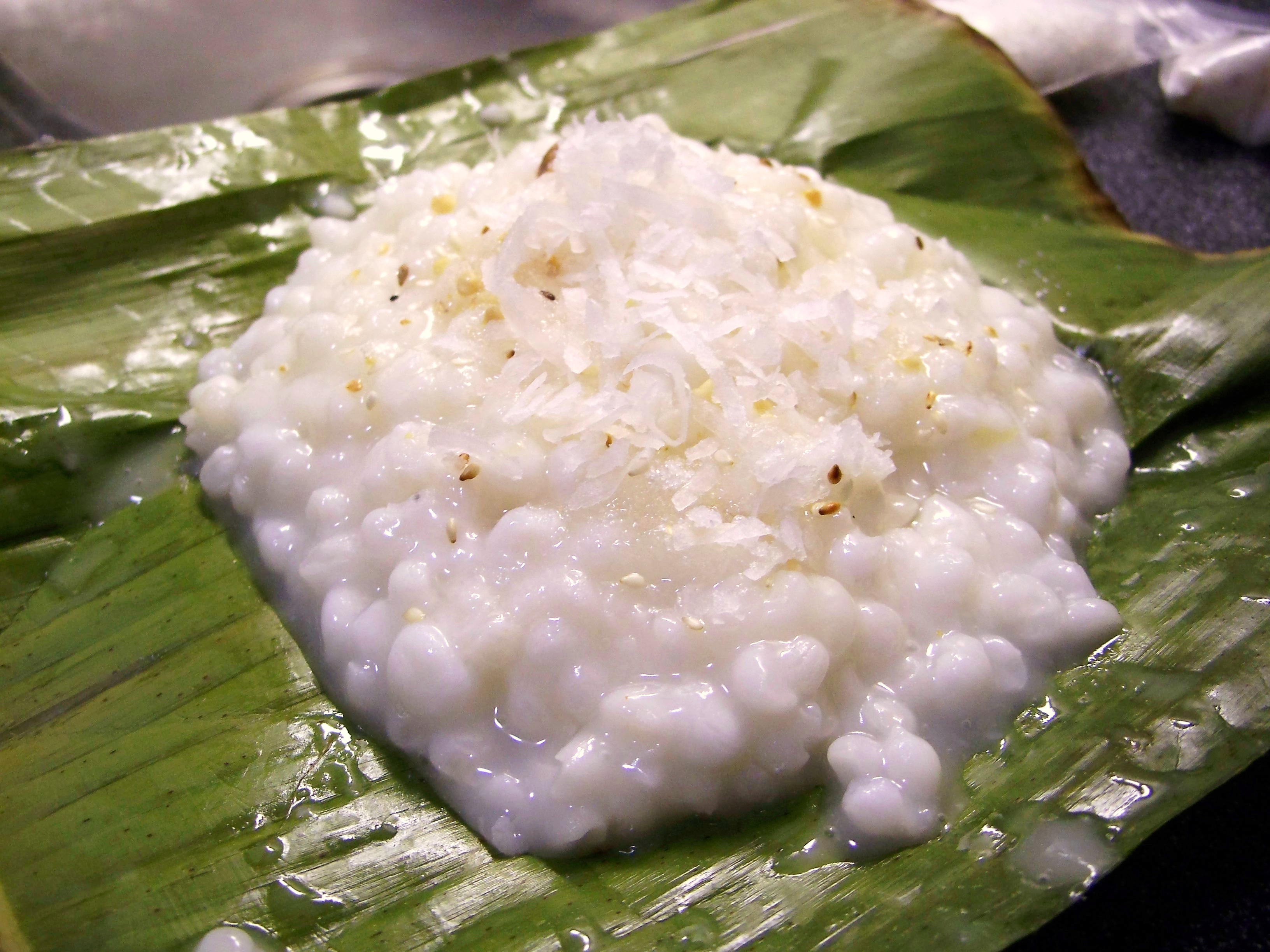
Some people just call it “bắp nấu”, “cooked corn”, either to make sure that we know we’re not eating raw ones or to confuse questioners with the boiled whole ears, also known as bắp nấu. The more careful gourmands label it “bắp hầm“, literally “simmered corn”, since the hulled kernels are slow cooked until saturated with water and soft like a canned sweet pea. But it’s not mush, the corn still retains a tiny bit of chewiness that entertains the gums.


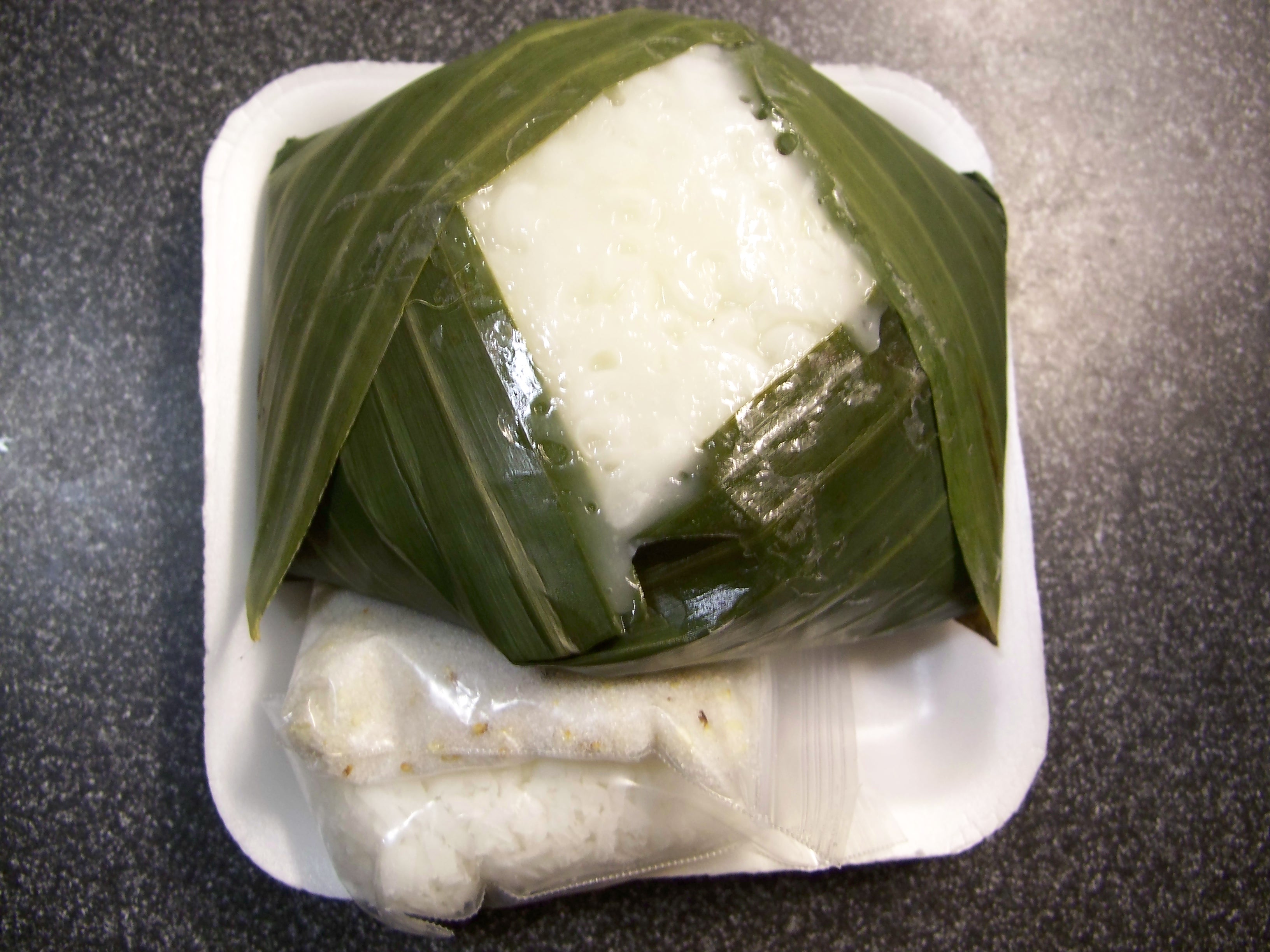
The classic vendor look is a ladle of hot white bubbly goo half wrapped in banana leaf, a few spoons of SSS (sugar-salt-sesame) mix huskily dumped on top, a tuft of coconut shreds on top of all, and a finger-long piece of banana leaf stem to scoop.

The sandwich store look has the SSS mix and coconut in tiny Ziploc pouches, a half pound of corn in banana leaves, all cling wrapped on a styrofoam plate and sent home with a plastic spoon.  It’s sleek alright.

Makes awesome meals on vegetarian days!

The white easy package sells for two bucks at Huong Lan Sandwich #4 in Milpitas (41 Serra Way, Suite 108, CA 95035). My guess would be 2000VND (~11 cents) if you buy it in Vietnam, anyone knows?

Previously on Sandwich Shop Goodies: bánh dừa (coconut sticky rice stick)
Next on Sandwich Shop Goodies: bánh bao chỉ (loh mai chi – Chinese sticky rice flour ball with sweet fillings)