Flavor Boulevard

We Asians like to talk food.
Subscribe

Archive for the ‘One shot’

Sandwich shop goodies 17 – Mung bean milk

May 13, 2011 By: Mai Truong Category: California - The Bay Area, Comfort food, Drinks, One shot, Vietnamese

Do you like soy milk?
No? Well, someone once told me that if you don’t expect milk when you drink soy milk, then you’d enjoy it.
Yes? Then you might just prefer this luscious, green, liquefied nourishment to soy milk.
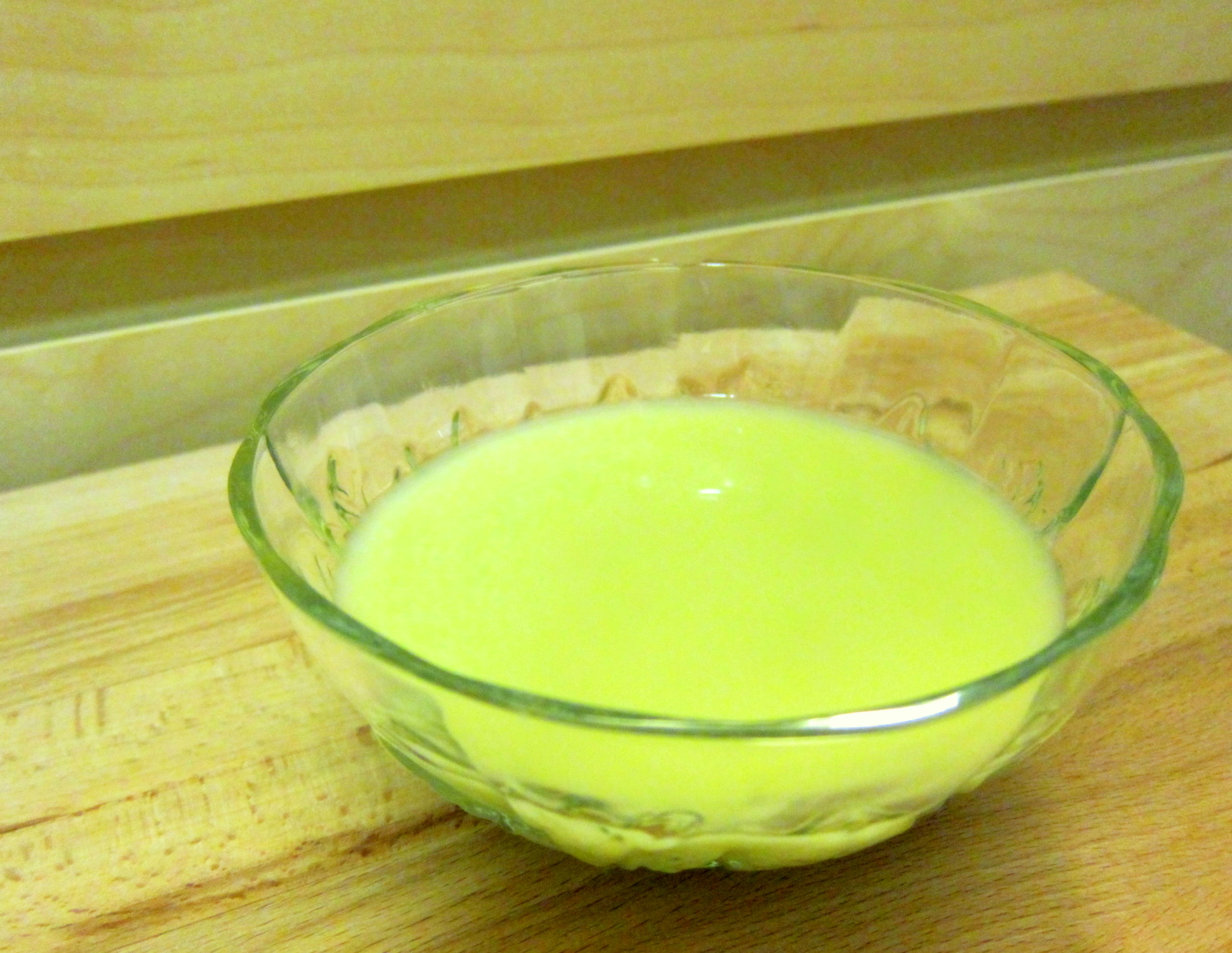

Not only is it nuttier, mung bean milk also feels more natural and more local than the modern soy milk. From the cheap plastic bottle with a green plastic cap and no label (that means no half-stamped “Sell by…” either), you can probably tell that it didn’t go through any metallic machine with pulleys and tubes. Whoever makes this mung bean milk probably soaks the beans overnight in a dented aluminum basin, boils the extract at 2 am in a sooty pot, and bottles the final liquid via a red plastic funnel that looks just like the one they always use for oil change. It doesn’t really matter as long as the delivery of a fresh batch comes at 6. The sandwich shop unstretches its iron folding doors. The customers start buzzing in. At 11 I came. I grabbed a bottle at the cashier. It was warm.
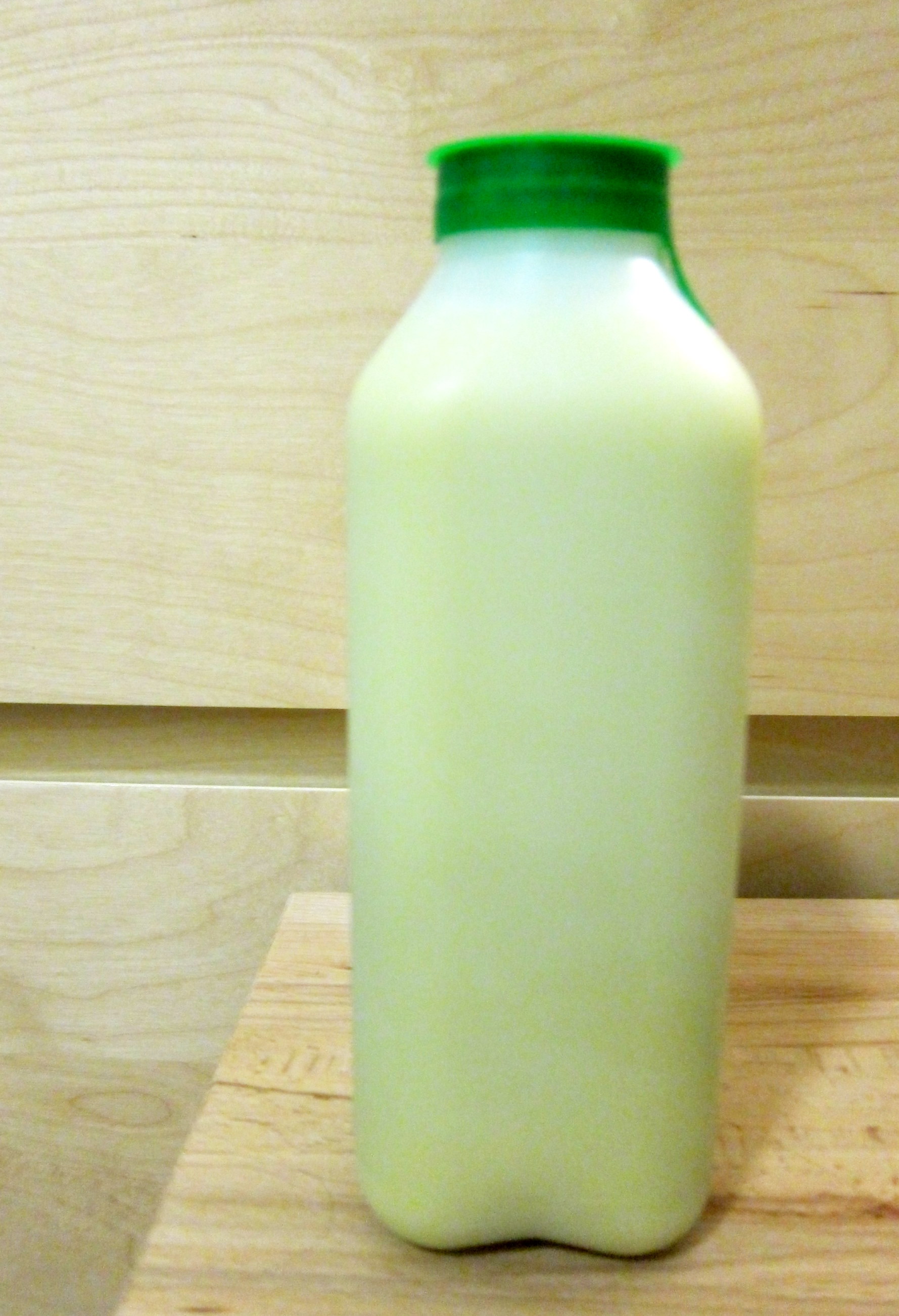

Two and a half hours later I got home and the milk got cold. I packed the 16 oz bottle into my minifridge next to the banh mi and banh bao (from the same store), sighing in relief that it’s just short enough to stand fit on the upper shelf. Was the bottle I had back then also about this size? How many years ago since I had last tasted that nuttiness in a glass? I dialed, “Mom, guess what I bought today! Sữa đậu xanh!”

On the other end of the phone I could hear her eyes widened and her lips part into a half moon shape. She’s happy. Every day for some time between my fourth and sixth years, Little Mom used to buy me a pint of mung bean milk from a grandmother of one of Dad’s students, and it had to be that grandmother because of her indisputable cleanliness. When I was 6, we switched to the packages of Vinamilk’s pasteurized fresh (cow) milk, a more convenient alternative to get in loads per week. Actually, I remember the cow milk packages with light blue words printed on white and the typical picture of a black-and-white Holstein cow, but not the mung bean milk bottles, barely the fact of drinking it every day. The point is, even in the Saigon of the ‘80s, mung bean milk was rarer and pricier than cow milk. Today, Bánh Mì Ba Lẹ in Oakland sells $2.50 for every 16 oz bottle, roughly six times more expensive than a gallon of cow milk, which you can get on average for $2.99 at your local grocery. Not that the price always represent the taste, but if I were a cow I would sulk a little, knowing that those helpless bird-eye seeds could produce something more valuable than my giant rectangular body could.

Now, about the taste… I’ve tried mung bean milk both ways: chilled in the fridge and warmed up in the microwave. Warm is better. Warm embraces the sweetness instead of masking it. Warm sooths your sensors from the tongue all the way down the esophagus. Warm also elevates the fragrance of pandan leaves and mung bean.
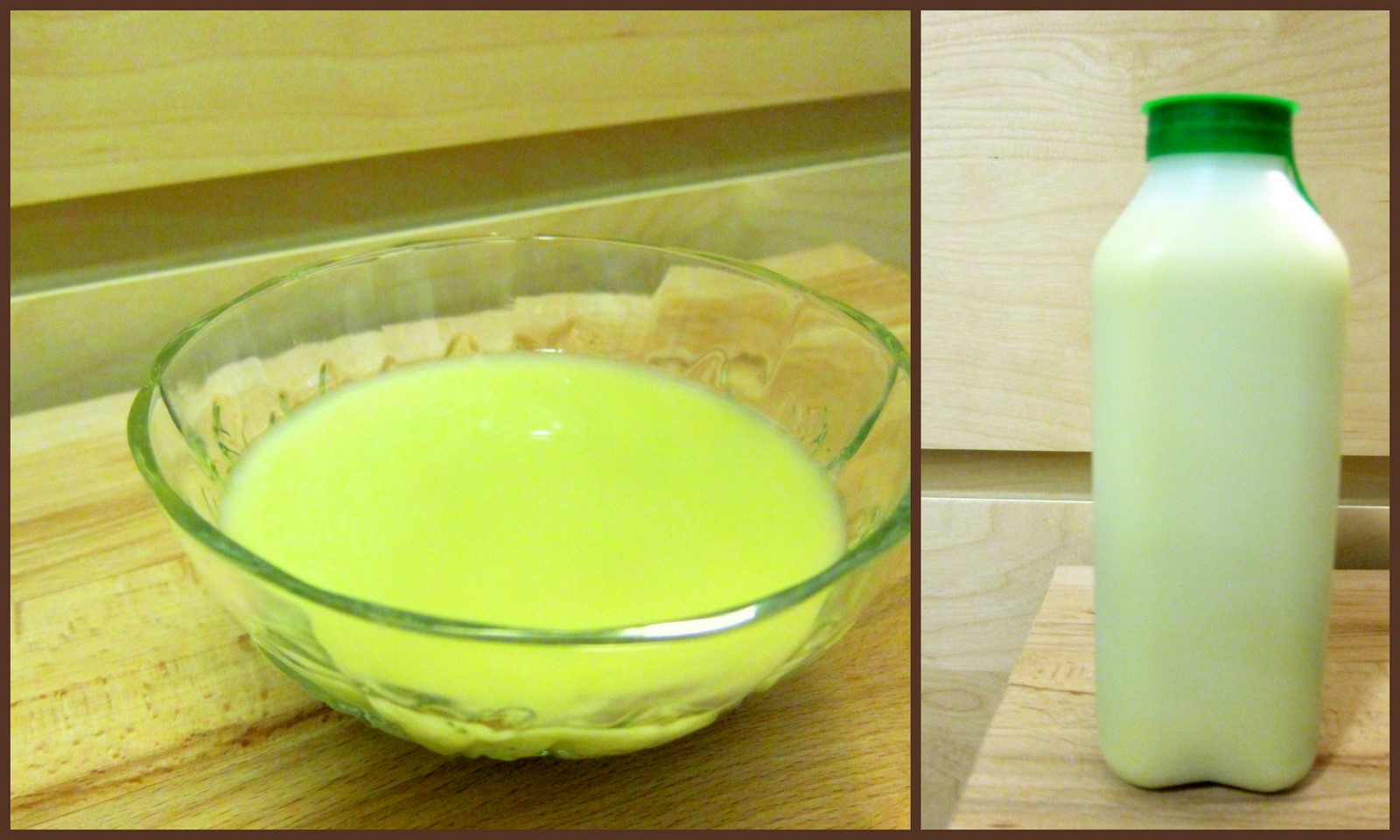

I wanted to stock up on the stuff so much I came back the next Sunday afternoon to buy off their last 4 bottles: 2 on the counter and 2 from the fridge. I refrigerated them all and refrained from drinking them that night; like a poor drug addict I tried portioning whatever little amount I had for the whole week: 1 bottle per two days seemed satisfactory. But ah the best-laid schemes gang aft agley, Wednesday morning one bottle turned sour on me.

“There goes three precious pints down the drain,” thought I. But it turned out the remaining two were fine. ‘t was one from the counter that got ruined. The cold ones stayed for 6 days. So unless you drink it within two days, buy the refrigerated bottles, keep fridging, then shake it well and warm it up with a microwave when you drink.

One last bit to tell you how stingy I get when it comes to mung bean milk: I drank and drank and at the bottom there was the thick beany leftover, I poured in some water, shook it up, more mung bean milk for me.

Address: Bánh Mì Ba Lẹ (East Oakland)
1909 International Blvd
Oakland, CA 94606
(510) 261-9800

Previously on Sandwich Shop Goodies: nước rau má (pennywort juice)
Next on Sandwich Shop Goodies: bánh khoai môn hấp (vegan steamed taro cake)

This post is submitted to Delicious Vietnam #13, May edition, hosted by Jing of My Fusion Kitchen.
Sandwich Shop Goodies 16 – Nước rau má (pennywort drink)

April 23, 2011 By: Mai Truong Category: California - The Bay Area, Drinks, One shot, Vietnamese


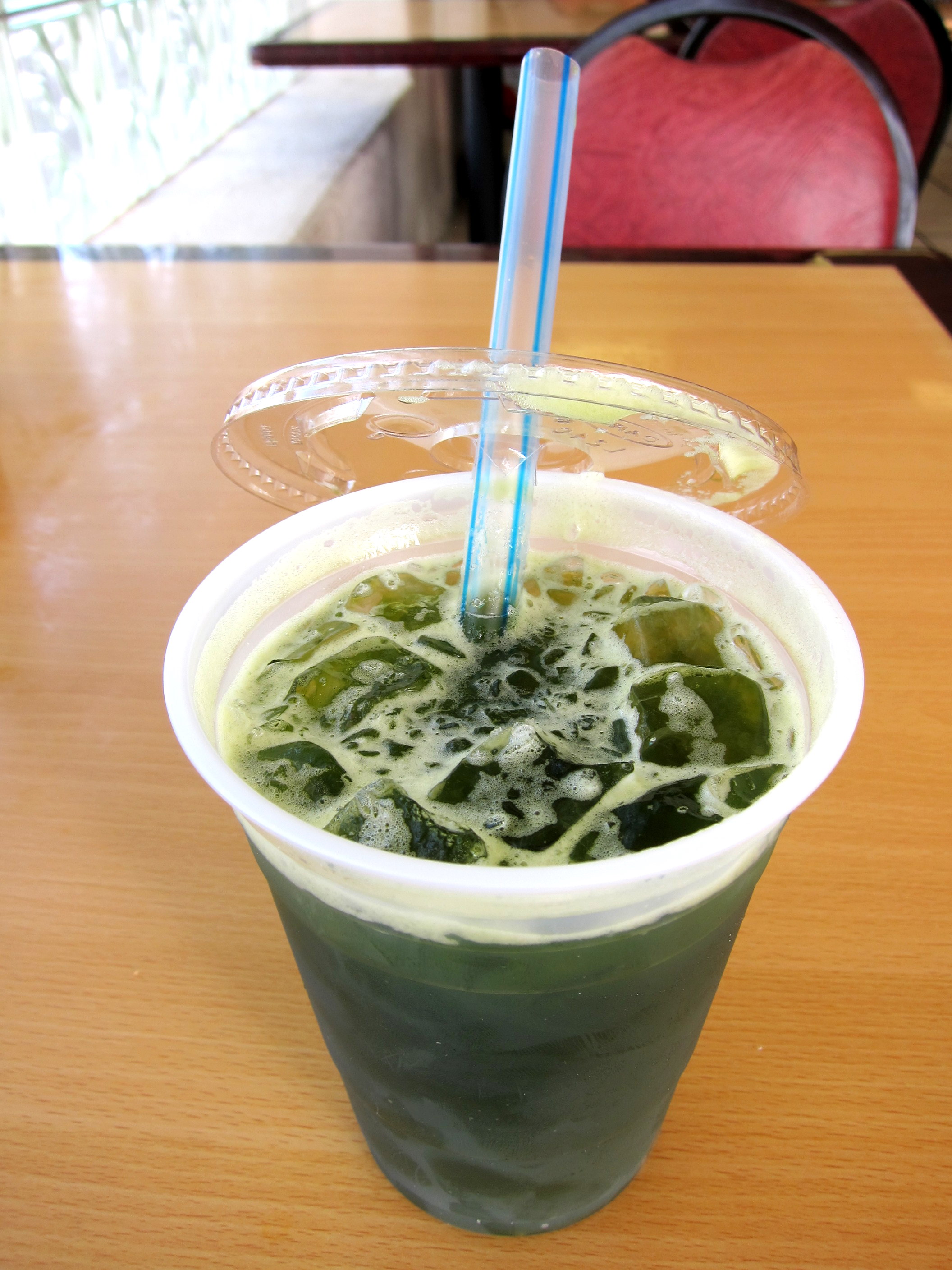
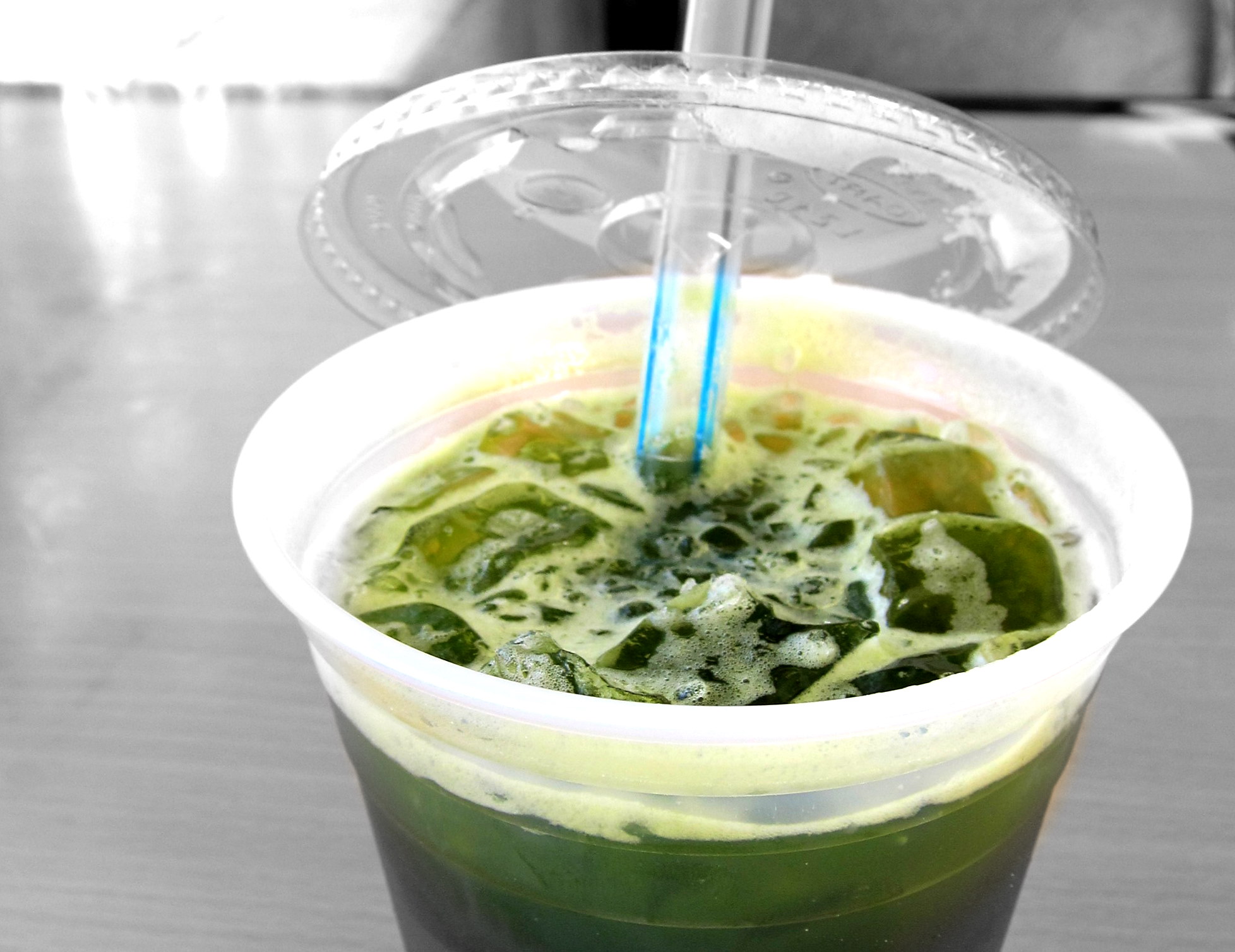
Emerald green. Chilled. Clear. Leafy. Mildly sweet (sugar is added). Every time I pass by a patch of fuzzy spring grass, I dream of munching a tuft and inhaling the lush, youthful aroma of those dew- and rain-soaked blades. This two-dollar drink in this plastic cup is my dream come liquefied.

Lately I have been slacking on the blogging front, mainly because I took on an editing job to compensate for my unwillingness to cook. Ironically, now my eating out budget has increased but I have neither time to eat nor to write about the stuff that I eat. On top of that, the last few weeks of the semester are, naturally, the time to sprint at the end of the marathon and the professors make sure that slacking means death (no joke). But sometimes it backfires when you’re too stressed, you ditch your homework, set out on an hour bus ride to your Vietnamese sandwich shop, order a cup of pennywort drink, and drown your sleep deprivation in eavesdropping others’ conversations.


Little Mom used to make pennywort soup, the best remedy for hot weather and rising body temperature it was. Dad used to eat them raw. The plants almost grow wild, so the leaves cost next to nothing (I wonder why its English name isn’t “pennyworth”). On the streets pennyworth drinks usually get advertised on the same raggedy carts that sell sugarcane juice and fruit smoothies. Those “Nước Mía – Rau Má – Sinh Tố” surrounded with pictures of pineapple and avocado painted on the aluminum sides are a part of every Saigon school front.

But the cup at Bánh Mì Ba Lẹ was my first. There’s the familiar leafy taste in mom’s soup of years back, but the chilled sweetness is refreshingly new. A few tables away, a boy with Tintin‘s hair and two girls were also sipping their rau má. They speak in my mother tongue, yet somehow it sounds so foreign.

Address: Bánh Mì Ba Lẹ (East Oakland)
1909 International Blvd
Oakland, CA 94606
(510) 261-9800

Previously on Sandwich Shop Goodies: bánh quy (turtle mochi)

Thiên Hương makes the best broken rice

April 02, 2011 By: Mai Truong Category: California - The Bay Area, Comfort food, One shot, Vietnamese


I like those restaurants that specialize. You go there and you know exactly what you’re gonna get: the one thing that the chefs make and that everyone else gets.


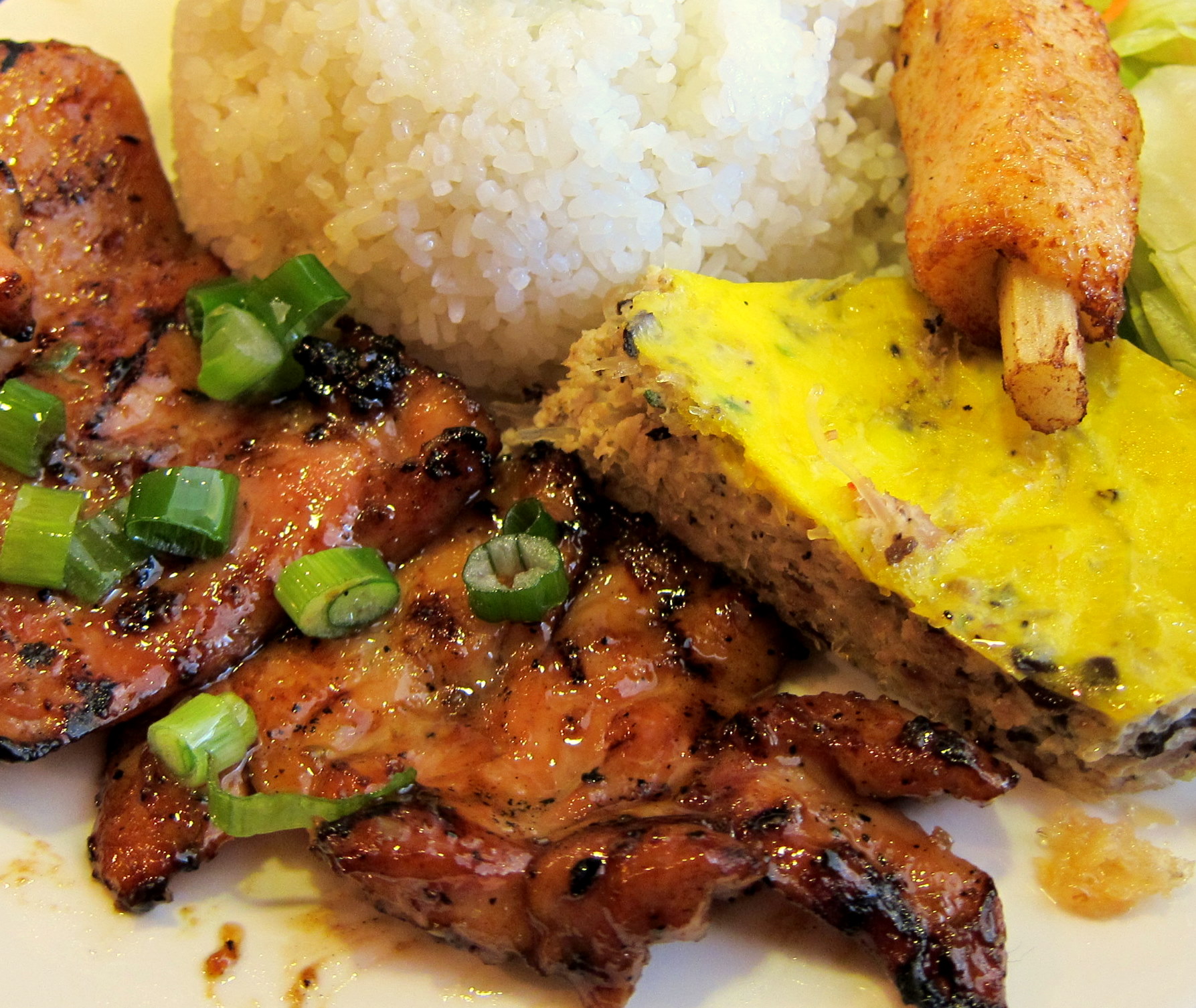
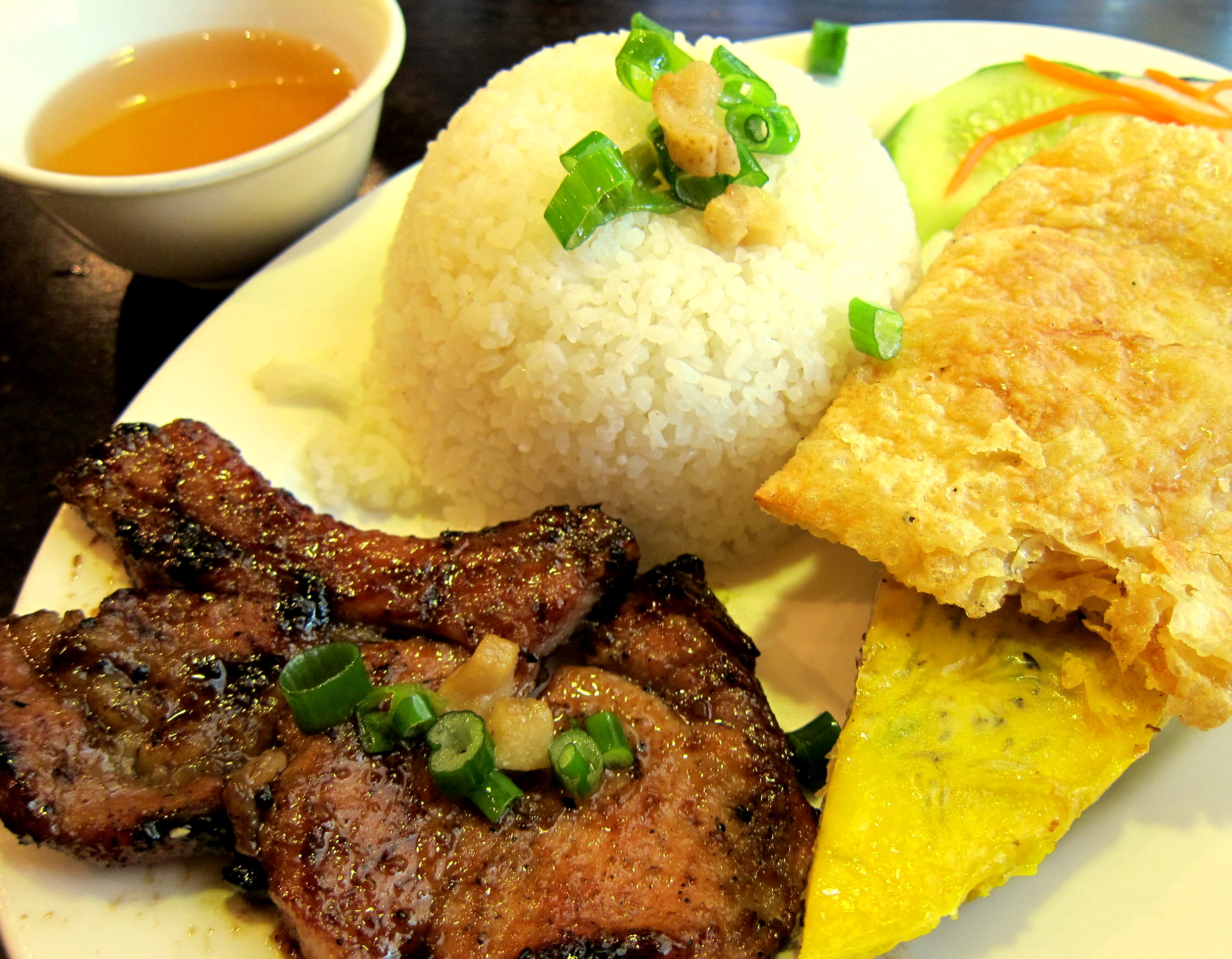
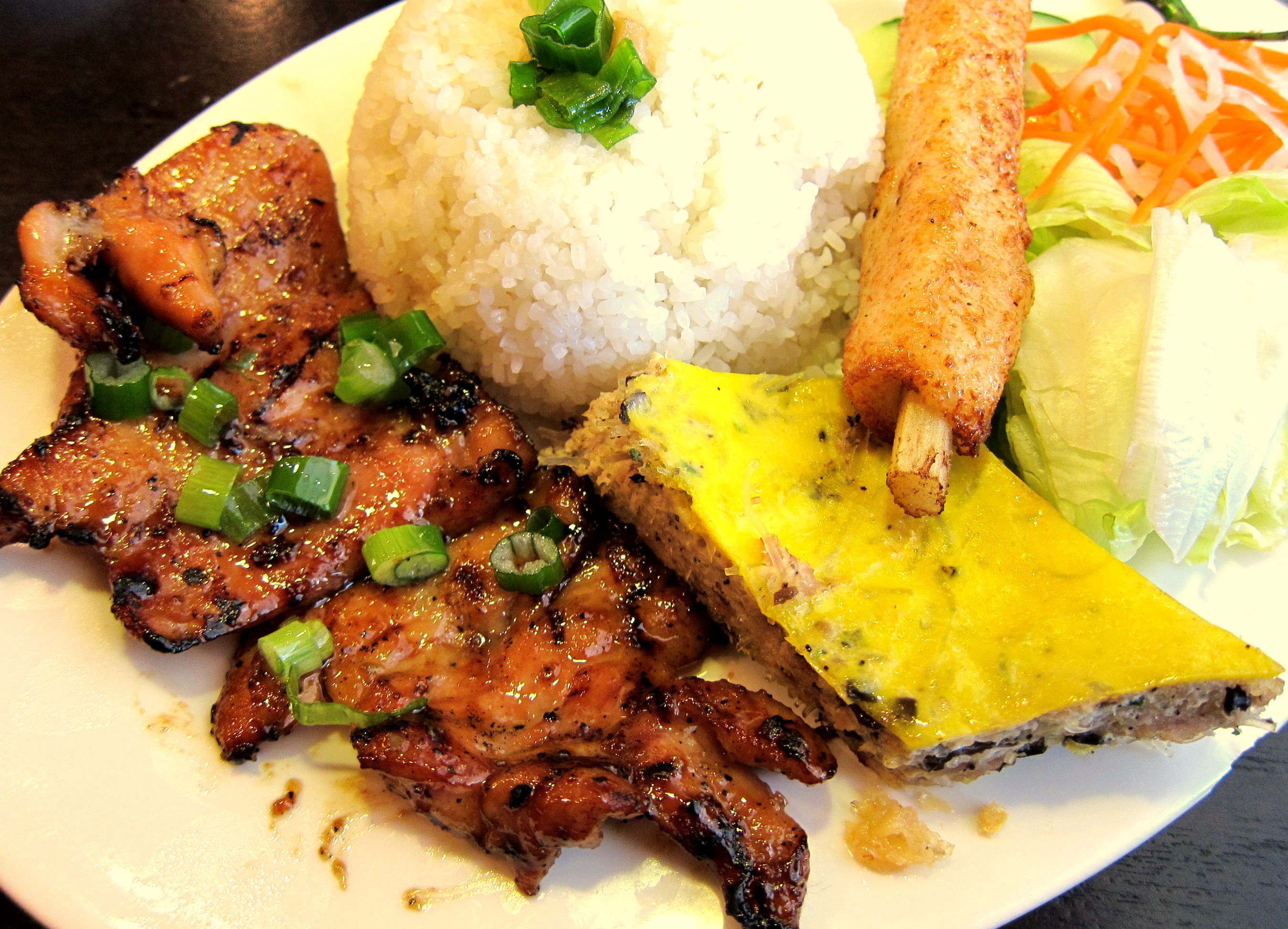
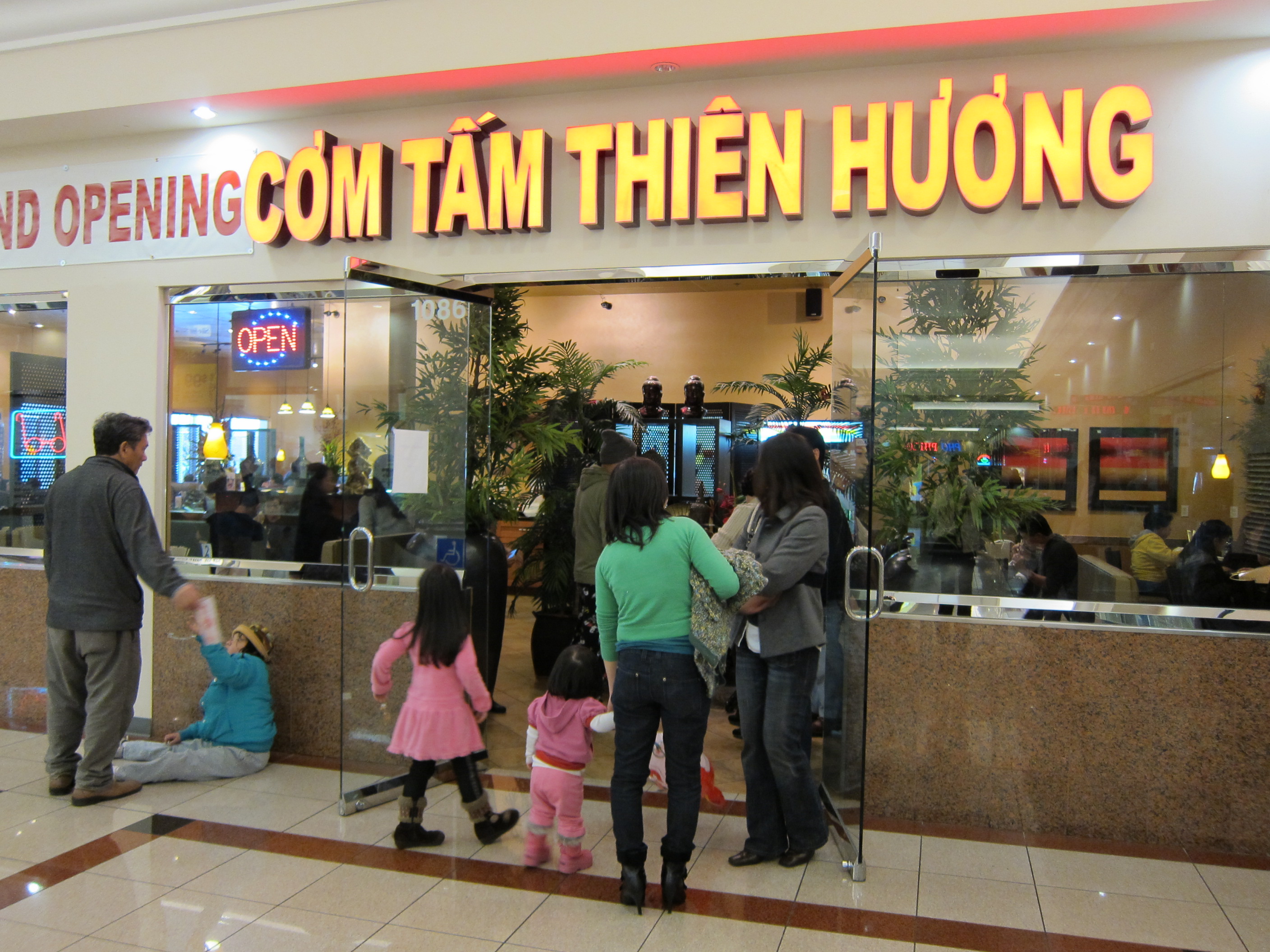
Cơm Tấm Thiên Hương uses two full pages to write all different combinations of their one dish: cơm tấm (broken rice) with meats, egg, and tofu. If they just list the “toppings” and their corresponding price, like for a pizza, the menu would condense down to the size of a calculator. Common toppings for broken rice are grilled pork (or chicken, or beef), chả trứng (egg loaf), tàu hủ ki (flaky fried tofu), (shredded pork skin), and fancier, chạo tôm (shrimp sausage on sugarcane). If you can choose up to 4 toppings on your plate, combinatorics tells us that’s 98 possible combinations. If you read Thiên Hương’s two-page menu and don’t see your perfect fit, just tell the waiter what you’d like. Broken rice can be custom-made, so to speak.


What makes broken rice superior to normal rice is its broken nature. Through milling, the germs, which are about 1/10 of a rice grain, break away from the endosperms (the part we eat and call “white rice”) and get mixed with other broken bits of the grains to form “tấm“. Millers used to collect tấm from the whole grains as an accidental byproduct and sell it at a cheaper price, but many people came to recognize that cooked tấm gives a better fragrance and tastes sweeter than normal rice, since it’s the most nourished part of a grain. By and by its popularity rises, factories these days even purposefully choose good rice to fracture and produce good broken rice with different desired ratios of germ to broken endosperm. The more germ the better, of course, but also the harder it is to cook. The germs don’t expand as much as the endosperm while boiled, the best cơm tấm comes by steaming tấm that has been soaked for a few hours in cold water. The grain bits then don’t cling to each other like normal rice, its texture as a whole is fine and dainty (similar to couscous). Pour in a few spoonfuls of the all-time sweet and savory nước mắm and cơm tấm is complete.


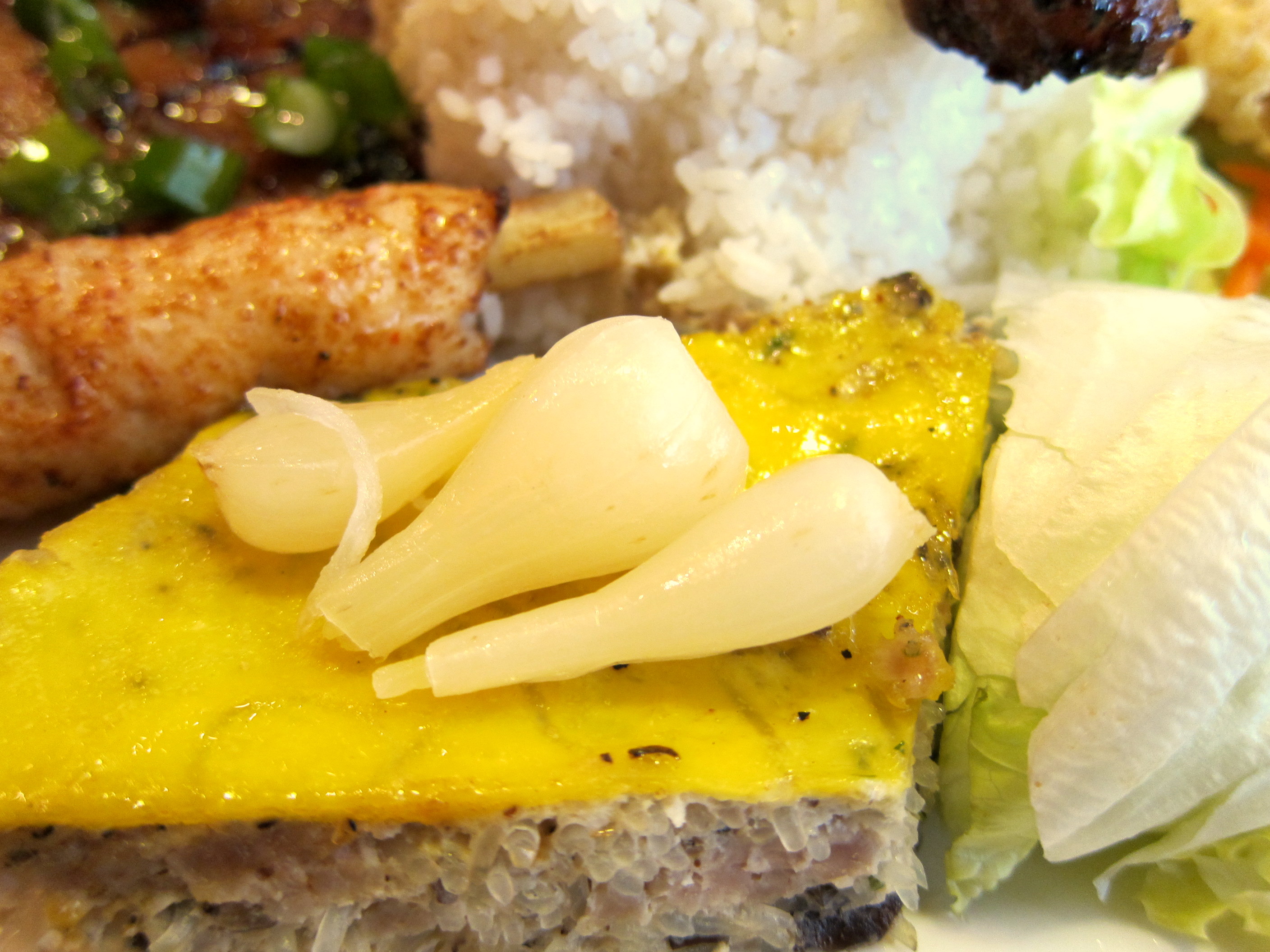
The meat and all are just bonus prize. I grew up loving chargrilled pork chop, egg loaf, and pork skin with my broken rice. But the grilled chicken at Thiên Hương is much juicier than the chop, and that sweetness afterchew from the sugarcane stick makes chạo tôm a wise company. Try to mix the egg and vermicelli bits of the egg loaf with the rice… mmmm I shouldn’t write this post at midnight, there’s not even pizza delivery this late.


To shake things up from the veggie end, Thiên Hương also adds a few pickled củ kiệu, all sweet and crunchy, with some lettuce, tomato, cucumber, and pickled carrots. Rabbit food? Yum.


I bet my keyboard that no sane body who enters here orders the lone token noodle soups at the bottom of the menu. Among the Vietnamese diners in the States, I haven’t seen anyone going full force focused like Cơm Tấm Thiên Hương, and they make the best cơm tấm, and I love it!

Address: Cơm Tấm Thiên Hương 2 (inside Grand Century Mall)
1111 Story Road #1086
San Jose, CA 95122

Money matter: $21.41 for two lunch plates and a soursop smoothie

Sandwich shop goodies #15 – Bánh quy (turtle mochi)

March 31, 2011 By: Mai Truong Category: Houston, One shot, Southern Vietnamese, sticky rice concoctions, sweet snacks and desserts


Of my two hundred fifty some posts so far, this Sandwich Shop Goodies series brings me the most joy when writing and also takes me the longest time per post. It’s a collection of the bits and pieces that cost next to nothing. You may say why of course, how can a mere grad student afford The Slanted Door, The French Laundry, or our local Chez Panisse et al. Now although my salary certainly factors in my grocery list, the truth is I’ve lost interest in the uptown food scene. It dazzles like fireworks, and also like fireworks, it doesn’t stay. The mixing and matching of the freshest and strangest ingredients has blended so many nationalities into one that it loses culture like a smoothie losing texture. Those fancinesses don’t have a home. Meanwhile, I can spend days googling an obscure street snack and still regret that I haven’t spent more time, because I know that someone somewhere out there has an interesting story surrounding its identity that I haven’t heard. With such food there’s more than what goes into the pot that I can mention. For example, a simple sticky rice treat has made its way into an idiom, no less.


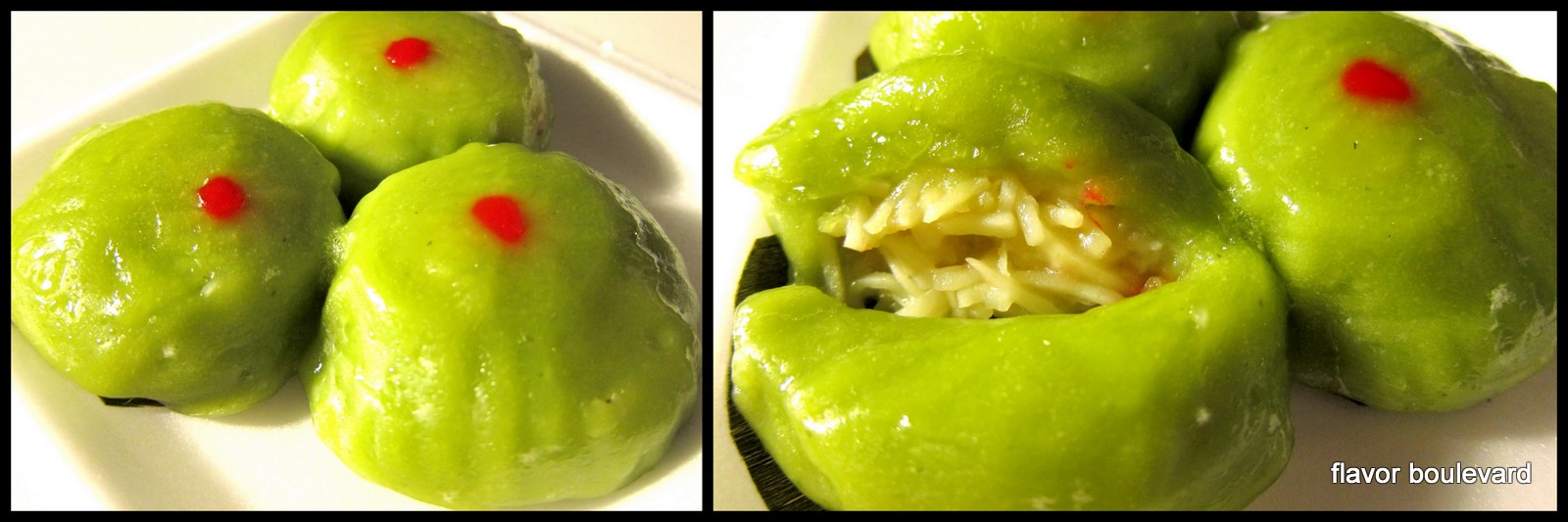
For twenty five years I’ve heard and used the expression “bánh ít trao đi, bánh quy trao lại” (“give bánh ít, get bánh quy” or “you scratch my back and I’ll scratch yours”) in a million occasions, but not once did I know what bánh quy was. At home we call cookies bánh bích-quy (biscuit) and some shorten it to bánh quy, but the biscuit and the bánh ít are too different from each other to be consider equivalents, and it’s reasonable to guess that the idiom came about before the introduction of Western food into Vietnam. So confused I was. Then one day while foraging the pile of snacks at Alpha Bakery, I almost flipped backward as I found a package of three green mochi’s labeled “bánh quy“.

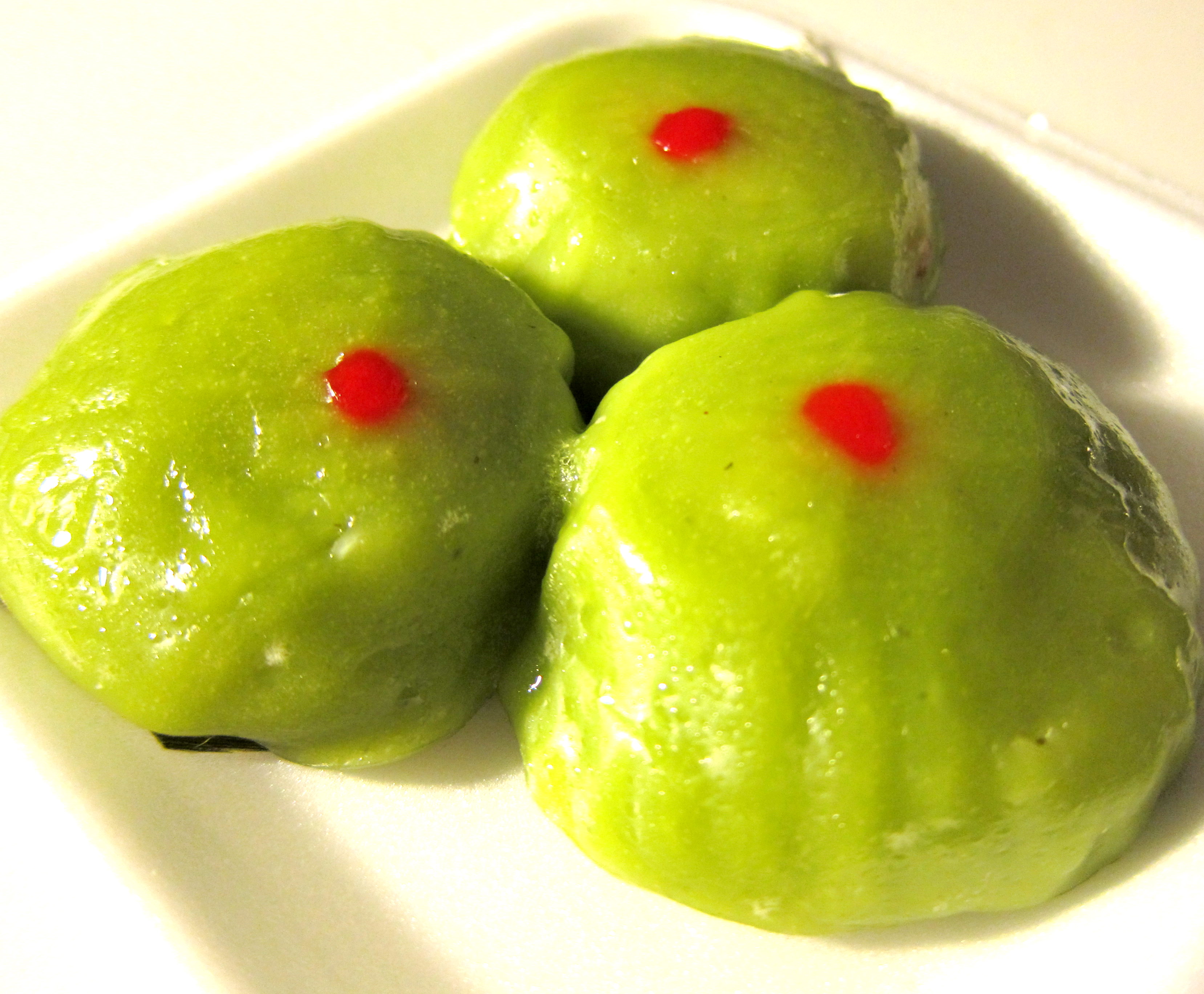
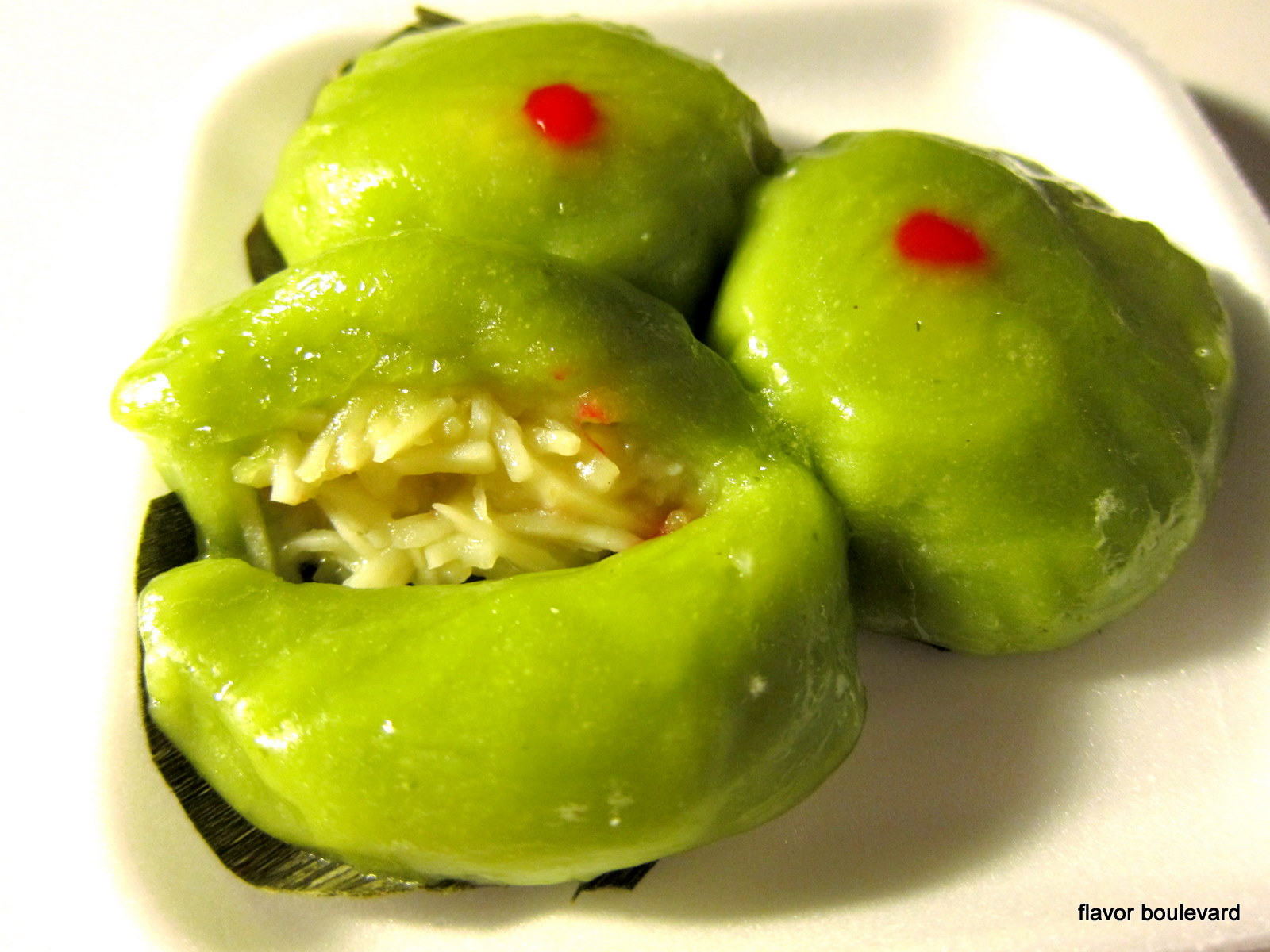
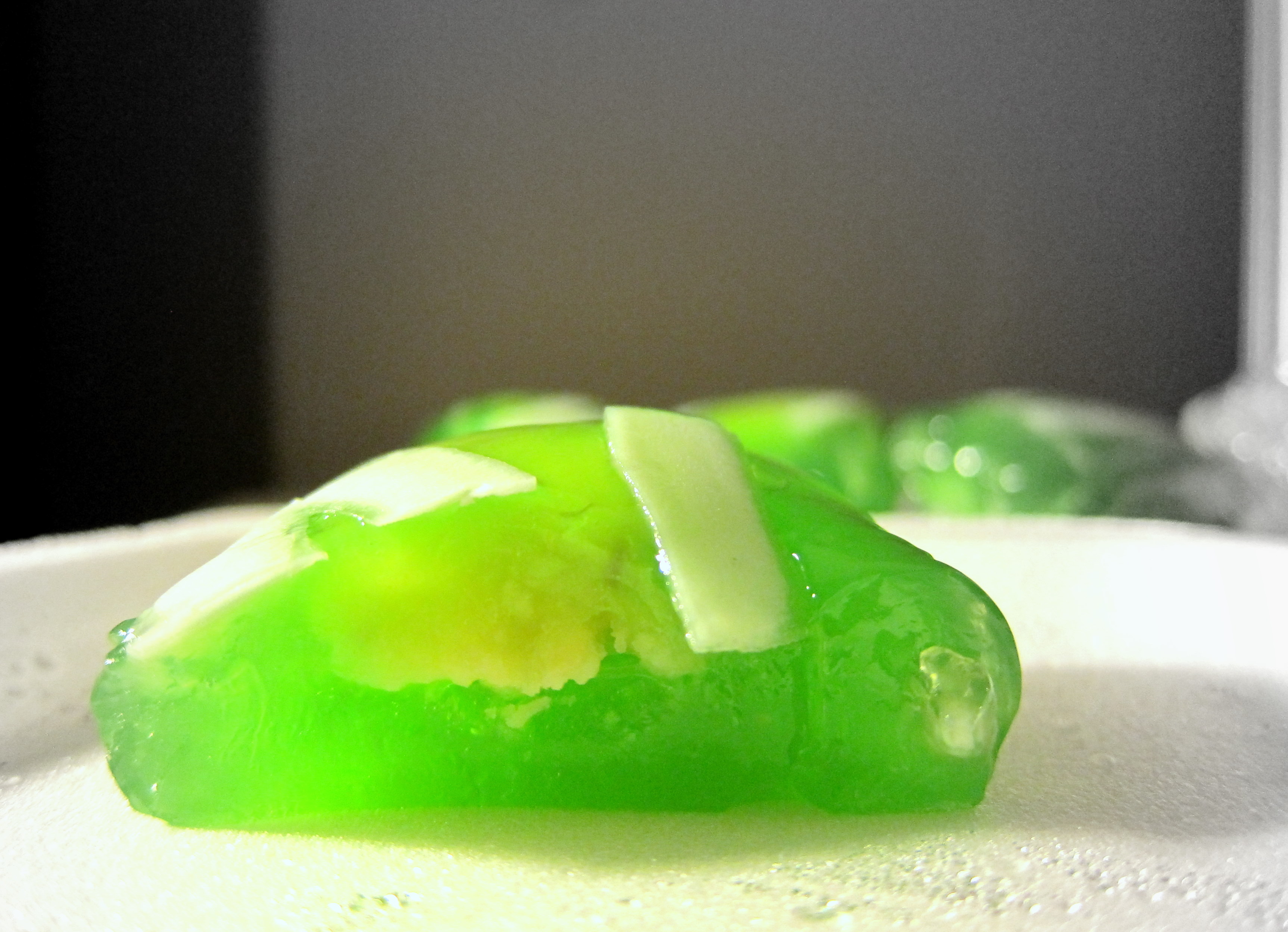
They’re round and flat at the bottom, each placed on a small cut of banana leaf, purposefully shaped like a turtle shell resting on wet grass. If you look closely you can even see some faint crevices near the rim. So there, mystery unveiled: “quy” means “turtle” in Han-Viet, and the banh gets its name from its look.


Content-wise, bánh quy is indeed just a smaller, rounder, flatter version of bánh ít: sticky rice, tapioca starch, salt, sugar, oil, and a sweet filling. Back in the day, the turtles had either a red or a yellow dot to distinguish between coconut and mung bean paste, but it seems these days only the coconut turtles are still around. Each banh is just big enough and tall enough to fit snuggly in a baby’s palm. Two or three adult bites and you suddenly wonder, hey, where did my sugary, chewy soft bun go?


Buy three at the store for $1.50. Also, look for this other type of bánh ít: bánh gai (bánh ít with thorn leaf extract)

Address: Alpha Bakery & Deli (inside Hong Kong City Mall)
11209 Bellaire Blvd # C-02
Houston, TX 77072-2548
(281) 988-5222

Previously on Sandwich Shop Goodies: bánh da lợn (pig skin pie)

This post is submitted to Delicious Vietnam #12, April edition, hosted by Anh of A Food’s Lover Journey. I’m so looking forward to the roundup this month!

Candied cà-na (white canarium or Chinese olive)

March 12, 2011 By: Mai Truong Category: California - The Bay Area, Fruits, One shot, Southern Vietnamese, sweet snacks and desserts, The more interesting


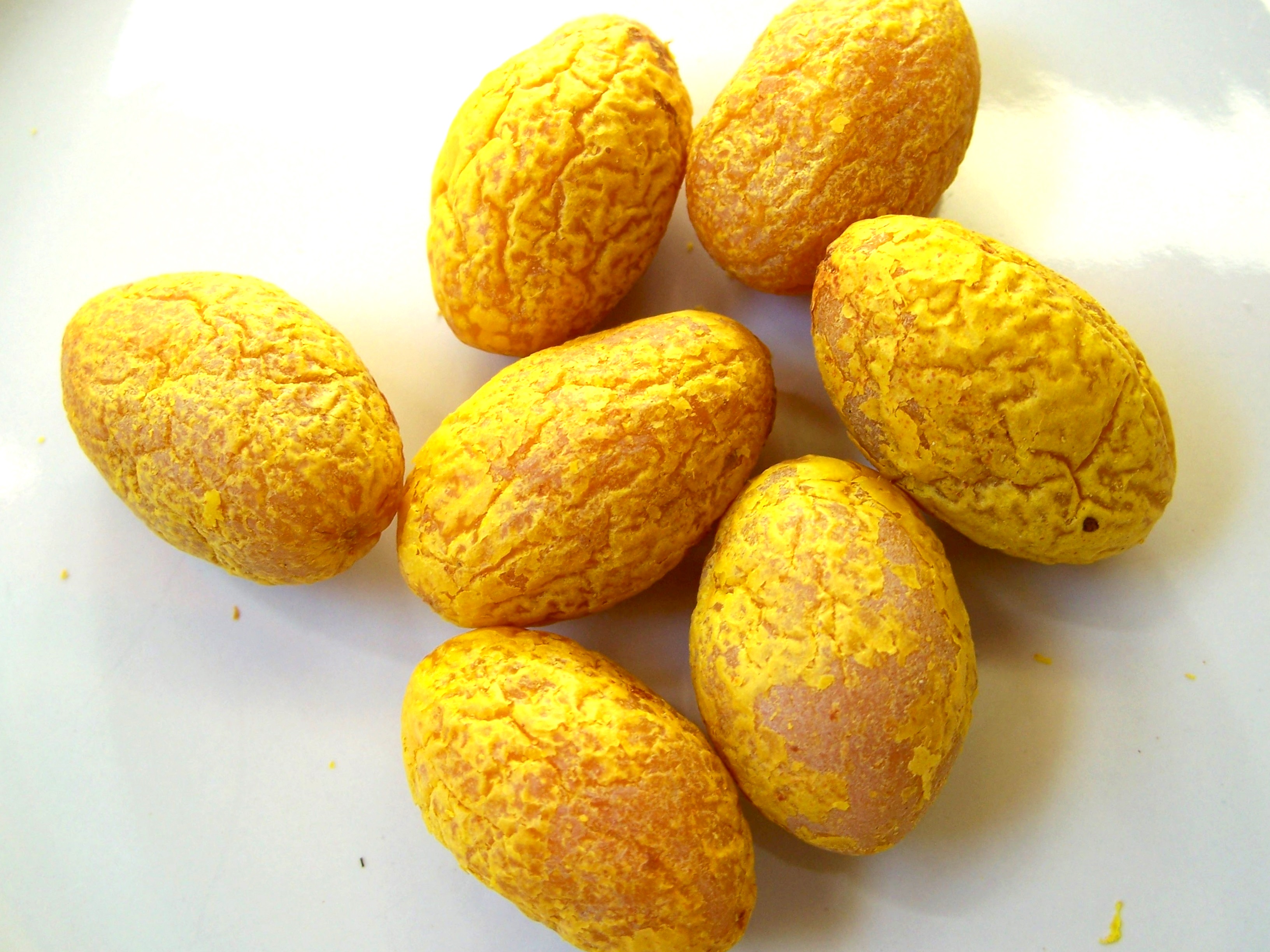
It’s not the black stuff they throw on your pizzas or the green thing they toothpick on your sandwich. How many of us city kids have tasted the tartness with a tiny sweet afterpunch of this Mekong delta fruit? It’s addictive like fresh squeezed orange juice on a summer day. Speaking street tongue, it’s nature’s crack in oblong shape.

Eat ’em fresh with chilipepper salt, or candy them with sugar and heat, it’s how kids down South do it with the cà na they shake off from bushes on the riverbanks. And argue if you may, kids know tasty food. The shape is really the only link cà na has with the Western olive (Olea europaea), though it’s at least two times bigger. Does the name “cà na” mean anything?

“Cà” is tomato, and “na” is the northern word for sweetsop, two totally unrelated species to this ovoid fruit. So “cà na” is not a compound noun. I’m no etymologist but here’s my best guess: “cà na” |kah nah| is a shortened vietnamization of the Thai word “kanachai”, from which cultigen taxonomists derive the the scientific name “canarium”, a genus with about 75 species native to the tropics. The cà na we eat and love from those riverbank bushes belongs to the species Canarium nigrum (black canarium) and Canarium album (white canarium), or “trám đen” and “trám trắng” in pure Vietnamese. Another delta variety is Canarium subulatum, pointy at both ends and sappy like green bananas.

Words on the net claim that cà na‘s acidity is good when you have a cold, drink too much, or wants to lower your weight, thus not so recommended for skinny sticks like me. I’ve never popped a fresh one myself, but this is the most (and only) mouth-watering description I could find on the net (translated from the Vietnamese original):

Every year, in roughly August or September, when the Mekong flushes the paddy fields, the cà na trees bear their first fruits. What could be better than rowing a canoe downstream, then tying it to a cà na trunk base by the riverbank to cast your fishing net, and while waiting, dip a bursting green ripen fruit into chilipepper salt to soak your soul with its wild and clean sweetness?


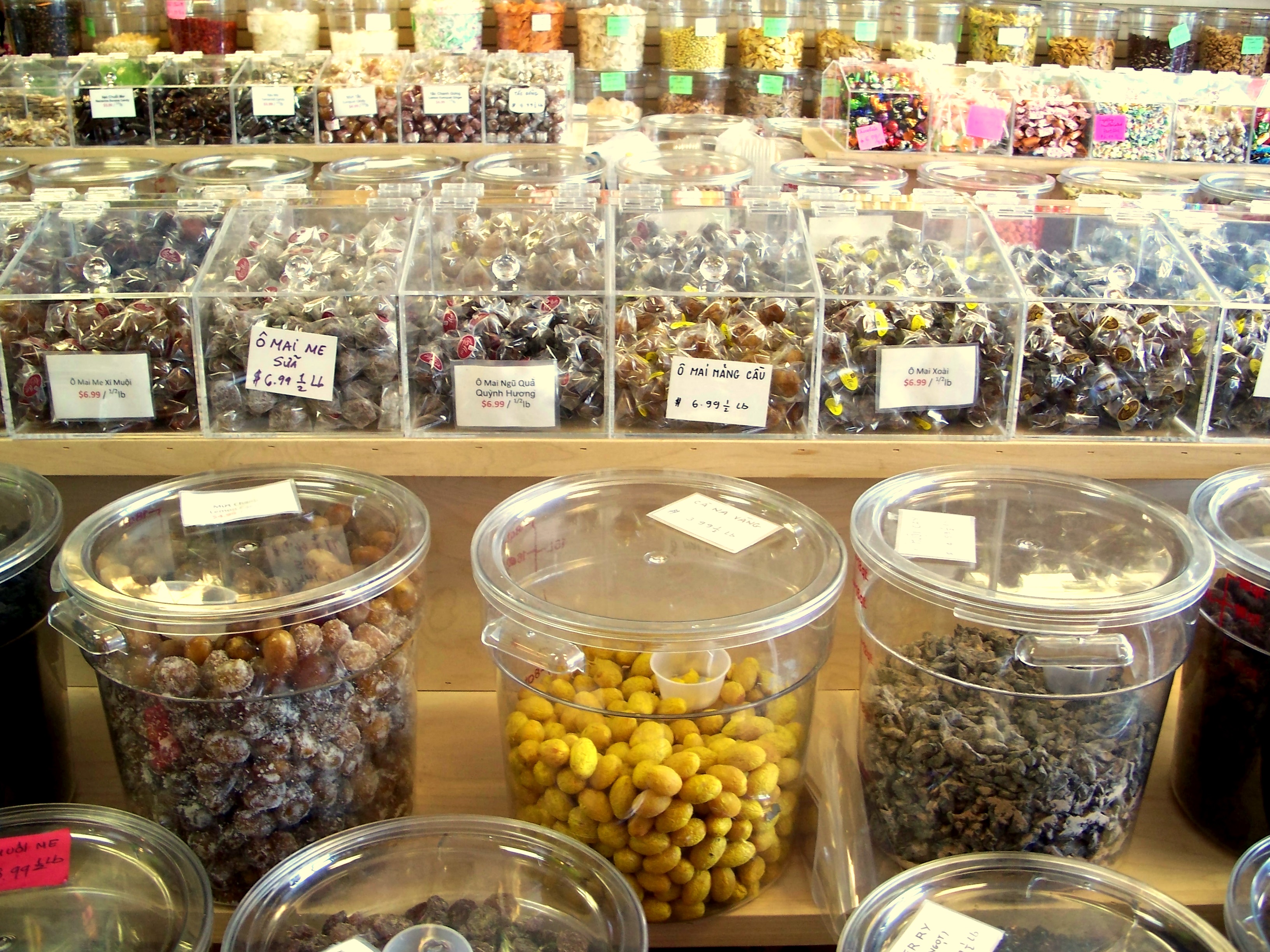
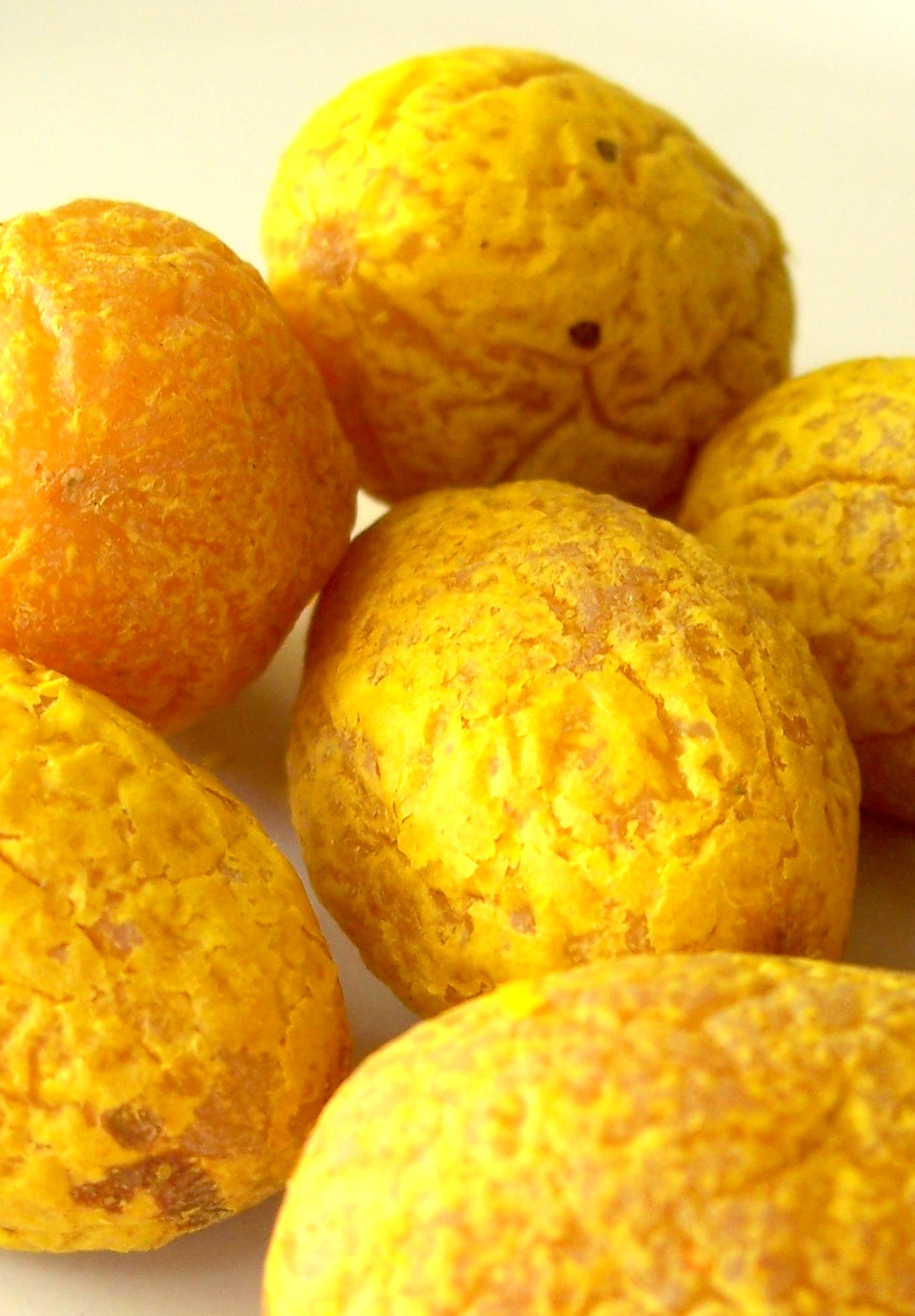
The first cà na‘s I’ve had are bright yellow with cracked skin, as big as a big green grape, resembling petrified dinosaur eggs, sold in glass jar among the ô mai and the salted plums.


The first nibble must be executed with caution. It’s firm and sound, with one big hard seed. No wonder the folks at home call the American football the cà na ball: they look and feel the same, only smaller. The flesh is dense like an old coconut’s meat, sour like lemon leaves, yet sweet like licorice blended with a dash of sea salt. How they’re made is a mystery to me.

Address: Vua Khô Bò & Ô Mai
2549 S King Rd #A-B
San Jose, CA 95121
(408) 531-8845

Also from here, also fruitilicious:
1. banana tootsie roll
2. ô mai (spiced fruit ball)

Other informative links on the Chinese olives:
a list of different cultivars in China
Autumn olive


This post is submitted to Delicious Vietnam #11, March edition, hosted by The Culinary Chronicles. I’ll head to her blog for more yummy posts on Vietnamese food this month, and many thanks to the Ravenous Couple and Anh for creating this event!

Sandwich shop goodies 14 – Bánh da lợn (pig skin pie)

March 06, 2011 By: Mai Truong Category: Houston, One shot, sticky rice concoctions, sweet snacks and desserts, Vietnamese


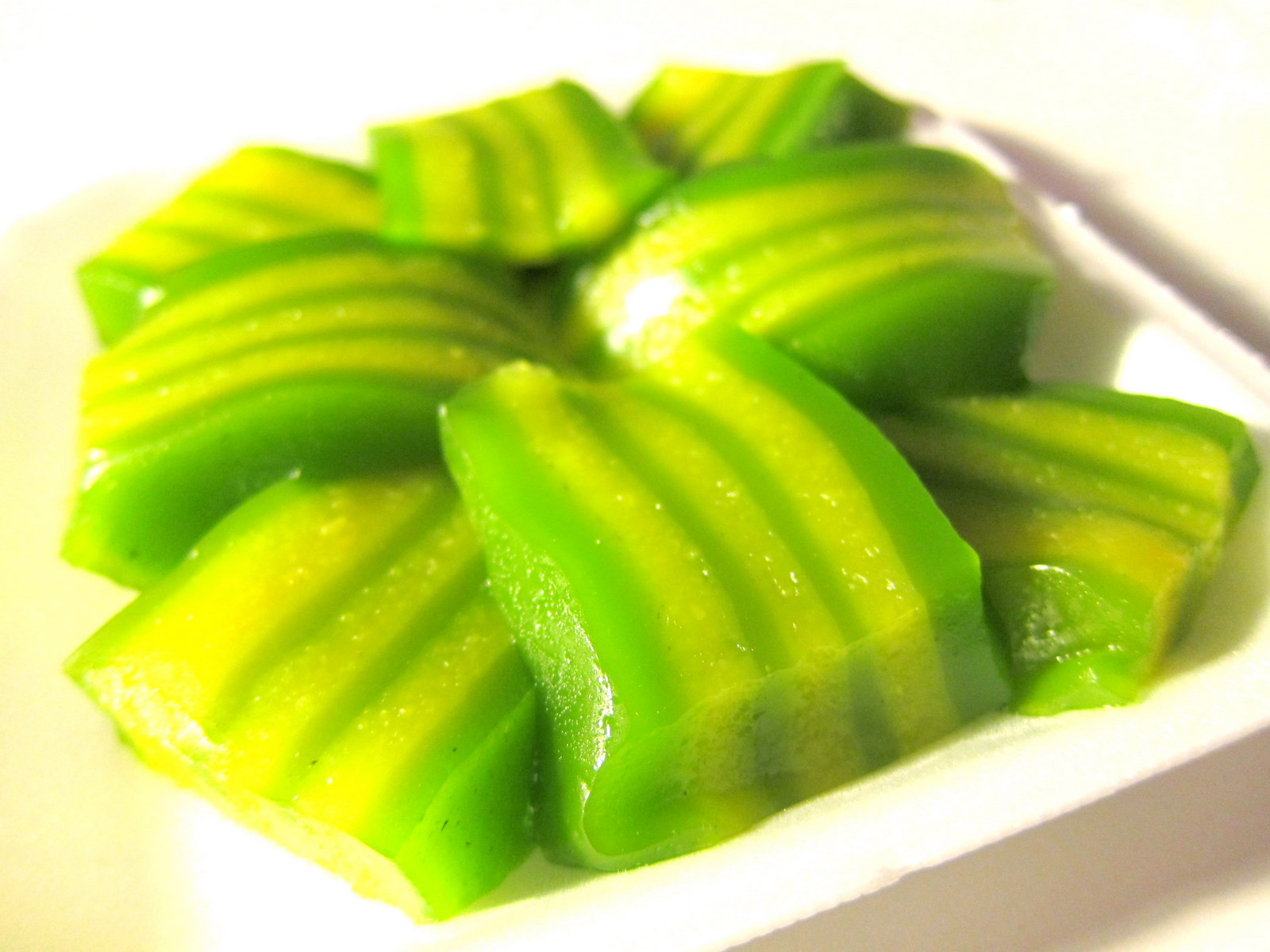
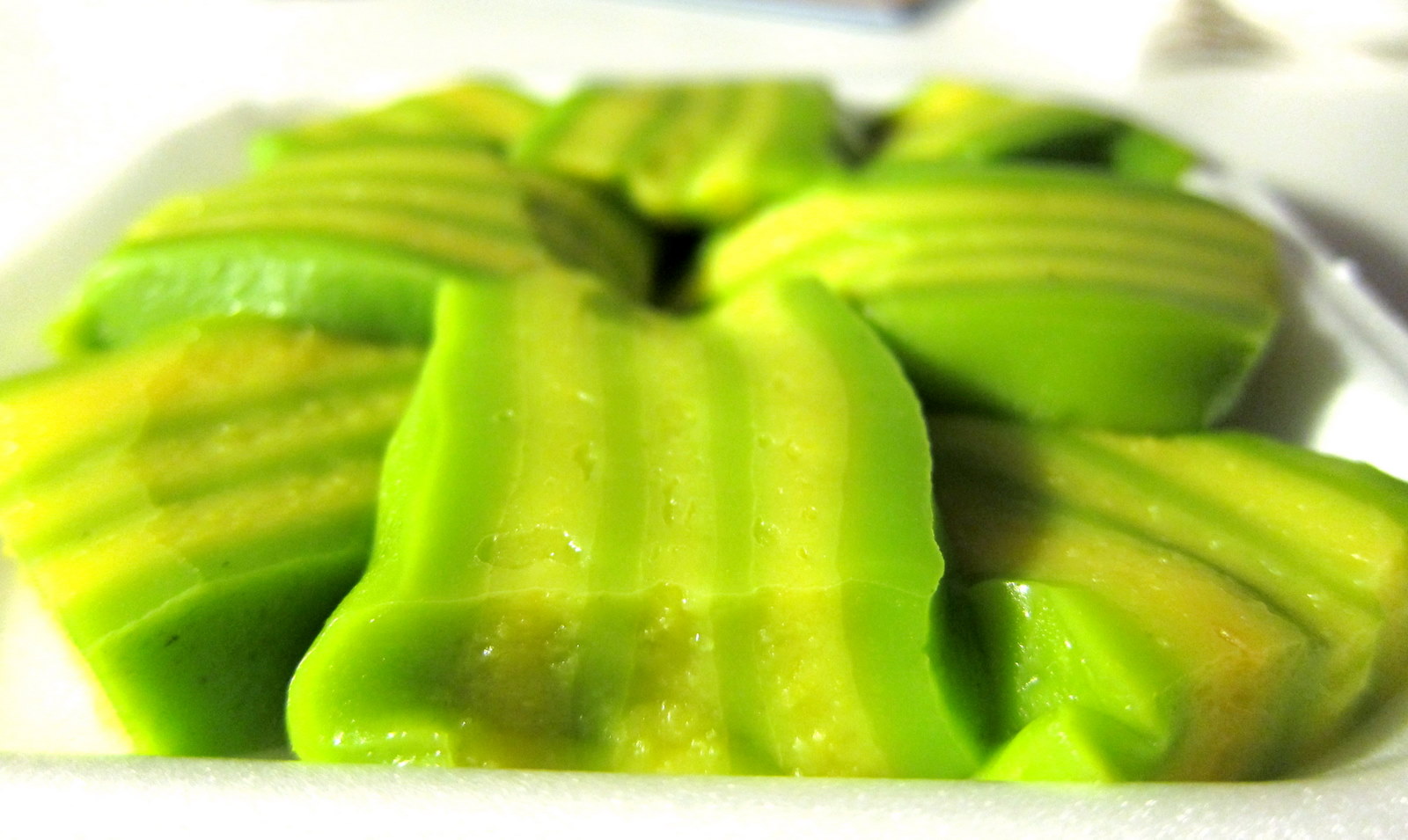
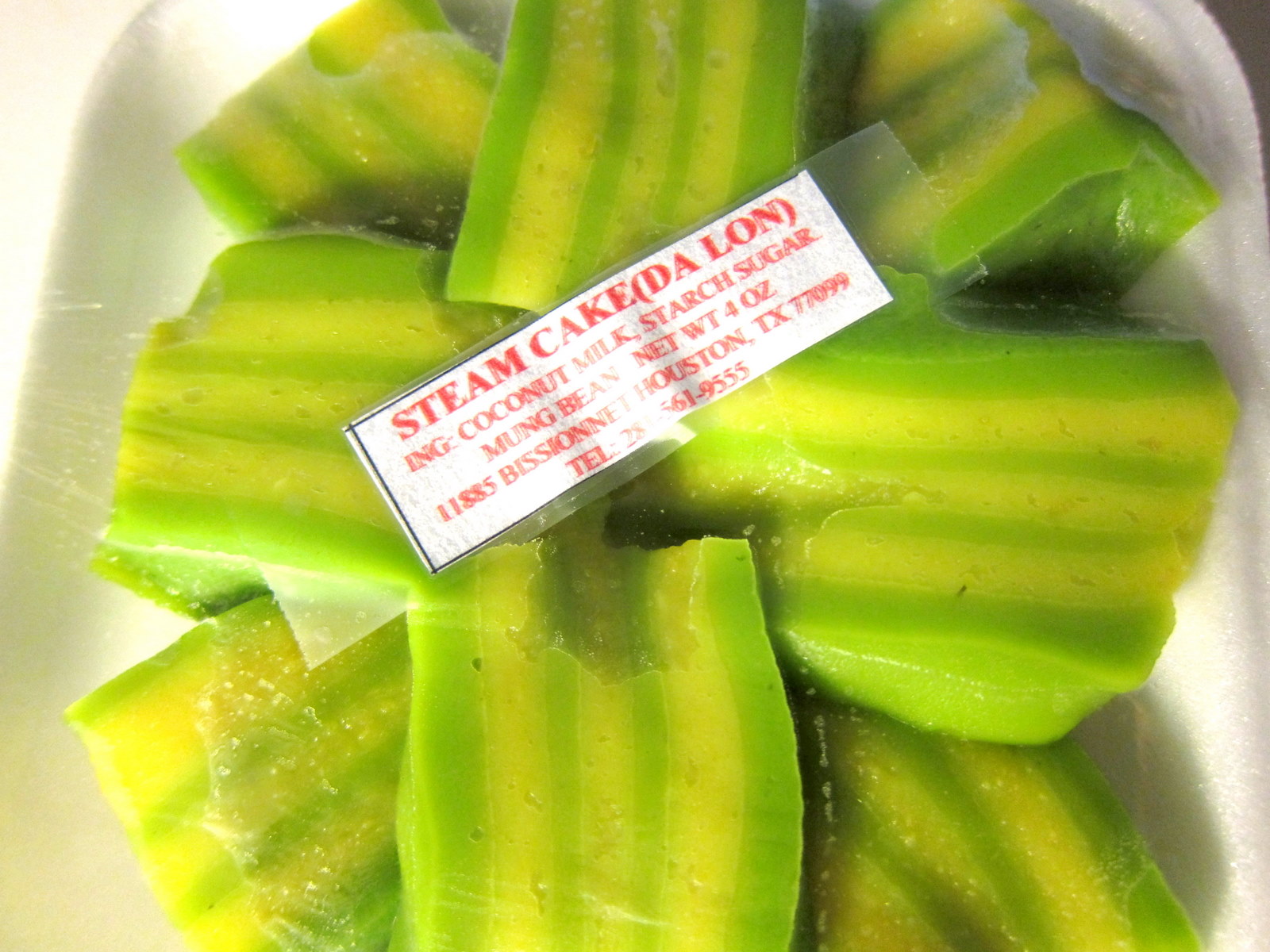
This is no stranger in the Vietnamese food biz: the layered pastry that gets its name from looking like pork belly, except green and yellow. Of course it doesn’t contain any pork skin, it’s sweet, sometimes may even be too sweet. Dad used to buy a whole pie home, as big as a platter and as warm as a father’s hand. From that same bakery somewhere in the market alley, he would buy bánh chuối nướng (bread pudding) too, which I always preferred to the bánh da lợn. But thinking back on those days when we lived near Bà Chiểu Market, it was certainly the best pig skin pie I ever ate.


Many years have passed, and many bánh da lợn have been eaten by me, both in its homeland and across the seas. The best way, I figured, to slaughter these chewy beasts is to peel off the layers one by one, when it’s warm. That wet, smooth skin of tapioca flour, when warm, is fragile. You don’t want to break it while peeling, and you want to drop it whole in your mouth to wrestle with its resilience, all the while inhaling the sweetness of pandan leaves and vanilla fused in its tone.

Simply put, a cold “pig skin” is a dead “pig skin”. A warm mung bean paste layer is also less sweet than a cold one, and thank goodness the bean layers are always one fewer than their tapioca neighbors. The pies Dad bought from that market bakery would have white chewy layers too, and the green ones didn’t look radioactive green like those we get from sandwich shops these days. Ah marketing strategies, just like somewhere in Vietnam someone thought of calling it “bánh chín tầng mây” (cloud nine pie) (because pork skin doesn’t ring any two-cent poetic sound), or when the tapioca layer turns dark purple, because of either magenta plant‘s leaf extract or food coloring, and the bean layer light purple because of taro.


Whatever the case, the original bánh da lợn is still the best. I looked through 51 pages of Google search for its origin, which seems likely lost through generations of home cooking and street food mingling. You see, it was never really a praiseworthy, historically recorded invention in the kitchen. There’s no village or province associated with the best bánh da lợn. It’s probably from the South, even if “lợn” is the Northern word for “pig”. It’s a product from a steamer, it’s cheap, it has texture, kids like it, Dad likes it. That’s all I know.

And by the way, Alpha Bakery & Deli sells some good, thinly sliced, warm numbers for a buck fifty.

Address: Alpha Bakery & Deli (inside Hong Kong City Mall)
11209 Bellaire Blvd # C-02
Houston, TX 77072-2548
(281) 988-5222

Previously on Sandwich Shop Goodies: bánh xu xê (couple cookie)
Next on Sandwich Shop Goodies: bánh quy (turtle mochi)

Sandwich Shop Goodies 13 – Bánh xu xê (couple cookie)

February 12, 2011 By: Mai Truong Category: Houston, Northern Vietnamese, One shot, sweet snacks and desserts, Vegan


When you reach(ed) mid 20s, don’t you just hear all sort of marriage announcements popping up among your social circle? By the time of college graduation, half the girls I know have gotten their wedding registry up on Facebook, and I thought okay it’s just an American thing (the wedding I mean, though the registry is American too). Then this past Christmas my best college friend missed our annual reunion for his big day in India, and another pal who I thought was still wandering the streets of Chengdu dropped the bomb that he’s engaged. Then I got news that two of my eleventh grade buddies in Vietnam are going to say the vows (not to each other) within this year. Then it really hits me.

I haven’t written about any wedding party food, even though I’ve been to many weddings :D. So why not celebrate this year’s Valentine’s day with a Vietnamese confection whose name derives from the main characters of any wedding: bánh xu xê, originally called bánh phu thê, or “husband (and) wife”?

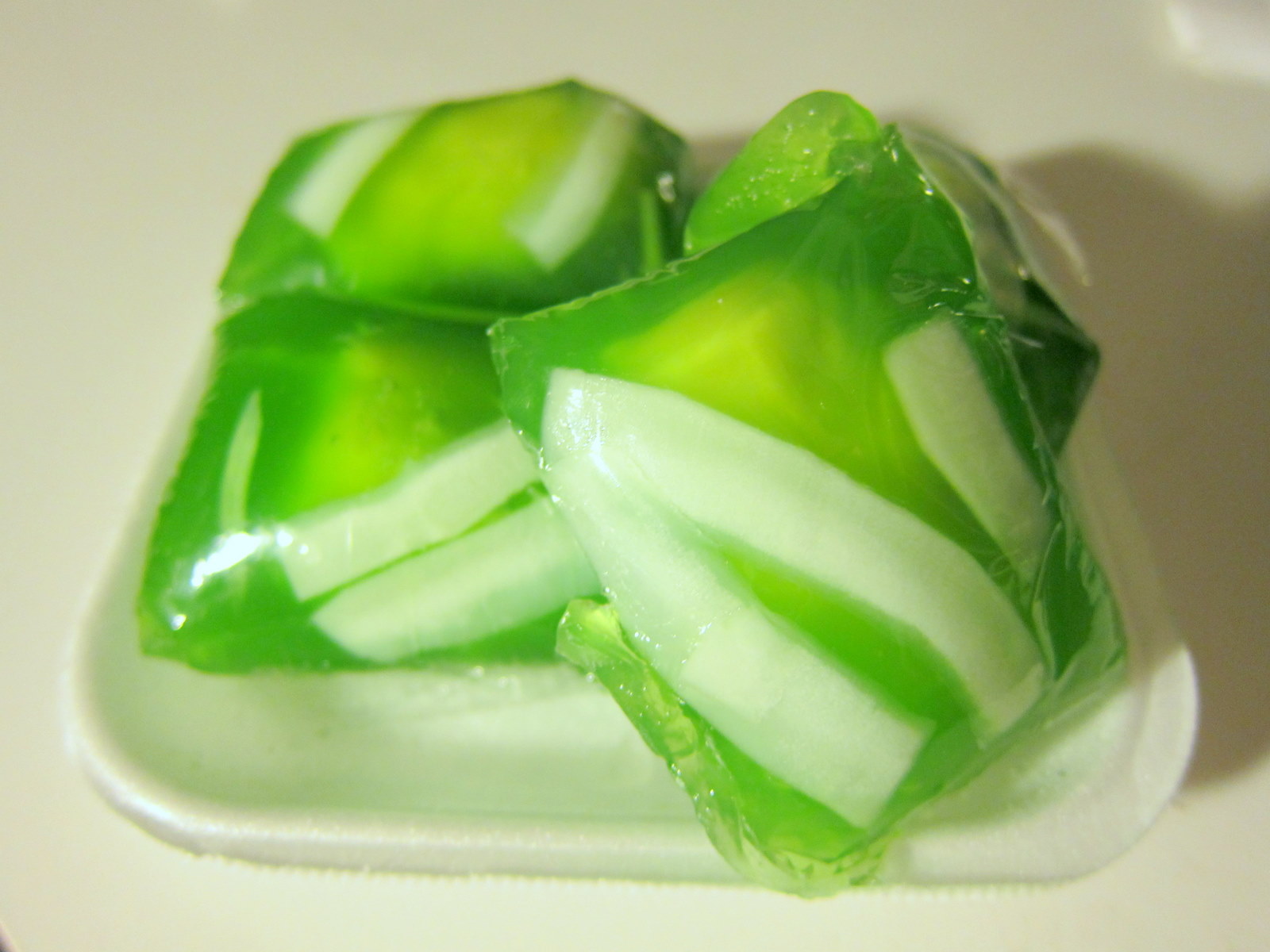
My translation “couple cookie” is for the sake of consonant concordance. They are similar to neither American cookie, Scottish cookie nor British cookie. These little bouncy sweet green pillows get their names from being gift desserts at Vietnamese couples’ engagements back in the day, when they used banana leaves to make little boxes instead of a double layer of cellophane wrapper. At one point the adults called them bánh phu thê, then the kids mispronounced it to bánh xu xê (|soo-seh|) and the name stuck. Technique-wise, it takes a grandmother’s experience to make a mixture of sticky rice flour, arrowroot starch and water into a translucent jello casing that is resilient but not sticky. Some of us might find its crunch-chewy texture too rubbery, other would question its lack of flavor, but the skill of transforming ingredients alone is admirable, and I like chewing. 🙂 In fact I like the outer layer more than the filling.

Traditionally, taro cut into strips are mixed with the cooked batter to give onyx-like patterns, while the modern concoctions can have sesame seeds on top or dry coconut strips within to spice up the homogeneity. The fancy pâtissiers of old Northern Vietnam villages might also sprinkle a few drops of pomelo flower extract into the mung bean paste filling for enhancing fragrance. But I wouldn’t expect that from our local sandwich shops in the States, not when it’s less than $2 for a pack of four.


It’s the kind of sweet you either love or hate. My mom loves it. The Gastronomer suggests using it to pelt your loved ones. It’s the perfect representation of a marriage really, and I’m not talking about the symbolic meaning of glutinous rice (bonding) and all. Its shiny outlook is inviting – everybody likes to get married, then you take a bite and find it tough, lackluster, disappointing, at the least not quite as expected – the post-wedding depression, then you get to the core and discover some tender sweetness after all. 🙂

Got ’em from: Alpha Bakery & Deli (inside Hong Kong City Mall)
11209 Bellaire Blvd # C-02
Houston, TX 77072-2548
(281) 988-5222

Previously on Sandwich Shop Goodies: chuối nếp nướng (grilled banana in sticky rice)
Next on Sandwich Shop Goodies: bánh da lợn (pig skin pie)

Popping boba for the new year

January 05, 2011 By: Mai Truong Category: California - The Bay Area, One shot, sweet snacks and desserts


Forget the champagne, these tiny balls, each as big as a champagne grape, set off some pretty flavorful firework on the tongue.


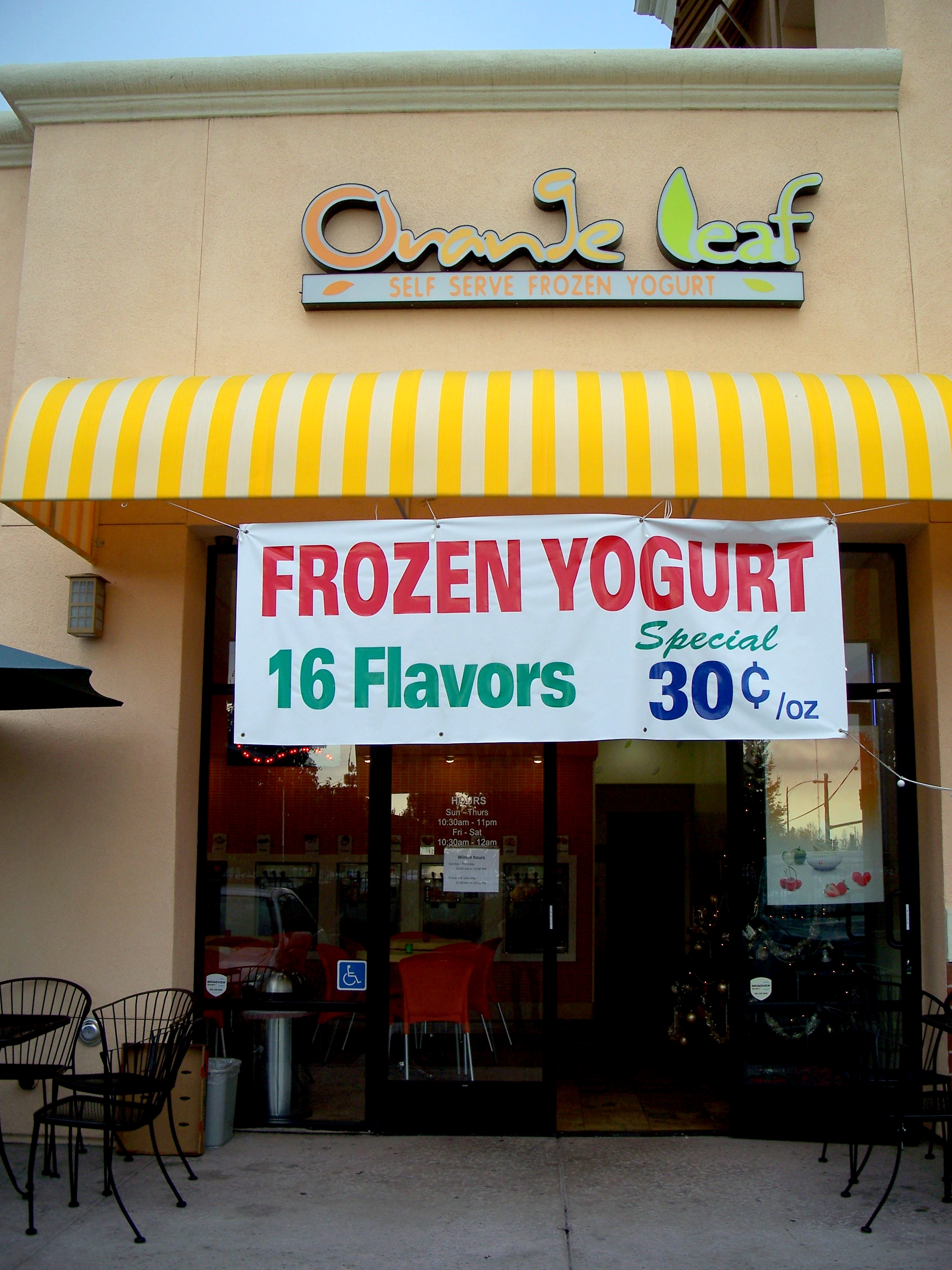
We’ve driven by this Orange Leaf many a time but always when we’re heading for some green waffle at Century Bakery. For some reason reasonable only to the designer’s aesthetics, there is a fence encompassing the vicinity of Orange Leaf and Lemon Grass, separating the two from the Grand Century Mall, even though they’re practically in the same block. Needless to say, the fence inconveniences anyone who parks in Grand Century lot and wants to go to Orange Leaf, or vice versa, because you gotta walk all around and out to the street and back in again on the other side of the fence. Nobody has attempted to climb. A lot more, like myself I’d imagine, have said the heck with it and gone to only one or the other. For us the 50/50 odds has disproportionately favored Grand Century in the past. Then one day Mudpie pouts and says “I want waffles and yogurt”.


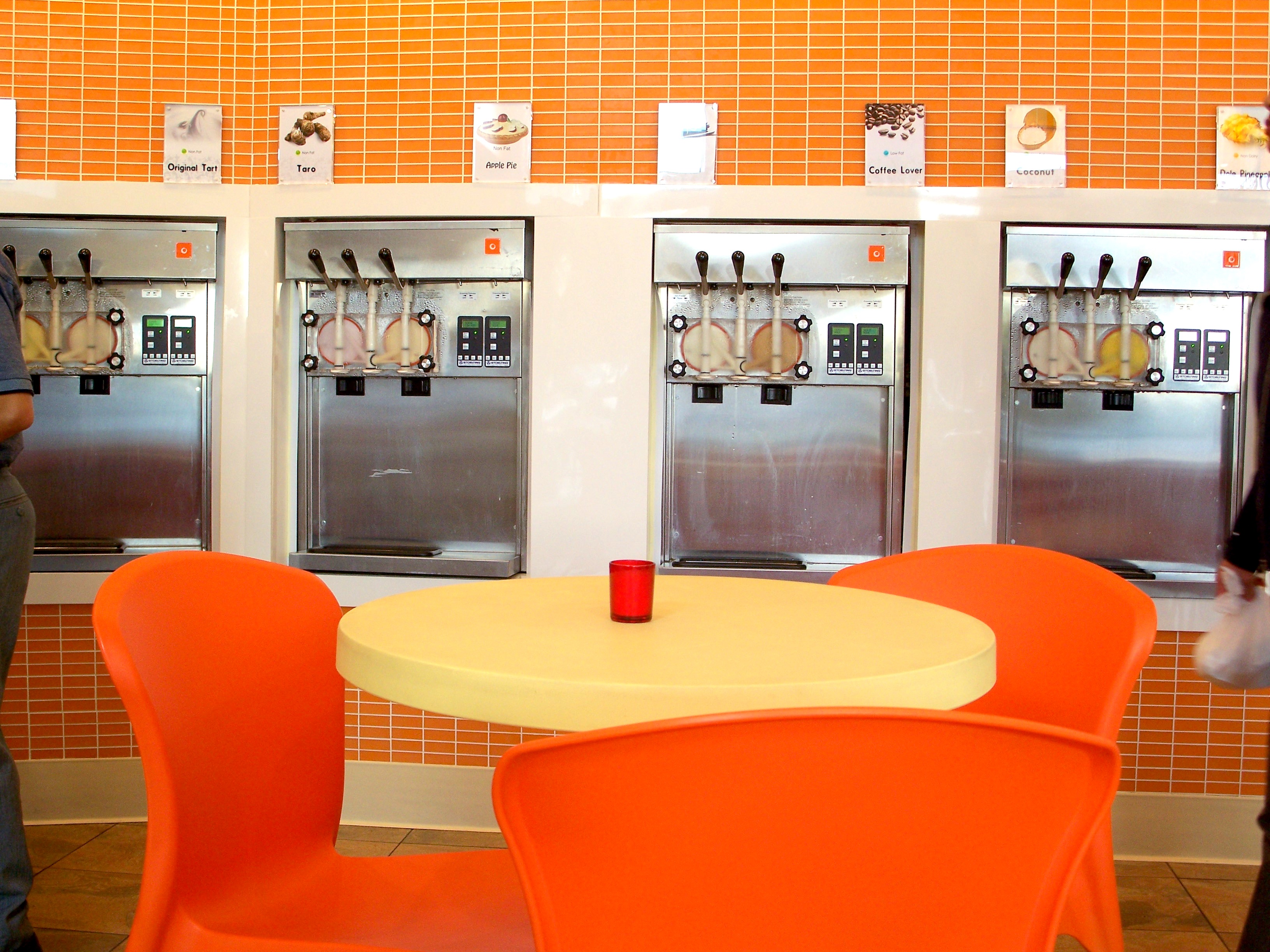
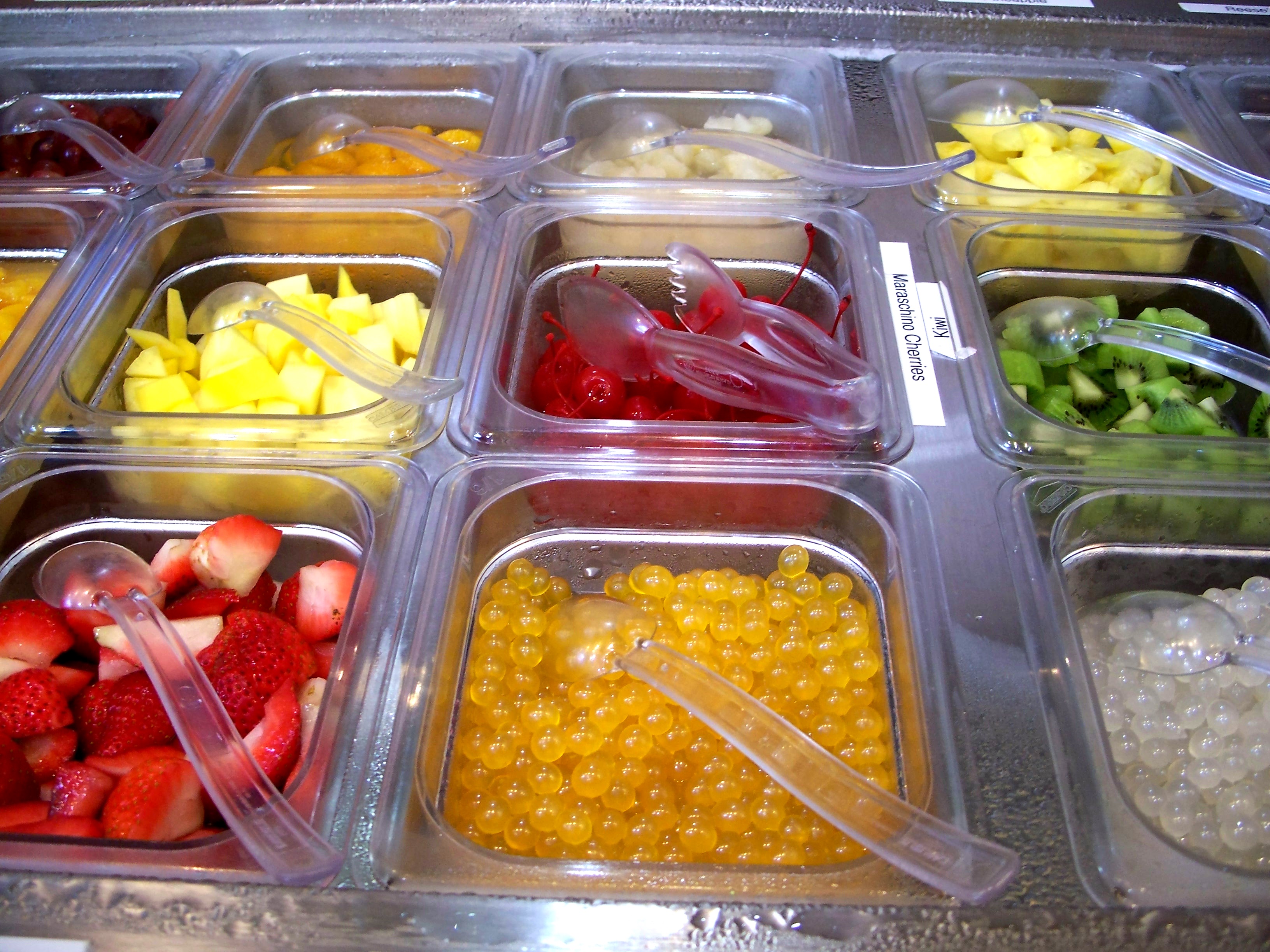
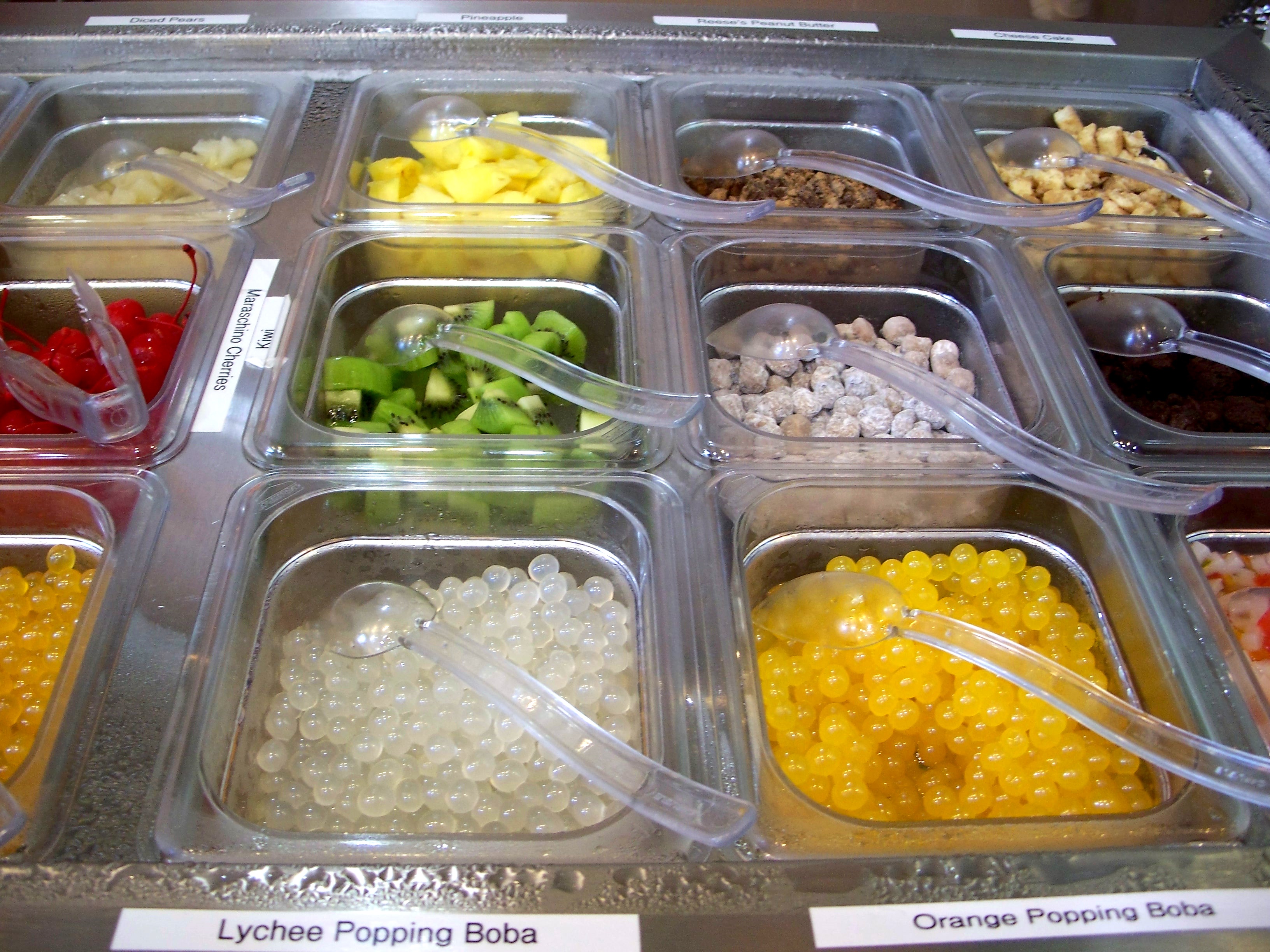
The setup at Orange Leaf is what you would expect at any frozen yogurt corner: clean dispenser stalls, small tables, light chairs, you make one leisure trip from the cups, passing the yogurt reservoirs, winding by the topping trays, stop at the scale to weigh your sweet snowy load and pay 30 cents for every ounce, then you take a cheap-colored plastic spoon and thank the cashier who has patiently (and likely out of boredom) observed you from the start. The yogurt selection has what I always go for: chocolate, coconut, and taro. (My number one, unwavered rule for fro-yo: no taro, no Mai. No exception.)


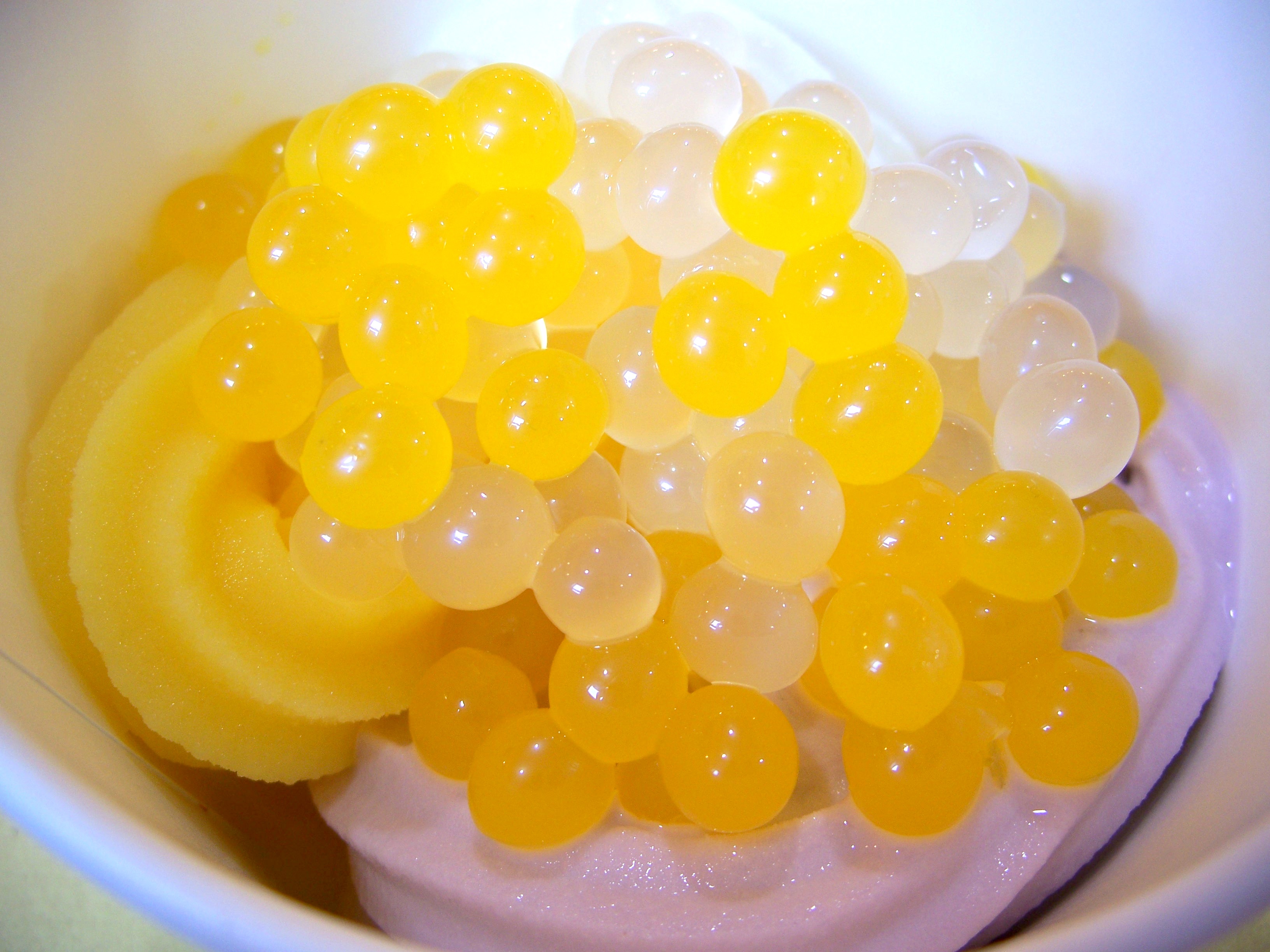
The toppings are for the most part the same as everywhere else: fresh fruits, cheesecake bite, brownie bite, coconut flake, cereal, gummy bear, chocolate chip, etc. But at the forefront something new catches my eyes: tiny, shiny, bouncy-looking perfect balls in yellow and white. Mudpie comes up as I scoop spoonfuls into my cup, “what are those?”


Fruity “popping boba” as they call them. They are so slightly smaller than the tapioca pearls (“boba” 波霸) in bubble tea, and certainly not made of tapioca. Not more than a couple of droplets are contained, with some leeway, inside a thin but chewy pouch. Like popping bubble wrap? How about popping one with your tongue and feeling a mini explosion of orange juice sweep over the fleshy terrain? It is pure joy that goes with any yogurt flavor. Color aside they look like ikura, but they taste better, hands down.

Where to find them: Orange Leaf (near Grand Century mall)
1143 Story Rd. Suite 190,
San Jose, CA 95122
(408) 289-8123

‘Cross country Day 5: Beignets, at last

December 31, 2010 By: Mai Truong Category: American, French, One shot, sweet snacks and desserts


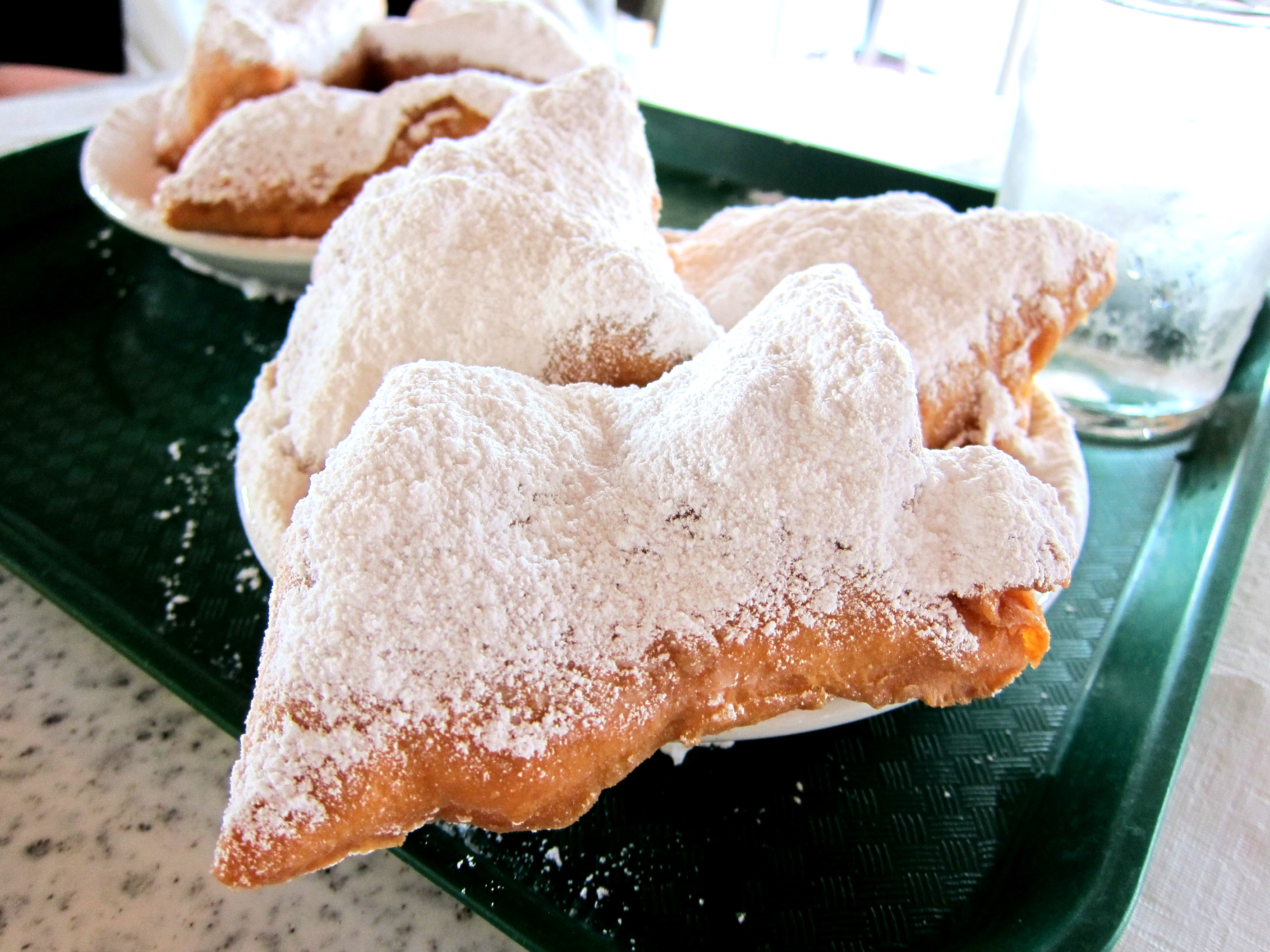
Two dollars for every three of them. A square, fluffy pillow of dough deep fried to flakiness and powder-sugared. Gripping each donut with two fingertips, I bend as close to the tiny plate as I can and hold my breath, the anticipation mounts as to not blow away the sweet white dust (and to avoid unwanted makeup powder on my face).


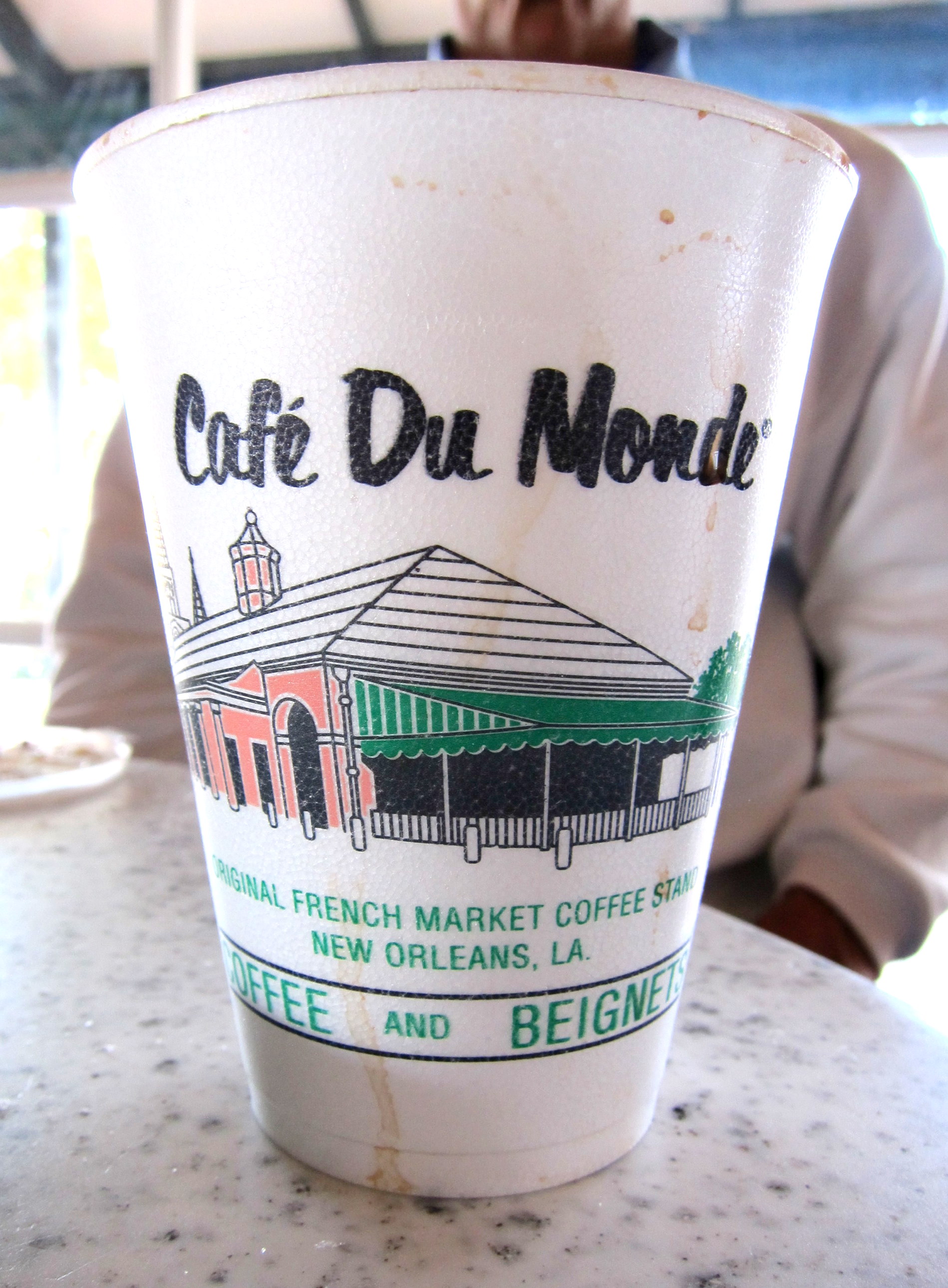
We confectioner the year end with beignets from Cafe Du Monde in Metairie, Louisiana.


And the six-hour drive just spirals off in the invisible gust of some unjustifiable self-indulgent joy. We’ve had beignets before, but these strike us differently: refreshing, comfortable, and better. They offer nothing more than a combination of leavened, fried and sweetened, but also nothing less than an immersion into the food itself, skillfully and quickly enough to make you forget your whereabouts.


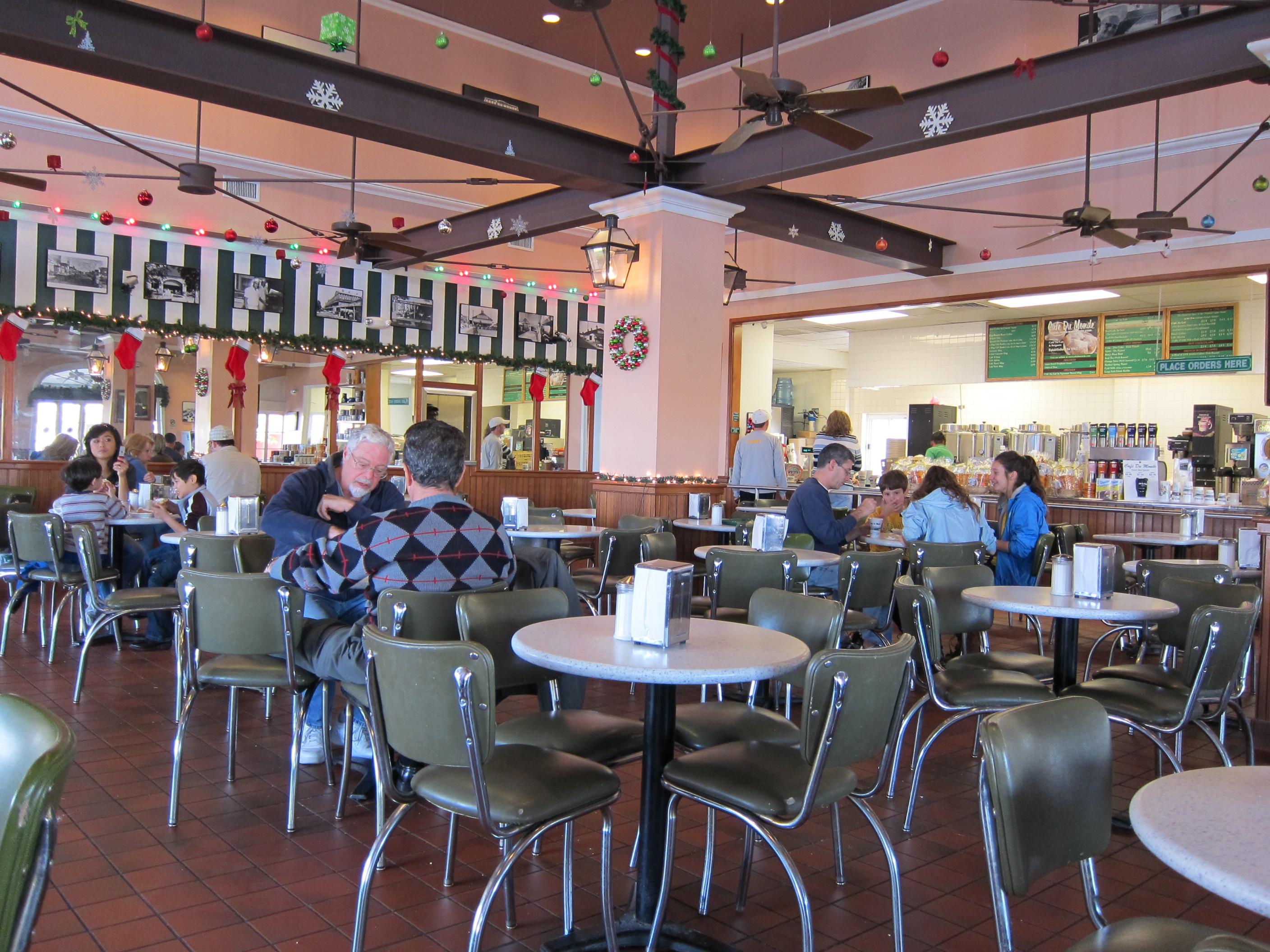
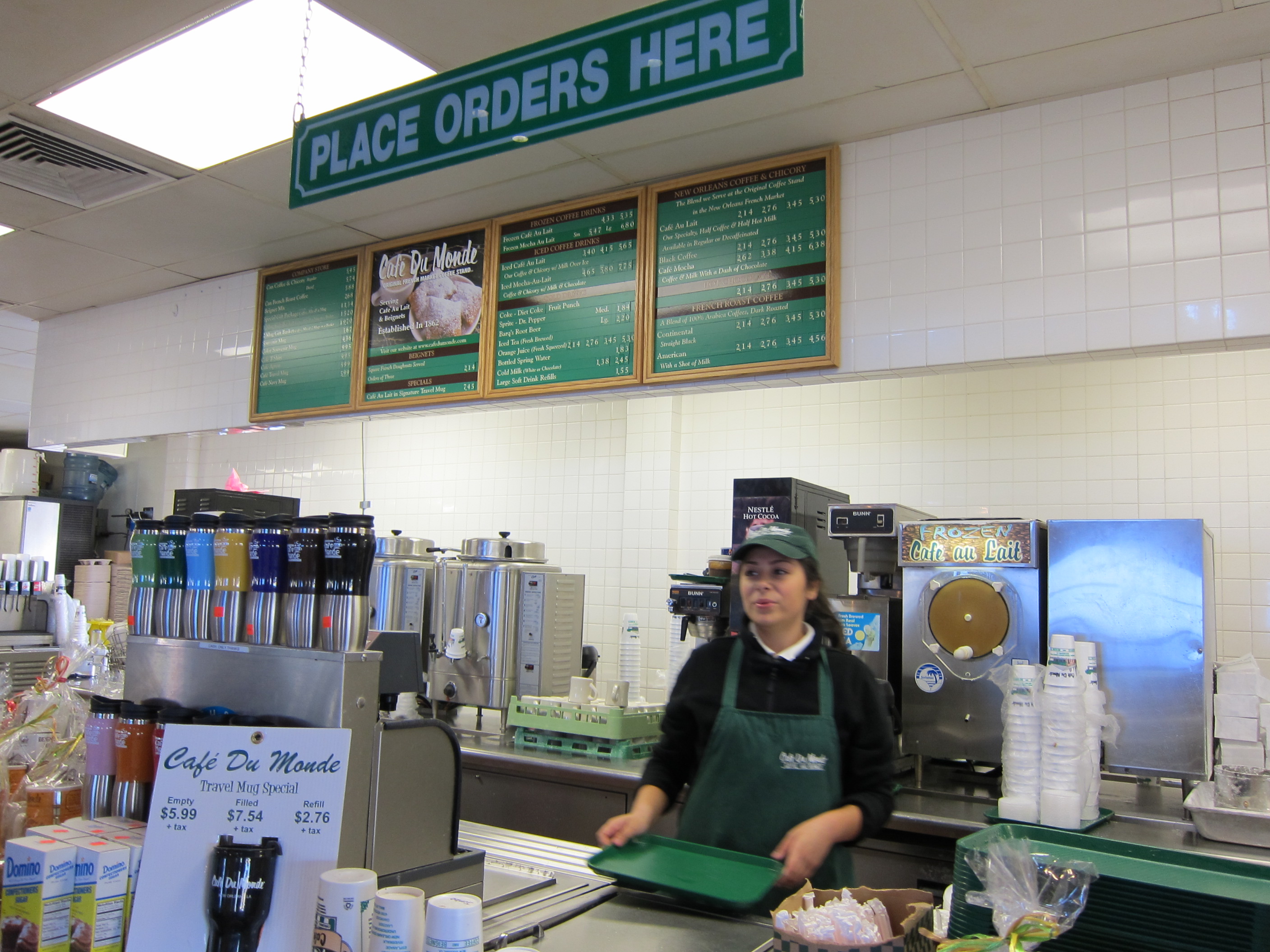
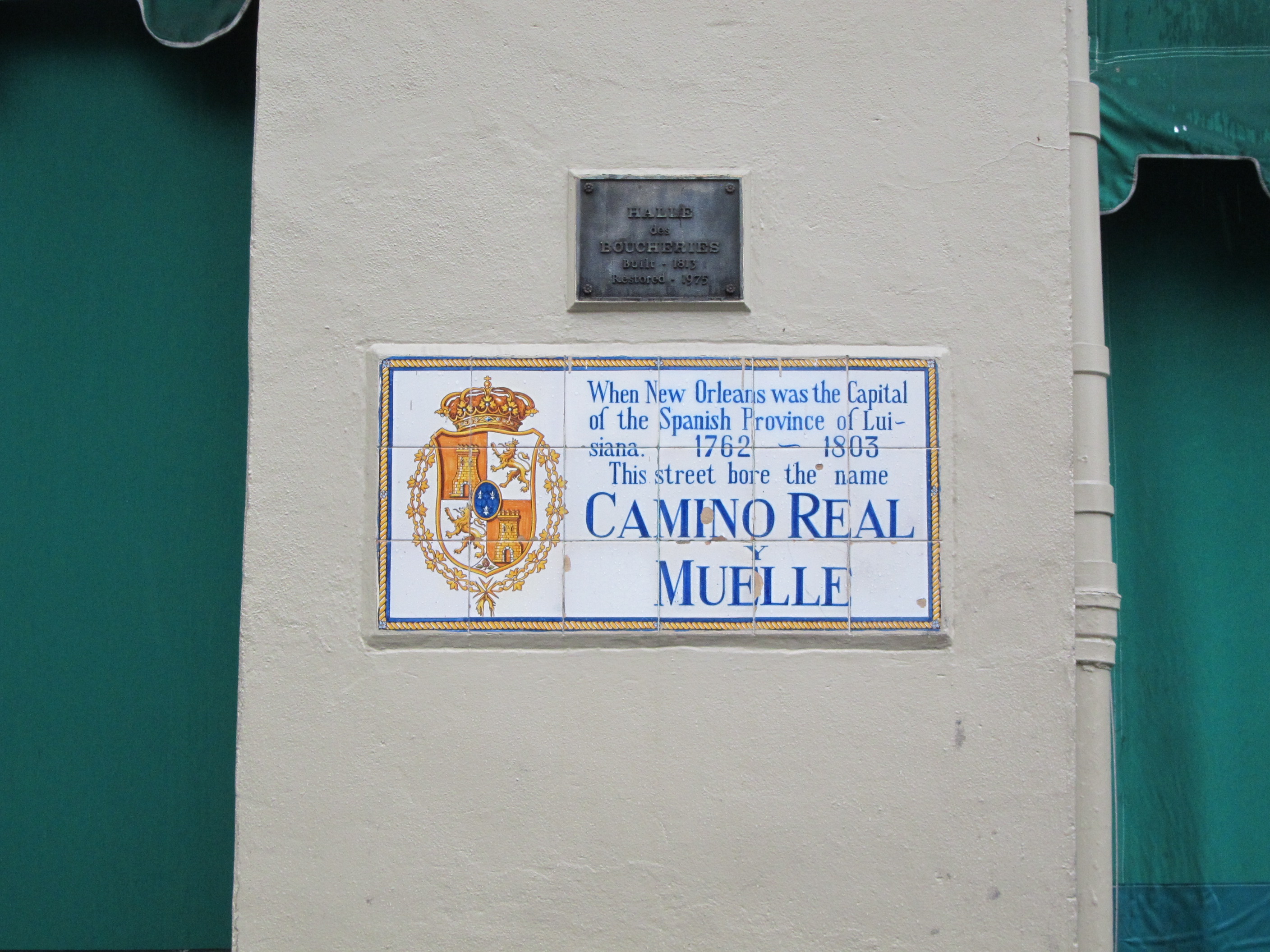
With all that said, they’re products of a chain. Eight Cafe Du Monde’s spread both sides of Lake Ponchartrain, the first in 1862 on Decatur Street (formerly Camino Real in 1762-1803, just FYI for no apparent reason) down at the French Quarter, and the second in 1985 in the now Kenner. There is nothing bistroesque or vaguely French about the modern shiny seats in the cafe, the only reminiscence of old days is that they take cash only. But it’s charming, like all simplicity done well.


Just as the donut has many ways to savor, the beignet, according to Blake, is best without sugar and dipped in coffee.

So here, a Happily Sugar-coated New Year to all and an Aromatic Coffee-soaked one to Blake!

Address: Cafe Du Monde
4700 Veterans Blvd
(504) 888-9770

Treasure in the Jung

December 12, 2010 By: Mai Truong Category: California - The Bay Area, Chinese, One shot, sticky rice concoctions


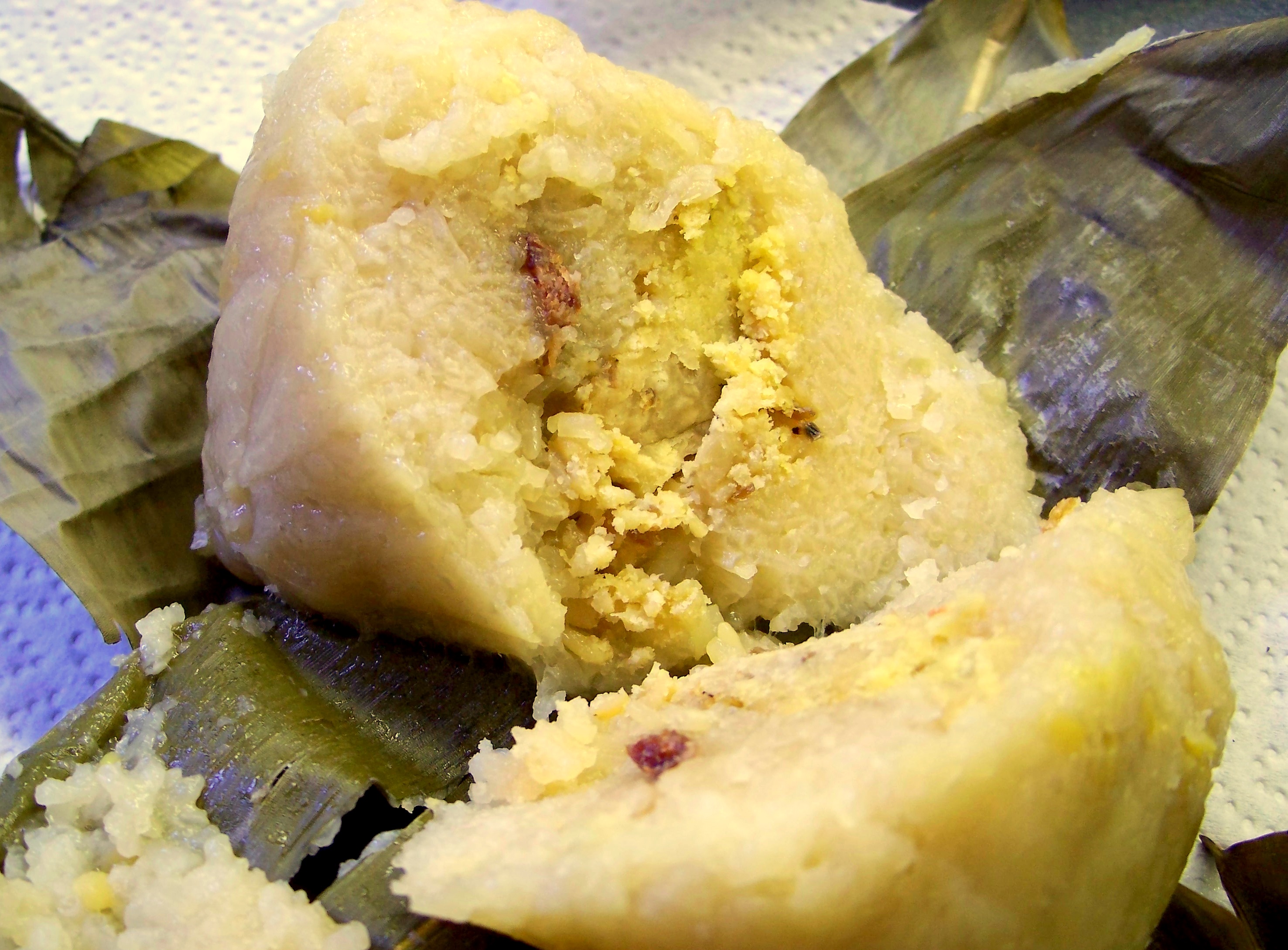
Oakland Chinatown, except for places like Tây Hồ, Bình Minh Quán, and the Korean restaurant on 13th street, carried on its everyday business on Thanksgiving as if it were a town in China. The Chinese dedication is admirable and to be grateful for. Without it I would haven’t had two meals worth of $1.75 wrapped in bamboo leaves. Yes, two meals.

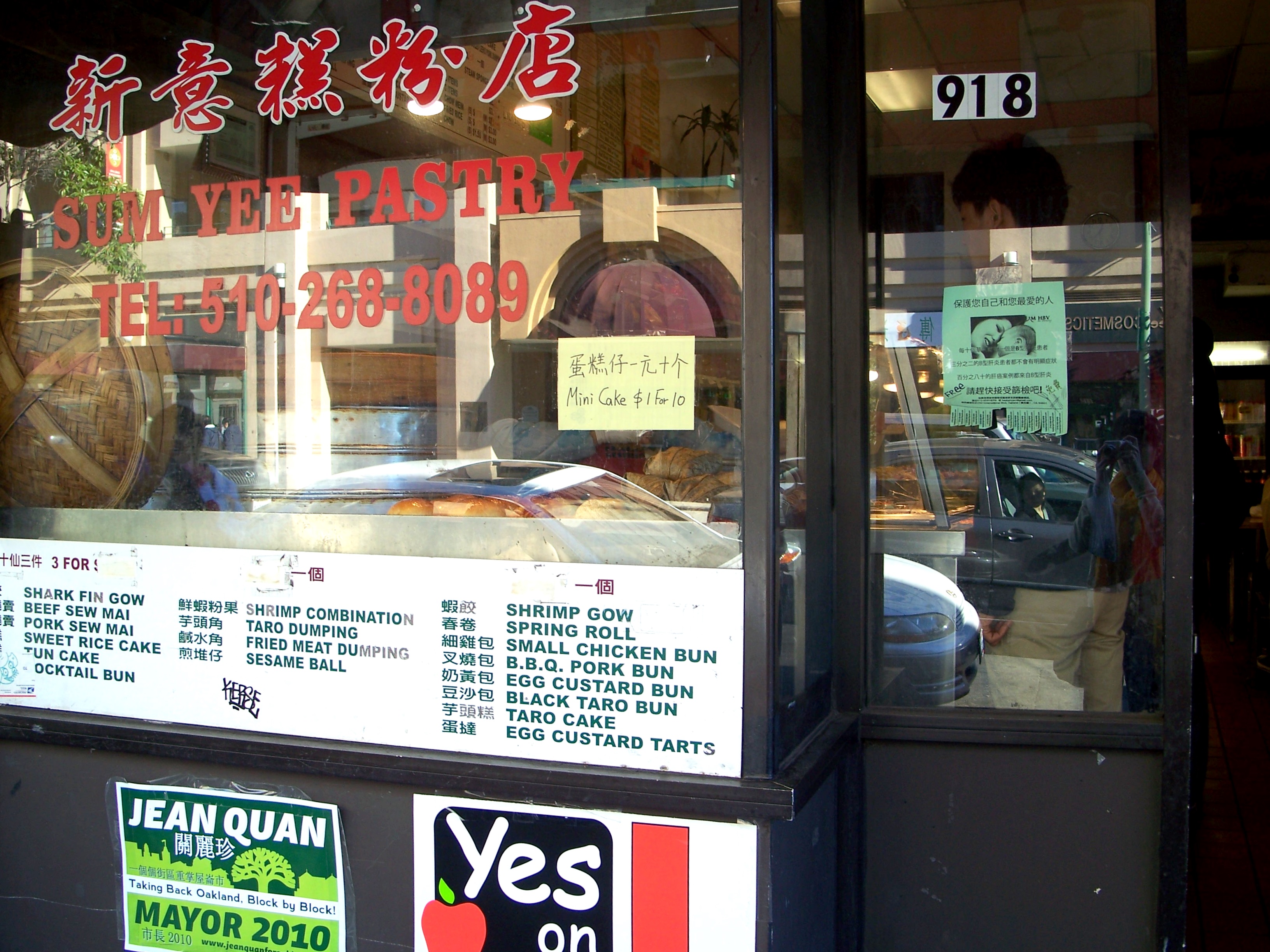
Jung, as the lady at Sum Yee Pastry pronounced, is a heavy deal. At first I thought it was a Vietnamese banh gio, except for the leaf wrapper being dried instead of smooth, damp, and waxy. I asked her for the name and couldn’t make out what she was saying, I asked her to write it down but she didn’t know how, she then asked if I was Vietnamese and switched to my mother tongue in her mixed Chinese tongue to explain that this thing is eaten on May 5th just like banh chung is eaten during Tet. Aha, so it’s zong zi, the great great great grandfather of banh u tro! Turns out zong zi (just a different, and much more common, pinyin name of jung) are sold year round nowadays.


This zong zi in particular has different fillings from its regional variations in China or Malaysia, and certainly bears little resemblance to the sweet version (gan shui hong dao sha joong), as its main feature is mung bean paste. (Sum Yee has the peanut type for the same price, too, though I’m not sure if it’s peanut paste or whole peanut.) The barbecued pork and lap cheong are rather dry, the sticky rice cements my stomach, I reluctantly wrap up one half for dinner. Little do I know I’ve saved the better half for last. There is a salted egg yolk embedded in that corner. 😀 *Dancing hearts*


Address: Sum Yee Pastry* in Oakland Chinatown
918 Webster St
(between 10th St & 9th St)
Oakland, CA 94607
(510) 268-8089

(*) It actually has a whole long array of savory dinner dishes, steamers of pork buns and relatives, and if my memory hasn’t failed, just one corner of pastries