Flavor Boulevard

We Asians like to talk food.
Subscribe

Archive for the ‘Comfort food’

Anzu-shi

September 15, 2010 By: Mai Truong Category: California - The Bay Area, Comfort food, Japanese


I was first deceived by its genteel green color to taste a spoonful all at once. Ever since, the wasabi has been a turnoff. Ever since, I also scoff at sushi, “pieces of overpriced cold rice, cold veggie and tasteless seafood” I labeled them. Well, they’re still overpriced, still cold, but definitely not tasteless. Be it the oksusu cha, the small salad with Korean mayo dressing, the creative rolls, or my infatuation with anything Korean (even when it’s just Korean-made Japanese food), the sushi at Anzu taste wonderful to me.
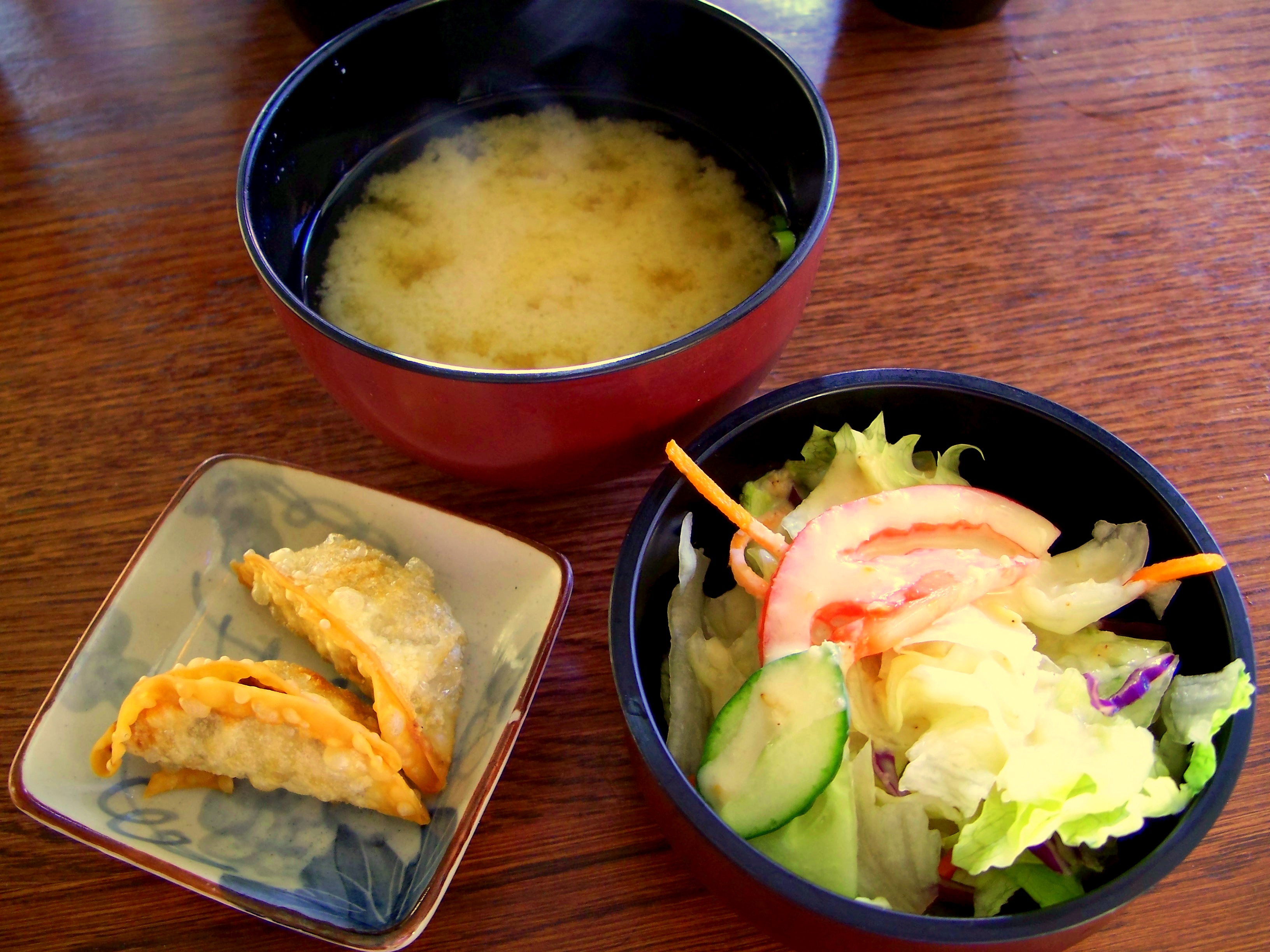

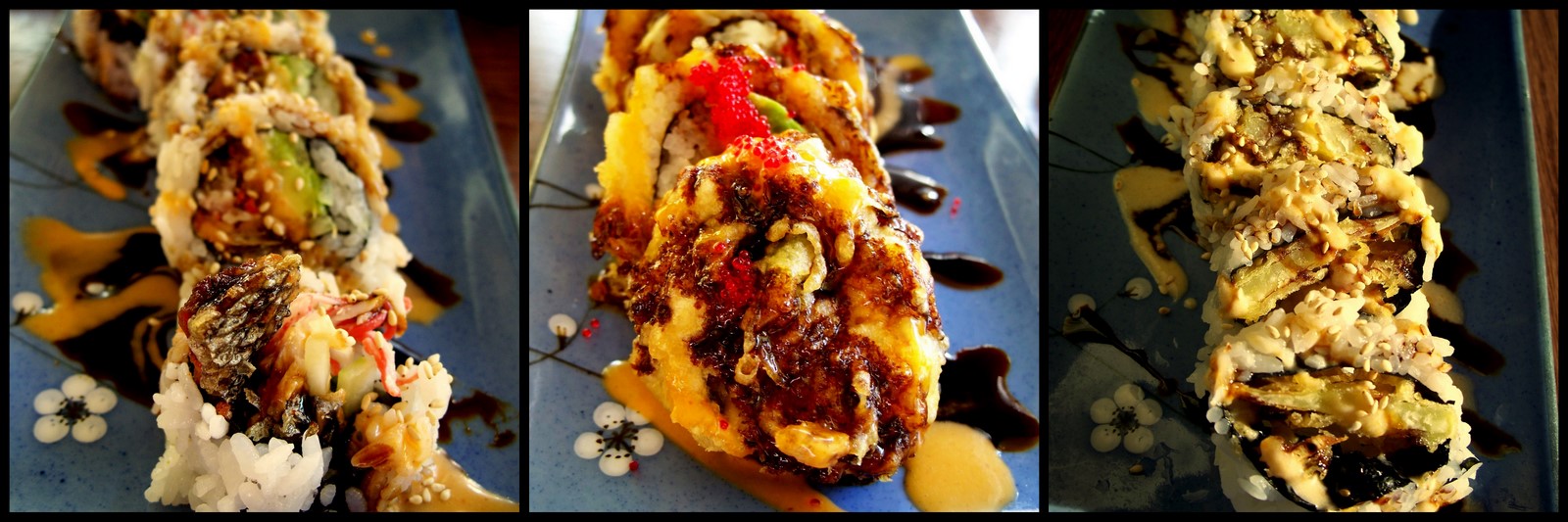
I’ve blogged about Anzu twice already, but it would be incomplete to talk about Anzu without talking about their sushi menu. The selection is countless: nigiri/maki, vegan/non-vegan, normal/fried/baked/crunchy, etc. Yah yah yah, this is uramaki (Westernized sushi) with the nori inside, avocado, cream cheese, names like Avatar and Golden Gate. But the point is they’re good. They also give you free soup, salad, and either edamame, fried tofu, or gyoza for appetizer. This would be one of the first places I’d take my little sister out to eat, had the US Embassy granted her a travel visa to enter the States (they wouldn’t do it unless she were married and had her husband stay in Vietnam). But since it’s so difficult to come here legally, guess we’ll have to celebrate Sou‘s birthday with pictures of sushi. 🙂


Calamari tempura roll ($4.99)- calamari, cucumber, avocado, kamaboko, roll over with spicy mayo and mango sauce.
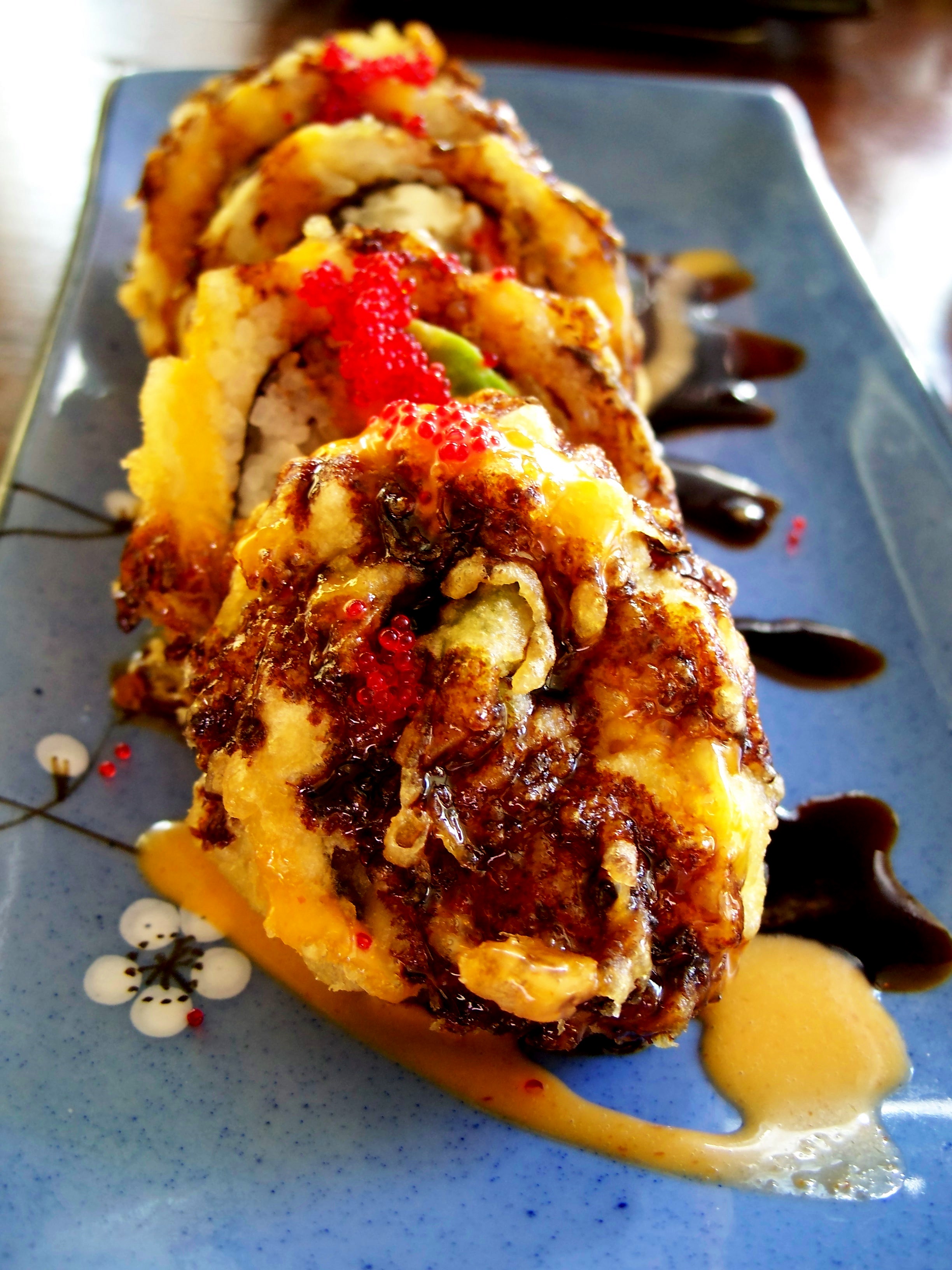

California tempura Jr. roll ($5.25) – unagi (eel), cream cheese
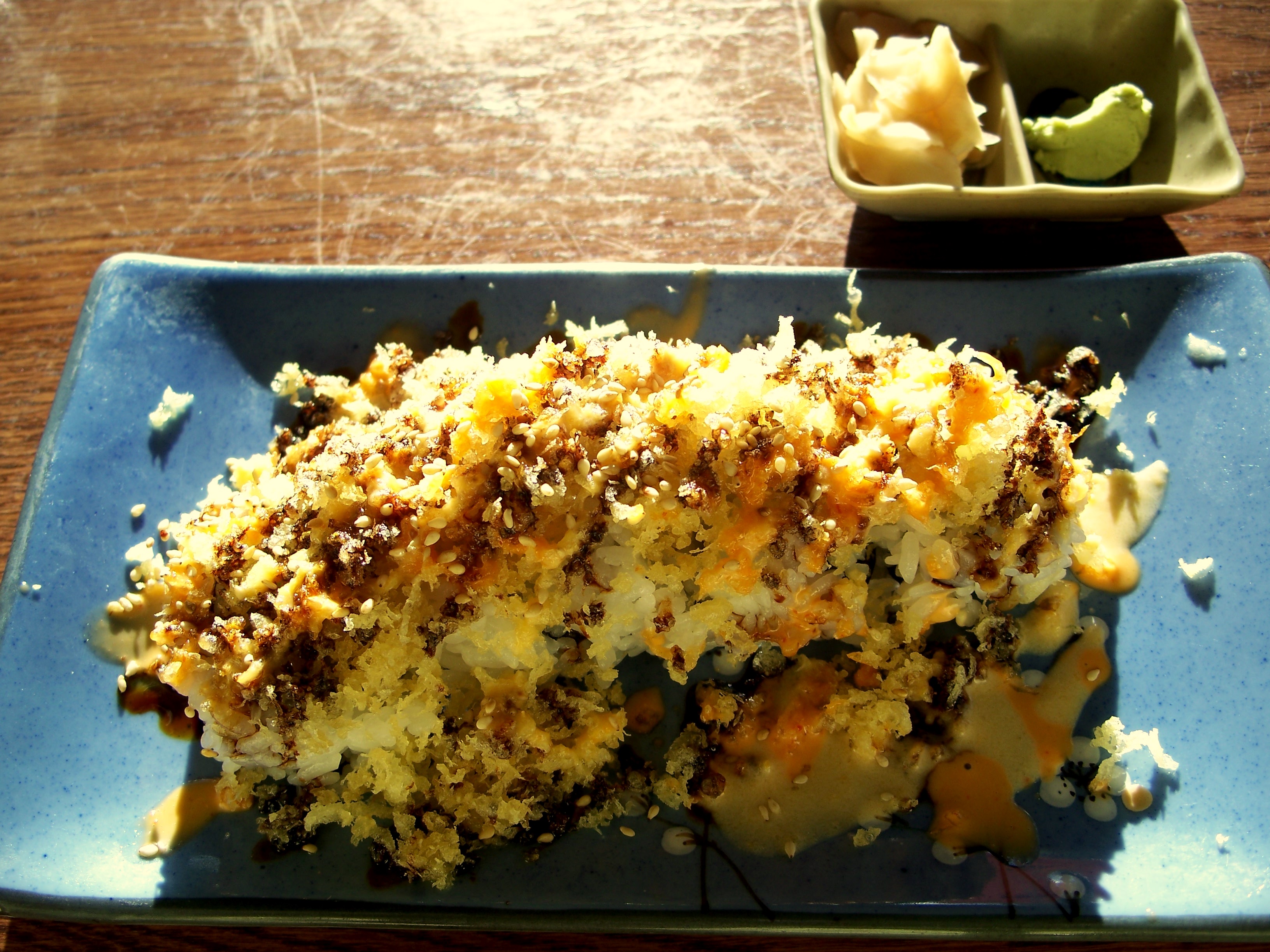

Crunchy ebi roll ($4.25) – ebi (shrimp), unagi, cucumber roll over and looks like a catepillar. It’s fun to eat, but it also hurt the roof of my mouth a little bit.
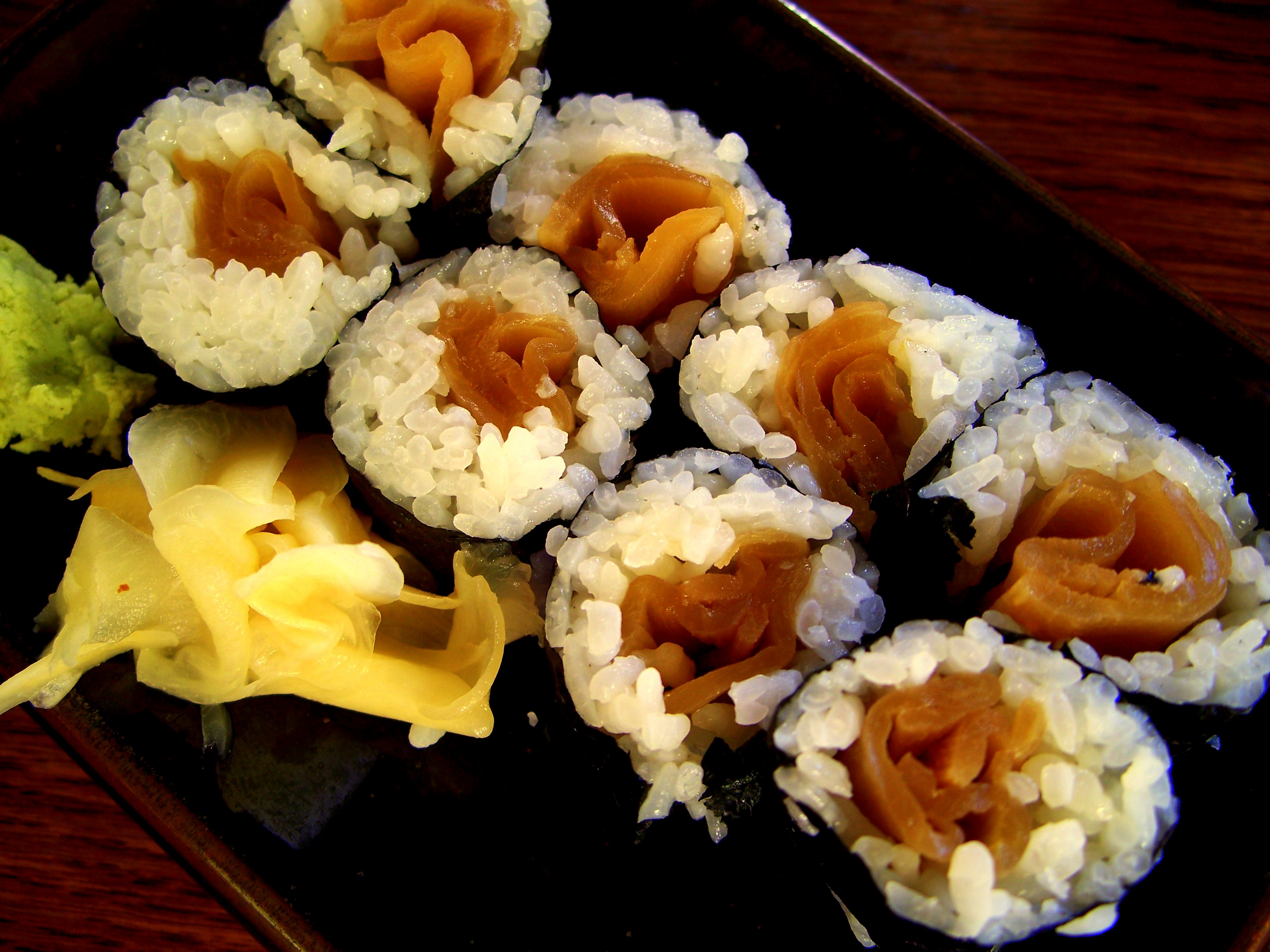

Kanpyo roll ($2) – dried squash – I especially love this one for its simplicity yet addicting flavor.
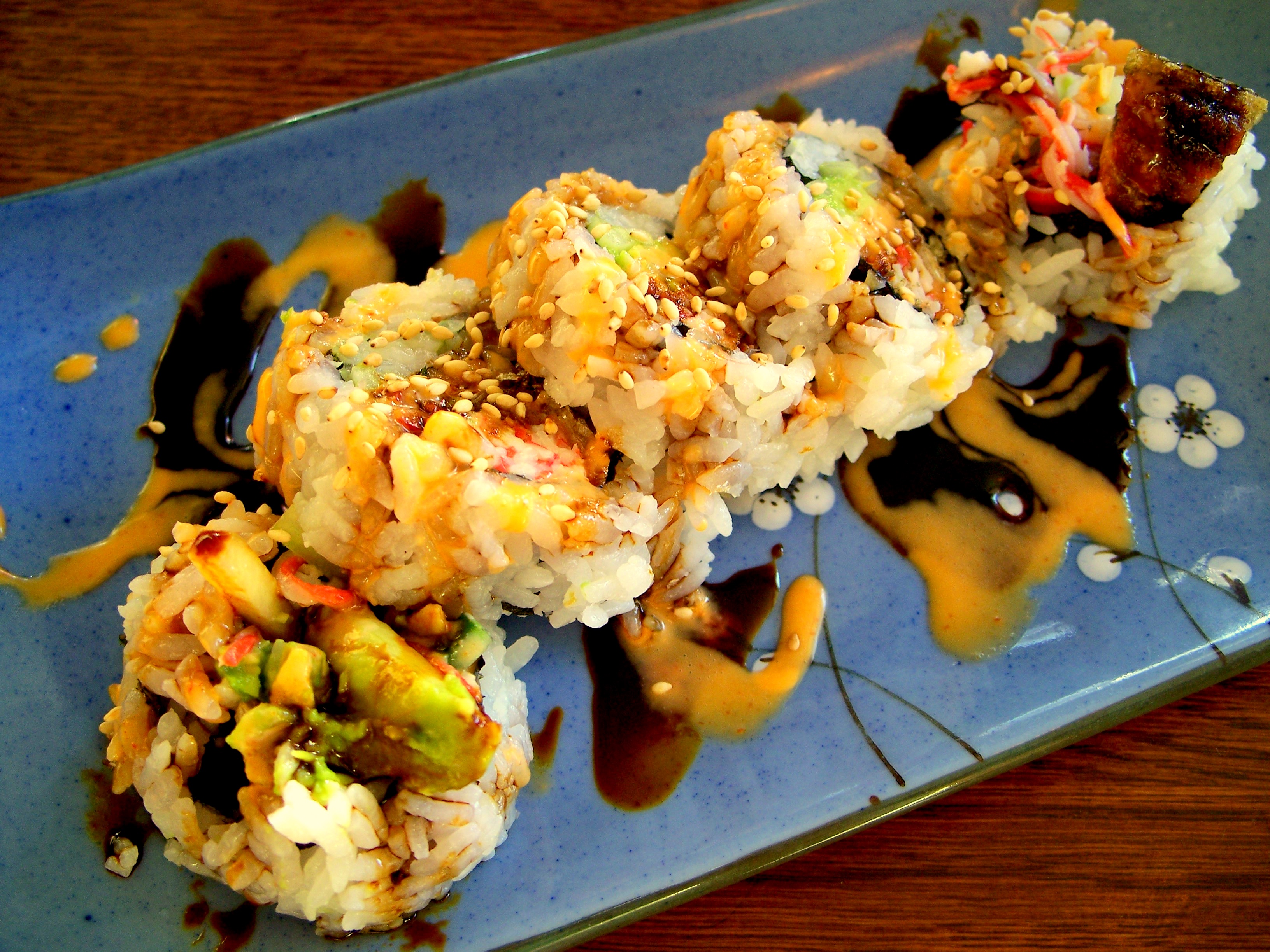

N’jin roll ($4.95) – fried salmon skin, avocado, cucumber, kamaboko – The fried salmon skin is very crunchy, a little overpowering, but I like skin. 🙂
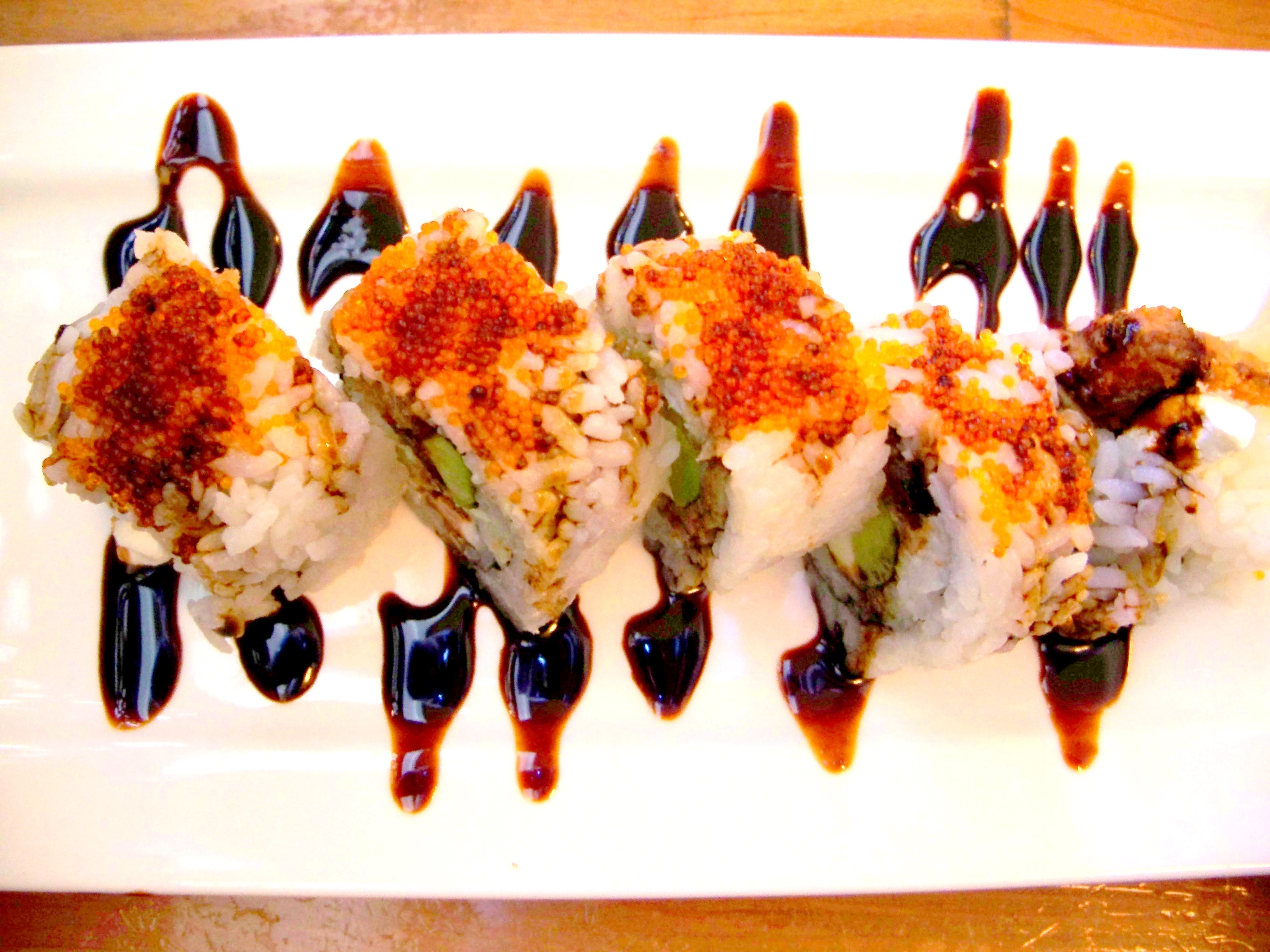

Spider king roll ($5.99) – soft shell crab, cream cheese, avocado, topped with tobiko (flying fish roe). This one is a bit salty and naturally it gets saltier as it sits longer in the soy sauce. The tobiko adds texture and little flavor.
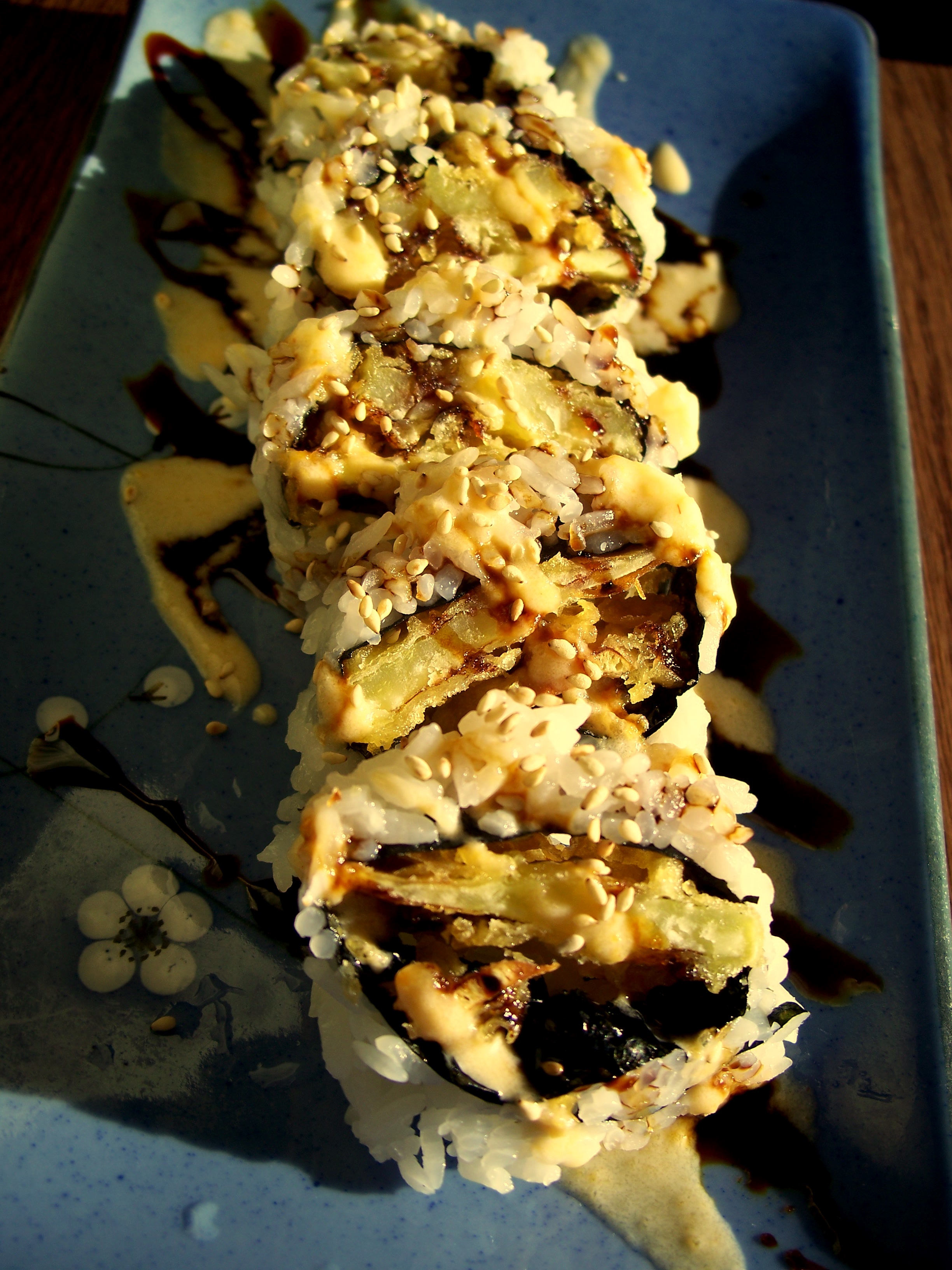

Sweet potato roll ($5.50) – deep fried sweet potato, topped with sesame, spicy mayo and soy sauce.
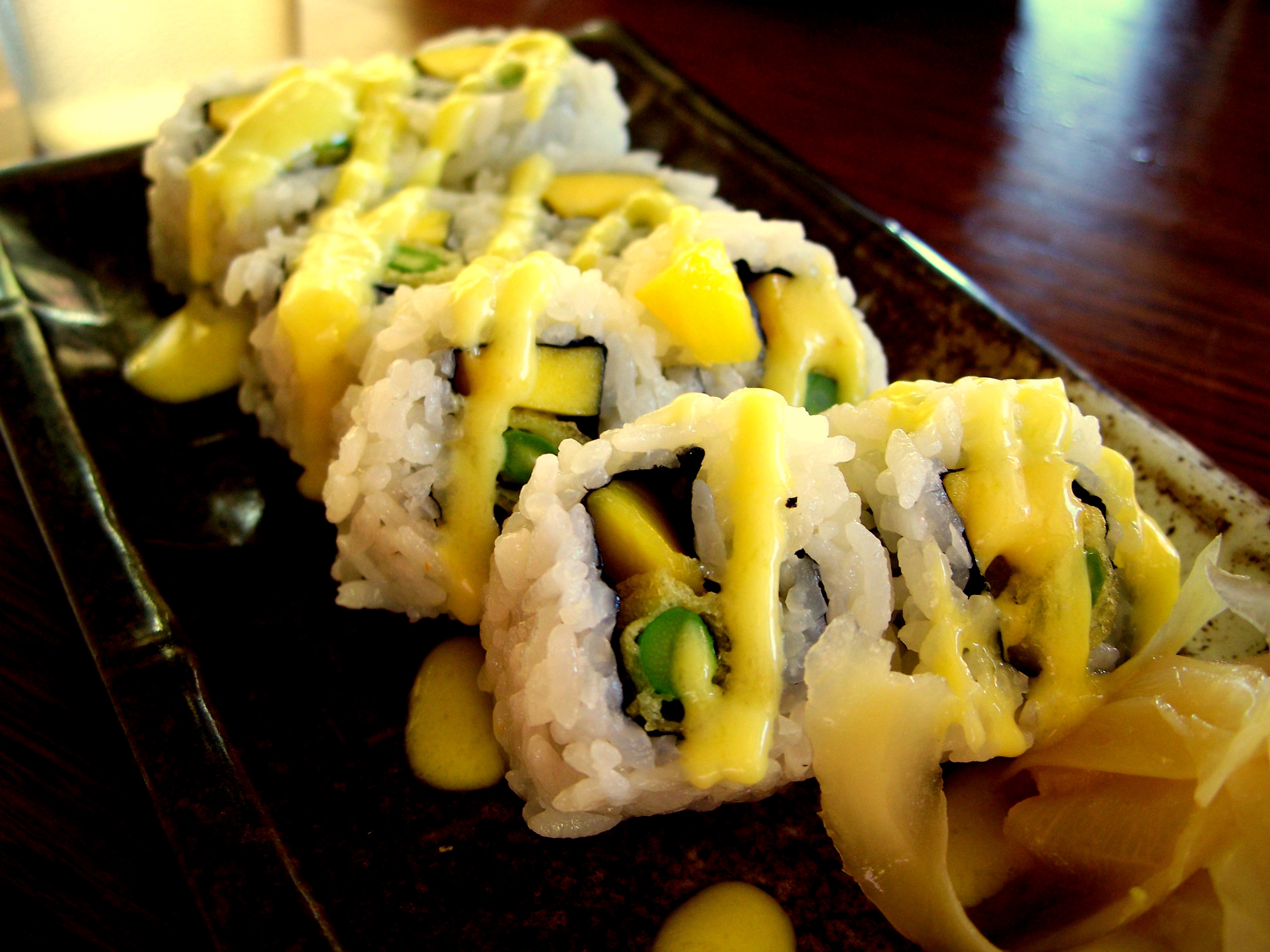

Tropical roll ($2.95) – batter-fried asparagus and fresh mango in mango sauce.
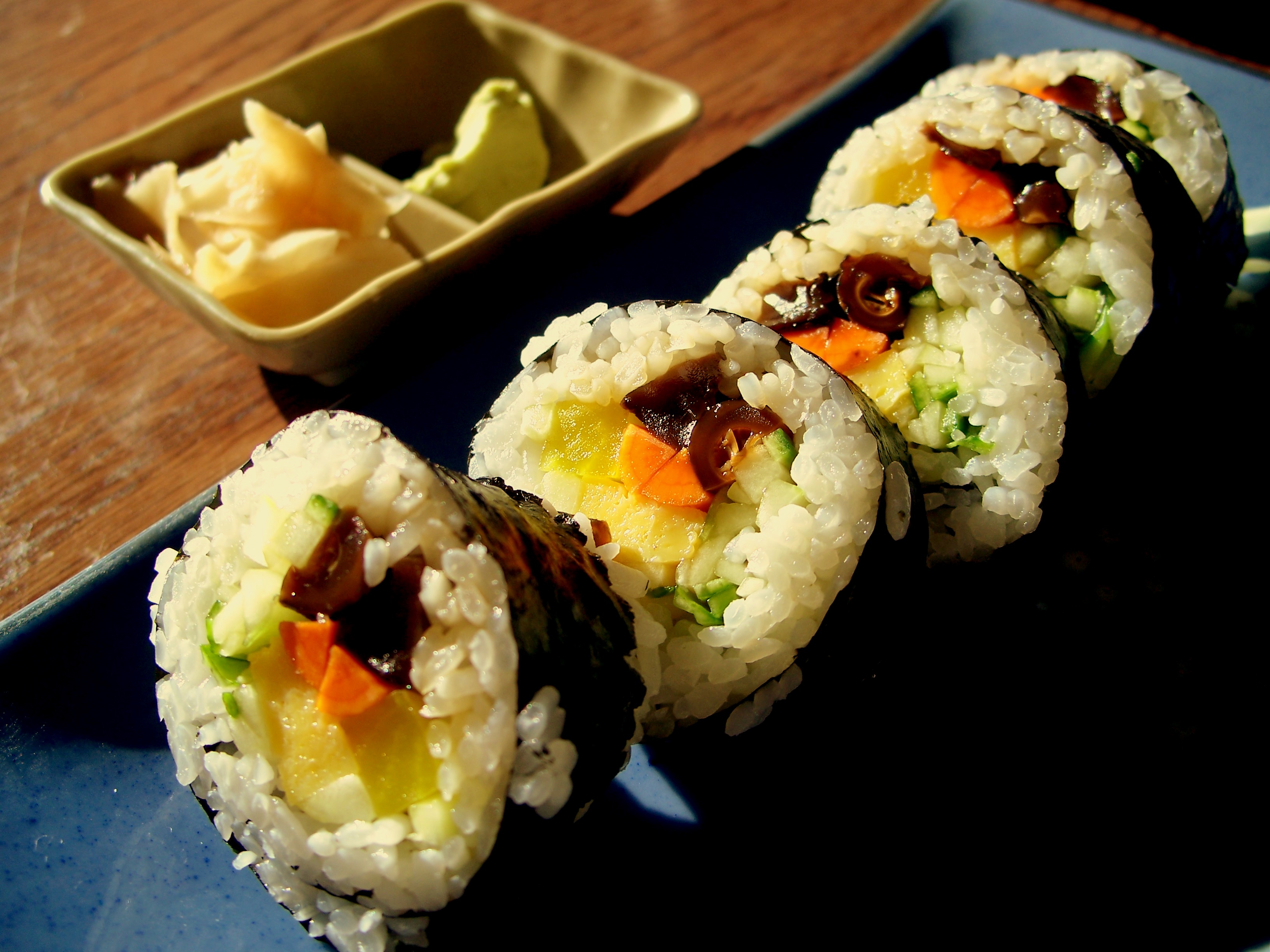

Good old Futomaki ($5.25) – mixed vegetables (carrot, cucumber, kanpyo, takuan, and something like pineapple (?))

I like them all.

Address: Anzu Japanese Cuisine
2433 Shattuck Avenue
Berkeley, CA 94704
(510) 843-9236
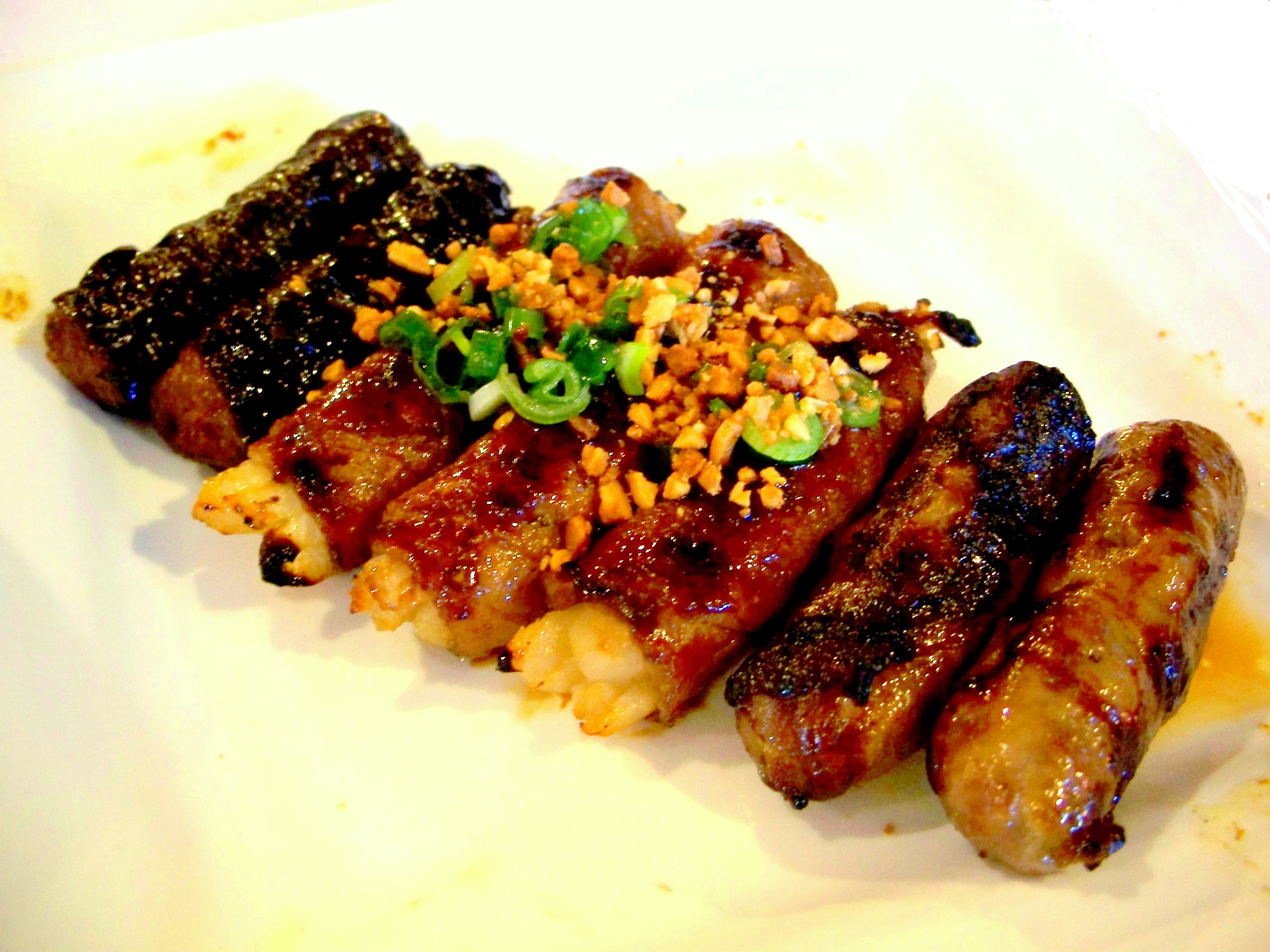
Beef wrap n’ roll

September 11, 2010 By: Mai Truong Category: California - The Bay Area, Comfort food, Southern Vietnamese, Vietnamese


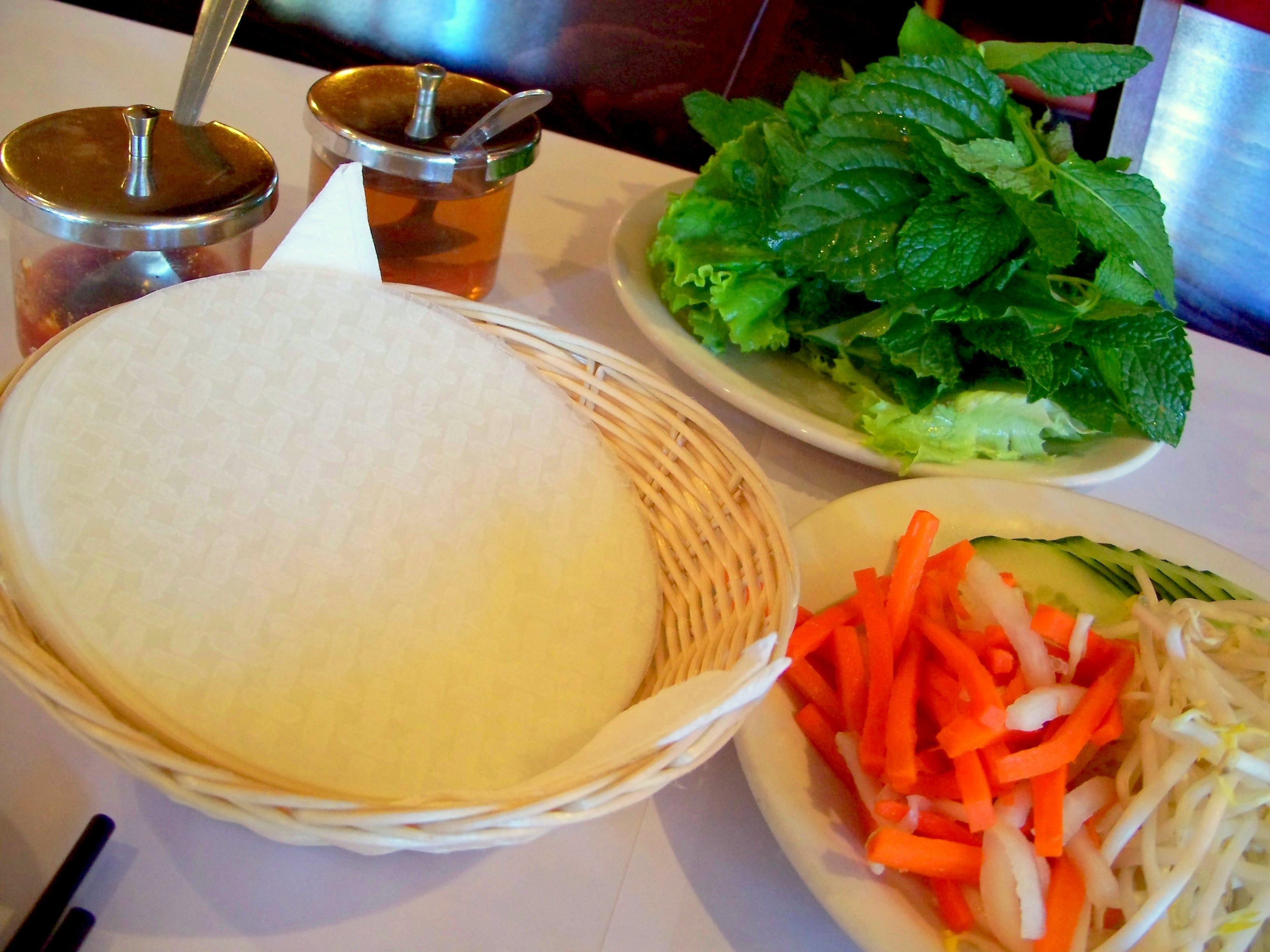
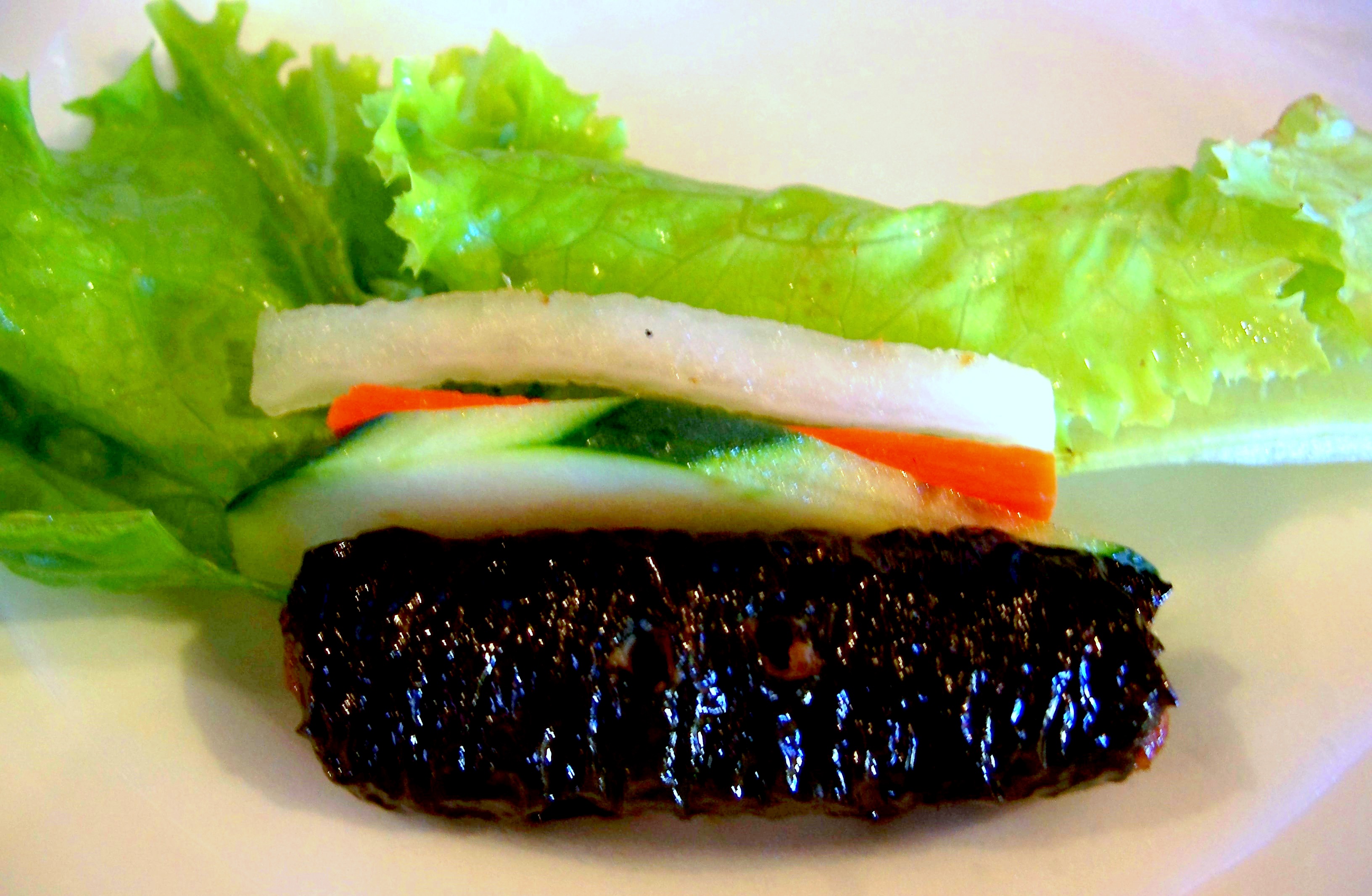
It took me six years eating steaks and potatoes and one evening of eating beef sausages rolled with greens and rice paper to realize that perhaps the best way to eat meat is to eat it with vegetables. No hard feelings, dear steak, you are like pure chocolate, and bulgogi in lettuce wrap is like orange flavored chocolate. Then you add pickled carrots and daikon, minty herbs, rice paper, sweet and sour nước mắm, and the beef is bound to take off just like the Apollo 11.


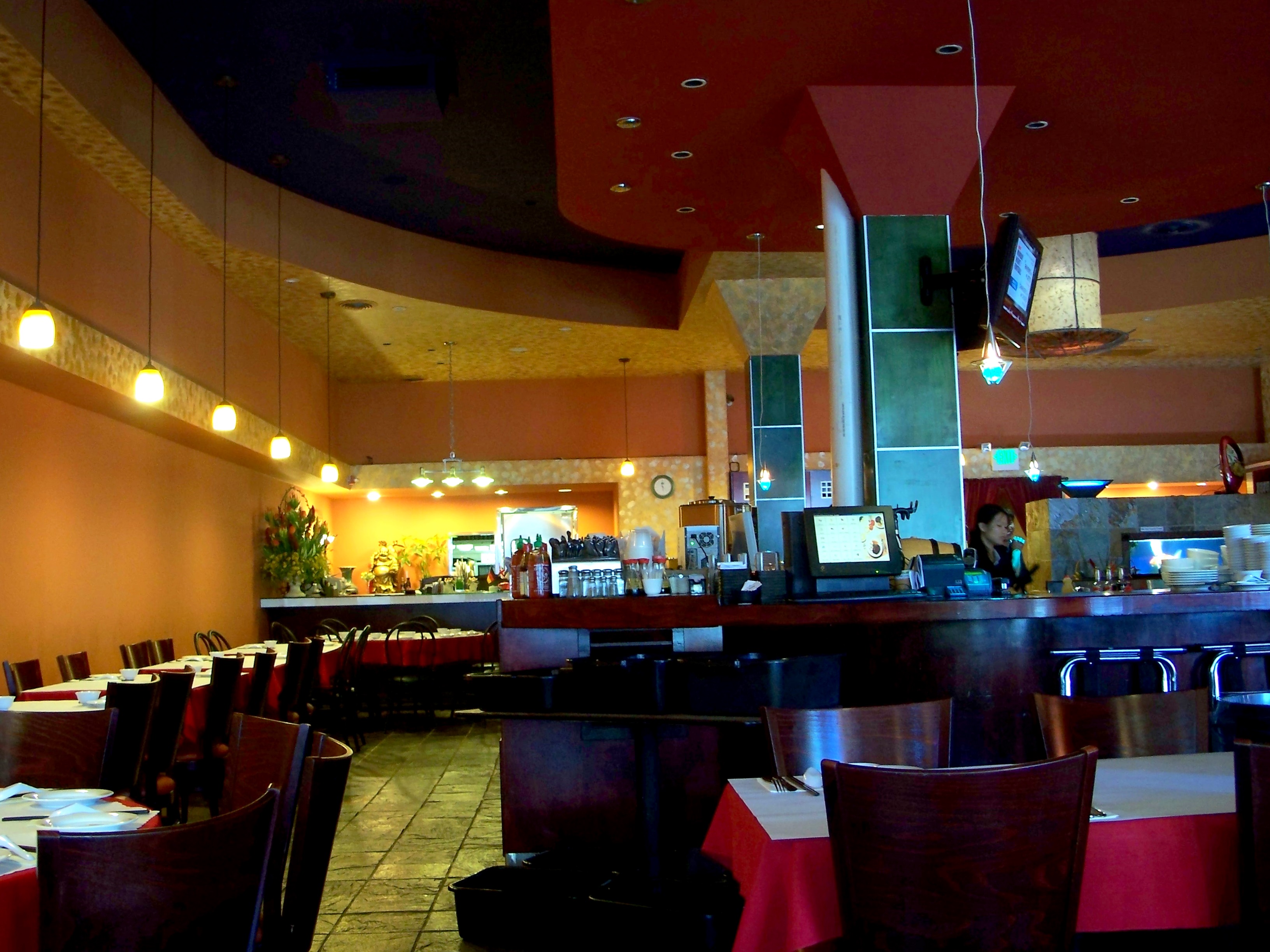
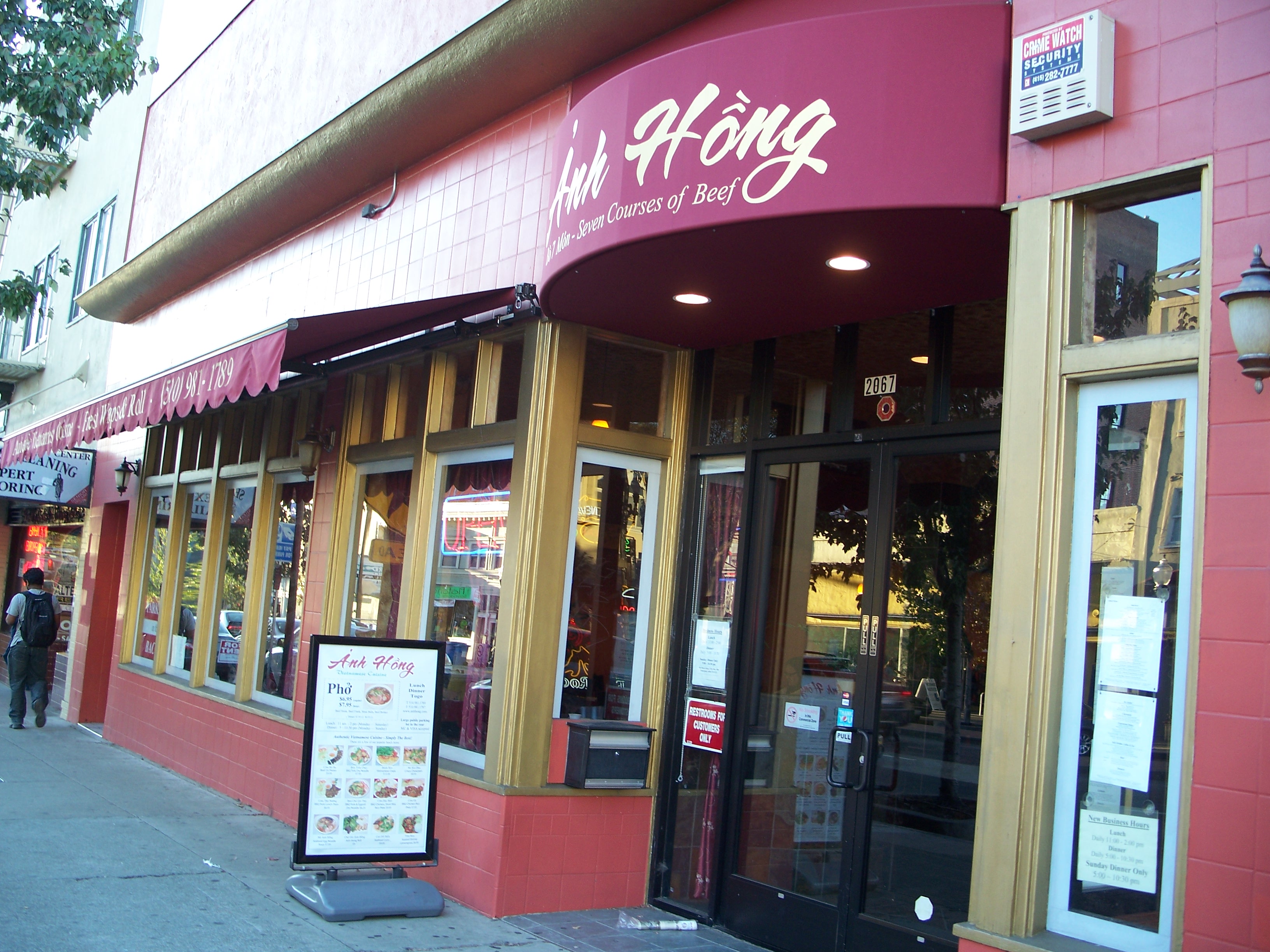
Such revelation dawned on me when I took the first bite of a bò lá lốt roll at Ánh Hồng in Berkeley. Ánh Hồng was famous in the old Saigon for their creation of the seven courses of beef, a menu that other Vietnamese restaurants quickly imitated to serve big parties. Despite knowing the menu’s popularity, I rarely thought of its main items as desirable, simply because, for instance, I wasn’t a fan of the wild betel leaf (lá lốt in Vietnamese and cha phloo in Thai) that wraps outside the ground beef. It’s usually a little bitter, and it overshadows the meat flavor. But Ánh Hồng really proves that their popularity (4 locations in North California and another 2 in the southern part) is backed up by some solid tasty goods. Somehow, unlike any I’ve tried before, their bò lá lốt is not at all bitter.


Their bánh tráng (rice paper) is also perfect for making fresh spring rolls, thin enough so that you can taste every ingredient, yet elastic enough to stretch and wrap up the sharp corner of lettuce stems without rupturing. The traditionalcondiment to dip the rolls is mắm nêm (fermented fish paste), but to accommodate foreigners (and Vietnamese like me :-P) who aren’t familiar with the sauce’s pungency, Ánh Hồng serves things up with sweet and sour nước mắm (salty fish extract mixed with lime, chili pepper and sugar). It’s amazing how nước mắm works with everything. But, because the meat is already so well seasoned, you don’t have to dip the rolls into any sauce to make the flavors shine.


The pickled carrot and daikon can be a little too sour, but their texture blends better with the ground meat than fresh bean sprouts’ does.


As much as the bò lá lốt turns out far better than expected, I would still say that it’s not the best course in the set. Bò nướng sả (lemongrass grilled beef slices) rolled up with sauteed sweet onion in the core raises the bar by a slight amount, and the succulent sausages of bò mỡ chài (ground beef wrapped in a thin, lacey layer of pig’s omental fat) definitely takes first place. Of course, all taste best when wrapped in greens.

What’s even better is the joy of legitimate playing with your food: you pick , you wrap, you roll, you dip. It’s a feast whether you go alone or with company. It’s feasting South Vietnam style.


Address: Ánh Hồng Restaurant – 7 Courses of Beef
2067 University Avenue
Berkeley, CA 94704
(510) 981-1789

Sample plate – 3 courses of beef (bò lá lốt, bò nướng sả, bò mỡ chài): 9 rolls for $12

*Why would I walk half a mile to feast alone on a Friday evening? Because this post is to celebrate my “uncle” turning 23. He likes Vietnamese, meat, and Southerners’ dishes. Happy Birthday, Nguyên! 🙂

Sura in Oakland – A banchan chapter

September 10, 2010 By: Mai Truong Category: California - The Bay Area, Comfort food, Korean


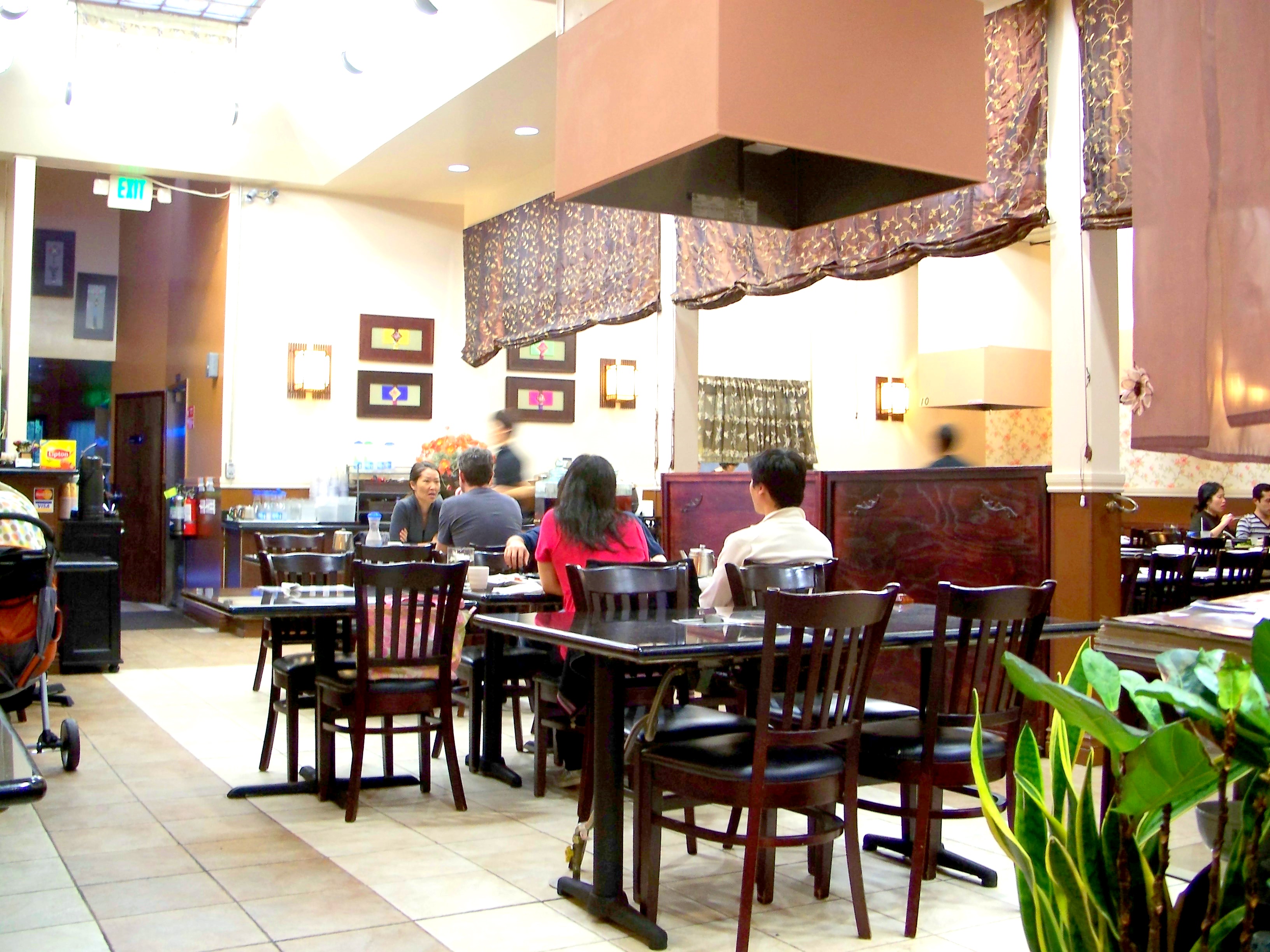
The one thing you can be certain about when you go to Korean restaurants, regardless of their size and price and menu, is that you will always get full. I’ve never been to a Korean restaurant where I think “hmm, maybe I have room for some more” when I leave. Korean restaurants always give you big portions, and on top of that, there is the banchan (반찬).  When you sit down all starving because of the steaming broth or the grilled meat smoke from nearby tables, the banchan is the first thing to nibble on and ebb the hunger. You can either get a lot of coleslaw and dongchimi (동치미, pickled white radish in this case), or an array of little bitty plates that look too colorfully appetizing to disturb. Naturally, the size of your bill corresponds to the variety you can sample. And the biggest sample of banchan I’ve had so far is at Sura.


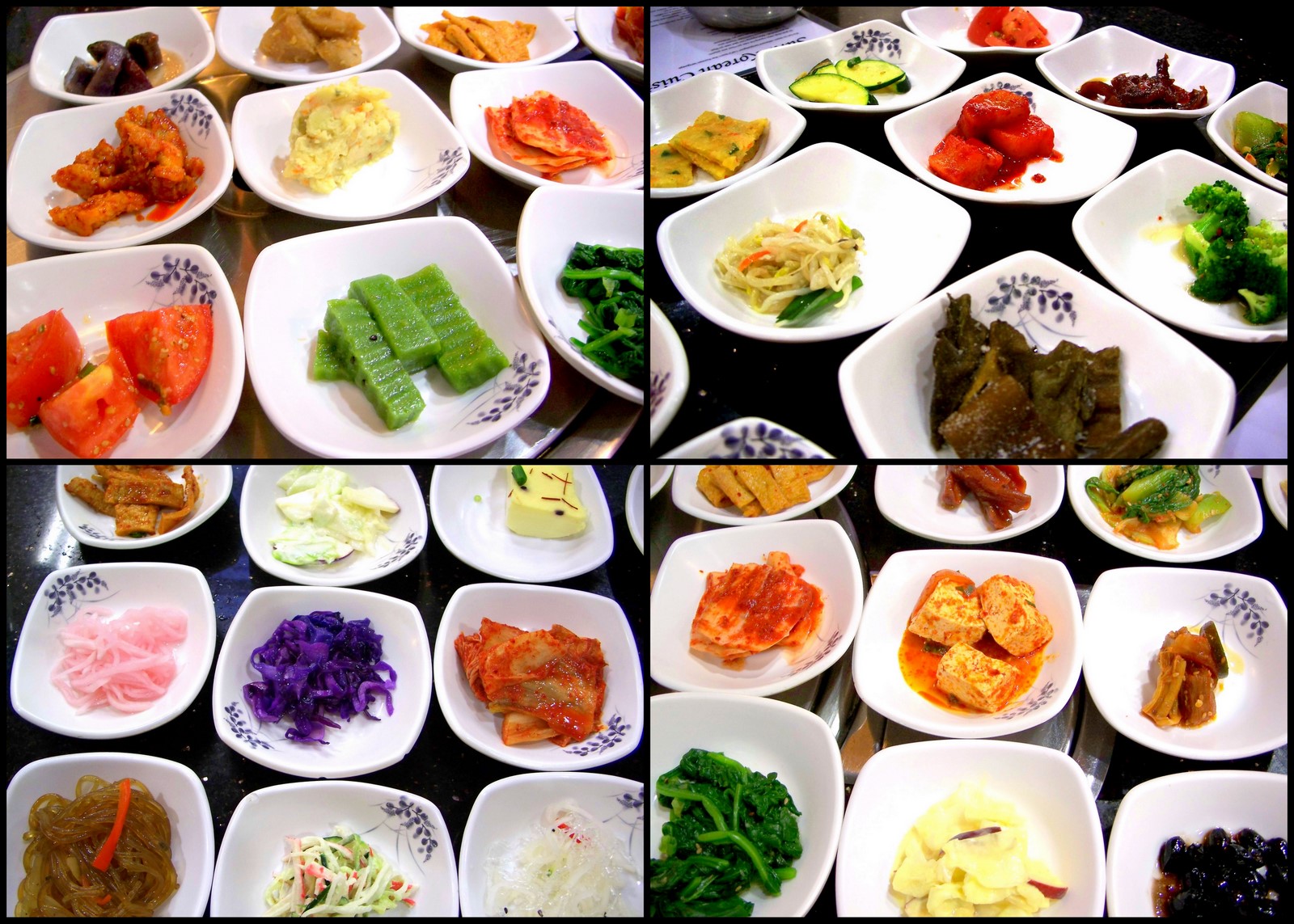
Here’s what to prepare your tummy for when you’re at Sura: 1 starter, 18 side dishes,  whatever you actually order (which comes with either brown rice or white rice), 1 dessert. If you order gogi gui (고기구 이barbecue), then you also get a heap of lettuce to wrap. If that’s not enough, you can ask for more side dishes. So let us begin.


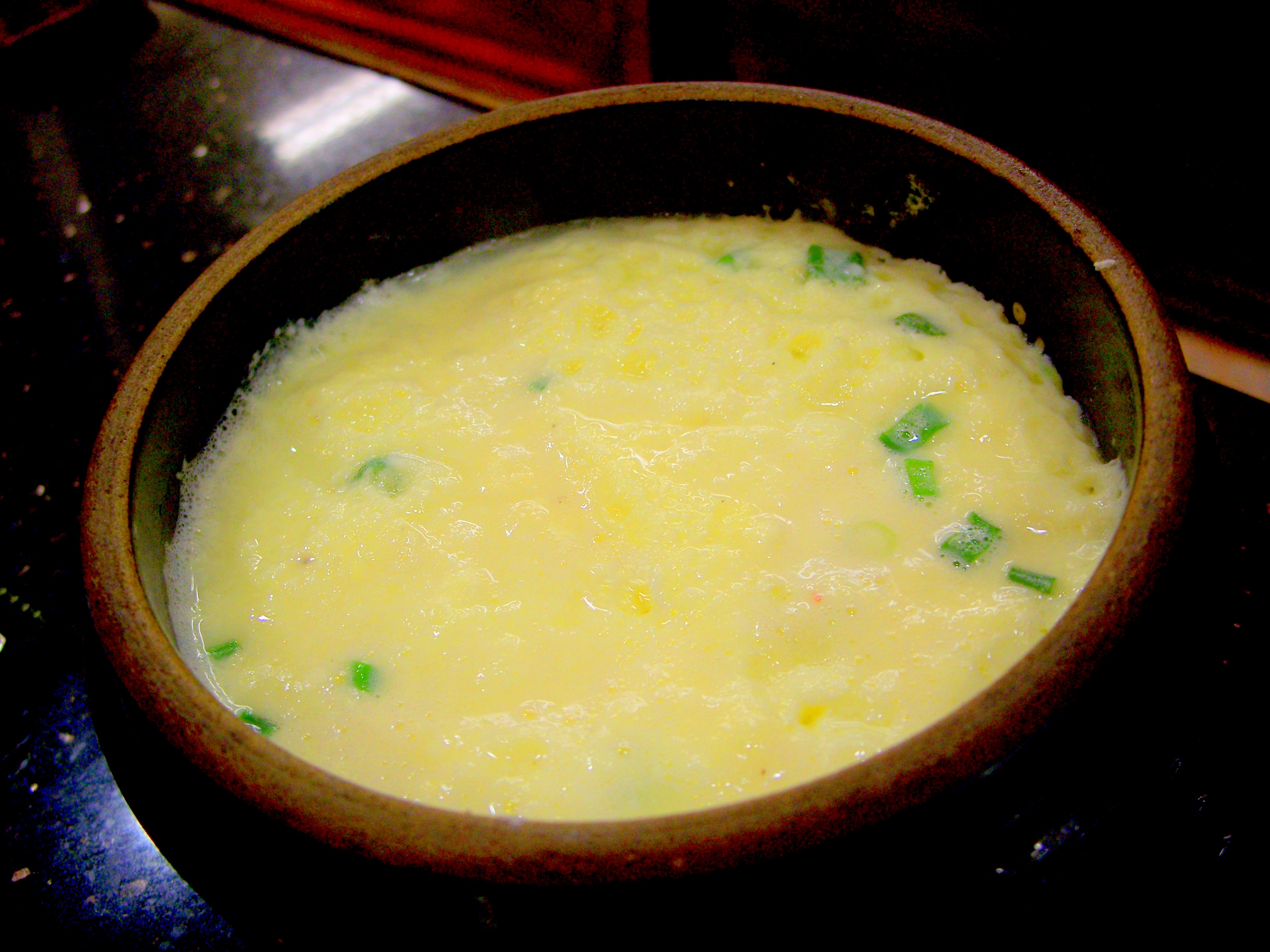
Starter: gaeran jim (계란찜 steamed egg) in a dolsot (돌솥), still bubbly when brought out. It’s really mild, bland even, with dots of green onions and an airy texture.


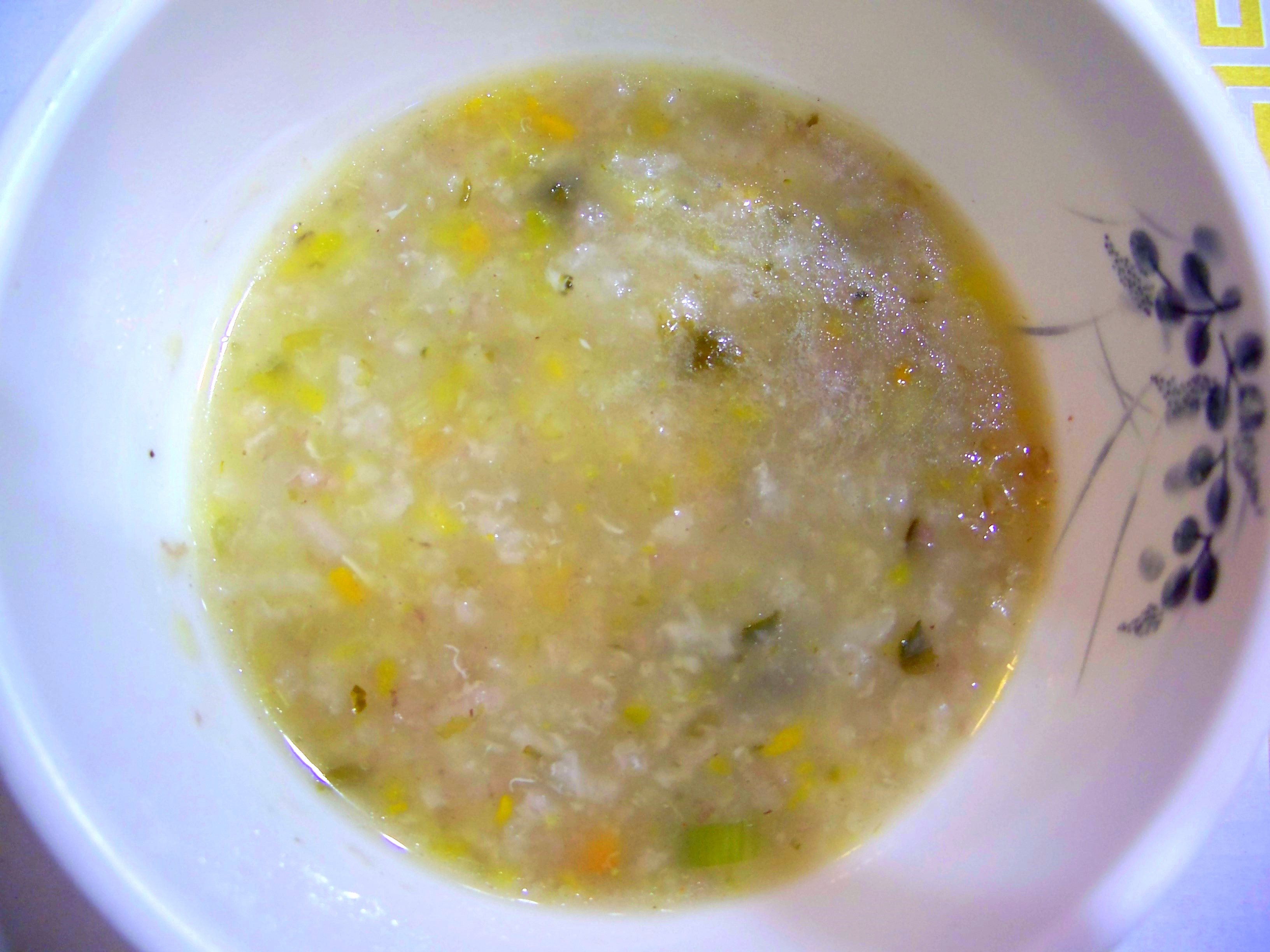
Starter: a small ladle of thin juk (죽 rice porridge) with vegetable bits. Also very mild.


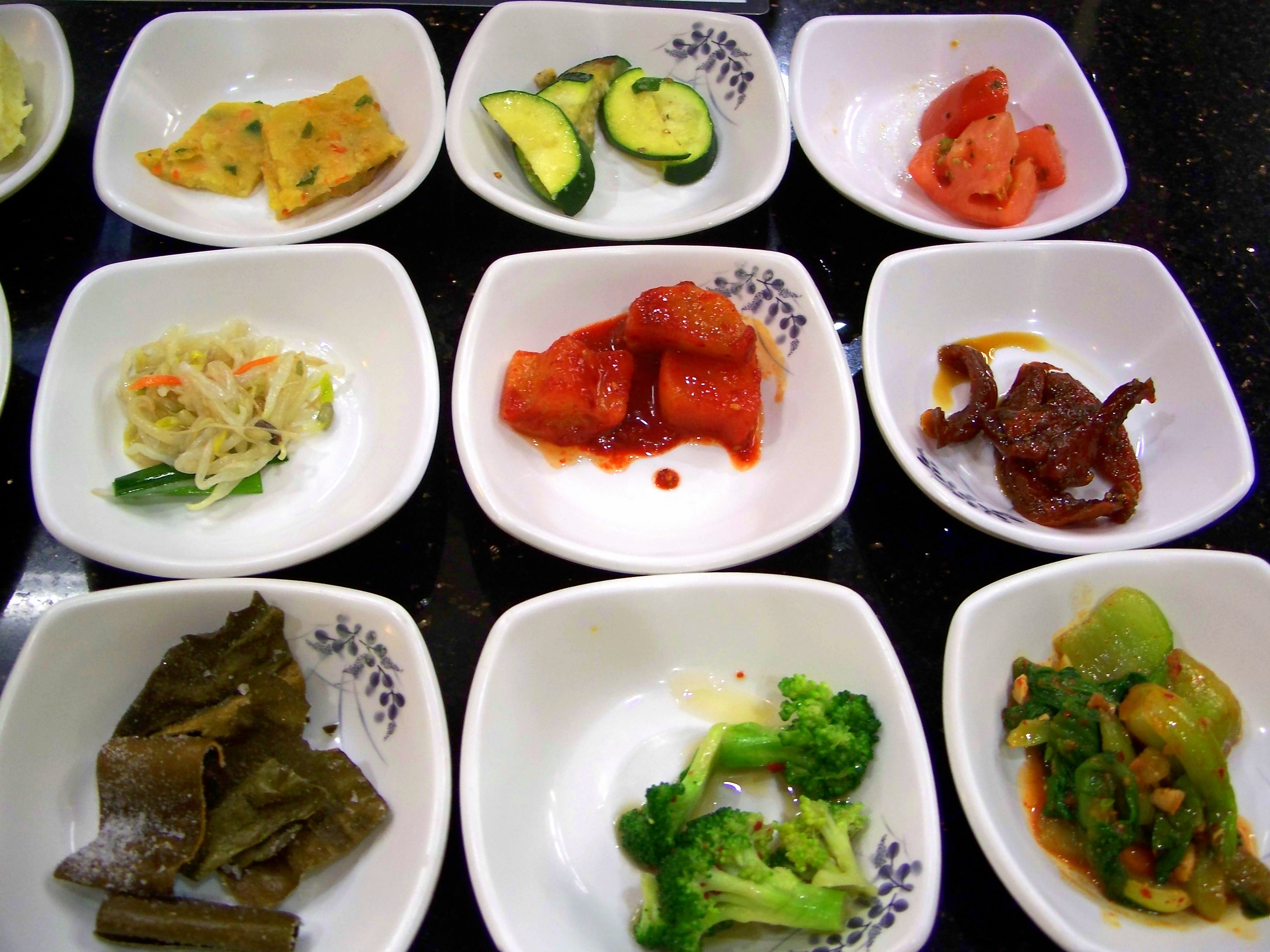
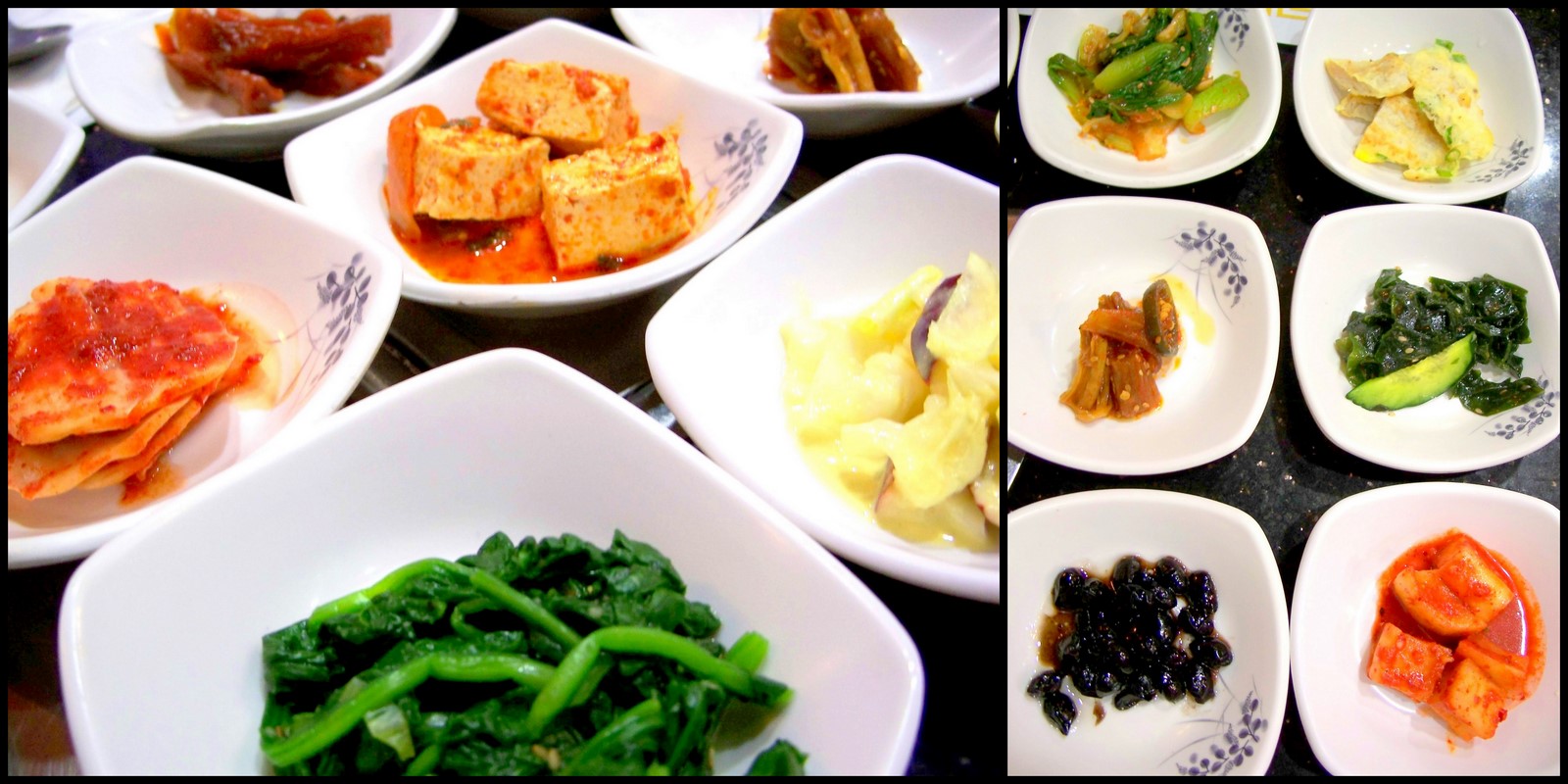
And here comes the banchan. There’s the usual stuff: tomato, broccoli, bok choy kimchi, oisobakki (오이소빅이 cucumber kimchi), ggakdugi (깍두기 radish kimchi), kongnamul (콩나물 boiled and seasoned soybean sprouts), pajeon (바전green onion pancake)…


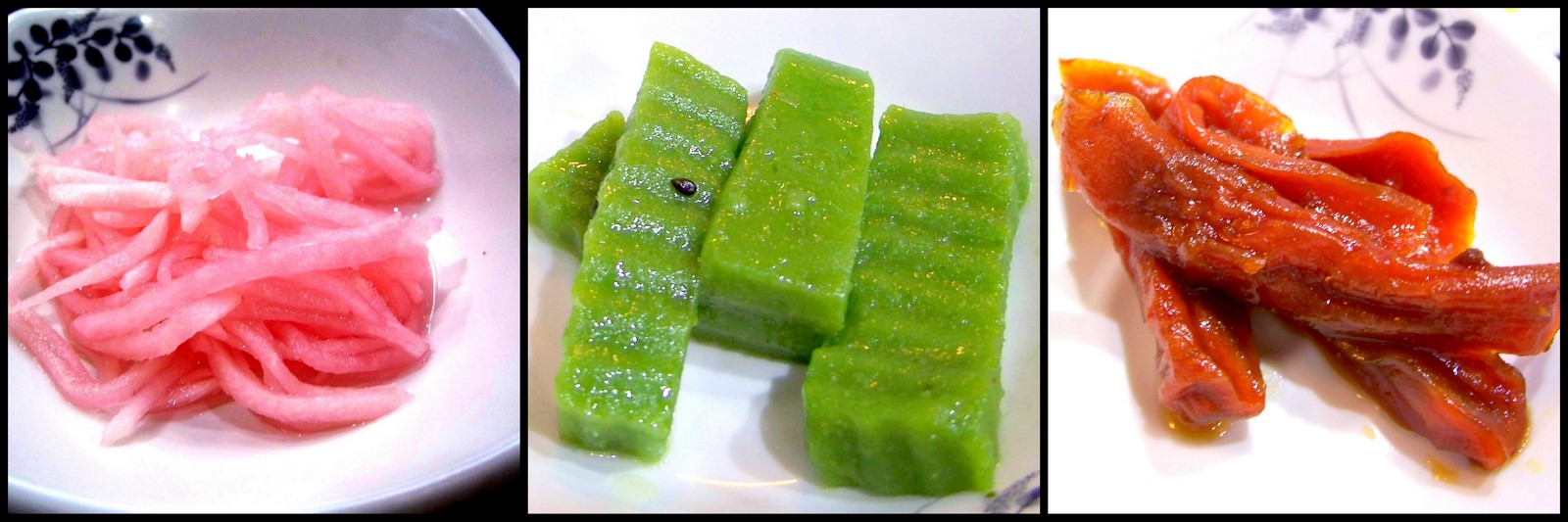
odaeng (오뎅 stir fried sweet fish cake), japchae (삽채 stir fried cellophane noodles), baechu kimchi (napa cabbage), sliced kohlrabi (the pink thing) and cabbage (the purple thing)…


… tofu, cauliflower, spinach, kongjaban (콩자반 sweet black beans), kaji kimchi (가지 김치 eggplant kimchi), and chwinamul (취나물 a crunchy stir fried leaf vegetable)…


… potato,  sweet potato, fried chicken bits, and muk (묵 jelly). (Mudpie *really* liked the chicken and the potatoes.) Now, most of these side dishes didn’t set off any fireworks for me, the japchae was even a bit dull, but there were some BIG exceptions:


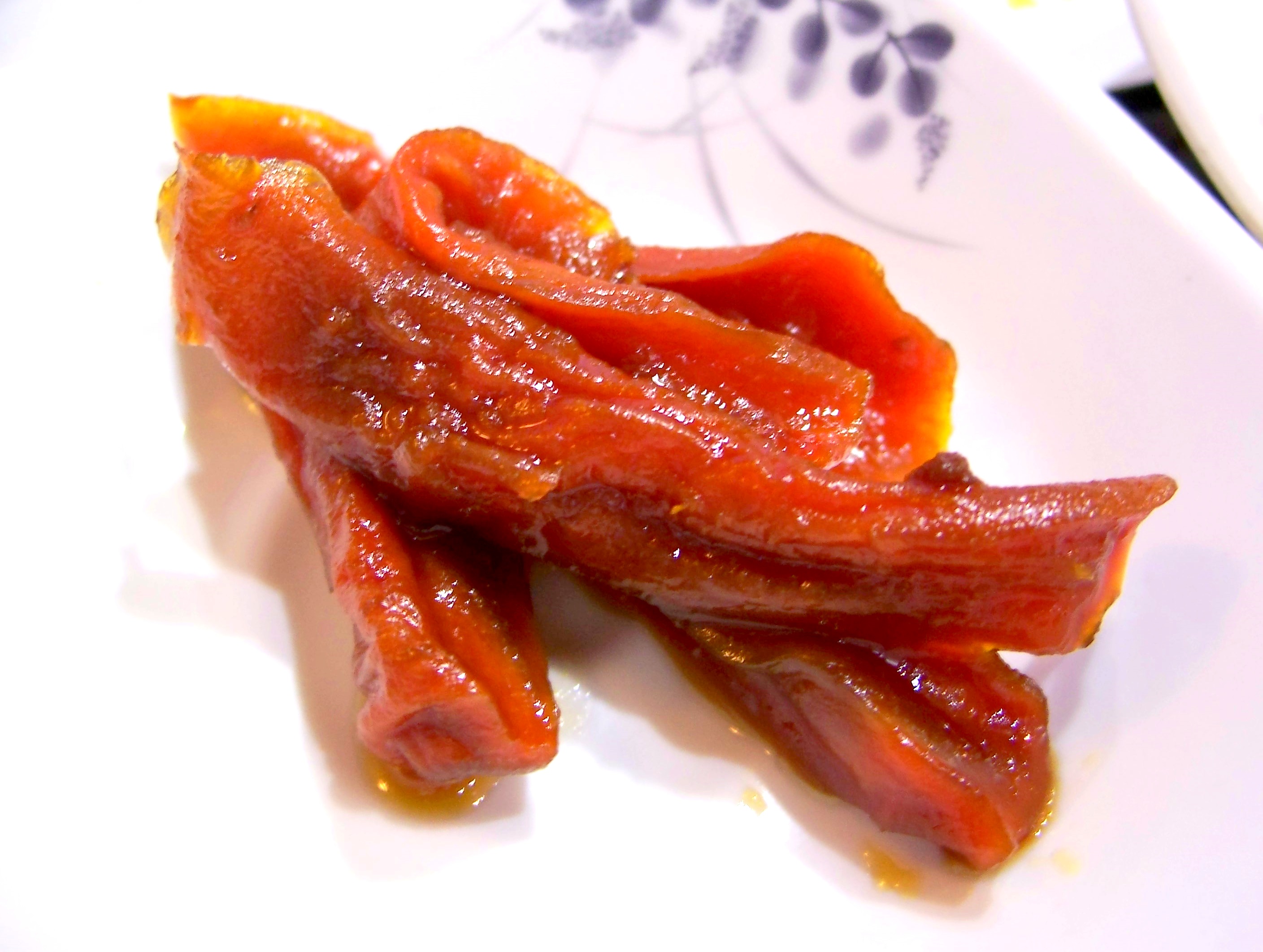
This is Carrot. AMAZING. AMAZING. AMAZING. Somehow it is sweet like honey and chewy like dried apricot. If I could have carrots like this everyday, I’d love carrots a lot more than I do now.


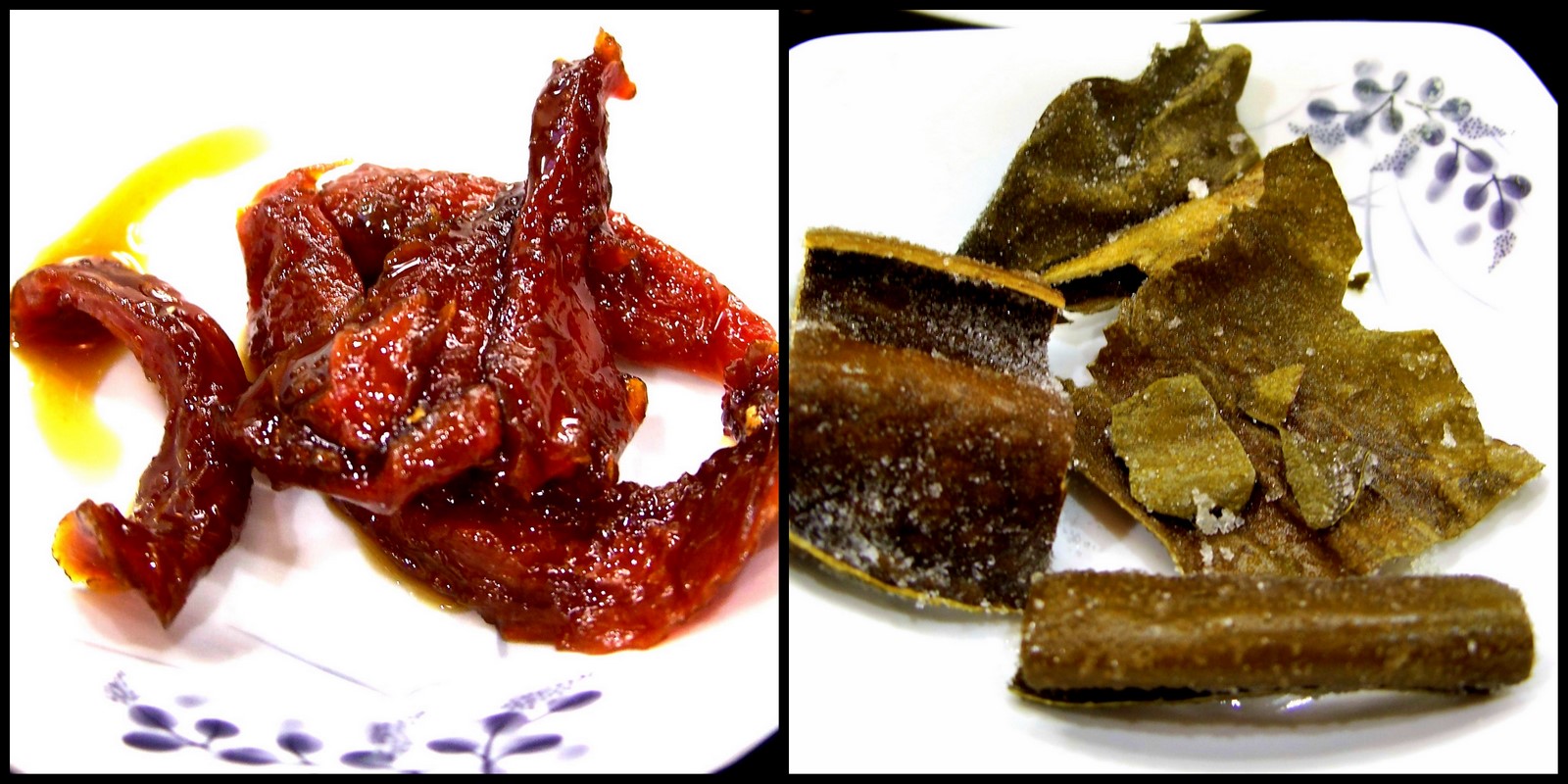
This is Clueless. On the left is something similar to the carrots, but a lot more dried-fruity, like a dried persimmon. The texture is denser and crispier, but it could just have been an older batch of carrots, who knows. On the right is some dried leafy thing dried kelp (dashima (다시마) in Korean, or kombu in Japanese), which was crunchy like Pringle’s chips, dusted with crystals of sugar and salt. When microwaved, it gets soggy and similar to chwinamul but I have no idea what kind of leaf it is.

Get on with the main course.


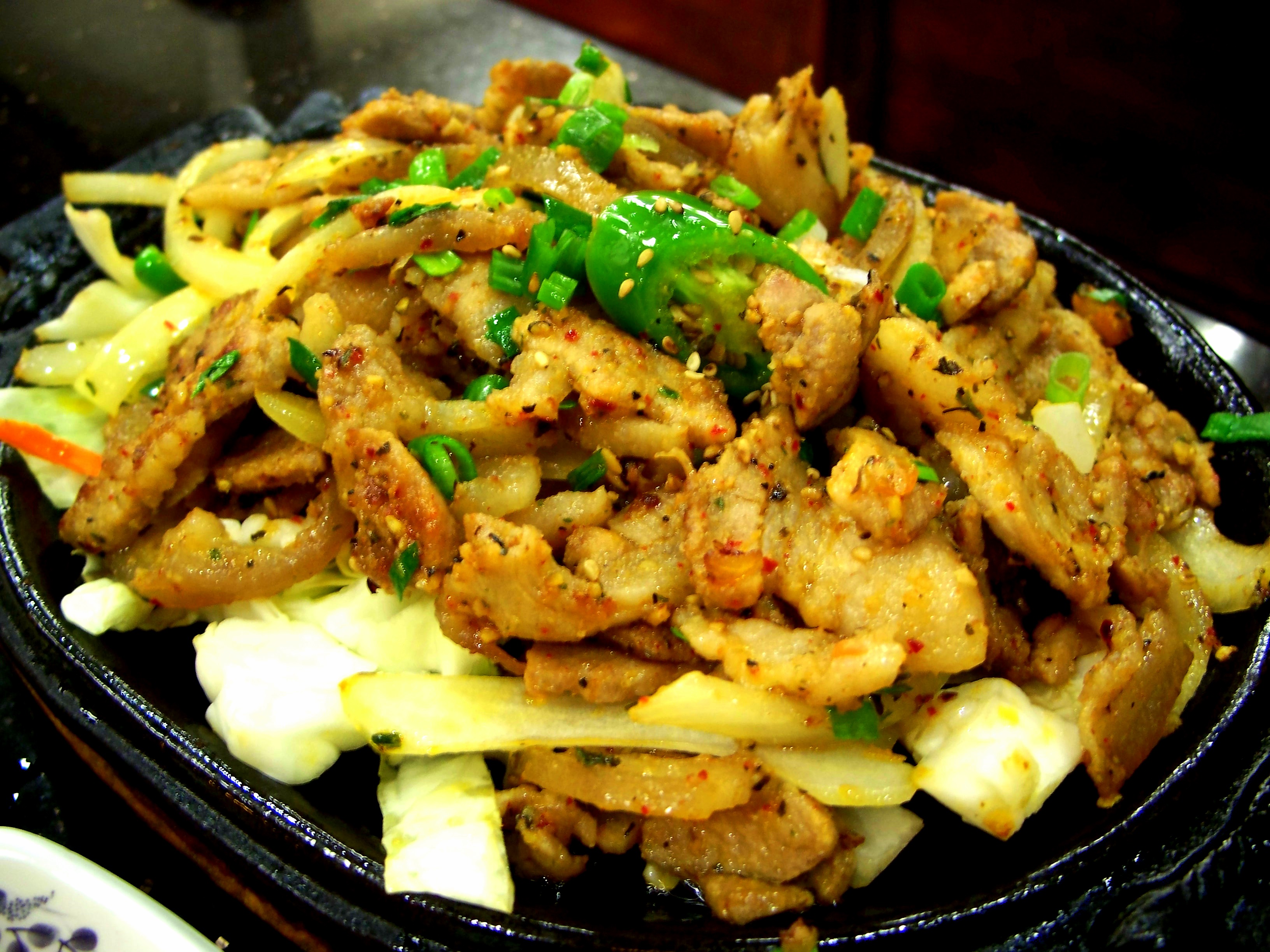
Doenjang samgyeopsal (삼겹살) – grilled pork belly with soybean paste ~ $18. Mudpie felt uneasy with the fatty layer, but really it wasn’t fatty fat, it’s crunchy fat, just like skin. The doenjang (된장 fermented soybean paste) has a distinctive flavor, and is most like the Vietnamese chao.


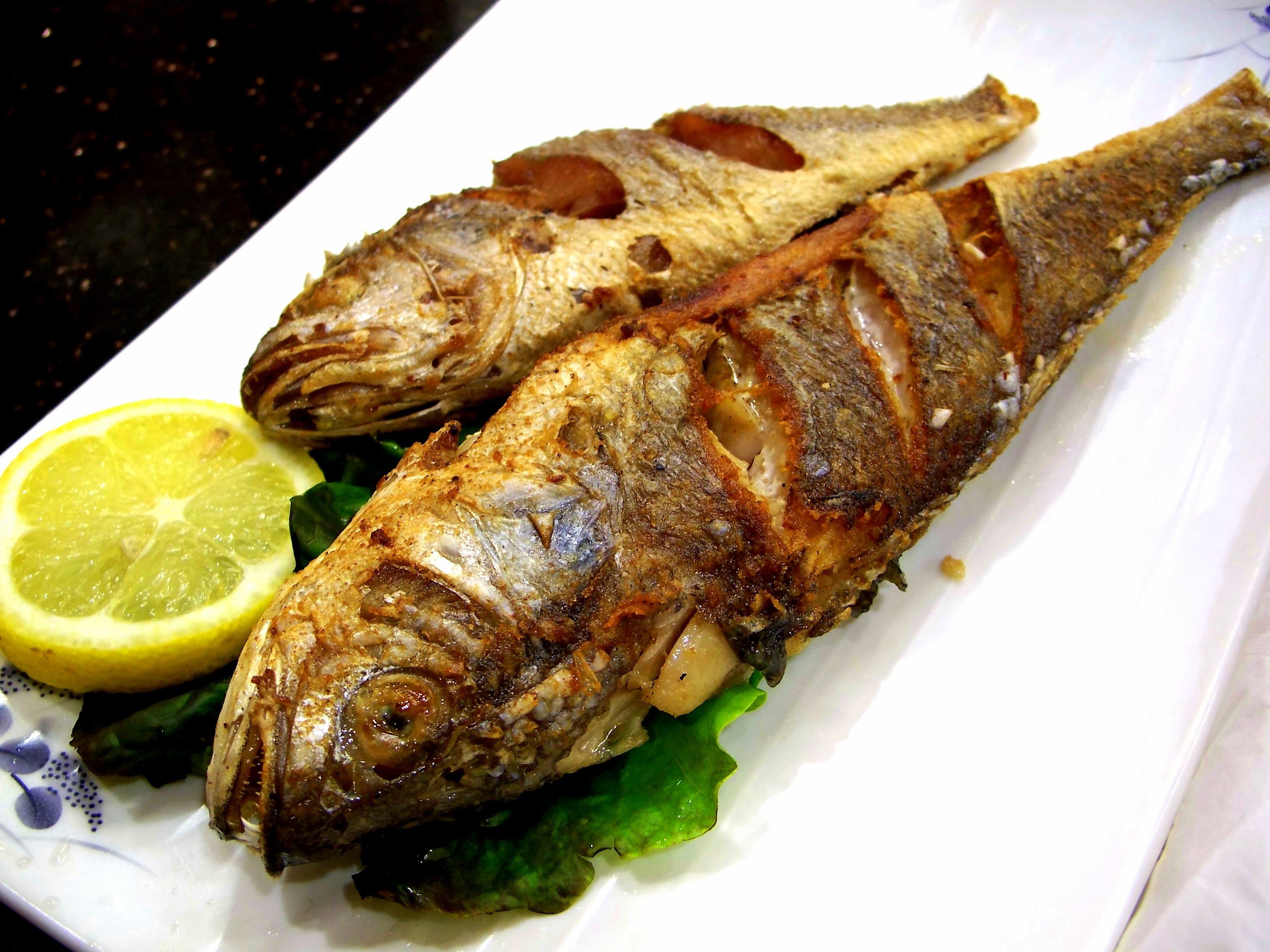
Jogi gui (조기구이) – grilled “king fish” on the menu ~ $18, Google says it can be either yellow corvina or yellow croaker, and I’m no ichthyologist to tell the difference. Look at those teeth. The head was hard and not so fun to eat (very little brain, and I suppose grilling drained all the liquid away), but the body was well seasoned and perfectly crisp. Have fun picking out the bones.


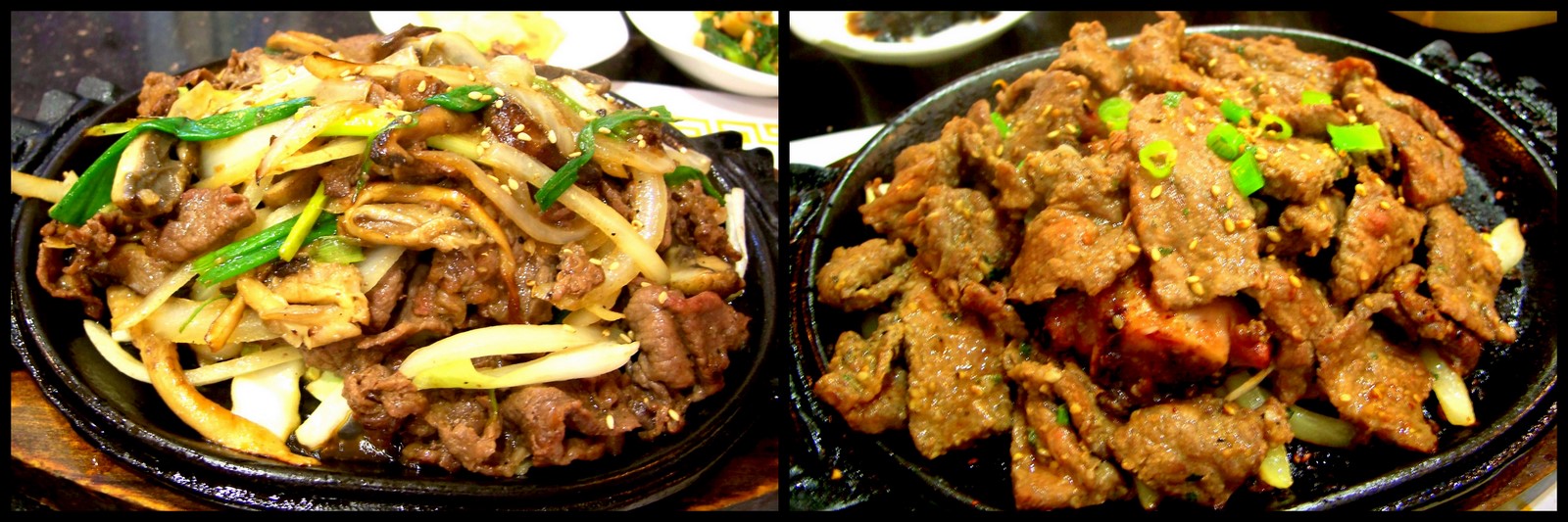
Bulgogi (불고기) – good old barbecue ~ $25 each. The one on the left is marinated in a sweet mushroom-onion sauce, while that on the right is green tea bulgogi with, naturally, a delicate herbal, grassy taste. The meat came with doenjang, chilipepper, and garlic, but I didn’t include any of those in my lettuce wraps.

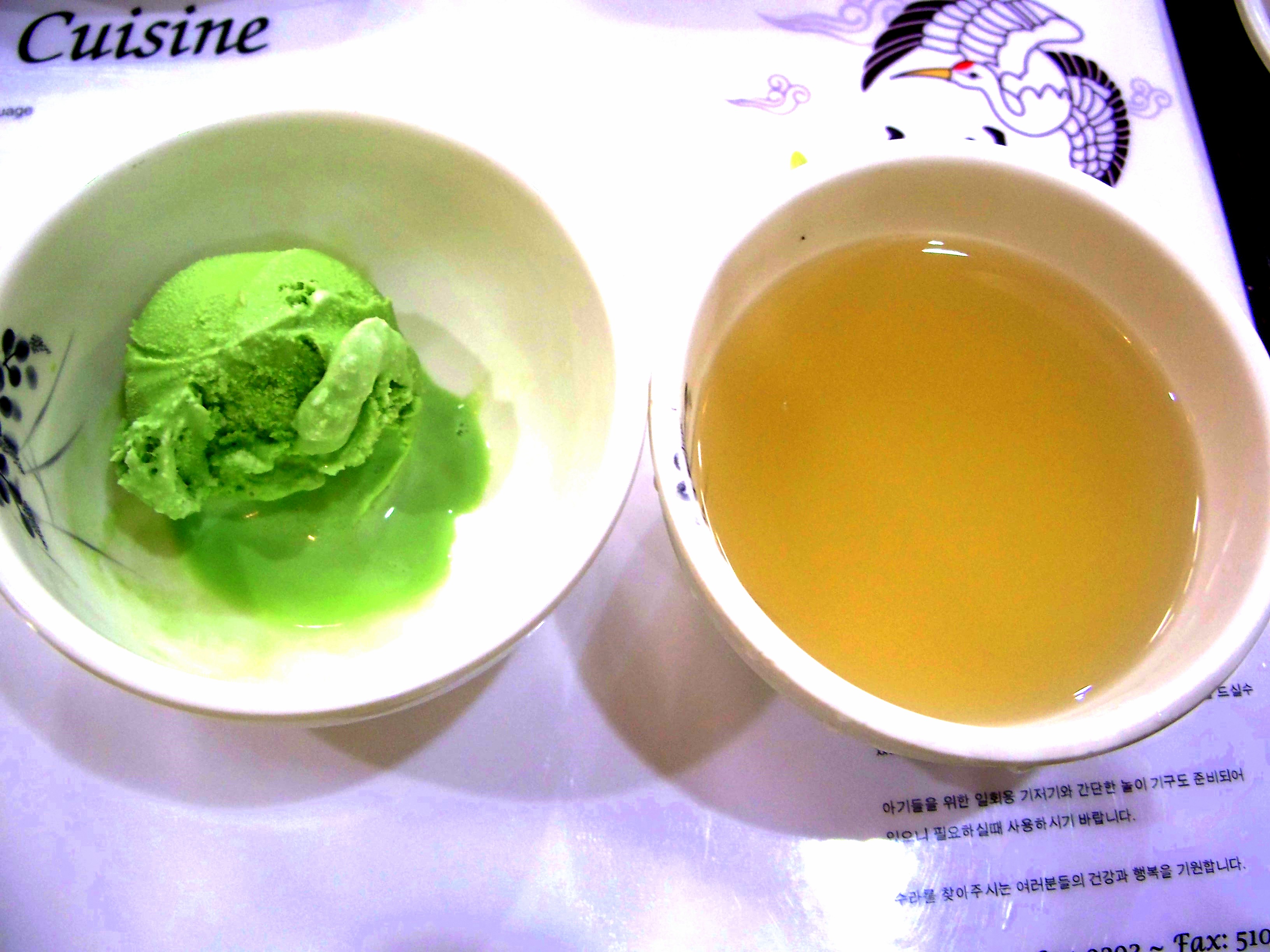
And finally, complimentary dessert of the house is either green tea ice cream or shikhye (식혜) (sweet rice punch):


Lovely both.

I should add that this place has a huge menu, with inviting names like ginseng chicken soup (samgyetang (삼계탕)) and crab stew (kkotge jiggae (꽃계찌개)). The bill is wholesome too, of course, but it feels all better when the friendly staff smiles at you with the most soothing, genuine smile in their single-lidded eyes.


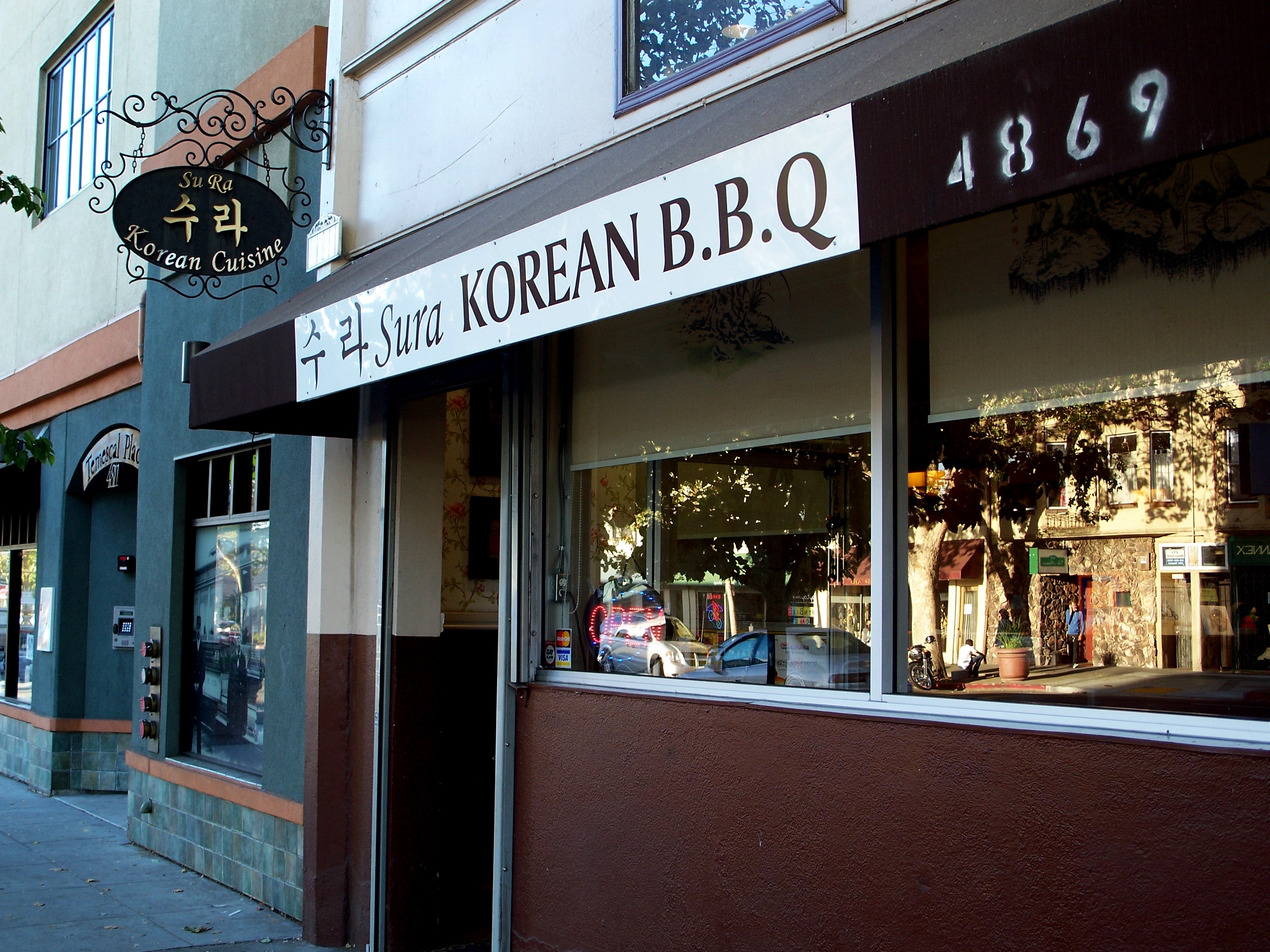
Address: Sura (Nulbom Korean Cuisine) (수라)
4869 Telegraph Ave.
Oakland, CA 94609
(510) 654-9292

What you should eat when you’re in Texas

September 02, 2010 By: Mai Truong Category: American, Comfort food, One shot, Opinions, Texas

Not barbecue.

That stuff is everywhere in the South. I’m talking about something that only Texas has. Something a little sweet, a little pillowy, a little chewy, a little cheesy, a little meaty. Something that after you eat one, you just have to get another. Something that 99.91% of the time is chosen over donuts (I made up the stats, but I’ve never met anyone who picks a donut when they’re given this). My Texas friends, I miss the kolaches.


If you haven’t had it, you’re gonna say “That’s a pig-in-the-blanket, Whole Foods has loads.” No, it is far from a pig-in-the-blanket. I repeat, kolaches is NOT pig-in-the-blanket (PitB).

The difference is in the bread. PitB bread is plain, flare it up with poppy seeds and oily butter or not, it’s plain and must not be eaten without the sausage. Kolaches bread is sweet, like a Hawaiian roll*. PitB bread is dry and flaky. Kolaches bread is pillowy, slightly chewy and moist. The sausage is there for protein surplus and does not really add fireworks to the flavor. If you insist on an either-or, I’d choose the bread and toss the sausage every time. Donut shops in Houston would ask if you want the kind with cheese, say yes. The very thin inner lining of cheese makes its salty-sweet.

Then you’re gonna laugh at me and try to crumble my Texan pride, “It’s a Czech thing, not a Texas thing” and tell me to read Wikipedia.  Well, look again, the Czech kolache (pronounced |koh-lash|) is a sweet pastry with fruit jam on top. The Texan kolaches (pronounced |koh-lah-chee|) is savory with a little sausage link inside. The Texas kolaches isn’t any more Czech than the hamburger is from Hamburg.

Originally, it is a variety of the Czech kolache, referred to as “klobasnek” or “klobasnik,” which comes from “klobasek,” Czech for “sausage,” similar to “kielbasa“. But the Czechs consider the Texas kolaches a joke too far removed from their fruit-topped dessert pastries, for it has cheap cocktail sausage links instead of the huge Polish dogs. The misnomer “kolache” is perhaps due to the Houstonian Kolache Factory‘s successful advertisement of this savory breakfast on the go.

Black sheep to the Czechs or not, the Texas kolaches are extremely popular in Texas. Most donut shops have them, usually twice or three times more expensive than donuts, and all are sold out before noon. Sometimes 9 am. No kolaches left behind.

But you won’t be able to find it outside the Lone Star State. You probably will not even hear about it outside the Lone Star State. People just will not know what you’re talking about when you say “kolaches” (pronounced |koh-lah-chee|), unless they’re from Texas. Believe me, I asked my students here, in Berkeley-San Francisco, they gave me the confused eyes and directed me to Whole Foods for pigs-in-the-blanket. I’ve searched every donut shop in town, no luck. I’ve used Google Maps, AM Kolaches in Hayward is the only hit, but it’s the Czech version with fruits and cream cheese.

O Texas Kolaches, how I miss thee!

*Notes on the Hawaiian rolls: Get them! They make awesome sandwiches. Or spread pâté in the middle.

Sandwich shop goodies 10 – Bánh chuối nướng (Vietnamese banana bread pudding)

August 25, 2010 By: Mai Truong Category: California - The Bay Area, Comfort food, Fruits, One shot, Southern Vietnamese, sweet snacks and desserts, Vietnamese


Every now and then I feel blessed to grow up in the tropics. It doesn’t let you wear scarves and gloves, but it has bananas. Many types of bananas. There are at least 10 common cultivars in Vietnam, most are for eating fresh as a fruit, some for eating raw as a veggie with wraps, and one is particularly favorable to be cooked in desserts. And desserts with bananas are just about the most addictive thing out there.

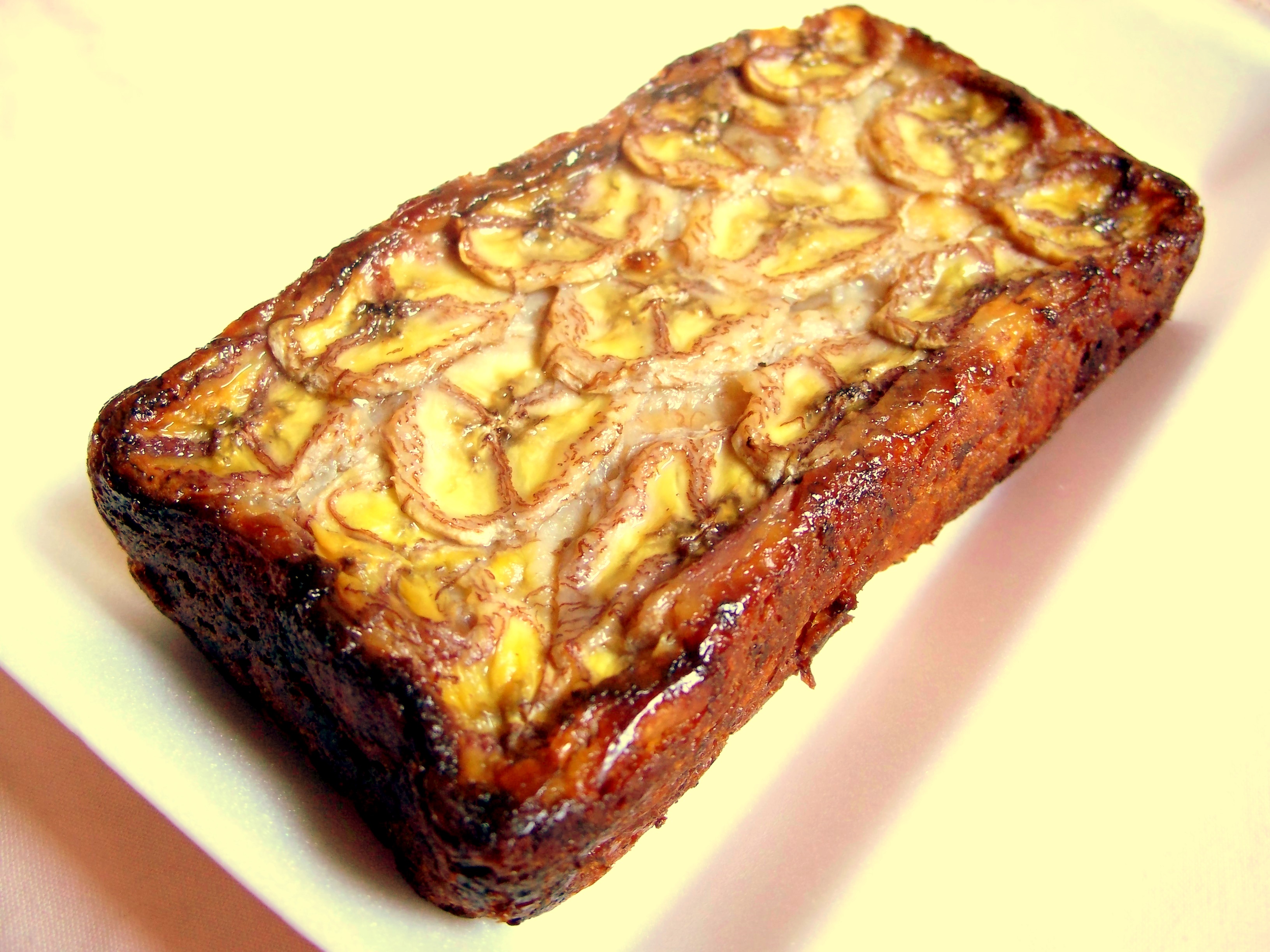
Take this banana bread pudding for instance. I intended to cut one little slice each day to savor it for over a week, but next thing I knew I was gorging half the slab after dinner. The bread is part chewy, part spongy, mostly firm, juiced up by a semisweet layer of sliced banana on top. It needs no sauce, no ice cream, no chocolate. It is good both at room temperature and right out of the fridge.

The description simply can’t capture how delicious this thing is. And it’s not even a well made banana bread pudding, you know, the type of treat that grandmother would make at home or the recipe that a vendor has perfected over ten years of peddling dessert banh’s.

It’s just a cling-wrapped 3.75-dollar piece of cake that I bought from a banh mi store. It has only one layer of bread and one layer of banana. And it is Cavendish banana, the most popular type, if not the only type at many grocery stores, of banana that Americans have known and loved.

Not that I have anything against Cavendish bananas. They’re big. They’re alright for eating fresh. But a Cavendish’s flesh is no match for chuối sứ when it comes to cooking dessert.

Chuối sứ, literally ambassador (“sứ”) banana (“chuối”), was brought to the Vietnamese royal courts by Thai ambassadors (hence it’s also called “chuối xiêm”, as “Xiêm”  is another word for Thai). Like most bananas, chuoi su is considered native throughout Southeast Asia, where it’s known as siusok (Philippines), kluai namwa daeng (Thailand), and pisang siem (Indonesia). Scientifically, it is categorized under Triploid ABB, Musa x paradisiaca, although the latter is disputable as a general name for all bananas.

What I don’t get is the ABB classification. It signifies a below-average score, while Cavendish, a Musa acuminata, is in the AA group. Sure, chuoi su is shorter than Cavendish (less than the length of my hand from wrist to finger tip), but it is stout like a good bratwurst. In practice, chuoi su is more favorable for both eating and cooking because of its firm flesh, slightly gummy texture, and raisin-like sweetness, all of which can endure simmering, grilling, baking, steaming, and boiling. The banana just wouldn’t fall apart or lose its “honey”.

The best part is, it’s easy to grow, so it’s among the cheapest types of bananas in Vietnam’s markets. Not in America though. Which is why the banana bread pudding I have here tastes slightly sticky in the back of the throat and not as sweet as it could be. Nonetheless, it’s the champ of all sweet goodies we’ve gotten from banh mi stores so far.

Buy it: Kim’s Sandwiches, 1816 Tully Rd 182, San Jose, CA
Bake it: Bánh chuối nướng recipe

Previously on Sandwich Shop Goodies: bánh bò bông (steamed sponge cupcake)
Next on Sandwich Shop Goodies : steamed cassava

Pret A Manger – Ready to Eat

August 18, 2010 By: Mai Truong Category: Comfort food

Guest post by Paul Simeon


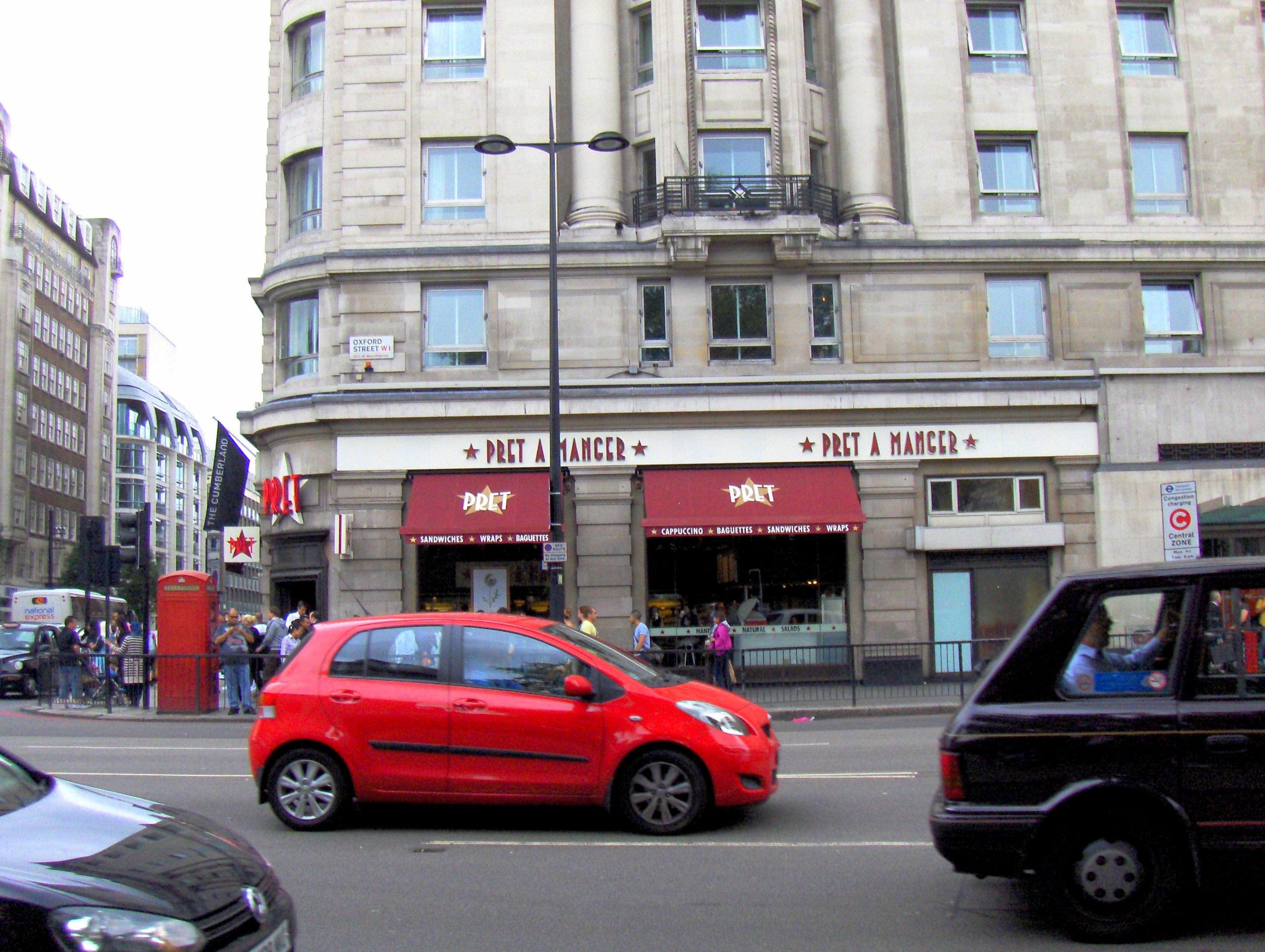
This name may sound foreign to you, unless you happened to see it in the UK, New York, DC, or Hong Kong. It’s a British chain, with a French name, that’s slowly coming to America (and elsewhere). The private company has decided not to franchise, so it’s not spreading as fast as other fast food places, but they’ll slowly populate the States; Chicago is next this Fall.

Pret, as it is called by many, is like the ready-to-eat sections, as the name suggests, of cafes and food shops. They have a myriad of salads and sandwiches on the shelf that you can grab and take to the cashier. It’s about as fast as fast food can be. They have soups, fruit, baguettes, sushi, wraps, smoothies, yogurt, etc. They make everything in the kitchen each day and give the unsold items to charity at the end of the day.


The other thing one should say when describing this place in such a quick manner is that they stress that everything they sell is natural — no artificial preservatives, flavors, colors, sweeteners. They even buy meat from sellers who “never give their animals antibiotics or hormones, feed them only a vegetarian diet free of animal by-products and care about them and the environment in which they live.”

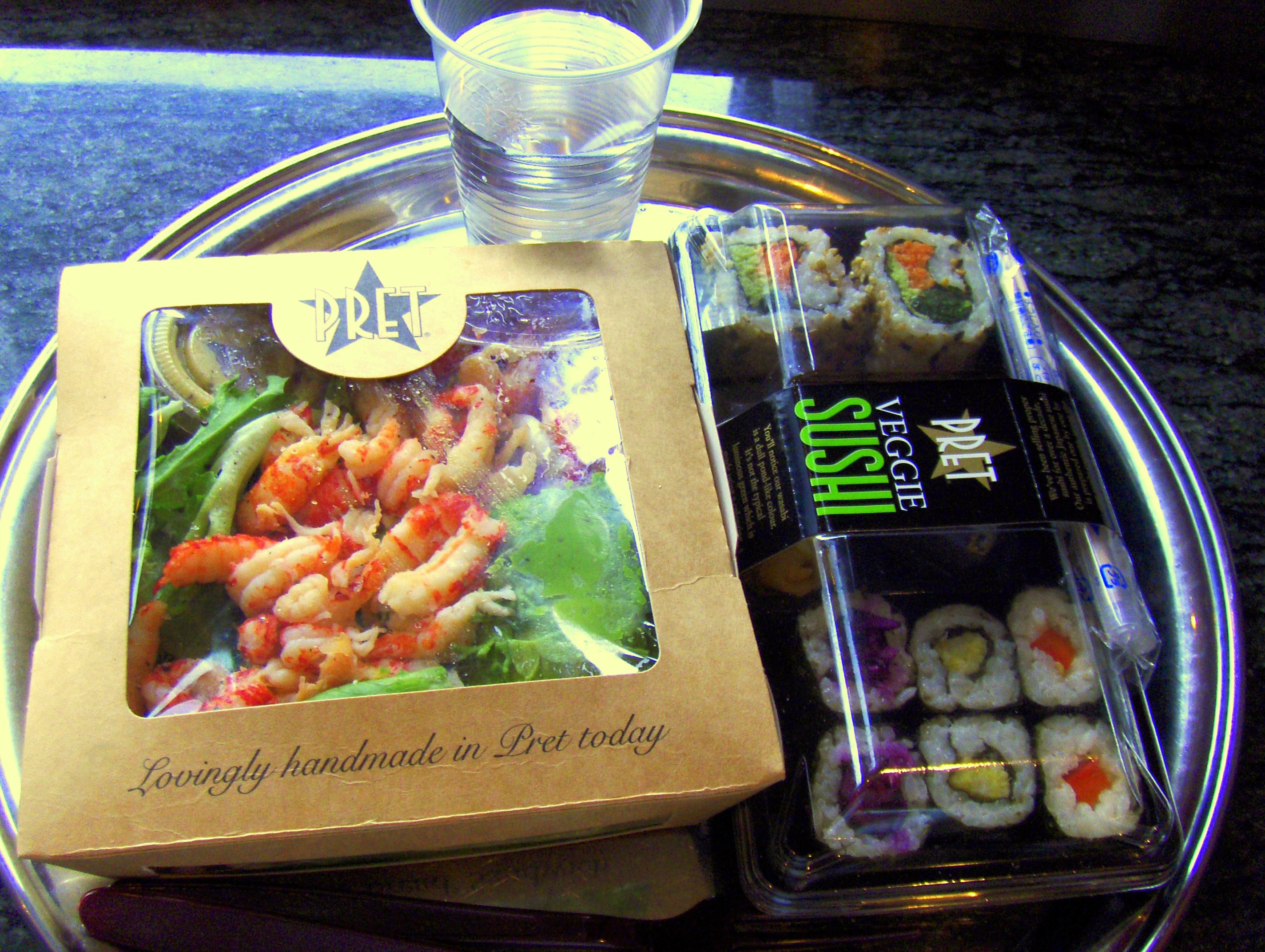
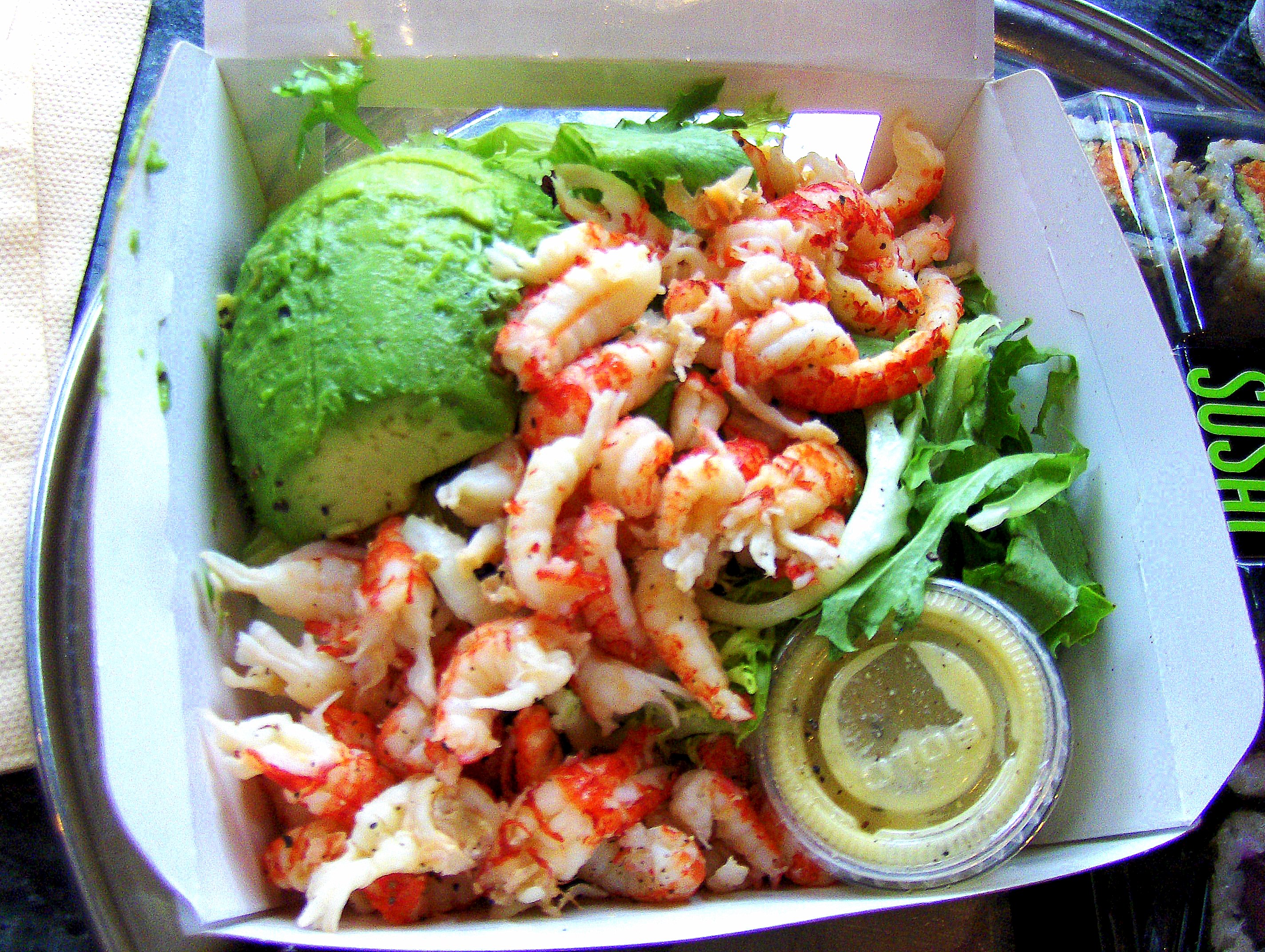
Crawfish and avocado salad from Pret A Manger

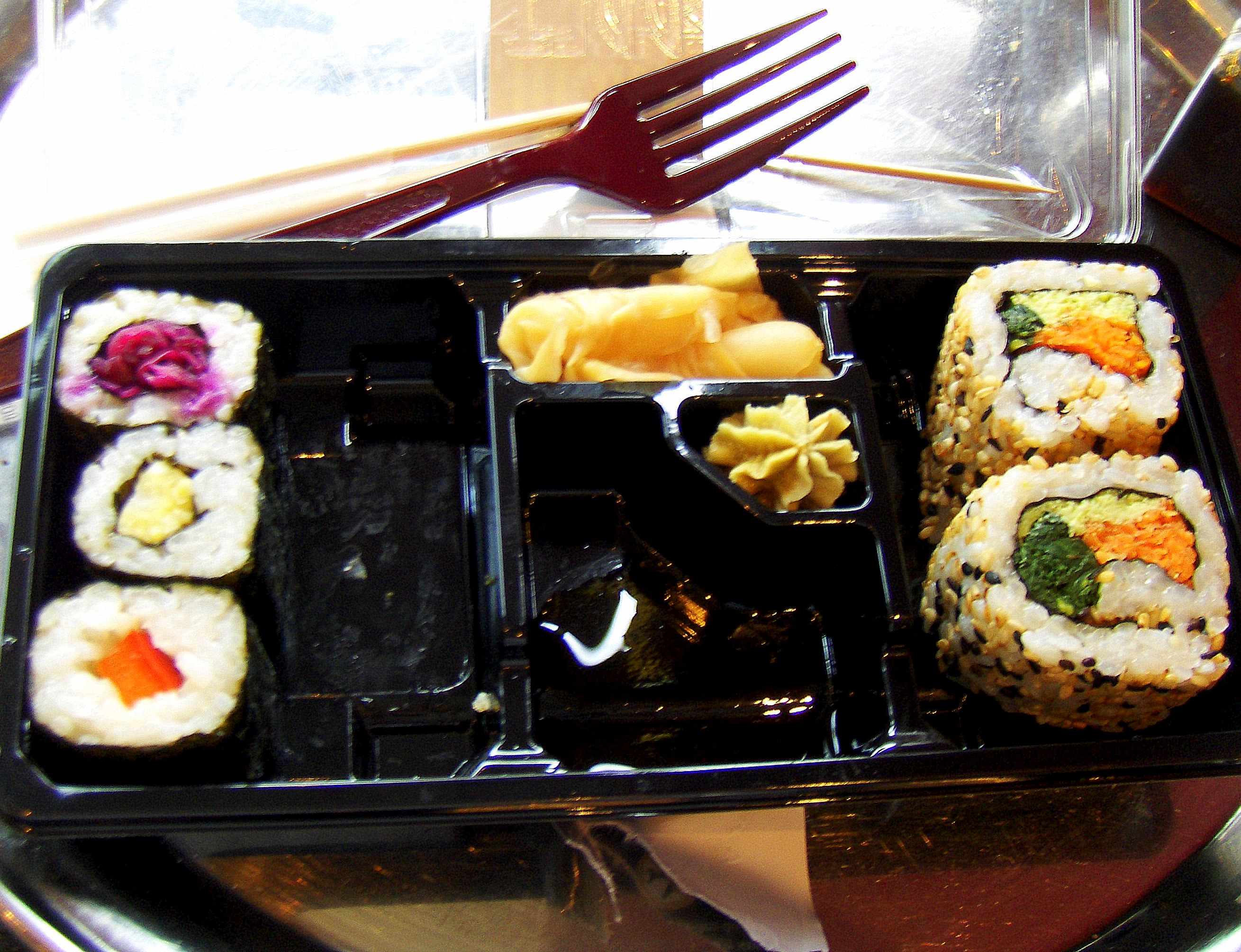
I went to my first Pret in London, where you can’t find a street without one, after a morning at the Science Museum with some friends I met at the summer school. I didn’t have a camera, but I got the Italian Pizza hot wrap and the crawfish and avocado salad. Both were good, but I particularly liked the salad. They had tons of crawfish, almost too many, but it had been a while since I had crawfish. The second time I went, the next day after the British Museum, I had a camera. I got the salad again and the vegetable sushi. I decided to take the picture of the sushi after I had eaten three pieces. The two of these set me back 6.50 pounds.


Overall, I liked how it operates. It’s fast, efficient, and pretty healthy. My only problem is that almost everything had mayonnaise on it, and I don’t like mayo. It was so common, they actually had “No Mayo!” stickers next to the names of the items that lacked that nasty white goop, but there weren’t many of those stickers to be found. So, most of the sandwiches were off-limits for me. That wasn’t a problem because they had plenty of other options.

Other bites in England:
Oxford dinners – part I and II
– Cheap Moroccan grabs from Cous Cous Cafe, Oxford
– Indian food in Oxford: Mirch Masala and Fire & Stone’s Bombay pizza
– Pie and mash at the Ship Inn Upavon and Pieminister

Pie and mash – The Ship and Pieminister

August 16, 2010 By: Mai Truong Category: Comfort food

Guest post by Paul Simeon


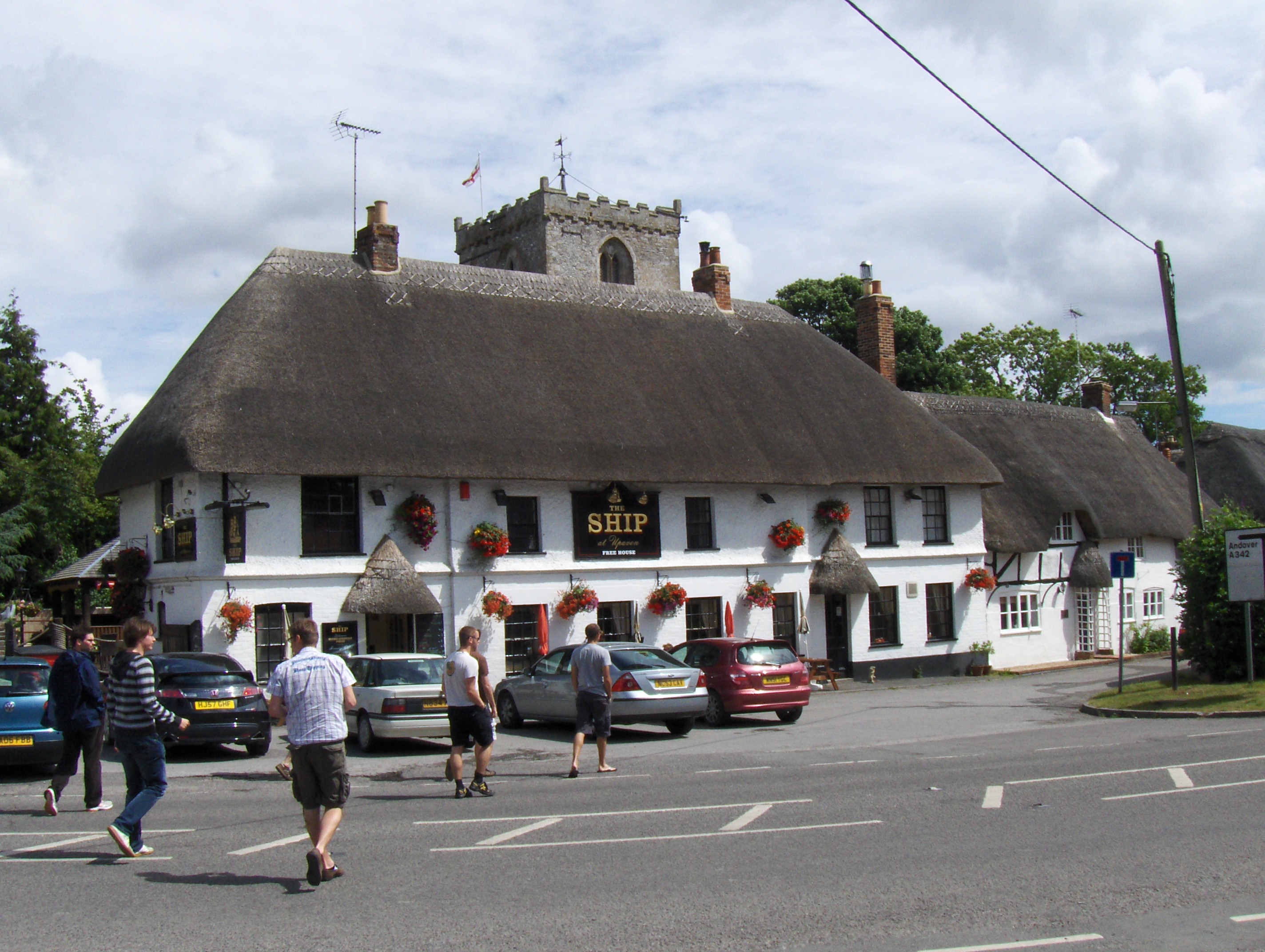
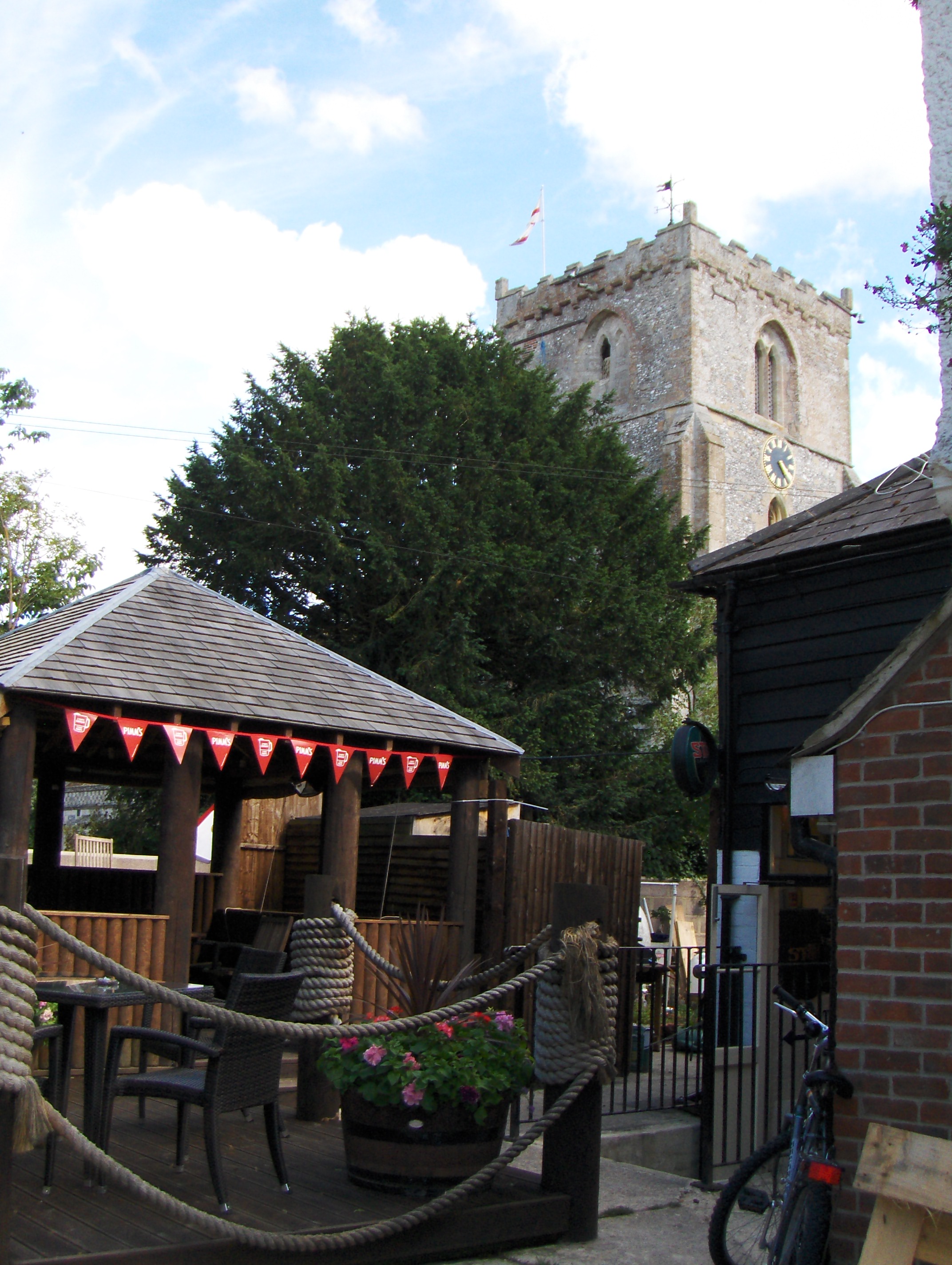
After seeing Stonehenge with a large group of friends, we went in search of a place for lunch. We were looking in a nearby village and happened upon a nice-looking place called The Ship Inn in Upavon. I don’t know how it got its name, being far from water and not resembling a ship. It did have a castle right behind it, which provided a nice setting for a midday lunch in the back patio of the place.


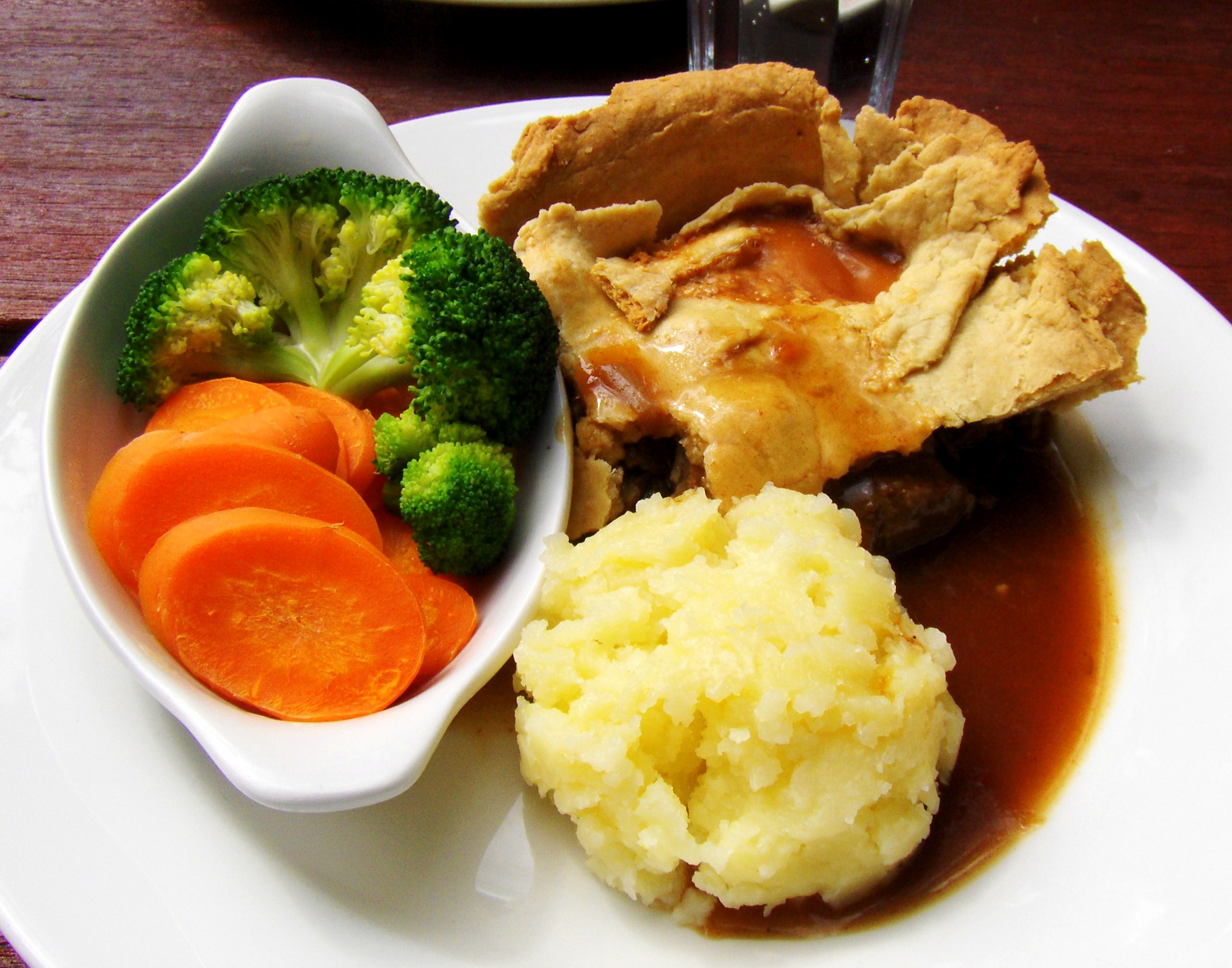
Let’s get down to business, the food. Many people got hamburgers. Someone ordered a ploughman’s lunch, which was a big chunk of bread with large wedges of cheddar and brie and a few slices of ham. Apparently cheddar is uncommon in some parts of Europe as some hadn’t heard of it. I was in England, so I had to get something distinctly British — steak and kidney pie. It looked like a quarter of a full pie, with a side of vegetables and mashed potatoes. It was good, nothing unexpected, nothing disappointing. There wasn’t much kidney, but that wasn’t a problem. I much prefer the steak to the muddy texture of kidneys. It set me back about 8 or 9 pounds. If I went again, I’d get the same thing, unless I were not that hungry. Then, I’d get the ploughman’s lunch, which comes with or without ham.

Steak and kidney pie at the Ship Inn Upavon, England


Address: The Ship Inn Upavon
10 High Street, Upavon, Wiltshire.
Telephone: 01980 630313

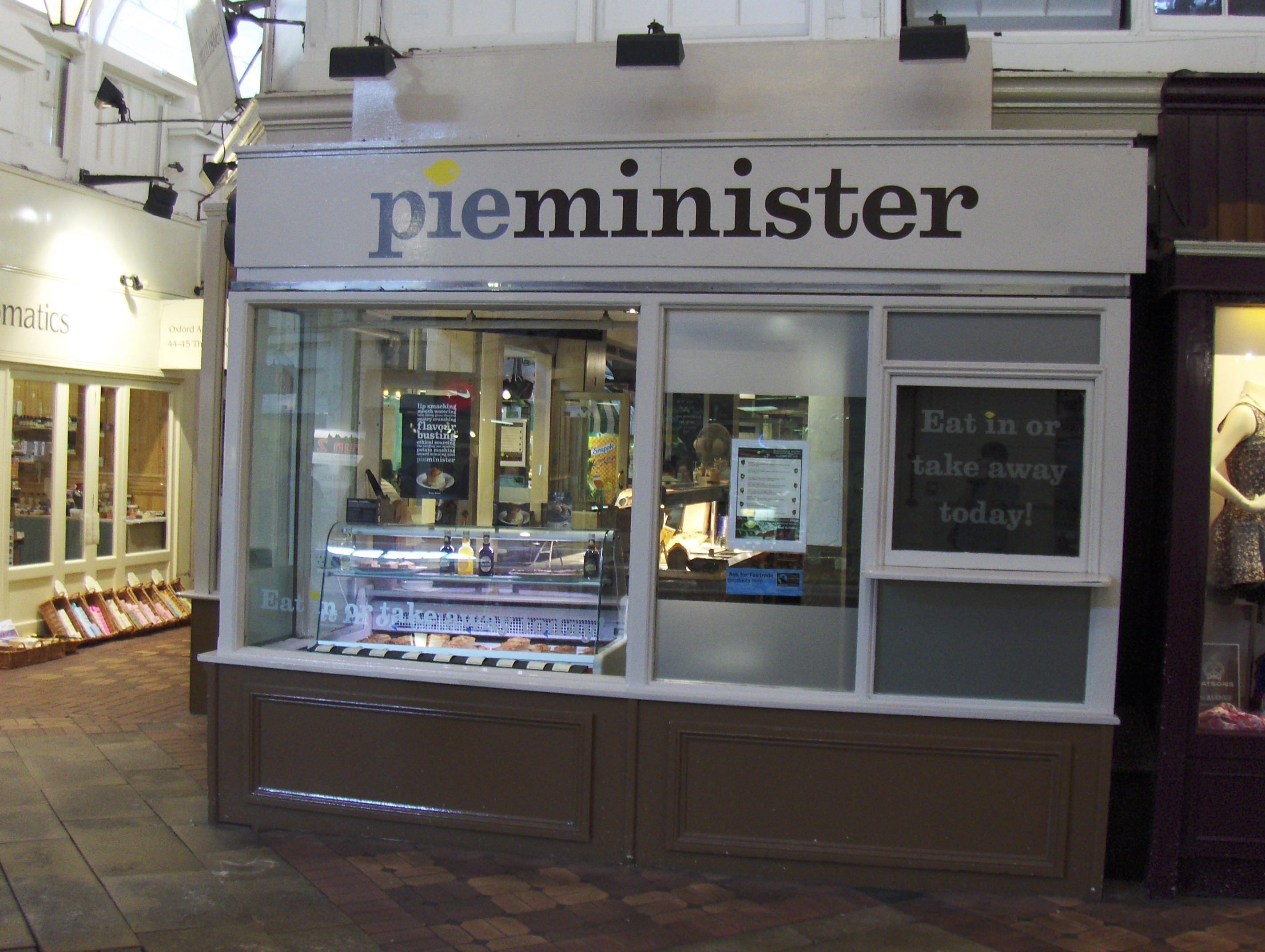
Back in Oxford, I asked a local for a good place to eat near the Covered Market. She replied with a sandwich-and-panini shop and Pieminister, a good place for pie and mash. I decided to scope them both out before I made my decision. I walked the crowded Saturday streets to the crowded Saturday market. There were shops of all types, including fresh meat and fish markets. I feel bad for the creperie directly across from the fish market. Somehow, they still had good business. The panini place didn’t seem too interesting; it seemed like the type of place I would go to for more regular, everyday meals where I don’t want too much unhealthy food.


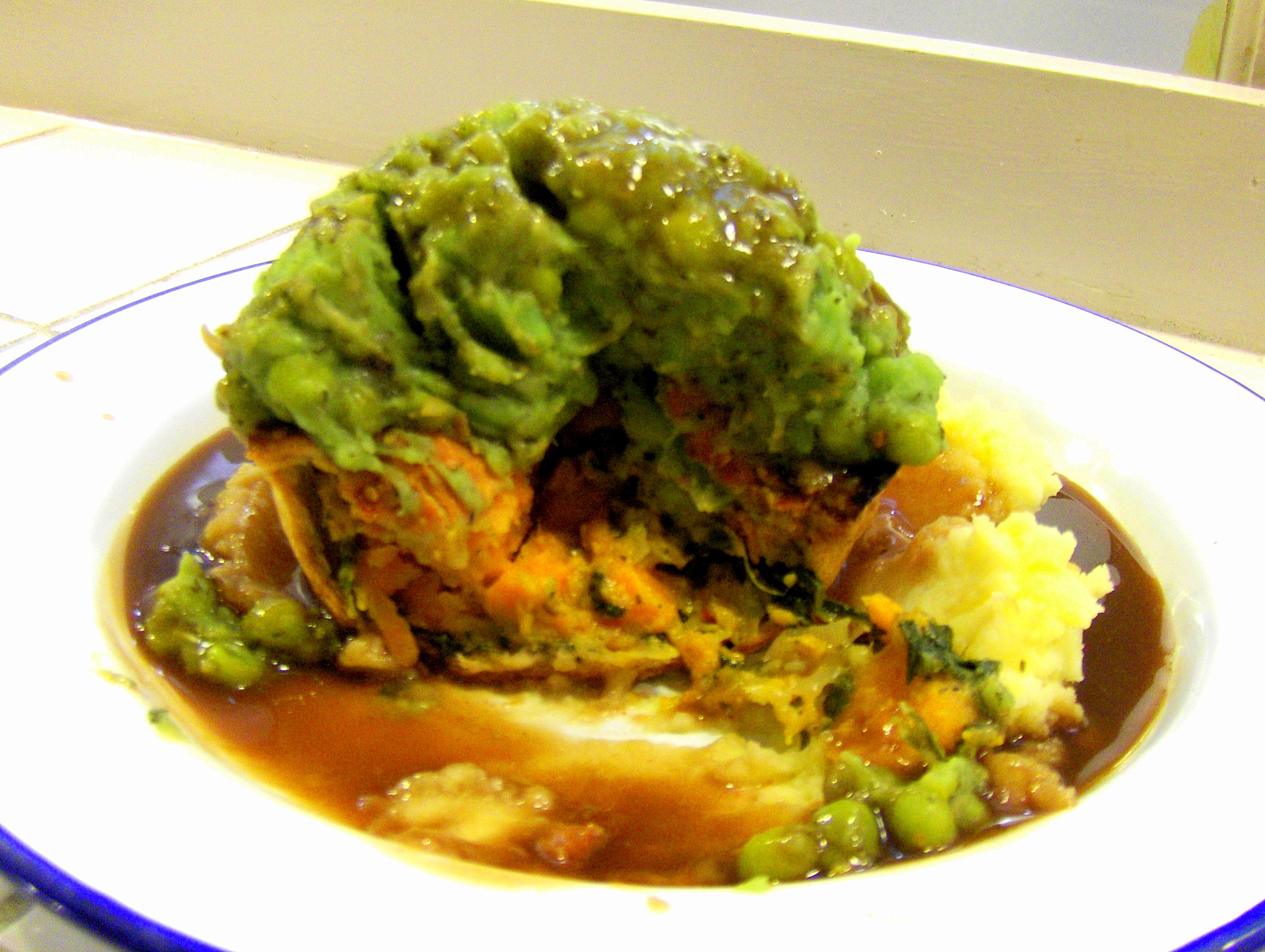
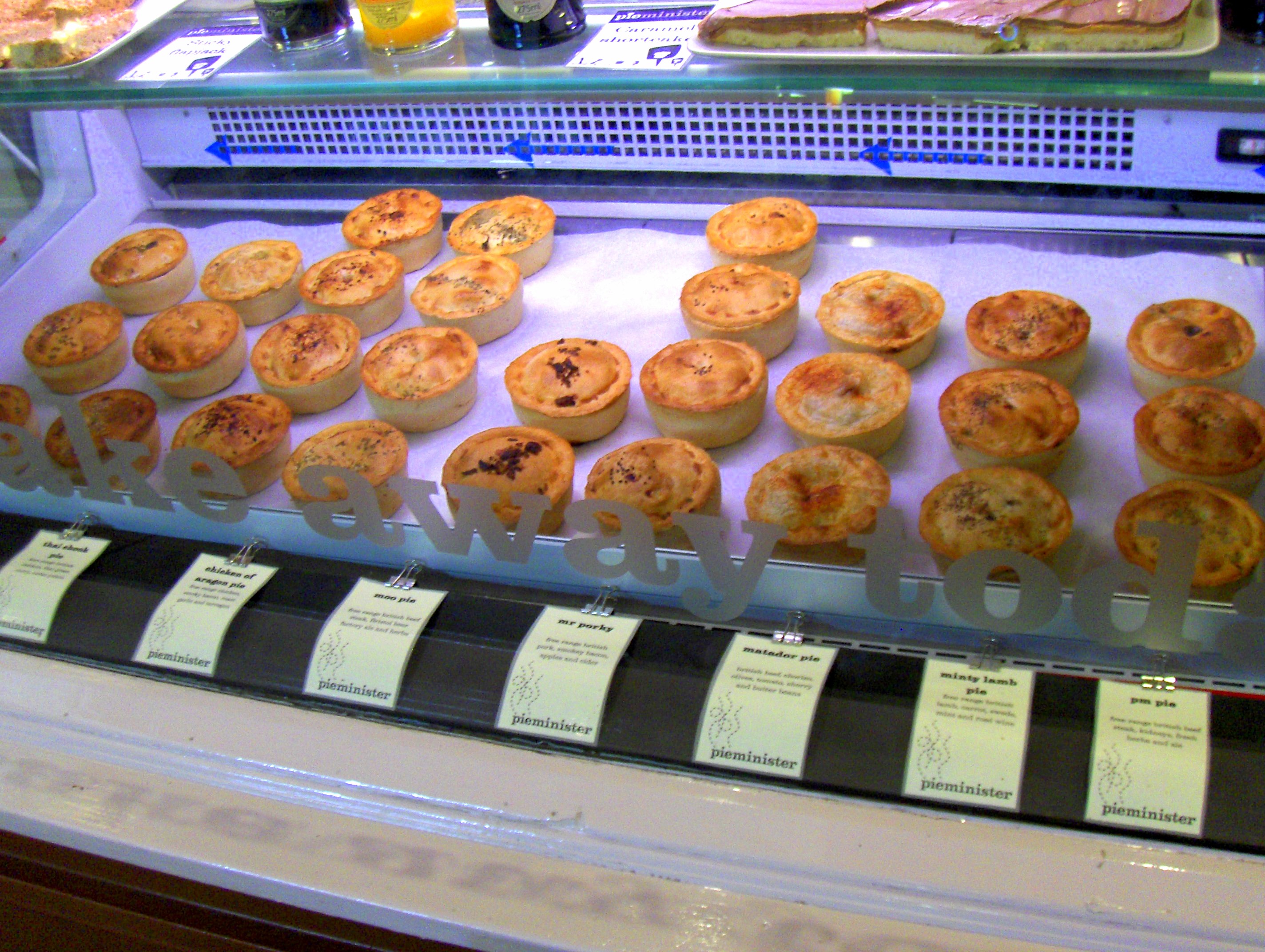
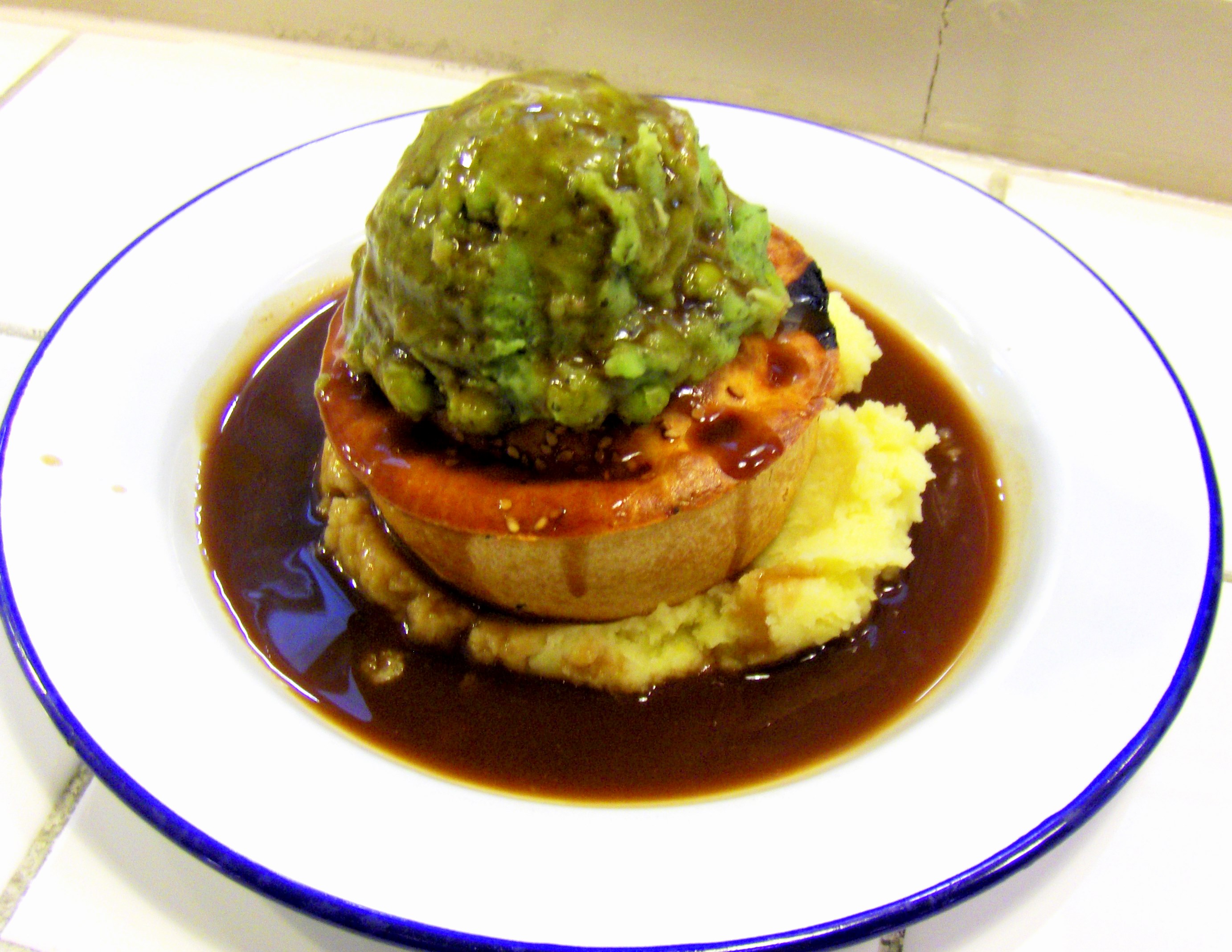
Pieminister was a place that served just one thing: pie and mash. That’s meat pie (and vegetarian pies), not dessert pie. They had about 10 types of pie with beef, chicken, pork, potatoes, cheese, and other fillings. I wanted the chicken and tarragon pie, but they were out. I settled with the Heidi Pie, filled with sweet potato, goat cheese, spinach, red onion, and roasted garlic. I got the student special, which was advertised to come with “pie, mash, minty m’peas, and groovy.” In other words, it came with the pie placed on a heap of mashed potatoes, and covered in a scoop of mashed mint-flavored peas, all smothered with gravy. It was 5 pounds, but it was 6.50 without a student ID. I think a pie alone would be around 3 quid.

Heidi pie at Pieminister Oxford

Where do I begin? I guess it has to be with the peas. The mint flavor didn’t go with the rest of it, in my opinion. It was strong enough to taste it through a big bite with everything mixed together. Mint doesn’t seem to mix well with other things, except chocolate. The pie was good. Sweet potato was the most abundant filling, by far. The crust was great, as usual. Everything was savory and blended well, except the mint. I could barely finish it all. If I came again, I’d go for the chicken and tarragon pie with mash, no peas.


Address: Pieminister Oxford
56-58 The Covered Market,
Oxford, Oxfordshire
OX1 3DX
Telephone: 01865 241613

Other bites in England:
Oxford dinners – part I and II
– Cheap Moroccan grabs from Cous Cous Cafe, Oxford
– Indian food in Oxford: Mirch Masala and Fire & Stone’s Bombay pizza
– England’s healthy fastfood chain: Pret A Manger

Venus and the Casual-Cali dining trend

August 14, 2010 By: Mai Truong Category: American, California - The Bay Area, Comfort food

In foodie talk, Berkeley is synonymous with Chez Panisse: there’s hardly a writing of Bay Area cuisine without the mentioning of Alice Waters and her propriety. But as attractive as the local and sustainable idea sounds, places like Chez Panisse are clearly not in the accessible range for everyone’s weekly, or even monthly, savour. If it’s not what the locals regularly eat, how can it represent the local cuisine? The common Berkelers don’t make one month reservation to eat at a cafe, they instead would rather make a line on the sidewalk, waiting to be seated in 25 minutes or so-told by waiters with tattoos and spiky hair. Such casualness, though paired with obvious reduce in taste innovation and price, defines the Berkeley dining spectrum, with the holes in the wall like Razan’s Organic Kitchen and Gregoire at the cheaper end, to more comfortable sit-downs like Herbivore and Venus at the other.


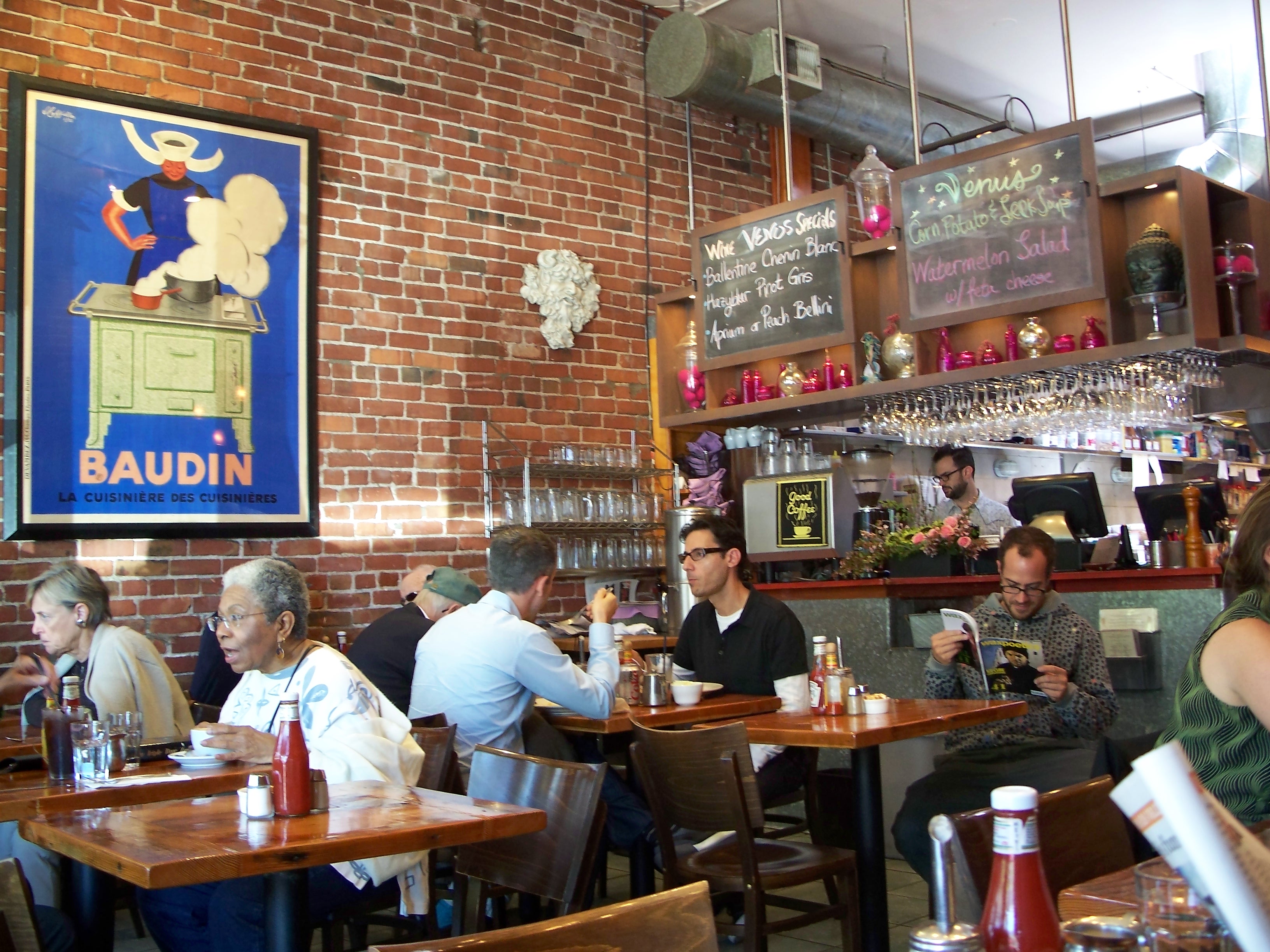
I call it a sit-down because Venus is barely bigger than a classroom, and diners are spaced more snugly than students on exam day. Its rectangular base holds a kitchen-cashier combination and roughly 40 seats – an ok amount for lunch and dinner but not enough for the mornings. I’ve seen lines, and been in one myself, standing outside the door even on weekdays. The mornings here are cold, but Venus’s breakfasts are good.

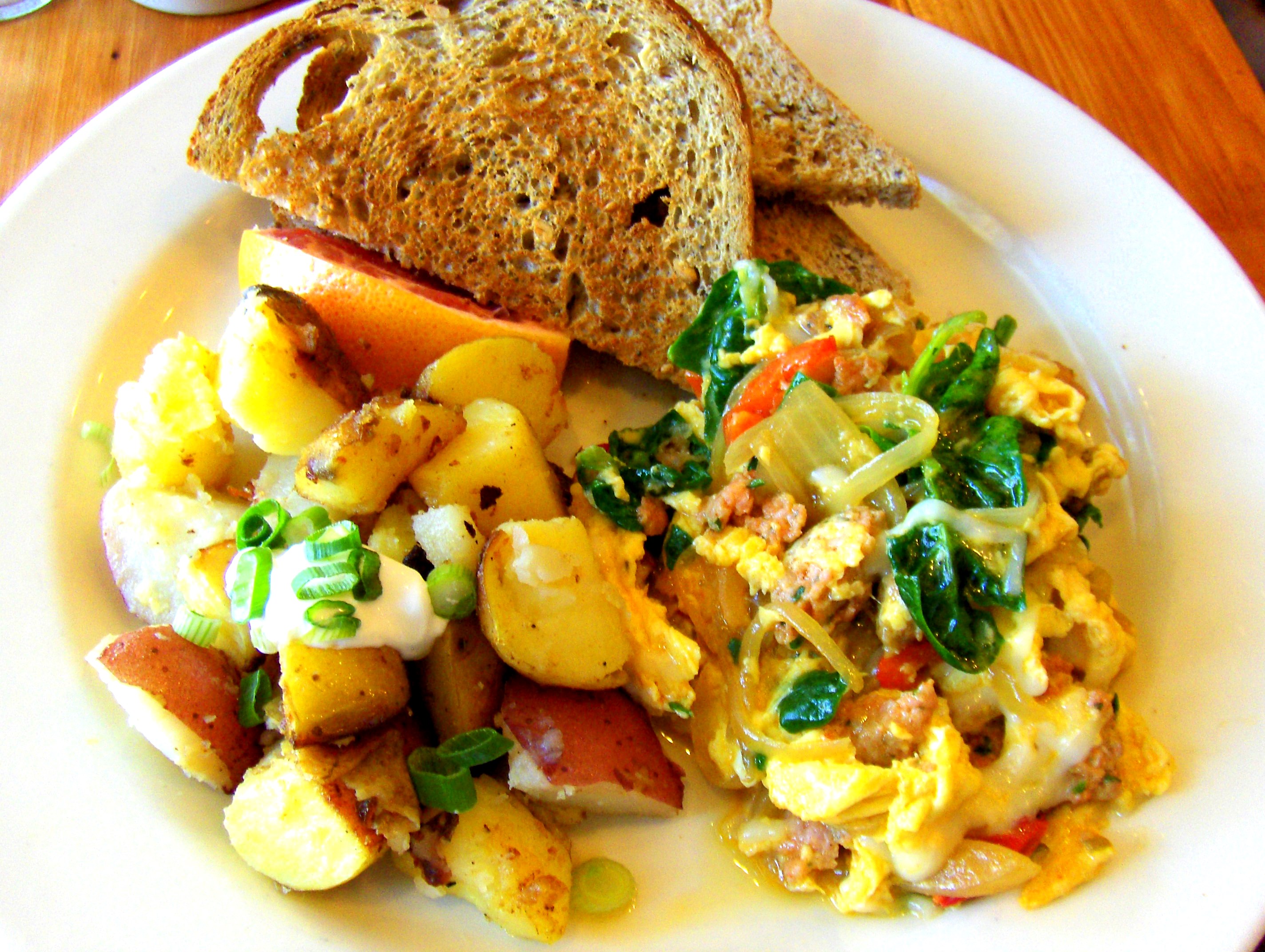
Venus's scramble eggs with calabrese sausage , spinach and mushroom, with roasted potato and toasts - $11.00

Omelets and scrambled eggs are the main categories, with typical Californian blendings like chicken-and-apple sausage, fresh berries and chocolate chips in pancakes, and thick, fat, buttery French toasts accompanied by melons and oranges.

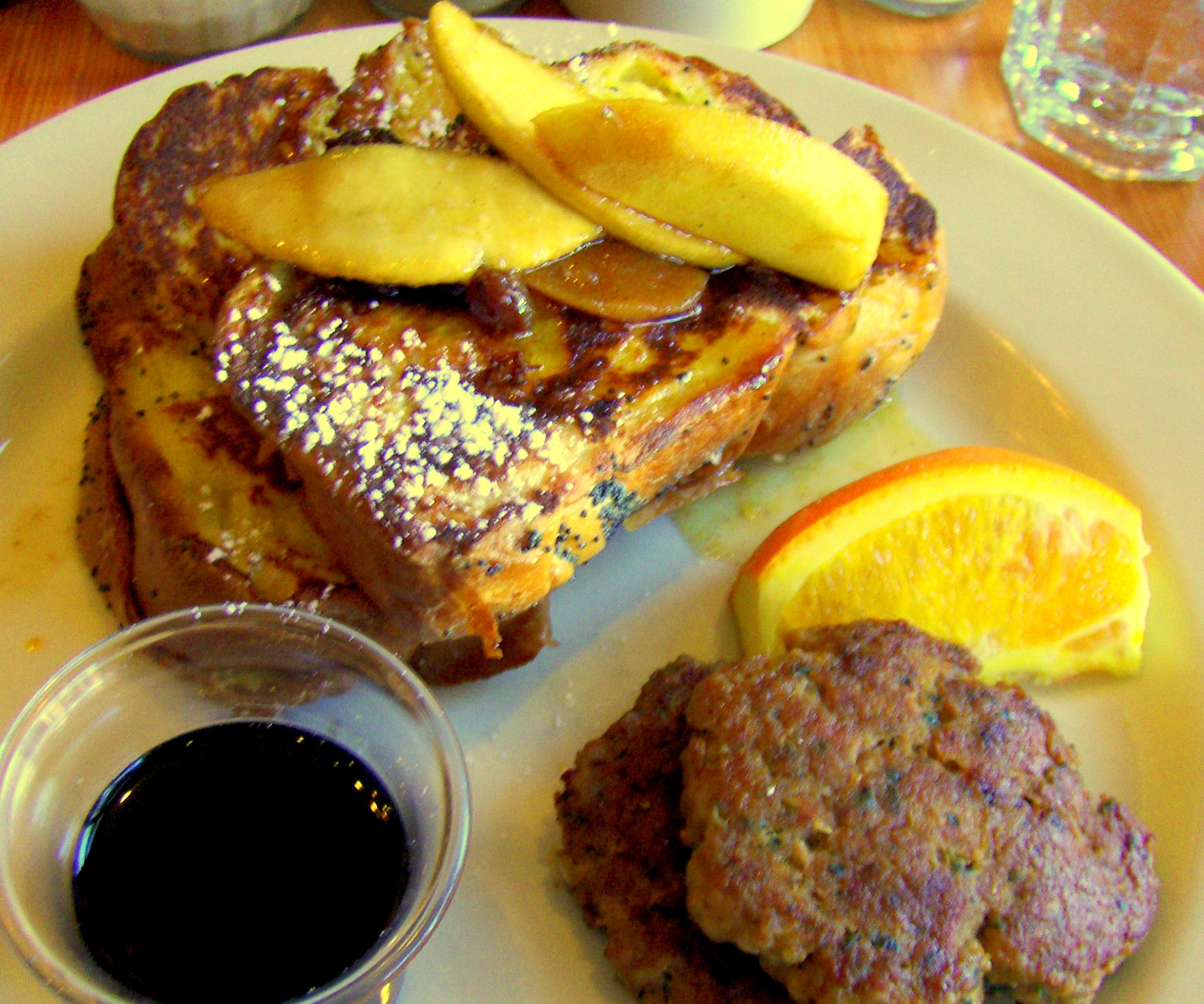
A Venus daily special - apple French toasts and sausage, to be dressed in blackberry syrup - $12.50

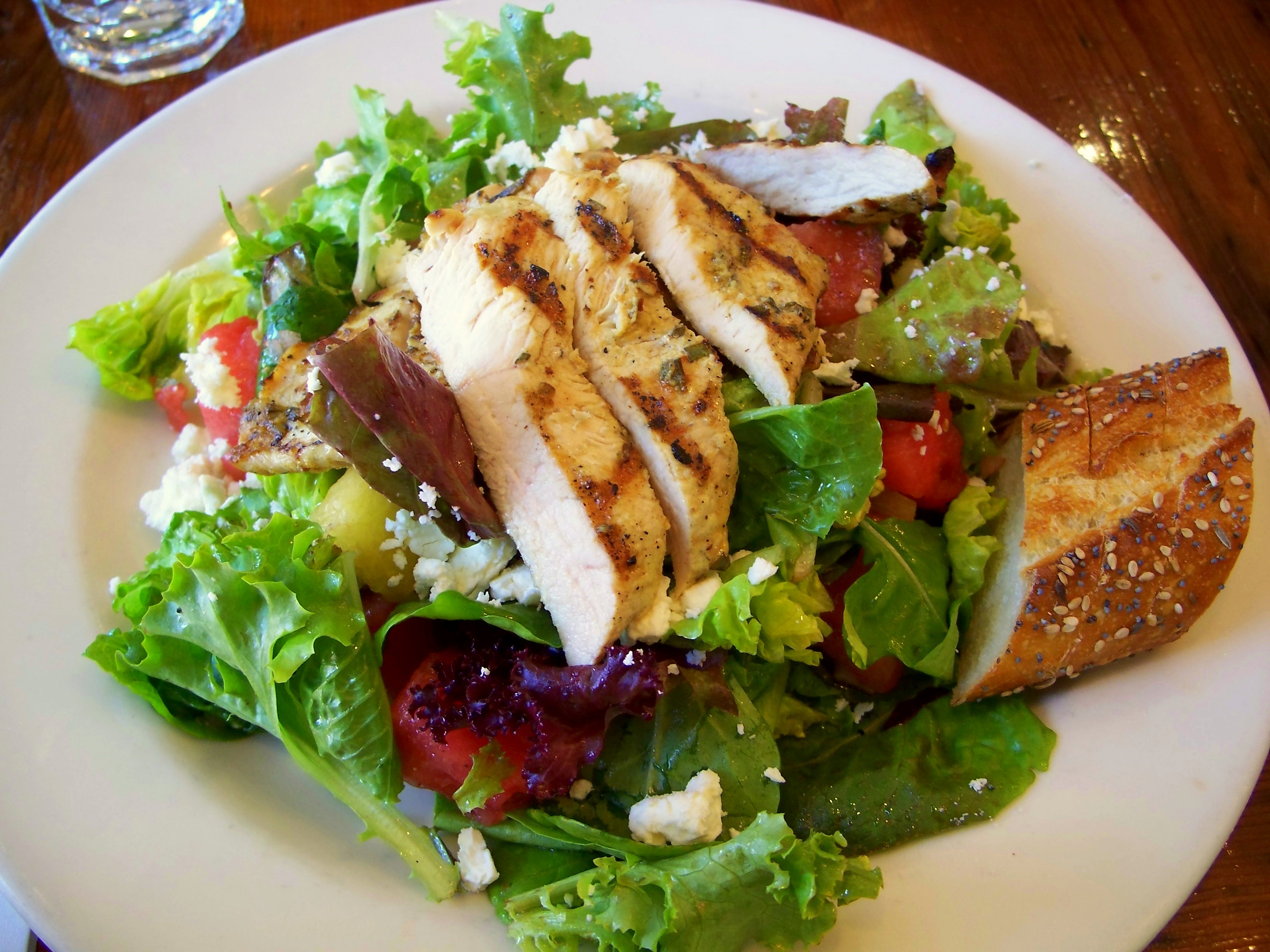
If you feel guilty about taking time to savor your toasts while others are shivering outside waiting to slip through that door, lunch proves a more comfortable choice. To boost, the hosts give you both the breakfast and lunch menus if you arrive around noon. The specials of the day are printed items with a simple twist, like my chicken salad with a load of watermelon cubes mixed in.

A Venus daily special - watermelon salad with grilled chicken breast and feta cheese - $13.00

The ingredients aren’t clamorous and the mixing isn’t adventurous, but such daily specials are nonetheless a refreshing attempt to harmonize flavors: sweet watermelon to temper tangy feta and vinaigrette, teeth-sinking jello crunch of the grilled chicken to pair with airy crustiness of newly baked bread. It isn’t the best salad I’ve ever had, but it bursts a mouthful of Casual-Cali aroma(*): healthy food can have attractive taste.


The atmosphere, too, is characteristic. Jazzy 60’s records reluctantly slip words one by one off the speaker like water dripping from a roof after some heavy rain. College students twirl their straws over a quiet chat by the windows. An old man with a cane and weak feet drags his steps to the table, clouding himself with a Degas’ look while waiting for his soup. Lone diners in spectacles spend an entire morning flipping through the news, occasionally take a bite of sandwich and a sip of coffee. Couples in their late fifties laugh and talk without constraint. Everyone is comfortable. It’s a noisy place, but oddly it’s full of solitude.

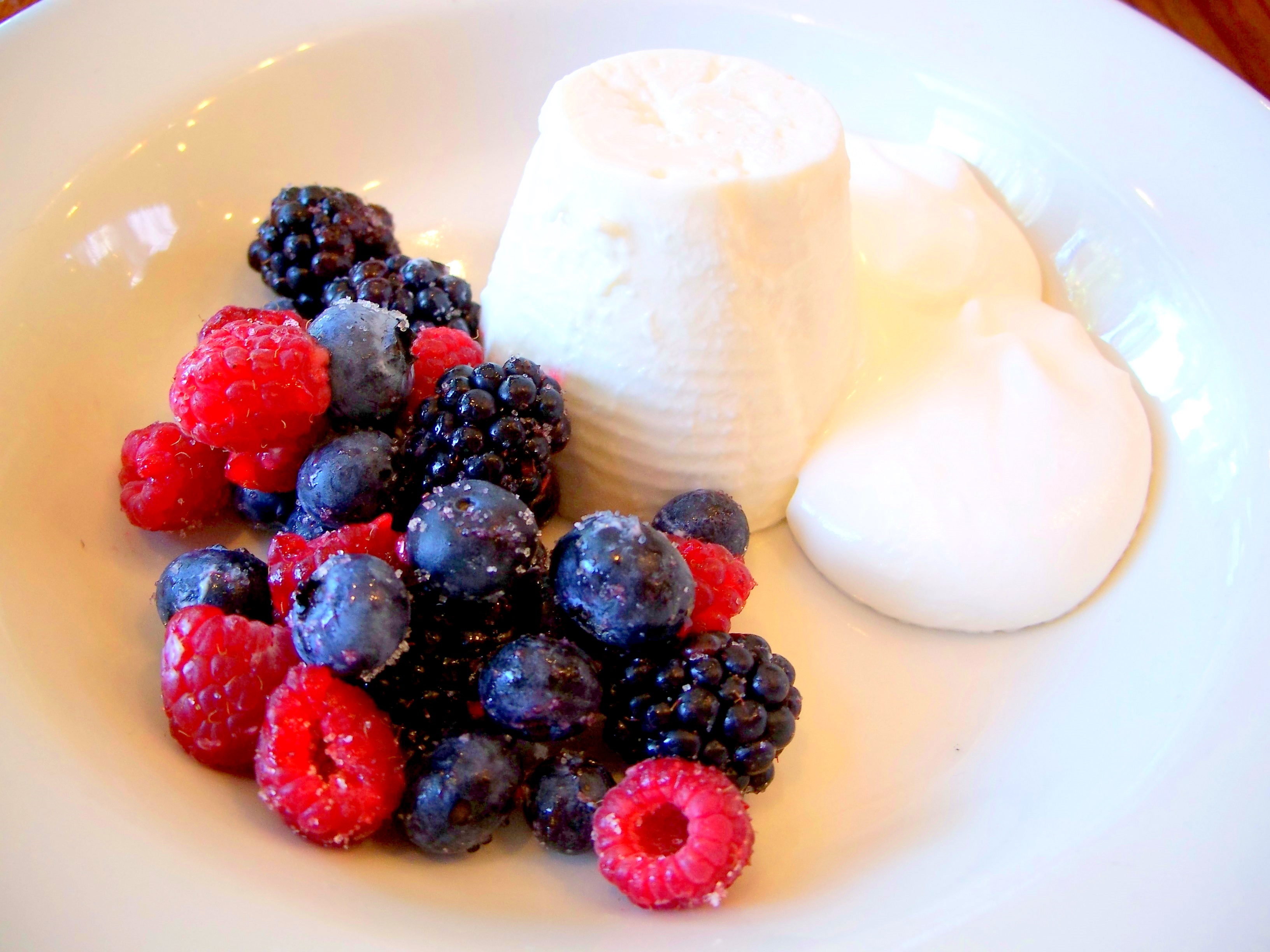
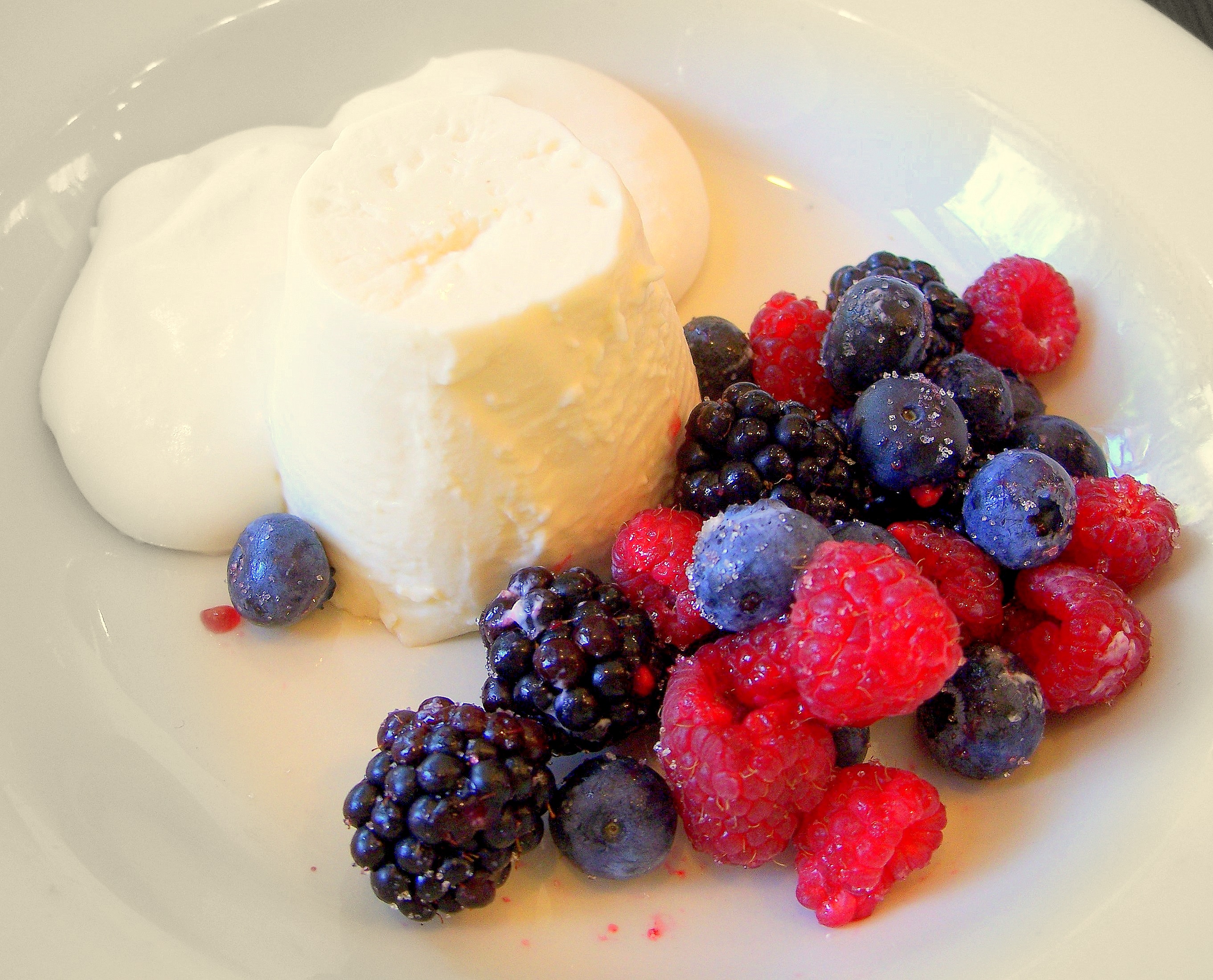
Venus restaurant, in some aspect, is just like their panna cotta: rich and smooth, with the occasional fresh and tart berries to boost.

Dessert at Venus - panna cotta with fresh berries - $8.00

Eating local and sustainable means spending unsustainably, or eating expensive in plain terms. Sure, breakfast for two or lunch plus dessert will rip you off about 25 dollars sans tip. But when the bill doesn’t absurdly boast $50 or more a person, the taste, the portion and the good feeling of eating healthy and local justify the self-indulgence. I guess.


Address: Venus Restaurant
2327 Shattuck Avenue,
Berkeley, CA 94704
(510) 540-5950

(*): This definition is made only on comparison with the cuisines of other states in America, as the fusion and local trend is by no means particular to California, but a growing fashion in high-end restaurants around the world.

Venus in San Francisco on Fooddigger

From popadom to Bombay pizza

August 10, 2010 By: Mai Truong Category: Comfort food, The more interesting

Guest post by Paul Simeon – The Indian meals following Cous Cous Cafe‘s takeouts and dinners at Oxford during his two weeks in England.


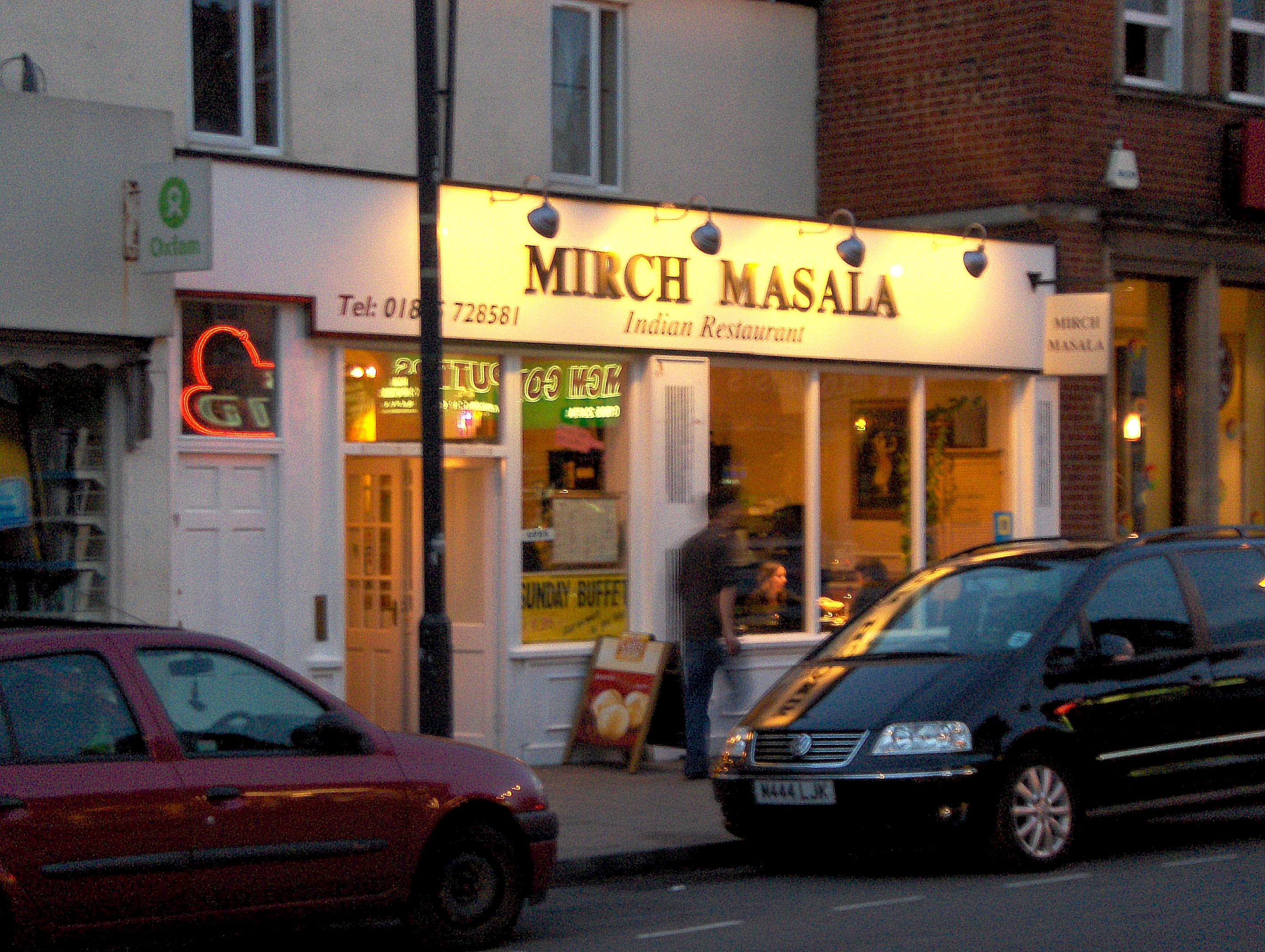
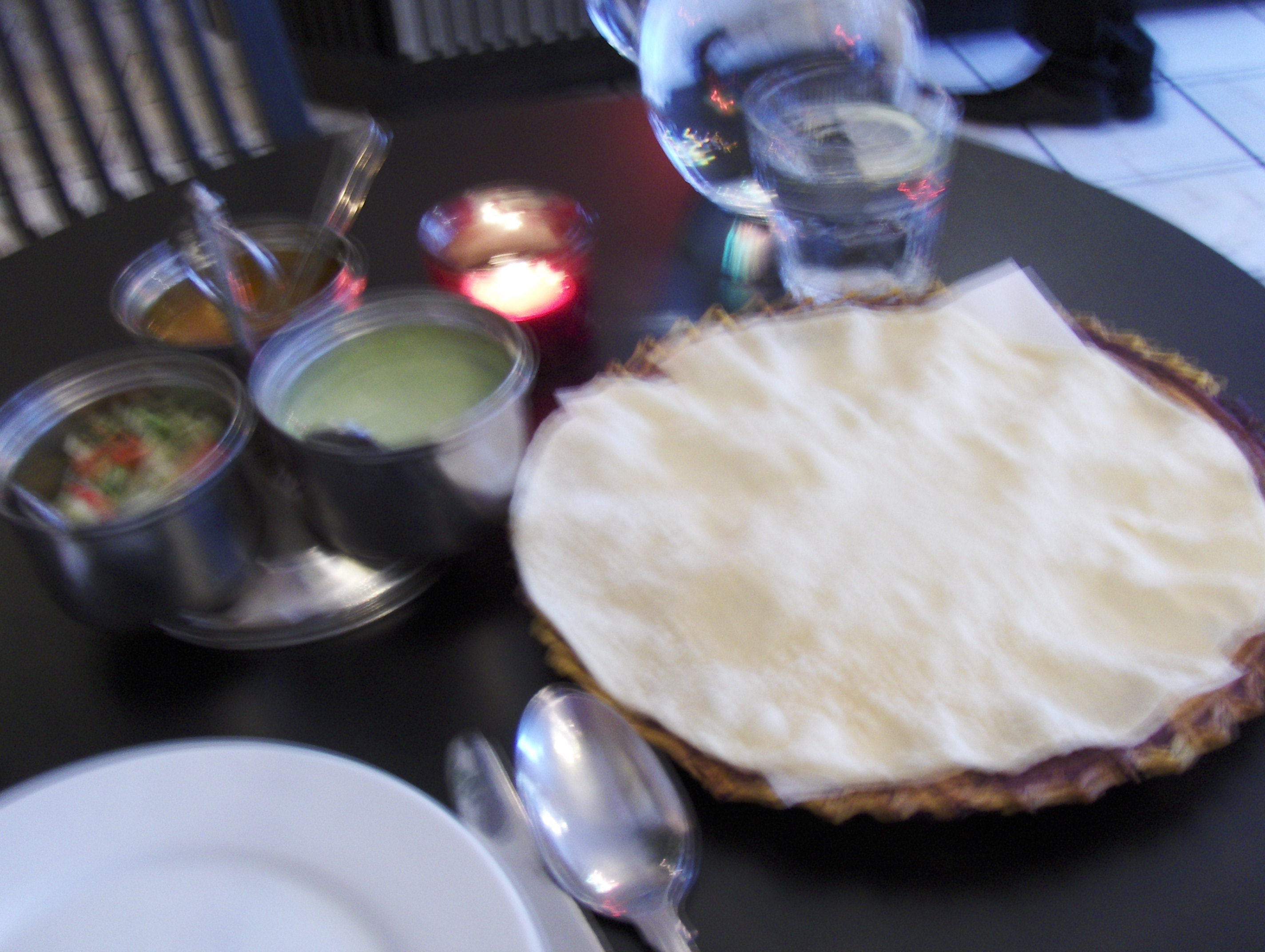
Saturday night I went to Mirch Masala. It was an Indian/Pakistani place. I later found out from the servers that the owner was from Pakistan, and the wife was from India. While I was waiting, alone, the server offered to get me some popadom (it has multiple spellings, but this is how their menu says it).


I didn’t know what it was or if it were complimentary, so I just said, “no, that’s alright.”  He brought it anyway, and it was quite nice.  It was a thin, crisp flatbread, like a cracker, and it had three toppings for it: chutney, chopped onions and coriander, and some green mint sauce.  The chutney was quite good.

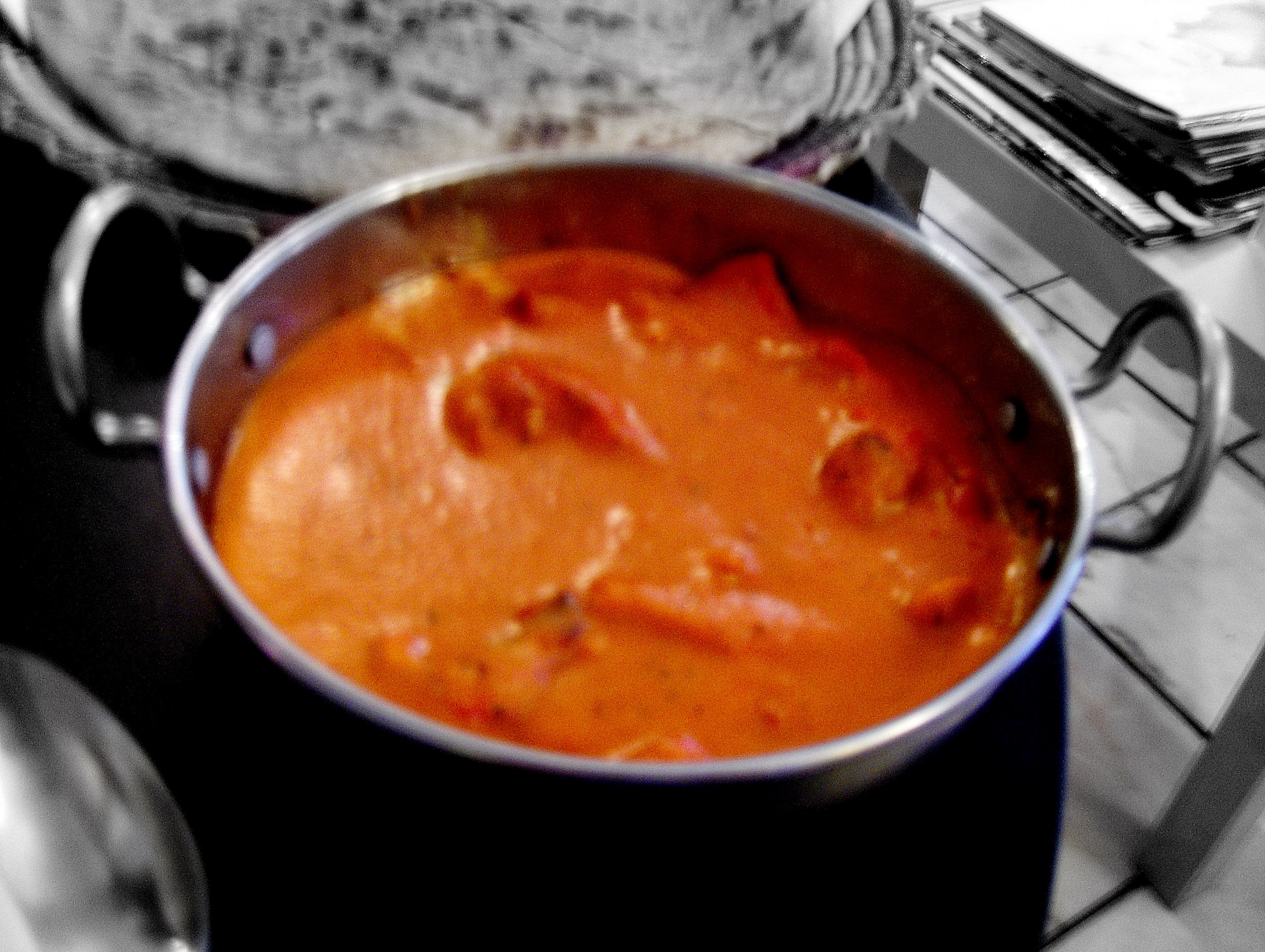
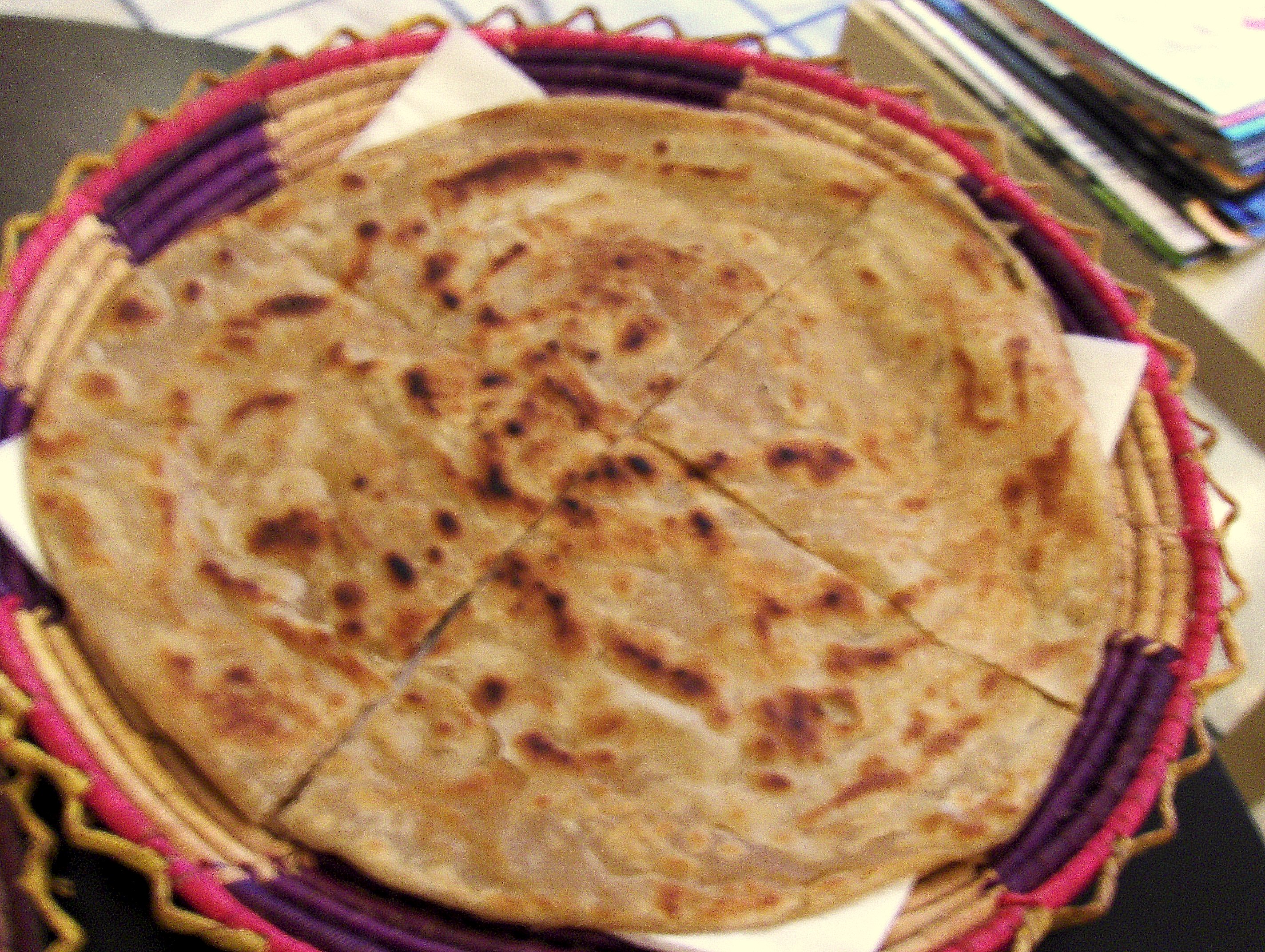
I didn’t finish all of the popadom by the time the main dish came, Murgh Makhani (Tandoori chicken off the bone cooked in butter, yoghurt, cream, cashew nuts, powder and masala sauces) with a side of paratha (rolled out Indian bread made on tawa, spread with ghee) to eat it with.

Murgh Makhani was the first on the list of house specialties, and I’m inclined to pick from the house special list.  I decided to try paratha instead of the more familiar naan.  They’re both good.  Paratha is just grilled in a skillet rather than baked like naan.  It works just as well as the naan at scooping up the main dish, and they are both better than the popadom.

The highlight of the night was the main dish, though.  It was simply perfect.  It was sweet, spicy, savory all at once, and just the right level of spice (for me) where one doesn’t notice it.  It had lots of grilled chicken pieces in it.  It was good quality chicken with little charred bits on it.

I barely had enough room to finish it all, except a little bit of popadom. The bill was 9 pounds, and the popadom was indeed complimentary, but perhaps just in my case. Tax is already included in the bill in England, which makes it easier to split the bill with multiple people. The servers noticed I was taking pictures of my food and suggested I should take a picture of the murals on two walls in the place. He said they were specially painted for them.  I thought the lights that had shining on them would mess up the picture, but it turned out to be the best picture of the night.  The lighting was too low for good pictures with my camera.

My last day in Oxford was spent in the Oxford University Museum of Natural History.  It was a pretty good museum, with the first dinosaur bones ever identified as a prehistoric reptile.  It was also the site of the famous 1860 evolution debate between Huxley and Wilberforce.  When it closed at 5, I roamed the tourist-filled streets of Oxford for a place to eat.  There wasn’t much by the museum, but I eventually found an area with some more options.

I settled on a place called Fire & Stone. Its theme was international pizza, with their menu divided by continent and filled with bizarre pizzas made from the cuisines of the continent. For example, Africa offers the Marrakech (£8.95 cumin spiced ground lamb, mozzarella, mint yoghurt sauce, green olives, raisins & sliced red onion drizzled with chilli oil) and the Cairo (£7.95 (v) Fire roasted red & yellow peppers, courgettes, aubergines, balsamic roasted red onions, mozzarella and Fire & Stone’s tomato sauce topped with crumbled goat’s cheese & pine nuts).  In some cases, it was pretty much insert-your-cuisine fusion food baked onto a pizza. They had a few vegetarian options, but I just got the impression that they didn’t offer as many vegetarian options in England as in the Bay Area, not surprisingly, and there was never a mention of vegan options.

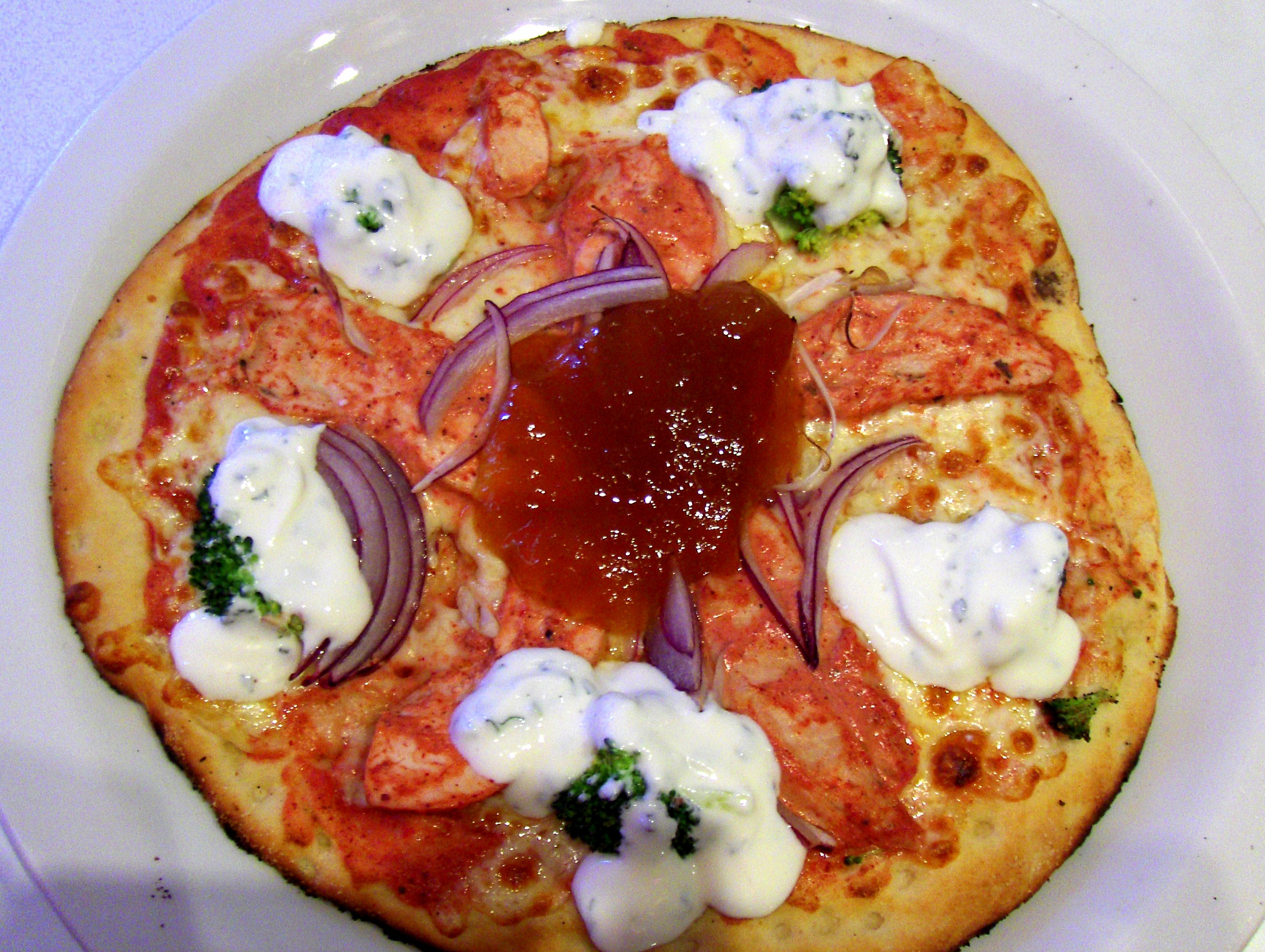
I chose the Bombay (£8.95 Roast tandoori marinated chicken breast, spiced tandoori yoghurt base, broccoli, sliced red onion, mozzarella, spiced mango chutney and cucumber & mint yoghurt) since Indian food is rare on this blog. This was good, but it would be a let-down if you’re expecting good Indian food, especially after eating at Mirch Masala. The chicken was not grilled or very flavorful, and the yoghurt and broccoli didn’t seem to go well with the rest. It was a nice change to have a tandoori base instead of normal pizza sauce. The pizza was 9 inches wide, a decent portion. I ate the whole thing without feeling too stuffed, which is just the right amount, I think. American restaurants tend to give a lot more food, which is good if you want to take home leftovers, but it often causes people to overeat or waste food. 9 pounds (roughly $14) is a little high, but I guess it’s normal (or even reasonable) for eating out in the middle of Oxford. They didn’t cut the pizza. Why not?

The restaurant was pretty big. It was a little early for the dinner crowd, so it was a bit empty. They had many big sliding windows open to air the place out. They also offer pasta, but I saw at least one table leave when the server informed them that the oven just broke, and they wouldn’t have pasta for about 30 minutes.

They had a hand-held credit card reader (as many places in England did) so that she could scan my card right at my table. Then she passed it to me to enter the percentage to add on as tip. I thought it was convenient compared to estimating it by hand, but I could see how some might find that awkward.

Addresses:
Mirch Masala
137-139, Cowley Rd
Oxford, Oxfordshire OX4 1HU
Telephone: 01865 728581

Fire & Stone Pizza Restaurant
Threeways House, 28-38 George Street
Oxford OX1 2BJ

Other bites in England:
Oxford dinners – part I and II
Cous Cous Cafe in Oxford
– Pie and mash at the Ship Inn Upavon and Pieminister
– England’s healthy fastfood chain: Pret A Manger

There can’t be more tender pork

August 06, 2010 By: Mai Truong Category: California - The Bay Area, Comfort food, One shot, Southern Vietnamese, Vietnamese

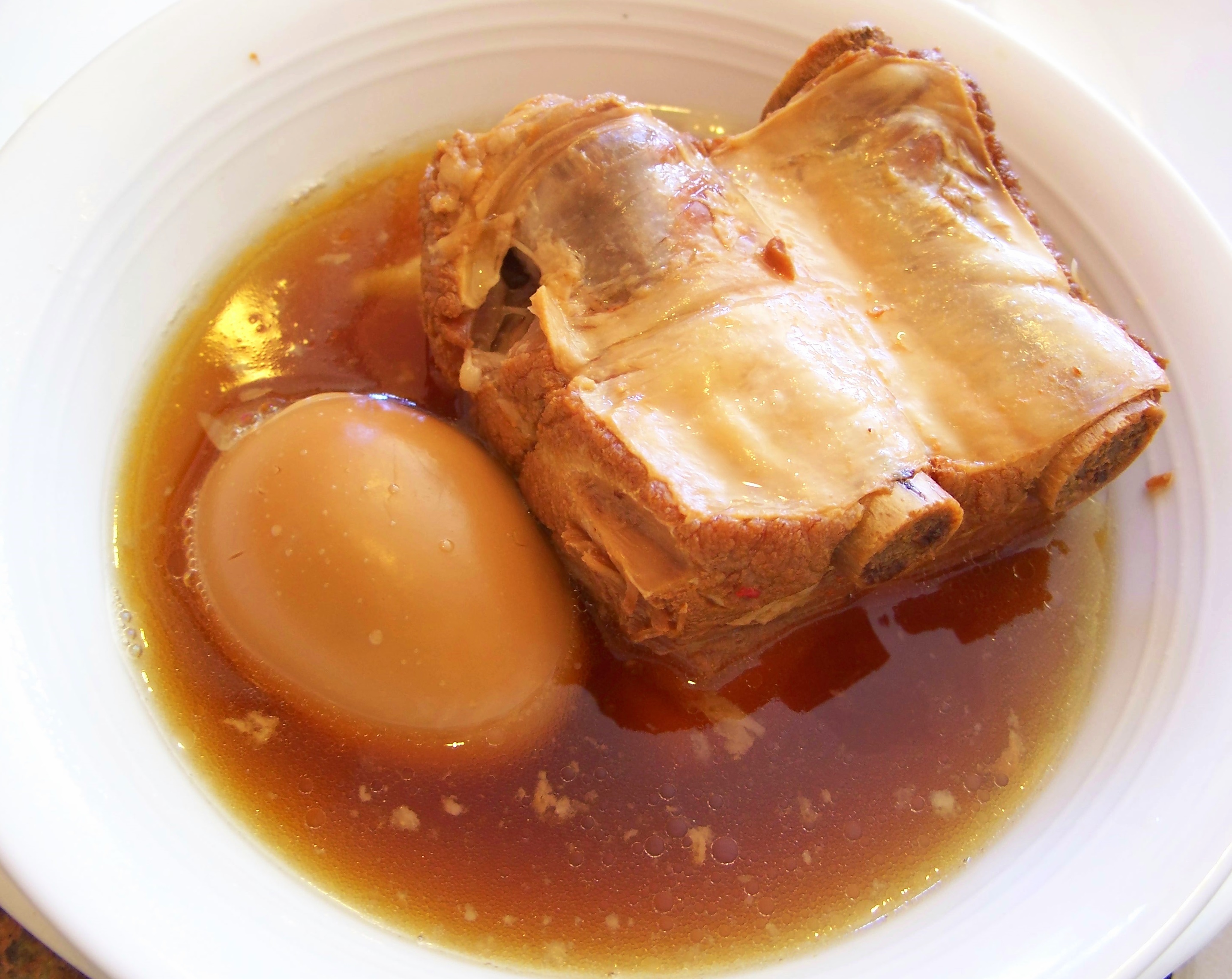
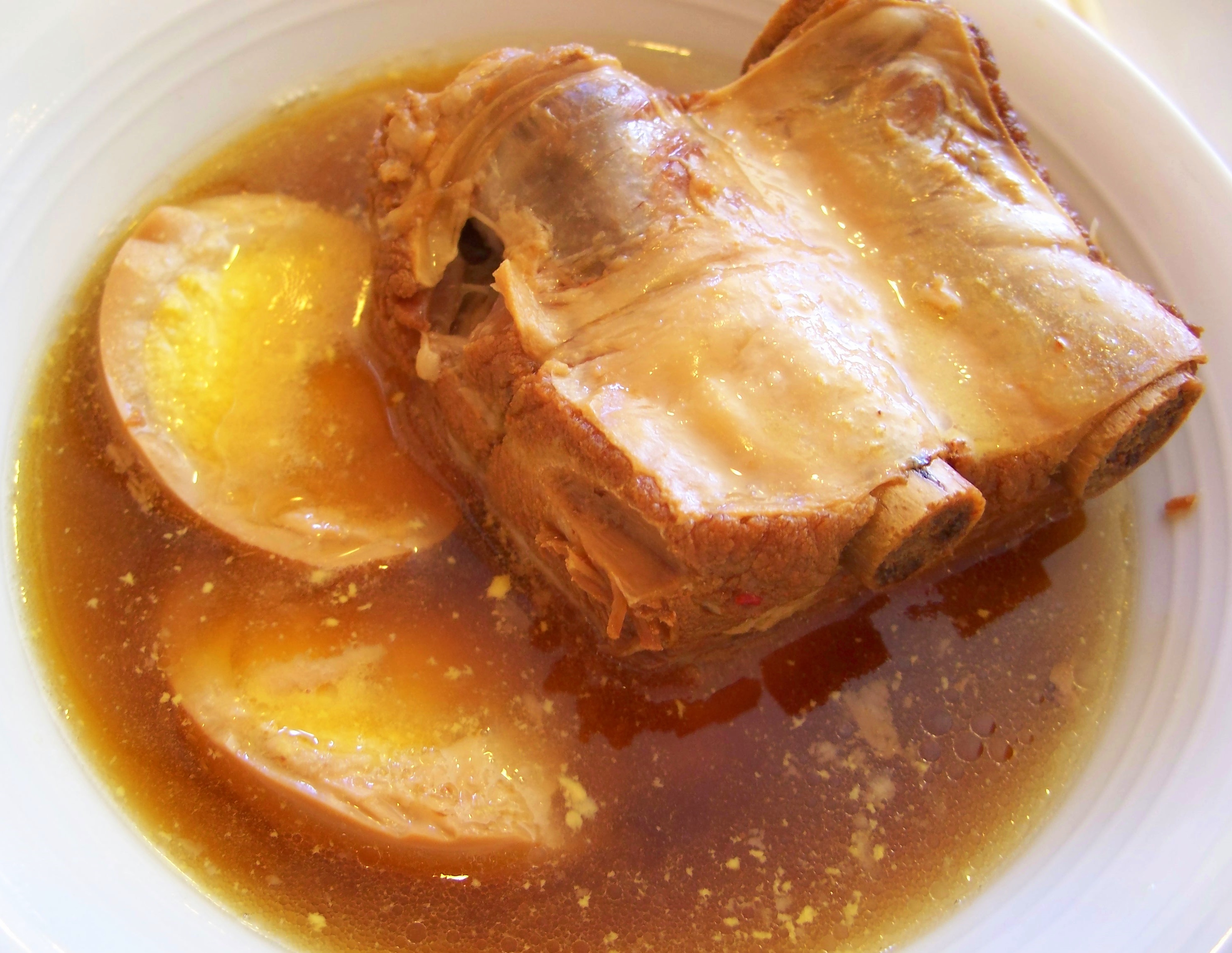
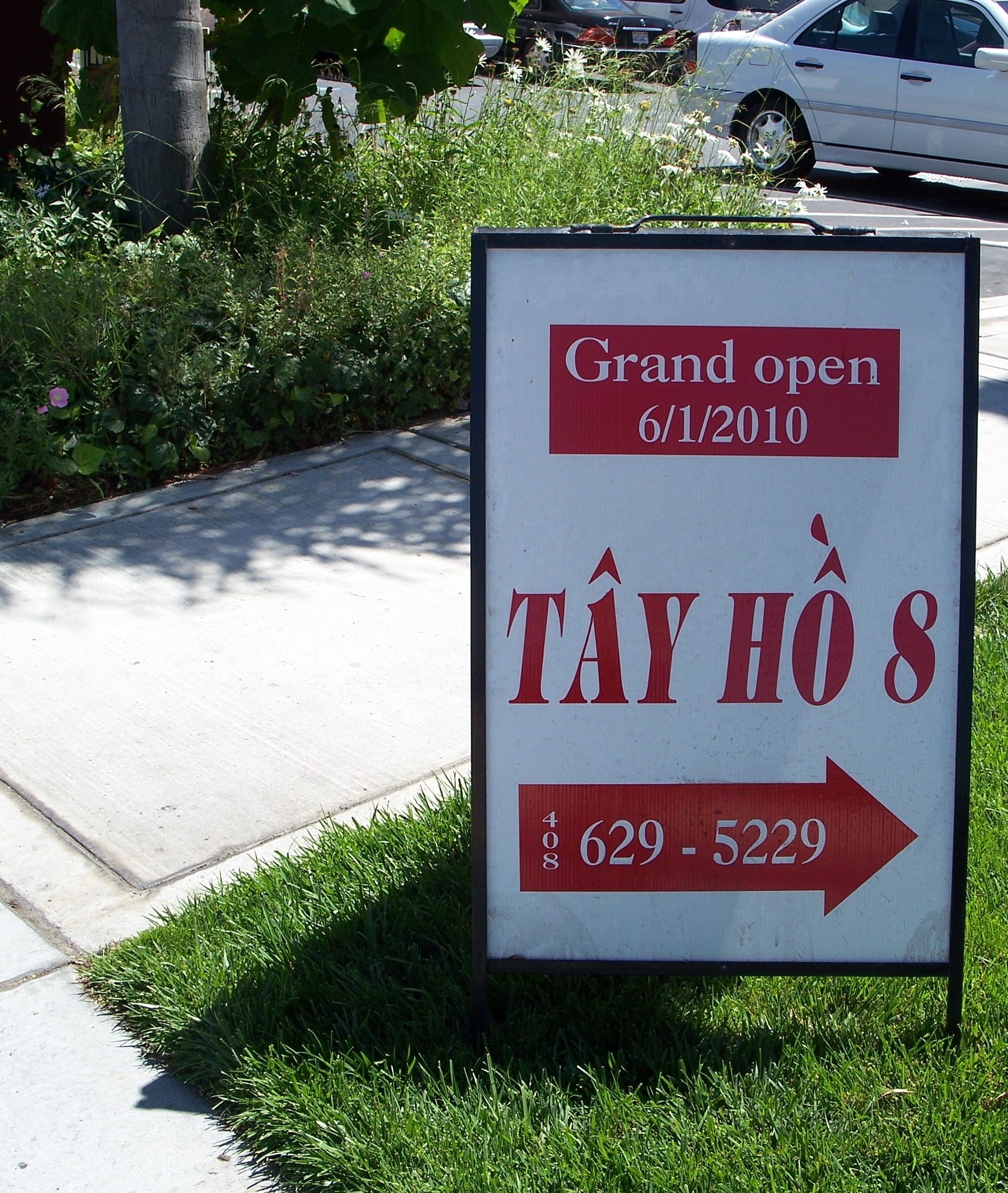
The revamped Bánh Cuốn Tây Hồ #8 dishes out some seriously tender thịt kho (fatty pork slow cooked in nuoc mam and sugar).

You know how they say this beef and that melt in your mouth? Well, I haven’t had any beef like that to testify if it’s just figurative talks, but last week I had this pork that really did melt in my mouth.

There is no need for either knife or teeth. The porcelain soup spoon cuts through three layers of skin, fat and meat as it would with a flan. The skin, which is half an inch thick and might have been chewy once, is not even as tough as jello. There is perhaps too much fat in this pork: a runny white bunch flimsily holding onto the meat (which should have been trimmed off) and bubbles floating in the sauce.

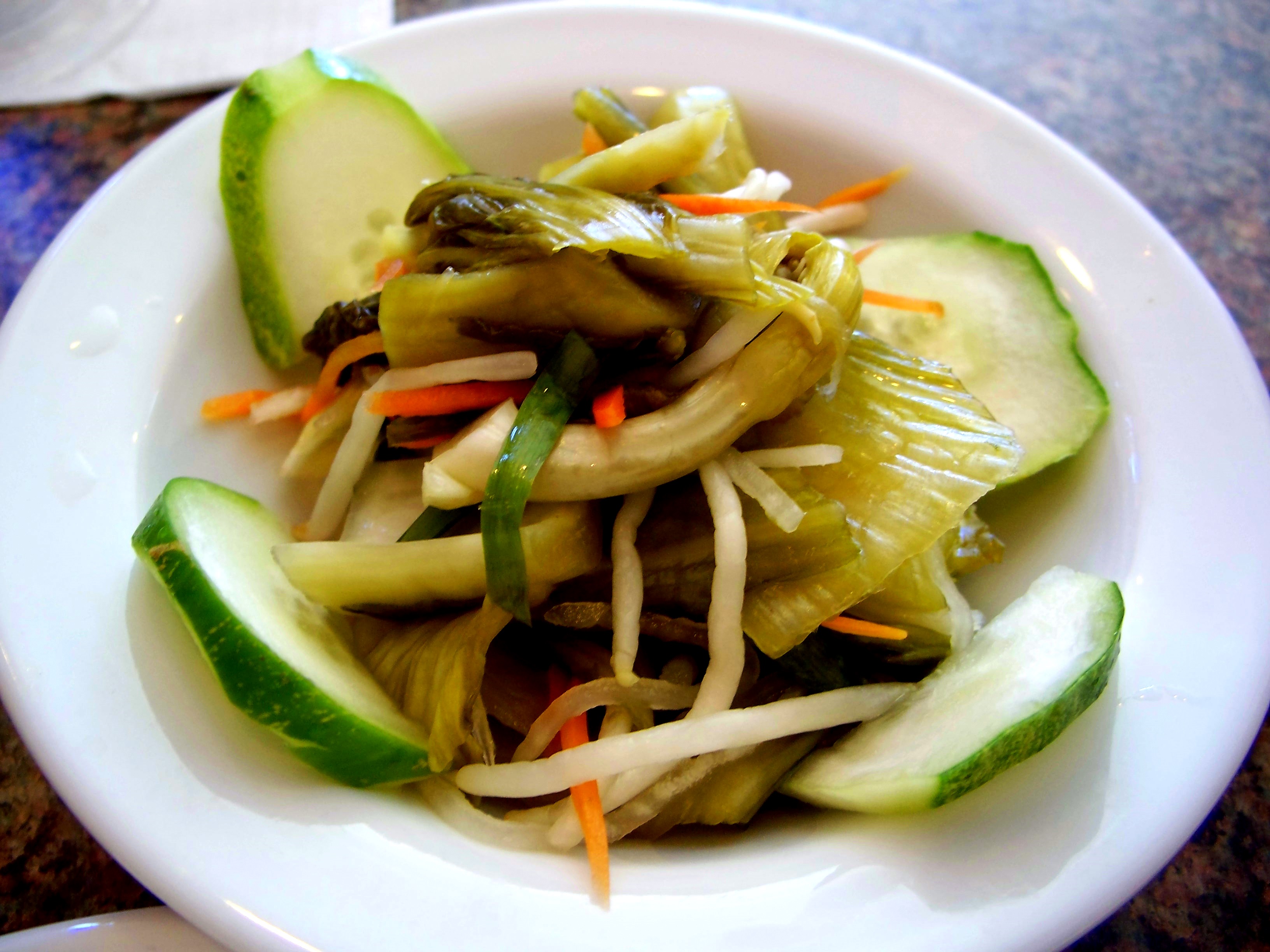
That’s how Southerners in the Mekong Delta cook their meat: huge chunks, generous seasonings, little attention to details and presentation. A few spoons of meat sauce alone is enough to flavor the rice. Overwhelmed by the fat? Tone it down with some dưa chua, pickled bok choy, carrot and daikon.

But what I like most in this lardy, homely course is not the meat, it’s the bone. Soaked in the same mixture of fish sauce and sugar, cooked for the same long time over the same heat, the bone doesn’t just dissolve like the meat, but becomes a pocket of juicy marrow. Place a bone between your jaws and press with the molars, the marrow oozes out like melting chocolate. Moving up a notch, Tay Ho’s braised pork was so cooked the bones turned into cookies. I am not exaggerating.

The second best thing in thịt kho is the eggs that have been cooked with the meat. Most savory eggs you can ever get.


Address: Bánh Cuốn Tây Hồ #8
2895 Senter Rd
San Jose, CA 95111
(408) 629-5229

Thịt kho trứng: $

Their bánh cuốn, as always, are good, but you have to pay $6.25 for only five rolls at Tây Hồ #8, whereas eight rolls of the same size would cost you $5.50 at Tây Hồ #9 in Oakland.