Flavor Boulevard

We Asians like to talk food.
Subscribe

Archive for the ‘Comfort food’

A sticky crusty crush

December 16, 2010 By: Mai Truong Category: Comfort food, RECIPES, sticky rice concoctions, Vegan, Vietnamese

Do you like that crisp, burnt, gochujang-dyed rice crust at the bottom of the dolsot when you scrape off spoon after spoon of bibimbap? If the answer is yes, I’m certain that you’d fall for this one too.

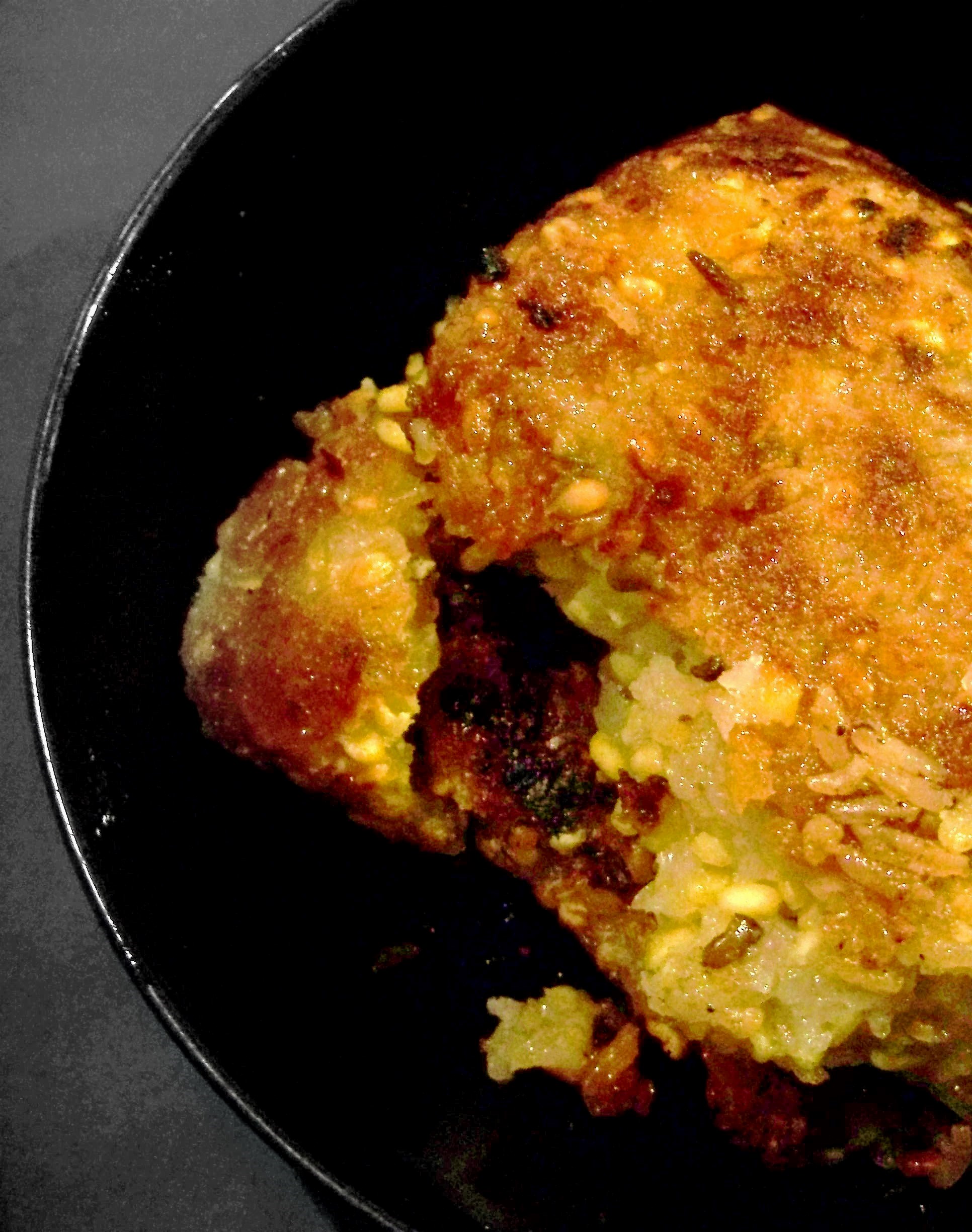
Mom cooks her xoi in a non-stick pan, with coconut milk and little water. Somehow, without a precise recipe, she can make a shell of brown, sweet and crusty sticky rice every time. Then we fight each other for it when it’s still warm and just a tad chewy, leaving the soft innard xoi for my dad.

Approximate recipe: Xôi cháy (literally “burnt xoi”, usually considered a point against the skillful xoi cooks, but I think it’s better than icing on a cake, it’s the best part of a perfectly cooked batch of xoi)
– 1 lb sticky rice
– 1/2 lbs mung bean (halved is fine, unscraped)
– 1 can of coconut milk
– 1/2 tsp salt
– sugar (lots! ~ 8-10 tbs)

Soak mung beans in water overnight to soften them, so that they get cooked faster (at about the same rate as the sticky rice). Mix sticky rice and beans together.
Put sticky rice, mung bean, a can of coconut milk, and just enough water to have the grains 1/10 inch under the liquid surface. Cook in a deep pan, covered, on medium heat. (If cooked in rice cookers, the bottom crust won’t form.)
When the mixture boils, turn the heat to low, wait about 10 minutes until most of the liquid is soaked into the grains, then use a chopstick to make holes in the mixture, allowing steam to circulate easily all around. Keep covering. Cook for another 10-15 minutes.
When rice and mung bean are soft, sprinkle salt and sugar on top, then gently mix (with chopsticks) the xoi without disturbing the bottom layer. (This is exactly what you must do when eating dolsot bibimbap, you don’t want the crust to mix with the soft part.) Make holes in the mass again. Cook for a few more minutes.
Scrape off the xoi innard first and store separately. Take out the whole crusty shell with care, or break off into chunks. Eat by itself. Flavorastic by itself.

Tags:

Rolling business in Tay Ho Oakland

December 11, 2010 By: Mai Truong Category: California - The Bay Area, Comfort food, Northern Vietnamese, savory snacks, Vietnamese


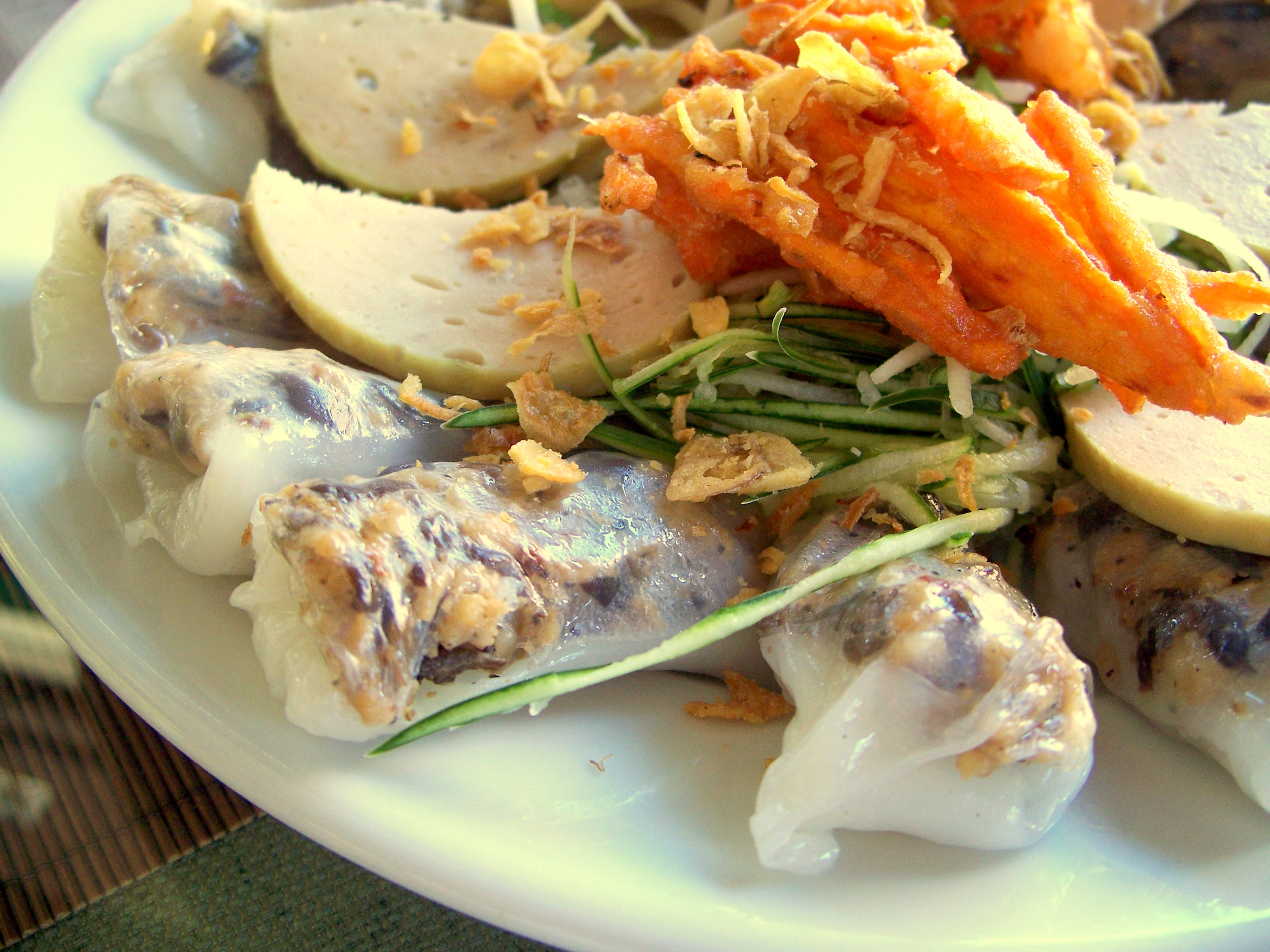
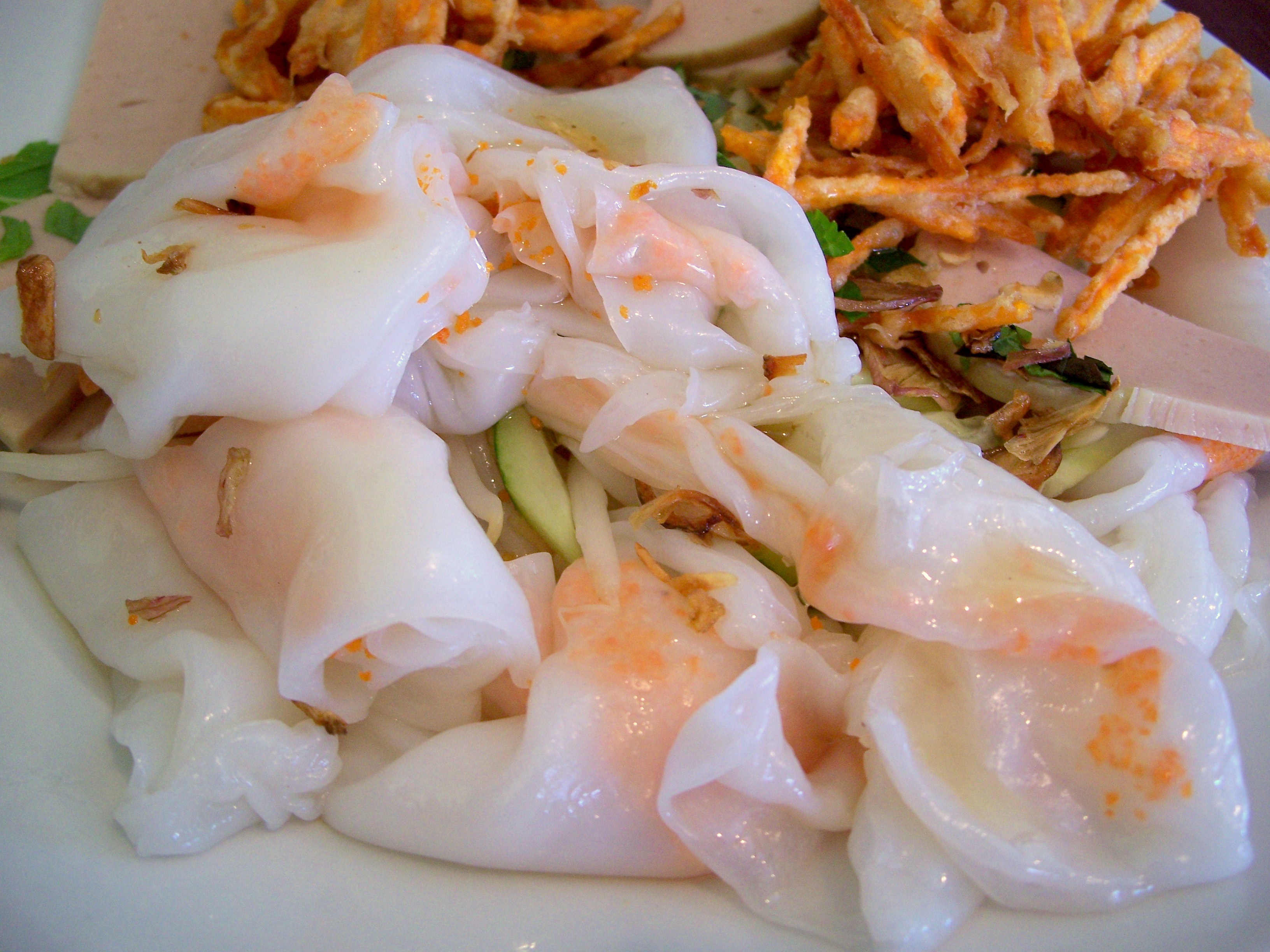
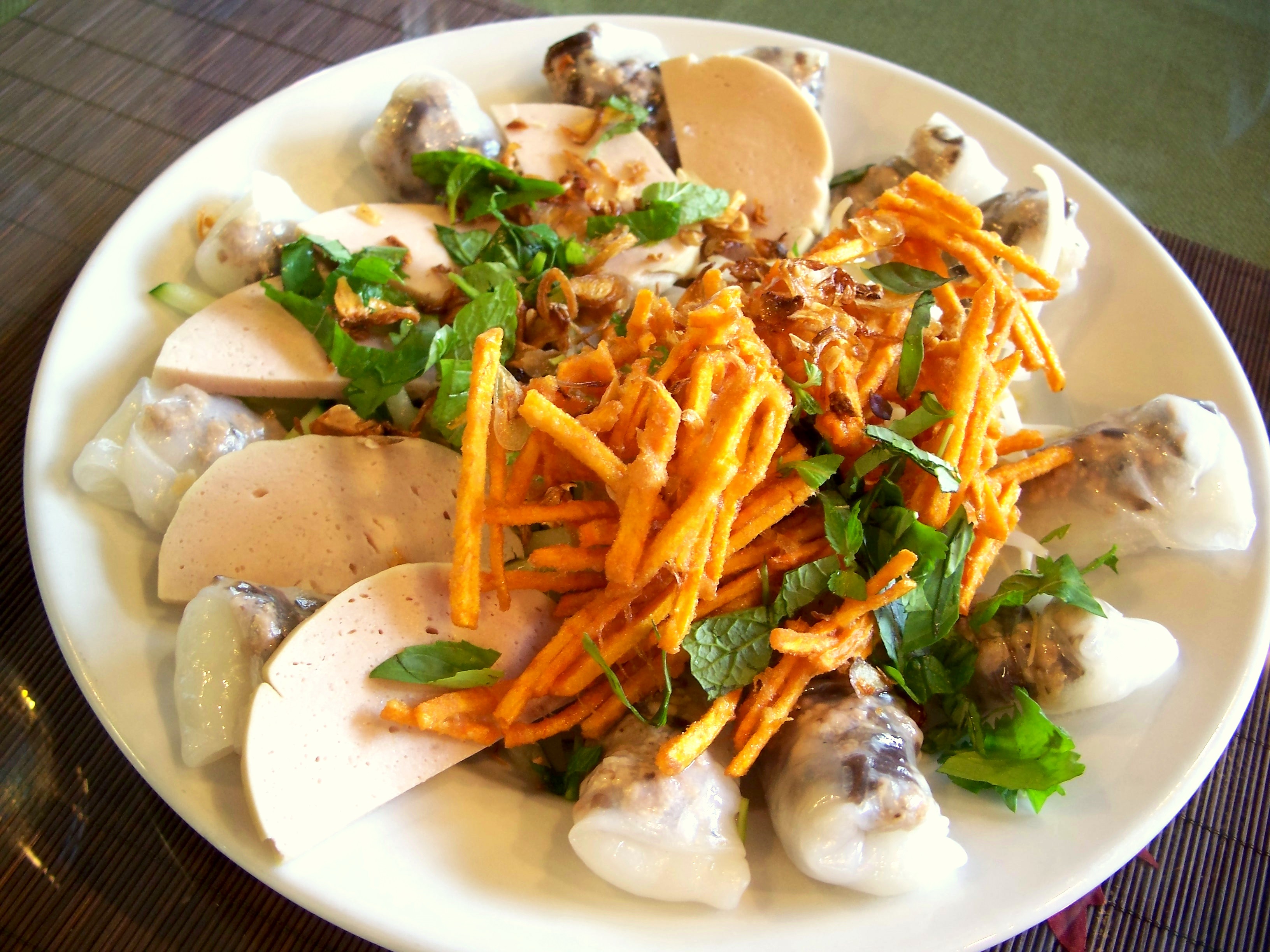
Not many Vietnamese diners roll out steamed rice leaves stuffed with pork and mushroom, and among those that do, not many actually do it right. A good roll of banh cuon must be slick but not oily, delicate but not crumbly, the flour leaf thin but springy, the stuffing visible, almost poking through, on one side and hidden on the other, served warm. A good nuoc cham must be more sweet than salty, with a little zest of lime, and spicy is not necessary. You then pour as much of that honey-colored dipping sauce as you want all over the plate, soaking the cucumber, the bean sprout, the cha lua, and especially the rolls. You then savour. When it comes to banh cuon, Tay Ho rules, from Vietnam to America. But among the Tay Ho’s of the Bay, Tay Ho #9 in Oakland makes it best.


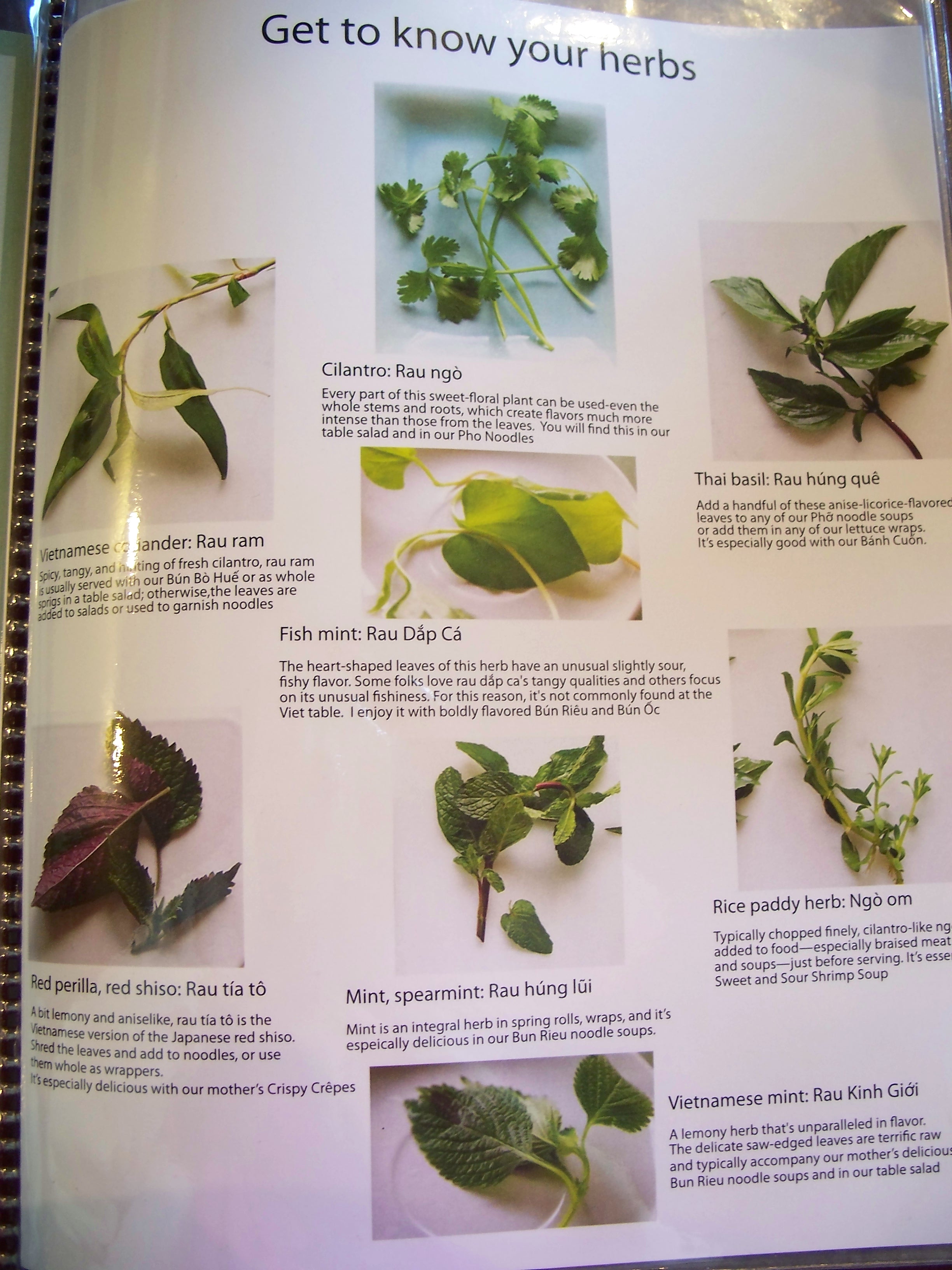
After taking over the business from her aunt, Duyên transforms Tay Ho Oakland into an all-American restaurant with fluent-English-speaking staff (herself on weekdays and with another girl on weekends), attentive service, credit card accepting, and a list of common herbs on the last page of the menu, something I haven’t seen at any other Vietnamese restaurant. It helps me at least, finally after 24 years I know which name goes with which plant. (Click on image for full-sized version). The food authenticity, of course, is preserved.


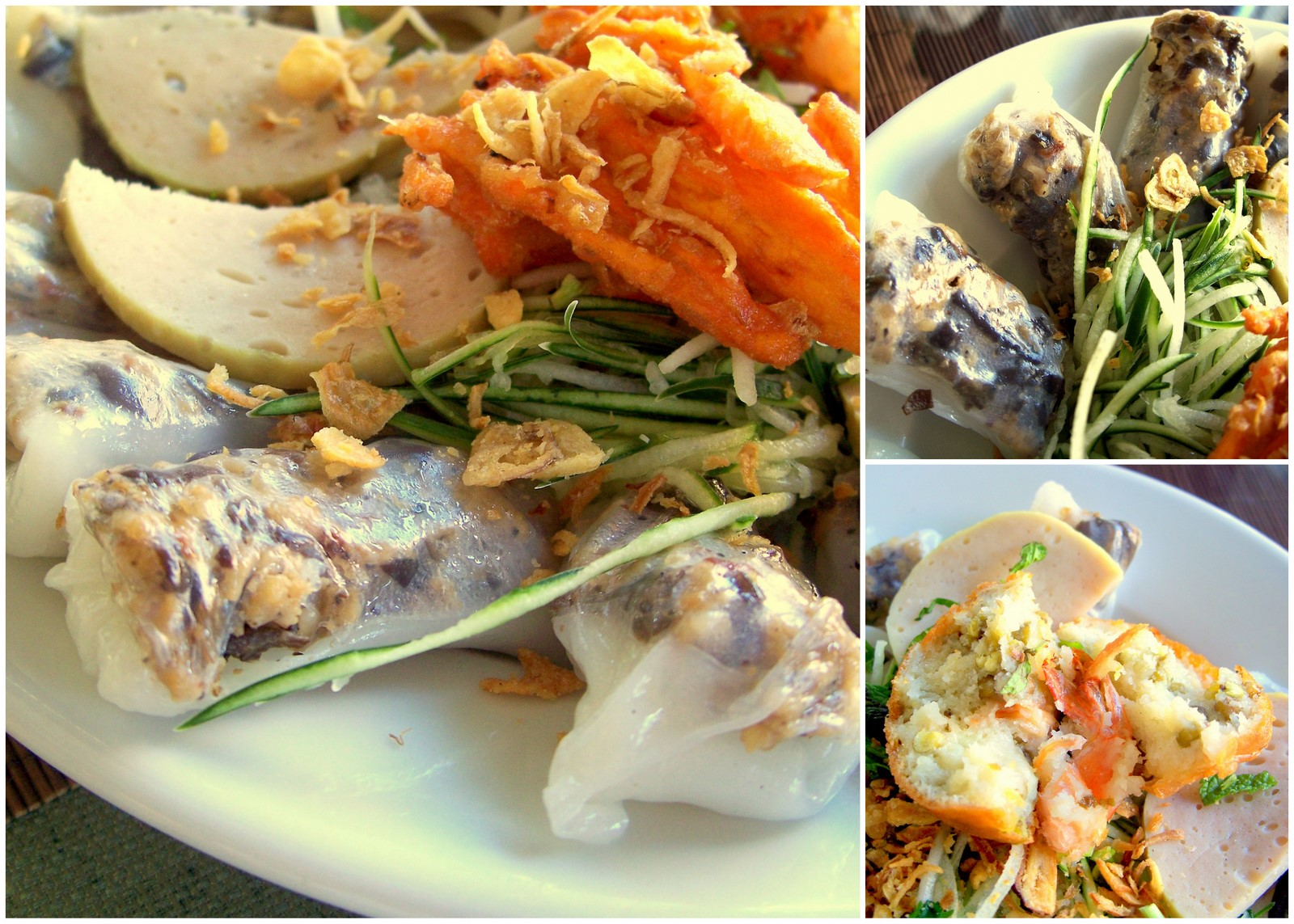
The menu features four types of banh cuon. The first, order #8, is the definitive authentic unadulterated version of steamed rolls that the Northerners had created and the whole country has fallen in love with: bánh cuốn nhân thịt (steamed rolls with meat). The more I eat it the more I crave it. The best part: flat, slick, crunchy pieces of wood-ear mushroom that accidentally fall out of the rolls.


The second type of banh cuon, for non-meat-lovers like my mother, is bánh cuốn tôm chấy (rolls with dry-fried shrimp). The shrimps, peeled and fried without oil or any liquid, get dried up and broken into a flossy powdery entanglement. That’s if you make it at home. Here I suspect the kitchen uses some prepackaged shrimp powder for efficiency, which has a beautiful scarlet hue but little texture and flavor. The rolls, though practically just steamed rice leaves, are still savourastic when soaked and glossed in that honey-colored sweet and salty nước chấm.


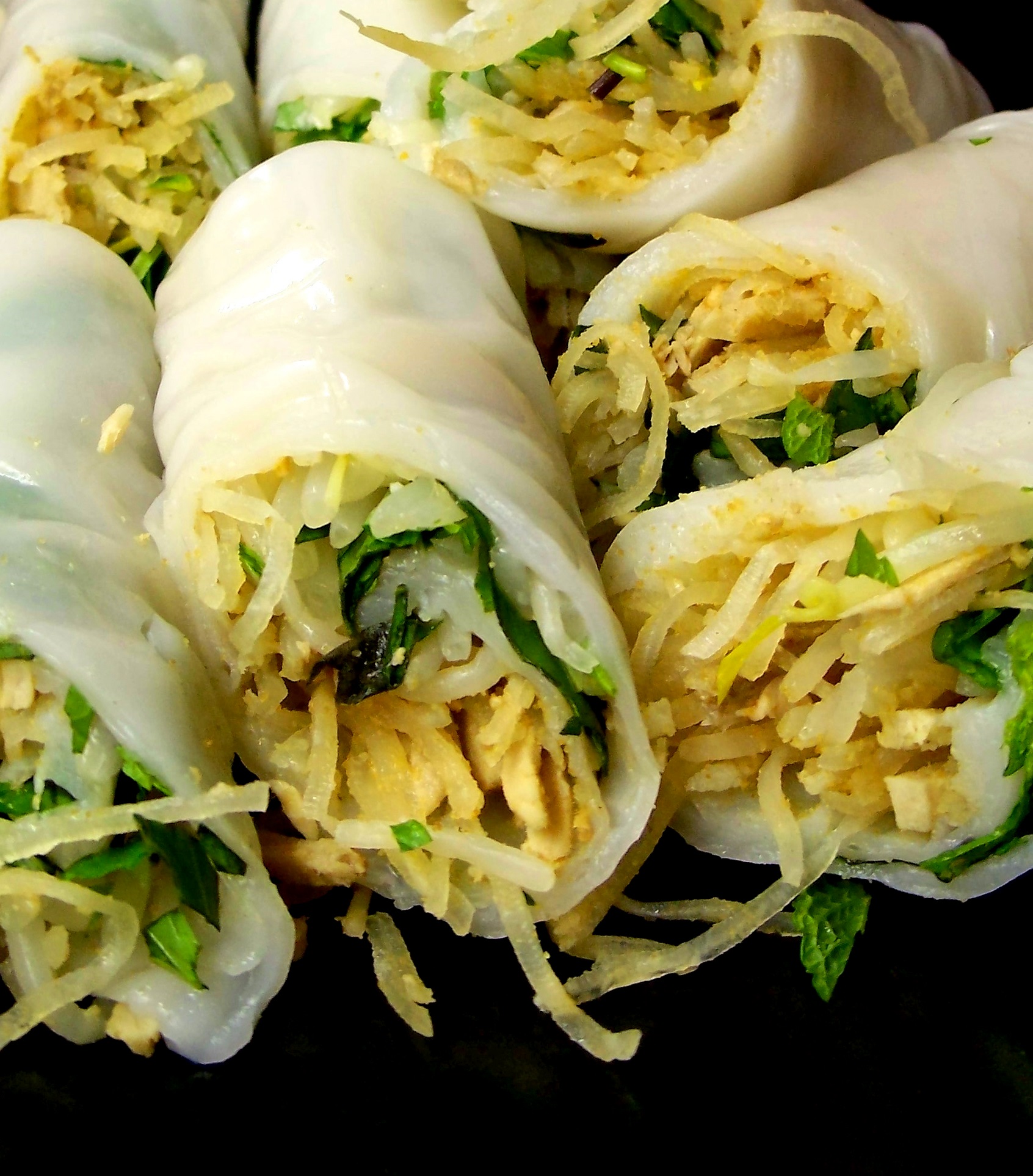
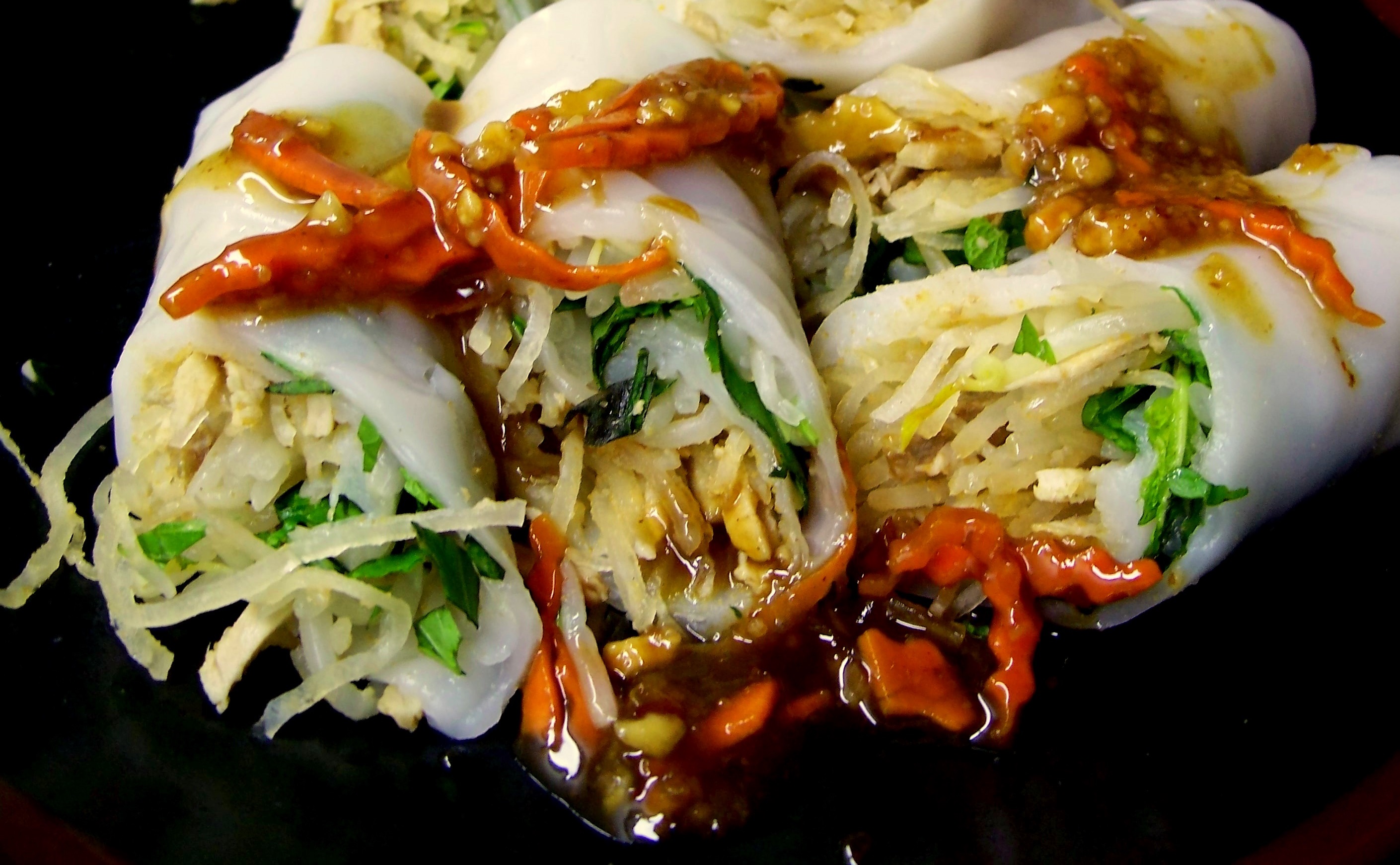
The third type is a modern spinoff with thicker rice leaf, bigger rolls, stockier stuffing that features grilled pork, bean sprout, and cucumber all in one, also at a heftier price (4 rolls for $6.95). Bánh cuốn thịt nướng is more of a filler than a delighter, but who says it can’t lift your mood while settling your stomach. Instead of grilled pork, shredded pork skin is also used, making the fourth type: bánh cuốn bì.


If banh cuon thit nuong‘s savoriness from grilled pork saves it from getting drowned in nuoc cham, the shredded pork skin (with some meat) in banh cuon bi are merely for textural pleasure, leaving chilipeppered peanut sauce to dress up the rolls. I have faith that nuoc cham would be a better roll-dresser though.


Occasionally I like to fool around with these variations, but in the end banh cuon nhan thit is still the winner in taste, just as Tay Ho Oakland is the winner in reliability.

Address: Tây Hồ Restaurant – Bánh Cuốn Tây Hồ #9
344B 12th Street
Oakland, CA 94607
(510) 836-6388

Toothsome nana tootsie

December 08, 2010 By: Mai Truong Category: Comfort food, Fruits, One shot, RECIPES, Southern Vietnamese, sweet snacks and desserts, Vegan


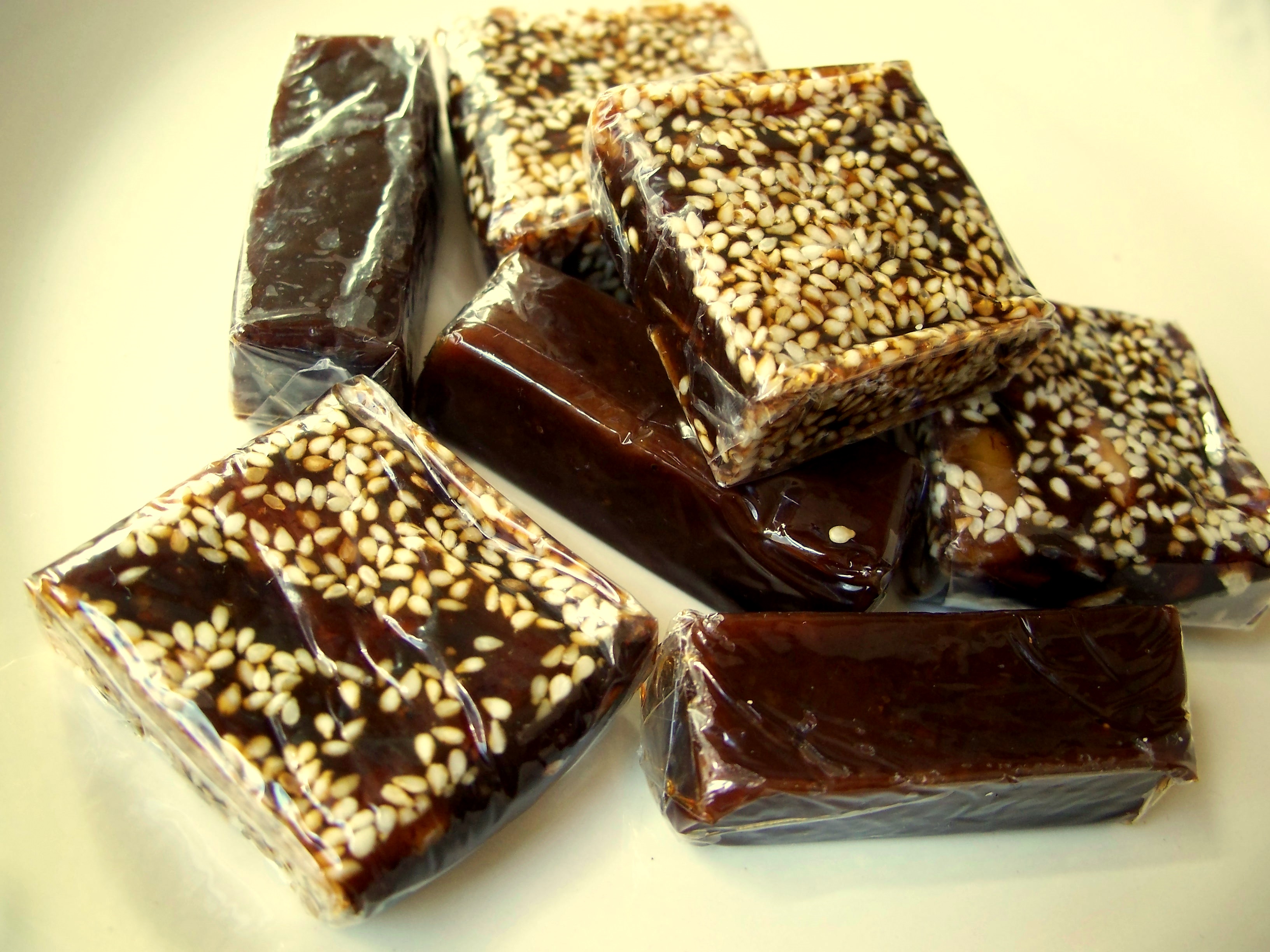
Last night I dreamed of these brown sticks in cellophane wrappers. The sound of crunchy plastic unraveled. The smooth yet sticky, dried-syrup-like surface that easily gives way to the pinch of two nails. An ever so lightly sweet, fruity, malty breath whizzing up as your nose closes in…

I woke up feeling as though there were some of those pieces melting on my tongue. But the best part of eating a banana tootsie roll, if I may call it so despite it having no relationship to the Tootsie Roll, is, like with the real Tootsie rolls, the chew. You chew it and notice it get smaller, but not any less sweet or less gummy. And it’s only as sweet as a just ripe banana, yet with an alluring touch of coconut.

The chewy banana candy is a Mekong delta specialty, where siem bananas grow more easily than rice. The stout, dense, supple bananas either make their way into che, bread pudding, wrapped and grilled in sticky rice, flattened and sun-dried, or cooked in some recipes that are only passed down from mothers to daughters. I just know that whenever we traveled to or a friend of the family came back from the My Tho, Ben Tre region, I got a bag of keo chuoi – banana candy (pronounced somewhat like |keo jui|), or keo dua (|keo yua|) – coconut candy. Banana candies are less sweet and less strenuous to the jaw than the coconut ones; some are coated with roasted sesame seeds, some contain crushed peanuts or ginger bits, but I like the plain, pure, consistent banana kind the best.

Keo Chuoi (banana chewy candy) –
Ingredients
– 3 bags of whole dried bananas
– 1 coconut
– 1 ginger root, roasted and crushed peanuts (if you like some texture variation)
– Sugar, 1 tsp lime juice
– cellophane candy wrapper

Slice thinly the dried bananas, coconut, and ginger. Stir banana and sugar in a skillet on low heat (add at least half as much sugar as banana), add coconut (and ginger if wanted), stir constantly to avoid them burnt. Add lime juice to keep the mixture gooey. Add peanuts when the mixture is homogeneous and start to harden. Take out, flatten and smoothen the surface (add a sesame coat now if you want), wait until cool then cut and wrapped in cellophane wrappers.
If you can’t find dried bananas, try using a blender to mix banana, coconut, and ginger together, and do every subsequent step the same way.
(Recipe not yet tried :-P, translated from Vietfun)


Ze kwik-n-easy vay:
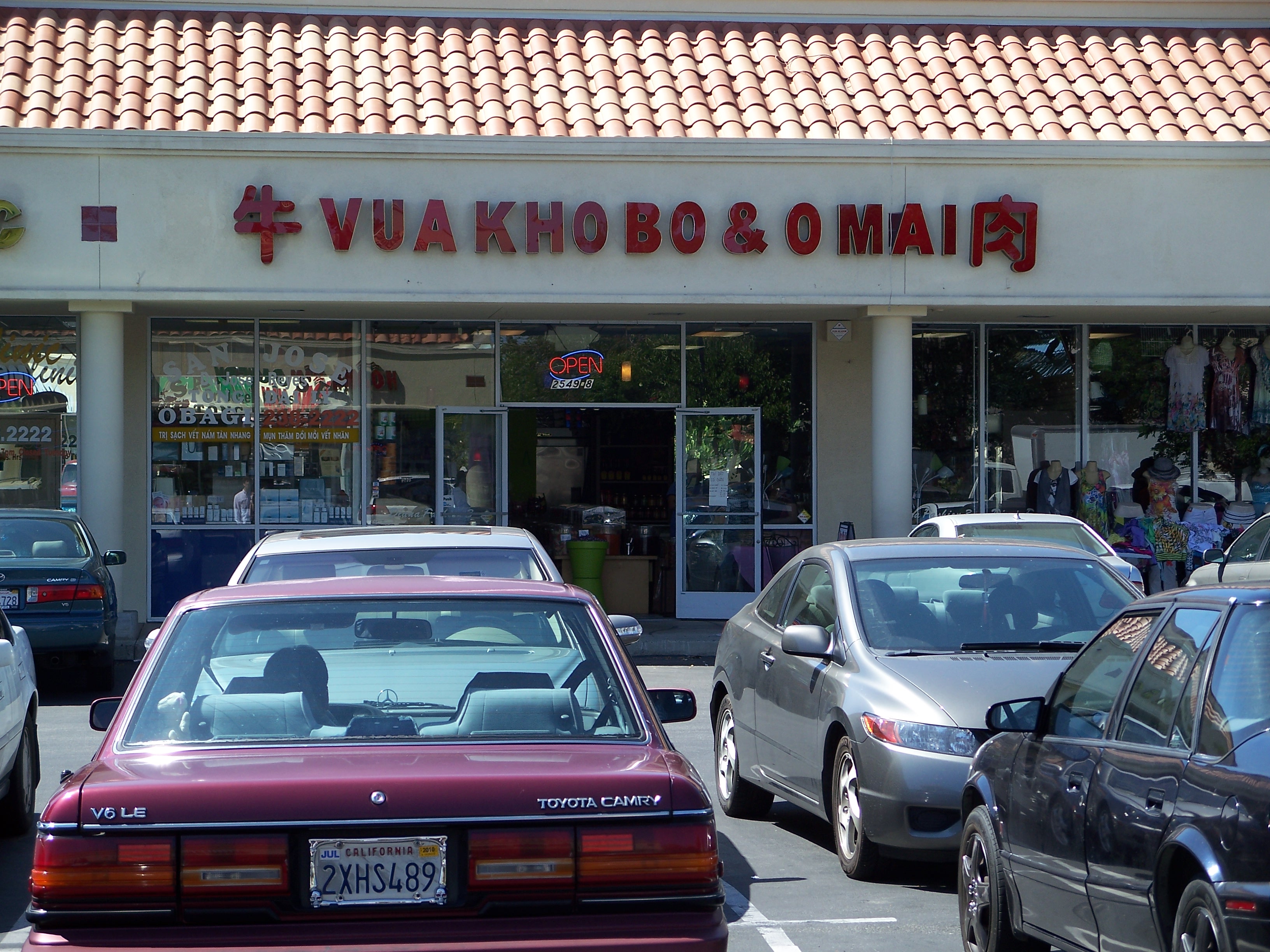
Vua Khô Bò & Ô Mai (loosely translated: “King of Beef Jerkies and Dried Huamei“)
2549 S King Rd #A-B
San Jose, CA 95121
(408) 531-8845

Go bananas a few other ways:
banana ice cream
banana dog
banana bread pudding
banana in sticky rice log

Tags: ,

Desserts at Vietnamese restaurants

December 02, 2010 By: Mai Truong Category: California - The Bay Area, Comfort food, sticky rice concoctions, sweet snacks and desserts, Vietnamese


Raise your hand if you’ve ordered dessert at a Vietnamese restaurant. What? Vietnamese restaurants have desserts? Yep, they do. But they’re always on the last page of the menu, which you never get to because you stop at number 1 – Pho dac biet (special noodle soup) or summ’n. Besides, nobody ever bothers to ask if you’d like to have dessert before they bring out your check. And besides, pho usually fills up the once empty cavity, so no more room for sugar loads. But next time it’s okay to leave some broth and some noodle behind, cuz they do have some delicious sweet deals outback. Not bubble teas.


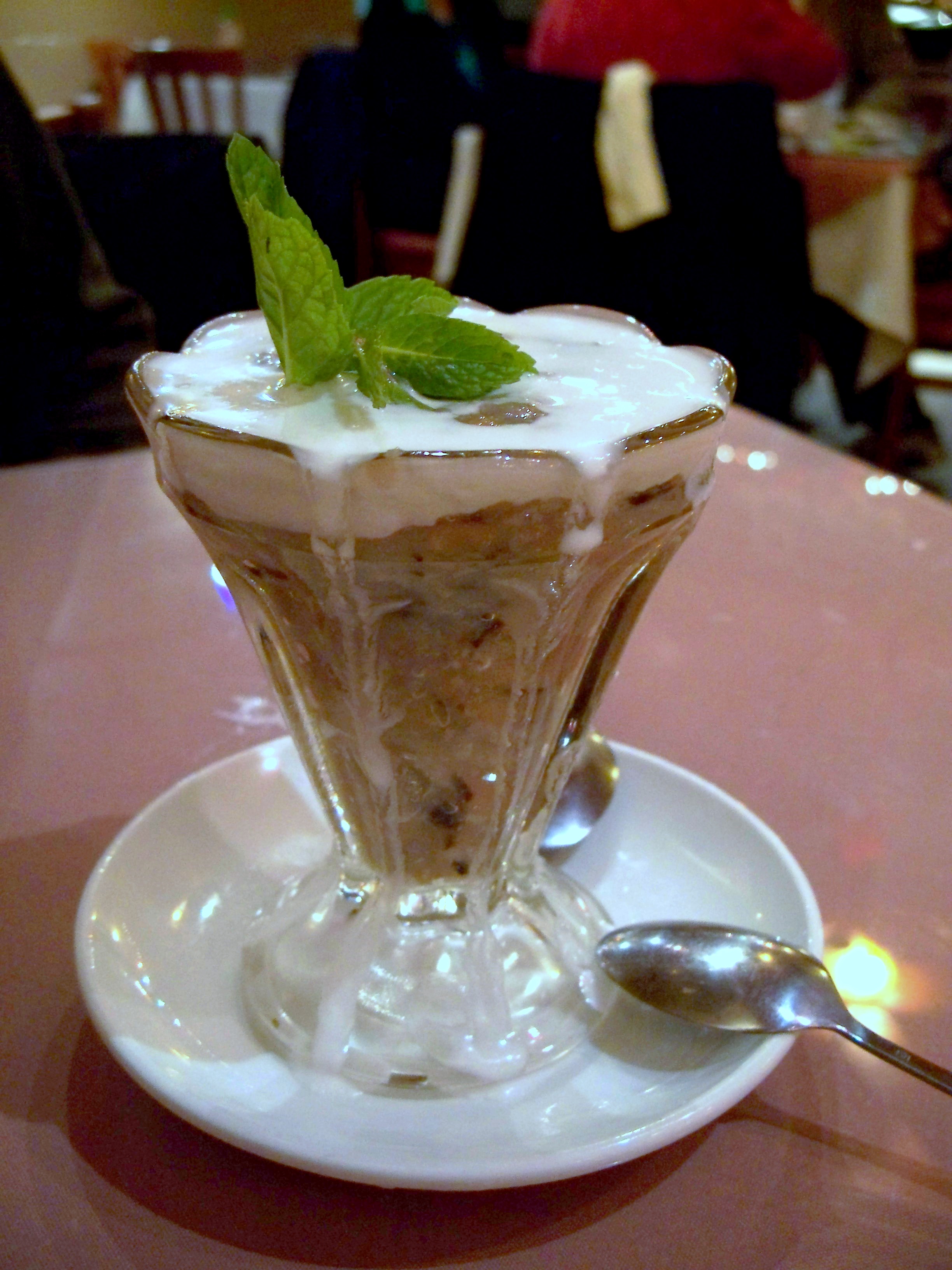
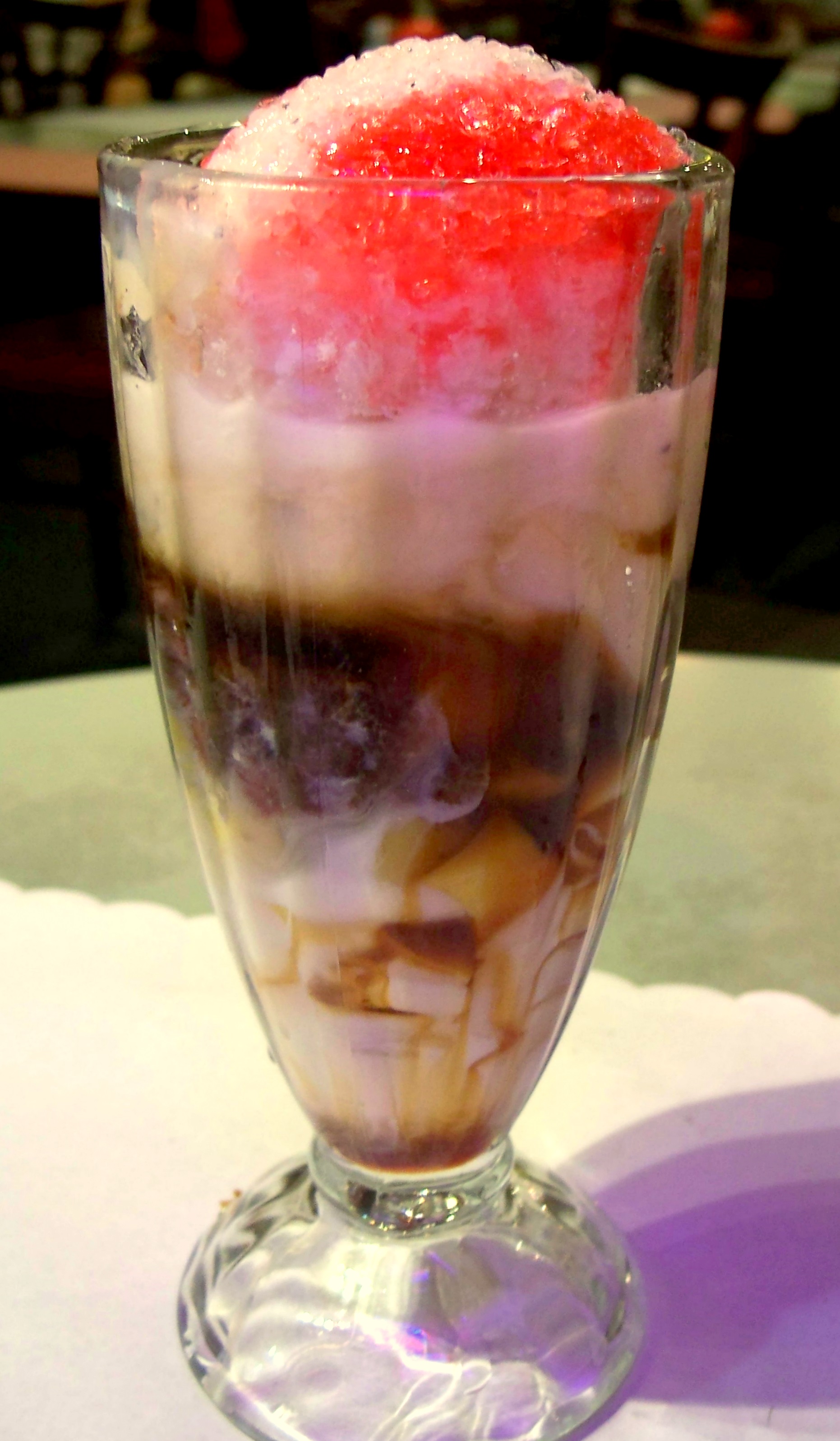
Black eyed pea che is one. Mushy, plump peas dissolve on your tongue with gooey sticky rice and coconut milk. I adore che dau trang at Kim Son and at Lee’s Sandwiches in Houston, but this beauty in a glass served at Le Regal does not disappoint either. Of course, do NOT eat the mint, as much as I’m for flavor mixings, this mint is purely a matter of decor.


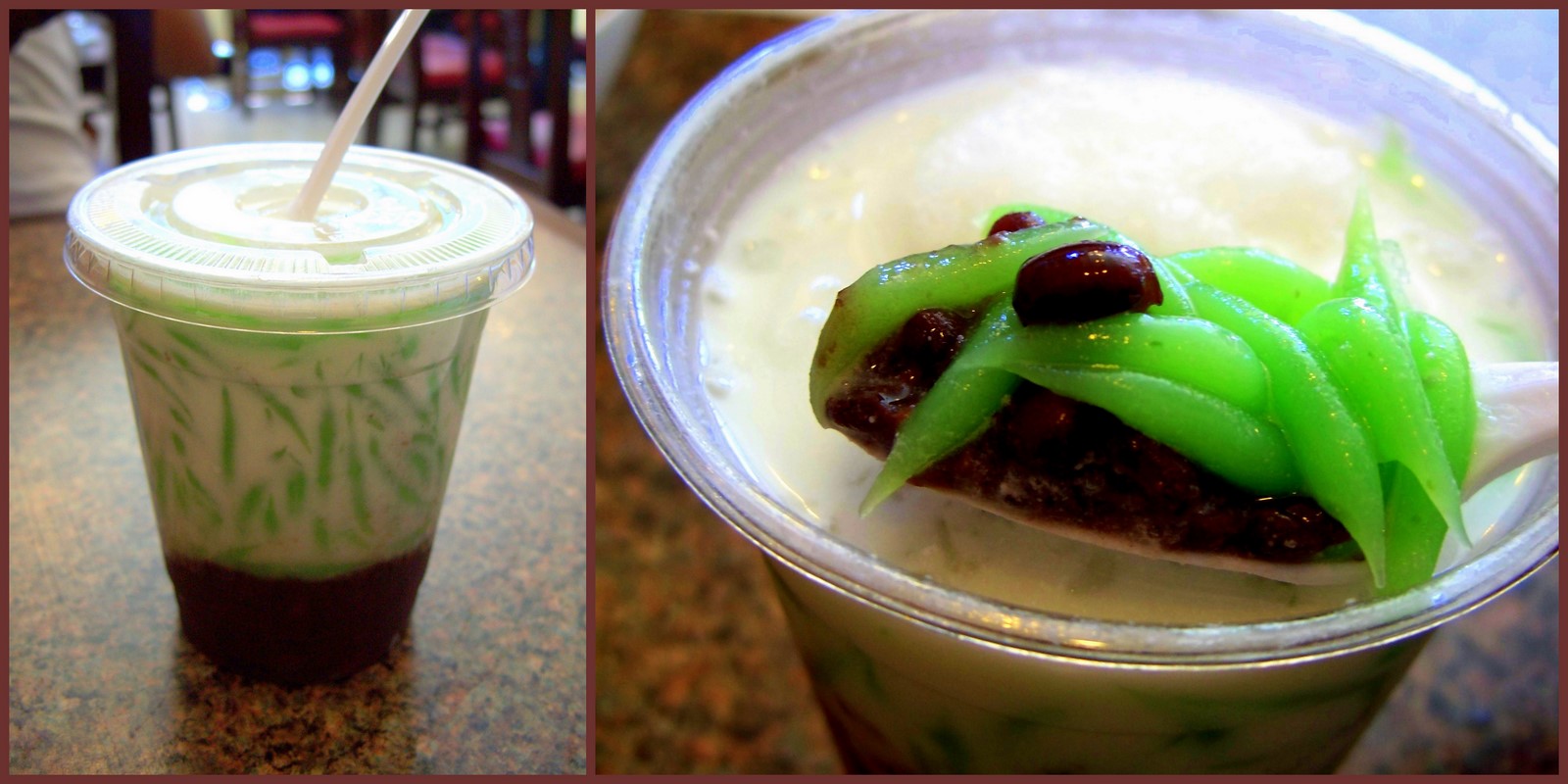
Also che, but without sticky rice is chè đậu đỏ bánh lọt: sweety sweet and mushy red bean at the bottom, bland chewy green tapioca worms floating in coconut milk and shaved ice on top. Personally I think the shaved ice can get lost because it only dilutes the coconut milk, but this chilled cup of che is more revitalizing than eating ice cream in wintry days (no sarcasm, if you haven’t tried ice cream in the cold, you’re missing out big time). Kudos to Banh Cuon Tay Ho #8 in San Jose for this beany treat.


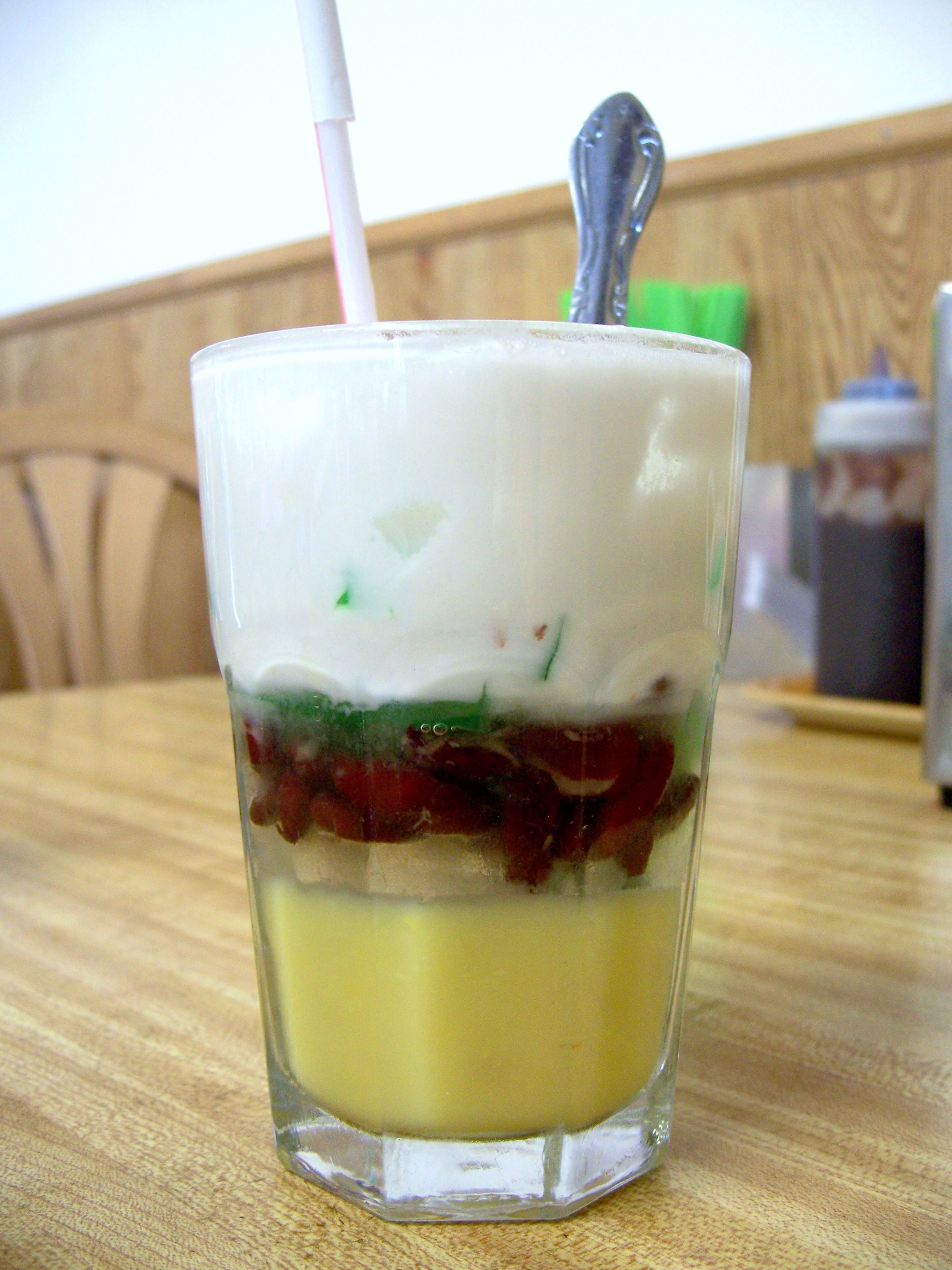
Yet another che. You got it, there’s coconut milk :-P. I can’t quite figure out why Phở Hòa Lão II (Oakland) probably calls this thing chè ba màu, or tricolored che, where it actually has four colors: yellow of mung bean paste, red of red beans, green of tapioca, and white of buttery coconut milk, unadulterated by ice as the che is refrigerated. The only complaint would be its capability to fill me up for hours for only $2.10.


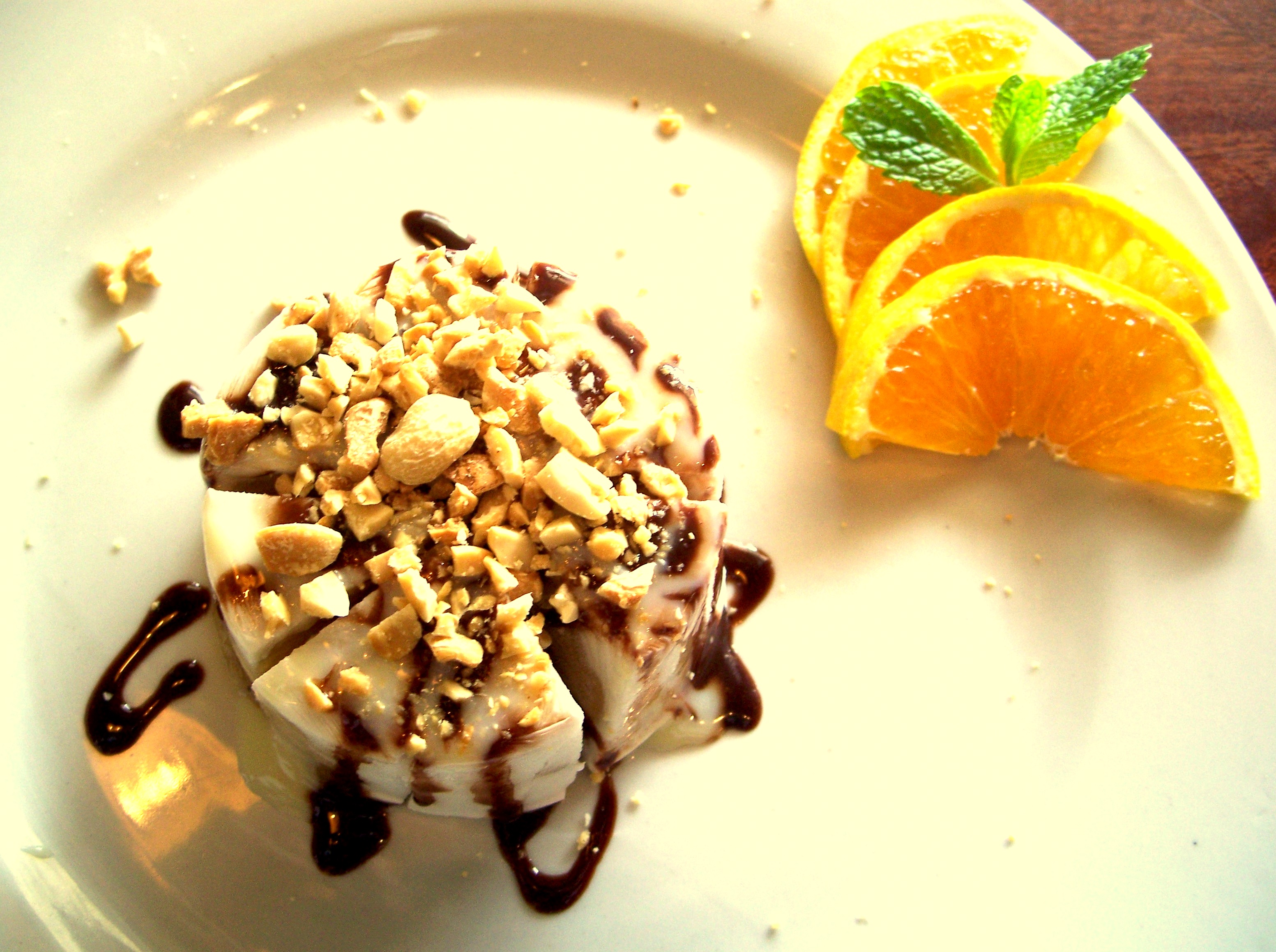
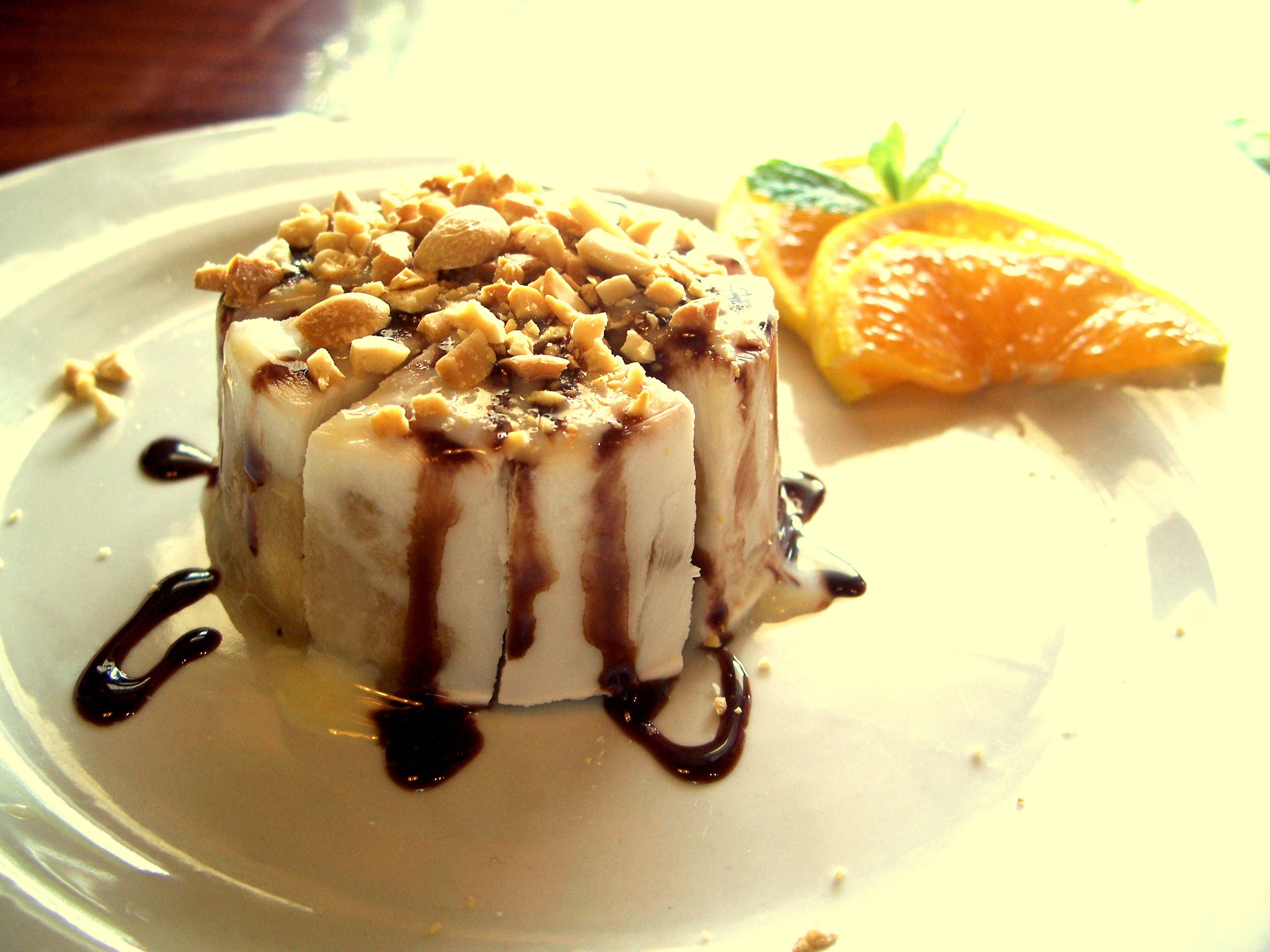
Desserts at Binh Minh Quan cost slightly more, ranging from $3-5 each, but they also have more than just che. This beautifully crafted block of kem chuoi (frozen banana) is a three-buck wow-er: sliced banana with coconut milk hardened together, drizzled with chocolate syrup and crusted with ample peanut bits. The icy salty sweetness sends shivers down my spine.

Bánh Cuốn Tây Hồ #8 (San Jose)
2895 Senter Rd
San Jose, CA 95111
(408) 629-5229
Le Regal (Downtown Berkeley)
2126 Center Street
Berkeley, CA 94704
(510) 845-4020
Bình Minh Quán (Oakland Chinatown)
338 12th St
Oakland, CA 94607
(510) 893-8136
Phở Hòa Lão II (Oakland Chinatown)
333 10th St
Oakland, CA 94607
(510) 763-8296

The story of Bún Xêu

November 24, 2010 By: Mai Truong Category: Comfort food, Northern Vietnamese, RECIPES, Vegan


“Are you giving Thanks?”, asks Der Miller. I should. It is my first independent Thanksgiving. There will be no turkey, not because they’re not that tender but because it’s cruel to take their lives on the day that everyone else celebrates. There will be no green bean casserole or sweet potato with marshmallow, not because I’m lazy but because I have no oven. There will be no cranberry sauce or stuffing, for no shining reason. I’ll just make the one thing that is both simple and not ramen: bún xêu.

Over 2000 years ago lived a king in a foreign land, who ordered his royal kitchen staff to prepare a party to welcome his future son-in-law from another foreign land. Naturally the king wanted a feast with national specialties, which included a type of rice flour pastry with sweetened mung bean paste. The flour had to be made in the morning of the same day to avoid it turning sour, and one young kitchen helper, who probably liked to get up early as much as I do, was in charge of preparing the batter.

Instead of mixing rice flour and water in a bowl, the half-closed-eye boy happened to use a strainer instead, which, fortunately, was placed on a pot of boiling water. When he realized what was going on, the needed pastry batter had long turned into fine strings of rice noodle. The chef caught the boy’s mistake, but sympathizing with his weariness, told him to pick some herbs in the garden and use fried lard pebbles to make stir fried noodle for the kitchen staff’s breakfast. In that season, only water celery was in abundance.

A servant of the king dropped by the kitchen to check on the preparation process, and was charmed by the aroma of water celery and lard. He asked for the dish’s name. The chef, panicked by the boy’s mistake, intended to say “xào” (|xao|, “stir fry”) but mispronounced it into “xêu” (|seh-oo|). The servant took a taste, liked it, and ran off to tell the king about a new creation named xêu, then the king went to the kitchen to try it himself. This is when matters really got out of Kitchen Boy’s hands: xêu was ordered to be served at the party that day.

Over 2000 years later, bún xêu, however so simple, is still considered a historically valued specialty of the Cổ Loa Citadel region, just 20km north of Hanoi today. The creation of rice vermicelli (“bún”) would not have happened in Northern Vietnam then, had the kitchen boy not been drowsy, the chef not sympathetic and creative, the servant not curious, and the king not open-minded. And so it goes the story of bún xêu. 🙂

Bún xêubún xào cầnstir fried rice noodle with celery

The main ingredients:
– Rice Vermicelli (sold at Asian markets with the label “Bún Khô“)
– Celery (good luck finding water celery im Supermarkt, so the normal chubby stalks are quite alright), sliced into finger long sticks.
– Lard, or Cooking Oil
– Salt, Pepper, Sugar

The supporting roles: Onion, Garlic, Mushroom, Green Onion, Coriander, Egg, Soy Sauce or Fish Sauce.

Blanch the bun and set aside. Make a thin omelet, set aside till cool, slice into strips. Sautee the garlic, onion, sliced mushroom, celery, and green onion (in that order), add a little bit of water, season to taste.
Now you have two choices:
1. Add the bun into the veggie skillet and spatula it like mad until everything entangles together. Re-add seasonings to taste. Pro: stuff mixes well. Con: your bun can get mushy, stick together, and be shortened to the size of rice grains. It all depends on how mad your spatula skill is.
2. Put a wad of bun on a plate, scoop some mixed veggie and sauce onto the bun, and mix while you eat. Pro: long noodle strands preserved, chewiness preserved. Con: it’s not really “bún xào” if the “bún” wasn’t “xào” (stir fried).

Decorations: omelet strips and coriander.

Happy Thanksgiving to you too, Turkey!


– Submission to Delicious Vietnam 8, a monthly blogging event created by Anh of A Food Lover’s Journey and Hong & Kim from Ravenous Couple

Sandwich shop goodies 11 – Steamed cassava

November 09, 2010 By: Mai Truong Category: California - The Bay Area, Comfort food, One shot, savory snacks, Southern Vietnamese, Vegan, Vietnamese


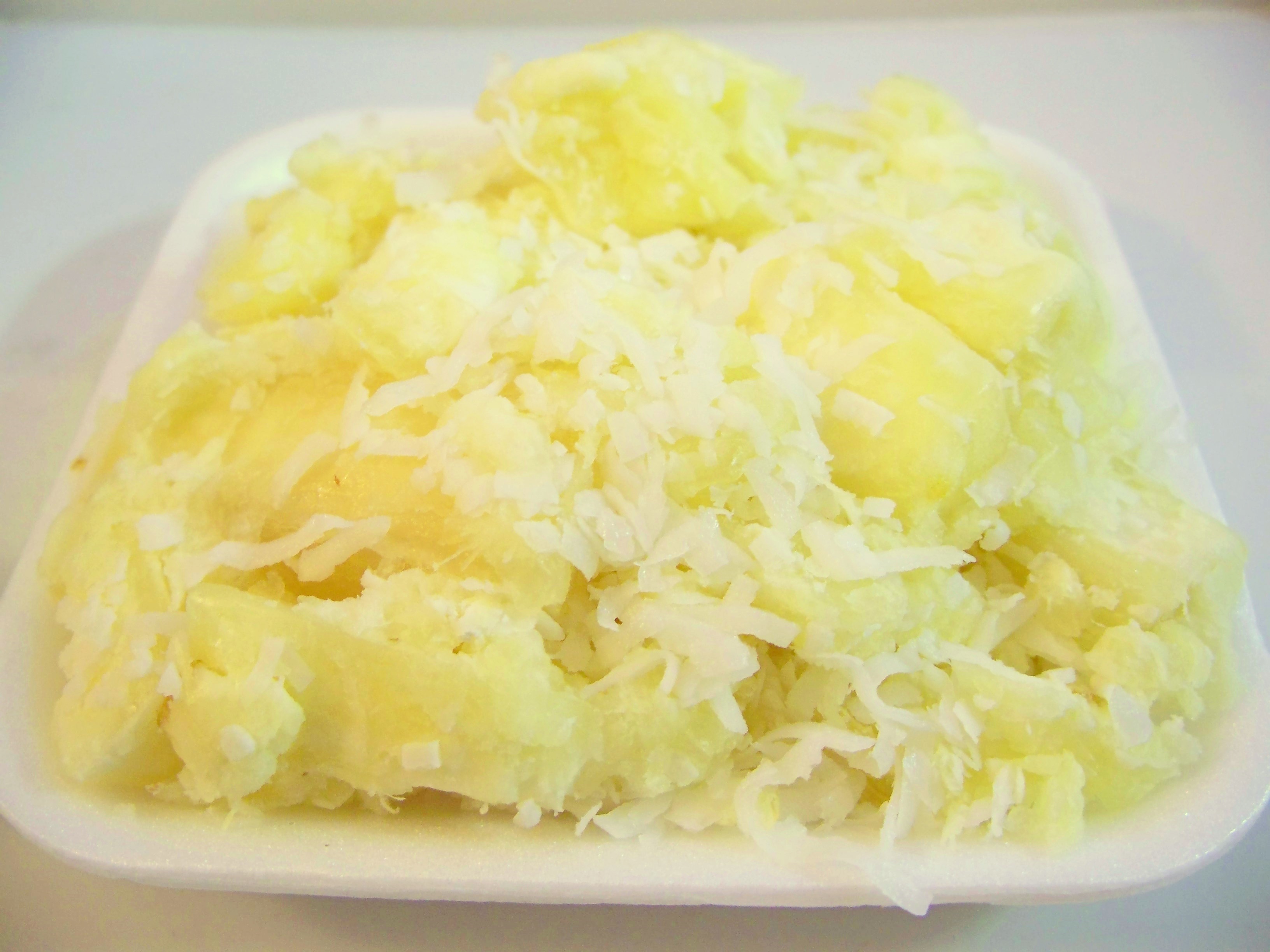
My mom is a skeptic about street snacks, most of the time because of the fingers handling them, but this thing passed. Like xoi, it should always be served hot right out of the steamer. Cool it down with a few blows of air and hurry it in the mouth; it may be wet and chewy, or it may be floury and nutty. But it’s distinctively cassava.

Back home, khoai mì hấp (steamed cassava) is among the cheapest Saigon street scoffs, because khoai mì (cassava root) is cheap (2000VND/kg these days, about 5 cents/lb), and the making is beyond simple. You boil the roots, then keep it warm and moist in a steamer. Unlike banh bao vendors, you keep the lid open to let out burly rolls of steam and invitation. The cone hat ladies sometimes add pandan leaves in the water, those ivory chunks then smell as sweet as spring rains. A customer comes, you scoop him a few palmfuls into a nylon bag and forget not the coconut shavings and the classic salt-sugar-sesame mix. A true street scoffer would eat with his fingers, probably holding the thick center string (the root’s woody cordon) to nibble on without touching its hot flesh.

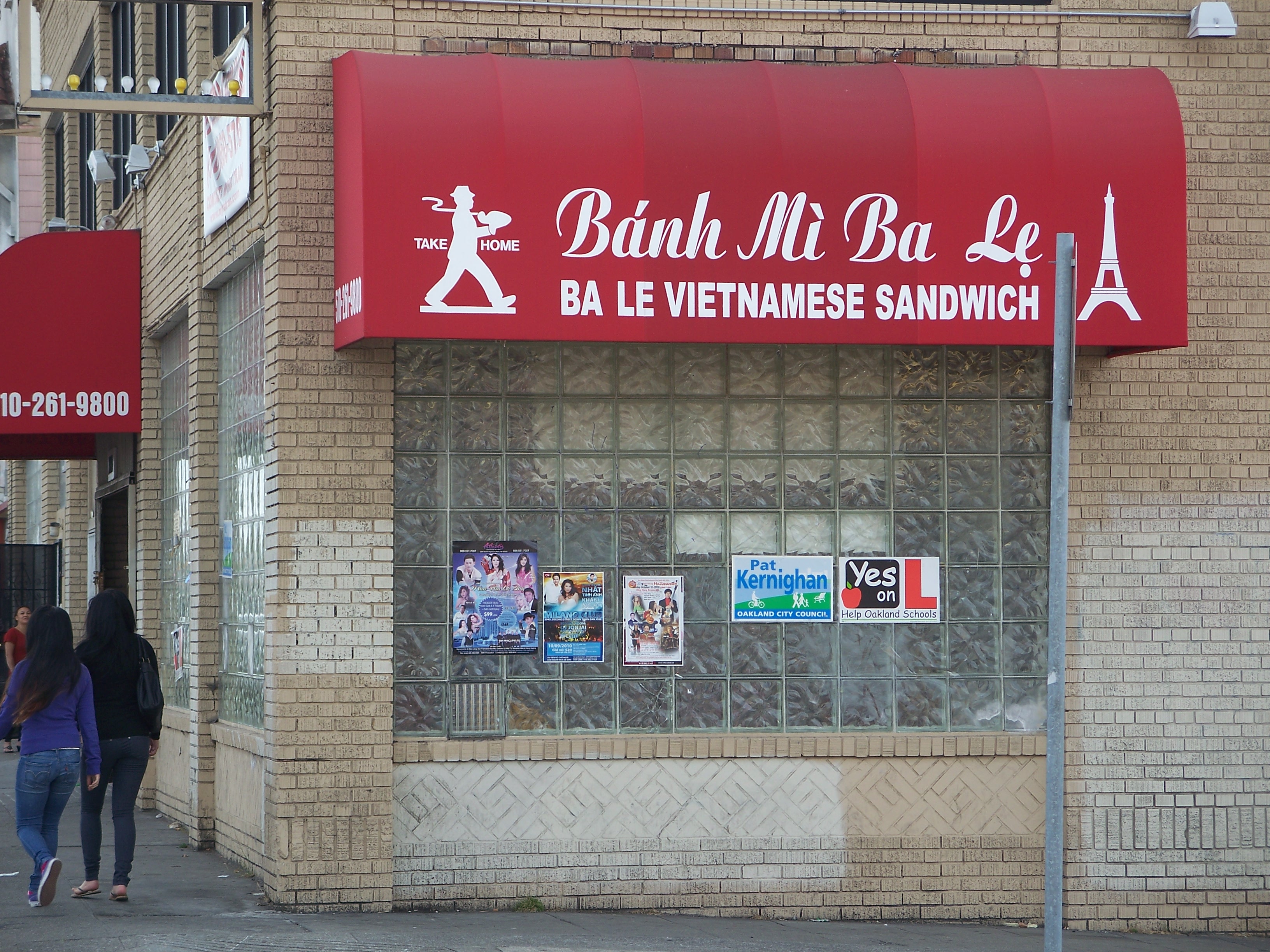
I mix salt, sugar and my memory of what steamed cassava should taste like into the $1 prepackaged clump at Bánh Mì Ba Lẹ in Oakland, after microwaving it for one minute. The roots are dry and flavorless, probably out from a frozen section. But I taste only my younger days.

Address: Bánh Mì Ba Lẹ (East Oakland)
1909 International Blvd
Oakland, CA 94606
(510) 261-9800

Previously on Sandwich shop goodies: Bánh chuối nướng (Vietnamese banana bread pudding)
Next on Sandwich shop goodies: chuối nếp nướng (grilled banana in sticky rice – banana dog)

Jayakarta and my first Indonesian meals

November 07, 2010 By: Mai Truong Category: California - The Bay Area, Comfort food, sweet snacks and desserts

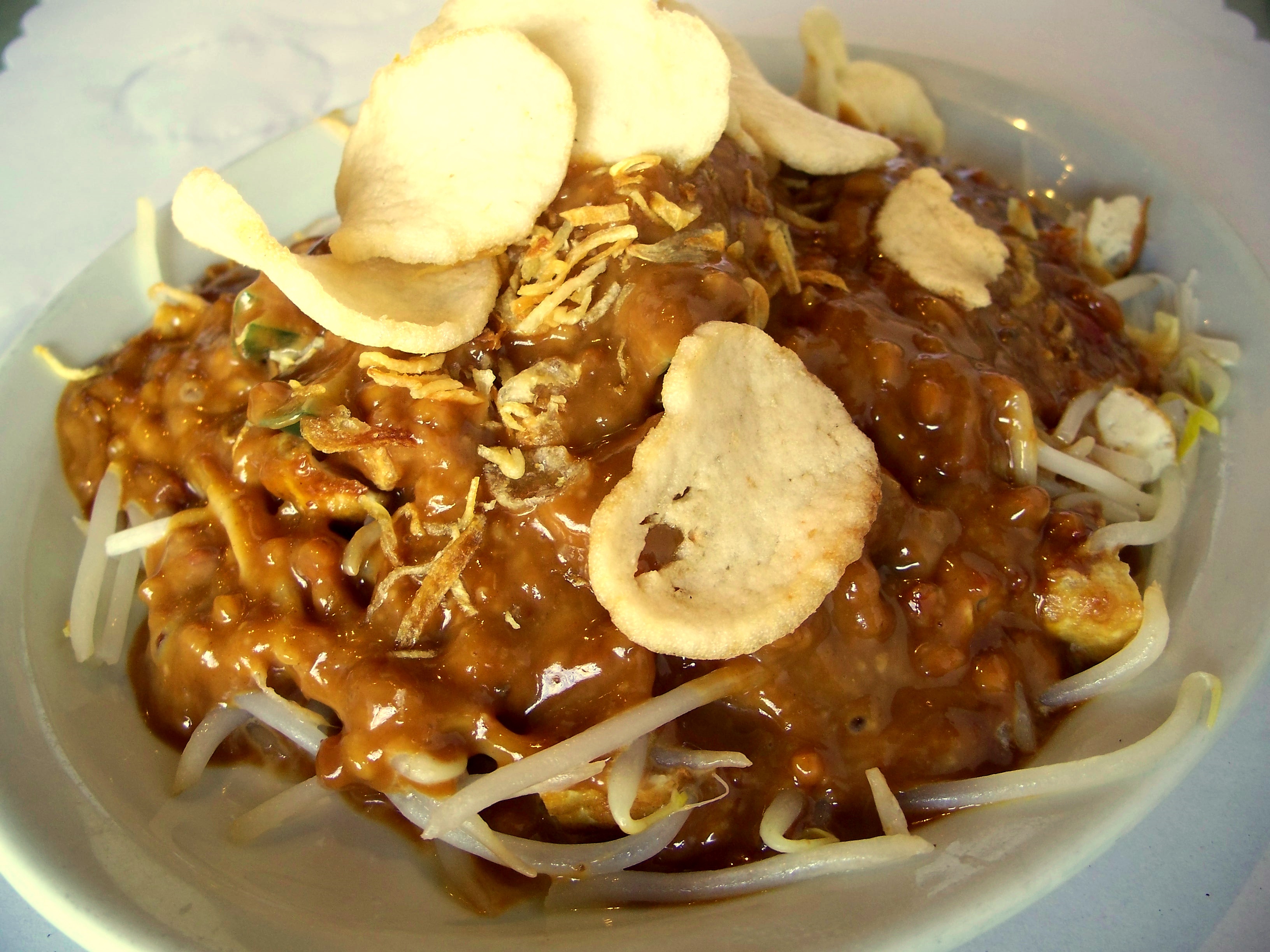
Ketoprak at Jayakarta, Berkeley - warm rice noodle salad with bean sprout, cucumber, shrimp cracker and peanut sauce - $6.25

There is only one on the East Bay, and three in San Francisco. (I don’t count the Asian Fusion stuff and places with, like, one Indonesian noodle salad.) That is just way too few Indonesian restaurants in an area where Asian cookeries sprout like mushrooms after the rain. Historically, the Indonesians have settled here at least 10 years before the Vietnamese, and at about the same time as the Thai. After a few wholesome meals at Jayakarta, it is beyond me why Indonesian food has not gained much popularity in the States.


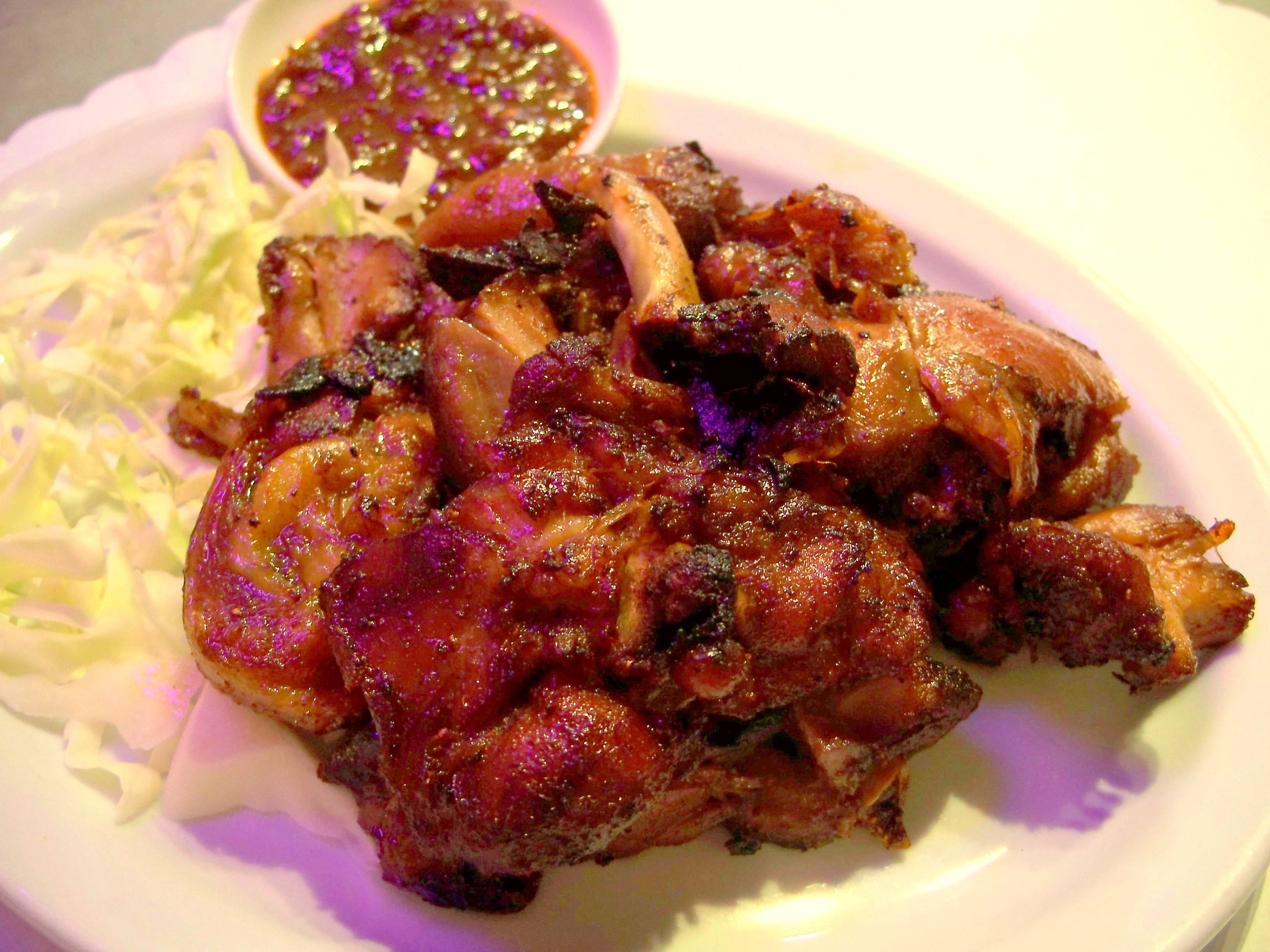
Take the palm-sugar-smothered rotisserie chicken ayam kalasan. It loses to no other chicken but my mom’s. I’m hooked from the first bite. The sweetness is in eve.ry. single. strand. of meat, it’s tender, it’s firm, it can make me rob a school kid for $7.95 when the craving gone mad.

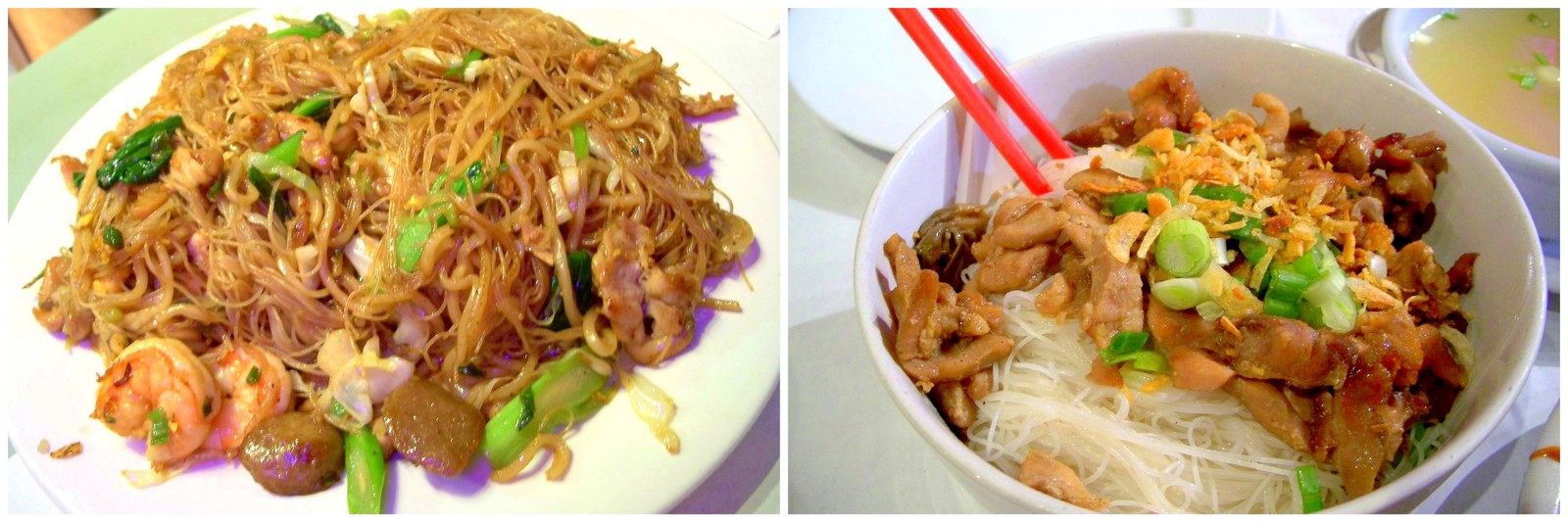
Mie goreng (left) - $7.95 and Bihun ayam (right) with beef balls - $6.50

Or the chewy bihun (rice noodle) that fares wonderfully both stir fried (mie goreng) or boiled and tossed (bihun ayam) with chicken, shrimp, beef ball, egg, and some crunchy stalks similar to but denser than celery. Also, bihun is better than than bakmi (egg noodle).


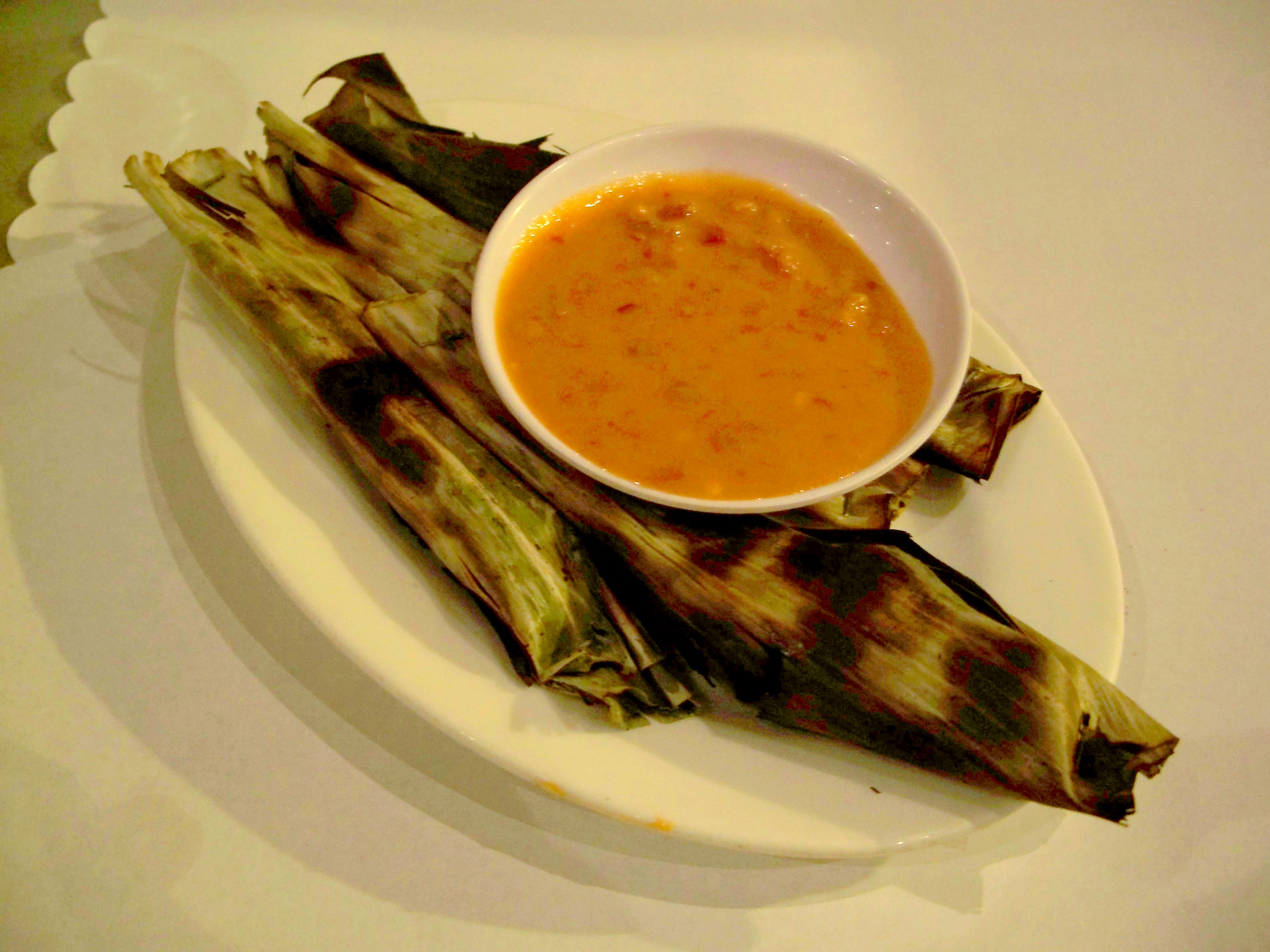
Or the subtle, smooth, and compact fingers of pounded fish grilled in banana leaf. The otak-otak panggang reminds me of chả cá and chạo tôm in Vietnam.

Nasi Goreng with chicken (left) -$7.50- and weekend special Nasi Bungkus (right) - $7.95

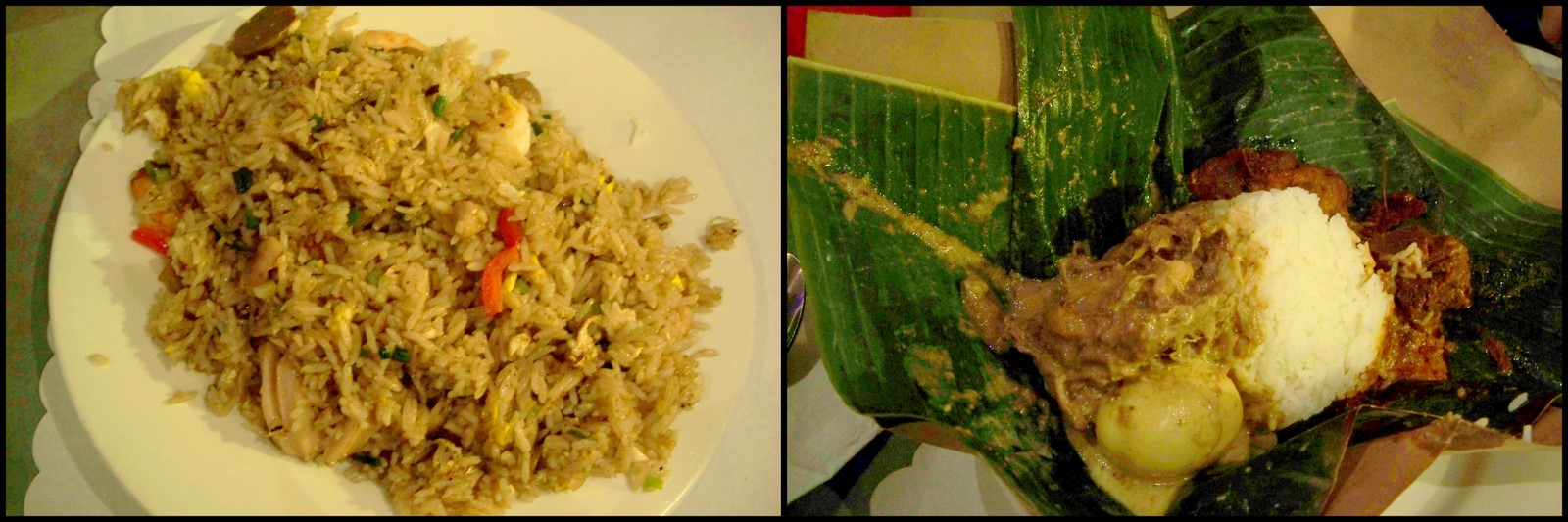
Or the rice (nasi). Fried rice (nasi goreng), no complaint. Rice served in banana leaf with coconut beef, fried curry chicken, and marinated tofu (nasi bungkus), absolutely no complaint. The egg kills.


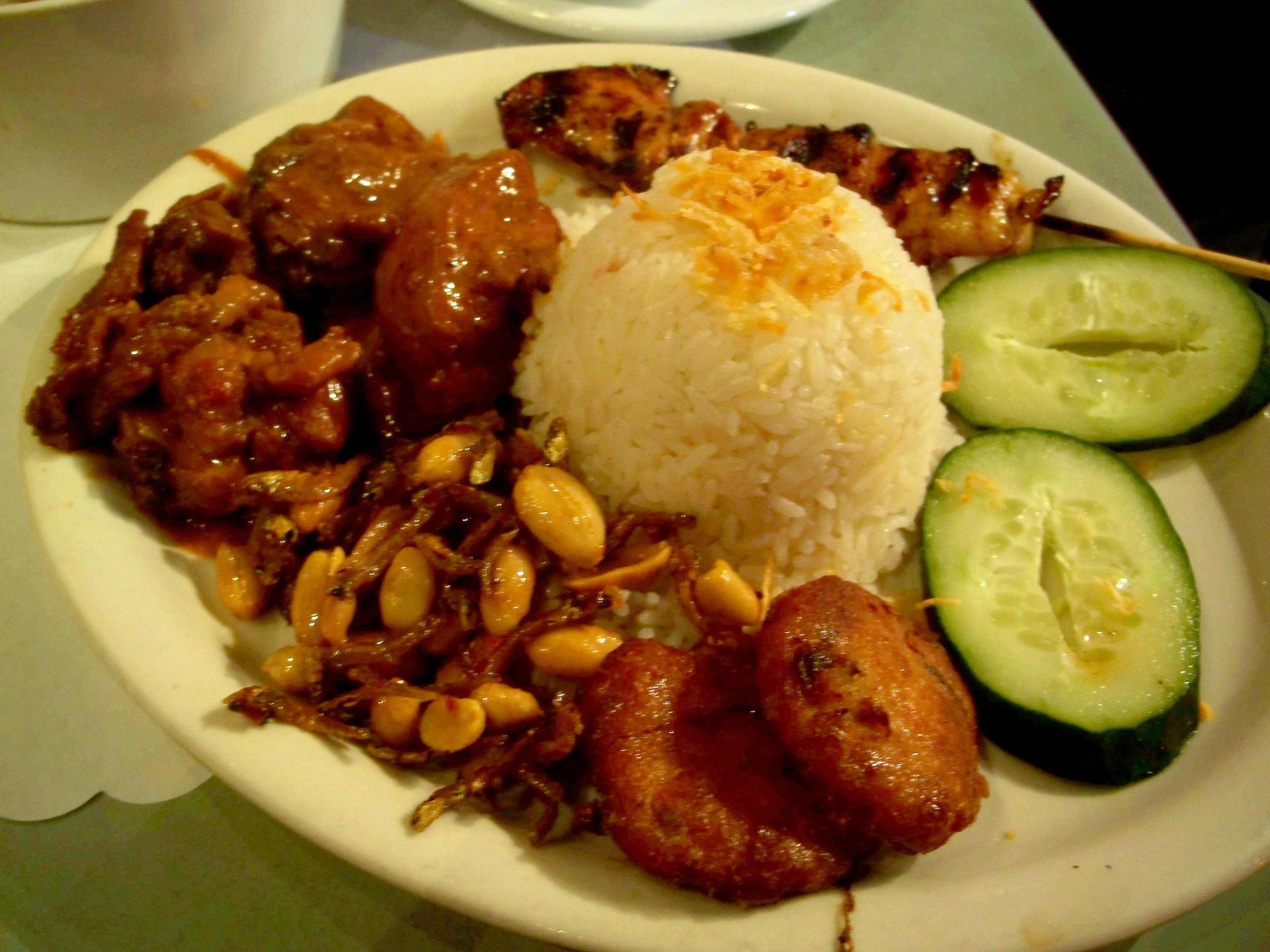
And coconut rice (nasi lemak) with ample cubes of chicken, mealy perkedel, and my all-time-favorfish anchovies fried to a crisp.


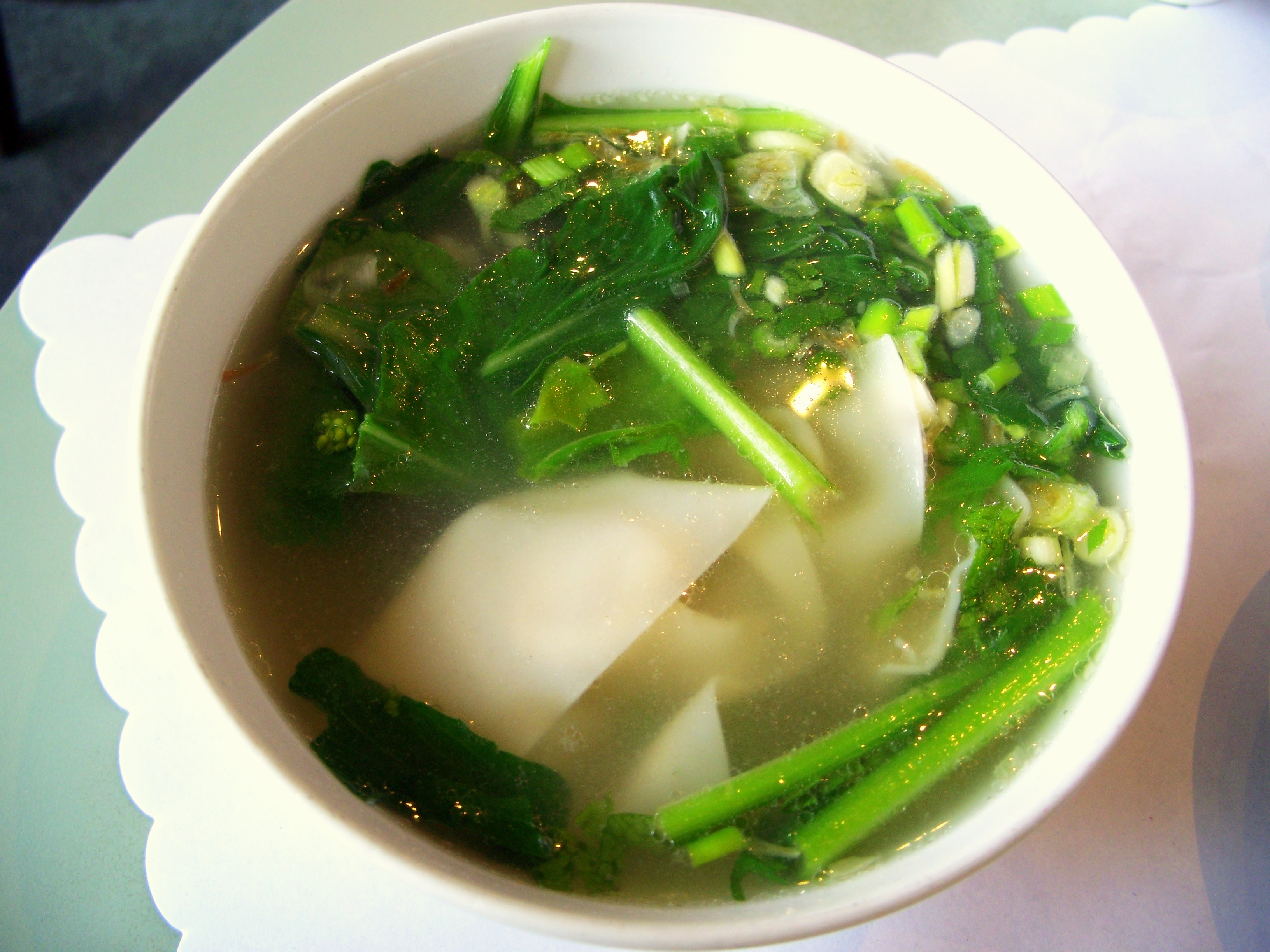
Or, away from the meaty fried and marinated galore, a gentle bowl of chicken wonton soup (pangsit kuah). So elevating. (I once had this horrid wonton soup when I was six. The wonton was thick and doughy like a blob of mush, the soup was like chicken and dumpling bubbling in lard. I avoided wonton soup ever since. Until now.)


And a glass of fruit jelly, rice, banana and cassava in coconut milk, with shaved ice, for $3.95.

I don’t understand why Thai restaurants outnumber Indonesian ones. Is it the lack of pork? (No.)

Address: Jayakarta Restaurant
2026 University Avenue
Berkeley, CA 94704

Bánh mì Ba Lẹ Oakland

November 05, 2010 By: Mai Truong Category: California - The Bay Area, Comfort food, sandwiches, Vietnamese


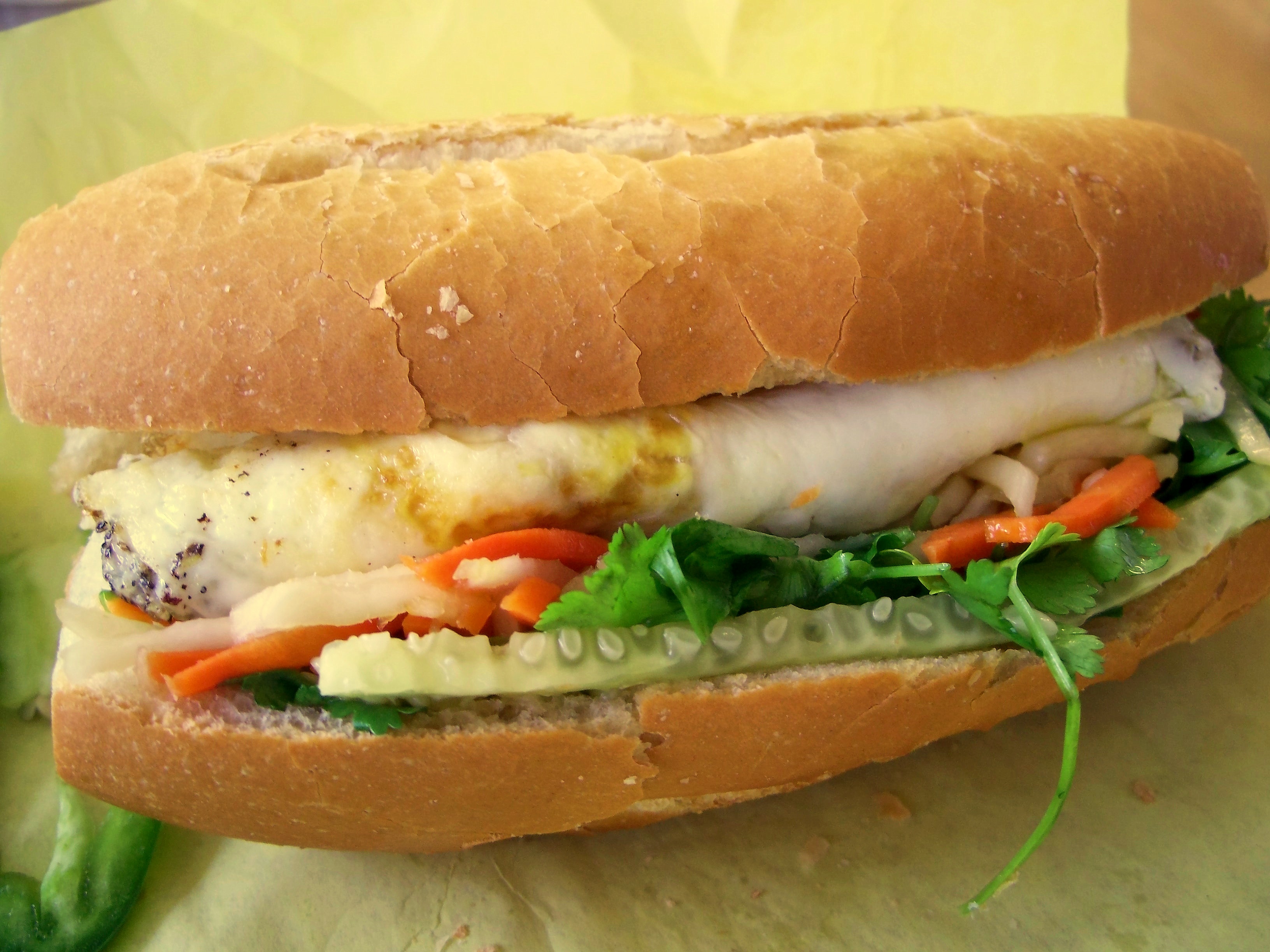
Must have been at least seven years since I had a bánh mì ốp-la (bánh mì with sunny-side-up egg). Most Vietnamese sandwich stores in the States don’t put eggs in their breads, but ốp la (probably a strayed pronunciation of “omelette” in French colonial days) is the most common type of bánh mì stuffing you can find on the streets in Vietnam.


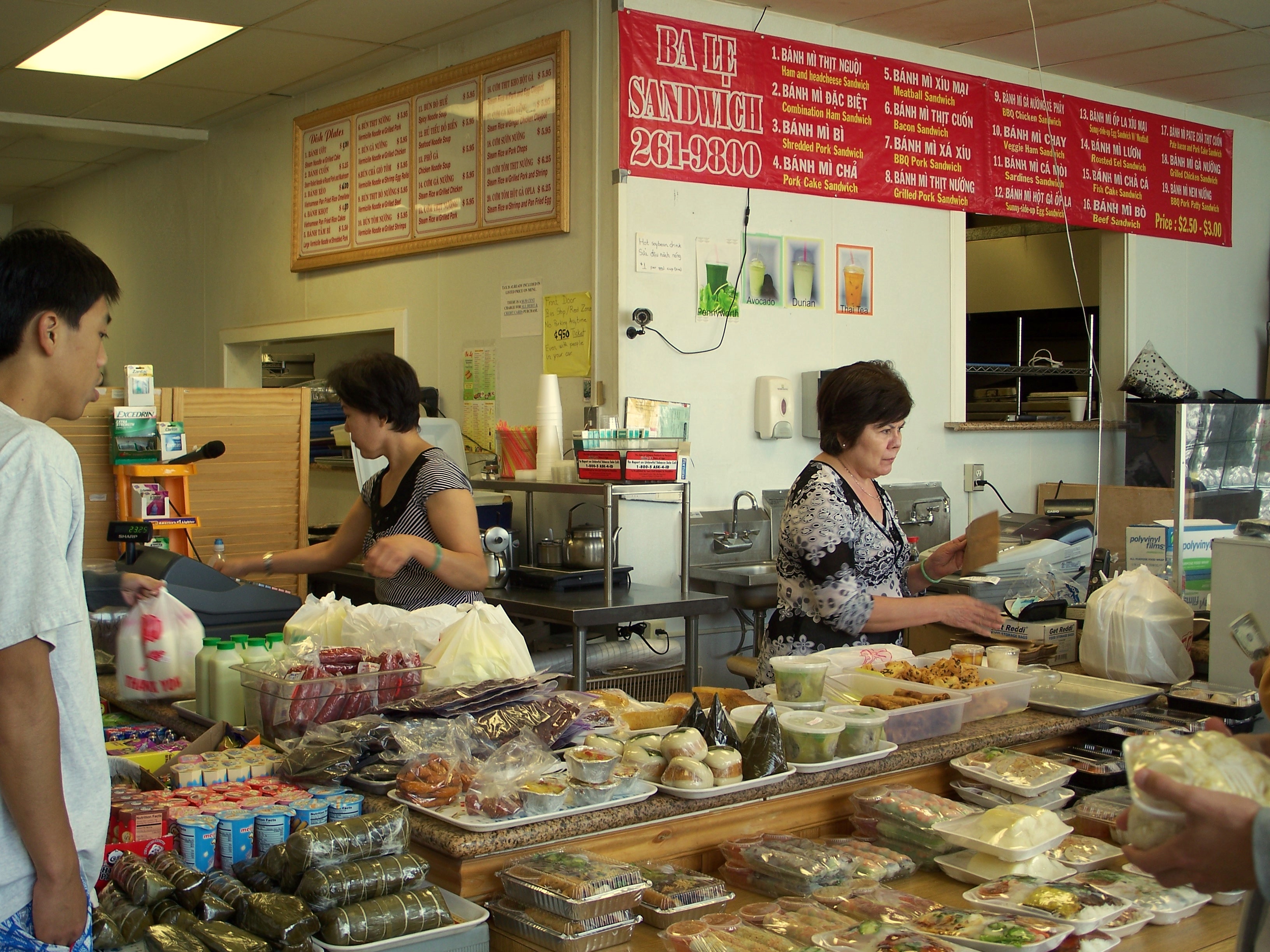
This store contains as much variety as twenty street food stalls: about 15 kinds of banh mi, with meats, pate, vegetarian, and even sardines (cá mòi), ranging from $2.50-$3 each. Then there are bò kho, bún bò, bánh cuốn, rice plates, bánh dầy, bánh tét, and a thousand other things. Thank god there is no phở here.


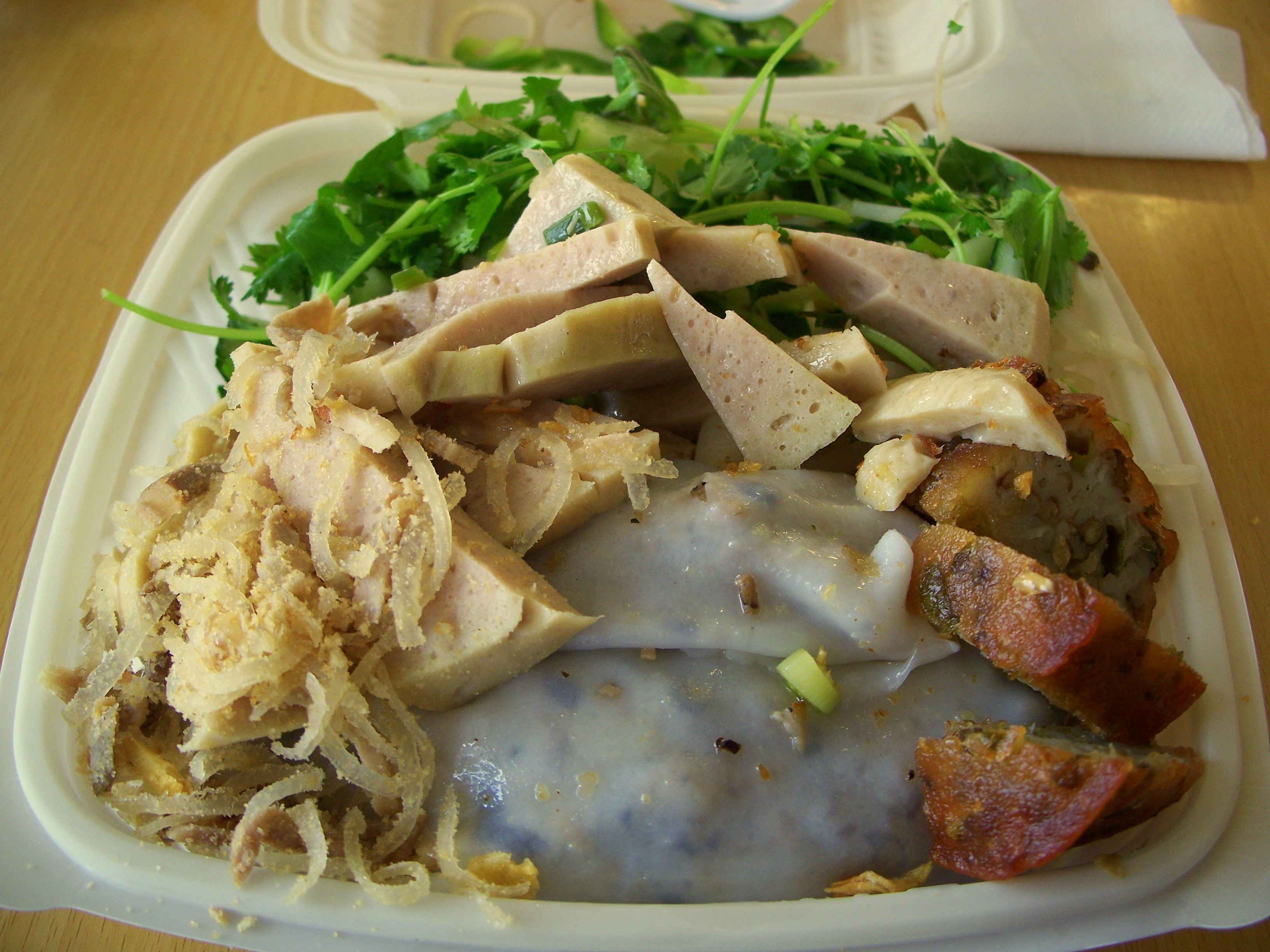
Ba Lẹ’s bánh cuốn comes with a garden, finger-thick cuts of chả lụa, and cubes of deep fried mung bean batter named bánh cóng. It’s not as good as the shrimp-and-sweet-potato tempura accompanying Tây Hồ‘s bánh cuốn, but it has a lot more rolls than Tây Hồ’s for a lower price. Tây Hồ still has the best rolls, but these are good too. Except they aren’t pre-halved in length. Oh well. Sloppiness is street-foodieness.


The location is less than appetizing to the eye. On rainy days, you see worn down bricked alleys with puddles. On dry day, you see worn down brick alleys with unkempt people. The buildings are old, the paints have faded. But the steady flow of customers even on rainy days confirms that Ba Lẹ isn’t just a name from the pre-1975 Saigon. It’s one of those real banh mi’s.

Address: Bánh Mì Ba Lẹ (East Oakland)
1909 International Blvd
Oakland, CA 94606
(510) 261-9800

What to get and not to get at Dara

October 14, 2010 By: Mai Truong Category: California - The Bay Area, Comfort food, noodle soup, sticky rice concoctions


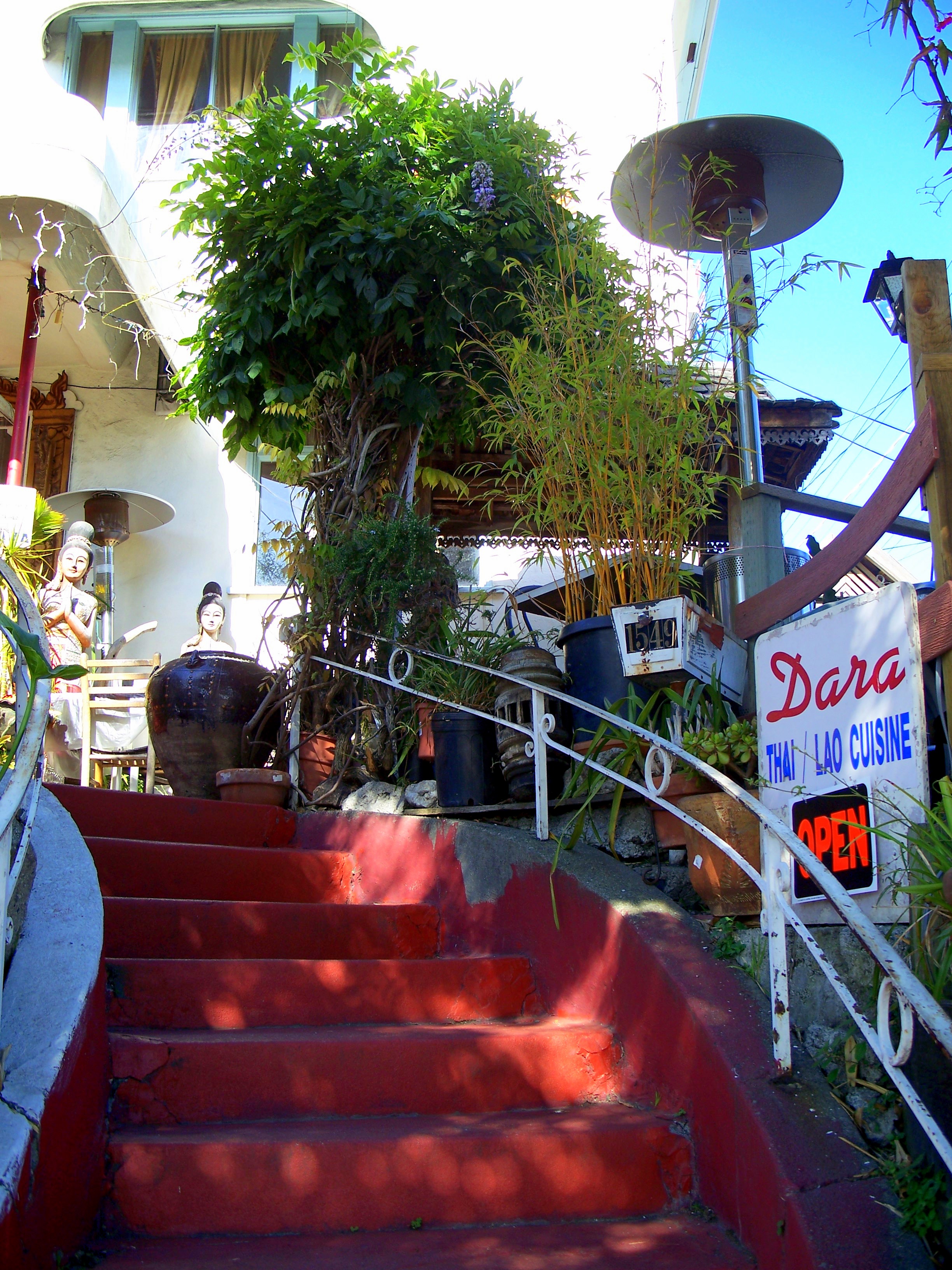
Diagonally across the intersection from Crepevine on Shattuck are one Thai restaurant and one Thai-Lao restaurant, right next to each other. We know that it’s pretty much impossible for us to get a pure Lao dish in America, given that we can’t really tell the difference between Lao and Thai names. Still, the three-lettered word addition on the sign has an alluring effect on us mini-globavores. So we choose Dara over Cha Am.


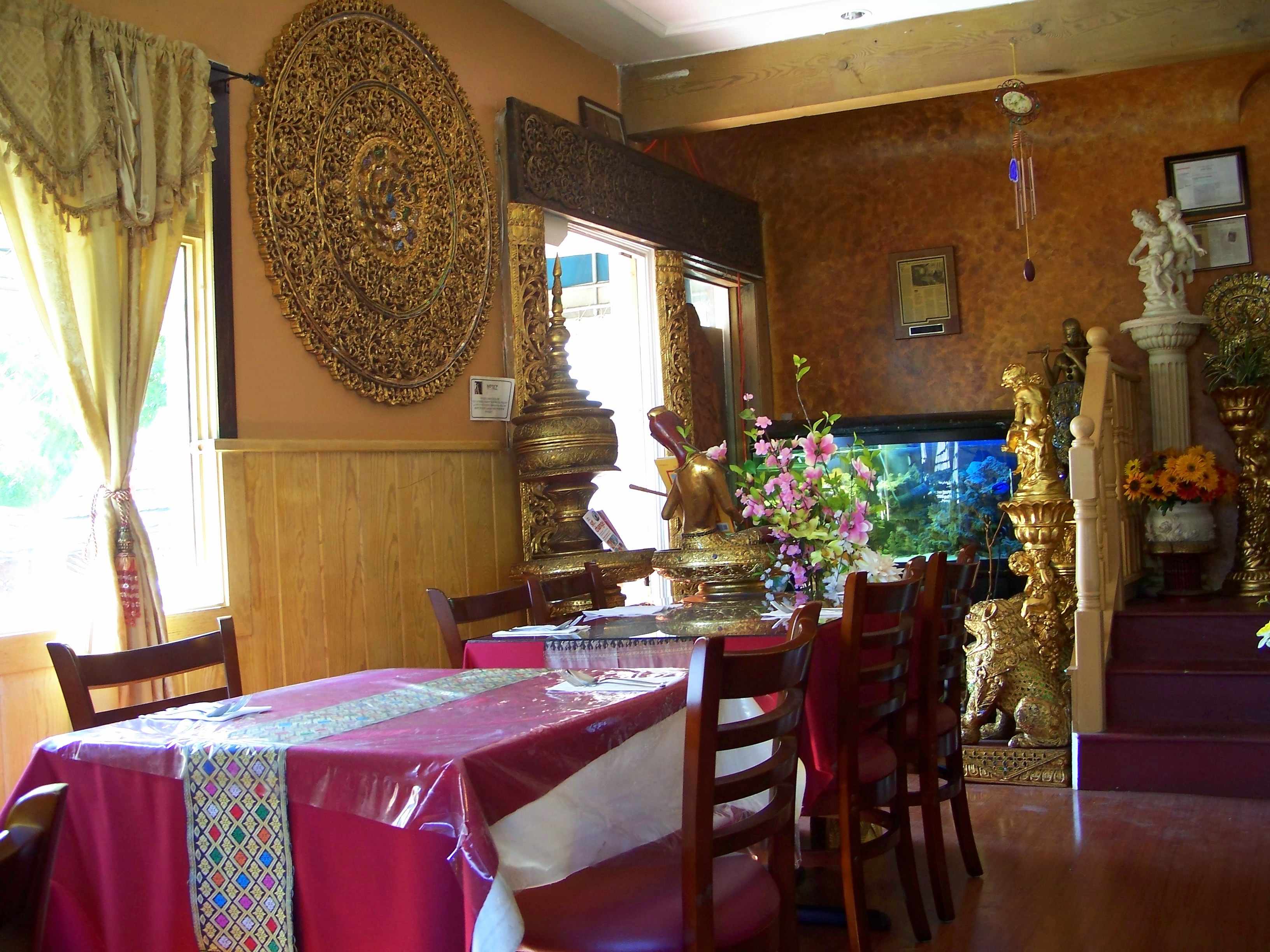
Secluded high above street level with a red brick gradation ascending up to the door, Dara offers its patrons two seating choices: out in the garden curtained by a multitude of mini palm trees, bamboos, and kalanchoes, or indoor, surrounded by faux gilded statues, metal vases, and wall ornaments. There’s no music; except for the talking in the kitchen far back, the only sound you hear here is your own voice.

The dinner menu at Dara has a list of house specialties, Lao finger foods (with familiar items like sai gauk, satay gai, noke todd, nam lao), various noodles and curries, and of course, pad thai for those who never order anything else when they go to Thai restaurants. The lunch menu is more compact and has no separation between Thai and Lao dishes. The foods range from really good, good, alright to eh-inducing, but the quick and gracious service is always the same. I ask our host if we pronounce the names correctly, he smiles and nods “of course”. I’m sure the “not” is hidden behind his big grin. 🙂


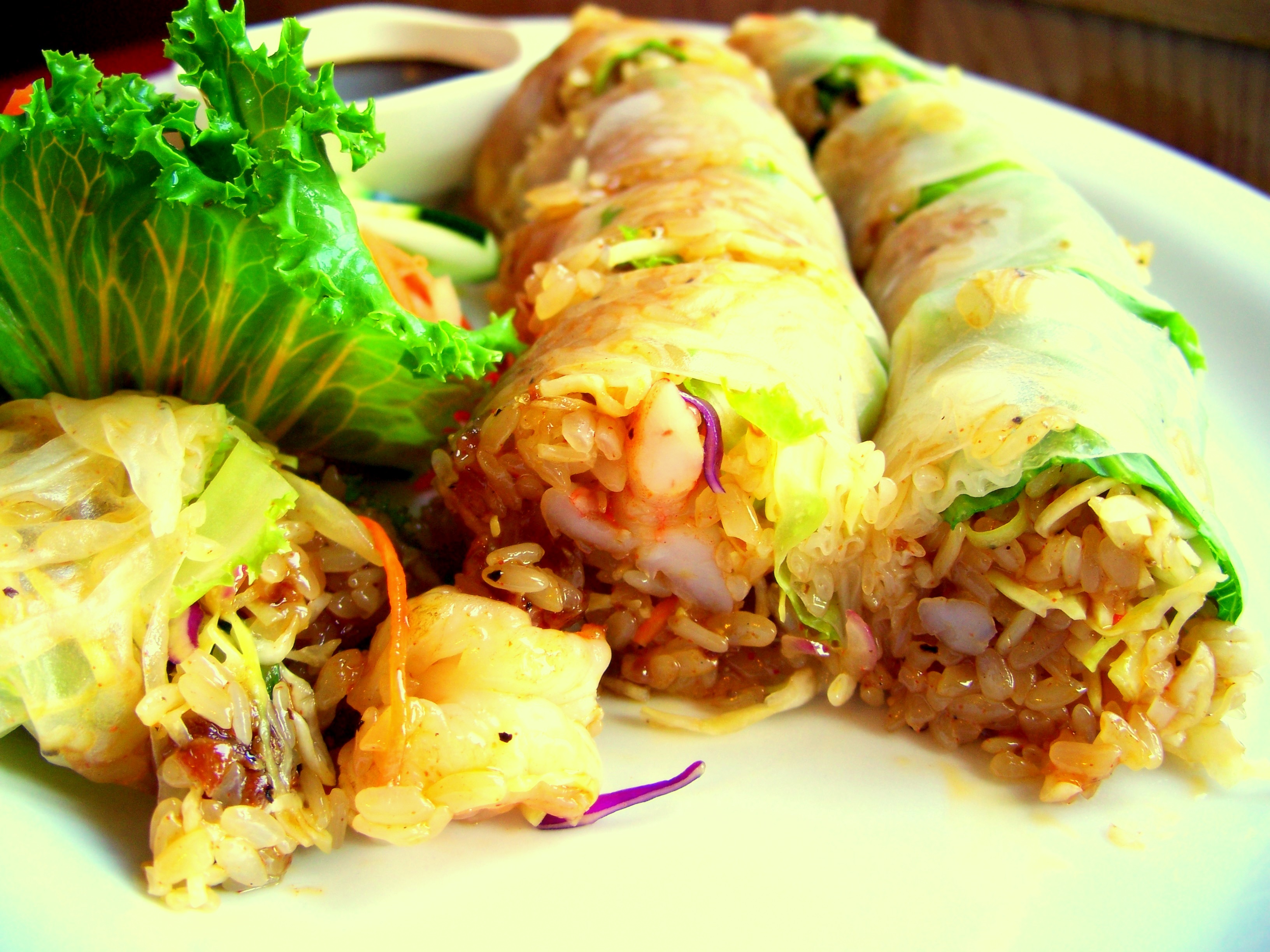
Get: sticky rice roll with peeled shrimp, wrapped in moist rice paper. Although accompanied by a thick tamarind dip, the rolls are already robust with their supple grains coated in some sweet and salty sauce. Its solid and chewy texture makes you full for hours. This is xôi disguised in gỏi cuốn form, ~$9 for two fat long ones.


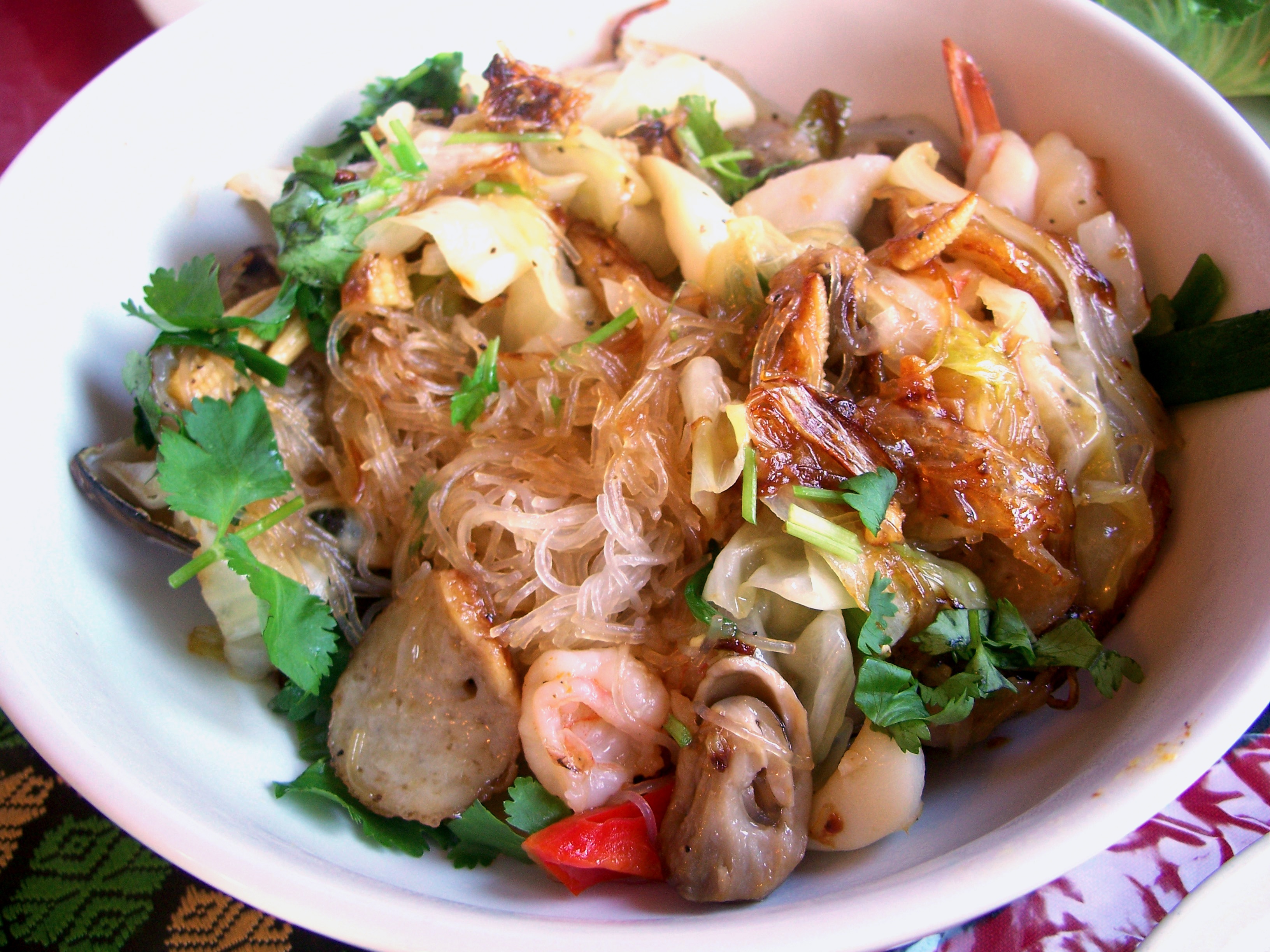
Definitely get: mor din – stir fried glass noodle with mussel, salmon, fish cake, shrimp, squid, straw mushroom, cilantro, bell pepper. All sorts of goodies for about $13. I cannot understand why pad thai is more popular than mor din. (FYI, Dara also dishes out a better mor din than Little Plearn Thai Kitchen on south Shattuck.)


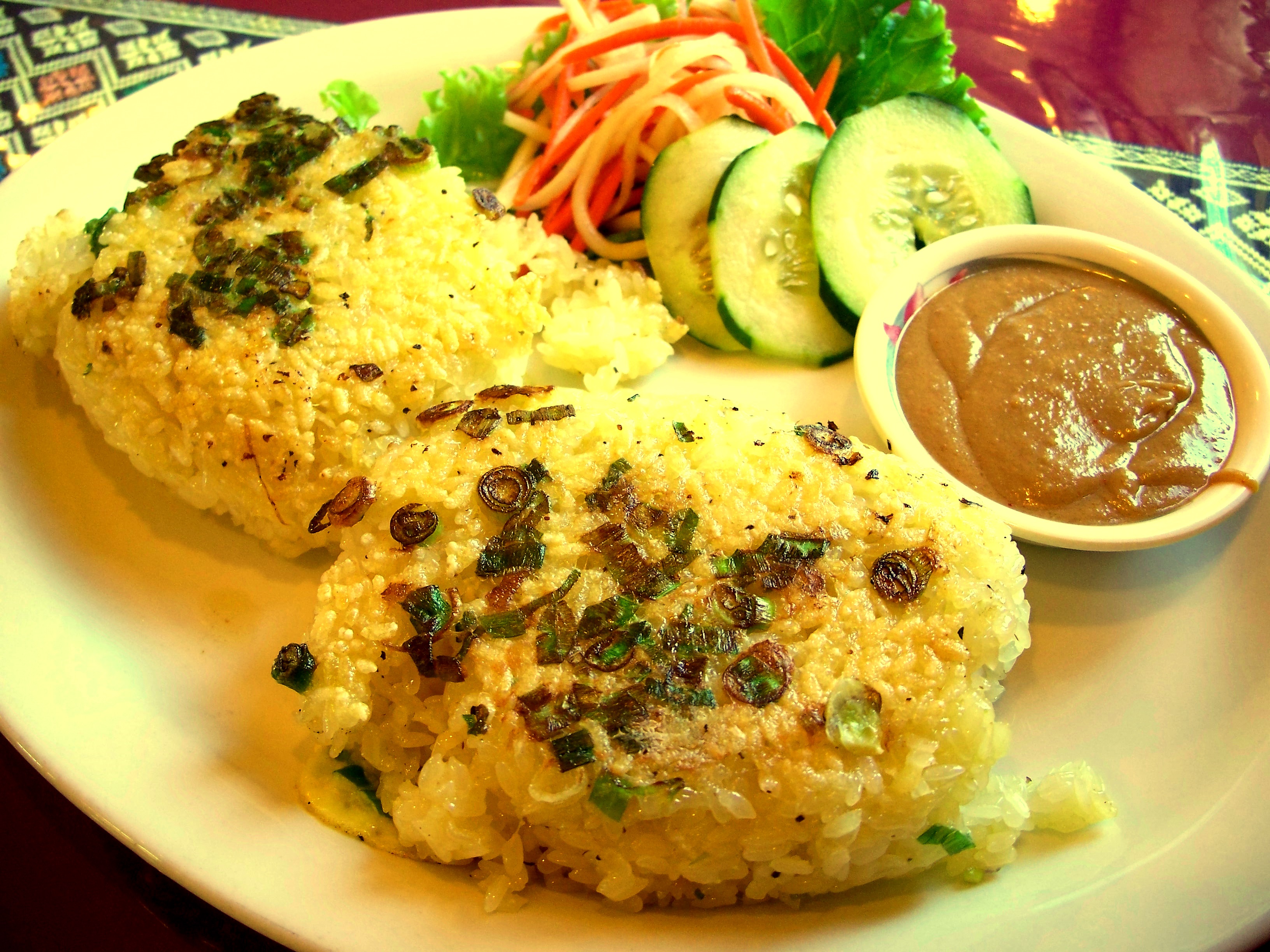
Get with caution: kao gee ($8.95) – simply a block of baked sticky rice seasoned with anchovy fish sauce, fried shallot, green onion, a little bit of egg, and peanut sauce to spread. The rice has a light crisp on the surface, but the taste, however interesting, gets monotonic after a while.


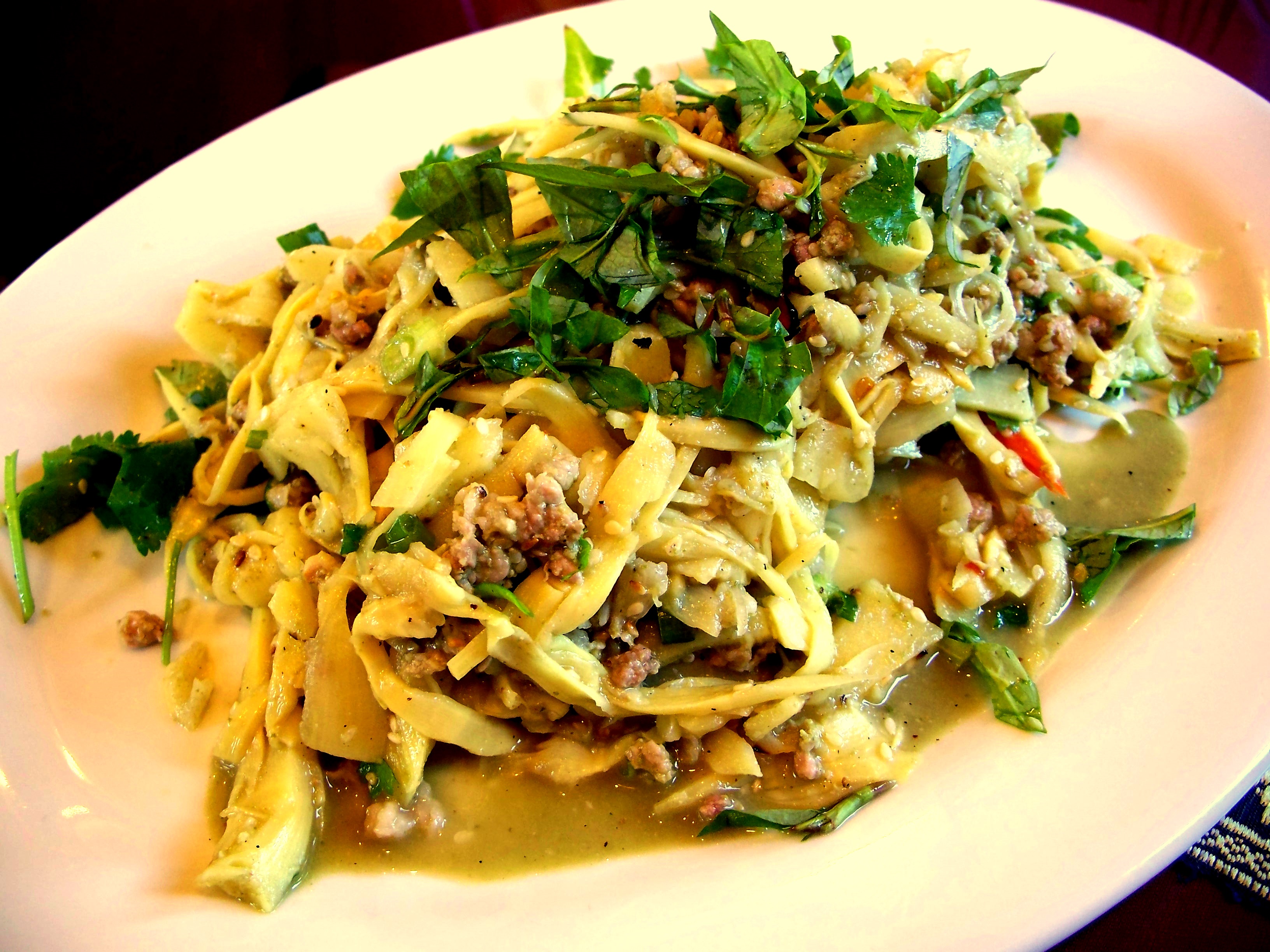
Get with caution: soub naw mai even if it’s on the House Specialties list (with kao gee). This is bamboo shoot (mai) salad with minced pork, spiced up by a generous dose of ground chili pepper, black pepper and mint. I have mixed feelings about this. It’s good at first, but then it’s too spicy for me, the bamboo shoot is refreshing at first, but then too soggy and not chewy enough. It’s good as a small side salad, but not as an $8.95 entree.


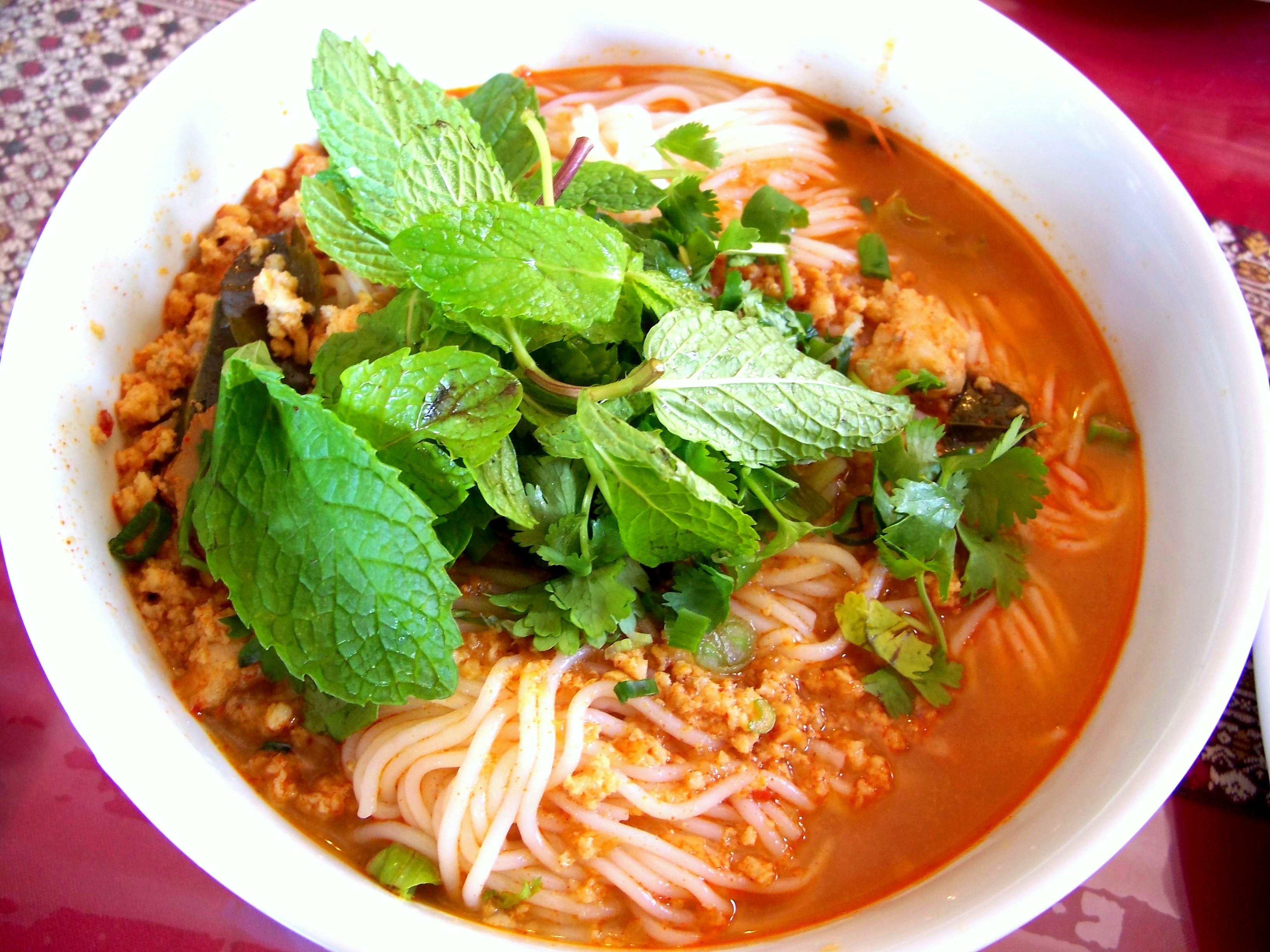
Get: catfish curry noodle soup (lunch menu, $9.95). Don’t expect to see any fish under the rice noodles, it has all dissolved in the broth. This soup is as vibrant in colors as it is in taste: sour and hot play the two high keys. I like how the main ingredient, the fish, stands behind the scene.


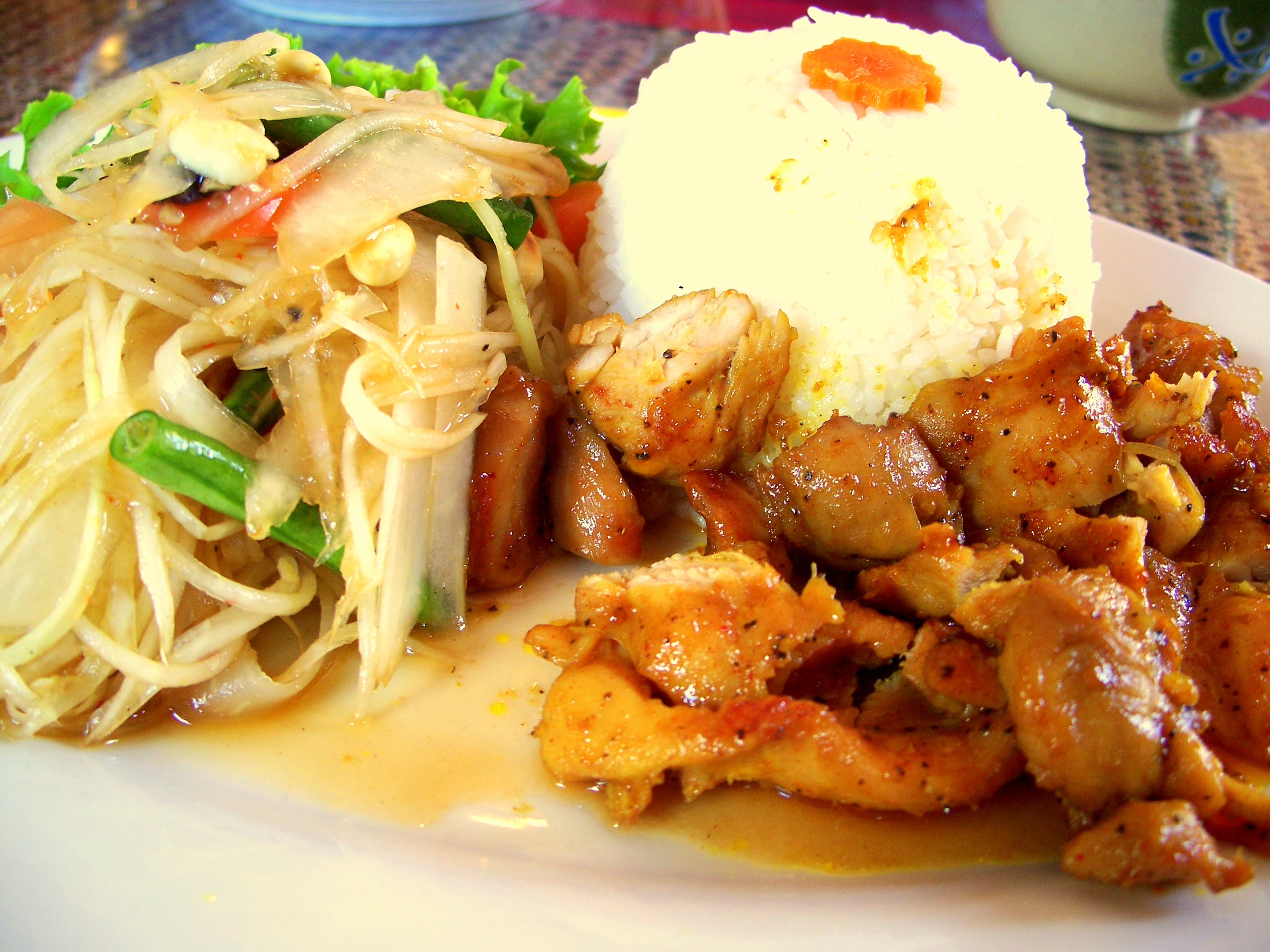
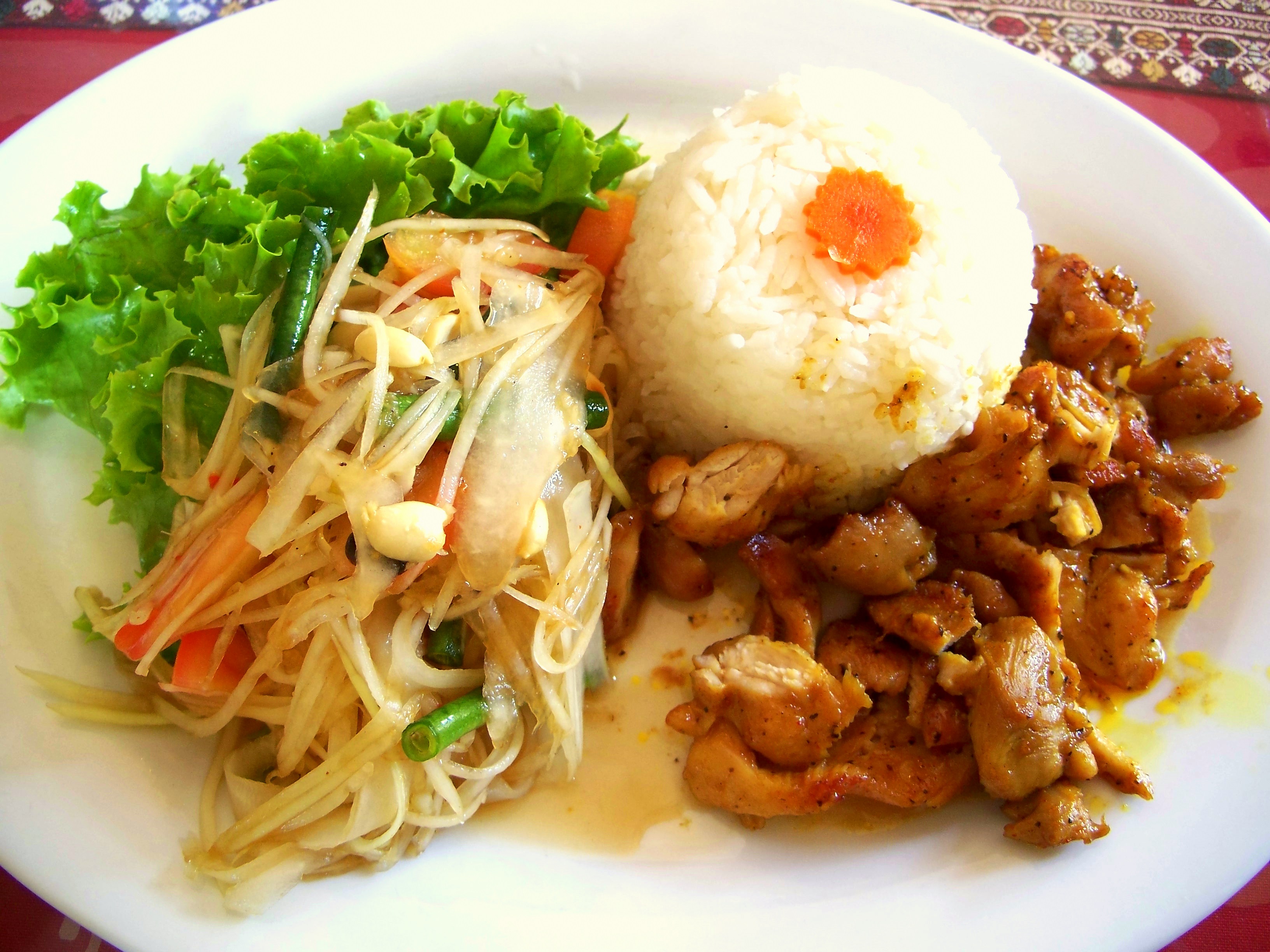
Definitely get: som tum gai yang (lunch menu, $9.95). What can go wrong with BBQ chicken (gai yang in Thai, or ping gai in Lao), simple white rice, and green papaya salad (som tum in Thai, tam mak hoong in Lao)? The portion is too small. Although I’m a meat lover, I think the mild som tum totally steals the lime light on this plate (pun intended :-P). Its crunchy strings, soaked in sugar and tangy lime juice, are fruit crack.


Of the limited times we’ve been to Dara, the only disappointing thing we encounter is how the diners, however young, like to order nothing more than pad thai. The playing-safe mentality is stickier than sticky rice. Seeing how big the menu is at Dara, there is one thing you should NOT GET here: pad thai.

Address: Dara Lao Thai Cuisine
1549 Shattuck Ave
Berkeley, CA 94709
(510) 841-2002

Other Thai-Lao restaurant in the vicinity:
Champa Garden

Bún bung, sort of…

September 25, 2010 By: Mai Truong Category: Comfort food, noodle soup, Northern Vietnamese, RECIPES, Vietnamese


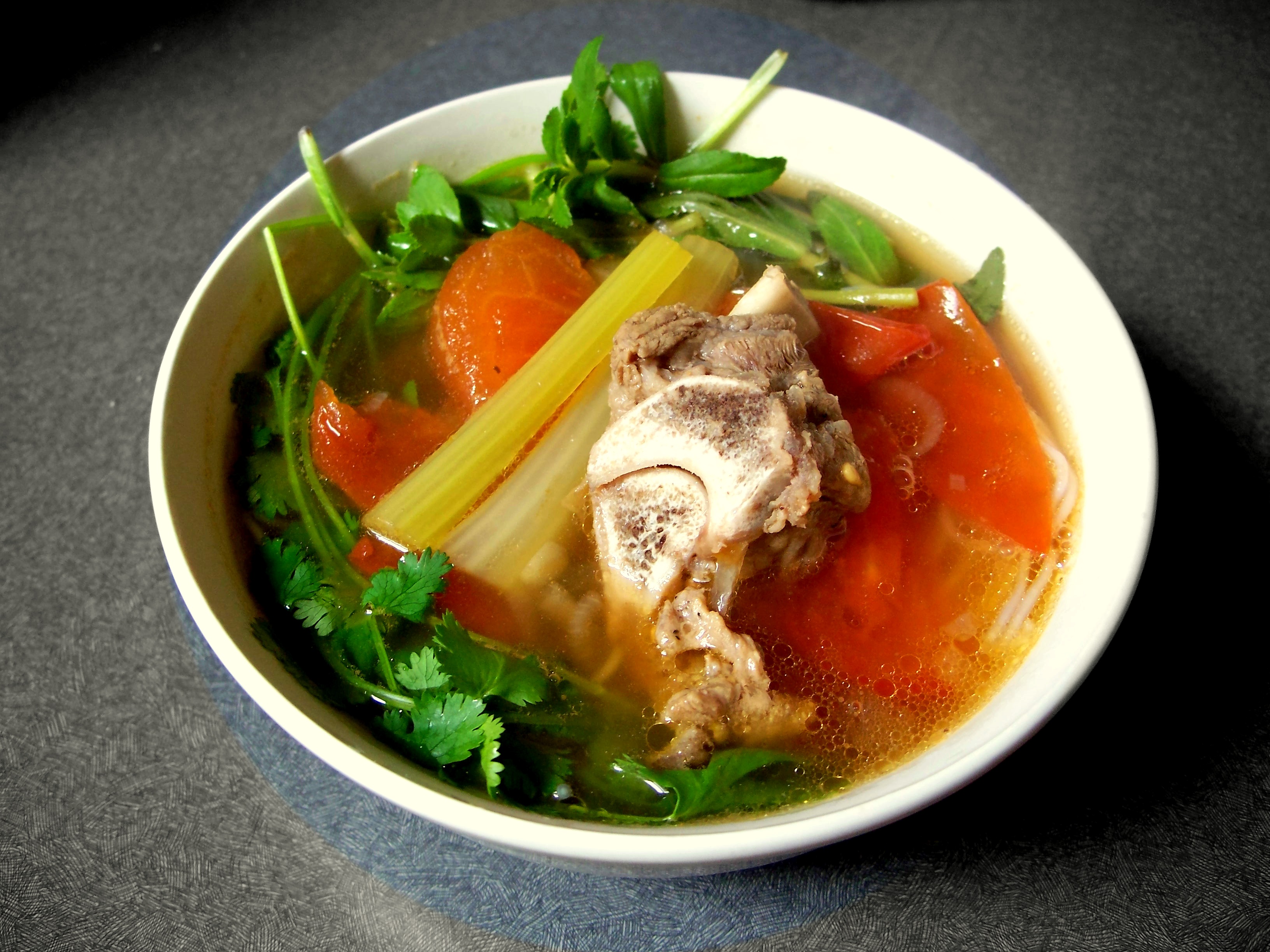
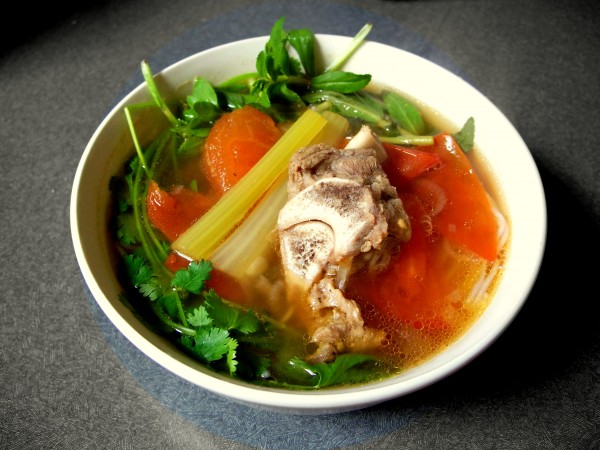
The scent pierces through the air, half like fresh lime and half like mint, liberating. The broth is fulfilling like juice from a just-ripe fruit, coating every strand of vermicelli and making them supple like newly washed hair. There is red, white, bright green, fall-leaf yellow green, and the earthy sepia tone of bone meat. My first bowl of bún bung.

Bún bung is a noodle soup of the North. Not having been to Hanoi, I learnt about bún bung from the interweb and tasted it via imagination. My mom has heard of it, but Saigon doesn’t have it, and I don’t know how popular it is in Hanoi today. It wouldn’t surprise me if the old fashion noodle soup is only half surviving in the baskets of old ladies dressing in brown and having their teeth dyed black. Anyway, it has a funny name. Bún (pronounced like “boon” with a quick rising accent) is just the usual rice vermicelli. Bung (pronounced like “bung” in “übung” in German – English doesn’t have this sound) is the method of cooking: stir fry first, then simmer until boil in water. There’s no adequate translation of the name into English, other than “bung noodle soup”. But to me, it’s funny because bung sounds like boom, or bloom (as in flower blooming). For sure, the soup is a flavor bouquet.
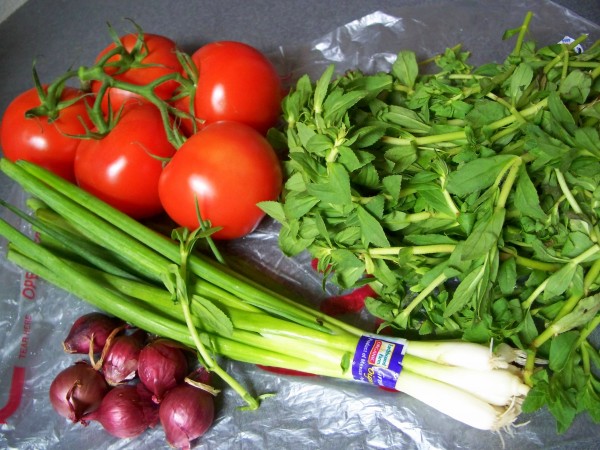

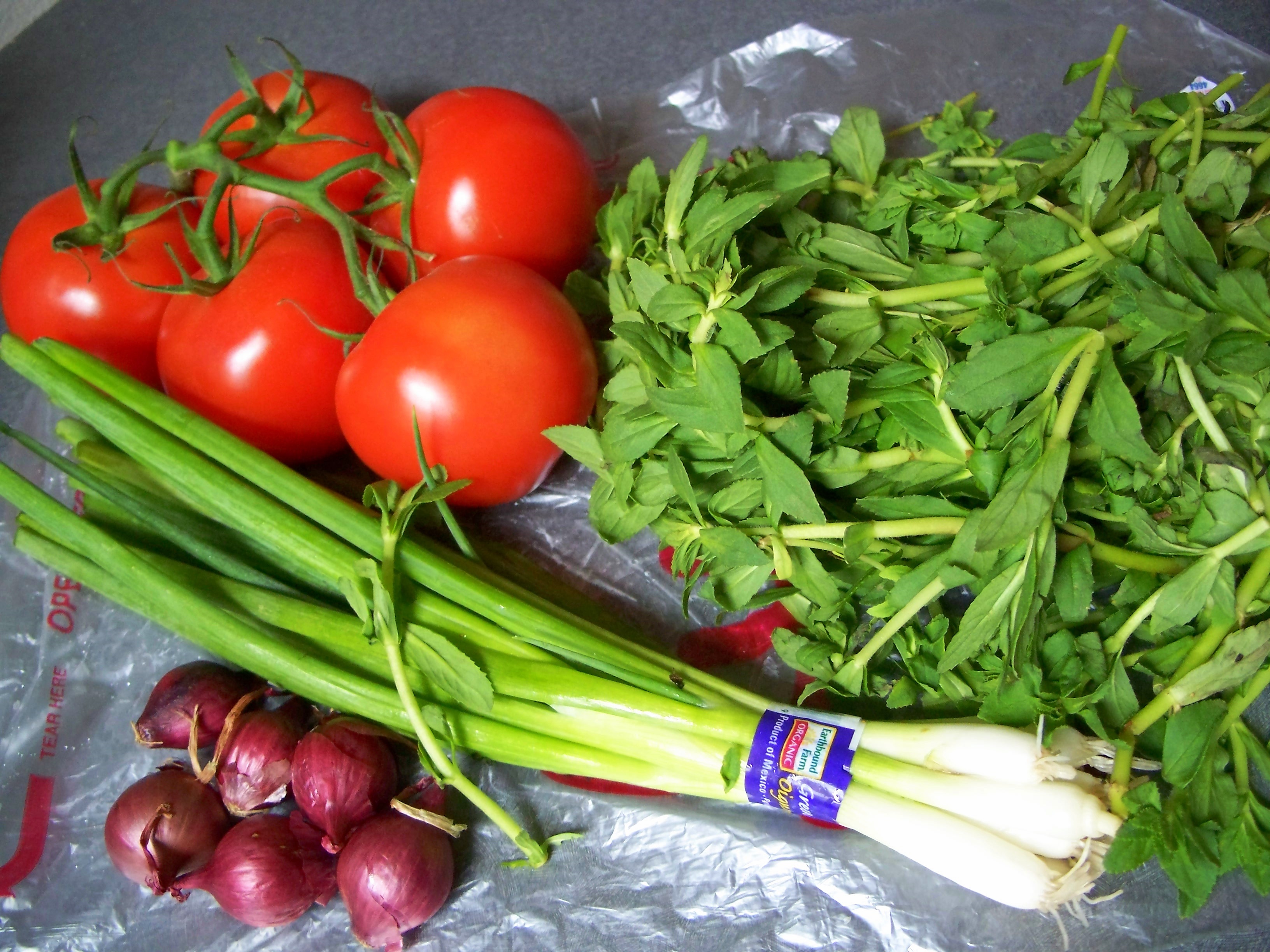
Compared to other noodle soups, bún bung requires little time, few ingredients, and not so much attention. It is sort of close to canh chua (sour soup) in the South, but instead of fish they use pig trotters to get the protein sweetness, and instead of rice it’s eaten with bún. It’s also a little close to canh bún cá (fish noodle soup, also of the North), except for the sour taste, because of the use of rau ngổ (L. aromatica, or rice paddy herb, top right corner in the above picture).

What does “ngổ” mean? I have no idea. But the taxonomists couldn’t be more right labeling it “aromatica,” because its scent permeates the room like a direct spray of Febreze, once just after I open the bag and the second time when I pour hot broth over it.  The scrawny, airy stems with slender leaves taste a little bitter eaten raw, but comfortably sleek and crunchy like water spinach. In Vietnam,  rau ngổ is dirt cheap. In America, it’s $8.99/lb (at 99 Ranch Market). Thankfully the quarter pound bunch I get is more than enough for 6 servings of bún bung.

Also an important ingredient in bún bung (as well as other Vietnamese sour soups) and also named for its aroma is dọc mùng (night-scented lily). Its soft spongy texture is irreplaceable by other vegetables, but good luck finding it in grocery stores. I have to use celery to substitute. The upside is that celery is much easier to wash, while night-scented lily can give you some itchy hands.

That aside, my bún bung uses beef neck bone instead of pig trotters, soy sauce instead of fish sauce, and skips the tumeric powder entirely. But I bunged the bones, so it is bún bung. 🙂

— für Đại

Mai’s bún bung (due to lack of ingredients at the grocery stores she goes to):
(Prepping and cooking time: 2 hours – 6 servings)
– 1.5lbs beef neck bones (or any kind of chunky bone with meat on it)
– 5 tomatoes, cut into wedges (this is a lot of tomatoes, since I don’t have any sour fruit)
– a few celery stalks cut and split into small sticks
– 300g rice vermicelli
– coriander, purple pearl onion, green onion, rice paddy herb (rau ngổ)
– 2 tbs soy sauce, salt and (a lot of) sugar to taste

1. Marinate the bones in diced onion, chopped garlic, 1 tbs salt and 4 tbs sugar.
2. In a big hot pot, sauté purple onion with oil until it smells good (which is pretty quickly), then dump the bones in and stir-fry until brown. Pour as much water as you want (this is the soup stock) and let it simmer. Skim off the foamy fatty layer on top to keep the stock reasonably clear.
3. Meanwhile, cook the rice vermicelli (like cooking pasta), drain and set aside. Wash and cut the greens (night-scented lily, rice paddy herb, green onion, coriander).
4. When the stock boils, add tomatoes into the stock. Wait until boiling again, add 2 tbs of soy sauce, salt and sugar to taste. Add the celery sticks. Keep it hot for serving.
5. Serving: in a bowl put some noodle and vegetables, then pour a few ladles of broth over, make sure you get some tomato and celery too. I also like to eat the meat off the bones. Sprinkle some green onion, coriander, and pepper on top.


Actual bún bung:
(Recipe translated from source, not sure how many servings this gives)
– 1 pig foot (doesn’t sound enough to me, maybe they meant 1 leg? But that’s too much…)
– 4 night-scented lily (dọc mùng) stems, cut into 2-3 inch sticks.
– 6 tomatoes, cut into wedges
– 1kg rice vermicelli
– tamarind or some sour fruit
– tumeric powder, coriander, purple pearl onion (sliced), green onion, rice paddy herb (rau ngổ)
– fish sauce, salt, sugar, black pepper

1. Cut the pig trotter(s) into big chunks and marinate in 2 tbs fish sauce and 2 tbs tumeric powder.
2. In a big hot pot, sauté purple onion with oil until it smells good (which is pretty quickly), then dump the trotters in and stir-fry until brown. Pour as much water as you want (this is the soup stock) and let it stew (pig trotters take time to soften).
3. Meanwhile, cook the rice vermicelli (like cooking pasta), drain and set aside. Wash and cut the greens (night-scented lily, rice paddy herb, green onion, coriander). Mix them with a little bit of salt. Let sit in 5 minutes. Gently squeeze off some water, wash the greens again and mix it with a pinch of tumeric powder.
4. When the trotters are soft, add tomatoes and the sour fruit into the stock. Wait until boil, sift out the sour fruit and add seasonings to taste. Add the night-scented lily sticks. Keep it hot for serving.
5. Serving: in a bowl put some noodle and vegetables, then pour a few ladles of broth over, make sure you get some pig trotter cuts, tomato and night-scented lily sticks too. Sprinkle some green onion, coriander, and pepper on top.

Bon appetit!


– Submission to Delicious Vietnam, a monthly blogging event created by Anh of A Food Lover’s Journey and Hong & Kim from Ravenous Couple

Tags: