Flavor Boulevard

We Asians like to talk food.
Subscribe

Archive for the ‘Comfort food’

Sugarcane juice is sweetest at the throat

March 30, 2010 By: Mai Truong Category: California - The Bay Area, Comfort food, Drinks, One shot, Vietnamese


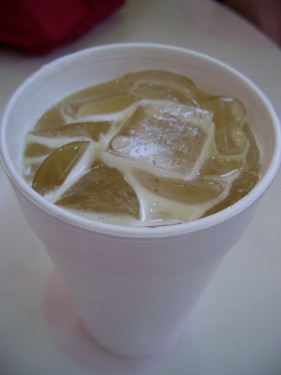
At first you taste a field of lush wet grass, then sweetness creeps in and lingers. It is neither rich nor plain. It is not colorful or sparkling. It has no charm in a 16-oz styrofoam cup. You will never be its addict. It relieves thirst better than coke, and contains nothing but natural hymn. It is the girl-next-door drink.

Where I’m from, nuoc mia carts usually park in front of school gates. They have a bucket of yard-long sugarcane stalks, some ready-to-go nylon bags filled with the yellow tinged juice, tied with a rubber band and equipped with a straw, a glass box to store the inch cuts of decorticated sugarcane – cheap, all-natural energy snack for school kids.  The sugarcane ladies, usually in cone hats with their faces charred by sunlight and sidewalk heat, can reel sugarcane stalks through the grinding wheels so fast and so rhythmically, like a skilled tailor drawing cloth through a sewing machine. I used to marvel those ladies and their cool sweet drink, from a distance, as my mother doesn’t believe in street food. I may recall one or two instances of drinking sugarcane juice over the years, some vague memory of how wonderful the taste was after you added a teeny pinch of salt. There were times my mom would buy whole sugarcanes from the market and peel off the outer shell with one heck of a mean-looking sharp knife, then cut them into bite-sized chunks that I could chew and suck. The juice was heavenly. Its memory just wouldn’t let me rest.

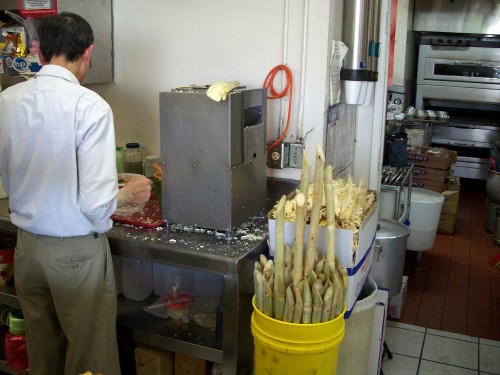
Around lunch time we arrive at CD Bakery. As soon as I ask the cashier lady for one “nước mía”, she yells out the order to the juice man, who starts sticking and pulling sugarcane stalks into the grinding wheels boxed up with metal walls.


After running the stalks a couple of times through, the juice man reaches into the tin box to grab a plastic jug filled with lightly foaming juice, pours it into a styrofoam cup with a few ice cubes, closes the lid and dunks a straw. Three-dollar-and-three-minute soft drink. The only way to beat this minimal procedure would be to lick maple sap from a living tree, or chew on some sweet grass. The cashier lady asks if I want kumquat (salted, perhaps?) in my nuoc mia too, but after a split second of thought I go with No. Sugarcane juice can make it on its own. That is its beauty, and it deserves my trust. How would the aged, salty, bitter, sour kumquat tantalization fuse with the tingling, deeply soothing, freshly pressed, sweet sugarcane nectar?

I’ll try it next time.

Address: CD Bakery & Deli (also called Dao Bakery & Deli LLC)
(in the Lion Market Plaza on Tully & King)
1816 Tully Road, Store #198
San Jose, CA 95122
(408) 238-1484
Open everyday from 8am to 8pm

Phở Hòa – Is it just another noodle joint?

March 20, 2010 By: Mai Truong Category: California - The Bay Area, Comfort food, noodle soup, Vietnamese


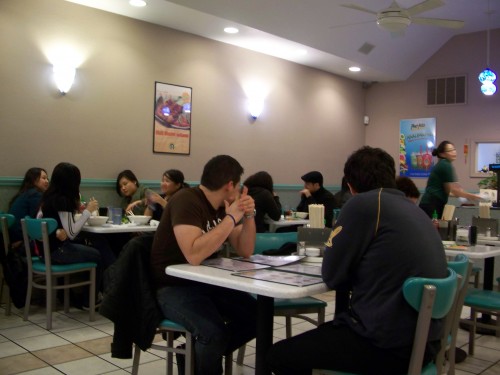
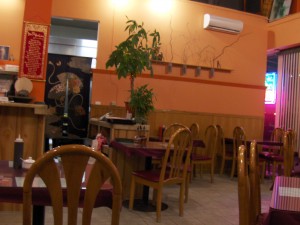
It looks like one of those noodle houses on the roadside with plastic chairs, formica tables, laminated menu, and plain white neon lights. Actually, it is one, but with green cushion chairs. The atmosphere is so casual, the slurping scenes so familiar I could almost hear motorbike engines and vendors’ calls around Saigon. Everywhere I look, Berkeley brings back memories of Binh Thanh and Tan Binh Districts with its frameless mix of dashing modernity and forlorn architecture, damp narrow alleys separating discordantly colorful buildings, shoe mending stores tucked between pricey diners, Vespas, bicycles, cars, trucks, men in suit and men in rag, the only thing missing is a xich-lo. Like it or not, this world doesn’t stay outside noodle houses like Pho Hoa, you can eat while feeling life scurry on the pavement. The diners casually bring the commonest of life into their chatter. The kitchen brings the commonest of noodle soup onto the table.

But only they added a twist to it. Of course eighty percent of the menu is laminated with things every pho joint would have: pho. Pho of all varieties, Steak, Brisket, Chicken, Tendon, Flank, Tripe, Meatball.  Then at the very bottom of the page, estranged by all other pho’s, is Seafood Sour.


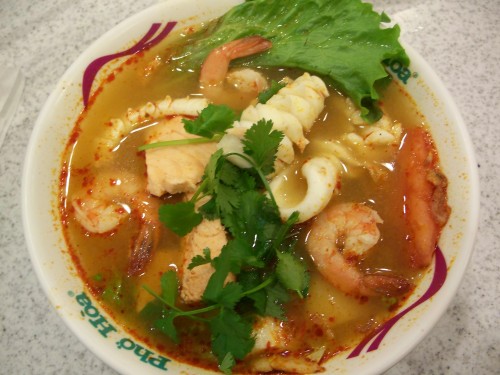
I first heard of sour pho a few months ago. The regional specialty of northern province Lạng Sơn sounds exciting: tamarind sauce, a ladle or two of chicken broth, a handful of chicken meat and innards, fried shallot and crushed peanuts, structurally somewhat like mỳ Quảng (Quảng Nam noodle) and cao lầu (Hội An noodle). So as soon as I saw “sour pho”, I leaped at the chance. Fifteen minutes later, the eight-dollar-and-ninety-five-cent chance looked me in the eye with fiery inquisition, “maybe it’s a little too much chili paste?” I sniffed and hawked, blew and gulped, a sip of water now and then between spoonfuls of the clear red broth. It is definitely not the sour pho of Lang Son. Not only copious amount of squid, shrimp and salmon replaces chicken gizzards, but the sourness comes from pineapple and tomato instead of tamarind, and your rice noodle gets lost in the sea. It is pho and canh chua entanglement, harmoniously with joy in crescendo.

But some part of me will forever crave meat. Big chunks. Marinated. Sauce dripping. A tad of fat to loosen the muscle. Bits of tendon to brighten the chew. Meat that is bold and brown. Like a beef stew.

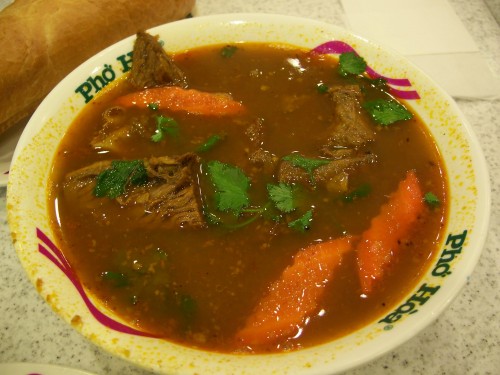
We found it demoted to the menu’s bottom league with Seafood Sour.  Bò kho is Vietnamese beef stew with a complex wealth of tastes, a French-influenced Southerner’s display of abundance, and an ambrosial love of Mudpie. Star anise and cinnamon link bo kho with pho, annato seeds make it color-stricken like claypot fish, nuoc mam gives it the regional stamp. All for a mere $7.65. The quality doesn’t lie in the beef, but in every bite of baguette wholeheartedly dipped in that rich, peppery, daring juice. E V E R Y bite. Only found at:

Pho Hoa Noodle Soup
2272 Shattuck Avenue
Berkeley, CA 94704
(510) 540-9228

UPDATE: This location is now closed.

Other pho houses in Berkeley: Le Petit Cheval (student-pocket-friendly), Le Regal (big-pocket-friendly)

13 recipes with cha lua

March 11, 2010 By: Mai Truong Category: Comfort food, RECIPES, Vietnamese

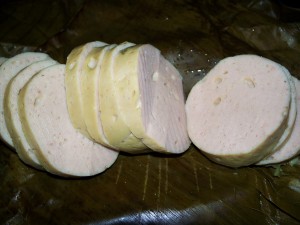
Cha lua (silk sausage) - picture from flavorboulevard.com

Not to be biased but I think cha lua (silk sausage, also known as lean pork sausage) is the best and most versatile sausage out there. Ok, of course I’m biased, but who isn’t when it comes to their motherland’s cuisine. So can we make cha lua? There are scores of recipes, from Ravenous Couple‘s  touch of familiarity to the indifferent instruction on VietnameseRecipes.com… There are also scores of recipes labeled as “cha lua” but are actually giò thủ (head cheese), industriously copied from one another, I’m not sure who started first, but yum-recipes.com, recipehound.com, keyingredient.com just to list a few, all share the same formula with 8 oz of meat from a small pig head.

For those with not much more than a skillet and a spatula in a kitchenette (hello, grad students!), it’s best just to buy a loaf from your nearest Vietnamese sandwich shop or Asian market.

Now what? Here’s a list of 13 dishes with cha lua to churn out at your castle (in no particular order), requiring no special cooking hoopla or obscure ingredients (unless silk sausage is considered an obscure ingredient).

1. CƠM ÂM PHỦ (Hades Rice):
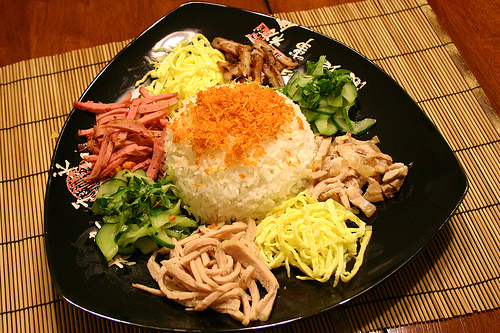
Hades rice - picture from Viet World Net (www.vietwn.com)

Among the Huế creations, this one has kind of a freakish name. But the only thing, if any, that can freak you out would be how much shredding and slicing you need to do. The ingredients are flexible: some kind of meat (chicken, pork, beef, squid, elephant, etc.), cha lua, cucumber, omelet, some good nuoc mam with sugar, salt and chili pepper. The orange powder atop the rice is shrimp powder (tôm chấy), but it’s just makeup, not essential. For a detailed recipe, visit Kiki Rice.

There are two stories behind this intriguing name. In the more fairy tale-like version, a king one day decided to go around town by himself to see how his people lived. In the late evening, he got hungry and knocked on some door, asking for a meal. Living in the small straw house was a poor old lady, who did not recognize the king dressed in common clothes, nonetheless she kindly took everything she had in the kitchen to prepare a rice dish. Despite its simplicity and lack of spectacular ingredients, the hungry king thought it was quite good, and he was so touched by her hospitality that  he invited her to be his chef in the royal palace. Because the house was built on lowland, it was dark outside, there was no electricity and the poor lady wasn’t lighting candles everywhere, the king’s dinner had some underworld feel to it, so he called the dish Hades Rice. Moral of the story? The best way to a king’s kitchen is via his stomach.

In the more modern, unromantic version, there once was a small dining hut, where only one dish was served: rice with thinly sliced meat and vegetable. It was opened at night, mostly for poor workers, rickshaw pullers, and people on their way home from a late theatrical show. Again, because of the low light, the quiet and somewhat rusty, rugged ambience, the dining hut was known as Âm Phủ (Hades), and its only dish the Hades Rice.

So which story do you prefer?

2. CHA LUA KIMBAP
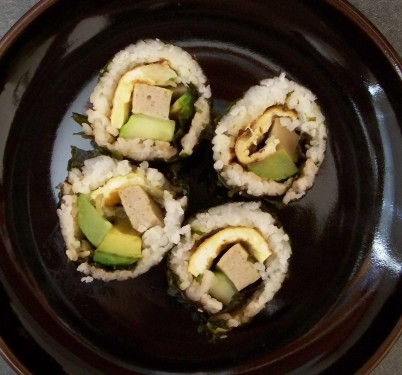
cha lua kimbap - picture from FlavorBoulevard

Cha lua makes a great substitution for crab stick in kimbap. It has the sleek, chewy texture, and it has flavors. I wrote a post on this feeble attempt a while back, if you’re interested in recipes.

3. XÔI MẶN or XÔI GẤC:
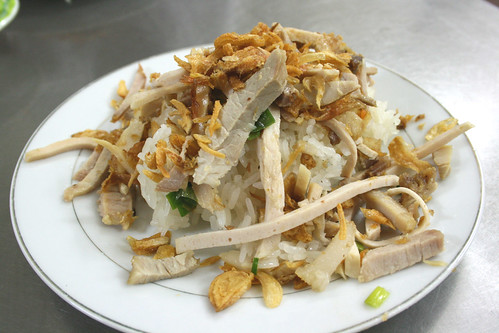
Savory rice - picture from PiloPia-BCmem

Xôi mặn (savory sticky rice) with Chinese sausage, chicken, pork floss (rousong) and of course, cha lua (recipe from Ravenous Couple). Xôi gấc is sticky rice colored with the gac fruit, fairly simple to make if you can find the fruit. I haven’t seen any in either Houston or San Jose, but maybe you can steal some from Ravenous Couple’s aunts’ garden, or just raid their kitchen.

Simply put, cha lua goes well with sticky rice, whether the sticky rice is sweet or savory, red or white, steamed and clumpy or boiled in shape (bánh chưng bánh tét).

4. Breakfast English muffin sandwich, with a slice of cha lua and a fried egg.
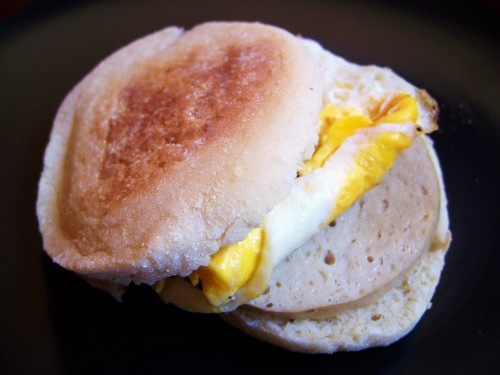
English muffin with cha lua and egg - picture from FlavorBoulevard

No need to toast it or butter it, the juicy silk sausage can savorize the sandwich all by itself. You can see how I try to minimize cooking.

5. BANH MI CHA LUA
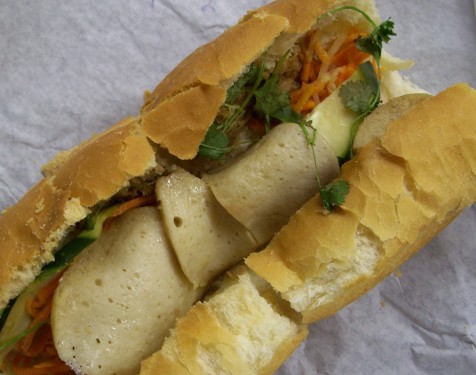
Banh mi cha lua from Saigon Express, Berkeley - picture from FlavorBoulevard

There’s no need to describe the tasty harmonious symphony in a banh mi. It’s cheap ($2-3 from the sandwich shops), but it’d be fun to whack this out at home. Buy a few crisp baguettes, follow Wandering Chopsticks’ instruction for pickled carrot and daikon, and your imagination for the rest.

Pepper braised cha lua - picture from afamily.vn

6. CHẢ KHO (braised silk sausage)

Two words: salty and sweet. The key is nuoc mam (fish sauce). Here’s my adaptation from Hang’s Fooood Experiment‘s recipe of tomato braised sausage: Start with 3 tablespoons of sugar and coconut water to make the caramel sauce, then add the sliced sausage, 3 teaspoons of nuoc mam, a little bit of water (just so you can stir), a pinch of pepper, and diced tomato if you feel like it. Simmer on low heat, stir when most of the liquid has evaporated and serve it dry; or you can add more water in the beginning to have a nice brown sauce over rice. Gastronomy has cha kho with porridge. Mmm… salty, sweet, and bland innocence.

7. CHA LUA FRESH ROLL (goi cuon): wrapped in rice paper (bánh tráng) with herbs and blanched shiitake, dipped in nuoc mam. Without shiitake, this is a Nha Trang style snack. I got the mushroom inspiration from the food column of VnExpress.net, where they suggest an appetizer with cha lua, shiitake, carrot, and green bean tied together with scallion, worth a try as well.

8. CHA LUA SOUR SOUP: tomato, sweet onion, egg, and diced cha lua. Also native to Nha Trang.

9. CHA LUA and CRAB SOUP:
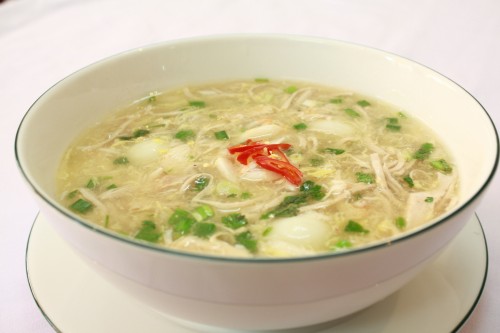
cha lua and crab soup

Cha lua and crab soup - picture from bepgiadinh.com.vn

Shredded chicken breast, diced cha lua, boiled quail eggs, crab meat, sweet corn, and diced onion cooked in boiling bone stock for 10 minutes. Pour in some corn starch (mixed with water) and crack an egg. Serve hot with a dash of cilantro and a big bowl, because it’s light and you’re hungry :-). (Recipe translated from bepgiadinh.com.vn)

Papaya, orange and cha lua salad - picture from tintuconline.vietnamnet.vn

10. PAPAYA, ORANGE, and CHA LUA SALAD:

The stuff: shredded green papaya (the type that goes in Wandering Chopsticks’ green papaya salad), diced orange, bean sprout, and sliced cha lua.

The sauce: nuoc mam, olive oil, vinegar, sugar, water combined in ratio 1:1:1:2:2 (tablespoon), throw in chopped garlic and chili paste for kicks.

Mix’em all up.

————————————————————————————————————————————————-

And that was 10 amateur-friendly recipes. But Mai, you said 13! Yeah well call me a cheater. Here are three cha lua affairs that I utterly love but will never make at home because I’m afraid to screw them up. So here for the professionals who can never fail and the kitchen masochists who want to spend half of their day by the stove (just kidding, cooks are my heroes :-D):
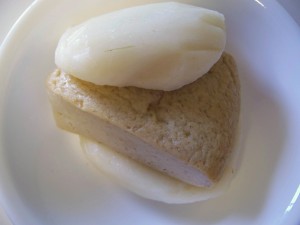
Banh day gio from Gio Cha Duc Huong, Houston - picture from FlavorBoulevard

11. BÁNH DẦY GIÒ: sticky rice bun with cha lua. The chewiest bun of all buns. The sticky rice is bland, the sausage is juicy and savory. You’d either hate it or love it. My dad hates it, I love it. I bought it and wrote about it. Ravenous Couple made it.
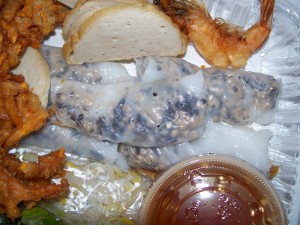
Banh cuon at Tay Ho Restaurant, Houston - picture from FlavorBoulevard

12. BÁNH CUỐN: another old timey, steamed rice roll stuffed with pork and mushroom. If one day I live far away from the Vietnamese community, this would be my most frequently missed favorite, so I have to blogged up on them as a way of savoring memories. Ravenous Couple don’t have to worry about that, because they can make their own.

13. BÚN MỘC
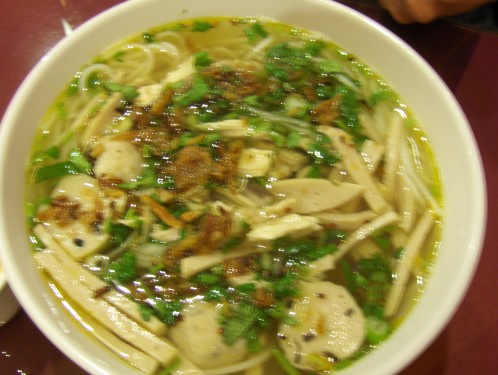
Bun moc at Tay Ho Restaurant, Oakland - picture from FlavorBoulevard

A soup laden with meat, yet the stock is so fresh and light. I feel at home at Tay Ho in Oakland, so I’ll keep going there for my soups. But maybe, just maybe, one day when the right planets align I will gain enough courage to make a pot. Guess whose instruction I will follow?

Seriously, is there anything that these guys haven’t made?

Tags:

Banh cuon, bun, and beyond – Tay Ho #9

March 04, 2010 By: Mai Truong Category: California - The Bay Area, Central Vietnamese, Comfort food, noodle soup, Northern Vietnamese, Vietnamese

bun_moc
I have discovered another great soup. My fingers trembled with anticipation over the sweet aroma, the shining aurulent broth, those fragile fatty bubbles that form a thin film on the surface, the promising dapple of fried shallot,… and the pictures got all blurry. So just squint your eyes and pretend for the moment that you’re hunching over a bowl of piping hot succulence and the steam makes your eyes hazy. Can you smell that sweet aroma? No? Grab a chair at Bánh Cuốn Tây Hồ #9 in North Oakland, ask for a bowl of bún mộc, and find out for yourself.

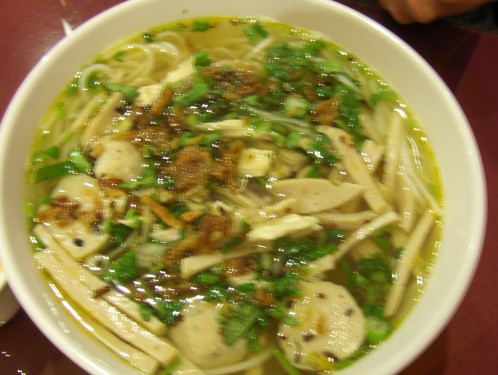
Before diving thy chopsticks into the noodle soup, let us start with the name. It can be spelled either bún mọc or bún mộc, the hat on the “o” changes the word’s meaning and thus the name’s origin, but nobody is certain which one is correct. “Mộc” means “simple”, the broth is simply boiling water savorized by salt, pepper, nuoc mam, pork, shiitake, and wood ear mushroom.  “Mộc” also means pork paste (twice-ground or pounded pork, seasoned, known as “giò sống” in Vietnamese), which is the central ingredient in the original soup but not in the rendition at Tay Ho #9. I like gio song, but sliced meatballs and cha lua (silk sausage) make a trustworthy substitution. The cook here also threw in some shredded chicken breast as a reassurance of familiar fixings. Now if you drop the hat on the “o”, “Mọc” is the nickname of the former village Nhân Mục, a part of west Hanoi today. This village can very well be the hometown of the meat-laden rice noodle soup, hence the noodle soup’s name. However the spelling goes, all we southerners know is bun moc comes from the north and is less than popular in Saigon. Most Vietnamese immigrants in the Star Flag States are southerners, so bun moc is even harder to find on the menus here. But as long as there’s a kitchen somewhere churning out these mouth-warming, bellicious bowls, there will be my pair of chopsticks eager for a hearty winter fling.

In the mood for something a little more adventurous?

bun_bo_Hue
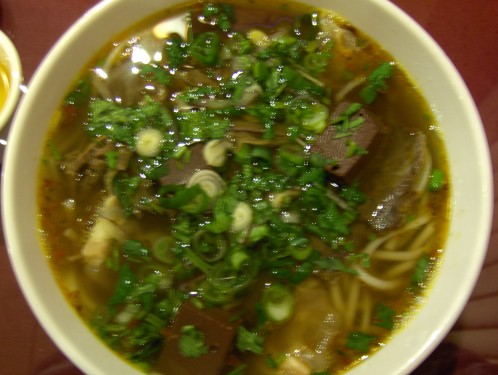
If bun moc might seem on the mild side, you know, ground pork and white meat, and healthy mushroom for crying out loud, then bun bo Hue would spice up the buds. Bun bo Hue is synonymous with chili paste and satay, there’s just no way out of the heat. There’s no way out of the brutal assortment either, beef chunks, gelatinous cubes of congealed pork blood, some hasty slanted cuts of pig trotter. The blood cube doesn’t taste bloody though, it’s rather bland (naturally, it’s cooked and unseasoned) and only for textural purposes. I’ve sampled this beef noodle soup at Kim Son and Bun Bo Hue Co Do, but third time is indeed a charm, I enjoyed it at Tay Ho. Either that or the hostess’s friendliness, a rare delight to diners in Vietnamese restaurants, which alone makes me want to go back to this place.

Banh_Cuon_Tay_Ho_9_Oakland

1 bún bò Huế + 1 bún mọc + 1 large bánh cuốn to-go for lunch the next day: $22.67

Address: Tây Hồ Restaurant – Bánh Cuốn Tây Hồ #9
344B 12th Street
Oakland, CA 94607
(510) 836-6388

More on Bánh Cuốn Tây Hồ: Tây Hồ #8 in San Jose and Tây Hồ #18 in Bellaire, Houston.

Also check out Bánh Cuốn Hoa II in Houston, they have nice duck noodle soup (bún măng vịt).

Another lovely meal at Berkel Berkel

March 01, 2010 By: Mai Truong Category: California - The Bay Area, Comfort food, Korean


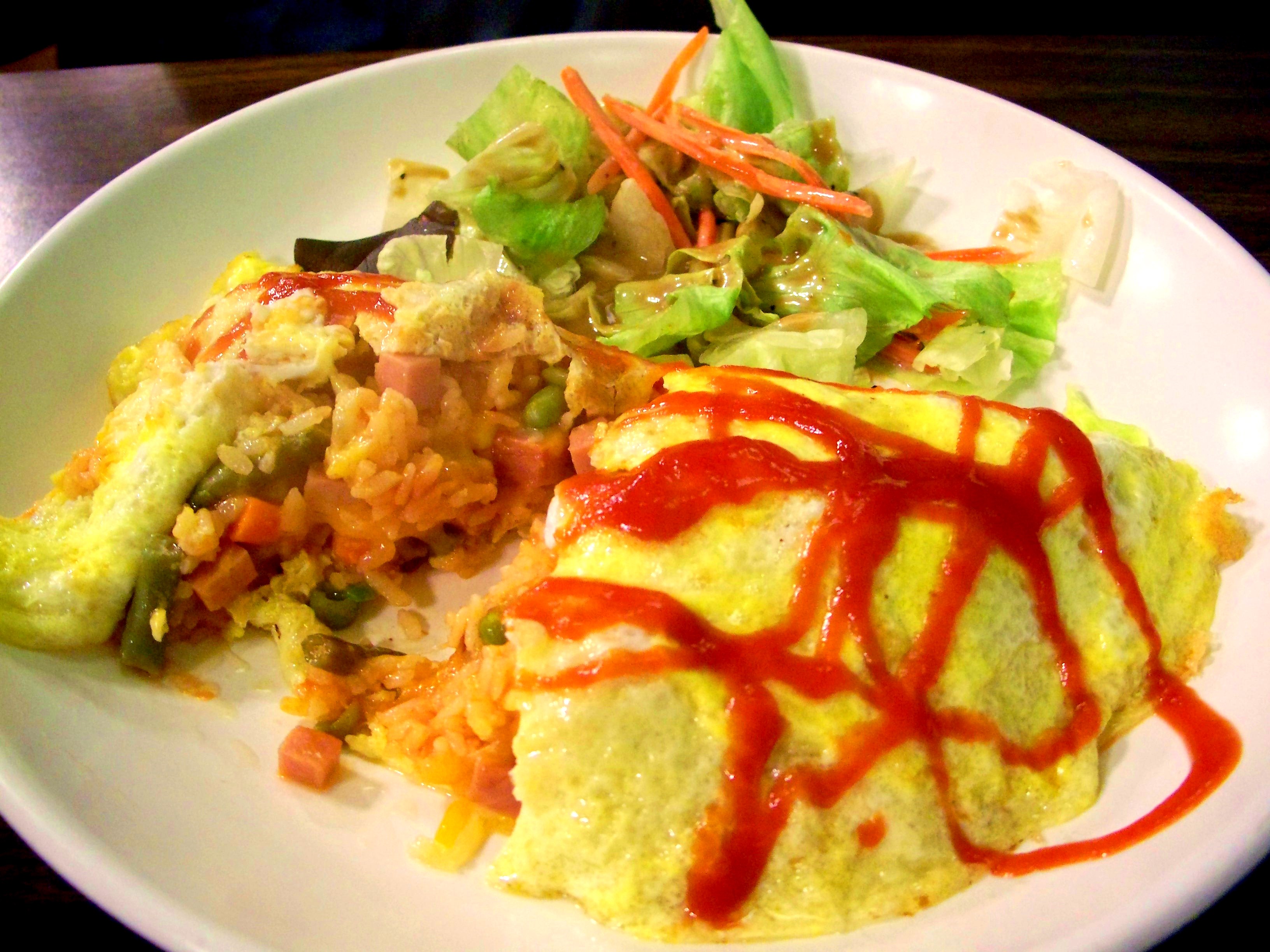
In Vietnam, the first month-old birthday of a baby marks an important celebration. So today is the day, Flavor Boulevard is a month old! Considering FB‘s birth month is also the month of passion and chilly winter, what’s better than a hot plate of “Omu-rice – Perfect for sharing between a couple in love,” said the menu at our local Korean fave on Telegraph Avenue?

So I ate it, and here I share it with my FB. Fried rice with ham, green beans, and peas wouldn’t normally rank high on my list, but the saucy, creamy running egg yolk does wonders. The omelet tasted unseasoned, but its natural plainness was a great base for the rice. Given the fact that I always prefer my French fries sans ketchup, I didn’t find ketchup a well-matched condiment here, perhaps something more buttery would be nice. But perhaps a sour brush was a healthy contrast. Omu-rice is lovely still.


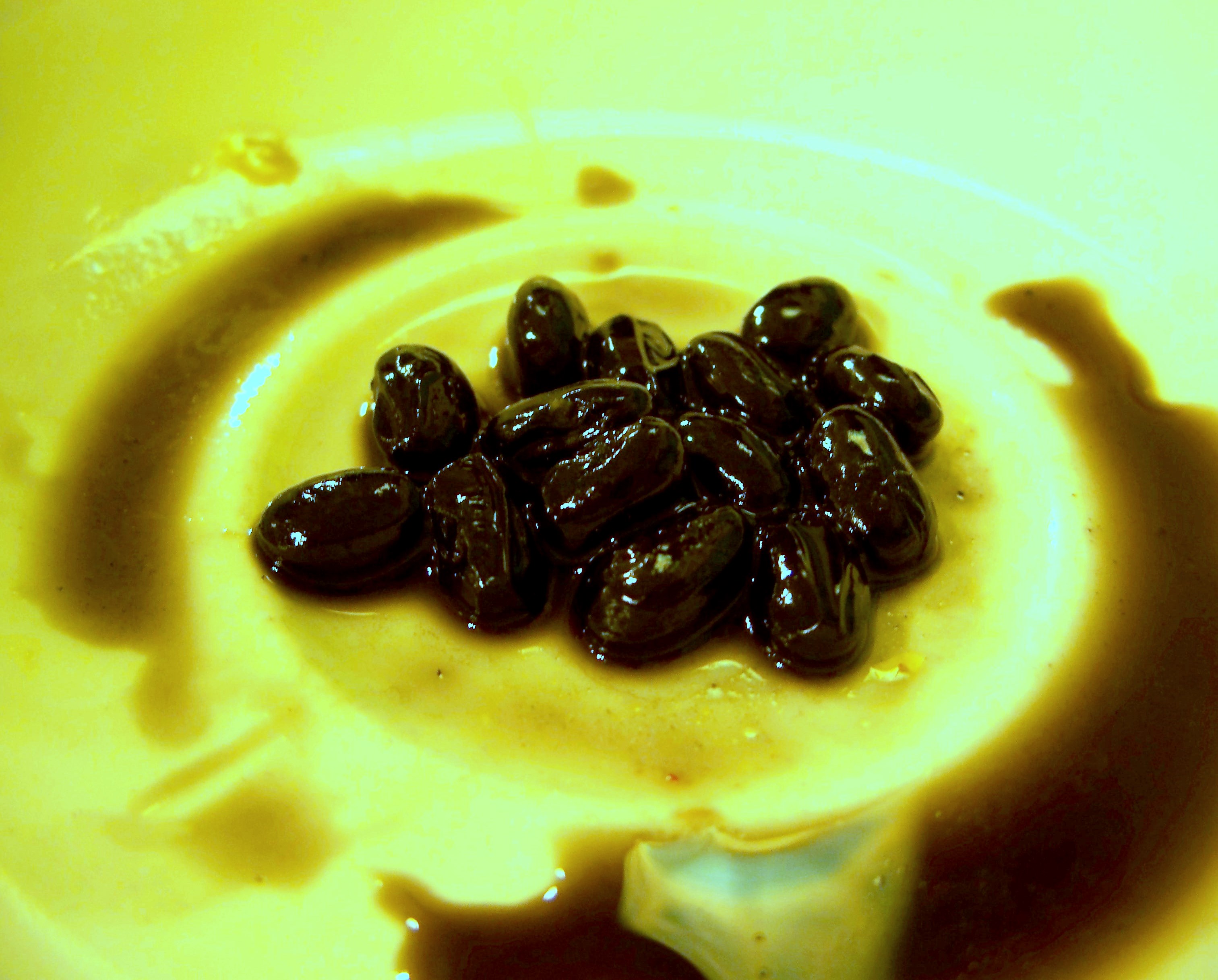
As usual, Berkel Berkel has unlimited spicy kimchi, nonspicy pickled cucumber, and sweet black beans to accompany your main course. Firm and nutty, the black beans (kongjaban) are a pleasant delectable if eaten individually. Of course it’s not easy to eat one by one with chopsticks, but it may be well worth the effort: black bean sweetened with honey and soy sauce “is good for your head,” so I was told by the kind-hearted host of Berkel Berkel. I’ll sure take any chance I get to be smarter, so I ate a bunch of these.

japchae_Berkel-Berkel

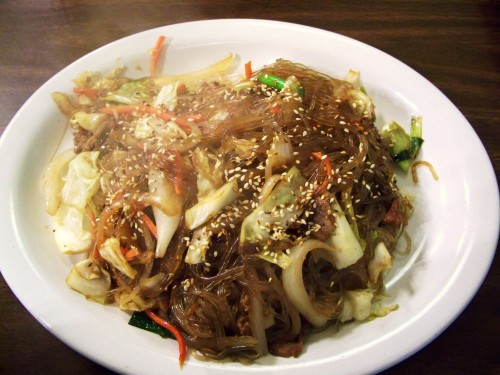
Being in the starchy mood, we also went for a steaming plate of japchae (glass noodle) on rice. I never thought about noodle on rice as a real meal, although as a kid I did find ramen a savory substitution for meat when it came to rice’s aids. The lustrous sesame oil is profound, but there’s a whole package of sweet and salty in every chewy bite of glass noodle.  Once again the chefs show that texture harmony and flavoring are more essential than substance, I’d be a vegetarian everyday if I could eat this japchae and rice everyday.

Although we haven’t tried the whole menu (*glance over other tables* the soups look smoking good), I have faith that everything at this joint scores at least 8 out 10 points for Korean comfort food. The atmosphere helps.

Want to know a little more about Berkel Berkel? Take a look at our first visit.  The place usually gets crowded around 8pm. Do Korean folks tend to eat dinner late?

Address: Berkel Berkel
2428 Telegraph Ave, Berkeley, CA 94704

For those who like to play in the kitchen: a recipe of kongjaban from Simply Senz and Steamy Kitchen’s personal touch on japchae.

A homage to Pickett House

February 27, 2010 By: Mai Truong Category: American, Comfort food, Texas

Pickett_House_interior
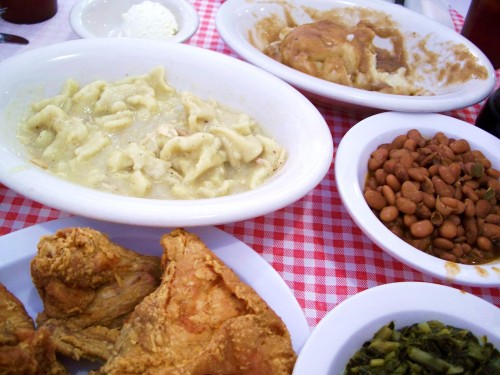
How far would you go out of your way for a meal? A fairly casual common meal? One that you can whip out at home in less than two hours? How long of a drive would be worth the stead of cooking? How scenic is the route? Sometimes it’s not so much the food that draws one back to a restaurant, given that the food is lovely of course. Sometimes it’s that craving for a bit of simple nature and not artifice, a bit of old fashion and not modernity, just a bit of the familiar unknown. The longer my family lives in the city, the more often we get those cravings. Almost every year now we would make a two-hour drive to the Heritage Village in Woodville for a bowl of chicken and dumpling. And it’s best on a cloudy day of January, when the young pine trees along Highway 190 are at their greenest and fuzziest.

100_2914
We never learned the name of this restaurant. We know where it is, we call it “the chicken and dumpling place”, and that’s enough. But it’s not just chicken and dumpling. It’s an all-you-can-eat country style with fried chicken, mashed potato and gravy, some kind of greens, beans, and corn bread. The chicken and dumpling is the best though. It’s thick but not too creamy or buttery. The partially dissolved dumplings have this lovely chewy feel to distinguish themselves from shredded chicken bits. With the right amount of salt and pepper I’d imagine it’d still be great without the chicken.

old_oil_lampWhen I first came to Pickett House in 2002, they were still serving sassafras tea. That’s just my good luck and mishaps at the same time: it is the best sweet tea I’ve ever had, and that was the last time I had it. They say they couldn’t find any more sassafras root in the area. I don’t care if it has safrole and can cause liver cancer, it tastes good. (Hey people are still drinking those bitter, vinegar-like liquids that kill both brain cells and liver cells, aren’t they?)

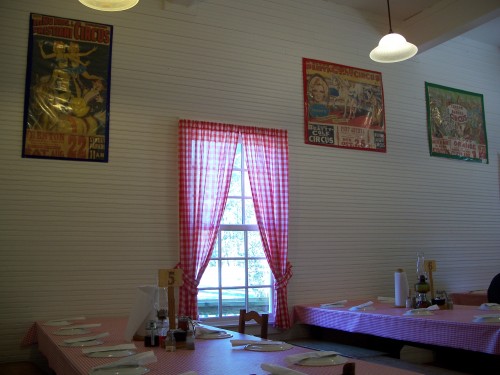
On the sweet side, they’re still serving peach cobbler, so remember not to stuff too much dumpling and fried chicken down your pipe and save room for dessert. But if you don’t, like us, it’s ok to roll out happily with a tummy of southern Santa Claus. Or linger around, take a glance at the old school oil lamp on the wooden piano near the cashier, or the circus posters – some are dated before 1952. Or laugh along with the joke at the other table, friendliness makes a good meal taste like home. Or come outside, breathe in that fresh, brisk, unadulterated air, and feel revitalized.

Pickett_House_Woodville_TX
Address: Pickett House Restaurant (in Heritage Village)
Highway 190 W
Woodville, TX 75979

Lunch for three will set you back by $32 pre-tip. Driving eastward along the highway from US-59, we’re bound to miss the left turn into the Heritage Village and its kitchen. So when you see a church, a parking lot, a gas station and other signs of human occupation, make a U-turn.The exit to awesome chicken and dumpling will be on the right.

Can’t find Pickett House? Another 15 minutes down the road into downtown Woodville is Z’s Fillin Station with more choices for the southern cravings.

If you insist on staying home, here’s a recipe from Christy Jordan’s Southern Plate.

Spice it up at OB Chicken Town

February 23, 2010 By: Mai Truong Category: California - The Bay Area, Comfort food, Korean


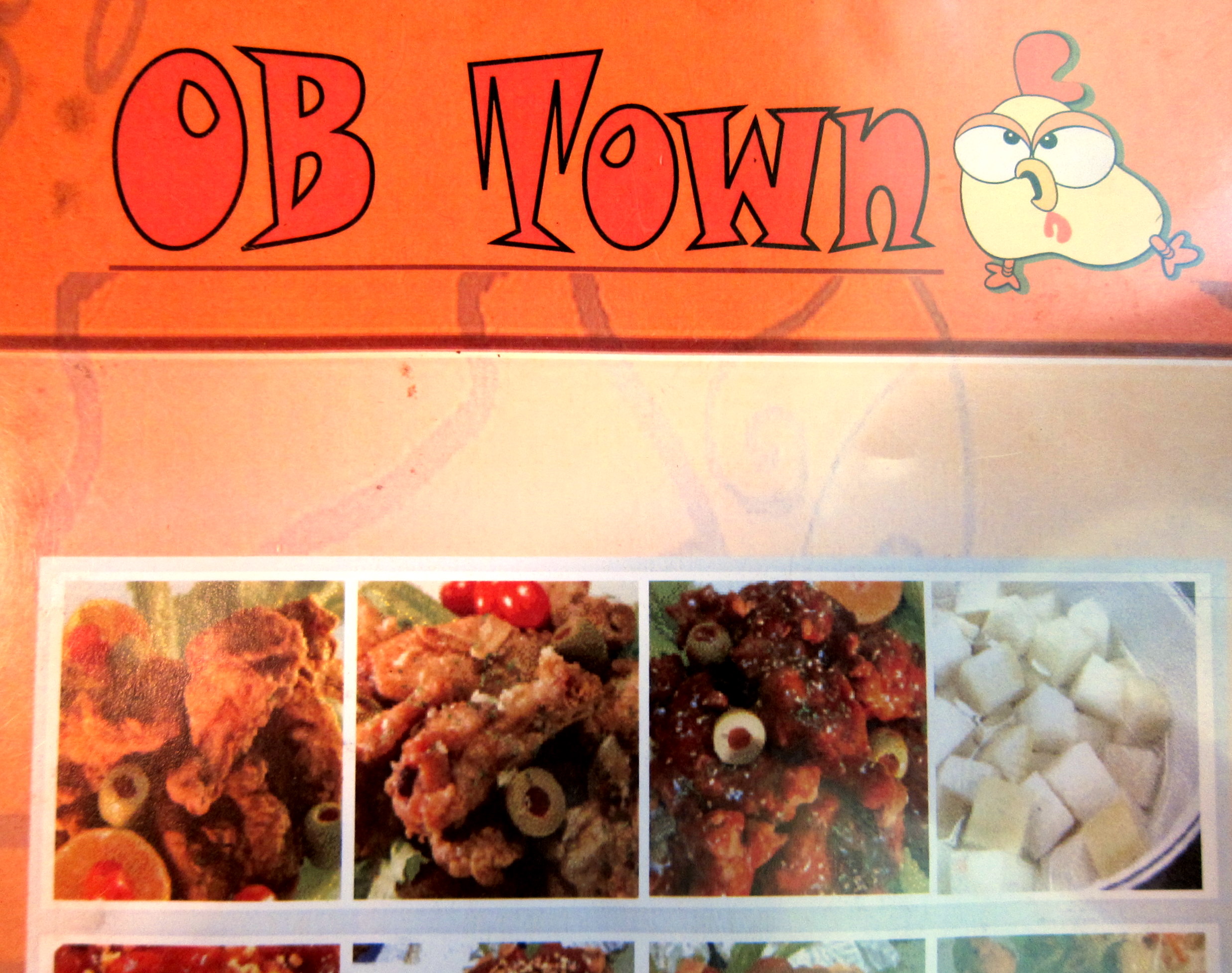
There are two things that I secretly wished for when I went to this Korean fried chicken joint in North Oakland: a better camera to take picture in the dark and a better tolerance for chili powder. [UPDATE: better camera obtained] I mean, just look at the jumping chickie on their menu, isn’t he all fired up?


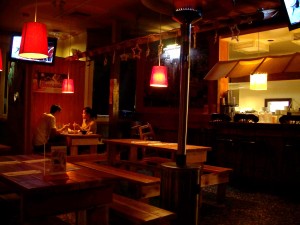
OB-interiorLate February, at 7pm. The moment we stepped in from the cold damp parking lot outback, I fell enamored with the ambiance. Dim light, warm air, seats divided up into small sections with straw thatched roofs overhead and modest curtains to ensure privacy and a sense of lonesomeness amidst the crowd. The fire post watched over quiet customers, most of whom are Korean. I’m saying this because it feels oddly heartwarming to listen to conversations that I don’t understand, and if you’re like me, then OB Town is the place to go when you’re in the mood for nostalgia.
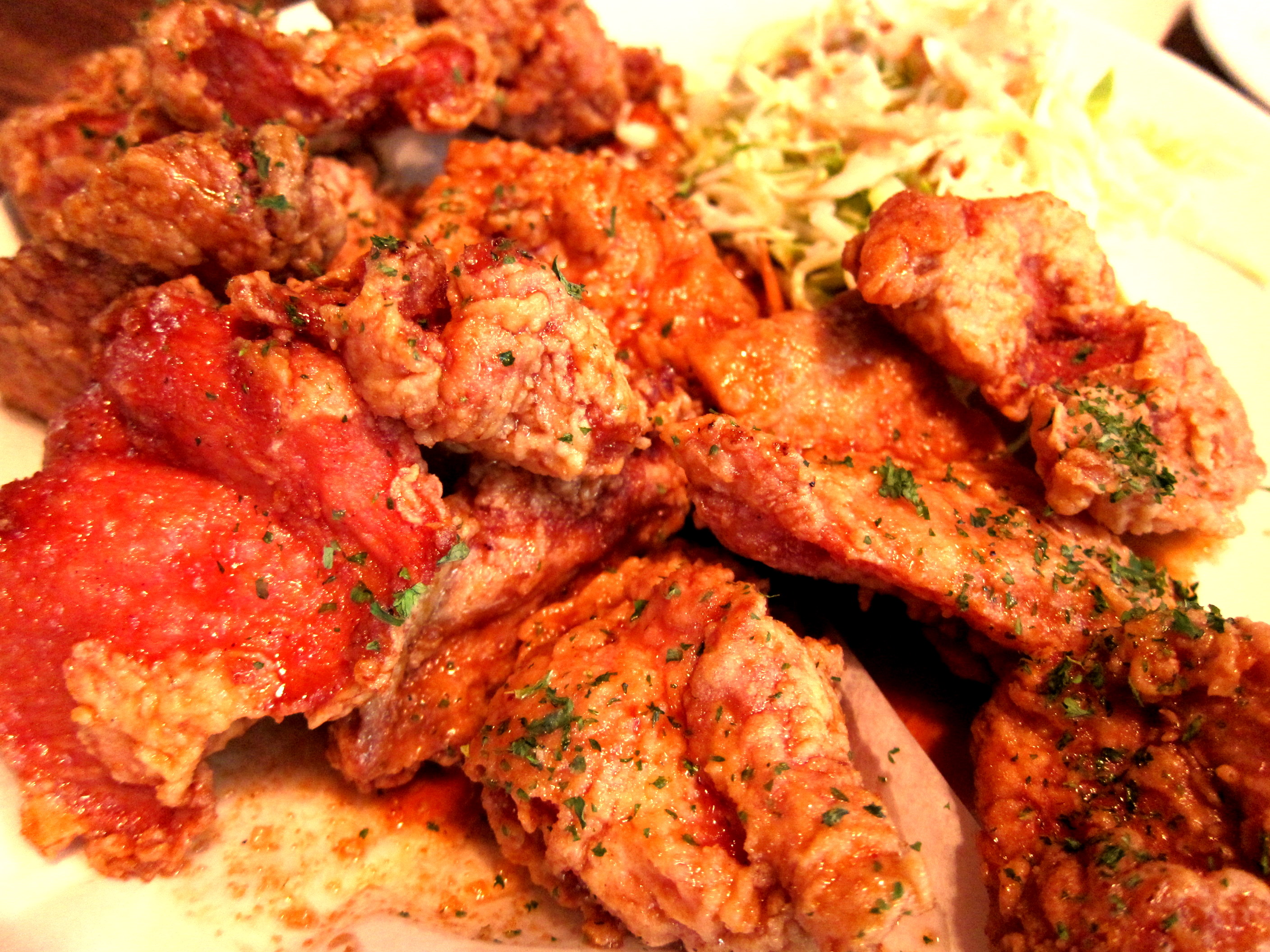
And fried chicken too, of course. A plate of garlic and soy sauce fried chicken (gan jang chicken) is more than enough for one, maybe two if neither is too hungry. The sweetness was addictive. I don’t know how many things were added to the mixing bowl, but no single flavor was too blatant, everything blended together to make a perfect package. The crispy coating was great, but what’s inside was so much better. Juicy, tender, flavorful strips of meat, and yes, even the white meat was great. I savored every bite.

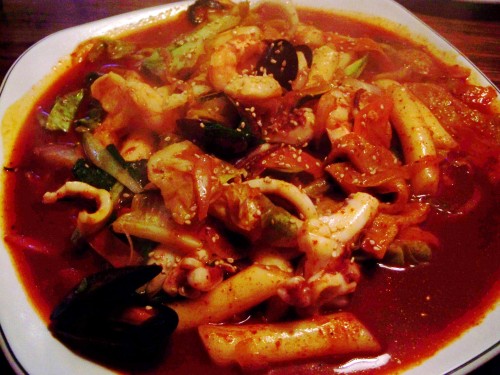
Which is not something I could do with the ddeok bokki (spelled “dduck bog i” on the menu), at least with the first few bites. I learned about the “spicy rice cakes” from Korean movies, and was prepared for the fiery blunder. What I wasn’t prepared for, and blame no one but my imagination, is the lack of a sweet taste. Chili powder, gochu jang, jalapeno, whatever it was, was on full strike with no masking flavor. Was it because I ordered seafood ddeok bokki? Are all ddeok bokki this spicy?

seafood_ddeokbukki
Wimpy as I am though, I like the dish. The smooth and chewy texture of garaeddeok (rice cake) hooked me, and I dug in. The mussels, shrimps, and squids were definitely for good change of texture, but those oversize noodle tubes fare best with the thinly sliced carrots and sauce soaked cabbage. Burning outside, soft and plain inside, the garaeddeok was pure pleasure. And although the sauce was quite strong, its scorching touch faded quickly with a sip of water and a few nibbles of cole slaw, allowing us to sample every visible piece of ingredient: rubbery sleeves of eomuk (fish cake), bitter herbs, mushy onions, gummy mushroom. The plate was a textural party. One tiny mismatch: the pungent jalapeno doesn’t belong there (just as it doesn’t belong in bánh mì and phở).

bacon-wrapped-asparagus-kebob
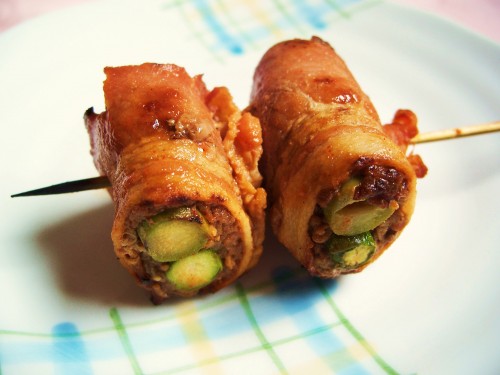
We washed the spice down with two awesome skewers of bacon wrapped asparagus kebob. It’s cute how they made the asparagus look like bones, and they were actually crunchy like cartilage too. (I’m suddenly reminded of pig feet, cooked and uncooked.) A savory high note to end the night.

Was my tongue dead because of the chili? Yes, I made a funeral for it with lots of milk chocolate. Will I go back to OB Town? You bet. The chicken feet are calling me.

OB-chicken-town

Wallet thinning: 1 gan jang chicken (15.50) + 1 seafood ddeokbokki + 1 kebob (<3.00)+ tax = $34.35

Address: Oriental BBQ Chicken Town
6101 Telegraph Ave.
(across the street from KFC)
Oakland, CA 94609
(510) 595-5338

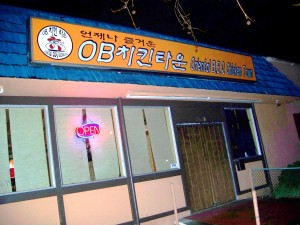
It looks a bit shady outside, but that’s just another indication of how tempting the food is inside.

Oriental BBQ Chicken Town in San Francisco on Fooddigger

Banh Cuon Hoa II in Bellaire

February 17, 2010 By: Mai Truong Category: Comfort food, Houston, noodle soup, savory snacks, Texas, Vietnamese


If I had to pick one Vietnamese dish made from rice flour and eat it everyday for the rest of my life (whole grain white rice doesn’t count), then bánh cuốn would be it. These rolls of thin rice sheet, filled with minced pork and woodear mushroom, gently dipped in nước mắm, make the perfect warm breakfast, light lunch, and quirky dinner. The question is where to find them. Bánh Cuốn Tây Hồ tops the chart everywhere from Texas to Cali, but does Bánh Cuốn Hoa II come close? Maybe rival? Miss by a long shot?

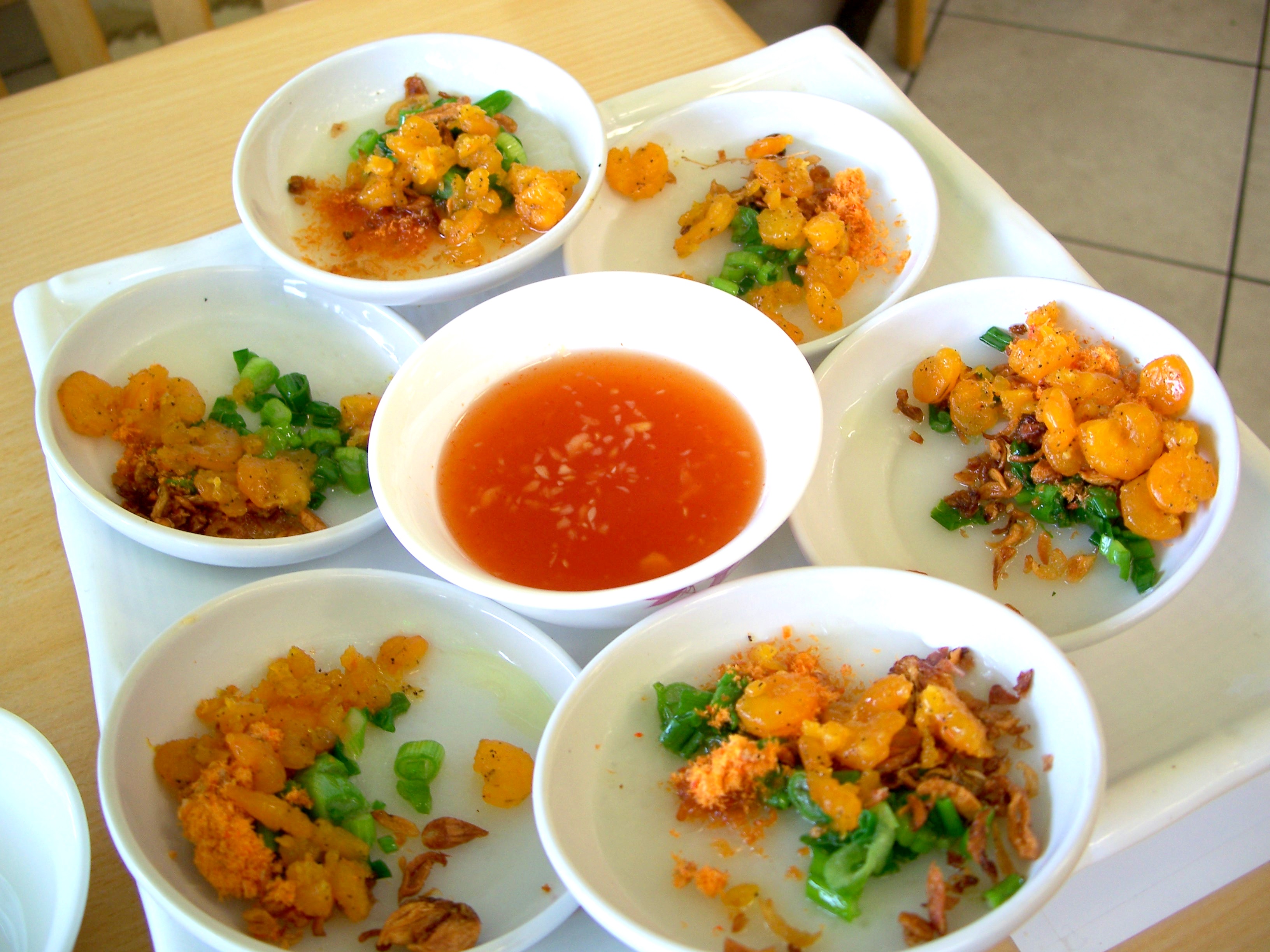
I cheated a bit at the beginning. The first picture isn’t bánh cuốn, but bánh bèo, a rice flour spinoff drafted in the shape and size of waterferns, hence its name. Flooded with nước mắm, they make great appetizers while we were waiting for bánh cuốn.


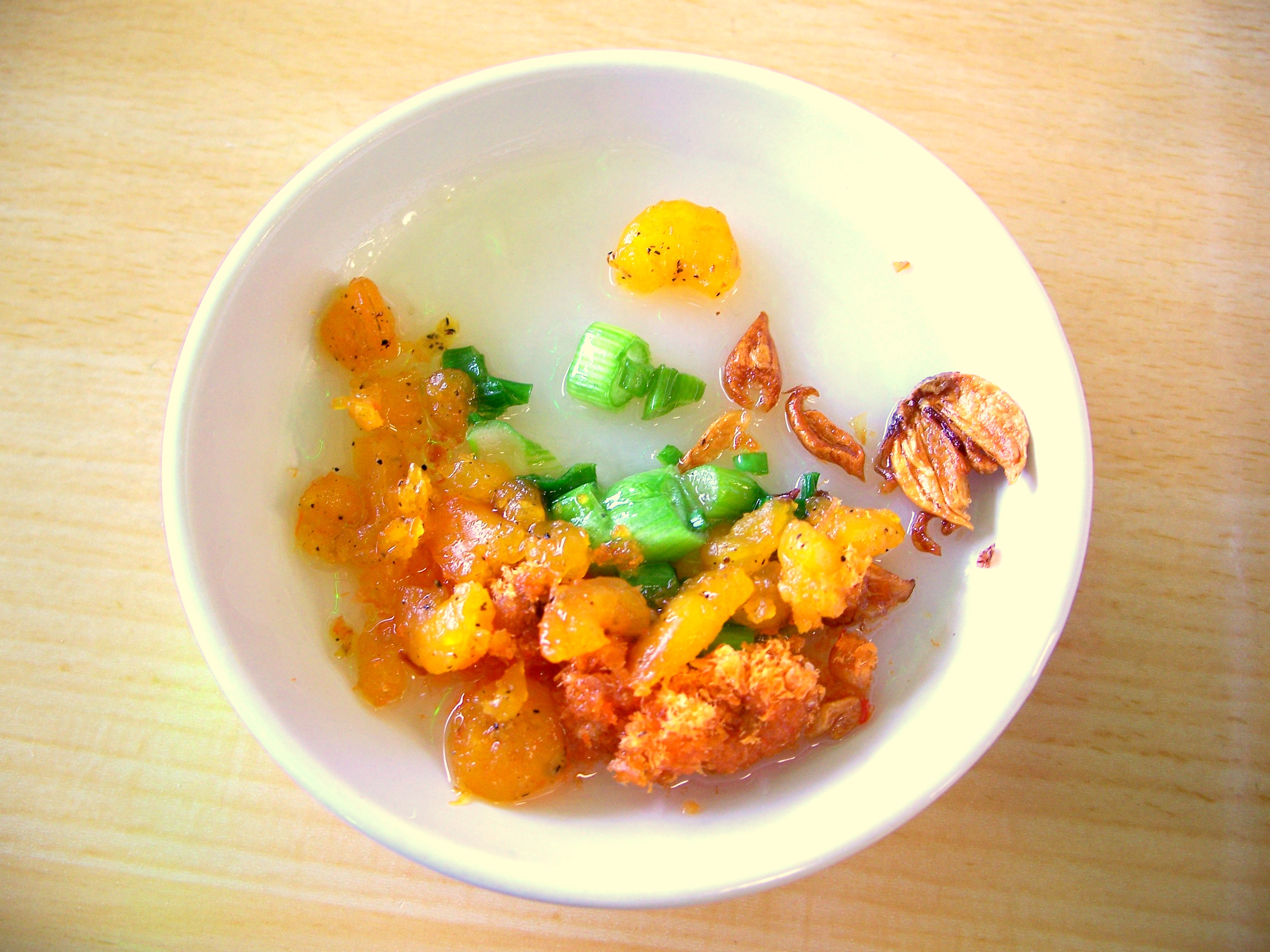
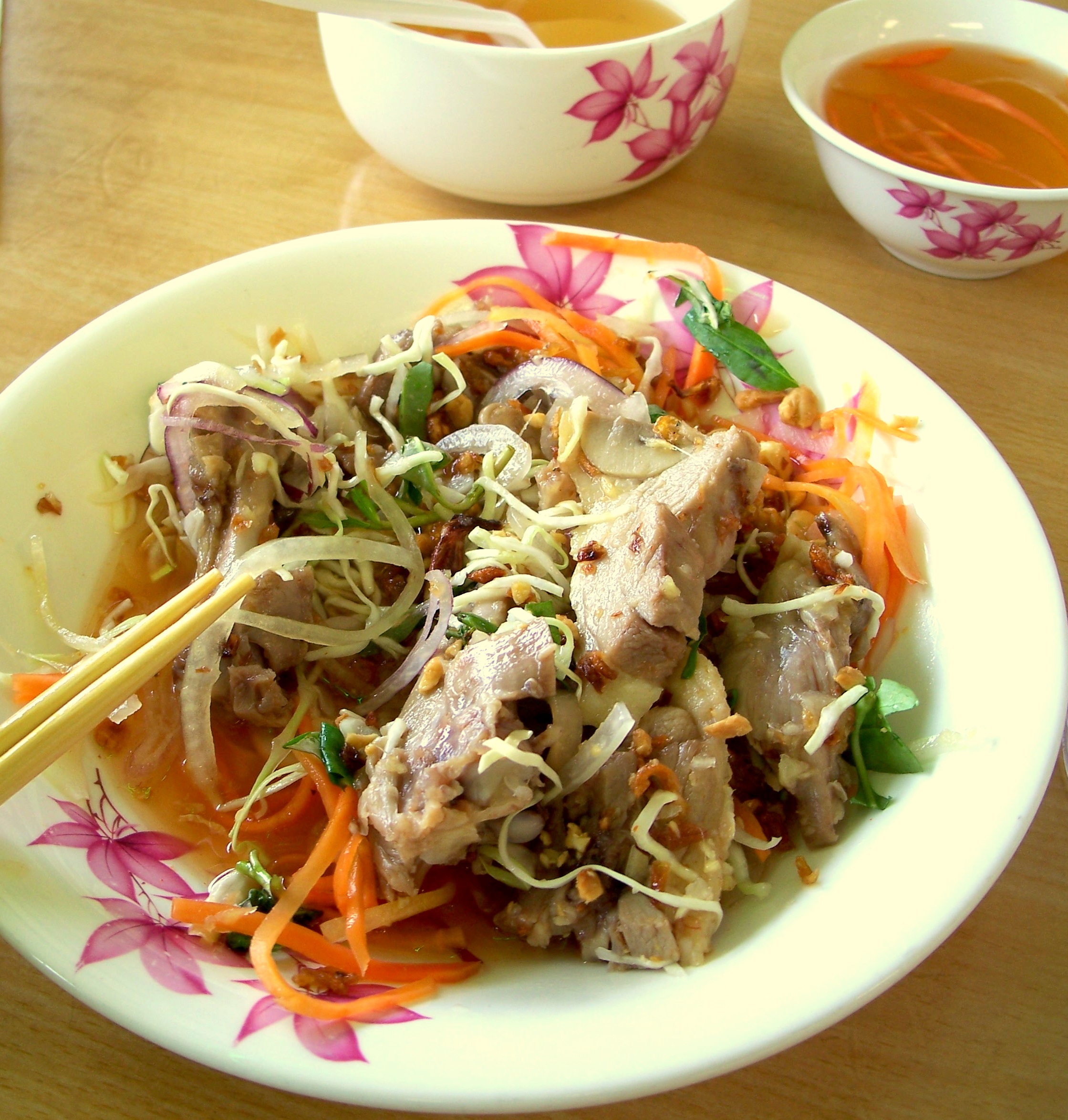
Bánh bèo comes with a few toppings: fried shallot, chopped green onions, and tôm chấy (dry fried shrimp). The tôm chấy I usually have are totally desiccant, ranging anywhere between flaky and powdery, but these (I’m guessing homemade) shrimps are still plump, and more sweet than salty. It’s not a bad twist from the usual though. The flour part is a bit tired, they broke easily into pieces the moment my chopsticks pinched them. Bánh Hỏi Châu Đốc does it better.


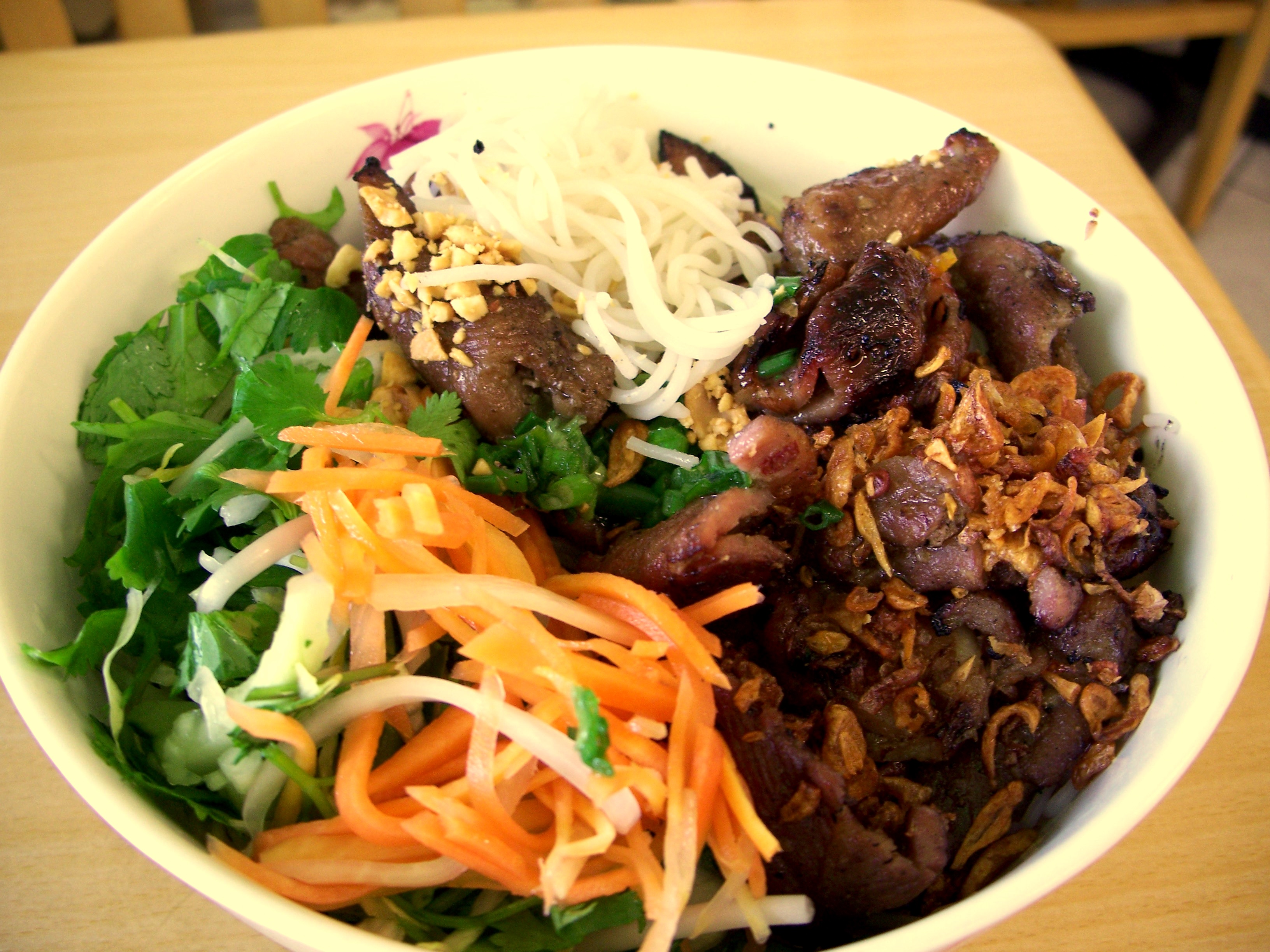
Because it is very hard to go wrong with grilled meat, it’s always safe to get bún thịt nướng on first try at a new restaurant, also a friendly choice for those who have not had Vietnamese cooking before, want to try, but are still cautious. There’s no weird stuff, just rice noodle, crushed peanuts, vegetable and honest grilled pork. Nước mắm seasoned with a tidbit chili paste, a lot of sugar, and a squeeze of lemon juice would spike the taste to infinite pleasure. Bánh Cuốn Hoa II nailed it with a supertender juicy marinated pork.


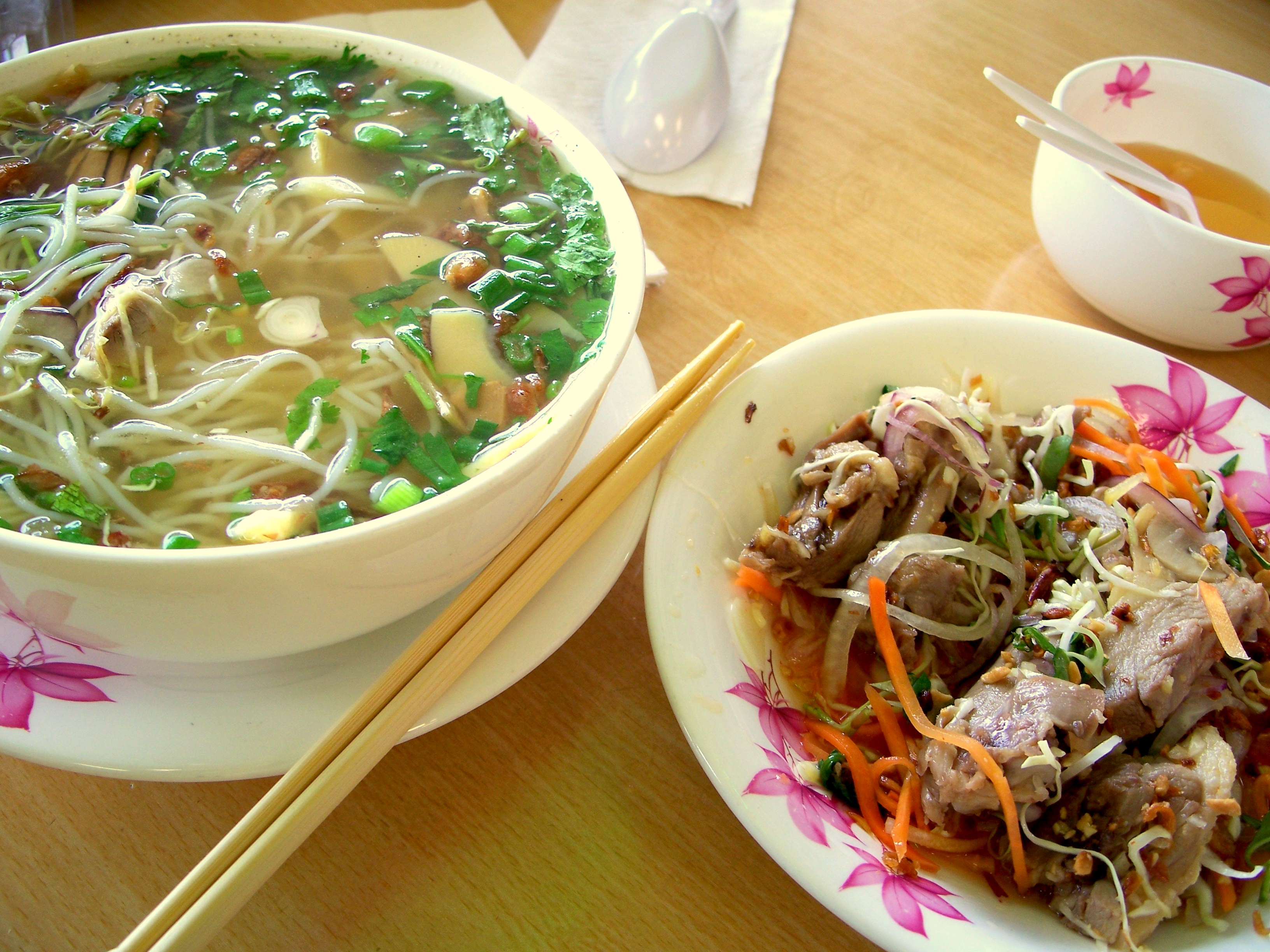
As much as my dad is a fan of grilled meat, my mom is loyal to noodle soups. She ordered bún măng vịt (vermicelli soup with duck and bamboo shoot), which actually comes in two parts: the duck salad (gỏi vịt) and the bamboo shoot soup (bún măng) with no duck. Dunk the duck into the soup and you get duck soup :-).


The broth is quite pure and slender, free of fatty bubbles floating on the surface, not as heavily seasoned as pho or hu tiu broth, simply refreshing. As for the bamboo shoots, there were both the fresh kind and the re-hydrated dried kind. The dried kind is a tad firmer and more squid-like than the fresh kind. A lovely texture. Boiled duck is also very tender and flavorful.


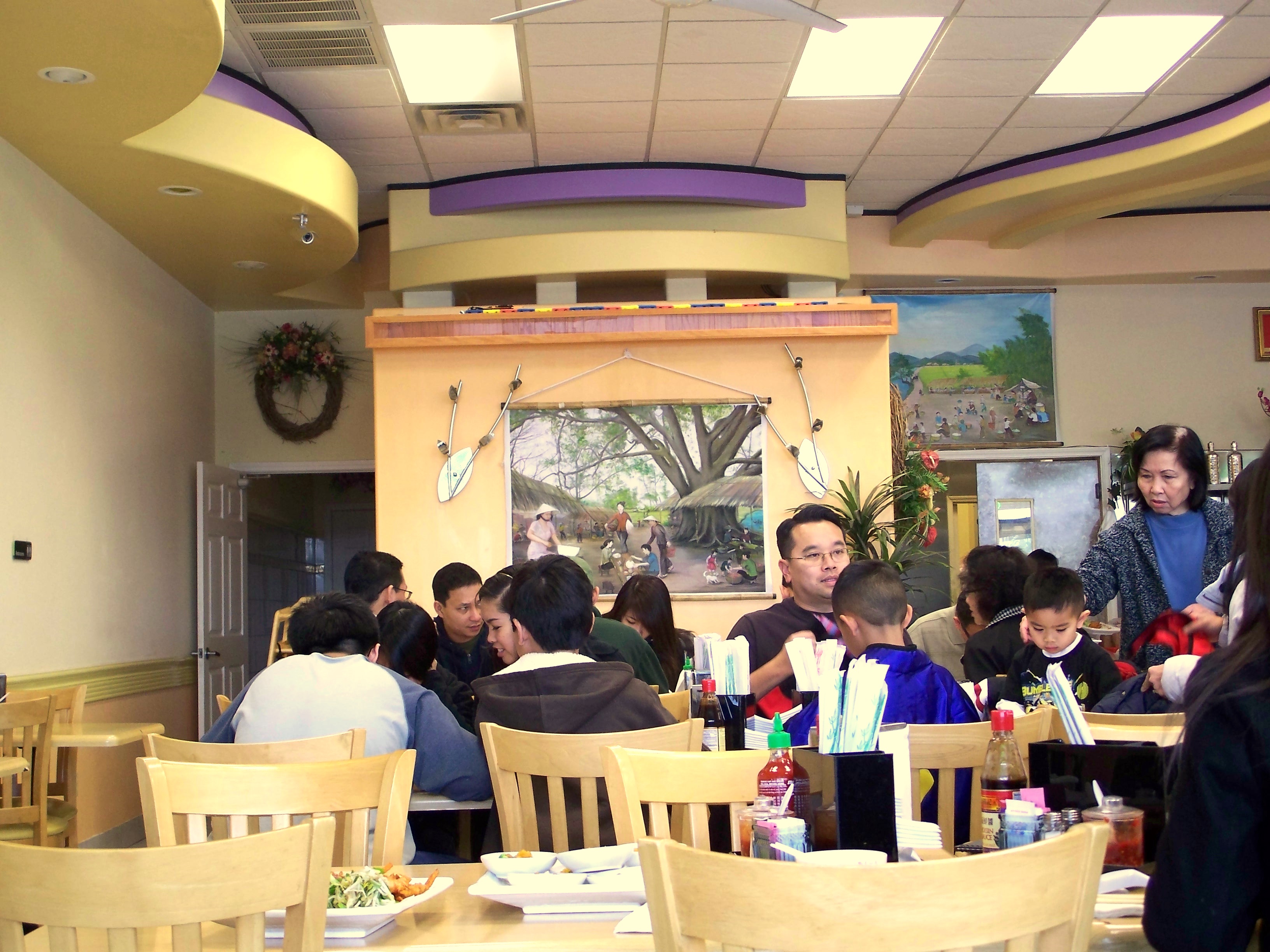
Bánh Cuốn Hoa II has a pretty clean look. Varnished wooden chairs and tables, high ceiling, humble paintings of Vietnamese countryside sceneries on the walls. I took a peek into their kitchen to capture the banh cuon production line.

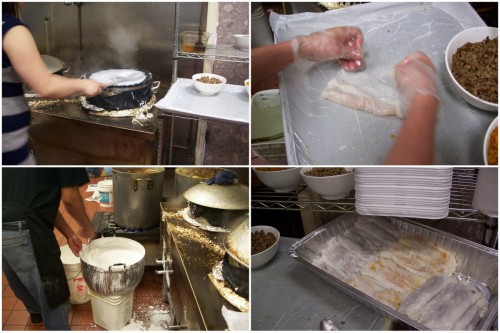
Clockwise from bottom left: 1. stirring the liquid batter (rice flour with water); 2. spreading a laddle of batter on a hot flat surface; 3. making a roll; 4. 3 kinds of final products: normal bánh cuốn (with minced pork and mushroom), bánh cuốn tôm chấy (dry fried shrimp), and bánh cuốn thịt nướng (grilled pork).

Banh cuon Hoa II
The lady was just too fast for my camera, I missed capturing the crucial step where she gently used a long chopstick to take the thin rice veil off the cooking surface and whip it aside for the rolling chef.


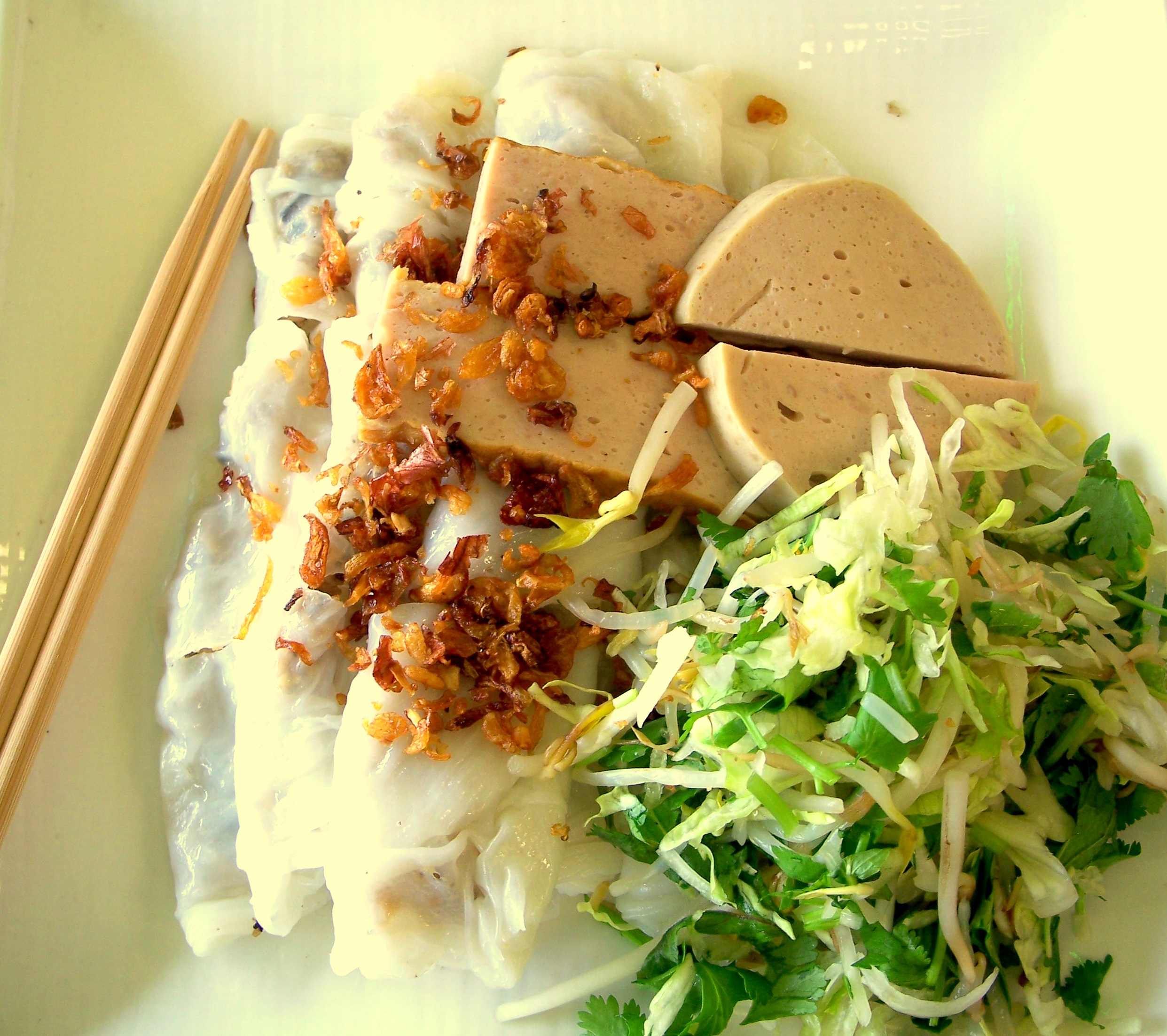
So here it is, the restaurant’s signature plate: bánh cuốn topped with cha lua, bean sprouts, greens, and fried shallots. The filling is good. The sheet is thin and not oily. But the flour has a sour hint. Bánh Cuốn Tây Hồ is still the champion of bánh cuốn.

Banh_Cuon_Hoa_II

Price: a very reasonable lunch for 3:
1 bánh bèo + 1 bún thịt nướng + 1 bún măng vịt + 1 bánh cuốn = $24.57

Address: Banh cuon Hoa II
11169 Beechnut St. #K
Houston, TX 77072

Take a look at RavenousCouple’s recipe for bún măng vịt, it’s my new fav noodle soup.

Update: the amazing pictures and recipe for homemade banh cuon, also from RavenousCouple.

Banh tet, sweet and savory

February 16, 2010 By: Mai Truong Category: California - The Bay Area, Comfort food, Southern Vietnamese, sticky rice concoctions, Vegan, Vietnamese

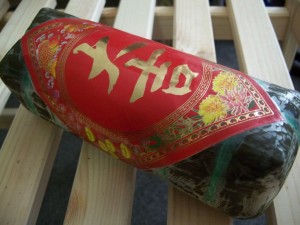
banh_tet_thit_Huong_Lan_sandwichBánh chưng and bánh tét to the Vietnamese Tết are like turkey and ham to the American Thanksgiving. The holiday feast just wouldn’t feel right without them. Although I have blogged about these sticky rice squares and logs before, the lunar new year has come back, and so are they. Sticky rice can be uberfilling in large quantity, and like all festive food, it’s not recommended that you feast on these dense beasts day after day, as satisfaction would turn into tiresomeness. But once a year, or maybe twice, a couple slices of banh tet sound so much more interesting than cereal, rice, even noodle soup.
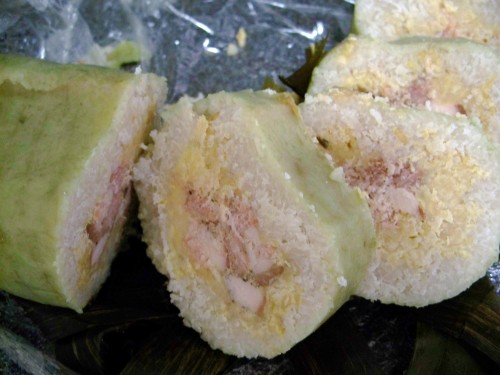
Banh chung and banh tet have rather similar ingredients, especially when they’re made by Vietnamese Southerners. Both are wrapped in leaves (although slightly different kinds of leaves), and boiled for hours in water that is sometimes spiced with lemongrass. After cooking, a heavy weight is put on banh chung to drain the water, while banh tet are rolled around to perfect the cylindrical shape. I remember we used to hang pairs of banh tet in my grandfather’s kitchen, taking one down everyday during the week of Tet to whip out a nice settling meal with thịt kho trứng (pork and egg stew), dưa giá (pickled bean sprout),  and spring rolls. There are the savory kind with meat and mung bean paste, and the vegan kind for those who want to practice self-control on the first day of Tet. In Houston, my mom usually gets the savory kind from Giò Chả Đức Hương, where we also get our cha lua supply, and the vegan kind from Linh Son pagoda. I branched out this year and tried a meaty log from Huong Lan Sandwiches 4 in Milpitas.

banh_tet_thit_dau_xanh

Their banh tet measures about 7 inches long, making eight thick nice slices, each has a chunk of fatty pork in the middle, pink and spiced with pepper. The sticky rice coat here gave its leaf wrapping a bit insecure sliminess when we first unraveled, but all was well. The banh tet smelled great, the sticky rice has a tight but soft texture. The seasoned bean paste is just salty enough to intrigue. In some way, banh tet is better than banh chung because every bite guarantees a bit of everything. No piece will miss the meat completely and no bite will get all the meat, the stuffing is even throughout the whole banh.  It was honestly good by itself without condiments. Huong Lan Sandwiches had not failed me.

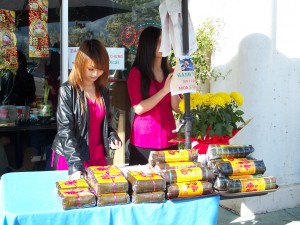
100_2991And neither did Thao Tien. When we got there last week in our quail quest, Thao Tien’s employees were busy running a small table pyramidized with banh chung and banh tet. They locate nicely in front of the Grand Century mall, passed by hundreds of people Tet shopping that day. Seeing the sale went like hot cakes (the sticky rice cakes were actually still warm), we were too eager to snatch one home that we forgot to check the tiny white sticker on the side. Surprise, we had grabbed a bánh tét chuối (banana banh tet).

100_3039
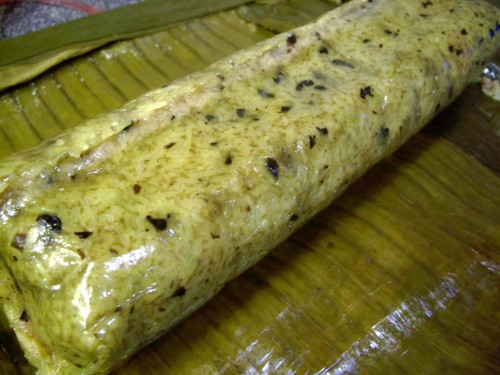
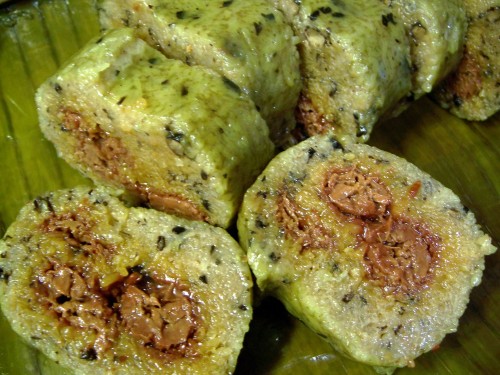
It’s solely vegan. The sticky rice coat is made interesting with dots of black beans on shiny green background. The core is sweet, mushy banana in a reddish purple hue. This is just the usual ivory banana that always ripe too soon, but somehow slow cooking in a compact block of sticky rice wrapped by banana leaves makes the fruit change color. Chemical reactions? It still tastes sweet, with a hint of bitter (for lack of a better word) like a guava skin. And it looks beautiful to me.
banh_tet_chuoi
The banana banh tet also goes well with my rotisserie chicken from Safeway, minus the guilt of defeating the whole vegan purpose thing. Thao Tien’s logs are also shamelessly long, almost two times bigger than Huong Lan’s. I will be eating banh tet every day for the rest of the week. Happy Tết to bánh tét and me!

Address: Hương Lan Sandwiches 4
41 Serra Way, Ste. 108
Milpitas, CA 95035
1 bánh tét with meat: $6

Thảo Tiên restaurant
Grand Century Mall
1111 Story Road #1080
San Jose, CA 95122
1 vegan banana bánh tét: $10

Roasted quail at Thảo Tiên

February 13, 2010 By: Mai Truong Category: California - The Bay Area, Comfort food, savory snacks, Southern Vietnamese, Vietnamese

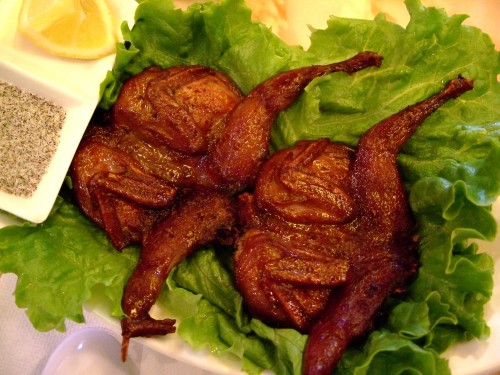
roasted_quail_chim-cut-roti
It must have been at least 4 months since we last went to Thao Tien, and I’ve been telling myself to blog about this place ever since, but for some reason every record of our visit had mysteriously disappeared. Did I not take picture? What happened to the receipt? I have no idea. But the amazing taste of roasted quails haunts me in my sleep. We just had to go back to take pictures again, and it’s only appropriate to complete this last hour of the Ox year with the best of birdies.

Thao Tien actually specializes in hủ tíu, a noodle soup with slightly sweet broth, chewy noodle, fried shallot, usually accompanied by pork and shrimp (I blogged about it before at Bún Bò Huế Cố Đô). With the southern Vietnamese theme, the house not only has their waiters dress in áo bà ba but also extends its menu to include the less commonly seen savories like chim cút rô-ti (roasted quail) and cá kèo kho tiêu (a kind of freshwater fish – the “elongate mudskipper“, if you absolutely must know – simmered in fish sauce and caramel sauce much like cá kho tộ, but with a lot of black pepper for kicks). Among the daily specials, Mudpie was excited about the ca keo kho tieu, but unfortunately it was only served for dinner that day. Still, the quails are up for grab anytime, and expensive as they were ($7.95 for 2 birds), we drove 50 miles here just for them.

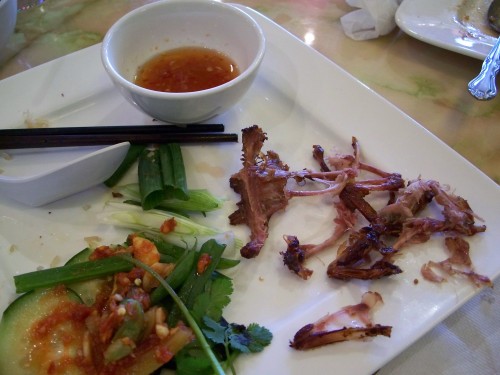
The birds, split and stretched, were just as long as my hand from nail to wrist. Their plump breasts and legs rival those of a frog, no fat, just honest meat and thin crispy skin. The marinade seeped through every strand of muscle in that  vibrant little body. Lemon and salt pepper mix came with them, but was unnecessary, the birds needed no aid to taste good. The moment we grabbed them, our fingers got busy tearing them apart, and our eyes focused on getting every scrap off the bones. Table manners we lost, vicious  beasts we became. And the aftermath:

quail_bones

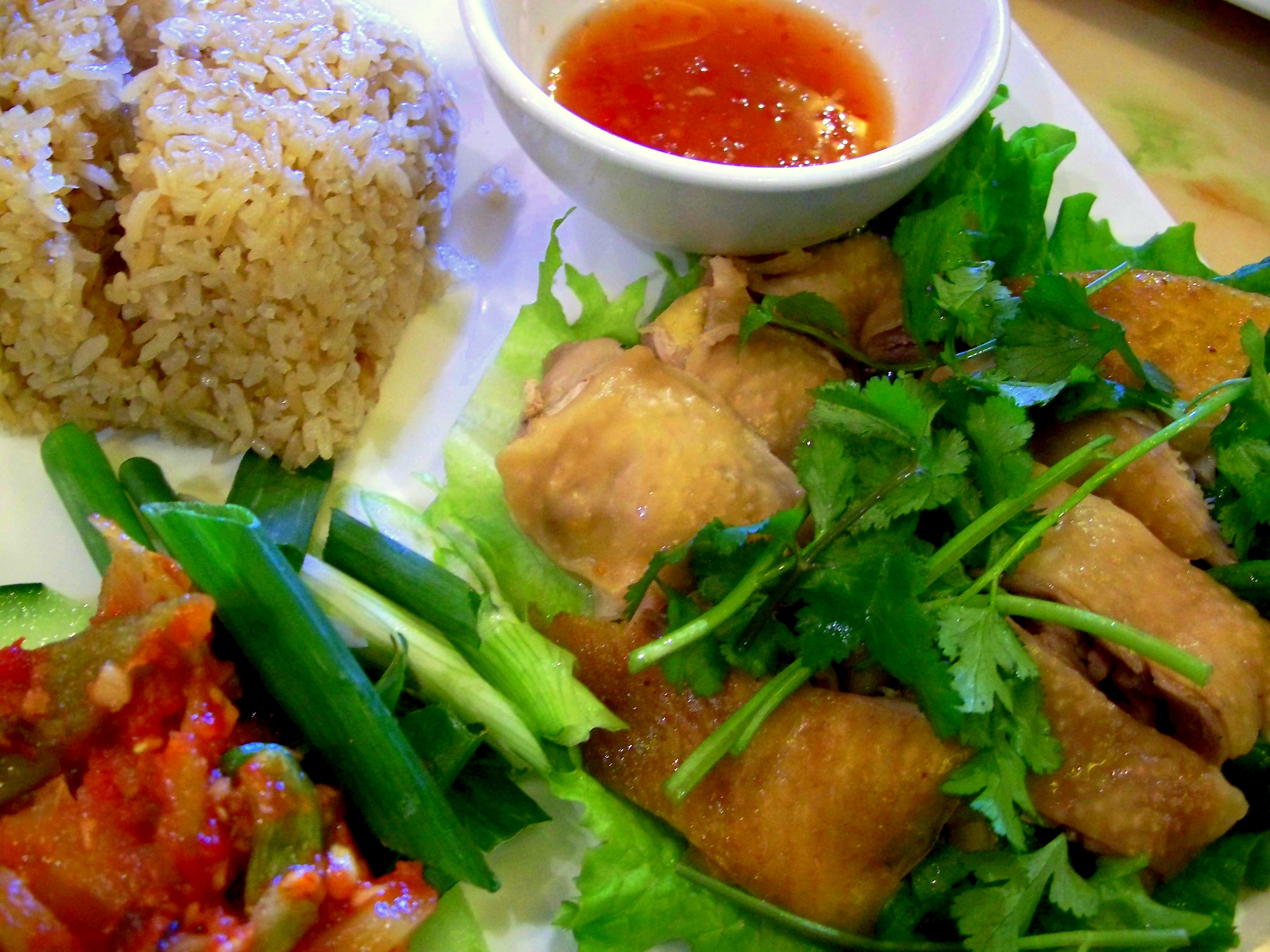
I remember the hủ tíu here is good, bò lúc lắc (shaken beef) is quite delicious, Hainanese chicken rice is not the most exciting thing, but if I could, I would come here every week just for the quail.  Thank goodness Thao Tien isn’t close to me, or I’d go bankrupt being a quailitarian.

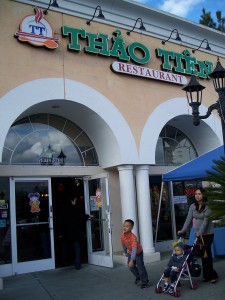
Thao_Tien_restaurant_SanJoseCost:
1 shaken beef (9.75) + 1 Hainanese chicken rice (8.50) + 2 roasted quail (7.95)
+ tax
= $28.62

Friendly service and spacious setting.

Address: Thao Tien Restaurant
Grand Century Mall
1111 Story Rd #1080
San Jose, CA 95122
(408) 283-9231

Thao Tien in San Francisco on Fooddigger