Flavor Boulevard

We Asians like to talk food.
Subscribe

Archive for the ‘Comfort food’

More starchy sweets

June 25, 2010 By: Mai Truong Category: Comfort food, Houston, sticky rice concoctions, sweet snacks and desserts, Texas, Vegan, Vietnamese

Do you have those times when you keep craving something sweet, even after you wiped clean a cereal bowl worth of Double Fudge Brownie, exterminated many prunes, and skillfully chewed up four pirouette cookies like a mafia boss smoking cigars? I’ve started to see such danger of staying up late, but sweet stuff is always easier to eat than savory stuff in those wee hours. To avoid having my belly exceed my face, I started going through pictures of food (it helps more than studying and thinking about food), and found some munchtastic  sweet treats I meant to but never got around to blog about.


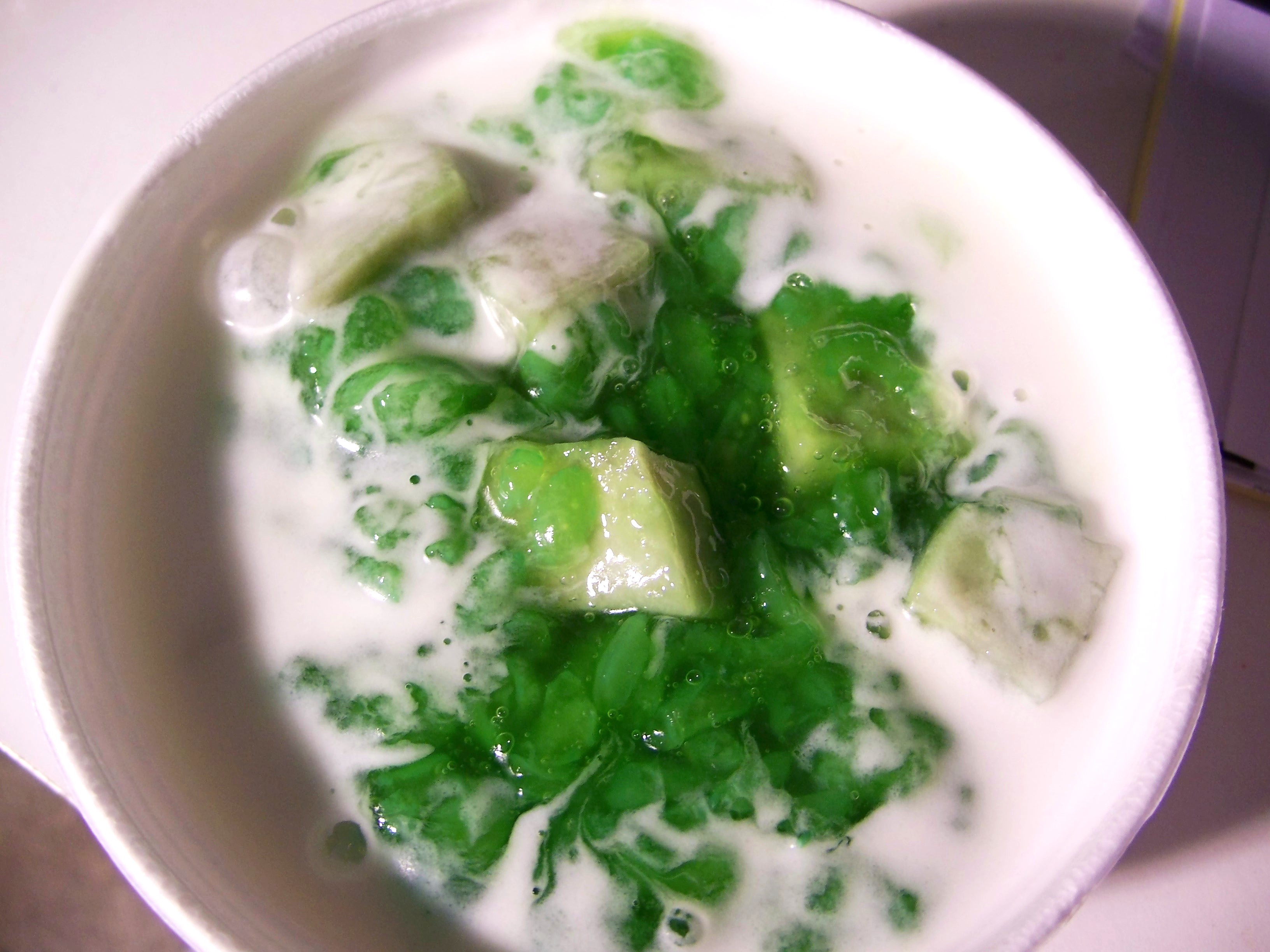
1. Chè khoai môn (taro che)

One of the few country treats without mung bean paste. Depending on each root and how long it’s cooked, the purplish pale taro cubes can be grainy, nutty, a little chewy, or al dente, like scallop potato minus the butter. However they are, they serve as a textural contrast to the gooey pudding-like sticky rice base. I’m particularly charmed by the vibrant green color in this Lee’s Sandwiches‘ rendition, hopefully from pandan leaf extract. You know it’s a skilled cook when the sticky rice grains are still visible, yet so soft you don’t need to chew. Taro che is less sweet than other kinds of che, as coconut milk alone gives much of its sugary taste.


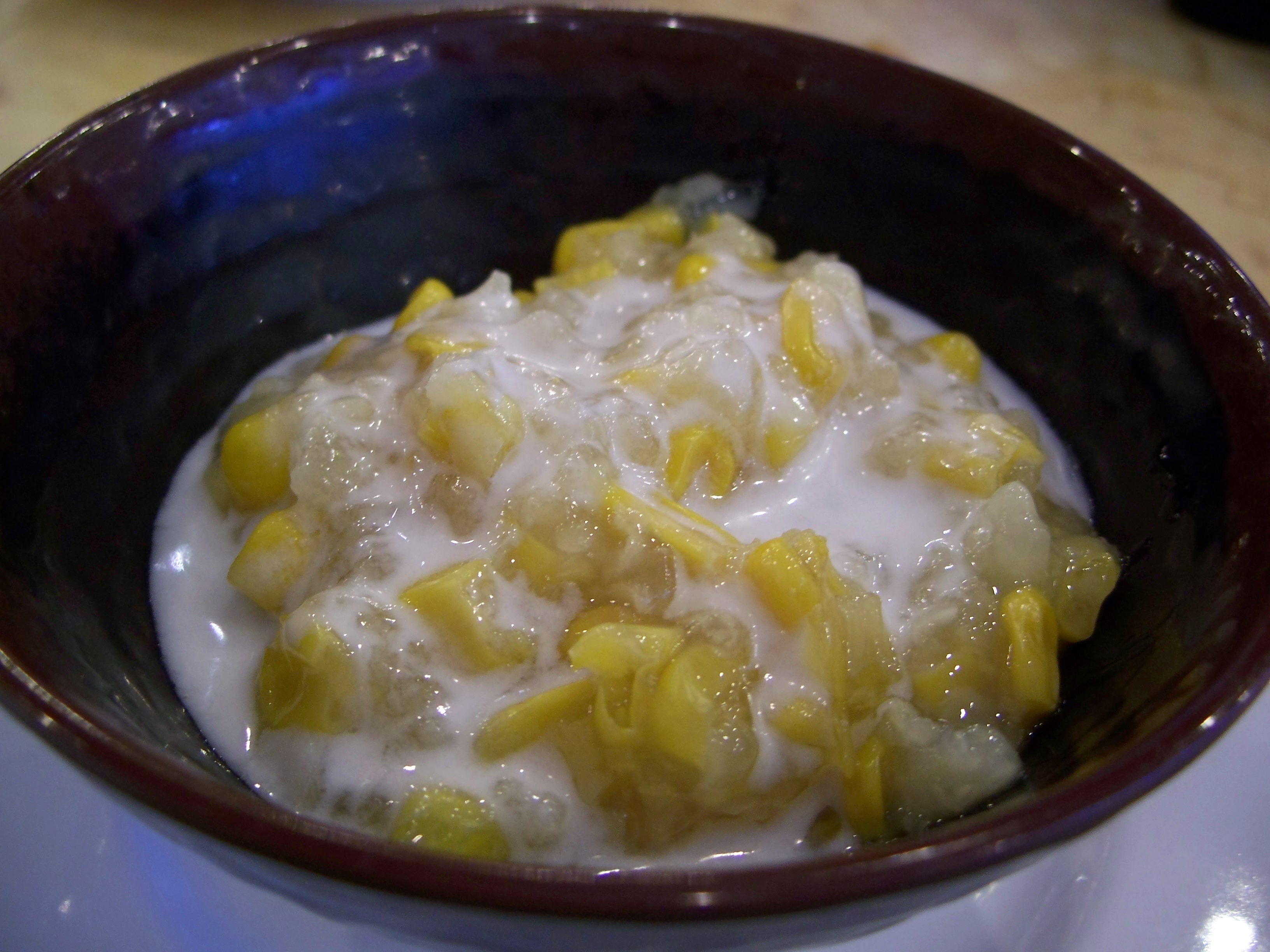
2. Chè bắp (corn che)

Another rare sticky rice concoction without mung bean intervention. Another pair of contrasting textures: crisp and firm kernels versus luscious goo. Another mild pudding sweetened by coconut milk. Bellaire Kim Son’s kitchen strayed from the common recipes that call for shaving the kernels off the cob, and used whole kernel sweet corn straight out of the cans. A simple, cheap, inhomogeneous toothsome mess.

More than 18 months ago: chè đậu trắng, chè bột báng, chè trôi nước

Bodega Bistro – Defining authenticity

June 24, 2010 By: Mai Truong Category: California - The Bay Area, Comfort food, Northern Vietnamese, Vietnamese


The laminated page has Goi Cuon next to Fritures de Calmars, Bo Luc Lac between Rossini style Tournedos and Agneau. Funny interlingual names like “Ap Chow Bo” and “Ap Chow Hai San” precede English descriptions of stir fries. Don’t bother google “ap chow”. Such innovative term doesn’t exist outside the menu of Bodega Bistro. Just like the dialogues between Jim and Huckleberry Finn, names like these can’t be understood unless you speak it out loud in your head. Ap chow is áp chảo, “press against the pan”, a Vietnamese way of saying pan fry. Why did the chef phonetically transform it into Chinese, while keeping Goi Cuon and Bo Luc Lac true to their original spellings? I don’t know, but I got a chuckle out of it.


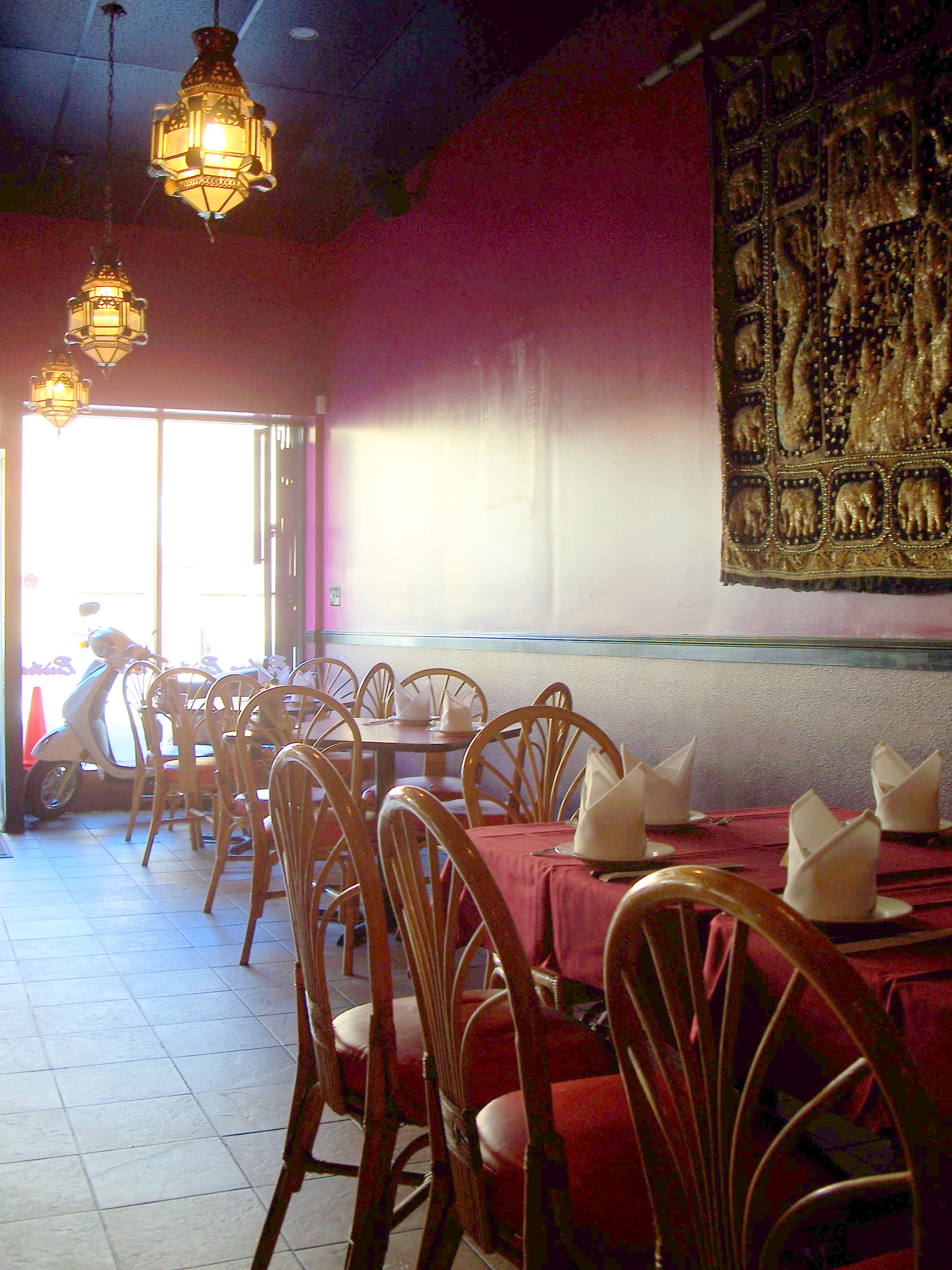
The menu alone, however, didn’t strike me as anything unusual. This wasn’t the first time I had to decode a strange name for a familiar dish. Vietnamese menus tend to have such mix between trying to keep the Vietnamese name and (mis)translating it into some other language. The unusual thing was that our thought-to-be-Vietnamese waiter didn’t understand me when I said the dishes’ names in Vietnamese. Then I noticed Chinese songs blasting shuo shuo in the background. And Chinese conversations between the waiters. And, shame on Vietnamese restaurants, very good service.

More on the service part later. But I have a small grudge against Chinese restaurants dishing out Vietnamese food. It’s probably rooted in the powerless distress at the rice-paper-wrapped-and-fried spring roll confused with the Chinese egg roll, or the names of vegetables, fish, and New Year festival with the word “Chinese” attached to it, as if China were the whole Asia. Not that it’s the Chinese’s fault. To my mind, the Chinese have enough dishes of their own, they don’t need to adopt our recipes and innocently serve them without reference. Likewise, I feel slightly vexed by orange chicken and sweet-and-sour pork on Vietnamese menus, things that just mean to attract the safe eaters.

So as soon as I realized Bodega Bistro has a Chinese chef and Chinese staff, I sighed with disappointment. My expectation dropped. My appetite wilted. I didn’t come here for orange chicken and sweet-and-sour pork. Then I remembered that wasn’t what we ordered and just how wrong I was for doubting the place’s authenticity and sincerity. Chinese chef Jimmie Kwok of Bodega did specify that this is Vietnamese food, as he did his best to keep the original spellings, with the exception of “ap chow“.


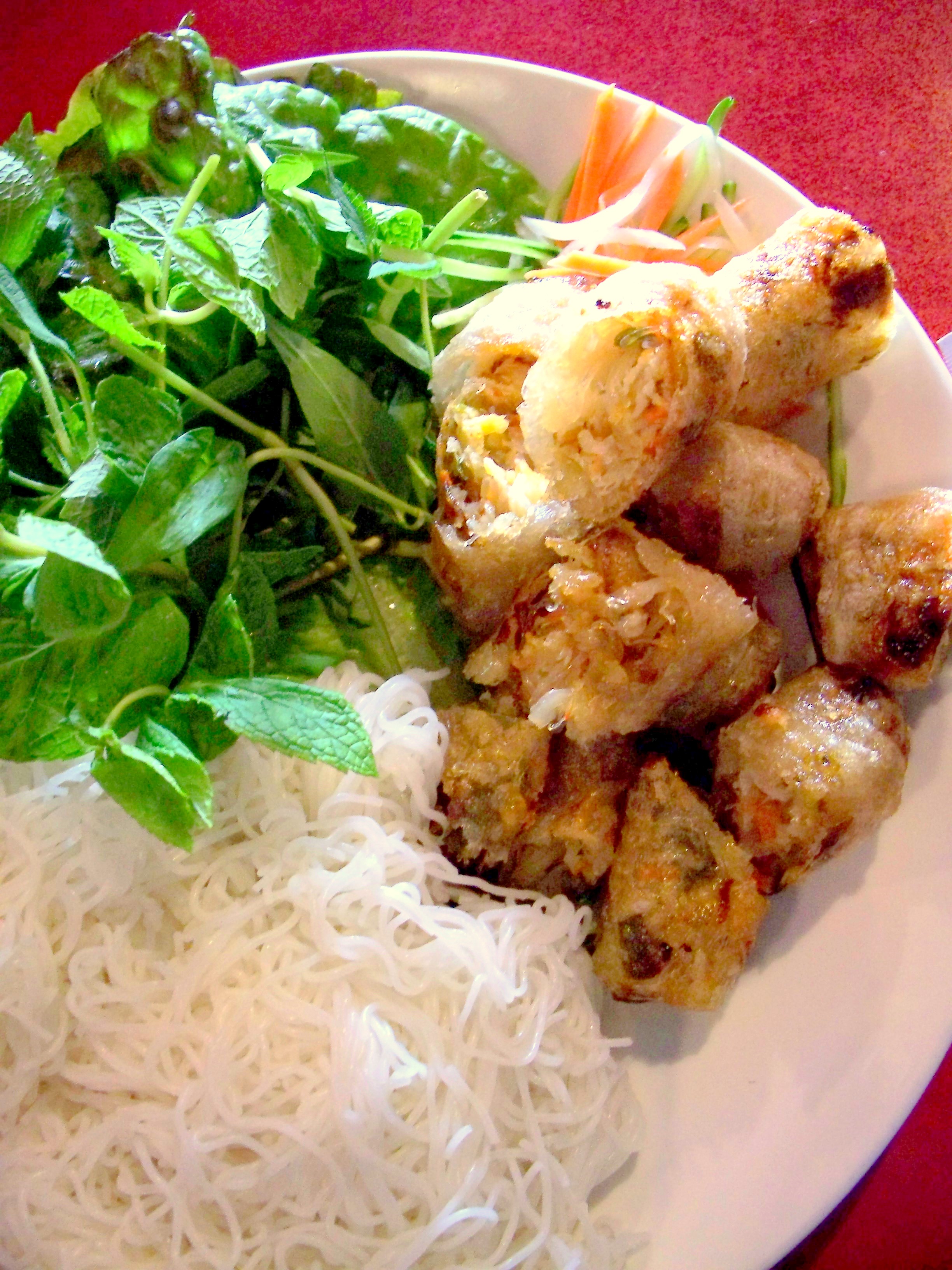
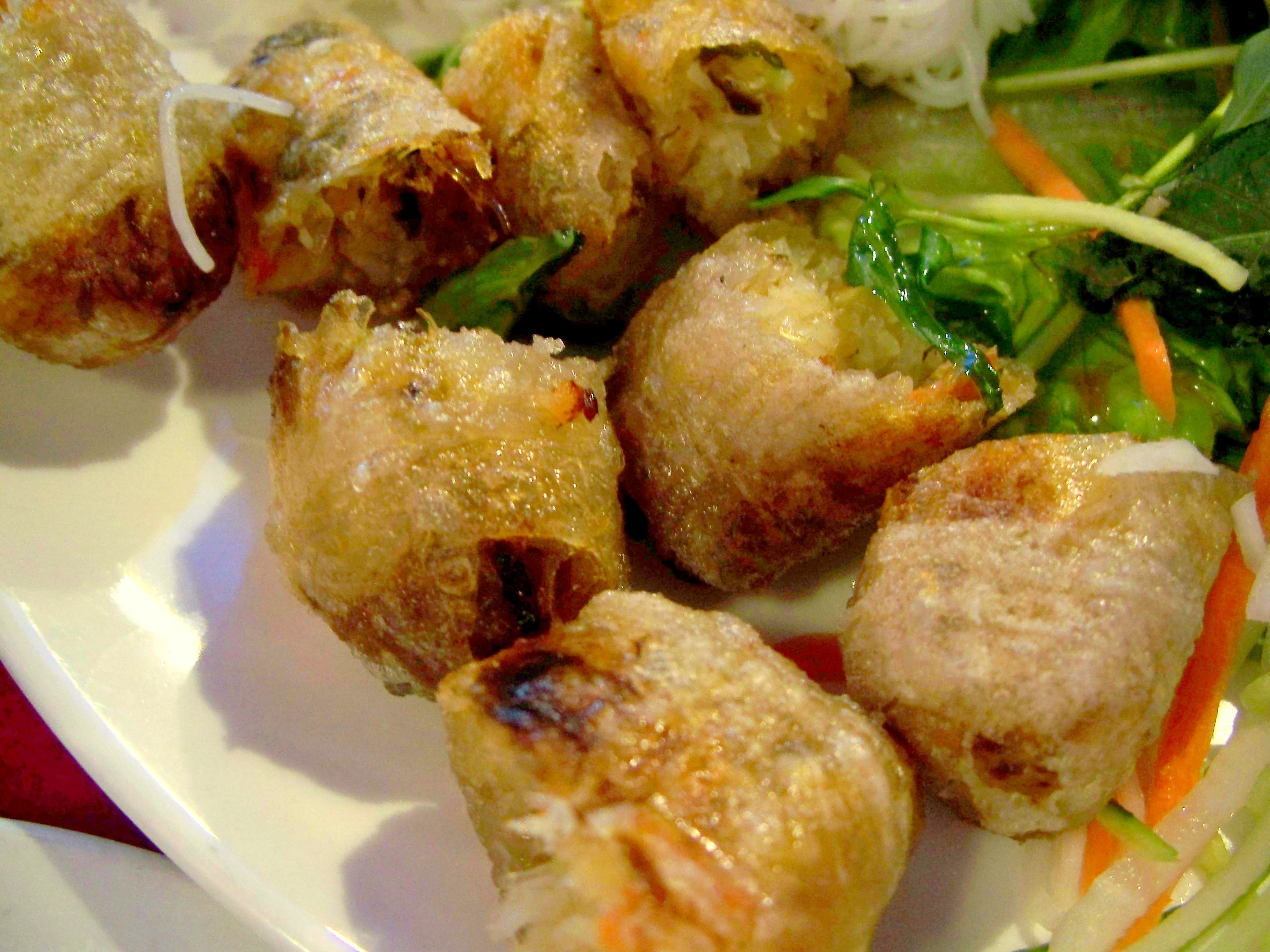
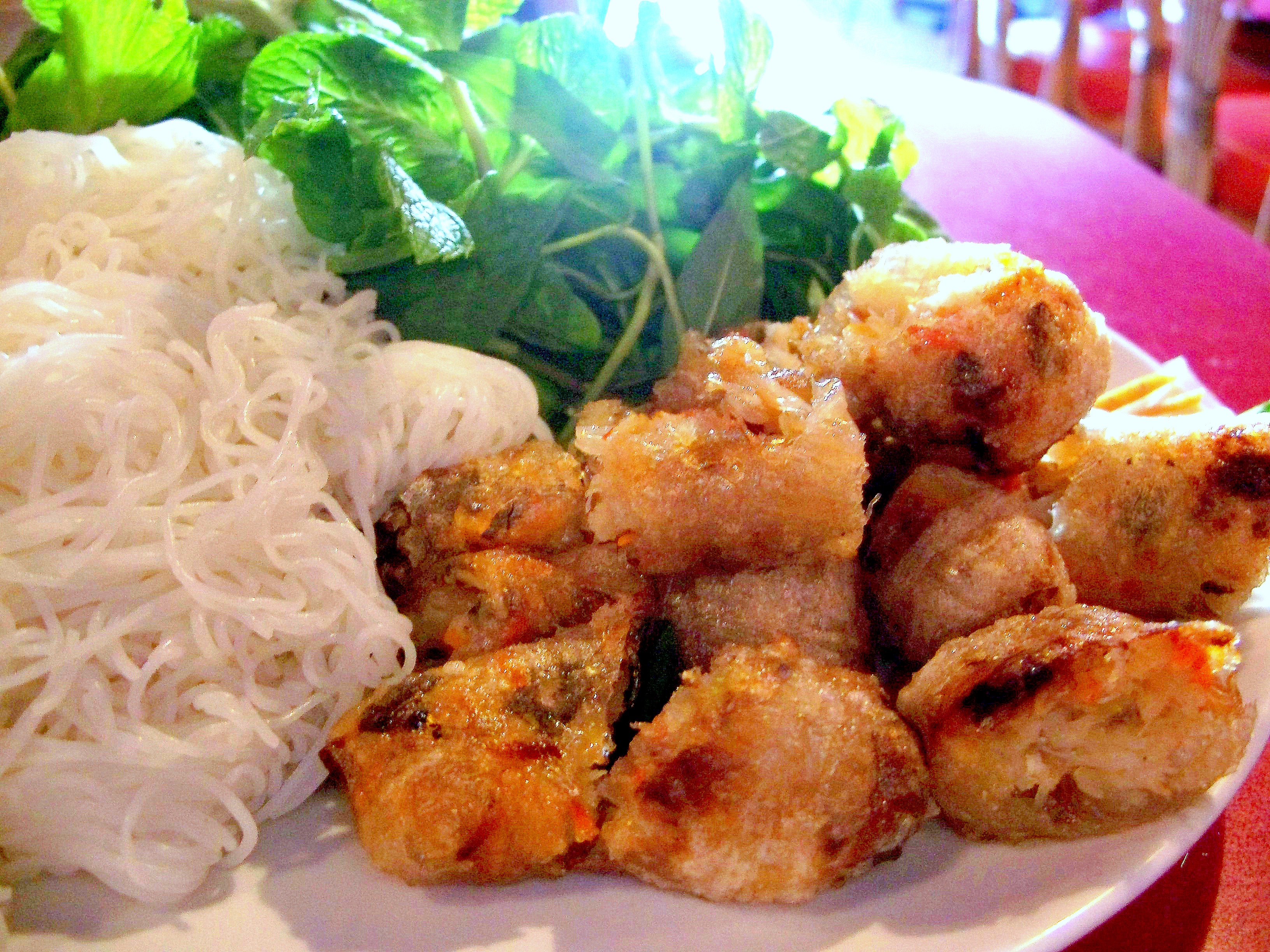
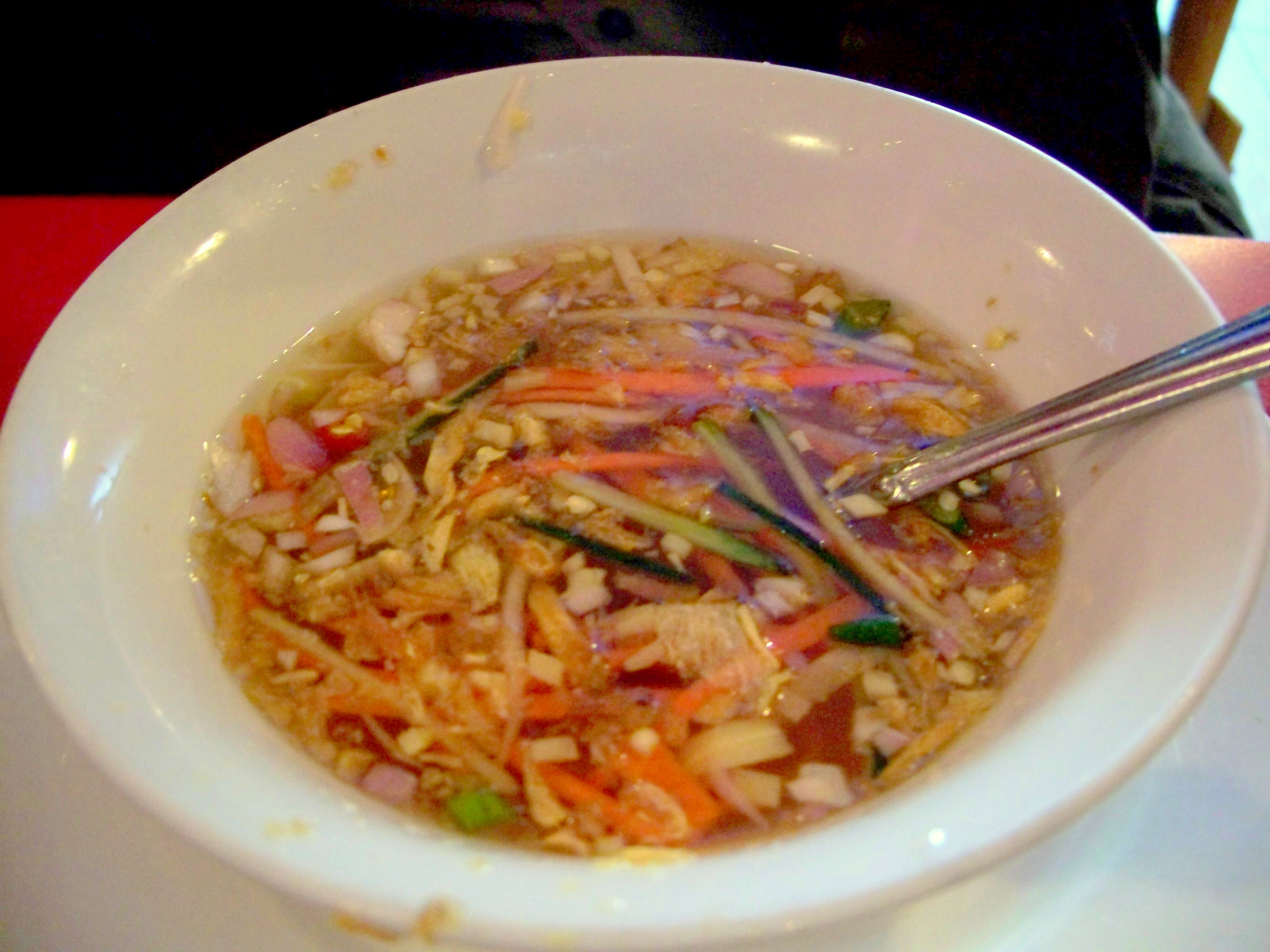
In fact, he kept more than just the spellings. He kept the flavor, the presentation, and the ingredients. Nem cua is wrapped in rice paper, stuffed with real crab meat, wood ear mushroom, and cellophane noodle (NOT cabbage, thank goodness), served with bún (thin rice vermicelli), rau sống (lettuce and mints), and a gargantuan bowl of nước chấm.


There are floating chili pepper seeds and garlic slices, strings of pickled daikon and carrots, subtle sugar and a squeeze of lemon to temper fish extract’s saltiness, and ginger to counter seafood. The clear sienna dipping liquid elevates the crispy crab rolls and coats the bland vermicelli in flavors. Rice vermicelli and nuoc cham trump pasta aglio e olio, if I may brag.


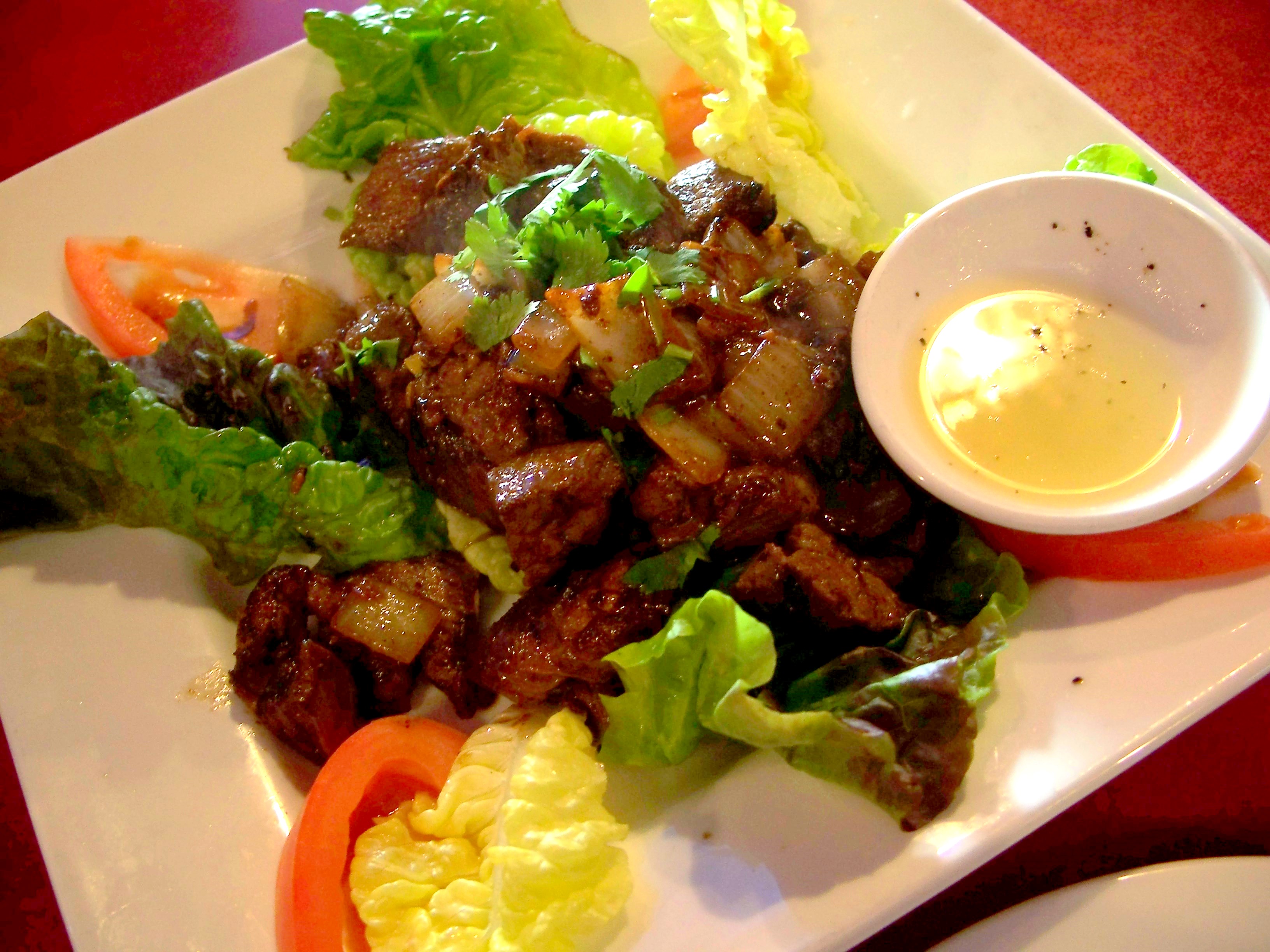
Just after we slurped clean the last twirl of noodles and sauce and erased all crispy crab rolls’ existence, a staff member came and politely replaced our plates with new ones for the second dish. (Yes, the very nice service I mentioned earlier.) It’s also nice that somehow the staff knew we were sharing and didn’t swarm the table with everything at once. The meat arrived when we were half full and wholly satisfied. Bo luc lac, commonly appear as “shaken beef”, sometimes “beef luk lak” (!), is like philly cheese steak, it simply can’t go wrong. But it can be underseasoned. I’m not sure if this is a difference between Northern and Southern recipes, or if the chef intentionally makes it edible without rice, but Bodega’s bo luc lac is more bland than Lemon Grass‘s bo luc lac. It’s soaked in a light salty wine-and-mushroom-like sauce, served with lemon juice, and it lacks the sweet-and-savory signature of Southern cooking. That aside, the tenderness is superb, and the onion bits melt like candies.


So just what makes authenticity? Is it the name? The ingredients? The cook’s experience? Certainly not the cook’s ethnicity. We came to Bodega looking forward to a Hanoi meal, and we left, looking forward to coming back.

Address: Bodega Bistro
607 Larkin Street
San Francisco, CA
(415) 921-1218
(a few blocks away from Herbst Theatre)

Dinner for two (including tax): $32.75

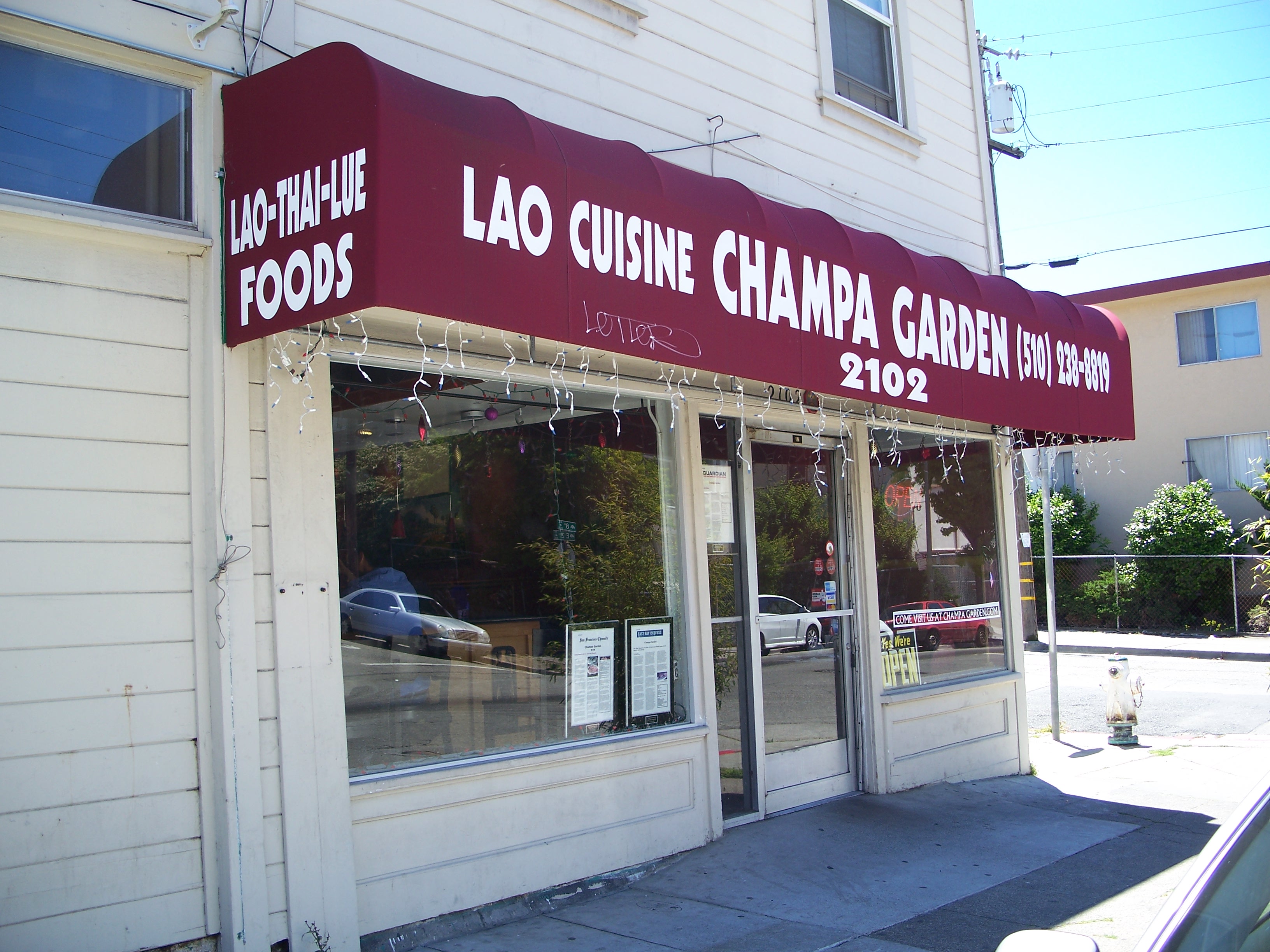
Resto-next-door Champa Garden

June 17, 2010 By: Mai Truong Category: California - The Bay Area, Comfort food, sweet snacks and desserts


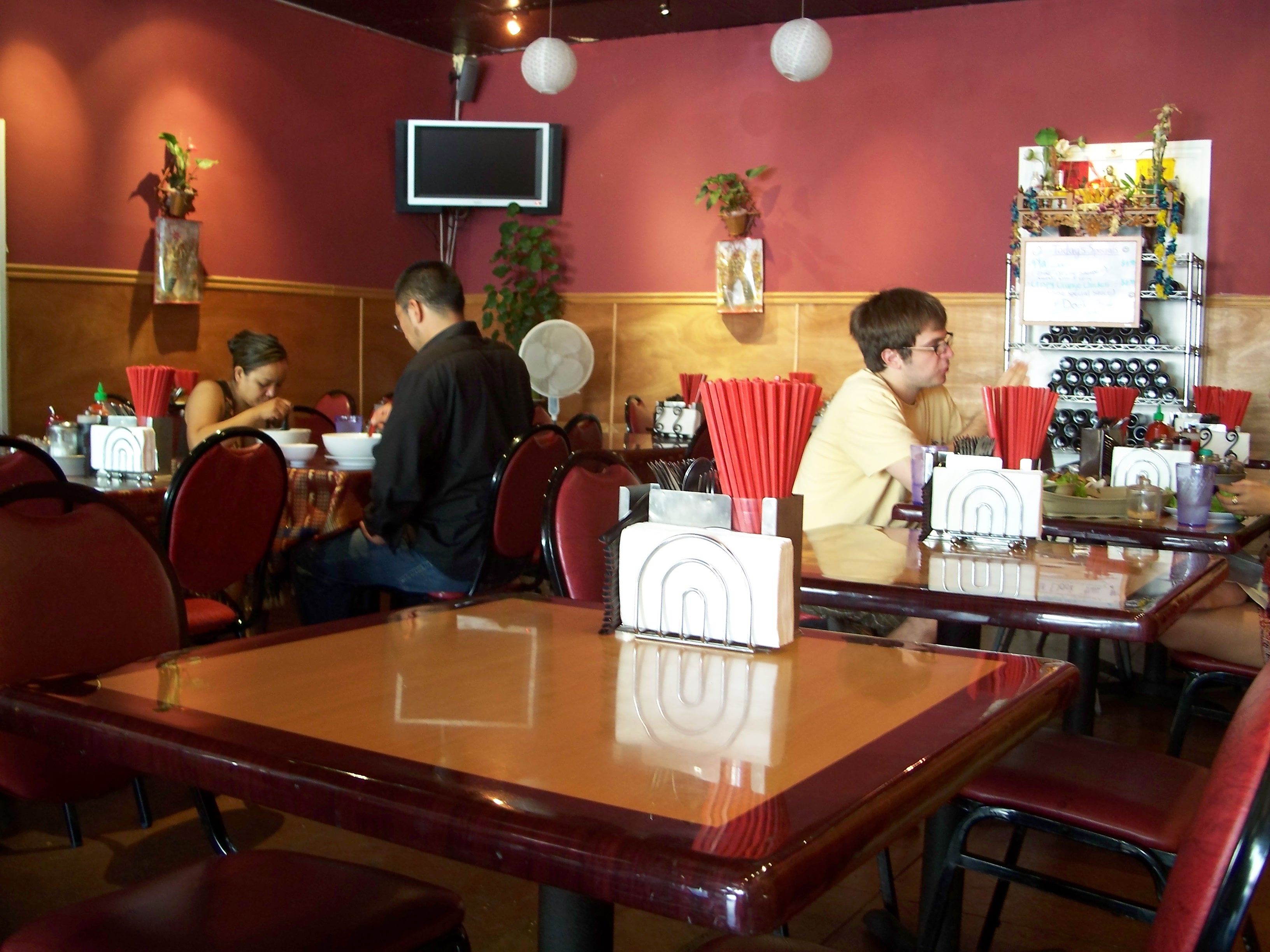
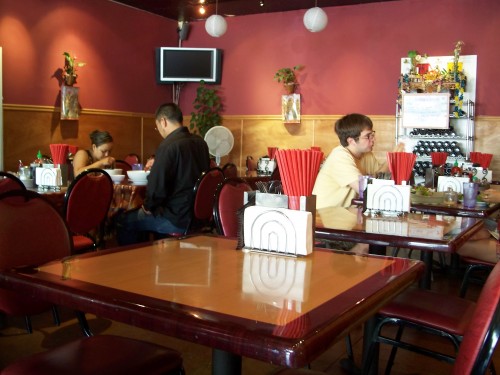
If you’re going to open a restaurant, where will it be? The city center where hungry passengers get on and off the subway station, a shopping mall where everyone gets the thirst for icy juice, the busiest street bordering campus, or a quiet neighborhood? If steaming delicious carts and baskets are literally a stone’s throw from your door in Vietnam, more often than not you need to wheel yourself a good ten minutes from home to burger joints and pizzerias here. There’s the eatery hub, then there’s the residential neighborhoods wrapping around it. So I could imagine how comfortable the folks living near 8th Street of East Oakland must feel, waking up on a lazy weekend midday. Hey, how about a bowl of kaow piak? Sure, Champa Garden‘s right across the street.

It’s utterly casual.

– How was the water?
– It’s good. Best water ever.
– Good. It’s my mom’s secret recipe.

So was the conversation between a young busboy and Mudpie at Champa Garden. In fact, he was the most talkative host in the diner. The others were nice, but they seemed to be mind-travelling in their own world. They spoke like falling leaves, looked at you with tired eyes, and smiled little. Their sweetness was saved in their food. In the brown sugar jar, for example.
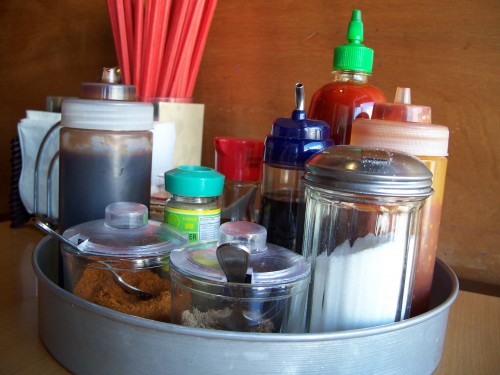

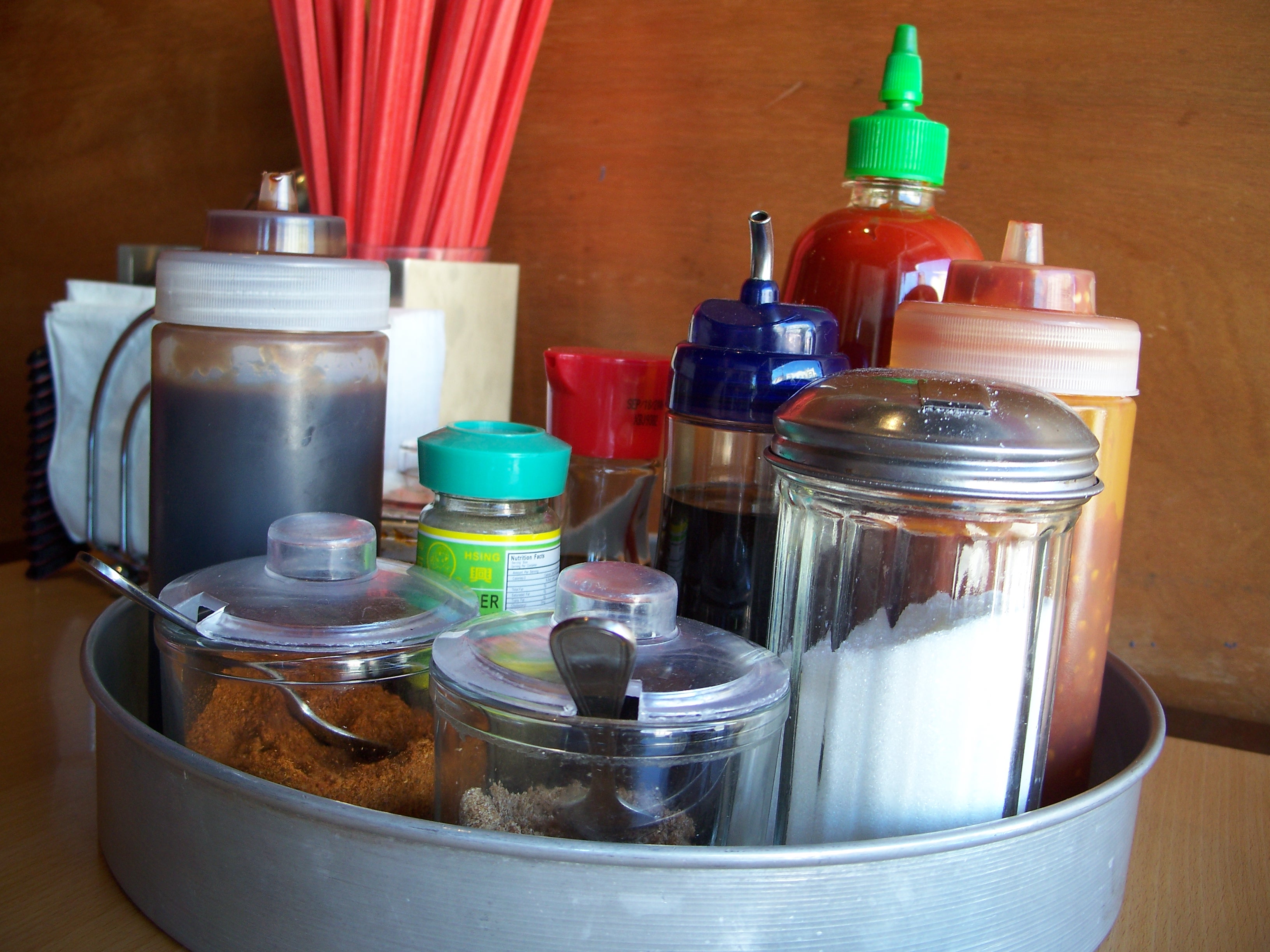
This is the biggest condiment tray I’ve ever seen. Probably to accommodate all three cuisines – Lao, Thai, and Lue – on the menu. I had to google “Lue” to find that it’s an ethnic group living in Laos and Thailand. There is only one dish attached to their name: the kaow soy, Lue’s noodle soup
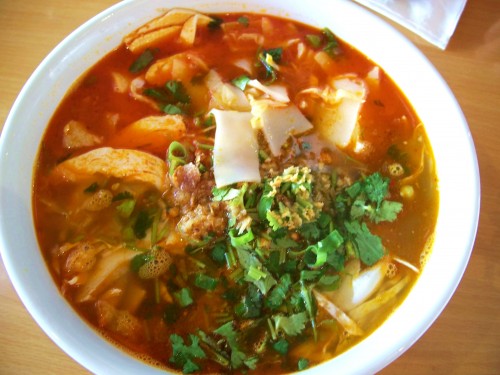

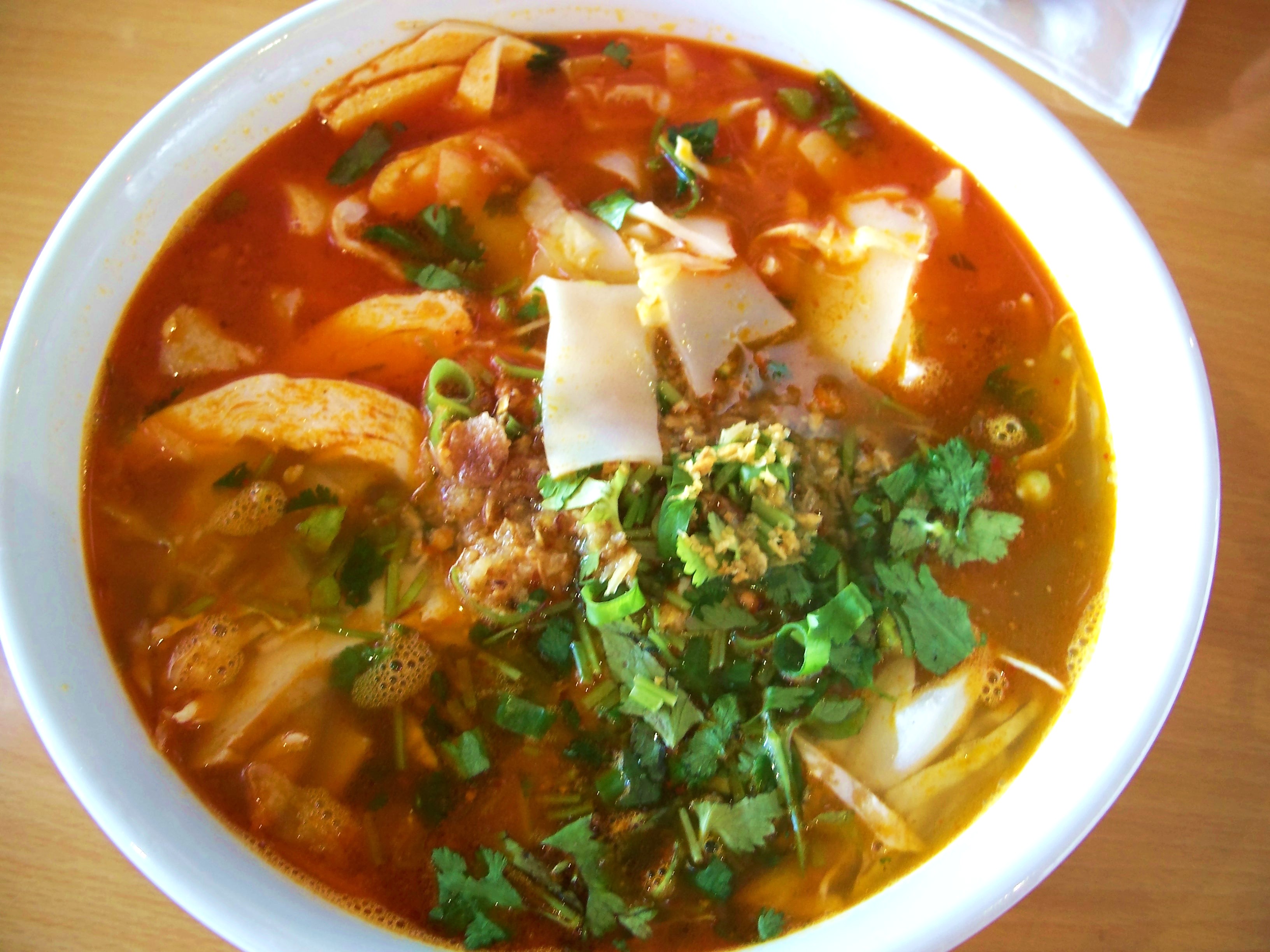
Unlike the Thai version with deep-fried egg noodle, this soup walks the line between phở and bún riêu of Vietnam. The hofun rice noodles, wide and thick, cling together like wet papers, and they keep coming! The chopped carnival of pork, scallion, cilantro, and pork rind are minute. That red broth is rather mild, nonetheless with a distinctive note of fermented soy bean sauce, not unpleasant, just “fermented”.
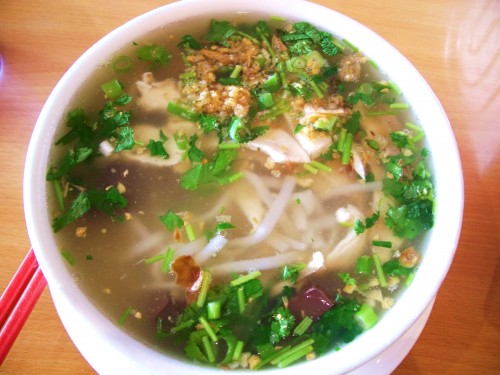

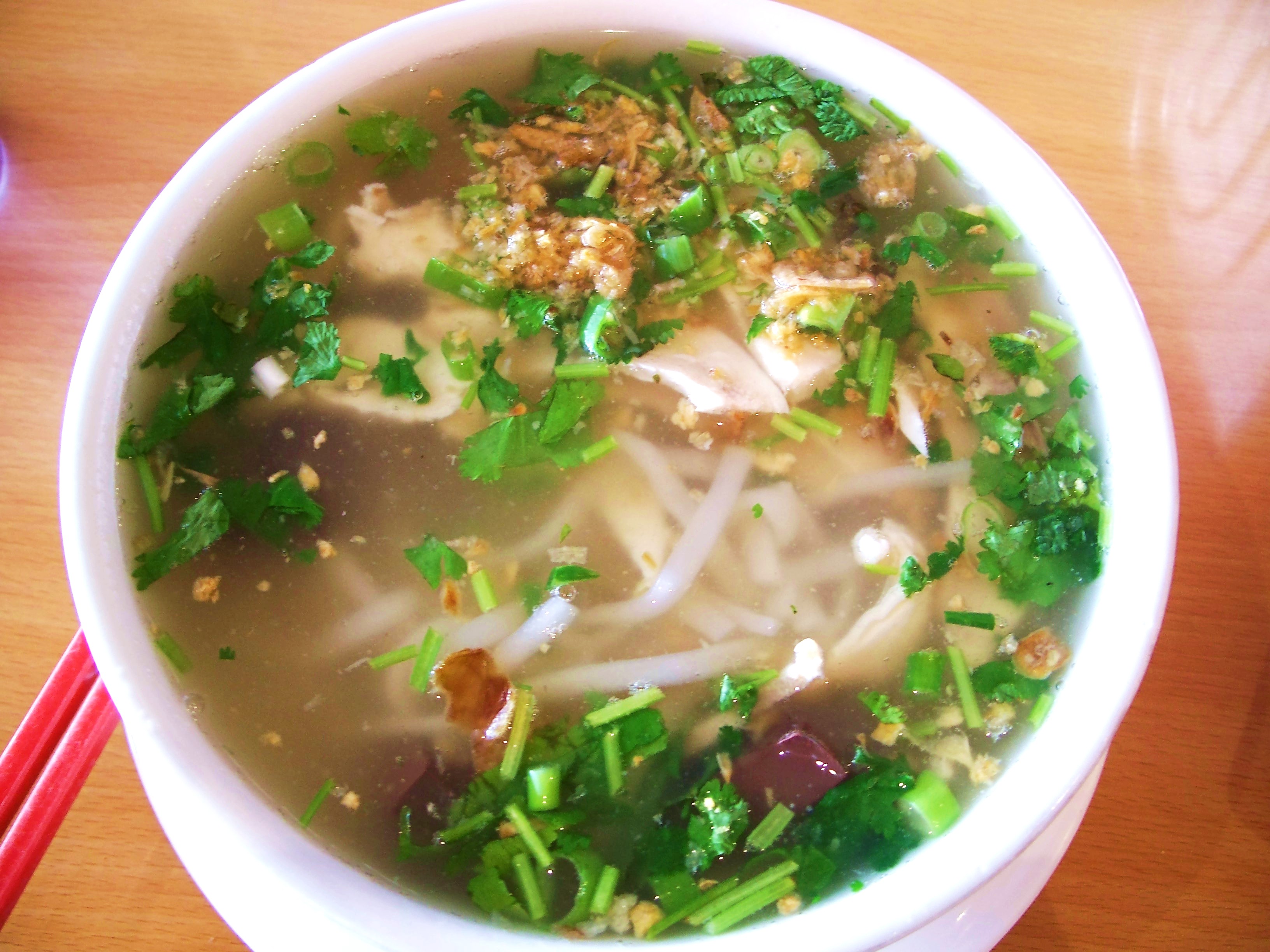
If you eat kaow soy before kaow piak, the kaow piak soup seems bland. Reverse the order, and you feel a sugary twist of Saigon’s hủ tíu and bánh canh. Sleek and chubby rice strings, chopped greens, fried shallot, white chicken, all the familiar faces. Pork blood is optional, and like jello, it hardly adds flavor. I like kaow piak‘s sweetness more than that other fermented note, while the chili kick in kaow soy charms Mudpie.

Just as the noodles, 5-6 bucks a bowl, satisfy local neighbors who wake up and walk in, Champa Garden has something on stove for the unadventurous, indifferent, playing-safe crowd: pad Thai and fried rice.
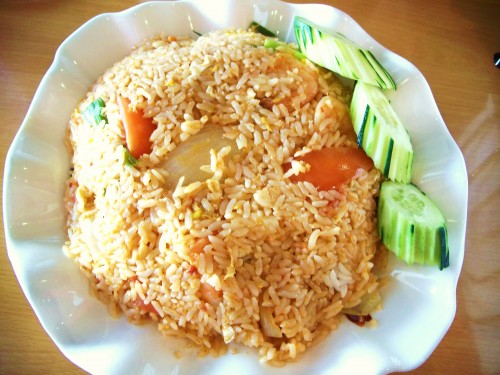

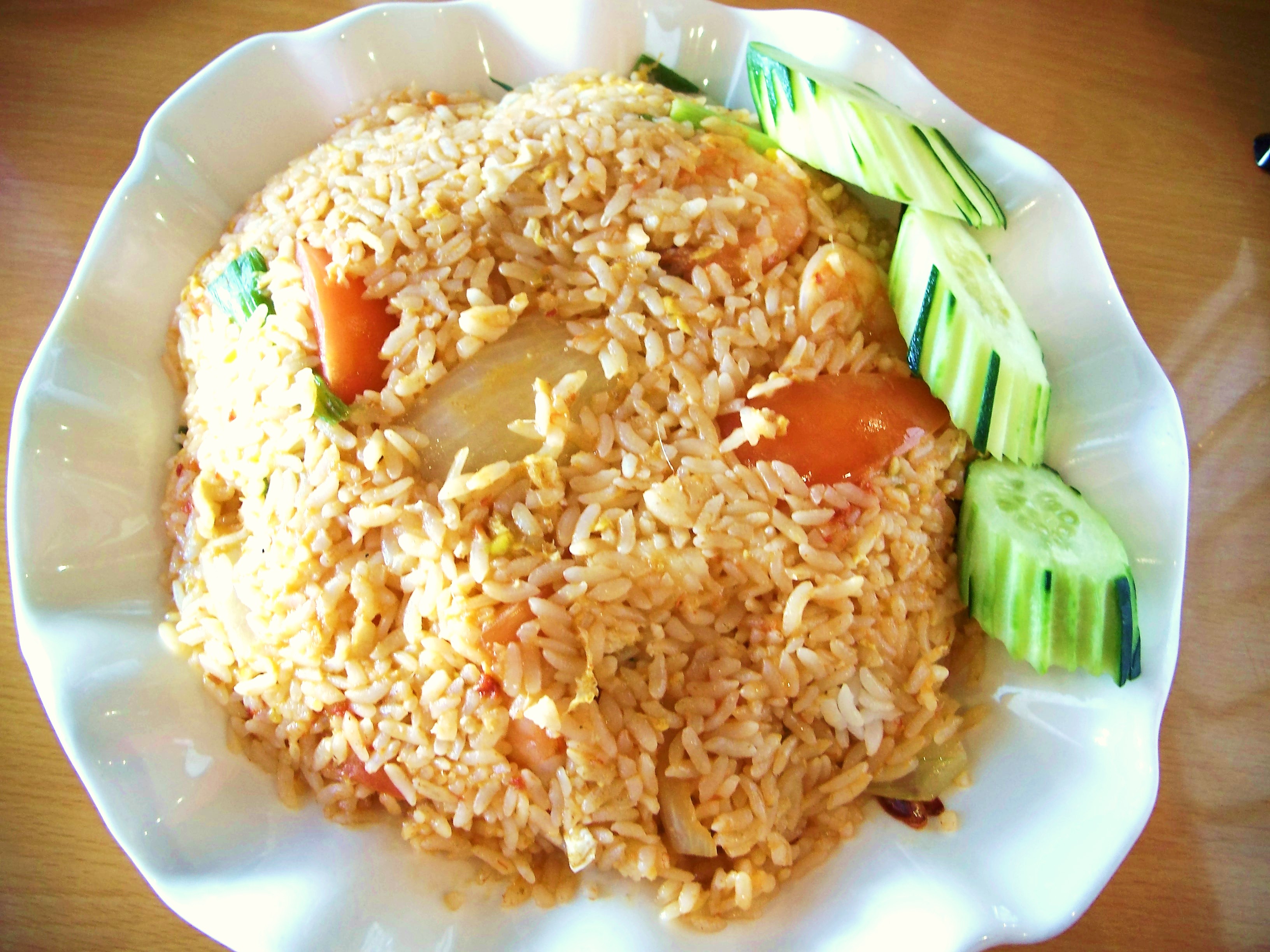
It’s just rice, shrimp, onion, tomato, green chive, and tom yum sauce. It’s just lunch. Is it worth 8 dollars? Maybe the amount, maybe not the taste. The Champa fried rice suits whoever chooses it for safety.

Then there is food for the novice diners who would catch bus 18 from Berkeley, sit through a forty-minute ride and walk up the hilly 8th street, just to check out the place recommended by their fellow foodies. These foreigners are interested in the unfamiliar names, try to taste as many plates as humanly possible, and would kill a bunny for a chance to peek into the kitchen.
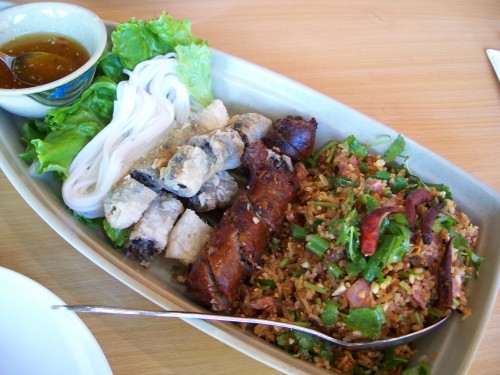

Unfortunately, they aren’t allowed to go into the kitchen. I found the most awesome appetizer, I asked if I could see how they make it, and they politely shot me down.
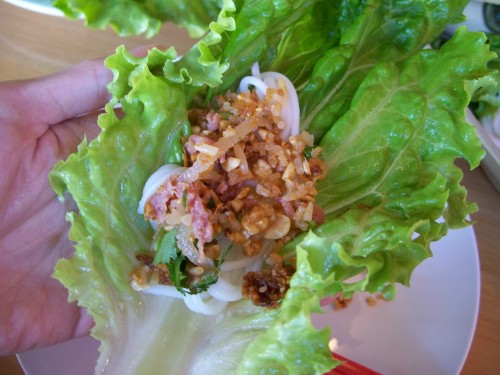

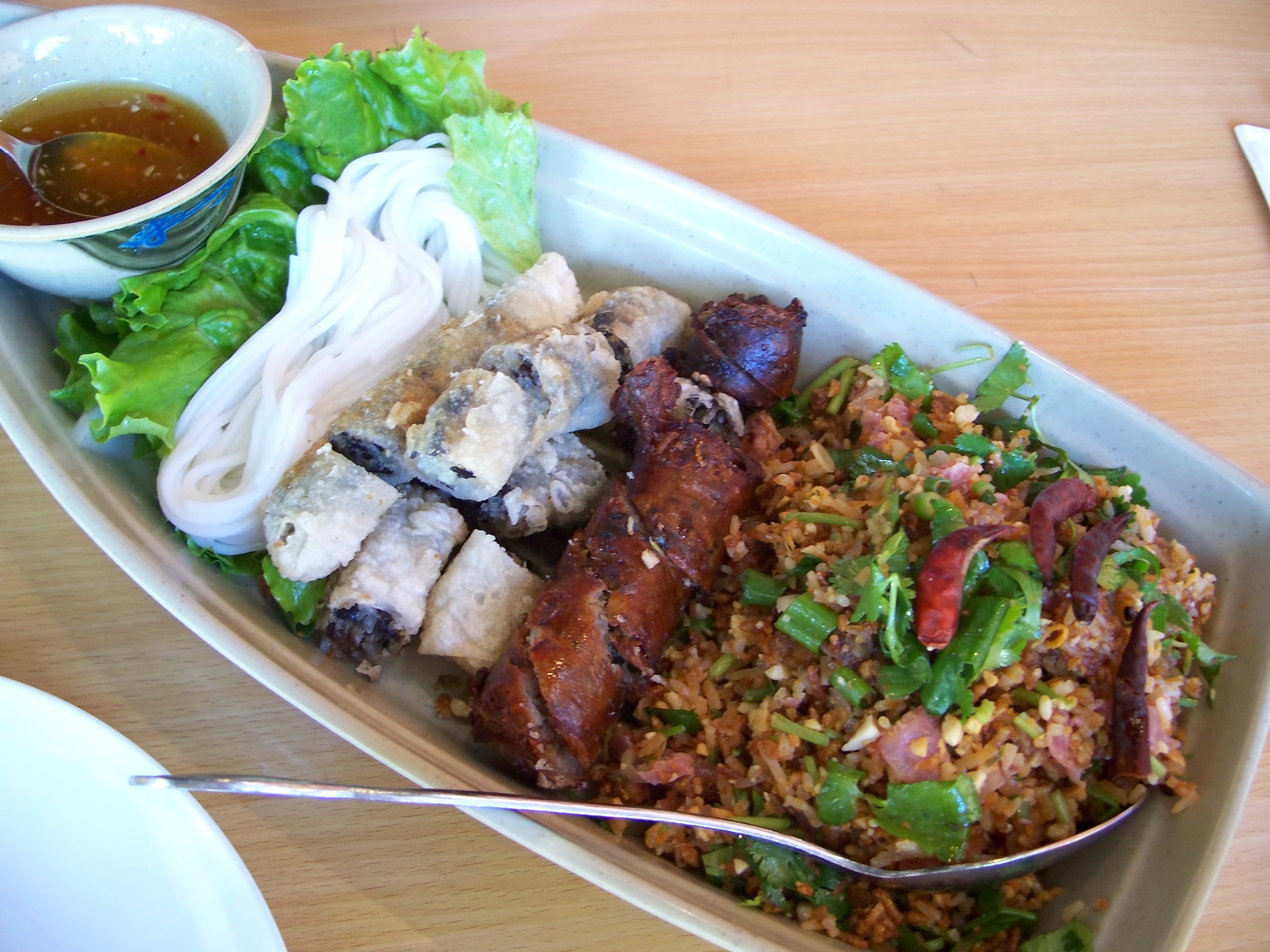
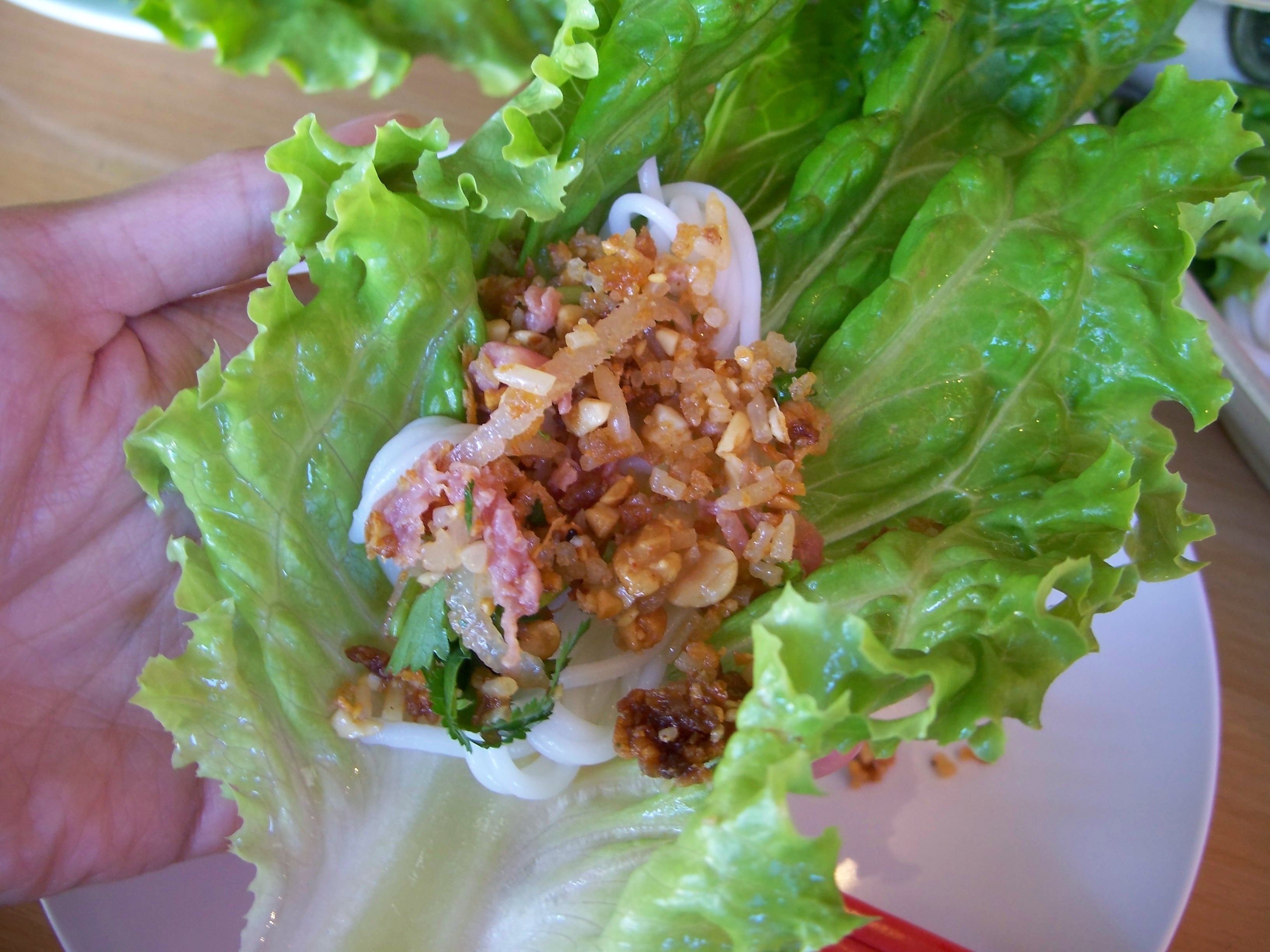
Nam kaow, crunchy fried rice with finely chopped up greens and spam, is seasoned to perfection. You wrap it in lettuce and dip into the garlic lime sauce (extremely similar to Vietnamese nước chấm), or you can avoid the mess and just eat it plain. There is nothing to complain about it. It comes in the sampler boat with Lao sausages and yor chiun (deep fried rolls of vermicelli, woodear mushroom and ground pork wrapped in rice paper), both are yummy but must bow to the nam kaow.
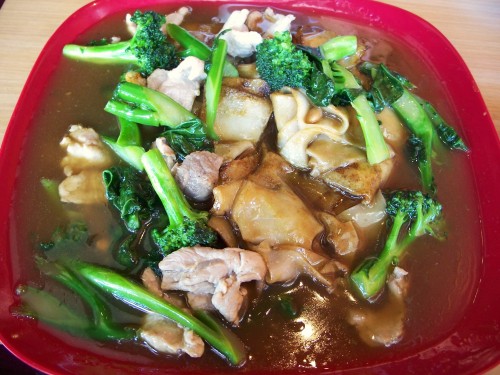

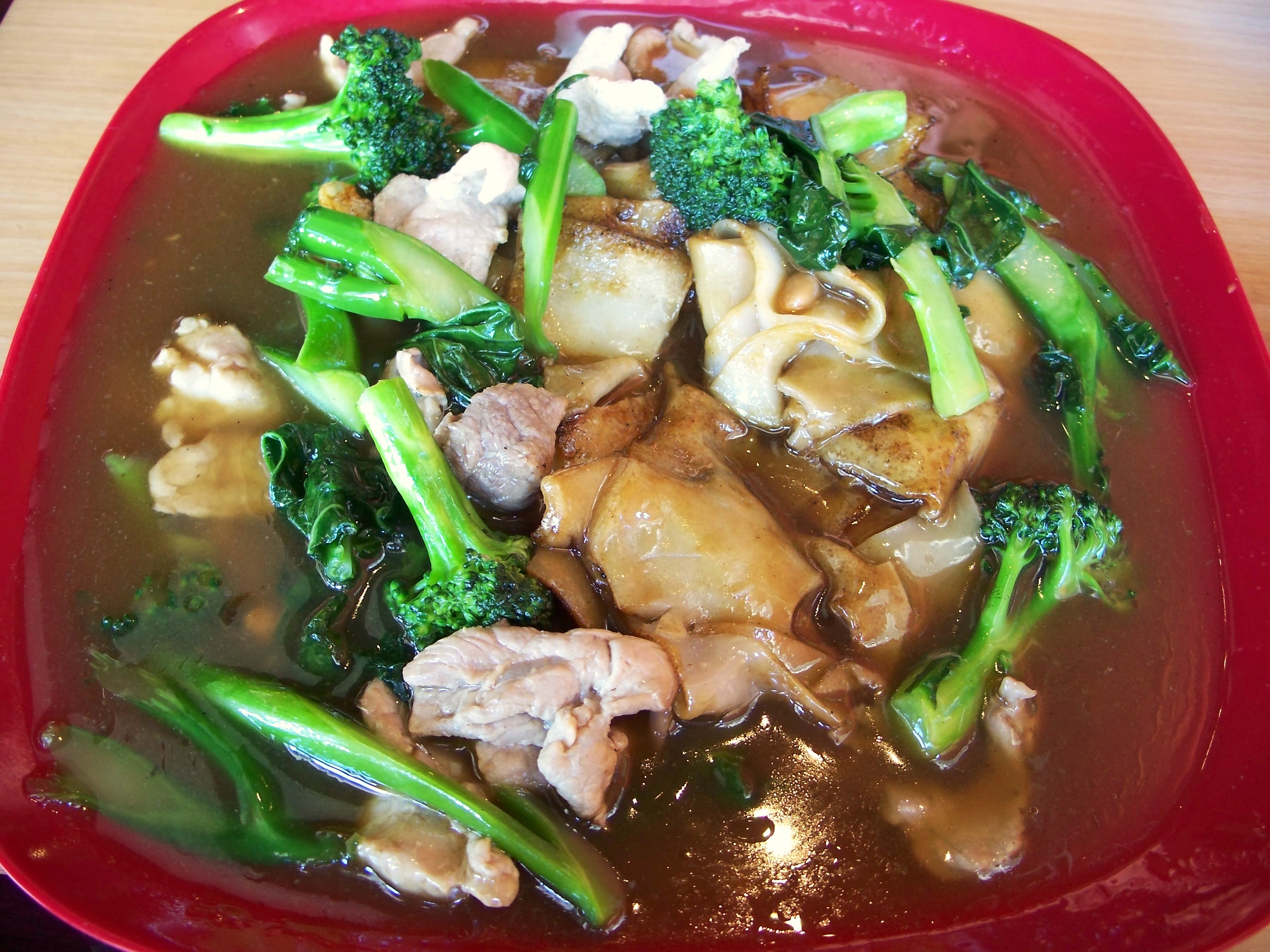
Just when we get mightily excited over a great start, the luck gets thin. For entree, lat na turns out just so so, borderlines boredom. You know that feeling when the food kinda sticks in your throat and just wouldn’t go down? Not that it really gets stuck, but somehow it prevents you from eating more. Thick sheets of rice noodle in a thick, sweet sauce does that. Just too thick. Perhaps a different kind of noodle would have been better, because the broccoli soaked in this sauce is pretty nice.
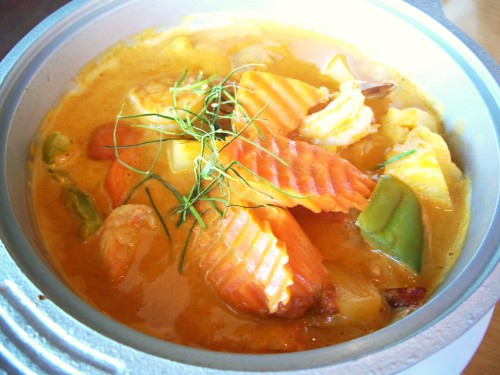

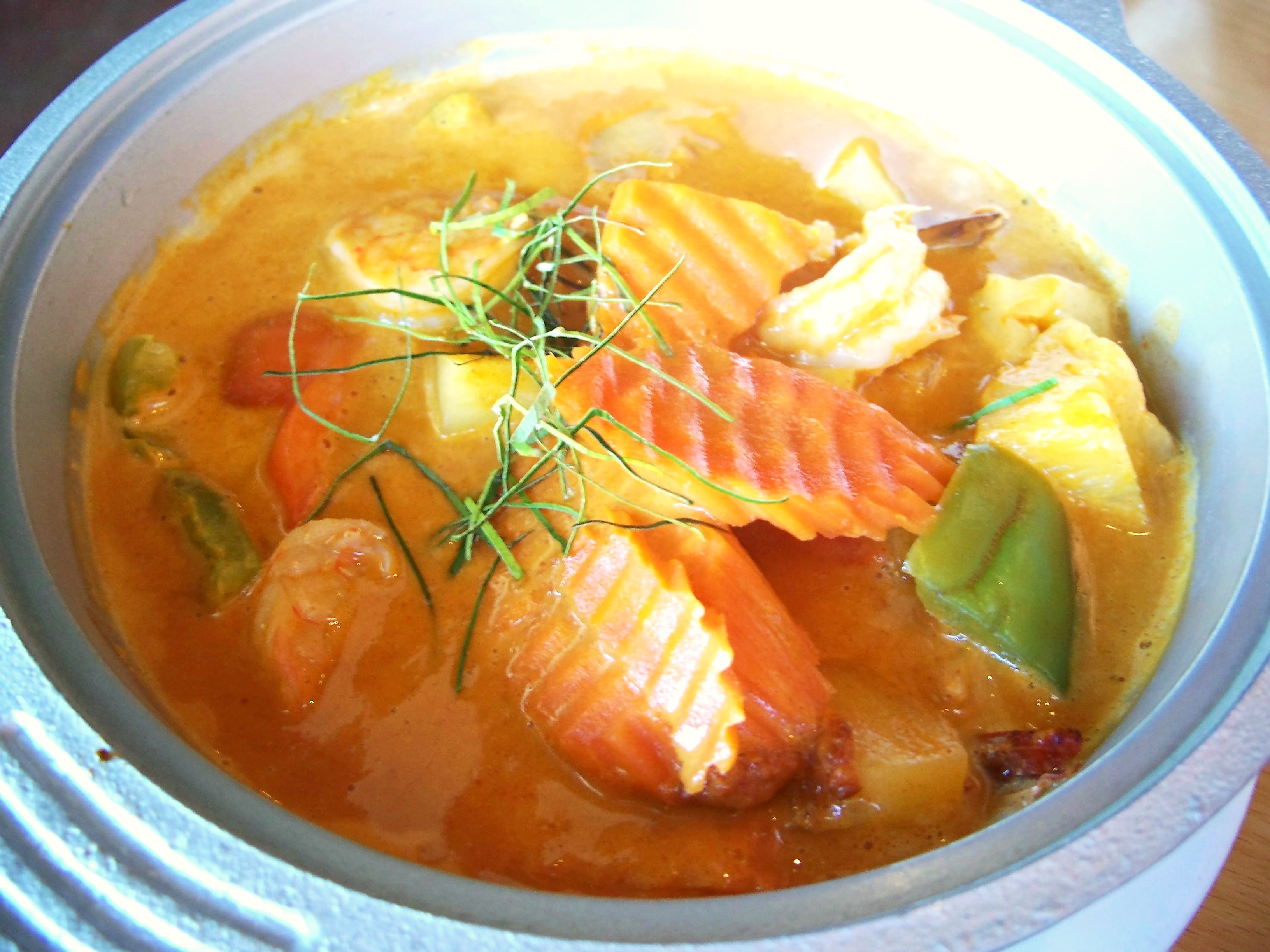
On a sweeter note, shrimp “claypot” fares well. There’s nothing clay pot about it, just shrimp, pineapple and veggie in, again, thick and sweet coconut curry sauce. Very coconuty.

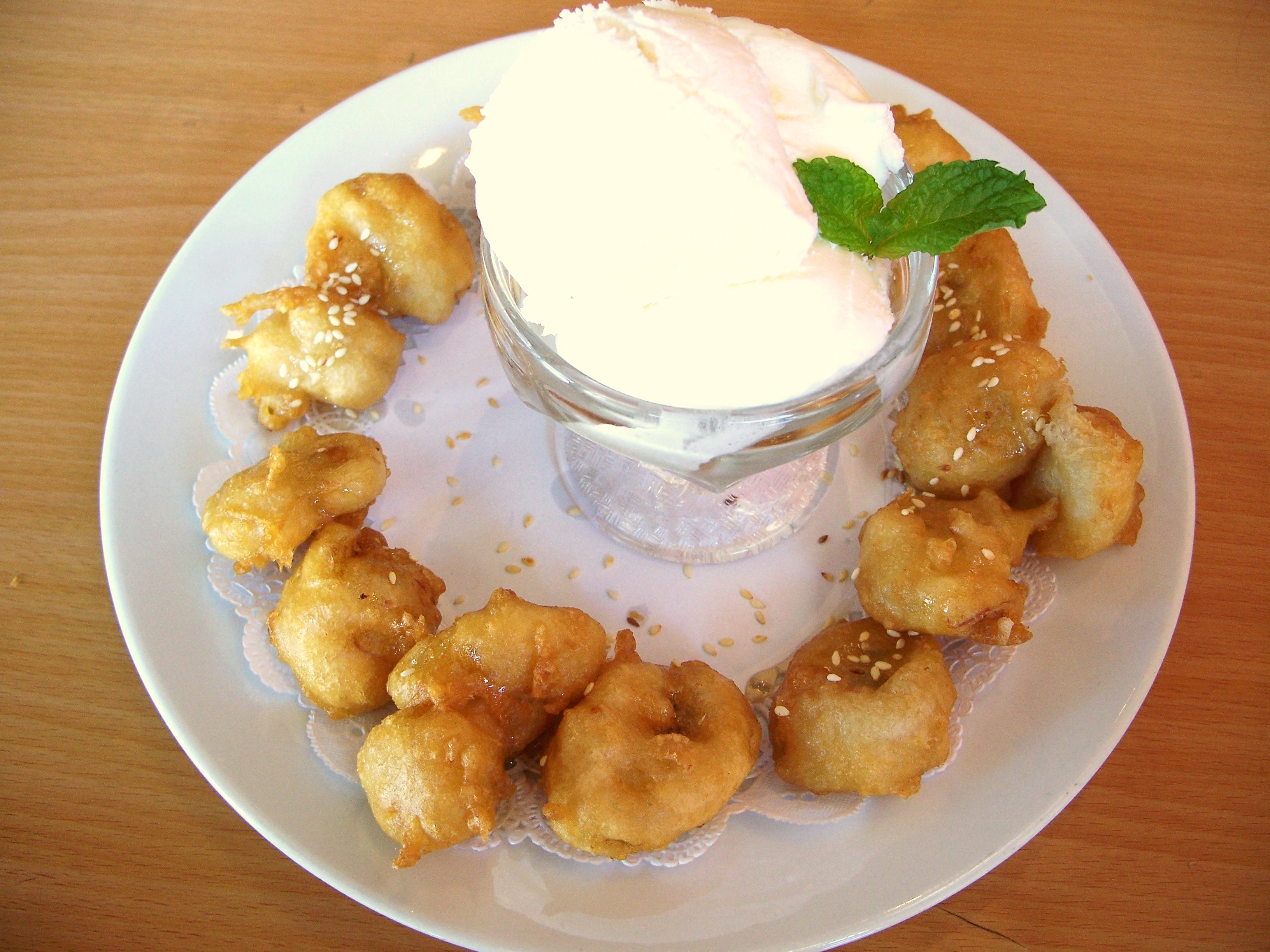
As if the whole course had not been sweet enough, the novice foodie stubbornly demands fried banana and coconut ice cream for dessert.
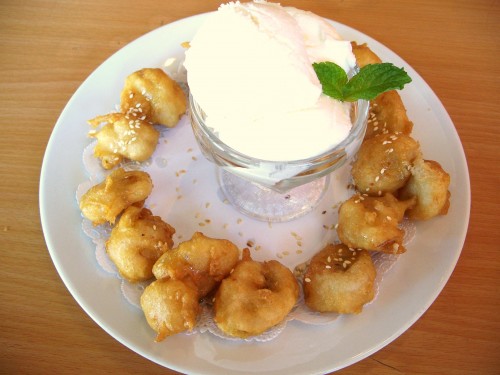
In hindsight, I could do without the fried banana. Battered, oily, crunchy pockets with mismatching sweet hot goo inside isn’t what I expected. But ice cream makes everything better. It’s not so coconuty as it is pineapple-y. It is, again, thick and sweet. But it clears the throat like nothing else.
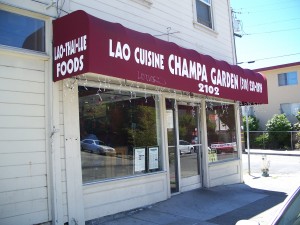

So there, whether you’re a local on 8th street hungry for a warm breakfast near home, a safe eater, or a foodie seeking little-known edible gems, as long as you have a ten dollar bill and a sweet tooth, you’re guaranteed to roll out of Champa Garden full and smiling like a tangerine.

Address: Champa Garden (East Oakland)
2102 8th Avenue
Oakland, CA 94606
(510) 238-8819

Sandwich Shop Goodies 2 – Bánh bía (Suzhou mooncake)

June 14, 2010 By: Mai Truong Category: California - The Bay Area, Chinese, Comfort food, One shot, Southern Vietnamese, sweet snacks and desserts, Vietnamese


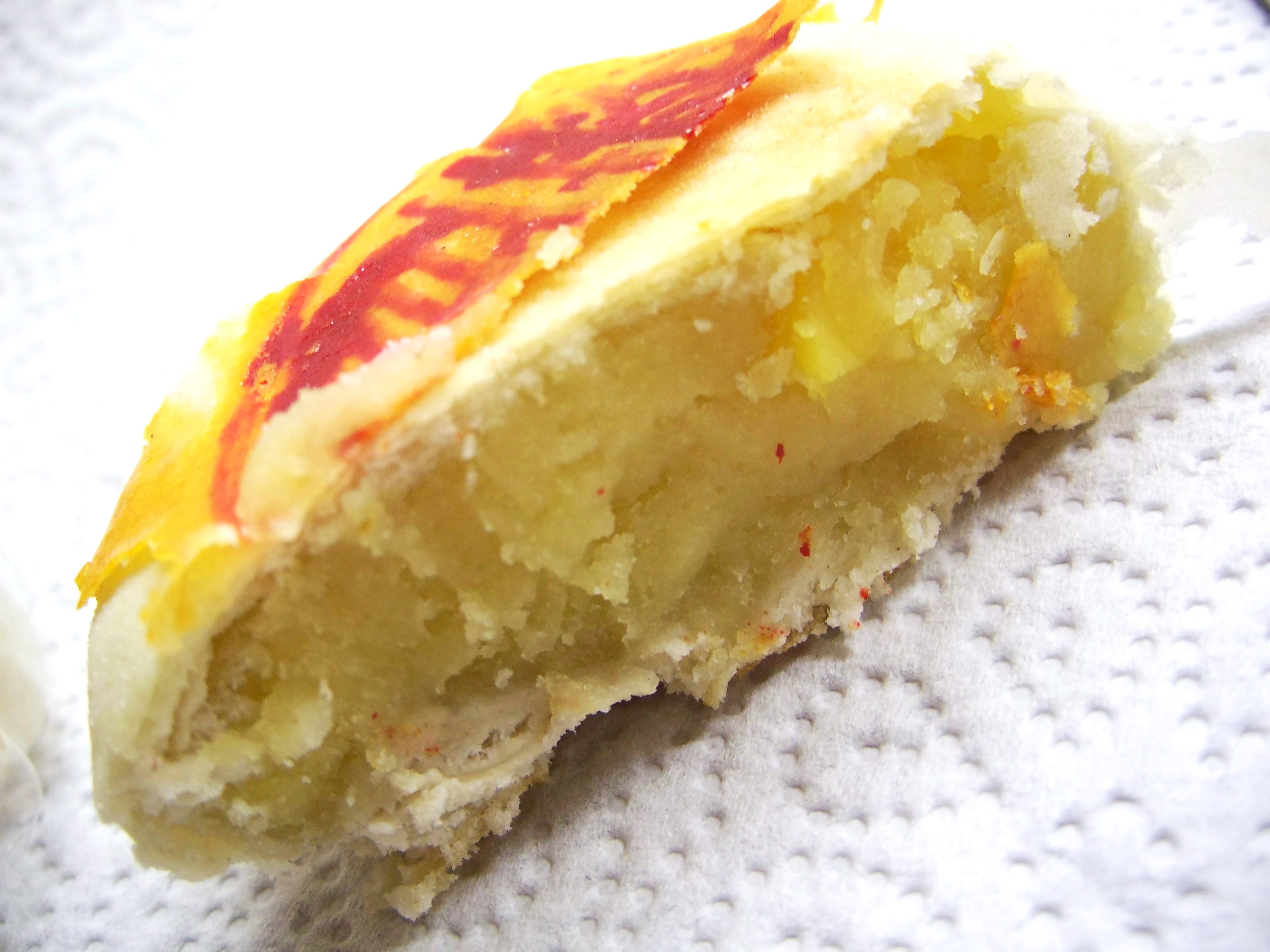
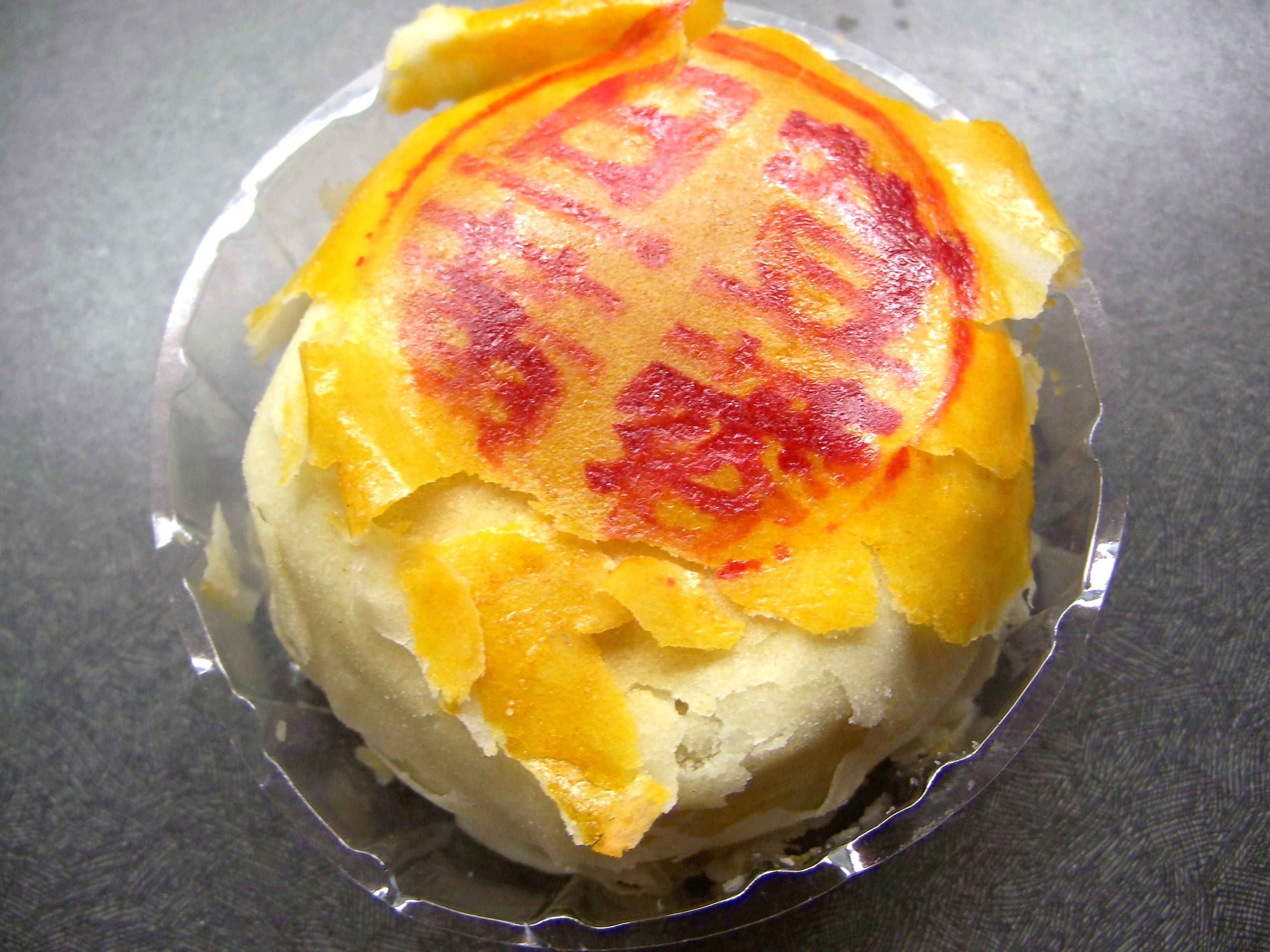
In the middle of bright yellow paste lies a crimson orange ball. The egg yolk. Salted and dried up to the size of a cherry. Or should we say it is the moon, at its fullest on the fifteenth day of the eighth lunar month each year.

Roughly 650 years ago, it was a bright moon for the Ming Dynasty, but not so bright for the Yuan Dynasty. The Mongolian rulers’ defeats started from a full moon day of August 1368, when the capital Dadu (present day Beijing) was captured by Zhu Yuanzhang and his Han Chinese insurrection armies. Zhu Yuanzhang then rose to the throne as the first king of the Ming dynasty, and he made sure that the Mid-Autumn Festival, which coincides with the end of the harvesting season, was celebrated throughout the country. As the story goes, such revolutionary victory could not have happened without them little mooncakes.

They were secret means of distributing messages among the resisting forces. Words were printed on each mooncake as a simple puzzle. Each mooncake in a package of four was then cut into four pieces, and the sixteen parts were arranged in a particular way to form the entire message. Afterwards, the cakes were eaten and the trace erased. I don’t know what they would do if a hungry kid got hold of a piece.

Although people aren’t sharing secret information anymore (as if anything could remain secretive under the communist watch), the mooncakes still have imprinted words on top and still come in packages of four.


The most popular kind of mooncakes have elaborate designs with golden brown crust, originating from Guangzhou. Other kinds more or less are spin-off versions of the Suzhou-style mooncake with a simple round shape, no design, flaky skin which can be peeled off by the layers, and no need for a mooncake mold.

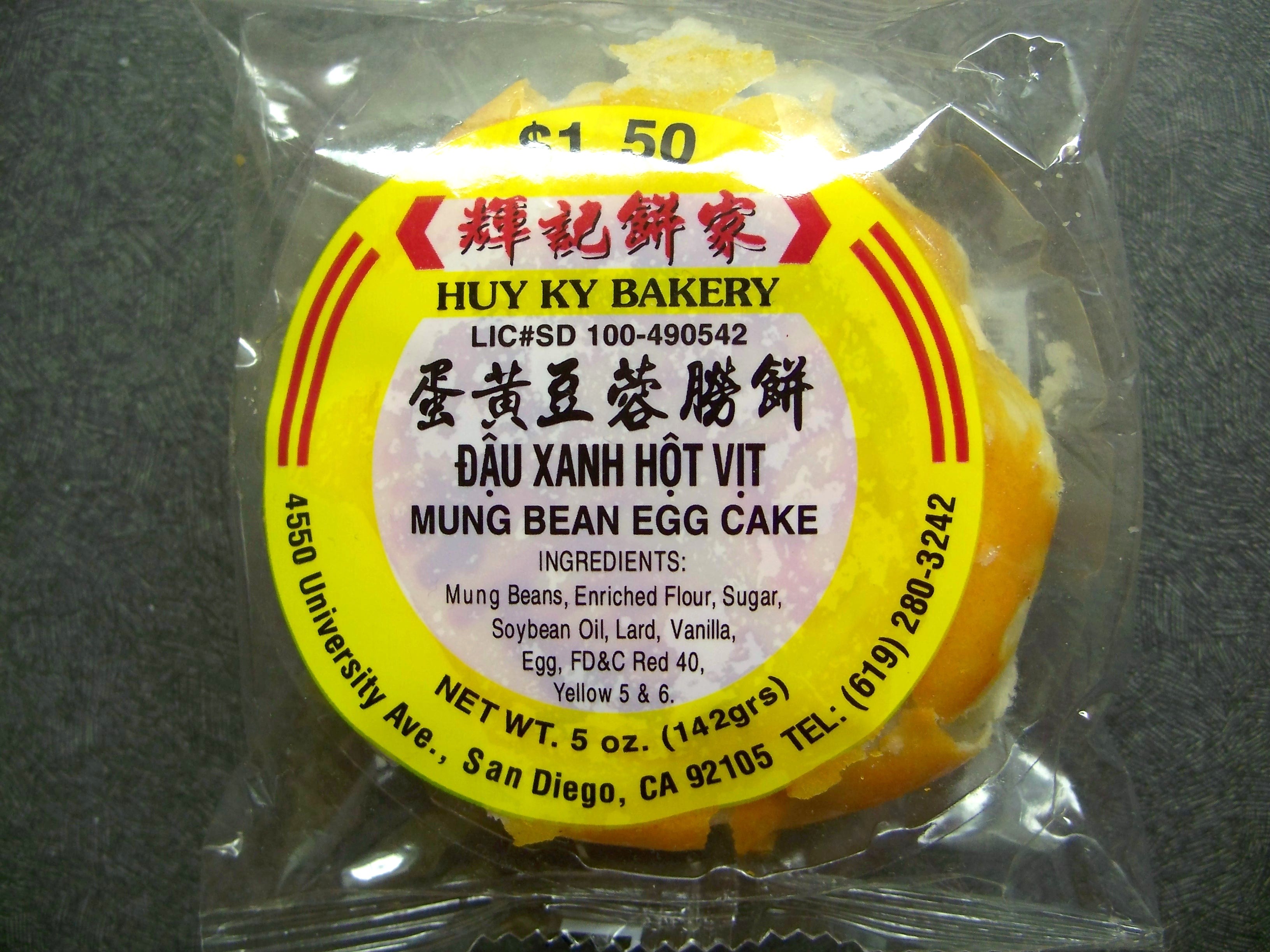
When the Chinese immigrants settled in the Mekong delta, they introduced the round, flaky mooncakes, referred to as “pía” in Teochew dialect, to the southern Vietnamese, who quickly adopted the recipe and the trade to make it a regional specialty, the Soc Trang‘s pía. “Pía” means “bánh”, things made with flour, but the innocuous southerners took it as a name, and started calling the flaky mooncakes bánh bía. Unlike the Cantonese mooncake that is only eaten during the Chinese Mid-Autumn festival, bánh bía gets served year round, bought as gifts from travelers to Soc Trang, featured in the Khmers’ moon festival Oc Om Boc in October, and individually packaged for sale at $1.50 a piece in Vietnamese sandwich shops in San Jose.


The recipe, too, has slightly departed from its Suzhou originals. If the Chinese counterparts often contain lotus seed, red bean paste, nuts, and sometimes pork for savoriness, the Soc Trang version stays homogeneous with either mung bean paste or taro paste, which can be flavored with lard and durian to the likings. But whatever goes inside, the doughy, flaky skin of bánh bía is the unchangeable feature, distinguishing it from all other pastries.

Each pía needs two kinds of dough: the “skin dough” and the inner layer dough. The skin dough on the outside, made of flour, water and canola oil, gains its elasticity and smoothness from a little kneading, while the inner layer dough has only flour and oil and is left unkneaded to keep it thick and chewy. Later the two kinds are flattened together to make the crust, but with the inner layer dough always contained inside the skin dough, otherwise the banh bia would have a coarse surface. After baked half way, the pía is taken out and glossed some egg wash over its upper side. When fully baked, they shine a ripe yellow invitation, ready to be stamped “longevity”, “harmony”, or some other character in red.

The whole process, from making the filling paste to baking, can take up a whole day. Buying it at the store takes two minutes. If you don’t count driving time.

Address: Huong Lan Sandwiches #4
41 Serra Way, Suite 108 (across the parking lot from New East Lake Seafood)
Milpitas, CA 95035
(408) 942-7777
Monnday – Sunday: 6am – 9pm

Click here for a recipe of bánh bía (Vietnamese-adpated Suzhou mooncake)

Previously on Sandwich Shop Goodies: bánh gai (thorn leaf sticky rice bun)

Next on Sandwich Shop Goodies: bánh ú tro (Vietnamese-adapted jianshui zong)

At the Mountain Top (Sahn Maru)

May 15, 2010 By: Mai Truong Category: California - The Bay Area, Comfort food, Korean


Nothing beats mom’s cooking. Things may come close, or they may be enchantingly as good as mom’s cooking albeit in some different way, but nothing can top a familiar taste that you grew up with, when you’re fed with love. Remember how Ego dropped his pen and dived into Remy’s ratatouille dish upon recalling the aromatic smell of his mother’s boiling pot? In episode 5 of Gourmet, tears of joy wet the eyes of a renowned food critic as he savored a bowl of  boodae jjigae (부대 찌개), the kind his mother used to make for all poor children in the village and the taste he has longed for in several decades. The concept is universal: mom’s cooking is the best. Lately I’ve been steering away from Vietnamese restaurants, not because they aren’t good, but because  my mom makes better. So I seek out to the food my mom has never made, yet a part in me still wants a sense of home.  And what’s more home-like than the thin, ruffled floral cotton cushion pads loosely tied to some wooden chairs?


Korean food always makes me feel warm and fuzzy inside. I’m not talking about the chili heat and the bubbling sizzling dolsot and the oksusu cha (옥수수 차), even if that’s part of the reason. If you take off the tongue-torching taste, Korean food is actually very similar to some Northern Vietnamese food, especially the soups and the stir fries. Neither cuisines go down the slippery slope of lard overdose or drown the plates in curry sauces and coconut milk, and both embrace a sweet-savory harmony topping a lot of rice.

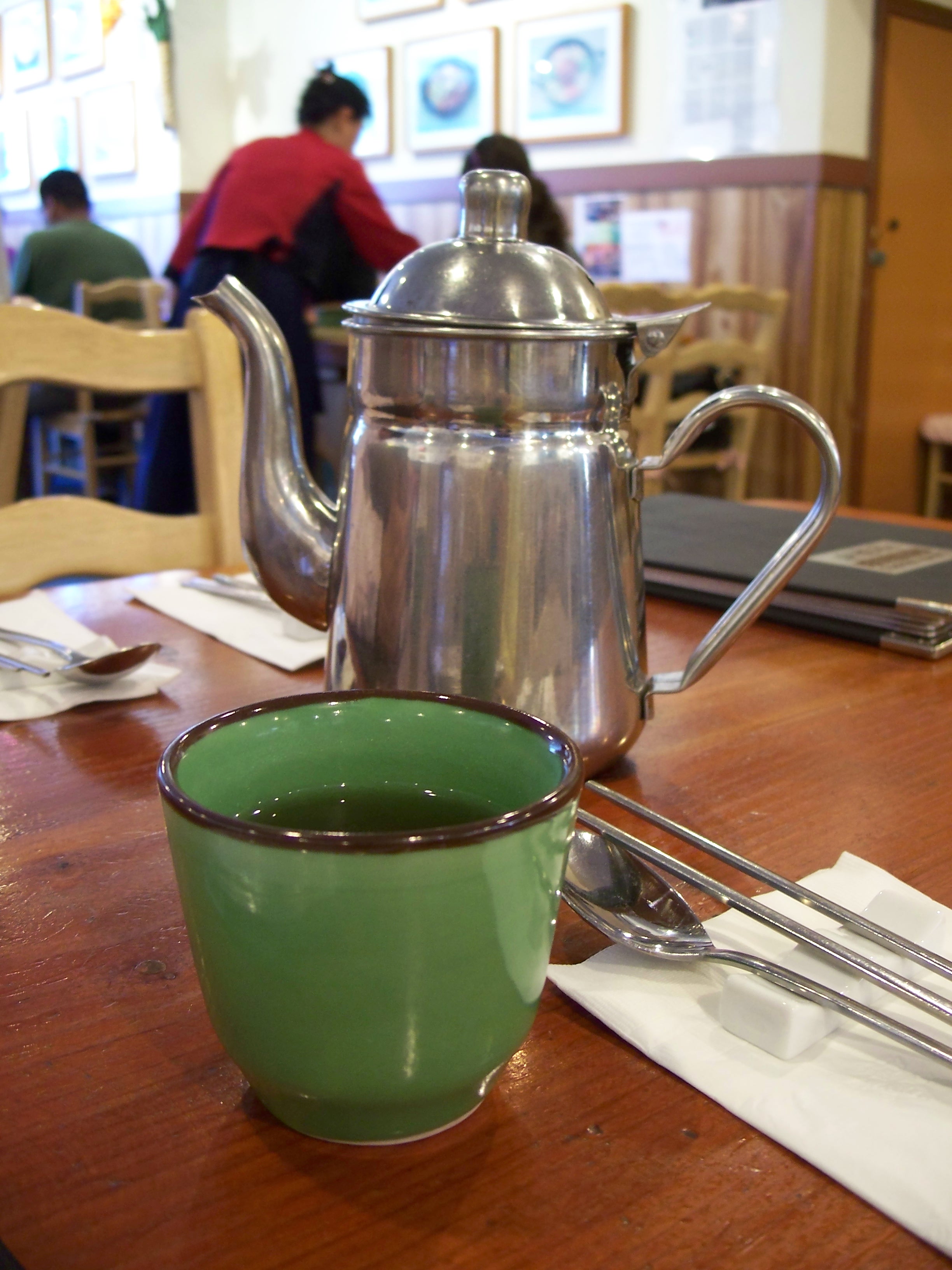
But above all, it’s the feel of a Korean restaurant that charms me. It always feels slow. Even if it’s like OB Chicken Town, where the lone waiter has to rush between tables, love songs blast all around, basketball players run across the big TV screen, time still goes by slowly at that wooden table where you’re sitting.  Time swirls around in the tea cup. Time lingers like the steam above your dark stone bowl. Time precipitates in each little morsel of banchan that you get served a few minutes after placing your order. Maybe it feels slow because you don’t have to rush shoving food into your mouth, or clearing the table so that the later course can come. It feels slow just like eating at home, when each dinner would take hours because I talked to my mom instead of eating.


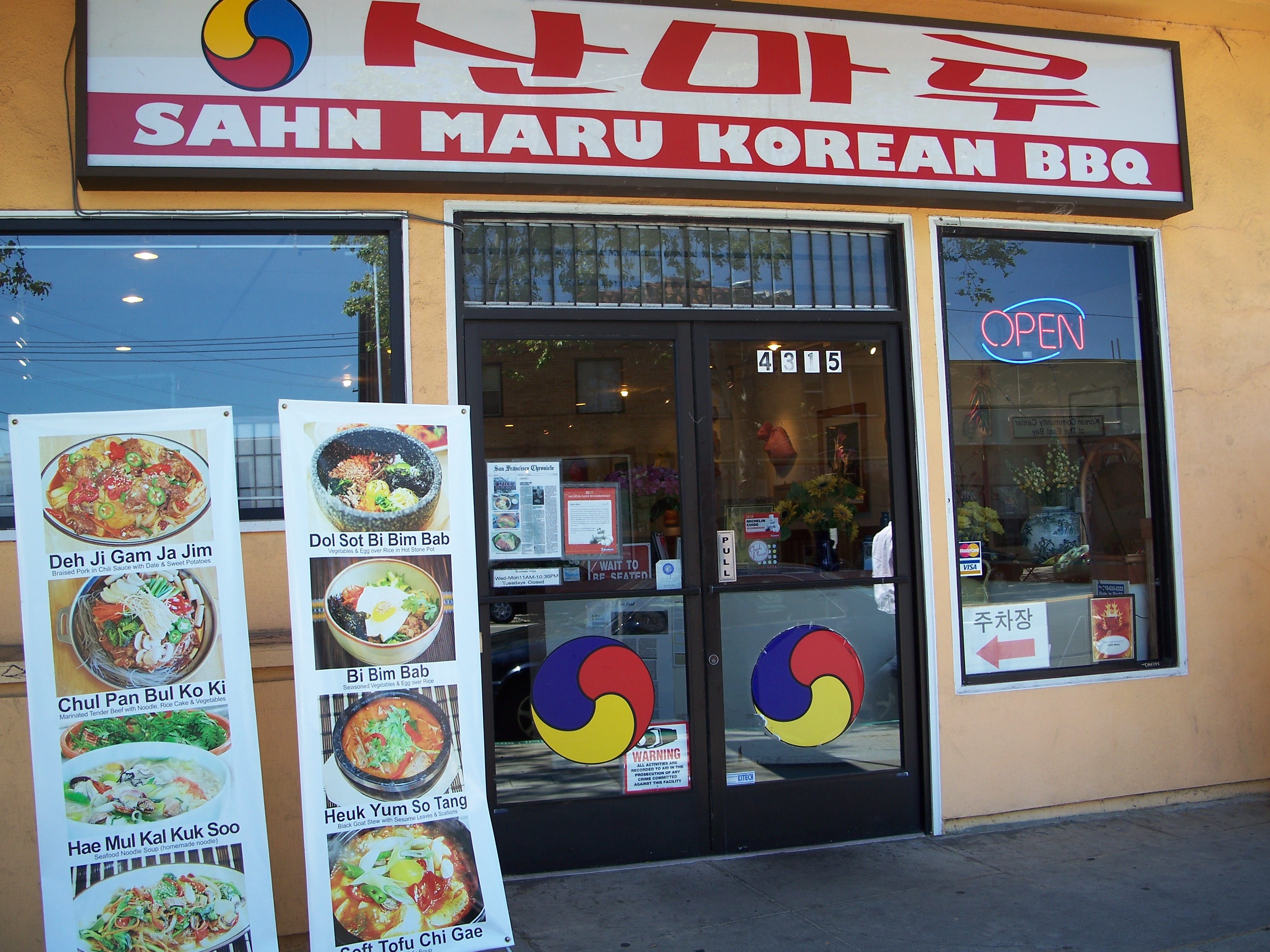
So I feel happy at every Korean restaurant I’ve been to, with every Korean dish I’ve tried. I feel happy at Sahn Maru (산 마루) in Oakland. This chulpan bulgogi (출판 불고기) is another pleasant find. I like my choice of mild sauce because the lack of chili paste lets other flavors flourish, but you can choose spicy. The ddeokbokki (떡볶기) is a playful texture that could be done without, while the cellophane noodle buried under a mountain of beef and soaked in marinade is just too great.


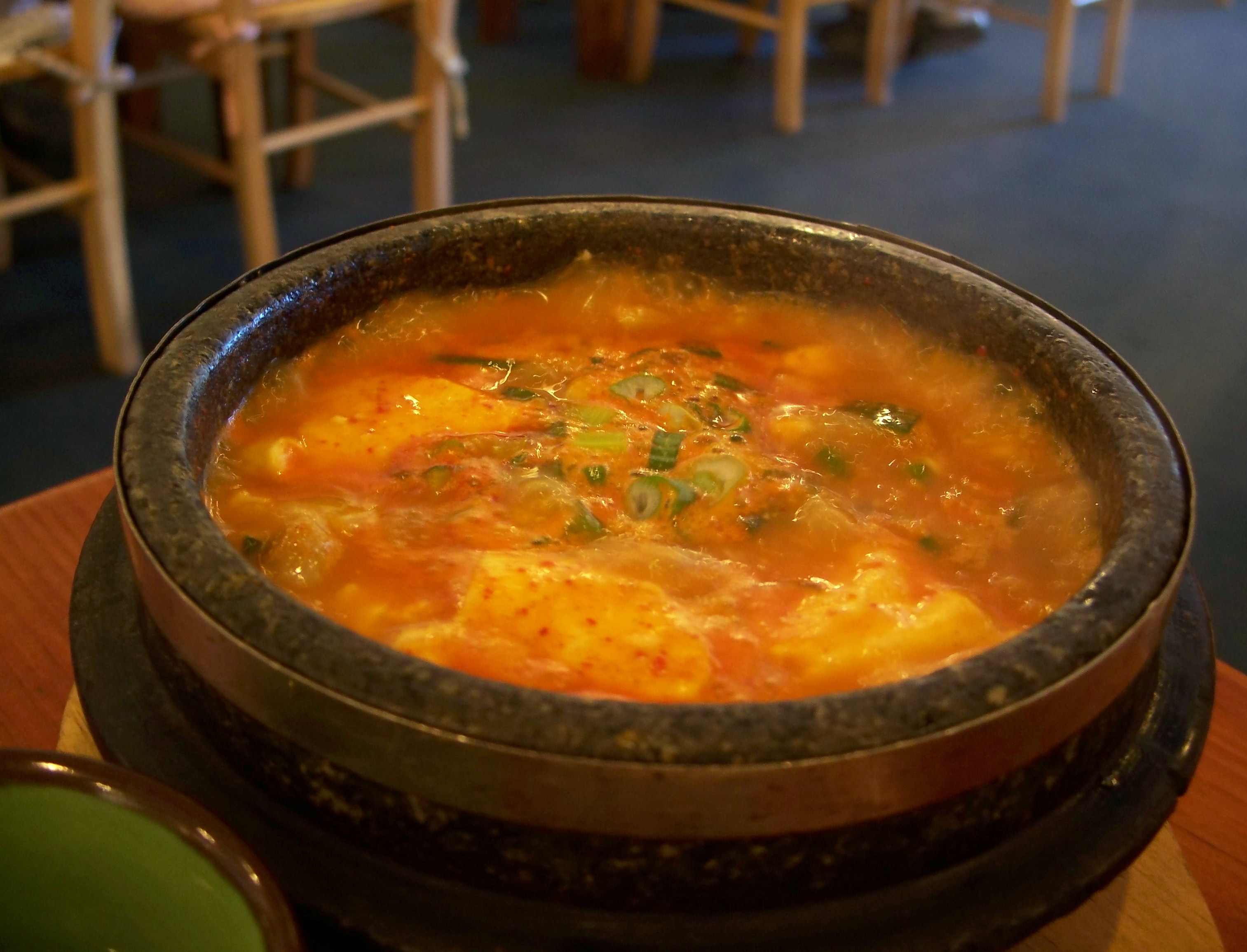
On the hot side we have bubbling soondubu jjigae (순도부 찌개). The soft tofu is creamy like scrambled eggs. Pour a few spoons on top of rice, mix it up. You won’t notice the meat, and the meat is totally dispensable. This stew is good because of the fish sauce, the heat, and the creamy tofu.

At the end, the bill gets served with a cup of  cold sujeonggwa (수정과). I’m not a fan of  cinnamon, but anything sweet and cold just cleanses the throat so nicely. There was no dried persimmon, though.

And I would have said that Sahn Maru was another pleasant experience. But something among the banchan (반찬) makes me change my mind.


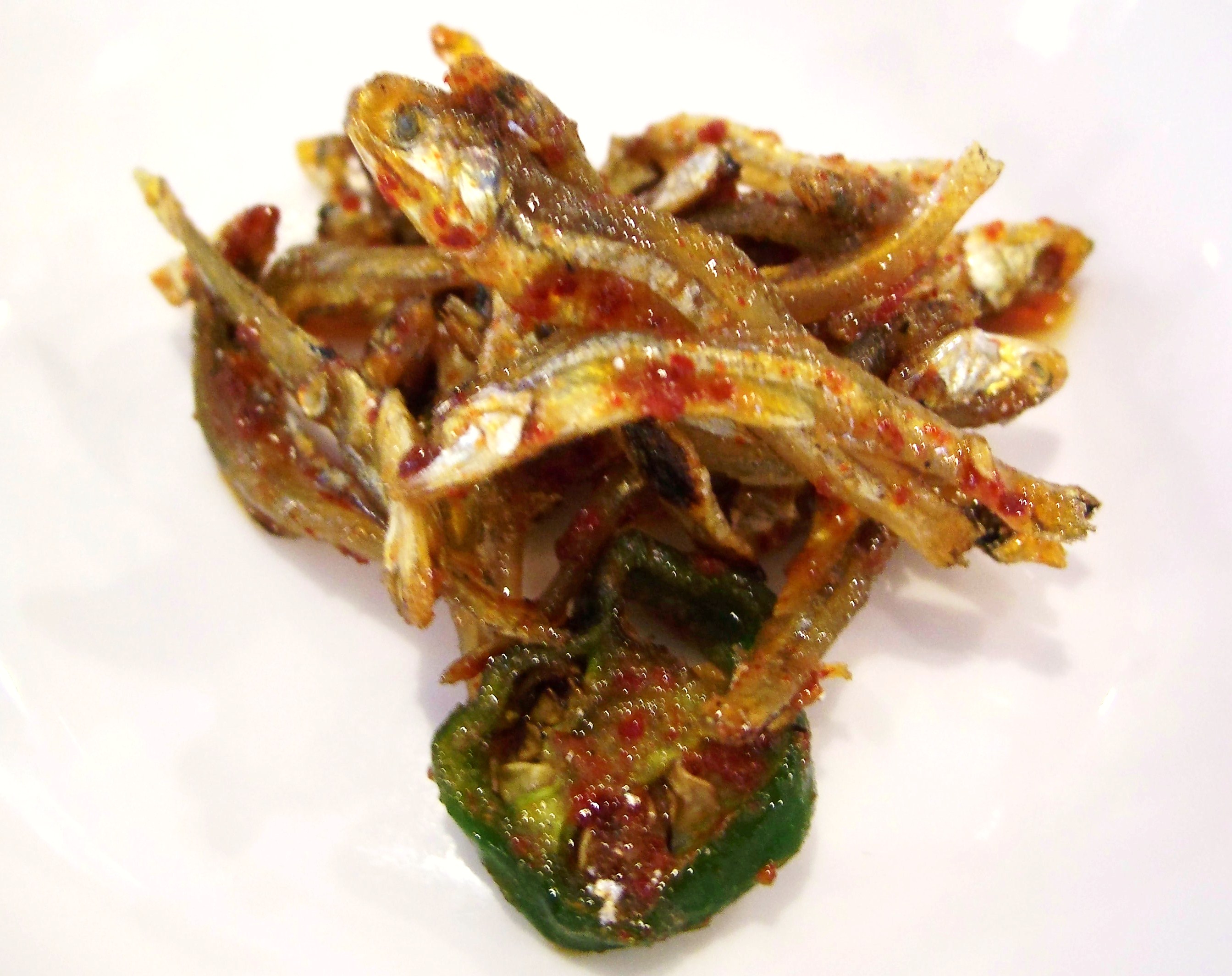
The dried anchovies. I’ve had the other things before, odeng bokkeum (오뎅볶음 fried fish cake), buchu jeon (부추전 chive pancake), kimchis, nokdumuk (녹두묵 mungbean jelly), but this is the first time I have myulchi bokkeum (멸치 볶음), stir fried dried anchovies with heads intact. Whatever little flesh the fish used to have has crystallized into tiny perfections of salty sweetness. The fish taste like candied orange peel. I just can’t get enough of it.

Because of the anchovies, Sahn Maru is not just another pleasant experience. Sahn Maru is a place I will visit and revisit, even if it costs a notch above all other Korean diners I’ve come to like.

Those little fish provoke memories of my mom’s ca kho tieu.

See more pictures of Sahn Maru’s dishes at my web album Photon Flavors.
Address: Sahn Maru Korean BBQ
4315 Telegraph Avenue
Oakland, CA 94609
(510) 653-3366

Dining dollars: chulpan bulgogi ($20.95) + soft tofu soup ($11.95) + tax = $36.10
UPDATE: We have also tried a variety of other dishes here, from the usual dolsot bibimbap, japchae, seafood pancake and kalbi tang to the less-known bibimnaengmyun (비빔 냉면, cold buckwheat noodle), joki gui (조기 구이, fried king fish), and duehji kamjajim (돼지 감자찜, braised pork in mild chili sauce with dates and sweet potato). So far, all of them are the best of their kind. 🙂

The Korean Secret Garden in Santa Clara – Bi Won Restaurant

May 04, 2010 By: Mai Truong Category: California - The Bay Area, Comfort food, Korean


It’s late April and the wind still blows cold. The tiny coffee plant I got last winter is still grudgingly hiding in my room for warmth, while I desperately crave a big hot soup with kimchi. Since coffee leaves wouldn’t make either great broth or pickle, we set out to Sunnyvale.

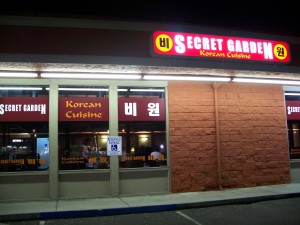
But driving in Sunnyvale on an empty stomach is no fun. The signs and loops are out to get you, and your tummy makes you rush running around. It was supposed to take less than thirty minutes, yet we’ve been driving for over an hour. After lots of wrong turns and backtracking eastward and westward, we thought we wouldn’t make it before closing time. Then as Hope faints, we see it. Secret Garden timidly stands at the end of a strip mall’s parking lot.


The restaurant may not have a snazzy outlook, but its spacious interior is quite nice. I’m a fan of booth seating and its privacy, but it’s a luxury in Berkeley. Here, the mahogany tables and thick cushion benches fit snuggly in enclosing of wooden planks, so that conversations can be spilled out somewhat comfortably and elbows do not touch. But the loveliness of food on neighboring diners’ plates is still in sight. It’s torturous to look at others eating merrily while you’re hungry, you know. Thank goodness the banchan is served quickly. Within minutes after placing our orders, plates after plates come out that I barely have enough time to snap a picture of them all. As light shines directly onto the crisp white melamine, the color contrast is so brilliant I suddenly don’t want to disturb any plate with my clumsy chopsticks.


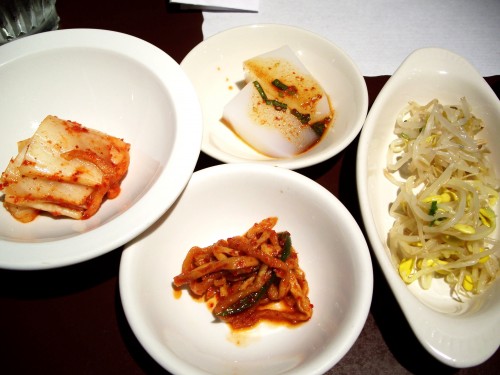
From left to right: napa cabbage kimchi, nokdumuk (녹두묵 mungbean jello), kongnamul (콩나물 boiled and seasoned soybean sprout), and very tasty firm red strips (name help, please? is it eomuk strips in chili sauce?) nakji bokkeum (낙지볶음 fried octopus). The soybean sprouts are bigger, fatter, and nuttier than the usual mungbean sprouts, which means they’re more satisfying. The nokdumuk tastes as translucent as it looks, a refreshing heal congealed and coated in soy sauce that playfully wobbles on the tongue.


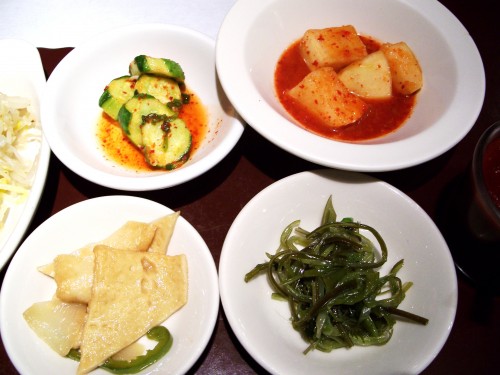
To the right of the kongnamul are cucumber kimchi, radish kimchi, eomuk (fish cake), and crunchy green strings (again, I love it, but I don’t know its name. My guess is sliced seaweed?) seaweed with gogumajulki (고구마줄기 dried sweet potato stem). Something about rings of jalapeno in banchan bugs me, just like jalapeno in banh-mi. Not that I have anything against Mexican peppers, but the taste doesn’t belong.


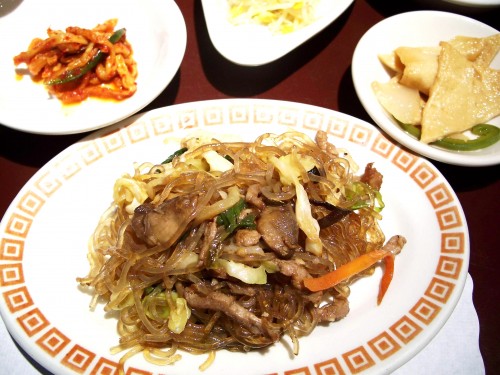
Just as I thought the banchan list ended at eight, a generous plate of japchae (잡채) fuming sweetness comes…


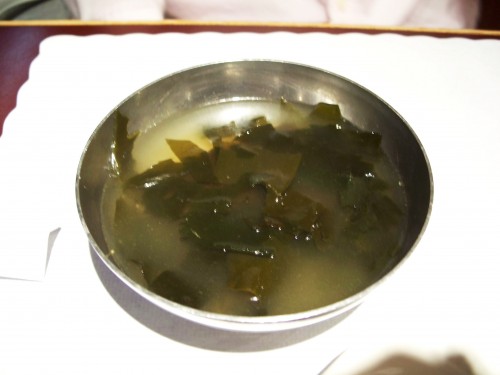
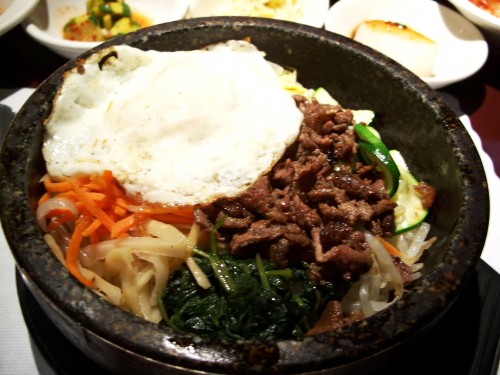
… with two stylish inox cups of miyuk gook (미역국). Whether or not it can enhance my brain function, it well enhances the sizzling goodness of the dolsot bibimbap (돌솥비빔밥).


White rice mixed with veggies, beef strips, egg, and gochujang (고추장) until crimson has been Mudpie’s No.1 favorite for a while now. He treasures every spoonful and guards the forming crust at the bottom against any careless scooping. At the end he then scrapes and eats the well seasoned crust with the joy of children eating s’mores. He orders it almost every time we go to a Korean restaurant, I feel like he should have a bibimbap blog much like Adam Kuban with Slice. And he claims this dolsot bibimbap is the best he’s had.

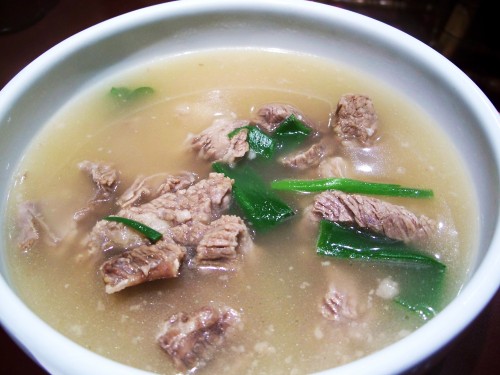
Meanwhile I am busy slurping what I have dreamed of for days: a hearty beef soup. A bowl of wet steamed rice comes with the galbi tang (갈비탕), but I wish they had given me more. The rice goes quickly as I pour the mild yet sensuous broth over it, with a piece of meltingly soft short rib, and maybe a bit of kimchi. I even eat the shiny green chives, since they now taste so sweet.


When I get near the end of the big soup bowl, a pleasant surprise surfaces: a small bundle of dangmyeon (당면 cellophane noodle) has been there all along, soft, clear, quietly soaking up flavors from the darling broth. I have rarely felt more gluttonously satisfied after a meal dined out.


Address: Secret Garden (Bi Won Restaurant)
3430 El Camino Real
Santa Clara, CA 95051
(408) 244-5020

Money matters: $26.11 – dinner and happiness for two.

Kim’s Sandwiches

May 01, 2010 By: Mai Truong Category: California - The Bay Area, Comfort food, sandwiches, Vietnamese


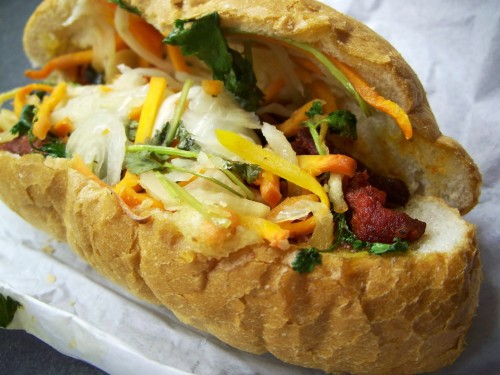
In one bite you taste a garden. Minty fresh coriander, crunchy pickled carrots, a load of soft white pickled onion, but most special of all is the aromatic burnt lemongrass. It makes the charcoaled pork here extra flavorful just as crushed peanuts make Huong Lan’s texturally delish. Microwaved, the pickled sweet onion and meat grease make the bread somewhat like a slice of steamed baguette dressed with chives and lard (bánh mì hấp mỡ hành). Thumbs up.

Kim’s Sandwiches (in the Lion Supermarket area)
1816 Tully Rd 182, San Jose, CA 95111
(408) 270-8903

The owner is supernice. More from this store later.

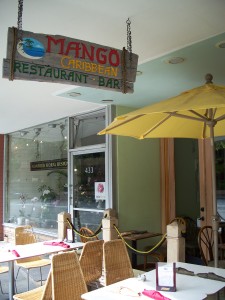
A taste of Jamaica at Mango Caribbean

April 18, 2010 By: Mai Truong Category: California - The Bay Area, Comfort food


Being a grad student foodie means two things: 1. you’re always on a tight budget, 2. you have to make the most of every chance you get to eat out. Ultrahigh end restaurants are certainly off limit. Popular chains, no matter how tasty, are unbloggable and reserved for rare occasions when the cravings go mad. The more popular types of food, like pastas and sandwiches, would require a lot more skill and creativity to pen down, hence also preferably avoided. What’s left are the locally owned kitchens with ten or fifteen tables, one or two waiters, and something off the beaten path. It could be a strange item on the menu, or the lack of menu, an interesting name, a worn sign, a long line, an always-closed wooden door

For me, it’s the type of cuisine. If I haven’t had it, I’d insist on getting it, predictably with numerous disappointing turnouts. The thrill of trying new stuff aside, it’s something to brag about, you know. “I’ve had Azerbaijan” somehow just sounds cool. Childish, I know, but every new bite feels like a little culture seeping into the brain, and I feel learned after each meal regardless of the result.

I’d prefer the romantic approach of driving down the road and pull into just whatever catches the eyes, but Google Map is lovely, too. That’s how we find Mango Caribbean. Mudpie likes mango. I haven’t had Jamaican food, or any idea of what authentic Jamaican food should be. It just sounds fun.


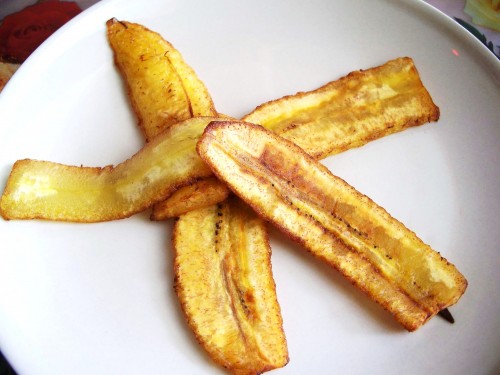
The lunch starts with fried plantain, length-wise sliced and burnt in vegetable oil, gummy at parts and porous at others. The natural sweetness goes hand in hand with the oil’s simplicity. The starfish arrangement matches a fishing net theme hanging low across the room.


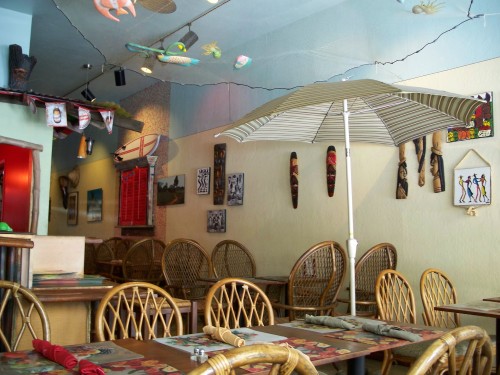
You know it’s not Americanized when the door is opened, the restaurant is completely empty except for the sound of rustic knives hammering on chopping boards, and a heavily accented host asking you to come back in another half hour because the other host isn’t there for opening. There is that feel of the restaurateur’s confidence, justified or not, of serving good food on unpolished tables, with unpolished service, and in unpolished plastic plates.


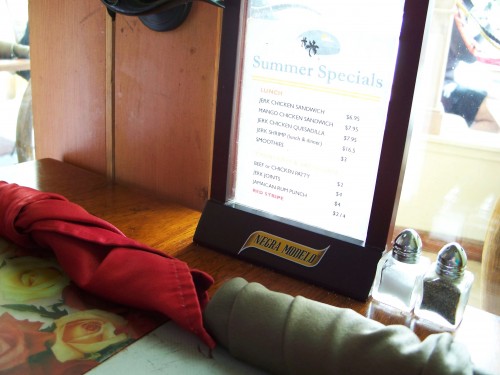
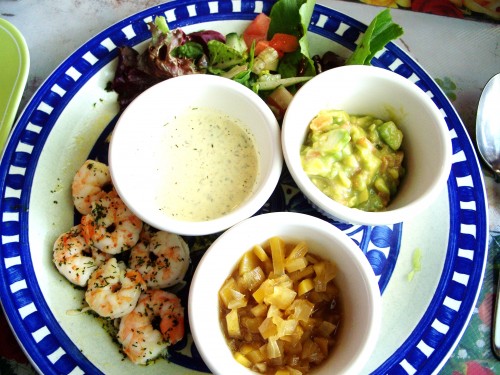
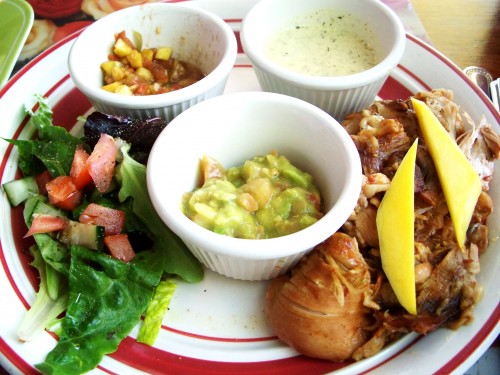
The food arrives in free style just like the restaurant’s ambiance. We order a Breezy Caribbean wrap and a Mango Walk wrap. Little thin squares of roti (a misnomer?) come on one plate, meat, salad, and small cups of condiments neatly arranged on another, ready to be mixed. The sauteed shrimps land a bit too light, but its accompanying mango chutney has bits of jewel.  It looks like topaz, and tastes like spring. At first sight, the mango chicken falls short of expectation, as it’s nothing more than roasted chicken with two scrawny mango sticks. But the chicken kicks a three letter word. Each tender strand is a malty flow slowly wetting the taste buds. It feels more braised than roasted, but braised with what I know not. My favorite, though, is the purplish pile of red beans and rice.  The nutty coating makes the grains stand out one by one, so the rice is no longer a base, but a dish of complexity.

For a homey meal of this size and taste, $24 for two is a little steep, but it’s a sweet part of Palo Alto that I’d like to remember.

Address: Mango Caribbean
435 Hamilton Avenue
Palo Alto, CA 94301
(650) 324-9443

So how do you pick which restaurant to go to and blog about? Do you google? Citysearch? Yelp? Ask friends? Do you just go and see what sign looks good? What would make you pick one restaurant over others?

Other Palo Alto restaurants:
Garden Fresh (Chinese, vegan)
Shokolaat (the higher end)
Crepes Cafe
Blue Danube Cafe (chocolate and those tooth-aching stuff)
Nola (Cajun)
Phở Vỉ Hoa (Vietnamese)
Cafe Renaissance (Persian)

The avocado’s sweet side

April 09, 2010 By: Mai Truong Category: Comfort food, Opinions, RECIPES, sweet snacks and desserts, Vietnamese


Who do you think is more confused about his identity, the penguin or the avocado? The penguin is the prime example of a bird that can’t fly. The avocado is the most commonly known fruit that doesn’t taste like a fruit. It lacks the citric hint of berries and oranges, the crunch of apples, the pulpiness of peaches and plums. If I were an avocado I’d ask myself several times a day, why did mom and dad make me taste like butter and different from every other fruitie at the market?

A good avocado mom tree, like all good moms, would say “Av, being different is a good thing!”.
– But I don’t get to hang out with the other fruits, they say I’m fat.
– The other fruits can’t make Ice Cream by themselves. They’re only side flavors. You can become Ice Cream all by yourself.
– If Sugar helps me.
– Sugar is nice, but you also have what it takes to be a good Ice Cream. And think about what you can do for others if you learn from Butter and Cheese, you have their smoothness too.

If I were an avocado, that’s the story I’d tell when people ask why I decide to join the Sushi corporation and partner with Tortilla Chips. But just between you and me, I actually prefer my alone times with Sugar in the fridge.

3-minute dessert: Avocado “ice cream”:
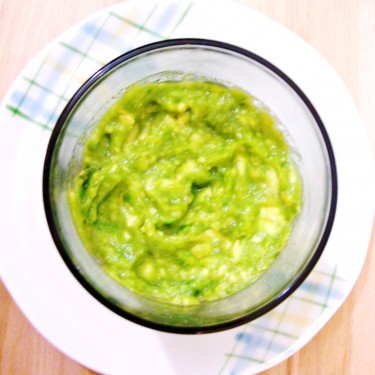
Scoop the avocados out of their peels and into a glass. Add sugar sporadically between layers of avocado, if possible. If not, add sugar on top at the end of the scooping process, but before mashing up the avocado. Mash, taste, add more sugar to liking, taste again.
Refrigerate.
Spoon.
Lick spoon.

Some crepes are better than others

April 06, 2010 By: Mai Truong Category: California - The Bay Area, Comfort food, French, savory snacks


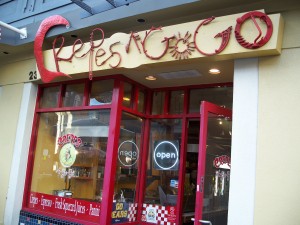
My cravings fluctuate from time to time, and it’s not always rational. One time I bought two kilos of prunes, ate some for a few days, now the rest are sitting patiently in my pantry. Then I used to have a crush on chocolate bars, the result is an almost complete collection of Endangered Species Chocolate wrappers, but a few bars have been on my desk for over six months. As of late, I’ve grown a crepe tooth. A matchbox kitchen fifteen-minute leisure walk from Sather Tower, called Crepes A-Go-Go, is to blame.


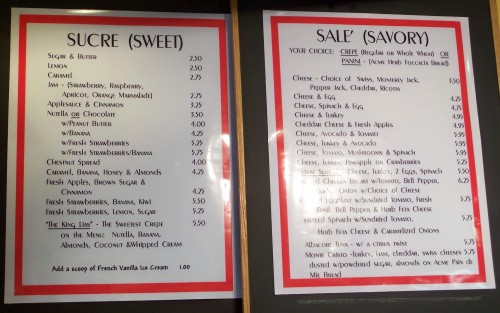
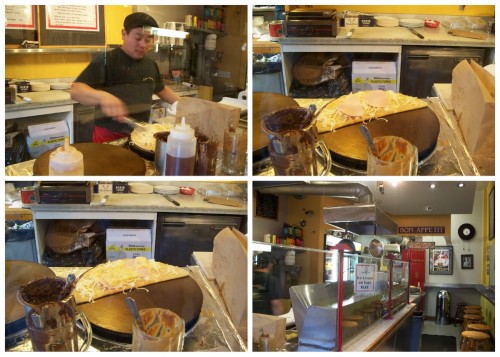
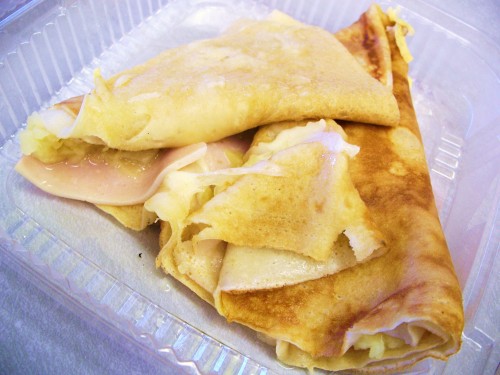
A quick drop of sound sizzles when the spatula folds and presses the fluffy layer. The oversize pancake lies supine. The heat is low. The quiet, stout chef casually sprinkles some Swiss cheese and some pineapple; he seems bored, or maybe I’m just too excited. I like my crepe soft and thick. Heck, I even like my banh xeo soft and thick, no matter how many people tell me that a qualified Vietnamese sizzling crepe should be crispy and paper thin. I watch the cheese melt. The chef lets the doughy pancake rest a minute or two, then deftly folds it again into one sixth of a disc, sweeps and swings it into a clear plastic container. My five-buck-and-a-quarter dinner to go seems sluggish and content like a well-fed baby pig.


And soon I am one happy hog myself. The cheese-turkey-pineapple crepe is a rich and chewy mess. The first bite is so good I ditch the plastic fork (which doesn’t do much at cutting anyway). Pineapple juice streams out at the tip as I scramble to bite sideway, and when the crepe reduces to a sizable conic chunk I use it to wipe clean the juice. The last mouthful is as rewarding and lingering as it can be, my fingers wet with butter and cheese. But my embarrassing story doesn’t just end here.


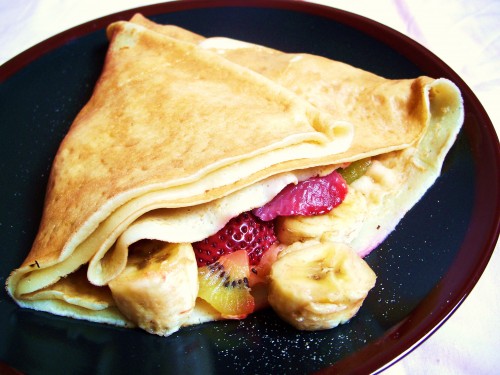
I feel full, yet still want more, but I know better than letting the tongue fool the tummy. So I save the luke warm sweet crepe for later. And I forget about it. It sits in my fridge for over a day. The next morning, filled with guilt, I microwave my sweet crepe. Cut-up fruits don’t behave really well with refrigerating and microwaving, the banana turns overripe, the kiwi and the strawberry taste zealously sour. But the crepe still has its fleece-like texture, buttery, thick, and snuggly. The squirt of lemon juice gives a refreshing fragrant. I scrape off the fruit chunks, sink my teeth, and sheepishly smile.

Seven years and counting:
Crepes A-Go-Go near UC Berkeley campus
2334 Telegraph Avenue (between Durant and Bancroft)
Berkeley, CA 94704
(510) 486-2310

Borrowed from the receipt: Bon Appetit, Bon Journee

Exchange rate:
Cheese-turkey-pinapple crepe: $5.25;
Strawberry-banana-kiwi crepe: $5.50

Other tasty creperies in the Bay Area:
Cafe Grillades in San Bruno
Crêpes Café in Menlo Park