Flavor Boulevard

We Asians like to talk food.
Subscribe

Archive for the ‘California – The Bay Area’

We Ate Real

August 31, 2010 By: Mai Truong Category: California - The Bay Area, Festivals


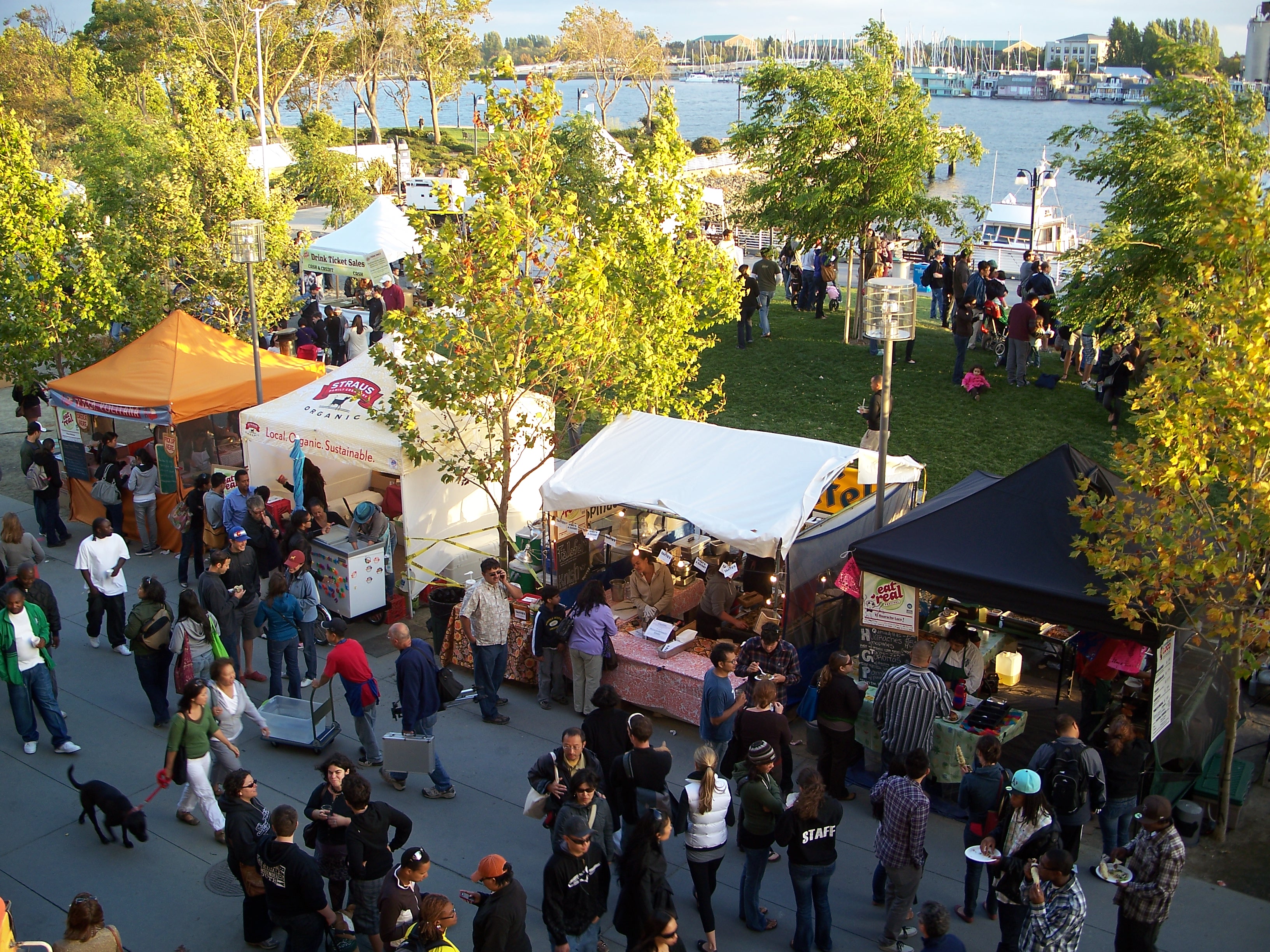
Last weekend we went to the annual Eat Real Festival in Oakland. They had it for three days, we went two. And we still couldn’t stuff everything down. The idea is to show that real, good food can be affordable like fast food. The reality is no matter how small each portion was, we ended up walking slow.
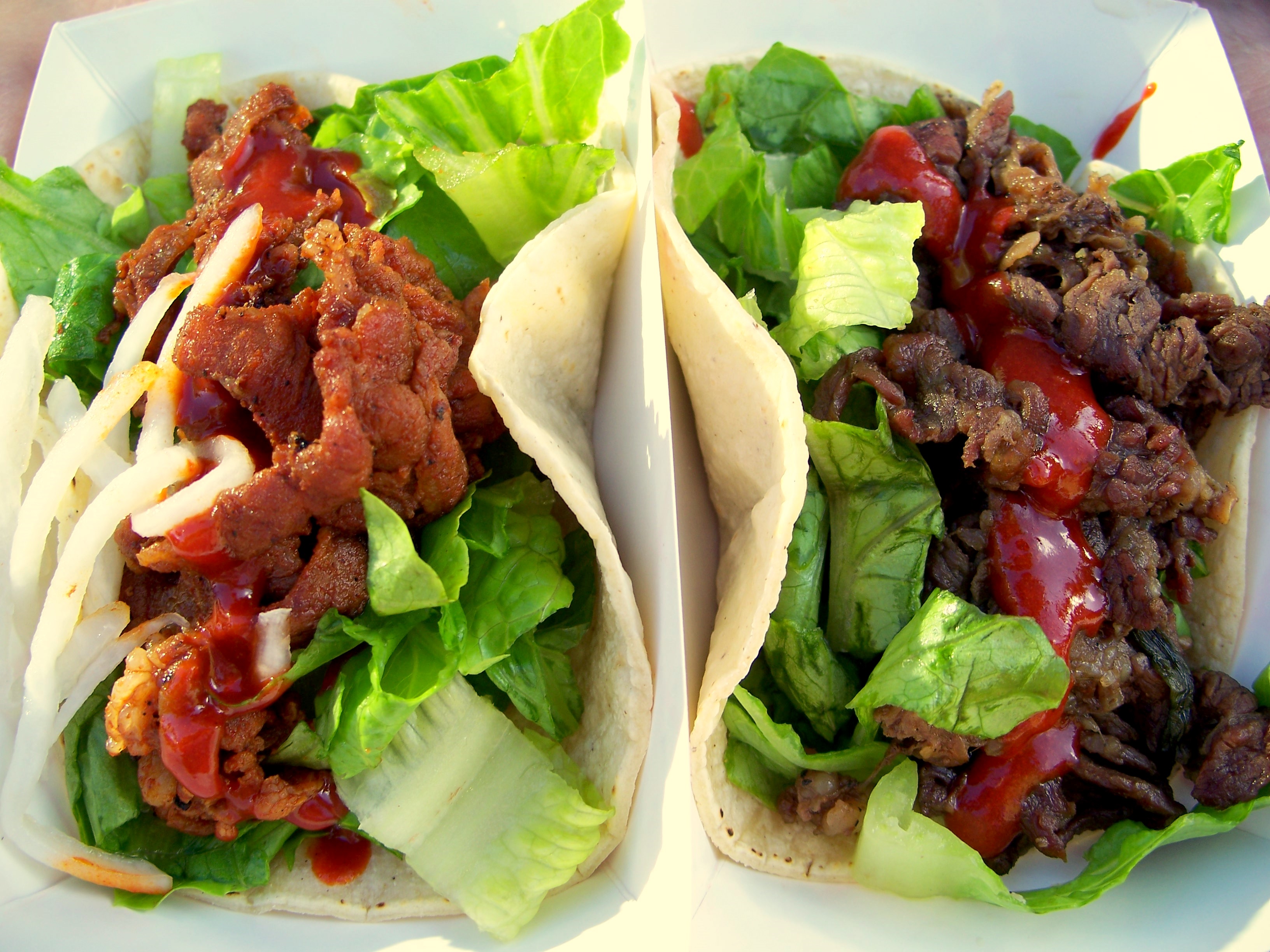

Some things were delicious. Like the Korean BBQ tacos from Seoul On Wheels. Ebony loved the chicken, Mudpie swooned about the spicy pork, I adored the bulgogi, all served on a corn tortilla with some lipsmacking sauce for $3. Follow their tweets to know their locations.
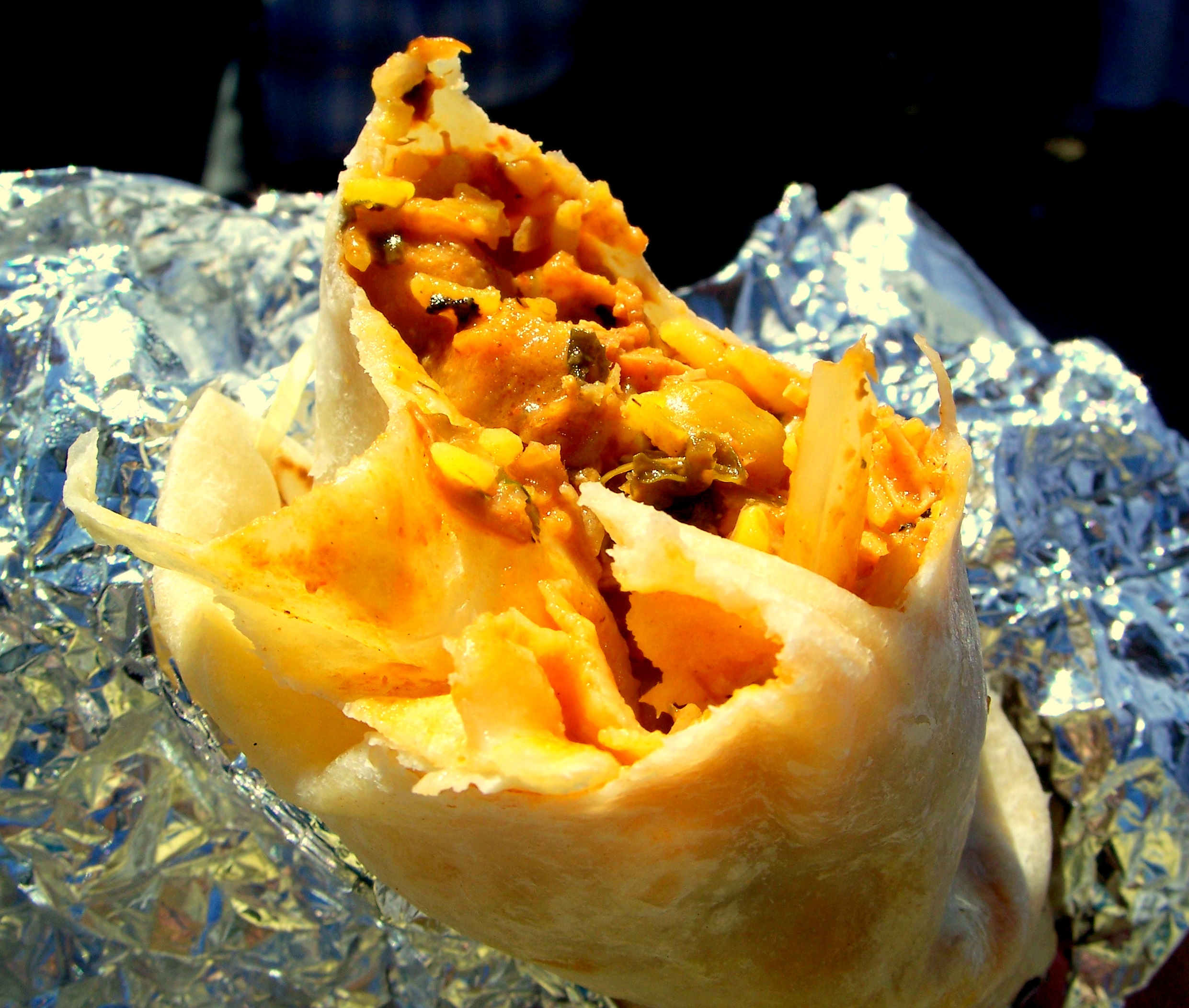

Near Seoul On Wheels were Curry Up Now and a Whole Foods‘ truck. Mudpie just couldn’t resist a chicken tikka masala burrito ($5), then drank a whole bottle of water afterwards. I was enticed by the hiramasa (hamachi) ceviche and grilled figs from Whole Foods, $3 each, served in a cone with tortilla chips for dipping.
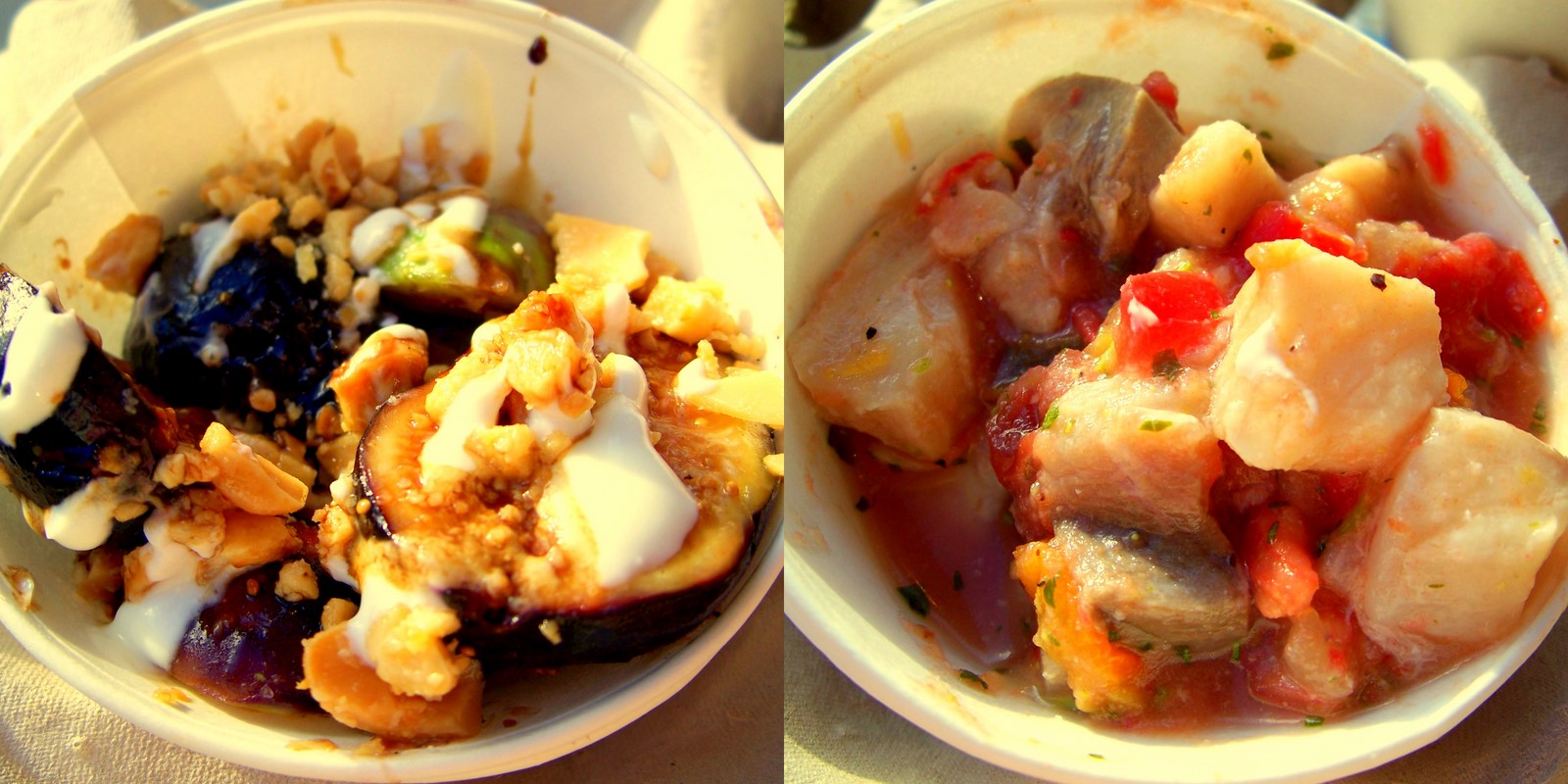

The ceviche is on the right. It had cubes of hiramasa fish marinated in lime juice, vegetable and spices. The texture utterly resembled boiled fatty pork, so refreshing in a sunny afternoon. This was also my first time having a whole fig. It’s sweet and gummy, pretty similar to prunes. The higo asados (grilled figs) were smothered in a balsamic reduction sauce, fresh goat cheese, and topped with almonds, said the menu (but they tasted more like peanuts).

Speaking of goats…
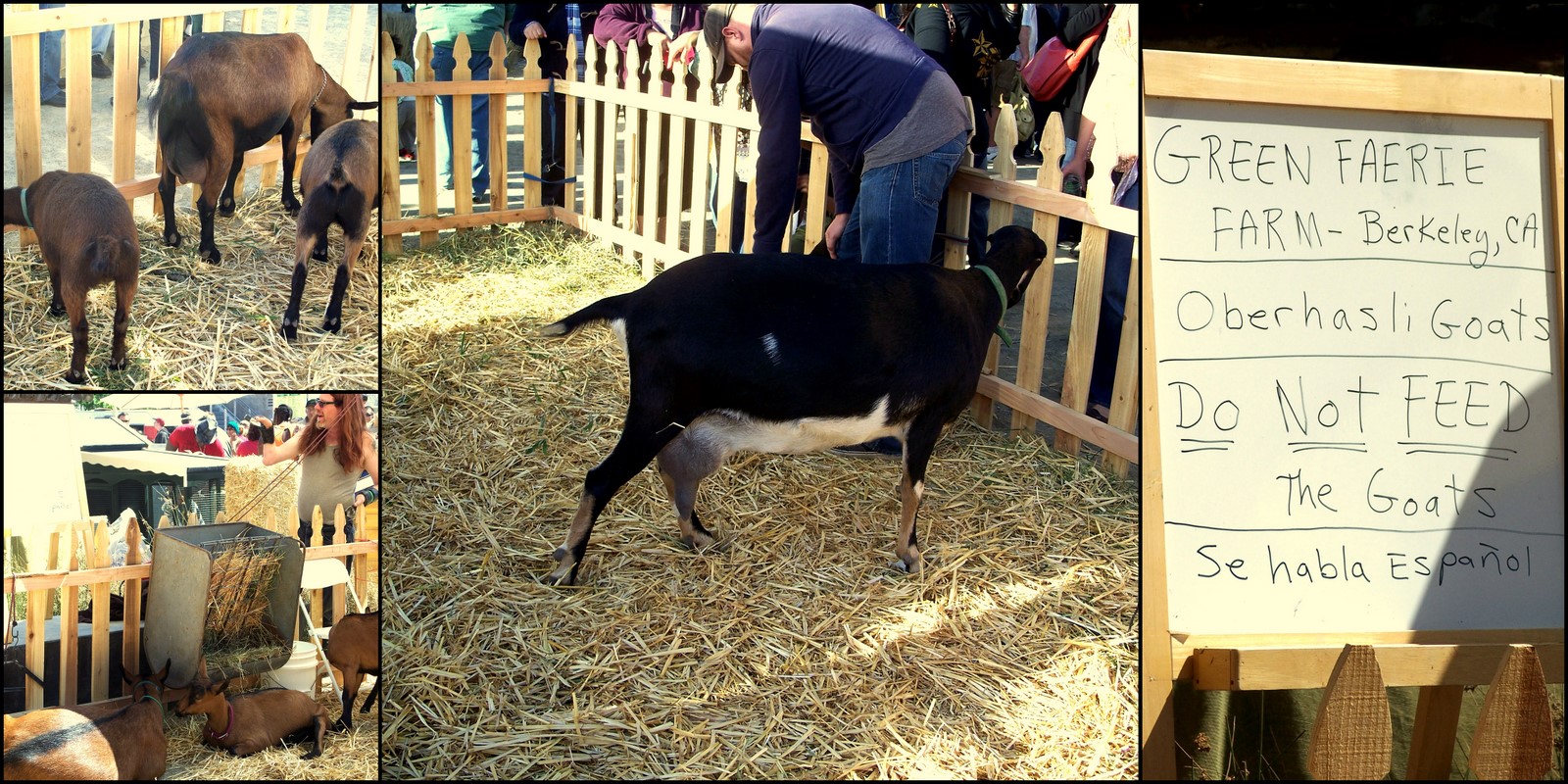

They had some walking around leisurely in a sandy pen and refusing to show their faces to my camera. There were mommies and babies, goat milking and goat-milk-ice-cream making on Saturday afternoon, just before we arrived. The goats spoke Spanish. 😀

There were also fuzzy headed white chickens, a big children attraction nearby. And Jack London‘s old cabin (looking real cozy), because hey, we’re at Jack London Square.


And boy was it sunny both days. But amidst the heat and smoke from humans and grilled meat did we find something refreshing. The Raw Daddy Foods‘ truck was facing away from the setting sun, and offering only, well, raw foods. In cones.
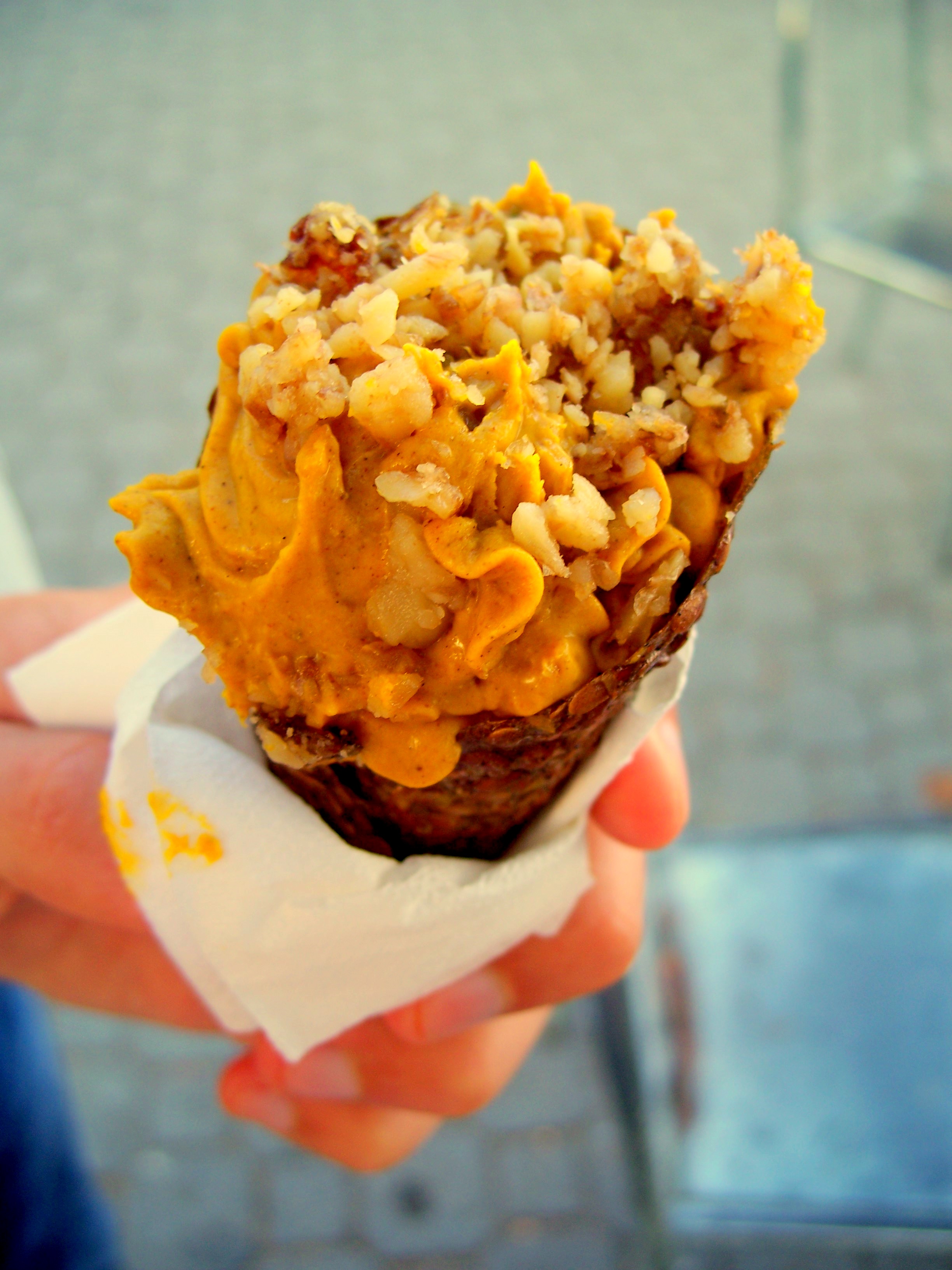

Pilgrim’s cream cone. $5. Maple cream filling, with carrots, cashe, extra virgin coconut oil, and candied pecans, which ended up tasting like pumpkin pie! Not my favorite flavor, but it was good.

It’s worth noting that the festival was full of tacos (and other Mexican foods). There must have been at least ten trucks with the crunchy half moons. But this one has the most catchy name:
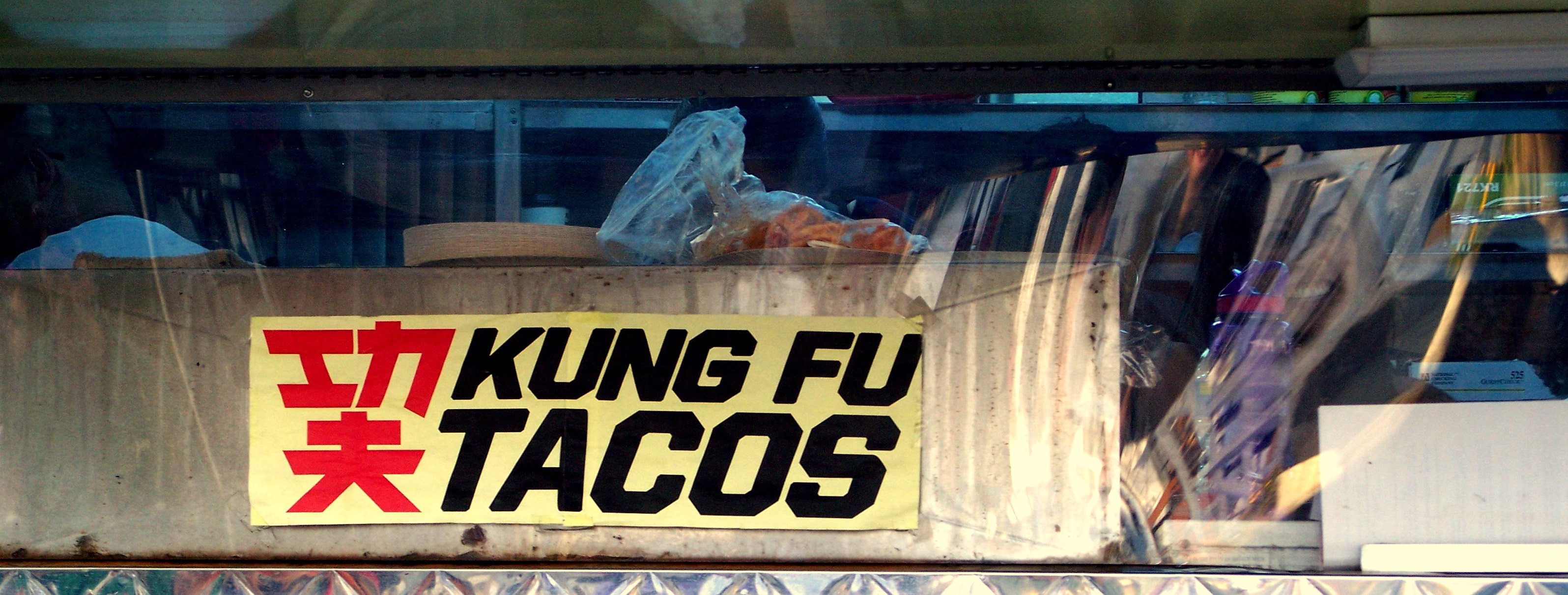

I actually had my eyes on the looking for this truck since I saw the list online. And I actually hate am troubled by the cheesy-advertising-trend-following usage of the word “Kung Fu” in anything, like Kung Fu Panda (hate have an aversion to the movie too, just from watching the trailer). Think “Vampire Burrito” and you may see my point? Anyhow, the tacos from Kung Fu Tacos looked shiningly attractive.
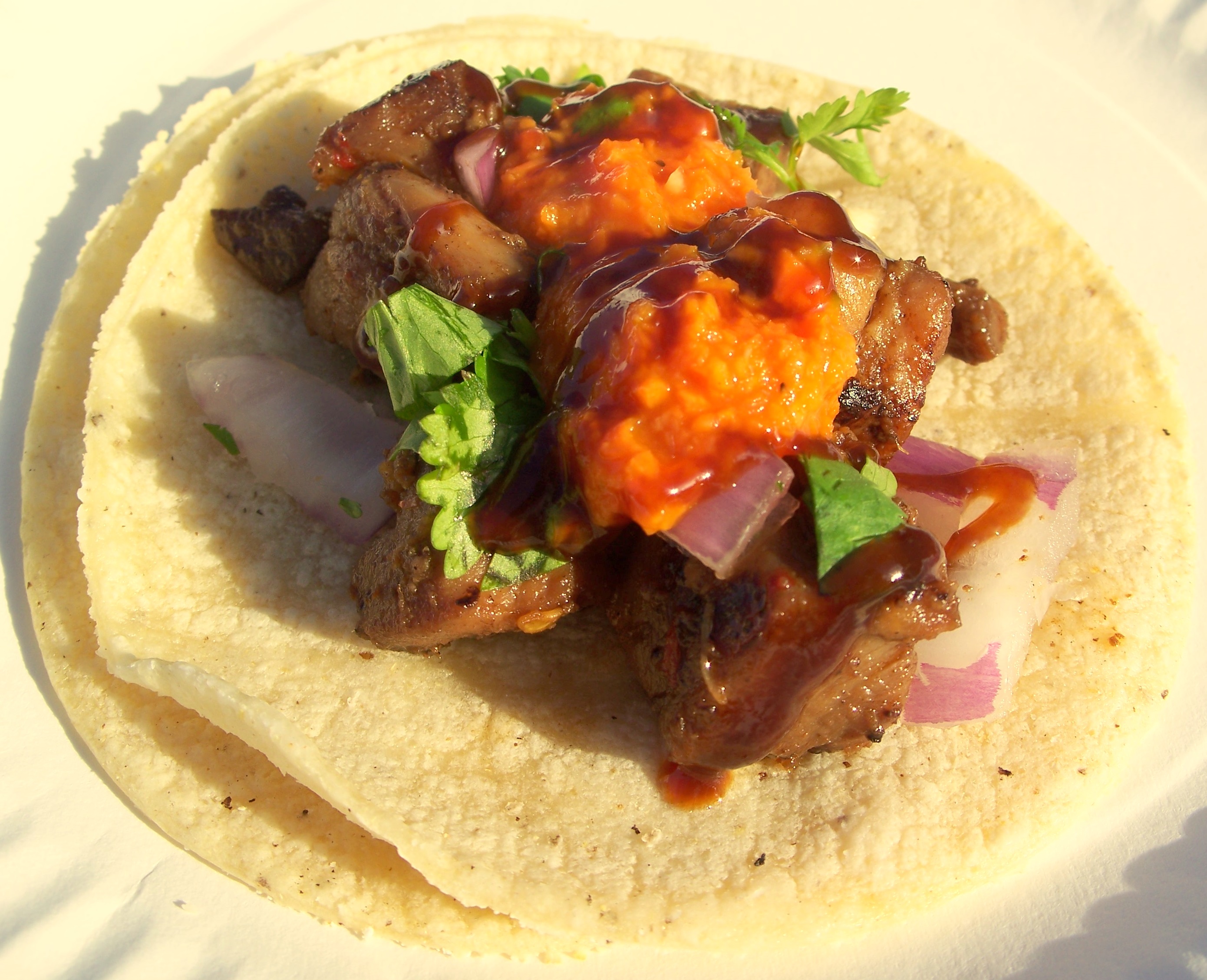

It was either Chinese-style chicken or pork, I can’t remember, on two tiny corn tortillas for $4. The taste was well worth the price, though. Besides, the line was quite short, much more so than Kara’s Cupcake two trucks over, however longer than Ebbett’s Good To Go, who should win Best Decoration with flower pots on bright blue:
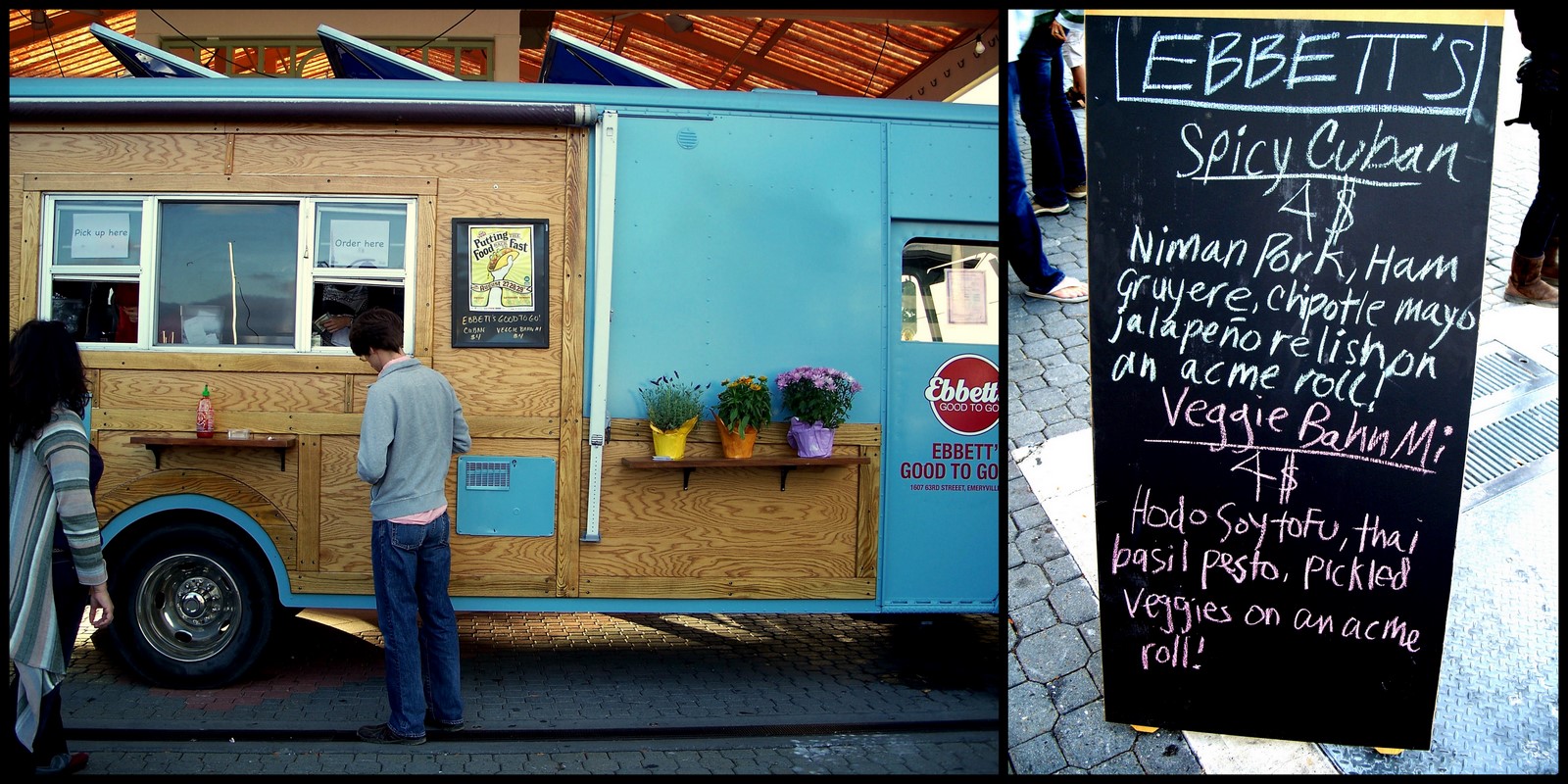

We opted for vegan banh mi ($4) with tofu, Thai basil pesto, and pickled carrots. It was nowhere near banh mi, as they spelled it “bahn mi” anyway. Nice try.
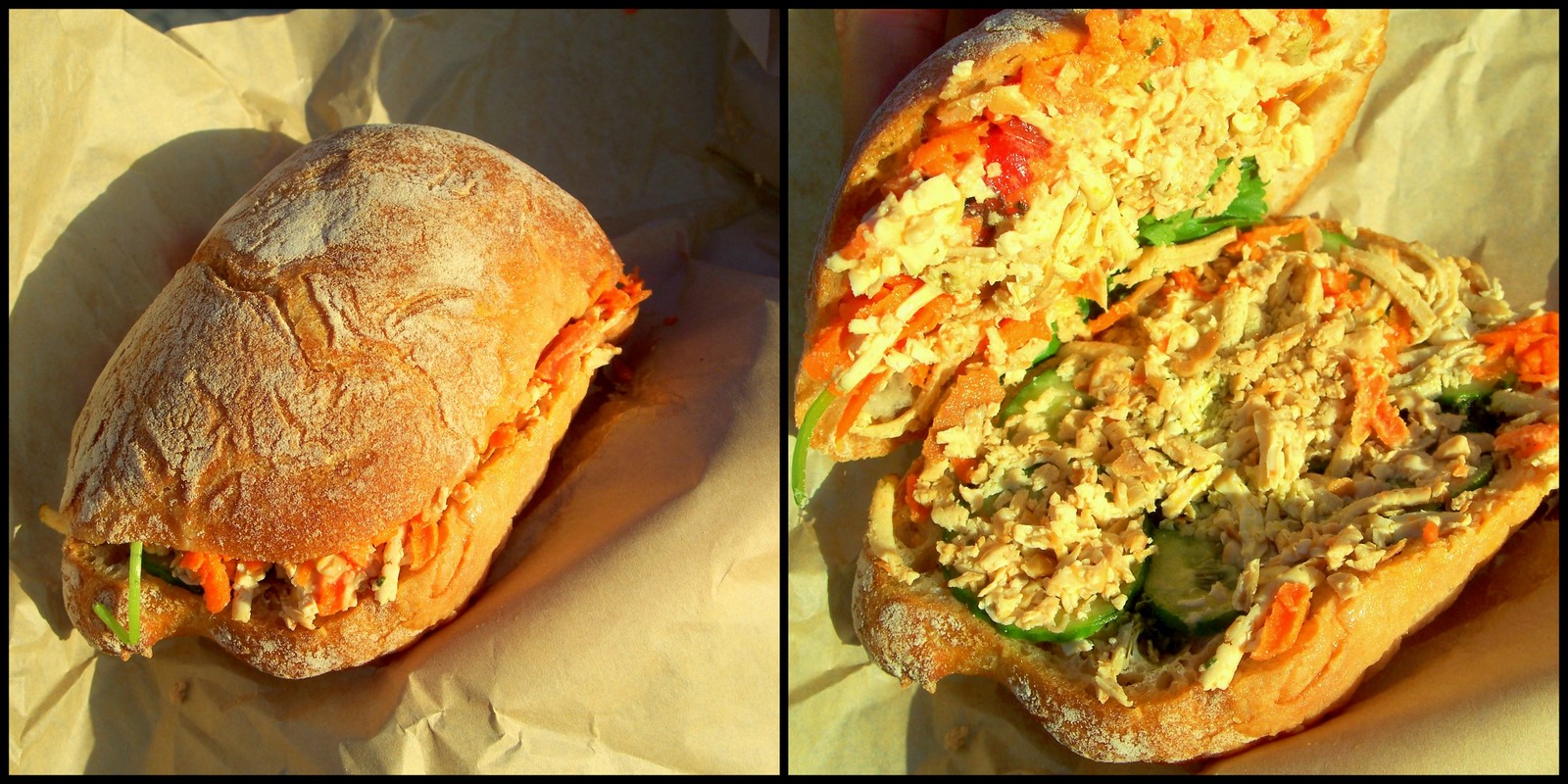

BUT, it was still pretty acceptable. Tummy filling at the least. I wish I could say the same about Le Truc‘s one-bite-sized hoppy cheesecake, delivered fresh and fast from a big cheddar school bus:
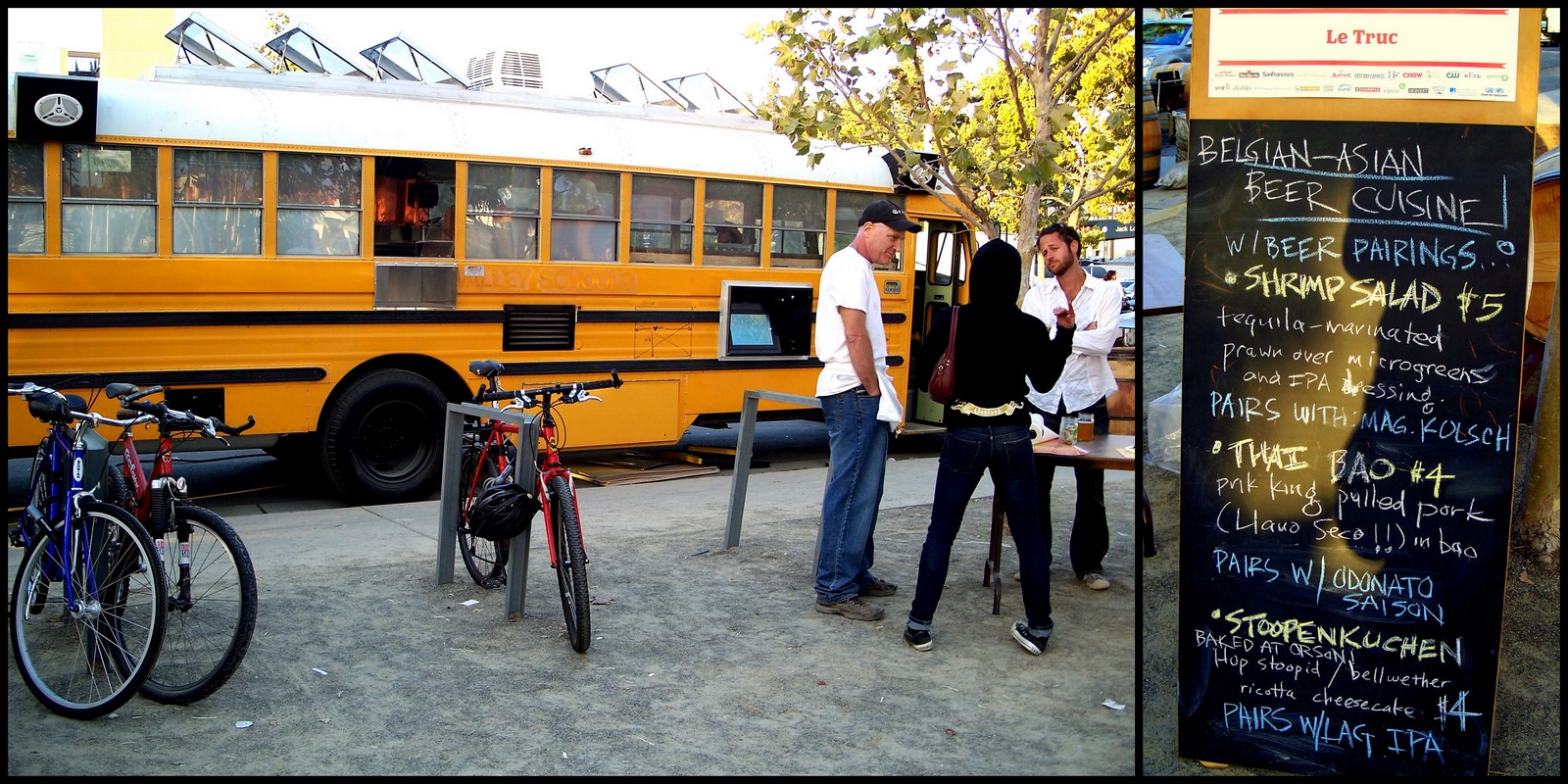

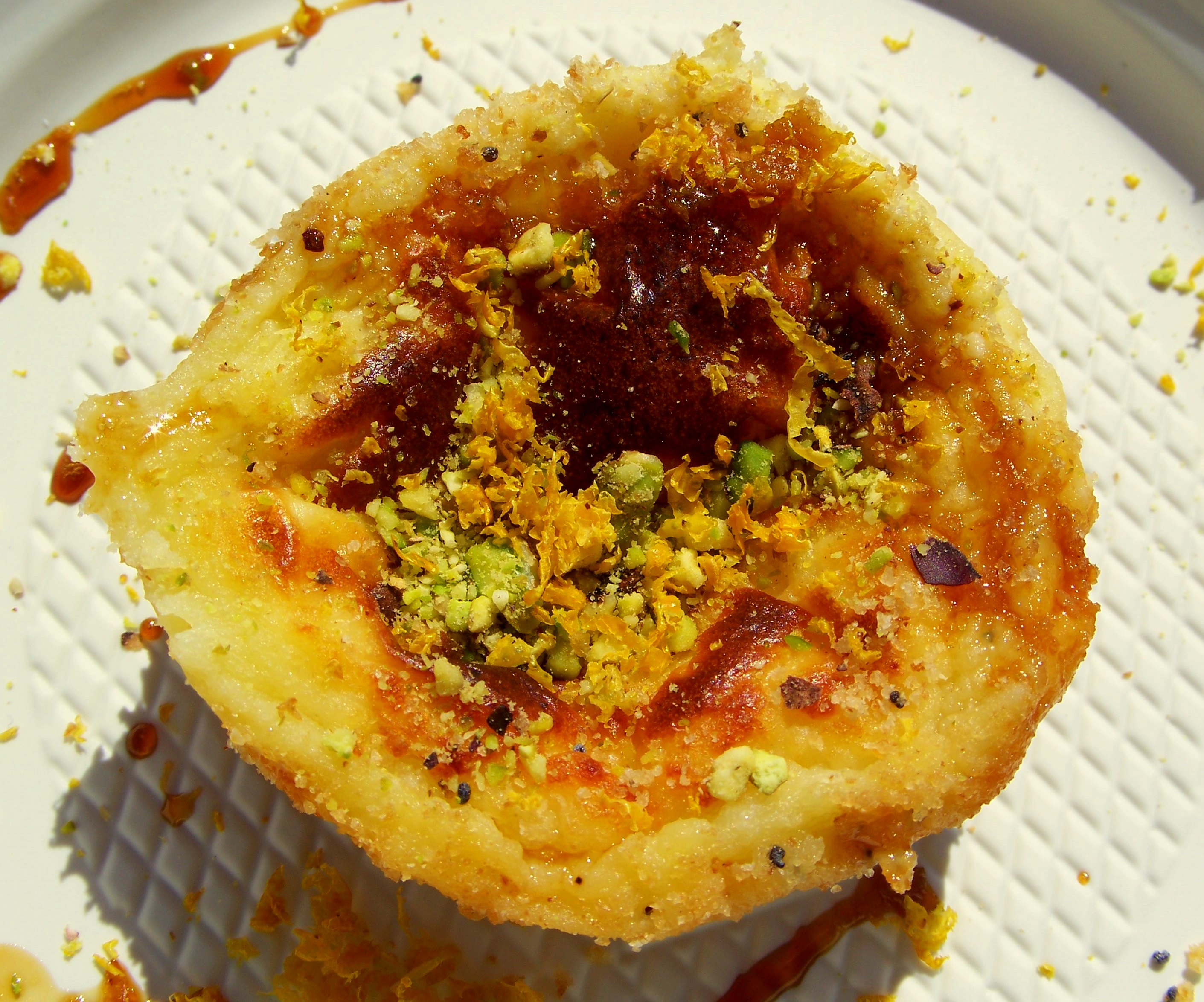
Look good, eh? Taste like hop. Now maybe it’s good if you’re into beer, but none of us liked it. It’s not the sweet luscious cheesecake we expected. It was stinging bitter at first, then if you haven’t expectorated it already, thick and salty like old cheese on the tongue. The shiny brown sauce was even worse. Consider $4 flipped into the trash.
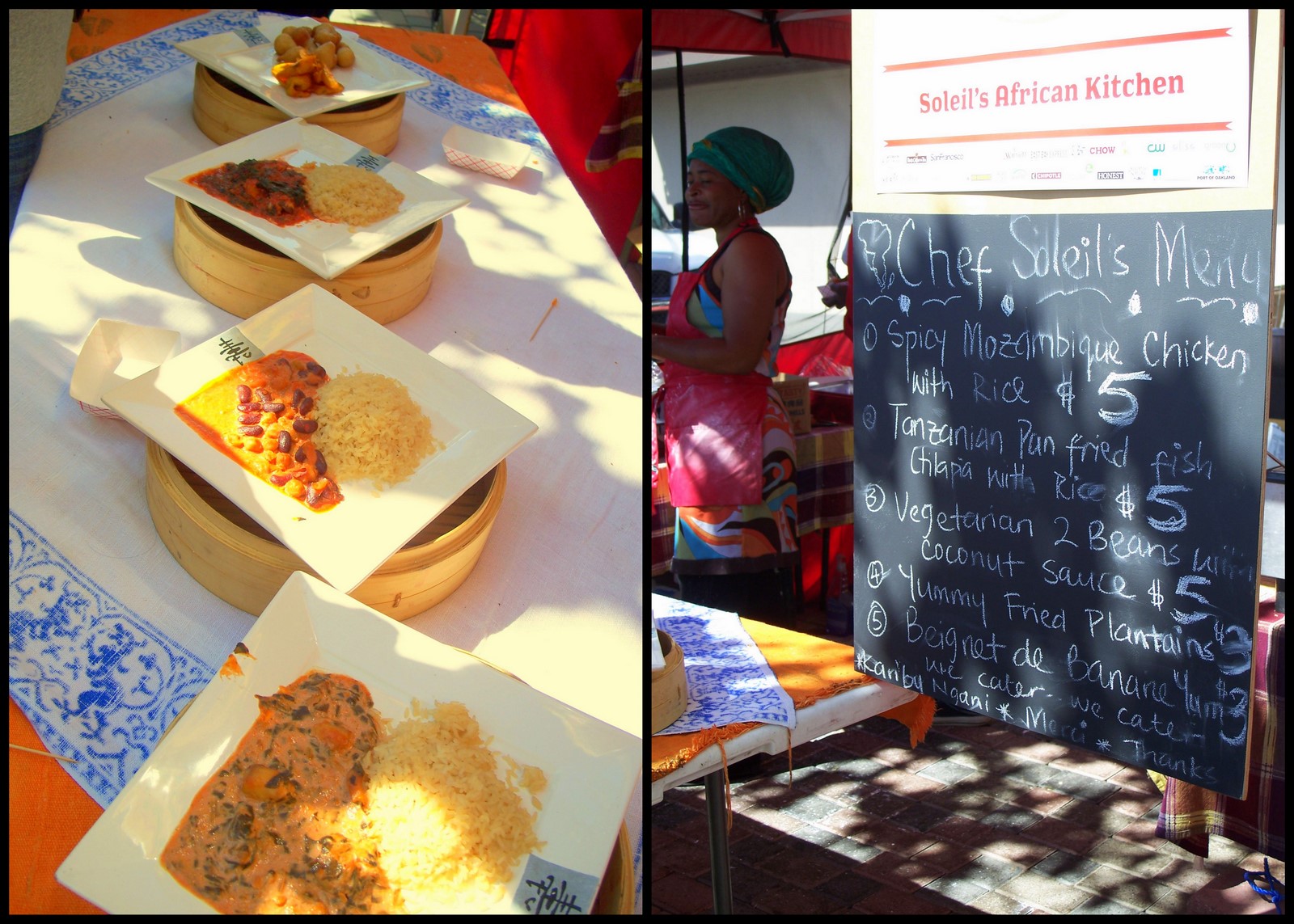
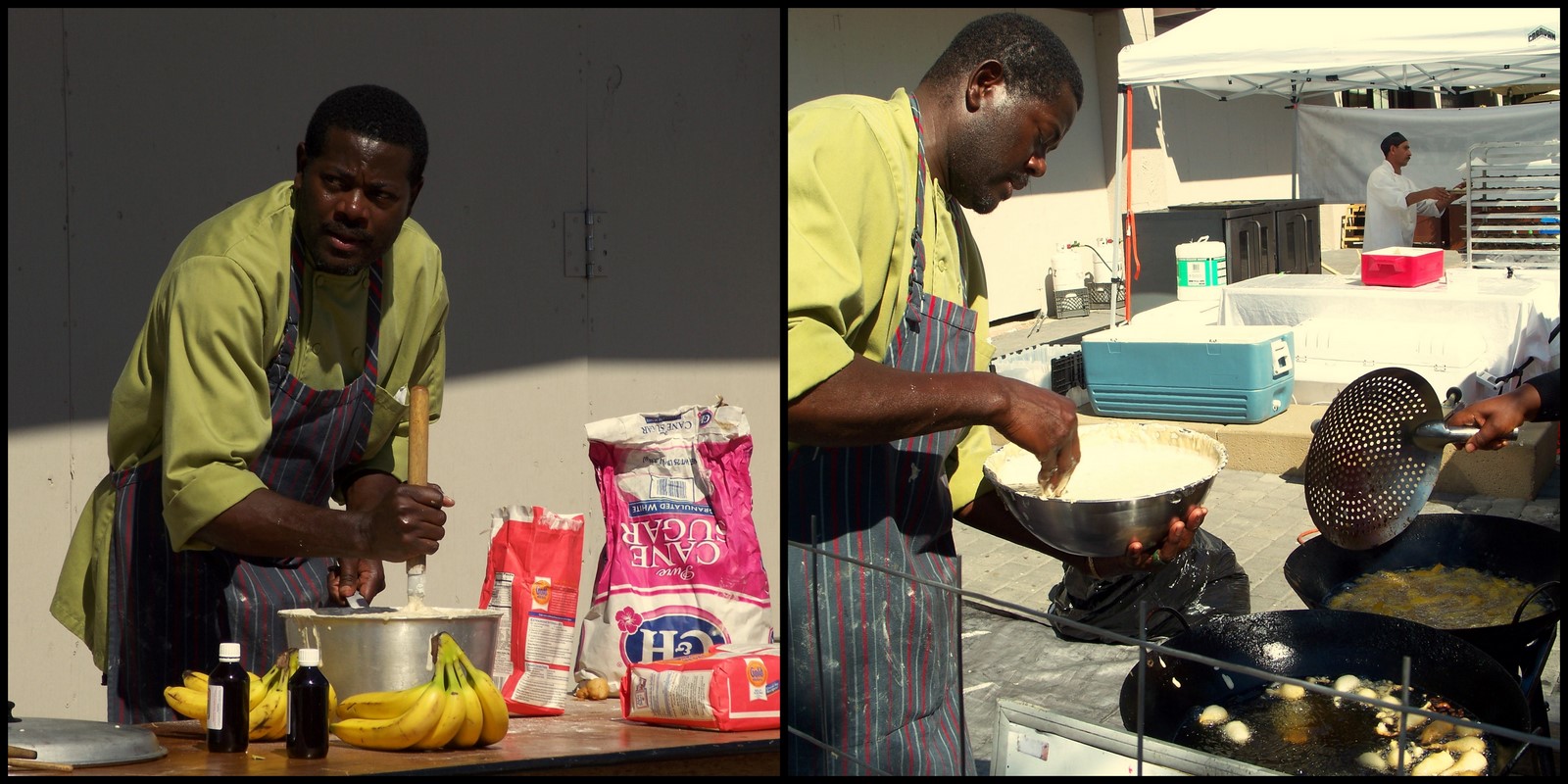
On the other hand, what was good was excellent. Like the fried plantains ($3) from Soleil’s African Kitchen.
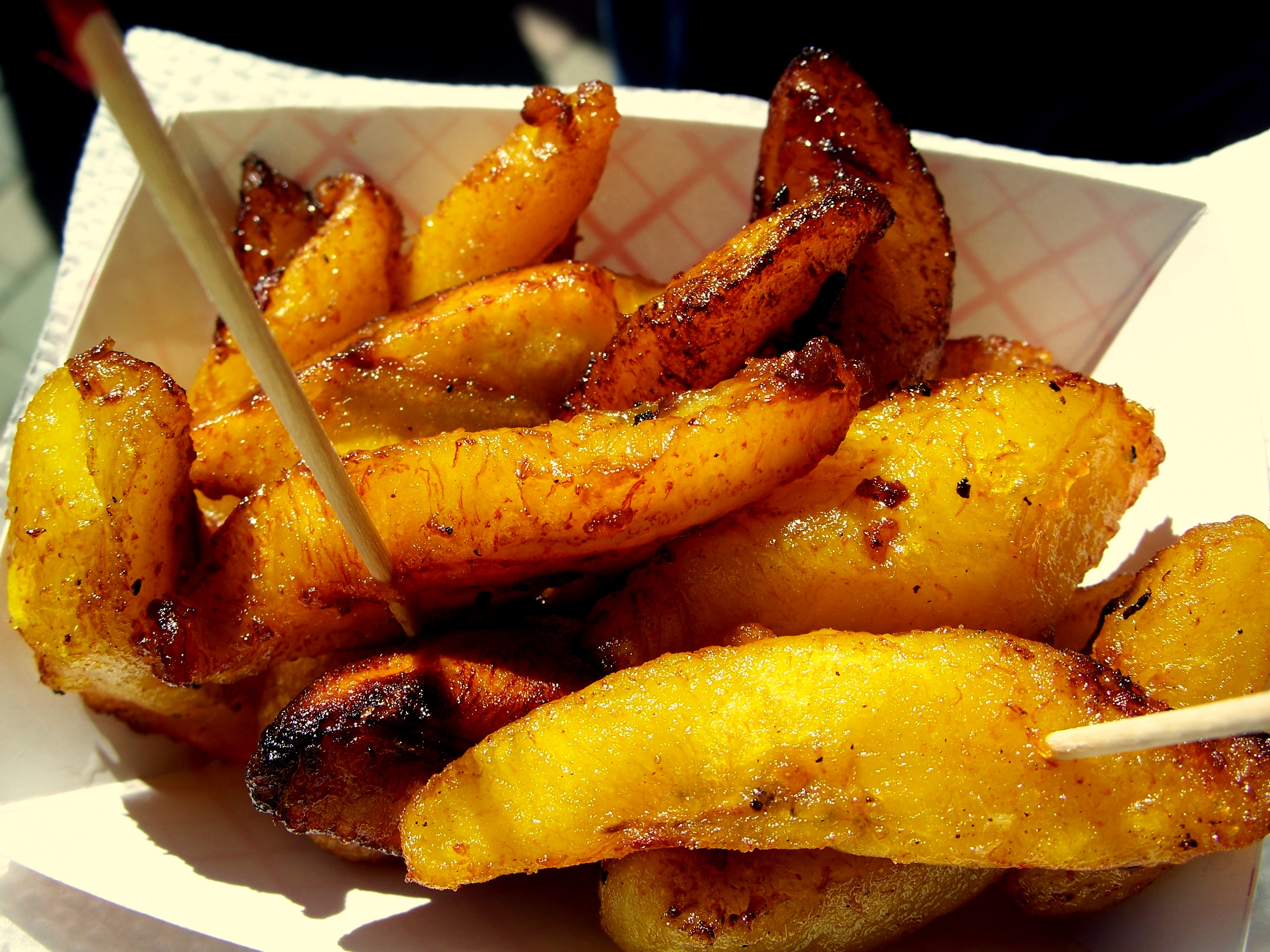

No need for words. The line was fifty persons long under the blazing sun, and kept on growing. But I would do it all again for these salty sweet little beasts. My only complaint: they don’t have a restaurant that I can frequent!

To conclude the day, what’s better than some ice cream?
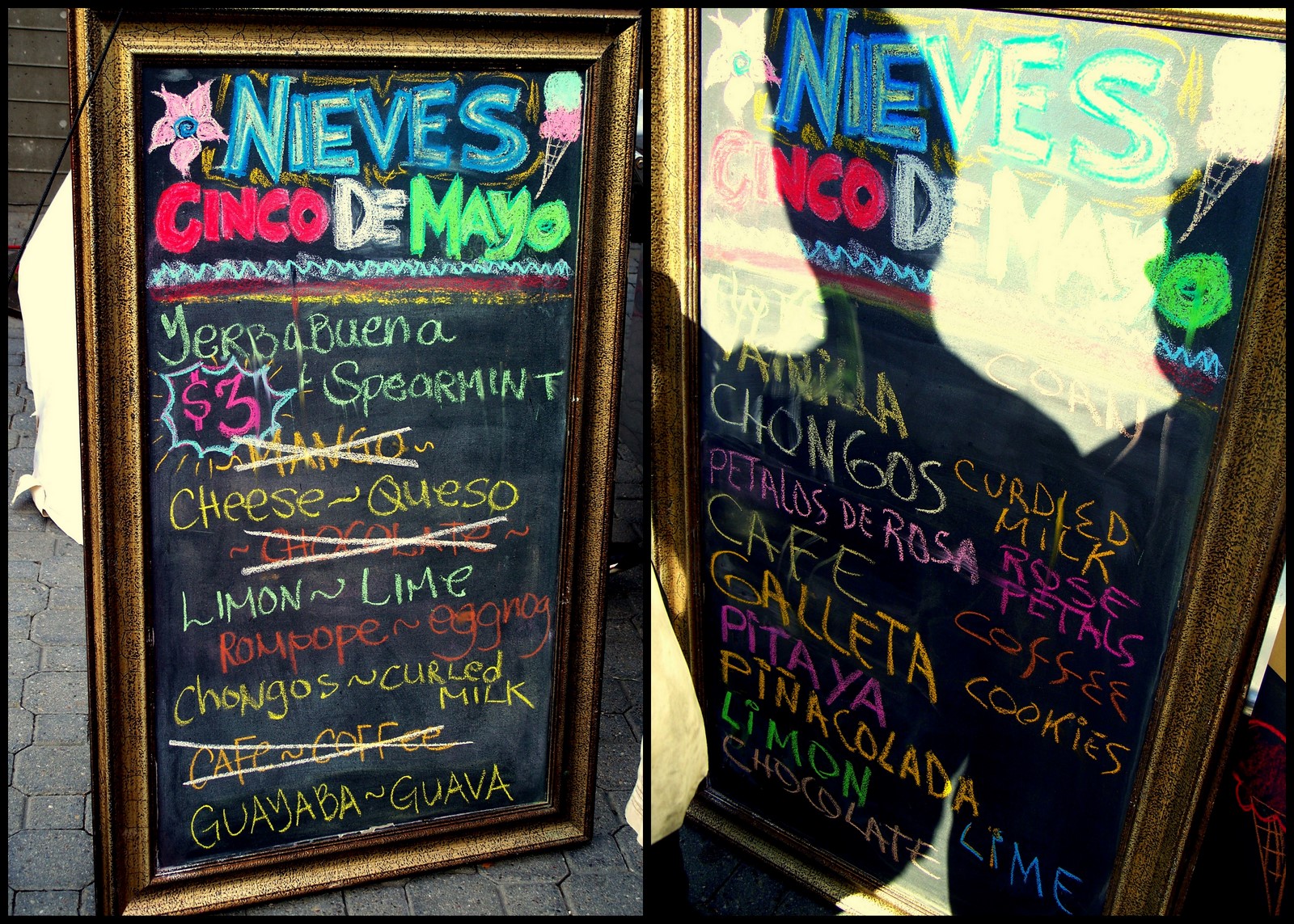

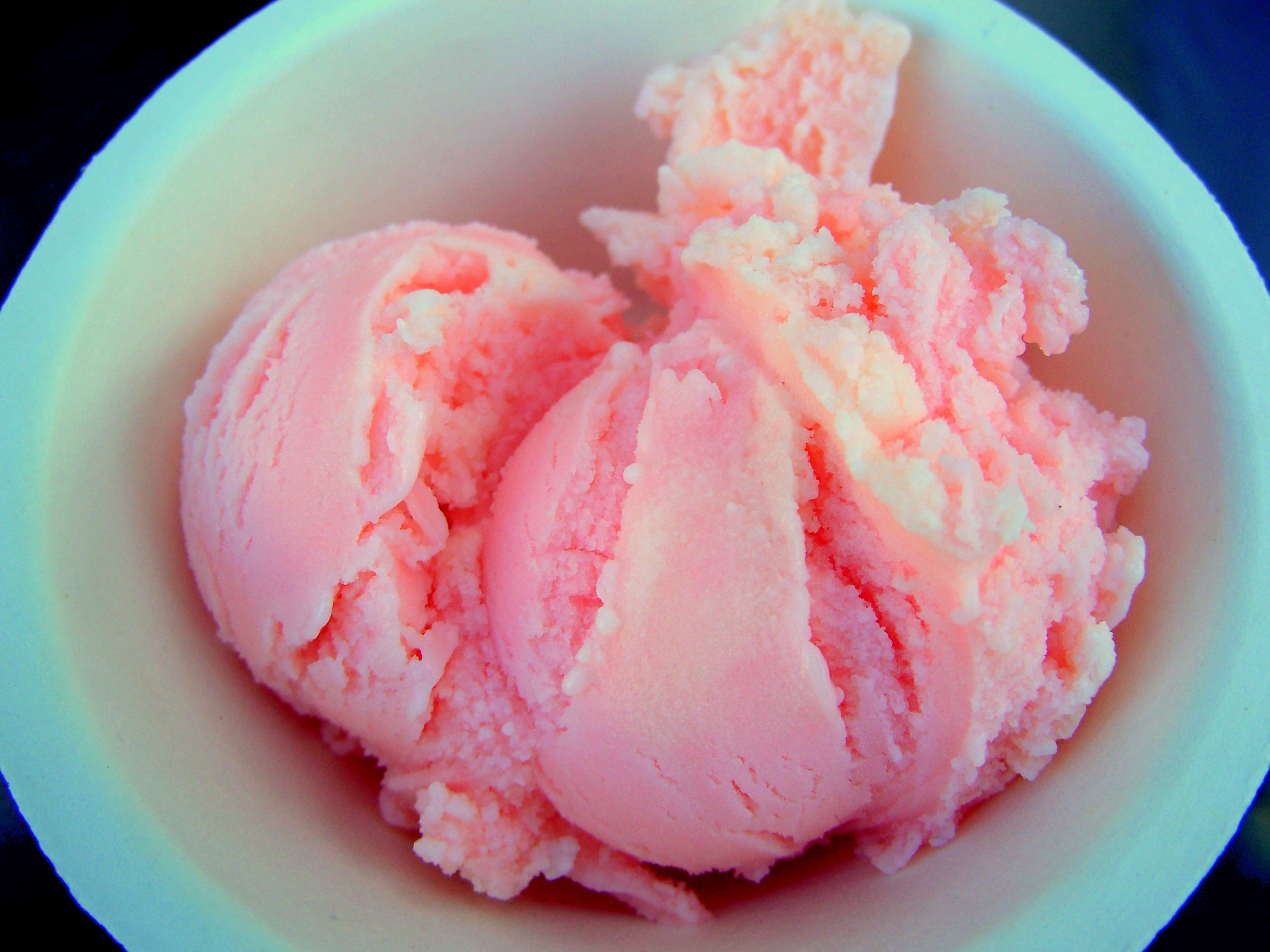
Nieves Cinco de Mayo let you sample their colorful snows before committing to the scoops. Guava was unexpectedly similar to strawberry, both in hue and in taste (unlike the green apple guava Vietnamese school kids munch with chili pepper salt). I opted for the rose petal flavor, which was more exuberantly rosy than Ici’s cardamom-rose version. It’s the pleasant awakening of every taste buds for merely 3 bucks.

Things we didn’t do at Eat Real Festival this year:
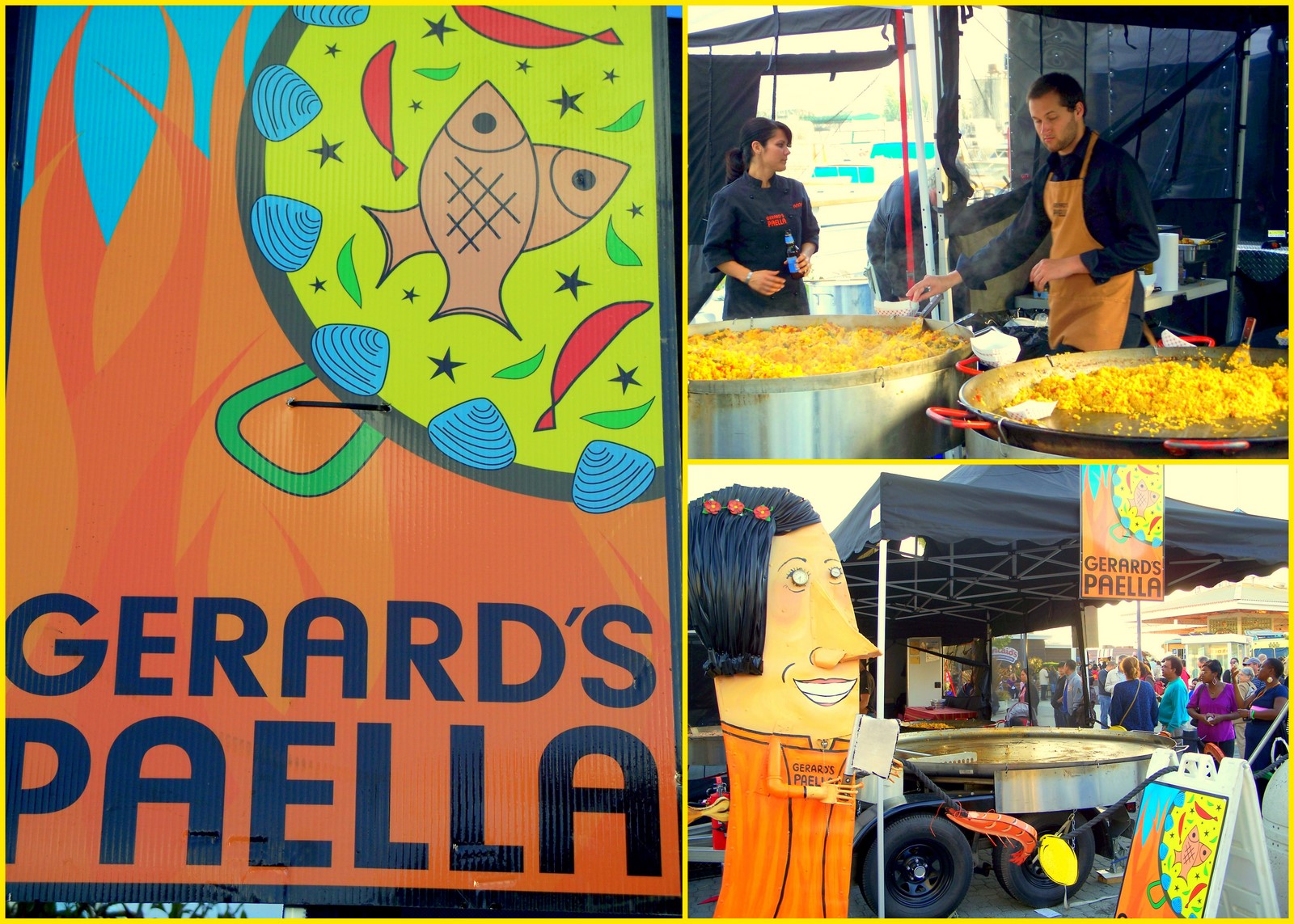

Eat paella;
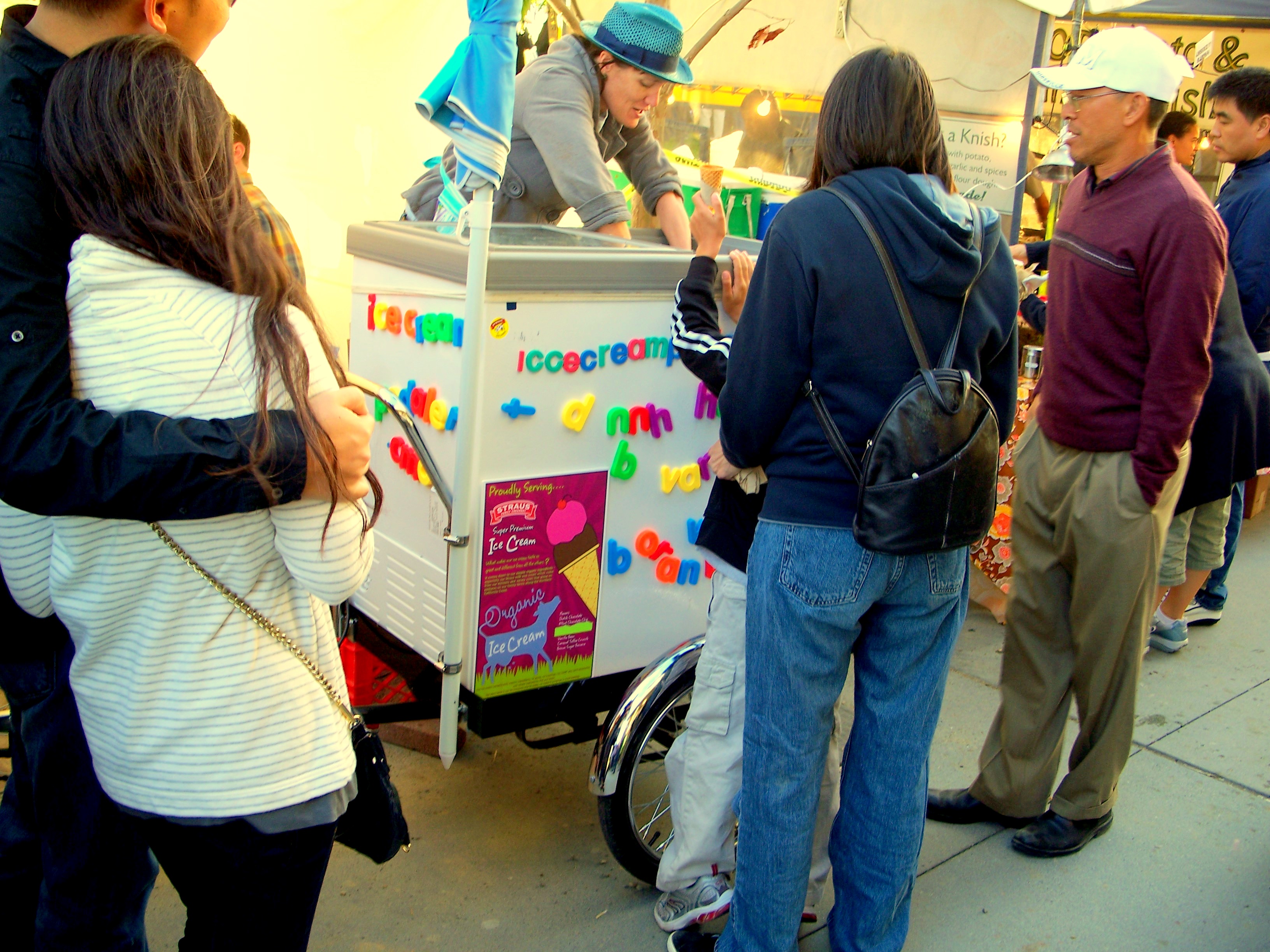

Eat ice cream from a classic colored ice cream cart;
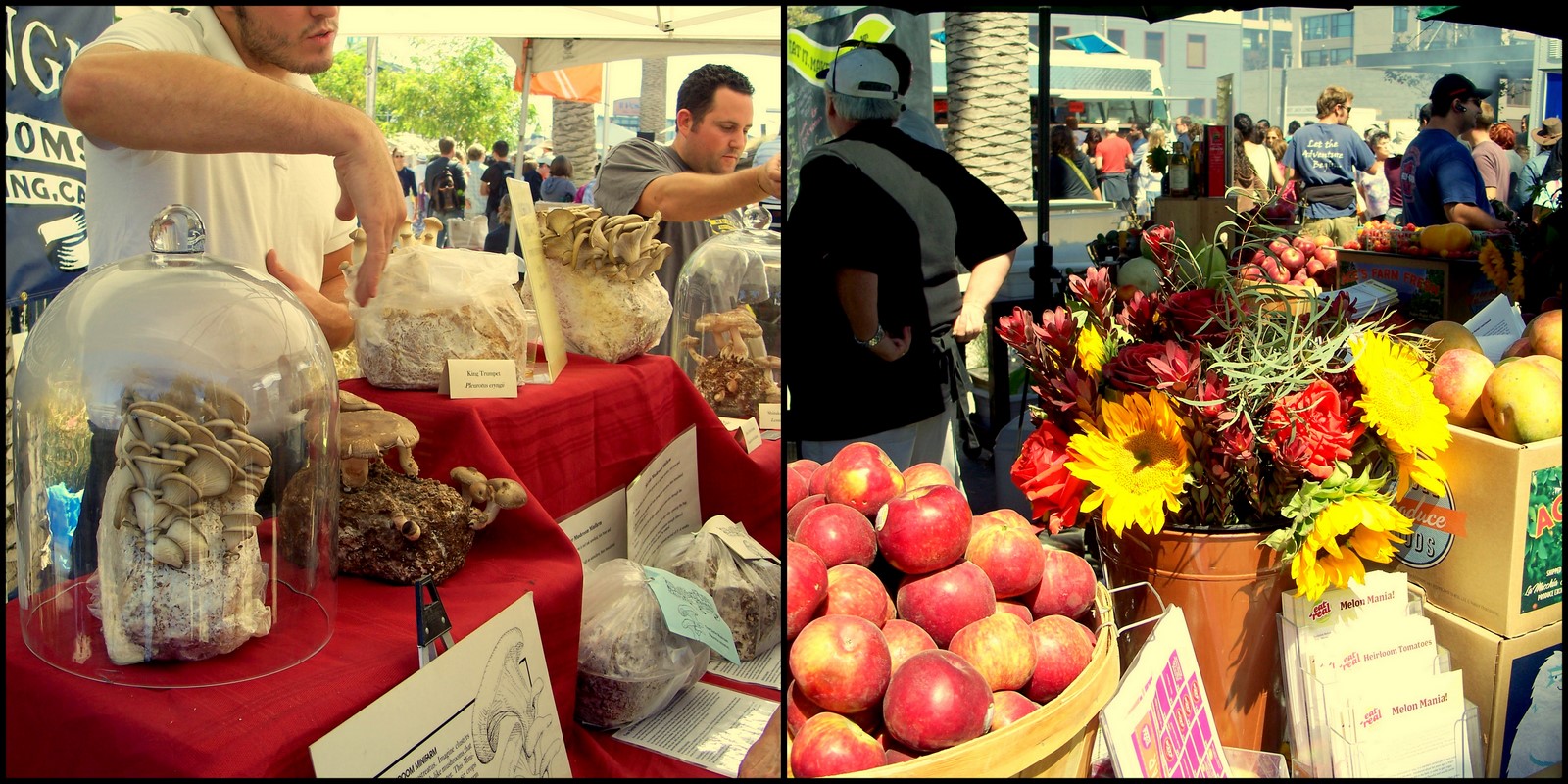

Learn how to grow mushroom and buy fresh fruits;
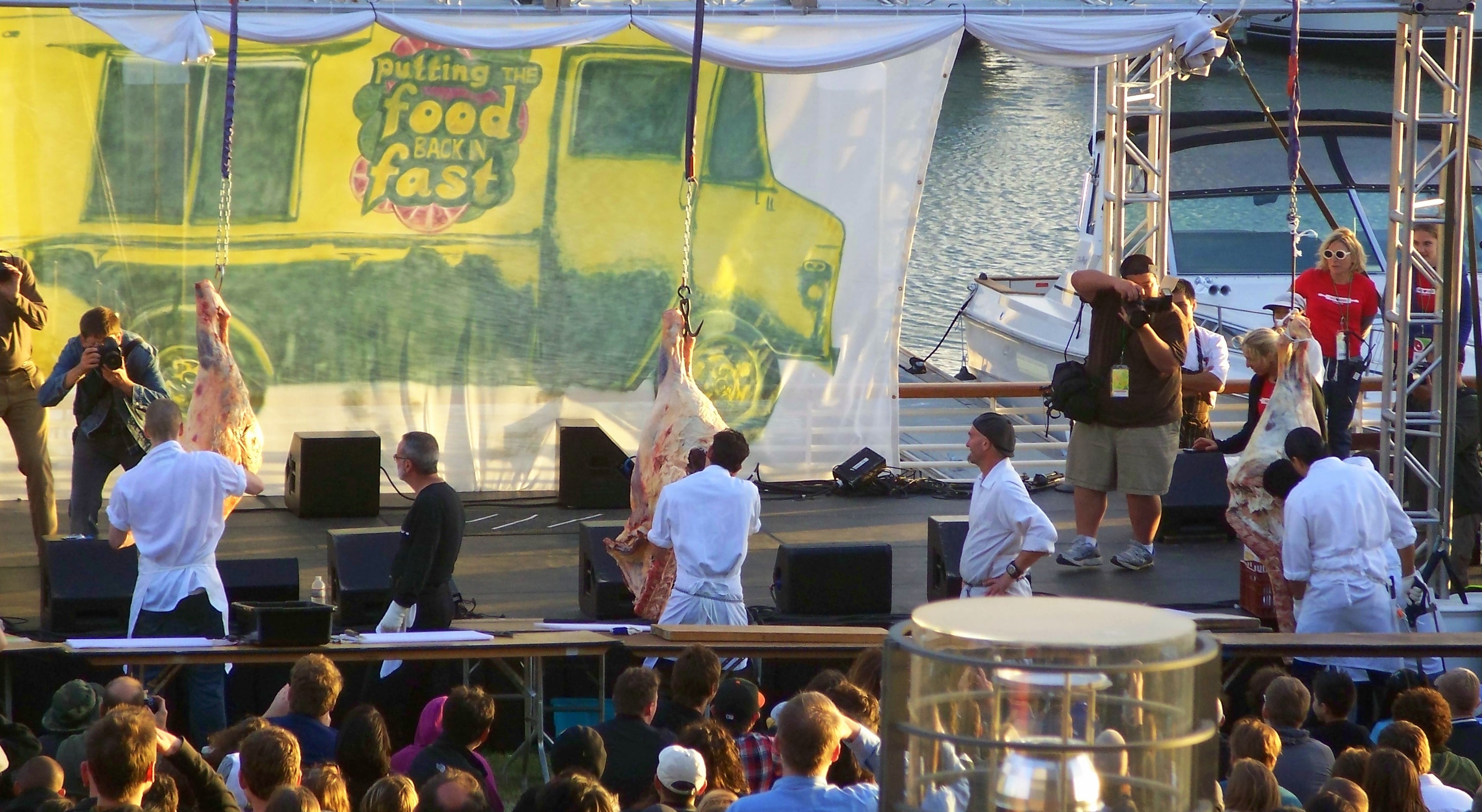

Get better pictures of the butchery contest – the guy on the right was superfast with his pink carcass;
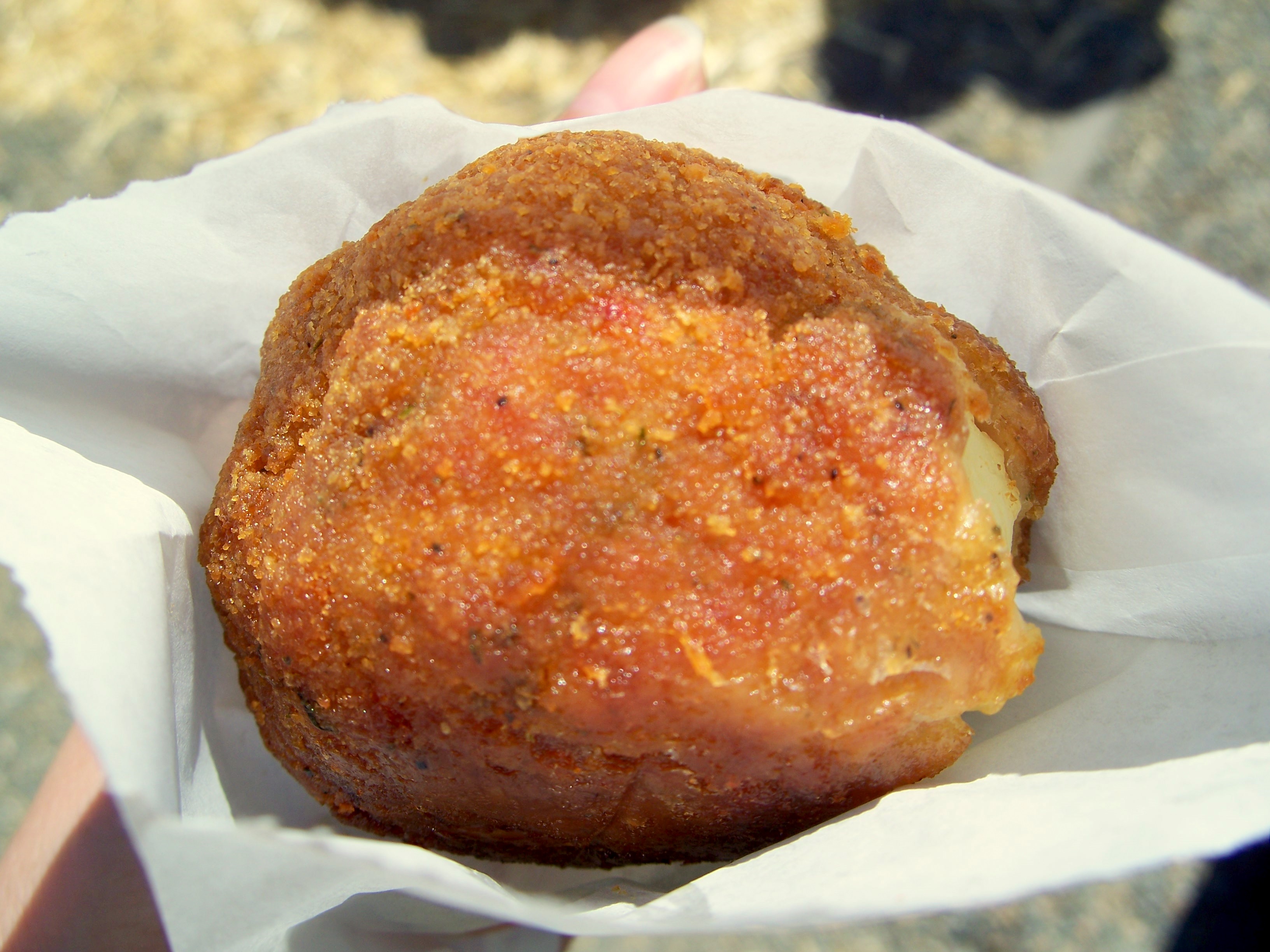

And learn the name of the kitchen that made Scotch eggs – $4 a hard-boiled egg coated in meat and batter, deep fried. Overpriced, but yummy.

There’s always next year.
Tags:

Down the Aisles 5: It’s It

August 27, 2010 By: Mai Truong Category: California - The Bay Area, Review of anything not restaurant, sweet snacks and desserts


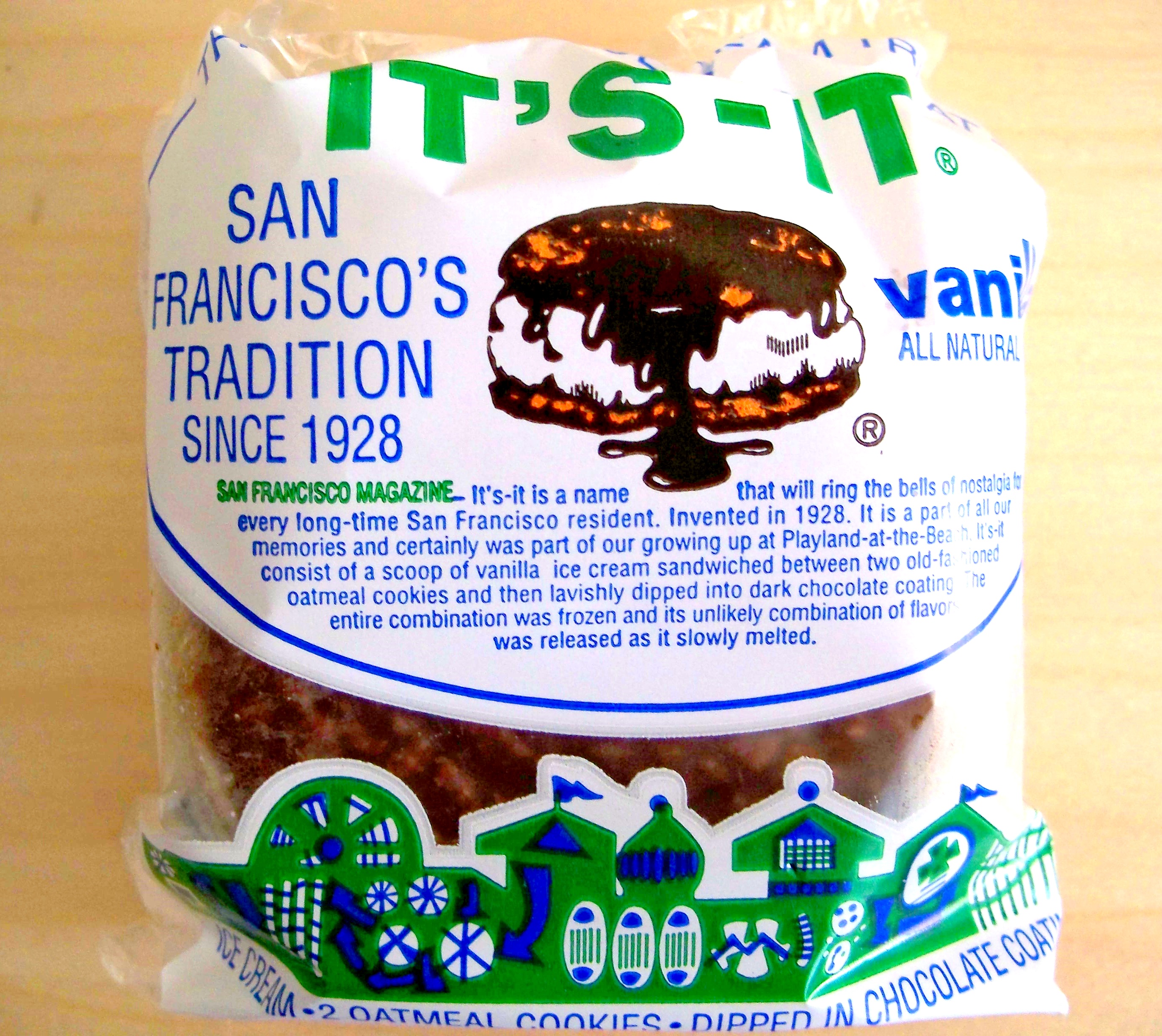
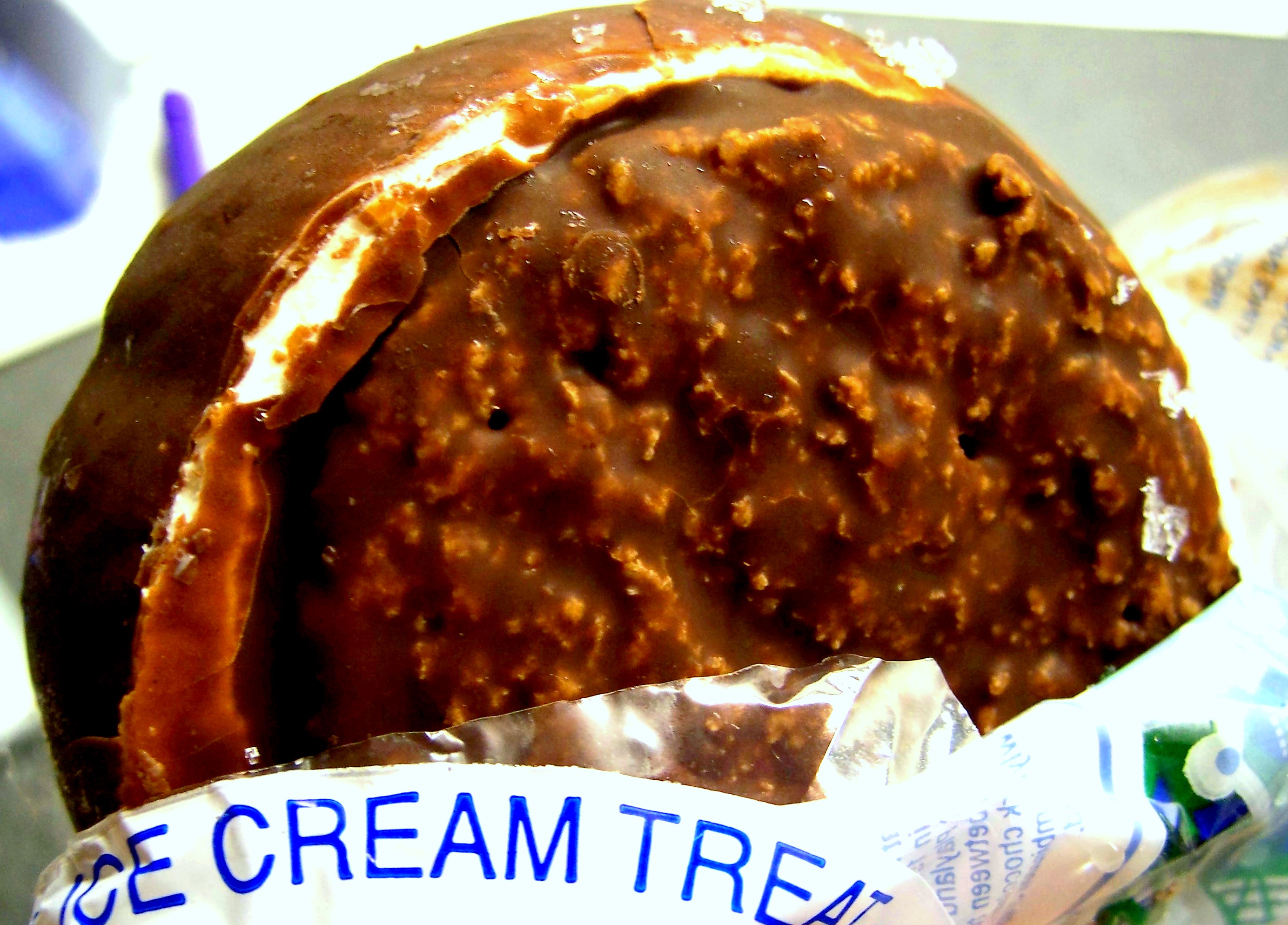
Two oatmeal cookies sandwiching a scoop of vanilla ice cream, everything encapsulated by a dark chocolate shell.

Chocolate shell with ice cream isn’t really my thing, because stuff breaks and spills, like you’re eating a hamburger and look down and see a salad on the burger’s wrapper, except now the melting ice cream replaces the lettuce and mayo. Oatmeal cookie is another not-my-thing, as it’s just too crumbly. But somehow this combination works.

The chocolate keeps the oatmeal cookies from turning into oatmeal, and the oatmeal cookies are soft and chewy enough that they don’t push ice cream out in the back (as much) when you take a bite. No wonder It‘s survived since 1928. It predates the Golden Gate Bridge by 9 years.


San Fran’s tradition sold in box of three (why 3?) for $3.69 at Safeway.
Oh, regarding health concerns (because that’s a trendy topic these days), It’s It contains no trans fat or high fructose corn syrup. Yippie!

Previously on Down the Aisles: Bubble chocolate bar

DISCLAIMER: I received no free product or monetary gift in exchange for this review.

Tags: ,

Sandwich shop goodies 10 – Bánh chuối nướng (Vietnamese banana bread pudding)

August 25, 2010 By: Mai Truong Category: California - The Bay Area, Comfort food, Fruits, One shot, Southern Vietnamese, sweet snacks and desserts, Vietnamese


Every now and then I feel blessed to grow up in the tropics. It doesn’t let you wear scarves and gloves, but it has bananas. Many types of bananas. There are at least 10 common cultivars in Vietnam, most are for eating fresh as a fruit, some for eating raw as a veggie with wraps, and one is particularly favorable to be cooked in desserts. And desserts with bananas are just about the most addictive thing out there.

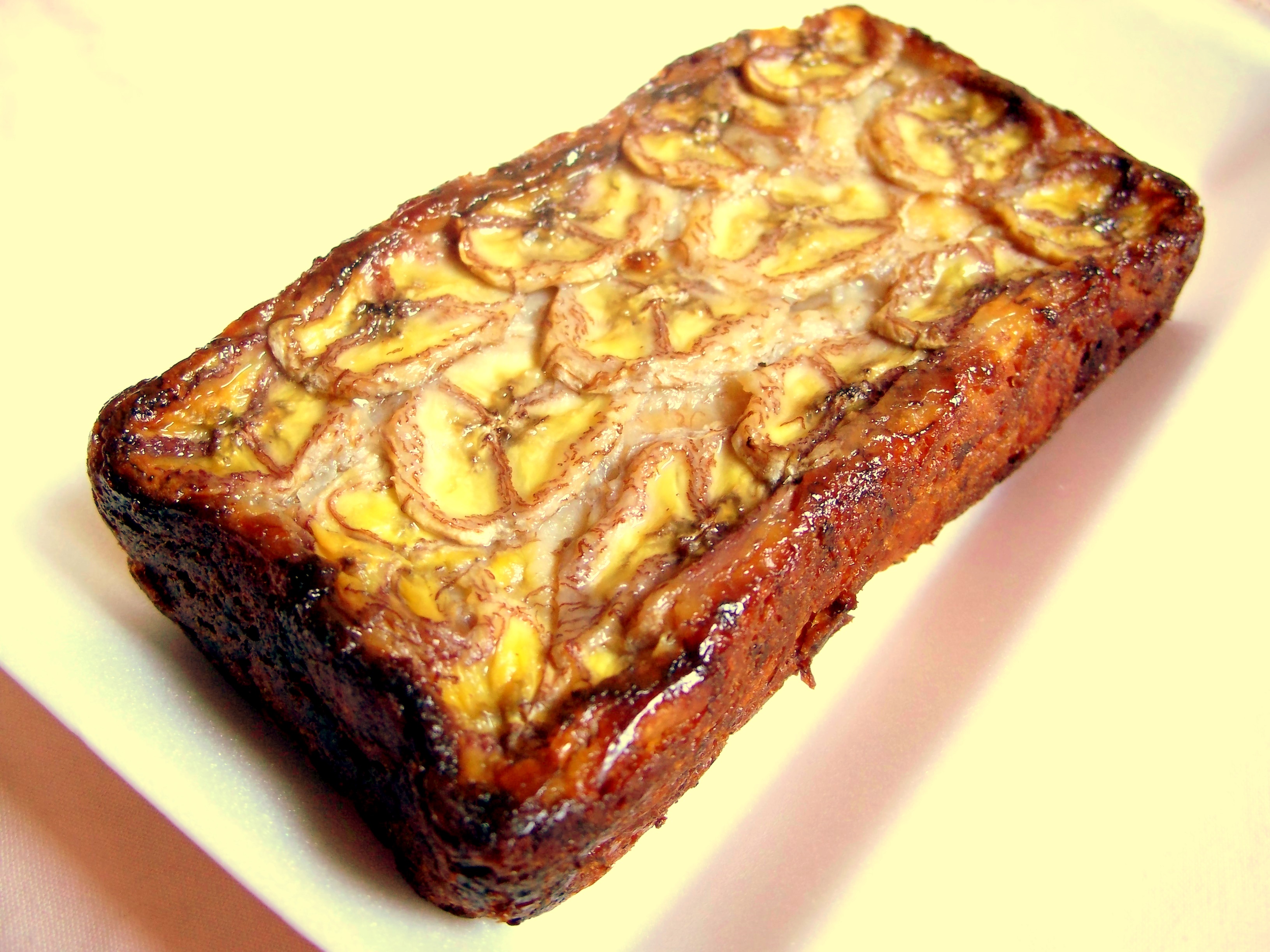
Take this banana bread pudding for instance. I intended to cut one little slice each day to savor it for over a week, but next thing I knew I was gorging half the slab after dinner. The bread is part chewy, part spongy, mostly firm, juiced up by a semisweet layer of sliced banana on top. It needs no sauce, no ice cream, no chocolate. It is good both at room temperature and right out of the fridge.

The description simply can’t capture how delicious this thing is. And it’s not even a well made banana bread pudding, you know, the type of treat that grandmother would make at home or the recipe that a vendor has perfected over ten years of peddling dessert banh’s.

It’s just a cling-wrapped 3.75-dollar piece of cake that I bought from a banh mi store. It has only one layer of bread and one layer of banana. And it is Cavendish banana, the most popular type, if not the only type at many grocery stores, of banana that Americans have known and loved.

Not that I have anything against Cavendish bananas. They’re big. They’re alright for eating fresh. But a Cavendish’s flesh is no match for chuối sứ when it comes to cooking dessert.

Chuối sứ, literally ambassador (“sứ”) banana (“chuối”), was brought to the Vietnamese royal courts by Thai ambassadors (hence it’s also called “chuối xiêm”, as “Xiêm”  is another word for Thai). Like most bananas, chuoi su is considered native throughout Southeast Asia, where it’s known as siusok (Philippines), kluai namwa daeng (Thailand), and pisang siem (Indonesia). Scientifically, it is categorized under Triploid ABB, Musa x paradisiaca, although the latter is disputable as a general name for all bananas.

What I don’t get is the ABB classification. It signifies a below-average score, while Cavendish, a Musa acuminata, is in the AA group. Sure, chuoi su is shorter than Cavendish (less than the length of my hand from wrist to finger tip), but it is stout like a good bratwurst. In practice, chuoi su is more favorable for both eating and cooking because of its firm flesh, slightly gummy texture, and raisin-like sweetness, all of which can endure simmering, grilling, baking, steaming, and boiling. The banana just wouldn’t fall apart or lose its “honey”.

The best part is, it’s easy to grow, so it’s among the cheapest types of bananas in Vietnam’s markets. Not in America though. Which is why the banana bread pudding I have here tastes slightly sticky in the back of the throat and not as sweet as it could be. Nonetheless, it’s the champ of all sweet goodies we’ve gotten from banh mi stores so far.

Buy it: Kim’s Sandwiches, 1816 Tully Rd 182, San Jose, CA
Bake it: Bánh chuối nướng recipe

Previously on Sandwich Shop Goodies: bánh bò bông (steamed sponge cupcake)
Next on Sandwich Shop Goodies : steamed cassava

Cheap, healthy, small

August 21, 2010 By: Mai Truong Category: American, California - The Bay Area, sandwiches


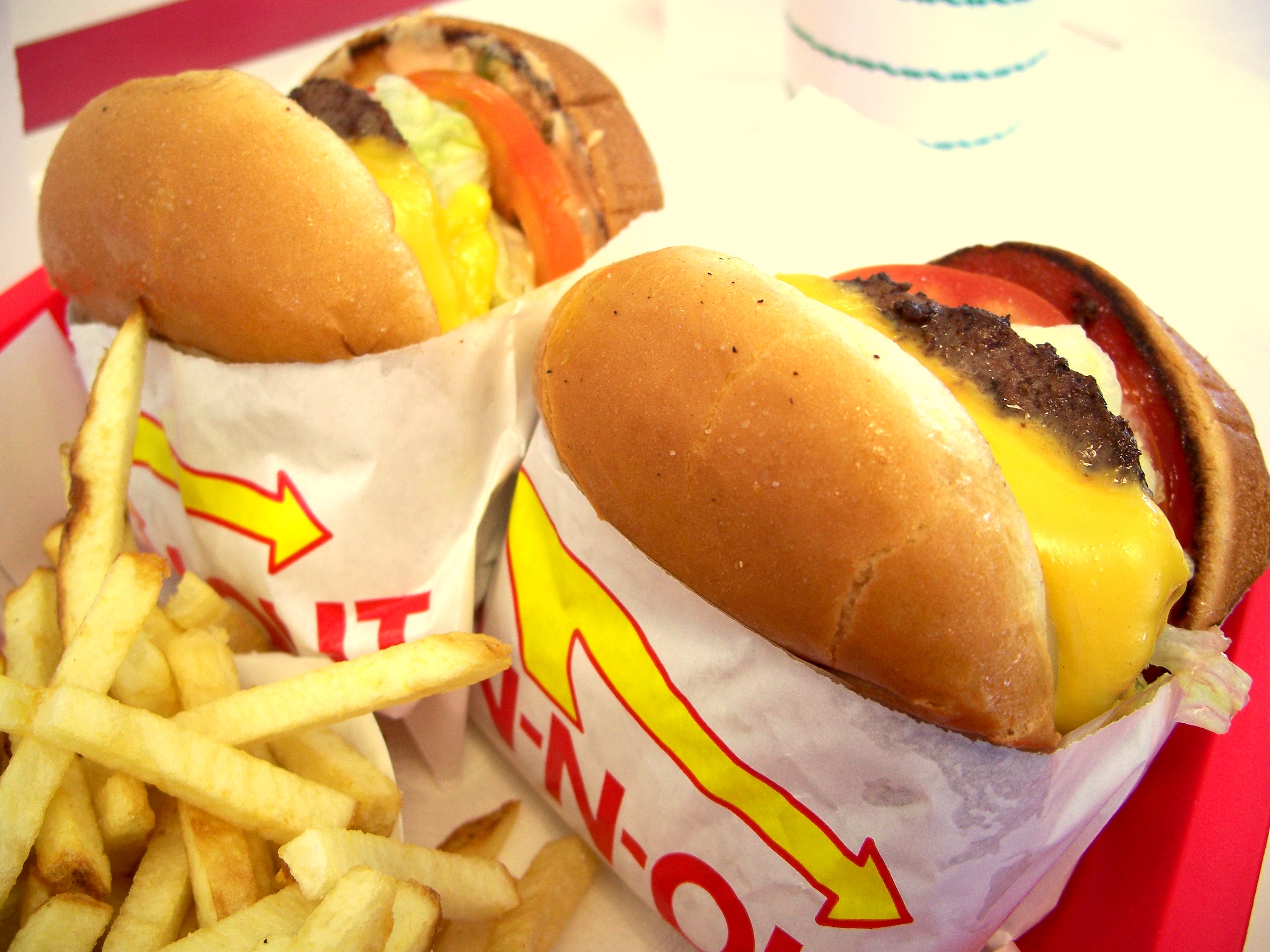
That pretty much sums up the In-N-Out buns.

Those burgers are not merely a matter of recharging one’s battery, though one of these joints might have been quite crucial to my friend’s survival on his way from coast to coast, as it was the only oasis between miles of burnt brown hills and deserts after he crossed the state line into The Golden Bear. His uncle always compares other burgers to In-N-Out’s, so when his dad visited the area, the man shrugged “well, I guess I should try it”. His friend, who later came here for conference, felt the same obligation as the other non-Californian conference attenders checked out lunch at In-N-Out. By hook or by crook, this chain gets the reputation of conjuring up a regional specialty that everyone should have while staying in California.

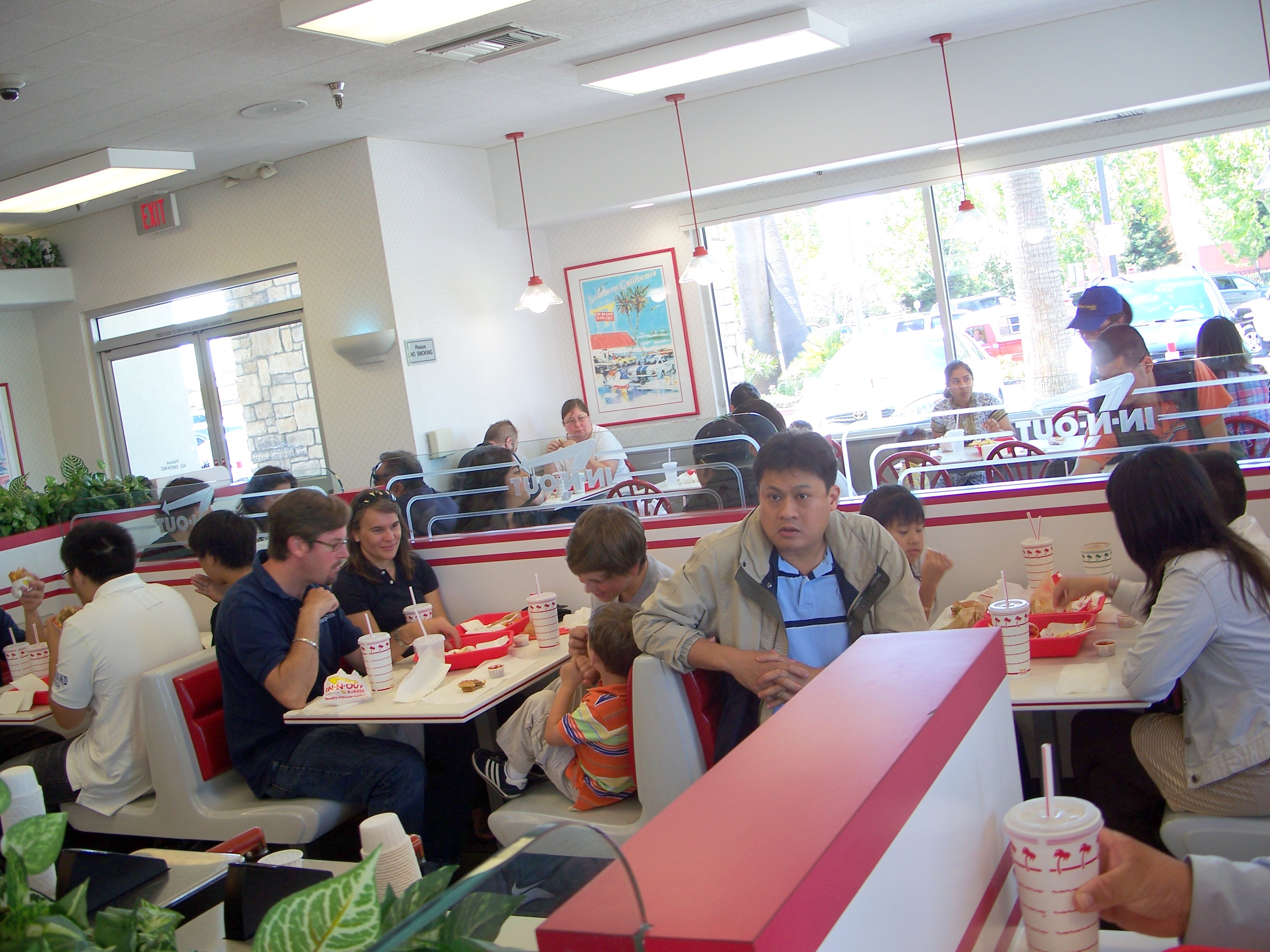
After living here for a year, I obliged. It was a sunny day driving back and forth between Milpitas and Berkeley, when I had zero gourmet craving and a simple need to eat a basic lunch. That’s a debatably good time for fast food. Don’t know if most people don’t get cravings, but In-N-Out was insanely busy when we got there. No parking. A waitress went outside to take orders from the loopy loop of cars. Almost all tables inside were taken. As Mudpie informed me, it’s always like this at lunch rush.


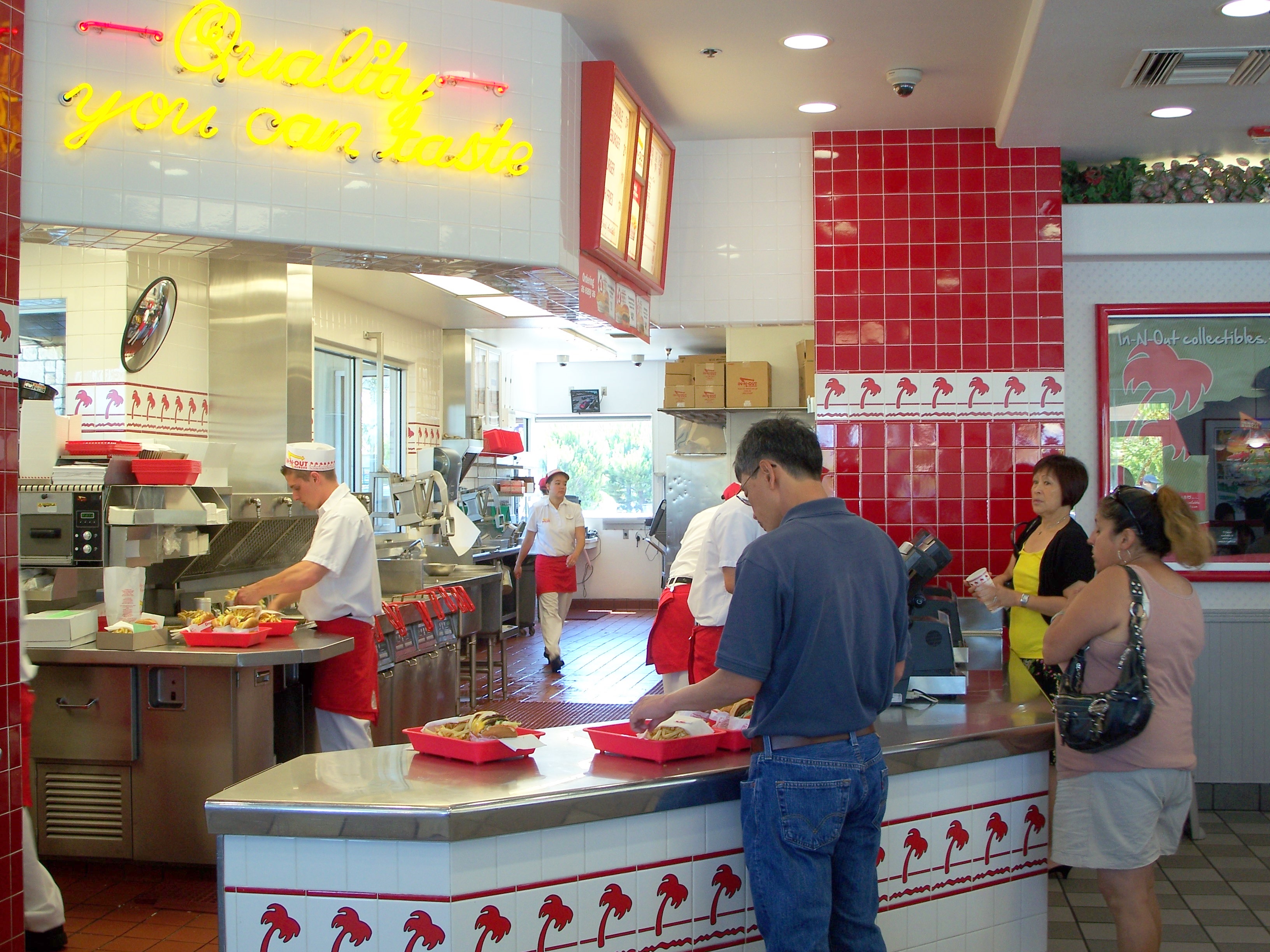
The service is nice. That’s one thing In-N-Out does better than other burger chains. People smile at you when they take, call, and give your order. It’s also fast. About fifteen workers scurry in the kitchen to cut, wash, fry the potatoes, flip the patties, toast the buns, that sort of thing. One good napkin comes out on the tray with each burger, so you can’t leisurely pull out a wad thick enough to pillow your dog just to later throw it away.

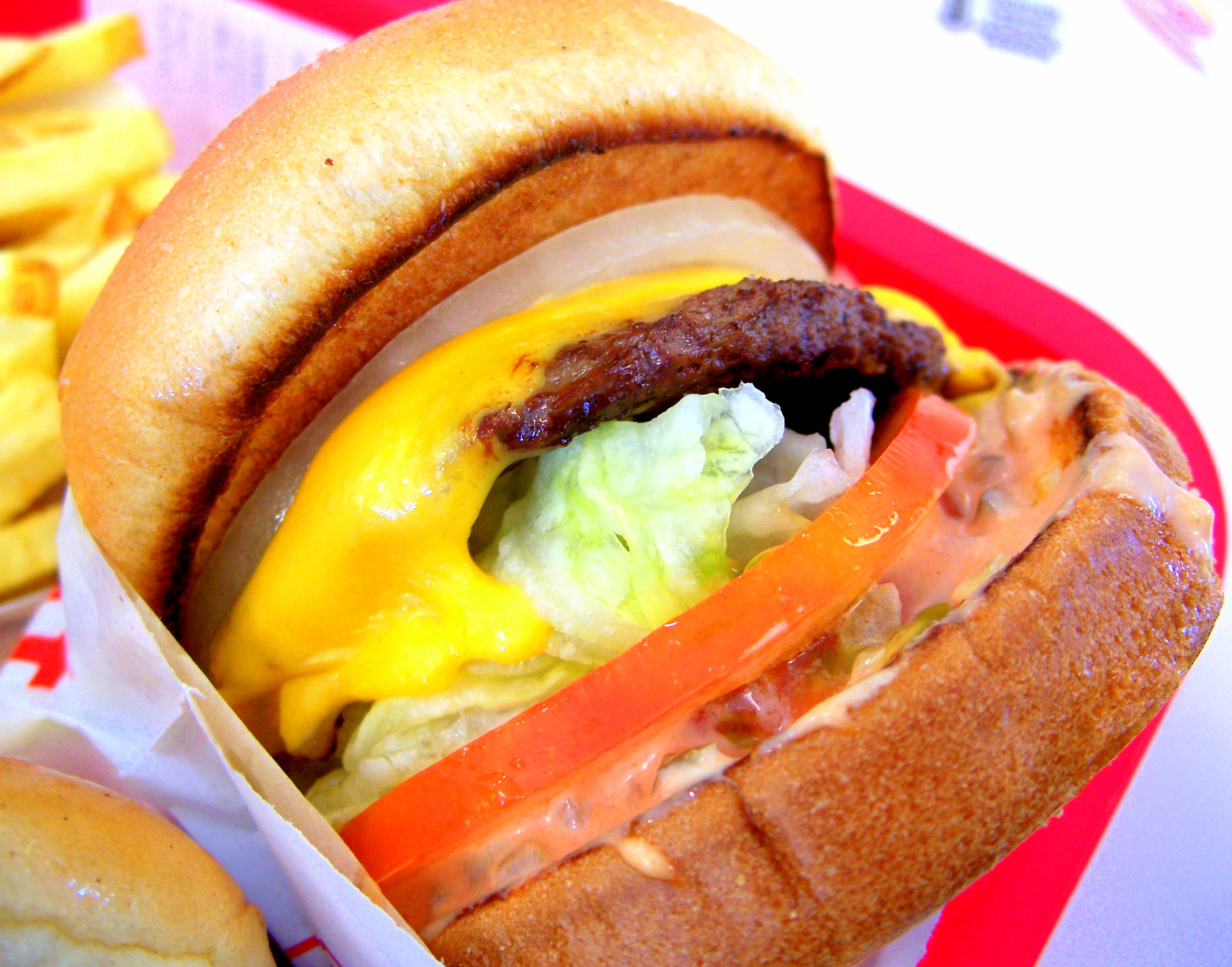
The visible menu is simple with only 3 choices: hamburger, cheeseburger, or double-double. They’re about the size of McDonald’s, which is much smaller than Burger King‘s and Fuddruckers’. You know how McDonald’s buns always have a distinctive smell that when someone at the back of the room pulls out a Golden Arches box, you sitting in the front immediately know that it’s a Golden Arches box? Well, In-N-Out doesn’t have that. In-N-Out’s $2.15 cheeseburger definitely tastes better than McDonald’s 89-cent cheeseburger, that much I can say.


The Yellow Zipline chain claims that their ingredients are fresh and free of preservatives and additives, as they “do not own a microwave, heat lamp, or freezer“. Their spread is mayo made pinkish with a mild flavor, which does not stand out. The patty is rather plain, however juiced up by copious chunks of lettuce and tomato. The fries, too, are much less salty than you’d normally get at other burger joints, but also denser and starchier, more potato-like so to speak.


As the end of our meal, we felt reasonably full. Though unimpressed. In some sense, kudos to In-N-Out for keeping burgers, fries, and shakes simple. It’s the fast food that defines America after all. However, in this case, the simple way is not the best way. This burger is nothing to swoon about. If you’re conscious about health when eating a beef patty and a slice of cheese sandwiched in a toasted bun, this is the place to go, although it’s kinda like ordering a mayo-laden sandwich and a bag of chips, then drink a diet Coke (which is a horrible liquid, by the way).

If you want cheap, big, good taste, go to Burger King.
If you want expensive, big, good taste, go to Fuddruckers.

Eat to your cart’s content

August 19, 2010 By: Mai Truong Category: California - The Bay Area


This Saturday August 21 (11am-7pm) there’s some massive fun street food fest going on in the Mission District, next to Garfield Square, San Francisco. I counted 52 “vendors” for the chow, which spans all five continents (well, not including Australia, and Europe and Asia are two) and covers the menu from appetizers to desserts.

The majority power seems to split between los cocineros of Hispanic descent from the Southern hemisphere and the culinarians of the Far East. Colorful dapples here and there are West African (Purple Hibiscus of Nigerian American chef Chukuduwebe), classic Southern comfort (Zella’s Soulful Kitchen of chef Dionne Knox), hot dogs (Let’s Be Frank) and waffle sandwiches (Brass Knuckle), just to name a few.

Tasty. I can’t go, due to graduate school difficulties. (Why is it one day only?) Which is why I will make it to the Oakland’s Eat Real Festival (ERF) the weekend after against all odds. Mark my words.

Thankfully ERF is 3 days long, Aug 27-29, at Jack London Square. And there are way over 52 “vendors” this time, some also participate in La Cocina’s SF Street Food Fest. Maybe I’ll try the Kung Fu Taco Truck, not that I’m crazy about tacos or anything (quite the opposite).

Not street food related, Walnut Creek sees its first annual culinary tasting event, Savor Walnut Creek, this September 2nd from 7pm to 11pm.  Admission ticket is $25 with 2 tasting tickets included, then each participating restaurant will provide $4 and $8 menu options for additional ticket purchase. Tempting, but it’s a week night.

Venus and the Casual-Cali dining trend

August 14, 2010 By: Mai Truong Category: American, California - The Bay Area, Comfort food

In foodie talk, Berkeley is synonymous with Chez Panisse: there’s hardly a writing of Bay Area cuisine without the mentioning of Alice Waters and her propriety. But as attractive as the local and sustainable idea sounds, places like Chez Panisse are clearly not in the accessible range for everyone’s weekly, or even monthly, savour. If it’s not what the locals regularly eat, how can it represent the local cuisine? The common Berkelers don’t make one month reservation to eat at a cafe, they instead would rather make a line on the sidewalk, waiting to be seated in 25 minutes or so-told by waiters with tattoos and spiky hair. Such casualness, though paired with obvious reduce in taste innovation and price, defines the Berkeley dining spectrum, with the holes in the wall like Razan’s Organic Kitchen and Gregoire at the cheaper end, to more comfortable sit-downs like Herbivore and Venus at the other.


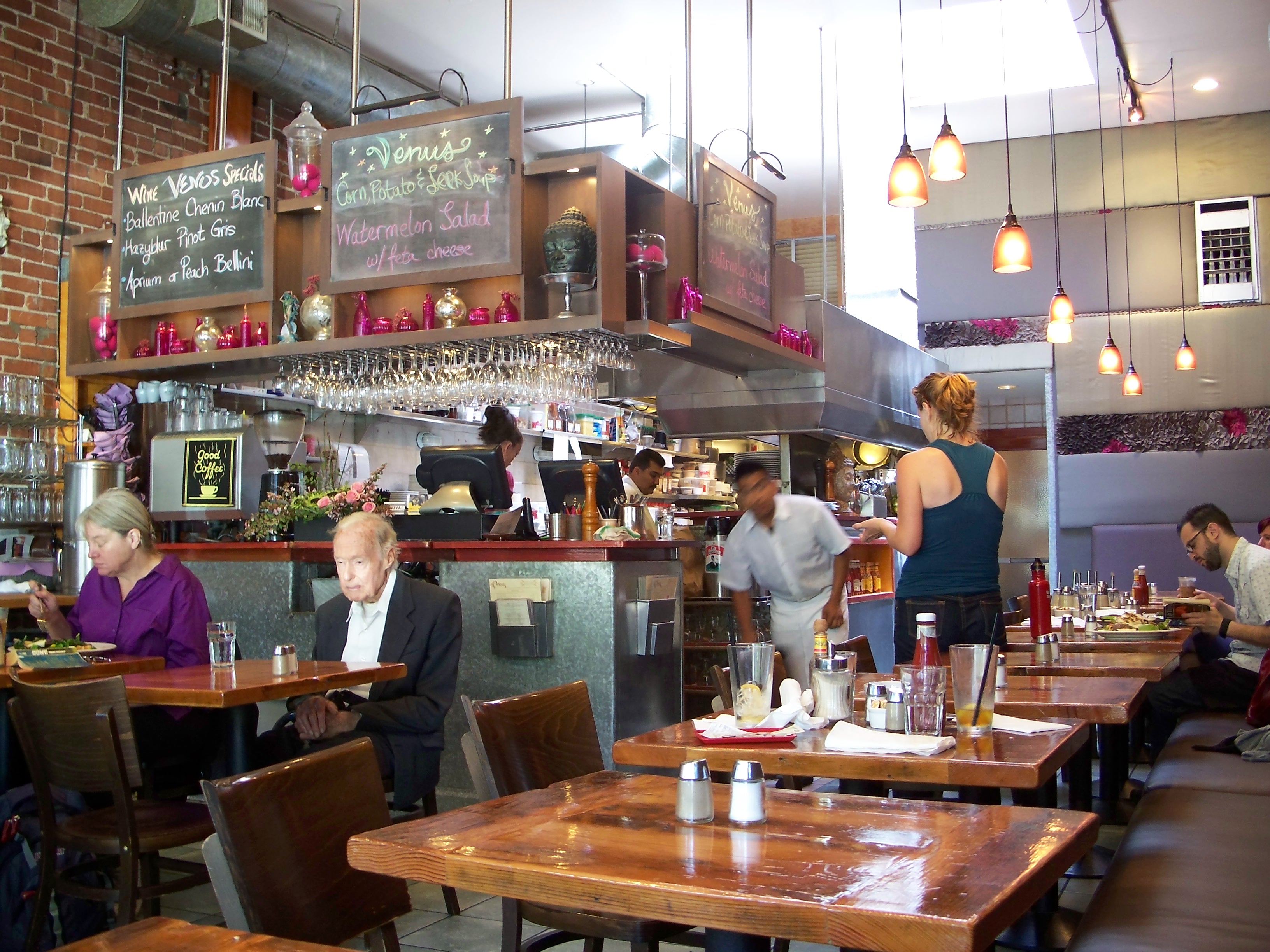
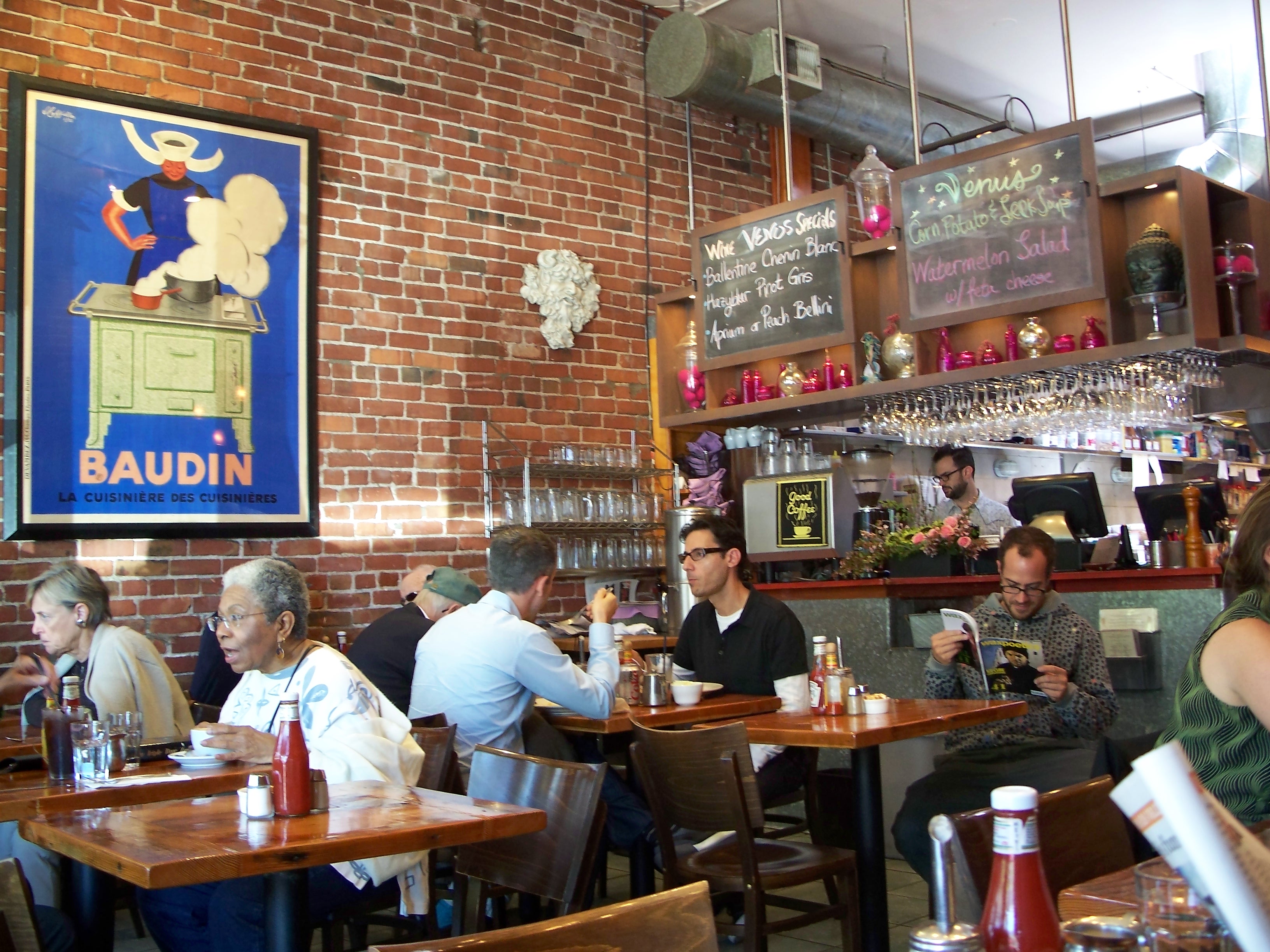
I call it a sit-down because Venus is barely bigger than a classroom, and diners are spaced more snugly than students on exam day. Its rectangular base holds a kitchen-cashier combination and roughly 40 seats – an ok amount for lunch and dinner but not enough for the mornings. I’ve seen lines, and been in one myself, standing outside the door even on weekdays. The mornings here are cold, but Venus’s breakfasts are good.

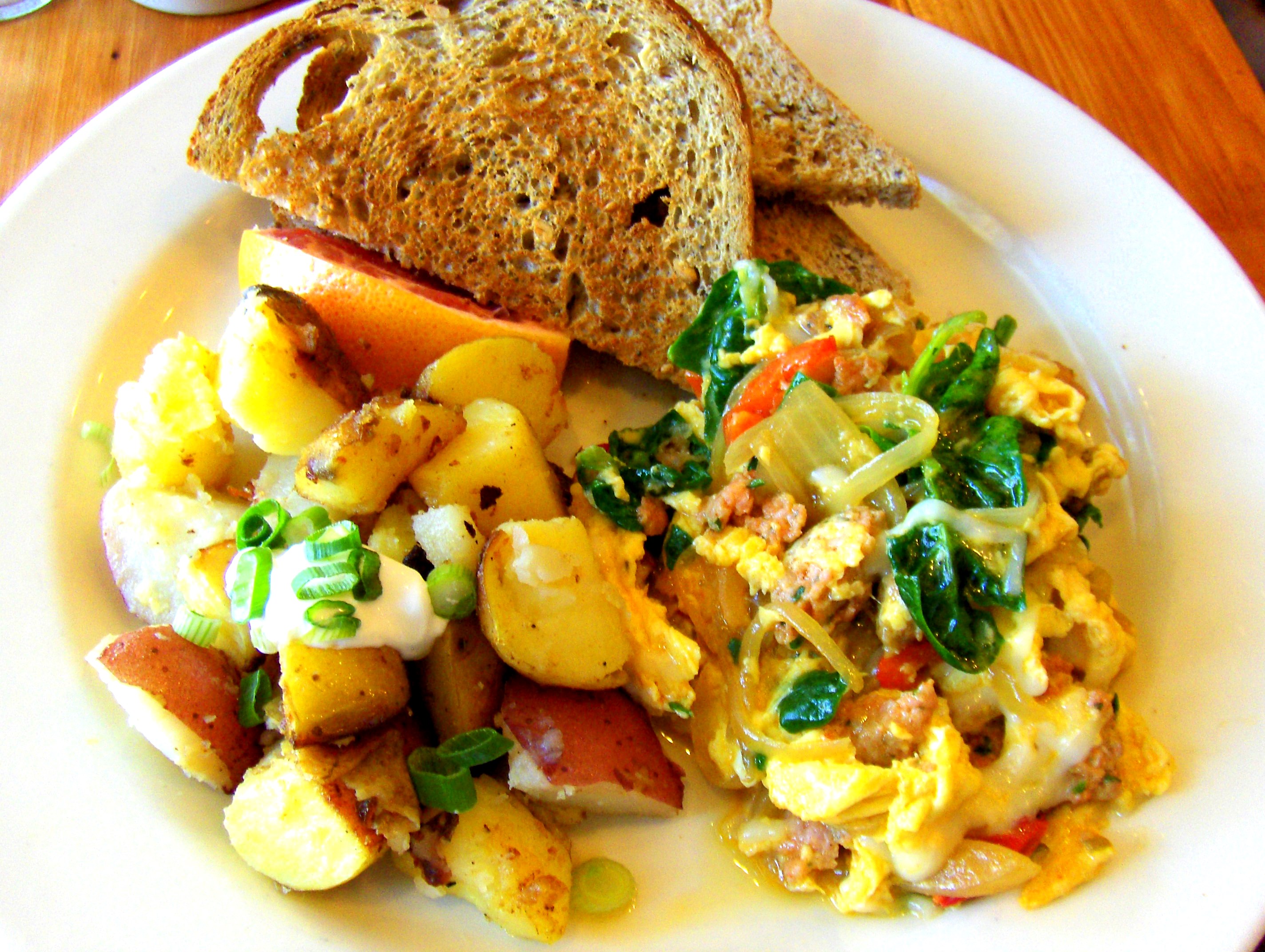
Venus's scramble eggs with calabrese sausage , spinach and mushroom, with roasted potato and toasts - $11.00

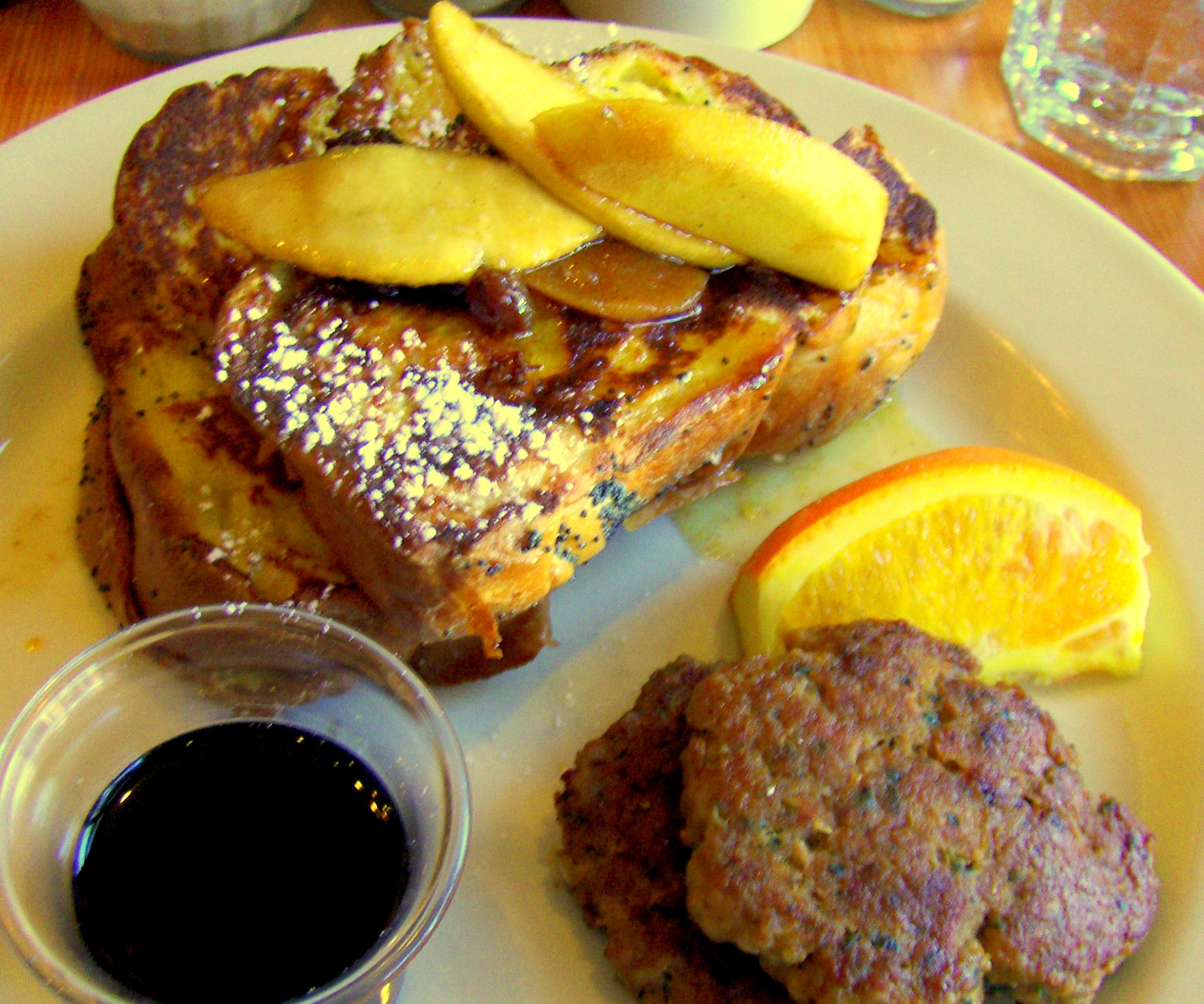
Omelets and scrambled eggs are the main categories, with typical Californian blendings like chicken-and-apple sausage, fresh berries and chocolate chips in pancakes, and thick, fat, buttery French toasts accompanied by melons and oranges.

A Venus daily special - apple French toasts and sausage, to be dressed in blackberry syrup - $12.50

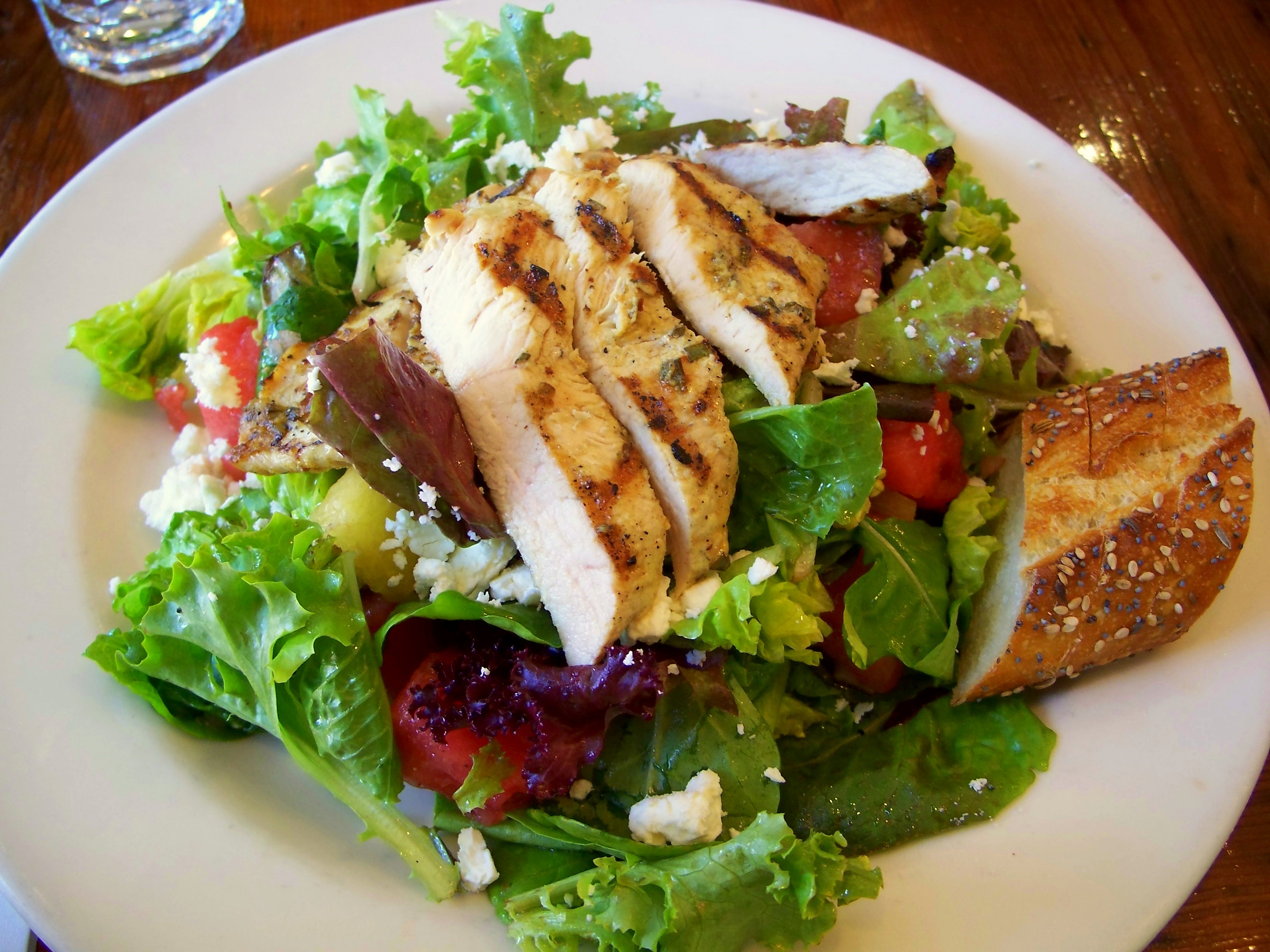
If you feel guilty about taking time to savor your toasts while others are shivering outside waiting to slip through that door, lunch proves a more comfortable choice. To boost, the hosts give you both the breakfast and lunch menus if you arrive around noon. The specials of the day are printed items with a simple twist, like my chicken salad with a load of watermelon cubes mixed in.

A Venus daily special - watermelon salad with grilled chicken breast and feta cheese - $13.00

The ingredients aren’t clamorous and the mixing isn’t adventurous, but such daily specials are nonetheless a refreshing attempt to harmonize flavors: sweet watermelon to temper tangy feta and vinaigrette, teeth-sinking jello crunch of the grilled chicken to pair with airy crustiness of newly baked bread. It isn’t the best salad I’ve ever had, but it bursts a mouthful of Casual-Cali aroma(*): healthy food can have attractive taste.


The atmosphere, too, is characteristic. Jazzy 60’s records reluctantly slip words one by one off the speaker like water dripping from a roof after some heavy rain. College students twirl their straws over a quiet chat by the windows. An old man with a cane and weak feet drags his steps to the table, clouding himself with a Degas’ look while waiting for his soup. Lone diners in spectacles spend an entire morning flipping through the news, occasionally take a bite of sandwich and a sip of coffee. Couples in their late fifties laugh and talk without constraint. Everyone is comfortable. It’s a noisy place, but oddly it’s full of solitude.

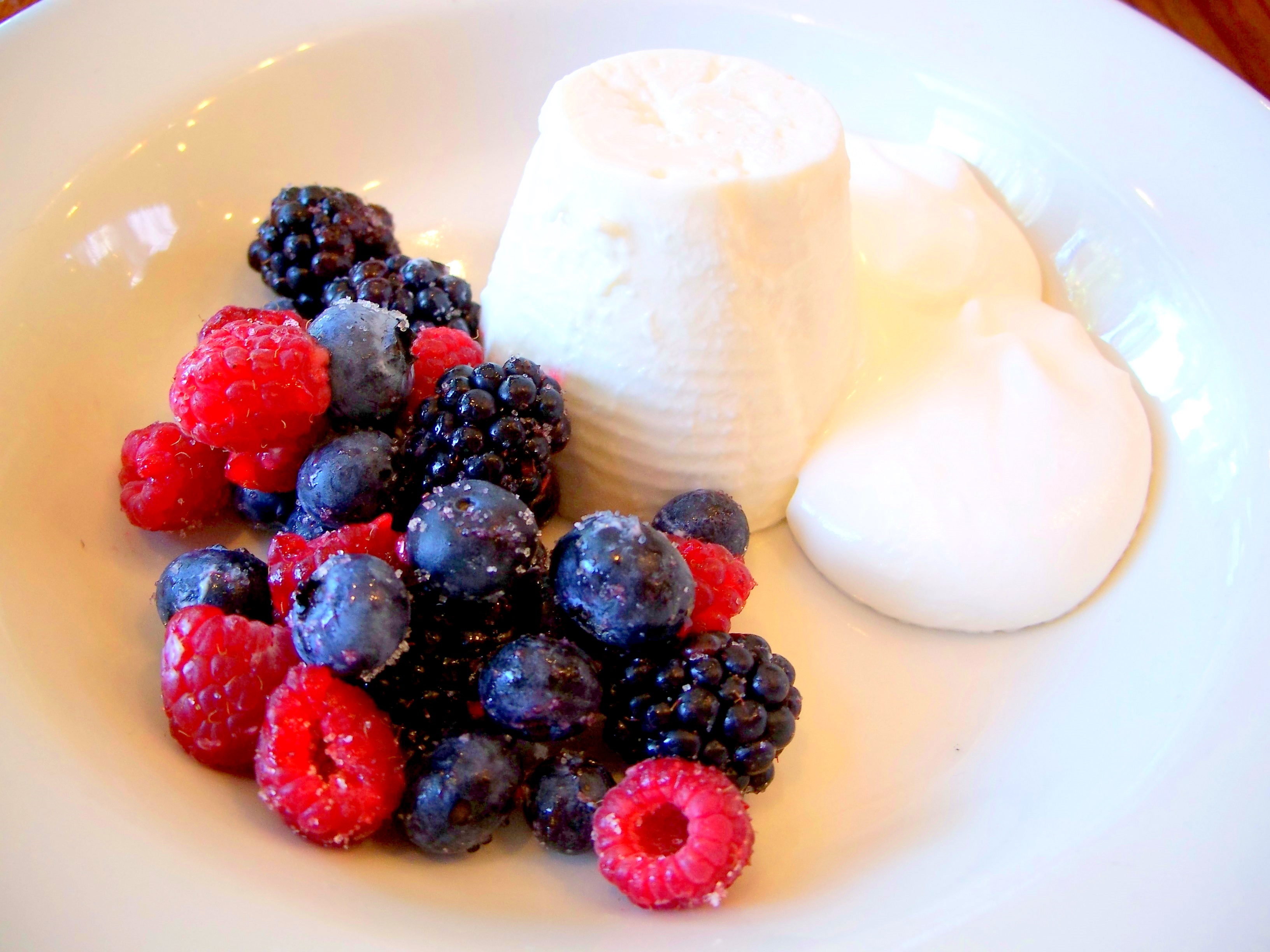
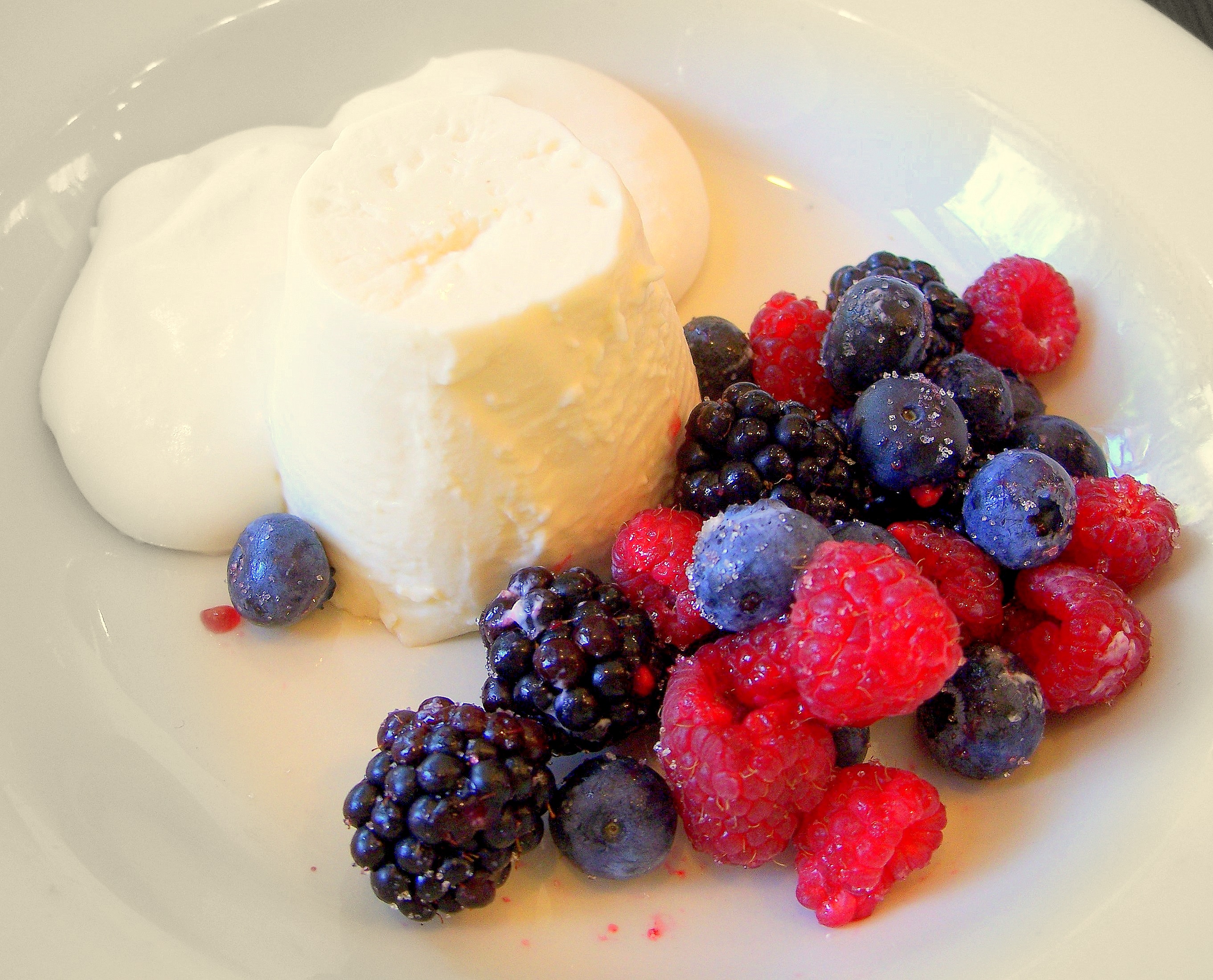
Venus restaurant, in some aspect, is just like their panna cotta: rich and smooth, with the occasional fresh and tart berries to boost.

Dessert at Venus - panna cotta with fresh berries - $8.00

Eating local and sustainable means spending unsustainably, or eating expensive in plain terms. Sure, breakfast for two or lunch plus dessert will rip you off about 25 dollars sans tip. But when the bill doesn’t absurdly boast $50 or more a person, the taste, the portion and the good feeling of eating healthy and local justify the self-indulgence. I guess.


Address: Venus Restaurant
2327 Shattuck Avenue,
Berkeley, CA 94704
(510) 540-5950

(*): This definition is made only on comparison with the cuisines of other states in America, as the fusion and local trend is by no means particular to California, but a growing fashion in high-end restaurants around the world.

Venus in San Francisco on Fooddigger

Sandwich Shop Goodies 9 – Bánh bò bông (Steamed sponge muffin)

August 12, 2010 By: Mai Truong Category: California - The Bay Area, Chinese, One shot, sweet snacks and desserts, Vegan, Vietnamese

Does this happen to you often? You give a friend something to taste, he says “It’s good. What’s it called?”. You’re stumped. The English translation is easy, but it would make no sense because the name matches neither the food, the ingredients, nor the method of cooking.


It happens to me quite often, and usually I shut off the questions with “Just eat it!”. But I wonder, too. Southern Vietnamese folks have a niche for obscure naming scheme. The names could have sprouted from some jokes, some overly simplified impromptu description they thought of at the moment, some mispronounced foreign names, who knows. The result is intelligible and untranslatable, like bánh khọt, bánh tét, chả đùm. The translatable-but-not-always-understandable cases happen when they attach random verbs after the categorical nouns to make a new name, like bánh xèo – “sizzling banh”, bánh lọt – “falling-through banh”, bò né – “dodging beef”, whatever that’s supposed to mean. Bánh bò belongs to this flock. Cow bánh? Unlikely, the thing is vegan to an n. I even thought about the possibility that the name is derived from its resemblance of the cow’s tripe, but they would have called it tripe bánh then. Crawling bánh? Less unlikely, more bizarre. Turns out some grandma saw the rising dough attempt to crawl over and out of the mixing bowl and thought “Gotcha! I shall name you the Crawling Banh”. Vietnamese food is so alive.

Technically the Mekong delta cooks got this recipe from Chinese immigrants and twitched things around a little. They call it “bak tong goh” (white sugar cake) in China. So plain. Bak tong go almost always gets sold with bánh tiêu: you tear open the hollow doughnut, insert bak tong go into the cavity, and get a fried-steamed-fried triple layer galore. I’m not too entranced by this “white sugar cake” because of its sour hints, which come from fermenting the batter with syrup. The Vietnamese rendition of bak tong goh, bánh bò, does not let the batter go sour, and is thus a charm.


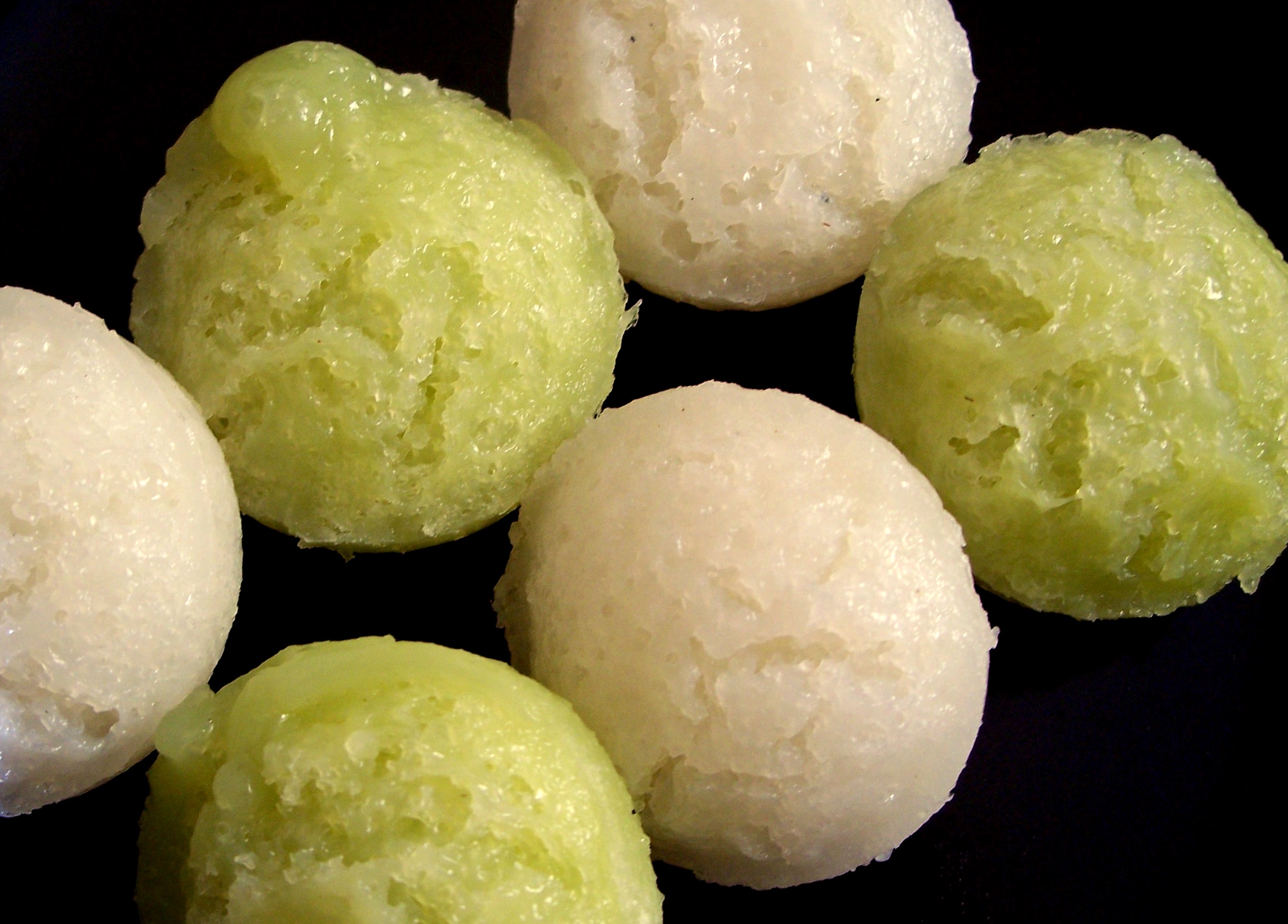
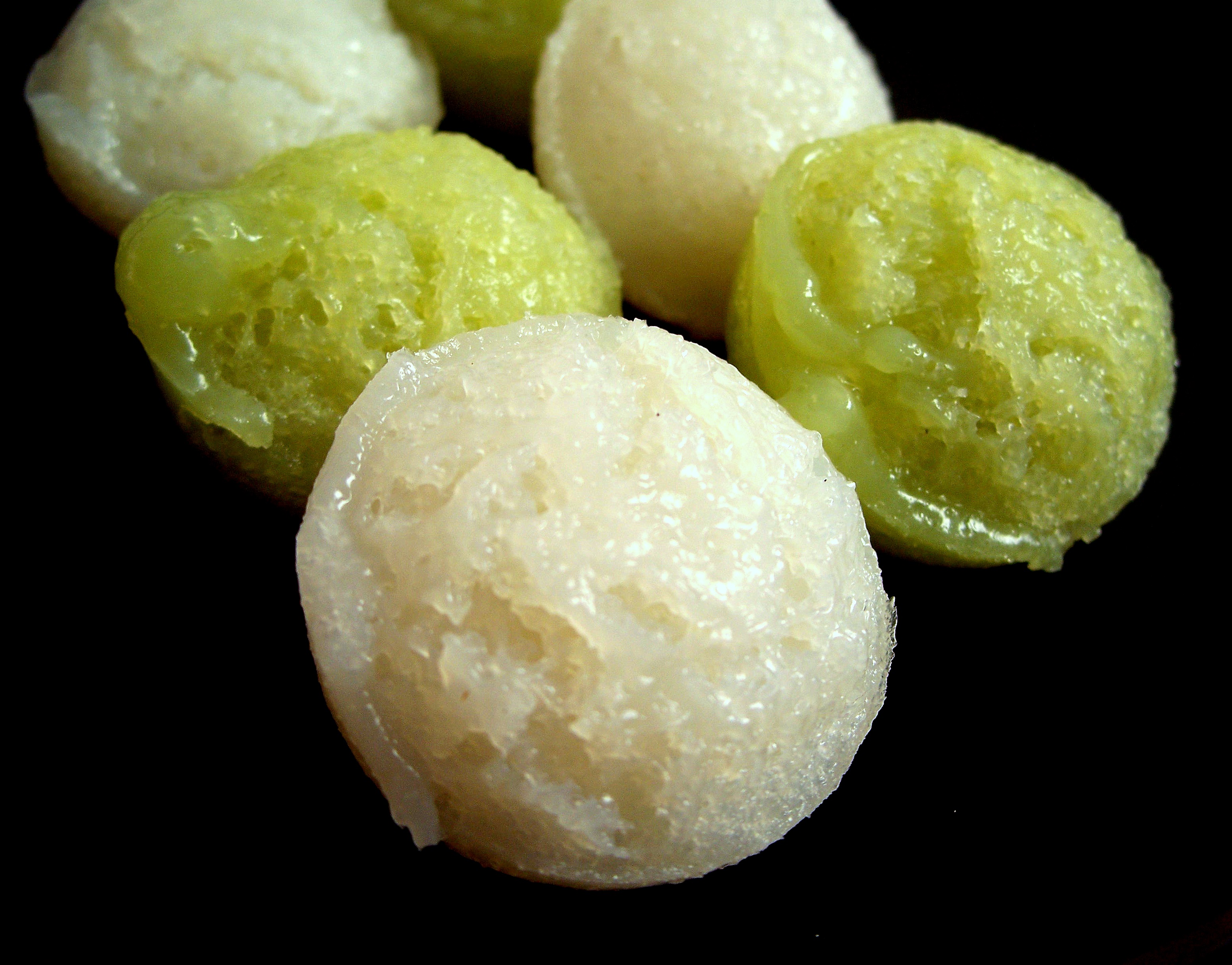
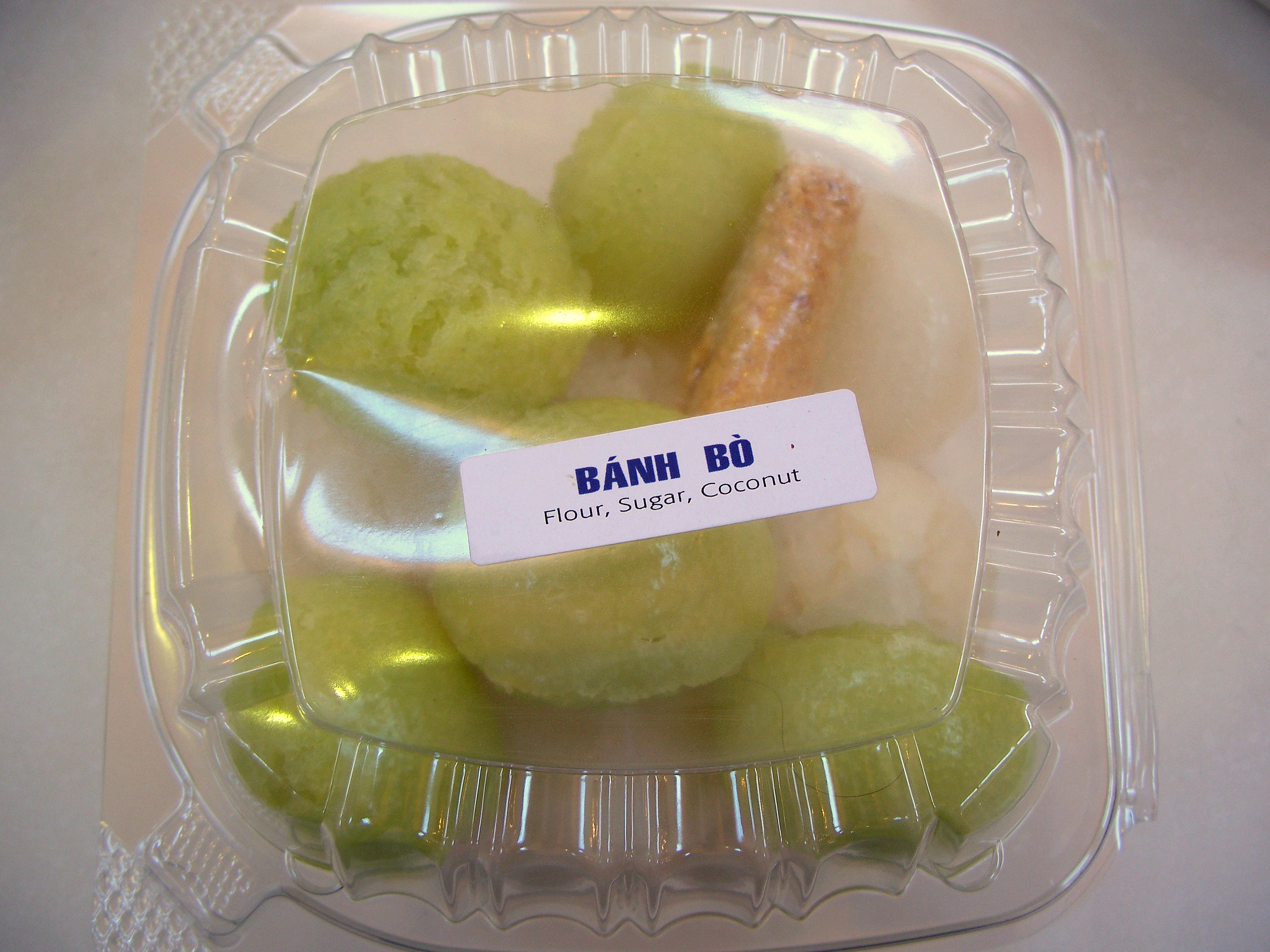
They shape like mini muffins, and look like fluff balls, so we call them bánh bò bông – “fluffy bánh bò”. The porous inside structure is compared with honeycombs or bamboo roots, or even crystals if you let your imagination go far enough. They’re either green or white with a coconuty sweetness, to pair with the burnt savory taste of toasted sesame, sugar and salt mix that comes sprinkling on top. They’re bouncy and chewy, and extremely light. We used to get the morning fresh batches from Ngọc Sáng bakery, 199 Ly Tu Trong, District 1, Saigon.


Now we settle for the plastic-packaged $2.50-worth bunch from Kim’s Sandwiches, 1816 Tully Rd #182, San Jose, CA. Certainly not half as good as the fresh ones, but it’ll do.

Previously on Sandwich Shop Goodies: bánh bao chỉ (loh mai chi)
Next on Sandwich Shop Goodies: bánh chuối nướng (banana bread pudding)

Hoang Tam at Playing With My Food has a nice simple recipe of bánh bò.

There can’t be more tender pork

August 06, 2010 By: Mai Truong Category: California - The Bay Area, Comfort food, One shot, Southern Vietnamese, Vietnamese

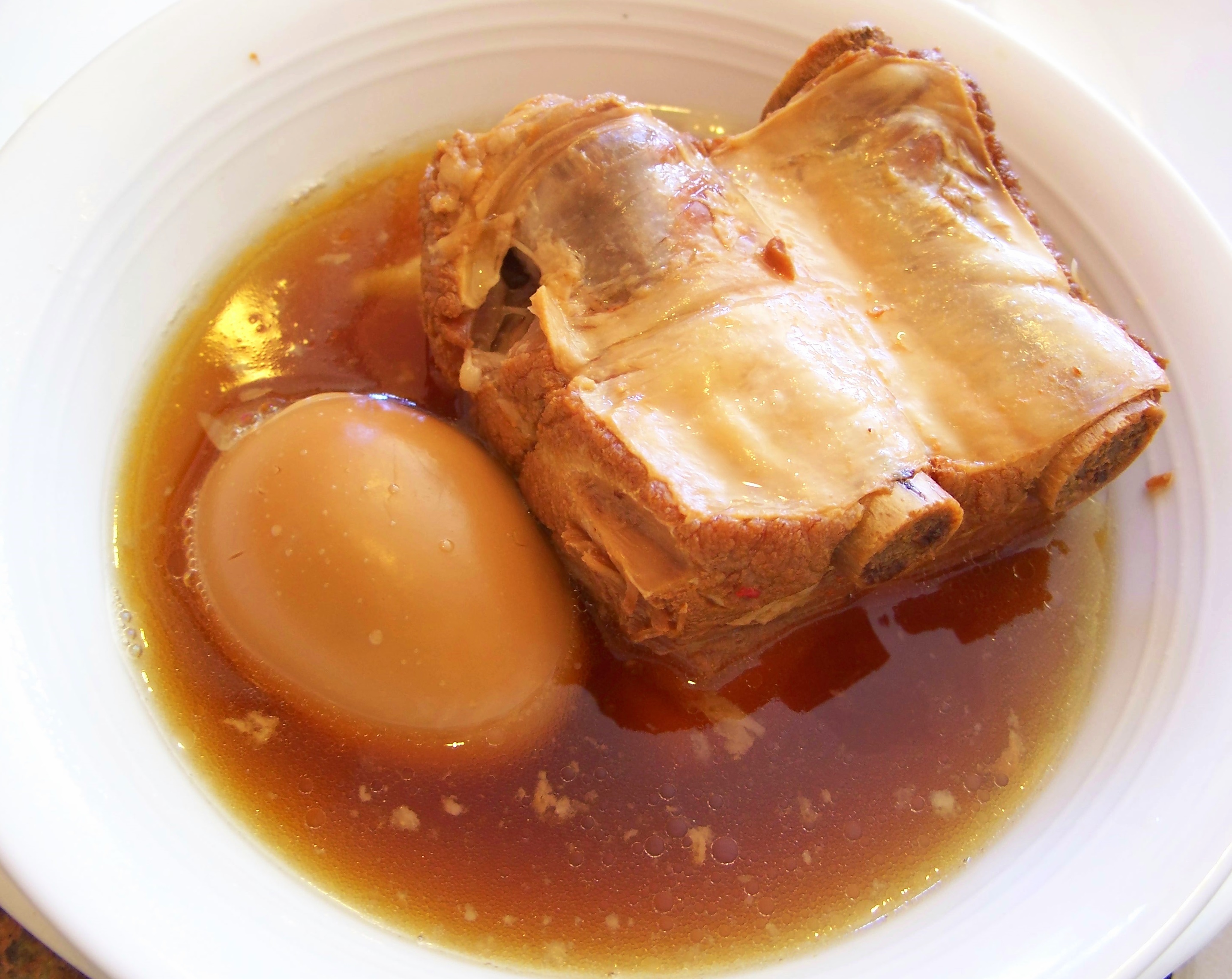
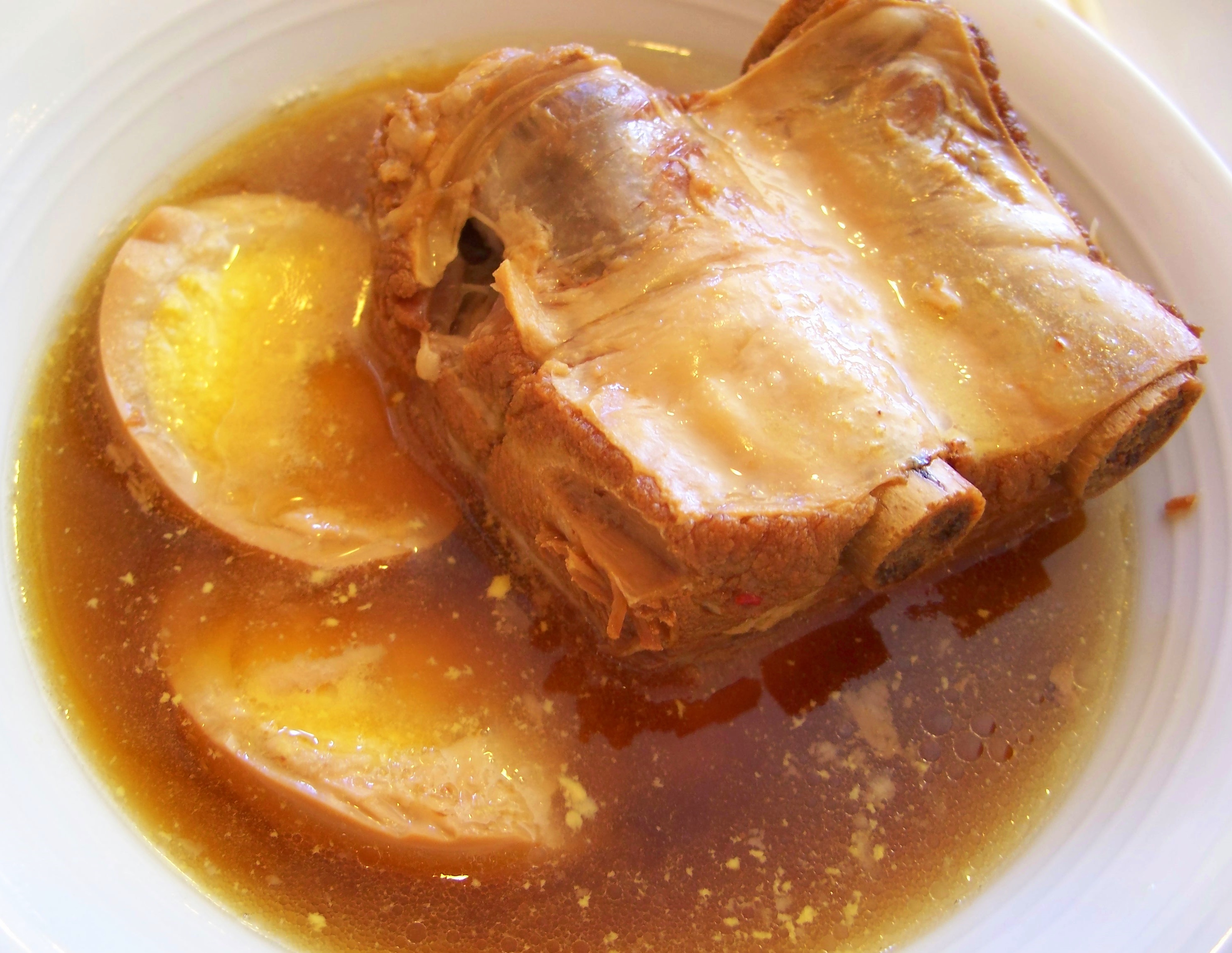
The revamped Bánh Cuốn Tây Hồ #8 dishes out some seriously tender thịt kho (fatty pork slow cooked in nuoc mam and sugar).

You know how they say this beef and that melt in your mouth? Well, I haven’t had any beef like that to testify if it’s just figurative talks, but last week I had this pork that really did melt in my mouth.

There is no need for either knife or teeth. The porcelain soup spoon cuts through three layers of skin, fat and meat as it would with a flan. The skin, which is half an inch thick and might have been chewy once, is not even as tough as jello. There is perhaps too much fat in this pork: a runny white bunch flimsily holding onto the meat (which should have been trimmed off) and bubbles floating in the sauce.

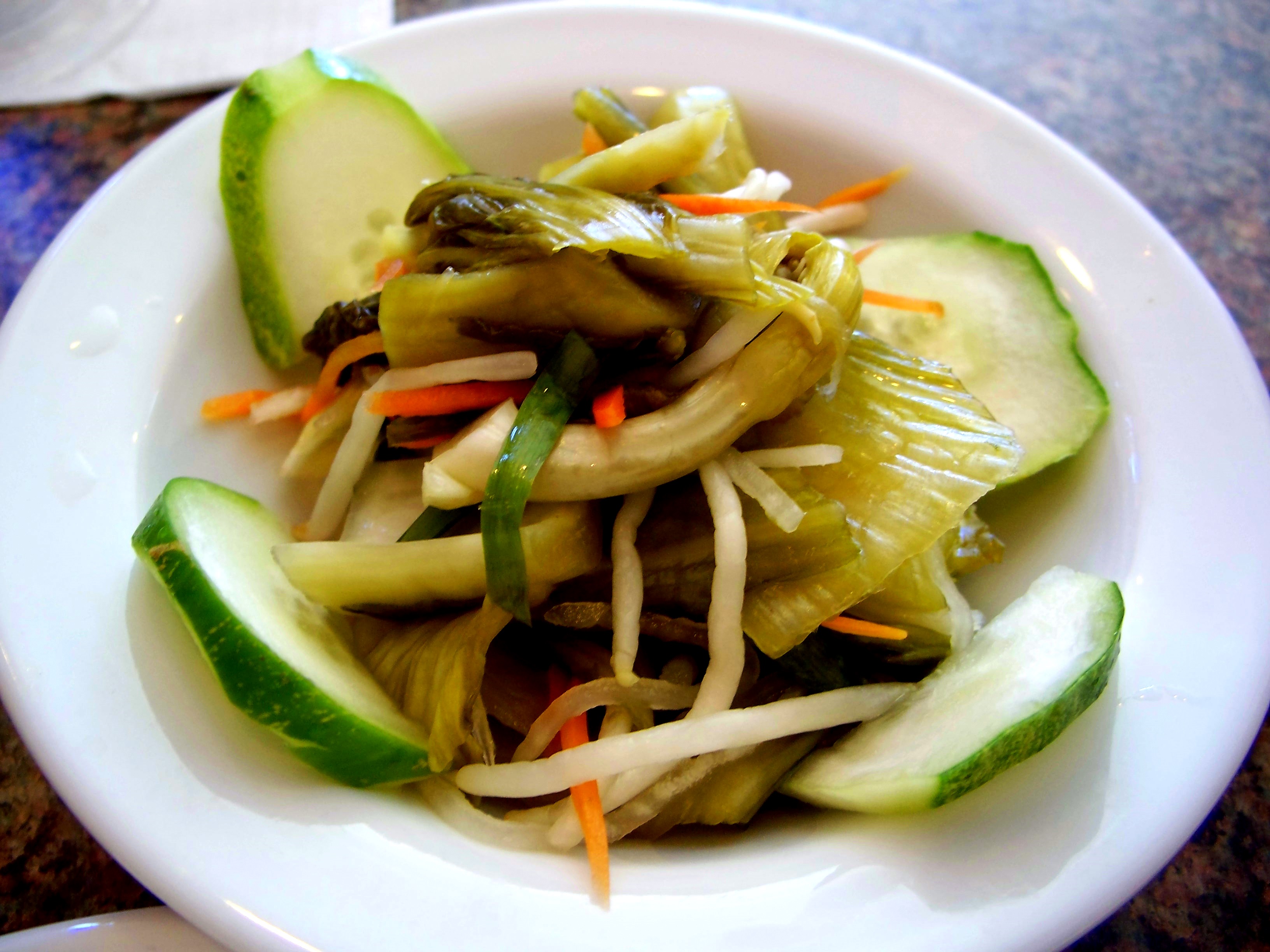
That’s how Southerners in the Mekong Delta cook their meat: huge chunks, generous seasonings, little attention to details and presentation. A few spoons of meat sauce alone is enough to flavor the rice. Overwhelmed by the fat? Tone it down with some dưa chua, pickled bok choy, carrot and daikon.

But what I like most in this lardy, homely course is not the meat, it’s the bone. Soaked in the same mixture of fish sauce and sugar, cooked for the same long time over the same heat, the bone doesn’t just dissolve like the meat, but becomes a pocket of juicy marrow. Place a bone between your jaws and press with the molars, the marrow oozes out like melting chocolate. Moving up a notch, Tay Ho’s braised pork was so cooked the bones turned into cookies. I am not exaggerating.

The second best thing in thịt kho is the eggs that have been cooked with the meat. Most savory eggs you can ever get.


Address: Bánh Cuốn Tây Hồ #8
2895 Senter Rd
San Jose, CA 95111
(408) 629-5229

Thịt kho trứng: $

Their bánh cuốn, as always, are good, but you have to pay $6.25 for only five rolls at Tây Hồ #8, whereas eight rolls of the same size would cost you $5.50 at Tây Hồ #9 in Oakland.

Sandwich Shop Goodies 8 – Bánh bao chỉ (loh mai chi)

August 01, 2010 By: Mai Truong Category: California - The Bay Area, Chinese, Comfort food, One shot, sticky rice concoctions, sweet snacks and desserts, Vegan, Vietnamese


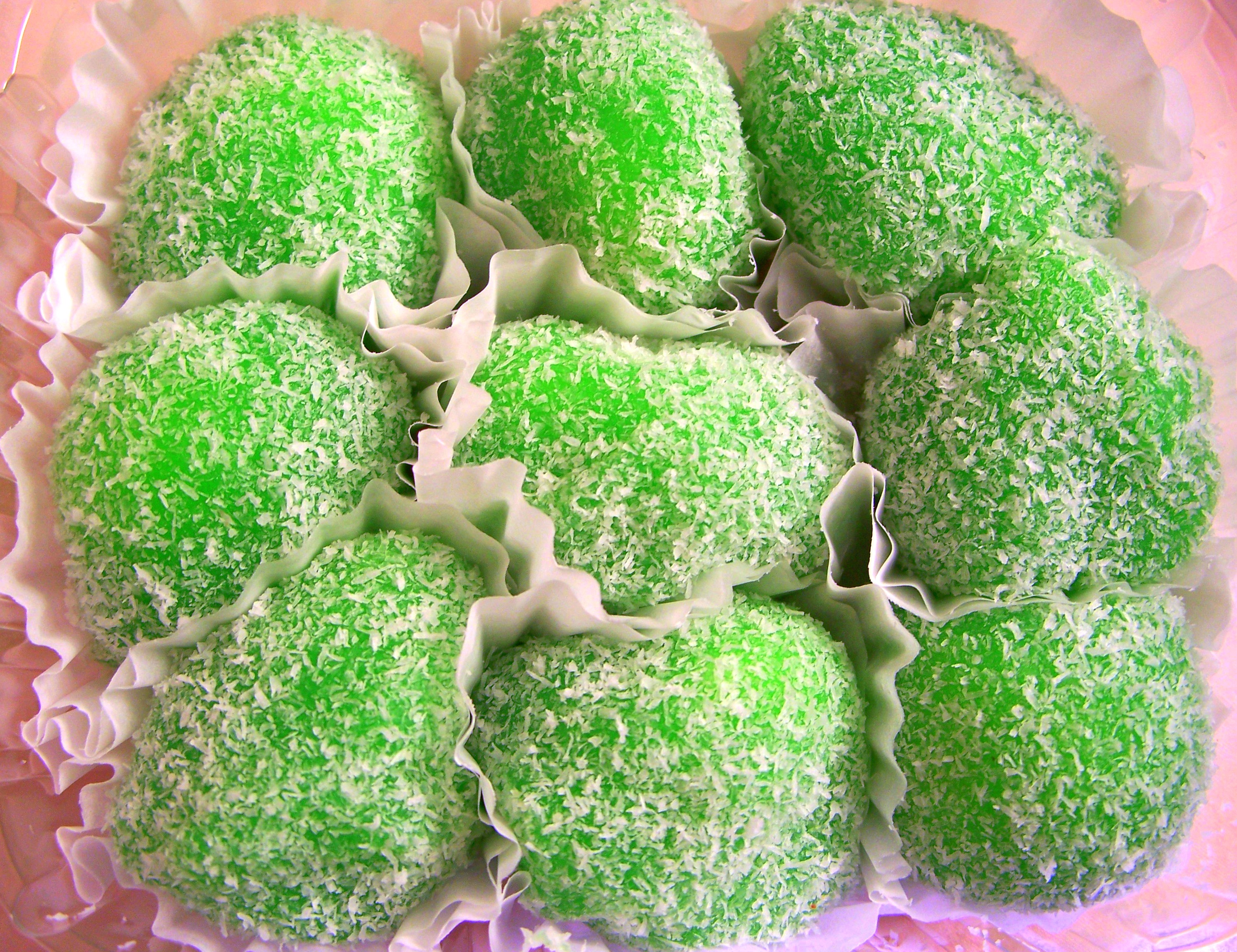
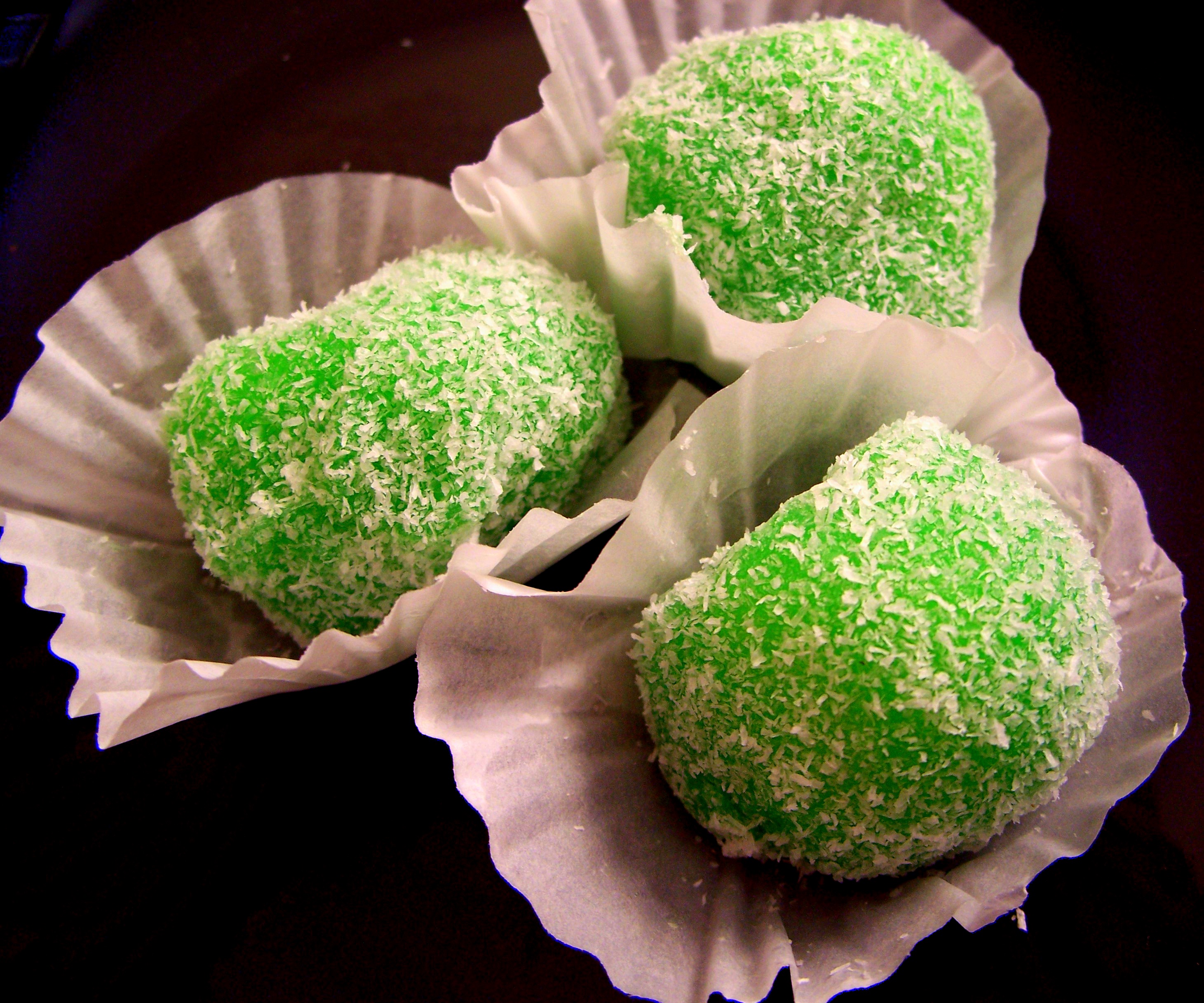
Yet another sticky rice snack that I vaguely remember eating one or twice during the early childhood, and found again in a San Jose sandwich shop more than ten years later. I was excited when I saw these green balls covered in coconut bits.

We Vietnamese call them bánh bao chỉ to distinguish from the meat-filled steamed bun made from wheat flour known to us as bánh bao. Just as bánh bao comes from China, so does bánh bao chỉ. Just as bánh bao are baozi and mantou in Mandarin, mandu in Korean, manju in Japanese, manti in Turkish, and many more, bánh bao chỉ too has its share of names.

The most-result-yielding Google search belongs to loh mai chi, commonly shown as little sticky rice flour dumplings with sweet ground peanut filling. Other variations in Malaysian and Chinese food blogs are snowball, loh mi chi, chi fa bun, muah chee (yeah, these are really cute you’d want to kiss them too)*, noh mi chi, and ma zi. Once again, I feel the need to learn Mandarin. Some say “noh mi” means “sticky rice” in Cantonese, but what does “chi” mean? Others, including the Vietnamese sites, insist that “chỉ” in bánh bao chỉ comes from “mà chỉ”, which is “ma zi”, which is “sesame seed” in Mandarin, which means “mi chi” is “sesame” (recall mi lao – sesame fluff) and we’re left with “noh” being “sticky rice”. It is reasonable enough if we consider that there are four types of fillings for bánh bao chỉ: black sesame, coconut, mung bean, and peanut. But the taste I had from childhood was the salty and sweet ground peanut in a gummy, springy thin layer of white dough coated with flour. Sesame filling must be a new twist.


And so are the vibrant green color and the coconut bits. And the size. Cheap bánh bao chỉ used to be sold on wheels: an old Chinese man peddled around the neighborhood with a glass tank on the back of his worn bicycle, the tank half filled with soft white balls as big as tangerines. Now these balls are about an apricot each, fit snugly in a plastic box and sold for $2 at Kim’s Sandwiches. Not only do they lose the romantic authenticity of a street food, they also taste like soap. The green dough, instead of having pandan flavor, reeks of artificial chemicals. The mung bean paste is sickeningly sweet.

I’ve never been so disappointed with a snack food. Do NOT buy these green balls, no matter how good looking they are. Search online for loh mai chi recipes, or search the streets for old Chinese vendors.

(*) It’s hard to refrain from making the connection between muah chee and the Japanese mochi (daifuku).

The exact origin of mochi is unknown, though it is said to have come from China. The cakes of pounded glutinous rice appear to have become a New Year’s treat during Japan’s Heian period (794-1185). As early as the tenth century, various kinds of mochi were used as imperial offerings at religious ceremonies. A dictionary dating from before 1070 calls the rice cake “mochii.” Around the eighteenth century, people began to call it “mochi.” Various theories explain the name. One is that “mochi” came from the verb “motsu,” “to hold or to have,” signifying that mochi is food given by God. The word “mochizuki” means “full moon.” People of the west and southwest islands called it “muchimi,” meaning “stickiness.”

– from New World Encyclopedia

So I know everybody thinks the entire Far East gets its stuff from China (yeah… no.), but here’s a crazy idea: what if this sticky rice ball with sweet fillings actually originated from Japan, then the Chinese got hold of some, and later passed it down South?

Previously on Sandwich Shop Goodiesbắp hầm (Vietnamese whole kernel grits)
Next on Sandwich Shop Goodiesbánh bò bông (steamed sponge muffin)

Big wraps from tiny Razan’s Organic Kitchen

July 30, 2010 By: Mai Truong Category: American, California - The Bay Area, sandwiches


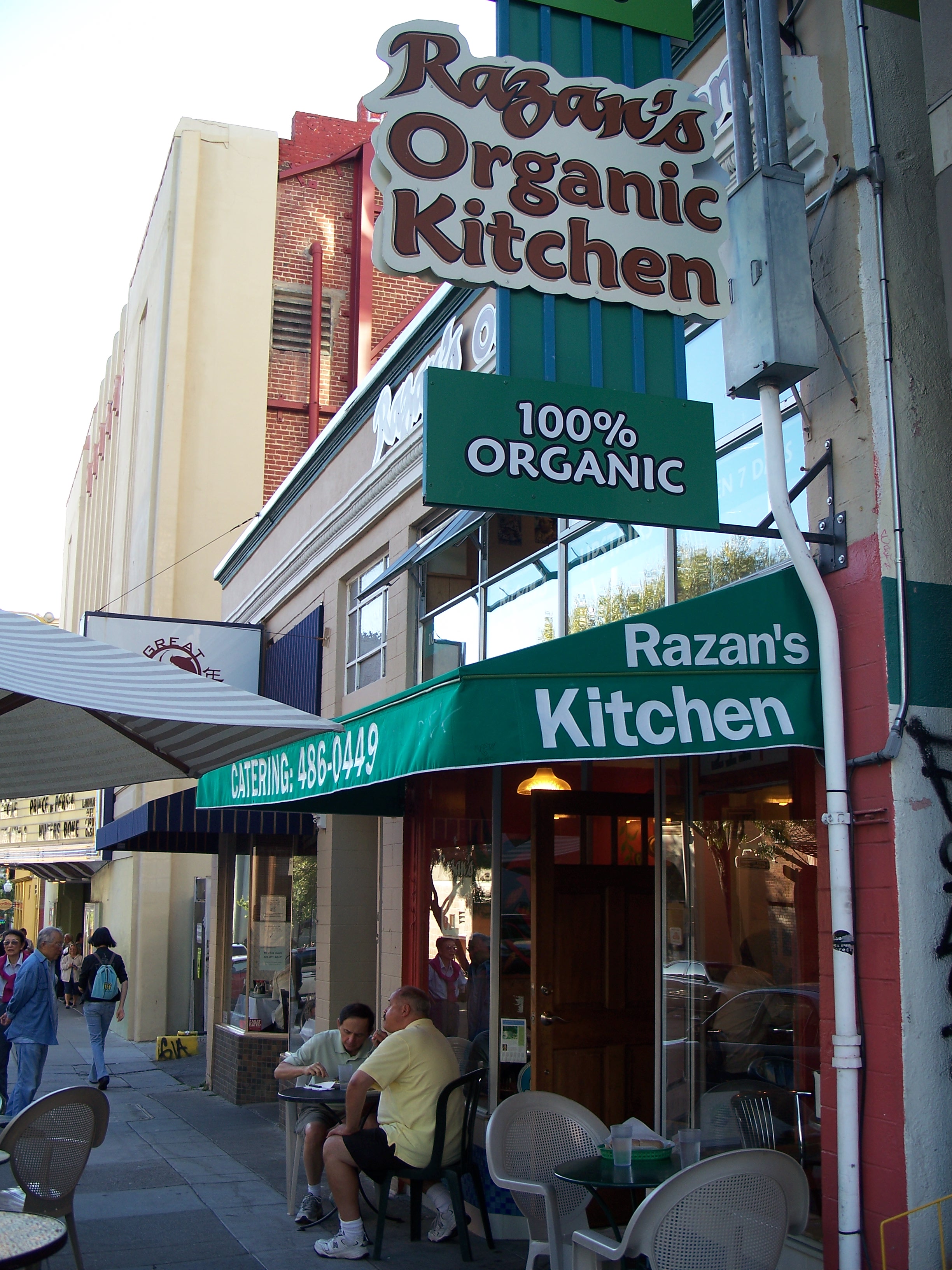
Maybe I’m still holding everything in comparison to Texas, and maybe it’s unjust to do so, but South Berkeley is seriously the hole-in-the-wall haven. It’s like the folks here just woke up one day and decided hey I’m gonna swap out the sofas downstairs for some huge stoves, place in a few tiny tables and a few tiny chairs against the walls, and maybe an umbrella out on the pavement for style, a receipt printer, a sign that says “Cash only”, and a drink dispenser (or water pitchers). Voilà, mon restaurant! Or in this case, more humble and descriptive, Razan’s Organic Kitchen!


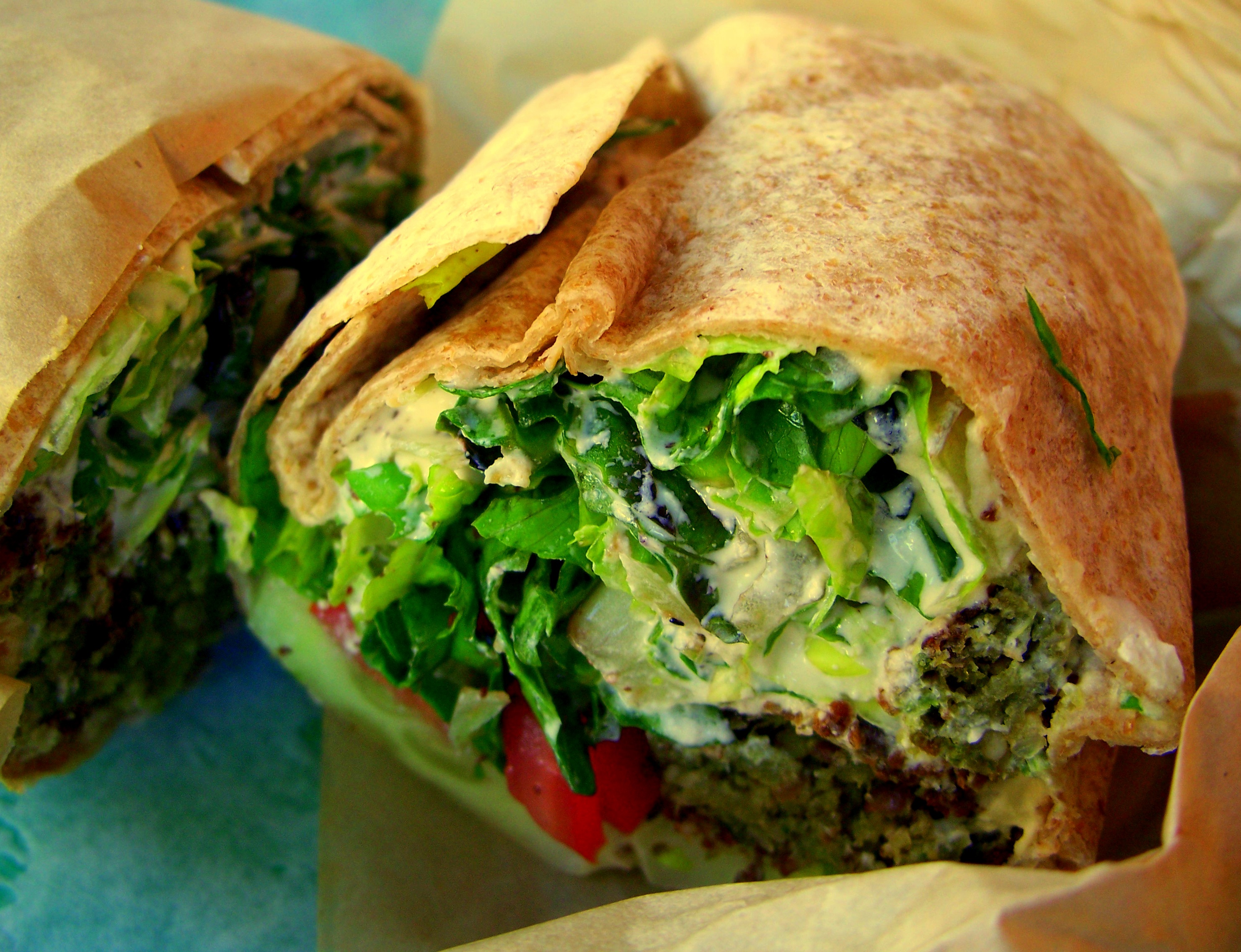
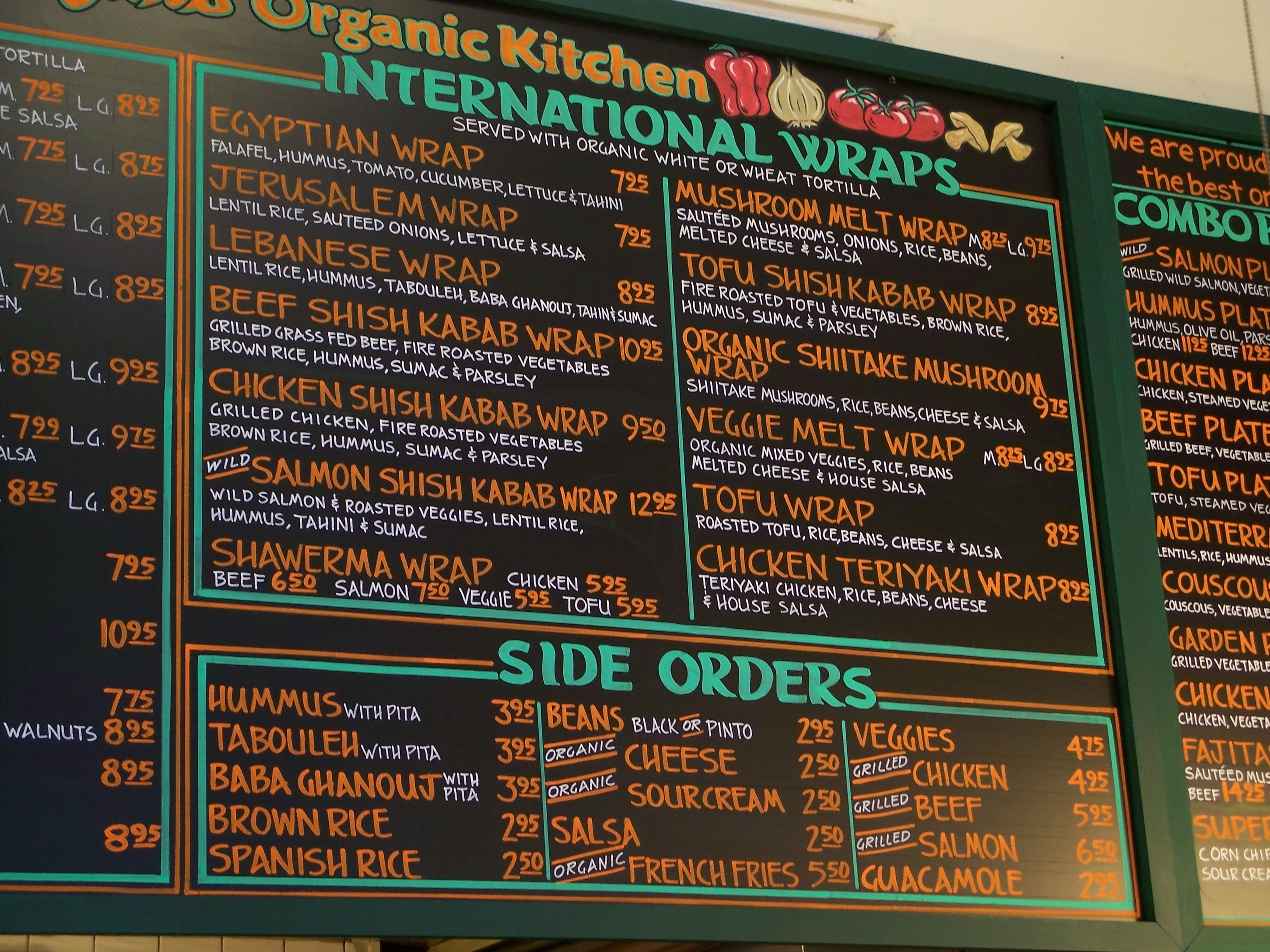
The wraps take center stage on the chalkboard menu, and the snugly enclosure doesn’t invite a serious course, so we opted for two wraps. The veggie one, named Egyptian (did Egyptians not eat meat?), came out as soon as we filled our water paper cups.

As far as content goes, I didn’t expect much from a package of falafel, hummus, tomato, cucumber, lettuce, and tahini (sesame paste) wrapped in wheat tortilla, which isn’t really different from pita. But the package did surprise me with its freshness and harmony. Tomato and hummus made it a bit runny, but the lettuce crunch was a perfect complement for the falafel’s meatball-like texture. I’m not sure if the falafel was made Egyptian-style with only fava beans, but it is the distinguisher between the veggie Egyptian wrap and the other nine veggie wraps (Jerusalem, Lebanese, and less regional names) on board.


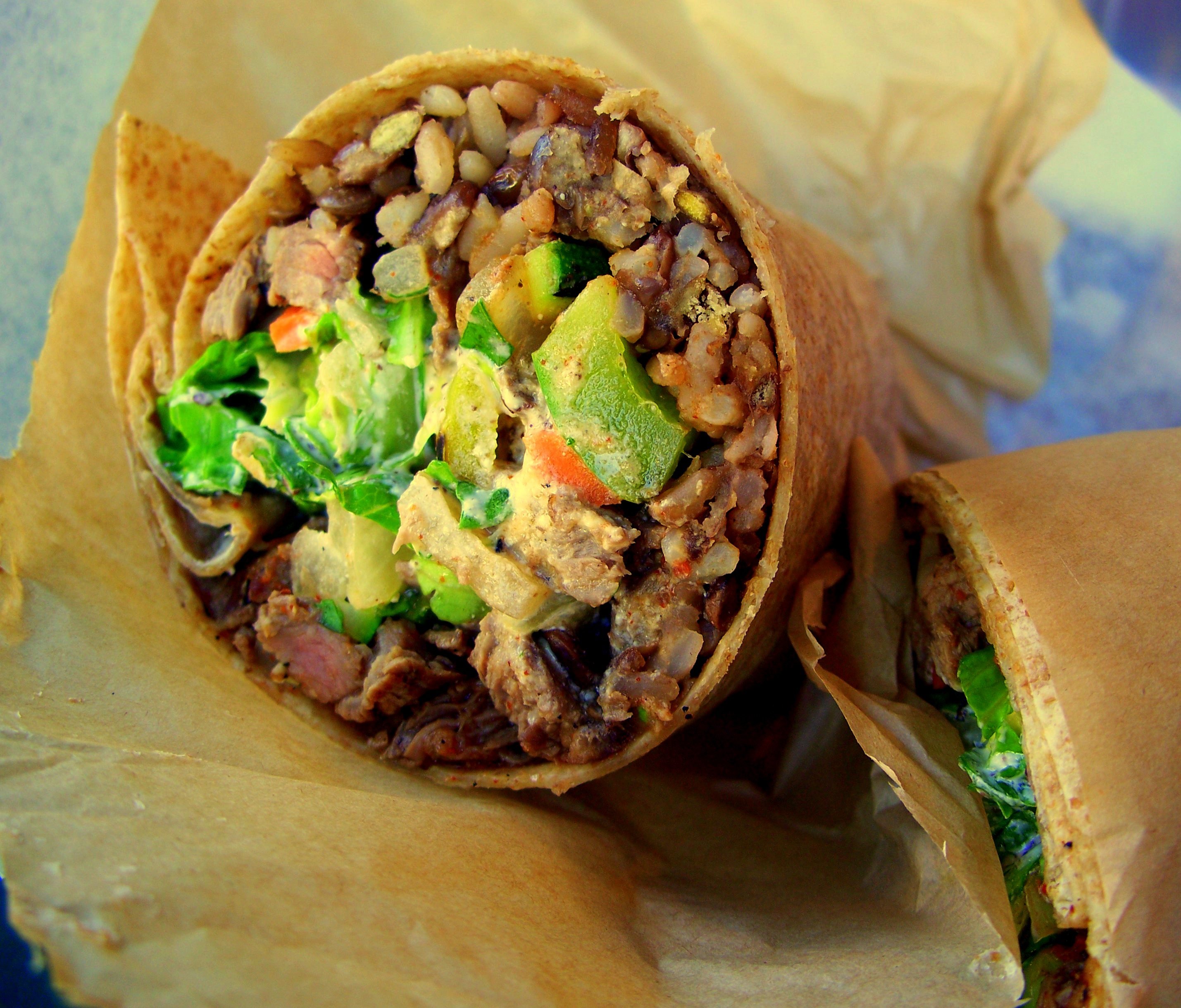
The meat wraps are three fewer than the veggie ones. The three main choices are chicken, beef, and salmon, in increasing order of price. Being in the safe mode that day, I went for the beef shish kabab, with roasted vegetables, brown rice, hummus, sumac and parsley. Every bite strikingly resembled a steak burrito from Chipotle. Not bad, but not wow-enducing either. Rice falling out from all sides is not a pretty sight.


They were big, tight wraps. The stuffing was as compact as the place itself. Even so, putting together the size, the taste, the ingredient freshness, and the location, $7.95-$12.95 a sandwich log is still a steep edge. I know I should support free range chicken and grass fed cow yada yada, but we students have to support ourselves too.


Address: Razan’s Organic Kitchen
2119 Kittredge St
(between Fulton St & Shattuck Ave)
Berkeley, CA 94704
Neighborhoods: UC Campus Area, Downtown Berkeley
(510) 486-0449

Razan's Organic Kitchen in San Francisco on Fooddigger

Tags: ,