Flavor Boulevard

We Asians like to talk food.
Subscribe

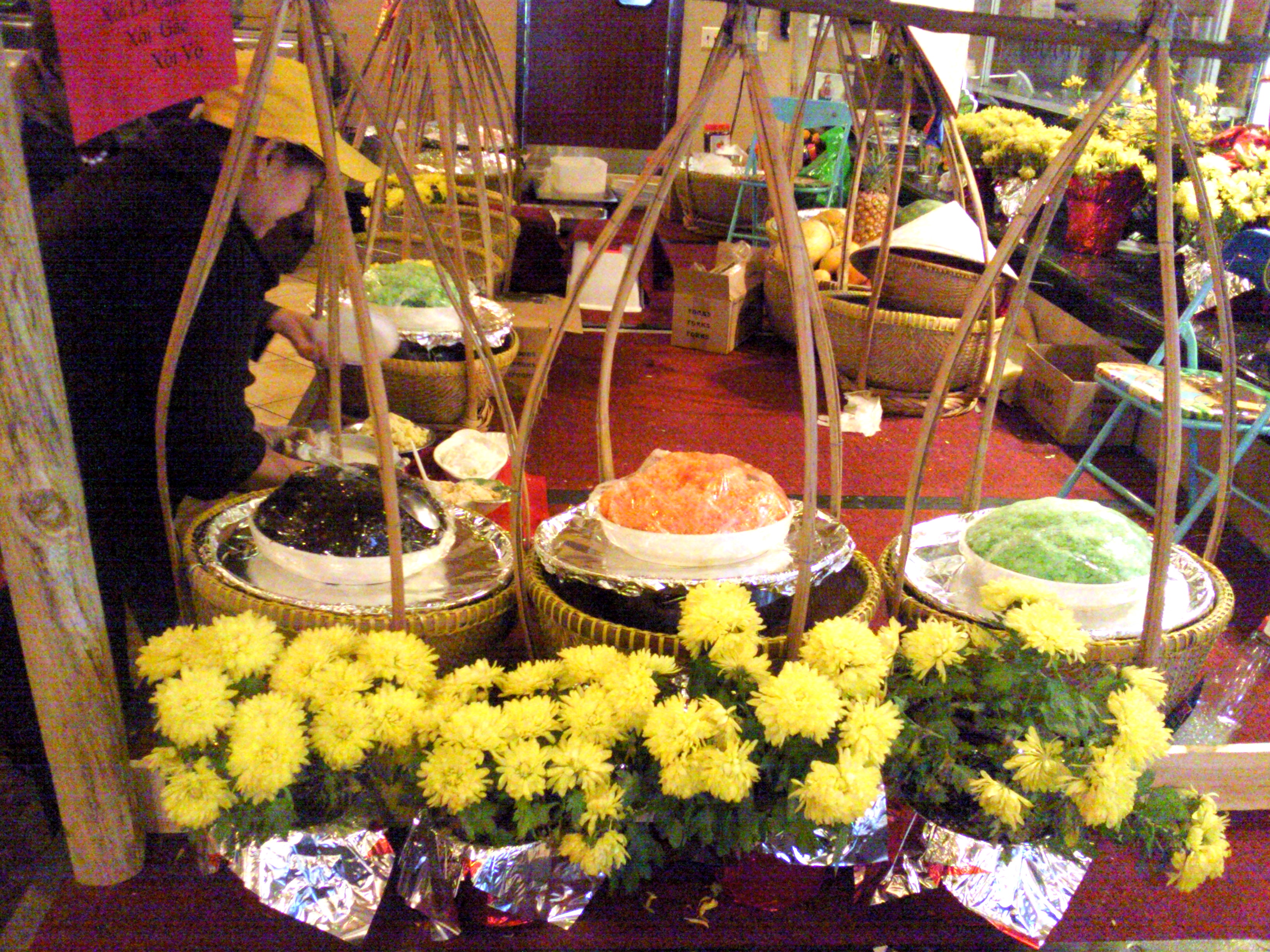
Kim Son’s Tet in woven baskets

February 09, 2011 By: Mai Truong Category: Festivals, Houston, noodle soup, Vietnamese

*Guest post in Vietnamese by my Mom, translated by me*
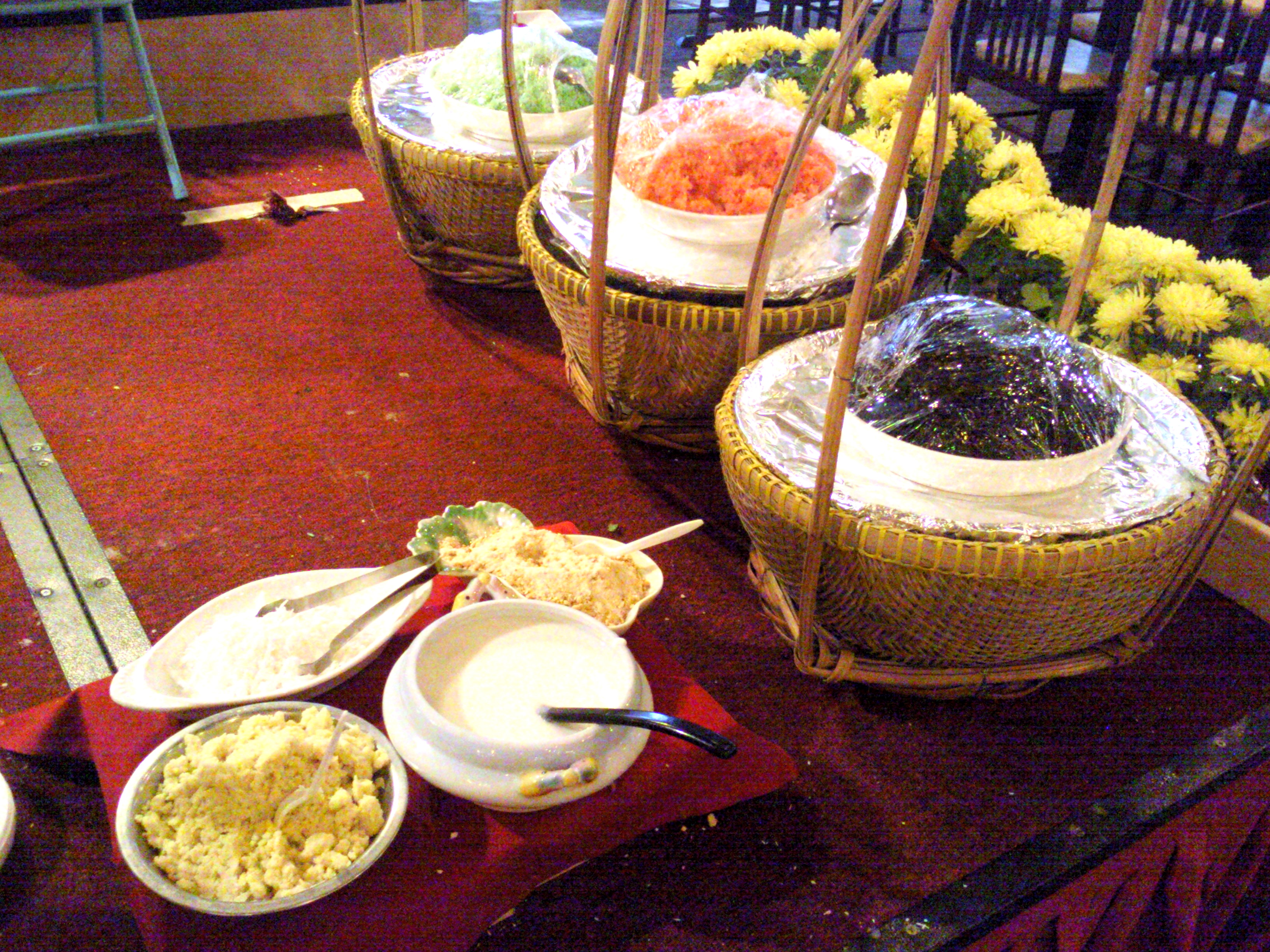

Back in the day, I seldom ate from street stalls or vendors’ baskets, my conscience imprinted with my mother’s unmovable doubt on the street food’s cleanliness. Nonetheless, I scurry with no hesitation to make it to Kim Son for lunch today, just because the TV news last night showed that Kim Son has a 9-day New Year food festival where the goodies are sold in baskets, mimicking the vendor stalls in Vietnam.
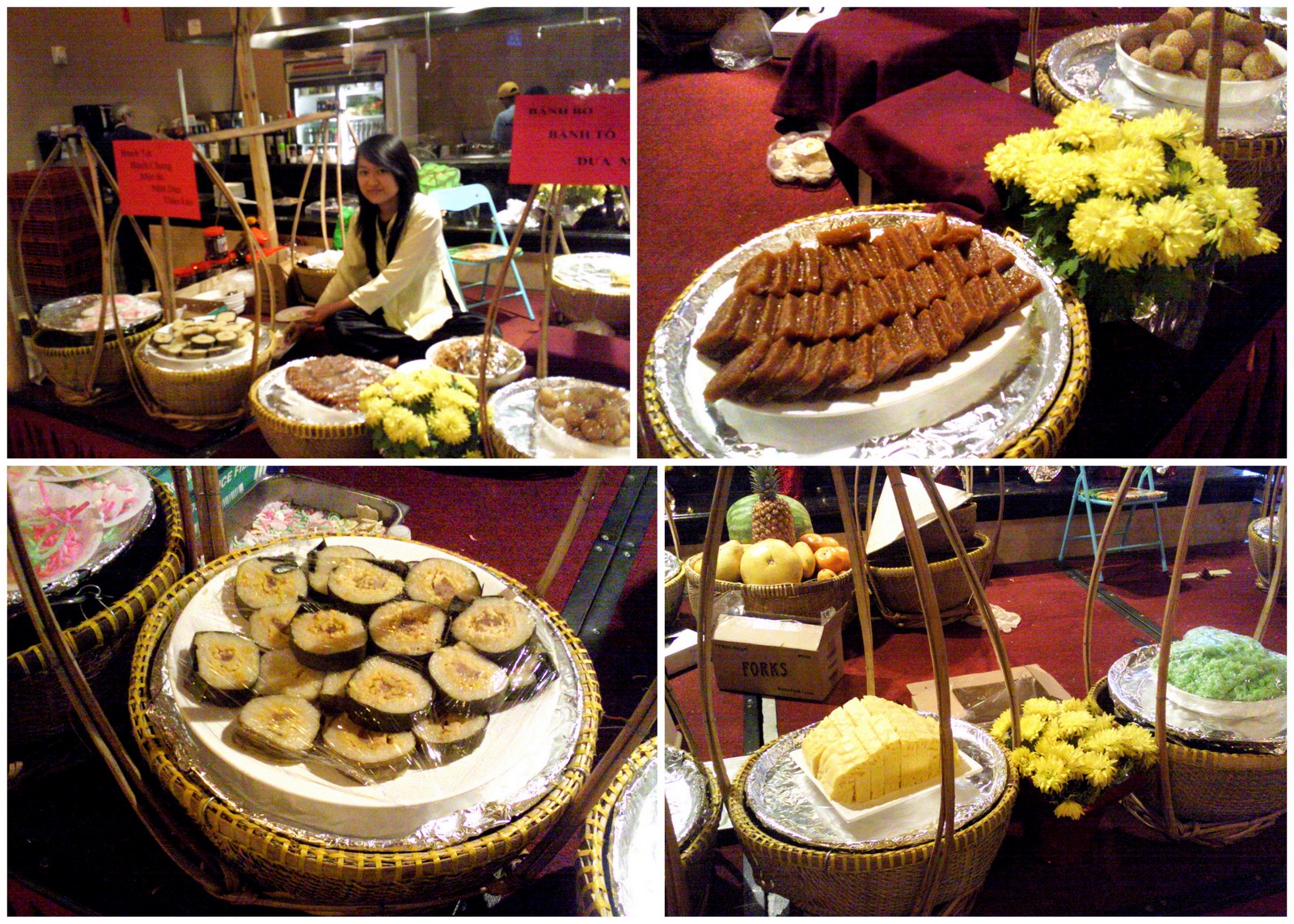

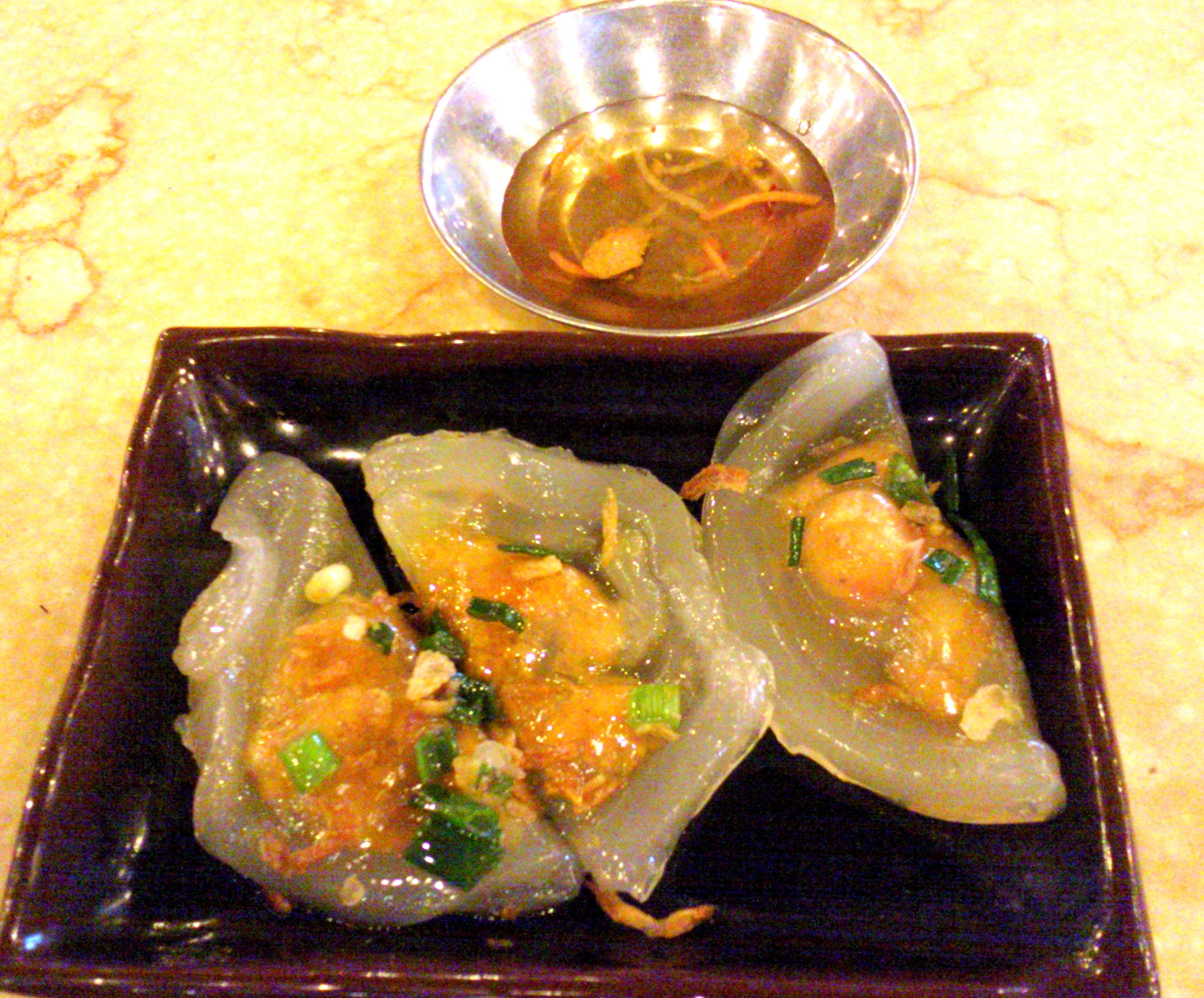
Like usual, the display is a buffet style, but this week the dining hall is decorated with flowers, fruits, and Tet greetings, the food selection is also larger and more interesting than normal days. I notice thịt kho and dưa giá (slow braised pork and pickled bean sprout, two traditional Tet savory dishes), bánh xèo (sizzling crepe), bánh bèo (water fern banh), bánh bột lọc (translucent banh) bánh cống (mung bean fried muffin).

In the baskets lie a few types of xôi, bánh tét, and mứt. A tightening mix of homesickness and joy rushes through me as I see woven baskets, bamboo shoulder poles, and the waxy green banana leaves holding and covering morsels of Tet.
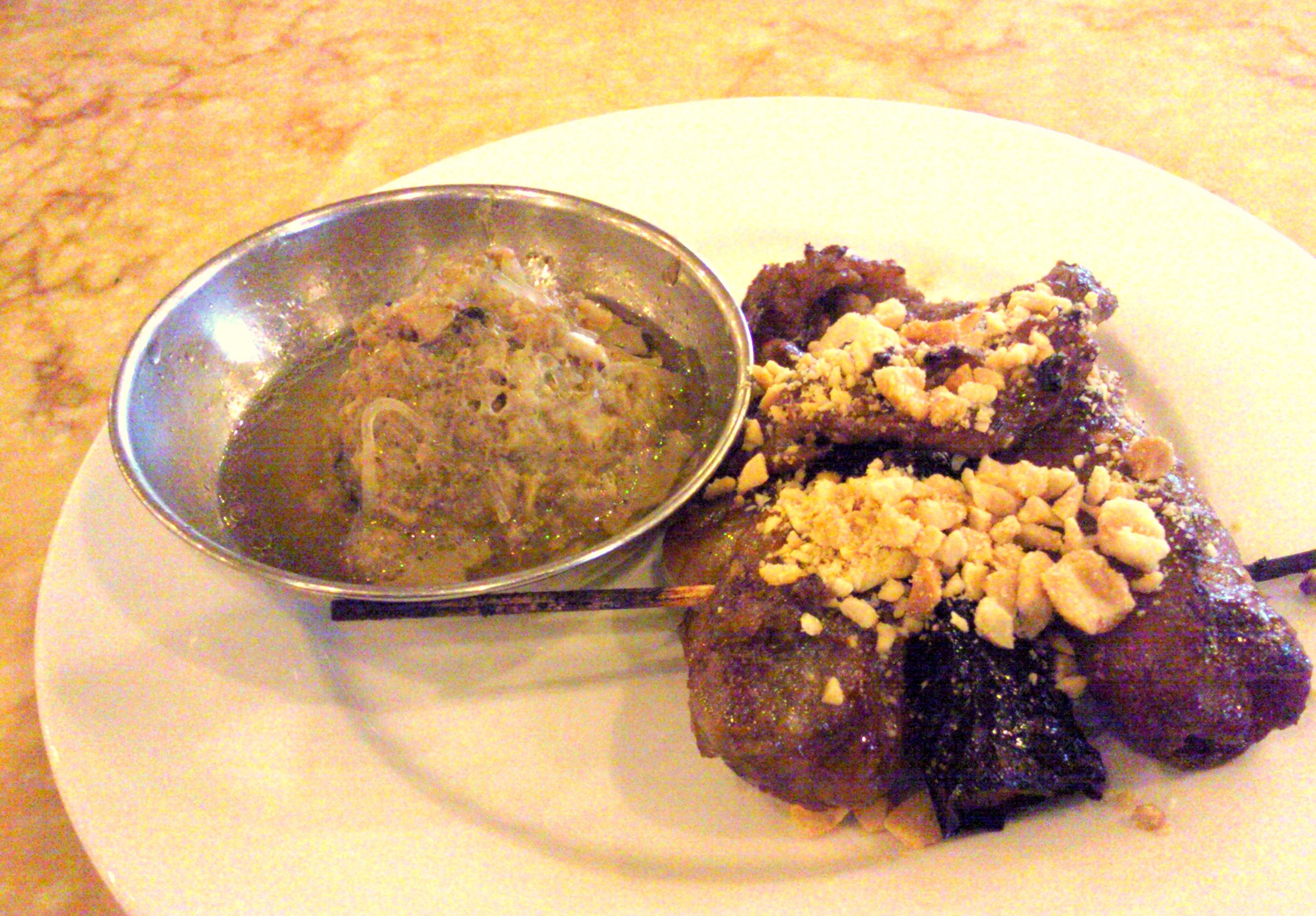

We load our first plate with seven-course beef, though the kitchen churns out only four: grilled beef (bò nướng vỉ), beef loaf (bò chả đùm), lolot beef (bò nướng lá lốt), and beef sausage in omental fat casing (bò mỡ chài). The little pinky-length fat beef sausages are extraordinarily tender, grilled on medium fire and so well seasoned they have the sweet smell of talents.
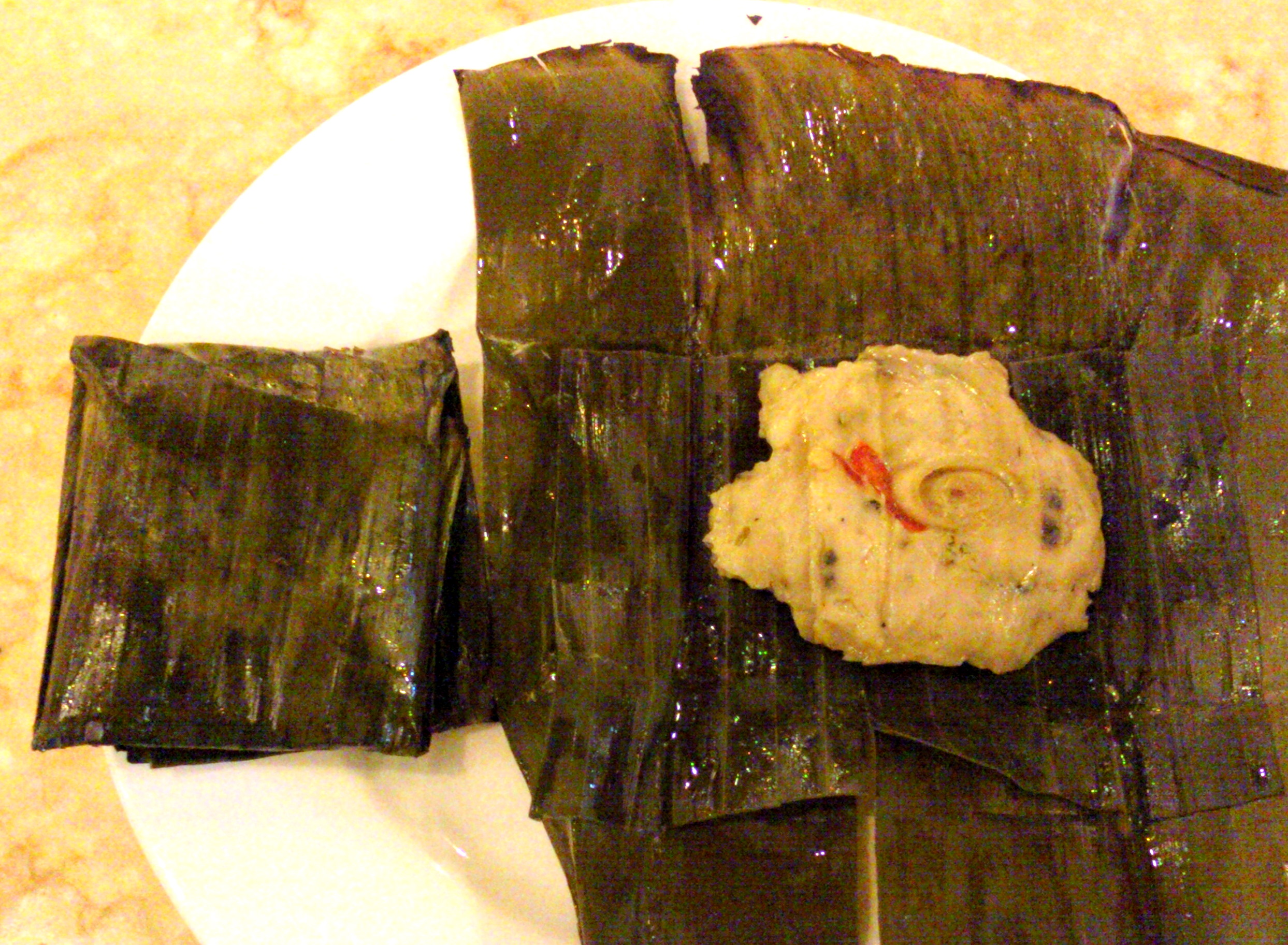

Meanwhile, my husband chooses the restaurant’s recommended special of the day: grilled snail sausage in banana leaves. I don’t like snails but have a taste anyway just out of curiosity. It is slightly spicy, but I get blown away. There is no hint of the wet and grassy snail scent that used to give me goosebumps when I was little. The banana leaf wrapping protects the velvety sausages from the burnt smell of open fire grilling, and gives it a sweet green aroma of summer breeze. As much as I like fish, I must admit these are better than the Indonesian fish sausages I’ve had a few months ago.
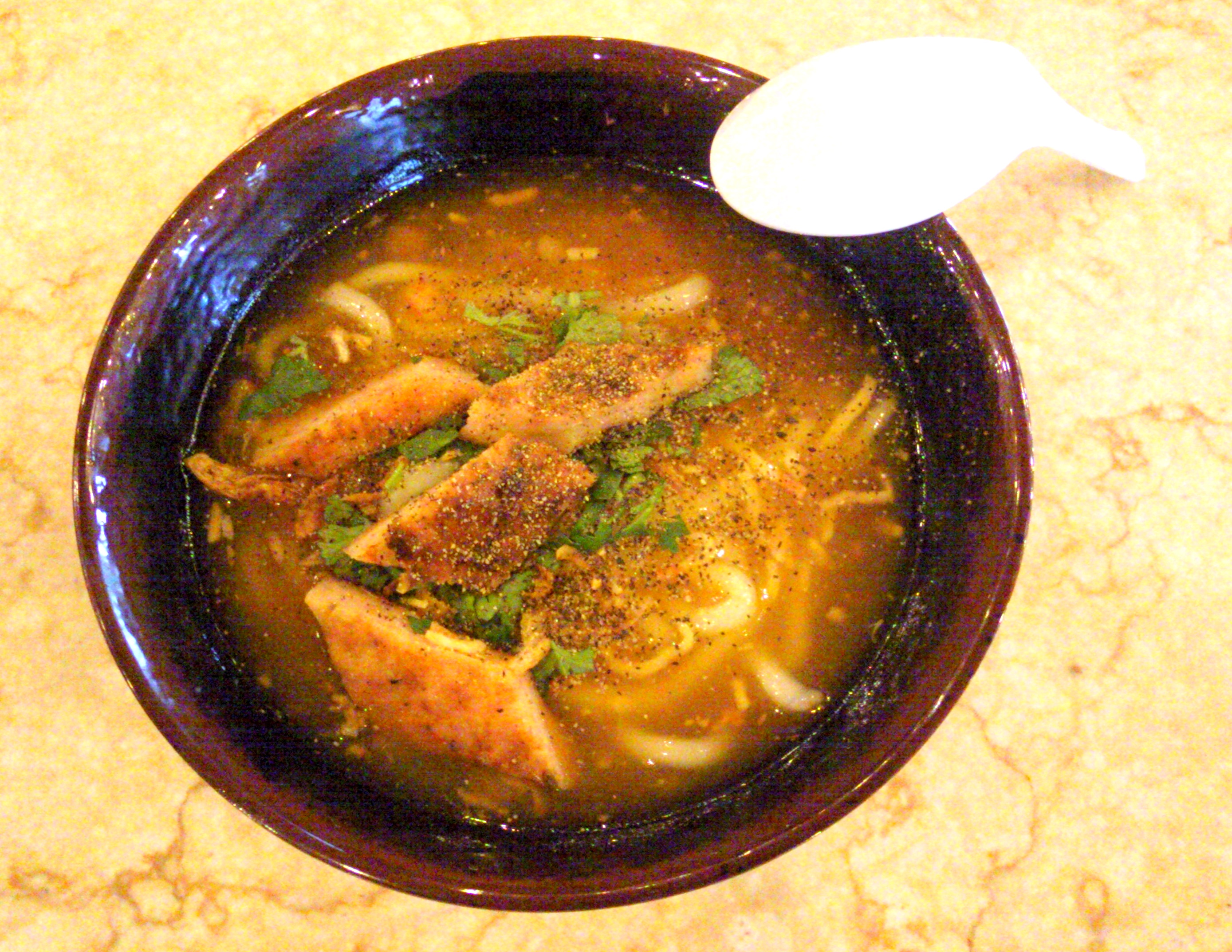

Another special is bánh canh cua Nam Phổ. I only learned about Nam Phổ, a village in central Vietnam, and its famous udon-like noodle soup from books, so I am overjoyed to see the real thing on the menu today. Bits of crab meat amidst chubby slick chunks of banh canh in a scarlet broth rich of crab sauce is the loveliest sight of all noodle soups. Banh canh Nam Pho, unlike banh canh of the South, doesn’t have loads of shrimp or pork, the broth isn’t starkly clear, yet its thickness delivers just a mellow natural sweetness. The first bite reveals little taste, but the second, the third, and a few sips of the broth in between start to sweep in waves of riverbank wind and meadow fragrance.
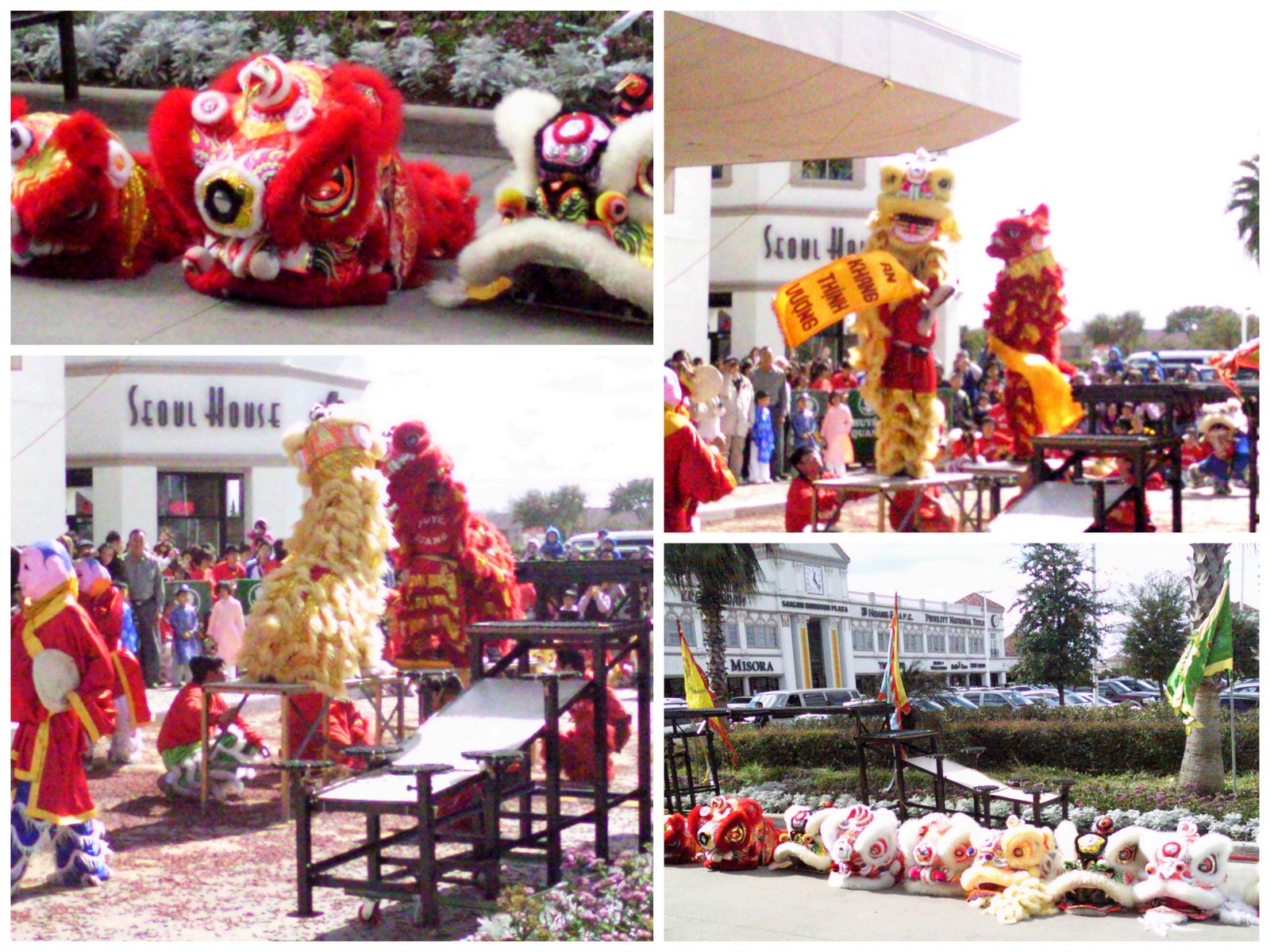

The country lunch sets us back $35.75 and 90 minutes. As we get ready to leave at 12:30, the parking lot gets ready for a massive lion dance and firecracker show. The sight of sixteen gaudy lions and hundred-meter long red squib strings and their boisterous sounds follow me all the way home, as I think of how we, the Asian expats, try to bring with us our lunar new year and our motherlands wherever we go.

Address: Kim Son Restaurant
10603 Bellaire Blvd
Houston, TX 77072
(281) 598-1777

This post is included in the February 2011 edition of Delicious Vietnam, a blogging event organized by Anh from A Food Lover’s Journey and Hong and Kim from Ravenous Couple.
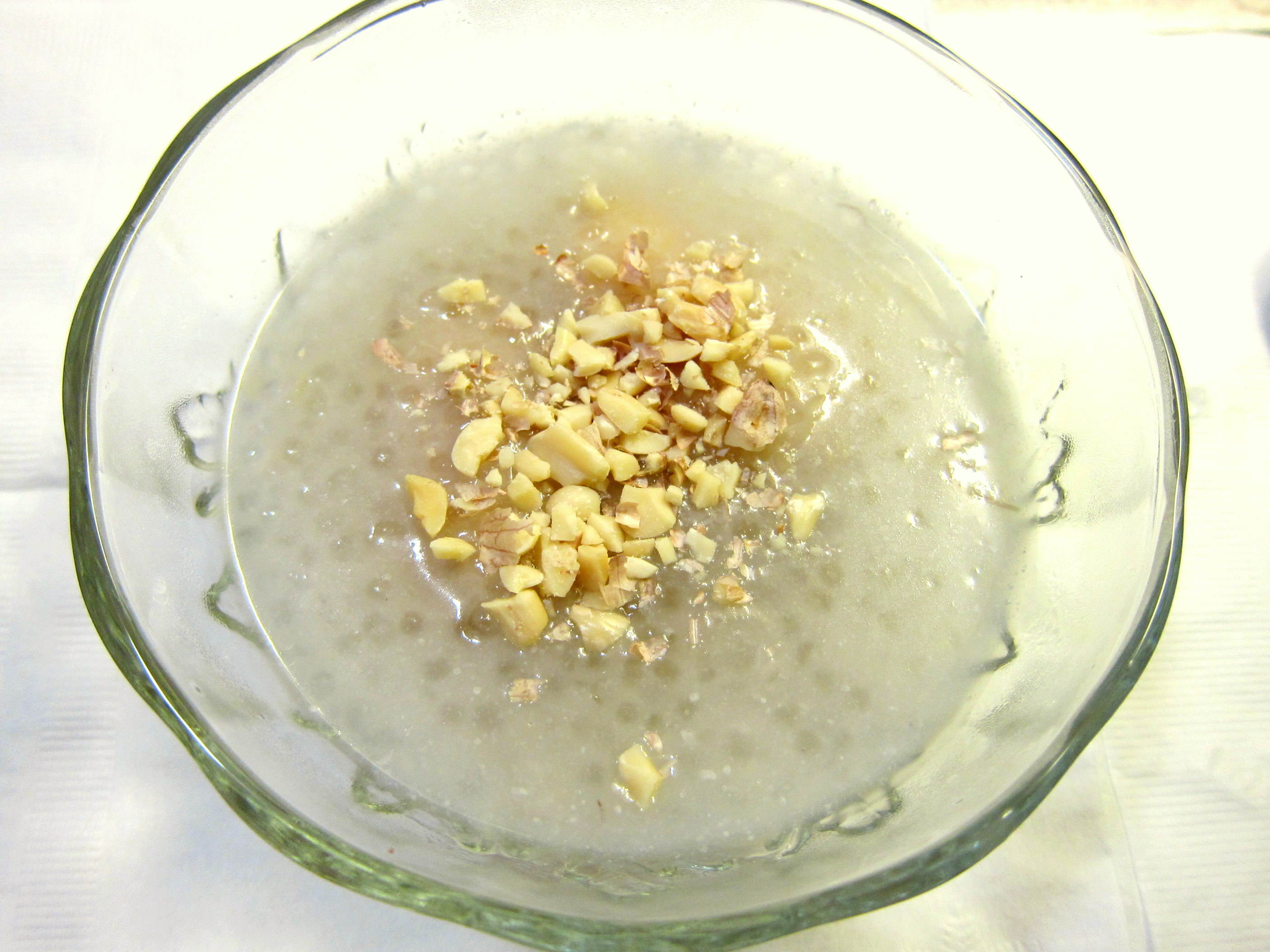
Chè chuối chưng (banana tapioca pudding)

February 08, 2011 By: Mai Truong Category: Comfort food, RECIPES, Southern Vietnamese, sweet snacks and desserts


Every once in a while when the planets align the right way with the constellations, I get into cooking mode. Then I ask my mom how to make certain things, usually easy stuff, spend at least an hour at the grocery, another half a day in front of either the sink or the stove, washing, churning, tasting, sprinkling, and tasting again. Saying that I like to cook would be like saying students hate holidays, but somehow the little accomplishment at the end of a cooking session always makes me glee, partly because I wouldn’t have to worry about dinner in the few days after. (Since the first day I had a kitchen(ette), I’ve only made savory dishes.) This time is special: I didn’t spend half a day in the kitchen, and the little accomplishment is a dessert.

Now this might actually means I have che instead of rice for dinner in the next few days :-P, but all is well as my banana che is not in the least coyingly sweet like che from sandwich shops.


Recipe adapted from Mom’s instruction:

Chè chuối chưng (banana tapioca pudding) (“chưng” means “display”, in this case to indicate the type of banana one would use for this dessert, not “tapioca”)

Ingredients:
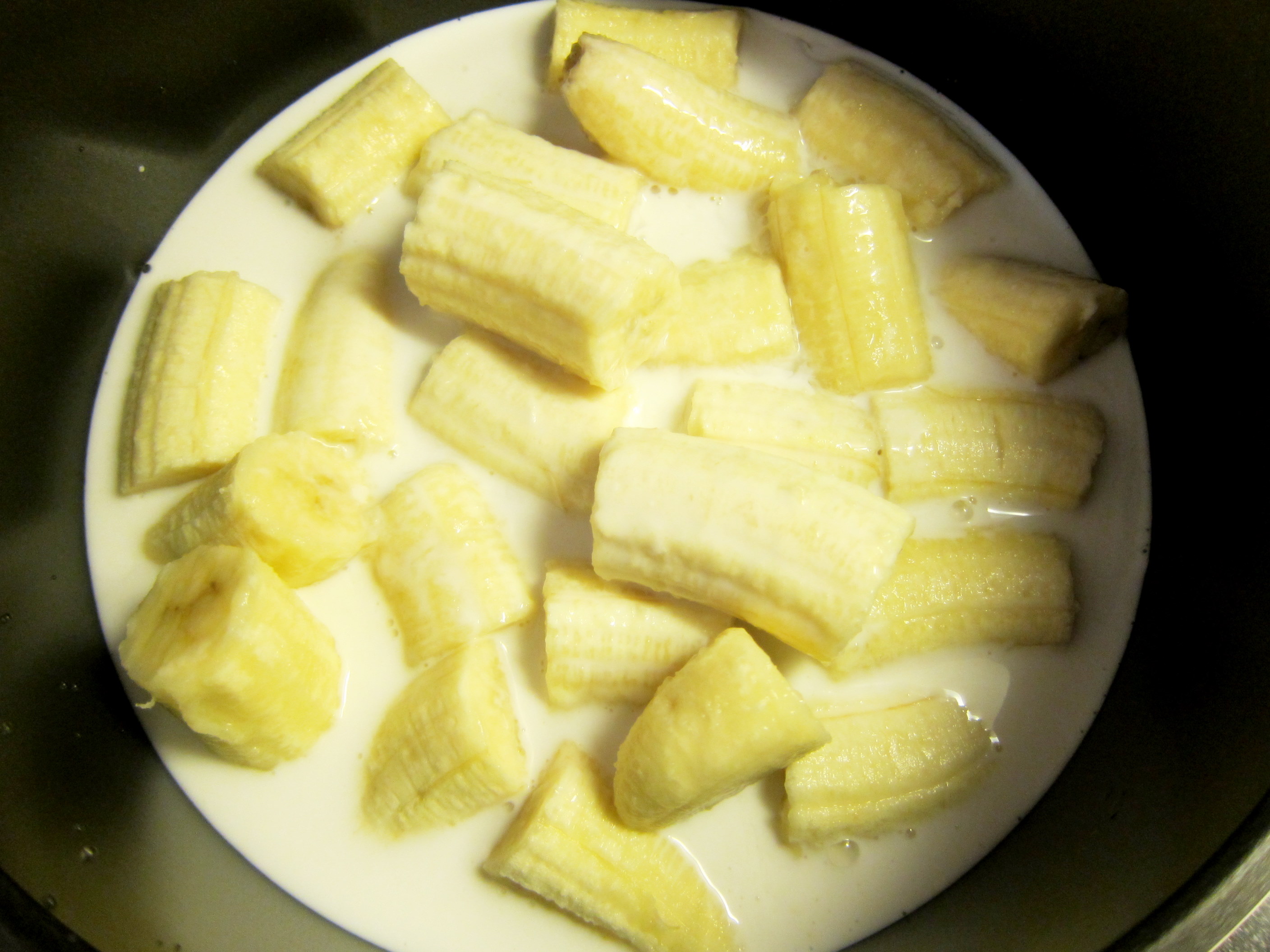
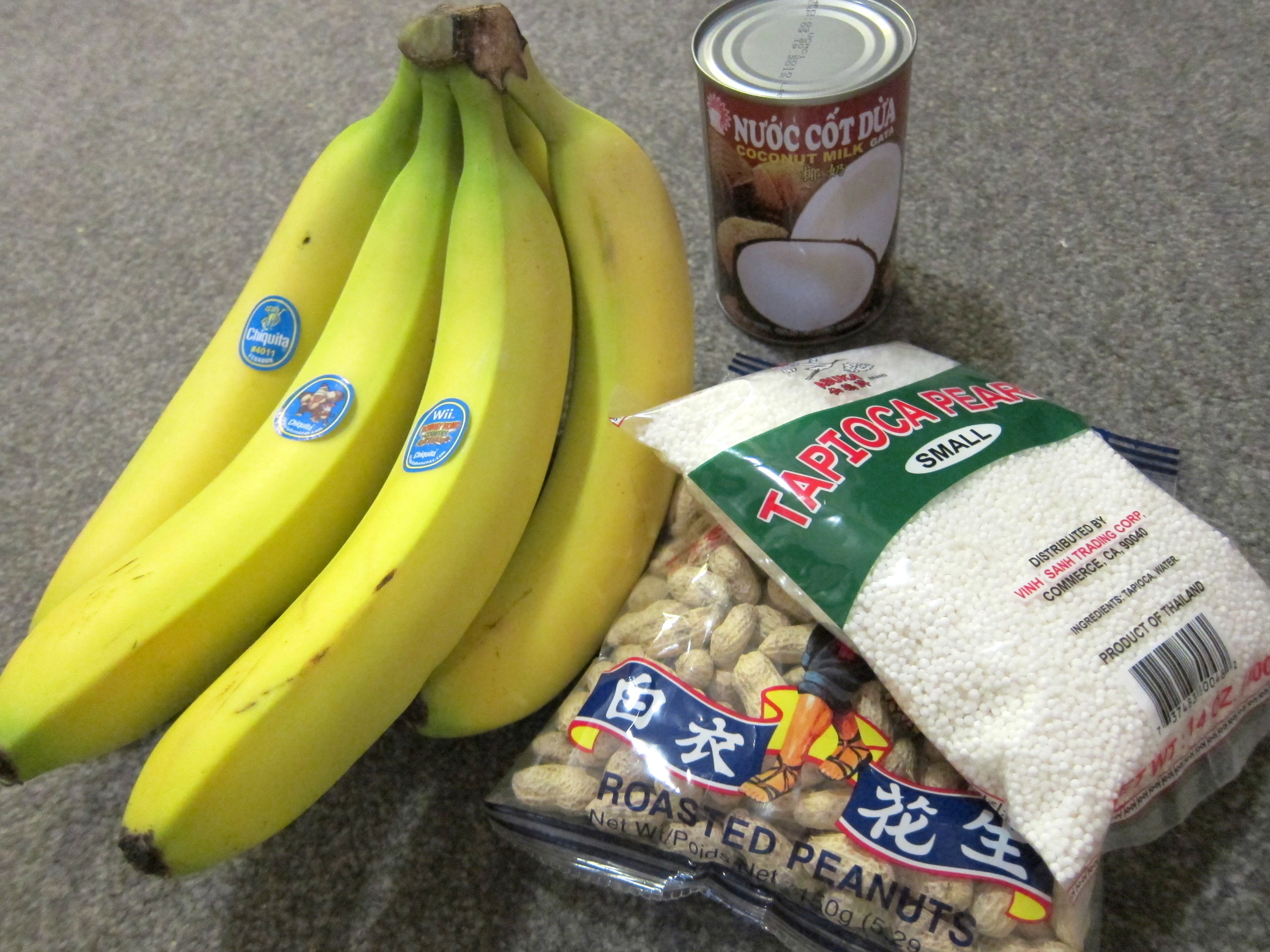
– About 3 lbs of just-ripe banana (~6 big Cavendish bananas, or 12-15 chuoi su if you can find them).
– 1 can of coconut milk
– 100-150g tapioca pearl (bột báng), the small kind (packaged as dry white dots ~1.5mm in diameter). I got a 400g package from 99 Ranch Market in El Cerrito, so I’d imagine every Asian market has a few packs tucked on their shelves.
– water, sugar, salt
– roasted peanuts (the plain, unflavored kind)


Preparation:
– Gently wash and rinse the bot bang with cold water once, then leave it soak in water.
– Cut the bananas into 2-3 inch long sections, soak in salt water (2 tsp salt for roughly half a big pot of water, the same pot you’re going to cook che in) for 5-10 minutes. This step is to get rid of, or at least reduce, the clinging underripe aftertaste of Cavendish banana in Vietnamese desserts; you can skip this step if you use chuoi su.
– Shell peanuts if necessary, then crush ’em up. (Mudpie puts them in a ziploc bag and pounds on them with an ice cream scoop, it works well :D)
– Take out the bananas, drain water, wash pot, put bananas back in. Pour 1 can of coconut milk into pot, then use the same can to measure and add 2 cans of water.


Cooking
– Wait for banana, coconut milk and water to boil, add a pinch of salt and a lot of sugar to taste. (I added about 10 tbs sugar when Mudpie expresses some concern, tastes, and stops me.)
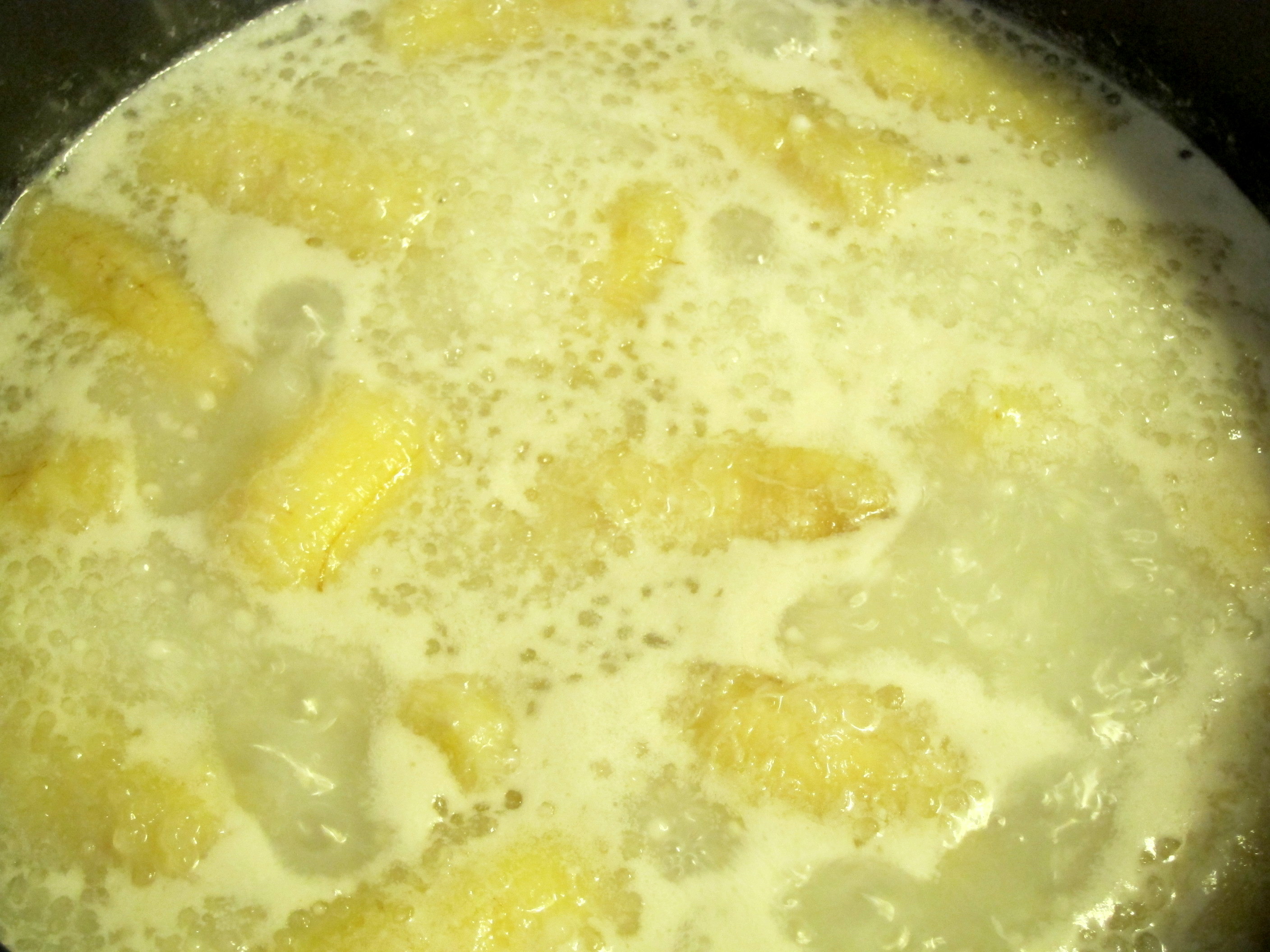
– When the mixture boils, add bot bang (after draining them, of course), gently stir once or twice to spread them out evenly in the pot.
– Bot bang will expand, at least quadruple in size. Do not stir too much or you’d burst the pearls and get tapioca porridge. Let the pot bubble until the bot bang all turn completely translucent (if you see a tiny needle-point size dot of white in the center, it’s not cooked yet).
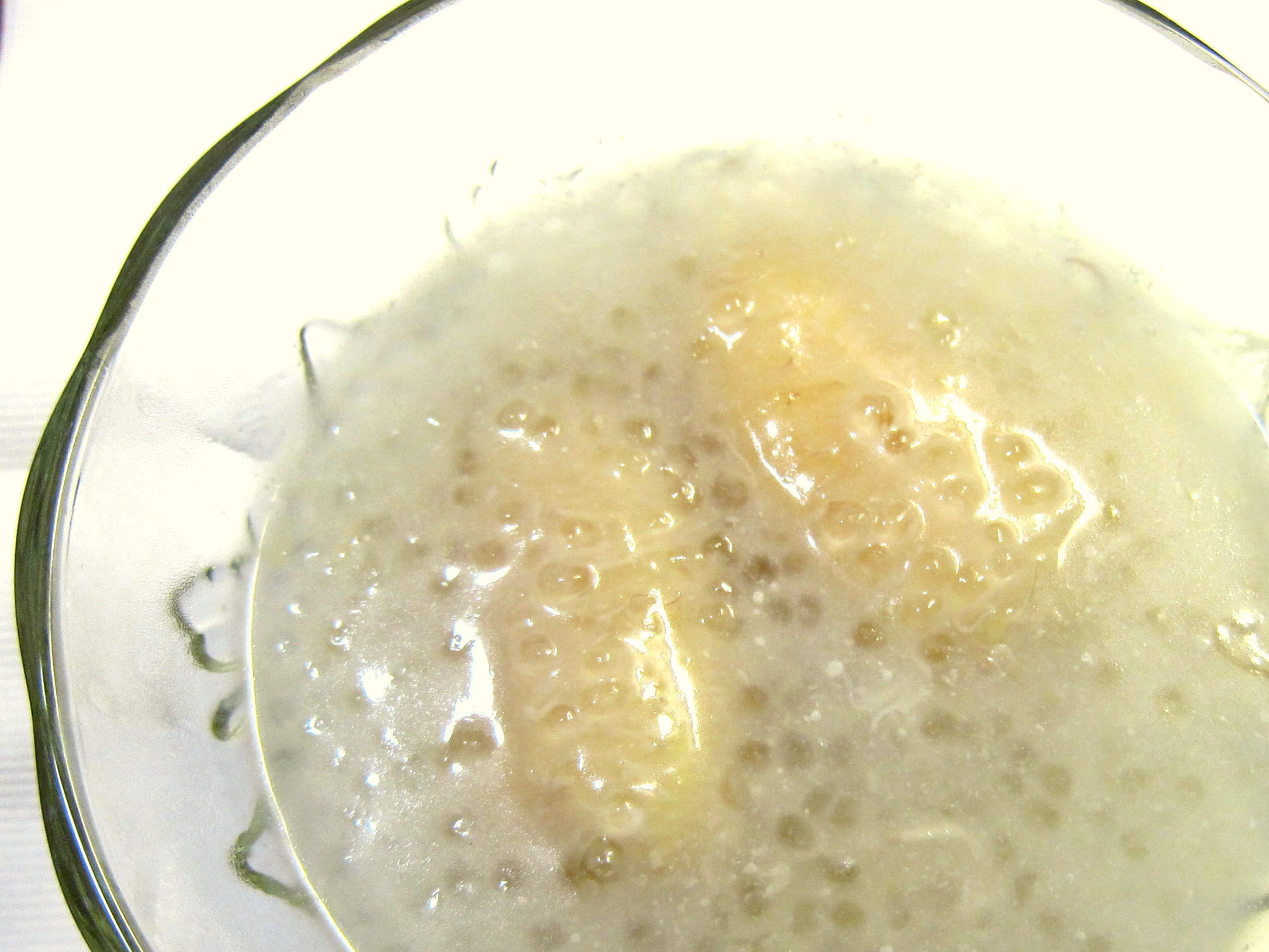
– Turn off the heat. The pudding will be quite fluid when it’s still hot, and will thicken as it cools down.

Serving
It can be served either hot or chilled, with or without some crushed roasted peanuts on top. Mudpie prefers it warm fresh from the pot, my mom prefers it refrigerated.


A small variation of che chuoi chung is chè bà ba, where you add taro (or cassava), cubed and cooked in coconut milk and water before the bananas. My mom says che chuoi chung is the simplest kind of che to make. As long as the bananas are soft and sweet, the tapioca pearls chewy and fully puffed, the coconut milk gives just a shy squeeze of fruity richness, and the pudding smells like a ripe summer afternoon, you know someone will come back for a second bowl of your chè chuối chưng.


– Submission to Delicious Vietnam 10, a monthly blogging event created by Anh of A Food Lover’s Journey and Hong & Kim from Ravenous Couple – This February edition is hosted by me, so send your delicious writings (your name, your blog’s name, post title, and a brilliant image of the dish) to mai [at] flavorboulevard [dot] com by Sunday February 13. 🙂

The story of Bún Xêu

November 24, 2010 By: Mai Truong Category: Comfort food, Northern Vietnamese, RECIPES, Vegan


“Are you giving Thanks?”, asks Der Miller. I should. It is my first independent Thanksgiving. There will be no turkey, not because they’re not that tender but because it’s cruel to take their lives on the day that everyone else celebrates. There will be no green bean casserole or sweet potato with marshmallow, not because I’m lazy but because I have no oven. There will be no cranberry sauce or stuffing, for no shining reason. I’ll just make the one thing that is both simple and not ramen: bún xêu.

Over 2000 years ago lived a king in a foreign land, who ordered his royal kitchen staff to prepare a party to welcome his future son-in-law from another foreign land. Naturally the king wanted a feast with national specialties, which included a type of rice flour pastry with sweetened mung bean paste. The flour had to be made in the morning of the same day to avoid it turning sour, and one young kitchen helper, who probably liked to get up early as much as I do, was in charge of preparing the batter.

Instead of mixing rice flour and water in a bowl, the half-closed-eye boy happened to use a strainer instead, which, fortunately, was placed on a pot of boiling water. When he realized what was going on, the needed pastry batter had long turned into fine strings of rice noodle. The chef caught the boy’s mistake, but sympathizing with his weariness, told him to pick some herbs in the garden and use fried lard pebbles to make stir fried noodle for the kitchen staff’s breakfast. In that season, only water celery was in abundance.

A servant of the king dropped by the kitchen to check on the preparation process, and was charmed by the aroma of water celery and lard. He asked for the dish’s name. The chef, panicked by the boy’s mistake, intended to say “xào” (|xao|, “stir fry”) but mispronounced it into “xêu” (|seh-oo|). The servant took a taste, liked it, and ran off to tell the king about a new creation named xêu, then the king went to the kitchen to try it himself. This is when matters really got out of Kitchen Boy’s hands: xêu was ordered to be served at the party that day.

Over 2000 years later, bún xêu, however so simple, is still considered a historically valued specialty of the Cổ Loa Citadel region, just 20km north of Hanoi today. The creation of rice vermicelli (“bún”) would not have happened in Northern Vietnam then, had the kitchen boy not been drowsy, the chef not sympathetic and creative, the servant not curious, and the king not open-minded. And so it goes the story of bún xêu. 🙂

Bún xêubún xào cầnstir fried rice noodle with celery

The main ingredients:
– Rice Vermicelli (sold at Asian markets with the label “Bún Khô“)
– Celery (good luck finding water celery im Supermarkt, so the normal chubby stalks are quite alright), sliced into finger long sticks.
– Lard, or Cooking Oil
– Salt, Pepper, Sugar

The supporting roles: Onion, Garlic, Mushroom, Green Onion, Coriander, Egg, Soy Sauce or Fish Sauce.

Blanch the bun and set aside. Make a thin omelet, set aside till cool, slice into strips. Sautee the garlic, onion, sliced mushroom, celery, and green onion (in that order), add a little bit of water, season to taste.
Now you have two choices:
1. Add the bun into the veggie skillet and spatula it like mad until everything entangles together. Re-add seasonings to taste. Pro: stuff mixes well. Con: your bun can get mushy, stick together, and be shortened to the size of rice grains. It all depends on how mad your spatula skill is.
2. Put a wad of bun on a plate, scoop some mixed veggie and sauce onto the bun, and mix while you eat. Pro: long noodle strands preserved, chewiness preserved. Con: it’s not really “bún xào” if the “bún” wasn’t “xào” (stir fried).

Decorations: omelet strips and coriander.

Happy Thanksgiving to you too, Turkey!


– Submission to Delicious Vietnam 8, a monthly blogging event created by Anh of A Food Lover’s Journey and Hong & Kim from Ravenous Couple