Flavor Boulevard

We Asians like to talk food.
Subscribe

Sandwich Shop Goodies 9 – Bánh bò bông (Steamed sponge muffin)

August 12, 2010 By: Mai Truong Category: California - The Bay Area, Chinese, One shot, sweet snacks and desserts, Vegan, Vietnamese

Does this happen to you often? You give a friend something to taste, he says “It’s good. What’s it called?”. You’re stumped. The English translation is easy, but it would make no sense because the name matches neither the food, the ingredients, nor the method of cooking.

It happens to me quite often, and usually I shut off the questions with “Just eat it!”. But I wonder, too. Southern Vietnamese folks have a niche for obscure naming scheme. The names could have sprouted from some jokes, some overly simplified impromptu description they thought of at the moment, some mispronounced foreign names, who knows. The result is intelligible and untranslatable, like bánh khọt, bánh tét, chả đùm. The translatable-but-not-always-understandable cases happen when they attach random verbs after the categorical nouns to make a new name, like bánh xèo – “sizzling banh”, bánh lọt – “falling-through banh”, bò né – “dodging beef”, whatever that’s supposed to mean. Bánh bò belongs to this flock. Cow bánh? Unlikely, the thing is vegan to an n. I even thought about the possibility that the name is derived from its resemblance of the cow’s tripe, but they would have called it tripe bánh then. Crawling bánh? Less unlikely, more bizarre. Turns out some grandma saw the rising dough attempt to crawl over and out of the mixing bowl and thought “Gotcha! I shall name you the Crawling Banh”. Vietnamese food is so alive.

Technically the Mekong delta cooks got this recipe from Chinese immigrants and twitched things around a little. They call it “bak tong goh” (white sugar cake) in China. So plain. Bak tong go almost always gets sold with bánh tiêu: you tear open the hollow doughnut, insert bak tong go into the cavity, and get a fried-steamed-fried triple layer galore. I’m not too entranced by this “white sugar cake” because of its sour hints, which come from fermenting the batter with syrup. The Vietnamese rendition of bak tong goh, bánh bò, does not let the batter go sour, and is thus a charm.
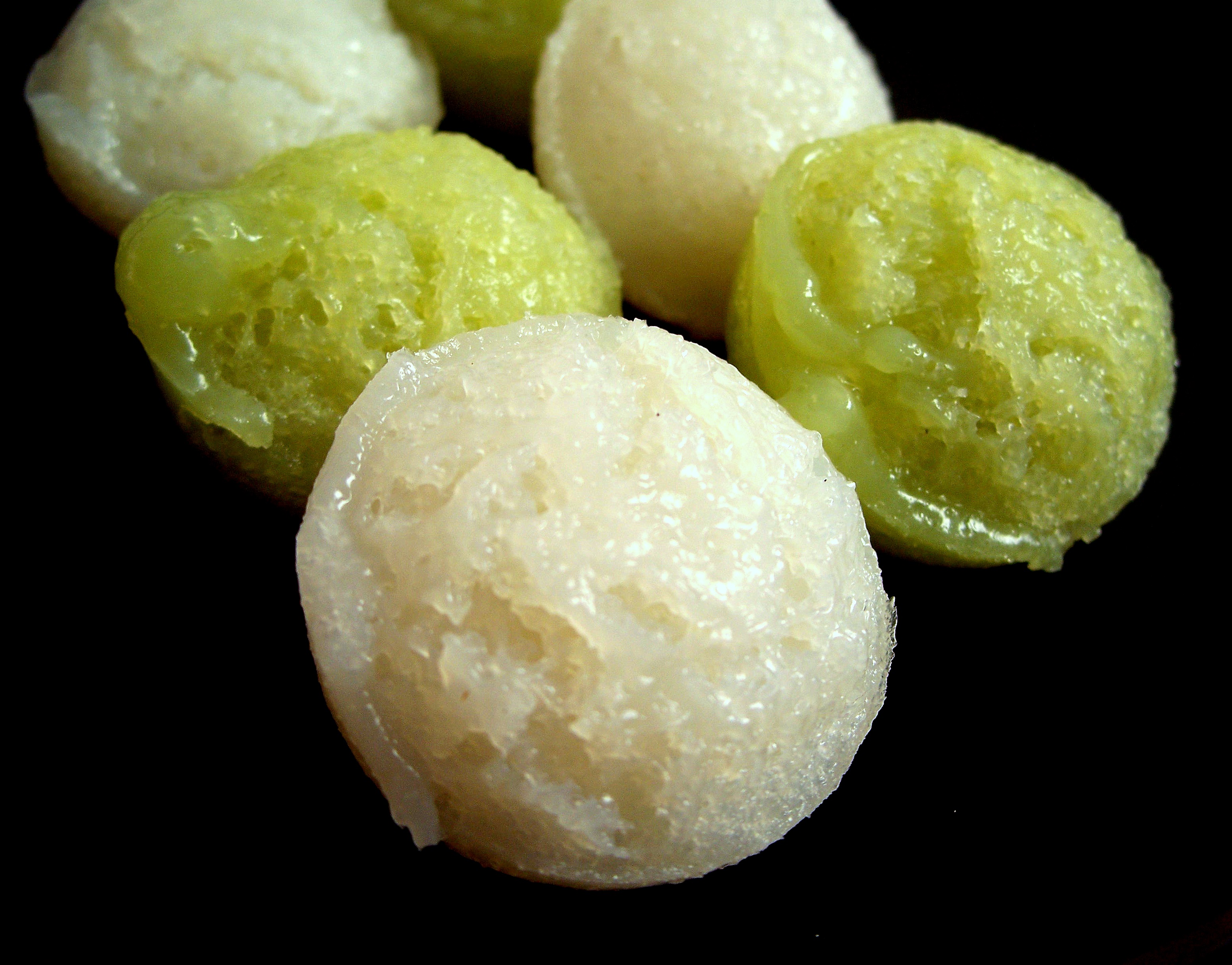

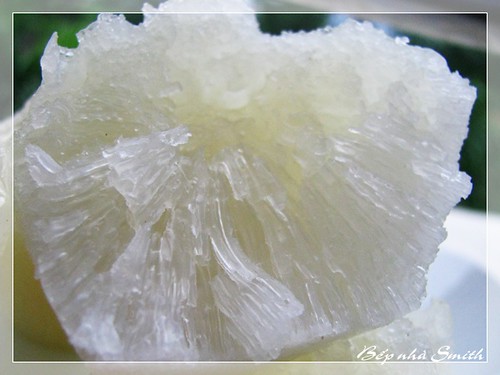
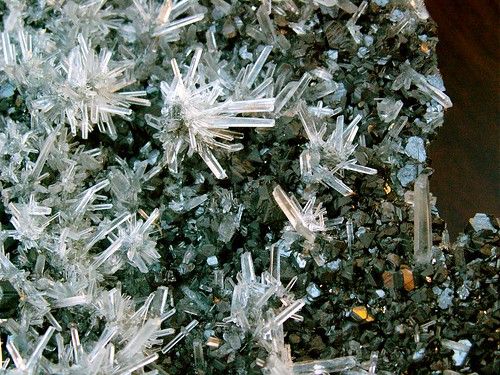
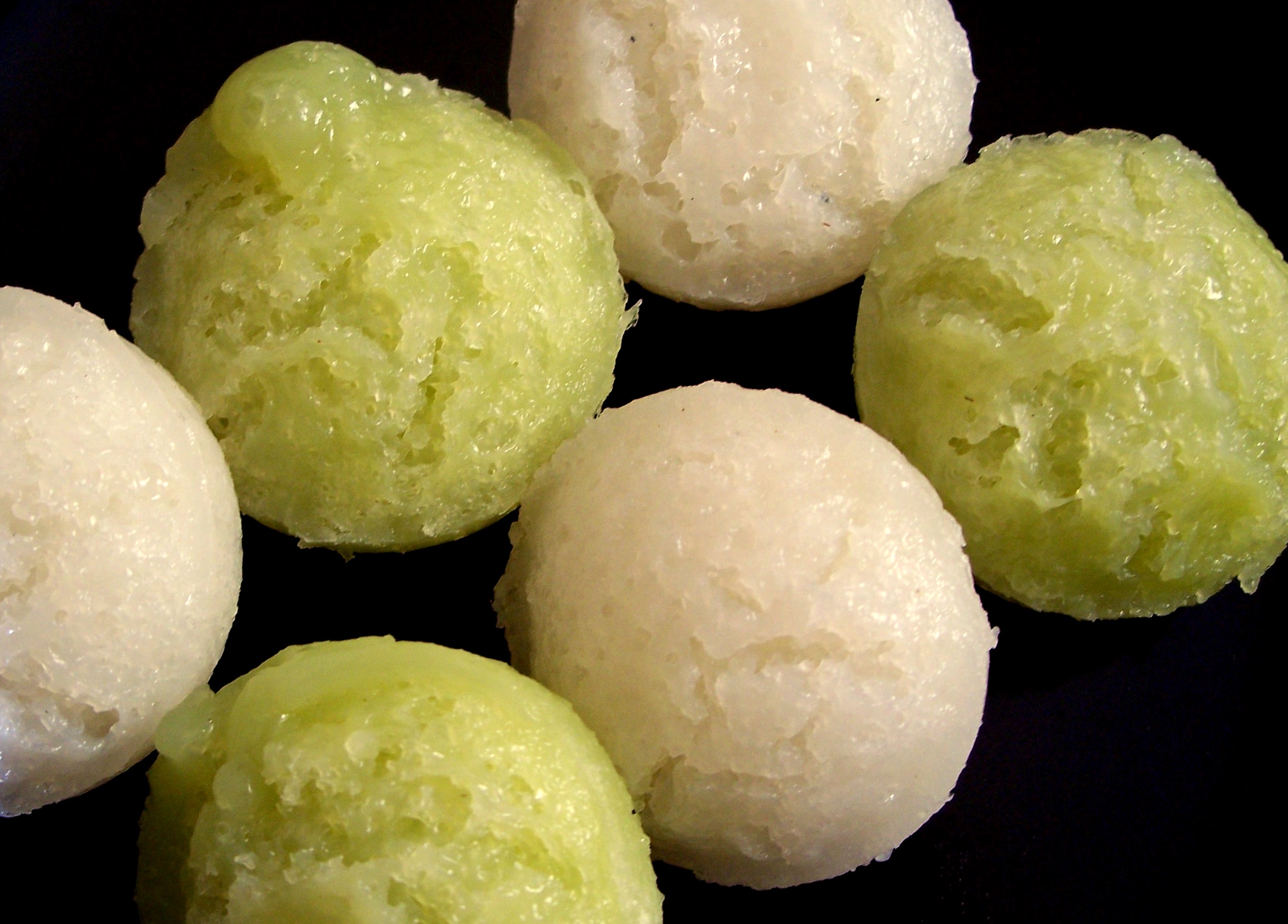
They shape like mini muffins, and look like fluff balls, so we call them bánh bò bông – “fluffy bánh bò”. The porous inside structure is compared with honeycombs or bamboo roots, or even crystals if you let your imagination go far enough. They’re either green or white with a coconuty sweetness, to pair with the burnt savory taste of toasted sesame, sugar and salt mix that comes sprinkling on top. They’re bouncy and chewy, and extremely light. We used to get the morning fresh batches from Ngọc Sáng bakery, 199 Ly Tu Trong, District 1, Saigon.
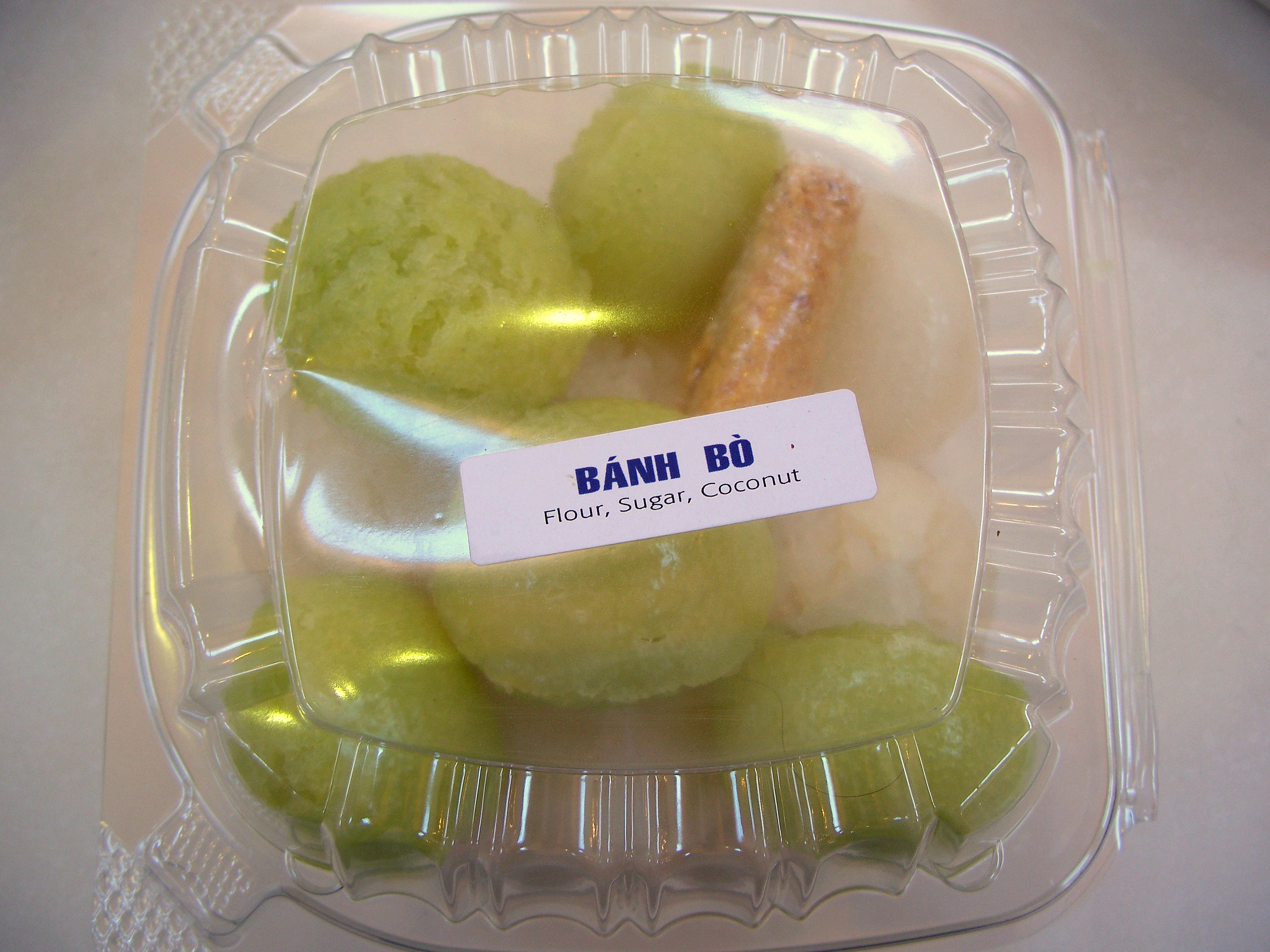

Now we settle for the plastic-packaged $2.50-worth bunch from Kim’s Sandwiches, 1816 Tully Rd #182, San Jose, CA. Certainly not half as good as the fresh ones, but it’ll do.

Previously on Sandwich Shop Goodies: bánh bao chỉ (loh mai chi)
Next on Sandwich Shop Goodies: bánh chuối nướng (banana bread pudding)

Hoang Tam at Playing With My Food has a nice simple recipe of bánh bò.
From popadom to Bombay pizza

August 10, 2010 By: Mai Truong Category: Comfort food, The more interesting

Guest post by Paul Simeon – The Indian meals following Cous Cous Cafe‘s takeouts and dinners at Oxford during his two weeks in England.

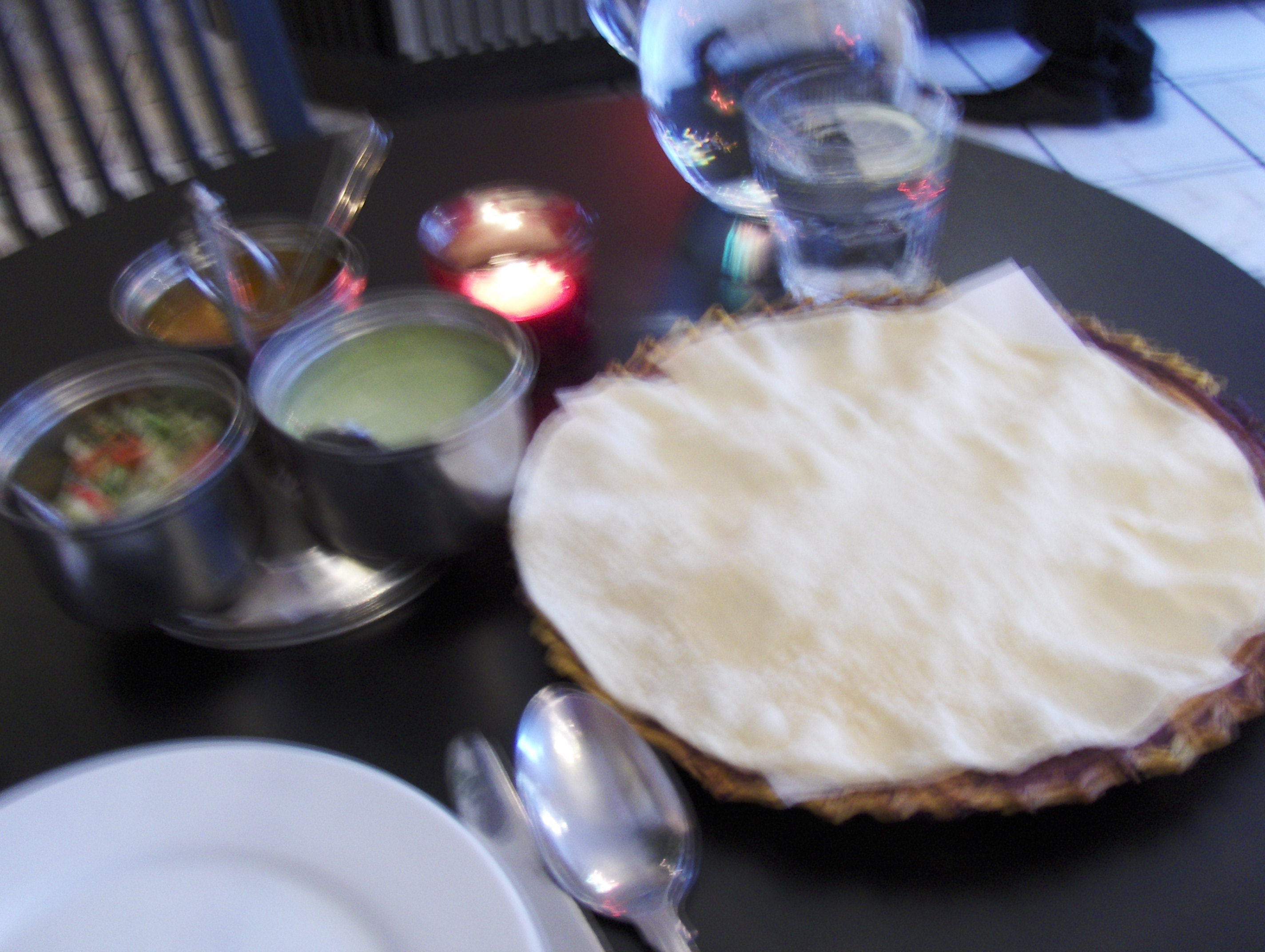
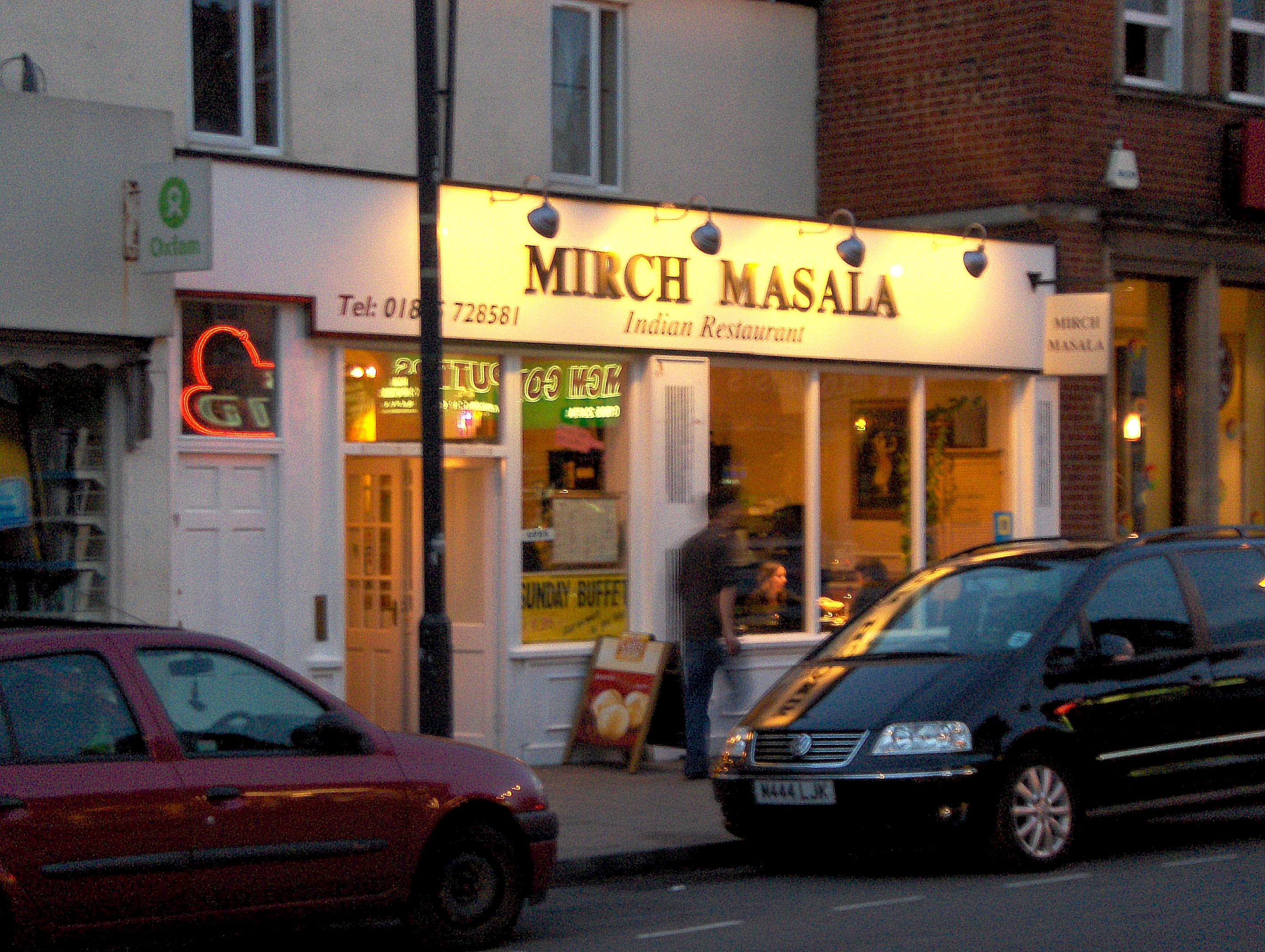
Saturday night I went to Mirch Masala. It was an Indian/Pakistani place. I later found out from the servers that the owner was from Pakistan, and the wife was from India. While I was waiting, alone, the server offered to get me some popadom (it has multiple spellings, but this is how their menu says it).


I didn’t know what it was or if it were complimentary, so I just said, “no, that’s alright.”  He brought it anyway, and it was quite nice.  It was a thin, crisp flatbread, like a cracker, and it had three toppings for it: chutney, chopped onions and coriander, and some green mint sauce.  The chutney was quite good.

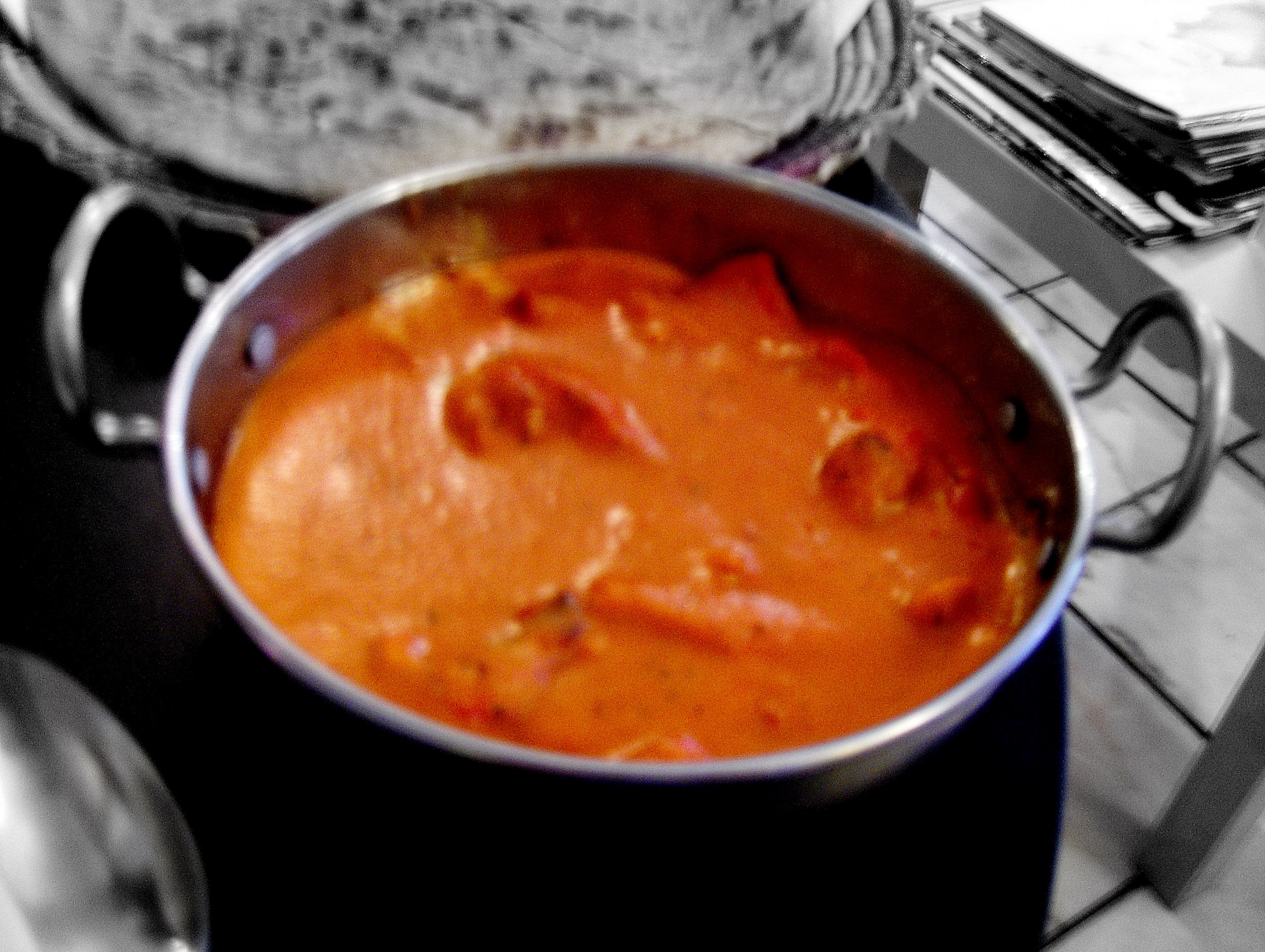
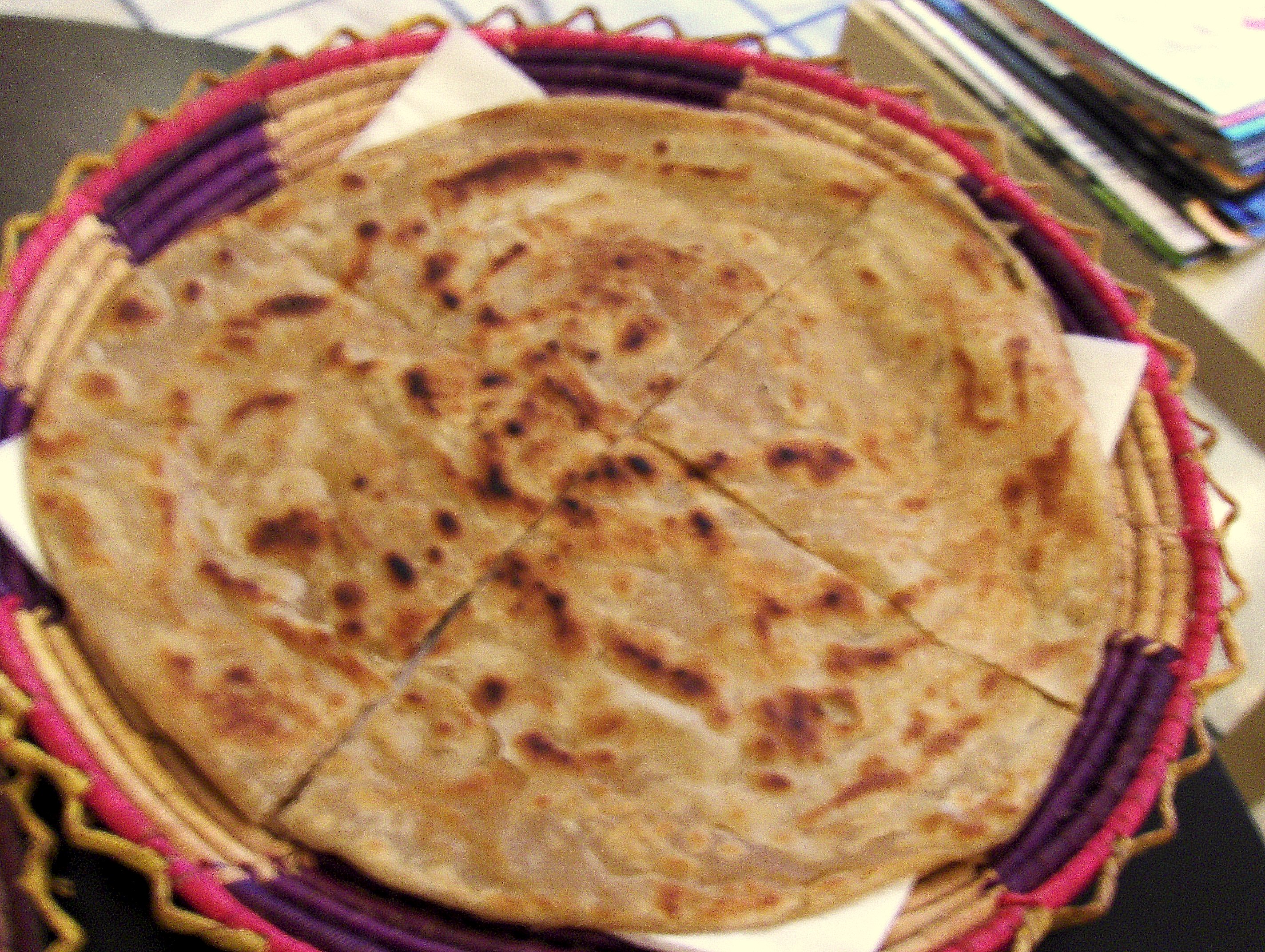
I didn’t finish all of the popadom by the time the main dish came, Murgh Makhani (Tandoori chicken off the bone cooked in butter, yoghurt, cream, cashew nuts, powder and masala sauces) with a side of paratha (rolled out Indian bread made on tawa, spread with ghee) to eat it with.

Murgh Makhani was the first on the list of house specialties, and I’m inclined to pick from the house special list.  I decided to try paratha instead of the more familiar naan.  They’re both good.  Paratha is just grilled in a skillet rather than baked like naan.  It works just as well as the naan at scooping up the main dish, and they are both better than the popadom.

The highlight of the night was the main dish, though.  It was simply perfect.  It was sweet, spicy, savory all at once, and just the right level of spice (for me) where one doesn’t notice it.  It had lots of grilled chicken pieces in it.  It was good quality chicken with little charred bits on it.

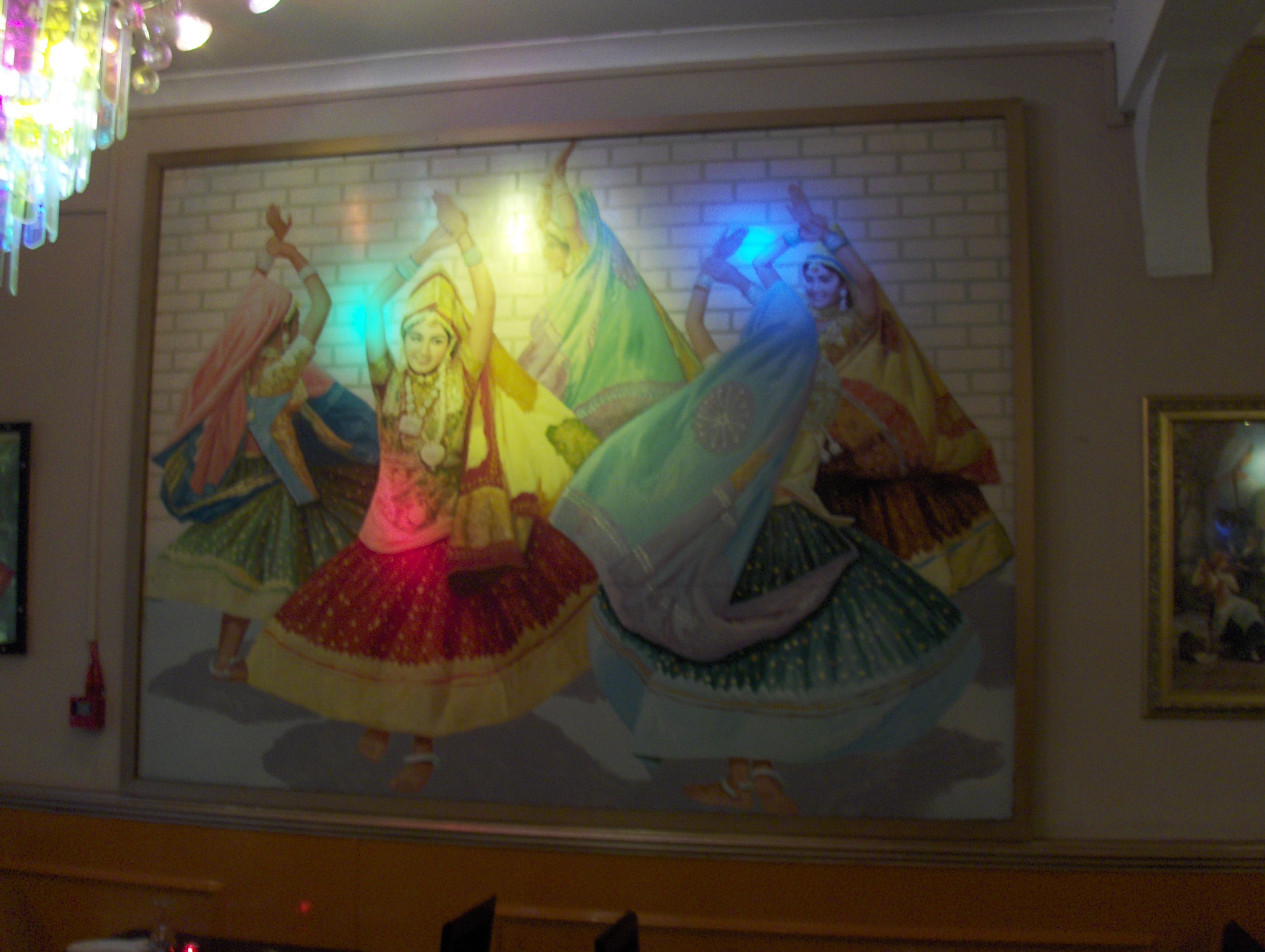
I barely had enough room to finish it all, except a little bit of popadom. The bill was 9 pounds, and the popadom was indeed complimentary, but perhaps just in my case. Tax is already included in the bill in England, which makes it easier to split the bill with multiple people. The servers noticed I was taking pictures of my food and suggested I should take a picture of the murals on two walls in the place. He said they were specially painted for them.  I thought the lights that had shining on them would mess up the picture, but it turned out to be the best picture of the night.  The lighting was too low for good pictures with my camera.

My last day in Oxford was spent in the Oxford University Museum of Natural History.  It was a pretty good museum, with the first dinosaur bones ever identified as a prehistoric reptile.  It was also the site of the famous 1860 evolution debate between Huxley and Wilberforce.  When it closed at 5, I roamed the tourist-filled streets of Oxford for a place to eat.  There wasn’t much by the museum, but I eventually found an area with some more options.

I settled on a place called Fire & Stone. Its theme was international pizza, with their menu divided by continent and filled with bizarre pizzas made from the cuisines of the continent. For example, Africa offers the Marrakech (£8.95 cumin spiced ground lamb, mozzarella, mint yoghurt sauce, green olives, raisins & sliced red onion drizzled with chilli oil) and the Cairo (£7.95 (v) Fire roasted red & yellow peppers, courgettes, aubergines, balsamic roasted red onions, mozzarella and Fire & Stone’s tomato sauce topped with crumbled goat’s cheese & pine nuts).  In some cases, it was pretty much insert-your-cuisine fusion food baked onto a pizza. They had a few vegetarian options, but I just got the impression that they didn’t offer as many vegetarian options in England as in the Bay Area, not surprisingly, and there was never a mention of vegan options.

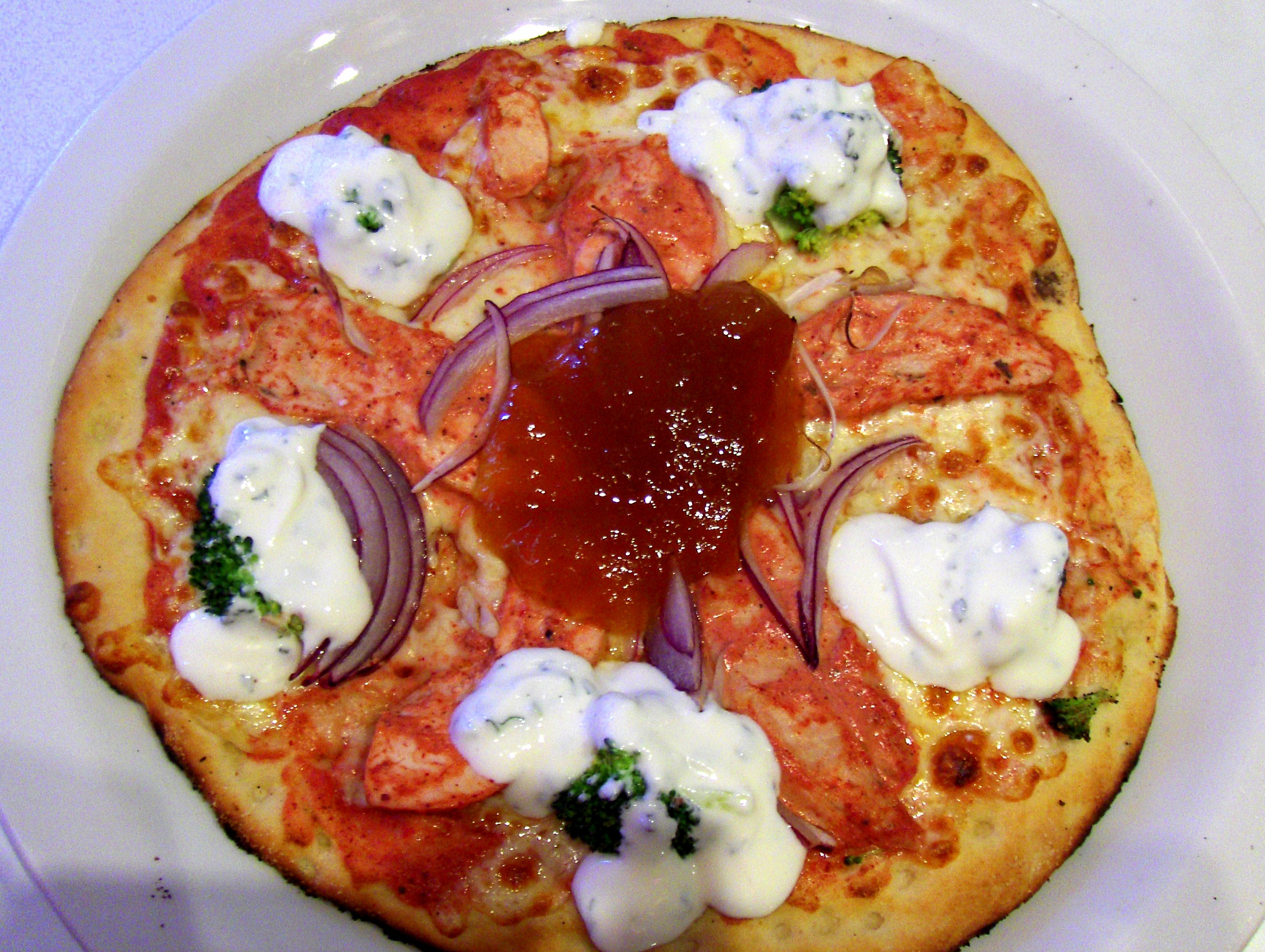
I chose the Bombay (£8.95 Roast tandoori marinated chicken breast, spiced tandoori yoghurt base, broccoli, sliced red onion, mozzarella, spiced mango chutney and cucumber & mint yoghurt) since Indian food is rare on this blog. This was good, but it would be a let-down if you’re expecting good Indian food, especially after eating at Mirch Masala. The chicken was not grilled or very flavorful, and the yoghurt and broccoli didn’t seem to go well with the rest. It was a nice change to have a tandoori base instead of normal pizza sauce. The pizza was 9 inches wide, a decent portion. I ate the whole thing without feeling too stuffed, which is just the right amount, I think. American restaurants tend to give a lot more food, which is good if you want to take home leftovers, but it often causes people to overeat or waste food. 9 pounds (roughly $14) is a little high, but I guess it’s normal (or even reasonable) for eating out in the middle of Oxford. They didn’t cut the pizza. Why not?

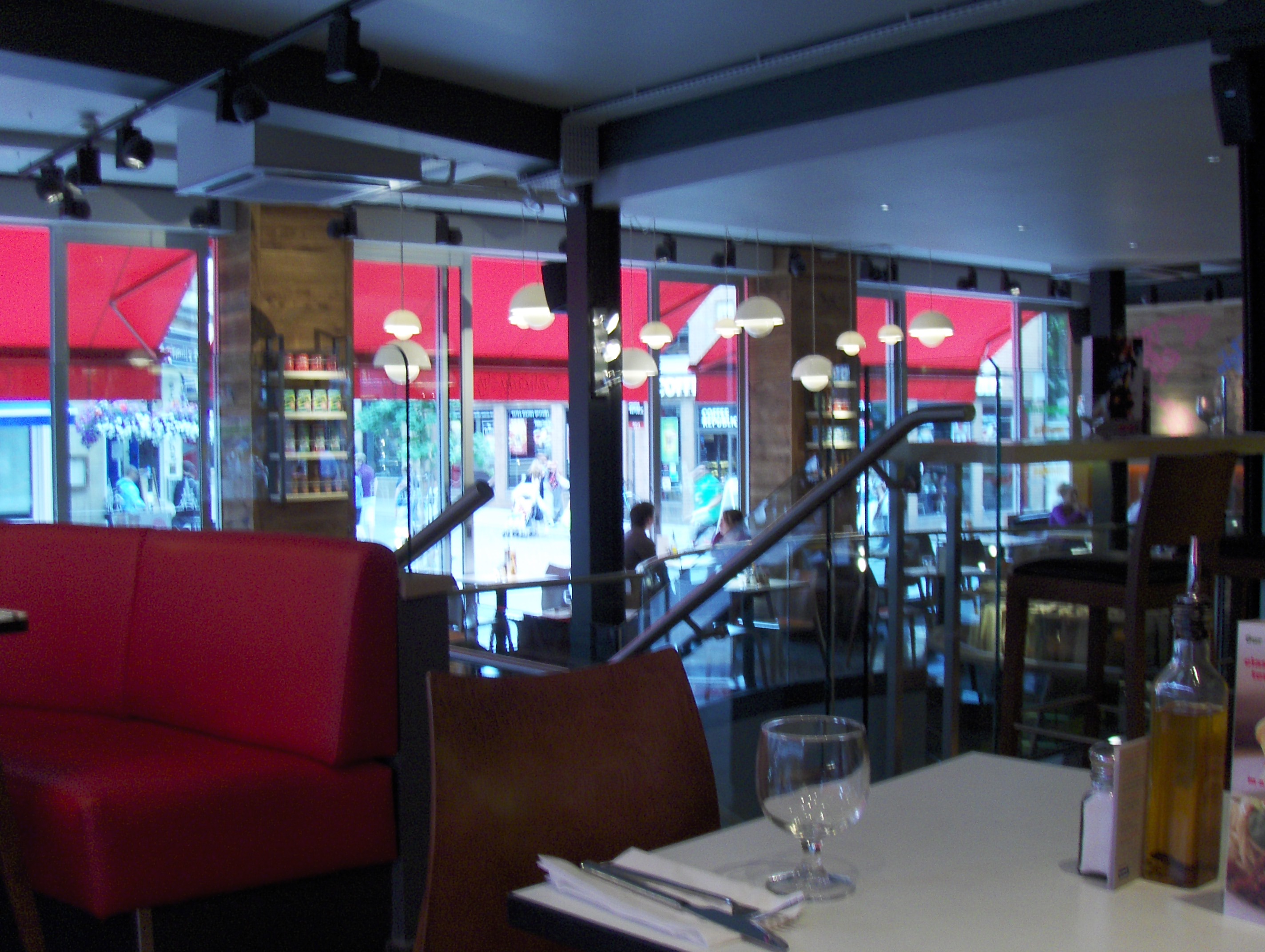
The restaurant was pretty big. It was a little early for the dinner crowd, so it was a bit empty. They had many big sliding windows open to air the place out. They also offer pasta, but I saw at least one table leave when the server informed them that the oven just broke, and they wouldn’t have pasta for about 30 minutes.

They had a hand-held credit card reader (as many places in England did) so that she could scan my card right at my table. Then she passed it to me to enter the percentage to add on as tip. I thought it was convenient compared to estimating it by hand, but I could see how some might find that awkward.

Addresses:
Mirch Masala
137-139, Cowley Rd
Oxford, Oxfordshire OX4 1HU
Telephone: 01865 728581

Fire & Stone Pizza Restaurant
Threeways House, 28-38 George Street
Oxford OX1 2BJ

Other bites in England:
Oxford dinners – part I and II
Cous Cous Cafe in Oxford
– Pie and mash at the Ship Inn Upavon and Pieminister
– England’s healthy fastfood chain: Pret A Manger

Cous Cous Café in Oxford

August 08, 2010 By: Mai Truong Category: sandwiches

Guest post by Paul Simeon

While in Oxford for two weeks attending a summer school, I rarely needed to find a place to eat.  We were given generous dinners in the large dinning room of St. Edmund’s Hall, lunch at the cafeteria at the Culham Science Centre, and breakfast at our dormitory, the William R. Miller Building, just outside the hustle and bustle of the main campus.  So what do we eat on the rare occasions when we aren’t fed?


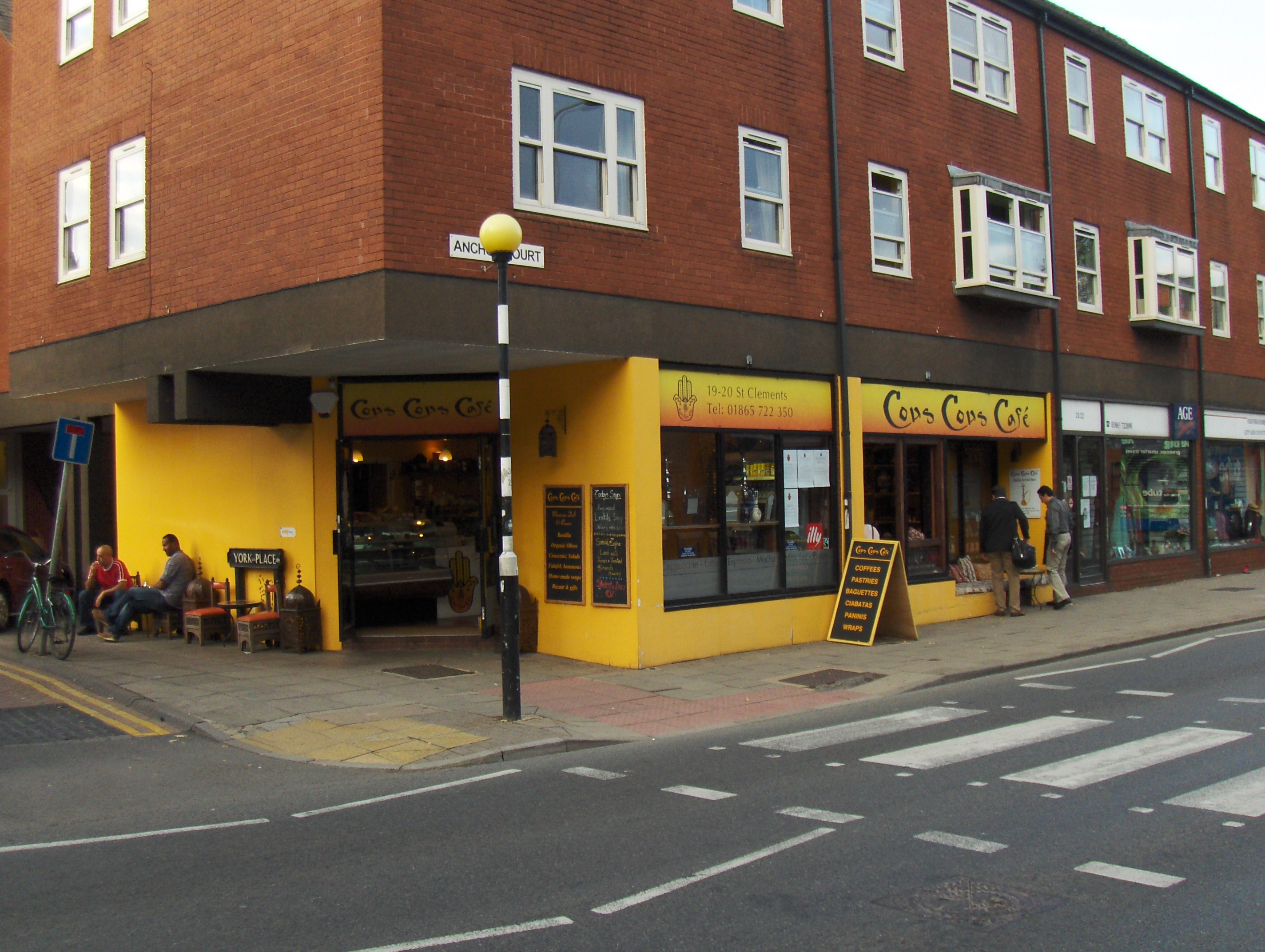
I found that eating out was a little more expensive in England than in America.  They had a few fast food chains, but not too many, even if I wanted to eat there.  The sit-down restaurants were pretty expensive, around 9-12 pounds per item.  Luckily, I found a nice place quite close to my dorm that was both affordable and noteworthy: Cous Cous Cafe.


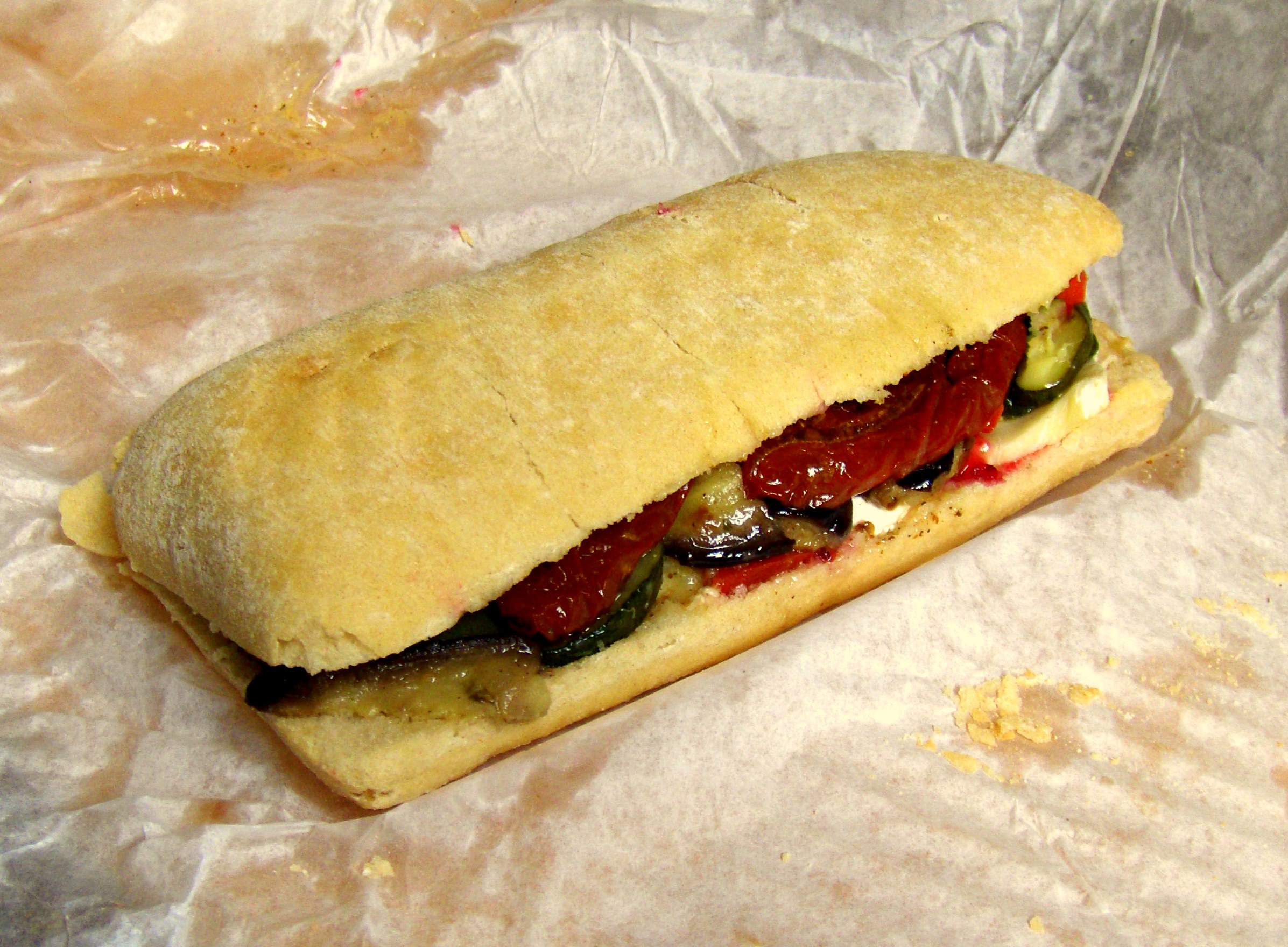
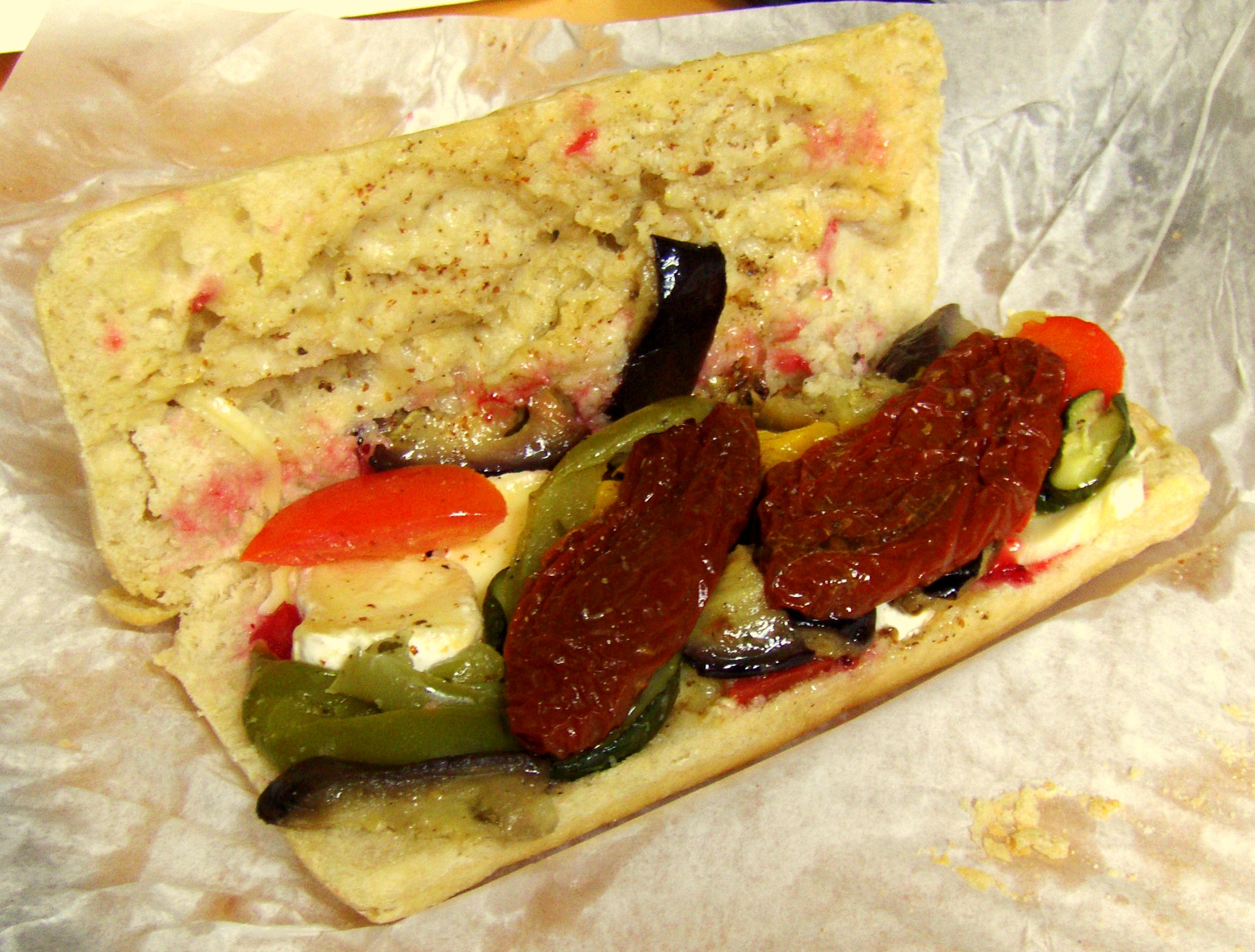
This Moroccan cafe served several types of sandwiches and wraps, as well as plate dinners with meats, vegetables, and, of course, cous cous. I probably would have gotten a falafel wrap had I not eaten it the night before at 11 pm from a food truck on a walk back from a pub with some friends. Yes, a food truck served fish & chips, hamburgers… and falafel. What caught my eye was a Brie and cranberry sandwich. I asked the lady which bread would go best (wrap, ciabatta, panini), and she said panini. The British and Irish have paninis everywhere. They must really like them. Then I wanted to add roasted veggies. She said it might not fit on the panini, which is thinner, so she recommended ciabatta. So, I got Brie and cranberry on ciabatta.


She put thick slices of Brie, cranberry sauce with whole berries in it (kinda like Ikea’s lingonberry sauce), eggplant, tomatoes, sun-dried tomatoes, yellow bell peppers, cucumbers, and what I think was sliced up peperoncini. There was a lot on there, but nothing was overpowering. I could taste everything when it came to its turn on my tongue. The veggies doubled the stuff on the sandwich, at least, but they were only 50 p extra, well worth it. In case you’re not familiar, p is short for pence, but people mainly just say “pee”.

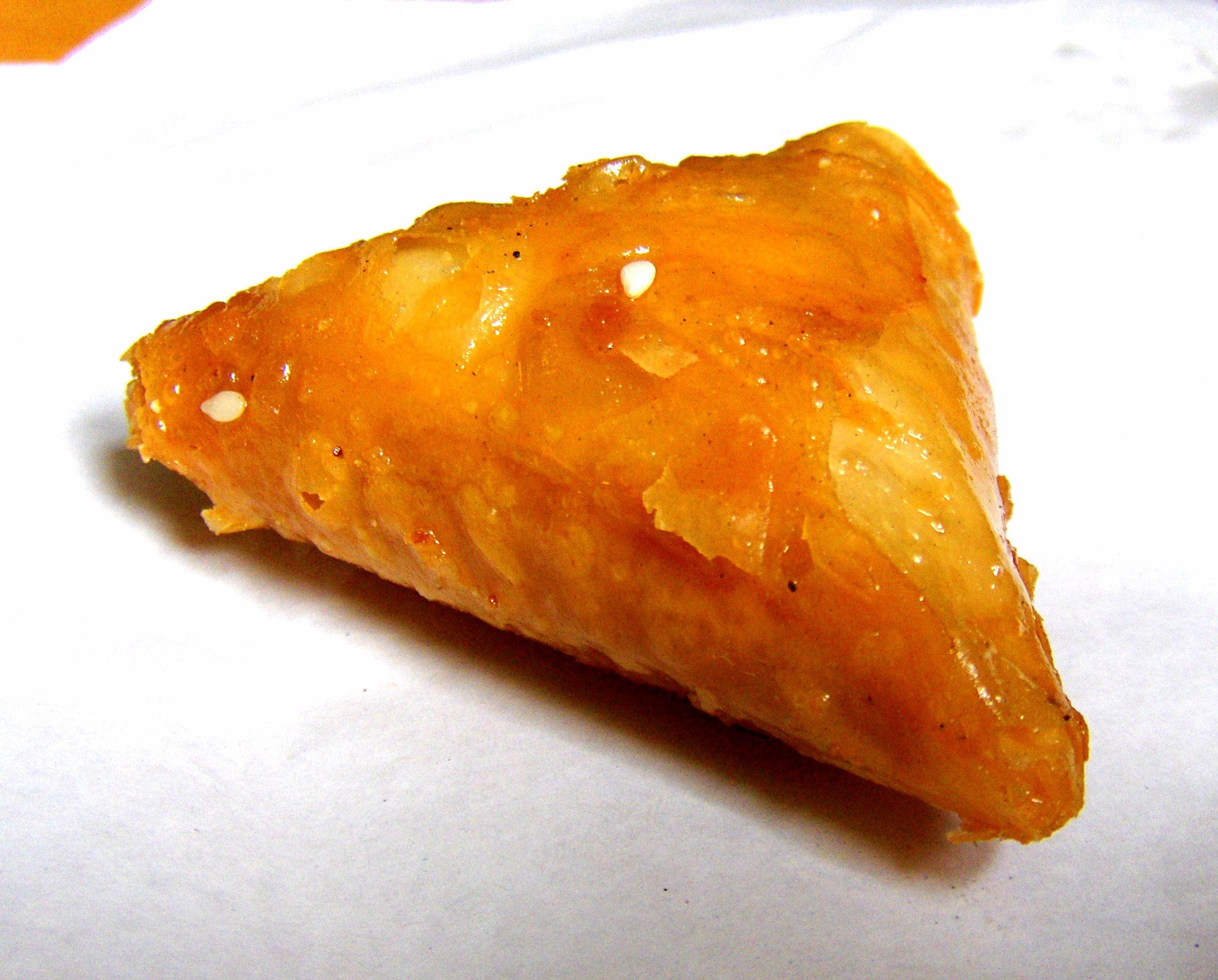
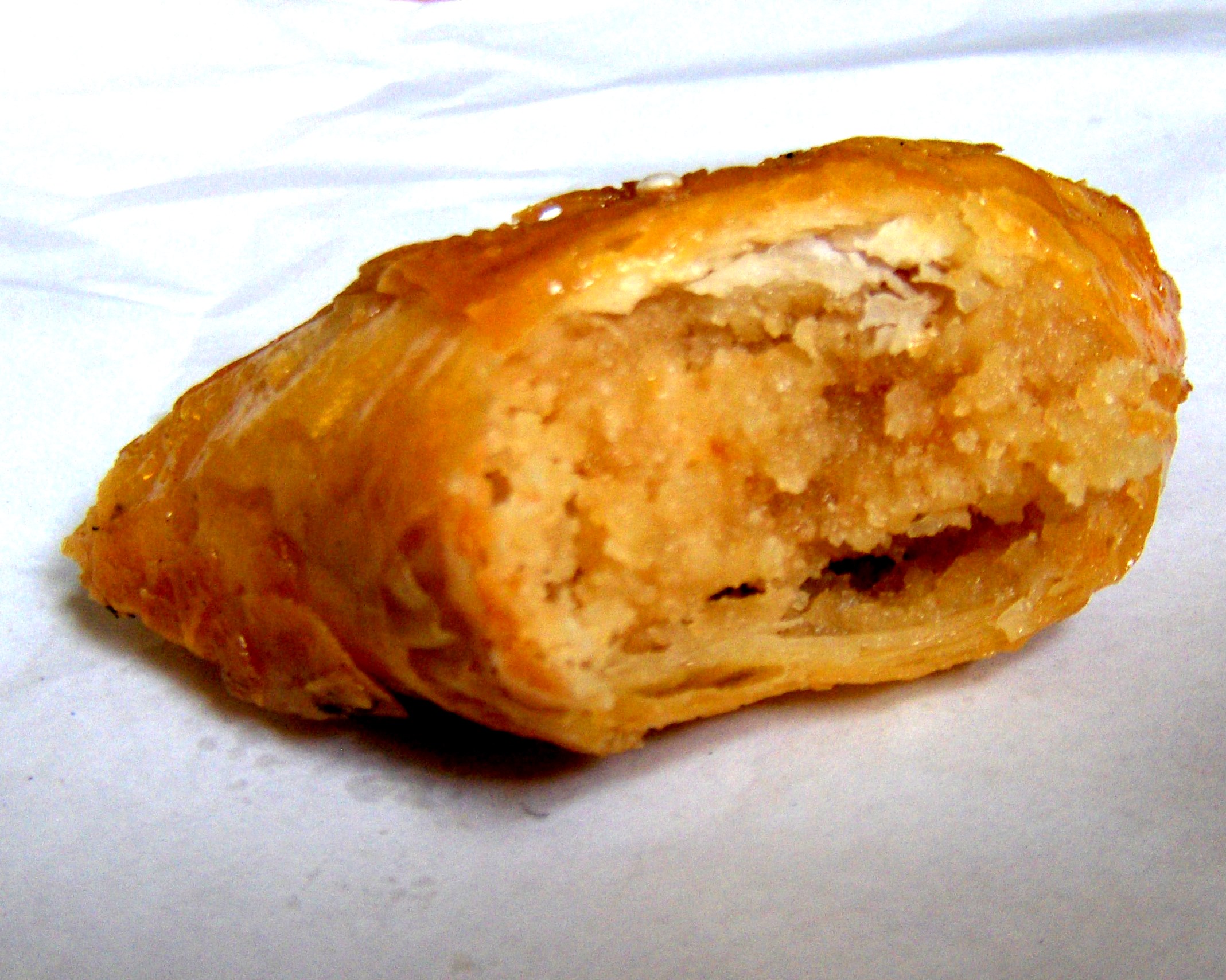
I got a little thing for dessert, named Briouat, but spelled “brawit” on the display case. It has a flaky crust, shaped in a triangle, with honey, cinnamon, and almonds ground up inside. The filling is like a gritty paste.


They charge an extra 20-40p for eating in, a common tradition in England that I have never seen in America.

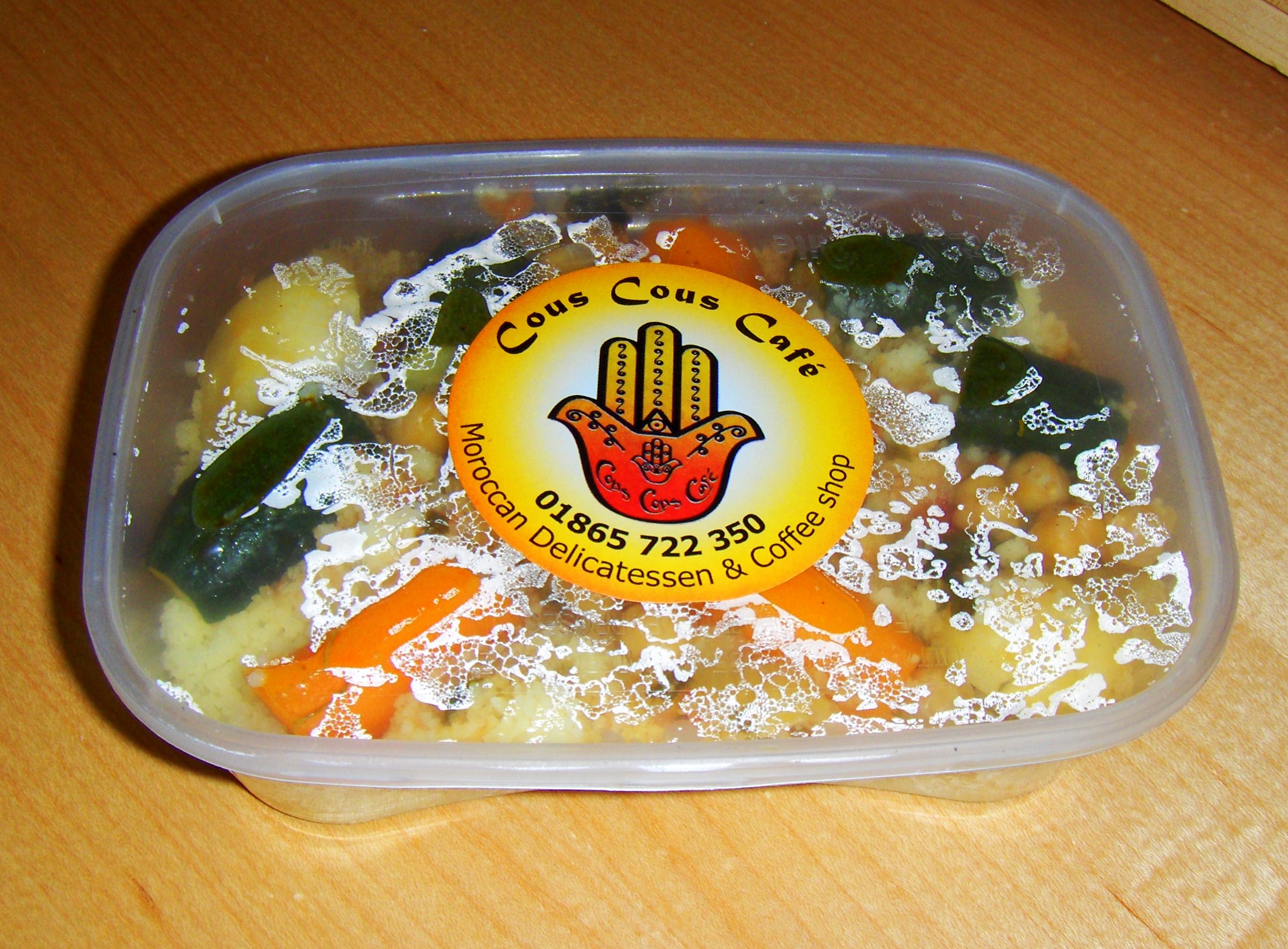
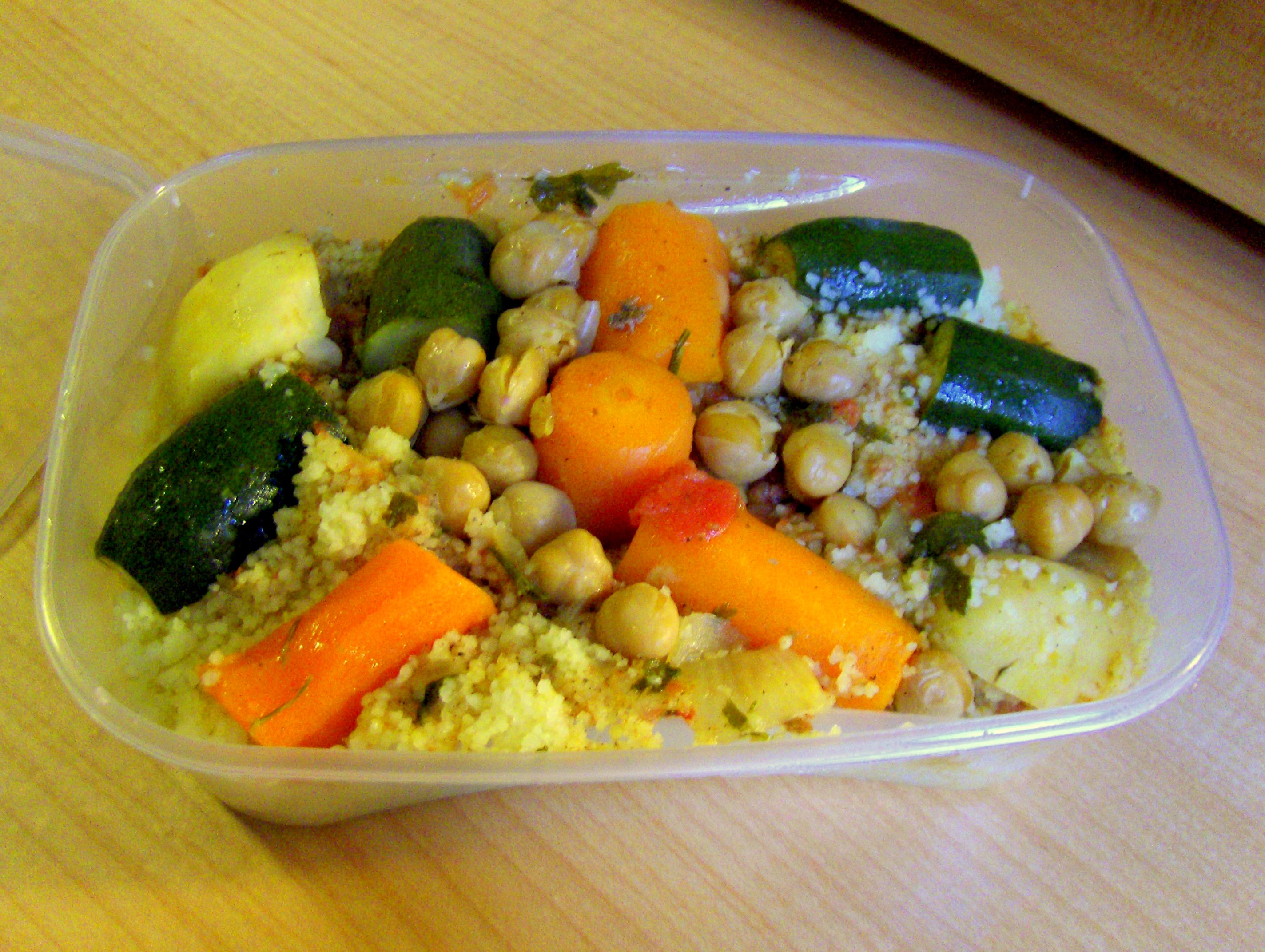
I went there on another occasion for dinner after the summer school ended, and we had to fend for our own for food. I had one of the plate dinners, warm cous cous with vegetables. It had carrots, chickpeas, zucchini, potatoes, and seasoned with tomatoes and onions.

It was warm, soft, healthy. The cous cous was soft and buttery, although I don’t actually know if there was butter in it. The vegetables were all very soft but not mushy.

It was a lot of food. I had to force myself to finish the cous cous. It was 5.25, a little high compared to their sandwiches for under 3. The place had people sitting outside at a table smoking from a hookah. I guess this place offers that as well as tea. It’s a nice place, and I’d eat there a lot if I stayed here longer. It’s cheap, healthy, and really close.


Address: Cous Cous Cafe
19-20 St Clements
Oxford
OX4 1AB

Cowley Road Area
7.30 – 20.00
Telephone: 01865 722350

Other bites in England:
Oxford dinners – part I and II
Soon-to-be new posts:
– Indian food in Oxford: Mirch Masala and Fire & Stone’s Bombay pizza
– Pie and mash at the Ship Inn Upavon and Pieminister
– England’s healthy fastfood chain: Pret A Manger

There can’t be more tender pork

August 06, 2010 By: Mai Truong Category: California - The Bay Area, Comfort food, One shot, Southern Vietnamese, Vietnamese

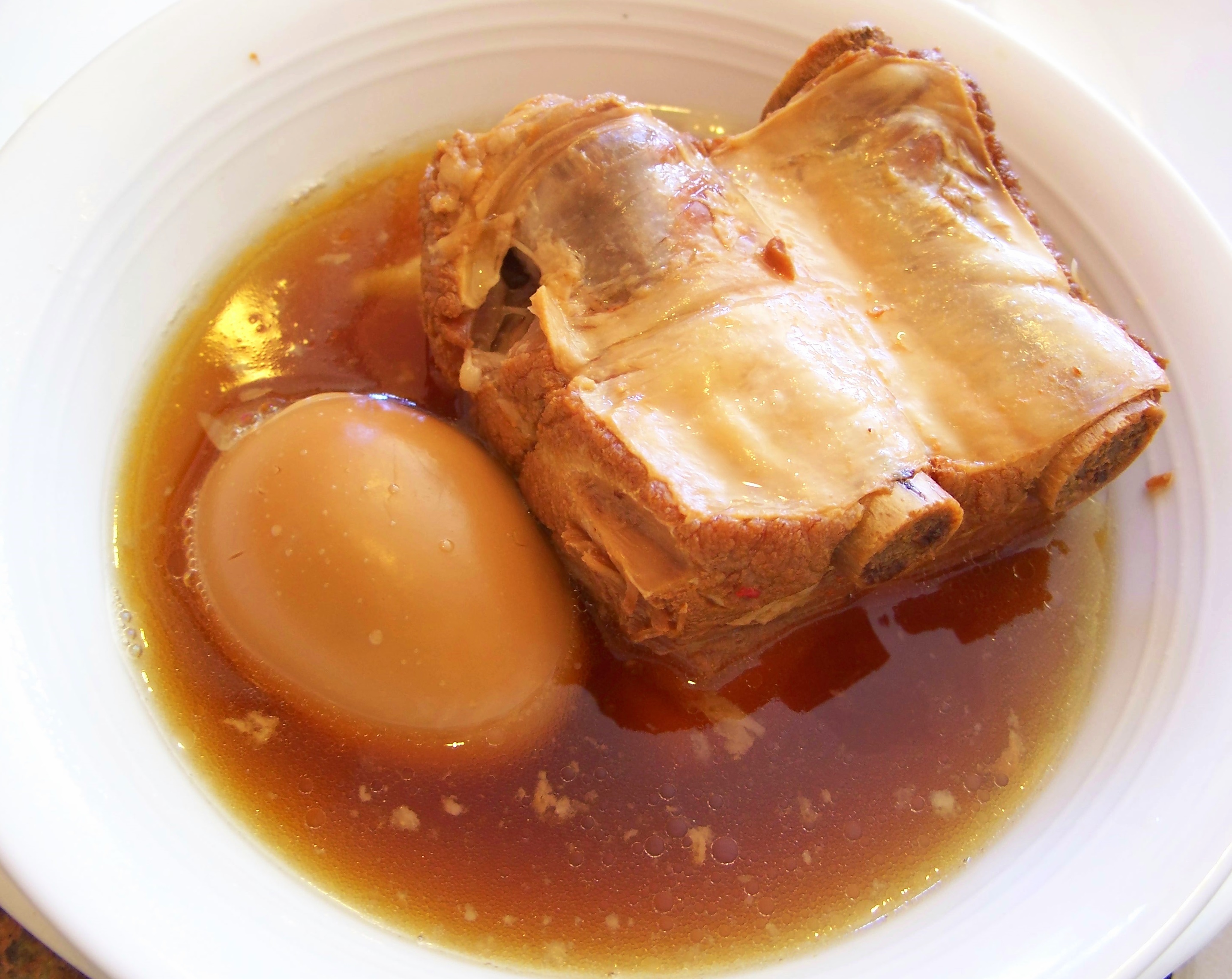
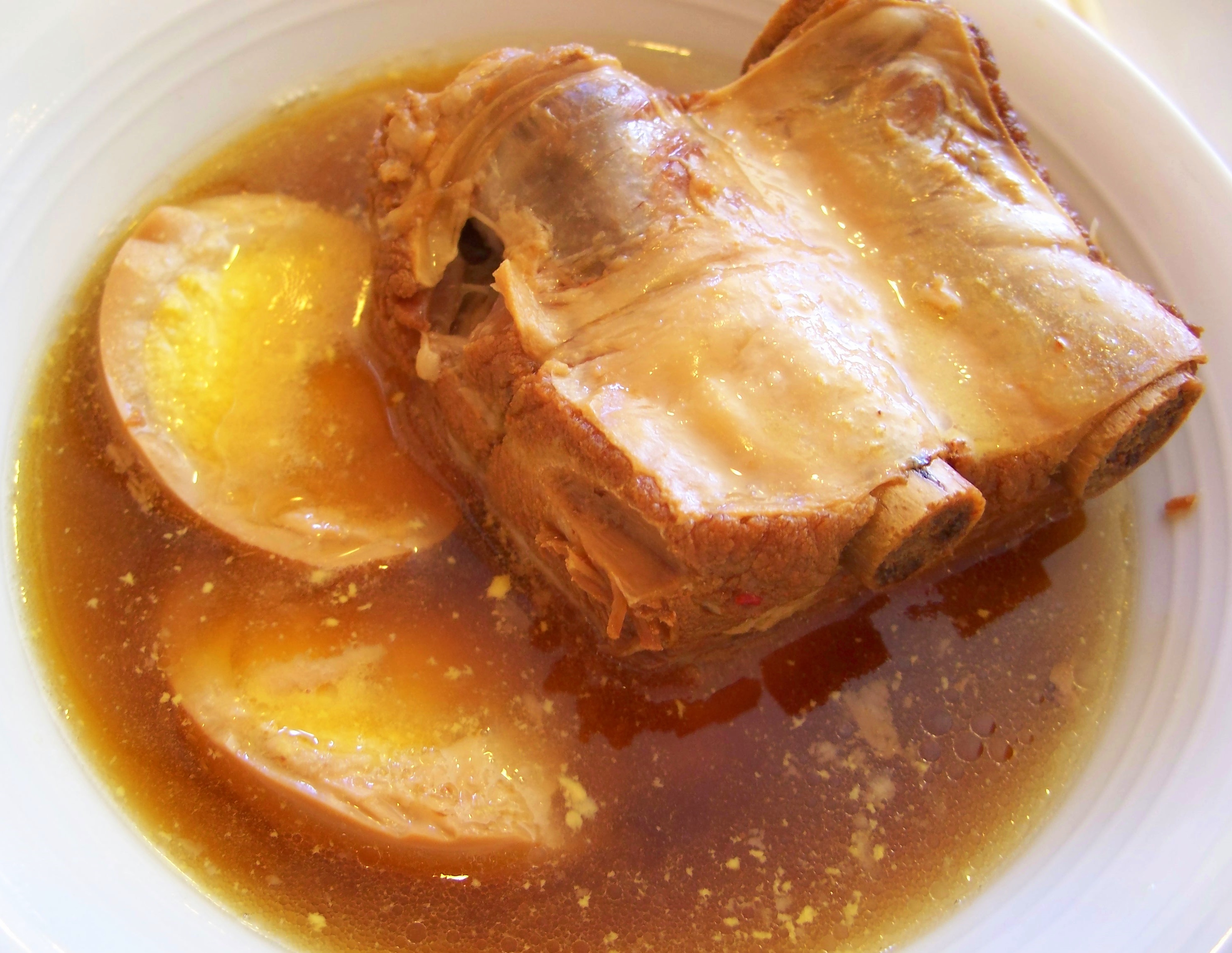
The revamped Bánh Cuốn Tây Hồ #8 dishes out some seriously tender thịt kho (fatty pork slow cooked in nuoc mam and sugar).

You know how they say this beef and that melt in your mouth? Well, I haven’t had any beef like that to testify if it’s just figurative talks, but last week I had this pork that really did melt in my mouth.

There is no need for either knife or teeth. The porcelain soup spoon cuts through three layers of skin, fat and meat as it would with a flan. The skin, which is half an inch thick and might have been chewy once, is not even as tough as jello. There is perhaps too much fat in this pork: a runny white bunch flimsily holding onto the meat (which should have been trimmed off) and bubbles floating in the sauce.

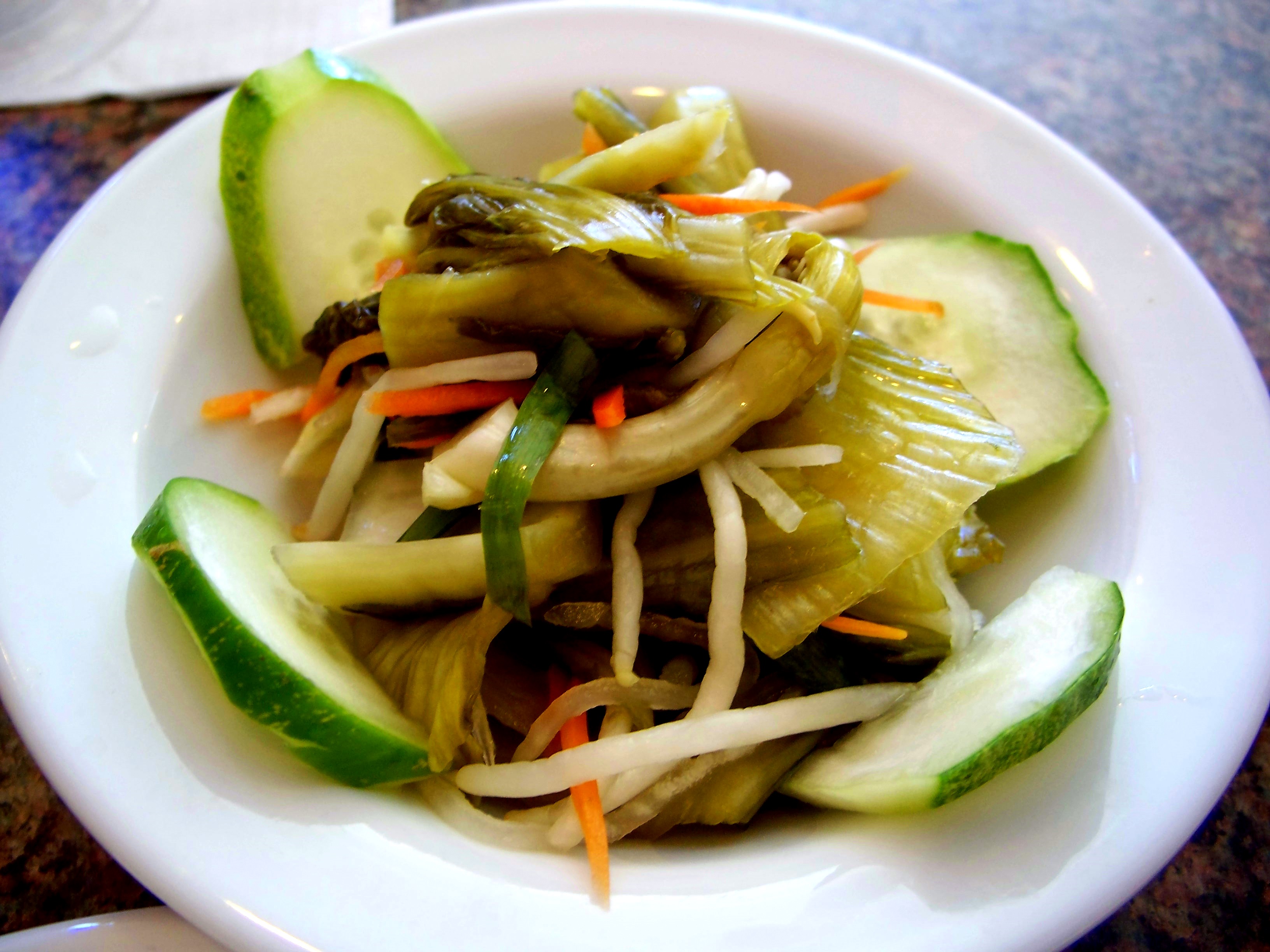
That’s how Southerners in the Mekong Delta cook their meat: huge chunks, generous seasonings, little attention to details and presentation. A few spoons of meat sauce alone is enough to flavor the rice. Overwhelmed by the fat? Tone it down with some dưa chua, pickled bok choy, carrot and daikon.

But what I like most in this lardy, homely course is not the meat, it’s the bone. Soaked in the same mixture of fish sauce and sugar, cooked for the same long time over the same heat, the bone doesn’t just dissolve like the meat, but becomes a pocket of juicy marrow. Place a bone between your jaws and press with the molars, the marrow oozes out like melting chocolate. Moving up a notch, Tay Ho’s braised pork was so cooked the bones turned into cookies. I am not exaggerating.

The second best thing in thịt kho is the eggs that have been cooked with the meat. Most savory eggs you can ever get.


Address: Bánh Cuốn Tây Hồ #8
2895 Senter Rd
San Jose, CA 95111
(408) 629-5229

Thịt kho trứng: $

Their bánh cuốn, as always, are good, but you have to pay $6.25 for only five rolls at Tây Hồ #8, whereas eight rolls of the same size would cost you $5.50 at Tây Hồ #9 in Oakland.

Oxford dinners (part II)

August 04, 2010 By: Mai Truong Category: University & Cafeteria

Guest post by Paul Simeon – “My trip to England for a summer school in plasma physics” – Read Part I


Week 2 – Monday 19th

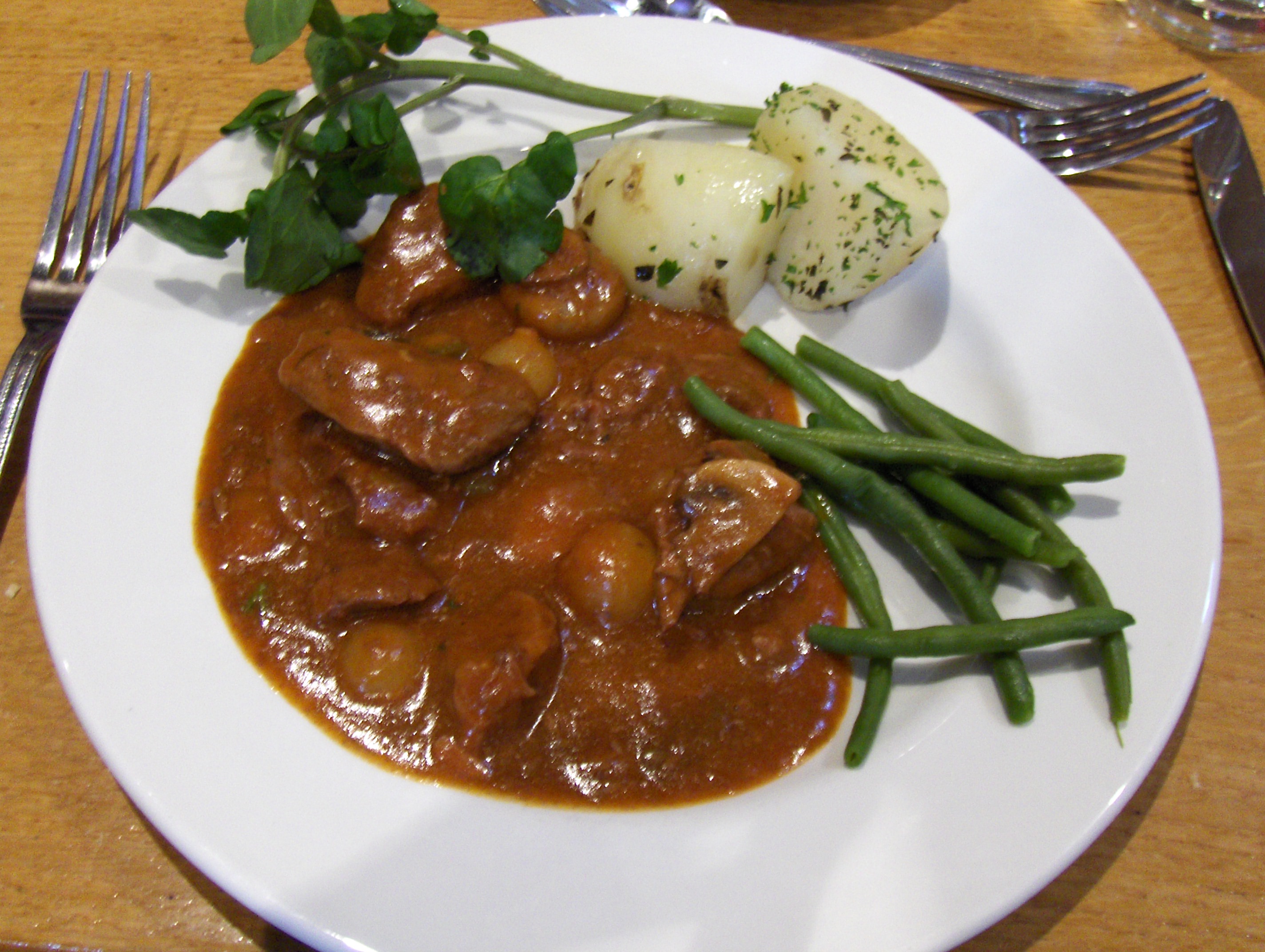
Starter was the melon boat we had last week. Same thing. Some people were expecting the meals to start repeating themselves, but when we saw the main course come out, we were pleased that we would still have new dishes to come. The main course was medallions of meat (beef, I think) drowned in a gravy with mushrooms and pearl onions. I liked this dish, even though I was tiring of all the gravy on everything. The potatoes and green beans were nothing special.


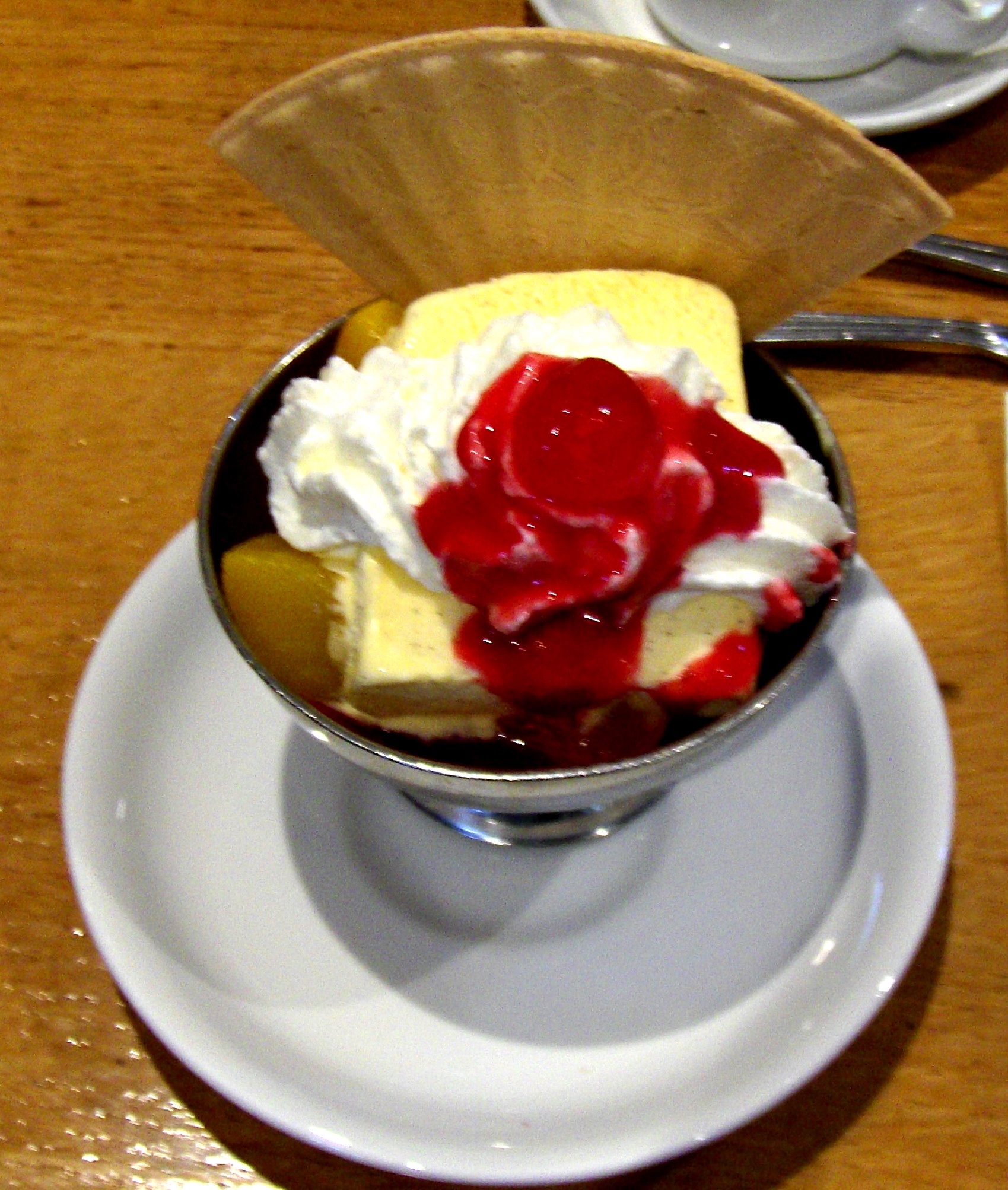
Dessert was peaches in some kind of alcohol-based sauce (liqueur?), topped with a square of ice cream, whipped cream, one of those infamous super-sweet cherries, and a crisp cookie to make it look like a turkey. I think most people stopped eating that cherry, as we had had it twice before already.

Tuesday 20th


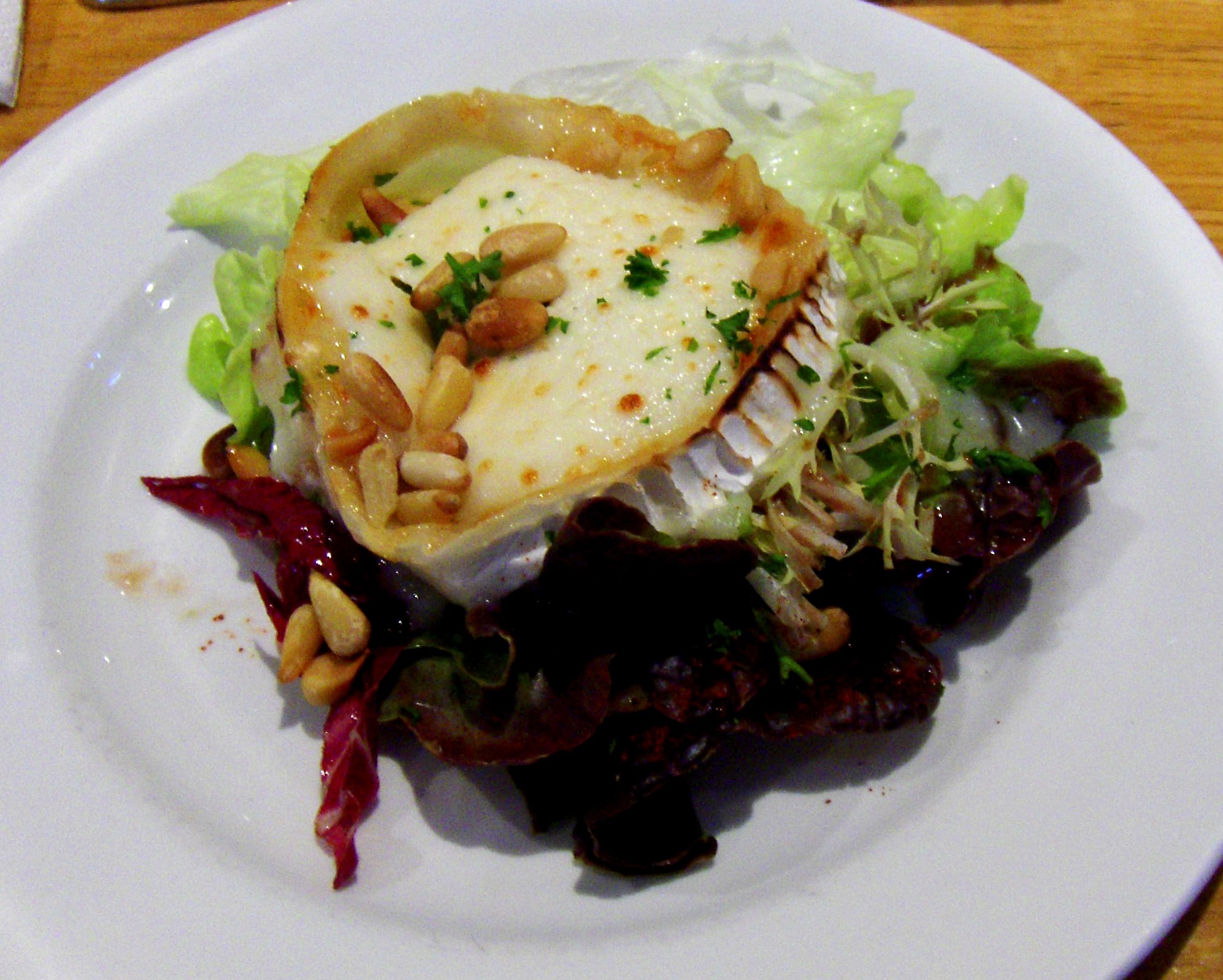
The first course was a salad with what I think is a big pie of melted Brie with pine nuts on top, or something close to it. It was quite good but very rich. The salad was just for show. The cheese was the main part.


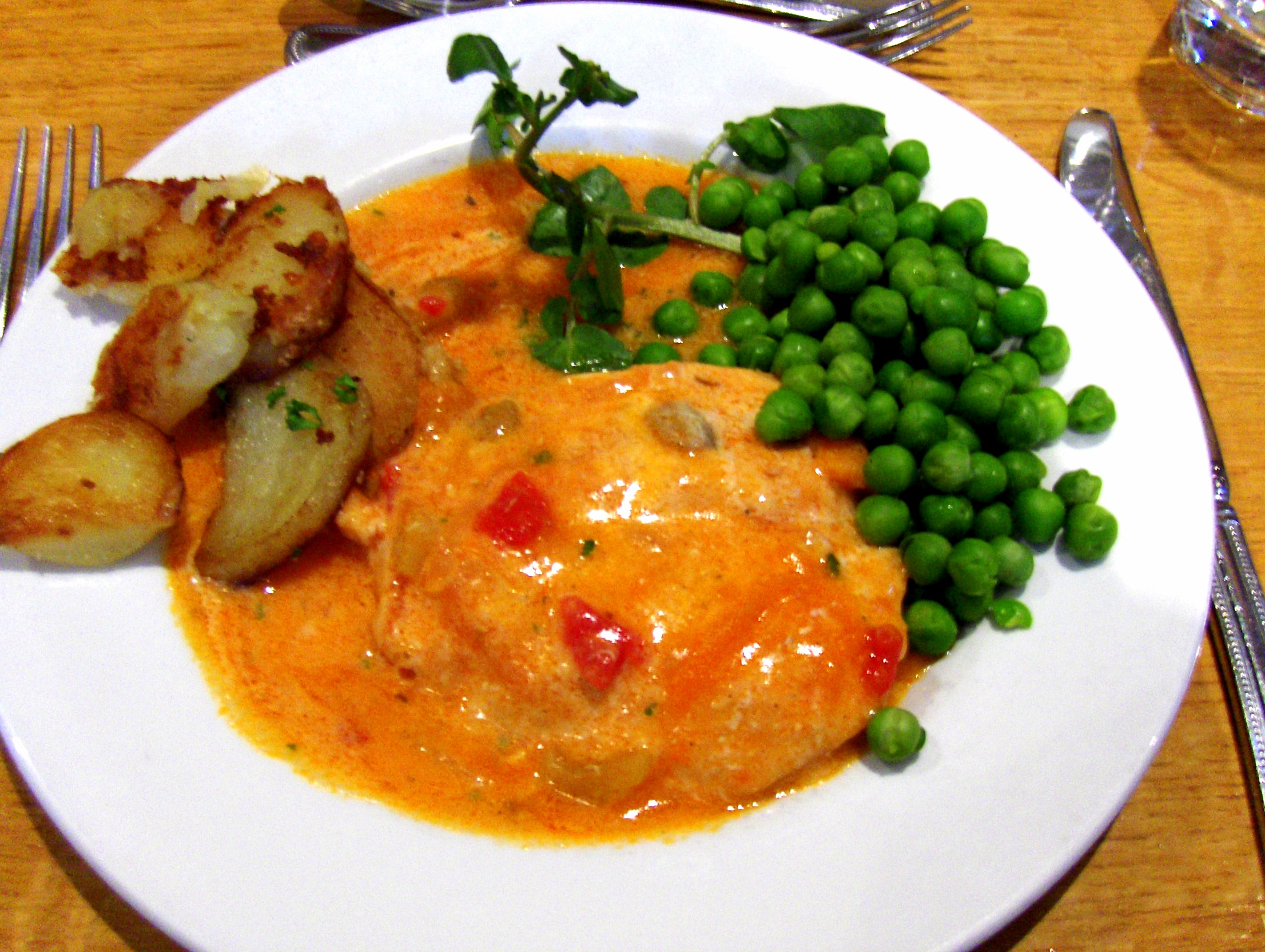
Then came chicken with a light gravy on top. The peas were nothing to write about, but the potatoes were quite good. They were grilled or baked to make them brown on the edges. This was my favorite style of potatoes they served.


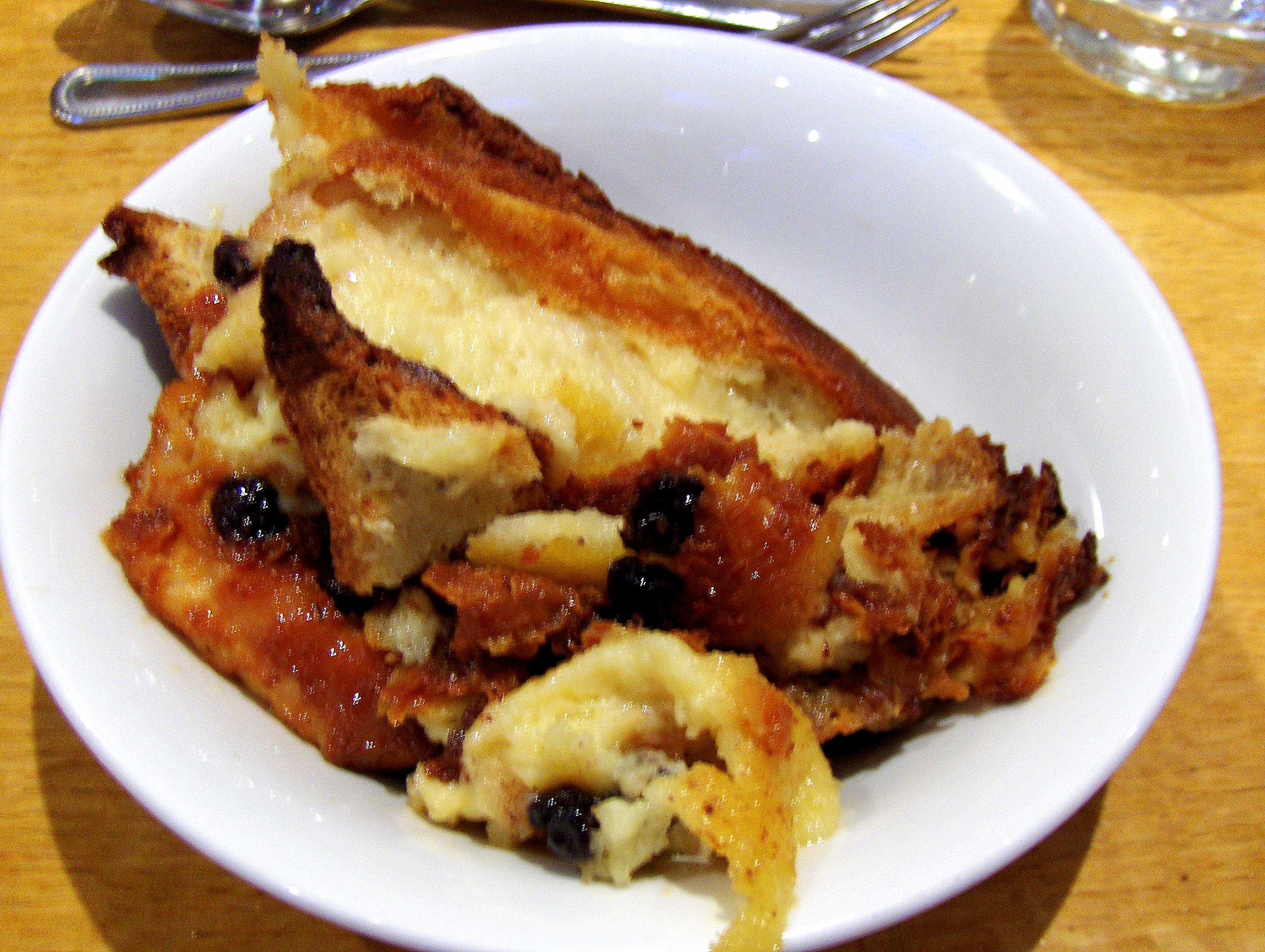
The dessert was the heaviest of the whole trip. Bread pudding, with raisins and black currants. (We don’t have currants in America. I don’t know why.) They had a saucière of heavy cream to pour on top. Most of us were cautious not to pour too much, because there was already a small pool of butter at the bottom of the bowl of bread pudding. It was very good, but very heavy. It was probably the most filling of the desserts as well.

Wednesday 21st

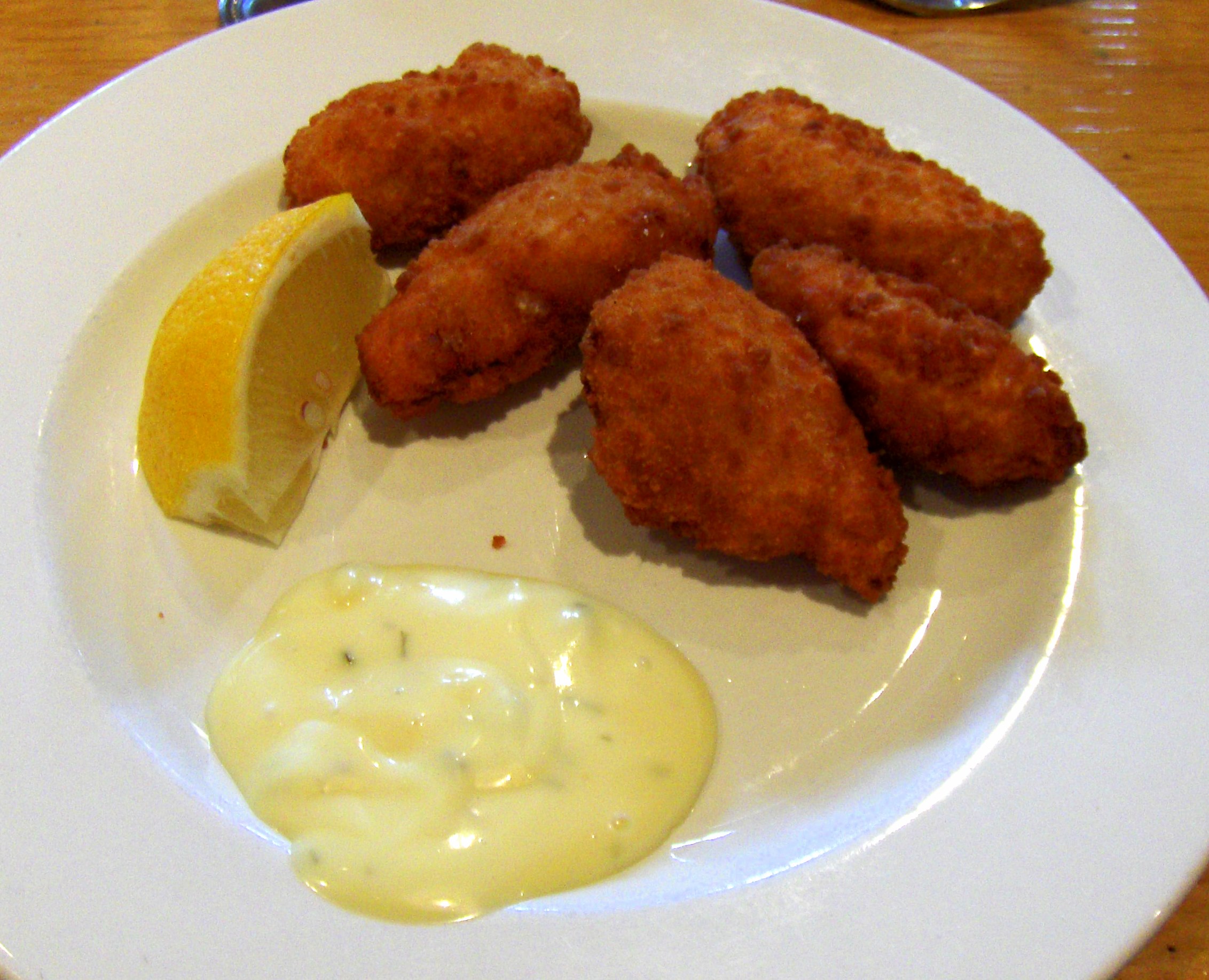
Shrimp scampi for the appetizer. We also had this on Sunday the 11th, but I didn’t have my camera then.


Previously during this trip, I sadly found out that the American and British definitions of shrimp scampi are wildly different. To Americans, they are shrimp sauteed in garlic butter and wine, and served on pasta or rice. To the British, they’re fried balls of small shrimp mixed with batter or something. It’s definitely not one big shrimp in there, but a pressed ball of stuff. They serve it with something like tartar sauce, which I’m not too fond of.


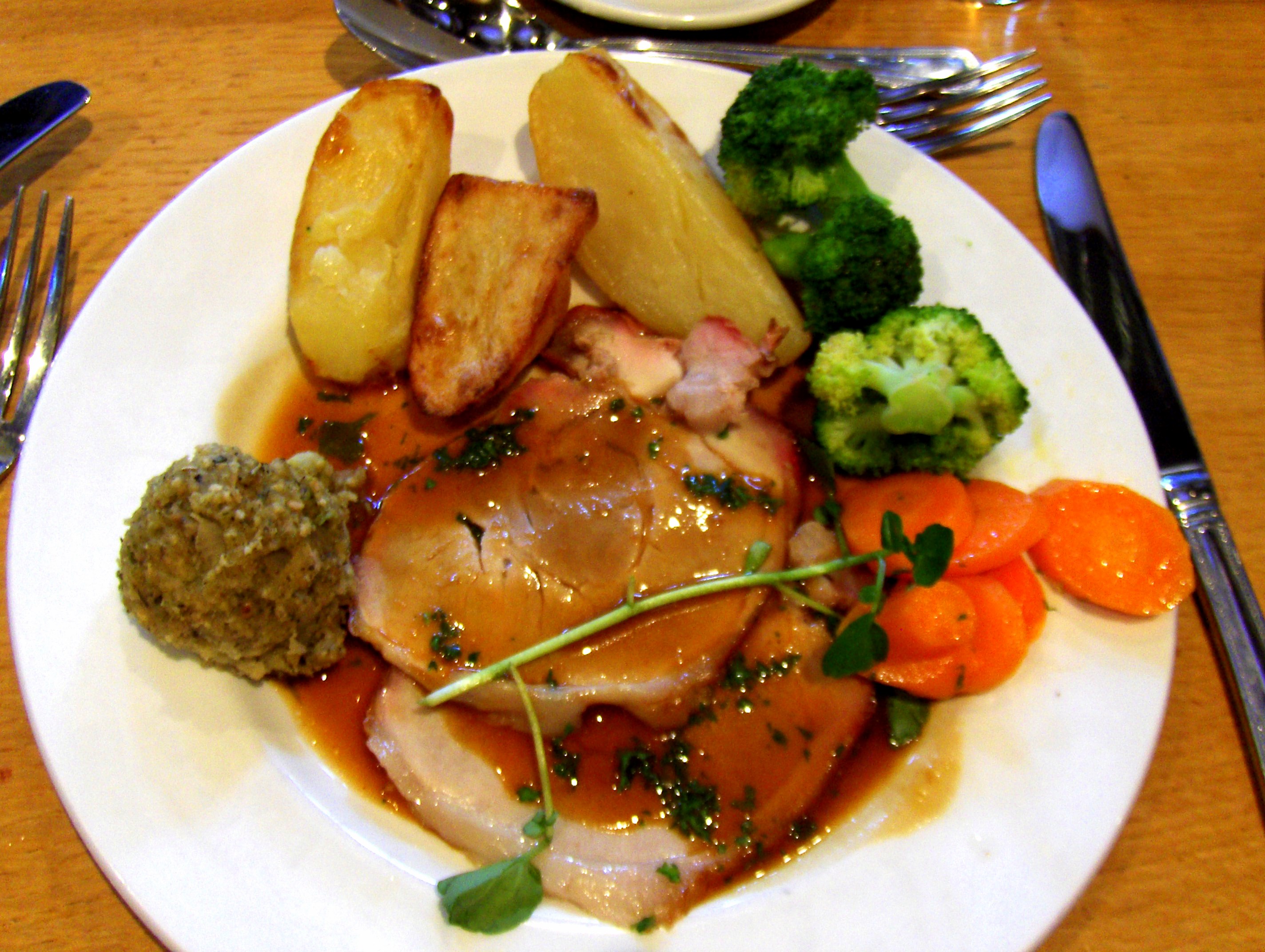
The main course was roast pork with a scoop of stuffing (it probably has a better name). It went well with it, but I also like apple sauce with my pork. See Danish place. The potatoes were pretty good. The higher the temperature (and hence the darker color of the potato), the better tasting the potato, in my opinion.


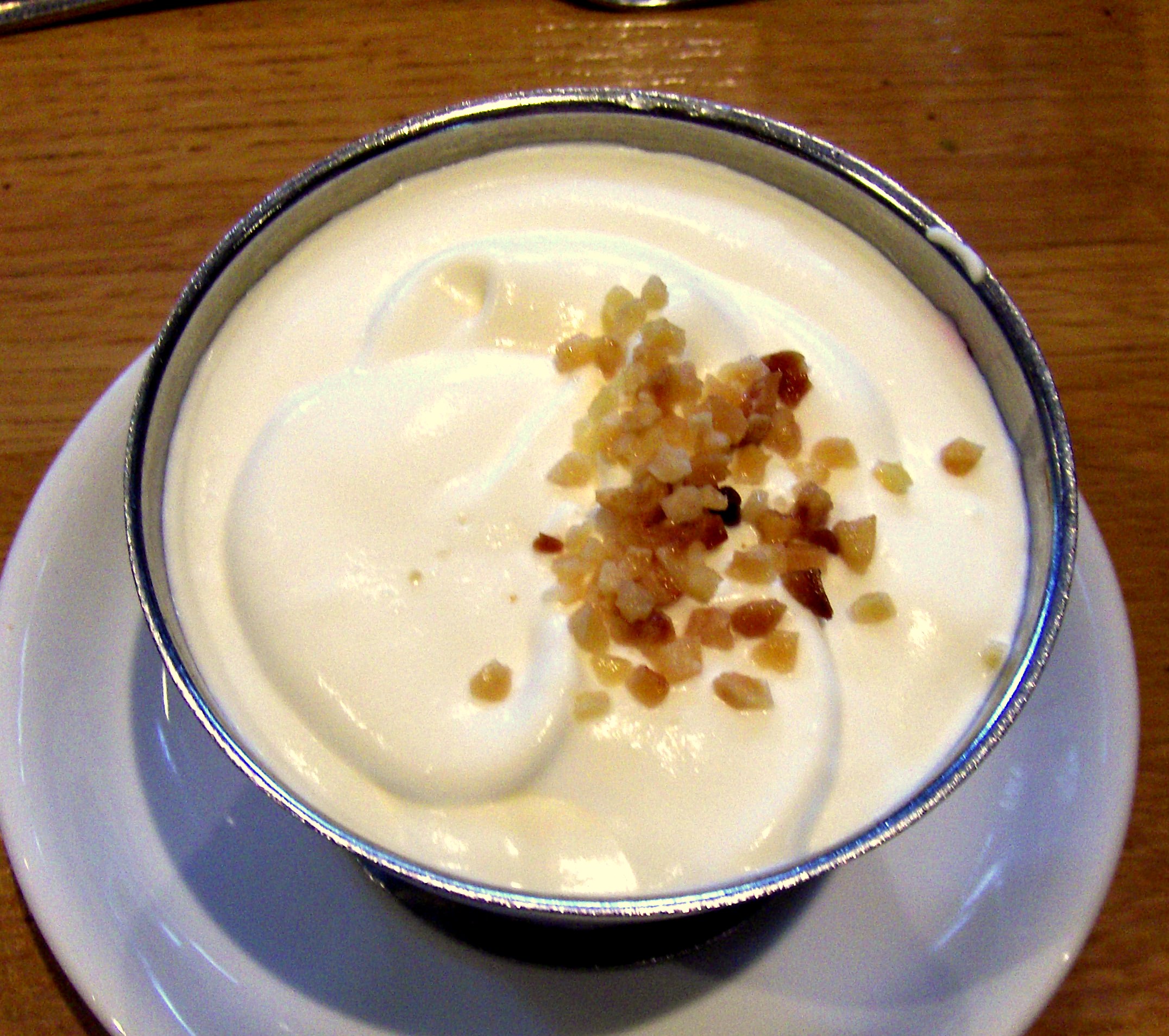
The endnote was a raspberry something covered in thick yogurt. Fresh and healthy.

Thursday 22ndThe banquet(*)

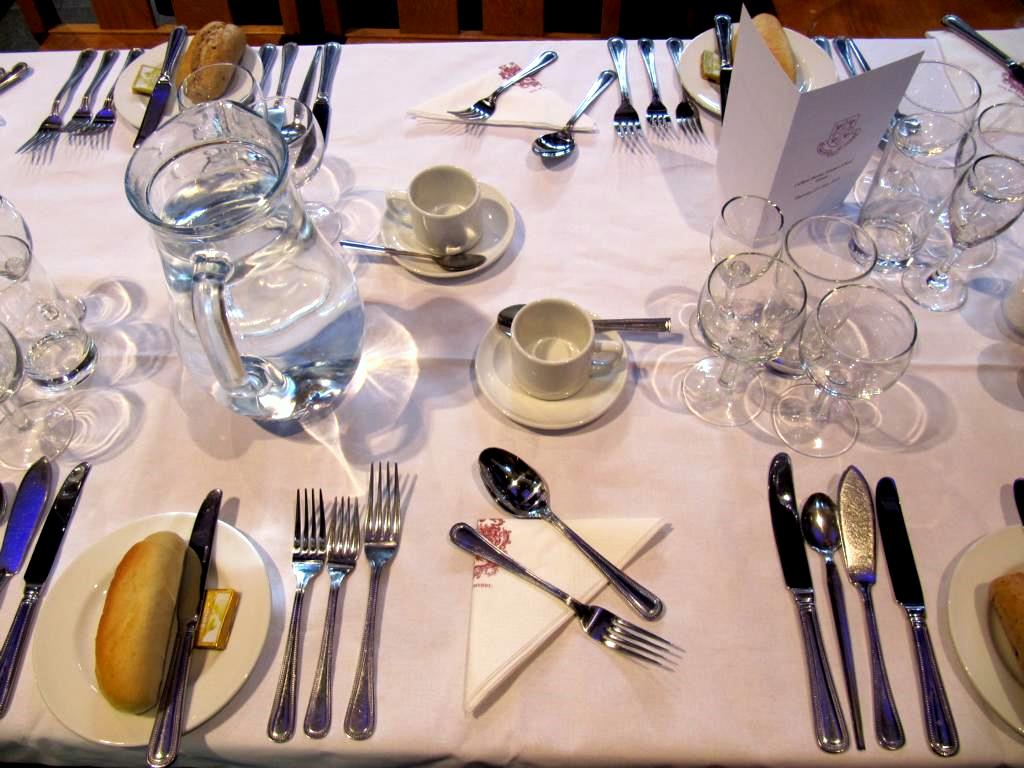
Six-course meal. Tons of utensils. Overall, there were 4 knives, 4 forks, 3 spoons, 4 glasses, and a tea cup.

Set of utensils for the banquet at St. Edmund Hall, Oxford University - Picture taken by Tobias Hartmann


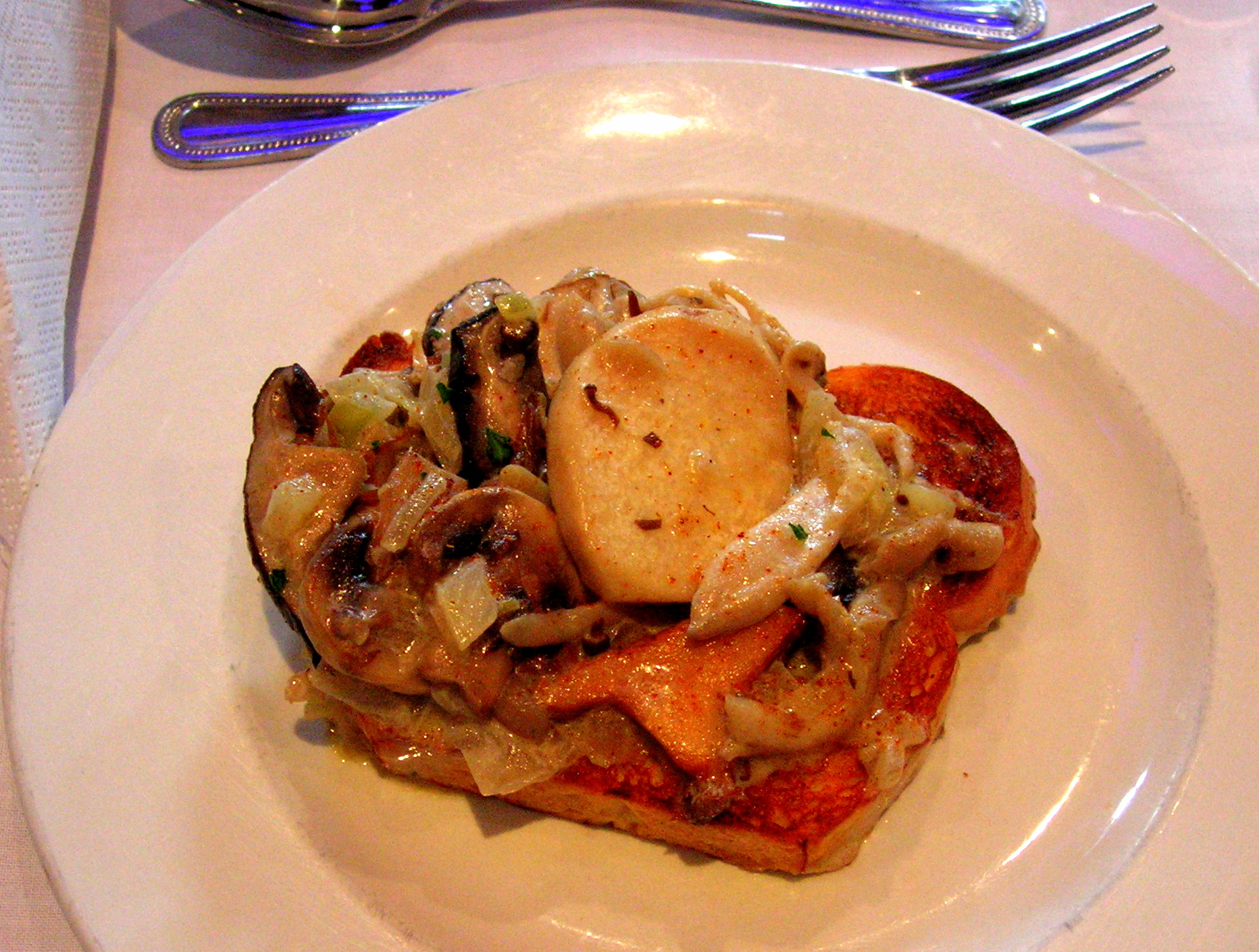
Course 1- Fricassee of Wild Mushrooms on toasted bread, maybe French bread or a loaf like that. There was quite a large heap of mushrooms, with at least 3 or 4 types. Savory and good.


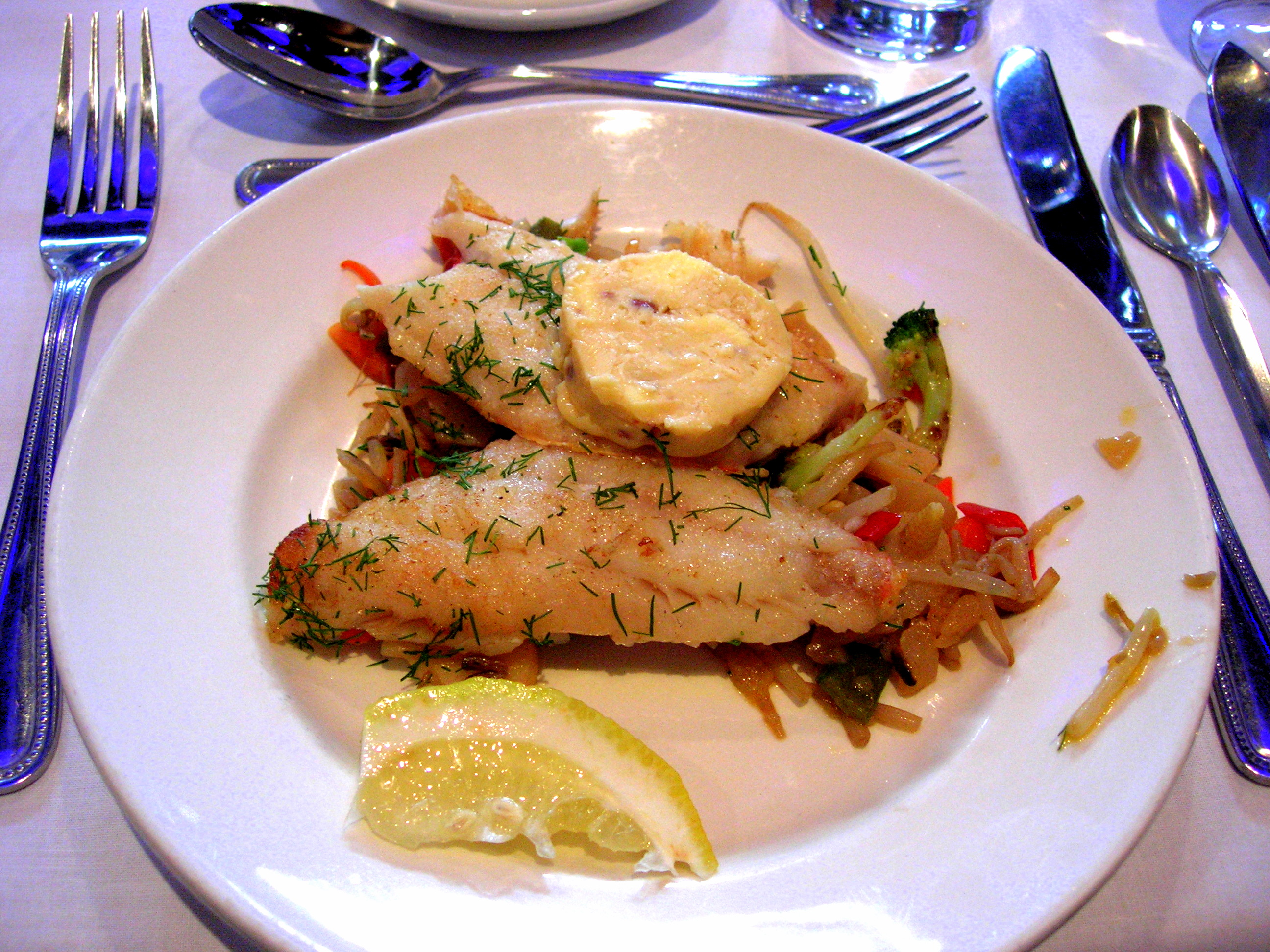
Course 2- Pan-fried mullet on stir-fried vegetables. Two filets of fish with mixed veggies around. Everyone seemed to get different proportions of vegetables, and the fish varied in its brownness. It was very rich and covered in a thick slab of some type of butter. It tasted and spread like butter, but it looked like it was made from something else.


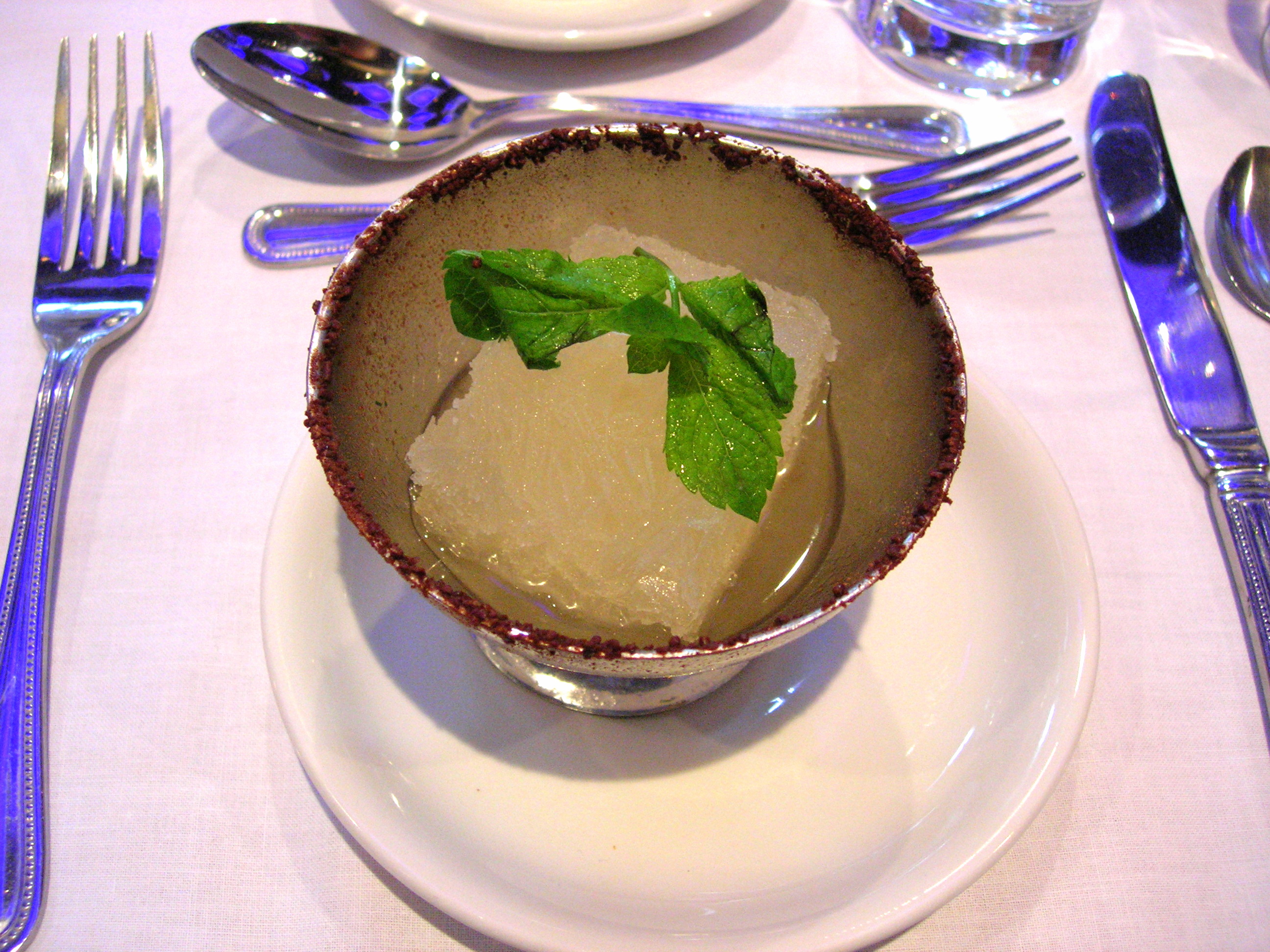
Course 3- Champagne sorbet. I think they just froze champagne in blocks and put mint leaves on top. It splintered like slushy ice that barely froze, probably on account of the alcohol. I didn’t like it. The melted pool of champagne on the bottom grew until one was just drinking iced champagne with a spoon.


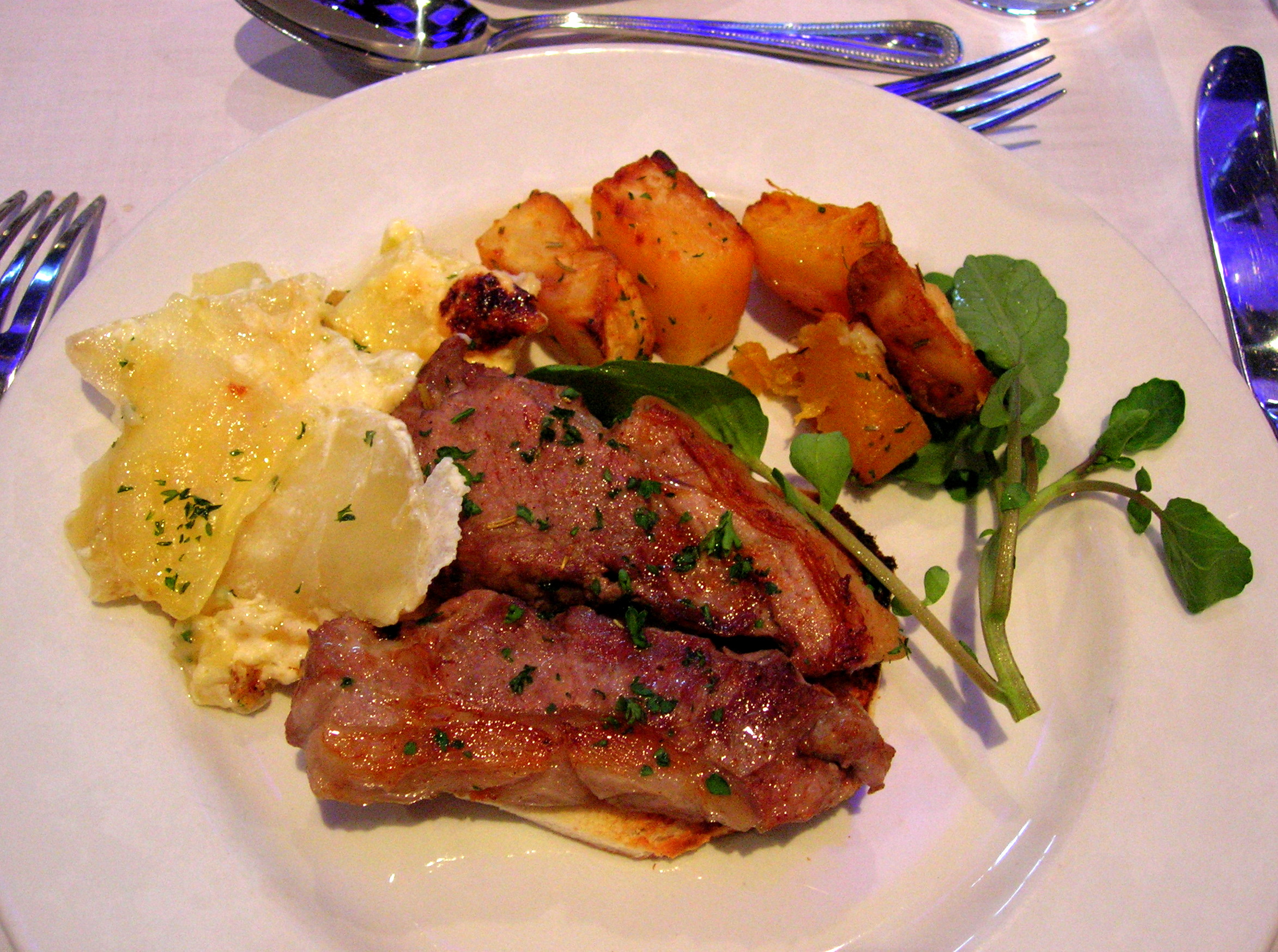
Course 4- Lamb noisettes with roasted mediterranean vegetables with dauphinoise potatoes. The lamb was pretty tender as far as lamb goes, and a little fatty. It was good, though. The gravy was similar to the gravies they served before at this dining hall. The potato gratin dauphinois was like lasagna made out of potatoes as it had cheese mixed in and was baked until brown. It was nice.


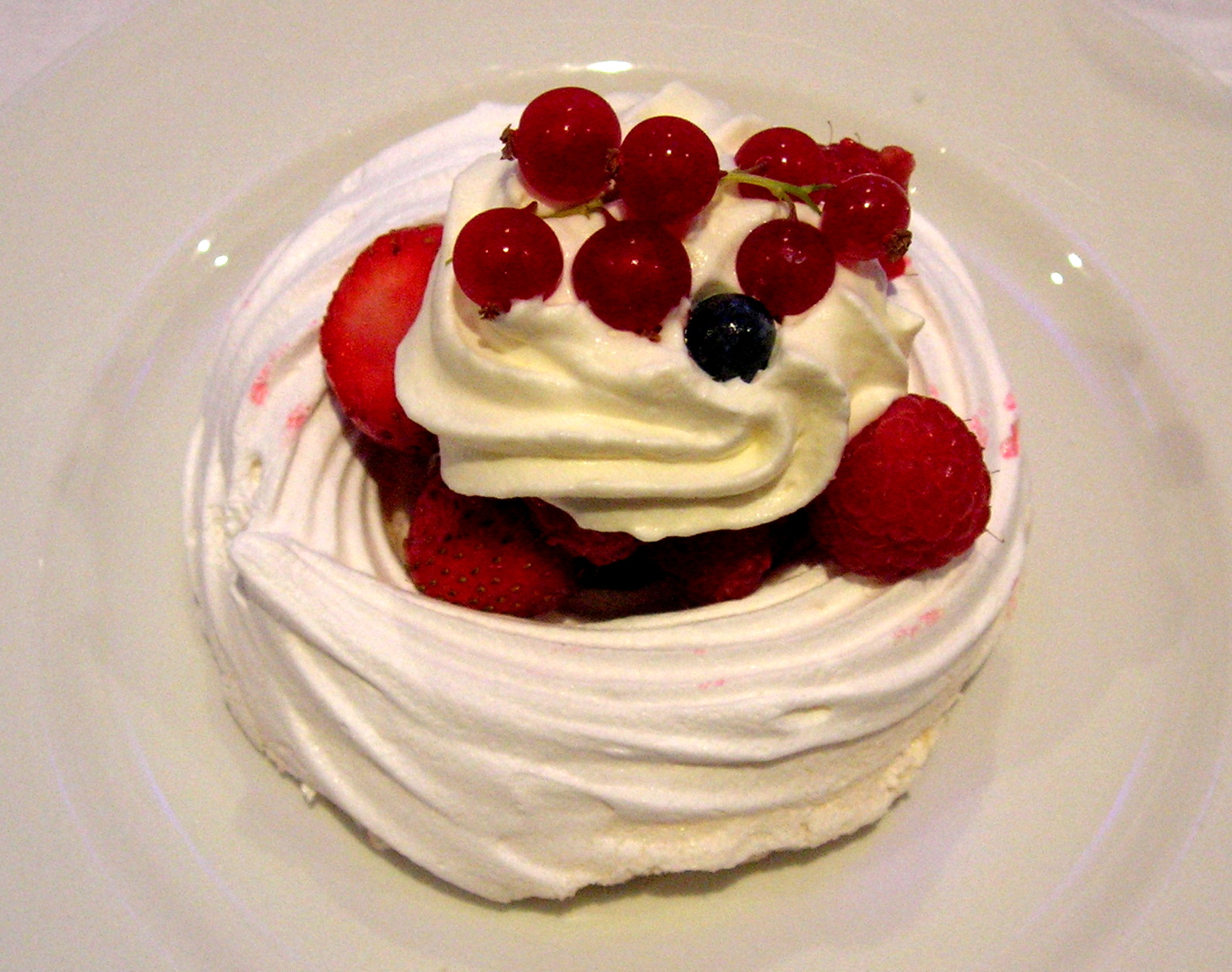
Course 5- Summer fruit pavlova. Strawberries, red currants, and raspberries mixed in a whipped cream and sugar cake structure. The base was hardened sugar.

Course 6- Coffee and Chocolates. They had a plate of different chocolates. Two types that were minty, and one with crispy rice in it. Nothing special. They snuck coffee in my cup when I turned around listening to a speech.

(*) Pictures from the banquet were taken by Wouter Devulder

Other bites in England:
Oxford dinners – part I
Cous Cous Cafe in Oxford
Soon-to-be new posts:
From popadom to Bombay pizza
– Pie and mash at the Ship Inn Upavon and Pieminister
– England’s healthy fastfood chain: Pret A Manger

Oxford dinners

August 03, 2010 By: Mai Truong Category: University & Cafeteria

Guest post by Paul Simeon – “My trip to England for a summer school in plasma physics”


It’s nice to try out another school or another country. I did both when I spent the last two weeks of July at the University of Oxford, eating and sleeping in St. Edmund Hall, the oldest place still teaching undergraduates in the world. Arriving with few expectations about the food, we were all pleasantly surprised at the dining hall. Each night for two weeks, the staff served up a different three-course meal at 7 pm sharp. When some people showed up late the first day or two, the servers lightly scolded them. The chefs needed to know how many dishes to prepare. They had a vegetarian option if you told them ahead of time, but otherwise everyone got the same thing. And it wasn’t the average stuff dished out at a standard American college cafeteria.

Week 1- Monday 12th


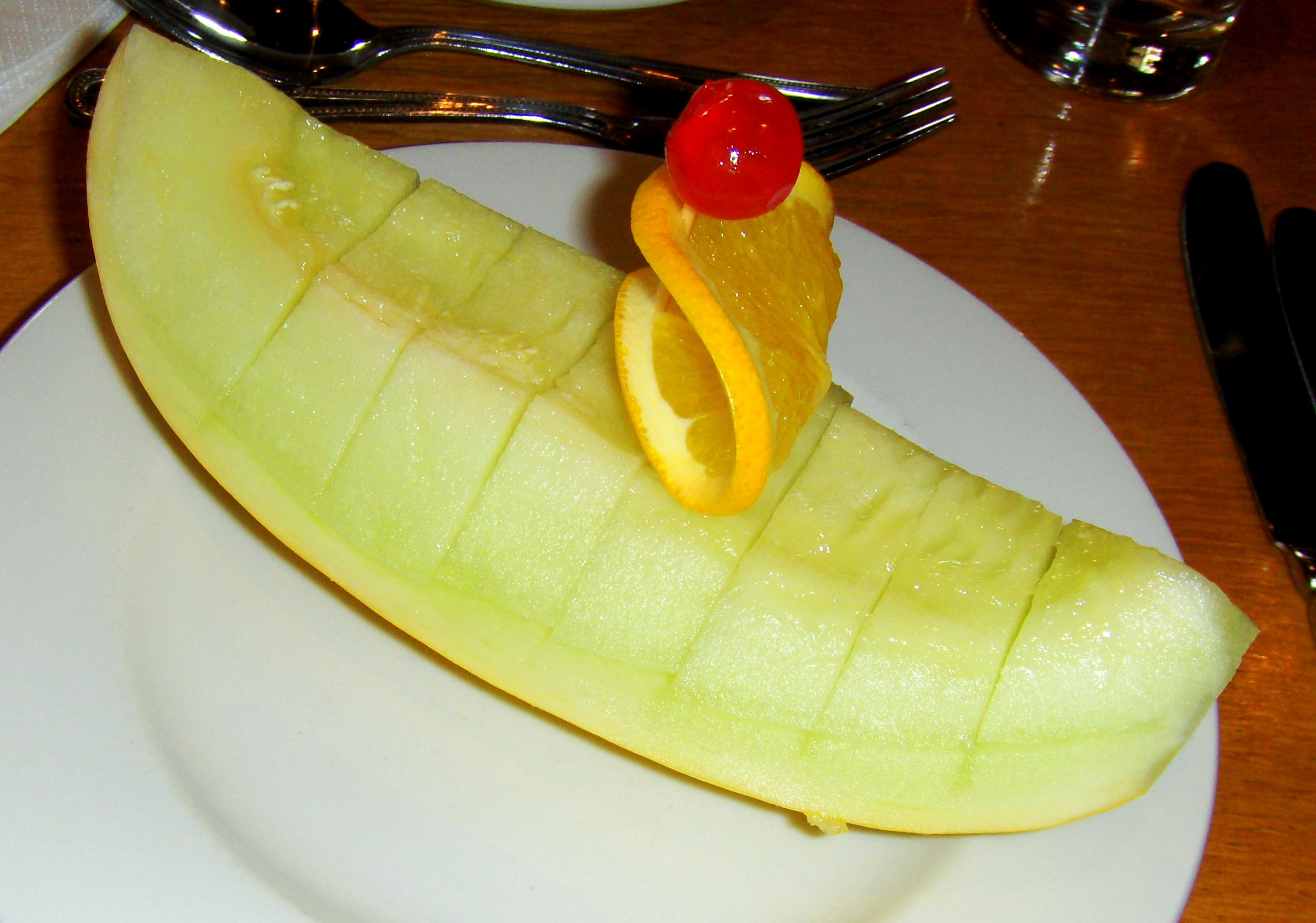
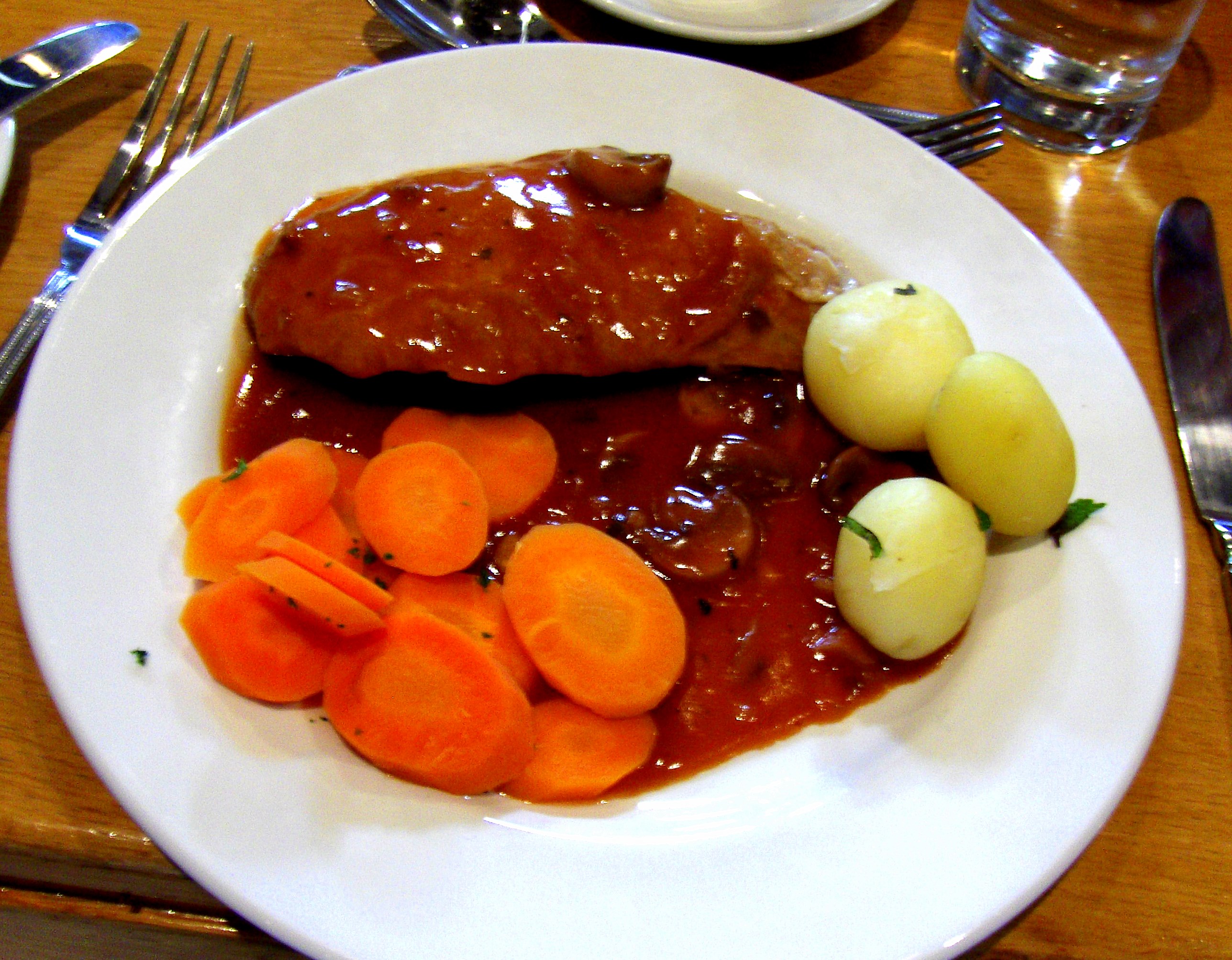
The starter was a big wedge of honey dew melon on the rind, presliced to make it easy, and garnished with a lemon slice and one (too) sweetened cherry. The main course was roasted duck with mushroom sauce, accompanied by boiled carrots and small potatoes on the side.


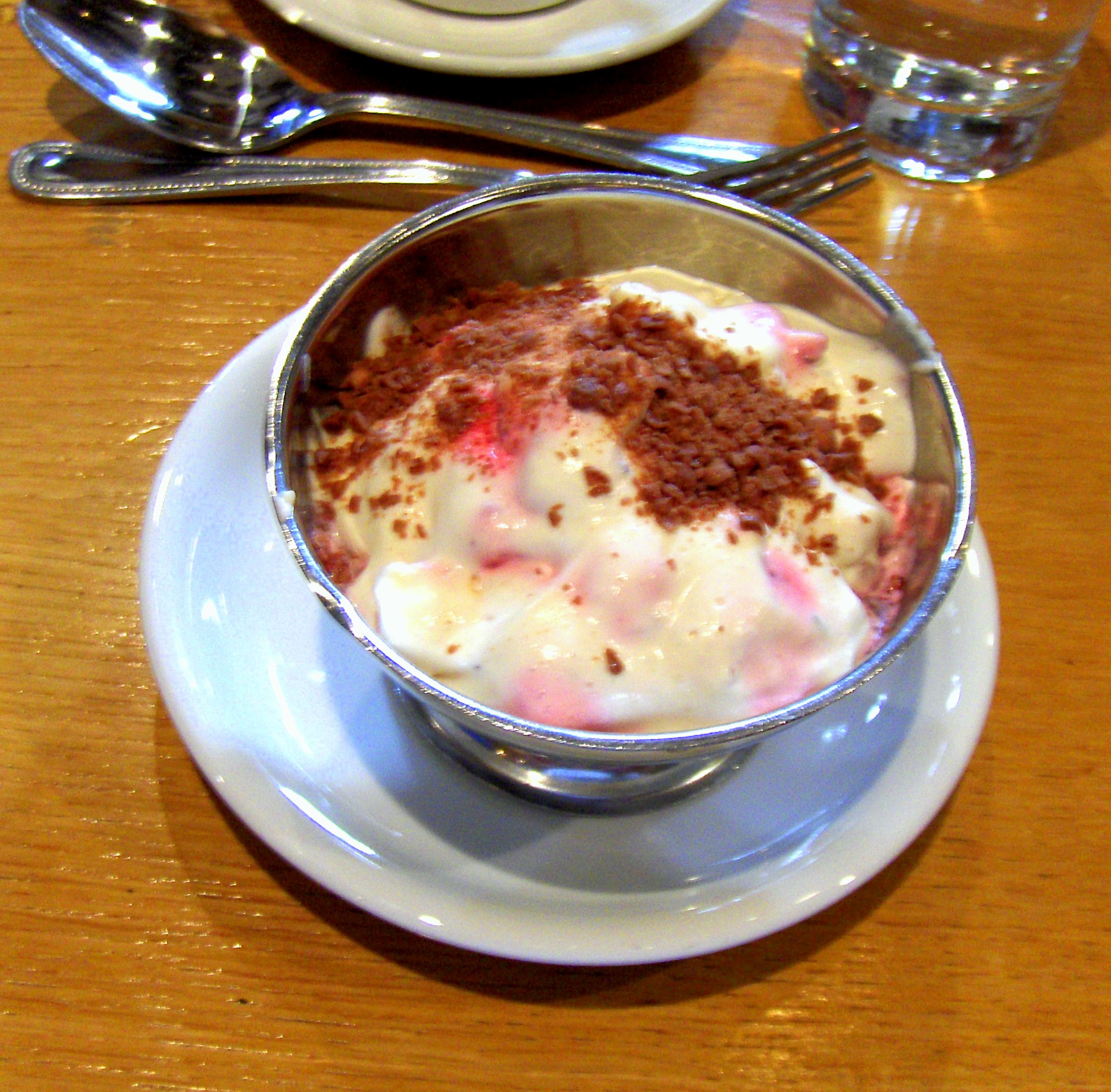
Dessert was an amazing raspberry meringue.

Tuesday 13th


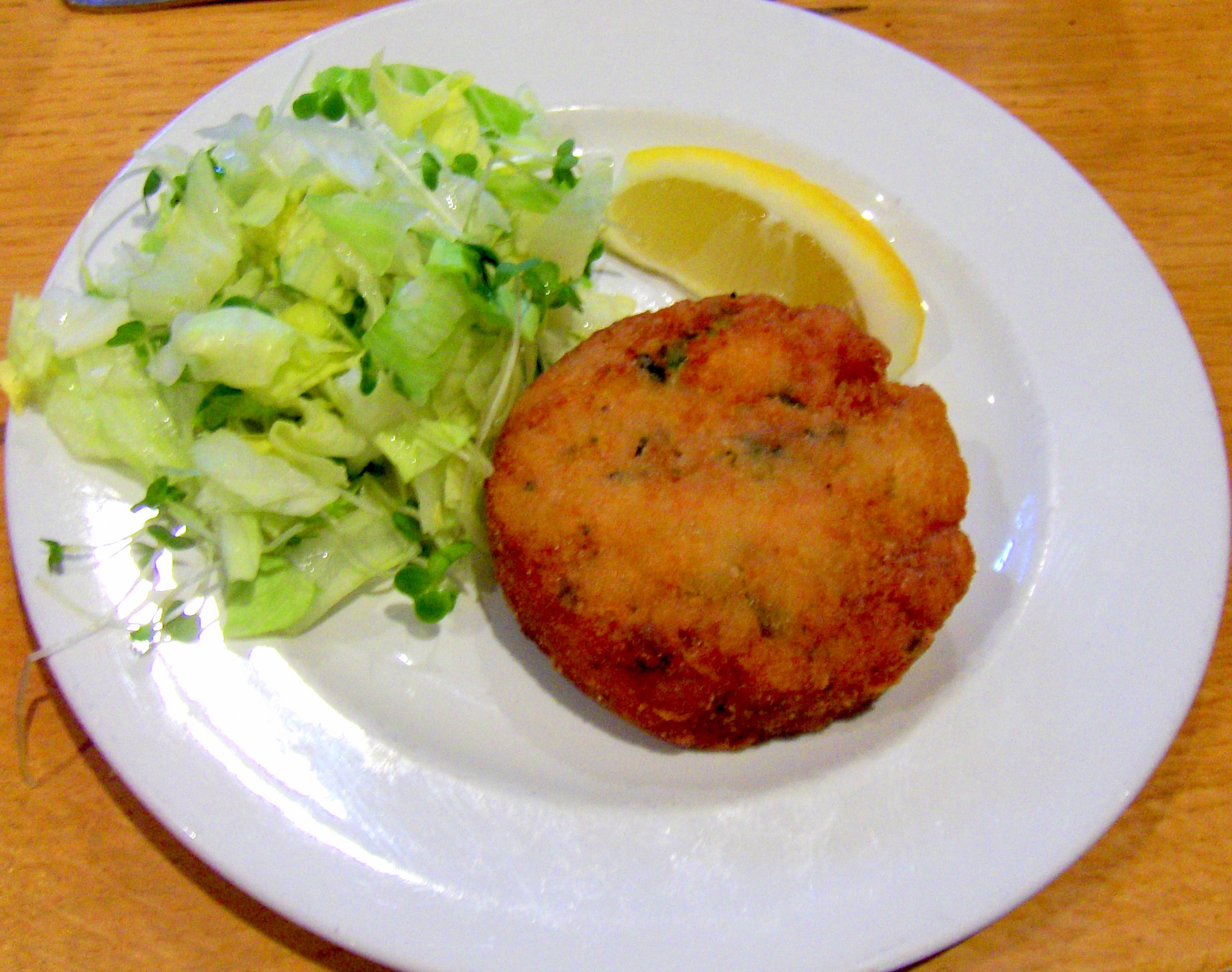
Fish cake with small salad (lettuce and watercress sprouts), which came with a red sweet and sour sauce.


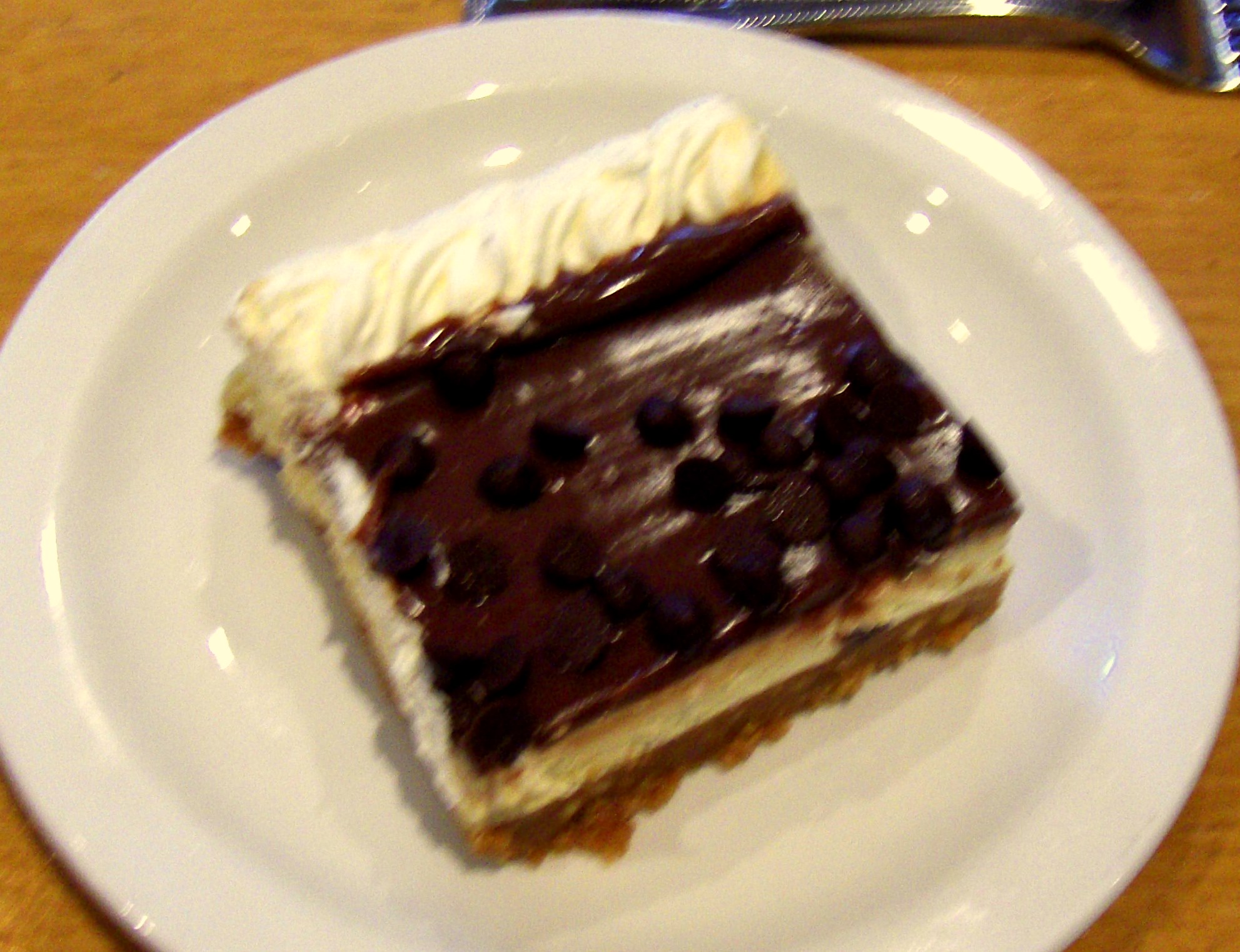
For the main course we had a turkey breast (or just the part that we use for chicken fingers) with a slice of baby Swiss cheese (I guess) and diced tomatoes on top. Dessert was something that might be called banana cream pie.  It had a thick layer of cream like coconut cream pie, a layer of pureed bananas near the bottom, with a graham cracker crust and a thin layer of chocolate on top (with chocolate chips).  It was very good.

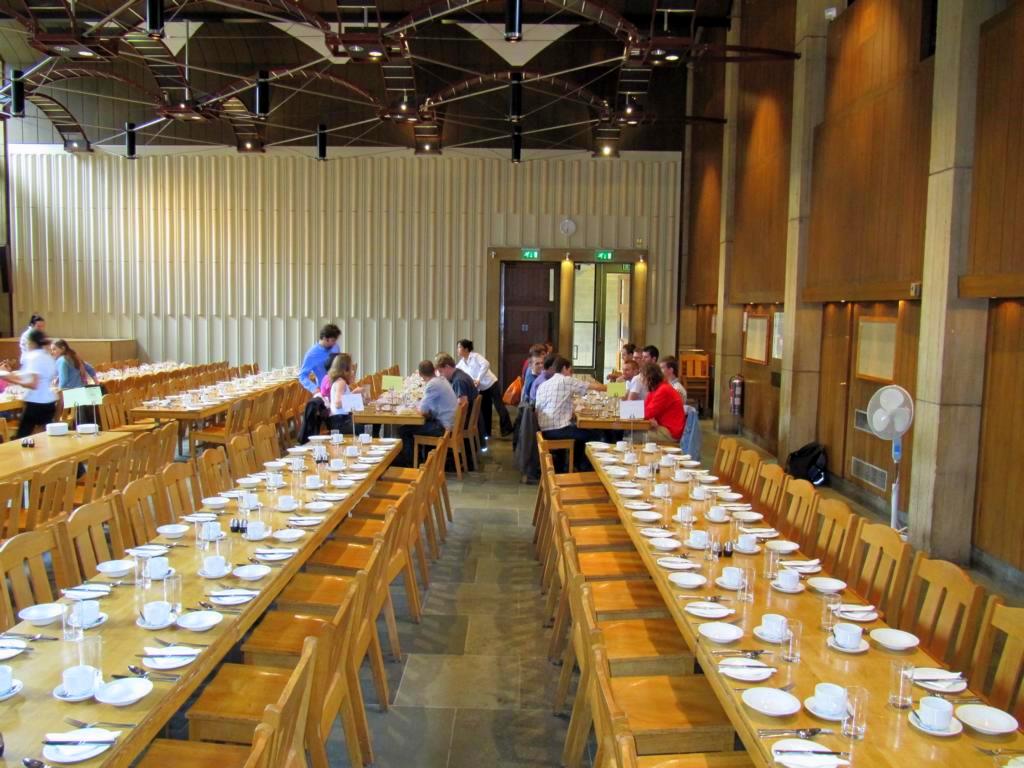
The dining room of St. Edmund Hall, Oxford University. Picture taken by Tobias Hartmann.

Wedesnday 14th
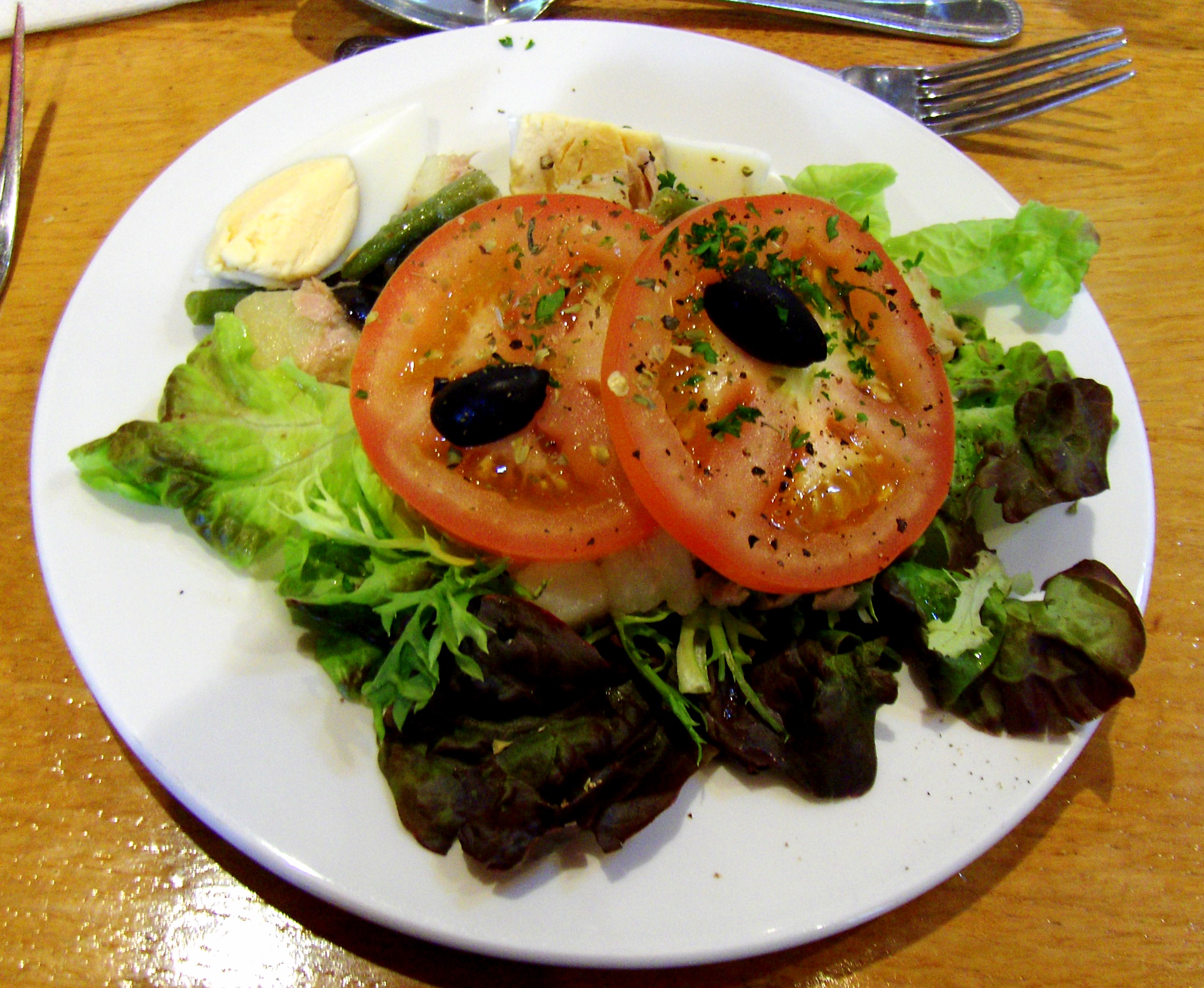
Salad with chopped up tuna fish (in oil and vinegar, thankfully!) with tomatoes, olives, and potatoes to start.


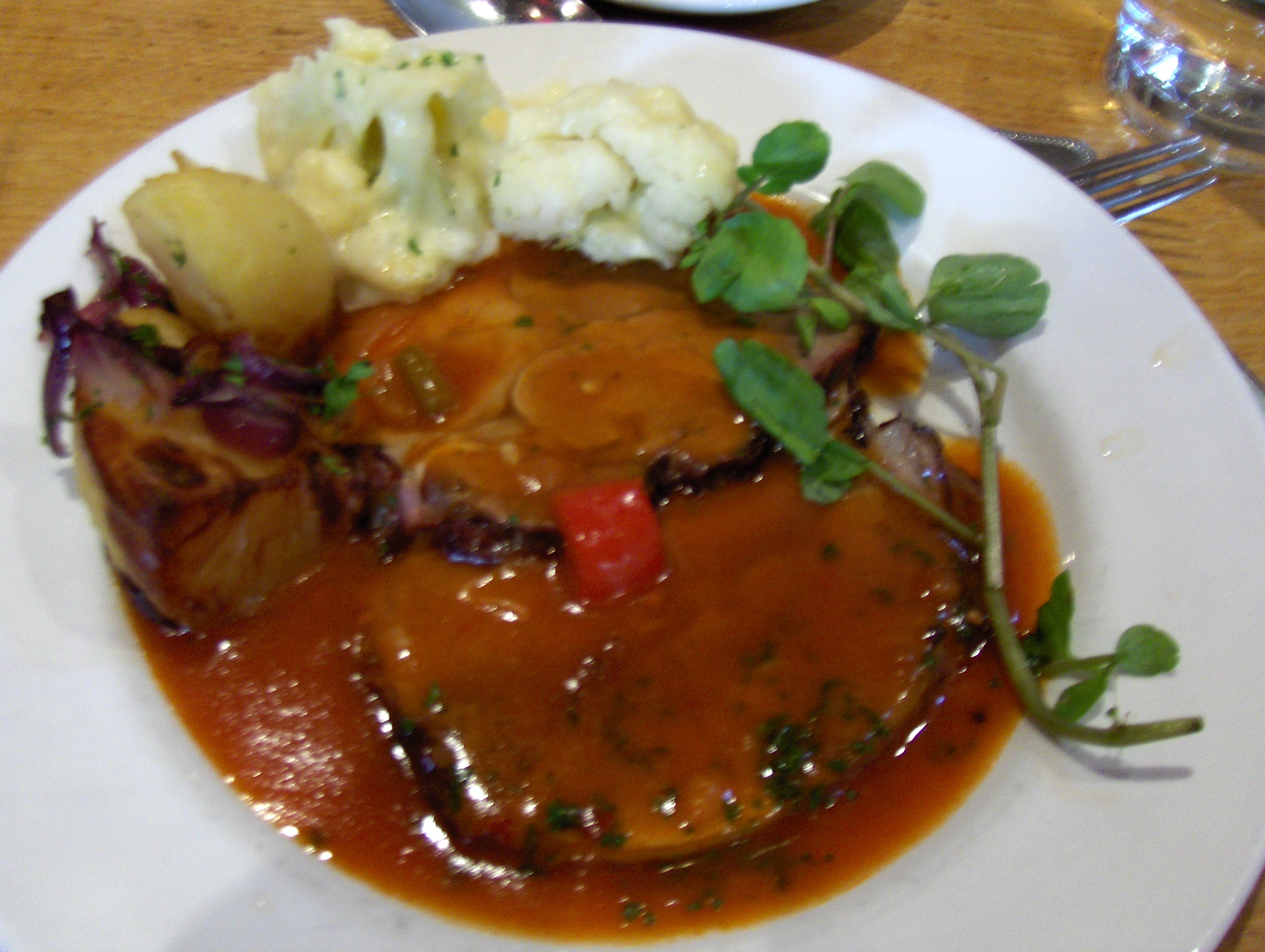
It was alright, but I wasn’t in the mood for fish, especially pink tuna instead of albacore. The entree was roasted lamb slices in a thick red sauce.


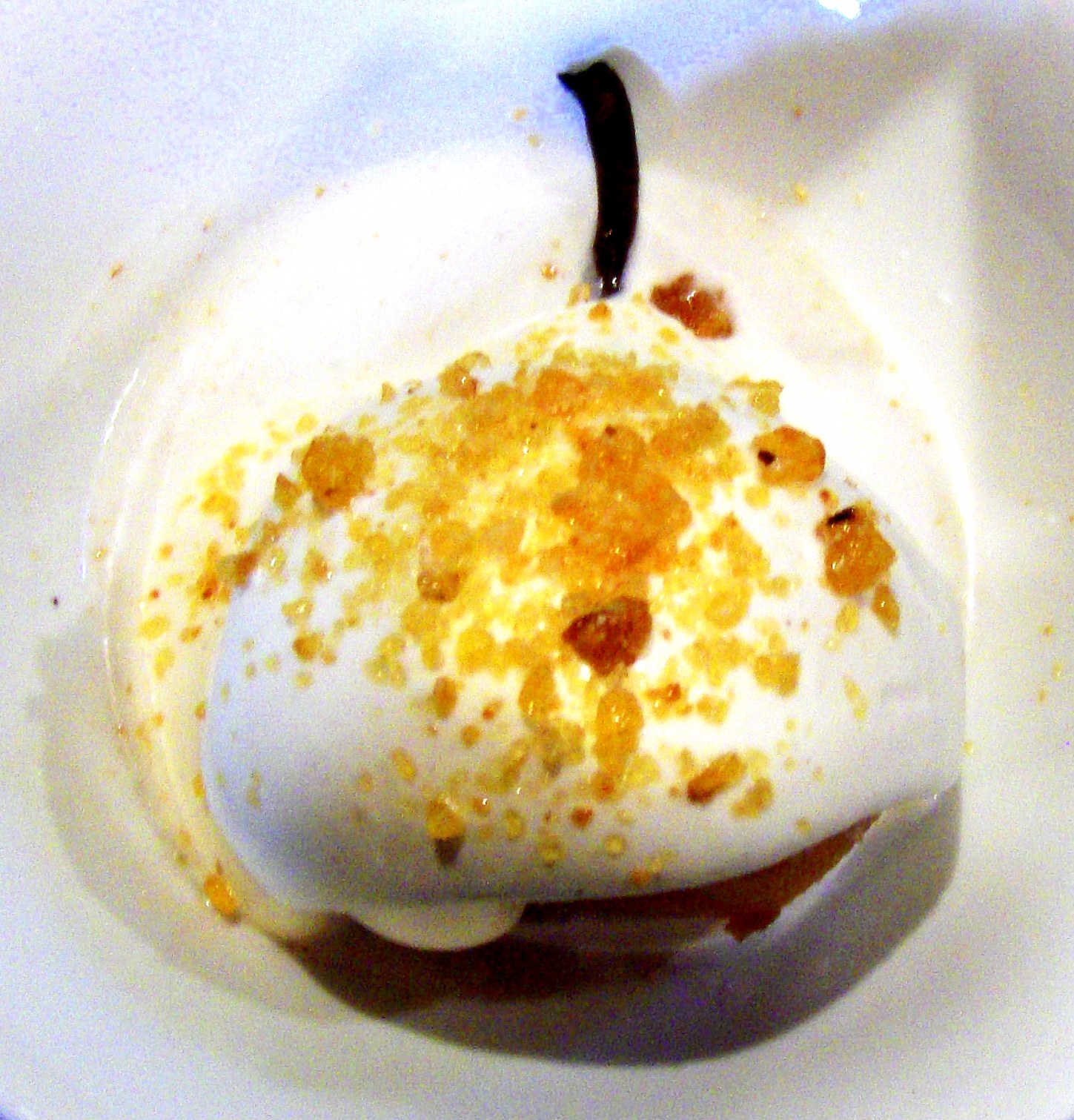
The lamb was pretty tough, and the sauce was too strong. The sides were good though: roasted potato chunks with onions and cauliflower au gratin. Dessert was a pear soaked in some sweet liquid, that tasted like liqueur or rum, and sprinkled with giant yellow glazed crystals.


Wikipedia suggests amaretto liqueur. This was my least favorite dinner, and each of the dishes was my least favorite so far.

Thursday 15th


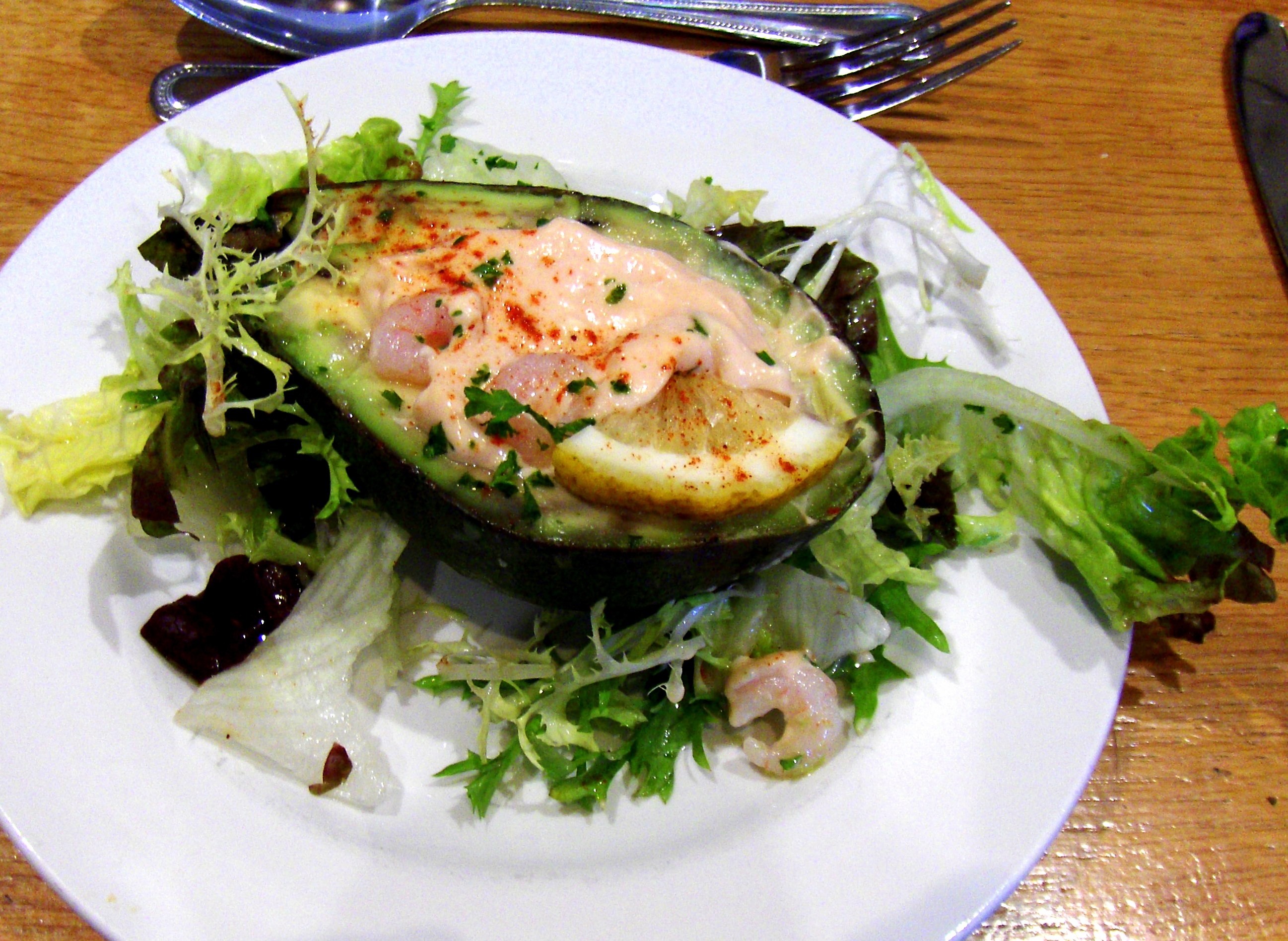
Half an avocado with small shrimp in a sauce.  Sauce wasn’t that great, but the avocado was good.


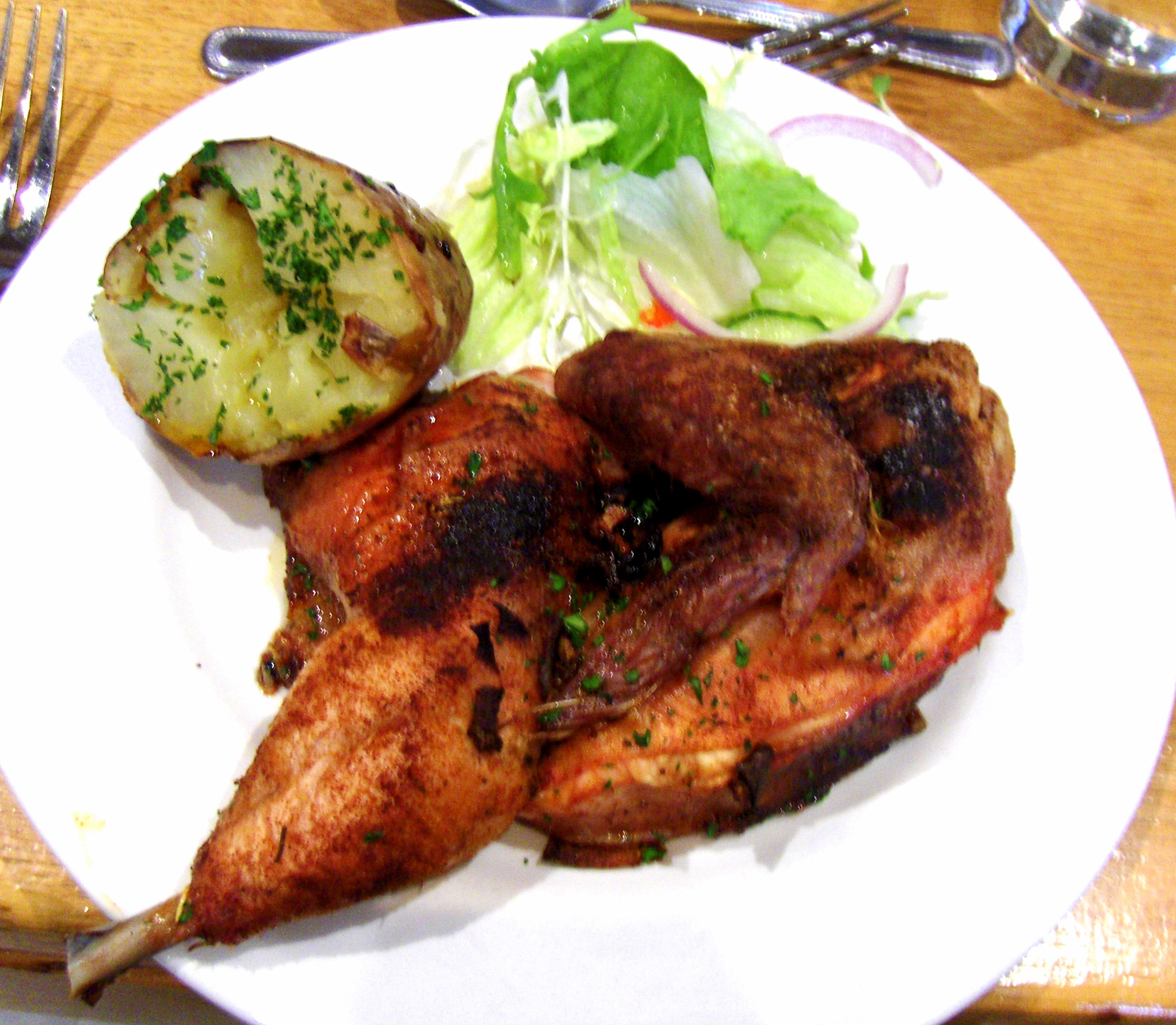
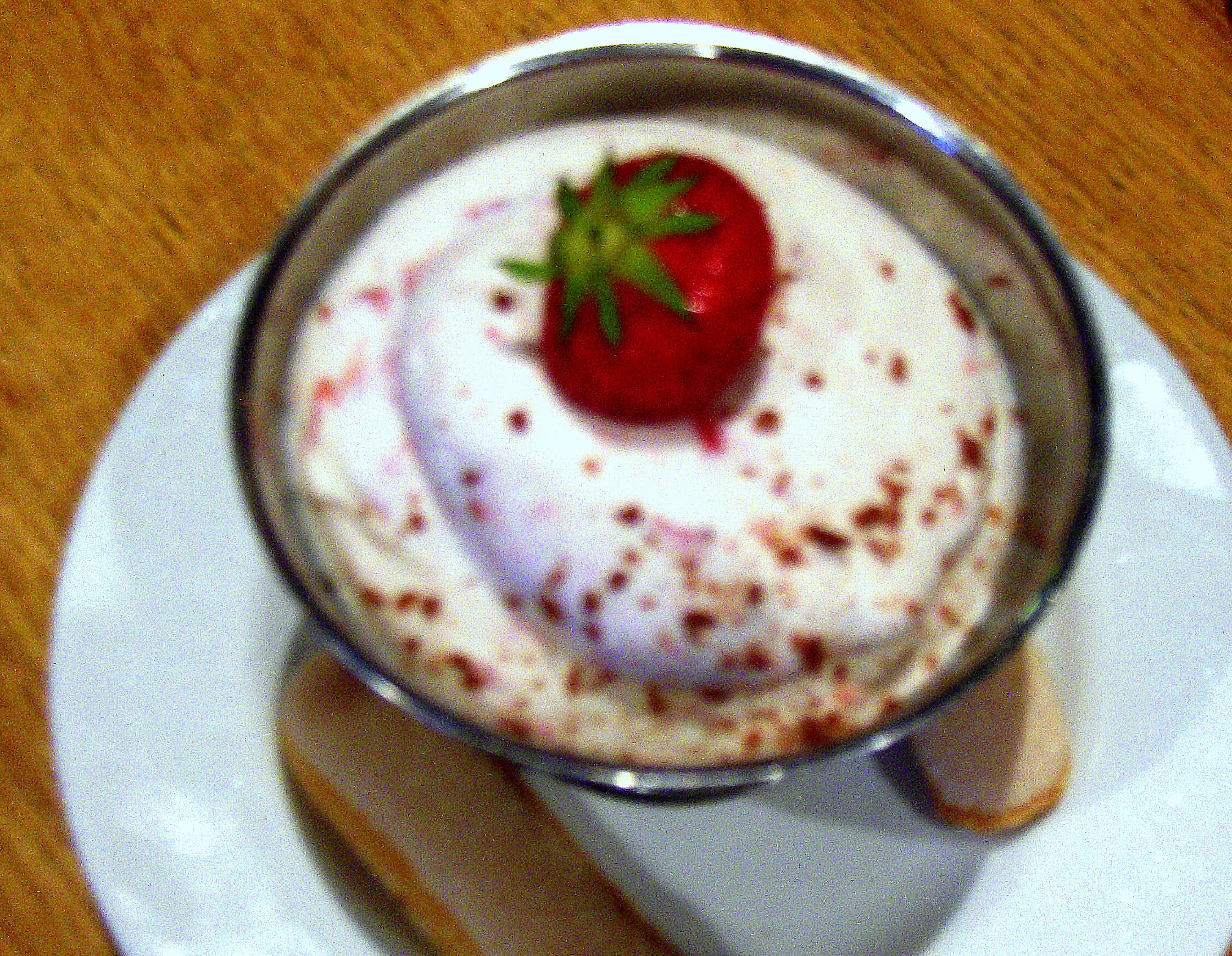
Followed by one half of a roasted chicken, one of each piece on the bone and baked potato that was covered in oil or butter. Very moist and tasty. The ending was two ladyfinger cookies in a strawberry-flavored mix between whipped cream and the British style of yogurt. Someone said it was meringue.

Friday 16th


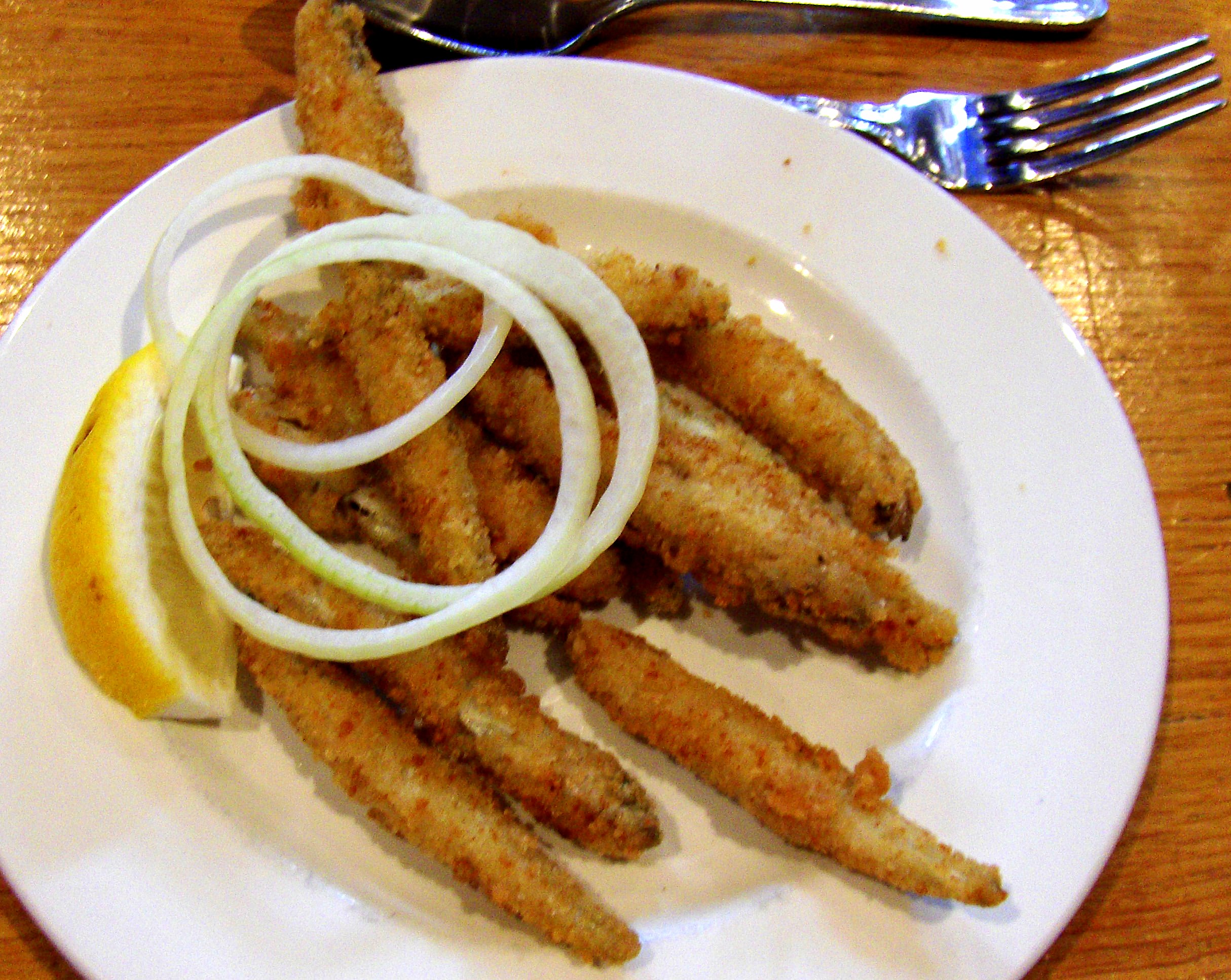
Starter was skinny fish with heads on, fried. It was like anchovy. The French and Spanish people at the table knew what it was, but I didn’t recognize or remember the names they said.


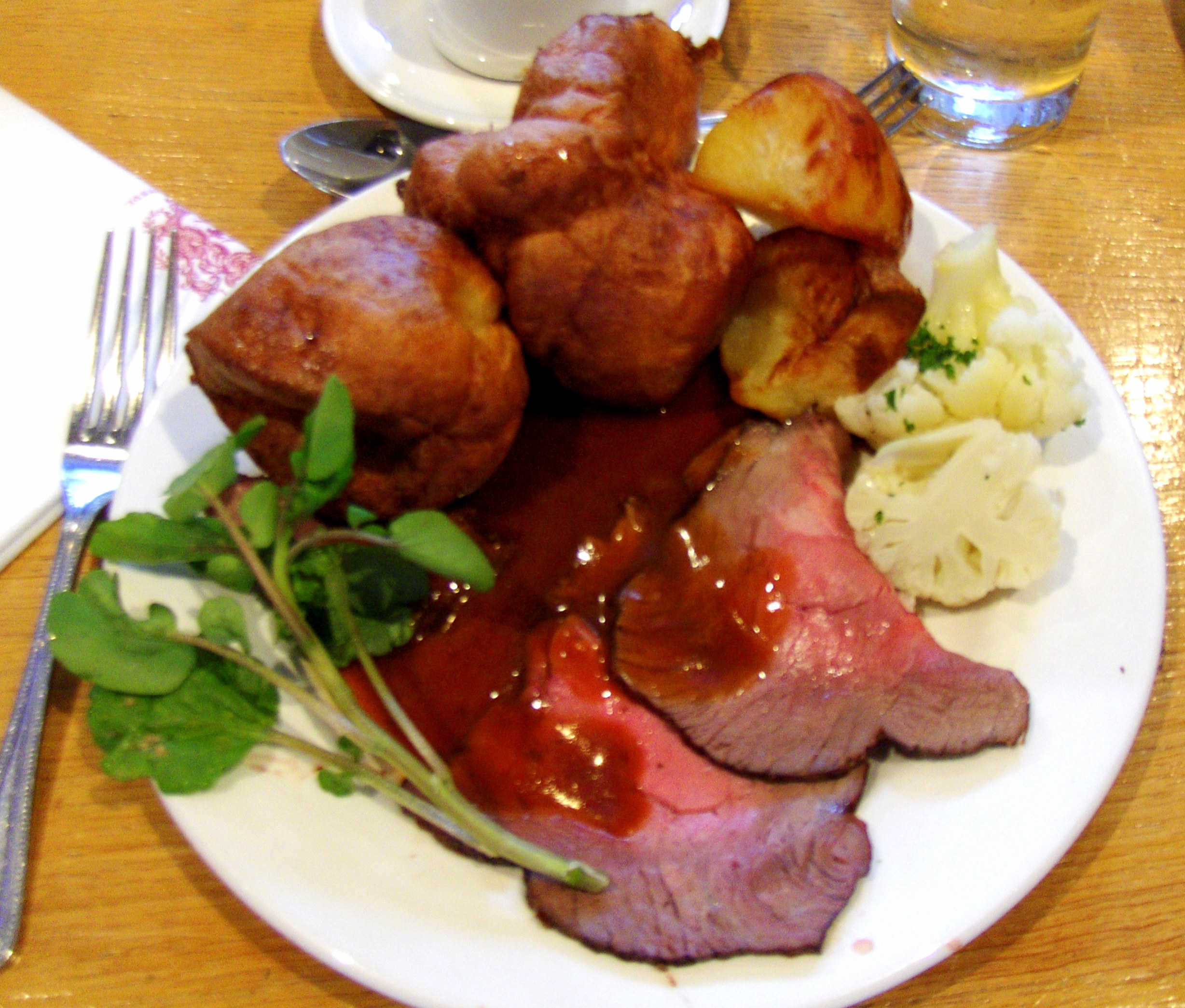
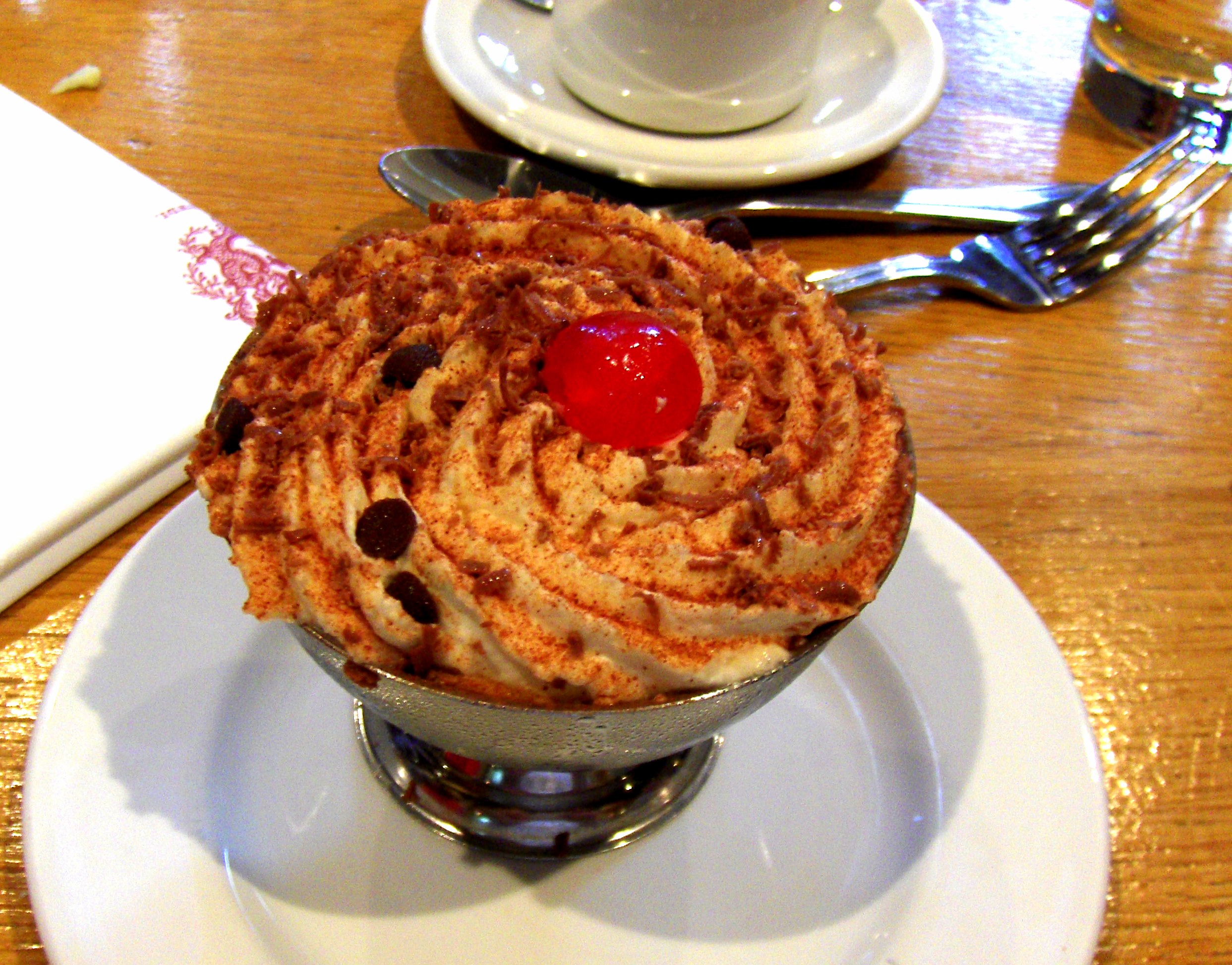
The main course was thin slices of tough, red beef smothered in gravy, with sides of cauliflower, potatoes, and fluffy rolls. Dessert was mixed chopped fruit in a sauce with whipped cream on top.

Sunday 18th

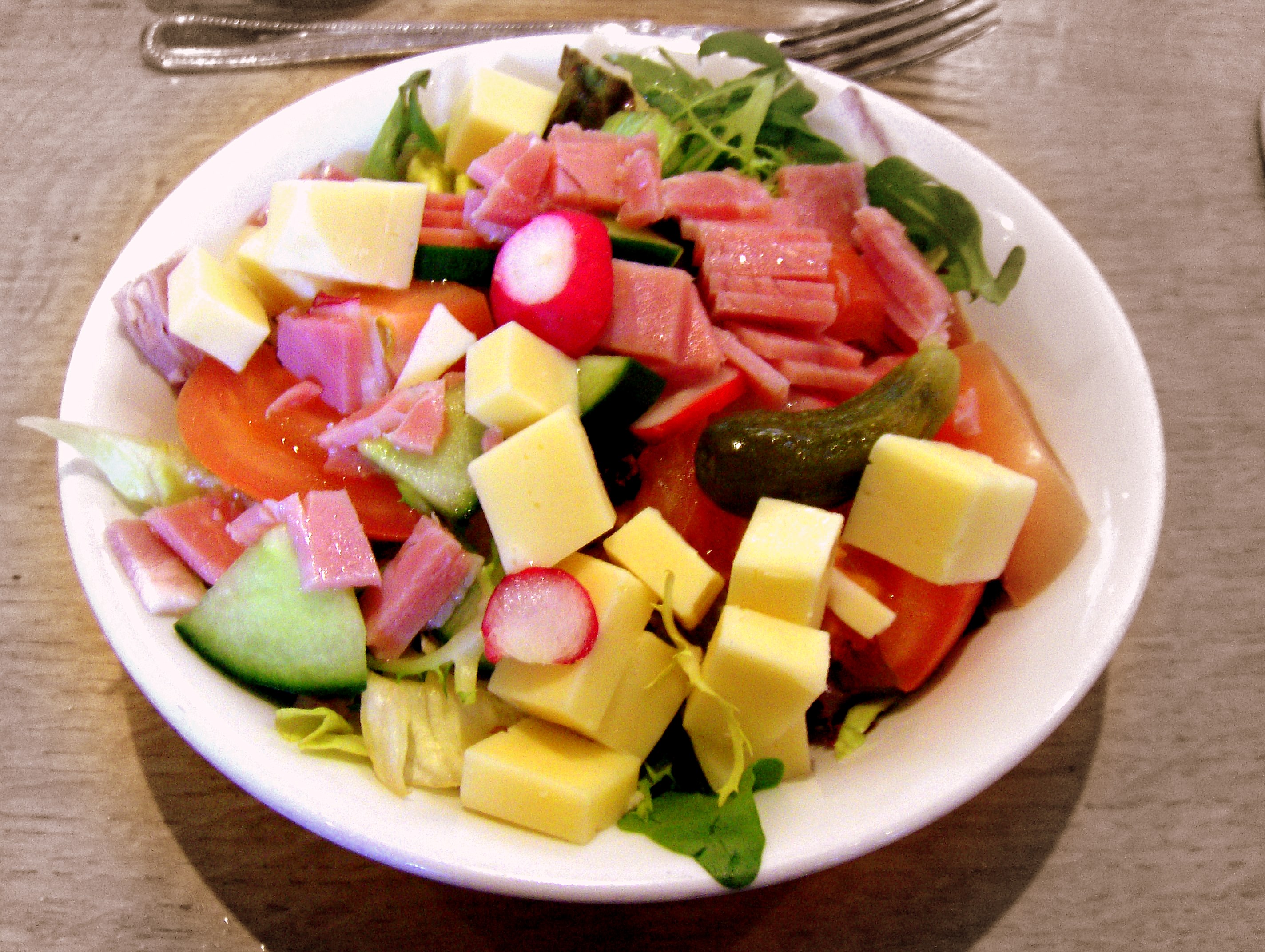
Salad with lots of stuff in it. Ham, cheese, tomato, radish, cucumber, lettuce, gherkin. It was good. It was almost less like a salad and more like a bowl of random cold things. On the side was a gravy boat with a light salad dressing that was most likely vinaigrette.


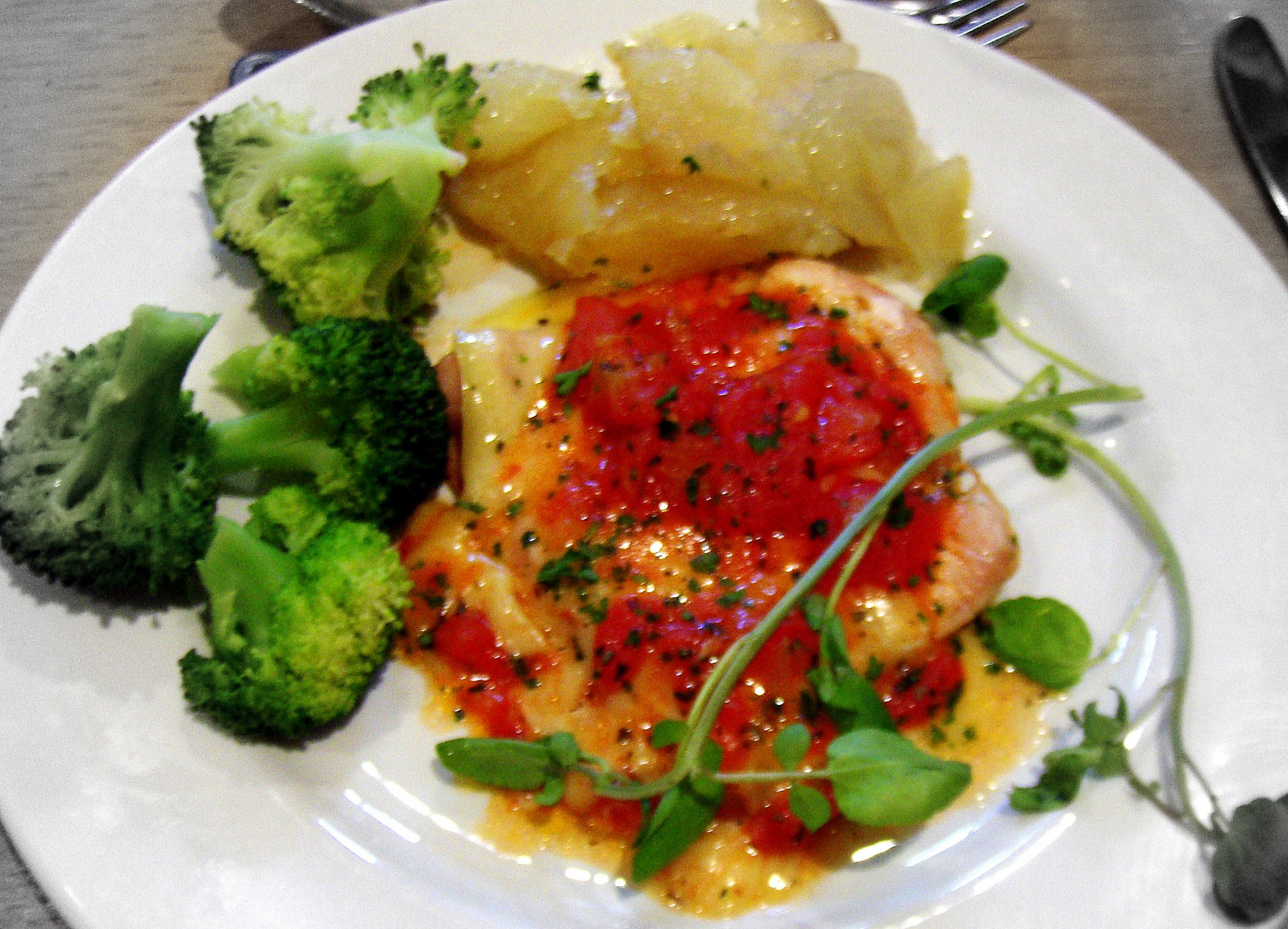
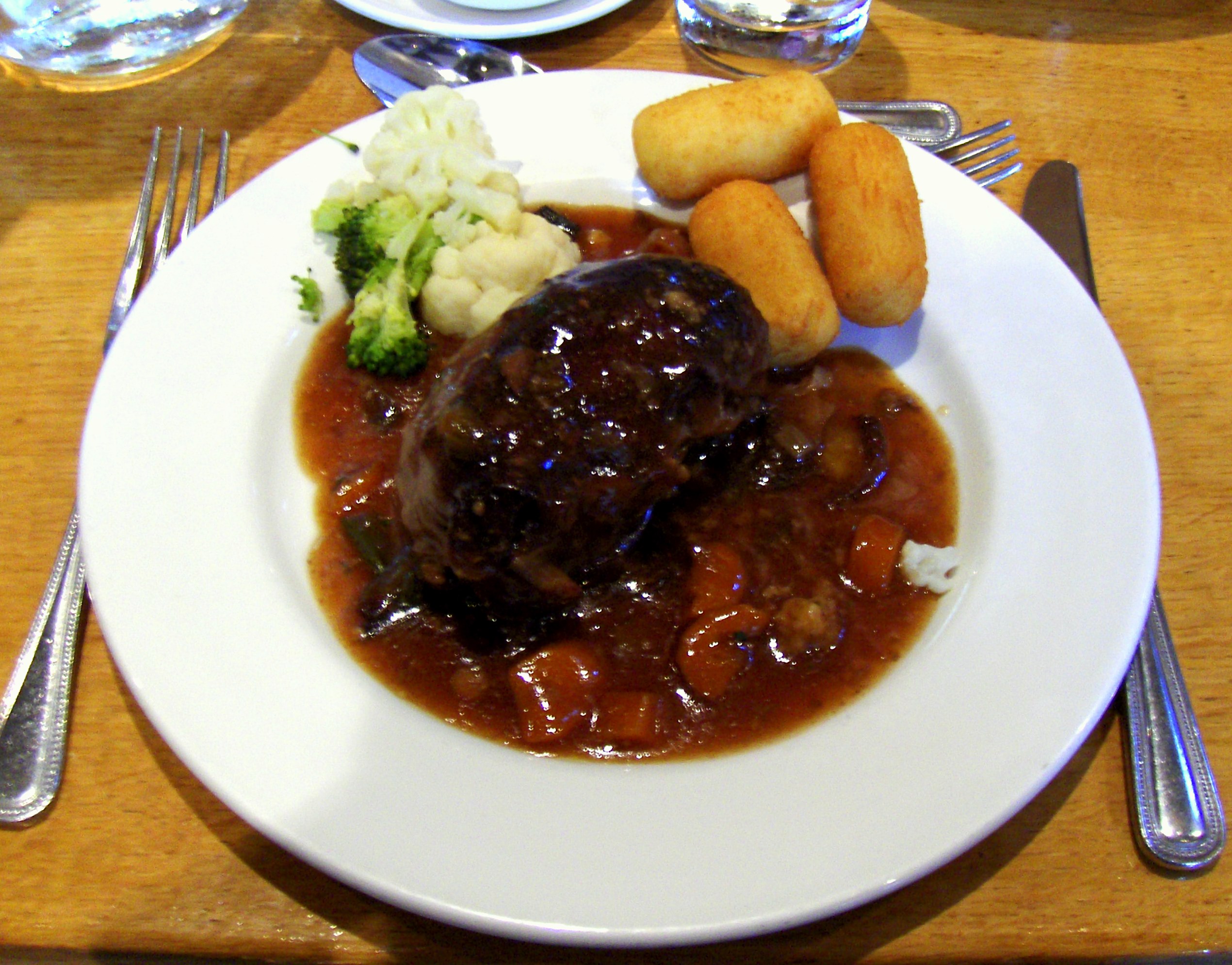
The main dish was interesting, and pretty good. It looked like a big lump of roast, but it was actually a thin slice of beef that was rolled up with bread crumbs or stuffing in the middle.


And, of course, they put gravy all over it like every other dish. The Germans at the table knew this dish quite well. The sides were broccoli, cauliflower, and croquettes – fried cylinders of mashed potatoes. Dessert was a simple bowl of assorted berries and grapes with a dollop of whipped cream (actual whipped cream, not the fluffy stuff in tubs or spray cans). Nothing too fancy, but it was good. I’d say this was one of the better meals of the two weeks.

(to be continued) – Read Part II

Other bites in England:
Cous Cous Cafe in Oxford
Soon-to-be new posts:
From popadom to Bombay pizza
– Pie and mash at the Ship Inn Upavon and Pieminister
– England’s healthy fastfood chain: Pret A Manger

Sandwich Shop Goodies 8 – Bánh bao chỉ (loh mai chi)

August 01, 2010 By: Mai Truong Category: California - The Bay Area, Chinese, Comfort food, One shot, sticky rice concoctions, sweet snacks and desserts, Vegan, Vietnamese


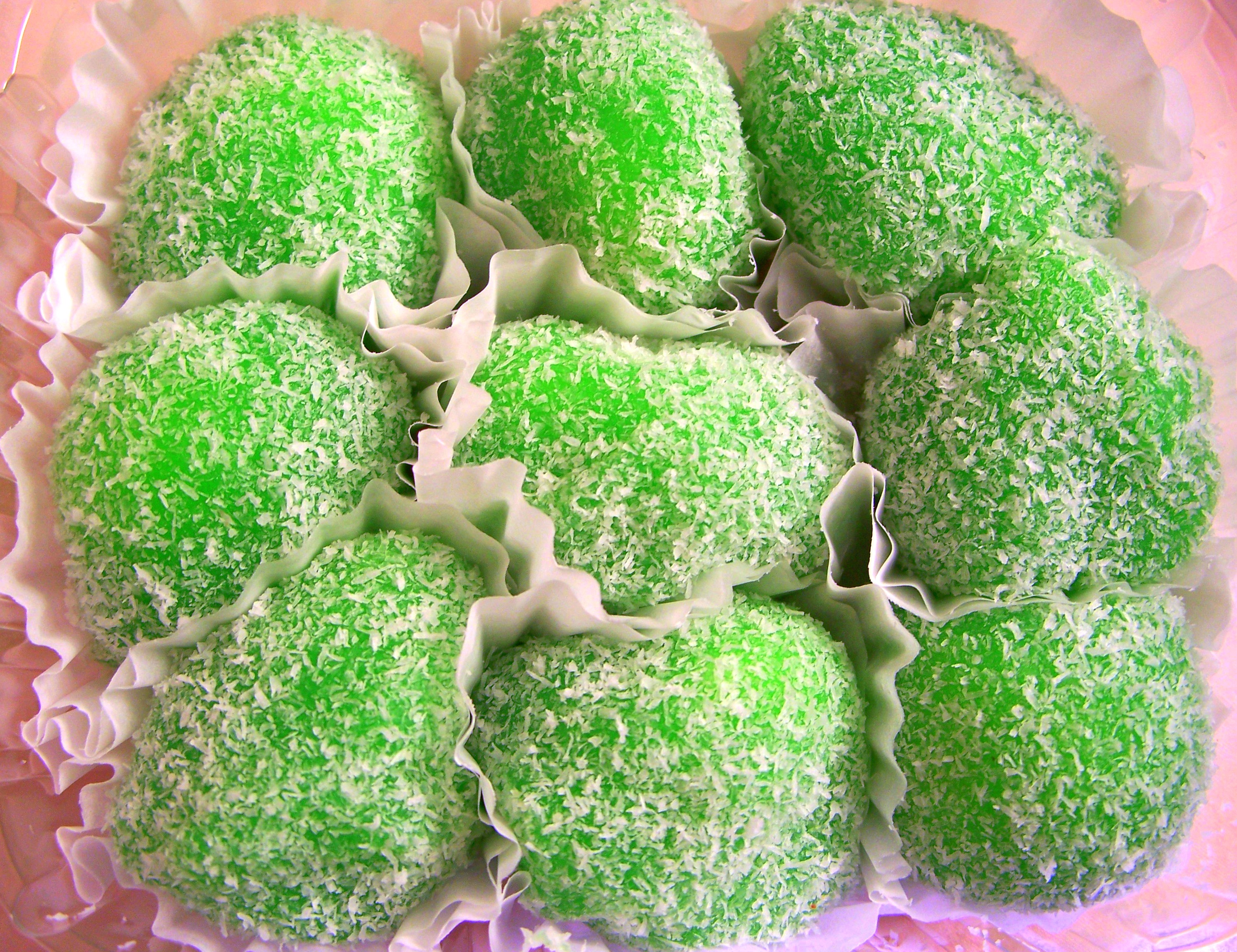
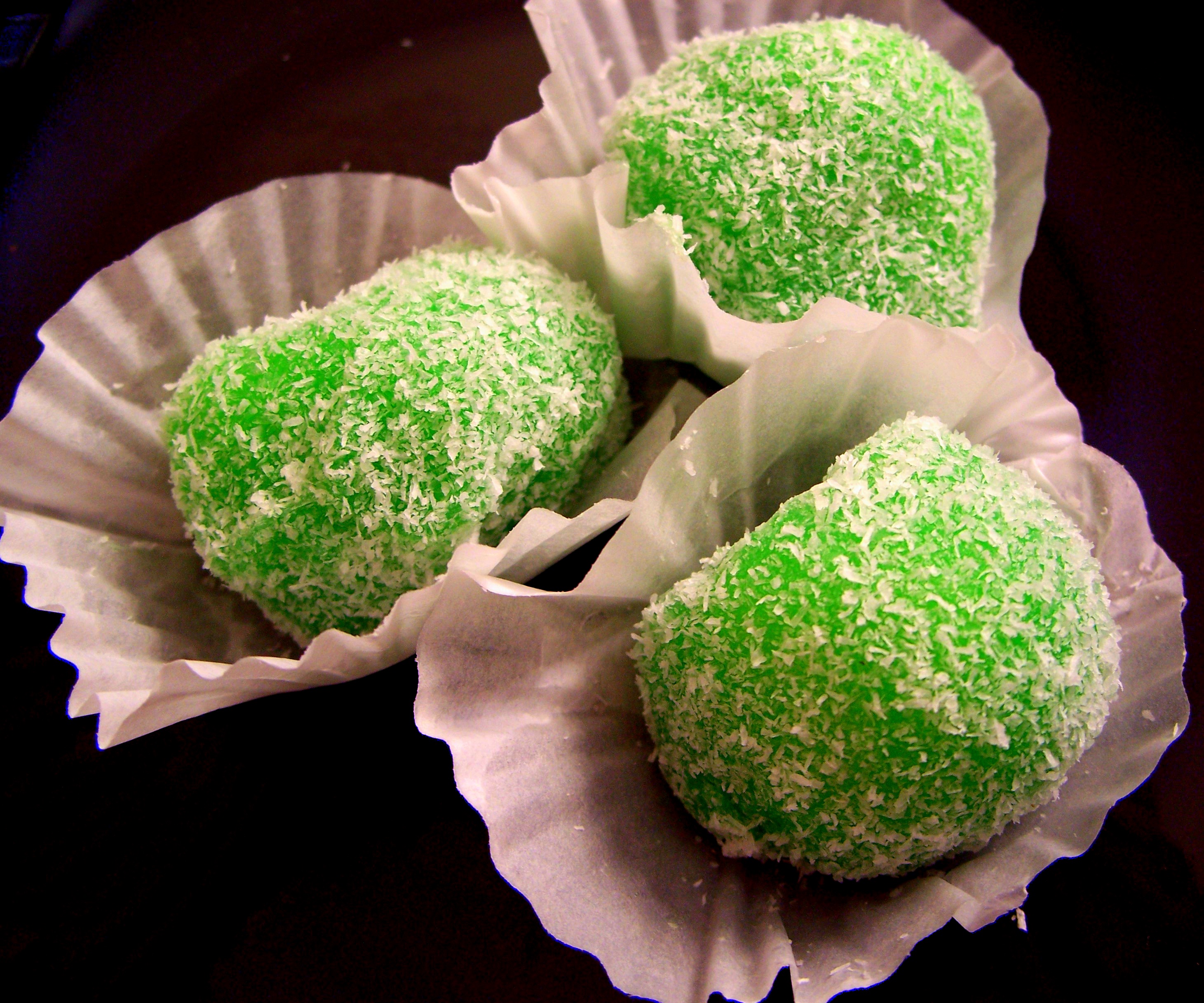
Yet another sticky rice snack that I vaguely remember eating one or twice during the early childhood, and found again in a San Jose sandwich shop more than ten years later. I was excited when I saw these green balls covered in coconut bits.

We Vietnamese call them bánh bao chỉ to distinguish from the meat-filled steamed bun made from wheat flour known to us as bánh bao. Just as bánh bao comes from China, so does bánh bao chỉ. Just as bánh bao are baozi and mantou in Mandarin, mandu in Korean, manju in Japanese, manti in Turkish, and many more, bánh bao chỉ too has its share of names.

The most-result-yielding Google search belongs to loh mai chi, commonly shown as little sticky rice flour dumplings with sweet ground peanut filling. Other variations in Malaysian and Chinese food blogs are snowball, loh mi chi, chi fa bun, muah chee (yeah, these are really cute you’d want to kiss them too)*, noh mi chi, and ma zi. Once again, I feel the need to learn Mandarin. Some say “noh mi” means “sticky rice” in Cantonese, but what does “chi” mean? Others, including the Vietnamese sites, insist that “chỉ” in bánh bao chỉ comes from “mà chỉ”, which is “ma zi”, which is “sesame seed” in Mandarin, which means “mi chi” is “sesame” (recall mi lao – sesame fluff) and we’re left with “noh” being “sticky rice”. It is reasonable enough if we consider that there are four types of fillings for bánh bao chỉ: black sesame, coconut, mung bean, and peanut. But the taste I had from childhood was the salty and sweet ground peanut in a gummy, springy thin layer of white dough coated with flour. Sesame filling must be a new twist.


And so are the vibrant green color and the coconut bits. And the size. Cheap bánh bao chỉ used to be sold on wheels: an old Chinese man peddled around the neighborhood with a glass tank on the back of his worn bicycle, the tank half filled with soft white balls as big as tangerines. Now these balls are about an apricot each, fit snugly in a plastic box and sold for $2 at Kim’s Sandwiches. Not only do they lose the romantic authenticity of a street food, they also taste like soap. The green dough, instead of having pandan flavor, reeks of artificial chemicals. The mung bean paste is sickeningly sweet.

I’ve never been so disappointed with a snack food. Do NOT buy these green balls, no matter how good looking they are. Search online for loh mai chi recipes, or search the streets for old Chinese vendors.

(*) It’s hard to refrain from making the connection between muah chee and the Japanese mochi (daifuku).

The exact origin of mochi is unknown, though it is said to have come from China. The cakes of pounded glutinous rice appear to have become a New Year’s treat during Japan’s Heian period (794-1185). As early as the tenth century, various kinds of mochi were used as imperial offerings at religious ceremonies. A dictionary dating from before 1070 calls the rice cake “mochii.” Around the eighteenth century, people began to call it “mochi.” Various theories explain the name. One is that “mochi” came from the verb “motsu,” “to hold or to have,” signifying that mochi is food given by God. The word “mochizuki” means “full moon.” People of the west and southwest islands called it “muchimi,” meaning “stickiness.”

– from New World Encyclopedia

So I know everybody thinks the entire Far East gets its stuff from China (yeah… no.), but here’s a crazy idea: what if this sticky rice ball with sweet fillings actually originated from Japan, then the Chinese got hold of some, and later passed it down South?

Previously on Sandwich Shop Goodiesbắp hầm (Vietnamese whole kernel grits)
Next on Sandwich Shop Goodiesbánh bò bông (steamed sponge muffin)

Big wraps from tiny Razan’s Organic Kitchen

July 30, 2010 By: Mai Truong Category: American, California - The Bay Area, sandwiches


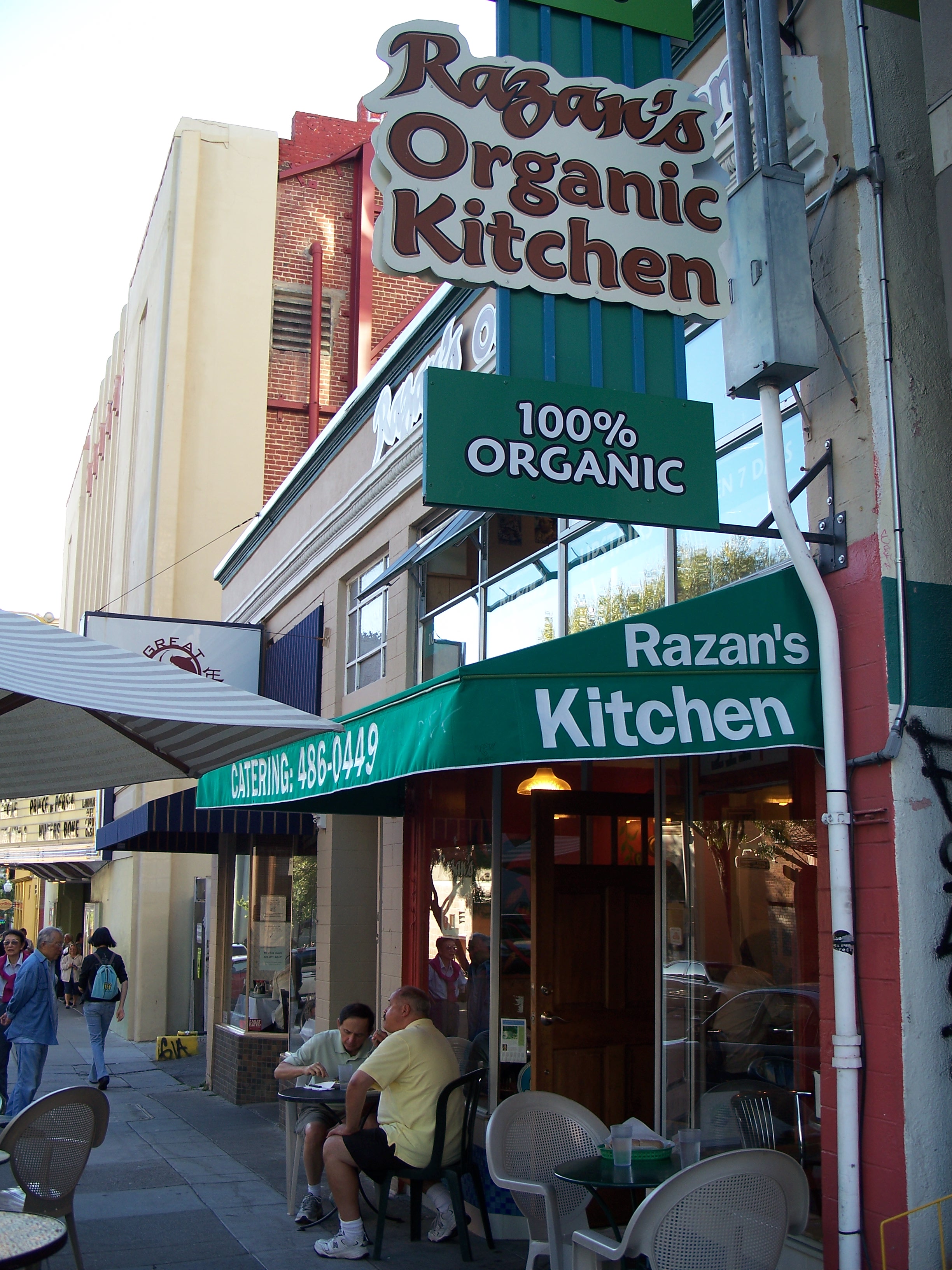
Maybe I’m still holding everything in comparison to Texas, and maybe it’s unjust to do so, but South Berkeley is seriously the hole-in-the-wall haven. It’s like the folks here just woke up one day and decided hey I’m gonna swap out the sofas downstairs for some huge stoves, place in a few tiny tables and a few tiny chairs against the walls, and maybe an umbrella out on the pavement for style, a receipt printer, a sign that says “Cash only”, and a drink dispenser (or water pitchers). Voilà, mon restaurant! Or in this case, more humble and descriptive, Razan’s Organic Kitchen!


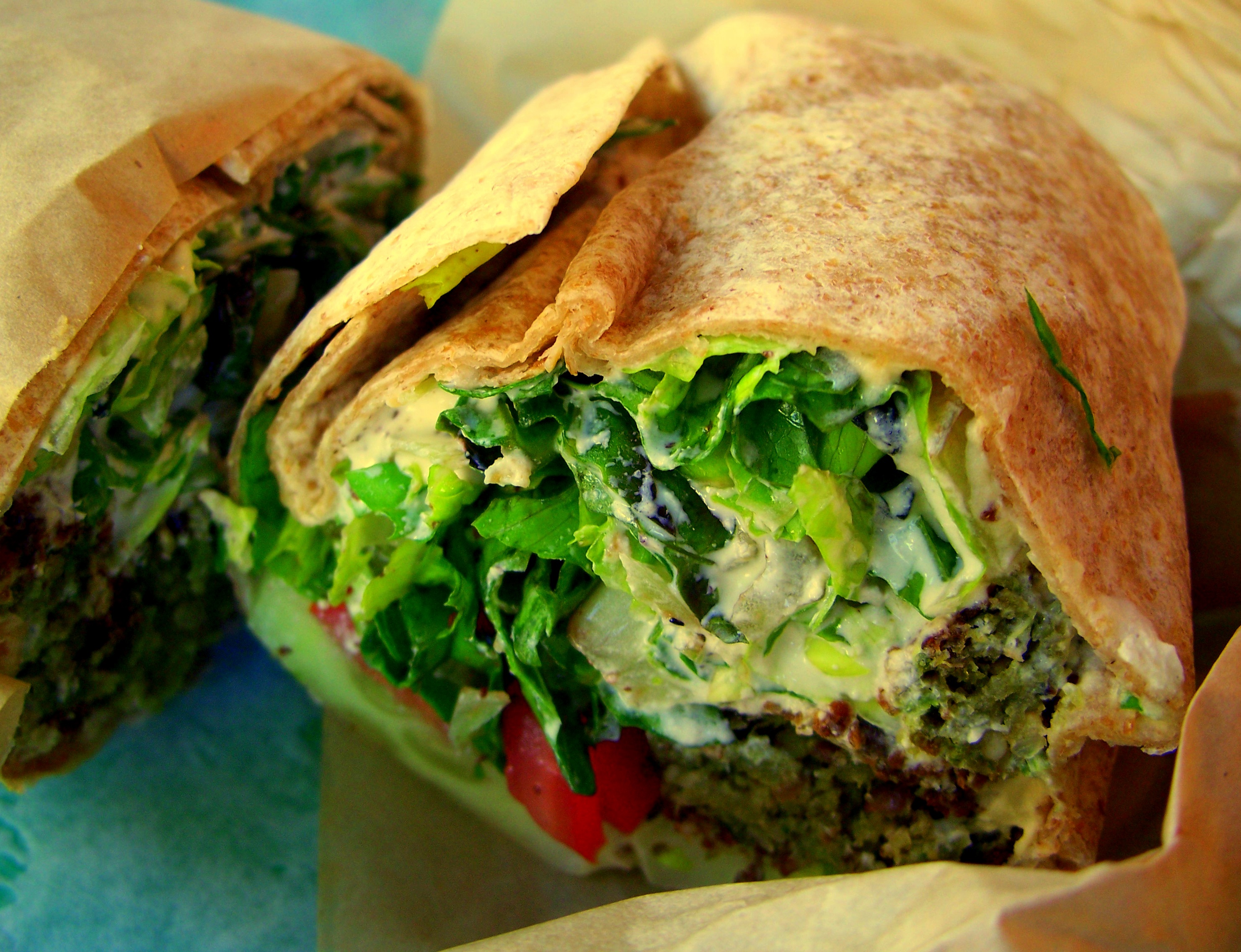
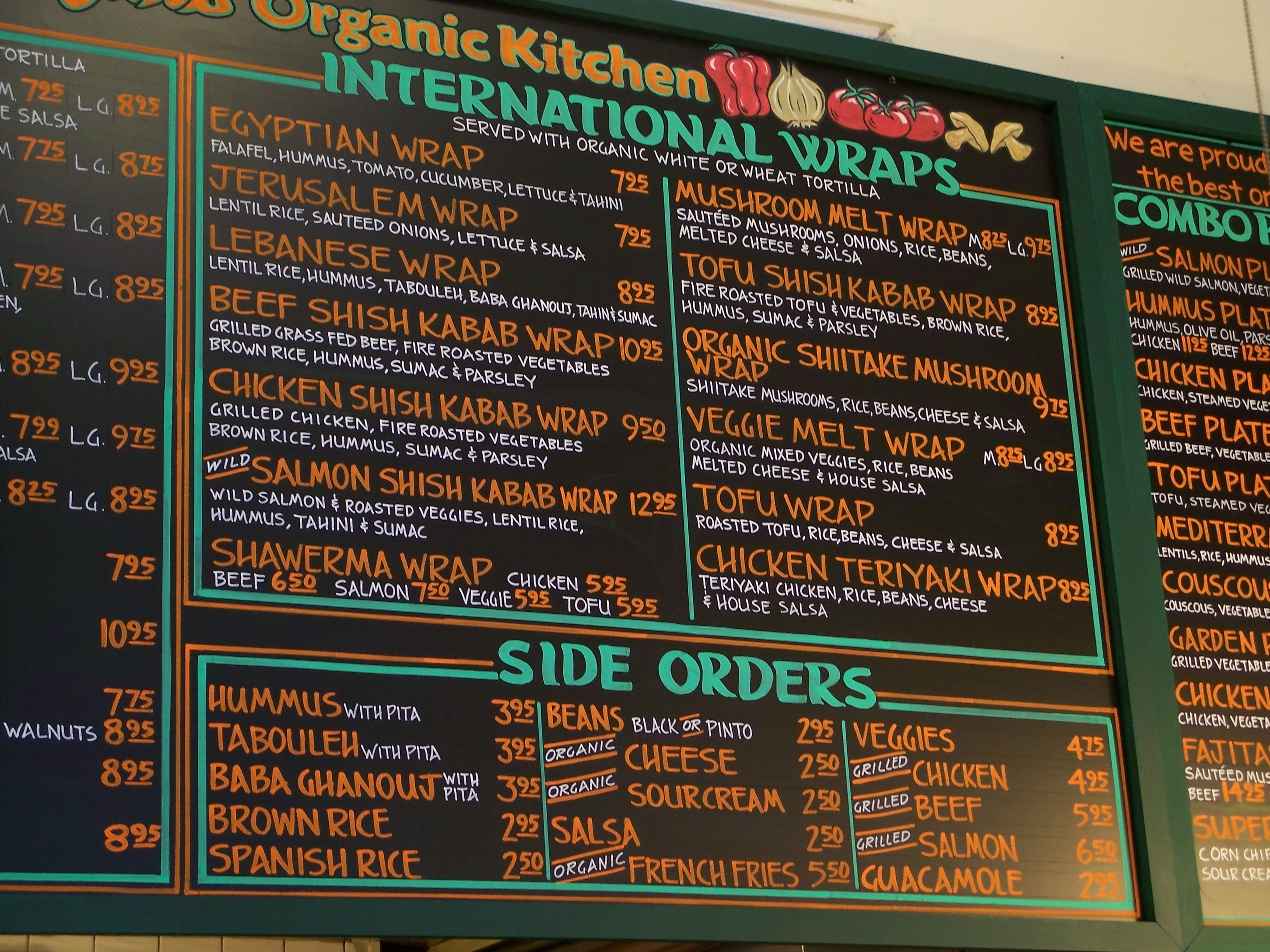
The wraps take center stage on the chalkboard menu, and the snugly enclosure doesn’t invite a serious course, so we opted for two wraps. The veggie one, named Egyptian (did Egyptians not eat meat?), came out as soon as we filled our water paper cups.

As far as content goes, I didn’t expect much from a package of falafel, hummus, tomato, cucumber, lettuce, and tahini (sesame paste) wrapped in wheat tortilla, which isn’t really different from pita. But the package did surprise me with its freshness and harmony. Tomato and hummus made it a bit runny, but the lettuce crunch was a perfect complement for the falafel’s meatball-like texture. I’m not sure if the falafel was made Egyptian-style with only fava beans, but it is the distinguisher between the veggie Egyptian wrap and the other nine veggie wraps (Jerusalem, Lebanese, and less regional names) on board.


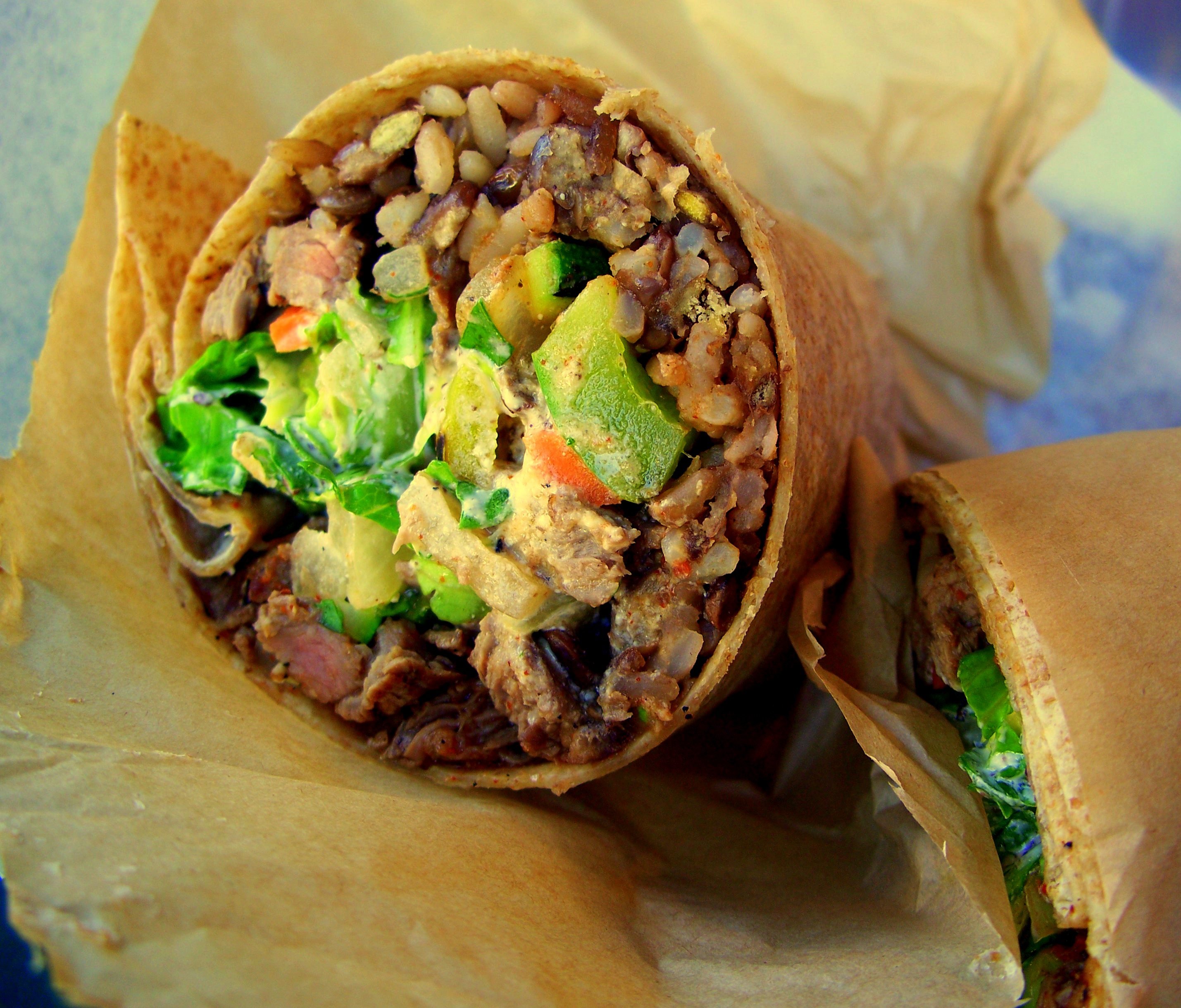
The meat wraps are three fewer than the veggie ones. The three main choices are chicken, beef, and salmon, in increasing order of price. Being in the safe mode that day, I went for the beef shish kabab, with roasted vegetables, brown rice, hummus, sumac and parsley. Every bite strikingly resembled a steak burrito from Chipotle. Not bad, but not wow-enducing either. Rice falling out from all sides is not a pretty sight.


They were big, tight wraps. The stuffing was as compact as the place itself. Even so, putting together the size, the taste, the ingredient freshness, and the location, $7.95-$12.95 a sandwich log is still a steep edge. I know I should support free range chicken and grass fed cow yada yada, but we students have to support ourselves too.


Address: Razan’s Organic Kitchen
2119 Kittredge St
(between Fulton St & Shattuck Ave)
Berkeley, CA 94704
Neighborhoods: UC Campus Area, Downtown Berkeley
(510) 486-0449

Razan's Organic Kitchen in San Francisco on Fooddigger

Tags: ,

Millbrae Pancake House – Old country breakfast with a berry good twist

July 27, 2010 By: Mai Truong Category: American, California - The Bay Area, Comfort food, One shot


The most irresistible American meal is the full country breakfast. I know it’s derived from the full English breakfast and all, and it’s probably so irresistible just because who in their right mind would refuse food after a long night with an empty stomach (hence the word “fast” – not eating, in “breakfast”). And yes, there’s nothing speedy about the old country breakfast. Making pancakes, scrambling eggs, frying sausages takes a good hour off your morning, not to mention scrubbing the skillets afterwards. I probably will never make a full country breakfast at home until I have nothing better to do, but thank God for blessing America with countless roadside brick houses opened up just to serve breakfast. And may those like Millbrae Pancake House flourish despite the swamping force of IHOP and the likes, because they serve freaking good breakfast.


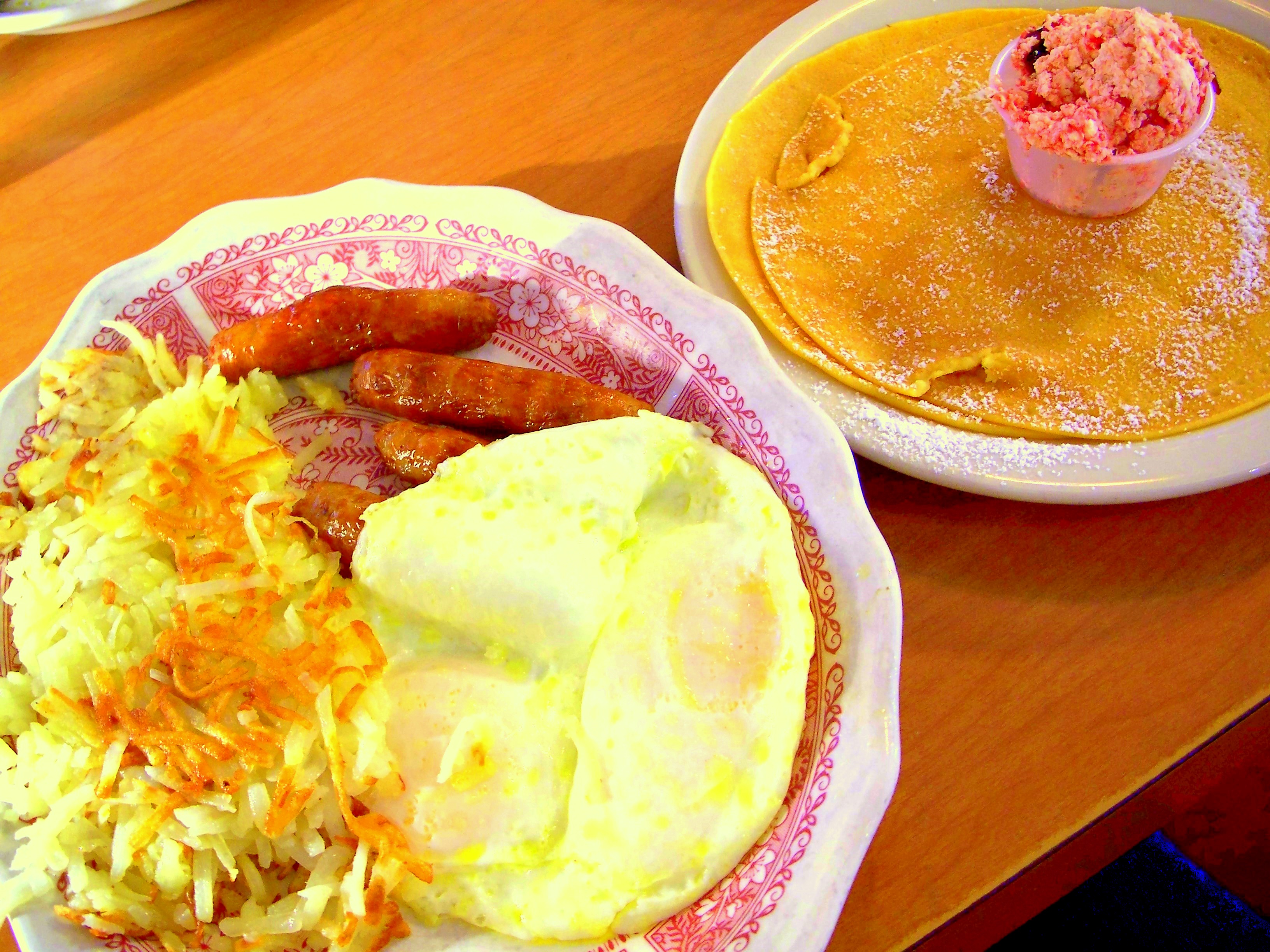
I said freaking good because I happened to order the one dish that, it turns out for the first time, everyone on Yelp seems to agree to be MPH’s best. The Swedish pancake with lingonberry butter. Have no idea how Swedish this really is, but the pancake is not the fluffy butter kind IHOP is known for, instead it’s a small flat crepe. It’s dense and has a slight sweet chew. And the lingonberry butter is butter mixed with lingonberry bits. And I spread a ton of it on my pancake. And I ate it by itself, like eating chocolate. Americans, maybe it’s time to mix raspberry, blueberry, strawberry, gooseberry, and maybe other fruits too into your butter. It kills. Just sayin’.

The rest of the breakfast was really just so so. Hash brown, two runny eggs, and four sausage links were as good as they could(should) be, but nothing unexpected. That’s ok, the Swedish deal wowed me enough.

MPH is cheap too. All that was for $7.95. The thing is, it was too much. I couldn’t finish everything, had to lean against the wall for 10 minutes in the restaurant, and almost needed a walker to get to the car. Maybe I’d be in better shape if I gorge up on these more often.

Address: Millbrae Pancake House
1301 El Camino Real
Millbrae, CA 94030-1410
(650) 589-2080‎

Chinese candy talking

July 25, 2010 By: Mai Truong Category: Chinese, sweet snacks and desserts, Vegan


Sometimes, very seldom, I feel the urge to learn Chinese. There are just too many little Chinese things going around without English labels. In fact, the harder it is to describe, the more likely its name is all in Chinese.


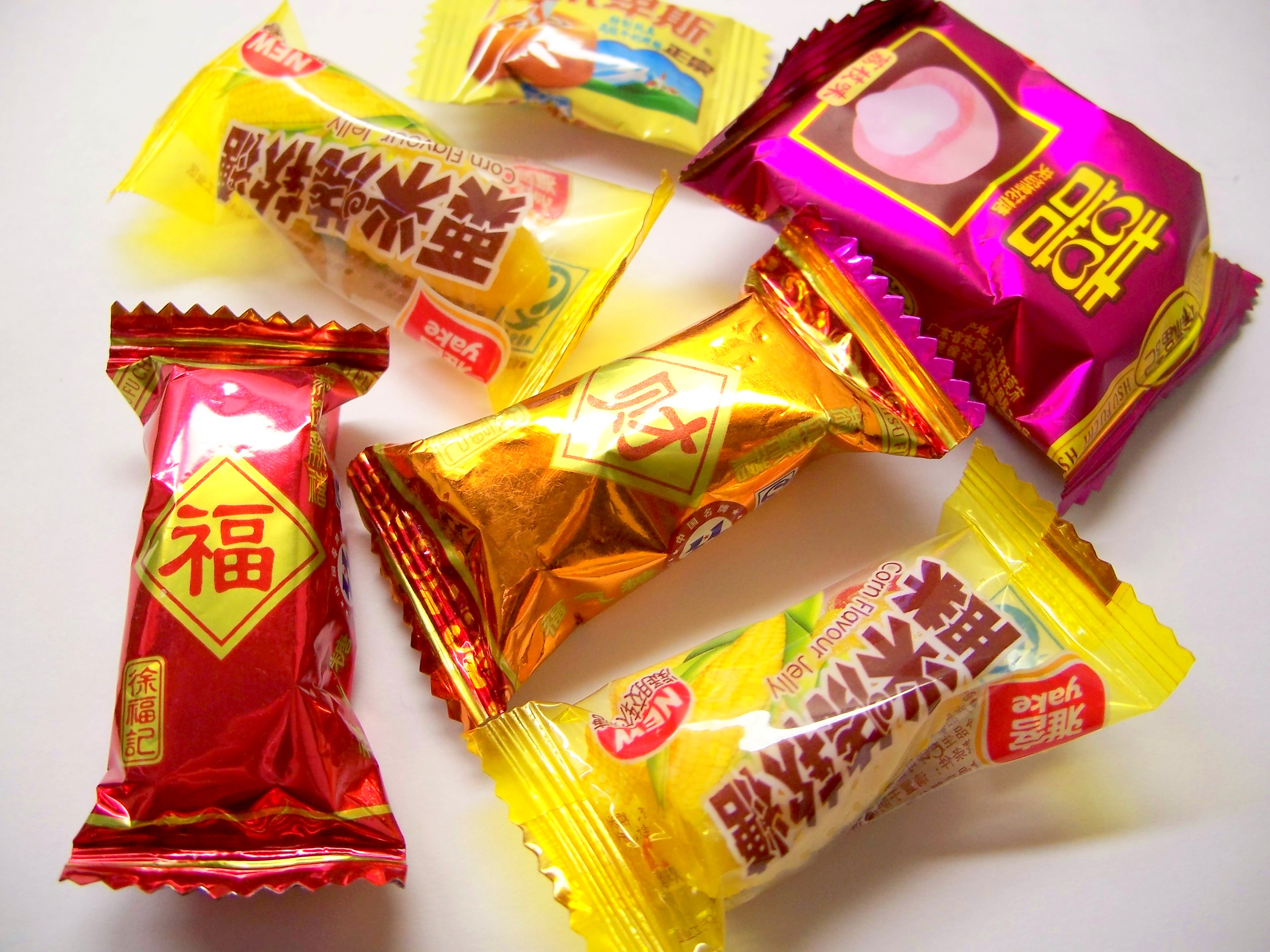
Take these sweets for instance. They come in handmade red paper boxes at a wedding.


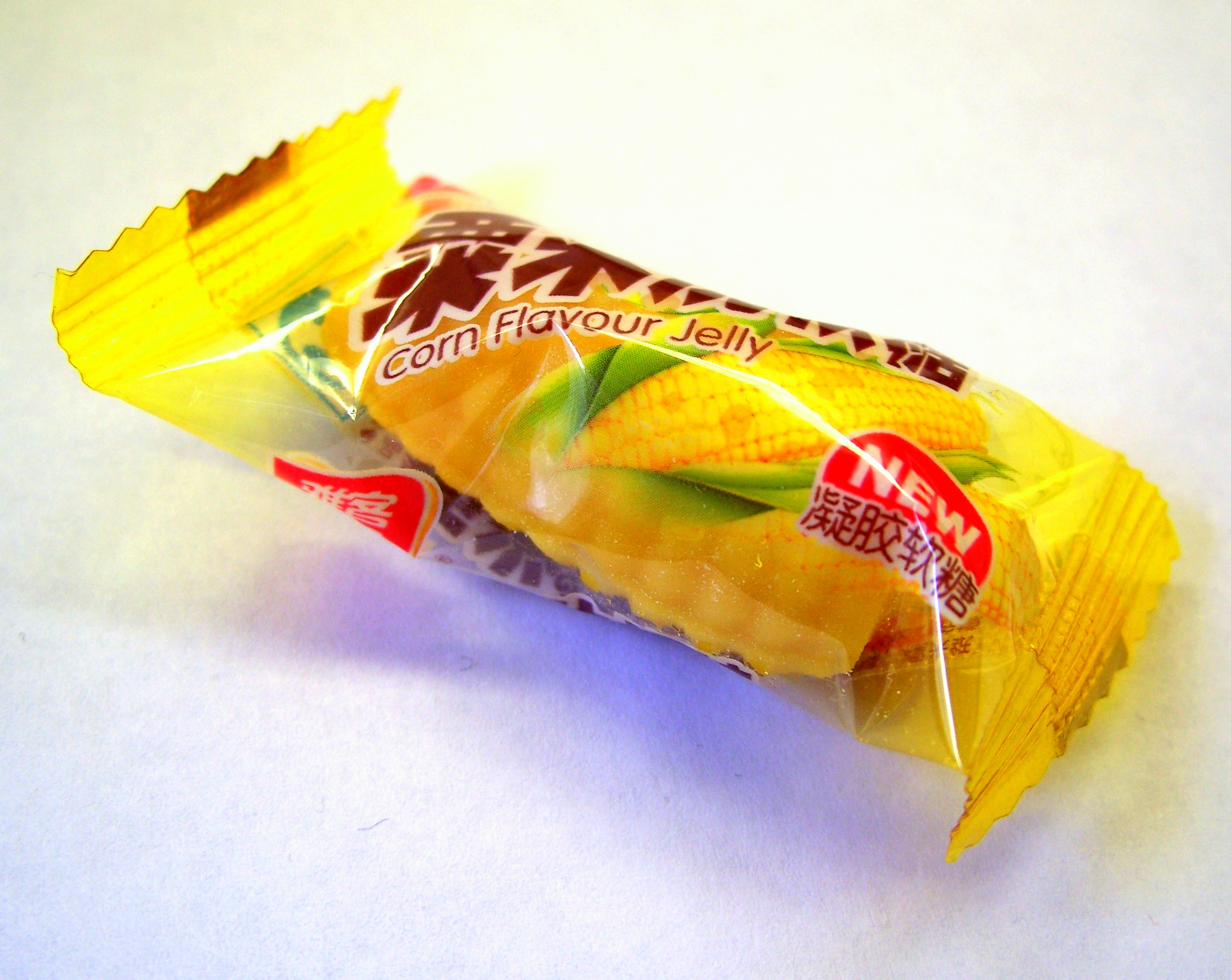
This one shapes like a corn ear, smells and tastes like corn, and aptly has an English name: Corn Flavour Jelly. A nice chew but you gotta git it down fast or you git tireduvit.


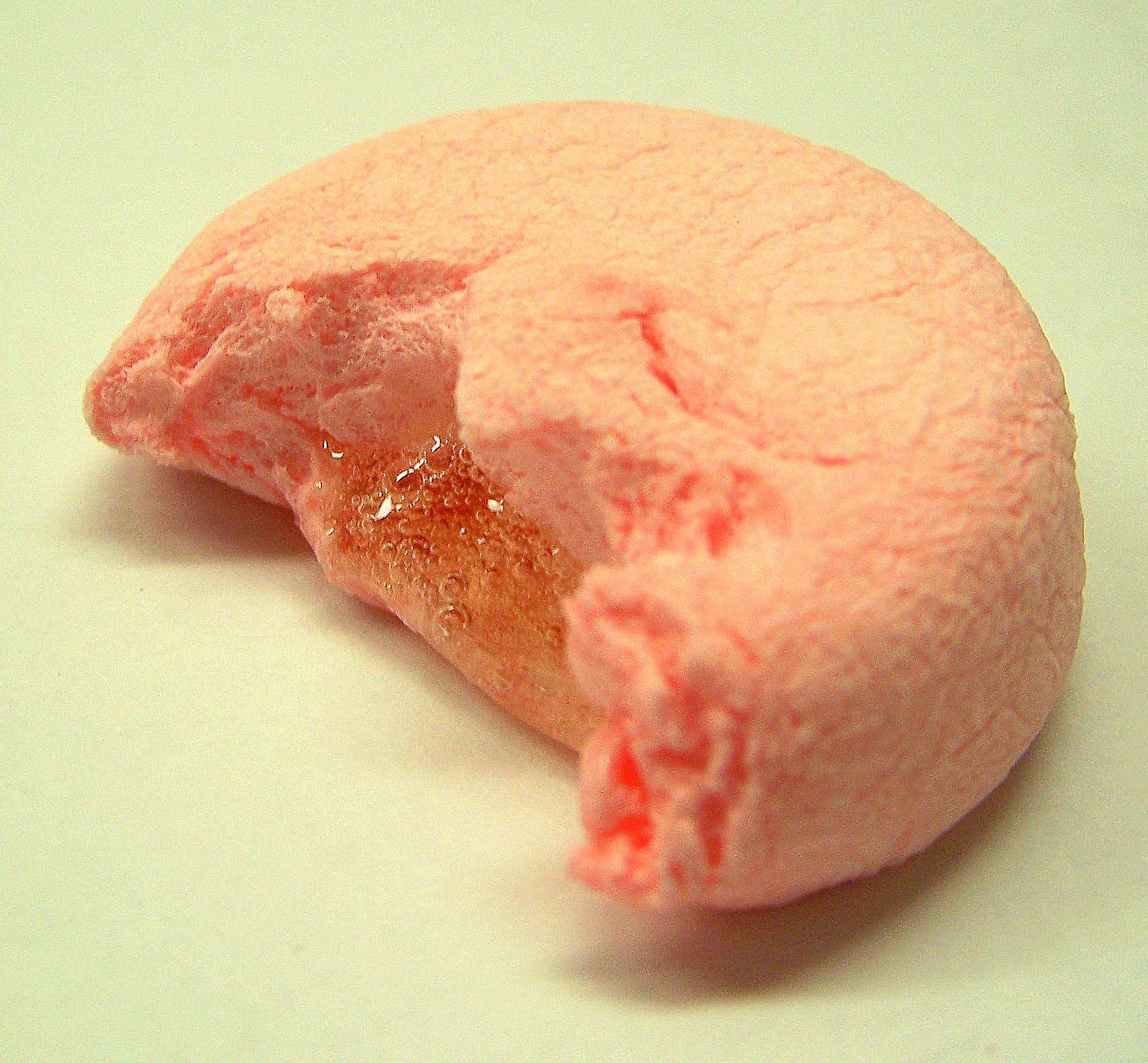
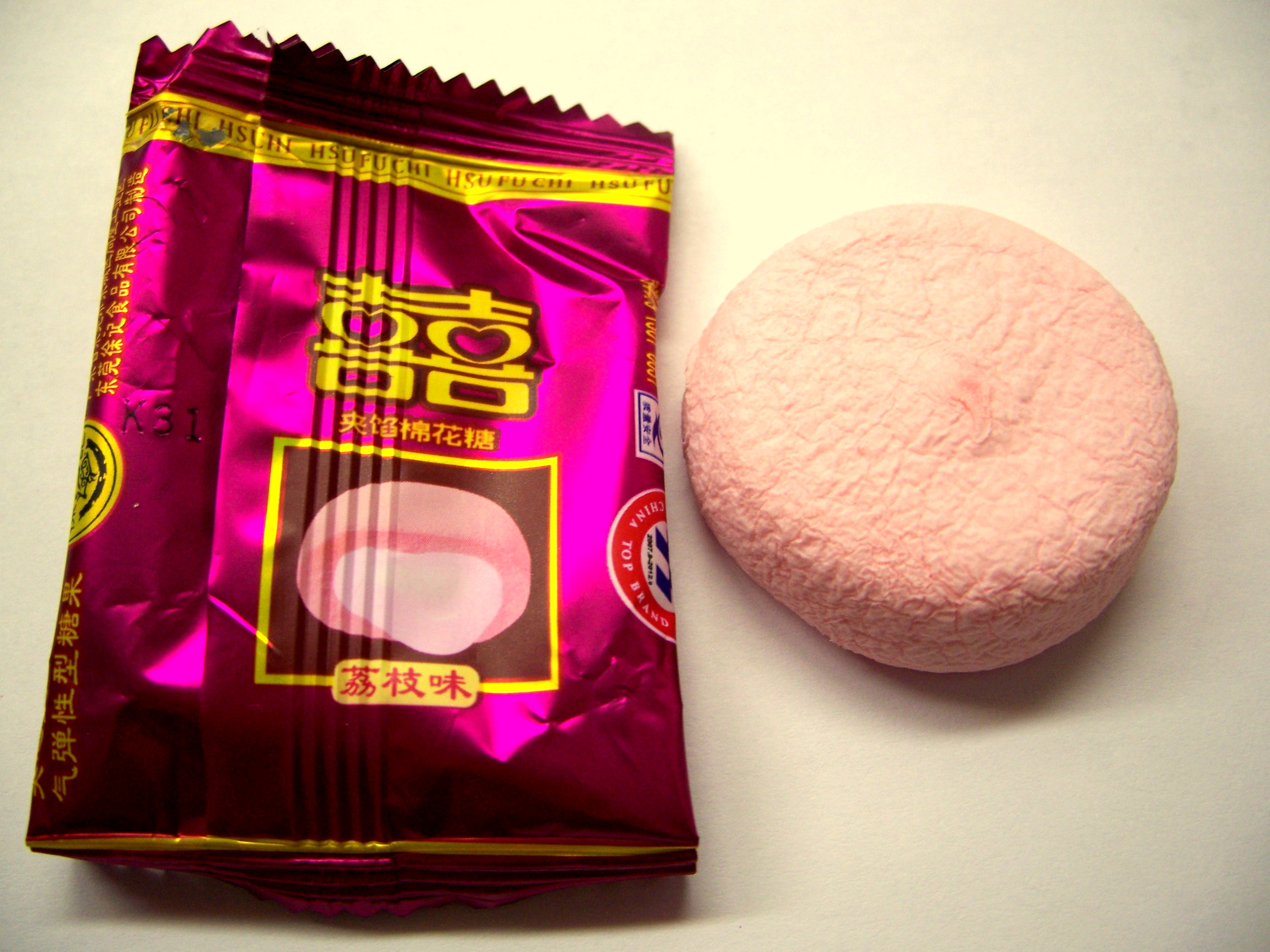
This one doesn’t have a single English word, but it has a picture to tell you what to expect. Pink for strawberry, pillowy for marshmallow, and spewing for syrup. I don’t really care if they put toxins in it, this was a good syrupy center marshmallow bite.


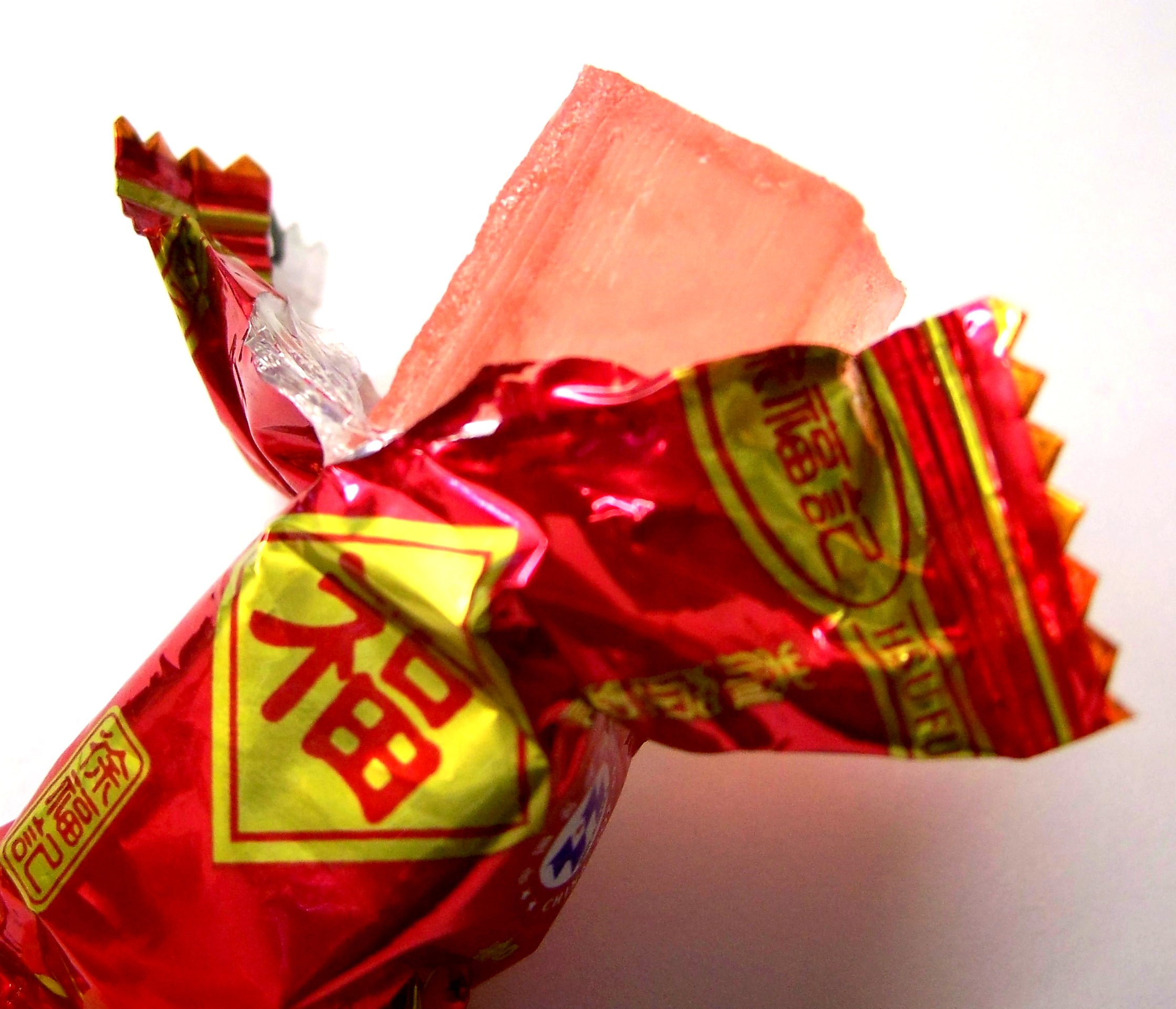
Lastly, this one has neither English nor picture. My best description: a jello stick as long as my pinky, reeking of  unidentifiable artificial chemicals. I can’t tell if it’s supposed to be strawberry or raspberry or cherry, or any flavor for that matter. The taste is about as thrilling as Jesus and Mary Chain’s Some Candy Talking:

Tags: