Flavor Boulevard

We Asians like to talk food.
Subscribe

My first taste of Battambang
February 22, 2011 By: Mai Truong Category: California - The Bay Area, Comfort food


It happens on Broadway Street, Oakland. Dishes with names so hard to pronounce, ingredients and tastes so similar to Vietnamese food. I learn of the second largest city of Cambodia, smaller only than Phnom Penh. I share my first simple Cambodian dinner, complete with a salad, a meat, and a dessert.

Here’s a little language snippet: to Vietnamese people, salad is called “gỏi” |ghoy| in the South and “nộm” |nom| in the North. To my surprise, “nhorm” is its romanized name in Cambodia. Listening to the other customers at Battambang, Mudpie comments that Khmer and Vietnamese sound similar, to which I first protest, but perhaps it holds a grain of truth after all.

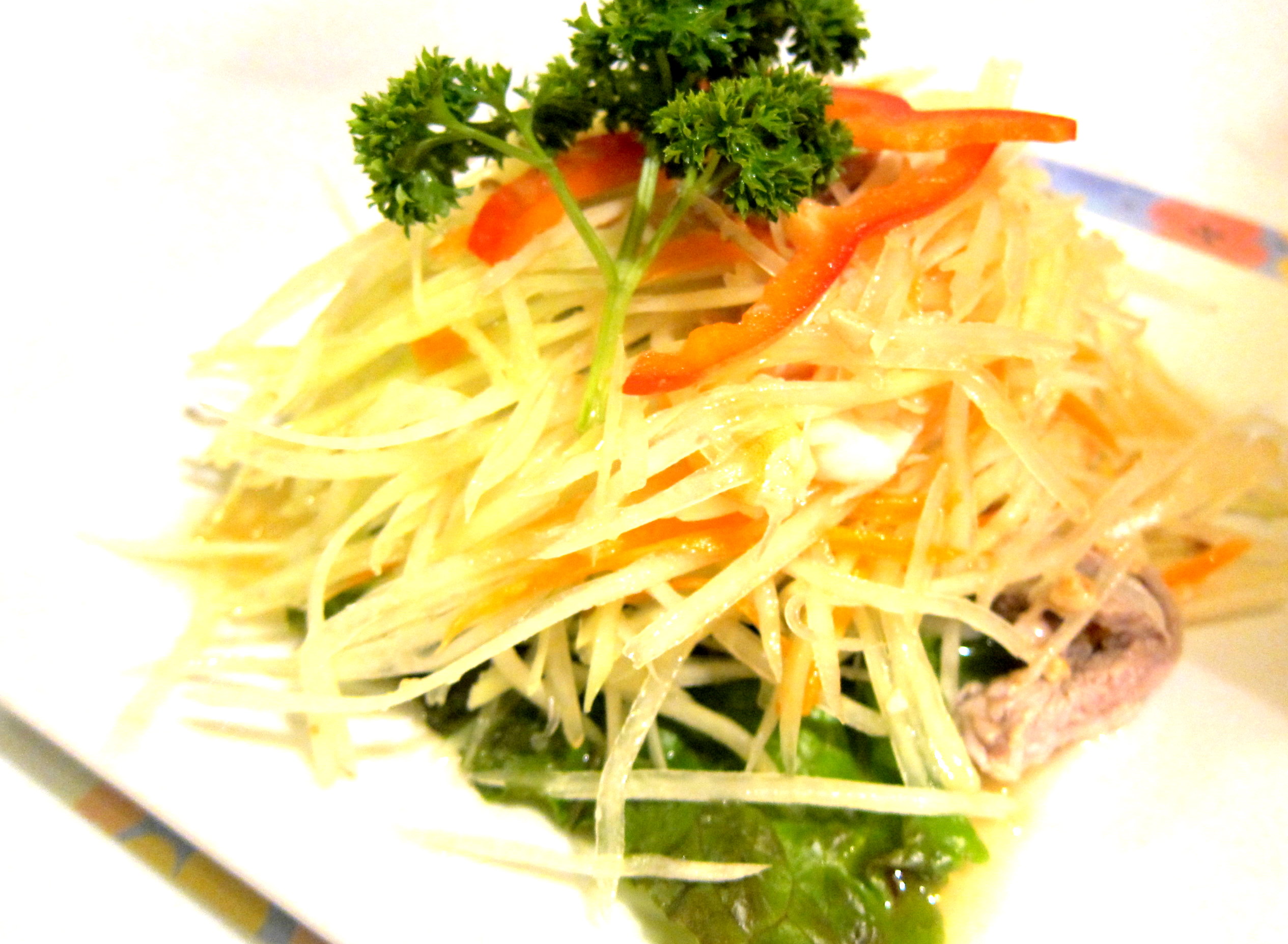
Here we have nhorm lahong. If there’s any salad that never goes wrong, it must be this green papaya salad of Southeast Asia. Delicate, raw, and soaking fruit shreds retain nothing but a tightening chew, the sweet lime dressing sends a quiet smell of fish extract. Battambang’s batch is a drop more watery than Dara’s som tum/tam mak hoong, on the plus side there’s plenty of sauce to make rice go quickly down the pipe.
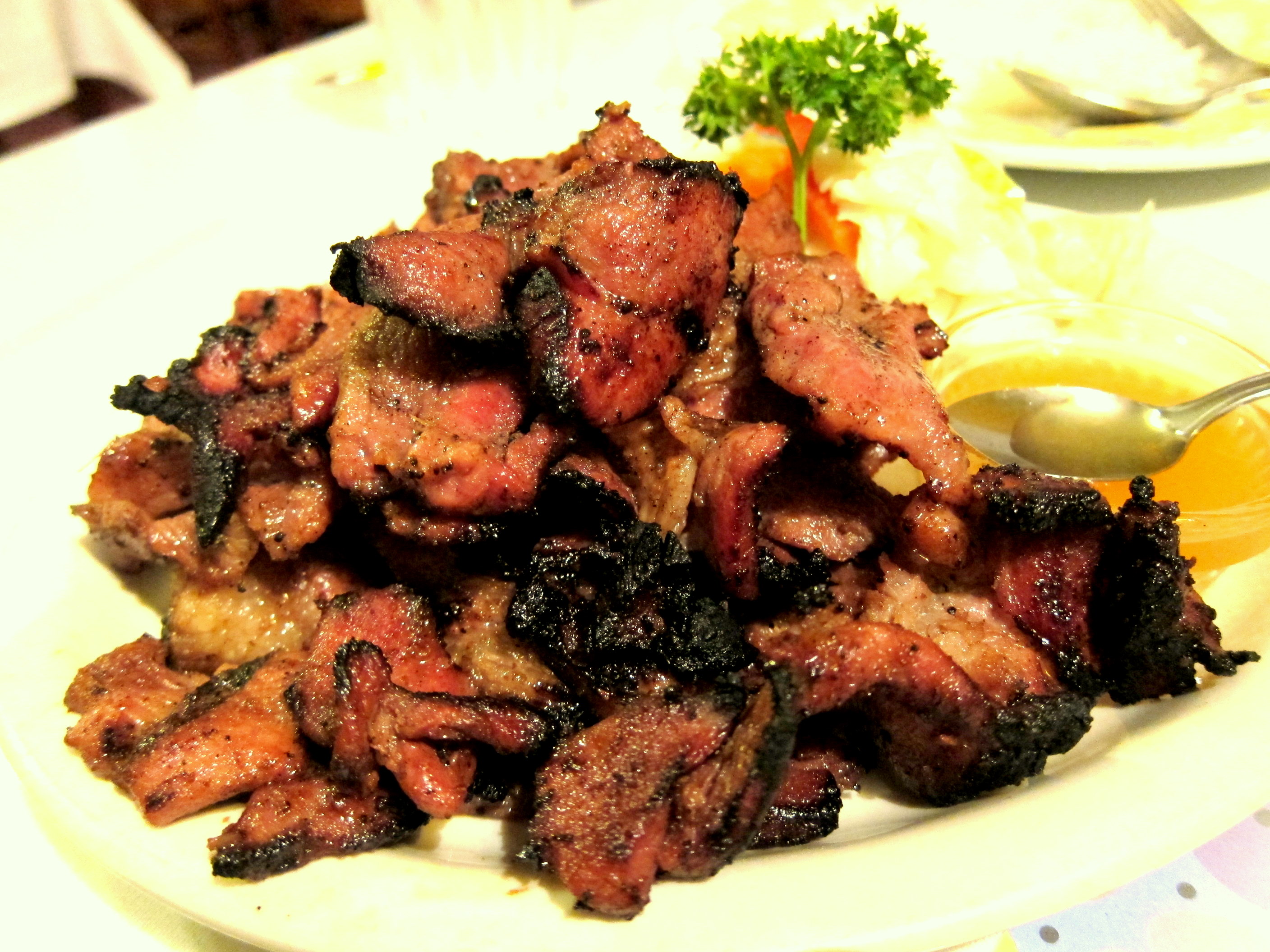

To make rice go even quicker comes sach chrouk aing. I don’t think I’ll be able to handle a full Khmer sentence of words like these, but now that I’ve known pork is sach chrouk and grilled is aing, I can survive in Cambodia ;-). Long version: sliced pork marinated with lemongrass, charbroiled, served with sweet lime nuoc mam and boiled cabbage on the side. Short version: godly.
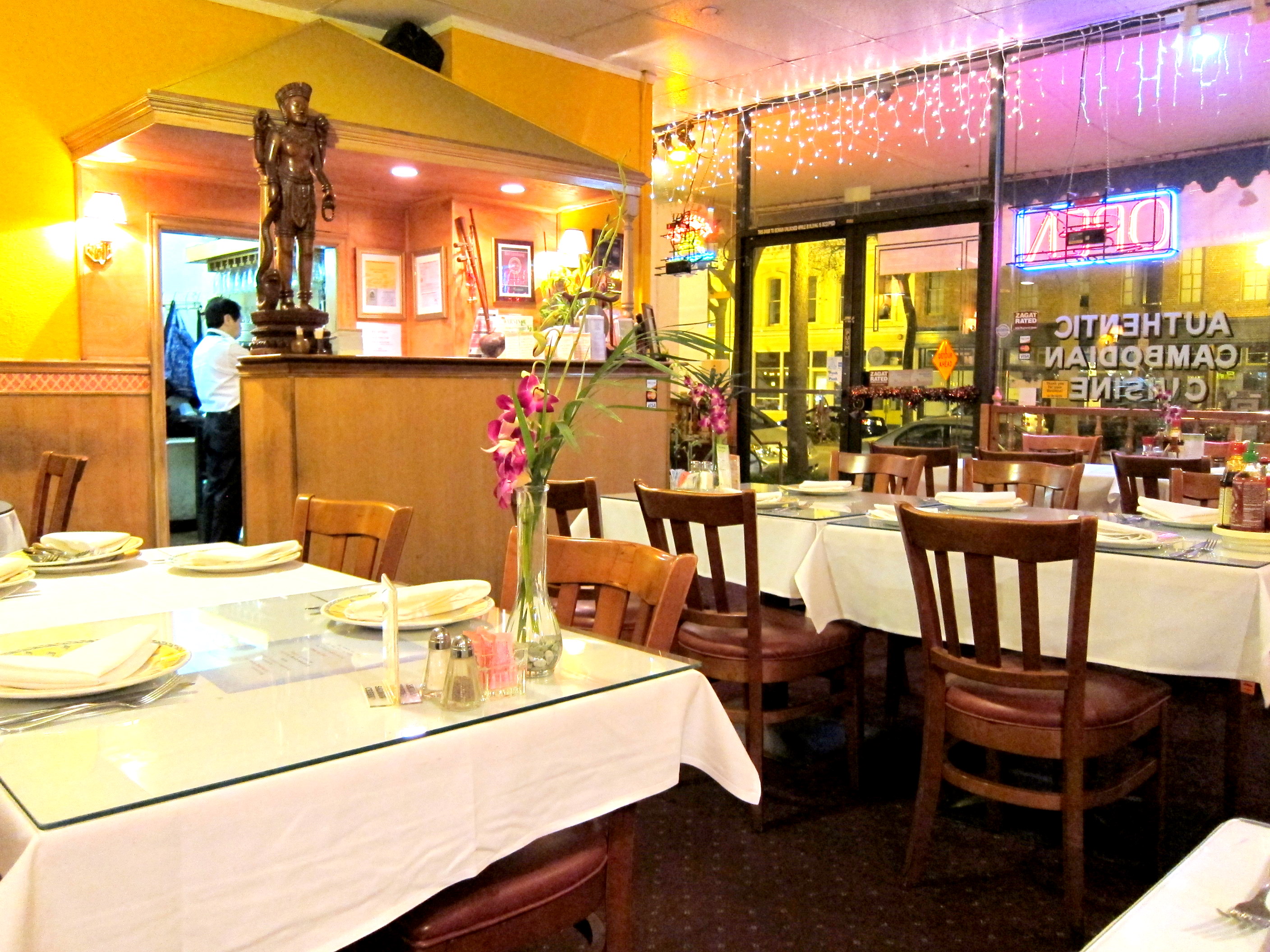

Like at most family operated Asian restaurants, the check will be brought out before you can order dessert, but we don’t let that stop us from ending our dinner on a sweet note. The dessert menu stands next to the salt, pepper, sweeteners, and a slender vase of real orchids.
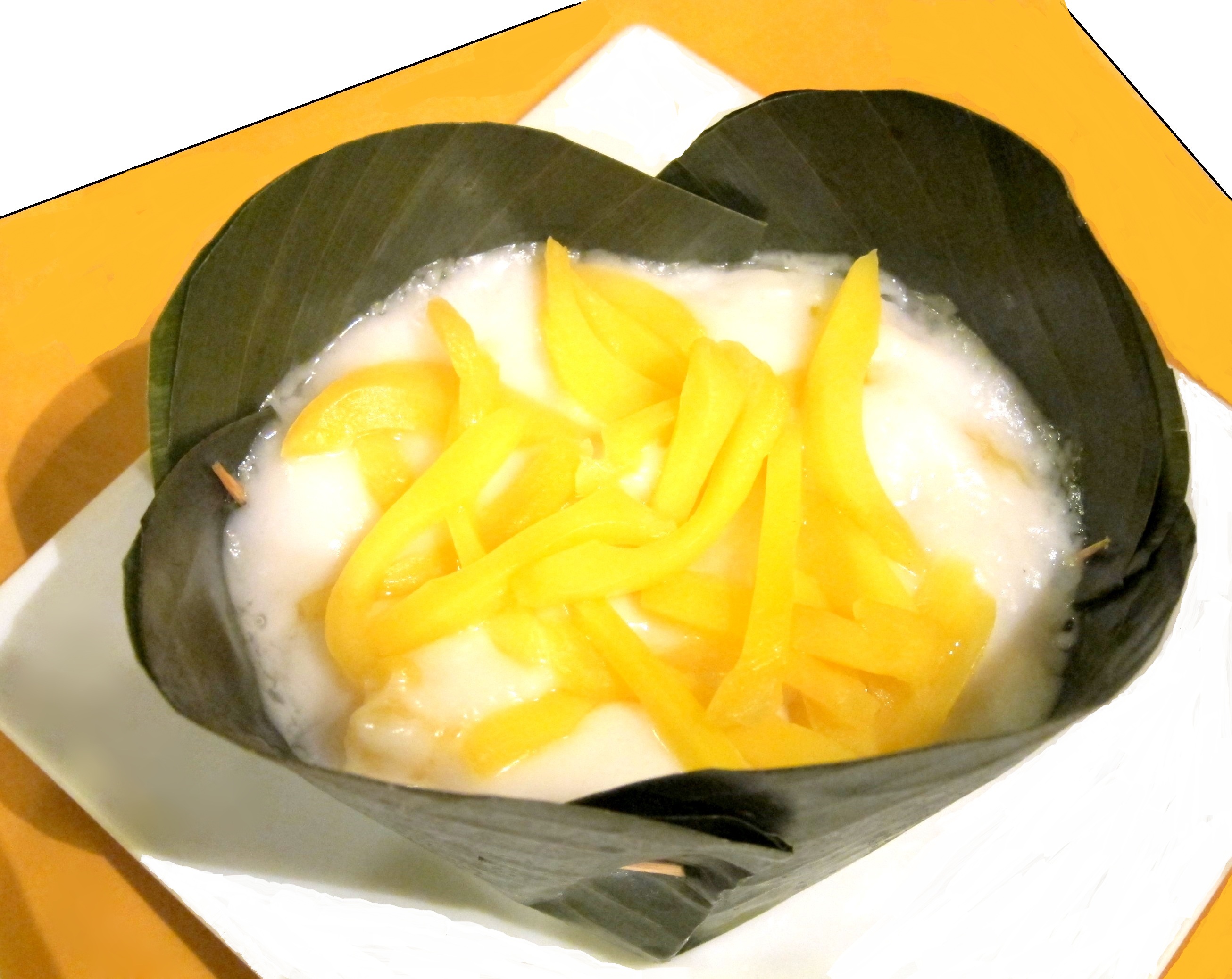

I ask our hostess to recommend either amuk knor or chake ktiss, and with no delay she says “Amuk knor for sure”. I then ask if it’s whole jackfruit or just some kind of paste or flavoring, and I must sound pretty stupid, the whole jackfruit is huge, at least as big as a 30lb turkey, but she (and you?) knows what I mean. Amuk knor is a kind of coconut milk custard with jackfruit slices, all steamed in a banana leaf cup. It breathes tropical and countryside, warm and mild. We scrape every corner of the leaf.
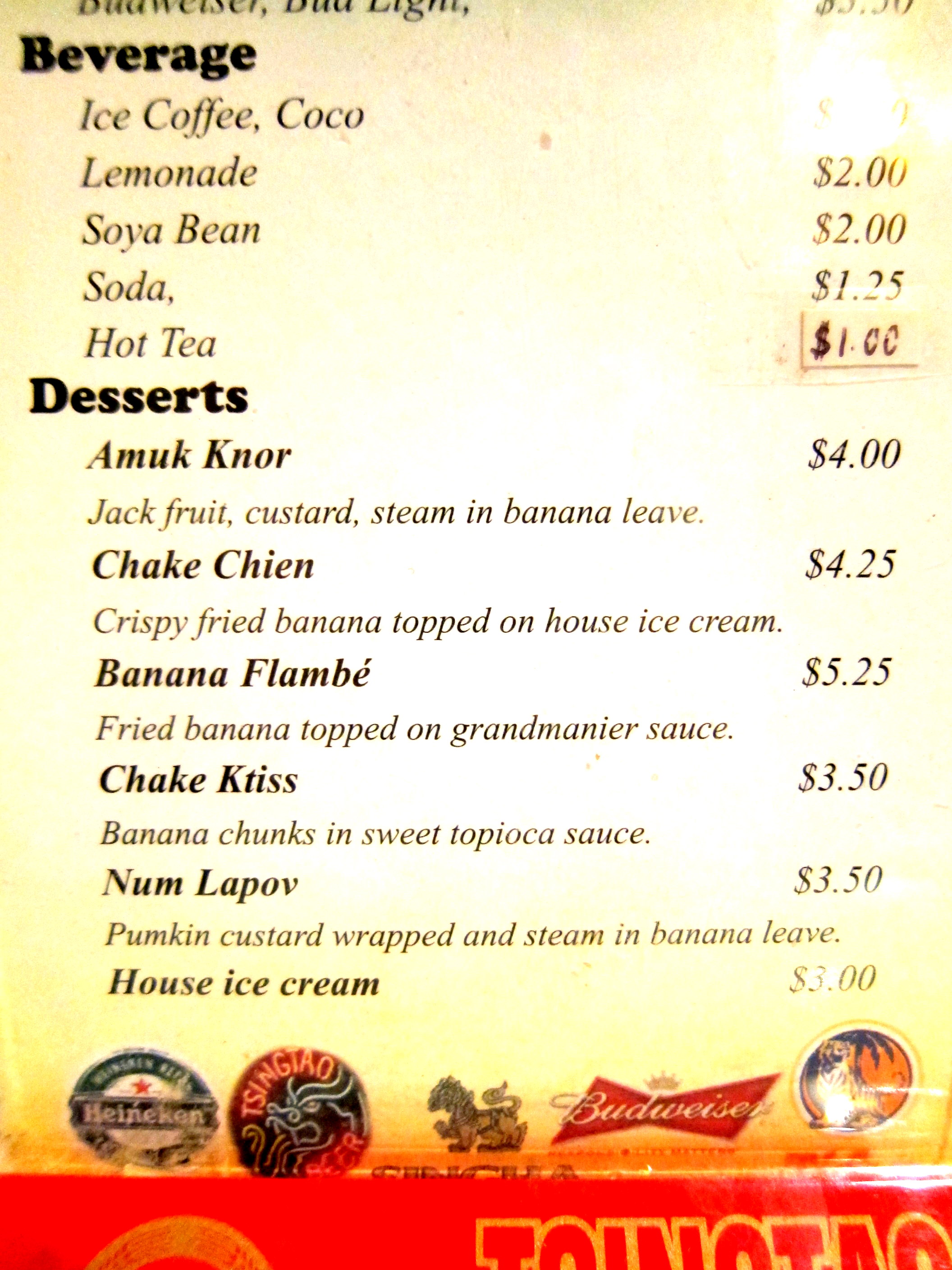

(I can only guess that chake ktiss is similar to chè chuối chưng).

Address: Battambang Restaurant
850 Broadway Street,
Oakland, CA 94501
(510) 839-8815

Battambang’s menu online
Money matter: $24.70 a dinner for two.
Red Pier on Milam Street

February 20, 2011 By: Mai Truong Category: Comfort food, Houston, noodle soup, sweet snacks and desserts, Vietnamese


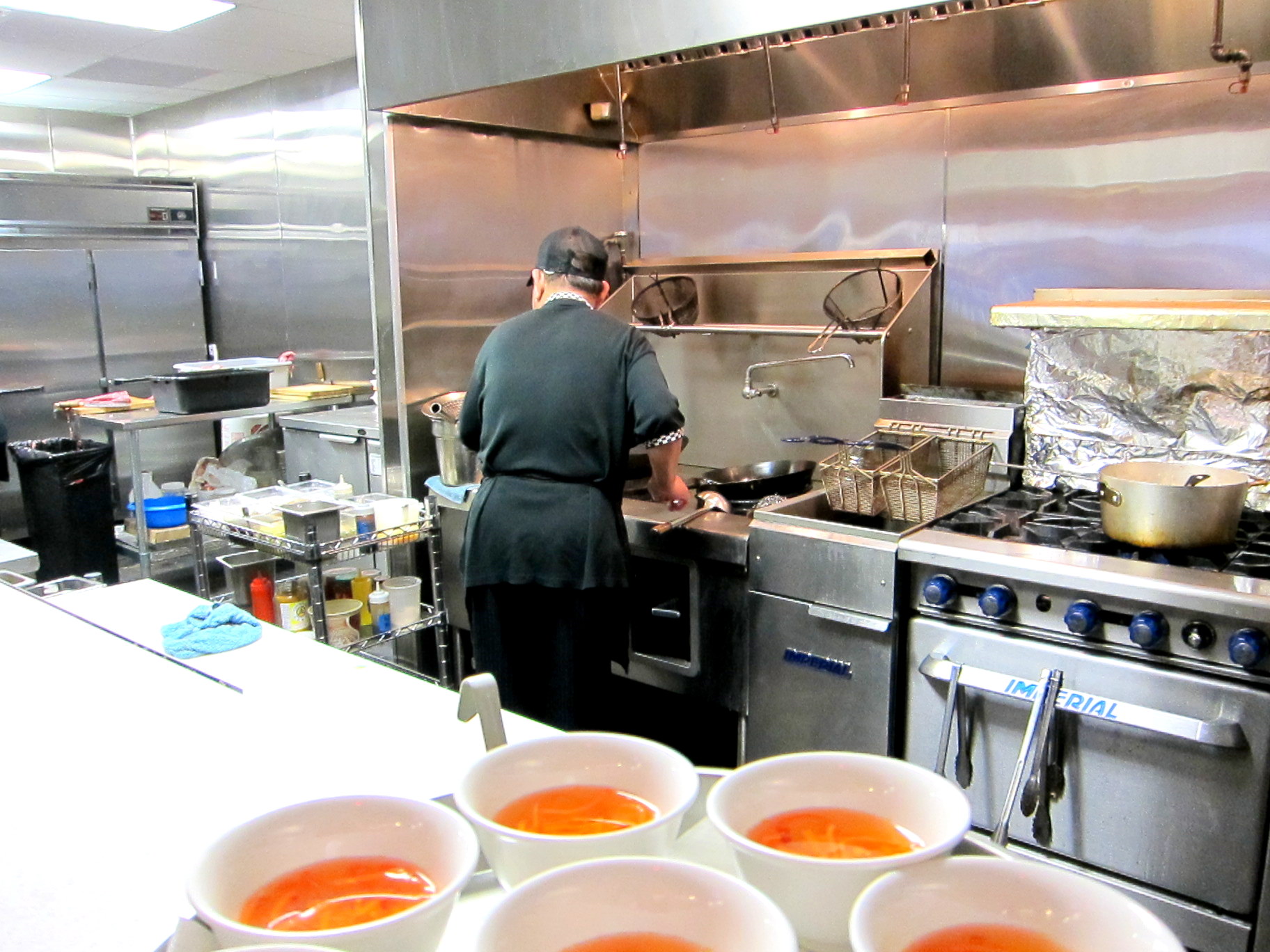
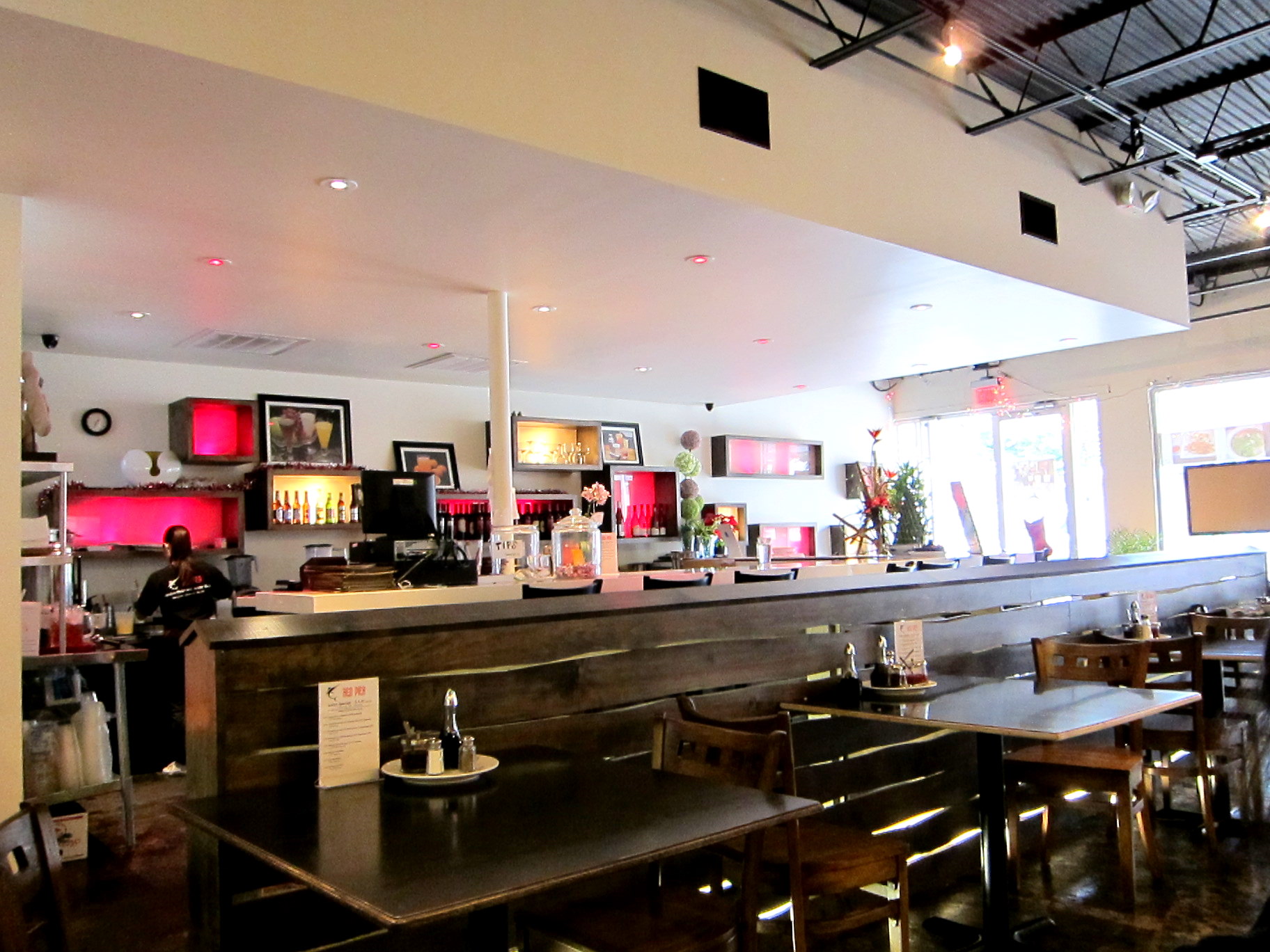
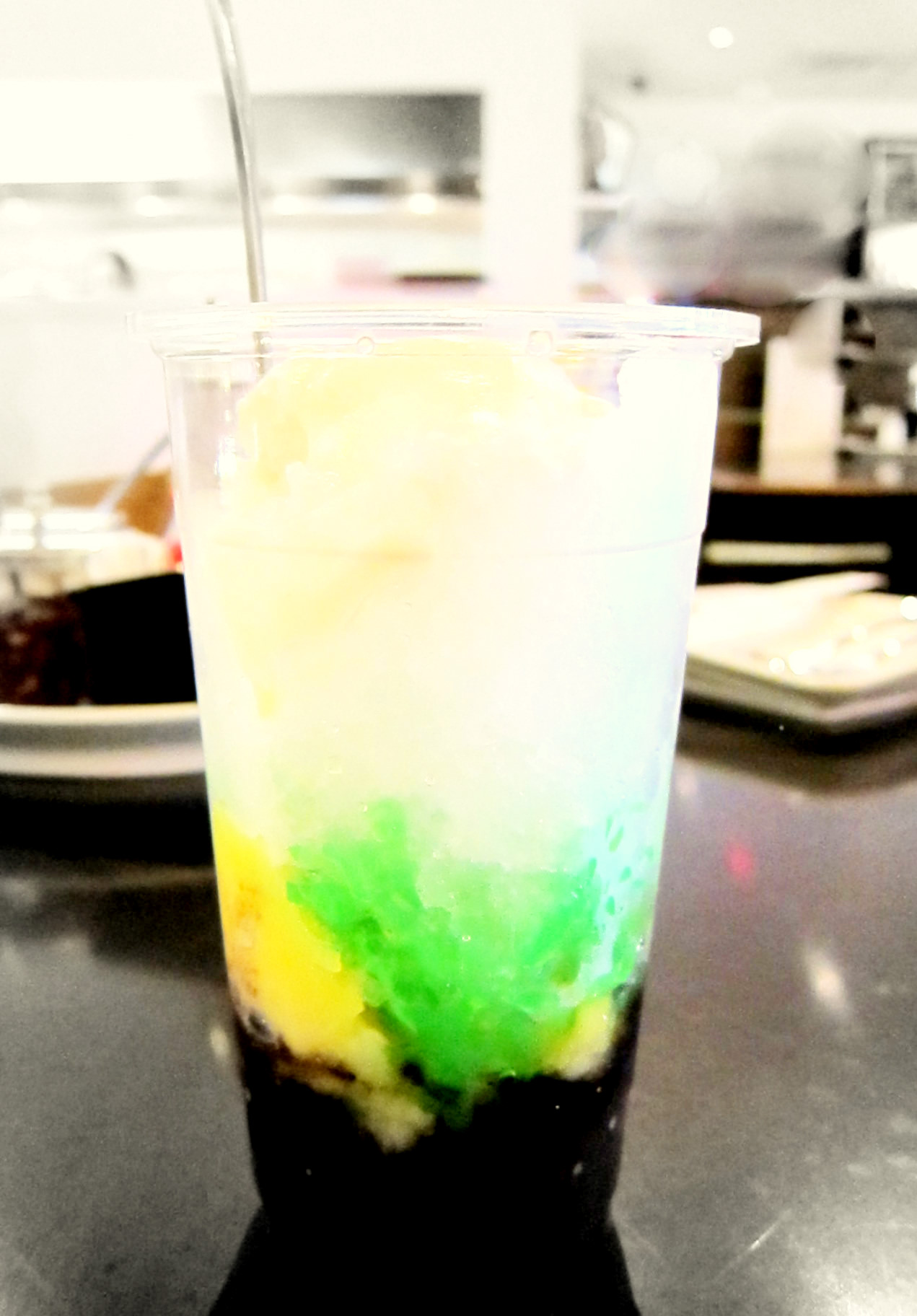
Among the countable Vietnamese restaurant owners that ever bother to make their menus available on the web, Kim Châu and her husband put together quite a decent site for their Red Pier: black background, colorful foods, dazzling images of the bar and the walls, names and prices of 166 dishes minus dessert. Red Pier is a go-to when you work in the ‘hood, have an hour for lunch, and just want some normal noodle soup or vermicelli at a reasonable price. Or when you crave something sweet and cold and nutty, like a chè ba màu (trichromatic bean and tapioca ice).


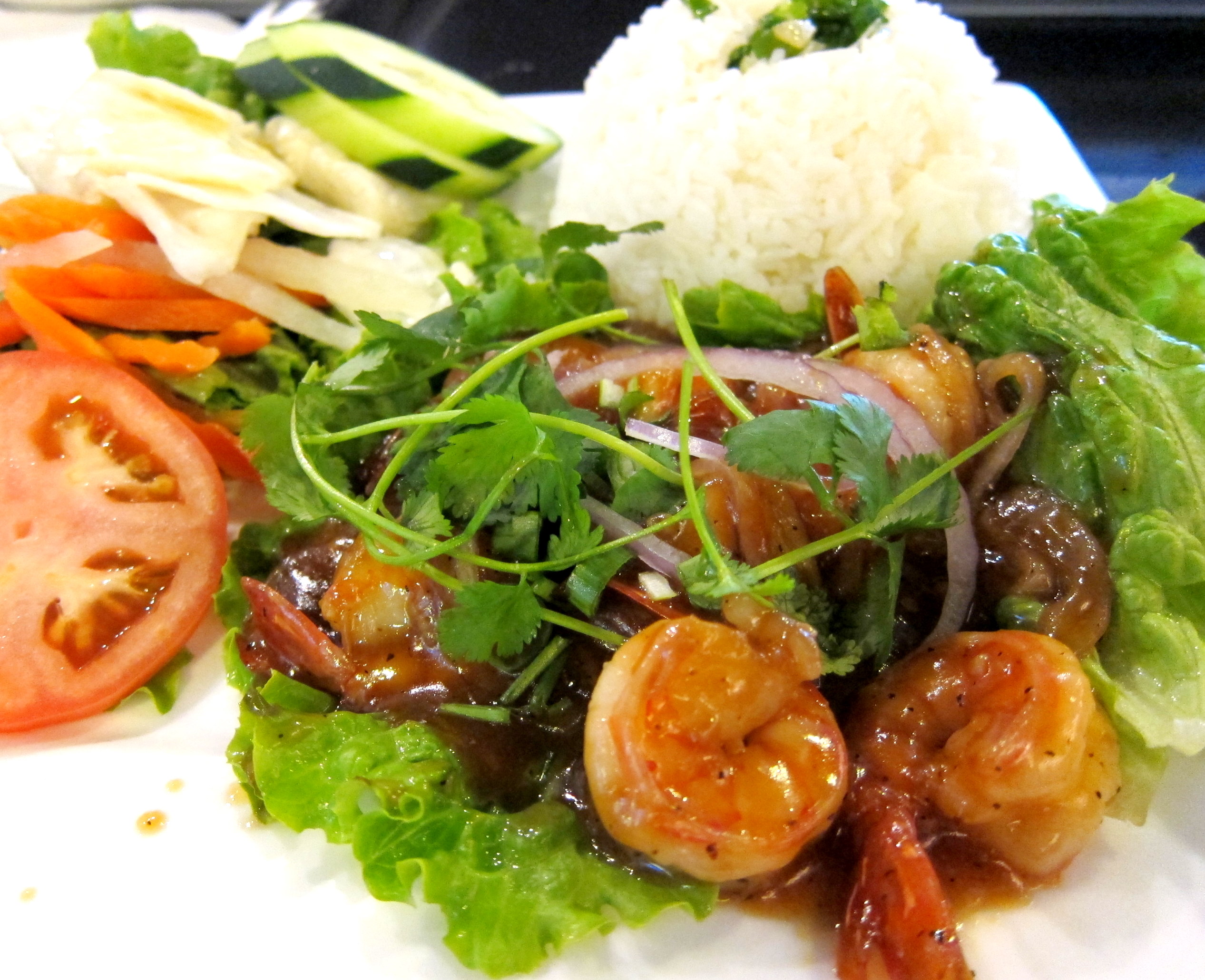
Don’t drive too fast down the one-way Milam, you’d miss the restaurant for sure. It took us a few loops around until we pulled into the right parking lot, just across the street from the proprietors’ other business, Kim Châu Jewelers, on the left side. Also, don’t order Cơm Tôm Rim (rice with caramelized shrimp), unless you’re having salt-deficiency. If you must, Chè Ba Màu proves to be a comforting three-buck companion.


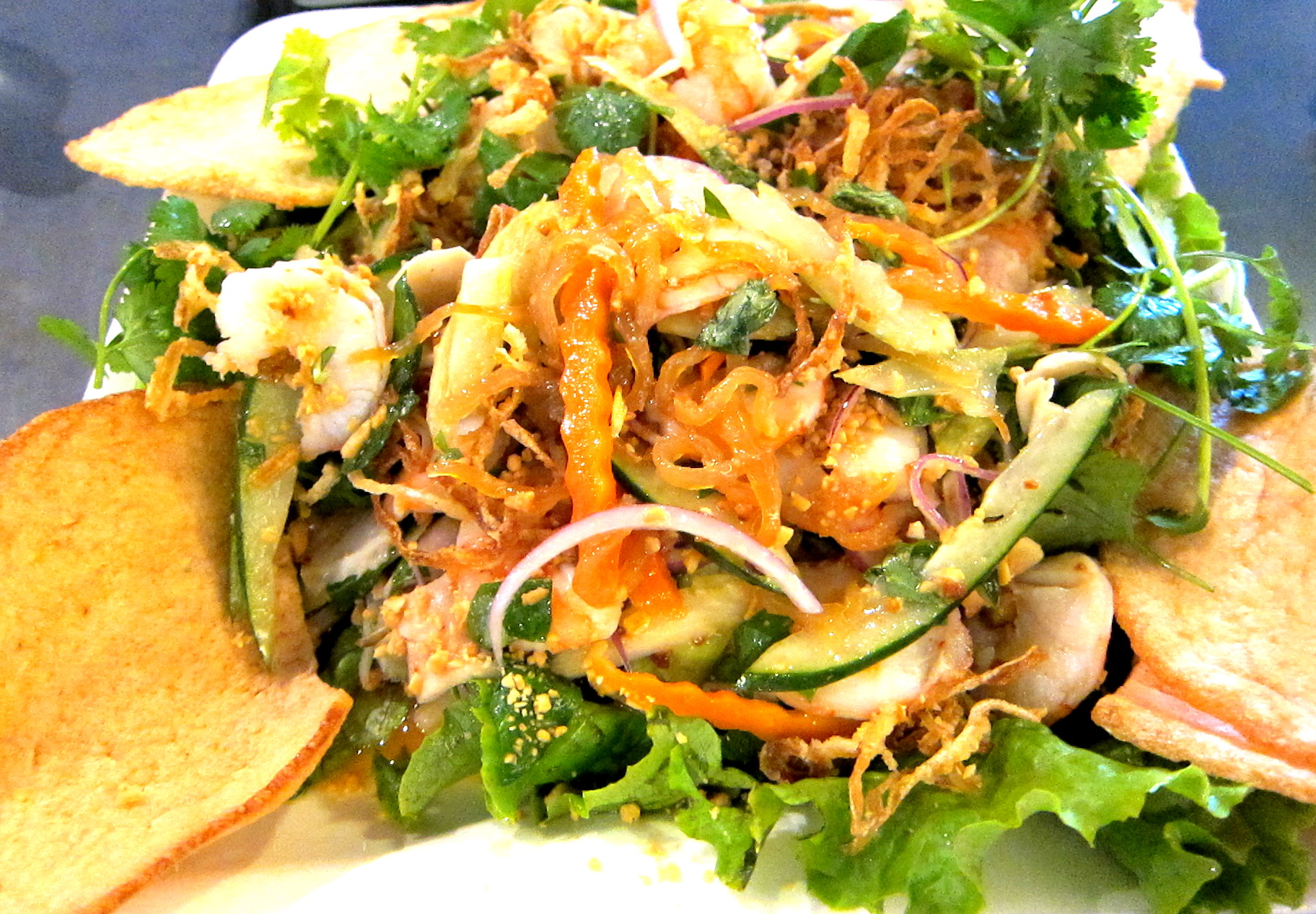
Do order #1: Gỏi Sứa Tôm Thịt (jellyfish salad with shrimp and pork), the only setback is its chilipepper overload, which I’m sure you can ask the cook to take it down a few notches. The thinly sliced  jellyfish blends rather too well with carrots and cucumber strings you’d have to look to notice its cold, clean elastic crunch. Gỏi Sứa Tôm Thịt is one of the house specials that Red Pier emphasizes on their TV advertisement, and combined with large shrimp crackers it’s certainly a better execution of jellyfish than duck tongue and jelly fish at Chinese dim sum halls.


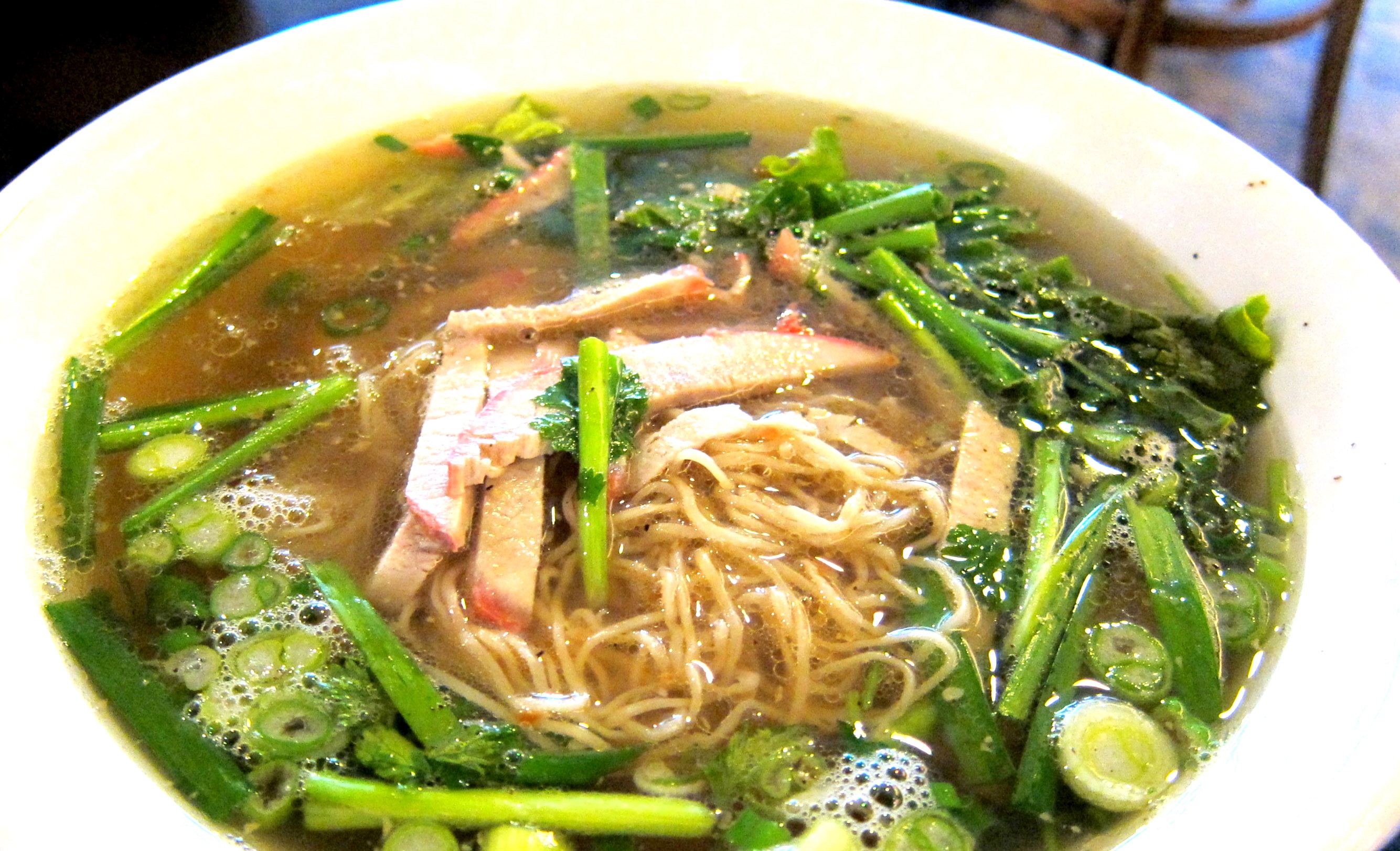
Do order #2: Mì Xá Xíu (char siu egg noodle soup). This is a cheap (only $6.25) and satisfying deal. It’s slightly more involved than Wiki Wiki’s saimin bowl, with crispy green onions and a meaty sweet broth.


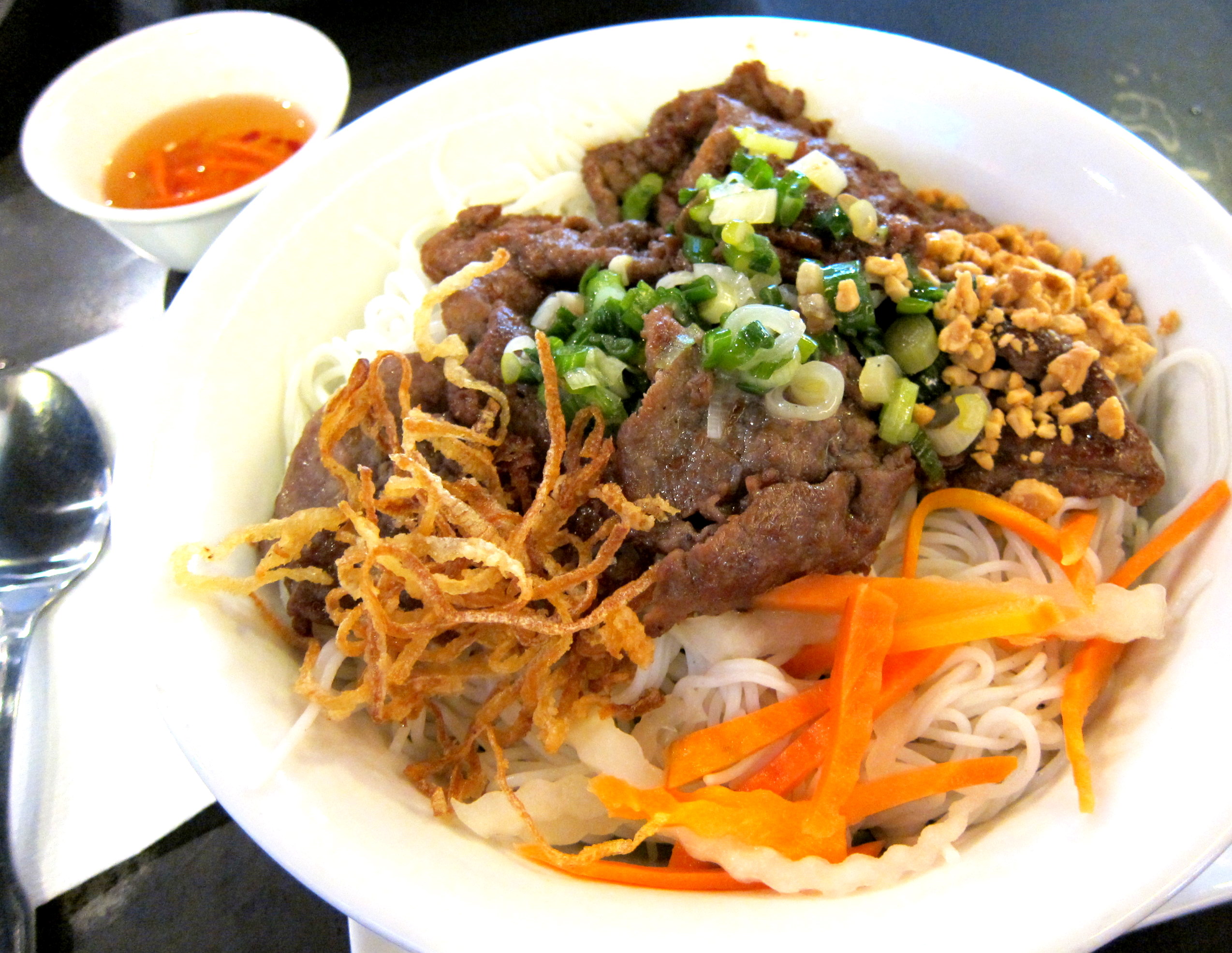
Do order #3: the classic cold rice vermicelli (Bún) with the not so classic grilled beef (Bò Nướng), certainly bathed in nước mắm and garnished with chopped green onion seasoned in lard (mỡ hành), crushed peanuts, fried shallots, pickled carrots and daikon. For the greens lovers there’s that hidden pile of bean sprouts and shredded cucumber at the bottom, whose texture matches that of neither bún nor beef. (Now that I think of it, bibim nangmyeon also has bean sprout and cucumber, so it must be a cold noodle thing.)


Overall, Little Mom found the place less than pristine as the stir-fry smell sweeps over the metallic kitchen counter into the dining area. Red Pier’s chefs also take a tad too much liberty with the seasonings. But not all Vietnamese restaurants have jellyfish salad and friendly service, and usually the ones with 166 items on their menu don’t execute any of them too well, so I’d give Red Pier a B if the red-and-ebony dining box were a student in my class.

Address: Red Pier Vietnamese Restaurant
2704 Milam St
Ste C
Houston, TX 77006
theredpier.com
(713) 807-7726
(information from der Miller: Red Pier and Les Givral’s Sandwiches are sister businesses, both on Milam St.)


Lunch for 3:
Medium jellyfish salad (9.95) + grilled beef vermicelli (6.95) + rice & caramelized shrimp (7.75) + char siu noodle soup (6.25) + bean & tapioca ice (3.00) + tax
= $36.70

Casserole House – Jeongol in Oakland

February 18, 2011 By: Mai Truong Category: California - The Bay Area, Comfort food, Korean


If you’ve had Vietnamese hot pot and liked it, you’d like the Korean hot pot better. If you haven’t had Vietnamese hot pot, try it, and then try jeongol (전골 Korean hot pot), and then you’d like jeongol better. There goes my motherland loyalty, but Vietnam has bánh cuốn and gỏi cuốn, so I’m not too worried.

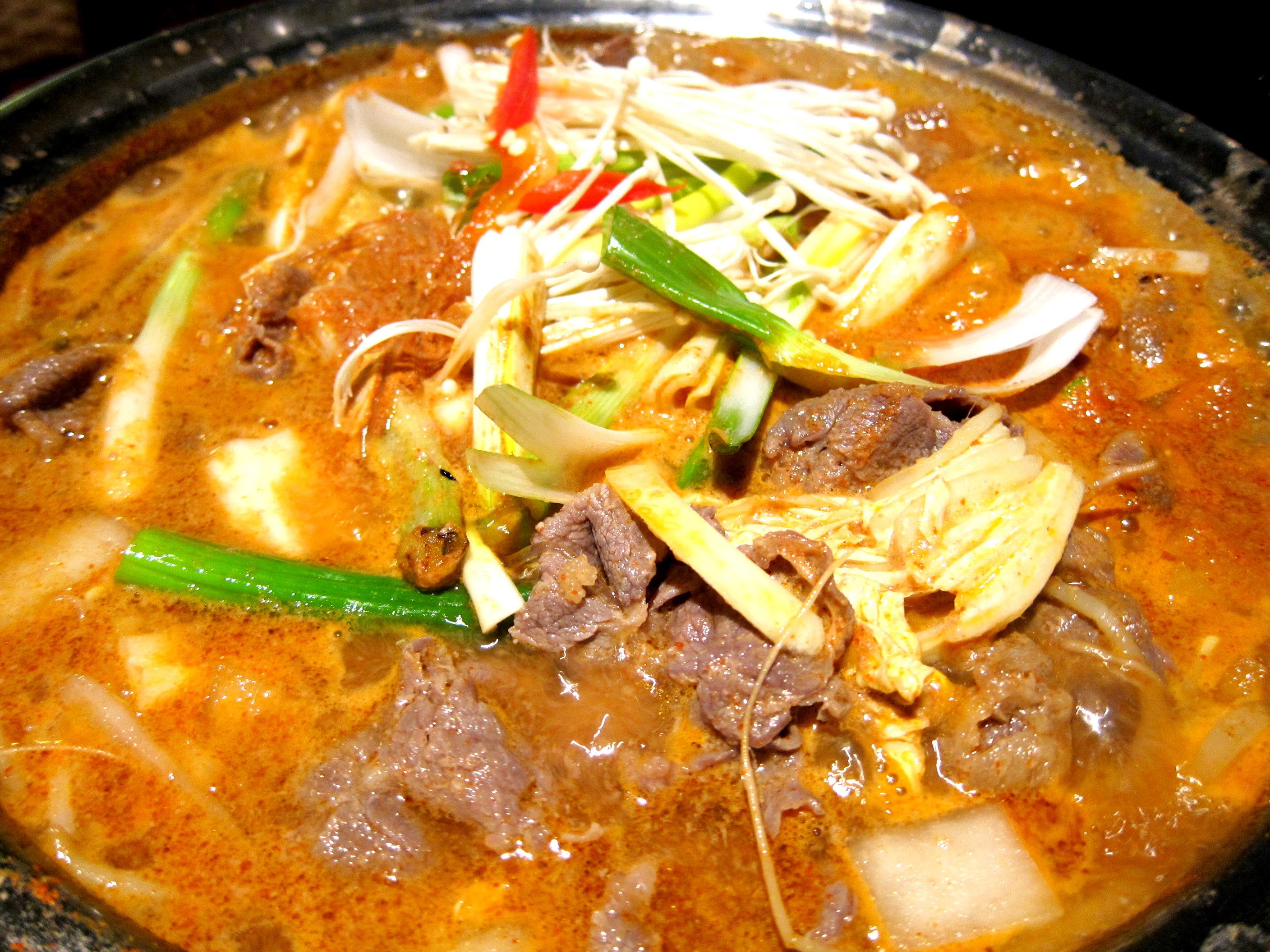
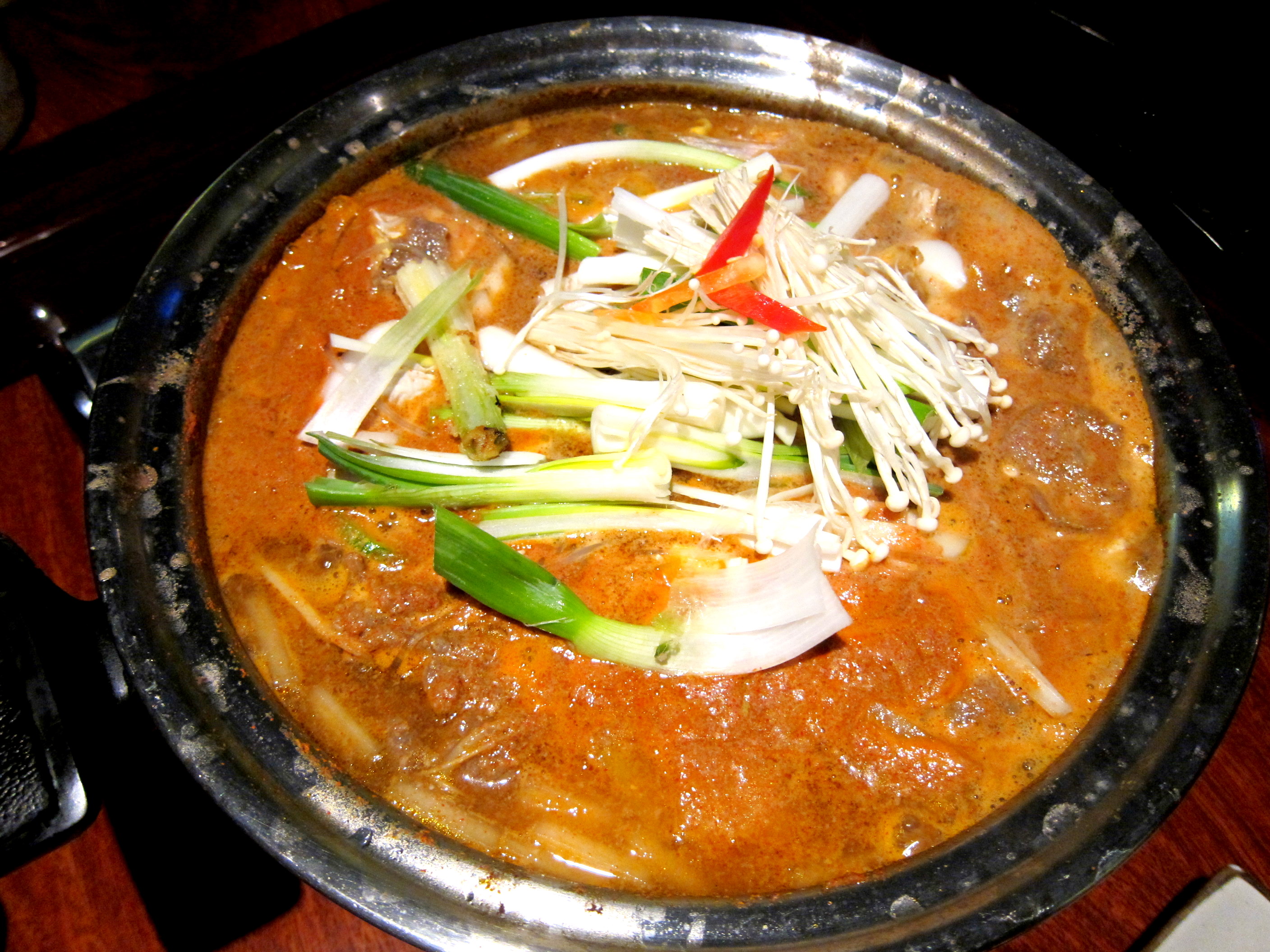
Lots of beef, lots of mushroom, green onion, bean sprout, tofu, cucumber, cabbage all snuggling in a pasty sunny broth. The pot is more like a deep tray on a gas stove, and the bubbling conglomeration is like a spoiled teenager threatening to run away from home. The bulgogi junggol comes to us wild and daring. We ladle right in.


Casserole House has these big bright pictures on the wall of beef, spam, vegetables, and seafood neatly arranged in a round dish or bobbing in broth. The real stuff in action also hides some tteokbokki (떡) for chew and dangmyeon (당면) for engtanglement with the enokitake that just wait to drip the broth between the plates or fling a fortunate dot onto your shirt. I don’t know why they would call jeongol “casserole”, the word brings to mind a square glass dish with crispy-top green beans swearing hot from the oven, which, as yummy as it is at Thanksgiving, is far less exciting than a hot pot. (As a guy said in a Super Bowl ad, “it’s where the action is”.)


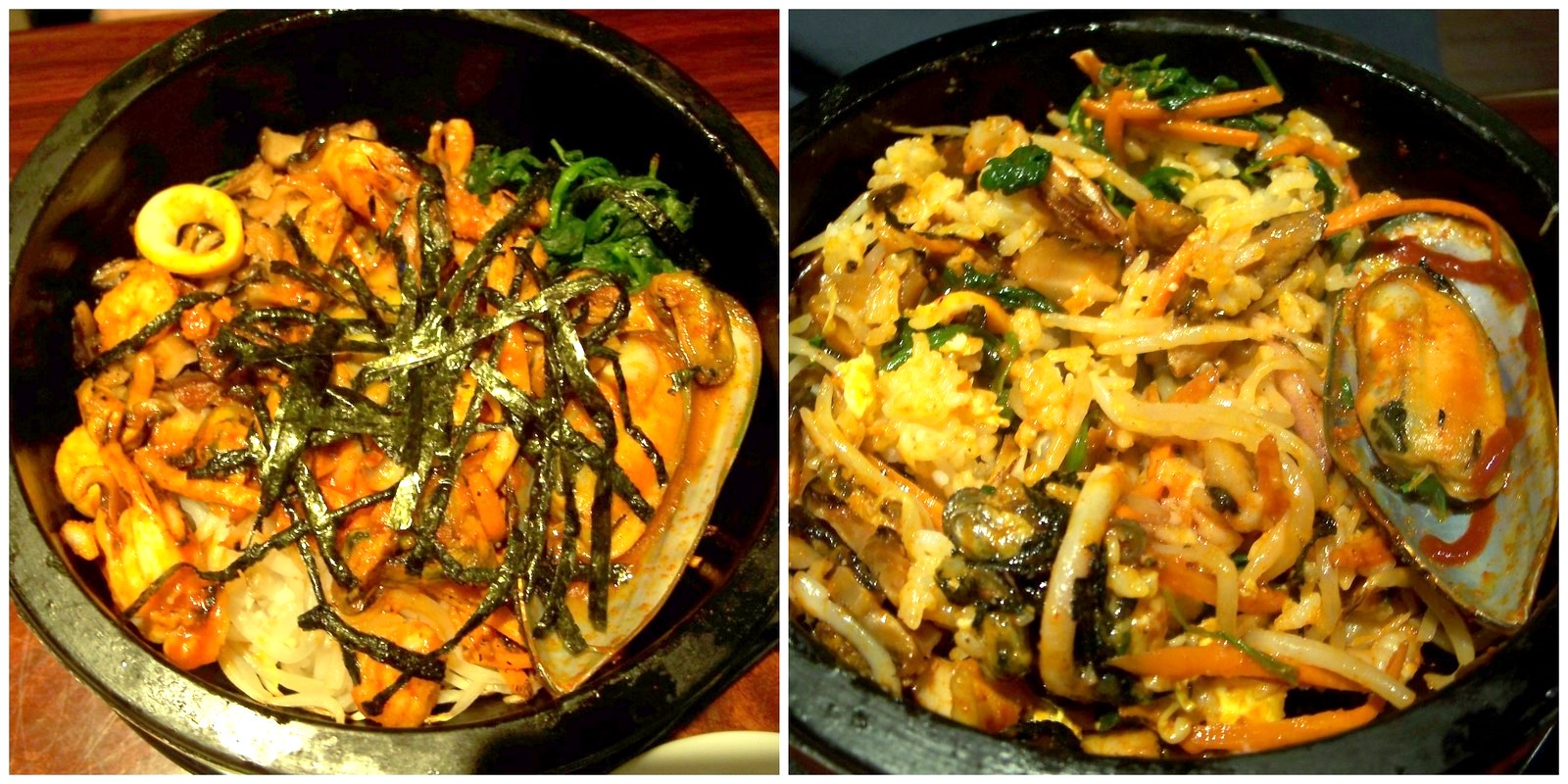
Like true Americans, we didn’t get jeongol the first time we ate at Casserole House. It’s not a mistake per se, because the seafood bibimbap had quite some scrumptious crust and chewy squid for kicks, and if you scan over my favorite post list, you’d know I have a soft spot for pig feet.


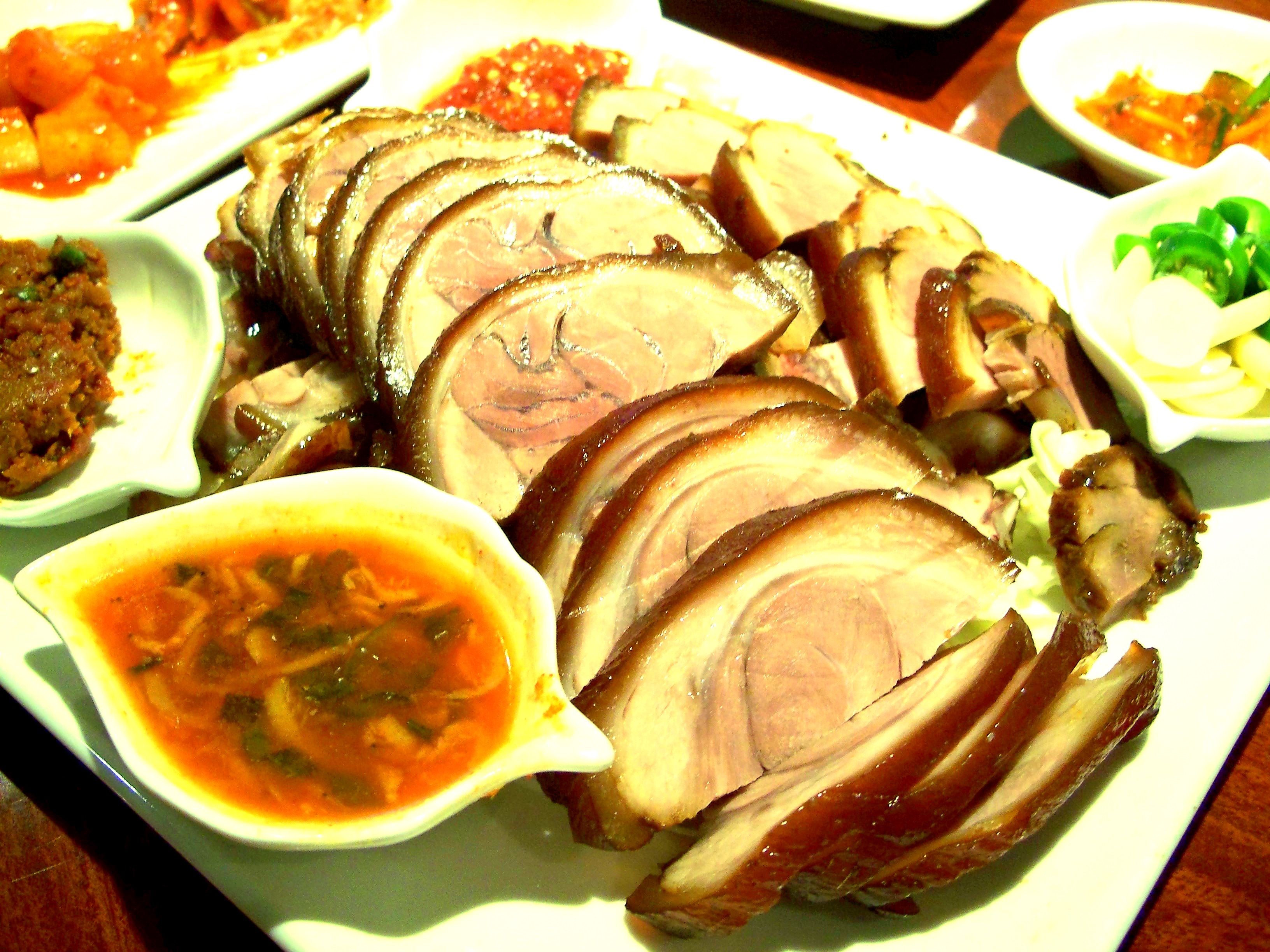
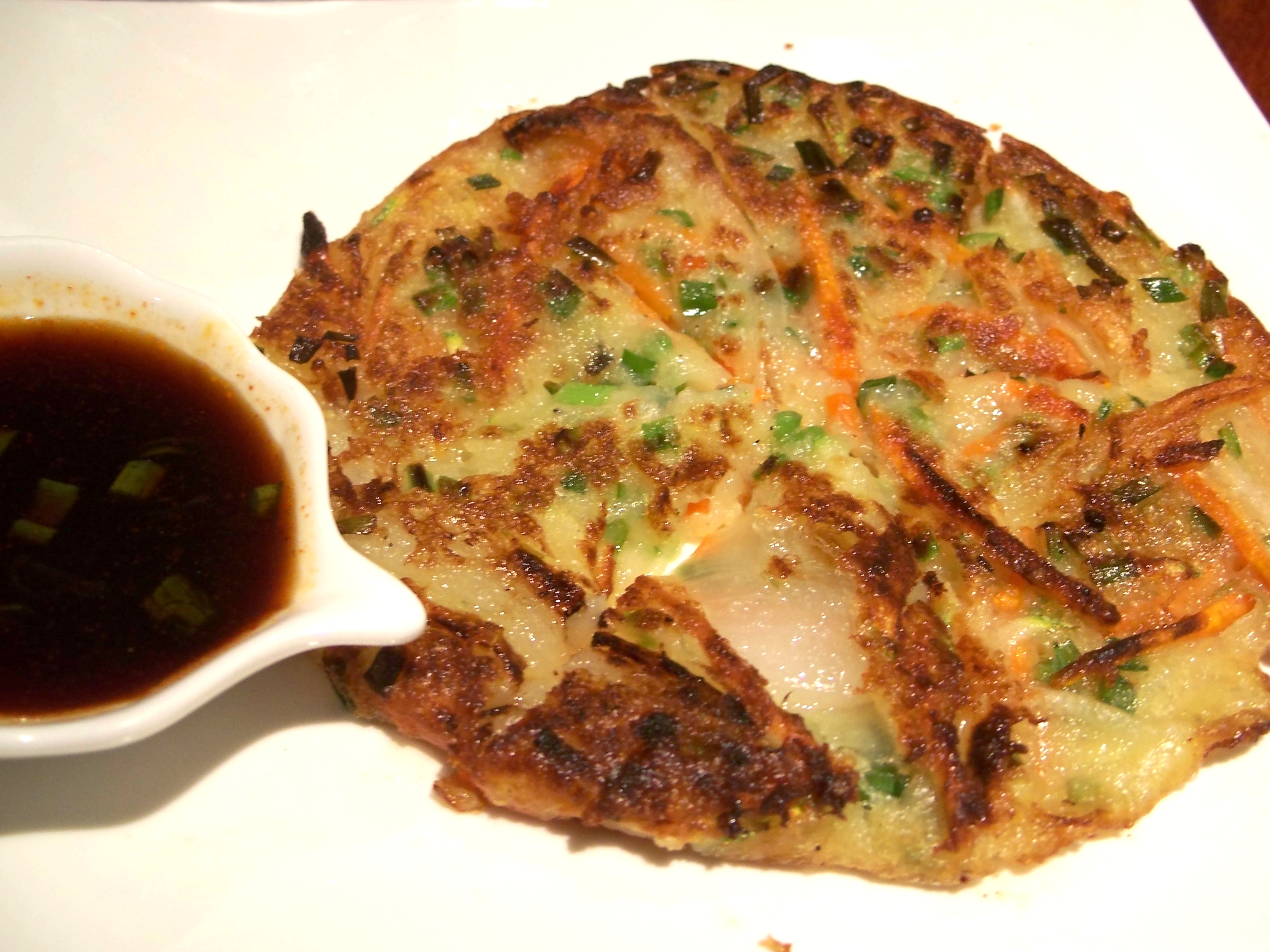
But the pig feet at Casserole House aren’t very soft. Jokbal (족발) is a cross between boiled and roasted, the skin is taut, hardened to nearly a crunch, the meat takes every chance to get stuck in your teeth. I like it. I wrap one or two slices in a lettuce leaf and smear on a chopstick’s tip of doenjang. I lick a taste of saeu jeotkal (새우 젓갈), but objectively speaking, Vietnamese nước chấm is better :-D. And seriously, for $17.95 the plate has enough meat to feed five people, if they also clean out the banchan and order an extra pajeon.


Speaking of money, I haven’t seen jokbal on any other menu, so it’s a must-get here. But there are three reasons to get out of the bibimbap comfort zone and get the jeongol while you’re at Casserole House: 1. it’s in the name, 2. despite it costing a scary $29.95 each scary pot, it’s enough for 3-4 people to share, 3. it’s metal-chopstick-licking good.


And when you’re there next year on Jan 22-25, make sure you wish the ladies a happy new year. They’re sweet, like the sikhye (식혜) they give us for dessert. I drank Mudpie’s cup, too.
Address: Casserole House (right next to Sahn Maru)
4301 Telegraph Ave
(between 43rd St & 44th St)
Oakland, CA 94609

Delicious Vietnam #10 – February Essen

February 15, 2011 By: Mai Truong Category: Vietnamese


This month sees some of us travelling and visiting families for the Lunar New Year, so thank you all for spending time to write up your delicious pieces, which surprisingly comprise a very balanced and harmonious mix of courses, recipes, and reviews.
Appetizers


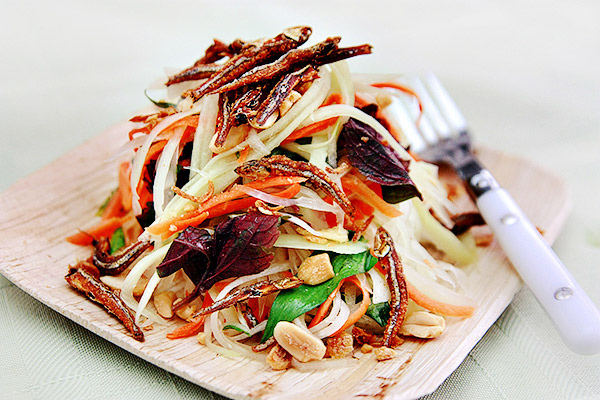
From Los Angeles, California: Hong and Kim, the Ravenous Couple, slices out a beautiful assortment of papaya, carrot, daikon, garden herbs, and (my personal addiction) dried anchovies, in the name of Green Papaya Salad (Gỏi Đu Đủ)


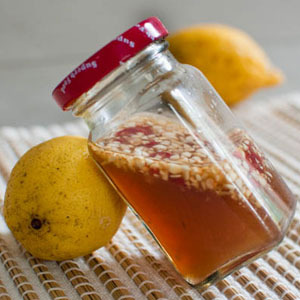
The salad, like all Vietnamese salads, is accompanied by Nước Mắm Pha, coincidentally also the dipping sauce that Penny at Jeroxie (Melbourne, Australia) uses for her BBQ lamb, fish, and beef! We wish her lemon tree the best. 🙂

Main courses


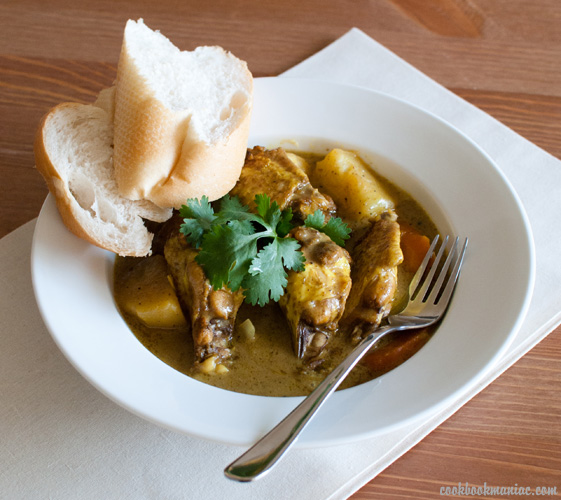
From Sydney, Australia: Amy at Cookbook Maniac boils up a loving pot of Cà Ri Gà (chicken curry) as she recollects sweet memories of her mom’s homecooking.


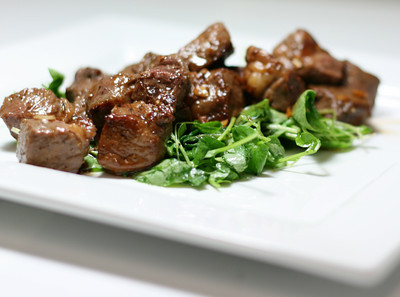
From Tennessee, USA: Pam at Sidewalk Shoes (Tennessee, US) combines Bò Lúc Lắc (shaken beef) with Xà Lách Xoong (watercress) to make an entrée full of “simple, clean, and fresh flavors”.

Desserts


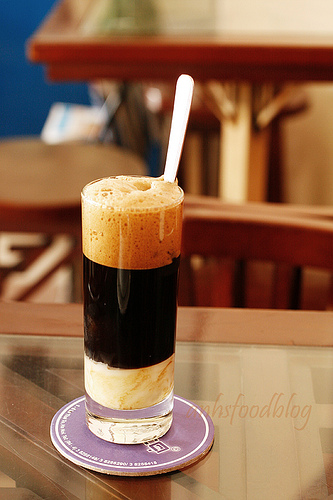
From Melbourne, Australia: Anh, author of A Food Lover’s Journey, deconstructs Hanoian Vietnamese Coffee, brewing the old neighborhood’s filtering essence into your homemade cups. Her aromatic review of the vintage, “small, simply decorated [coffee] shops around town” makes me want to get on the next flight to Hanoi, and I don’t even drink coffee.


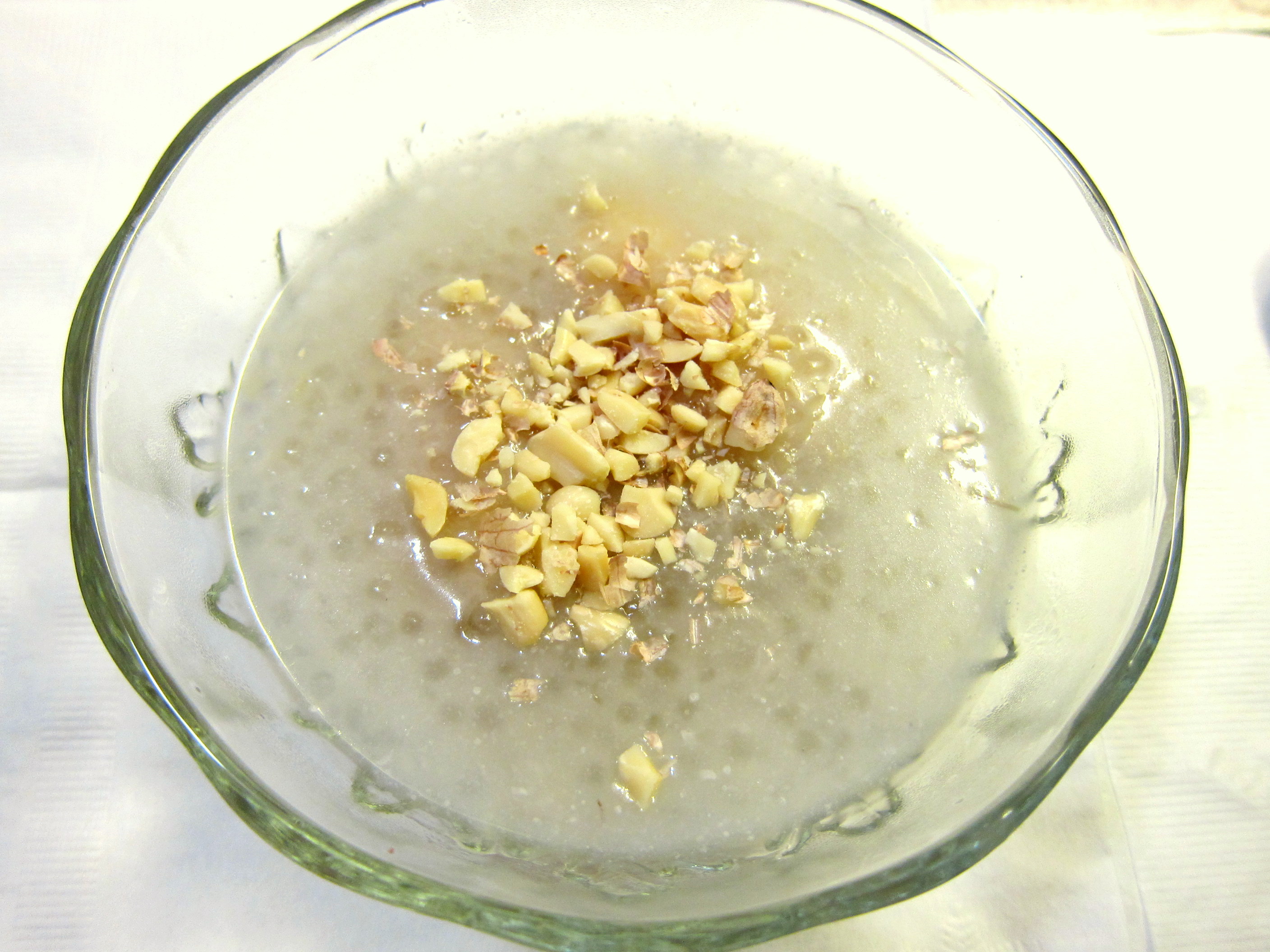
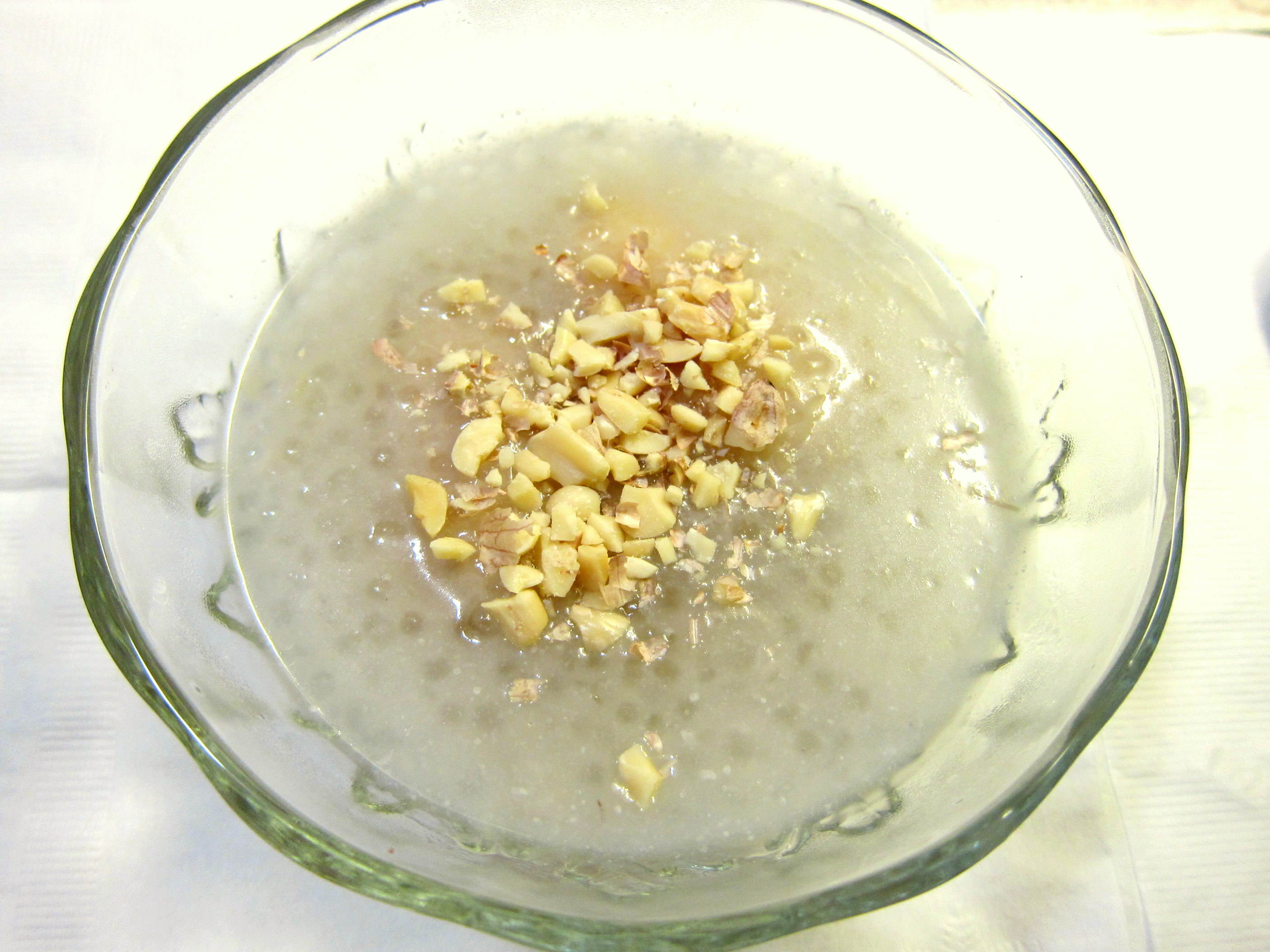
From yours truly in Berkeley, USA: how about a small bowl of warm, sweet, luscious banana tapioca pudding (Chè Chuối Chưng) after meal?

Good eats here and there


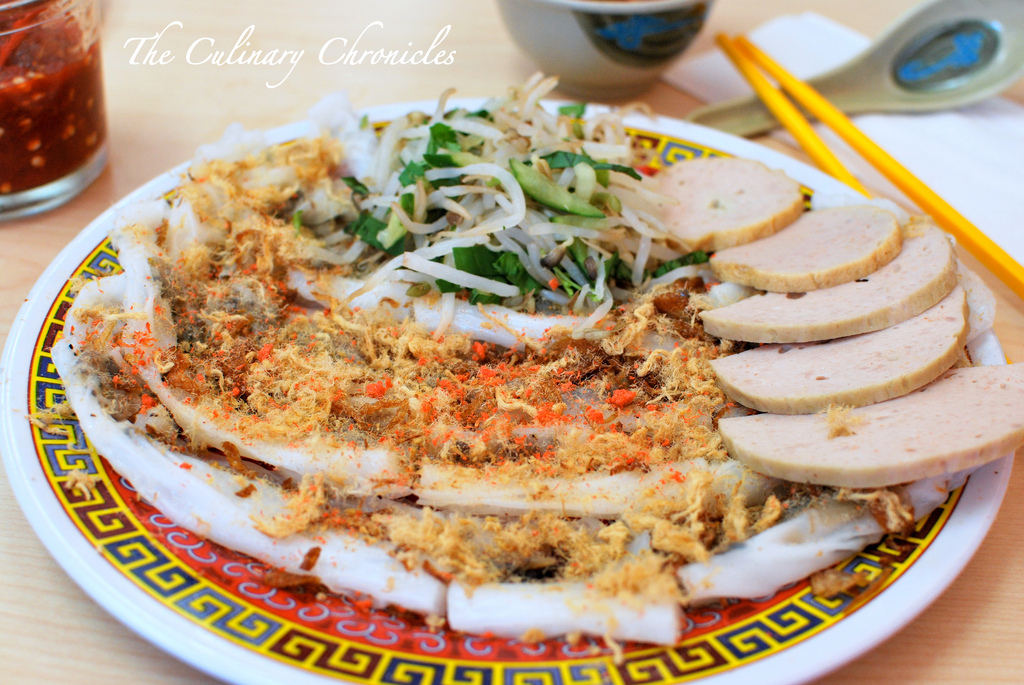
From San Diego, California: Nam Nguyen recommends the best joint for Bánh Cuốn (steamed rice crepe roll) in Santa Ana on her blog The Culinary Chronicles.


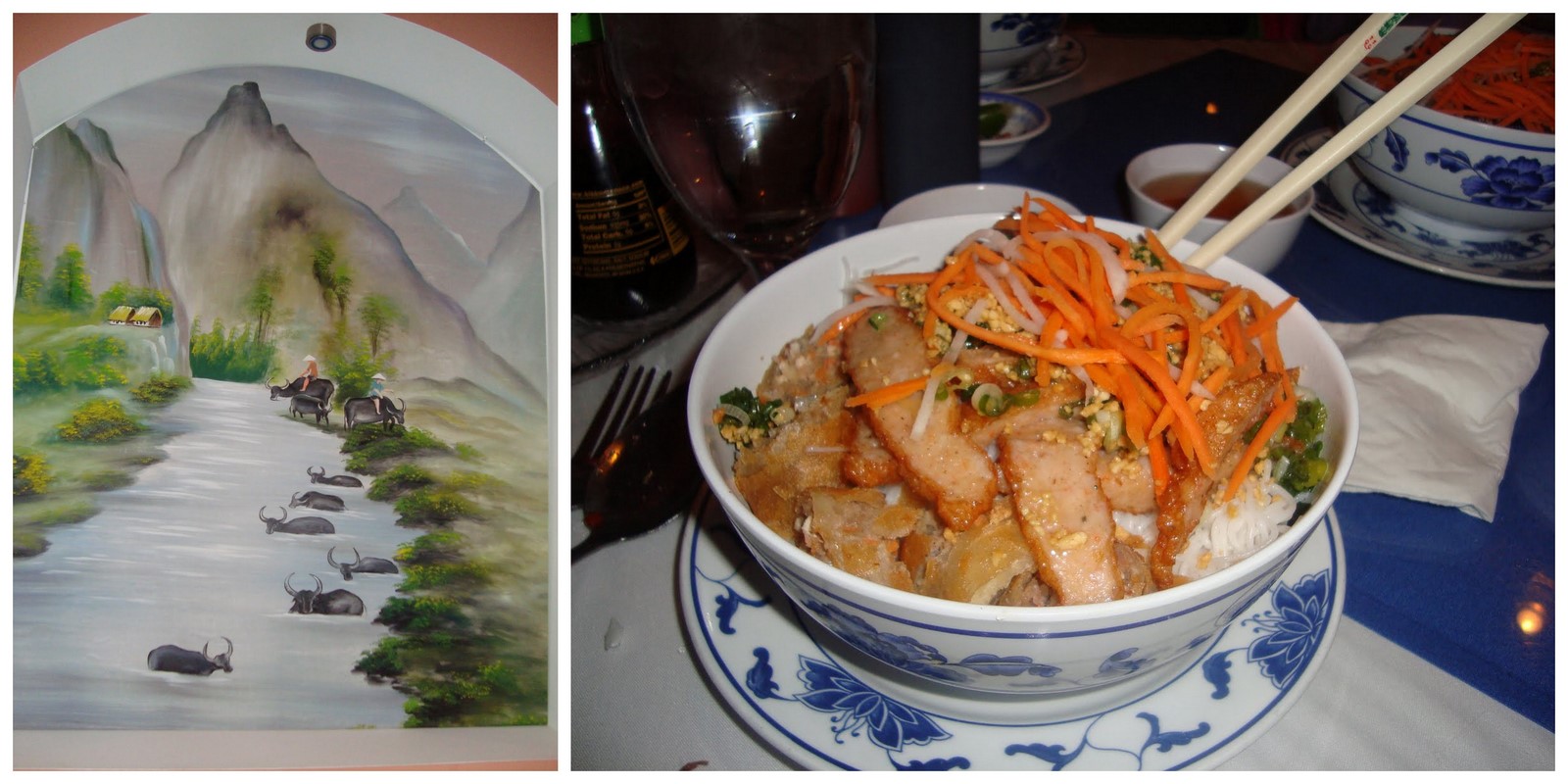
From Virginia, USA: Julia stumbles upon Dalat Vietnamese Cuisine and gets a “tasty, fresh, and filling” Bún Chạo Tôm Chả Giò, which results in a tasty review on her blog Beginner Mom on the Run.


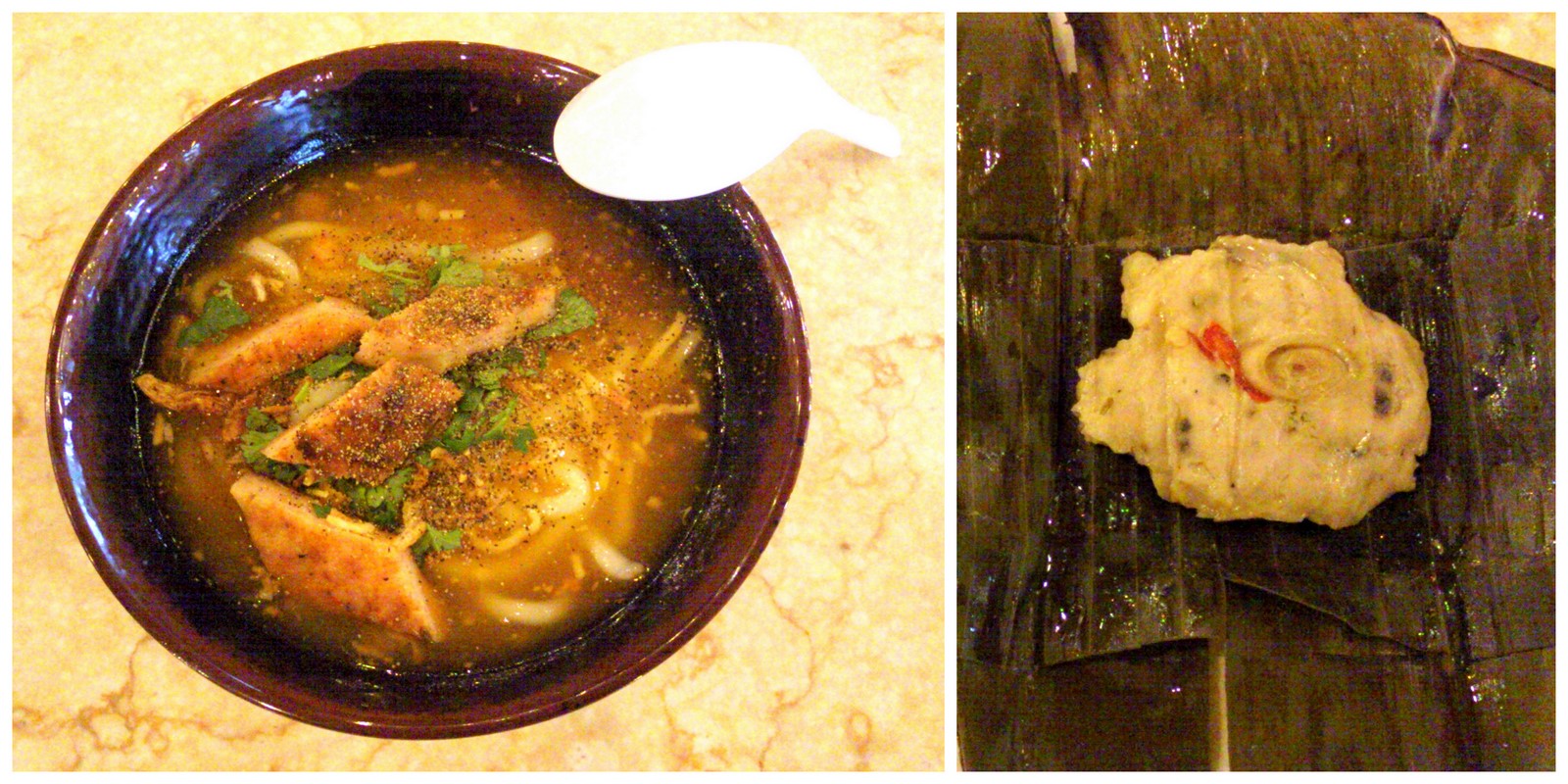
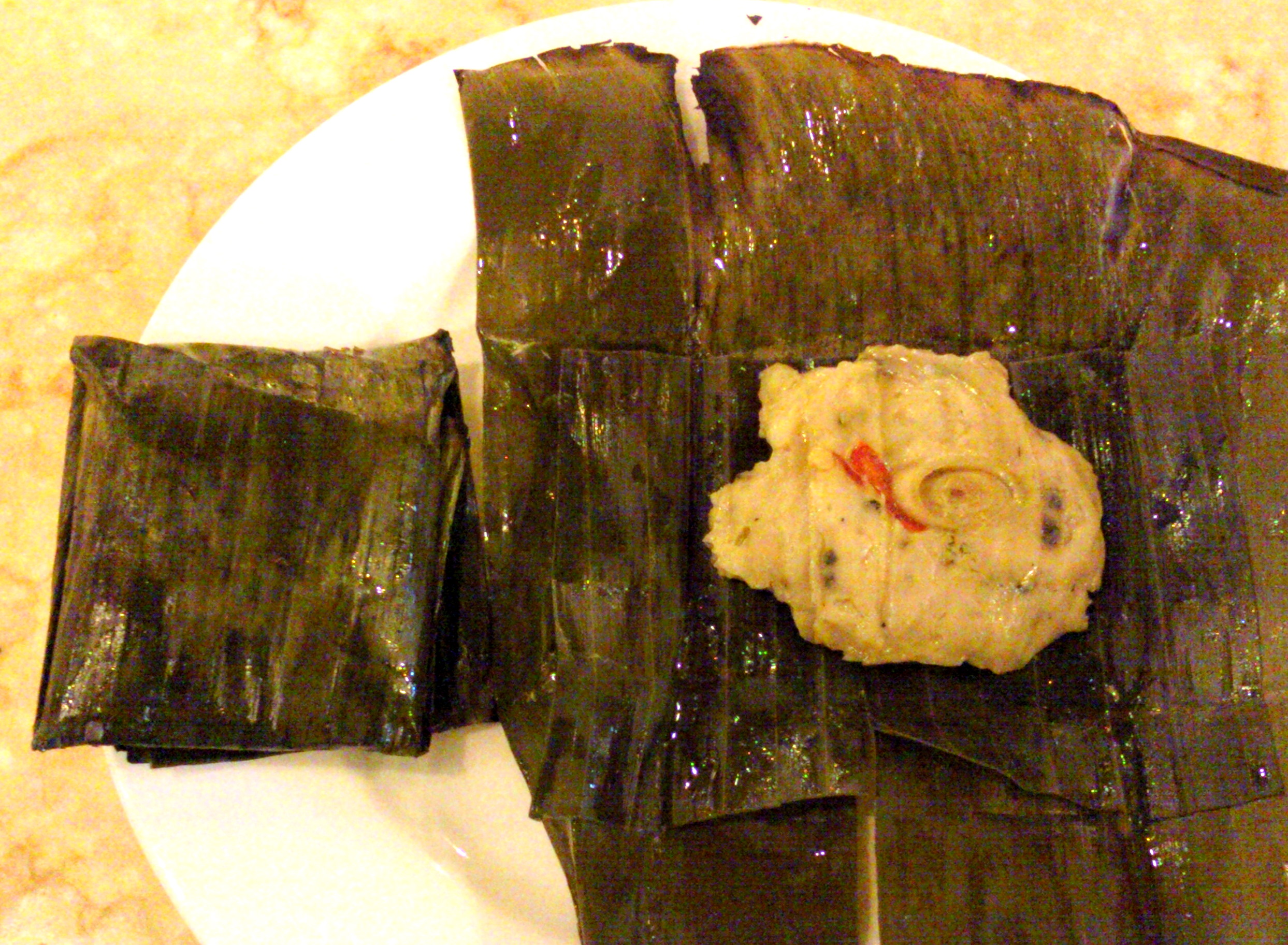
And lastly, from Houston, Texas: my mom discovers two new specialties unique to Kim Son Restaurant: Bánh Canh Cua Nam Phồ (Nam Phổ style crab-and-chewy-round-noodle soup) and Chả Ốc bọc lá chuối nướng (grilled snail sausage in banana leaf) this past week of the Lunar New Year. 🙂

That concludes this month’s Delicious Vietnam edition. So many thanks to the Food Lover Anh and the Ravenous Couple Hong and Kim for organizing the event.
The next roundup, Delicious Vietnam #11, is hosted by Nam Nguyen at The Culinary Chronicles. Make sure to send your entries (post link and one 300-pixel-wide picture per entry) to her email theculinarychronicles [at] gmail [dot] com by Sunday March 13th. 🙂

Sandwich Shop Goodies 13 – Bánh xu xê (couple cookie)

February 12, 2011 By: Mai Truong Category: Houston, Northern Vietnamese, One shot, sweet snacks and desserts, Vegan


When you reach(ed) mid 20s, don’t you just hear all sort of marriage announcements popping up among your social circle? By the time of college graduation, half the girls I know have gotten their wedding registry up on Facebook, and I thought okay it’s just an American thing (the wedding I mean, though the registry is American too). Then this past Christmas my best college friend missed our annual reunion for his big day in India, and another pal who I thought was still wandering the streets of Chengdu dropped the bomb that he’s engaged. Then I got news that two of my eleventh grade buddies in Vietnam are going to say the vows (not to each other) within this year. Then it really hits me.

I haven’t written about any wedding party food, even though I’ve been to many weddings :D. So why not celebrate this year’s Valentine’s day with a Vietnamese confection whose name derives from the main characters of any wedding: bánh xu xê, originally called bánh phu thê, or “husband (and) wife”?

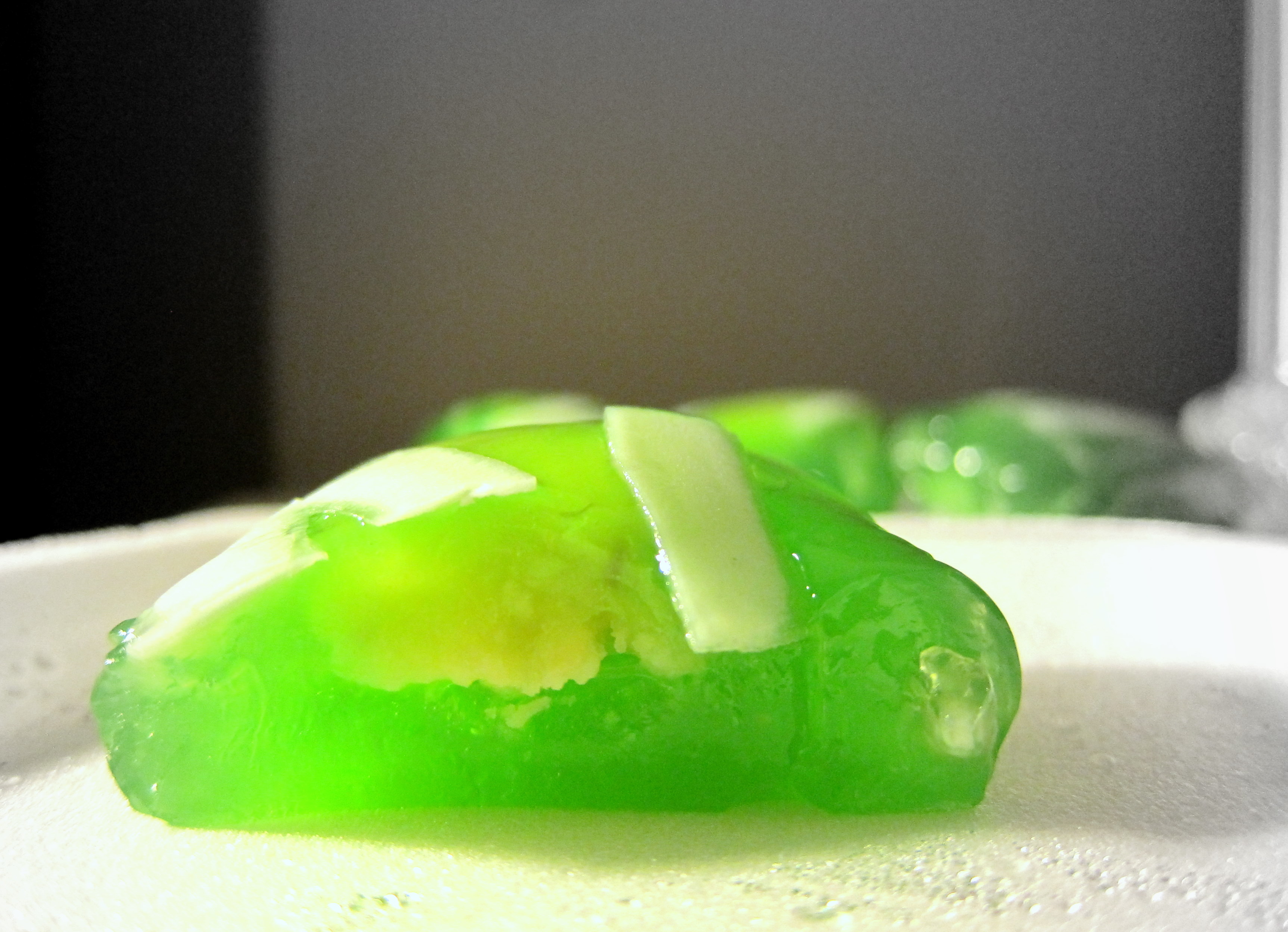
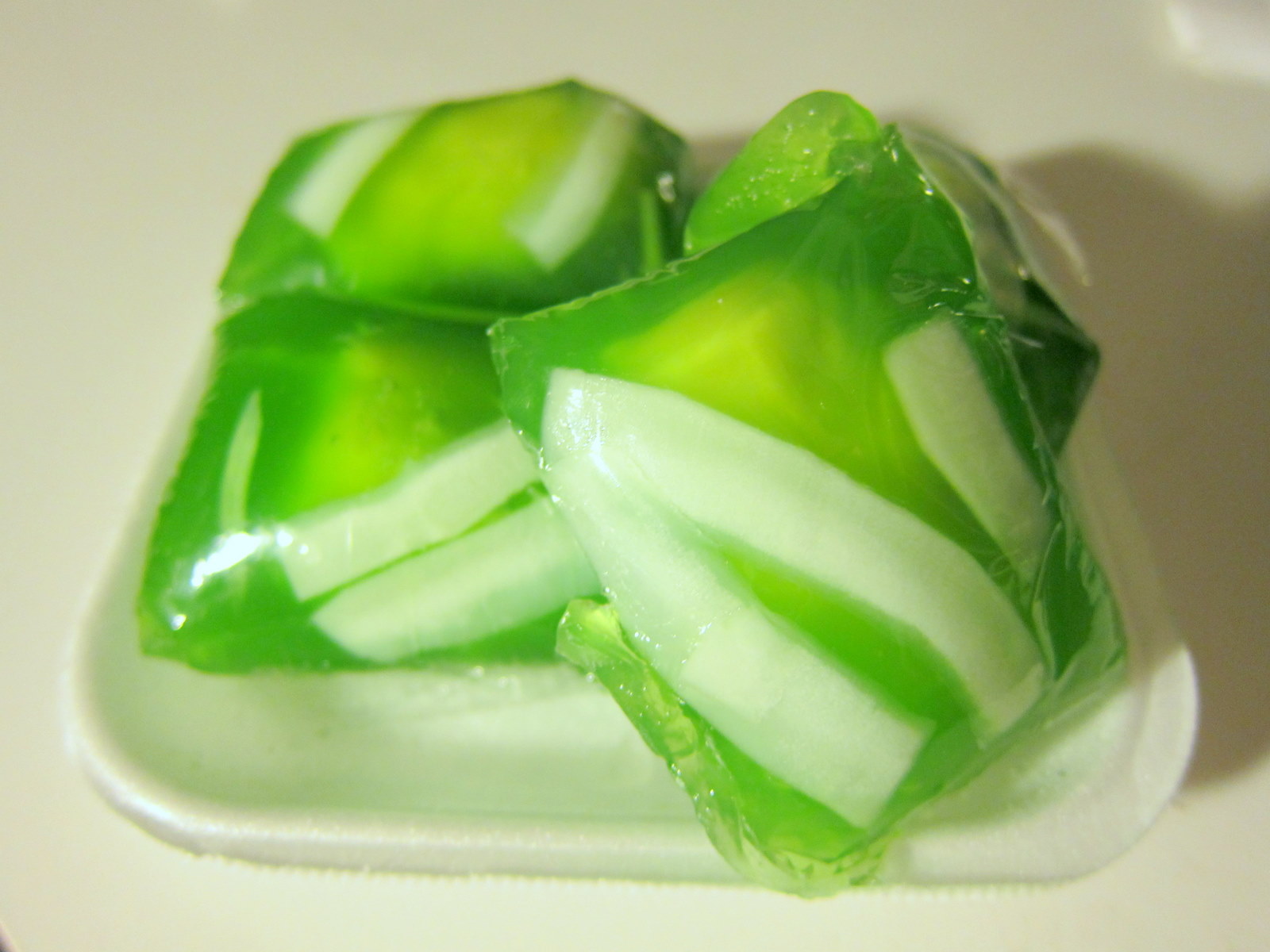
My translation “couple cookie” is for the sake of consonant concordance. They are similar to neither American cookie, Scottish cookie nor British cookie. These little bouncy sweet green pillows get their names from being gift desserts at Vietnamese couples’ engagements back in the day, when they used banana leaves to make little boxes instead of a double layer of cellophane wrapper. At one point the adults called them bánh phu thê, then the kids mispronounced it to bánh xu xê (|soo-seh|) and the name stuck. Technique-wise, it takes a grandmother’s experience to make a mixture of sticky rice flour, arrowroot starch and water into a translucent jello casing that is resilient but not sticky. Some of us might find its crunch-chewy texture too rubbery, other would question its lack of flavor, but the skill of transforming ingredients alone is admirable, and I like chewing. 🙂 In fact I like the outer layer more than the filling.

Traditionally, taro cut into strips are mixed with the cooked batter to give onyx-like patterns, while the modern concoctions can have sesame seeds on top or dry coconut strips within to spice up the homogeneity. The fancy pâtissiers of old Northern Vietnam villages might also sprinkle a few drops of pomelo flower extract into the mung bean paste filling for enhancing fragrance. But I wouldn’t expect that from our local sandwich shops in the States, not when it’s less than $2 for a pack of four.


It’s the kind of sweet you either love or hate. My mom loves it. The Gastronomer suggests using it to pelt your loved ones. It’s the perfect representation of a marriage really, and I’m not talking about the symbolic meaning of glutinous rice (bonding) and all. Its shiny outlook is inviting – everybody likes to get married, then you take a bite and find it tough, lackluster, disappointing, at the least not quite as expected – the post-wedding depression, then you get to the core and discover some tender sweetness after all. 🙂

Got ’em from: Alpha Bakery & Deli (inside Hong Kong City Mall)
11209 Bellaire Blvd # C-02
Houston, TX 77072-2548
(281) 988-5222

Previously on Sandwich Shop Goodies: chuối nếp nướng (grilled banana in sticky rice)
Next on Sandwich Shop Goodies: bánh da lợn (pig skin pie)

Kim Son’s Tet in woven baskets

February 09, 2011 By: Mai Truong Category: Festivals, Houston, noodle soup, Vietnamese

*Guest post in Vietnamese by my Mom, translated by me*


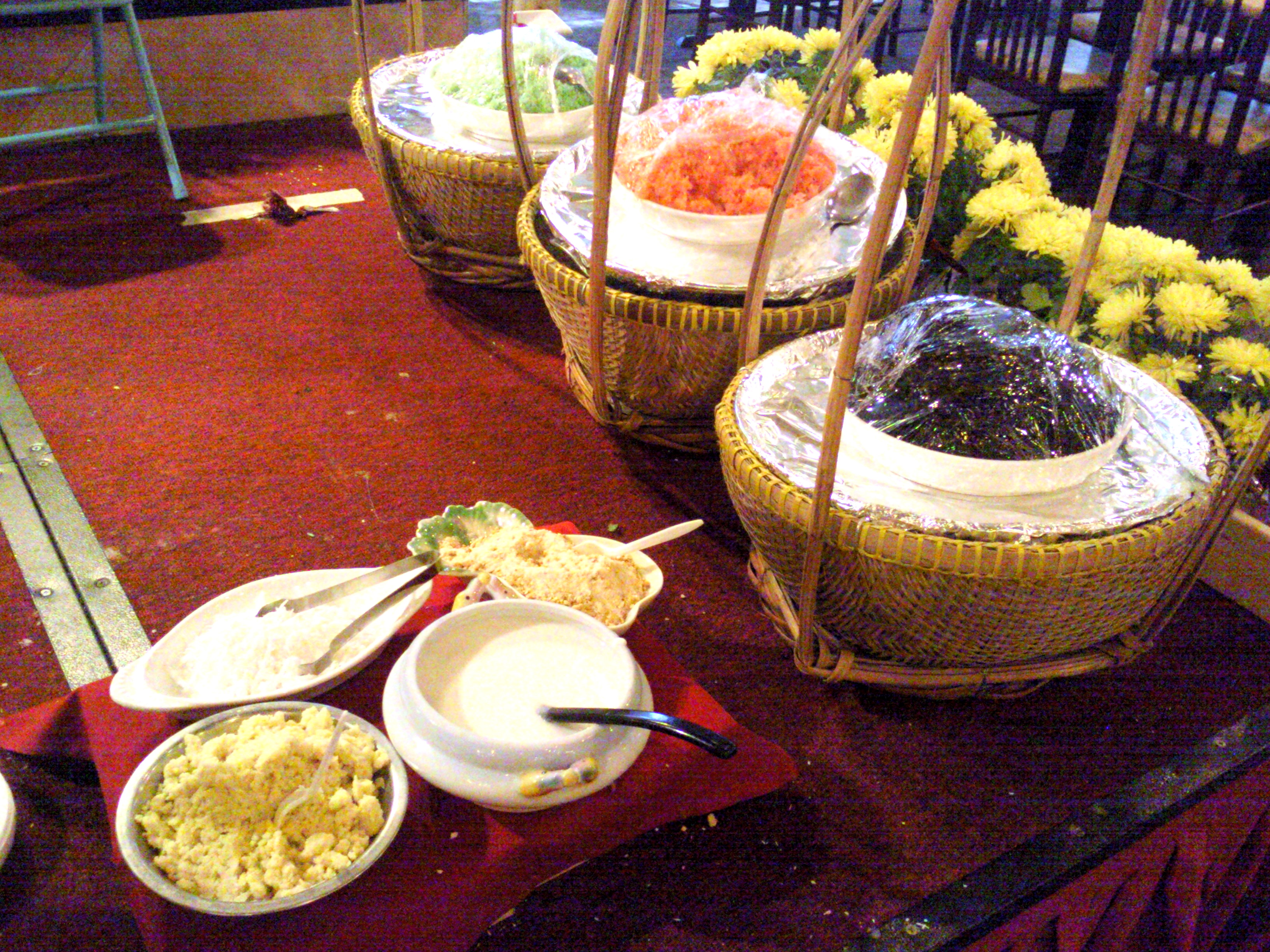
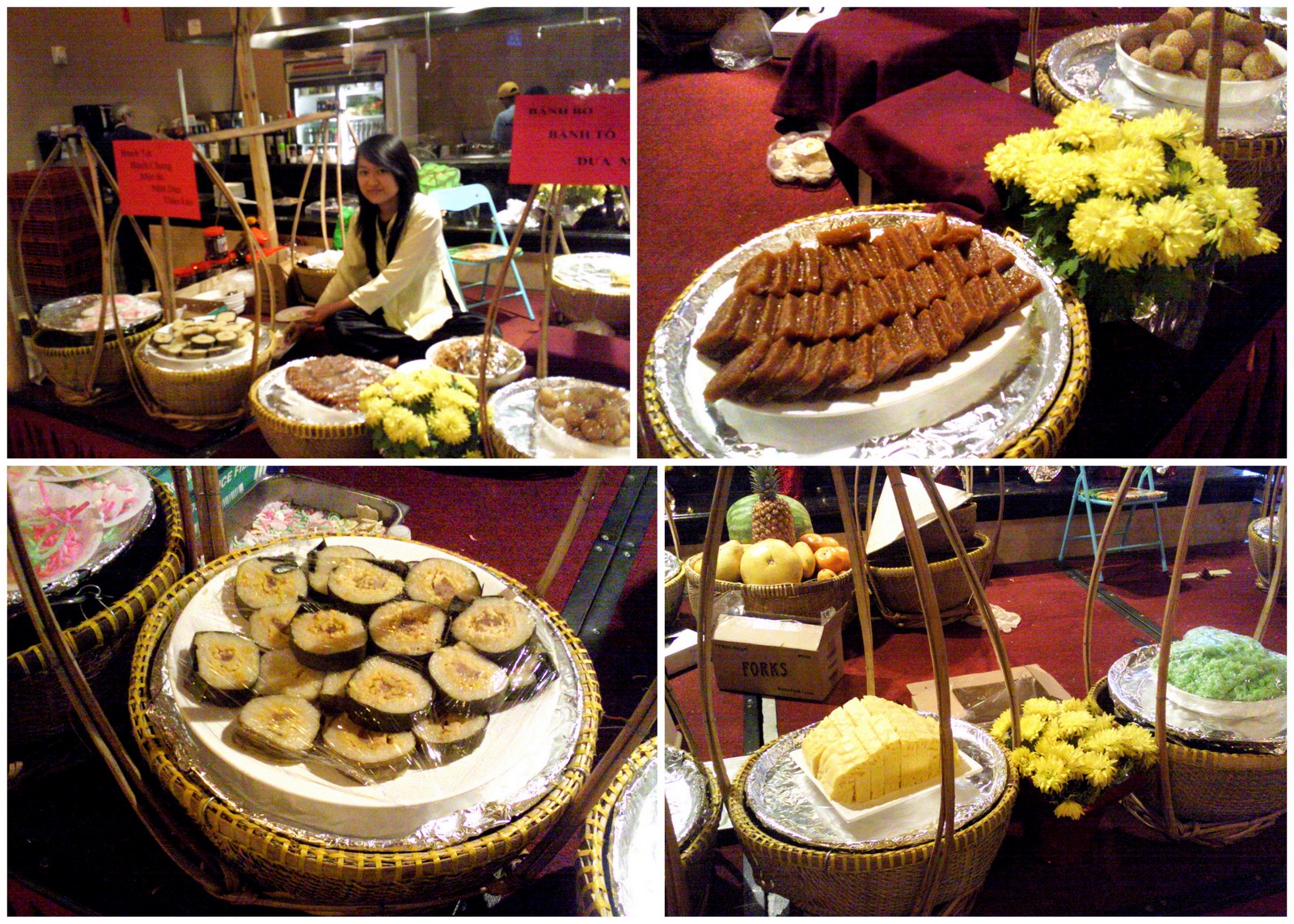
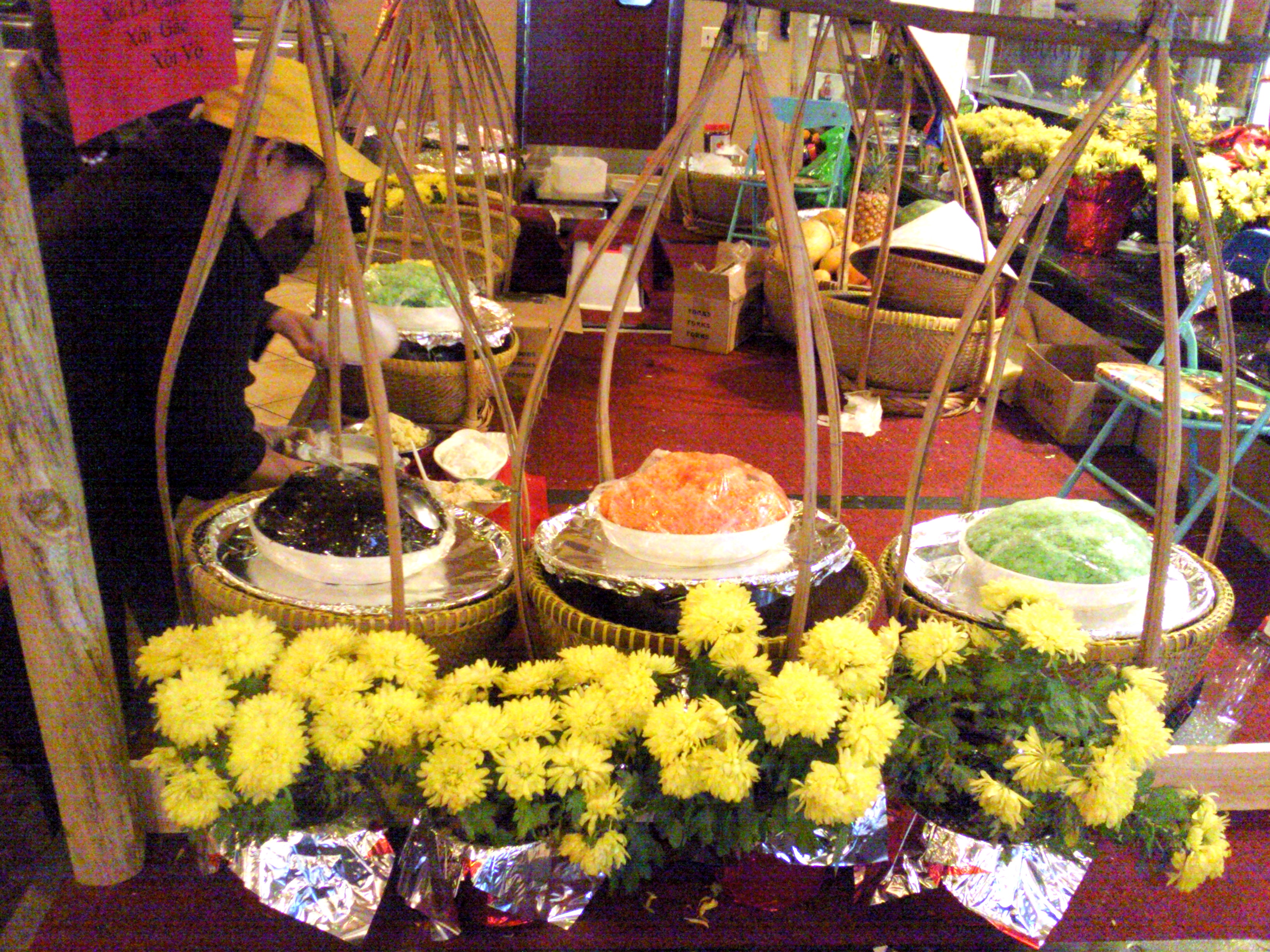
Back in the day, I seldom ate from street stalls or vendors’ baskets, my conscience imprinted with my mother’s unmovable doubt on the street food’s cleanliness. Nonetheless, I scurry with no hesitation to make it to Kim Son for lunch today, just because the TV news last night showed that Kim Son has a 9-day New Year food festival where the goodies are sold in baskets, mimicking the vendor stalls in Vietnam.


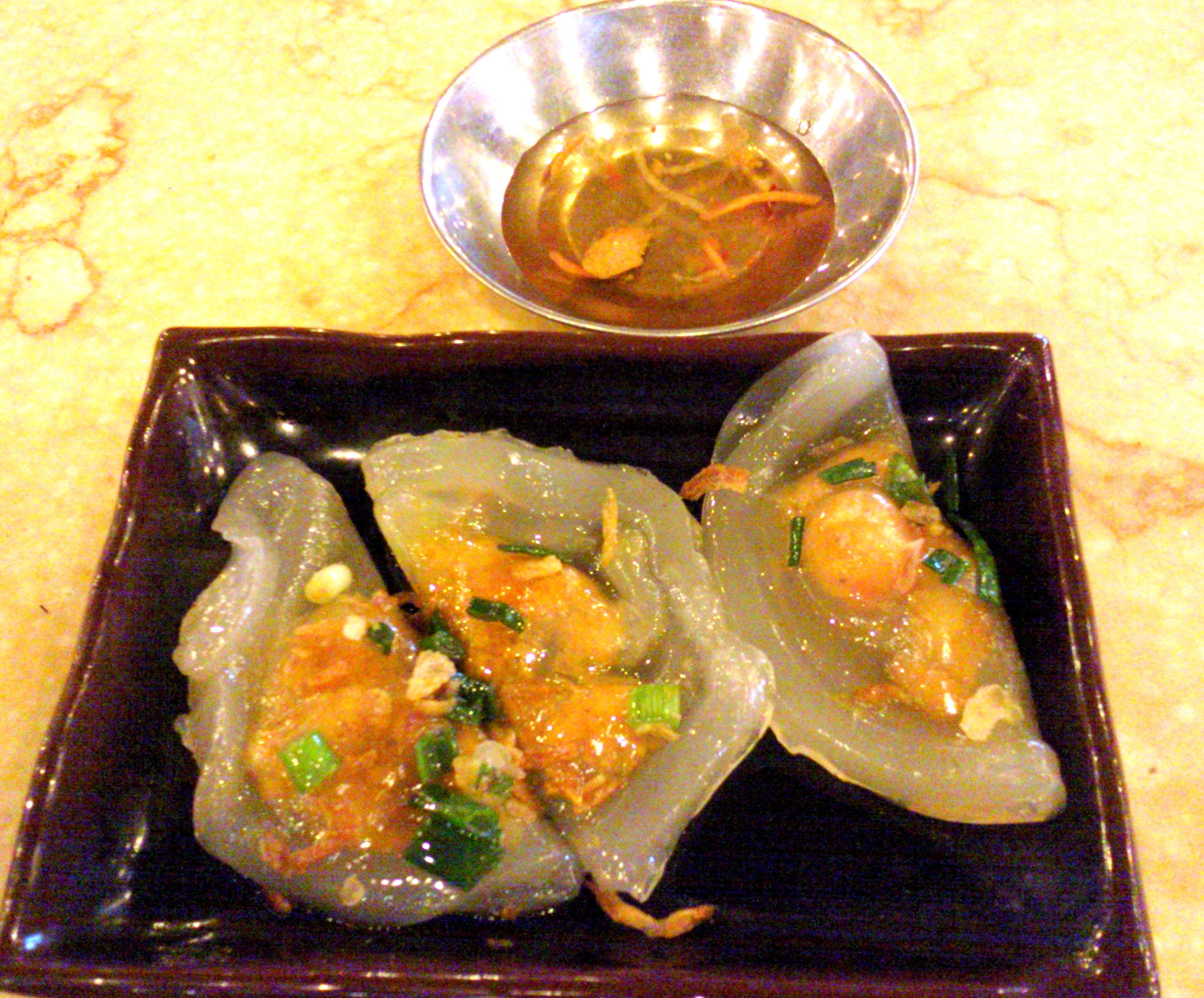
Like usual, the display is a buffet style, but this week the dining hall is decorated with flowers, fruits, and Tet greetings, the food selection is also larger and more interesting than normal days. I notice thịt kho and dưa giá (slow braised pork and pickled bean sprout, two traditional Tet savory dishes), bánh xèo (sizzling crepe), bánh bèo (water fern banh), bánh bột lọc (translucent banh) bánh cống (mung bean fried muffin).


In the baskets lie a few types of xôi, bánh tét, and mứt. A tightening mix of homesickness and joy rushes through me as I see woven baskets, bamboo shoulder poles, and the waxy green banana leaves holding and covering morsels of Tet.


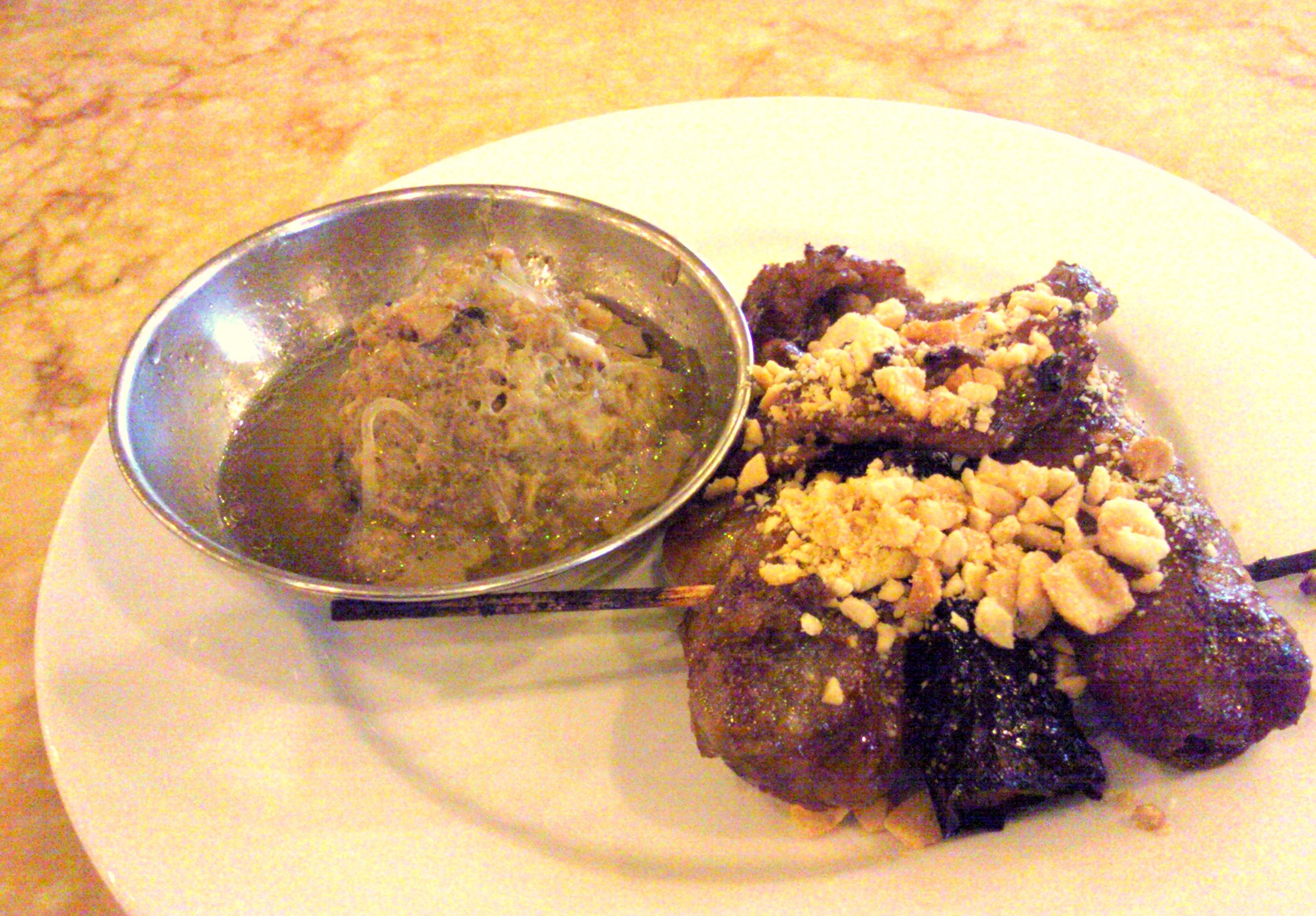
We load our first plate with seven-course beef, though the kitchen churns out only four: grilled beef (bò nướng vỉ), beef loaf (bò chả đùm), lolot beef (bò nướng lá lốt), and beef sausage in omental fat casing (bò mỡ chài). The little pinky-length fat beef sausages are extraordinarily tender, grilled on medium fire and so well seasoned they have the sweet smell of talents.


Meanwhile, my husband chooses the restaurant’s recommended special of the day: grilled snail sausage in banana leaves. I don’t like snails but have a taste anyway just out of curiosity. It is slightly spicy, but I get blown away. There is no hint of the wet and grassy snail scent that used to give me goosebumps when I was little. The banana leaf wrapping protects the velvety sausages from the burnt smell of open fire grilling, and gives it a sweet green aroma of summer breeze. As much as I like fish, I must admit these are better than the Indonesian fish sausages I’ve had a few months ago.


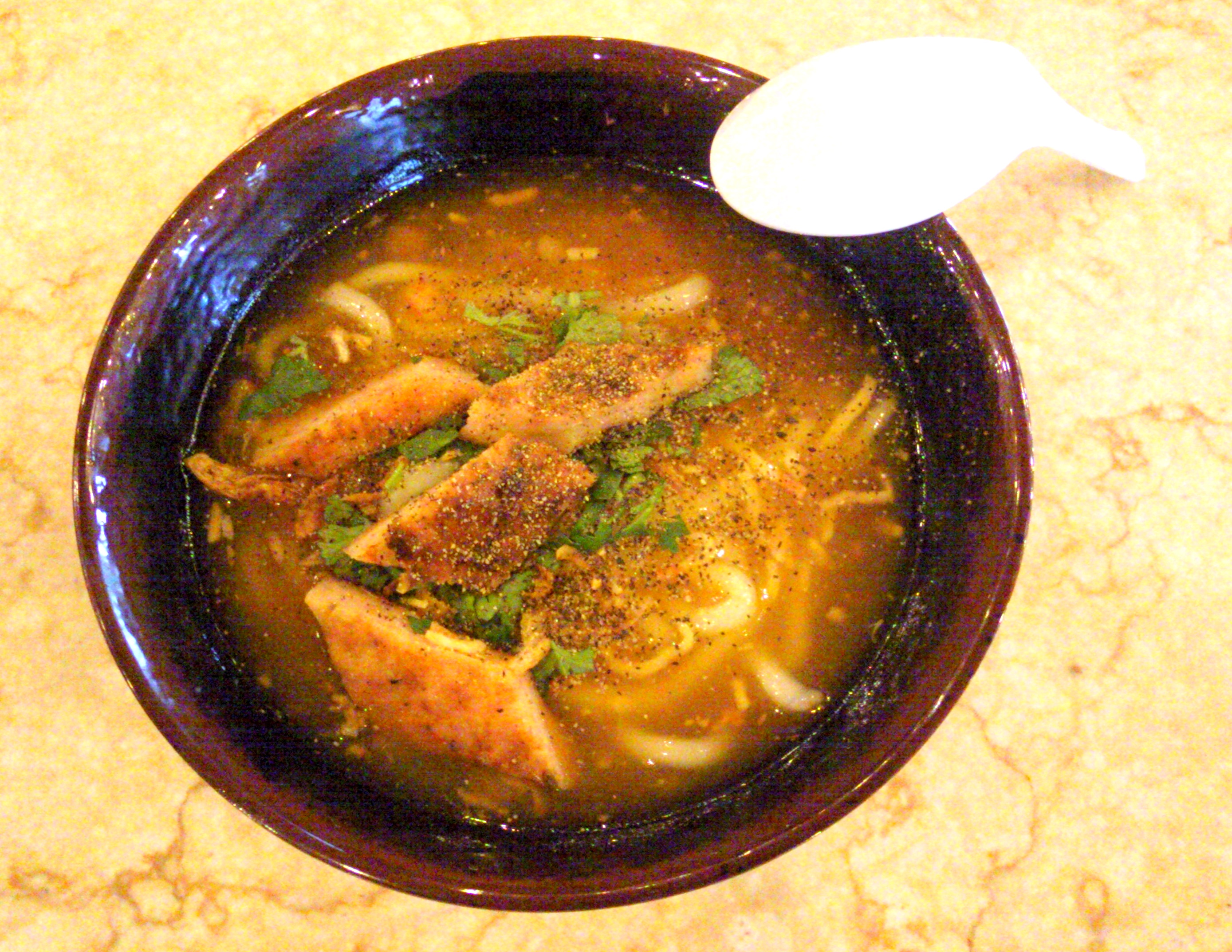
Another special is bánh canh cua Nam Phổ. I only learned about Nam Phổ, a village in central Vietnam, and its famous udon-like noodle soup from books, so I am overjoyed to see the real thing on the menu today. Bits of crab meat amidst chubby slick chunks of banh canh in a scarlet broth rich of crab sauce is the loveliest sight of all noodle soups. Banh canh Nam Pho, unlike banh canh of the South, doesn’t have loads of shrimp or pork, the broth isn’t starkly clear, yet its thickness delivers just a mellow natural sweetness. The first bite reveals little taste, but the second, the third, and a few sips of the broth in between start to sweep in waves of riverbank wind and meadow fragrance.


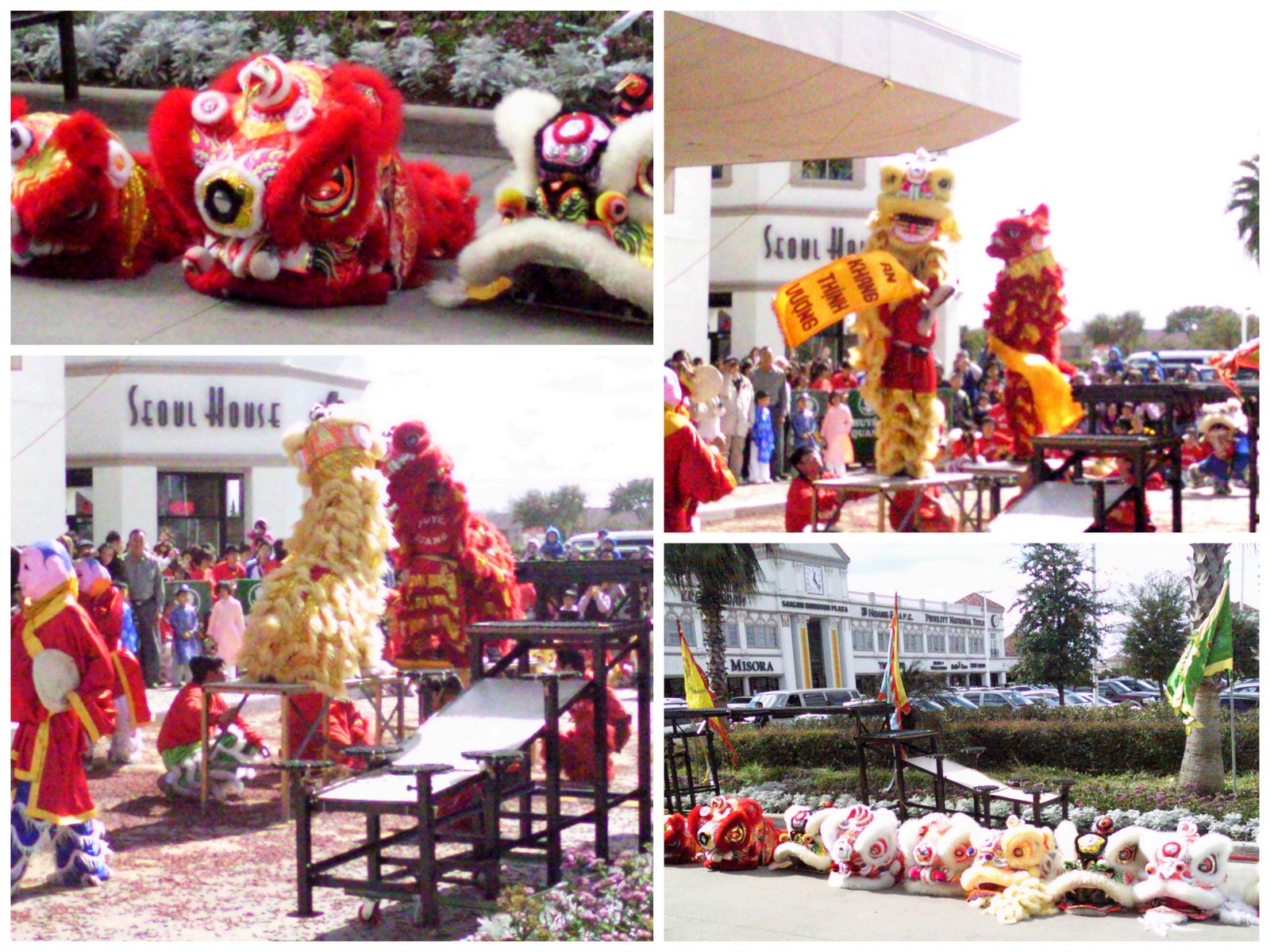
The country lunch sets us back $35.75 and 90 minutes. As we get ready to leave at 12:30, the parking lot gets ready for a massive lion dance and firecracker show. The sight of sixteen gaudy lions and hundred-meter long red squib strings and their boisterous sounds follow me all the way home, as I think of how we, the Asian expats, try to bring with us our lunar new year and our motherlands wherever we go.


Address: Kim Son Restaurant
10603 Bellaire Blvd
Houston, TX 77072
(281) 598-1777

This post is included in the February 2011 edition of Delicious Vietnam, a blogging event organized by Anh from A Food Lover’s Journey and Hong and Kim from Ravenous Couple.

Chè chuối chưng (banana tapioca pudding)

February 08, 2011 By: Mai Truong Category: Comfort food, RECIPES, Southern Vietnamese, sweet snacks and desserts


Every once in a while when the planets align the right way with the constellations, I get into cooking mode. Then I ask my mom how to make certain things, usually easy stuff, spend at least an hour at the grocery, another half a day in front of either the sink or the stove, washing, churning, tasting, sprinkling, and tasting again. Saying that I like to cook would be like saying students hate holidays, but somehow the little accomplishment at the end of a cooking session always makes me glee, partly because I wouldn’t have to worry about dinner in the few days after. (Since the first day I had a kitchen(ette), I’ve only made savory dishes.) This time is special: I didn’t spend half a day in the kitchen, and the little accomplishment is a dessert.

Now this might actually means I have che instead of rice for dinner in the next few days :-P, but all is well as my banana che is not in the least coyingly sweet like che from sandwich shops.


Recipe adapted from Mom’s instruction:

Chè chuối chưng (banana tapioca pudding) (“chưng” means “display”, in this case to indicate the type of banana one would use for this dessert, not “tapioca”)

Ingredients:
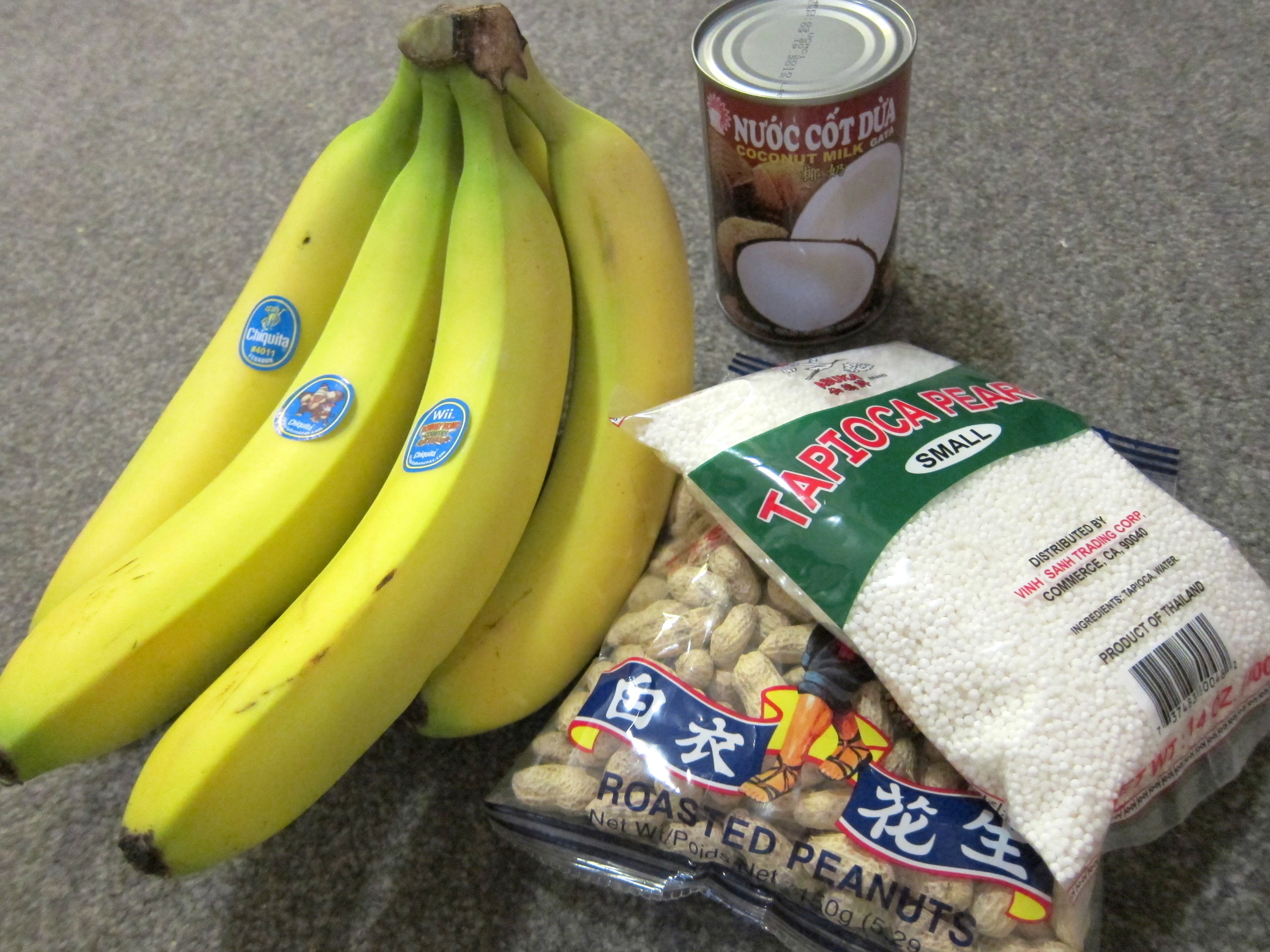
– About 3 lbs of just-ripe banana (~6 big Cavendish bananas, or 12-15 chuoi su if you can find them).
– 1 can of coconut milk
– 100-150g tapioca pearl (bột báng), the small kind (packaged as dry white dots ~1.5mm in diameter). I got a 400g package from 99 Ranch Market in El Cerrito, so I’d imagine every Asian market has a few packs tucked on their shelves.
– water, sugar, salt
– roasted peanuts (the plain, unflavored kind)


Preparation:
– Gently wash and rinse the bot bang with cold water once, then leave it soak in water.
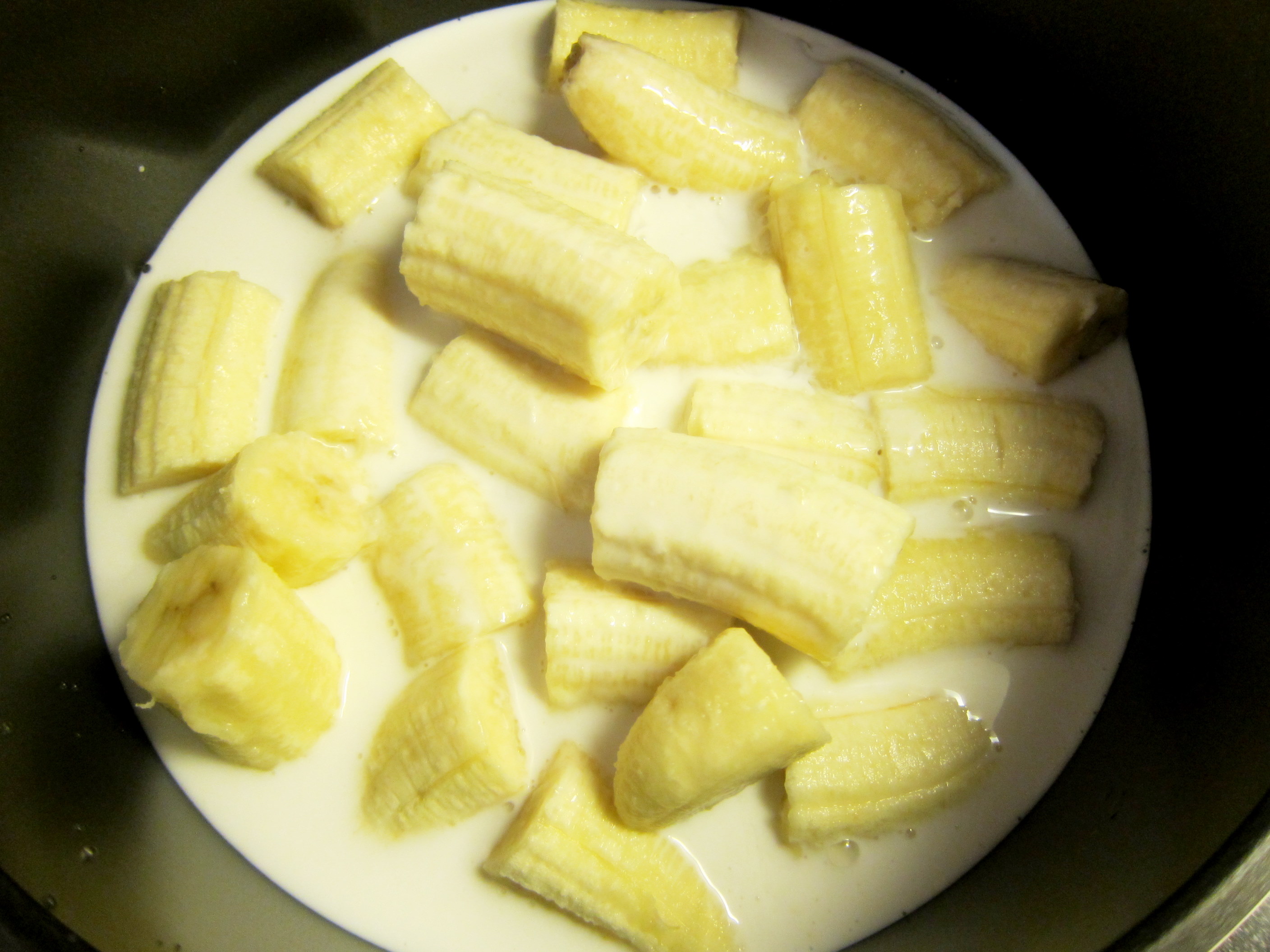
– Cut the bananas into 2-3 inch long sections, soak in salt water (2 tsp salt for roughly half a big pot of water, the same pot you’re going to cook che in) for 5-10 minutes. This step is to get rid of, or at least reduce, the clinging underripe aftertaste of Cavendish banana in Vietnamese desserts; you can skip this step if you use chuoi su.
– Shell peanuts if necessary, then crush ’em up. (Mudpie puts them in a ziploc bag and pounds on them with an ice cream scoop, it works well :D)
– Take out the bananas, drain water, wash pot, put bananas back in. Pour 1 can of coconut milk into pot, then use the same can to measure and add 2 cans of water.


Cooking
– Wait for banana, coconut milk and water to boil, add a pinch of salt and a lot of sugar to taste. (I added about 10 tbs sugar when Mudpie expresses some concern, tastes, and stops me.)
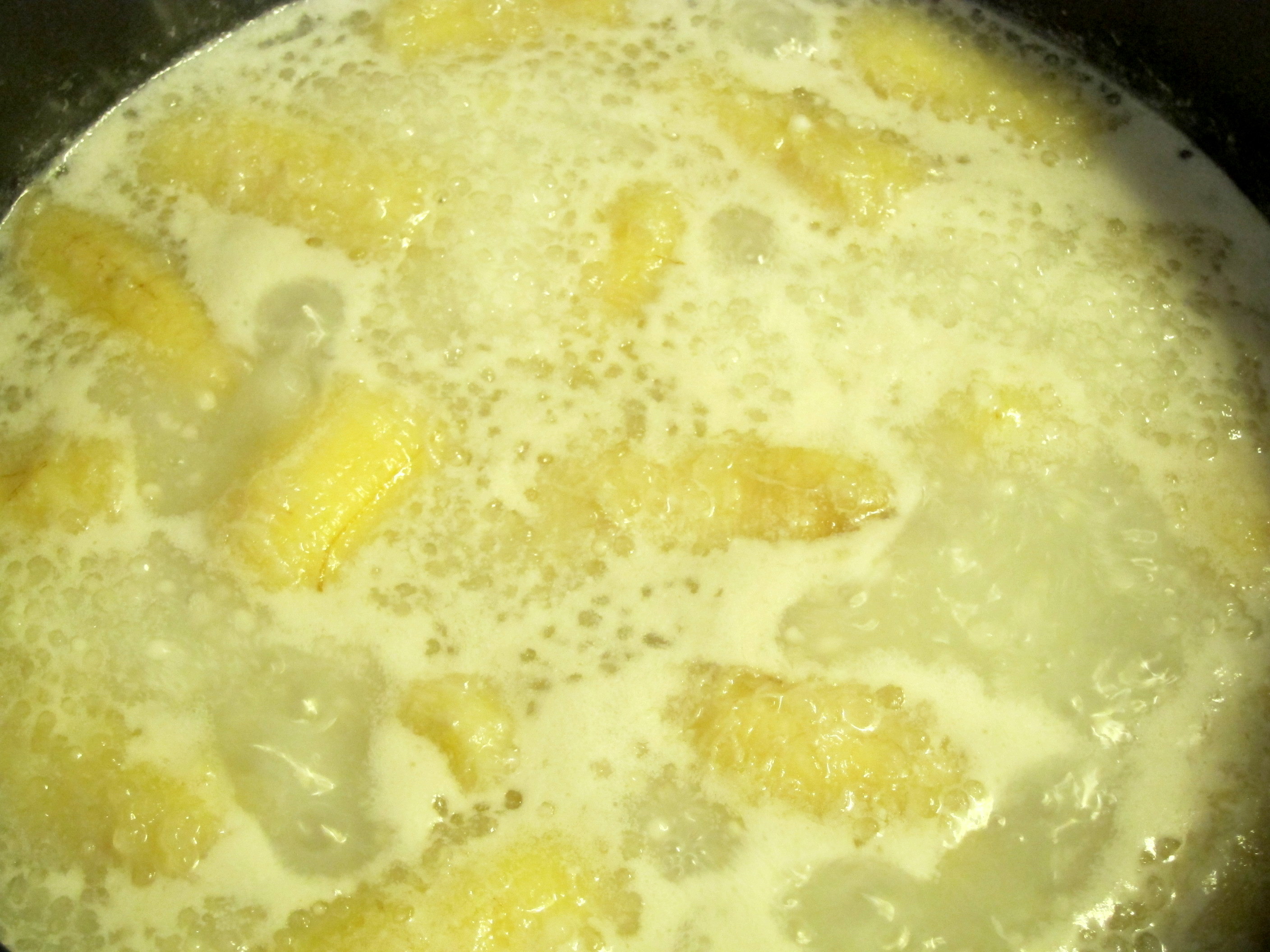
– When the mixture boils, add bot bang (after draining them, of course), gently stir once or twice to spread them out evenly in the pot.
– Bot bang will expand, at least quadruple in size. Do not stir too much or you’d burst the pearls and get tapioca porridge. Let the pot bubble until the bot bang all turn completely translucent (if you see a tiny needle-point size dot of white in the center, it’s not cooked yet).
– Turn off the heat. The pudding will be quite fluid when it’s still hot, and will thicken as it cools down.

Serving
It can be served either hot or chilled, with or without some crushed roasted peanuts on top. Mudpie prefers it warm fresh from the pot, my mom prefers it refrigerated.


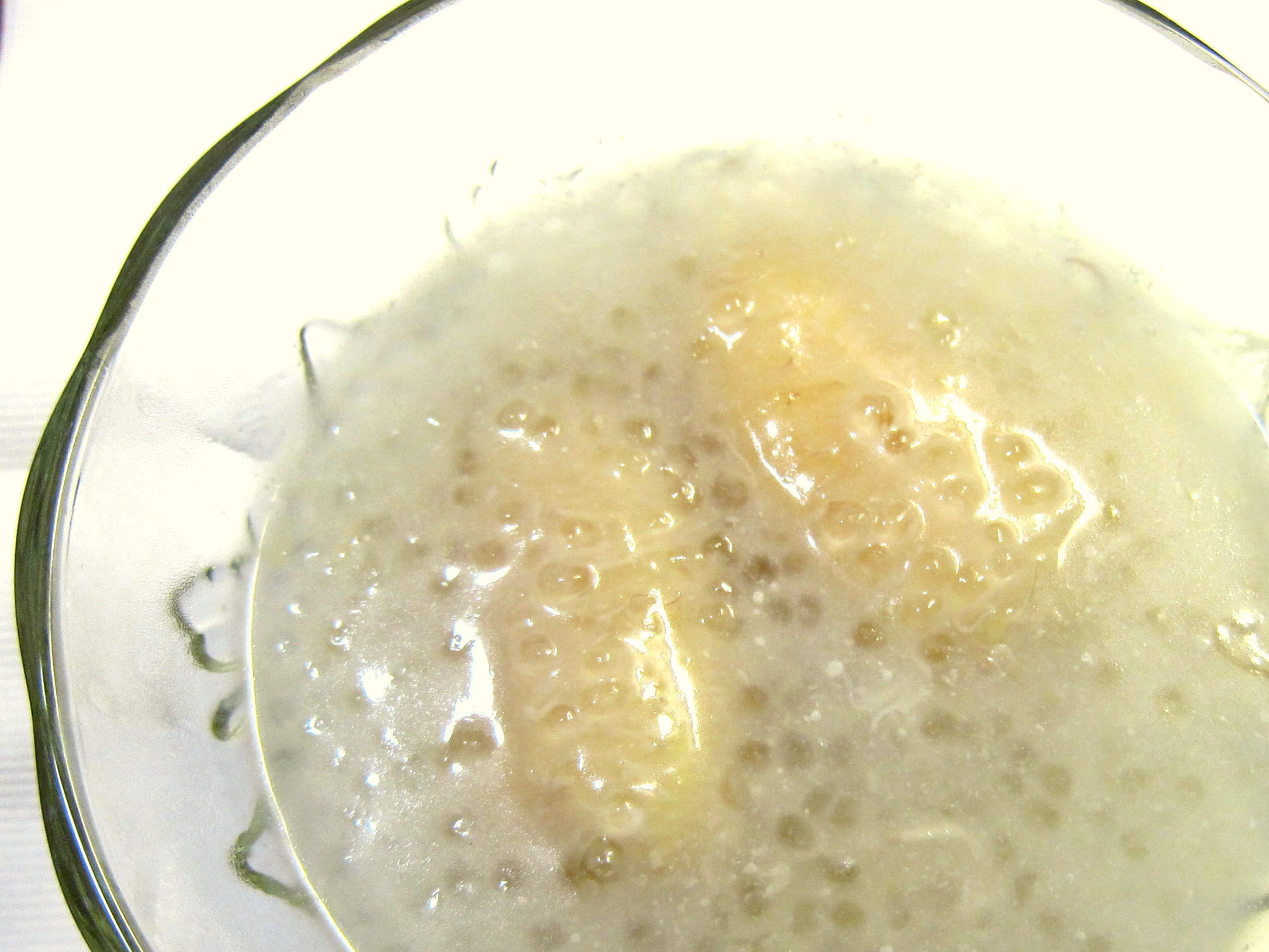
A small variation of che chuoi chung is chè bà ba, where you add taro (or cassava), cubed and cooked in coconut milk and water before the bananas. My mom says che chuoi chung is the simplest kind of che to make. As long as the bananas are soft and sweet, the tapioca pearls chewy and fully puffed, the coconut milk gives just a shy squeeze of fruity richness, and the pudding smells like a ripe summer afternoon, you know someone will come back for a second bowl of your chè chuối chưng.


– Submission to Delicious Vietnam 10, a monthly blogging event created by Anh of A Food Lover’s Journey and Hong & Kim from Ravenous Couple – This February edition is hosted by me, so send your delicious writings (your name, your blog’s name, post title, and a brilliant image of the dish) to mai [at] flavorboulevard [dot] com by Sunday February 13. 🙂

Family meal from Thanh Đa Quán, Houston

February 06, 2011 By: Mai Truong Category: Comfort food, Houston

*Guest post in Vietnamese by my Mom, translated by me*


There are two places with the name Thanh Đa in Bellaire. One is Bún Măng Vịt Thanh Đa (Thanh Đa vermicelli soup with bamboo shoot and duck), and the other is Thanh Đa Quán. We happen to choose Thanh Đa Quán for lunch today, partly because they have the family dining option, which is rare in the States. The reason, I can only guess, is that most people who eat out like to pick their own items, or go to buffets if they don’t know what to pick. Family style lies between these two options, where the restaurant decides for the diners a fix menu (for example, Thanh Da Quan gives 4 dishes for 2 people, 5 dishes for 4 people, or 6 dishes for 6 people). The total bill for family dining usually comes out higher than a buffet ticket but lower than a combination of single plates.

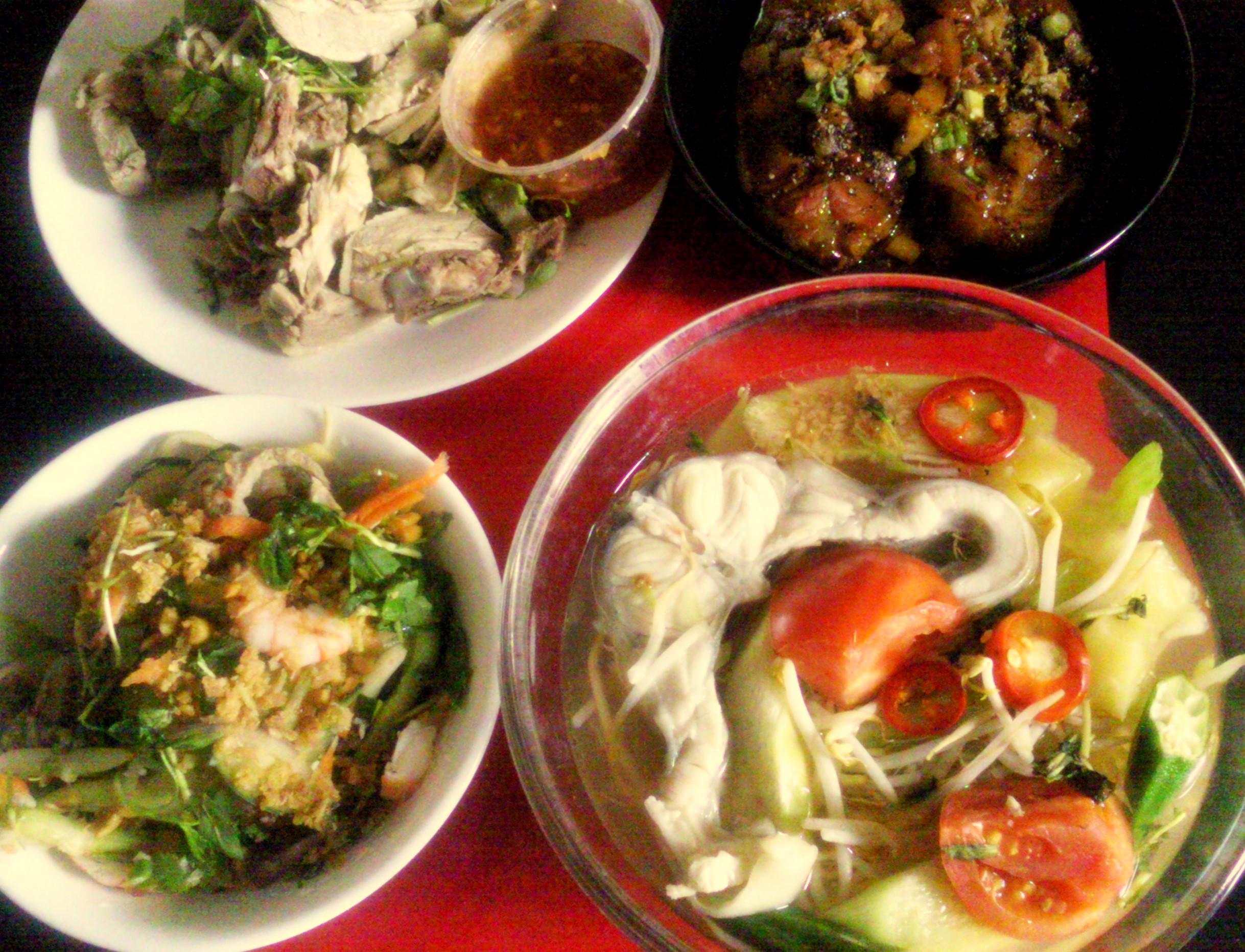
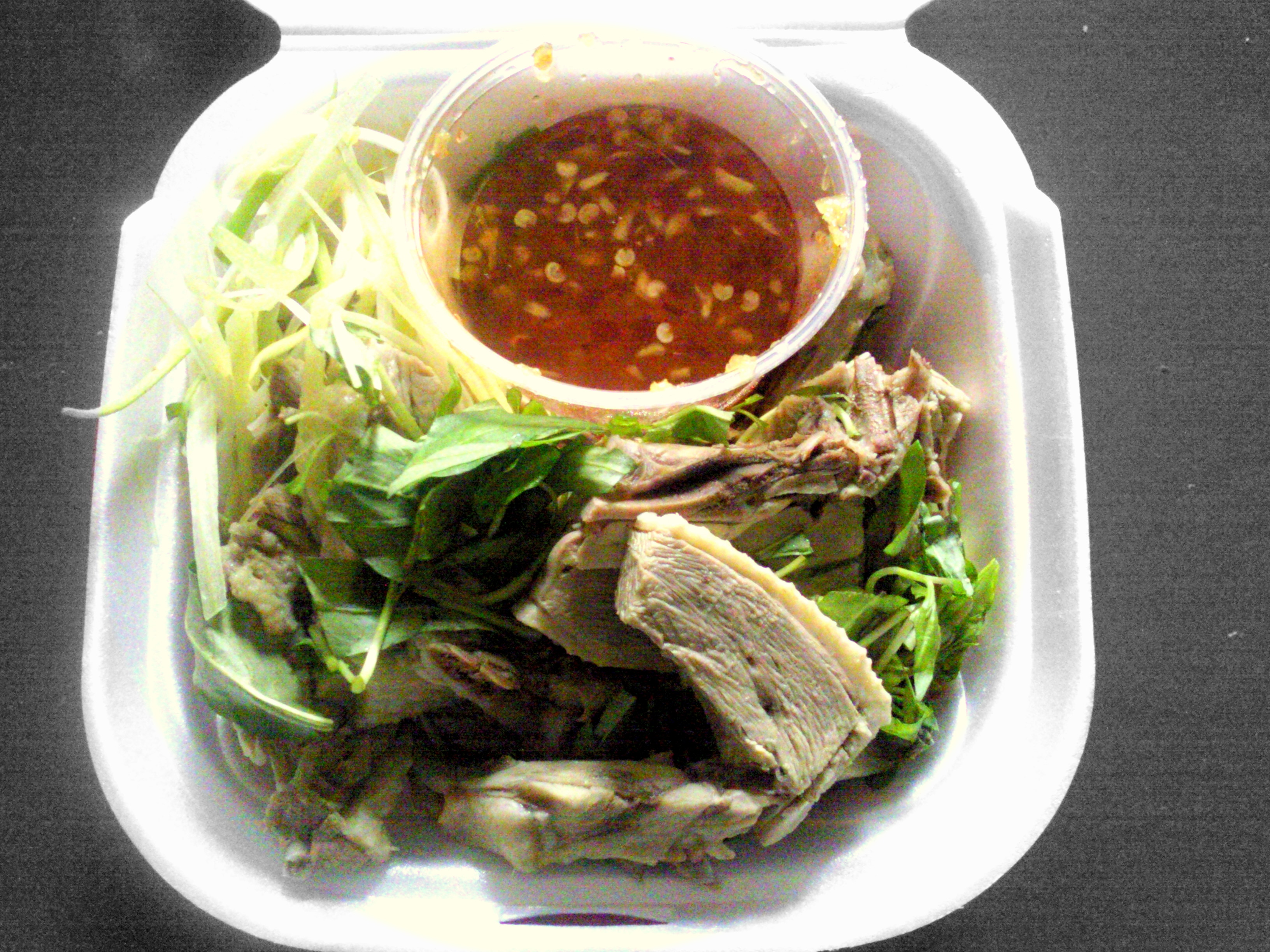
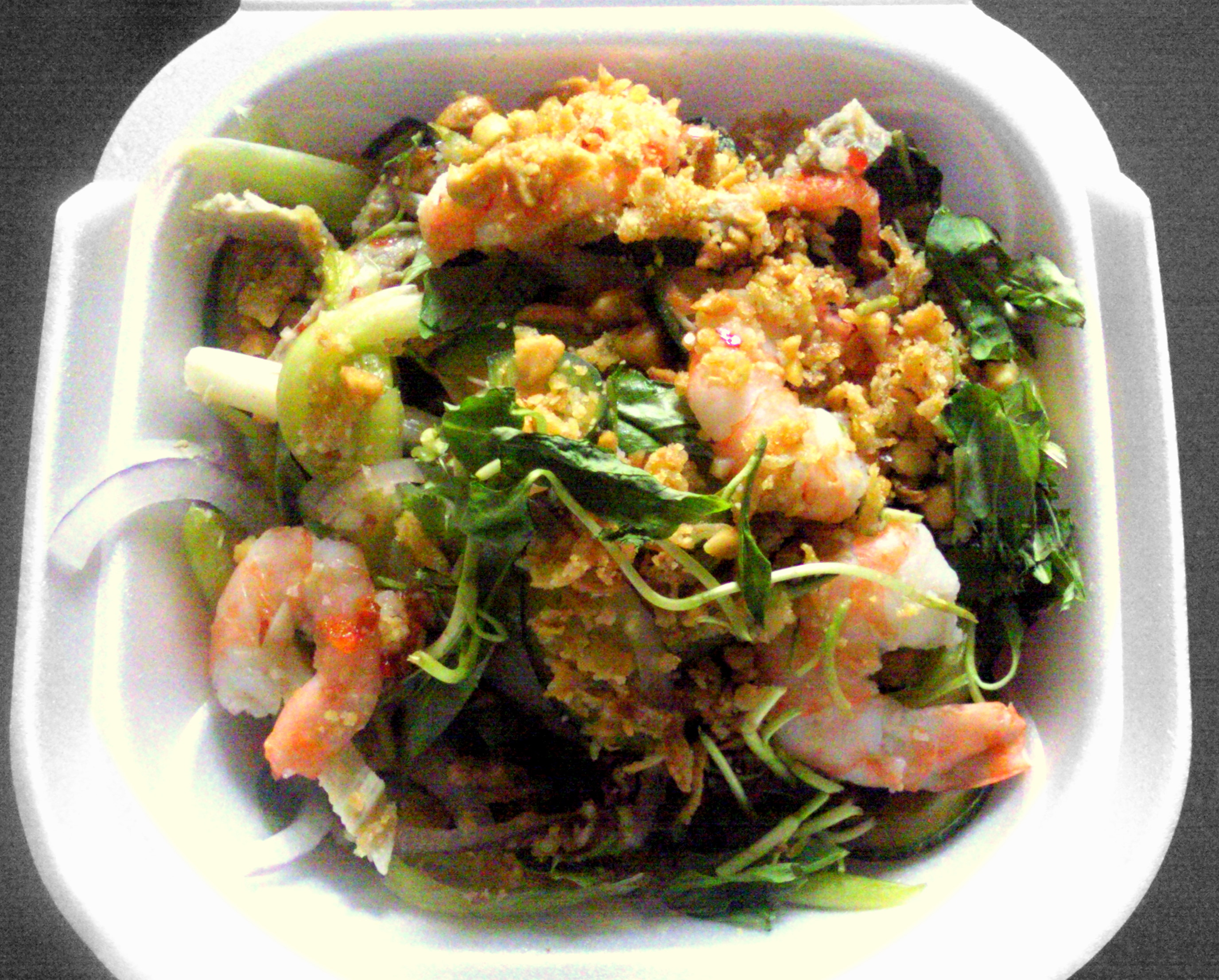
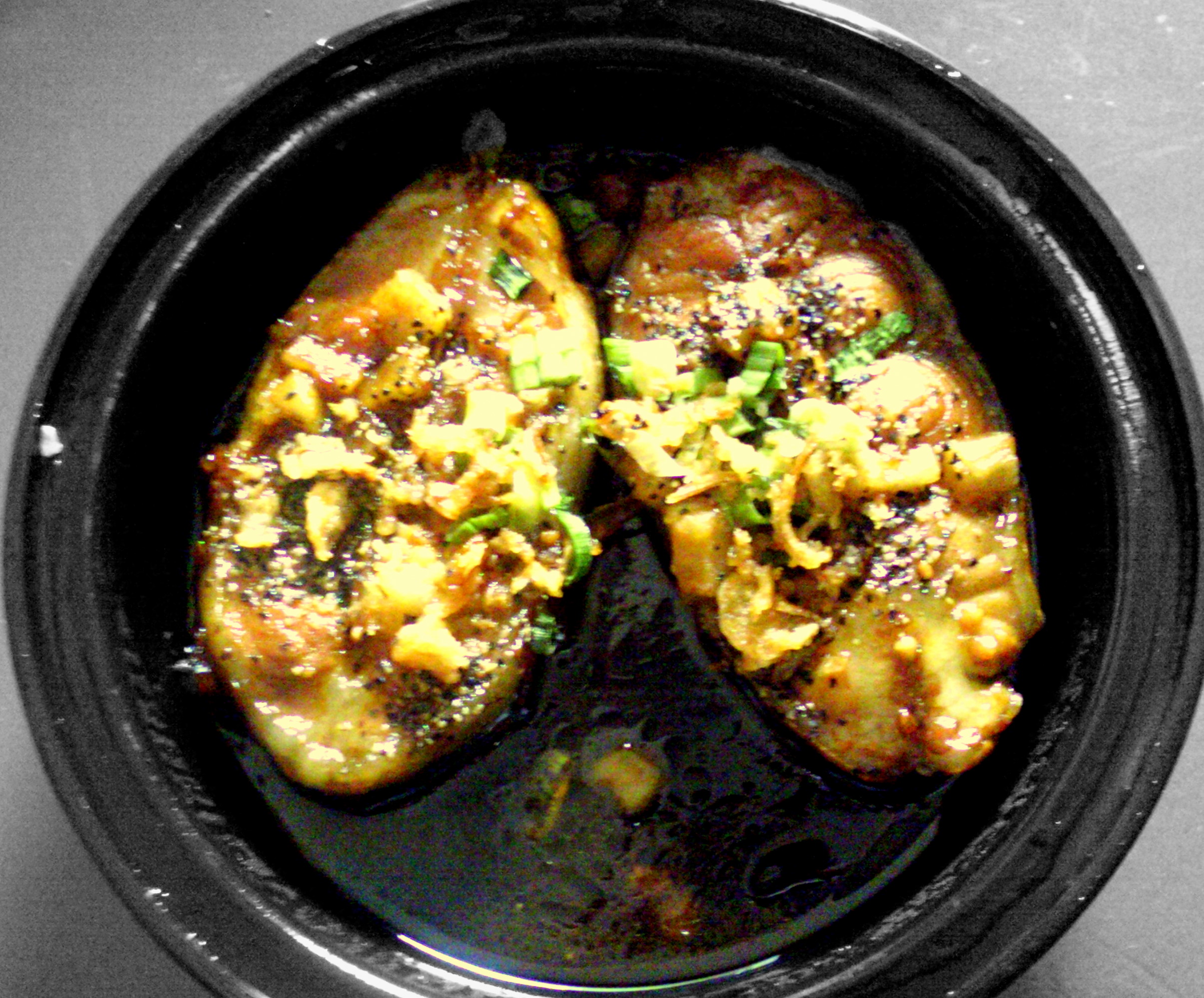
Today, it is boiled duck with ginger dipping sauce, lotus stem salad with pork and shrimp, sour catfish soup, and claypot catfish, all for $21.6 (after tax, with rice included).

The diner is small but neatly organized, the seating arrangement is comfortable, and they have but four TV screens in the four corners. Two of them are tuned to American news and shows, the other two Vietnamese documentaries and movies, always a plus for me. (I’m not so fond of places that make the customers watch boring football games or unlaughable comedies.) Another thing I like about this particular joint is its staff’s friendliness, not a common thing at Vietnamese eateries. The waiting boys and girls, all small in age and size, have this casually gentle and respectful way toward even customers like me, who order to-gos and don’t give tips. The boy who brought out my order also apologizes profusely for the long wait, though I’ve actually enjoyed watching TV in those brief 20 minutes. 🙂 (The kitchen, he says, would gladly prepare the order for a speedy pickup if I call ahead.)


The good feeling from Thanh Đa Quán follows us home as we open the styrofoam boxes. There are a bit too few pieces of boiled duck, but all are tender and the accompanying not-so-spicy ginger mixed nuoc mam makes up in taste.


The lotus stem salad, a crunch-chewy bundle of lotus stems, shredded cucumber, celery, shrimp and boiled pork, is also not as spicy as its cousins from other restaurants. The apparent touch of lime gives the salad a refreshing boost, dusted with crushed roasted peanuts for occasional unconformities. It’s sour, but nowhere near as sour as the sour soup, which the chefs at Thanh Đa Quán must have made an effort to keep it true to its name. The fish slices are subtly luscious, the night-scented lily stems (doc mung) are airy and brightly green (I wonder how they get these so fresh in this icy winter weather), but nothing can hide the unforgiving, piercing acidity. I retreat to the pot and the stove: a re-seasoning is in order. Fortunately, sugar helps. It’s still the same fish, same pineapple, same tomato, same doc mung, same okra, but a few spoonfuls of sugar transform the soup from a duckling to a swan.


On the other hand, the clay pot fish is flawless. Two light golden catfish steaks shine in a thick bronze sauce, scenting off a homely wisp of nuoc mam and a caring embrace of caramelized sugar. Not overtly fatty, salty, or peppery, this clay pot fish is the epiphany of the Vietnamese marinating and simmering art. My daughter doesn’t like fish, but I’ll make sure to make her try this one next time she’s in town. It warms my heart realizing that even in this very American state of Texas, such simple yet articulate, inexpensive but valuable taste of my faraway homeland is still perfectly tuned.

Address: Thanh Đa Quán (Alief)
13090 Bellaire Blvd
Houston, TX 77407

(281) 988-9089

Candied fruits for a candy Year of the Cat

February 03, 2011 By: Mai Truong Category: California - The Bay Area, Festivals, Fruits, sweet snacks and desserts, Vegan, Vietnamese


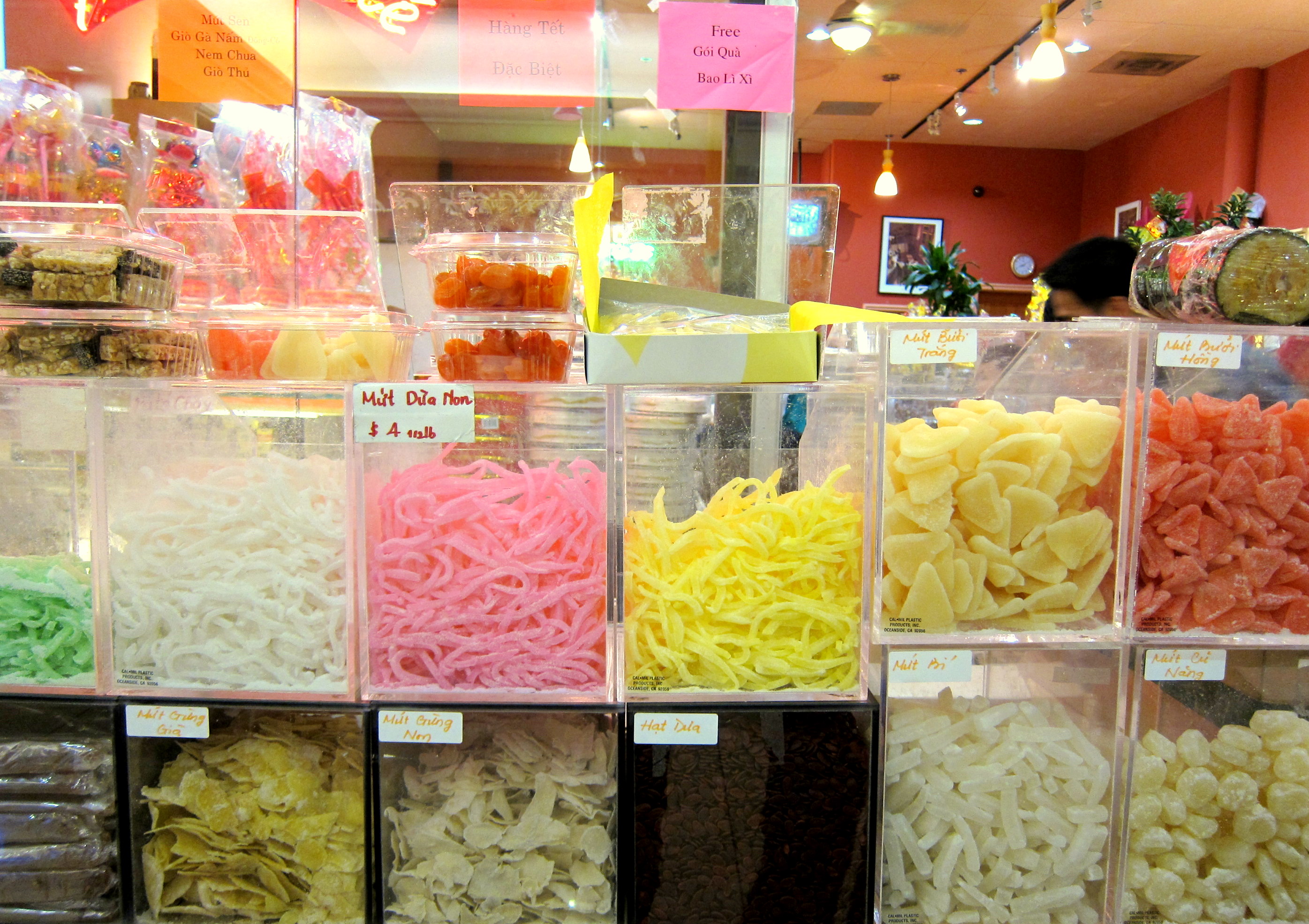
Its popularity might have declined over the years in Vietnam, but to the Vietnamese expats, mứt Tết remains one of the few links home to resurrect our new spring festival atmosphere on foreign lands. As far as I know these candied fruits are unique to the Vietnamese New Year (Tết), just like the tteokguk and the yakwa to the Korean Seolnal. They are holiday gifts to friends and family, offerings at the altars to ancestors and deities, little snacks for children, tea confections for adults, and vegan treats for those who refrain from eating meat at the year’s beginning.


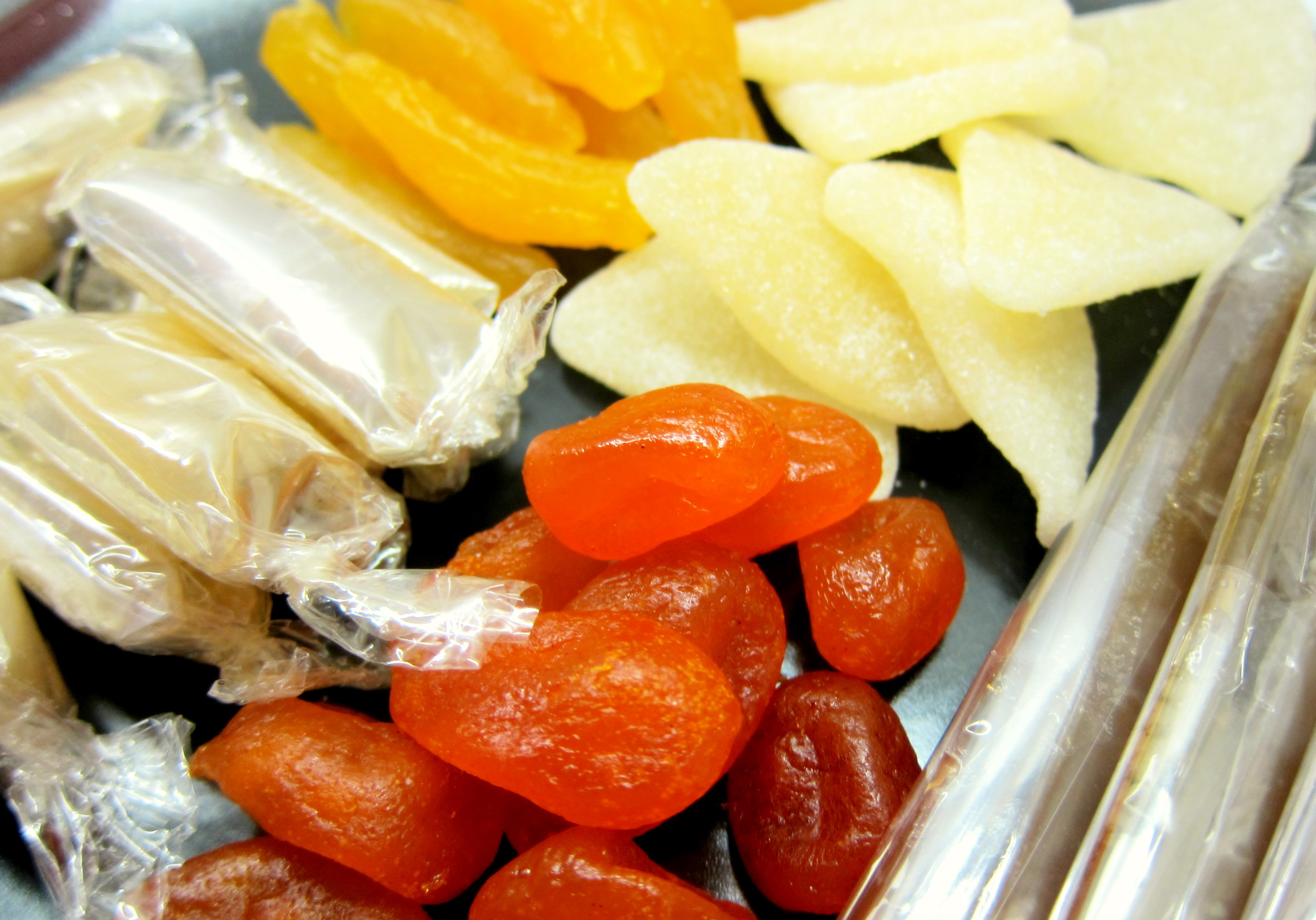
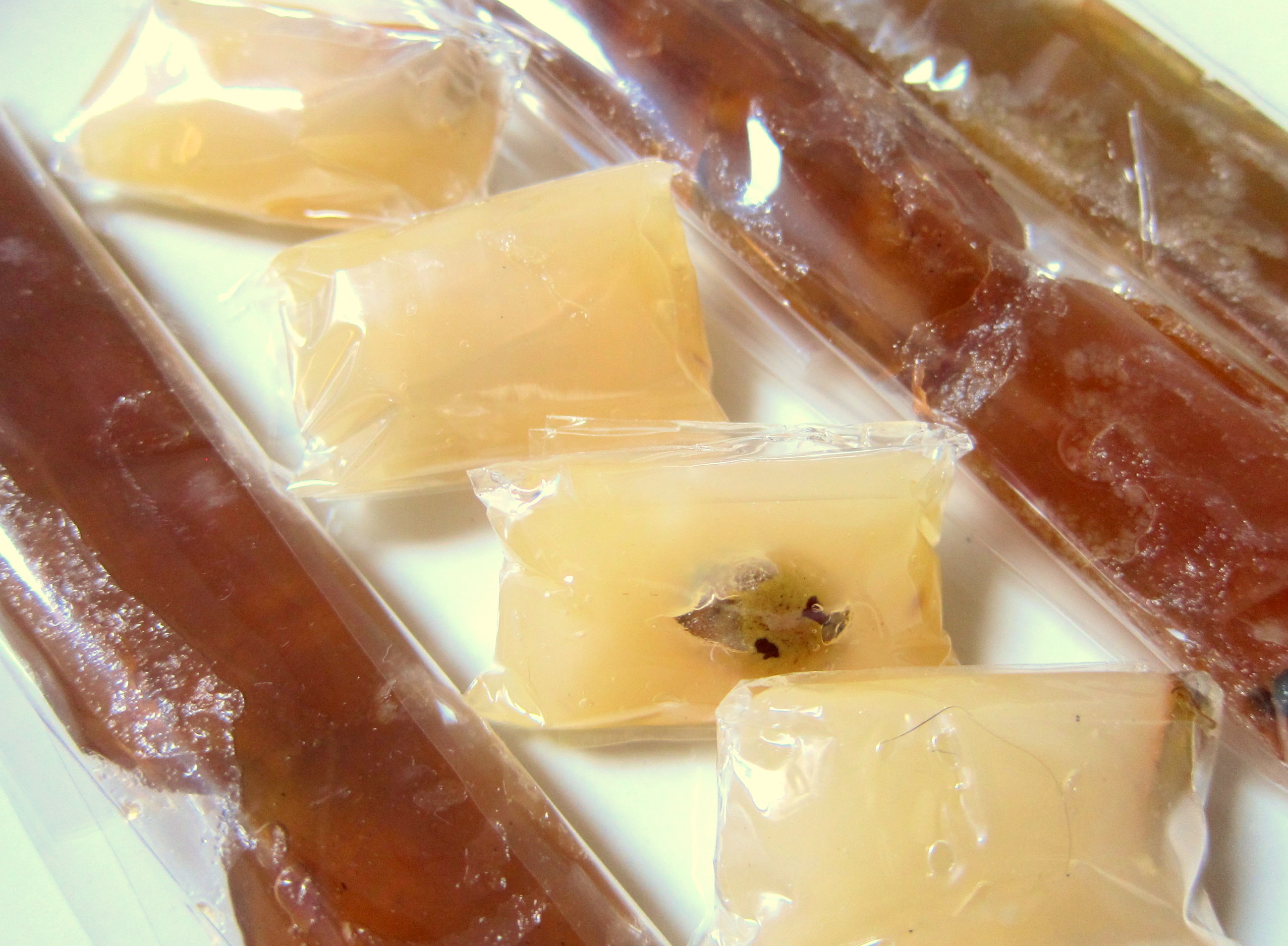
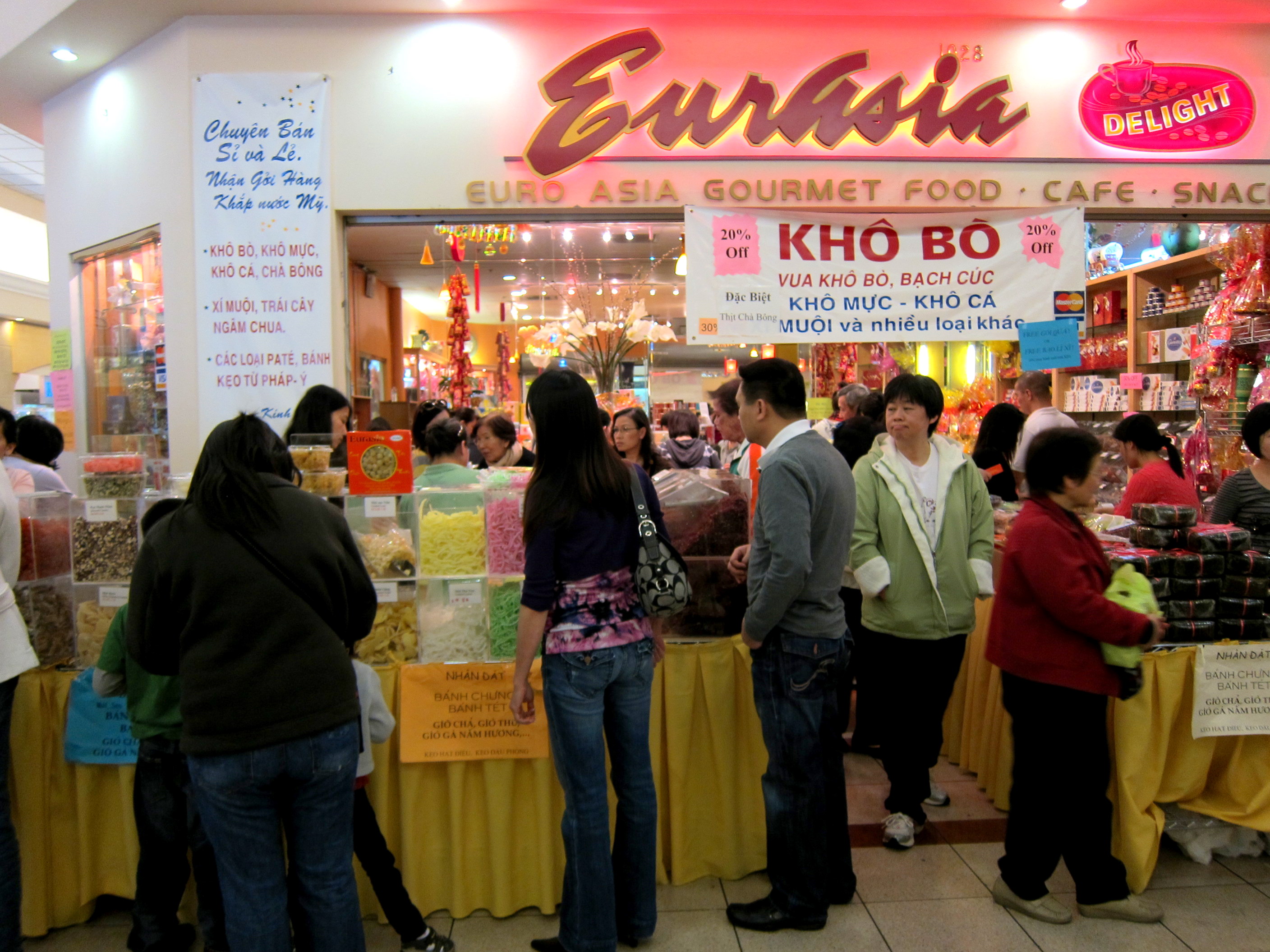
Mứt can be divided into two types: wet and dry. Visit any beef jerky (khô bò) and salted plums (xí muội) stores in Vietnamese shopping malls in the Tet season, you’d see a swarm of mứt in glass jars, the wet kinds wrapped in crunchy paper and the dry kind laying bare. The two most common wet mứt are tamarind (me) and soursop (mãng cầu). The former is kept in its scrawny form, with a few rope-like fibrous strings along the fruit’s length, which is to be discarded when eating, of course.


Tamarind mứt should be amber brown, chewy, and a little more sour than sweet. Tamarind is notorious for its medicinal effect, so be careful not to consume too many sticks at once. A similar chewy wet mứt is the soursop, but it’s always milkish white, doesn’t retain the fruit’s shape, and people tend to put too much sugar in the churning process.

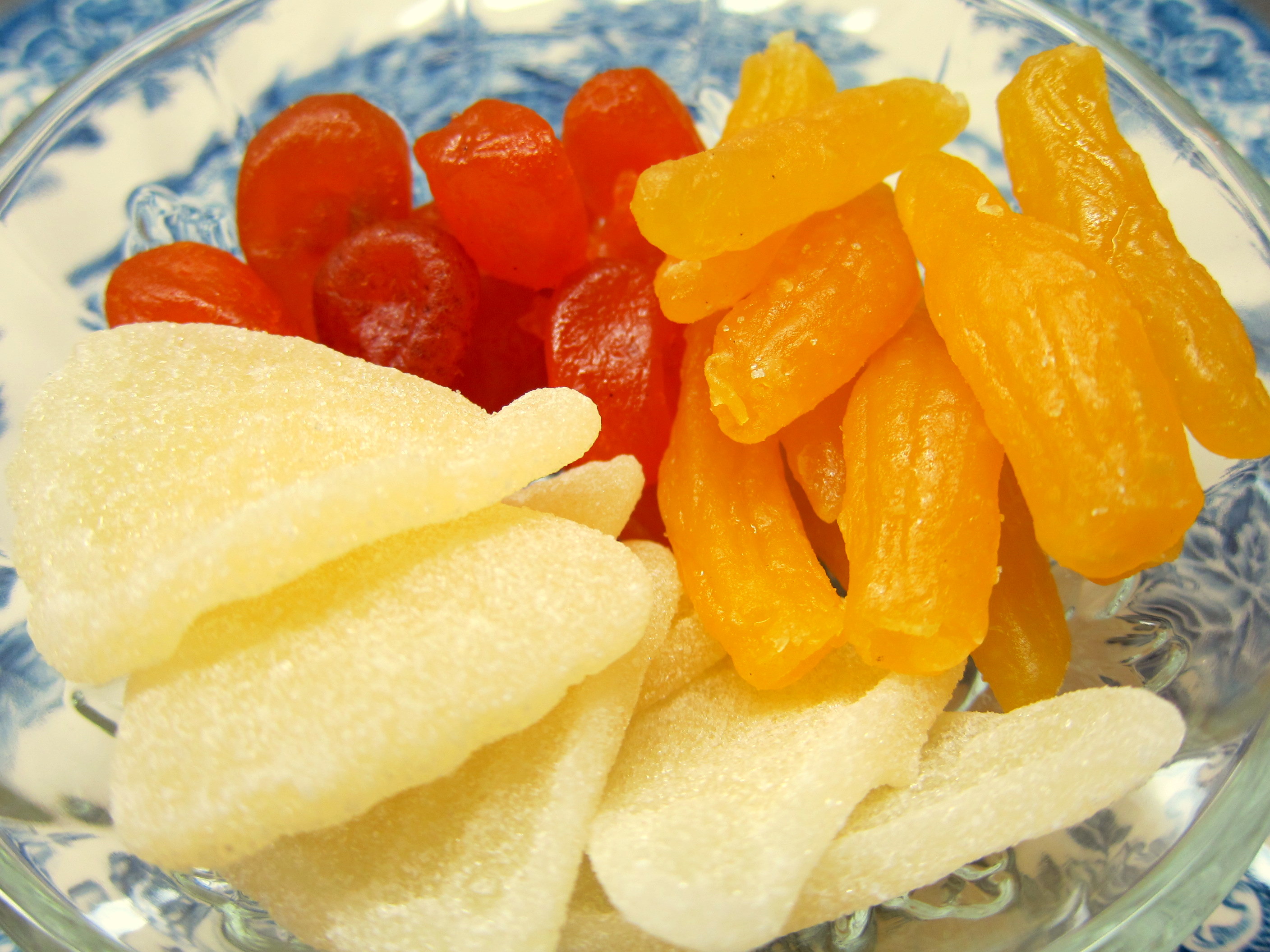
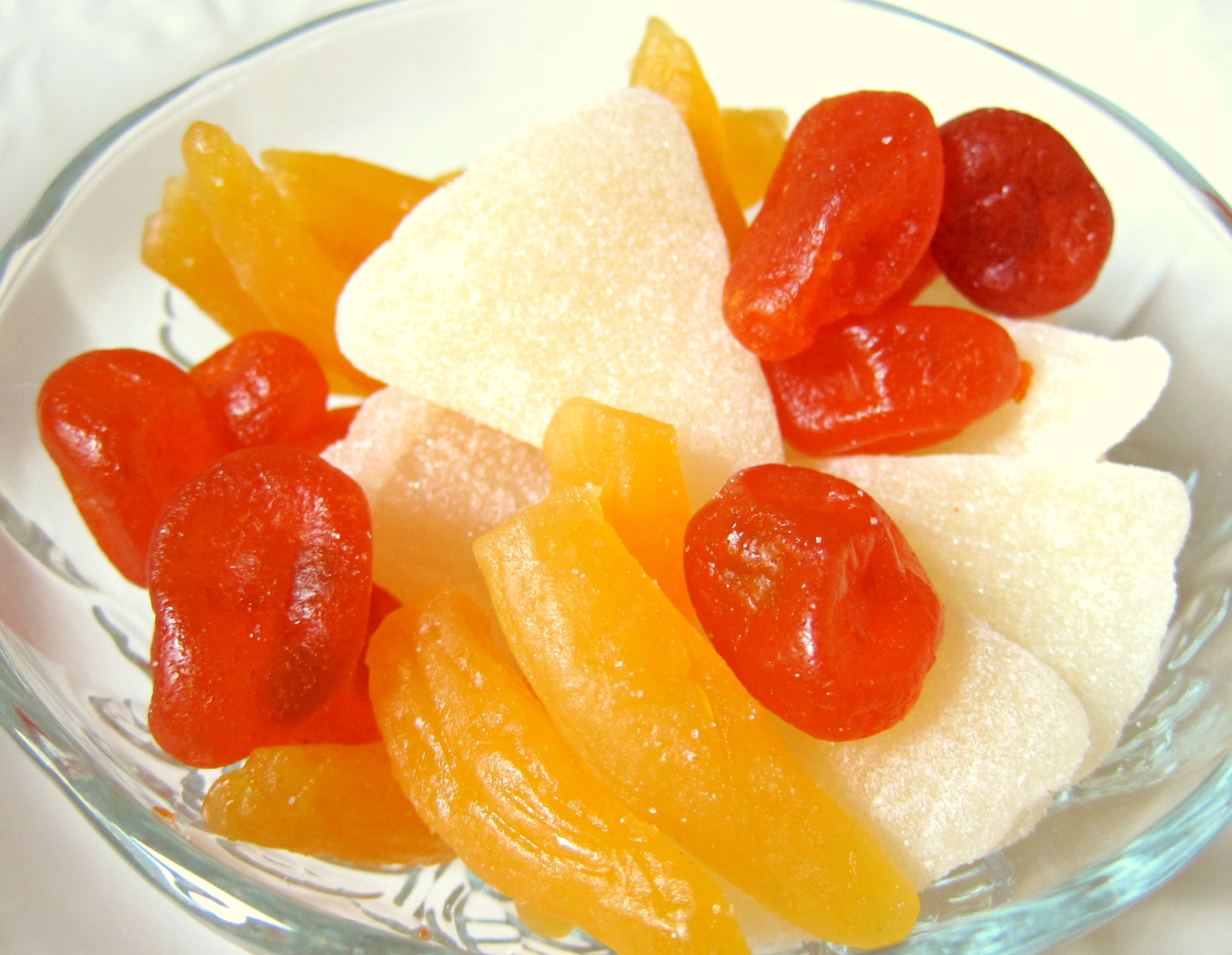
On the dry side you can find some twenty common kinds, spanning both fruits and non-fruits (nuts and roots): coconut, persimmon, lotus seed, tomato, ginger slice, carrot, winter melon, apple, lemon, guava, water chesnut, etc. I’m particularly fond of the crunchy, aromatic coconut ribbons which as a kid I liked to hold in my mouth for hours to melt off all but the coconut itself; but this year I refrained from buying them to try the other kinds instead.


As advertised by the lady of the store, the scarlet kumquat mứt (mứt tắc) is “good enough to die for”. I’d say its texture is fresh, its color attractive, it’s not too killingly sweet (always a plus for these candied pieces), and it’s a thousand times better than the cherry they put in your hot fudge sundae. 😉 Word of mouth is it can help with digestion and lowering body temperature, and if you drink too much alcohol perhaps pack a few of these to detoxicate (or just don’t drink!).

The sweet potato mứt (mứt khoai lang) are warm yellow inch-long sticks without powder sugar coating, as dense as a medium boiled egg yolk and as sweet as the root itself. In a blind taste test, the first bite makes you think it resembles sweet potato, then the second casts some doubt because it’s denser and more consistent than sweet potato. It has the same medicinal effect as tamarind, but to a lesser degree.


Mudpie’s favorite of the five is labelled pomelo (bưởi), but it’s most likely the pomelo skin, sun-dried and pan-sweetened and powder-sugar-coated like American candies. It feels so light almost porous, the center has a subtle citrus pinch that would marry well a cup of hot chrysanthemum tea.

In the end, there’s no telling which kind of mứt everyone would like best, but there’s always some kind somewhere to each person’s liking. When you buy mứt, ask for a sample before settling on a 1-lb pound package, you can’t judge a mứt by its cover. Usually they cost $3-5 per half pound, and each little bite-size is packed with enough sugar that it’s best, though it may appear cheap, to buy $1-2 each kind, and buy many kinds. 🙂


Where I get my mứt this year: Eurasia Delight (inside Grand Century Mall)
1111 Story Rd Ste 1028
San Jose, CA 95122
(408) 293-1698

Tags: , ,

Martin’s Place – BBQ for nine decades and counting

February 01, 2011 By: Mai Truong Category: American, Comfort food, Texas


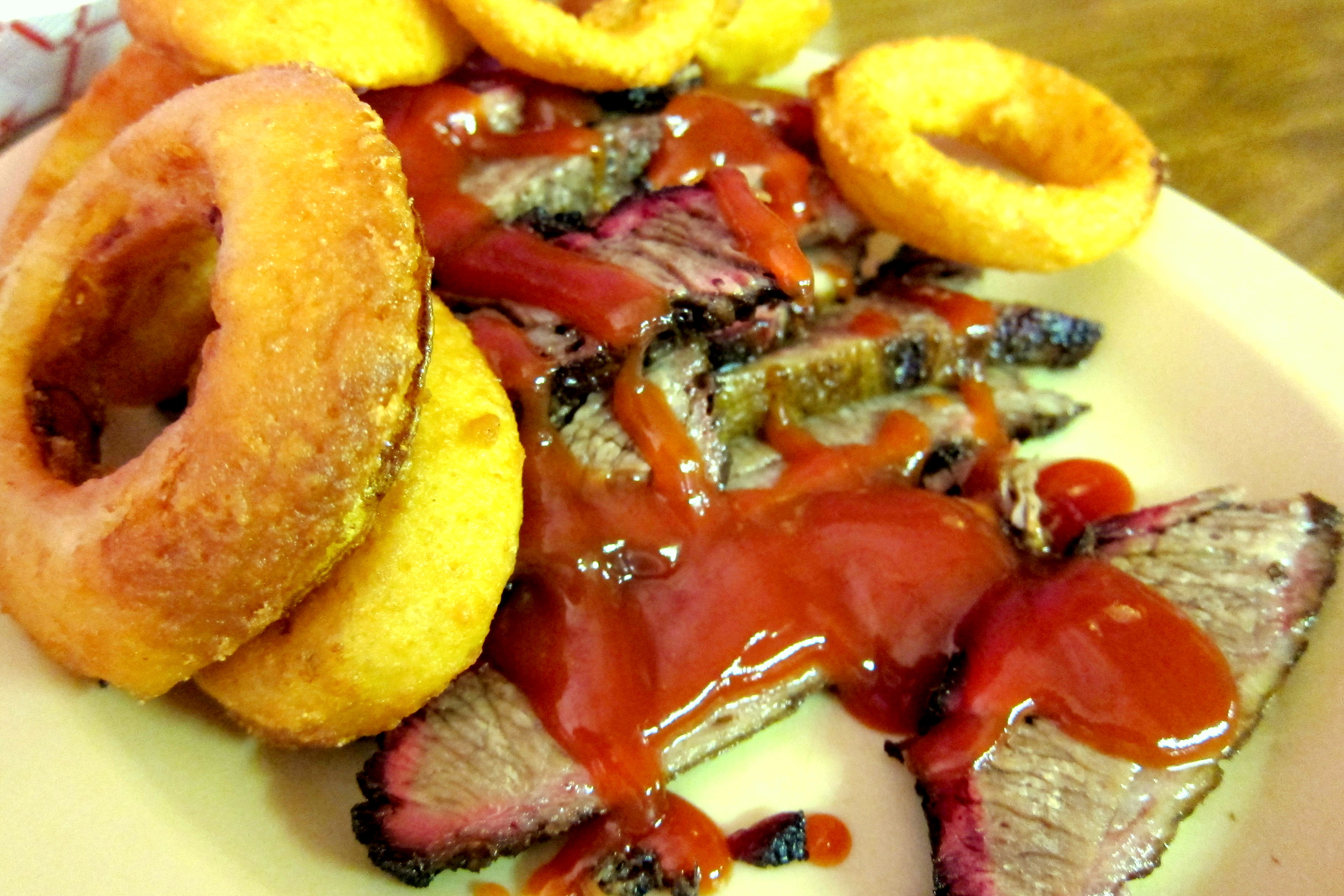
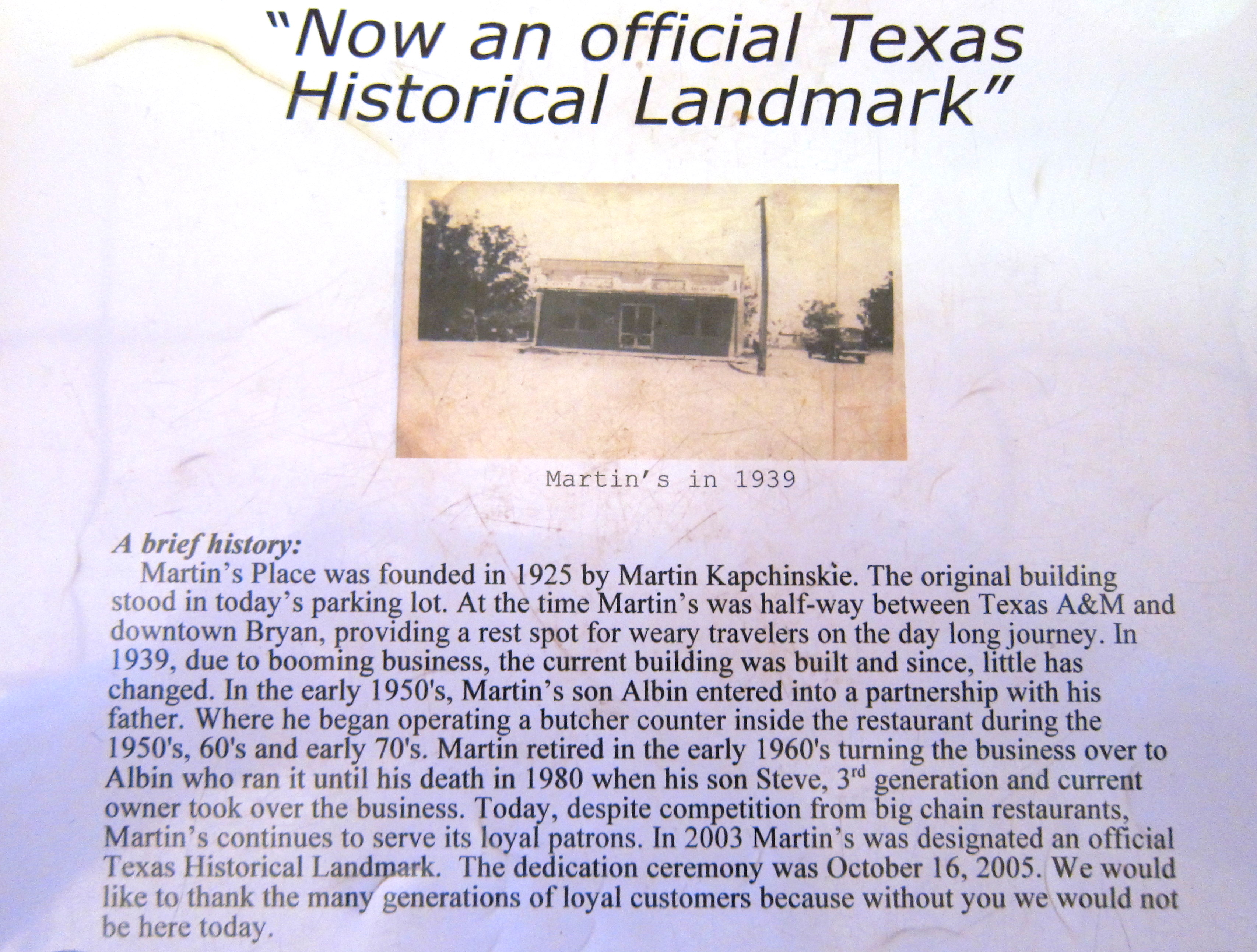
We dive into the briskets and ribs at Martin’s Place for my birthday in 2011. That’s their 86th year. I was born in ’86. I like to think Martin’s and I share some common destiny to cross path, beside the appreciation of good ribs.


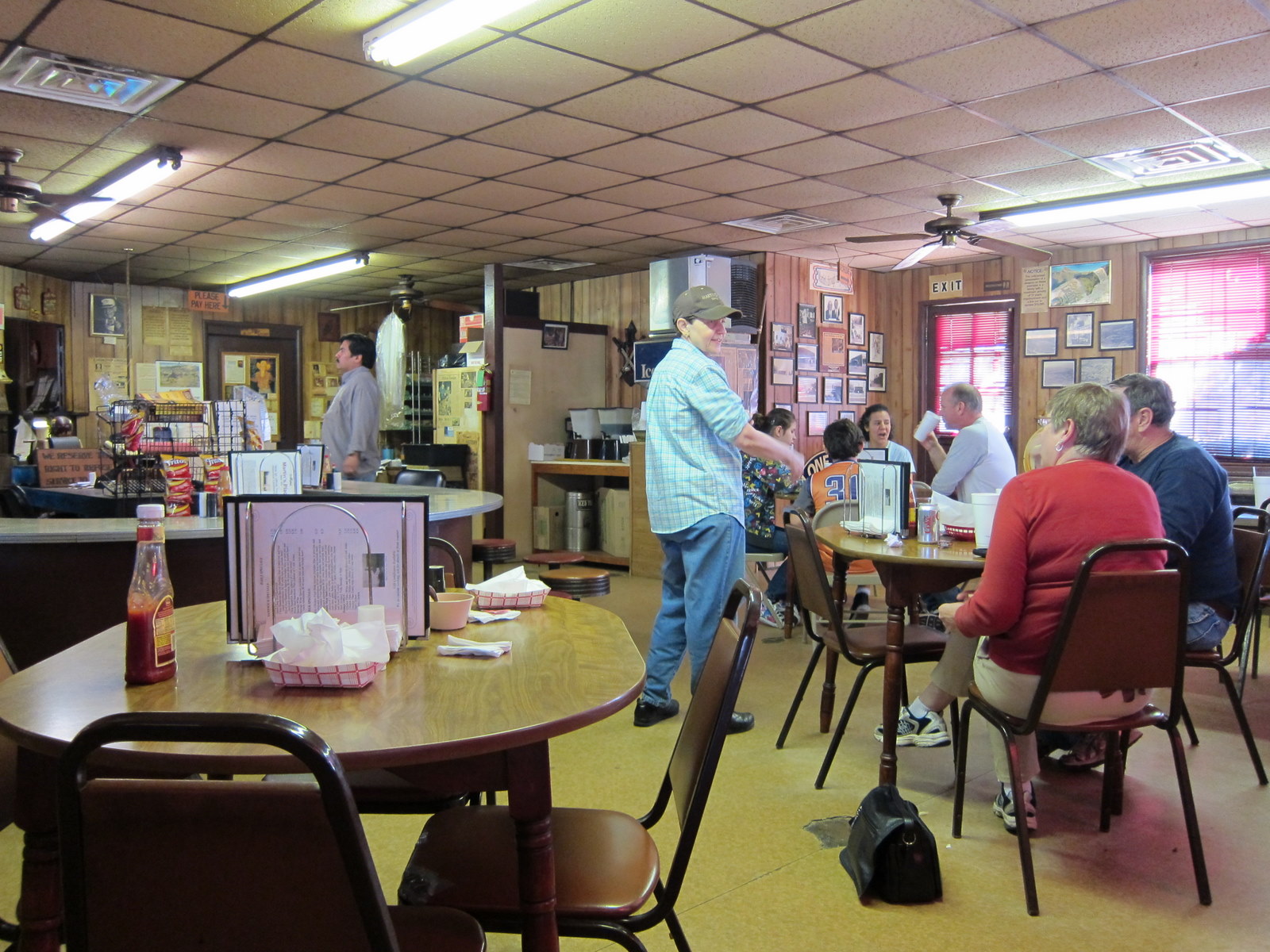
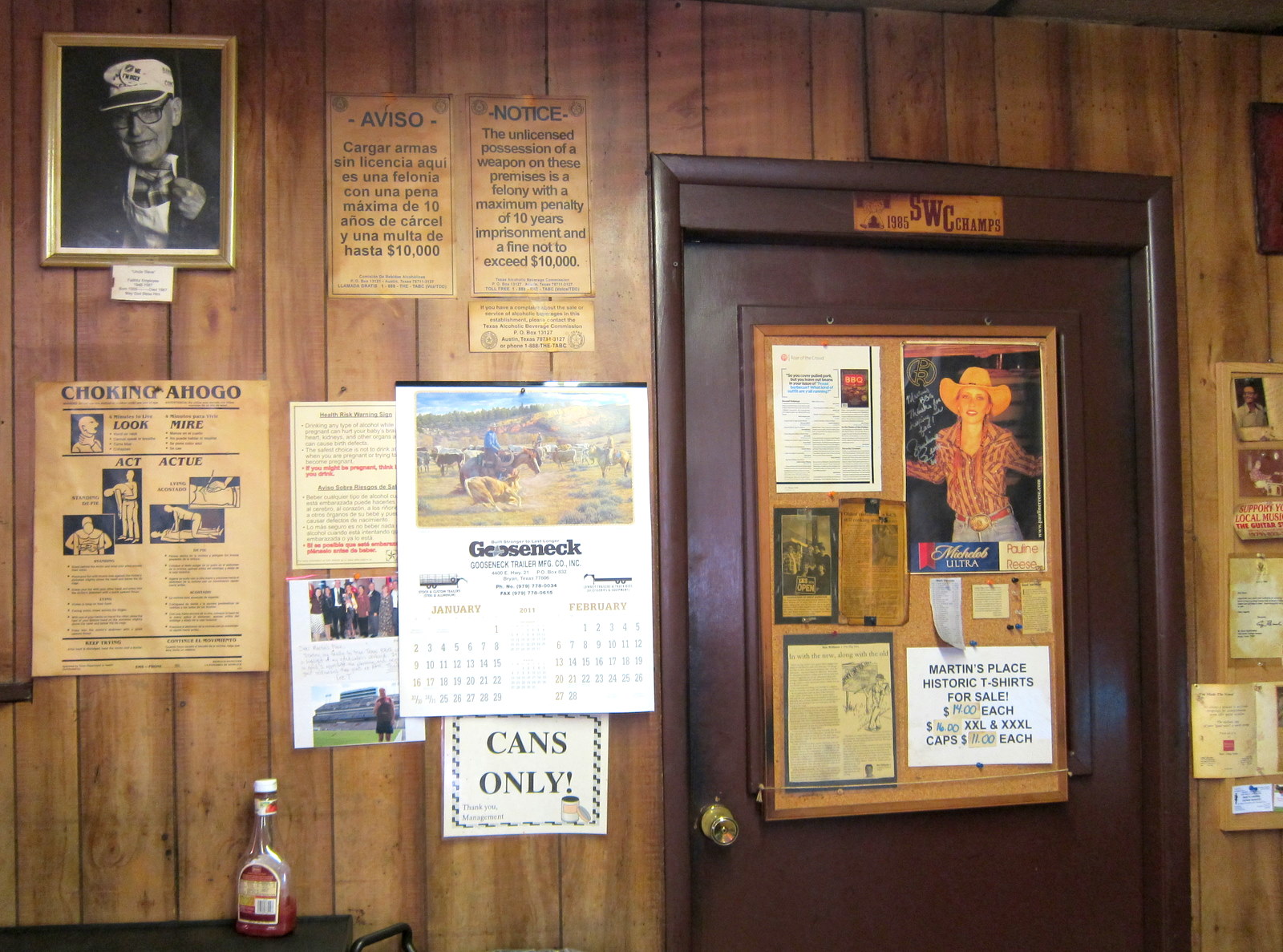
There is one flimsy door to the side of the red brick building, facing the supposed parking lot, which is just a flat pebble-and-dust land free to park wherever convenient. Crack open the flimsy door, we turn the knob of another, more solid door to the interior, and with it being our first time, we awkwardly stand there looking at the few customers who are in for an early lunch, not sure whether we should wait or just pick a table ourselves. The only hostess of Martin’s Place points us to a table next to a window with broken blinds.


The menus stand ready by the side of sugar, salt, and hot sauce. At first she seems a bit indifferent to us, the opposite of her cheerful friendliness to the likely long-term acquainted patrons at the other tables, but as I tell her that it is our first time here and I would like her to recommend a dish among their various delicious sounding options, she starts smiling more. Somehow I get the feeling that Asian families don’t often visit this family-owned beef stop between Bryan and College Station.


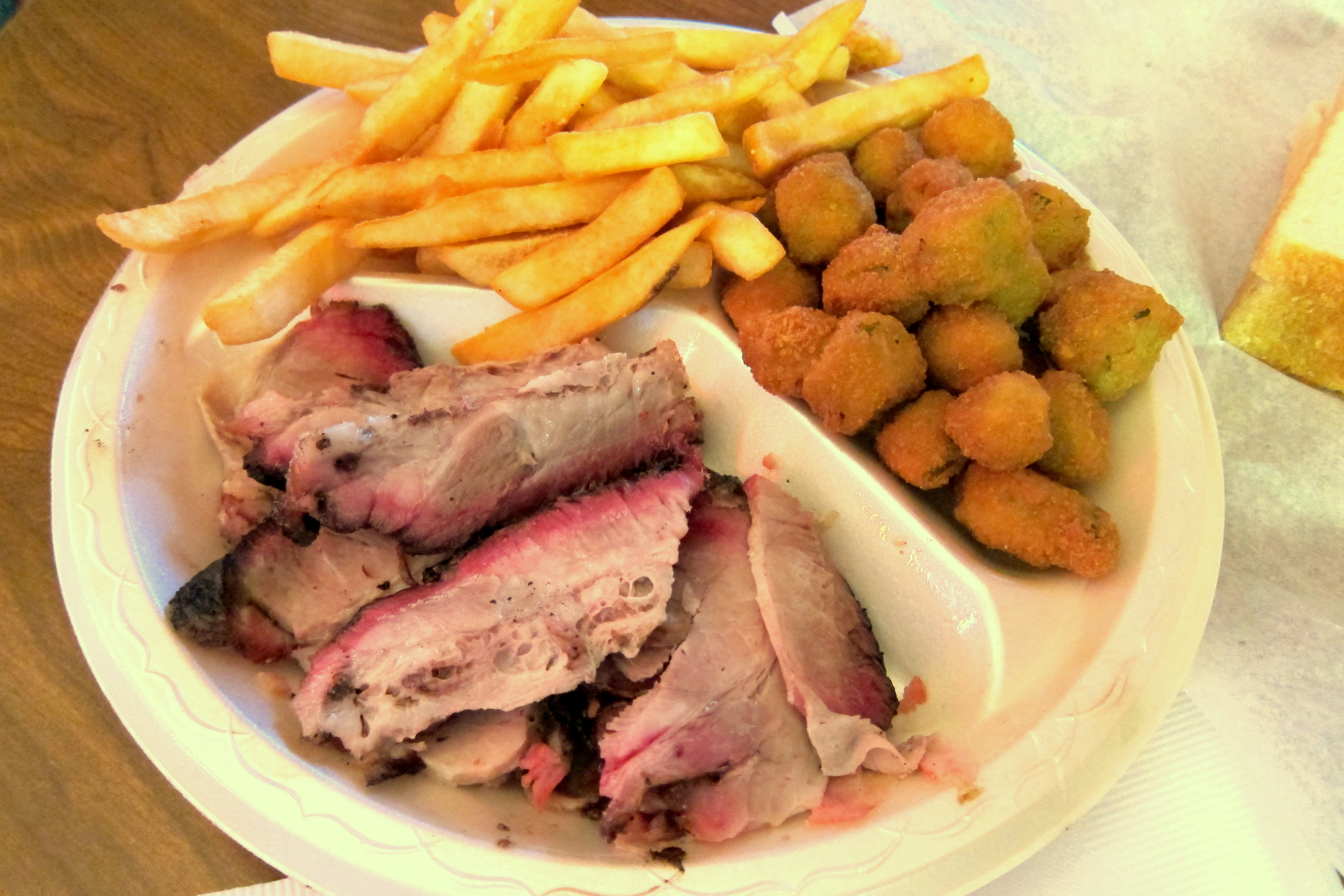
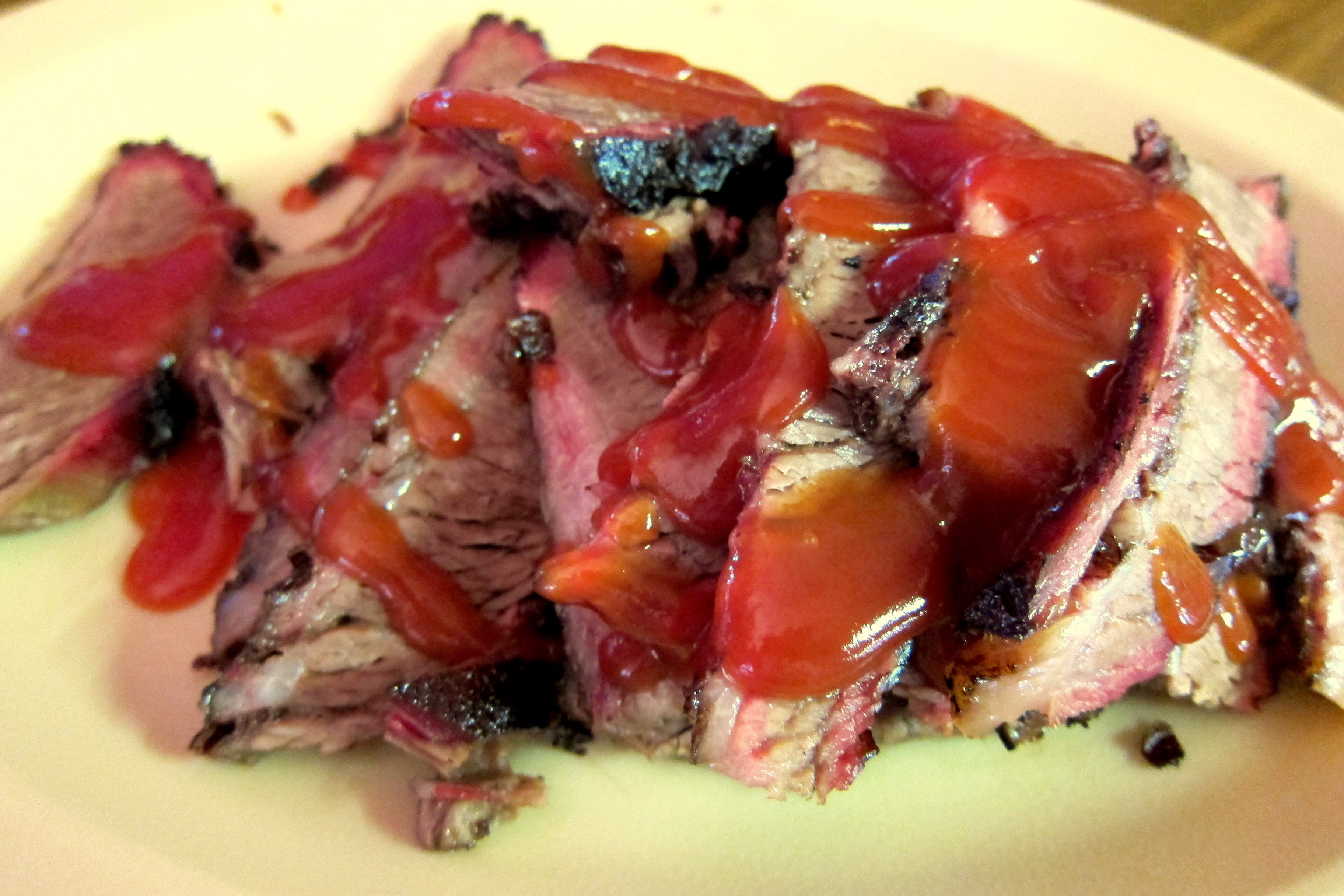
The BBQ dinners with choice of beef, pork, or sausage, and two sides cost $7.25, pickles and bread available upon request, but the bread is simply two white slices. A bigger appetite for meat would be met by the BBQ plate alone, ranging from 1/4 ($4.25) to 1 pound ($10.50) each.


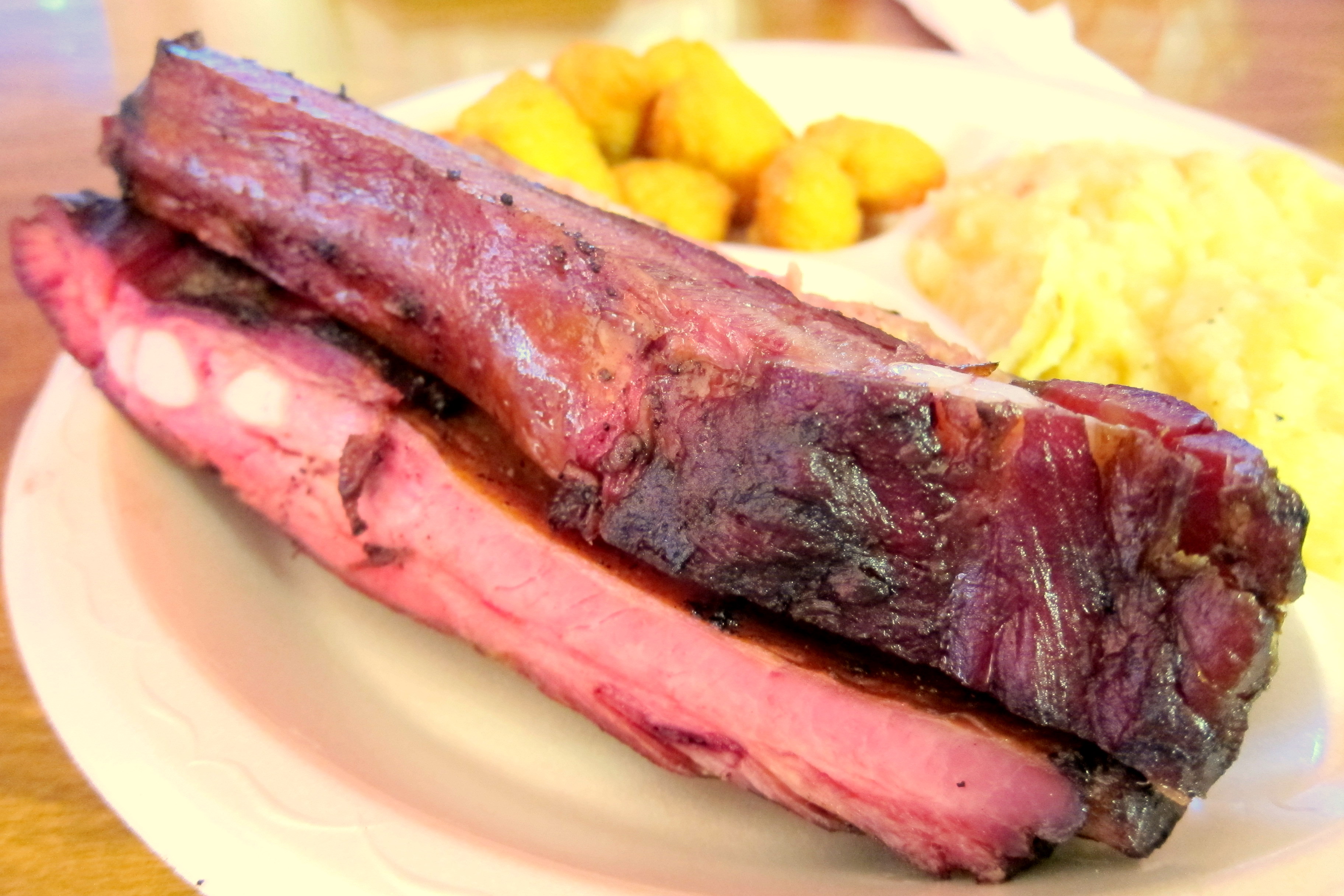
Like at most Southerners’ country cooking joints, vegetable sides are not exactly vegetables, and it all comes down to picking fried (onion ring, okra, tots, corn, fries) or non-fried (cole slaw, beans, potato salad, sliced jalapeno, cheese). I go both ways: a house (German) potatoes and a fried corn nuggets.


The house mashed potato is sweet and creamy, highly recommended. The ribs, not as falling-off-the-bone tender as those from Potatoe Patch, are much more filling than they look. Two ribs out of three and I find my hand rubbing my belly.


How does a place so underkempt and lacking of attentive and giggling service stay in business for 86 years, when its beef does not quite give the most tongue-catching experience? The only answer must be its small town charm, fostered by its loyal patronage of the locals that does not need any advertisement about supporting local business. Maybe it’s my Texas self taking over, but I like it beyond reasons, like any other little country sites in the middle of nowheres.


Happy First Birthday to Flavor Boulevard! 🙂

Address: Martin’s Place
3403 South College Avenue
Bryan, TX 77801
(979) 822-2031