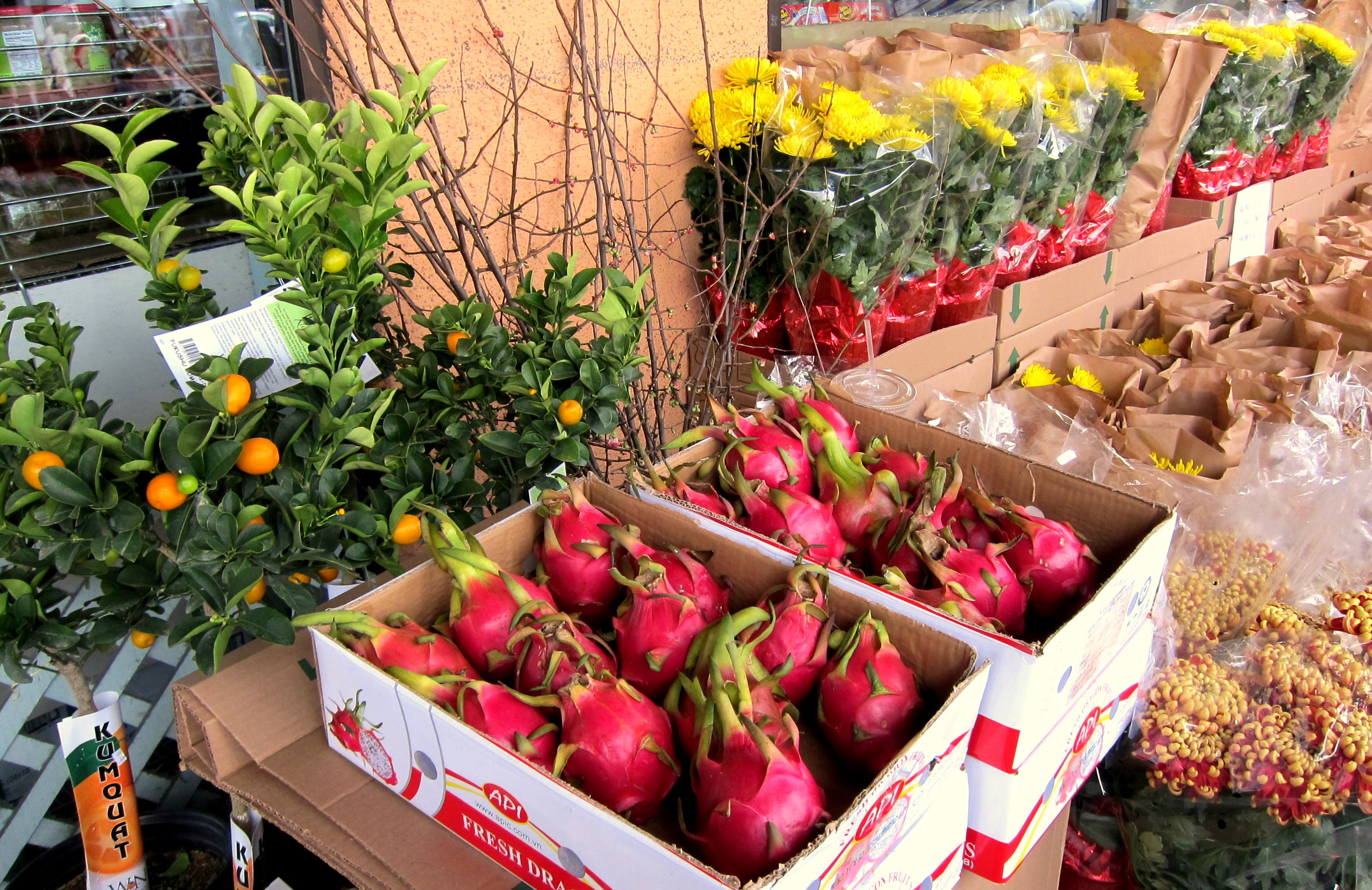
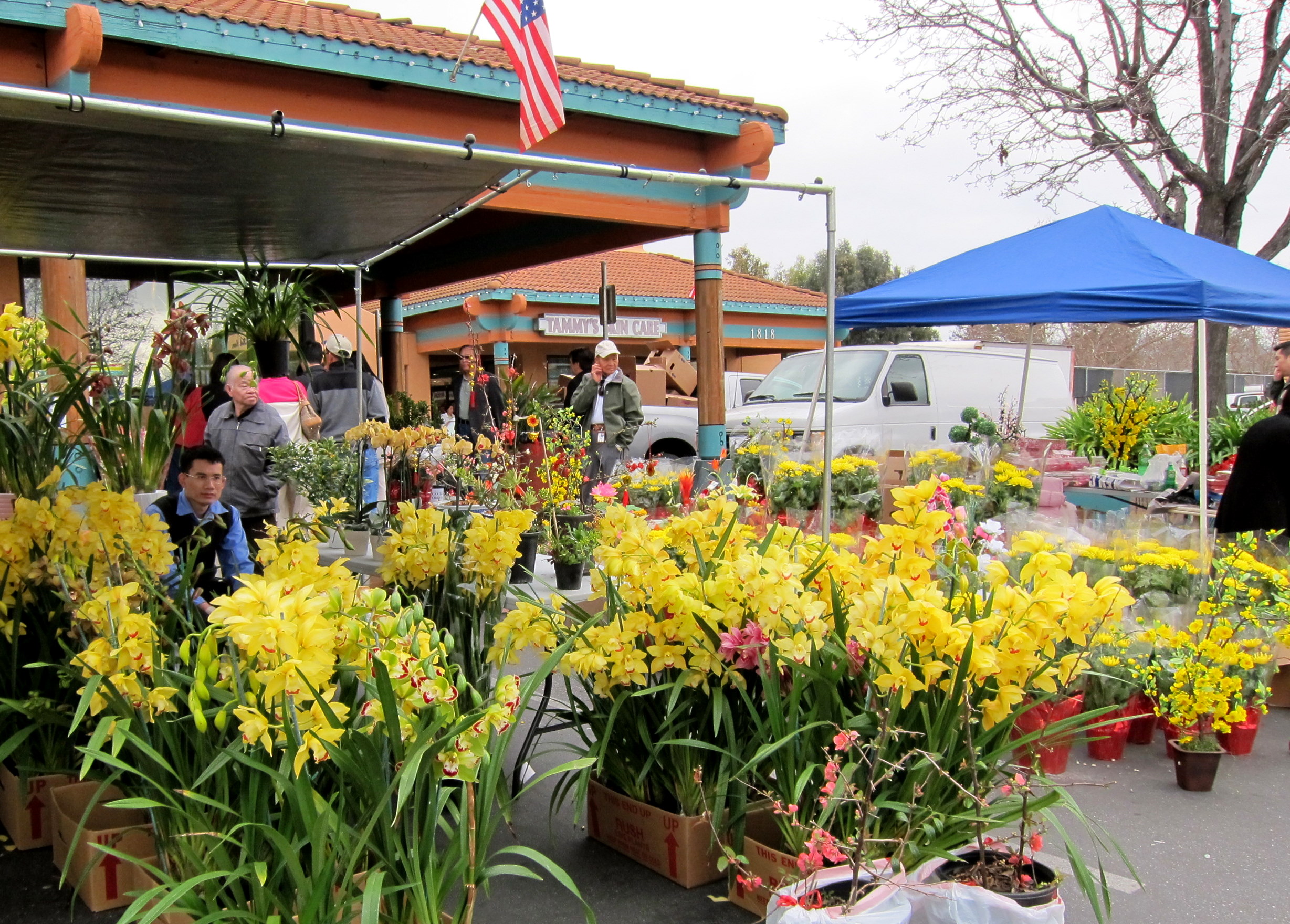
…1. The kumquat branches bear their multitudes of gold baubles, the tangerines and pomelos swell and shine, the dragon fruits and rambutans are happily sought for because of their festive shapes and colors;
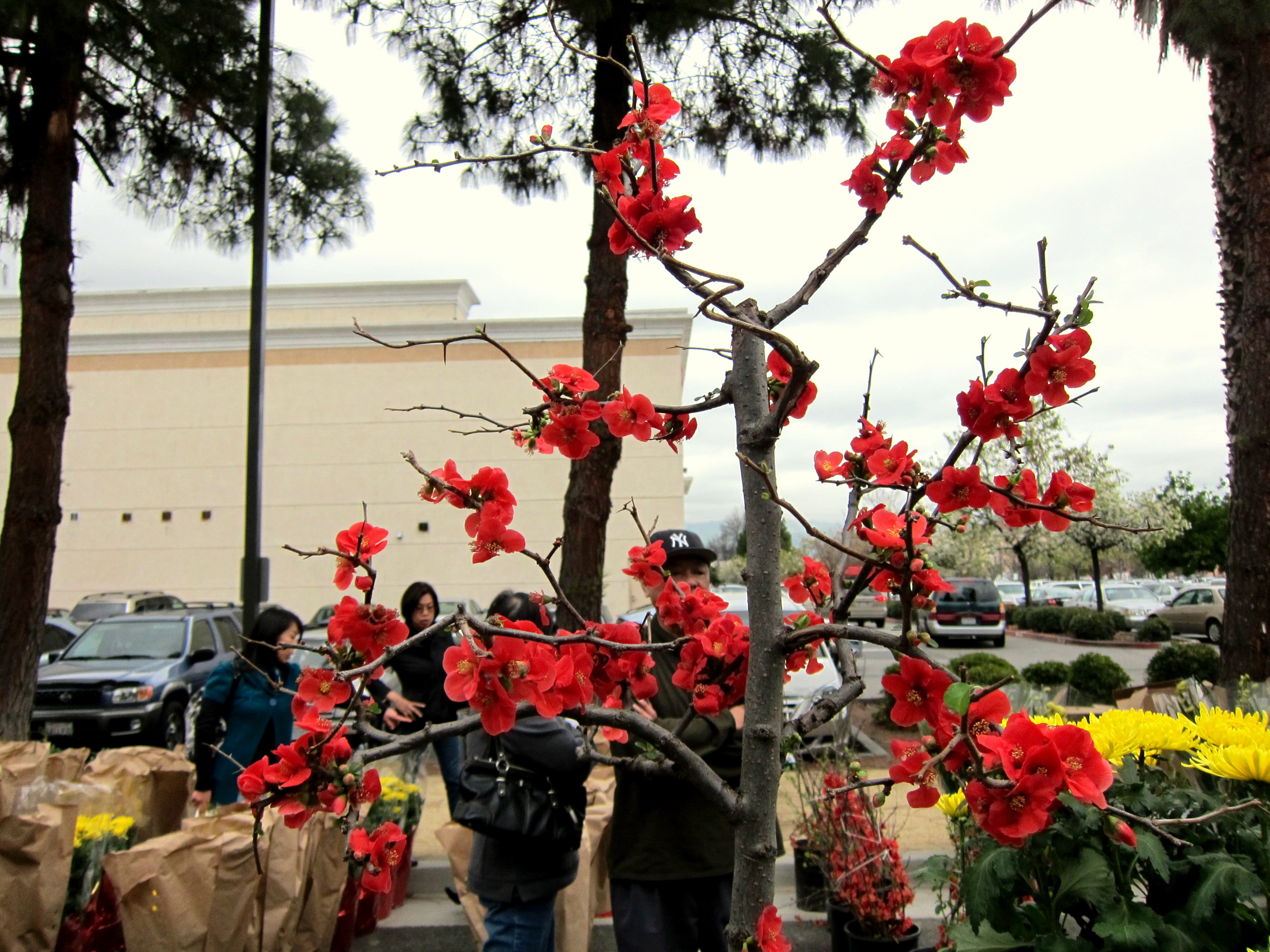
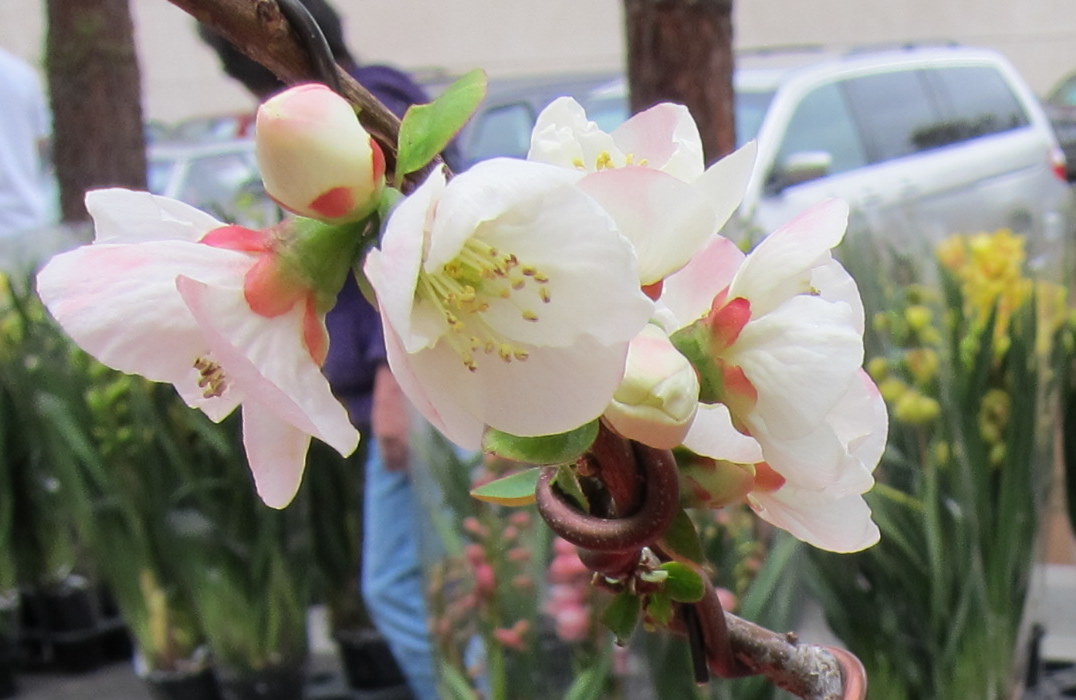
…2. The white grey front patio of Grand Century Mall and its adjacents is blushed with firecracker remnants, and if you’re there at the right moment, your ears would be blasted by the continuous loud popping of an ignited long Chinese squib, its color matched only by the ruby peach blossoms in full bloom;
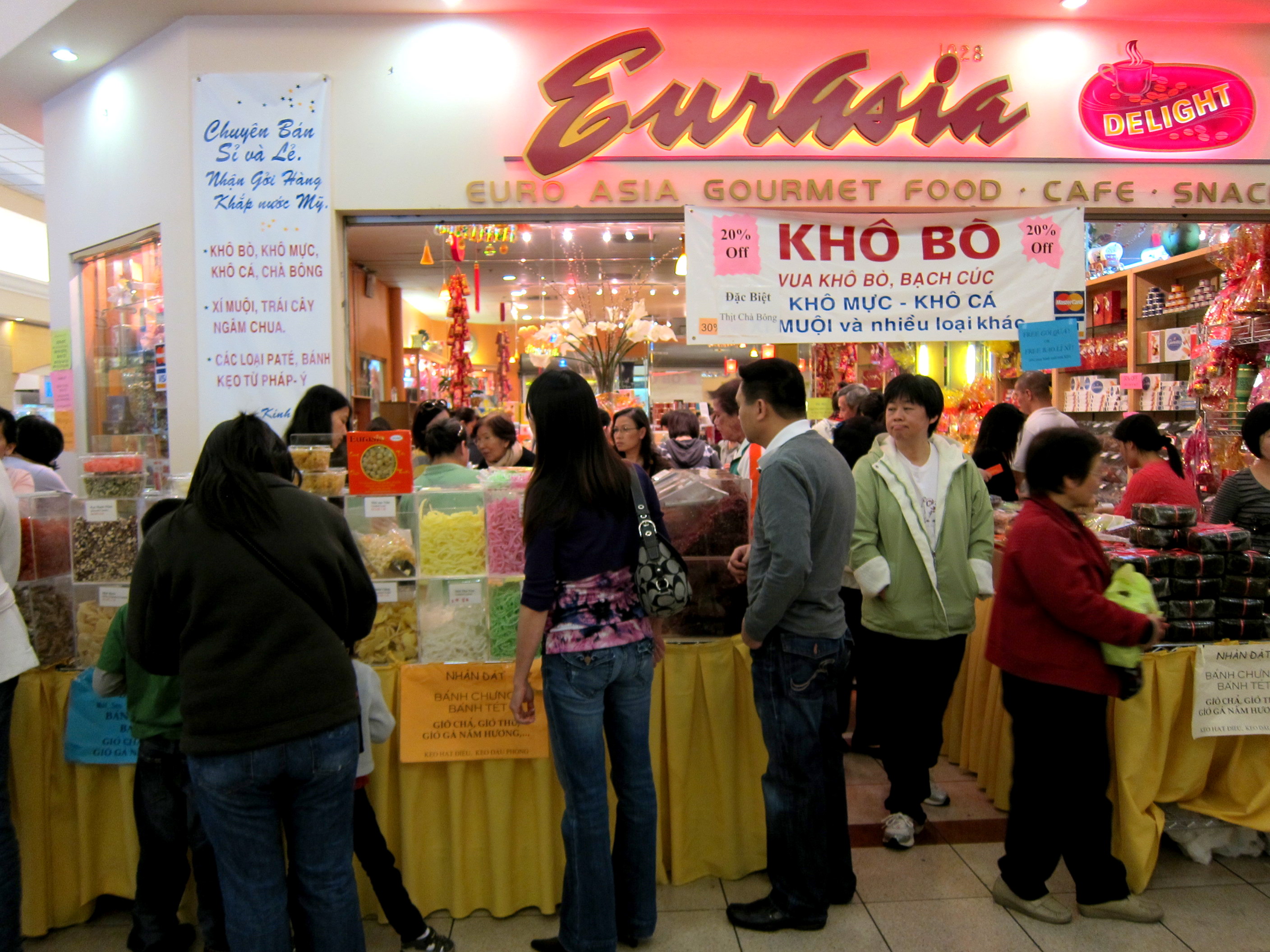
…3. The usually dormant stores that sell Vietnamese beef jerkies and dried plums awakens in a sudden selling frenzy: tasting, weighing, packaging, paying, people queuing…
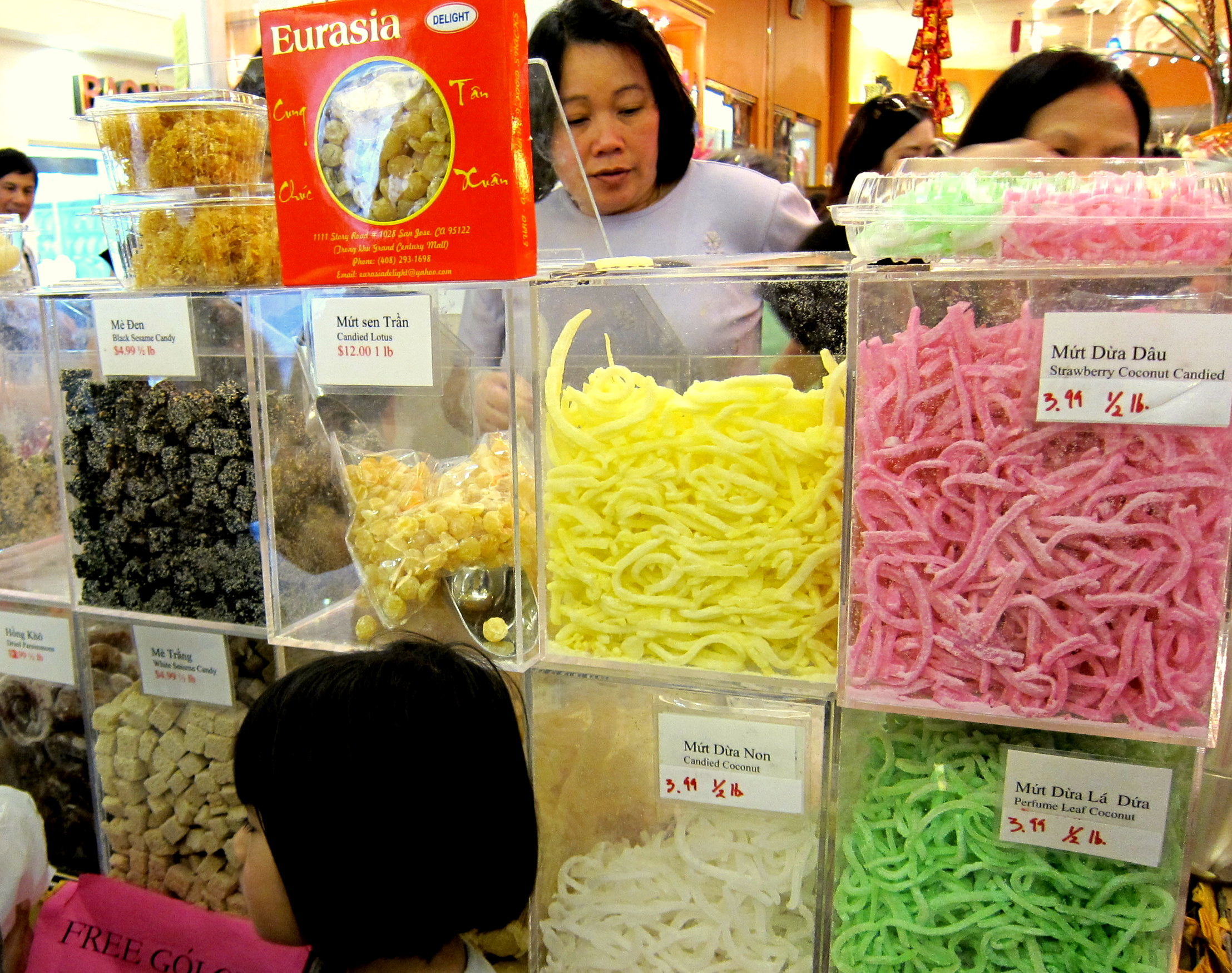
… mostly for the dried candied fruits known as mứt Tết.
…4. It takes 30 minutes to get in and out of the mall and market parking lots in San Jose and then park on the neighborhood street, because parts of the lot are reserved for Chinese chess, fruit stalls, music stalls, peach blossom trees,…
… cotton candy and green waffles, sunshine orchid corners, still, everybody is in a good mood;
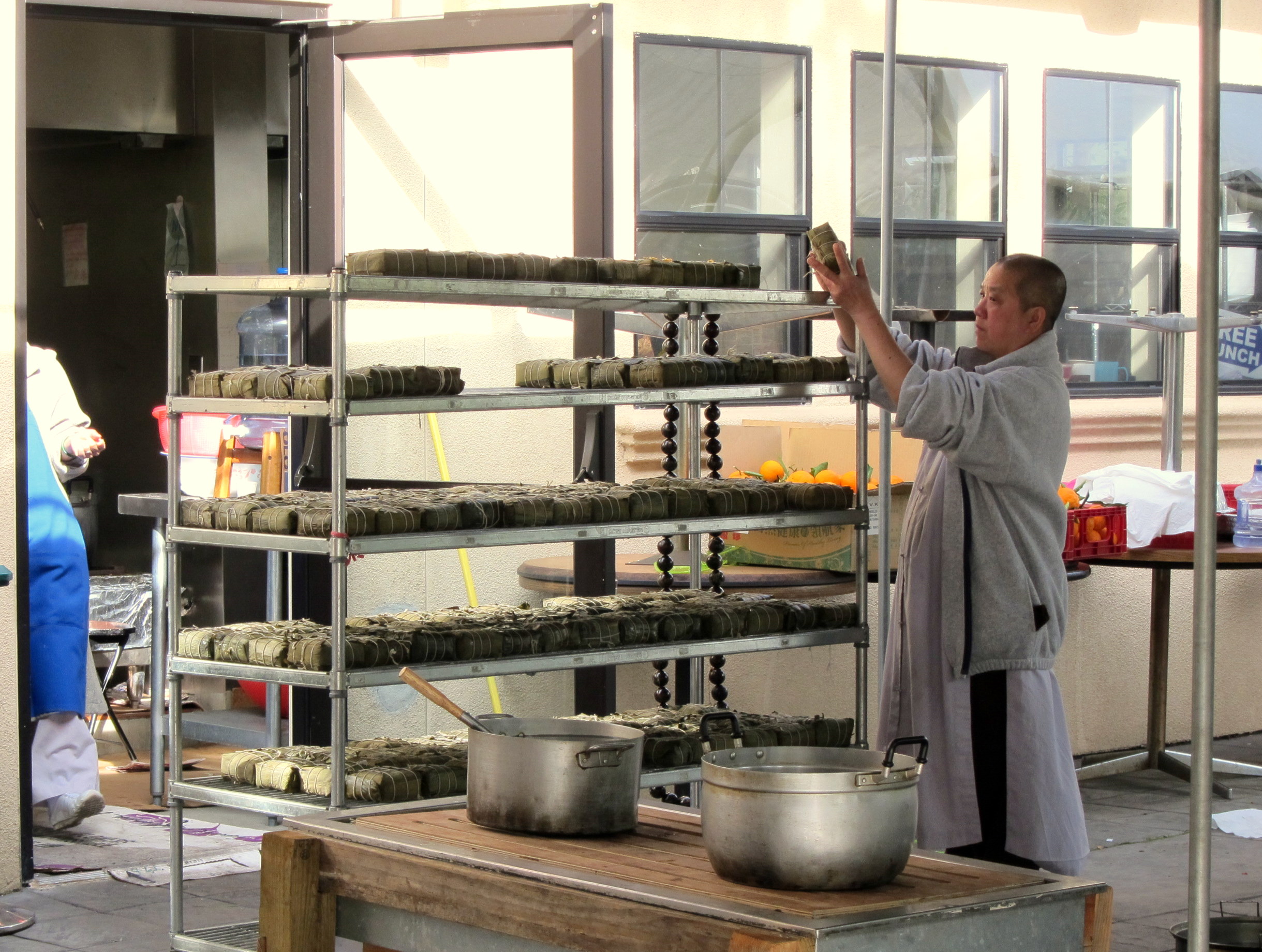
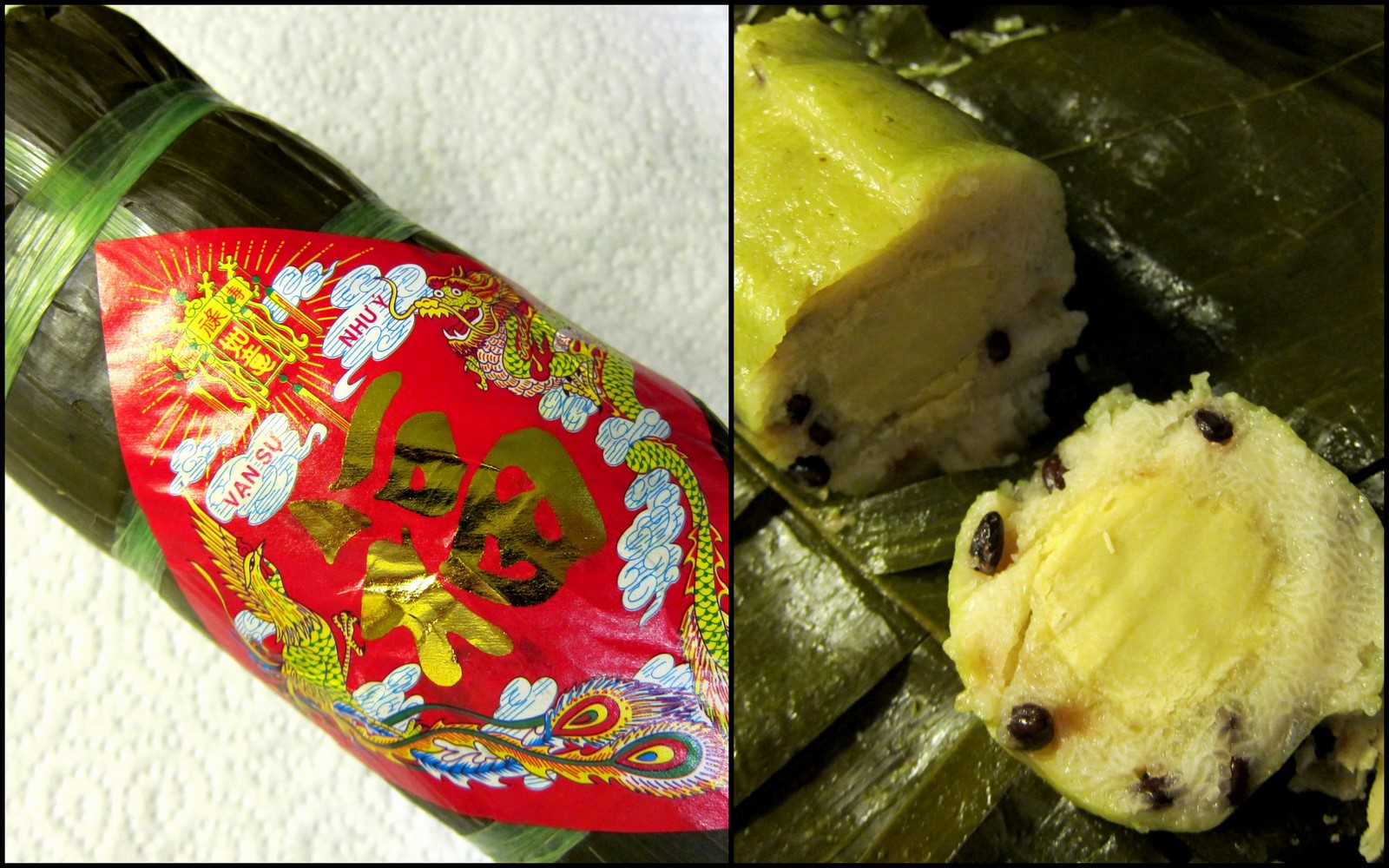
…5. The Buddhist nuns and pious pagoda goers gather to wrap and steam hundreds of banh chung banh tet, pickle jars of cucumber, carrot, củ kiệu, cabbage, daikon…
… all of which are vegetarian, in small quantity, usually tasty, and always more expensive than anywhere else.
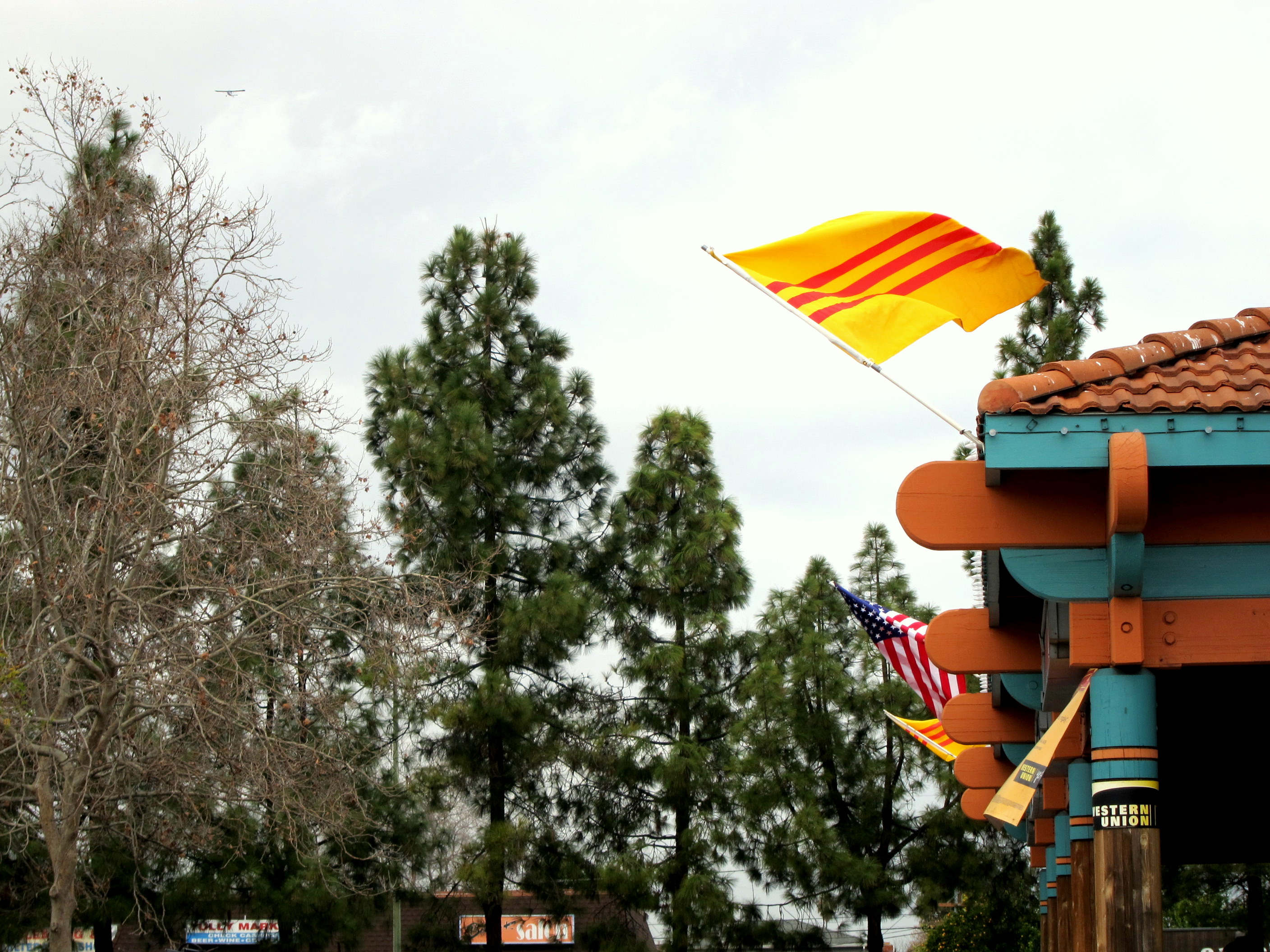
As independent of religions and politics as the mark of spring is, you know it’s Tet where the flag still flies.
Do you like that crisp, burnt, gochujang-dyed rice crust at the bottom of the dolsot when you scrape off spoon after spoon of bibimbap? If the answer is yes, I’m certain that you’d fall for this one too.
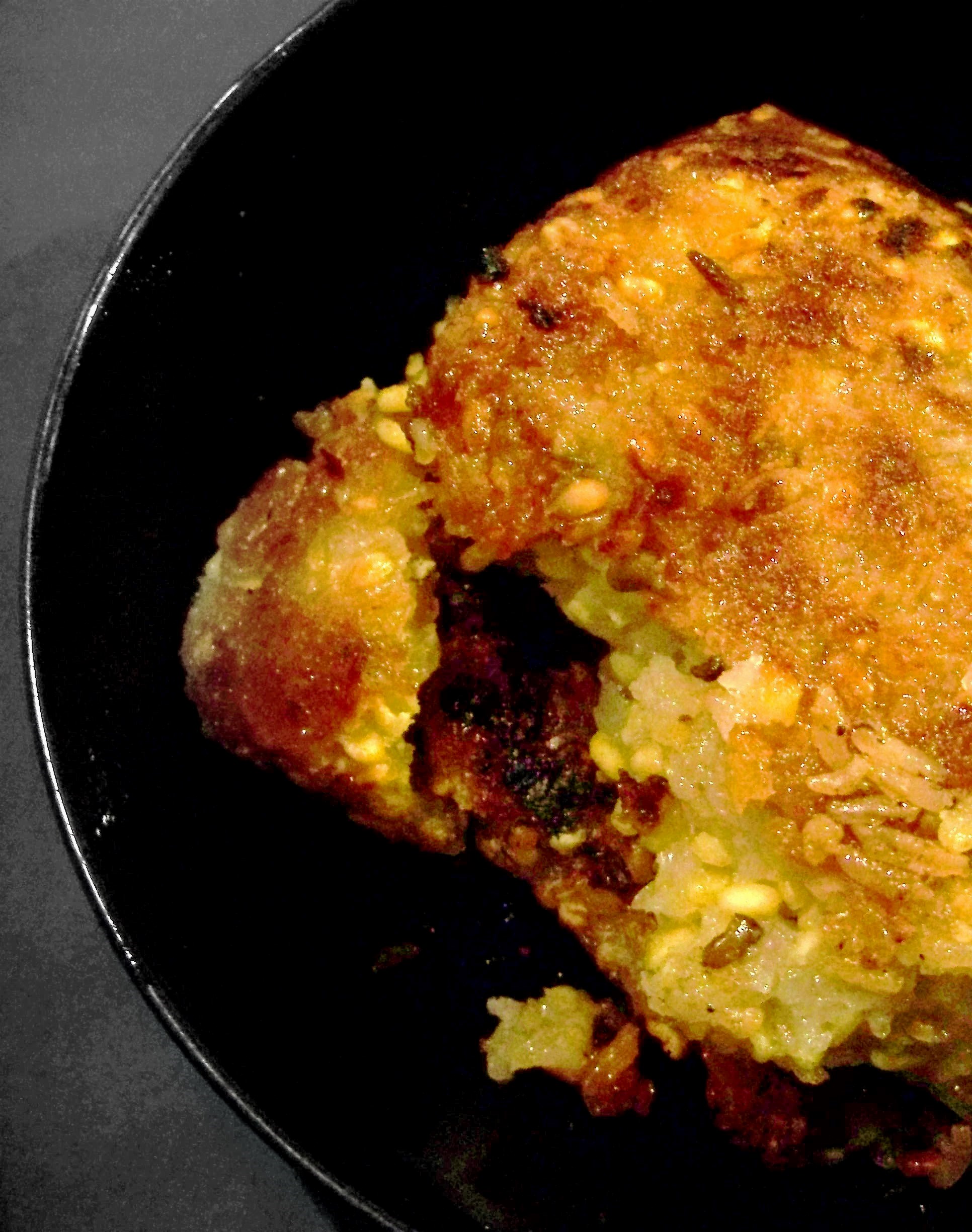
Mom cooks her xoi in a non-stick pan, with coconut milk and little water. Somehow, without a precise recipe, she can make a shell of brown, sweet and crusty sticky rice every time. Then we fight each other for it when it’s still warm and just a tad chewy, leaving the soft innard xoi for my dad.
Approximate recipe: Xôi cháy (literally “burnt xoi”, usually considered a point against the skillful xoi cooks, but I think it’s better than icing on a cake, it’s the best part of a perfectly cooked batch of xoi)
– 1 lb sticky rice
– 1/2 lbs mung bean (halved is fine, unscraped)
– 1 can of coconut milk
– 1/2 tsp salt
– sugar (lots! ~ 8-10 tbs)
Soak mung beans in water overnight to soften them, so that they get cooked faster (at about the same rate as the sticky rice). Mix sticky rice and beans together.
Put sticky rice, mung bean, a can of coconut milk, and just enough water to have the grains 1/10 inch under the liquid surface. Cook in a deep pan, covered, on medium heat. (If cooked in rice cookers, the bottom crust won’t form.)
When the mixture boils, turn the heat to low, wait about 10 minutes until most of the liquid is soaked into the grains, then use a chopstick to make holes in the mixture, allowing steam to circulate easily all around. Keep covering. Cook for another 10-15 minutes.
When rice and mung bean are soft, sprinkle salt and sugar on top, then gently mix (with chopsticks) the xoi without disturbing the bottom layer. (This is exactly what you must do when eating dolsot bibimbap, you don’t want the crust to mix with the soft part.) Make holes in the mass again. Cook for a few more minutes.
Scrape off the xoi innard first and store separately. Take out the whole crusty shell with care, or break off into chunks. Eat by itself. Flavorastic by itself.
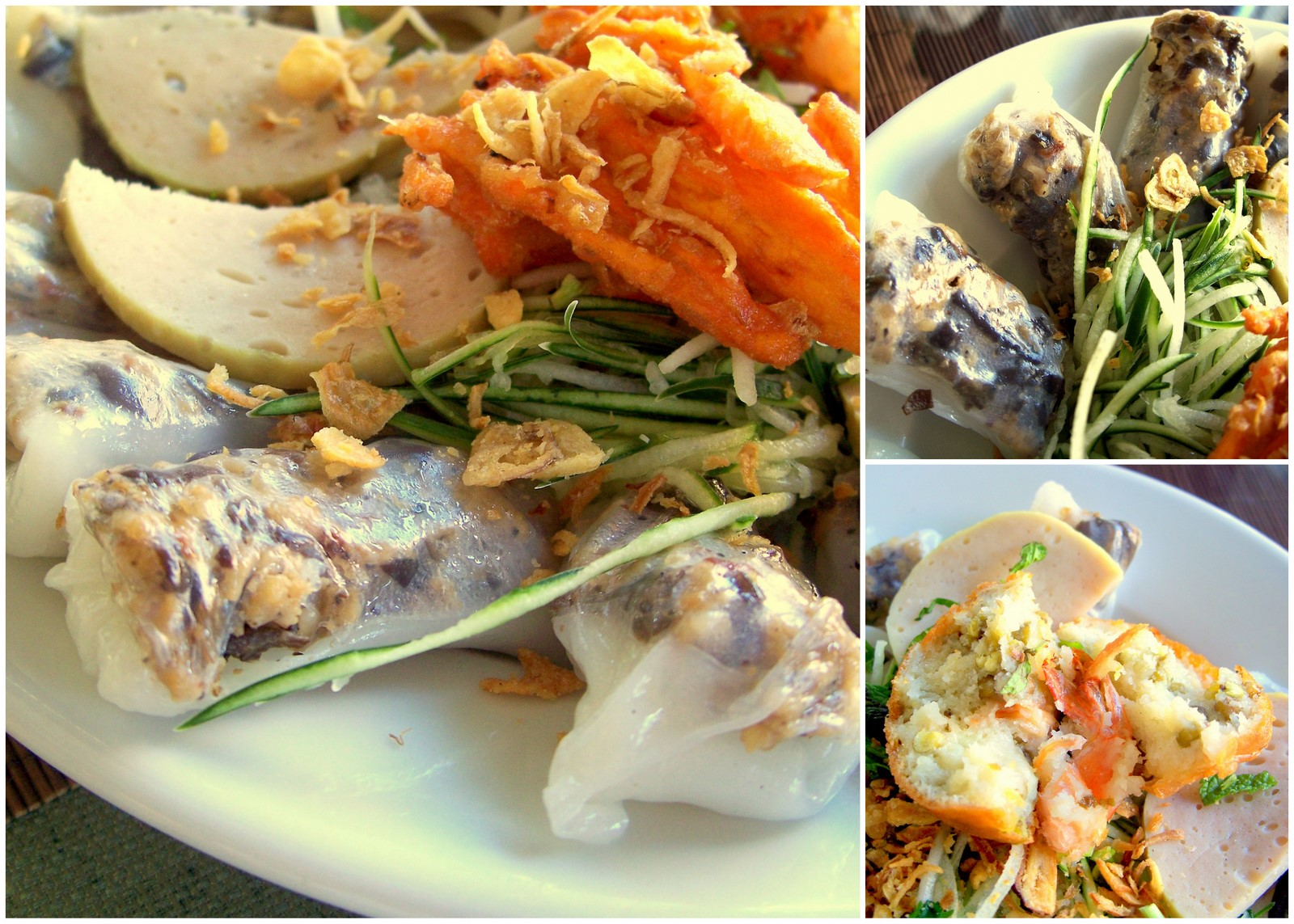
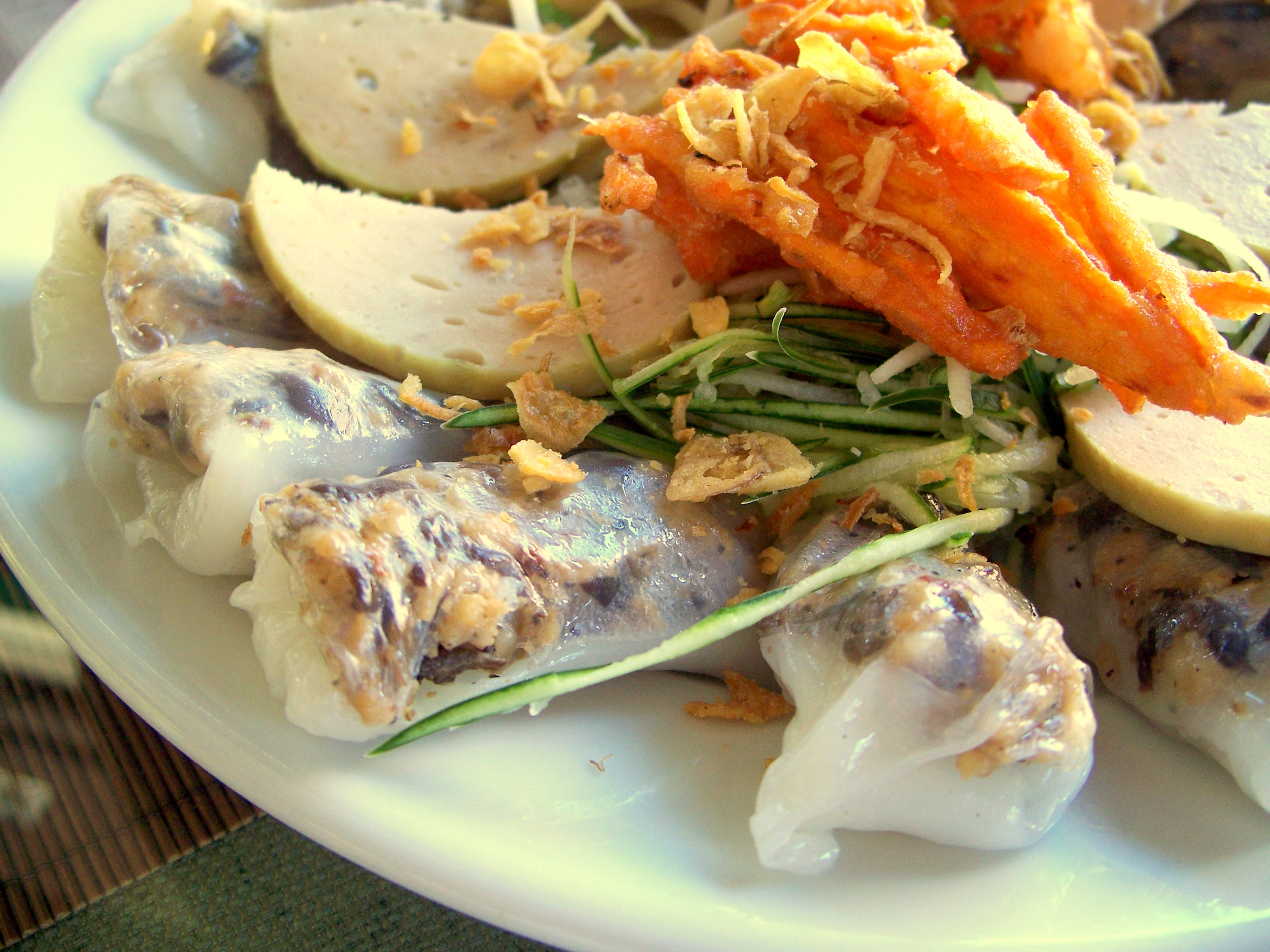
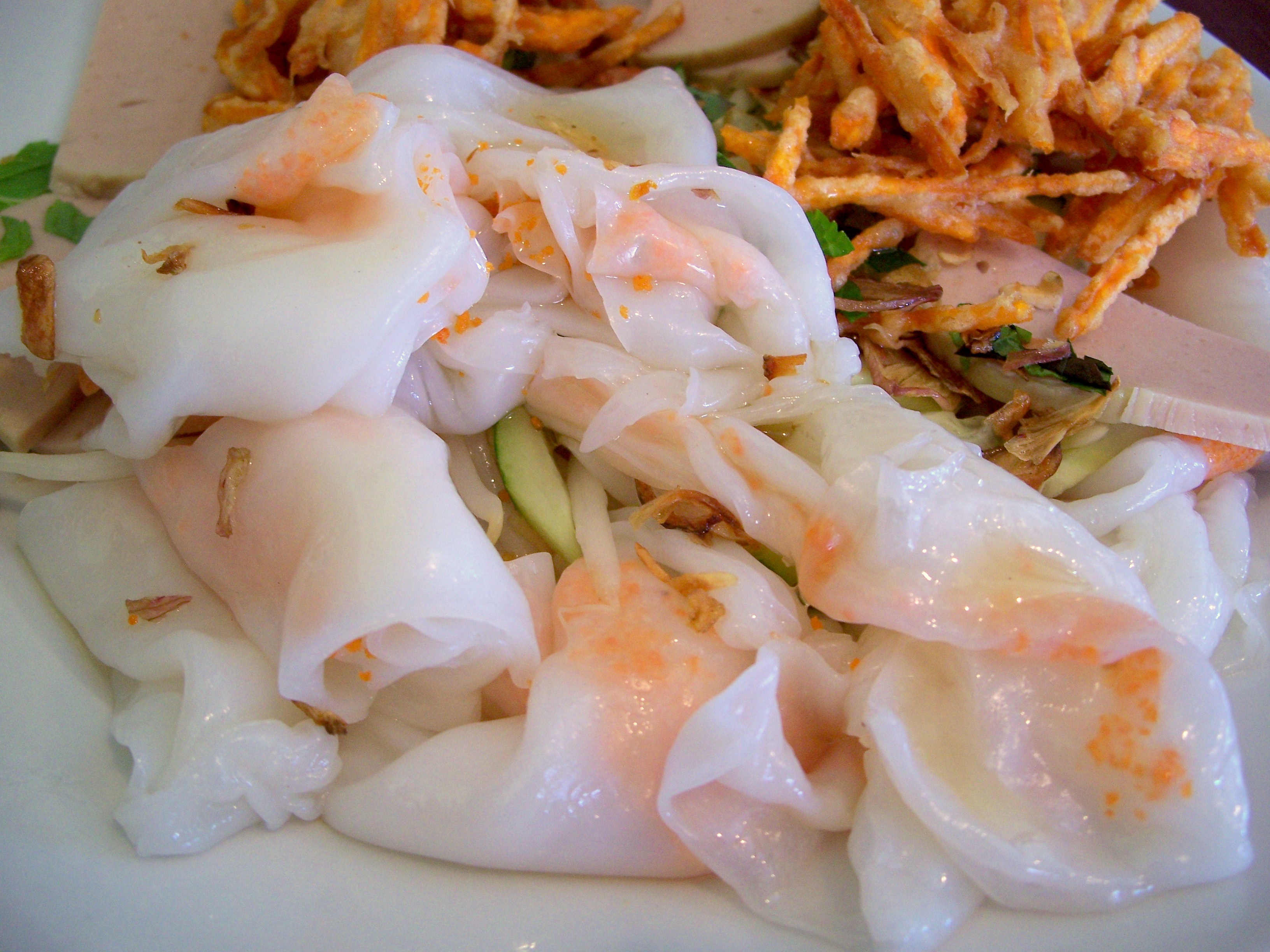
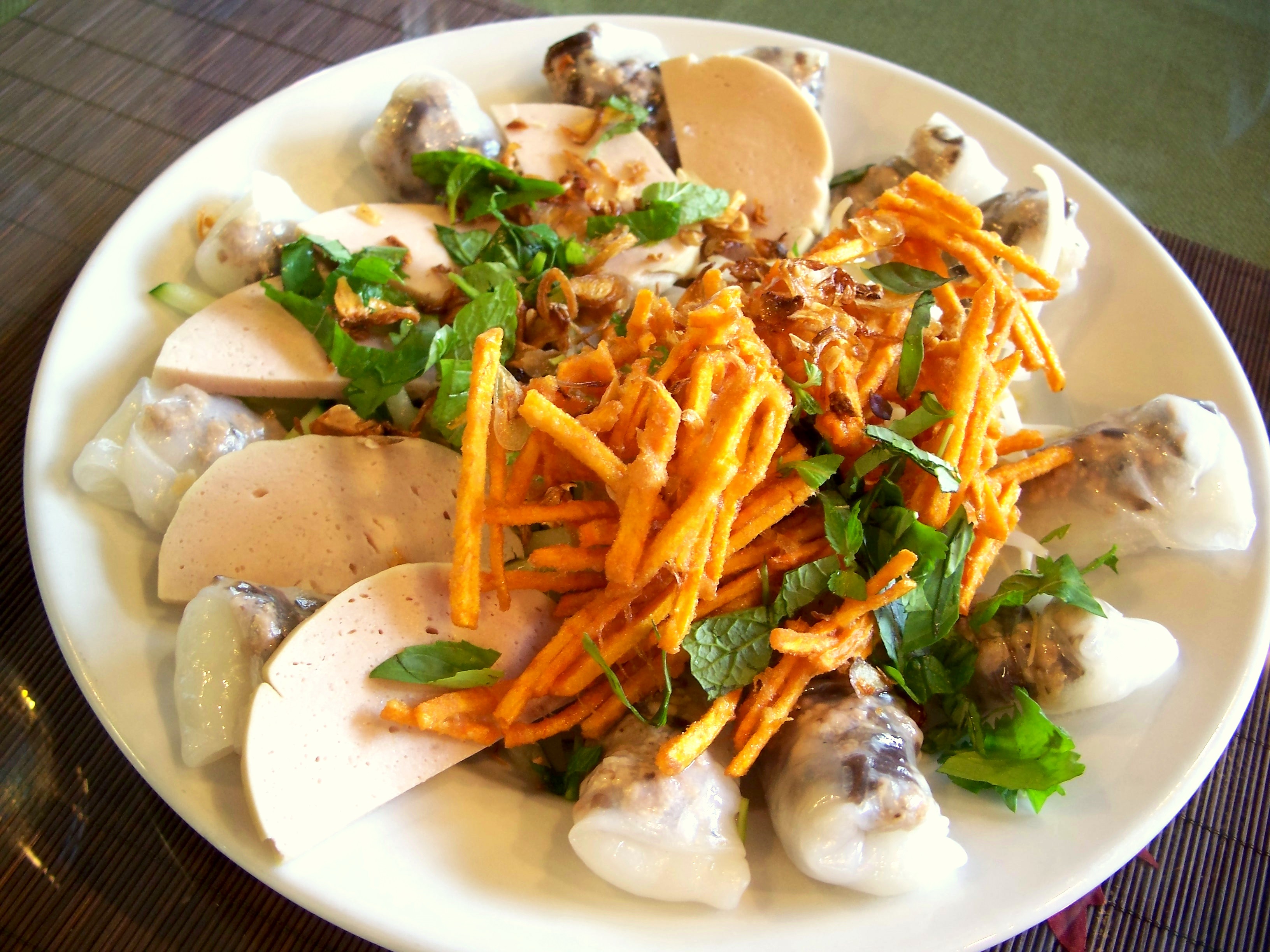
Not many Vietnamese diners roll out steamed rice leaves stuffed with pork and mushroom, and among those that do, not many actually do it right. A good roll of banh cuon must be slick but not oily, delicate but not crumbly, the flour leaf thin but springy, the stuffing visible, almost poking through, on one side and hidden on the other, served warm. A good nuoc cham must be more sweet than salty, with a little zest of lime, and spicy is not necessary. You then pour as much of that honey-colored dipping sauce as you want all over the plate, soaking the cucumber, the bean sprout, the cha lua, and especially the rolls. You then savour. When it comes to banh cuon, Tay Ho rules, from Vietnam to America. But among the Tay Ho’s of the Bay, Tay Ho #9 in Oakland makes it best.
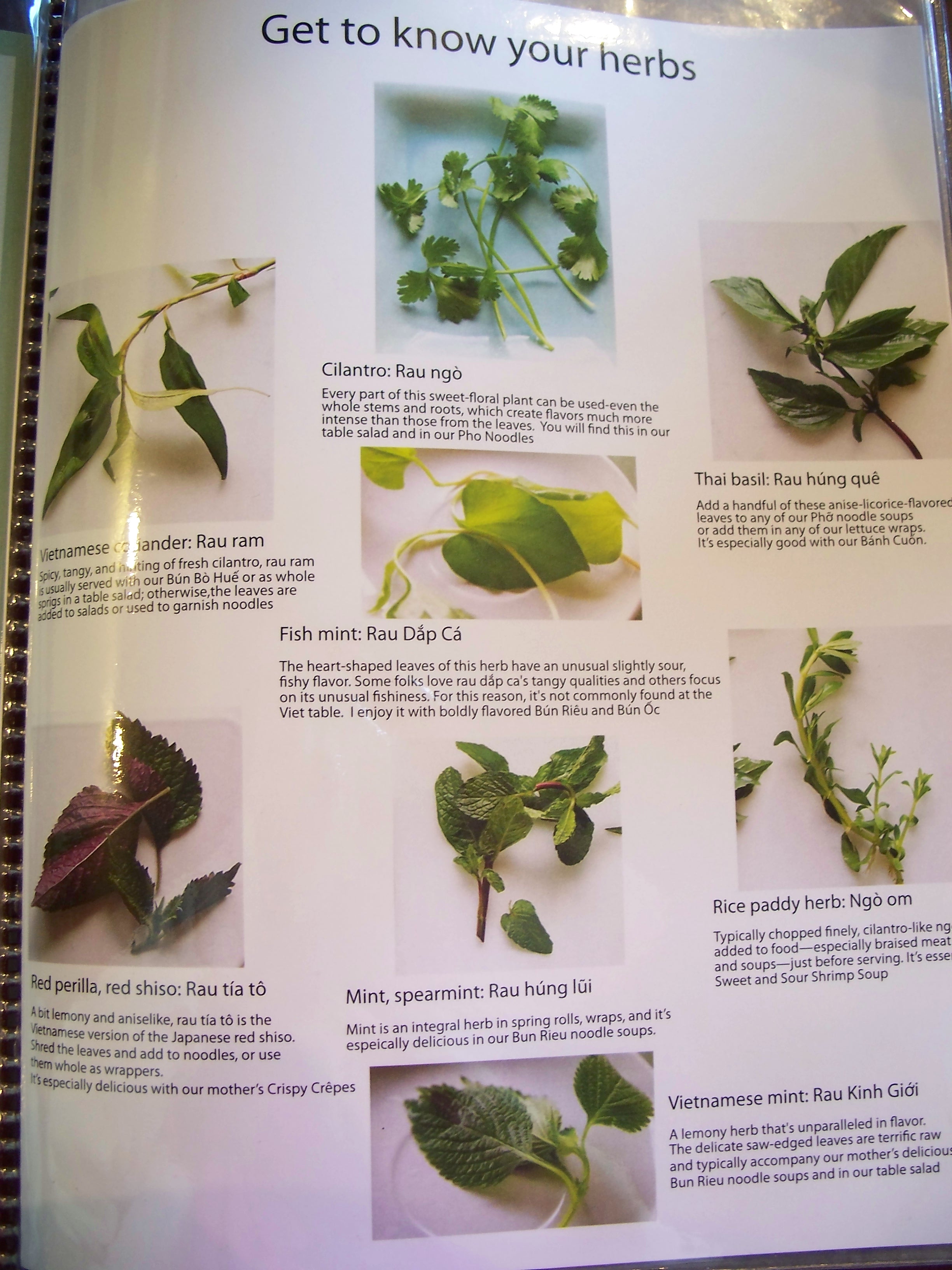
After taking over the business from her aunt, Duyên transforms Tay Ho Oakland into an all-American restaurant with fluent-English-speaking staff (herself on weekdays and with another girl on weekends), attentive service, credit card accepting, and a list of common herbs on the last page of the menu, something I haven’t seen at any other Vietnamese restaurant. It helps me at least, finally after 24 years I know which name goes with which plant. (Click on image for full-sized version). The food authenticity, of course, is preserved.
The menu features four types of banh cuon. The first, order #8, is the definitive authentic unadulterated version of steamed rolls that the Northerners had created and the whole country has fallen in love with: bánh cuốn nhân thịt (steamed rolls with meat). The more I eat it the more I crave it. The best part: flat, slick, crunchy pieces of wood-ear mushroom that accidentally fall out of the rolls.
The second type of banh cuon, for non-meat-lovers like my mother, is bánh cuốn tôm chấy (rolls with dry-fried shrimp). The shrimps, peeled and fried without oil or any liquid, get dried up and broken into a flossy powdery entanglement. That’s if you make it at home. Here I suspect the kitchen uses some prepackaged shrimp powder for efficiency, which has a beautiful scarlet hue but little texture and flavor. The rolls, though practically just steamed rice leaves, are still savourastic when soaked and glossed in that honey-colored sweet and salty nước chấm.
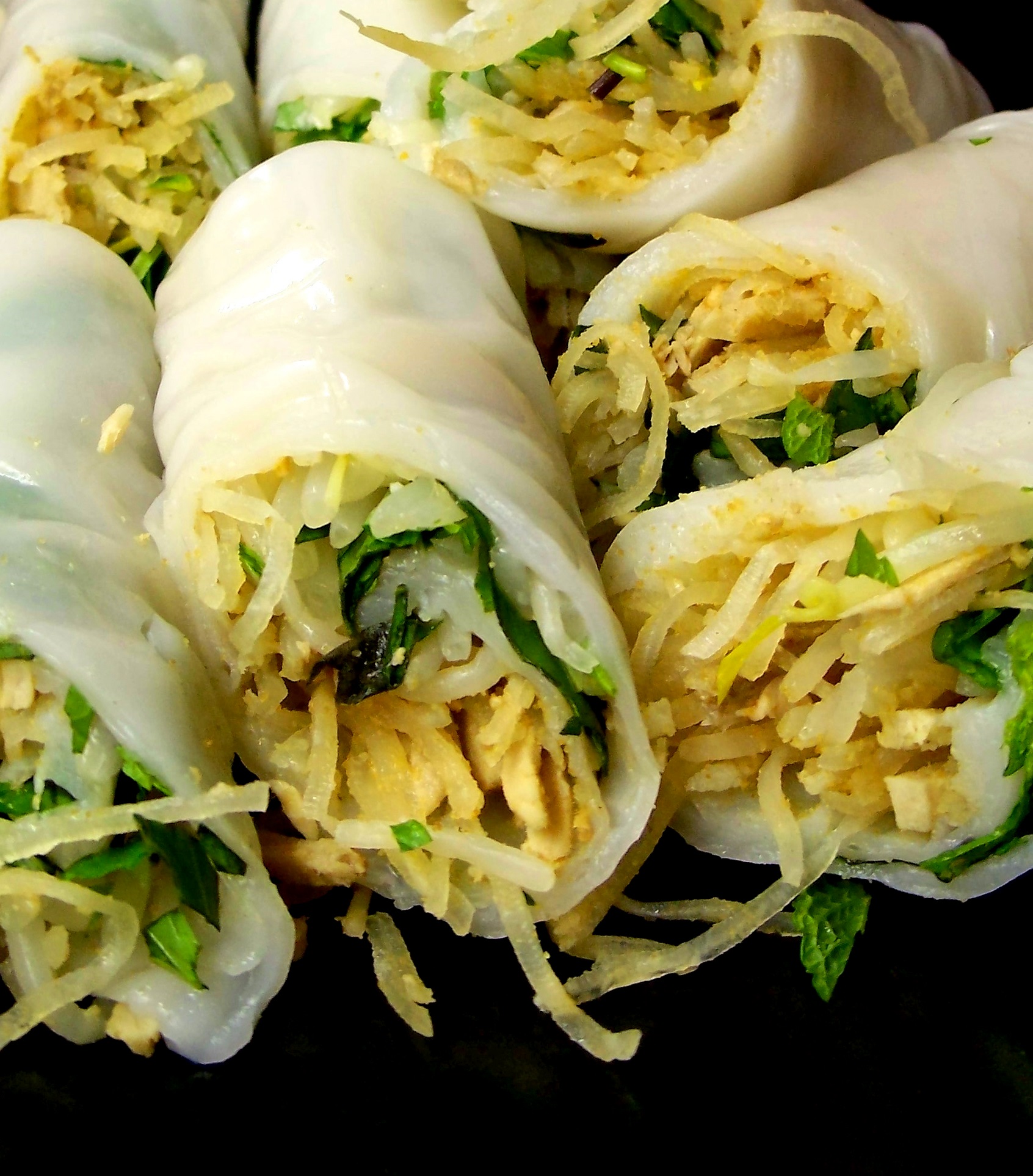
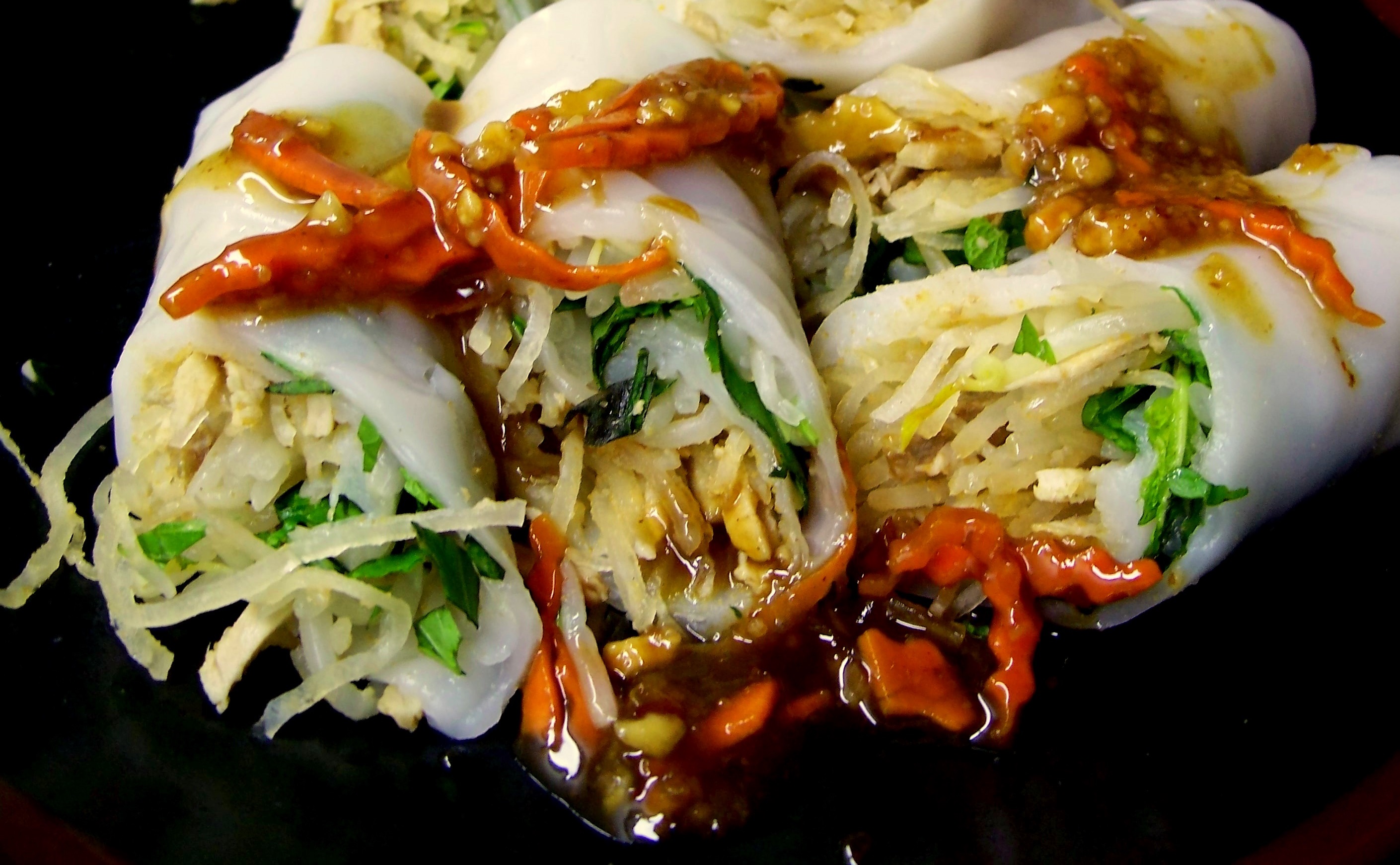
The third type is a modern spinoff with thicker rice leaf, bigger rolls, stockier stuffing that features grilled pork, bean sprout, and cucumber all in one, also at a heftier price (4 rolls for $6.95). Bánh cuốn thịt nướng is more of a filler than a delighter, but who says it can’t lift your mood while settling your stomach. Instead of grilled pork, shredded pork skin is also used, making the fourth type: bánh cuốn bì.
If banh cuon thit nuong‘s savoriness from grilled pork saves it from getting drowned in nuoc cham, the shredded pork skin (with some meat) in banh cuon bi are merely for textural pleasure, leaving chilipeppered peanut sauce to dress up the rolls. I have faith that nuoc cham would be a better roll-dresser though.
Occasionally I like to fool around with these variations, but in the end banh cuon nhan thit is still the winner in taste, just as Tay Ho Oakland is the winner in reliability.
Address: Tây Hồ Restaurant – Bánh Cuốn Tây Hồ #9
344B 12th Street
Oakland, CA 94607
(510) 836-6388
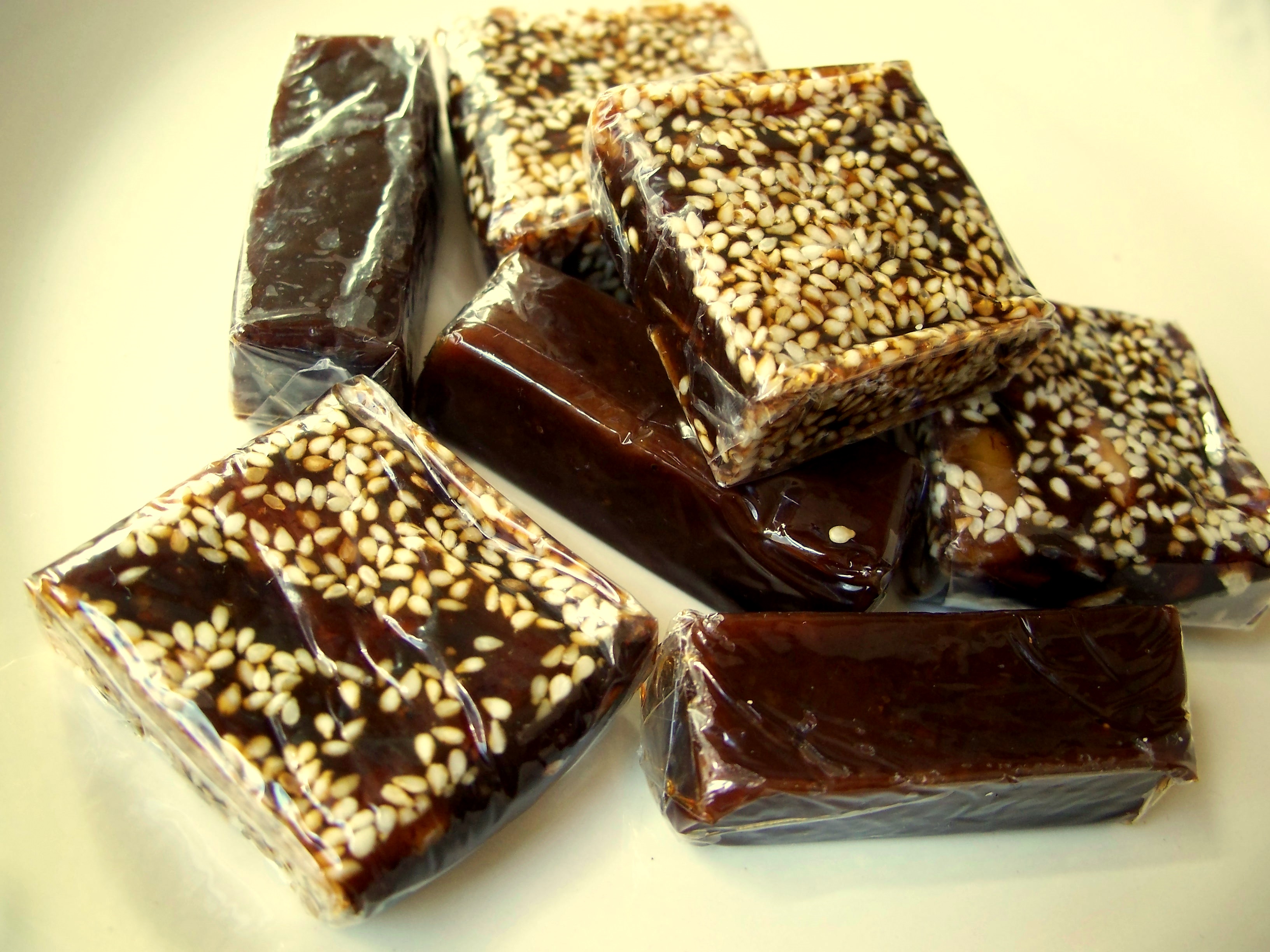
Last night I dreamed of these brown sticks in cellophane wrappers. The sound of crunchy plastic unraveled. The smooth yet sticky, dried-syrup-like surface that easily gives way to the pinch of two nails. An ever so lightly sweet, fruity, malty breath whizzing up as your nose closes in…
I woke up feeling as though there were some of those pieces melting on my tongue. But the best part of eating a banana tootsie roll, if I may call it so despite it having no relationship to theTootsie Roll, is, like with the real Tootsie rolls, the chew. You chew it and notice it get smaller, but not any less sweet or less gummy. And it’s only as sweet as a just ripe banana, yet with an alluring touch of coconut.
The chewy banana candy is a Mekong delta specialty, where siem bananas grow more easily than rice. The stout, dense, supple bananas either make their way into che, bread pudding, wrapped and grilled in sticky rice, flattened and sun-dried, or cooked in some recipes that are only passed down from mothers to daughters. I just know that whenever we traveled to or a friend of the family came back from the My Tho, Ben Tre region, I got a bag of keo chuoi – banana candy (pronounced somewhat like |keo jui|), or keo dua (|keo yua|) – coconut candy. Banana candies are less sweet and less strenuous to the jaw than the coconut ones; some are coated with roasted sesame seeds, some contain crushed peanuts or ginger bits, but I like the plain, pure, consistent banana kind the best.
– Keo Chuoi (banana chewy candy) –
Ingredients
– 3 bags of whole dried bananas
– 1 coconut
– 1 ginger root, roasted and crushed peanuts (if you like some texture variation)
– Sugar, 1 tsp lime juice
– cellophane candy wrapper
Slice thinly the dried bananas, coconut, and ginger. Stir banana and sugar in a skillet on low heat (add at least half as much sugar as banana), add coconut (and ginger if wanted), stir constantly to avoid them burnt. Add lime juice to keep the mixture gooey. Add peanuts when the mixture is homogeneous and start to harden. Take out, flatten and smoothen the surface (add a sesame coat now if you want), wait until cool then cut and wrapped in cellophane wrappers.
If you can’t find dried bananas, try using a blender to mix banana, coconut, and ginger together, and do every subsequent step the same way.
(Recipe not yet tried :-P, translated from Vietfun)
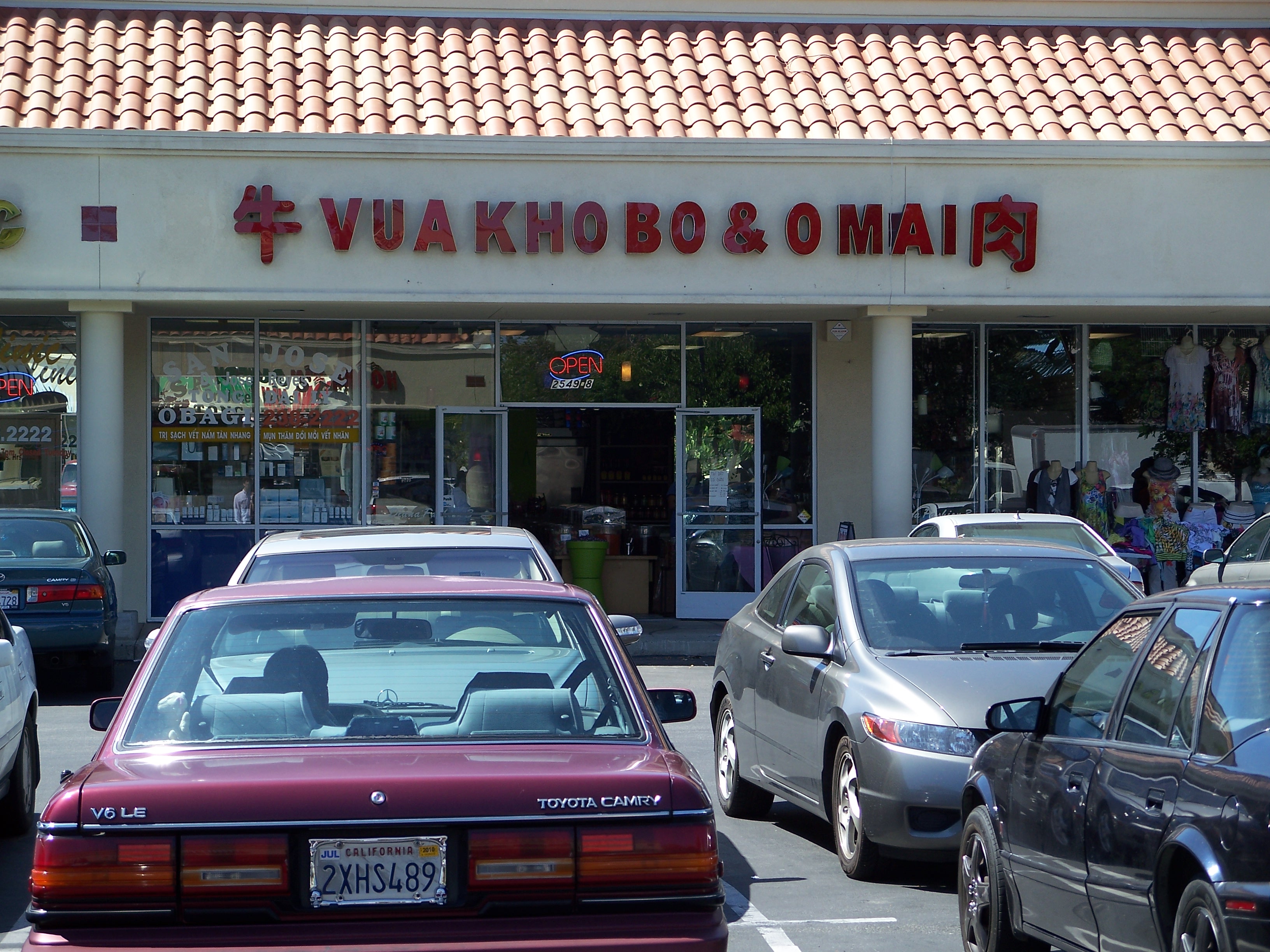
Ze kwik-n-easy vay: Vua Khô Bò & Ô Mai (loosely translated: “King of Beef Jerkies and Dried Huamei“)
2549 S King Rd #A-B
San Jose, CA 95121
(408) 531-8845
Raise your hand if you’ve ordered dessert at a Vietnamese restaurant. What? Vietnamese restaurants have desserts? Yep, they do. But they’re always on the last page of the menu, which you never get to because you stop at number 1 – Pho dac biet (special noodle soup) or summ’n. Besides, nobody ever bothers to ask if you’d like to have dessert before they bring out your check. And besides, pho usually fills up the once empty cavity, so no more room for sugar loads. But next time it’s okay to leave some broth and some noodle behind, cuz they do have some delicious sweet deals outback. Not bubble teas.
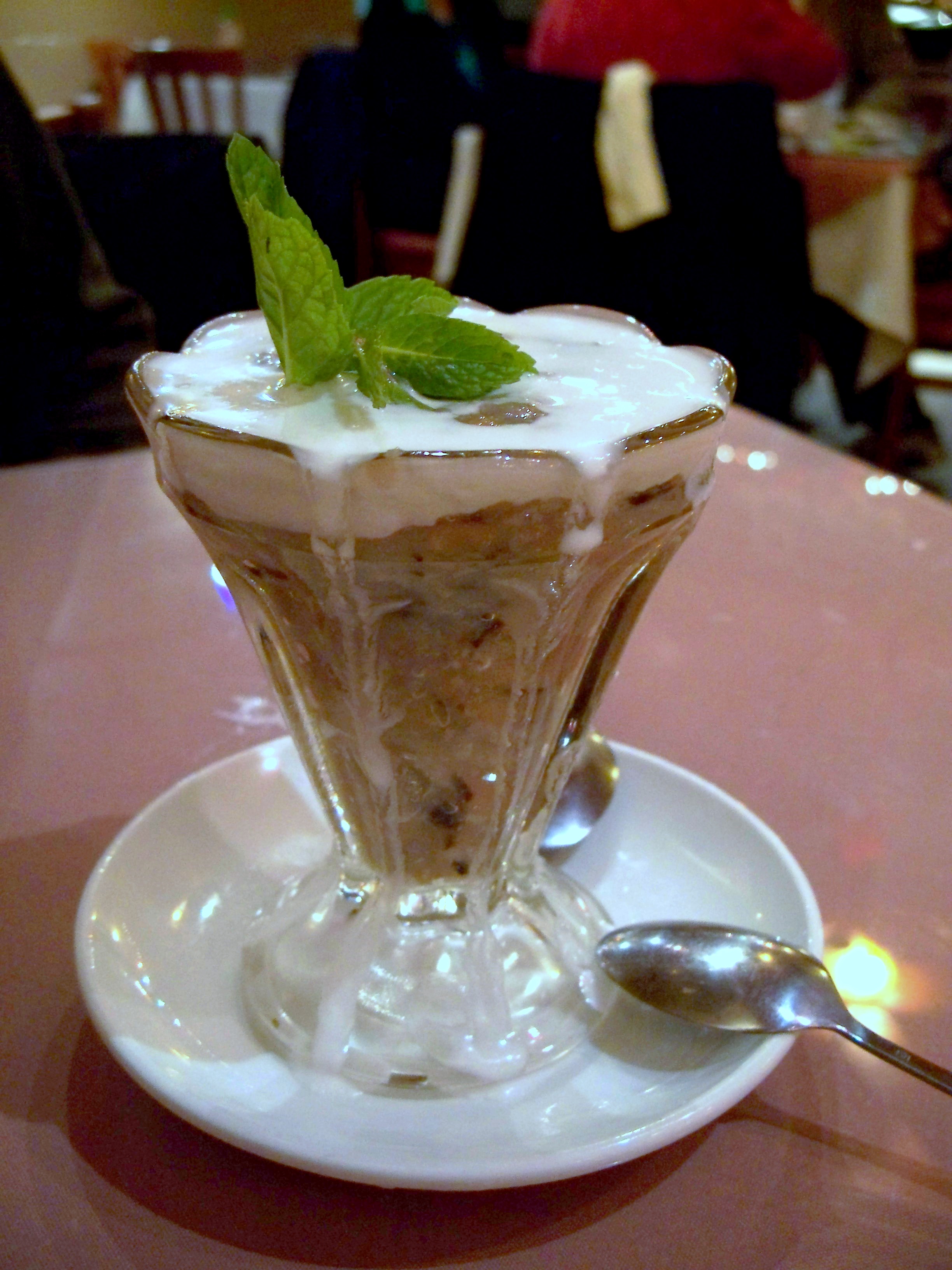
Black eyed pea che is one. Mushy, plump peas dissolve on your tongue with gooey sticky rice and coconut milk. I adore che dau trang at Kim Son and at Lee’s Sandwiches in Houston, but this beauty in a glass served at Le Regal does not disappoint either. Of course, do NOT eat the mint, as much as I’m for flavor mixings, this mint is purely a matter of decor.
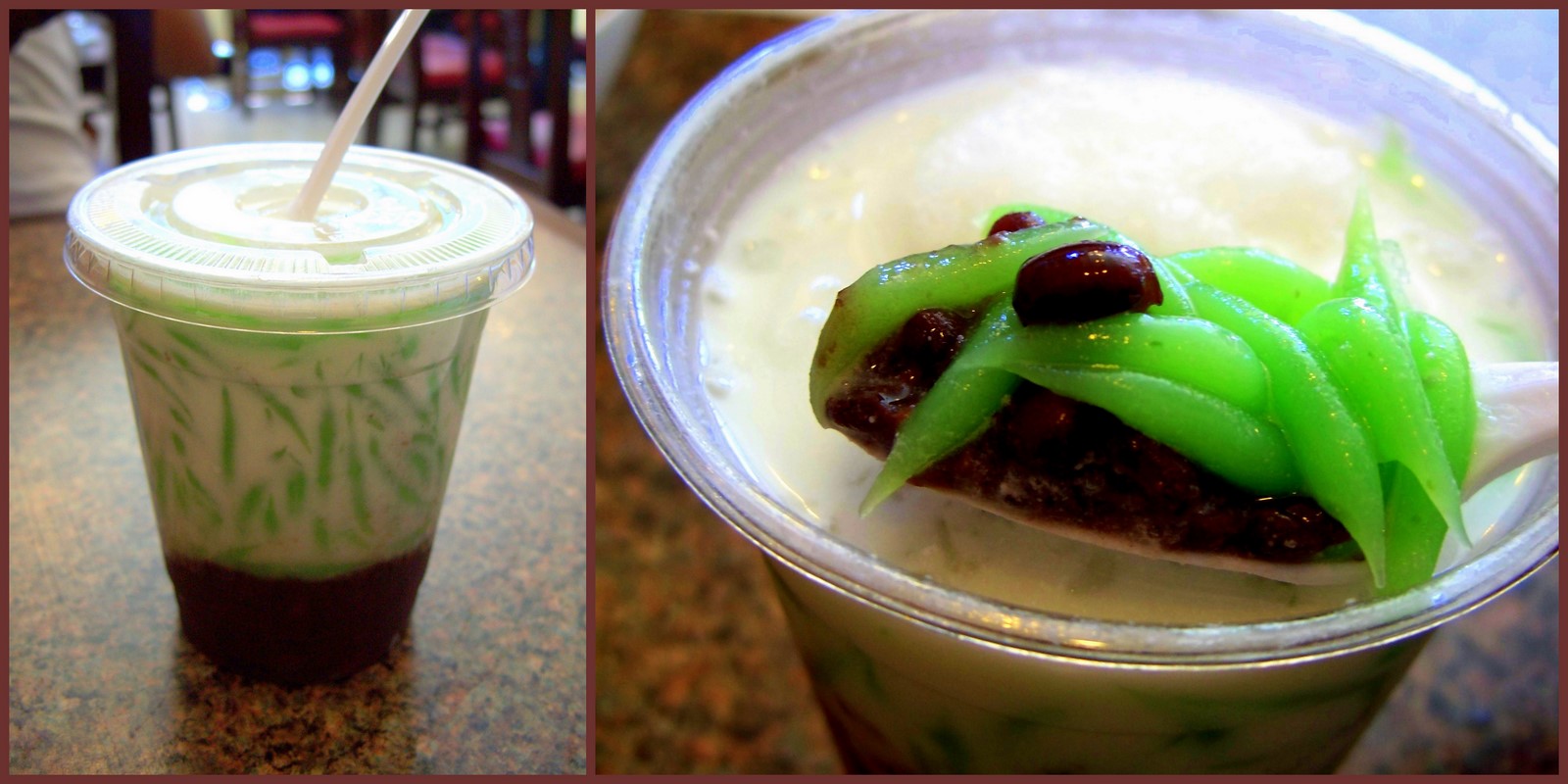
Also che, but without sticky rice is chè đậu đỏ bánh lọt: sweety sweet and mushy red bean at the bottom, bland chewy green tapioca worms floating in coconut milk and shaved ice on top. Personally I think the shaved ice can get lost because it only dilutes the coconut milk, but this chilled cup of che is more revitalizing than eating ice cream in wintry days (no sarcasm, if you haven’t tried ice cream in the cold, you’re missing out big time). Kudos to Banh Cuon Tay Ho #8 in San Jose for this beany treat.
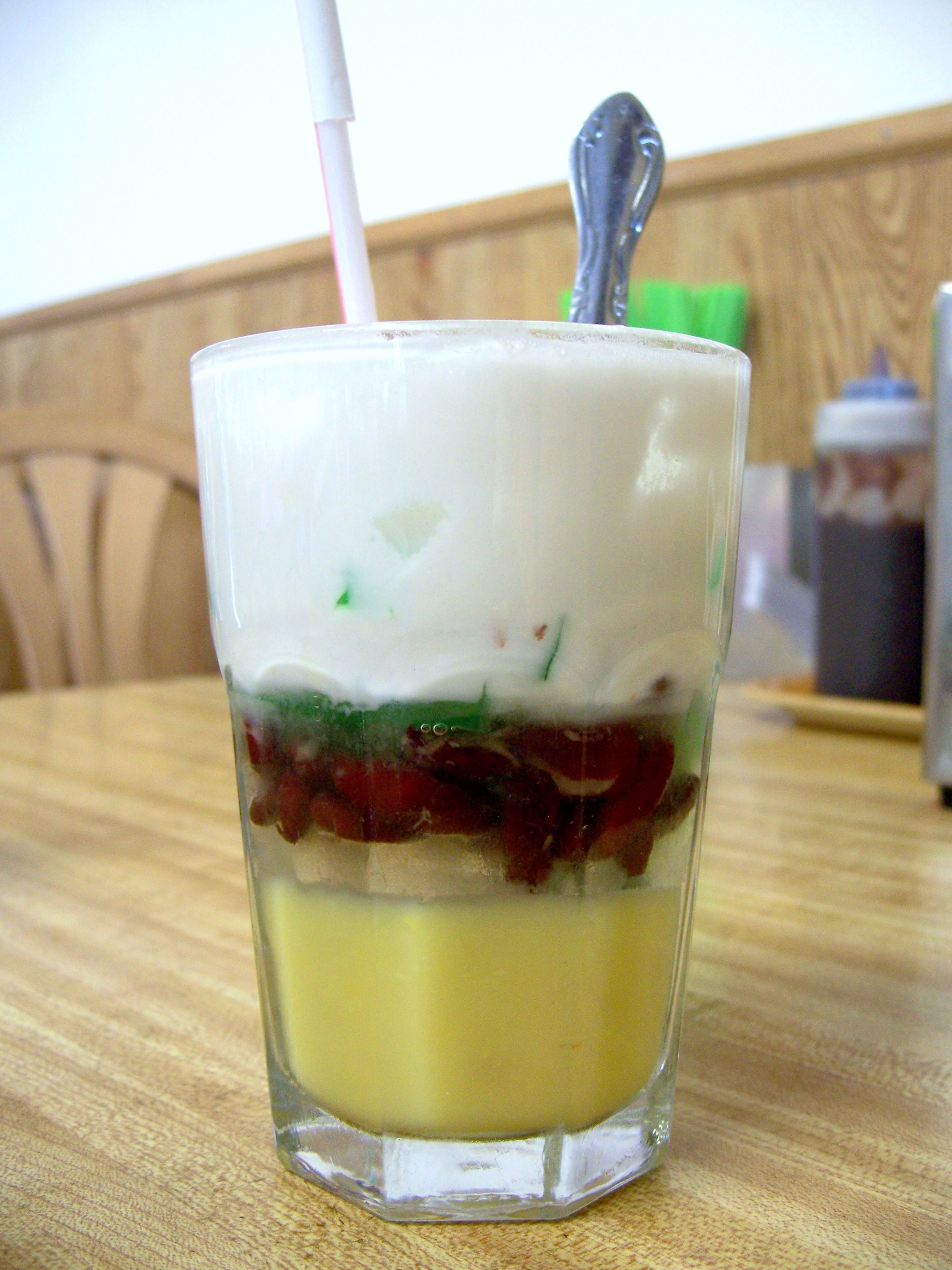
Yet another che. You got it, there’s coconut milk :-P. I can’t quite figure out why Phở Hòa Lão II (Oakland) probably calls this thing chè ba màu, or tricolored che, where it actually has four colors: yellow of mung bean paste, red of red beans, green of tapioca, and white of buttery coconut milk, unadulterated by ice as the che is refrigerated. The only complaint would be its capability to fill me up for hours for only $2.10.
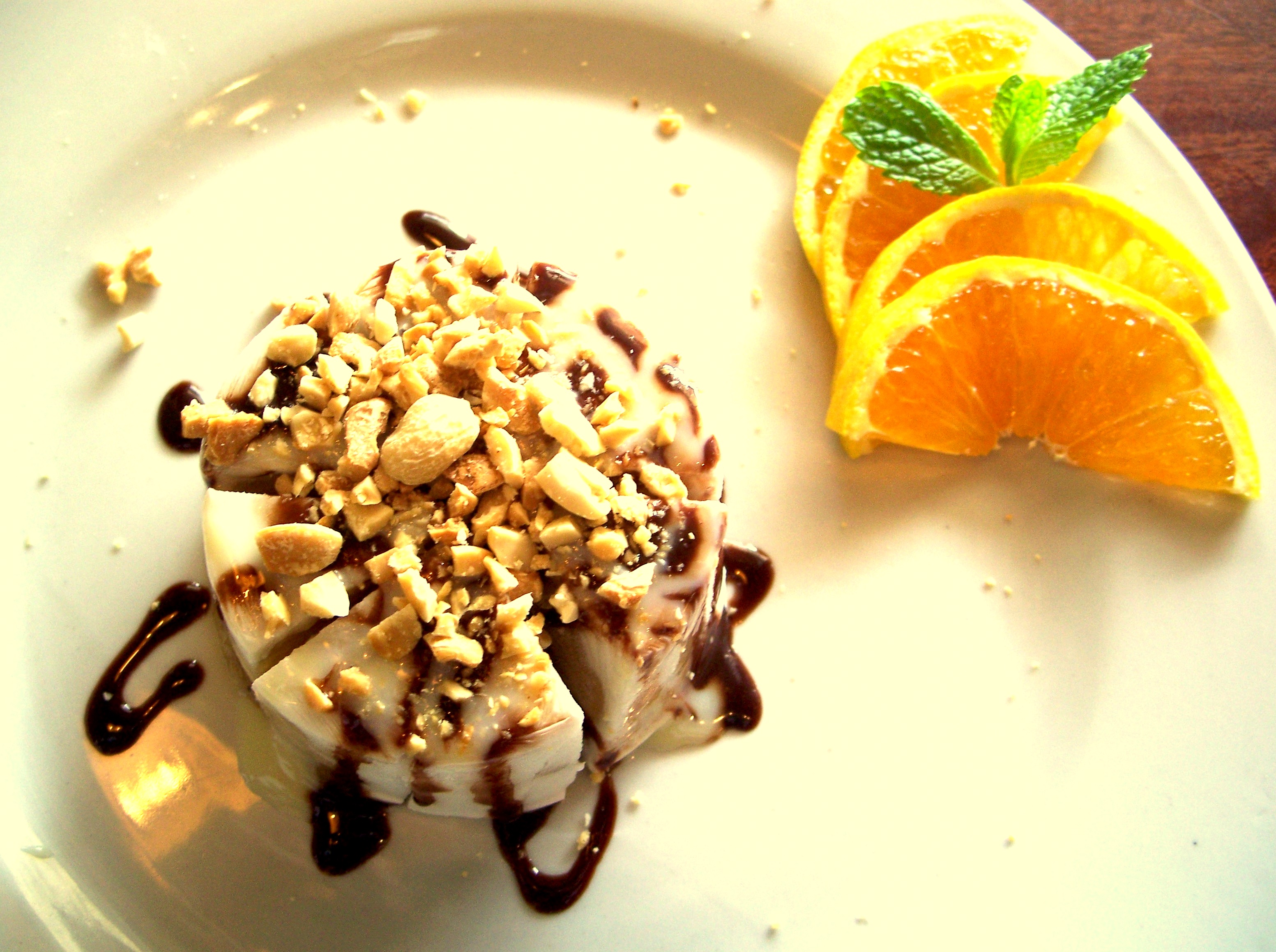
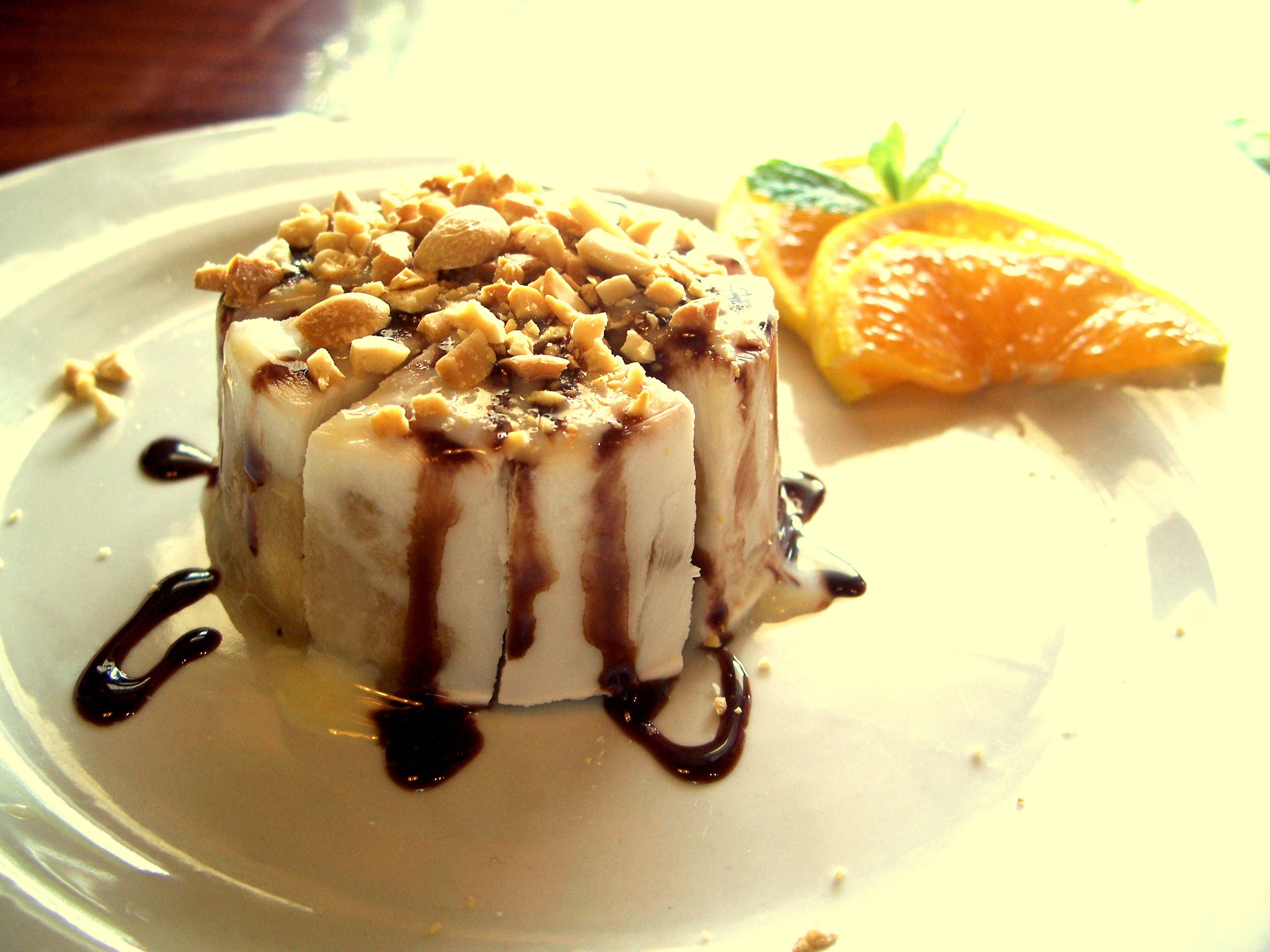
Desserts at Binh Minh Quan cost slightly more, ranging from $3-5 each, but they also have more than just che. This beautifully crafted block of kem chuoi (frozen banana) is a three-buck wow-er: sliced banana with coconut milk hardened together, drizzled with chocolate syrup and crusted with ample peanut bits. The icy salty sweetness sends shivers down my spine.
Bánh Cuốn Tây Hồ #8 (San Jose)
2895 Senter Rd
San Jose, CA 95111
(408) 629-5229
Le Regal (Downtown Berkeley)
2126 Center Street
Berkeley, CA 94704
(510) 845-4020
Bình Minh Quán (Oakland Chinatown)
338 12th St
Oakland, CA 94607
(510) 893-8136
Phở Hòa Lão II (Oakland Chinatown)
333 10th St
Oakland, CA 94607
(510) 763-8296
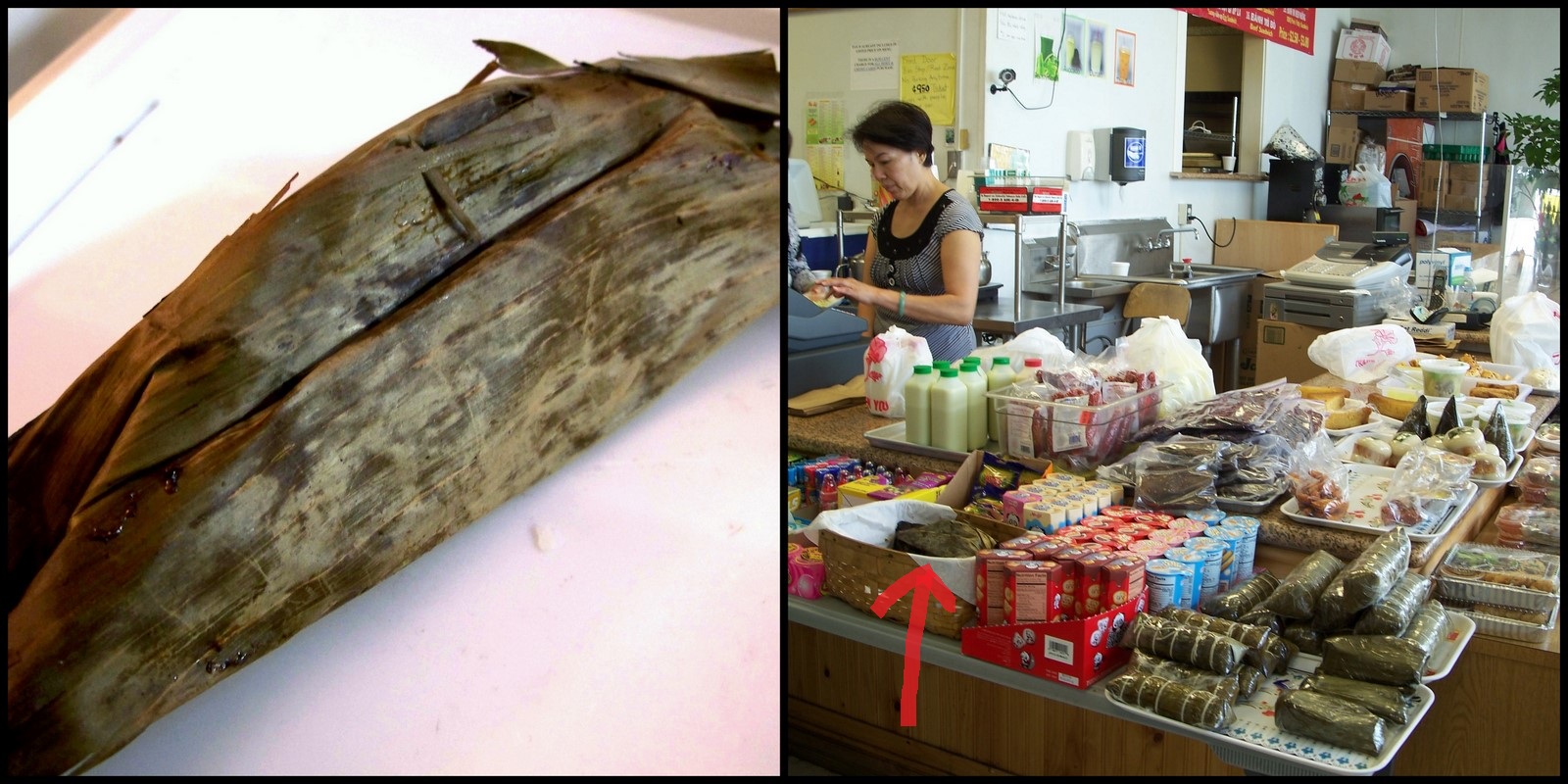
They all look the same. A myriad of things wrapped in wilted banana leaves sitting on the counter at a banh mi shop. Few patrons seem to notice the snacks as they occupy themselves with sandwich orders and the more meal-like rice or noodle to-gos, so much to the extent that the sellers too have little interest in selling their counter treats. Humbly, I point to these slender, charred and dry parcels piled in a box near the Pockys and inquire about their name. The hostess throws me half a glance infused with boredom, “Chuối nướng,” she moves her lips. So “grilled banana” they are.
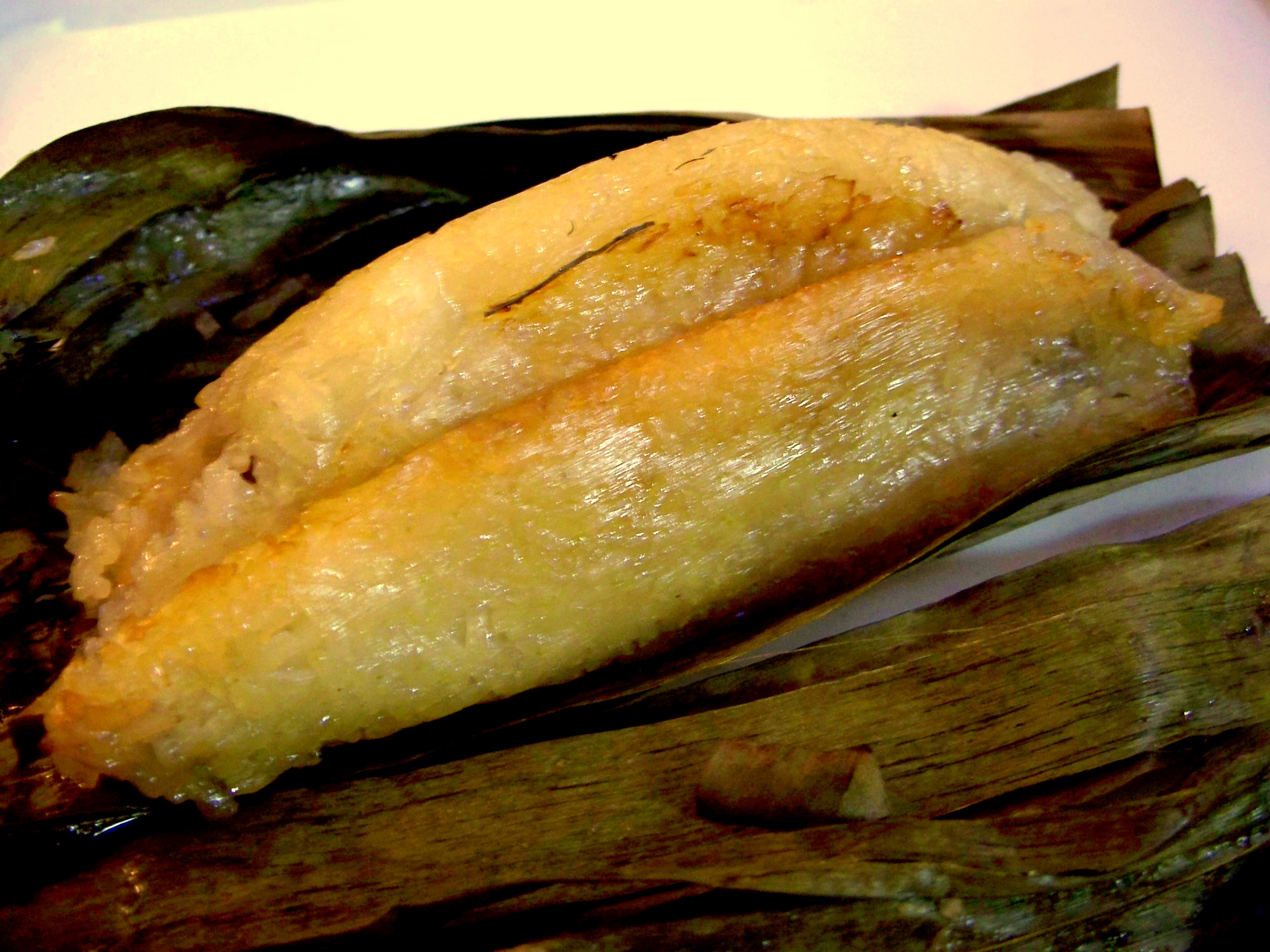
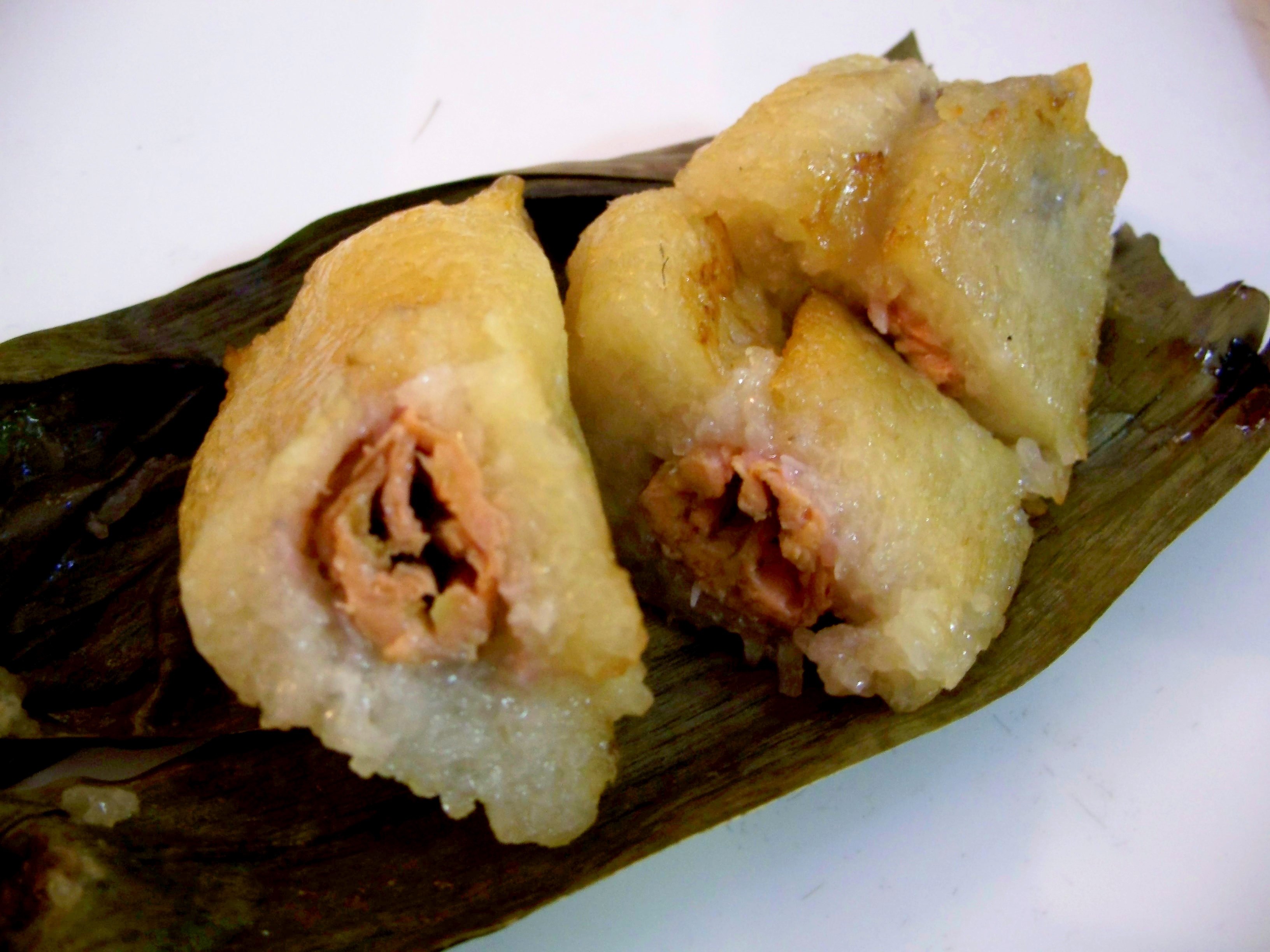
It takes an utterly simple form: a banana inside a sticky rice shell inside a banana leaf, charcoal grilled. Crispy, then chewy, then gooey sweet it goes as you sink your teeth through the bounteousness. It’s the factoriless meatless corn dog sans wooden stick of Southern Vietnam. Children would wait around old grandmas in the ‘hood to watch them grill the banana dogs and drool; adults would grab the banana dogs for breakfast, lunch, or late night snack when a wind chills and the grill warms.
It’s one of those things that can’t go wrong. Some cook the sticky rice plain, then serve the grilled dog sectioned and bathed in coconut milk with a pinch of sesame salt or peanut salt. Others do it My Tho style: the sticky rice is cooked in coconut milk and later mixed with coconut shavings before wrapped and grilled. Many cloth their nana dogs with just a band of nana leaf, mainly for easy handling of the sticky rice on the grill and near other dogs, but the dogs get crispier too. Meanwhile, Ba Lẹ ladies bundle up their dogs like they would with bánh tét, less charred, more aroma from the leaves.
Like banana bread pudding, banana dogs are exclusively made with chuoi su, a solid, stout, dense and white banana that grows like weed in the Asian tropics but is nonexistent in the States. The sad substitute Cavendish lacks consistency and sweetness and gooeyness. Yet, chuối nếp nướng still hits the spot like waltzing in the rain.
These nana ricewiches, as Noodlepie lovingly nicknamed, were 2000VND a steal (~10 US cents with the current exchange rate) in 2005. In 2007 the Gastronomer took the bite for 3000VND. I have no idea how much they cost now on the Saigon streets, with crazy inflation it might just be 10000 for all I know. But here at Bánh Mì Ba Lẹ in Oakland, nana dogs will go home with you for $1.75 each.
Address: Bánh Mì Ba Lẹ (East Oakland)
1909 International Blvd
Oakland, CA 94606
(510) 261-9800
“Are you giving Thanks?”, asks Der Miller. I should. It is my first independent Thanksgiving. There will be no turkey, not because they’re not that tender but because it’s cruel to take their lives on the day that everyone else celebrates. There will be no green bean casserole or sweet potato with marshmallow, not because I’m lazy but because I have no oven. There will be no cranberry sauce or stuffing, for no shining reason. I’ll just make the one thing that is both simple and not ramen: bún xêu.
Over 2000 years ago lived a king in a foreign land, who ordered his royal kitchen staff to prepare a party to welcome his future son-in-law from another foreign land. Naturally the king wanted a feast with national specialties, which included a type of rice flour pastry with sweetened mung bean paste. The flour had to be made in the morning of the same day to avoid it turning sour, and one young kitchen helper, who probably liked to get up early as much as I do, was in charge of preparing the batter.
Instead of mixing rice flour and water in a bowl, the half-closed-eye boy happened to use a strainer instead, which, fortunately, was placed on a pot of boiling water. When he realized what was going on, the needed pastry batter had long turned into fine strings of rice noodle. The chef caught the boy’s mistake, but sympathizing with his weariness, told him to pick some herbs in the garden and use fried lard pebbles to make stir fried noodle for the kitchen staff’s breakfast. In that season, only water celery was in abundance.
A servant of the king dropped by the kitchen to check on the preparation process, and was charmed by the aroma of water celery and lard. He asked for the dish’s name. The chef, panicked by the boy’s mistake, intended to say “xào” (|xao|, “stir fry”) but mispronounced it into “xêu” (|seh-oo|). The servant took a taste, liked it, and ran off to tell the king about a new creation named xêu, then the king went to the kitchen to try it himself. This is when matters really got out of Kitchen Boy’s hands: xêu was ordered to be served at the party that day.
Over 2000 years later, bún xêu, however so simple, is still considered a historically valued specialty of the Cổ Loa Citadel region, just 20km north of Hanoi today. The creation of rice vermicelli (“bún”) would not have happened in Northern Vietnam then, had the kitchen boy not been drowsy, the chef not sympathetic and creative, the servant not curious, and the king not open-minded. And so it goes the story of bún xêu. 🙂
The main ingredients:
– Rice Vermicelli (sold at Asian markets with the label “Bún Khô“)
– Celery (good luck finding water celery im Supermarkt, so the normal chubby stalks are quite alright), sliced into finger long sticks.
– Lard, or Cooking Oil
– Salt, Pepper, Sugar
The supporting roles: Onion, Garlic, Mushroom, Green Onion, Coriander, Egg, Soy Sauce or Fish Sauce.
Blanch the bun and set aside. Make a thin omelet, set aside till cool, slice into strips. Sautee the garlic, onion, sliced mushroom, celery, and green onion (in that order), add a little bit of water, season to taste.
Now you have two choices:
1. Add the bun into the veggie skillet and spatula it like mad until everything entangles together. Re-add seasonings to taste. Pro: stuff mixes well. Con: your bun can get mushy, stick together, and be shortened to the size of rice grains. It all depends on how mad your spatula skill is.
2. Put a wad of bun on a plate, scoop some mixed veggie and sauce onto the bun, and mix while you eat. Pro: long noodle strands preserved, chewiness preserved. Con: it’s not really “bún xào” if the “bún” wasn’t “xào” (stir fried).
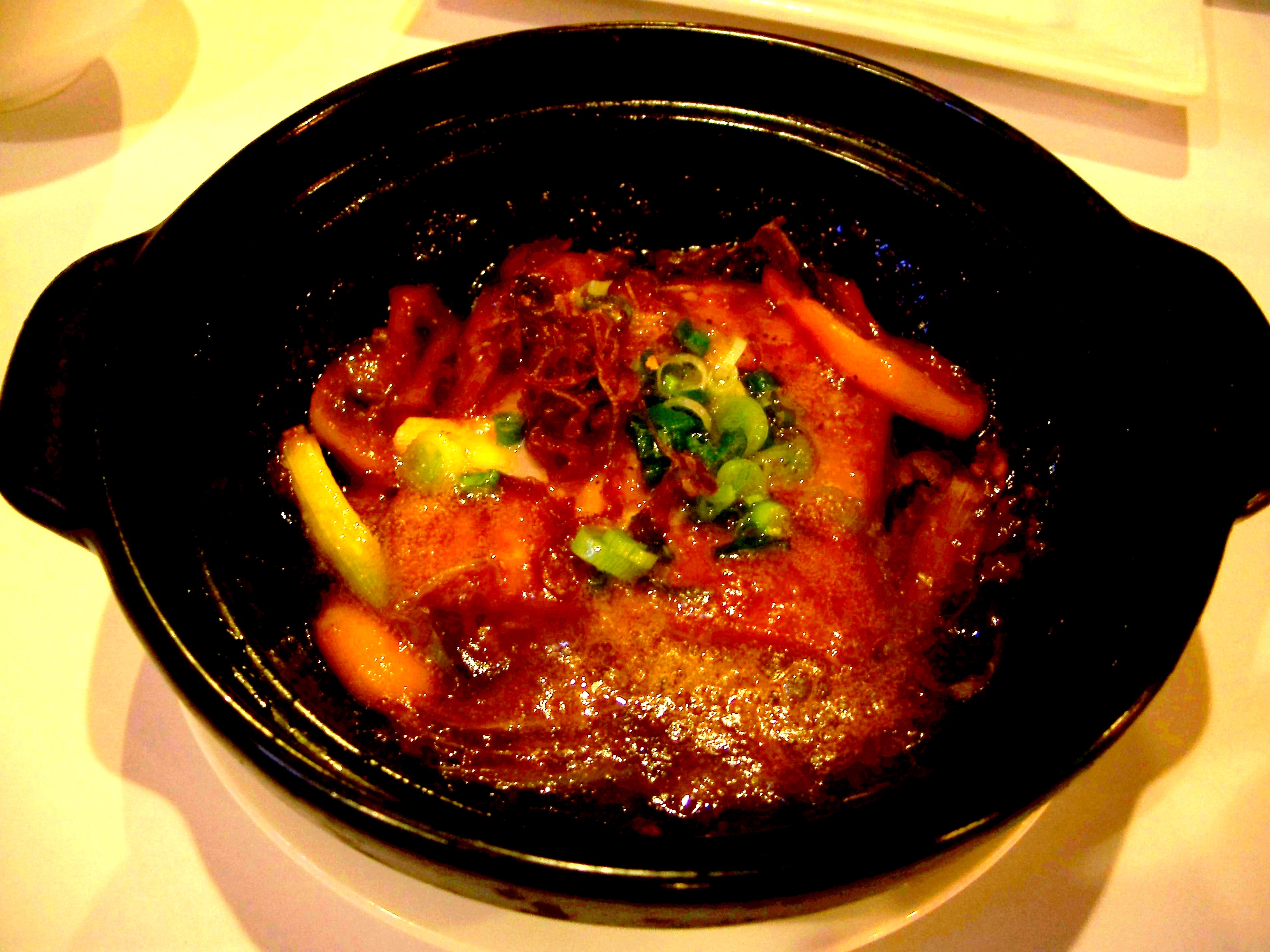
The red snapper at Anh Hong Berkeley is thoroughly coated with caramelized sugar and fish sauce, but its flaky flesh stays dry like terracotta tiles. The seawater has rooted too deeply in each fiber to blend with the sweetness. Salmon would be even worse.
Experience says bitter lá lốt can be tamed, but only fresh water fish, like catfish, can make a clay pot sing.
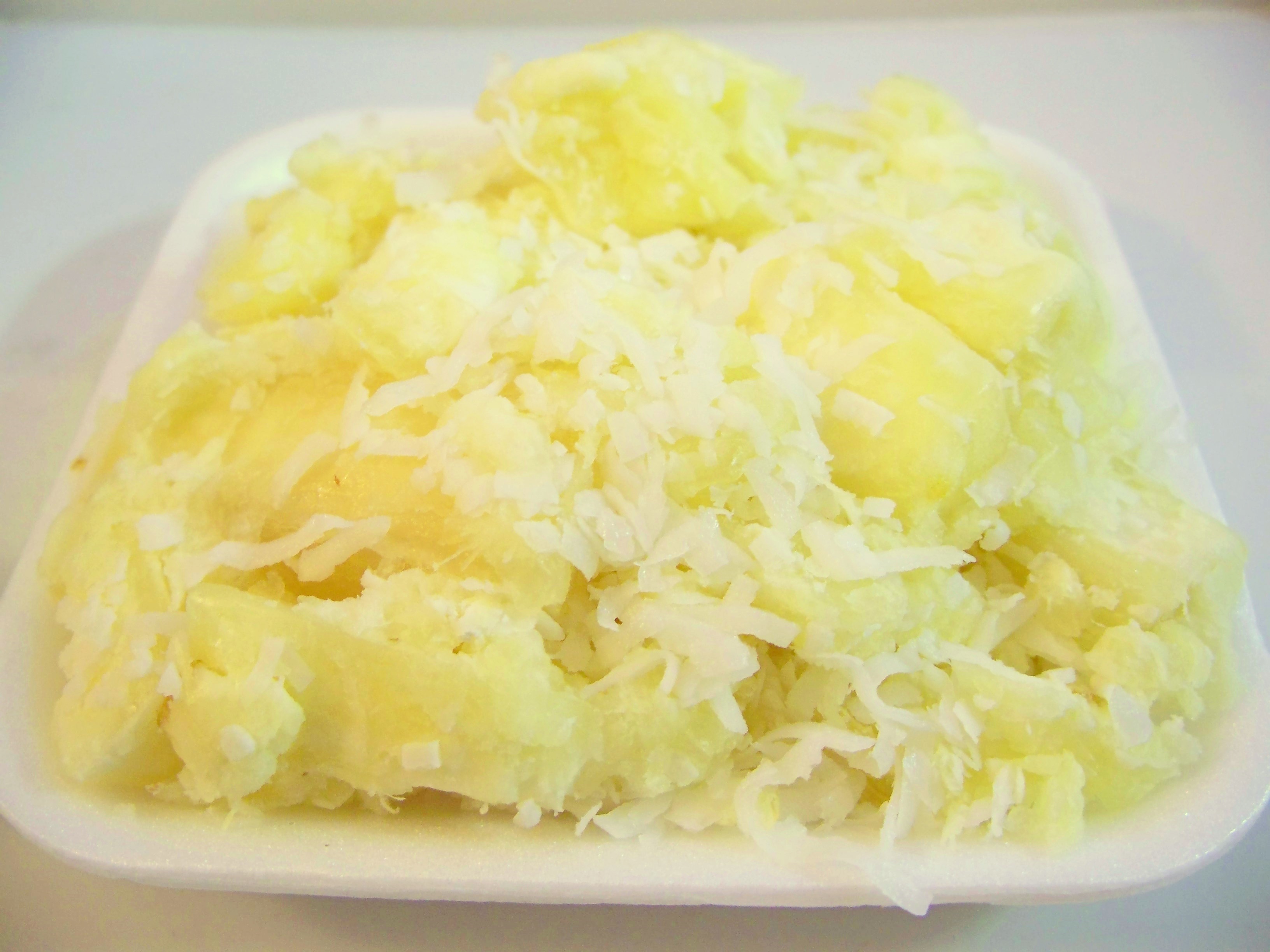
My mom is a skeptic about street snacks, most of the time because of the fingers handling them, but this thing passed. Like xoi, it should always be served hot right out of the steamer. Cool it down with a few blows of air and hurry it in the mouth; it may be wet and chewy, or it may be floury and nutty. But it’s distinctively cassava.
Back home, khoai mì hấp (steamed cassava) is among the cheapest Saigon street scoffs, because khoai mì (cassava root) is cheap (2000VND/kg these days, about 5 cents/lb), and the making is beyond simple. You boil the roots, then keep it warm and moist in a steamer. Unlike banh bao vendors, you keep the lid open to let out burly rolls of steam and invitation. The cone hat ladies sometimes add pandan leaves in the water, those ivory chunks then smell as sweet as spring rains. A customer comes, you scoop him a few palmfuls into a nylon bag and forget not the coconut shavings and the classic salt-sugar-sesame mix. A true street scoffer would eat with his fingers, probably holding the thick center string (the root’s woody cordon) to nibble on without touching its hot flesh.
I mix salt, sugar and my memory of what steamed cassava should taste like into the $1 prepackaged clump at Bánh Mì Ba Lẹ in Oakland, after microwaving it for one minute. The roots are dry and flavorless, probably out from a frozen section. But I taste only my younger days.
Address: Bánh Mì Ba Lẹ (East Oakland)
1909 International Blvd
Oakland, CA 94606
(510) 261-9800
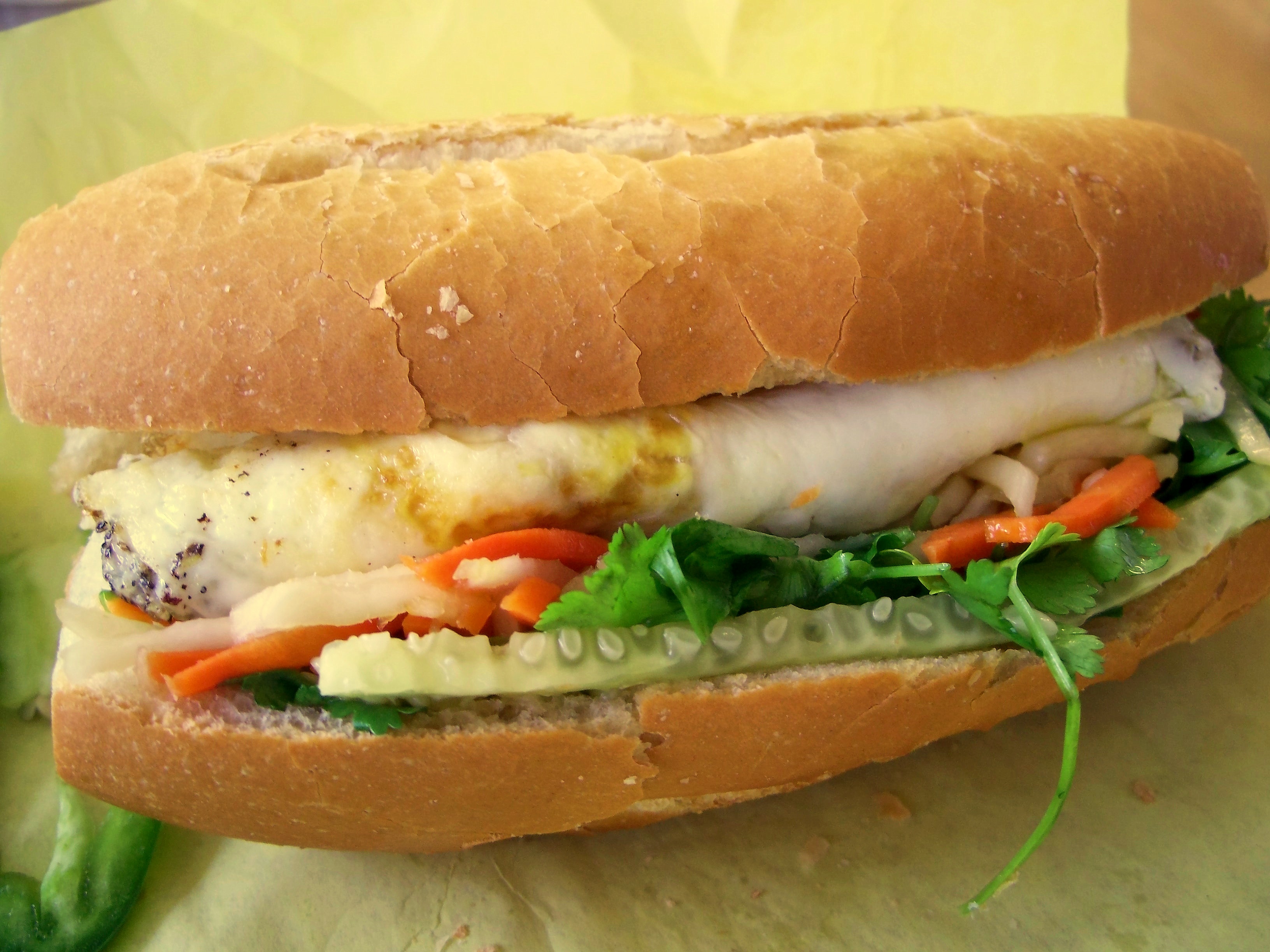
Must have been at least seven years since I had a bánh mì ốp-la (bánh mì with sunny-side-up egg). Most Vietnamese sandwich stores in the States don’t put eggs in their breads, but ốp la (probably a strayed pronunciation of “omelette” in French colonial days) is the most common type of bánh mì stuffing you can find on the streets in Vietnam.
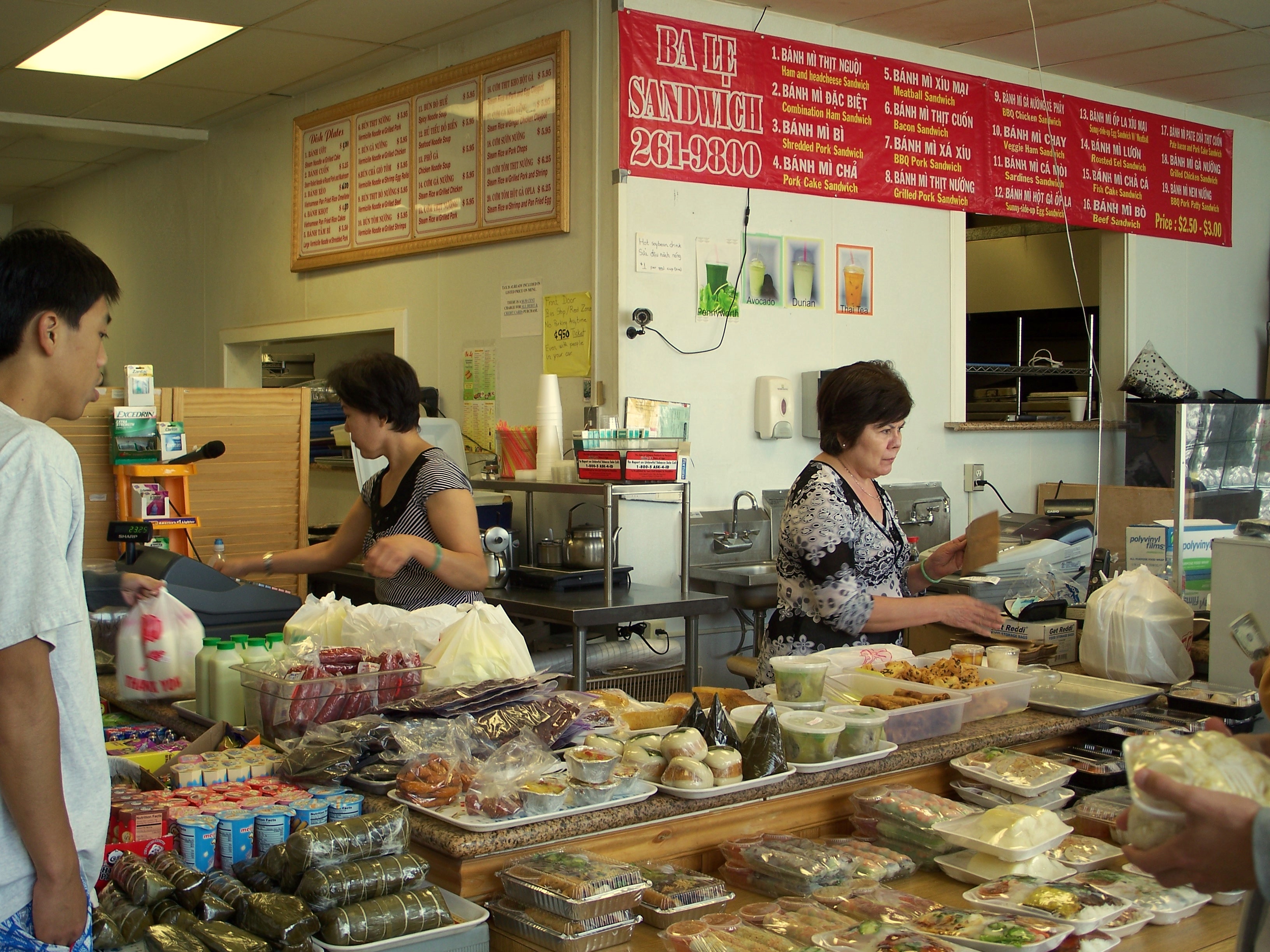
This store contains as much variety as twenty street food stalls: about 15 kinds of banh mi, with meats, pate, vegetarian, and even sardines (cá mòi), ranging from $2.50-$3 each. Then there are bò kho, bún bò, bánh cuốn, rice plates, bánh dầy, bánh tét, and a thousand other things. Thank god there is no phở here.
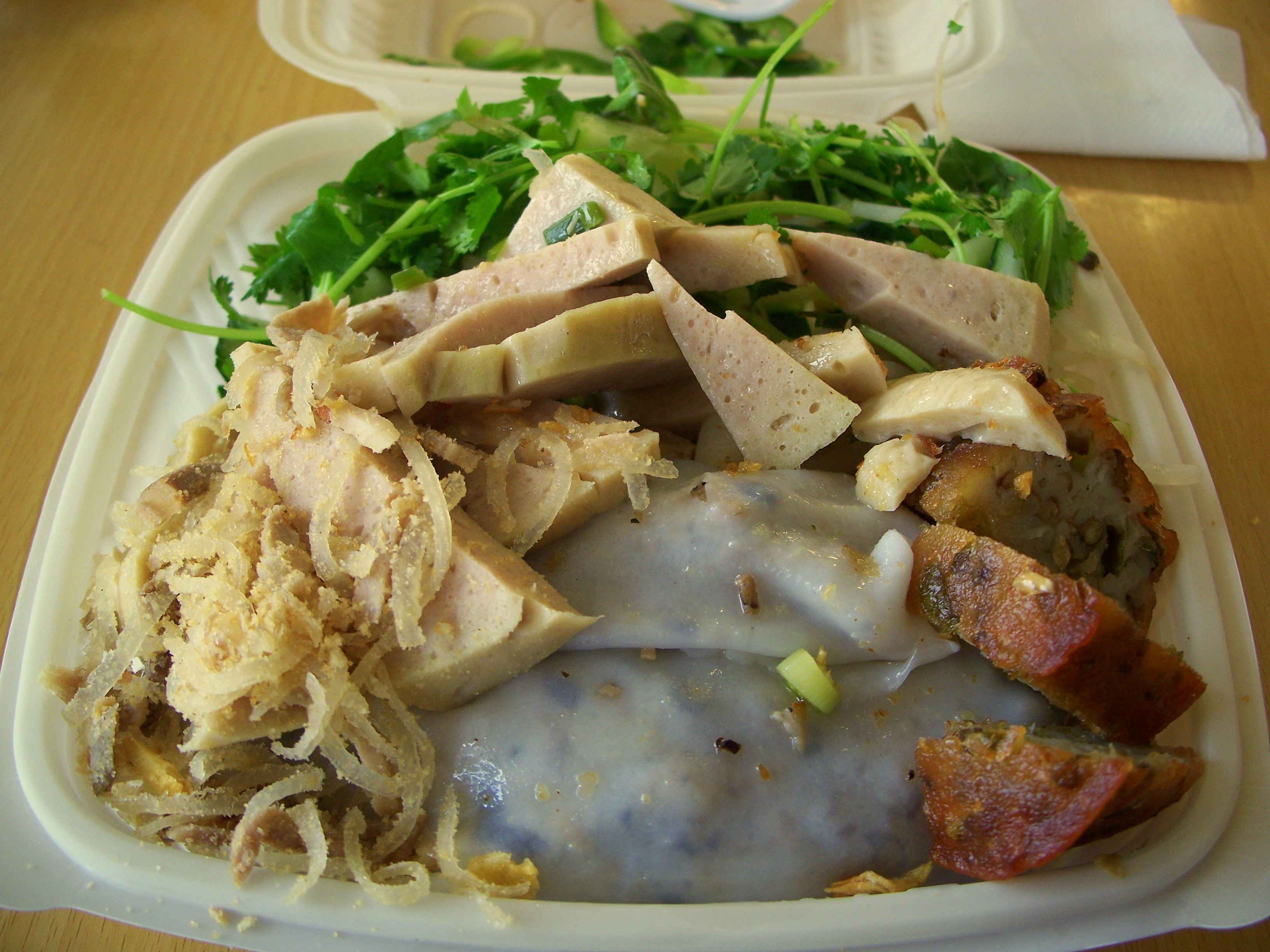
Ba Lẹ’s bánh cuốn comes with a garden, finger-thick cuts of chả lụa, and cubes of deep fried mung bean batter named bánh cóng. It’s not as good as the shrimp-and-sweet-potato tempura accompanying Tây Hồ‘s bánh cuốn, but it has a lot more rolls than Tây Hồ’s for a lower price. Tây Hồ still has the best rolls, but these are good too. Except they aren’t pre-halved in length. Oh well. Sloppiness is street-foodieness.
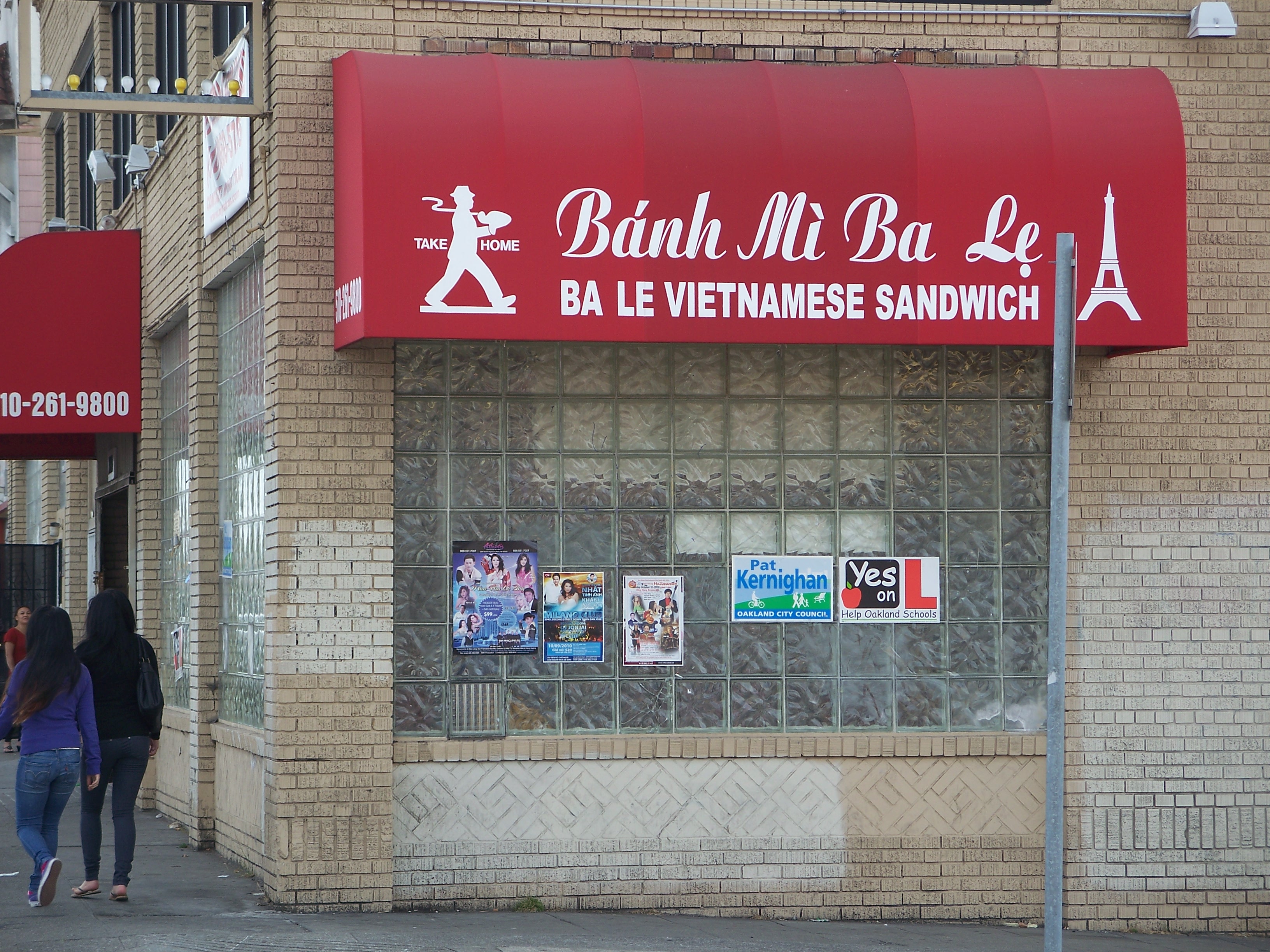
The location is less than appetizing to the eye. On rainy days, you see worn down bricked alleys with puddles. On dry day, you see worn down brick alleys with unkempt people. The buildings are old, the paints have faded. But the steady flow of customers even on rainy days confirms that Ba Lẹ isn’t just a name from the pre-1975 Saigon. It’s one of those real banh mi’s.
Address: Bánh Mì Ba Lẹ (East Oakland)
1909 International Blvd
Oakland, CA 94606
(510) 261-9800