Flavor Boulevard

We Asians like to talk food.
Subscribe

Archive for the ‘sweet snacks and desserts’

one bite: Miyuki sweet

November 01, 2011 By: Mai Truong Category: California - The Bay Area, Japanese, One shot, sweet snacks and desserts


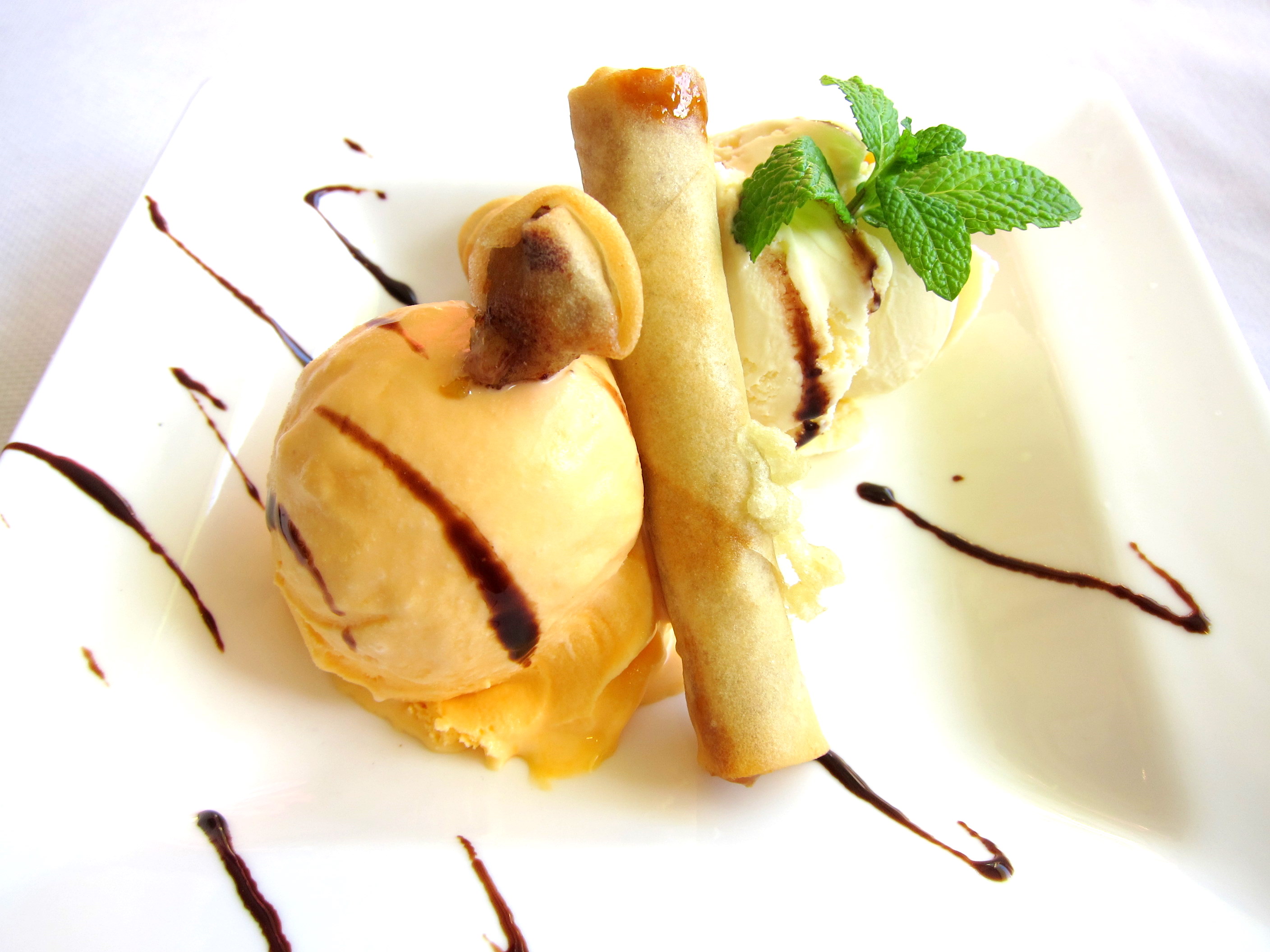
Who goes to a sushi and donburi house to get dessert? Me. It got it all. Tropical, fried, icecreamy, salty, nutty, fruity. It’s the dessert of Miyuki.

Miyuki sweet: eggroll filled with banana and pine nut to pair with vanilla and mango ice cream. Ah, and a dash of chocolate syrup, of course.

Address: Miyuki
1695 Solano Avenue
Berkeley, CA 94707
(510) 524-1286

More Asian post-rice desserts: banana “ice cream”, bean pudding and bean shaved ice

Lunar August 15

September 12, 2011 By: Mai Truong Category: Korean, One shot, sweet snacks and desserts, Vegan


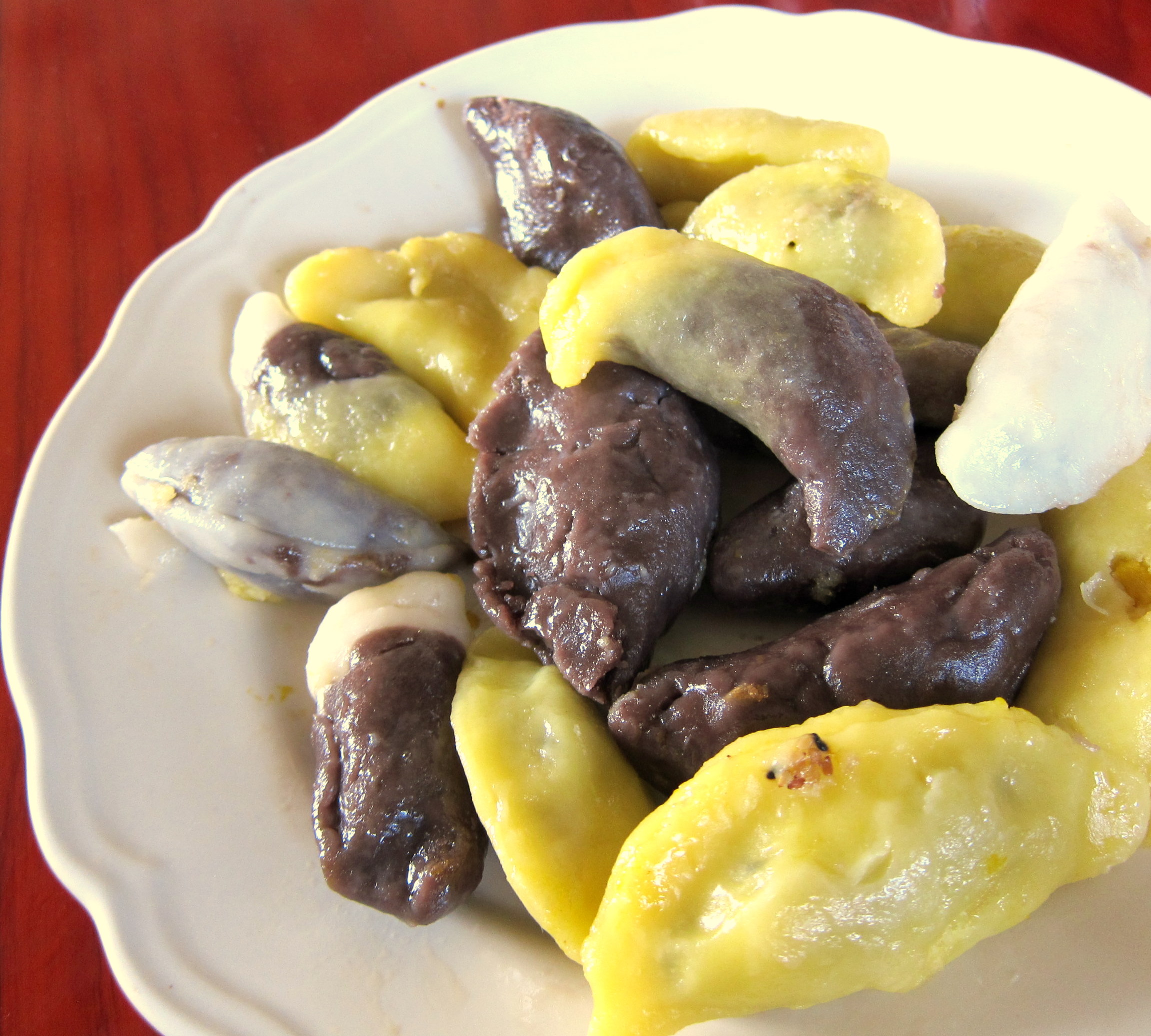
Yesterday Yookyung and I made songpyeon (송편), japchae, bindaetteok (mung bean pancake), dotorimuk (도토리묵 acorn jelly) and 5 kinds of jeon (battered fried vegetables and seafood in this case). Actually, Yookyung prepared everything, I was just making a few bad looking songpyeon and flipping some jeon in the skillet, but I felt so Dae Jang Geum. 😛 What did I contribute to the festive dinner? Four baked red bean mooncake. Yookyung liked them. 🙂

Then in my Korean class this morning, Chang seonsengnim gave each of us two songpyeon, smaller than our homemade version but prettier, one filled with sweetened sesame seed and the other with mung bean paste. Life’s good.

Songpyeon is kinda like bánh dẻo (literally, “chewy cake”) bánh ít trần in Vietnam, steamed, chewy, and a tad sticky, but because they’re so much smaller than bánh dẻo bánh ít, they don’t get repetitive and overdosing as quickly. They’re also not as dense as the baked mooncakes. They’re cute.
Happy Chuseok! Happy Trung Thu! 🙂

Tags:

Cafe Eccell – Dessert menu, please?

August 11, 2011 By: Mai Truong Category: sweet snacks and desserts


Are there sit-down restaurants that you would go out of your way to just for the dessert? When I’m in Berkeley, I would stroll down Shattuck for Herbivore’s coconut ice cream and rhubarb pie. When I’m in Houston, I would drive 2 hours to College Station for Eccell‘s bread pudding. Crazy, you say? Well, 😀 I blame Beverly for recommending Eccell, I blame my parents for spoiling me, and most of all, I blame myself for sometimes being unreasonably particular about food.


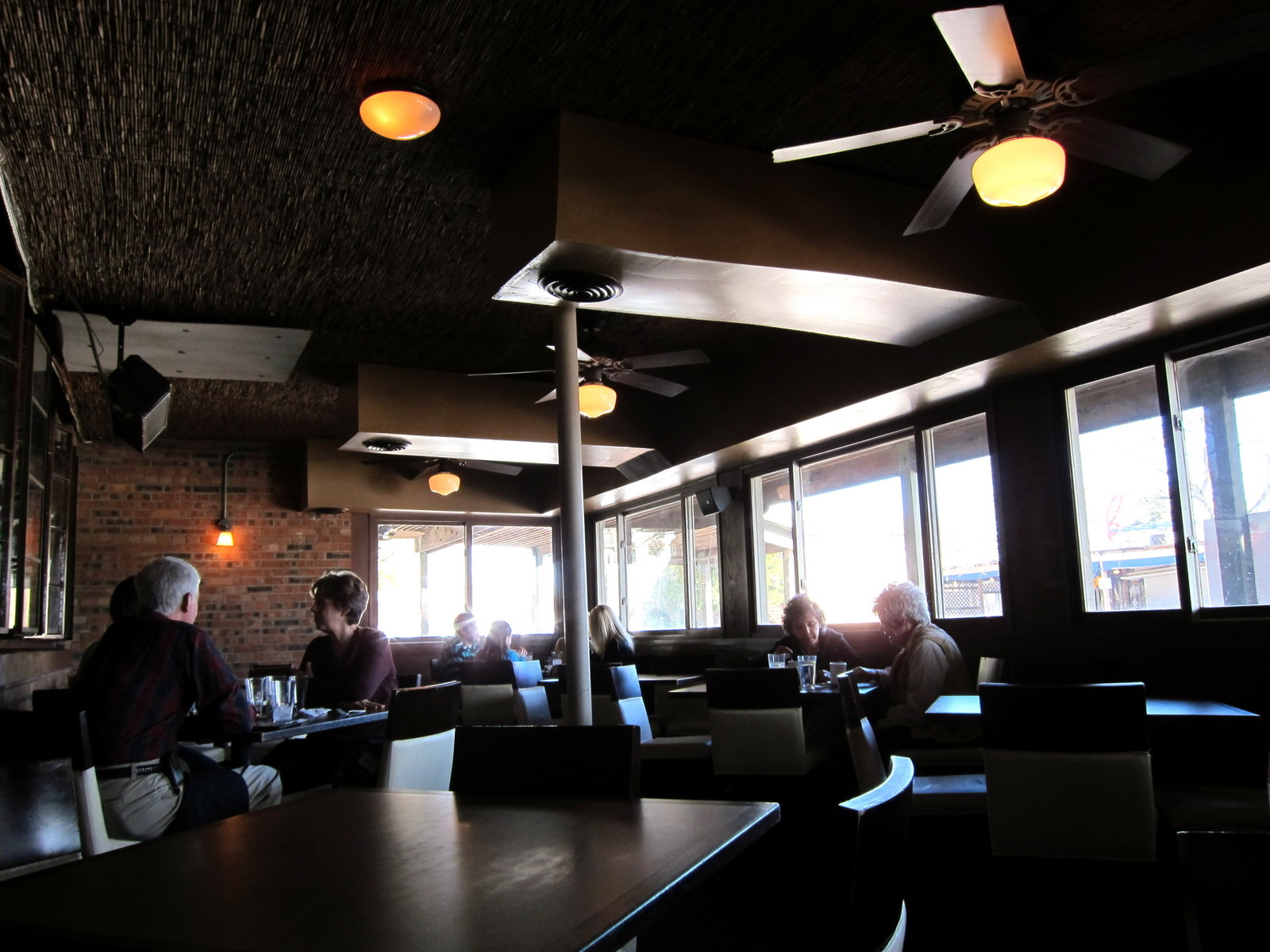
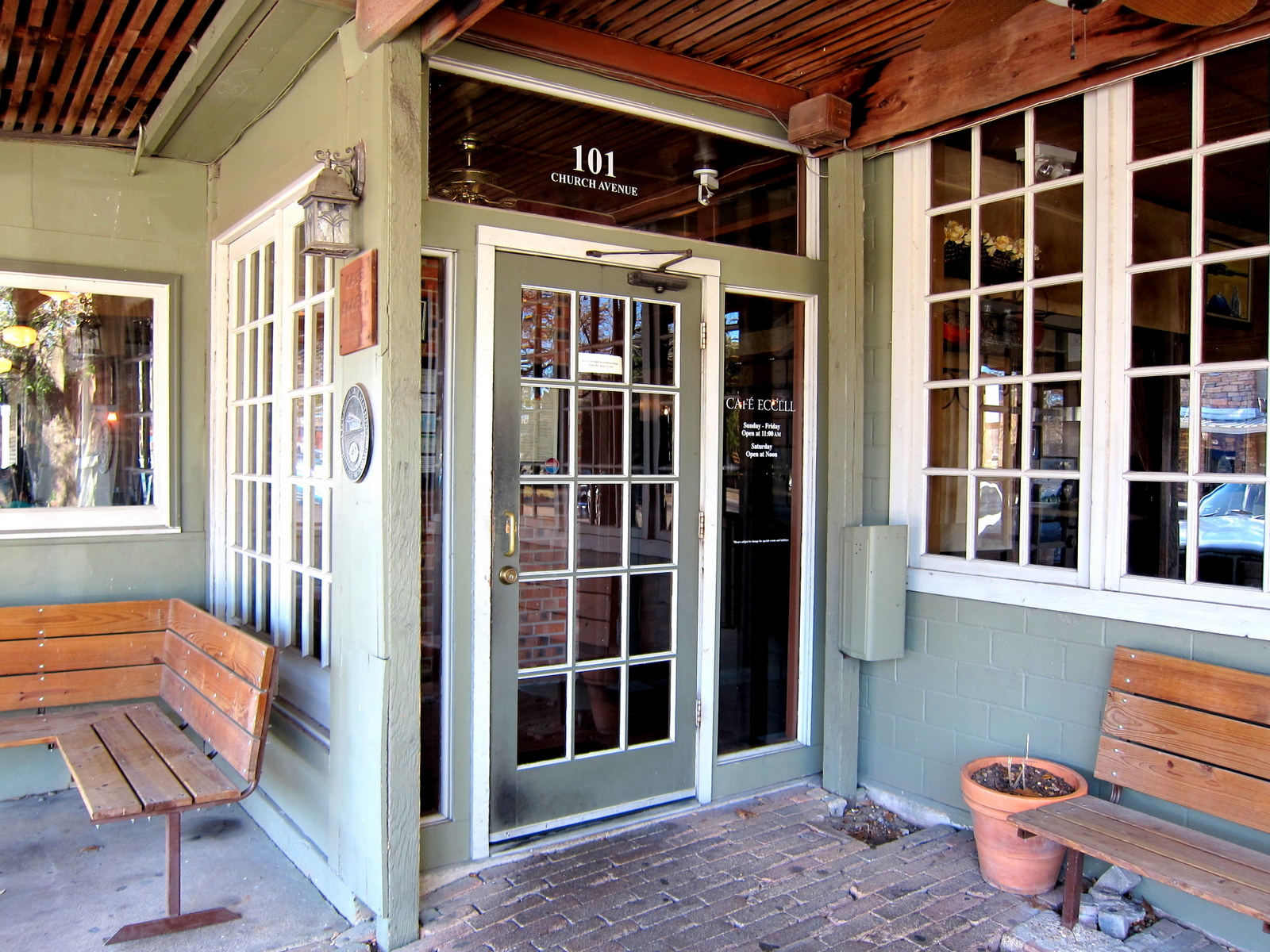
Tucked away at the west end of University, Cafe Eccell is a posh little resto: black wooden table, old brick walls, just enough sunlight through the simplistic rectangular windows to connect the quiet world it contains with the happening streets it sees. Its staff is cordial. Its setting would suit the more respectable guests for a casual lunch. However, I had no memories of its lunch entrees and I don’t intend to create new memories of them. However, I do vaguely recall having a good slice of key lime pie, so when Beverly suggested the strawberry tart, I felt complied to give it a try.

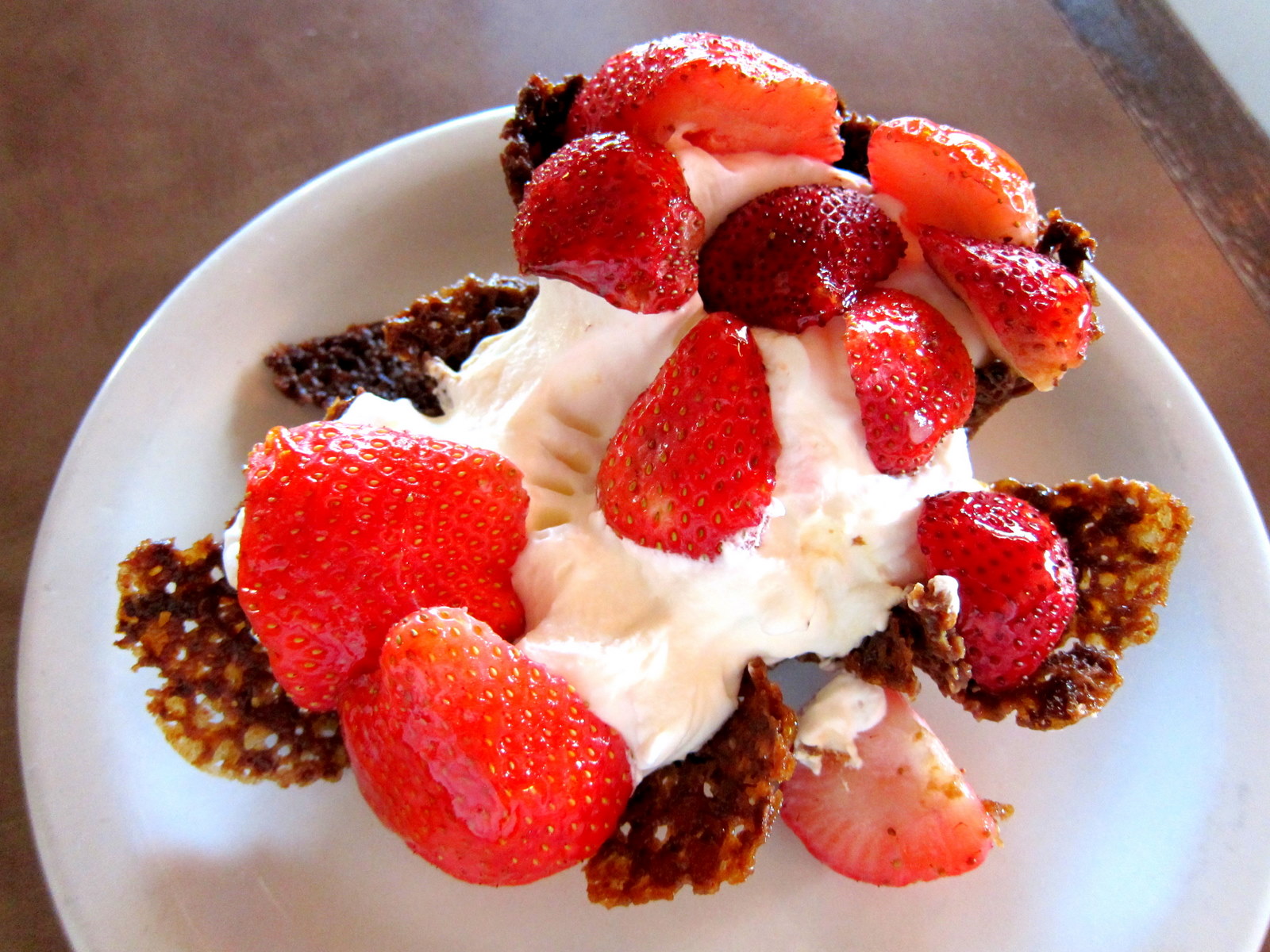
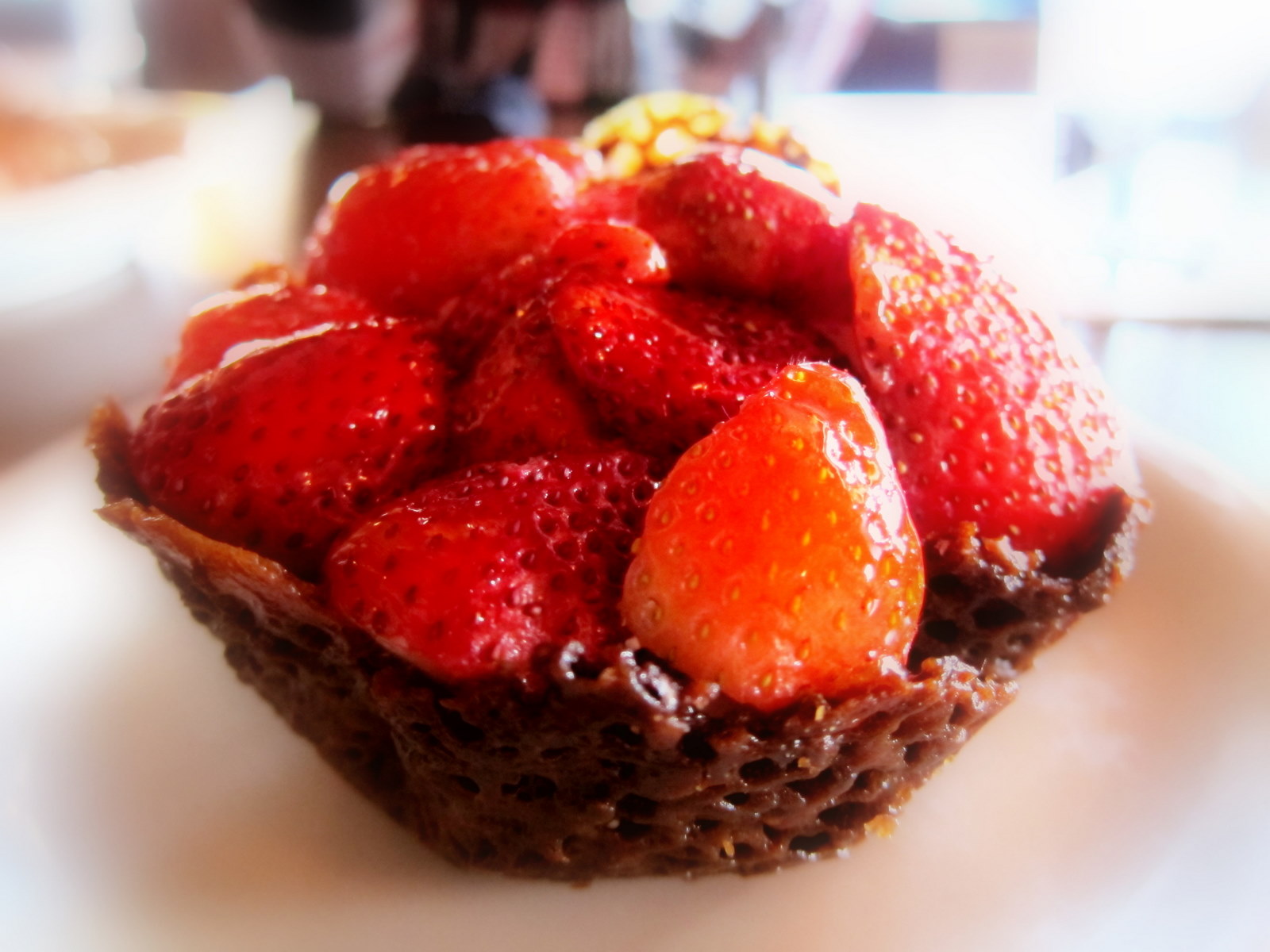
I must admit it looks nothing like my imagination. I thought a strawberry tart would be like… a cake with tart strawberries, but no, Eccell’s strawberry tart is an almond lace cookie shell, a lot of whipped cream, and, at least I got this part right: lots of tart strawberry (They were tart. I couldn’t detect any “apricot glaze” as advertised on the menu ‘cept for its shine).


It’s good. The cookie shell has an addicting chocolate chew to it.


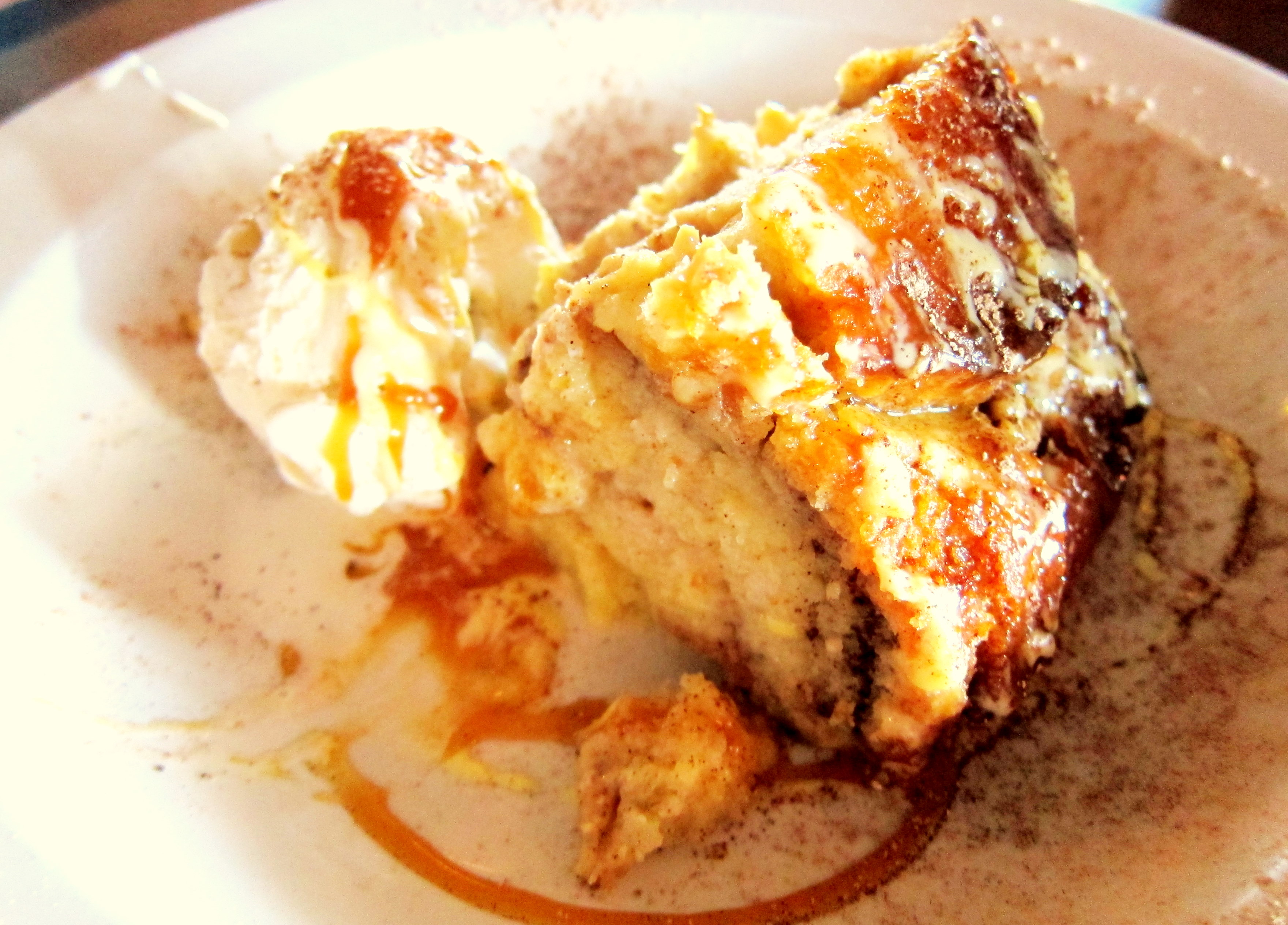
Just for variety, we got the apple bread pudding, too, which we unanimously agreed to be a good call. Those sticky burnt corners. The spongy middle. The crunchy apple slices.  There just isn’t a better thing.

server: Dane, amount: 15.16, time: 2:23 pm, date: 1/8/11
Address: Cafe Eccell
101 Church Avenue
College Station, TX 77840
(979) 846-7908

Ecco the Oasis

July 21, 2011 By: Mai Truong Category: One shot, sweet snacks and desserts


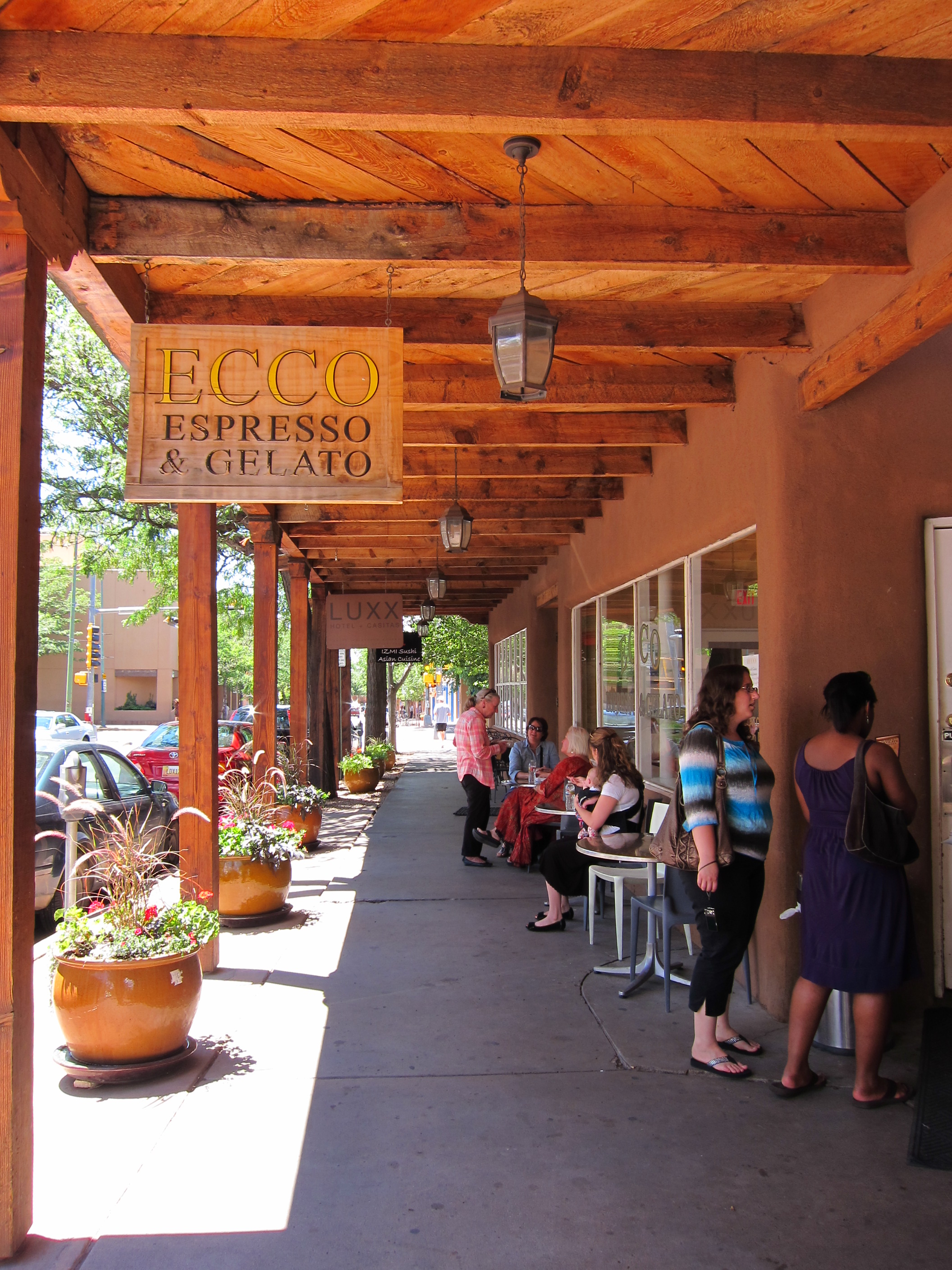
Both times that we wandered about this perpetually sunbathed town, we found ourselves drifting to the corner of Marcy and Washington for some perpetually melting sweets. Without Ecco Espresso & Gelato, I don’t know if I could have made it to O’Keefe museum the first day. Ice cream is my life source.


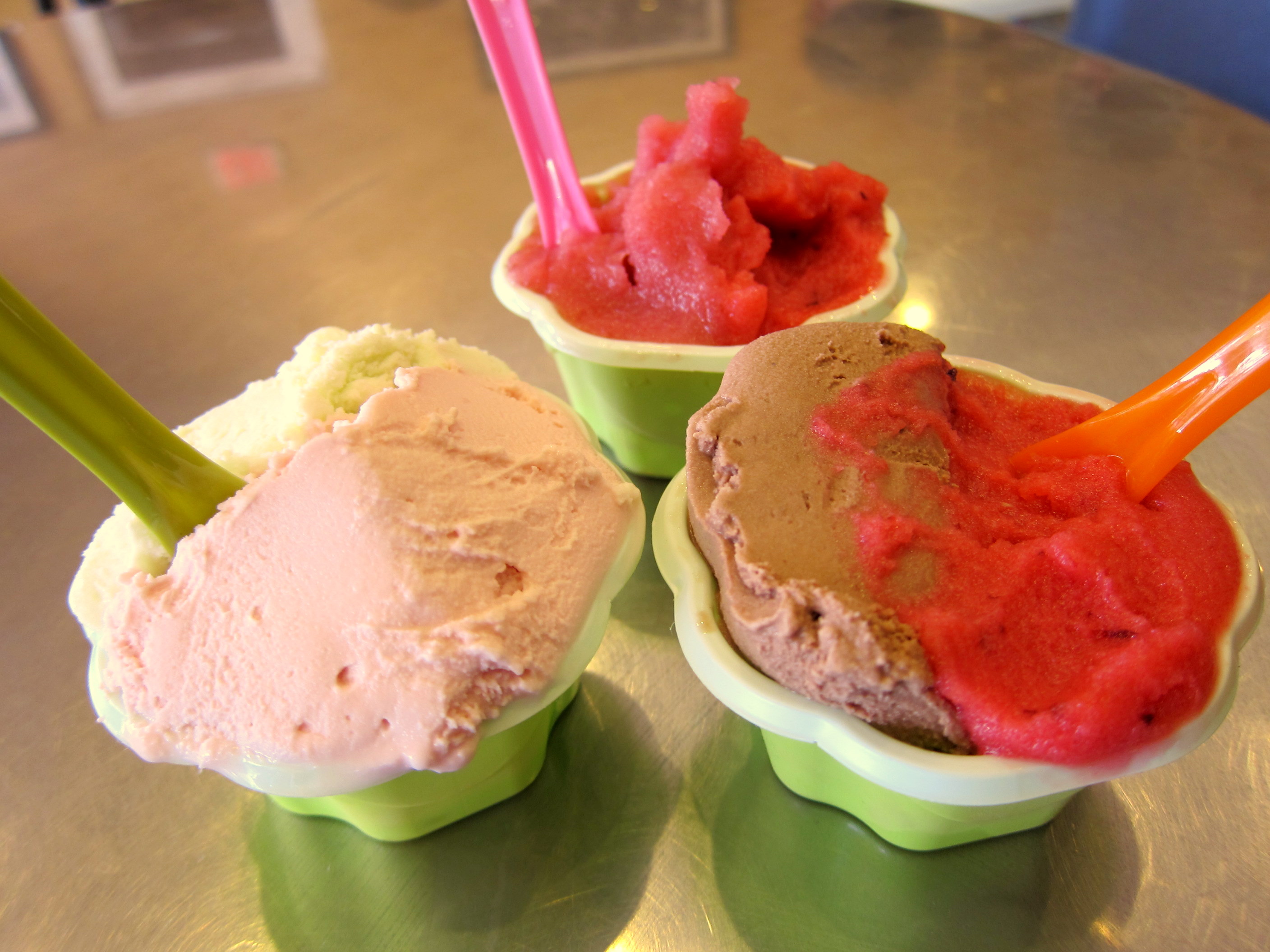
They have 20 flavors each time we’re there, rotating the rarer avocado, boysenberry and guava while keeping the common but ever-endearing chocolate and lime. As they claim, “what’s in [their] gelato case changes too quickly for [them] to post” on the website; I fantasize that Ecco’s gelataios just wake up and churn whatever ingredients they dream of the night before. There were always a few magenta red raspberry things in the case, and at least among the three of us, raspberry appears to be one of the most popular flavors to pair: with sake, with lime, with cherry, and with chocolate.


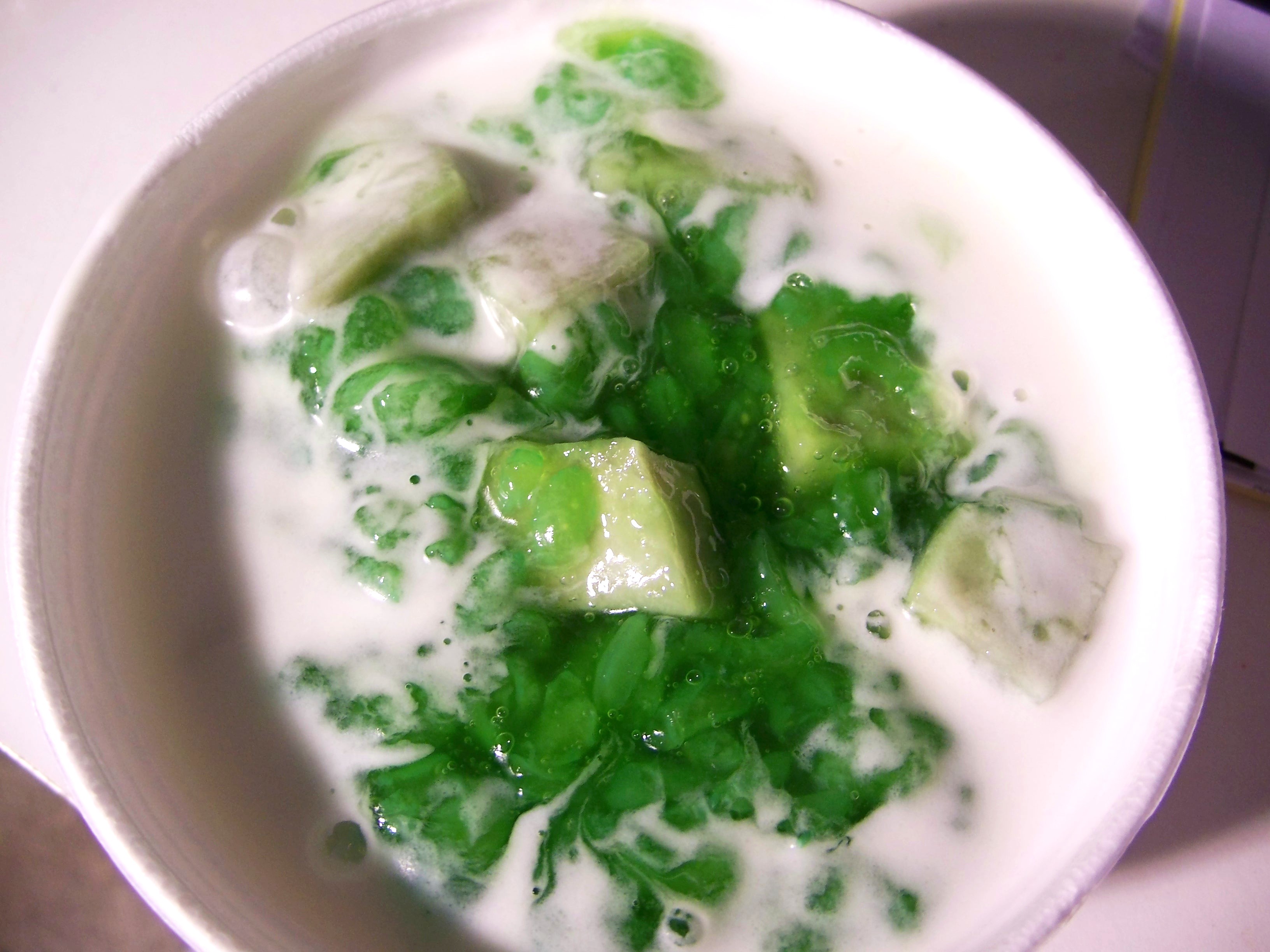
I can eat chilled mashed avocado (with or without sugar) as a hefty dessert for 70 years straight, but like taro ice cream, avocado gelato may sound weird to the American palates that are used to spreading the green mush in tacos and quesadillas. Either way, avocado gelato is “surprisingly good”, as Jen put it. It also marries well both the prickly sweetness of pineapple sorbet and the dense sweetness of mango gelato.


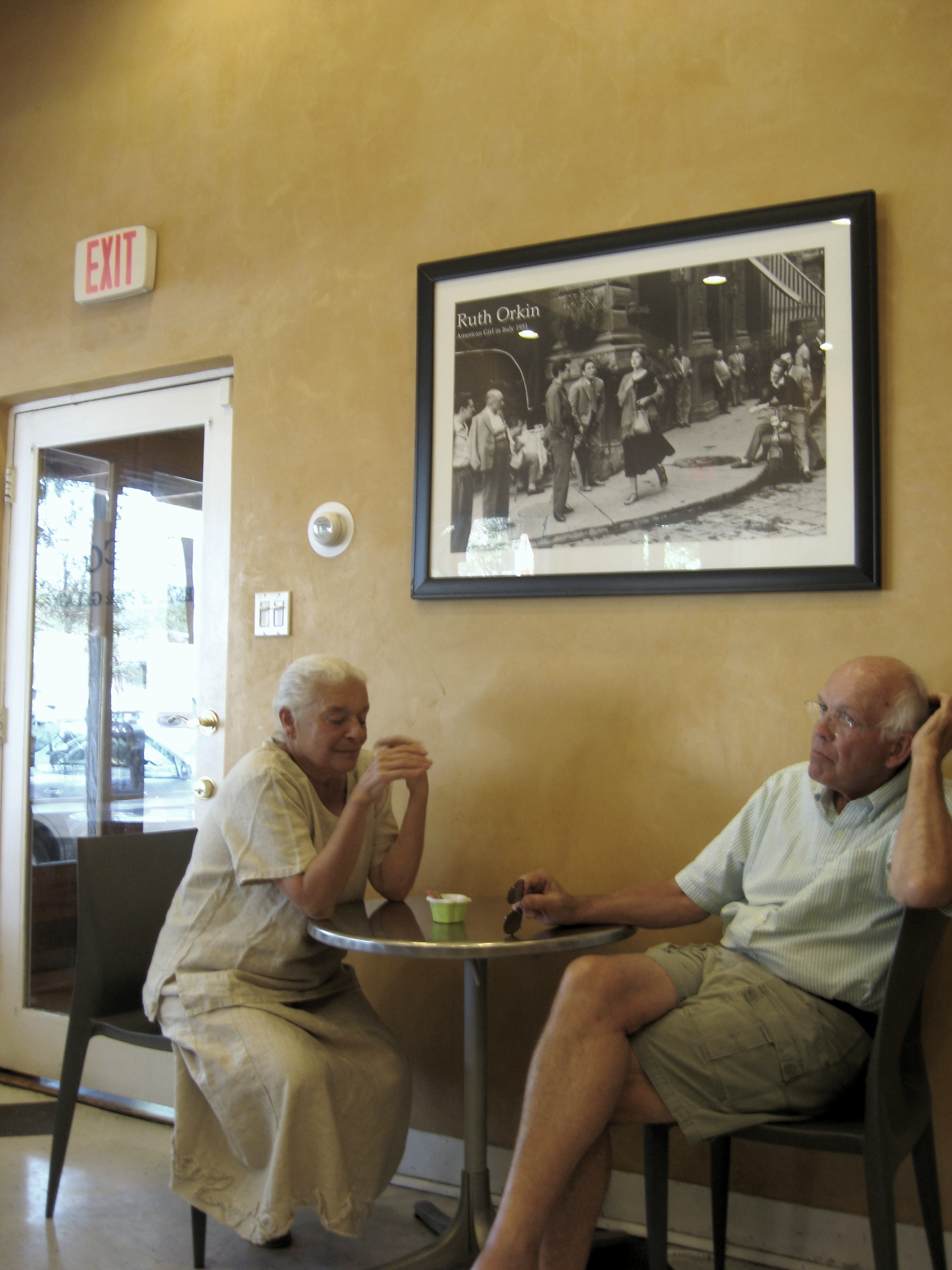
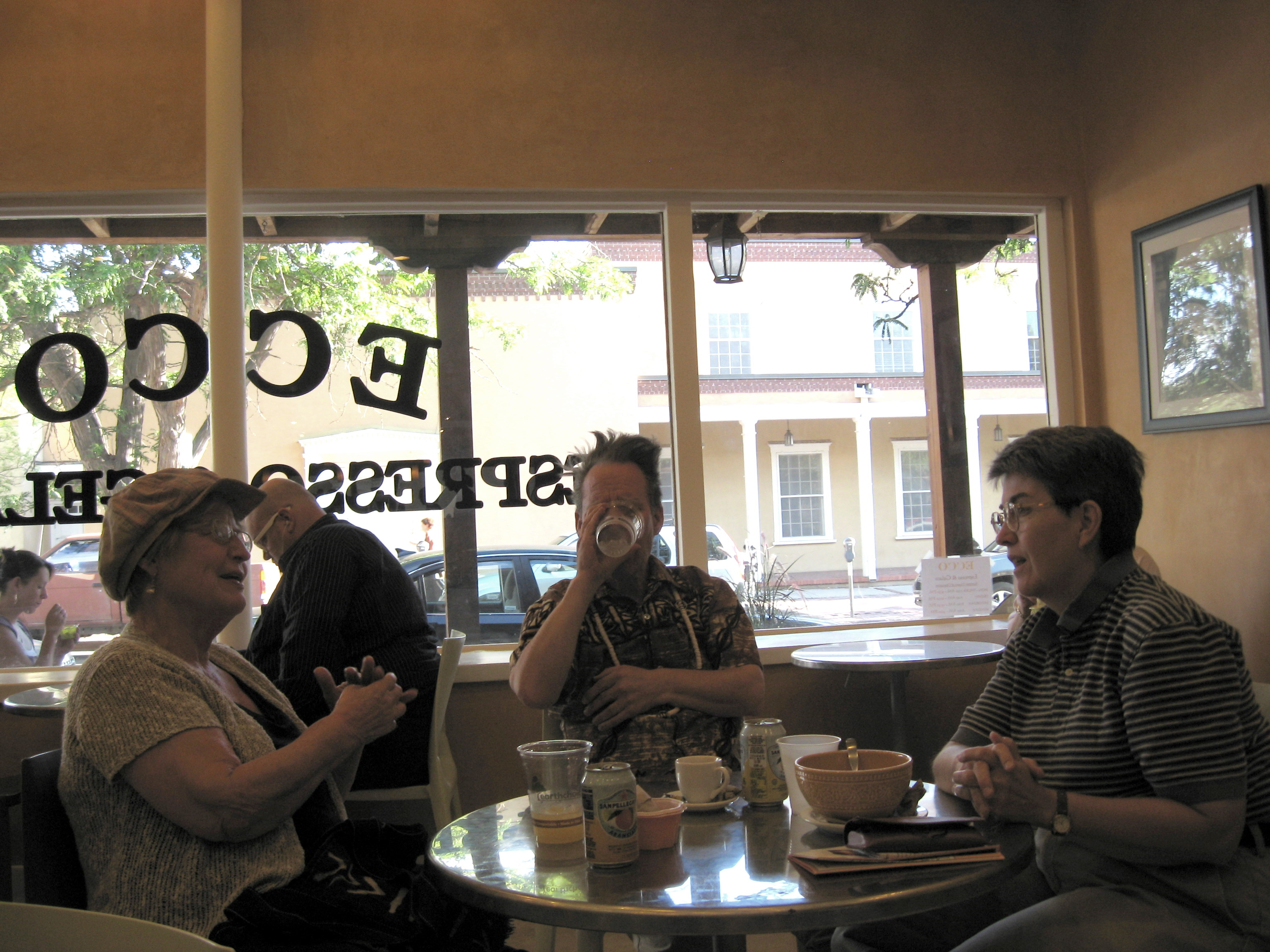
At the end of the day, bad combinations of ice cream are as common as the pictured patron’s hairdo and as comprehensible as the bowl in front of his companion (as far as I can see, there’s no soup on Ecco’s chalked-up specials of the day). So I would hardly doubt any flavor that Ecco scoops out. 🙂

Money matters: small cup: $4.25 (tax included)

Address: Ecco Espresso & Gelato
105 East Marcy Street
Santa Fe, NM 87501
(505) 986-9778
www.eccogelato.com

Taro and I

July 10, 2011 By: Mai Truong Category: sweet snacks and desserts, The more interesting, Vegan, Vietnamese

Taro and sticky rice pudding with coconut milk

If you don’t like taro, I don’t know if we can be friends.

I used to be aghast when people asked me what taro was. It’s a root, like potato, you know? Then slowly I realized that I was the obnoxious one for not realizing that not everyone is Vietnamese. But when you grew up with something so abundant, don’t you get the feeling that everyone else must have grown up with it too? Next time someone says “What, you haven’t seen Star Trek?!”, I’m gonna ask “have you eaten taro?”. (Just my luck, they’d say yes and I’d have to go to Blockbusters. :D)

To be fair, Vietnam is not the only country that has taro in its kitchens, the roots are also in China, India, Korea, Japan, Cameroon, you name it. But to this Vietnamese taro-fan, it’s Vietnamese heart and soul. It’s not recognized everywhere, but its growth spreads everywhere. It adapts easily in both sweet and savory dishes. Its sweetness lies somewhere between the red sweet potato and the usual potato. It’s nutty like boiled peanuts in some parts, dense and moist like cassava in others.
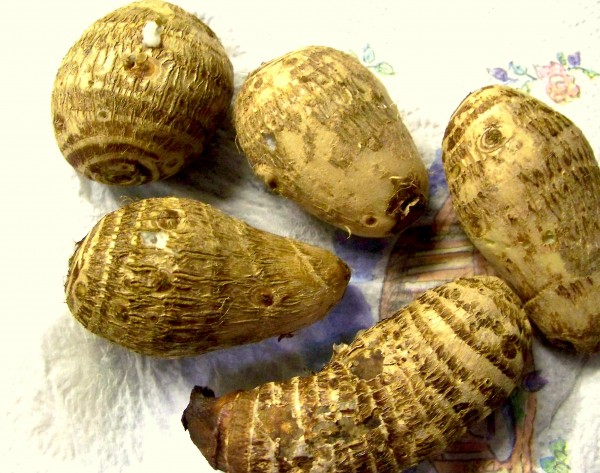

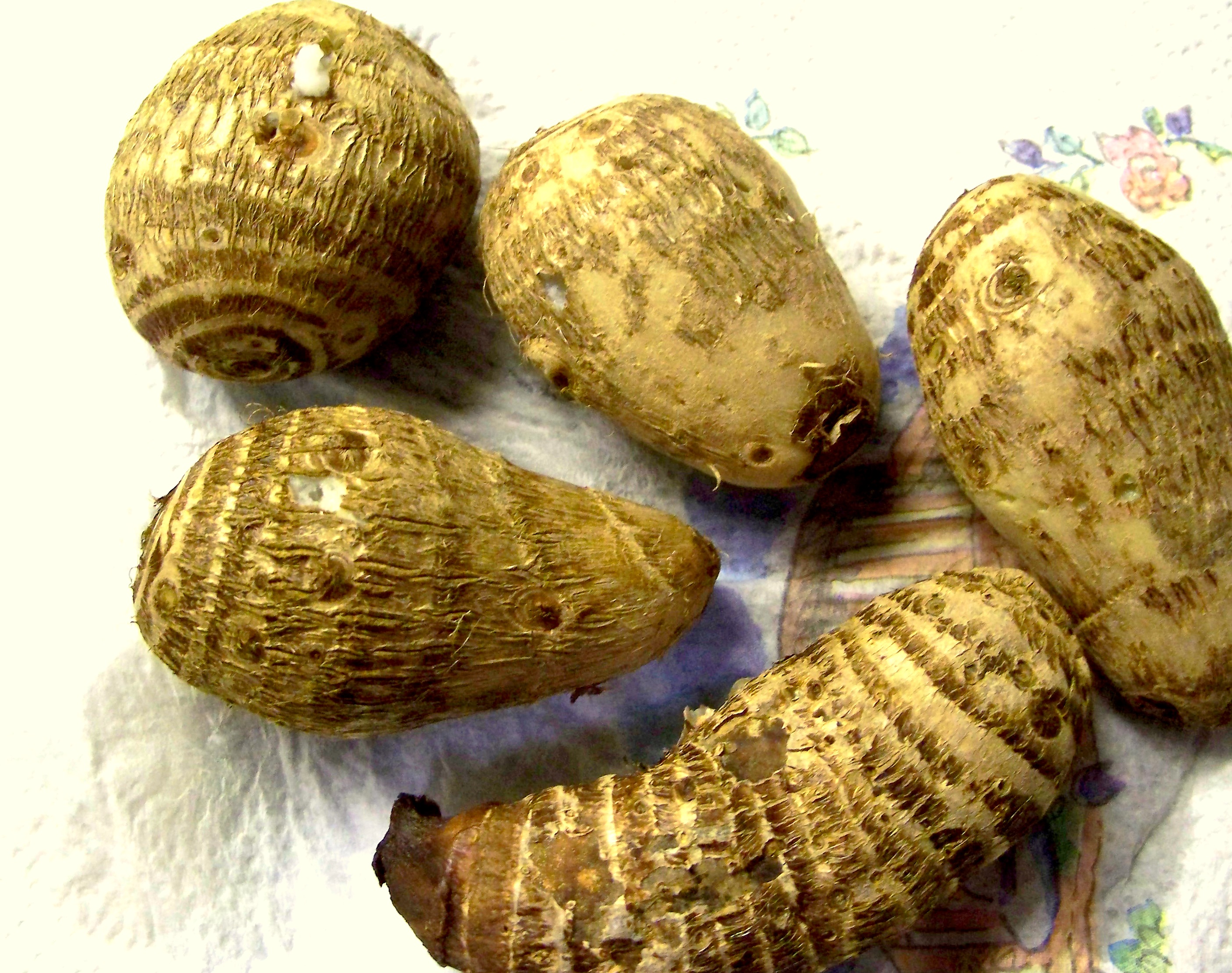
It’s not pretty (are roots ever pretty?). It’s hairy, brown, with several nodes and spots. It can cause a slight itch if washed with bare hands. Most small taros are just a tad bigger than a chicken egg. The only thing I know how to do with them is to boil them, like eggs, for roughly 30 minutes (from cold water). Then I peel them while they’re still warm, dip them into sugar, and savor their nuttiness.
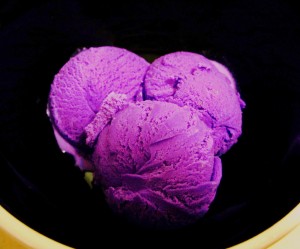
Magnolia's taro ice cream from 99 Ranch Market

Actually, the taro here doesn’t taste that great. It’s too bland, too mushy, too dense, and it barely tastes like taro. Back home, Little Mom used to make taro soup (canh khoai môn): chunky slices of taro, chopped green onion, pork, dried shrimp (tôm khô), water, salt and sugar to taste. There might have been a teaspoon or two of fish sauce and fish sauce to taste. It’s my favorite canh, and my grandfather’s too. But Little Mom doesn’t make it anymore because 1. she doesn’t like taro in its root form, and 2. she doesn’t like taro in the States.

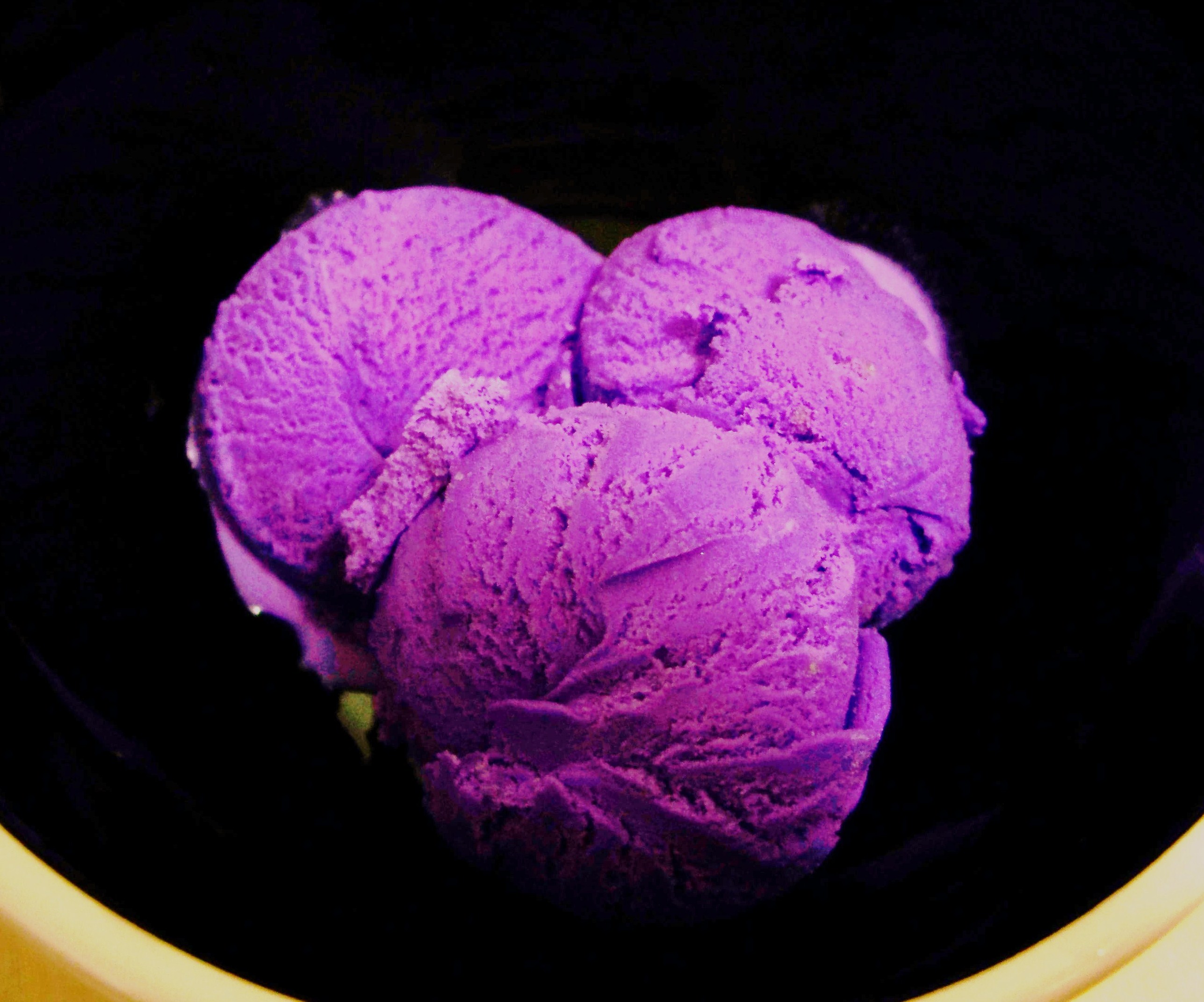
She does like taro as a flavor in sweets, though. Once a week, we used to get a half-kilo tub of Wall’s taro ice cream, its soft lavender color was as sweet and alluring as its taste. How I long for the day when Häagen-Dazs churns out the magic purple so that I don’t have to settle with the ink-dyed Magnolia’s or wait at the mercy of Yogurt Land‘s customers. Apparently, taro frozen yogurt tops the worst-seller list in downtown Berkeley and only gets served when the other flavors are out. And I thought Berkeleyans were the adventurous type. FYI, taro pairs best with coconut.
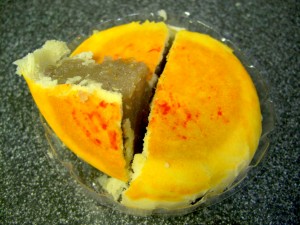

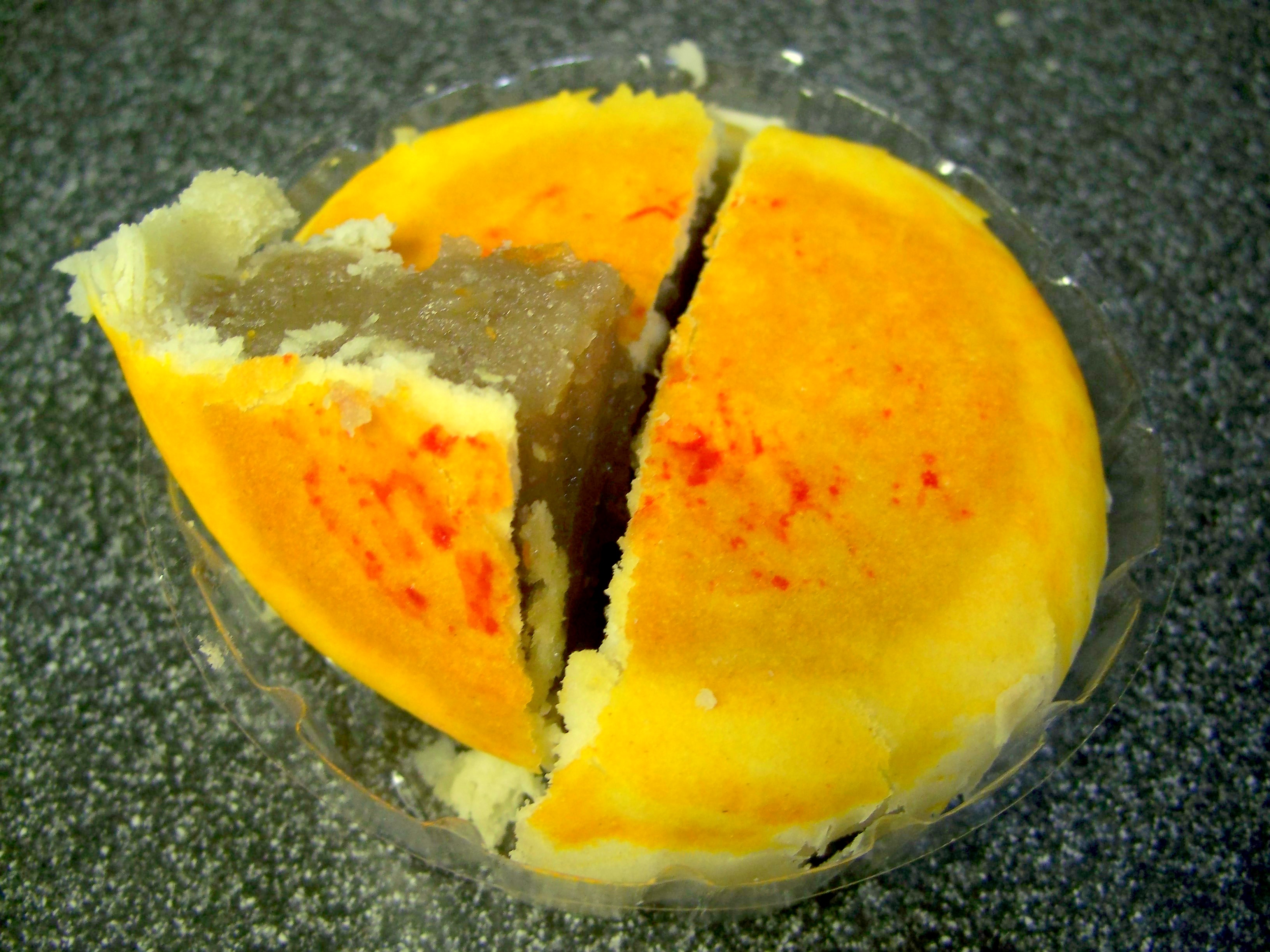
When taro is added into plain things, like yogurt, it adds flavors. When it’s added into sweet things, like mooncake and pudding (chè), it moderates the sugar and adds texture. Bánh bía khoai môn (Suzhou mooncake with taro filling) is less sweet than its common mung bean counterpart (bánh bía đậu xanh). Chè khoai môn (taro in sticky rice pudding) is a harmonious mix of chunky and soft, of nutty and chewy, of plain, salty and sweet.
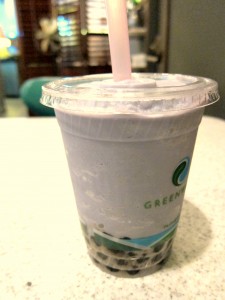

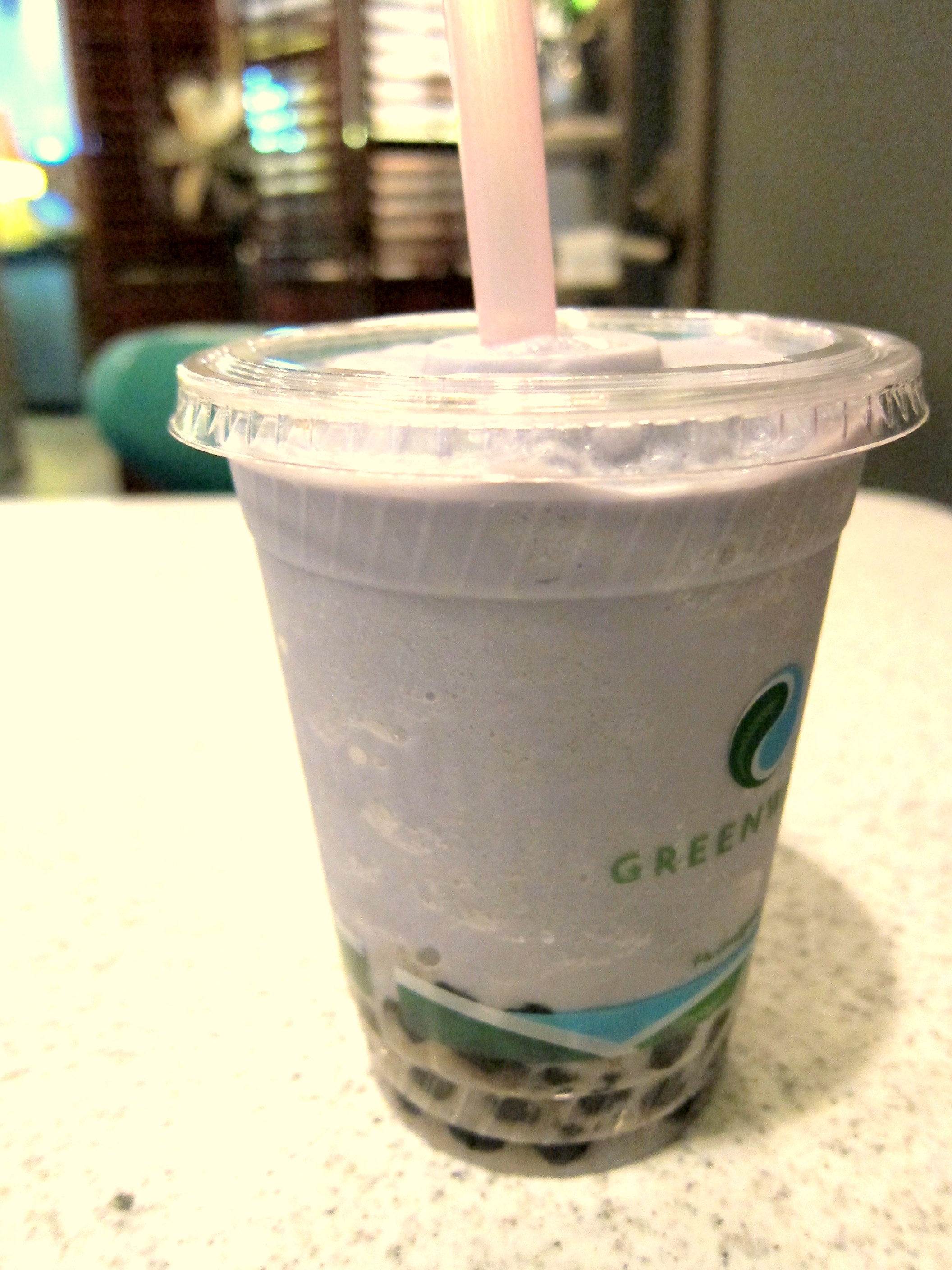
Through the internet grapevines, I’ve also heard of bánh da lợn khoai môn (taro pig-skin pie), bánh đúc khoai môn (taro rice jelly cake) with meat and dried shrimp, fried rice with taro, taro hushpuppies dipped into sweet and sour fish sauce. But if I ever get a real kitchen, the first thing I make with taro will be a bowl of soft, milky steamed taro cake (bánh khoai môn hấp), and I’ll get a cuppa taro bubble tea to complete my love.

Will they make taro milk one day?

More taro-ness: Taiwanese taro pastry

This post is submitted to Delicious Vietnam #15, July edition, hosted by Lan from Angry Asian Creations.
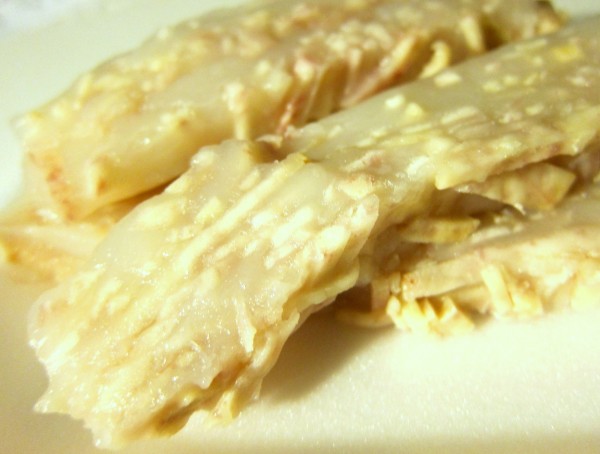
Steamed taro cake from Alpha Bakery & Deli

Sandwich Shop Goodies 18 – Vegan steamed taro cake (bánh khoai môn hấp)

June 28, 2011 By: Mai Truong Category: Houston, One shot, sweet snacks and desserts, Vegan, Vietnamese


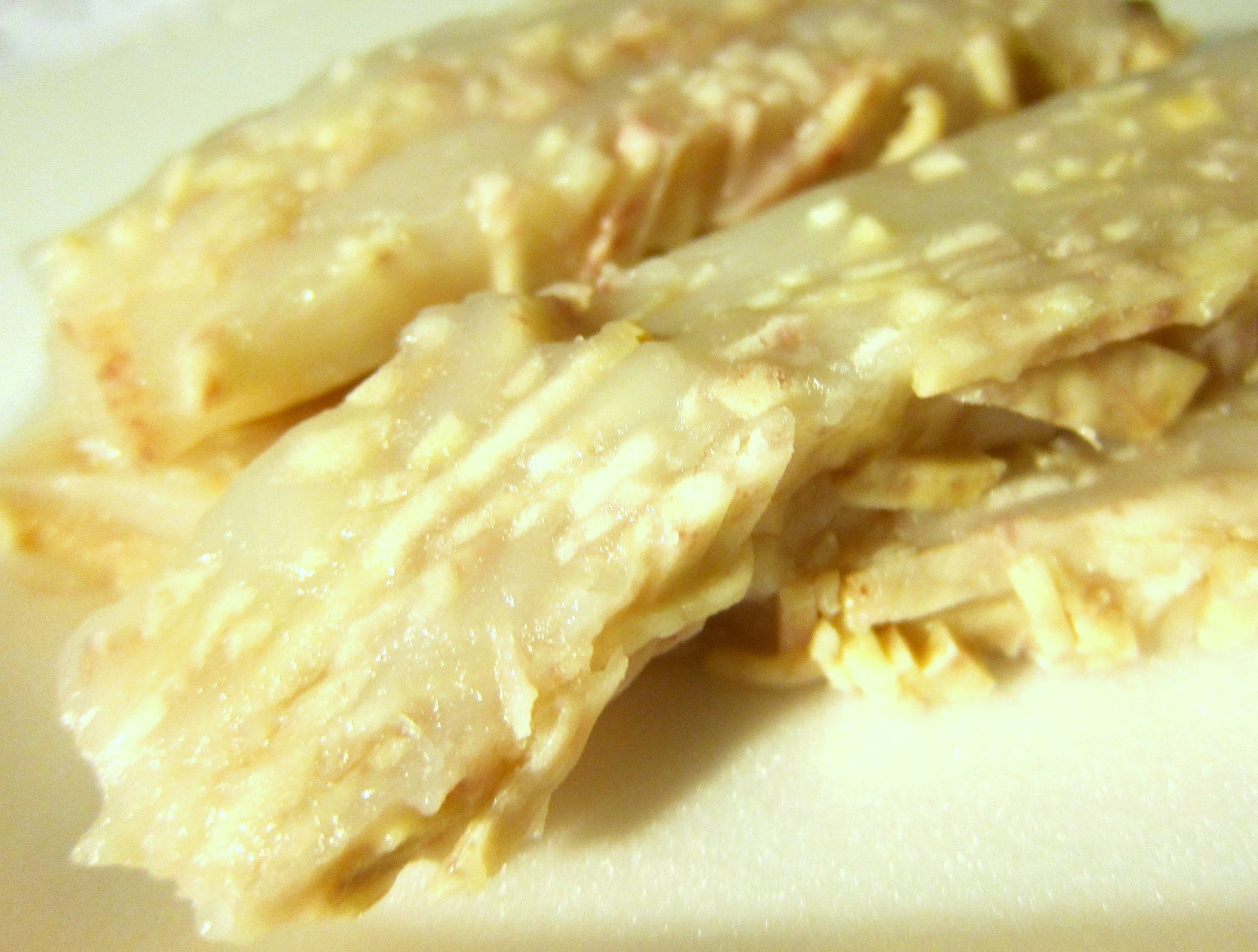
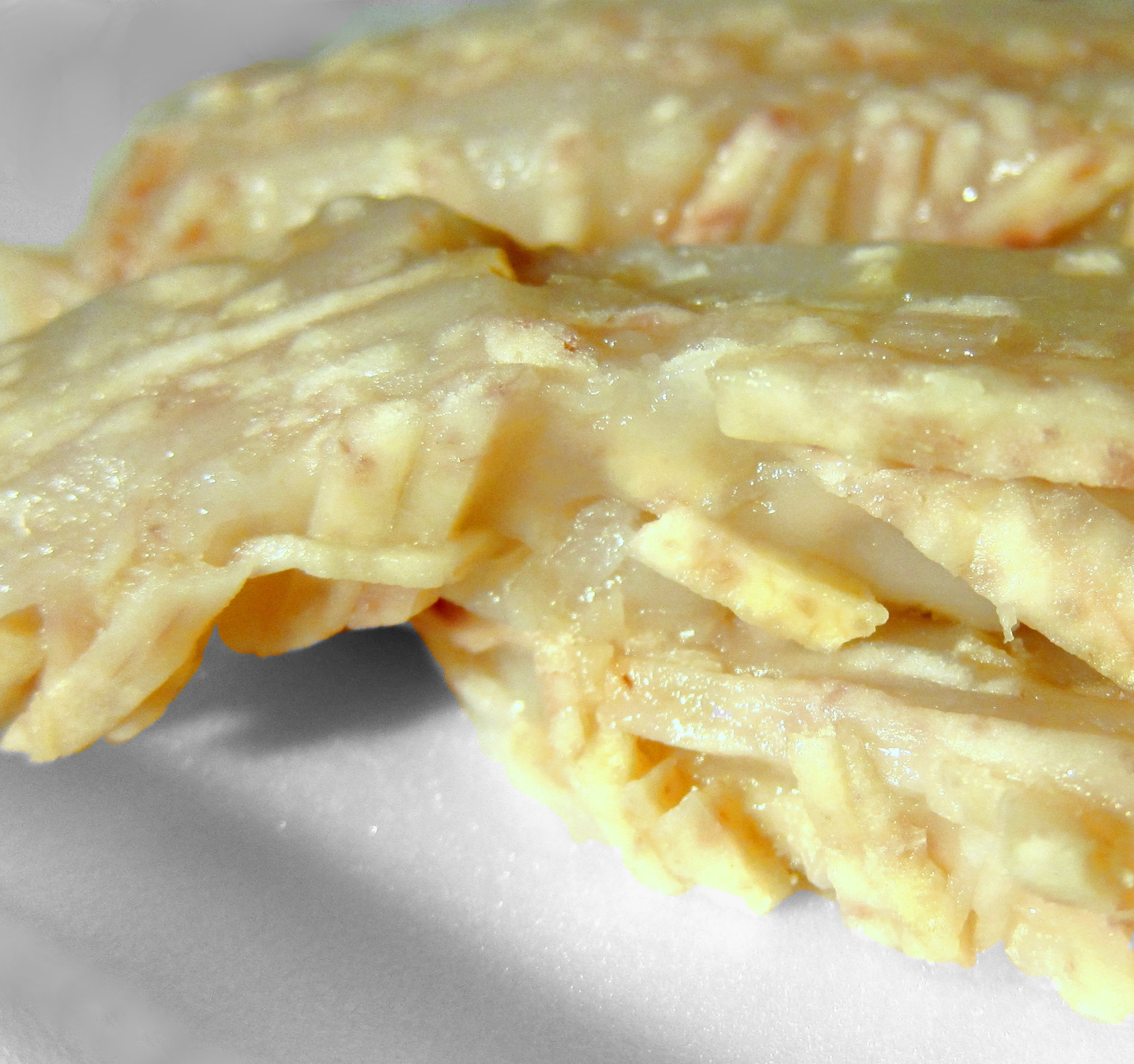
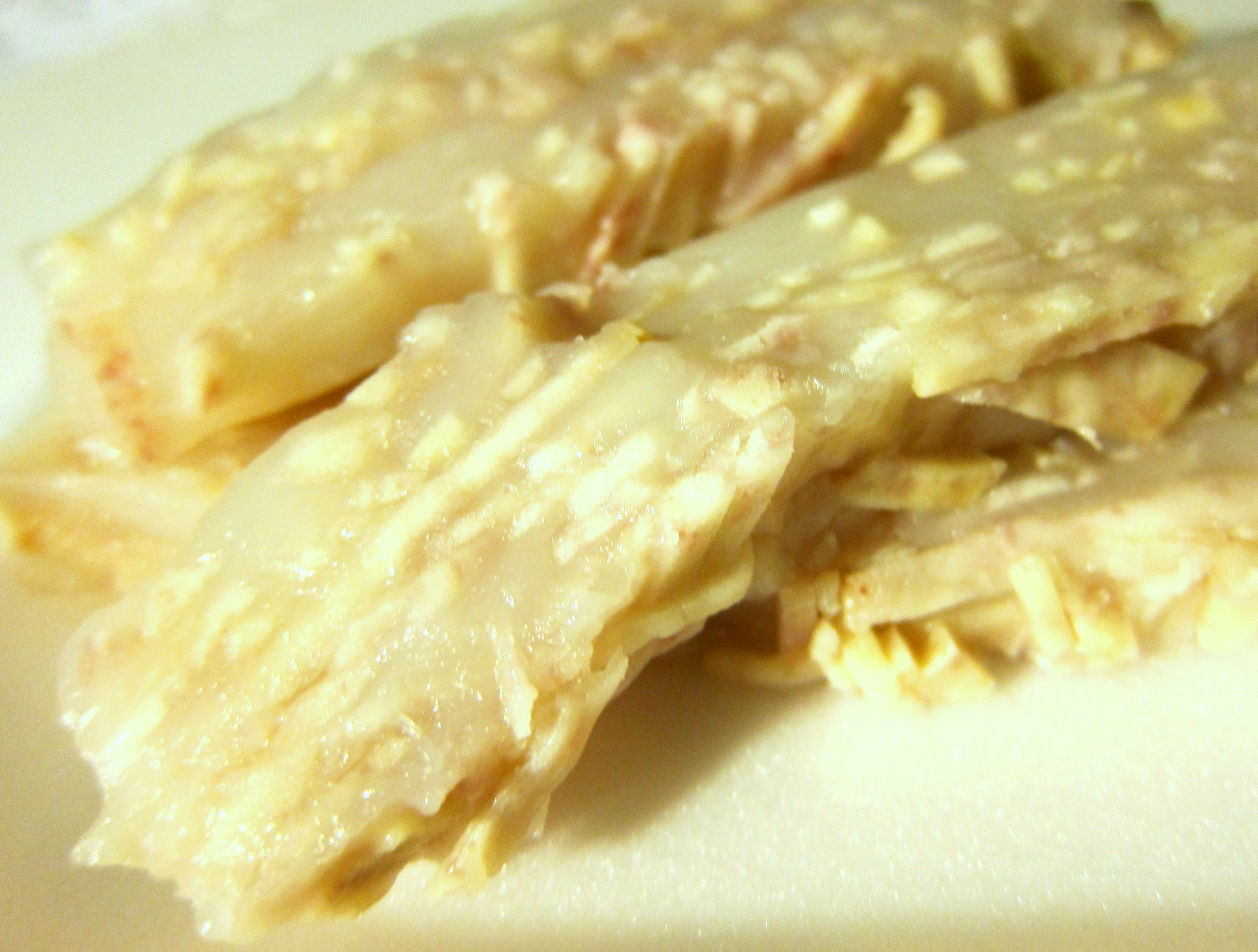
It is not pretty, but from the label I knew right away that it would be good. Strips of nutty taro embedded in soft-chewy tapioca just got on my list of things to make, if I ever feel like cooking. That can mean only one thing: the online recipes seem that simple.


If you google “bánh khoai môn hấp“, and presumably you read Vietnamese, the first links you find will contain something like dried shrimps (tôm khô) and pork, perhaps some mỡ hành (green onion in lard), too. That version is similar to Woo Tul Gow (or Woo Tau Ko). I haven’t tried that nor seen it in any cling-wrapped styrofoam plate at banh mi shops. If you don’t read Vietnamese, well… that’s why you have me :D: I translate. Here’s the Vietnamese recipe of the (vegan) steamed taro cake from Thư Viện Phật Học (The Library of Buddhist Studies), which most resembles what I’ve gotten from Alpha Bakery & Deli. Actually, this recipe sounds better.

Like most Vietnamese recipes online, this one lacks precise measurement (which I agree with to some extent, but that’s beyond the scope of this post). So I searched around and found a more detailed but also more complicated recipe, and here’s my wanna-be-clever combination of the two:

The minimalist’s vegan steamed taro cake (bánh khoai môn hấp)

– 1 lb taro
– 1 bag (200 g) of tapioca flour (bột năng)
– 50 g rice flour
– 150 g sugar
– 2 cans of coconut milk (oooh coconuty!)
– 2 cups of water
Mix tapioca flour, rice flour, sugar, water, and coconut milk together.
With the taro roots: wash, peel, slice into strips (as thick as you’d like, but I’d imagine the thicker they are, the longer it takes to cook the cake).
Gently mix the taro strips with the batter (don’t make mashed taro or you’ll get Kanom Pheuak).
Boil water. Steam the taro-batter mix for 45 minutes or until a toothpick comes out clean.

Fancier versions would include pandan leaves and vanilla, or alternating layers of tapioca and taro.


This is one of the few times when “cake” is not too far off from “bánh“: bánh khoai môn hấp is semi sweet, soft, meatless, and too light to make a meal by itself.

If you try this recipe, do let me know how it goes.
Otherwise, I found it here once for a buck fifty:
Alpha Bakery & Deli (inside Hong Kong City Mall)
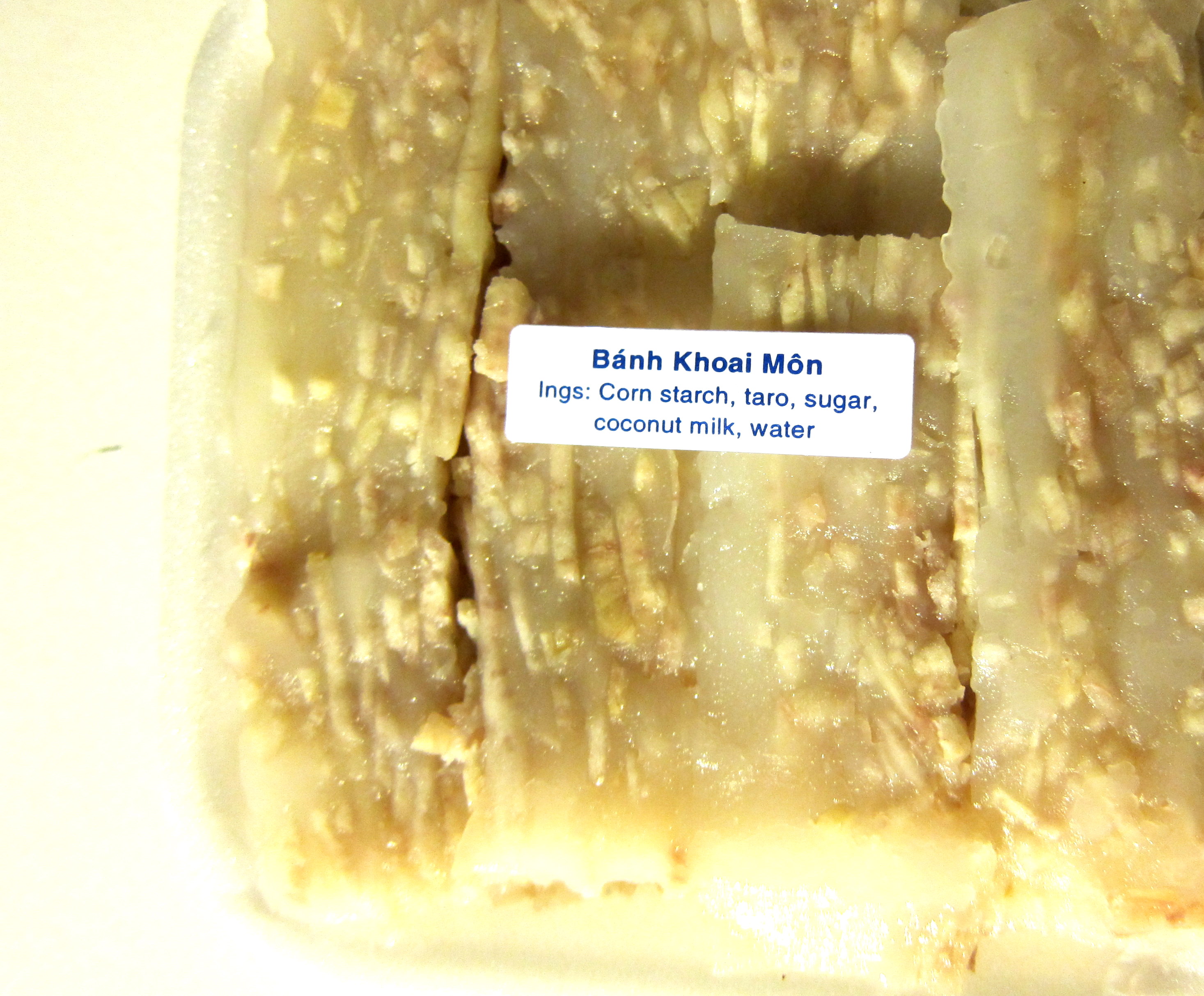
11209 Bellaire Blvd # C-02
Houston, TX 77072-2548
(281) 988-5222

Previously on Sandwich Shop Goodies: mung bean milk (sữa đậu xanh)
Next on Sandwich Shop Goodies: Chinese sesame beignet (bánh tiêu)

Cheesecake overload: Masse’s versus Reuschelle’s

June 25, 2011 By: Mai Truong Category: American, California - The Bay Area, sweet snacks and desserts


I wish I could be like Hikaru, eating 20 cakes in 3.5 hours. Then I could go to cake shops like Masse, ask for every beauty of the day and not worry about missing out on any flavor. Wouldn’t life be so sweet then?


But maybe I don’t have to be like Hikaru. Minus the pastries and the cookies, Masse has only about 10 cakes on display, most of them are available in small size (because they don’t sell by the slices like Crixa Cakes); if I skip dinner and invite a friend, we could easily bring down all of them in one sitting, don’t you think? Danielle and I tried only two this time, though. Five bucks each, round and pretty and screaming “Got your spoon ready?”


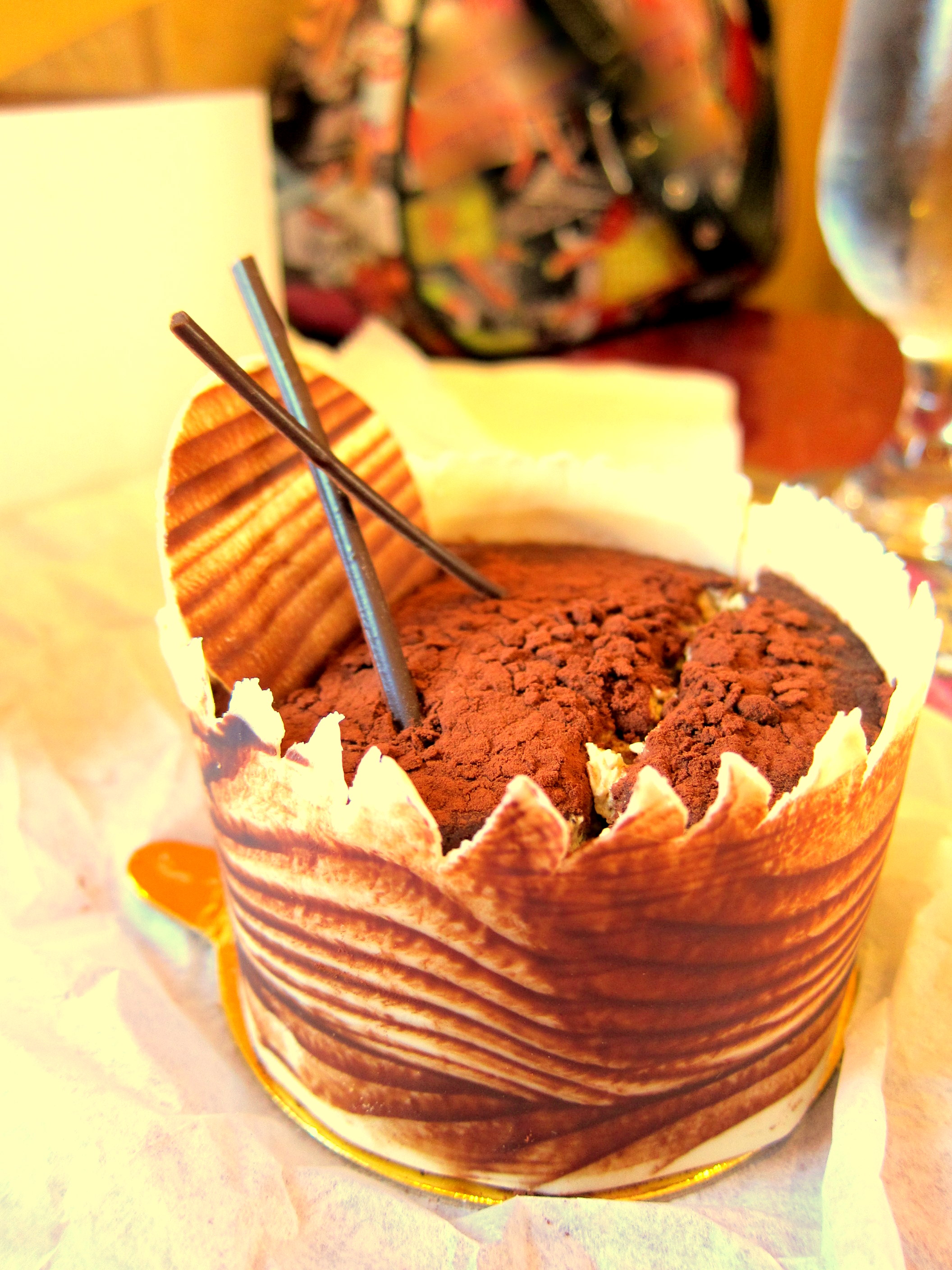
The mocha walnut chocolate cake was a fun little one: I thought about peeling off its white, woody patterned wrapper but it turned out the wrapper was white chocolate. 😀 The caramelized walnut base proved a mild and coarse complement to the thick, creamy layers of dark chocolate cake, chocolate Bavarian cream and espresso mousse. Its richness is complemented by its stark coffee flavor. Just now, I realize the cake looks like a cup of coffee with two stirring straws. 🙂


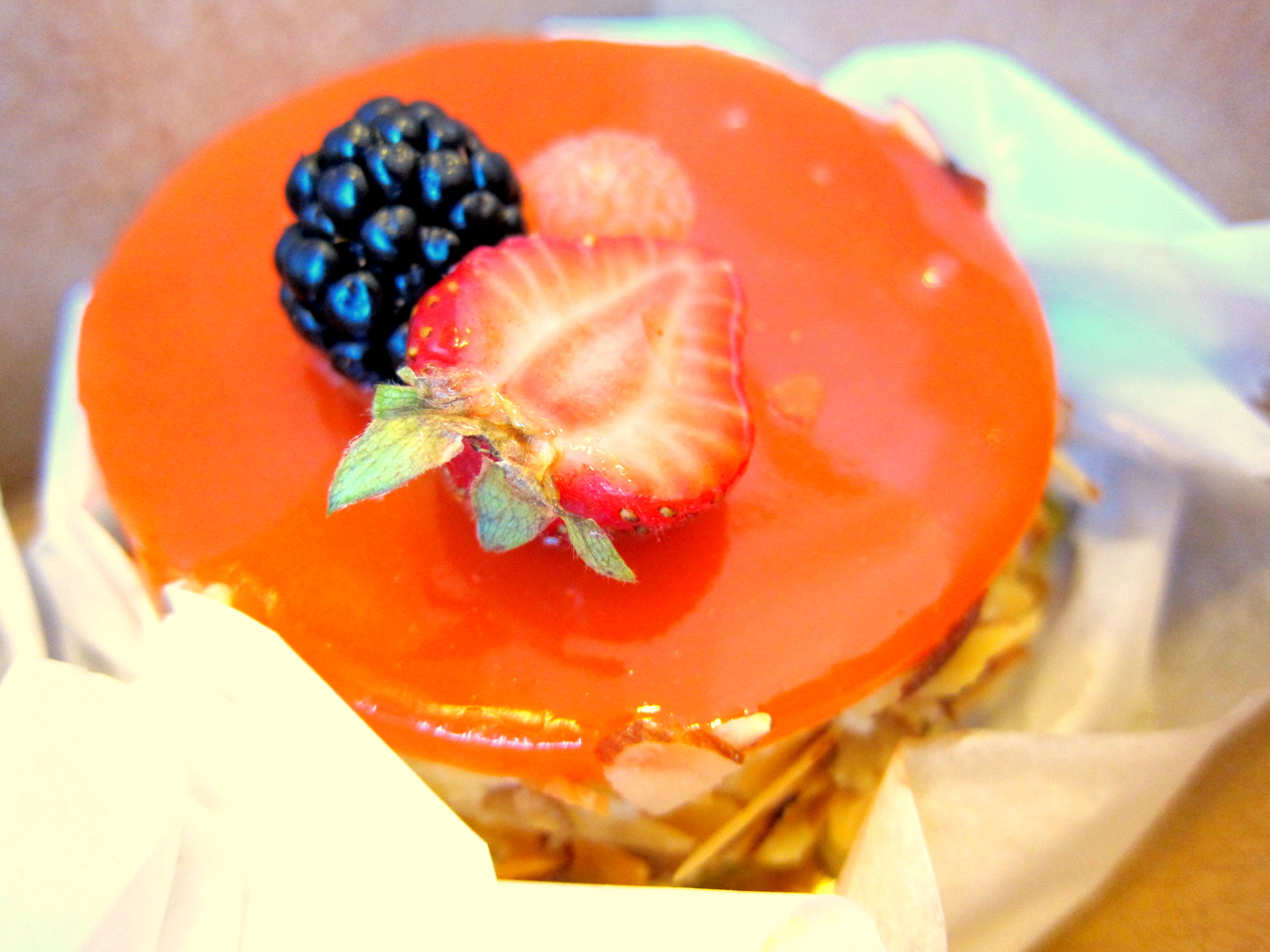
But the main reason we came here was the cheesecake. The soft, subtly briny ricotta is wrapped up in a coat of hazelnut shavings and topped with a refreshing guava glaze. The glaze actually tastes too sweet and too fruitily generic to be guava, though. Regardless, when I combined a spoon of cheesecake with a spoon of mocha cake, I saw fireworks just like Remy.

——————
A few days later…
——————

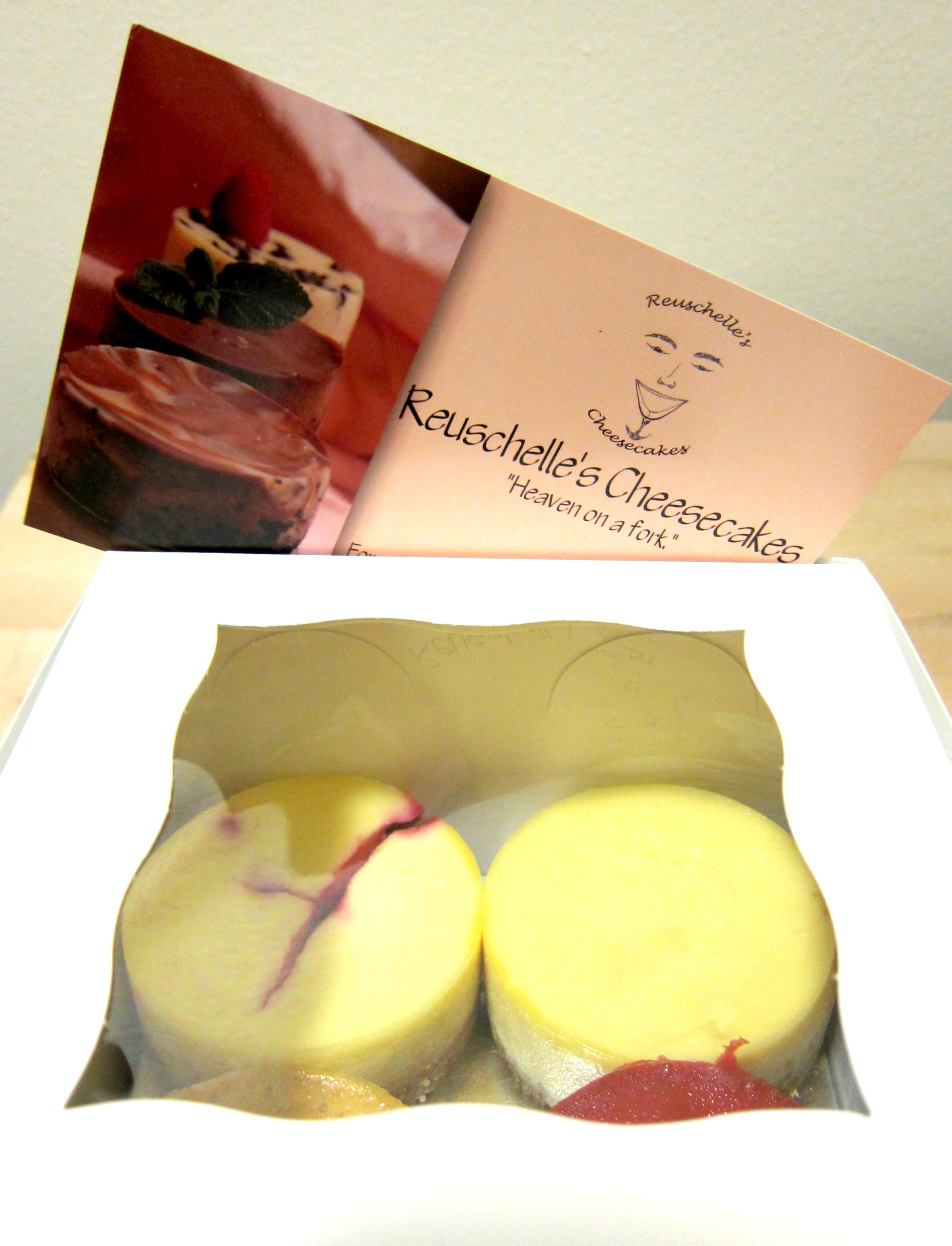
I found out about Reuschelle’s. Victor Reuschelle says “[his cheesecake (I think)] is like heaven on a fork!”. I think it’s pretty heavenly that he offers delivery for free within 20 miles of the East Bay (in fact, there’s no physical store to visit).


Reuschelle’s Cheesecake is a one-man operation: Victor receives order via phone or email, Victor makes the cake, Victor delivers. Victor says ordering 4 days in advance would be best, but he makes exceptions based on what he has and what his schedule looks like. I ordered yesterday afternoon and the cheesecakes arrived this morning. The best deal is the 4-flavor sample of four 3-inch cheesecakes for $20, and unlike sampler plates in restos, you get to pick the flavors from a thousand choices on Reuschelle’s list. Okay, so it’s 57, but Victor says custom made is no problemo.


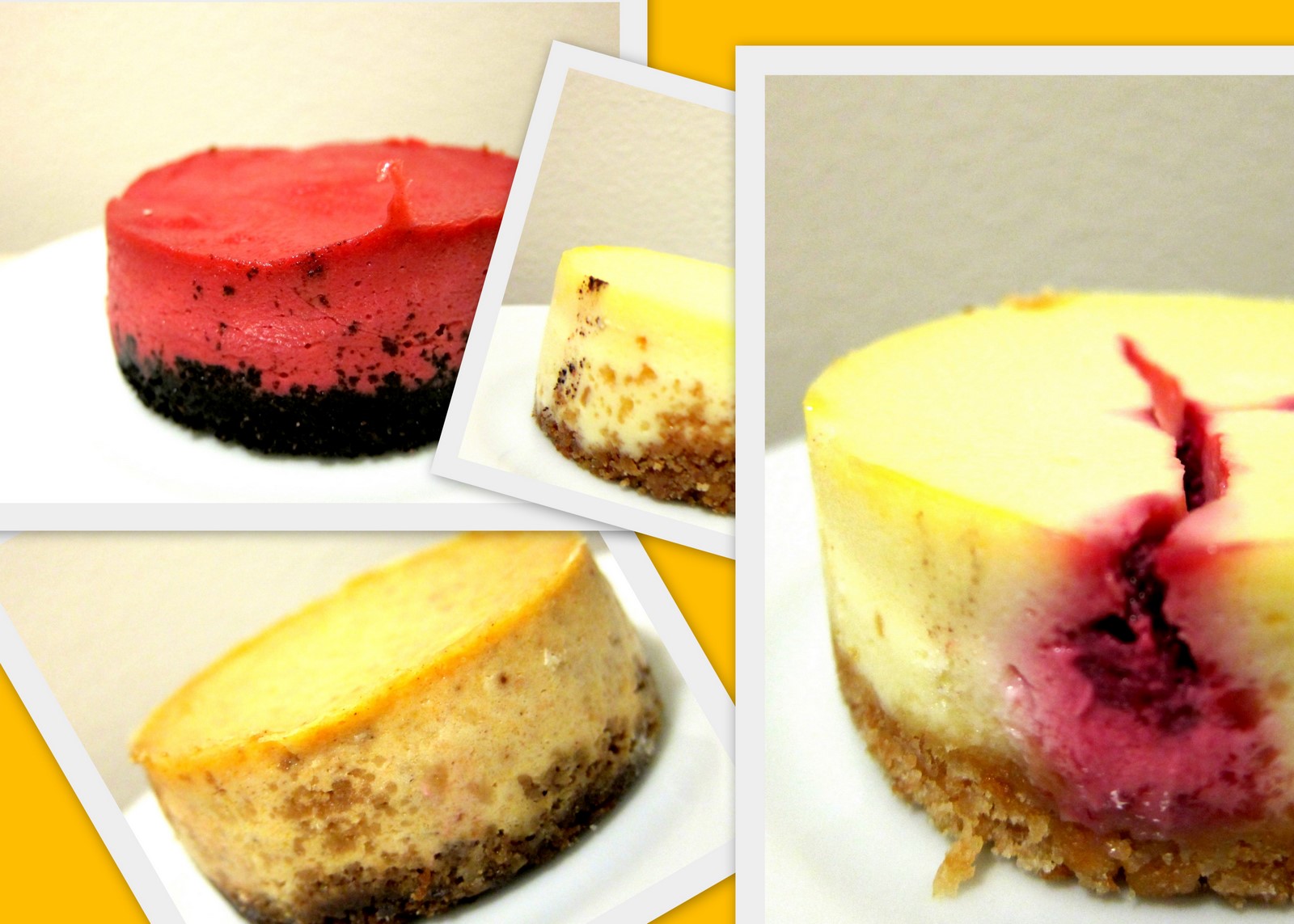
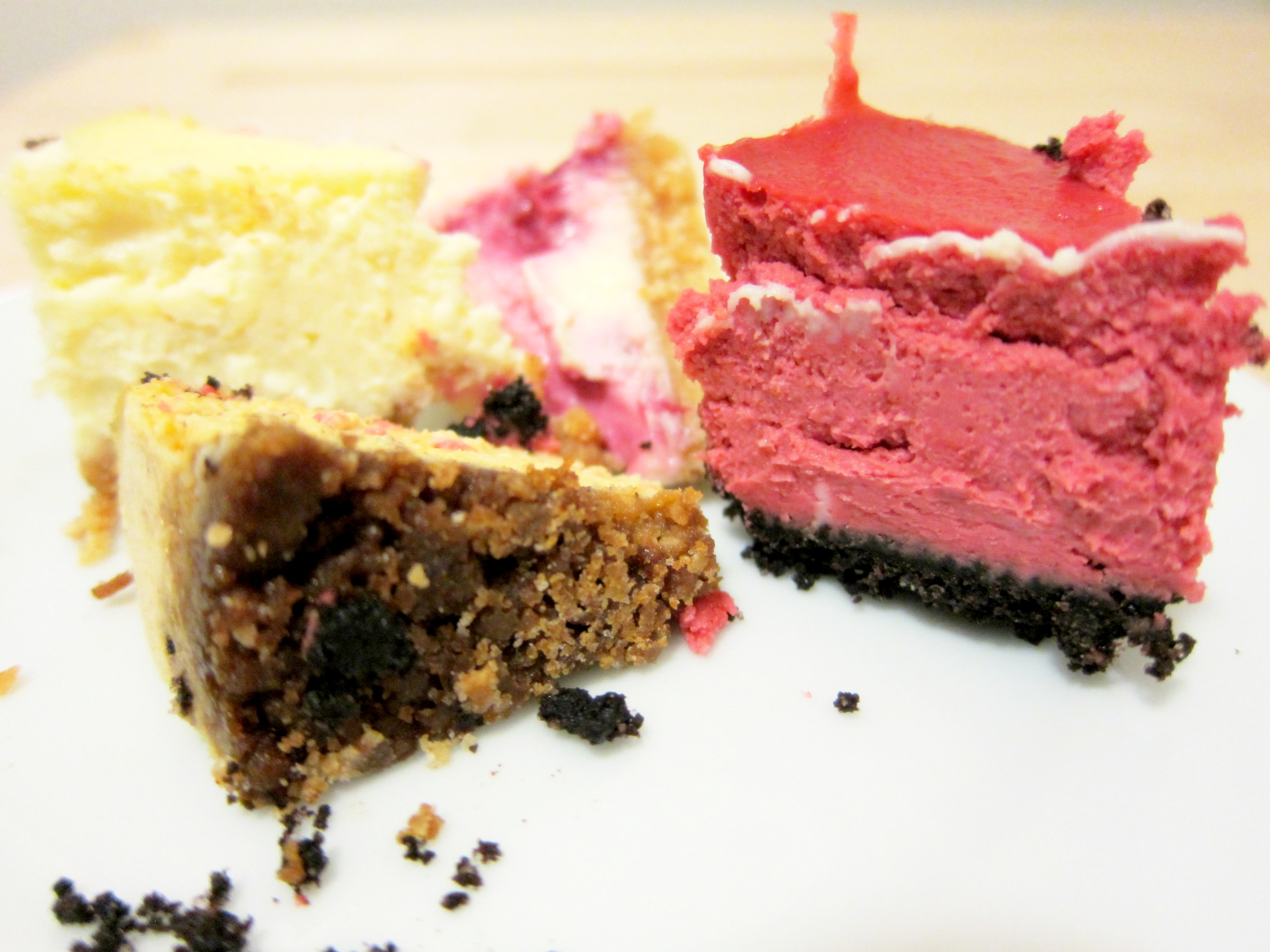
Clockwise from top left: Red Velvet, Original, Raspberry Lemonade, and Sweet Potato. I had my reasons for such picks. I wanted the original cheesecake flavor the way I want the original pho brought straight from the kitchen to the table, unadulterated by sauces or herbs. The red velvet is a playing-safe choice because it has chocolate. I haven’t seen sweet potato flavor in desserts. Raspberry and lemonade sound tart enough to temper the cheese.

Heaven forbids, these cheesecakes are no joke to get tempered by fruits. The Sweet Potato is a twin of the country pumpkin pie. The raspberry hint is stronger than the lemonade hint, but neither can emerge from the dense, creamy grasp of the cheese. The cocoa in the Red Velvet? Got lost. They’re good cheesecakes, but they’re all the same.

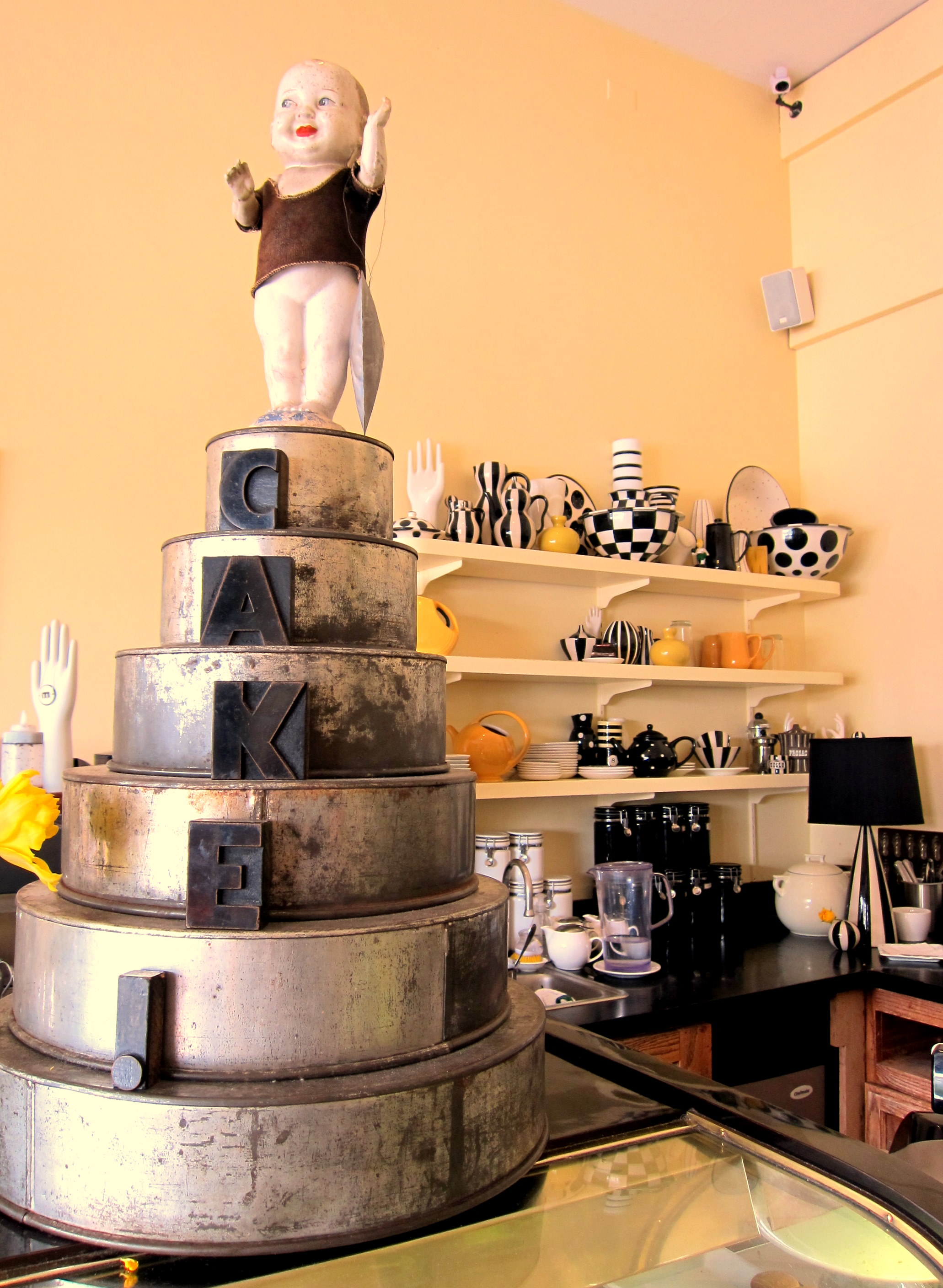
At Masse, North Shattuck, Berkeley. What happened to the boy's pants?

Thinking back, I’ve come across Reuschelle’s bites at Ghiradelli Square chocolate festival last September. He just started his business a few months before that. I like Victor’s casual friendliness, his delivery option, and his thrive for varieties, but if I must compare Masse’s one cheesecake with Reuschelle’s four, Masse’s wins. The fruit glaze makes the cake more dessert-like and less cheese-tray like, the hazelnut shavings break the textural homogeneity. The prices? Reuschelle’s a bit steeper, but you get the cake at your door.

And no, I couldn’t finish 4 mini 3″ cheesecakes in one sitting. Ninety percent of them are hanging out with the spinach and the pork chops in my fridge. Would you like some?

Address: Masse’s Pastries
1469 Shattuck Avenue (across the street from Safeway)
Berkeley, CA 94709
(510) 649-1004
www.massespastries.com

No-address: Reuschelle’s Cheesecake (aka Victor Reuschelle)
Telephone: (510) 219-2997
E-mail: reuschelle@gmail.com
www.reuschelles.com

Sandwich shop goodies #15 – Bánh quy (turtle mochi)

March 31, 2011 By: Mai Truong Category: Houston, One shot, Southern Vietnamese, sticky rice concoctions, sweet snacks and desserts


Of my two hundred fifty some posts so far, this Sandwich Shop Goodies series brings me the most joy when writing and also takes me the longest time per post. It’s a collection of the bits and pieces that cost next to nothing. You may say why of course, how can a mere grad student afford The Slanted Door, The French Laundry, or our local Chez Panisse et al. Now although my salary certainly factors in my grocery list, the truth is I’ve lost interest in the uptown food scene. It dazzles like fireworks, and also like fireworks, it doesn’t stay. The mixing and matching of the freshest and strangest ingredients has blended so many nationalities into one that it loses culture like a smoothie losing texture. Those fancinesses don’t have a home. Meanwhile, I can spend days googling an obscure street snack and still regret that I haven’t spent more time, because I know that someone somewhere out there has an interesting story surrounding its identity that I haven’t heard. With such food there’s more than what goes into the pot that I can mention. For example, a simple sticky rice treat has made its way into an idiom, no less.


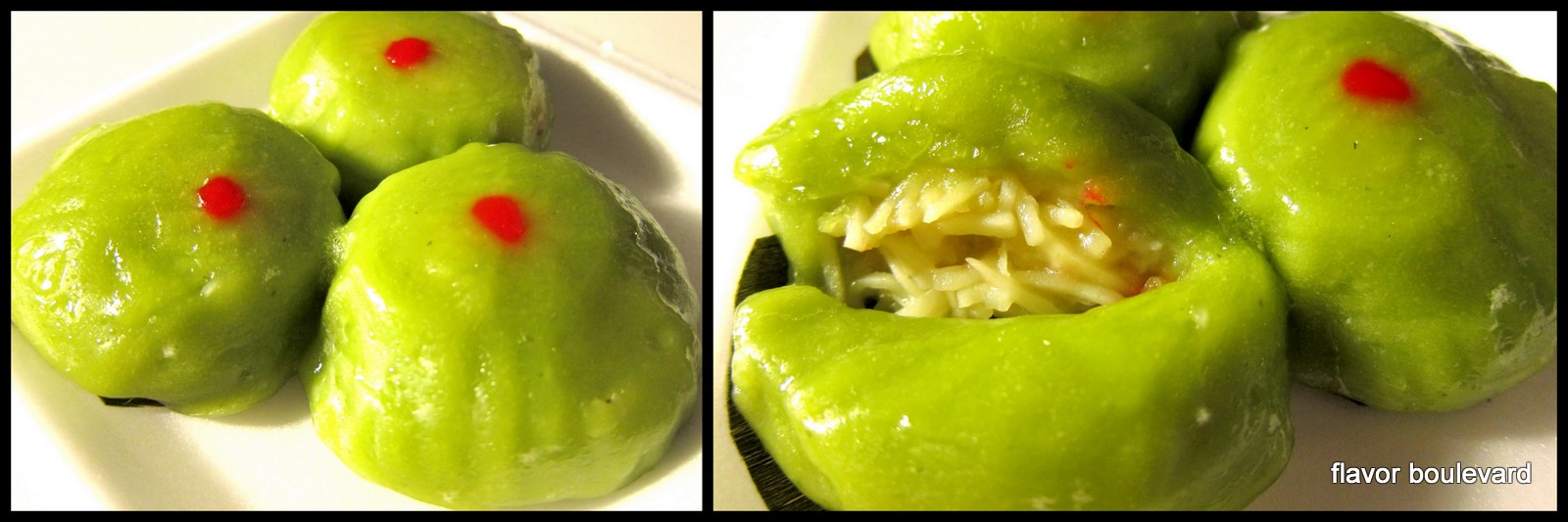
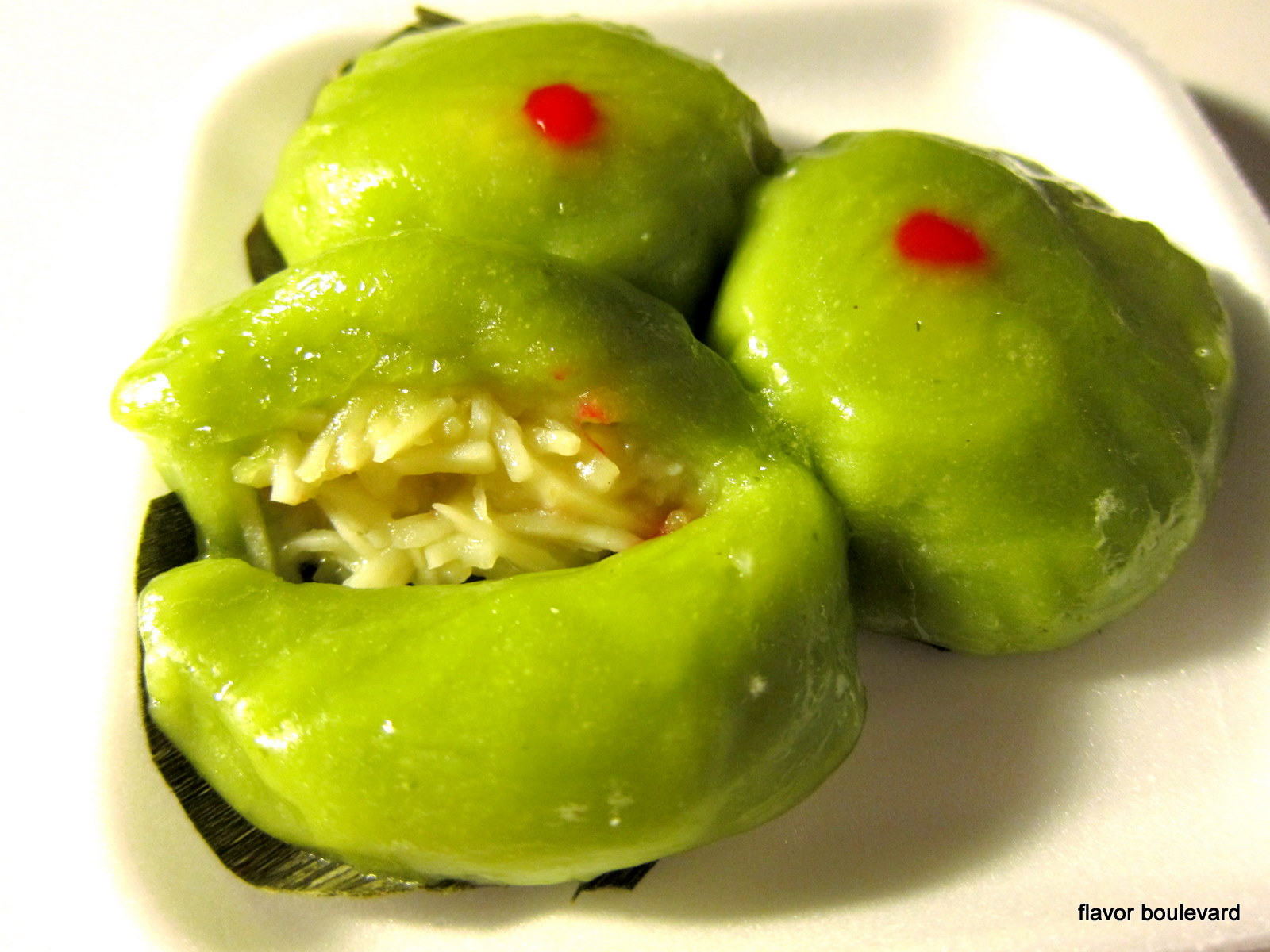
For twenty five years I’ve heard and used the expression “bánh ít trao đi, bánh quy trao lại” (“give bánh ít, get bánh quy” or “you scratch my back and I’ll scratch yours”) in a million occasions, but not once did I know what bánh quy was. At home we call cookies bánh bích-quy (biscuit) and some shorten it to bánh quy, but the biscuit and the bánh ít are too different from each other to be consider equivalents, and it’s reasonable to guess that the idiom came about before the introduction of Western food into Vietnam. So confused I was. Then one day while foraging the pile of snacks at Alpha Bakery, I almost flipped backward as I found a package of three green mochi’s labeled “bánh quy“.

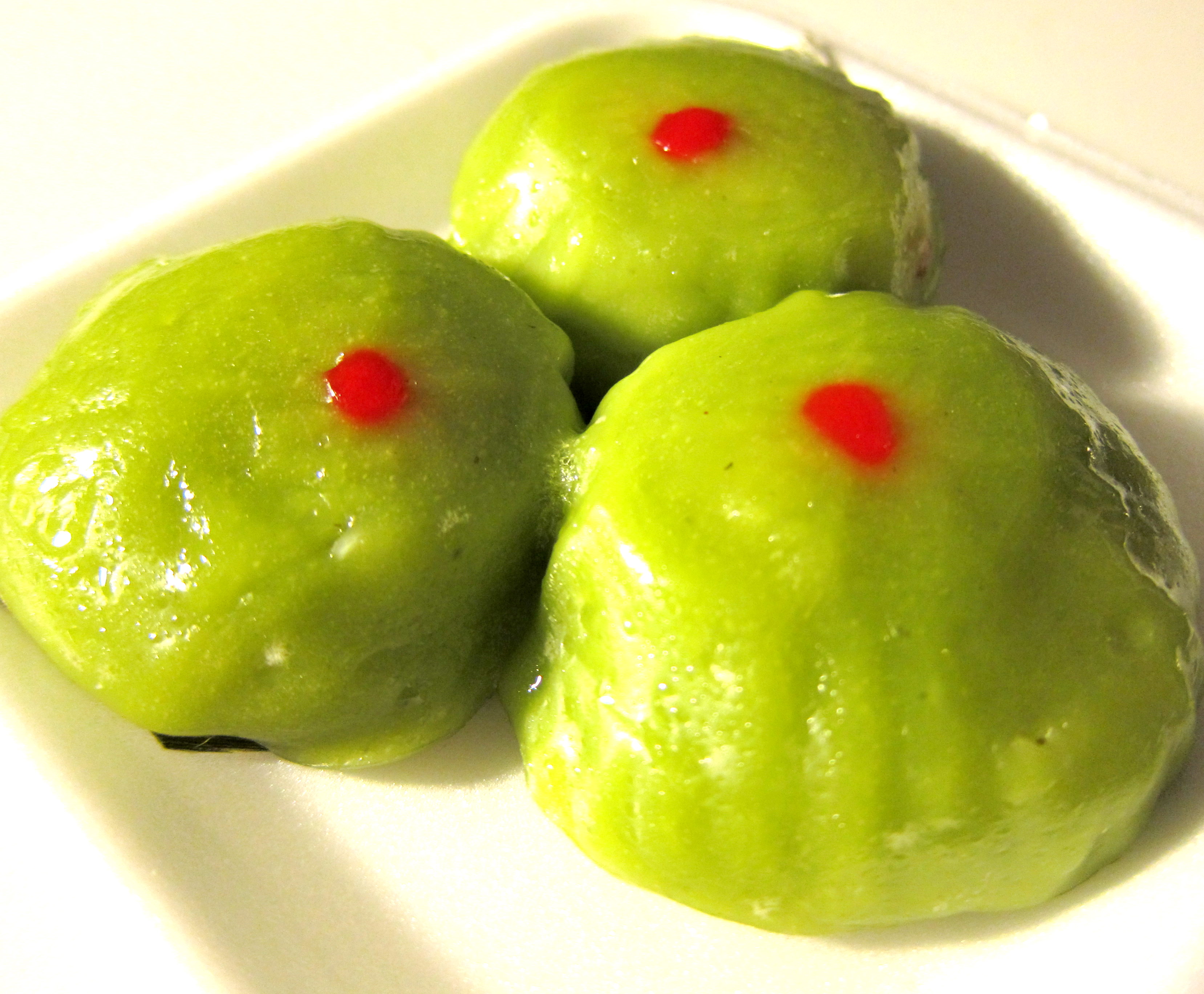
They’re round and flat at the bottom, each placed on a small cut of banana leaf, purposefully shaped like a turtle shell resting on wet grass. If you look closely you can even see some faint crevices near the rim. So there, mystery unveiled: “quy” means “turtle” in Han-Viet, and the banh gets its name from its look.


Content-wise, bánh quy is indeed just a smaller, rounder, flatter version of bánh ít: sticky rice, tapioca starch, salt, sugar, oil, and a sweet filling. Back in the day, the turtles had either a red or a yellow dot to distinguish between coconut and mung bean paste, but it seems these days only the coconut turtles are still around. Each banh is just big enough and tall enough to fit snuggly in a baby’s palm. Two or three adult bites and you suddenly wonder, hey, where did my sugary, chewy soft bun go?


Buy three at the store for $1.50. Also, look for this other type of bánh ít: bánh gai (bánh ít with thorn leaf extract)

Address: Alpha Bakery & Deli (inside Hong Kong City Mall)
11209 Bellaire Blvd # C-02
Houston, TX 77072-2548
(281) 988-5222

Previously on Sandwich Shop Goodies: bánh da lợn (pig skin pie)

This post is submitted to Delicious Vietnam #12, April edition, hosted by Anh of A Food’s Lover Journey. I’m so looking forward to the roundup this month!

Candied cà-na (white canarium or Chinese olive)

March 12, 2011 By: Mai Truong Category: California - The Bay Area, Fruits, One shot, Southern Vietnamese, sweet snacks and desserts, The more interesting


It’s not the black stuff they throw on your pizzas or the green thing they toothpick on your sandwich. How many of us city kids have tasted the tartness with a tiny sweet afterpunch of this Mekong delta fruit? It’s addictive like fresh squeezed orange juice on a summer day. Speaking street tongue, it’s nature’s crack in oblong shape.

Eat ’em fresh with chilipepper salt, or candy them with sugar and heat, it’s how kids down South do it with the cà na they shake off from bushes on the riverbanks. And argue if you may, kids know tasty food. The shape is really the only link cà na has with the Western olive (Olea europaea), though it’s at least two times bigger. Does the name “cà na” mean anything?

“Cà” is tomato, and “na” is the northern word for sweetsop, two totally unrelated species to this ovoid fruit. So “cà na” is not a compound noun. I’m no etymologist but here’s my best guess: “cà na” |kah nah| is a shortened vietnamization of the Thai word “kanachai”, from which cultigen taxonomists derive the the scientific name “canarium”, a genus with about 75 species native to the tropics. The cà na we eat and love from those riverbank bushes belongs to the species Canarium nigrum (black canarium) and Canarium album (white canarium), or “trám đen” and “trám trắng” in pure Vietnamese. Another delta variety is Canarium subulatum, pointy at both ends and sappy like green bananas.

Words on the net claim that cà na‘s acidity is good when you have a cold, drink too much, or wants to lower your weight, thus not so recommended for skinny sticks like me. I’ve never popped a fresh one myself, but this is the most (and only) mouth-watering description I could find on the net (translated from the Vietnamese original):

Every year, in roughly August or September, when the Mekong flushes the paddy fields, the cà na trees bear their first fruits. What could be better than rowing a canoe downstream, then tying it to a cà na trunk base by the riverbank to cast your fishing net, and while waiting, dip a bursting green ripen fruit into chilipepper salt to soak your soul with its wild and clean sweetness?


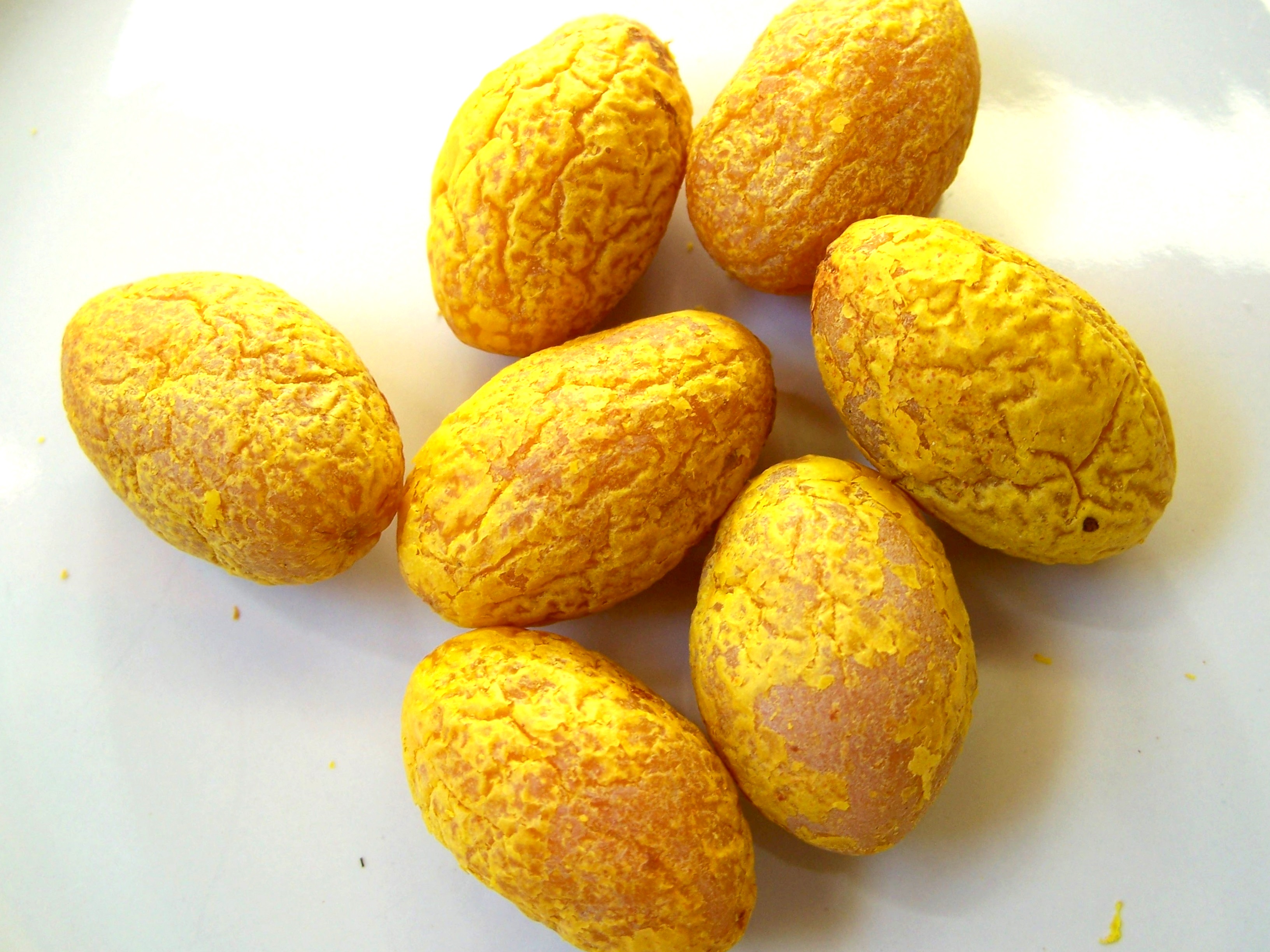
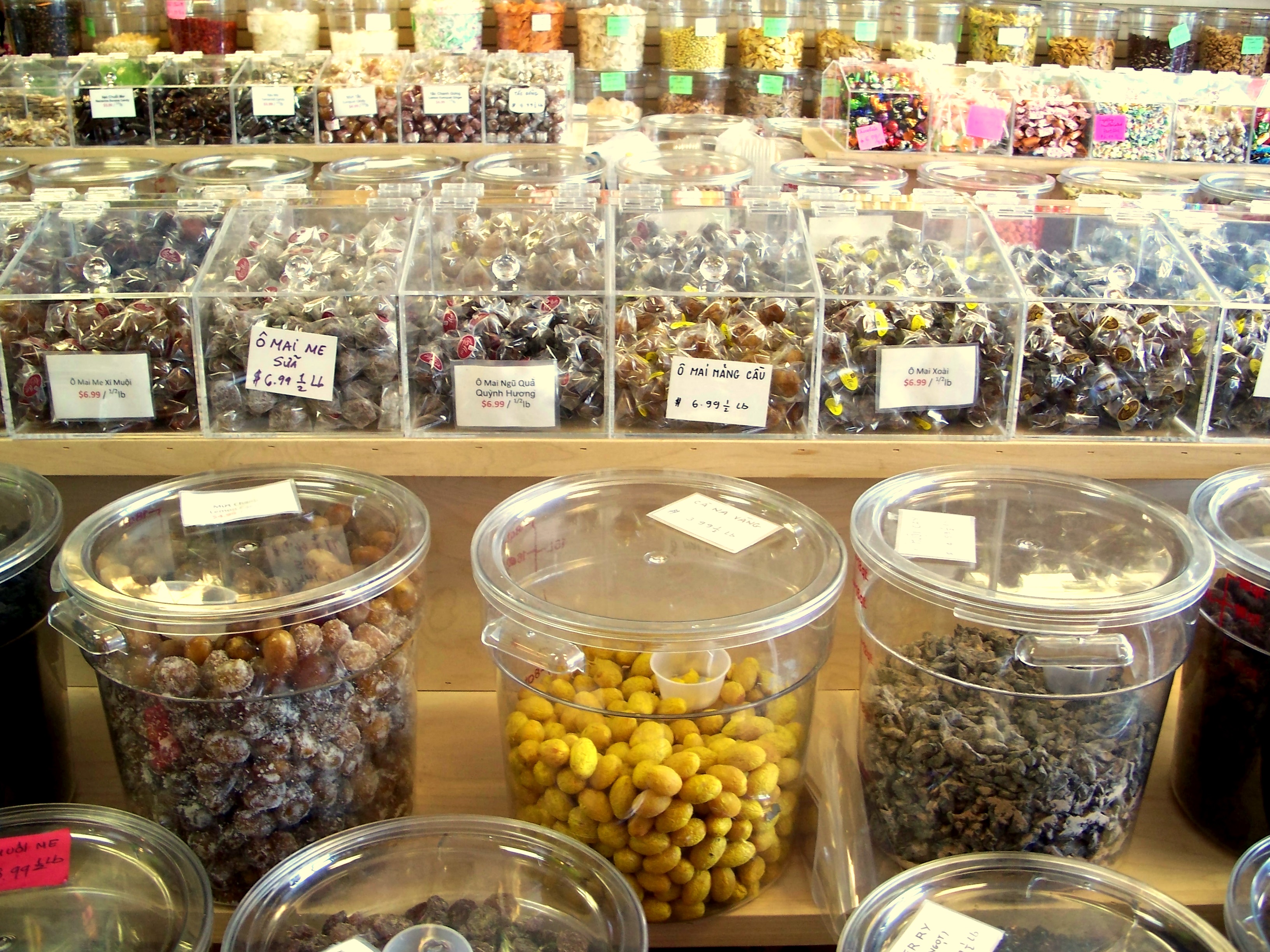
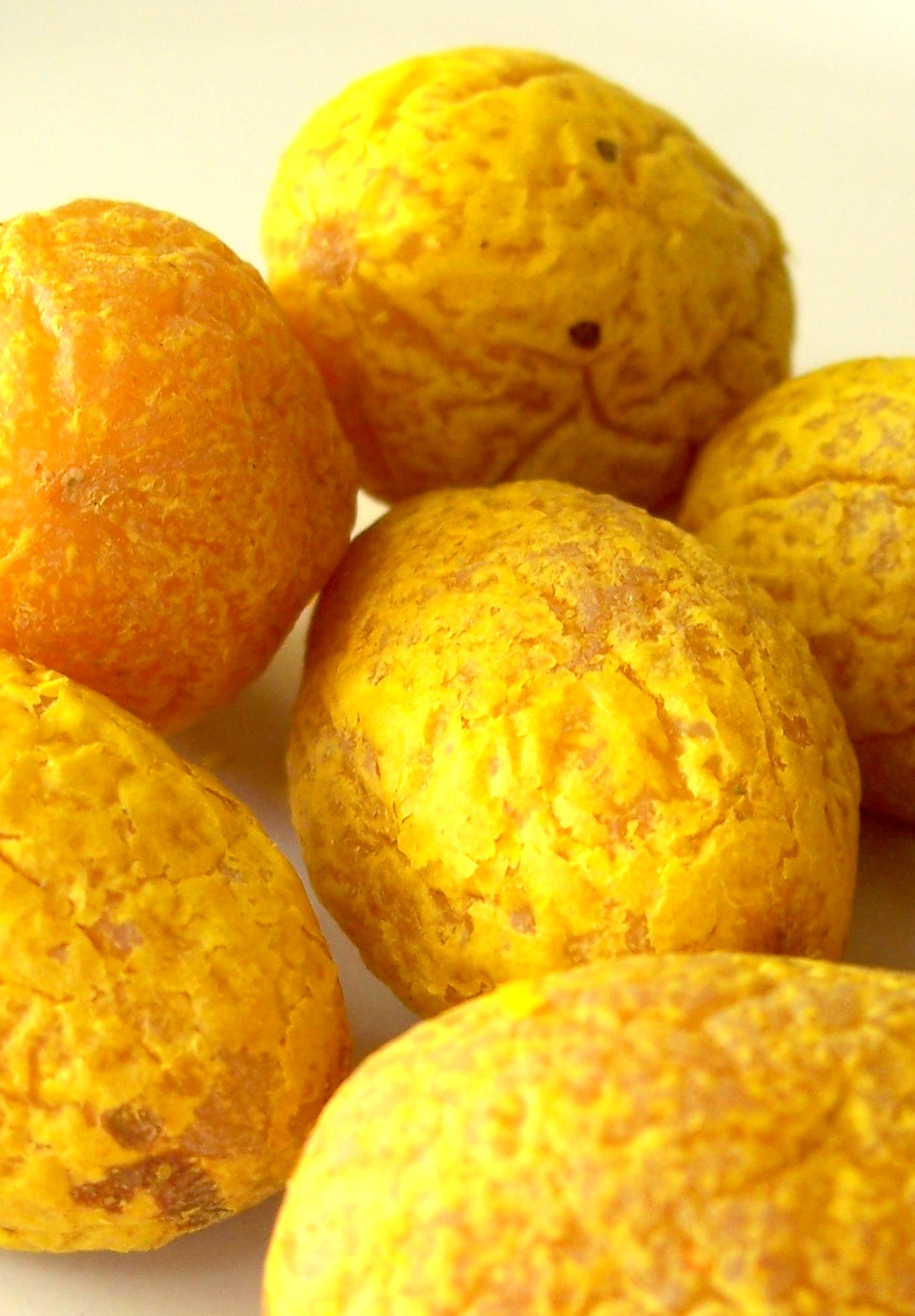
The first cà na‘s I’ve had are bright yellow with cracked skin, as big as a big green grape, resembling petrified dinosaur eggs, sold in glass jar among the ô mai and the salted plums.


The first nibble must be executed with caution. It’s firm and sound, with one big hard seed. No wonder the folks at home call the American football the cà na ball: they look and feel the same, only smaller. The flesh is dense like an old coconut’s meat, sour like lemon leaves, yet sweet like licorice blended with a dash of sea salt. How they’re made is a mystery to me.

Address: Vua Khô Bò & Ô Mai
2549 S King Rd #A-B
San Jose, CA 95121
(408) 531-8845

Also from here, also fruitilicious:
1. banana tootsie roll
2. ô mai (spiced fruit ball)

Other informative links on the Chinese olives:
a list of different cultivars in China
Autumn olive


This post is submitted to Delicious Vietnam #11, March edition, hosted by The Culinary Chronicles. I’ll head to her blog for more yummy posts on Vietnamese food this month, and many thanks to the Ravenous Couple and Anh for creating this event!

Sandwich shop goodies 14 – Bánh da lợn (pig skin pie)

March 06, 2011 By: Mai Truong Category: Houston, One shot, sticky rice concoctions, sweet snacks and desserts, Vietnamese


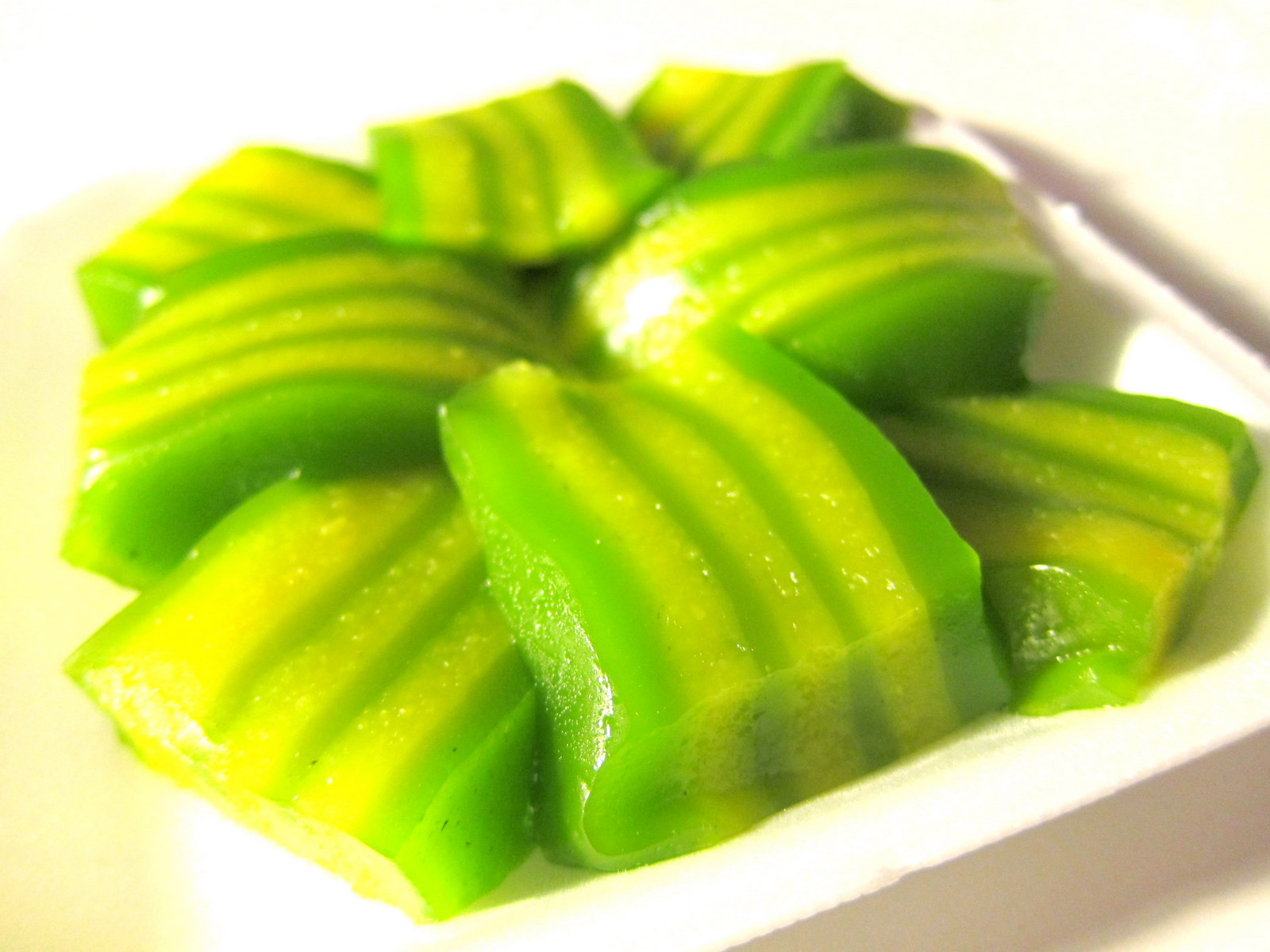
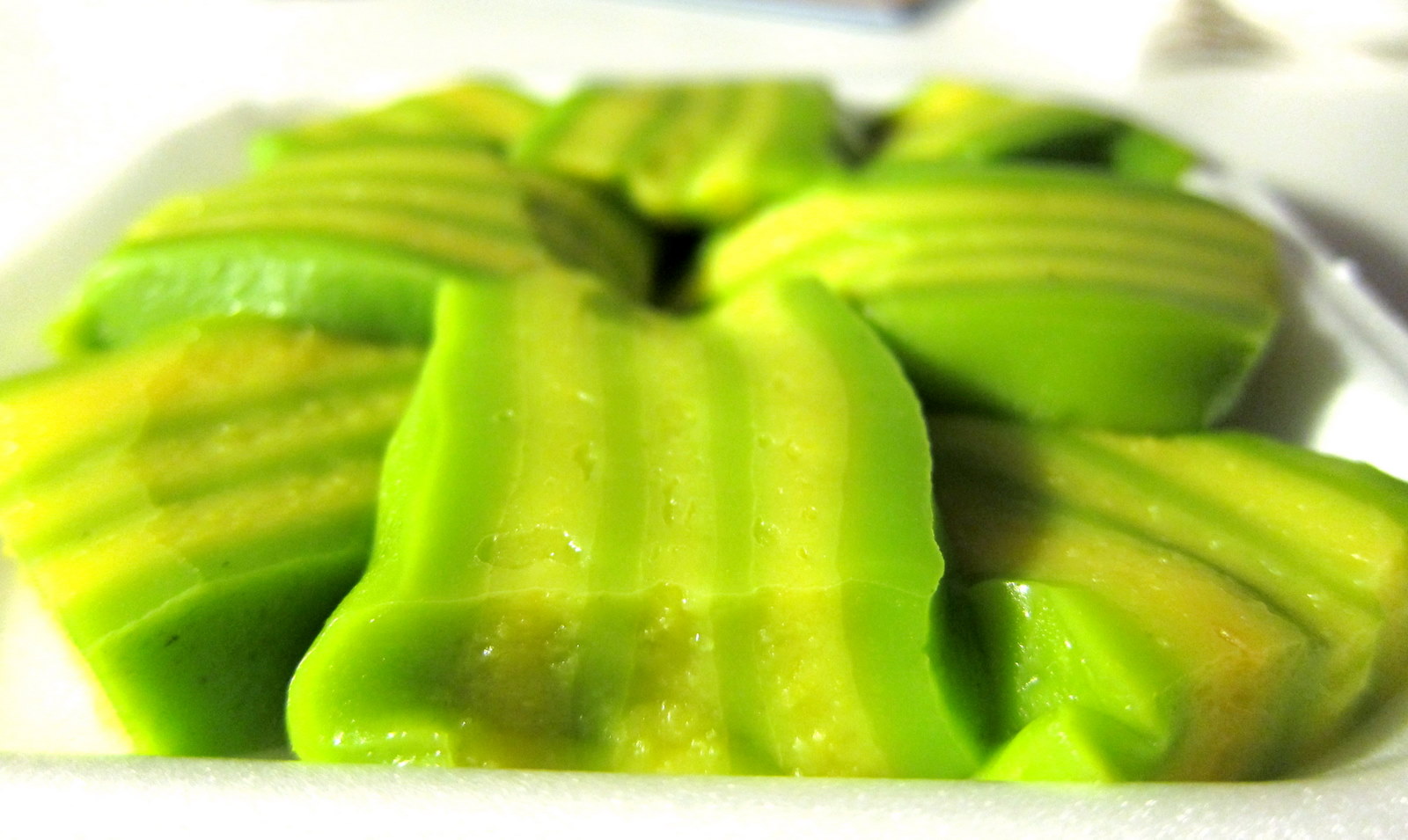
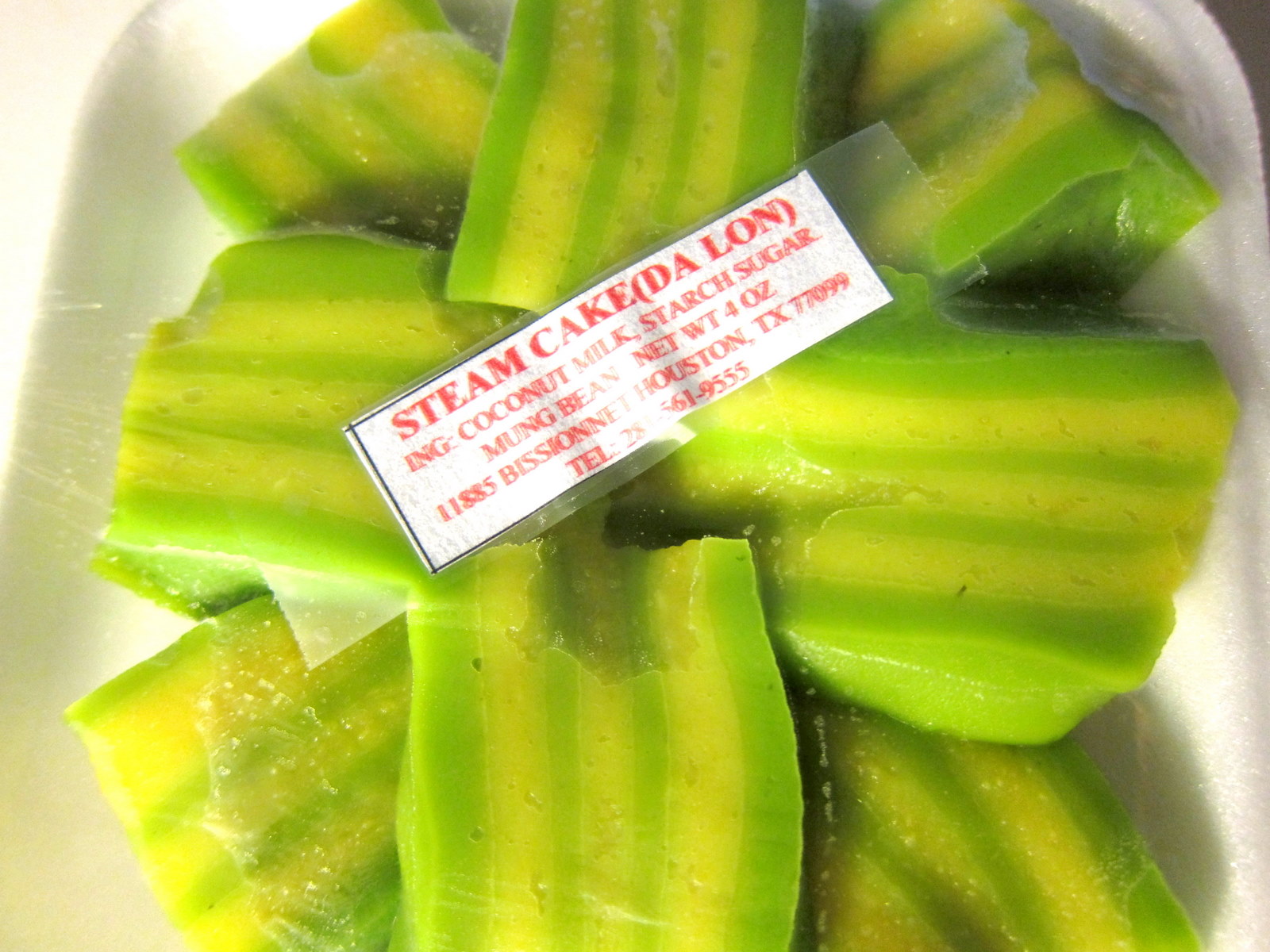
This is no stranger in the Vietnamese food biz: the layered pastry that gets its name from looking like pork belly, except green and yellow. Of course it doesn’t contain any pork skin, it’s sweet, sometimes may even be too sweet. Dad used to buy a whole pie home, as big as a platter and as warm as a father’s hand. From that same bakery somewhere in the market alley, he would buy bánh chuối nướng (bread pudding) too, which I always preferred to the bánh da lợn. But thinking back on those days when we lived near Bà Chiểu Market, it was certainly the best pig skin pie I ever ate.


Many years have passed, and many bánh da lợn have been eaten by me, both in its homeland and across the seas. The best way, I figured, to slaughter these chewy beasts is to peel off the layers one by one, when it’s warm. That wet, smooth skin of tapioca flour, when warm, is fragile. You don’t want to break it while peeling, and you want to drop it whole in your mouth to wrestle with its resilience, all the while inhaling the sweetness of pandan leaves and vanilla fused in its tone.

Simply put, a cold “pig skin” is a dead “pig skin”. A warm mung bean paste layer is also less sweet than a cold one, and thank goodness the bean layers are always one fewer than their tapioca neighbors. The pies Dad bought from that market bakery would have white chewy layers too, and the green ones didn’t look radioactive green like those we get from sandwich shops these days. Ah marketing strategies, just like somewhere in Vietnam someone thought of calling it “bánh chín tầng mây” (cloud nine pie) (because pork skin doesn’t ring any two-cent poetic sound), or when the tapioca layer turns dark purple, because of either magenta plant‘s leaf extract or food coloring, and the bean layer light purple because of taro.


Whatever the case, the original bánh da lợn is still the best. I looked through 51 pages of Google search for its origin, which seems likely lost through generations of home cooking and street food mingling. You see, it was never really a praiseworthy, historically recorded invention in the kitchen. There’s no village or province associated with the best bánh da lợn. It’s probably from the South, even if “lợn” is the Northern word for “pig”. It’s a product from a steamer, it’s cheap, it has texture, kids like it, Dad likes it. That’s all I know.

And by the way, Alpha Bakery & Deli sells some good, thinly sliced, warm numbers for a buck fifty.
Address: Alpha Bakery & Deli (inside Hong Kong City Mall)
11209 Bellaire Blvd # C-02
Houston, TX 77072-2548
(281) 988-5222

Previously on Sandwich Shop Goodies: bánh xu xê (couple cookie)
Next on Sandwich Shop Goodies: bánh quy (turtle mochi)