Flavor Boulevard

We Asians like to talk food.
Subscribe

Archive for the ‘RECIPES’

Black tea rice

November 08, 2011 By: Mai Truong Category: Central Vietnamese, RECIPES, Vietnamese


Something occurred to me within the last month: I probably should learn to pair drinks with food, but I hardly drink anything beside water and soymilk. Now I would *love* to learn about the different kinds of water, but living in the city makes it a bit difficult, and soymilk can’t be paired with everything like wine (yet). Coffee, alcoholic beverage, juice? Didn’t quite catch on. So what does that leave me? Tea. A quest takes form: Mai is going to learn tea.

And Mai will cook with tea, too. Because boiling water to drink tea takes some work, I might as well make it worth a meal. How much influence the ochazuke at Mifune had on me, I’m not sure, but during the two minutes of wringling my brain out for some easy way to use tea in food, the first thing that came to mind was cooking rice with tea. Now that’s the difference between my tea rice and the ochazuke: my tea rice is rice cooked with tea, and the ochazuke is rice eaten with tea, like a soup.

As with everything, there’s the easy way and the hard way to make tea rice.
The hard way: use loose leaf tea
– Pros: the tea quality (fragrance, taste, intensity)
– Cons:
—— If make tea first, then use tea instead of water to cook rice: extra step of cooking = time cost
—— If put tea leaves and rice altogether and cook: you’d have to either eat the tea leaves with the rice (the textures don’t match), or pick it out by hand. This obstacle can be remedied with a small mesh bag, though, if I had one.
The easy way: use tea bags. The pros and cons are just the opposite of the hard way.

If you know me, my very under-equipped kitchen, and my minimalist attitude with time, you know what I chose to do: I let the tea bags float in the water and the rice cooker do its job.
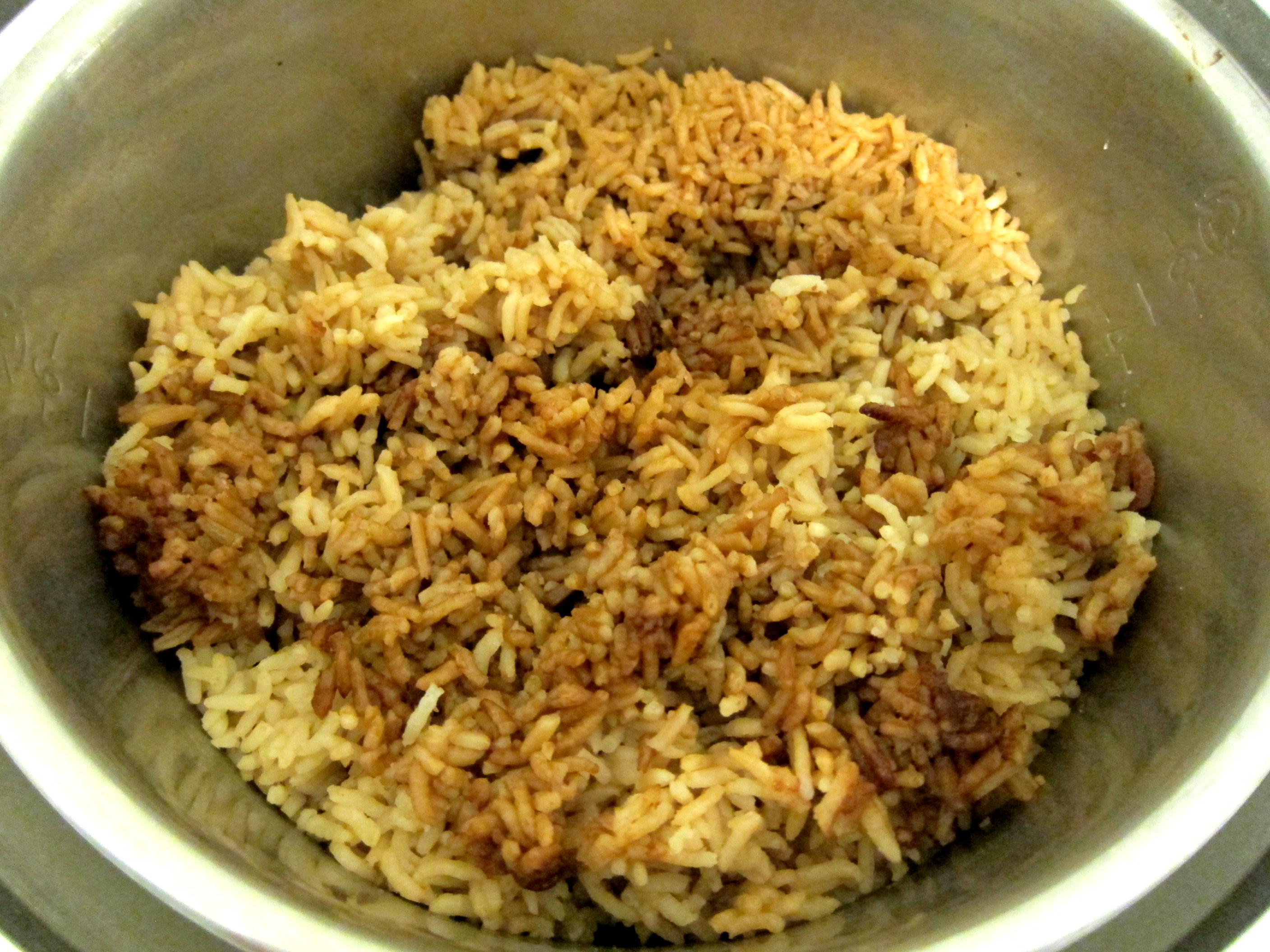

Unlike my other whimsical cooking experiments, tea rice is something I’ve actually made more than one time. I feel so matured. After all those times, I’ve learned that:
1. Green tea gives the rice the tea fragrance, and black tea gives it the tea taste, but neither gives enough of both. White tea is out of the question, unless you’re really proud of your tea sensitivity.
2. One tea bag per cup of water is sufficient. (But how many cups of water per cup of rice is a different matter: it depends on the rice.)
3. Tea rice soaks up the moisture more than normal white rice. You know how the lid of the rice cooker usually has a lot of water droplets on its underside when you open the cooker? When you cook with tea, the lid is almost dry.

As per Little Mom’s suggestion, I combined green and black tea into my latest batch. Three cups of rice, four cups of water, 3 black tea bags, 2 green tea bags. It came out healthily browned, smelling herbal, and tasting clean. Tea rice has an enticing bitter hint and a sweet aftertaste, which is likely the rice’s natural sweetness enhanced by the tea’s lasting subtlety.

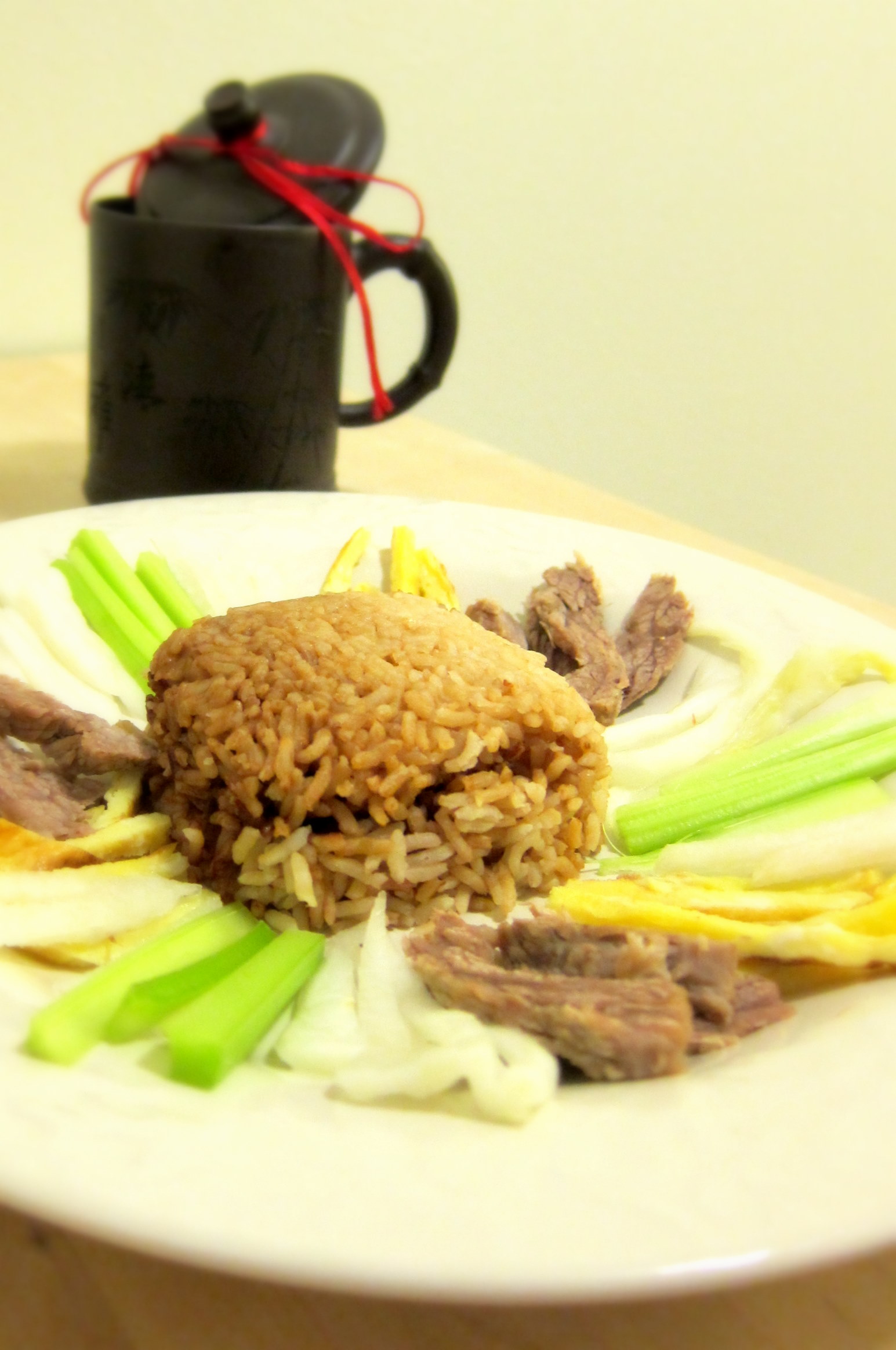
But tea rice needs companions, too, something savory enough to make it exciting but plain enough to not overpower its flavors. A thought came, and I nearly cried for missing a Halloween post. So, in the spirit of early November, which is late Halloween, I present to you Black Tea Hades Rice (cơm âm phủ trà đen):
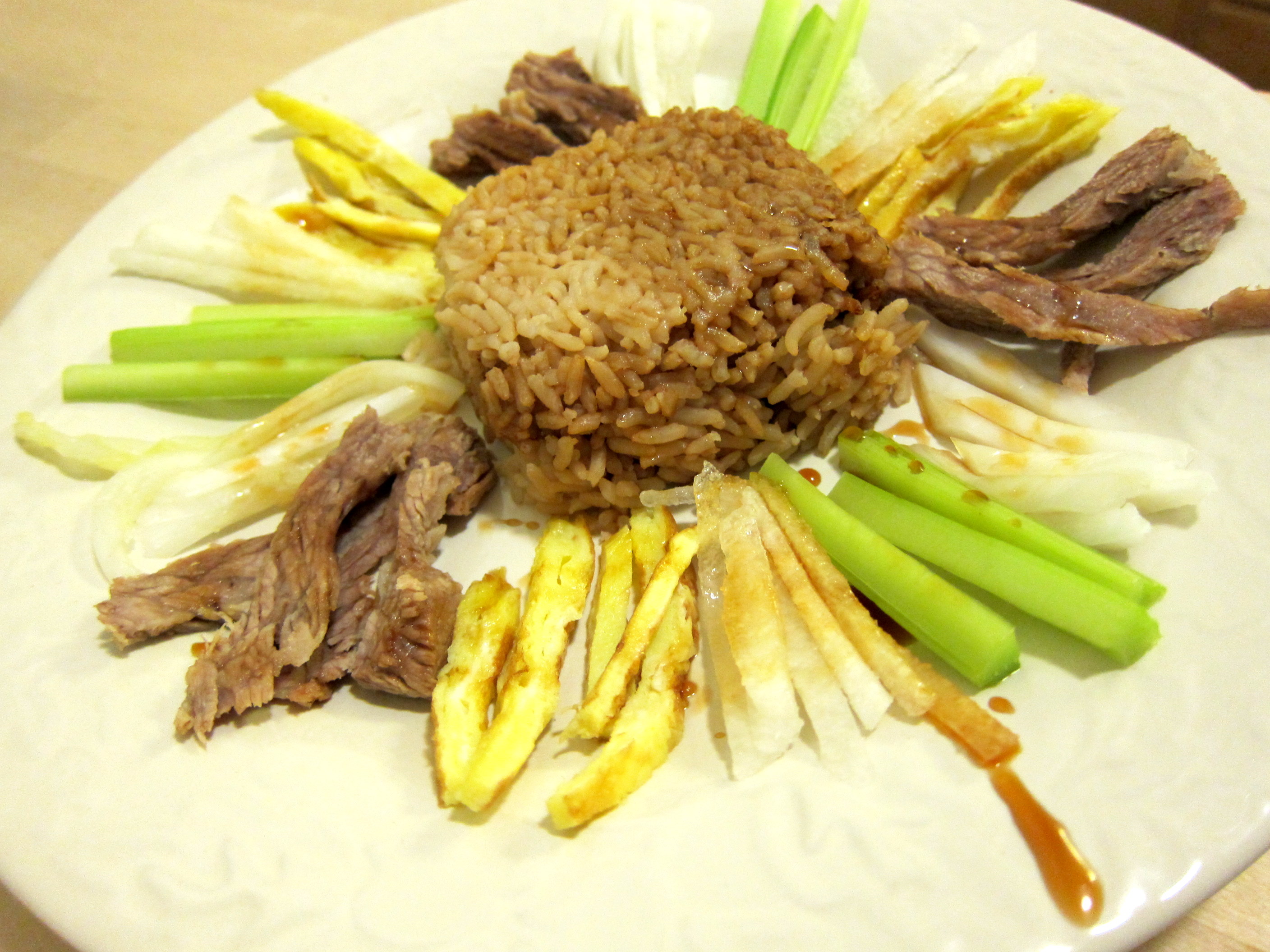

Hades Rice belongs to Huế cuisine, featuring julienned meat, omelet, and vegetables. Such delicate texture of the accompaniments make this style best spotlight the tea rice.

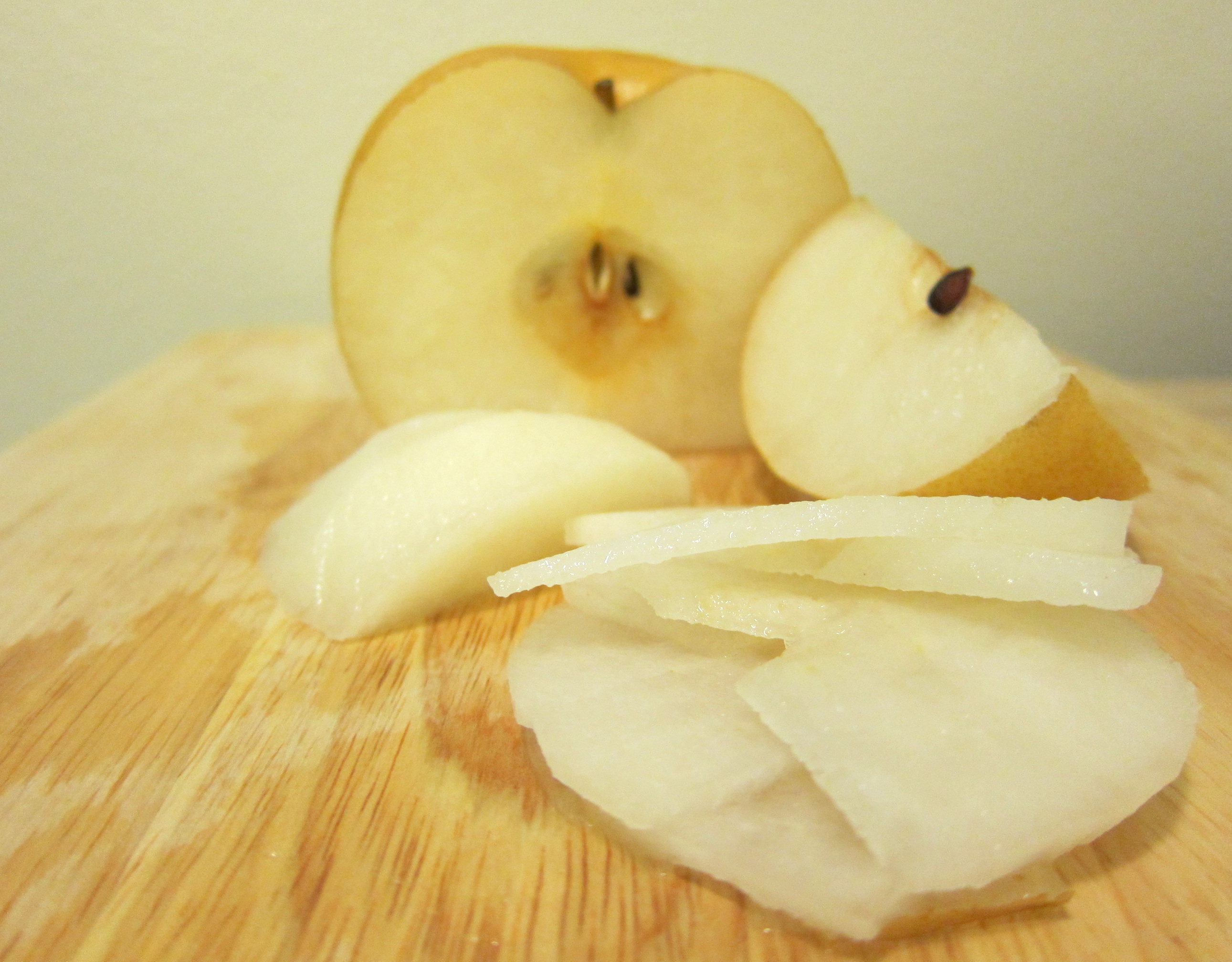
Fried egg, fresh celery, Asian pear, white baechu kimchi (dongchimi style), and boiled brisket were what I could whip out from the fridge, but the silk sausage would be nice to have. Drizzle some sweet garlic soy sauce on top, and the rice just sings. 🙂


This is my contribution to Delicious Vietnam of November, hosted by Sandy of Ginger and Scotch. Can’t wait to see what’s on the table at this 19th round. 🙂
*Delicious Vietnam is a monthly blogging event created by Anh of A Food Lover’s Journey and Hong & Kim from Ravenous Couple.
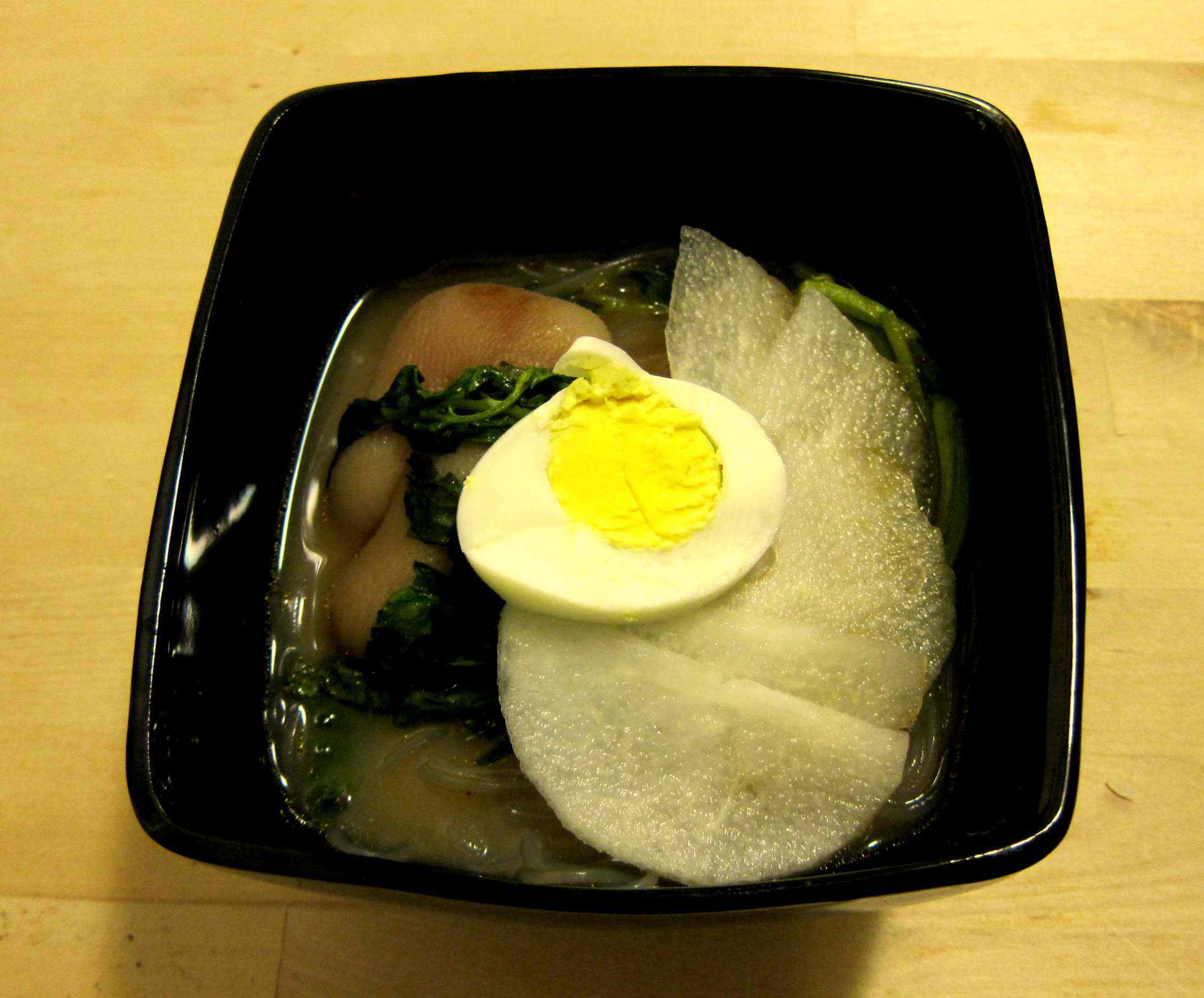
Korean chilled noodle soup with a few Vietnamese twists

September 27, 2011 By: Mai Truong Category: Korean, noodle soup, RECIPES, Vietnamese


Sometimes my craziness surprises myself. I woke up one morning, reflecting that the week’s been warm, and decided to make mul naengmyeon (물 냉면). Weeks earlier, I bought the buckwheat noodles but never had the time to cook, or the mood. Now I still don’t have time to cook, but today is the day. I remember the main ingredients of a true Korean naengmyeon, but just to make sure that I don’t have them, I look at Maangchi’s recipe anyway.

Beef bones? No. Mushroom? No. Dried anchovies? No. Kelp? No. Yeolmu kimchi juice? Hah. In my dreams. I don’t even have cucumber. Am I going to the store? Of course not. The wind might blow away my cooking mood, which is already rare as it is. Besides, I have a blind confidence that what I do have will make a fine bowl. The deaf ain’t scared by gun fires, they (we Vietnamese) say.

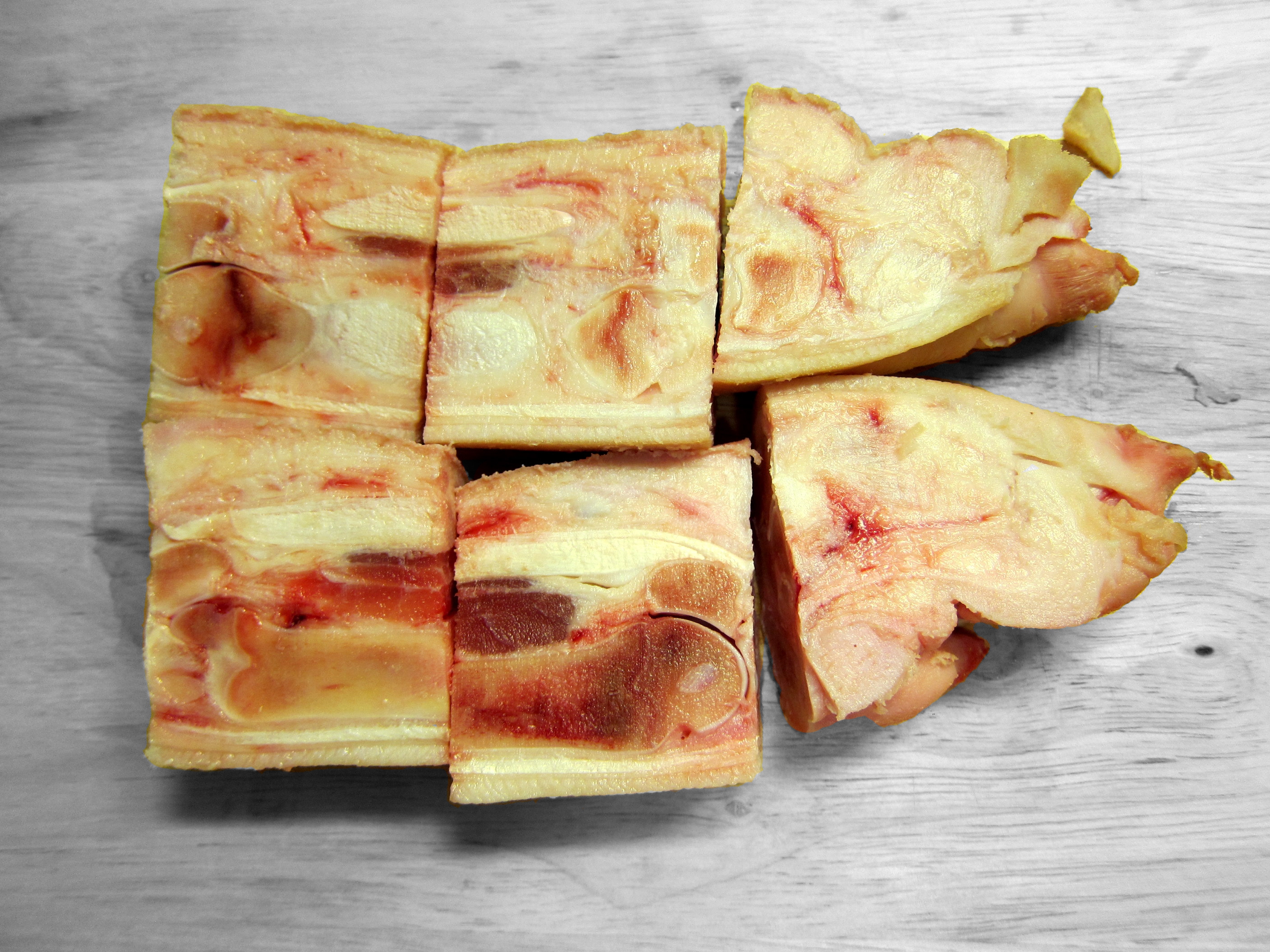
Naengmyeon has three fundamental components: the broth, the buckwheat noodle, and the toppings. The broth needs to be clear and slender. To get the sweetness, I substitute beef bones by pig trotters. They have plenty of bones, and unfortunately also plenty of gelatin, but as long as I skim off the fat while the stock boils uncovered, my broth is clear. In place of dried anchovies, I use fish sauce. So far so good.


The tricky part is the yeolmu kimchi juice, or some kind of dongchimi. Naengmyeon, unlike all other noodle soups, can be eaten cold because the tangy, bitter kimchi juice freshens the otherwise fatty stock. More acridity comes from the mustard, but I don’t like mustard so I (coincidentally) miss it from the noodle package. Anyways, no dongchimi in sight, what to do? I just use normal kimchi. Currently I have a jar of cabbage kimchi, but any kimchi would do. The fermented, spicy, and sour flavor is our goal. Churn a handful of kimchi in some cold water, then mix with the cooled broth to taste, it comes out just as well had it been yeolmu kimchi juice.

The noodle: boiled and cooled.


The toppings. Because I’m making the soup version, mul naengmyeon, I don’t need the pepper flakes, pepper paste, ginger, and onion, all of which I don’t have, to make the spicy sauce for the bibim nangmyeon. (You may also wonder what kind of kitchen doesn’t have onions.) Mul naengmyeon toppings are simple: hard boiled egg, cucumber, and Asian pear. The cucumber and the pear, as you might guess, are for crispiness and coolness. I don’t have cucumber so I double the pears. In fact, there’s no such thing as too much pear. It’s sweet, crunchy, and refreshing. It defines naengmyeon.

Another twist I came up with to maximize the freshness: add watercress. Right before serving. Not only does it herbalize and lighten the broth, the porous stems complete the textural spectrum. Just out of curiosity, I also try it hot. Then it’s just jokbal myeon, or miến giò. 😛 In one single bowl is every ingredient that I love: chewy noodle, pig feet, kimchi, and pears. Delicioso.

Mai’s extremely simplified take on mul naengmyeon:
Jokbal Mul NaengmyeonMiến Giò Lạnh
Ingredients: (6 servings)
– 2 lbs pig trotters
– kimchi
– buckwheat noodle (naengmyeon, or miến kiều mạch)
– 1 Asian pear
– 3 hard boiled egg
– watercress (optional)
– 2 tbs Red Boat fish sauce
– Other possibilities: chrysanthemum greens and night scented lily (bạc hà) to clarify the broth.

Preparation:
– The broth: Put washed pig feet in cold water with a pinch of salt. Bring to a boil. Dump out the water, rewash the pig feet in cold water. (This first boil is to get rid of the piggy smell, said Little Mom.) Boil the trotters again, uncovered to keep the stock clear. Skim off the white fat layer frequently. Boil until tender. (This second boil takes about 2 hours.)
—- Add fish sauce near the end. Too much fish sauce would muddle the broth. I use 2 tbs fish sauce and some salt to keep it light. No sugar.
—- Mix a handful of kimchi with cold water, then add to the cooled broth. For less sourness, add the kimchi directly to the broth right before turning off the heat.

– The noodle: boil 3-4 minutes, then rinse under cold water to increase the chewiness and remove the starch.

– The toppings:
—- One or a few slices of hard boiled eggs.
—- A few thin slices of Asian pear. A trick I learn from Maangchi’s recipe: keep the pear slices in cold sugar water to preserve its color and sweetness.
—- A few sprigs of watercress.

Serve cold: refrigerate for 20 minutes or add crushed ice.
Serve hot: like every other noodle soup.


When was the last time I made noodle soup? It was bún bung, exactly one year ago! (Sep 25, 2010 – Sep 25, 2011). Ironically, real bún bung calls for pig feet, and I had to use beef bones. Now real naengmyeon needs beef bones, and I use pig feet.

I think I’ve vietnamized this unique Korean noodle soup enough that it’s qualified as a Vietnamese dish to submit to Delicious Vietnam, a monthly blogging event created by Anh of A Food Lover’s Journey and Hong & Kim from Ravenous Couple. In fact, that’s just what I’ll do. Thank you Bonnibella for hosting the 18th round. 🙂
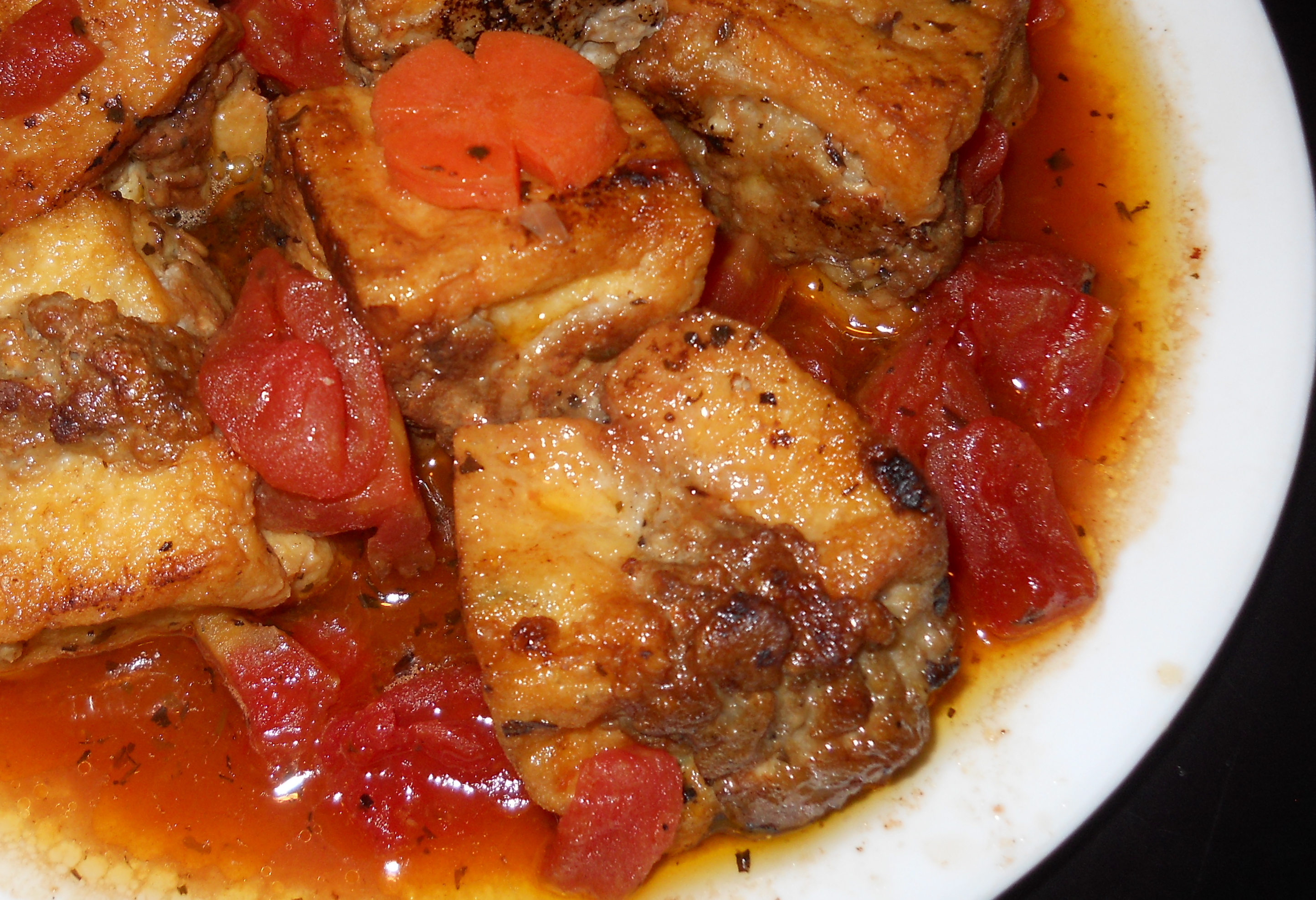
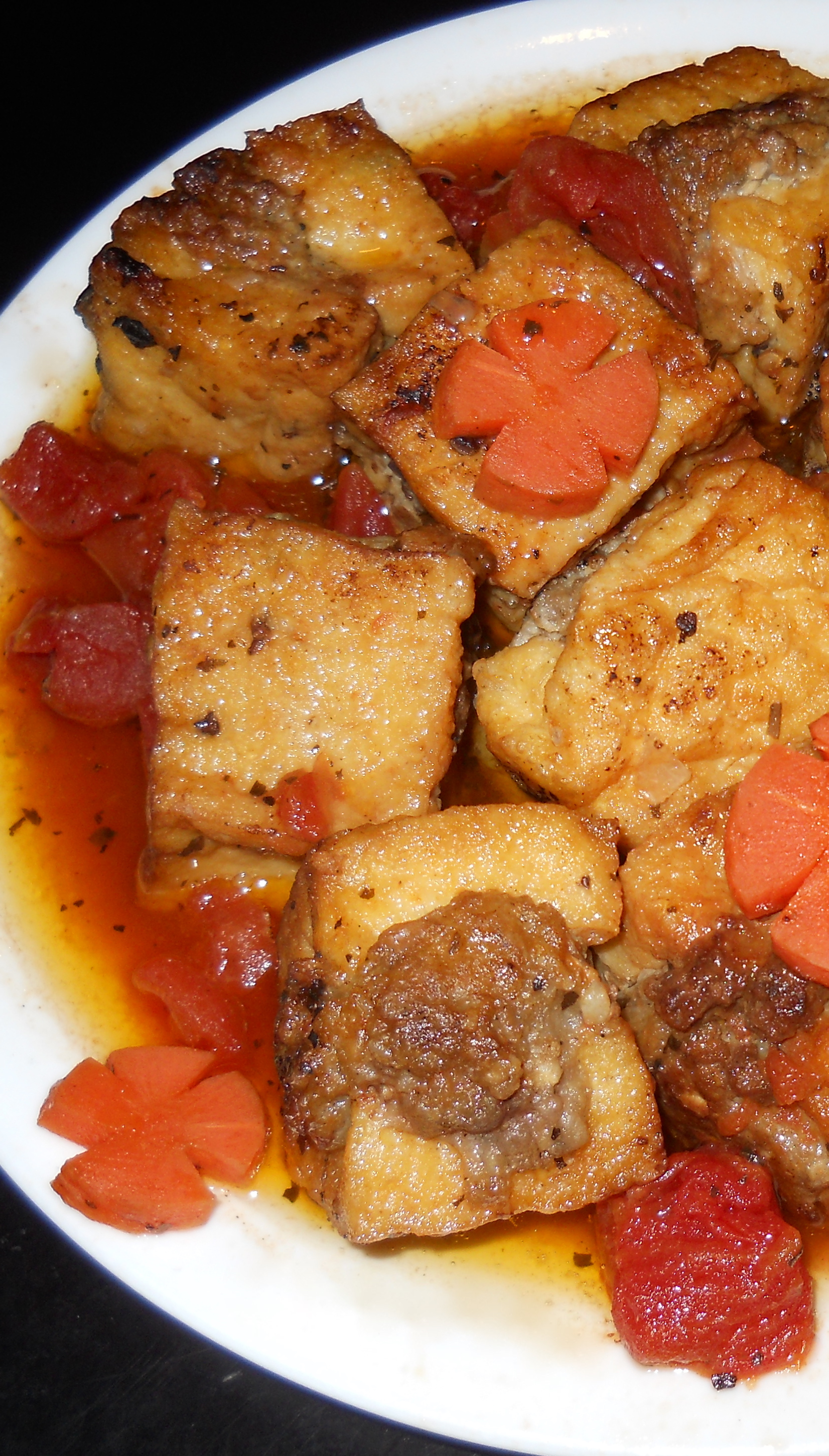
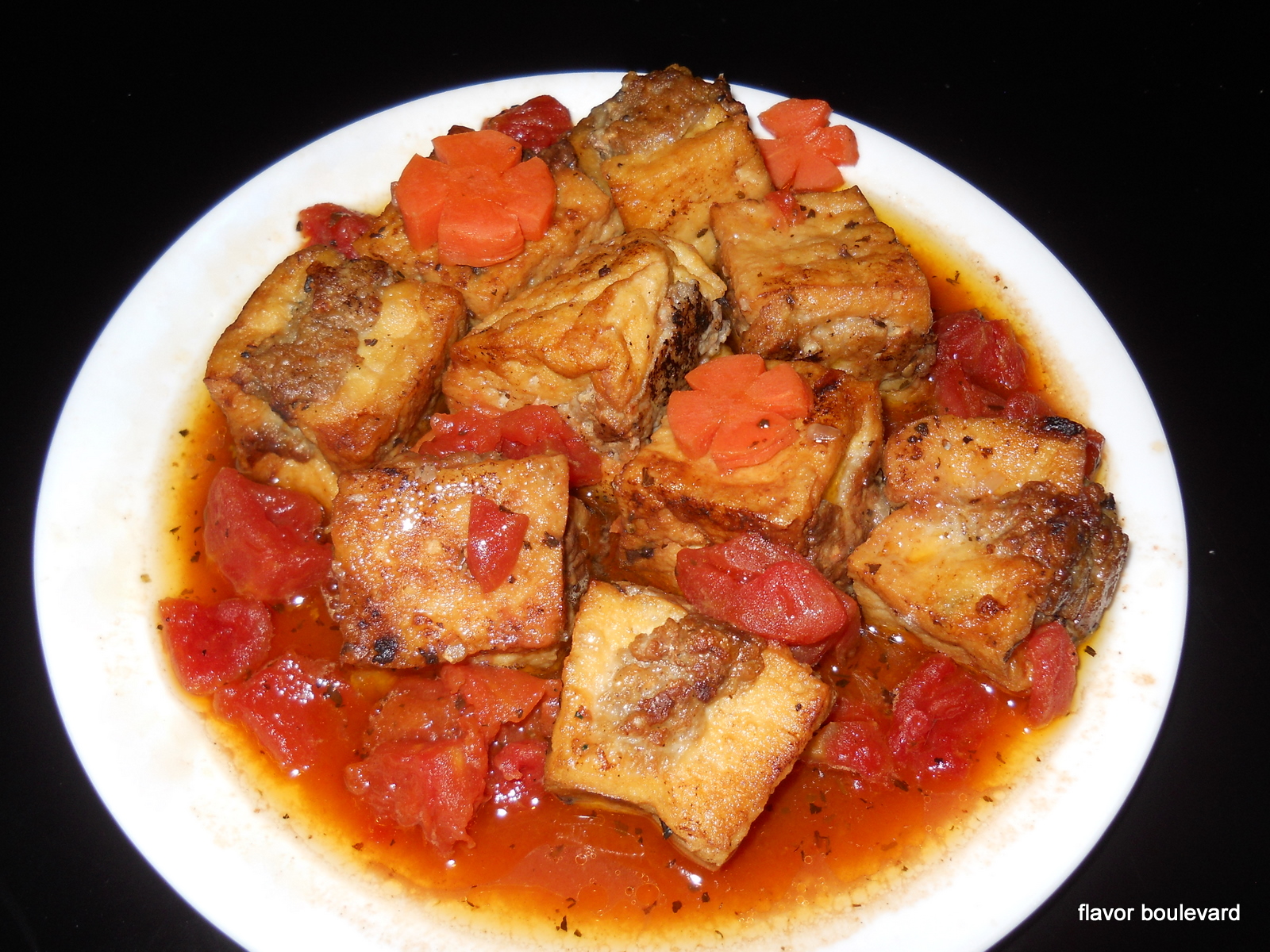
Mom’s cooking #3 – Stuffed tofu in tomato sauce

March 28, 2011 By: Mai Truong Category: Comfort food, RECIPES, Vietnamese

Guest post by Mom, translated by me


Tofu is a familiar face in the Asian kitchens, especially the Far East ones: Chinese, Vietnamese, Japanese, and Korean. In Korean dramas, the Koreans have tofu for every meal and some would give a block of white dobu to people who just get out of detention, perhaps to wish them a good, new start without impurities and no returning to jail? A cute, meaningful tradition I think. Up north Vietnam, đậu phụ used to be the main source of protein, despite having “phụ” (secondary) in its name. After all, the old Mr. Lê in Nhất Linh‘s New Bridge Ville dreamed of only a tofu wedge dipped in shrimp paste to satiate a drink at dinner time. Is it white tofu or golden fried tofu, and is it good eaten like that, I wonder? Down South, soft tofu is marvelously used to make warm tofu pudding in syrup (tàu hủ nước đường), an addictive dessert that I haven’t seen in the States, and unfortunately, was slowly fading away from even the Saigon food scene as it’s harder to make than it looks. Ah, all this tofu talk’s driven me to the stove and so comes my savory tofu entree: stuffed tofu in tomato sauce (đậu phụ nhồi thịt sốt cà).


Ingredients:
– 1 package of yellow fried tofu, pre-cut into 3-cm squares
– 1/4 lb ground pork
– 3 purple onions, or 1/2 sweet onion
– 1/2 tsp chopped garlic
– 1 tsp sugar
– 1/4 tsp salt
– pepper and olive oil
For the tomato sauce:
– 1/2 can diced tomato (I use Hunt’s or Del Monte pre-seasoned with basil, garlic & oregano)
– 3 garlic cloves, half smashed.
– 3 tbs sugar
– 1 tsp salt

Marinade the pork with onion, garlic, pepper, salt & sugar. Gently slit open (from the side) half the tofu squares to stuff the meat in, as you would slice an English muffin.
On medium heat, add enough oil to barely submerge the stuffed tofu pieces. Fry tofu until golden brown on all six sides to make sure the meat is thoroughly cooked. Set aside.
In another skillet, add 1 tbs oil and quickly sauté the smashed garlic cloves until golden as the wonderful smell fills your nose. Add diced tomatoes, salt & sugar to taste. If you like it a bit bland, add 1/2 cup water. Cook on high heat and let the sauce boil for roughly 3 minutes, then pour on top of the fried stuffed tofu.


Scoop a bowl of steamy hot white rice. If it rains, you’ve got yourself a homey happiness.

Tags: ,

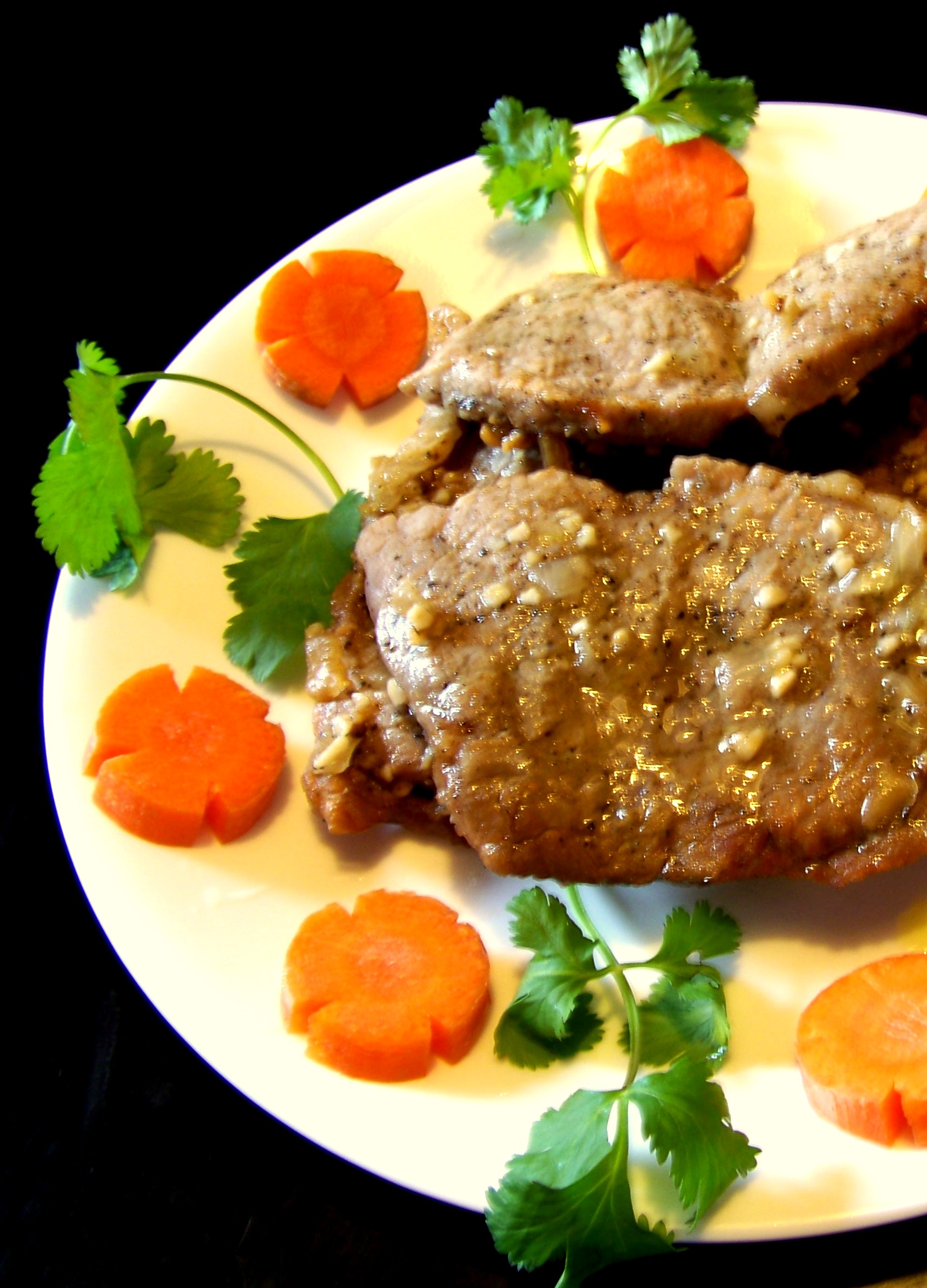
Mom’s cooking #2: Sizzling the Vietnamese steak (bò bíp-tết)

March 19, 2011 By: Mai Truong Category: Comfort food, RECIPES, Vietnamese

Guest post by Mom, translated by me


My little family has three people, and two of them like beef. Ever since we settled in Texas, the land of cheap, good beef, my husband and daughter almost always order something cow related when we go out, even as they love these loving-eyed animals when they’re alive and grazing the fields too. Sometimes I join them in forking red meat, and of those few occasions the American steak does not quite sing to me, but rather they sink a little hard and a bit salty. I guess the blame lies with either the meat quality or the cooking method, and mostly the latter.

So I buy some steak fillet and try out the way we used to make back in Saigon. I slice ’em thin, marinade and fry, and not trying to toot my own horn here, but my steak is better than them restos’ steaks. 😛 Even Mai’s dad agrees. Its first highlight is the tenderness: it’s so tender I can bite it off with my teeth, who needs the knife and elbow grease to butcher that poor fillet. Its second highlight is the mouthwatering fragrance of garlic, onion, and pepper infused in every strand of muscle. Its last highlight, and also my principle of cooking, is that it doesn’t take long to make.


Vietnamese Steak (bò bíp-tết)

Ingredients:
– 1 lb beef filet
– 1 tbs chopped garlic
– 3 cloves of fresh garlic, smashed to flatten
– 4 purple onions, or half a sweet onion, chopped
– 2 tsp sugar
– 1/2 tsp salt
– 1/2 tsp pepper
– 2 tbs olive oil

Wash the filet, cut into slices of roughly 1 cm (1/3 inch) thick. Marinade the beef with chopped garlic, onion, sugar, salt, and pepper for an hour.
In a skillet, heat up oil on high heat. Throw in the three smashed cloves when the oil is really hot, wait until the garlic turns golden and smell good to add the beef.
Fry the beef slices for about 1 minute, flip over, and fry another 1 minute. Turn off heat and the meat is done.

We eat ’em hot with homemade fries and broccoli. This combination of Texas beef and Vietnamese cooking suits those who don’t have much time (or don’t really like meticulous labor in the kitchen), like me, best.

Mom’s Cooking #1: Candied orange peel with pulp

March 03, 2011 By: Mai Truong Category: Fruits, RECIPES, sweet snacks and desserts, Vietnamese

*Guest post in Vietnamese by my Mom, translated by me*


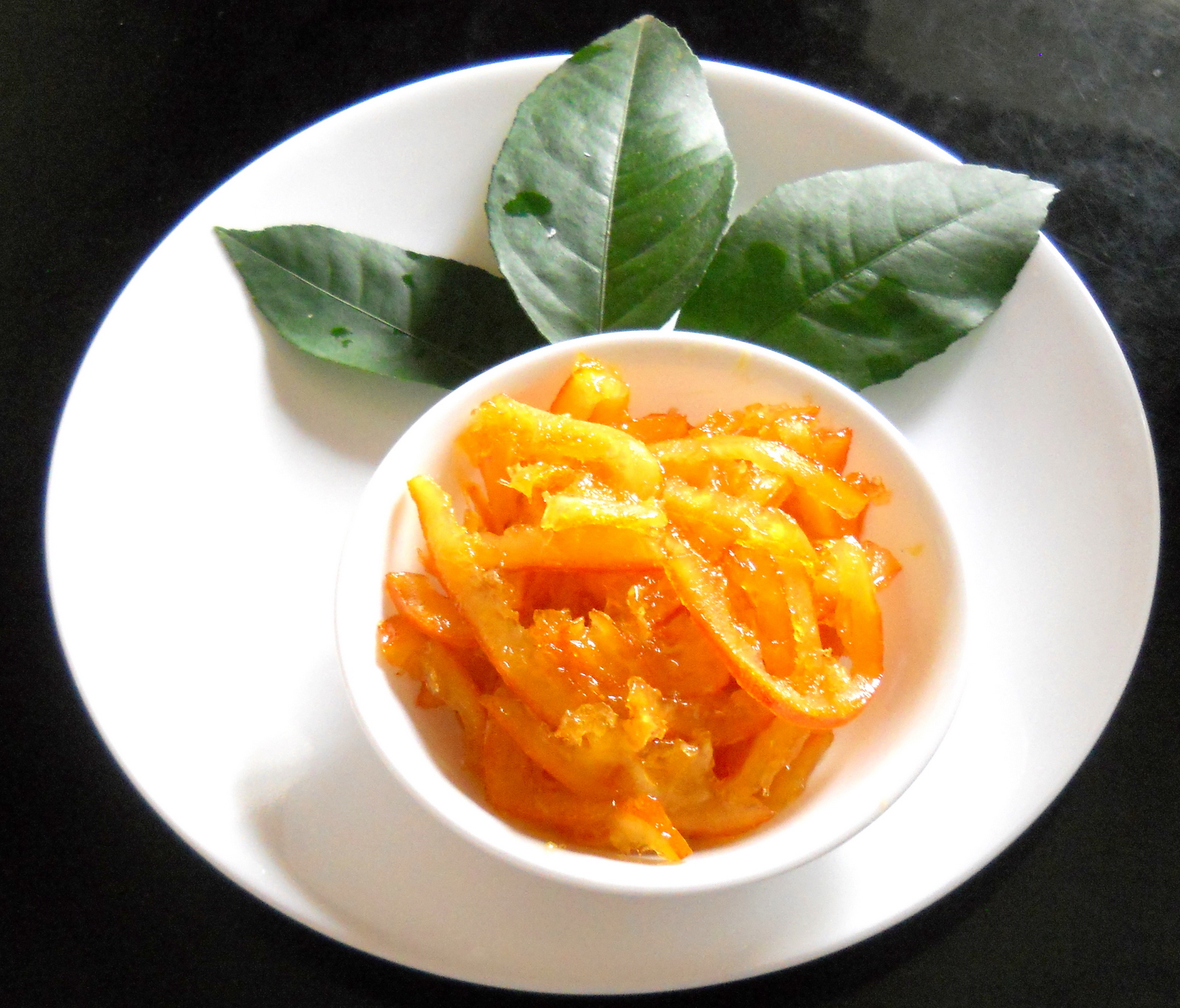
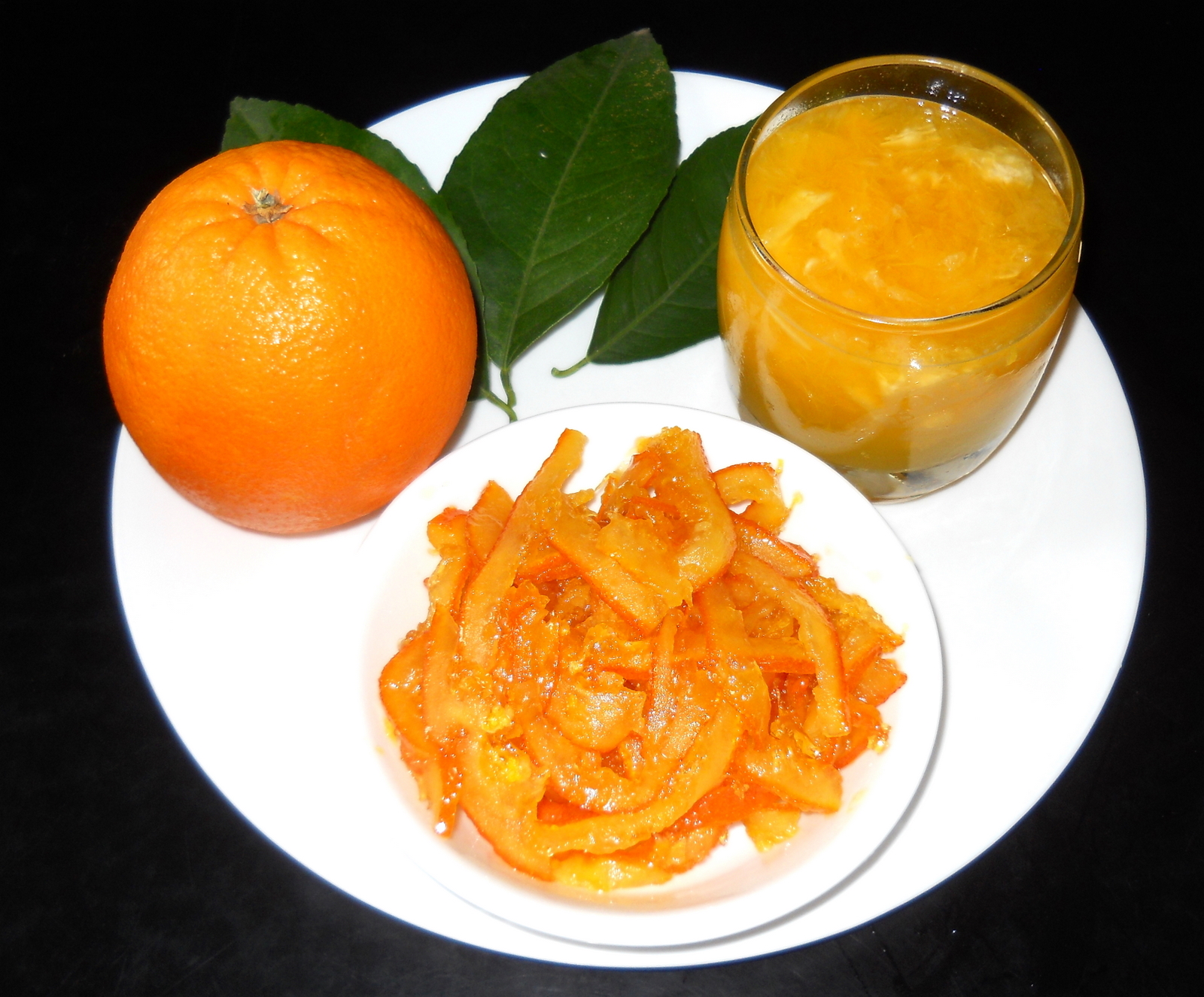
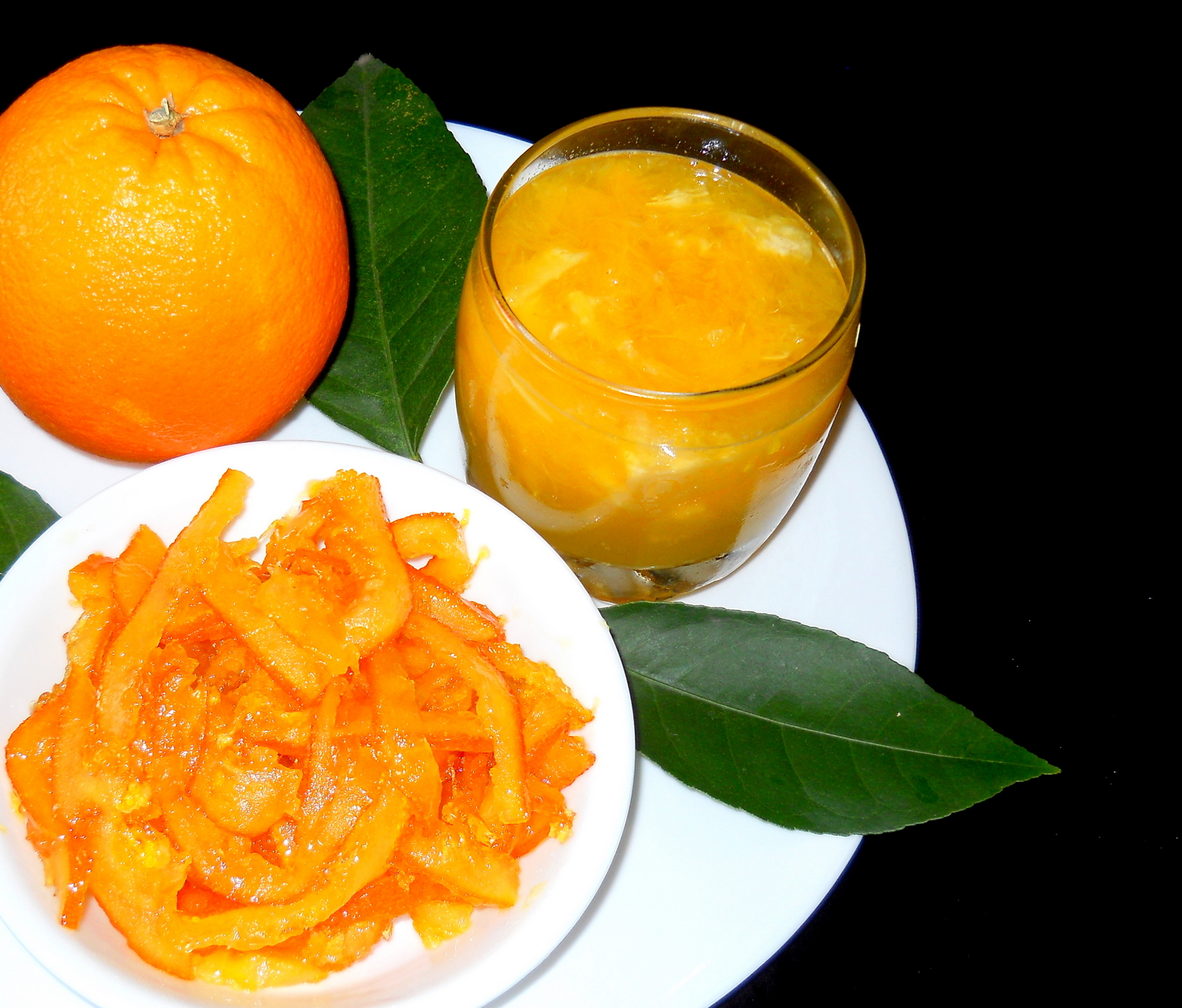
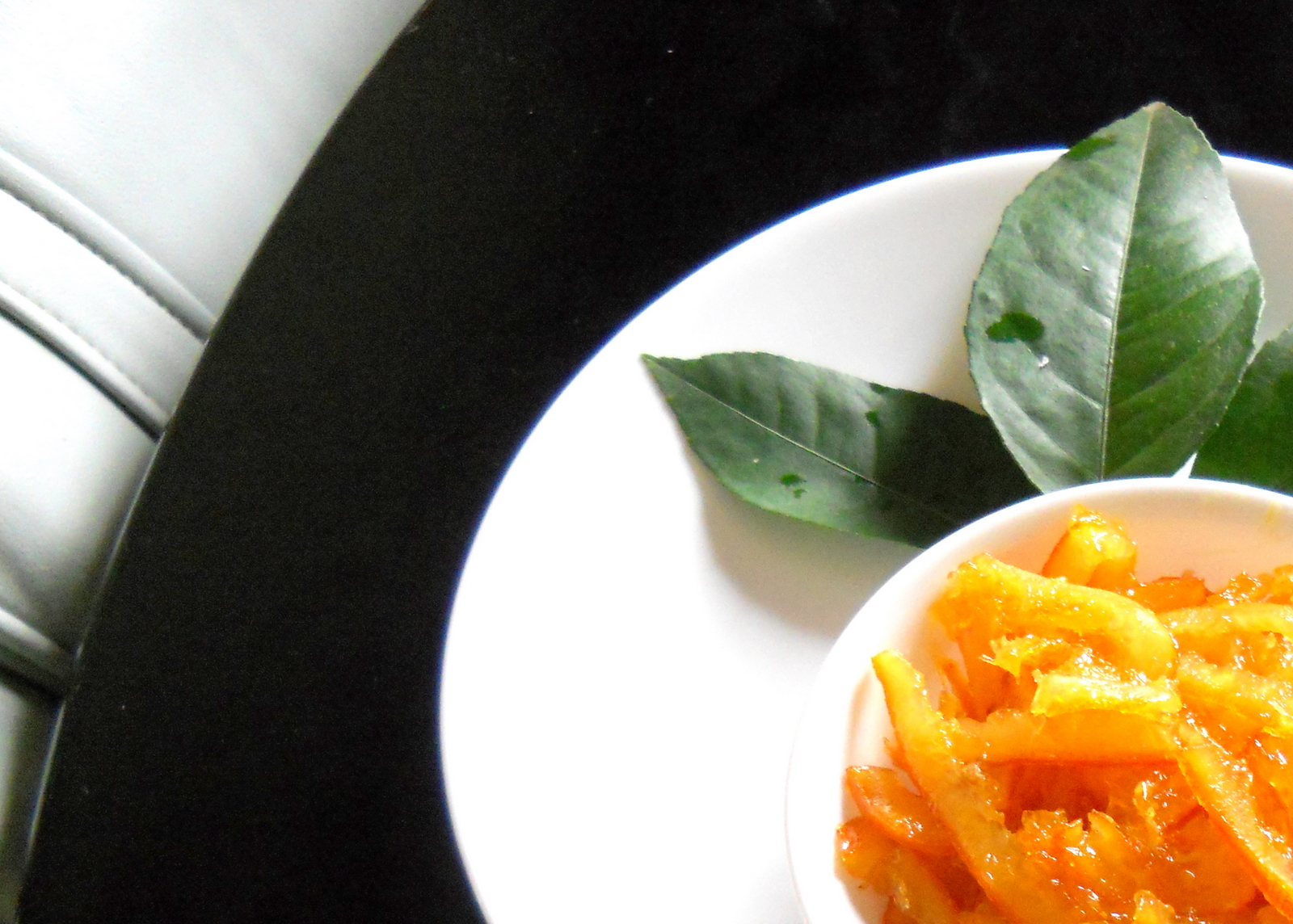
My daughter and her friends always like my fresh squeezed orange juice, so every time she visits home in the summer and winter break, we drive up to the Farm Patch Produce Market in College Station to buy navel oranges. The grocery stores have navel oranges too, of course, but for some reason Farm Patch always have the best. Their rotund shape, their bright color, their rugged skin similar to that of the Vietnamese cam sành, all promise a slender sweetness contained, not to mention the little twin at the apex, darling like a hidden Christmas gift. These oranges are so well worth the two hour drive that I regret throwing them away after juicing, so I thought, why not make “mứt cam“, candied orange peel?


The simple ingredients:
– 2 oranges
– 10 tbs sugar or to taste
– 1 cup water


The simple method:
– Wash and squeeze out juice from the oranges, then slice the peel (with pulp attached) into strips.
– Mix 10 tbs sugar with water and simmer on low heat for roughly 15 minutes. Use a pair of chopstick to test: dip the chopsticks into the boiling sugar liquid, lift up and separate the chopsticks, if a sugar silk strand forms in between then the mixture is ready for the next step.
– Add orange peel strips, continue simmering on low heat for about 30 minutes, stir occasionally to make sure the sugar coat and soak the peel evenly.
– When all liquid evaporates and the peels feel jammy, turn off heat.
– Put candied peel in glass jar, wait until it’s cool to seal and store in refrigerator.


This candied orange can also be eaten with toast like marmalade, its sweetness stark, its texture crunchy, a natural minty sweep from the peel even gives it a healthy sense. They say eating it helps improving sore throats. I think making it helps improving patience. 🙂


This post is submitted to Delicious Vietnam #11, March edition, hosted by The Culinary Chronicles. I’ll head to her blog for more yummy posts on Vietnamese food this month, and many thanks to theRavenous Couple and Anh for creating this event!

Tags:

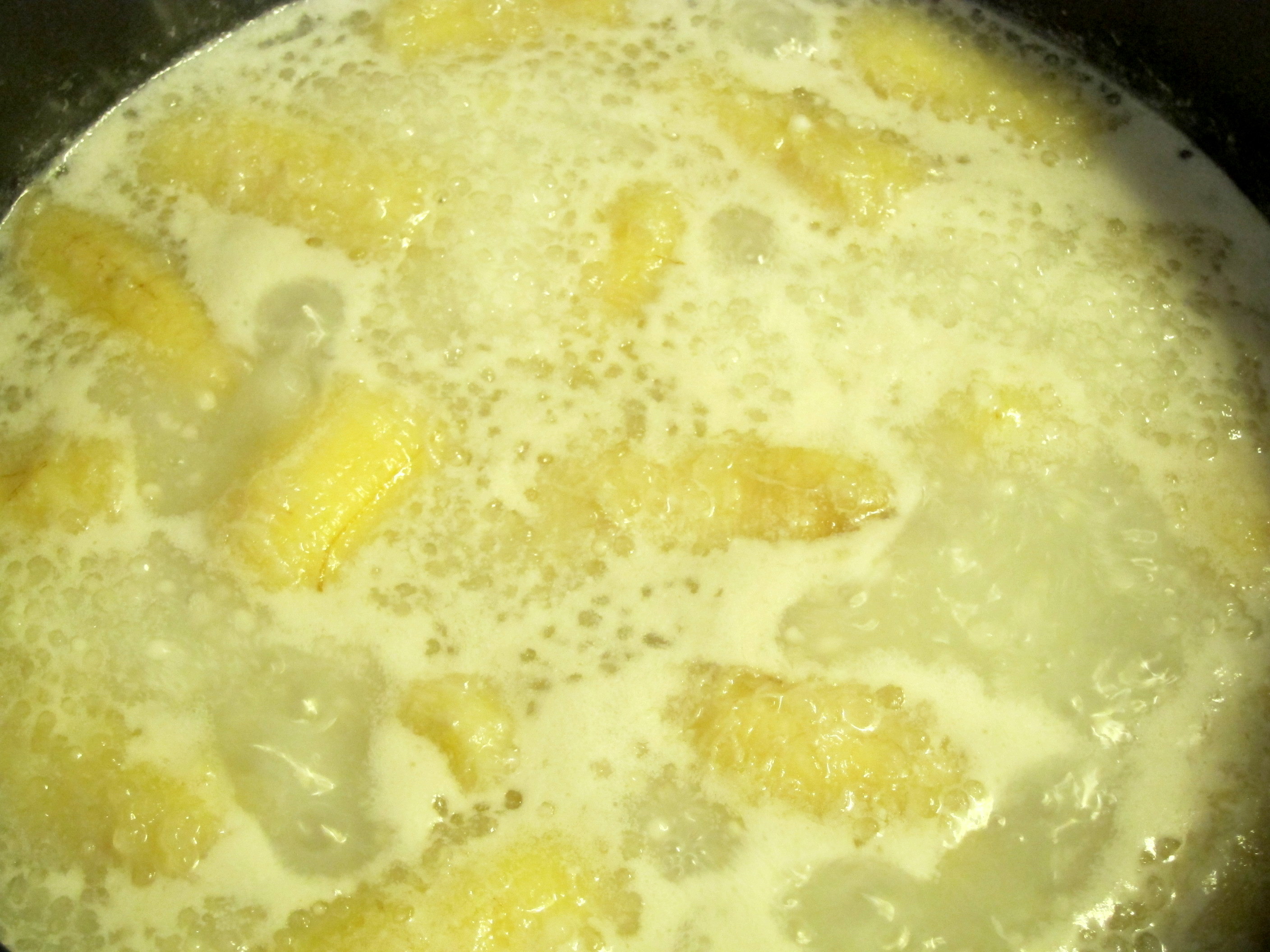
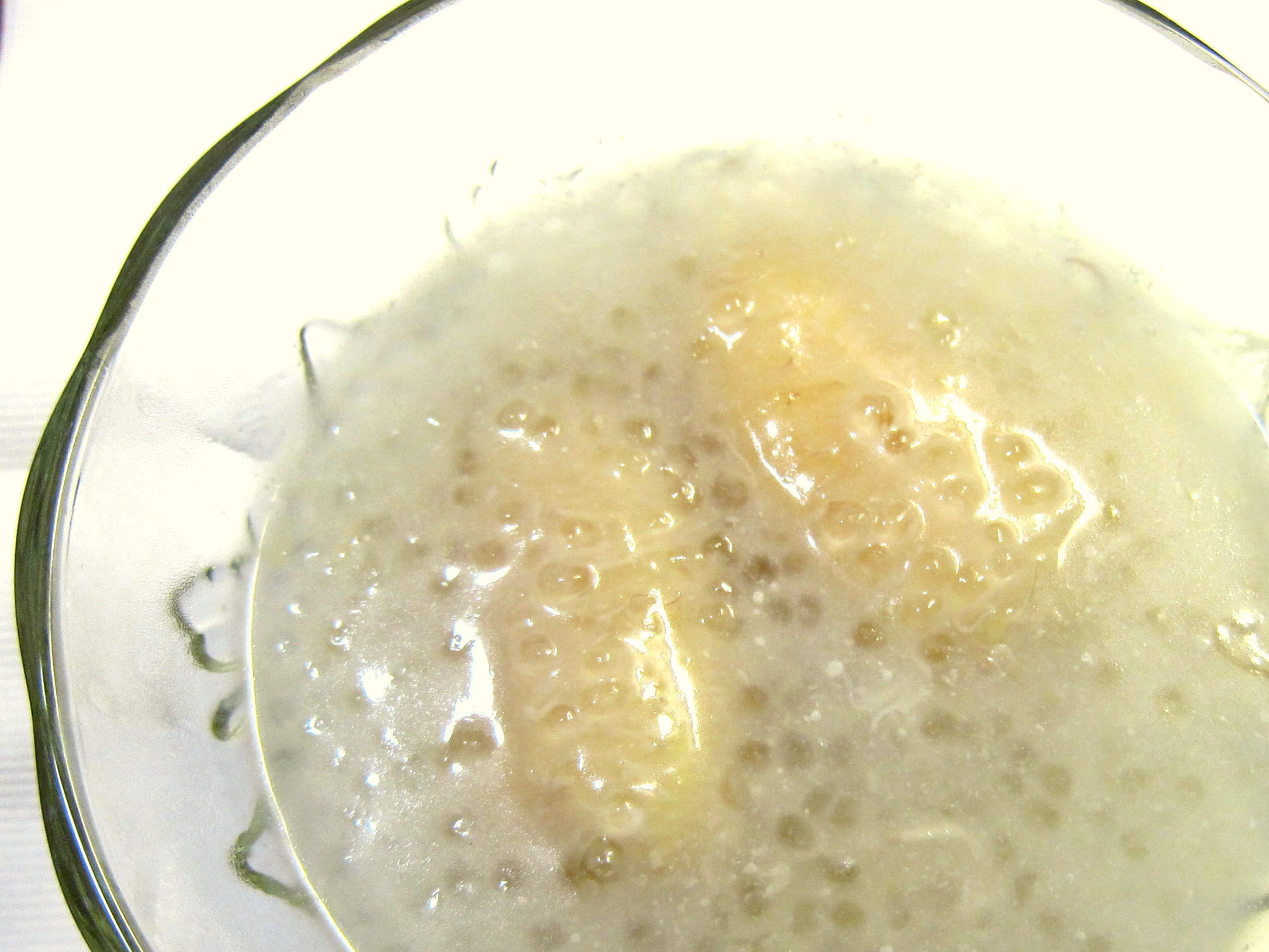
Chè chuối chưng (banana tapioca pudding)

February 08, 2011 By: Mai Truong Category: Comfort food, RECIPES, Southern Vietnamese, sweet snacks and desserts


Every once in a while when the planets align the right way with the constellations, I get into cooking mode. Then I ask my mom how to make certain things, usually easy stuff, spend at least an hour at the grocery, another half a day in front of either the sink or the stove, washing, churning, tasting, sprinkling, and tasting again. Saying that I like to cook would be like saying students hate holidays, but somehow the little accomplishment at the end of a cooking session always makes me glee, partly because I wouldn’t have to worry about dinner in the few days after. (Since the first day I had a kitchen(ette), I’ve only made savory dishes.) This time is special: I didn’t spend half a day in the kitchen, and the little accomplishment is a dessert.

Now this might actually means I have che instead of rice for dinner in the next few days :-P, but all is well as my banana che is not in the least coyingly sweet like che from sandwich shops.


Recipe adapted from Mom’s instruction:

Chè chuối chưng (banana tapioca pudding) (“chưng” means “display”, in this case to indicate the type of banana one would use for this dessert, not “tapioca”)

Ingredients:
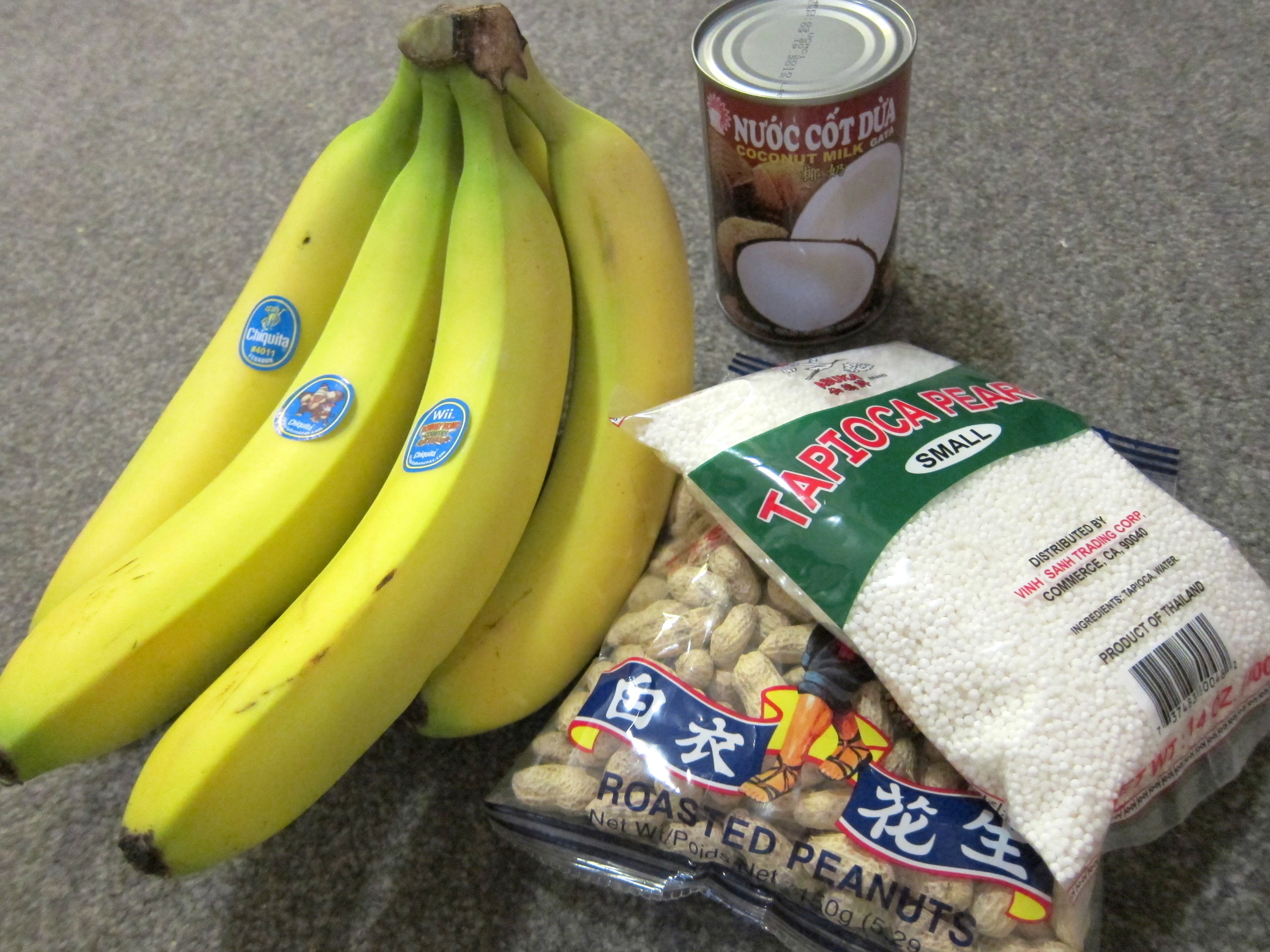
– About 3 lbs of just-ripe banana (~6 big Cavendish bananas, or 12-15 chuoi su if you can find them).
– 1 can of coconut milk
– 100-150g tapioca pearl (bột báng), the small kind (packaged as dry white dots ~1.5mm in diameter). I got a 400g package from 99 Ranch Market in El Cerrito, so I’d imagine every Asian market has a few packs tucked on their shelves.
– water, sugar, salt
– roasted peanuts (the plain, unflavored kind)


Preparation:
– Gently wash and rinse the bot bang with cold water once, then leave it soak in water.
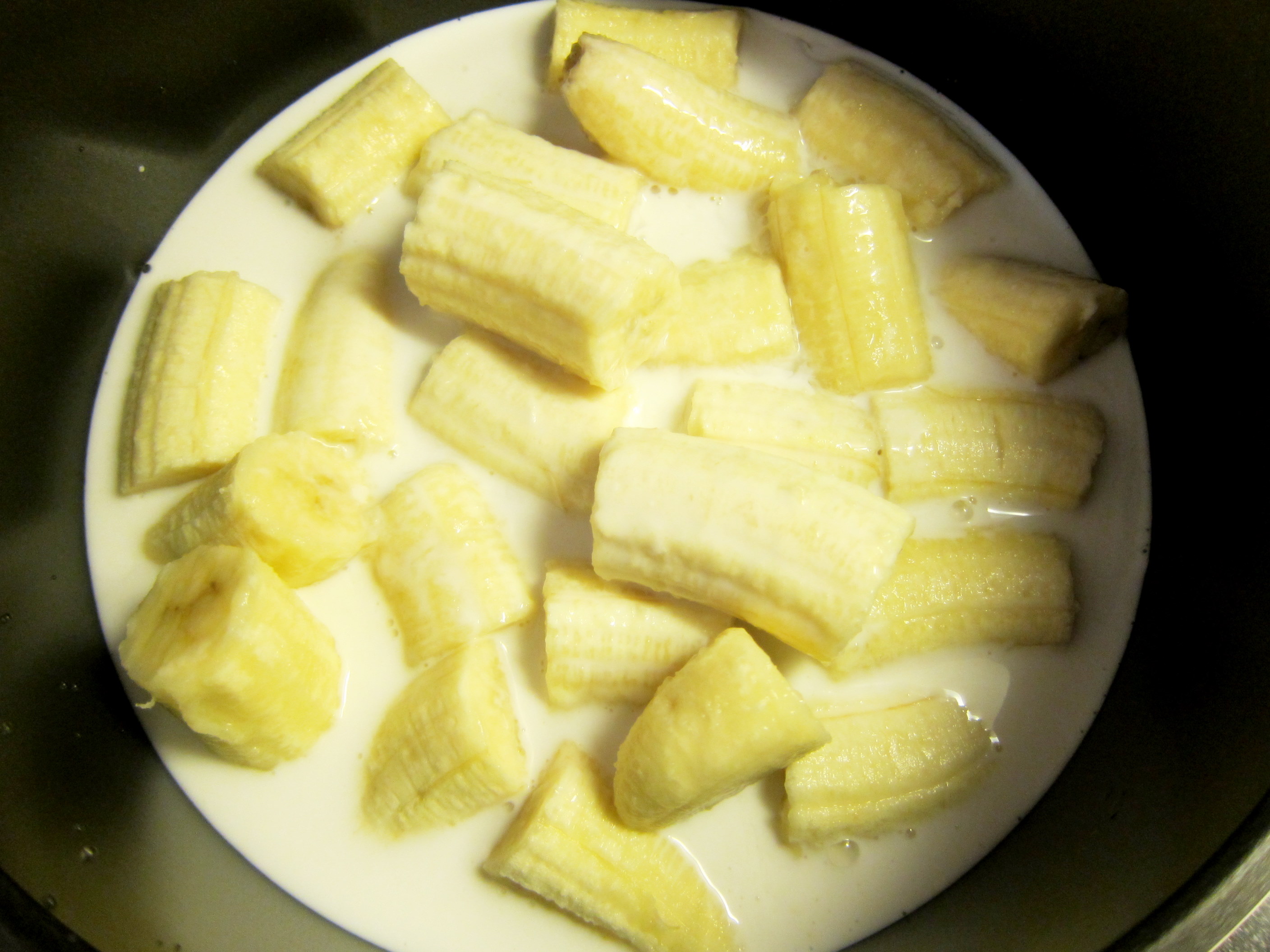
– Cut the bananas into 2-3 inch long sections, soak in salt water (2 tsp salt for roughly half a big pot of water, the same pot you’re going to cook che in) for 5-10 minutes. This step is to get rid of, or at least reduce, the clinging underripe aftertaste of Cavendish banana in Vietnamese desserts; you can skip this step if you use chuoi su.
– Shell peanuts if necessary, then crush ’em up. (Mudpie puts them in a ziploc bag and pounds on them with an ice cream scoop, it works well :D)
– Take out the bananas, drain water, wash pot, put bananas back in. Pour 1 can of coconut milk into pot, then use the same can to measure and add 2 cans of water.


Cooking
– Wait for banana, coconut milk and water to boil, add a pinch of salt and a lot of sugar to taste. (I added about 10 tbs sugar when Mudpie expresses some concern, tastes, and stops me.)
– When the mixture boils, add bot bang (after draining them, of course), gently stir once or twice to spread them out evenly in the pot.
– Bot bang will expand, at least quadruple in size. Do not stir too much or you’d burst the pearls and get tapioca porridge. Let the pot bubble until the bot bang all turn completely translucent (if you see a tiny needle-point size dot of white in the center, it’s not cooked yet).
– Turn off the heat. The pudding will be quite fluid when it’s still hot, and will thicken as it cools down.

Serving
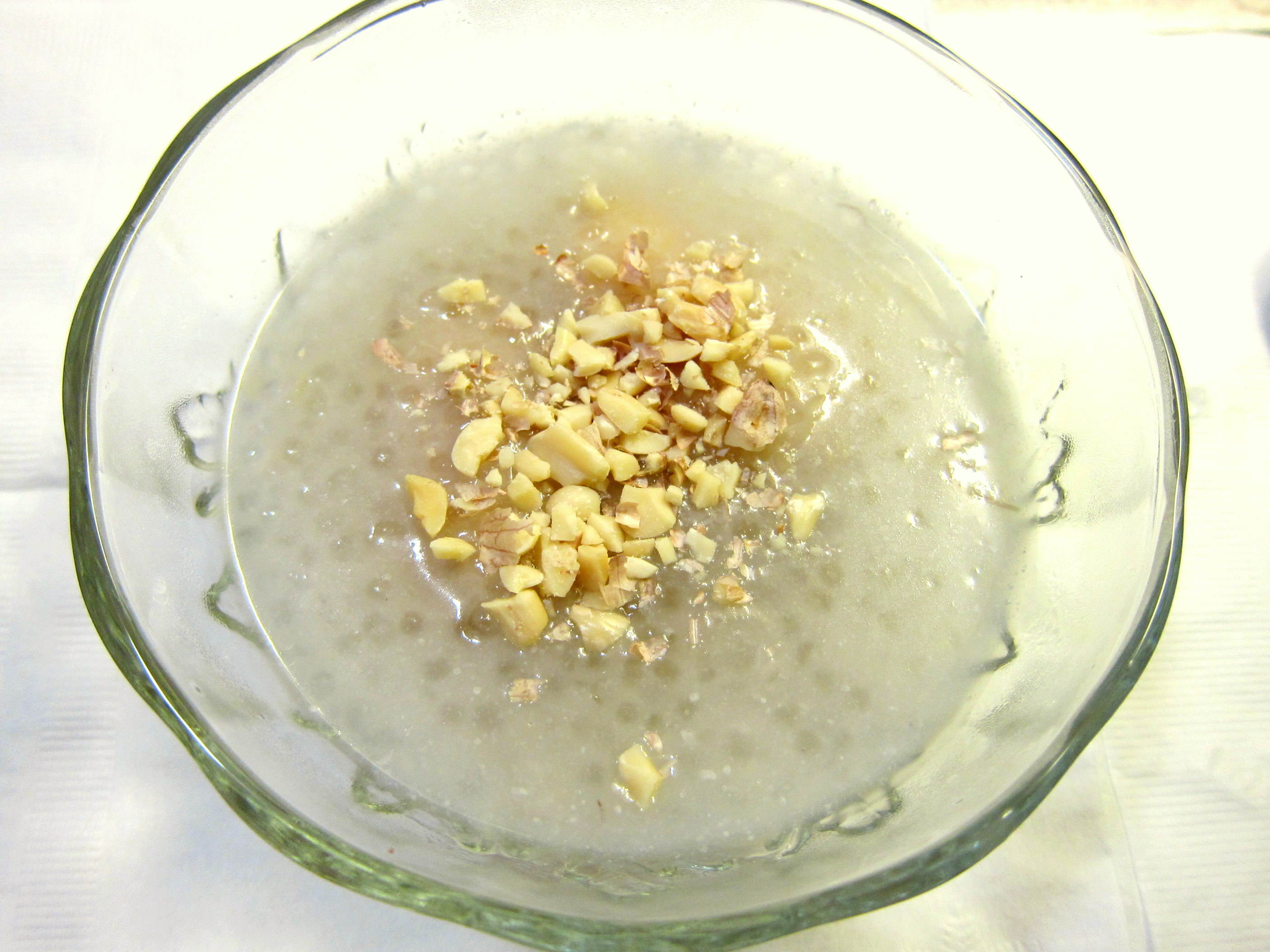
It can be served either hot or chilled, with or without some crushed roasted peanuts on top. Mudpie prefers it warm fresh from the pot, my mom prefers it refrigerated.


A small variation of che chuoi chung is chè bà ba, where you add taro (or cassava), cubed and cooked in coconut milk and water before the bananas. My mom says che chuoi chung is the simplest kind of che to make. As long as the bananas are soft and sweet, the tapioca pearls chewy and fully puffed, the coconut milk gives just a shy squeeze of fruity richness, and the pudding smells like a ripe summer afternoon, you know someone will come back for a second bowl of your chè chuối chưng.


– Submission to Delicious Vietnam 10, a monthly blogging event created by Anh of A Food Lover’s Journey and Hong & Kim from Ravenous Couple – This February edition is hosted by me, so send your delicious writings (your name, your blog’s name, post title, and a brilliant image of the dish) to mai [at] flavorboulevard [dot] com by Sunday February 13. 🙂

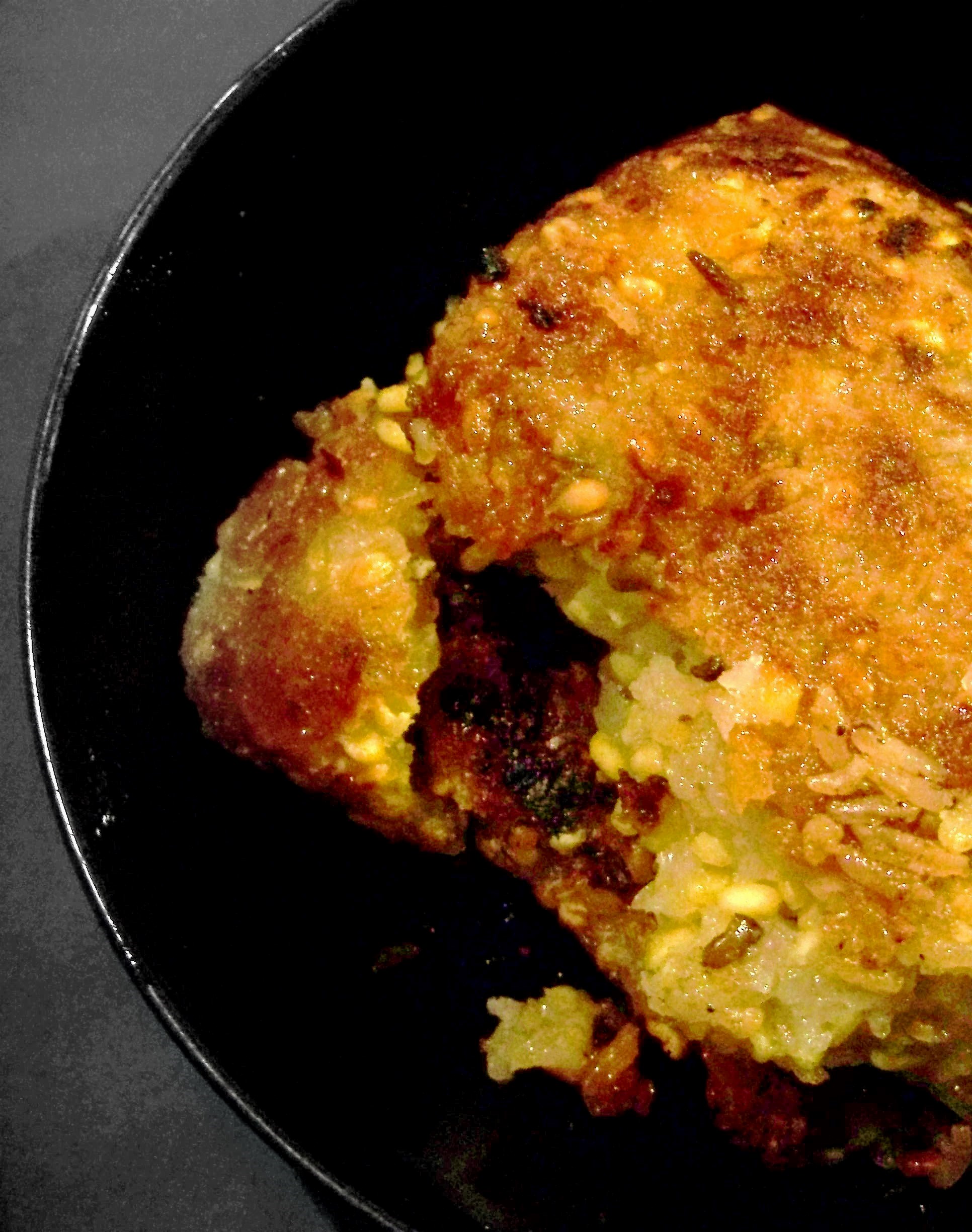
A sticky crusty crush

December 16, 2010 By: Mai Truong Category: Comfort food, RECIPES, sticky rice concoctions, Vegan, Vietnamese

Do you like that crisp, burnt, gochujang-dyed rice crust at the bottom of the dolsot when you scrape off spoon after spoon of bibimbap? If the answer is yes, I’m certain that you’d fall for this one too.

Mom cooks her xoi in a non-stick pan, with coconut milk and little water. Somehow, without a precise recipe, she can make a shell of brown, sweet and crusty sticky rice every time. Then we fight each other for it when it’s still warm and just a tad chewy, leaving the soft innard xoi for my dad.

Approximate recipe: Xôi cháy (literally “burnt xoi”, usually considered a point against the skillful xoi cooks, but I think it’s better than icing on a cake, it’s the best part of a perfectly cooked batch of xoi)
– 1 lb sticky rice
– 1/2 lbs mung bean (halved is fine, unscraped)
– 1 can of coconut milk
– 1/2 tsp salt
– sugar (lots! ~ 8-10 tbs)

Soak mung beans in water overnight to soften them, so that they get cooked faster (at about the same rate as the sticky rice). Mix sticky rice and beans together.
Put sticky rice, mung bean, a can of coconut milk, and just enough water to have the grains 1/10 inch under the liquid surface. Cook in a deep pan, covered, on medium heat. (If cooked in rice cookers, the bottom crust won’t form.)
When the mixture boils, turn the heat to low, wait about 10 minutes until most of the liquid is soaked into the grains, then use a chopstick to make holes in the mixture, allowing steam to circulate easily all around. Keep covering. Cook for another 10-15 minutes.
When rice and mung bean are soft, sprinkle salt and sugar on top, then gently mix (with chopsticks) the xoi without disturbing the bottom layer. (This is exactly what you must do when eating dolsot bibimbap, you don’t want the crust to mix with the soft part.) Make holes in the mass again. Cook for a few more minutes.
Scrape off the xoi innard first and store separately. Take out the whole crusty shell with care, or break off into chunks. Eat by itself. Flavorastic by itself.

Tags:

Toothsome nana tootsie

December 08, 2010 By: Mai Truong Category: Comfort food, Fruits, One shot, RECIPES, Southern Vietnamese, sweet snacks and desserts, Vegan


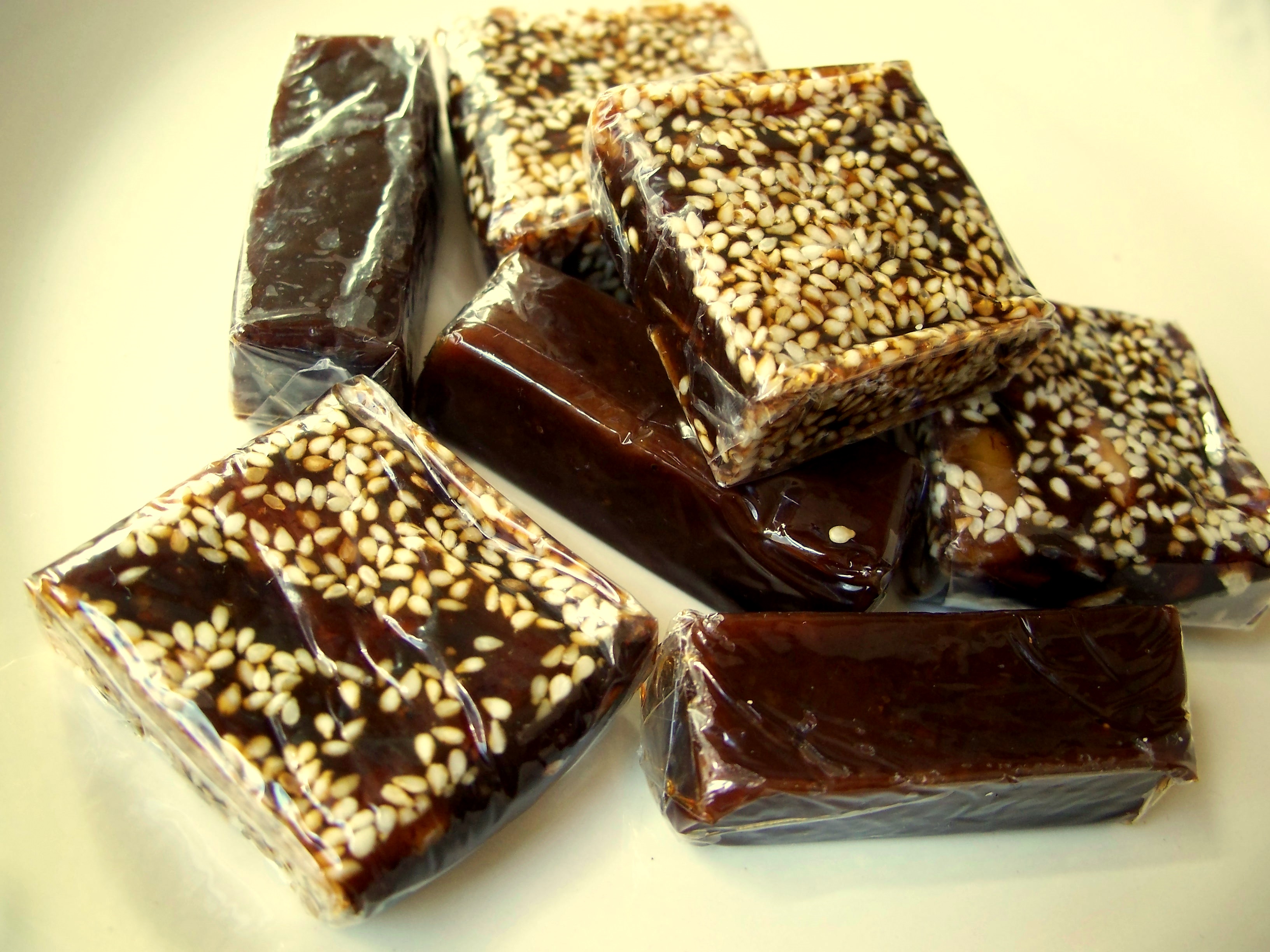
Last night I dreamed of these brown sticks in cellophane wrappers. The sound of crunchy plastic unraveled. The smooth yet sticky, dried-syrup-like surface that easily gives way to the pinch of two nails. An ever so lightly sweet, fruity, malty breath whizzing up as your nose closes in…

I woke up feeling as though there were some of those pieces melting on my tongue. But the best part of eating a banana tootsie roll, if I may call it so despite it having no relationship to the Tootsie Roll, is, like with the real Tootsie rolls, the chew. You chew it and notice it get smaller, but not any less sweet or less gummy. And it’s only as sweet as a just ripe banana, yet with an alluring touch of coconut.

The chewy banana candy is a Mekong delta specialty, where siem bananas grow more easily than rice. The stout, dense, supple bananas either make their way into che, bread pudding, wrapped and grilled in sticky rice, flattened and sun-dried, or cooked in some recipes that are only passed down from mothers to daughters. I just know that whenever we traveled to or a friend of the family came back from the My Tho, Ben Tre region, I got a bag of keo chuoi – banana candy (pronounced somewhat like |keo jui|), or keo dua (|keo yua|) – coconut candy. Banana candies are less sweet and less strenuous to the jaw than the coconut ones; some are coated with roasted sesame seeds, some contain crushed peanuts or ginger bits, but I like the plain, pure, consistent banana kind the best.

Keo Chuoi (banana chewy candy) –
Ingredients
– 3 bags of whole dried bananas
– 1 coconut
– 1 ginger root, roasted and crushed peanuts (if you like some texture variation)
– Sugar, 1 tsp lime juice
– cellophane candy wrapper

Slice thinly the dried bananas, coconut, and ginger. Stir banana and sugar in a skillet on low heat (add at least half as much sugar as banana), add coconut (and ginger if wanted), stir constantly to avoid them burnt. Add lime juice to keep the mixture gooey. Add peanuts when the mixture is homogeneous and start to harden. Take out, flatten and smoothen the surface (add a sesame coat now if you want), wait until cool then cut and wrapped in cellophane wrappers.
If you can’t find dried bananas, try using a blender to mix banana, coconut, and ginger together, and do every subsequent step the same way.
(Recipe not yet tried :-P, translated from Vietfun)


Ze kwik-n-easy vay:
Vua Khô Bò & Ô Mai (loosely translated: “King of Beef Jerkies and Dried Huamei“)
2549 S King Rd #A-B
San Jose, CA 95121
(408) 531-8845

Go bananas a few other ways:
banana ice cream
banana dog
banana bread pudding
banana in sticky rice log

Tags: ,

The story of Bún Xêu

November 24, 2010 By: Mai Truong Category: Comfort food, Northern Vietnamese, RECIPES, Vegan


“Are you giving Thanks?”, asks Der Miller. I should. It is my first independent Thanksgiving. There will be no turkey, not because they’re not that tender but because it’s cruel to take their lives on the day that everyone else celebrates. There will be no green bean casserole or sweet potato with marshmallow, not because I’m lazy but because I have no oven. There will be no cranberry sauce or stuffing, for no shining reason. I’ll just make the one thing that is both simple and not ramen: bún xêu.

Over 2000 years ago lived a king in a foreign land, who ordered his royal kitchen staff to prepare a party to welcome his future son-in-law from another foreign land. Naturally the king wanted a feast with national specialties, which included a type of rice flour pastry with sweetened mung bean paste. The flour had to be made in the morning of the same day to avoid it turning sour, and one young kitchen helper, who probably liked to get up early as much as I do, was in charge of preparing the batter.

Instead of mixing rice flour and water in a bowl, the half-closed-eye boy happened to use a strainer instead, which, fortunately, was placed on a pot of boiling water. When he realized what was going on, the needed pastry batter had long turned into fine strings of rice noodle. The chef caught the boy’s mistake, but sympathizing with his weariness, told him to pick some herbs in the garden and use fried lard pebbles to make stir fried noodle for the kitchen staff’s breakfast. In that season, only water celery was in abundance.

A servant of the king dropped by the kitchen to check on the preparation process, and was charmed by the aroma of water celery and lard. He asked for the dish’s name. The chef, panicked by the boy’s mistake, intended to say “xào” (|xao|, “stir fry”) but mispronounced it into “xêu” (|seh-oo|). The servant took a taste, liked it, and ran off to tell the king about a new creation named xêu, then the king went to the kitchen to try it himself. This is when matters really got out of Kitchen Boy’s hands: xêu was ordered to be served at the party that day.

Over 2000 years later, bún xêu, however so simple, is still considered a historically valued specialty of the Cổ Loa Citadel region, just 20km north of Hanoi today. The creation of rice vermicelli (“bún”) would not have happened in Northern Vietnam then, had the kitchen boy not been drowsy, the chef not sympathetic and creative, the servant not curious, and the king not open-minded. And so it goes the story of bún xêu. 🙂

Bún xêubún xào cầnstir fried rice noodle with celery

The main ingredients:
– Rice Vermicelli (sold at Asian markets with the label “Bún Khô“)
– Celery (good luck finding water celery im Supermarkt, so the normal chubby stalks are quite alright), sliced into finger long sticks.
– Lard, or Cooking Oil
– Salt, Pepper, Sugar

The supporting roles: Onion, Garlic, Mushroom, Green Onion, Coriander, Egg, Soy Sauce or Fish Sauce.

Blanch the bun and set aside. Make a thin omelet, set aside till cool, slice into strips. Sautee the garlic, onion, sliced mushroom, celery, and green onion (in that order), add a little bit of water, season to taste.
Now you have two choices:
1. Add the bun into the veggie skillet and spatula it like mad until everything entangles together. Re-add seasonings to taste. Pro: stuff mixes well. Con: your bun can get mushy, stick together, and be shortened to the size of rice grains. It all depends on how mad your spatula skill is.
2. Put a wad of bun on a plate, scoop some mixed veggie and sauce onto the bun, and mix while you eat. Pro: long noodle strands preserved, chewiness preserved. Con: it’s not really “bún xào” if the “bún” wasn’t “xào” (stir fried).

Decorations: omelet strips and coriander.

Happy Thanksgiving to you too, Turkey!


– Submission to Delicious Vietnam 8, a monthly blogging event created by Anh of A Food Lover’s Journey and Hong & Kim from Ravenous Couple

Bún bung, sort of…

September 25, 2010 By: Mai Truong Category: Comfort food, noodle soup, Northern Vietnamese, RECIPES, Vietnamese


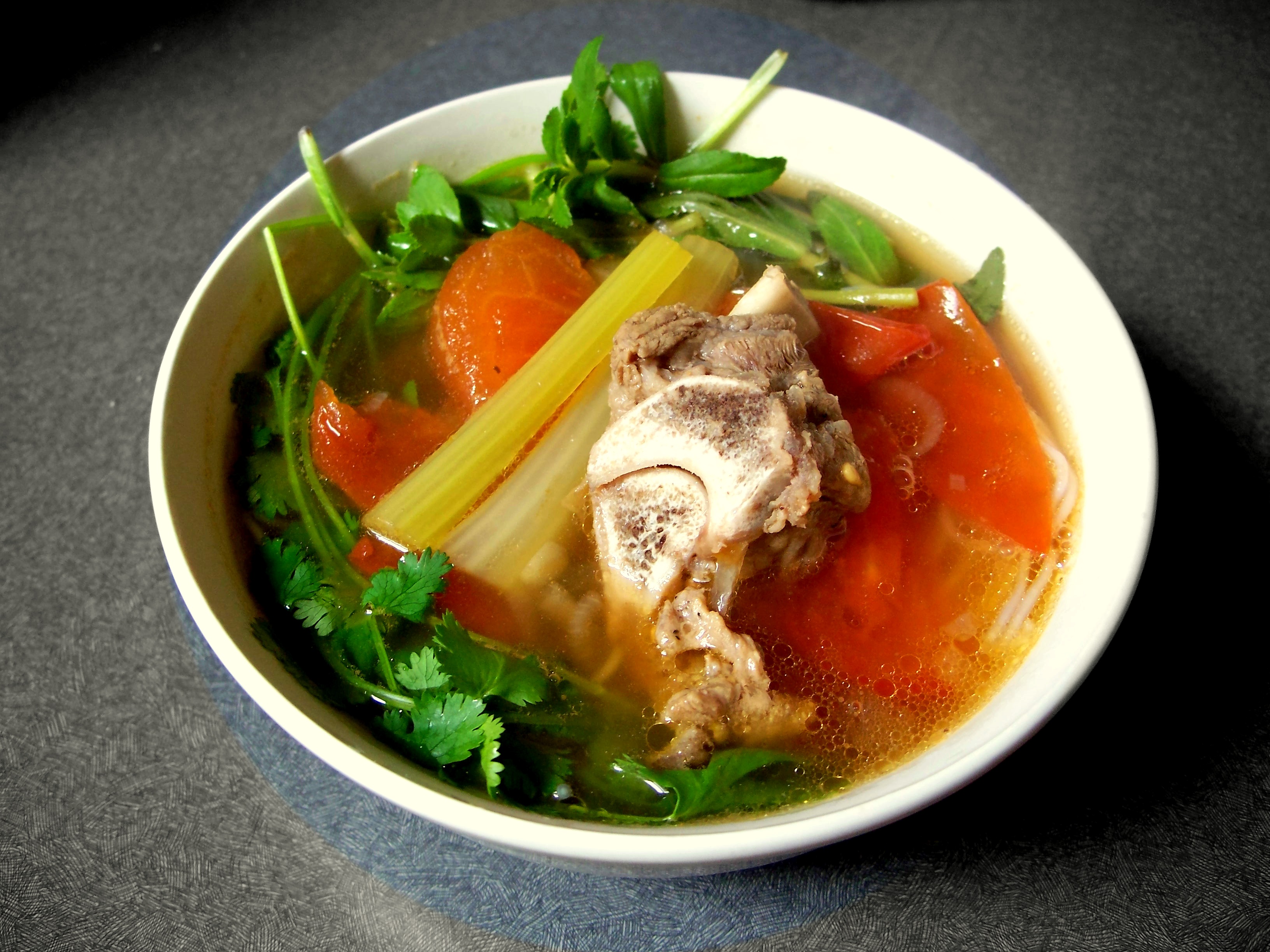
The scent pierces through the air, half like fresh lime and half like mint, liberating. The broth is fulfilling like juice from a just-ripe fruit, coating every strand of vermicelli and making them supple like newly washed hair. There is red, white, bright green, fall-leaf yellow green, and the earthy sepia tone of bone meat. My first bowl of bún bung.

Bún bung is a noodle soup of the North. Not having been to Hanoi, I learnt about bún bung from the interweb and tasted it via imagination. My mom has heard of it, but Saigon doesn’t have it, and I don’t know how popular it is in Hanoi today. It wouldn’t surprise me if the old fashion noodle soup is only half surviving in the baskets of old ladies dressing in brown and having their teeth dyed black. Anyway, it has a funny name. Bún (pronounced like “boon” with a quick rising accent) is just the usual rice vermicelli. Bung (pronounced like “bung” in “übung” in German – English doesn’t have this sound) is the method of cooking: stir fry first, then simmer until boil in water. There’s no adequate translation of the name into English, other than “bung noodle soup”. But to me, it’s funny because bung sounds like boom, or bloom (as in flower blooming). For sure, the soup is a flavor bouquet.


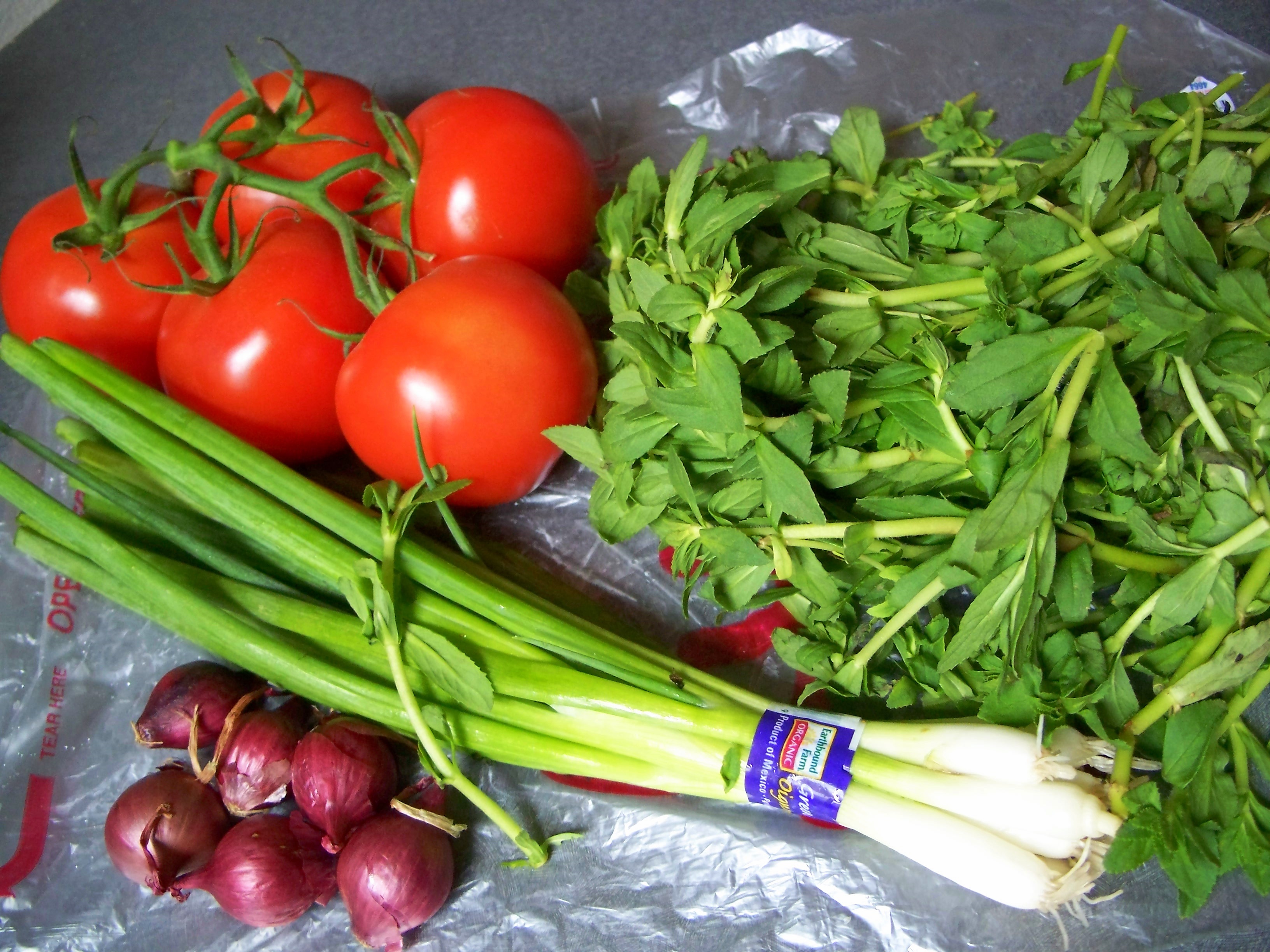
Compared to other noodle soups, bún bung requires little time, few ingredients, and not so much attention. It is sort of close to canh chua (sour soup) in the South, but instead of fish they use pig trotters to get the protein sweetness, and instead of rice it’s eaten with bún. It’s also a little close to canh bún cá (fish noodle soup, also of the North), except for the sour taste, because of the use of rau ngổ (L. aromatica, or rice paddy herb, top right corner in the above picture).

What does “ngổ” mean? I have no idea. But the taxonomists couldn’t be more right labeling it “aromatica,” because its scent permeates the room like a direct spray of Febreze, once just after I open the bag and the second time when I pour hot broth over it.  The scrawny, airy stems with slender leaves taste a little bitter eaten raw, but comfortably sleek and crunchy like water spinach. In Vietnam,  rau ngổ is dirt cheap. In America, it’s $8.99/lb (at 99 Ranch Market). Thankfully the quarter pound bunch I get is more than enough for 6 servings of bún bung.

Also an important ingredient in bún bung (as well as other Vietnamese sour soups) and also named for its aroma is dọc mùng (night-scented lily). Its soft spongy texture is irreplaceable by other vegetables, but good luck finding it in grocery stores. I have to use celery to substitute. The upside is that celery is much easier to wash, while night-scented lily can give you some itchy hands.

That aside, my bún bung uses beef neck bone instead of pig trotters, soy sauce instead of fish sauce, and skips the tumeric powder entirely. But I bunged the bones, so it is bún bung. 🙂

— für Đại

Mai’s bún bung (due to lack of ingredients at the grocery stores she goes to):
(Prepping and cooking time: 2 hours – 6 servings)
– 1.5lbs beef neck bones (or any kind of chunky bone with meat on it)
– 5 tomatoes, cut into wedges (this is a lot of tomatoes, since I don’t have any sour fruit)
– a few celery stalks cut and split into small sticks
– 300g rice vermicelli
– coriander, purple pearl onion, green onion, rice paddy herb (rau ngổ)
– 2 tbs soy sauce, salt and (a lot of) sugar to taste

1. Marinate the bones in diced onion, chopped garlic, 1 tbs salt and 4 tbs sugar.
2. In a big hot pot, sauté purple onion with oil until it smells good (which is pretty quickly), then dump the bones in and stir-fry until brown. Pour as much water as you want (this is the soup stock) and let it simmer. Skim off the foamy fatty layer on top to keep the stock reasonably clear.
3. Meanwhile, cook the rice vermicelli (like cooking pasta), drain and set aside. Wash and cut the greens (night-scented lily, rice paddy herb, green onion, coriander).
4. When the stock boils, add tomatoes into the stock. Wait until boiling again, add 2 tbs of soy sauce, salt and sugar to taste. Add the celery sticks. Keep it hot for serving.
5. Serving: in a bowl put some noodle and vegetables, then pour a few ladles of broth over, make sure you get some tomato and celery too. I also like to eat the meat off the bones. Sprinkle some green onion, coriander, and pepper on top.


Actual bún bung:
(Recipe translated from source, not sure how many servings this gives)
– 1 pig foot (doesn’t sound enough to me, maybe they meant 1 leg? But that’s too much…)
– 4 night-scented lily (dọc mùng) stems, cut into 2-3 inch sticks.
– 6 tomatoes, cut into wedges
– 1kg rice vermicelli
– tamarind or some sour fruit
– tumeric powder, coriander, purple pearl onion (sliced), green onion, rice paddy herb (rau ngổ)
– fish sauce, salt, sugar, black pepper

1. Cut the pig trotter(s) into big chunks and marinate in 2 tbs fish sauce and 2 tbs tumeric powder.
2. In a big hot pot, sauté purple onion with oil until it smells good (which is pretty quickly), then dump the trotters in and stir-fry until brown. Pour as much water as you want (this is the soup stock) and let it stew (pig trotters take time to soften).
3. Meanwhile, cook the rice vermicelli (like cooking pasta), drain and set aside. Wash and cut the greens (night-scented lily, rice paddy herb, green onion, coriander). Mix them with a little bit of salt. Let sit in 5 minutes. Gently squeeze off some water, wash the greens again and mix it with a pinch of tumeric powder.
4. When the trotters are soft, add tomatoes and the sour fruit into the stock. Wait until boil, sift out the sour fruit and add seasonings to taste. Add the night-scented lily sticks. Keep it hot for serving.
5. Serving: in a bowl put some noodle and vegetables, then pour a few ladles of broth over, make sure you get some pig trotter cuts, tomato and night-scented lily sticks too. Sprinkle some green onion, coriander, and pepper on top.

Bon appetit!


– Submission to Delicious Vietnam, a monthly blogging event created by Anh of A Food Lover’s Journey and Hong & Kim from Ravenous Couple

Tags: