Flavor Boulevard

We Asians like to talk food.
Subscribe

Archive for the ‘Fruits’

Candied fruits for a candy Year of the Cat
February 03, 2011 By: Mai Truong Category: California - The Bay Area, Festivals, Fruits, sweet snacks and desserts, Vegan, Vietnamese


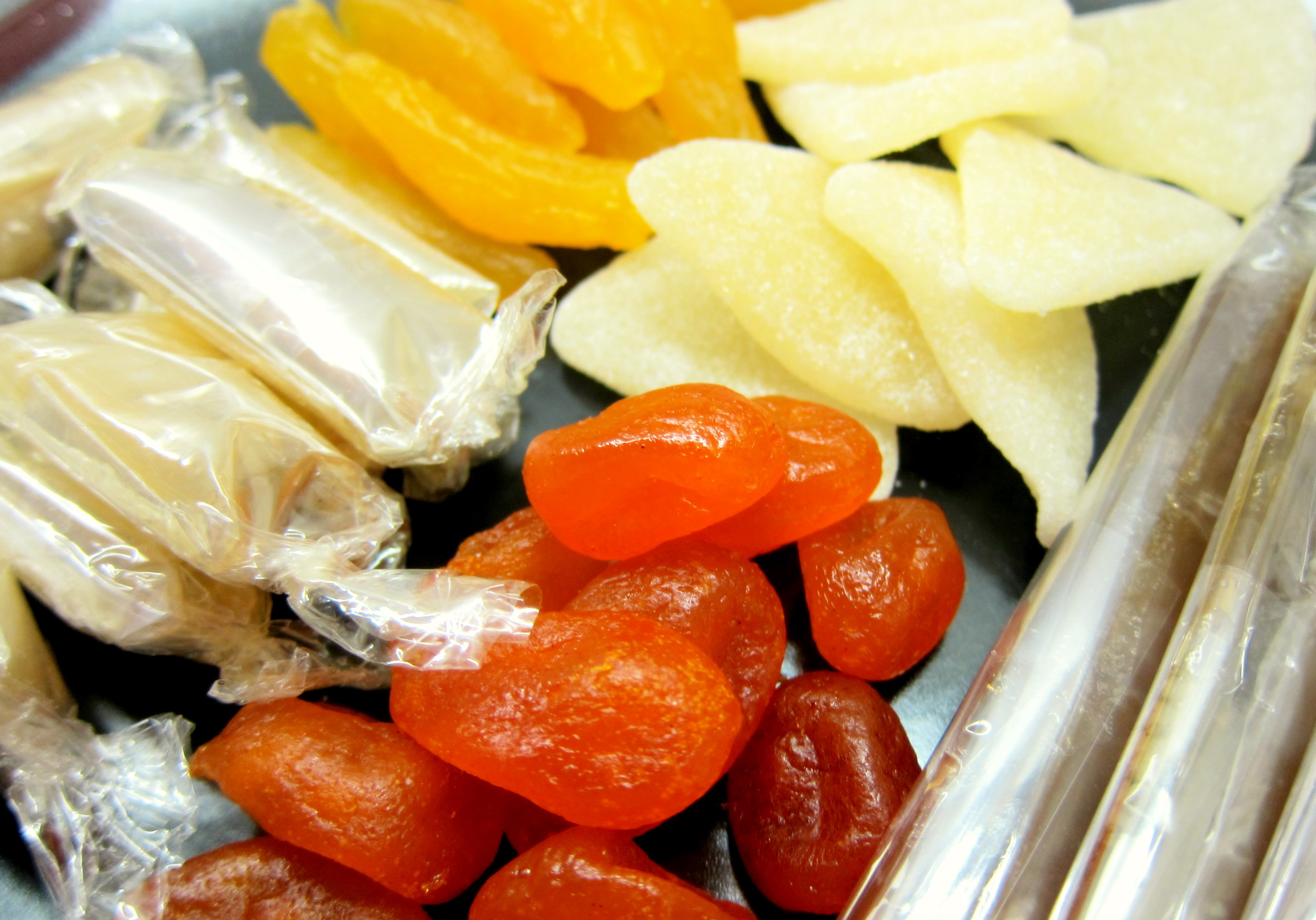
Its popularity might have declined over the years in Vietnam, but to the Vietnamese expats, mứt Tết remains one of the few links home to resurrect our new spring festival atmosphere on foreign lands. As far as I know these candied fruits are unique to the Vietnamese New Year (Tết), just like the tteokguk and the yakwa to the Korean Seolnal. They are holiday gifts to friends and family, offerings at the altars to ancestors and deities, little snacks for children, tea confections for adults, and vegan treats for those who refrain from eating meat at the year’s beginning.
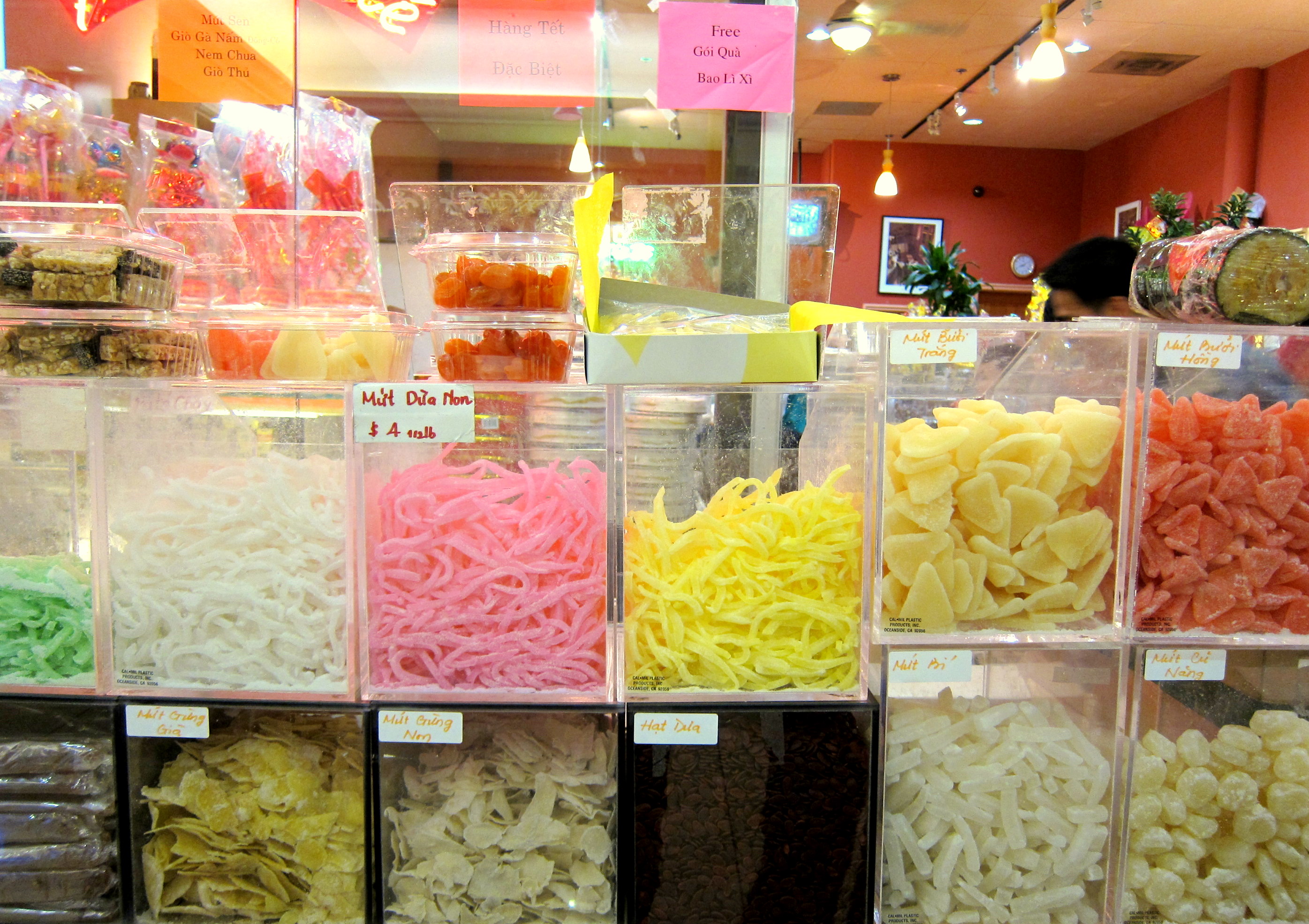

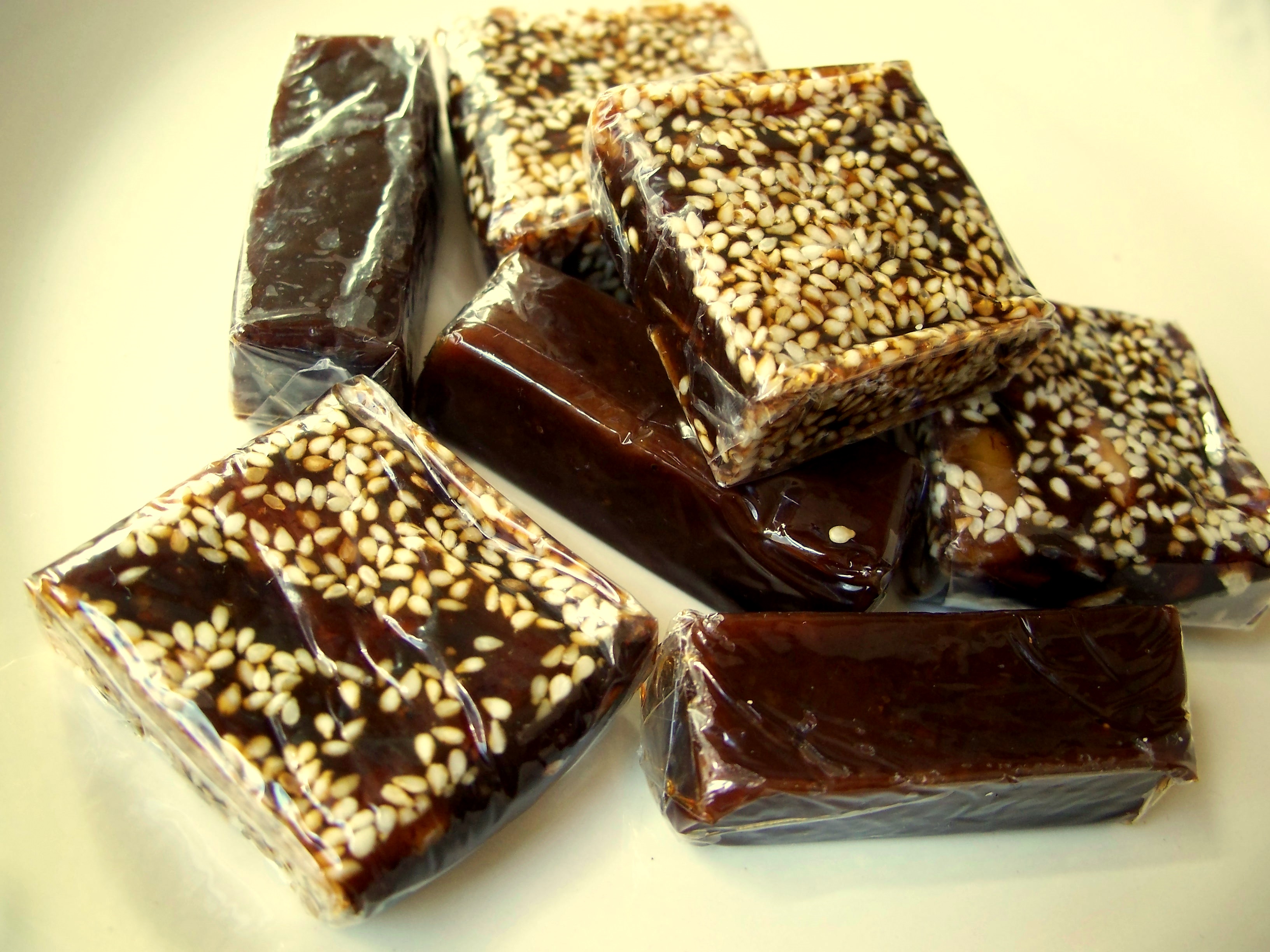
Mứt can be divided into two types: wet and dry. Visit any beef jerky (khô bò) and salted plums (xí muội) stores in Vietnamese shopping malls in the Tet season, you’d see a swarm of mứt in glass jars, the wet kinds wrapped in crunchy paper and the dry kind laying bare. The two most common wet mứt are tamarind (me) and soursop (mãng cầu). The former is kept in its scrawny form, with a few rope-like fibrous strings along the fruit’s length, which is to be discarded when eating, of course.
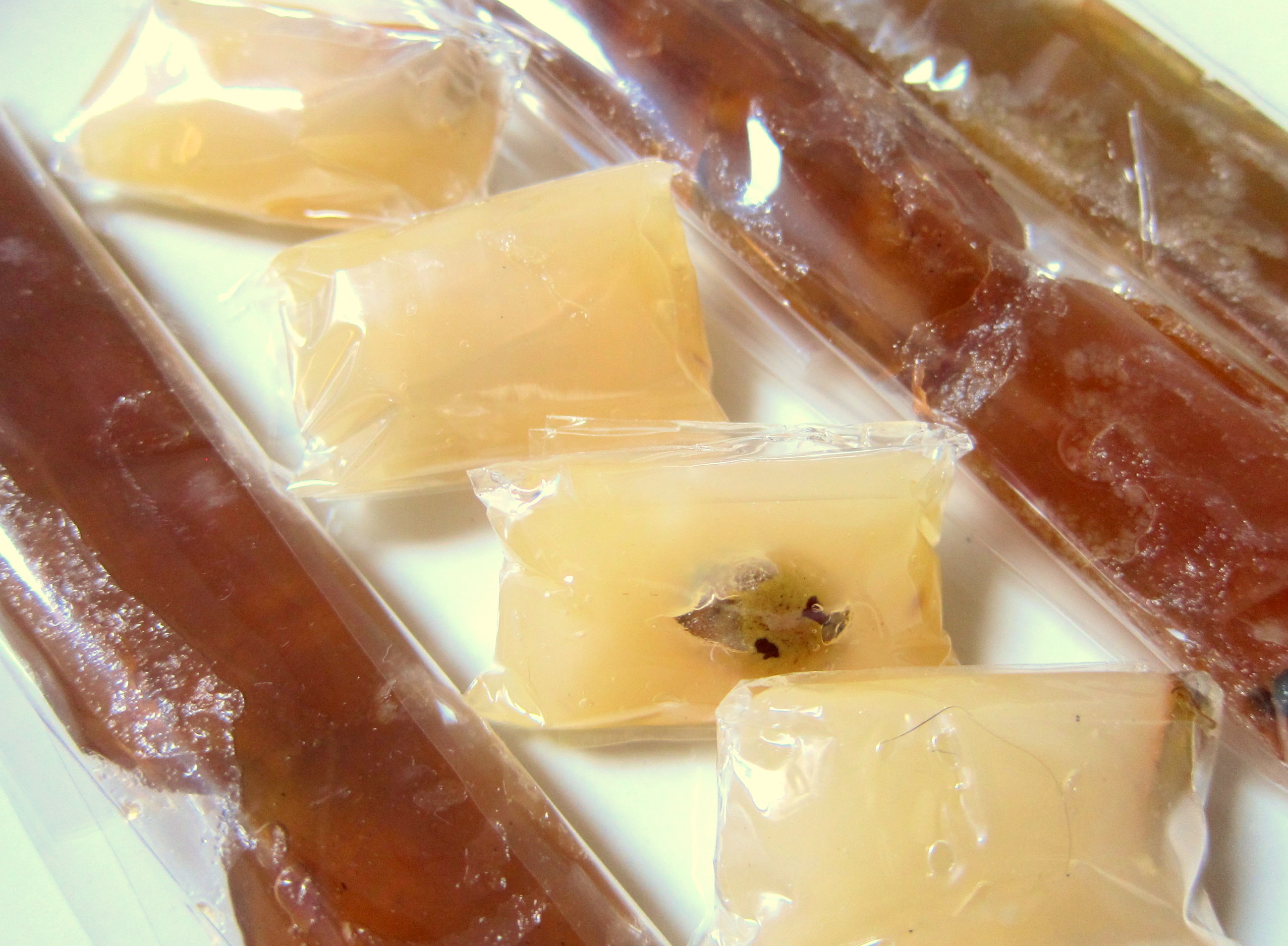

Tamarind mứt should be amber brown, chewy, and a little more sour than sweet. Tamarind is notorious for its medicinal effect, so be careful not to consume too many sticks at once. A similar chewy wet mứt is the soursop, but it’s always milkish white, doesn’t retain the fruit’s shape, and people tend to put too much sugar in the churning process.

On the dry side you can find some twenty common kinds, spanning both fruits and non-fruits (nuts and roots): coconut, persimmon, lotus seed, tomato, ginger slice, carrot, winter melon, apple, lemon, guava, water chesnut, etc. I’m particularly fond of the crunchy, aromatic coconut ribbons which as a kid I liked to hold in my mouth for hours to melt off all but the coconut itself; but this year I refrained from buying them to try the other kinds instead.
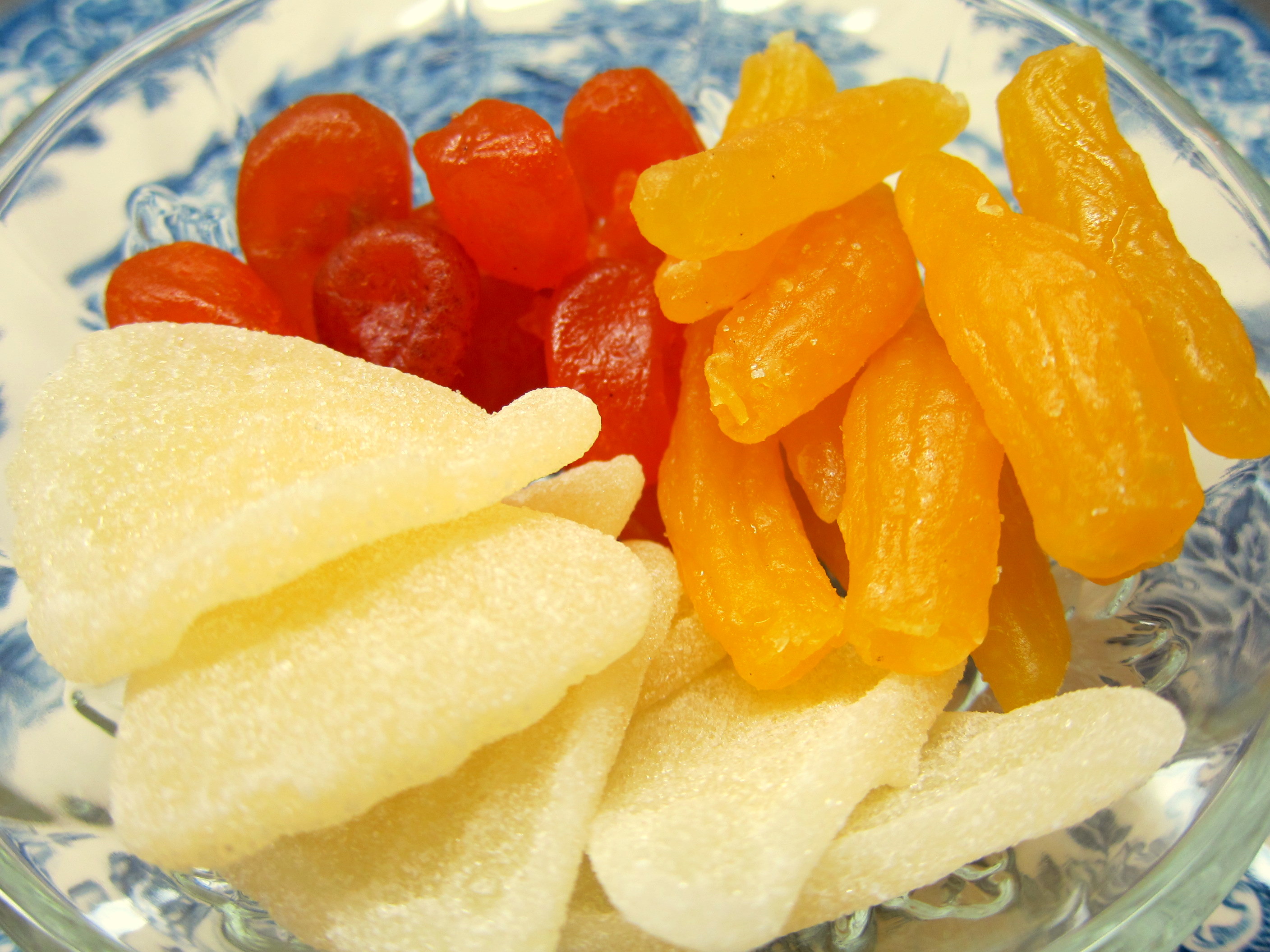

As advertised by the lady of the store, the scarlet kumquat mứt (mứt tắc) is “good enough to die for”. I’d say its texture is fresh, its color attractive, it’s not too killingly sweet (always a plus for these candied pieces), and it’s a thousand times better than the cherry they put in your hot fudge sundae. 😉 Word of mouth is it can help with digestion and lowering body temperature, and if you drink too much alcohol perhaps pack a few of these to detoxicate (or just don’t drink!).

The sweet potato mứt (mứt khoai lang) are warm yellow inch-long sticks without powder sugar coating, as dense as a medium boiled egg yolk and as sweet as the root itself. In a blind taste test, the first bite makes you think it resembles sweet potato, then the second casts some doubt because it’s denser and more consistent than sweet potato. It has the same medicinal effect as tamarind, but to a lesser degree.
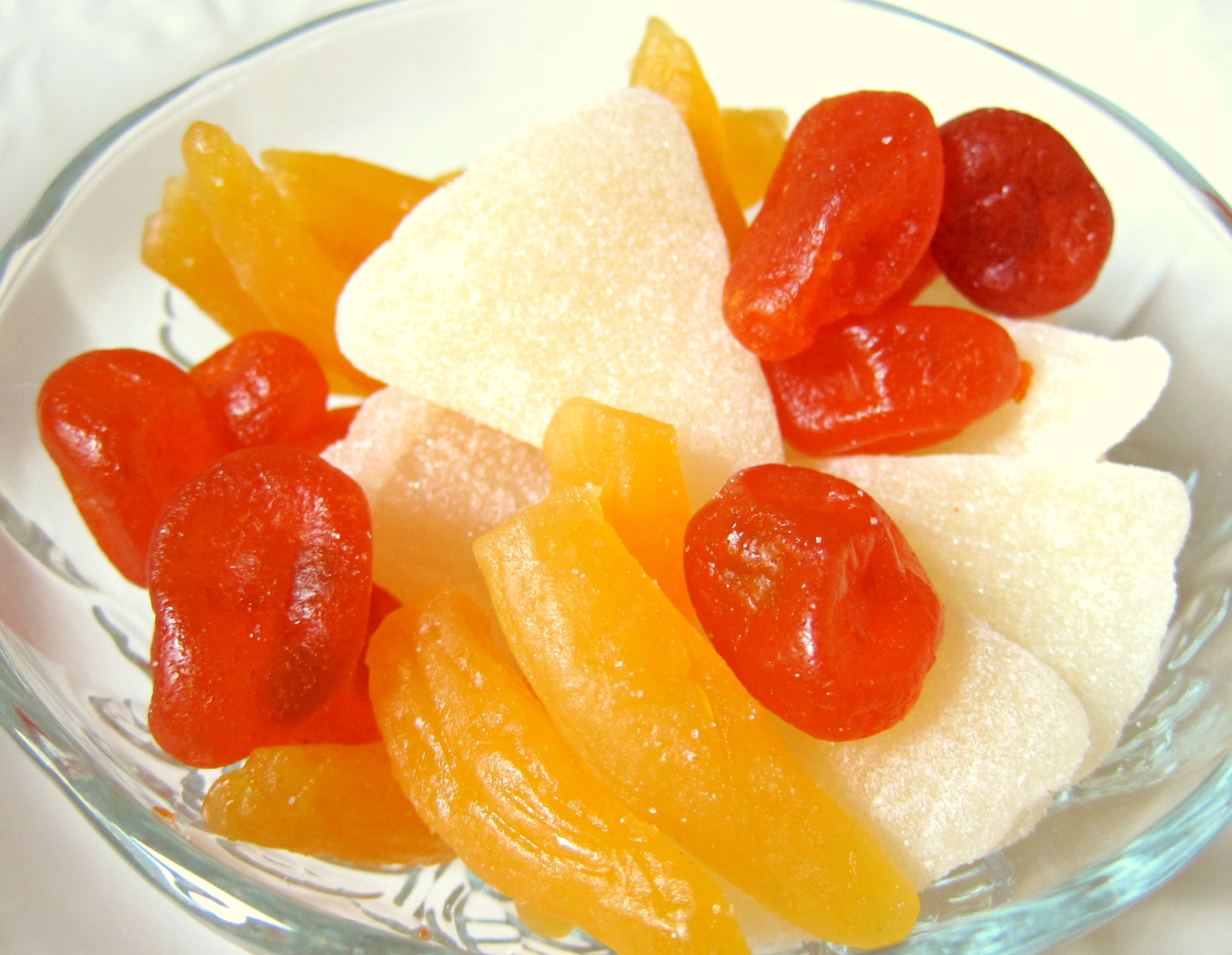

Mudpie’s favorite of the five is labelled pomelo (bưởi), but it’s most likely the pomelo skin, sun-dried and pan-sweetened and powder-sugar-coated like American candies. It feels so light almost porous, the center has a subtle citrus pinch that would marry well a cup of hot chrysanthemum tea.

In the end, there’s no telling which kind of mứt everyone would like best, but there’s always some kind somewhere to each person’s liking. When you buy mứt, ask for a sample before settling on a 1-lb pound package, you can’t judge a mứt by its cover. Usually they cost $3-5 per half pound, and each little bite-size is packed with enough sugar that it’s best, though it may appear cheap, to buy $1-2 each kind, and buy many kinds. 🙂
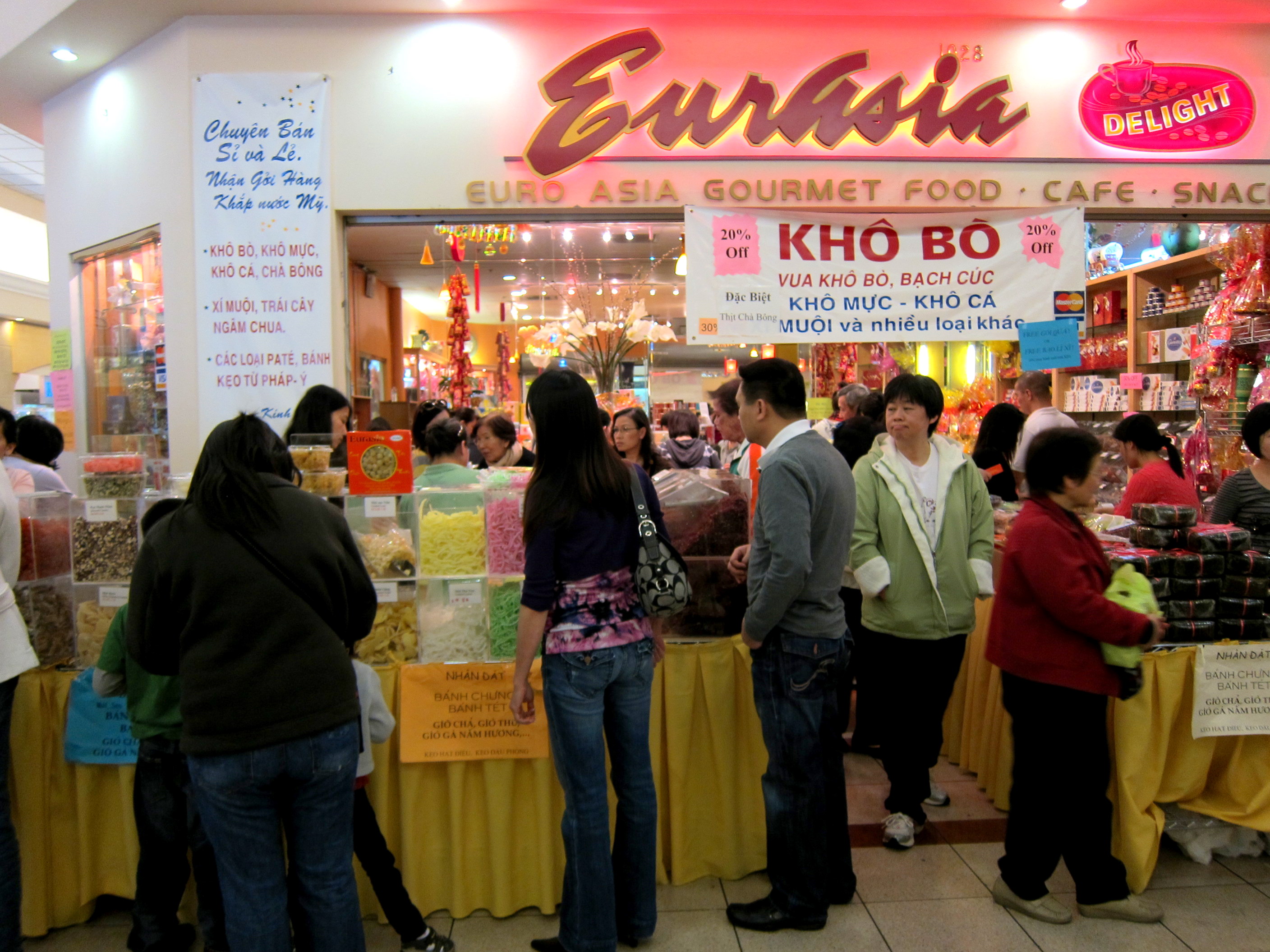

Where I get my mứt this year: Eurasia Delight (inside Grand Century Mall)
1111 Story Rd Ste 1028
San Jose, CA 95122
(408) 293-1698
Tags: , ,

Toothsome nana tootsie

December 08, 2010 By: Mai Truong Category: Comfort food, Fruits, One shot, RECIPES, Southern Vietnamese, sweet snacks and desserts, Vegan


Last night I dreamed of these brown sticks in cellophane wrappers. The sound of crunchy plastic unraveled. The smooth yet sticky, dried-syrup-like surface that easily gives way to the pinch of two nails. An ever so lightly sweet, fruity, malty breath whizzing up as your nose closes in…

I woke up feeling as though there were some of those pieces melting on my tongue. But the best part of eating a banana tootsie roll, if I may call it so despite it having no relationship to the Tootsie Roll, is, like with the real Tootsie rolls, the chew. You chew it and notice it get smaller, but not any less sweet or less gummy. And it’s only as sweet as a just ripe banana, yet with an alluring touch of coconut.

The chewy banana candy is a Mekong delta specialty, where siem bananas grow more easily than rice. The stout, dense, supple bananas either make their way into che, bread pudding, wrapped and grilled in sticky rice, flattened and sun-dried, or cooked in some recipes that are only passed down from mothers to daughters. I just know that whenever we traveled to or a friend of the family came back from the My Tho, Ben Tre region, I got a bag of keo chuoi – banana candy (pronounced somewhat like |keo jui|), or keo dua (|keo yua|) – coconut candy. Banana candies are less sweet and less strenuous to the jaw than the coconut ones; some are coated with roasted sesame seeds, some contain crushed peanuts or ginger bits, but I like the plain, pure, consistent banana kind the best.

Keo Chuoi (banana chewy candy) –
Ingredients
– 3 bags of whole dried bananas
– 1 coconut
– 1 ginger root, roasted and crushed peanuts (if you like some texture variation)
– Sugar, 1 tsp lime juice
– cellophane candy wrapper

Slice thinly the dried bananas, coconut, and ginger. Stir banana and sugar in a skillet on low heat (add at least half as much sugar as banana), add coconut (and ginger if wanted), stir constantly to avoid them burnt. Add lime juice to keep the mixture gooey. Add peanuts when the mixture is homogeneous and start to harden. Take out, flatten and smoothen the surface (add a sesame coat now if you want), wait until cool then cut and wrapped in cellophane wrappers.
If you can’t find dried bananas, try using a blender to mix banana, coconut, and ginger together, and do every subsequent step the same way.
(Recipe not yet tried :-P, translated from Vietfun)


Ze kwik-n-easy vay:
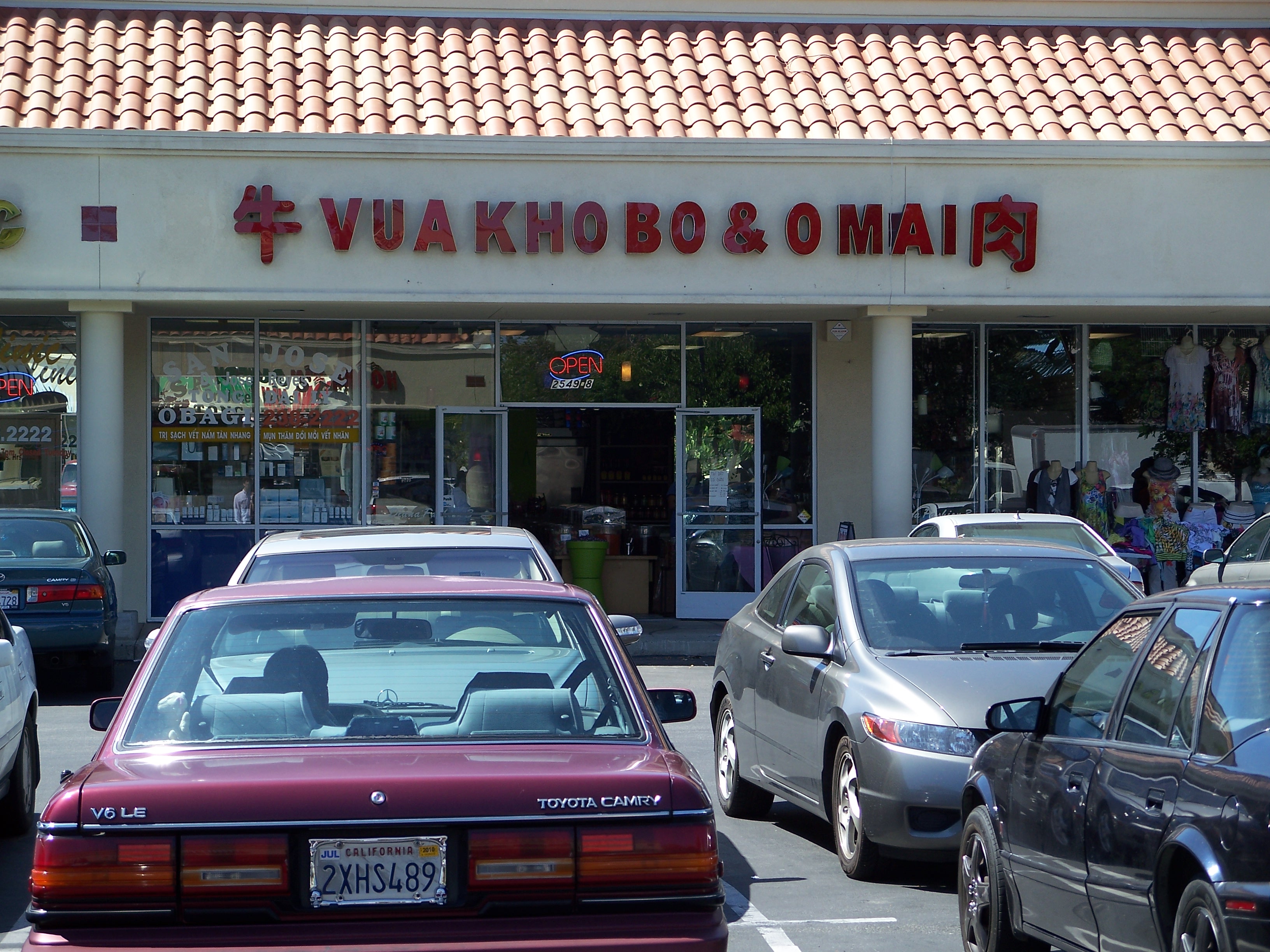
Vua Khô Bò & Ô Mai (loosely translated: “King of Beef Jerkies and Dried Huamei“)
2549 S King Rd #A-B
San Jose, CA 95121
(408) 531-8845

Go bananas a few other ways:
banana ice cream
banana dog
banana bread pudding
banana in sticky rice log

Tags: ,

Finger split banana

November 28, 2010 By: Mai Truong Category: Fruits, Opinions


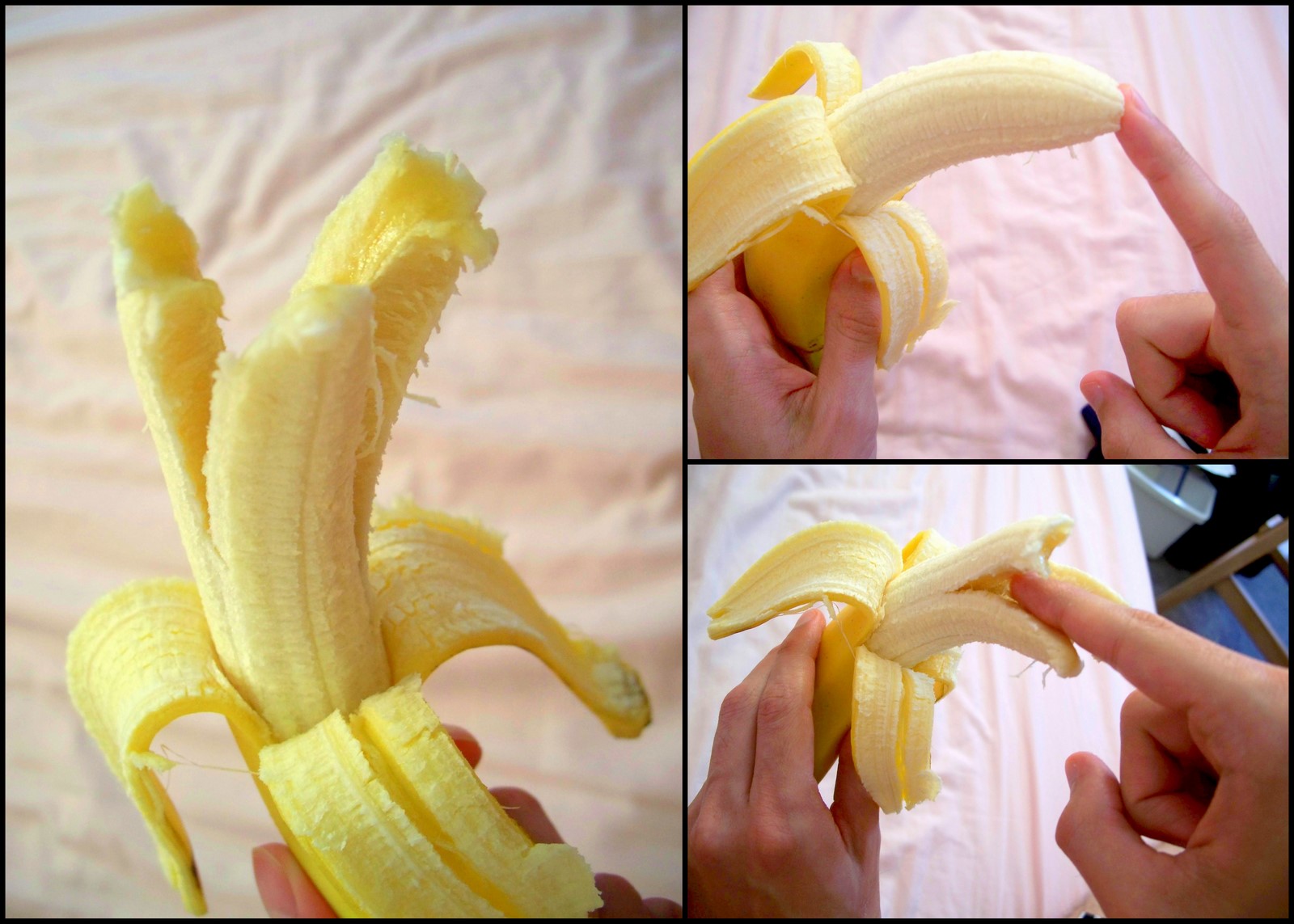
So I just learned this cool thing you can do with a banana finger and your finger. It works better with not-so-ripe bananas of course. Three way split all the times. Credit to Mudpie.

Then I told my mom about it. She said “Duh. You just now know?” 😀

For comeback, I told her (again, credit to Mudpie for telling me) that banana is used as a unit in measuring radioactivity. Like all foods (and living things, including you), banana radiates. It just happens that banana contains the radioactive isotope Potassium-40 (19 protons and 21 neutrons, 1 neutron more than stable Potassium) which makes it radiate a little bit more than other things. Fortunately for us the half life of Potassium-40 is over a billion years, so the amount of radiation a banana produces is less than 1/365 times the increase in cancer risk caused by 40 tablespoons of peanut butter.

In short, bananas may cause false alarm on nuclear radiation sensors at US ports, but it’s perfectly safe to eat one or two of them per day. 🙂 Or, if you’d like a stronger radiation dose, smoke one cigarette per year.

Tags:

Down the Aisles 7: Lady apples and pudding cups

November 12, 2010 By: Mai Truong Category: California - The Bay Area, Fruits


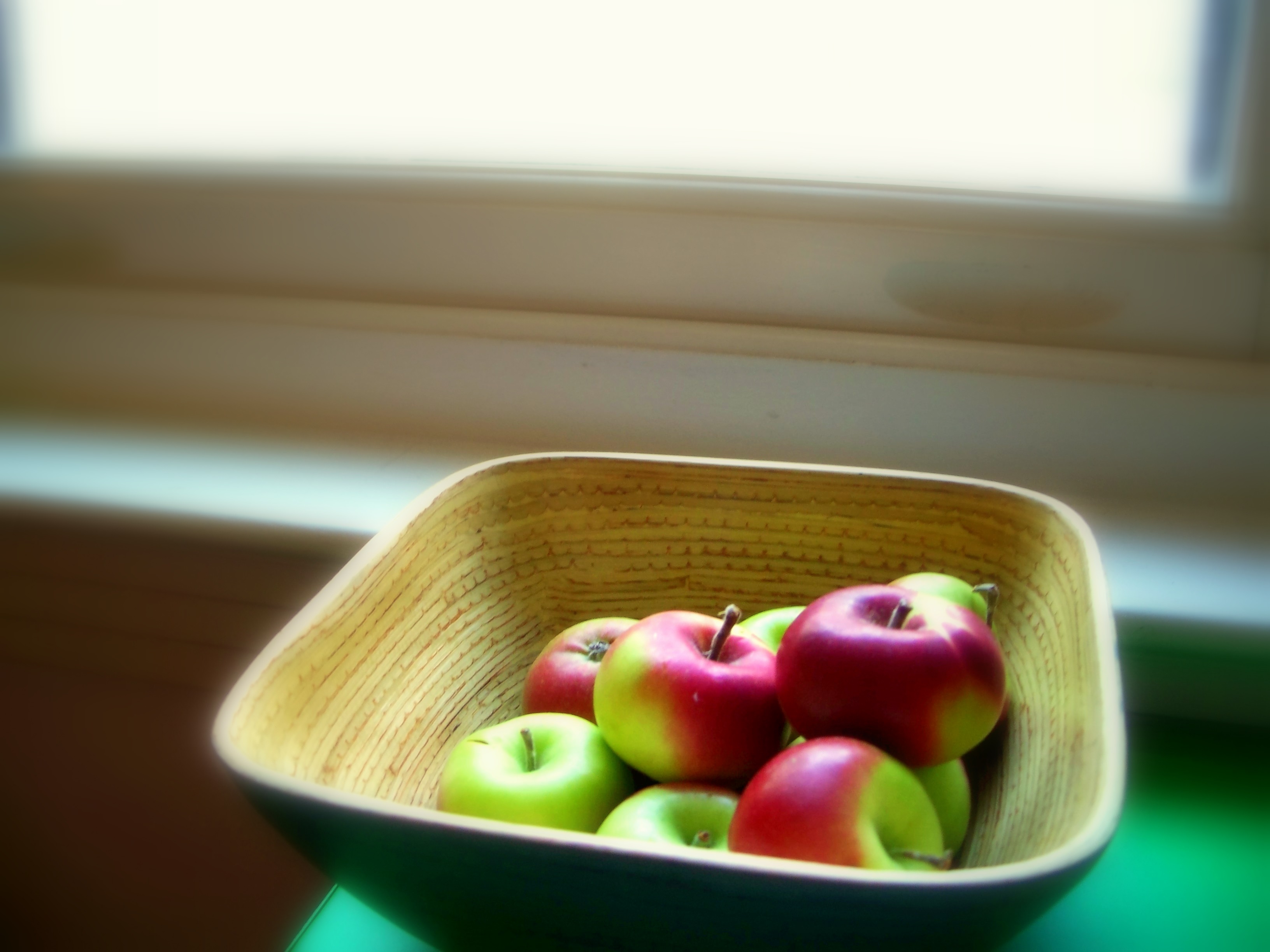
These plum-sized apples belong to one of the oldest cultivars first known to the Romans, but I only saw them for the first time at Lucky last weekend. Some have a rosy cheek on one side, some are burgundy all around the upper half, like a little rotund Red Riding Hood with greenish yellow gown.

The cheerfully color-contrasted skin feels waxy smooth as I run them under the faucet. Memories of Thai apples (poodza) rush through my fingers, but Thai apples are whole green and oblong with a pointy bottom, the Ladies here are shaped like mochi dumplings slightly squished by two fingers at both ends. I pick one up close to my mouth, before the lips can get to its skin, the nose already catches a fresh swift of the dimple where its stem sprouts.


It’s crisp, like a pile of crunchy leaf. Its sweetness and tartness are lady-like.

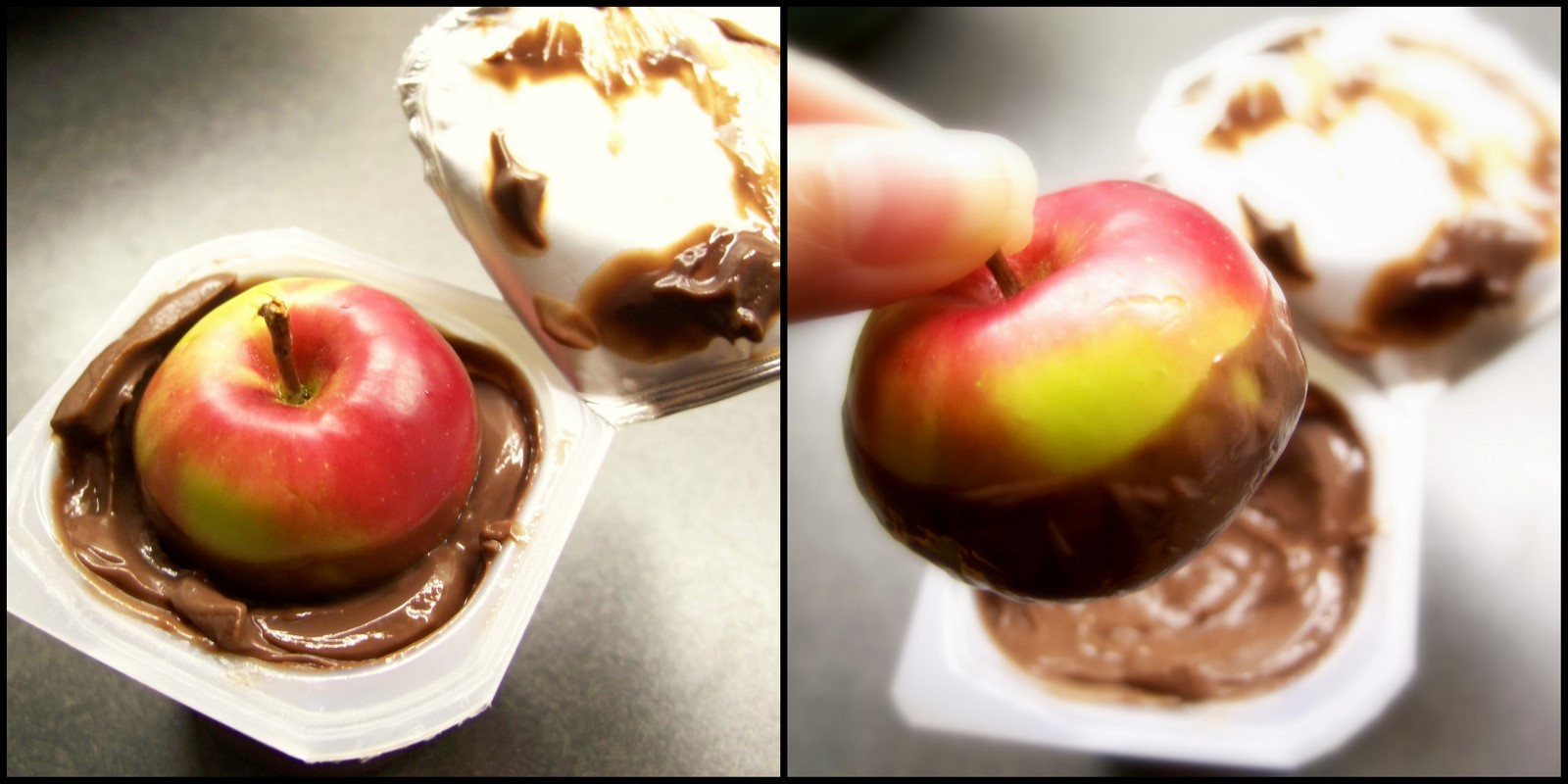
One of my advisors likes to eat the entirety of an apple minus the stem and the seeds. He doesn’t leave a core. Which makes me think he’d love to pop these whole in the mouth, especially since their seeds are just as big as a red globe grape’s seed. I instead dip one into a chocolate pudding cup and pinch off small bites. It’s better than chocolate covered strawberries.

$2 for 10 momentary joys.

Tags:

Sandwich shop goodies 10 – Bánh chuối nướng (Vietnamese banana bread pudding)

August 25, 2010 By: Mai Truong Category: California - The Bay Area, Comfort food, Fruits, One shot, Southern Vietnamese, sweet snacks and desserts, Vietnamese


Every now and then I feel blessed to grow up in the tropics. It doesn’t let you wear scarves and gloves, but it has bananas. Many types of bananas. There are at least 10 common cultivars in Vietnam, most are for eating fresh as a fruit, some for eating raw as a veggie with wraps, and one is particularly favorable to be cooked in desserts. And desserts with bananas are just about the most addictive thing out there.

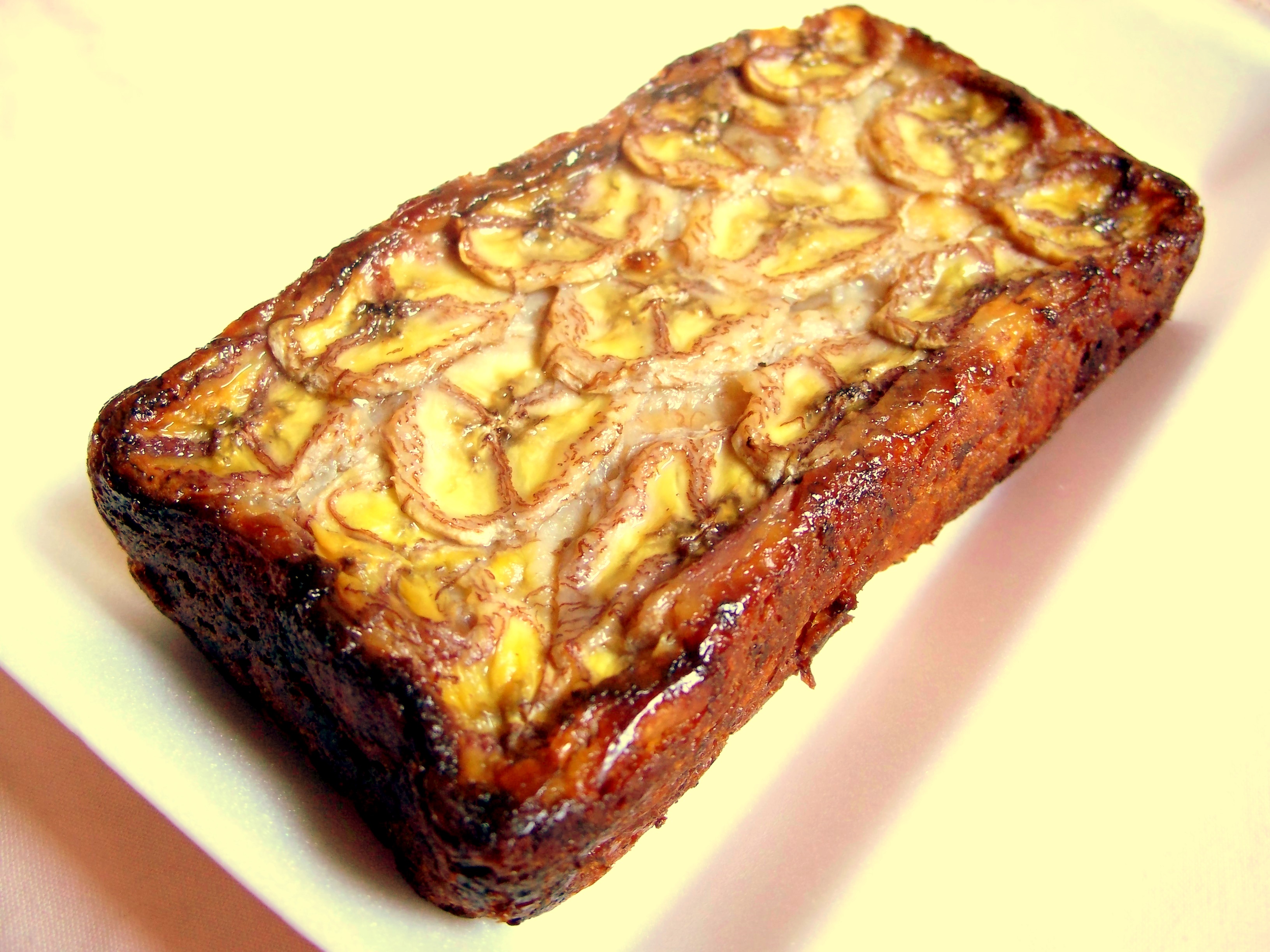
Take this banana bread pudding for instance. I intended to cut one little slice each day to savor it for over a week, but next thing I knew I was gorging half the slab after dinner. The bread is part chewy, part spongy, mostly firm, juiced up by a semisweet layer of sliced banana on top. It needs no sauce, no ice cream, no chocolate. It is good both at room temperature and right out of the fridge.

The description simply can’t capture how delicious this thing is. And it’s not even a well made banana bread pudding, you know, the type of treat that grandmother would make at home or the recipe that a vendor has perfected over ten years of peddling dessert banh’s.

It’s just a cling-wrapped 3.75-dollar piece of cake that I bought from a banh mi store. It has only one layer of bread and one layer of banana. And it is Cavendish banana, the most popular type, if not the only type at many grocery stores, of banana that Americans have known and loved.

Not that I have anything against Cavendish bananas. They’re big. They’re alright for eating fresh. But a Cavendish’s flesh is no match for chuối sứ when it comes to cooking dessert.

Chuối sứ, literally ambassador (“sứ”) banana (“chuối”), was brought to the Vietnamese royal courts by Thai ambassadors (hence it’s also called “chuối xiêm”, as “Xiêm”  is another word for Thai). Like most bananas, chuoi su is considered native throughout Southeast Asia, where it’s known as siusok (Philippines), kluai namwa daeng (Thailand), and pisang siem (Indonesia). Scientifically, it is categorized under Triploid ABB, Musa x paradisiaca, although the latter is disputable as a general name for all bananas.

What I don’t get is the ABB classification. It signifies a below-average score, while Cavendish, a Musa acuminata, is in the AA group. Sure, chuoi su is shorter than Cavendish (less than the length of my hand from wrist to finger tip), but it is stout like a good bratwurst. In practice, chuoi su is more favorable for both eating and cooking because of its firm flesh, slightly gummy texture, and raisin-like sweetness, all of which can endure simmering, grilling, baking, steaming, and boiling. The banana just wouldn’t fall apart or lose its “honey”.

The best part is, it’s easy to grow, so it’s among the cheapest types of bananas in Vietnam’s markets. Not in America though. Which is why the banana bread pudding I have here tastes slightly sticky in the back of the throat and not as sweet as it could be. Nonetheless, it’s the champ of all sweet goodies we’ve gotten from banh mi stores so far.

Buy it: Kim’s Sandwiches, 1816 Tully Rd 182, San Jose, CA
Bake it: Bánh chuối nướng recipe

Previously on Sandwich Shop Goodies: bánh bò bông (steamed sponge cupcake)
Next on Sandwich Shop Goodies : steamed cassava