Flavor Boulevard

We Asians like to talk food.
Subscribe

Archive for the ‘Comfort food’

Sandwich shop goodies 17 – Mung bean milk

May 13, 2011 By: Mai Truong Category: California - The Bay Area, Comfort food, Drinks, One shot, Vietnamese

Do you like soy milk?
No? Well, someone once told me that if you don’t expect milk when you drink soy milk, then you’d enjoy it.
Yes? Then you might just prefer this luscious, green, liquefied nourishment to soy milk.
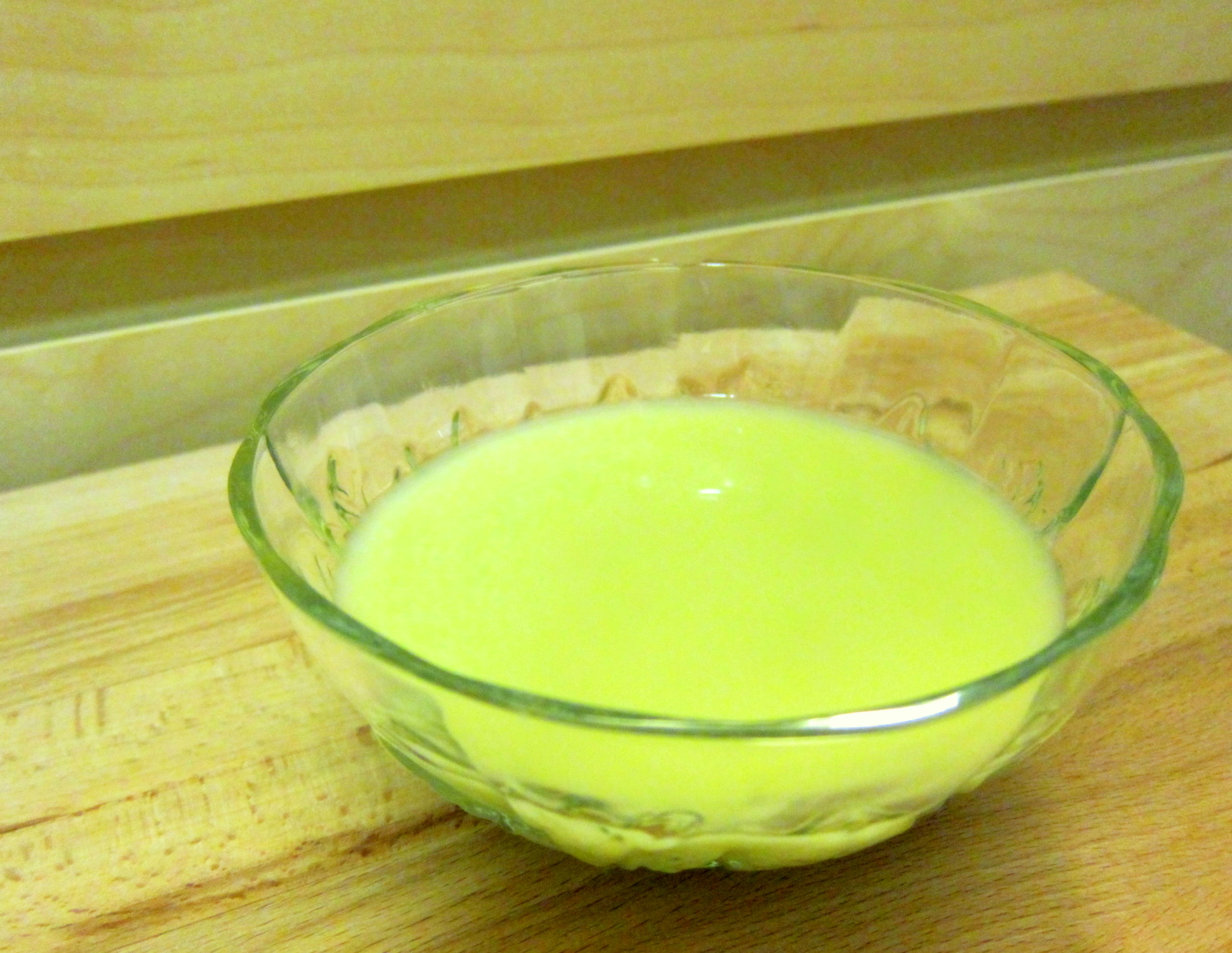

Not only is it nuttier, mung bean milk also feels more natural and more local than the modern soy milk. From the cheap plastic bottle with a green plastic cap and no label (that means no half-stamped “Sell by…” either), you can probably tell that it didn’t go through any metallic machine with pulleys and tubes. Whoever makes this mung bean milk probably soaks the beans overnight in a dented aluminum basin, boils the extract at 2 am in a sooty pot, and bottles the final liquid via a red plastic funnel that looks just like the one they always use for oil change. It doesn’t really matter as long as the delivery of a fresh batch comes at 6. The sandwich shop unstretches its iron folding doors. The customers start buzzing in. At 11 I came. I grabbed a bottle at the cashier. It was warm.
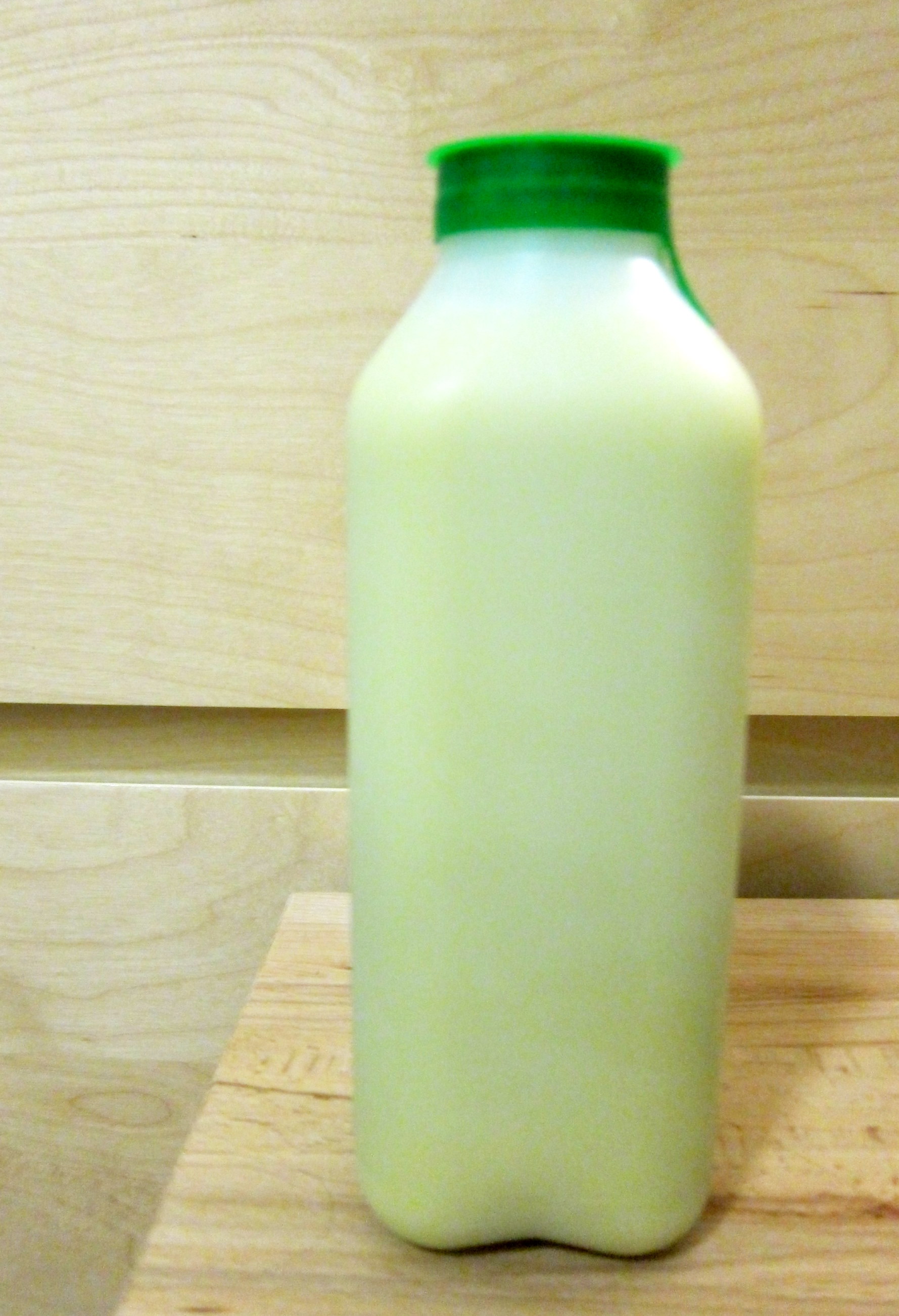

Two and a half hours later I got home and the milk got cold. I packed the 16 oz bottle into my minifridge next to the banh mi and banh bao (from the same store), sighing in relief that it’s just short enough to stand fit on the upper shelf. Was the bottle I had back then also about this size? How many years ago since I had last tasted that nuttiness in a glass? I dialed, “Mom, guess what I bought today! Sữa đậu xanh!”

On the other end of the phone I could hear her eyes widened and her lips part into a half moon shape. She’s happy. Every day for some time between my fourth and sixth years, Little Mom used to buy me a pint of mung bean milk from a grandmother of one of Dad’s students, and it had to be that grandmother because of her indisputable cleanliness. When I was 6, we switched to the packages of Vinamilk’s pasteurized fresh (cow) milk, a more convenient alternative to get in loads per week. Actually, I remember the cow milk packages with light blue words printed on white and the typical picture of a black-and-white Holstein cow, but not the mung bean milk bottles, barely the fact of drinking it every day. The point is, even in the Saigon of the ‘80s, mung bean milk was rarer and pricier than cow milk. Today, Bánh Mì Ba Lẹ in Oakland sells $2.50 for every 16 oz bottle, roughly six times more expensive than a gallon of cow milk, which you can get on average for $2.99 at your local grocery. Not that the price always represent the taste, but if I were a cow I would sulk a little, knowing that those helpless bird-eye seeds could produce something more valuable than my giant rectangular body could.

Now, about the taste… I’ve tried mung bean milk both ways: chilled in the fridge and warmed up in the microwave. Warm is better. Warm embraces the sweetness instead of masking it. Warm sooths your sensors from the tongue all the way down the esophagus. Warm also elevates the fragrance of pandan leaves and mung bean.

I wanted to stock up on the stuff so much I came back the next Sunday afternoon to buy off their last 4 bottles: 2 on the counter and 2 from the fridge. I refrigerated them all and refrained from drinking them that night; like a poor drug addict I tried portioning whatever little amount I had for the whole week: 1 bottle per two days seemed satisfactory. But ah the best-laid schemes gang aft agley, Wednesday morning one bottle turned sour on me.

“There goes three precious pints down the drain,” thought I. But it turned out the remaining two were fine. ‘t was one from the counter that got ruined. The cold ones stayed for 6 days. So unless you drink it within two days, buy the refrigerated bottles, keep fridging, then shake it well and warm it up with a microwave when you drink.

One last bit to tell you how stingy I get when it comes to mung bean milk: I drank and drank and at the bottom there was the thick beany leftover, I poured in some water, shook it up, more mung bean milk for me.

Address: Bánh Mì Ba Lẹ (East Oakland)
1909 International Blvd
Oakland, CA 94606
(510) 261-9800

Previously on Sandwich Shop Goodies: nước rau má (pennywort juice)
Next on Sandwich Shop Goodies: bánh khoai môn hấp (vegan steamed taro cake)

This post is submitted to Delicious Vietnam #13, May edition, hosted by Jing of My Fusion Kitchen.
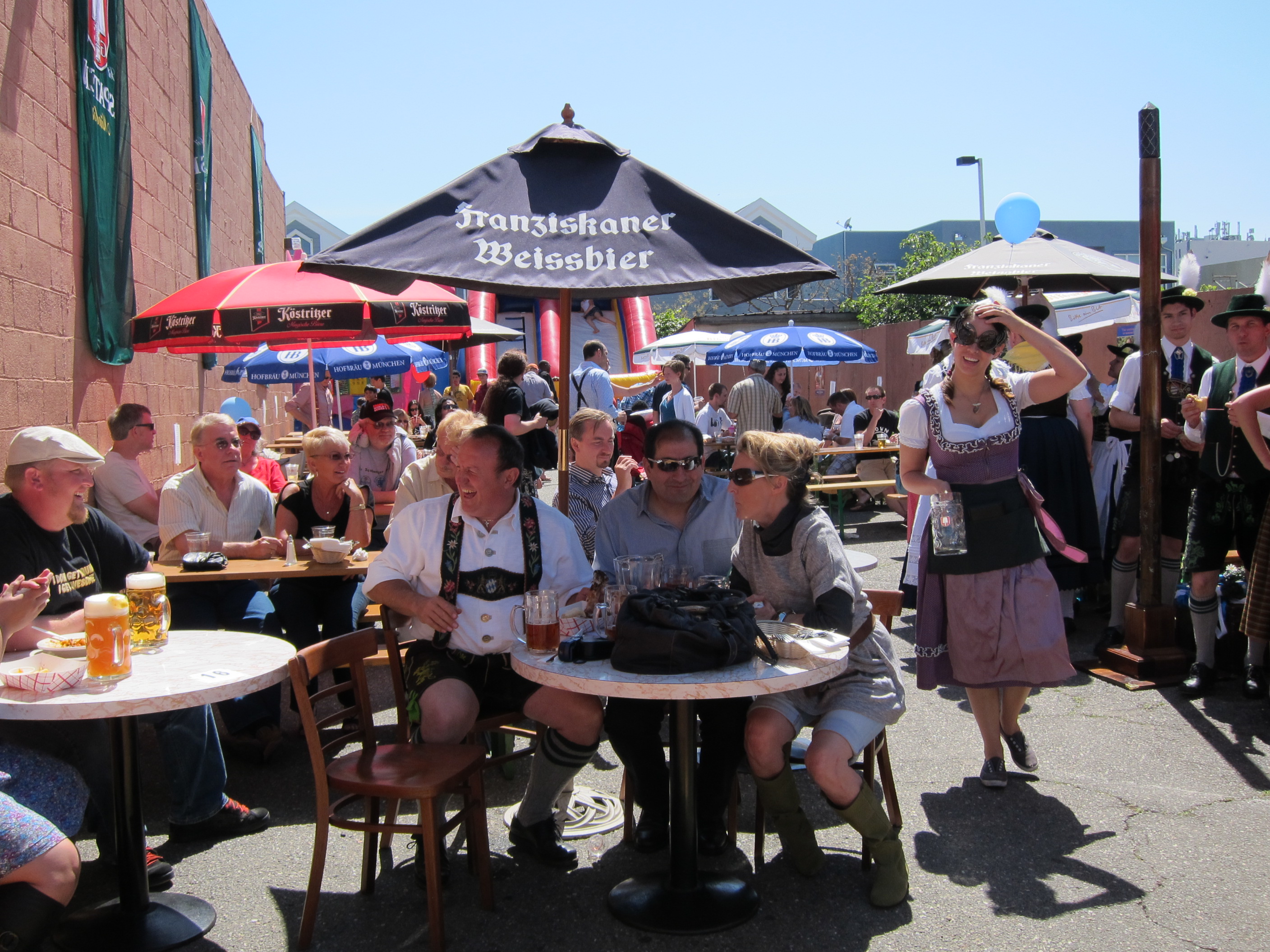
Wurst, Lederhose and Mai Fest at Speisekammer

May 02, 2011 By: Mai Truong Category: California - The Bay Area, Comfort food, Festivals


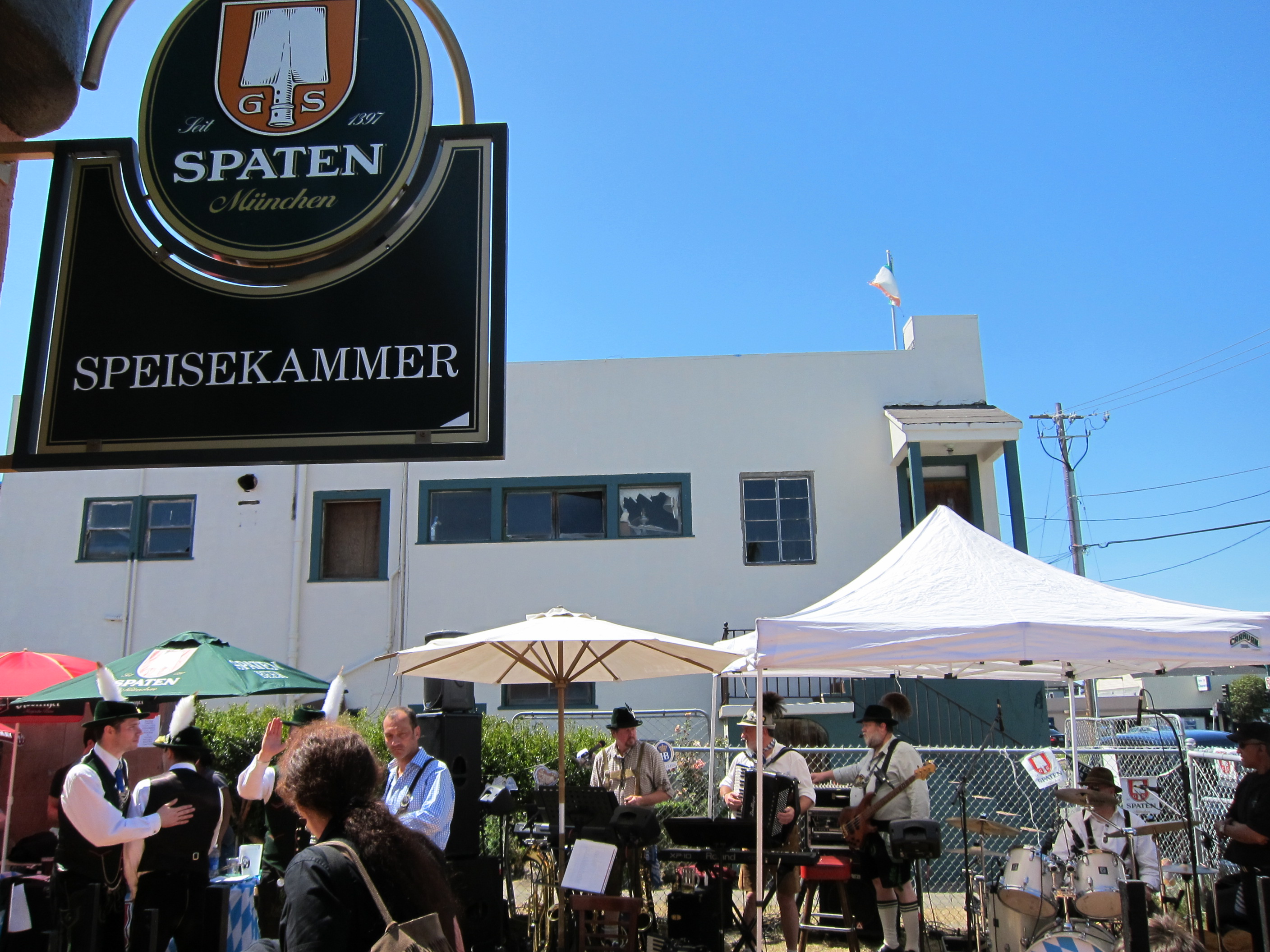
On one bright Sunday afternoon, I found myself spinning with a guy named Don in lederhosen to quirky Bavarian tunes. Black, red and yellow balloons swinging almost in sync with the “hoi hoi” cheers from honey-shining beer mugs. And I had my fill of meat. 🙂 May started, lively and carefree.


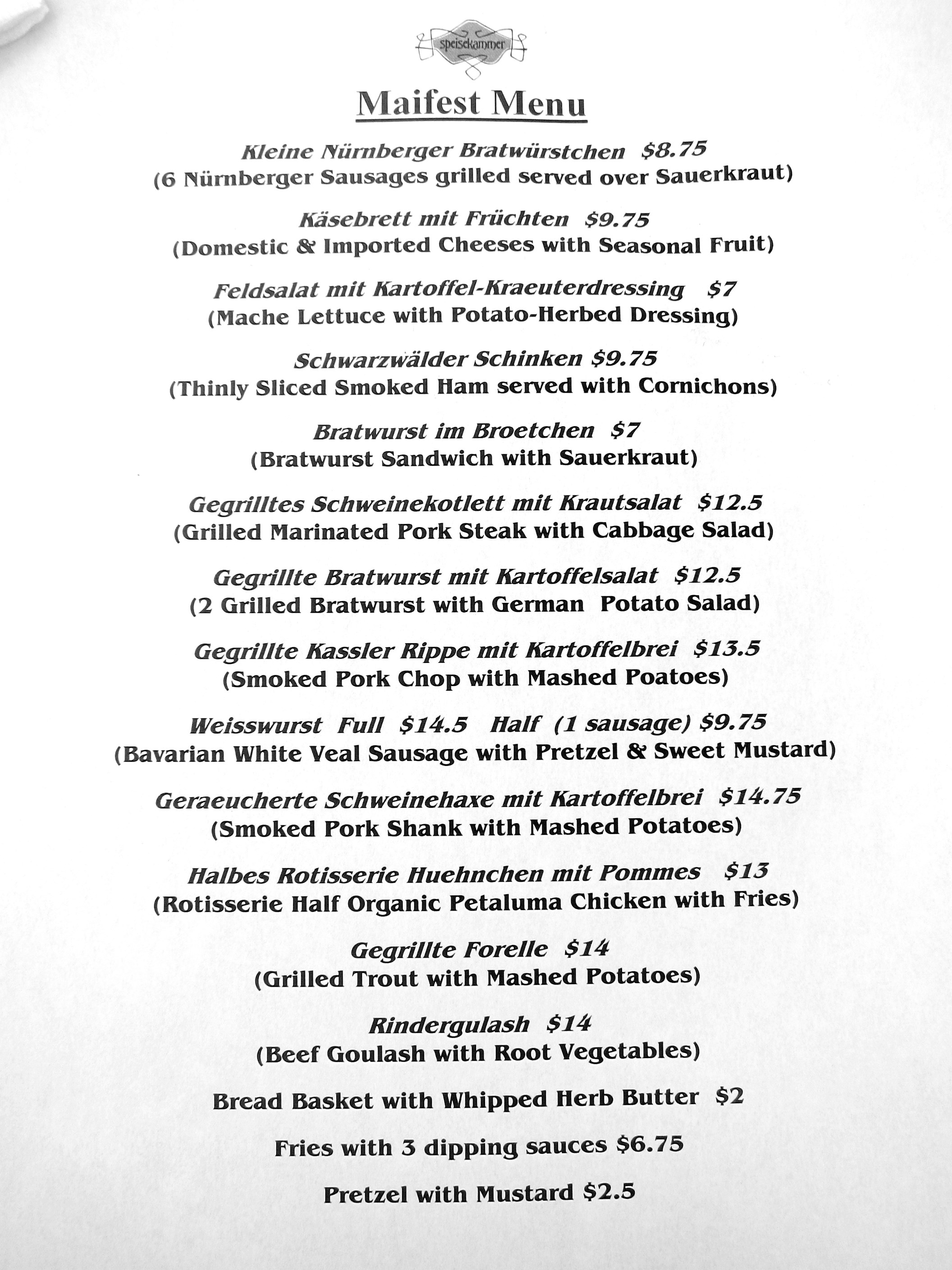
This part of Alameda is old timey. A short green iron bridge over a narrow canal, fading painted warehouse signs with German names, old cars… It’s drowsy, almost. ‘Cept for this one corner of Lincoln and Park Street today. The German restaurant bloomed like a Royal Poinciana in June. We felt flamboyant too. What’s this… deciding on a whim to get lunch together at Speisekammer, and it just happened to be the one day Speisekammer held their Mai Fest (my name makes me feel special at times like this :-D). Everyone sitting out at long wooden tables under the parasols, sleepy dogs lying under the sun. It hasn’t been this warm for weeks. A band, balloons, flags, traditional clothes, dancing, food. A special menu.


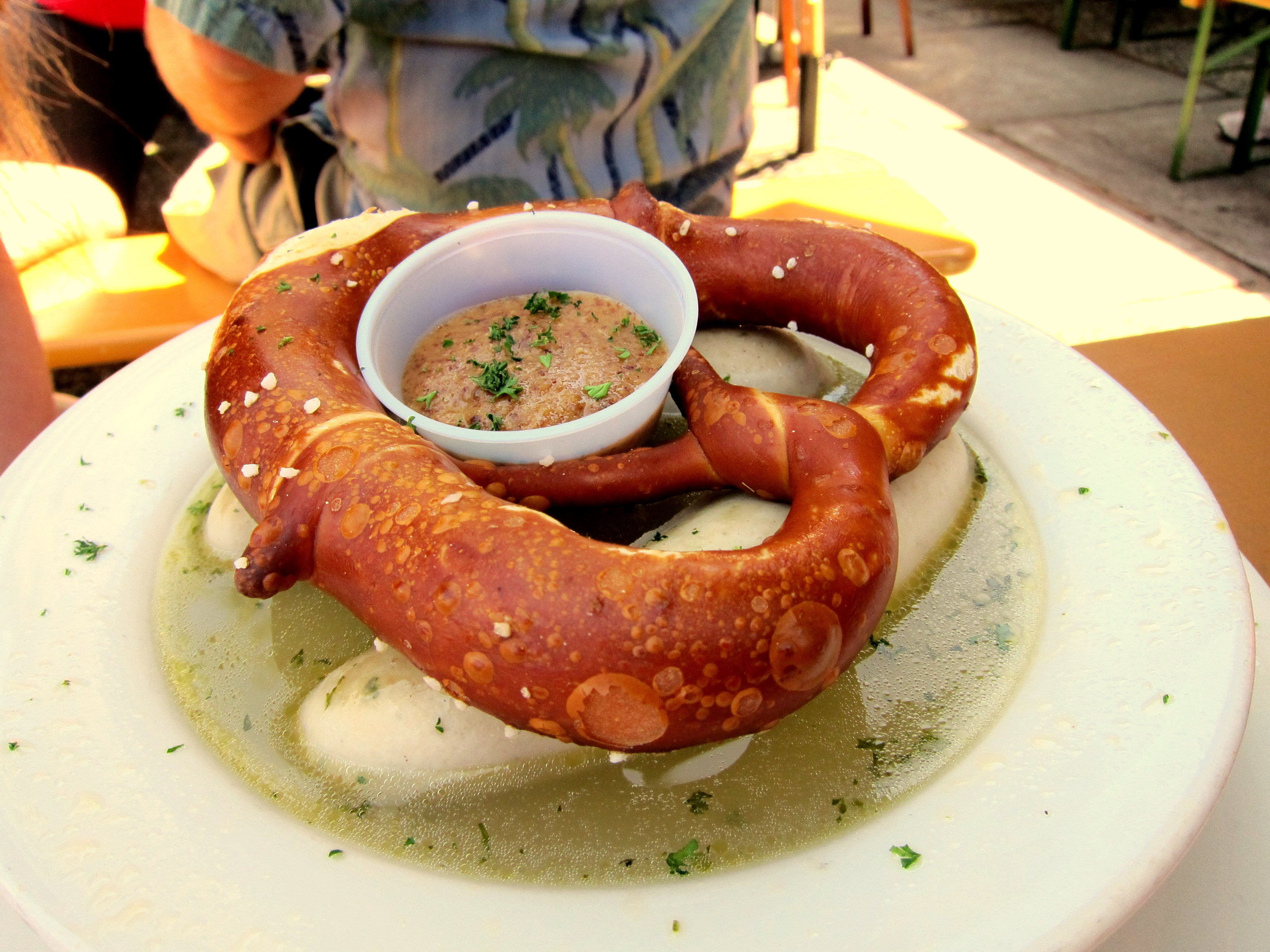
Weisswurst – “Bavarian white veal sausage with pretzel and sweet mustard”. It’s no veal. It’s velvet.


Elderflower soda. A spiky chill all the way down.


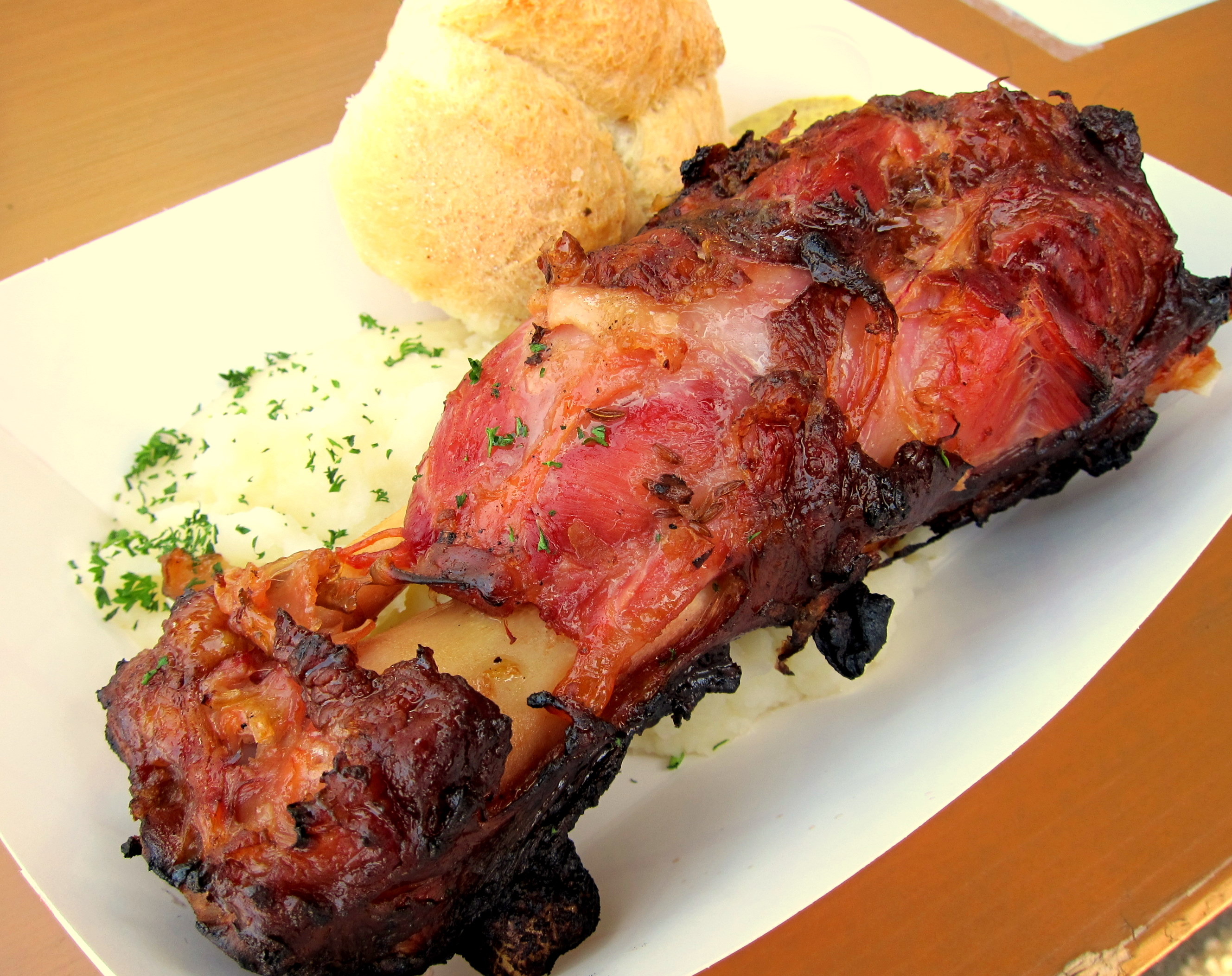
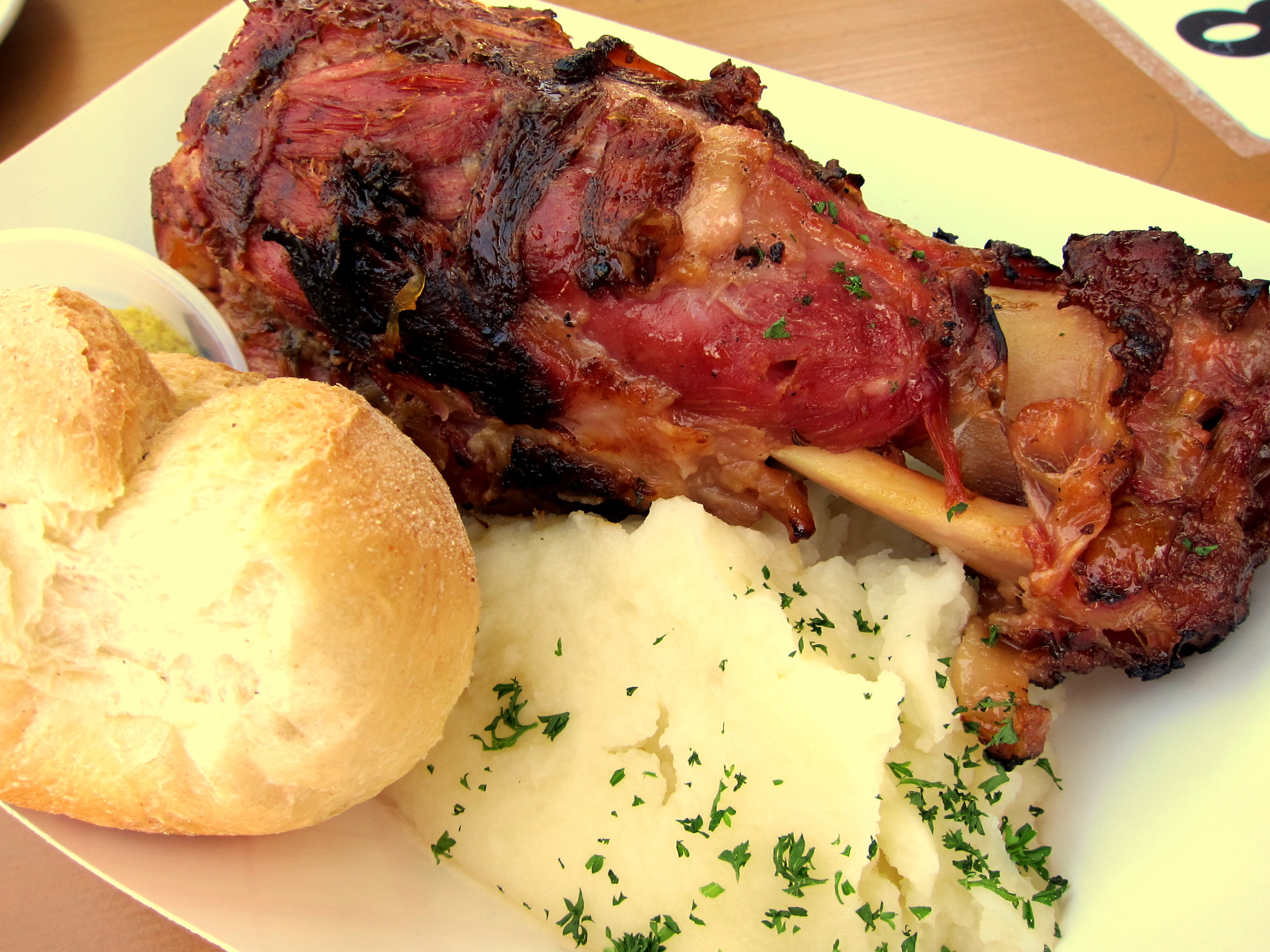
Geräucherte Scheinehaxe mit Kartoffelbrei – “Smoked pork shank with mash potatoes”. Juicy inside, crusty outside.

The band played a heart-warming favorite of mine. “Die kleine Kneipe in unserer Straße, da wo das Leben noch lebenswert ist. Dort in der Kneipe in unserer Straße, da fragt dich keiner was du hast oder bist…”
(“The little bar on our street, where life is worth living. There at the bar on our street, where you’re not asked what you have or who you are…”)


If you ever feel gloomy, find a German festival.

Address: Speisekammer
2424 Lincoln Avenue
Alameda, CA 94501
(510) 522-1300
speisekammer.com

(*) “Speisekammer” means “Pantry”, and “Mai” means “May”

Better than banh mi thit nuong

April 26, 2011 By: Mai Truong Category: California - The Bay Area, Comfort food, sandwiches, Vietnamese


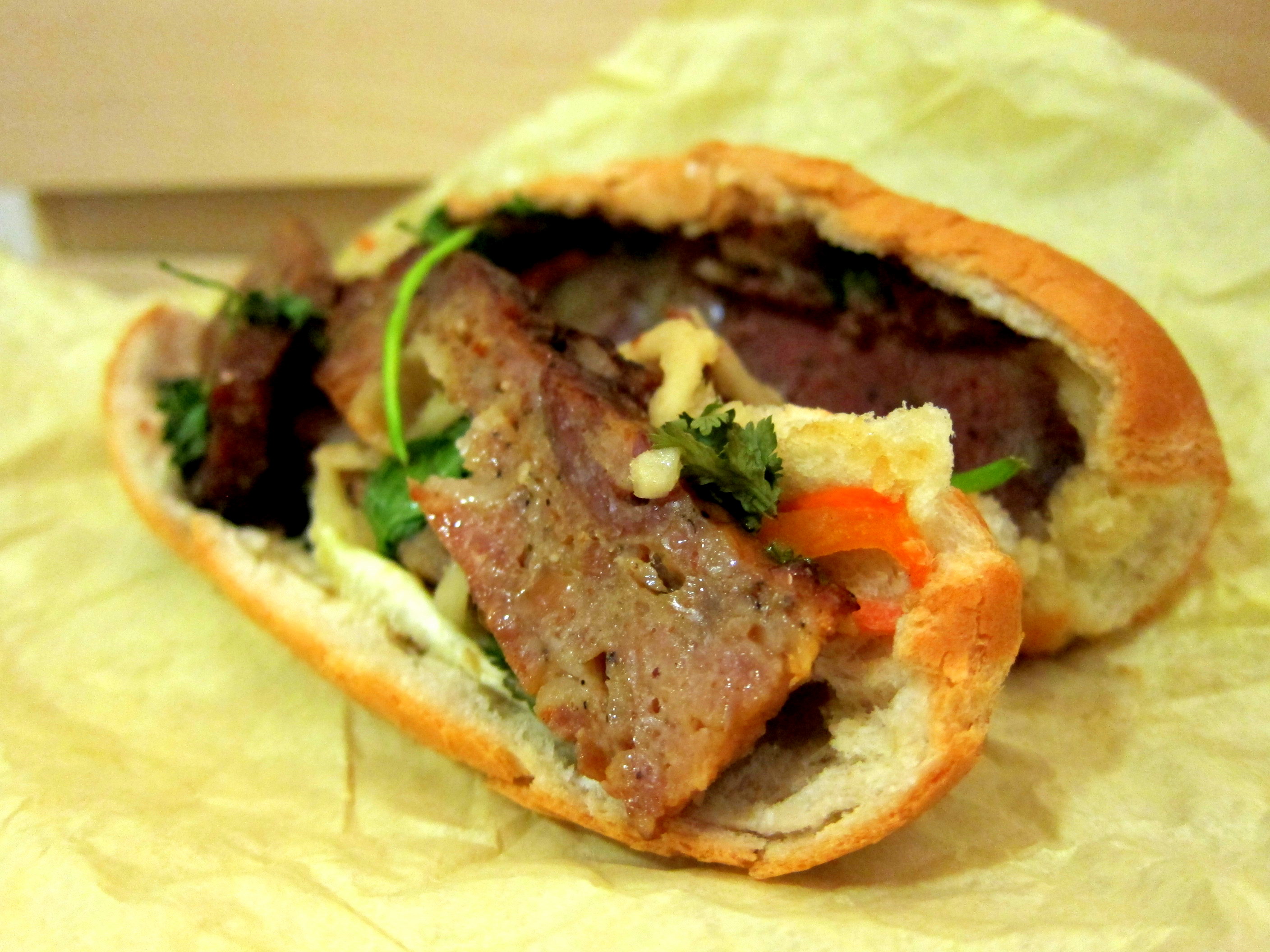
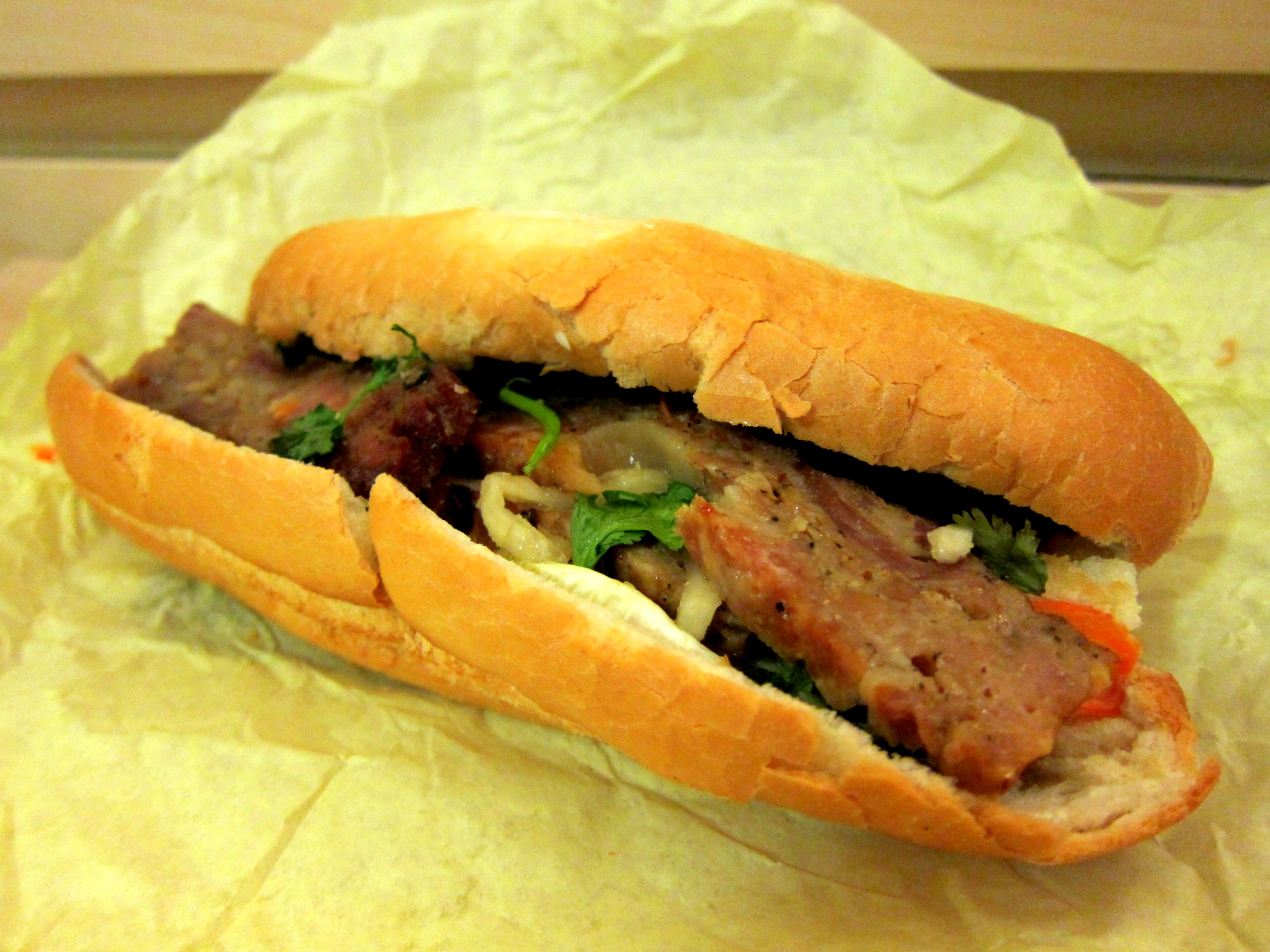
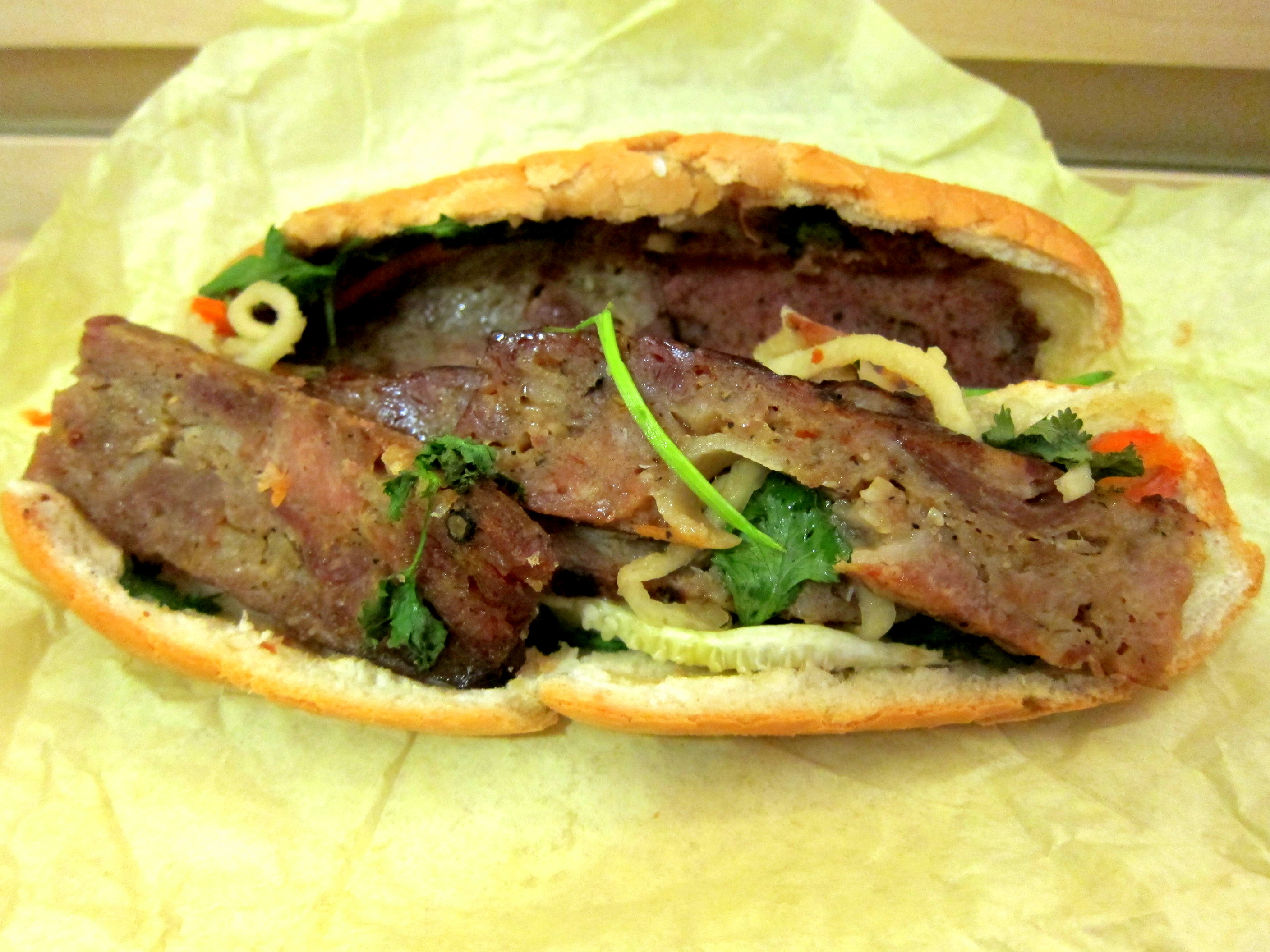
Isn’t she a fine beauty?


Stuffed to the brim. Peppery chunky crunchy meatloaf. Cucumber strips, cilantro twigs, carrot and daikon strings. And beneath it all, a layer of (possibly homemade) velvety vietnamesischer Braunschweiger, als ob es jeglichen Sinn ergibt. Ja, der Sandwich ist so explosiv gut it induces a spontaneous breakout of German.


Bánh mì pâté thịt nướng*. Not the usual chargrilled pork banh mi I’ve had elsewhere, this one has some kind of briny rich meatloaf. I ordered only two miserable loaves. Shoulda got 20!

On top of that I found the secret to a good spicy yet non-spicy banh mi.

I forgot to ask them to hold the pepper, so they put in loads of jalapenos, which I could only picked out when I got home an hour later. You can get rid of the pepper (and you should, unless you have a parrot tongue**), but you can’t get rid of the pepper sting (which you shouldn’t). That mere fire tail left behind in the bread and the veggies and the meat gives just the right kick without overwhelming the other tastes. But if you wait too long (a few hours in the fridge) to pick out the jalapenos, then you might as well not pick them out at all, the sting has already soaked deep.

Address: Bánh Mì Ba Lẹ (East Oakland)
1909 International Blvd
Oakland, CA 94606
(510) 261-9800

(*) I didn’t see “bánh mì pate thịt nướng” or “thịt nướng pate” anywhere on the menu, I just copied the customers who ordered before me and the ones before them. Seems like a popular combination, for obvious reasons. So bánh mì is really like cơm tấm, only your imagination, not the printed menu, can limit your options! 😉

(**) I was told that the if you feed parrots chilipeppers, which they actually can eat, their pea-shaped tongue can get thinner (the heat peels it off) and allow them to talk. I haven’t found a source to verify this though…

A Haiku in College Station

April 05, 2011 By: Mai Truong Category: Comfort food, Japanese, Korean, noodle soup

Afternoon leaves fall,
family of three gathers
by hot noodle soups.


How d’ya like my first ever haiku, inspired by a linner (lunch/dinner) at Haiku? 😀 5-7-5 syllables (not on, though), with kigo (seasonal reference) and kireji (cutting word) too… You can’t say I didn’t try.


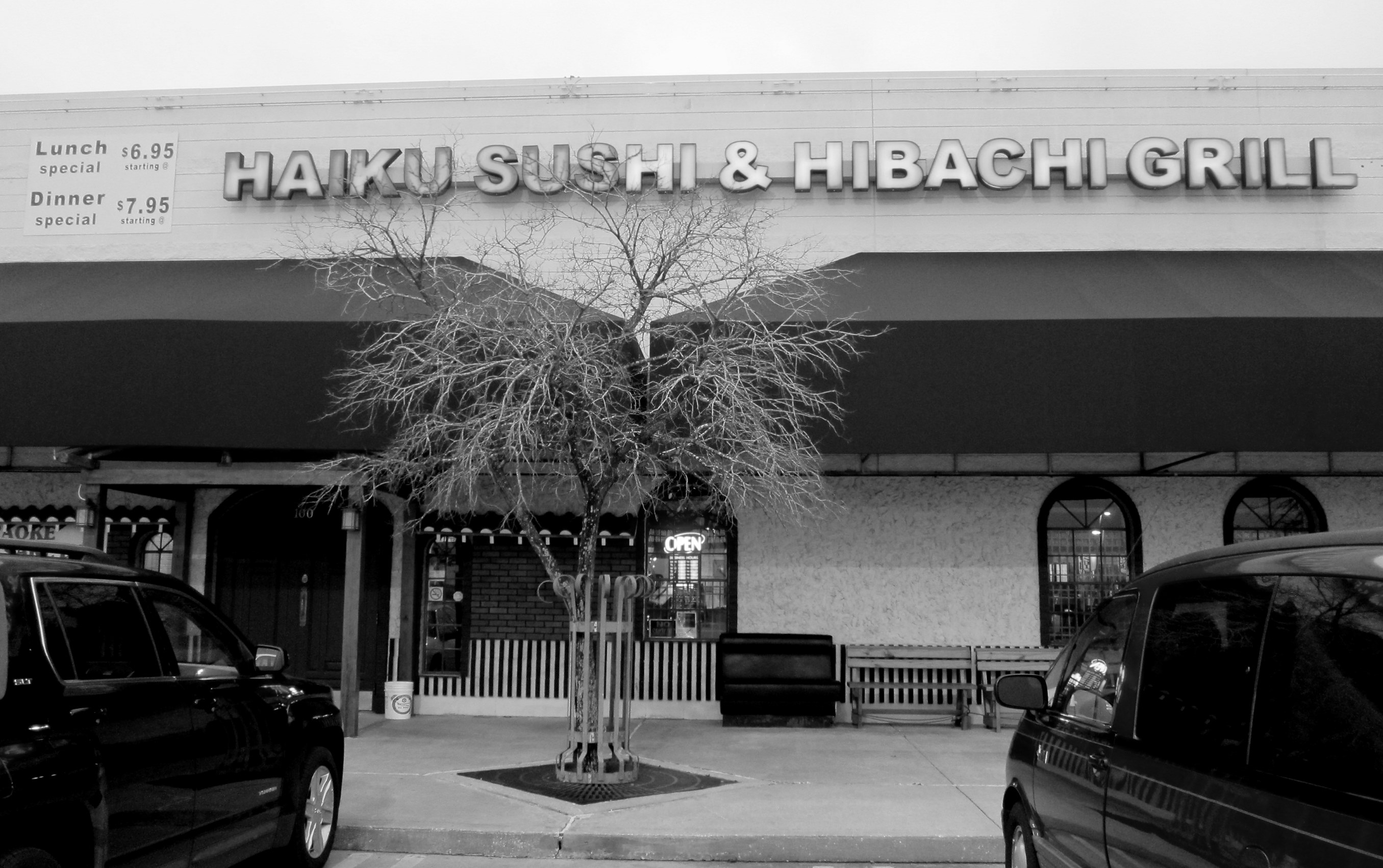
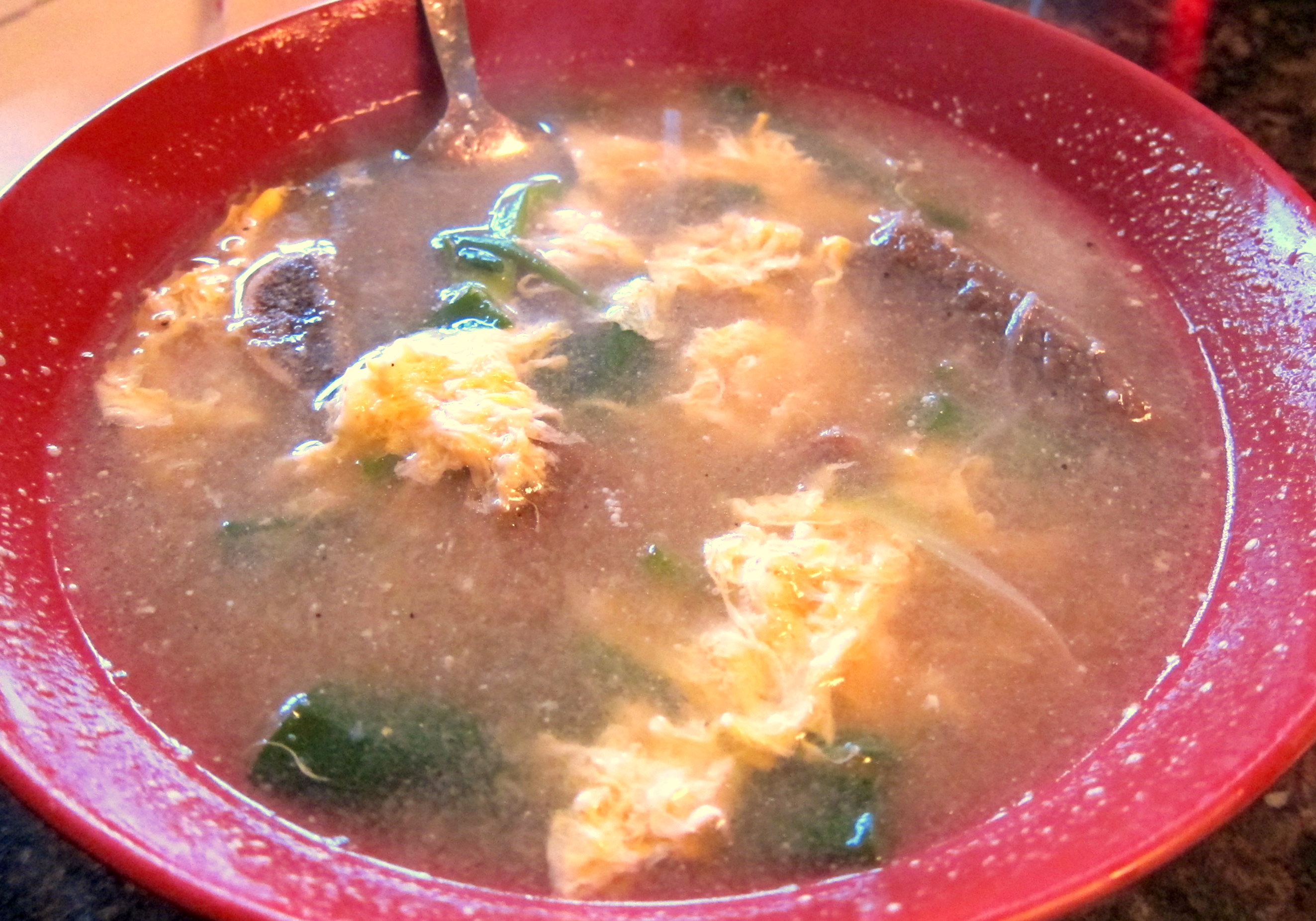
This was the easiest Japanese/Korean restaurant we could get to while driving on University. It’s more Japanese than Korean, evident from the short section of bibimbaps and whutnot among everything sushi. Seeing how this weather cries for soups, Mom decides on some piping kalbi tang (갈비탕). It’s not as oomphing good as the one I had at Bi Won in Santa Clara, just how many Koreans live in College station after all (*), but it sure is satisfying with loads of egg in a beef bone stock.


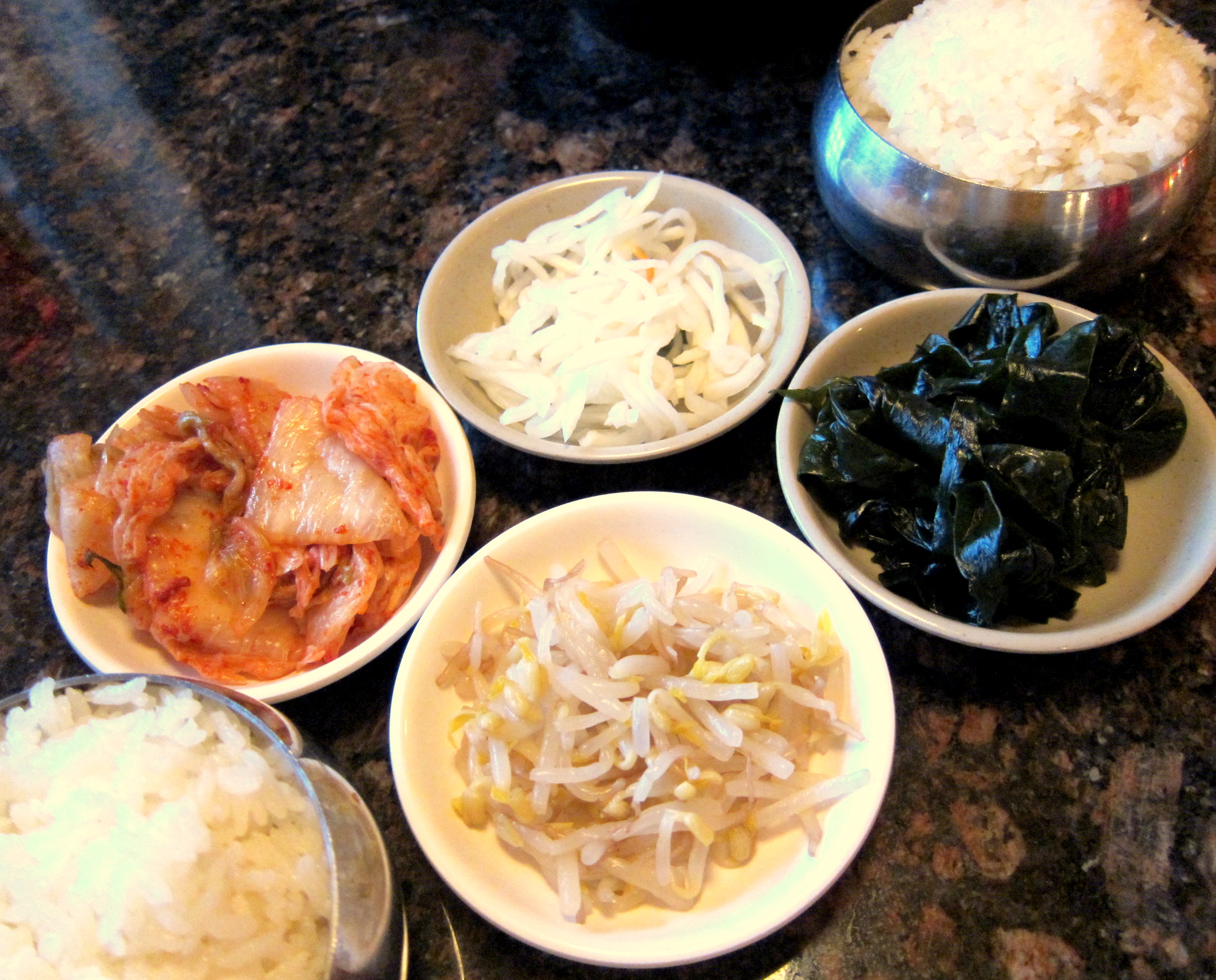
The basic banchan set (clockwise from left): baechu kimchi, shredded kohlrabi, sigeumchi namul (시금치 나물) (blanched spinach), and kongnamul (콩나물) (boiled soybean sprouts). Kimchi and rice go a long way.

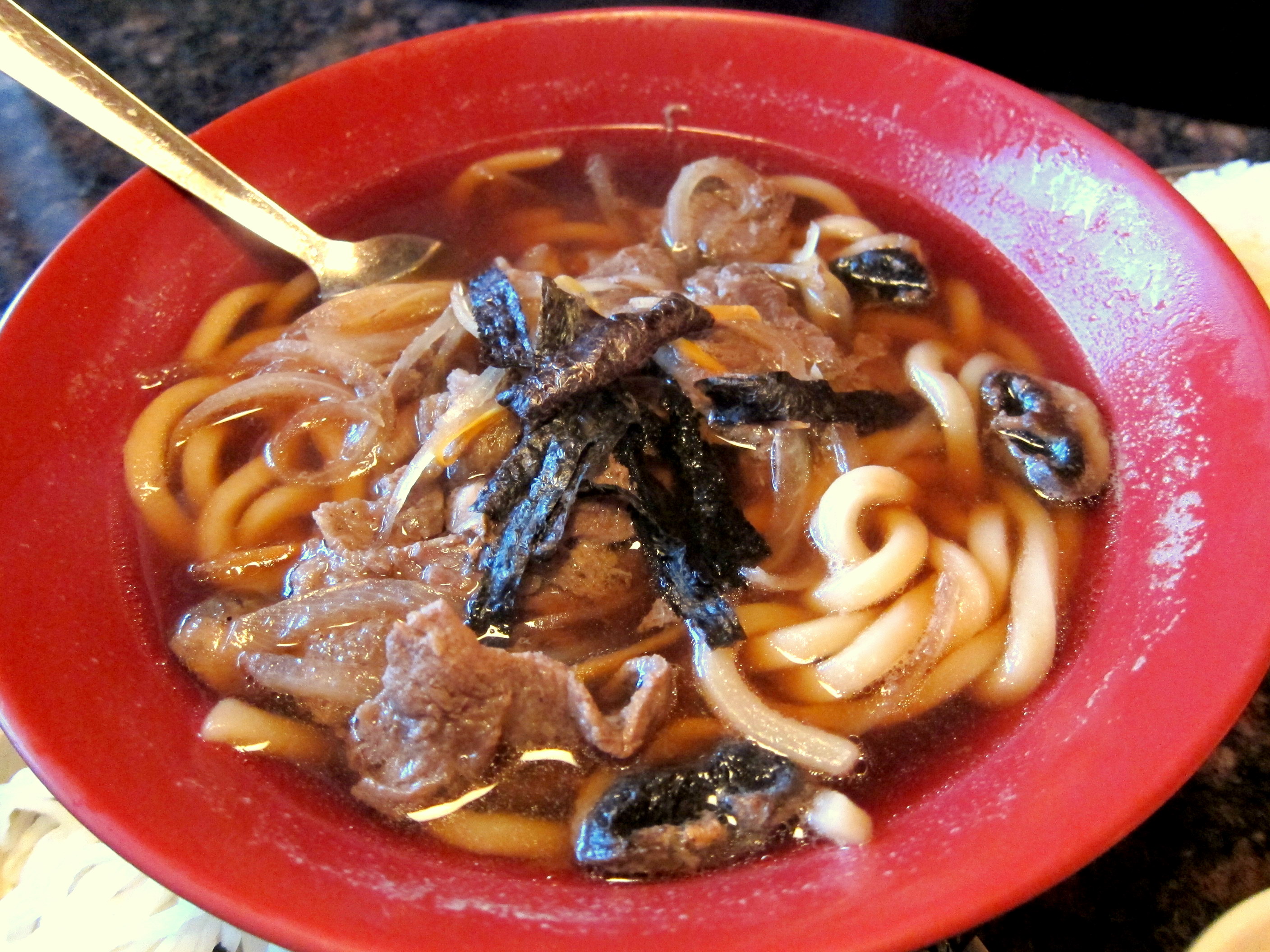
Dad and I side with more noodles than broth. Such as the chubby strings in the beef udon, where short strips of chewy black konbu (dried seaweed) and plump mushroom halves dominate the flavors.


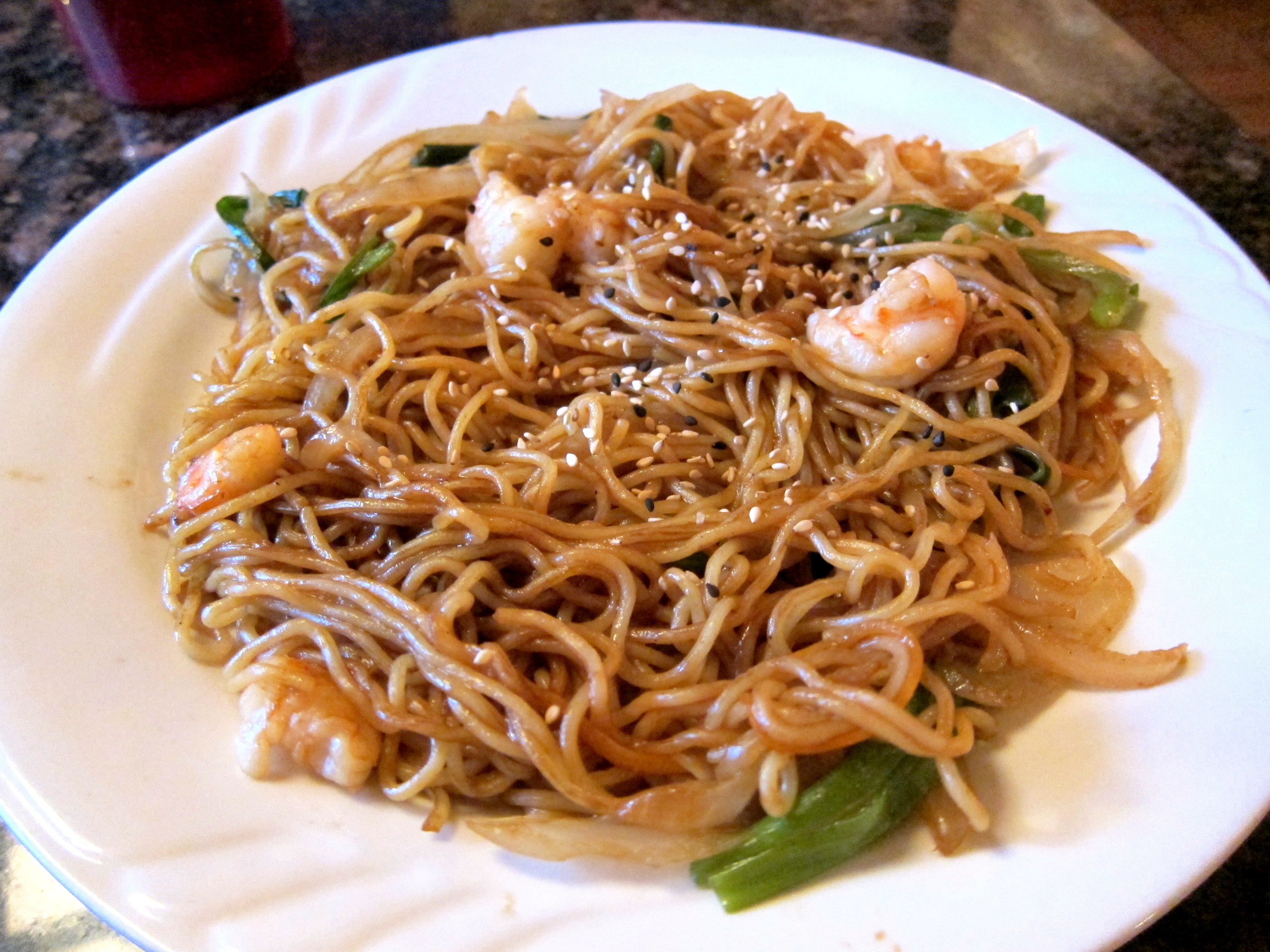
Or the al dente soba noodle stir-fried with shrimps and green onions, where sesame oil and tonkatsu sauce deliver a complete savory affair. Haiku’s yakisoba is as good as any yakisoba I’ve had, but it would have been even better if they’d tossed me double this portion. Maybe triple… I was hungry, ya know…


Address: Haiku Japanese Restaurant
607 E. University Drive, Suite 100
College Station, TX 77840
(979) 846-7900

Shrimp yakisoba: 9.99
Beef udon: 8.95
Kalbi tang: 11.99

Total: $33.48

(*) The answer is 1026, or 1.51% of the city population, according to the 2000 census. For comparison, the Korean population counts 1916, or 1.9% in Berkeley, and 1780, or 0.4% in Oakland, also in 2000.
Interestingly, Vietnamese counts only 274, or 0.4% in College Station, but the ratio of Korean to Vietnamese restaurants is 2:3. It’s awesome that people like pho, but yo Aggies, eat some kimchi and gogi too! Mkay?

Thiên Hương makes the best broken rice

April 02, 2011 By: Mai Truong Category: California - The Bay Area, Comfort food, One shot, Vietnamese


I like those restaurants that specialize. You go there and you know exactly what you’re gonna get: the one thing that the chefs make and that everyone else gets.


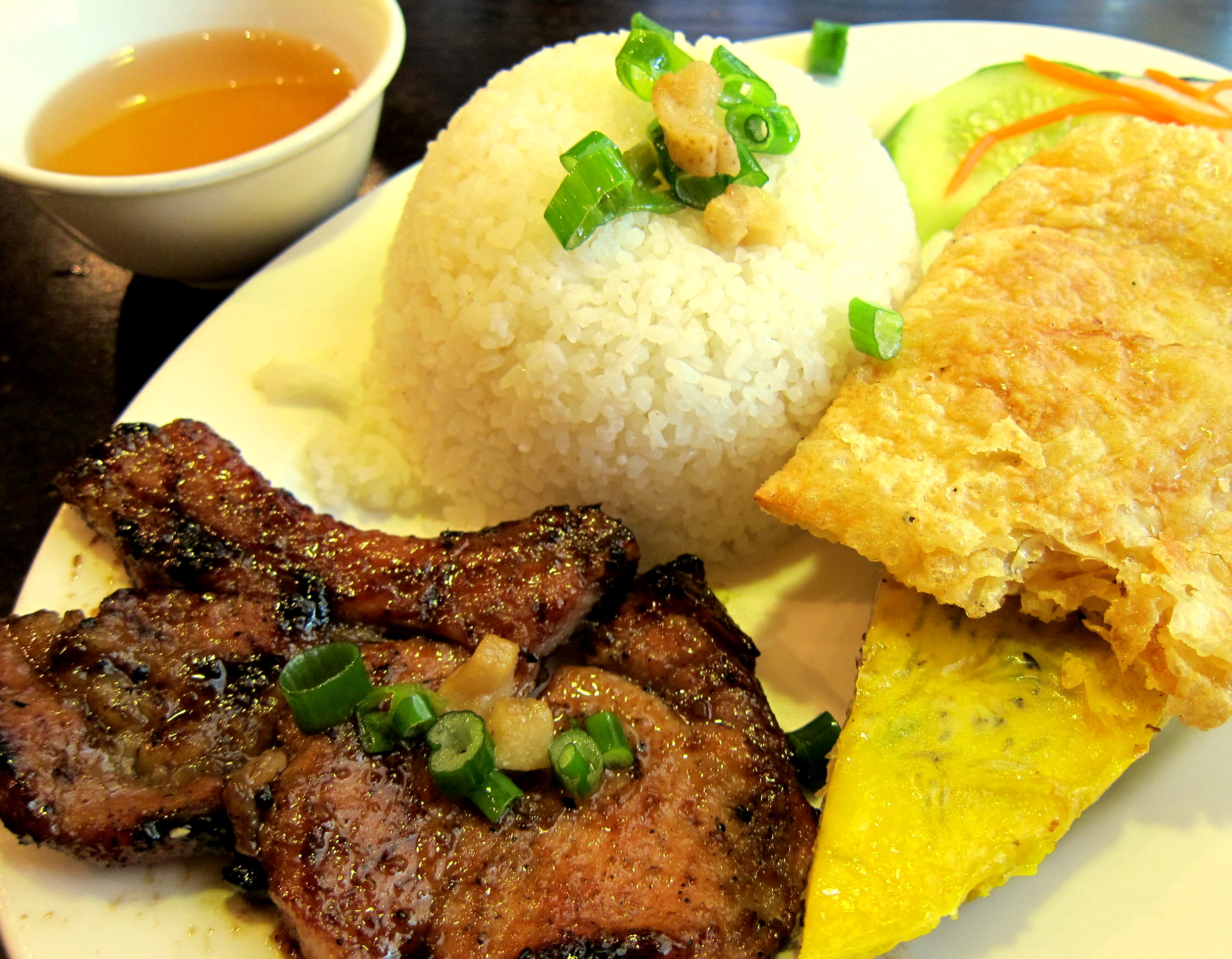
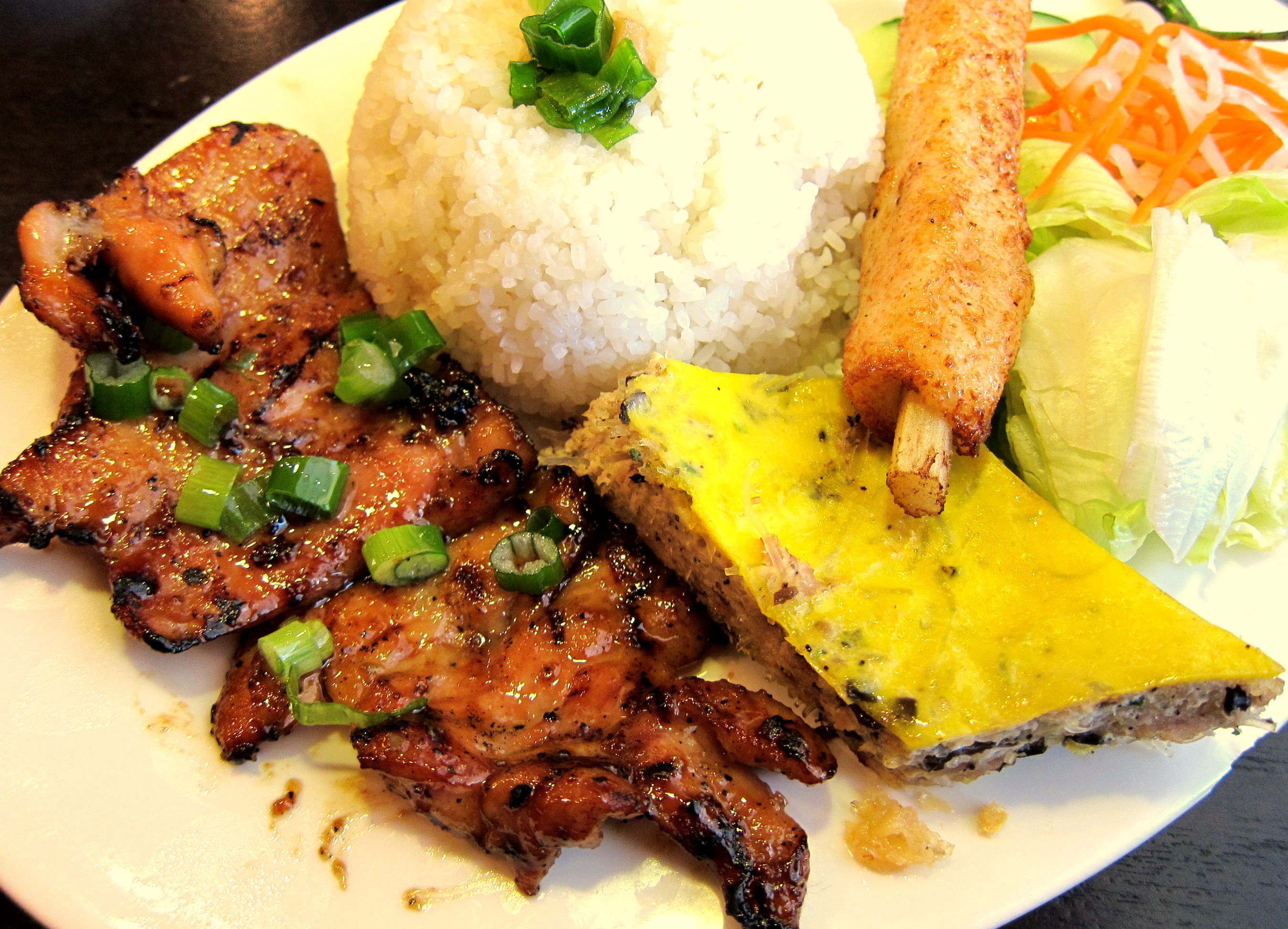
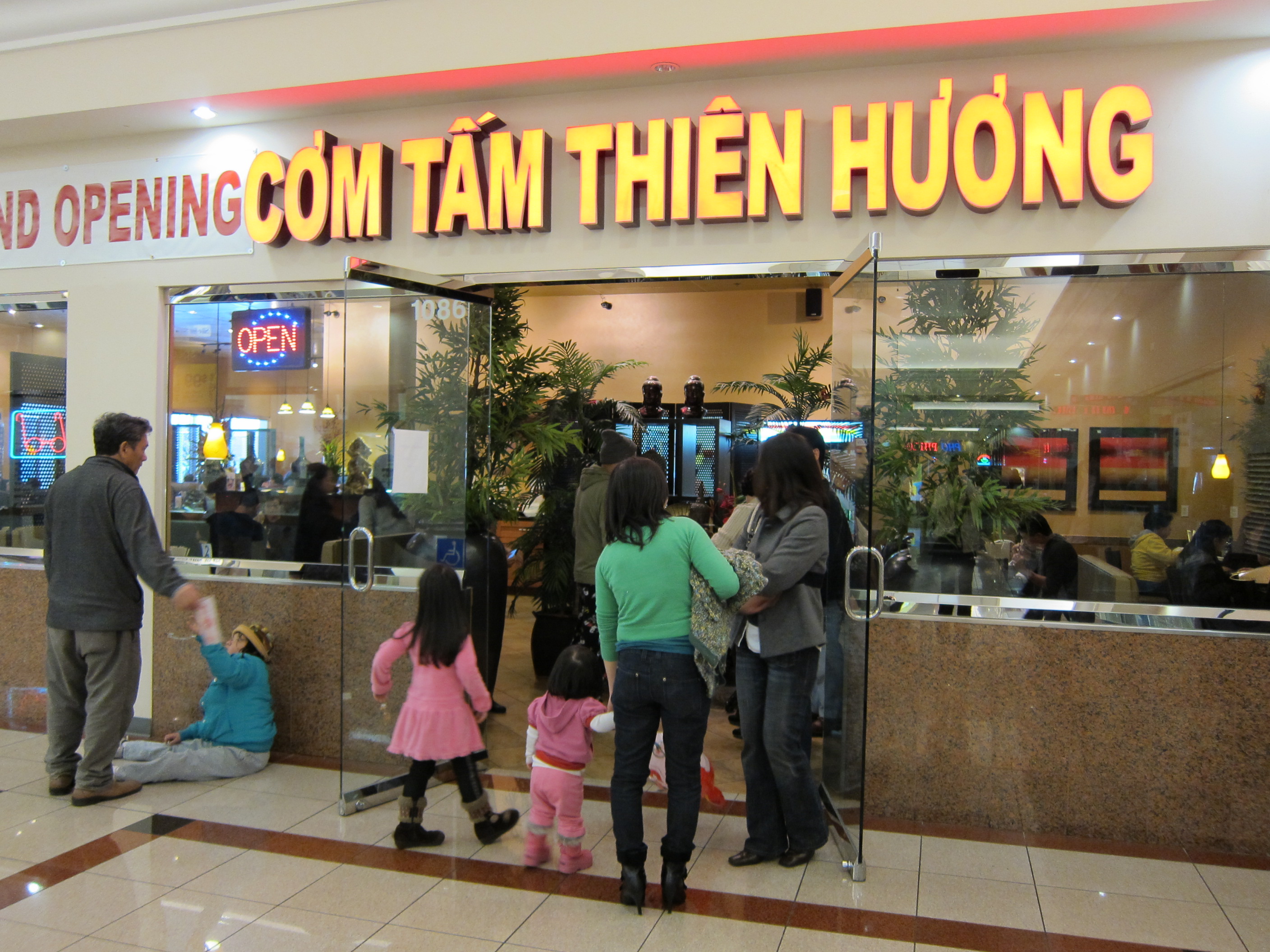
Cơm Tấm Thiên Hương uses two full pages to write all different combinations of their one dish: cơm tấm (broken rice) with meats, egg, and tofu. If they just list the “toppings” and their corresponding price, like for a pizza, the menu would condense down to the size of a calculator. Common toppings for broken rice are grilled pork (or chicken, or beef), chả trứng (egg loaf), tàu hủ ki (flaky fried tofu), (shredded pork skin), and fancier, chạo tôm (shrimp sausage on sugarcane). If you can choose up to 4 toppings on your plate, combinatorics tells us that’s 98 possible combinations. If you read Thiên Hương’s two-page menu and don’t see your perfect fit, just tell the waiter what you’d like. Broken rice can be custom-made, so to speak.


What makes broken rice superior to normal rice is its broken nature. Through milling, the germs, which are about 1/10 of a rice grain, break away from the endosperms (the part we eat and call “white rice”) and get mixed with other broken bits of the grains to form “tấm“. Millers used to collect tấm from the whole grains as an accidental byproduct and sell it at a cheaper price, but many people came to recognize that cooked tấm gives a better fragrance and tastes sweeter than normal rice, since it’s the most nourished part of a grain. By and by its popularity rises, factories these days even purposefully choose good rice to fracture and produce good broken rice with different desired ratios of germ to broken endosperm. The more germ the better, of course, but also the harder it is to cook. The germs don’t expand as much as the endosperm while boiled, the best cơm tấm comes by steaming tấm that has been soaked for a few hours in cold water. The grain bits then don’t cling to each other like normal rice, its texture as a whole is fine and dainty (similar to couscous). Pour in a few spoonfuls of the all-time sweet and savory nước mắm and cơm tấm is complete.


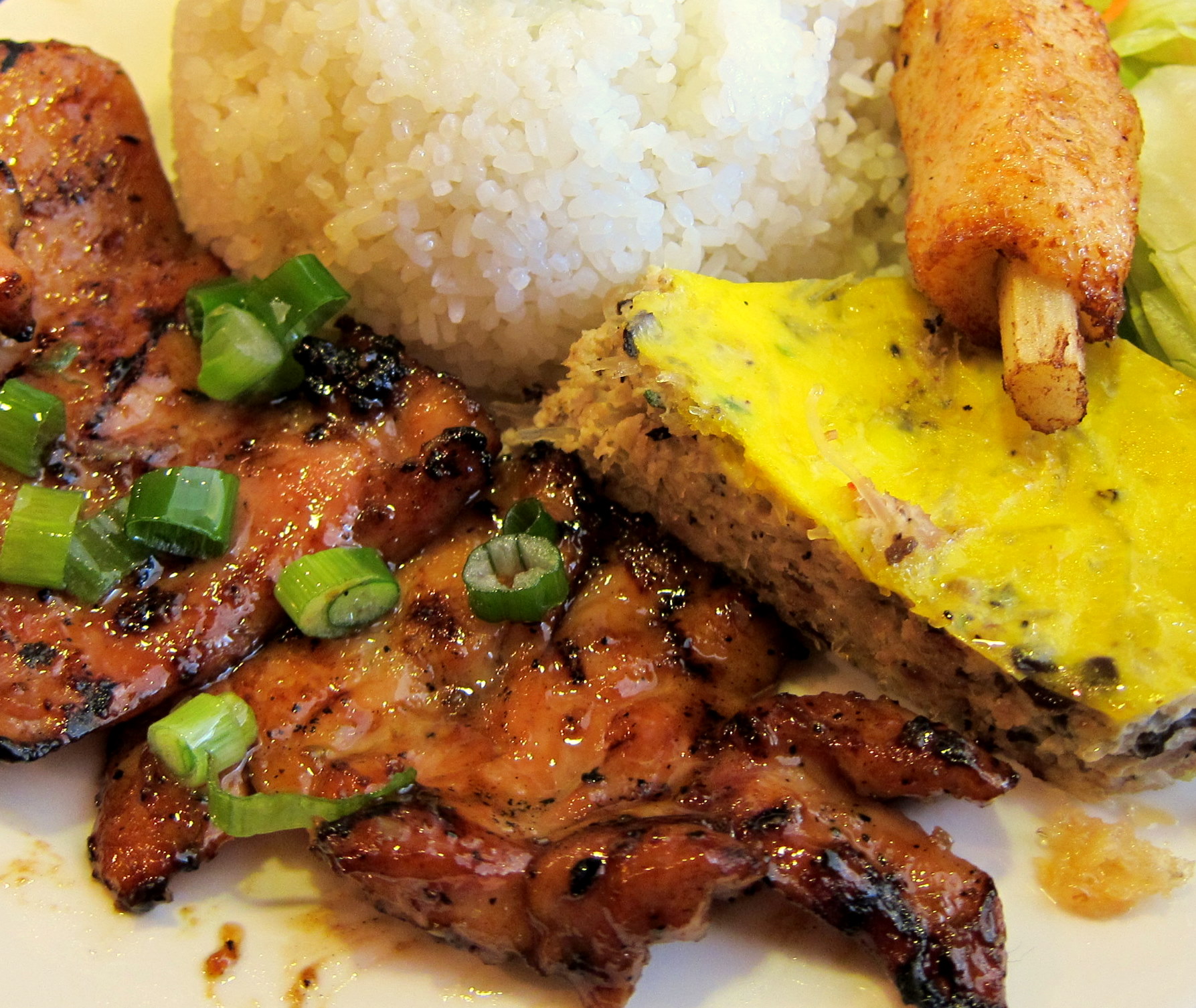
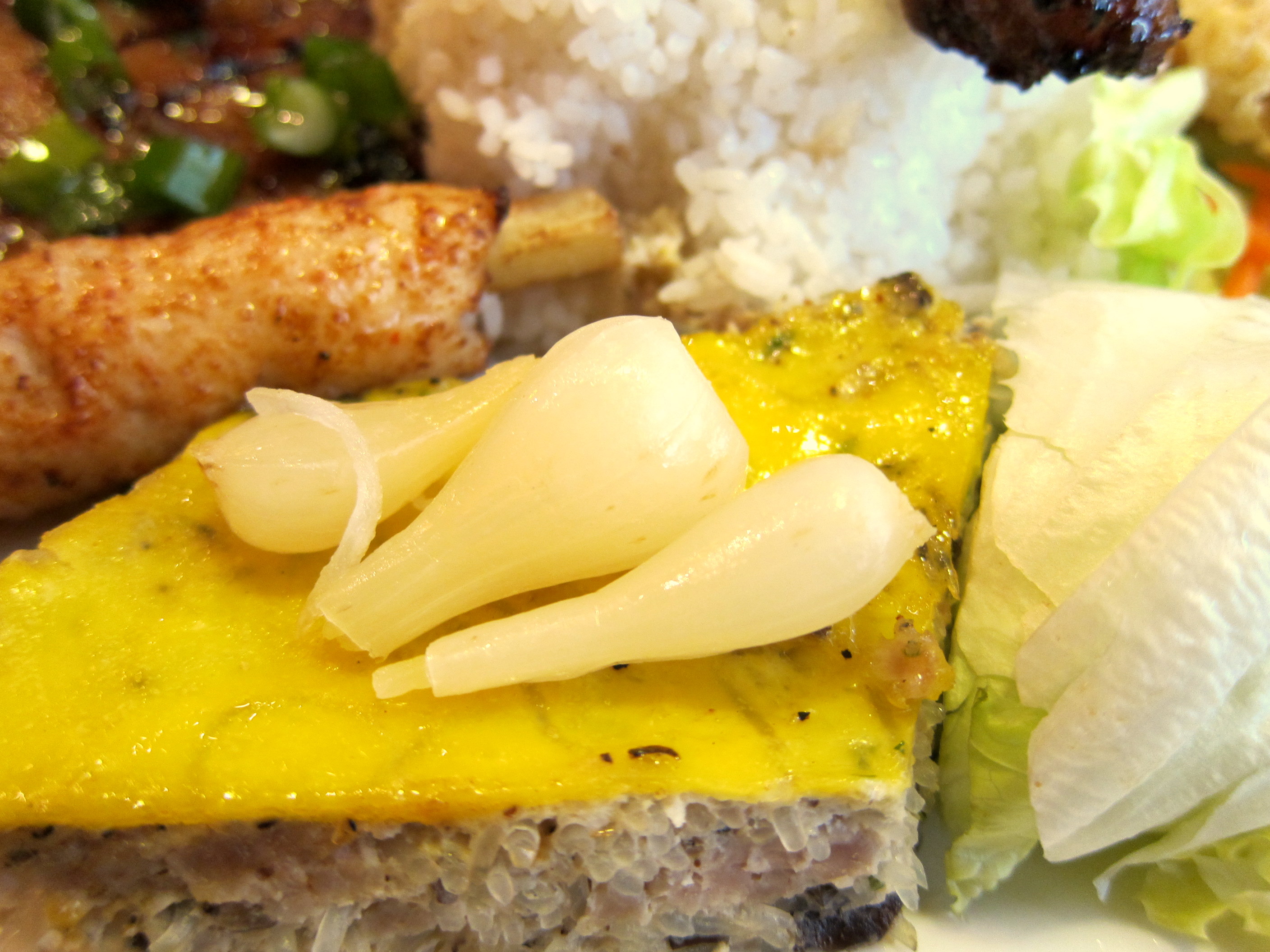
The meat and all are just bonus prize. I grew up loving chargrilled pork chop, egg loaf, and pork skin with my broken rice. But the grilled chicken at Thiên Hương is much juicier than the chop, and that sweetness afterchew from the sugarcane stick makes chạo tôm a wise company. Try to mix the egg and vermicelli bits of the egg loaf with the rice… mmmm I shouldn’t write this post at midnight, there’s not even pizza delivery this late.


To shake things up from the veggie end, Thiên Hương also adds a few pickled củ kiệu, all sweet and crunchy, with some lettuce, tomato, cucumber, and pickled carrots. Rabbit food? Yum.


I bet my keyboard that no sane body who enters here orders the lone token noodle soups at the bottom of the menu. Among the Vietnamese diners in the States, I haven’t seen anyone going full force focused like Cơm Tấm Thiên Hương, and they make the best cơm tấm, and I love it!

Address: Cơm Tấm Thiên Hương 2 (inside Grand Century Mall)
1111 Story Road #1086
San Jose, CA 95122

Money matter: $21.41 for two lunch plates and a soursop smoothie

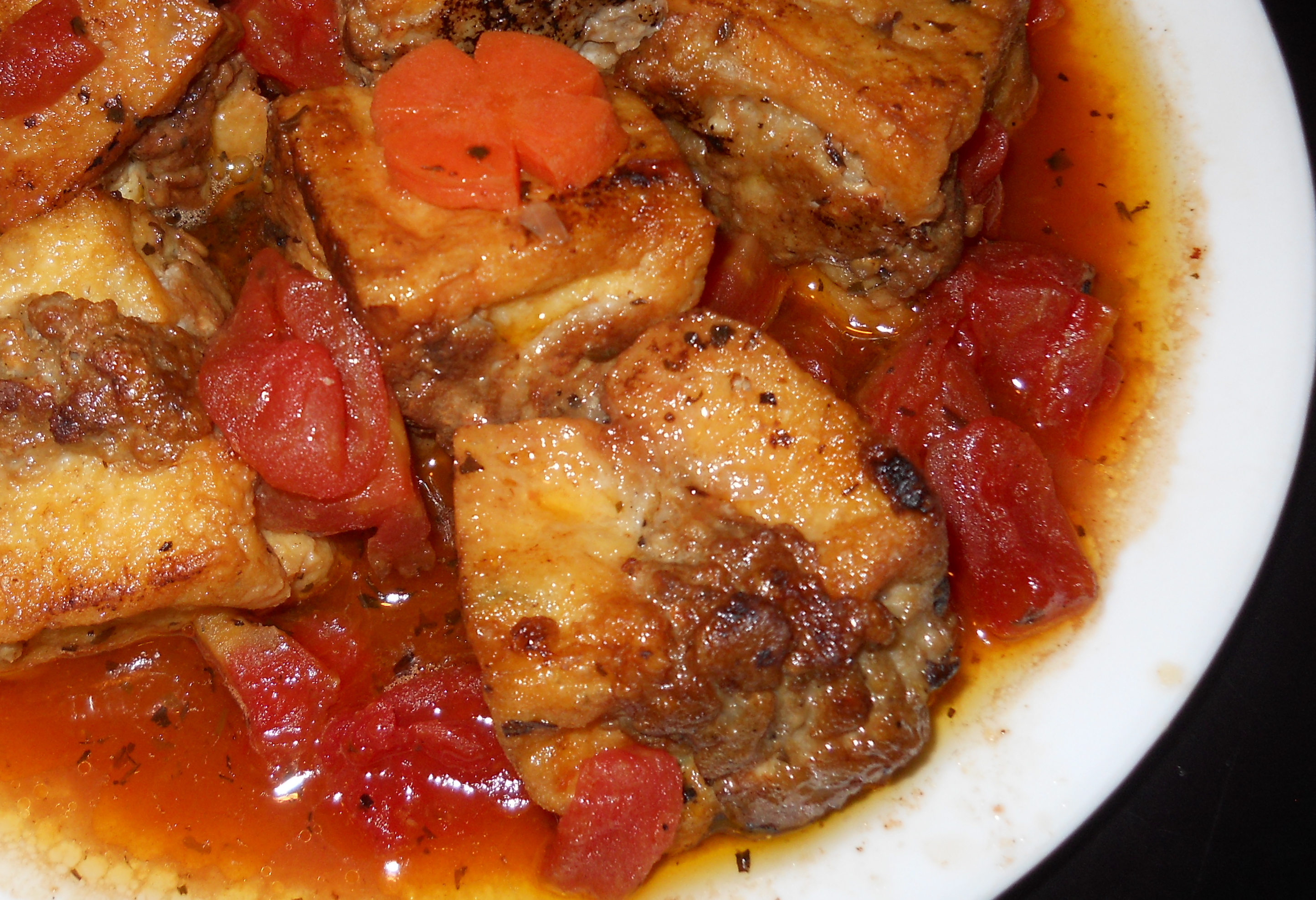
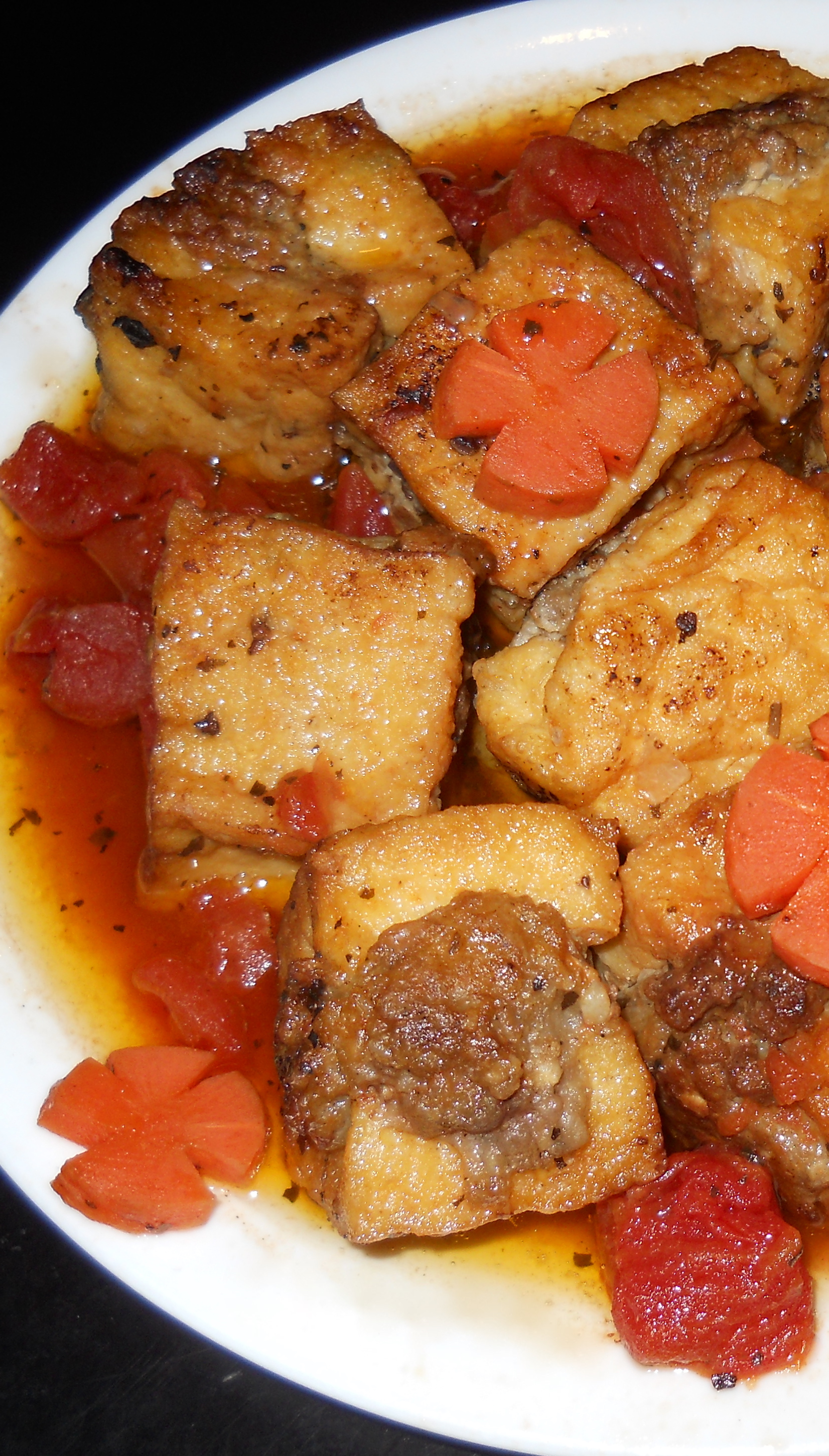
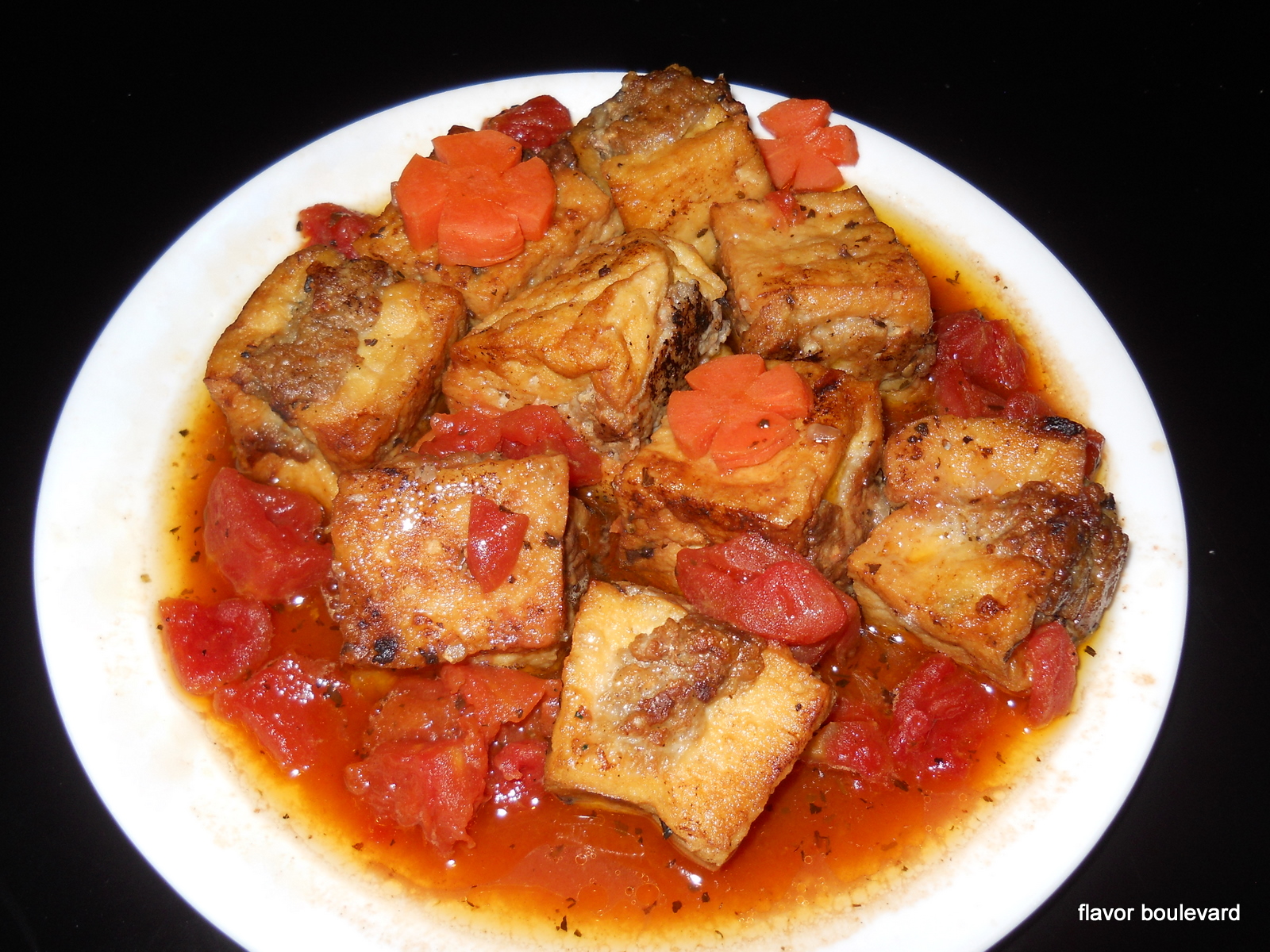
Mom’s cooking #3 – Stuffed tofu in tomato sauce

March 28, 2011 By: Mai Truong Category: Comfort food, RECIPES, Vietnamese

Guest post by Mom, translated by me


Tofu is a familiar face in the Asian kitchens, especially the Far East ones: Chinese, Vietnamese, Japanese, and Korean. In Korean dramas, the Koreans have tofu for every meal and some would give a block of white dobu to people who just get out of detention, perhaps to wish them a good, new start without impurities and no returning to jail? A cute, meaningful tradition I think. Up north Vietnam, đậu phụ used to be the main source of protein, despite having “phụ” (secondary) in its name. After all, the old Mr. Lê in Nhất Linh‘s New Bridge Ville dreamed of only a tofu wedge dipped in shrimp paste to satiate a drink at dinner time. Is it white tofu or golden fried tofu, and is it good eaten like that, I wonder? Down South, soft tofu is marvelously used to make warm tofu pudding in syrup (tàu hủ nước đường), an addictive dessert that I haven’t seen in the States, and unfortunately, was slowly fading away from even the Saigon food scene as it’s harder to make than it looks. Ah, all this tofu talk’s driven me to the stove and so comes my savory tofu entree: stuffed tofu in tomato sauce (đậu phụ nhồi thịt sốt cà).


Ingredients:
– 1 package of yellow fried tofu, pre-cut into 3-cm squares
– 1/4 lb ground pork
– 3 purple onions, or 1/2 sweet onion
– 1/2 tsp chopped garlic
– 1 tsp sugar
– 1/4 tsp salt
– pepper and olive oil
For the tomato sauce:
– 1/2 can diced tomato (I use Hunt’s or Del Monte pre-seasoned with basil, garlic & oregano)
– 3 garlic cloves, half smashed.
– 3 tbs sugar
– 1 tsp salt

Marinade the pork with onion, garlic, pepper, salt & sugar. Gently slit open (from the side) half the tofu squares to stuff the meat in, as you would slice an English muffin.
On medium heat, add enough oil to barely submerge the stuffed tofu pieces. Fry tofu until golden brown on all six sides to make sure the meat is thoroughly cooked. Set aside.
In another skillet, add 1 tbs oil and quickly sauté the smashed garlic cloves until golden as the wonderful smell fills your nose. Add diced tomatoes, salt & sugar to taste. If you like it a bit bland, add 1/2 cup water. Cook on high heat and let the sauce boil for roughly 3 minutes, then pour on top of the fried stuffed tofu.


Scoop a bowl of steamy hot white rice. If it rains, you’ve got yourself a homey happiness.

Tags: ,

Sweet and spicy Zante’s Indian pizza

March 21, 2011 By: Mai Truong Category: California - The Bay Area, Comfort food


I can eat rice for every meal every day without getting tired of it (with perhaps an occasional craving for noodle soups or a burger). Why? Because rice is a solid starch base upon which you can mount anything and they’d go together just like that. Meats, seafood, vegetables, fruits, other starchy stuff. The closest thing to rice that wheat can do is the pizza. I wouldn’t eat pizza everyday because it always makes me cry for water like a beached whale. But everything goes on pizzas, too. Even curry. Spot on, Zante.


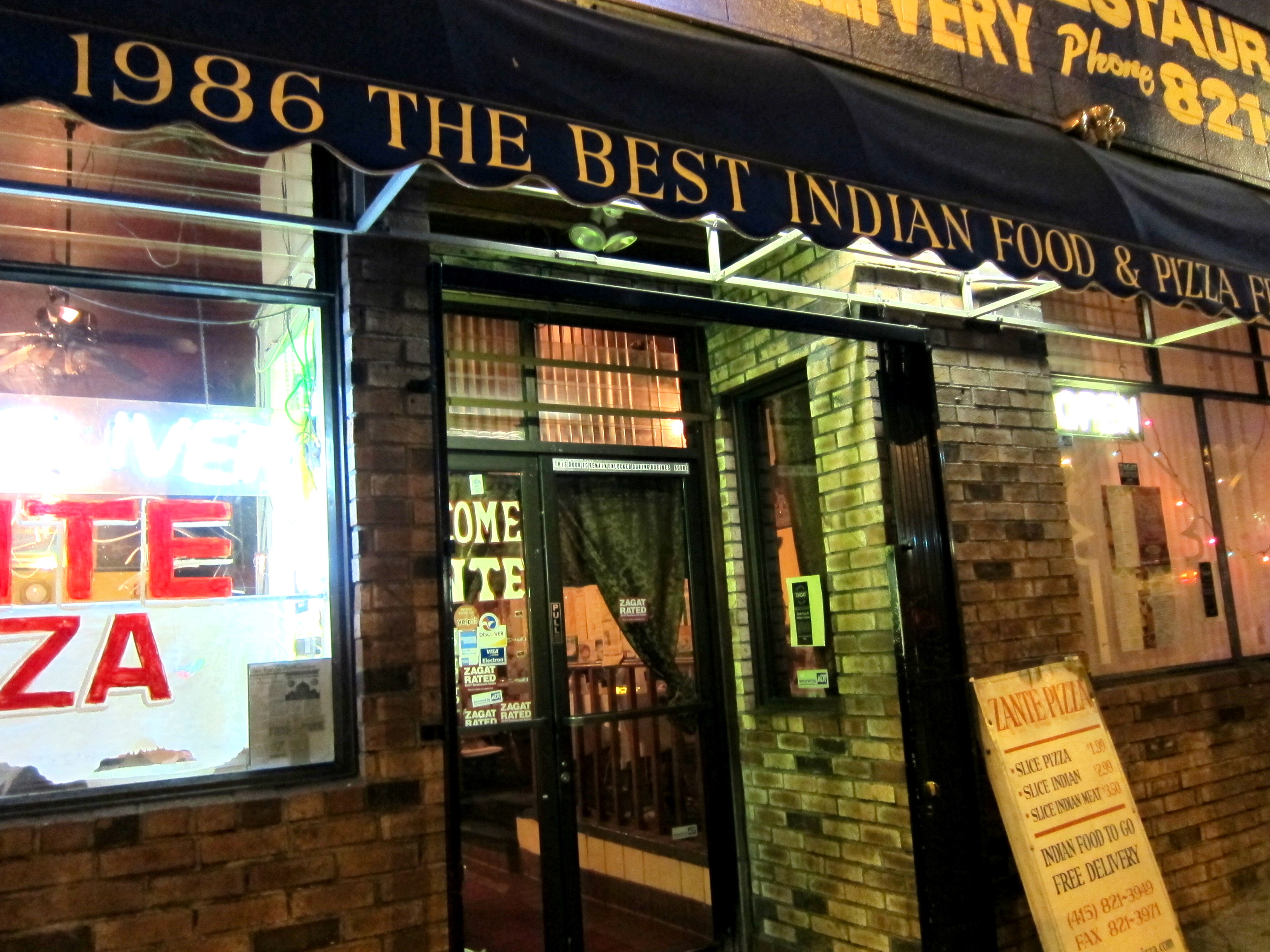
I don’t know how Mudpie knew of this cozy kitchen on Mission Street, but we went there right after I got off the plane from Puerto Vallarta. The combination of “Indian” and “pizza” sounds like comfort on a drizzling January night. Besides, I have a thing for old brick buildings, and the number 86.


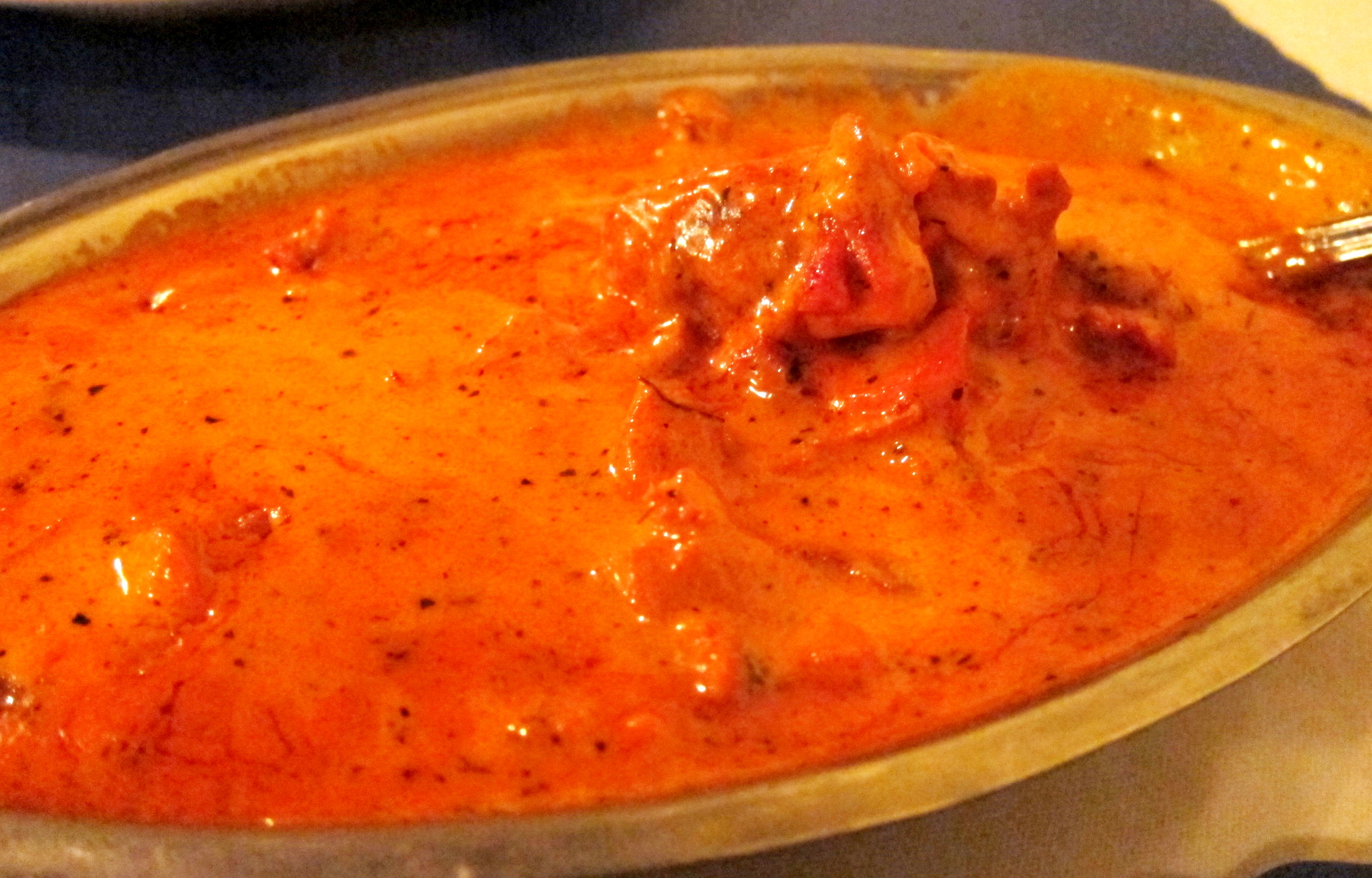
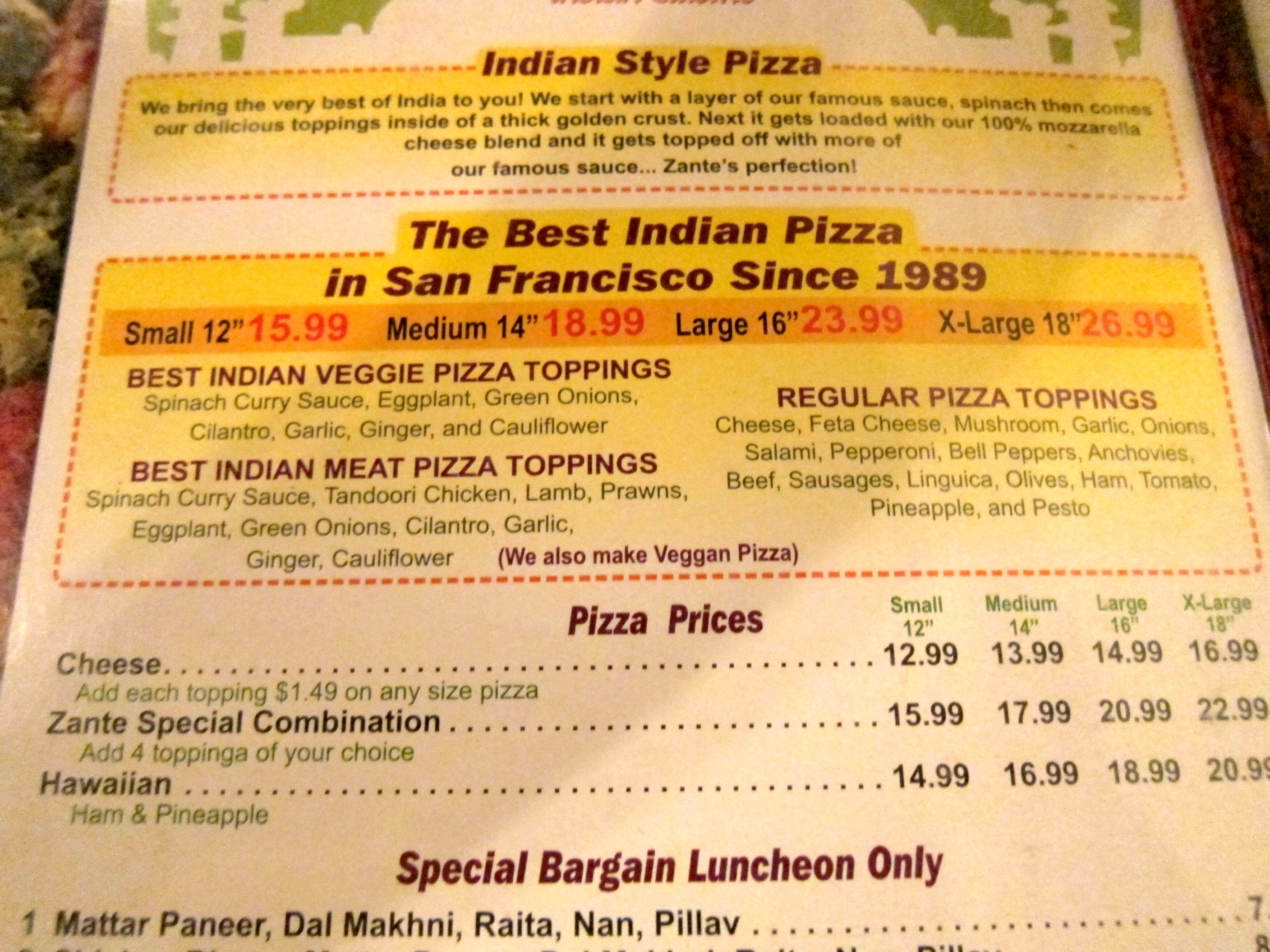
Though the printed menu is much easier to flip and read than the online menu, we still took a while looking for something new and appealing from the maze of flat breads and meaty dishes (and vegetarian dishes, but I won’t go there), mainly because we were looking for non-spicy food. The kabulinan (roti with raisins and nuts) was a sure bet, sweet, chewy, crusty at the edge, and filled with coconut shreds in and out. The chicken makanwala, though good, didn’t deliver much news. I couldn’t sense any difference between this thick orange sauce and the chicken tikka masala‘s thick orange sauce at Biryani House.


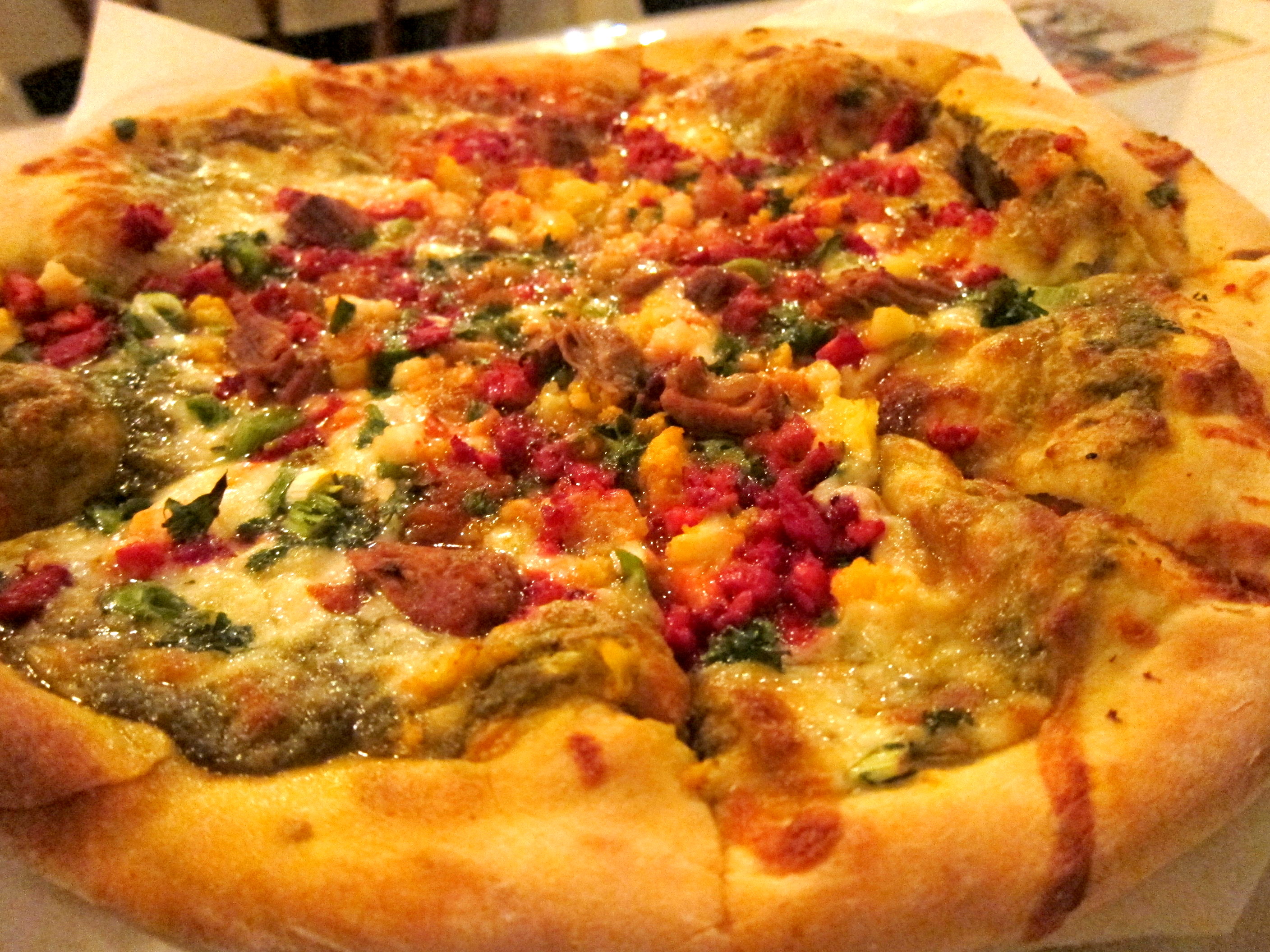
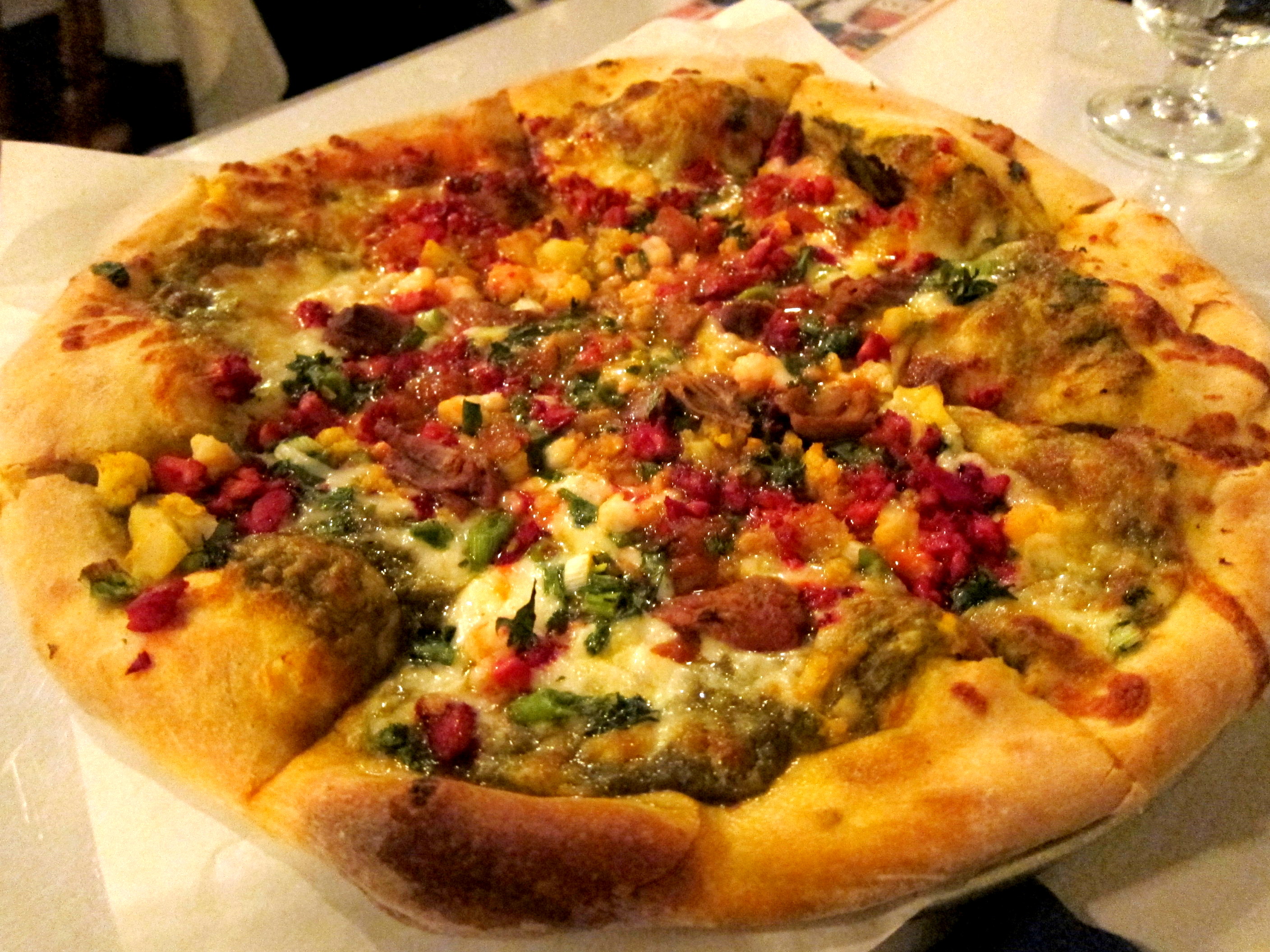
We also got the special pie of course. Tandoori chicken and cilantro make up a mosaic of red and green dots; though the prawns are included in the menu listing, I can’t see any curled up in the pictures here. Well who really sits down and checks every ingredient on a slice anyway. Point is, spinach curry sauce finds its rightful place on a bed of baked dough, and the Indian pizza at Zante is at least as good as any artistic assortment from the Cheese Board that Berkeleyans always chirp about. If you ask me, I think Zante‘s are better, cuz they got meat and no hype.


Address: Zante Pizza
3489 Mission Street
San Francisco, CA 94110-5438
(415) 821-3949

Money matter: $32.55 a dinner for two.

Mom’s cooking #2: Sizzling the Vietnamese steak (bò bíp-tết)

March 19, 2011 By: Mai Truong Category: Comfort food, RECIPES, Vietnamese

Guest post by Mom, translated by me


My little family has three people, and two of them like beef. Ever since we settled in Texas, the land of cheap, good beef, my husband and daughter almost always order something cow related when we go out, even as they love these loving-eyed animals when they’re alive and grazing the fields too. Sometimes I join them in forking red meat, and of those few occasions the American steak does not quite sing to me, but rather they sink a little hard and a bit salty. I guess the blame lies with either the meat quality or the cooking method, and mostly the latter.

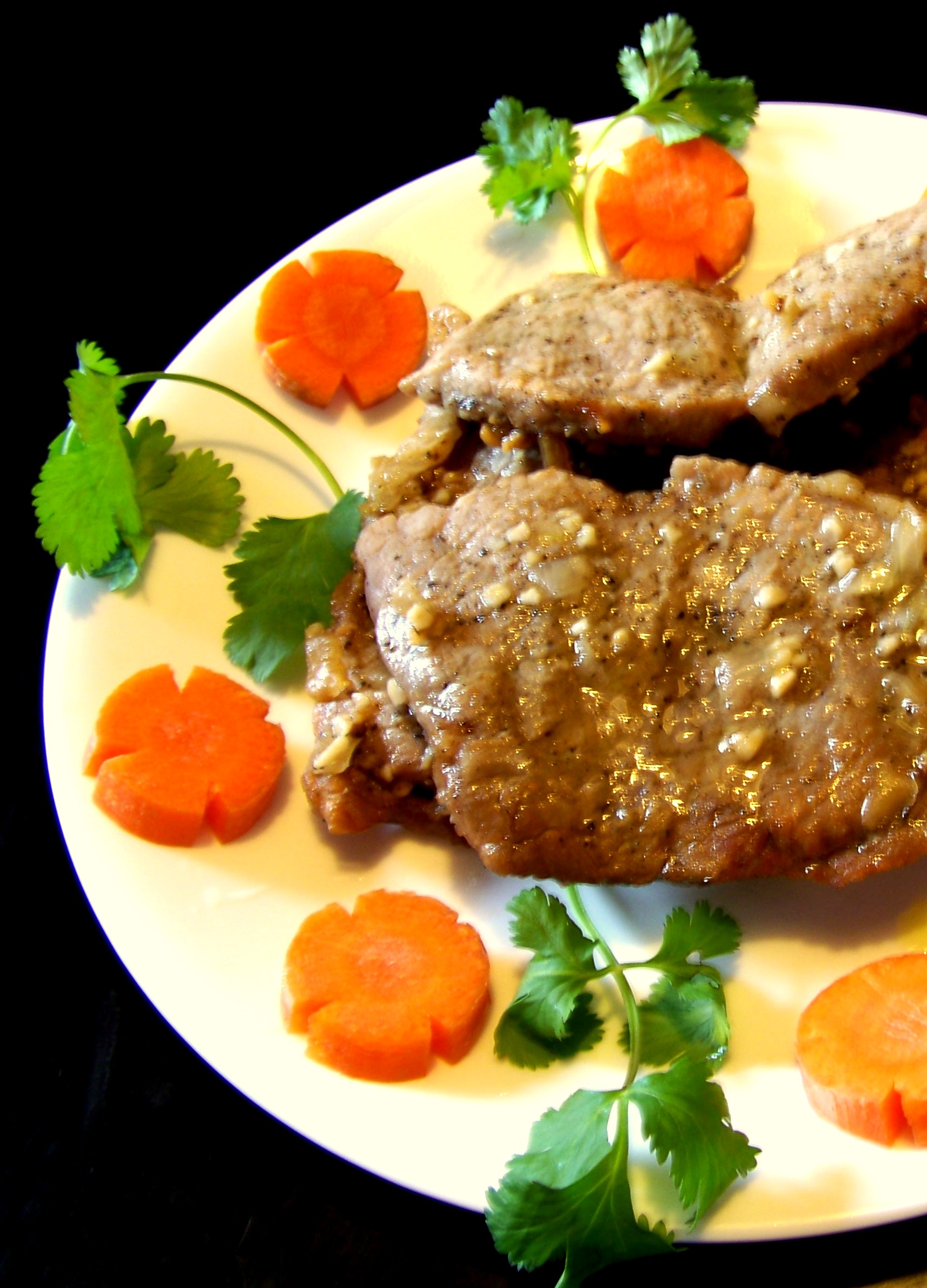
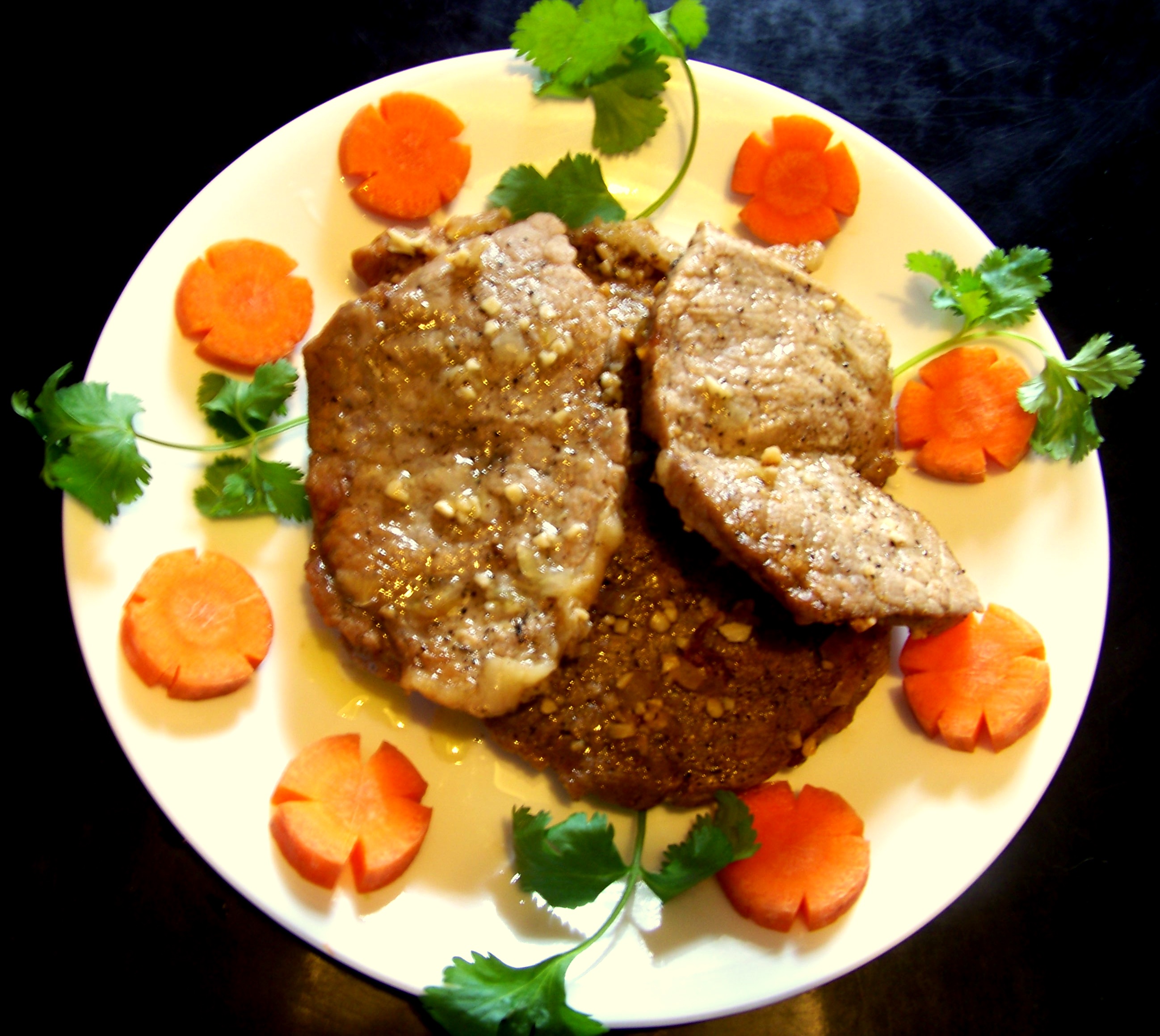
So I buy some steak fillet and try out the way we used to make back in Saigon. I slice ’em thin, marinade and fry, and not trying to toot my own horn here, but my steak is better than them restos’ steaks. 😛 Even Mai’s dad agrees. Its first highlight is the tenderness: it’s so tender I can bite it off with my teeth, who needs the knife and elbow grease to butcher that poor fillet. Its second highlight is the mouthwatering fragrance of garlic, onion, and pepper infused in every strand of muscle. Its last highlight, and also my principle of cooking, is that it doesn’t take long to make.


Vietnamese Steak (bò bíp-tết)

Ingredients:
– 1 lb beef filet
– 1 tbs chopped garlic
– 3 cloves of fresh garlic, smashed to flatten
– 4 purple onions, or half a sweet onion, chopped
– 2 tsp sugar
– 1/2 tsp salt
– 1/2 tsp pepper
– 2 tbs olive oil

Wash the filet, cut into slices of roughly 1 cm (1/3 inch) thick. Marinade the beef with chopped garlic, onion, sugar, salt, and pepper for an hour.
In a skillet, heat up oil on high heat. Throw in the three smashed cloves when the oil is really hot, wait until the garlic turns golden and smell good to add the beef.
Fry the beef slices for about 1 minute, flip over, and fry another 1 minute. Turn off heat and the meat is done.

We eat ’em hot with homemade fries and broccoli. This combination of Texas beef and Vietnamese cooking suits those who don’t have much time (or don’t really like meticulous labor in the kitchen), like me, best.

A spot for beef stew (bò kho)

March 09, 2011 By: Mai Truong Category: California - The Bay Area, Comfort food, Southern Vietnamese


When Phở Hòa on Shattuck closed down, a part of me collapsed. No more bò kho? Granted that I can only have a bite or two in one sitting, or Mom would be worried about bò kho giving me a fever, it’s still comforting to know that a bowl of this supertender beef stew is only a few minutes walk away, or simply that it exists at a restaurant. Many a times I have seen Vietnamese restos, especially those in Houston, advertise bò kho on their menu but claim that they’re out of it when you order. So I felt in quite a shock fearing that bò kho has left me alone for good.

Then Mudpie, also a bò kho fan, found Phở Hà. We went and asked to make sure they have it. It’s no Berkeley, Phở Hà is in San Jose, but we’ll take what we can get.


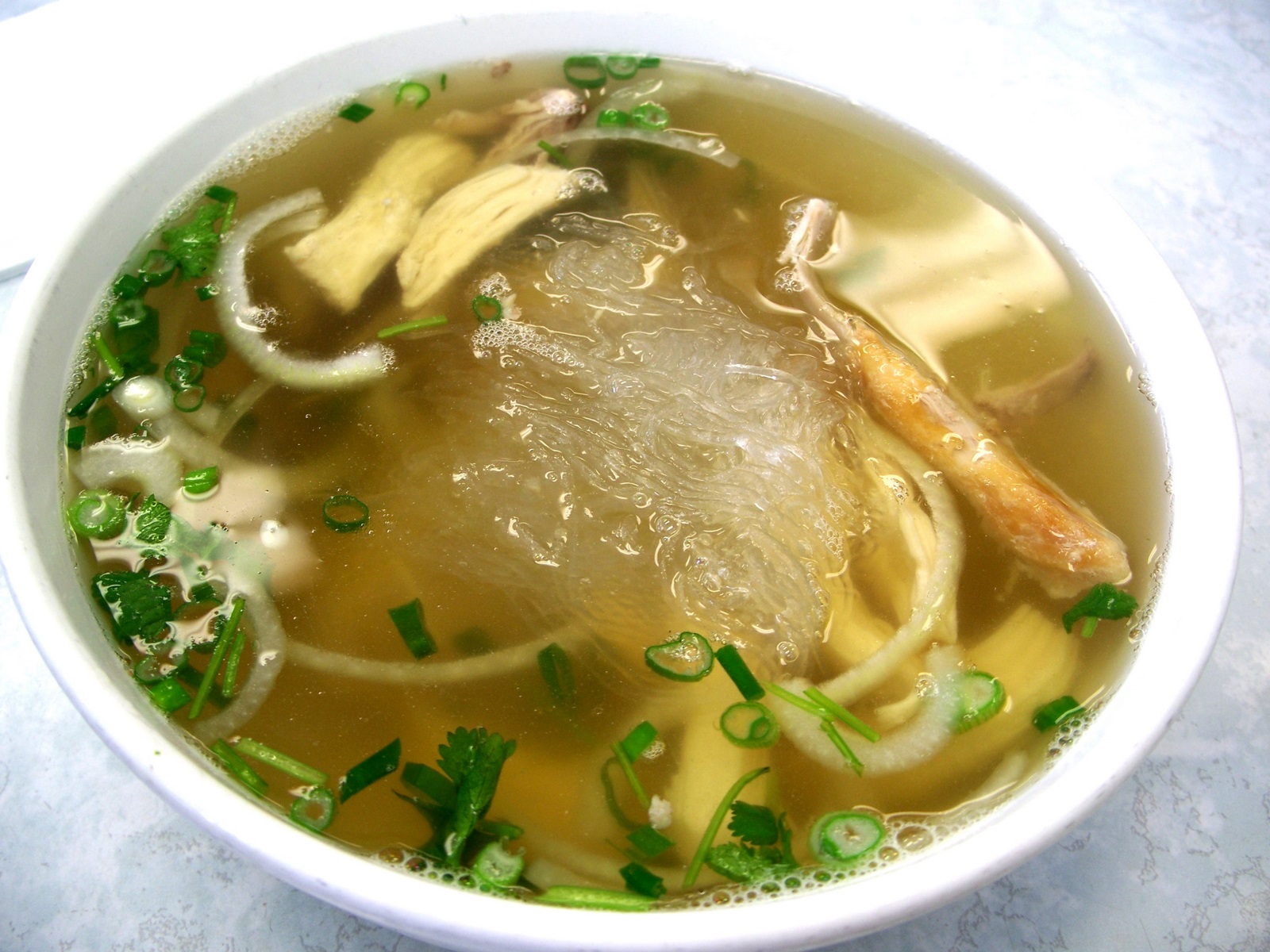
Their plastic bowls and utensils aren’t all that splendid. Their miến gà (cellophane noodle soup with chicken) is decent but their phở áp chảo (pan-fried rice noodle) is too overfilled with thick brown sauce to sing.


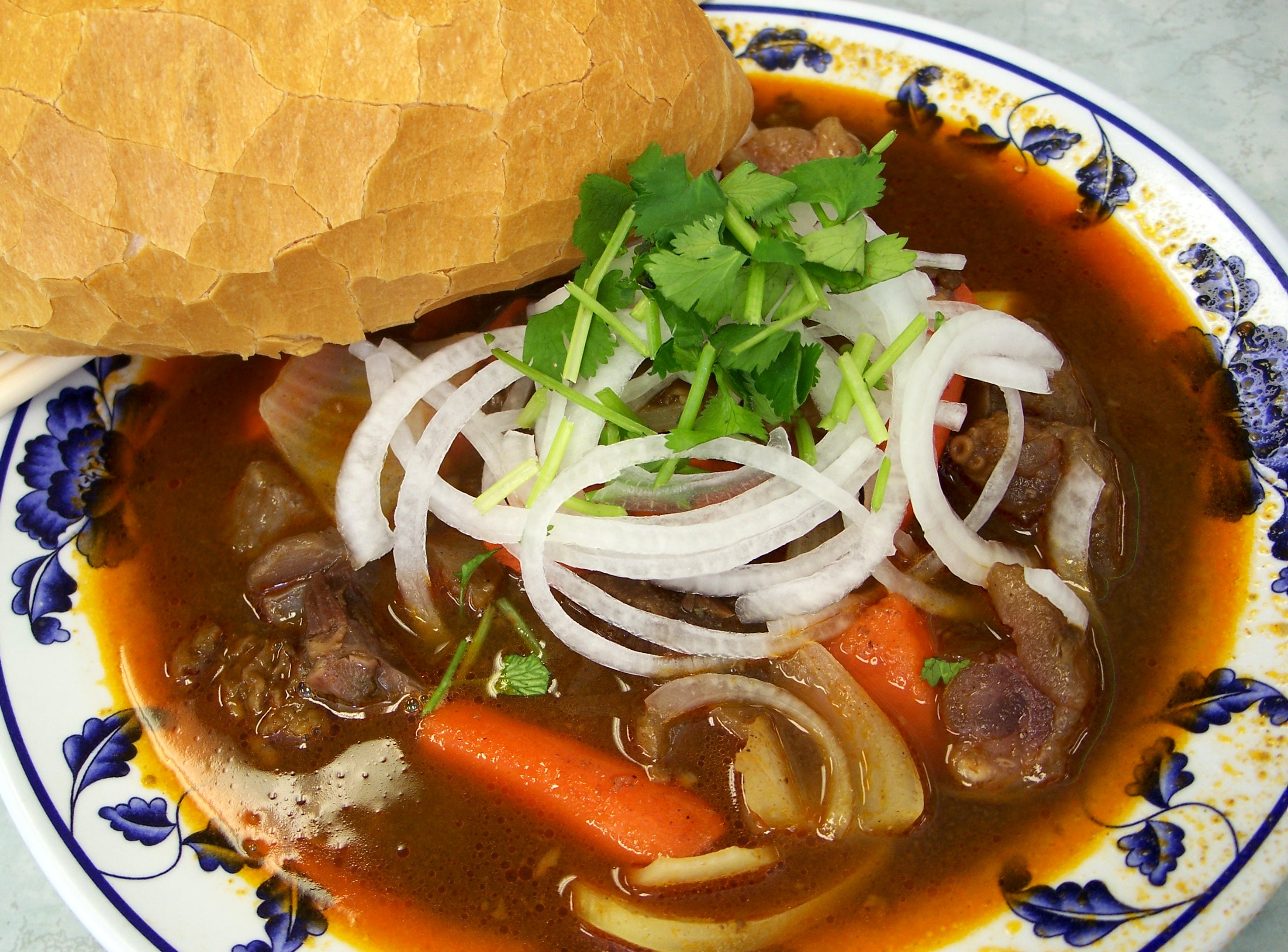
Nonetheless, we’ve come here for bò kho after all. And both Dad and Mudpie use up their whole loaf of crusty bread to wipe clean every last bit of that red, spice-ladened beefy juice. I’d say the trip ends well. 🙂

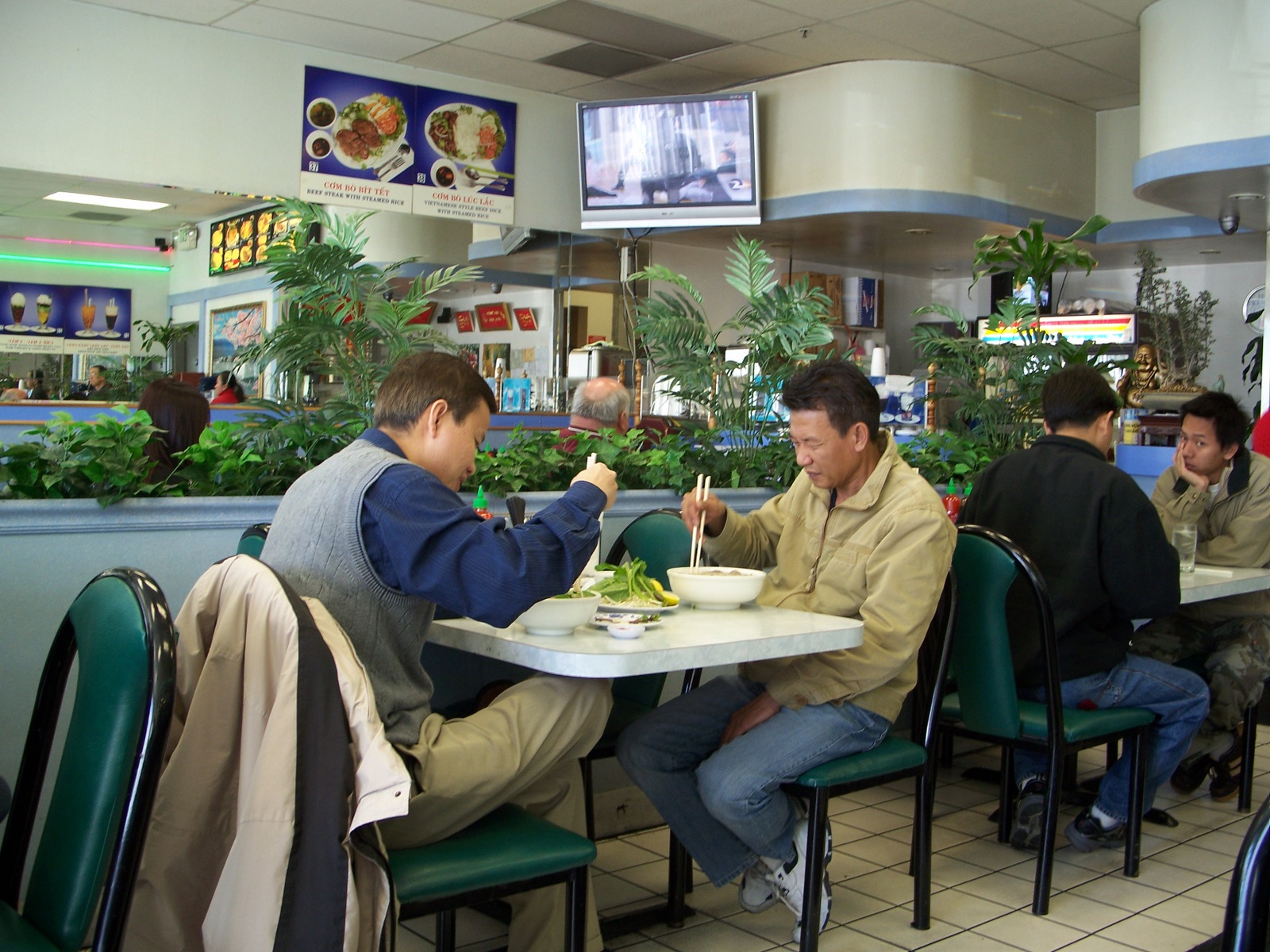
Author's disclaimer: these two men, who are leisurely enjoying the noodle soup, are NOT Dad and Mudpie

Address: Phở Hà (next to the Grand Century Mall)
951 McLaughlin Avenue
San Jose, CA 95122-2612
(408) 280-0381

Korea Garden on Long Point Road

February 28, 2011 By: Mai Truong Category: Comfort food, Houston, Korean


We were looking for a get-together location on New Year’s Eve, when we decided that since both of our families like Korean food, it’d be good to let Ms Baker try it for the first time too. Houston’s West side houses many a place for a good bulgogi, concentrating on the section of Long Point that’s sandwiched between Gessner and Blalock, but we set our mind on Korea Garden. Half of us had been here several times, and we didn’t want any adventure on Ms Baker’s first impression, she’s a conservative. 🙂

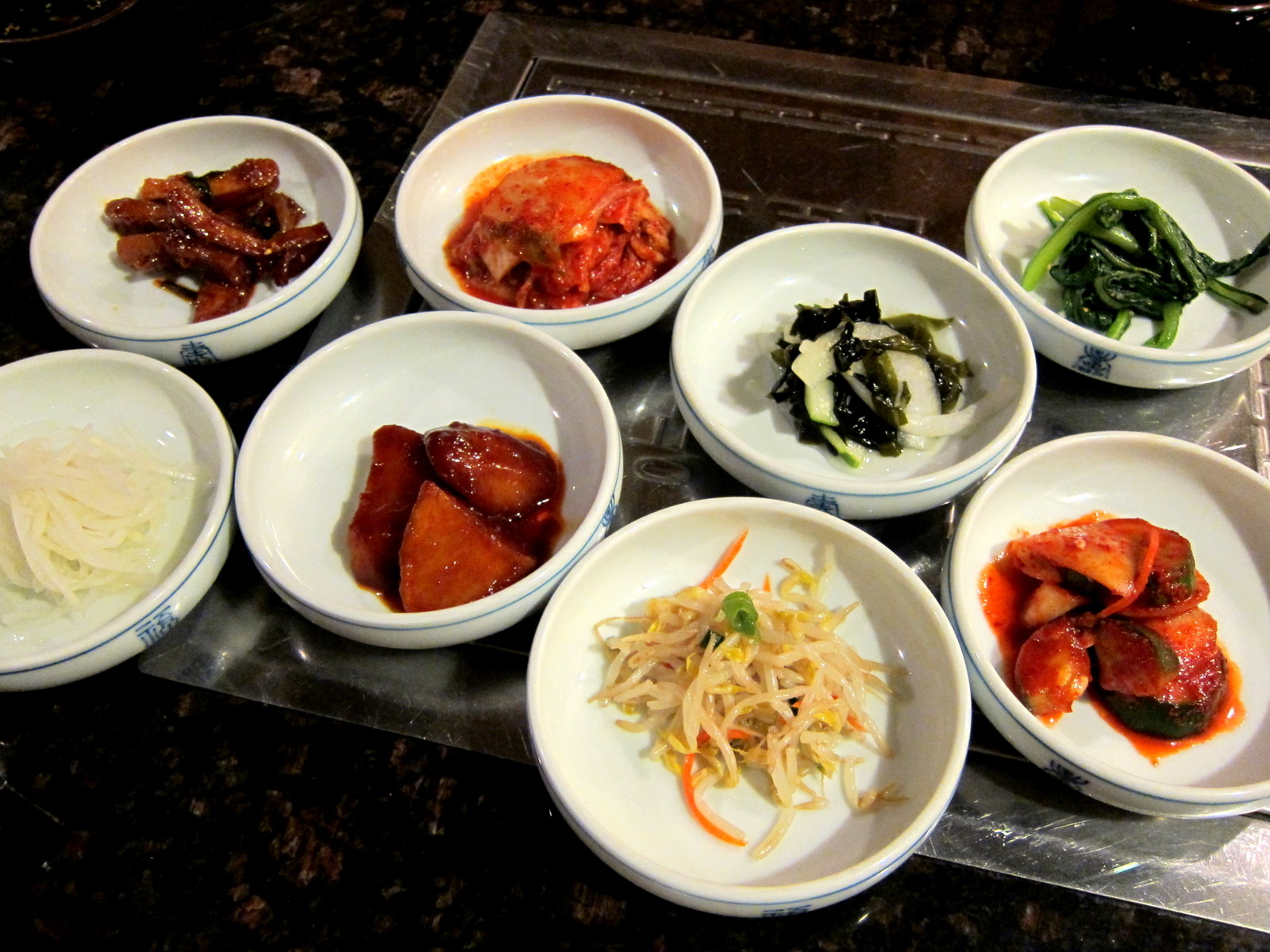
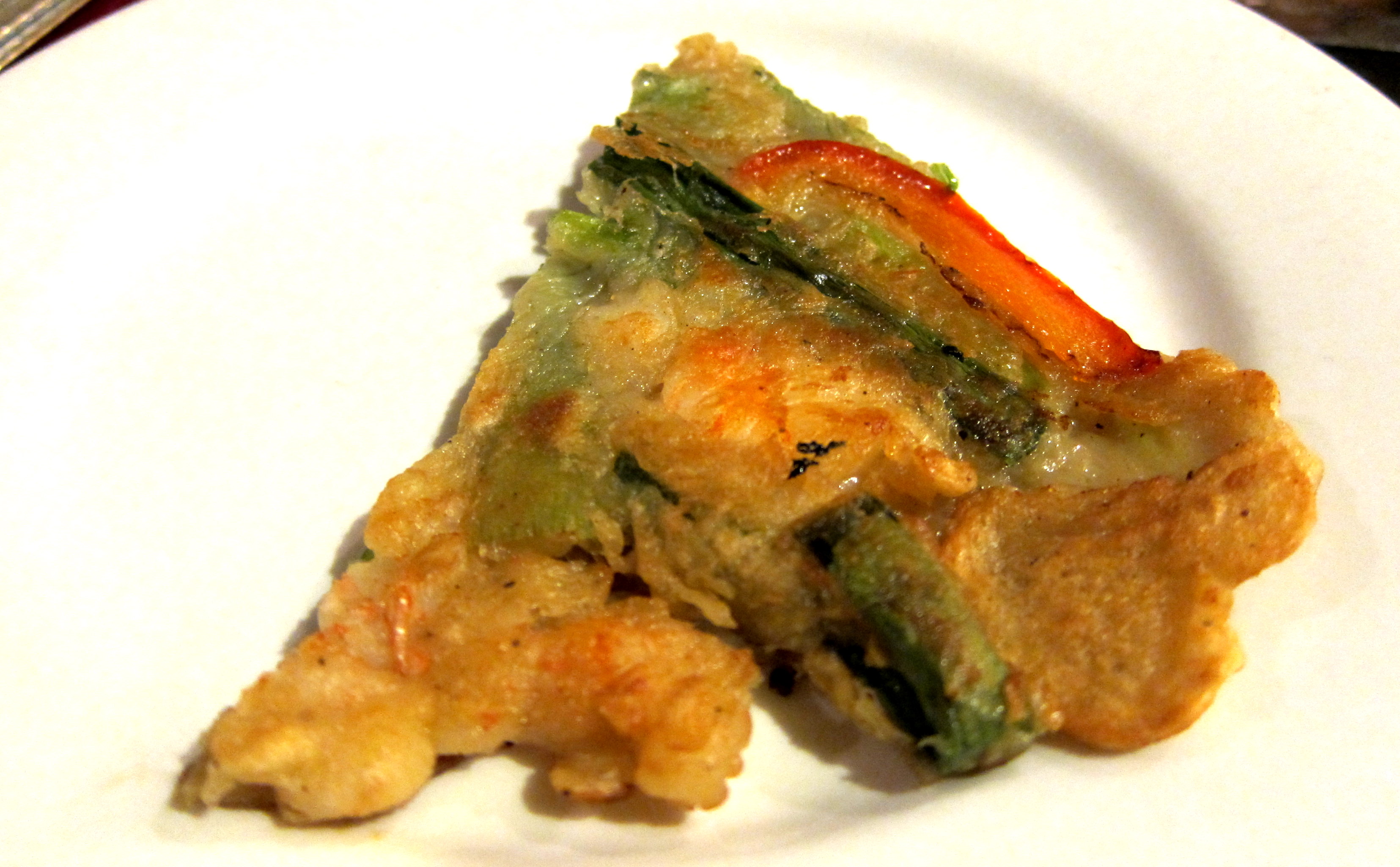
It turned out her very first impression was curiosity: how did they manage to section 7 equal slices of the haemul pajeon (해물 바전)? It was a good jeon, however lay on the soggy side if compared to pancakes at Secret Garden and Casserole House. The banchan selection included some of our favorites: potato, seaweed, and sliced eomuk (어묵), although none appealed to the Americans at the table. The kimchis had quite a bit of chili, though.


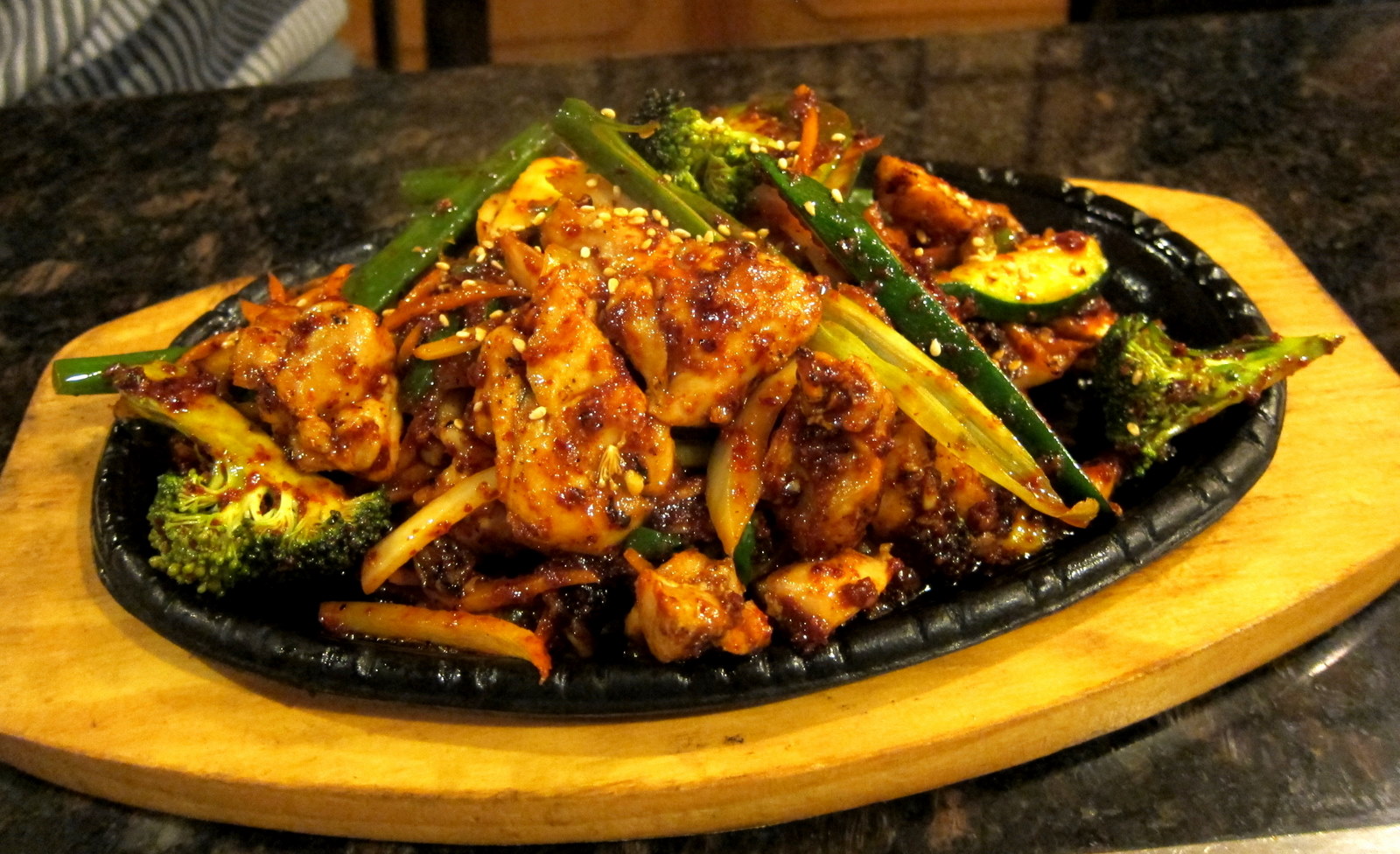
So did the dak bokgeum (닭 볶 음 stir-fried chicken) that my dad fell for. That sneaky heat wouldn’t hit you right away.  Only half way through the heap of bird and veggie did he  turn to my mom and me with a tilted smile and a slight head shake: too spicy.


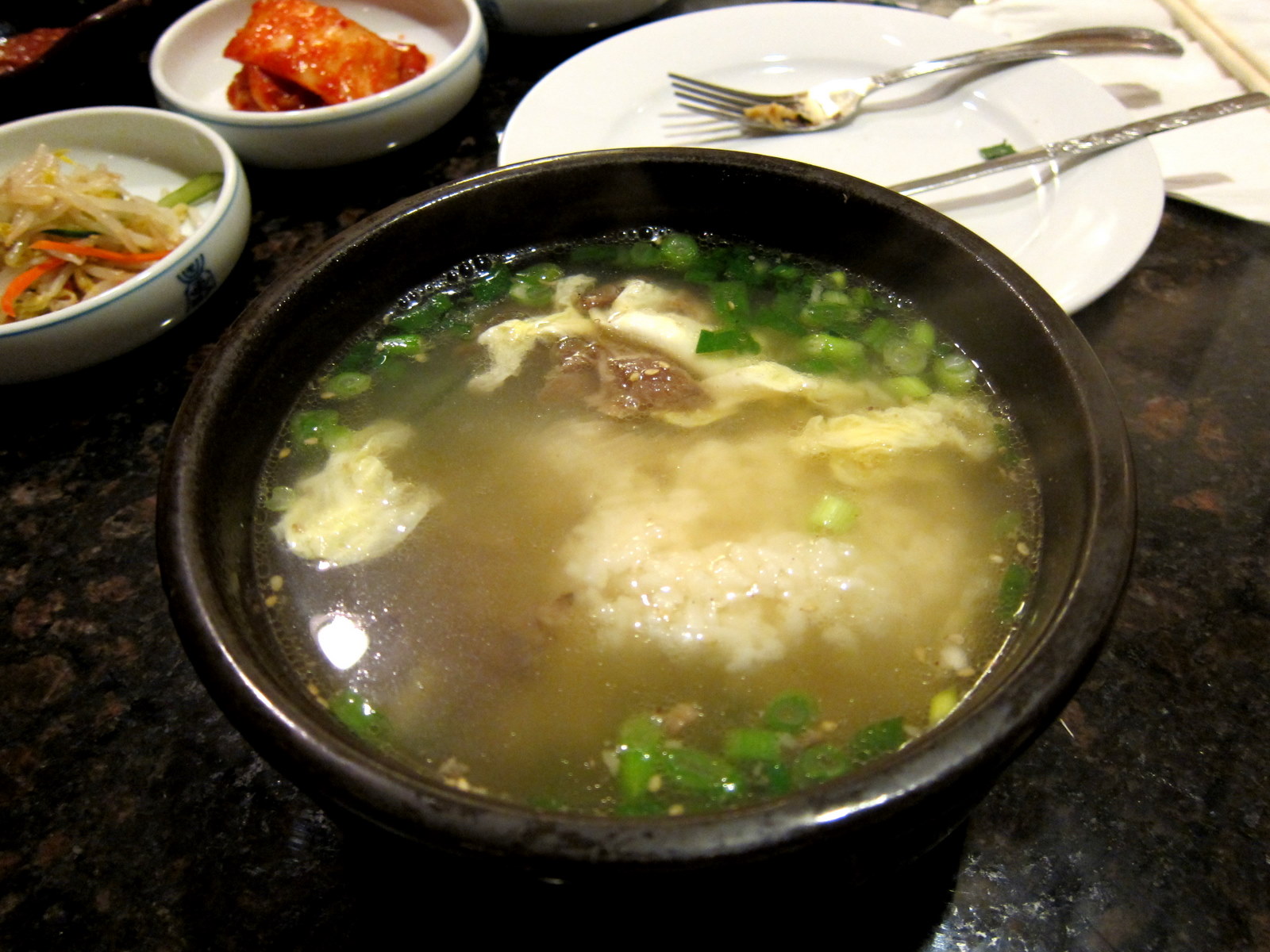
My mom and I knew better than ordering something with a chili pepper sign. So for soups we went. Her a gook bab (국밥 rice and sliced beef in warm beef broth), that was almost too bland.

And me a mandoo gook (만두국 dumpling soup), sweet and delicate but not really a tongue catcher.


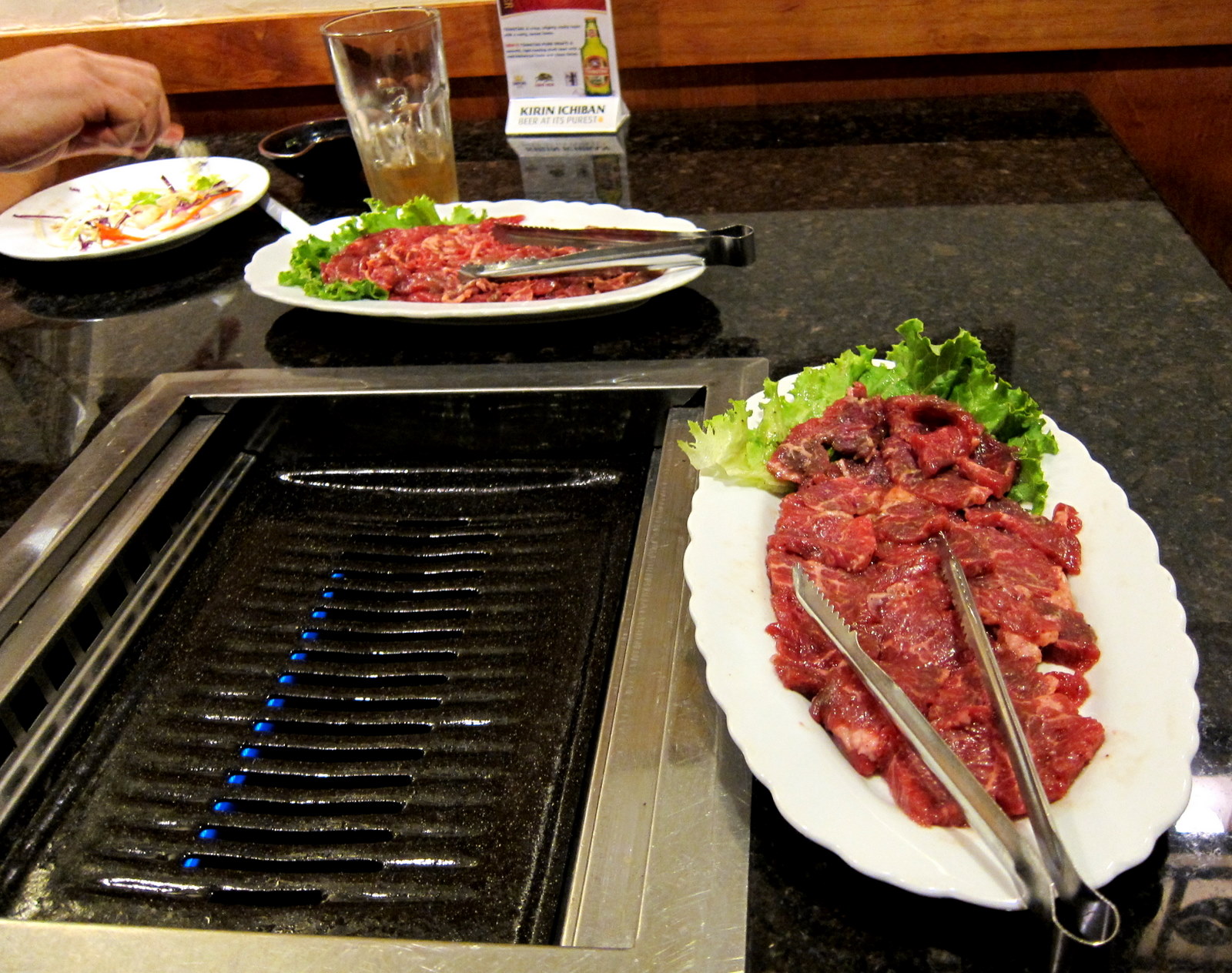
The other side of the table ordered their regular bulgogi (불고기) and bulgalbi (불갈비), something that would never go wrong,


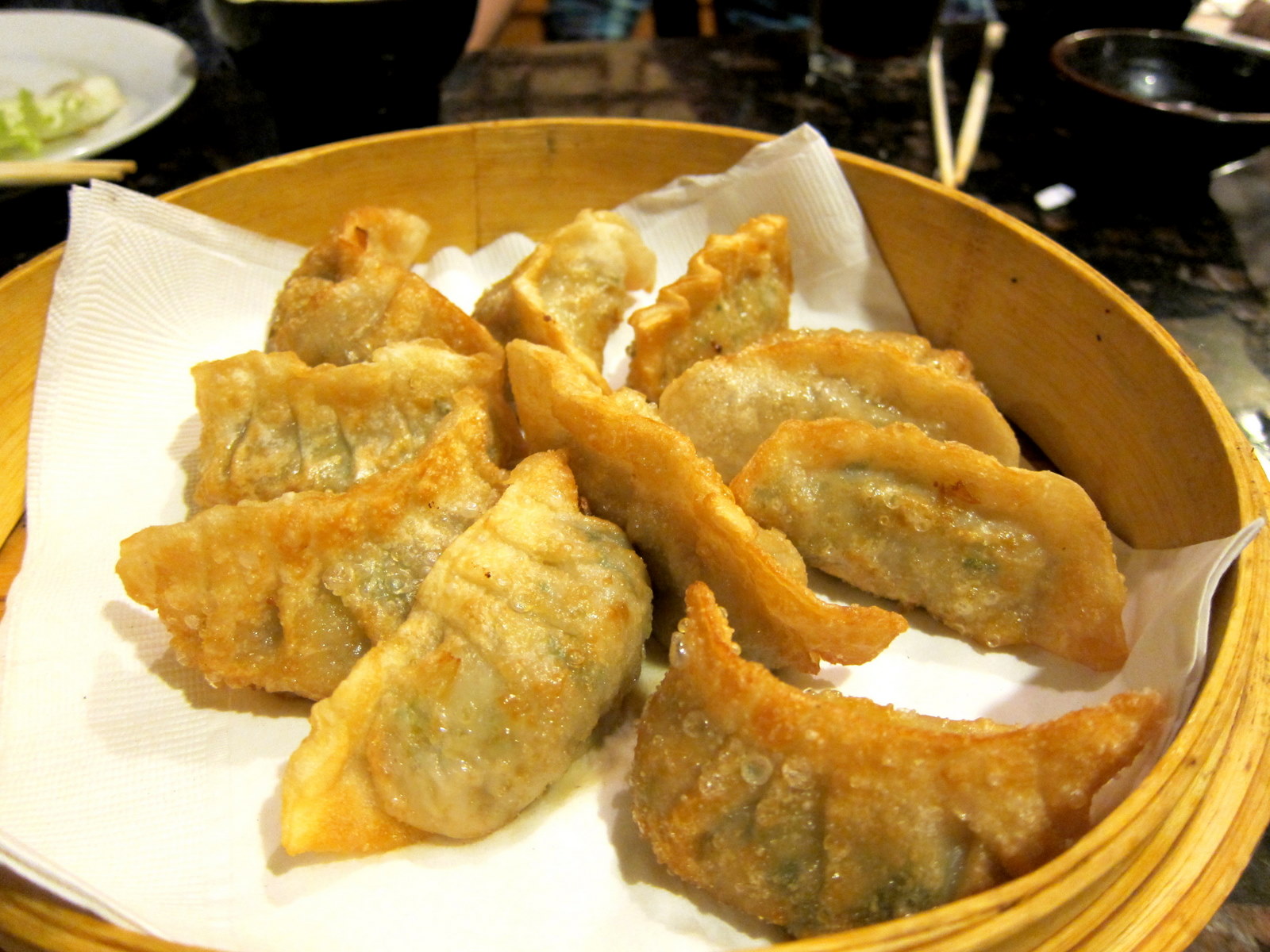
and a side of fried mandoo (만두), which looked irresistibly crunchy.


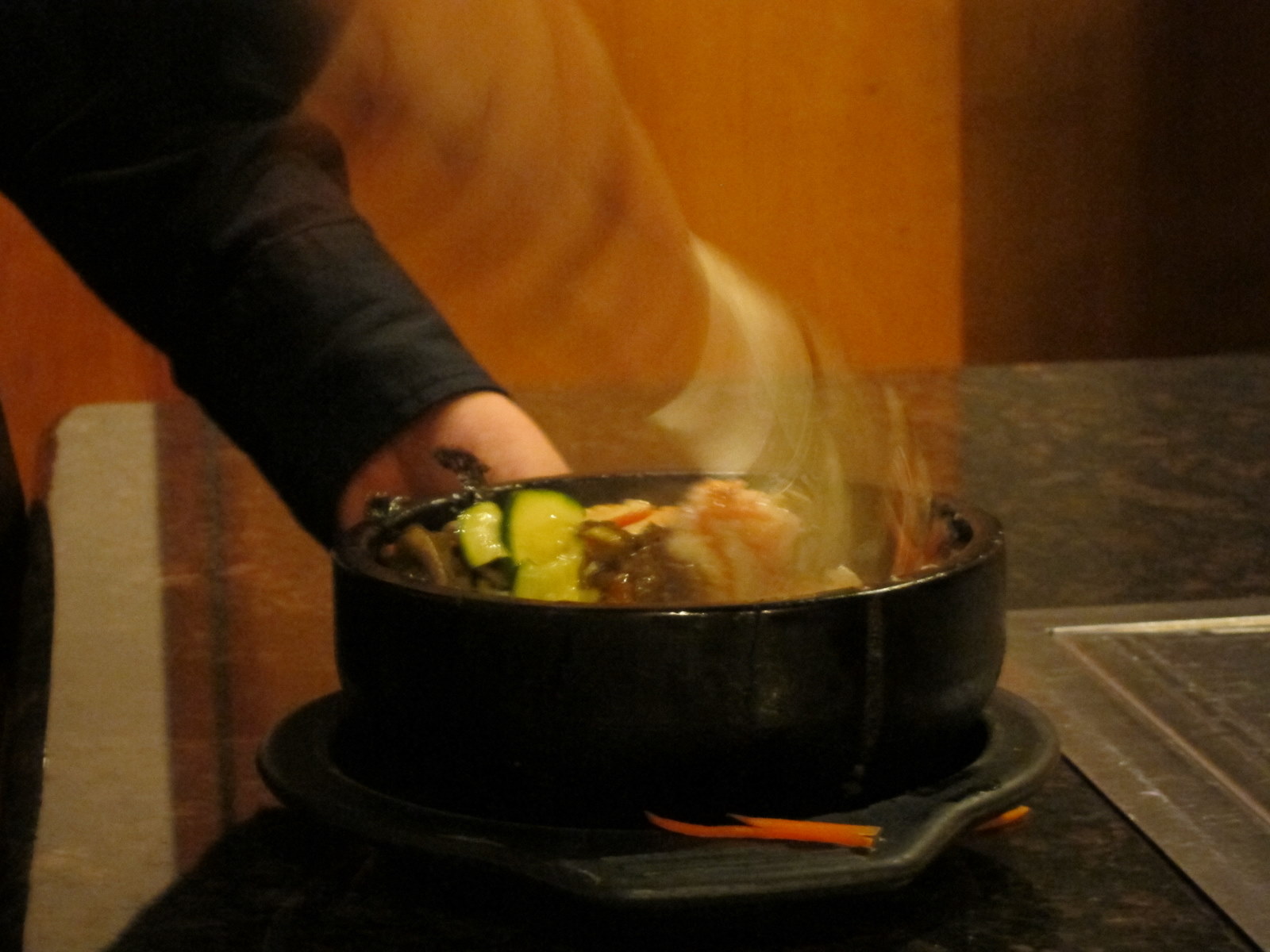
The staff was sweet, like this lady who mixed bibimbap (비빔밥) at amazing speed. Her wrist spun like a cotton candy machine. I don’t know how Ms Baker knew that dolsot bibimbap (돌솥 비뱜밥) is what a first timer should get, of if she knew, but I took it as a good sign that she scooped every last grain of rice.


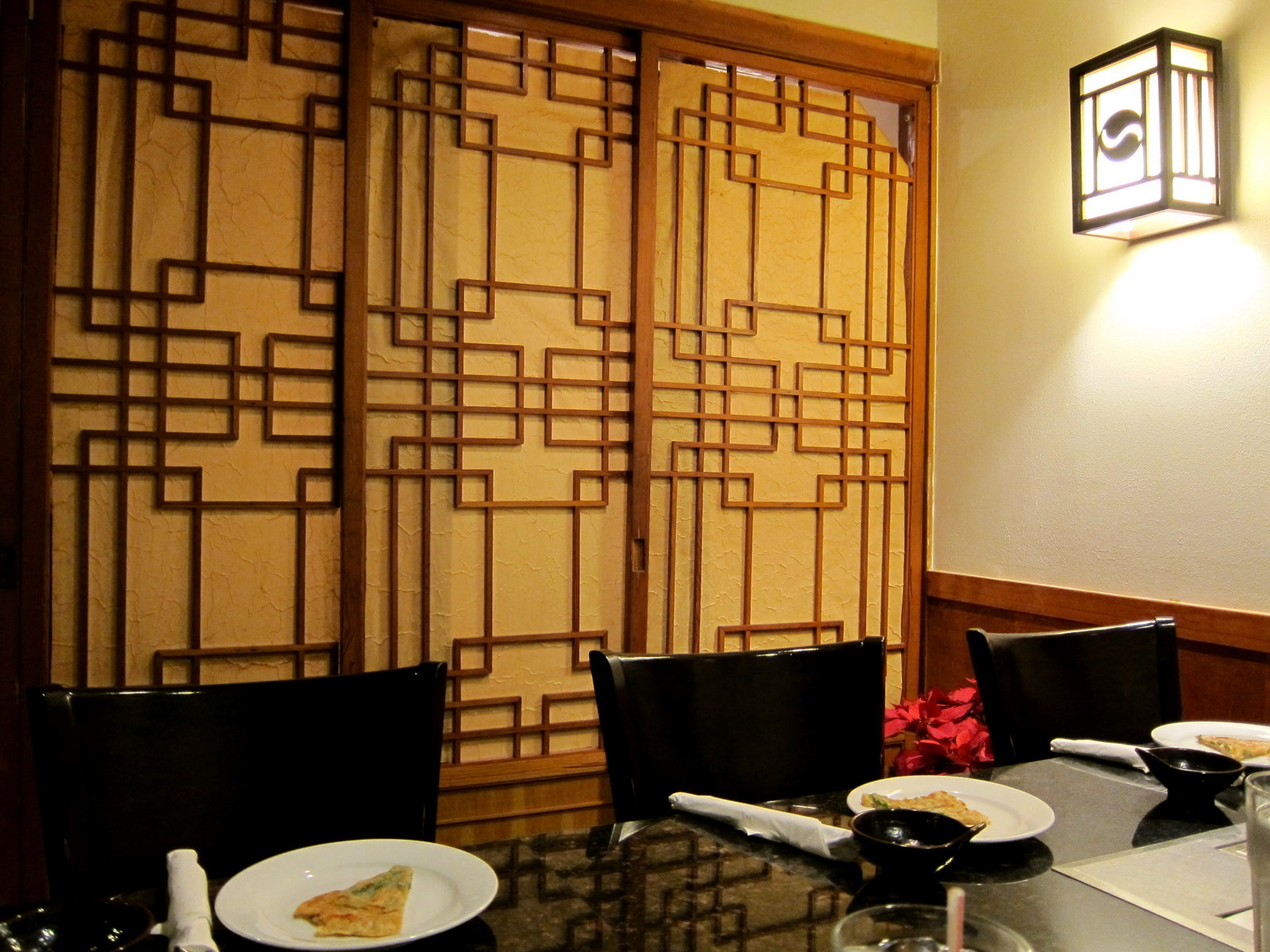
So here we sat in a room sectioned off from the others by shoji screens and chatted from 7:15 to 9:30 about all things from Jerry Brown to TiVo. We must have been the second to last to leave Korea Garden that night. Ms Baker’s first impression of Korean food was heartily filled with laughters. The price was hefty, as most Korean dinners are, but the family bonding between friends is priceless.

Address: Korea Garden Restaurant
9501 Long Point Rd, Ste. Z
Houston, TX 77055
(713) 468-2800
www.koreagardenhouston.com

Dinner for seven: $157.88