Flavor Boulevard

We Asians like to talk food.
Subscribe

Archive for the ‘Comfort food’

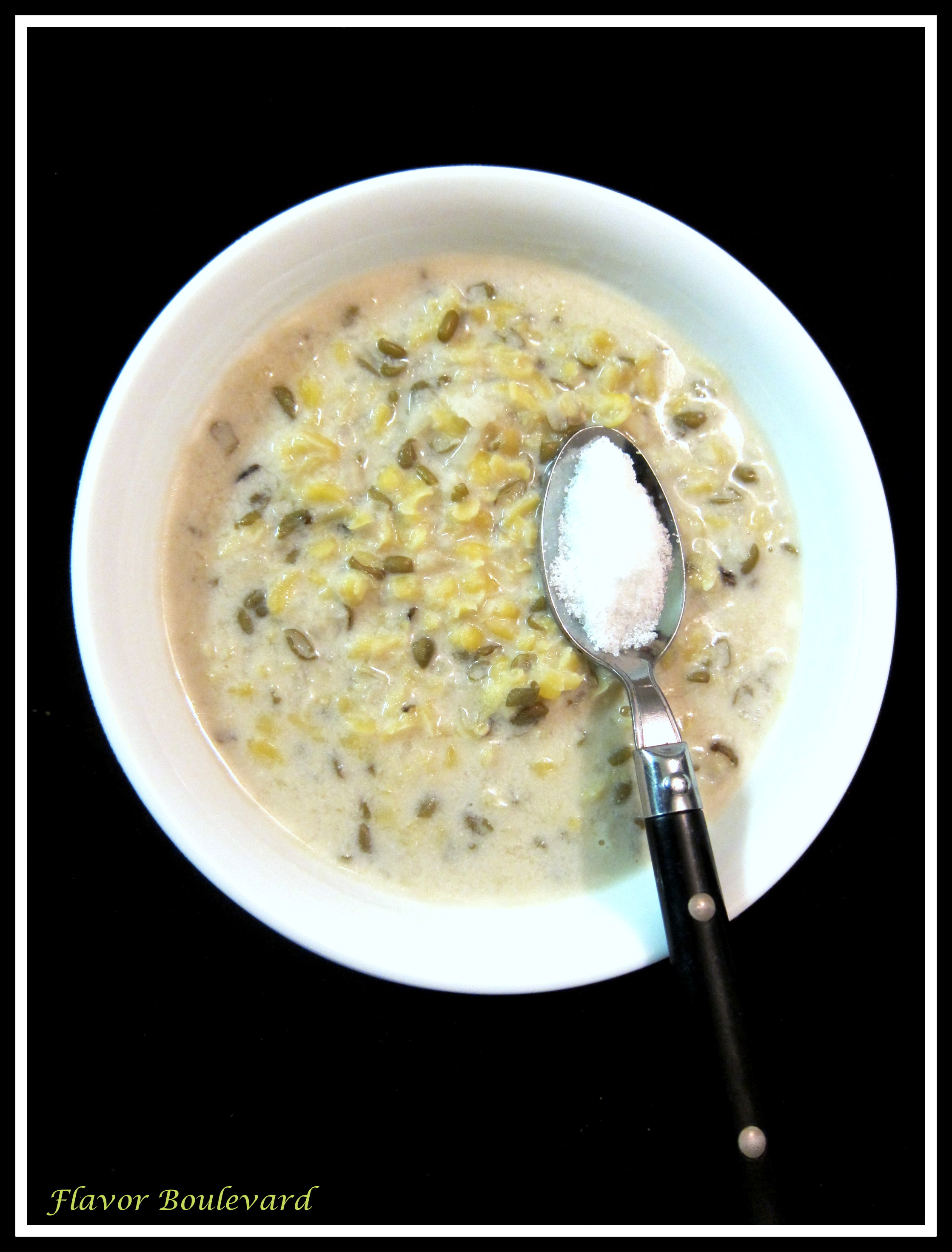
Mung bean porridge

May 24, 2012 By: Mai Truong Category: Comfort food, RECIPES, Southern Vietnamese, Vegan


Rice porridge was my enemy.

In elementary years, I got a fever about once every month. Aside from feeling tired and having weird dreams when the fever got high, I didn’t really mind that, but my mom did. She was so worried she wouldn’t sleep for days, not until my temperature went back to normal. And she made sure that I ate my rice porridge. She made rice porridge with ground pork and rice porridge with fish, she added vegetable, she seasoned it perfectly, and I still hated every spoon of it. I hated the texture of rice porridge: mushy and textureless. I hated both thick porridge and watery porridge(*). Every porridge meal was a battle between Mom and me, and I always lost, which deepened my aversion to porridge even more. But there were happy days when I actually liked my fever porridge and didn’t need my mom to prod: it was mung bean porridge on those days.

Actually, there’s rice in mung bean porridge, too, but the mung bean skin makes the porridge all nuttier and better. Then it’s a sweet porridge (just rice, mung bean and sugar, no meat), so that’s doubly better. Health-wise, mung bean is a cooling food(*), which would help alleviating the fever and digesting. Little Mom says that the Central Vietnamese eat mung bean porridge with cá kho tiêu (small caramelized pepper braised fish) instead of sugar, I can see that being tasty, and I can imagine substituting the fish with myulchi bokkum (멸치 볶음, dried fried anchovies) for availability. But I’ve found another way to heighten the mung bean porridge experience while keeping it vegan:

I dip toasted rice cracker into the porridge. We had leftover rice crackers from a lunch of rice cracker and pork rolls. There I was sitting, slurping and chewing my porridge, and staring at the stack of crackers, and it just came. Now you get crunchy, airy, nutty, sweet, sesame-y, toasty, liquidy, all in one bite. 😉

(*) These days I can tolerate watery porridge, but I still avoid the thick kind.
(**) I wrote a brief section on the cooling vs. heating effect of food in the post Benefits of Tea.
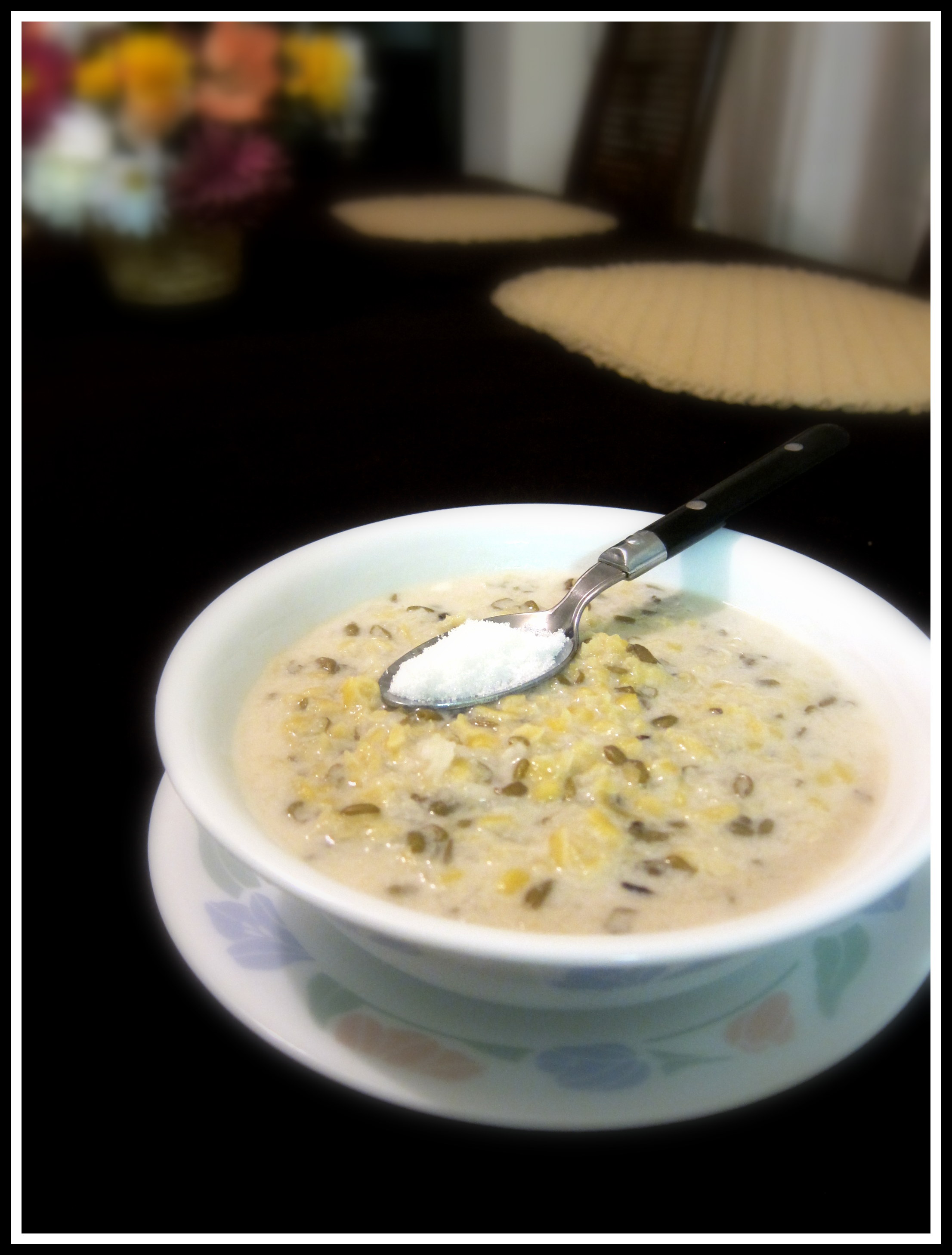

The Recipe: Childhood Love Mung Bean Porridge (8 servings)

— 250 g mung bean (halved but not shelled)
— 1/2 cup rice
— 1.2 l (42 fl oz) water (less water for thicker porridge)
— 1 can coconut milk
— sugar (as much as you want)
— toasted sesame rice cracker (as much as you want)
Soak the mung bean overnight to soften it. In a pot, cook rice, mung bean and water until the grains turn mushy. Add coconut milk and bring it to a boil. Serve warm with toasted rice crackers.
Himalayan Flavors and the mango art

April 24, 2012 By: Mai Truong Category: California - The Bay Area, Comfort food, sweet snacks and desserts, Vegan


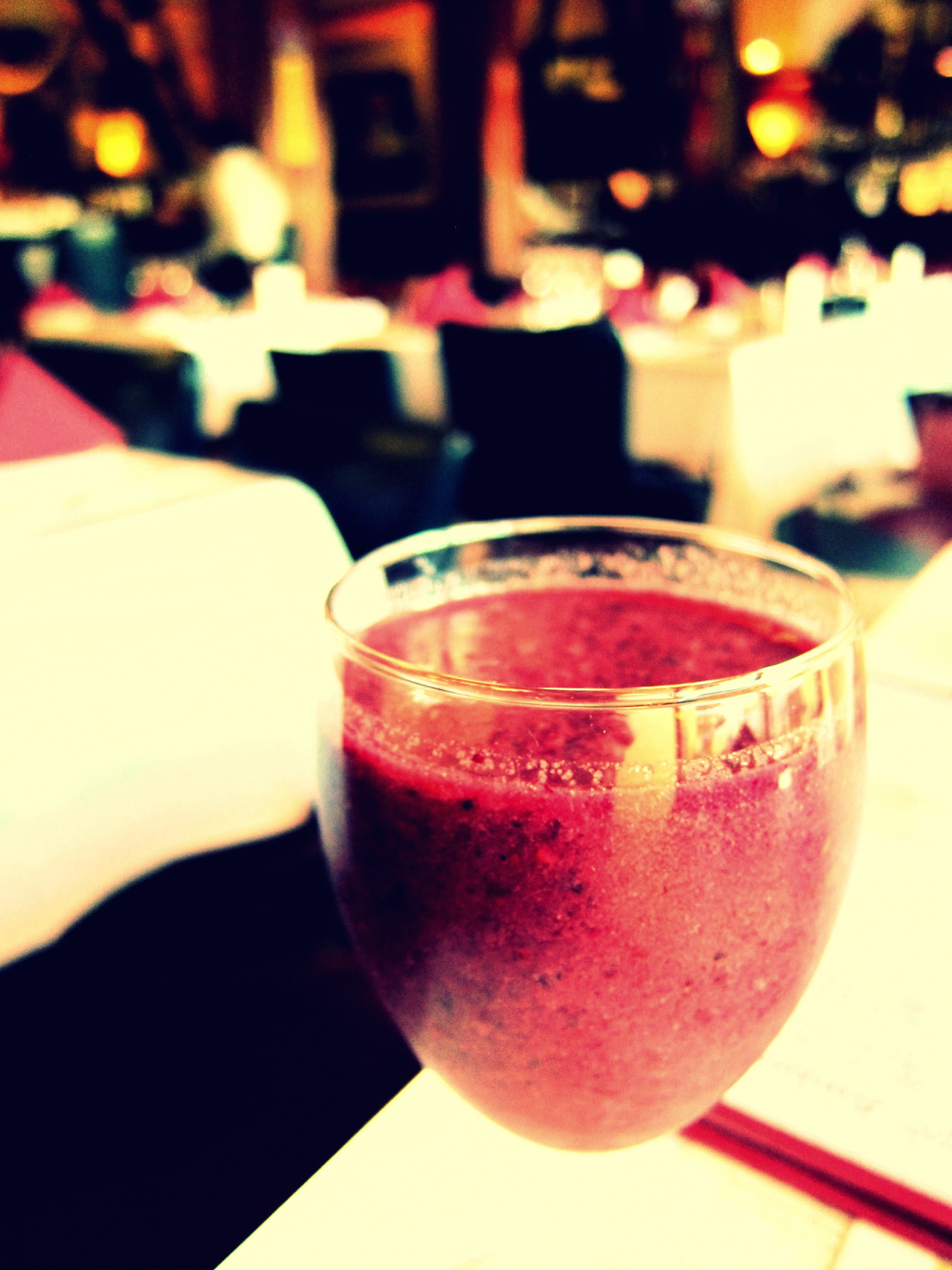
Last year I had a great meal at Himalayan Flavors, starting with a reddish purple smoothie whose ingredients I no longer remember and can’t find anywhere on their current menu, and ending with a mango dessert. The owner is Nepalese, so technically, the food is Nepalese, which is too similar to Indian for me to discern because I haven’t had much of either. A quick Google search renders over 6 million results, but the actual number of differences between Nepalese and Indian foods are few and easy enough to remember:

  • Nepalese cooks use no cream/curd, so their gravies are thinner and more watery than Indian gravies.
  • In Nepalese dishes, green vegetables are chopped up and stir-fried, like in Chinese cooking, except for the cumin. In Indian dishes, the green vegetables are turned into paste (like saag paneer (spinach and soft cheese), the best of which I’ve had is at Aslam’s Rasoi, but that’s a different story).
  • Nepalese cooks do not use sugar to flavor the savory dishes.

Source: Binaya Manandhar


In more details:
[…] Rajesh Karmacharya, owner of Cumin restaurant (recent winner of a Michelin Bib Gourmand award), explained that Nepalese curries are generally based on tomatoes, not yogurt or coconut milk, as in India. Nepalis also use fewer and milder spices than Indians. A standard Nepalese masala (spice mixture) contains cumin, coriander, ginger, garlic, fenugreek and jimbu, an aromatic grass that resembles chives. Hotness comes from chilies or a berry called timur, similar to Szechwan pepper.

The influence of China and Tibet is apparent in the popularity of noodles, bamboo shoots, soybeans and momos — small steamed or sauteed dumplings filled with meat or vegetables. Momos became the most popular street food in Katmandu after Tibetan refugees opened stalls there in the 1960s. […]
Source: The Chicago Tribune

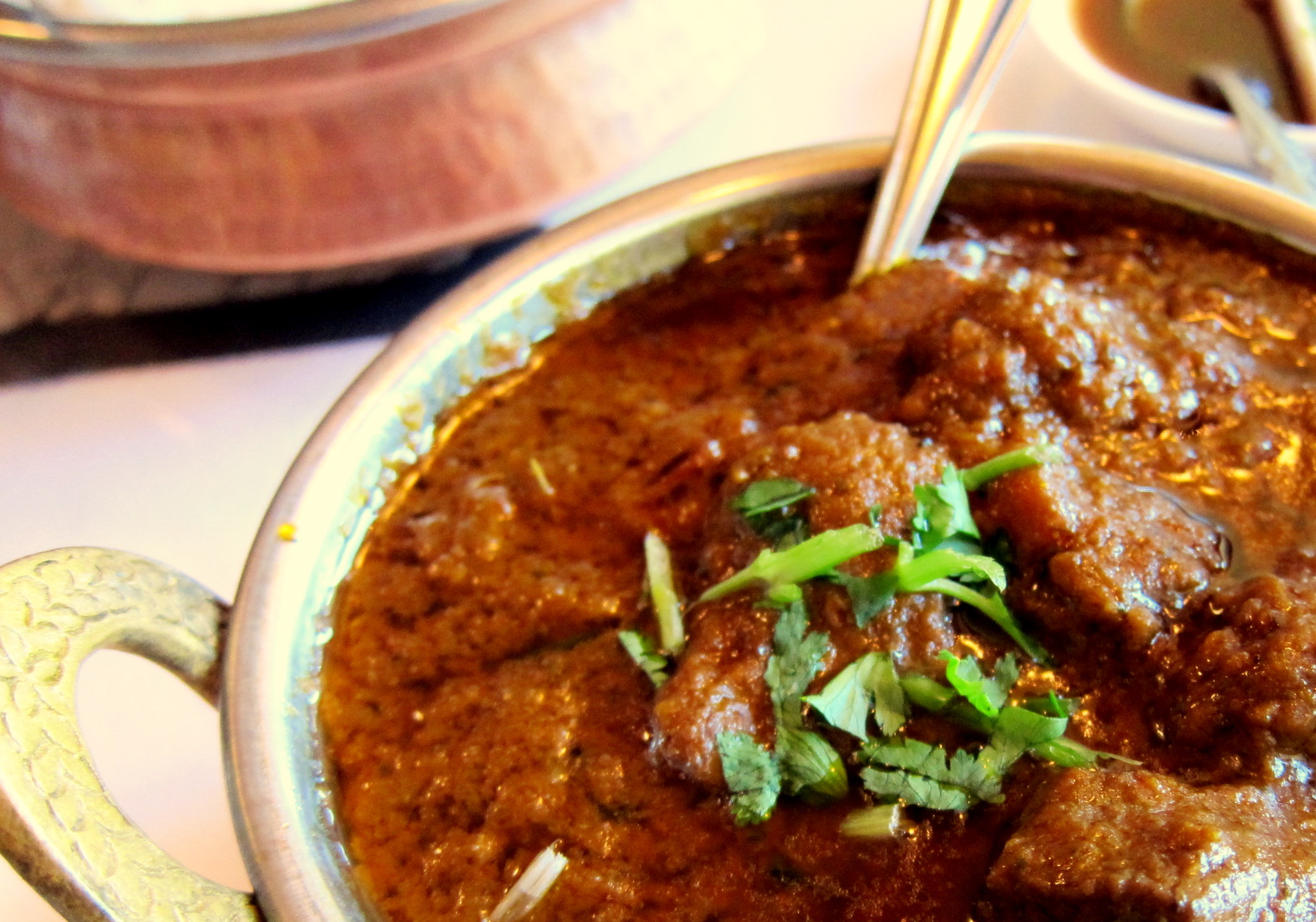
Indeed, what the owner suggested to us in our most recent visit were vegetable thukpa (a noodle dish with a little bit of thin broth) and aloo tama bori (sauteed potatoes and vegetables), both have bamboo shoots and tomato, neither are spicy or sweet, and neither are pasty. The lamb tarkari (a kind of curry stew described in detail as “boneless lamb pieces cooked in Himalayan Flavors special sauce herbs and spices”) is also quite mild.


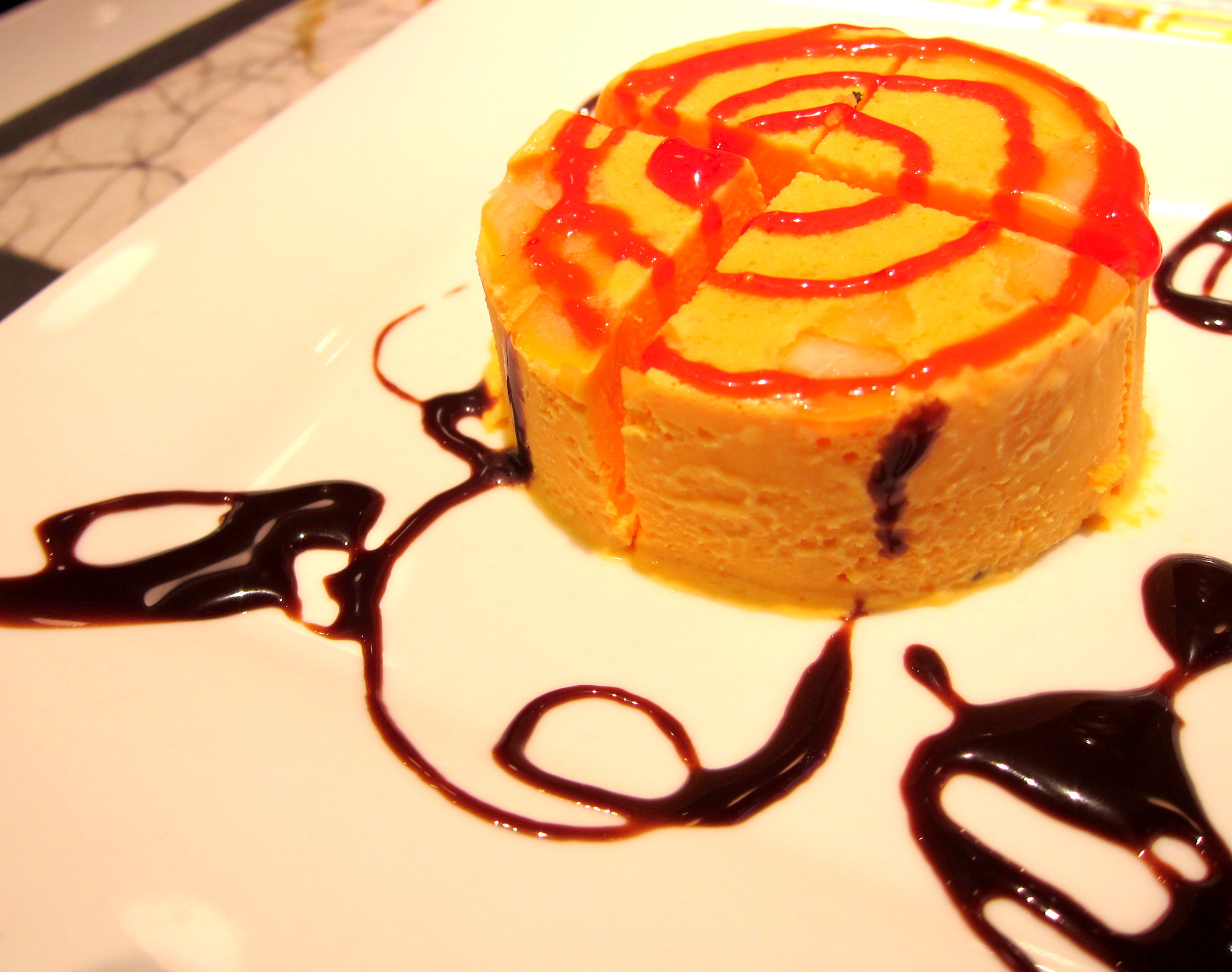
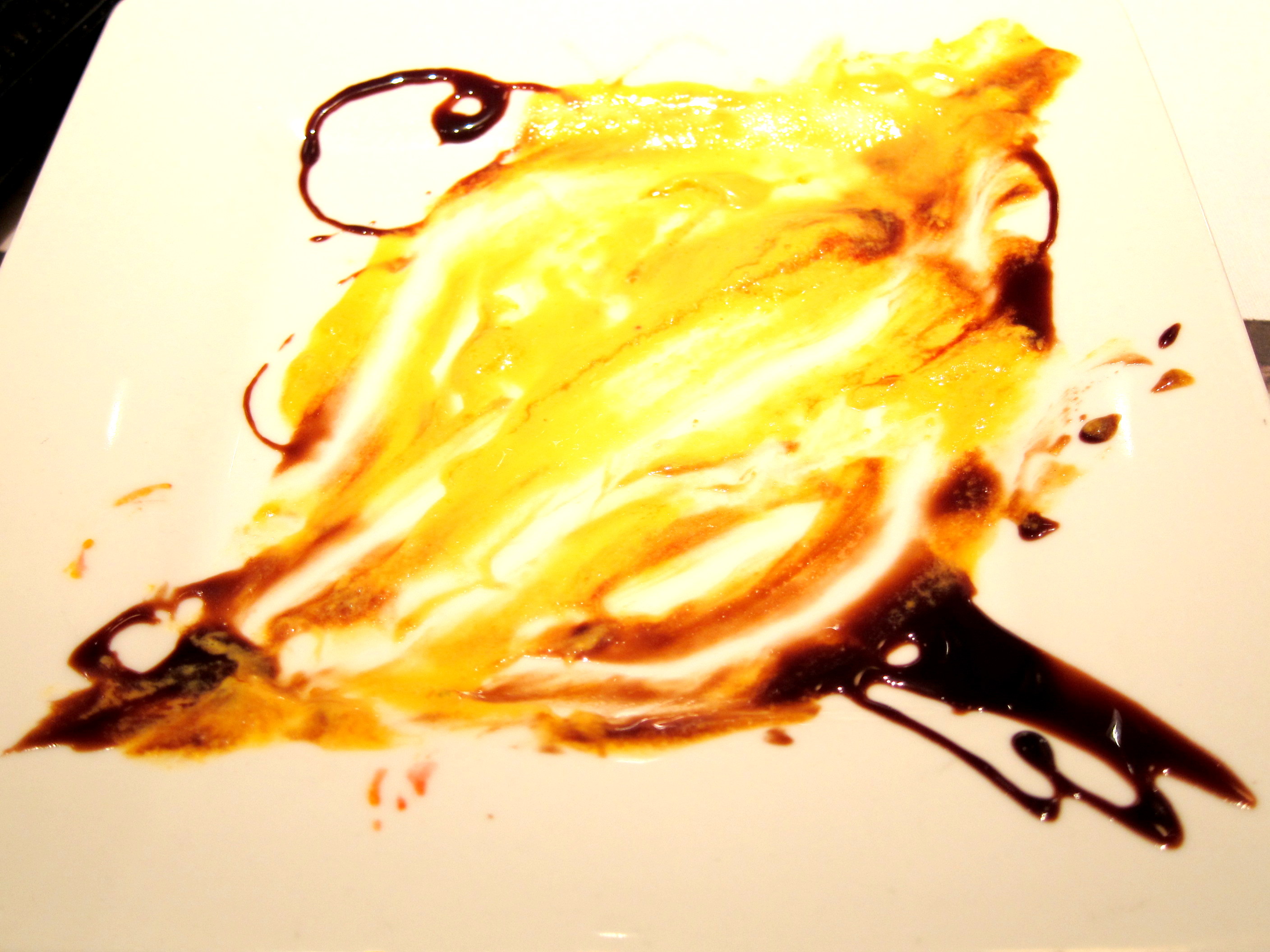
But like most restaurants that I like, Himalayan Flavors scored me in because of their desserts. I knew we got something mango the first time, and its goodness never left me, so I came back. This time the presentation changed from an ice cream block with red syrup drizzled on top and chocolate syrup on the side to a shovel of yellow snow with almond shavings, but it is still mango kulfi. And I still love it. Here’s a memoir of the first mango kulfi (with chocolate):


It’s my art. Don’t you criticize. 😉
Ah, this time, I forgot to check the bar for the smoothies, I wonder if they still make only one kind each day. Just a reason for me to come back.

Address: Himalayan Flavors
1585 University Ave
Berkeley, CA 94703
(510) 704-0174

Welcome back, Appetite!

April 09, 2012 By: Mai Truong Category: California - The Bay Area, Comfort food, One shot


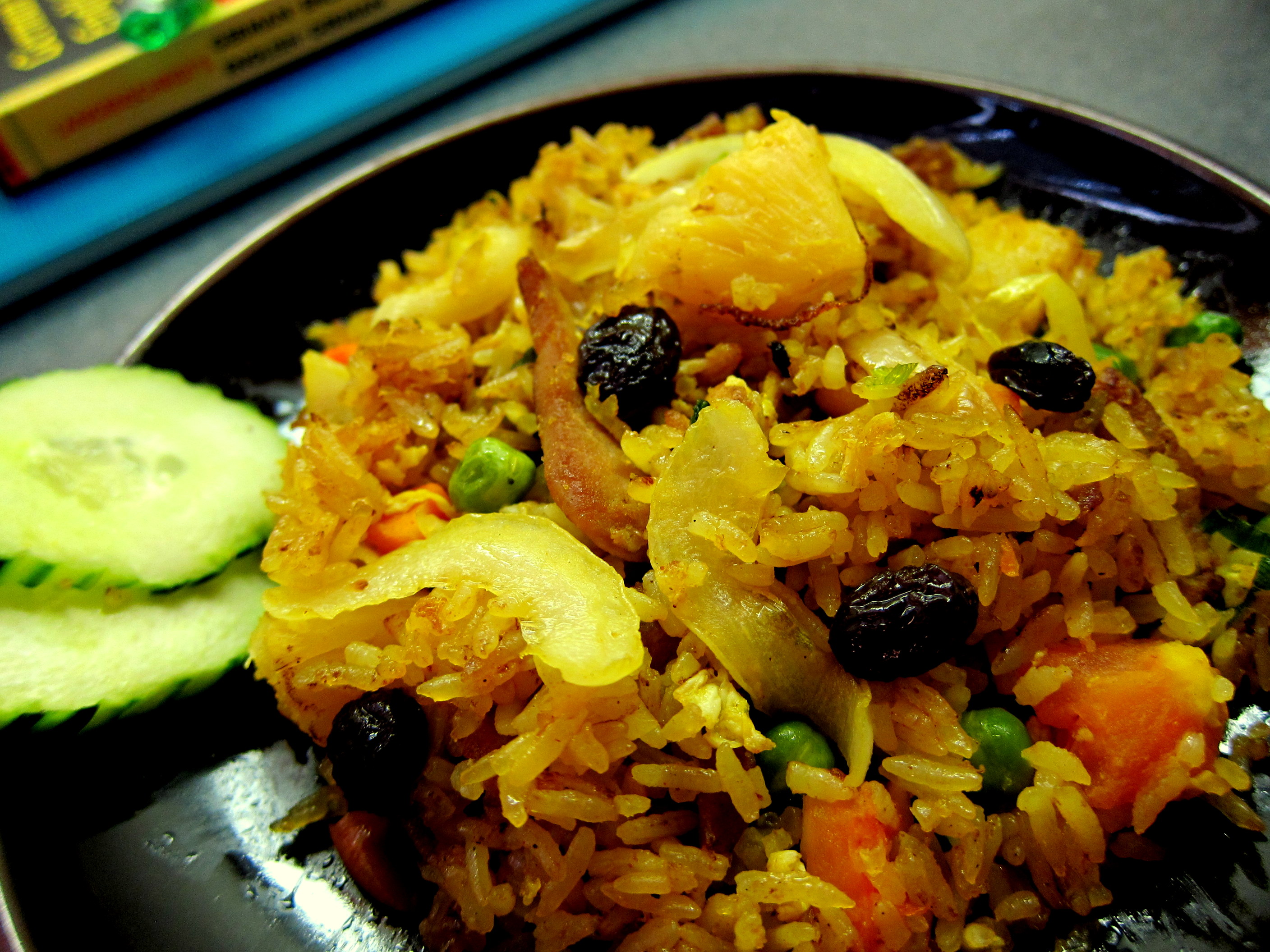
Pineapple fried rice, with tomato, eggs, cashew nut, onion, pork, and the highlight: raisin.

So simple. So good.

I’m not crazy about Thai food, but this is the first time in a month that a meal tastes better than my expectation. Welcome back, Appetite!

Address: Racha Cafe
2516 Telegraph Avenue,
Berkeley, CA
(510) 644-3583
Lunch for one: $8.65

I can’t think of a title for Tofu Village

April 01, 2012 By: Mai Truong Category: Comfort food, Houston, Korean, noodle soup


Lately I think I’ve reached a wall in terms of Korean food. To be precise, the Korean food that I can get my hands on, i.e., in the Bay and in Houston. Every Korean restaurant here, in strikingly similar manner to Vietnamese restaurants, has the same menu as every other Korean restaurant. The menu may contain a hundred things, but it boils down to maybe ten, with tiny variations.


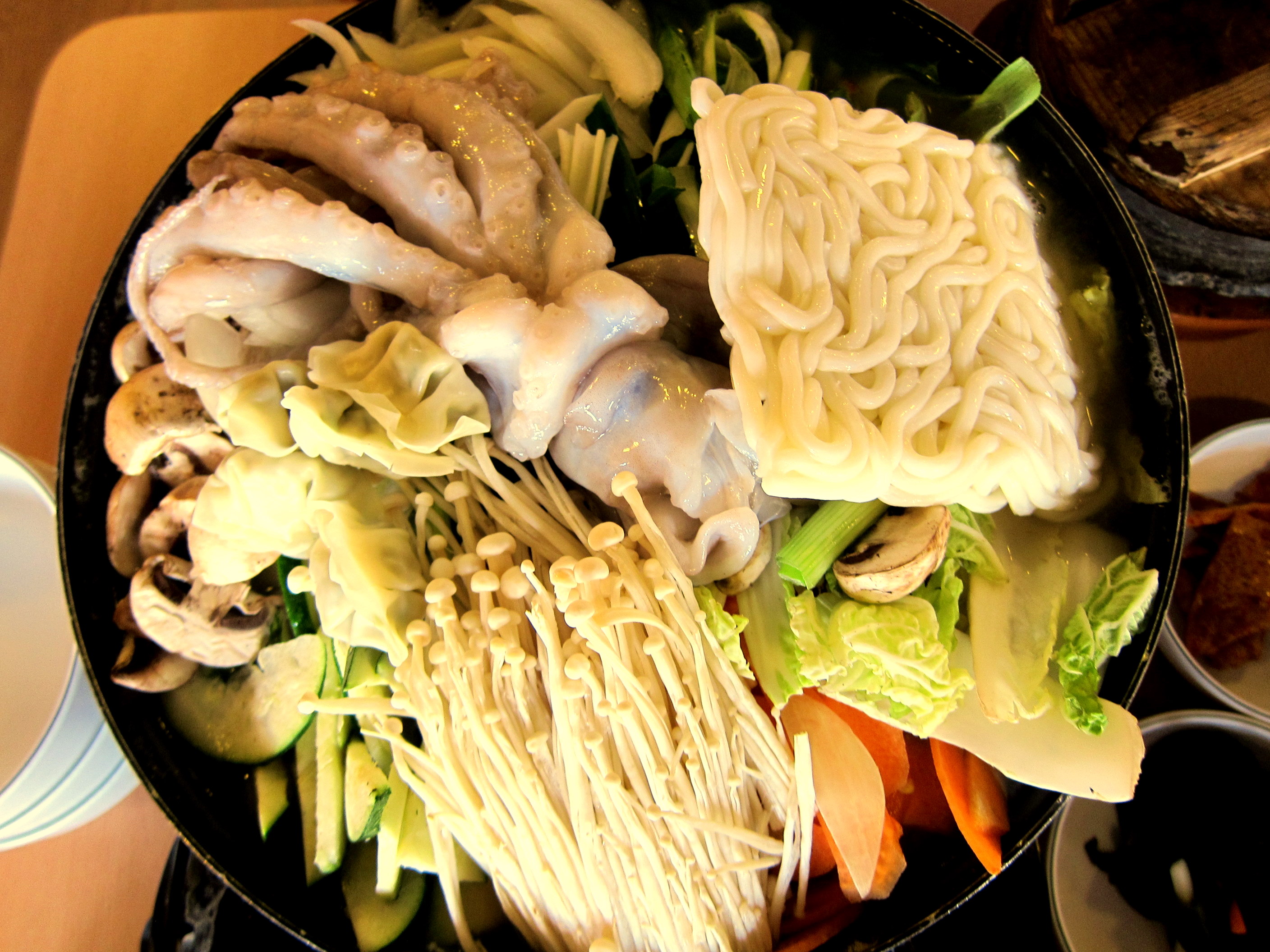
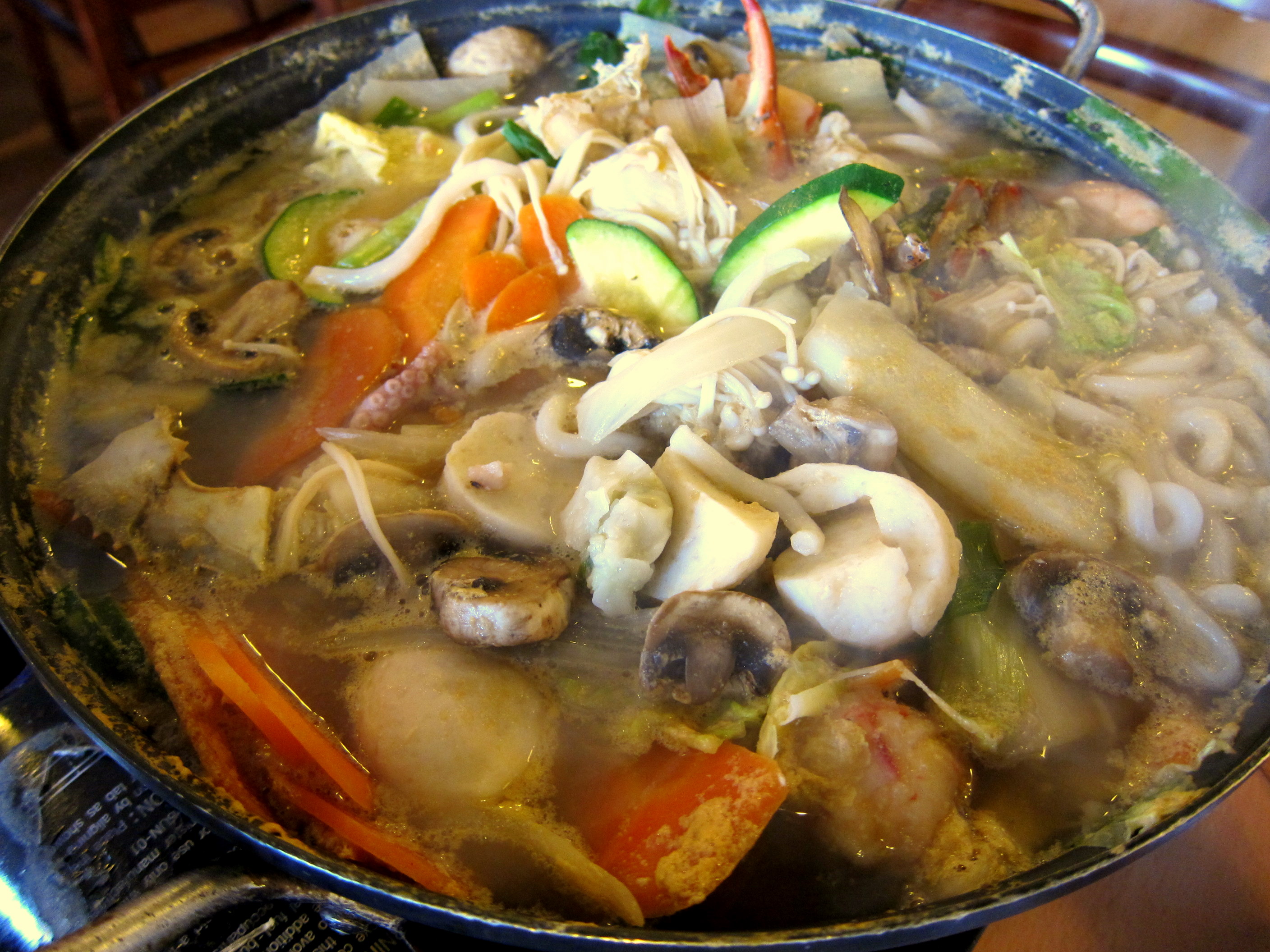
To be blunt, I’m bragging that I can name practically every dish on a Korean menu in the States. The novelty is gone. Little knowledge is left to obtain. But just as I don’t stop going to Vietnamese eateries altogether, I still like to share a big Korean meal with Mom and Dad. A bubbling jeongol, rice and banchan always give the familiarity that a Western meal cannot.


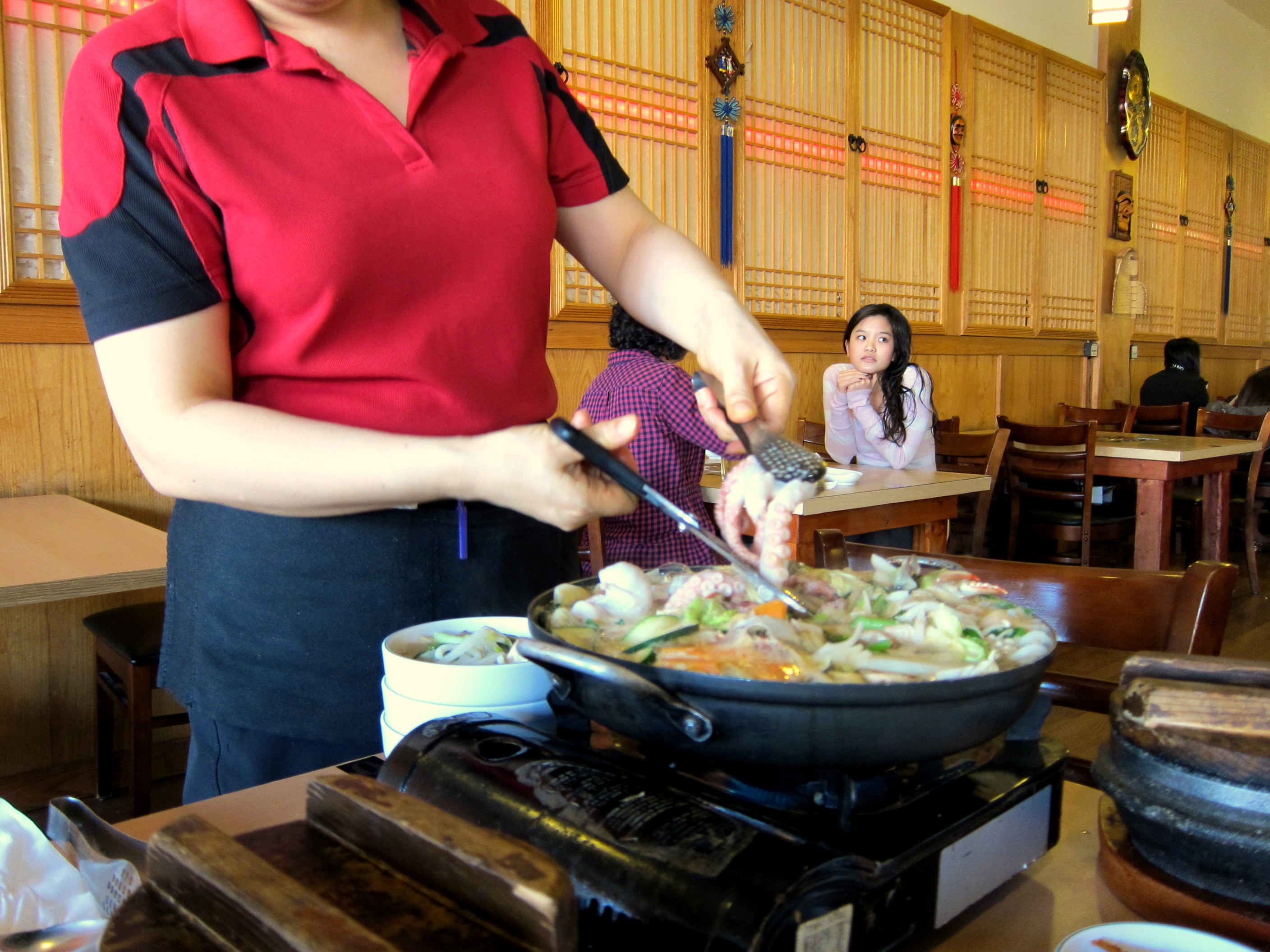
That said, there are a few things that I’m still not used to, such as the scissors. The lady was cutting up the crabs and octopus with big black scissors. I admit their convenience, but I get the weird feeling that she is cutting flowers. Why? I don’t know. Anyway, I didn’t eat the crabs because I don’t care for crabs, but I like the octopus. I think I might prefer octopus to squid. The broth is also just right.

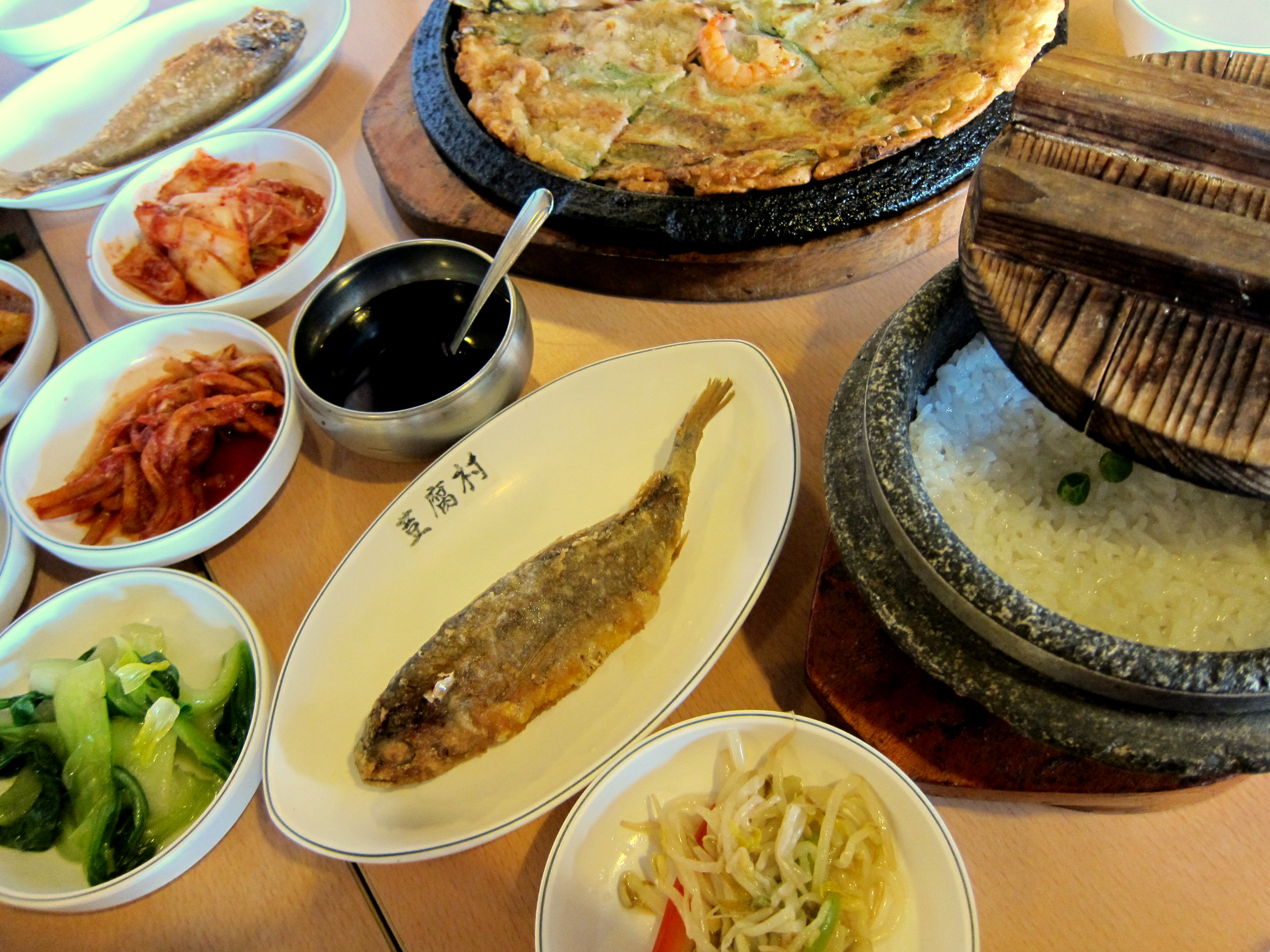
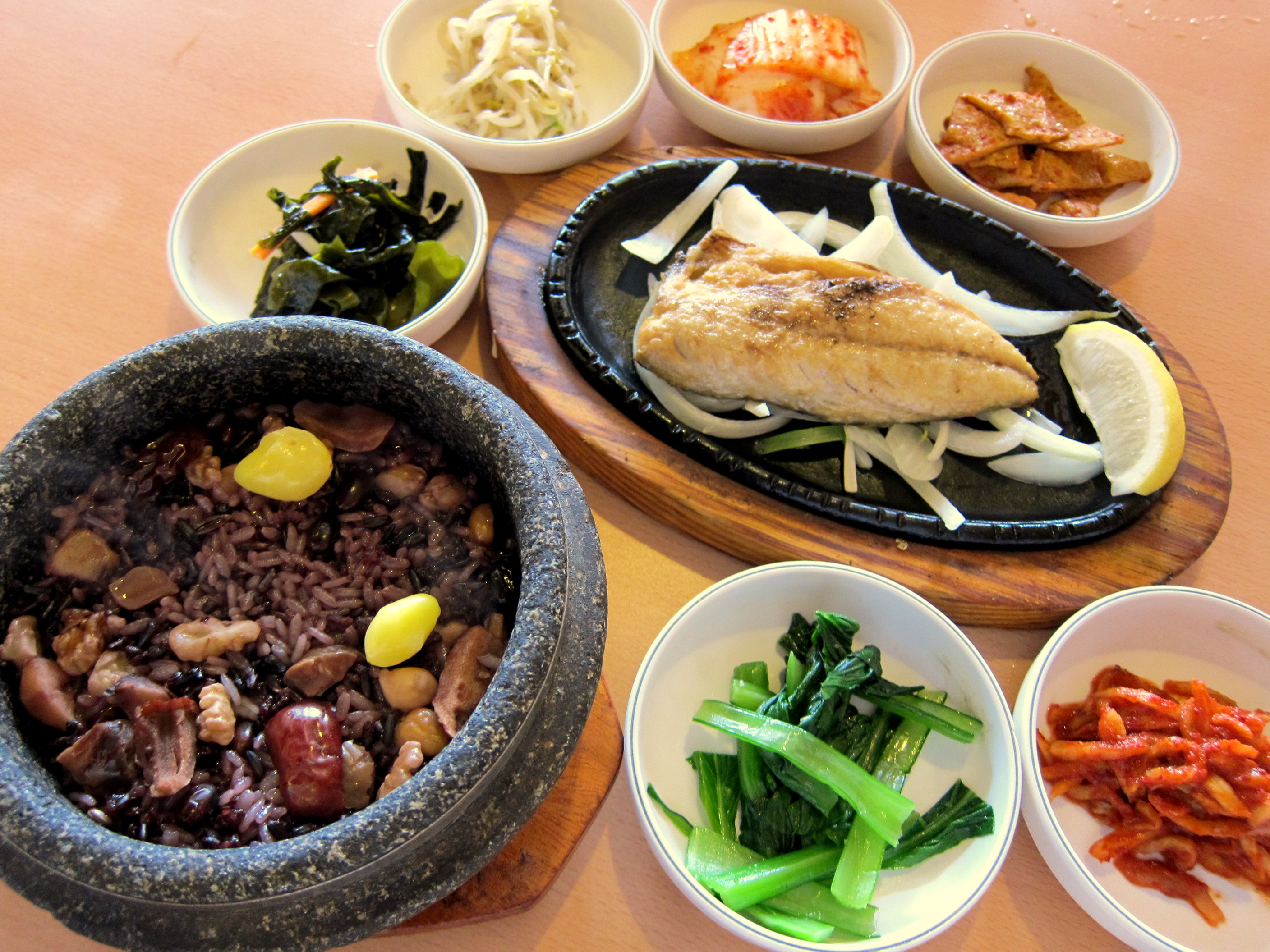
The banchan is standard, but they include two fried fish for every order of jeongol. Little Mom likes fried fish. 🙂


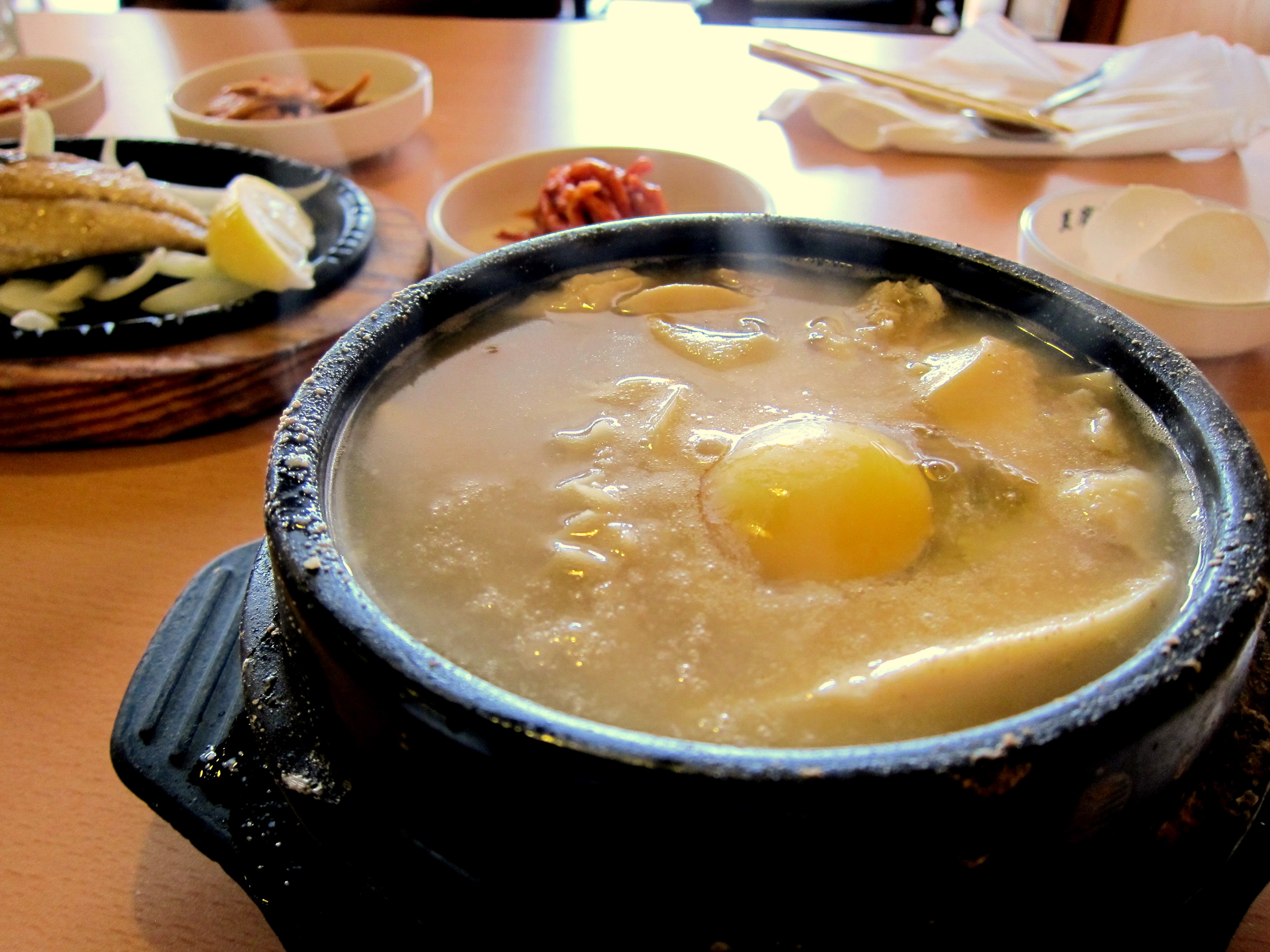
The soondubu with tripe and intestine is also nice: soft tofu in contrast with crunchy tripe and chewy intestine. Well, Tofu Village would not live up to its name if its soondubu wasn’t good.


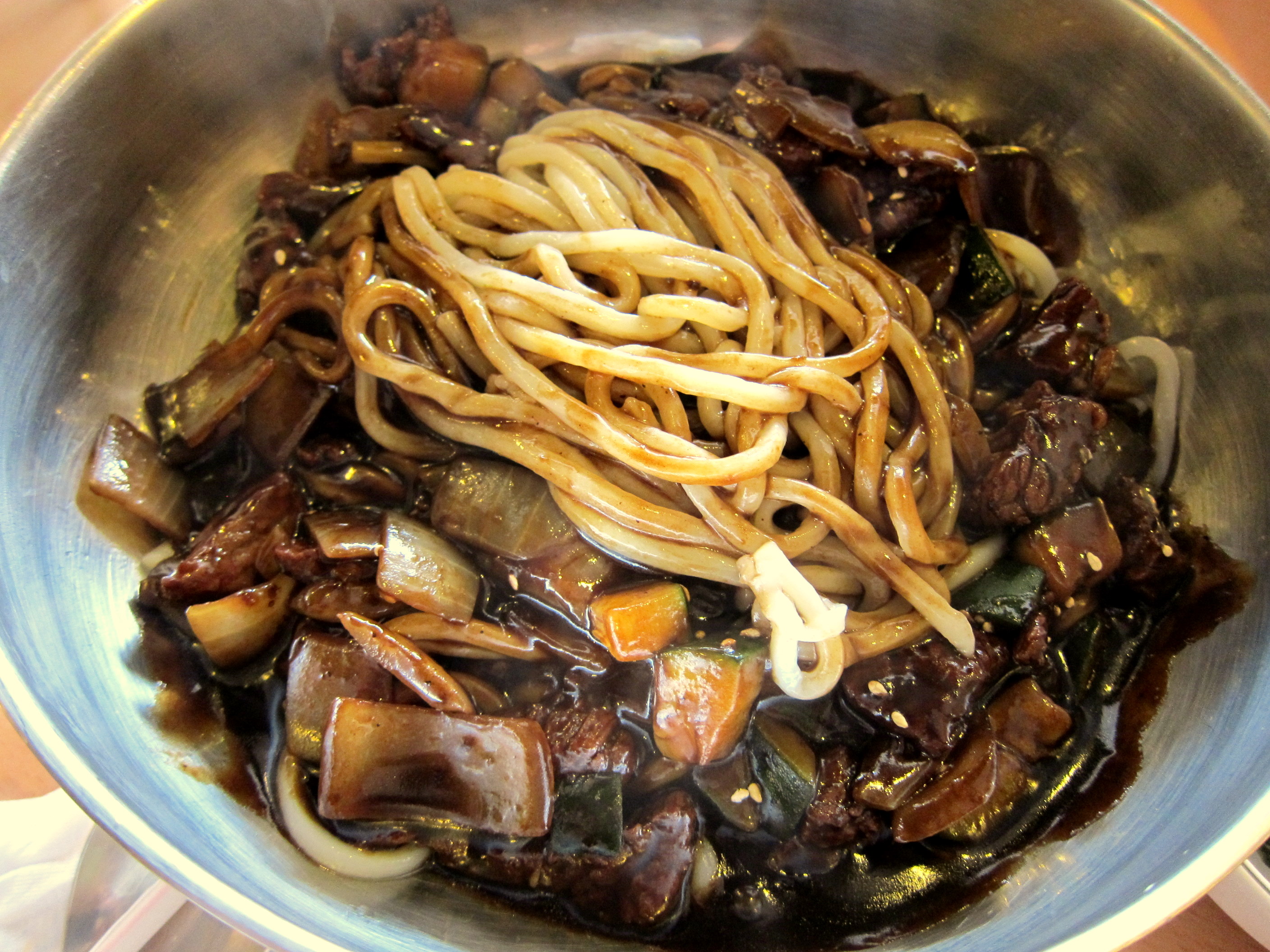
The jajangmyeon is a slight disappointment, compared to the one at Daddy and Daughter‘s in the H-Mart food court. The sauce is not sweet enough. Being served in an inox bowl makes it lose its heat too quickly. The noodles are also too thick.


One thing that I try here without having tried before is the “nutrition rice”, which is blackish purple rice (nếp than) with walnuts, dried jujubes, peanuts, and two yellow nuts whose name I don’t know. I like white rice because like water, white rice keeps your palates clean for the other dishes, but not only is this nut-mixed rice fun to eat, it also deems the mackerel and the kimchi unnecessary.


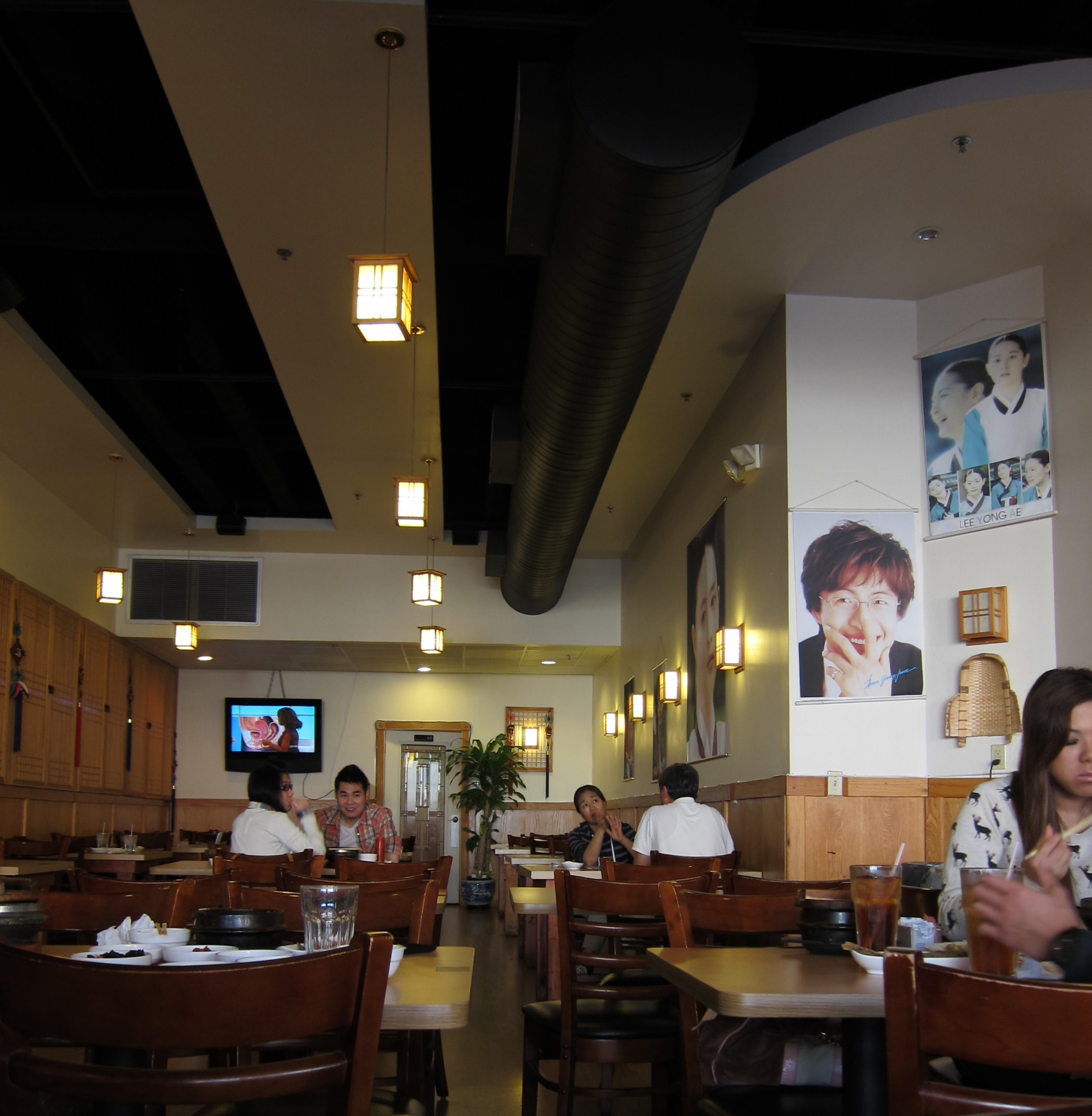
The biggest identifier of Tofu Village must be the celebrity posters on the wall. At least that’s how Aaron and I knew that we were talking about the same Korean restaurant when he mentioned that his group has a new place to frequent. Would I frequent it myself? The name “Tofu Village” does sound a little Americanized, and I can’t say that everything I ordered was stellar, but to be fair, what I ordered were not the common dishes that people order at a Korean restaurant here. Naturally, the chefs would be more comfortable with what they expect the customers to get. So next time I’ll get something more standard, with tofu. 😉

Address: Tofu Village (두부 촌)
9889 Bellaire Blvd #303
Houston, TX 77036

Friday afternoon, Bistro 1491

March 30, 2012 By: Mai Truong Category: American, California - The Bay Area, Comfort food, One shot

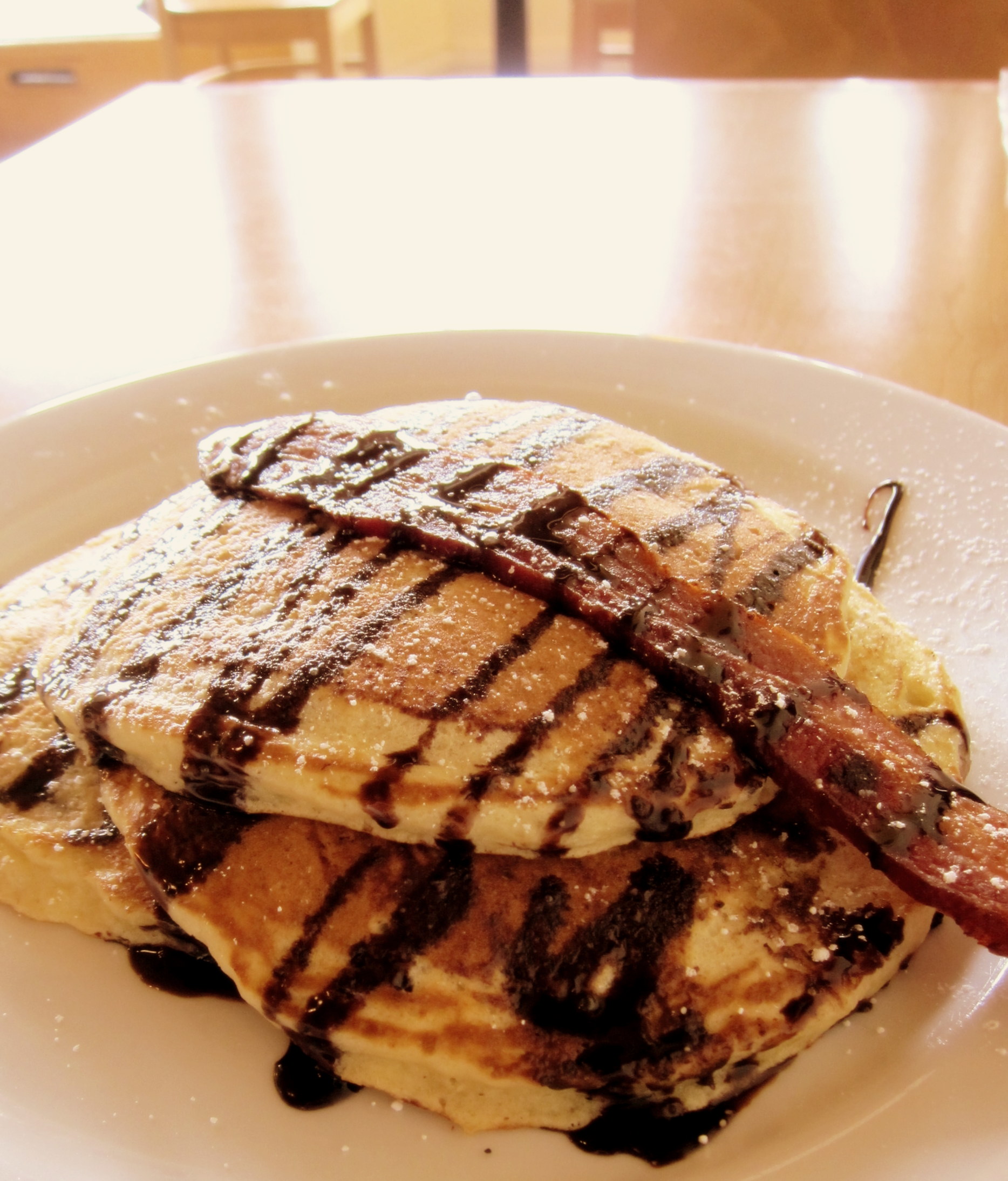
The sky is grey. The ipod plays Gustav Mahler’s piano quartet in A minor. One hand turns the page to Der Prokurator. The other hand maneuvers the fork into a stack of three pancakes. Oozing chocolate chips and a thick strip of bacon.


Bistro 1491 sits, in fact, at 1491 Solano Avenue. Somehow I keep thinking that the name is 1941. It feels so. The burn orange walls, the abstract paintings, the white-haired ladies by the window.

The pancakes are fluffy, soft, good at first, the bacon is at the right saltiness. The maple syrup errs on the watery side, or maybe it’s just overwhelmed by what’s supposed to be dark chocolate but turns out too sweet. About 60% dark. A heavy feel sets in after the pancakes are gone, what’s left on the plate are messy streaks of brown chocolate and faint yellow syrup. It could almost make a hasty painting. But hasty does not suit this scene.

Address: Bistro 1491
1491 Solano Ave
(between Santa Fe Ave & Curtis St)
Albany, CA 94706
(510) 526-9601
Breakfast at noon: dark chocolate & bacon pancakes – $8.65

FIVE and a Flavor Giveaway

March 21, 2012 By: Mai Truong Category: American, California - The Bay Area, Comfort food, The more interesting


Dressed in black and white patterns from walls to chairs, FIVE spots a slightly older, more refined atmosphere for casual hotel dining just above the Berkeley BART station. I meant to go here after someone said that he finally understood the rave behind “chicken and waffle” after he had it during FIVE’s After Hour Happy Hour. If that dry white meat and cake-like bread at FIVE was that good, then surely the other things wouldn’t disappoint. Now nothing on the regular dinner menu costs 5 bucks like the Happy Hour (7-9 pm) nosh, but I got hungry before 7 pm, so I dashed in on what seemed to be a busy night. The hotel is hosting some conference. Nobody wanted to eat with me today, but one beauty of going alone is that you can always get a table.

That said, if you have a party of 4 or less and would like to raid FIVE, which you should, I have a FIVE Vip Card “valid for a 20% discount in FIVE” to give you. Here’s how to get it:

Leave me a comment below by midnight March 31, and if the number of comments is more than 1, which would make me ecstatic :D, then the winner will be chosen by a random number generator. The card is valid until July 31st, 2012. The winner will receive the card by mail or in person.

Here’s why you should eat at FIVE:

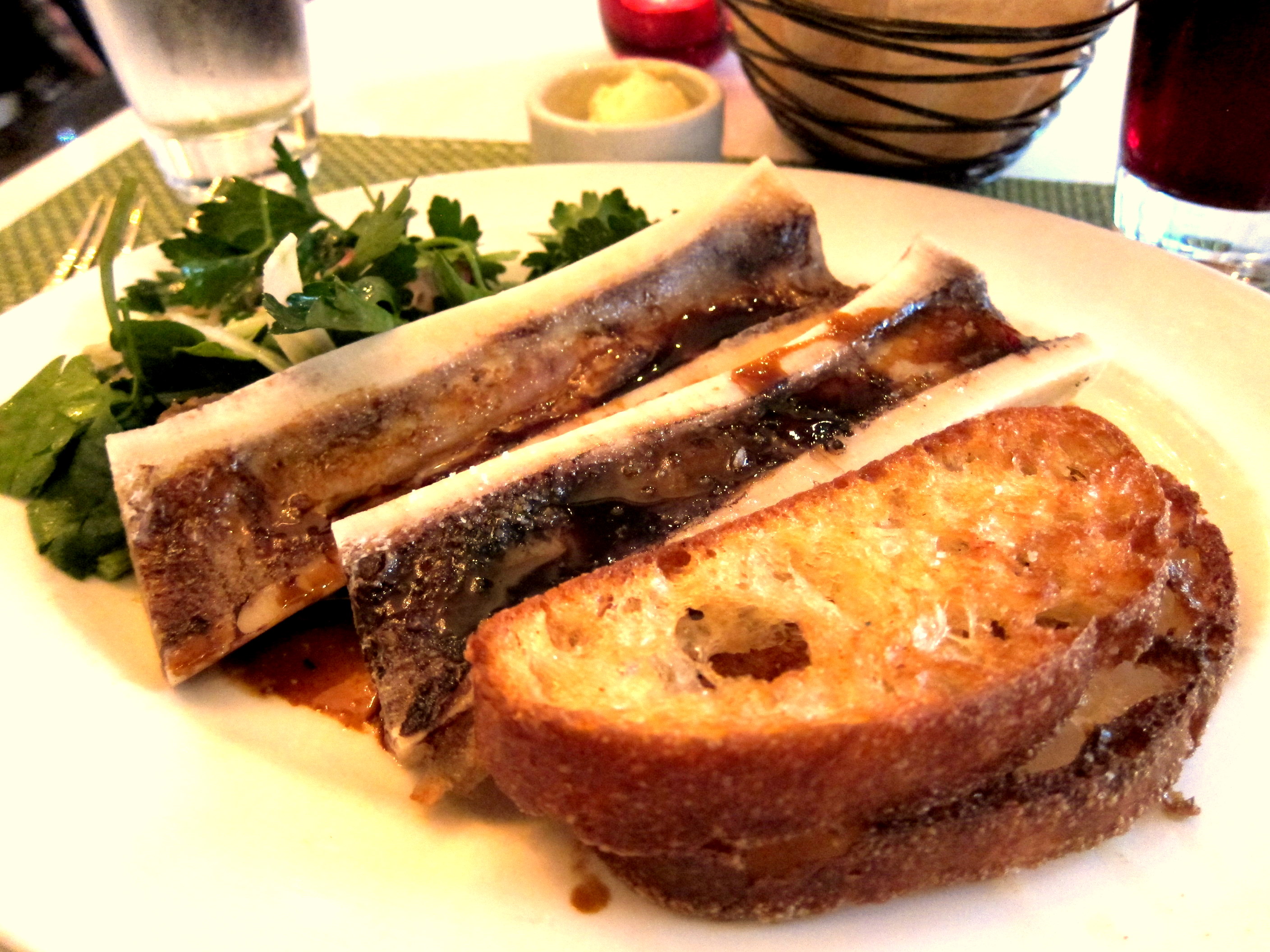
Appetizer: roasted bone marrow on crunchy fried bread with parsley and pickled shallot salad ($9). The bone marrow is rich and fatty, as expected from a cow leg bone. The salad is dressed in a light bordelaise, sweet, taut, and feisty. The fried toast is a guilty pleasure.


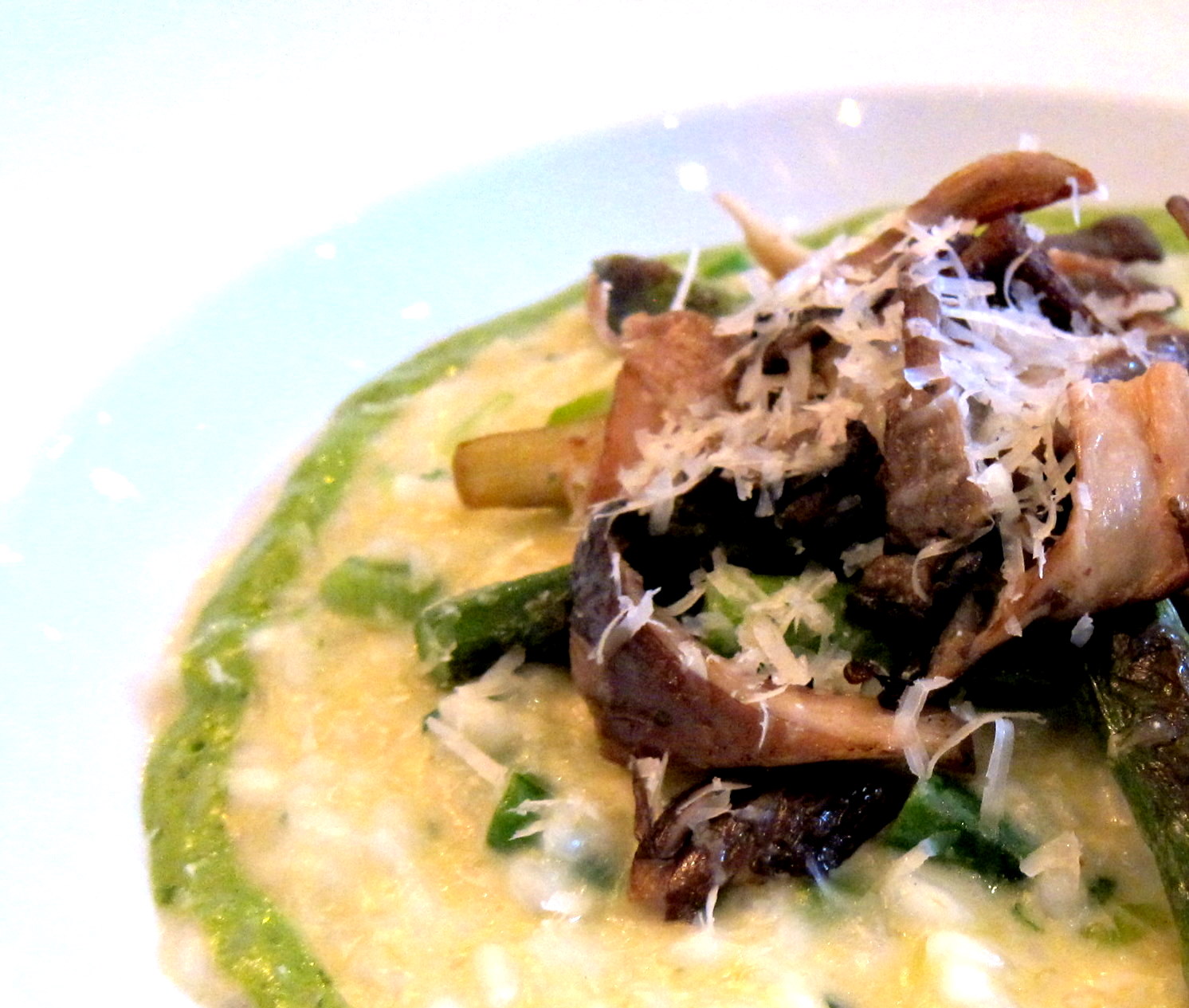
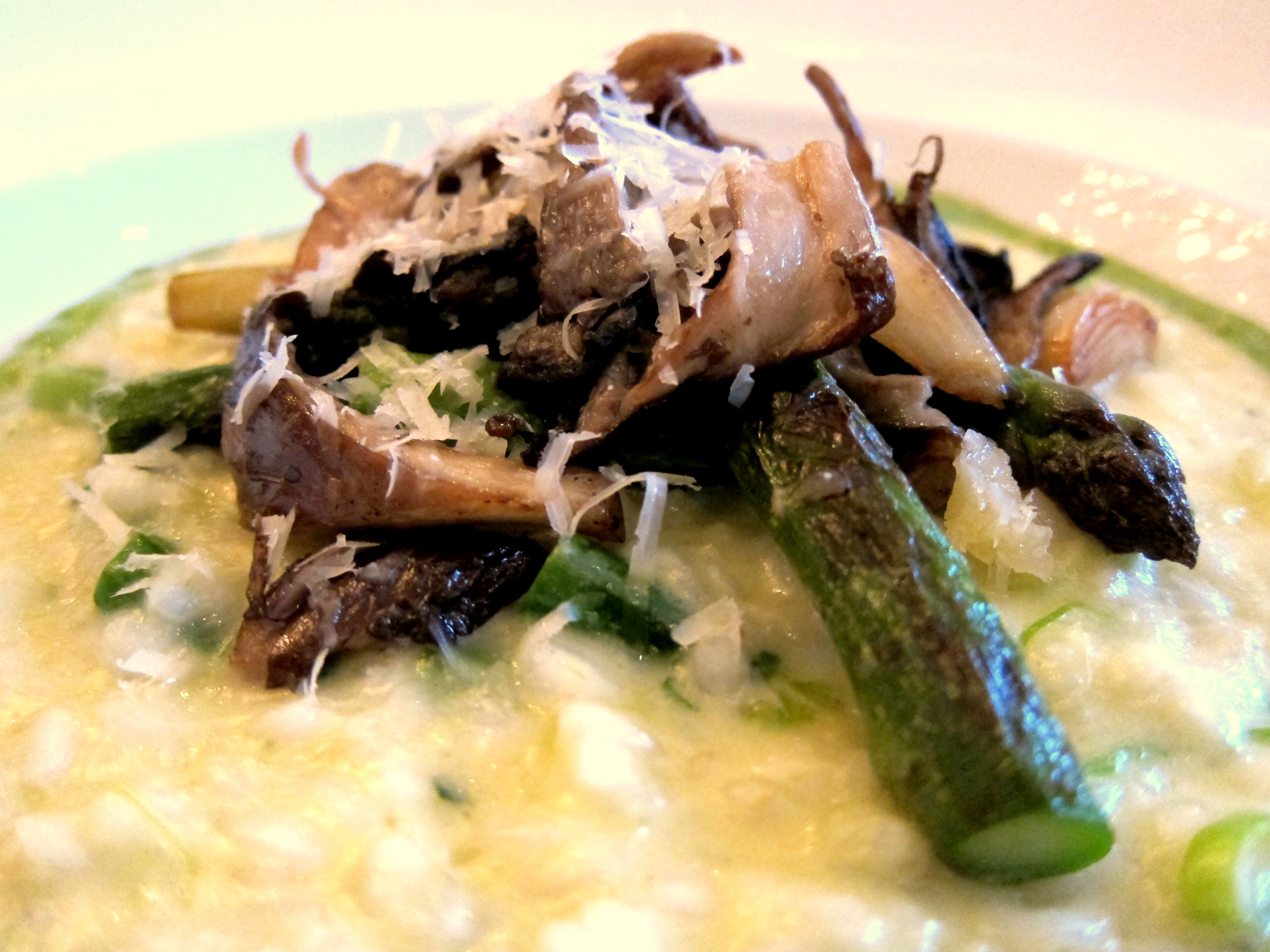
Main: creamy green garlic risotto with grilled asparagus, oyster mushroom, shallot, and pesto aioli ($16). The ladies next to me got the prix fixe, which also featured this risotto with shrimp, and they kept complimenting how good it was. The charred, salted touch of the vegetables is the highlight.


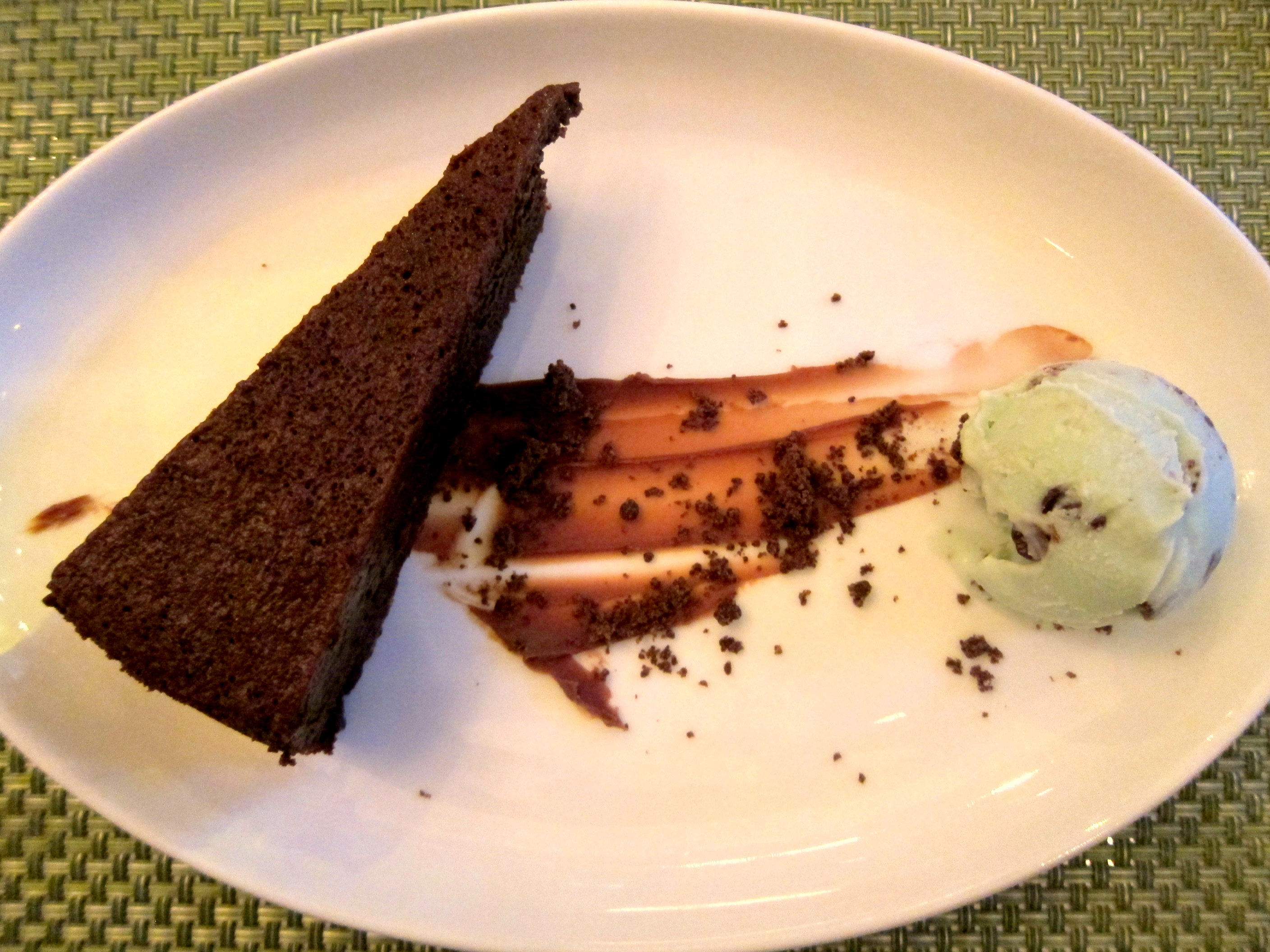
Dessert: dark chocolate torte with a milk chocolate ganache and mint chocolate chip ice cream ($8). I asked my server what was the least sweet desserts tonight (the other choices were butterscotch pudding, walnut carrot cake, and coconut cream pie), and he suggested this torte. It is rich, but it is indeed not too sweet. My only complaint is that the ice cream scoop is too far away from the cake, making it difficult to get both cake and ice cream in one bite. At the end, I had a puddle on my plate.


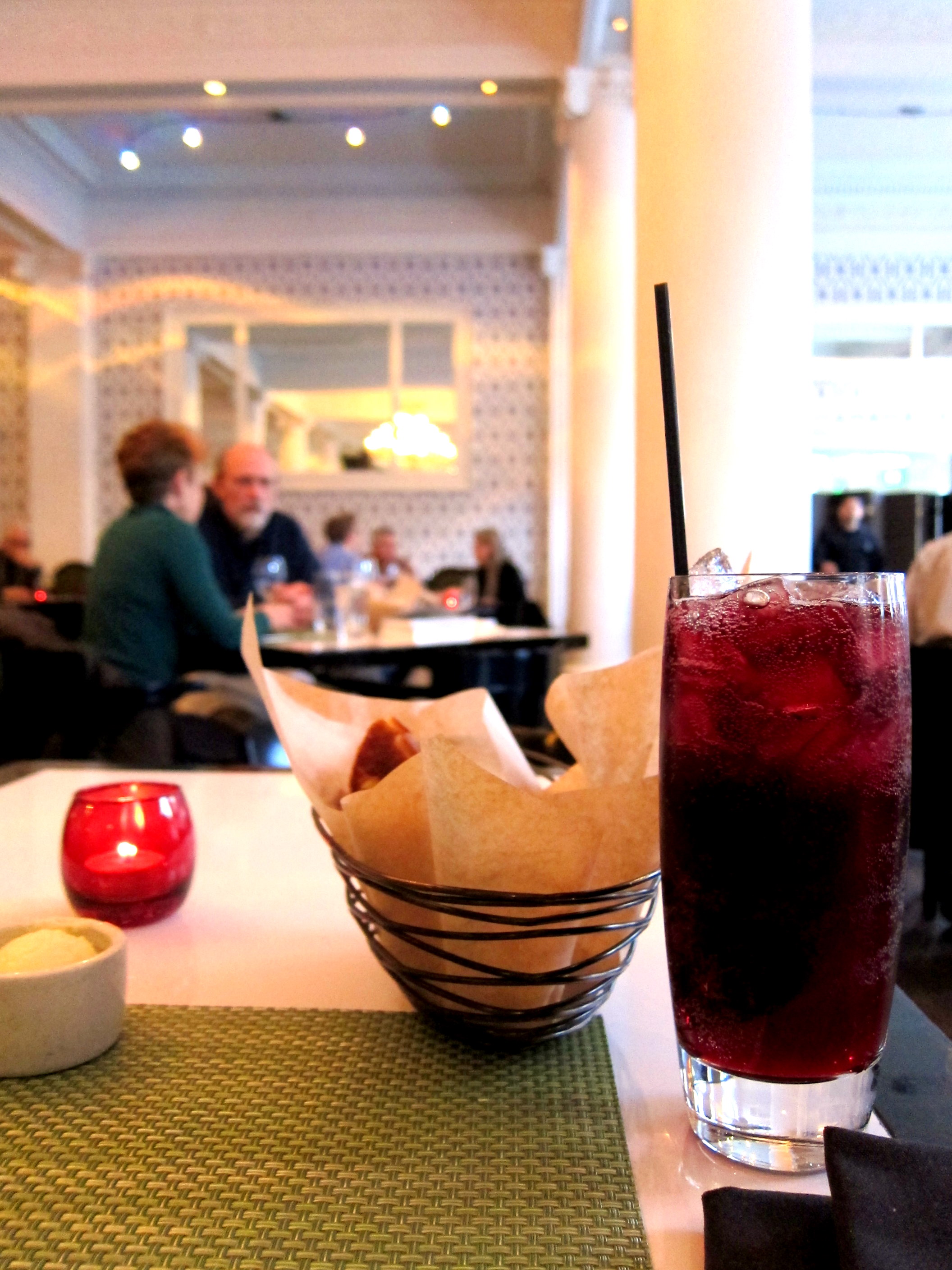
The starter bread is crunchy on the outside, soft and airy on the inside, and perfect without butter. Now that I think about it, FIVE must be quite good with breads: waffle, starter bread, and the fried toast with bone marrow are proof. Because the restaurant had run out of pear sparkle, I might have made a mistake ordering the blood orange sparkle instead of the apple kind; I also chose the pretty simple stuff, nonetheless, it was a pleasing meal. So the more interesting things like monkfish wrapped in prosciutto or herb roasted pork loin might be even better. 😉

Address: FIVE Restaurant and Bar
2086 Allston Way,
Berkeley, CA
(510) 225-6055

Money matter: 3-course dinner for one – $40.28

Rustic Italian in the old tavern

January 14, 2012 By: Mai Truong Category: Comfort food, Houston


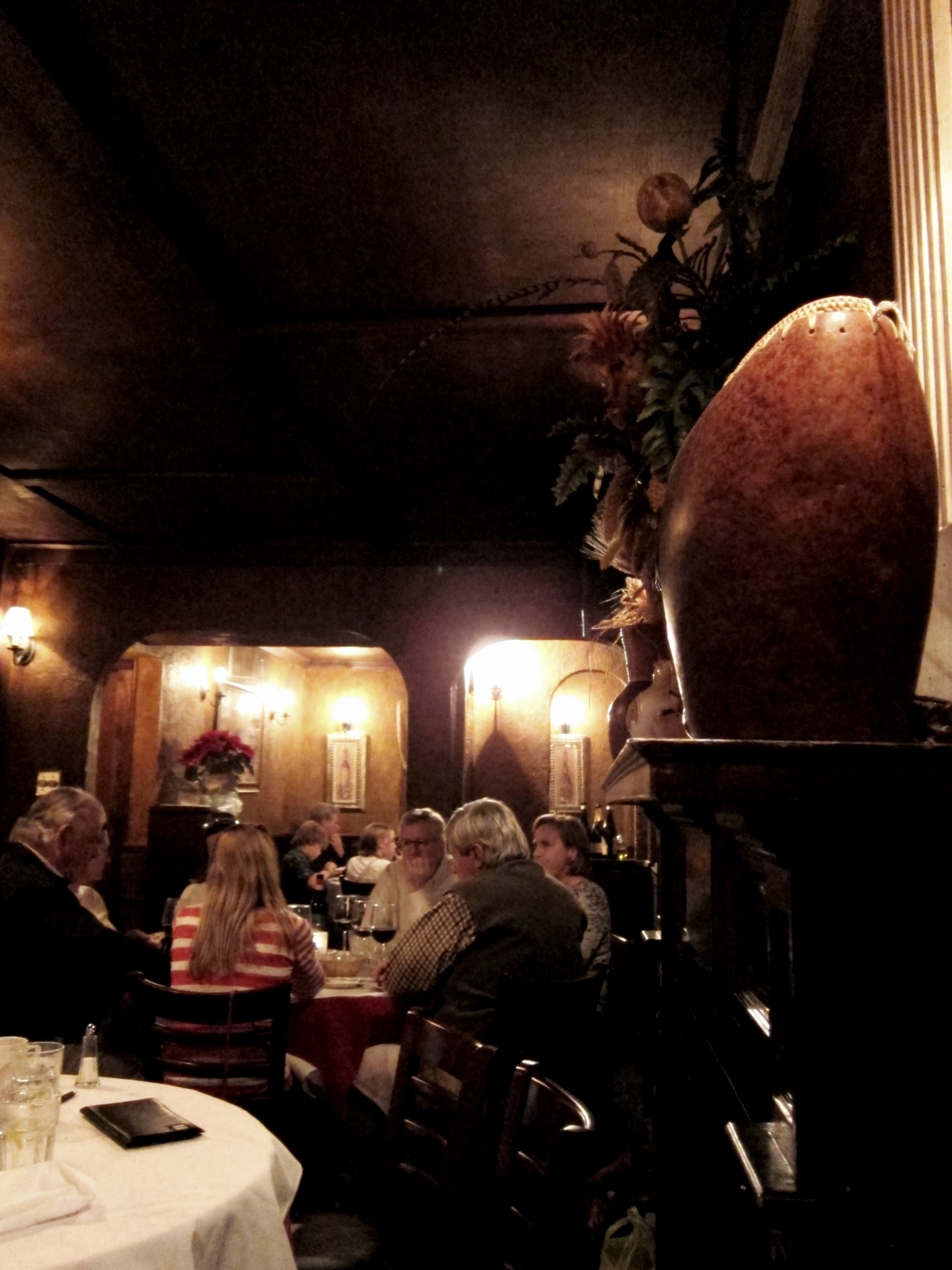
The 7-year-old Antica Osteria is much too young to be one of “the nurseries of our legislators”, but it sure feels like one: warm brick walls, dark wood work, an old house nested in the green, sleepy residential area northwest of Rice University, and a patronage mainly composed of old white men. The smell of books might have been replaced by the smell of pasta and cheese (this place was previously a bookstore), but Chef Velio Deplano and his partner Ray Memari have kept Antica Osteria in that hidden, rustic, peaceful feeling of a bookstore. The gentle orange light made me excited like a drifting sailor seeing a lighthouse.


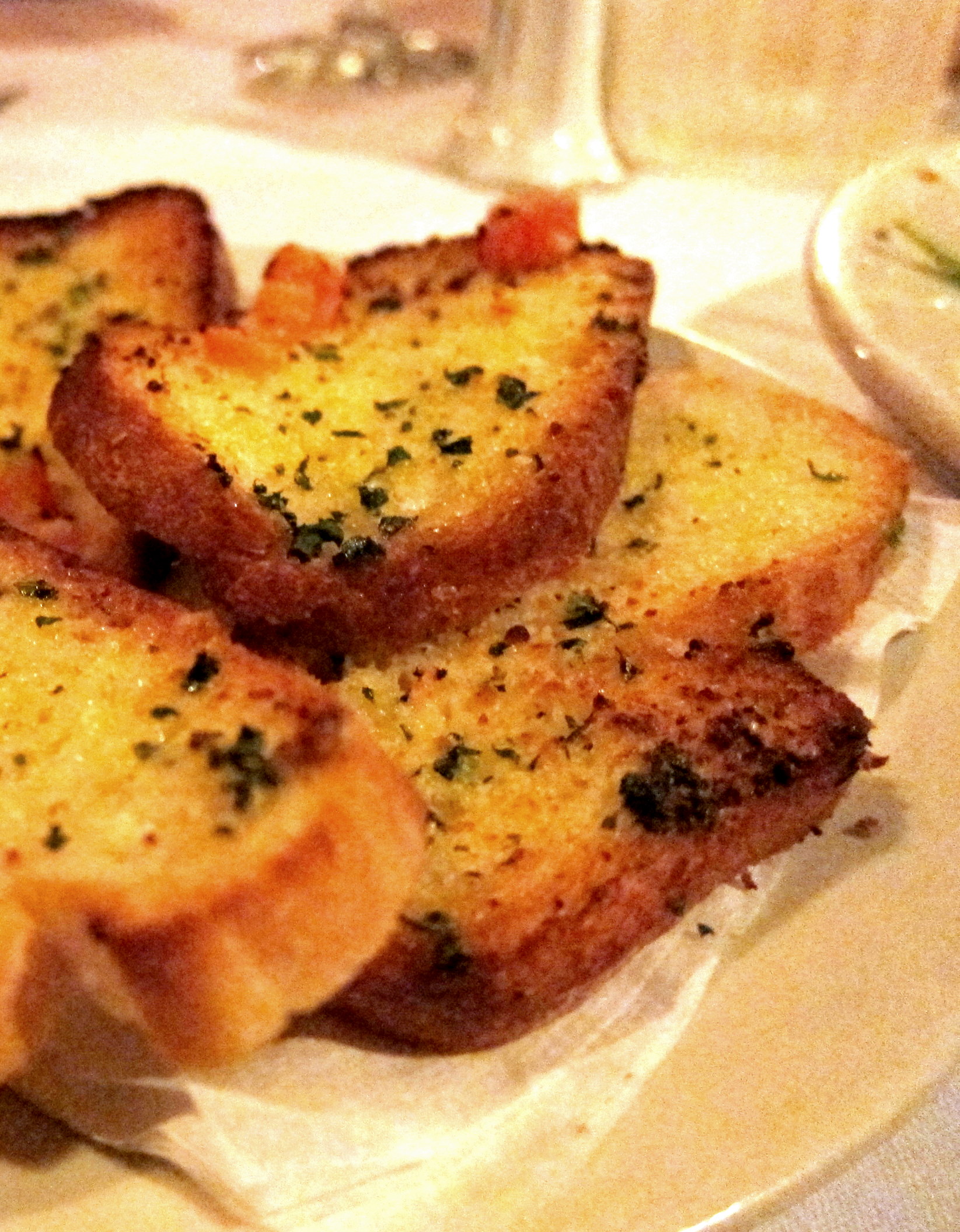
Normal bread and butter, not bread, vinegar and oil, accompanied our post-ordering conversation, followed by some airy garlic bread. A tiny voice in some little corner in my mind whispered that the garlic bread was waiting for the salad to travel down the pipe, but who could resist such beautiful orange color. We made sure that the garlic bread’s presence on the table was as fleeting as its texture. 😉


The insalata campagnola was great by itself anyway. The buffalo mozzarella, plain with a nutty lightness of marshmallow, deems superior to mozzarella from cow milk. I grew up hearing that water buffalo meat is leaner and “whiter” than beef (as in white meat vs. red meat, no racist joke here), so I was appalled to learn that water buffalo milk is much richer (higher levels of protein, fat, and minerals) than cow milk. (To produce 1 kg of cheese, 5 kg of water buffalo milk is needed versus 8 kg of cow milk.) The richness really doesn’t show in this cheese ball though, it’s like eating air.


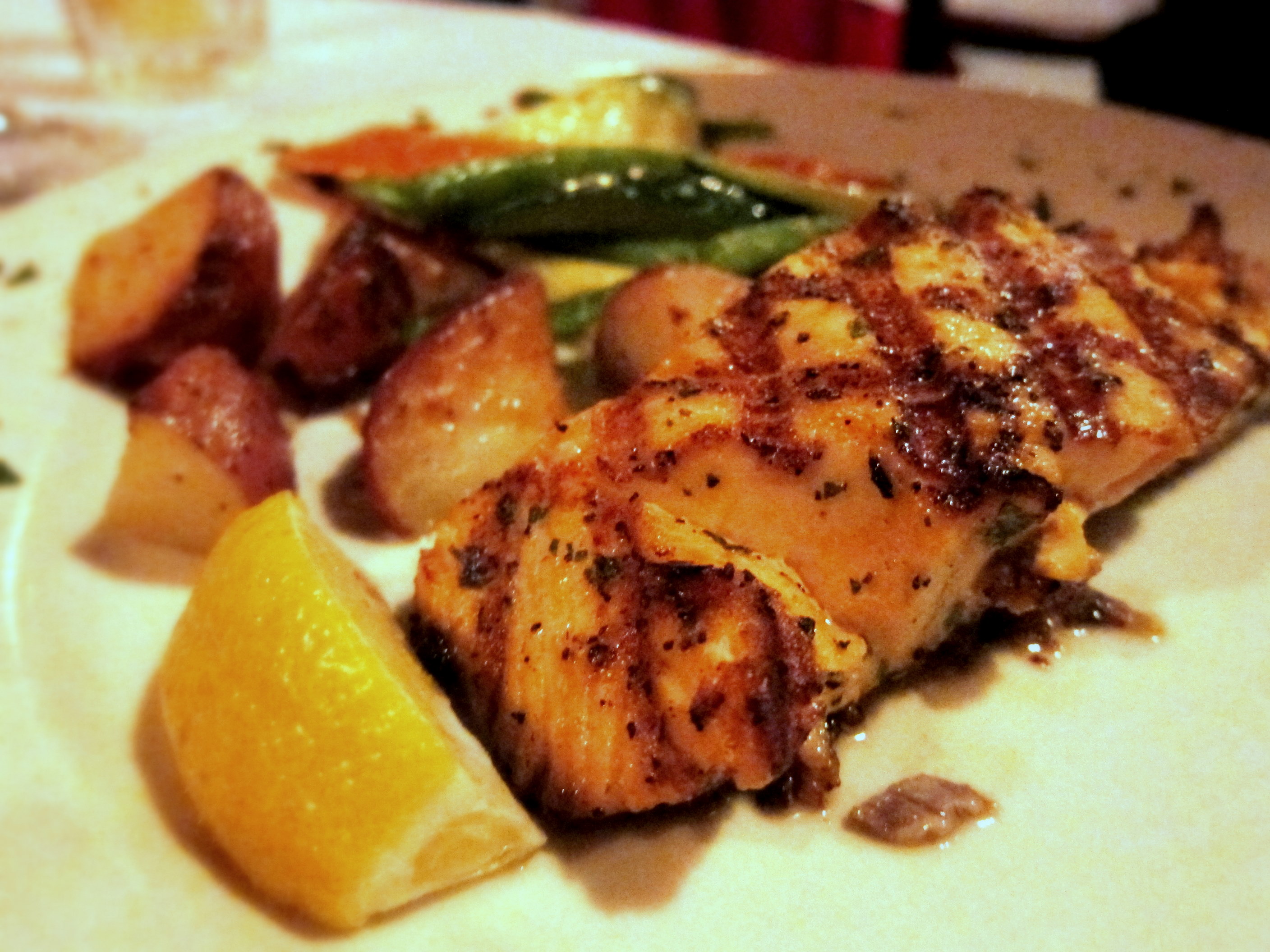
I guess Varun didn’t feel particularly adventurous that day, as if one could ever be adventurous in an Italian restaurant, seeing that he got grilled salmon. As long as he’s happy…


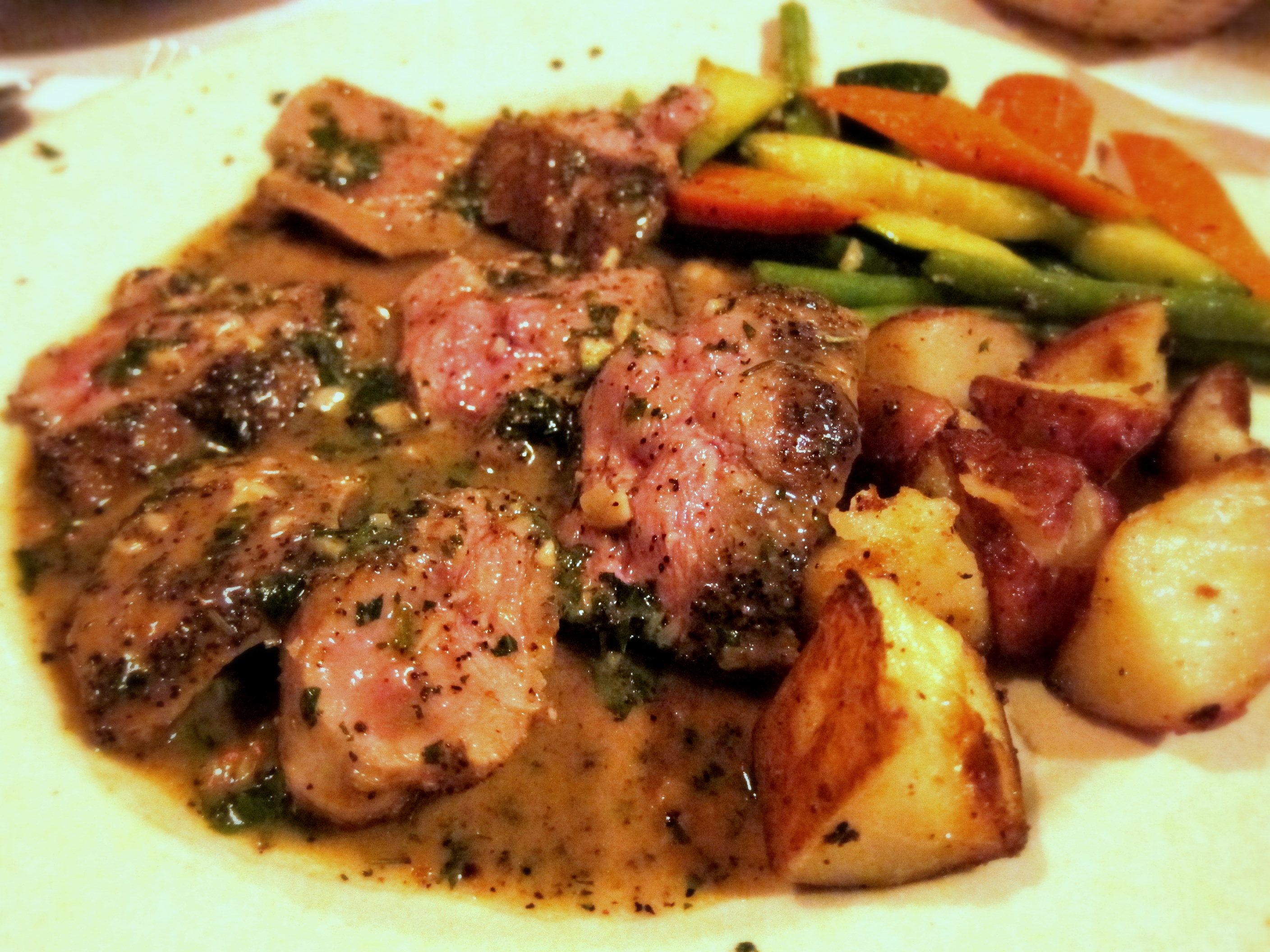
I got petto d’anatra al pepe nero (black pepper pan-fried duck). It’s good, but again, not adventurous either.


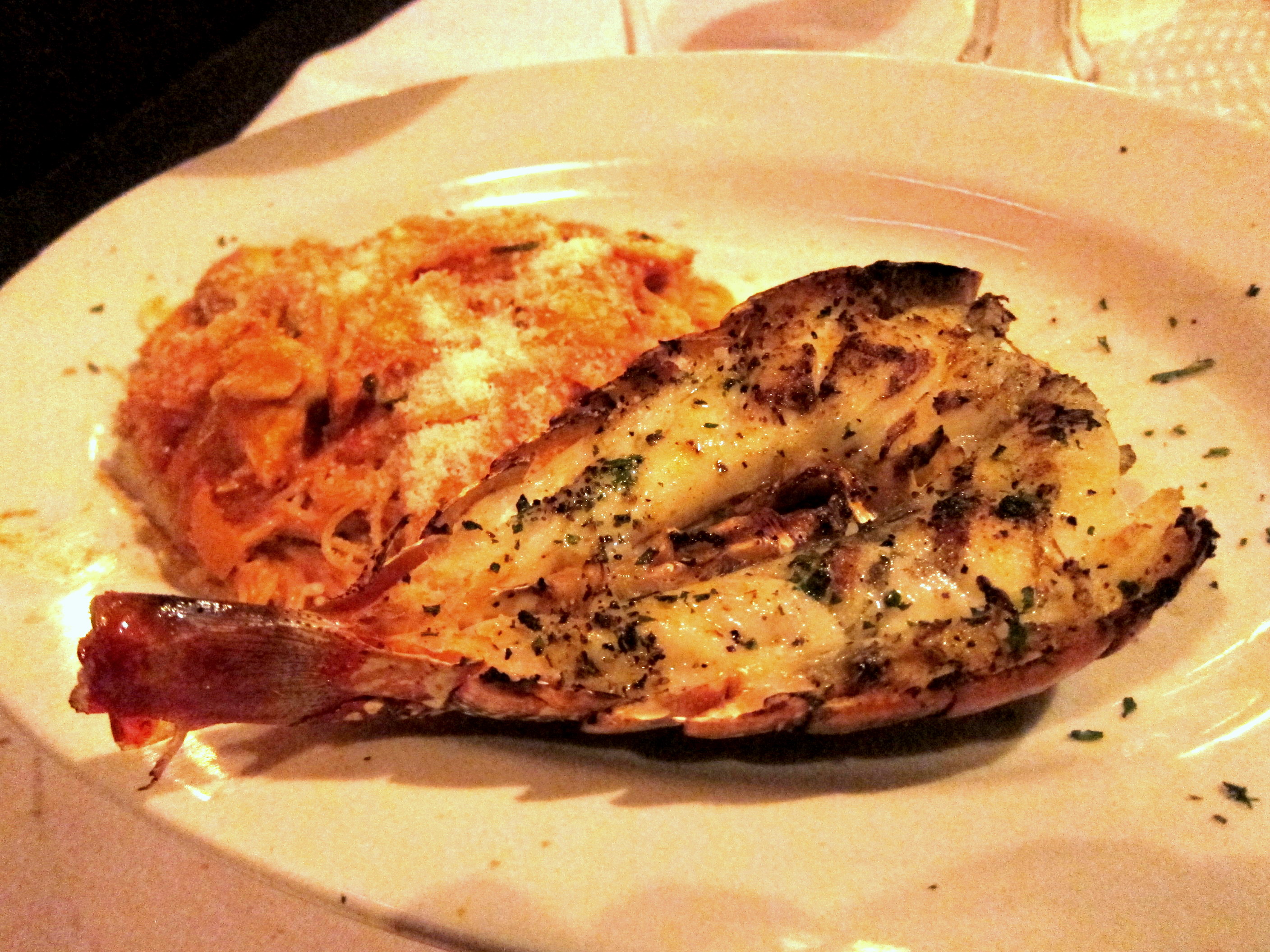
The most exciting thing of the night was Aaron’s choice, also a special del giorno: cappellini aragosta, or angel hair pasta with lobster. Not that it was anything few people dare to eat, but the battle between Aaron and the lobster tail was captivating. Battle Aragosta. I can imagine directing a dinner date scene where the heroine of my movie has such trouble eating lobster and the guy finds it both uncouth and endearing at the same time. 😀 That said, I never order lobster.

Address: Antica Osteria
2311 Bissonnet
Houston, TX 77005
(713) 521-1155

Dinner for three: $95.26

Year in, year out, savoring the savoriest of pork

December 31, 2011 By: Mai Truong Category: Comfort food, One shot, Southern Vietnamese


If you had to choose, what is the most Vietnamese dish? If you are a Vietnamese expat, what would make your mouth water the most just thinking about? What is the food, the smell, the taste that when you see or hear some stranger is savoring, you’d immediately think, “hey, he must be my fellow countryman”?

One of my friends lives in Freiburg, Germany. There is one Vietnamese restaurant 1 km away from the University, der Reis-Garten, and it is the only Vietnamese restaurant in a 40-km radius (the next one is across the border: Le Bol d’Or in Wintzenheim, France). For over 6 years living away from home, he survived on pasta and tomato sauce, students don’t have time. One day, external circumstances have finally driven him to decide that he no longer needs to suppress his cravings out of consideration towards his Germanic housemates. He bought a bottle of fish sauce. The next day he made thịt kho. That makes it official: he’s Vietnamese, and he hasn’t forgotten it.


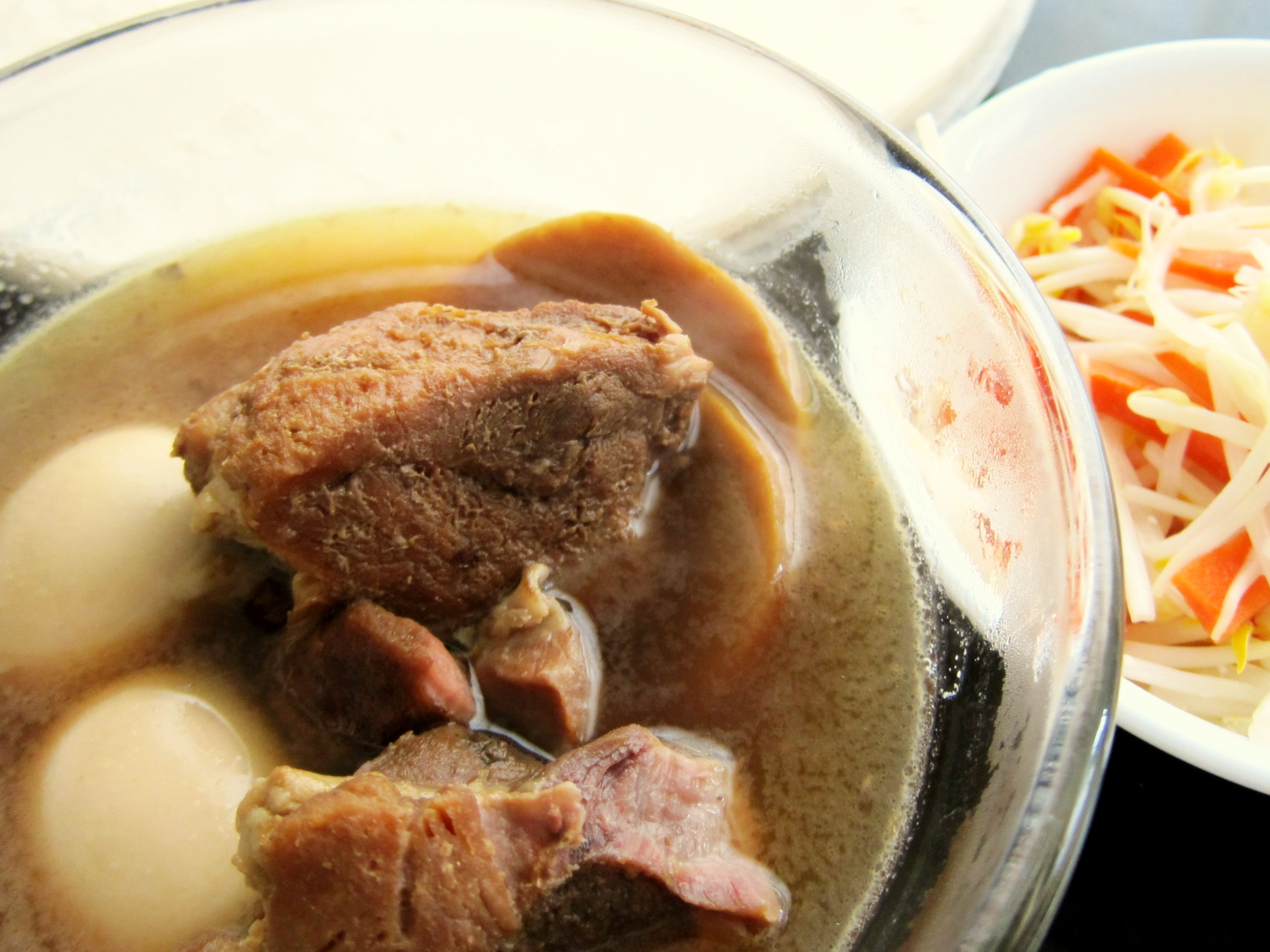
“Success?” “Did you add coconut juice?” “Do you have eggs in the pot?” “Do you have chả lụa too?” The questions come showering on Facebook. We cheered him on with the same salivating imagination no matter which region of Vietnam we are from and where we are living: the fatty chunks of pork so tender that a plastic chopstick can cut through, the amber sauce, with which the hard boiled eggs are imbrued from yolk to white. The fatty, sweet, and salty pork must be freshened up with the crunchy, sour, cold dưa giá (pickled beansprout). The pure fish sauce makes an intoxicating savory smell that permeates the whole house, seeps through the window into the courtyard to the next door neighbor, induces a Vietnamese to lick his lips thinking of his mother’s meals and perhaps, a Westerner to cringe. But why should a cringe matter? The pure fish sauce deepens the savoriness of the meat sauce, making it the best thing to pour over a steamy bowl of white rice. My friend said all he need is this amber meat sauce and dưa giá to down a few bowlfuls. Of course, I agree.

The first weekend I got home, Little Mom sat me down in front of thịt kho, dưa giá, rice, and rice paper. All kinds of rice papers come from all over Asia, but those are for calligraphy and painting. Edible rice paper comes from Vietnam and Vietnam only. A pet peeve of mine is getting served those “spring rolls” made with wonton wrappers in American Vietnamese eateries, like a lumpia. A Vietnamese spring roll must be rolled with the translucent, veil-thin, made-of-rice-flour rice paper. Rolling it with any other kind of wrapper is an unpatriotic insult to Vietnamese cuisine. Anyway, my mom sat me down in front of her succulent slow braised pork, pickled beansprout, rice, and rice paper. Then she said go for it, and boy did I go. I made little wraps of pork and sprouts to dip into the sauce. I poured the sauce over rice. I dipped plain rice paper into the sauce. I made some more wraps and filled another rice bowl. It’s almost barbaric. The comfort of an old country taste is multiplied by the comfort of home. The eyes and tongue are no longer the principle critics, but all five senses are involved: the smell of the sauce, the sound of the sprouts collapsing between bites, the delicate touch much needed in rolling the rice paper. Each bite I took embodied the ordinary, simple, honest Southern cooking and the skillfully honed tradition of hundreds of years: thịt kho is a must-have in our Tet feast, like the turkey at Thanksgiving, the songpyeon on Chuseok, or the ozoni for Shogatsu. Well, it’s not Lunar New Year now, but it is a New Year. Maybe I’ve grown old, but I find that nothing beats celebrating the holidays at your family’s dinner table with family comfort food. 🙂

As I’m writing this post, the fireworks are going off right outside the windows, talk about food setting off fireworks ;-). Happy 2012! And may Vietnam be delicious always! 🙂

The trick to a good bowl of Mongolian grill

November 28, 2011 By: Mai Truong Category: Comfort food, Houston, One shot


Great Khan is big, clean, American-looking, and in Houston. Little Mom took me here. It’s an ideal place to get glutton and gain some weight, that probably was her intention for me. The idea is splendid: ~$8 for the first bowl, which includes a small bowl of meat, a small bowl of vegetables, rice or noodle of choice (or both), and an extra $2 for unlimited extra food if you’re still hungry. The “wok” masters gather at the big grilling platform in the middle (no wok), waiting for you to hand over what you think would constitute the best bowl of Mongolian grill. Confronted by rows of shining vegetables and meats and a dozen kinds of sauces, you’re tempted to pile and press as many different things as possible into the little bowls. Over the years, I’ve had my share of stirfries (a Mongolian grill is really a stirfry). To put it more bluntly, I’m Vietnamese, I know stirfries. Truth is, a good stirfry is a simple stirfry.

0. The starch: choose thin rice vermicelli
That stuff soaks up the sauce the best and meshes well with other things texturally. Thick noodle would be too bland and oily. Rice would be too crumbly.

1. The meat: choose pork.
If you’re vegan, don’t choose tofu. In my last post I claimed tofu was the coolest of the cools, but in a stirfry, the tofu can never soak in enough sauce for the life of it.
Fish is a no-no.
Chicken is too dry. Beef is too tough.
Shrimp and squid: okay.
If you don’t eat pork, you might as well be vegan.

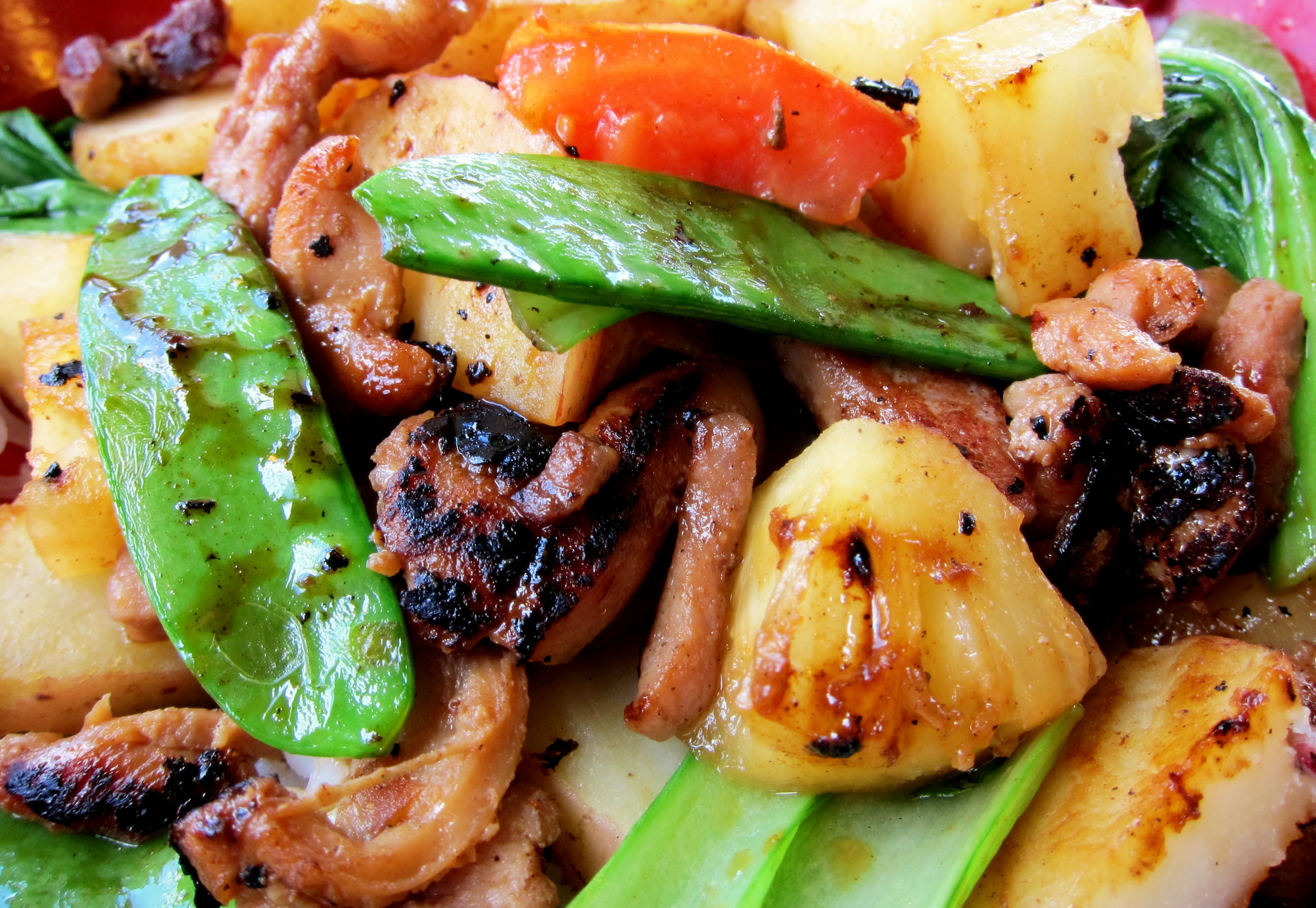
2. The vegetables: get pineapple.
Pineapple isn’t a vegetable, but the point is it’s good. It’s the best thing in stirfries. I’d forsake the pork for the pineapple. Its tart sweetness enlivens the taste buds, its juice keeps the rice and the noodle moist, its acidity tenderizes the meat.
Don’t get: broccoli (takes up too much room of your specious little bowls), waterchesnut, snap pea, carrot (too crunchy, discordant texture), mushroom (too chewy), beansprout (too long and stringy), tomato (pretty, but good for nothing)
Do get: sweet onion, potato, garlic, bokchoy

3. The sauce: choose anything with soy and garlic.
A stirfry is no stirfry without garlic. Avoid the sweet and sour, it tastes artificial. If you got pineapple, you got the sweet-and-sour part covered.

When our hostess brought the bowl, all steamy and tossed and glistering with flavors, I smirked in my head: meh, I’ll definitely have to go for seconds. But the seconds never got to see the light of day, because after one such serving I only had room for one thing: more grill, or dessert, and dessert won.


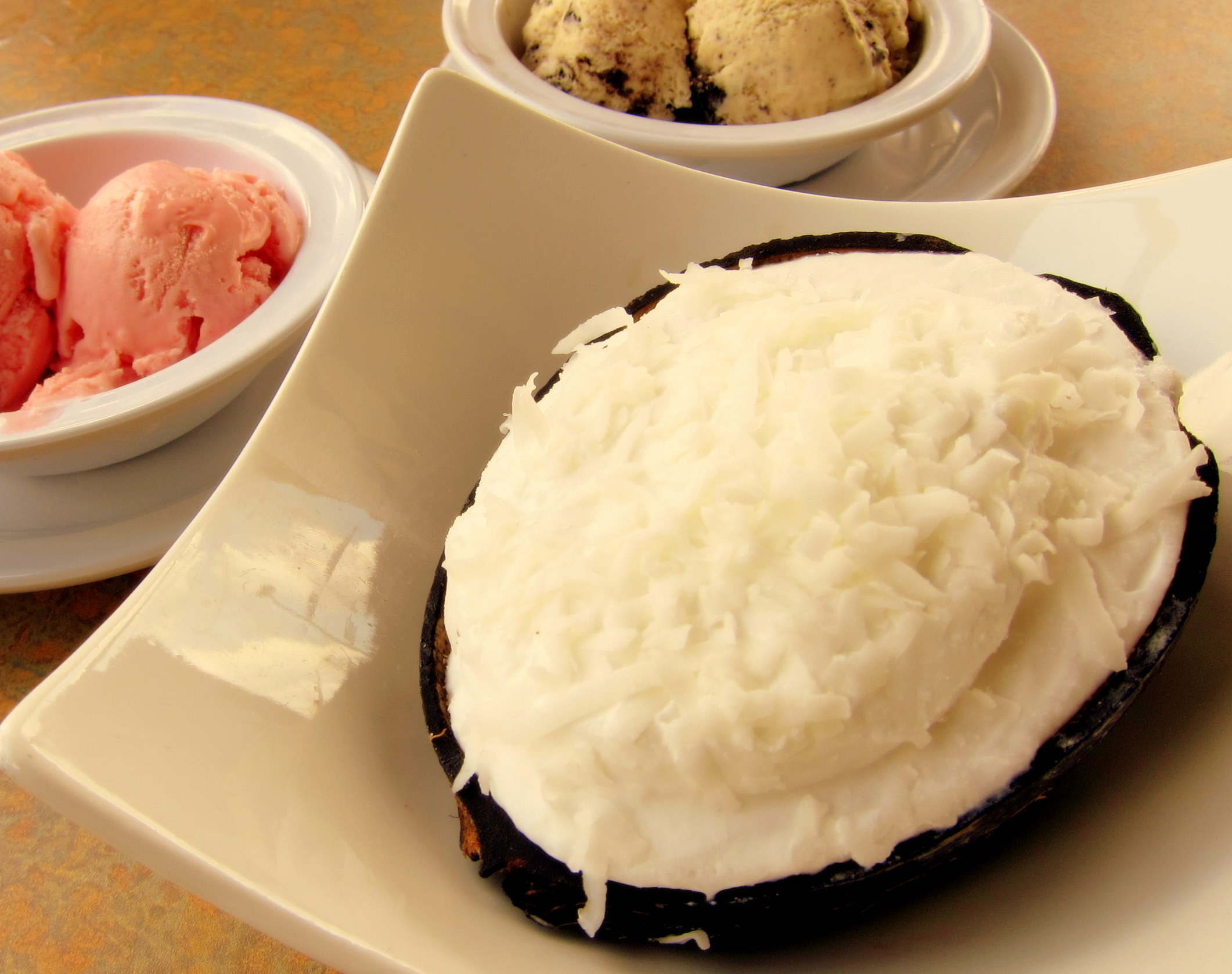
4. Dessert: get the coconut sorbet with coconut shaving. It’s heaven in a coconut shell.

Address: Great Khan Mongolian Grill
2150 South Highway 6 #200
Houston, TX 77077
(281) 531-1122
Lunch for three: $32.39

The unpredictable Myung Dong

October 16, 2011 By: Mai Truong Category: Comfort food, Houston, Korean, noodle soup


Unpredictability #1: “Are you opened today?”
Before you set your GPS to Myung Dong in Houston, make sure you call and ask that question in the clearest, simplest way possible. Aaron tried different versions, most were a bit too elaborately polite with a perfect American accent, and only succeeded in confusing the poor old man. I tried it once and got the answer “Yes, open.” We hopped en route.


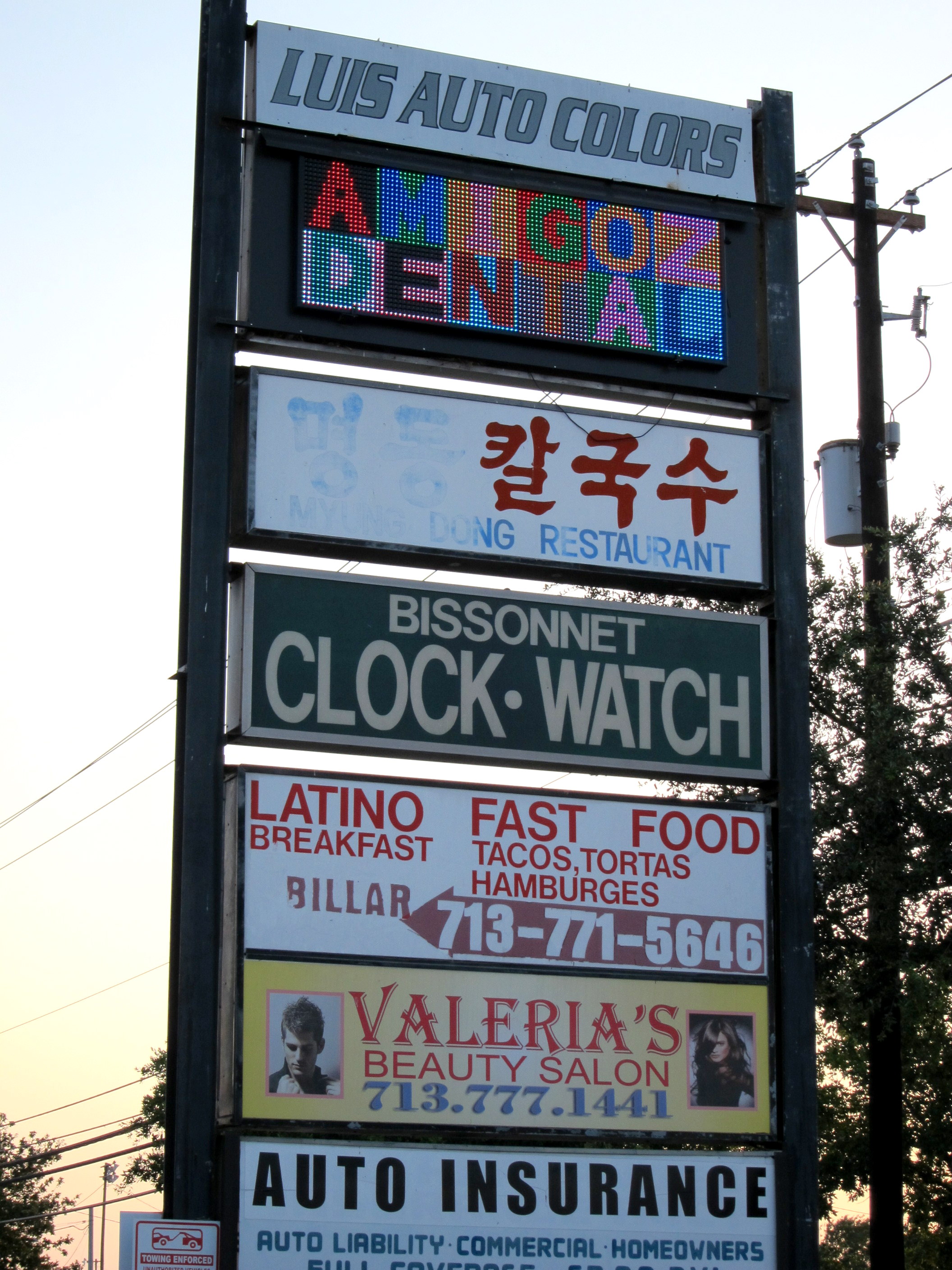
(If you don’t call, there’s a slim chance that your schedule will coincide with the owner couple’s schedule, which depends on the lady’s health, and she’s the only chef. That slim chance didn’t happen for me the first time I set out for Myung Dong.) The limited English conversation is nothing uncommon at Korean and Vietnamese mom-and-pop diners, but I have to mention it because it’s one of those things that make me classify Myung Dong as more “authentic” than the other Korean restaurants in Houston. The second thing is that its name doesn’t contain “Seoul” or “Korean”, they go more local: Myungdong (명동) is a part of Seoul (in Vietnam, its equivalent would be a phường). The third thing is that its name contains its specialty: kalguksu (칼국수). In fact, that’s the only part of the name still visible on the sign, the Myungdong part has faded completely, which explains why we couldn’t find it the first time (aside from the other fact that we couldn’t read Korean at the time)*.

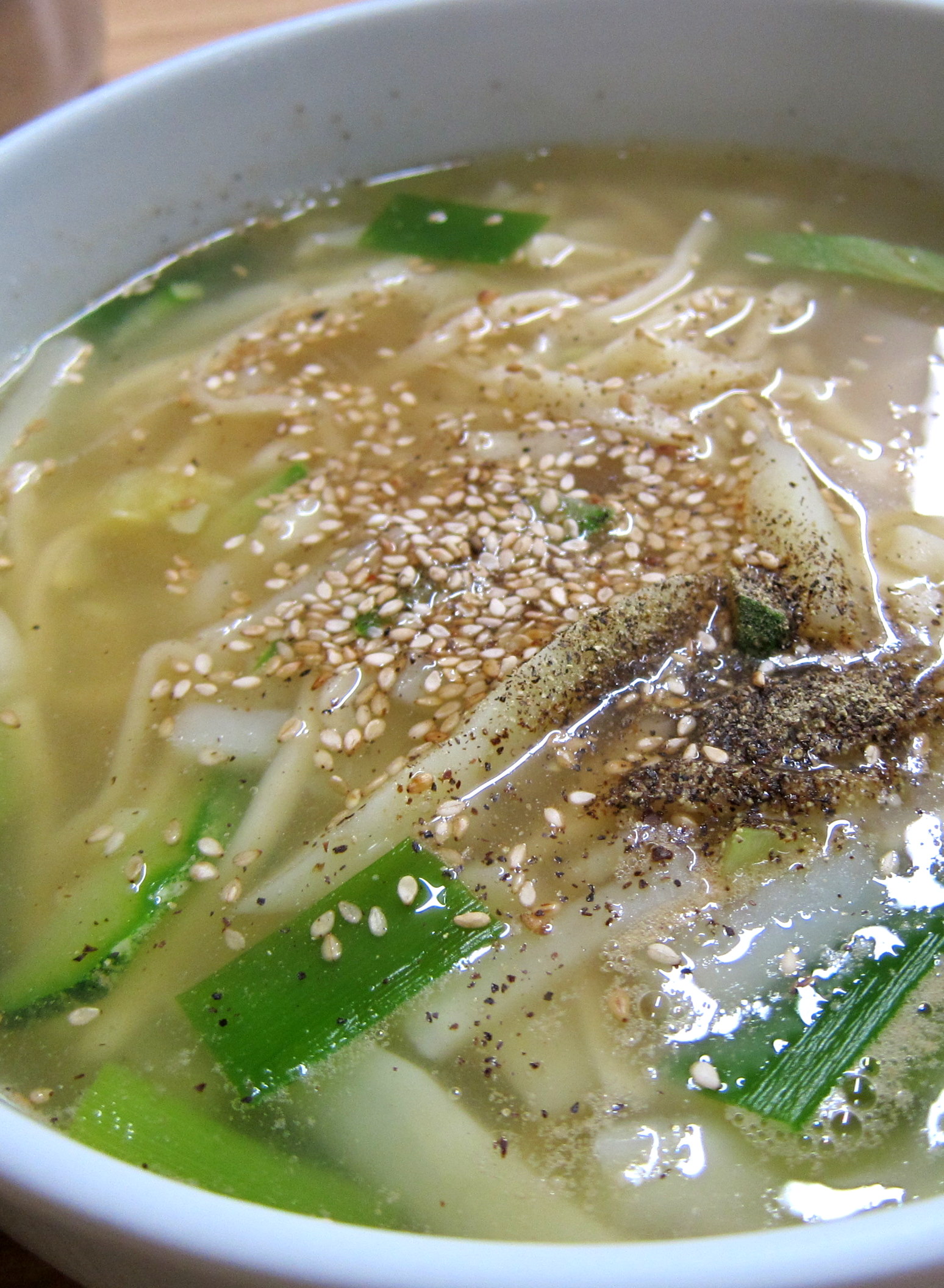
Of course we ordered it. It was the first kalguksu I’ve ever had. It’s a handmade, knife-cut noodle in soup, and this version has only noodle, broth, and vegetables. The broth was sweet and deep, the noodles were wonderfully chewy. But kalguksu is like fireworks, the first two minutes are great, then you ask yourself “just when is it gonna end?”. Now that I’ve had kalguksu, unless I get a two-minute-size bowl, I doubt I will gather enough curiosity for a second kalguksu in my life**.


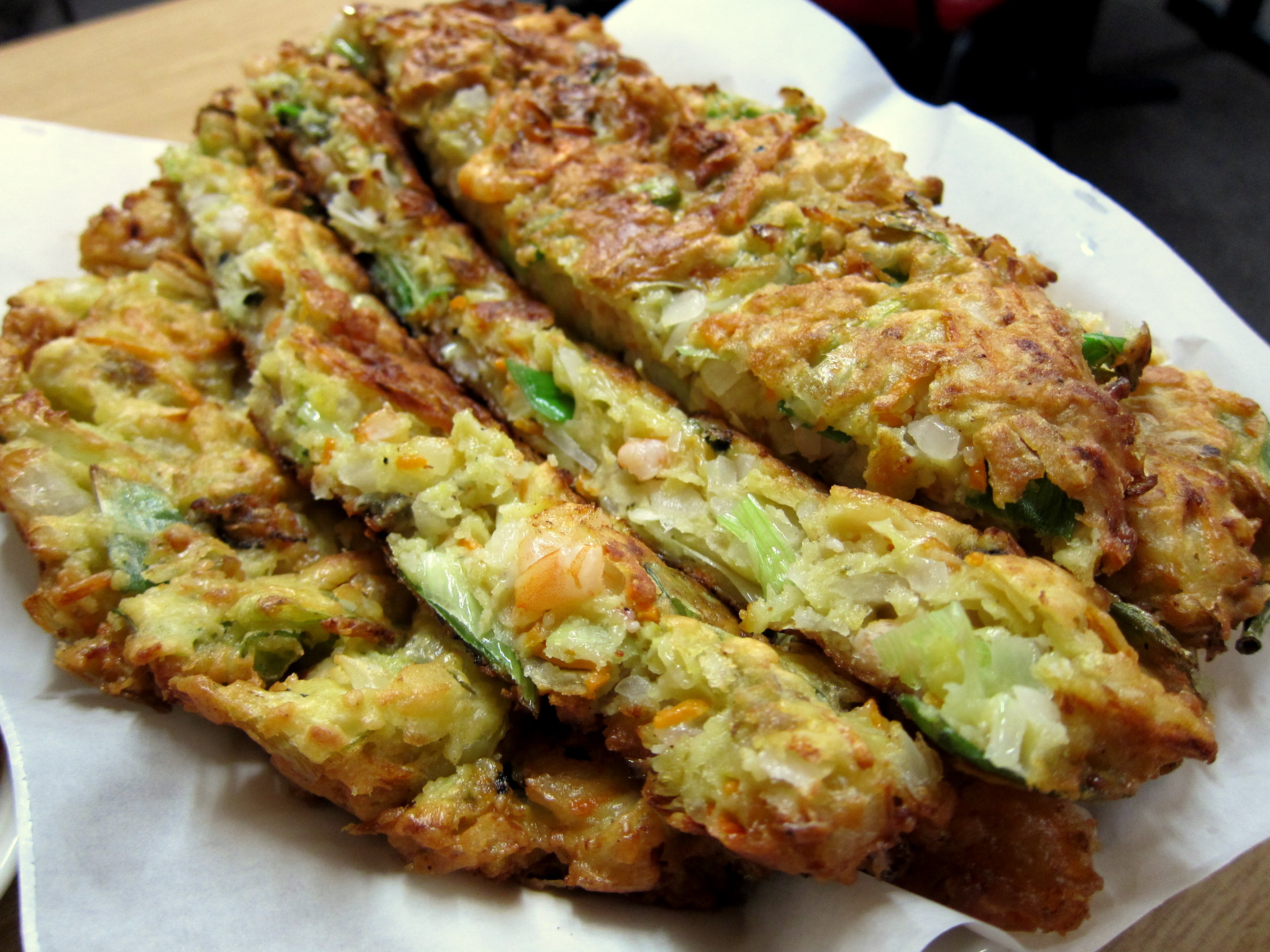
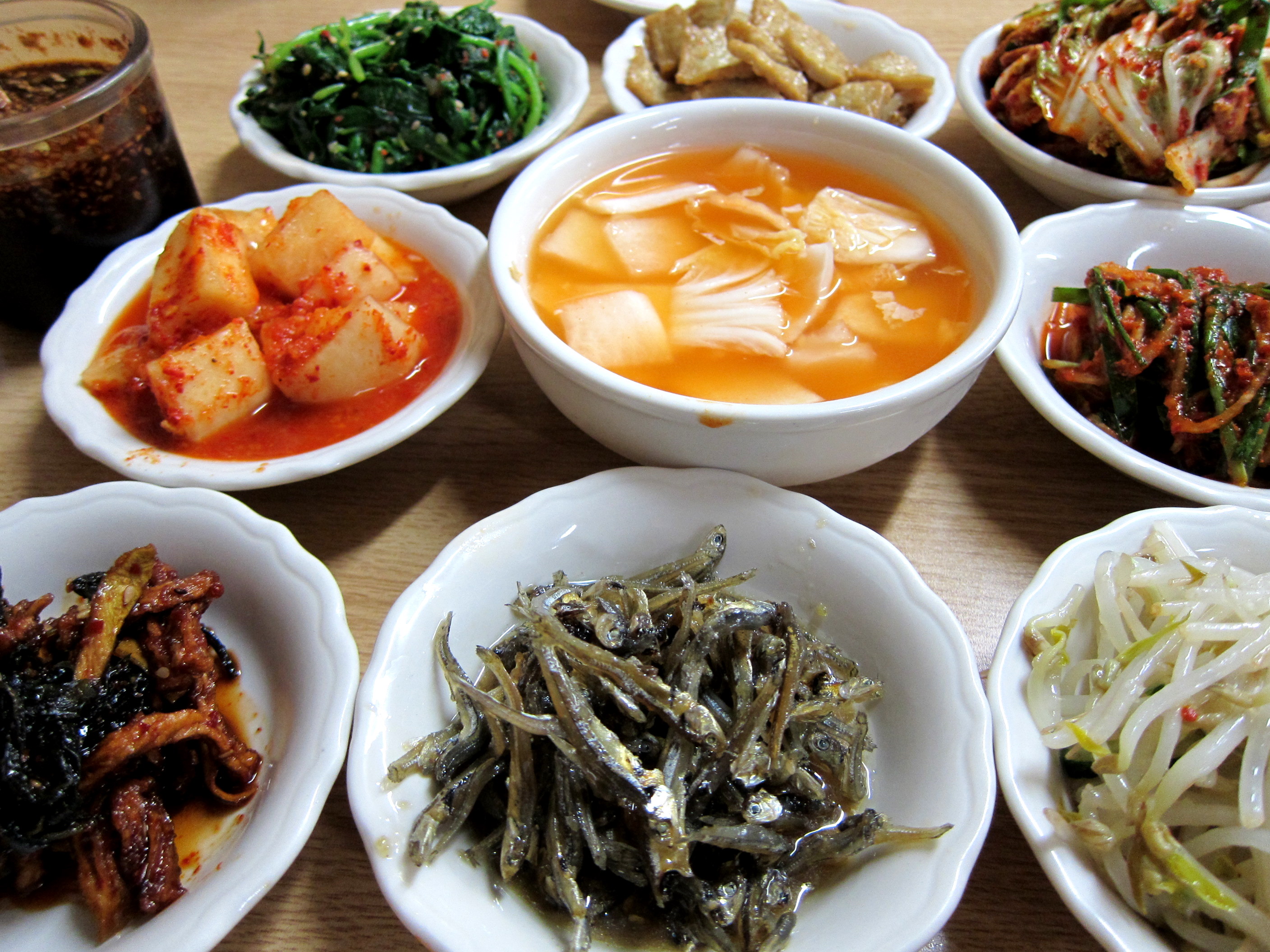
But kalguksu was still a memorable thing. In my Commis post I went off on the memorability of meals, and here I go again. Myungdong has something worth remembering: the portion (Unpredictability #2). Aaron and I each ordered a dish, him the kimchi duaeji bokkeum (김치 돼지 볶음, stir-fried pork with kimchi) and me the kalguksu, and we decided to share a pajeon (it was a really good pajeon too, thick, crispy, airy, and chewy, oh, and not oily). The usual banchans came. We were both starving like baby goats. Then the big stuff came, covering the whole table. A diligent hour later, in Aaron’s words, “it looks like we hadn’t eaten anything at all”. We looked at the old man with hopeful eyes, for boxes. Many boxes. Also in Aaron’s words, “he’s quietly laughing at us: gotcha, foreigners, didn’t know what you were getting into, did you”. He did laugh with us, a very congenial laugh of old men, as he poured the goods into the containers and loaded the containers into a cardboard box. Aaron had enough food for the next week. And Aaron is no timid diner.


Address: Myung Dong Kalguksu
6415 Bissonnet St
Houston, TX 77074
(713) 779-5530

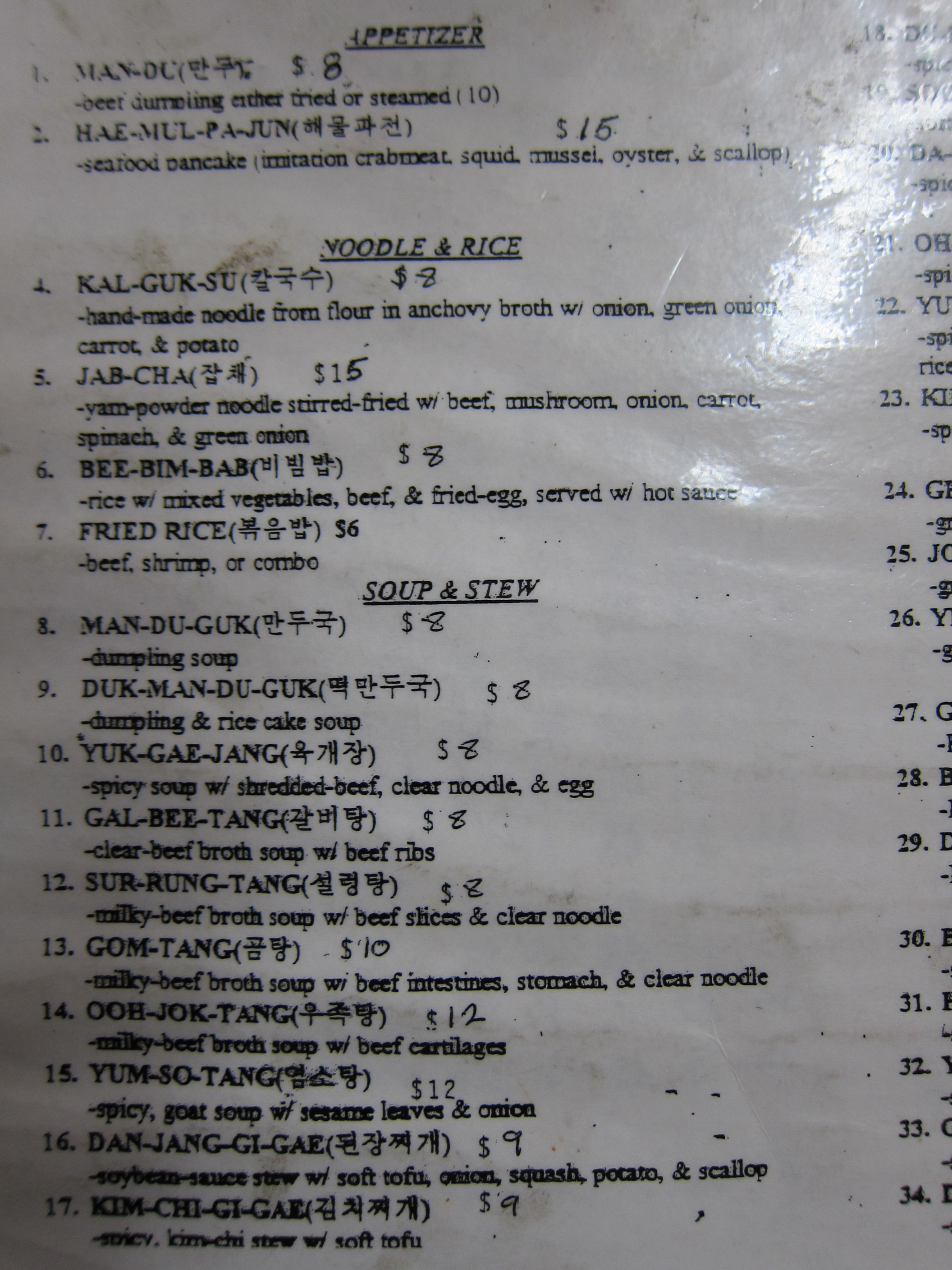
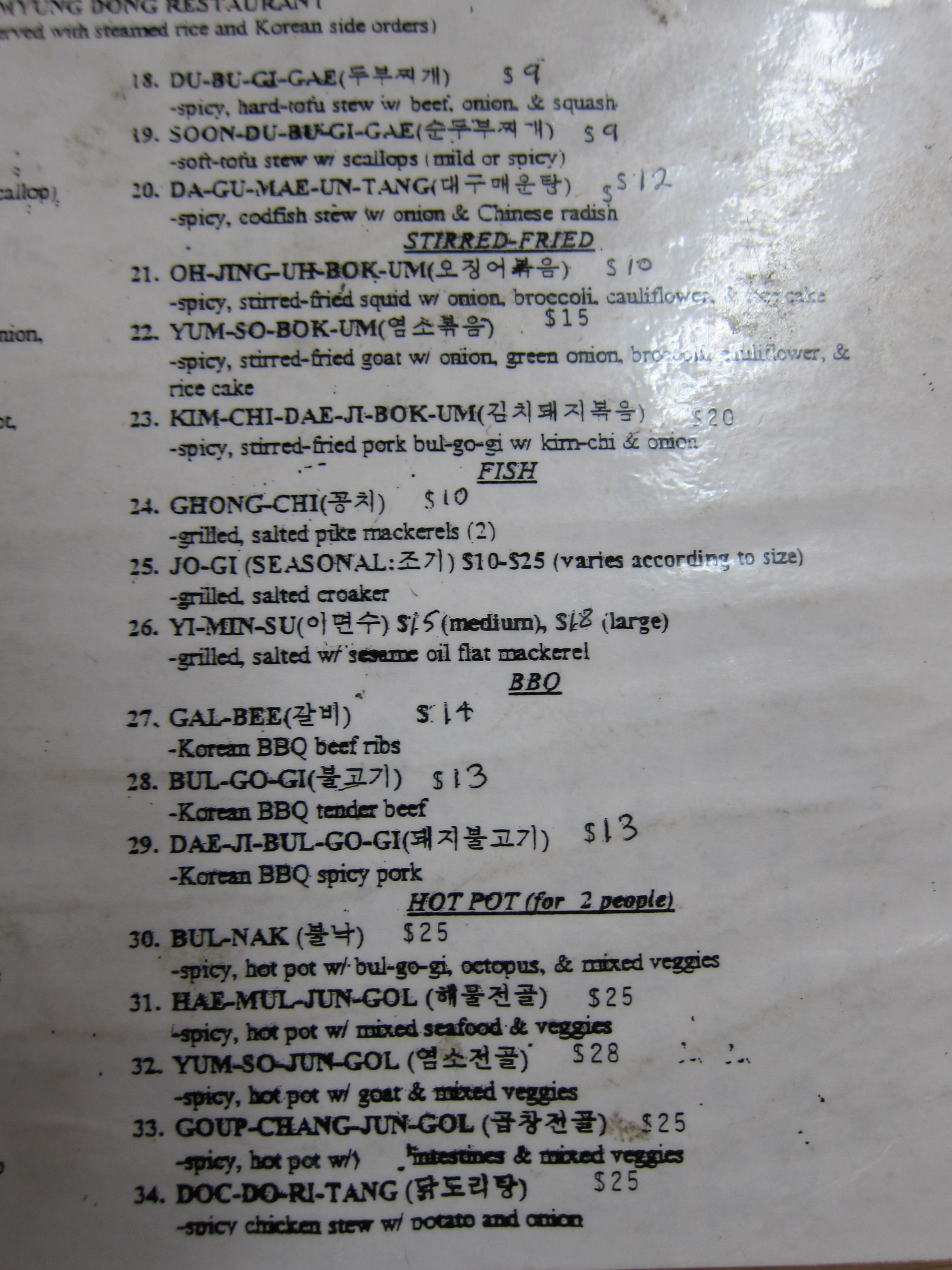
Dinner for so many more than two: $50. See Menu pages 1 and 2.

(*) It’s a neon green one-story house with no door sign. Very noticeable. If in doubt, ask the people in the same parking lot, they’ll confirm “The Chinese restaurant? Yes, that’s it there!”
(**) This is why I didn’t get kalguksu at To Hyang, although it’s one of their recommended’s. In a few ways, such as the homemade kimchis on the table, Myung Dong is similar to To Hyang. When my Korean is better, I’ll ask them if they grow herbs in the back too.