Flavor Boulevard

We Asians like to talk food.
Subscribe

Archive for the ‘Chinese’

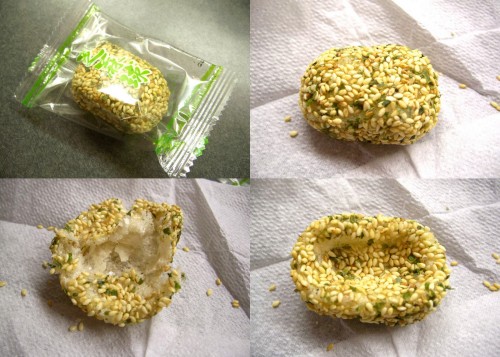
Sandwich Shop Goodies 9 – Bánh bò bông (Steamed sponge muffin)

August 12, 2010 By: Mai Truong Category: California - The Bay Area, Chinese, One shot, sweet snacks and desserts, Vegan, Vietnamese

Does this happen to you often? You give a friend something to taste, he says “It’s good. What’s it called?”. You’re stumped. The English translation is easy, but it would make no sense because the name matches neither the food, the ingredients, nor the method of cooking.
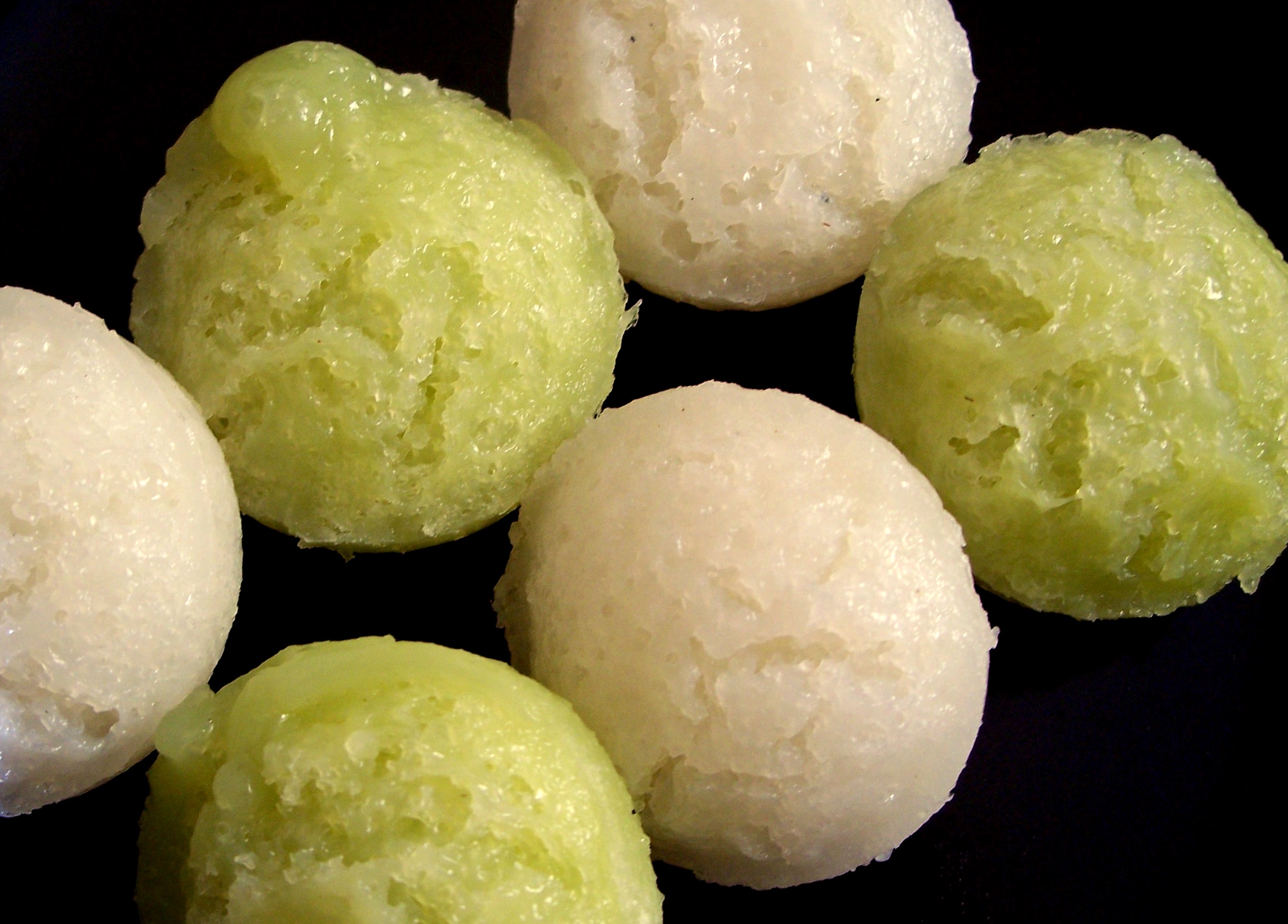

It happens to me quite often, and usually I shut off the questions with “Just eat it!”. But I wonder, too. Southern Vietnamese folks have a niche for obscure naming scheme. The names could have sprouted from some jokes, some overly simplified impromptu description they thought of at the moment, some mispronounced foreign names, who knows. The result is intelligible and untranslatable, like bánh khọt, bánh tét, chả đùm. The translatable-but-not-always-understandable cases happen when they attach random verbs after the categorical nouns to make a new name, like bánh xèo – “sizzling banh”, bánh lọt – “falling-through banh”, bò né – “dodging beef”, whatever that’s supposed to mean. Bánh bò belongs to this flock. Cow bánh? Unlikely, the thing is vegan to an n. I even thought about the possibility that the name is derived from its resemblance of the cow’s tripe, but they would have called it tripe bánh then. Crawling bánh? Less unlikely, more bizarre. Turns out some grandma saw the rising dough attempt to crawl over and out of the mixing bowl and thought “Gotcha! I shall name you the Crawling Banh”. Vietnamese food is so alive.

Technically the Mekong delta cooks got this recipe from Chinese immigrants and twitched things around a little. They call it “bak tong goh” (white sugar cake) in China. So plain. Bak tong go almost always gets sold with bánh tiêu: you tear open the hollow doughnut, insert bak tong go into the cavity, and get a fried-steamed-fried triple layer galore. I’m not too entranced by this “white sugar cake” because of its sour hints, which come from fermenting the batter with syrup. The Vietnamese rendition of bak tong goh, bánh bò, does not let the batter go sour, and is thus a charm.
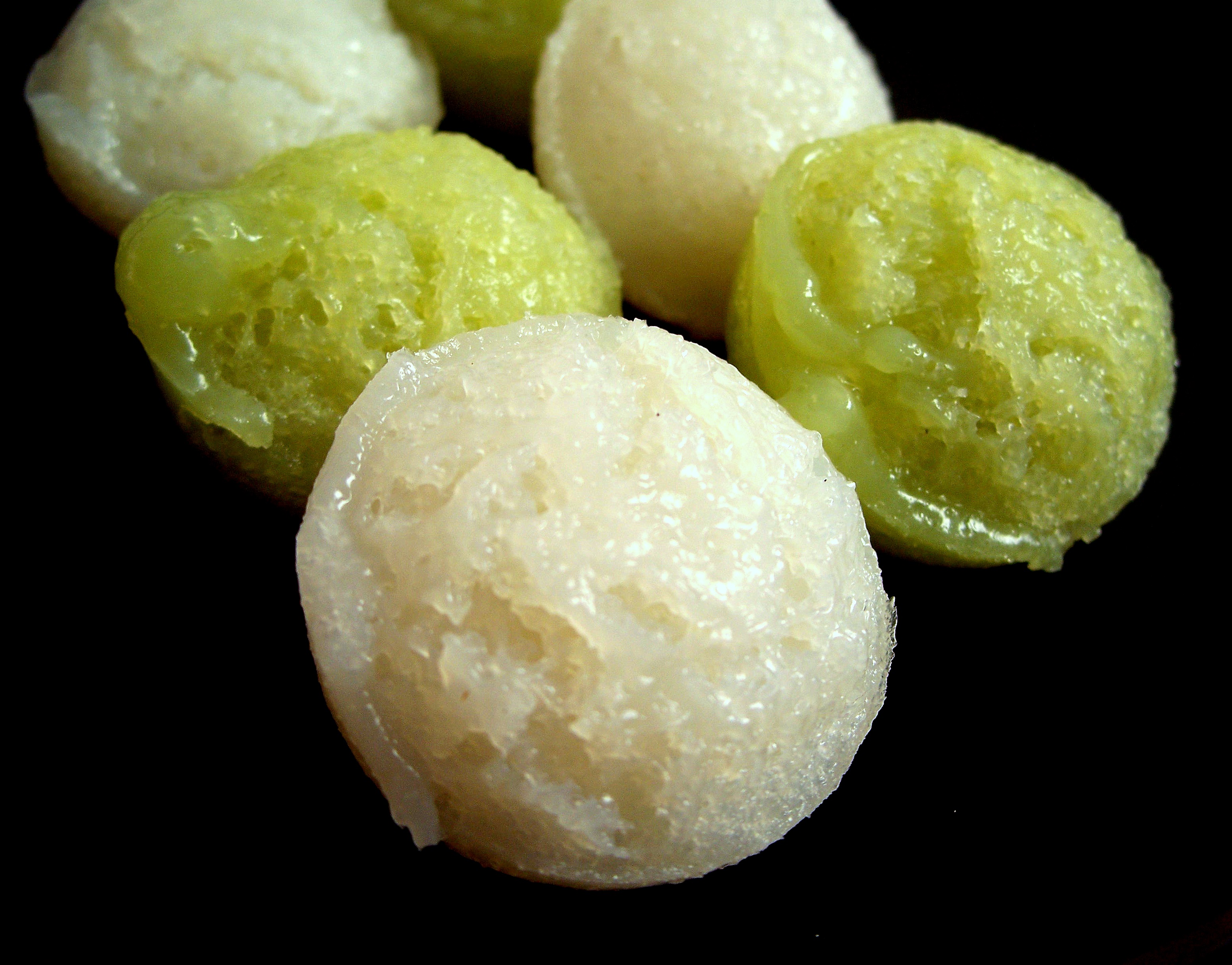

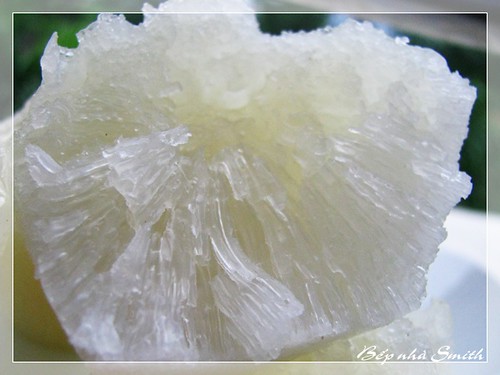
They shape like mini muffins, and look like fluff balls, so we call them bánh bò bông – “fluffy bánh bò”. The porous inside structure is compared with honeycombs or bamboo roots, or even crystals if you let your imagination go far enough. They’re either green or white with a coconuty sweetness, to pair with the burnt savory taste of toasted sesame, sugar and salt mix that comes sprinkling on top. They’re bouncy and chewy, and extremely light. We used to get the morning fresh batches from Ngọc Sáng bakery, 199 Ly Tu Trong, District 1, Saigon.
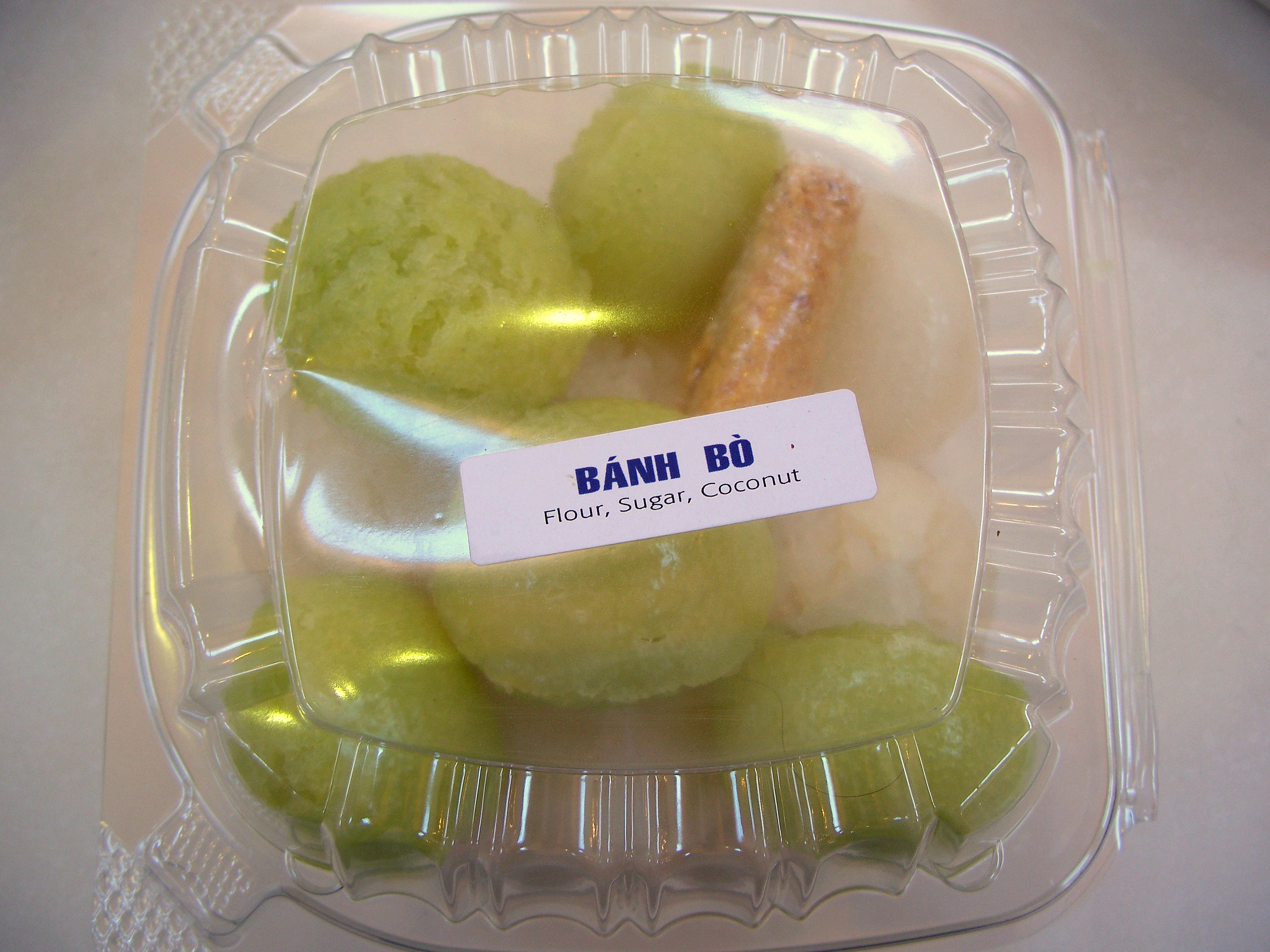

Now we settle for the plastic-packaged $2.50-worth bunch from Kim’s Sandwiches, 1816 Tully Rd #182, San Jose, CA. Certainly not half as good as the fresh ones, but it’ll do.

Previously on Sandwich Shop Goodies: bánh bao chỉ (loh mai chi)
Next on Sandwich Shop Goodies: bánh chuối nướng (banana bread pudding)

Hoang Tam at Playing With My Food has a nice simple recipe of bánh bò.
Sandwich Shop Goodies 8 – Bánh bao chỉ (loh mai chi)

August 01, 2010 By: Mai Truong Category: California - The Bay Area, Chinese, Comfort food, One shot, sticky rice concoctions, sweet snacks and desserts, Vegan, Vietnamese


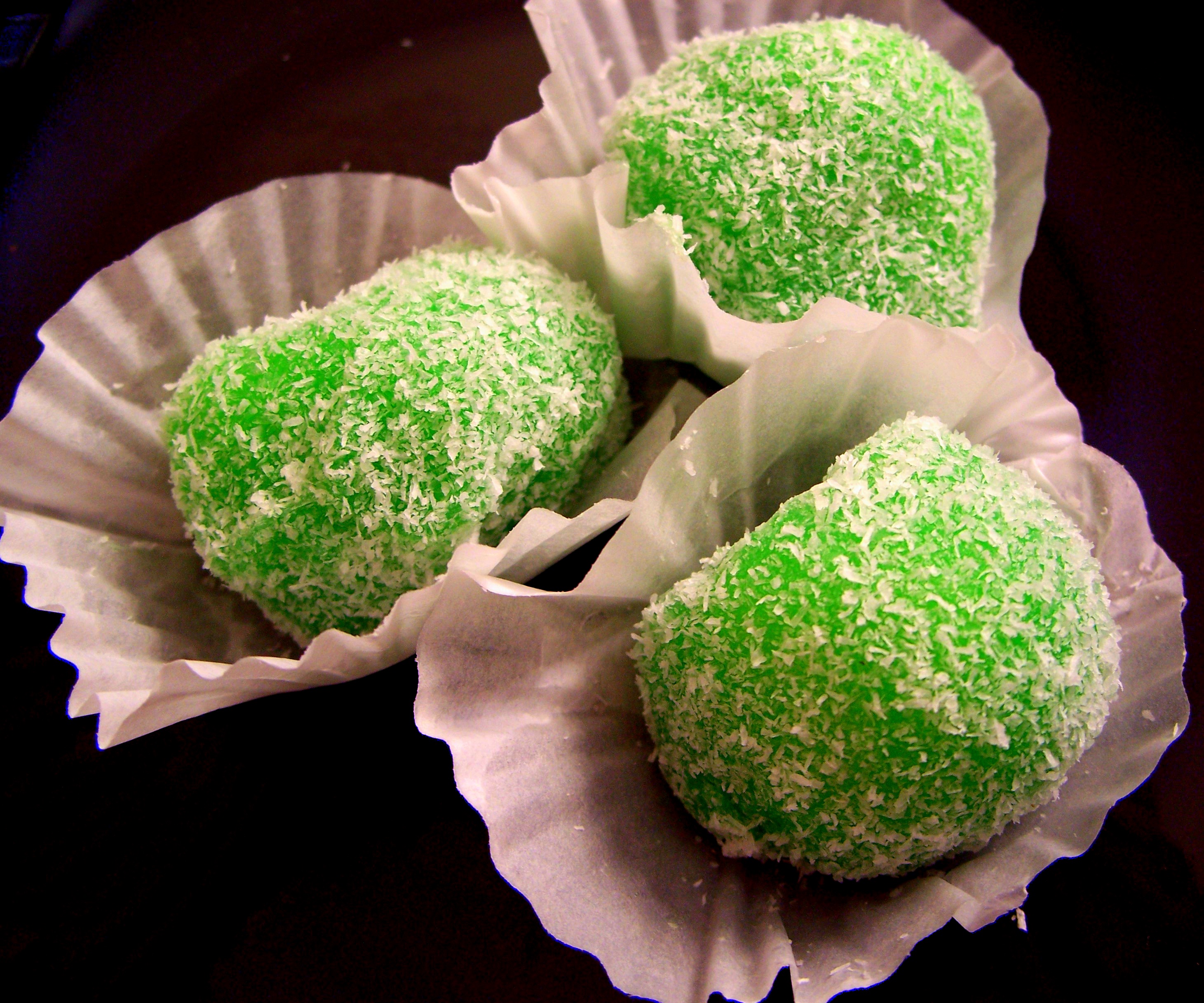
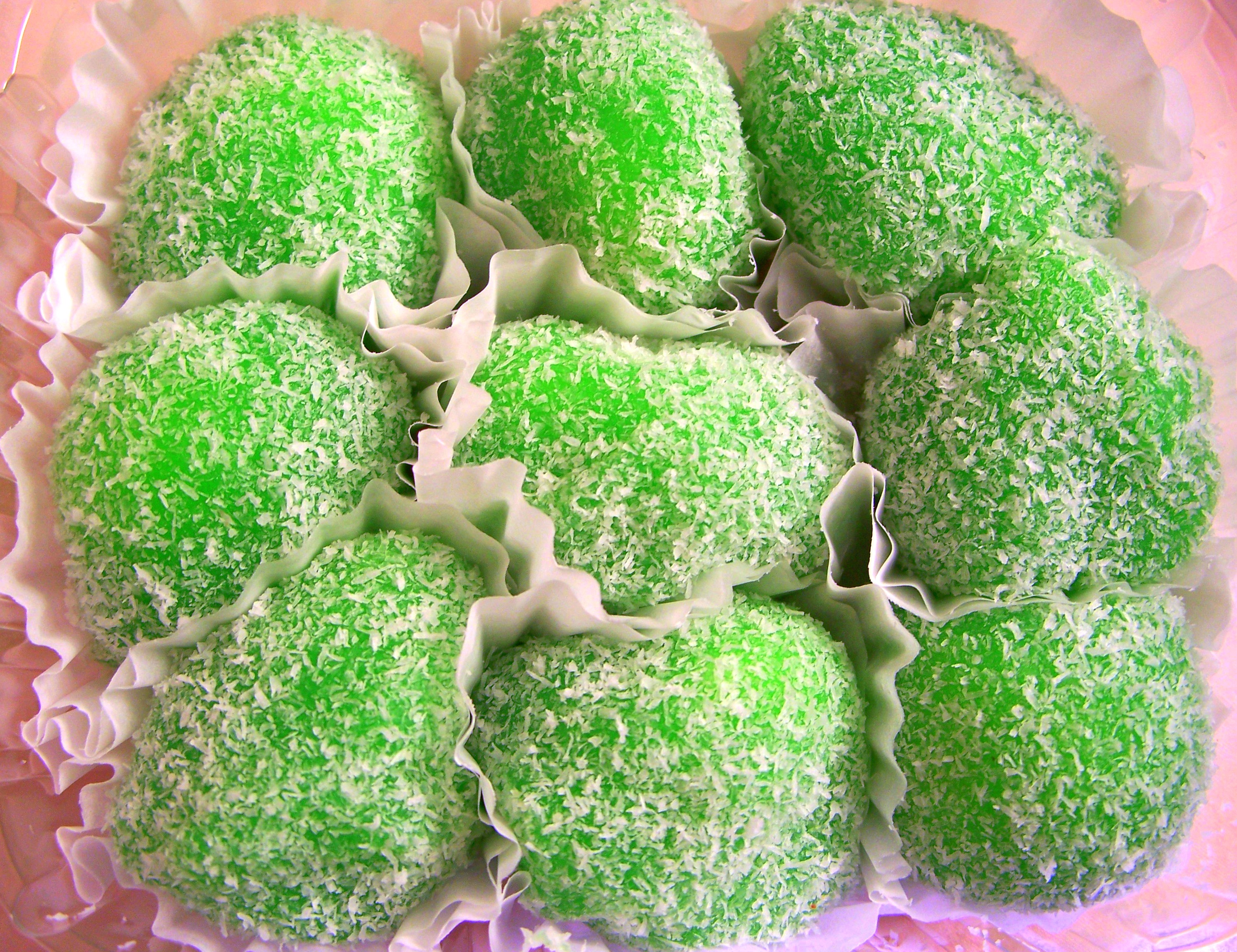
Yet another sticky rice snack that I vaguely remember eating one or twice during the early childhood, and found again in a San Jose sandwich shop more than ten years later. I was excited when I saw these green balls covered in coconut bits.

We Vietnamese call them bánh bao chỉ to distinguish from the meat-filled steamed bun made from wheat flour known to us as bánh bao. Just as bánh bao comes from China, so does bánh bao chỉ. Just as bánh bao are baozi and mantou in Mandarin, mandu in Korean, manju in Japanese, manti in Turkish, and many more, bánh bao chỉ too has its share of names.

The most-result-yielding Google search belongs to loh mai chi, commonly shown as little sticky rice flour dumplings with sweet ground peanut filling. Other variations in Malaysian and Chinese food blogs are snowball, loh mi chi, chi fa bun, muah chee (yeah, these are really cute you’d want to kiss them too)*, noh mi chi, and ma zi. Once again, I feel the need to learn Mandarin. Some say “noh mi” means “sticky rice” in Cantonese, but what does “chi” mean? Others, including the Vietnamese sites, insist that “chỉ” in bánh bao chỉ comes from “mà chỉ”, which is “ma zi”, which is “sesame seed” in Mandarin, which means “mi chi” is “sesame” (recall mi lao – sesame fluff) and we’re left with “noh” being “sticky rice”. It is reasonable enough if we consider that there are four types of fillings for bánh bao chỉ: black sesame, coconut, mung bean, and peanut. But the taste I had from childhood was the salty and sweet ground peanut in a gummy, springy thin layer of white dough coated with flour. Sesame filling must be a new twist.


And so are the vibrant green color and the coconut bits. And the size. Cheap bánh bao chỉ used to be sold on wheels: an old Chinese man peddled around the neighborhood with a glass tank on the back of his worn bicycle, the tank half filled with soft white balls as big as tangerines. Now these balls are about an apricot each, fit snugly in a plastic box and sold for $2 at Kim’s Sandwiches. Not only do they lose the romantic authenticity of a street food, they also taste like soap. The green dough, instead of having pandan flavor, reeks of artificial chemicals. The mung bean paste is sickeningly sweet.

I’ve never been so disappointed with a snack food. Do NOT buy these green balls, no matter how good looking they are. Search online for loh mai chi recipes, or search the streets for old Chinese vendors.

(*) It’s hard to refrain from making the connection between muah chee and the Japanese mochi (daifuku).

The exact origin of mochi is unknown, though it is said to have come from China. The cakes of pounded glutinous rice appear to have become a New Year’s treat during Japan’s Heian period (794-1185). As early as the tenth century, various kinds of mochi were used as imperial offerings at religious ceremonies. A dictionary dating from before 1070 calls the rice cake “mochii.” Around the eighteenth century, people began to call it “mochi.” Various theories explain the name. One is that “mochi” came from the verb “motsu,” “to hold or to have,” signifying that mochi is food given by God. The word “mochizuki” means “full moon.” People of the west and southwest islands called it “muchimi,” meaning “stickiness.”

– from New World Encyclopedia

So I know everybody thinks the entire Far East gets its stuff from China (yeah… no.), but here’s a crazy idea: what if this sticky rice ball with sweet fillings actually originated from Japan, then the Chinese got hold of some, and later passed it down South?

Previously on Sandwich Shop Goodiesbắp hầm (Vietnamese whole kernel grits)
Next on Sandwich Shop Goodiesbánh bò bông (steamed sponge muffin)

Chinese candy talking

July 25, 2010 By: Mai Truong Category: Chinese, sweet snacks and desserts, Vegan


Sometimes, very seldom, I feel the urge to learn Chinese. There are just too many little Chinese things going around without English labels. In fact, the harder it is to describe, the more likely its name is all in Chinese.


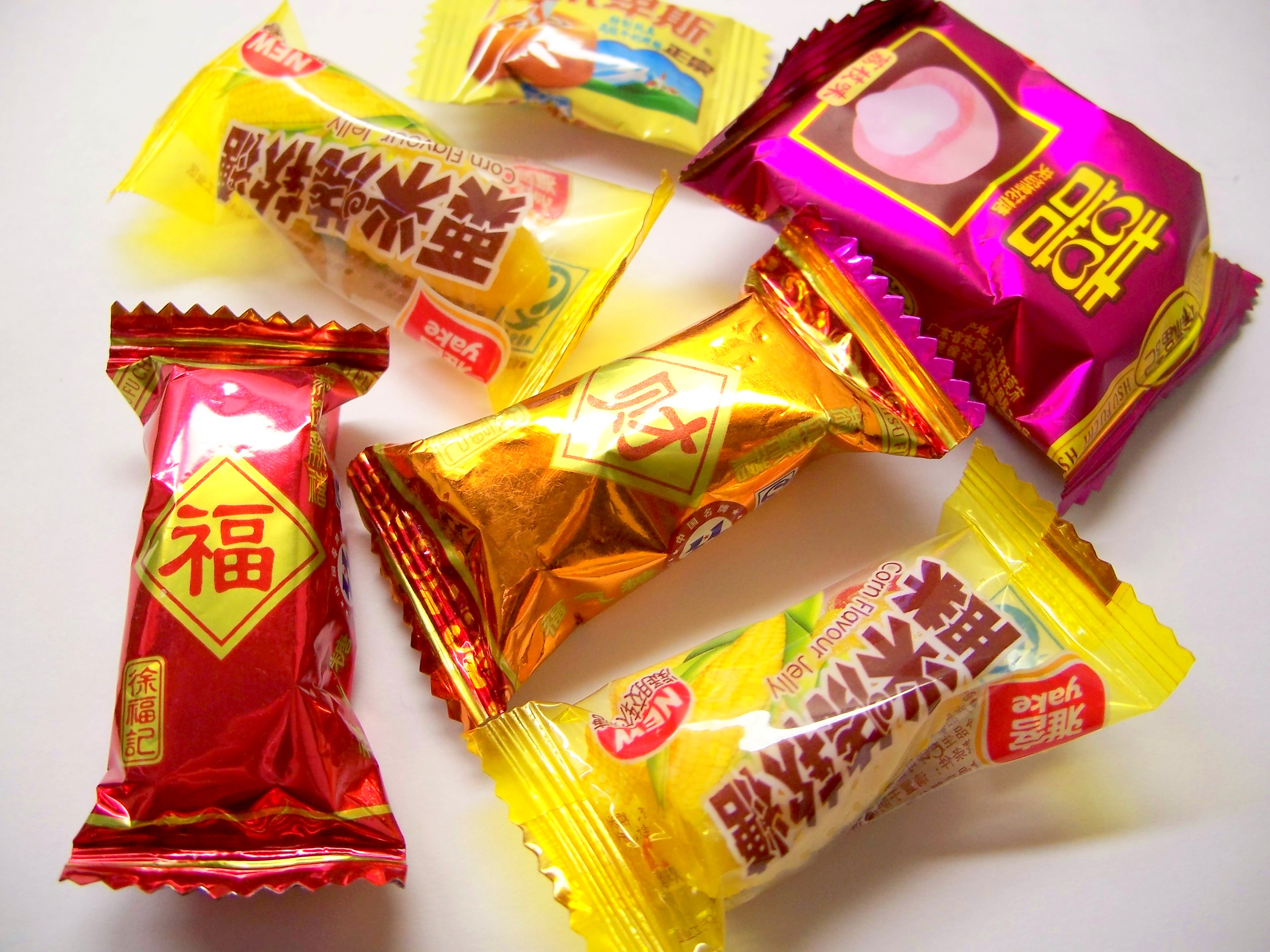
Take these sweets for instance. They come in handmade red paper boxes at a wedding.


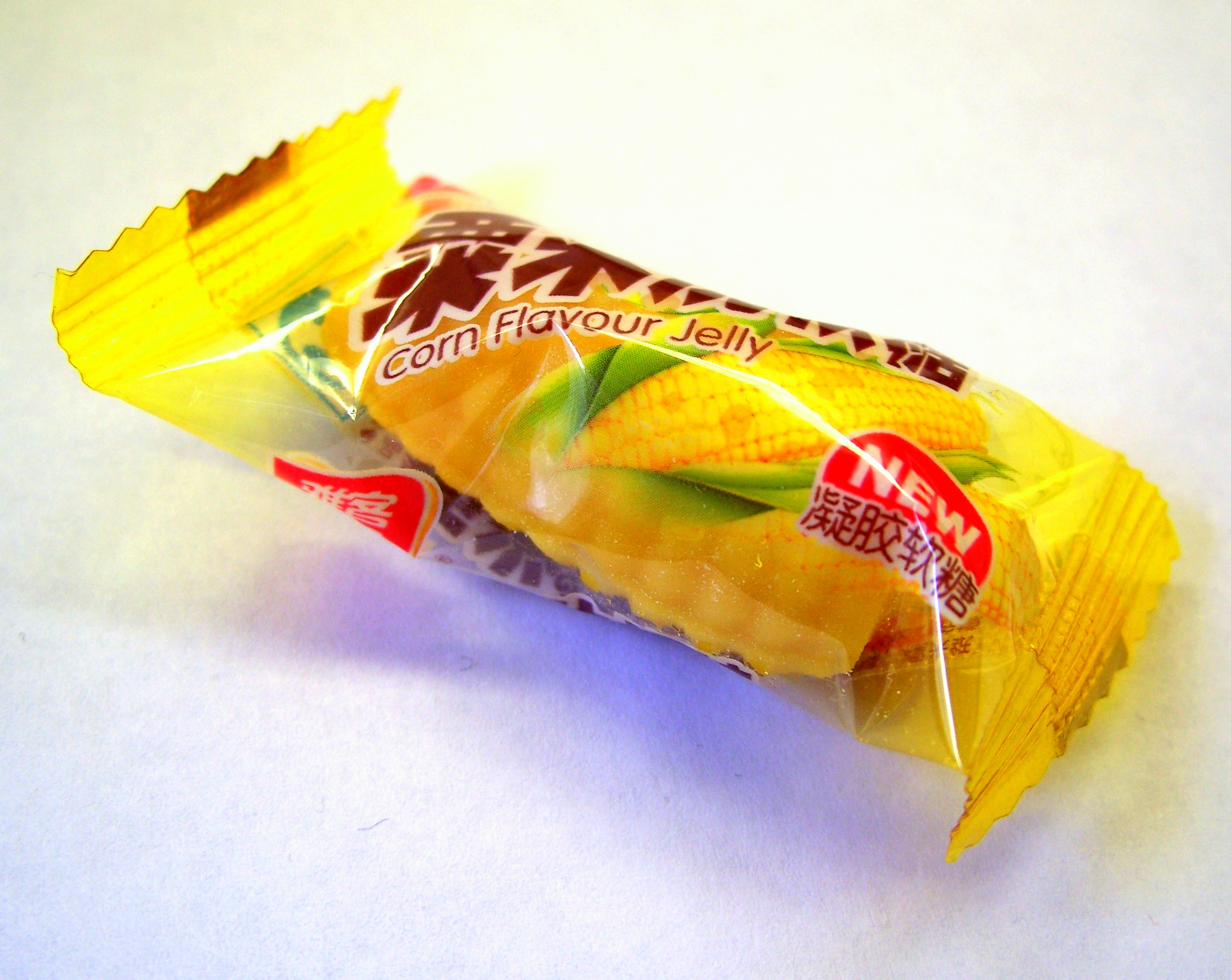
This one shapes like a corn ear, smells and tastes like corn, and aptly has an English name: Corn Flavour Jelly. A nice chew but you gotta git it down fast or you git tireduvit.


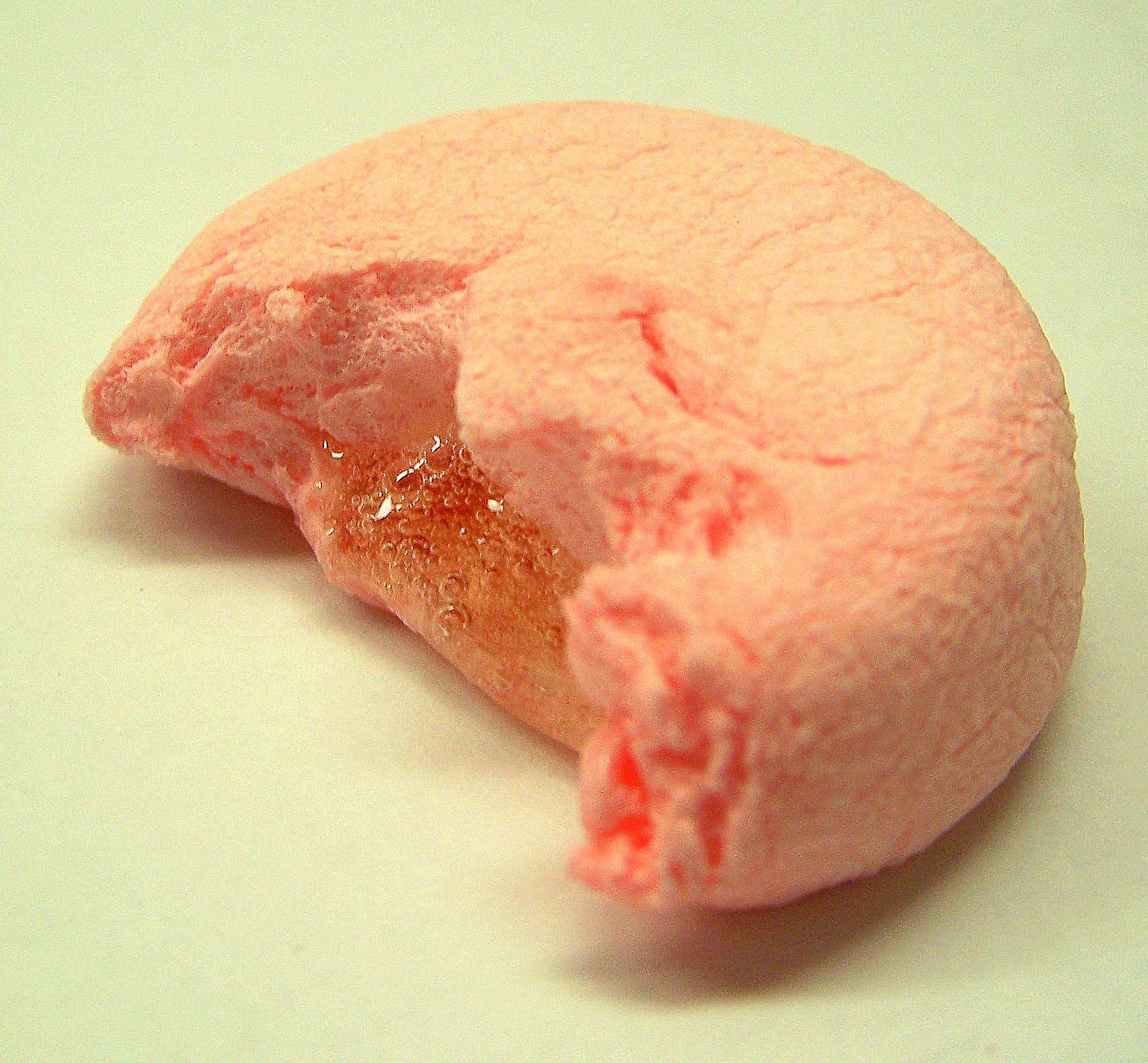
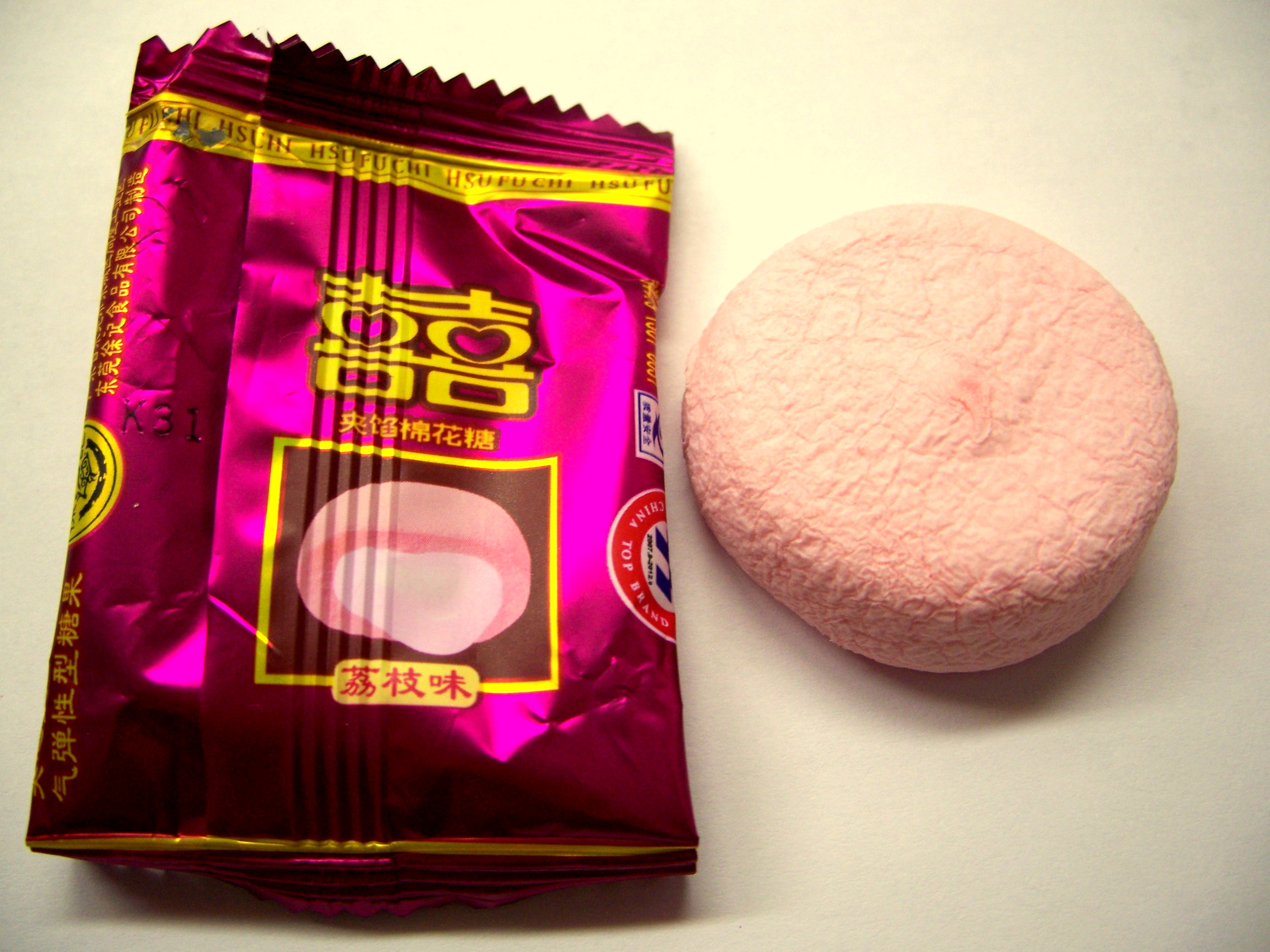
This one doesn’t have a single English word, but it has a picture to tell you what to expect. Pink for strawberry, pillowy for marshmallow, and spewing for syrup. I don’t really care if they put toxins in it, this was a good syrupy center marshmallow bite.


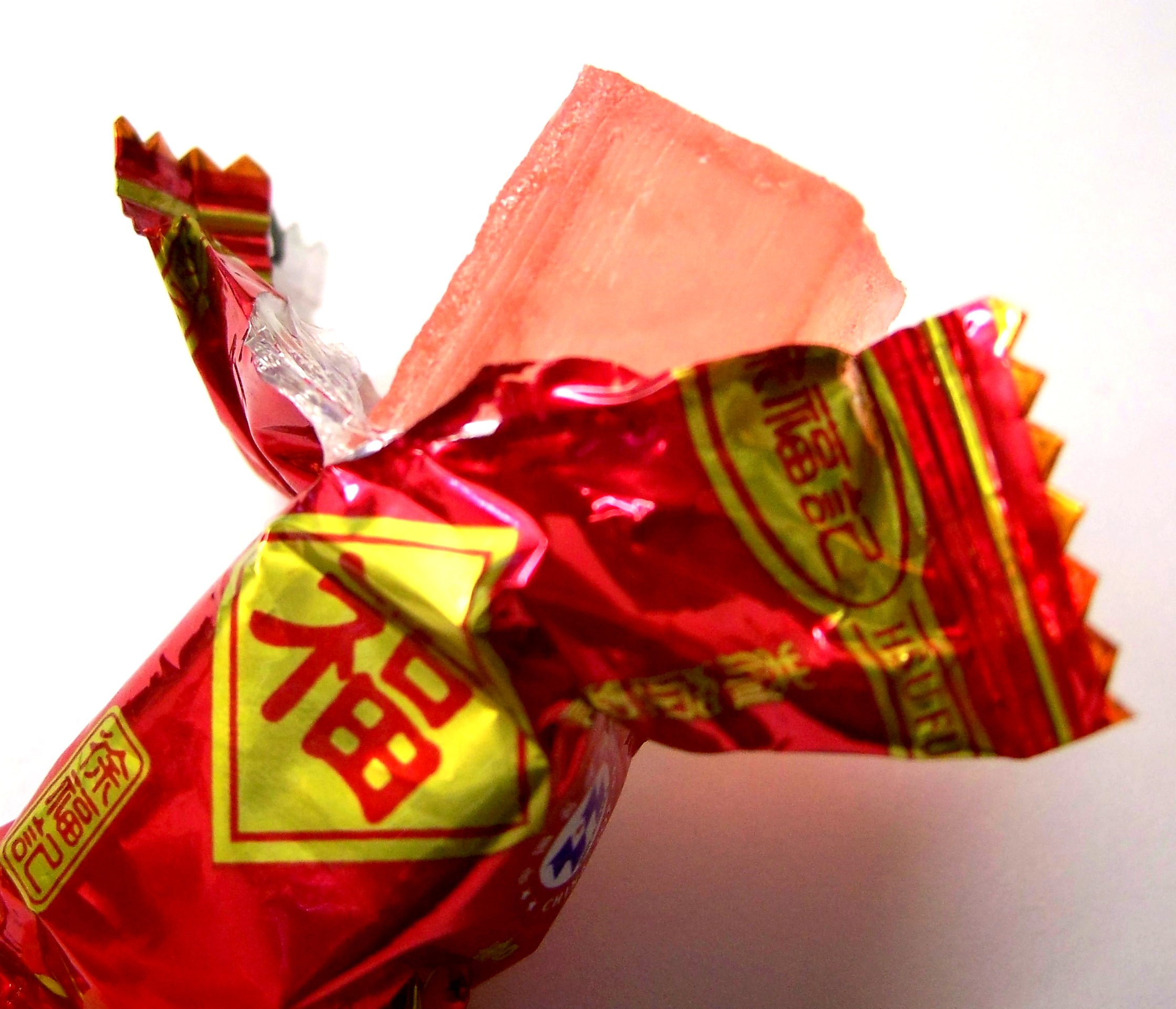
Lastly, this one has neither English nor picture. My best description: a jello stick as long as my pinky, reeking of  unidentifiable artificial chemicals. I can’t tell if it’s supposed to be strawberry or raspberry or cherry, or any flavor for that matter. The taste is about as thrilling as Jesus and Mary Chain’s Some Candy Talking:

Tags:

Sandwich shop goodies 3 – Bánh ú tro (Vietnamese-adapted jianshui zong)

July 01, 2010 By: Mai Truong Category: California - The Bay Area, Chinese, Comfort food, One shot, sticky rice concoctions, sweet snacks and desserts, Vegan, Vietnamese

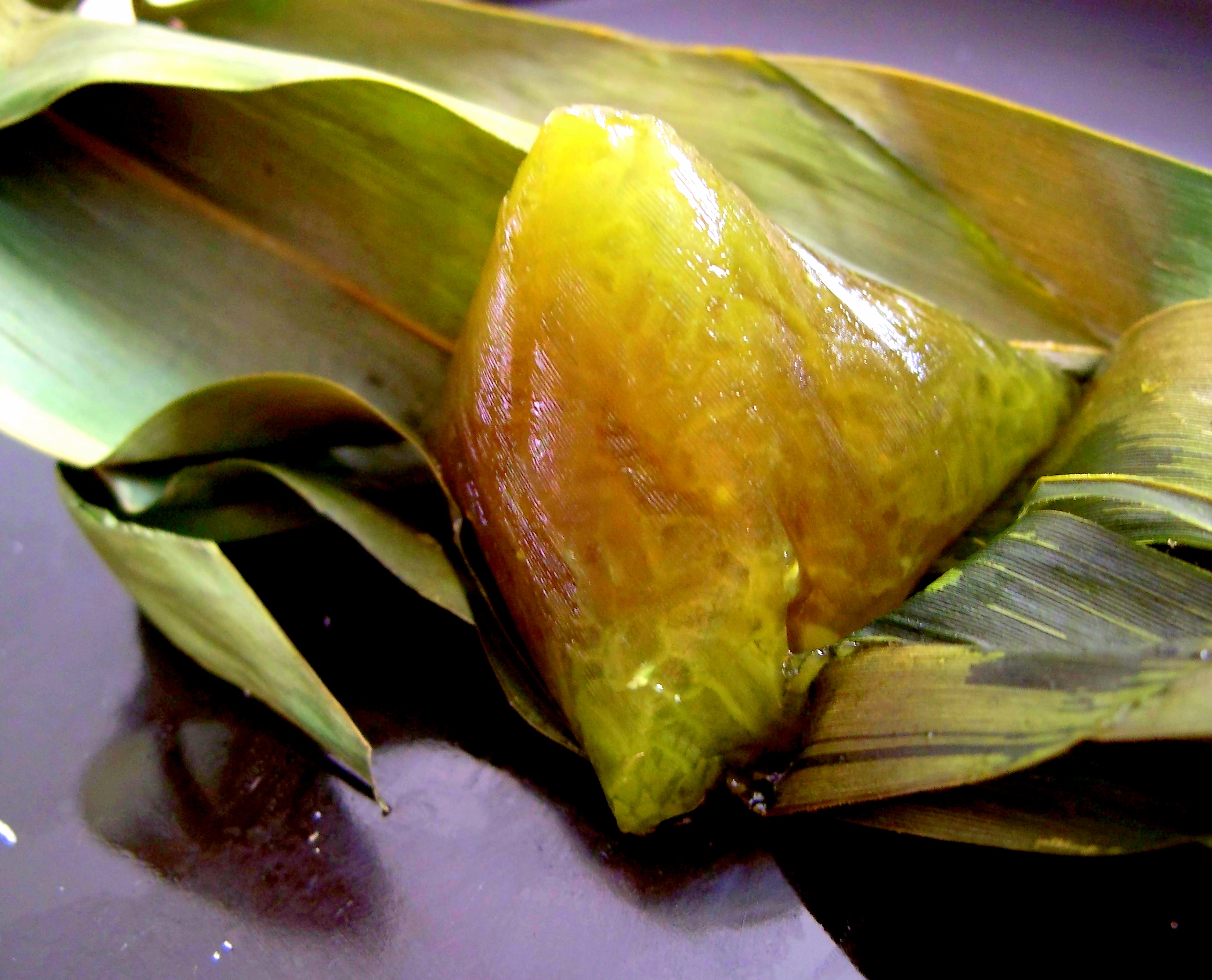
It’s been two weeks, but better late than never. After I read Jessica’s zong zi post on Food Mayhem, images of amber tedrahedra just wouldn’t leave me alone. I talked to my mom about them, and I could hear her voice crackle with sweet memories over the phone. We haven’t had these sweet little things for years. We used to eat them by the dozens every lunar May. Like most Saigonese, we didn’t do anything huge to celebrate Tet Doan Ngo, but bánh ú tro was too scrumptious a tradition to pass.

Each pyramid is just a little over an inch tall, whichever way you roll it. It’s unclear whether the traditional zongzi grew smaller when Chinese immigrants share the recipe with their Vietnamese neighbors, or only the dessert zongzi (jianshui zong) is favored by the locals over savory types. Most Vietnamese have also long dissociated this sticky rice snack with the Chinese reason behind Duanwu festival, if not to assign the Fifth of Lunar May to commemorate the death anniversary of Vietnam’s legendary Mother Âu Cơ, kill off bad bugs, make ceremonial offerings to family ancestors, or simply bathe in the summer solstice’s endless sunlight. Whatever meaning someone chooses to celebrate (or not celebrate) Duanwu (Đoan Ngọ in the Vietnamese language), he can enjoy bánh ú tro all the same. And if he lives in Hội An, there’s a big chance he actually participates in making them too.

The people of Hoi An don’t make a living with bánh ú tro year round, but they keep the tradition with earnest. Within four days, 1st-4th of lunar May, everybody makes bánh ú tro. The fifth day, everybody eats bánh ú tro. The sixth day, things get back to normal. In Saigon’s markets, bánh ú tro start showing up a week or two before the Fifth, and disappear right after, my mom recalled. So when I told her that I was going to search for them after I read Jessica’s post, she said “fat chance”.

Why such rarity? After all, bánh bía, also adapted from the Chinese and also originally made just for one specific festival, shines its face all year long in every bakery and sandwich shop these days. Well, the recipe for bánh ú tro turns out to be real hard, and it’s not just the wrapping stage. The best bánh ú tro, according to Hoi An banh makers, must be wrapped with “kè” leaves from the mountains of Huế. The cleanly washed sticky rice is soaked in sesame ash water overnight (sesame plant burnt into ashes, mixed with water and sifted through sand). The ash water turns sticky rice grains into semi-powder form, giving bánh ú tro a clear amber look and a strangely light texture, unlike any other sticky rice concoctions. No wonder “ash” (tro) is part of the banh’s definitive name. (If you look at jianshui zong recipes, you’ll find lye water or alkaline water listed. More correct terms perhaps, but the horrid image on Wikipedia’s page on lye takes away my appetite. “Ash” even has a romantic ring to it, and this banh is made for a poet after all.) A bit of alum is put in the ash water to somehow keep each banh from falling apart.

Now of course sesame plants aren’t growing in everyone’s backyard to burn, so just any coal ash would do, as long as you sift the ash water carefully to avoid big pieces of charcoal in your sticky rice. Some different source suggests ash from mangrove firewood, dissolved in water for a month, but it seems to be just another grandmother’s special recipe varying by the regions. After soaking the rice for 1-3 nights, take it out and wash with cold water again.

The wrapping leaves, too, vary from place to place. Kè leaf is obviously not the most popular, as bamboo leaf and reed leaf, in their slender shape and earthy fragrance, do the job just as well. Banana leaves can be cut into wide strips to imitate bamboo leaves. Skilled banh makers can also control the colors: older leaves give darker hues,  substituting ash with white lime paste(*) lets bánh ú tro have the natural green shades from the leaves, while red lime paste causes a reddish amber shine.

Nonetheless, there exists a common wisdom regardless of ingredients: burn an incense stick when you drop the banh into water for boiling, when the incense burns out, the banh is done. Usually that takes four hours.

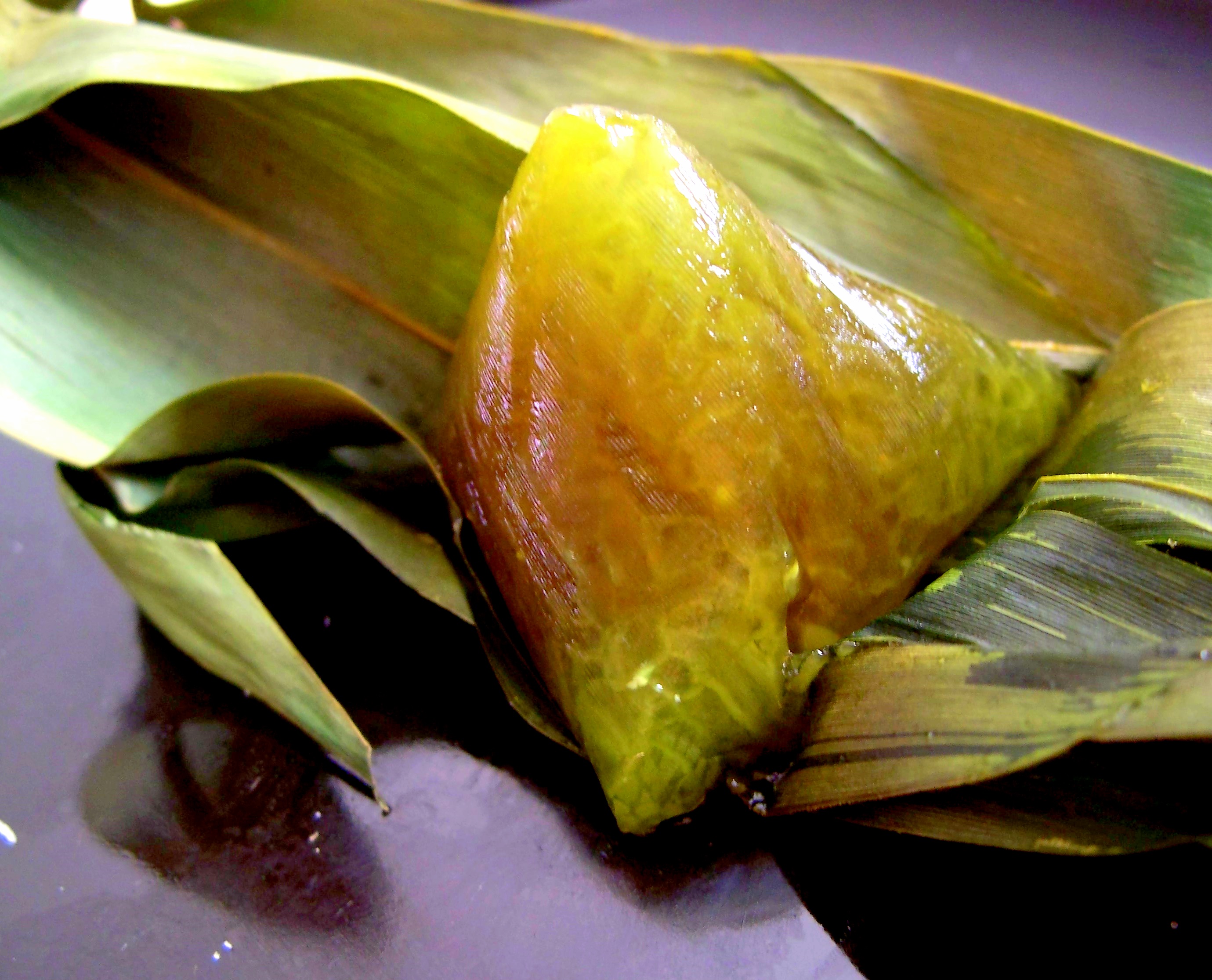
Let cool, bánh ú tro is more firm than chewy. There you can still see silhouettes of individual grains on the outside, but each banh is a solid tedrahedron of defined edges and uniform texture. It unwraps easily, parallel thread marks of bamboo leaf veins imprint on the smooth and fulfilling surfaces. It’s hardly sticky, unlike bánh ít and bánh dầy (also made from sticky rice). And it’s light. The banh’s are tied together in bundles of ten, and I can eat all ten in one sitting. (I can hardly finish one bánh ít in one sitting.) Funny, “ít” means “small in quantity”, and “ú” means “chubby”.

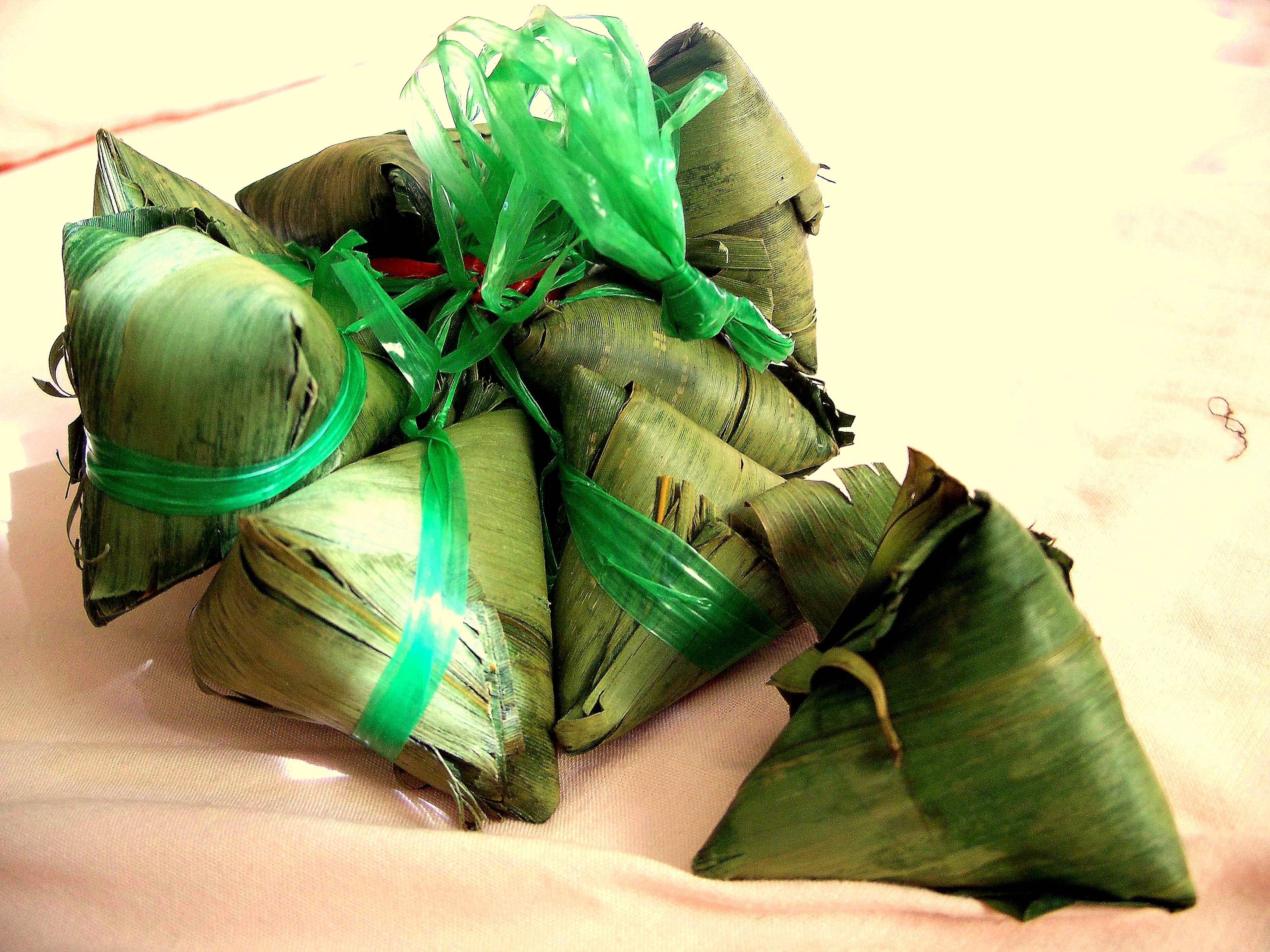
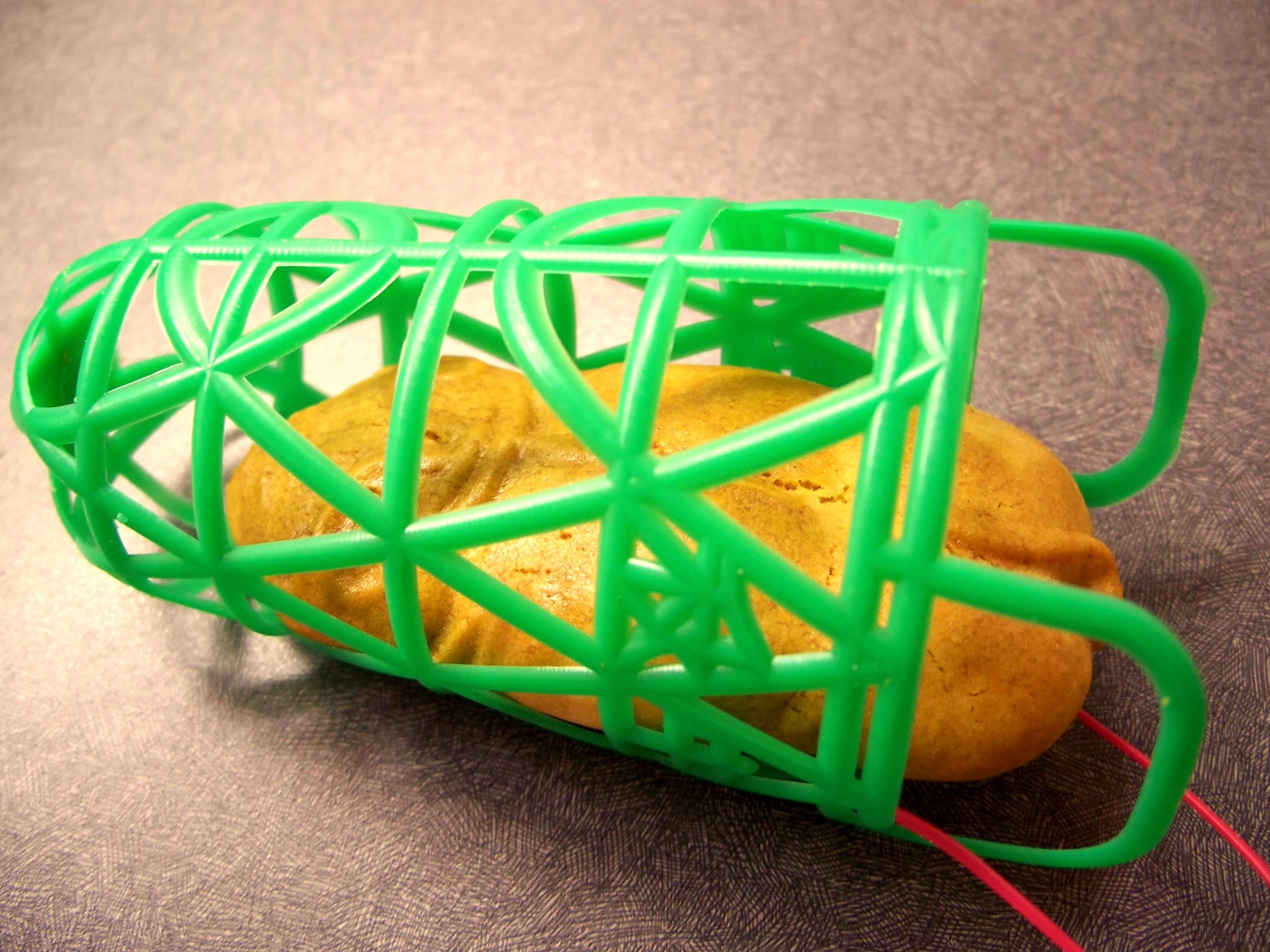
The traditional bánh ú tro of the North and Central Vietnam is just that, a plain chunk, good by itself to some and must be accompanied by honey or sugar to others. Then with time it got a sweetened red bean paste filling. Then a sweetened mung bean paste filling. Then a sweetened grated coconut filling. I grew up eating the red bean kind every year and thought it was the only kind. So I jumped at the first bunch I saw at Kim’s Sandwiches last Sunday, twelve days after the Fifth of Lunar May. The bunch was tied together by green nylon strings. I hurried home, unwrapped, took a bite. My mom called.
– Mom, I found them!
– Really?!?! How are they?
– Good, but why’s there no bean paste?!

Should’ve gotten the red string bunch instead.

———————————————————————-

Bánh ú tro ($3.75/10 pieces) from Kim’s Sandwiches
(in the Lion Supermarket area)
1816 Tully Rd 182, San Jose, CA 95111
(408) 270-8903

(*) Lime paste is used to eat with betel leaves and areca nuts.

Click here for a recipe of bánh ú tro (Vietnamese zong zi)

———————————————————————–

Previously on Sandwich Shop Goodies: bánh bía (Vietnamese adapted Suzhou mooncake)

Next on Sandwich Shop Goodies: corn xôi

Sandwich Shop Goodies 2 – Bánh bía (Suzhou mooncake)

June 14, 2010 By: Mai Truong Category: California - The Bay Area, Chinese, Comfort food, One shot, Southern Vietnamese, sweet snacks and desserts, Vietnamese


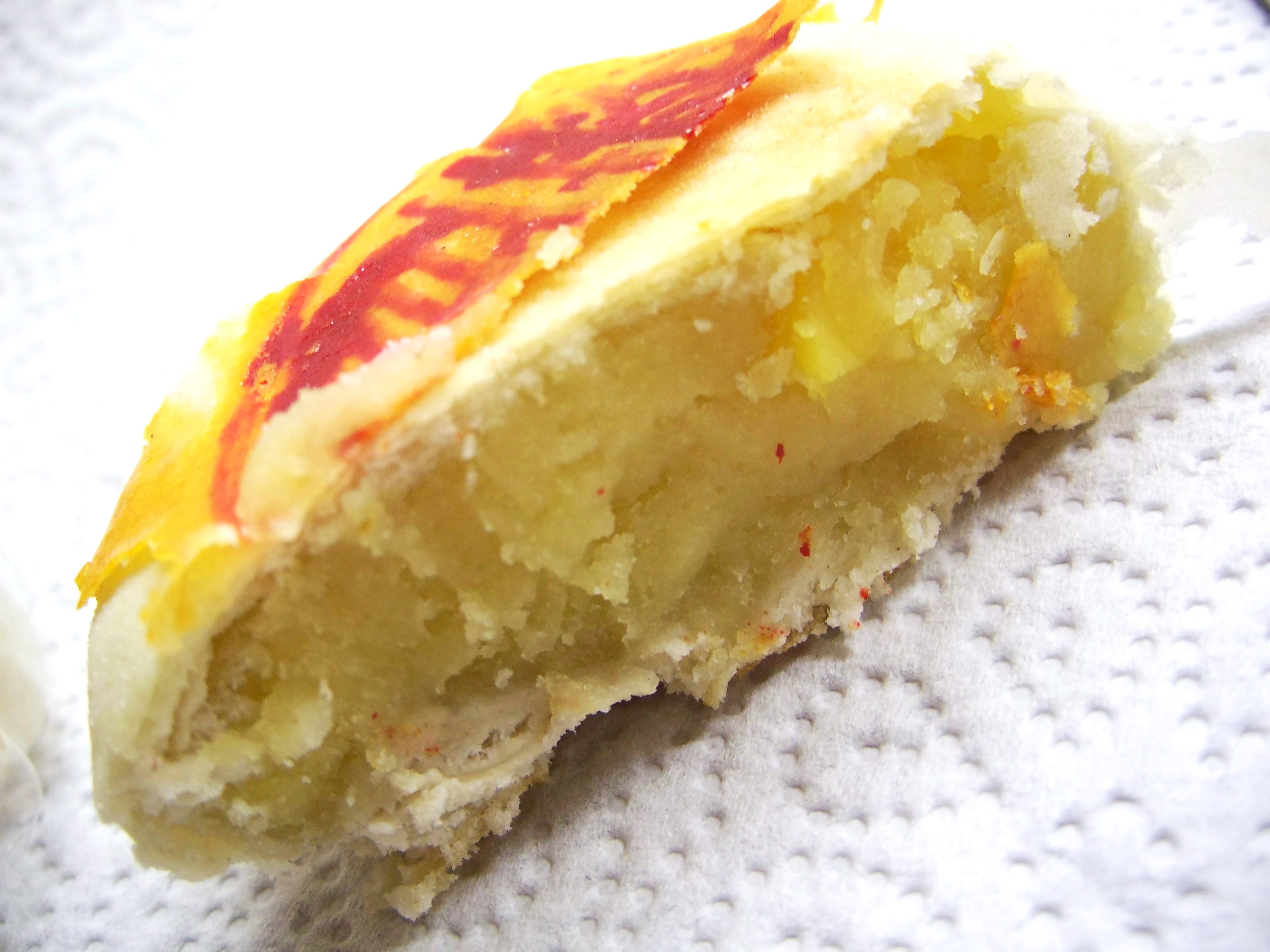
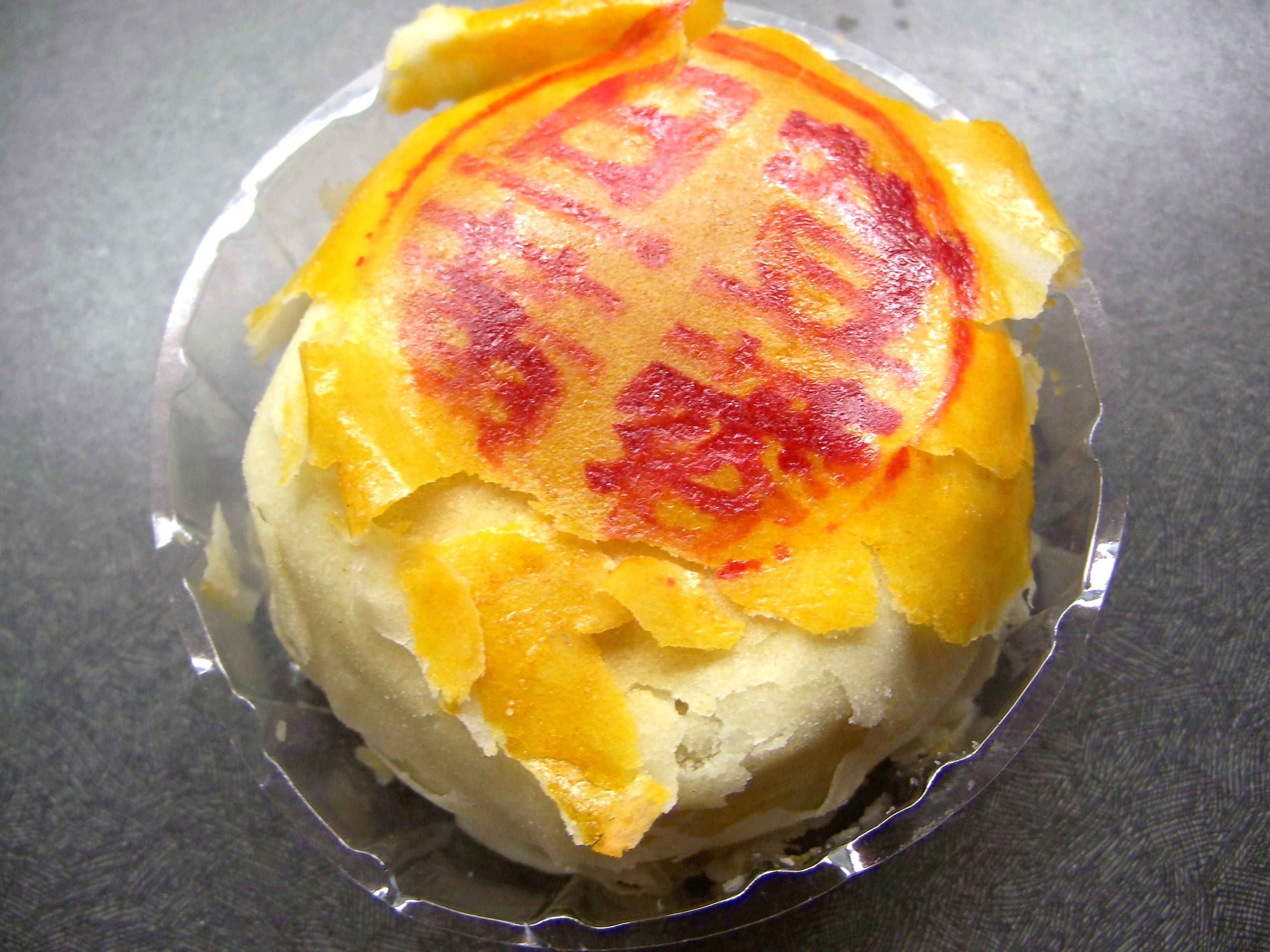
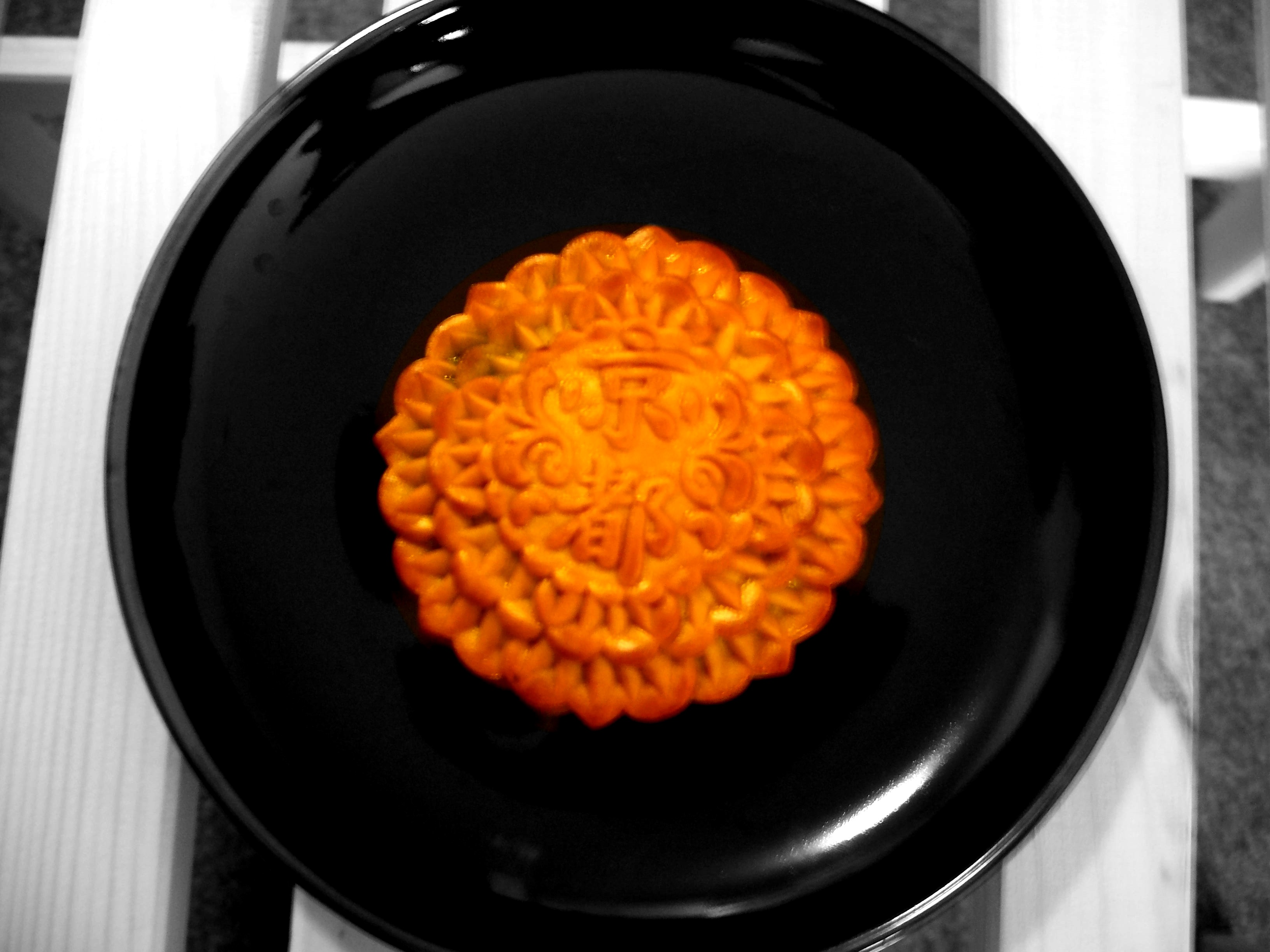
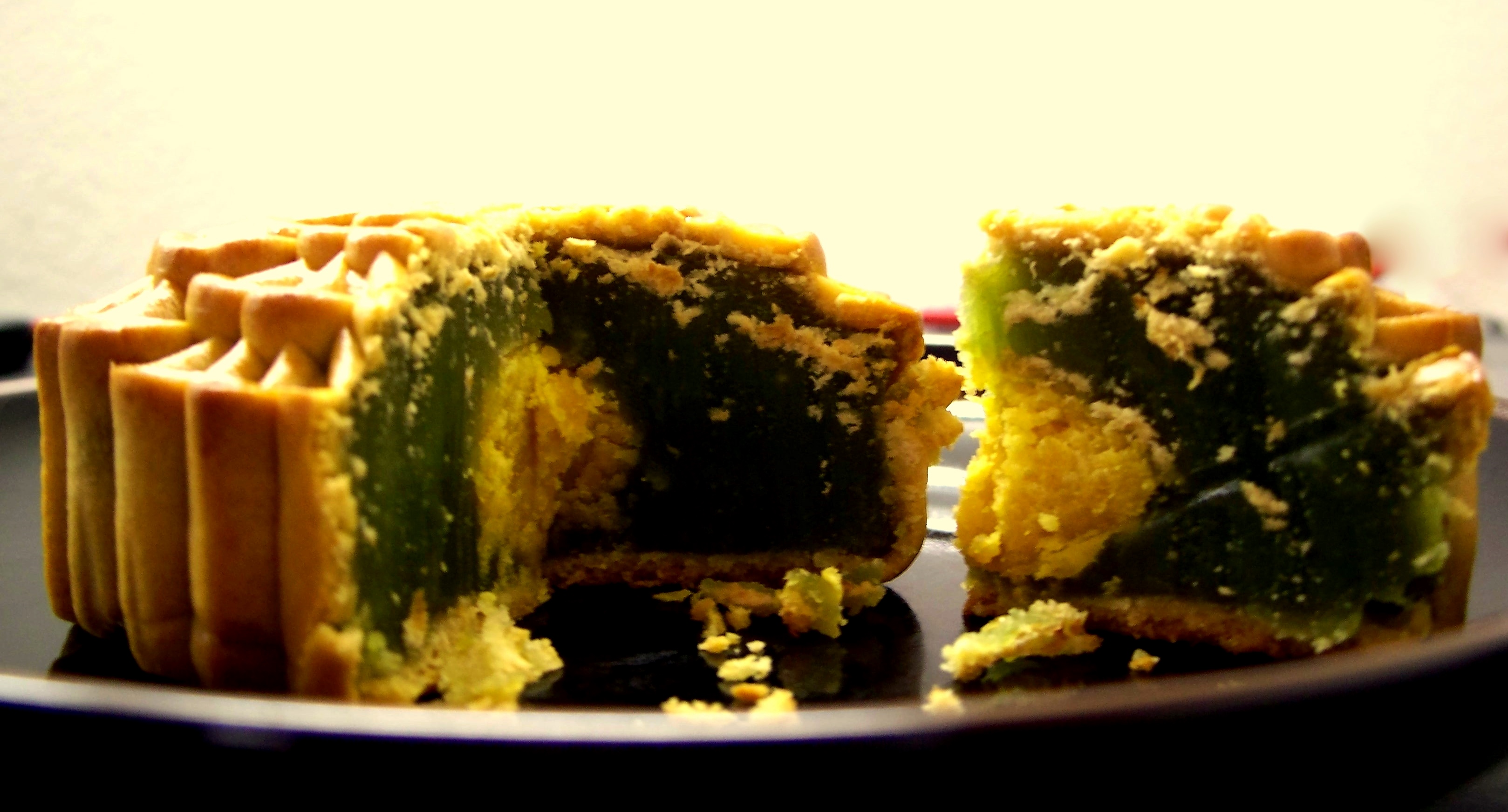
In the middle of bright yellow paste lies a crimson orange ball. The egg yolk. Salted and dried up to the size of a cherry. Or should we say it is the moon, at its fullest on the fifteenth day of the eighth lunar month each year.

Roughly 650 years ago, it was a bright moon for the Ming Dynasty, but not so bright for the Yuan Dynasty. The Mongolian rulers’ defeats started from a full moon day of August 1368, when the capital Dadu (present day Beijing) was captured by Zhu Yuanzhang and his Han Chinese insurrection armies. Zhu Yuanzhang then rose to the throne as the first king of the Ming dynasty, and he made sure that the Mid-Autumn Festival, which coincides with the end of the harvesting season, was celebrated throughout the country. As the story goes, such revolutionary victory could not have happened without them little mooncakes.

They were secret means of distributing messages among the resisting forces. Words were printed on each mooncake as a simple puzzle. Each mooncake in a package of four was then cut into four pieces, and the sixteen parts were arranged in a particular way to form the entire message. Afterwards, the cakes were eaten and the trace erased. I don’t know what they would do if a hungry kid got hold of a piece.

Although people aren’t sharing secret information anymore (as if anything could remain secretive under the communist watch), the mooncakes still have imprinted words on top and still come in packages of four.


The most popular kind of mooncakes have elaborate designs with golden brown crust, originating from Guangzhou. Other kinds more or less are spin-off versions of the Suzhou-style mooncake with a simple round shape, no design, flaky skin which can be peeled off by the layers, and no need for a mooncake mold.

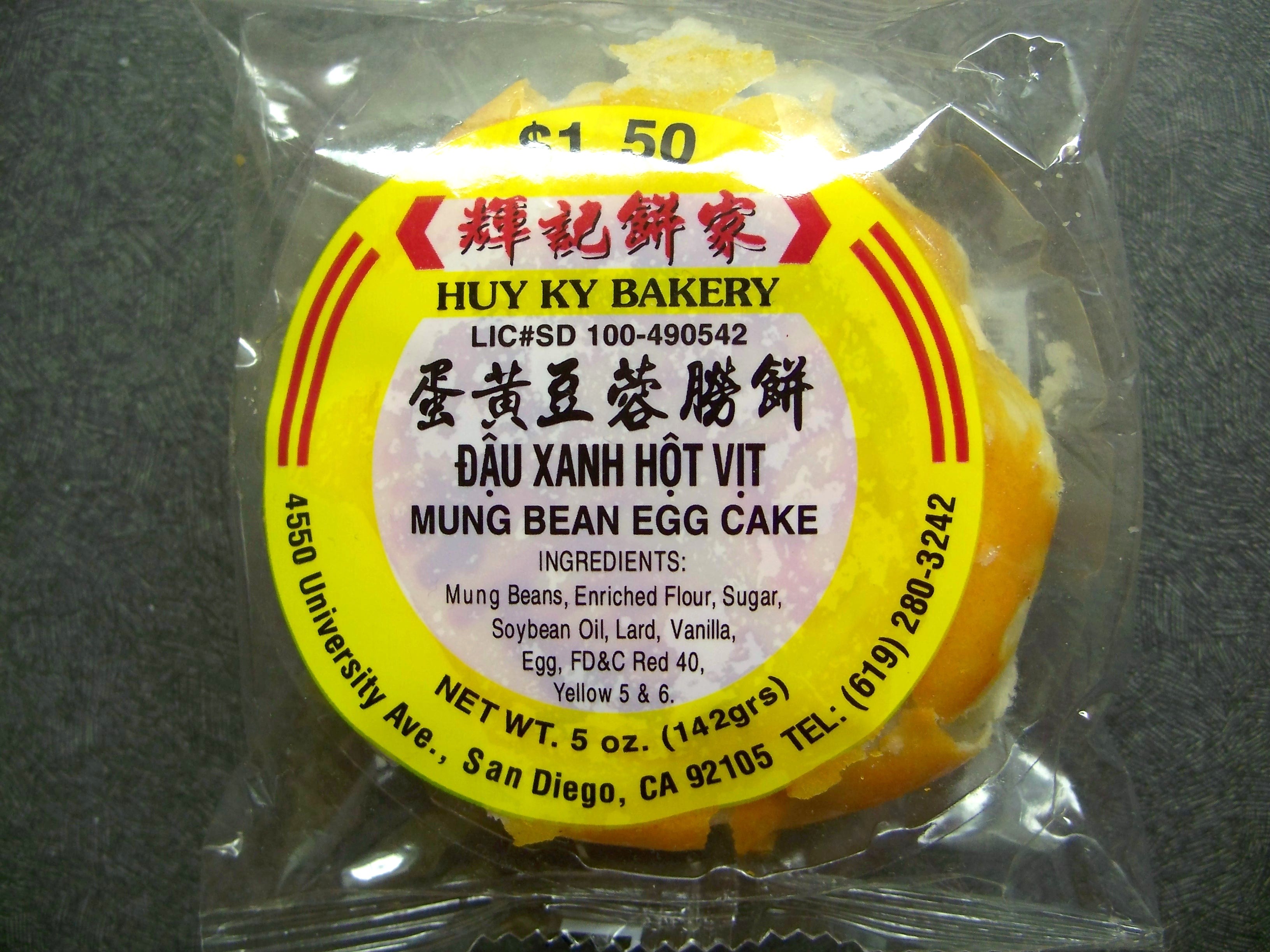
When the Chinese immigrants settled in the Mekong delta, they introduced the round, flaky mooncakes, referred to as “pía” in Teochew dialect, to the southern Vietnamese, who quickly adopted the recipe and the trade to make it a regional specialty, the Soc Trang‘s pía. “Pía” means “bánh”, things made with flour, but the innocuous southerners took it as a name, and started calling the flaky mooncakes bánh bía. Unlike the Cantonese mooncake that is only eaten during the Chinese Mid-Autumn festival, bánh bía gets served year round, bought as gifts from travelers to Soc Trang, featured in the Khmers’ moon festival Oc Om Boc in October, and individually packaged for sale at $1.50 a piece in Vietnamese sandwich shops in San Jose.


The recipe, too, has slightly departed from its Suzhou originals. If the Chinese counterparts often contain lotus seed, red bean paste, nuts, and sometimes pork for savoriness, the Soc Trang version stays homogeneous with either mung bean paste or taro paste, which can be flavored with lard and durian to the likings. But whatever goes inside, the doughy, flaky skin of bánh bía is the unchangeable feature, distinguishing it from all other pastries.

Each pía needs two kinds of dough: the “skin dough” and the inner layer dough. The skin dough on the outside, made of flour, water and canola oil, gains its elasticity and smoothness from a little kneading, while the inner layer dough has only flour and oil and is left unkneaded to keep it thick and chewy. Later the two kinds are flattened together to make the crust, but with the inner layer dough always contained inside the skin dough, otherwise the banh bia would have a coarse surface. After baked half way, the pía is taken out and glossed some egg wash over its upper side. When fully baked, they shine a ripe yellow invitation, ready to be stamped “longevity”, “harmony”, or some other character in red.

The whole process, from making the filling paste to baking, can take up a whole day. Buying it at the store takes two minutes. If you don’t count driving time.

Address: Huong Lan Sandwiches #4
41 Serra Way, Suite 108 (across the parking lot from New East Lake Seafood)
Milpitas, CA 95035
(408) 942-7777
Monnday – Sunday: 6am – 9pm

Click here for a recipe of bánh bía (Vietnamese-adpated Suzhou mooncake)

Previously on Sandwich Shop Goodies: bánh gai (thorn leaf sticky rice bun)

Next on Sandwich Shop Goodies: bánh ú tro (Vietnamese-adapted jianshui zong)

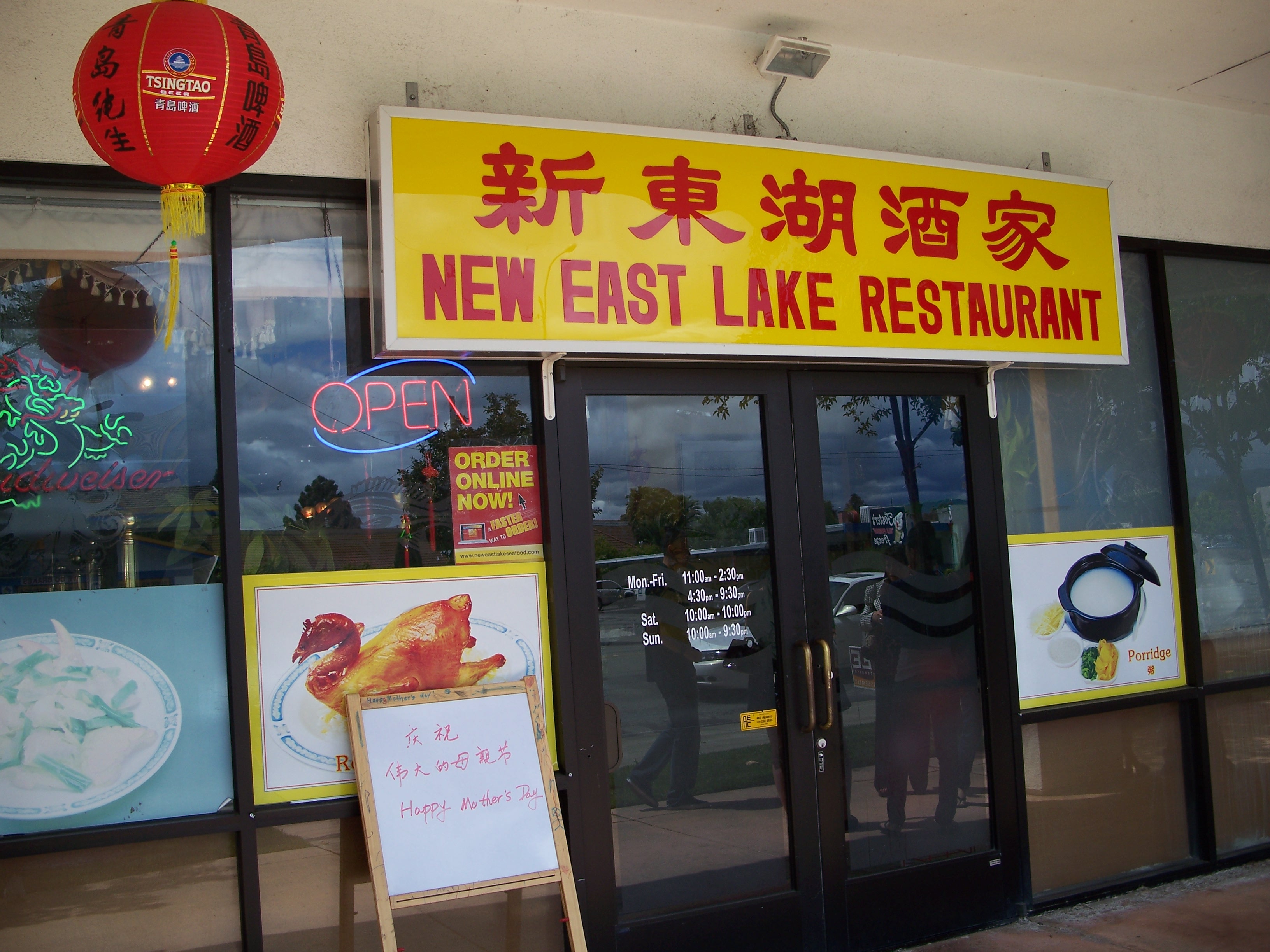
New East Lake of Milpitas

May 17, 2010 By: Mai Truong Category: California - The Bay Area, Chinese


I’ll keep it short and sweet: it’s dim sum today. I gave up on microwaving the frozen potstickers that never get cooked in a microwave, and we set out for some steamy bamboo baskets, the real stuff.


It was prime lunch time. I was hungry like a grasshopper when we went to New East Lake last weekend, and looking around at the other tables covered with plates didn’t help much. Thank goodness the kitchen didn’t let any cooking smoke escape to the dining area.


The wait was of course shorter than it seemed. After I snapped a few pictures around, our first three baskets arrived.


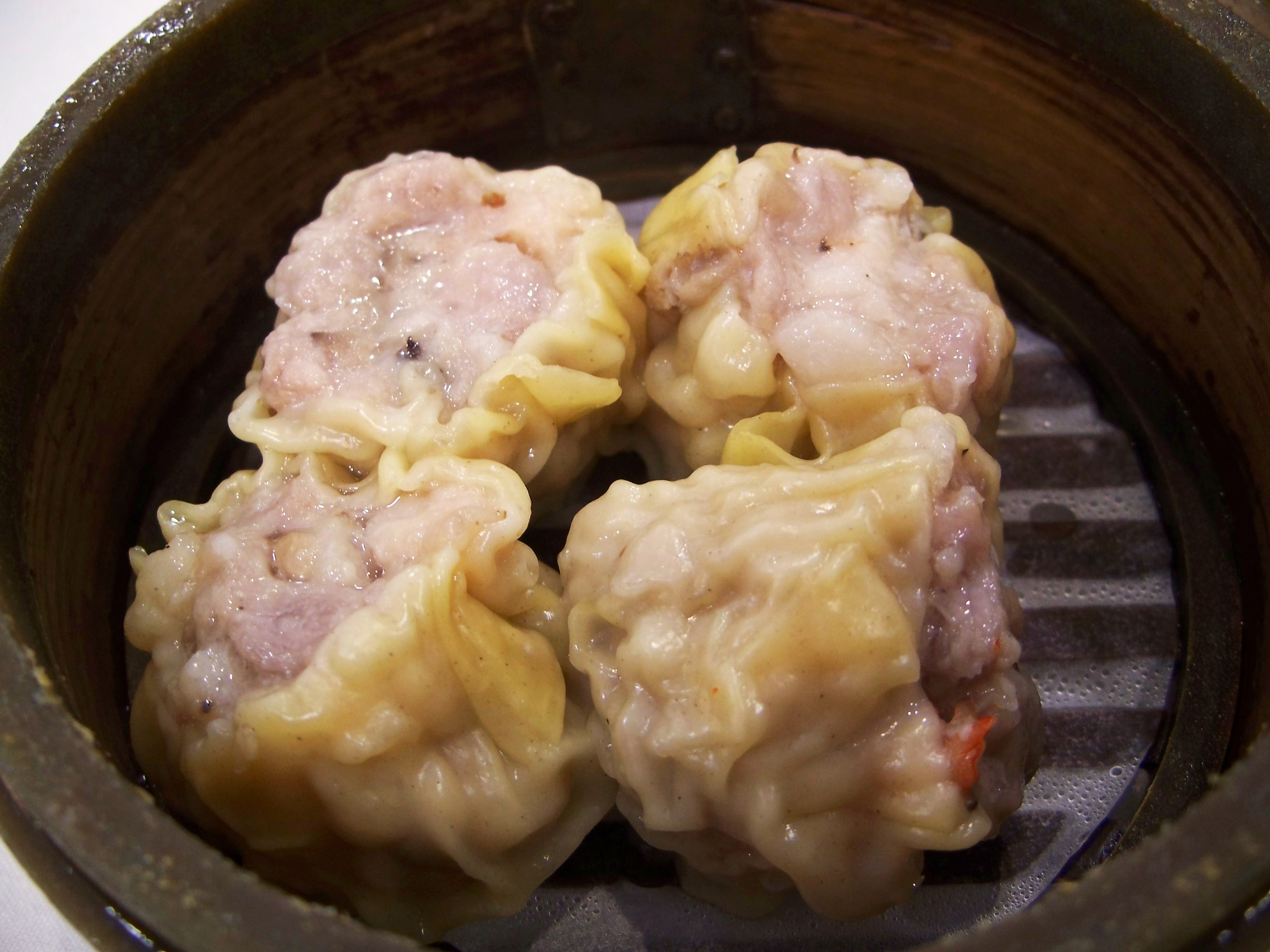
Pork siumai. Mudpie’s comment: “taste like omelet” (?!). Mai’s evaluation: juicy ground pork, well-seasoned, warm. 8/10


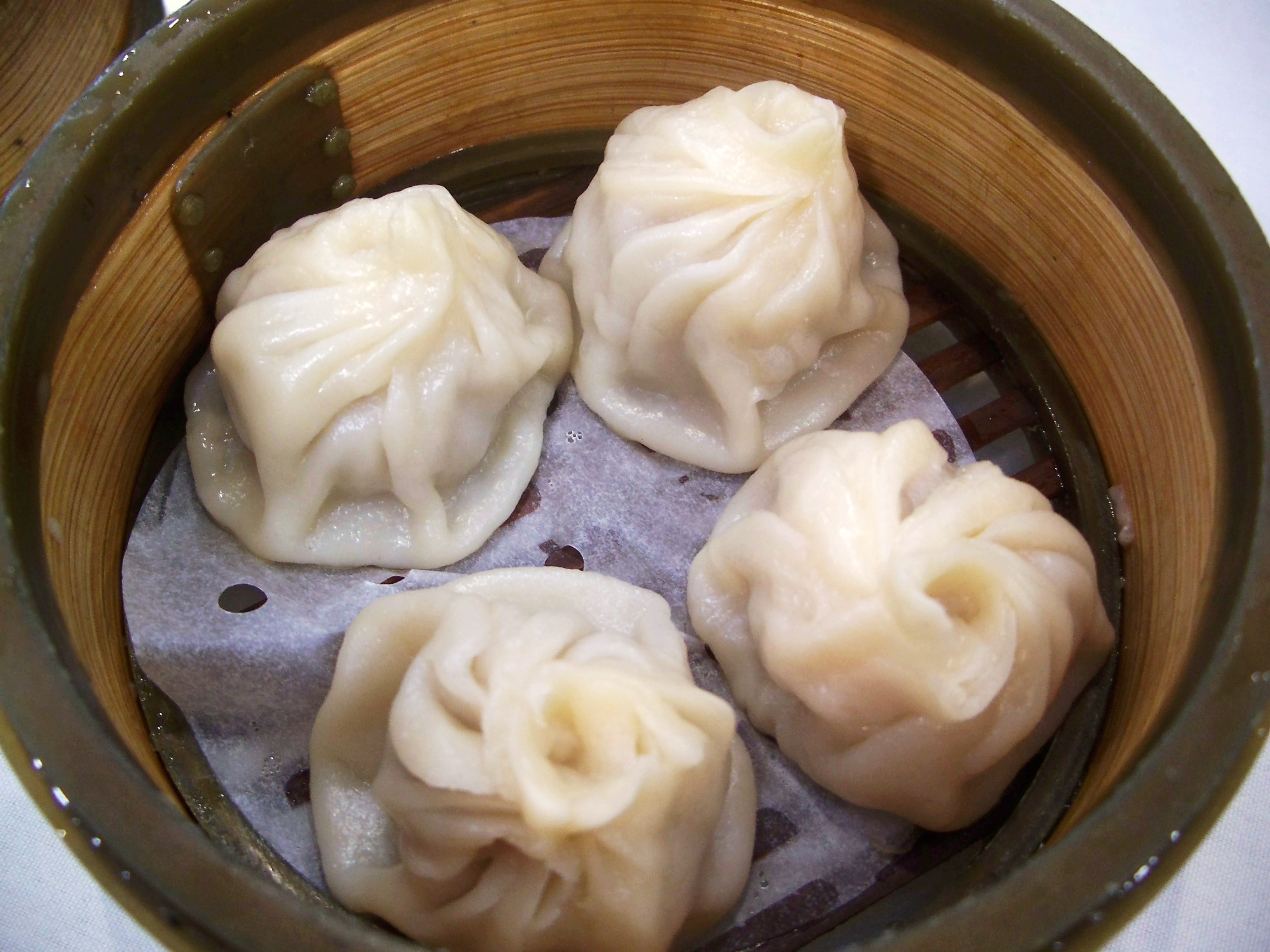
Shanghai pork dumpling. Mudpie’s comment: “Be careful, it has hot soup in it”. Mai’s experience: there’s no soup, just a little bit of juice from the meat. Warm. 8/10


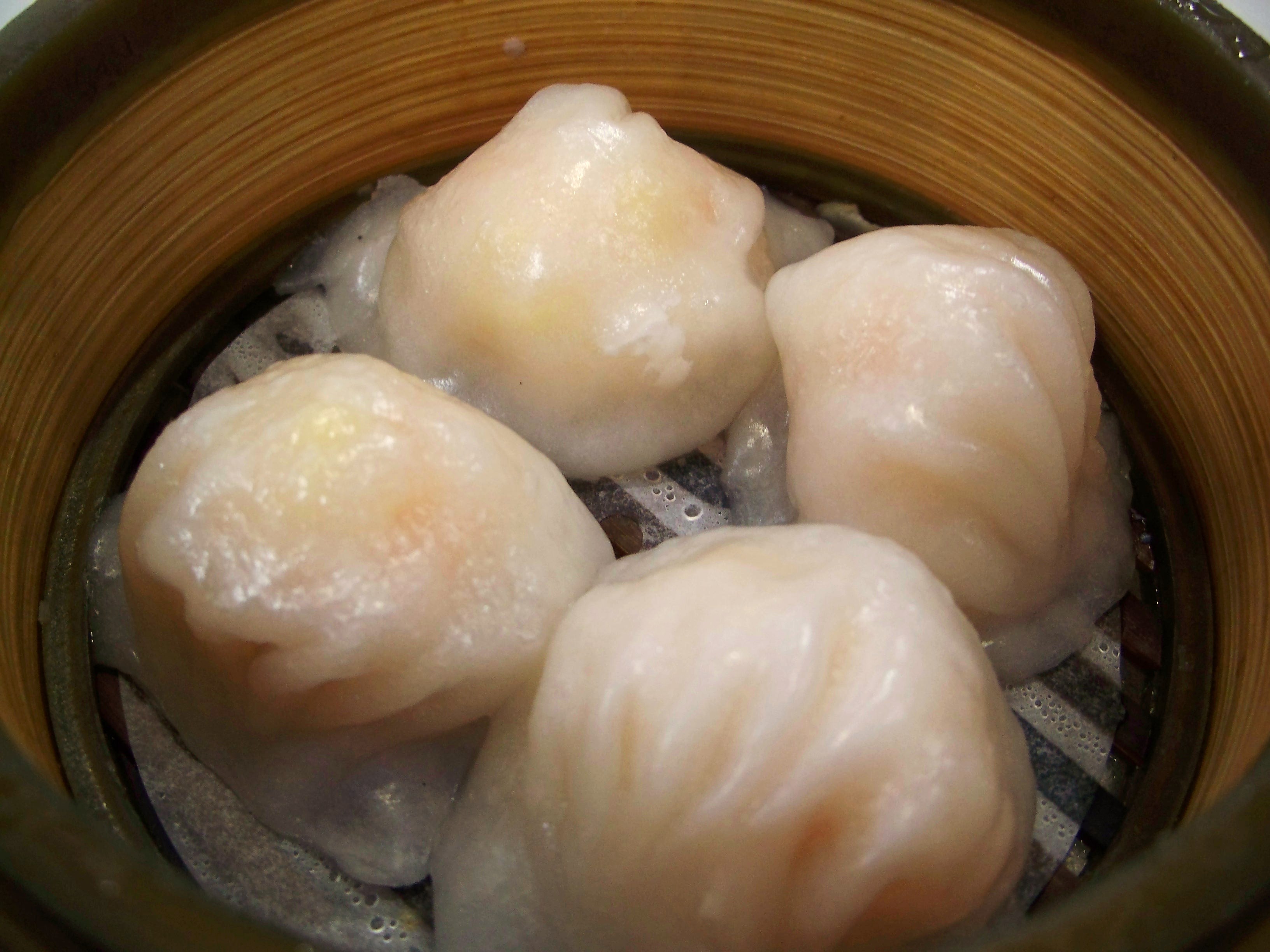
Shrimp dumpling. Mudpie: no comment, just eat. Mai: not sure if ground up shrimp would enhance the texture better, but this whole shrimp filling is good. Warm. 8/10

Then they started storming the table.


Chaozhou dumpling. Mudpie: “hmm… urgh”. Mai’s thoughts: the thick, wet, chewy coating doesn’t match the crunchy pork-and-peanut innard very well. Not warm enough. 4/10


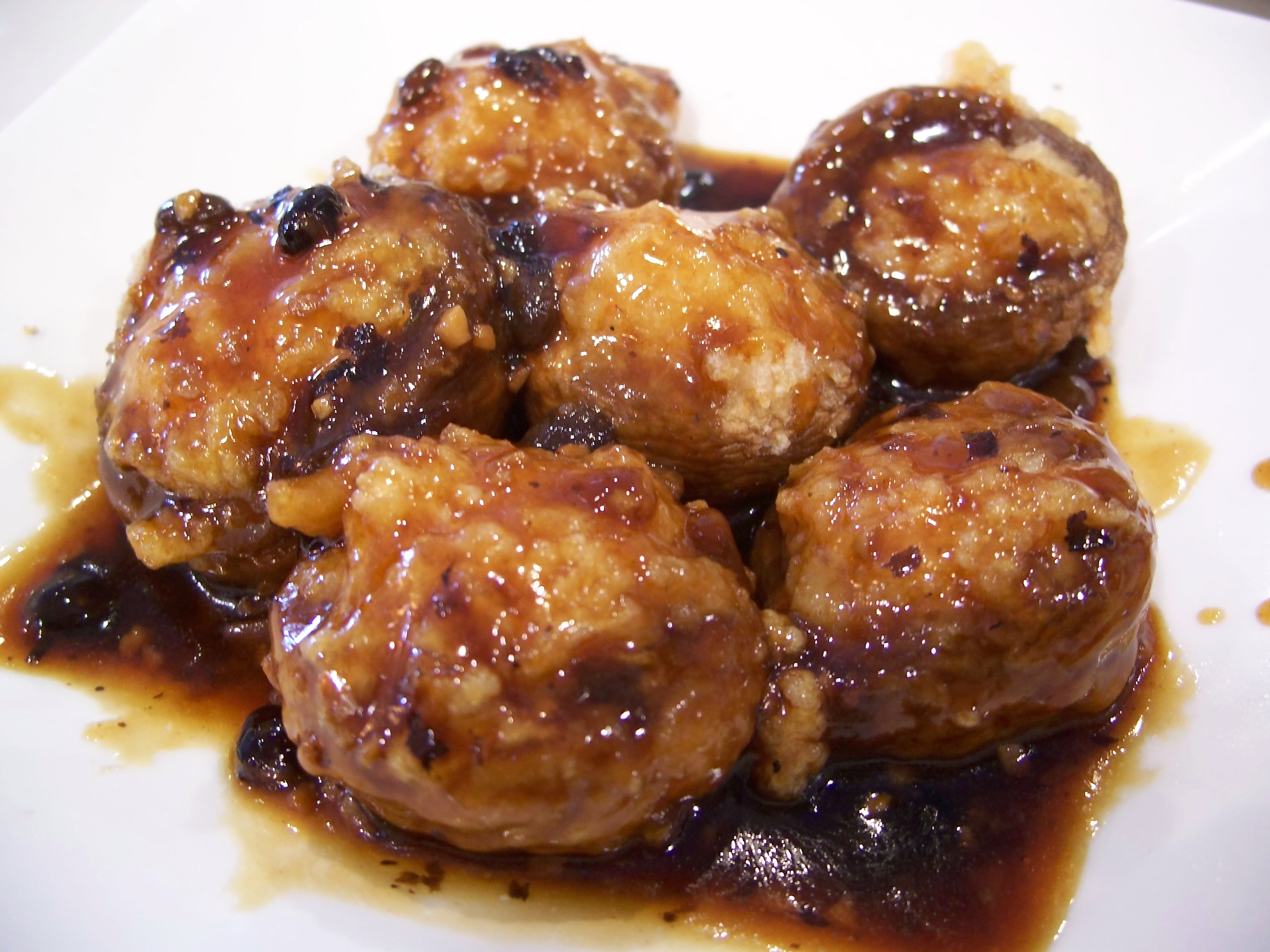
Shiitake mushroom stuffed with shrimp. The whole thing is bathed in sweet thick soy sauce. Hot and juicy. 7.5/10


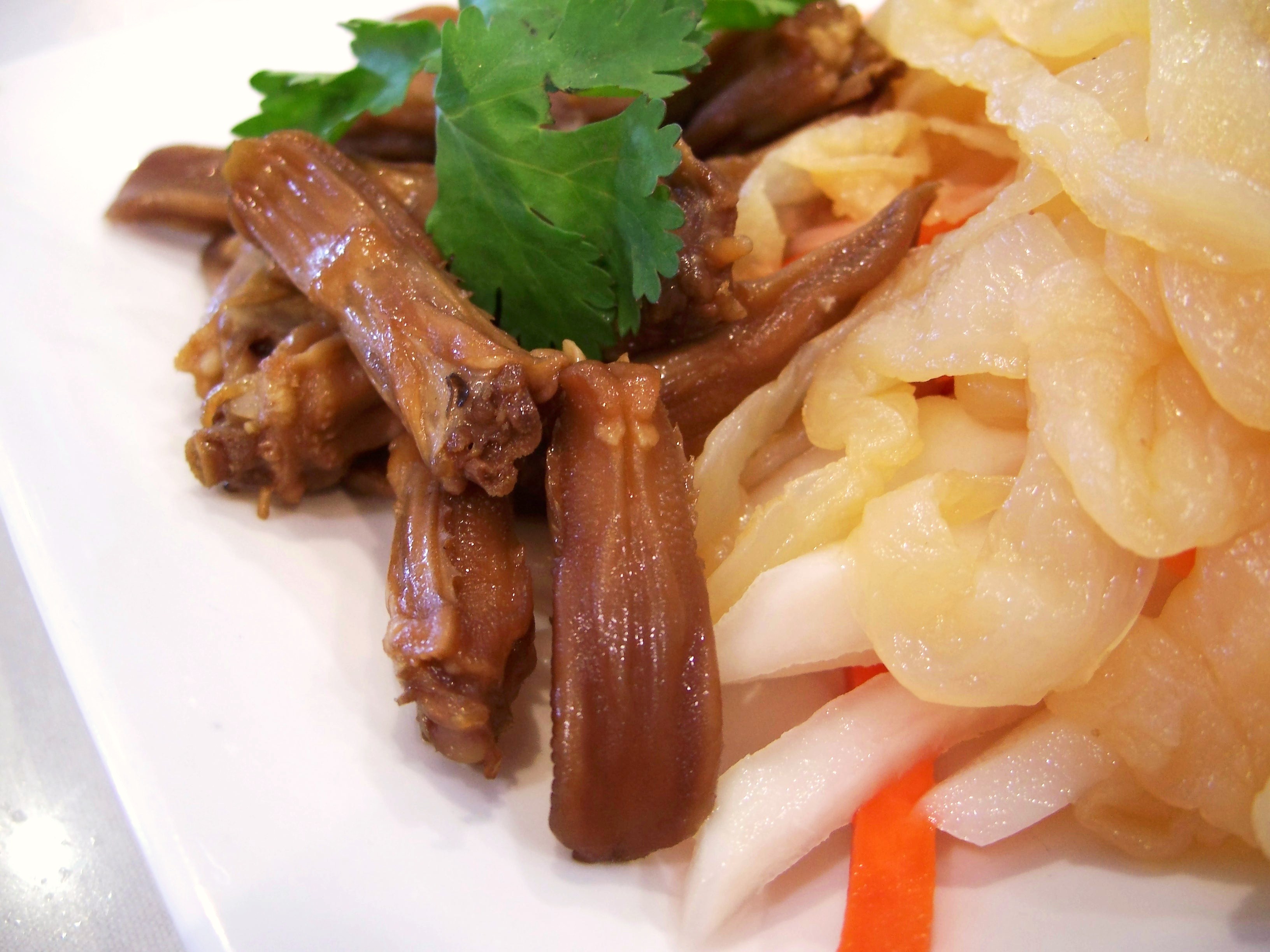
Duck tongue and jelly fish. Each duck tongue, probably from a roasted duck, is about 2-digit long, as wide as a pinky finger, basically crunchy skin with a bone base at one end. Toothsome, but a bit tedious to eat. You grab the end bone and use your teeth to pull off the edible part in one swift jerk. Mudpie’s reaction: *eyebrow raised* “they’re all yours.” Fine by Mai. 8.5/10

Jelly fish are sliced up into translucent strips, flavorless, crunchy like cabbage. Cold. 5/10


Chicken and bitter melon chee cheong fun (rice roll). This is a thicker, stouter, filling-er version of Vietnamese banh cuon. Mudpie’s comment: “It’s guuud… but the bitter melon is too bitter.” Mai’s comment: the bitter melon is fine, what gets on my tasting nerve is the thickness of the rice sheet. 6.5/10


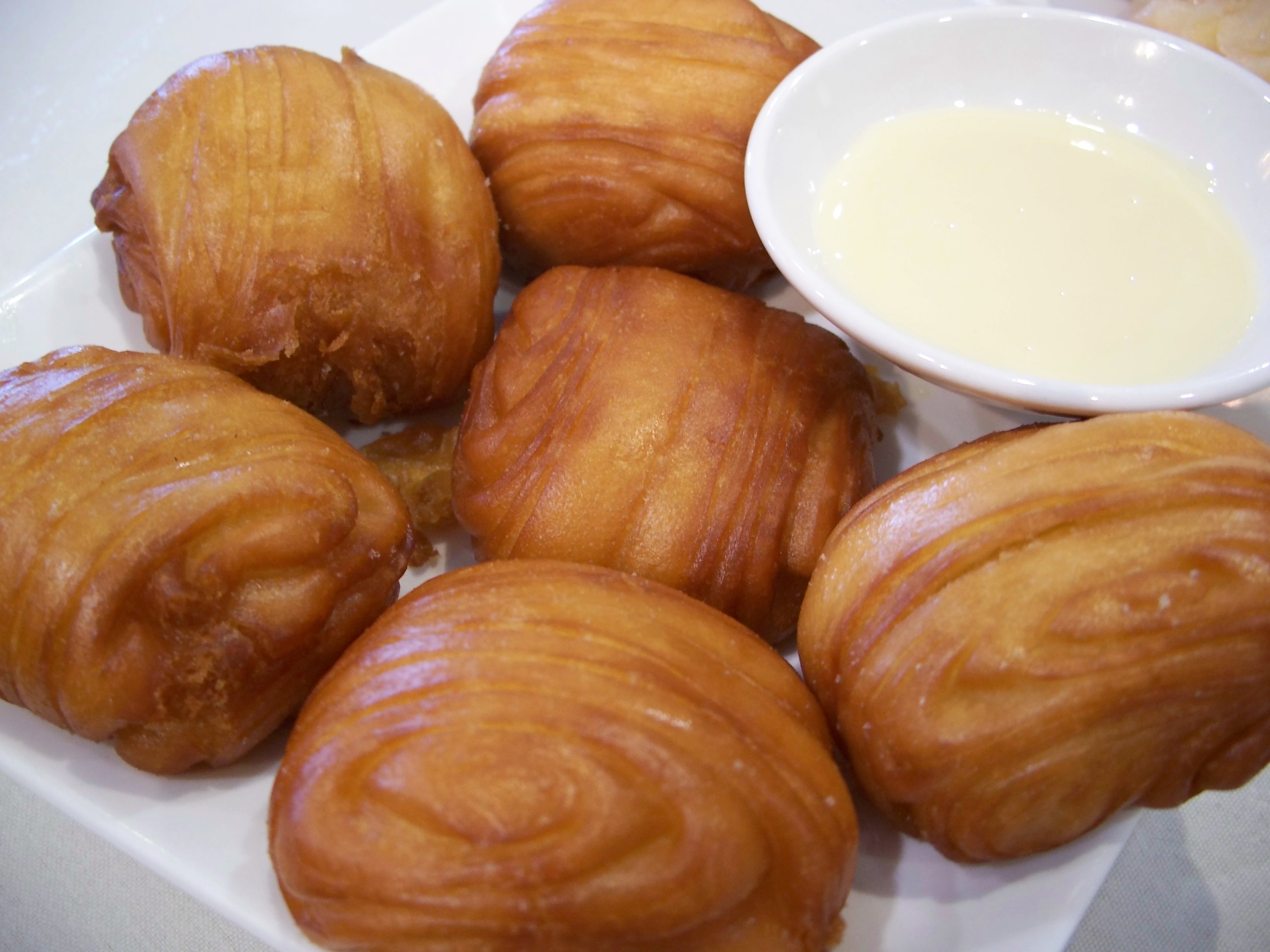
Shanghai fried mantou with condensed milk. I don’t think we ordered this one, but the waitress insisted that we did, so be it. Mudpie is keen on the milk’s sticky sweetness. Mai’s take: kinda like a dense donut, the dough could use a little more yeast. 5/10


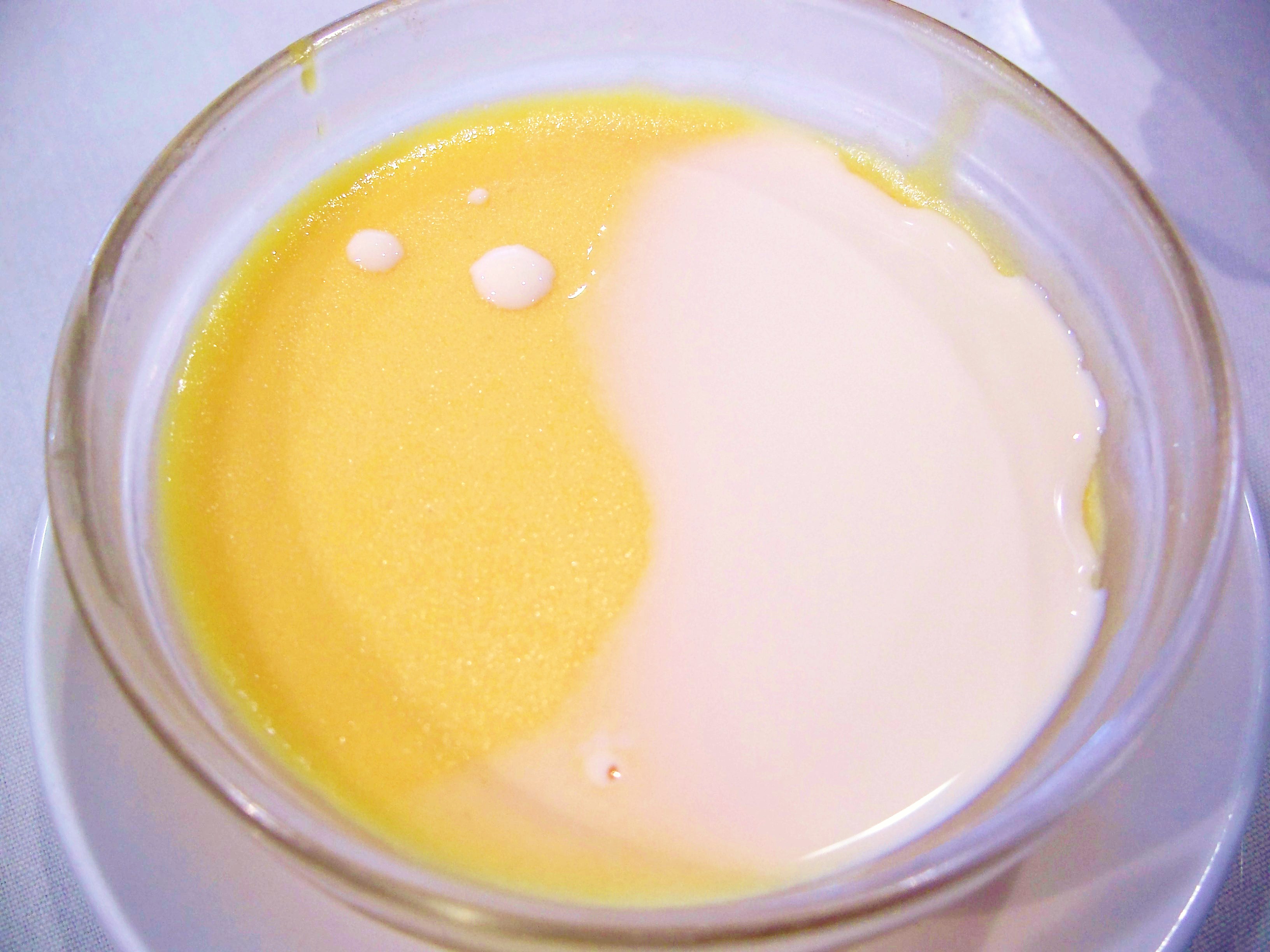
Mango pudding, topped with condensed milk. Notice the yin-yang decor. Smooth, fresh, ice-creamy. Unanimous: 10/10


Why is dessert always the best?

Address: New East Lake Seafood restaurant
(across the parking lot from Huong Lan Sandwiches #4)
61 Serra Way Suite 120
Milpitas, CA 95035
(408) 263-9388

I’d say this is satisfactory dimsum with affordable price, because the bill totalled up a mere $32.23, and there was more than enough food for two. Final score: 7.05/10

Sesame fluff – Chinese snack mi lao

March 29, 2010 By: Mai Truong Category: Chinese, One shot, sweet snacks and desserts


I press my thumbs down, the little egg shape dutifully collapses, but remains in tact, except for a few sesame seeds.

I have deformed a perfect fluff ball out of curiosity. As resilient to breaking as it is, it can’t ever re-inflate like our economy. A bit of guilt creeps in. These little fluff balls come from a lengthy process, as indicated by their name (“佬” – lao). Sticky rice flour is mixed with some other rice flour to make the initial dough and let fermented. My guess is fermentation plays a central role in forming the porous structure, when the dough ball gets deep fried. As malt sugar and lard covers their vulnerably hot surface, ’em balls are quickly rolled and tossed in roasted sesame seeds. And there, you get a fresh batch of mi lao, sesame (sticky rice) fluff. (*)

Originally, the sesame fluffs were meant to be a part of the Lunar New Year offerings in China, but who wouldn’t welcome a snack like this year round, so different spin-offs roll out of street stalls in Taiwan, like peanut-lao, almond-lao, rice-lao. Tiny bits of dried laver (nori) creatively dimple the nutty coat, adding subtle salty notes to the fluff.


Light, chewy, sticky, the deformable birdie beach ball turns into a tooth glue upon each bite. Only eight dollars for sixty little packets, the fluffs can start someone’s good day at work, some fun email exchange, a new friendship, and a blog post. They did for me.

* Many thanks to my friend Chihway Chang, whose amicable nature and fluency in the Chinese languages has made this post possible. The fluffs came from her, too. 🙂

Mid autumn and the moon cake

October 04, 2009 By: Mai Truong Category: California - The Bay Area, Chinese, Opinions, savory snacks, sweet snacks and desserts, Vietnamese


That time of the year has come. Time for the first midterm exam of the undergraduates, and the first exam-grading party of the graduate students. Time for looking back and asking what have I been doing since school started, beside avoiding my advisor for fear of his question “how is the research going?”. Time for kids to buy lanterns, if you’re in Vietnam, and for adults to return home, if you’re in Korea. Time for Walmart, Michael’s, Kroger and the gang to pull out a full display of Halloween and Thanksgiving colors. Time for Asian expats to savour their mooncakes.


It isn’t called “mooncake” for no reason. There’s a moon inside the cake. A bright deep yellow egg yolk, salted to perfection. I always eat this last, putting the whole ball in my mouth and slowly eroding it away. The background of the “moon” can be anything, from assorted nuts and lap cheong to sweetened bean paste. Kinh Do churned out the green tea version (nonexistent in Saigon when I was there 5 years ago). Talk about 2-in-1 convenience, now you don’t have to drink tea while eating mooncakes anymore.

Some prefer the crust to the ubersugary filling. I’m one of them. So they make the dough into shapes of little piglets. My officemate and I laughed so hard the other day when we found out that both the Singaporeans and the Vietnamese do that, although in different ways. Vietnamese people have the baby pigs surrounding a mommy pig, herself a big mooncake with all the stuffing and egg yolks inside. The Singaporeans make it easy for kids to take their piggy around:


I always find it hard to eat the piggy. It’s like eating a gummy bear, you know, should you decapitate him first, or attack from below?
Do other Asian countries have piggy mooncake too?

Recipe for Bánh ú tro (Vietnamese-adapted jianshui zong)

June 30, 2009 By: Mai Truong Category: Chinese, RECIPES, sticky rice concoctions, sweet snacks and desserts, Vietnamese

The recipe calls for a lot of prep time (up to a year!), and the products are little triangular pyramids sold for $3.75 a bunch at sandwich shops. But hey, if you can make bánh ú tro, you can enjoy it any time of the year without having to wait until the Fifth of Lunar May.

1. Ash water

Use the fine, soft ash from burnt coal, dissolve in water. The common ratio is 50 grams of ash for every liter of water, but it varies depend on how strong the ash is and how strong you want your banh to be. Let the ash collect at the bottom, leaving a clear solution. Sift the solution to get rid of dirt and coal bits.
You can use lime powder instead of ash. White lime gives bánh ú tro the natural green hues of wrapping leaves, red lime gives them reddish amber hues. The mixing ratio is 20 grams/liter for lime powder.

2. Sticky rice

– Use 1-year-old sticky rice. Such grains are more powdery than new sticky rice. Wash sticky rice with cold water, then soak in ash water overnight or until the grains break easily when you press them between two fingers. Soaking time varies with different ash types and grain types, but beware that grains soaked for too long can make the banh smell like ash.
– After the grains are done soaking, rewash them thoroughly with water and let dry.

3. Sweet filling

Traditional bánh ú tro doesn’t have filling and is eaten with honey or sugar. But bánh ú tro with fillings are arguably tastier than their plain counterparts, and here are a few filling ideas:
Mung bean paste: split and peeled mung beans are washed and cooked until tender, mashed while it’s still hot and mixed with sugar. The bean-sugar ratio varies to your likings.
Red bean paste: soak red beans in water overnight to soften them. Wash, cook until tender, mash. In a skillet, add 1 tbs oil and 200g brown sugar for every 500g red bean, stir on low heat until all sugar dissolves. Let cool.
Grated coconut: boil water and sugar with ratio 1:1 on low heat , stir frequently until all sugar dissolves. Pour the syrup into grated coconut and mix until it becomes a soft sticky ball.

4. Wrapping bánh ú tro

– Use bamboo leaves (about 5-6 cm wide and 30 cm long) or banana leaves cut into similar size. Wash the leaves clean and let dry.
– Bend one end of a leaf into cone shape. Use 2-3 leaves to increase the banh size.
– Put in 2-3 teaspoons of sticky rice for the plain kind. Or 1 tsp sticky rice, followed by 1 tsp filling, then 1 tsp sticky rice on top for the sweet kind.
– Wrap the remainder of the leaf tightly around and over the cone until all faces are covered.
– Tie it up with a nylon string. Then tie every ten banh into a bunch with a long string to easily pull in and out of boiling water.

5. Boiling bánh ú tro

– Cover the bottom of a large pot with banana leaves or bamboo leaves to keep banh from sticking to the metal.
– Arrange banh in the pot. Pour water. Water level should be at least 4 inches above the banh. Make sure banh stay submerged the whole time, you can cover banh with a big sieve and a weight on top to keep banh from floating up.
– Boil banh for 45 minutes to an hour (after the water starts boiling). Add more water if the level gets too low.

Submerge cooked banh in cold water for 10 minutes to aid cooling, then hang them dry. Well made ones can last 2-3 weeks at room temperature.

Recipe translated from source.

Beach and buffet

June 25, 2009 By: Mai Truong Category: Chinese, Texas, Won't go out of my way to revisit


Galveston beach is calm today. In Vung Tau we can see foaming waves hitting the shore from 300 feet away, and the sun-shy ones (like myself) can hide under the shade of sheoaks planted along the beach (*). Galveston is different. A blazon strip of land.

When you go to the sea on a holiday weekend, you get what you expect: (too) plenty of sunshine, sand, lots of people smiling, sweating on the bikes, burning tanning on the beach. When you go to a Chinese restaurant, you expect cheap, commonplace food, casual companies and indeed they are. But never expect too much. We went to China Island, a “restaurant” 10 minutes from the sea, expected decent seafood, and didn’t get it.

A lady stared at little mom, making her feel guilty for taking the last fish fillet. Later we found out the lady didn’t really miss much, the fish wasn’t fresh. The fried shrimps were poorly coated and poorly fried.

Fried rice hastily done, just as plain as white rice can be. Chickens boring and textureless. Crème caramel and watermelon both tasted like water. The fortune cookies were perhaps the best things, since we all got good quotes. What can I say? It costs only $28.65 for three. Our car got a break and some suntan in the parking lot too.

It looks like I’m not the only one unhappy about China Island.

(*) It must have been 10 years since I last went to Vung Tau. Of course lots must have changed.

Tags: