Flavor Boulevard

We Asians like to talk food.
Subscribe

Archive for the ‘California – The Bay Area’

Revival in Berkeley with fruit jellies

June 12, 2012 By: Mai Truong Category: American, California - The Bay Area

Thank you, Kristen Sun, my dear friend who has shared many great meals with me in Berkeley and definitely many more in the future, for sharing a post here with us today 🙂

Halfway through our meal, Mai and I turned to each other and we agreed, “I’m not that full yet” and “I can still eat more.” This was after a small plate of charcuterie (which wasn’t that small) and two small plates, which again, were not that small. It solved, however, the main question that had been bugging us since we arrived at the restaurant: which entrees should we get? And if we get more than one entree, could we still do dessert? Turns out indecision works very well at this restaurant; sampling the diverse offerings of the menu is definitely the way to go! Eating with Mai is always a treat – for the mind and for the stomach! Thank you Mai for the great honor of being a guest blogger for Flavor Bouvelard!

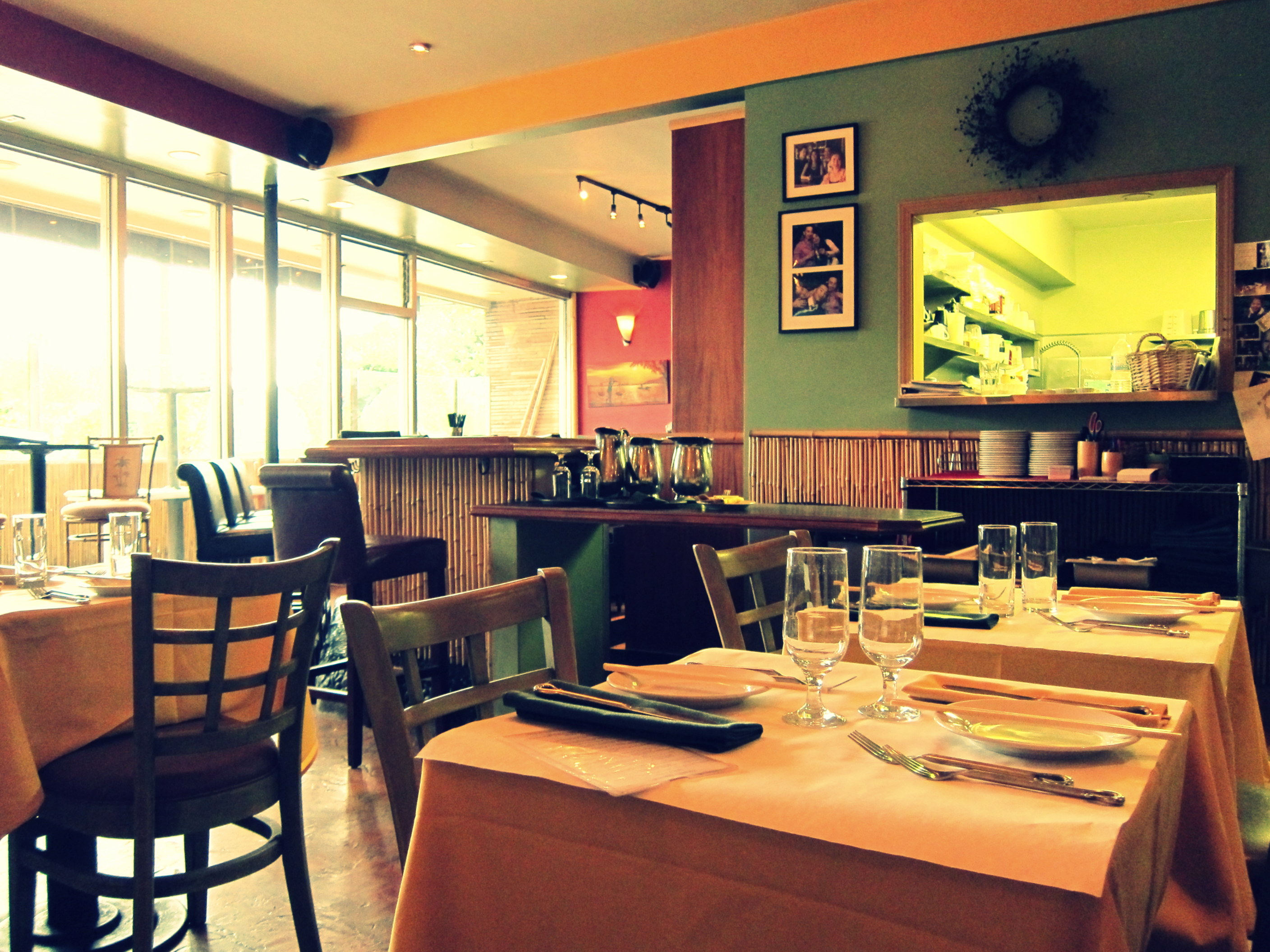
Simply put, Revival Bar & Kitchen, located right in the middle of Downtown Berkeley, is gorgeous. The tall ceiling, the rustic decor, the feeling of open space, and best of all, a bookshelf tucked away in the corner, give Revival a unique feel. The tables were just the appropriate width apart when it comes to having good conversation with two women who bonded with Mai over their travels to Vietnam, and perhaps a tad bit too close when we overheard a man speaking unkindly about his (absent) girlfriend to another friend. But let’s speak of the food…
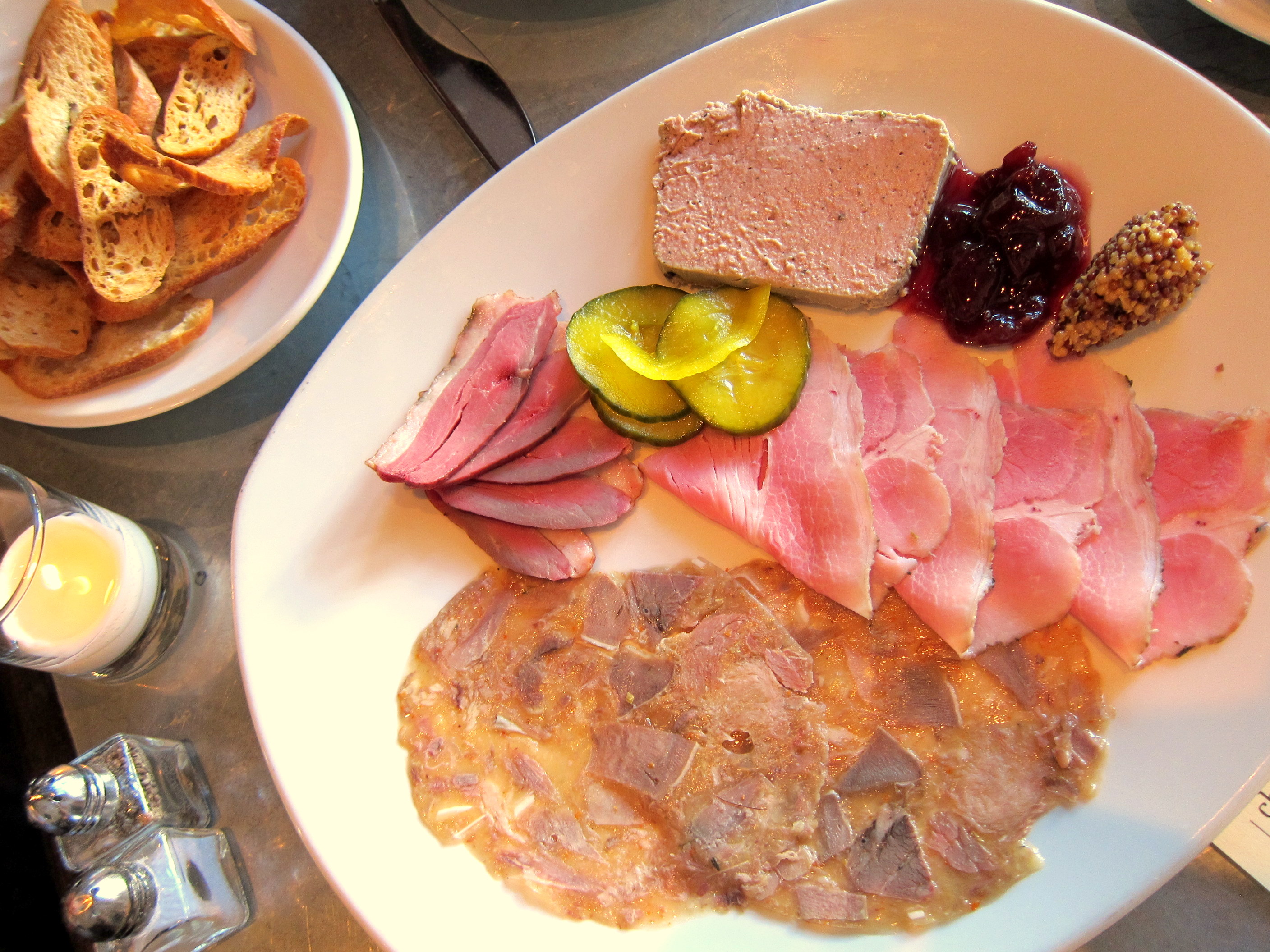

When we received our menus, right away our eyes landed on the charcuterie section, which consisted of fresh ham, duck liver mousse, coppa di testa (headcheese), and smoked duck breast ($8 for an individual plate, $18 for a small plate of all charcuterie, and $26 for a large plate of all charcuterie). The fresh ham and the smoked duck, while delicious, were not particularly unique in any way. The coppa di testa… now this is something interesting. It was my first taste of headcheese, so I went in without any expectations. It’s sour and leaves a slight fizzy aftertaste like a soda. It also is very fragile; it is not quite a cold cut but not quite a pate either… it had a very weird “saucy” consistency, which Mai found to be weird as well compared to the headcheese that she is accustomed to! The duck liver mousse was our favorite meat on the plate; the texture is rich and smooth and the taste just strong enough without being overpowering. This plate was definitely fun, as we could combine all the different meats with the sides (raspberry jelly, pickles, and mustard) in as many different combinations as we wished, each bite yielding a new combination of flavors. We both agreed that the real standout on the plate, however, was the raspberry marmalade. In fact, as we would soon discover, the one thing that Revival really excels
at are its fruit jellies.
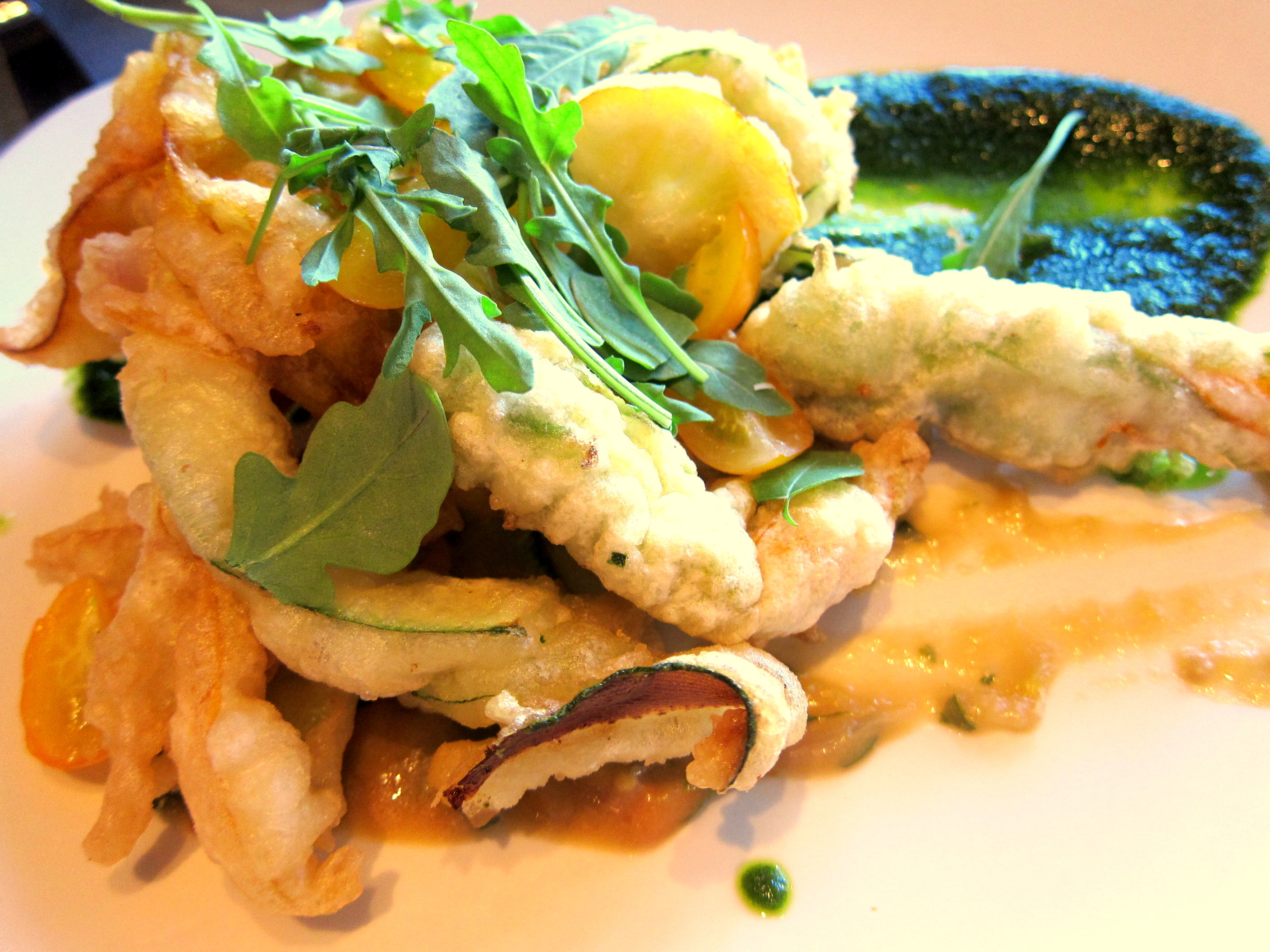

Next on our list are the two small plates: tempura fried squash blossoms ($13) and bone marrow ($11). The tempura fried squash blossoms, stuffed with ricotta and goat cheese, were delicious and light and the pieces of fried zucchini that garnish the plate were also good. Mai, however, found that the squash blossoms had a stronger goat cheese flavor than she would have liked. The sauce, a cilantro mint coulis, paired well with the fried vegetables, but was forgettable.
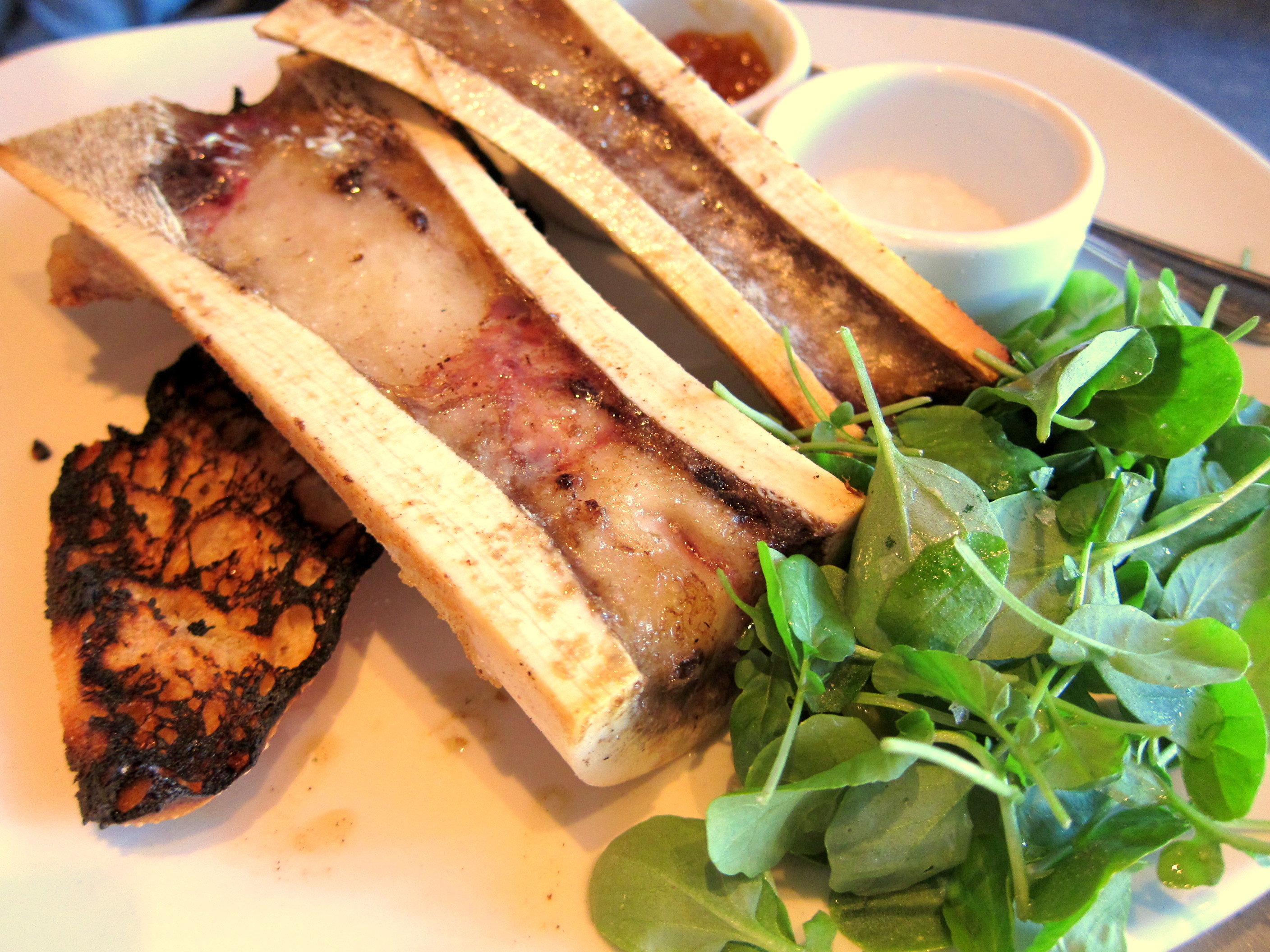

For me, the standout dish of the night is the bone marrow. Rich and fatty, this first taste of bone marrow was just perfect. Best of all, we were allowed to season the meat ourselves, as the dish comes with a side of sea salt. The crunchy baguette, the flavorful meat, the salt, and best of all, the kumquat marmalade worked perfectly together. This dish, for me, was one of the perfect bites of the night. And once again, we were blown away by the fruit – the kumquat marmalade, which really is a standout on its own, tied the flavors of the dish together perfectly.
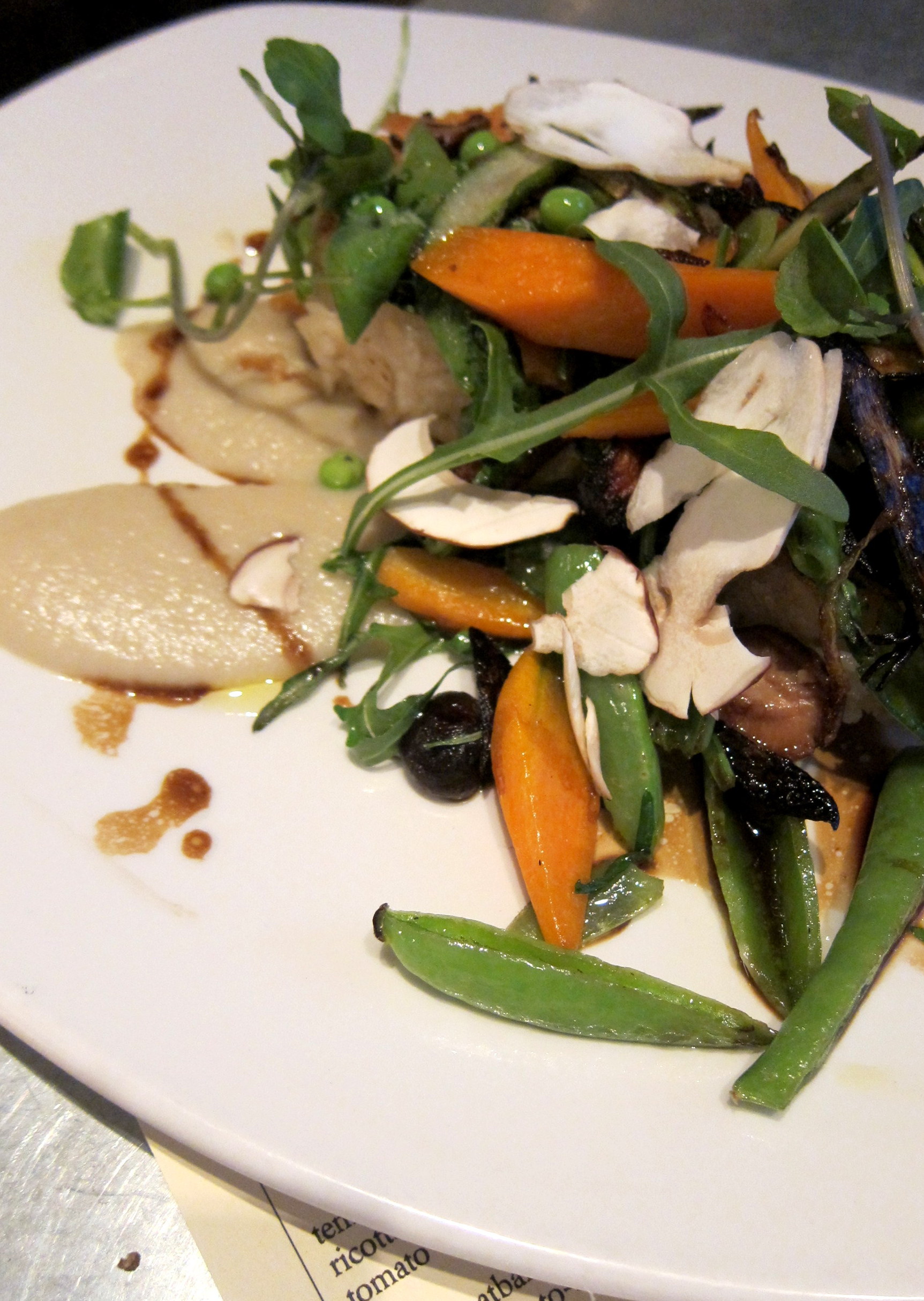

Despite all of this food, it was at this point that Mai and I decided to go for it and ordered both of the larger plates that we were looking at, which our waitress recommended as the two best as well. The risotto cakes ($21), however, were just okay. The cakes themselves were a bit dry and bland. The porcini mushrooms, while not having the typical “musty” mushroom taste as Mai explains, really did not add any unique flavor to the dish. However, I loved the porcini jus and could not stop dipping into the sauce. I love thick almost puree-like textures and this was no exception. Mai and I both agreed that the vegetables that came on the side were delicious and outshone the risotto cakes.
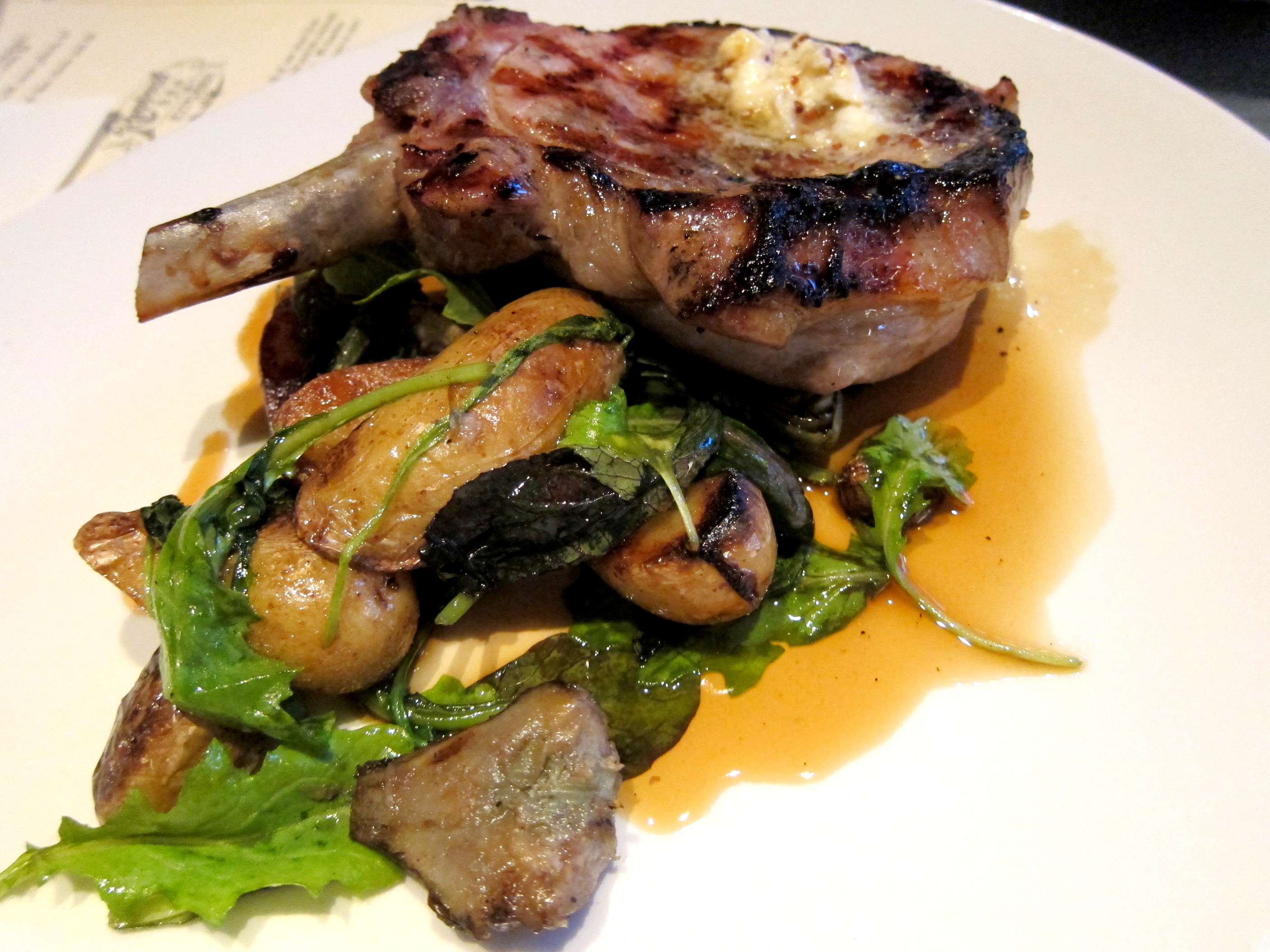

The pork chop ($25) was good and very well-cooked – juicy, full of flavor, and not dry in the slightest. Both Mai and I found the bourbon butter to be a bit too strong and overpowering of the meat; we ended up scraping most of the butter off. The potatoes and artichokes were well-cooked and flavorful, but not particularly unique.

Overall, the smaller plates succeeded more than the larger plates and the size of the small plates comes at a overall better bargain, as there is not much difference in portion sizes.
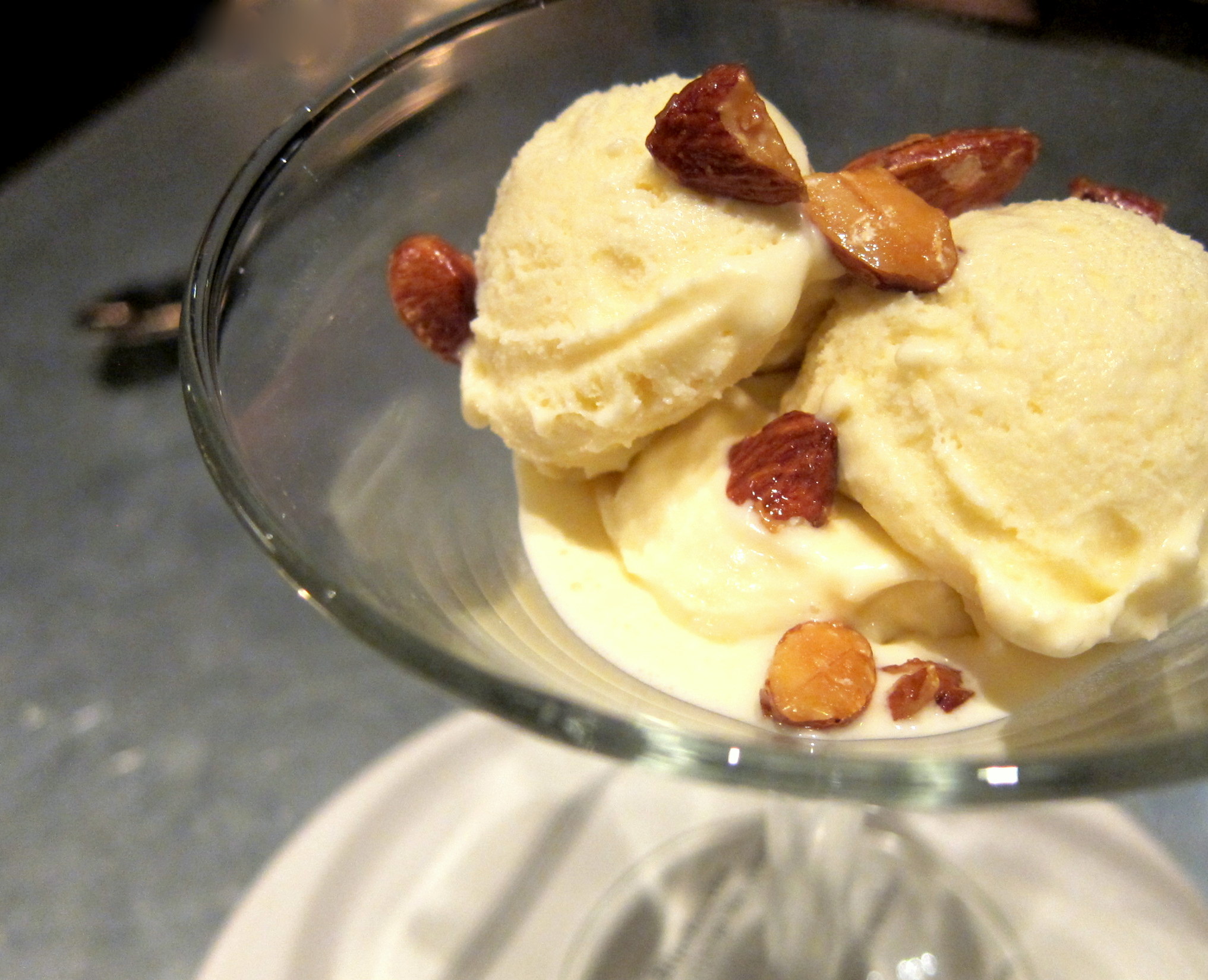

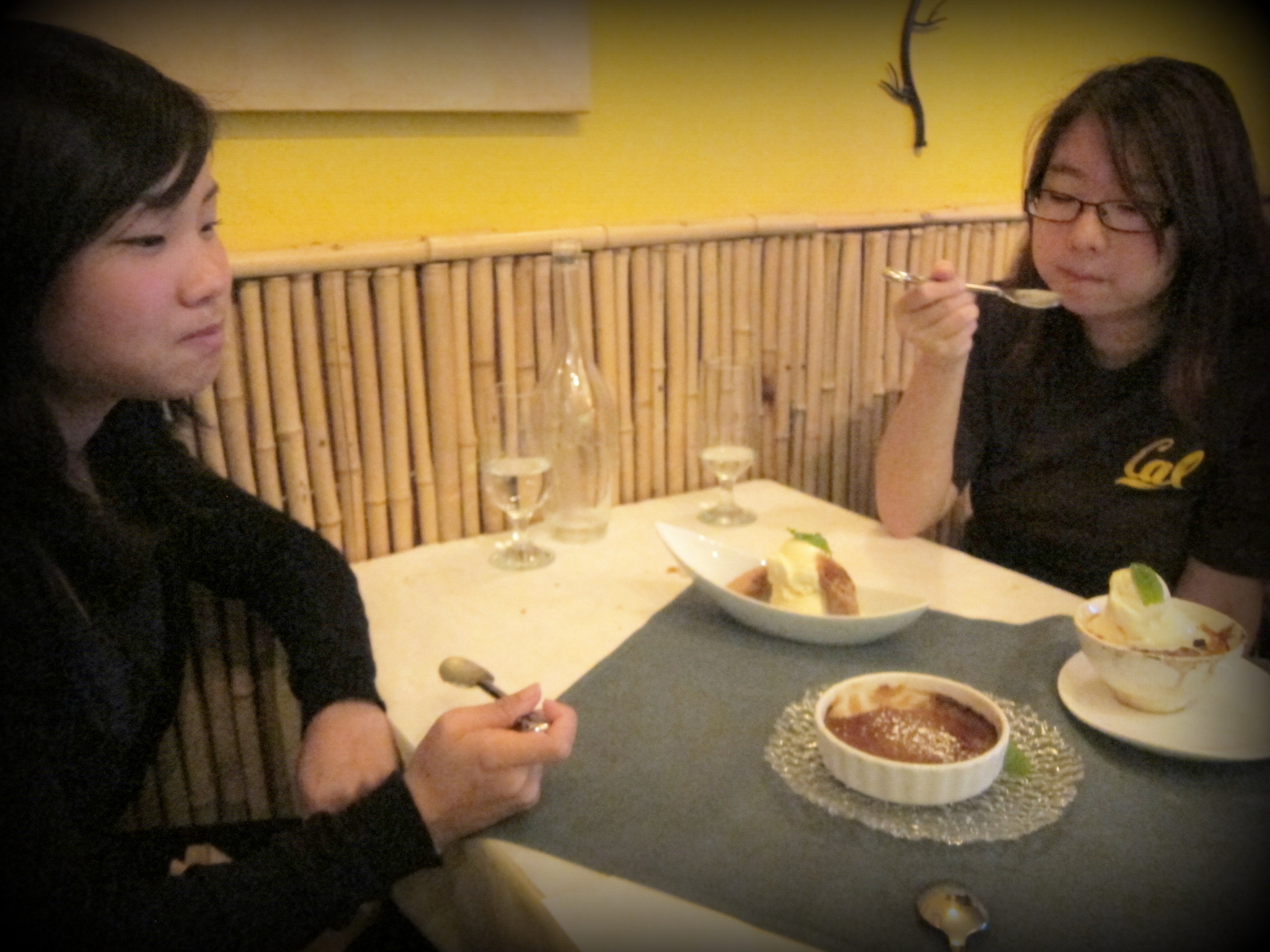
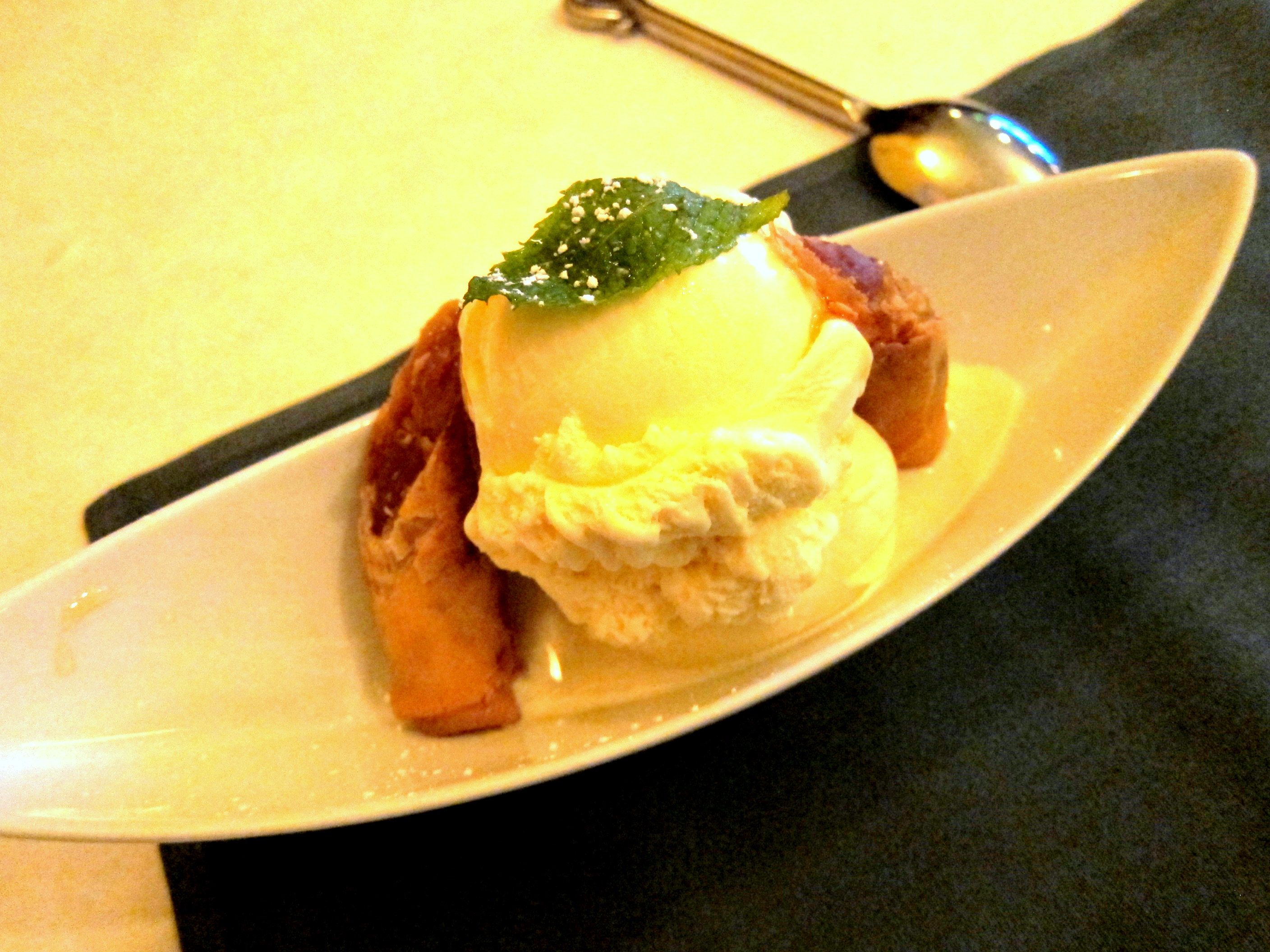
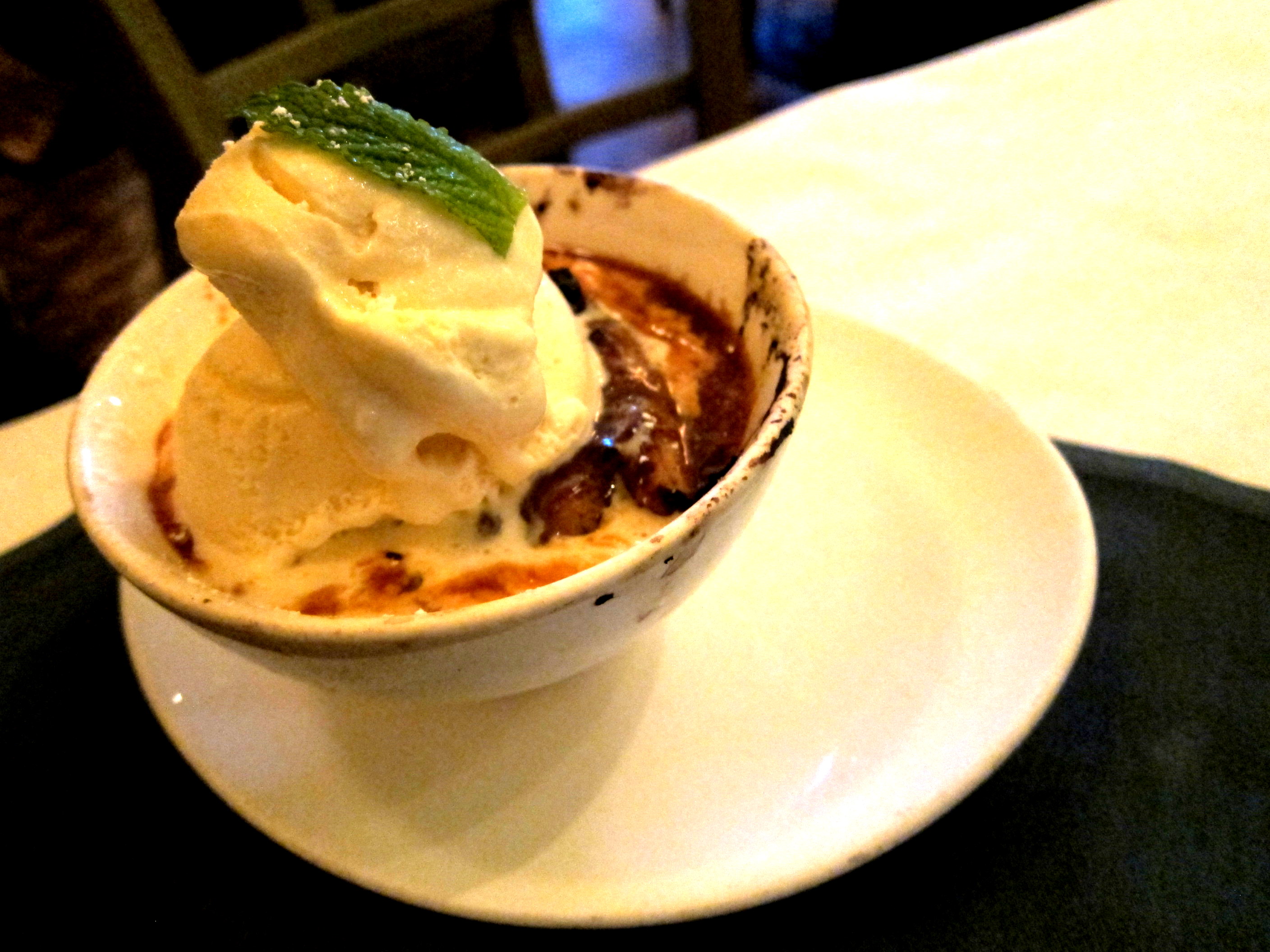
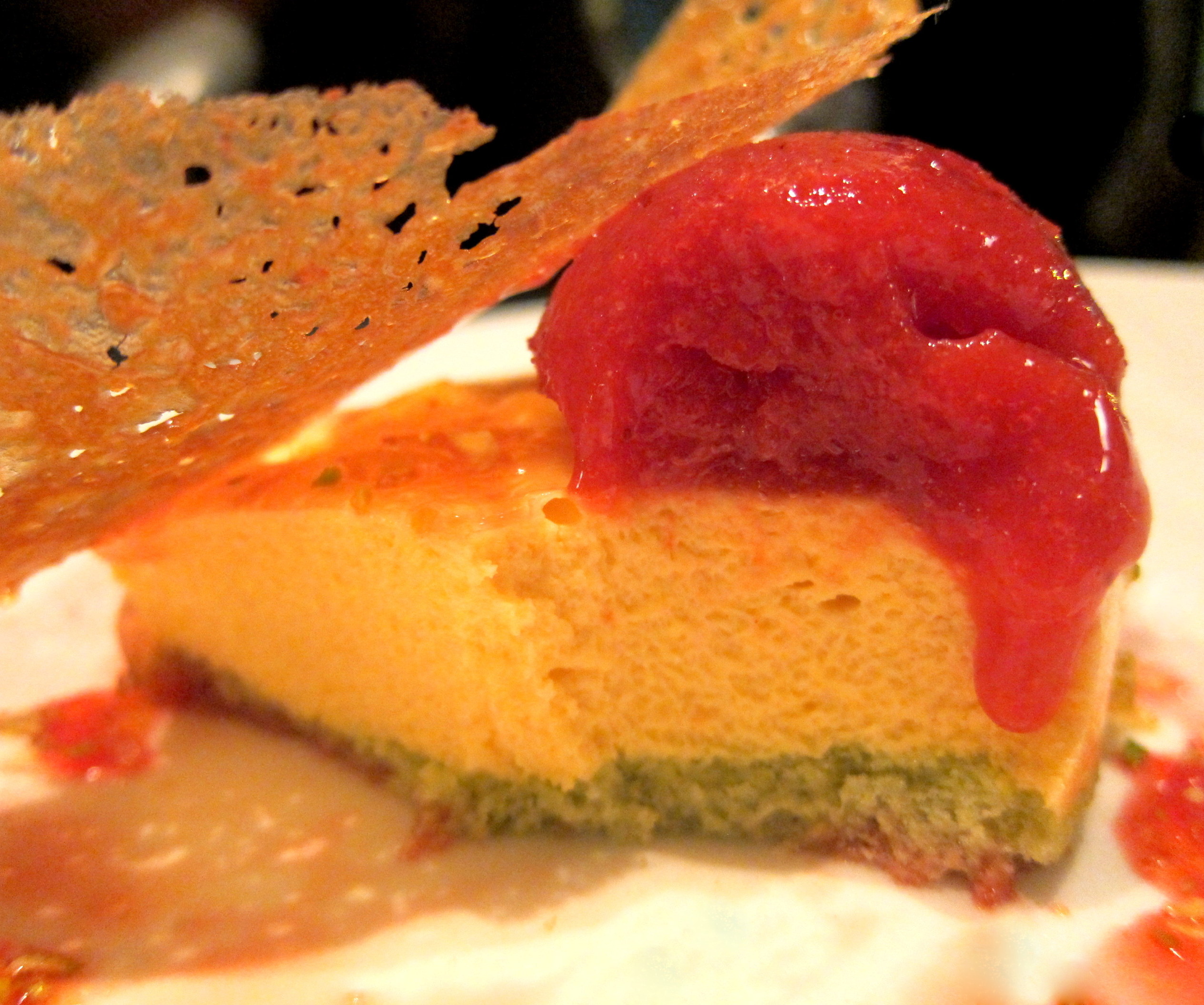
Of course, our meal cannot end without dessert. And were we ever glad because the desserts here are amazing! We settled on an apricot mousse ($8), but after asking what the ice cream du jour ($7) was, we had to order that as well. The flavor is apricot pit, which we of course, had to try. Our waiter informed us that it has an almond-like taste, which we agreed on; the flavor is much lighter, however. The nuttiness and creaminess of the ice cream, along with the crunchiness of the pecans, were a perfect combination!
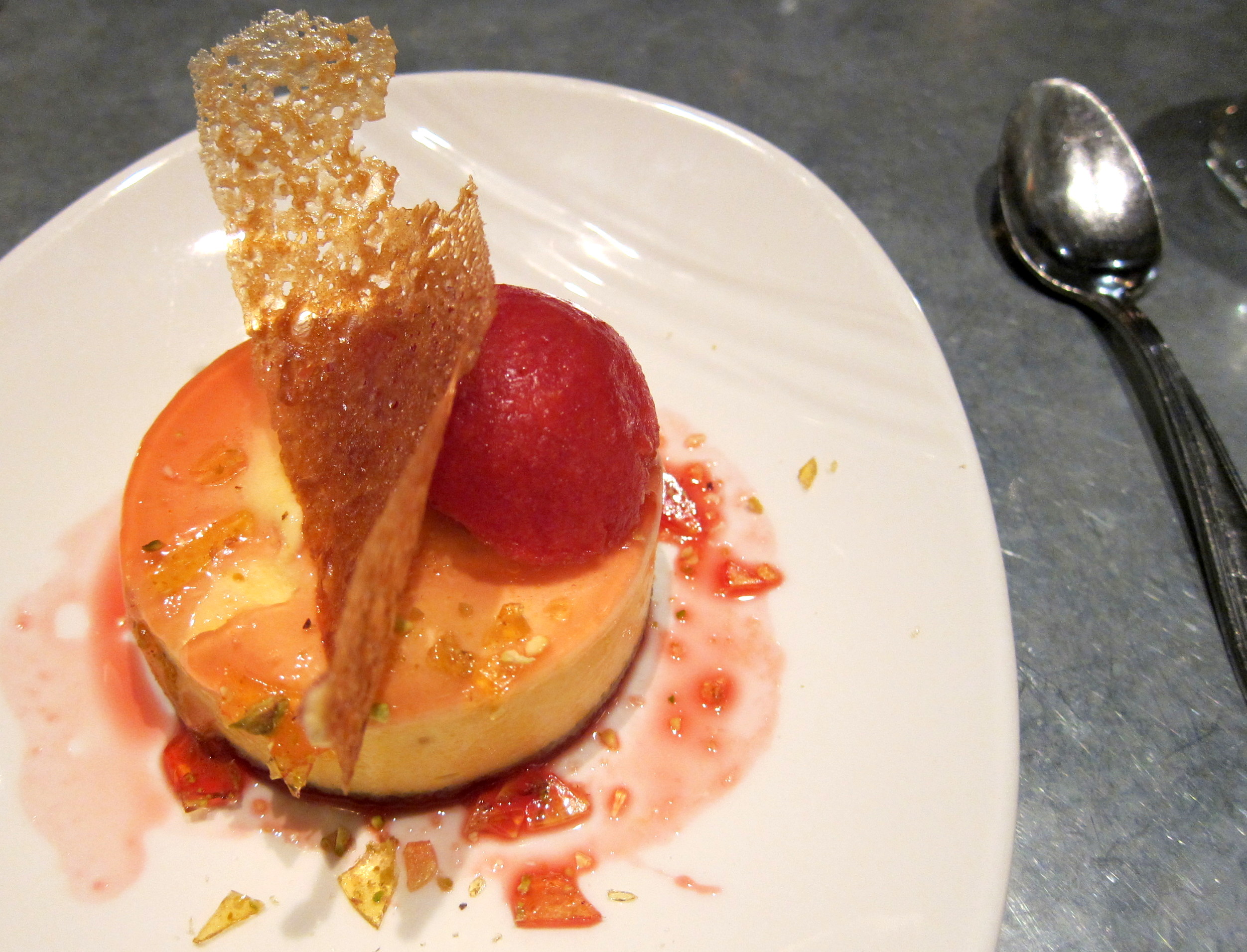

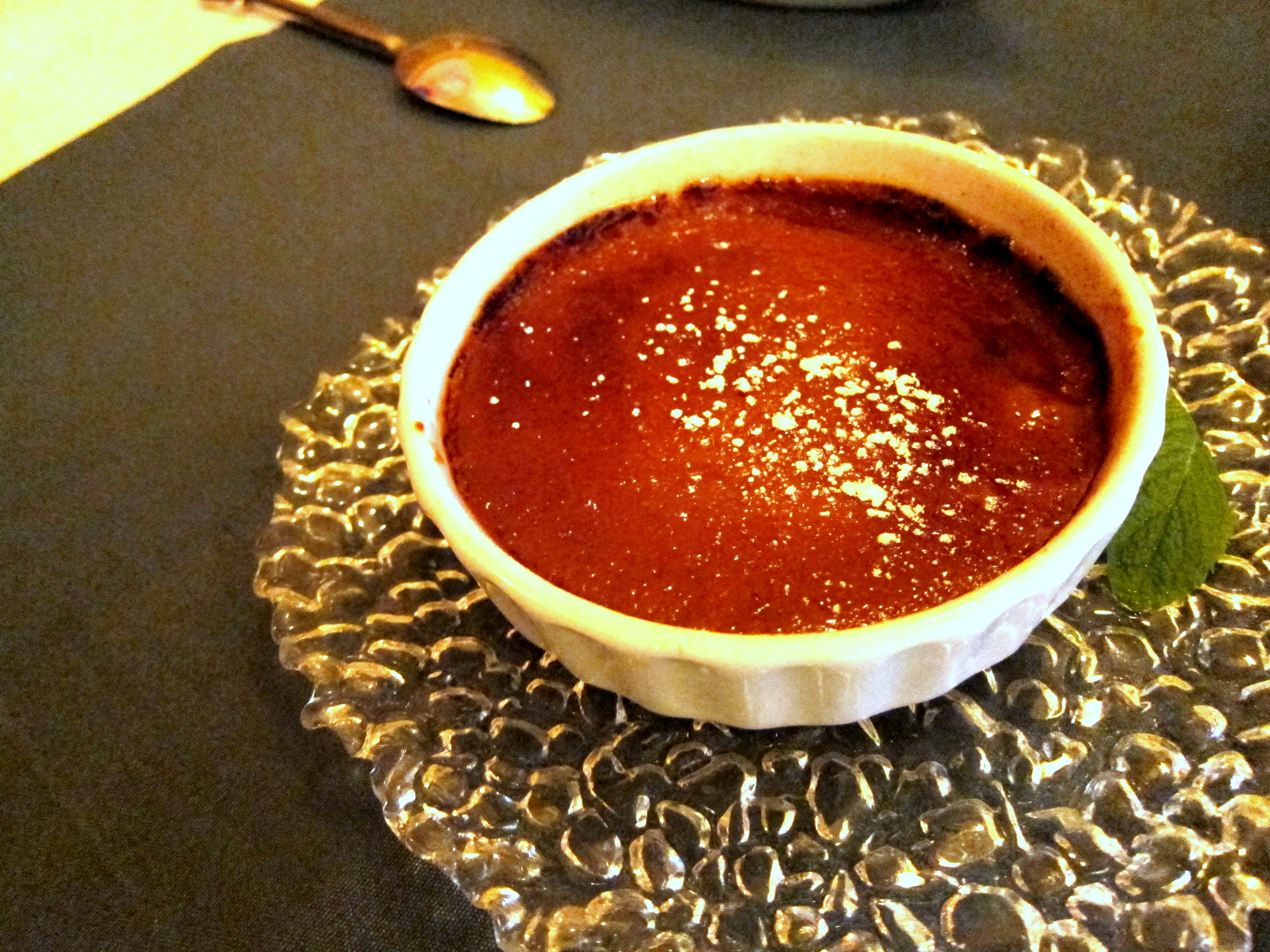
The apricot mousse, likewise, was also delicious. While we couldn’t make out the flavor of the green tea cake at the bottom, the light fluffiness of the apricot mixed with the sourness of the blood orange reduction and the crunch of the bruléed bottom was quite pleasing texturally. As for that blood orange reduction…it had a marmalade texture but it was chilled so it was almost like a sorbet. A clear stand-out!
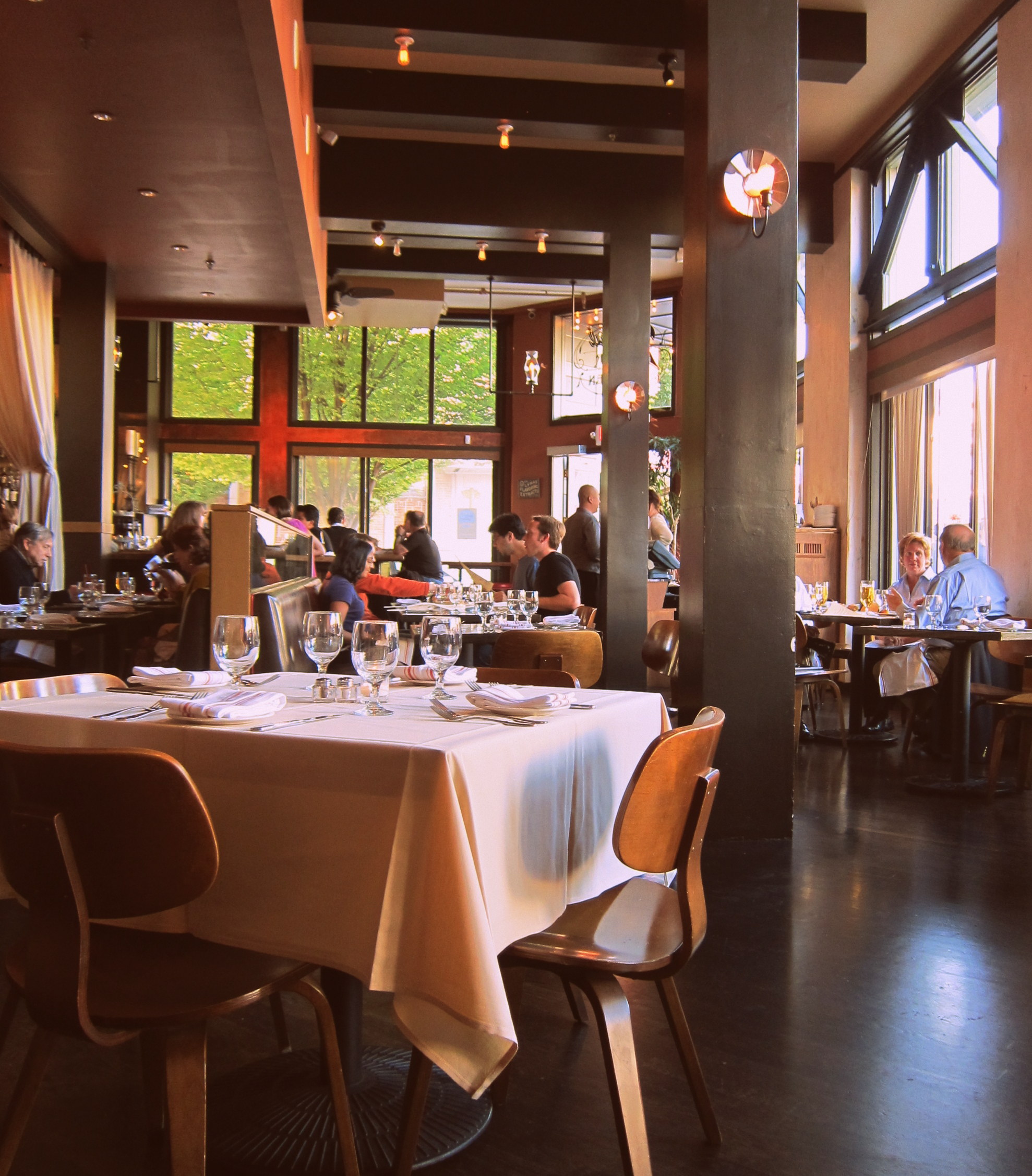

Overall, Revival made for a great dinner and we had lovely neighbors to chat with as well near the end of our meal. The real standouts here – the raspberry jelly, the kumquat marmalade, and the blood orange reduction – were unexpected but elevated what could have been ordinary or boring dishes into something special. When I think of a perfect dining experience, eating at Revival definitely ranks high: great friends, new acquaintances, and delicious food at a relaxed and leisurely pace.

Address: Revival
2102 Shattuck Ave
Berkeley, CA 94704
(510) 549-9950
Party like spring harvest time

May 19, 2012 By: Mai Truong Category: California - The Bay Area, Drinks, sweet snacks and desserts, Vegan


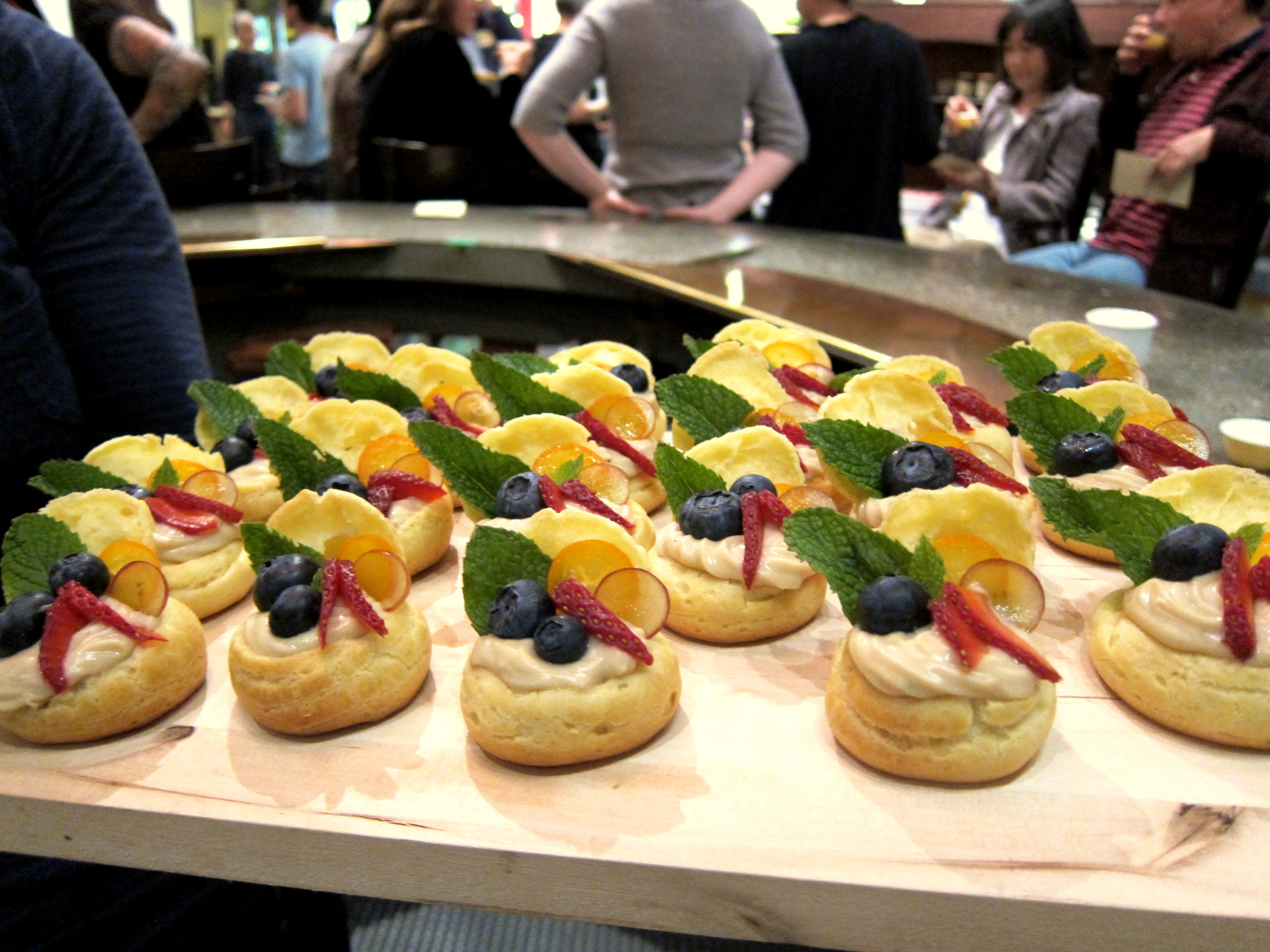
And eat an amazing cream puff. (Cream puffs >>>>>>>>>>>>>>> Cupcakes) Click to see my post on the Spring Harvest Tea Party at Teance tonight. We drank some eye-opening teas, literally and figuratively.

In the Eye of Tea

May 14, 2012 By: Mai Truong Category: California - The Bay Area, Japanese, noodle soup


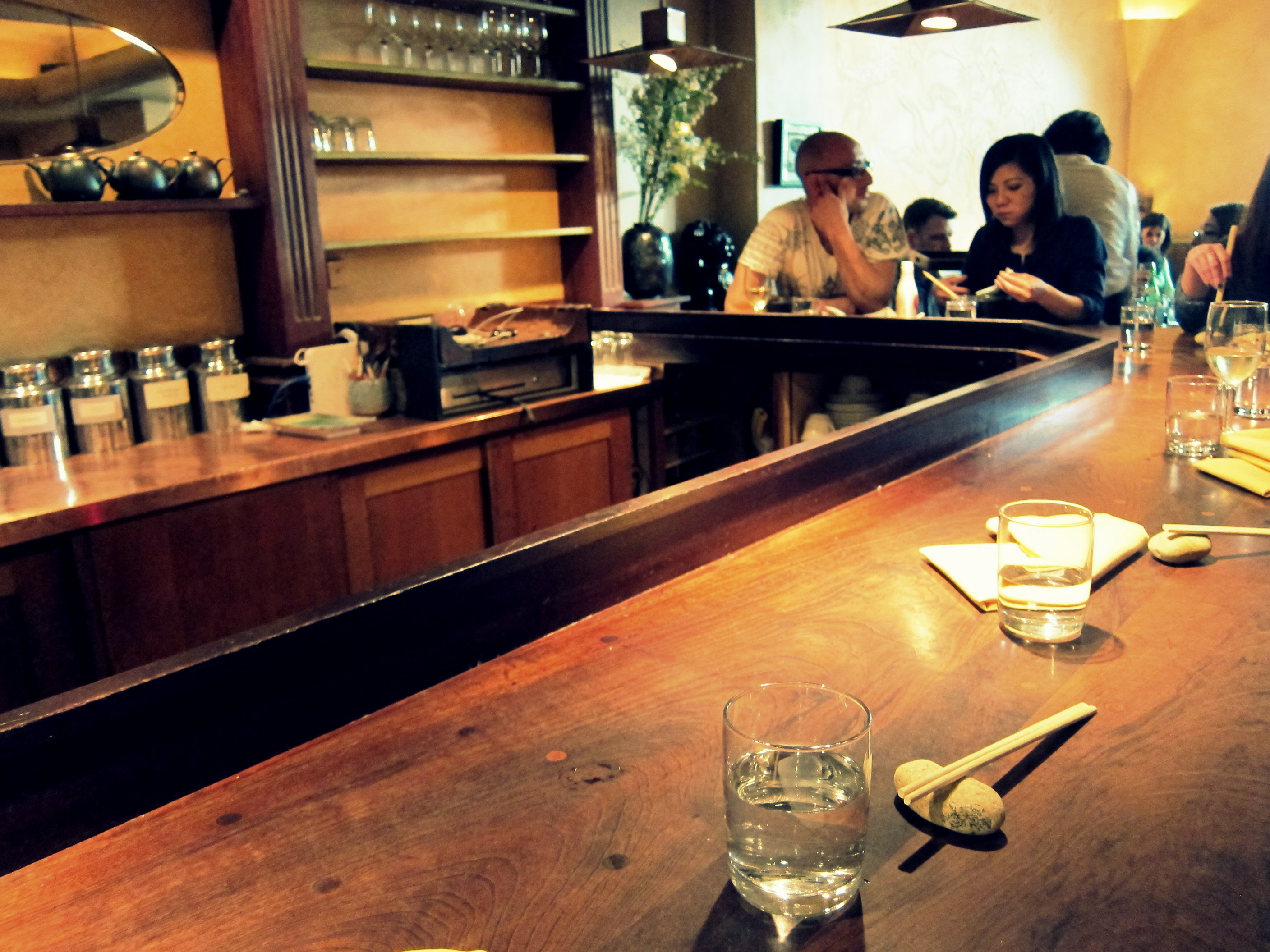
After a 5-course afternoon tea, the three of us felt our stomachs’ calling. The wind blew chilly moisture from the sea. A hearty dinner of noodle in hot broth would hit the spot, one that was saturated with oolong. Quite appropriately, we walked into O Chamé, meaning “eye of tea”(*) literally and “playful little one” colloquially. It’s Mother’s Day, no reservation, we couldn’t be any luckier that the guy found us three seats at the end of the bar.

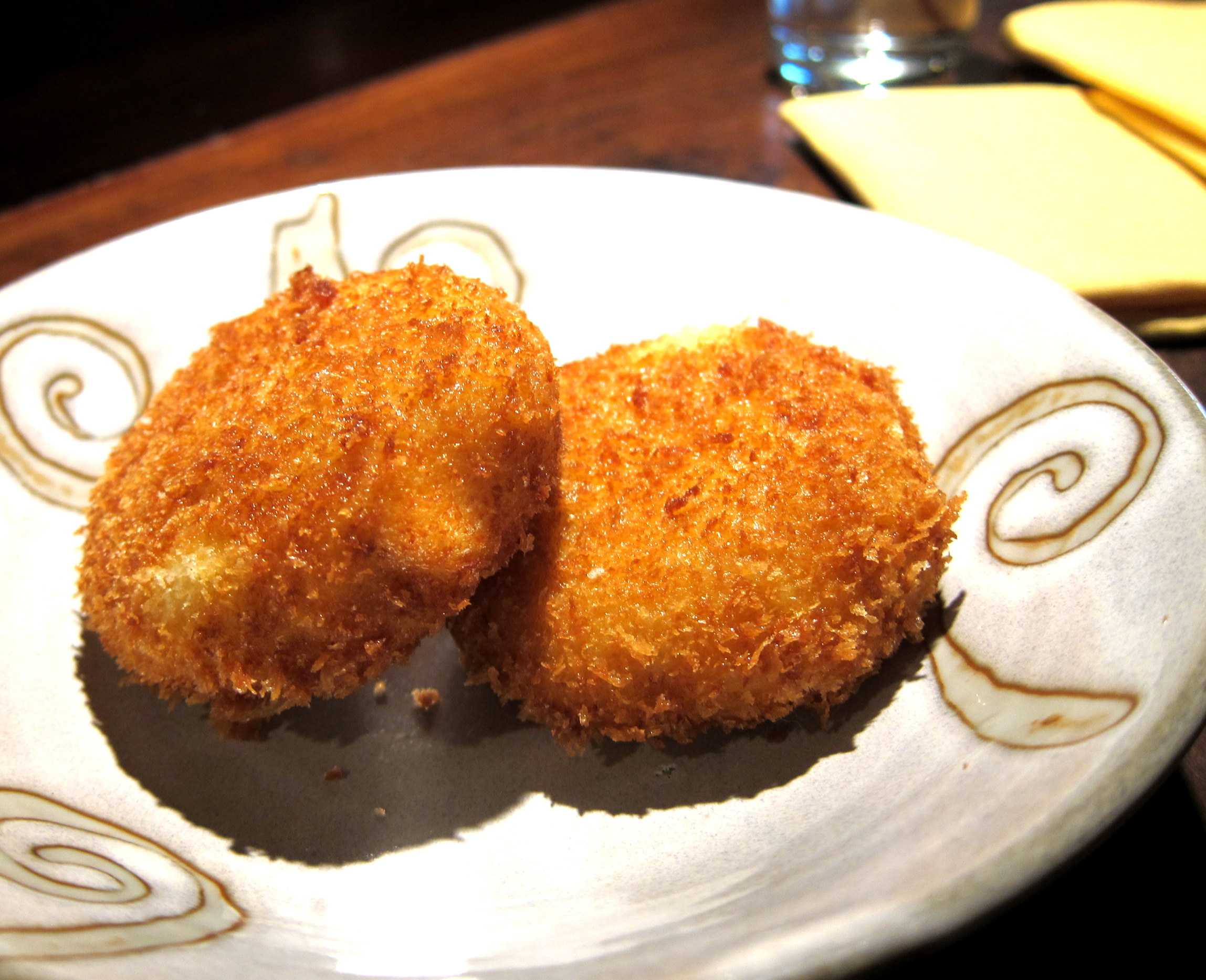
Of course, who would skip the appetizers. And of course, we couldn’t decide on just one appetizer, so we ordered three. The potato and snow crab croquette ($8.50), buttery but mild, tastes ten times better after a dip in the plumier-than-usual-and-not-too-sour tonkatsu sauce. Usually I don’t dip my stuff, but the sauce is a must here.


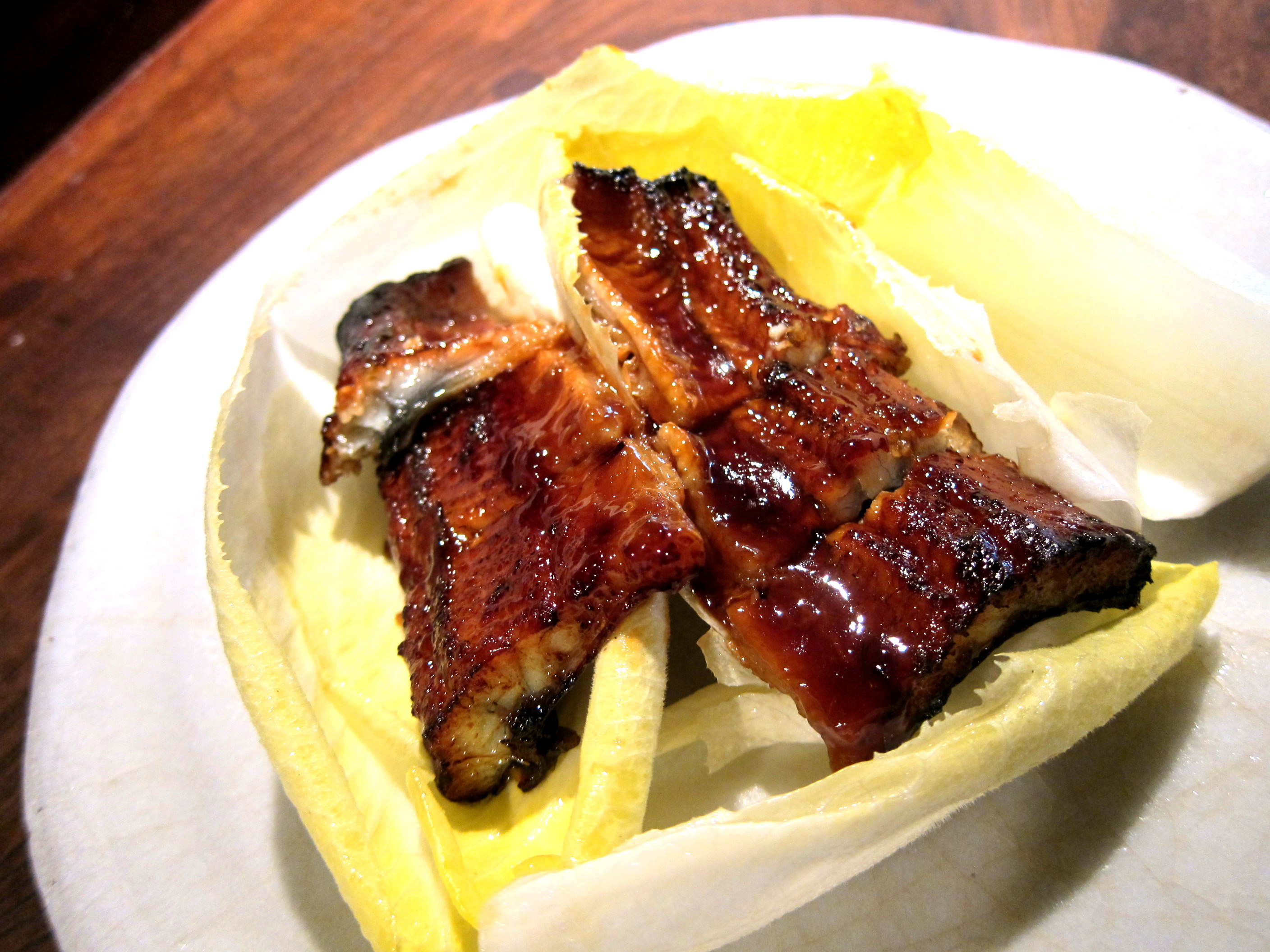
The grilled, caramelized eel ($10.50), Kristen’s choice, is great. Little Mom loves eel, and she would love this. Happy Mother’s Day, Mom! 🙂 A bite into the crisp endive releases a burst of sharp, almost minty air to balance the eel’s fatty sweetness.


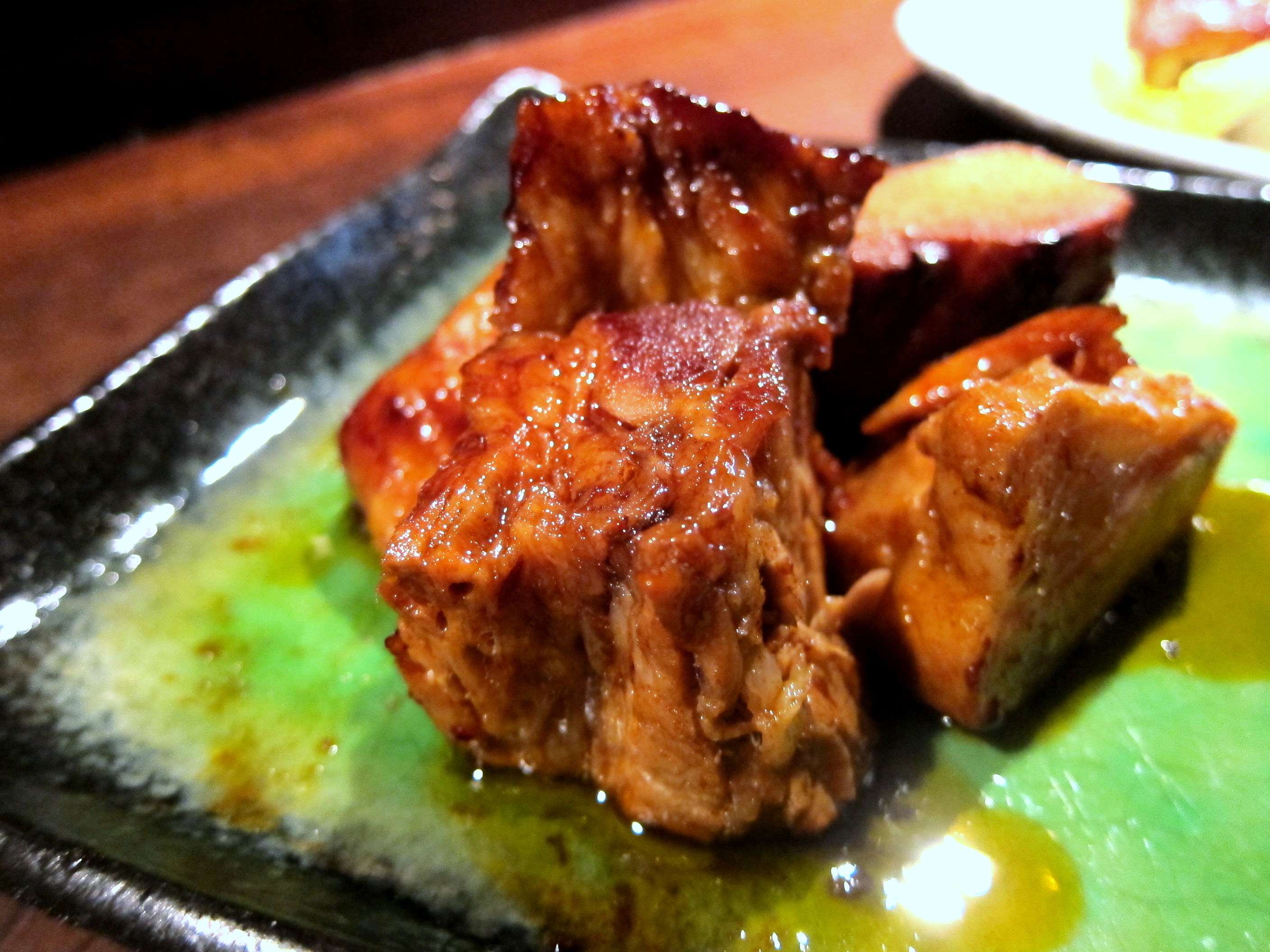
Another fatty, sweet thing is the braised pork ribs with ginger and lemon ($8.50), so sweet I could detect neither ginger nor lemon. The leaner pieces looked soft but not too thrilling. One must go for the pieces with lotsa fat and semi-charred ends, those are gold.


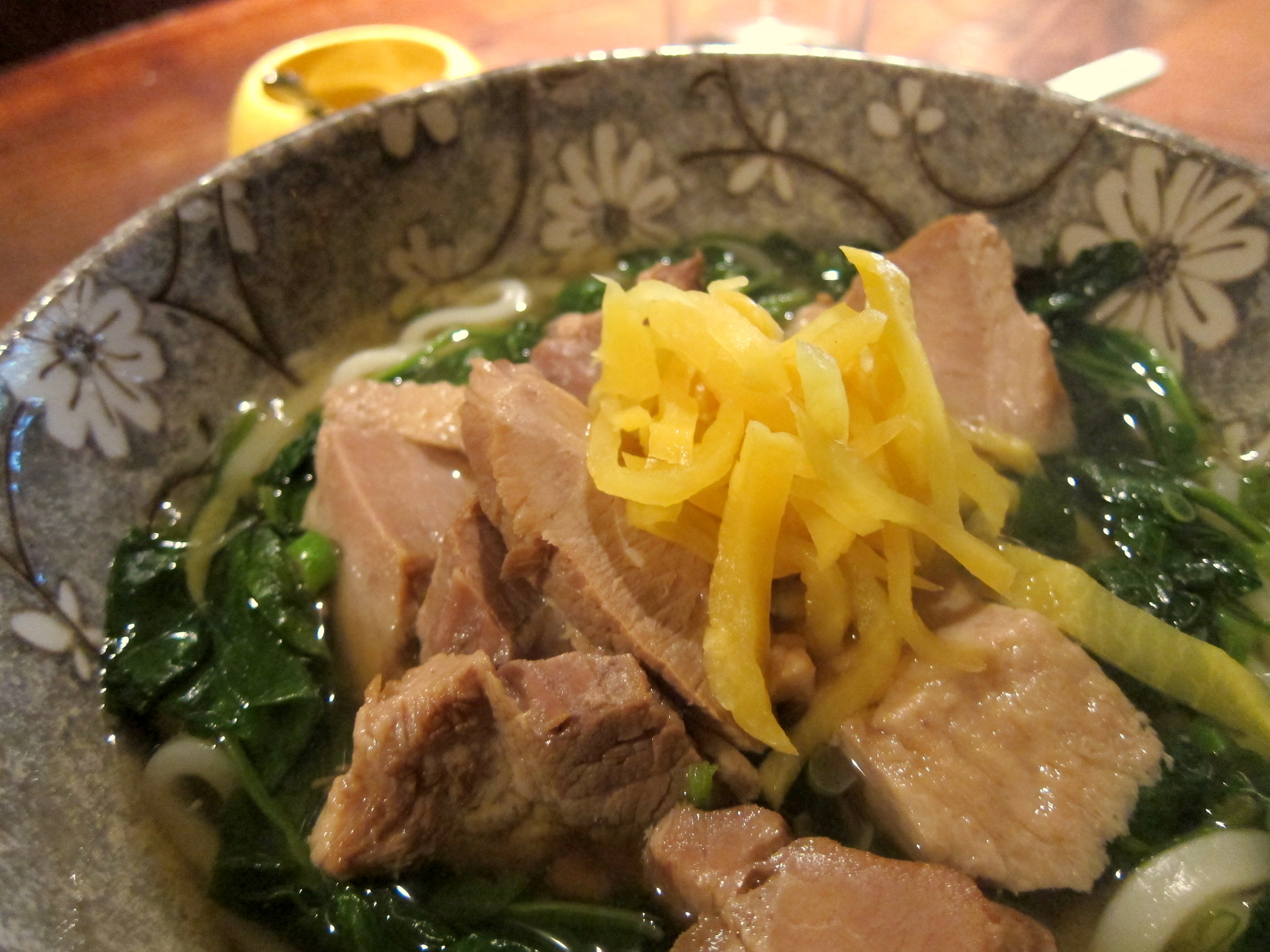
Then came the reason we decided on O Chamé: the noodle soups. The broth is light yet hearty. Actually, I’m still in tea mode so I can only think of the word “full-bodied” to describe it. Tender pork as the base, smooth spinach for texture, and thin strips of takuan (pickled daikon) to freshen it up. Both Tiana and Kristen settled on this pork shoulder udon ($14.50). My normal self would, too.


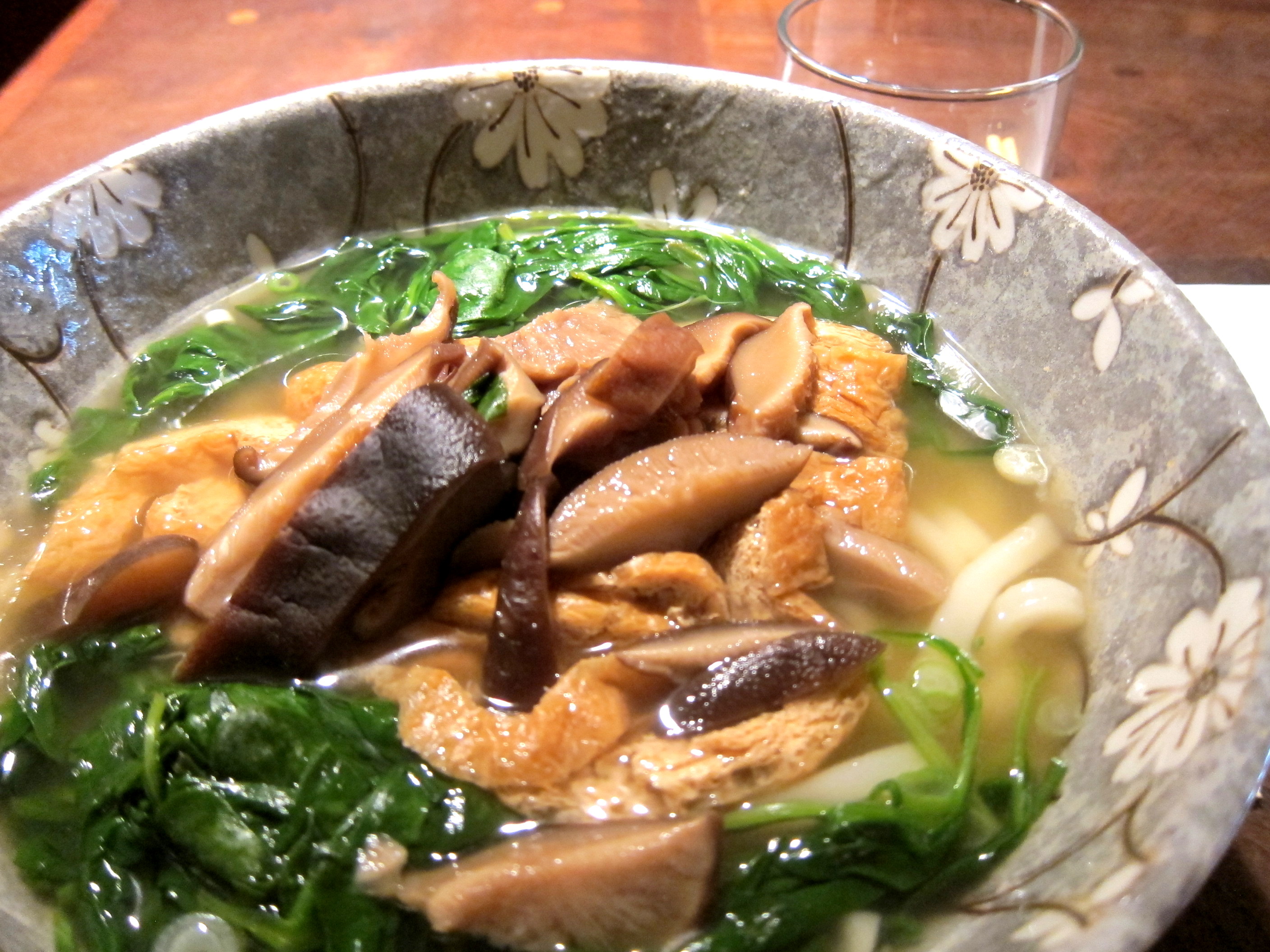
But I chose the tofu udon instead. Lately I’ve decided that I should gauge a restaurant based on their vegetarian/vegan numbers because it’s hard to make vegan stuff taste good (unless it’s a dessert). This shiitake-spinach-aburage (fried tofu skin) udon (13.50) passes the bar, but it would be nice had it been entirely vegan. The broth is a fish stock flavored by the earthy sweetness of mushroom. I prefer the vegan udon at Anzu, whose broth has the more refreshing note of chrysanthemum greens.

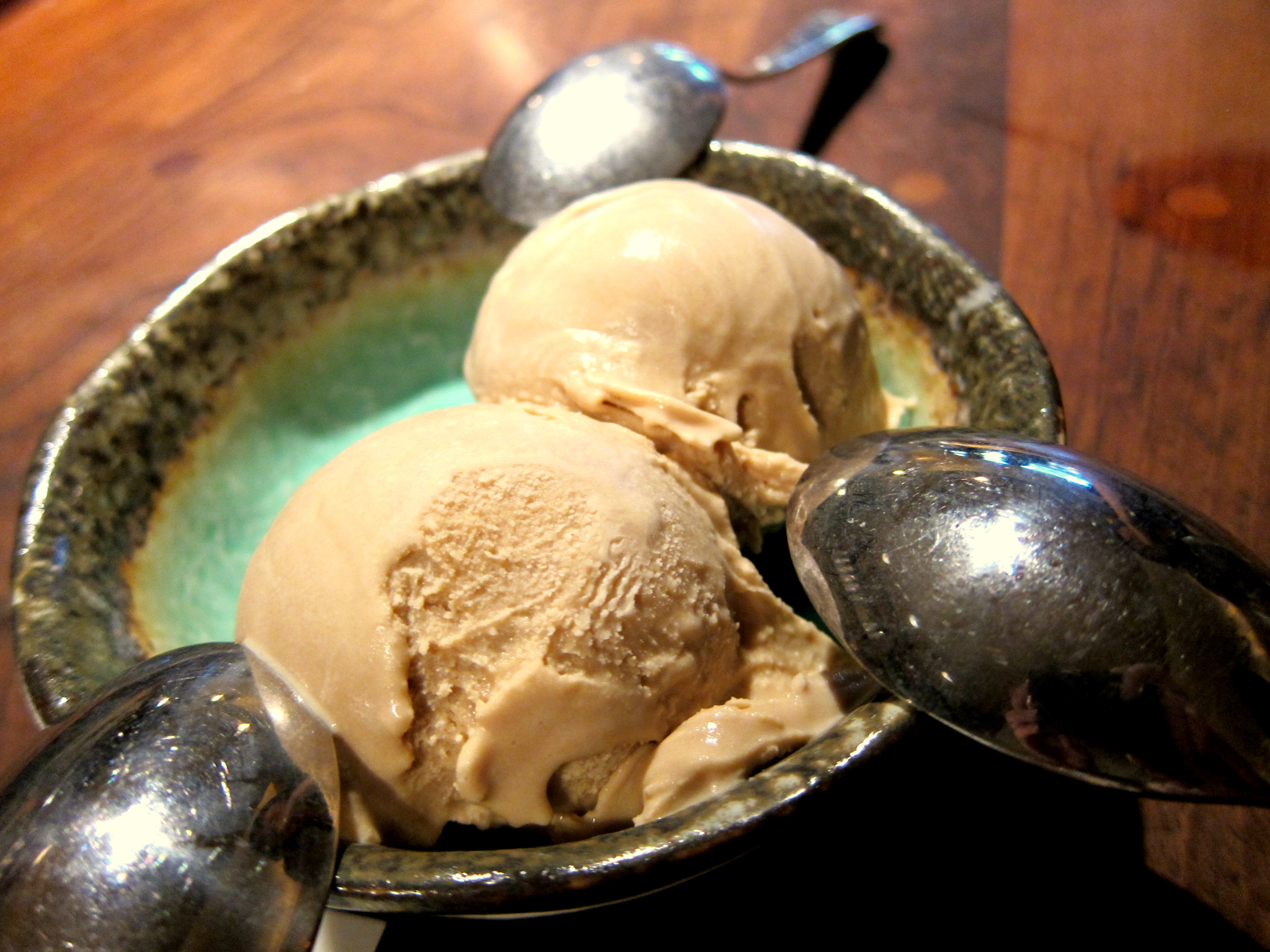
Our face bathed in the steam, our stomach getting packed. It was hot. We were dead full half way through the bowl. I did my best picking up all of my spinach and mushroom, but shamefully left half the broth and a third of the noodle. We thought we couldn’t eat anymore, but then we flipped the page and stared at the desserts, then looked among ourselves and grinned: “I don’t think we’re ever too full for ice cream”. 😀 Just one dessert is not gonna hurt. The agony was when we narrowed our choices to four (from nine): sherry custard, poached pear with berries, truffle torte, and what we ended up getting following the waitress’s suggestion: two scoops of caramel balsamic gelato ($5).


The first spoon was, well, interesting. But it grows on you. It has a bite to it. Kinda feisty, or in Kristen’s words, “like yogurt”, which makes sense because both balsamic vinegar and yogurt are products of fermentation, works of microbes, and sour. Definitely worth squeezing in at the last minute.


Address: O Chamé
1830 4th Street
Berkeley, CA 94710
(510) 841-8783

Dinner for three + tax: $81.56

(*) At first I pronounced it |oh-shah-mei|, like a French thing, you know. But seeing its meaning, I guess it must be |oh-jah-mei|, like “cha” (tea) in sencha.

Pre-rain Dragon Well from the Lion Peak

May 07, 2012 By: Mai Truong Category: California - The Bay Area, Drinks, sweet snacks and desserts, Vegan


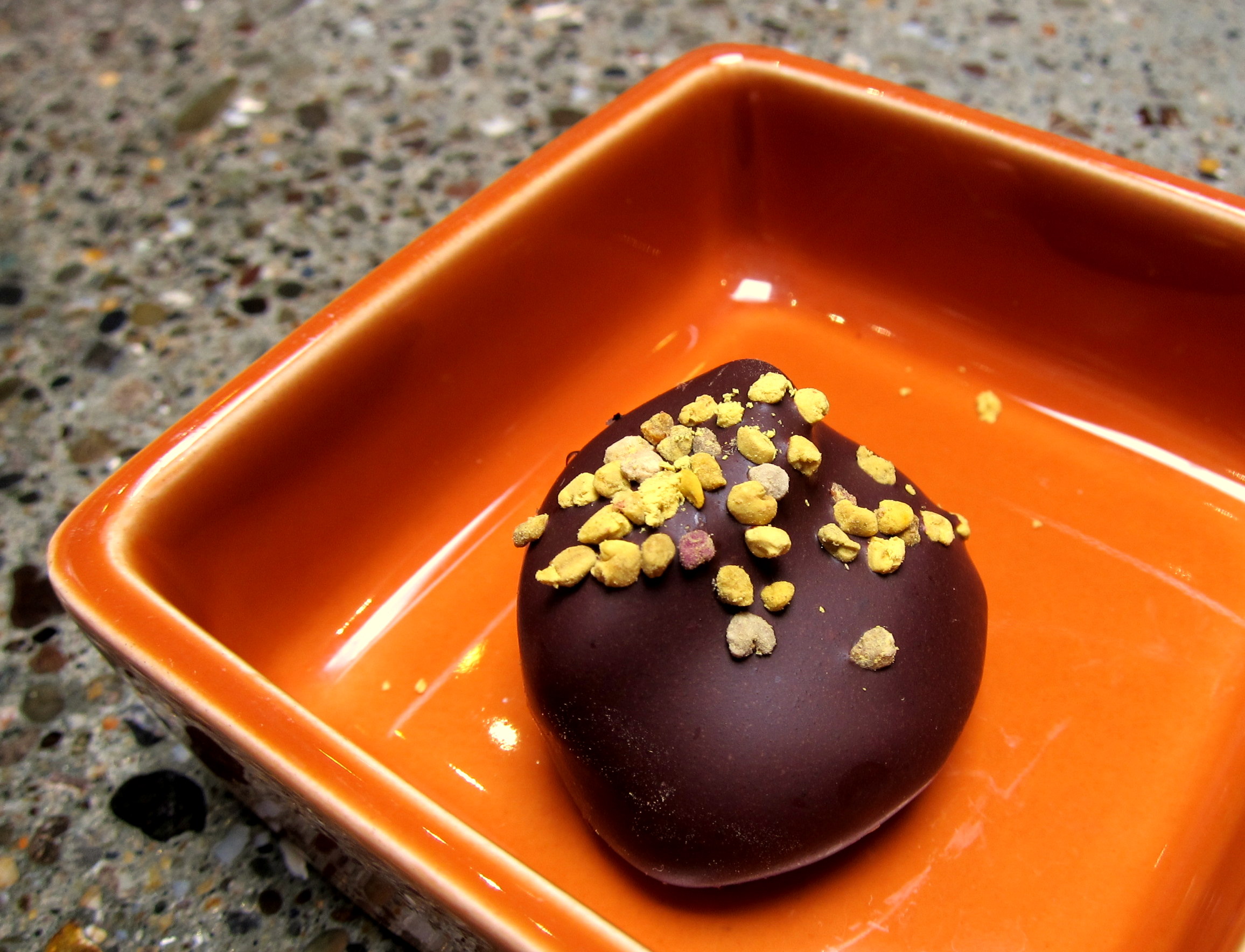
The best (known) green tea of China. The cream of the cream of the crop. I feel sophisticated just drinking it. Paired with a tangerine bee pollen truffle and I almost hear little cherubim playing the lyre.
You can read the whole story in my journal Tea & Mai. I’m off to dance in my head.

Vanessa’s Bistro, sweet and savory the Vietnamese way

May 04, 2012 By: Mai Truong Category: California - The Bay Area, sweet snacks and desserts, Vietnamese


“You girls know how to eat”, our hostess smiled at us, the check attached. Ten things. At a tapas place like Vanessa’s Bistro where everything sounds tasty, I’d say we did a pretty good job narrowing down our choices, and we asked for the house recommendations only three times. All rendered success.


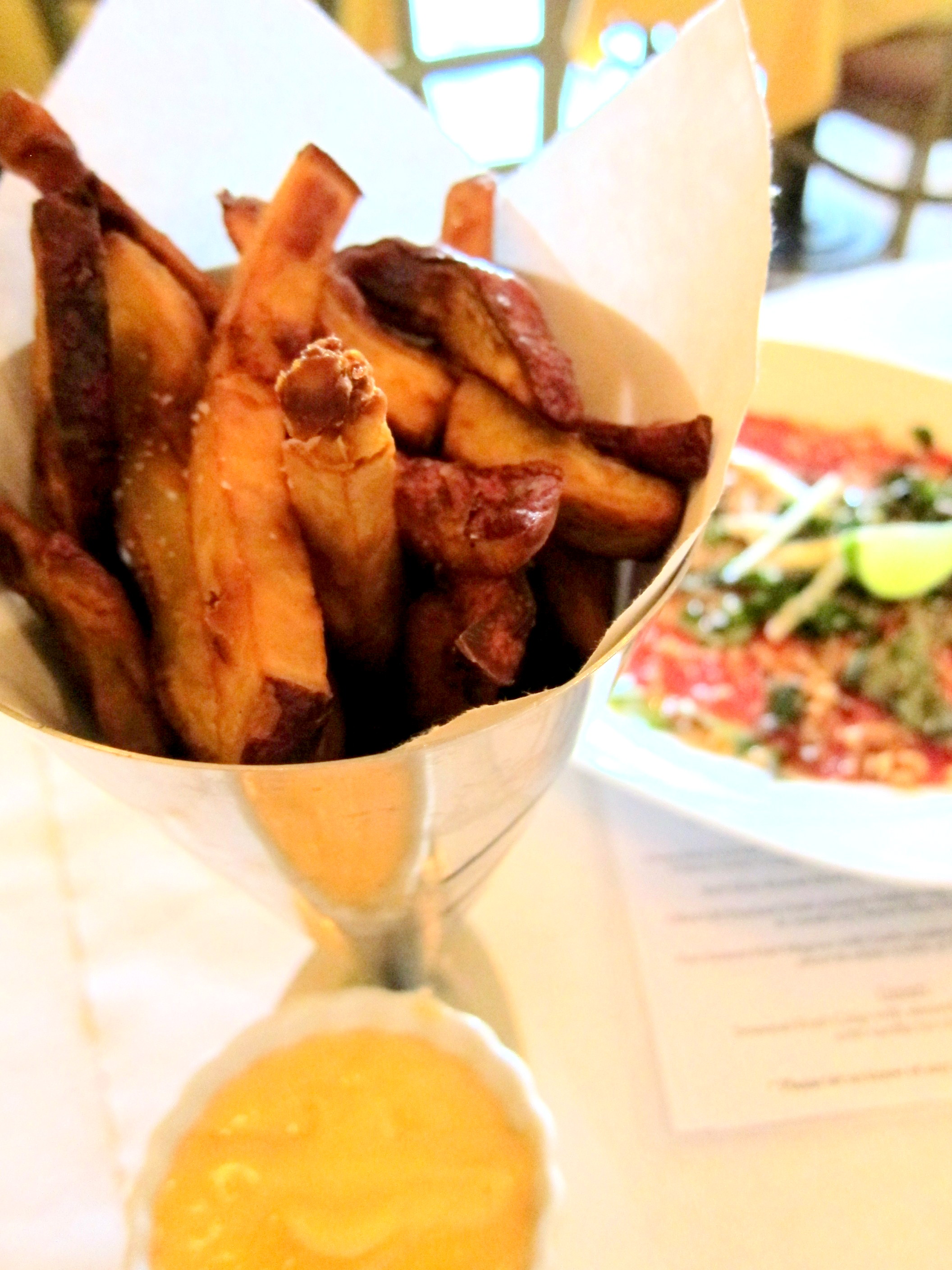
The first decision was the easiest: we’d got to get the sweet potato fries. Neither mushy like their orange cousins nor mealy like the white kinds, these Okinawan sweet potatoes, or purple yams, are sturdy in texture and just gently sweet. With or without the ginger aioli, they were loved. The small plates also stood alone splendidly, not that their dipping sauce came short.


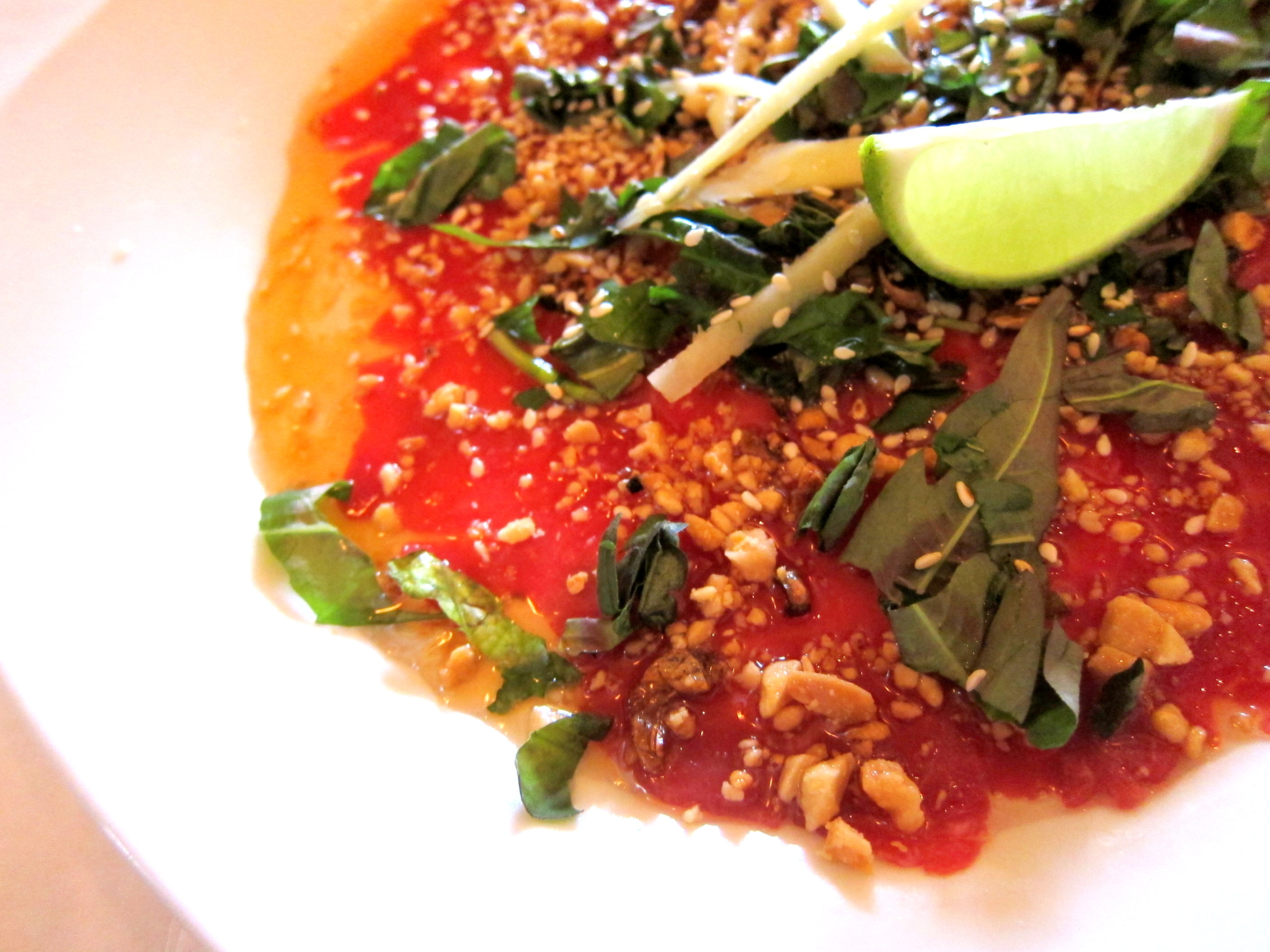
Black pepper cured filet carpaccio with roasted peanuts, fried shallots and Asian mint (húng quế). A twist on the classic Vietnamese bò nhúng dấm (carpaccio with vinegar) bò tái chanh (carpaccio with lime). (Thanks for the correction, Linh-Dang!)


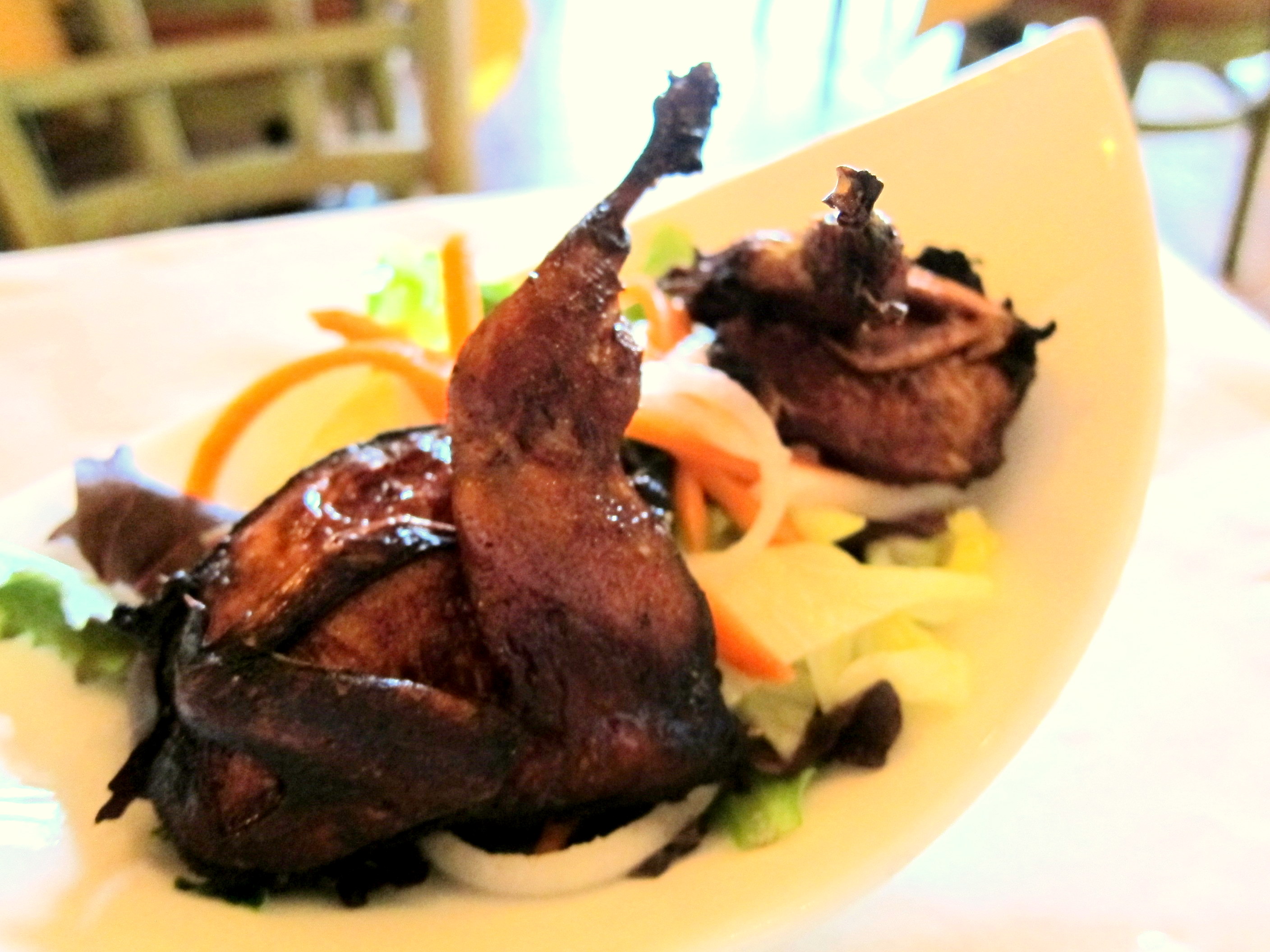
Crispy quail marinated in five spices and honey, with a light mixed fish sauce. Classic Vietnamese.


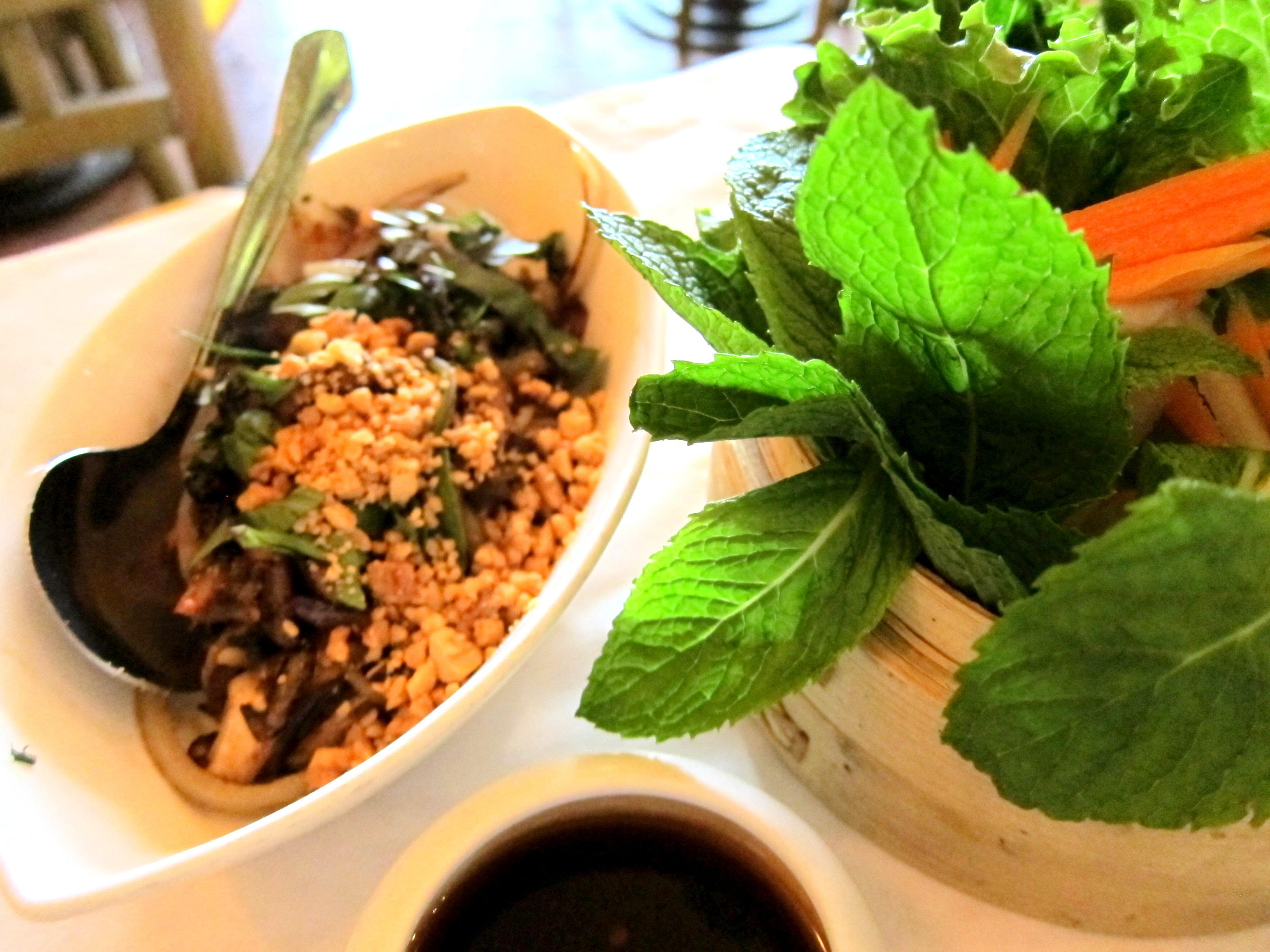
Doesn’t look like much but it’s my favorite of the night: Maple Leaf duck confit lettuce wraps with mushroom, onion and roasted peanuts; a sweet, slightly zesty black bean sauce for dipping. The pickled radish and daikon carry a gentle fruity note, had our hostess not been so busy with the other tables I would have asked her what kind of vinegar they used to pickle.


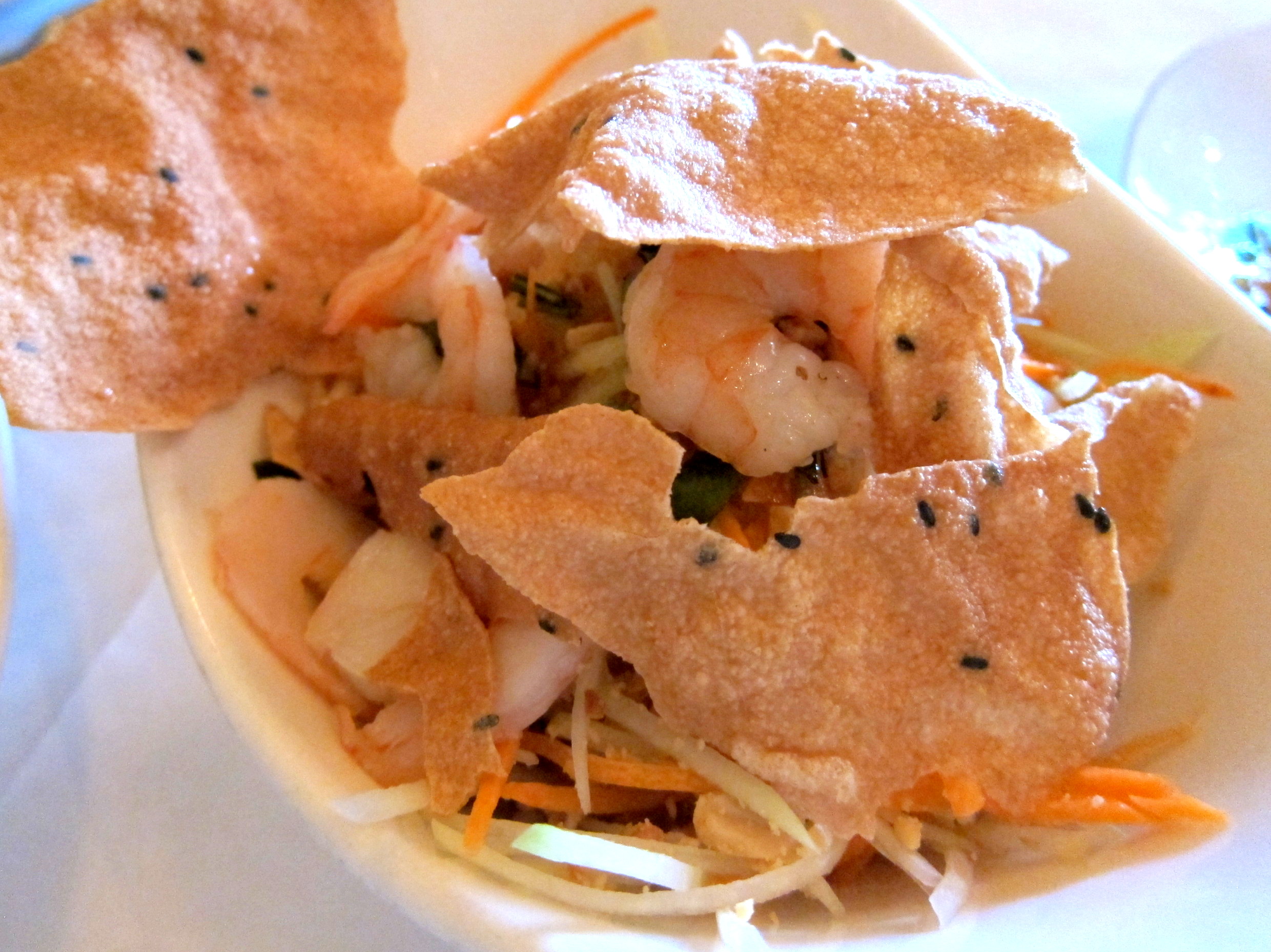
Green papaya salad with poached prawn, roasted peanuts and Asian mint. A hint of fish sauce. Pieces of sesame crackers, substituting for the traditional shrimp crackers or rice crackers.


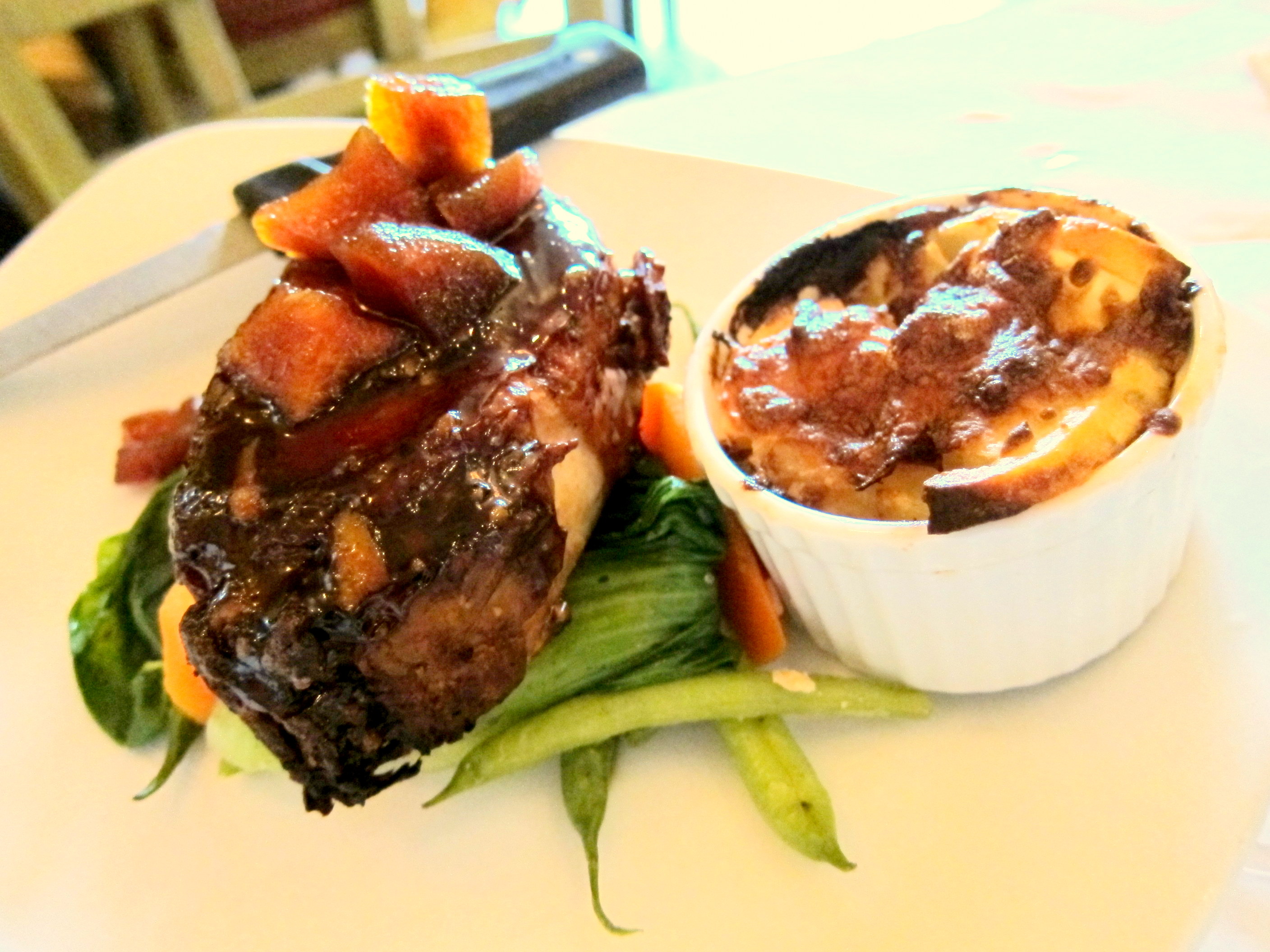
Pork loin marinated in molasses and slow roasted to a crusty outside, unfortunately a tad dry inside, topped with a lovely Fuji apple chutney and accompanied by an average potato gratin.


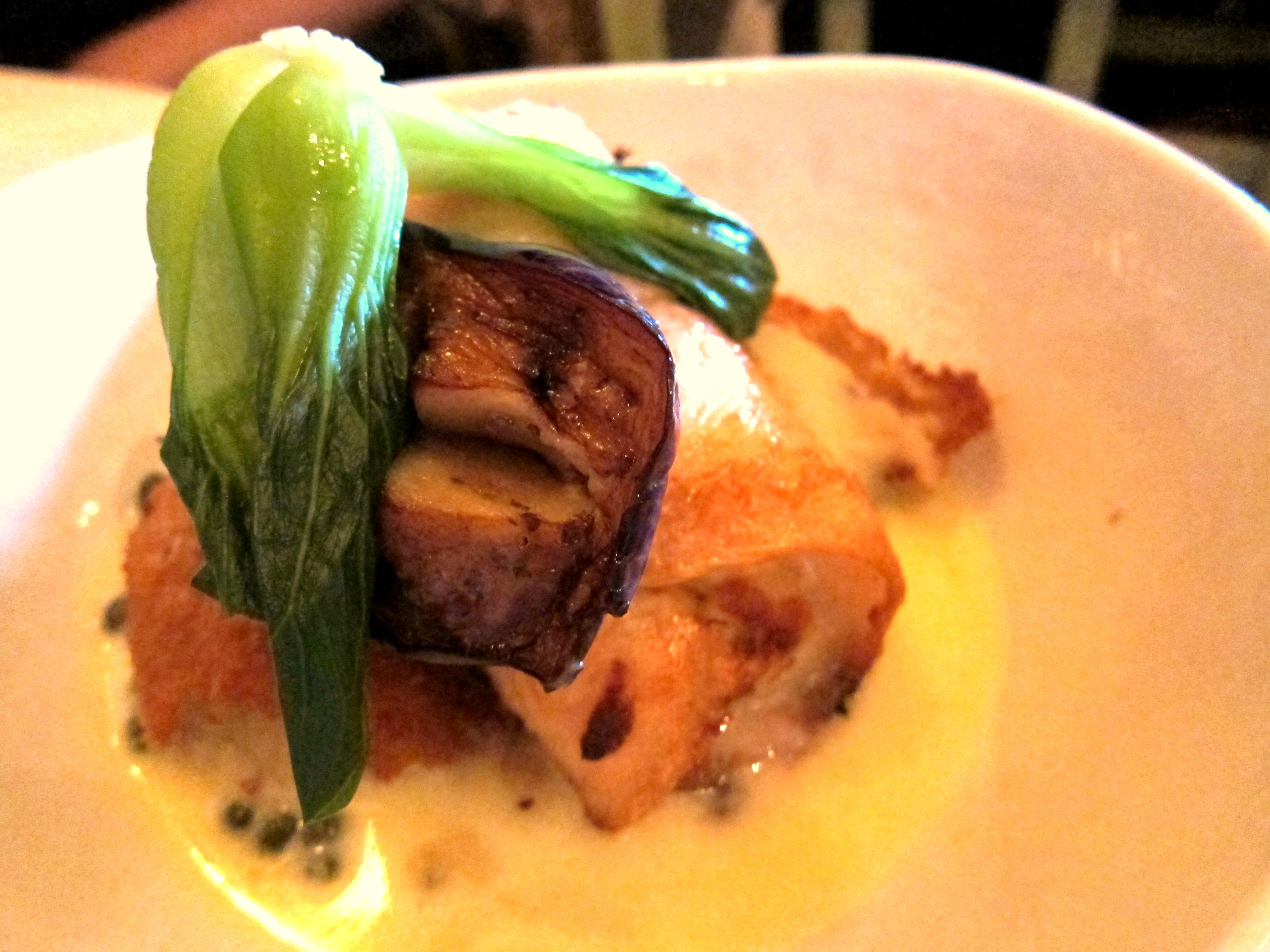
Dungeness crab and mozzarella rolled in an oven-baked petrale sole filet, which was dressed in a lemon caper beurre blanc. The accompanied potato croquet is nothing to write home about, but we left no trace of the fish roll. It’s a Vanessa’s Special that doesn’t get served every night, we’re told.


And desserts, of course. Fuji apple and coconut eggroll with vanilla ice cream. Good ol’ comfort.


A ginger molasses creme brulee. Charming at first bite but quickly grew too rich.


Banana, raisin and peach bread pudding with vanilla ice cream. Good ol’ comfort once again.


It’s been a while since I’ve dug into Vietnamese food, mostly because I’m afraid of getting less than I expect. The same thing happens to my Chinese, Korean and Japanese friends with their respective cuisine: we compare the “authentic” stuff at the restos with what our mom makes or what we remember eating in our motherland, and we shrug. Now Vanessa’s Bistro didn’t disappoint. It doesn’t dwell on authenticity, then again, the nature of Vietnamese cuisine speaks mix-and-match. The restaurant looks Western but it smells Vietnamese. The plates and their names are dressed up in French but the core ingredients ring familiar tunes. Everything is sweet and savory. We intentionally ignored the more Vietnamese shaken beef (bò lúc lắc) and claypots to have room for innovations, and innovations we got, but it’s nice to see that the roots are still there. 🙂

Address: Vanessa’s Bistro
1715 Solano Ave
Berkeley, 94707
(510) 525-8300
www.vanessasbistro.com
Dinner for three (ladies): $97.89

Himalayan Flavors and the mango art

April 24, 2012 By: Mai Truong Category: California - The Bay Area, Comfort food, sweet snacks and desserts, Vegan


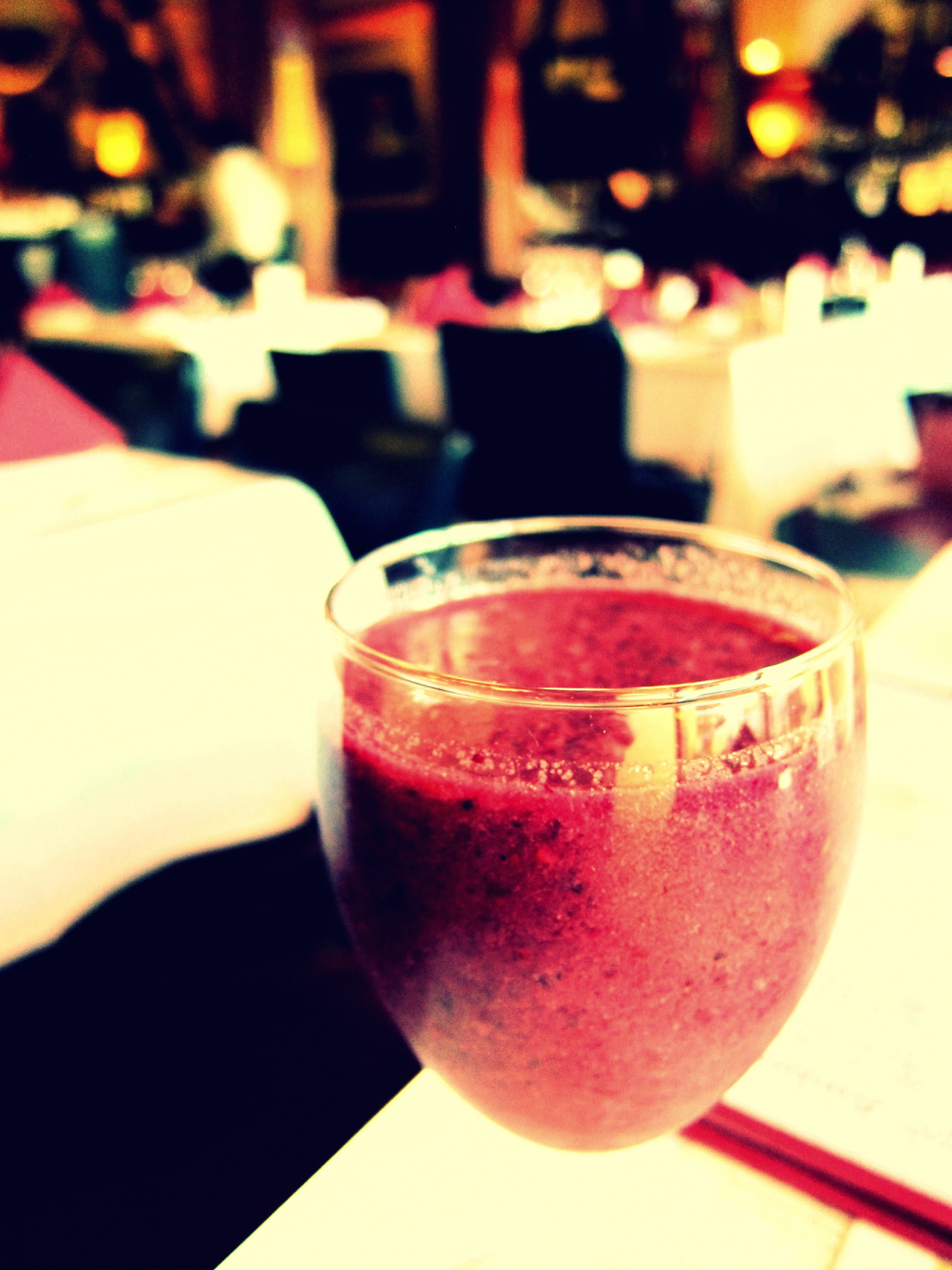
Last year I had a great meal at Himalayan Flavors, starting with a reddish purple smoothie whose ingredients I no longer remember and can’t find anywhere on their current menu, and ending with a mango dessert. The owner is Nepalese, so technically, the food is Nepalese, which is too similar to Indian for me to discern because I haven’t had much of either. A quick Google search renders over 6 million results, but the actual number of differences between Nepalese and Indian foods are few and easy enough to remember:

  • Nepalese cooks use no cream/curd, so their gravies are thinner and more watery than Indian gravies.
  • In Nepalese dishes, green vegetables are chopped up and stir-fried, like in Chinese cooking, except for the cumin. In Indian dishes, the green vegetables are turned into paste (like saag paneer (spinach and soft cheese), the best of which I’ve had is at Aslam’s Rasoi, but that’s a different story).
  • Nepalese cooks do not use sugar to flavor the savory dishes.

Source: Binaya Manandhar


In more details:
[…] Rajesh Karmacharya, owner of Cumin restaurant (recent winner of a Michelin Bib Gourmand award), explained that Nepalese curries are generally based on tomatoes, not yogurt or coconut milk, as in India. Nepalis also use fewer and milder spices than Indians. A standard Nepalese masala (spice mixture) contains cumin, coriander, ginger, garlic, fenugreek and jimbu, an aromatic grass that resembles chives. Hotness comes from chilies or a berry called timur, similar to Szechwan pepper.

The influence of China and Tibet is apparent in the popularity of noodles, bamboo shoots, soybeans and momos — small steamed or sauteed dumplings filled with meat or vegetables. Momos became the most popular street food in Katmandu after Tibetan refugees opened stalls there in the 1960s. […]
Source: The Chicago Tribune

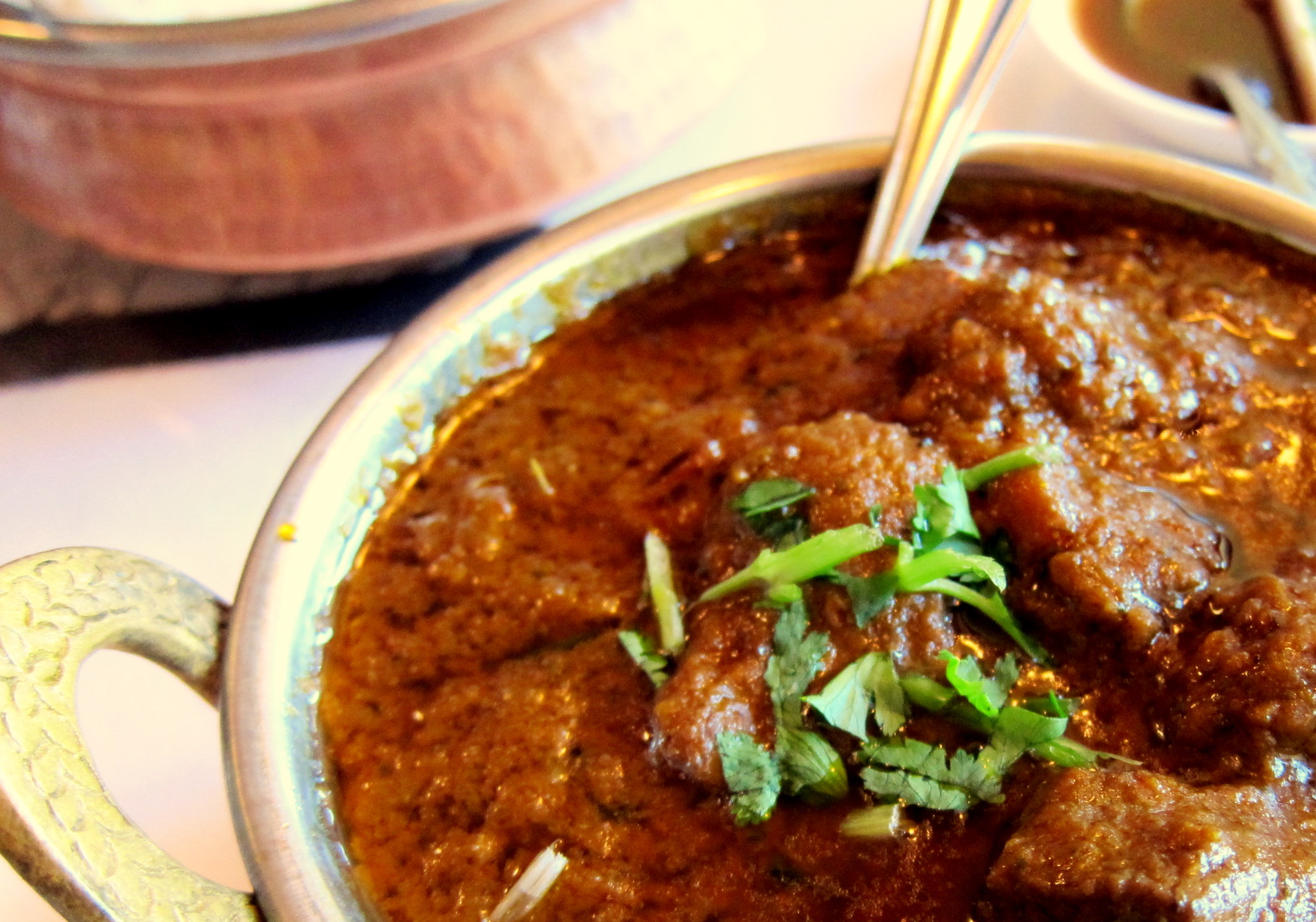
Indeed, what the owner suggested to us in our most recent visit were vegetable thukpa (a noodle dish with a little bit of thin broth) and aloo tama bori (sauteed potatoes and vegetables), both have bamboo shoots and tomato, neither are spicy or sweet, and neither are pasty. The lamb tarkari (a kind of curry stew described in detail as “boneless lamb pieces cooked in Himalayan Flavors special sauce herbs and spices”) is also quite mild.


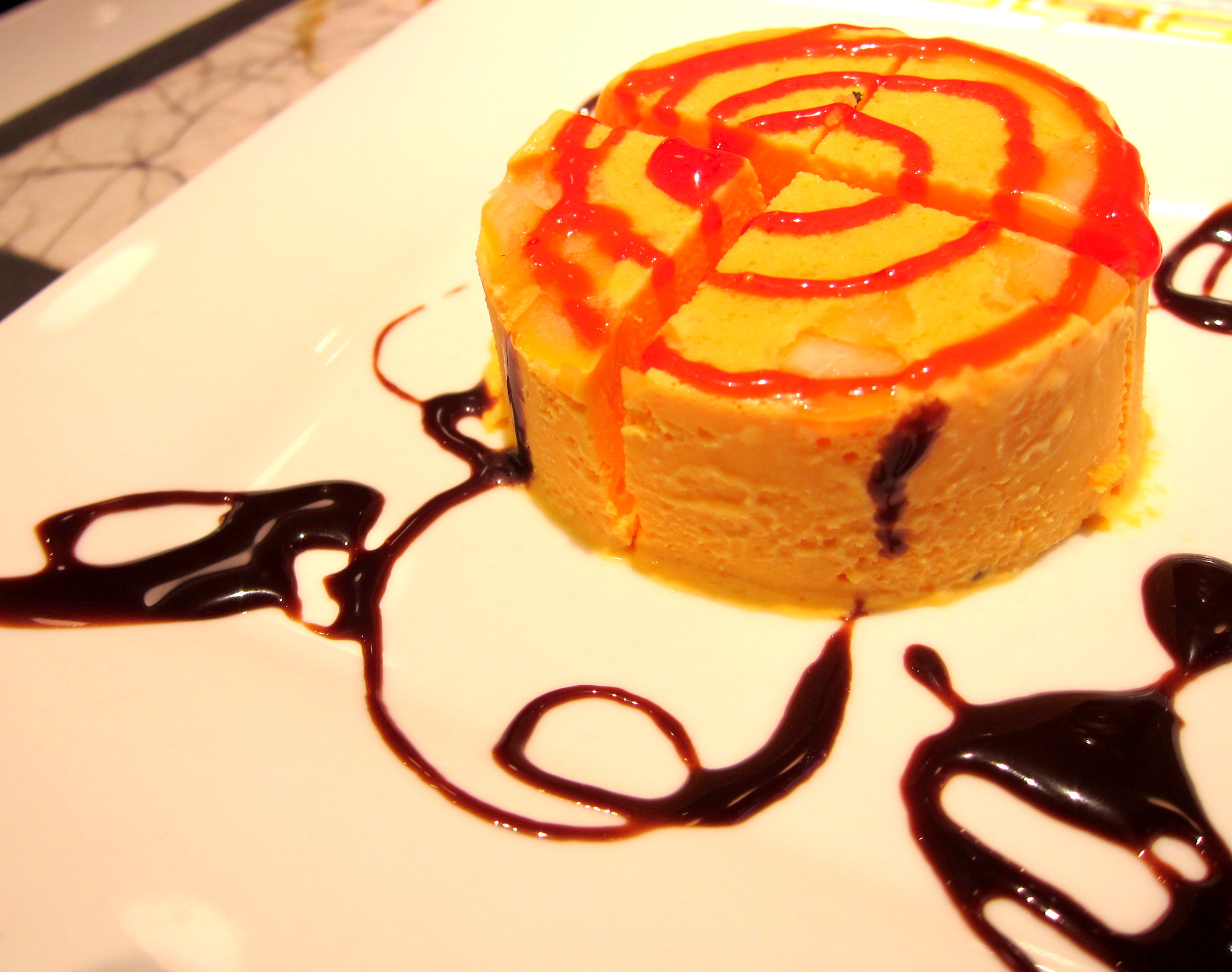
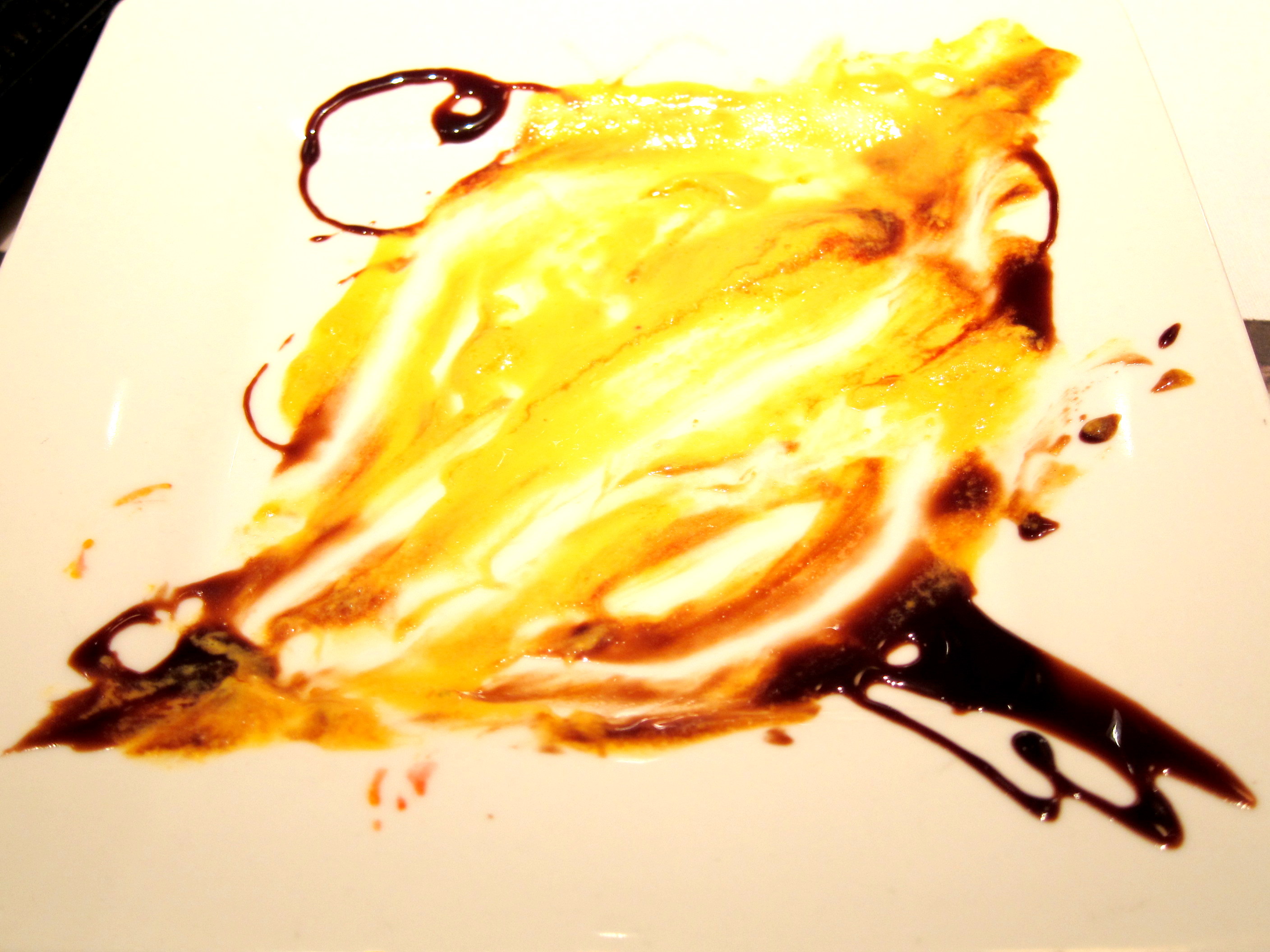
But like most restaurants that I like, Himalayan Flavors scored me in because of their desserts. I knew we got something mango the first time, and its goodness never left me, so I came back. This time the presentation changed from an ice cream block with red syrup drizzled on top and chocolate syrup on the side to a shovel of yellow snow with almond shavings, but it is still mango kulfi. And I still love it. Here’s a memoir of the first mango kulfi (with chocolate):


It’s my art. Don’t you criticize. 😉
Ah, this time, I forgot to check the bar for the smoothies, I wonder if they still make only one kind each day. Just a reason for me to come back.

Address: Himalayan Flavors
1585 University Ave
Berkeley, CA 94703
(510) 704-0174

Sencha and yomogi mochi

April 16, 2012 By: Mai Truong Category: California - The Bay Area, Drinks, Japanese, sticky rice concoctions, sweet snacks and desserts, Vegan

The third pairing of mochi and Japanese green tea. Perfect!


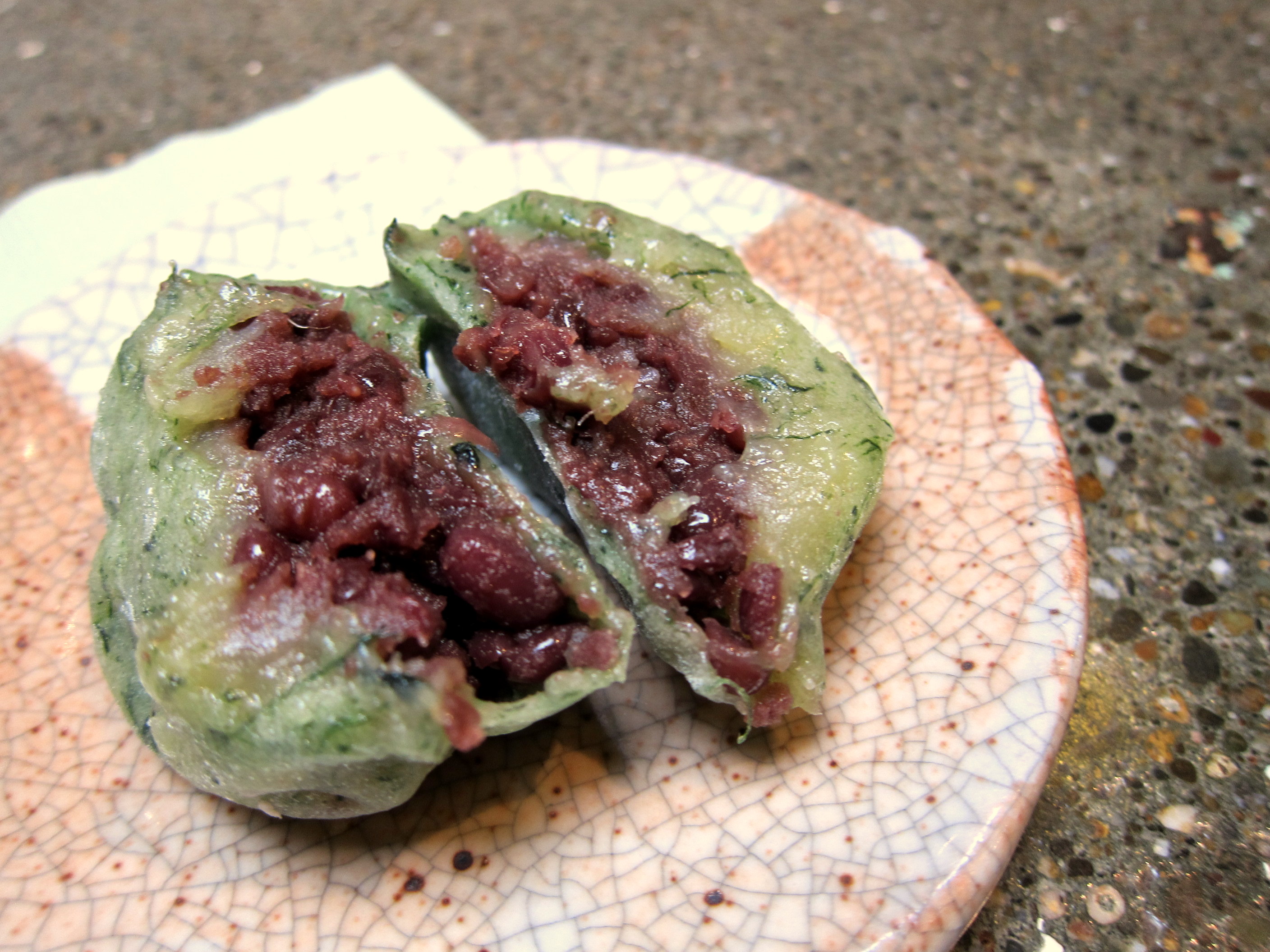
Yes, finally a mochi that goes perfectly with sencha. Yomogi (Japanese mugwort), julienned into tiny strings and mixed with the mochi dough, gives the mochi a clean, refreshing taste, which reminds me of the tip of a Vietnamese bánh ít or a bánh ít gai (*).

However, what struck me was the filling: red bean and sweet potato paste. The red bean is the main factor, the sweet potato is only at the top, closest to the doughy coat. The azuki sweetness subdues the fishiness (umami) of sencha, and the sencha bitterness subdues the sweetness. Is this why the Japanese use azuki for their desserts so often?

Why didn’t the sencha – matcha-mochi pair work as well? The matcha mochi also has azuki paste, but I think the orange juice and the walnuts distracted me. The yomogi clarifies the taste in a more floral and less bitter way than the matcha; and like saffron, sometimes a spice’s presence isn’t noticeable, but its absence would be. Anyways, this pair also shows that a simpler mochi can be a better mochi.

(*) Like mochi, bánh ít has a sticky rice dough with fillings, which can be sweet (coconut) or salty-sweet (mung bean paste). Unlike mochi, it’s all wrapped up in leaves, and it’s about 4 times bigger than a mochi. Shape-wise, mochi is most similar to bánh quy, whose green color (should) comes from pandan leaf. Similarly, the black color of bánh ít gai comes from the thorn leaf (ramie leaf), but the other ingredients are the same.

This post also appears on Tea and Mai

P.S. Sencha is interesting. It’s bitter at first and gets nutty later. It tastes odd at first because it’s not what you would expect from a drink, but the more you drink it, the more you’re attracted to it.

P.P.S. Yomogi mochi is also called “kusa mochi” (grass mochi). So Ms. Yuri Vaughn the mochi artist for Teance calls it “yomogi grass mochi”, which made me think that yomogi was a grass.

Welcome back, Appetite!

April 09, 2012 By: Mai Truong Category: California - The Bay Area, Comfort food, One shot


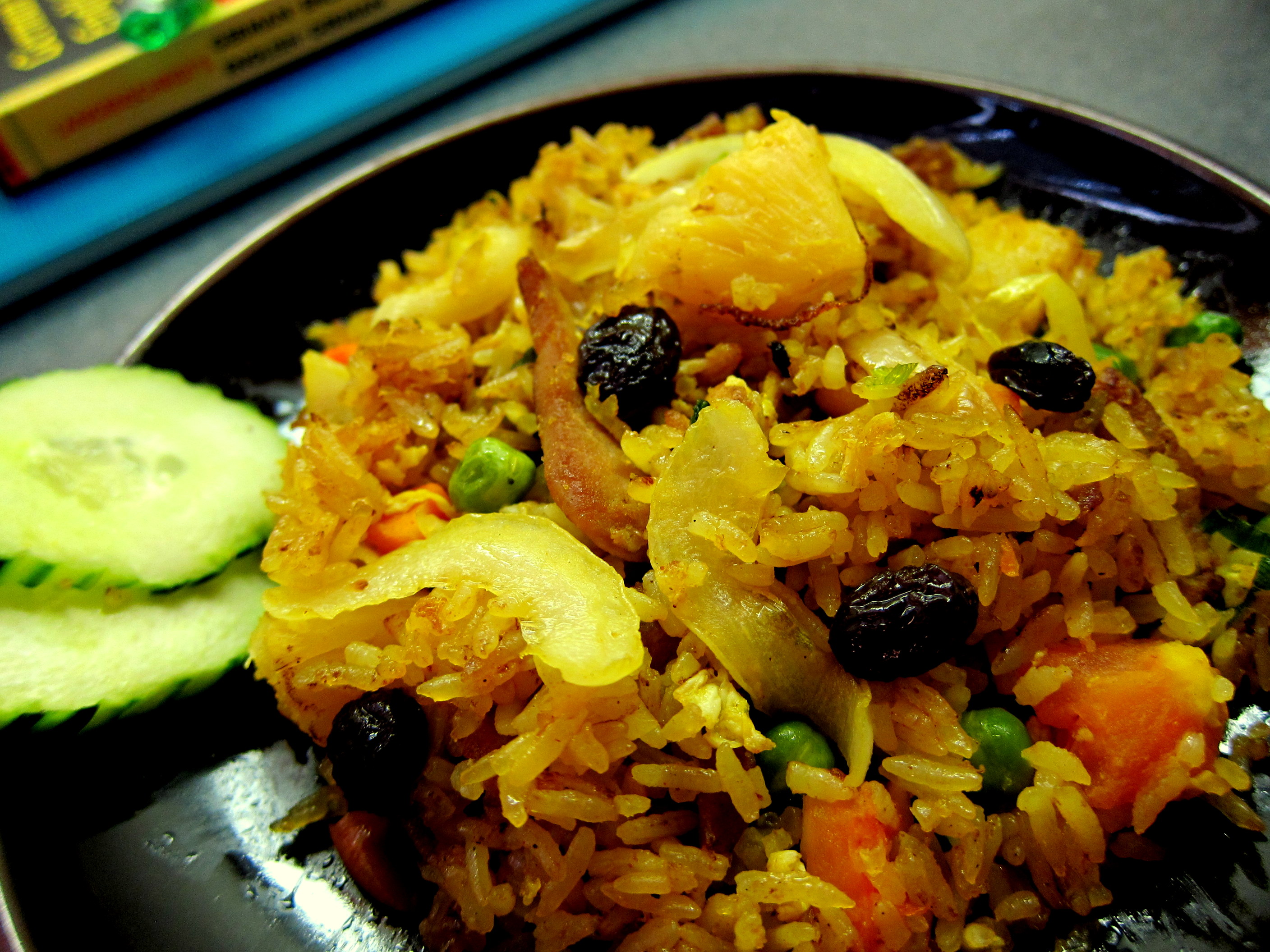
Pineapple fried rice, with tomato, eggs, cashew nut, onion, pork, and the highlight: raisin.

So simple. So good.

I’m not crazy about Thai food, but this is the first time in a month that a meal tastes better than my expectation. Welcome back, Appetite!

Address: Racha Cafe
2516 Telegraph Avenue,
Berkeley, CA
(510) 644-3583
Lunch for one: $8.65

Matcha and kabocha mochi

April 06, 2012 By: Mai Truong Category: California - The Bay Area, Drinks, Japanese, sweet snacks and desserts, Vegan

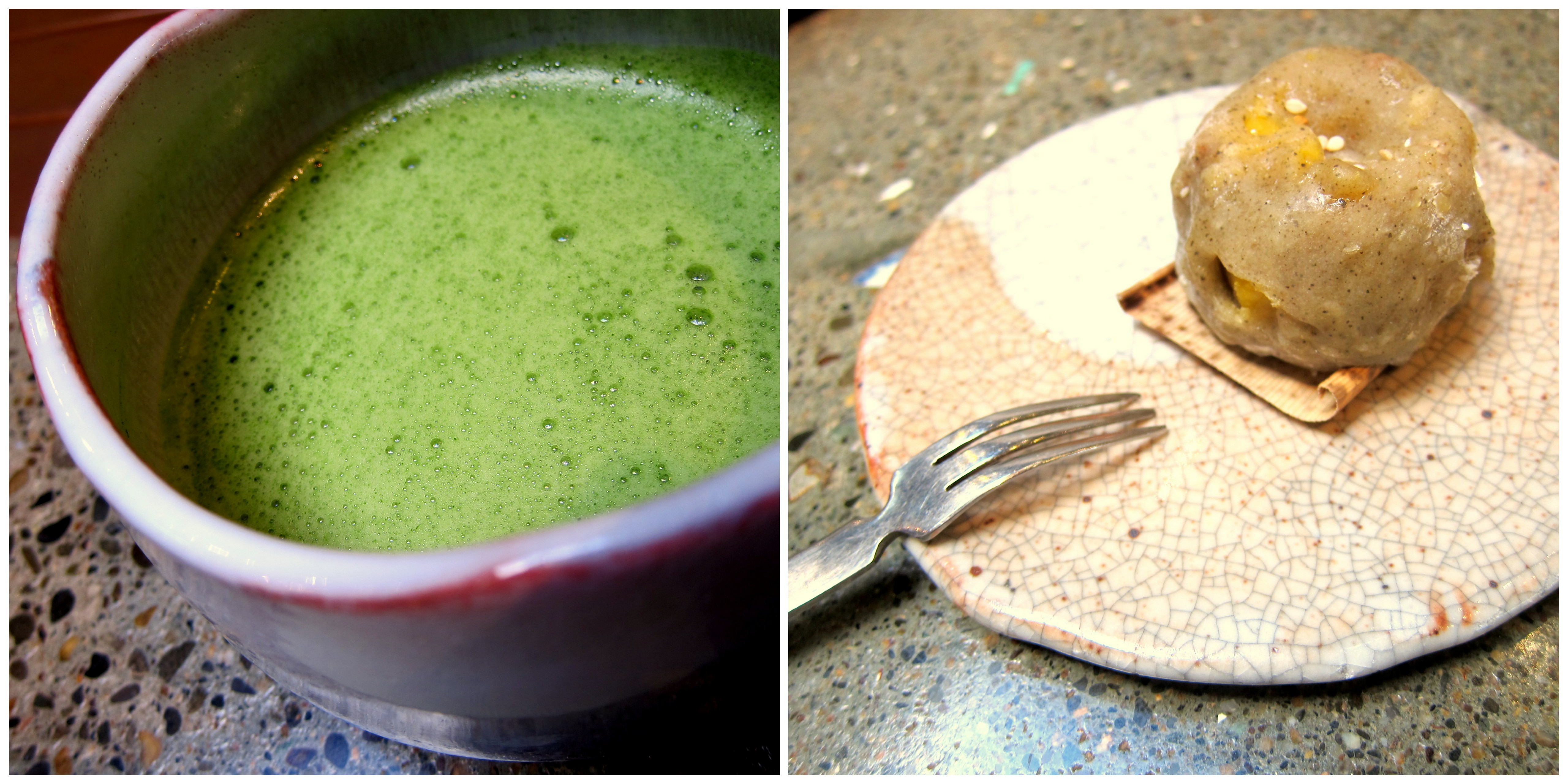
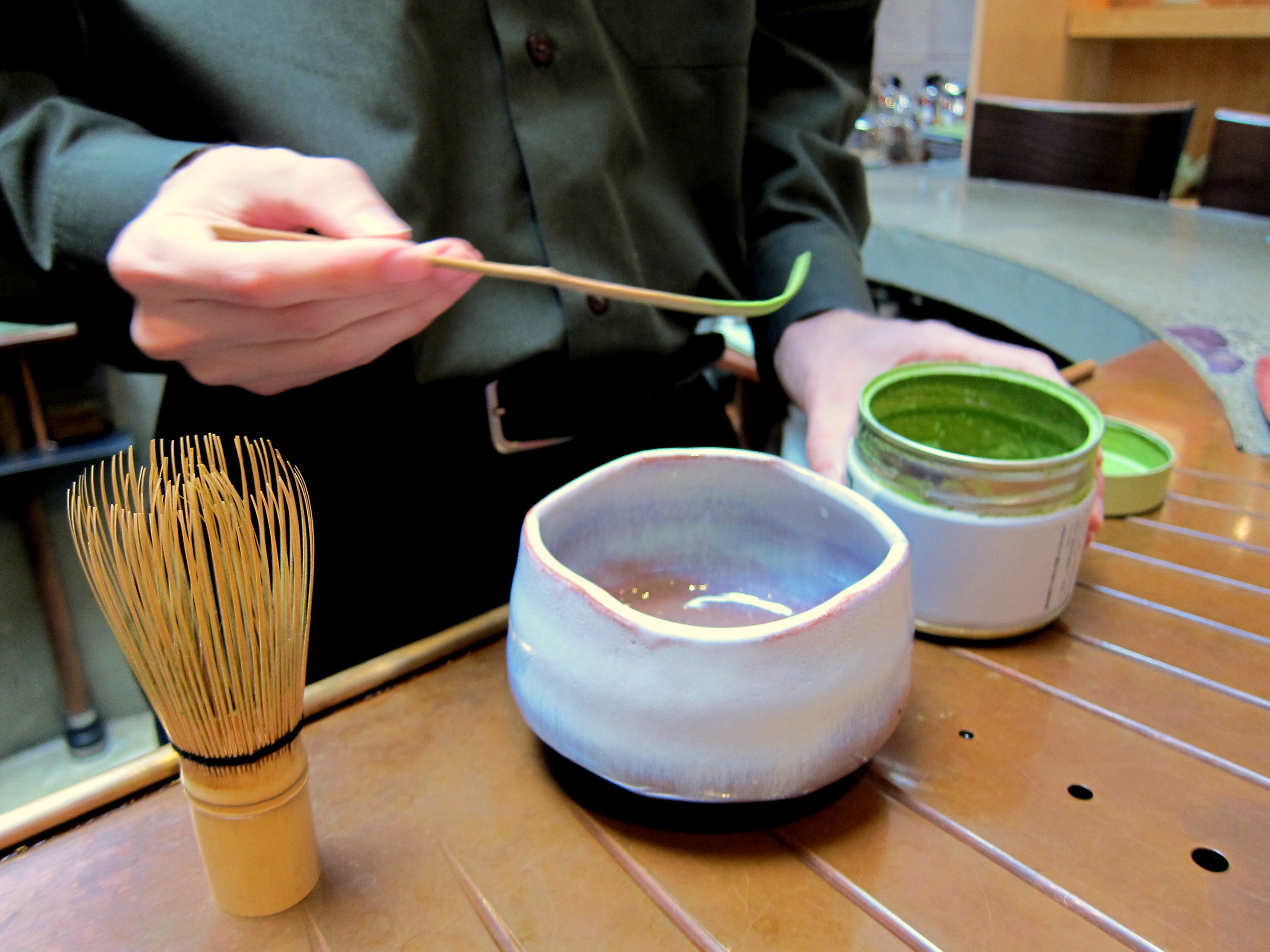
Another pairing of Japanese tea and Japanese snack. A bowl of matcha is supposed to suffice your daily vegetable need because you’re actually consuming the leaves themselves, in powder form.


Matcha is served in a bowl. Mix water (205 F) with the matcha powder using a whisk, whose look reminds me of a yard broom in Vietnam, and there is no steeping time to watch out for, which I like. The whisk makes the tea foam up. The lady sitting next to me said that the foam turns her off visually, but actually the foam adds an interesting dimension to the tea. For one, it abates the seaweed taste because the foam is a cushion layer between the tea and the palate, preventing the palate to fully experience the tea. Secondly, together with the powder, it enhances the nuttiness of the tea. Near the end of the bowl, when there is more powder, the tea is extra nutty, akin to mungbean milk.


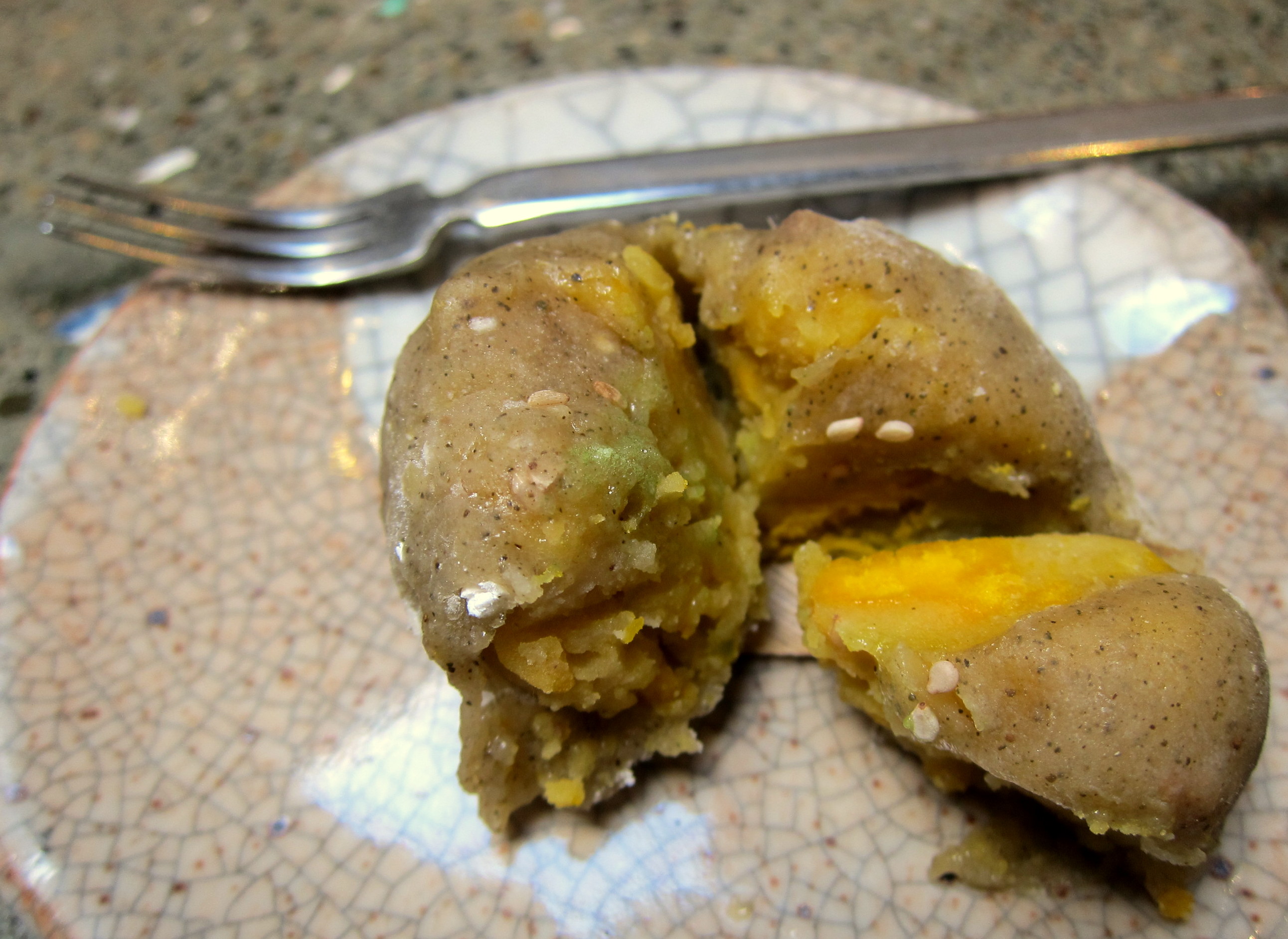
Unfortunately, this nuttiness does not enhance the nuttiness of the kabocha mochi but competes with it. The mochi this time has a hojicha-flavored coat and a filling of cinnamon, walnut and kabocha (a kind of winter squash, also known as the Japanese pumpkin). Contrary to my hesitance, the cinnamon was too faint to be detected (no, I don’t like cinnamon), and the mochi is mild overall. It is not too sweet.


Instead of being steamed-dried like other Japanese teas, hojicha is roasted in porcelain over charcoal, so the green tea becomes much milder than sencha. The kabocha is similar to a plain, grainy, white sweet potato in both taste and texture. (The red mushy sweet potato is sweeter than the white kind.) Because both the tea and the snack are grainy, matcha-kabocha mochi is not a good match together, although I really like them both separately.

A better pairing would be matcha with matcha mochi, and sencha with hojicha-kabocha mochi, because you want something sweet tempered by something a tad bitter, and something clear with something nutty. Nonetheless, I still think that sencha is an entree tea, not a dessert tea. So the hojicha-kabocha mochi would be better enhanced by something strong in fragrance like jasmine green tea.

This post also appears on Tea and Mai

Sandwich Shop Goodies 19 – Bánh tiêu (Chinese sesame beignet)

April 03, 2012 By: Mai Truong Category: California - The Bay Area, Chinese, One shot, savory snacks, Southern Vietnamese


Little Mom and I… we just have different tastes. She likes seafood. She prefers crunchy to soft. She doesn’t like sticky rice (!) She thinks the mini sponge muffins (bánh bò bông, the Vietnamese kind) are sourer than the white chewy honeycombs (bánh bò, the Chinese kind). I beg to differ. The mini sponges can be eaten alone; the honeycombs are almost always stuffed inside a hollow fried doughnut that is more savory than sweet: their sourness needs to be suppressed by the natural saltiness of oil and the airy crunch of fried batter. That doughnut, brought to us by the Chinese and called by us “bánh tiêu“, saves the honeycombs.

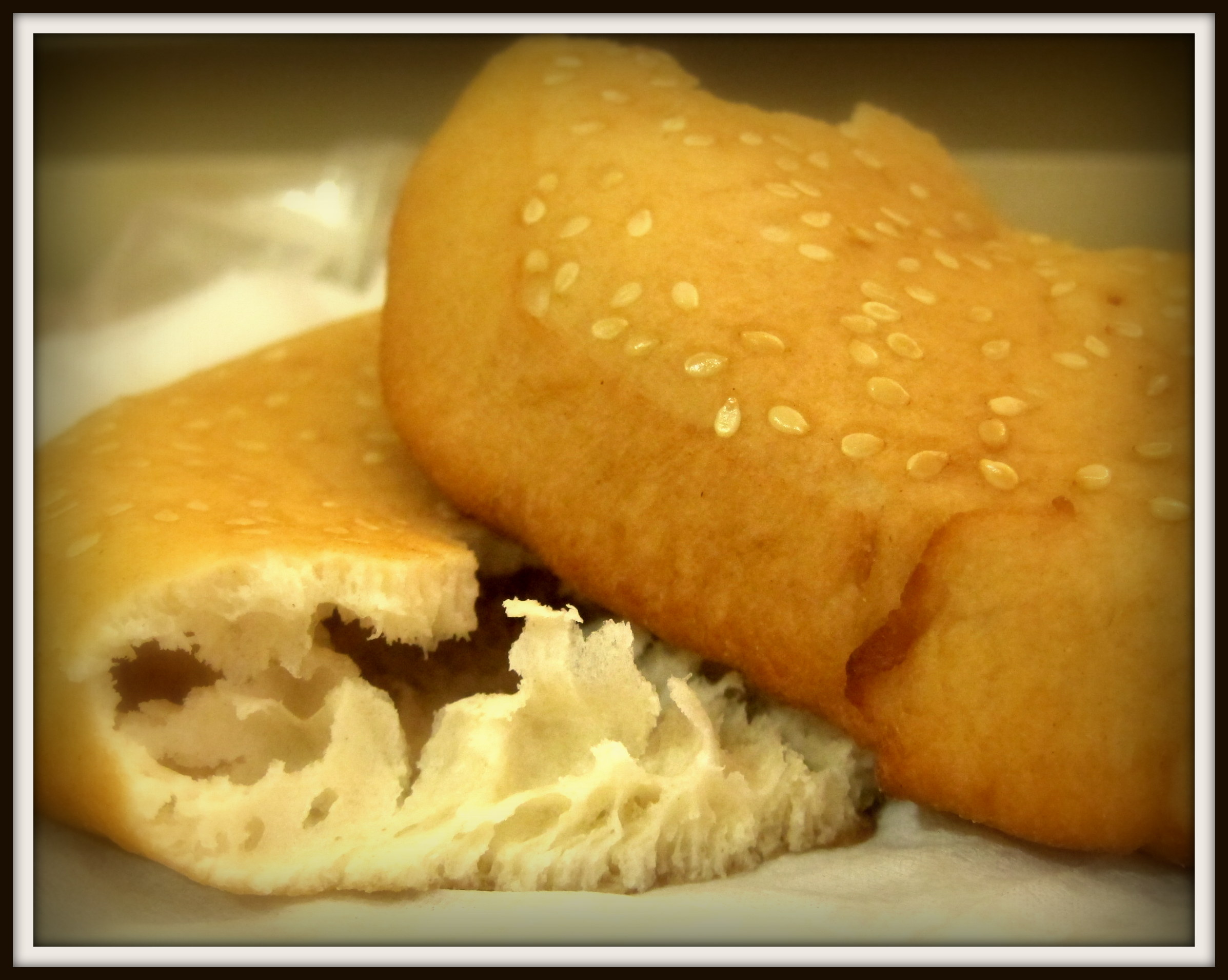
The honeycombs could go hang out with the dodo for all I care, but this Saigonese would always appreciate a well-fried bánh tiêu. At any time of the day, one would be able to spot a street cart with the signature double-shelf glass box next to a vat of dark yellow oil. The oil gets darkened from frying too many doughnuts too many times. Sure, it isn’t healthy. But should you really care about health when you eat fried dough?

“Fried dough has appeared in different forms – round, square, triangular, twisted – under many different names. The Dutch settlers had olykoeks (oily cakes); the French in Louisiana had beignets; the Spanish from Mexico made puchas de canela; and the Pennsylvania Germans made fastnachts around Lent.” (Jill MacNeice, “Doughnuts“, in the Roadside Food collection) Now I may add that the Vietnamese in California and Texas have bánh tiêu. One quality of bánh tiêu to make it superior over the other fried doughs: it isn’t coated in powder sugar. Studded with white sesame on one side, it tastes subtly salty of dough, fat, and roasted grain.

An excerpt about Vietnamese vendors making dầu cháo quẩy and bánh tiêu:

Vốc một nhúm bột khô rải đều trên bề mặt miếng gỗ đã trơn bóng – cốt để bột nhồi không bị dính – tiếp tục ngắt một cục bột đã ủ cho lên men, nhẹ nhàng vuốt dọc rồi dùng cây lăn cán qua, miếng bột đã được kéo ra thành một dây bột dài mỏng đều. Người bán lại tiếp tục dùng một thanh tre cật mỏng, xắn bột thành từng miếng đều nhau. Xếp chồng hai miếng bột lên rồi dùng một chiếc đũa ấn mạnh ở giữa, thế là đã được miếng bột “chuẩn” để làm bánh quẩy. Còn bánh tiêu thì phải qua công đoạn vốc một nắm mè vất ra giữa miếng gỗ để mè tự rải đều, sau đó mới dùng bột đã ủ đã nhồi cán thành miếng tròn dẹp, một mặt dính mè, một mặt không.
[…]
Bánh quẩy và bánh tiêu thường bán chung, có lẽ chủ yếu là vì hai loại bột làm bánh này không khác nhau là mấy. Cũng bột mì nhồi với bột khai là chính. Nhưng với bánh quẩy, người ta cho thêm chút muối, chỉ một chút thôi đủ để bánh không lạt lẽo, nhưng vẫn còn giữ được độ ngọt nguyên thủy của bột mì.
Còn với bánh tiêu, người ta lại cho thêm ít đường, cũng rất ít, đủ để làm dậy hơn vị ngọt của bột. Vị ngọt của bánh tiêu vì thế rất nhẹ, không như những loại bánh ngọt khác. Với bánh tiêu, người mua cũng không đòi hỏi phải giòn đến như bánh quẩy. Cái hấp dẫn ở bánh tiêu lại là ở những hạt mè thơm ngậy. Những hạt mè trắng li ti sau khi chiên trở nên căng mẩy, quyện với mùi thơm của bột mì chiên giòn trở nên hấp dẫn kỳ lạ. Nếu như bánh quẩy thường được cho vào dùng chung với cháo, với phở thì bánh tiêu thường được dùng kèm với bánh bò. Xẻ đôi chiếc bánh tiêu, kẹp vào giữa miếng bánh bò nữa là được một loại hương vị khác hẳn. Cái mềm xốp của bánh bò khiến bánh tiêu – vốn hơi khô – trở nên dễ ăn hơn, đỡ ngán hơn. Các loại nhân ăn kèm bánh tiêu cũng khá phong phú, tùy sở thích mỗi người. Có người mách nhau kẹp xôi vào giữa, ăn cũng rất ngon, lại có thể thay quà sáng. Có người lại thích nhân “cadé”, là loại nhân làm bằng trứng gà có vị béo ngầy ngậy, rất hợp với bánh tiêu.

Translated and abridged:

[The vendor] scoops up some flour and sprinkles them on the shining flat wooden board, to keep the dough from sticking, then he pinches off a ball of fermented dough, gently pulls it and runs the rolling pin once over to stretch the ball into a thin strip. Then he grabs a sharp bamboo stick, swiftly cuts the strip into smaller, even strips. Putting two strips on top of each other, pressing a chopstick down in the middle, and he gets a “standard” piece of bánh quẩy ready to fry. For bánh tiêu, he would need to sprinkle a pinch of sesame seeds on the board, then flatten the dough into disks, one side studded with seeds, the other side having none.
[…]
Bánh quẩy and bánh tiêu are often sold together because they have similar dough. Mainly, flour and baking soda. For bánh quẩy, they add some salt to make it savory, but not too much that it would diminish the flour’s natural sweetness. But for bánh tiêu, they would add a pinch of sugar to boost that sweetness. Bánh tiêu doesn’t have to be as crunchy as bánh quẩy either. Its goodness lies in the sesames’ fragrant nuttiness. As bánh quẩy is often eaten with rice porridge or noodle soup, bánh tiêu goes with bánh bò. Slit the bánh tiêu open, stuff in a piece of the soft white honeycomb bánh bò, and you get a whole new snack. Some people substitute bánh bò with sweet sticky rice or with egg custard, that really fattens it up.

In Saigon, Vietnam: 1000 VND each.
At Bánh Mì Ba Lẹ, Oakland: 1 USD each. (1 USD ~ 20000 VND)

Address: Bánh Mì Ba Lẹ (East Oakland)
1909 International Blvd
Oakland, CA 94606
(510) 261-9800

Previously on Sandwich Shop Goodiessteamed taro cake (bánh khoai môn hấp)
Next on Sandwich Shop Goodies: Xôi khúc (cudweed sticky rice)