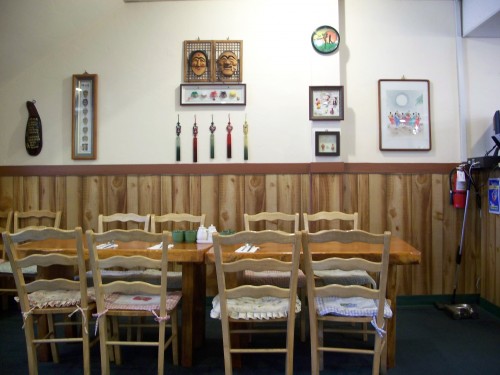
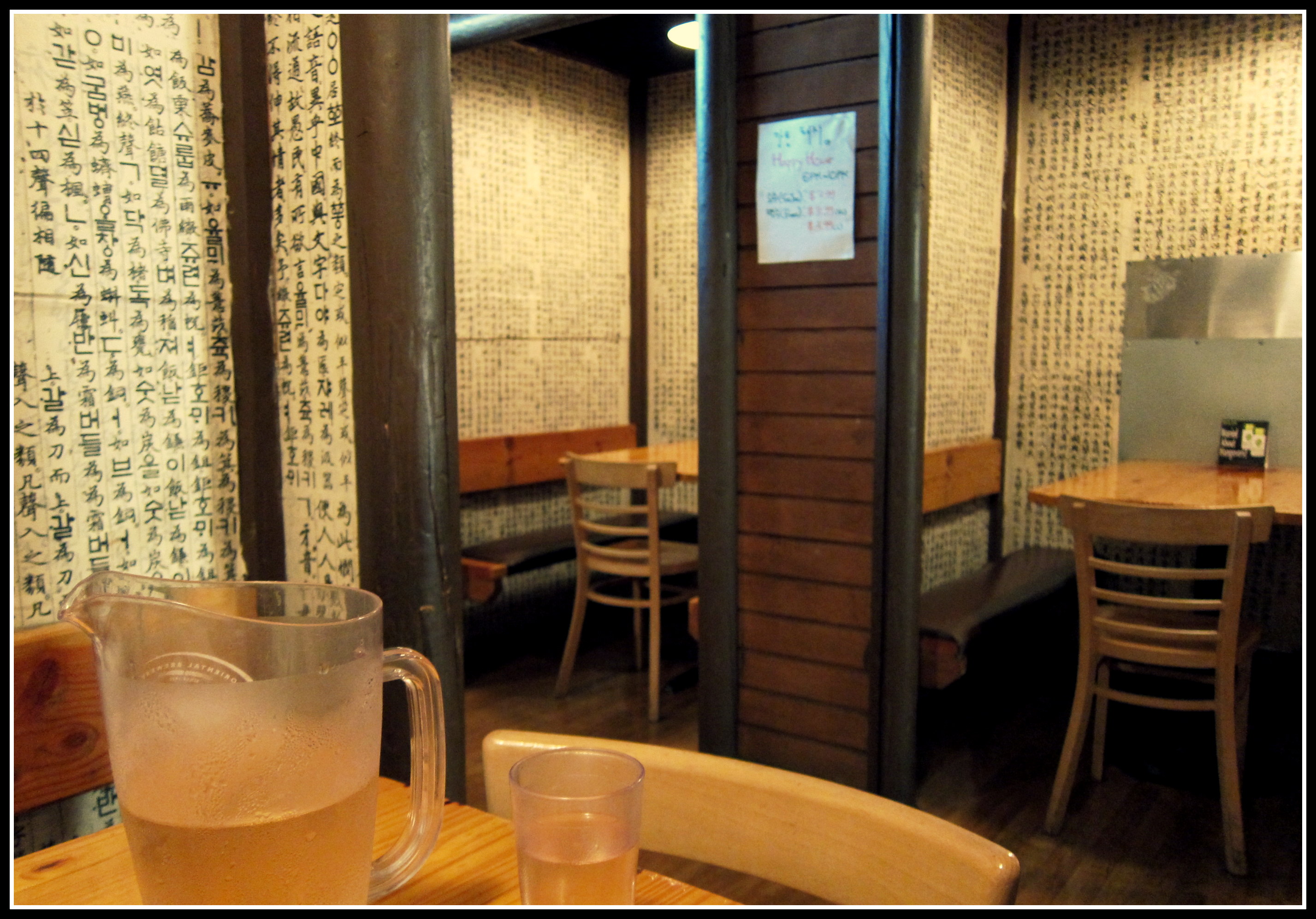
Nothing beats mom’s cooking. Things may come close, or they may be enchantingly as good as mom’s cooking albeit in some different way, but nothing can top a familiar taste that you grew up with, when you’re fed with love. Remember how Ego dropped his pen and dived into Remy’s ratatouille dish upon recalling the aromatic smell of his mother’s boiling pot? In episode 5 of Gourmet, tears of joy wet the eyes of a renowned food critic as he savored a bowl of boodae jjigae (부대 찌개), the kind his mother used to make for all poor children in the village and the taste he has longed for in several decades. The concept is universal: mom’s cooking is the best. Lately I’ve been steering away from Vietnamese restaurants, not because they aren’t good, but because my mom makes better. So I seek out to the food my mom has never made, yet a part in me still wants a sense of home. And what’s more home-like than the thin, ruffled floral cotton cushion pads loosely tied to some wooden chairs?
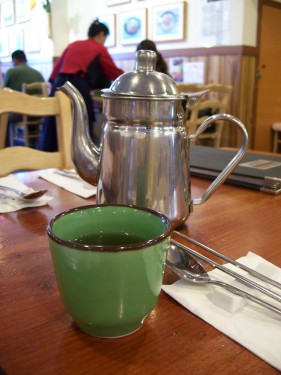
Korean food always makes me feel warm and fuzzy inside. I’m not talking about the chili heat and the bubbling sizzling dolsot and the oksusu cha (옥수수 차), even if that’s part of the reason. If you take off the tongue-torching taste, Korean food is actually very similar to some Northern Vietnamese food, especially the soups and the stir fries. Neither cuisines go down the slippery slope of lard overdose or drown the plates in curry sauces and coconut milk, and both embrace a sweet-savory harmony topping a lot of rice.
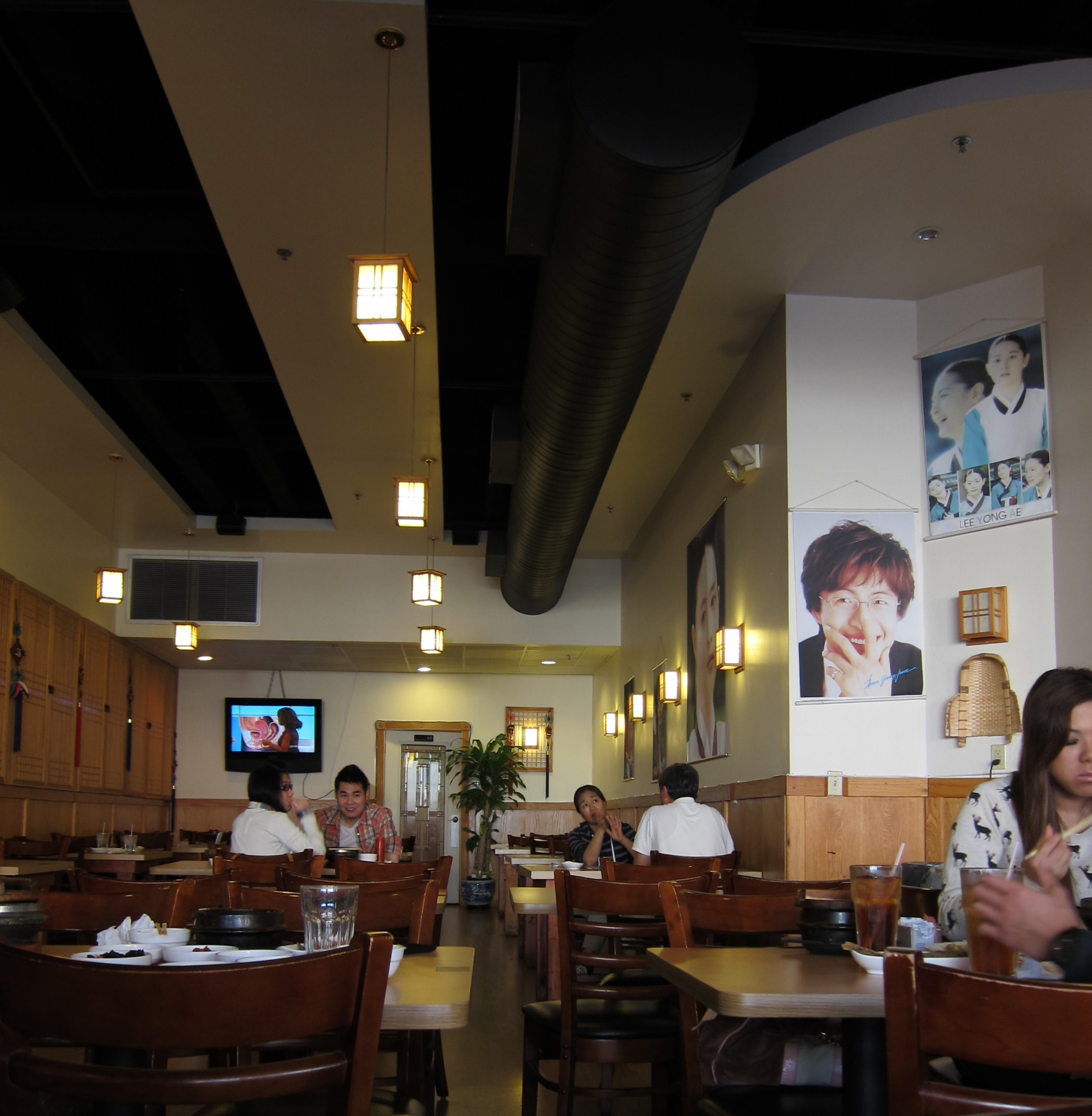
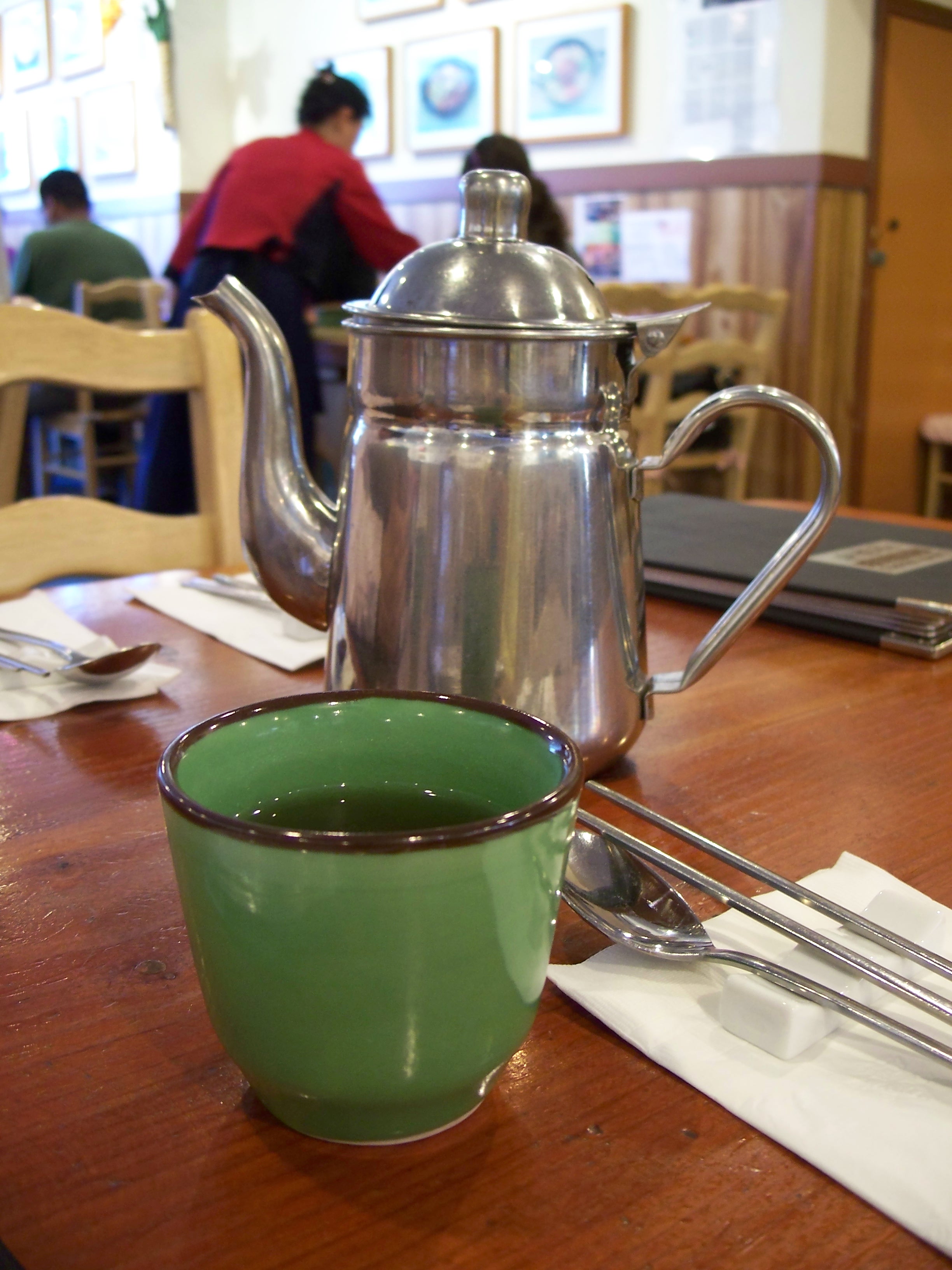
But above all, it’s the feel of a Korean restaurant that charms me. It always feels slow. Even if it’s like OB Chicken Town, where the lone waiter has to rush between tables, love songs blast all around, basketball players run across the big TV screen, time still goes by slowly at that wooden table where you’re sitting. Time swirls around in the tea cup. Time lingers like the steam above your dark stone bowl. Time precipitates in each little morsel of banchan that you get served a few minutes after placing your order. Maybe it feels slow because you don’t have to rush shoving food into your mouth, or clearing the table so that the later course can come. It feels slow just like eating at home, when each dinner would take hours because I talked to my mom instead of eating.
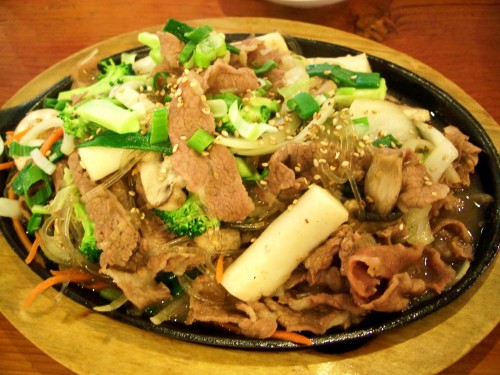
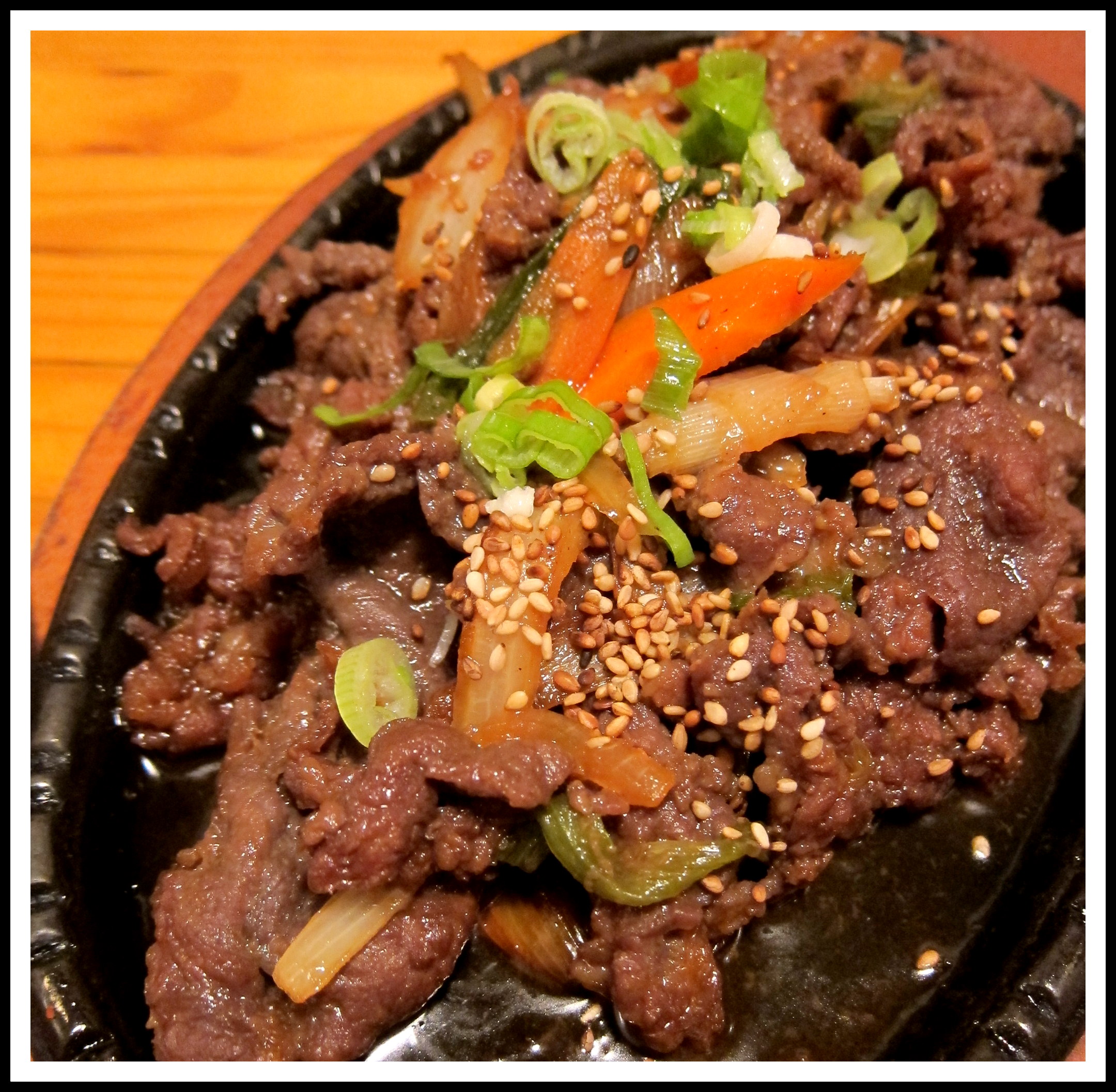
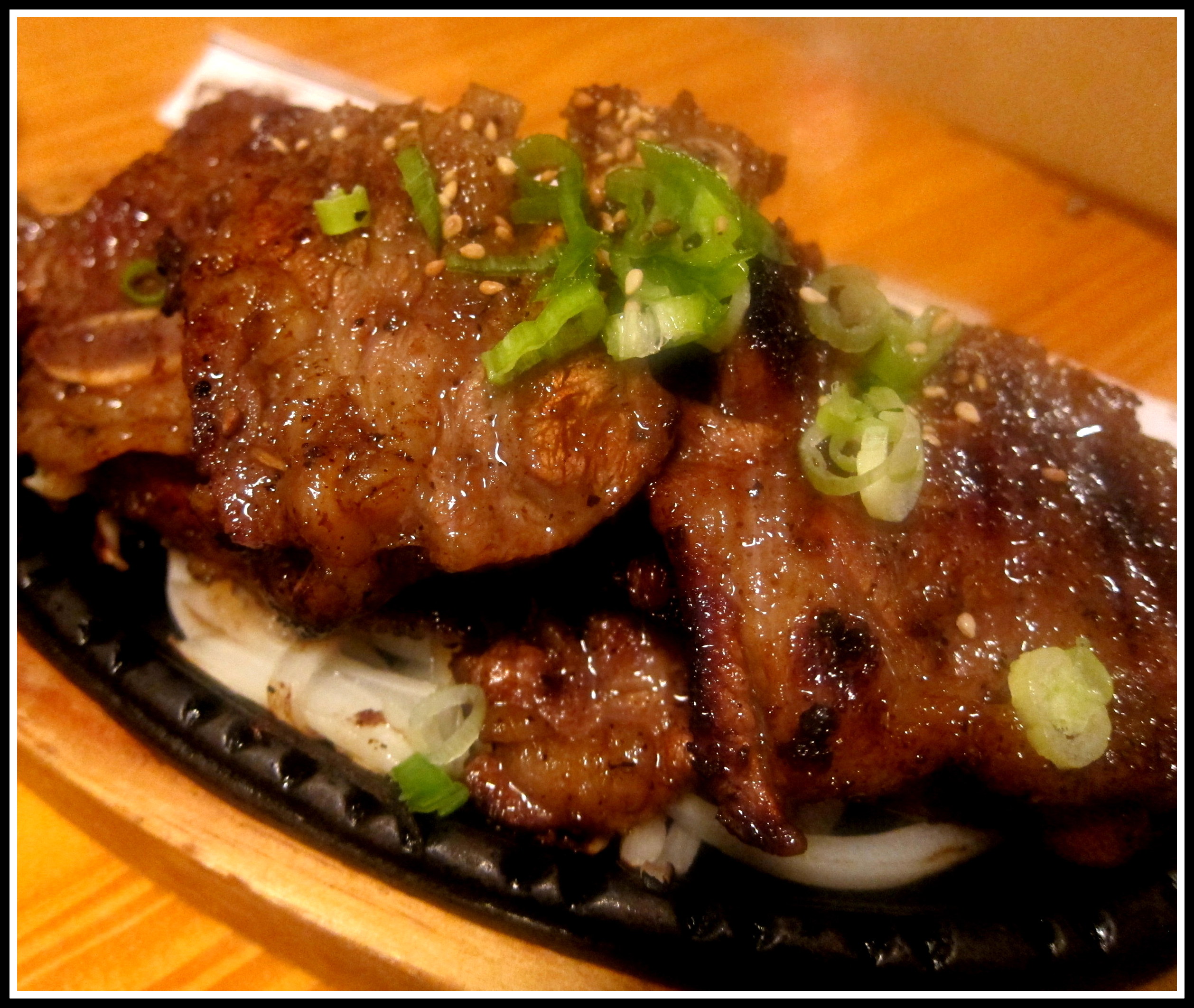
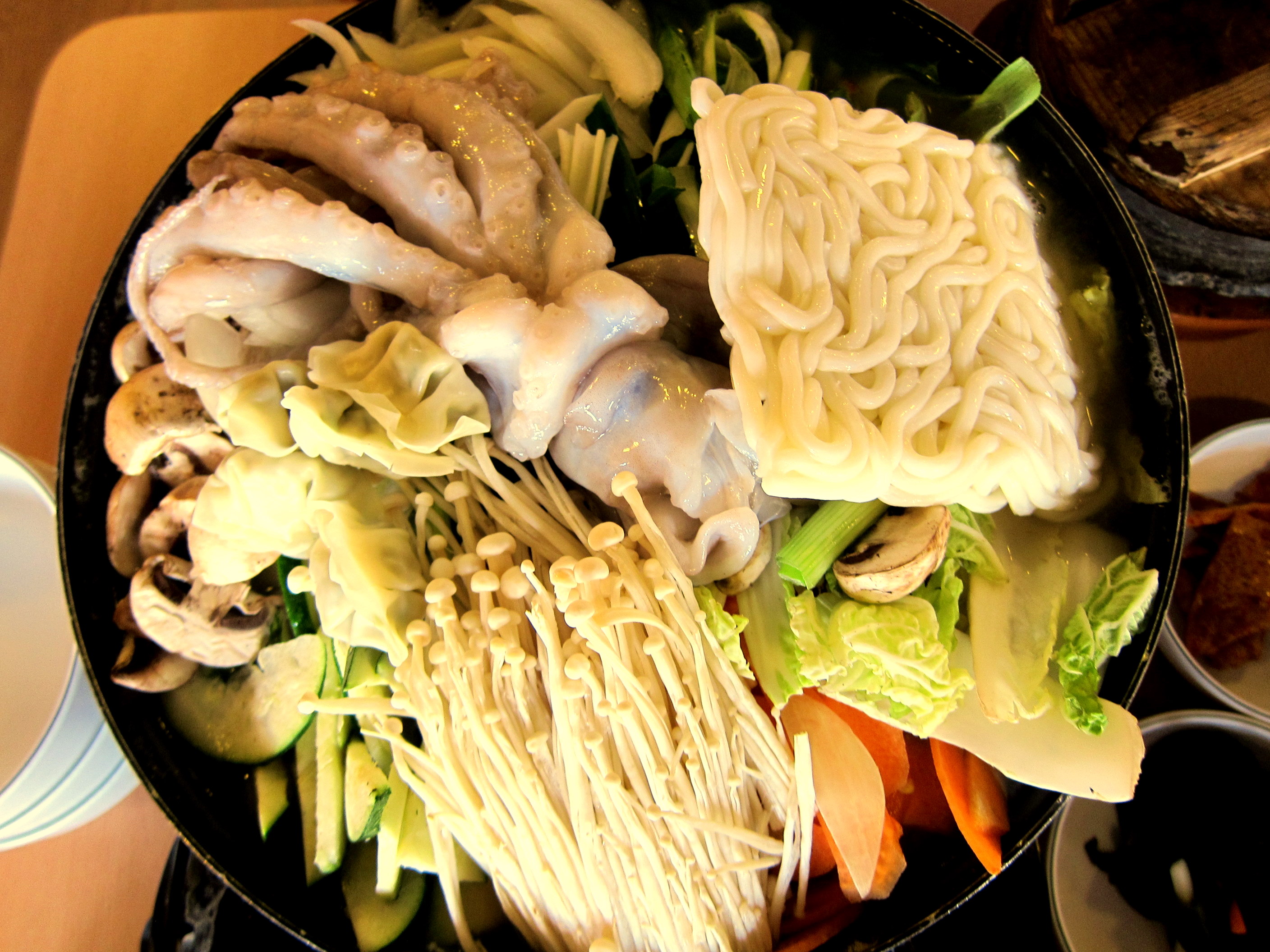
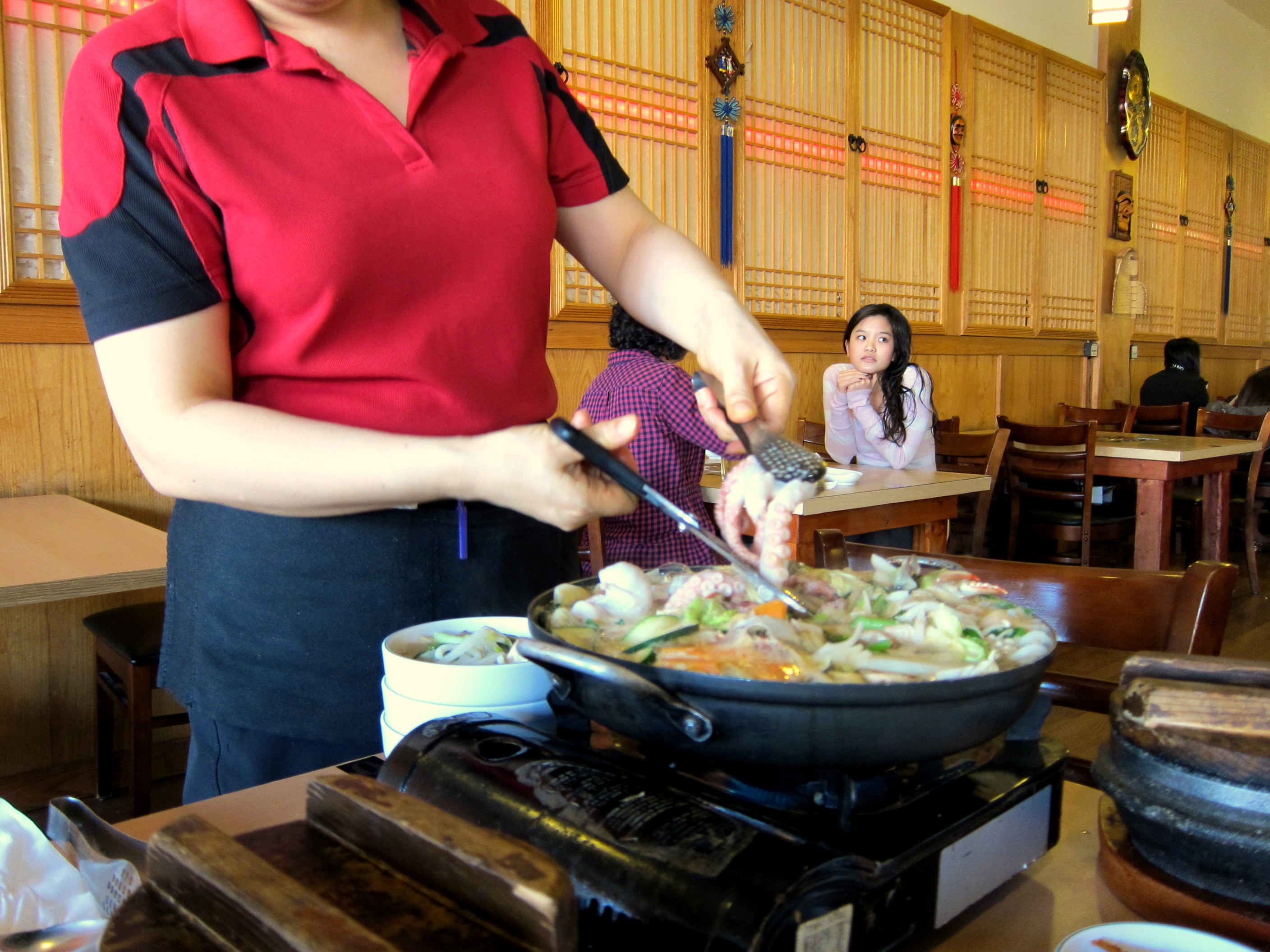
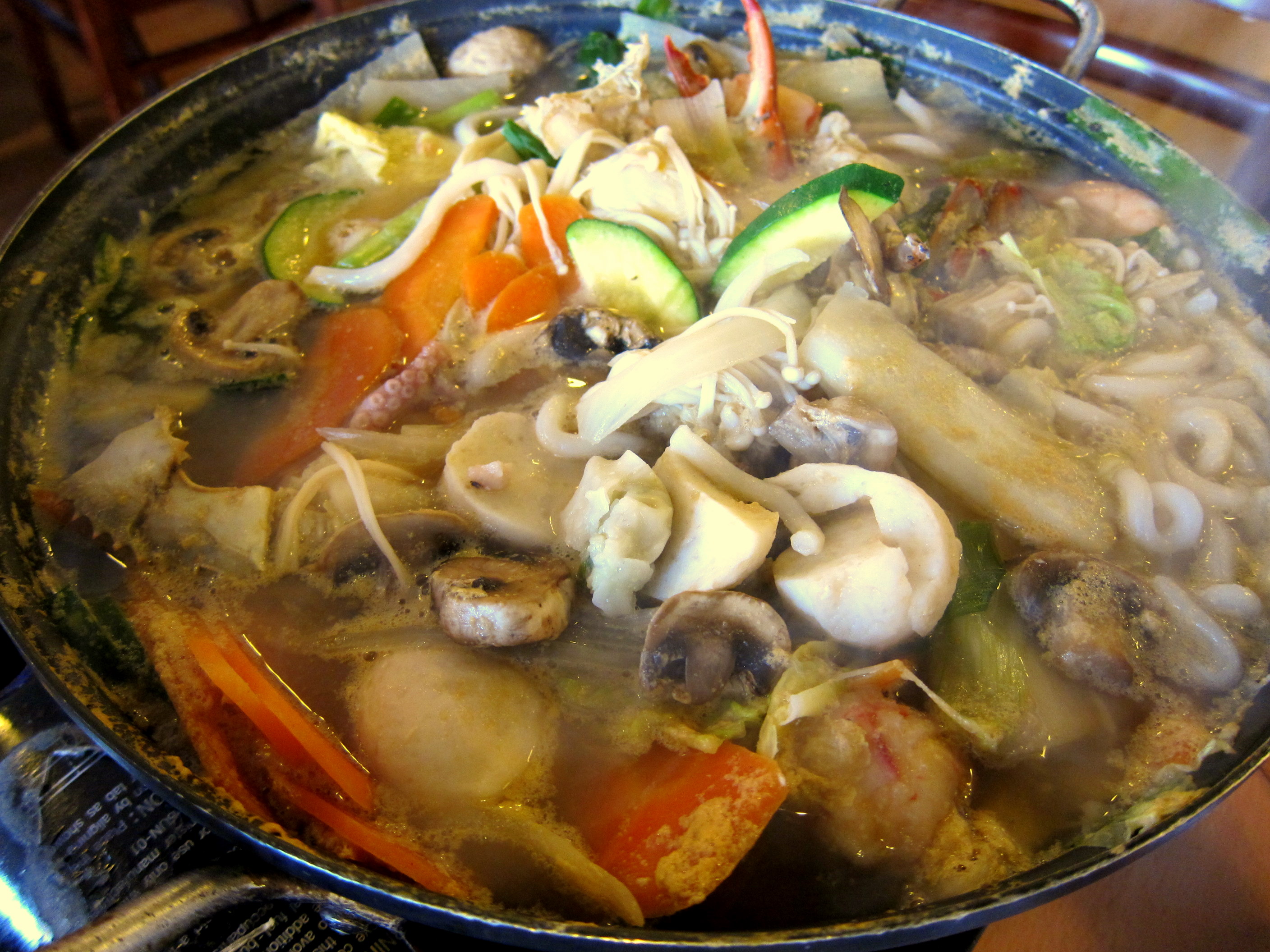
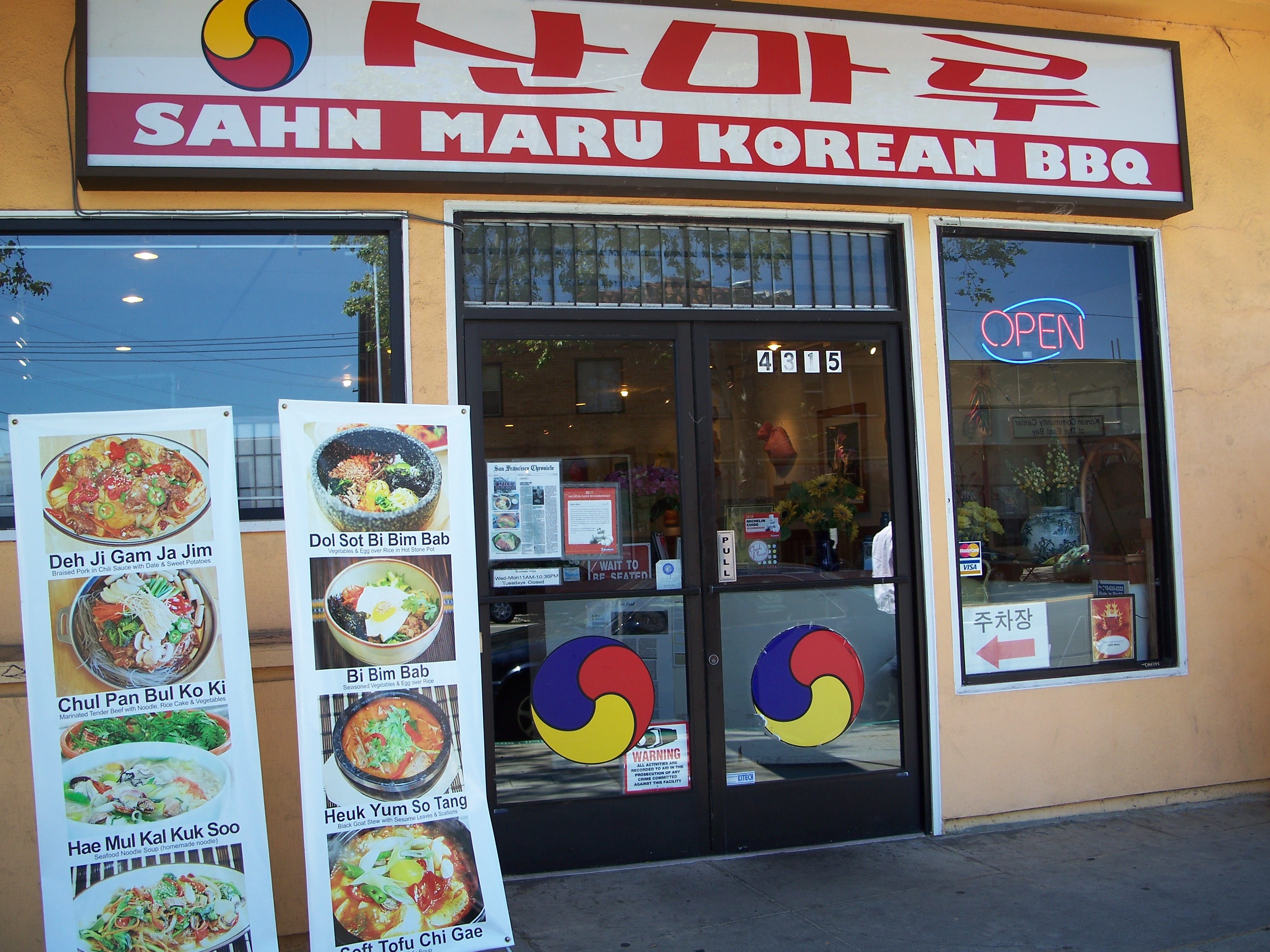
So I feel happy at every Korean restaurant I’ve been to, with every Korean dish I’ve tried. I feel happy at Sahn Maru (산 마루) in Oakland. This chulpan bulgogi (출판 불고기) is another pleasant find. I like my choice of mild sauce because the lack of chili paste lets other flavors flourish, but you can choose spicy. The ddeokbokki (떡볶기) is a playful texture that could be done without, while the cellophane noodle buried under a mountain of beef and soaked in marinade is just too great.
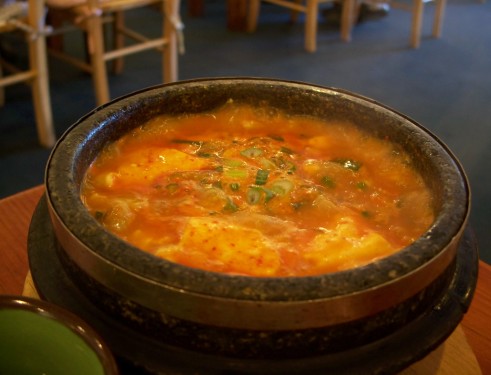
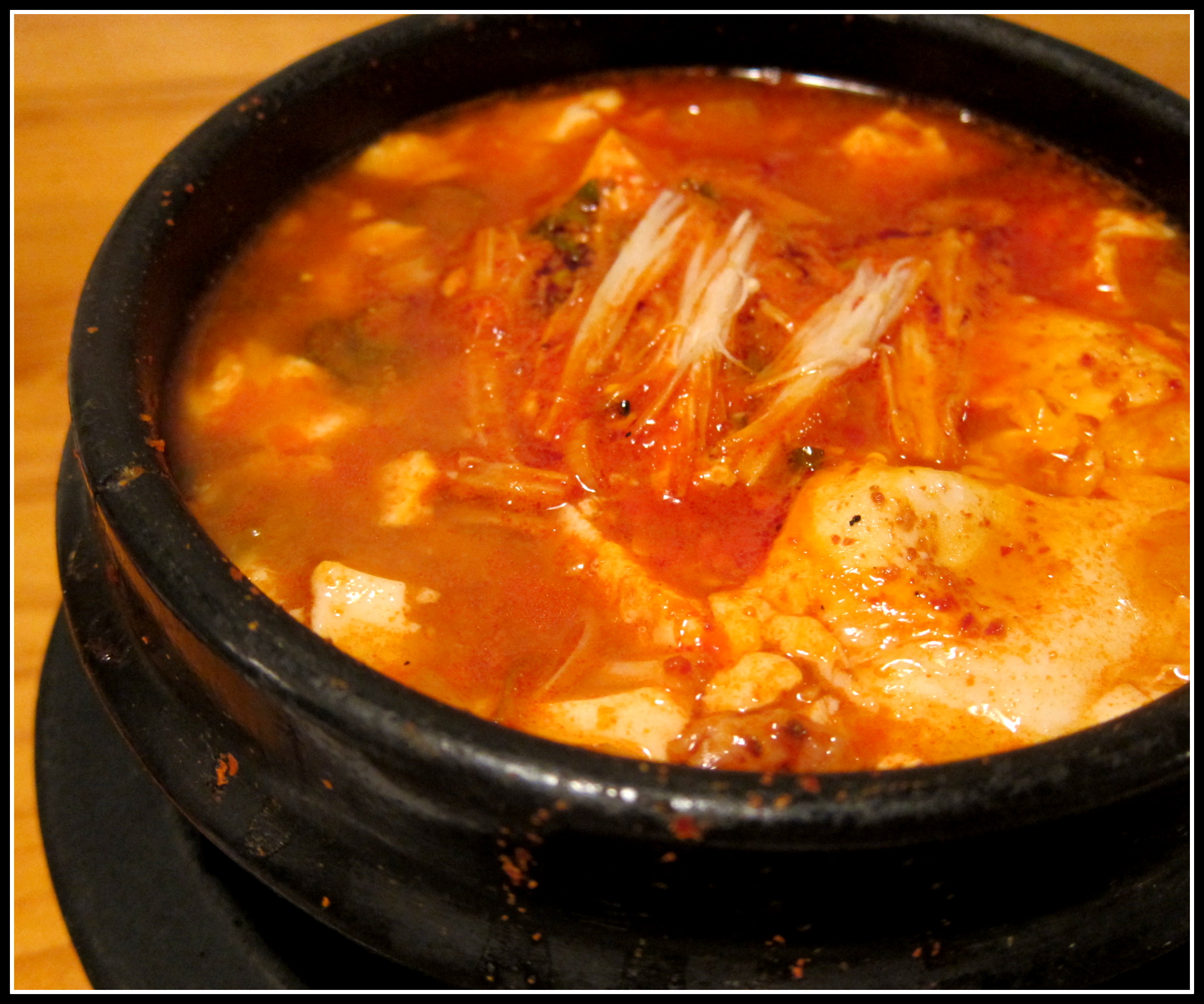
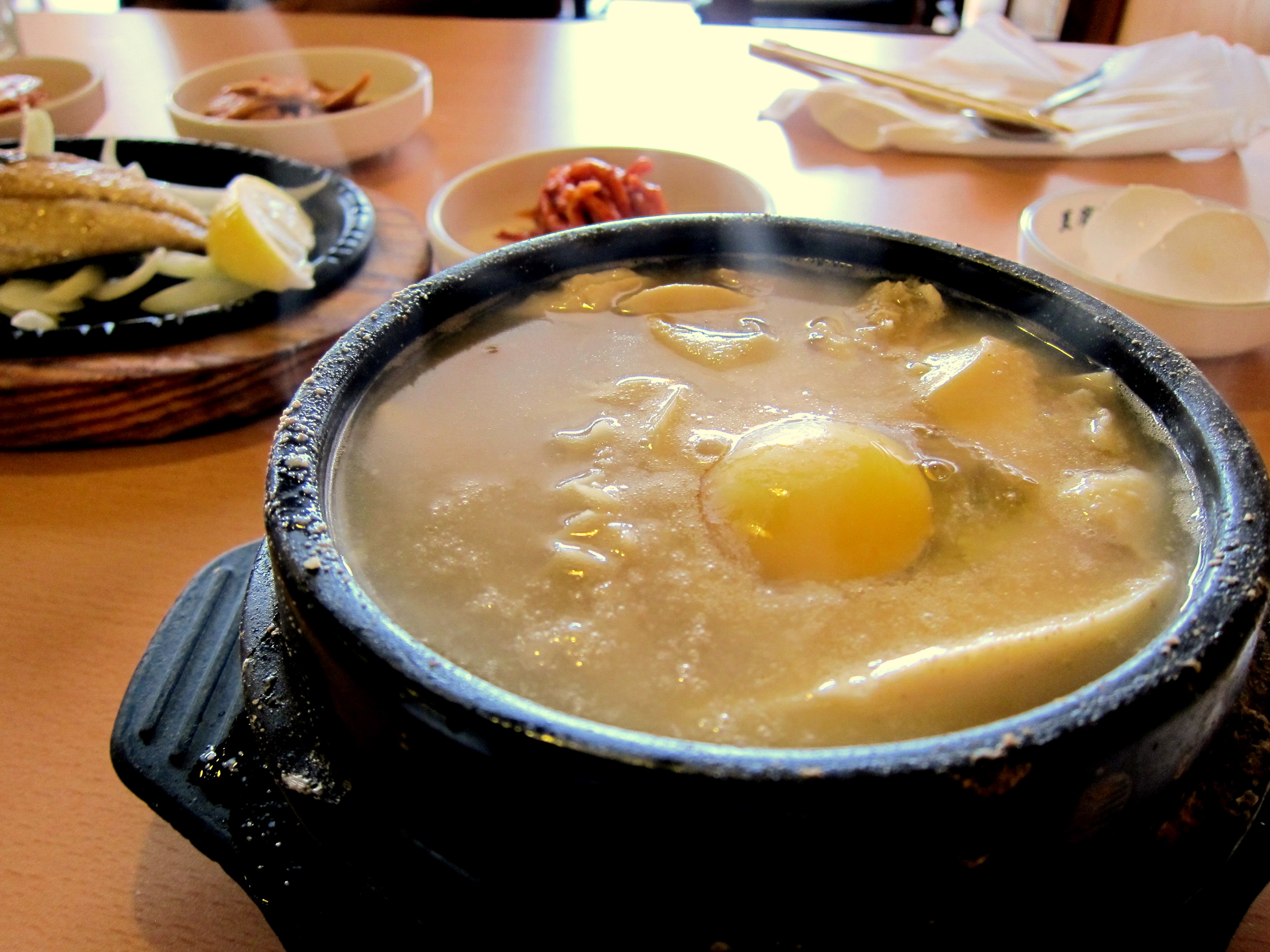
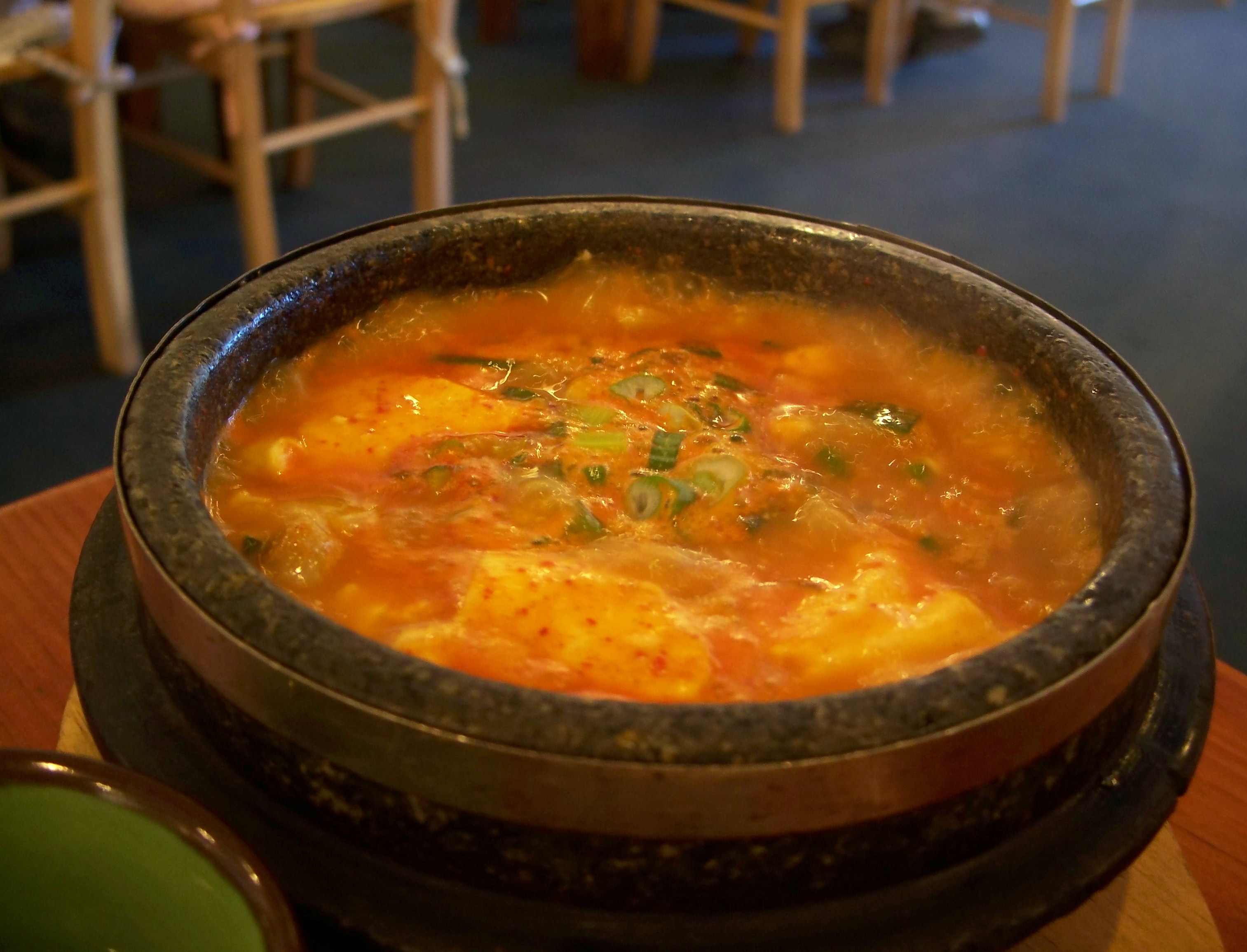
On the hot side we have bubbling soondubu jjigae (순도부 찌개). The soft tofu is creamy like scrambled eggs. Pour a few spoons on top of rice, mix it up. You won’t notice the meat, and the meat is totally dispensable. This stew is good because of the fish sauce, the heat, and the creamy tofu.
At the end, the bill gets served with a cup of cold sujeonggwa (수정과). I’m not a fan of cinnamon, but anything sweet and cold just cleanses the throat so nicely. There was no dried persimmon, though.
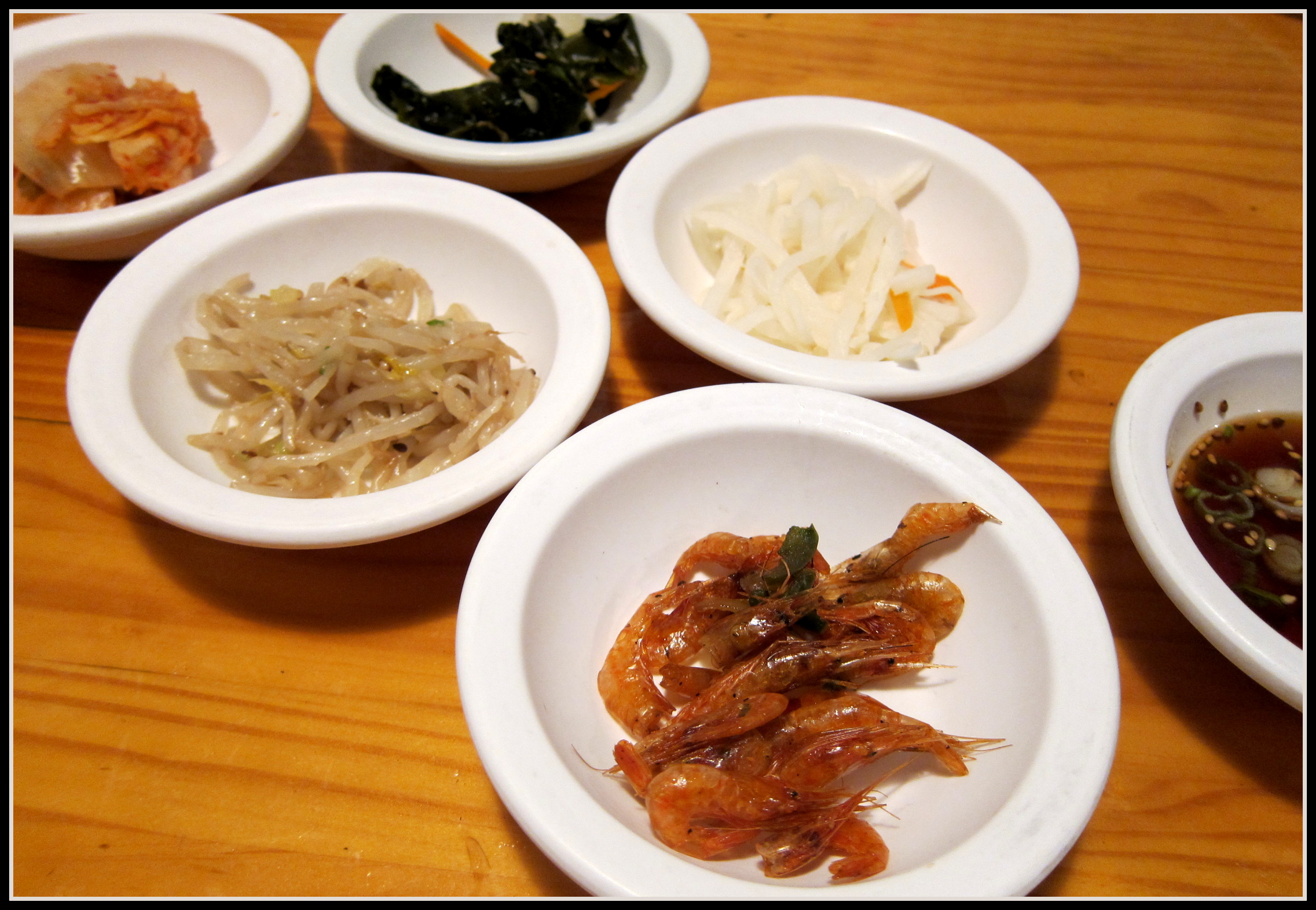
And I would have said that Sahn Maru was another pleasant experience. But something among the banchan (반찬) makes me change my mind.
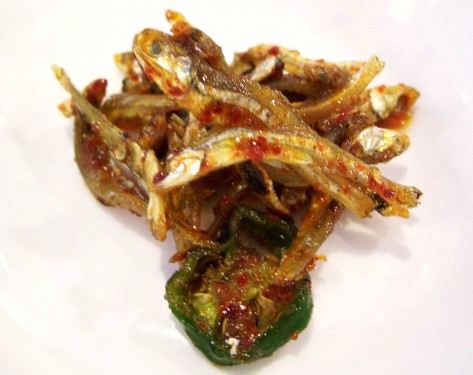
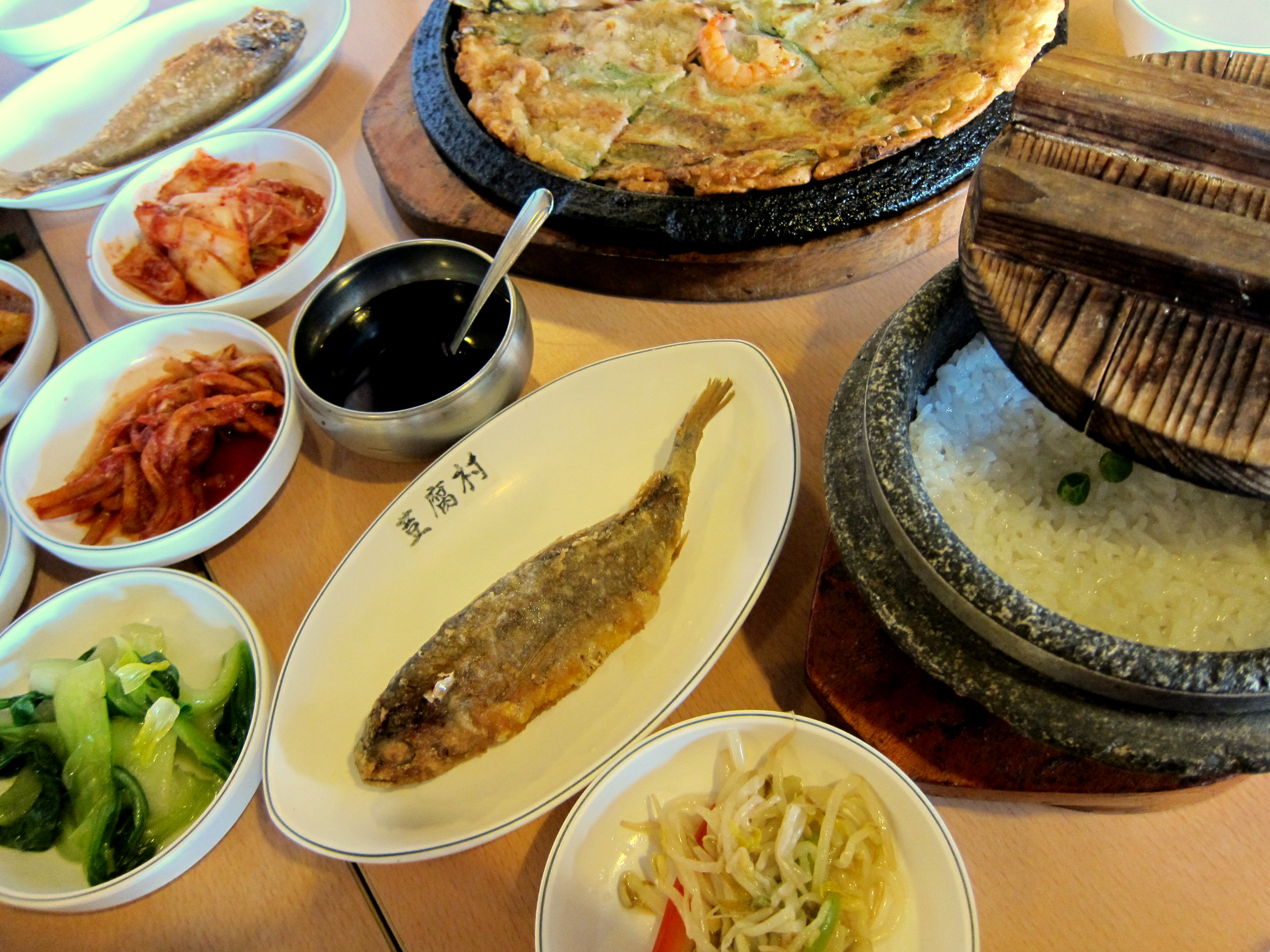
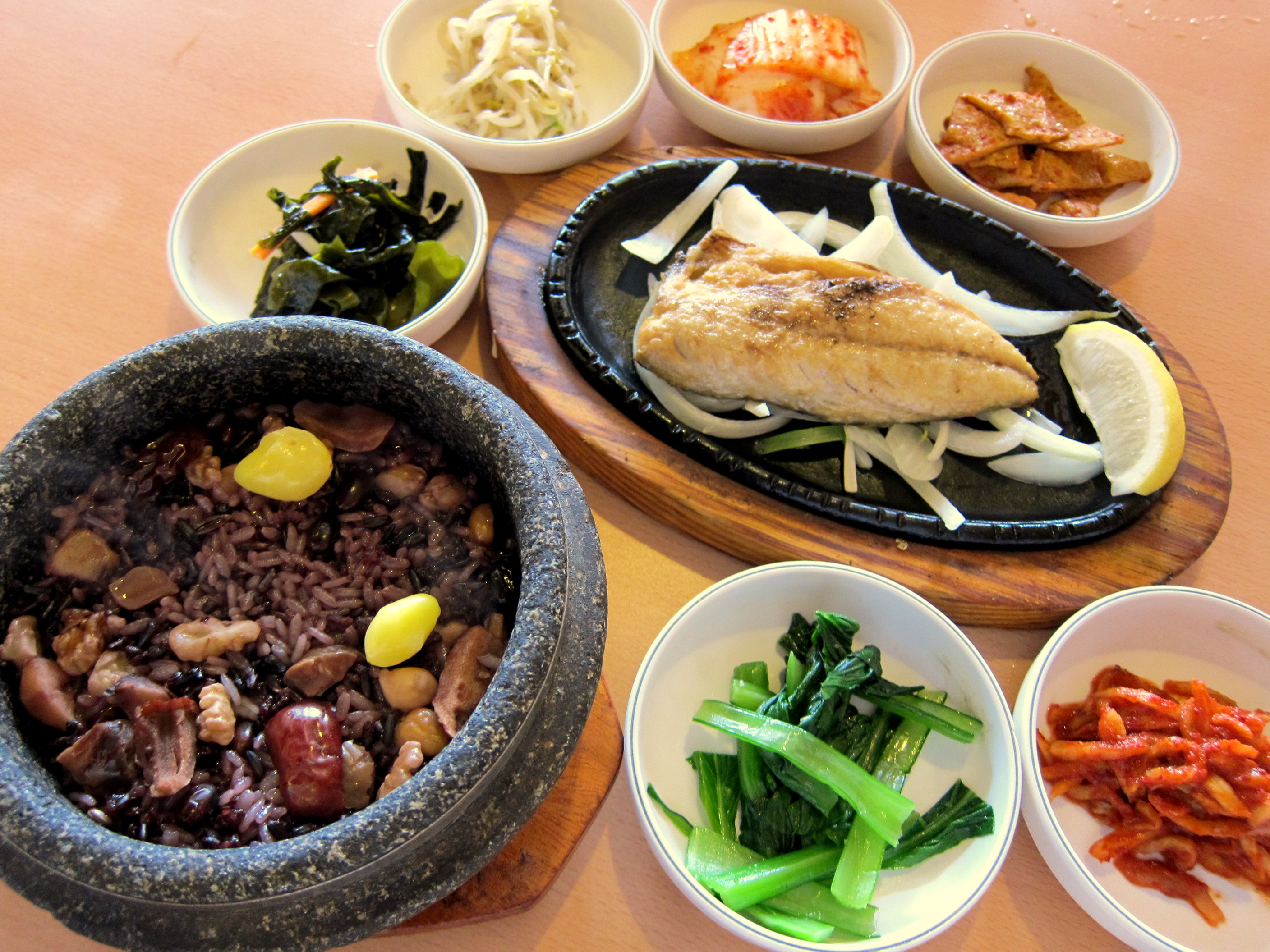
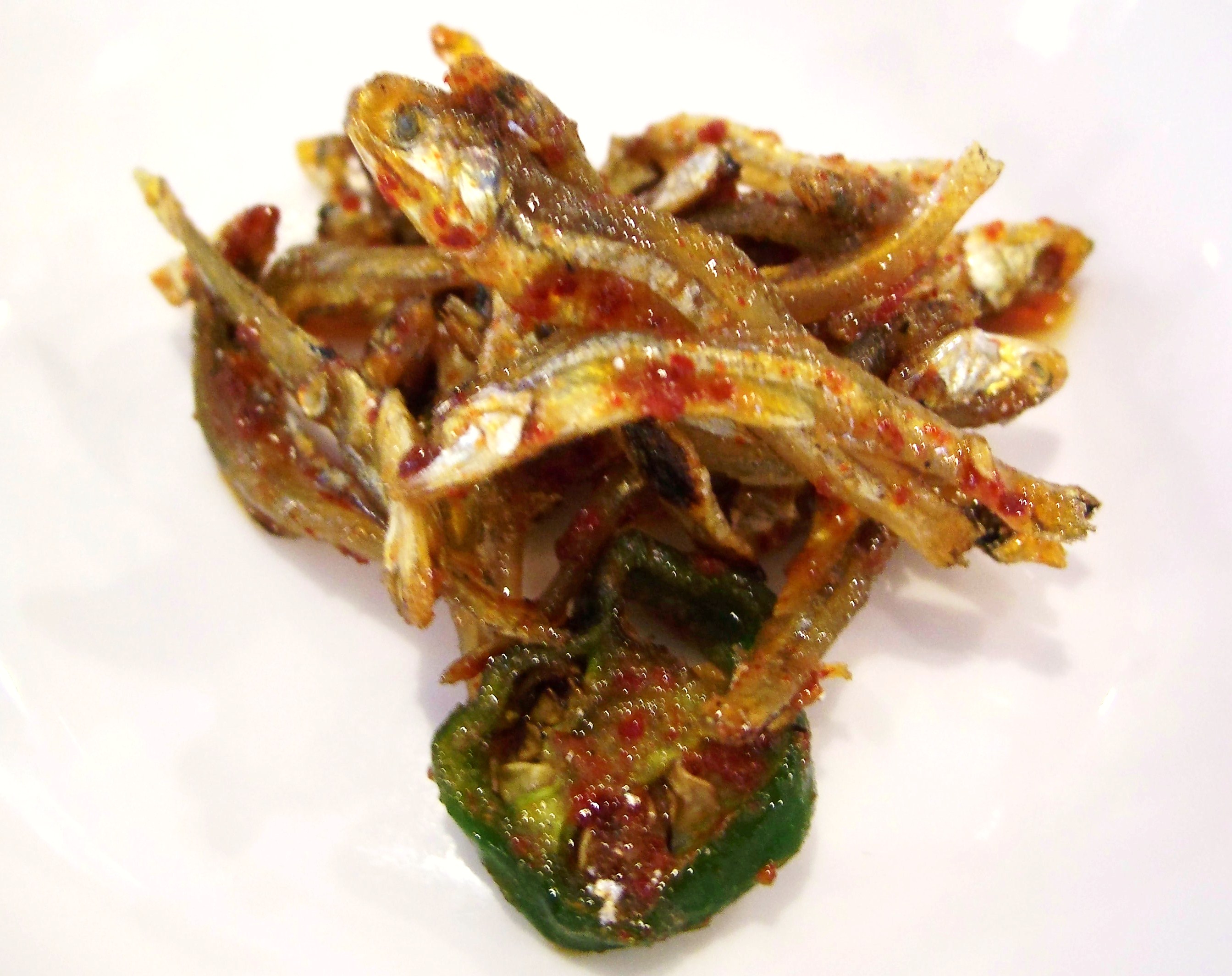
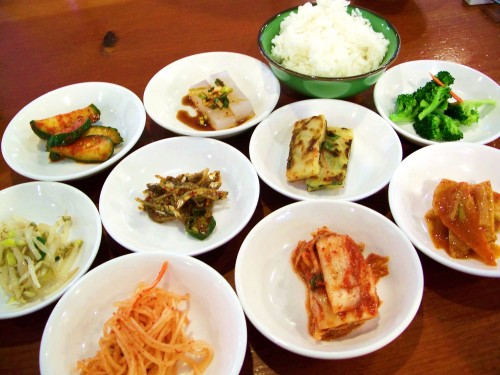
The dried anchovies. I’ve had the other things before, odeng bokkeum (오뎅볶음 fried fish cake), buchu jeon (부추전 chive pancake), kimchis, nokdumuk (녹두묵 mungbean jelly), but this is the first time I have myulchi bokkeum (멸치 볶음), stir fried dried anchovies with heads intact. Whatever little flesh the fish used to have has crystallized into tiny perfections of salty sweetness. The fish taste like candied orange peel. I just can’t get enough of it.
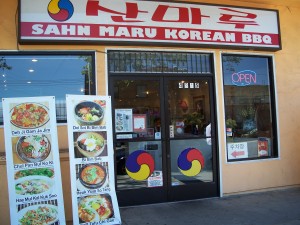 Because of the anchovies, Sahn Maru is not just another pleasant experience. Sahn Maru is a place I will visit and revisit, even if it costs a notch above all other Korean diners I’ve come to like.
Those little fish provoke memories of my mom’s ca kho tieu.
See more pictures of Sahn Maru’s dishes at my web album Photon Flavors.
Address: Sahn Maru Korean BBQ
4315 Telegraph Avenue
Oakland, CA 94609
(510) 653-3366
Dining dollars: chulpan bulgogi ($20.95) + soft tofu soup ($11.95) + tax = $36.10
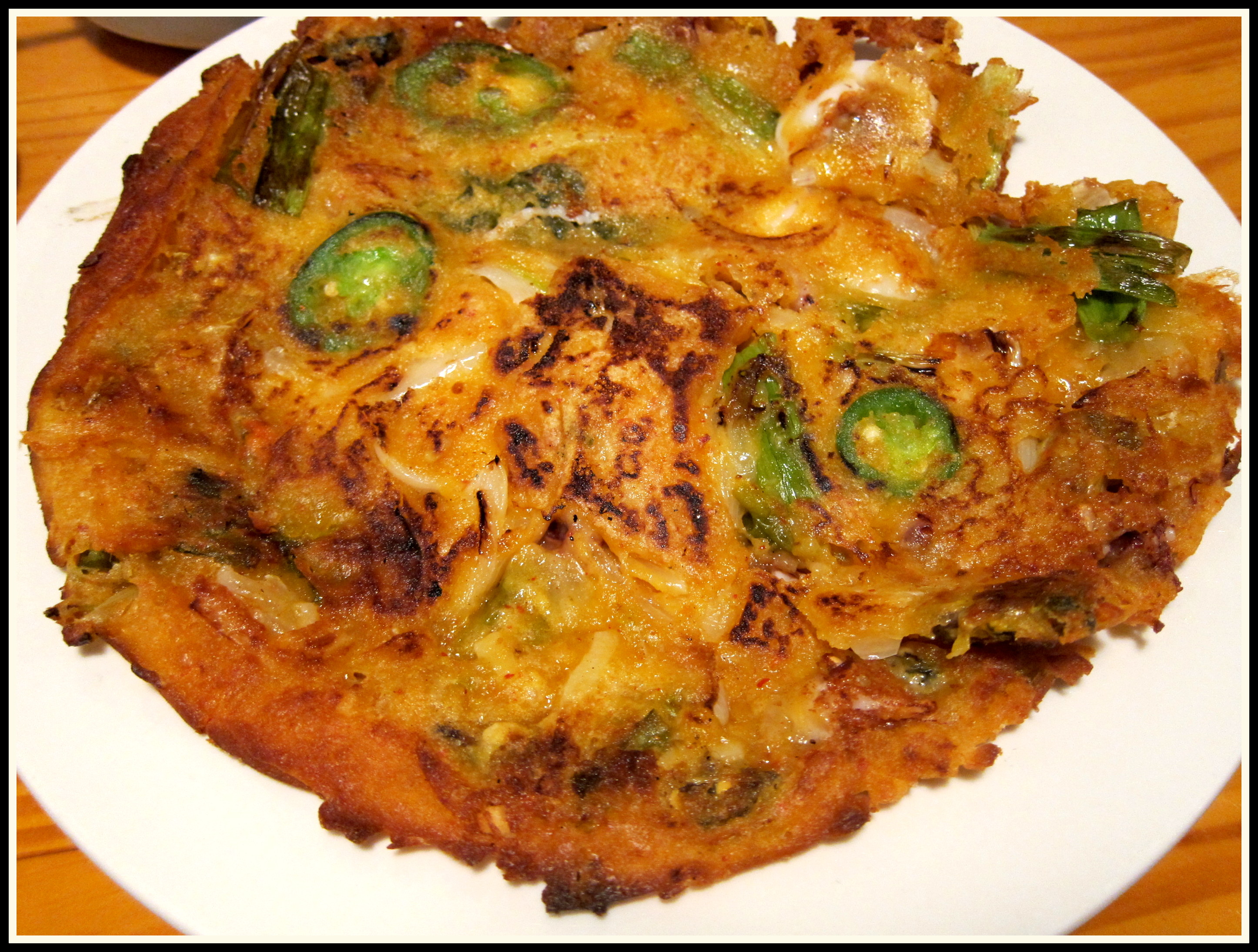
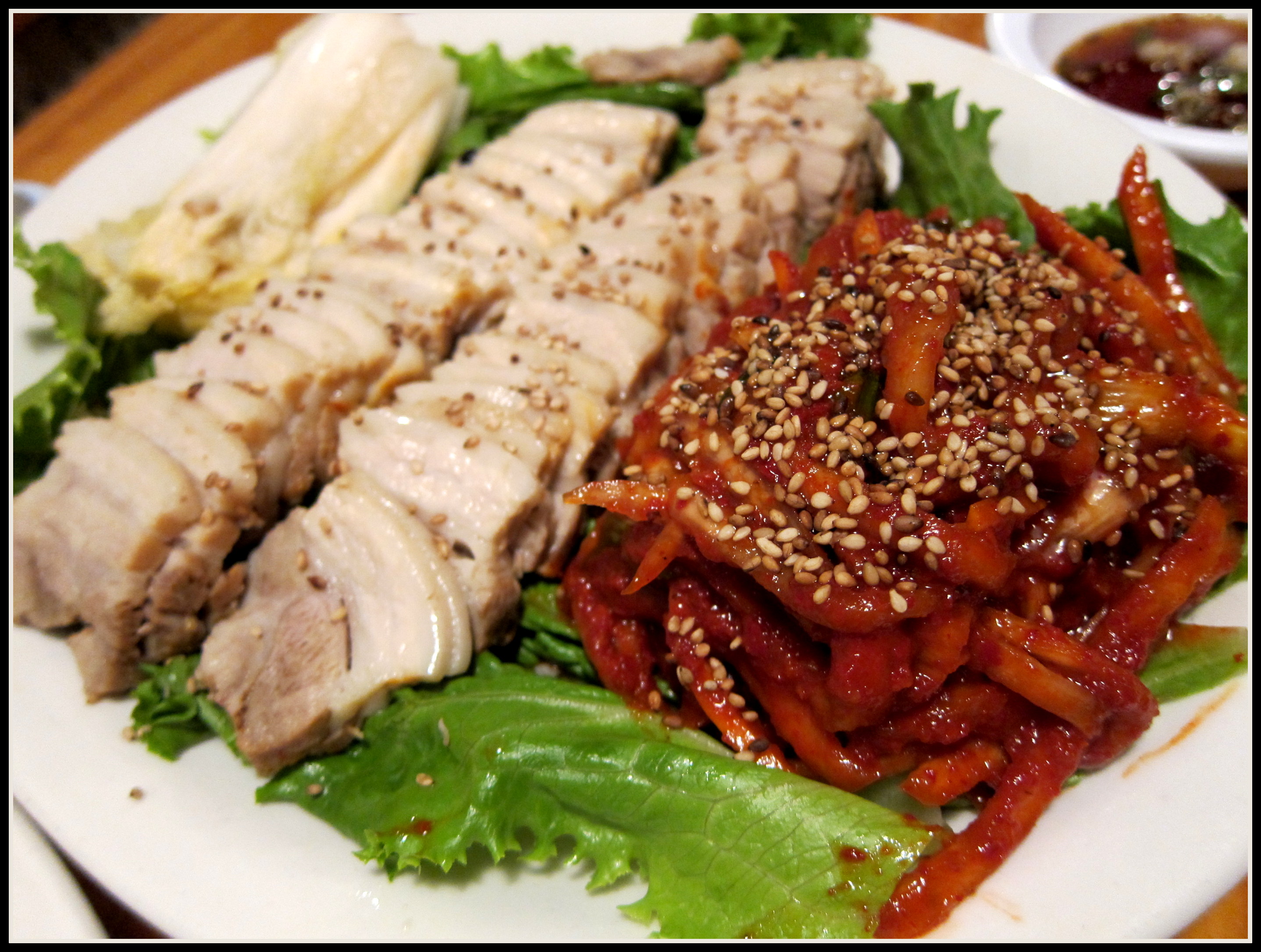
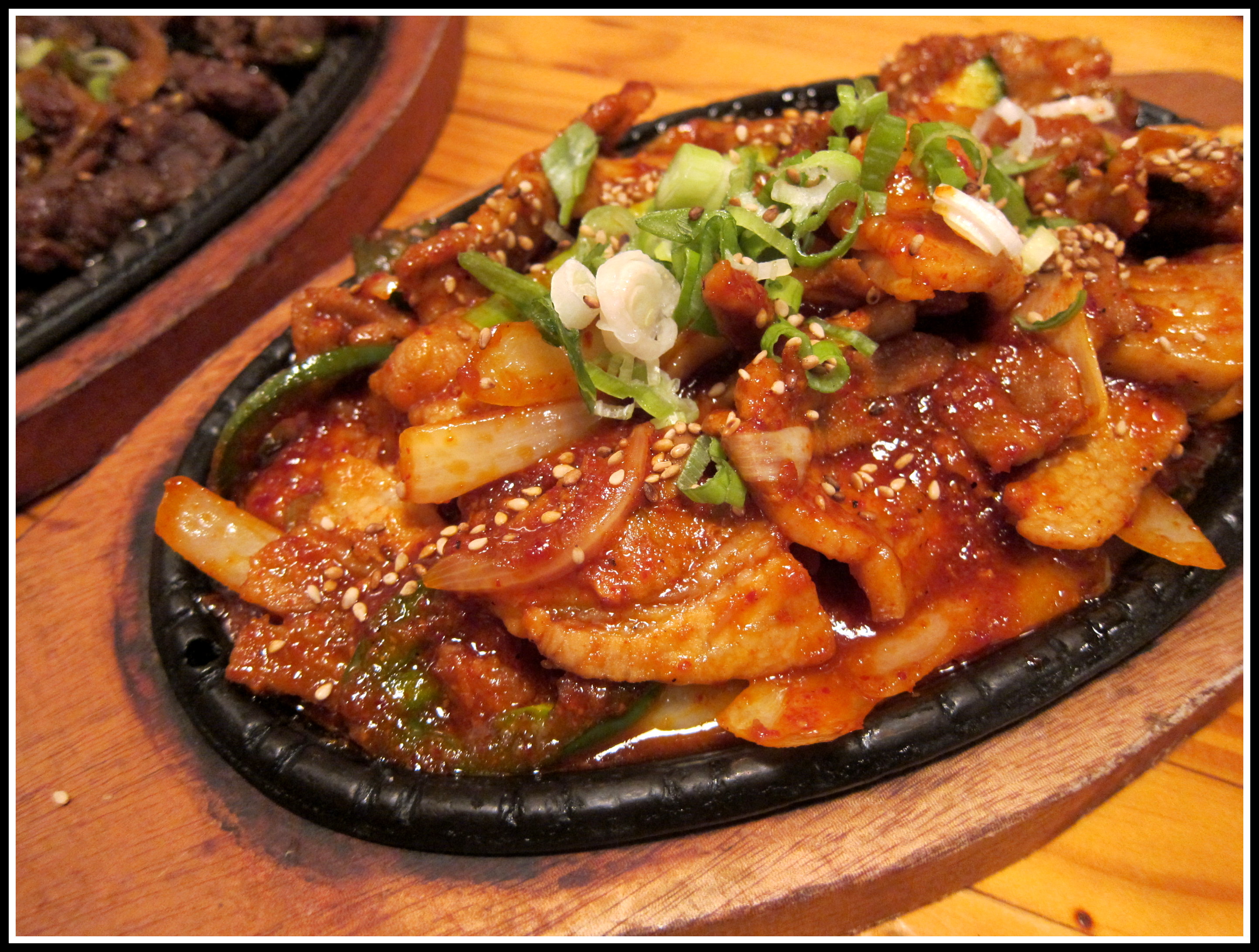
UPDATE: We have also tried a variety of other dishes here, from the usual dolsot bibimbap, japchae, seafood pancake and kalbi tang to the less-known bibimnaengmyun (비빔 냉면, cold buckwheat noodle), joki gui (조기 구이, fried king fish), and duehji kamjajim (돼지 감자찜, braised pork in mild chili sauce with dates and sweet potato). So far, all of them are the best of their kind. 🙂

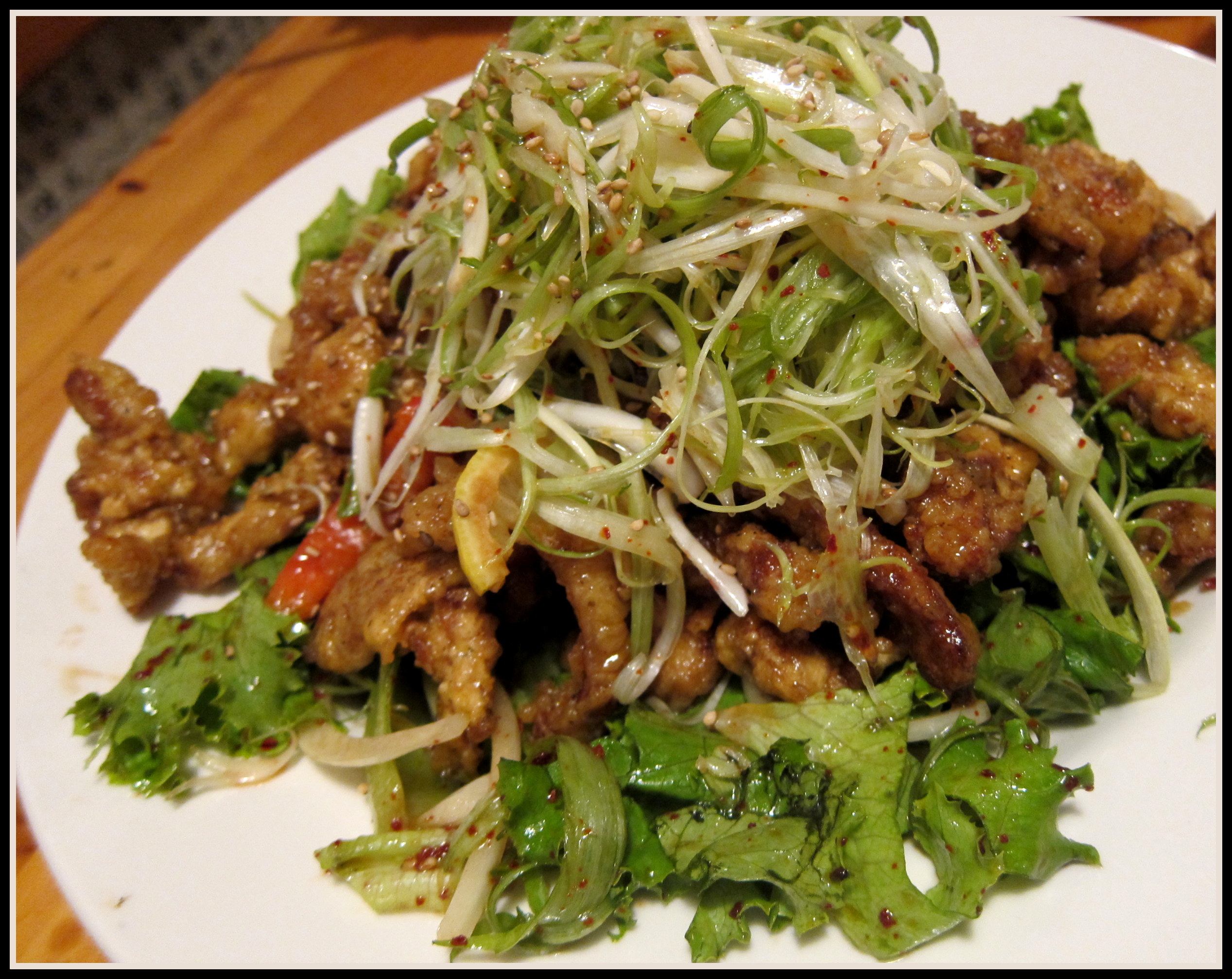
 Thanks to Kristen’s mom, we three shared 8 dishes that covered tofu, seafood, chicken, pork and beef, one of them was a portion for two; the guy’s look of concern was funny, he even asked if we were sure. (We had plenty of leftovers of course. Nothing beats eating with moms. ;-)) Although “twe jee” (돼지) means pig or pork, this shack has good but not the best pork dishes. Kwen chan thah, their haemul soondubu (해물 순두부, soft tofu soup with seafood) and haemul pajeon (해물 파전, seafood onion pancake) are top of the game.