Flavor Boulevard

We Asians like to talk food.
Subscribe

At the Waterbar

February 12, 2012 By: Mai Truong Category: American, California - The Bay Area


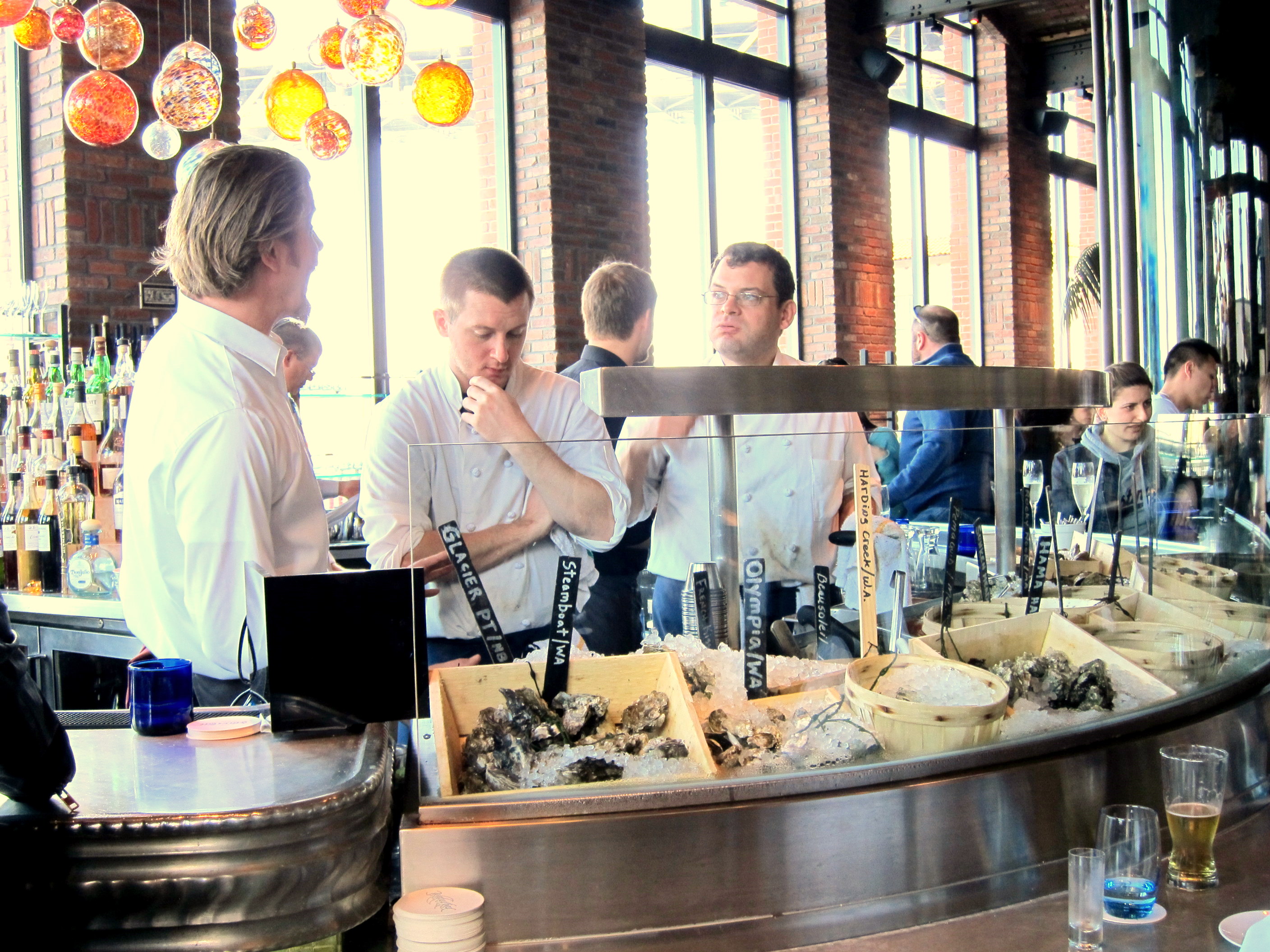
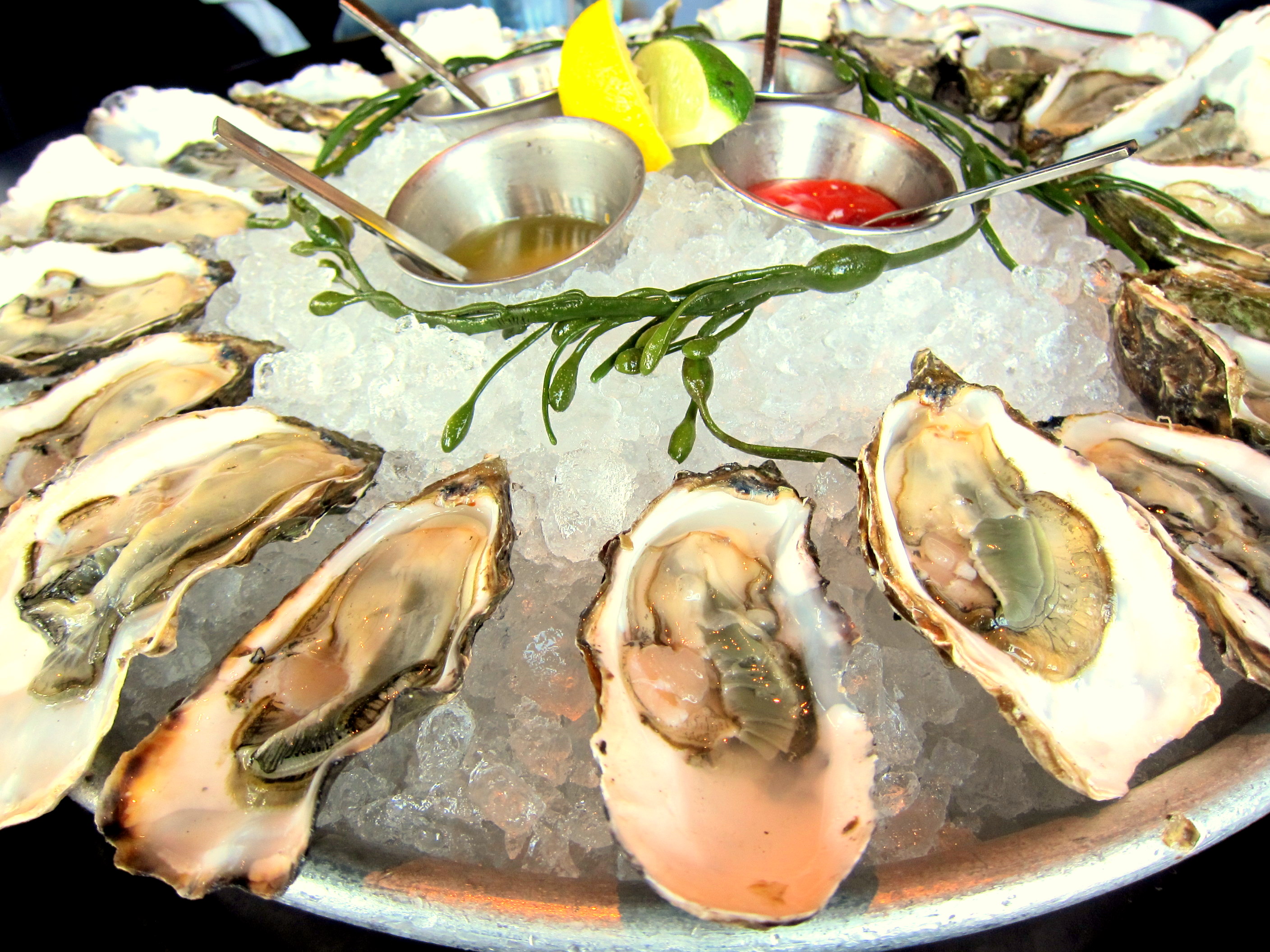
Going to the Waterbar on a nice-weathered Saturday afternoon is a silly idea: everybody and their twice-removed cousins are also hawking for the same precious seats around the bar to get the 1-dollar featured oysters. It’s crowded. Very crowded. It’s like parking in San Francisco. Mr. Global Eats recommended the place during the weekdays, I heeded not his advice and here we were, standing fidgetily, looking awkwardly at people eating oysters, hoping to stare them out of their seats. A couple finished their lunch date; we three hopped in before the server could even wipe the table clean.


Today’s featured victim was the Cove Miyagi, a California native with a “clean lettuce flavor”. The first time I was ever fooled by the juicy appearance of a raw bivalve (an oyster) to eat one, I had to gather every ounce of self control in me to swallow it down. The second time was a raw clam, and it wasn’t a whole lot better, but I knew what to expect. Today was actually the third time, and I had more than one oyster, so I’m proud of myself. Something about that brackish smell and taste melded with the cocktail sauce, the lemon, and the green onion is romantic.

That said, I almost died from the radish cream sauce. I was in the middle of chatting with the girls and the surprise attack brought me to tears. Such innocent whiteness, such strength punching the nose from the inside.


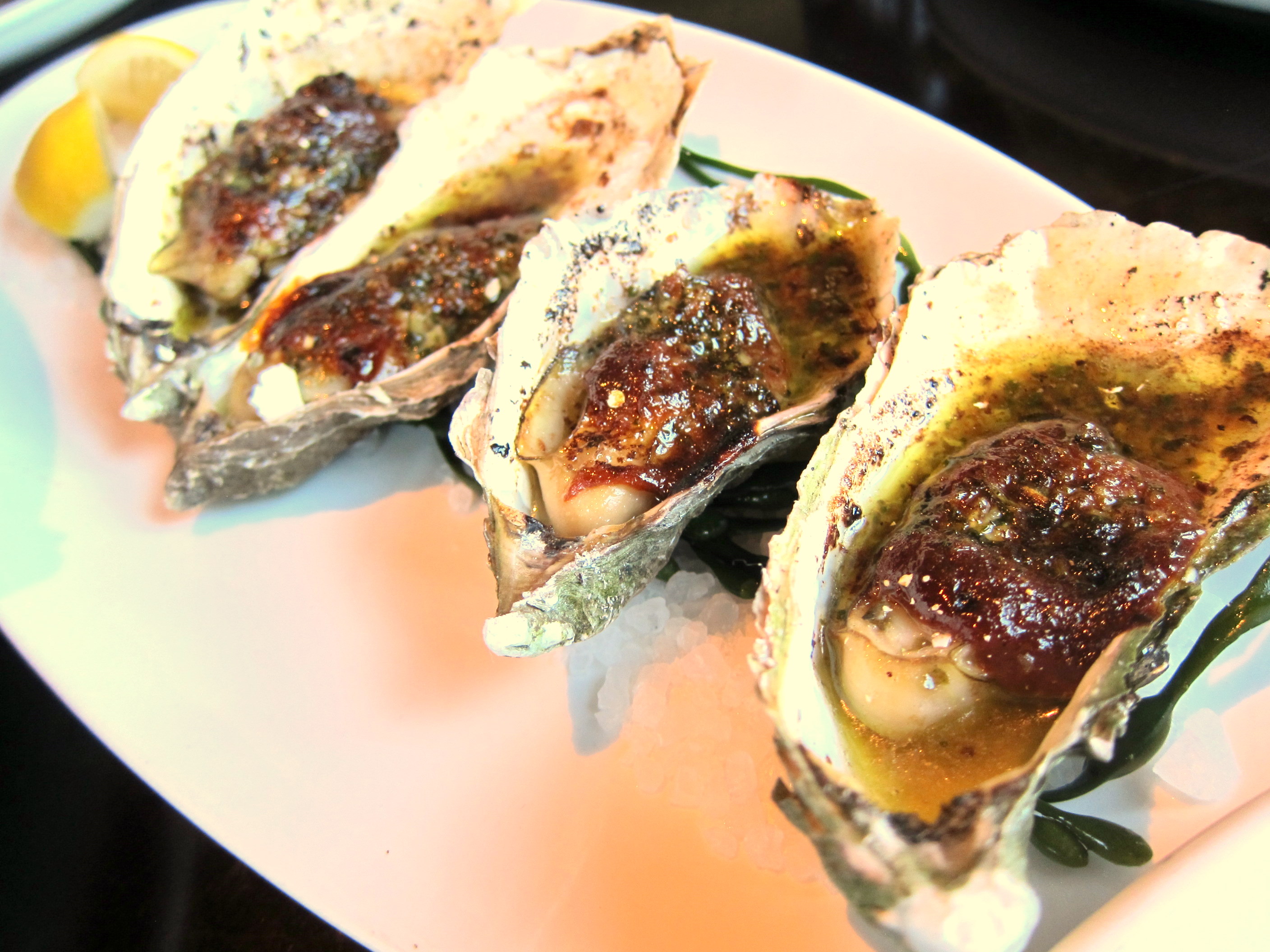
We also shared four BBQ baked oysters drowned in garlic parsley butter, on a bed of salt crystals. These were hands down delicious. They actually smelled good. Humans have indeed learned to use fire for a reason, and butter… But you know what was the best thing here, that we kept talking about even after we left the Bar? The potato chips. Oh man, they were so good that I had to stop by CVS on the way home to get a bag of BBQ Lays. And they were on the house.

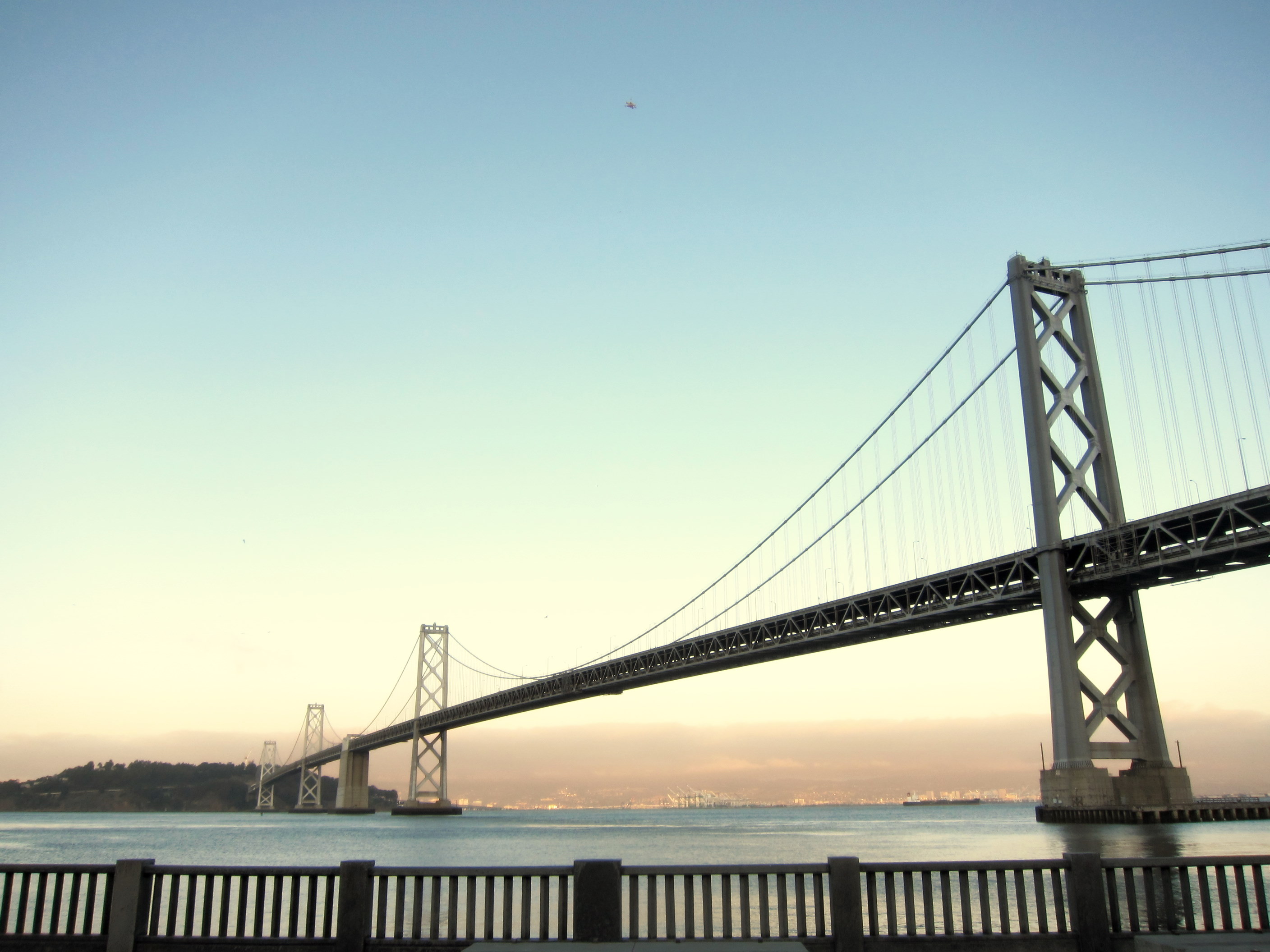
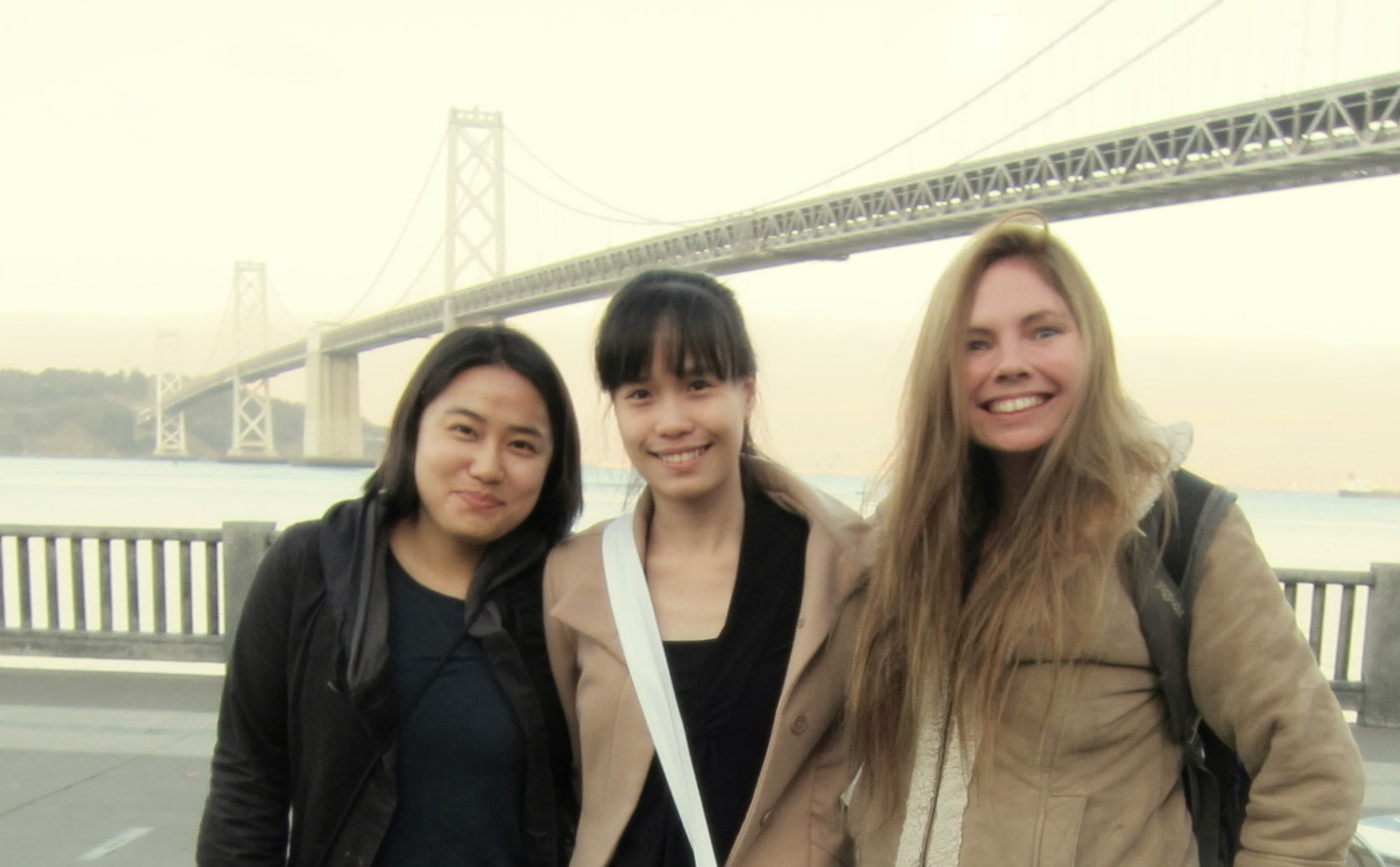
The verdict: the Waterbar hadn’t transformed me into an oyster zealot, but it did transform us into temporary tourists:


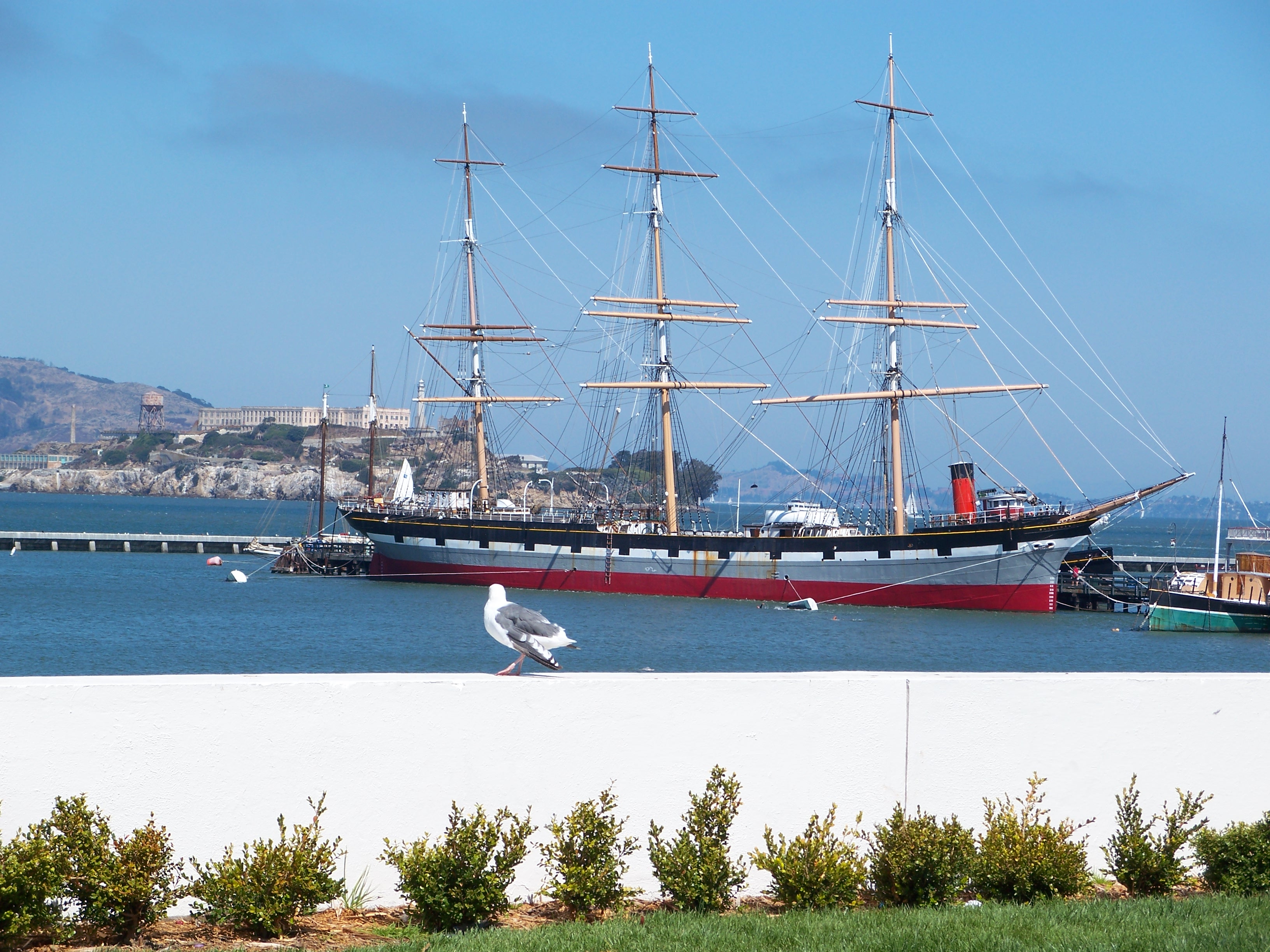
View(ed) from the patio.

Dinner for 3: $37.24
Address: Waterbar
399 The Embarcadero South (near Pier 26)
San Francisco, CA 94105
(415) 284-9922

Mifune’s uniqueness

November 03, 2011 By: Mai Truong Category: California - The Bay Area, Japanese


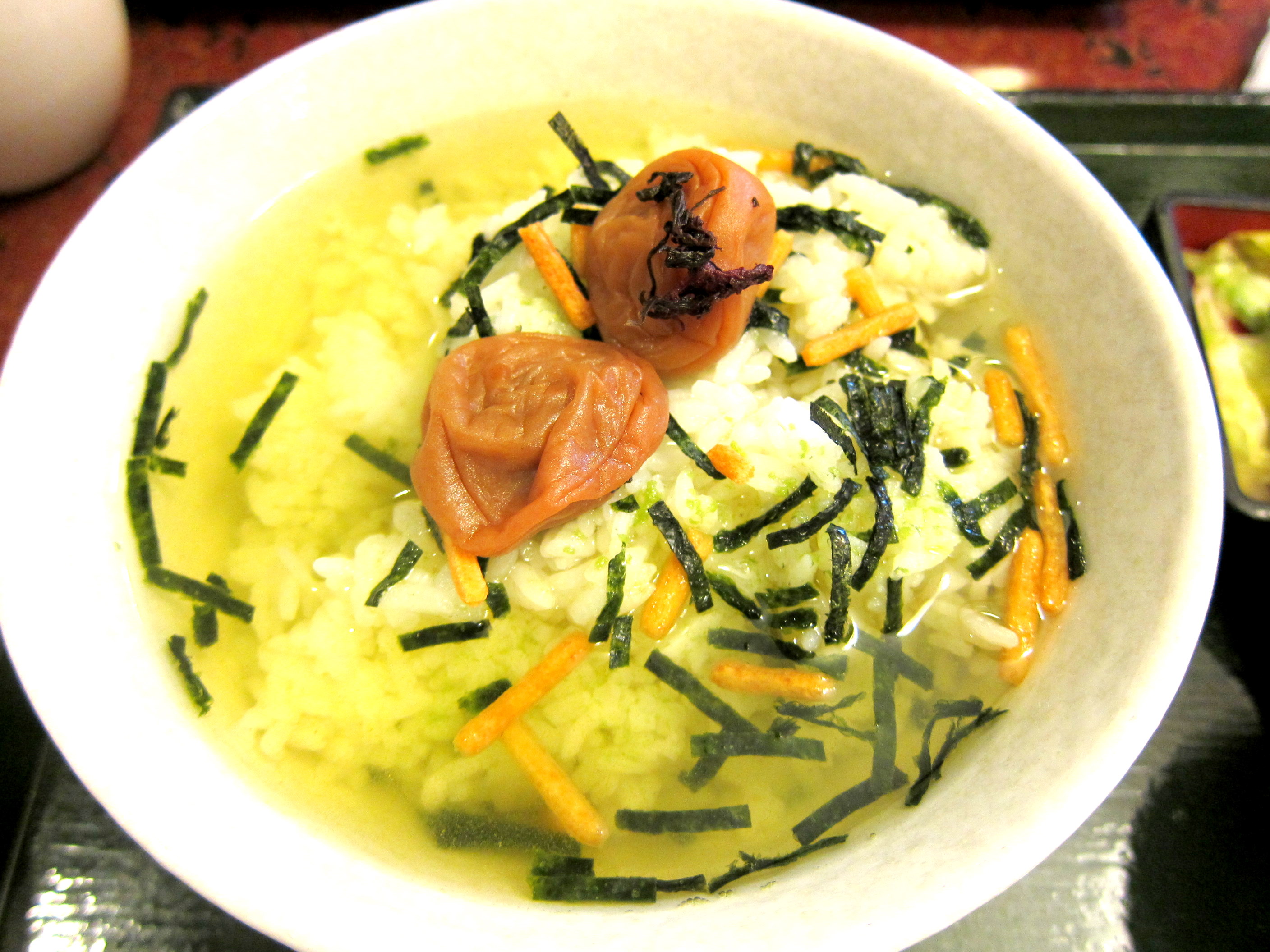
I’m trying to think of the reasons I keep confusing myself between Mifune (San Francisco) and Miyuki (North Berkeley) when I tell people about them. Admittedly they share some obvious similarities, as much as any Japanese restaurant would be similar to another Japanese restaurant. Miyuki is for donburi, and Mifune is for udon and soba. Not only that they’re totally unrelated, I also remember them for different reasons. But that in itself is another similarity: what makes me remember them is not the focus of their menus. When I think of Miyuki, I think of its eggroll and mango icecream dessert. When I think of Mifune, I think of its green tea rice.

Ochazuke (green tea rice) is not uncommon among Japanese and those who know Japanese food, but it’s uncommon in Japanese restaurants in America. In fact, I just now looked at every available menu in San Fran Japantown, and found no ochazuke. Mifune doesn’t have its menu online.

Like kimchi fried rice (and really, any kind of fried rice), ochazuke makes good use of leftover rice. Unlike fried rice, ochazuke is not fried. It’s soupy, with green tea being the soup. When you think about it, it’s not really that strange. A number of Vietnamese people, Little Mom for instance, like to pour the Vietnamese brothy soups (canh) into rice, the rice is thus flavored and not lumped together, making it easy and quick to eat. The Koreans have guk bap (국밥). I understand the principles, but personally, I don’t condone the practice. Rice is rice, soup is soup, and rice isn’t chewy like noodle to go with soups.

And this green tea does very little to flavor the rice. One could say the green tea is the cameraman, not the singer in this bowl, but simply put, it’s just outshone by the salty plum and the nori strips. That said, in hindsight, as much as I was bored by the tea-less taste of a watery rice, and as I’ve never had ochazuke anywhere else, it became a fond definition of Mifune, one that stays dormant for months and certainly has some influence on my next post.

Address: Mifune
1737 Post St.
San Francisco, CA 94115
(inside Japantown)

To Hyang – The flavors of earth

September 18, 2011 By: Mai Truong Category: California - The Bay Area, Comfort food, Korean


Recently, someone asked me how often I cook, I said not often at all, I spend most of my time at school trying either to speak some foreign language or to tell the computer to understand my version of its language. I cook maybe once a week, very simple stuff, like boiled bok choy. He then questioned the credibility of my taste. “Can you taste as well as someone who cooks a lot?” I believe so. I might not have the knowledge to make the dish or to fix its shortcomings, but fermenting the grapes doesn’t help an oenophile judge his wine. However, that got me thinking about what I would do if I had time to cook. I would like to work in a restaurant kitchen. It’s okay if I have to peel shrimps all day, I simply would like to look and learn from the inside. I’ve even picked out the place I want to work at: To Hyang.

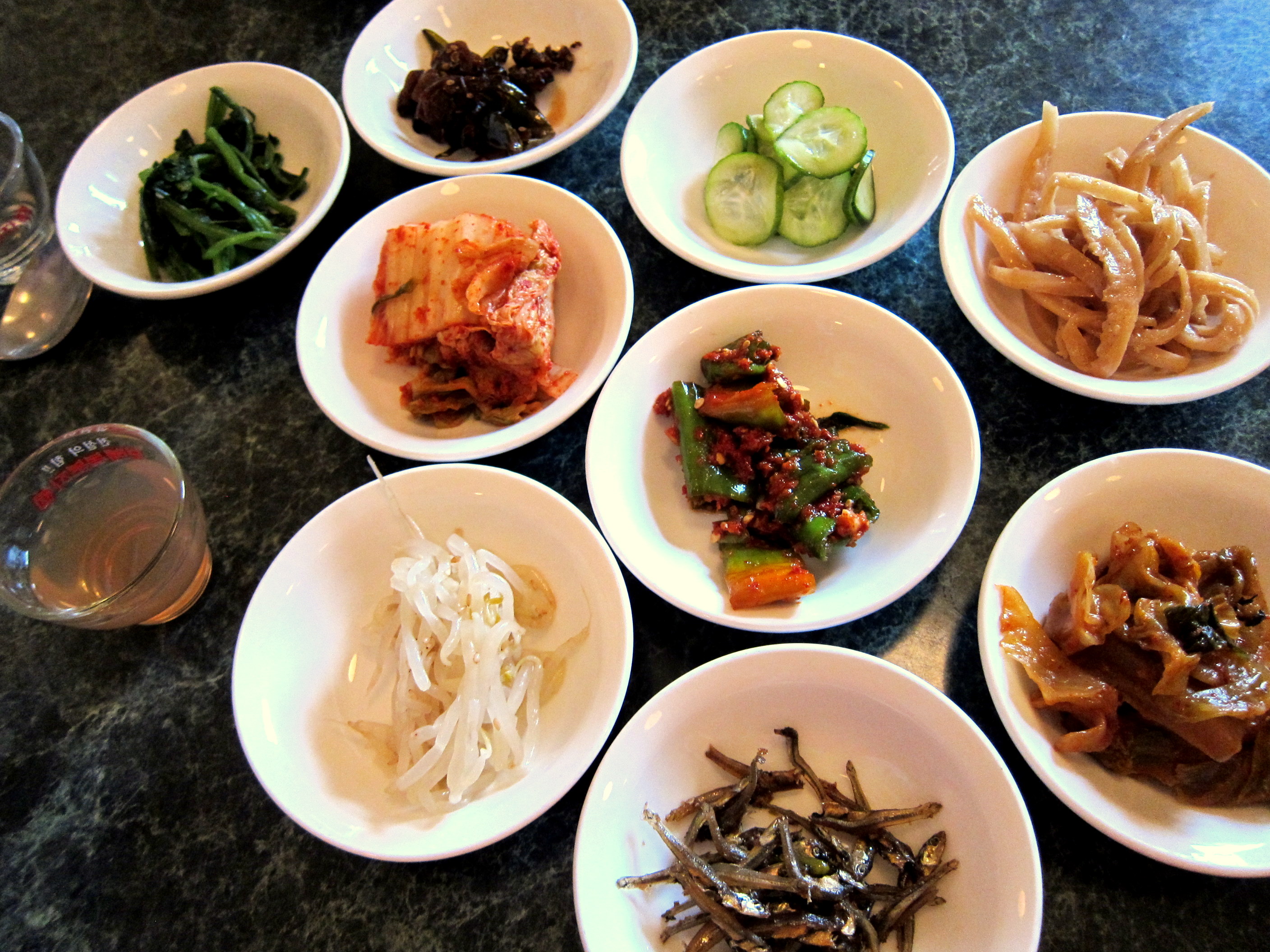
Because I’d like to learn how to make kimchi, soybean paste, pickled bellflower, fried dry anchovies, and maybe infused soju from a Korean lady. Of course there are recipes online, which I tend not to read because they are too precise. But I’ve just heard too many good things about To Hyang, including Chef Im’s selection of various aging sauces, pickles, and garden plants, that I want to infiltrate her kitchen.

To Hyang - Dinner begins, banchan and a cup of persimmon infused soju


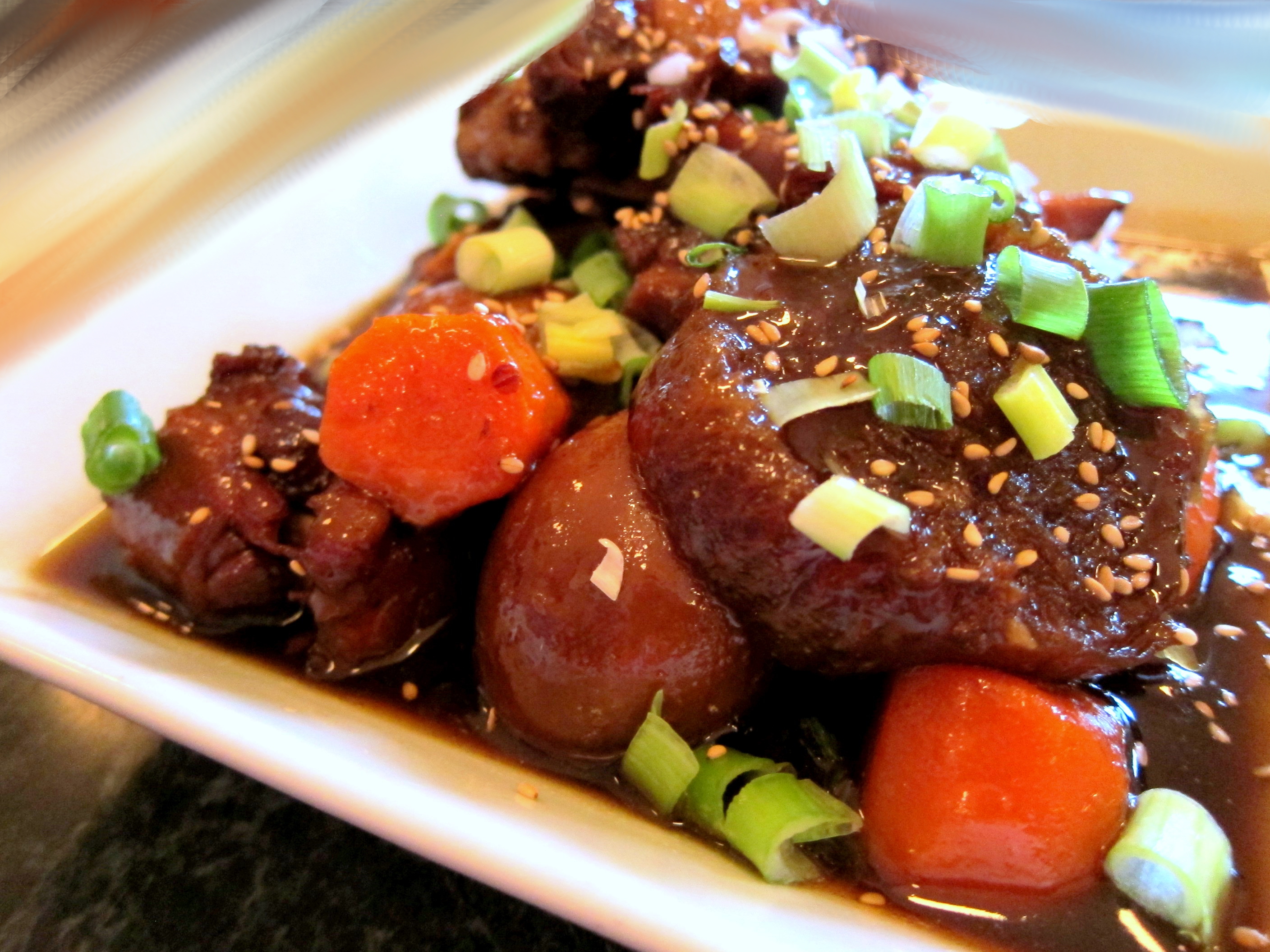
Not to mention her so gori chim (소 꼬리 찜, $18.99). Braised oxtail in a sweet, thick sauce with hard boiled eggs. Magnificent hard boiled eggs. The egg white got just the right springiness after the braise. The yolk wakes up memories of my mom’s thit kho trung for the Lunar New Year feasts. Though no doubt loved by everyone, this simple combination is not served often enough in restaurants, and when it is served, the portion is not enough for the whole table, especially a table with me. I can never have enough eggs simmered in a braised meat sauce.


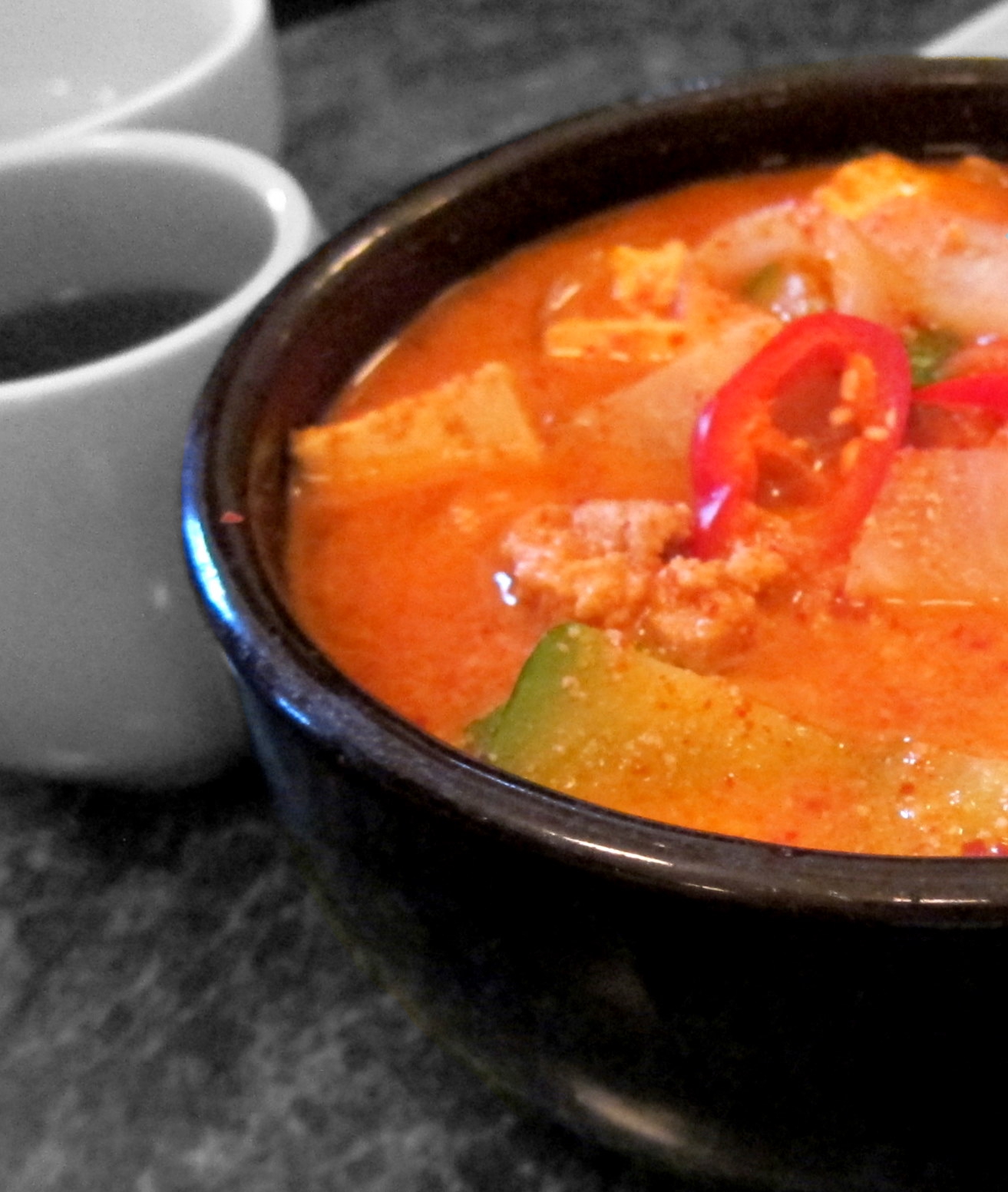
The rest of To Hyang’s fixed menu is fairly standard of a Korean establishment, with kimchi jeon, soondubu, and bibim nangmyeon among others. A few recommendations from Chef Im’s daughter are the hand pulled noodle soup kalguksu, which we did not get, and the pork belly kimchi salad samgyeopsal muchim (삼겹살 무침, $15.99), which we did get.


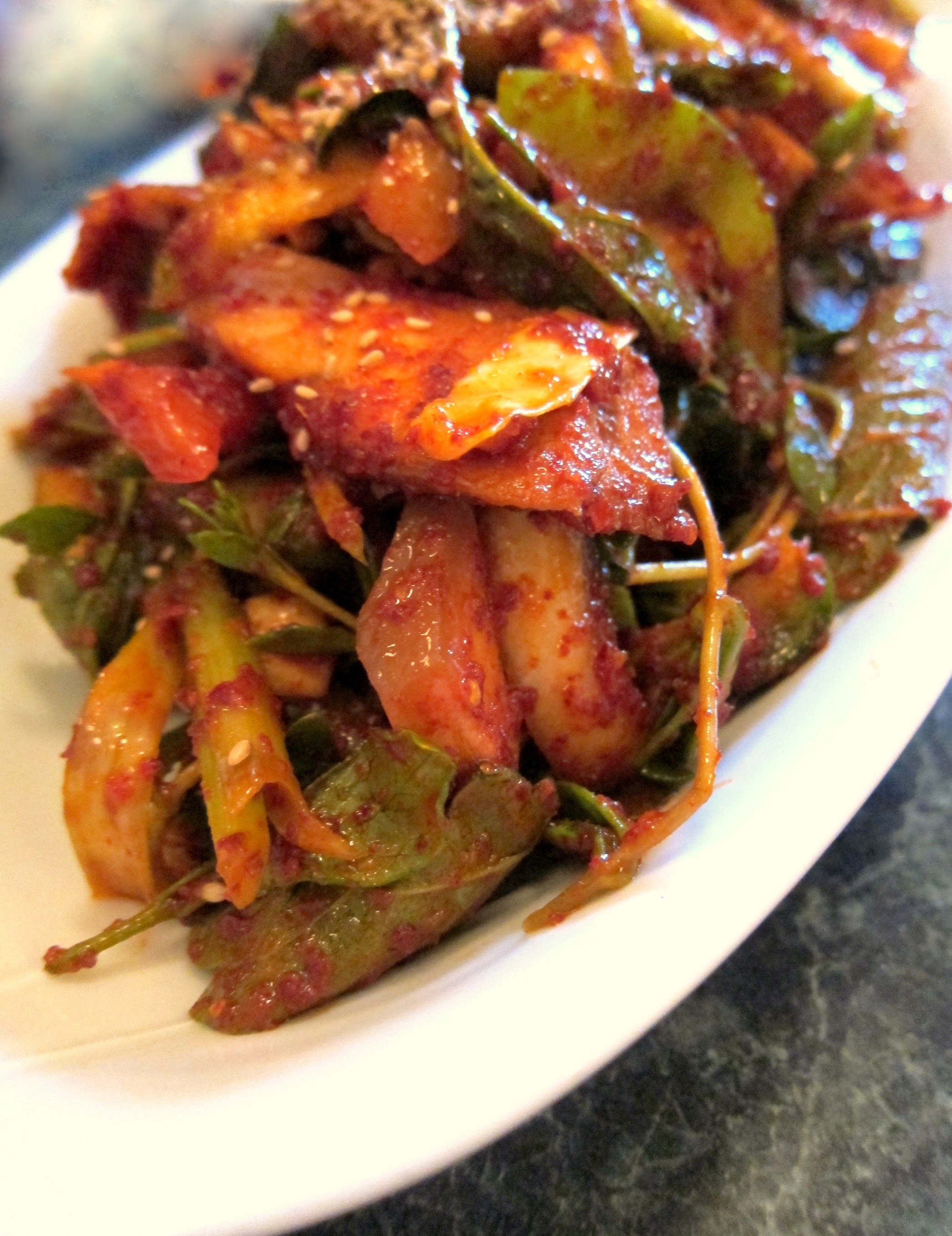
It looks like a fiery truck load of paprika accidentally got dumped onto the plate, but it’s served cold, the pork belly is succulent as always, and the heat dissipates as quickly as it hits. It’s refreshing like mint ice cream.

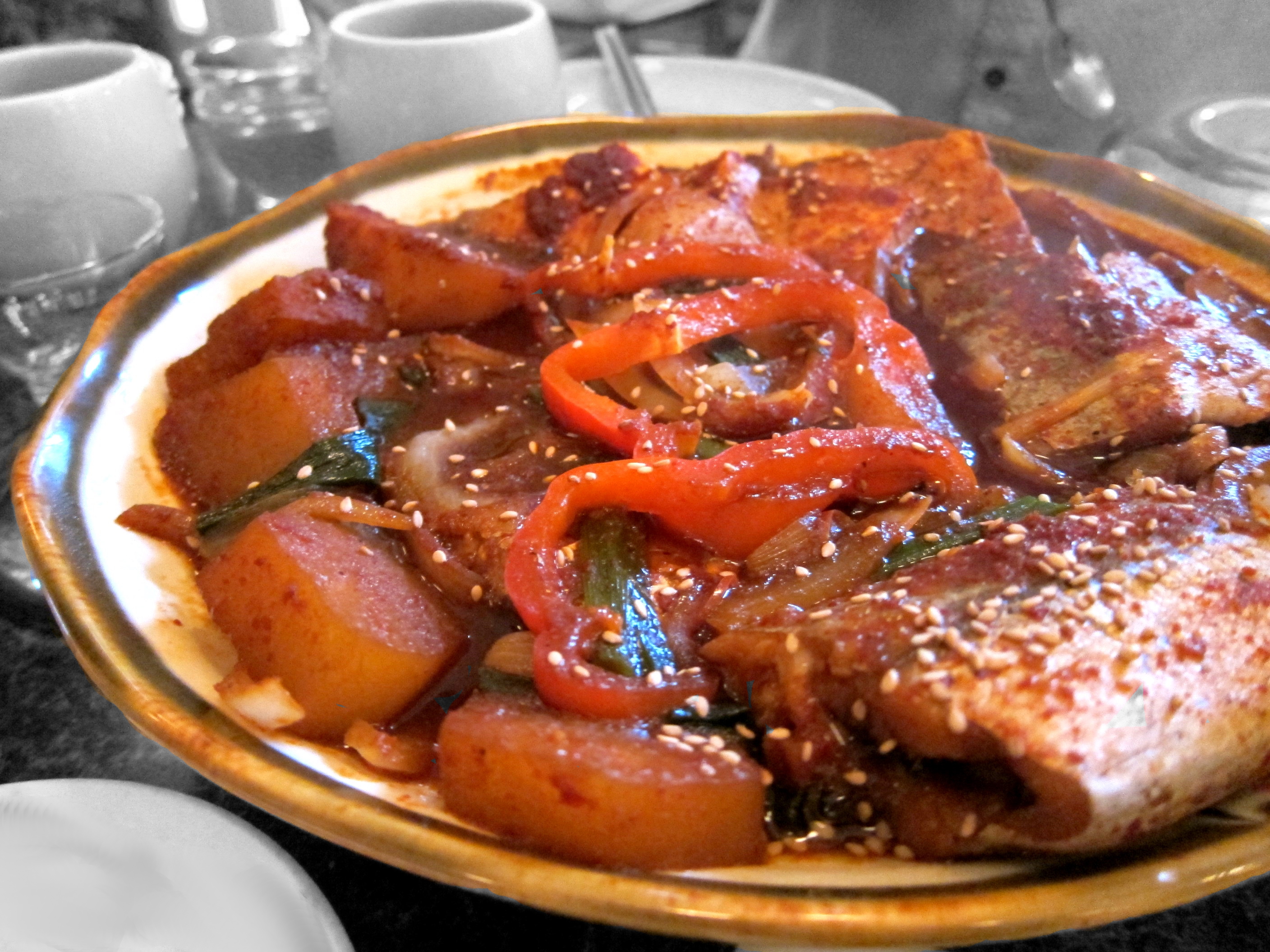
On the left wall hangs a white board, hand scribbled, of the special du jour, the soju cocktails, and a list of house infused sojus ($15 each bottle). For the processed meat lovers (me), there’s budae jjigae (부대찌개), hot dogs and spam in a gochujang and kimchi soup. For the fish egg lovers (me), there’s al jjigae (알 찌게), a hefty lot of pollock roe in a mildly spiced stock with tofu ($15.99). For the fish lovers (not quite me), there’s kalchi jorim (갈치 조림), meaty beltfish and potato simmered in ganjang, garnished with bellpepper and white sesame ($15.99). With bones. So make sure to try this in the presence of an Asian if using chopsticks to pull off the flesh without disrupting the 200-bone fish skeleton is not your forte. I’m a useless exception of my race though, I still get bones dig in my throat even now.


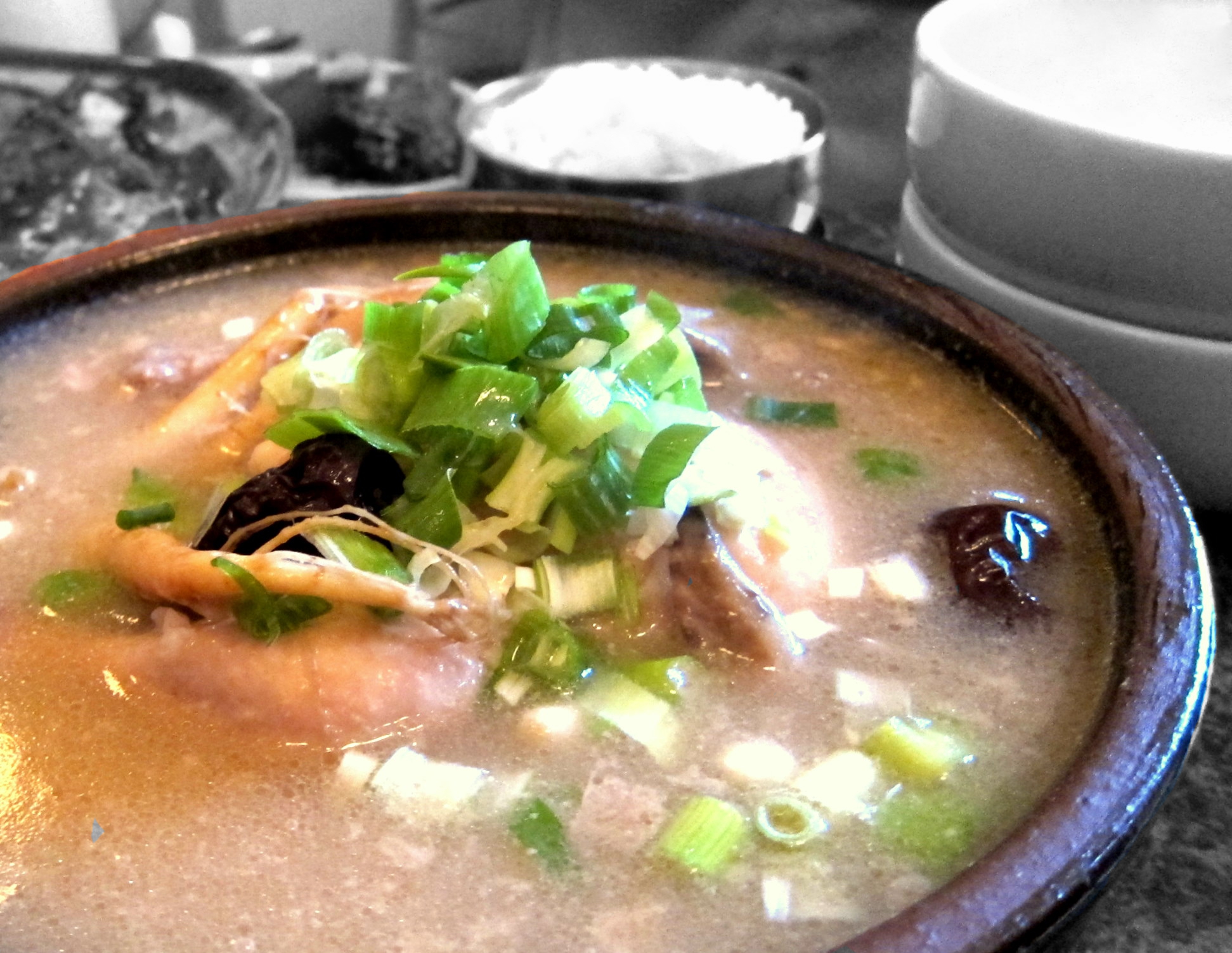
So I prefer to go with the big bones, like chicken. At To Hyang, I first learned the proper (Korean) way to eat the chicken in the samgyetang (삼계탕, $22.99): put salt and pepper onto a plate (or any available surface), and dip a piece of chicken into it.


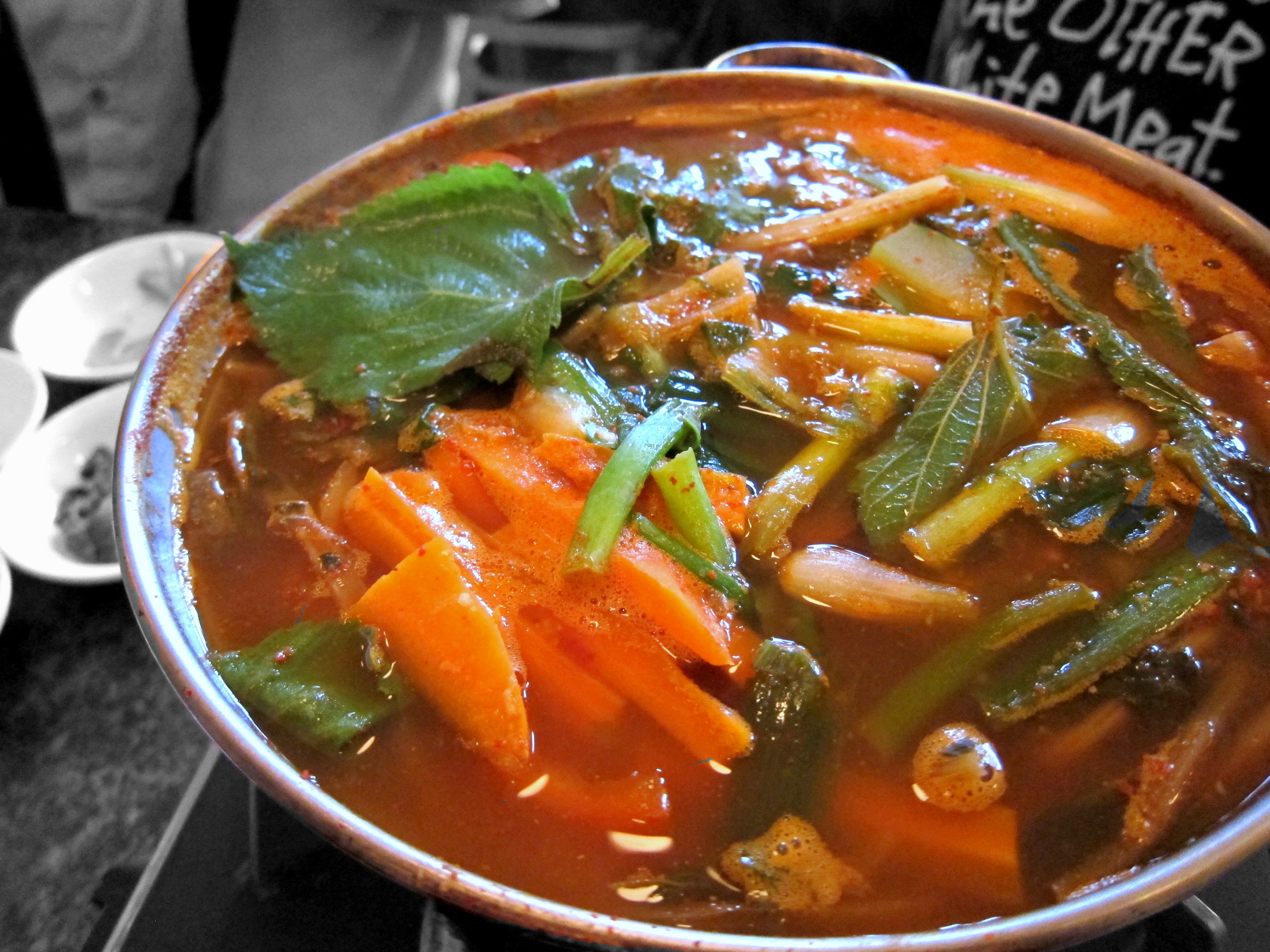
Although my dining company was more impressed with the spicy bubbling kamjatang (감자탕, pork rib stew with potato and greens, $13.99), and although the lack of the sam (ginseng) flavor in the samgyetang did leave me a bit unsatisfied, in hindsight that porridge-like soup, plain and fatty, is a perfect soothing finish to recover the tastebuds, which were numbed from too much chili powder. It also reflects just the character of To Hyang itself. In today’s tumultuous gastrosphere where everything is mixed with everything else and everyone is making a big deal about this or that food movement, this little Inner Richmond restaurant keeps a modest profile, no website, no long line in front (yet), a recent picture of our lady with Anthony Bourdain on the wall. Chef Im keeps her kitchen in order by herself, making food for the patrons the same way she’s made for her daughters, and preserving the “to hyang” (토향), the earthy flavors.

Address: To Hyang (토향)
3815 Geary St
San Francisco, CA 94118
(415) 668-8186
(Now only opened for dinner)

House of Prime Ribs is the solution…

September 13, 2011 By: Mai Truong Category: American, California - The Bay Area, Comfort food

… to my skinniness.

If there’s a place I should frequent to quickly improve my willow look and strengthen my Texas tie, it’d be the House of Prime Ribs on Van Ness Avenue. I might have lived in the Bay for too long and hung out with too many vegetarian, environmentally conscious, ethical-eater friends that sometimes the thought crosses my mind; except I always feel extremely hungry on my vegan days so I don’t think I can give up cookies and ice cream. Thankfully, I also have a number of fleischliebend friends who keep me from straying by putting me face to face with a slab of tender, juicy red meat. All ethical thoughts begone, I helplessly grabbed the knife and fork.

I actually got a gasp, a deep sigh and a disapproving look from my company when I asked that my prime rib be medium. The men asked for “as raw as possible” because they wanted to “taste the meat”. Men… I could taste my medium meat just fine.

The second difference between their dinner and mine is the size. There are four sizes (and a kid size with milk and ice cream, which kinda sounds attractive to me :-P); I got the smallest size, of course. They got the second largest and the largest (the King Cut), which qualify for an extra slice of meat if they so desire after finishing the first cut. The King Cut is 27 ounces, with a bone, wider than my spread hand and roughly one inch thick.

The third difference is the condiment. They smothered their rare prime ribs with horseradish cream sauce, making a dreamy cleansing beef sashimi; I eat my meat pure in its own juice.

The last difference is the accompanying drink. They paired their meal with a red Zinfandel, I paired mine with water. (Who can taste the meat now. :-P)

But that’s about it. There is not much room to wiggle in your order. There’s a choice between creamed spinach and creamed corn, which was added when there was the salmonella scare among the spinaches, but everyone recommended the creamed spinach anyway. Then there’s a choice between baked and mashed potato, and as long as one of us got the baked potato, we got to watch the waiter mix and dump a dollop of sour cream onto the potato in just the amount of time that he says “first we fluff, then we stuff”. I like that I don’t have to think much when I come here, simply set the carnivore loose and enjoy.

But in all honesty the meat isn’t the best part of the meal, it’s the salad with the house celery salt dressing and the vegan breadstick that come before the meat. Besides, I was sufficiently full after the salad.

At the end of the King Cut, Mike skipped the bone (which I think is the best part) and gently downed another slice of beef. I admire the American appetite.

We did do dessert, and if you must ask, the strawberry in the strawberry shortcake was better than the shortcake, which, being a few hairs too dense, was one of two slight disappointments for me at the House. The other is the 45 minutes spent at the bar despite having a reservation. Either the House likes efficiency and semi overbooks, or they’re being considerate enough to give us a wait in preparation for the gargantuan meal. In return, I got to watch the barmaid and reassured myself that I can never be one. 🙂

Address: House of Prime Rib (open for dinner only)
1906 Van Ness Ave.
San Francisco, CA
(415) 885-4605

Namu and Authenticity

September 04, 2011 By: Mai Truong Category: California - The Bay Area, Korean, Opinions, Won't go out of my way to revisit


My Lucky Peach finally made it home. It took only one month from the time I placed the order, and just when school started and me getting buried beneath ten miles of homework. But I’ve taken a peek every now and then at its colorful albeit tiny pictures of ramen (this first issue is all about ramen) and gorged in the fourth article while waiting for the bus. This is the bad thing about food magazines (or anything serial and food related, except cookbooks): it’s so easy to read it’s addictive, I can’t even fall asleep reading it, then I get sleep deprived. So I never buy them. But Lucky Peach is different: it’s recommended by a friend, subsequently ordered by two other friends, all of whom have highly experienced and respectable tastes; what I can do? I haven’t finished the entire thing, but the fourth article is a good one. Good enough to console myself for surrendering to peer pressure. In hindsight, it’s one of the highlights of the lunch we shared at Namu. (Not that the magazine is in any way related to Namu, Rob just showed it to us while we were eating at Namu.)

The other two highlights were some kind of pickled onion and the gochujang (고추장) for the bibimbap. The pickled onion, the best of the four kimchi/pickle varieties, tasted crisp, thorough, and to the point; the gochujang was nutty with a light fruity hint. Namu also had the presentation going for it: from the sparsely spaced tables tucked along the walls to the petite tea cups and blue-and-white serving bowls, the whole place uttered cuteness. The main courses, however, sparked more discussion than compliments among us four, mainly surrounding authenticity.

Of course, Namu is not about “authentic”. It is Chef Dennis Lee’s “cutting edge new California” interpretation with a Korean influence, evident by the appearance of english muffins and tortilla alongside kimchi relish. Depending on your definition of authenticity, authentic Korean food may be hard to come by 8000 miles from Korea, but the authentics can evolve (as they have always been), and I’m all for fusing ingredients to spread the scope of an ethnic cuisine. In fact, I wish Namu had fused more ingredients together. It’s not the english muffin, the tortilla or the chorizo that made me skeptical looking at the menu, it’s the lonely and repetitive incorporation of kimchi in almost every single dish.

There is a whole lot more to Korean food than kimchi, and baechu kimchi at that. Simply adding the fermented cabbage on a hamburger bun or laying it next to the steak doesn’t give the dish any more Korean background than adding sausage making it German. Namu would be more accurately described as “cutting edge new California with kimchi”.


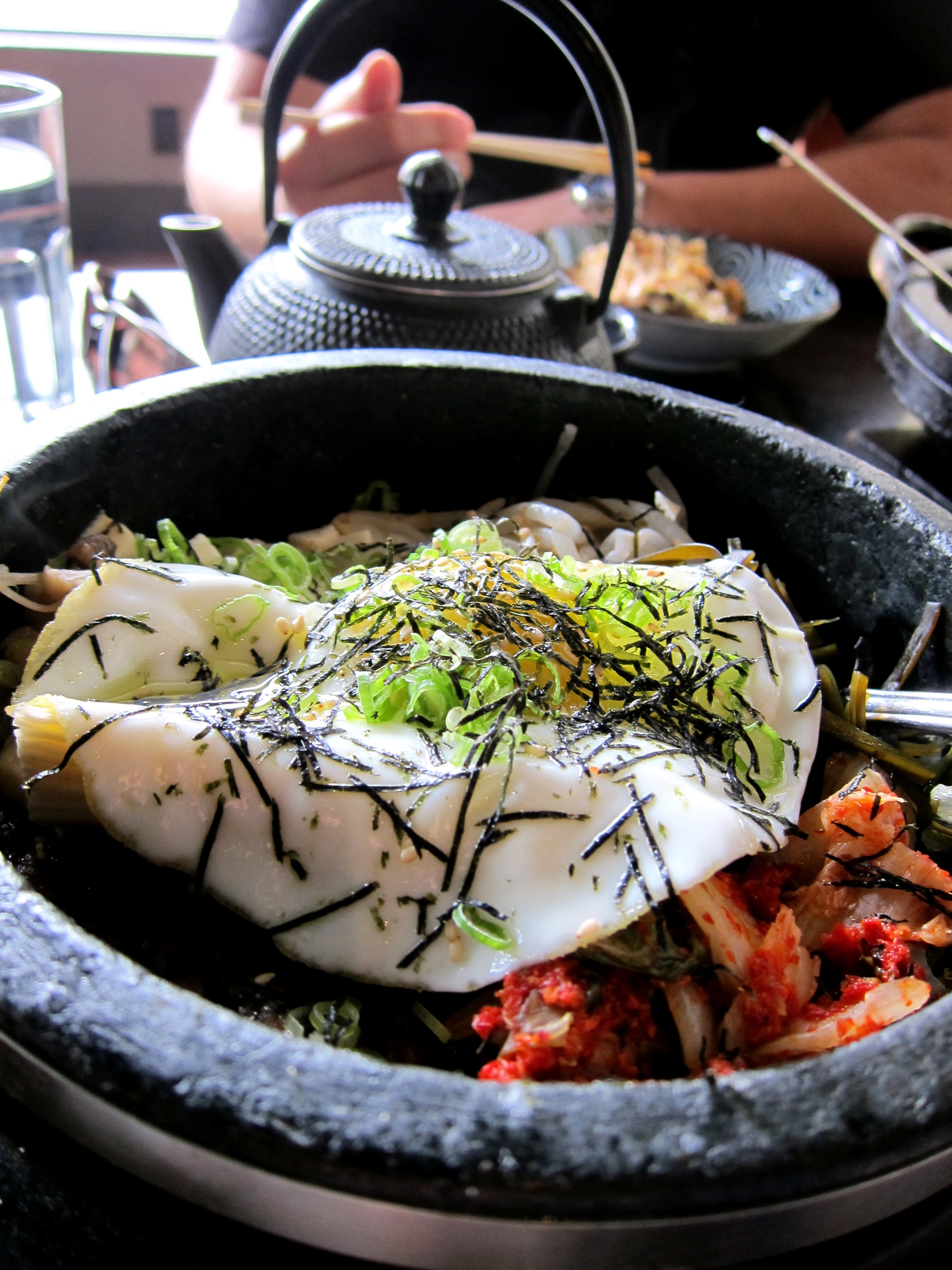
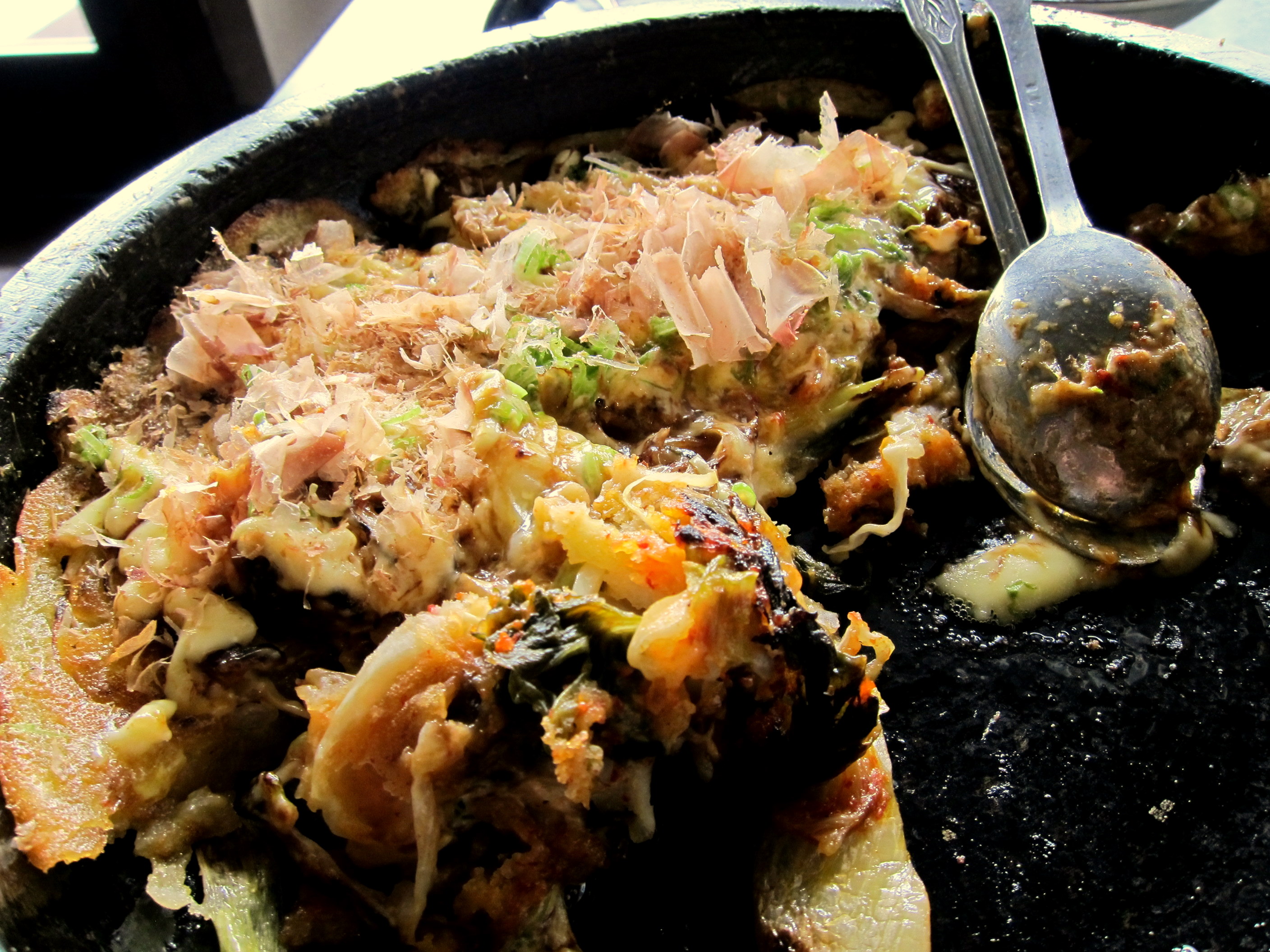
The other unsettling point for me was the available choices. We went as Korean as we could, which was easy because there were only two Korean dishes on the menu, and got kimchi fried rice, dolsot bibimbap and two sizzling okonomiyaki, not because it sounded the most interesting but because Japan is right next to Korea. Now, bibimbap, although loved by many non-Koreans and as representative of Korean menus in America as McDonalds representative of America outside America, seems a bit lackluster as a “restaurant” item. It’s not wild enough to be “California”, and it’s not complicated enough to be “Korean”. Not to mention that our hostess mixed the rice so much for so long that there was barely any time left for the rice crust to form, or perhaps the dolsot wasn’t hot enough. The kimchi fried rice didn’t convince me. The okonomiyaki, made Korean by the kimchi touch, erred on the salty side but was arguably the best piece of the three.

Would we have had more excitement had we tossed the Korean concept and gotten the loco moco or the egg sandwich? But without the Korean concept, what makes the Namu brunch different from the other hundreds one could get in the Inner Richmond? I’m not sure.

Sweet and spicy Zante’s Indian pizza

March 21, 2011 By: Mai Truong Category: California - The Bay Area, Comfort food


I can eat rice for every meal every day without getting tired of it (with perhaps an occasional craving for noodle soups or a burger). Why? Because rice is a solid starch base upon which you can mount anything and they’d go together just like that. Meats, seafood, vegetables, fruits, other starchy stuff. The closest thing to rice that wheat can do is the pizza. I wouldn’t eat pizza everyday because it always makes me cry for water like a beached whale. But everything goes on pizzas, too. Even curry. Spot on, Zante.


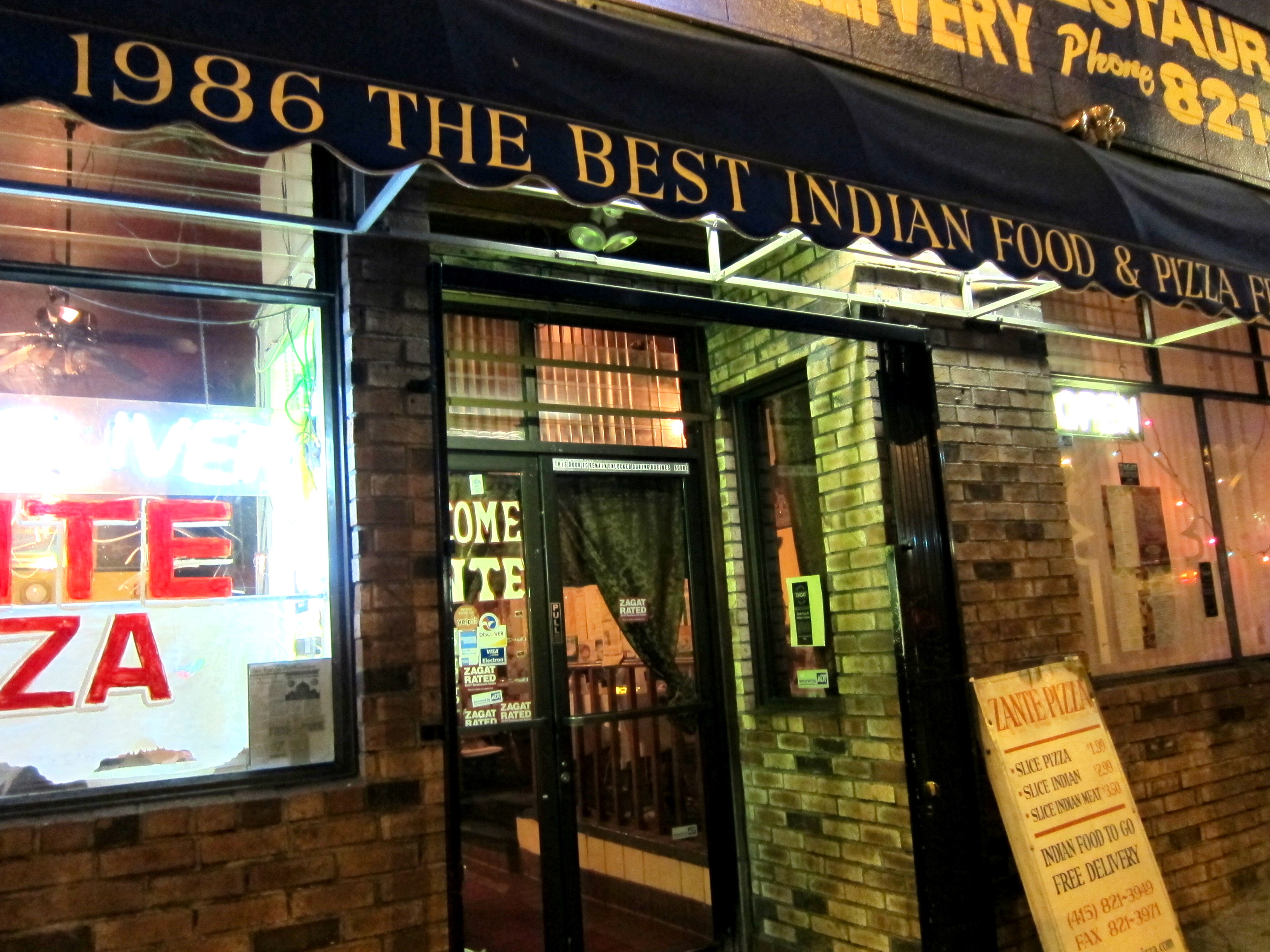
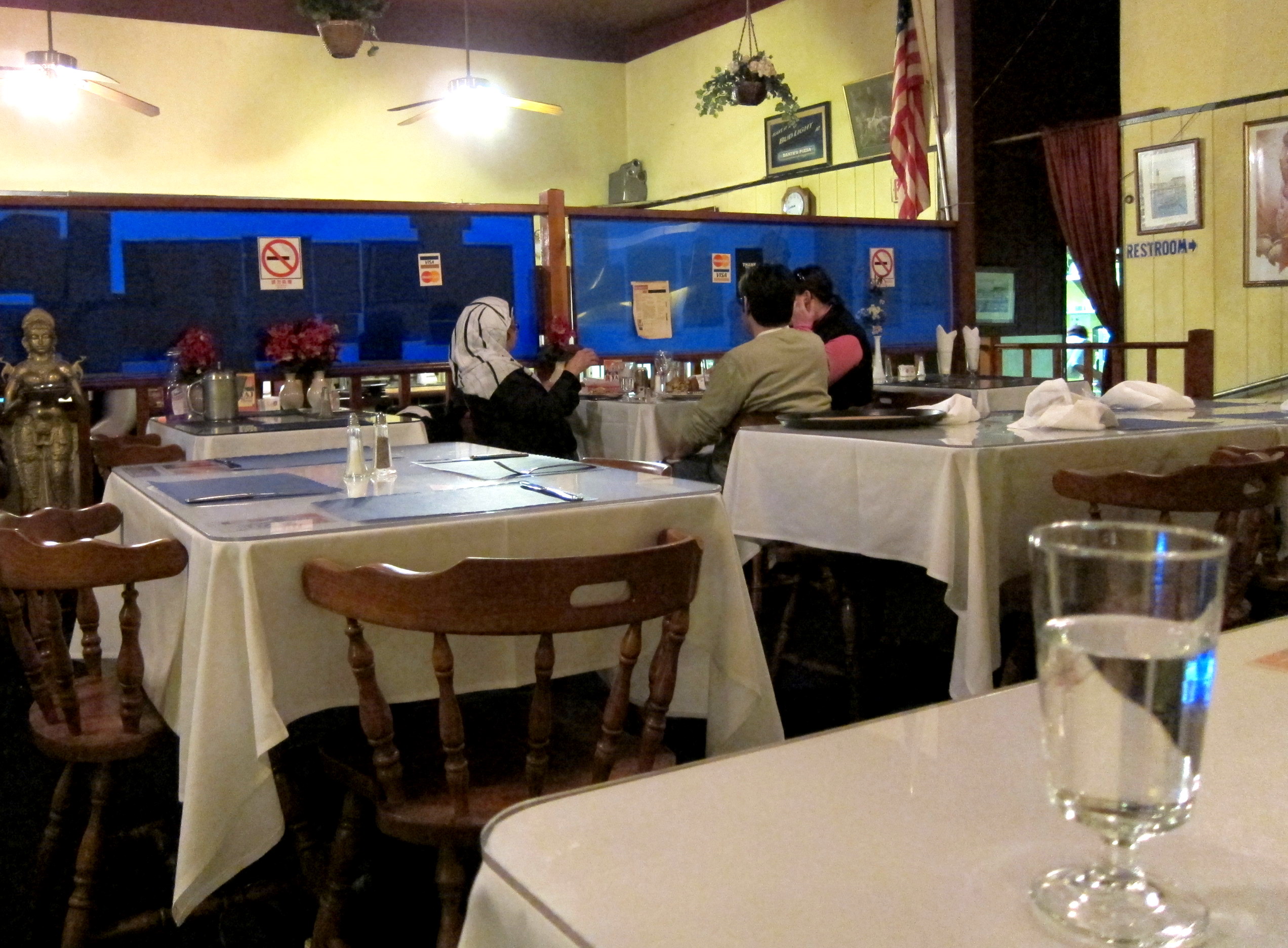
I don’t know how Mudpie knew of this cozy kitchen on Mission Street, but we went there right after I got off the plane from Puerto Vallarta. The combination of “Indian” and “pizza” sounds like comfort on a drizzling January night. Besides, I have a thing for old brick buildings, and the number 86.


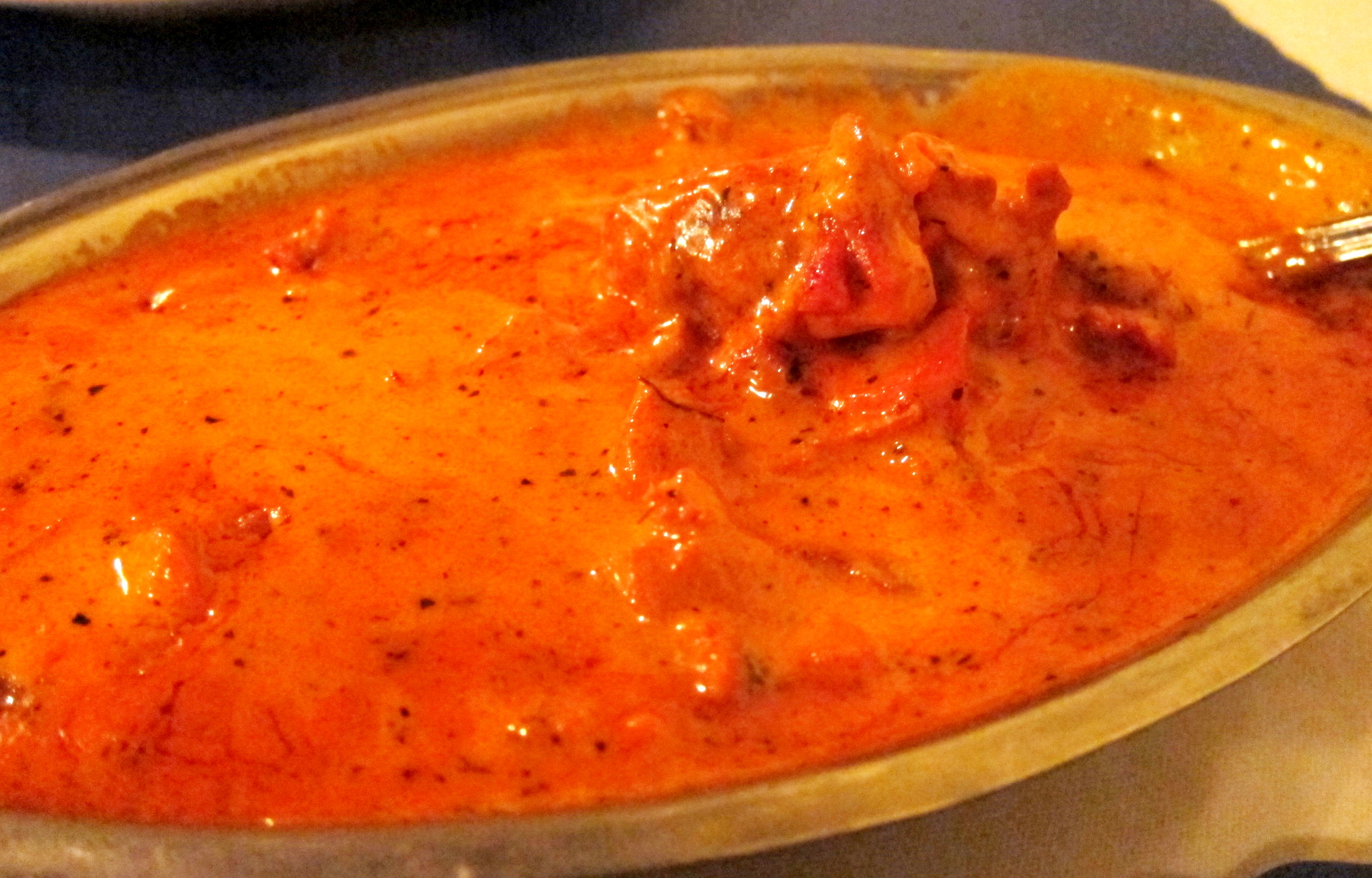
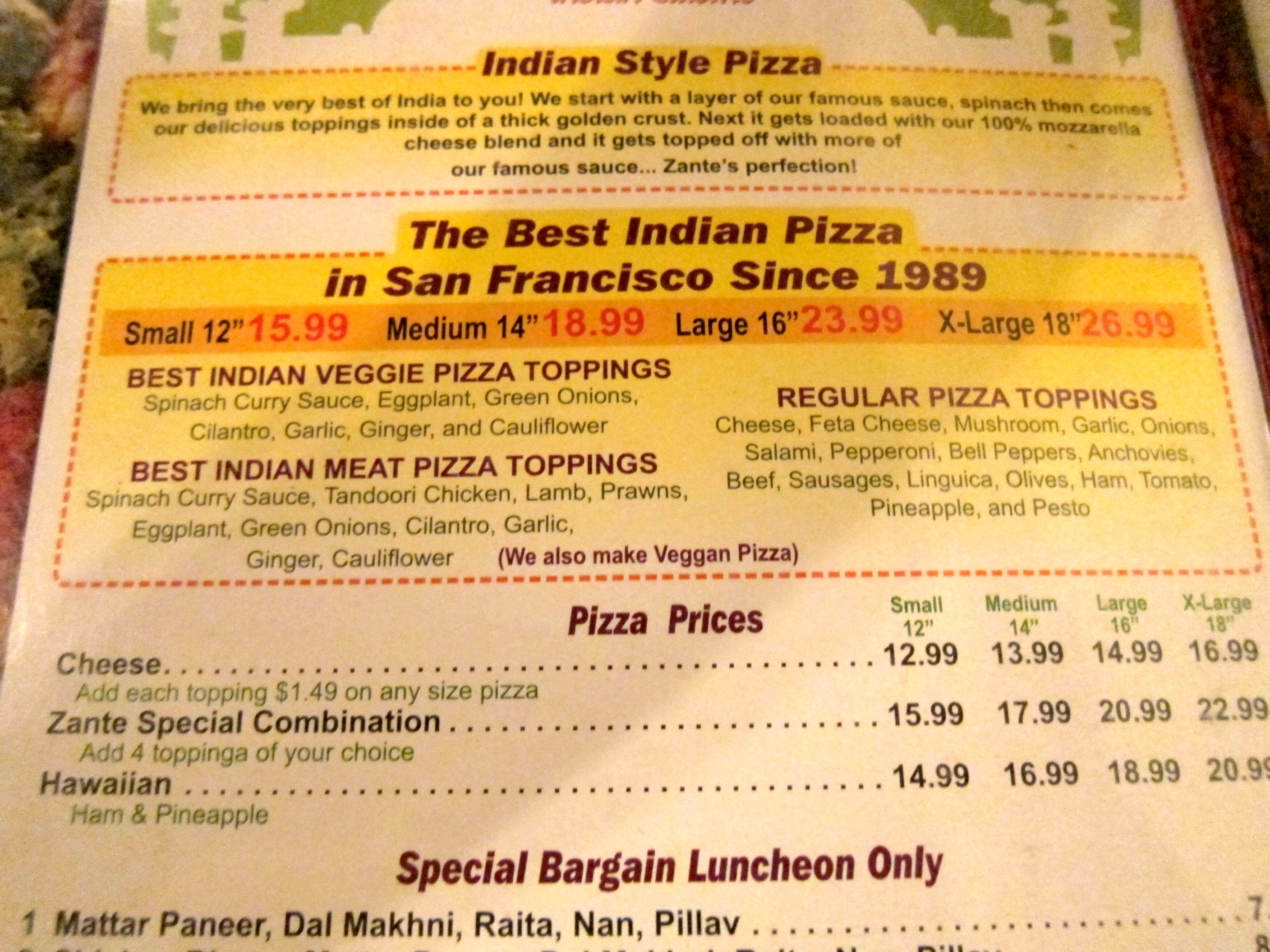
Though the printed menu is much easier to flip and read than the online menu, we still took a while looking for something new and appealing from the maze of flat breads and meaty dishes (and vegetarian dishes, but I won’t go there), mainly because we were looking for non-spicy food. The kabulinan (roti with raisins and nuts) was a sure bet, sweet, chewy, crusty at the edge, and filled with coconut shreds in and out. The chicken makanwala, though good, didn’t deliver much news. I couldn’t sense any difference between this thick orange sauce and the chicken tikka masala‘s thick orange sauce at Biryani House.


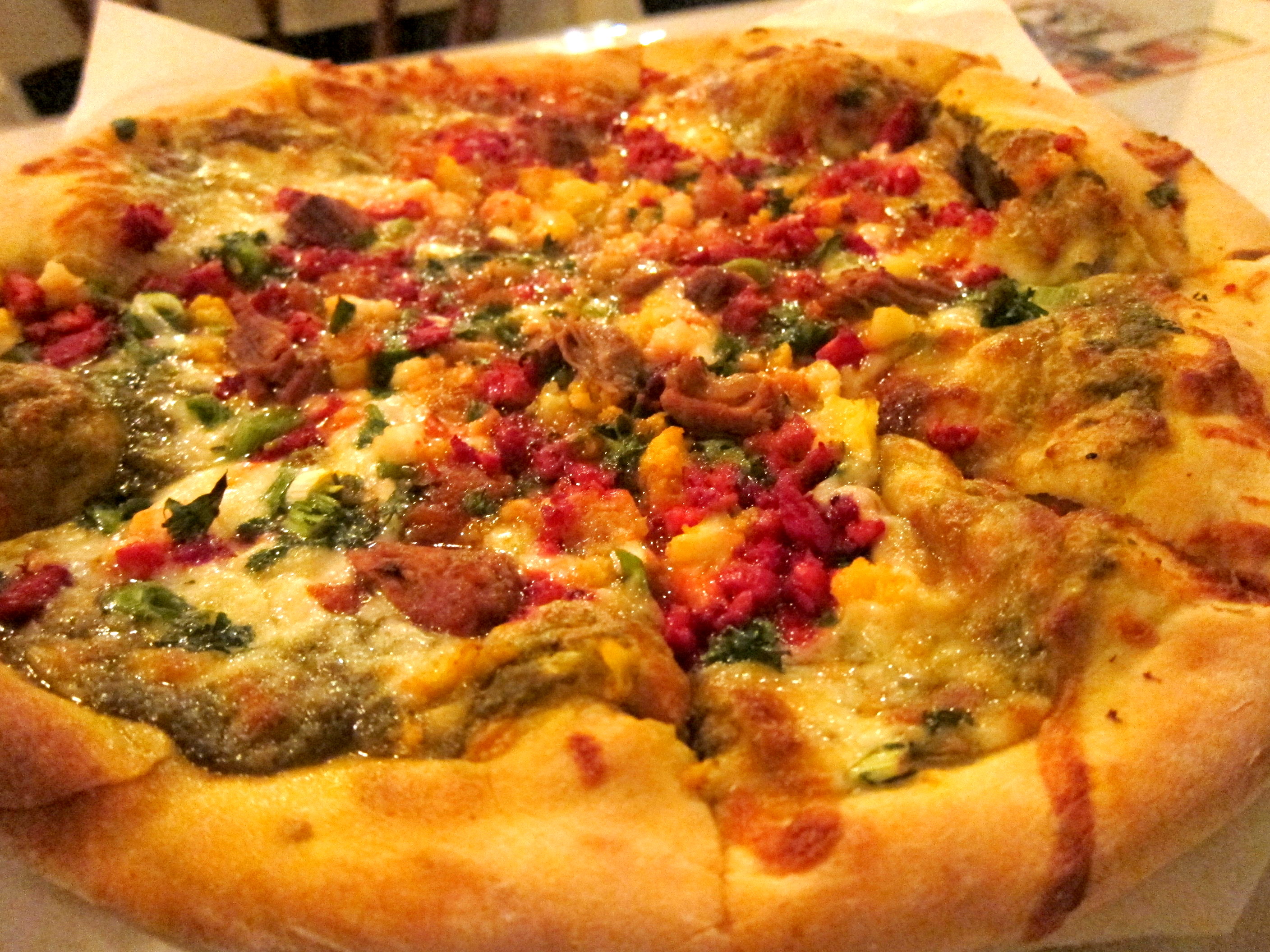
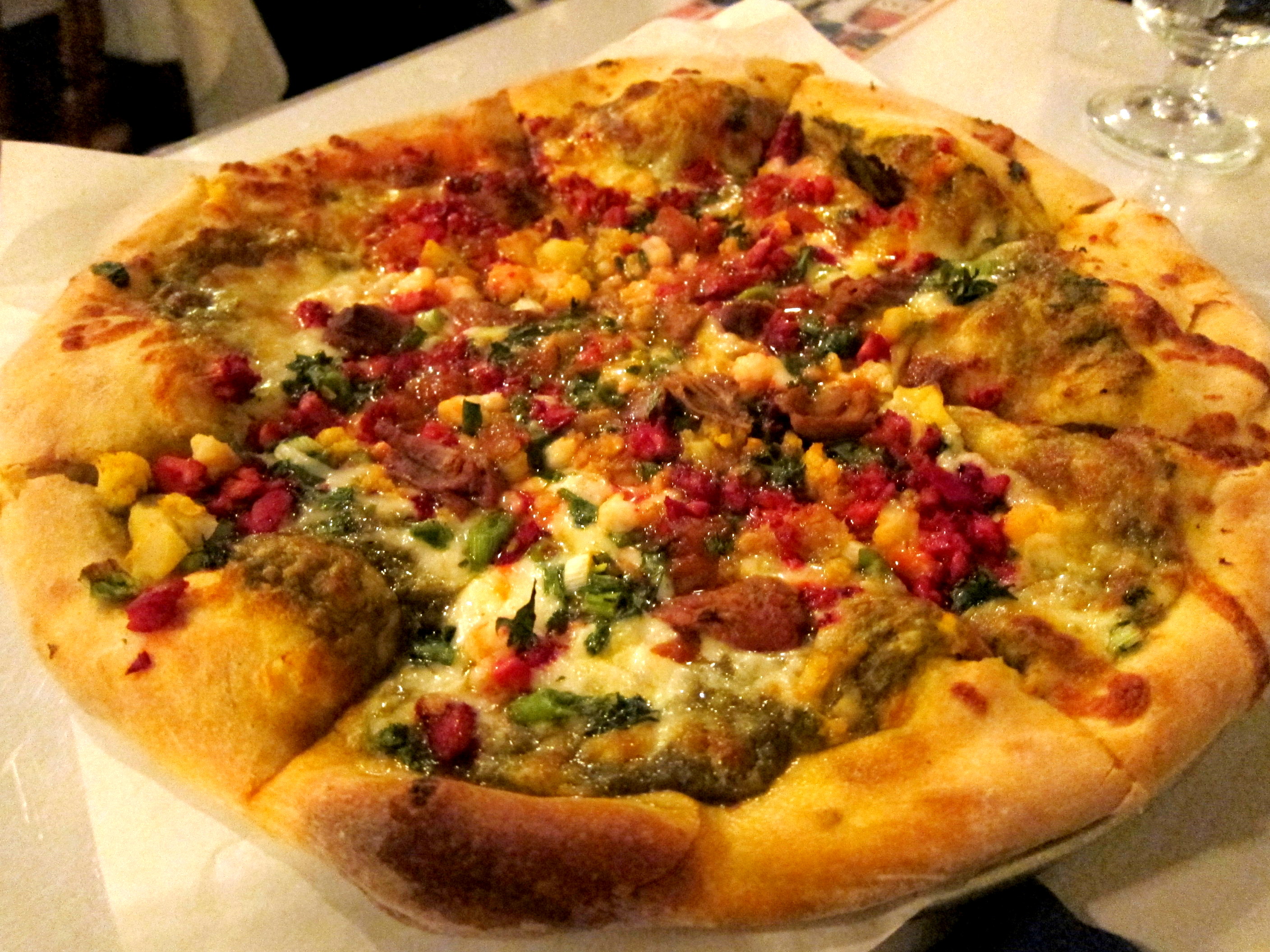
We also got the special pie of course. Tandoori chicken and cilantro make up a mosaic of red and green dots; though the prawns are included in the menu listing, I can’t see any curled up in the pictures here. Well who really sits down and checks every ingredient on a slice anyway. Point is, spinach curry sauce finds its rightful place on a bed of baked dough, and the Indian pizza at Zante is at least as good as any artistic assortment from the Cheese Board that Berkeleyans always chirp about. If you ask me, I think Zante‘s are better, cuz they got meat and no hype.


Address: Zante Pizza
3489 Mission Street
San Francisco, CA 94110-5438
(415) 821-3949

Money matter: $32.55 a dinner for two.

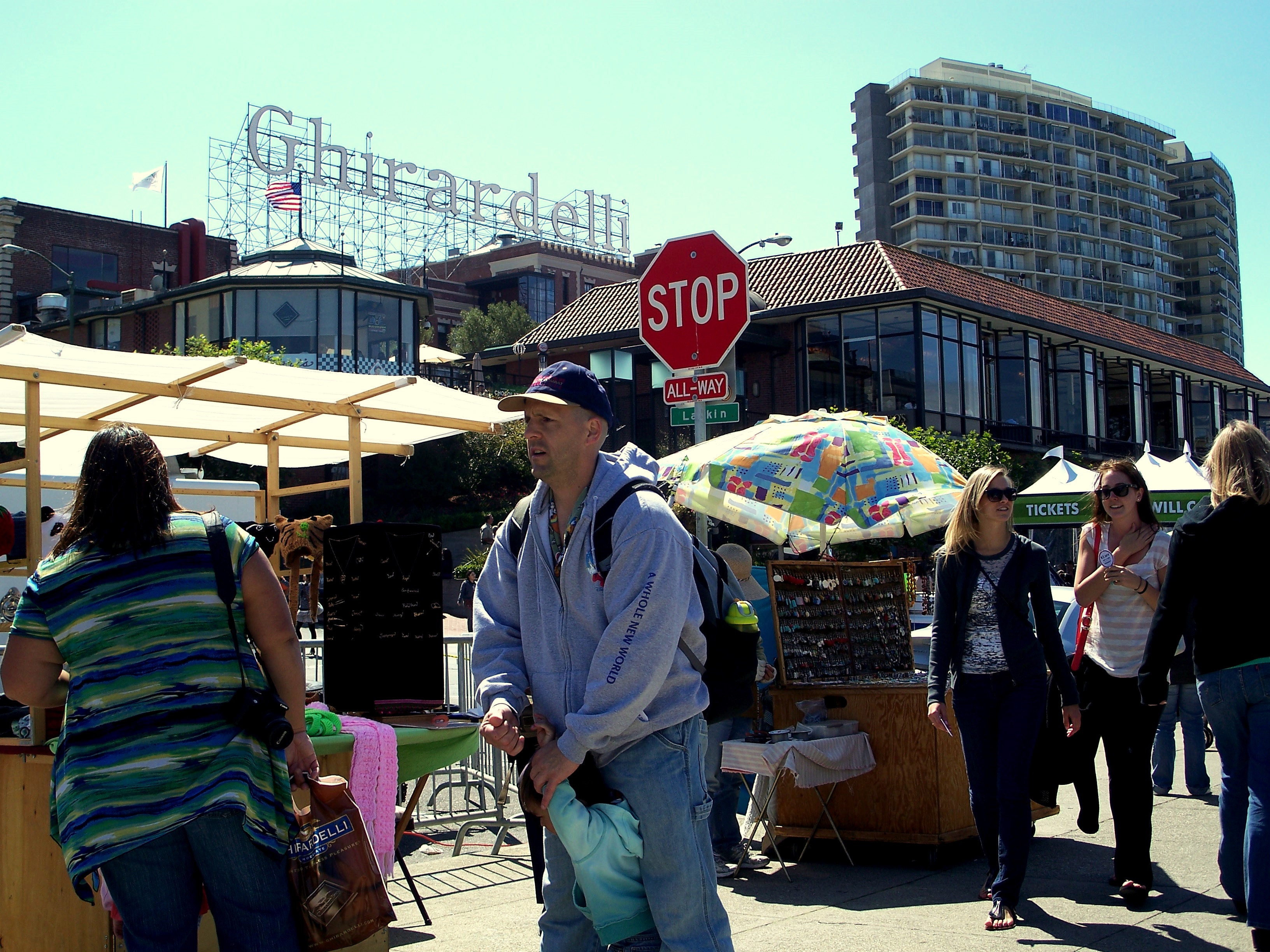
Chocolate festival at Ghirardelli Square

September 14, 2010 By: Mai Truong Category: California - The Bay Area, Festivals, sweet snacks and desserts


What’s with this time of the year that festivals keep popping up every weekend? Just two weeks ago my friends and I were strolling among some 60 food trucks at Jack London Square; then last week we had some awesome grilled chicken at Martin Luther King Park; and this past Sunday we wound up queuing in the shivering bay wind for some artisan desserts at Ghirardelli Square. If we keep this up(*) I will become quite athletic, all that walking and standing in (long) line build muscles, you know. 😛
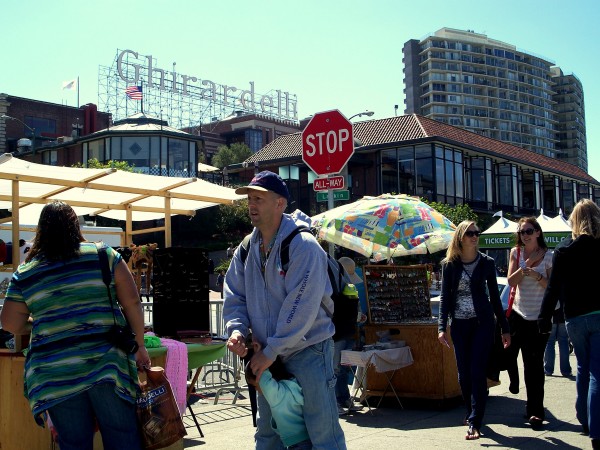

So here’s the deal with the 15th annual Ghirardelli Chocolate Festival: you get a $20 ticket to try 15 samples (there are 31 total, some of them are chocolate favored alcoholic drinks); supposedly the booths started giving samples at noon, but lots of people got there earlier and lined up in front of the booths. Kara’s Cupcakes is one of those booths with a 100 feet line before it even opened. I’m not crazy about cupcakes (yeah… you can tell I’m not American) so I didn’t contribute to that line’s ridiculous length. I did contribute to the line wrapping around McCormick & Kuleto’s, but it was worth it.
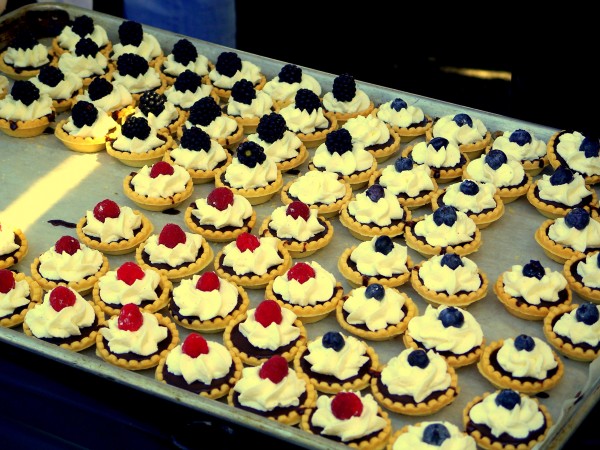

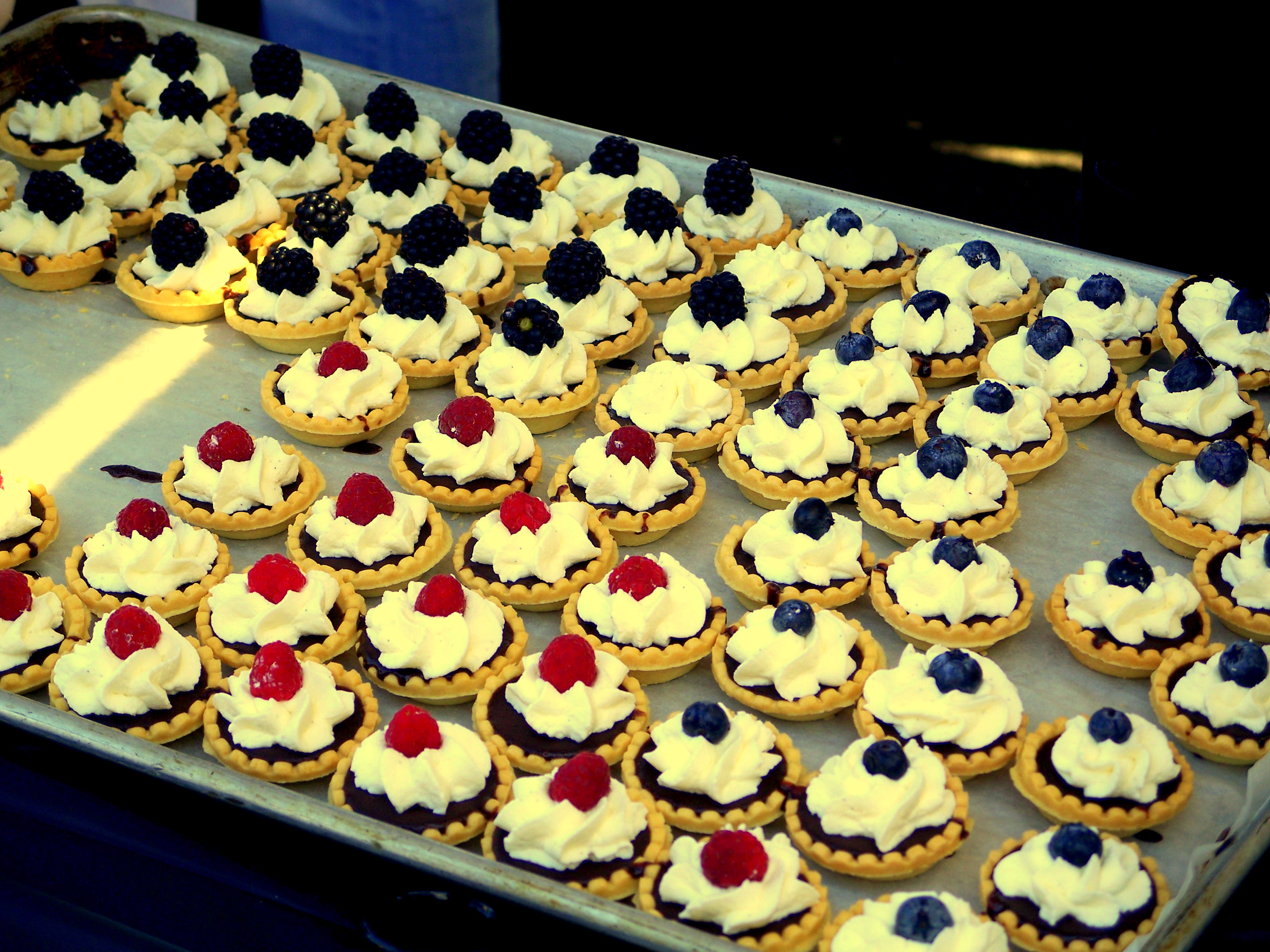
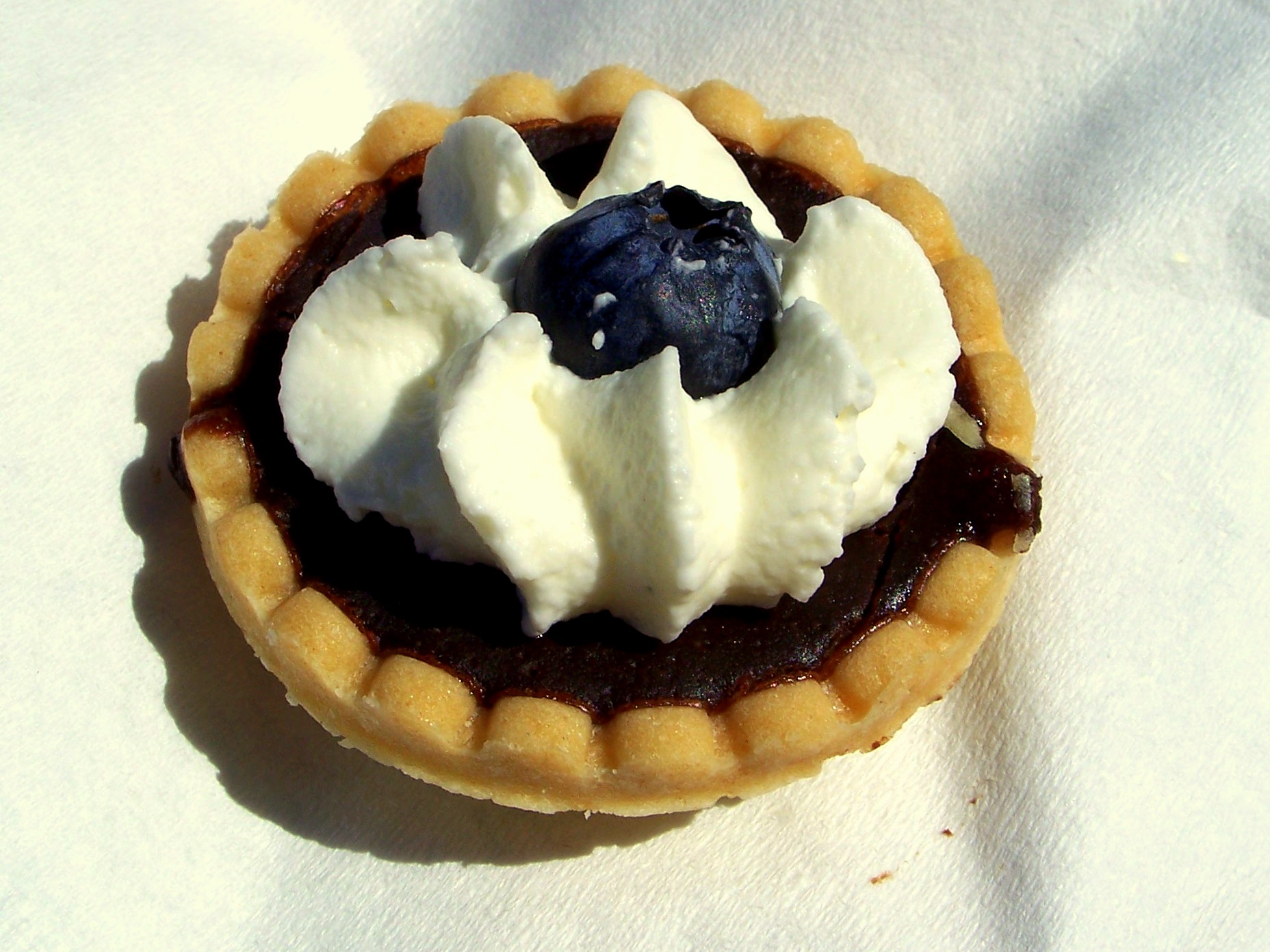
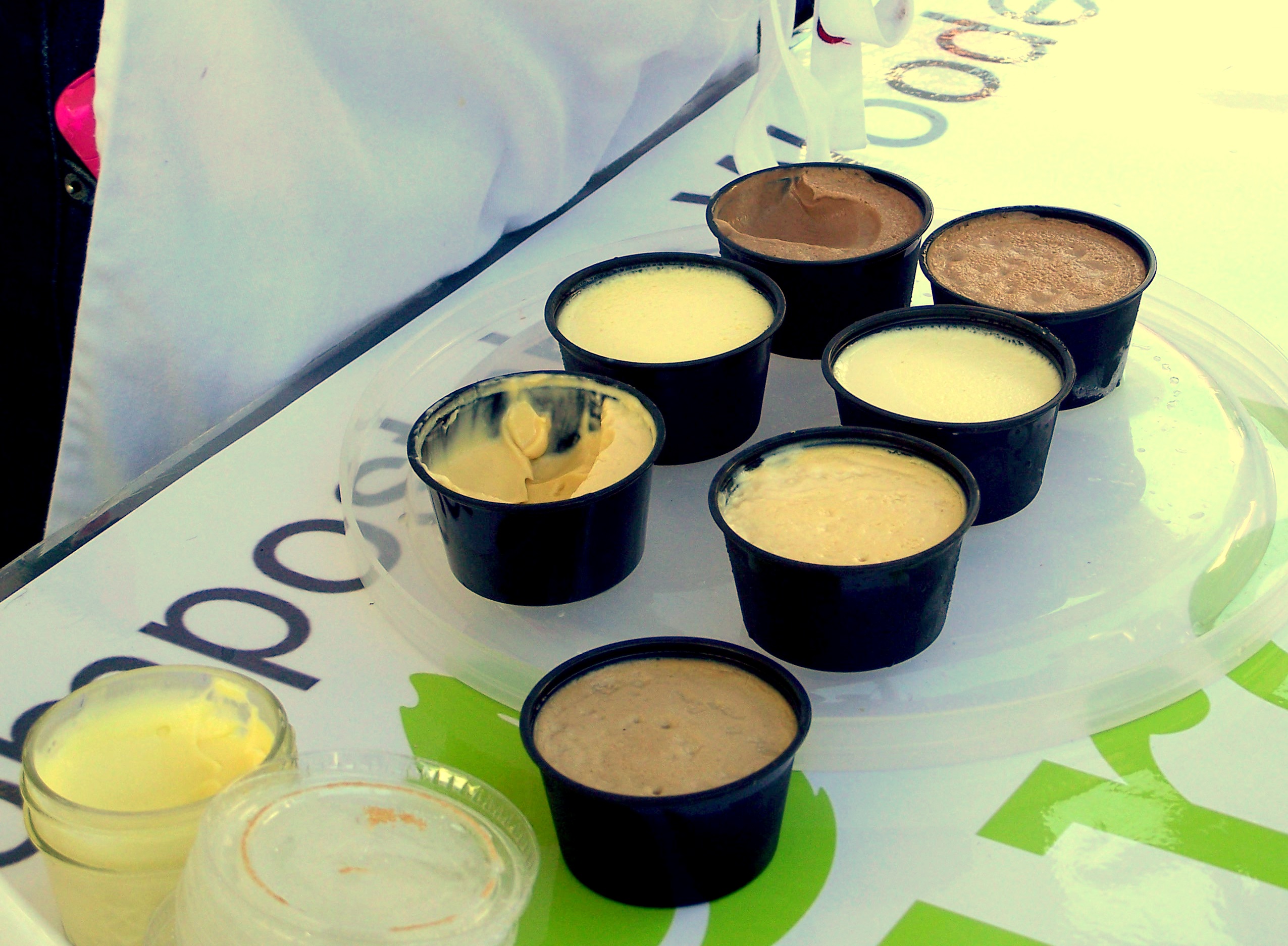
They are a seafood restaurant chain, but at this festival they whipped out flourless chocolate truffe cakes, with raspberry, blueberry, or blackberry on whip cream. The bite-sized sample was quite rich.
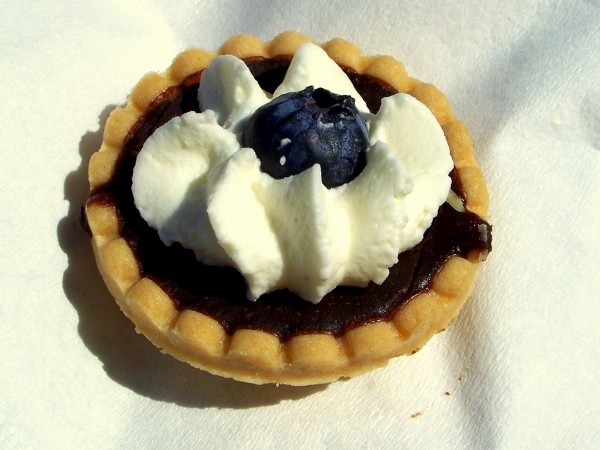

But it was among the best at the event. For one thing, we actually got a whole truffle cake, while Sweet simply gave a full spoon of crème brulée for each mark off the sampling ticket.
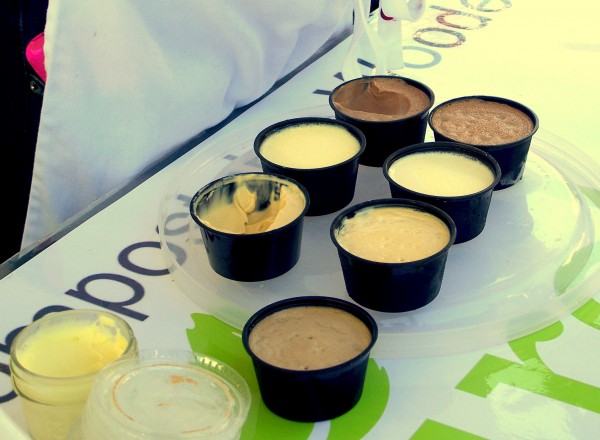

It tasted good (to quote other triers, “it tastes divine”), but one spoon? Seriously? The ticket is $20 for 15 samples, that’s $1.33 per sample, and don’t tell me an average spoon of creme brulee costs that much. Disappointed me by the rip-off.
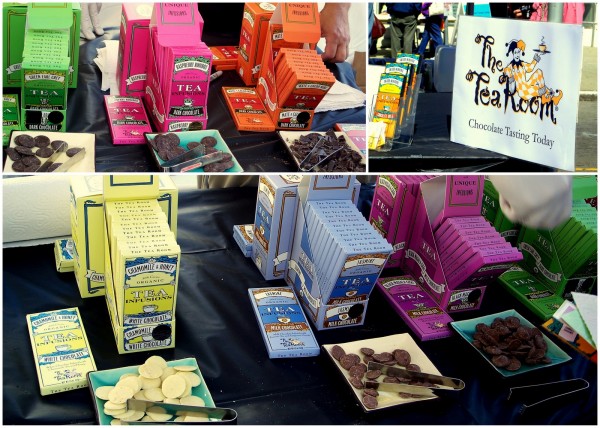

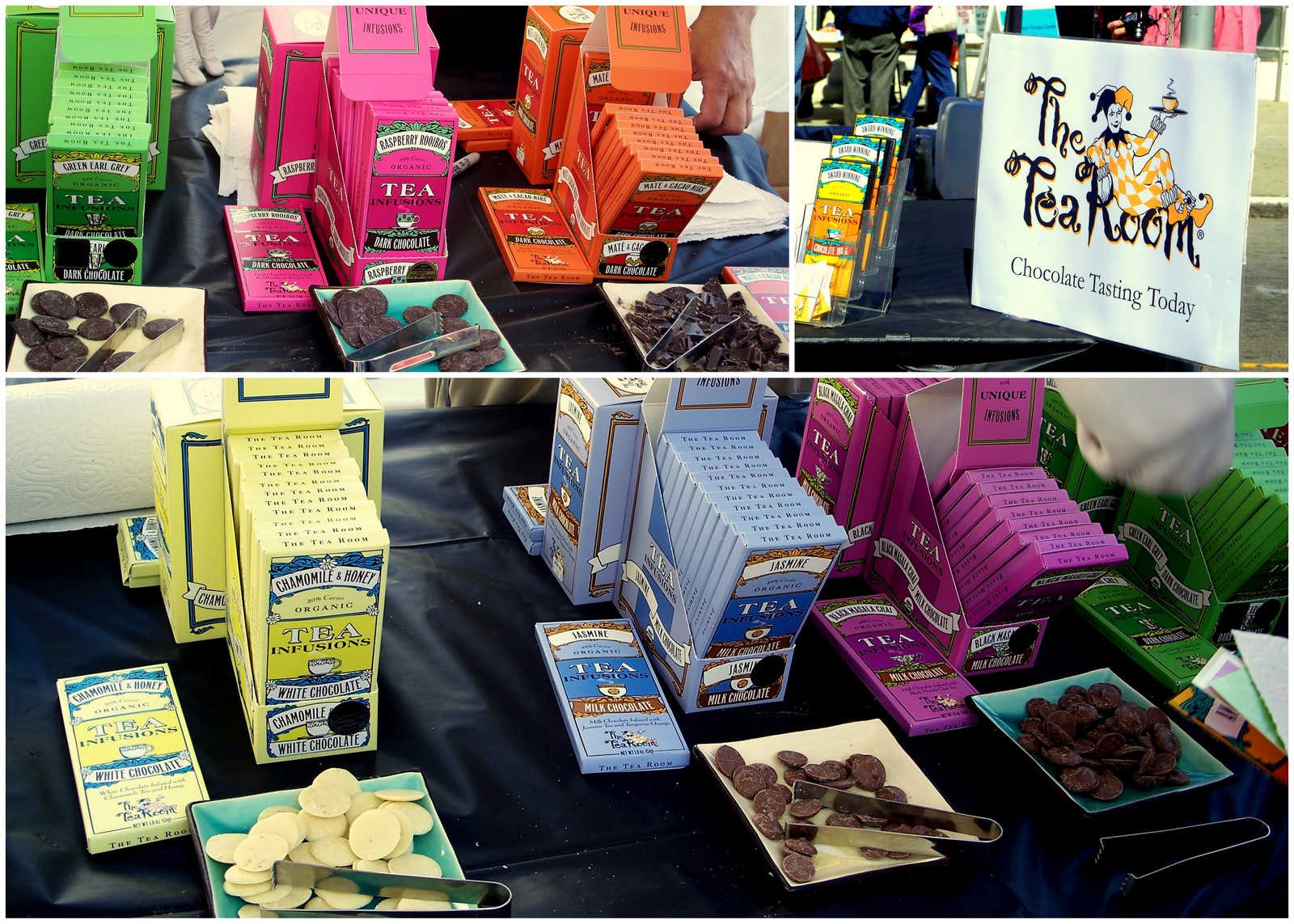
The Tea Room Chocolates gave a much better deal. We got to sample 6 types of tea-infused chocolate: 72% dark with green mate, star anise & nibs (orange), 58% dark with raspberry rooibos tea (pink), 58% dark with green earl grey tea (green), milk with black masala chai (purple), milk with jasmine tea (blue), and white with chamomile tea & honey (yellow).  The pink and the green bars were the best.
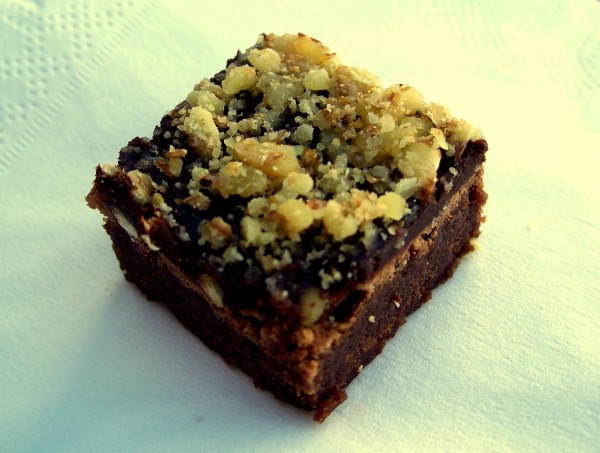

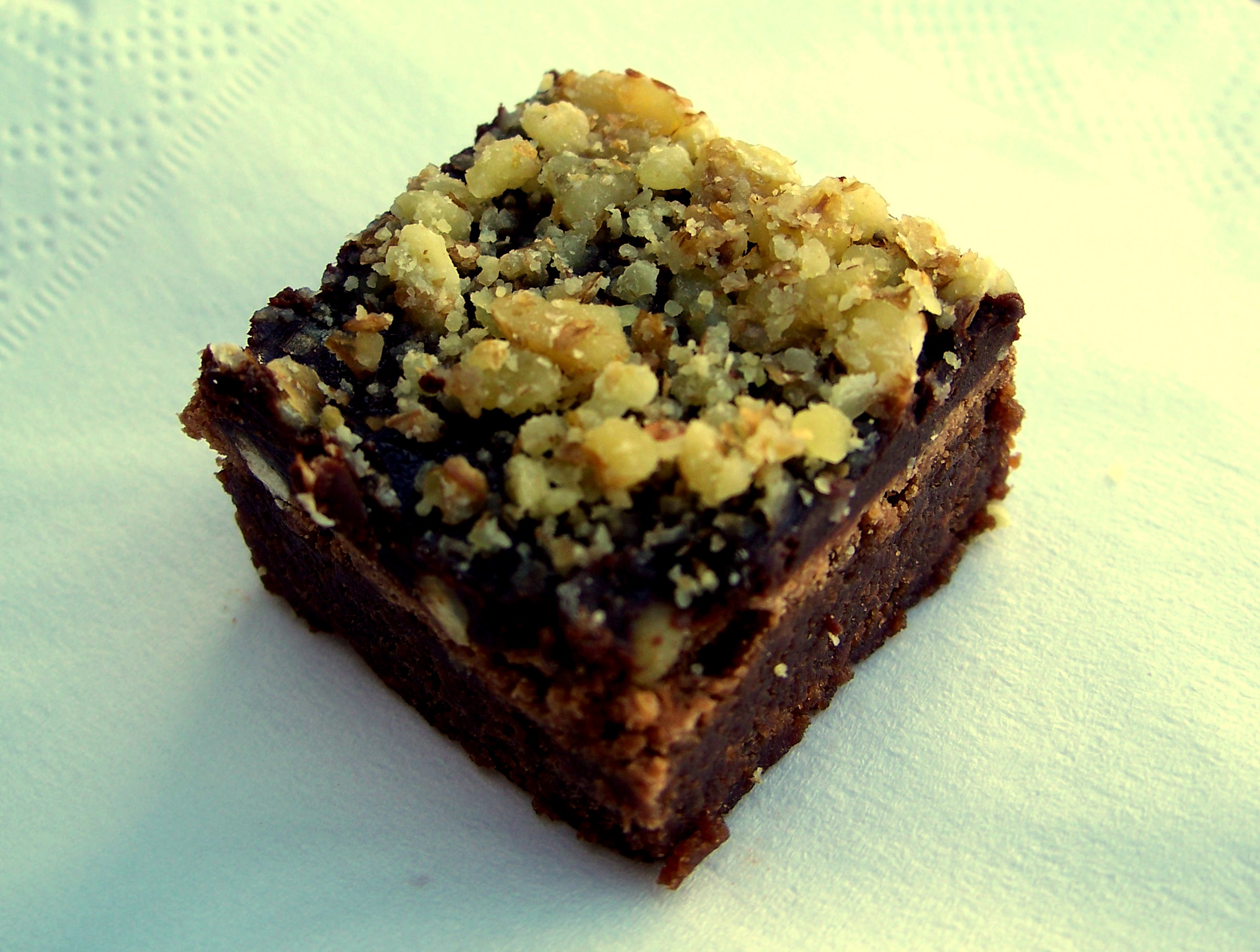
Next to Tea Room Chocolates was Ana Mandara‘s booth. According to the brochure Ana Mandara had chocolate mochi, but actually they had brownie. Very good and moist brownie, but mochi would have been a better score. On a side note, this place has an interesting (and affordable) lunch menu, which we would have tried had they not closed at 2:30. :-/
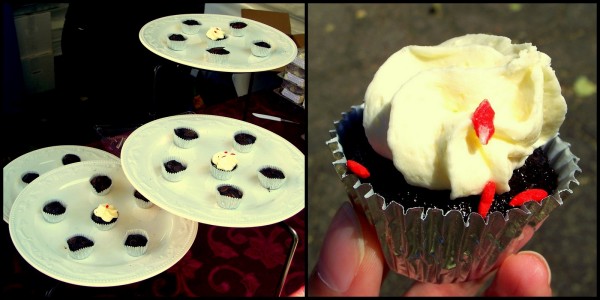

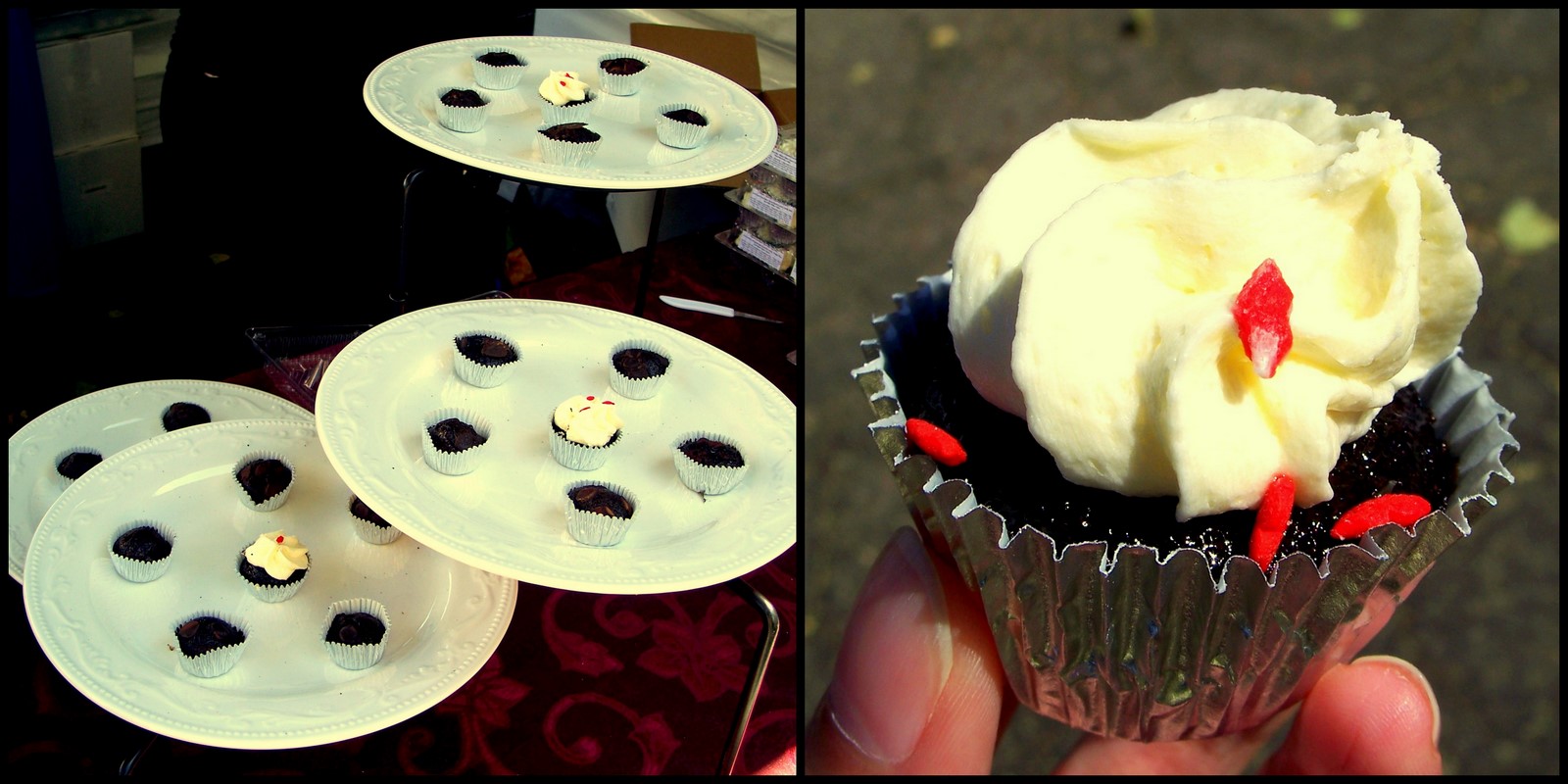
Another disappointment was the mini vegan cupcake from Eat My Love For You. It’s a cute little chocolate bite with lustrous vanilla butter cream on top. It was great during the first few seconds, but like most loves at first sight, the dazzles wore off and we got a burnt oily aftertaste. Maybe it was just an off batch.
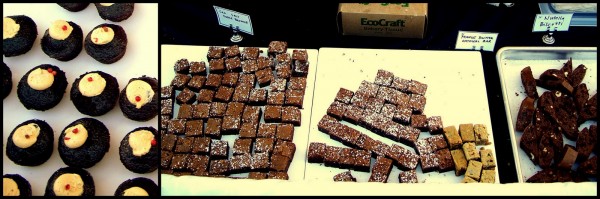

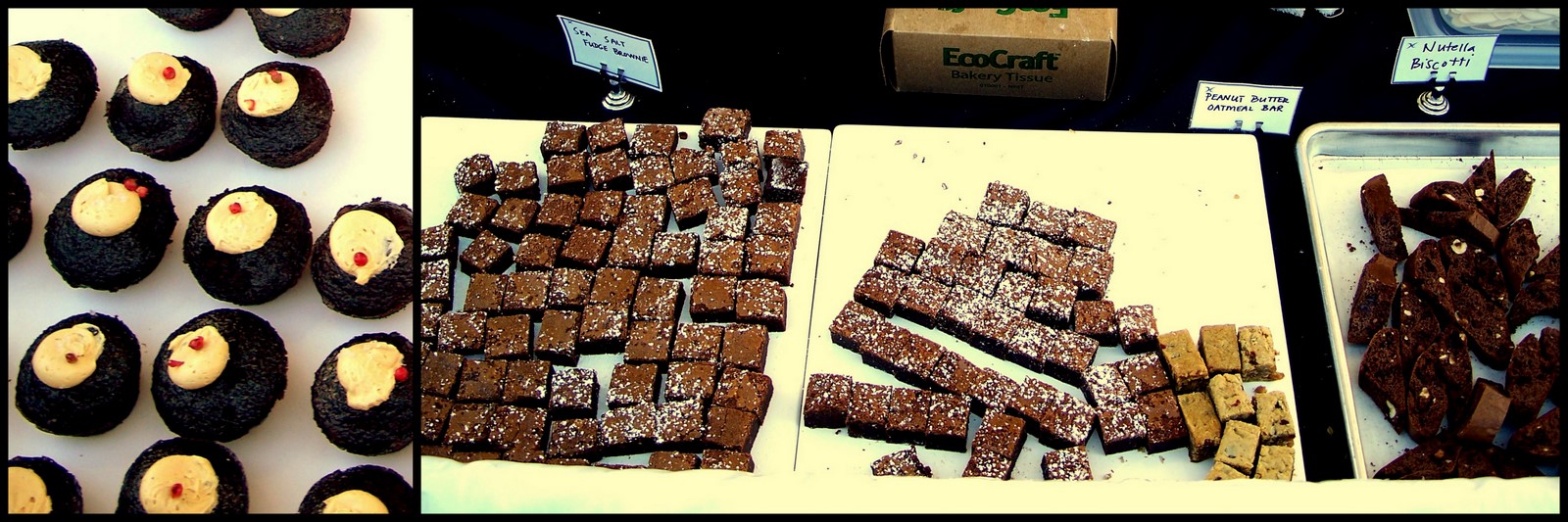
DeLise Dessert Café offered slightly more choices, cupcakes and brownies among them (surprise!), and the line was also “slightly” longer. But at least it looked out to the beach instead of others’ backs, and we can kill time watching seagulls preening themselves under the sun…
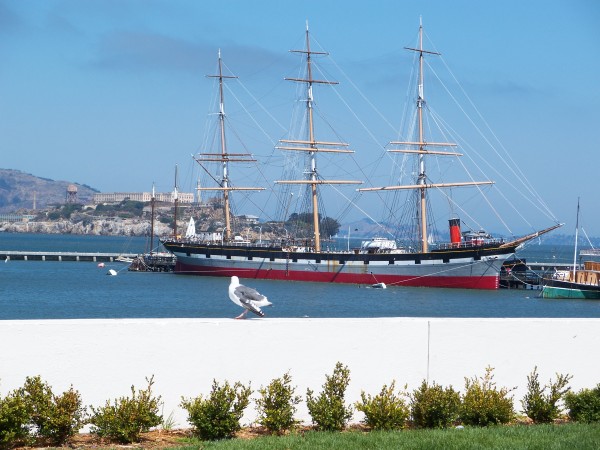

…Until we got to the goodies. The sea salt brownie was super popular, but we opted for the nutella biscotti (which was just like any other biscotti), and lemongrass ice cream. THIS ice cream alone makes the trip worth it. The lemongrass fragrance wasn’t apparent until it melted down at the back of your throat, then gently rose back to the palate like herbal tea.
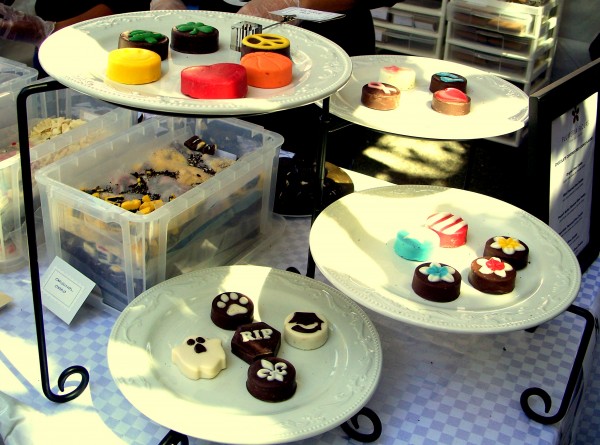

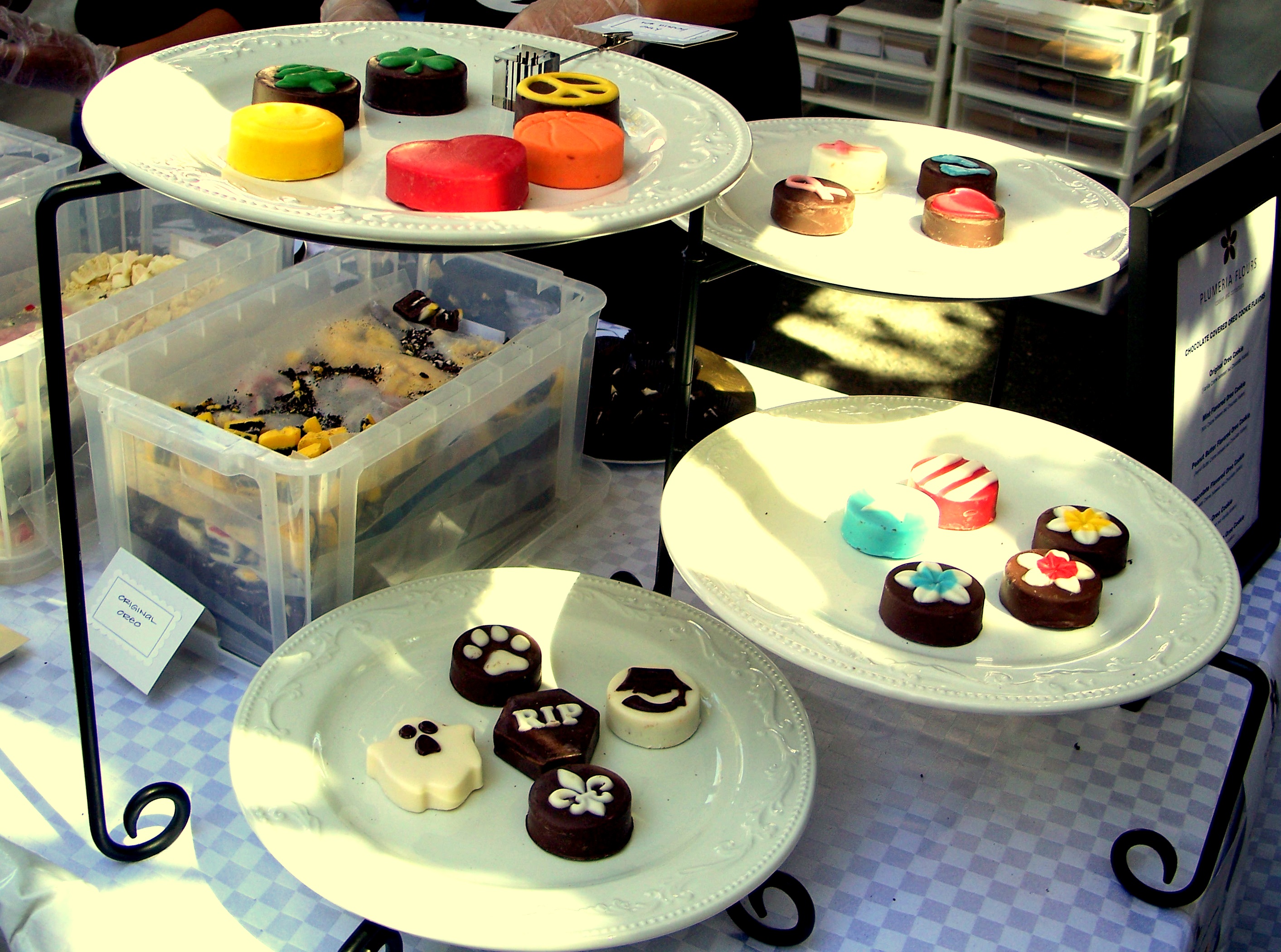
Mudpie was more enthused by the chocolate covered Oreo cookies from Plumeria Flours. You got to pick 2 types of cookies for each sample’s worth; the peanut butter and the mint were, again, good but uninteresting.
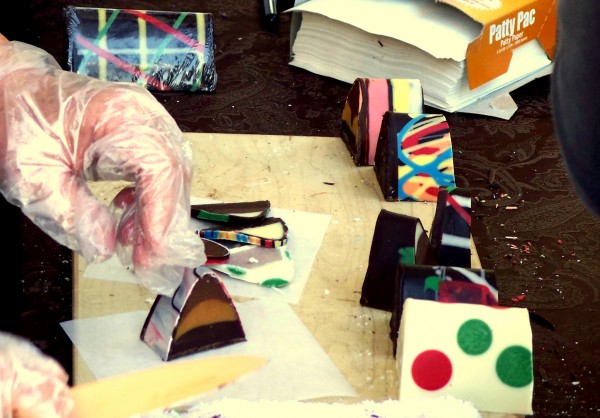

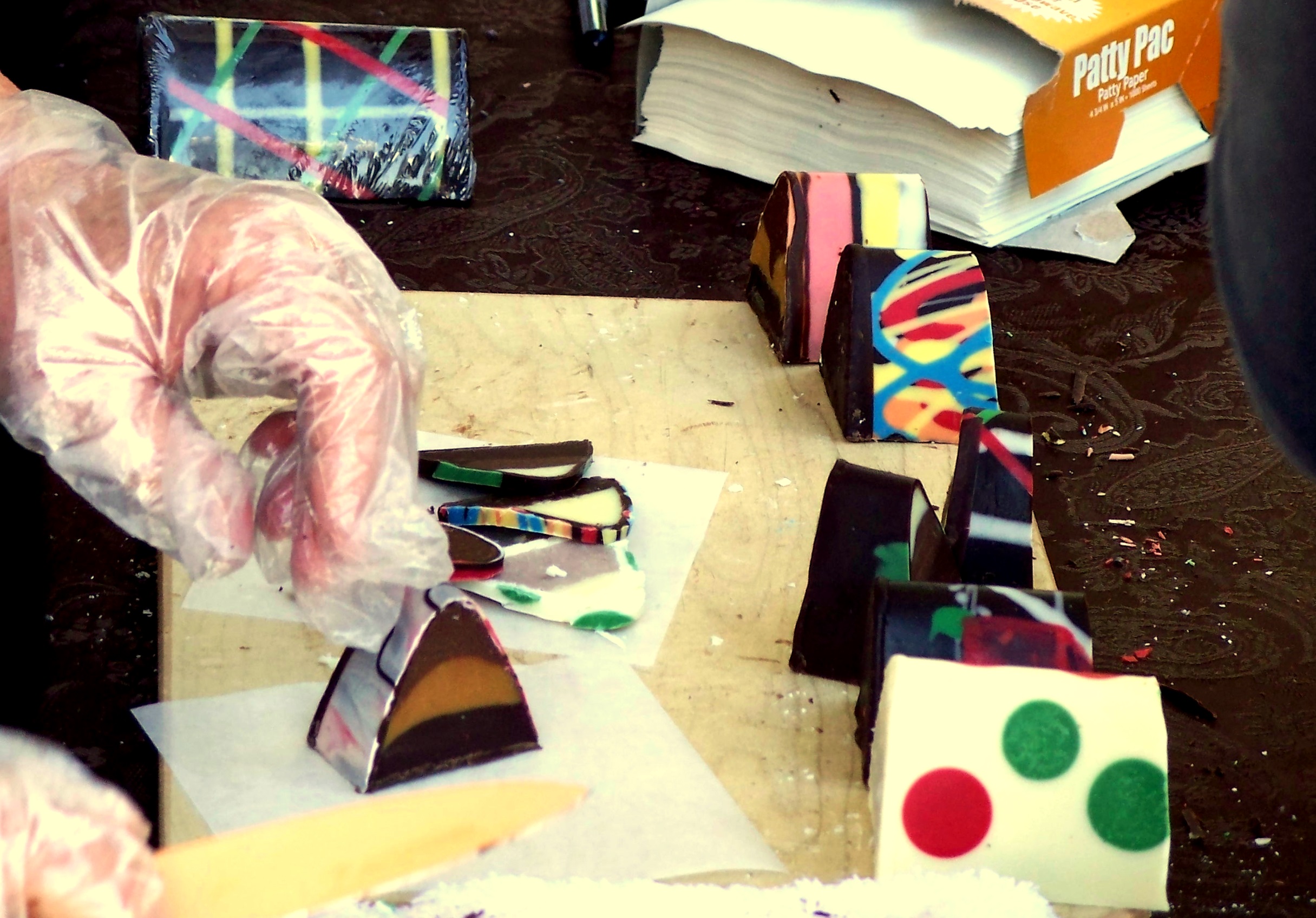
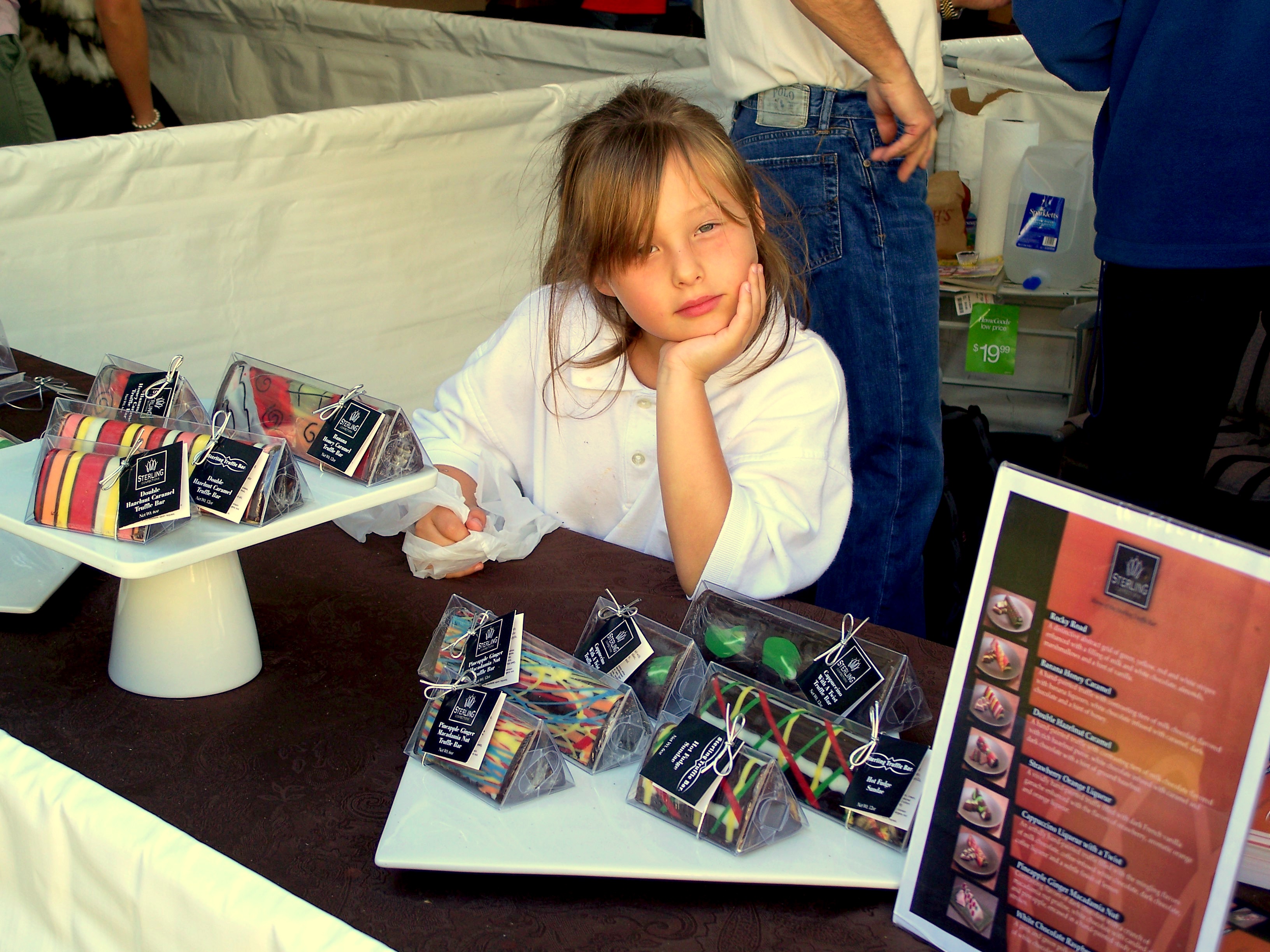
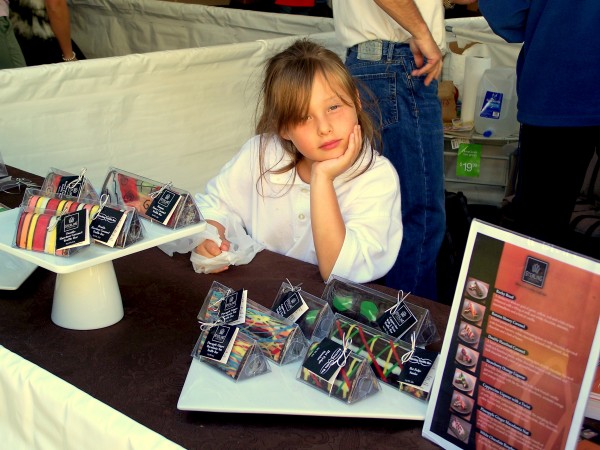
The same can be said of Sterling Confection‘s banana honey truffle bar. These intriguing sushi-looking blocks cost a whopping $25 each at the festival. Most have liqueur flavors and some (a bit too sweet) fruity touch, but the colors are the only thing exotic about them.
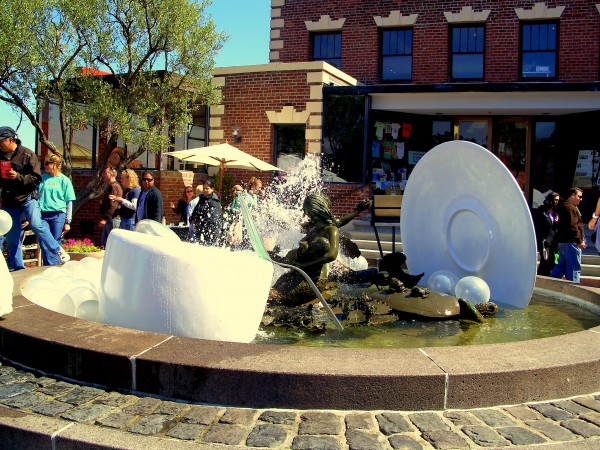

The upstairs (the Fountain Plaza area)  had a few more choices, not as splendidly colored as the Lower Plaza, but more (ful)filling.
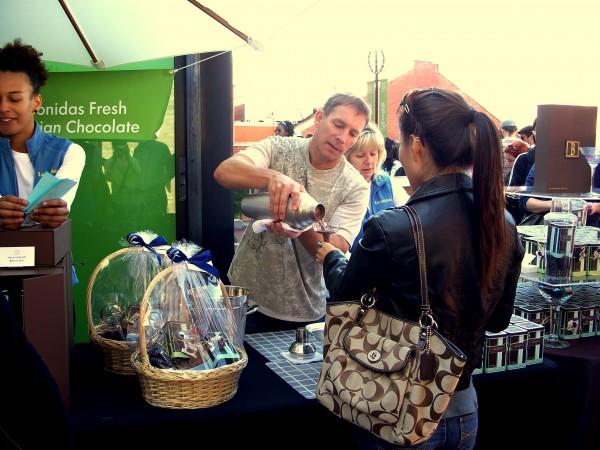

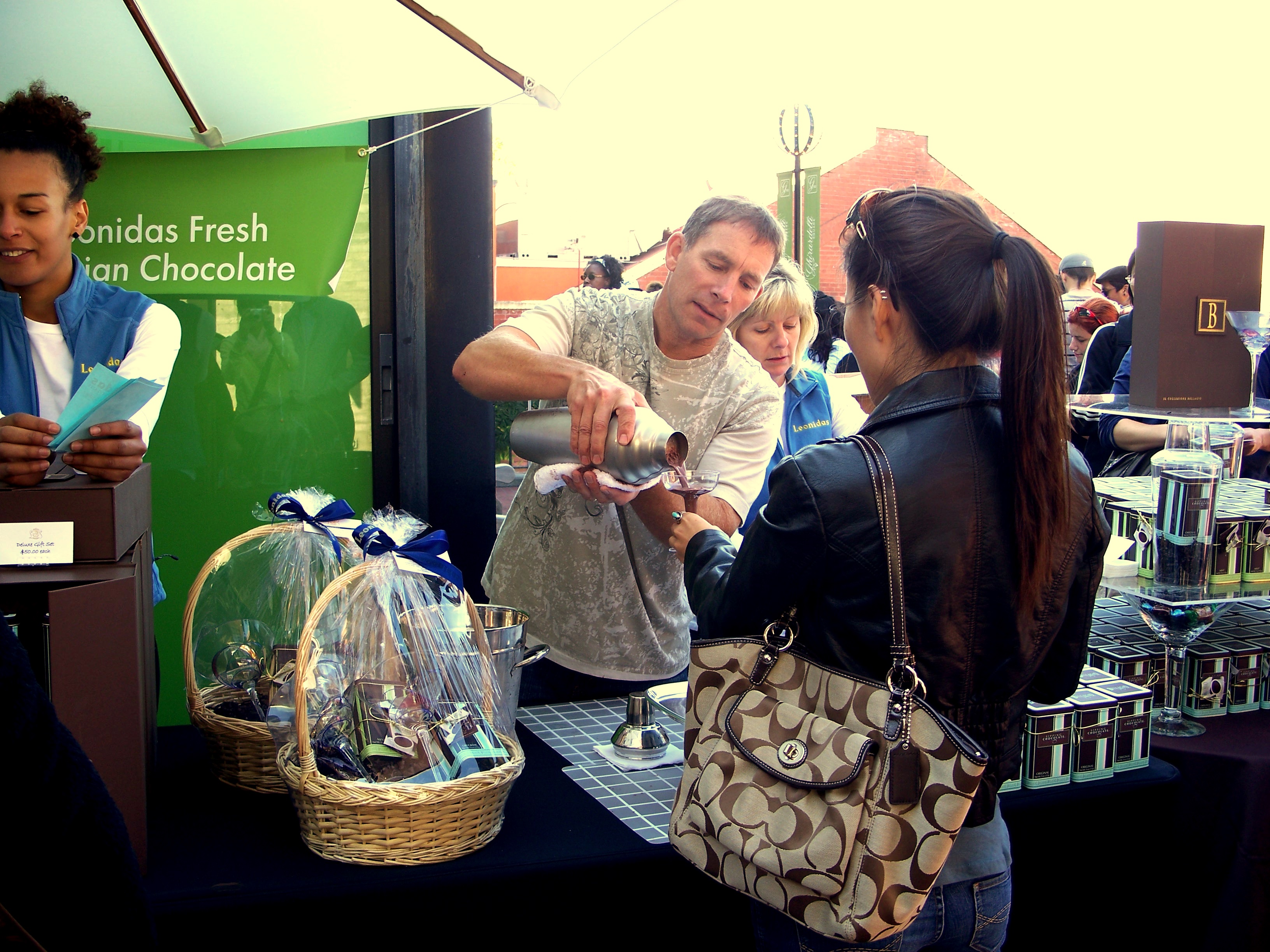
Leonidas‘ chocolate martini was exceedingly popular, the line practically connected the upper and lower plazas.
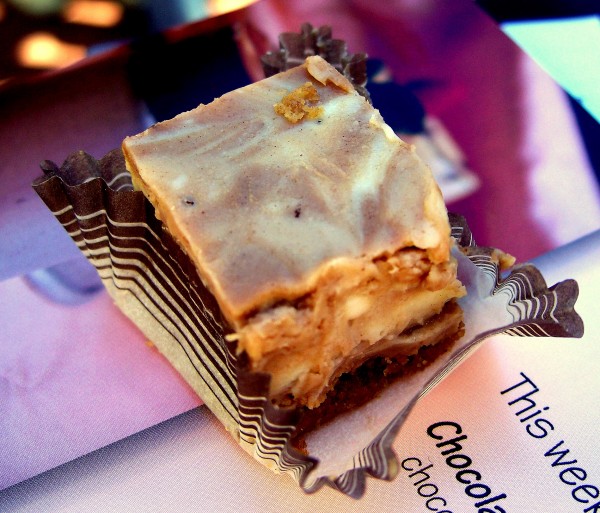

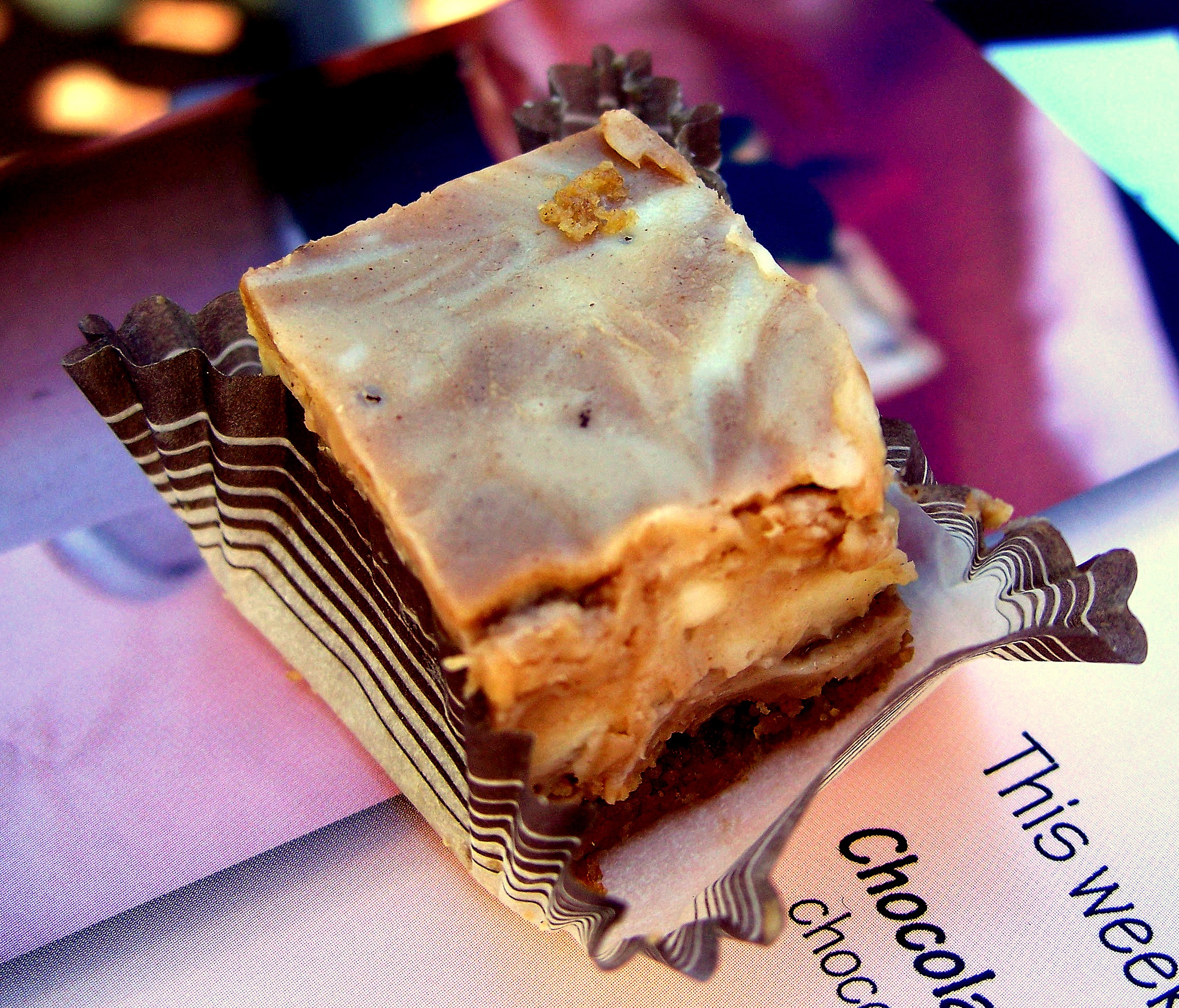
Reuschelle’s marble cheesecake bite was rich, perhaps a bit too rich. At this point all I could dream about was a full glass of ice cold water. One can only handle so much sweets in one day.
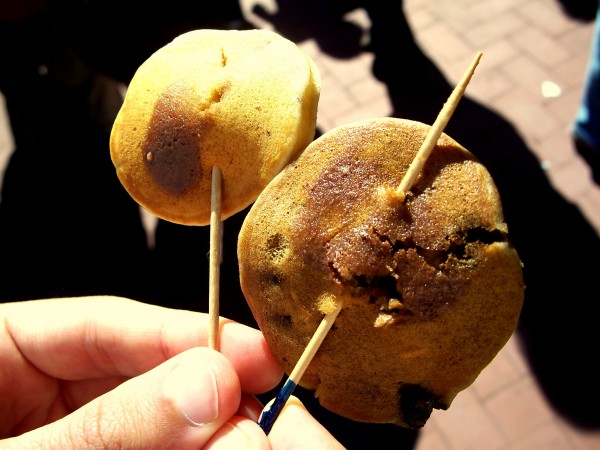

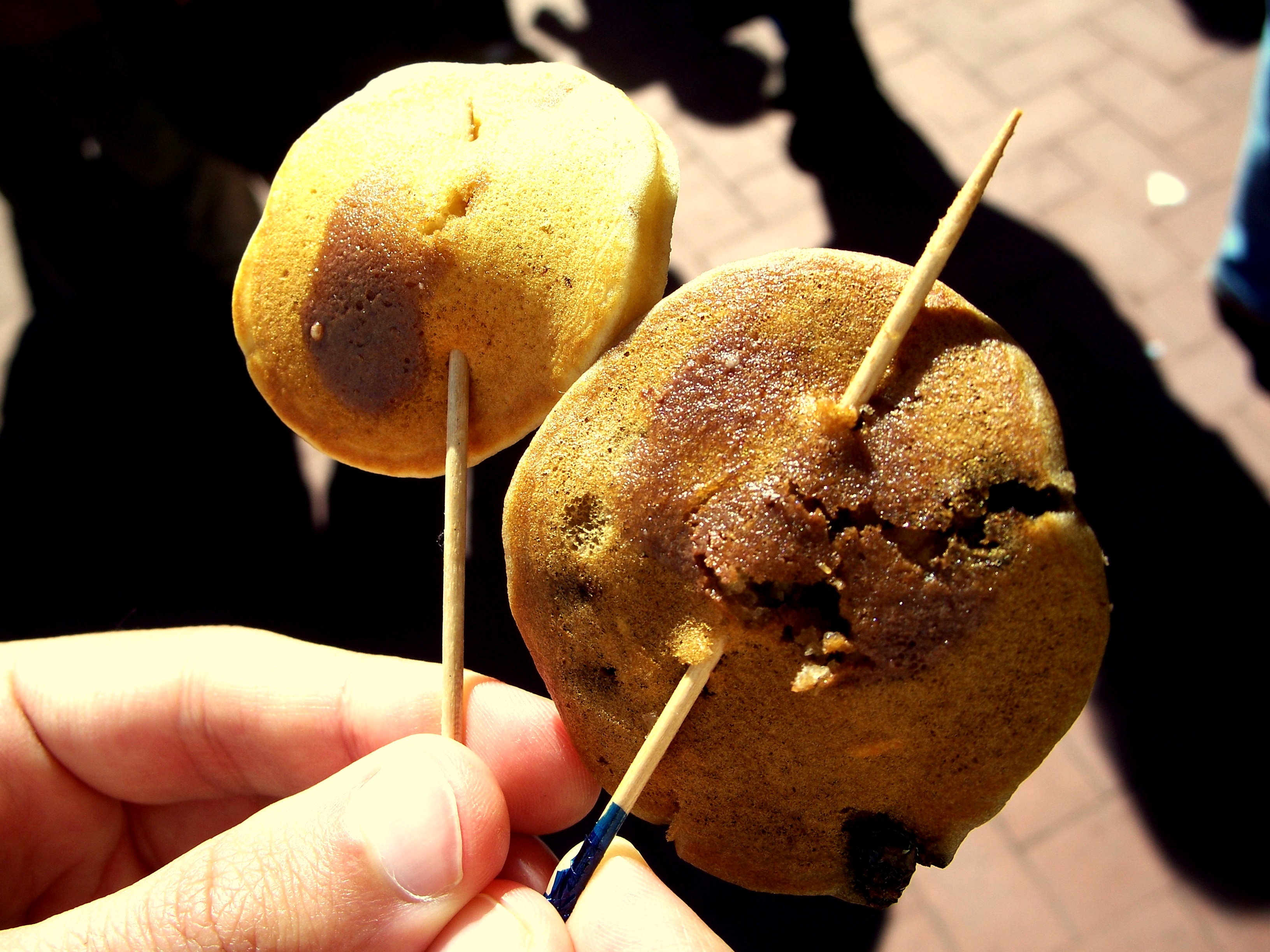
Bo’s chocolate and vanilla mini pancakes… I was getting thirstier, and wanted some real food…
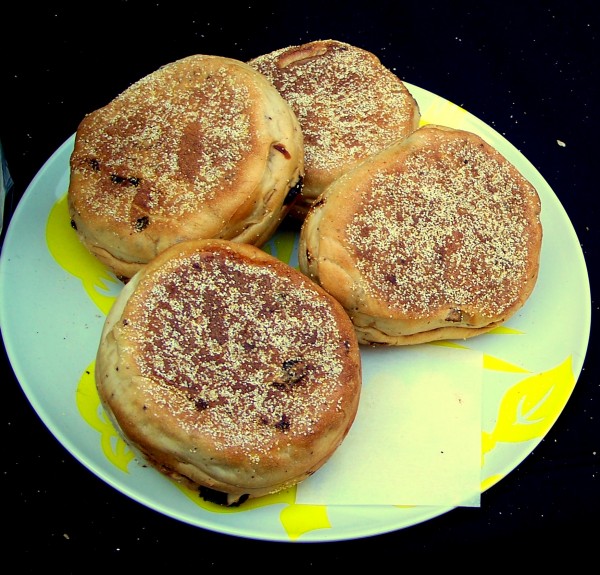

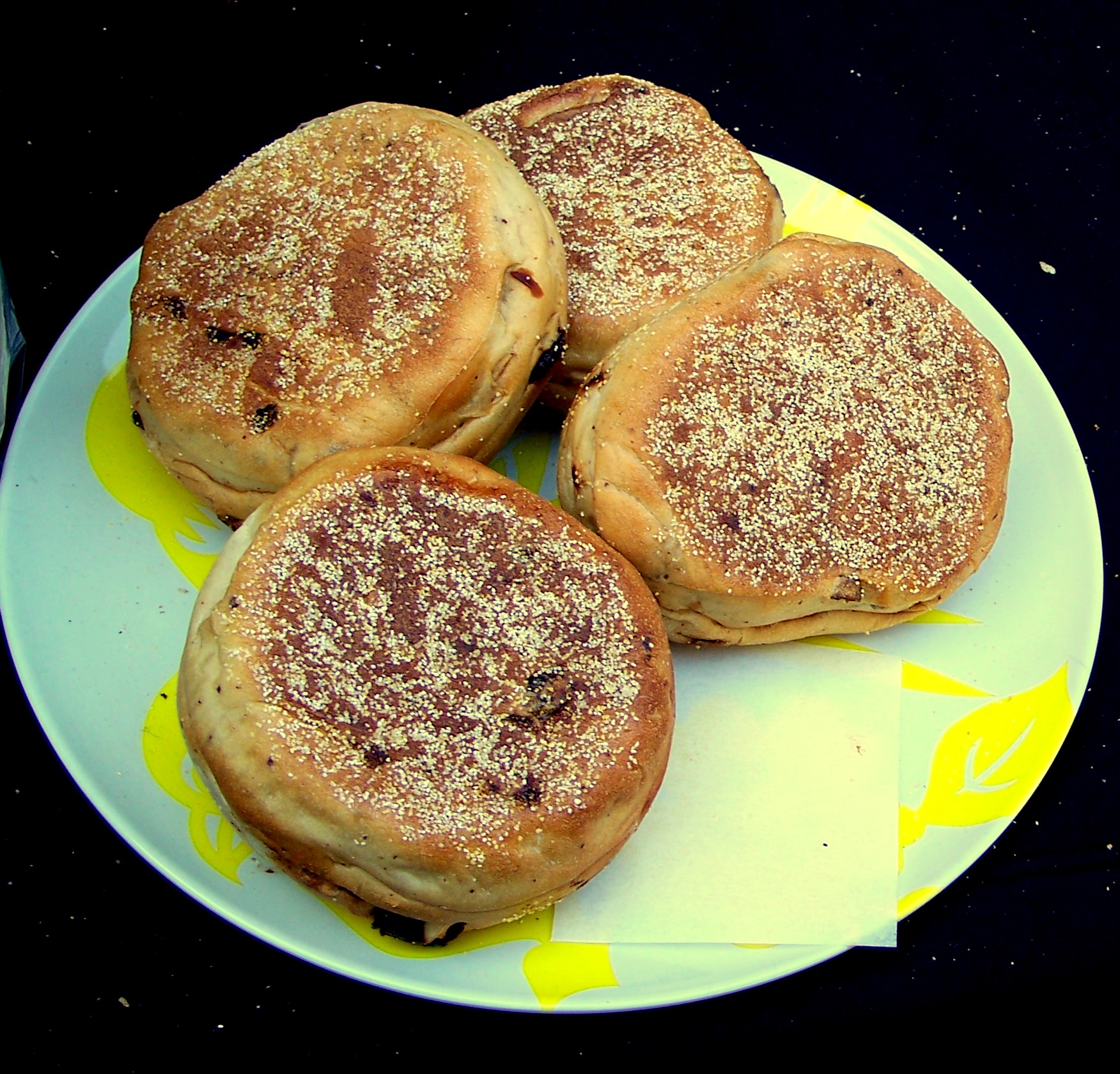
… Which explains why a piece of toasted and buttered cherry chocolate English muffin had never tasted better. Thank you, Leadbetter’s Bake Shop.

So, how was Ghirardelli’s 15th Annual Chocolate Fest? Besides the awesome lemongrass ice cream from DeLise and the tea-infused chocolates from The Tea Room, everything fell a little… unimaginative. In fact, nothing sums up the day better than the expression of this little girl at Sterling Confection‘s booth.
(*) Should I go to another food fest at the end of this month? Women of Taste sounds pretty good. 😛 But is four food festivals in one month a bit too much?

Millbrae Pancake House – Old country breakfast with a berry good twist

July 27, 2010 By: Mai Truong Category: American, California - The Bay Area, Comfort food, One shot


The most irresistible American meal is the full country breakfast. I know it’s derived from the full English breakfast and all, and it’s probably so irresistible just because who in their right mind would refuse food after a long night with an empty stomach (hence the word “fast” – not eating, in “breakfast”). And yes, there’s nothing speedy about the old country breakfast. Making pancakes, scrambling eggs, frying sausages takes a good hour off your morning, not to mention scrubbing the skillets afterwards. I probably will never make a full country breakfast at home until I have nothing better to do, but thank God for blessing America with countless roadside brick houses opened up just to serve breakfast. And may those like Millbrae Pancake House flourish despite the swamping force of IHOP and the likes, because they serve freaking good breakfast.


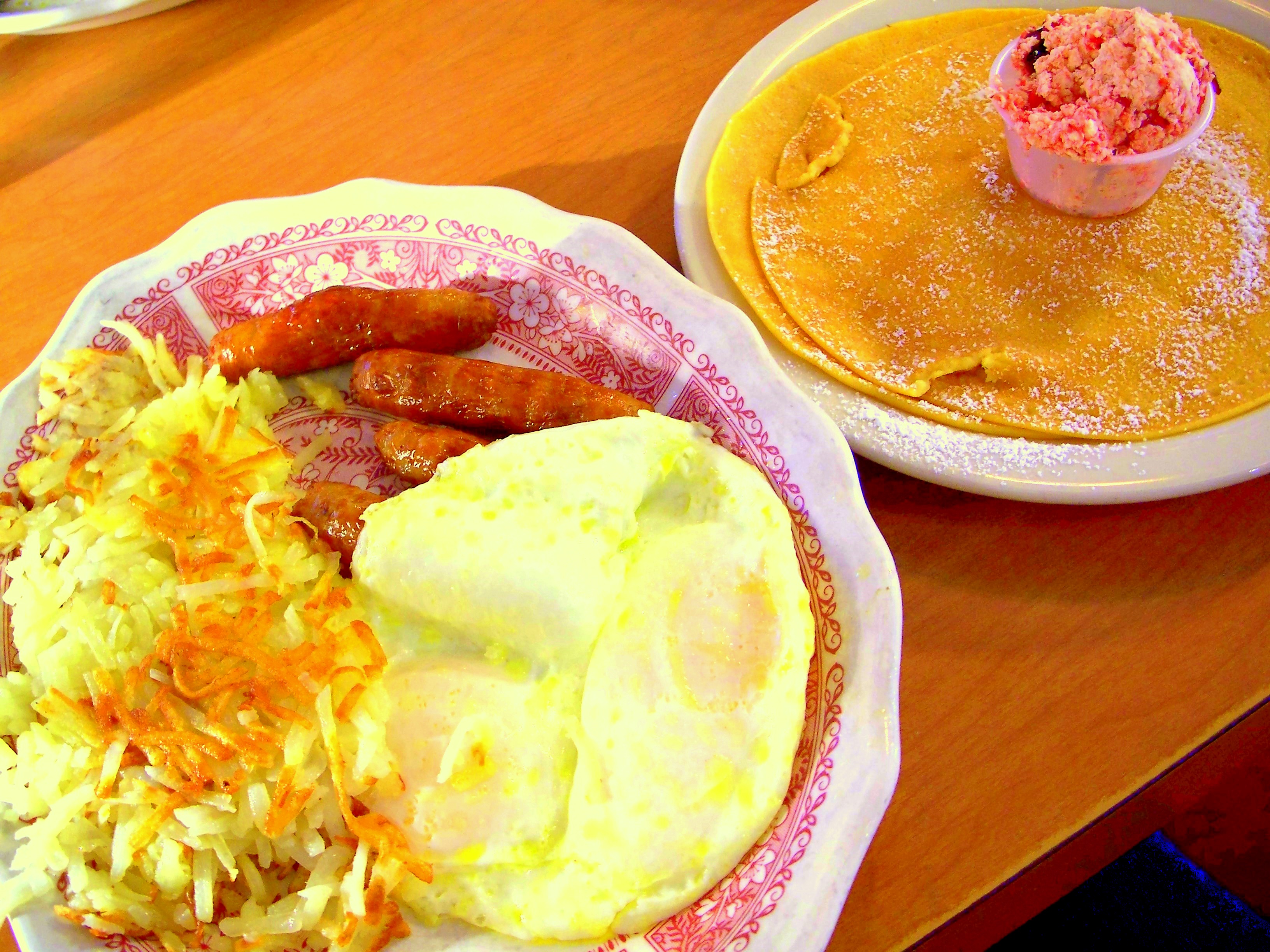
I said freaking good because I happened to order the one dish that, it turns out for the first time, everyone on Yelp seems to agree to be MPH’s best. The Swedish pancake with lingonberry butter. Have no idea how Swedish this really is, but the pancake is not the fluffy butter kind IHOP is known for, instead it’s a small flat crepe. It’s dense and has a slight sweet chew. And the lingonberry butter is butter mixed with lingonberry bits. And I spread a ton of it on my pancake. And I ate it by itself, like eating chocolate. Americans, maybe it’s time to mix raspberry, blueberry, strawberry, gooseberry, and maybe other fruits too into your butter. It kills. Just sayin’.

The rest of the breakfast was really just so so. Hash brown, two runny eggs, and four sausage links were as good as they could(should) be, but nothing unexpected. That’s ok, the Swedish deal wowed me enough.

MPH is cheap too. All that was for $7.95. The thing is, it was too much. I couldn’t finish everything, had to lean against the wall for 10 minutes in the restaurant, and almost needed a walker to get to the car. Maybe I’d be in better shape if I gorge up on these more often.

Address: Millbrae Pancake House
1301 El Camino Real
Millbrae, CA 94030-1410
(650) 589-2080‎

Bangkok Noodles & Thai BBQ – The cheapest deal near Union Square

July 23, 2010 By: Mai Truong Category: Comfort food


Don’t know about you, but after I empty out my bank shopping in Union Square, it doesn’t sound right to pick up an $80 tab at one of those restaurants with a uniformed man at the door greeting every passerby and making us feel bad for not dining with them. So as much as I wanted to have frog legs and duck tongues or something not-so-homey of sort, we ducked into this rabbit hole in the wall called Bangkok Noodles & Thai BBQ, under Hotel Union Square and next to some equally tiny sport clothing shop.

It is truly, truly, a hole in the wall. But nobody seemed to mind. We had to walk sideway to weave pass the single line of sitting and standing people from the door through a short hall (if the thing between the wall and the divider to the kitchen can be called a hall) to get a table for two. This cookery is the epitome of land conservation. There’s just enough space for one foot at a time between the rows of tables. When the place is packed, like the time I was there, strangers practically sit together, conversations are separated only by the soy sauce and Sriracha bottles.

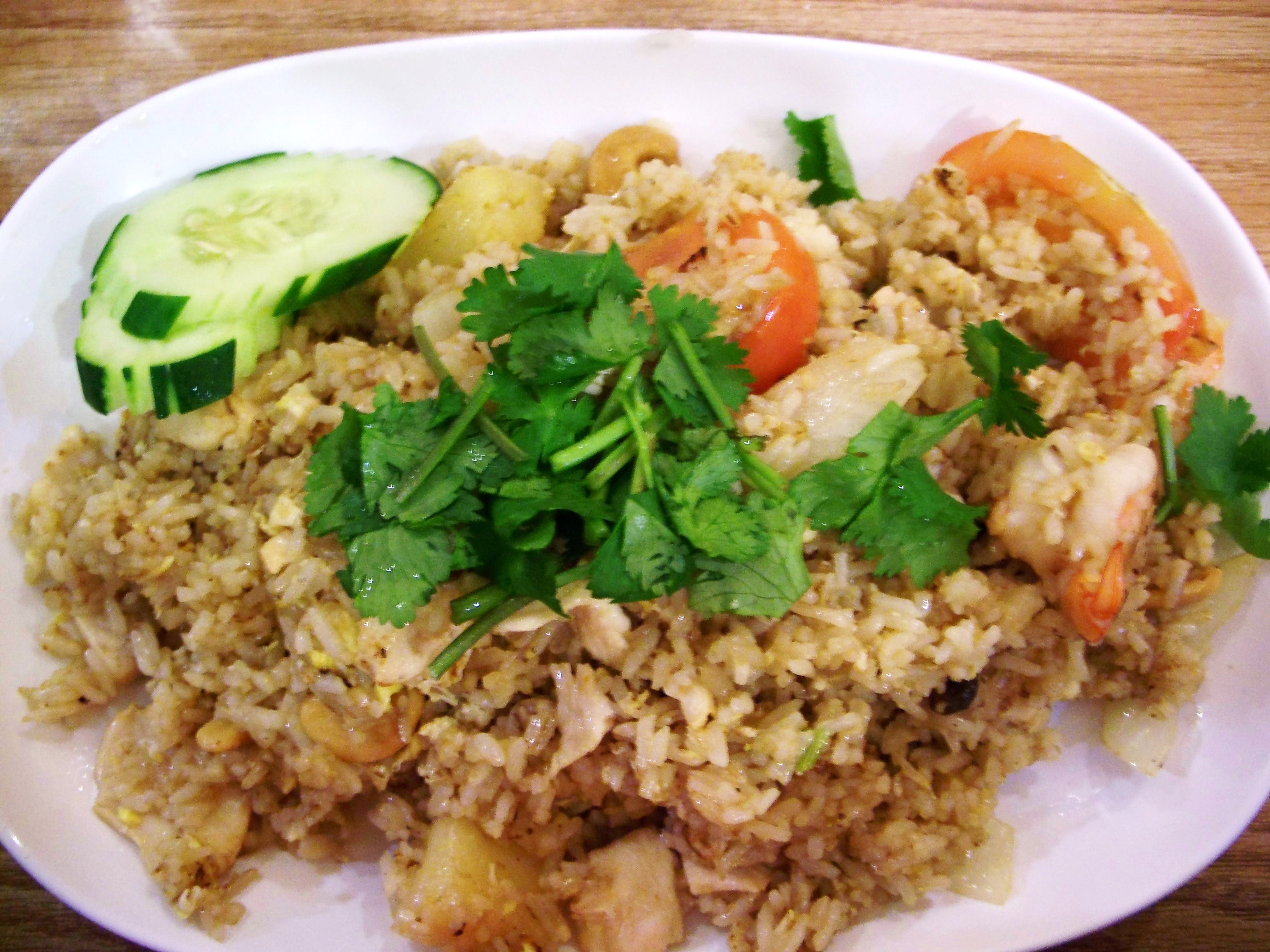
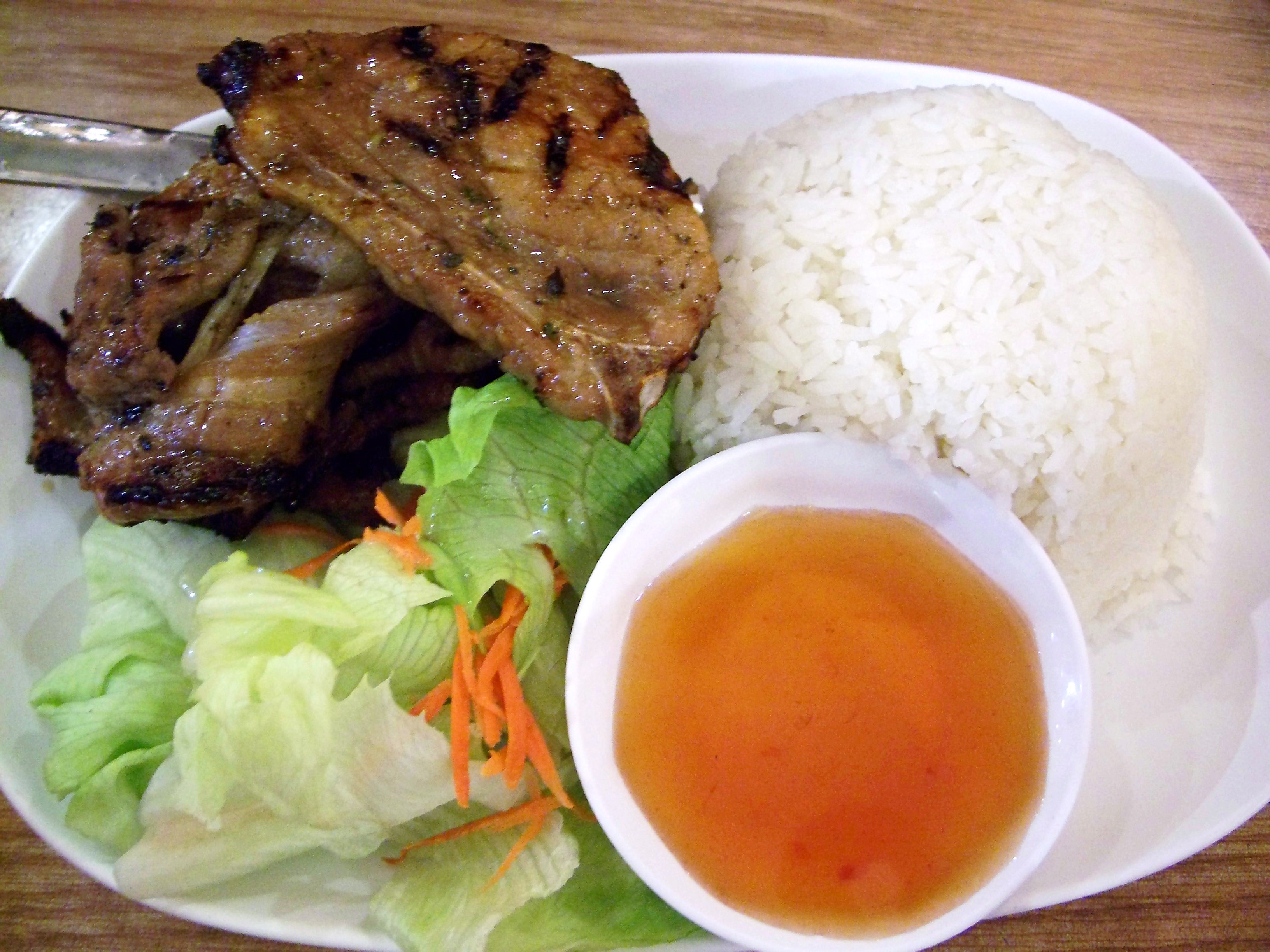
We just needed a good fill. Mudpie went with khao pad sapparod, fried rice with chicken, shrimp, cashew, raisin, tomato, and a few toothsome wedges of pineapple, a rather reliable combination that’s not so different from Danang Krungthep‘s kao pad namh, just a whole lot milder. I chowed down three sweetly marinated and juicy grilled pork chops with white rice, a very simple salad, and a tangy sauce.  Not much is new with Thai barbecued pork, besides it really resembles Vietnamese com suon nuong. Lip smacking good meat fo sho, tho. I even gnawed the bones.


All the while, it was some frenzy time. The cooks and the waitresses shouted to each other across the room in ear blasting Thai, hurried feet scampered all over, people slurping and chatting and toothpicking and flirting, and you’re constantly alert that a bowl of soup or fish sauce could fly down your shoulder with a slip of the tray. But there’s absolutely nothing to complain about the food. In fact, I was grateful to find this livelihood in the wall.

Address: Bangkok Noodles & Thai BBQ
110 Powell St (At the corner with Ellis St)
San Francisco 94102
(415) 397-2199

Take a look at the complete menu, the priciest plates are just $8.25.

Bangkok Noodles & Thai BBQ in San Francisco on Fooddigger

Bodega Bistro – Defining authenticity

June 24, 2010 By: Mai Truong Category: California - The Bay Area, Comfort food, Northern Vietnamese, Vietnamese


The laminated page has Goi Cuon next to Fritures de Calmars, Bo Luc Lac between Rossini style Tournedos and Agneau. Funny interlingual names like “Ap Chow Bo” and “Ap Chow Hai San” precede English descriptions of stir fries. Don’t bother google “ap chow”. Such innovative term doesn’t exist outside the menu of Bodega Bistro. Just like the dialogues between Jim and Huckleberry Finn, names like these can’t be understood unless you speak it out loud in your head. Ap chow is áp chảo, “press against the pan”, a Vietnamese way of saying pan fry. Why did the chef phonetically transform it into Chinese, while keeping Goi Cuon and Bo Luc Lac true to their original spellings? I don’t know, but I got a chuckle out of it.

The menu alone, however, didn’t strike me as anything unusual. This wasn’t the first time I had to decode a strange name for a familiar dish. Vietnamese menus tend to have such mix between trying to keep the Vietnamese name and (mis)translating it into some other language. The unusual thing was that our thought-to-be-Vietnamese waiter didn’t understand me when I said the dishes’ names in Vietnamese. Then I noticed Chinese songs blasting shuo shuo in the background. And Chinese conversations between the waiters. And, shame on Vietnamese restaurants, very good service.

More on the service part later. But I have a small grudge against Chinese restaurants dishing out Vietnamese food. It’s probably rooted in the powerless distress at the rice-paper-wrapped-and-fried spring roll confused with the Chinese egg roll, or the names of vegetables, fish, and New Year festival with the word “Chinese” attached to it, as if China were the whole Asia. Not that it’s the Chinese’s fault. To my mind, the Chinese have enough dishes of their own, they don’t need to adopt our recipes and innocently serve them without reference. Likewise, I feel slightly vexed by orange chicken and sweet-and-sour pork on Vietnamese menus, things that just mean to attract the safe eaters.

So as soon as I realized Bodega Bistro has a Chinese chef and Chinese staff, I sighed with disappointment. My expectation dropped. My appetite wilted. I didn’t come here for orange chicken and sweet-and-sour pork. Then I remembered that wasn’t what we ordered and just how wrong I was for doubting the place’s authenticity and sincerity. Chinese chef Jimmie Kwok of Bodega did specify that this is Vietnamese food, as he did his best to keep the original spellings, with the exception of “ap chow“.


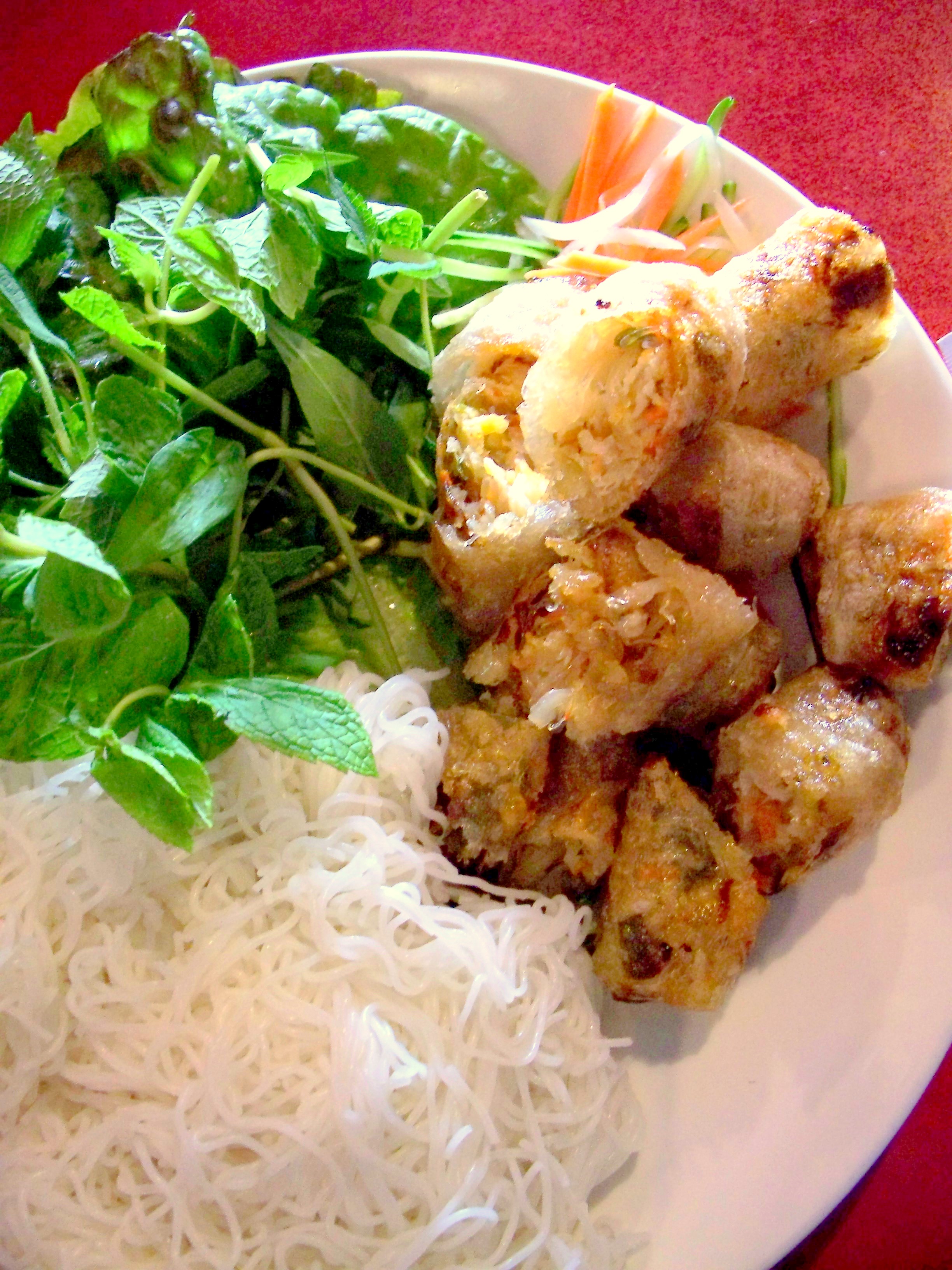
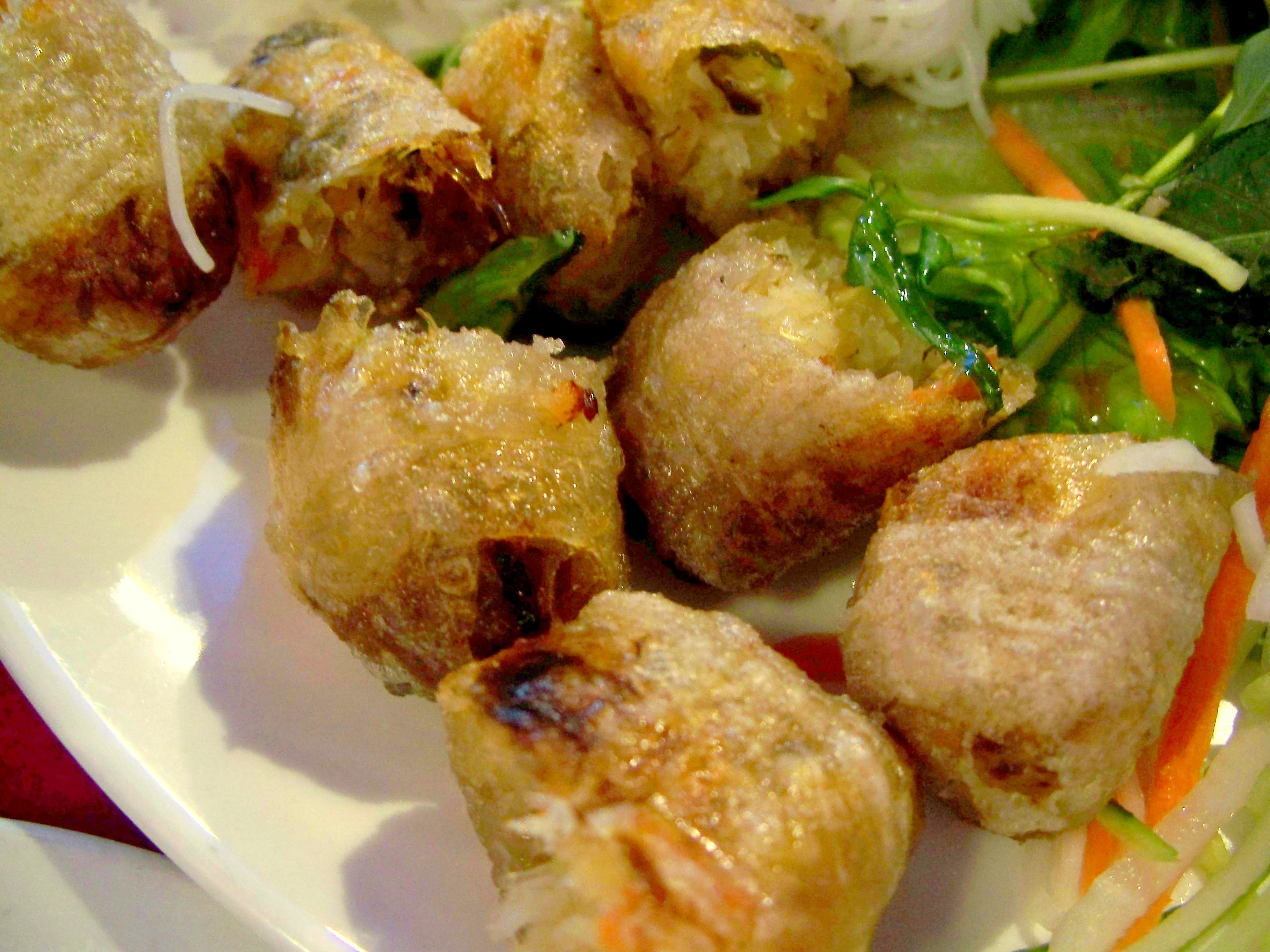
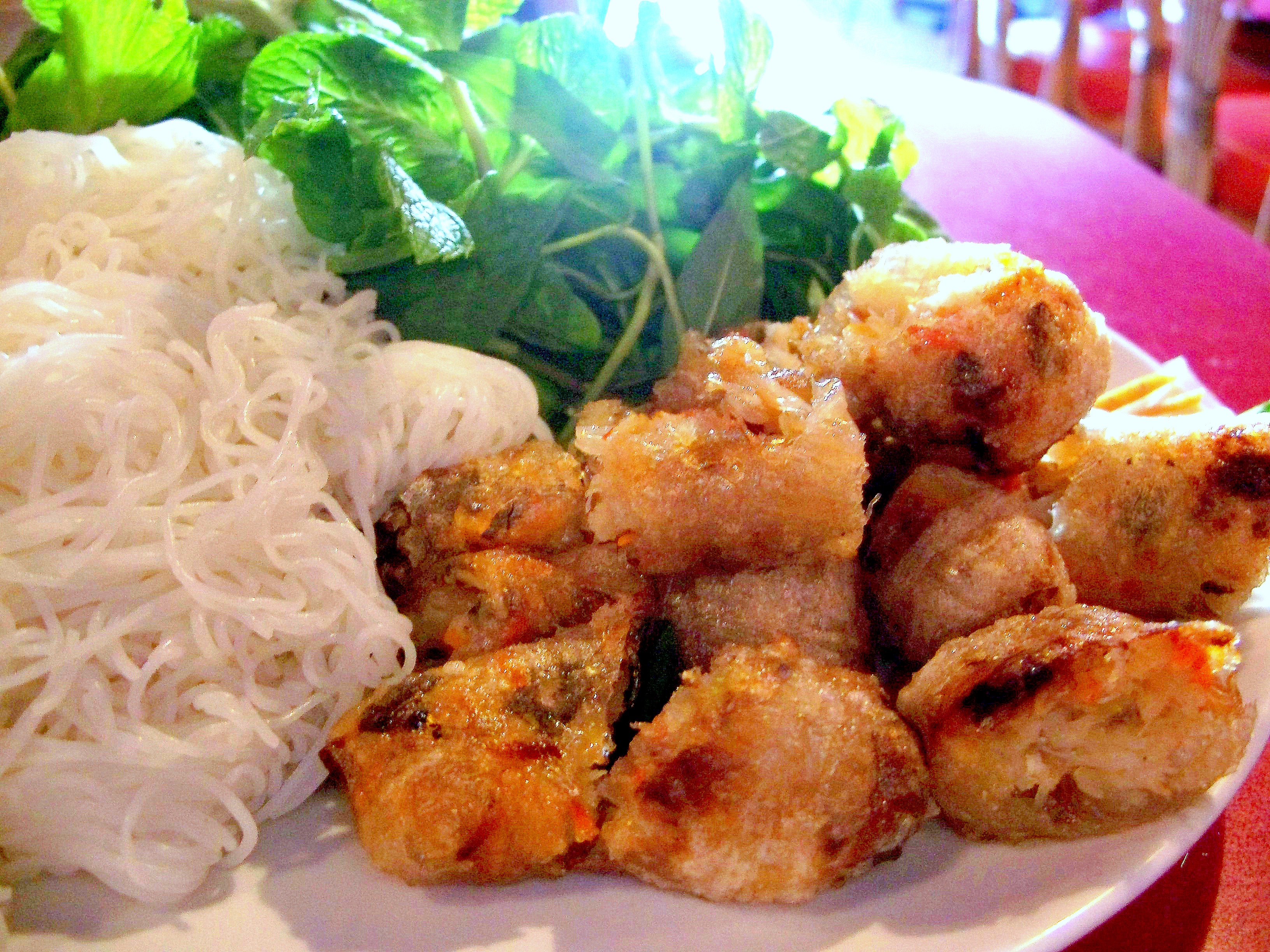
In fact, he kept more than just the spellings. He kept the flavor, the presentation, and the ingredients. Nem cua is wrapped in rice paper, stuffed with real crab meat, wood ear mushroom, and cellophane noodle (NOT cabbage, thank goodness), served with bún (thin rice vermicelli), rau sống (lettuce and mints), and a gargantuan bowl of nước chấm.


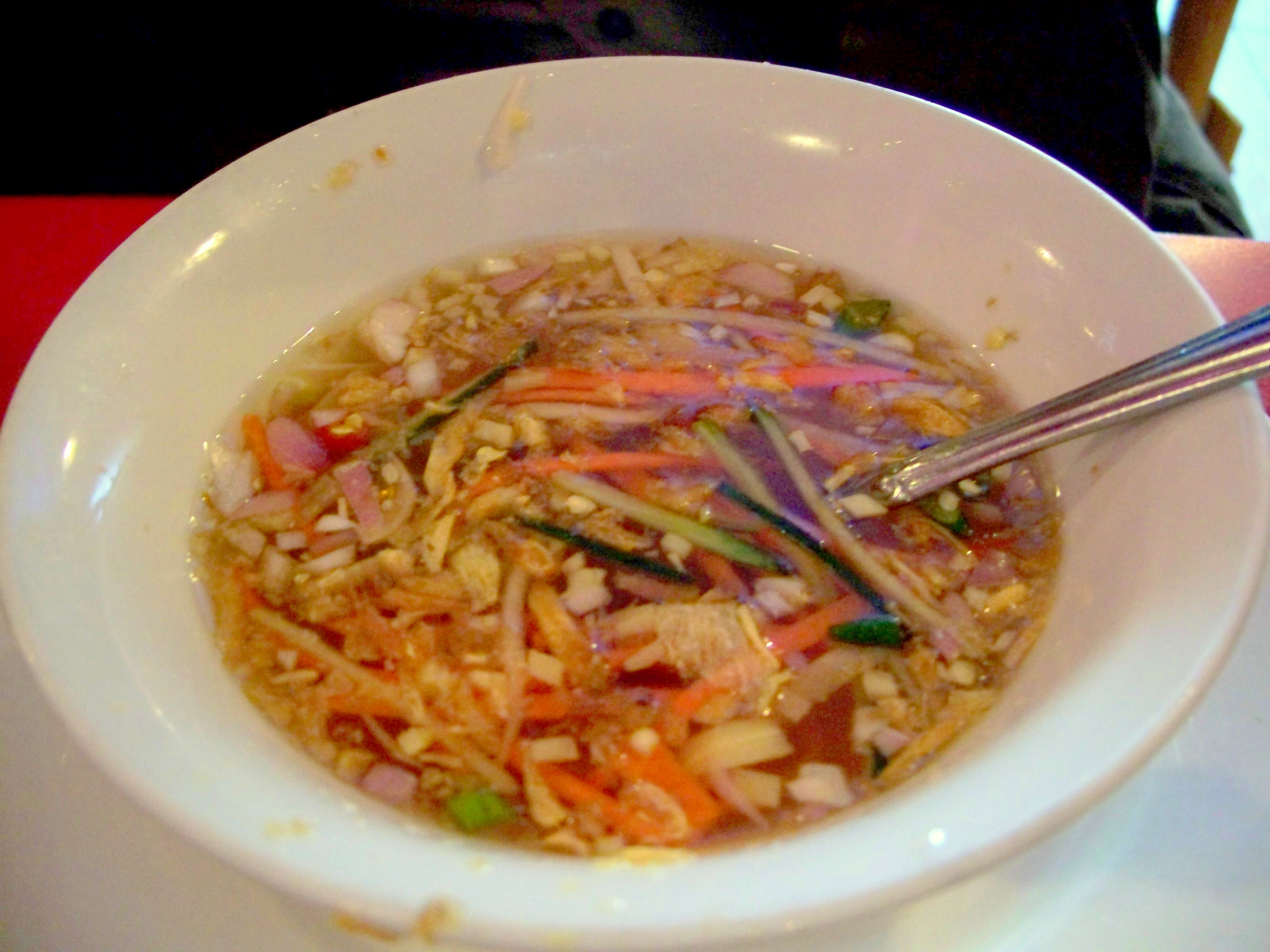
There are floating chili pepper seeds and garlic slices, strings of pickled daikon and carrots, subtle sugar and a squeeze of lemon to temper fish extract’s saltiness, and ginger to counter seafood. The clear sienna dipping liquid elevates the crispy crab rolls and coats the bland vermicelli in flavors. Rice vermicelli and nuoc cham trump pasta aglio e olio, if I may brag.


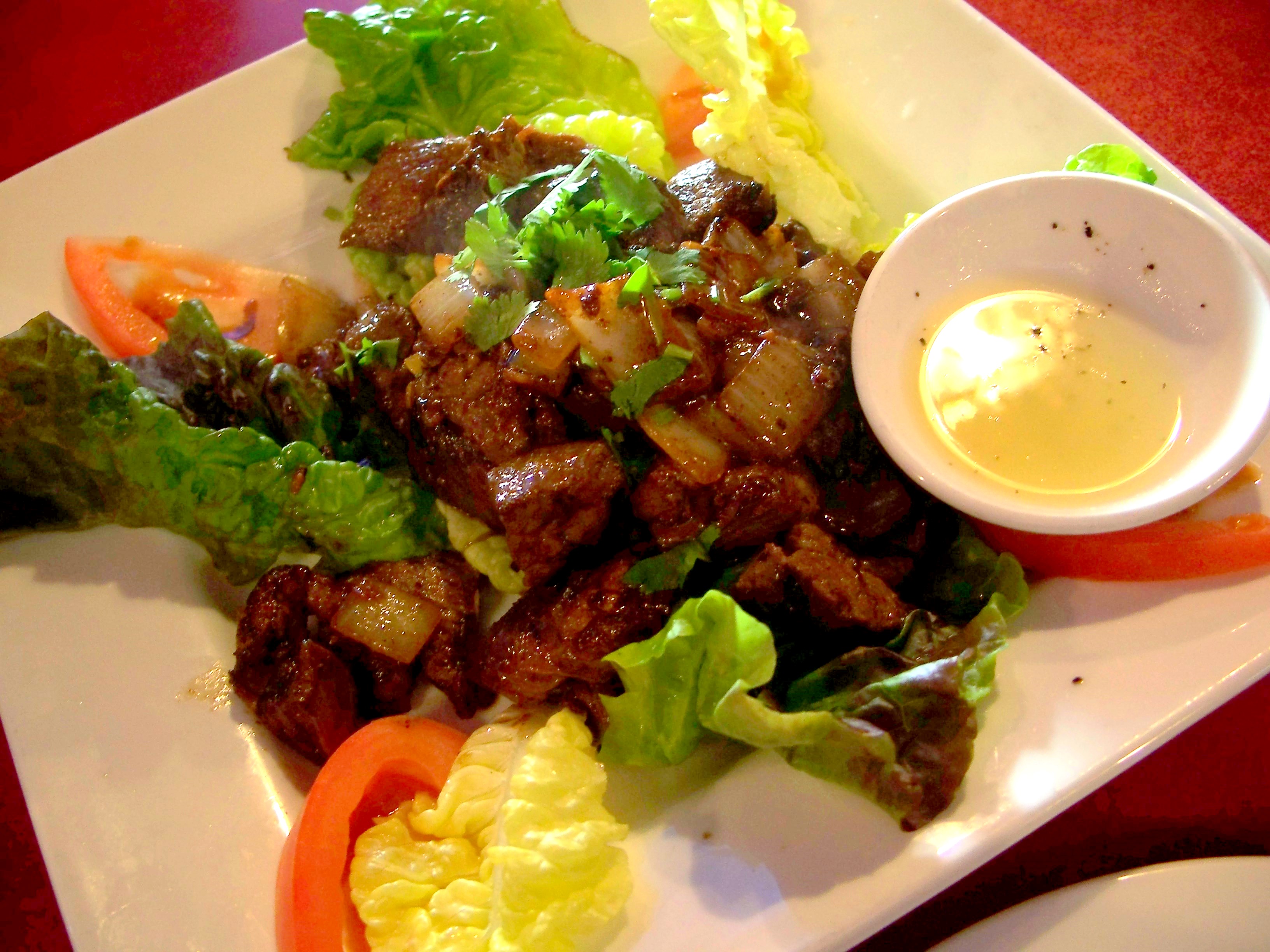
Just after we slurped clean the last twirl of noodles and sauce and erased all crispy crab rolls’ existence, a staff member came and politely replaced our plates with new ones for the second dish. (Yes, the very nice service I mentioned earlier.) It’s also nice that somehow the staff knew we were sharing and didn’t swarm the table with everything at once. The meat arrived when we were half full and wholly satisfied. Bo luc lac, commonly appear as “shaken beef”, sometimes “beef luk lak” (!), is like philly cheese steak, it simply can’t go wrong. But it can be underseasoned. I’m not sure if this is a difference between Northern and Southern recipes, or if the chef intentionally makes it edible without rice, but Bodega’s bo luc lac is more bland than Lemon Grass‘s bo luc lac. It’s soaked in a light salty wine-and-mushroom-like sauce, served with lemon juice, and it lacks the sweet-and-savory signature of Southern cooking. That aside, the tenderness is superb, and the onion bits melt like candies.


So just what makes authenticity? Is it the name? The ingredients? The cook’s experience? Certainly not the cook’s ethnicity. We came to Bodega looking forward to a Hanoi meal, and we left, looking forward to coming back.

Address: Bodega Bistro
607 Larkin Street
San Francisco, CA
(415) 921-1218
(a few blocks away from Herbst Theatre)

Dinner for two (including tax): $32.75