Flavor Boulevard

We Asians like to talk food.
Subscribe

Tycoon Thai, and memories of Mama Lan’s
April 12, 2015 By: Mai Truong Category: California - The Bay Area, noodle soup

tycoon-guay-tian-kra-dook-moo
Living in the Westbrae area of Berkeley, I used to drive past Mama Lan’s daily. In its heyday Mama Lan’s was a great example of a neighborhood cafe – terrific dishes that satisfied with affordable prices. Mama Lan passed away before 2000 and her son took over the shop, keeping it open for a few years after. During Mama Lan’s time in the kitchen, the Vietnamese/Thai menu skewed French in an elegant way – she had a light touch with the hot peppers and garlic and her dishes often had a sweeter, more herbaceous profile. Seafood (crab!) was her specialty, coupled with rich chicken or pork – based broths, rich in ginger, cilantro, lemongrass, lime and coconut milk.

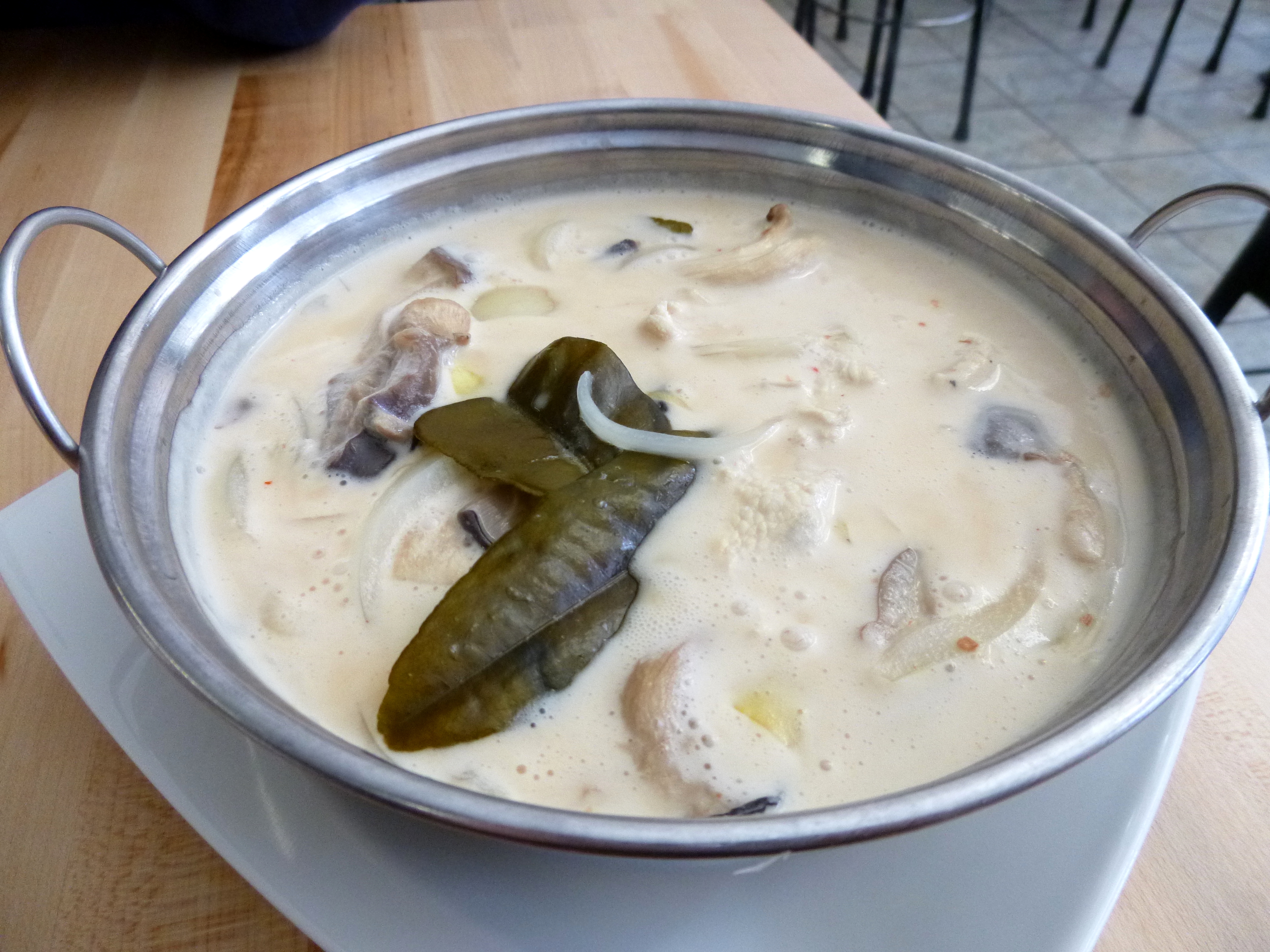
A version of the Thai coconut milk and chicken broth soup with mushrooms and vermicelli noodles, and all the aforementioned seasoning (tom kha) was served piping hot and super thick from the noodles. I LOVED that soup. Green papaya salad containing both shrimp and julienned pork was tangy with lime, not hot, and umami- rich from the pork- it was addictive. After Mama Lan died, the dishes were substantially changed: the tom kha mainly tasted of evaporated milk and the papaya salad was a pallid shadow of its former self. Thanks to Tycoon Thai, I found the taste of Mama Lan’s soup again.
tycoon-tom-kha
Tycoon Thai Restaurant recently opened on O’Farrell, between the Little Saigon district and the theater district west of Union Square. Yes, I am talking about the northern end of the Tenderloin district, but don’t let that stop you from trying out this chic addition to the neighborhood. We tried it after spending the morning at the Asian Art Museum.
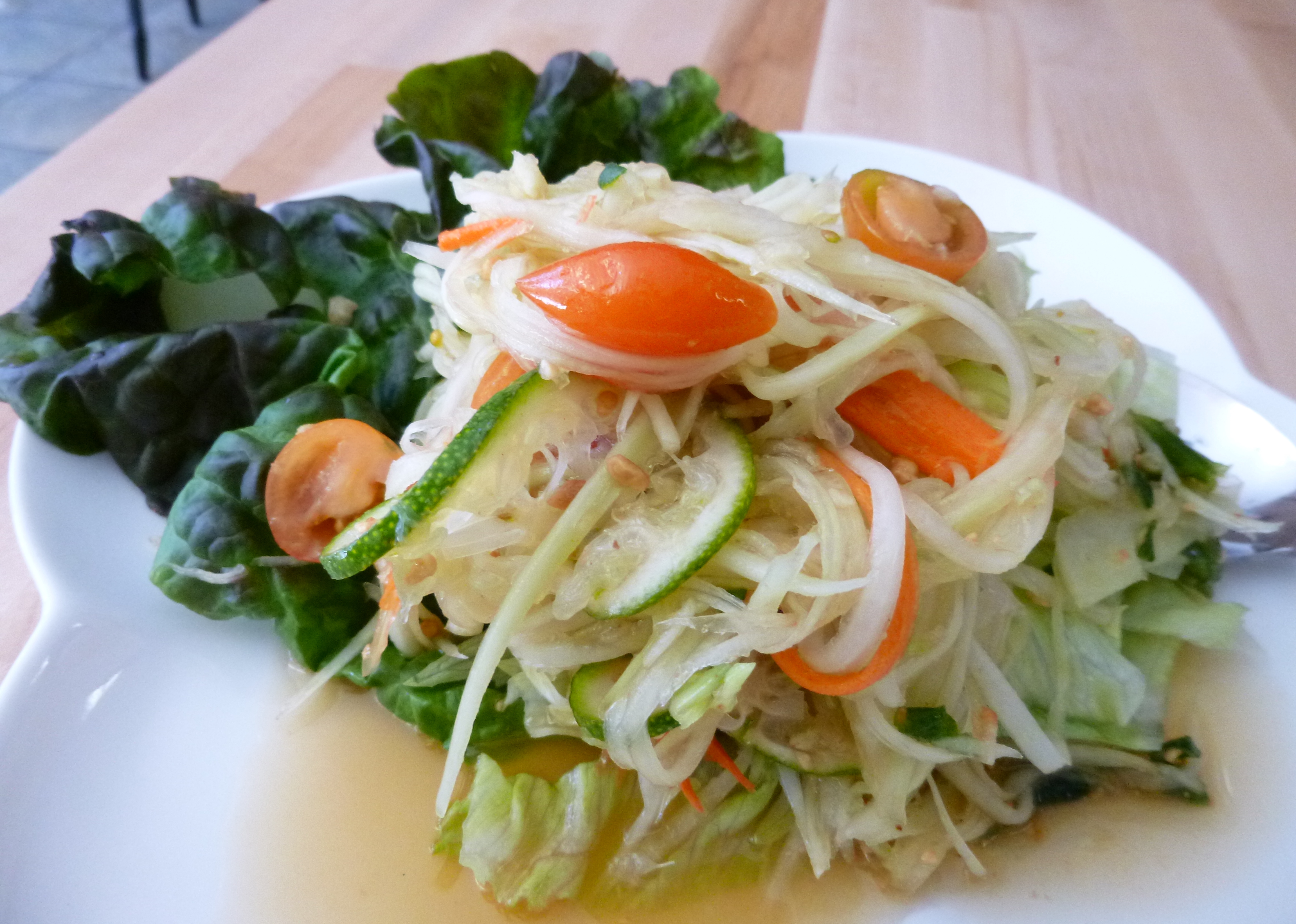
tycoon-papaya-salad
On our first visit Ken and I shared the requisite order of spring rolls- satisfactory, if not special. Then out came the tom kha and the Thai version of green papaya salad (they also have a Lao version, hotter and more sour tasting). Both the salad and the soup were of a generous size and more than enough for two. The tom kha with chicken option, sweet and tangy from lemongrass and kaffir lime leaves, tasted just like that remembered soup from Mama Lan’s.
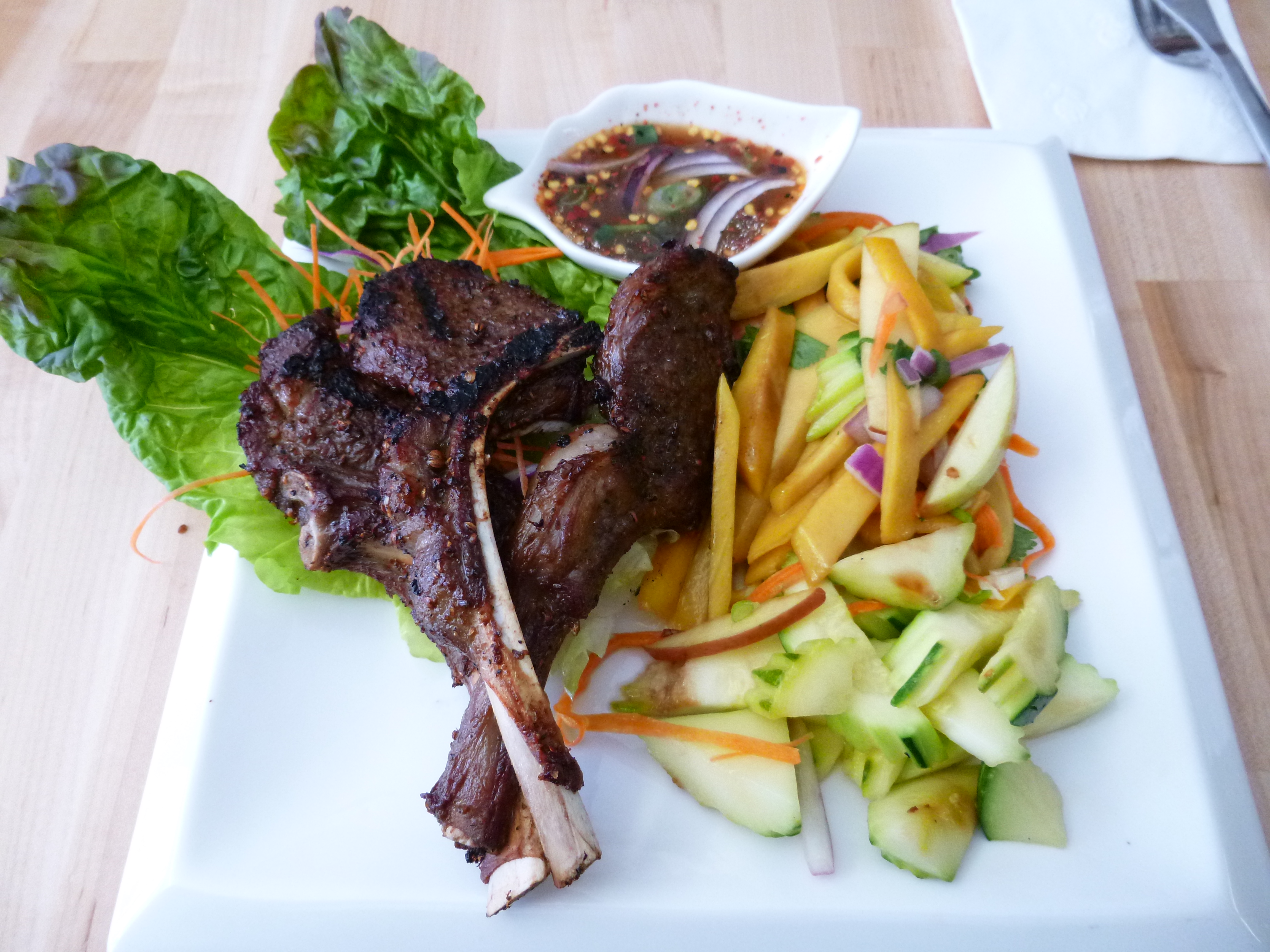
tycoon-lamb
I also ordered a lunch entree of “Tycoon Sexy Lamb Chops” – three tasty marinated and charbroiled lollipop chops, sitting on a tangy mango and red onion salad with a side of cooked zucchini. I’m not sure what made the chops “sexy” (and I don’t want to know!) but by the second chop I was feeling mighty happy.
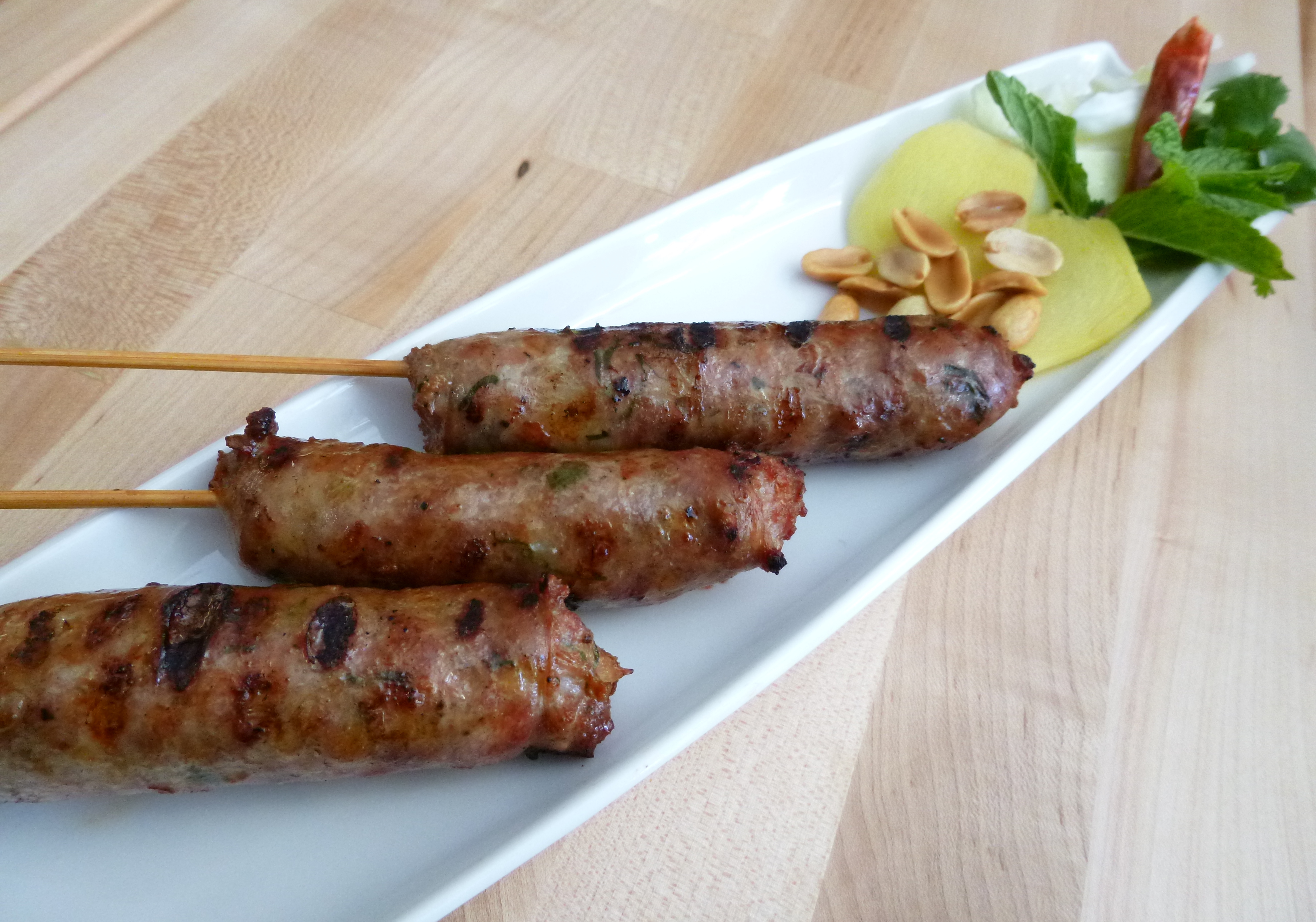
tycoon-sai-ua
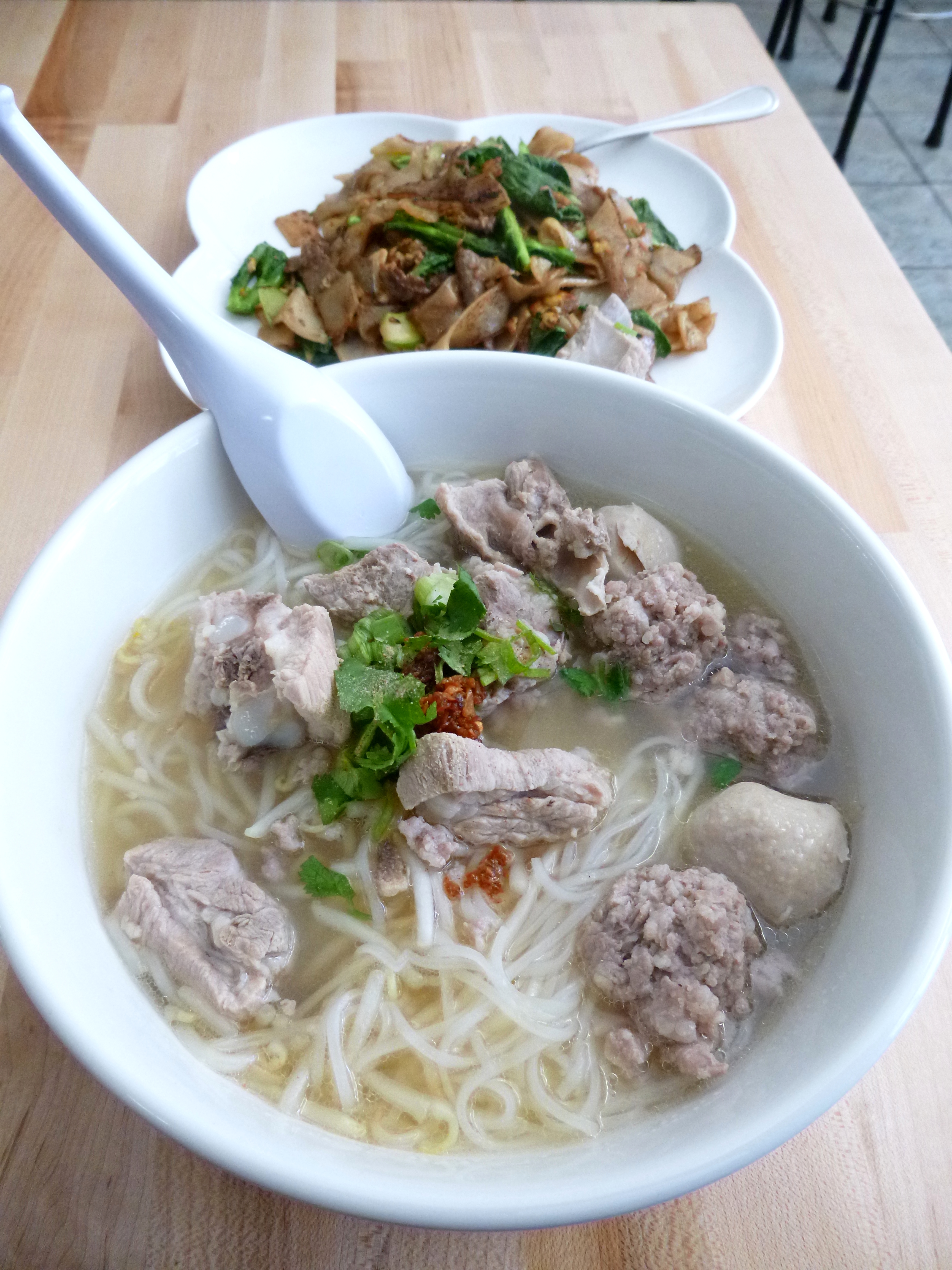
On our next visit, we shared an appetizer of sai ua – grilled links of sausages (3 per order) – full of pork and herbs, earthy and not at all “hot”, pad see you – a thick rice noodle stir-fry with broccoli and beef, and a big bowl of cellophane noodles in a rich broth with both pork spare ribs and ground pork balls (guay tian kra dook moo). There are also numerous curries, stir-fry dishes, and noodles available; one can even get a whole Tilapia, deep fried.

The food selections here are a bit more expensive than the utilitarian but busy Turtle Tower on Larkin, but parking was a wee bit easier on both occasions. Tycoon Thai puts a big smile on my face just thinking about that tom kha (and those lamb chops, too!). We’ll certainly be back!

Address: Tycoon Thai
620 O’Farrell St. (at Leavenworth St.)
San Francisco, CA 94109
(415) 796-3391
Open time: 11 am – 10 pm Sun-Thur; 11 am – 1 am Fri-Sat

———————————————————————————————-
Guest post by Nancy Togami, an expert on neighborhood favorites such as Shanghai Dumpling King and Jodie’s.
Shanghai Dumpling King revisit

October 27, 2013 By: Mai Truong Category: California - The Bay Area, Chinese

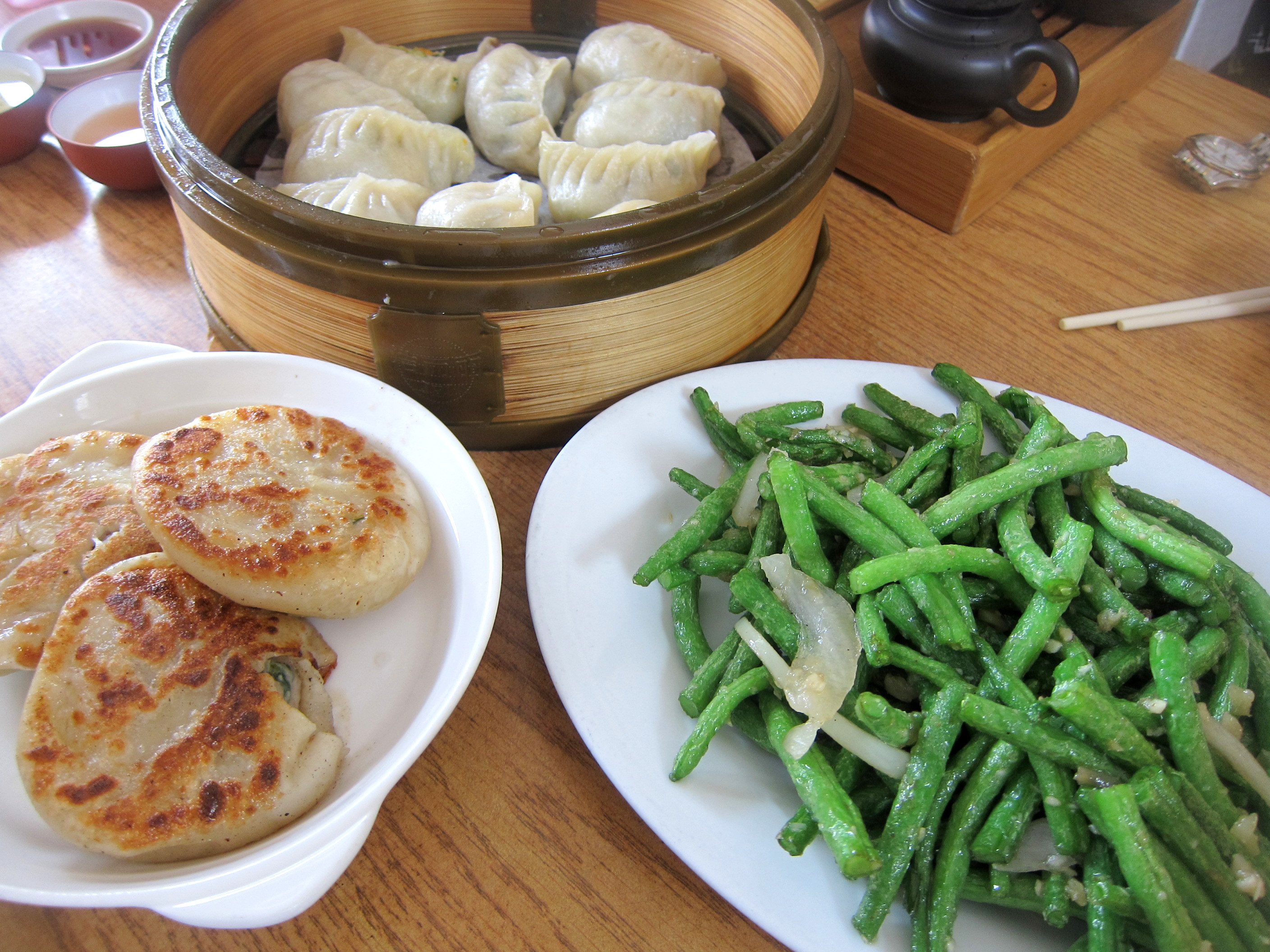
sdk dumplings and green beans
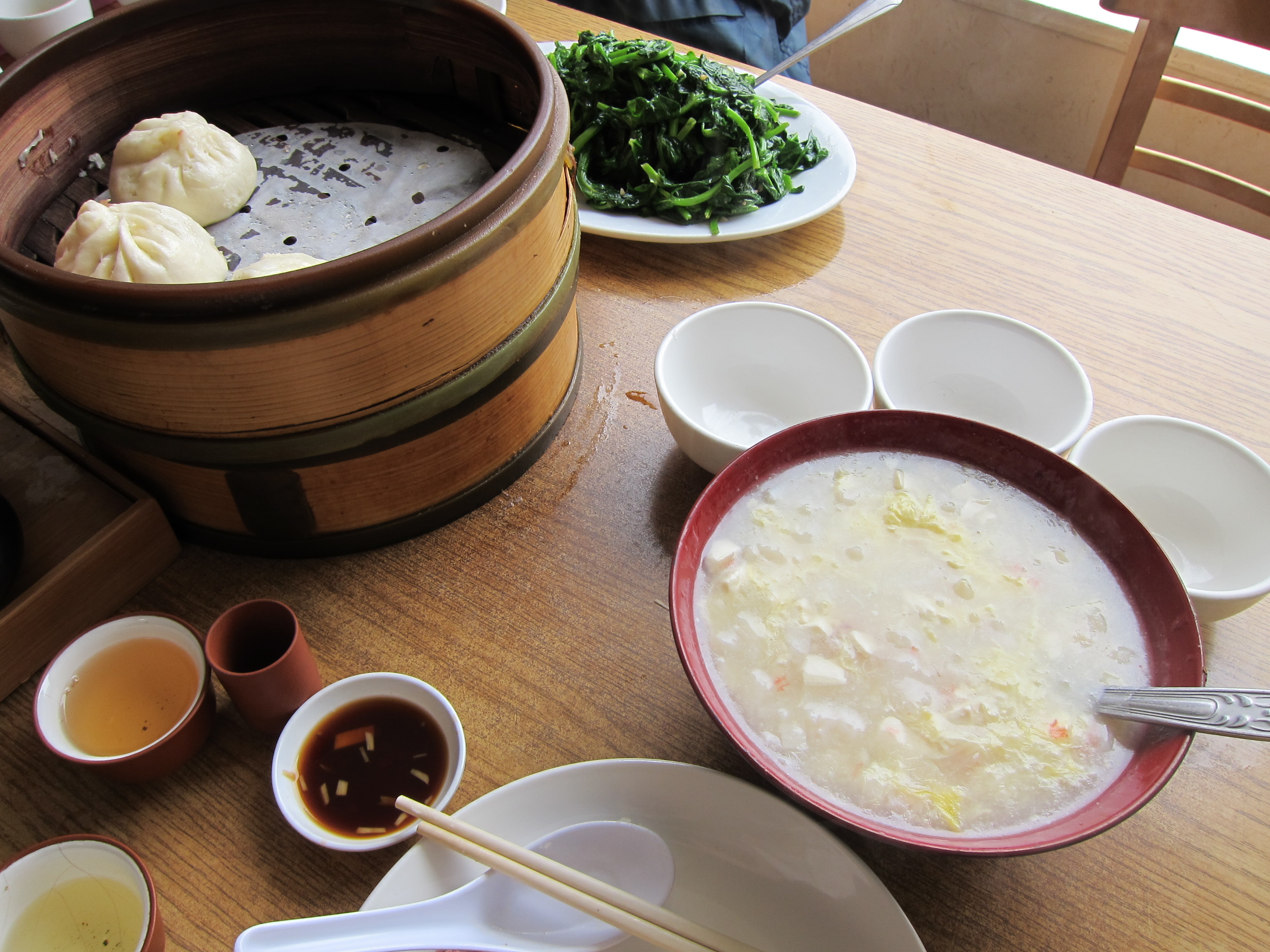
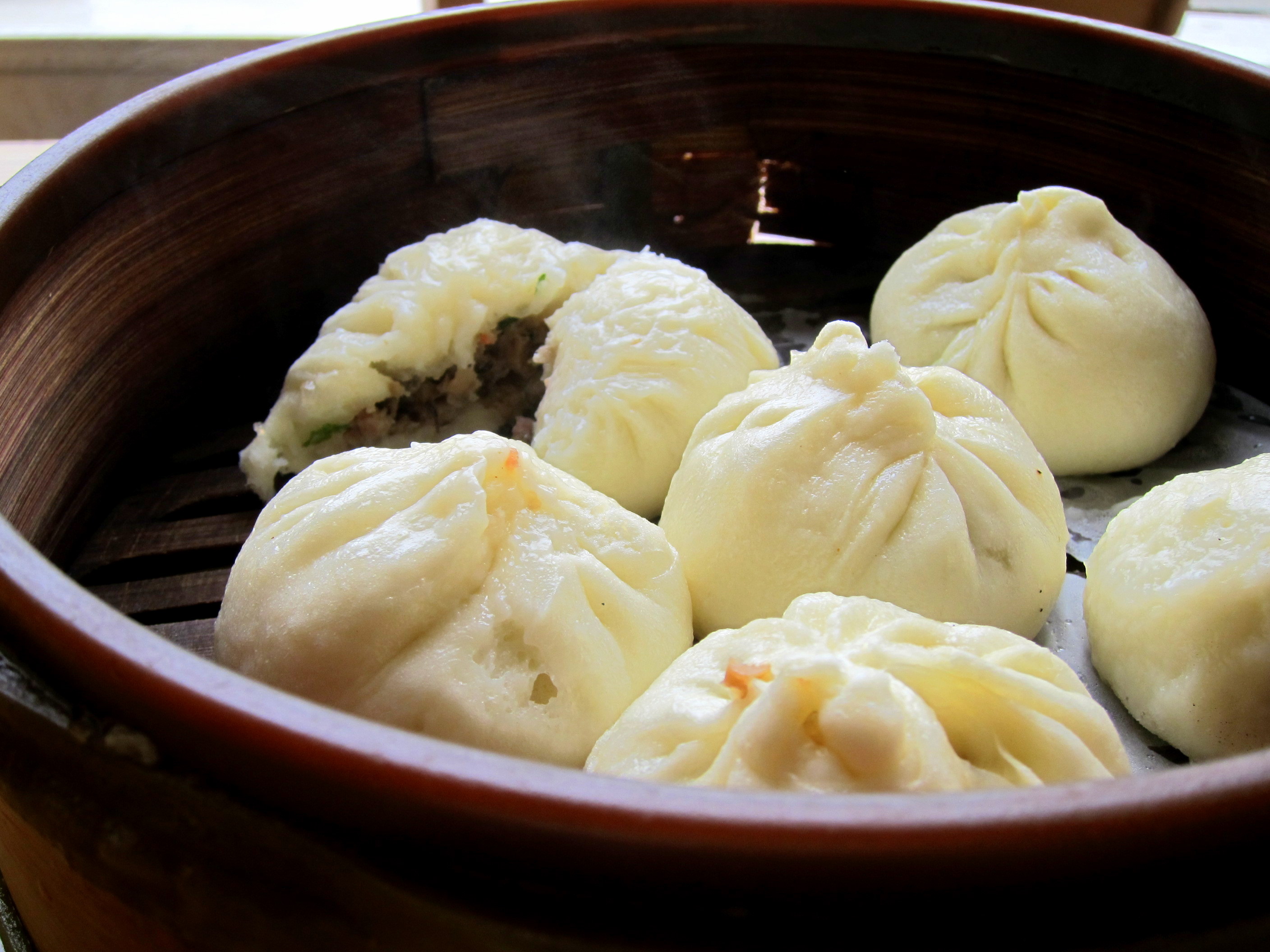
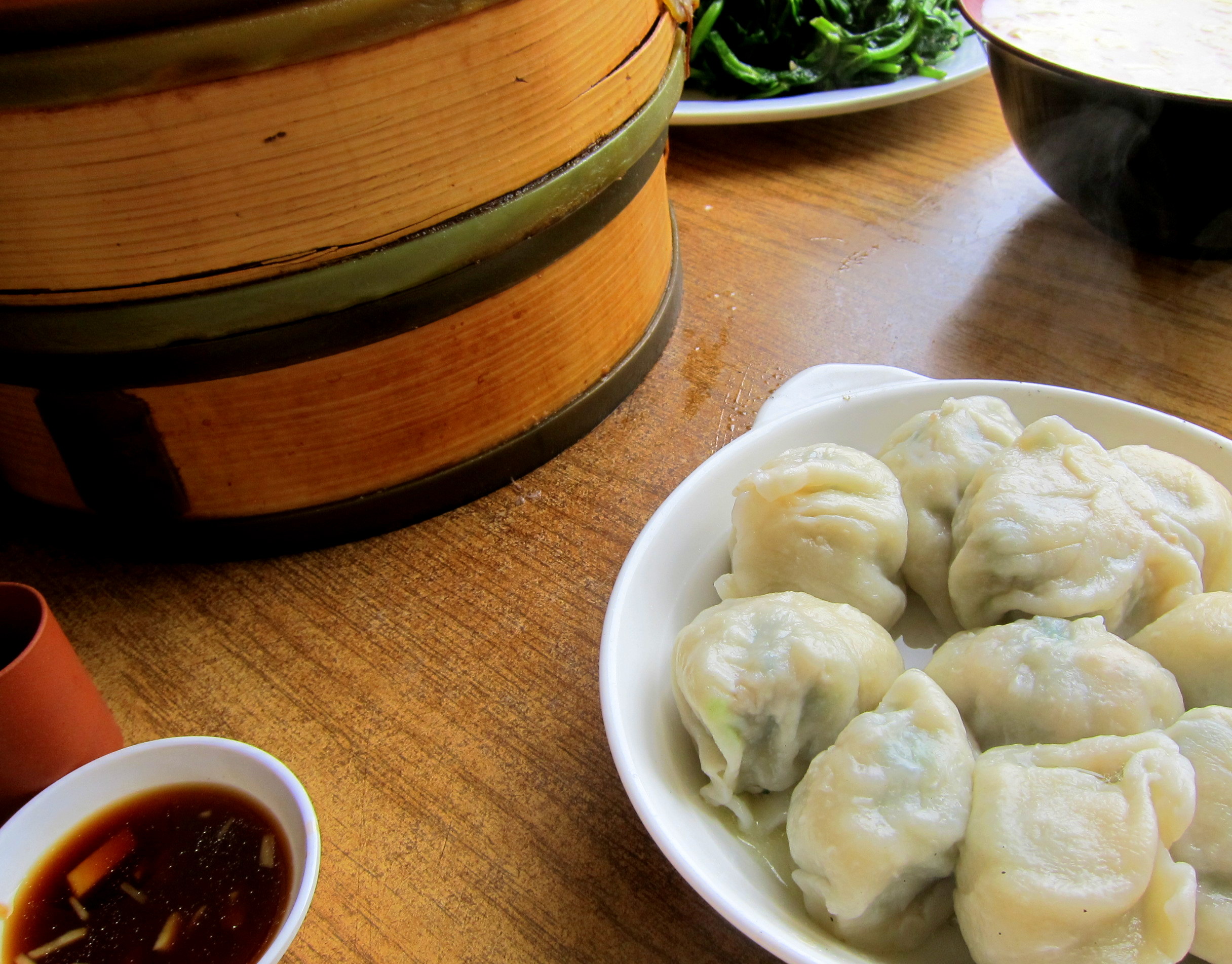
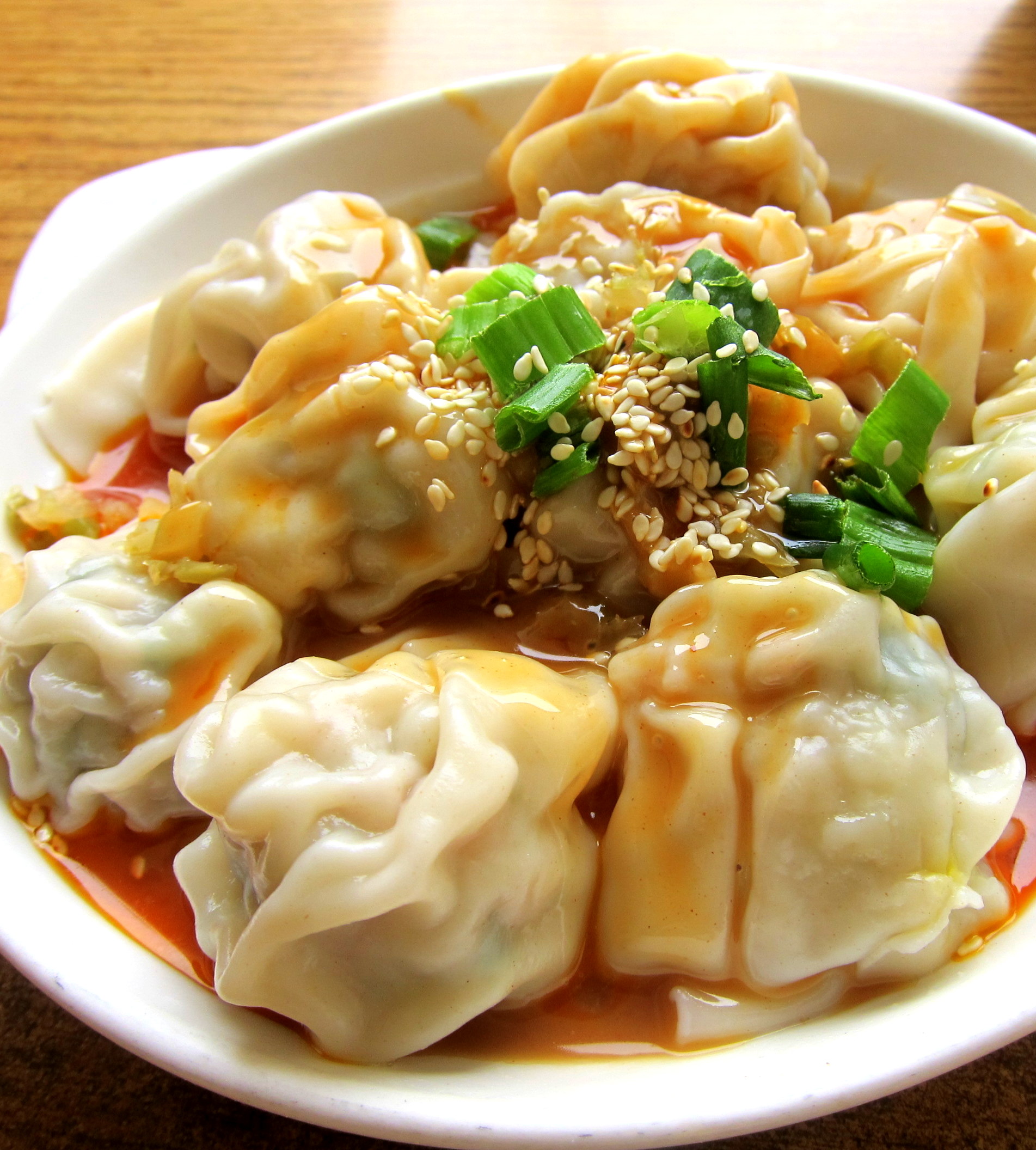
Shanghai Dumpling King is hands down the best value dimsum restaurant in the Bay Area – affordable price, great dumplings (especially the xiao long bao (Shanghai soup dumplings)), friendly staff (the man remembers me from over a year ago!). Click on the image below to see what we got this time around.


Not pictured is the Hung Zhou crab and pork dumplings, but we’ve covered them last time. (They are basically xiao long bao with crab meat, and this time they were even juicier than the xiao long bao. Mmmmmmm)

On a side note, I recently discovered Ponga, which is still in beta phase but has lots of potential to become a great tool to visually tell a story – every detail in the picture can be tagged, described, linked to more info, and further attached with an image or a video. This post is my first experiment to blog using Ponga. What do you think? Do you like it? Hate it? Find it cumbersome? Let me know your feedback in the comments!

One shot: Ramen Underground ramen

October 09, 2013 By: Mai Truong Category: California - The Bay Area, Japanese, noodle soup, One shot

ramen-underground-sf
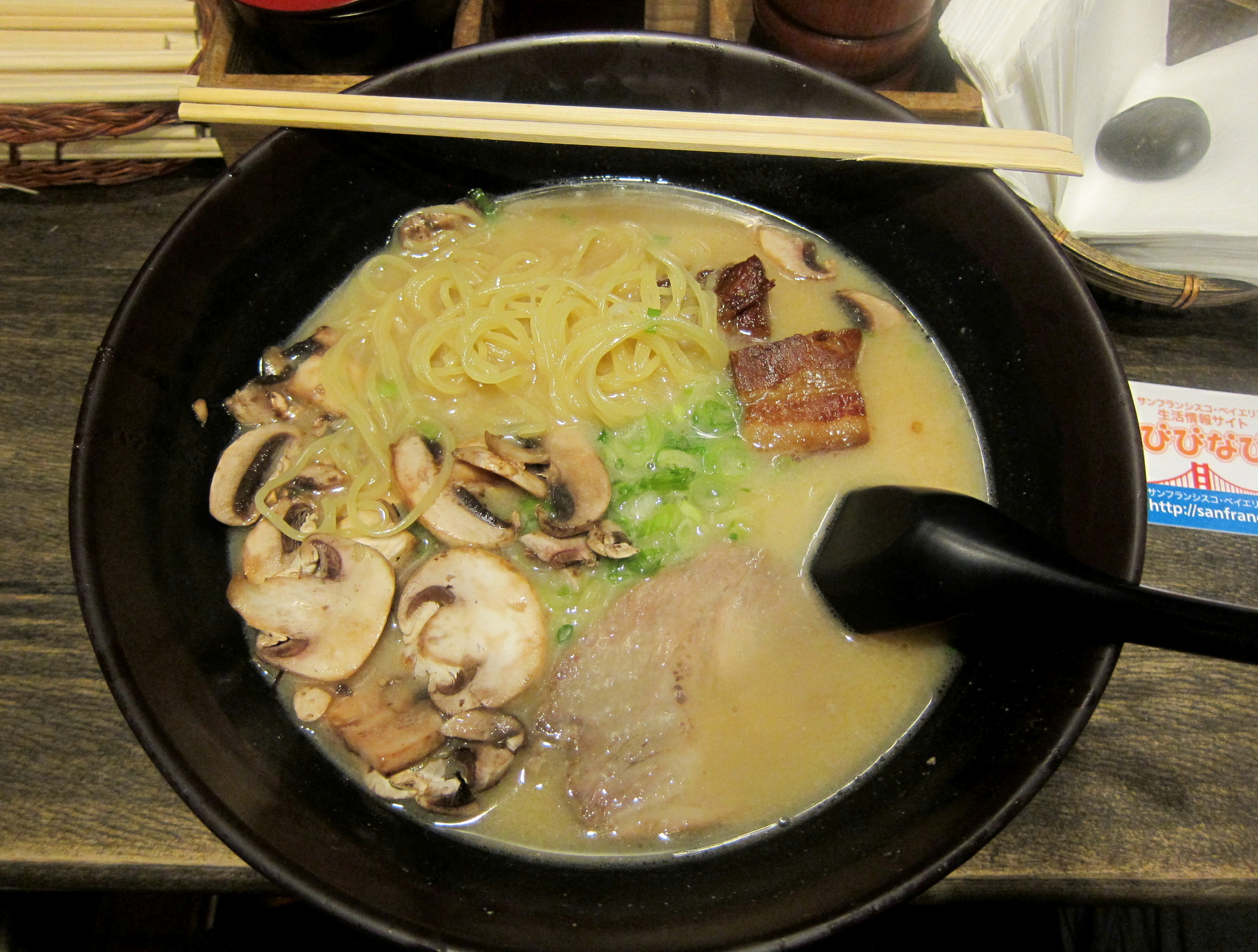
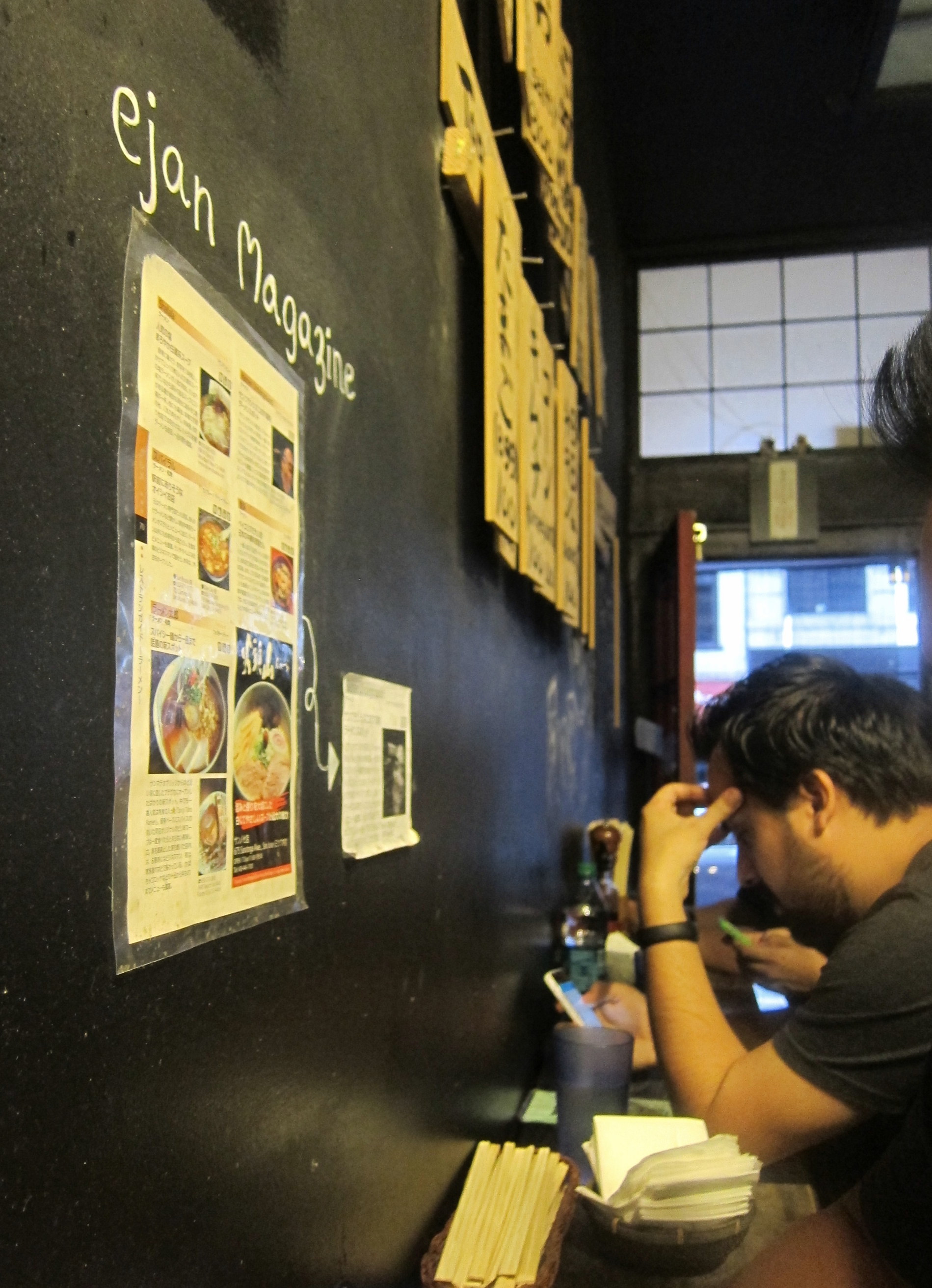
This ramen shop in the Financial district looks cute. Black walls with Japanese writings, a clock with numbers spelled out in hiragana, and a t-shirt that (I assume) sells for 3000 yen (~30 USD). The owners seem to try keeping it as hole-in-the-wall as possible (to make it appear authentic?). Of course, despite what the name might suggest, it’s not actually underground, nor do you need any special thing to get in.

All basic ramens are $8 with $1 toppings. The basic ramen contains your choice of broth, pork (chashu), scallion and mushroom.
ramen-underground-ramen
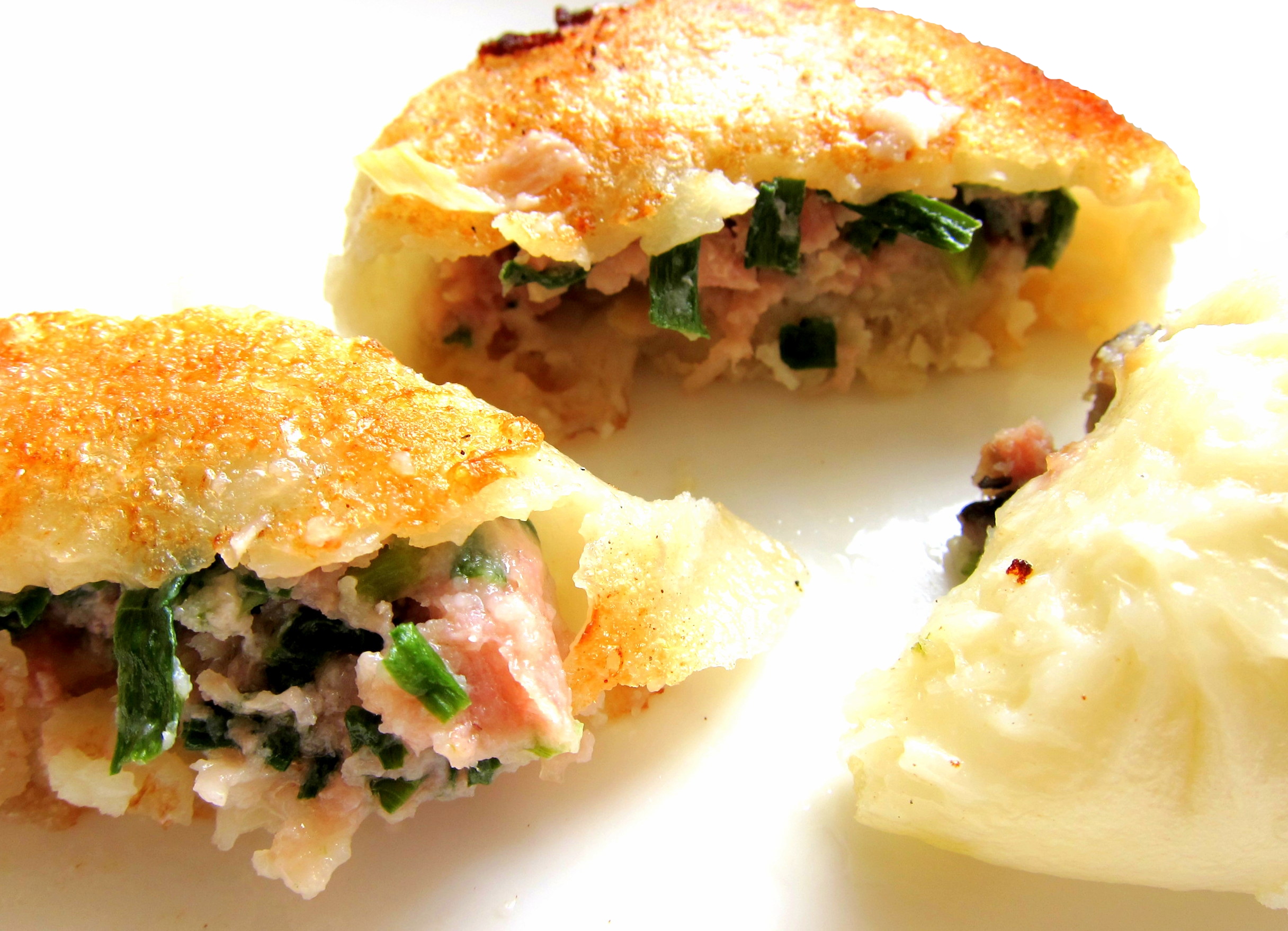
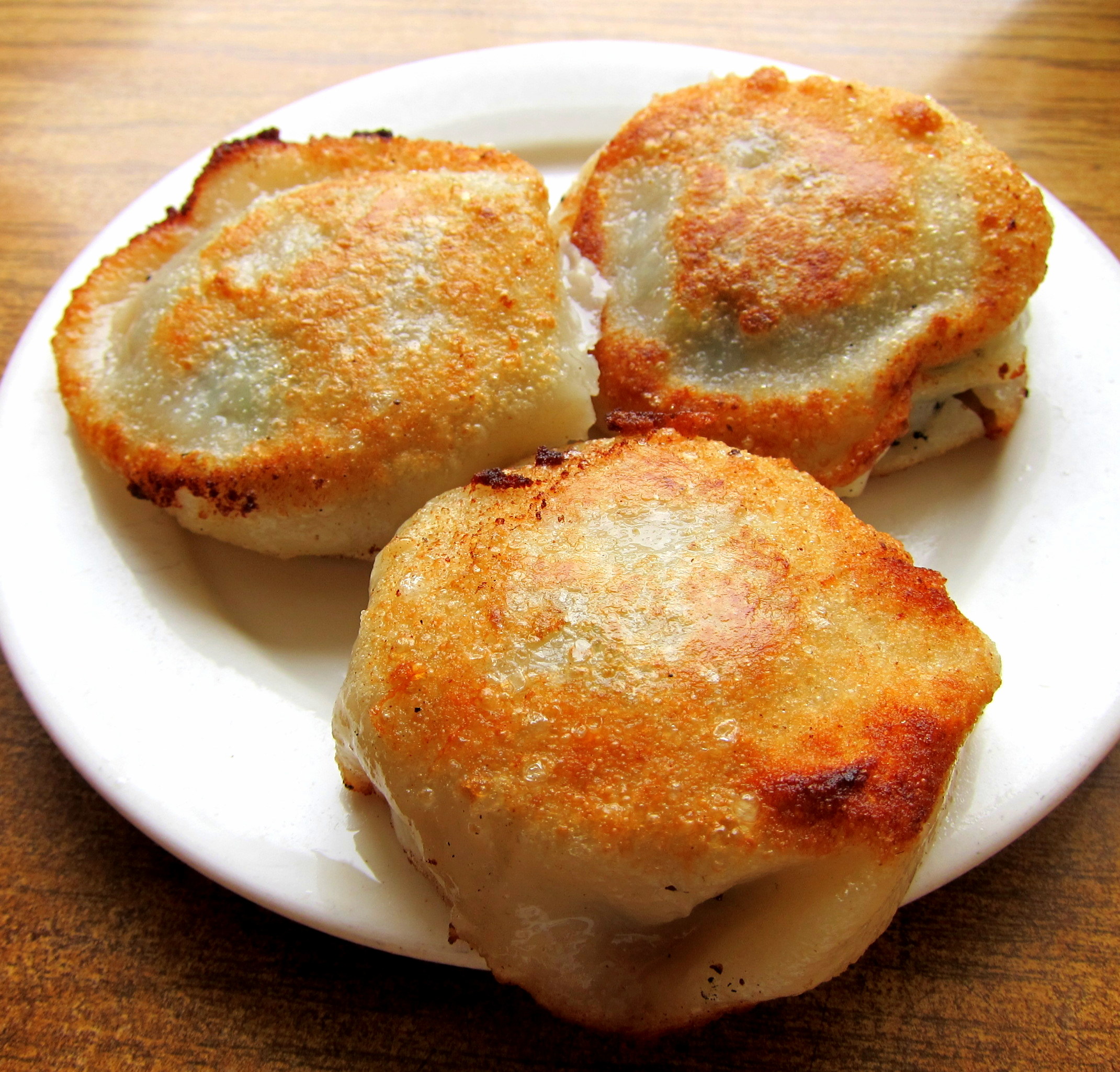
My miso ramen with extra kakuni (braised pork belly). The mushroom is raw (not only is that just wrong – think about cold mushroom in a luke warm broth! bleh!, enoki would have made a MUCH better ramen companion than portobello T_T). There’s ONE puny slice of chashu. The broth is fine but it’s missing something… (more pork, probably!!!) At least the noodle is chewy.

If you’re curious, this is what disappointment tastes like.

(Actually we later realized that we should have asked for an egg, that’s what missing. But still, we could really use another slice of pork…)

Address: Ramen Underground
355 Kearny Street
San Francisco, CA 94108

It’s packed when we went for dinner and online reviews suggest that there’s always a line at lunch, but San Francisco, when will you stop hyping up every. single. thing!

Work at the Farmers’ Market

October 02, 2013 By: Mai Truong Category: California - The Bay Area, Festivals, Opinions

StonestownFarmersMarket
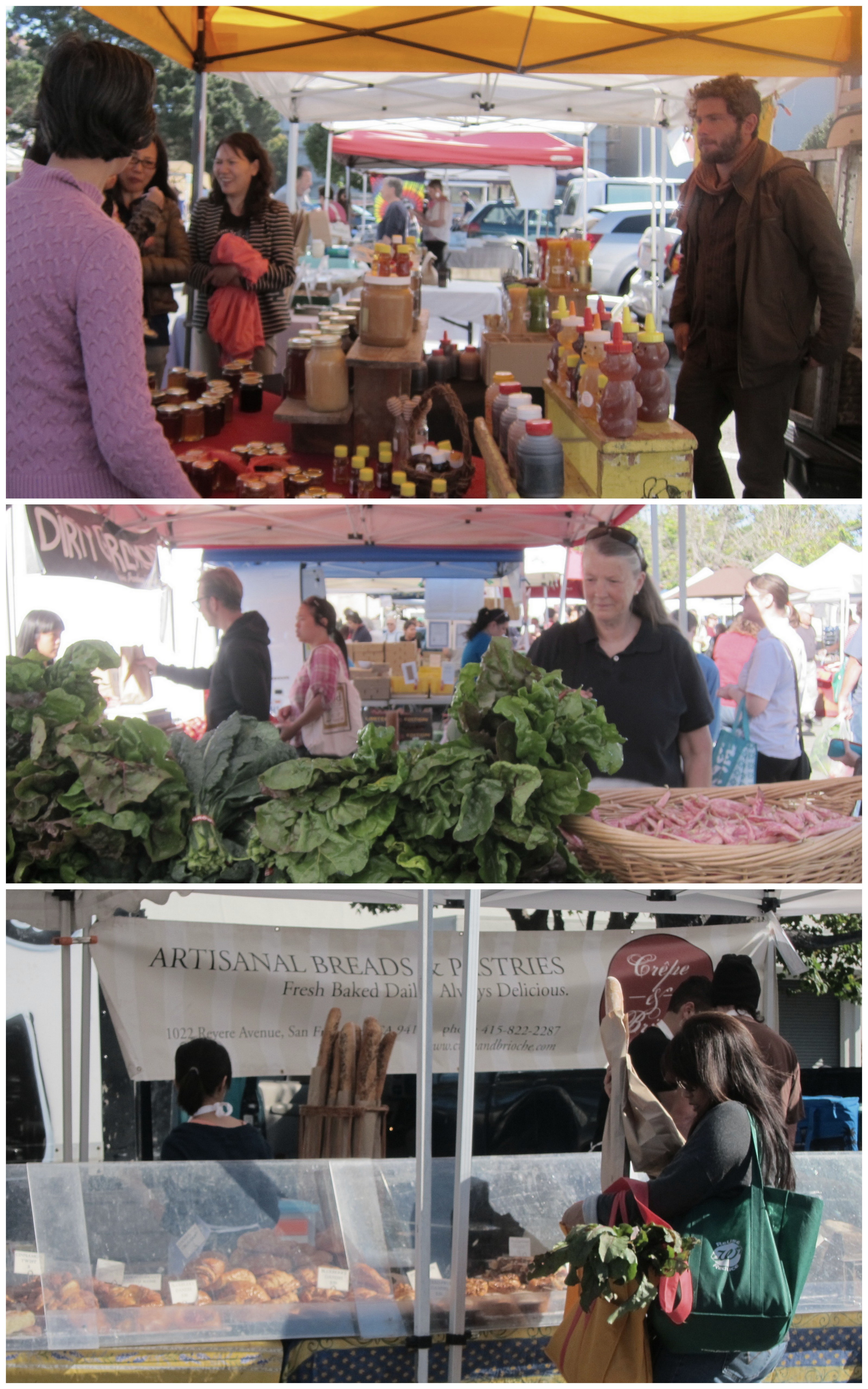
September was an extremely busy month. In addition to the usual school work, teaching, a part-time job and my editor job at the Daily Cal, I took on editing a special issue on Food (how could I resist?) and I worked for Sinto Gourmet for two weekends (again, it’s food work, I just couldn’t resist). The first weekend, Hyunjoo Albrecht, Sinto’s owner, asked me to be at the Stonestown Farmers’ Market at 7:30 am on a Sunday.

I told myself that waking up early is good for me, and that after the Farmers’ Market finished I would have the rest of the day to study. That was all good in theory, until I couldn’t sleep the night before and ended up working all night, then begrudgingly got dressed to leave at sunrise. (My friend Nancy was so unbelievably kind to drive me all the way from Berkeley to Stonestown, otherwise, I would have had to take the bus at 5:30 am and made a few transfers)

After leaving me with the kimchi, Hyunjoo rushed to another Farmers’ Market to set up her stall. Other vendors slowly arrived and filled up their space, but not the stall to my left. The wind blew fiercely from Lake Merced in the west, which is also on my left side. Of course, I didn’t dress warm enough, had no scarf, and had to mentally fight off the cold by reading about sushi. I hated the first two hours at the Farmers Market.

By 9:30, the sky got clearer and I stepped into the sun to warm up. Then customers started coming by, I started giving out samples, the vendors of the stall to my left finally came and rushed to set out their vegetables. I came back to life.

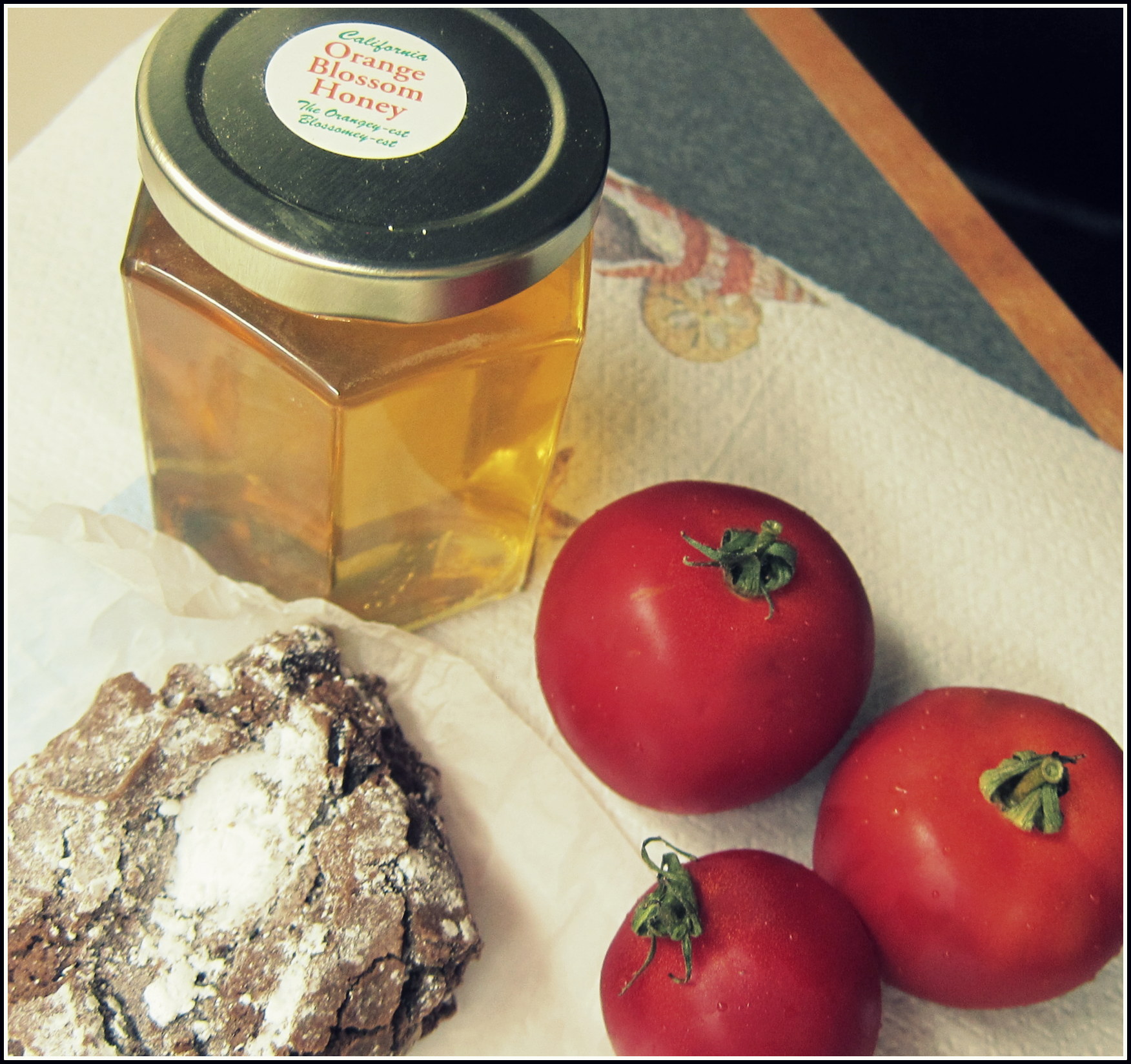
At the end of the day (which was about 1 pm), the vendors began packing up. I dropped by the neighboring stalls to say hi and see what they were selling. The Saint Benoit Yogurt lady gave me a strawberry yogurt, the Phoenix Pastificio guy gave me a chocolate macaroon (not macaron), the honey guy let me taste 5 (or 6?) different honeys and gave me an orange blossom honey jar, and the vegetable vendors to my left gave me some tomatoes (the girl even washed one for me to eat right there – I hadn’t tasted such an aromatic tomato for years!). The other vendors also traded stuff with one another, kale for honey, marinated tofu for pastries, and so often they just give them for free.

Orange blossom honey, tomatoes and chocolate macaroon.

Orange blossom honey, tomatoes and chocolate macaroon.

By the end of the day, I was exhausted from standing and talking and dragged my feet to the bus station without a care in the world, but I was happy. Not just because I got free food (that made me happy of course). Not just because the food was so divine (the yogurt was so creamy because it’s made with whole milk, the honeys actually tasted like the flowers that the bees used to make honey, and over all, these fresh, real foods have such pleasant floral smells to them that store products can never compare). I actually didn’t know why I felt so happy until two weeks later, when I worked at Eat Real Festival with Hyunjoo. I was happy at the end of each day at the festival too.

Sure, I had to wake up at the time I normally go to bed, walked half a mile each way (from the bus stop to Jack London Square, where the festival was held), stood for 8 hours each day and felt like my knees and heels were going to shatter. Neither Hyunjoo nor I had any time to eat or check out other stalls, no vendors did. On Saturday, we bought two pastries from the stall right in front of us and a few sad dimsum (that were tiny and tasted no difference from the frozen ones). On Sunday, we ate nothing. We were tired for sure, but like Oaktown Jerk’s Randall Hughes in the next stall said, I didn’t feel miserable. There’s something so real about working with products, holding them in your hand, handing them to your customers and watching their expression as they got surprised by its quality. It was motivating. The kimchi is not even my own product and I’m already this happy selling it, I can hardly imagine how happy Hyunjoo must feel, and how the other vendors feel about their own. I began to understand how my parents feel when they spend hours everyday tending the apple and plum trees and cucumber vines in the backyard (and others in the front yard too).

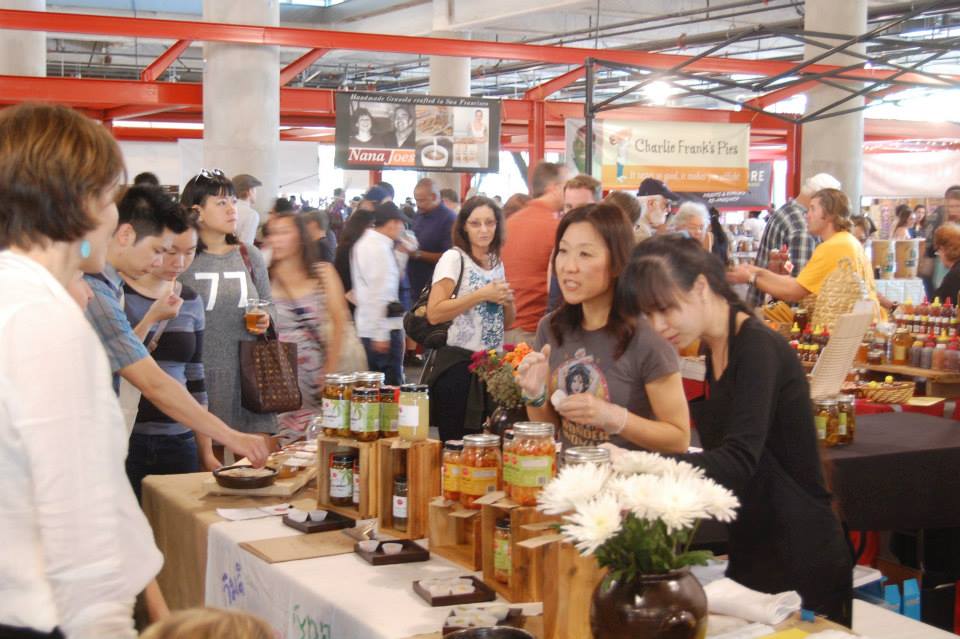
Sinto Gourmet booth at Eat Real Festival 2013. Image courtesy of Sinto Gourmet.

Sinto Gourmet booth at Eat Real Festival 2013. Image courtesy of Sinto Gourmet.

For someone who spends almost all of her time in front of the computer, the interaction with physical products and physical people was fresh air. There were some annoying customers and some crazy ones of course (literally crazy, as in something is off in their head), but it was all very real. The interaction among the vendors was even better. Everyone was kind and eager to share their knowledge, and I like how they buy from one another (for example, Hyunjoo buys apples from another vendor at Farmers’ Market to make apple juice in her white kimchi). There was hardly any competition. During those hours, my focus was on preparing samples fast enough while observing and talking to the customers; I didn’t have to think about what I should do for my future, how to write my resume, how to sound smart against everyone else in my field. During those hours, I could actually rest.

The day after, my calves felt as if they had shrunk and standing up to start walking was the most painful moment ever. But, I would gladly do it again. I’m sure I would hate myself when I try to get out of bed, but as soon as I leave the apartment, I would feel alive.

M.Y. China, xiao long bao and food reviews

July 17, 2013 By: Mai Truong Category: California - The Bay Area, Chinese, Opinions

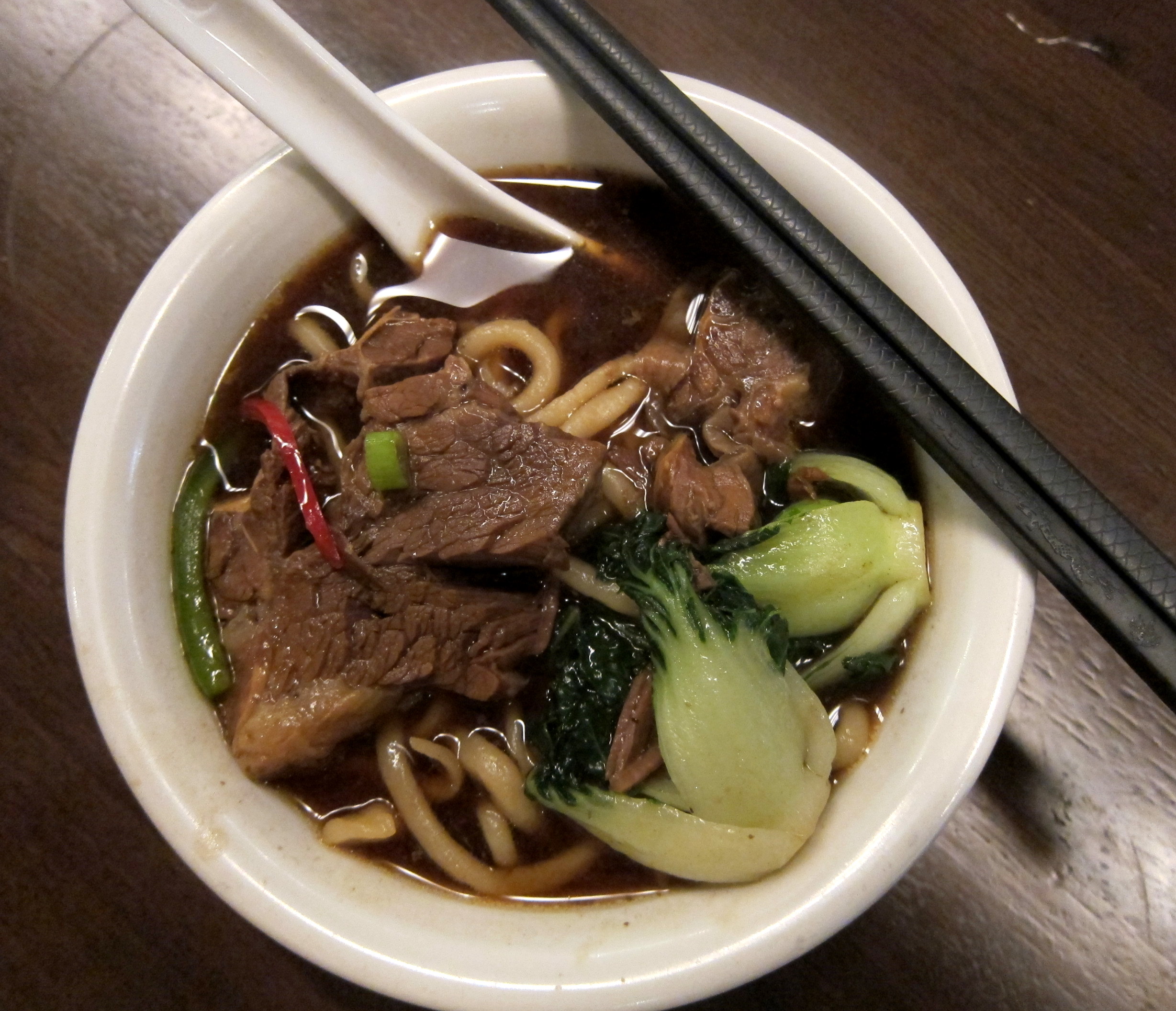
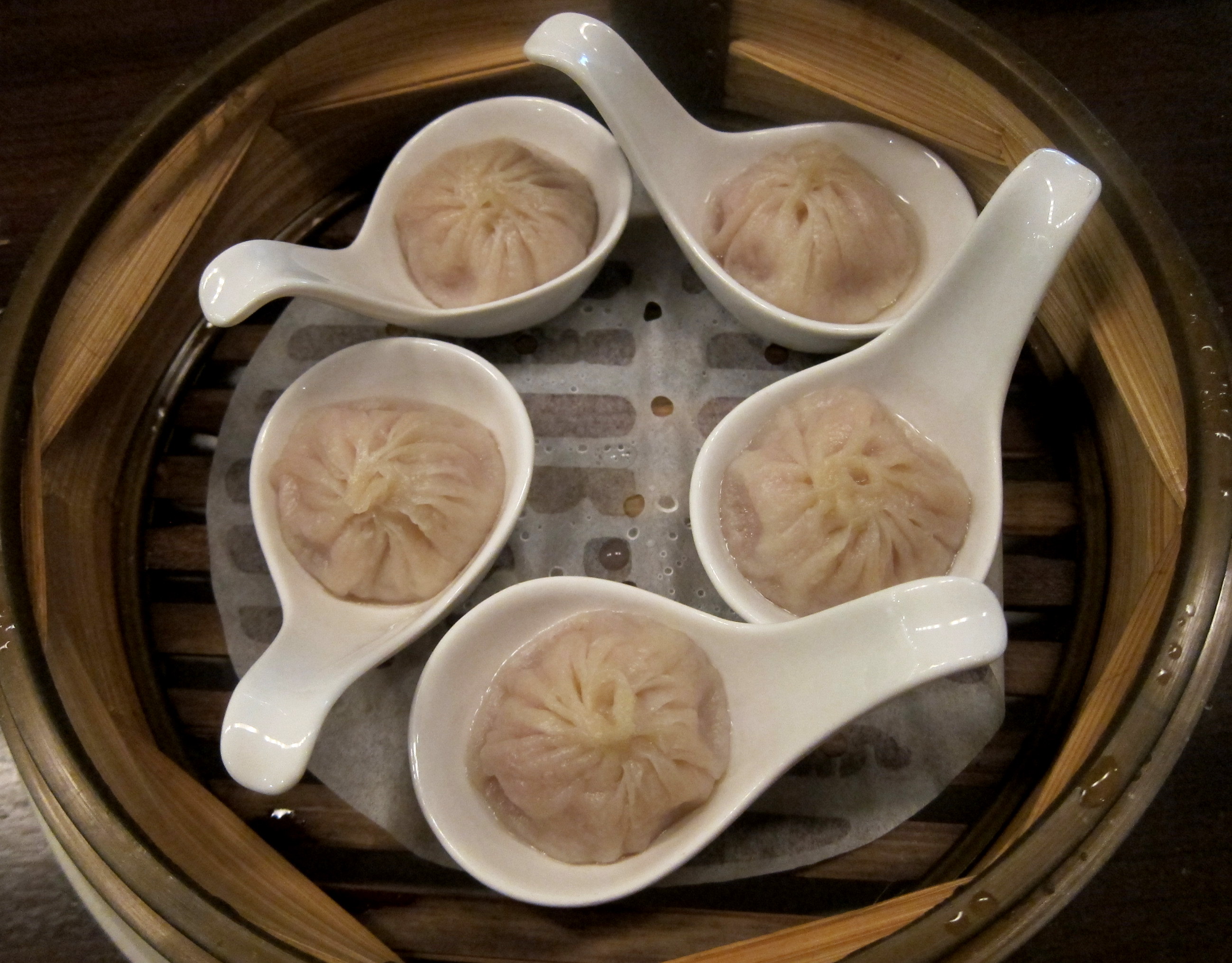
The restaurant is big, clean and convenient. It’s in Westfield San Francisco, a big chunk of the fourth floor of the shopping mall is restaurants, and M.Y. China is one of them. Sitting 50 feet from the kitchen and you can smell the intoxicating fumes of dumplings. We order two Chinese classics: xiao long bao (pork & crab juicy dumplings) and niu ro mien (beef hand-pulled egg noodle soup).

mychina-niu-ro-mien
The niu ro mien is good. Fourteen dollars. Melting tender beef, chewy noodle (not as chewy as I would like, but I’m not a fan of egg noodle anyway), dark, flavor-packed broth (which gets a bit too salty after a while and sends you drinking water like mad).

mychina-xiao-long-bao
The xiao long bao‘s are dry. Twelve dollars for five. There’s not enough broth in them. The dumpling skin is dried up on top, the carrot slice at the bottom, which supposedly helps preventing the dumpling from sticking to the spoon, disrupts the harmony in texture. The pork filling? This is where my friend and I disagree.

The filling has ginger. My friend insists that: 1. xiao long bao should have a lot of ginger (to mask the flavor of the pork); 2. she has eaten a lot of xiao long bao over the years to know that it should have a lot of ginger; 3. she doesn’t notice the ginger in these xiao long bao, in fact, she added extra ginger to the dumplings to make them taste gingery.

I insist that: 1. these xiao long bao are too gingery (the pork and the crab are completely masked); 2. even with the pre-equipped knowledge that xiao long bao are supposed to have a lot of ginger, I don’t like these xiao long bao because they have too much ginger.

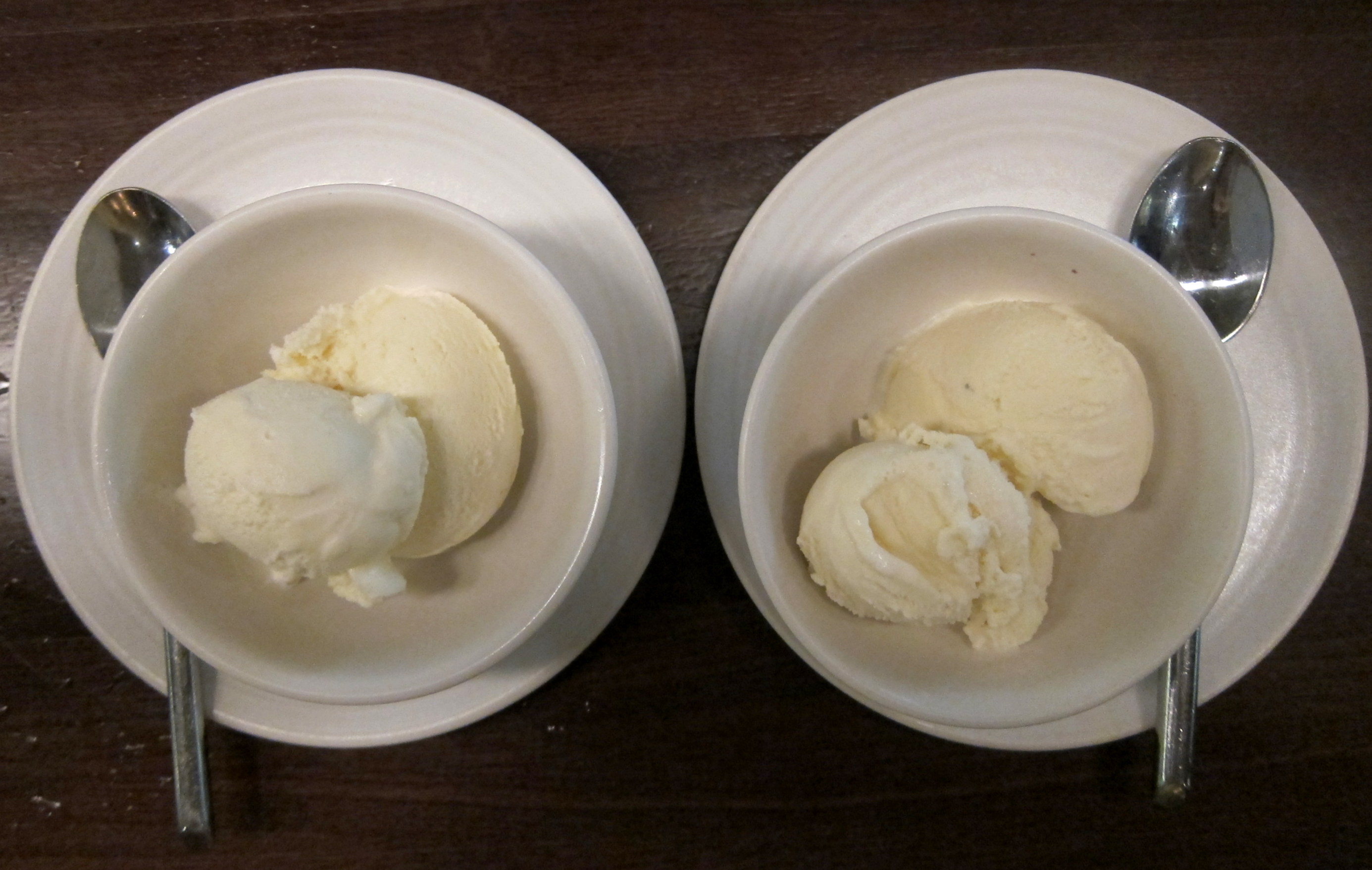
Ice cream ($4 each) - toasted rice (left) and chinese walnut (right) - both remind me of grocery rice milk and walnut milk, which are sweeter than I would have liked.

Ice cream ($4 each) – toasted rice (left) and chinese walnut (right) – both remind me of grocery rice milk and walnut milk, which are sweeter than I would have liked.

Of course, the natural question comes up: should you review food based on your knowledge of the food (how it should be) or based on your taste of the food (how it is)? Food reviews have both objective facts and subjective preferences, and as a reviewer, I don’t mix those two categories together. If I know with all certainty how it should be, I’ll include that statement in my review, otherwise, all of my reviews are about how it is (with respect to my taste buds). Is that too subjective? Sure. Are my preferences peculiar? Maybe. I don’t drink coffee and alcoholic beverages, and I don’t eat spicy foods. In general, I don’t like anything too strong. If a dish has one overwhelming flavor that masks everything else, I call it “one-dimensional”. I want to taste different flavor profiles in a dish, especially the natural flavors of the ingredients, which is why I’ve grown increasingly fond of raw seafood sushi and increasingly intolerating of cakes. So if you like strong flavors, the things that I like would be almost water to you, and the things that I say are too this or too that would taste just fine. 🙂

But surely, there must be others who share my preferences?

Logistics: M.Y. China is a new restaurant by Martin Yan and the owners of Koi Palace. It opened early this year, and it locates on the 4th floor of Westfield San Francisco Center, 845 Market St, San Francisco, CA 94103 – (415) 580-3001

Hai Ky Mi Gia – more noodle soups

April 27, 2013 By: Mai Truong Category: California - The Bay Area, Chinese, Comfort food, noodle soup

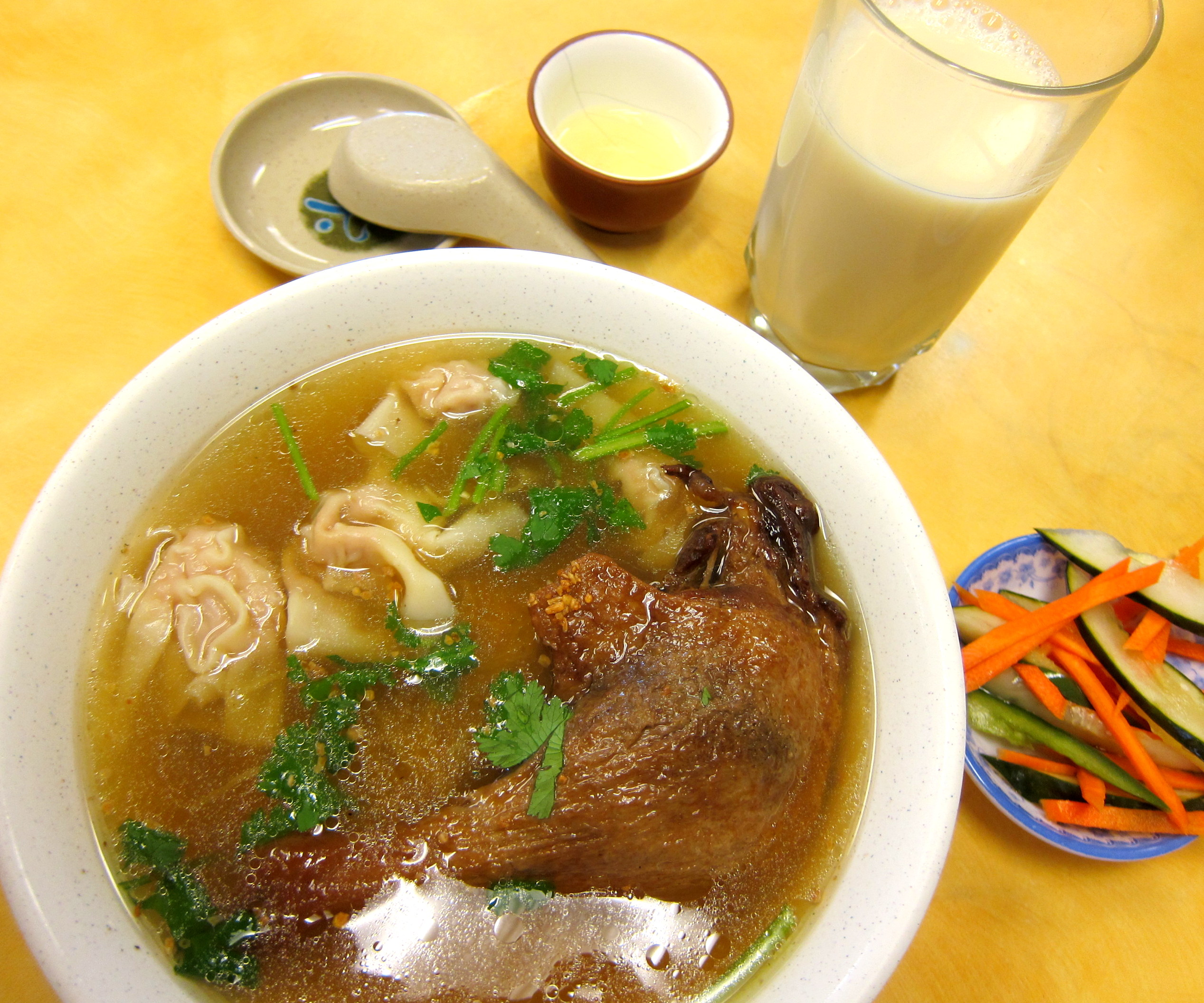
hkmg-duck-leg-noodle-soup-with-wonton

Like many small businesses in the so-called “Little Saigon”s throughout the states, Hai Ky Mi Gia is operated by Chinese immigrants. Originally, Hai Ky Mi Gia is a popular noodle soup joint in District 5, Saigon – the Chinatown of Saigon – before 1975, and it remains popular today. When Saigon fell, the Chinese immigrants in Vietnam left the country with the Vietnamese and became associated with Vietnamese political refugees in foreign lands such as America. These Chinese Vietnamese immigrants continue speaking both languages, opening businesses under the established names(*) in Saigon and catering to the homesick Chinese Vietnamese and Vietnamese alike. Whether this Hai Ky Mi Gia is in any way related to the Hai Ky Mi Gia in District 5 or other Hai Ky Mi Gia’s scattering across the US, its patronage doesn’t seem to care either way. To the Chinese Vietnamese and Vietnamese immigrants, it’s a name they’re familiar with, so they feel at home. To the rest of the patronage… well, I can’t speak from their point of view, but I guess the low price and the popularity raved by Yelp, InsideScoop SF, SF Chronicle, SF Weekly, etc., do have an effect.

Does its food live up to the expectation that these websites have built for it? I’m afraid not, but then again, I would be very surprised if those reviews are ever different from your online zodiac personality description: nothing bad is described.

Do I feel like a jerk for pointing this out? Yes, especially since this place IS popular, my dining companions enjoyed it, the other customers enjoyed it (to some extent, otherwise they wouldn’t come back), and it’s really not the restaurant’s fault that they get hyped up. Noodle soup is comfort food, so it’s meant to be popular. If it’s any consolation, I think of this type of restaurant as the Asian version of McDonalds, or burgers in general.

Because I believe in saving the best for last, I start with what I don’t like.

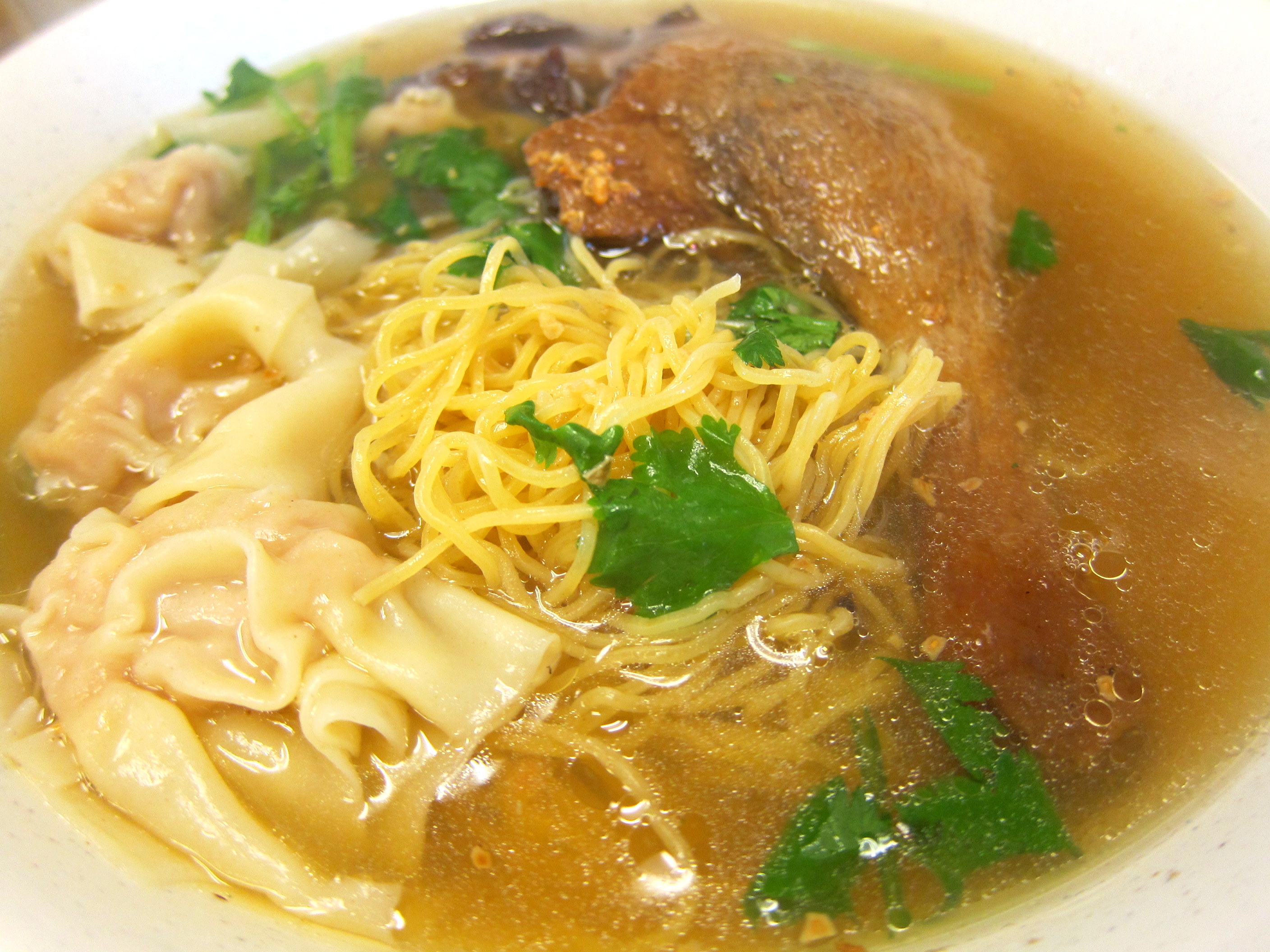
Braised duck leg noodle soup with wonton ($7.59) - #4 on the menu Score: 12/30

Braised duck leg noodle soup with wonton ($7.59) – #4 on the menu
Score: 12/30

Like a McDonald’s burger, the braised duck in Hai Ky Mi Gia’s popular choice “braised duck leg noodle soup” has a distinctive smell. The swampy smell of duck. My mom has told me for as long as I can remember that although ducks bathe often, they have a strong smell, possibly from the preening oil that they spread on their feathers. This smell would go away with enough washing before the duck is cooked. There are several possible reasons that this smell was particularly prominent to me and didn’t seem to bother anyone else:

1. Only my piece of duck happened to be washed less or kept out longer than the other pieces of duck.
2. My olfactory system has become more sensitive as a result of studying tea.
3. Everyone else doctors up their soup with jalapenos, chili paste, soy sauce, hoisin sauce. (The jalapenos at the tables are very green, very fresh, and very strong.) I believe in experiencing the true taste of the soup as the chef makes it.
4. Everyone else is used to this smell because they’re used to eating this noodle soup at this noodle joint.

Whatever the reason, I grade my food based on smell, taste and texture. For this duck leg noodle soup with wonton, 0 for smell, 5/10 for taste, and 7/10 for texture.

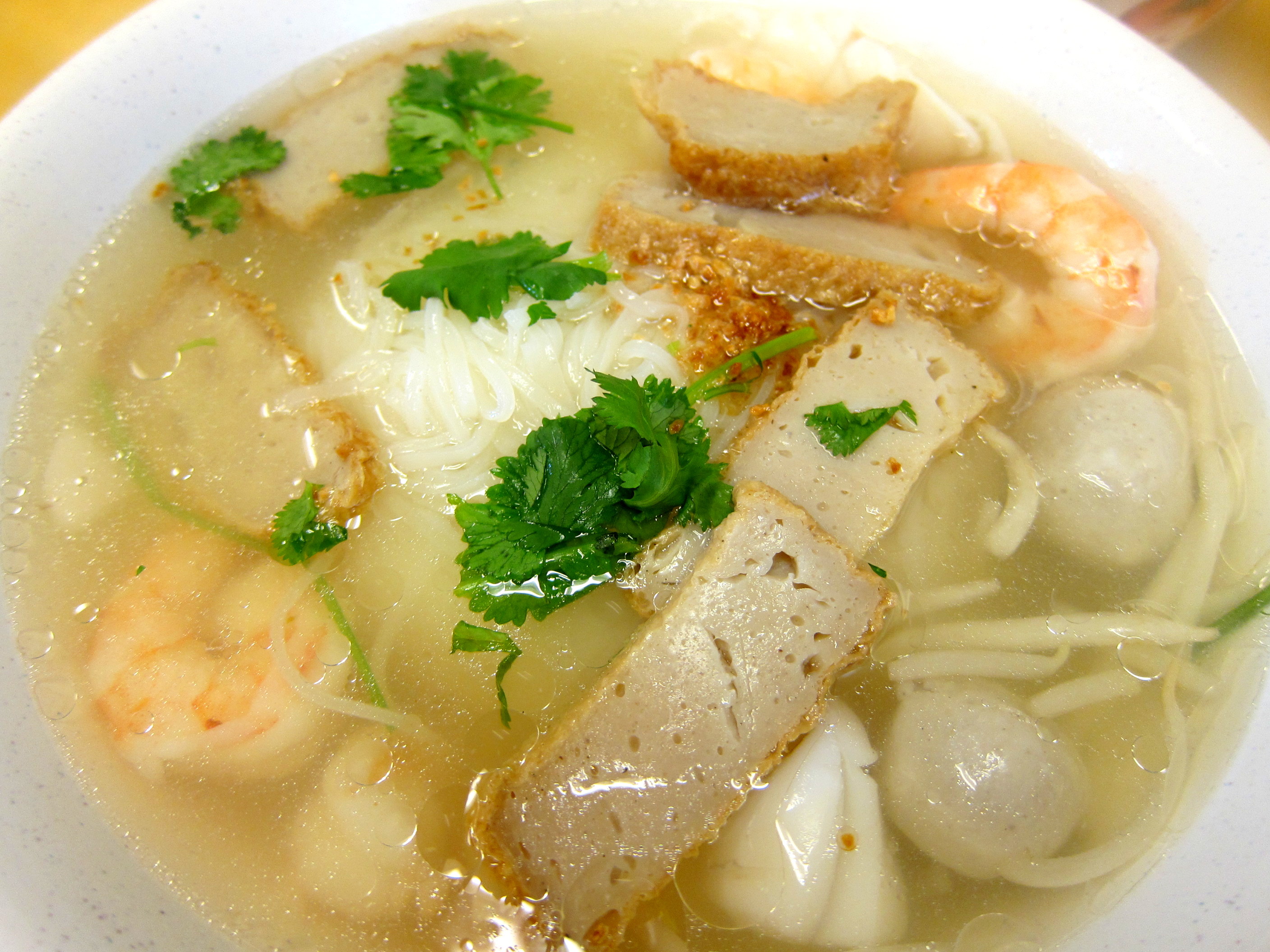
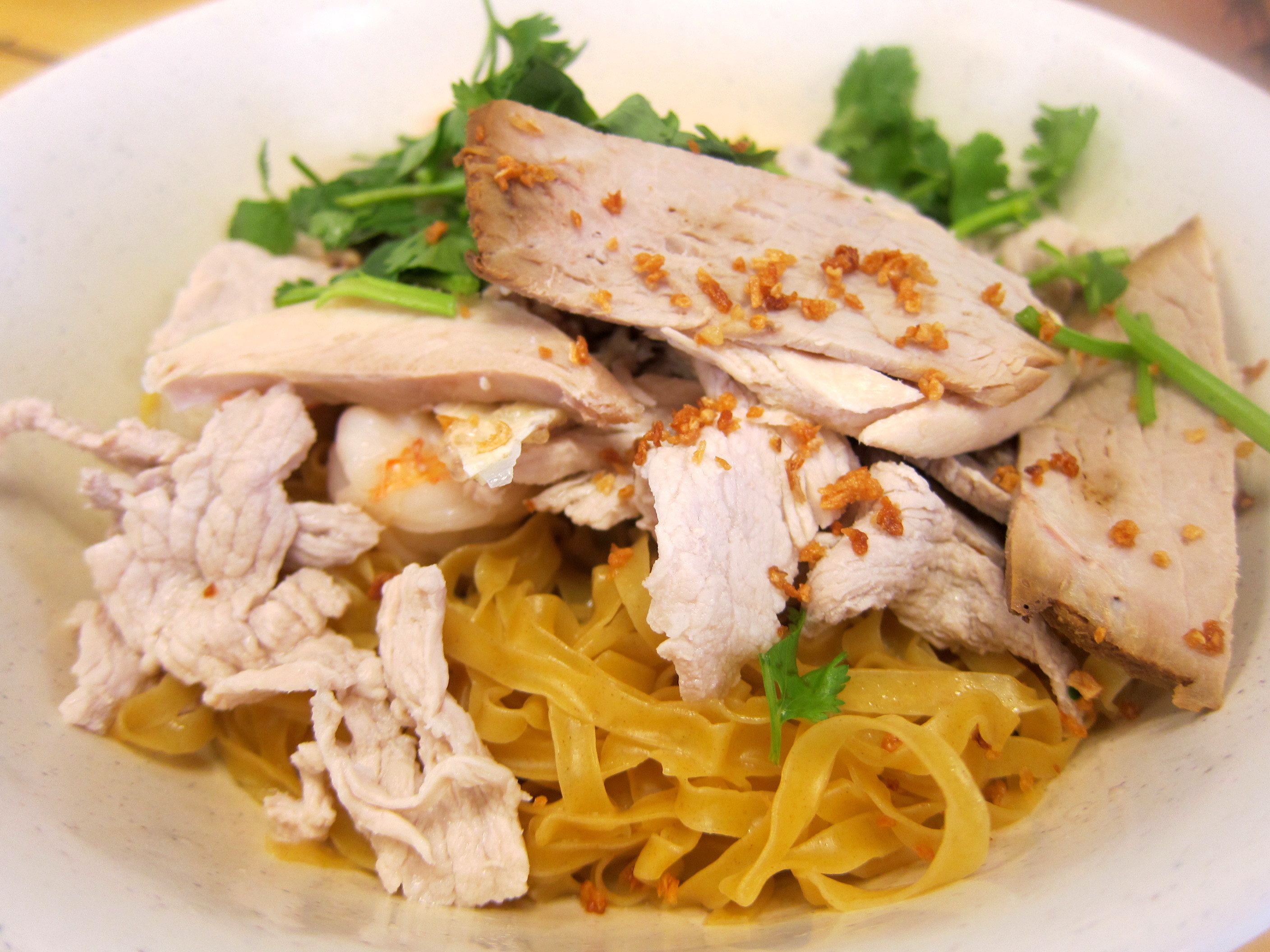
But Hai Ky Mi Gia is not all disappointment. They serve big portions. Their warm homemade soymilk ($2.30) tastes of real soy, rich and soothing (better than store-bought cartons, of course). The seafood noodle soup, which we ordered with thin rice noodle, has a light, mildly sweet broth and enough fish balls, fish cake, squid and shrimp to entertain the diner. The dry noodle with broth on the side makes up for its less-than-deal cousin (the duck noodle soup) mainly because of its well-seasoned, tender charsiu pork.

Seafood noodle soup ($7.36) - #13 on the menu Score: 5 for smell + 6 for taste + 7 for texture = 18/30

Seafood noodle soup ($7.36) – #13 on the menu
Score: 5 for smell + 6 for taste + 7 for texture = 18/30

Dry wheat noodle with pork (charsiu pork, ground pork, boiled pork) and broth on the side - Not on the menu but you can order by asking the hostess. Score: 5 for smell + 7 for taste + 7 for texture = 19/30

Dry wheat noodle with pork (charsiu pork, ground pork, boiled pork) and broth on the side – Not on the menu but you can order by asking the hostess.
Score: 5 for smell + 7 for taste + 7 for texture = 19/30

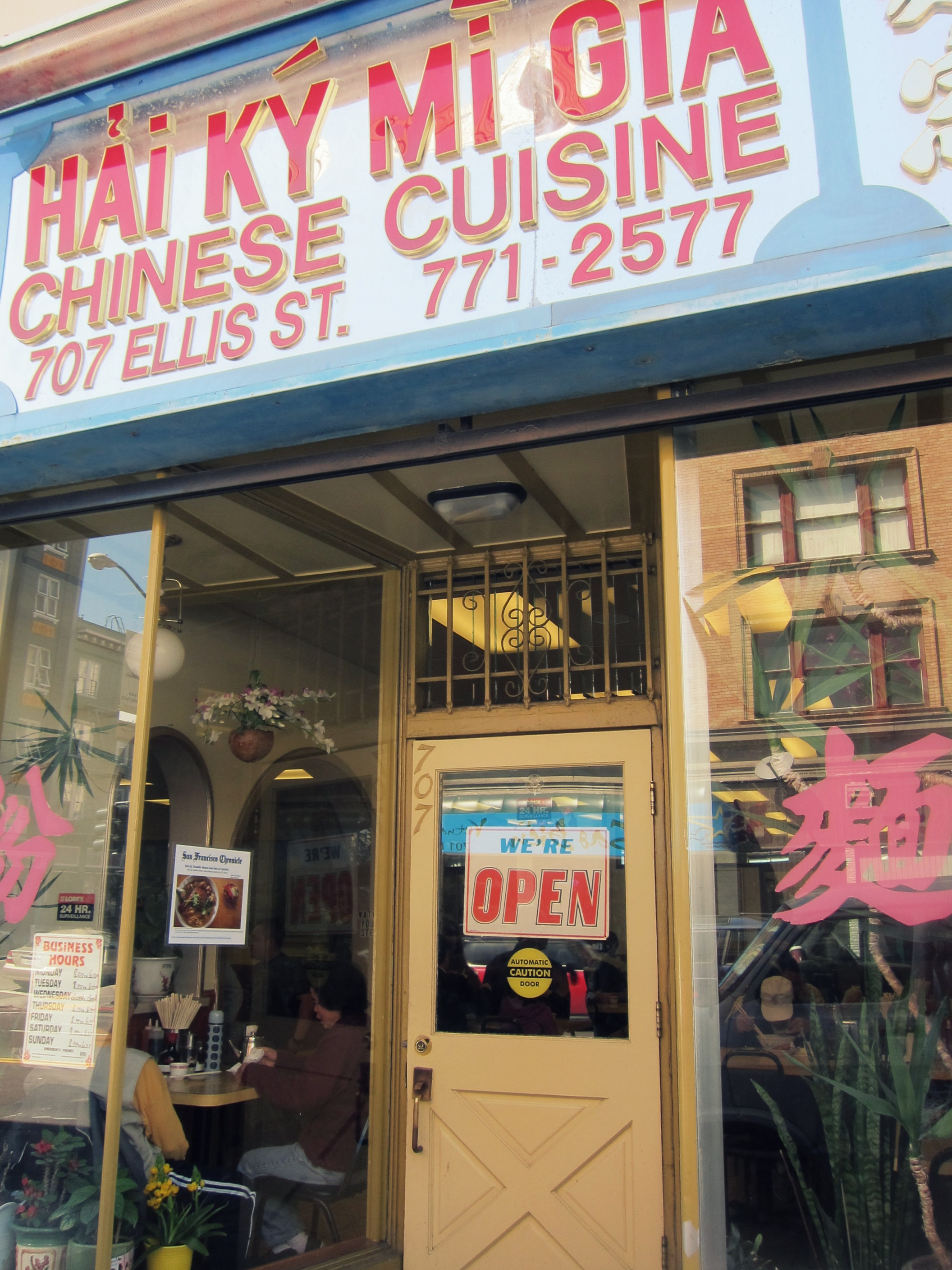
hai-ky-mi-gia-sf

For out-of-town guests, I wouldn’t recommend this place, but the Hua family who opened this Hai Ky Mi Gia did not open it to attract tourists anyway. It’s meant to serve affordable comfort food with no frills, and I found comfort at least in its soymilk, so the restaurant fulfills its purpose.

Address: Hai Ky Mi Gia
707 Ellis Street (in the Tenderloin)
San Francisco, CA 94109
(415) 771-2577
Closed on Wednesdays. Cash only.

(*) If a restaurant/bakery/cafe/any food establishment has “Ky” or “Ki” in its name, it is 100% run by a Chinese immigrant who lived in Vietnam. “Ky” or “Ki” (pronounced |kee|) is the vietnamization of 計 (as in “生計” – |Sheng Kee|, which means “measure”, “plan”, “calculation”, etc).

Hong Kong Lounge – it’s never too early for dimsum and tea

April 13, 2013 By: Mai Truong Category: California - The Bay Area, Chinese, Drinks

hkl-foods
Above is our table at 10 a.m. (after we have cleared the first few dishes).

hongkong-lounge-sfTo your right is Hong Kong Lounge at 9:31 a.m., exactly 1 minute after the doors opened.

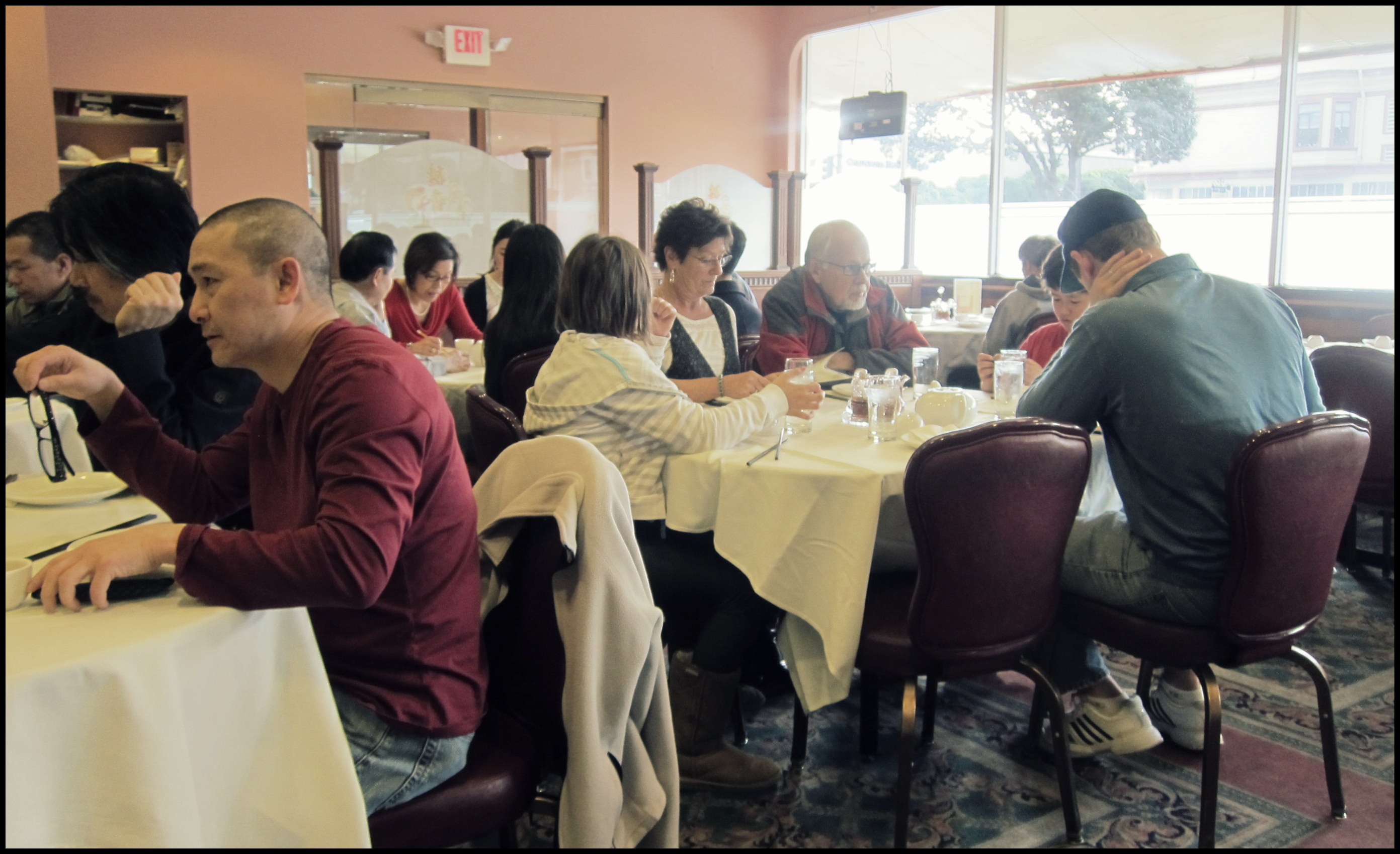
Every seat was filled. When we arrived at Hong Kong Lounge at 9:10, 20 minutes before the restaurant opens, a line had already formed. While we were eating, the line formed again outside and kids were pressing their face against the frosted windows to peak at people’s plates. I’d imagine it’d feel a bit weird if you’re seated by the window.

Luckily, we were safely tucked in by the back wall, and as common practice in every dining experience with Nancy (for example, here, here, and here), we brewed our own tea. Taiwan Beauty – citrusy and light; aged Baochong – plumy and coffee, subsequently smoky; Yushan High Mountain oolong – just light, Nancy detected a fantastic smell that I couldn’t because I was already in a food-induced stupor when we steeped this tea.

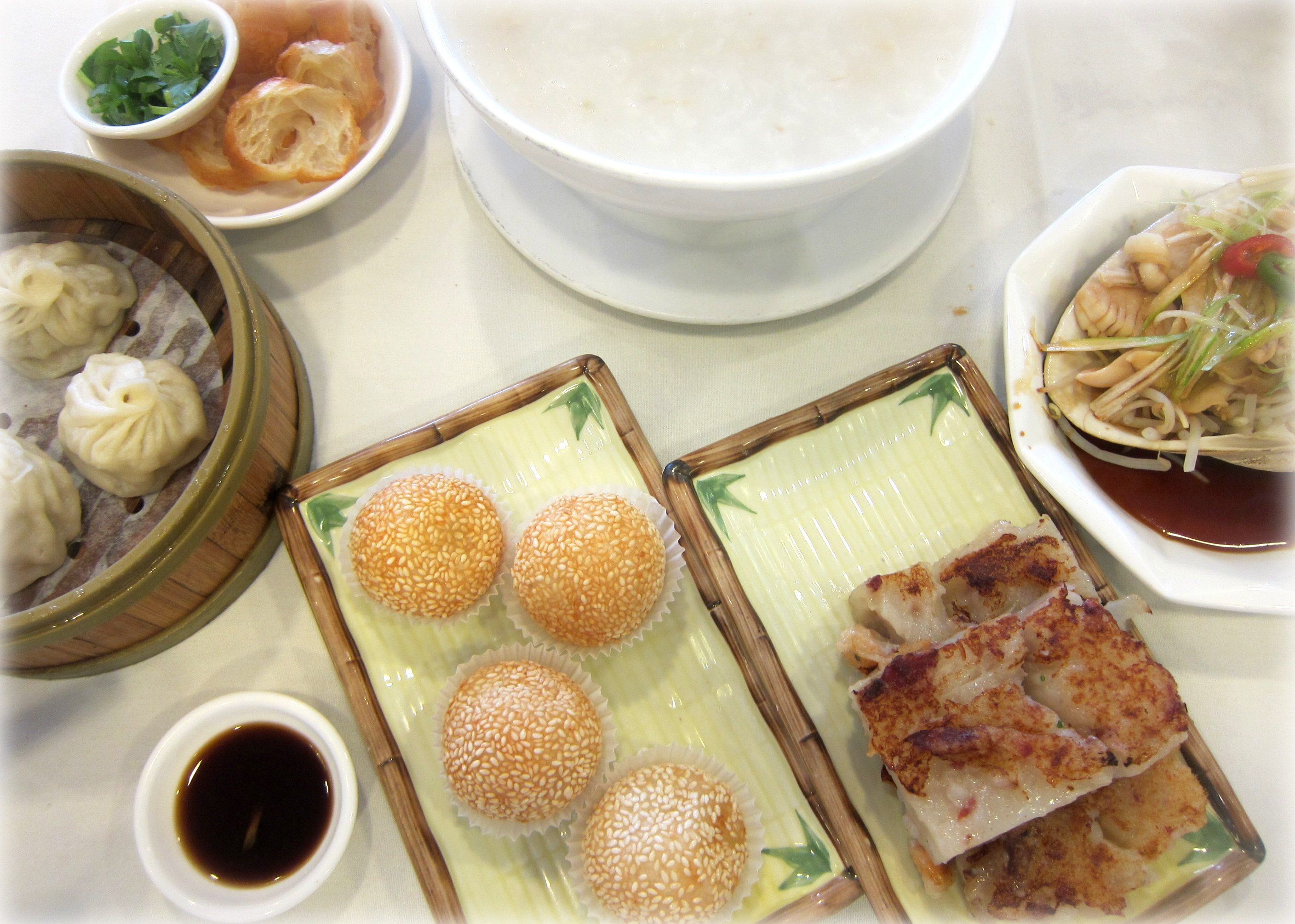
The food came out too fast for us to really sample the teas with everything. We had to focus on not oversteeping while clearing the plates for more table space. But some combinations stood out memorably: Taiwan Beauty + porridge (so floral), Baochong + egg custard (the Baochong brings out the pastry), and Yushan + egg custard (the Yushan makes it more eggy)

Marinated chicken "paws" ($6.50) - cold with peanuts

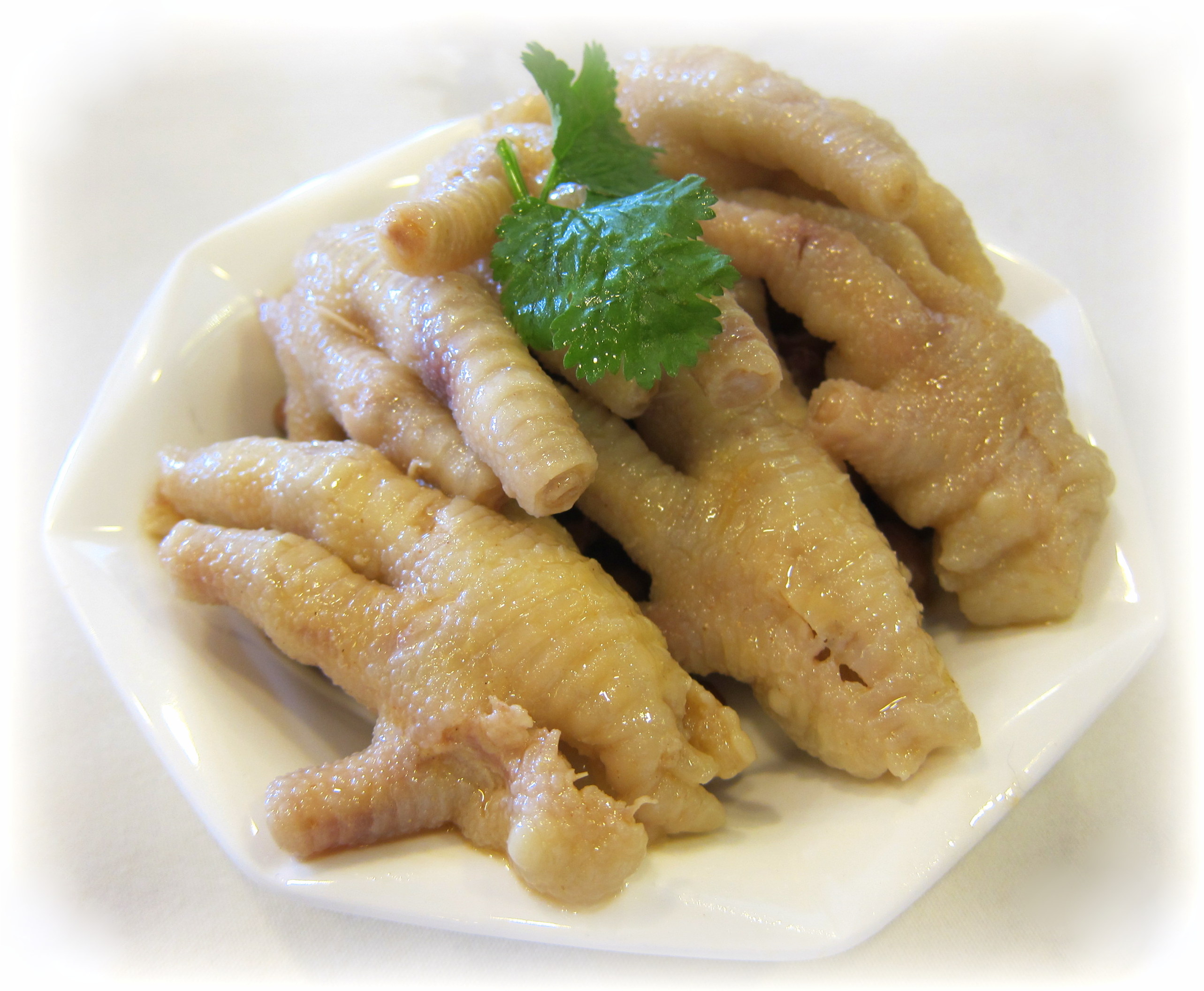
Marinated chicken “paws” ($6.50) – served cold with boiled peanuts. I like the texture but Kristen didn’t. And why serve it cold?

Baked pork buns ($3.95)

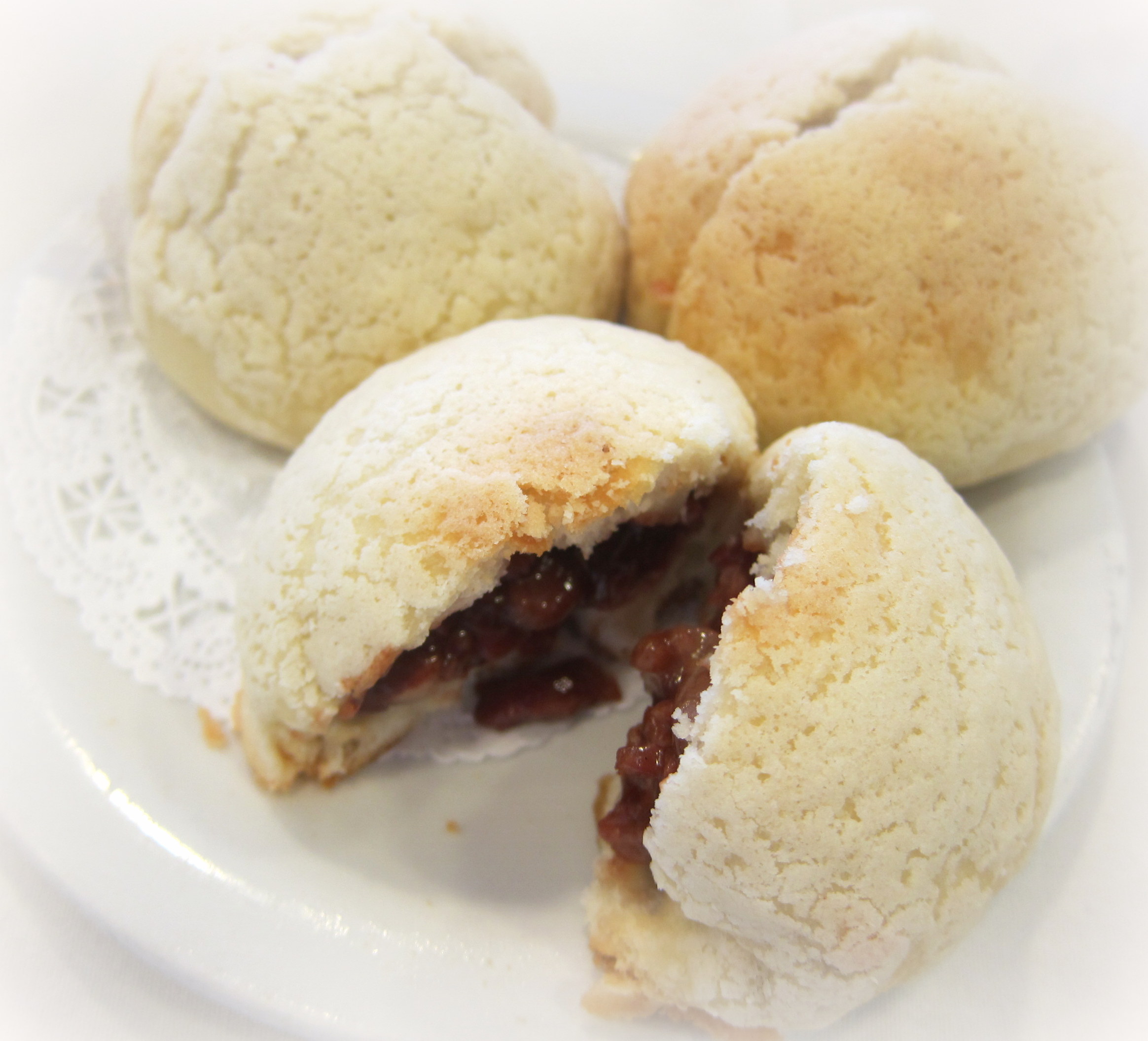
Baked pork buns ($3.95) – The winner of the day. These baked buns are better than the usual steamed BBQ pork bun. They look dry but didn’t taste dry. Minor setback: the inside is a bit too sweet and completely overwhelmed the Taiwan Beauty and the Baochong.

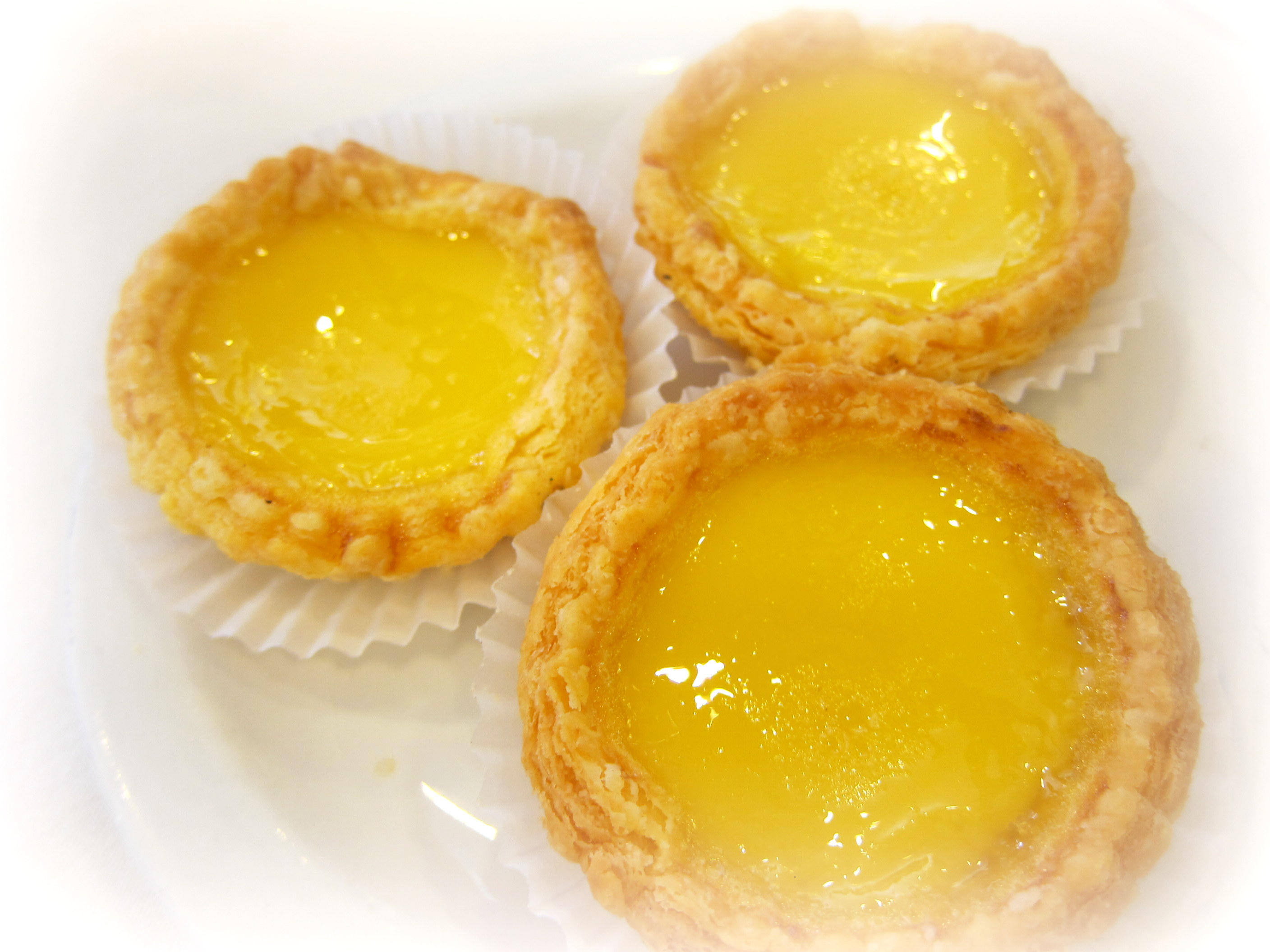
Egg tarts ($3.75) - very eggy

Egg tarts ($3.75) – very eggy.

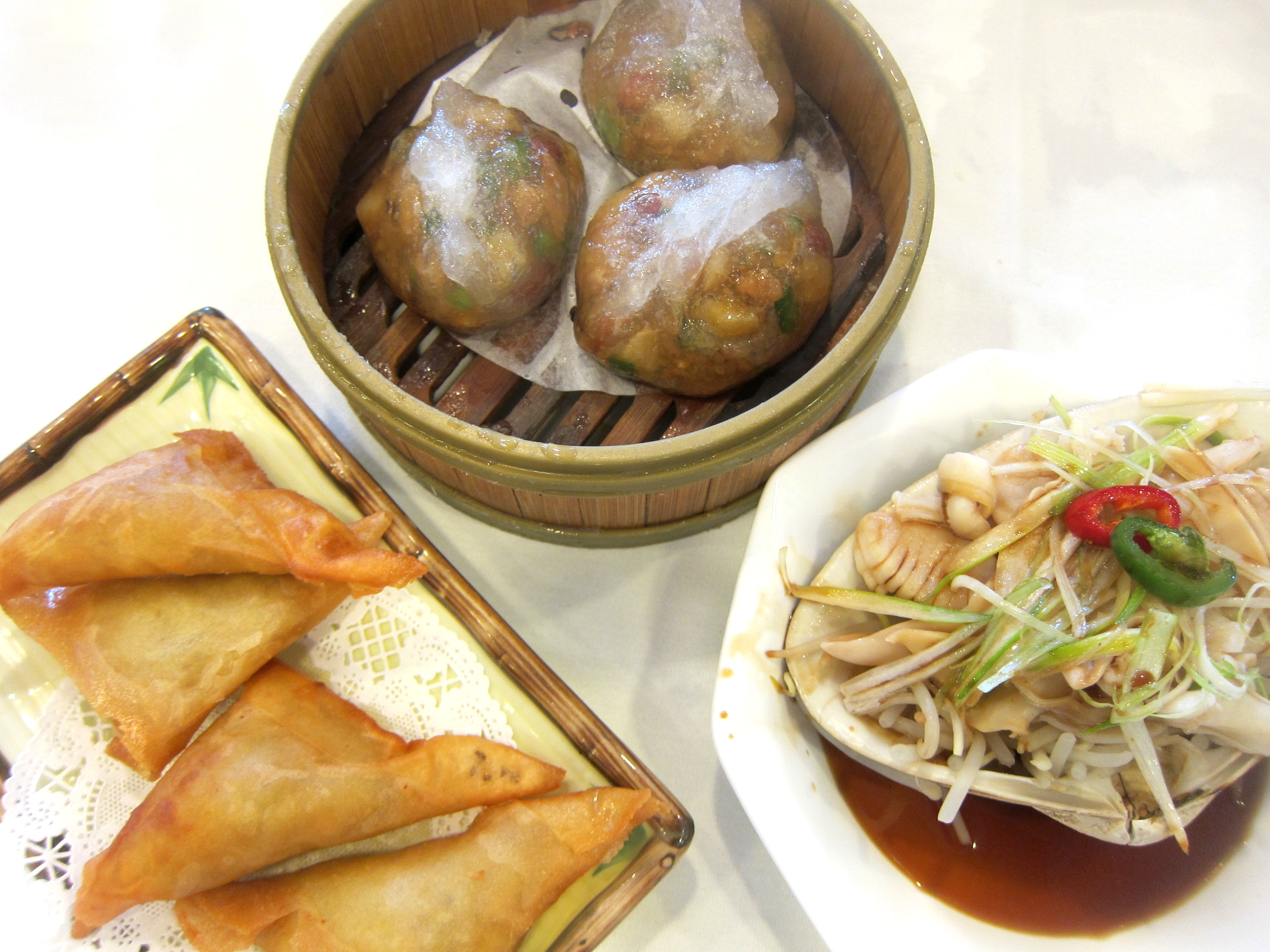
Clockwise from top: Chiu Zhou dumpling ($3.95), steamed clam ($6.95), curry chicken samosas ($3.25)

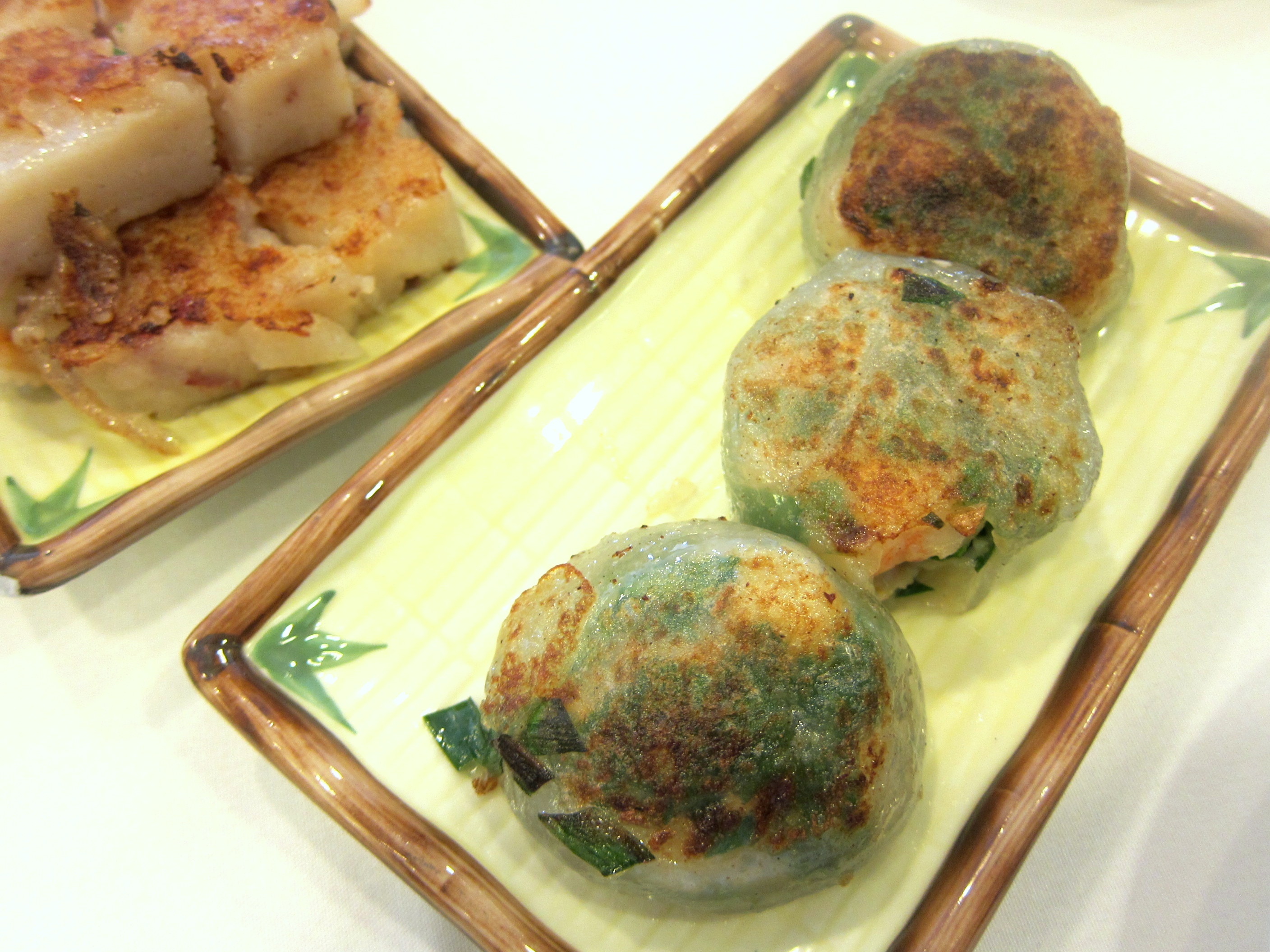
Clockwise from top: Chiu Zhou dumpling ($3.95), steamed clam ($6.95), curry chicken samosas ($3.25) – The Chiu Zhou dumplings with their thick clear skin are extremely heavy and coated in oil, but their redeeming point is the actual big plump shrimps inside, instead of the usual dried shrimps in cheap dumplings. Steamed clam is flavorful, and I usually have fond memories of chewy things. Samosas are just samosa.

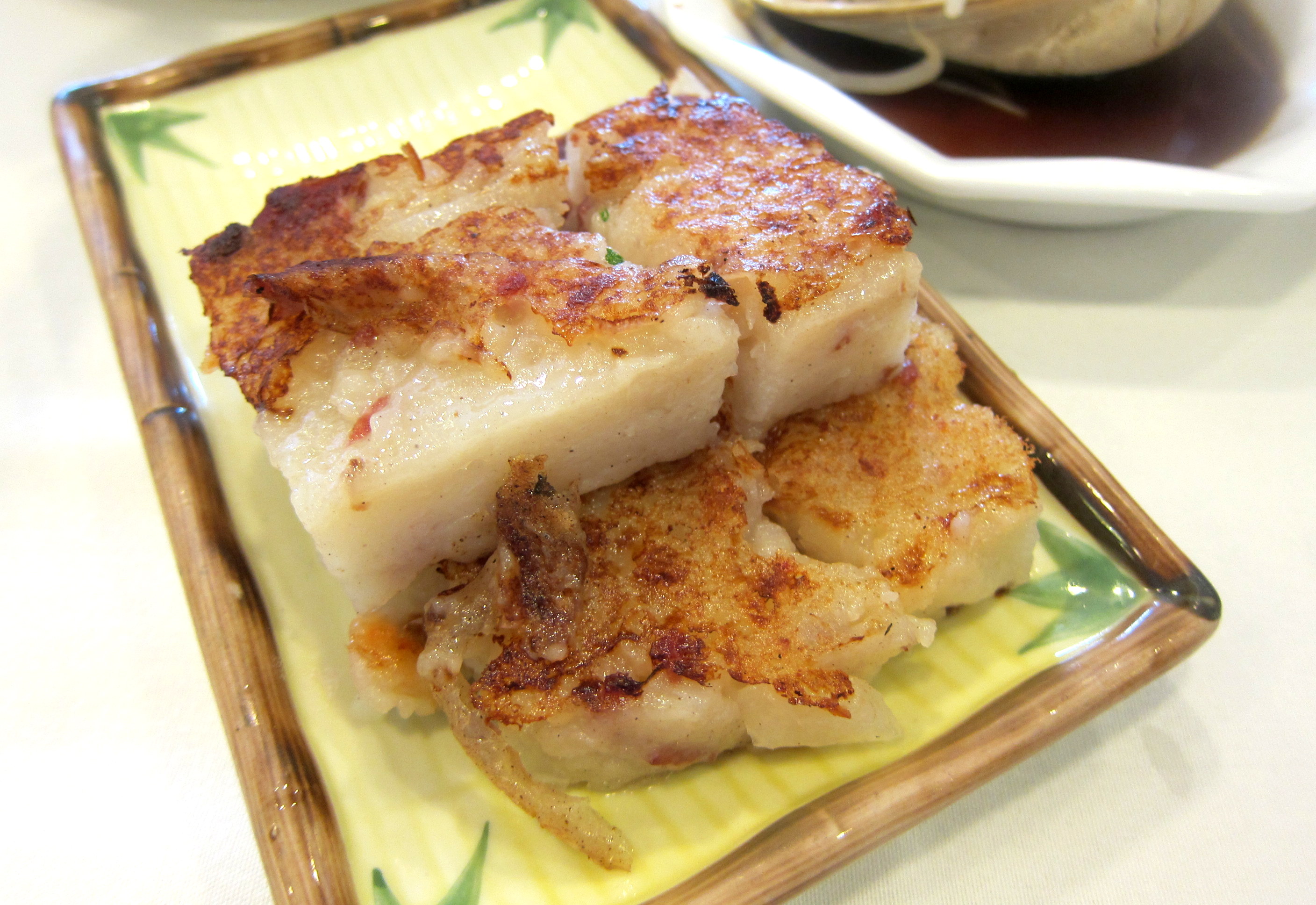
Pan-fried turnip cake ($2.95) - pretty good

Pan-fried turnip cake ($2.95) – Much better than any turnip I’ve had. That said, turnip cakes aren’t my favs because of their oily, pulverizable mushiness.

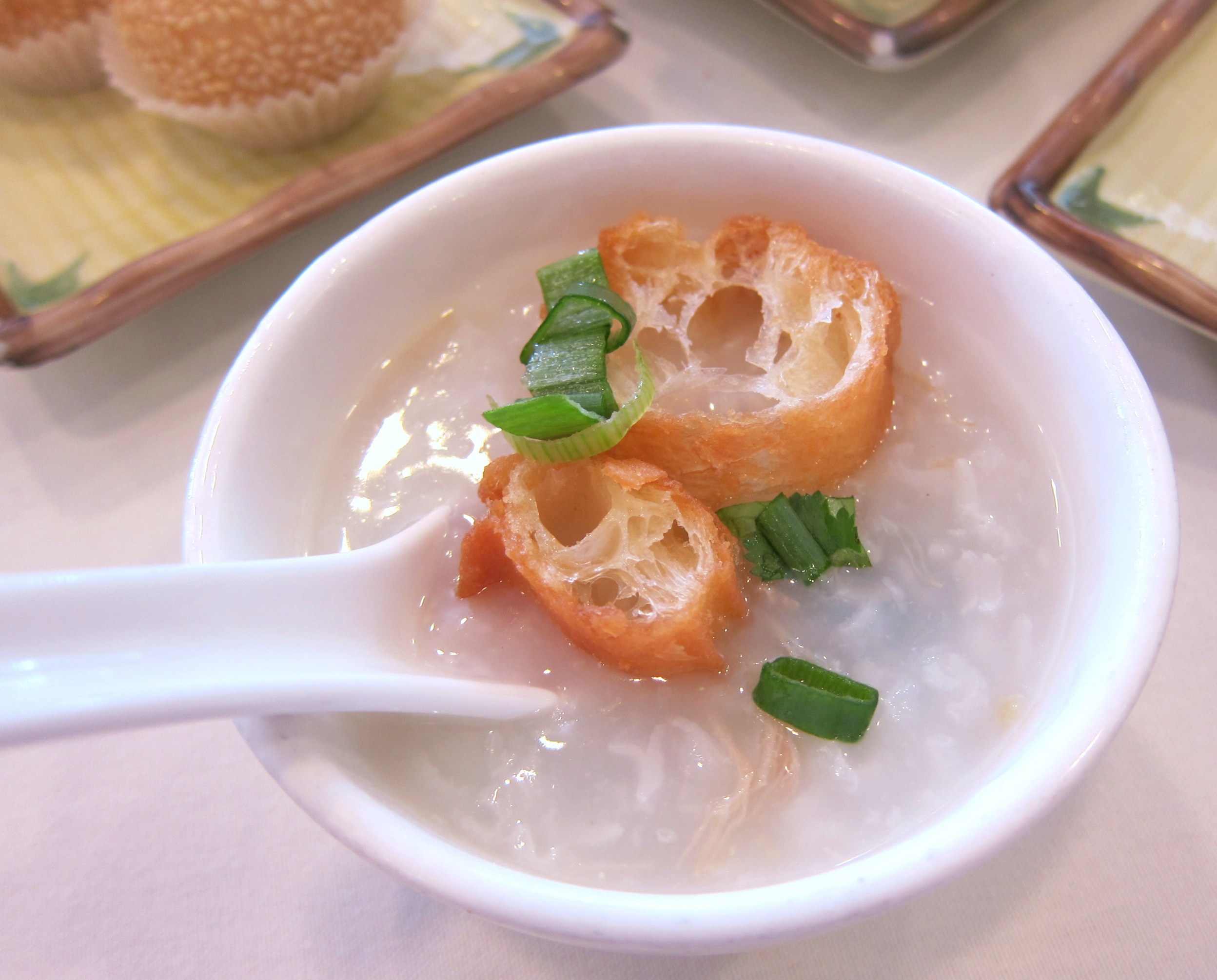
Salted "meat porridge" ($6.50) - I don't remember seeing any meat, but there were pieces of eggs

Salted “meat porridge” ($6.50) – I don’t remember seeing any meat, but there were pieces of pidan (thousand-year egg). The porridge tastes very mild, the accompanying yau ja gwai are crisp and not too oily. Overall, a pleasantly light note in the middle of this butyraceous meal.

Shrimp chive dumpling ($4.95)

Shrimp chive dumpling ($4.95)

Pan-fried shrimp-and-chive dumpling ($3.95)

Pan-fried shrimp-and-chive dumpling ($3.95)

Lo mai gai ($4.25) - sticky rice with chicken wrapped in lotus leaf

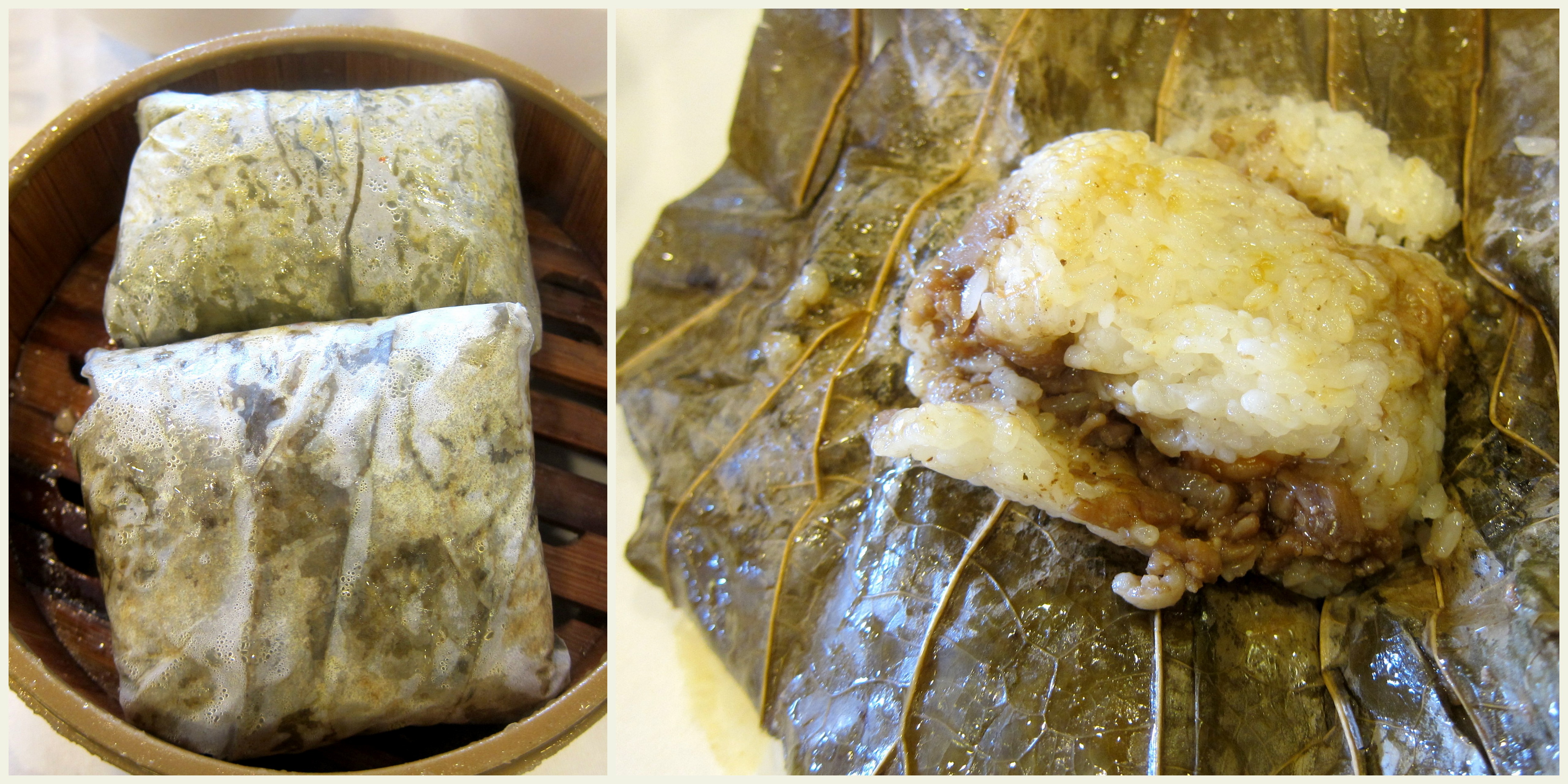
Lo mai gai ($4.25) – sticky rice with chicken wrapped in lotus leaf. The rice, surprisingly, did taste and smell like lotus. I liked it, but again, I’m not a fan of the sweet meat stuffing.

Coffee pork ribs ($6.50) - weird but tasty

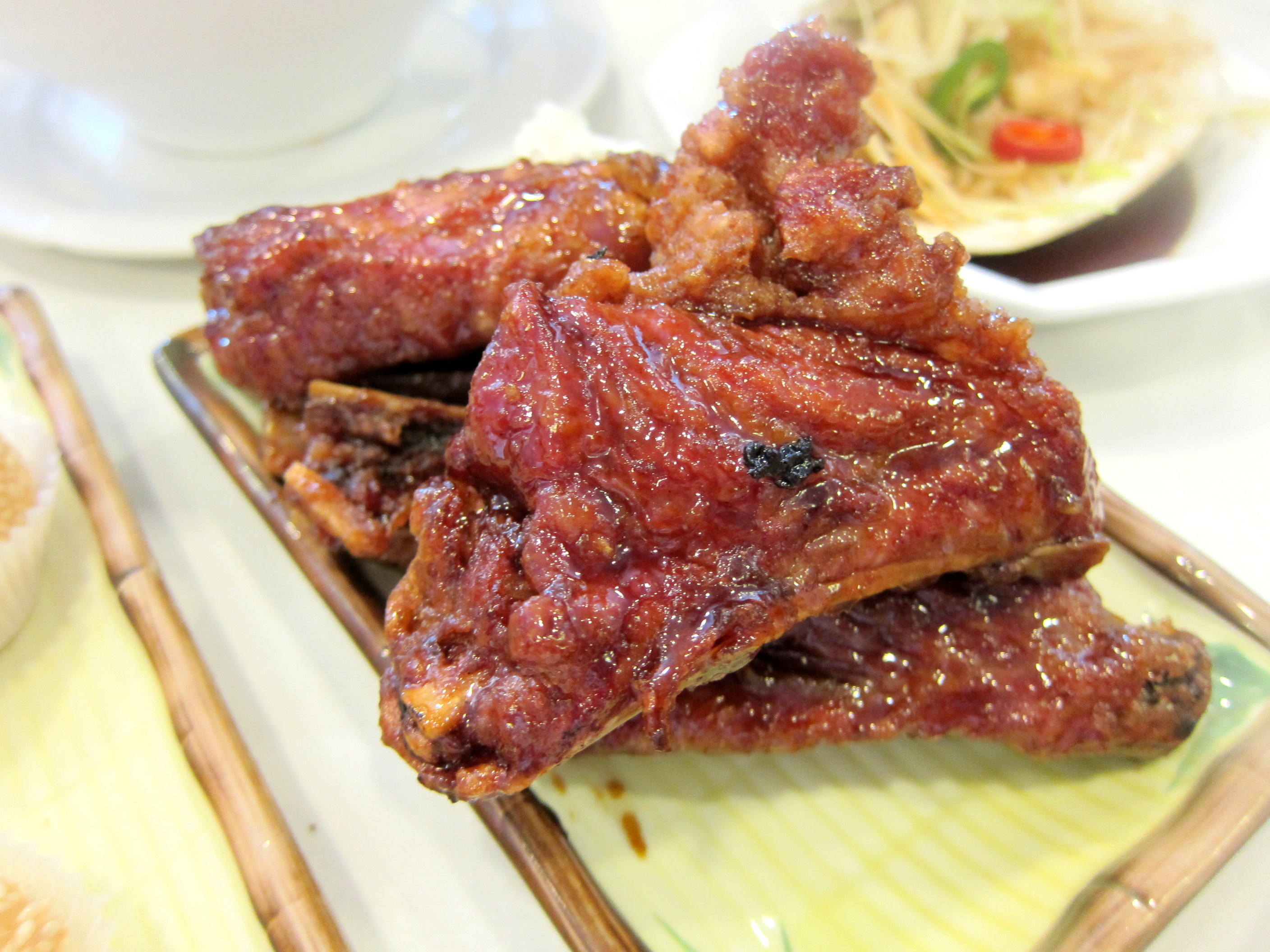
Coffee pork ribs ($6.50) – The ribs didn’t fall off the bone but their coating sauce made up for the toughness. Not visible in this picture is a dollop of whipped cream to spread onto the ribs. It’s weird, but it made the ribs creamy and milky, and strangely tasty.

Two setbacks at Hong Kong Lounge: they charge us for hot water (we needed hot water to make tea), and the xiao long bao didn’t contain enough soup (Shanghai Dumpling King’s xiao long bao are soupier than these). But if you don’t mind either getting up at an ungodly hour on a Sunday morning or waiting in line for forever, Hong Kong Lounge doesn’t disappoint.

Address: Hong Kong Lounge
5322 Geary Blvd
San Francisco, CA 94121
(415) 668-8836
hongkonglounge.net
(They don’t take reservation, though)

Dungeness crab by the bay

March 12, 2013 By: Mai Truong Category: California - The Bay Area, Vietnamese

Thanh-Long-SF-roasted-crab
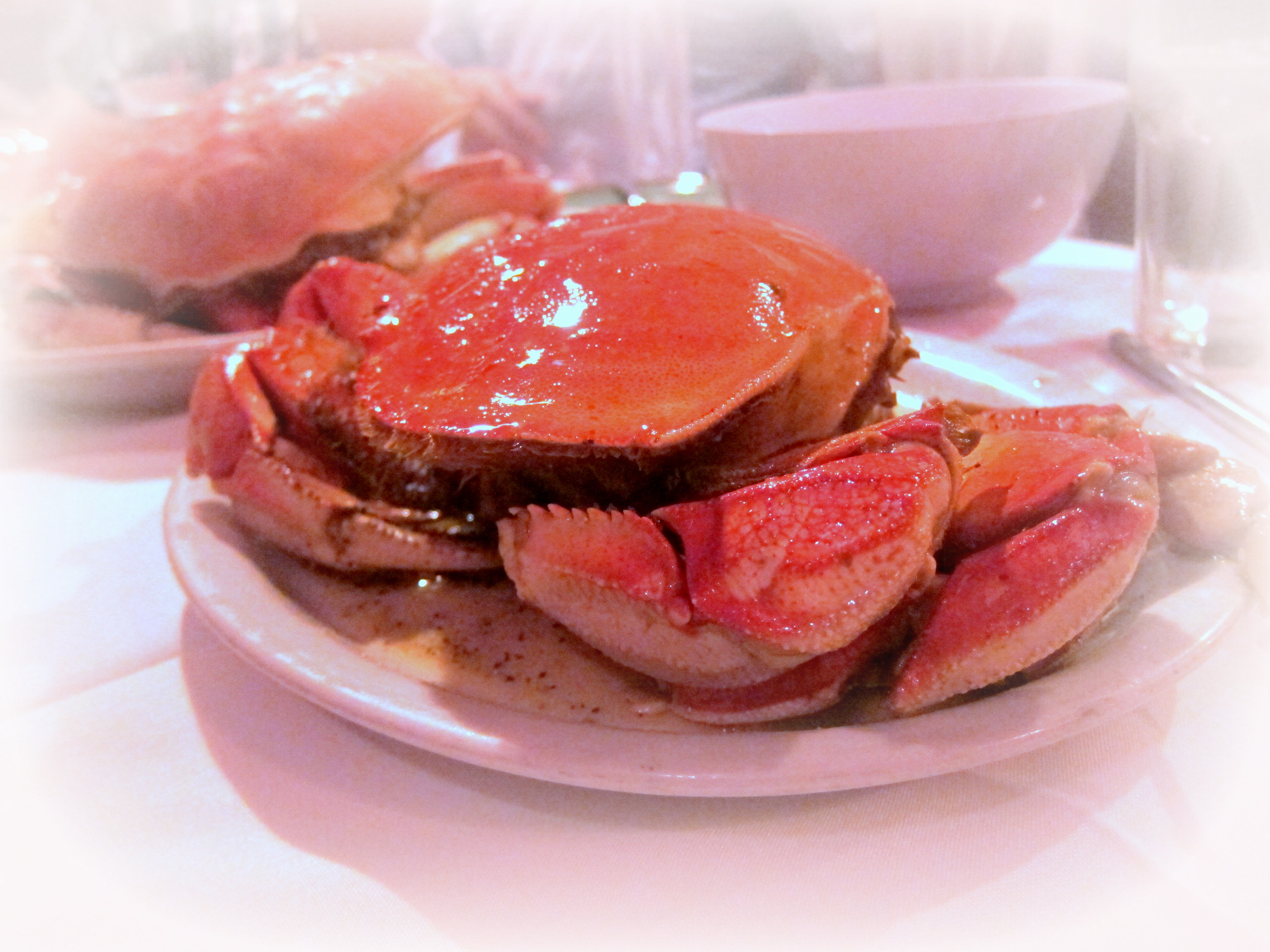
Dungeness crab season is on. It was delayed twice in the Pacific Northwest because the crabs there weren’t big enough, but not here in the Bay Area. What my companions and I got a few weeks ago were 2-pound crabs, roughly one-fourth of which were meat, tossed in garlic and butter to perfection. More on that in a second.

First, what defines good crab? It has to be fresh. Its flesh should be tender and sweet, which are also defining characteristics of Dungeness crab. You also want the flesh to be firm, somewhat springy, and easily pulled off from the shell. If the meat sticks to the shell and if the shell is too hard, the crab is old. Dungeness crab is best enjoyed steamed then tossed in garlic, butter, salt and pepper, as to maximally preserve the sweetness of its meat. It’s not hard to turn a good fresh crab into a good cooked crab, but it can be messy to cook, eat and clean up after. So if you dislike cleaning as much as I do, the place to satisfy your Dungeness craving is Thanh Long in San Francisco.

The restaurant is three blocks away from the waterfront in the Sunset District. Be sure to make a reservation because the line gets long, and waiting outside in a cold foggy evening while entranced by the smell of butter and garlic is torture. Even with a reservation, it still takes roughly 30 minutes to be seated. And forget about sending half of your party to the restaurant first to place an order. The restaurant is so packed that they refuse to seat you unless the whole party is there.

The wait is the best time to study the menu. Once you’re seated, you should know immediately what to order, given that Thanh Long is known for its crab: the Roast Crab (one whole Dungeness “roasted with An’s garlic sauce and secret spices”) and the Garlic Noodle (noodle tossed in, you guessed it, An’s “garlic sauce and secret spices”). The garlic noodle is a good starch base to give you the pretense of a healthful, balanced meal. There are other crab options on the menu for the same price, such as Drunken Crab (whole Dungeness simmered in Chardonnay, sake and brandy, seasoned with scallions, chives and black pepper) and Tamarind Crab (whole Dungeness simmered in a tomato and tamarind mélange, seasoned with dill and green onions and flambéed with cognac), but fresh crab is best when it’s simple. Garlic, butter, salt and pepper bring out the crab’s flavors more than any other combination. In fact, I found the Drunken Crab lackluster.

Thanh-Long-SF-fried-calamari

Thanh-Long-SF-broiled-mussels
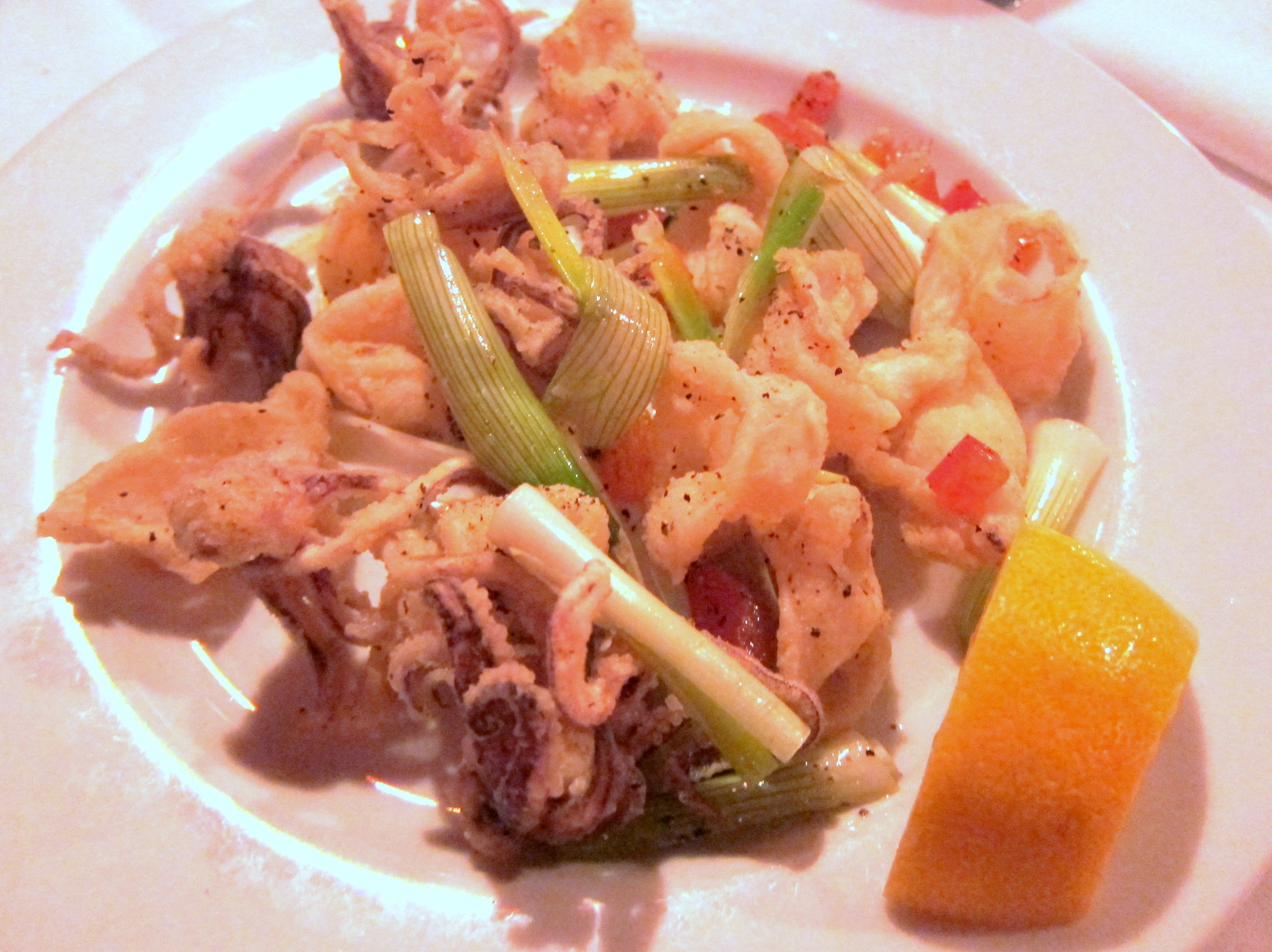
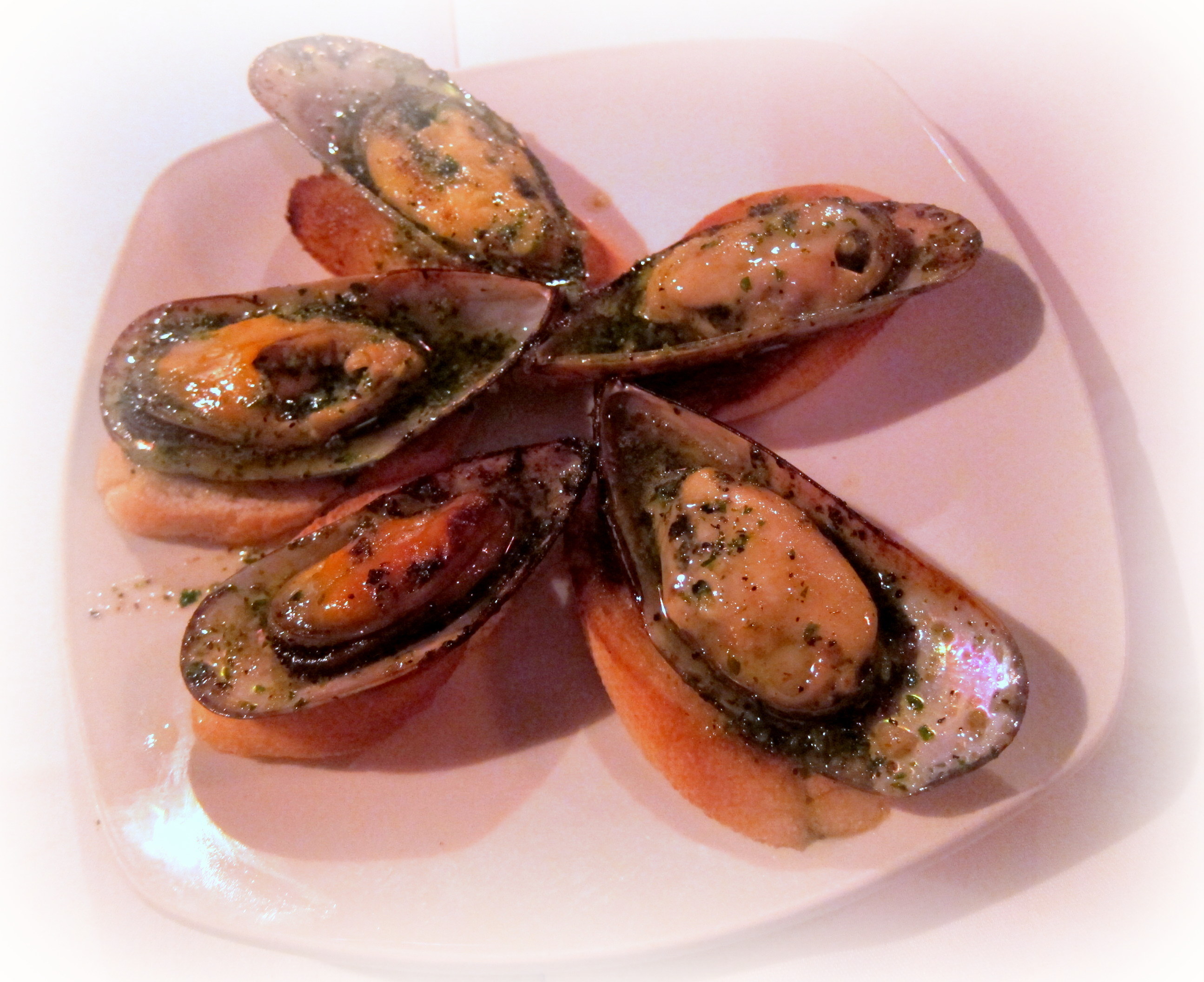
Fried calamari and the broiled New Zealand green-lipped mussels are sensible choices to start off the meal before cracking crabs. The former is served with superb grilled green onion bulbs while the latter, drowned in a sweet Asian pesto, is already cut so that it can easily slide off the shell onto a baguette crostini.

After we ooh-ed and ah-ed and wiped the appetizer plates clean, the waiter arrived with big plastic bibs and carefully put them on everyone — one of those moments that justifies eating crab at a restaurant instead of eating crabs at home. The conversation stalled when the crabs came, as everyone became focused on taking every last piece of meat out of those legs. These crabs were so young that some of the leg shells could be broken by hand. Several bowls were placed and replaced for the crab shells.

Once we were done, we were also given hot wet towels to clean our hands. This is not the ideal first-date dinner because you just have to get downright messy., But who knows, that might be the perfect first date for some.

bi-rite-banana-split
Address: Thanh long
4101 Judah Street
San Francisco, CA 94122
(415) 665-1146
www.anfamily.com

NOTE: the above section was published on the Daily Cal food blog. However, there are a few points I didn’t mention there because they’re more personal and/or not that relevant to the main topic:

– The kanimiso in the Dungeness is not as sweet as the kanimiso in other crabs, rather it has a bitter hint, but still, who would NOT eat kanimiso?
– The Vegetarian Delight (soft tofu sauteed with tomatoes, shiitake, green onion and broccoli) was not delightful. It tasted old and sad. But you don’t go to a crab restaurant to get vegetables. 😉
– The crab cost $40 each.
– The restaurant is red-themed. It enhances the crab, but my camera is not happy.
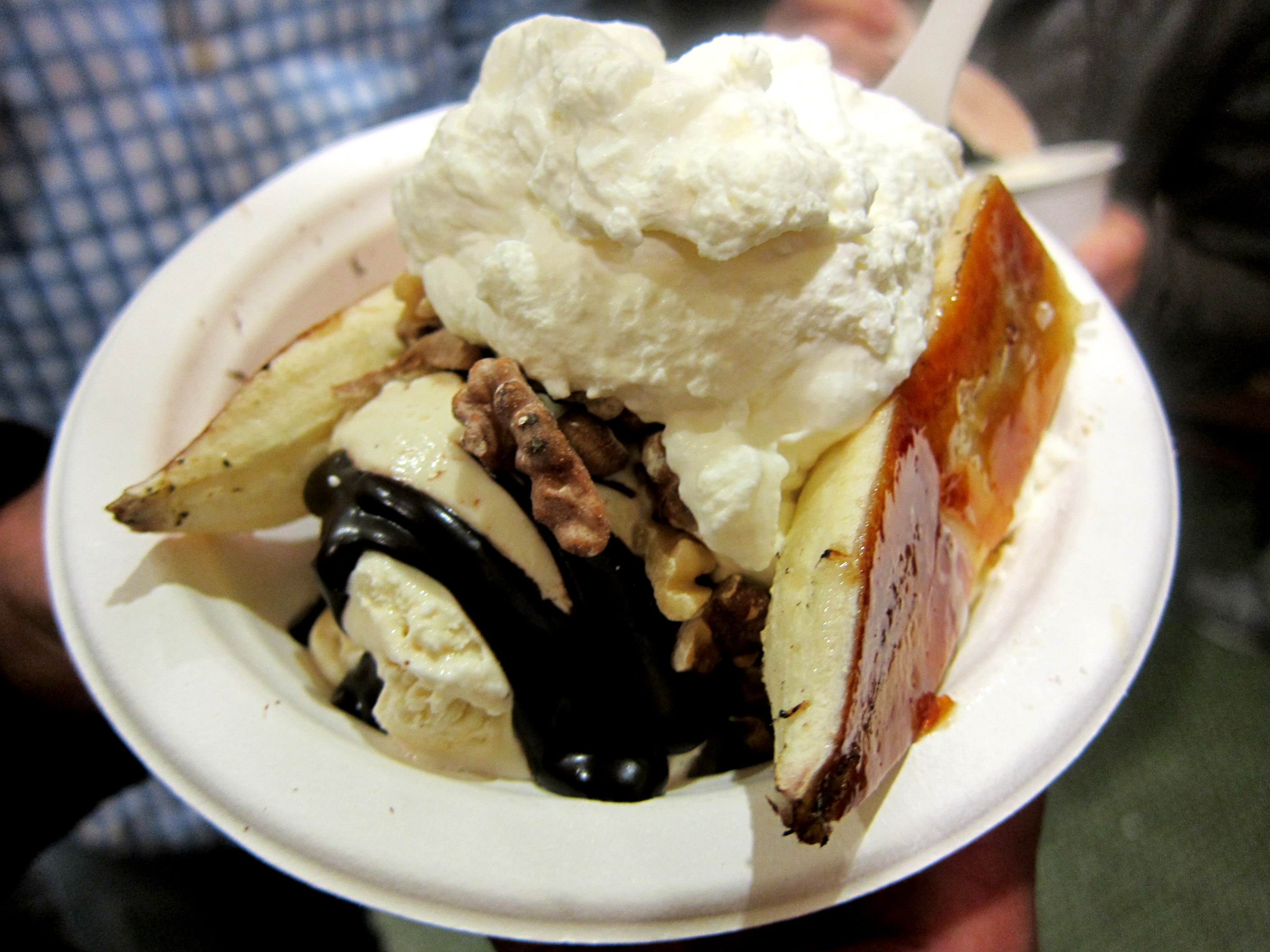
– We were too full to handle any more than 2 scoops of ice cream at Bi-Rite. 😉 By the way, their Orange Cardamom is heavenly.

Pair Dim Sum with Tea at Shanghai Dumpling King

July 26, 2012 By: Mai Truong Category: California - The Bay Area, Chinese


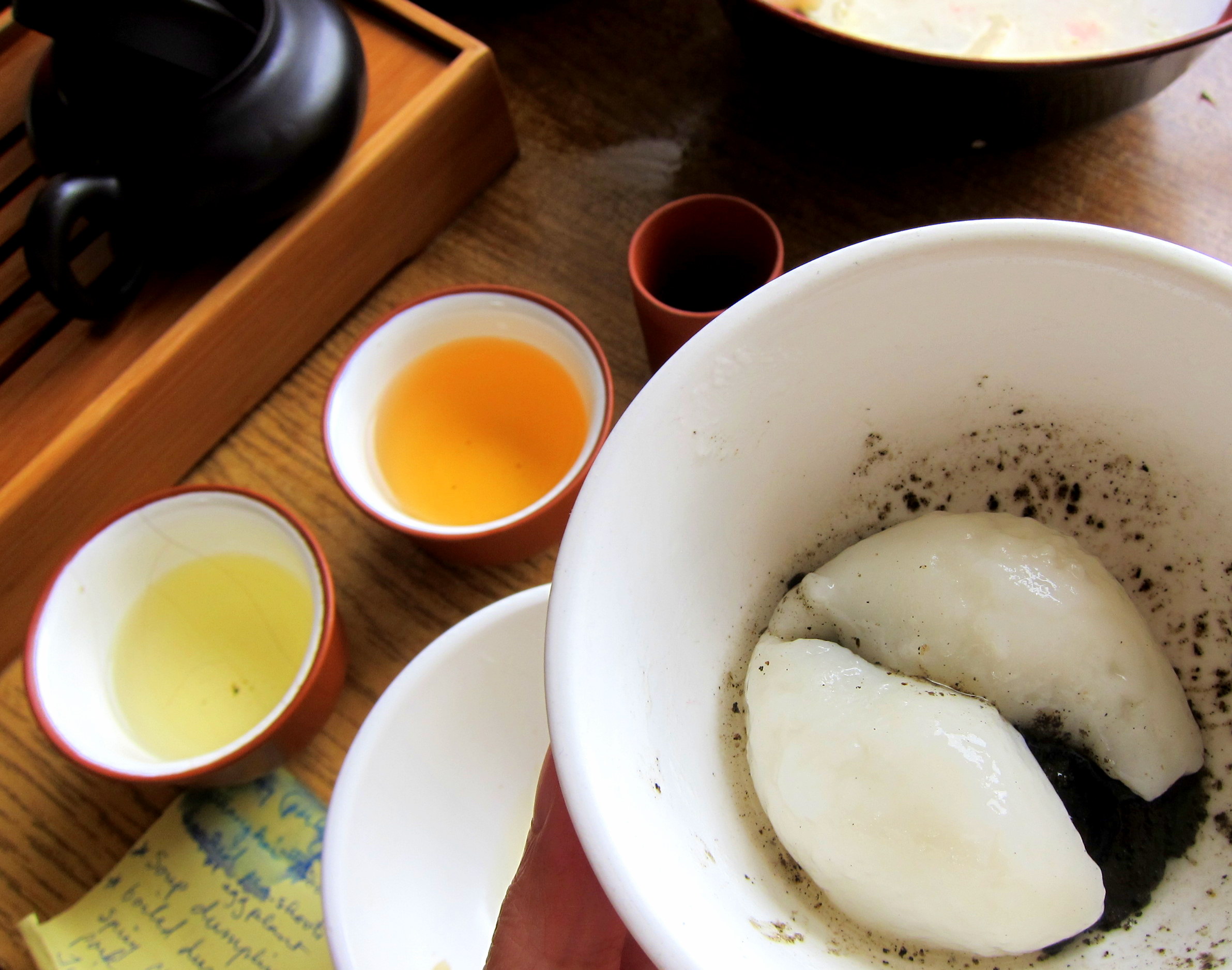
The waiter brought out a kettle of tea, but Nancy Togami waved him back, asking for just plain hot water. Carefully, she used her thermometer to check the water temperature. One hundred and eighty degree Fahrenheit, too cool to steep the Baochong and Phoenix Honey that she brought. But Nancy brought her own water too, which measured close to 200 degrees, so we used her water instead. I’ve never brought my own tea to a restaurant, but it makes sense: people bring their own wine to restaurants, and when you have good teas, there’s no reason to refrain from pairing them with good food. The dim sum at Shanghai Dumpling King proved to be perfect experiment material.

Without Nancy, I probably would never have known of this hole in the wall way out on the west side of San Fran, and probably too lazy to get here because it’s not 2 blocks away from the BART and I’d doubt the dim sum would be worth anything farther than that. Now, dim sum are good. You have to really suck as a cook to make ground meat in a piece of dough taste bad (it happens, though), and I crave potstickers and xiao long bao at least once every other night, but the gap between the potsticker in my head and the potsticker in my mouth always ended up bigger than my head, so I can’t comprehend it. There’s some kind of epiphany reaction I want to get from eating dim sum that I’ve never gotten. But I think today came really, really close. Because of a duck and two teas.


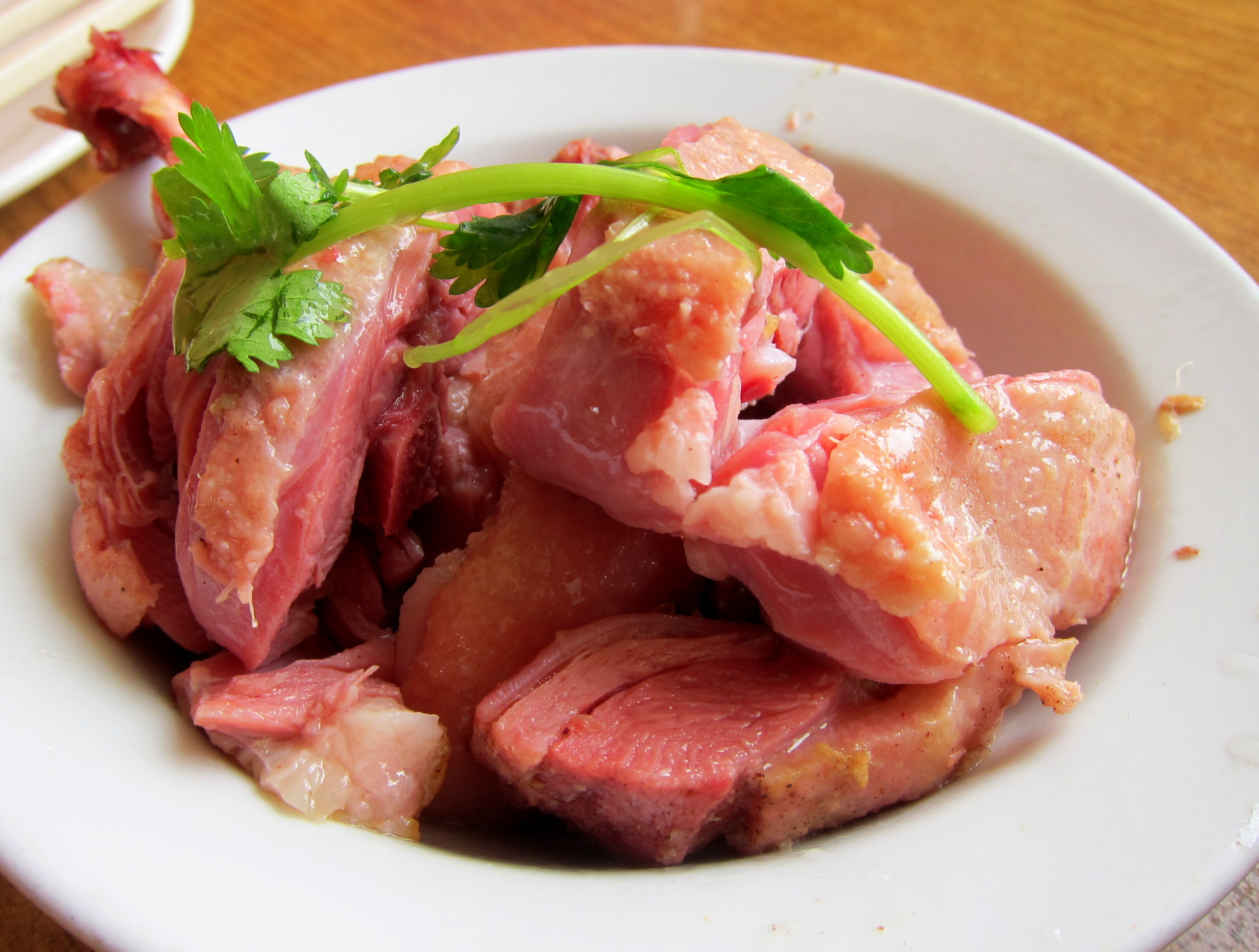
The duck set the mood. We stood in front of the restaurant before it opened, so they had to rush setting up things to let us in. We were the first customers of a Sunday. Few minutes after we placed our order, the guy strode out asking if we would like some duck, the kitchen just finished steaming one. Yes, of course, we said. Out came small chunks of legs and thighs in a simple white bowl with a sprig of coriander, the meat still pink, the skin moist in a sunglow shade. It’s not chewing gum and it doesn’t fall apart like cornmeal, it has all the right tenderness, the right juiciness, the right saltiness. I couldn’t pry any information from the waiter except that it’s steamed. But they must’ve put something in the water.


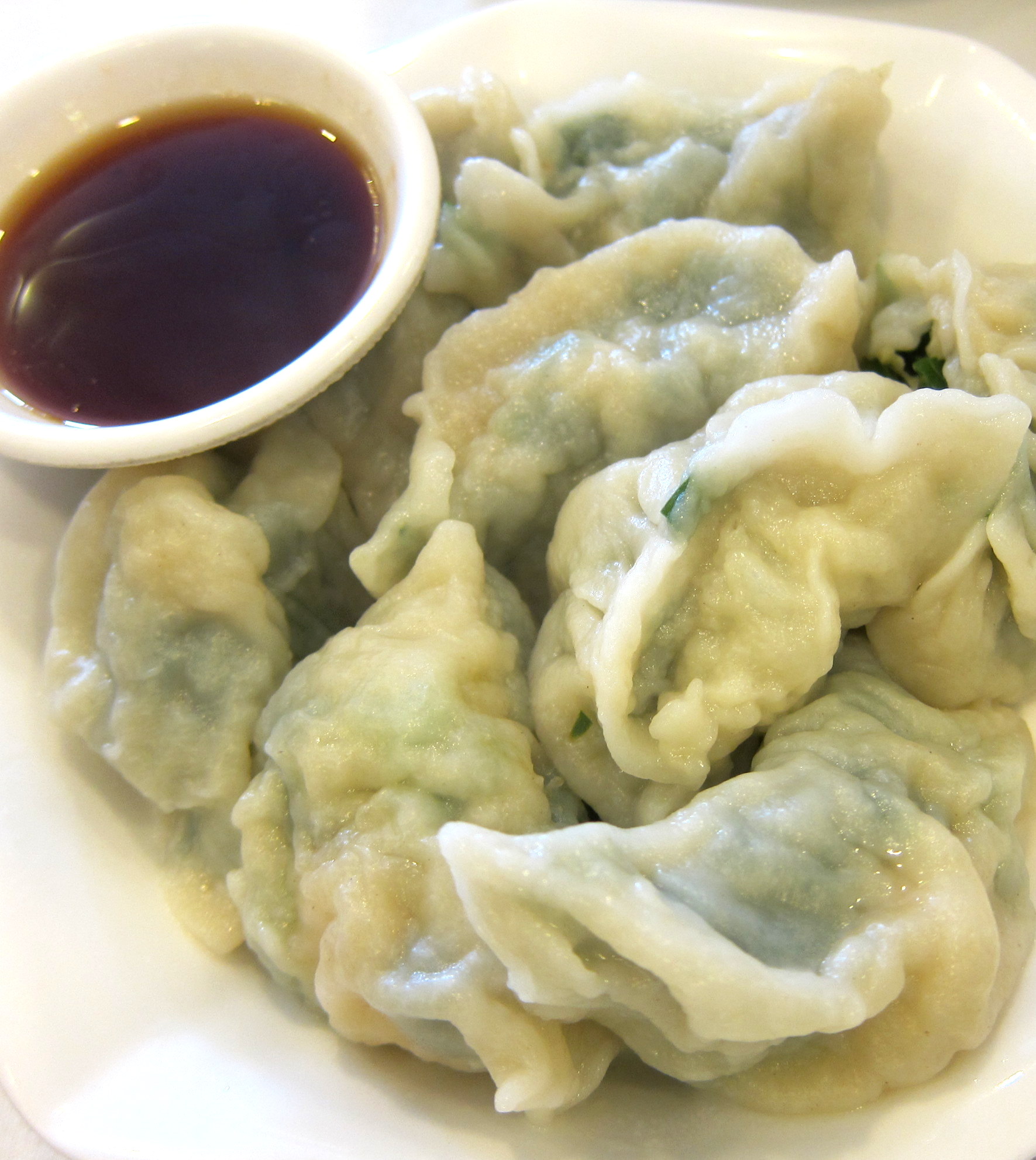
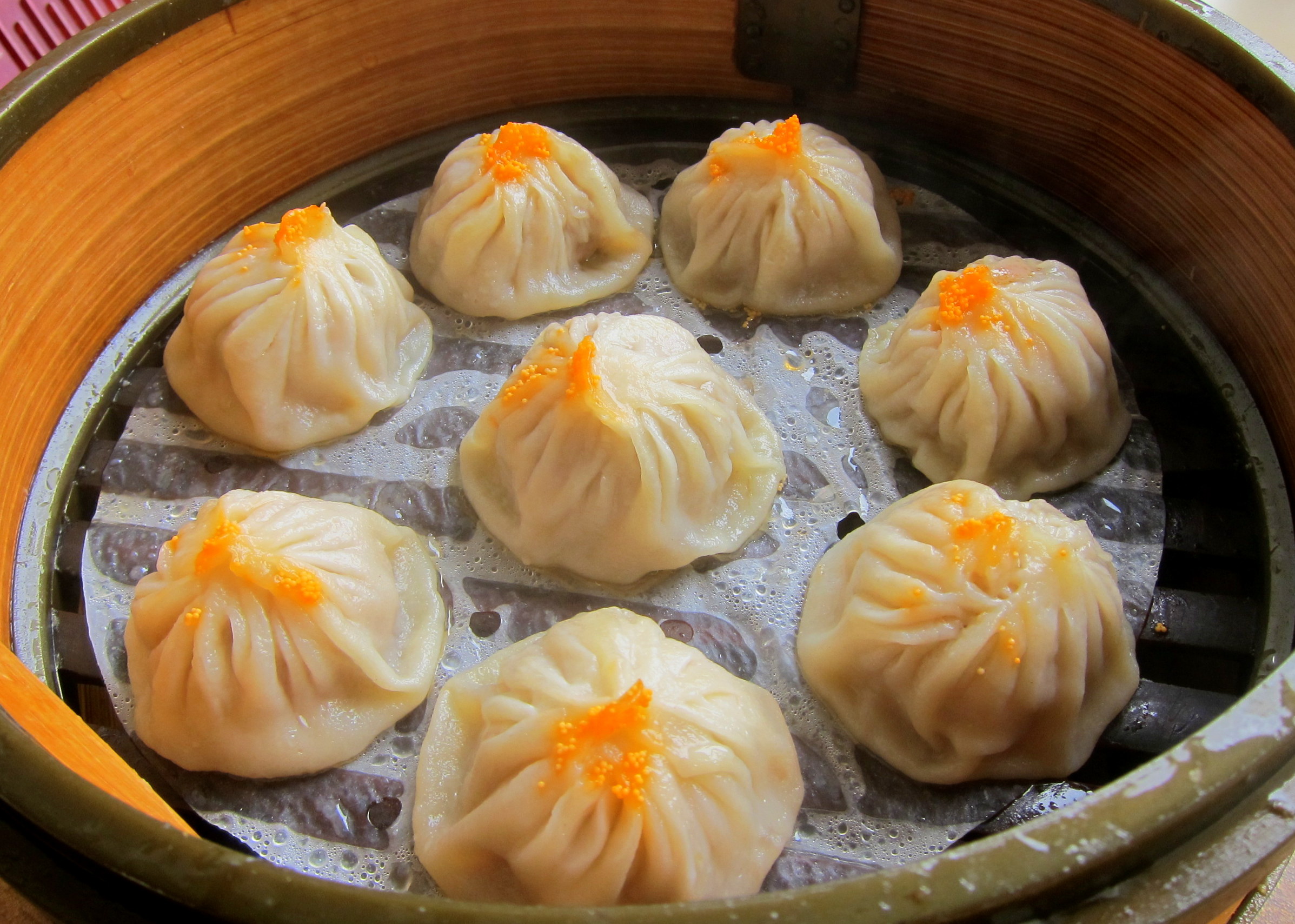
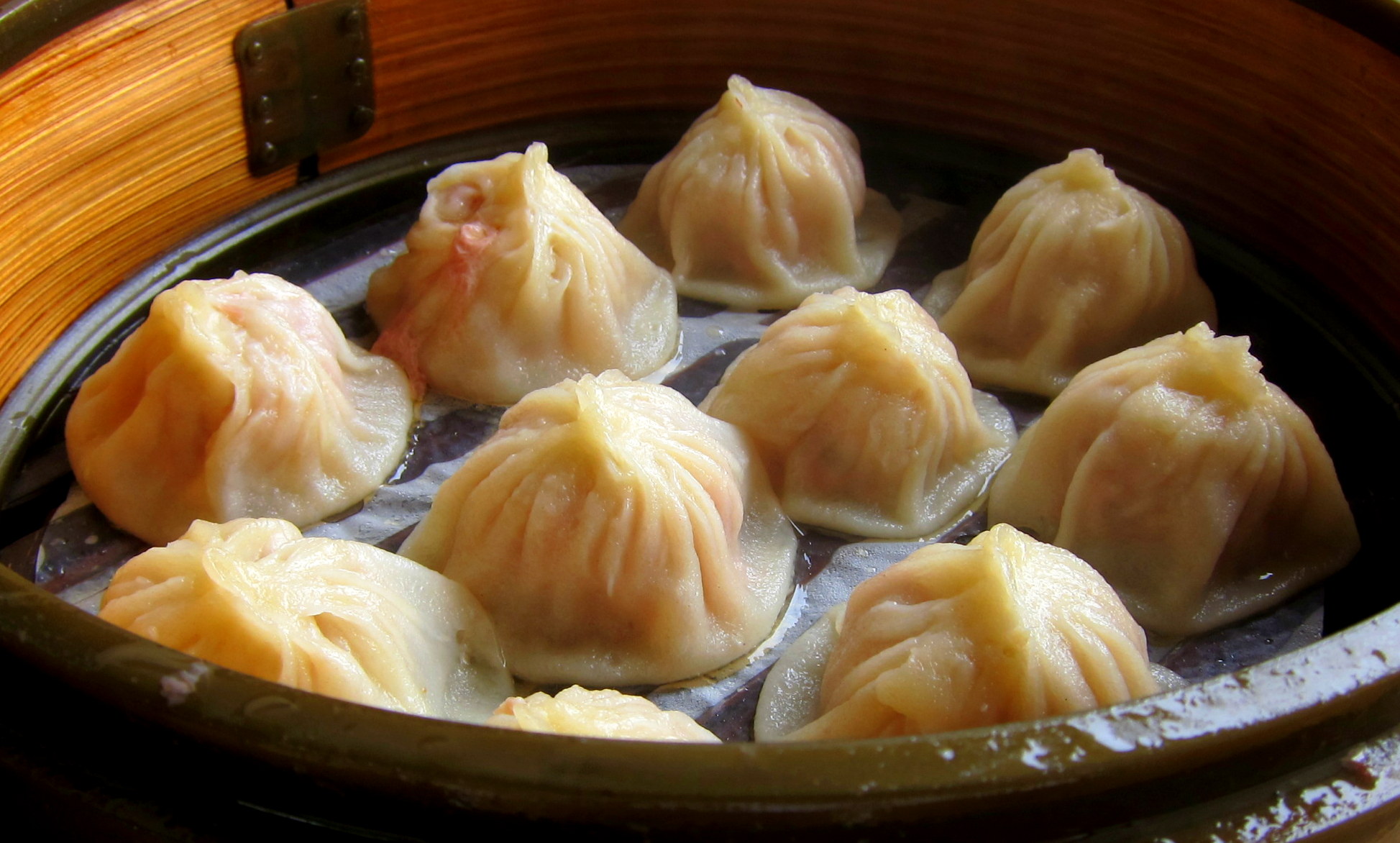
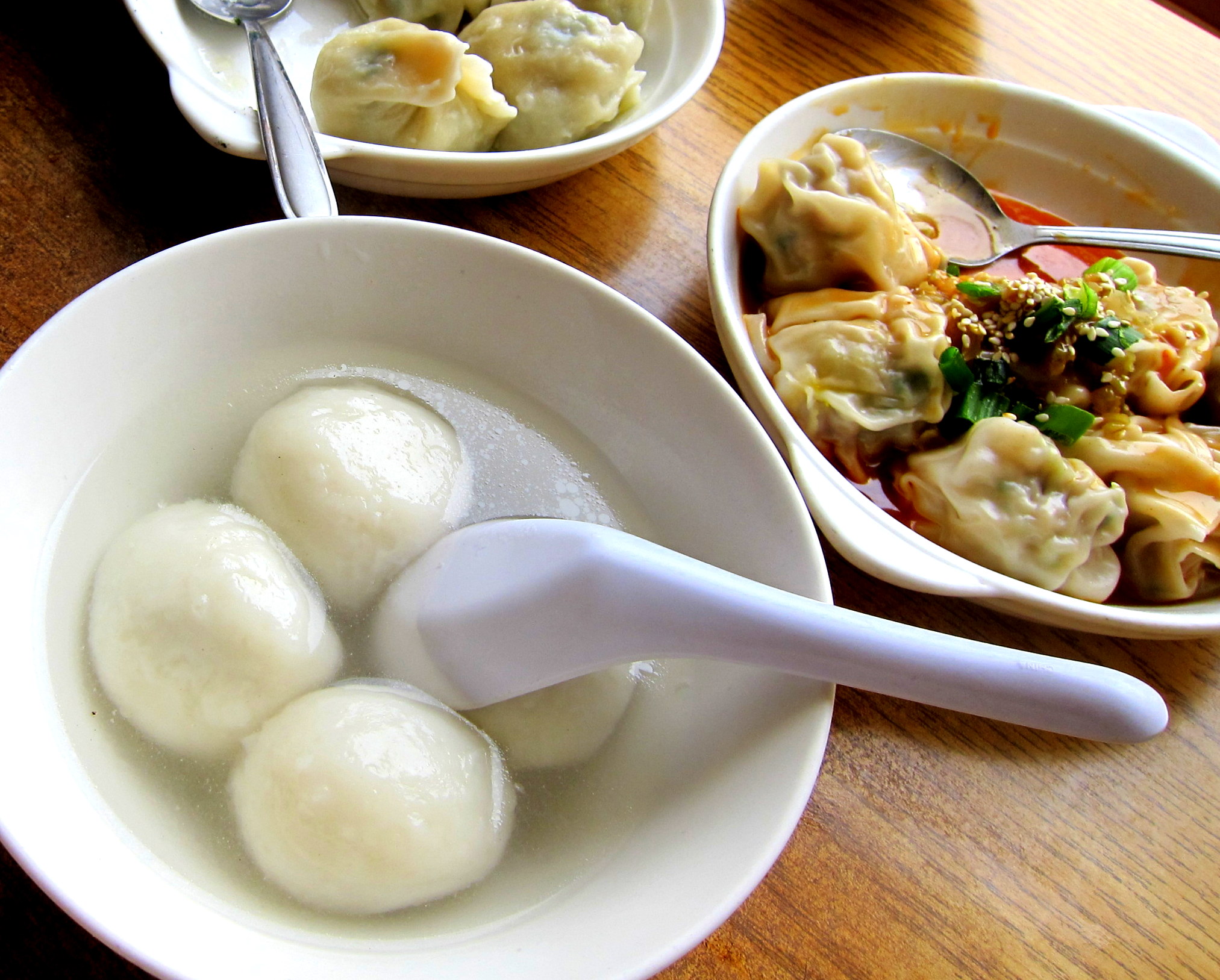
The Hung Zhou crab and pork dumpling (Hung Zhou xie ruo xiao long bao) and the Shanghai soup dumpling (Shang Hai xiao long bao) both contain half a spoon’s worth of broth. They’re the juiciest xiao long bao I’ve found anywhere, and the Hung Zhou xie ruo ones are packed with enough savory sweetness on their own that they don’t need the vinegar and soy dipping sauce.


We got too absorbed in the xiao long bao that we didn’t pair any tea until the seafood and tofu eggdrop soup and the Tian Jing go bu li bao (steamed wheat dumpling with pork, mushroom and rice noodle inside) came. One one hand, Baochong, a light Taiwanese oolong, accentuates the chive in the bao, and the bao intensifies the Baochong’s floral note, so the pair just blooms in your mouth.

On the other, Phoenix Honey is a stronger oolong with a roasty profile and a sweetness of lychee, which complements the soothing eggdrop soup.


The spicy pork dumpling (xian shui jiao) kicked us in the throat, although we asked for “not too spicy”, but Baochong can sooth the spark away. The pan fried chive and pork dumpling (jiu cai xian bing) and Baochong made another floral pair, similar to their steamed smaller brothers. Phoenix Honey brought forth the nuttiness of fresh-but-need-more-salt peashoots.


Soon we figured out the rules: lighter tea with more flavorful dumplings, darker tea with milder ones. The sesame mochi in hot water (zhi ma tang yuan) is bland outside and intensely sweet inside, so neither tea had a noticeable effect on it, but the Phoenix Honey added a nice roasty finish that spotlighted the nuttiness of sesame.

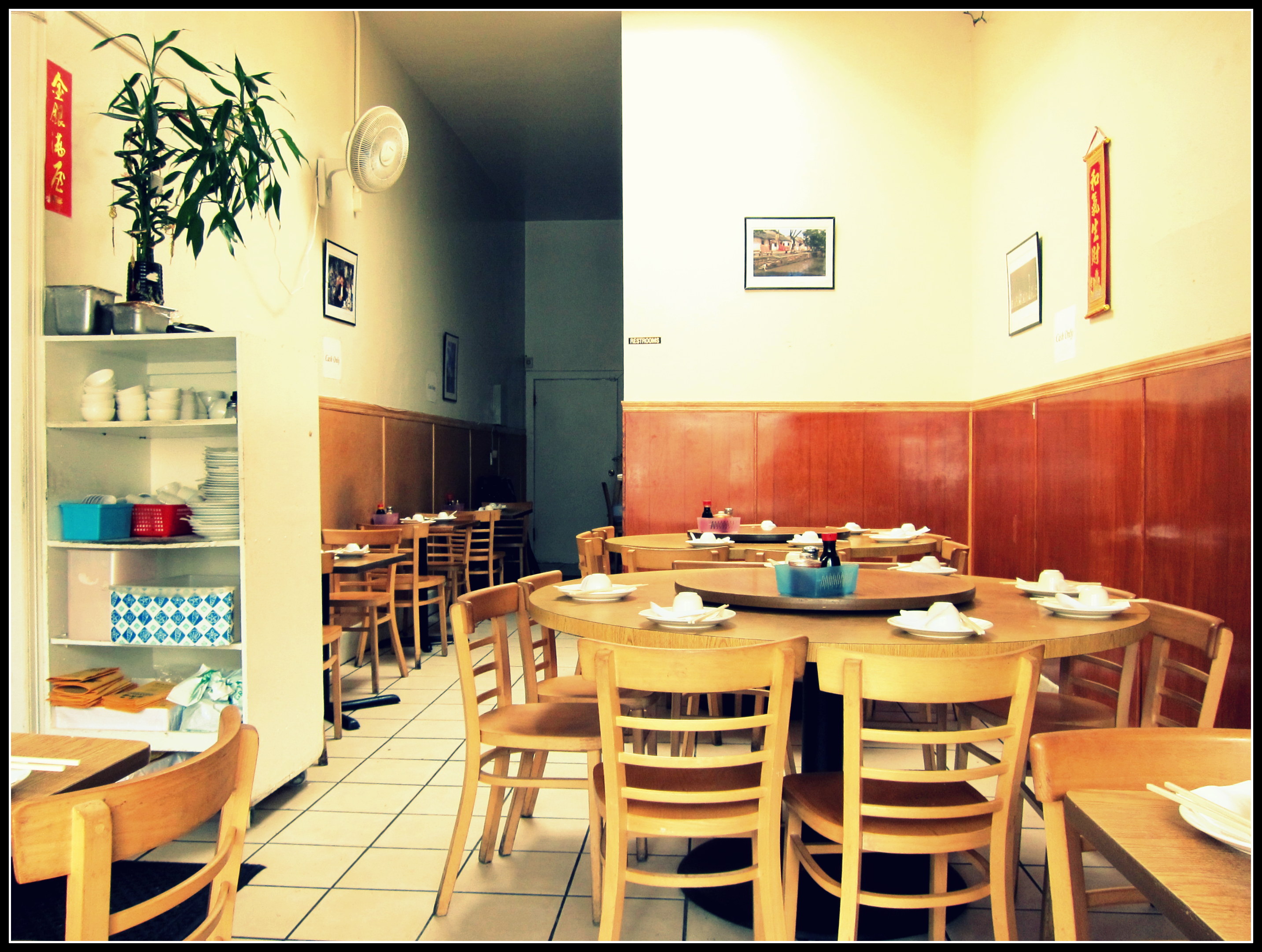
The restaurant before 10:30. Half an hour later we got people sitting back-to-back with us and a line spewing out of the door.

After eating here, I regained faith in dim sum. I can look pass the obnoxious name. The duck helped. And the teas helped a bunch. Infusion after infusion, they kept their flavors and washed clean the dumplings’ grease, which was surprisingly scarce to begin with. Nancy was worried that the restaurant might not like us brewing our own tea. But we were seated by the window, our table filled with bamboo baskets, I was aiming my camera at all kinds of angles, Ken helped me rearranging the plates for the pictures, and Nancy was drawing in the aroma of a fresh cup. Old Chinese ladies walking on the streets kept stopping to look at our table with unhidden interest. I think we made a good window display. At the end, before politely asking us to leave the table for another group waiting, our waiter commented with much pleasantry: “You guys drink tea!”

Address: Shanghai Dumpling King
3319 Balboa Street
San Francisco, CA 94121‎
(415) 387-2088

Big lunch for three: ~ $62
This post also appears on Tea & Mai.

Miso Omakase at Nojo

July 15, 2012 By: Mai Truong Category: California - The Bay Area, Japanese, The more interesting


Is it miso season? (Miso has a season?) Berkeley Bowl puts out about 10 different kinds of miso in their “international” aisle, and Nojo advertises a seasonal 5-course miso omakase menu on Black Board Eats. Usually the Black Board Eats emails go straight into the trash, which I kinda feel bad about because I signed up for their newsletter after all, but thank goodness I did read it that morning. That night I got the code, called my friend, and we went to Nojo.

We were seated at the counter, but not the one facing the chefs, that would have been nice, this was a small counter facing the wall near the door. The wall looks pretty cool but we felt kinda weird at first, what with the other customers crowding the tables and here the three of us facing a wall next to a middle-aged man. We felt outcast. But Nojo doesn’t take reservation for party under 6, only a phone call an hour before you arrive to put your name on the waiting list, guess I should have called more than an hour earlier, what was I thinking following the rules? But the servers, inked and all, are really nice, the water was clear and sweet, the sunflowers smelled good, and the middle-aged man left minutes after we sat down.

And the food.


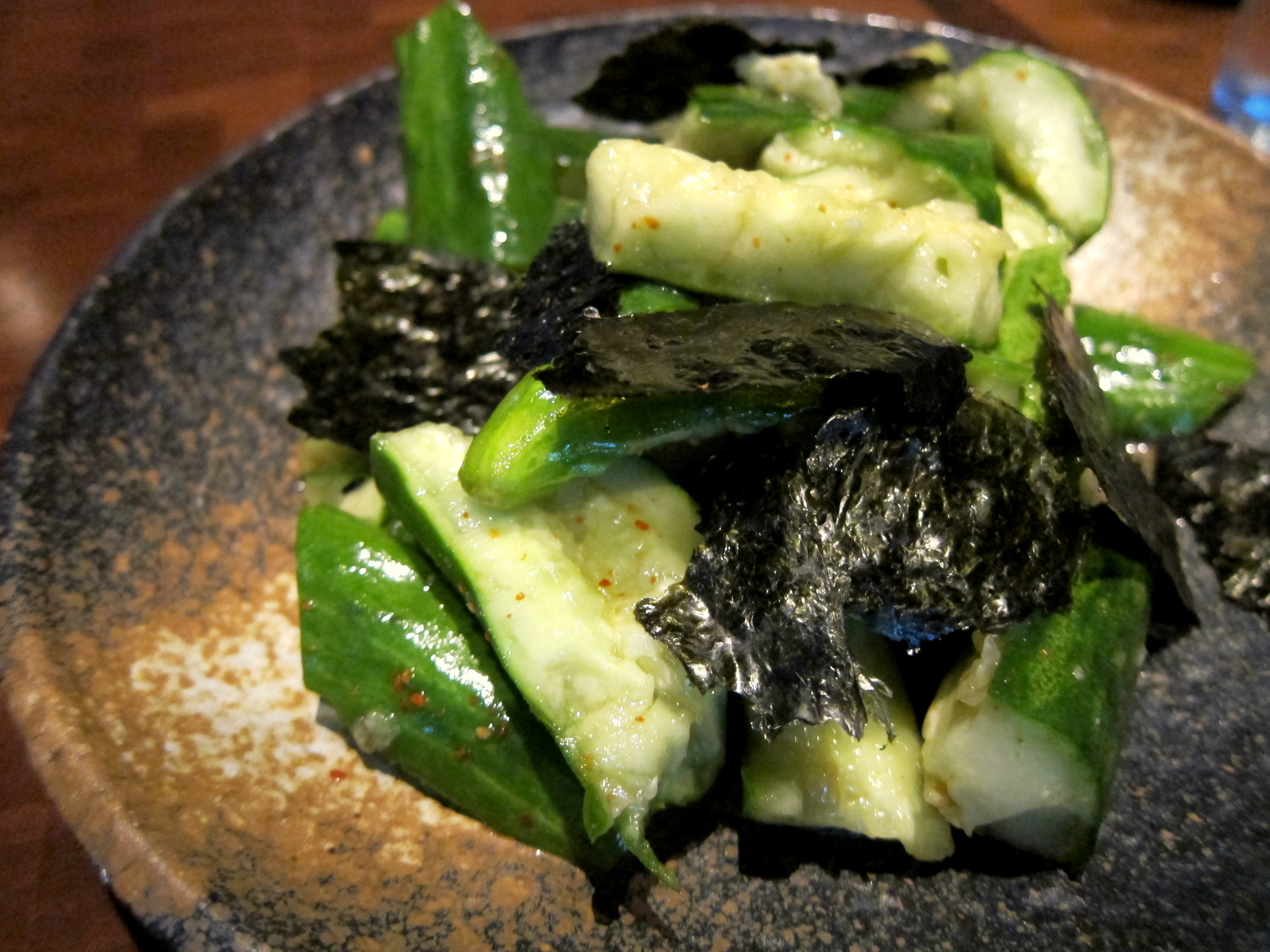
Cucumber salad with shichimi and nori. Shichimi is a chili pepper mix with (supposedly) 6 other spices, but they sprinkled just enough to give the cold thing a kick, not spicy. There’s more shichimi on the counter for the duller tongues people who like spicy food.


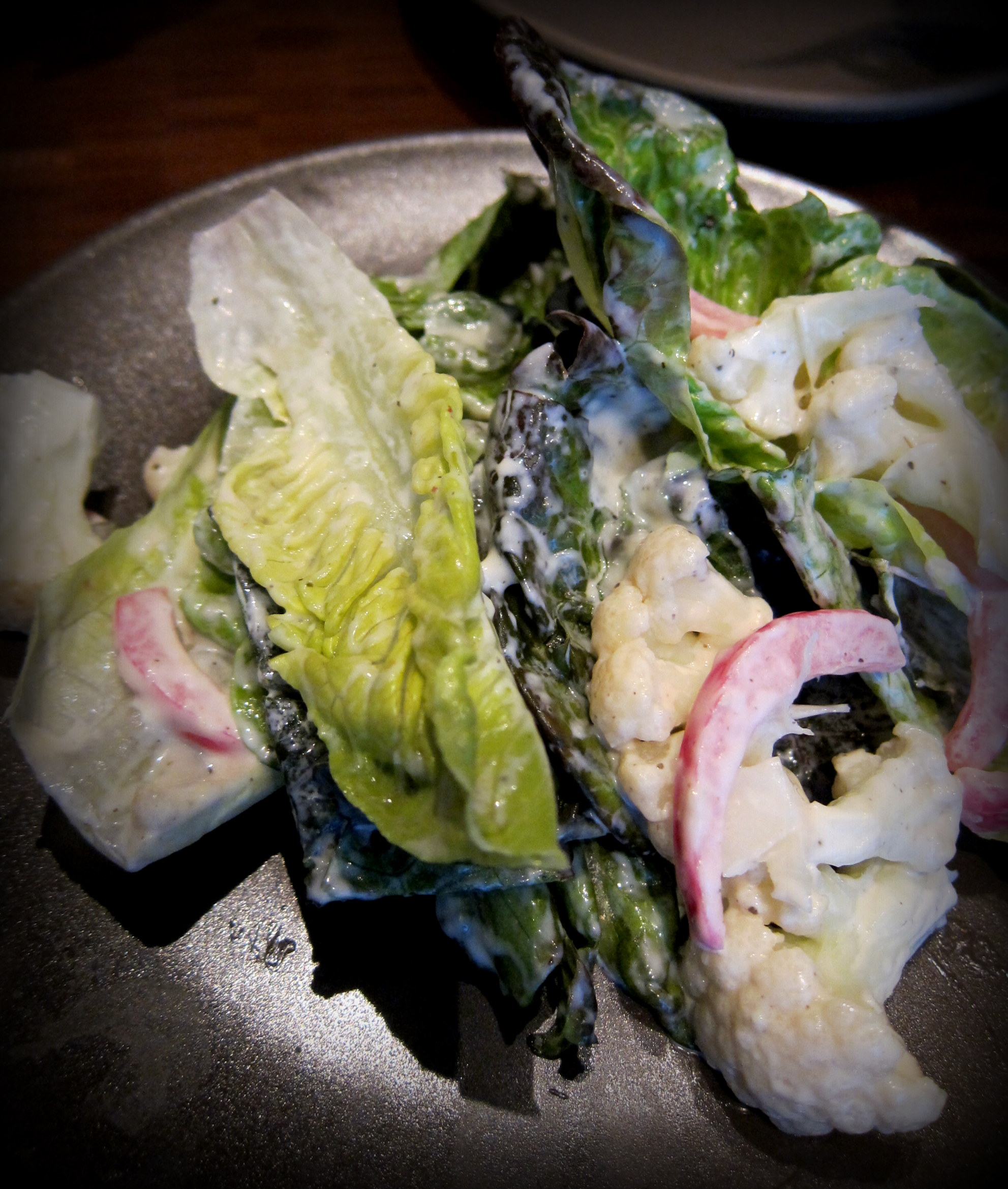
Miso Omakase Course 1: a simple salad of Little Gem lettuce and cauliflower with shiromiso (white miso) dressing. The pickled red onion was the real little gem.


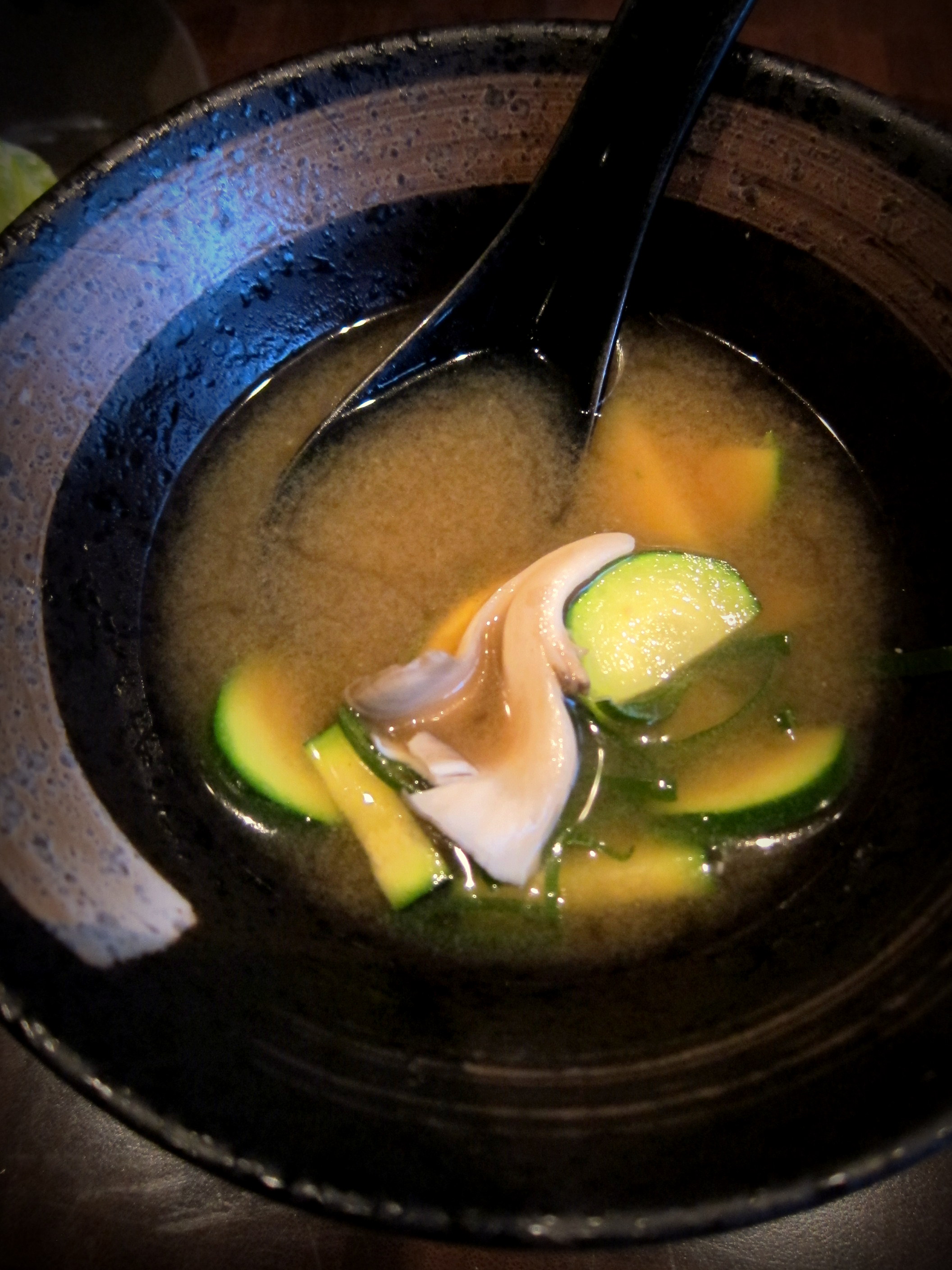
Miso Omakase Course 2: miso soup with oyster mushroom and butternut squash. Hearty. San Francisco gets cold at night, so this helps.


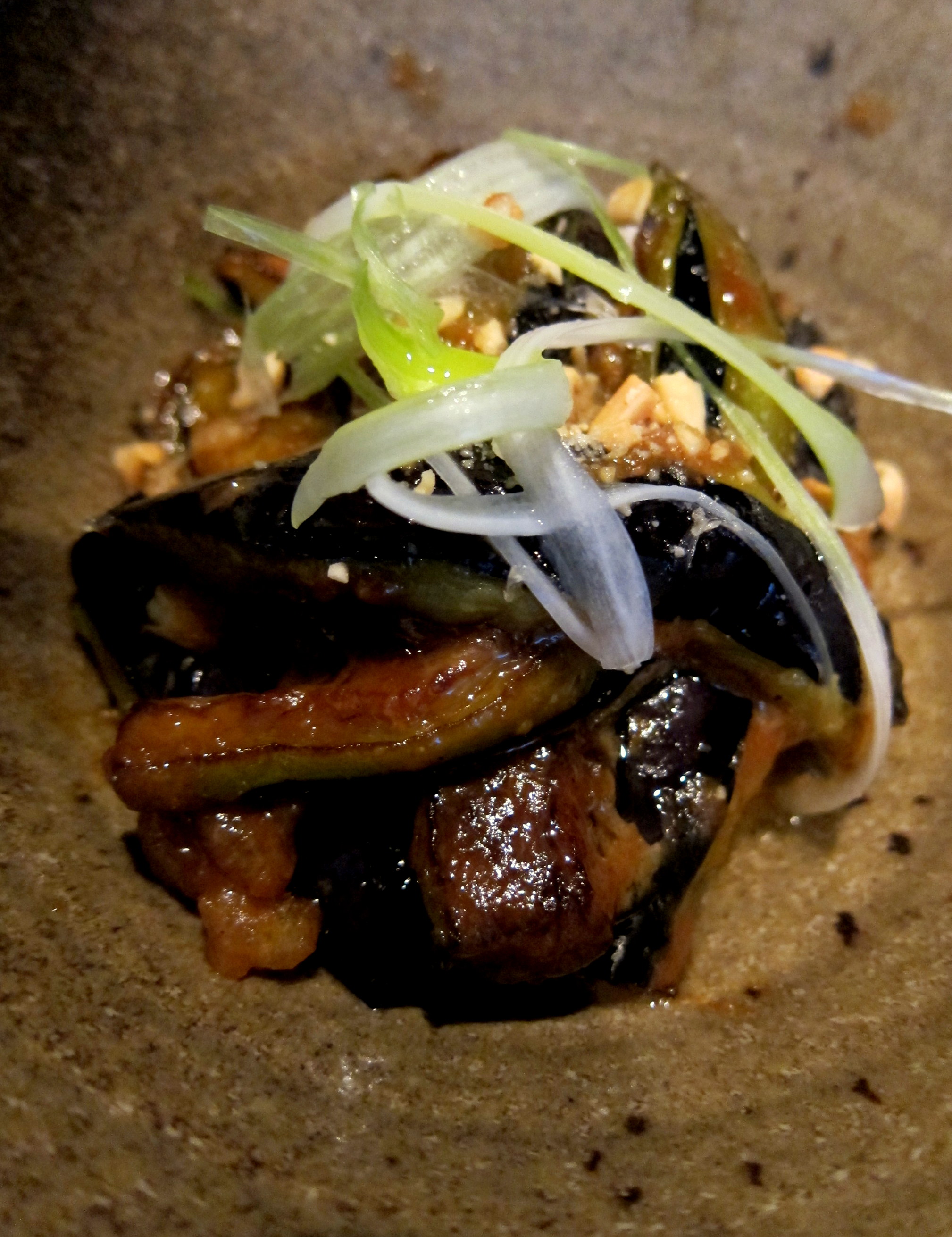
Fried eggplant with akamiso (red miso) and peanut sauce, topped with julienned leek. Eggplants have never been my favorite fruit and will never be even if I go vegan, but this miso eggplant was better than the grilled pork jowl and the garlic-barley miso butter chicken (Miso Omakase Course 3), both of which tip-toed on the salty side.


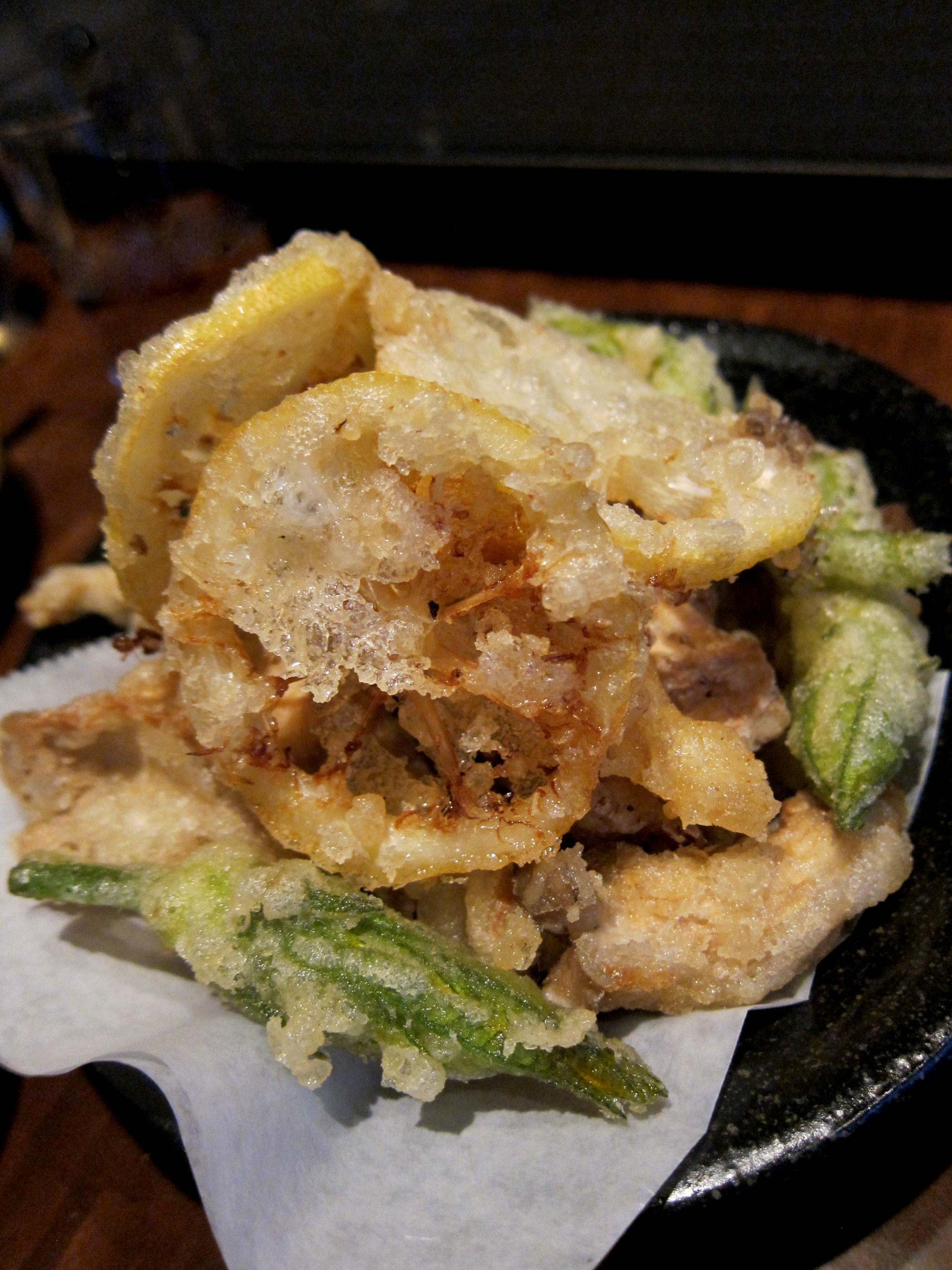
Tempura tree oyster mushroom, squash blossom and lemon, to be dipped in a zesty ponzu mayonnaise.


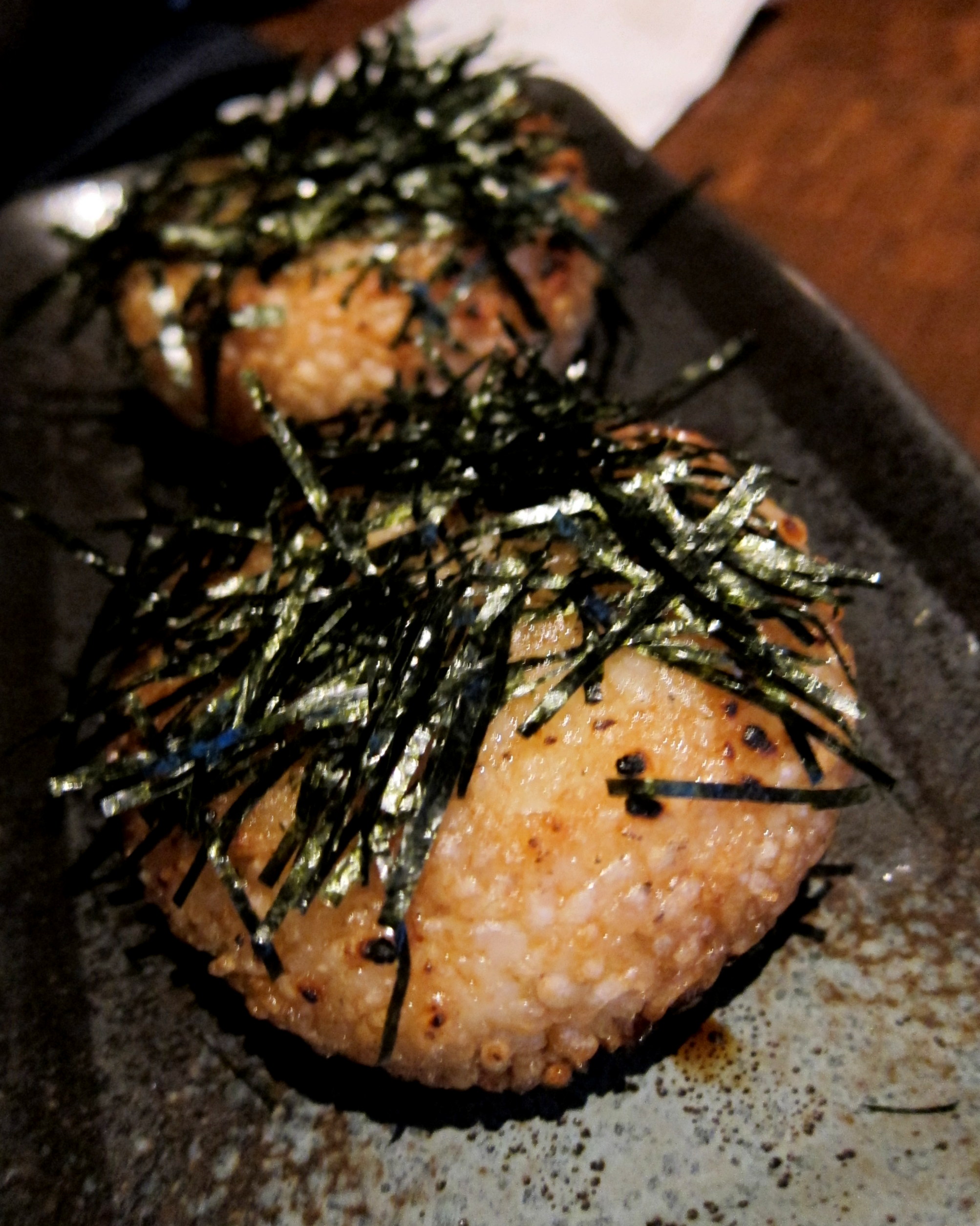
We didn’t expect a fried thing when we ordered the rice balls with tare and nori, but the surprise was welcome.


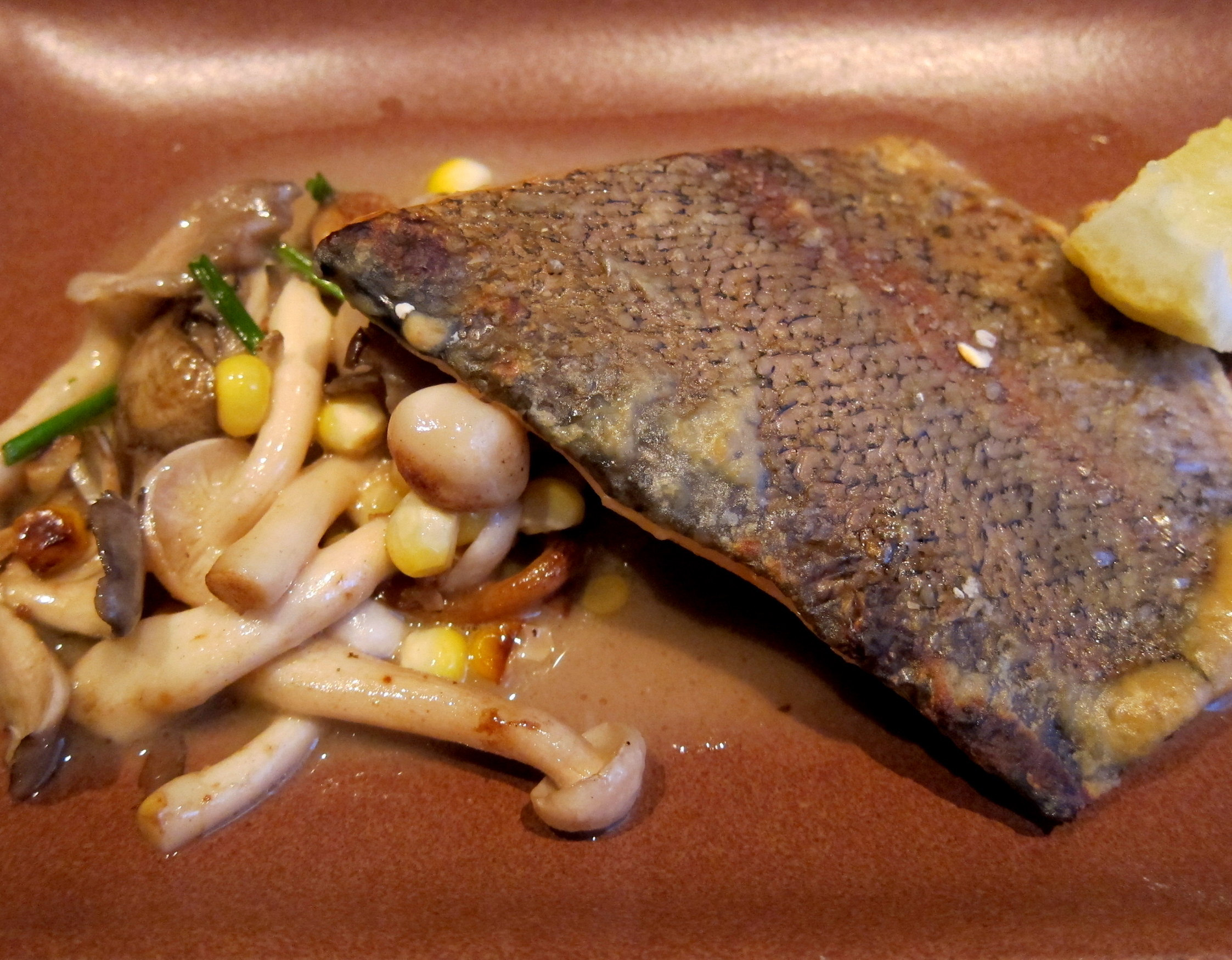
If I was skeptical about anything in the Miso Omakase menu, it was the shiromiso-glazed trout. But its sweet creamy sauce blew my doubt away, the rice ball was great for sweeping up every last drop.


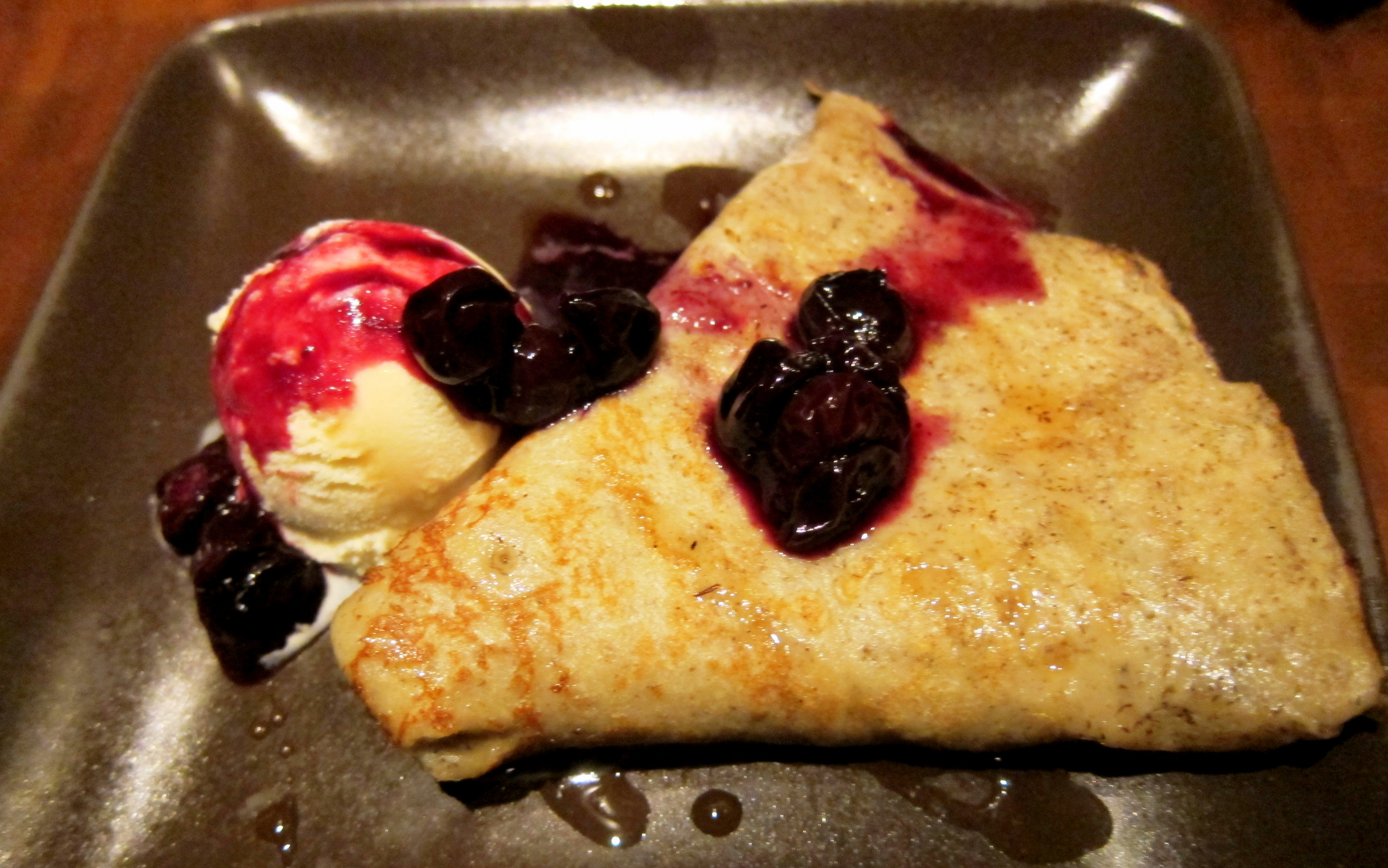
Miso Omakase Course 5: buckwheat & beer crepe, a drizzle of ginger-muscovado syrup, blueberry compote on top and shiromiso ice cream. We thought muscovado was a cross between muscat the grape and avocado (weird, I know, but possible, right?), but we asked, it’s a brown sugar.


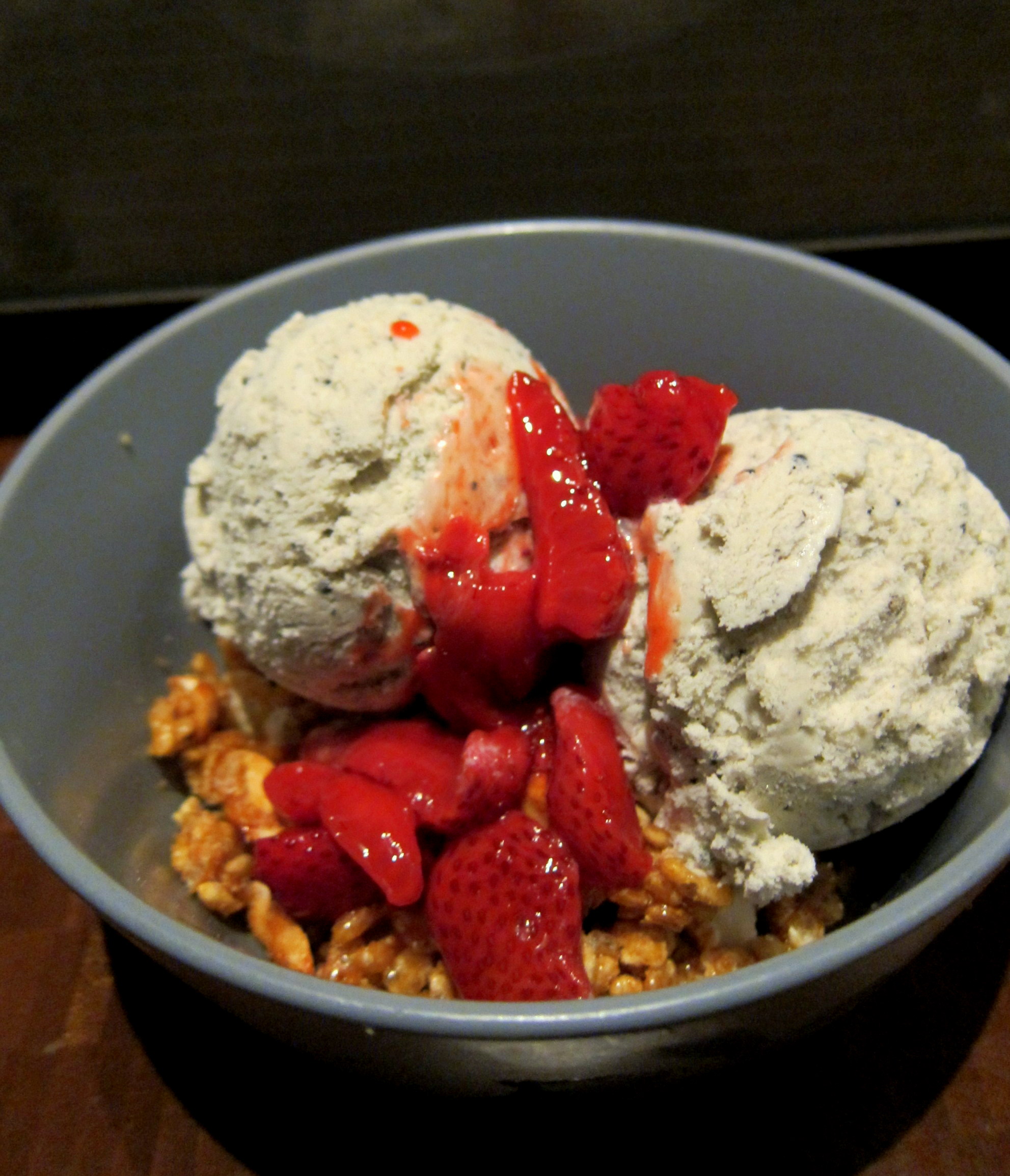
And of course, kurogoma (black sesame) ice cream with roasted strawberries on a bed of “peanut thunder crackers”, which is like peanut brittle and caramel popcorn intertwined, multiplied the goodness by 85.


You know how people can just tell that something’s good when they see it, for no reason at all? That’s how it was with Nojo for me. Every izakaya in the Bay has the same kind of yakitori on the stick, the same expensive price, the same raves on Yelp, and I don’t know why I wanted to go to Nojo, but now I’m recommending it to everyone I talk to. Was it the kikubari exuding from the friendly staff, inked and all and warmly smiling as they strode between tables? Was it the simple but flawless food? But I didn’t know any of that before I came.

Somewhere in me, I just knew. Miso is in.

Address: Nojo (which means “farm” in Japanese)
231 Franklin St.
San Francisco, CA
(415) 896-4587

Dinner for three: $99.82