Flavor Boulevard

We Asians like to talk food.
Subscribe

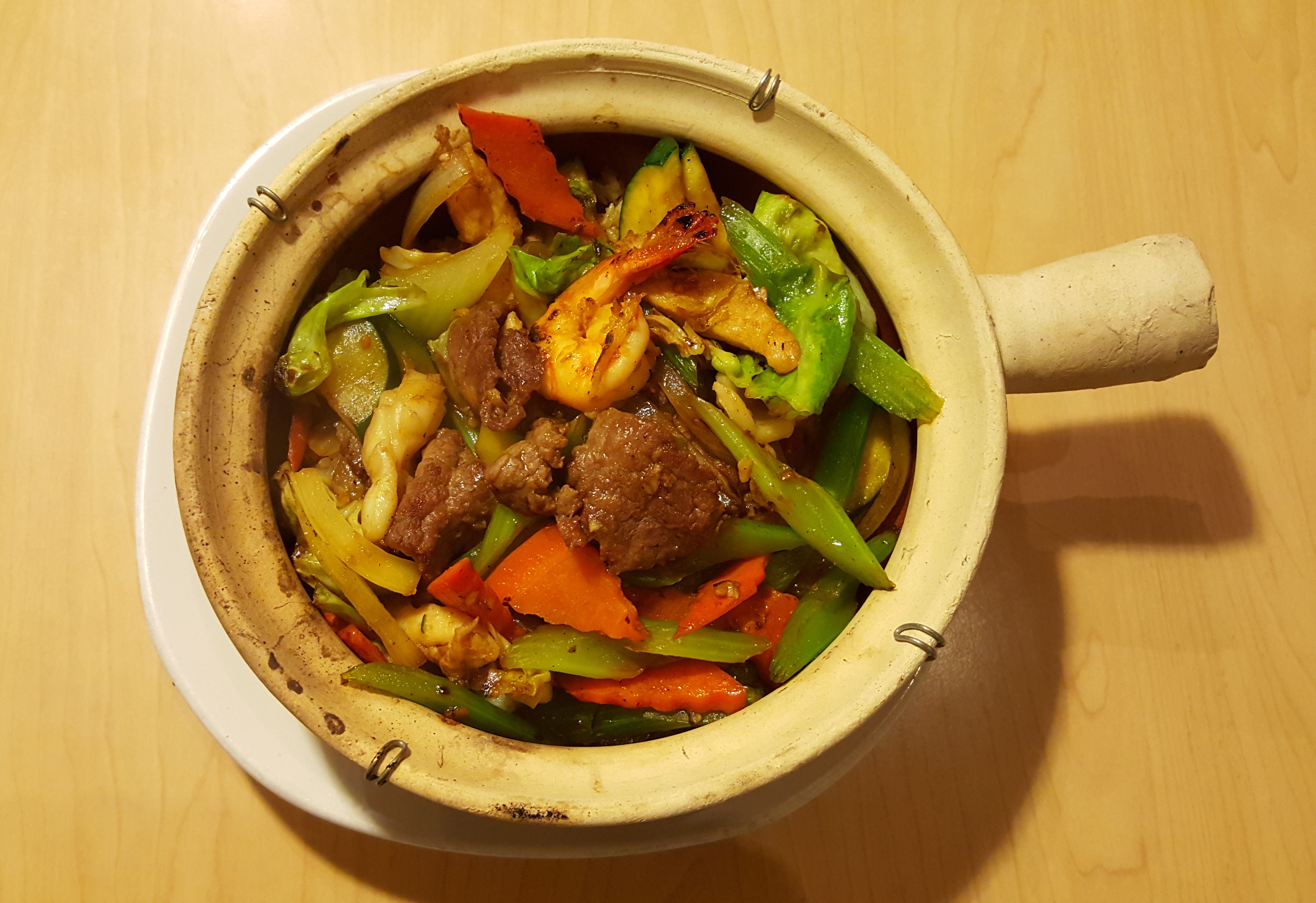
one shot: Clay pot rice and beef

December 09, 2015 By: Mai Truong Category: California - The Bay Area, Comfort food, One shot, Vietnamese

saigon_express-claypot_rice
This is Vietnamese clay pot rice at Saigon Express. The pot comes sizzling hot, and after 5-10 minutes, we have a nice rice crust at the bottom, while the top is flavored with the sauce from the meat and vegetable. I wish there were more rice just because the sauce is so good, but I already get quite full with this portion every time.

The closest resemblance I can think of is the Korean dolsot bibimbap. In this Vietnamese case, there’s no kimchi, no gochujang, you don’t have to add anything to the already well seasoned toppings. I like this completeness of the rice bowl, as they say about the donburi (watch this Shokugeki no Soma episode for the donburi reference – ignore the sexy stuff, though, just focus on the food).

It’s amazing how much a restaurant can change over the years, or how much dining with a companion can change your perception of the restaurant (did they even have this clay pot rice back then?). I was not so impressed before. This time, it’s a change for the *much* better.

Side details: the hosts are nice, welcoming aunt-like ladies, who are more than willing to customize your order (cut the broccoli, not too much carrots, etc.). Each bowl costs around $9.

Address: Saigon Express
2045 Shattuck Ave
Berkeley, CA 94704
They close on Sunday (T__T)

Why I Love Fried Rice

November 03, 2013 By: Kristen Category: Comfort food, Korean, RECIPES

Yangzhou fried rice, kimchi fried rice, chicken and salt cod fried rice, whatever-that’s-in-your-refrigerator fried rice…I love it all. Fried rice is the ultimate comfort food – it’s filling, healthy-ish (if you put in a lot of vegetables), and just hits the spot every time. Perhaps the best thing about fried rice is how easy it is to make at home!

As someone who is still really learning how to cook, trying out a new recipe usually means that I’ll be spending anywhere from 30min – 2 hours in the kitchen (actually sometimes it takes me 30min just to prep everything because of my lack of knife skills). So for me, when I want a quick meal because I need to get back to reading or studying, or just because I don’t feel like devoting that much time to cooking, my go-to is always making fried rice. It usually takes me 15-20 minutes to cook fried rice at the most and while it probably is not the healthiest meal to eat every day, I usually end up making some kind of stir fry or fried rice at least 3-4 times a week because of how easy it is. Also, since fried rice is by nature something that requires the usage of pantry ingredients, I never have to worry about buying fancy ingredients.

1004545_10151924810260733_669571591_n

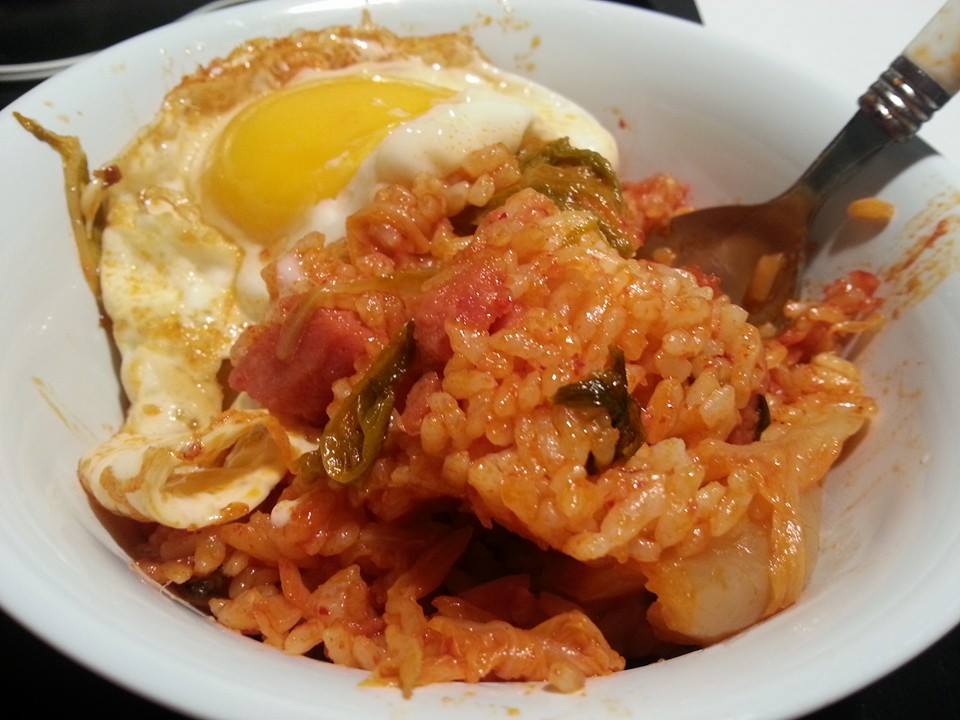
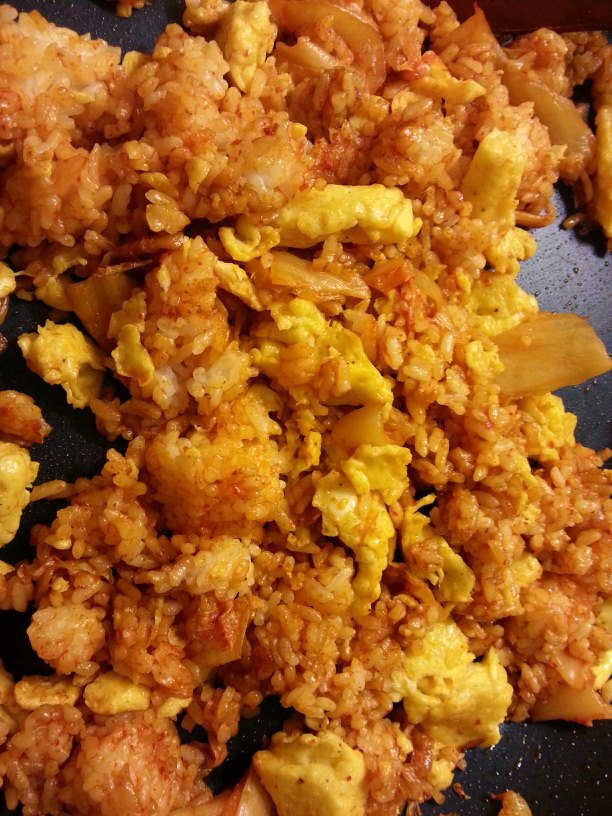
Here’s my very simple kimchi and spam fried rice recipe! It’s spicy, sweet, and salty and takes about 20 minutes altogether to make from prep to cooking (and probably 10 minutes for washing up afterwards or less if you eat straight from the pan, which I do sometimes when I’m lazy).

Spam and Kimchi Fried Rice Recipe – serves 2

I’ve made this recipe countless times and I’ve gotten to the point where I can probably do it in my sleep. I don’t have a source for this recipe since I’ve based the taste off of the kimchi fried rice from Kimchi Garden and then the more I made it the more I changed it to suit my taste. I tend to not follow recipes very well and work mostly from look and taste, so my measurements may not be entirely accurate and may not suit everyone’s taste, so some adjusting may be needed depending on how spicy, sweet, sesame oily, kimchi-y, etc. tasting you want it.

Ingredients:

  • Rice: 1 cup (My rice cooker makes 2 cups and I usually take half of that for 2 people. Also, I tend to use fresh rice more than refrigerated rice and never really noticed that much of a difference, but maybe it’s because I prefer my fried rice to still be a little sticky.)
  • Kimchi: About 2 cups roughly chopped kimchi or enough to suit your taste.
  • Spam: 1/3 of a block of Spam, diced
  • 2 teaspoons toasted (or regular) sesame oil (1 for initial stir-frying, 1 for finishing)
  • 1 teaspoon brown sugar or regular sugar (use less or more depending how much kimchi you use)
  • 1 tablespoon gochujang (more or less depending on how spicy you like it – 1 tablespoon makes for a *pretty* spicy fried rice)
  • 2 eggs
  • 1 teaspoon olive oil (or any kind of oil, including sesame) for the eggs

Instructions:

  1. Heat up 1 teaspoon of sesame oil over medium high in a relatively large frying pan or wok. I always prefer woks instead of pans because when I flip over the rice with my spatula, it doesn’t fall over the sides.
  2. When oil starts to crackle a little, put 2 cups of kimchi and diced Spam into wok. Stir-fry, making sure that nothing is burning (adjust heat if necessary to medium).
  3. When the kimchi begins to release some liquid and starts turning a little translucent, add in a teaspoon of brown sugar. A caramel-y thick sauce should start forming with the kimchi liquid. Stir-fry a bit longer (about 3-5 min) until Spam starts browning a bit.
  4. When the kimchi and Spam look like they’re cooked enough to eat on its own, add the rice in. Break  up clumps of rice with spatula and mix thoroughly. Leave some of the rice at the button to get it a little burned or crispy if you like it (it’s my favorite!). If not, keep on stirring!
  5. Add in tablespoon of gochujang and mix thoroughly so that it distributes evenly. It’s a thick sauce so it may take quite a bit of stirring before it’s fully incorporated. (Usually this process from when you add the rice to fully incorporating the gochujang takes about 5-7 min.)
  6. The mixture will probably be looking a little dry, so add another teaspoon of sesame oil and mix thoroughly. Set burner to “warm” or remove from heat.
  7. In another pan, add a teaspoon of sesame oil or regular olive oil. Crack 1 or 2 eggs and cook like you would normally to whatever level of doneness you prefer. (I make sunny-side-up fried eggs by cooking for about ~2 minutes on medium high heat and then ~2-3 minutes on medium low with a lid.)
  8. Place egg on top of fried rice and you’re ready to eat!
581935_10151498636045733_927445069_n

Kimchi fried rice is the best~

Eating in Seoul: Spotlighting 4 Hongdae Restaurants

August 25, 2013 By: Kristen Category: Korean, Travel

Since Hongdae is where I stayed in Seoul, this is where I had most of my meals. In this post I’ll spotlight 4 restaurants that stood out to me mostly because of the dishes that I had there. These include: Korean-style onigiri (rice balls), kimchi mandu (dumplings), vegetable and meat pancake, and gamjatang (potato soup) without the gamja (potato).

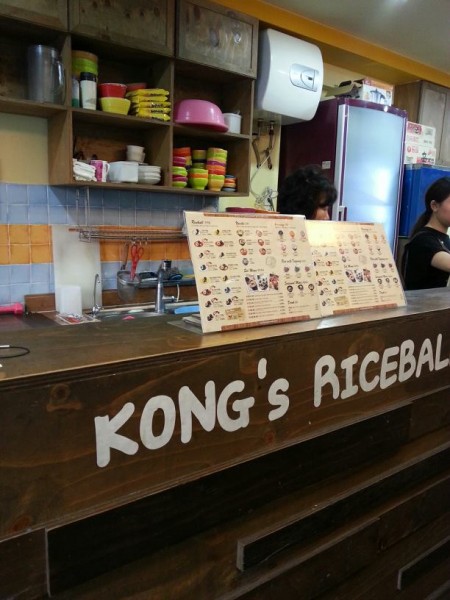
#1 Kong’s Riceball

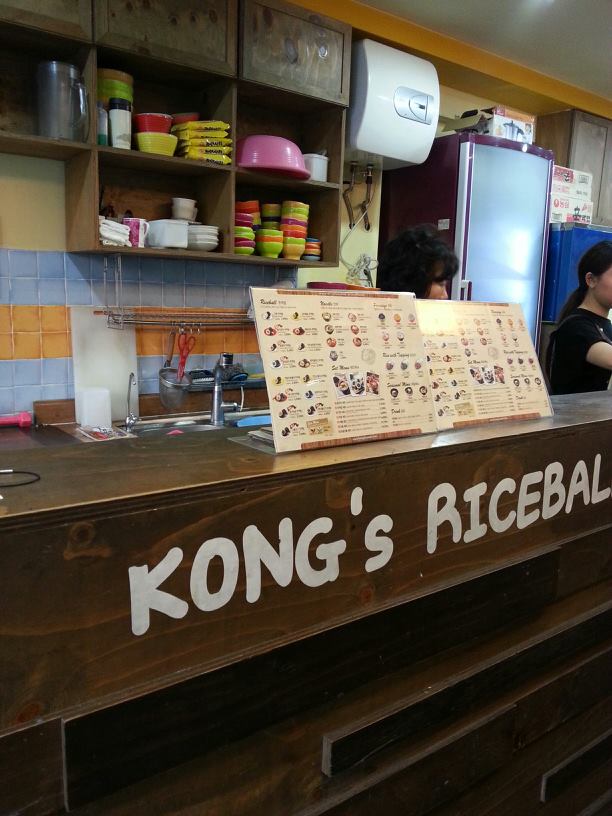
It was my second day in Seoul and I was still very overwhelmed with being in South Korea. I had a pretty big lunch at the museum cafe in the War Memorial of Korea and on my way back to my hostel, I wanted dinner but just a small dinner. I remembered passing by this restaurant the day before when my friend was showing me around the area and figured today will be the perfect day to try it!
1011901_10151676537820733_1737277647_n

The interesting name, the brightly colored bowls, and the nice ahjumma who stuck her head out of the window to call out orders all drew my attention right away! Plus it was right next to Hongik University on the main road in Hongdae AND it offered take-out, so convenience and shyness made this the perfect stop (at this point I was still too scared to order or dine alone in a restaurant, but that was quickly overcome once I couldn’t resist the food).
954748_10151676538105733_766857282_n

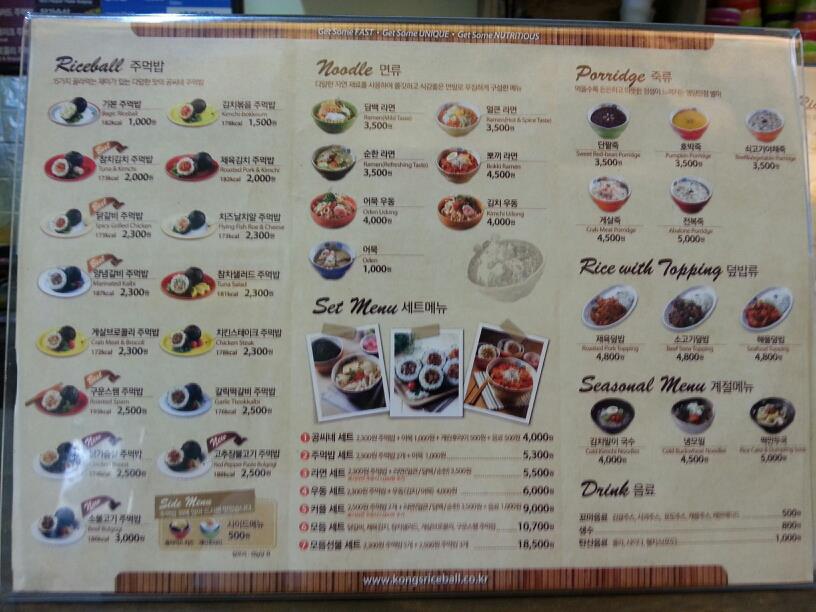
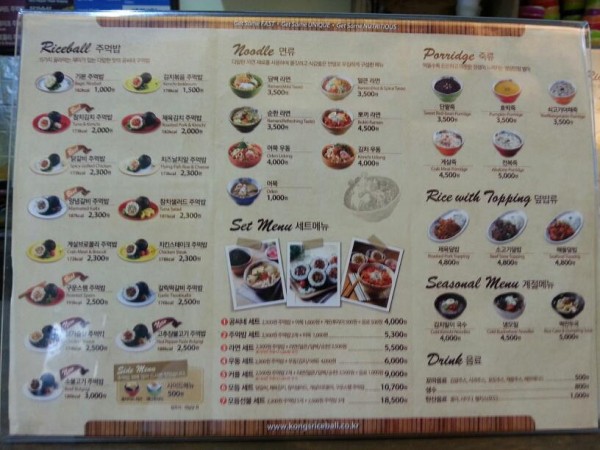
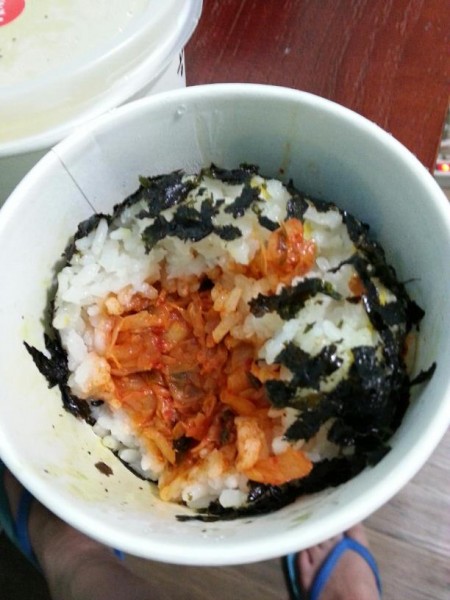
An onigiri would be the perfect meal since I wasn’t too hungry. After looking, I decided to go with two of what looked the most delicious: spicy marinated chicken thighs (닭갈비, dalk kalbi) and stir-fried kimchi (김치볶음, kimchibokkeum).
971445_10151676539265733_258093571_n

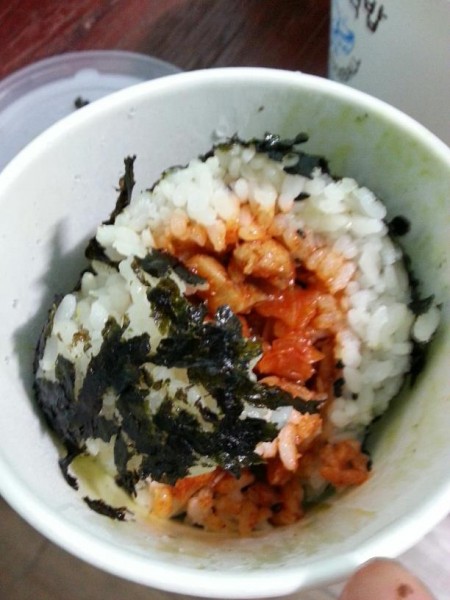
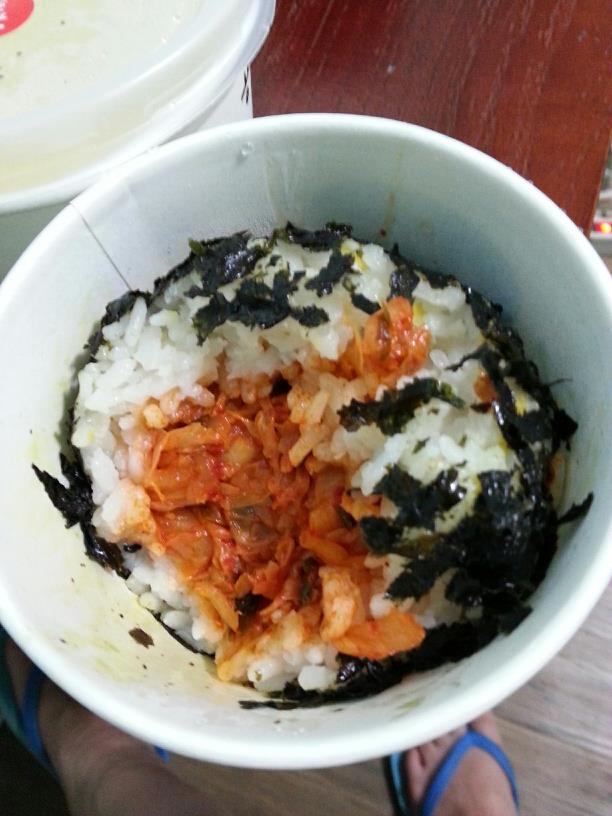
Stir-fried kimchi rice ball

970865_10151676538865733_1961888760_n

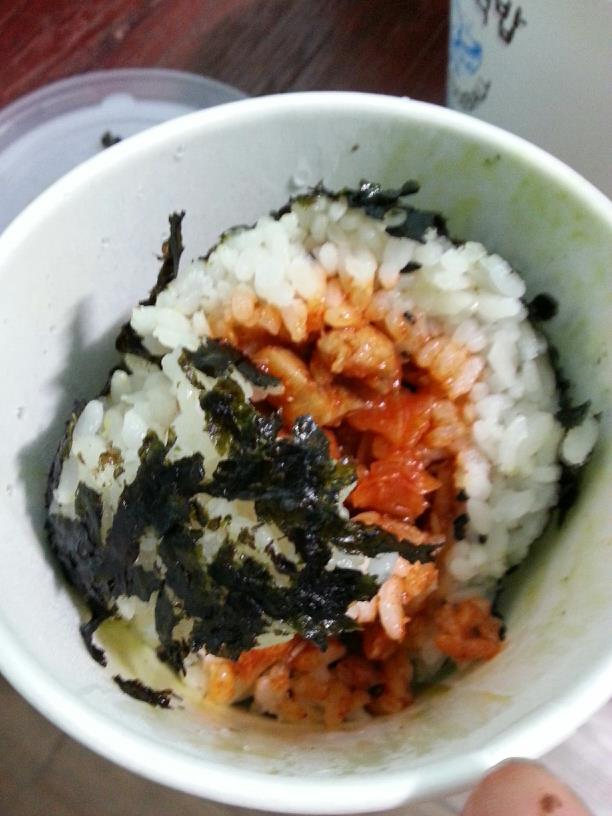
Marinated chicken riceball

Little did I know – these are giant-sized riceballs! They took up an entire cup each! They were so delicious though that I ate both of them in the comfort of my hostel room. I expected something hand-held, but I had to use a fork with this one – luckily my hostel had utensils because when I tried taking the rice ball out of the cup with my hands, I ended up making a mess. The flavors were delicious and so comforting: both the chicken and kimchi were really spicy but I loved it since the rice and seaweed balanced out the spice. If I were a college student at Hongik University, there would be no doubt about it, I would be eating these rice balls all day long. With the most expensive one costing 3,000 won (less than $3 US) and the stir-fried kimchi one costing 1,500 won (less than $1.50 US), these are great!

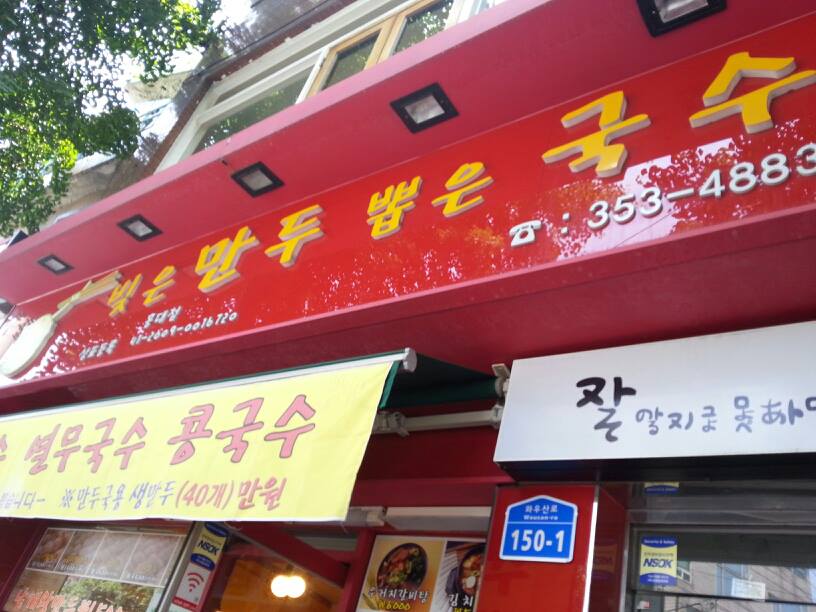
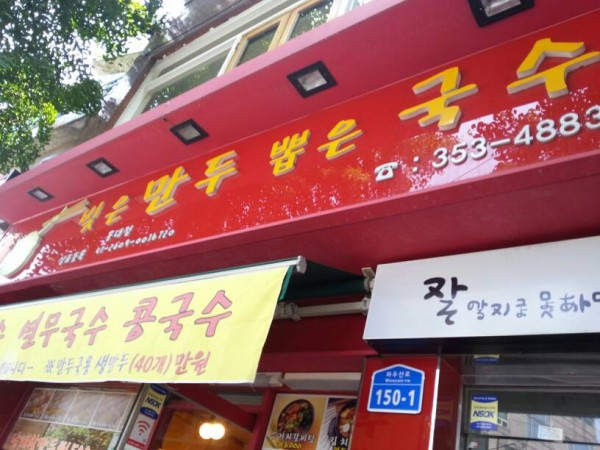
#2: 빚은 만두 뽑은 국수
1002231_10151676557475733_191584978_n

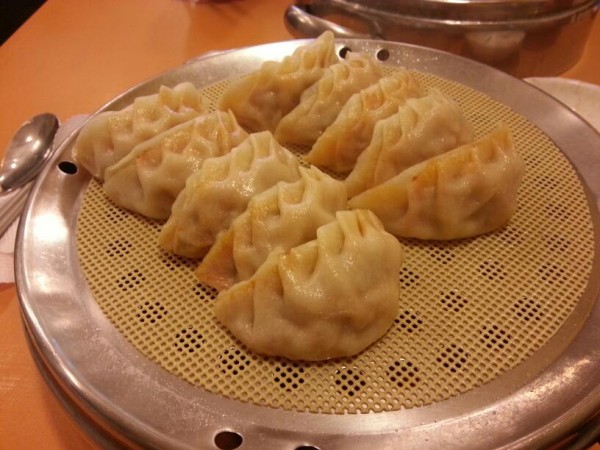
I wish I knew the translation for this restaurant name, but I don’t…the only character I recognize is 만두 (mandu), which means dumplings. As far as I’m concerned, that’s the only word that I need to know! My friend and I met up here specifically for their kimchi dumplings…she’s on a quest to find the best kimchi dumplings in the area, so we came here to test out this restaurant. It’s on the main stretch of road bordering Hongik University (the same street as Kong’s Riceball and Cafe Berlin); if you keep on walking down this road, you will eventually end up in the popular Sinchon area, which also has a ton of universities.
311625_10151676557035733_332828821_n

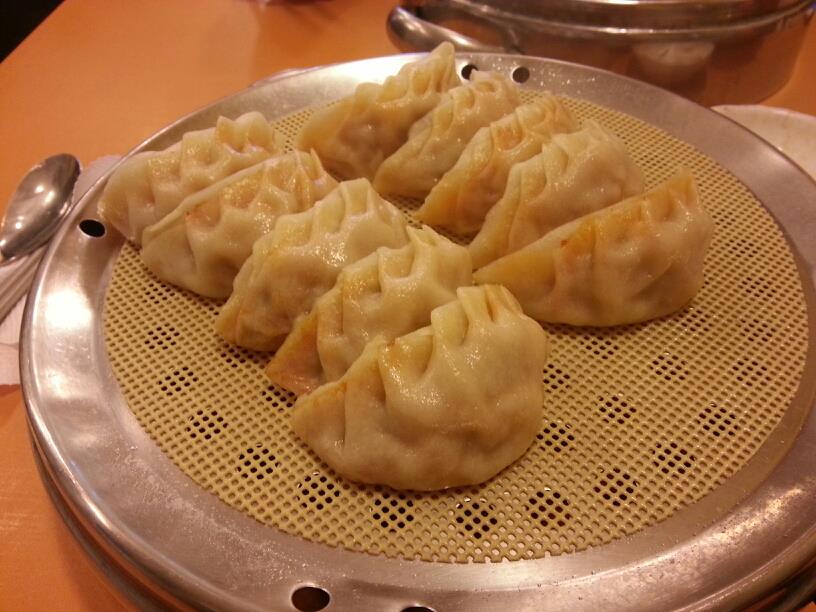
I should probably admit something embarrassing at this point…I have never had fresh kimchi mandu before. I’ve only ever had the frozen packs that I buy at Koreana Plaza in Oakland. When I say that this is the best kimchi mandu I’ve ever had, it’s probably not saying much, but these were the best kimchi mandu I’ve ever had! The filling was extremely fresh (which stood out to me since I’ve only had the artificial tasting dumplings) and deceptively spicy – I found myself drinking more and more water as I ate! The steamer that comes with the dumpling is so cute too. I don’t remember the price right now, but I think it was around 3,000 won (less than $3). I loved how well I can eat in Seoul without spending a lot of money! The dumplings also come with banchan that included pickled yellow radish and a clear soup that tastes like the kind that are served in Japanese restaurants in the U.S. Overall I was super impressed with this place, but I don’t know how it stacks up with other kimchi mandu restaurants.

#3 The Pancake Restaurant

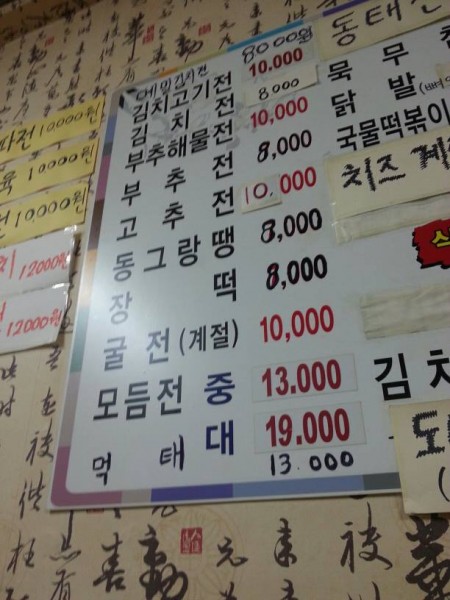
This actually isn’t the name of the restaurant, but I don’t remember what it was called. All I remembered was that it was a rainy day in Seoul and I had just finished touring the War and Women’s Human Rights Museum (commonly referred to as the “Comfort Women Museum”), which addresses the history of the women who were drafted into sexual slavery under the Japanese Imperial Army during WWII (an issue that many Japanese politicians and textbooks deny) as well as their ongoing legacy and attempts to fight for justice and reparations. Needless to say, it was a very difficult museum to walk through and combined with the rain, I was definitely looking for some comfort food. I happen to walk right past this restaurant on the way back to my hostel, and could not resist the smells. This is some perfect rainy day food.
7810_10151676734400733_559940819_n

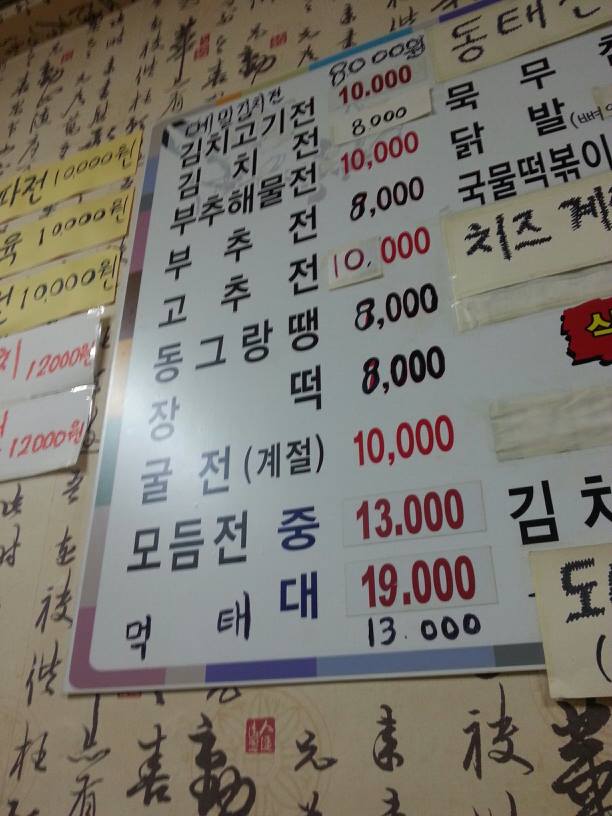
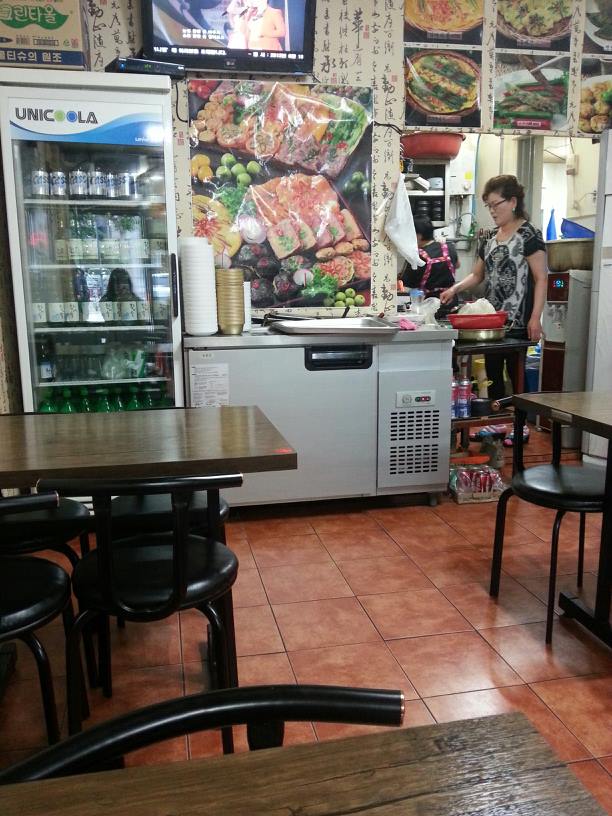
This restaurant is pretty much the definition of a hole-in-the-wall restaurant. I think they probably serve more take-out than sit-in diners and I was the only one there that day. The prices looked pretty expensive compared to other food that I’ve eaten in Seoul so far, but that didn’t deter me from ordering the meat and kimchi pancake (김치고기전, kimchi gogi jeon) for 10,000 won (a little less than $10 USD).
1006171_10151676734790733_1493218215_n

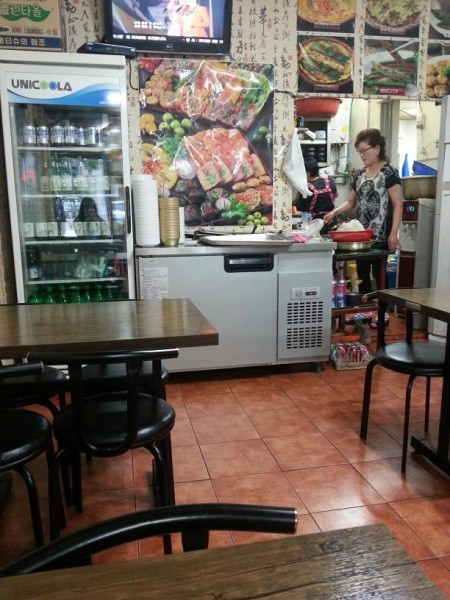
The owner of the restaurant (the woman with the glasses) was super friendly and I think she felt a little bad for me when she asked if I was eating alone and I said “yes.” I didn’t mind though, particularly as she started to cook my pancake on the little electric stove and the smells came wafting towards me. This is definitely made-to-order food!
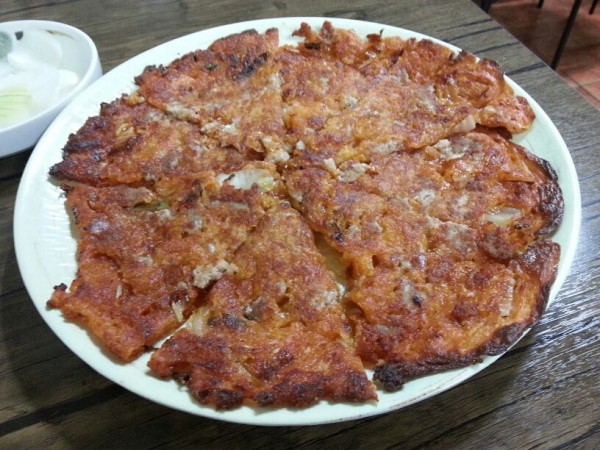
1013681_10151676735025733_612229656_n

Pictured here is the pancake (I didn’t take a picture of it but I got some banchan as well). It was a little greasy, but it definitely hit the spot. The meat was a little flavorless on its own; I couldn’t tell if it was pork of beef – it tasted like burger meat to me. The kimchi though was full of flavor – this was the most pungent and sour kimchi I have ever eaten and I loved it. The overall flavor of this pancake rings “sour” more than anything else, but I love some fried kimchi pancake and even though after my first few slices I was wishing for a little more sweetness or spicyness to balance out the sourness, I definitely had my craving for kimchi pancake satisfied. I was able to end up eating half of it before I was full, but I took the rest of it back to my hostel.

The owner was so incredibly sweet also; she kept on talking to me and made sure that everything was to my liking. She also complimented me on my Korean, which was really affirming for me to hear since I am super unconfident with my Korean language skills. However, I was actually able to have a conversation with her (even if it was a little bit awkward and I didn’t quite use full sentences all the time), but it is definitely a good confidence boost to actually almost understand someone completely in Korean! Not only was the food excellent here, but the service is quite good as well!

#4 The Gamjatang Restaurant

This is another restaurant that I forget the name of; I think it is a chain restaurant since I saw one in Myeondong as well (the one that I ate at is in Hongdae). The logo consists of an animated potato head. Actually, here is a blog post on the restaurant; it is called Onedang Gamjatang. Fun fact: the hostel that I stayed at is right above the Plan B bar pictured in that post.

Actually, one of the first things that I did before leaving for Korea was to Google Maps (can I use this as a verb?) my hostel location. To my delight, I saw that it was right next door to a restaurant that read “gamjatang.” I was super excited because I love  gamjatang and this place is literally two steps away from my residence.

What I failed to realize though is that the entire area surrounding my hostel is full of restaurants and shops, but I still made it to the gamjatang restaurant on this trip despite the numerous options.
1010949_10151676602405733_861114530_n

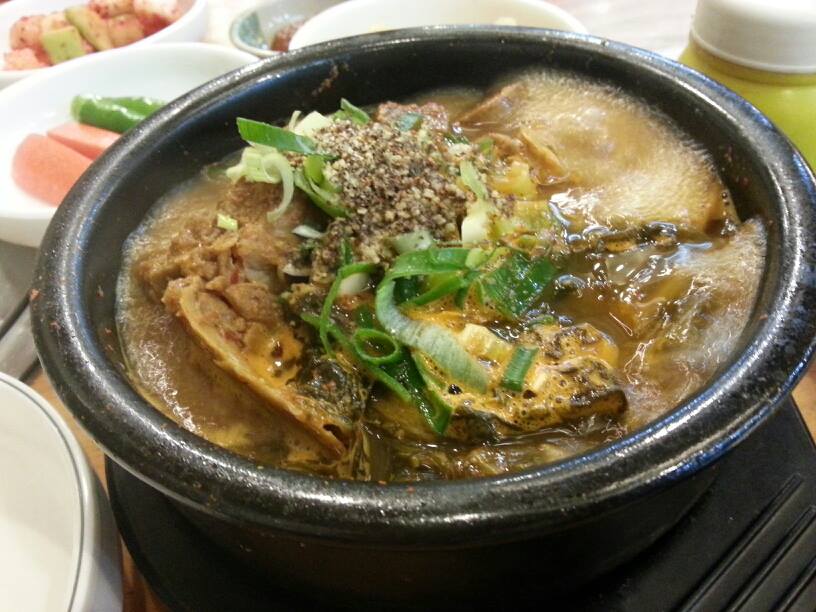
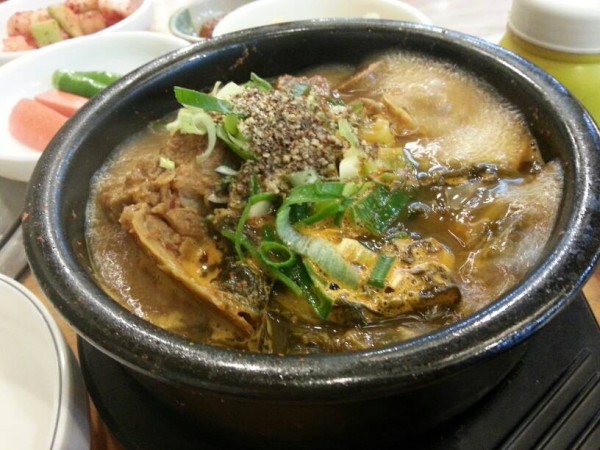
One of the first things that I noticed about this gamjatang is that it did not include any gamja – or potatoes – in it. While I had read on Wikipedia that gamjatang actually commonly comes without potatoes, the logo of this restaurant features a potato head so that was a little weird. However, once I tasted the soup, I couldn’t care less about not having potatoes. For only 6,000 won (a little less than $6 USD), I got a massive amount of food – I fished out 3 giant pork bones. The soup was so rich and full of flavor and the pork just melted off the bone. I ended up eating all of the banchan as well – it included kimchi, raw onions, and some pickled carrots and spicy peppers. I also polished off an order of rice and all of the pork AND the soup. I love how for 6,000 won I could eat so well. And it was perfect that my hostel was just a step away – just in time for me to collapse in bed with a massive food coma!

Beyond Food Porn: Chirashi at Musashi

August 18, 2013 By: Kristen Category: California - The Bay Area, Japanese, One shot

Mai has written quite favorably about Musashi in a past post but I have to write about a particular dish that has been about the best thing I’ve eaten in a restaurant lately.

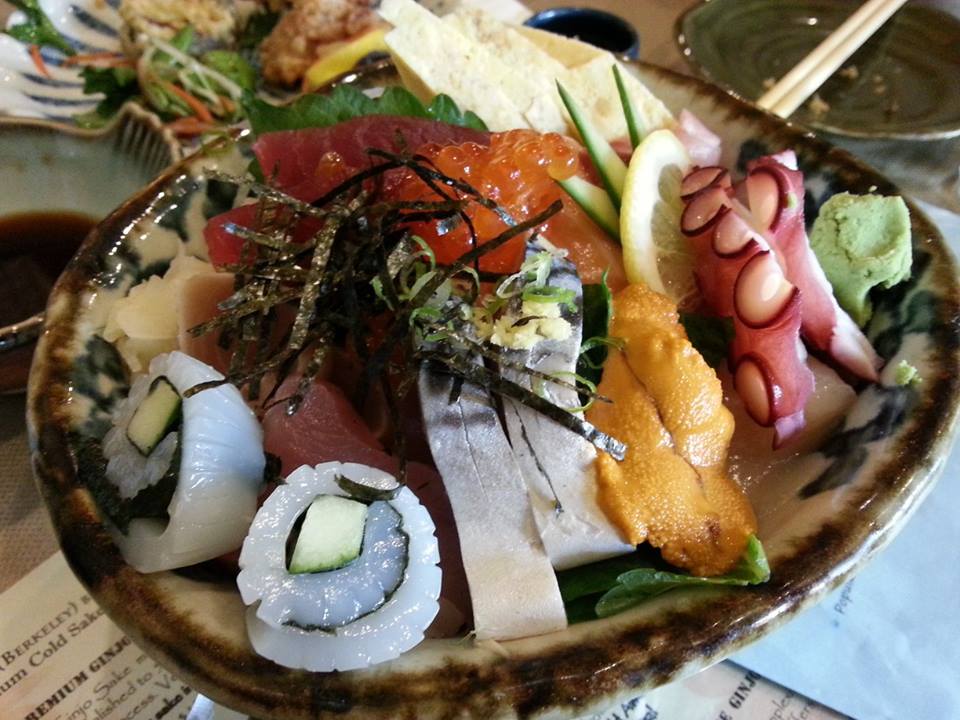
970484_10151778192445733_1553431107_n


That dish would be the chirashi sushi ($20) listed under the donburi menu items. This is by far the freshest, tastiest, and best-valued chirashi bowl that I have ever eaten. A win-win-win!
The bowl generously comes with at least 2 slices (some fish came with 3 or 4 slices) of tuna (two different types that were raw and one type that was slightly seared), salmon, mackerel, hamachi, raw scallops, octopus, shrimp (not pictured since the chef forgot to put it in the bowl but gave us the order on the side), a glorious piece of uni, squid-wrapped cucumber, tamago, and a dollop of salmon roe. All of this came on top of a huge mound of sushi rice, which was perfectly cooked. I would definitely recommend sharing, as this is way too big of a dish for one person to eat alone. Each piece of fish was so fresh that it was hard for me to pick one that I liked over the others. However, the true standout of the bowl for me would definitely be the uni. So rich, so creamy, and it just melts in your mouth with just the slightest hint of the ocean. This is the perfect example of how fresh uni should taste like and besides, how often is it that a chirashi bowl actually gives you a big fresh piece of uni?

For only $20, this is a dish that is well-worth the piece. I recommend getting one to share with someone else in order to make room for all of the other yummy dishes that Mai already covered in-depth. This is by far the best chirashi bowl I have ever had and the next time that I crave sashimi, I’ll head over to Musashi!

Mai’s Restaurant – 35 years and counting

July 05, 2013 By: Mai Truong Category: Comfort food, Houston, Vietnamese

banh-hoi-on-rice-paper
My junior year of high school was my first year ever in America, and I was still learning the rope of living here, high school dance among other things. A friend invited me to Homecoming. For the pre-dance dinner, he talked about going to a Vietnamese restaurant named Mai in Houston. I didn’t know exactly where it was or what it was (this was 2002, Google Maps and Yelp didn’t exist), but I thought that was considerate of him. In the end, we went to a steakhouse instead, I thought it was because Mai was a bit too far away, and I was left wondering what Mai was like.

A few years later, my host parents mentioned Mai again in passing conversation, and suggested we went together sometime. The place, dated back to 1978, is known as the very first Vietnamese restaurant in Houston, and pretty much every Houstonian knows at least its name. My parents and I were interested, but again, days passed and we forgot. One day in early 2010, news came that the restaurant had been destroyed by a fire. We sighed, somewhat regretful.

Luckily, it reopened. I forget how and when we came to know of its re-opening, but this summer, we decided that as Houstonians, it’s about time we should check this off the list.

mai-vietnamese-restaurant-houston
As usual, my mom told me to order anything I want, and I did. But I overdid myself, and we struggled to finish a few plates fast enough to have room on the table for the next plate. It was a marathon. The portion was dinosaur-mongous. The three of us packed half of the food home.

APPETIZERS:

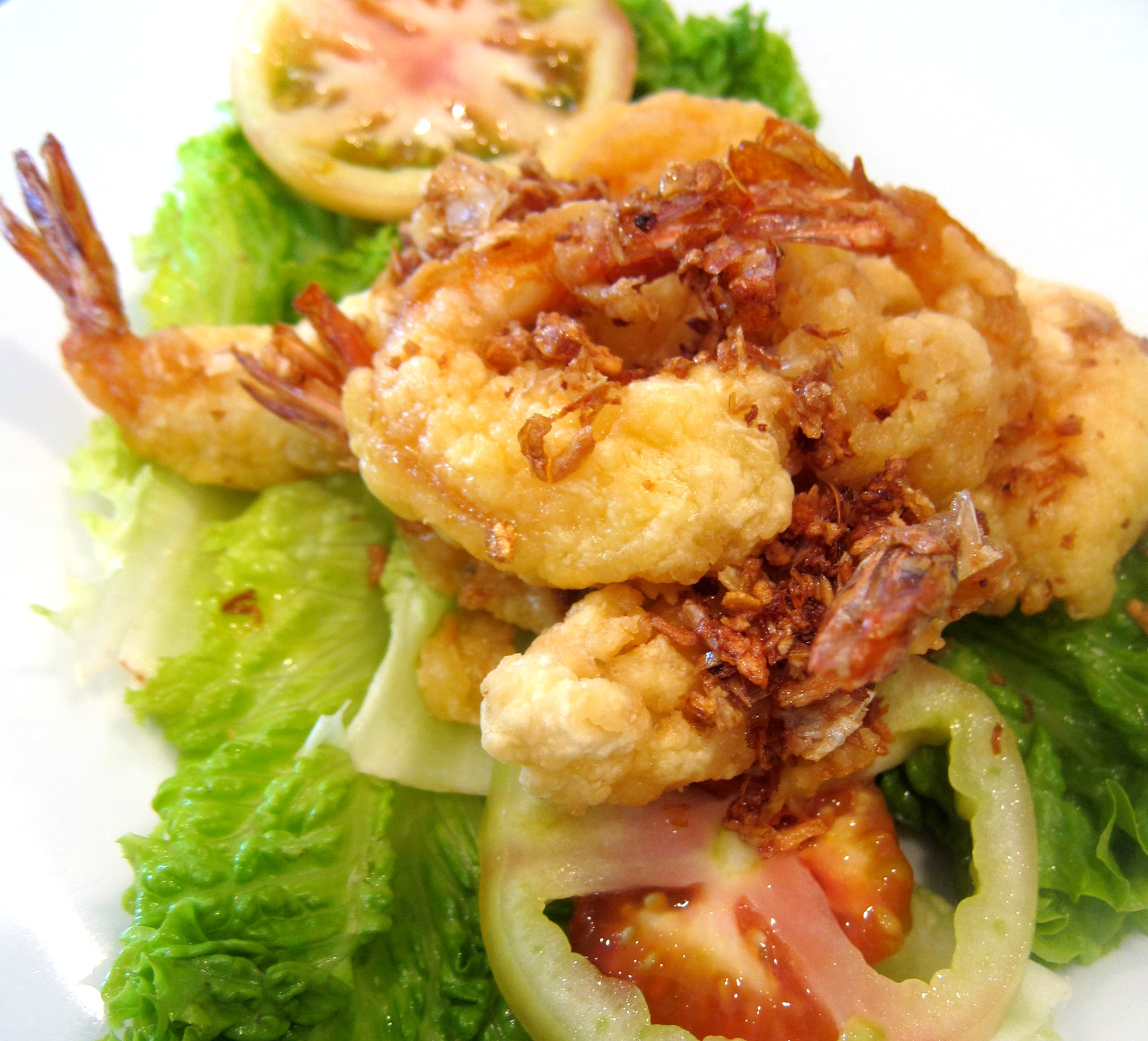
Fried shrimp with garlic butter sauce

Fried shrimp with garlic butter sauce

This plate was the first to be move out of the way. Guess what I poured on my dress? The garlic butter sauce. I smelled “good” for the rest of the day.

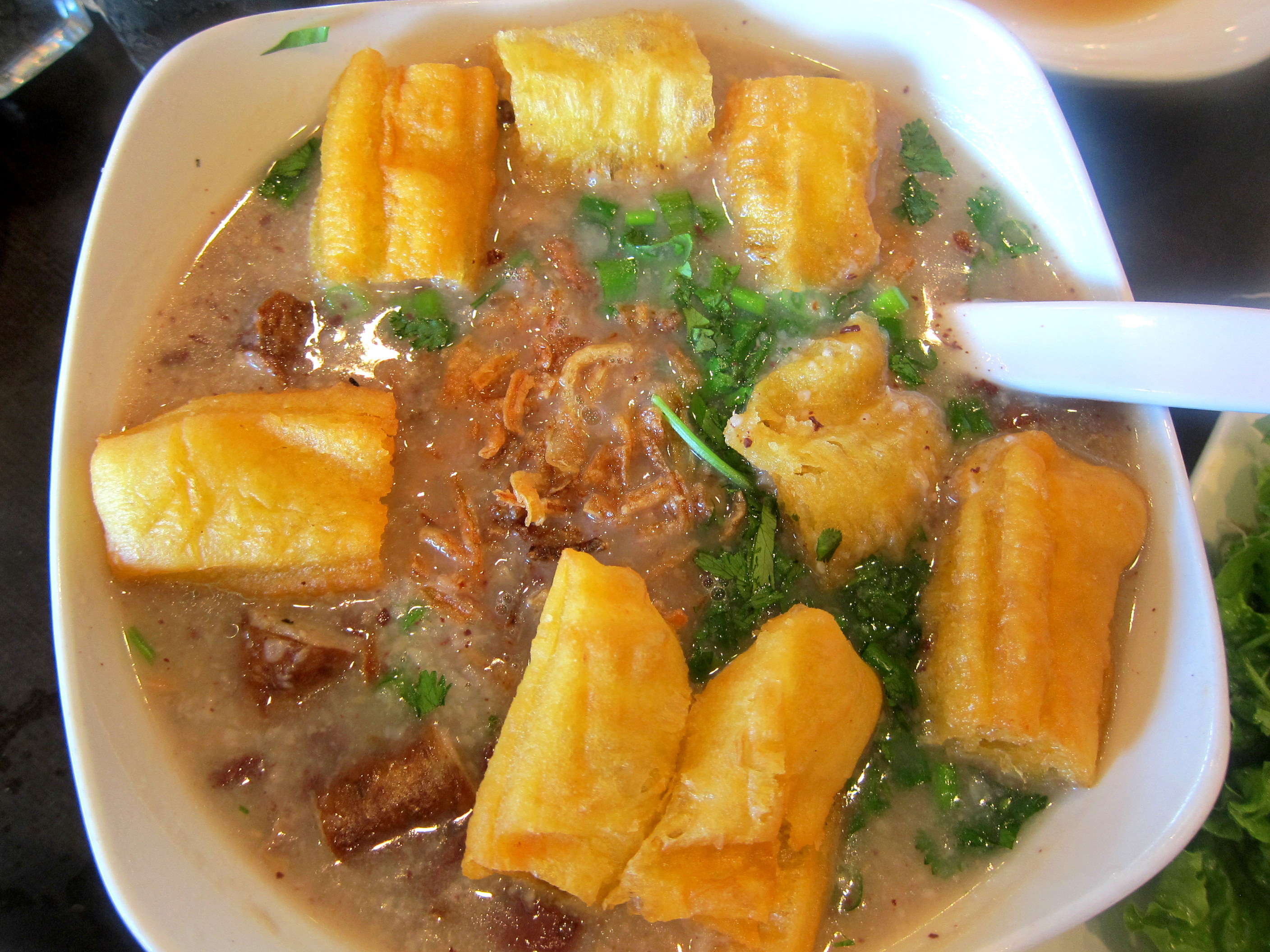
Chao long - rice porridge with "dau chao quay" (youtiao) and pork offals.

Chao long – rice porridge with “dau chao quay” (youtiao) and pork offals.

Yes, this is an appetizer, although the bowl can probably fit me in it.

ENTREES:

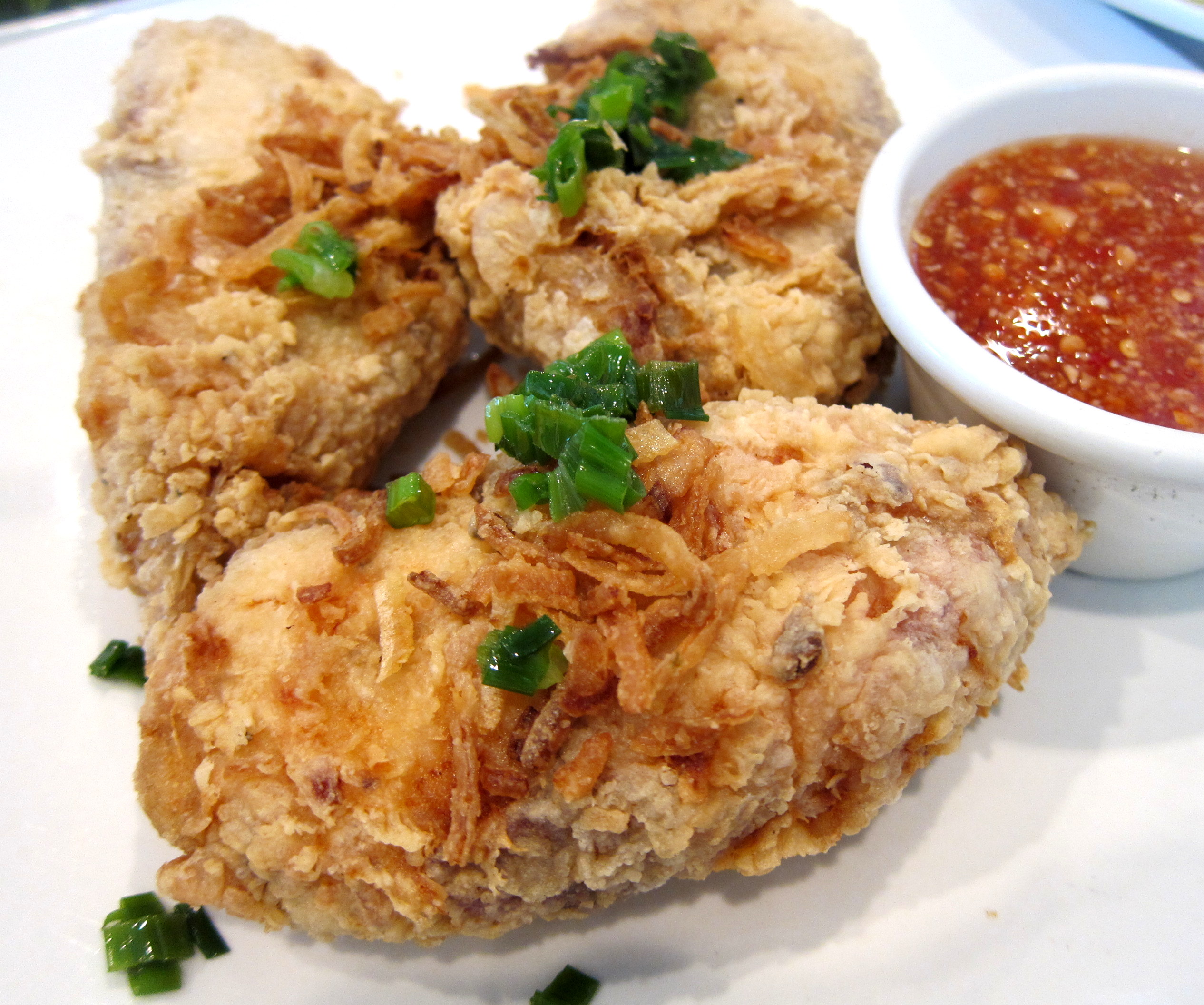
Breaded fried catfish steaks

Breaded fried catfish steaks – Crunchy and not too oily, but I wish they were not breaded and simply pan fried.

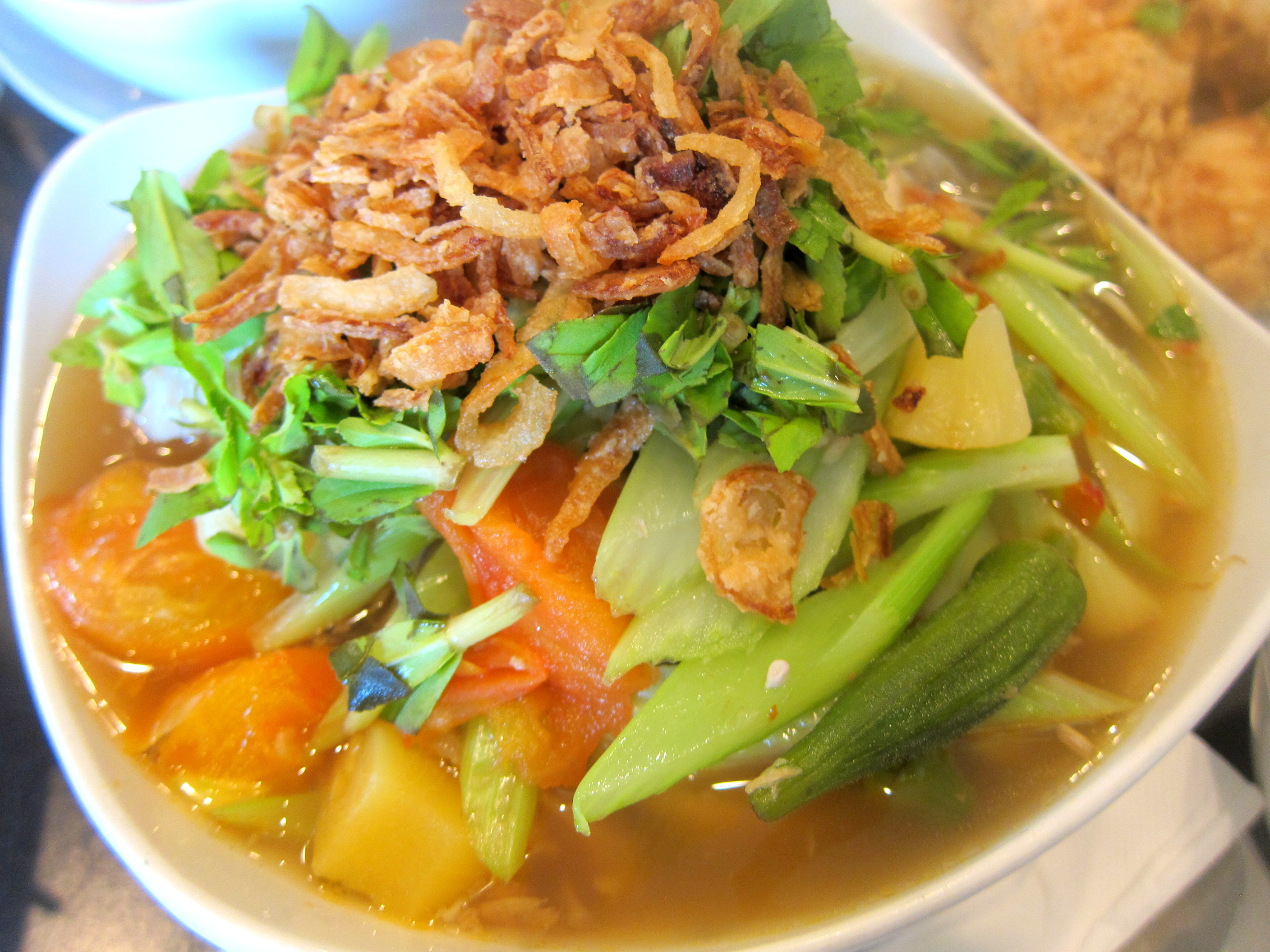
Canh chua - sour soup with fish, tomato, pineapple, okra and celery

Canh chua – sour soup with fish, tomato, pineapple, okra and celery. So refreshing for the summer!

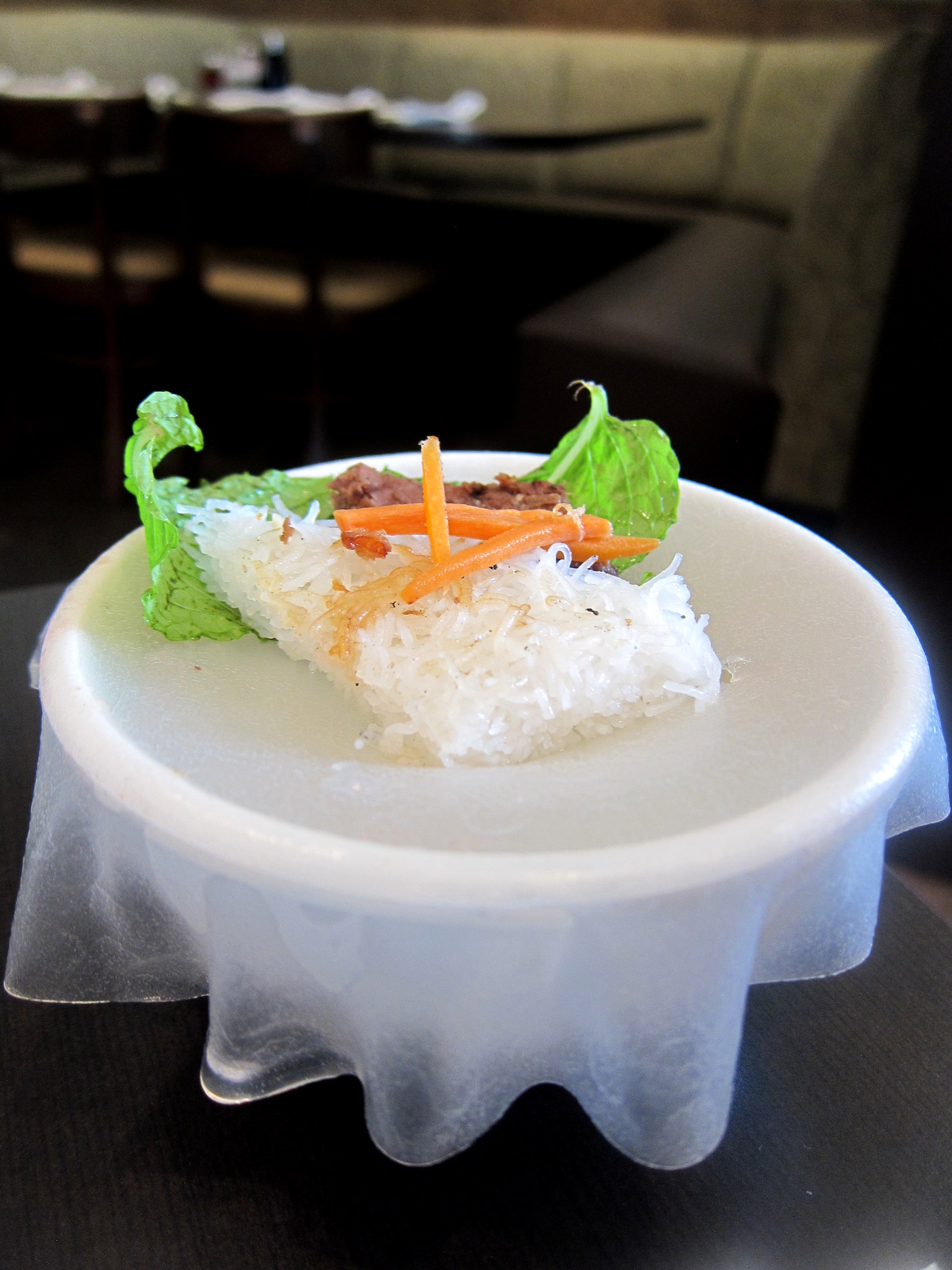
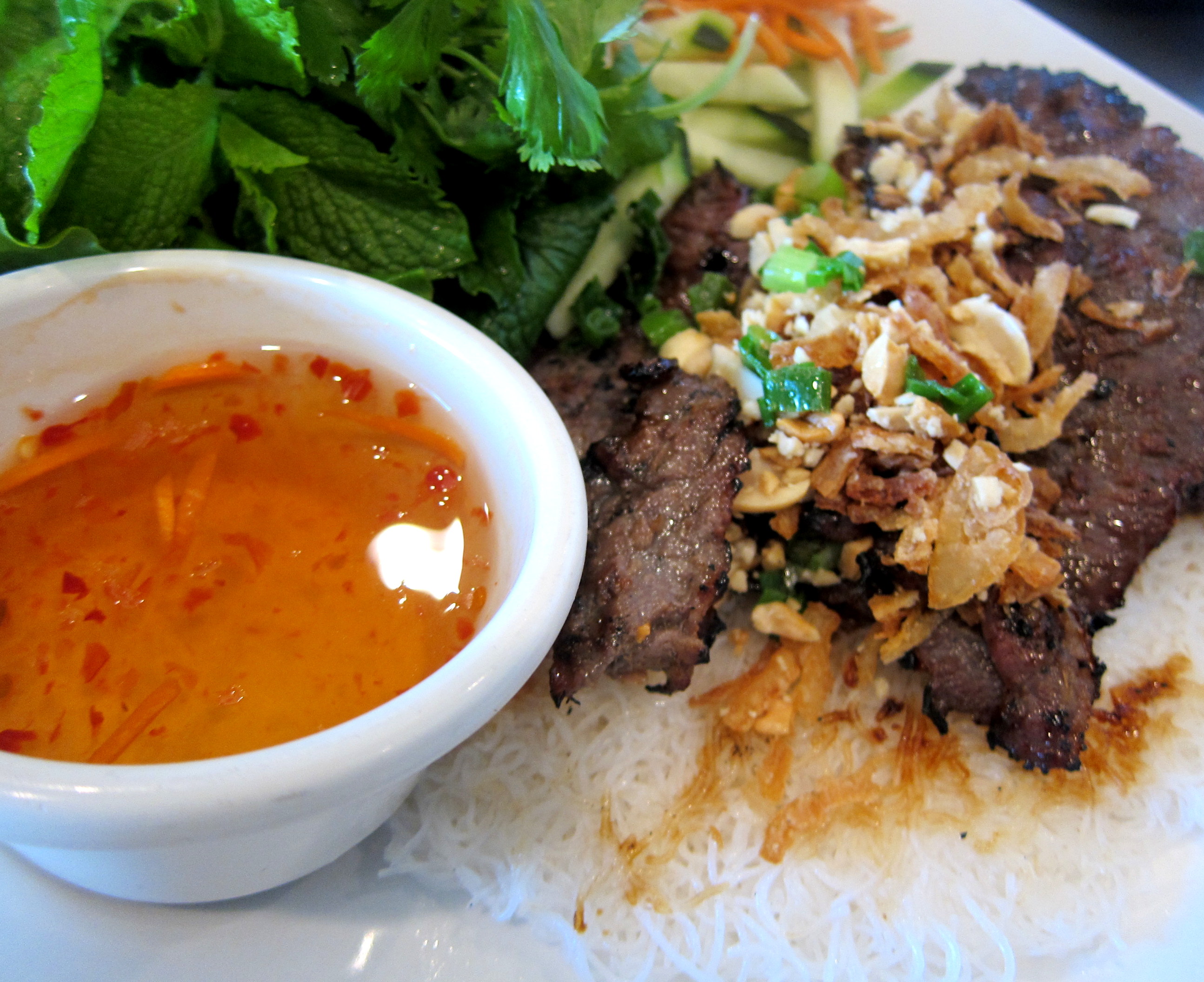
Banh hoi - thin rice noodle mesh with lemongrass grilled beef

Banh hoi – thin rice noodle mesh with lemongrass grilled beef

This one is to be wrapped in rice paper, which my mom artfully put on her bowl like a mini table cloth (the first picture).

DESSERTS:

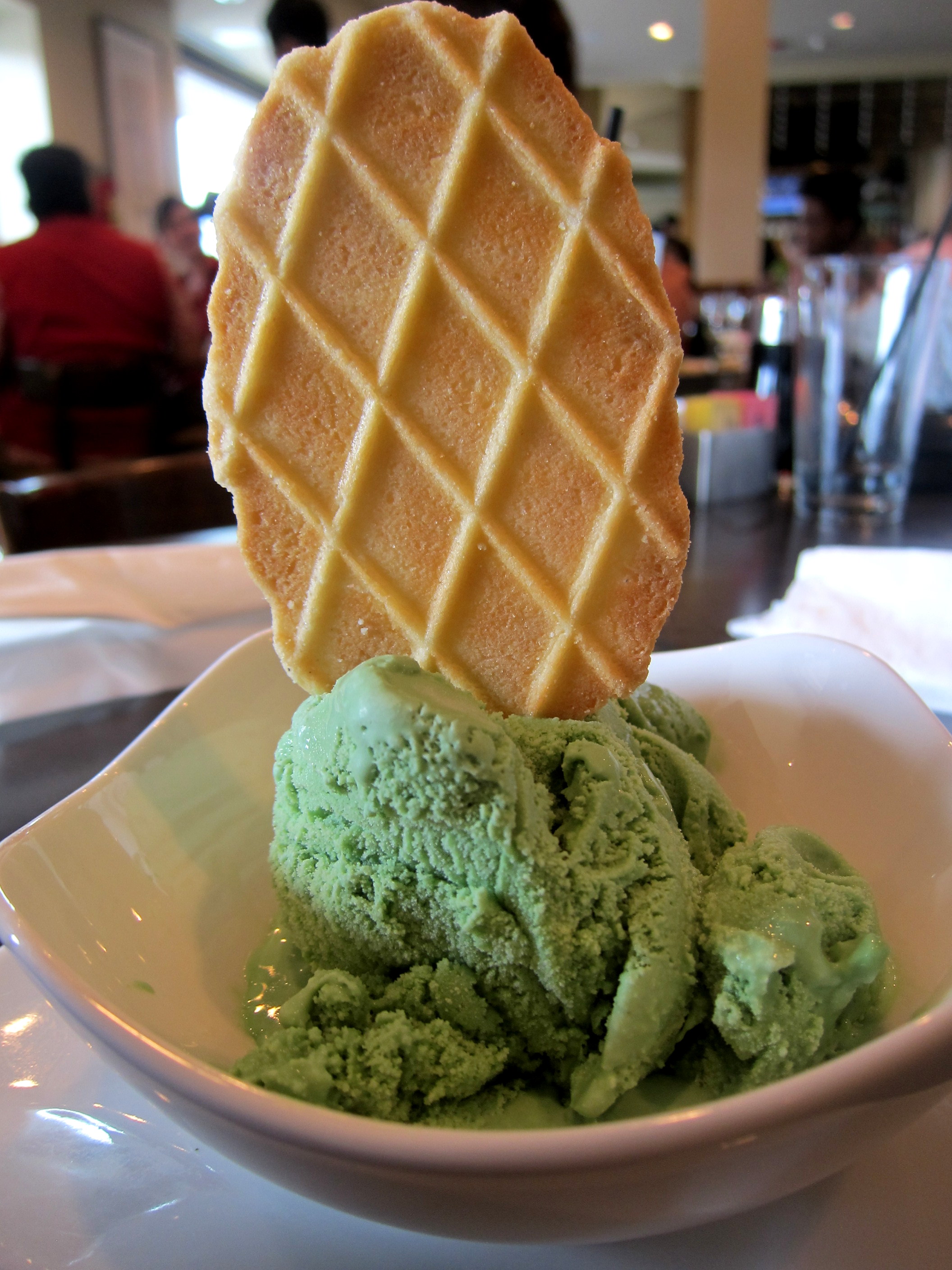
Green tea ice cream

Green tea ice cream

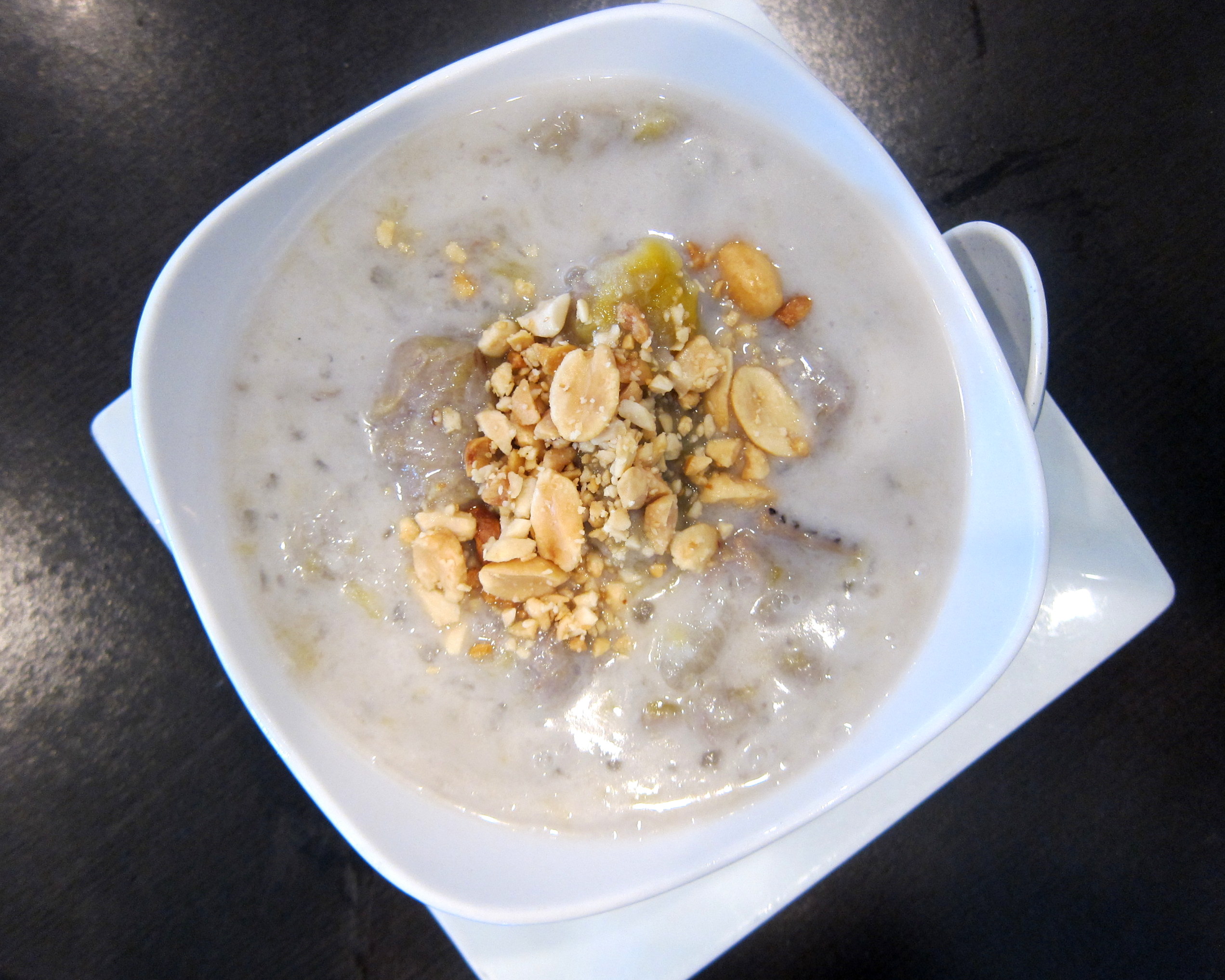
Banana tapioca pudding

Banana tapioca pudding

One of those extremely common desserts in Vietnam that you never see in American Vietnamese restaurants. This one is good (but I like my version better ^_^).

Mai’s menu has a lot of stuff, but nothing strayed from the usuals that you would see at any Vietnamese restaurant in town. Although few things jump out at me, anything that we ordered tastes exactly how we want them to. They make traditional Vietnamese food in the honest, straightforward traditional manner, with abundance to boost, which is also characteristic of Vietnamese food. Their home-styled comfort delivered, and we wouldn’t ask for anything better.

Mai’s Restaurant is at 3403 Milam Street, Houston, TX 77002 – (713) 520-5300

Burma Superstar and a review of my review style

March 15, 2013 By: Mai Truong Category: California - The Bay Area, Comfort food

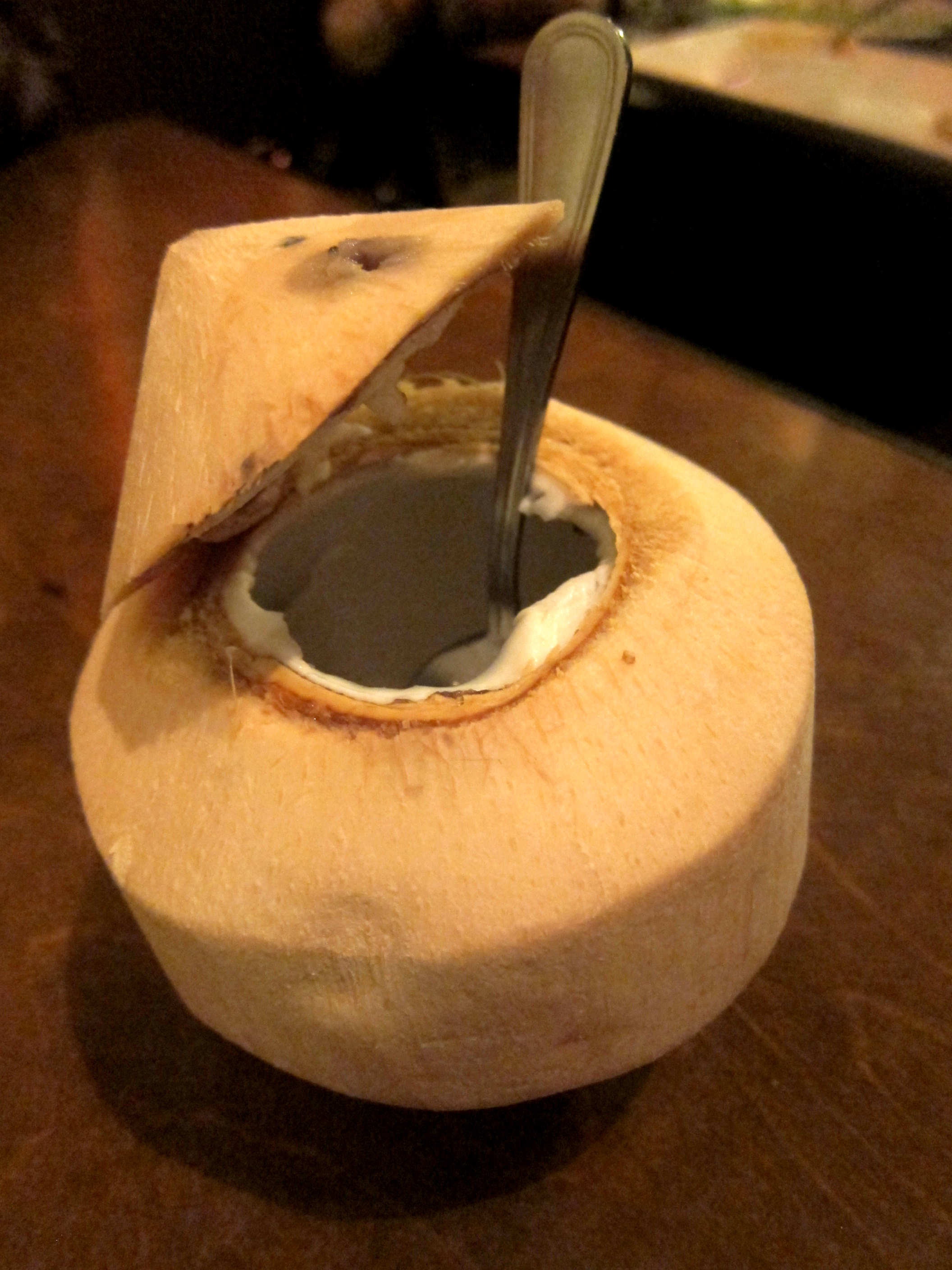
burma-superstar-fresh-coconut
It was 1 AM Wednesday night when I saw the text message from Chris, “hey Mai, do you expect you’ll have another review ready by tomorrow?” “Yeah I think so.” “Oh good. When can you have it in? It’ll have to be sort of early if we want to get it in Friday’s paper.” Chris is the editor of Eating Berkeley, and all of my publications with them so far are online, so it’d be pretty exciting to see my name in print. The problem: it was 1 AM and I had to finish a few scripts for my research the next day. The good thing: I just had dinner at Burma Superstar (the Oakland one) earlier that evening, followed by a LOT of puer, so my eyes were opening as wide as the Pacific Ocean and ready for no sleep. I started typing away about Burma Superstar.

This morning I picked up a copy of the Daily Cal at the bus stop. It IS good to see my piece in print, although it’s on a B&W page and I don’t feel like they chose the best photo there. Later in the day I checked the online section, where it’s also published. Below is what I wrote:

A full bar and a wildly successful sister establishment in San Francisco could be the reason for the huge line outside Burma Superstar in Oakland’s Temescal District on a Wednesday night. But for me, the restaurant’s main draw is its fresh coconut, for which they charge a whopping $5. It brings back childhood flavors from the tropics, though, and that justifies everything.

It wasn’t a young coconut, and I didn’t expect it to be given that we can’t grow coconuts in most of this country. But this middle-aged coconut had such rich water and a sweet fragrant from the husk that I thought I was drinking sugar cane juice, so it was doubly nostalgic. The rest of my meal at Burma Superstar followed smoothly through every sip of that coconut water.

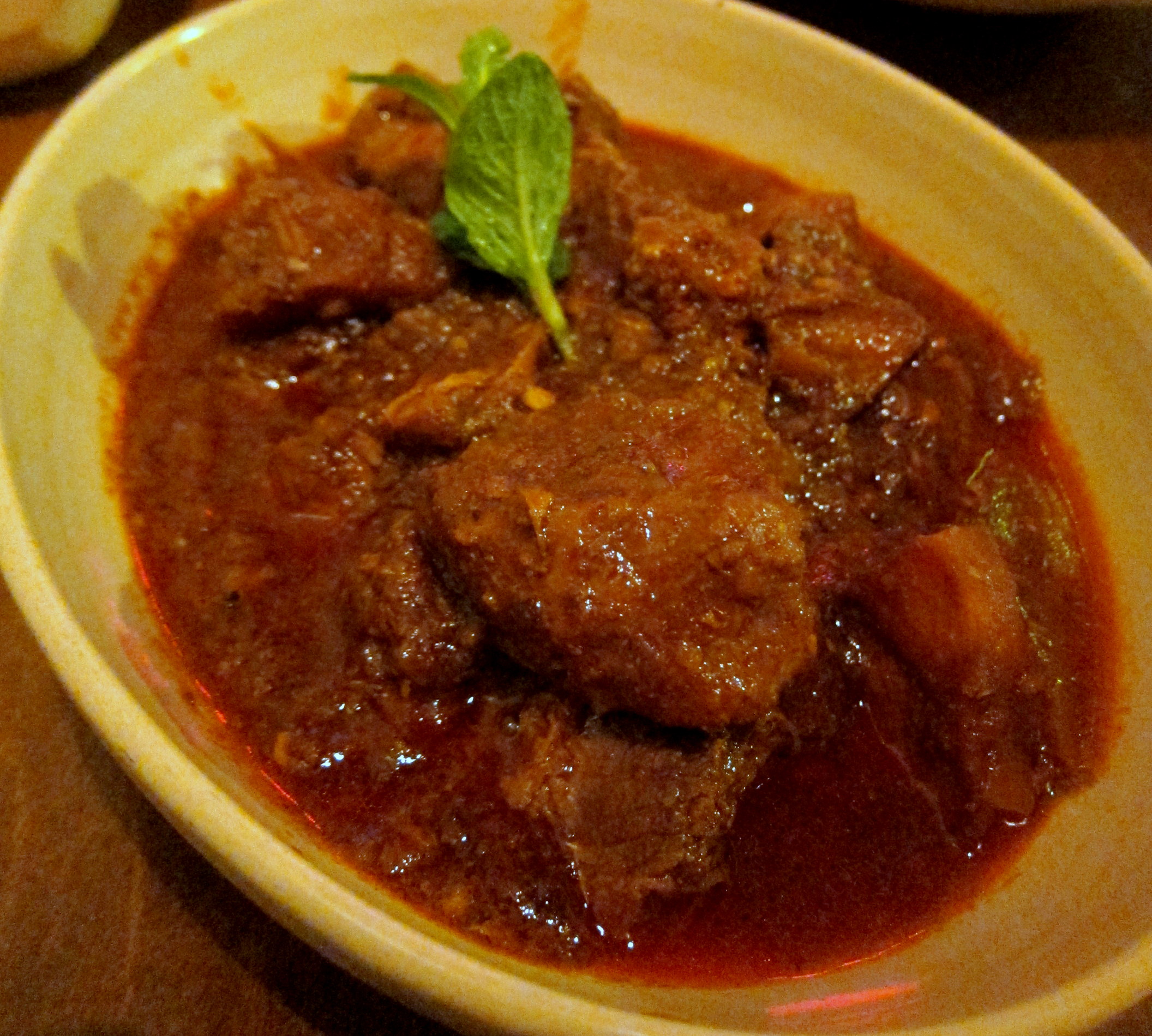
Burmese food is a cross between Chinese, Thai and Indian cuisines, with some dishes showing the influence of one culture more than the others. For example, the curry pork with potato has a strong Indian touch of cumin and shines with chili oil like Szechuan mapo tofu, but it isn’t sweetened by coconut milk like other Southeast Asian curries. Thus, its perfect match is the sweetened coconut rice topped with fried shallots. In fact, the coconut rice is so fluffy and flavorful that it stands well on its own and it enhances everything. In hindsight, the curry pork was the weakest link in the meal for several reasons. The description said that there was pickled mango, but we detected neither mango nor pickle. It had too little potato and too much pork, and the big chunks of pork could have used some more cooking time or fared better in smaller pieces to reduce the fibrousness of the cut.

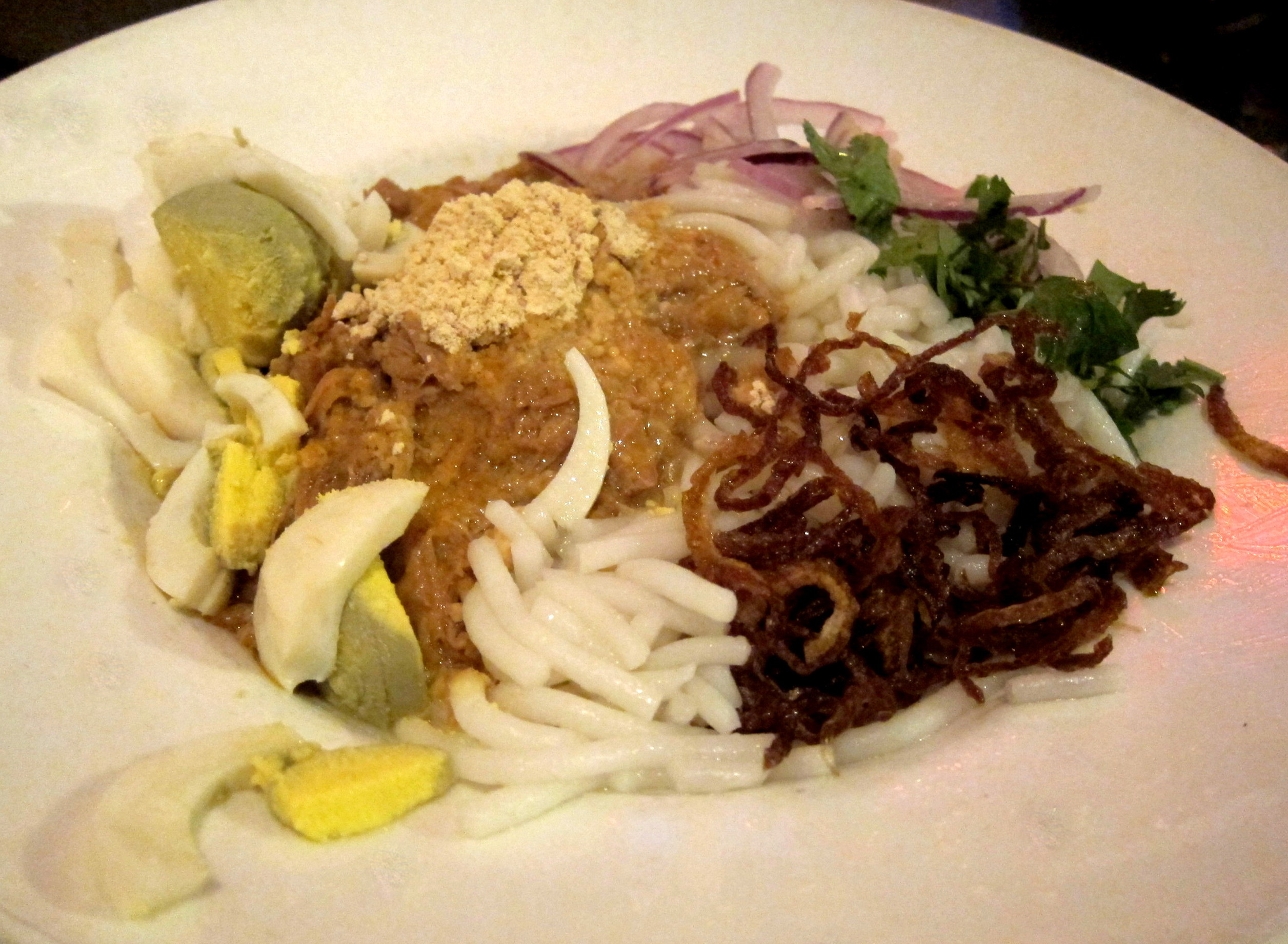
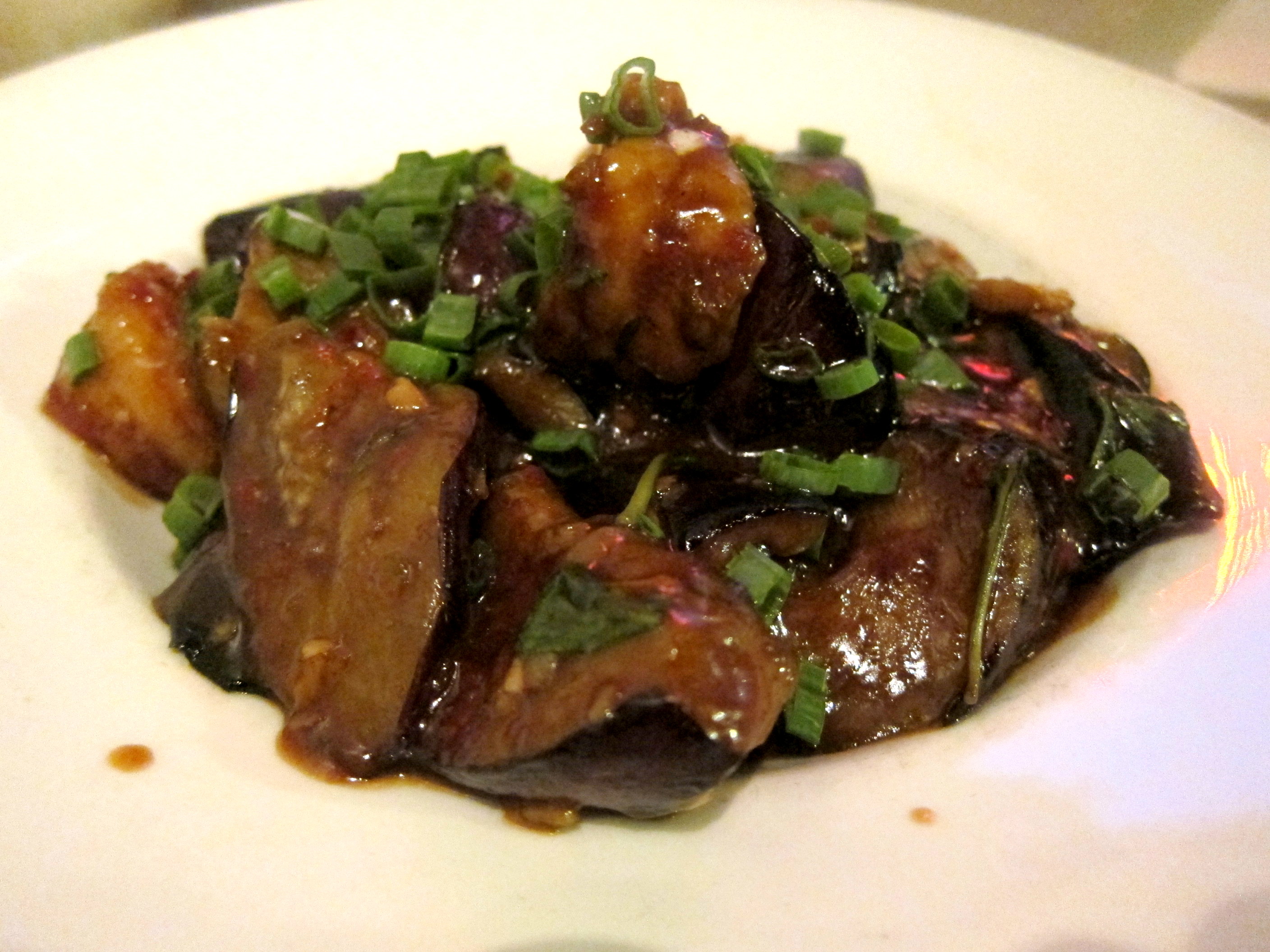
But whatever slight disappointment we had with the curry was quickly drowned in the dense, confident garlic and chili sauce of the sauteed eggplant. The shrimp served their purpose of keeping the name of the dish not so simple as “sauteed eggplant”, but they were hardly noticeable next to the perfect eggplant — tender but not mushy, and firm but not rubbery. The nan gyi dok was a pleasant surprise. I expected thin rice noodle like in pho, served warm, but Burmese rice noodle is thick, smooth and so fragile. It was also served cold as a noodle salad with fried shallots, boiled egg, cilantro, chickpea flour and coconut chicken curry, tossed together at the table after a squeeze of fresh lemon.

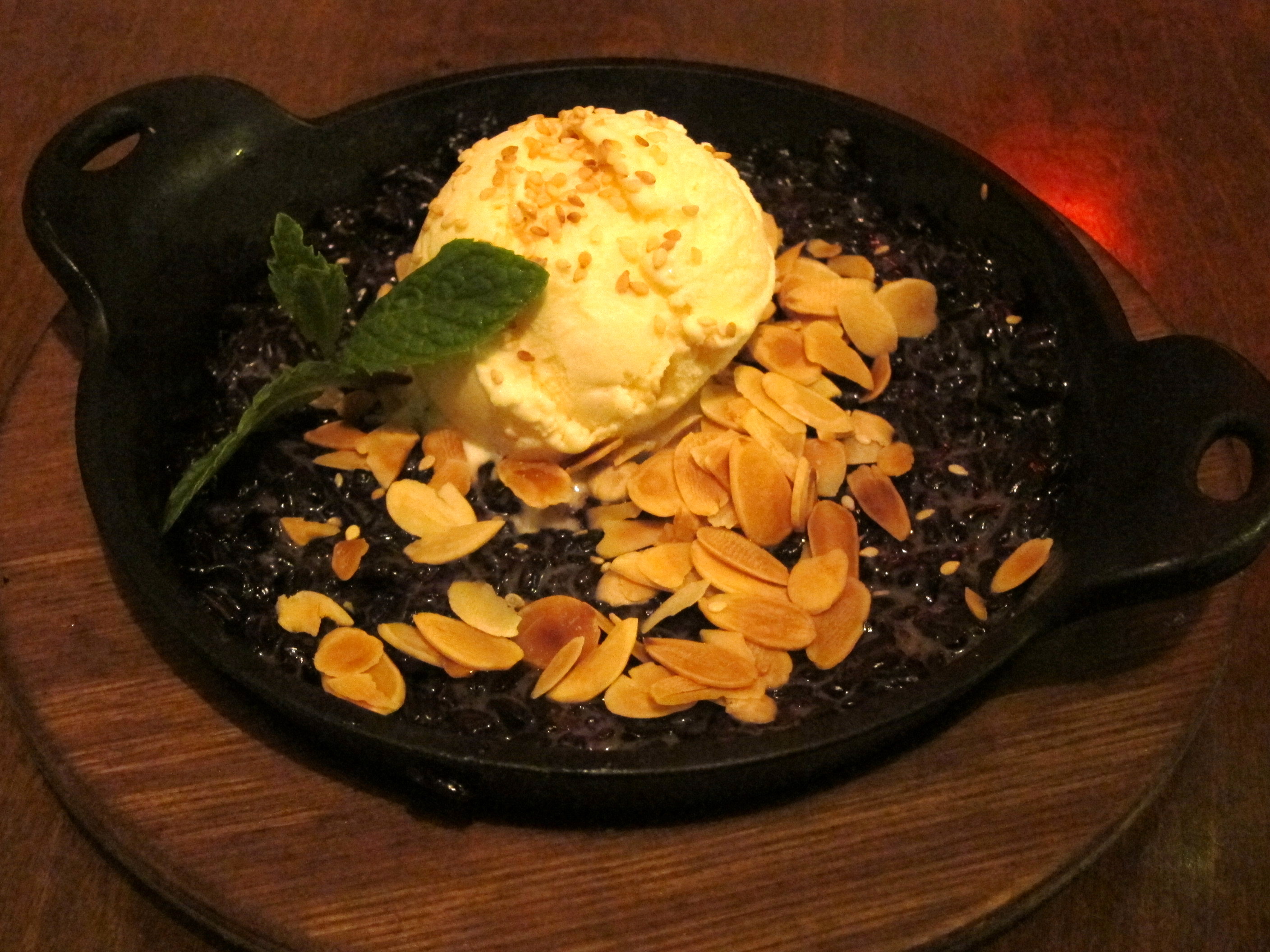
As if to reward the customers for the long wait, the kitchen turns out dishes very quickly and in big enough portions that my friend and I had to ask for three to-go boxes at the end. However, that did not deter us from dessert. We hurriedly drank up the coconut water and asked the server to chop off the tops so that we could scrape off the coconut meat inside, a joy I hadn’t had for years. Meanwhile, we ordered another nostalgic comfort food — warm black rice pudding with coconut ice cream. Well, sliced almond isn’t exactly authentic Southeast Asian, but its toasty crunch earns it a home with the creamy ice cream and the gooey rice.

In the end, I wouldn’t say that Burma Superstar shines as bright as its name suggests, but the food was just as pleasant as the staff. We were full and happy when we walked out, a little slowly so not to burst. Our jackets also smelled like sauteed onion for the rest of the night, but that’s never a bad thing.

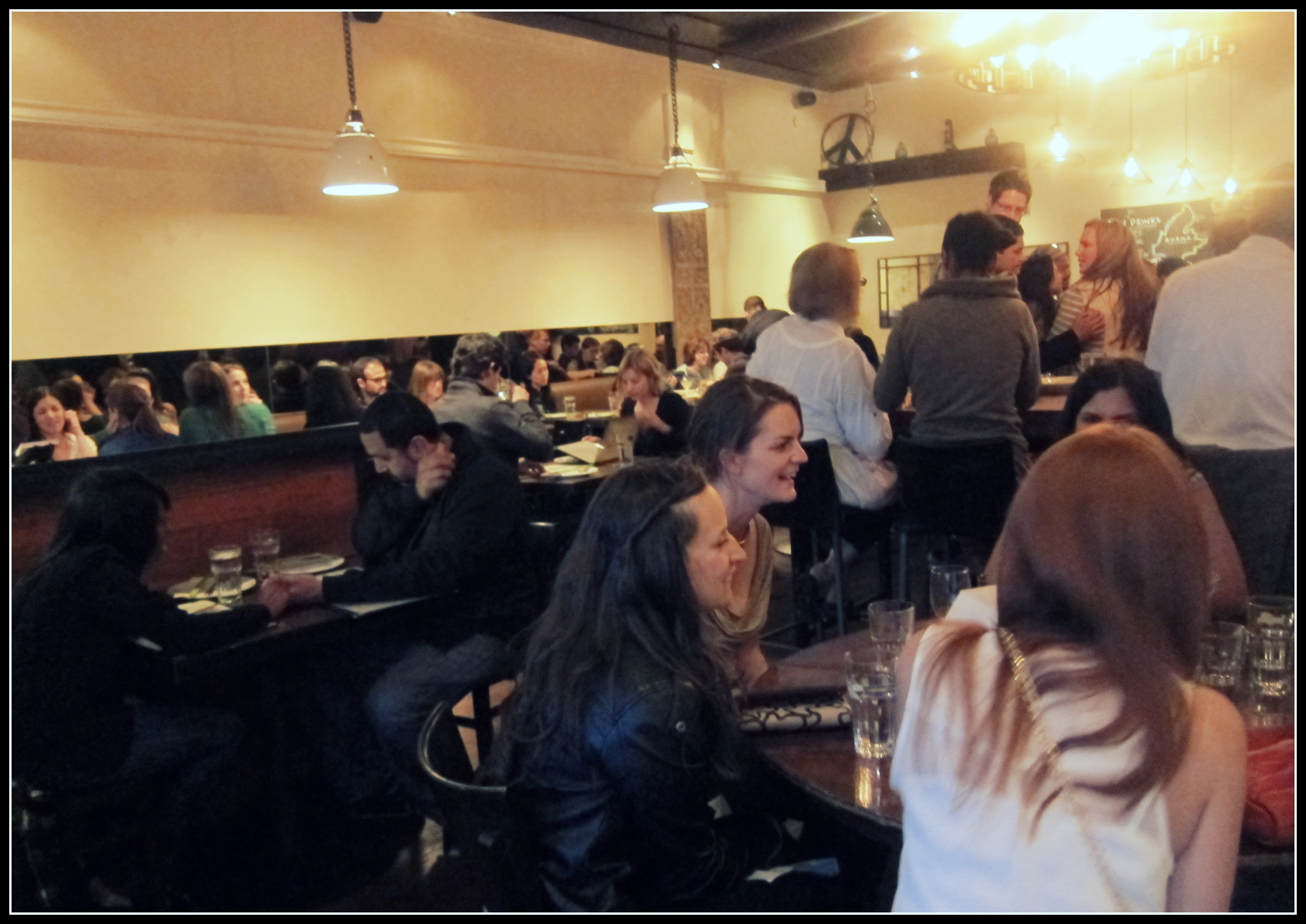
burma-superstar-oakland
EDIT: to adhere to the Daily Cal policy, I’ve removed the quote of the commenter on Eating Berkeley. This post is not a respond to the commenter, but a reflection on my style.

When I reread my review though, I realize the depth of reviewing ethnic restaurants that I should explore. It’s not as simple as saying whether a dish is good or bad because each dish has a complex culture behind it. That makes reviewing ethnic restaurants more challenging but more enjoyable. Burma Superstar was only my second time trying Burmese cuisine, and the first time barely left any impression. Of course, my review needs a lot more research if I was reviewing Burmese cuisine as a whole, but for now, as a single restaurant review, did I do it justice?

Curry pork with potato ($13.95) - description on menu: "specialty curry cooked with pickled mango, potatoes and tender pork". I think I've said enough about this pork in my review...

Curry pork with potato ($13.95) – description on menu: “specialty curry cooked with pickled mango, potatoes and tender pork”. I think I’ve said enough about this pork in my review…

Nan gyi dok ($9.95) - Burmese rice noodle salad with coconut chicken curry, boiled egg, fried shallots, cilantro, onion, chickpea flour and lemon juice. Complex in flavors and satisfying.

Nan gyi dok ($9.95) – Burmese rice noodle salad with coconut chicken curry, boiled egg, fried shallots, cilantro, onion, chickpea flour and lemon juice. Complex in flavors and satisfying.

Eggplant and shrimp in garlic sauce ($13.95) - well, it's eggplant and shrimp in garlic sauce. We asked for mild, so although there was chili in the sauce, it was actually mild. Really good. The shrimp doesn't need to be there, though.

Eggplant and shrimp in garlic sauce ($13.95) – well, it’s eggplant and shrimp in garlic sauce. We asked for mild, so although there was chili in the sauce, it was actually mild. Really good. The shrimp doesn’t need to be there, though.

Black rice pudding with coconut ice cream and sliced almond ($9) - Worth the money. Besides, I always LOVE coconut ice cream.

Black rice pudding with coconut ice cream and sliced almond ($9) – Worth the money. Besides, I always LOVE coconut ice cream.

Summer Festival in Concord

August 17, 2012 By: Mai Truong Category: Japanese, Opinions, The more interesting

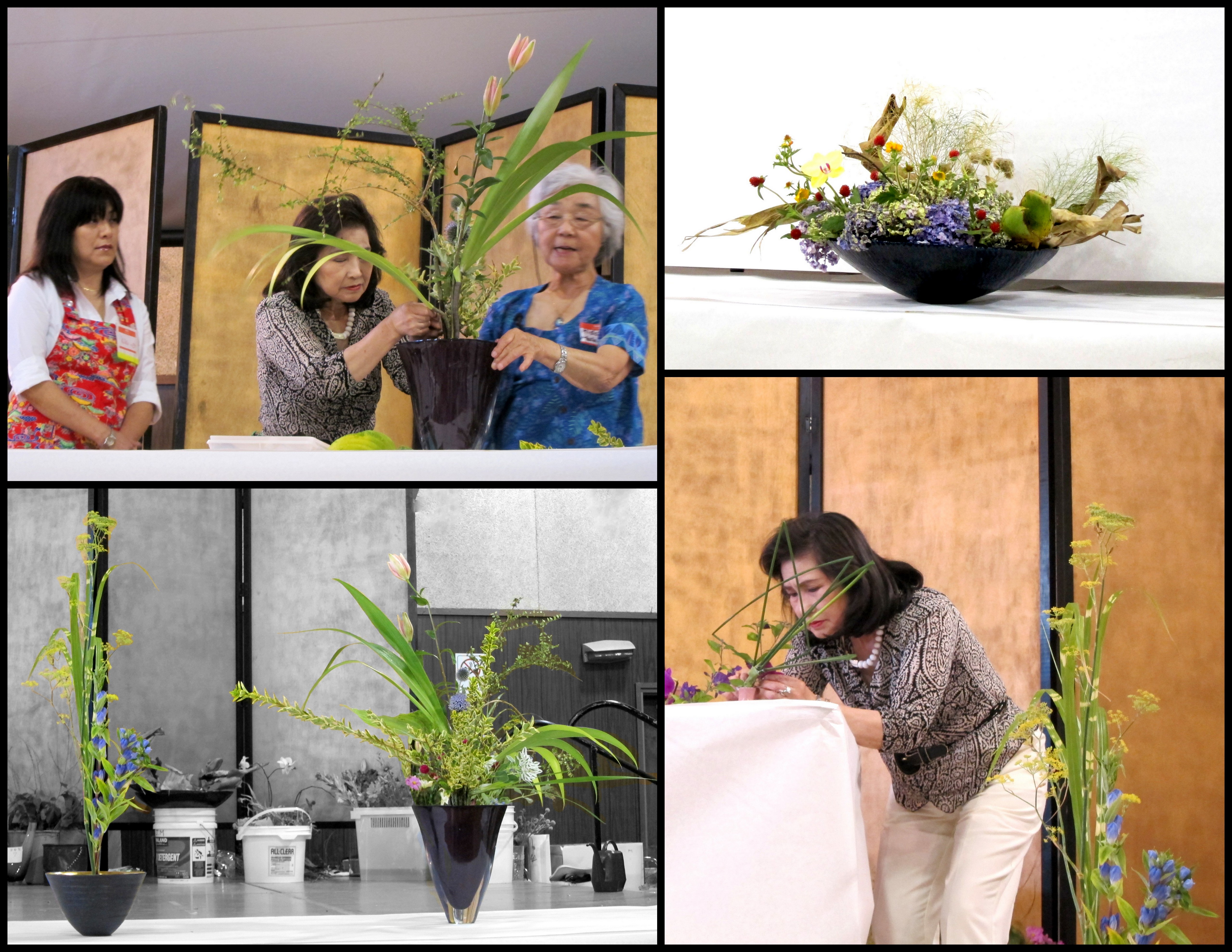
Clockwise from top left: Master Hideko Metaxas (in blue) and two assistants arranging an example of Rikka Shofutai; a free-style arrangement in honor of the victims and the philanthropists in the Tohoku Tsunami 2011; an Ikenobo sensei arranging a free-style display; Shoka (left) versus Rikka (right)

Learn something new everyday. At the Japanese American Summer Festival in Concord this year, I absorbed an hour of Ikenobo ikebana art, which is really, really, really rudimentary, but at least now I know that the Rikka style involves nine elements, and the Shoka style three elements (heaven, earth and man).

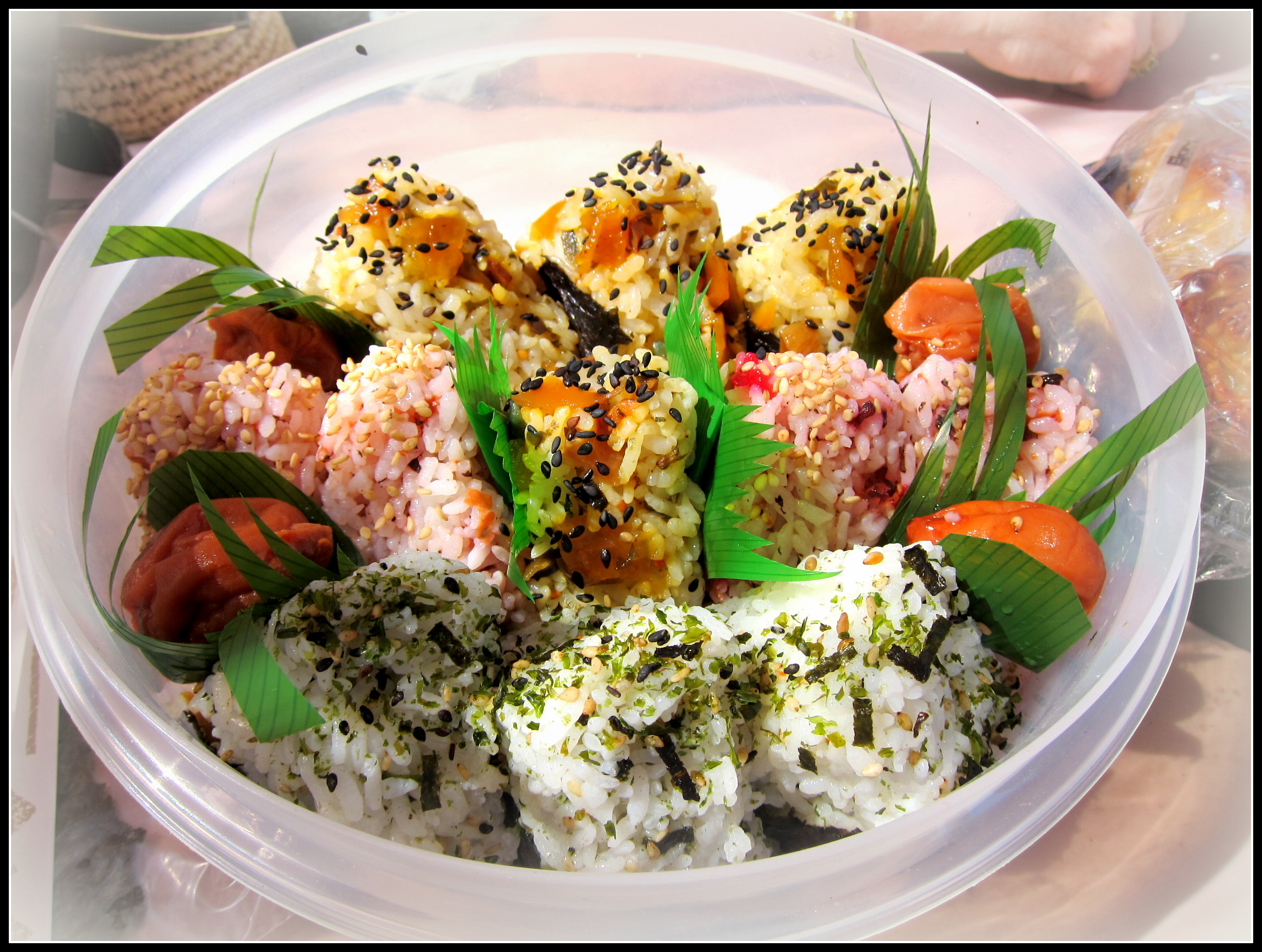
That day was also the first I’ve heard of the “Three Friends of Winter” sho chiku bai (pine, bamboo and plum), and this astonished me because 1. I’d never encountered any old Chinese things that my mom hasn’t told me about, and 2. it involves plum blossom, which is my name. There’s no way I wouldn’t know that my name is part of a trio that appears in Asian arts and folklores at lunar new year time. My memories must have been failing. 🙁 Anyhow, Nancy made a beautiful onigiri box that follows the sho chiku bai theme:

Homemade sho chiku bai onigiri by Nancy Togami: white onigiri with aonori and sesame (sho), yellow onigiri with fukujinzuke (chiku), and pink umeboshi onigiri (bai)

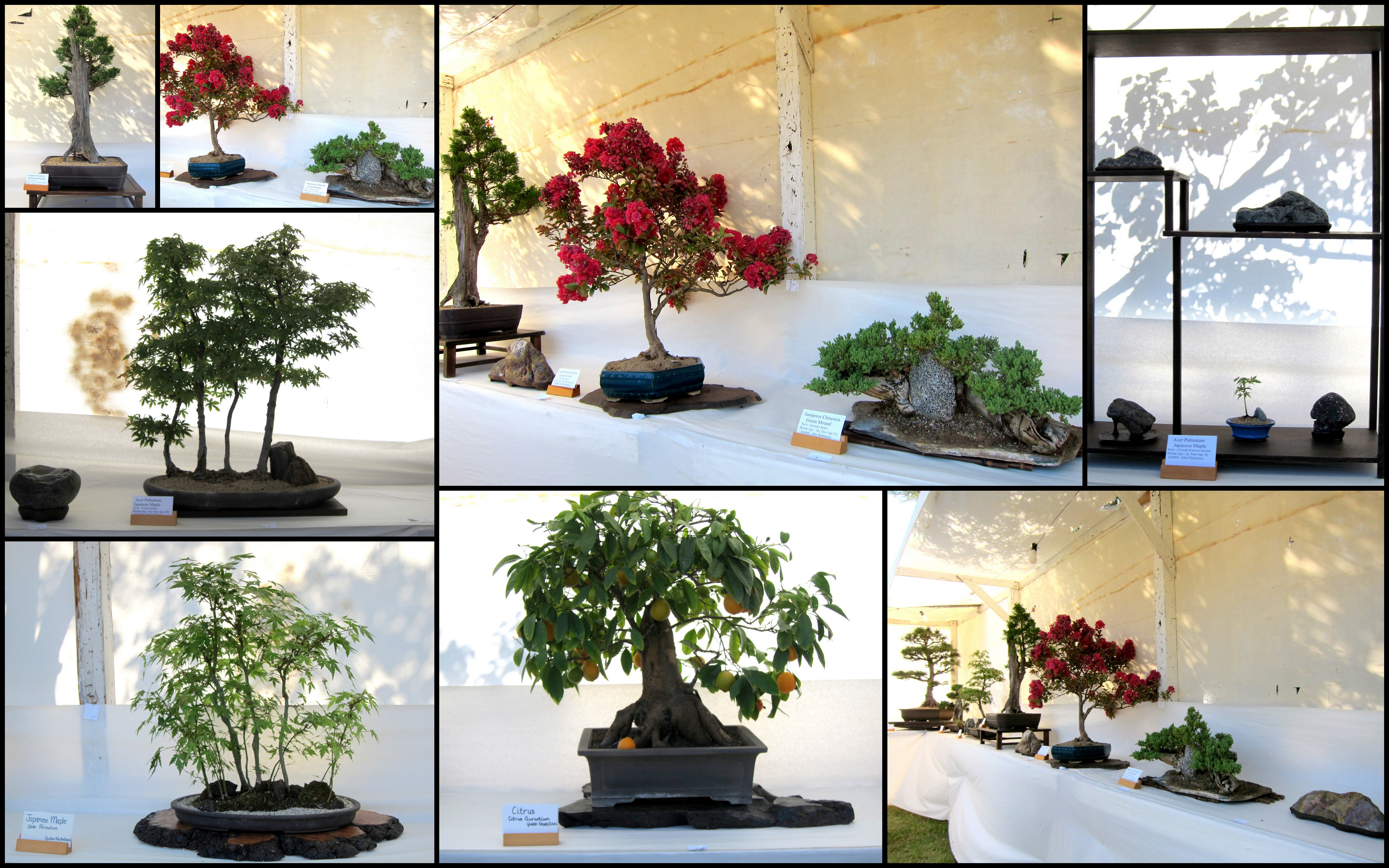
The rice balls, particularly the fukujinzuke ones (soy sauce pickles), go oh so well with the teriyaki chicken sold at the festival. For $5 you get a quarter of a chicken, either white or dark meat. I chose dark meat of course, a big juicy leg and thigh, but the white meat that Nancy picked also looked gleaming. Kenji-san went with 8 skewers of beef teriyaki for $8. We noshed while listening to the taiko drum performance. In the 110-degree heat, I tried not to stare at the kids swooshing their shaved ice, diverted my thoughts instead to the juniper and Japanese maple bonsai.


Mom is an avid believer against potted plants and caged birds, and I don’t even support cutting grass. But these miniature trees are undeniably works of art.

That said, if Mom and I were given one of these, first thing we do is removing the tree from the pot and digging it a nice warm hole in our front yard. 😉

Com tam at a tiny joint in Oakland Chinatown

August 14, 2012 By: Mai Truong Category: California - The Bay Area, Comfort food, One shot, Opinions, Vietnamese

A guy waved a bottle in front of me. “Nesquik?”, he asked. I shook my head no thanks. Five seconds after he walked away, I realized my stupidity. I missed a free bottle of Nesquik! I don’t remember drinking Nesquik for the past 15 years, or ever, but I know what it tastes like, and I like chocolate. Why did I say no?!

Because I live in Berkeley. One thing Berkeley trains you very well for is saying no. Each time you walk pass a homeless man or woman, whether he or she asks for spare change or curses you off or shouts “nice dress”, you silently say no. Each time an activist steps up to you and says “Hi how’s it going? Would you have a minute to talk about …?” and you can barely tell what it’s about because he or she squeezes those two sentences in the hundredth of a second you lift your foot, you say no, usually with a smile because you feel bad. So you prepare this automatic respond when a stranger sticks something under your nose: No thank you. And you end up missing the free Nesquik.

But Berkeley also makes you nicer. And it’s not because the hippies convince you about world peace or anything. First it’s because you travel by bus. The bus always comes late, and not everyone sitting next to you has showered in the past 30 days, so you learn patience. Second, it’s because, as the saying goes, “it’s Berkeley, you can do anything“, and people, including you, wouldn’t bat an eye, so you learn acceptance. Then there’s the protests (boy do Berkeley students love protests, although those never yield any result beside some kid ending up behind a police car). I could list a dozen other reasons. But mostly, it’s because you see everybody from every corner of the world. My first encounters with the Serbian, Iranian, Bosnian, Tibetan, Korean, Japanese, Eritrean, Ethiopian people, and the smell of marijuana all happened in Berkeley. And those encounters (except the marijuana) quickly became friendships.

So I used to get a little uneasy, and I’m ashamed to admit this because I know it’s mean, when I saw Chinese people selling Vietnamese food. Here’s what I think: they don’t make it right, so they shouldn’t call it Vietnamese food. (I’m disturbed when Vietnamese people sell bad Vietnamese food too, because that’s disrespecting your own people.) And I avoided Vietnamese restaurants owned by Chinese. But when I strolled all over Oakland Chinatown last week, there were some occasional raindrops, the sky was grey, it was getting cold, and I just visited the Japanese Buddhist Church for the O-bon festival. All of those things put me in an exceptionally good mood. Although I set out to find Vietnamese snacks, it quickly became clear that I wasn’t going to find any, so when I walked by a window sign of “banh mi, bun bo Hue, banh canh” and a list of other Vietnamese staples, I caved.

Five minutes later, I ordered a cơm tấm (broken rice) with grilled pork “for here”. The lady pointed me to Table 2 (Let’s refer to her as Lady 2 from now on, many ladies worked at this joint). I put down my bags.

Then she exchanged a couple of words including “xiè xiè” to a couple sitting at Table 4. Yep. It’s Chinese people selling Vietnamese food.

Well, that’s okay, I diverted my gaze to the TV, Lady 2 also made herself a bowl of noodle soup and watched a Vietnamese movie while eating. It was hard to hear the TV because the following things happened during the course of my dinner: a customer dashed out into the street while Lady 2 shouting after him in Vietnamese to tell him to run slower, Table 4 chatted loudly in Chinese upon his return, Vietnamese customers coming in to buy banh mi and cha lua to go (the only dine-in people were Chinese and me), and as I scooped up the few last spoons of rice, a fight broke out outside, which caused Lady 2 and everyone else rushing to the street. I had to stop Lady 2 to pay, her eyes still directed a yearning gaze door-ward.


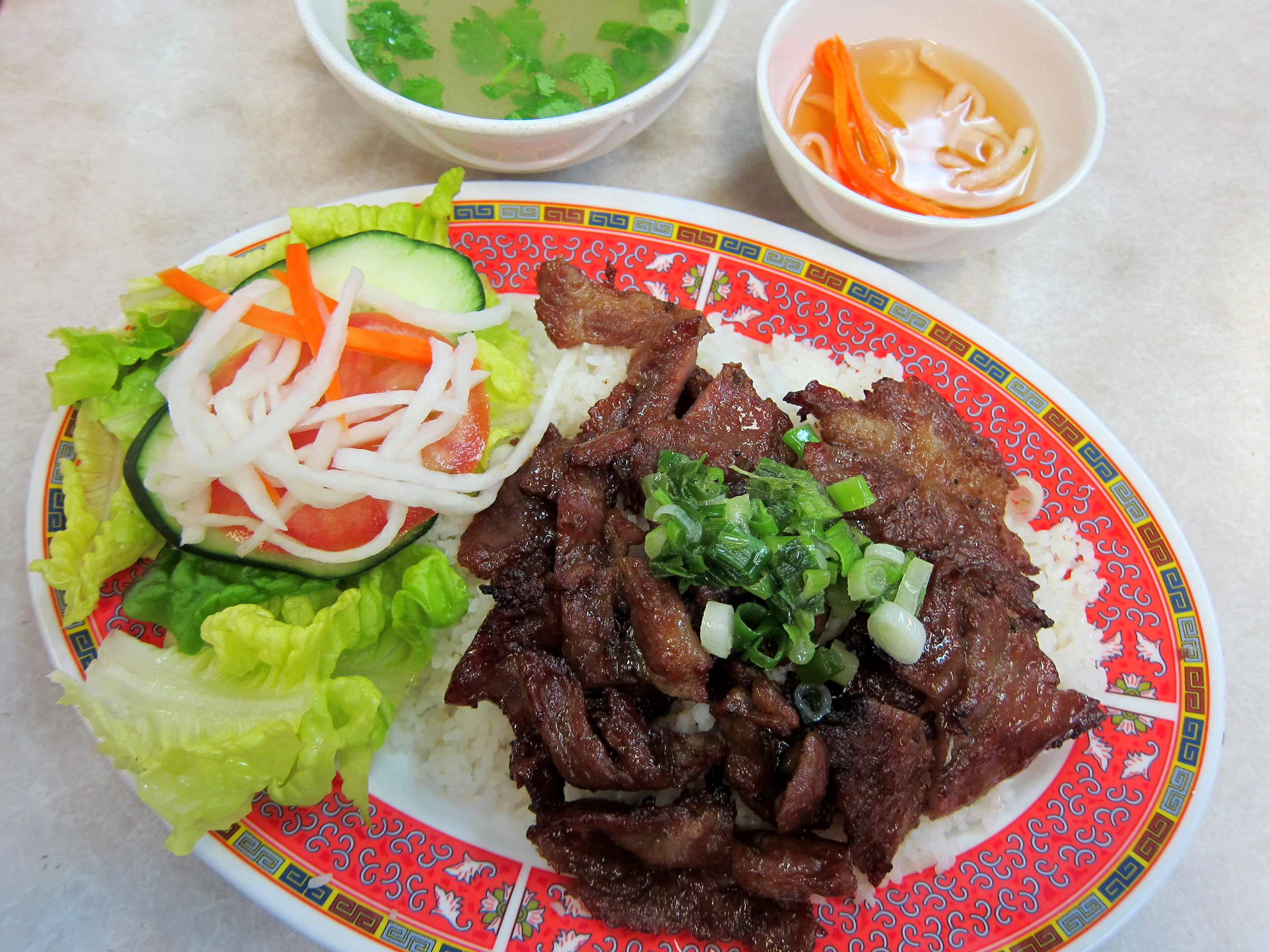
When I told my mom about the fight, she suggested against going back to such place, who knows when the fight will take place in the restaurant. I see her point, but I think I’d risk it. The com tam, and that includes the grilled pork, the broken rice, the nuoc mam and the pickled carrots and daikons floating in it, was beyond perfect. 🙂

Price: $6.75
Address: Ba-Lê Deli, Coffee, Restaurant
812 Franklin St (between 8th and 9th St.)
Oakland, CA
(510) 465-3522

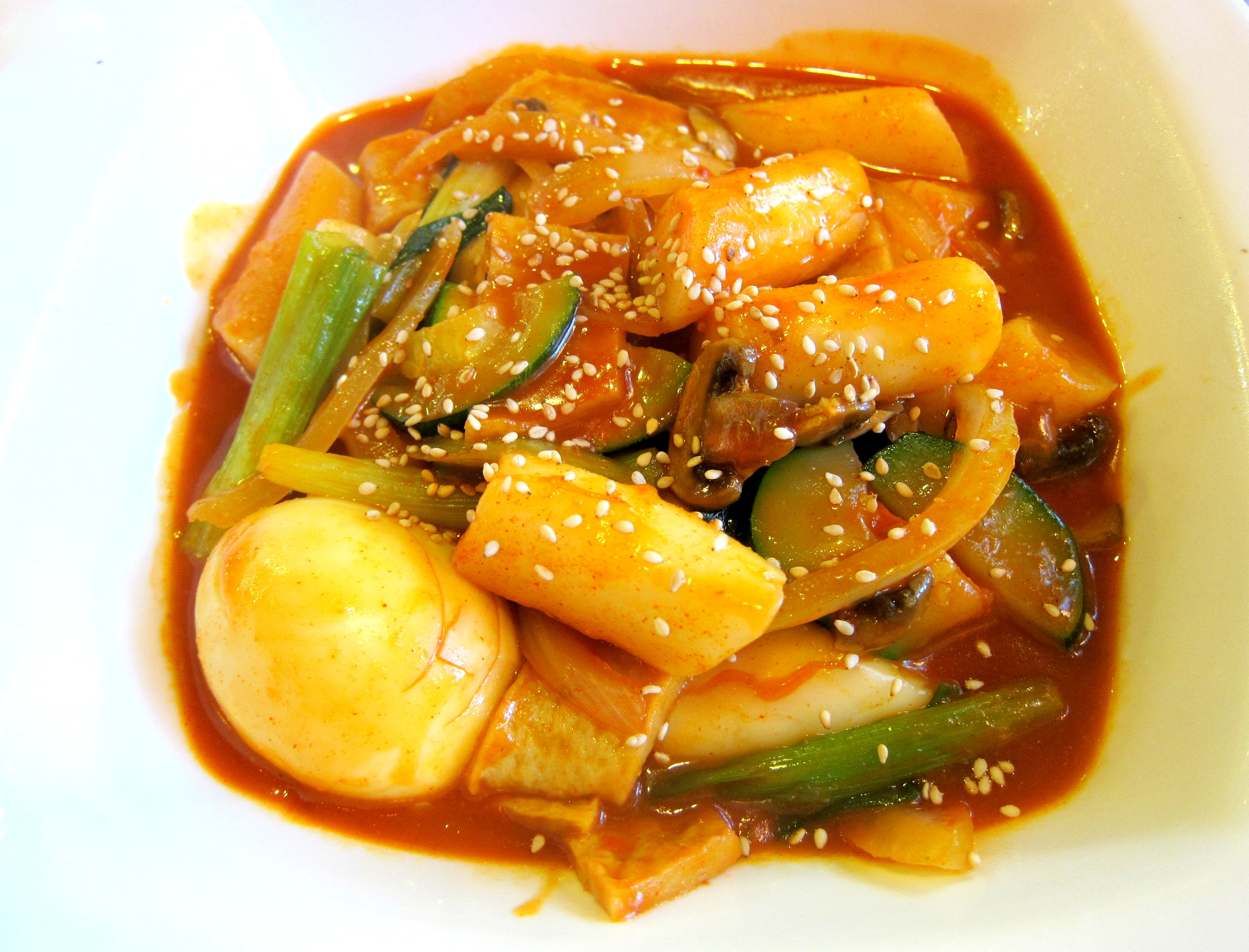
One Bite: Tteok bokki at Crunch

August 09, 2012 By: Mai Truong Category: California - The Bay Area, Comfort food, Korean, One shot, savory snacks, sticky rice concoctions


Thick sweet & spicy sauce. Soft chewy sticks of sticky rice. This is one heckuva tteok bokki. I can see myself going here for a tteok bokki takeout on movie weekends, and it’s only $7.

Address: Crunch
2144 Center St
Berkeley, CA 94704
(Downtown Berkeley)
(510) 704-1101

This place used to be a sushi joint. I ate there once. I’m glad it has changed into something much better.
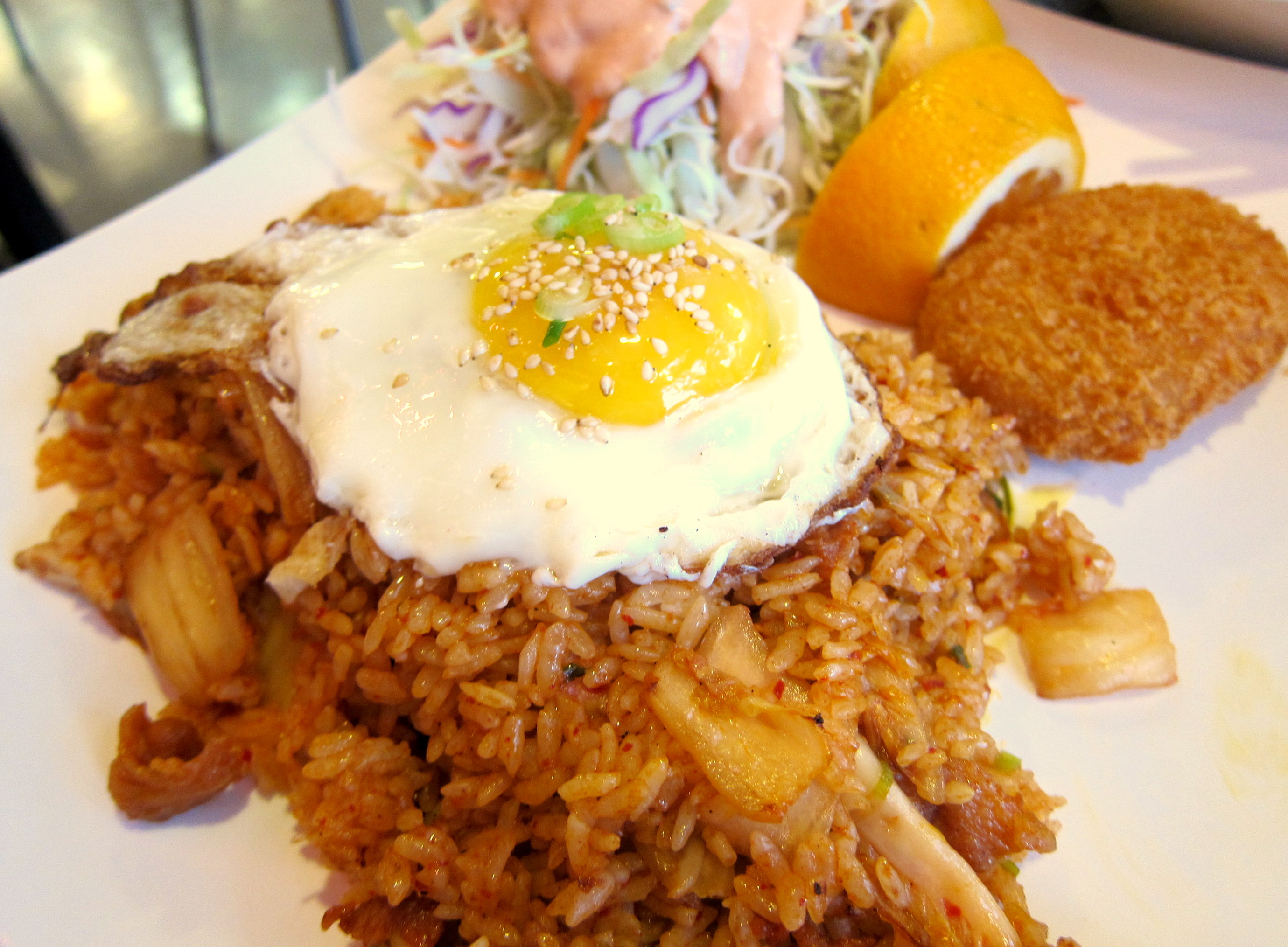
Also, Crunch gave me a humongous plate of kimchi pork fried rice that was just three spoons above my limit and not enough to take home. What should I do? Cut down or increase my limit?

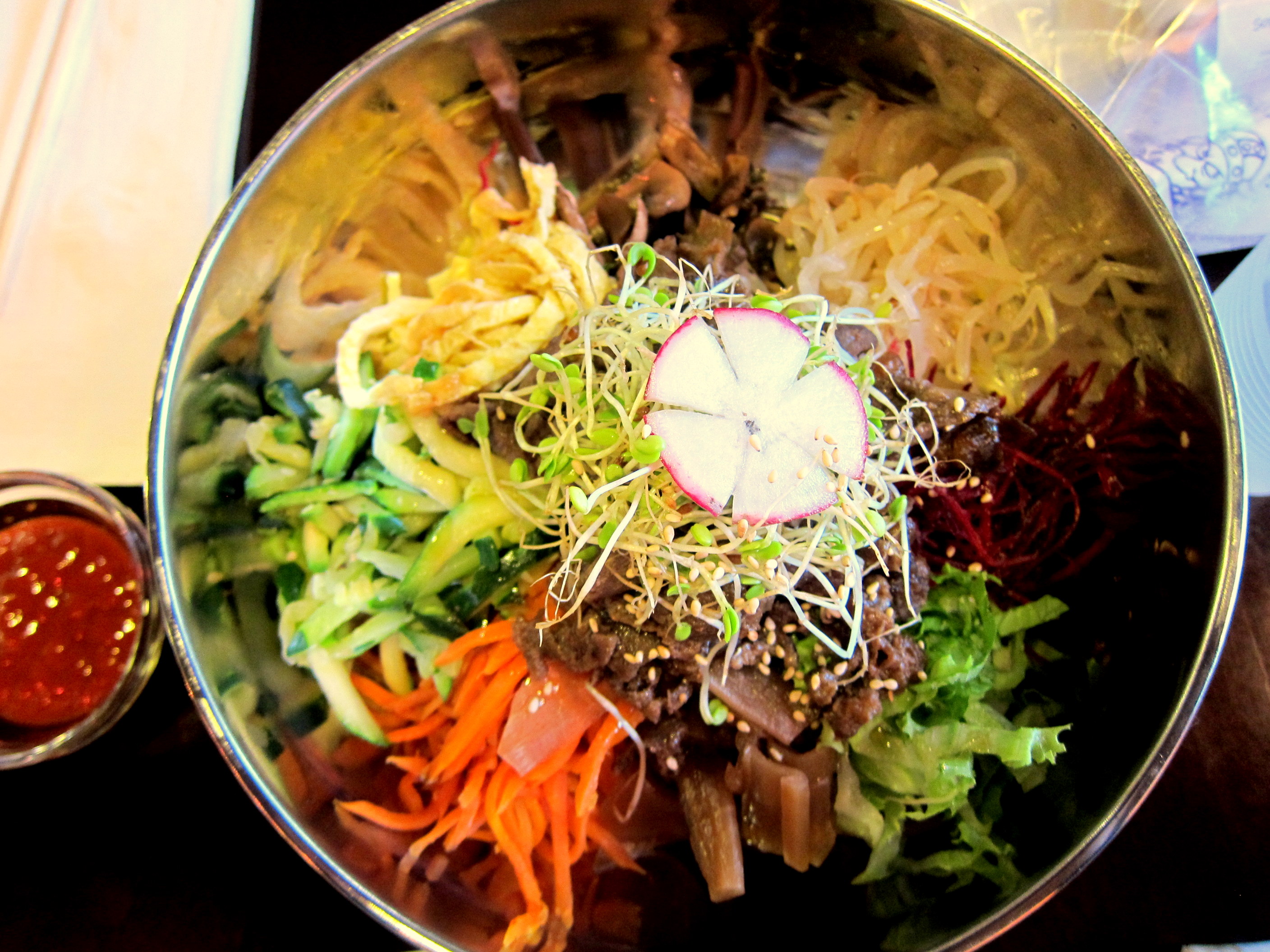
Beef bibimbap ($8)- julienned cucumber, carrots, bean sprouts, egg, lettuce and sauteed beef to be mixed with rice

Kimchi fried rice with pork ($8).

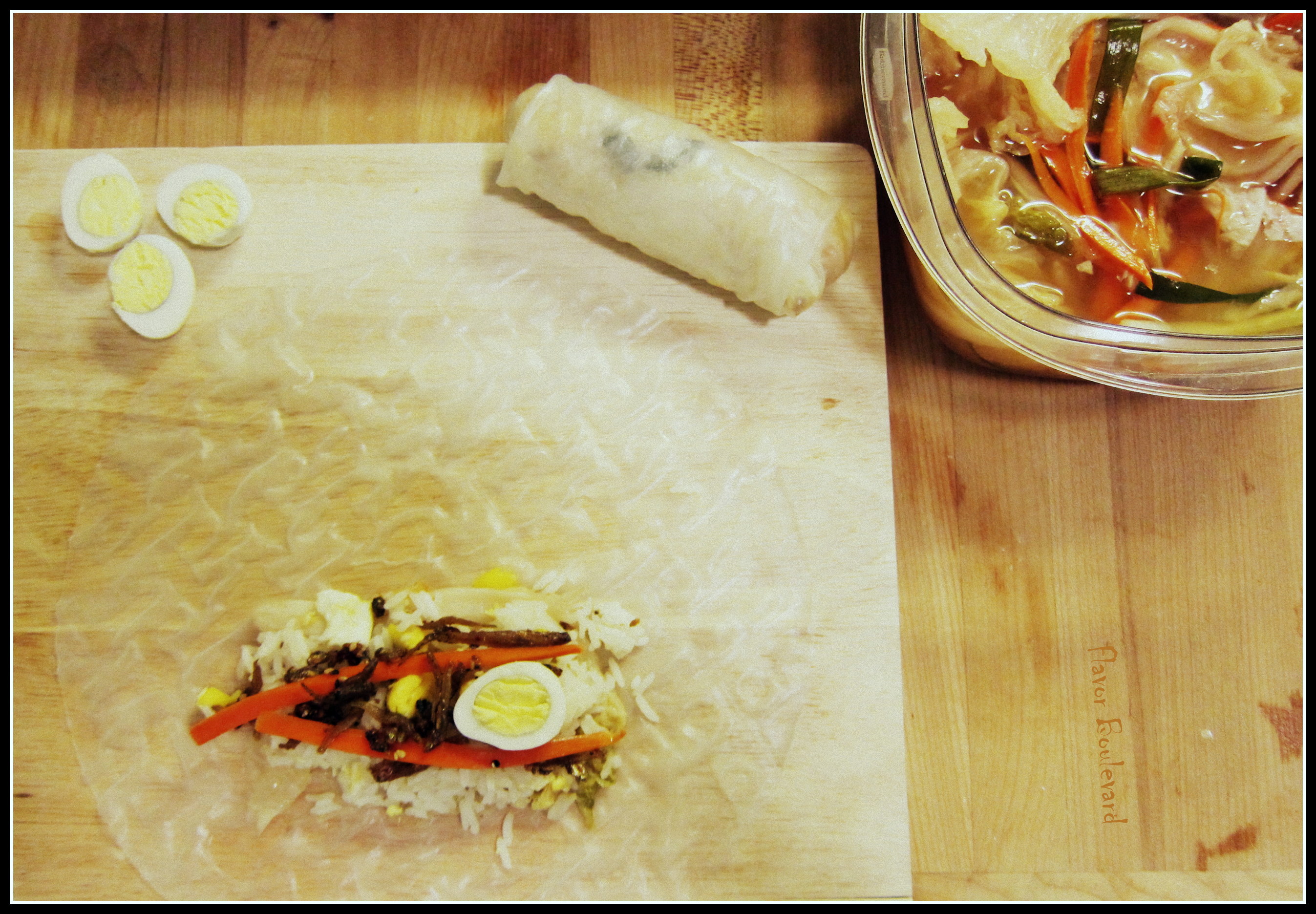
Rice Paper Kimchi Roll – a cross between ssam bab and fresh spring roll

July 29, 2012 By: Mai Truong Category: Comfort food, Korean, RECIPES, Vietnamese

How can you bring kimchi to lunch at work without the smell of fermented cabbage?

I like the garlic smell of my homemade kimchi, but I’m not sure if I want my office to smell like it. Besides, I’m not a fan of bringing multiple containers to work. I don’t even want people to see me with a fork at my desk, and it’s even worse with an empty but dirty container. The ideal lunch is some kind of finger food, preferably balanced.

One afternoon, I decided to make ssam bab, a kind of roll with napa cabbage kimchi outside and stir-fried rice inside that I first saw in Kimchi Family and never in real life. You can find kimbab (rice roll in kim – seaweed) for very reasonable price in the Asian Ghetto just south of campus, but no Korean restaurants in the Bay dish out ssam bab. The only problem: I cut the napa cabbage leaves in half when I made kimchi, so now the leaves are not big enough to wrap up the rice, and things fall apart. Well, if I can’t make it the Korean way, I’m making it the Vietnamese way.

I use rice paper to wrap the ssam bab. The result: a cross between ssam bab and fresh spring roll. The perfect triple-layer balance: rice-kimchi-rice. The rice paper blocks the kimchi smell from diffusing across the room, keeps the roll intact thanks to its elasticity, and makes a clean, grease-less, non-sticky wrapper. The kimchi gives the roll a sour, spicy, garlicky edge so we don’t need a dipping sauce. Texture-wise, a bite takes us from chewy rice paper to juicy but crisp kimchi to the soft rice mixed with crunchy fried anchovy. Three of these rolls fill me up, but I chomp another just because.

Korean ssam bab: sauté pork and kimchi, mix with hot steamed rice, roll in a leaf of pickled napa cabbage, tie the roll with a leaf of cooked green onion.

Rice Paper Kimchi Roll

(make 20 rolls)
– 1 clove garlic, thinly sliced and browned
– 6 eggs, scrambled with garlic, and salt and sugar to taste
– 2 cups rice, cooked
– 10 quail eggs, halved
– 20 sheets rice paper
– 1 cup fried anchovy (myeolchi bokkeum)
– 20 pieces napa cabbage kimchi, the best size is 1.5 inches x 3.5 inches

Mix the scrambled eggs with the cooked rice.
Wet a sheet of rice paper in warm water until it’s soft, spread the rice paper on a plate or a chopping board.
On the rice paper, layer a piece of kimchi, some egg rice (about 1 tablespoon), a few row of fried anchovies, half a quail egg.
Fold the rice paper up along the kimchi piece to cover the filling, then fold the ends over.
Roll. The edge of the rice paper will stick naturally to the roll if the rice paper is moistened enough.

The rolls will stay good in the fridge for 4 days. Cover 3 rolls with a moist paper towel and microwave on high for 1 minute to regain freshness.