Flavor Boulevard

We Asians like to talk food.
Subscribe

This little piggy went to Kang Tong Pork
September 03, 2012 By: Mai Truong Category: California - The Bay Area, Comfort food, Korean


Mom posed a question and I can’t conjure up any adequate answer for her: why does Korean fried chicken only appear in holes in the wall?

Not just a simple hole-in-the-wall thing in a busy strip mall, it has to either stand alone in an empty lot or sit at a shady street corner with iron folding doors and a few rowdy-looking guys smoking outside. Granted that those guys look Korean and the signs are in Korean, which confirms the authenticity of the place, and these are Korean drinking establishments after all. But does it have to be so shady? I want to walk down the street and eat fried chicken late at night sometimes…

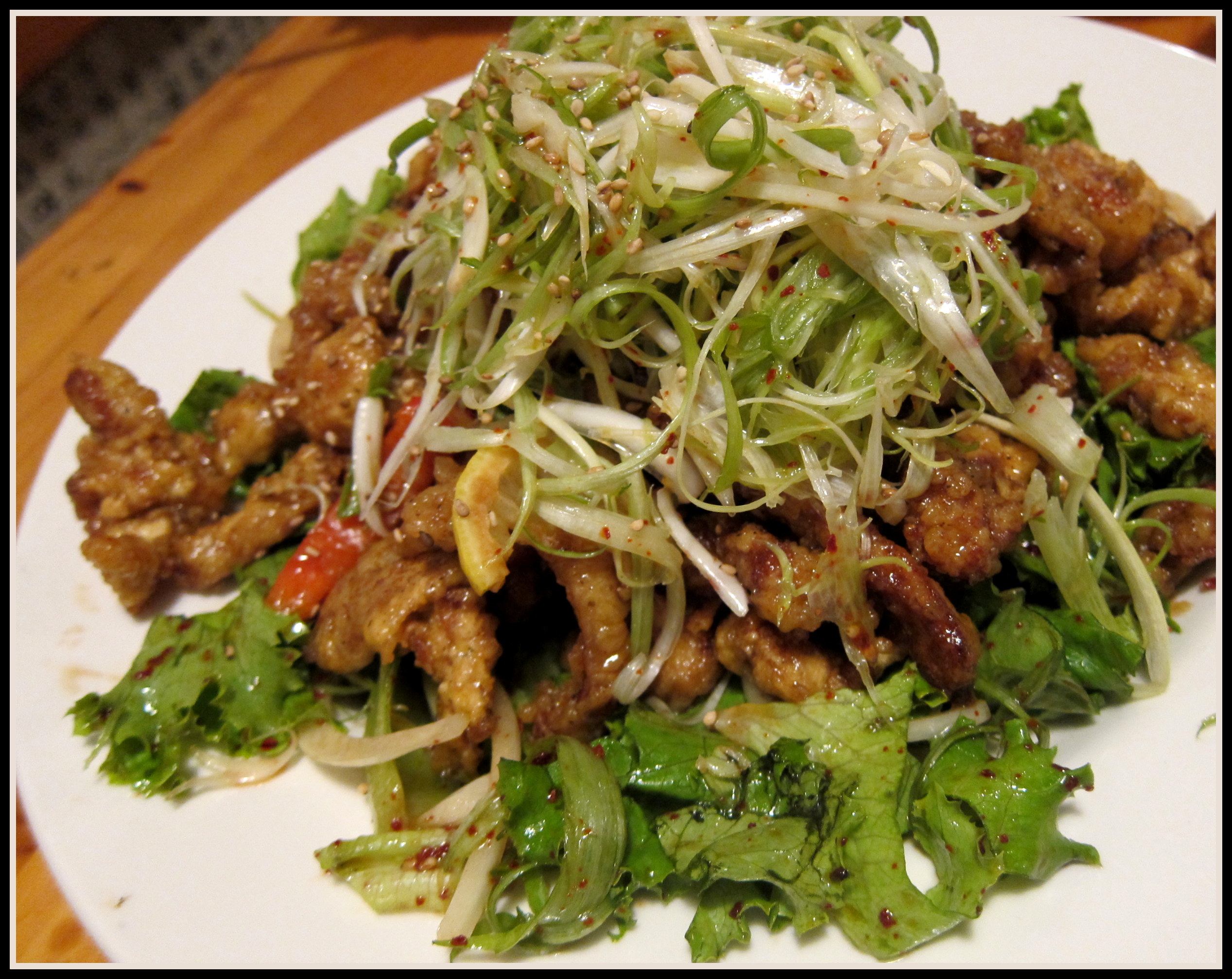
The fried chicken bits with green onions at Kang Tong Degi (강통 돼지, which should be pronounced |Kang Tong Twe Jee|) might be good enough to risk it though. Frankly there’s less chicken on that plate than fried batter and green onion, but since when did fried chicken become so refreshing? A squeeze of lemon makes all the difference.
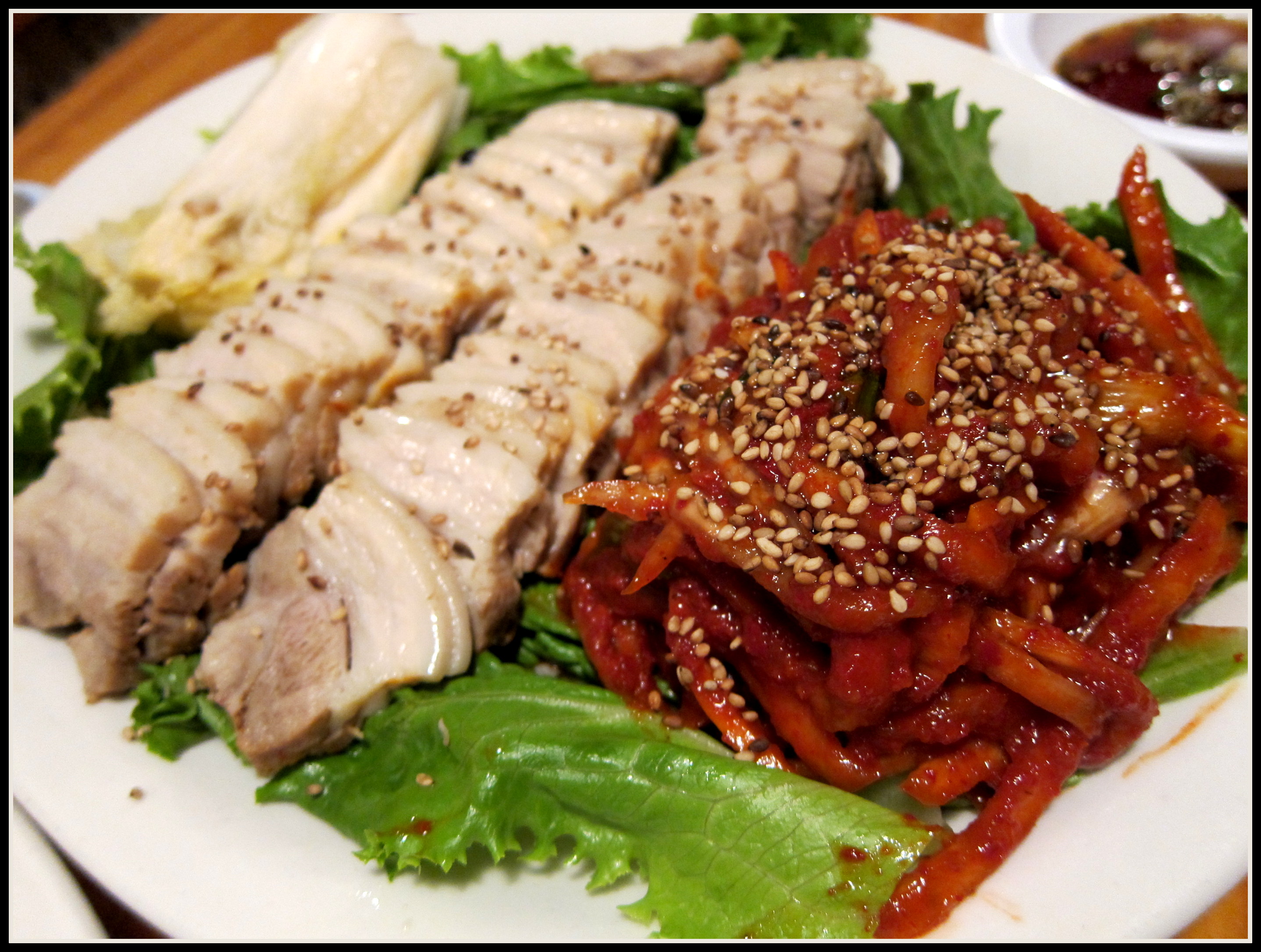
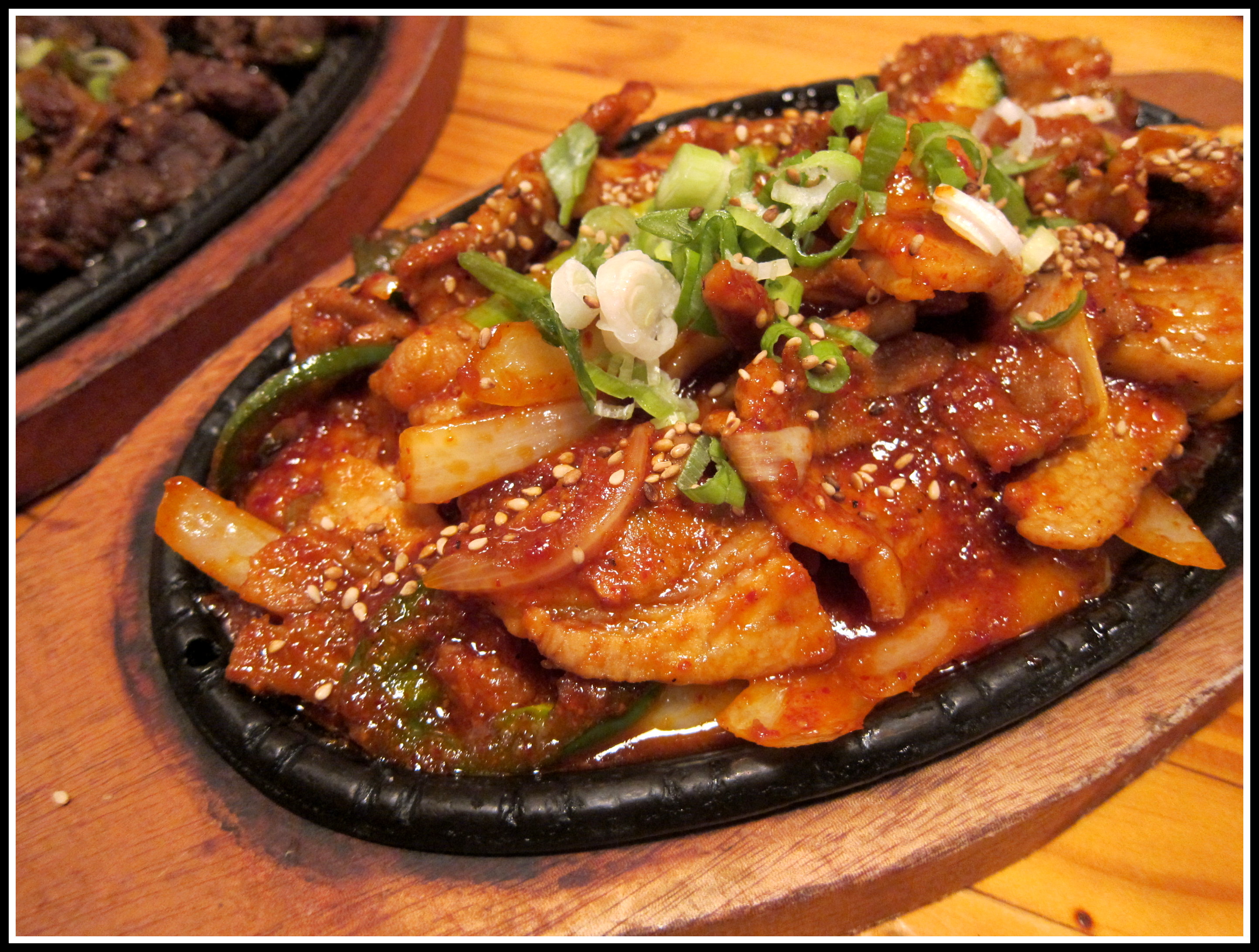
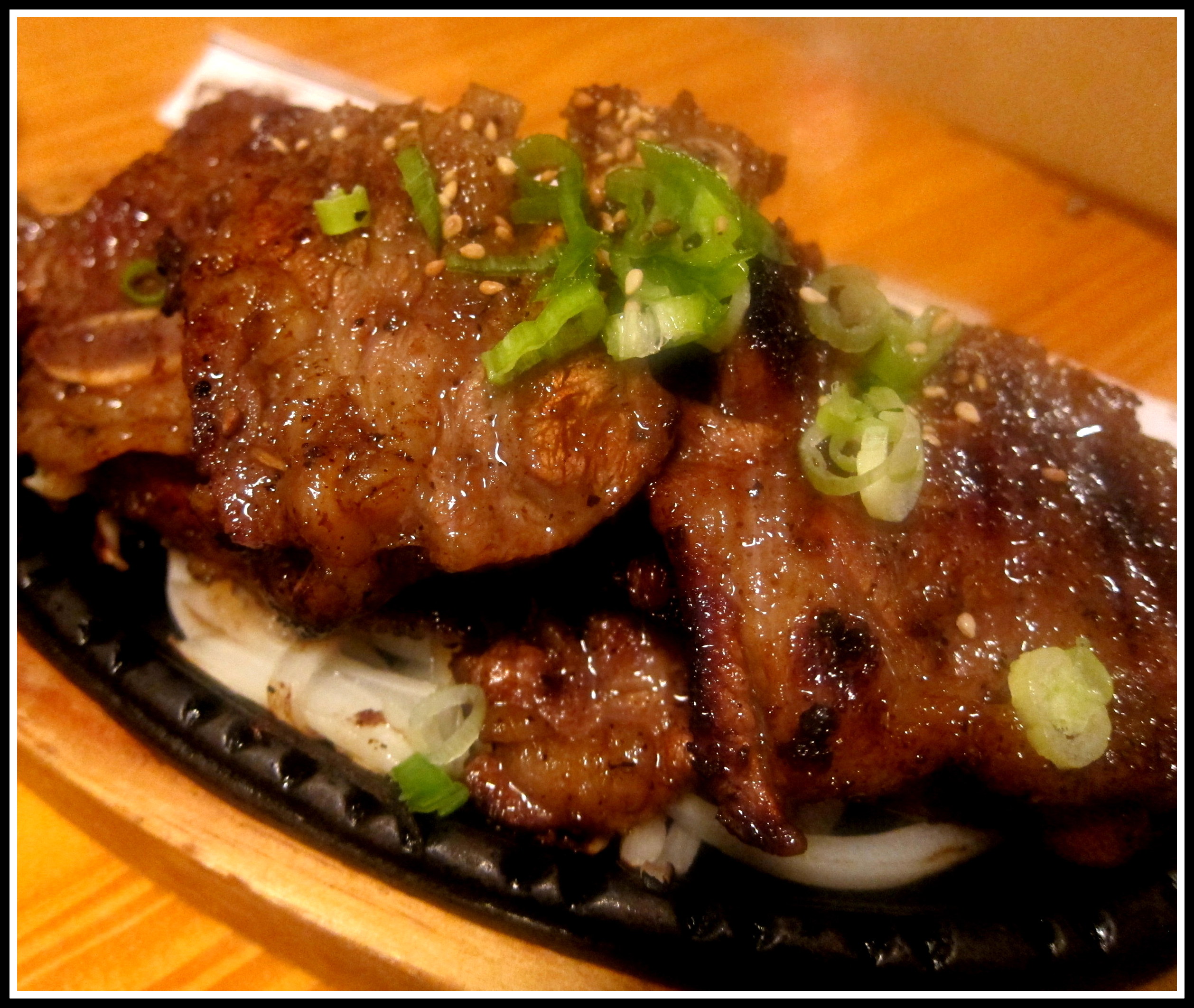
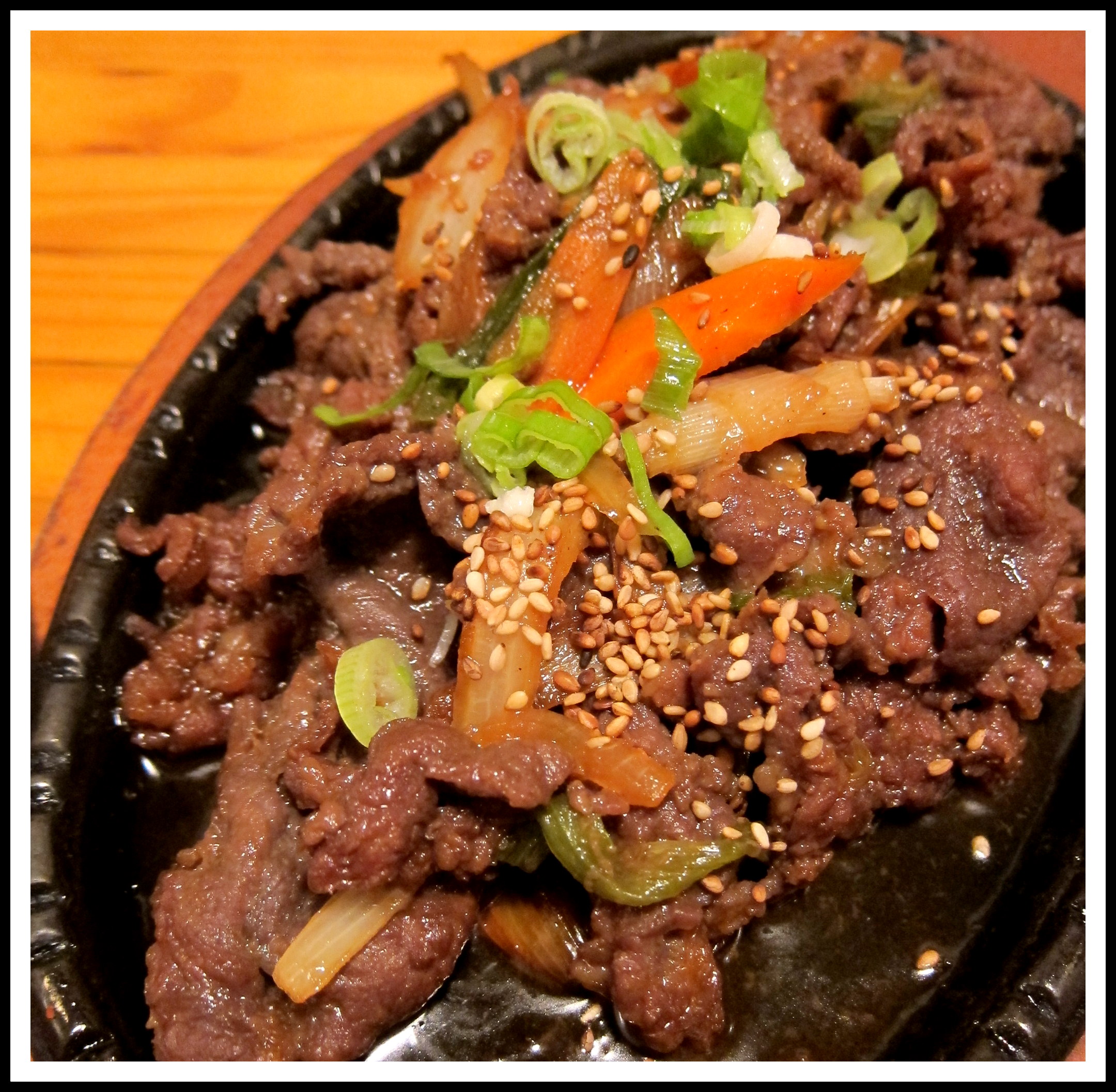
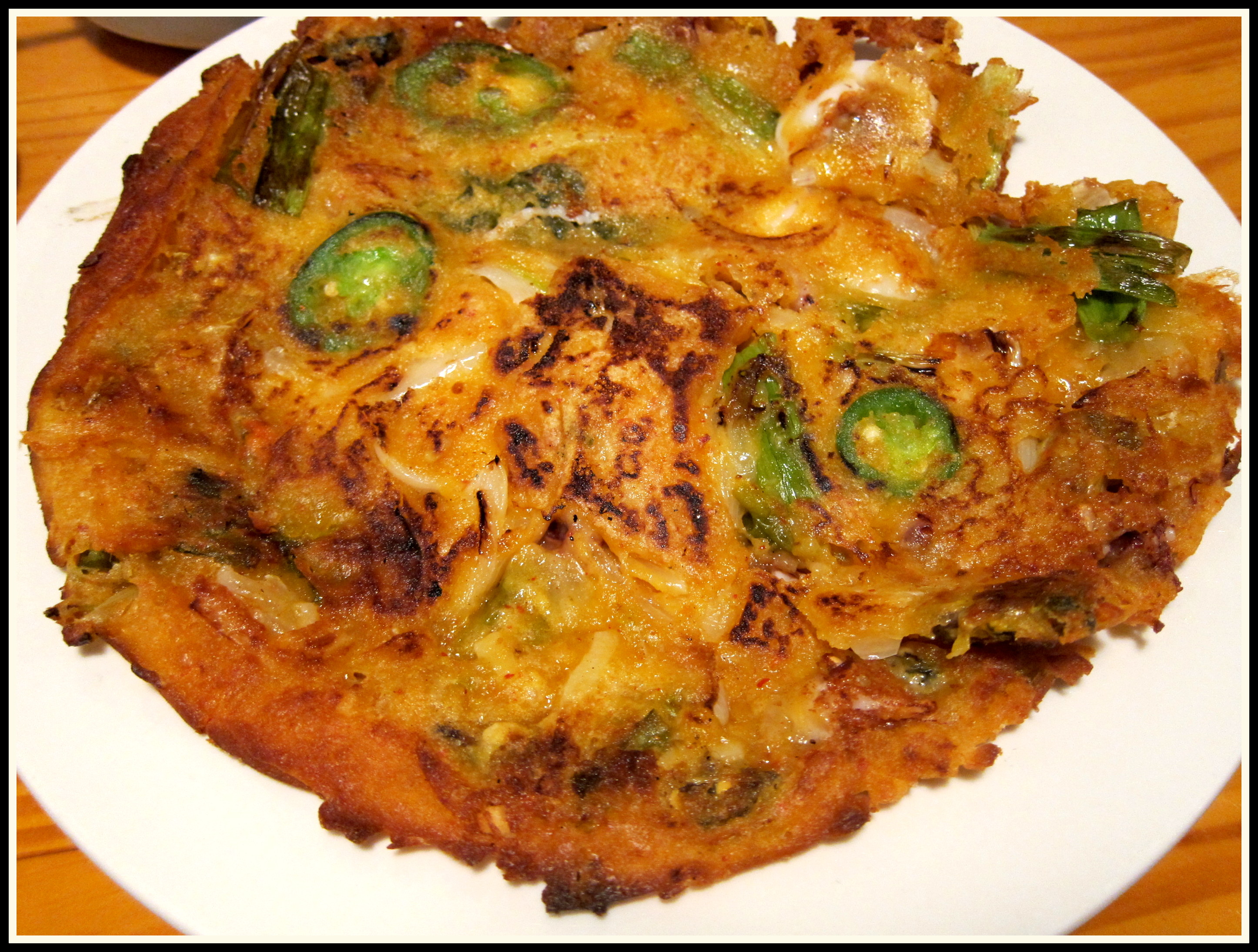
Thanks to Kristen’s mom, we three shared 8 dishes that covered tofu, seafood, chicken, pork and beef, one of them was a portion for two; the guy’s look of concern was funny, he even asked if we were sure. (We had plenty of leftovers of course. Nothing beats eating with moms. ;-)) Although “twe jee” (돼지) means pig or pork, this shack has good but not the best pork dishes. Kwen chan thah, their haemul soondubu (해물 순두부, soft tofu soup with seafood) and haemul pajeon (해물 파전, seafood onion pancake) are top of the game.

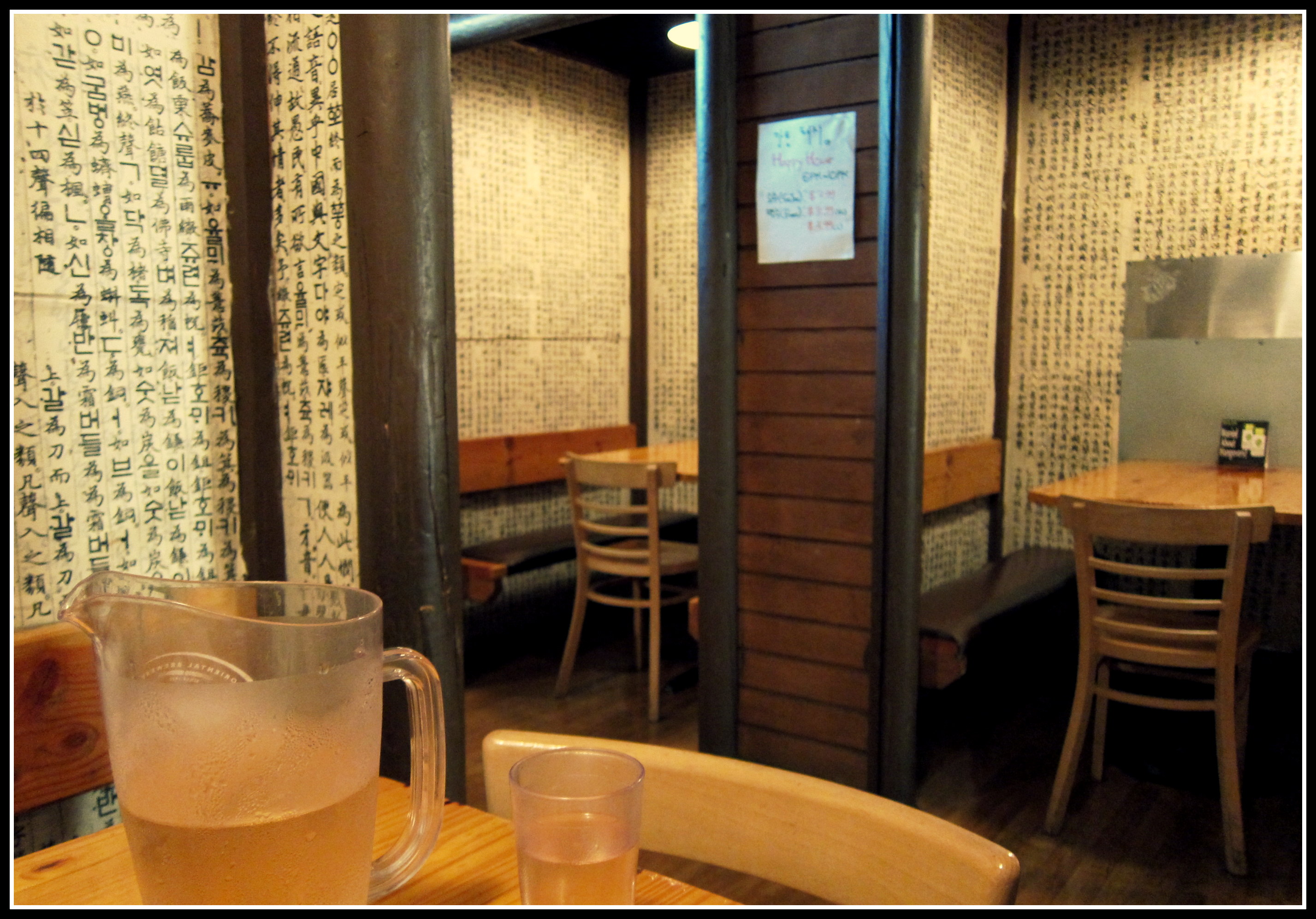
The wallpaper and the table arrangement are just too cute.

Address: Kang Tong Degi (강통 돼지)
3702 Telegraph Ave.
Oakland, CA 94609
(510) 658-2998
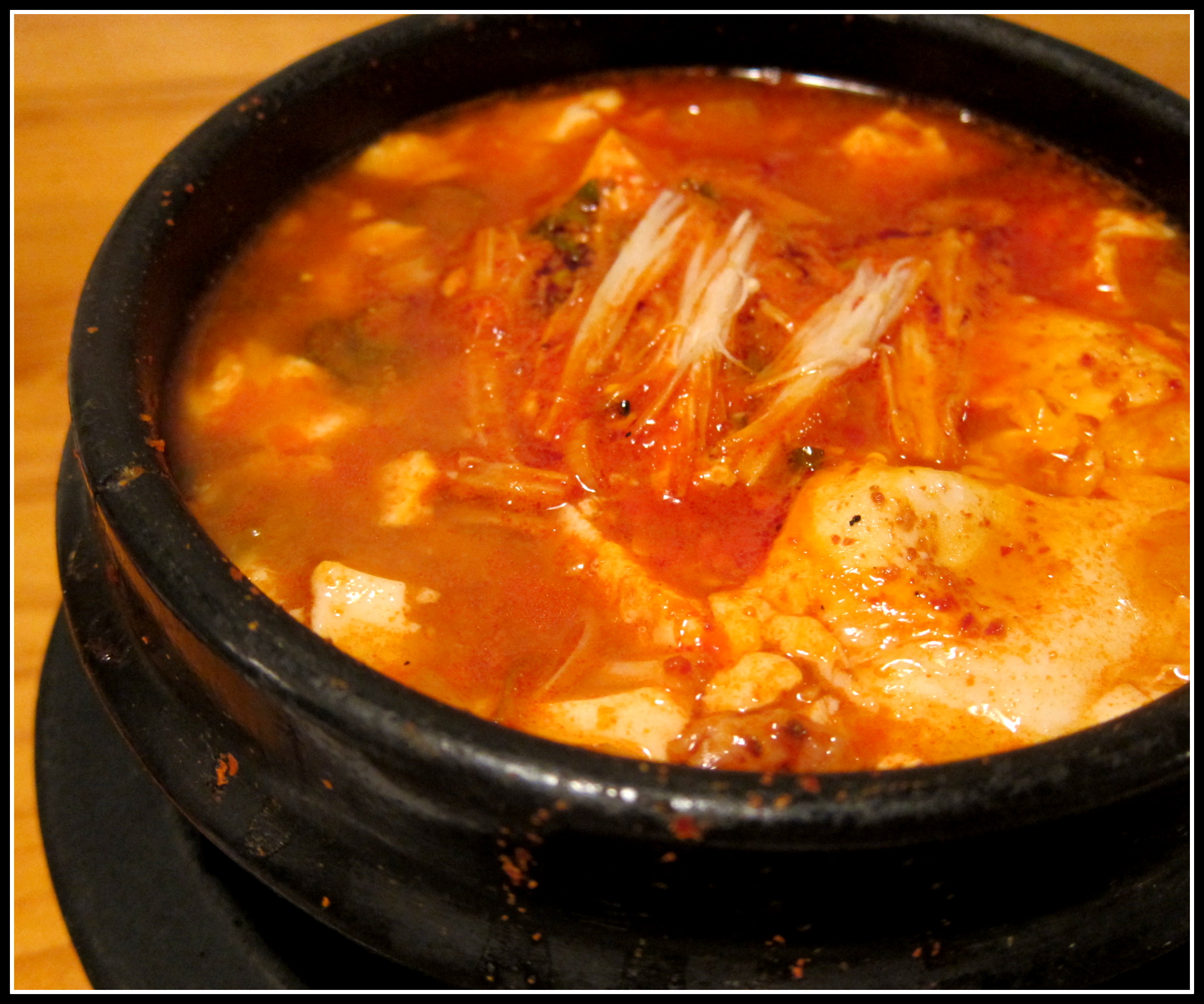
Soft tofu soup with shrimp, squid and clam. It looks fierce but tastes just slightly spiky. It was a good warm-up.
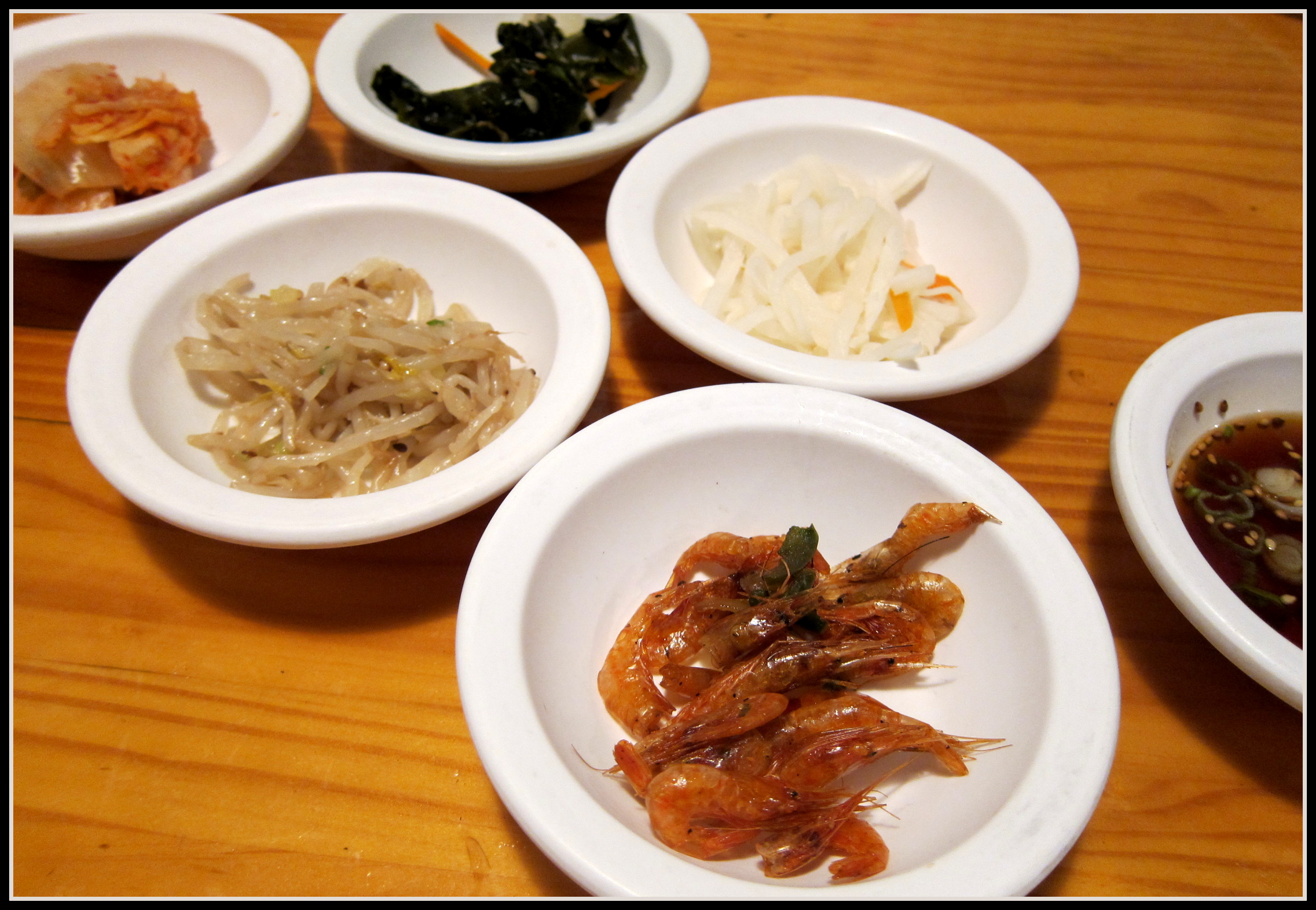
Banchan (side dishes). The only place I’ve seen that serves little crunchy shrimps. Yum yum.
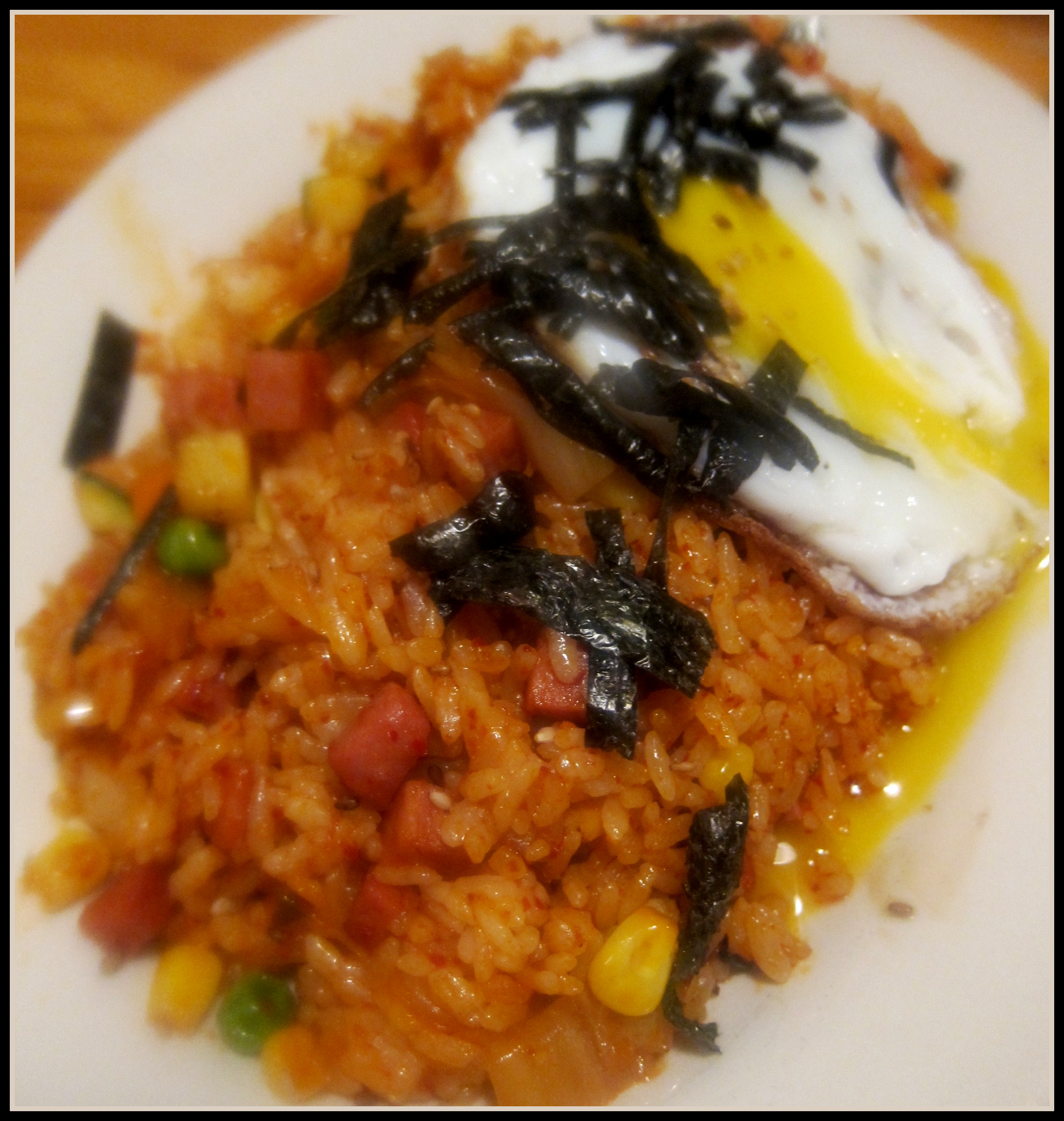
Kimchi fried rice. In a moment of joy I dropped my camera head first onto the sunny-side-up, breaking the yolk and clouding my lens. Hence the dreamy look.
The unpredictable Myung Dong

October 16, 2011 By: Mai Truong Category: Comfort food, Houston, Korean, noodle soup


Unpredictability #1: “Are you opened today?”
Before you set your GPS to Myung Dong in Houston, make sure you call and ask that question in the clearest, simplest way possible. Aaron tried different versions, most were a bit too elaborately polite with a perfect American accent, and only succeeded in confusing the poor old man. I tried it once and got the answer “Yes, open.” We hopped en route.


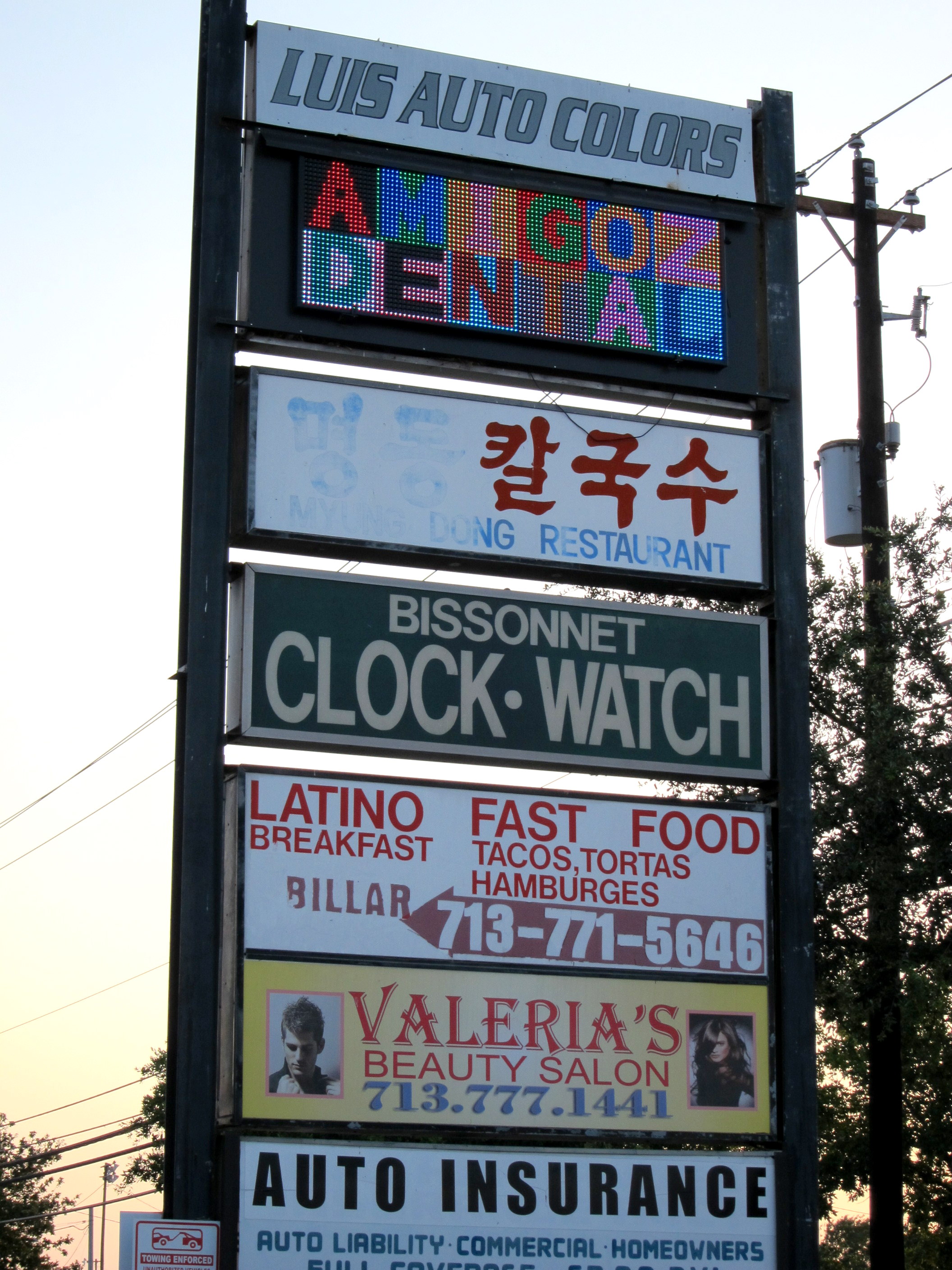
(If you don’t call, there’s a slim chance that your schedule will coincide with the owner couple’s schedule, which depends on the lady’s health, and she’s the only chef. That slim chance didn’t happen for me the first time I set out for Myung Dong.) The limited English conversation is nothing uncommon at Korean and Vietnamese mom-and-pop diners, but I have to mention it because it’s one of those things that make me classify Myung Dong as more “authentic” than the other Korean restaurants in Houston. The second thing is that its name doesn’t contain “Seoul” or “Korean”, they go more local: Myungdong (명동) is a part of Seoul (in Vietnam, its equivalent would be a phường). The third thing is that its name contains its specialty: kalguksu (칼국수). In fact, that’s the only part of the name still visible on the sign, the Myungdong part has faded completely, which explains why we couldn’t find it the first time (aside from the other fact that we couldn’t read Korean at the time)*.

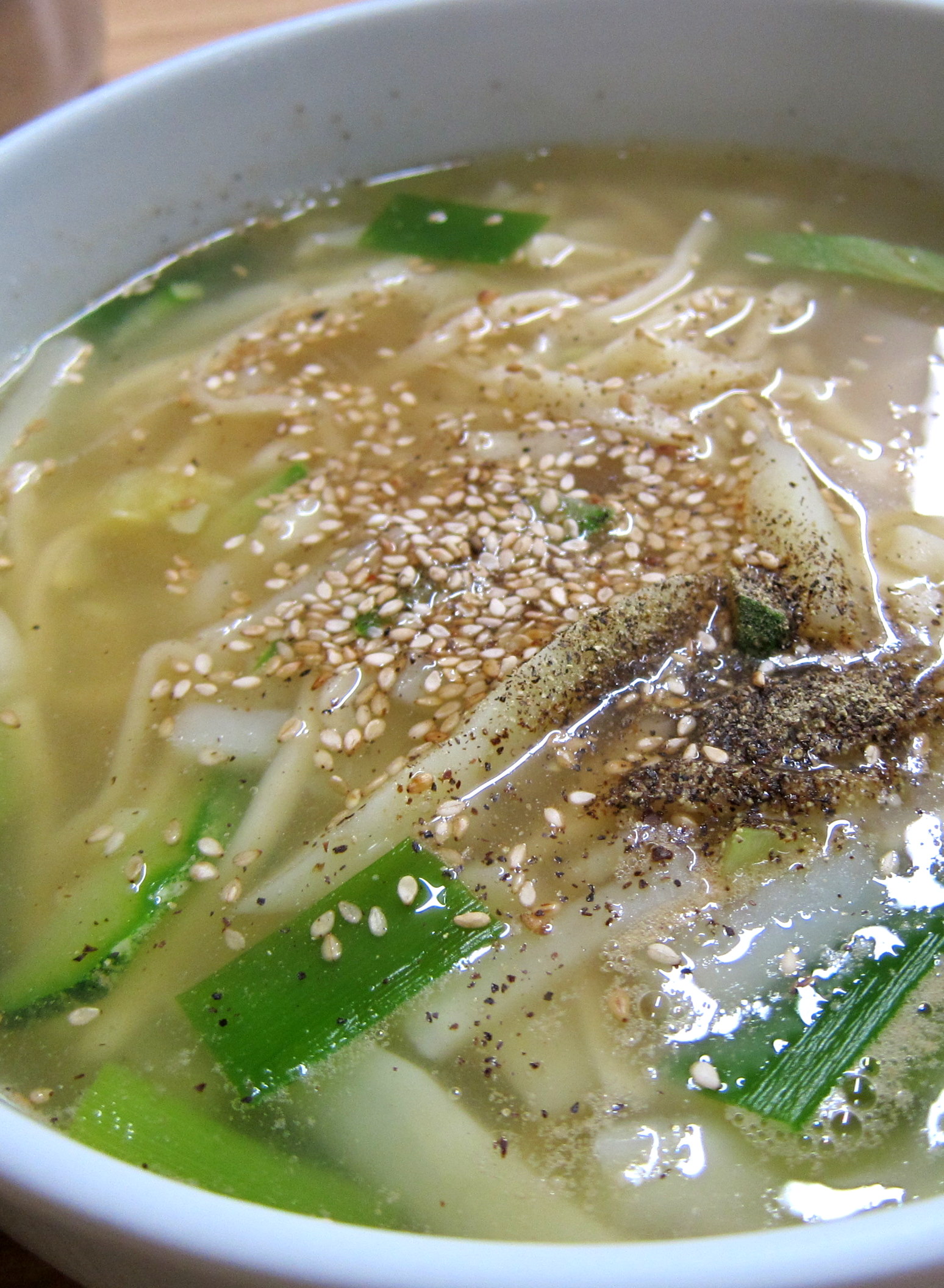
Of course we ordered it. It was the first kalguksu I’ve ever had. It’s a handmade, knife-cut noodle in soup, and this version has only noodle, broth, and vegetables. The broth was sweet and deep, the noodles were wonderfully chewy. But kalguksu is like fireworks, the first two minutes are great, then you ask yourself “just when is it gonna end?”. Now that I’ve had kalguksu, unless I get a two-minute-size bowl, I doubt I will gather enough curiosity for a second kalguksu in my life**.


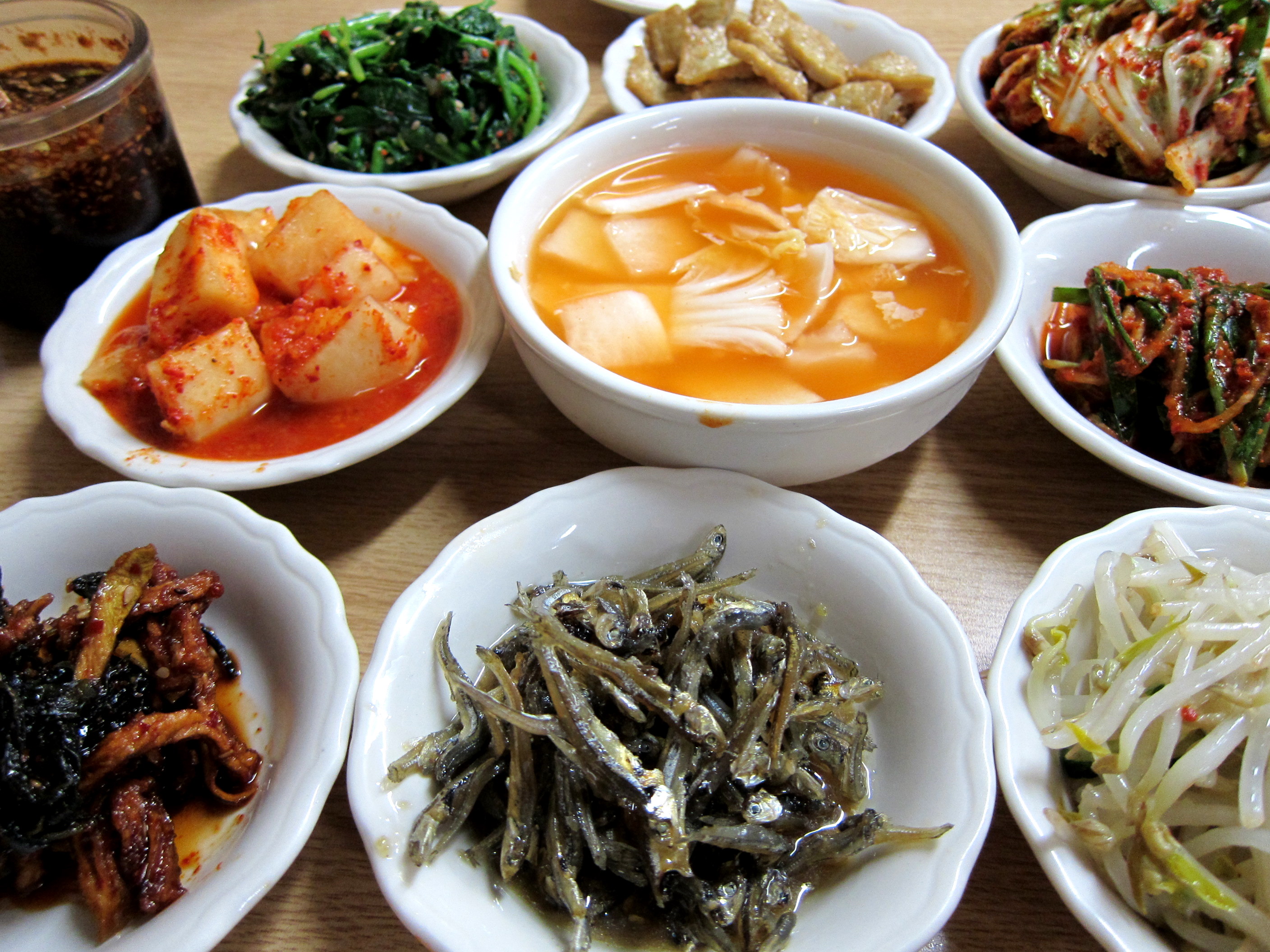
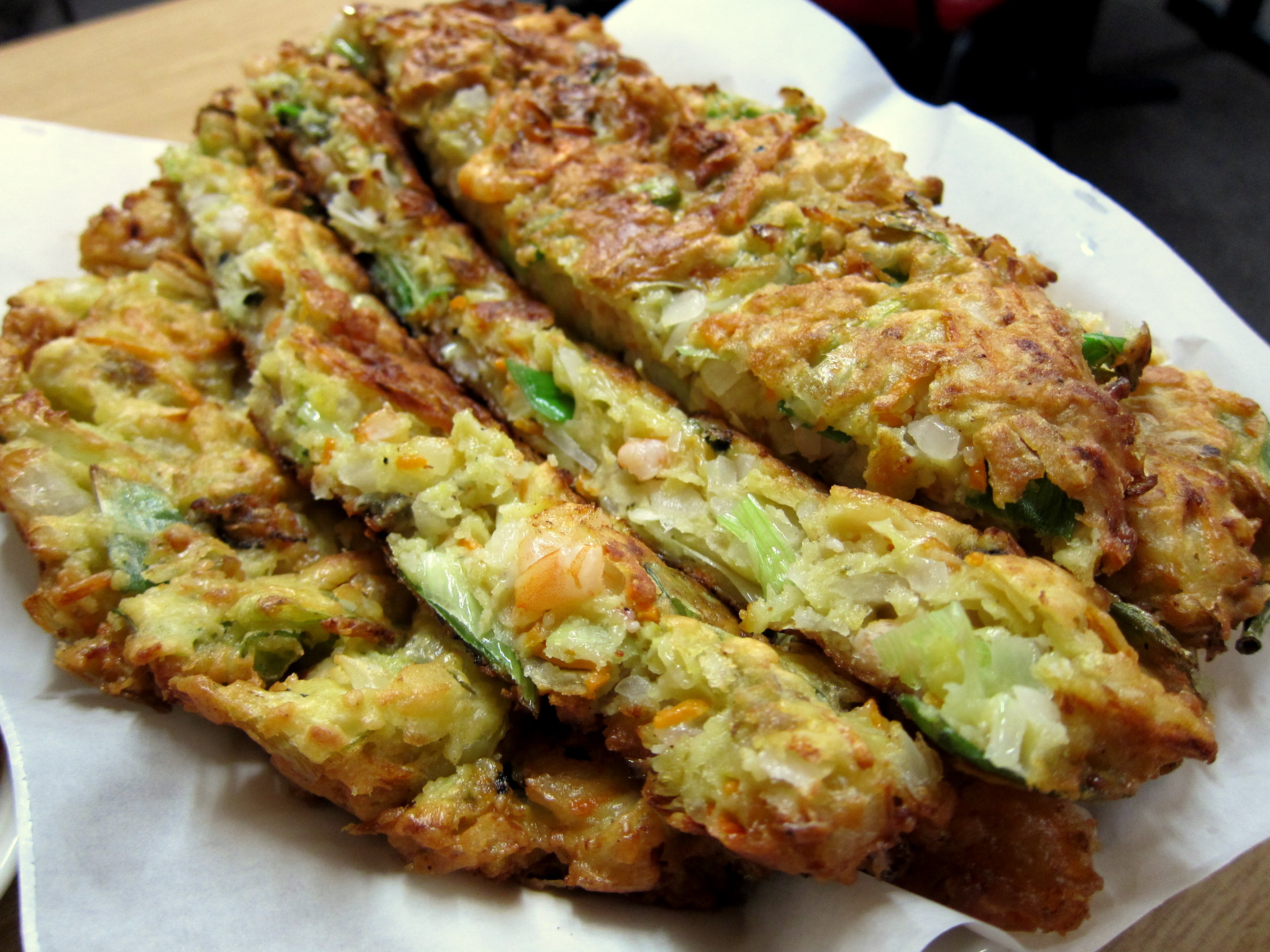
But kalguksu was still a memorable thing. In my Commis post I went off on the memorability of meals, and here I go again. Myungdong has something worth remembering: the portion (Unpredictability #2). Aaron and I each ordered a dish, him the kimchi duaeji bokkeum (김치 돼지 볶음, stir-fried pork with kimchi) and me the kalguksu, and we decided to share a pajeon (it was a really good pajeon too, thick, crispy, airy, and chewy, oh, and not oily). The usual banchans came. We were both starving like baby goats. Then the big stuff came, covering the whole table. A diligent hour later, in Aaron’s words, “it looks like we hadn’t eaten anything at all”. We looked at the old man with hopeful eyes, for boxes. Many boxes. Also in Aaron’s words, “he’s quietly laughing at us: gotcha, foreigners, didn’t know what you were getting into, did you”. He did laugh with us, a very congenial laugh of old men, as he poured the goods into the containers and loaded the containers into a cardboard box. Aaron had enough food for the next week. And Aaron is no timid diner.


Address: Myung Dong Kalguksu
6415 Bissonnet St
Houston, TX 77074
(713) 779-5530

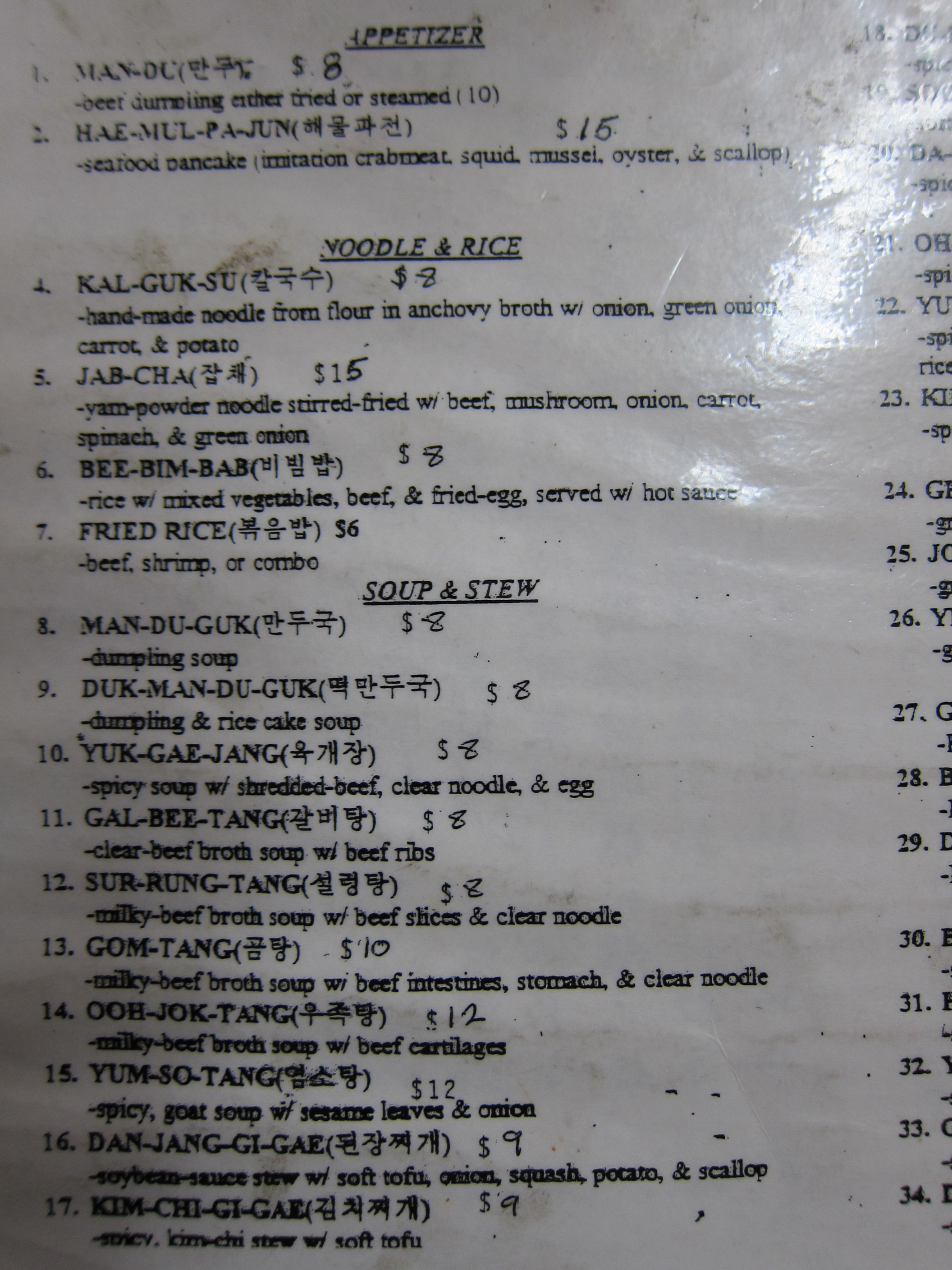
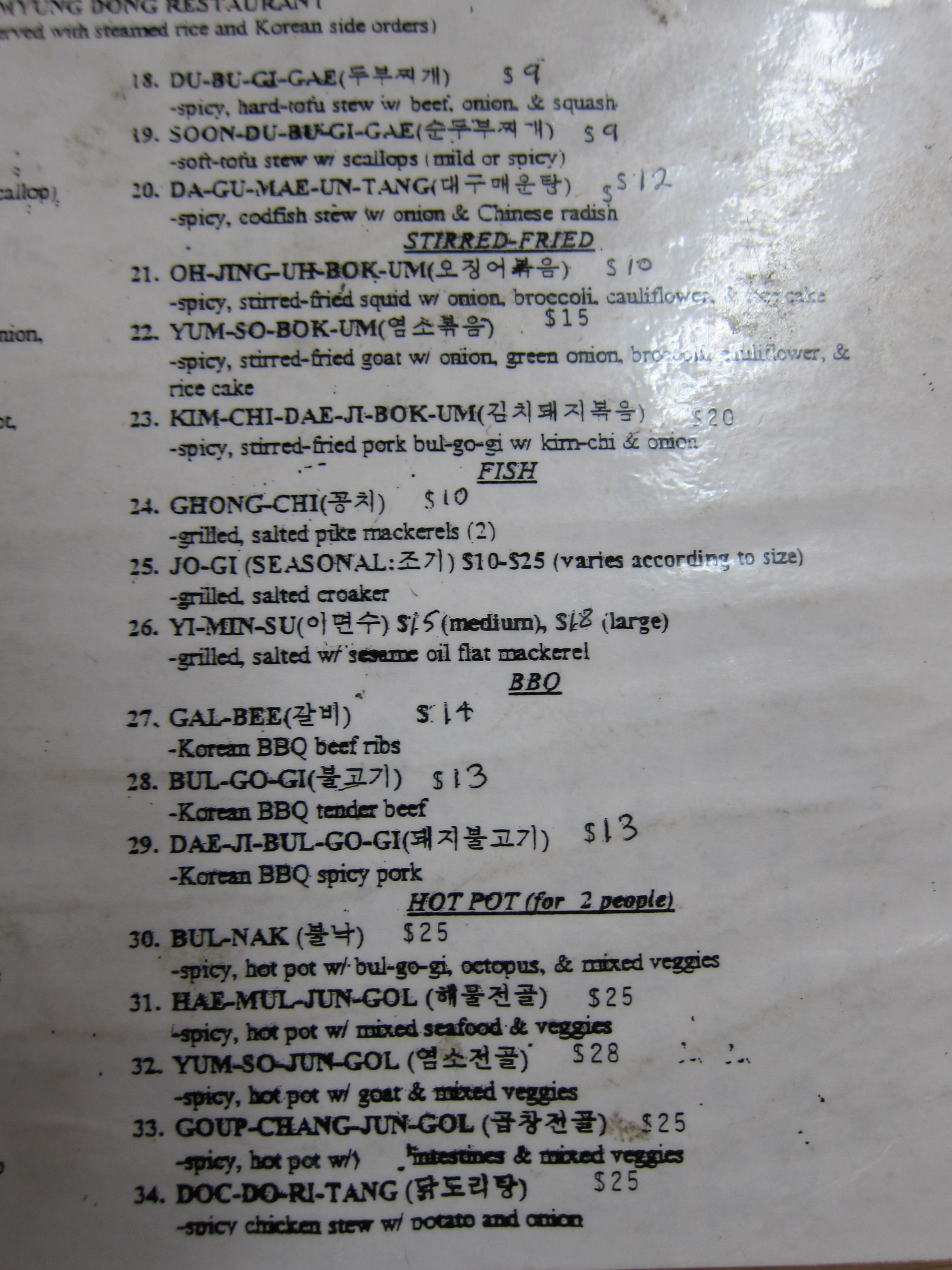
Dinner for so many more than two: $50. See Menu pages 1 and 2.

(*) It’s a neon green one-story house with no door sign. Very noticeable. If in doubt, ask the people in the same parking lot, they’ll confirm “The Chinese restaurant? Yes, that’s it there!”
(**) This is why I didn’t get kalguksu at To Hyang, although it’s one of their recommended’s. In a few ways, such as the homemade kimchis on the table, Myung Dong is similar to To Hyang. When my Korean is better, I’ll ask them if they grow herbs in the back too.