Flavor Boulevard

We Asians like to talk food.
Subscribe

Sura in Oakland – A banchan chapter
September 10, 2010 By: Mai Truong Category: California - The Bay Area, Comfort food, Korean


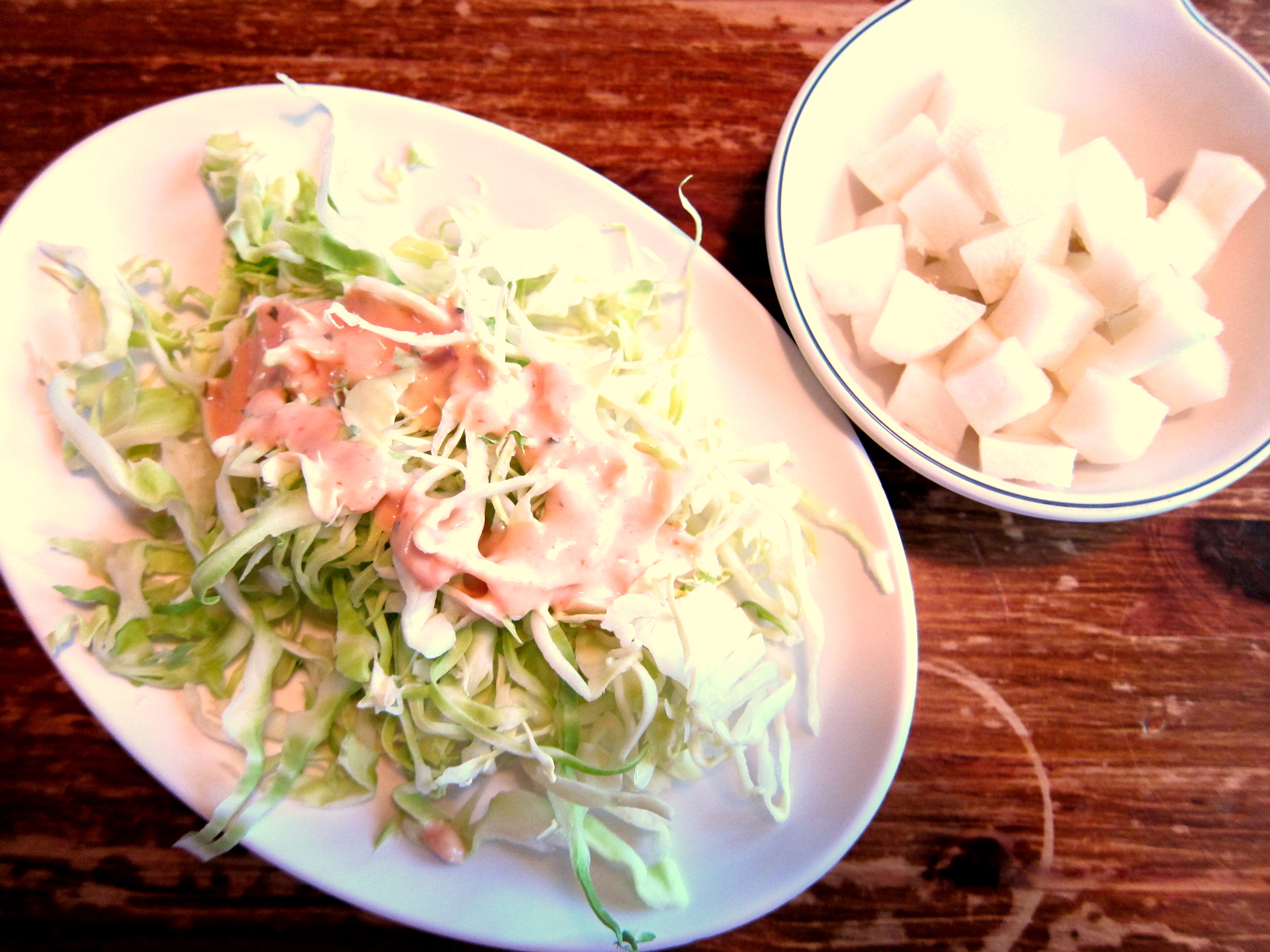
The one thing you can be certain about when you go to Korean restaurants, regardless of their size and price and menu, is that you will always get full. I’ve never been to a Korean restaurant where I think “hmm, maybe I have room for some more” when I leave. Korean restaurants always give you big portions, and on top of that, there is the banchan (반찬).  When you sit down all starving because of the steaming broth or the grilled meat smoke from nearby tables, the banchan is the first thing to nibble on and ebb the hunger. You can either get a lot of coleslaw and dongchimi (동치미, pickled white radish in this case), or an array of little bitty plates that look too colorfully appetizing to disturb. Naturally, the size of your bill corresponds to the variety you can sample. And the biggest sample of banchan I’ve had so far is at Sura.
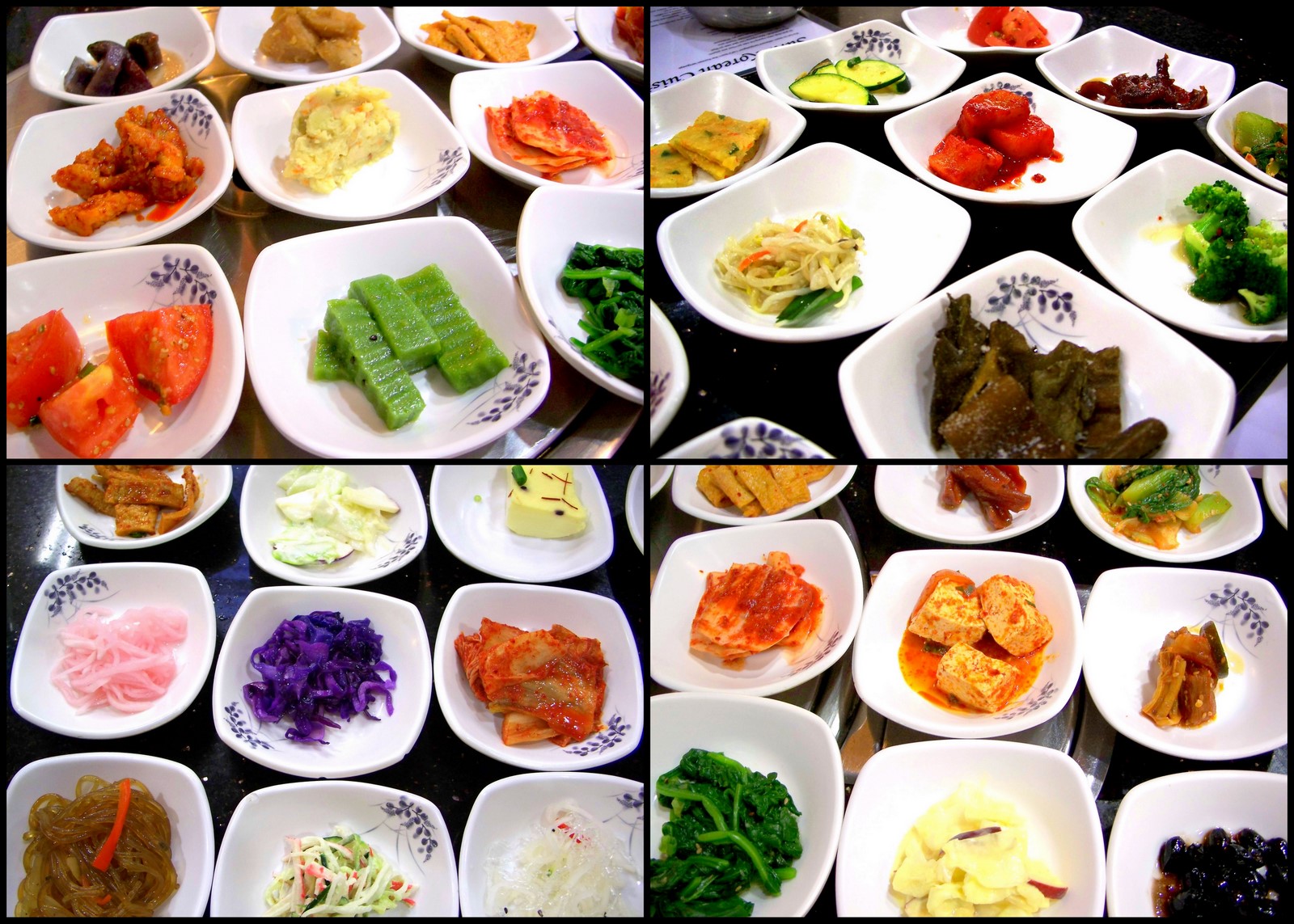

Here’s what to prepare your tummy for when you’re at Sura: 1 starter, 18 side dishes,  whatever you actually order (which comes with either brown rice or white rice), 1 dessert. If you order gogi gui (고기구 이barbecue), then you also get a heap of lettuce to wrap. If that’s not enough, you can ask for more side dishes. So let us begin.
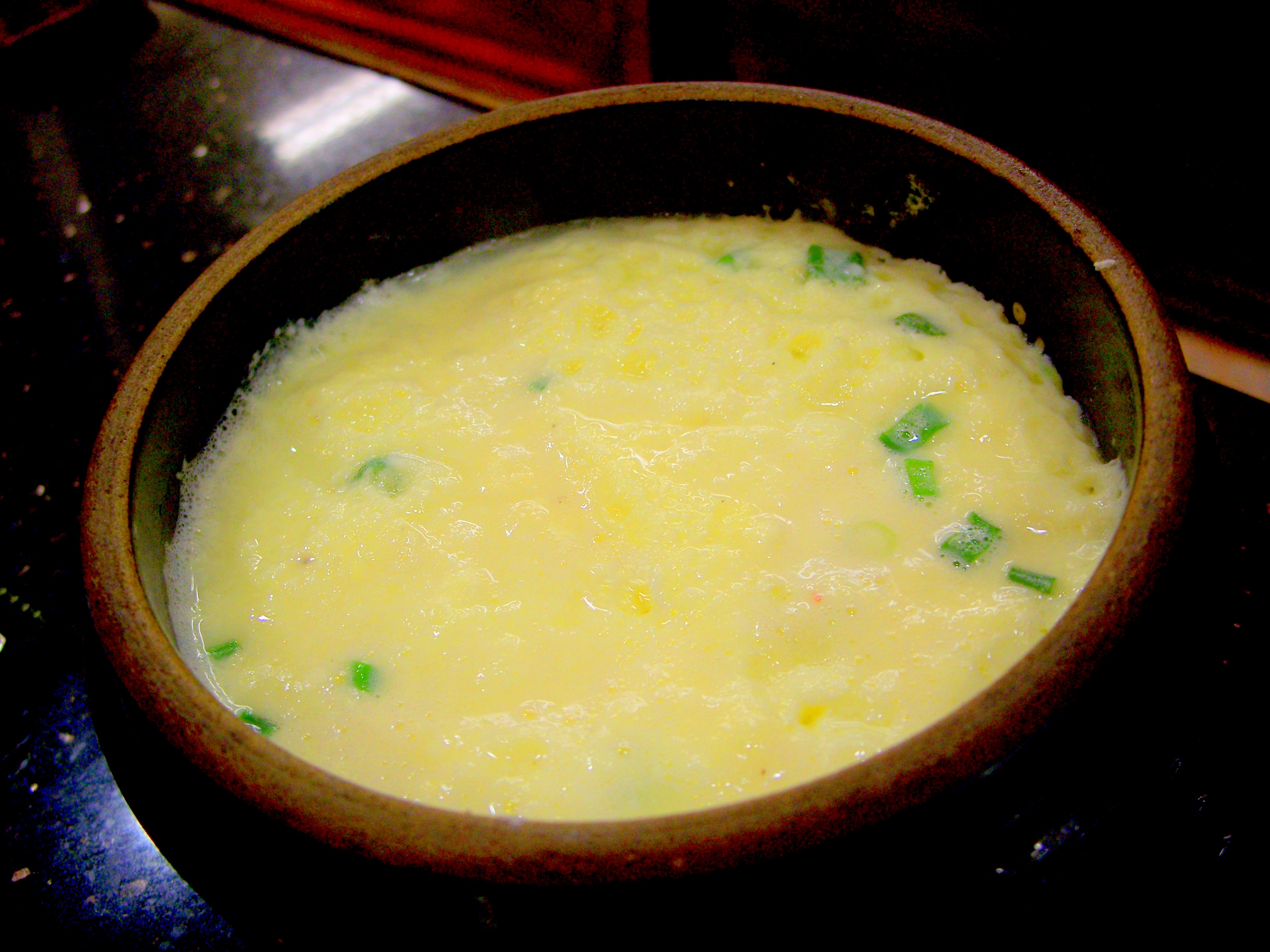

Starter: gaeran jim (계란찜 steamed egg) in a dolsot (돌솥), still bubbly when brought out. It’s really mild, bland even, with dots of green onions and an airy texture.
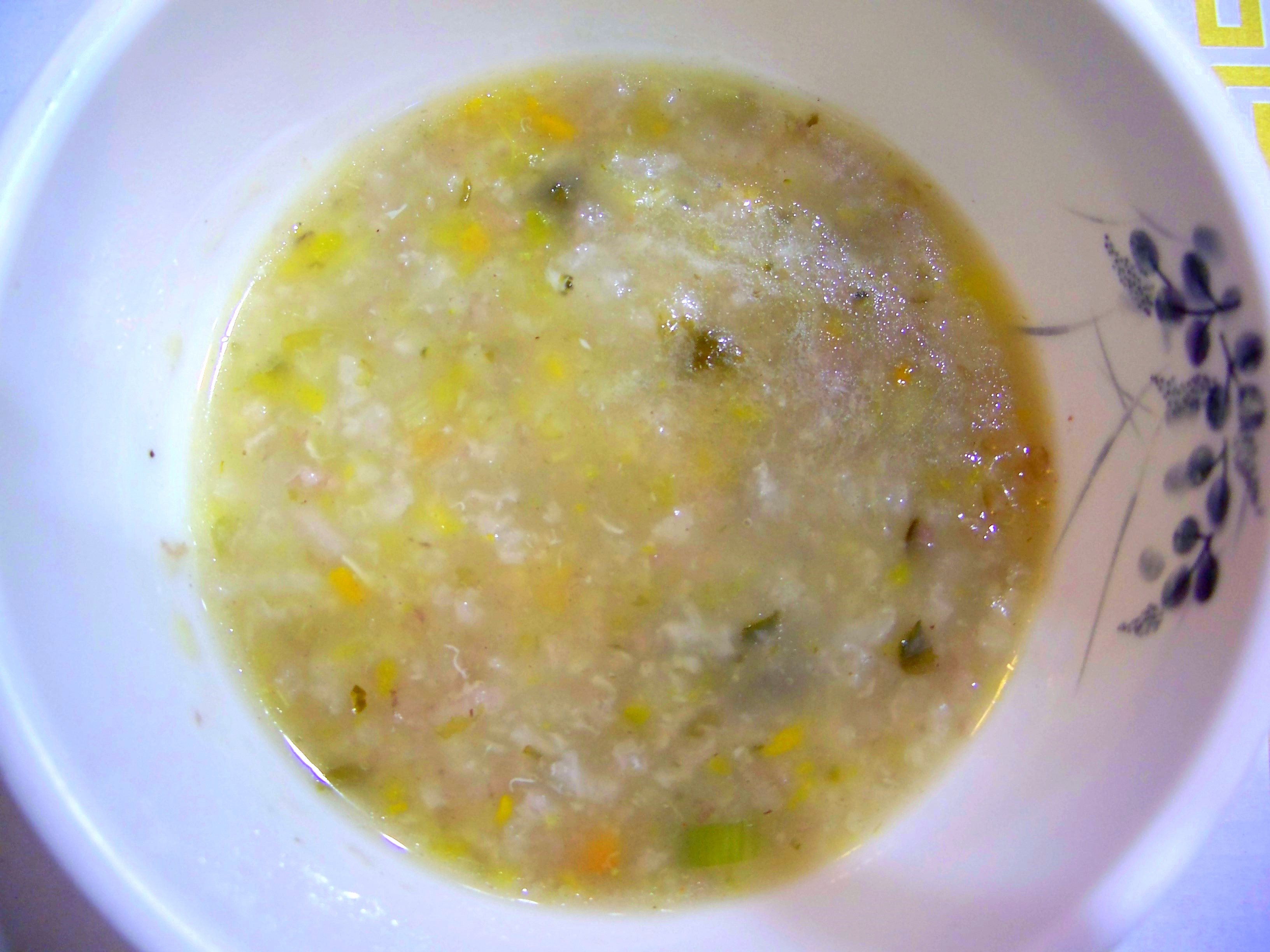

Starter: a small ladle of thin juk (죽 rice porridge) with vegetable bits. Also very mild.
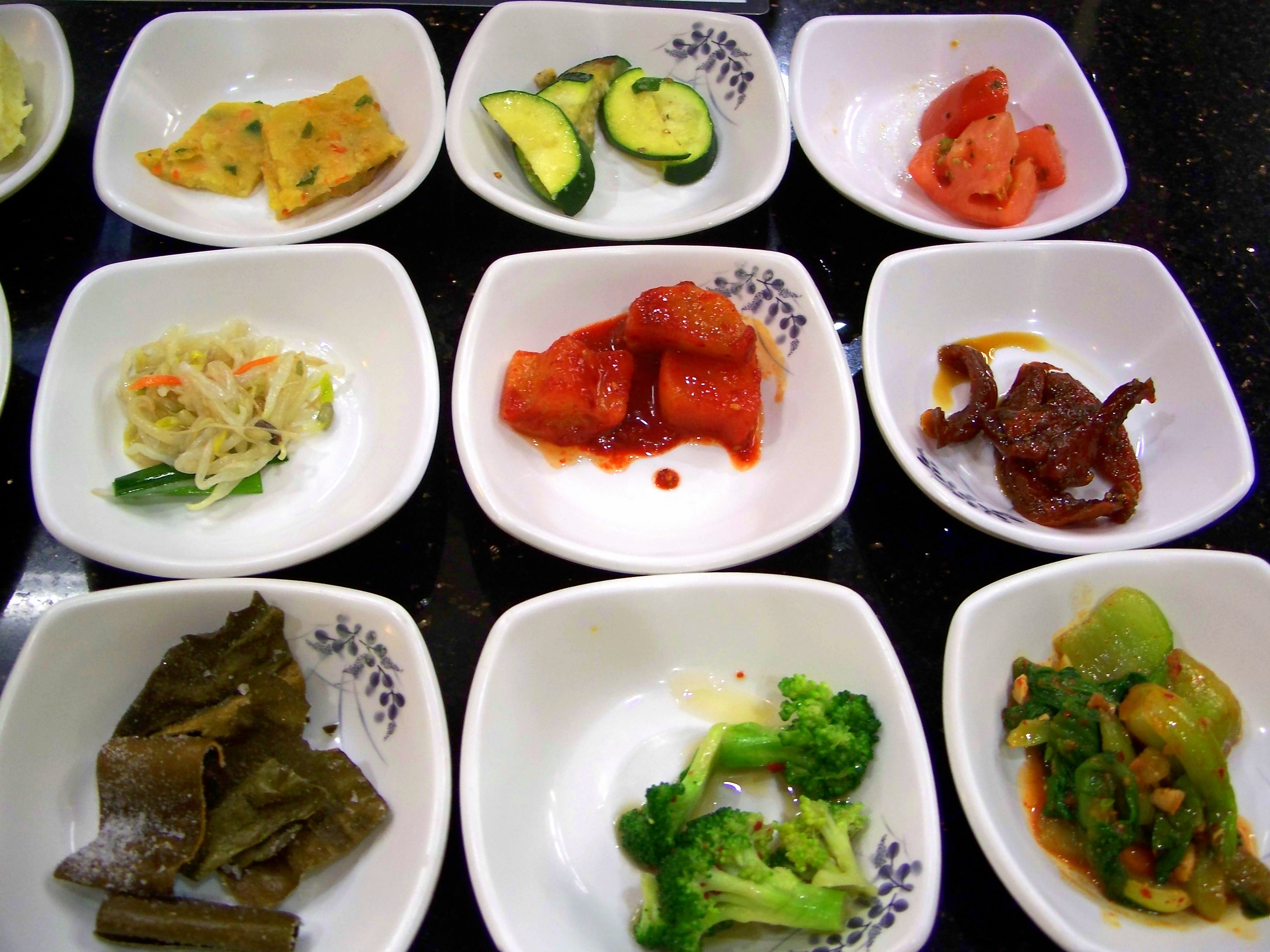

And here comes the banchan. There’s the usual stuff: tomato, broccoli, bok choy kimchi, oisobakki (오이소빅이 cucumber kimchi), ggakdugi (깍두기 radish kimchi), kongnamul (콩나물 boiled and seasoned soybean sprouts), pajeon (바전green onion pancake)…


odaeng (오뎅 stir fried sweet fish cake), japchae (삽채 stir fried cellophane noodles), baechu kimchi (napa cabbage), sliced kohlrabi (the pink thing) and cabbage (the purple thing)…
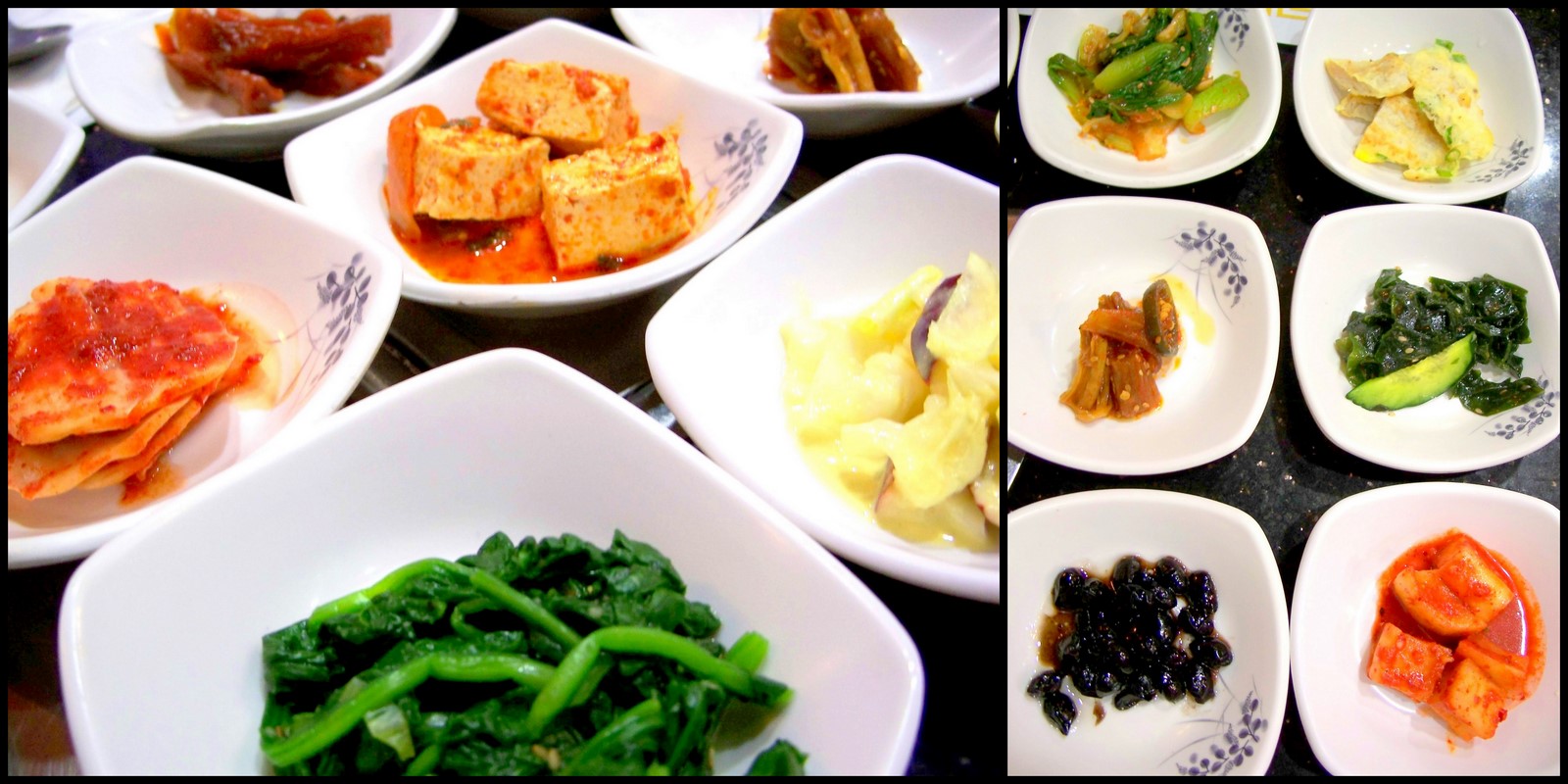

… tofu, cauliflower, spinach, kongjaban (콩자반 sweet black beans), kaji kimchi (가지 김치 eggplant kimchi), and chwinamul (취나물 a crunchy stir fried leaf vegetable)…


… potato,  sweet potato, fried chicken bits, and muk (묵 jelly). (Mudpie *really* liked the chicken and the potatoes.) Now, most of these side dishes didn’t set off any fireworks for me, the japchae was even a bit dull, but there were some BIG exceptions:
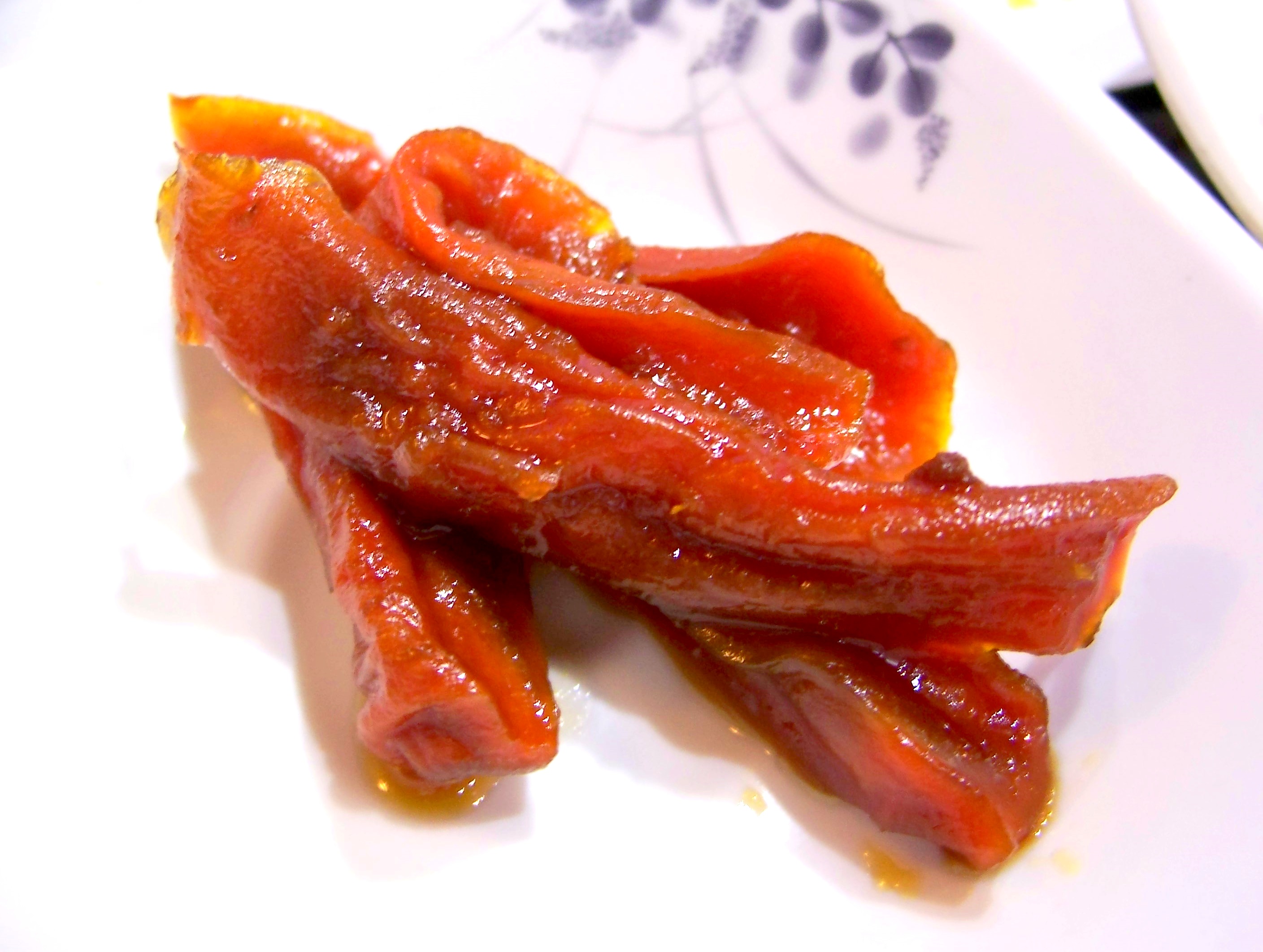

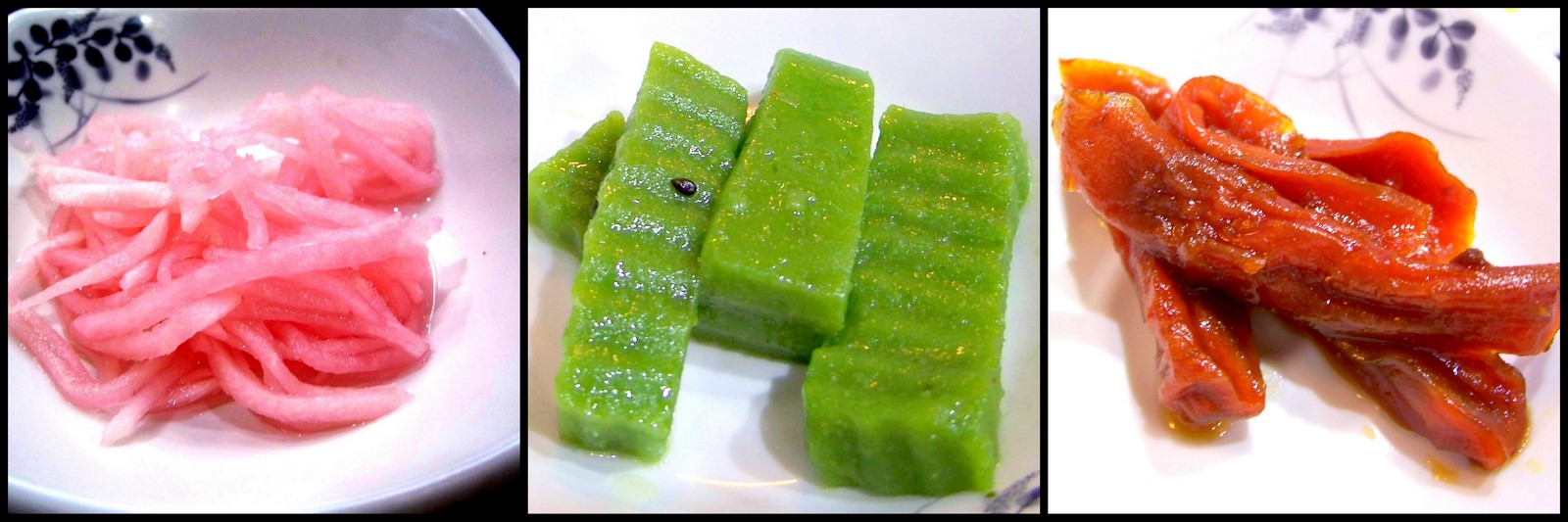
This is Carrot. AMAZING. AMAZING. AMAZING. Somehow it is sweet like honey and chewy like dried apricot. If I could have carrots like this everyday, I’d love carrots a lot more than I do now.
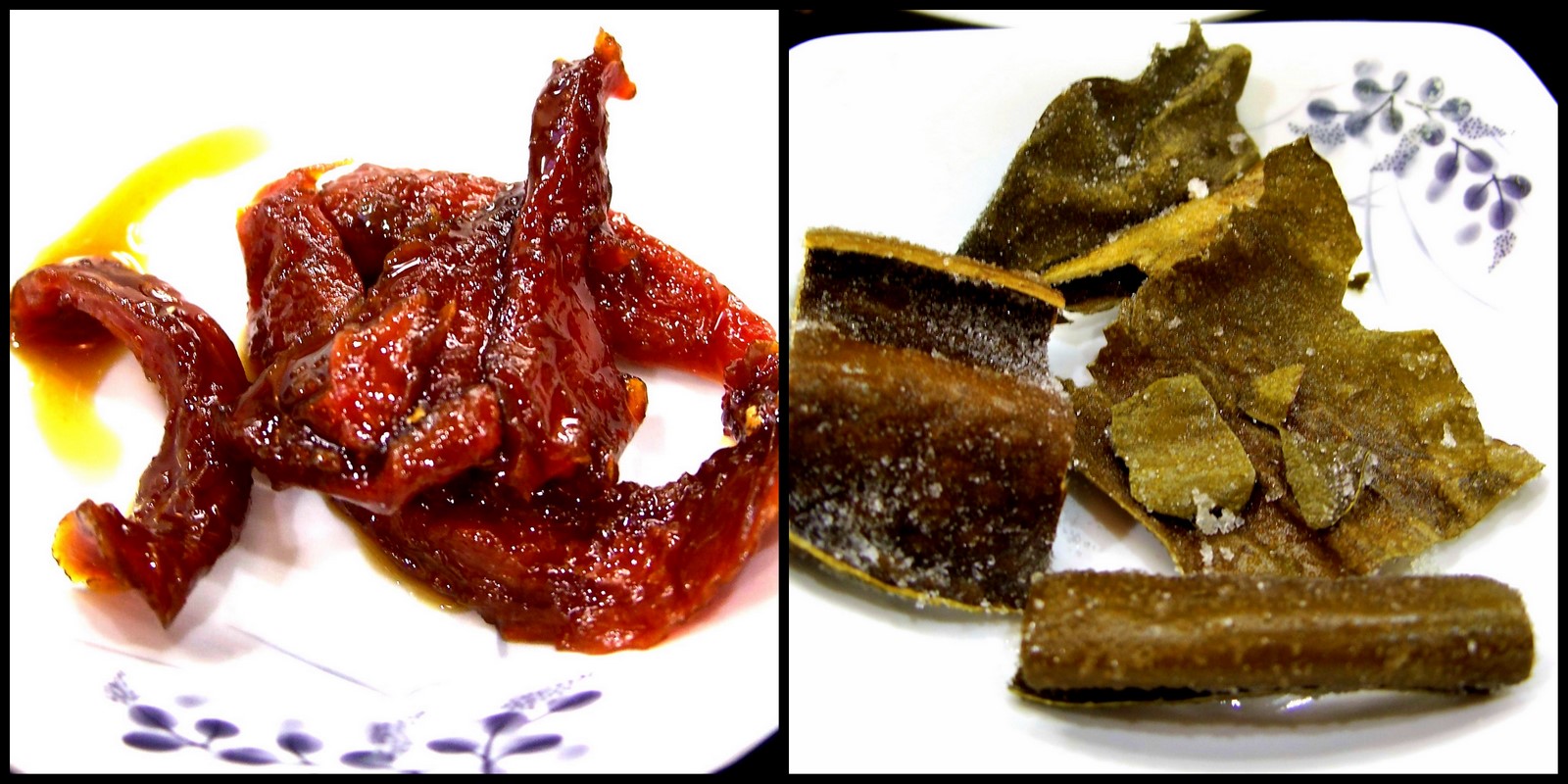

This is Clueless. On the left is something similar to the carrots, but a lot more dried-fruity, like a dried persimmon. The texture is denser and crispier, but it could just have been an older batch of carrots, who knows. On the right is some dried leafy thing dried kelp (dashima (다시마) in Korean, or kombu in Japanese), which was crunchy like Pringle’s chips, dusted with crystals of sugar and salt. When microwaved, it gets soggy and similar to chwinamul but I have no idea what kind of leaf it is.

Get on with the main course.
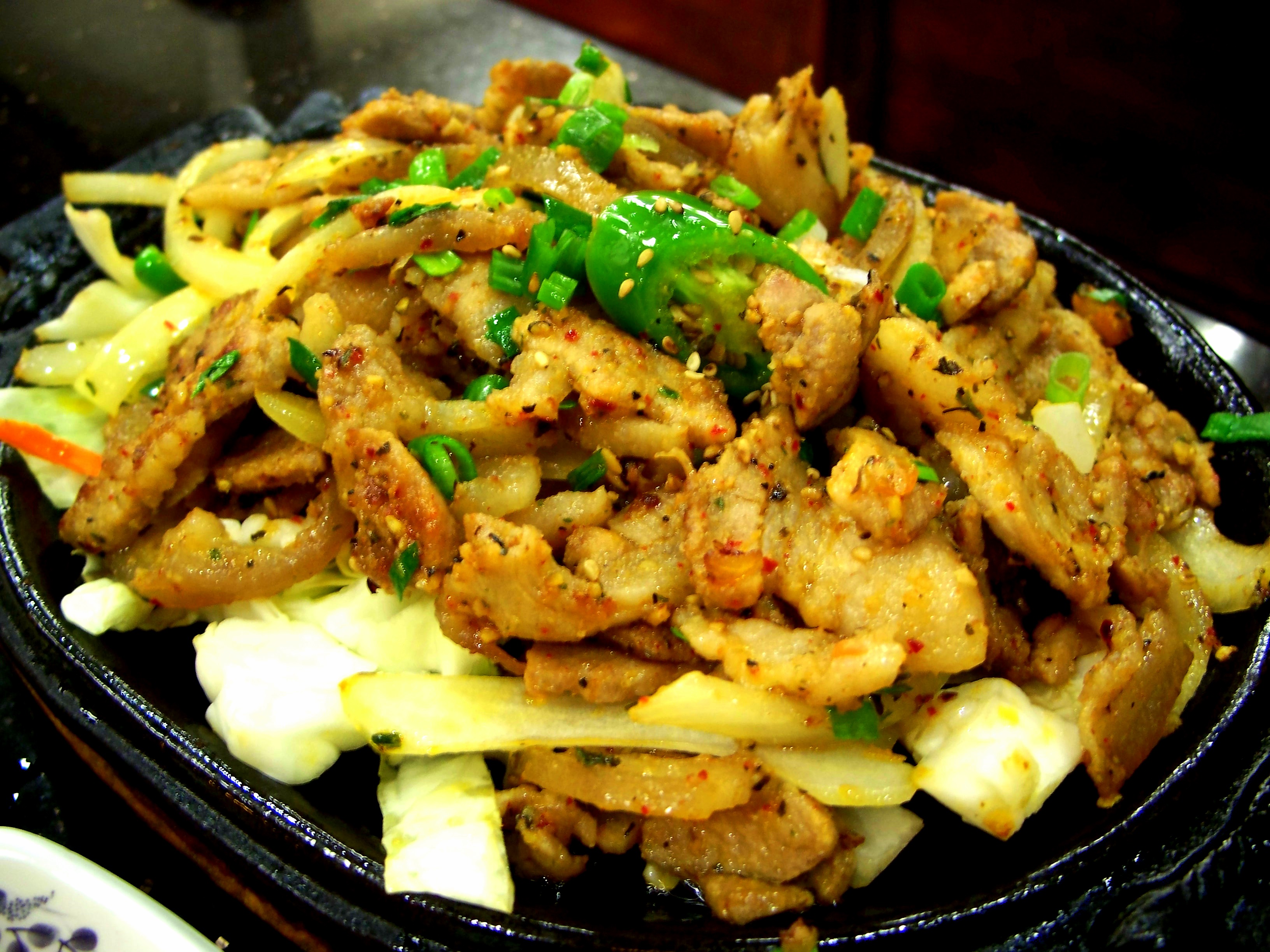

Doenjang samgyeopsal (삼겹살) – grilled pork belly with soybean paste ~ $18. Mudpie felt uneasy with the fatty layer, but really it wasn’t fatty fat, it’s crunchy fat, just like skin. The doenjang (된장 fermented soybean paste) has a distinctive flavor, and is most like the Vietnamese chao.
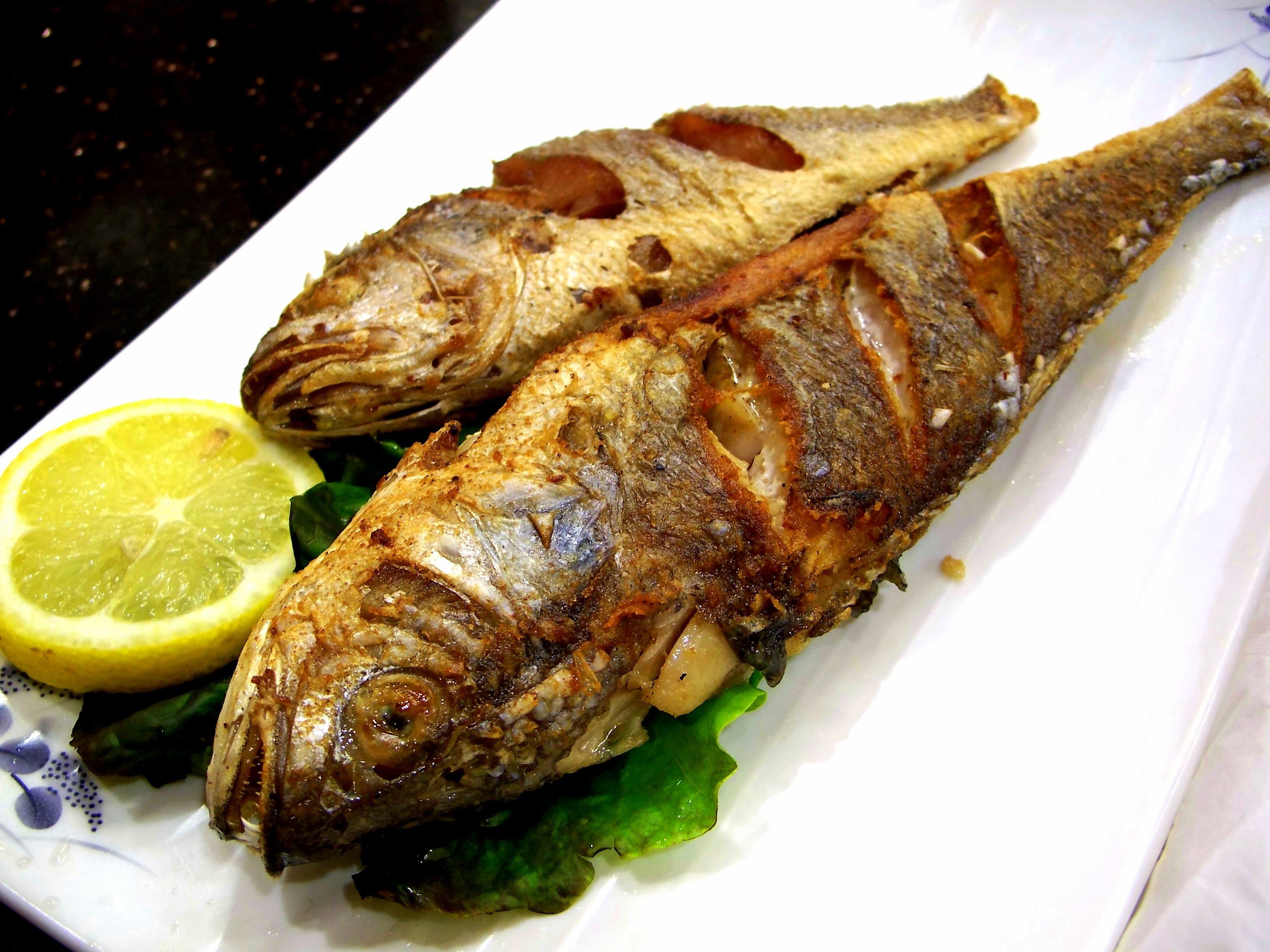

Jogi gui (조기구이) – grilled “king fish” on the menu ~ $18, Google says it can be either yellow corvina or yellow croaker, and I’m no ichthyologist to tell the difference. Look at those teeth. The head was hard and not so fun to eat (very little brain, and I suppose grilling drained all the liquid away), but the body was well seasoned and perfectly crisp. Have fun picking out the bones.
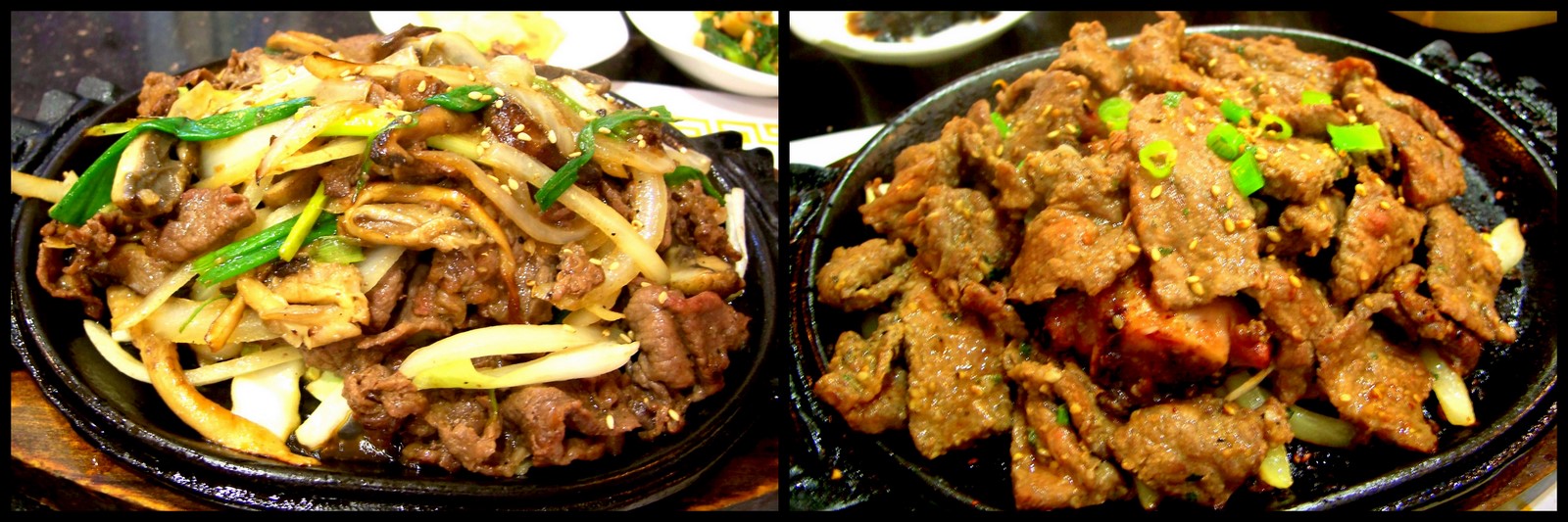

Bulgogi (불고기) – good old barbecue ~ $25 each. The one on the left is marinated in a sweet mushroom-onion sauce, while that on the right is green tea bulgogi with, naturally, a delicate herbal, grassy taste. The meat came with doenjang, chilipepper, and garlic, but I didn’t include any of those in my lettuce wraps.

And finally, complimentary dessert of the house is either green tea ice cream or shikhye (식혜) (sweet rice punch):
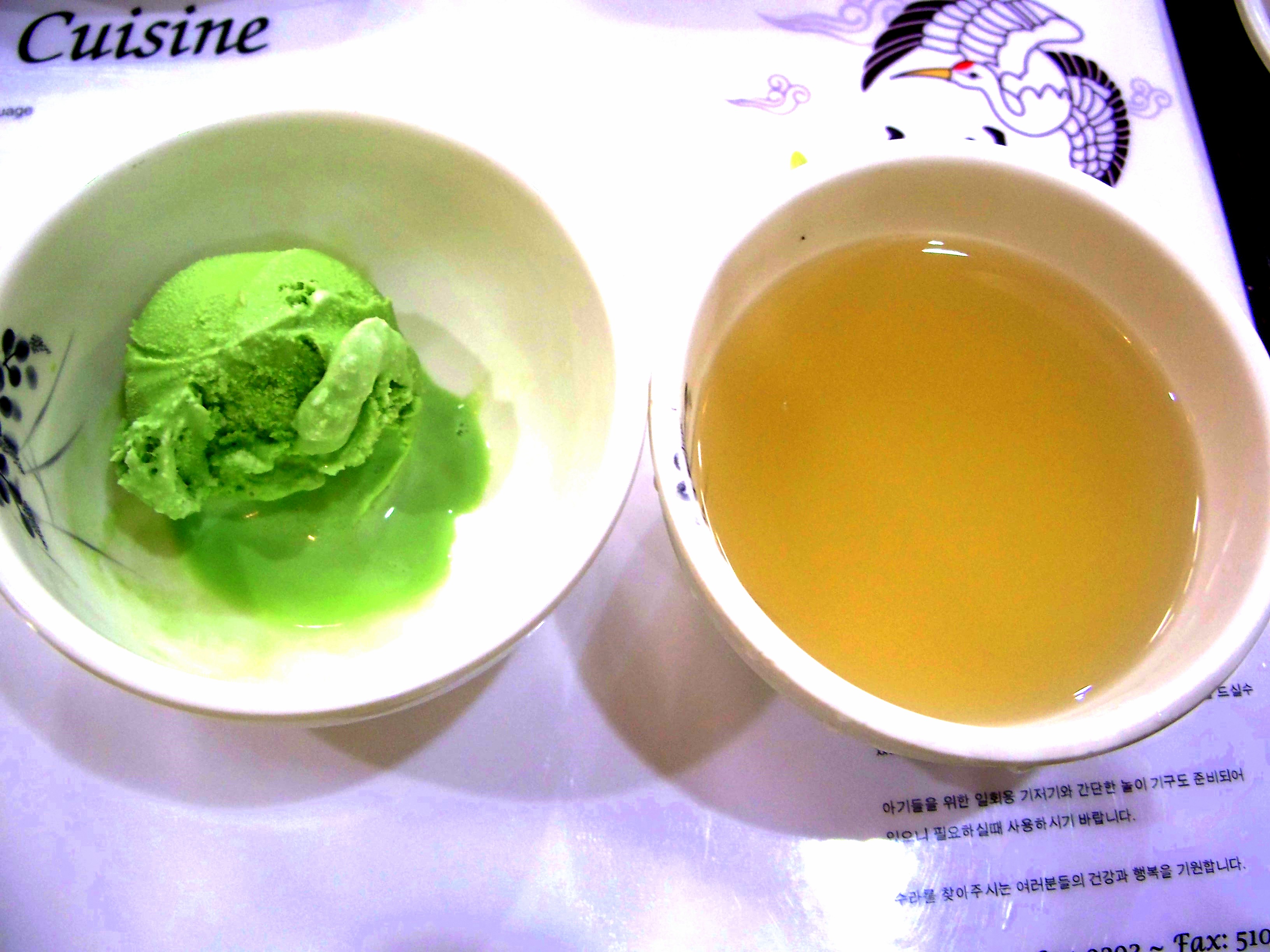

Lovely both.

I should add that this place has a huge menu, with inviting names like ginseng chicken soup (samgyetang (삼계탕)) and crab stew (kkotge jiggae (꽃계찌개)). The bill is wholesome too, of course, but it feels all better when the friendly staff smiles at you with the most soothing, genuine smile in their single-lidded eyes.
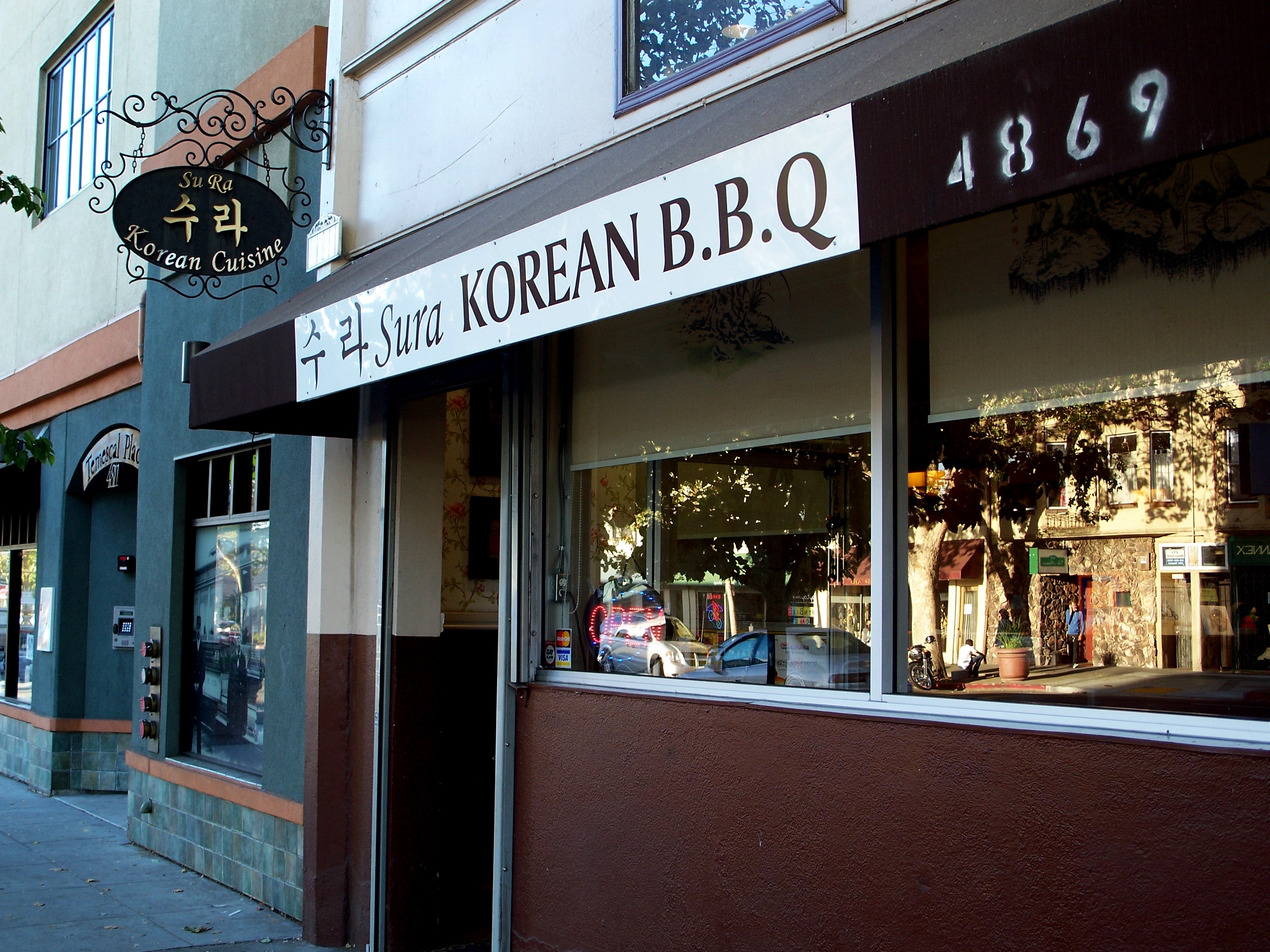

Address: Sura (Nulbom Korean Cuisine) (수라)
4869 Telegraph Ave.
Oakland, CA 94609
(510) 654-9292
We Ate Real

August 31, 2010 By: Mai Truong Category: California - The Bay Area, Festivals


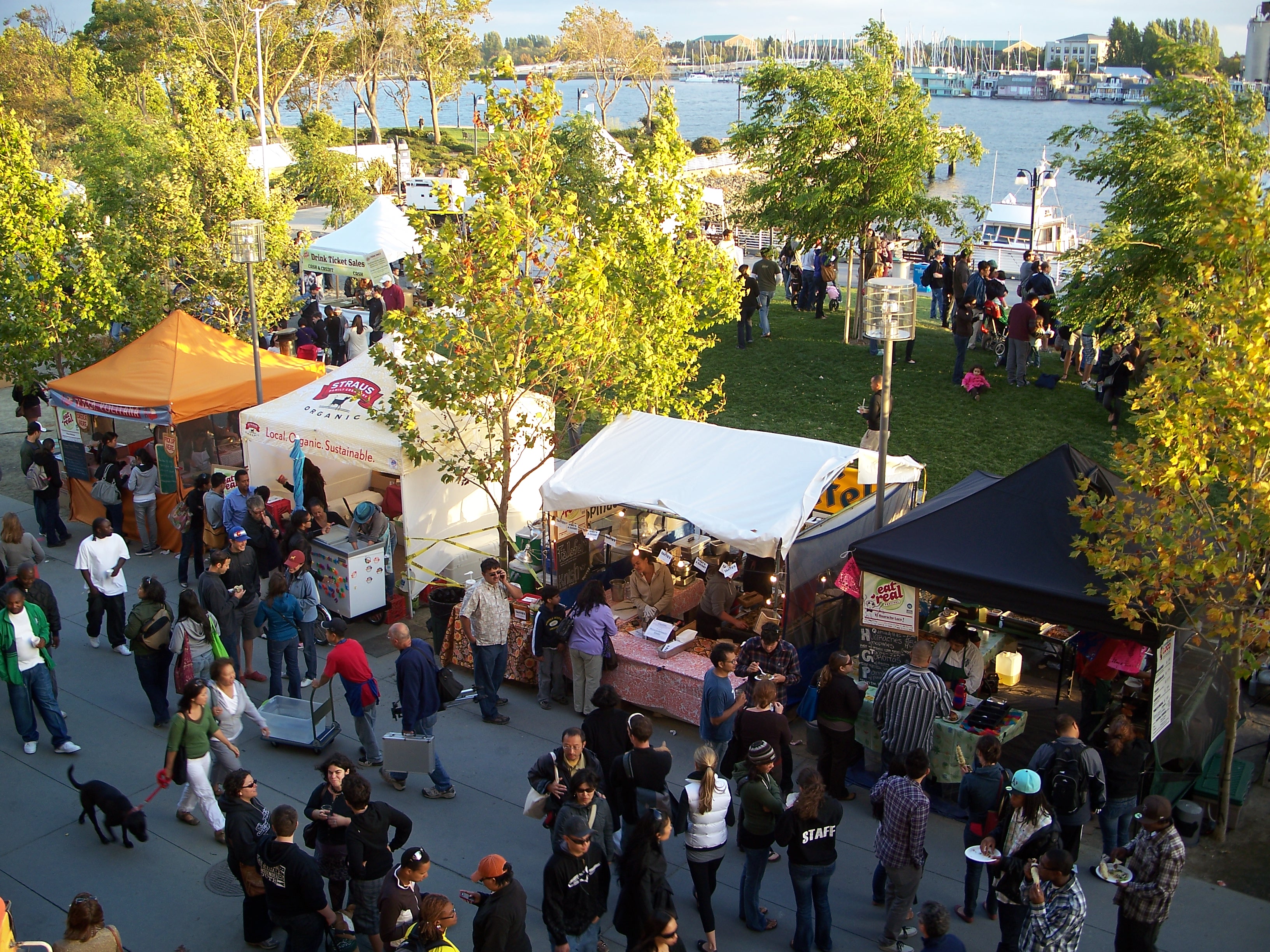
Last weekend we went to the annual Eat Real Festival in Oakland. They had it for three days, we went two. And we still couldn’t stuff everything down. The idea is to show that real, good food can be affordable like fast food. The reality is no matter how small each portion was, we ended up walking slow.


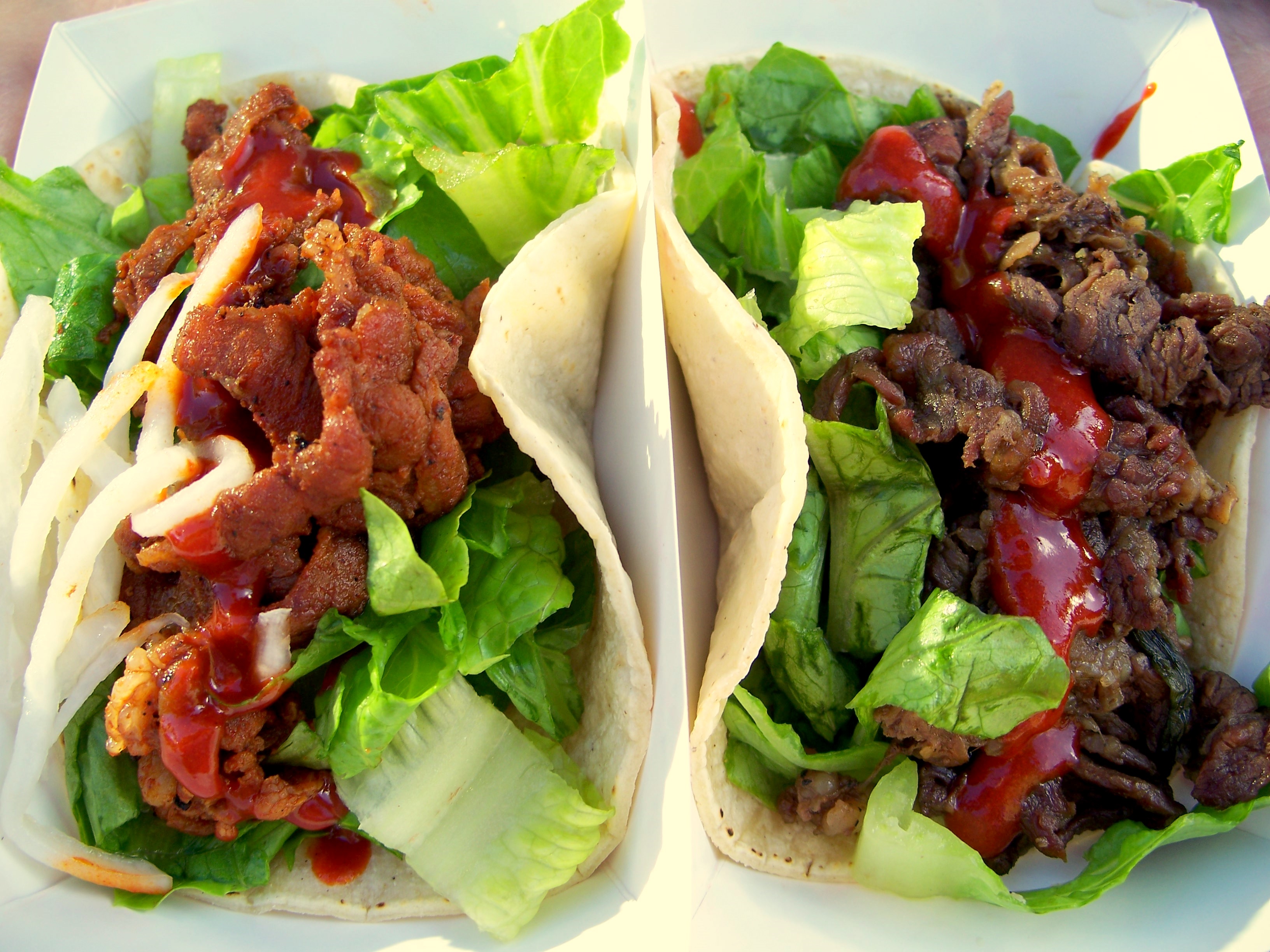
Some things were delicious. Like the Korean BBQ tacos from Seoul On Wheels. Ebony loved the chicken, Mudpie swooned about the spicy pork, I adored the bulgogi, all served on a corn tortilla with some lipsmacking sauce for $3. Follow their tweets to know their locations.


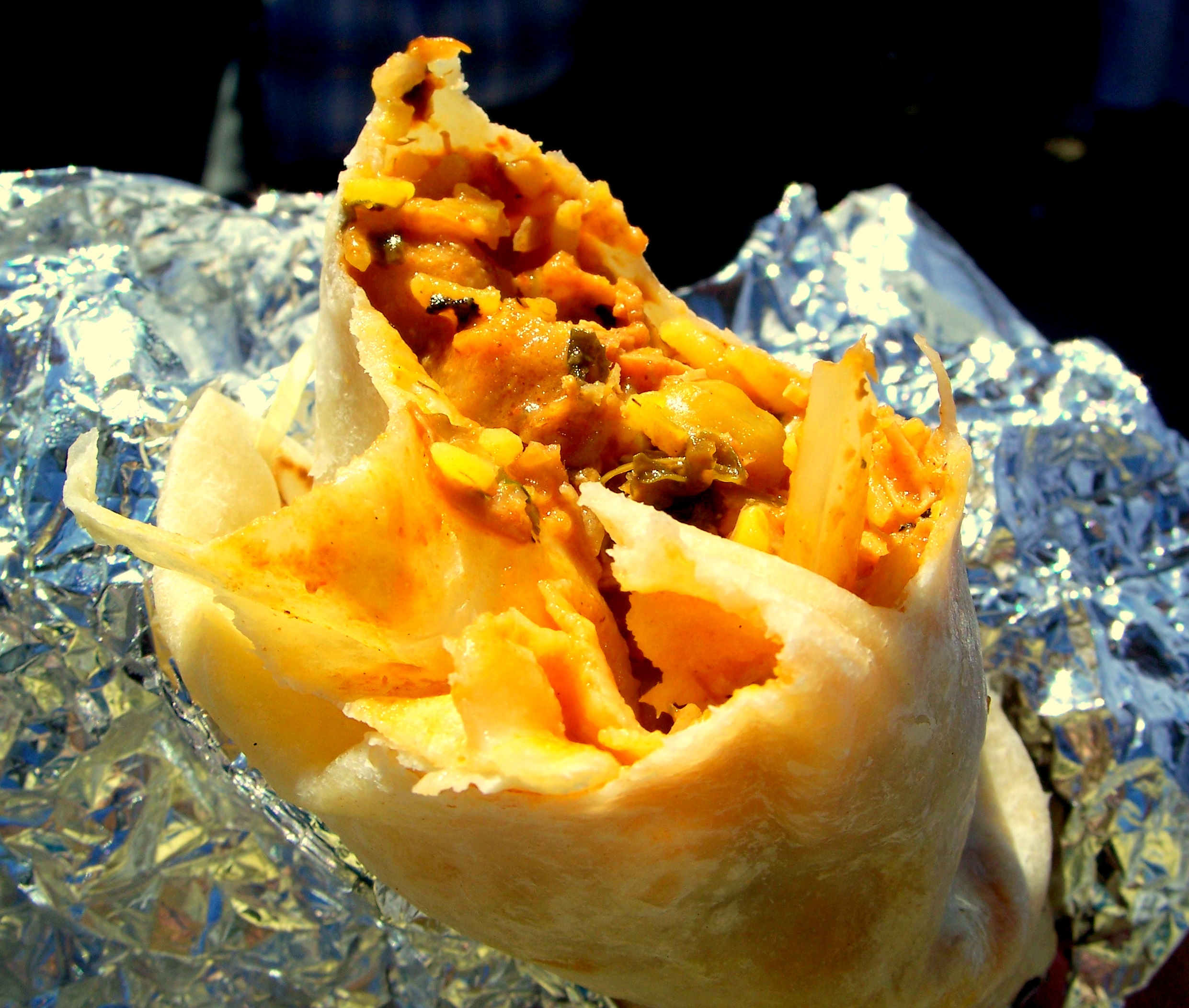
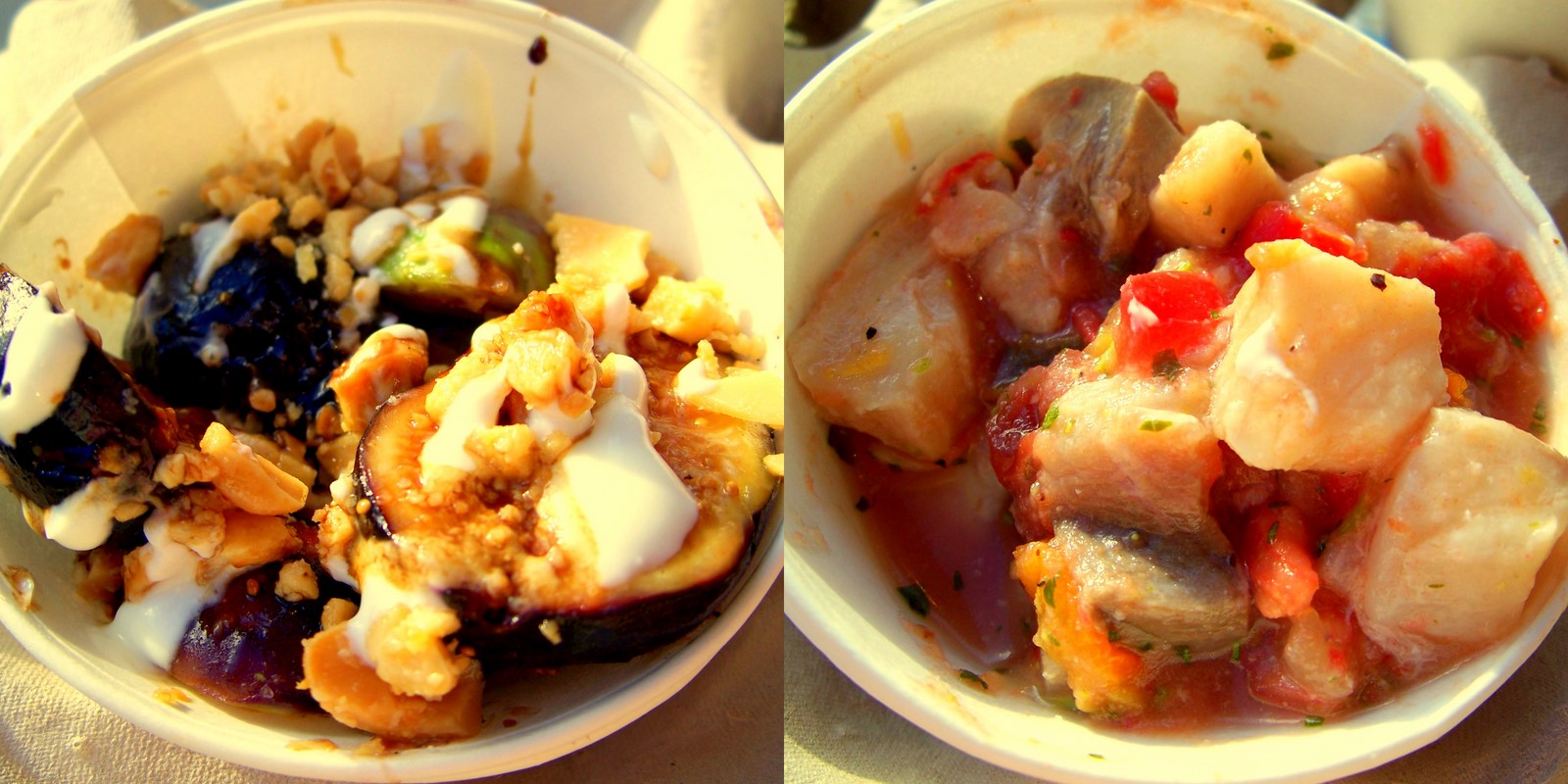
Near Seoul On Wheels were Curry Up Now and a Whole Foods‘ truck. Mudpie just couldn’t resist a chicken tikka masala burrito ($5), then drank a whole bottle of water afterwards. I was enticed by the hiramasa (hamachi) ceviche and grilled figs from Whole Foods, $3 each, served in a cone with tortilla chips for dipping.


The ceviche is on the right. It had cubes of hiramasa fish marinated in lime juice, vegetable and spices. The texture utterly resembled boiled fatty pork, so refreshing in a sunny afternoon. This was also my first time having a whole fig. It’s sweet and gummy, pretty similar to prunes. The higo asados (grilled figs) were smothered in a balsamic reduction sauce, fresh goat cheese, and topped with almonds, said the menu (but they tasted more like peanuts).

Speaking of goats…


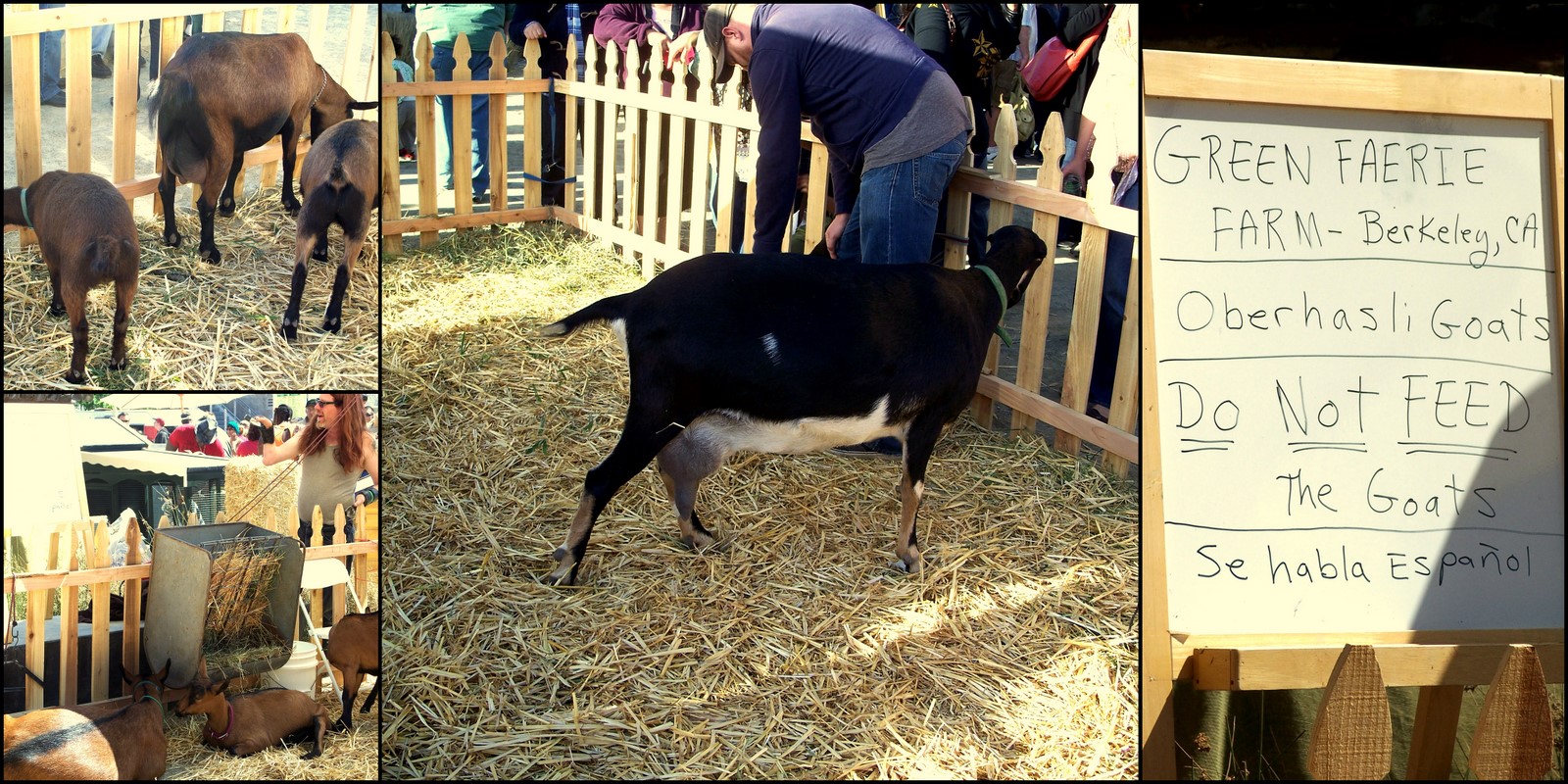
They had some walking around leisurely in a sandy pen and refusing to show their faces to my camera. There were mommies and babies, goat milking and goat-milk-ice-cream making on Saturday afternoon, just before we arrived. The goats spoke Spanish. 😀

There were also fuzzy headed white chickens, a big children attraction nearby. And Jack London‘s old cabin (looking real cozy), because hey, we’re at Jack London Square.


And boy was it sunny both days. But amidst the heat and smoke from humans and grilled meat did we find something refreshing. The Raw Daddy Foods‘ truck was facing away from the setting sun, and offering only, well, raw foods. In cones.


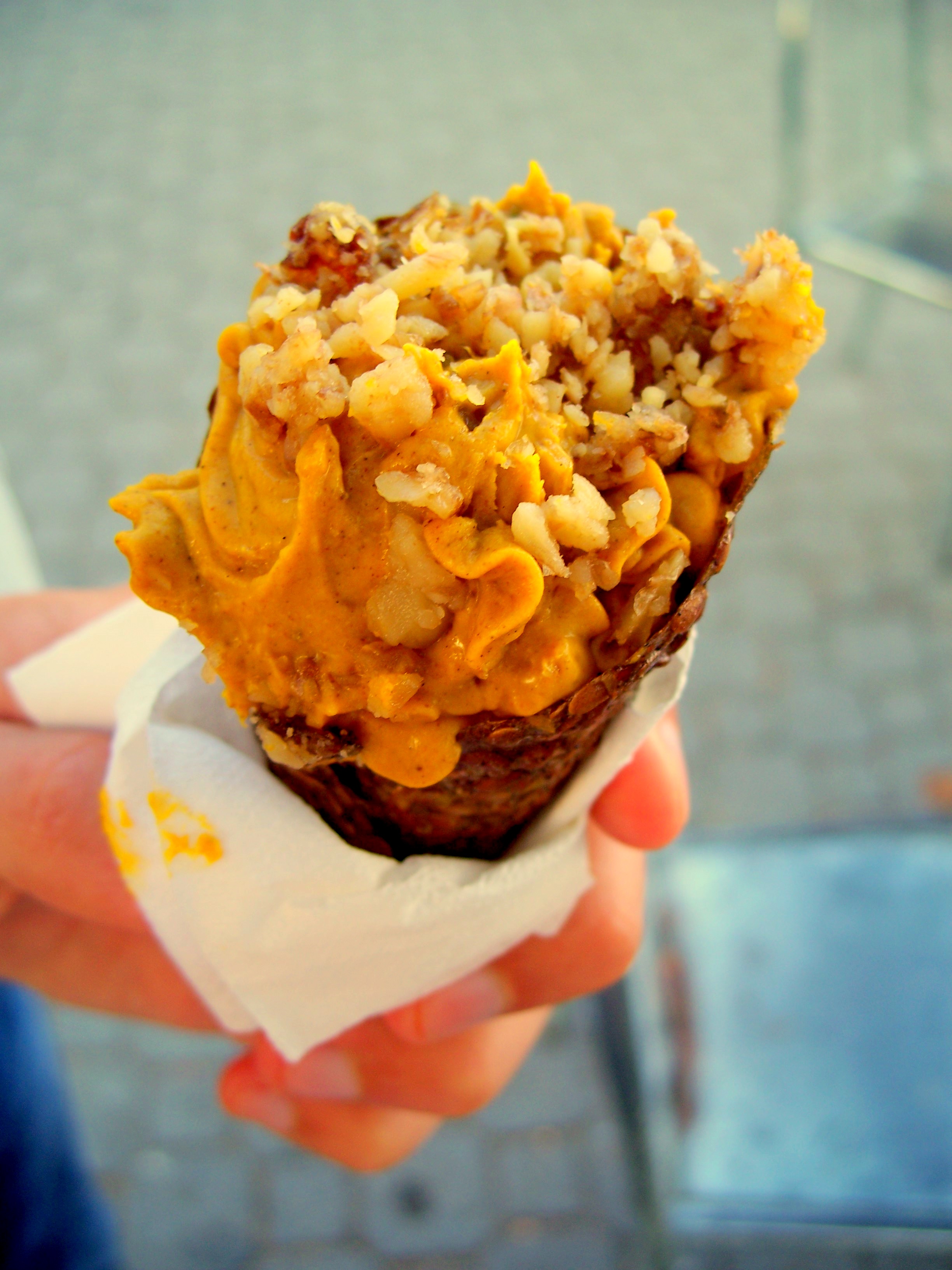
Pilgrim’s cream cone. $5. Maple cream filling, with carrots, cashe, extra virgin coconut oil, and candied pecans, which ended up tasting like pumpkin pie! Not my favorite flavor, but it was good.

It’s worth noting that the festival was full of tacos (and other Mexican foods). There must have been at least ten trucks with the crunchy half moons. But this one has the most catchy name:


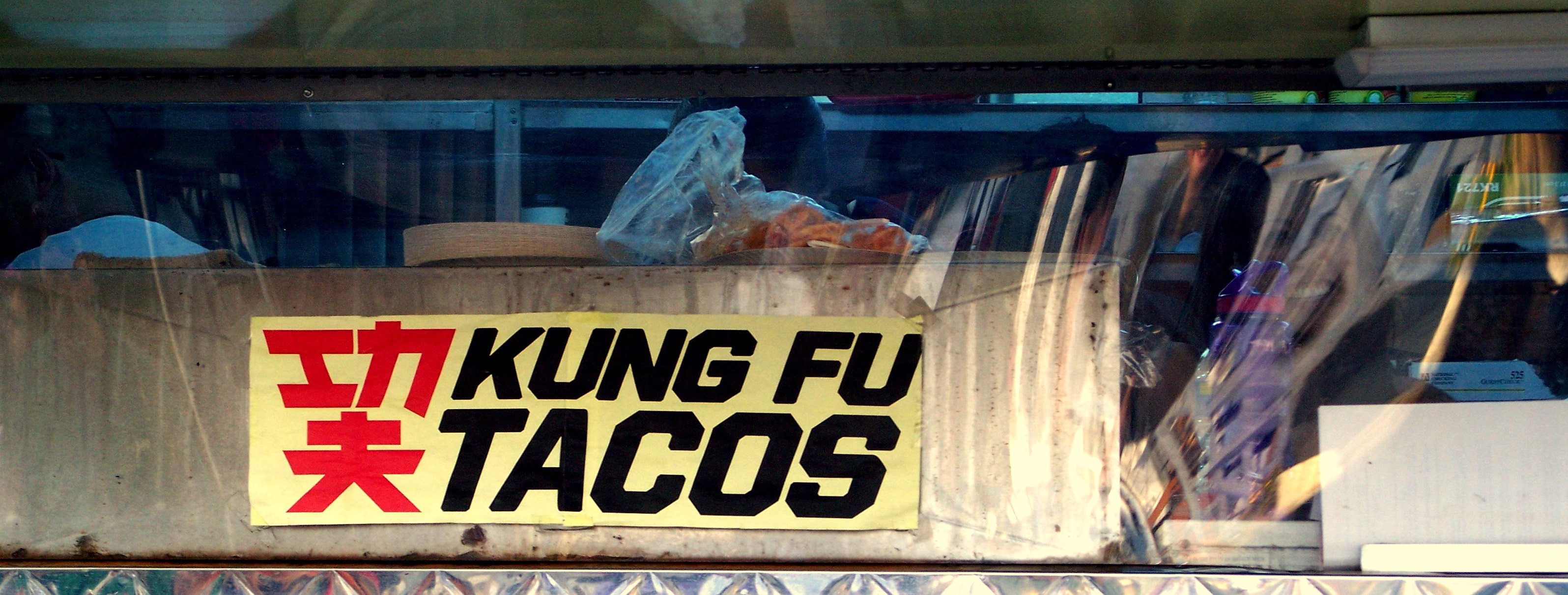
I actually had my eyes on the looking for this truck since I saw the list online. And I actually hate am troubled by the cheesy-advertising-trend-following usage of the word “Kung Fu” in anything, like Kung Fu Panda (hate have an aversion to the movie too, just from watching the trailer). Think “Vampire Burrito” and you may see my point? Anyhow, the tacos from Kung Fu Tacos looked shiningly attractive.


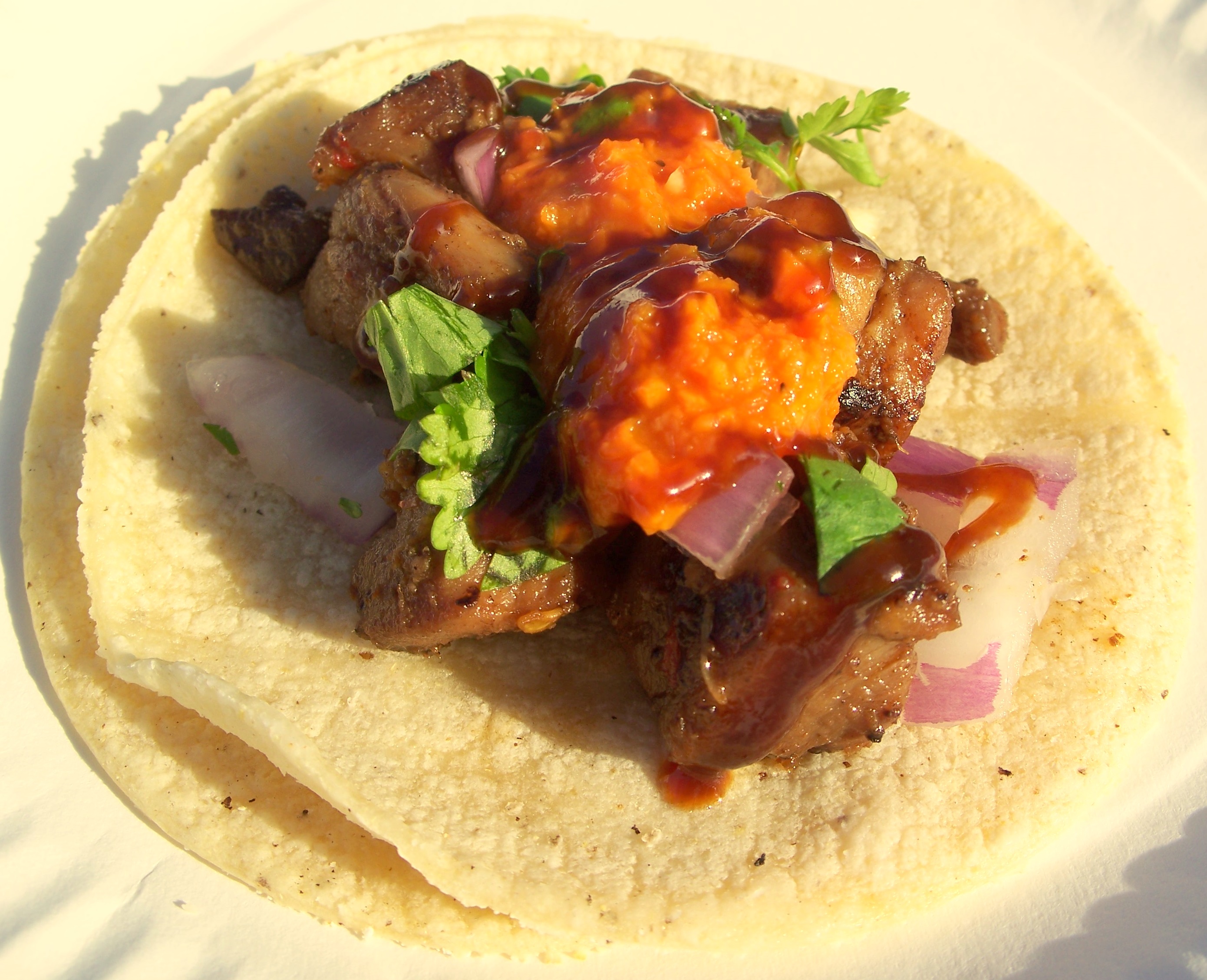
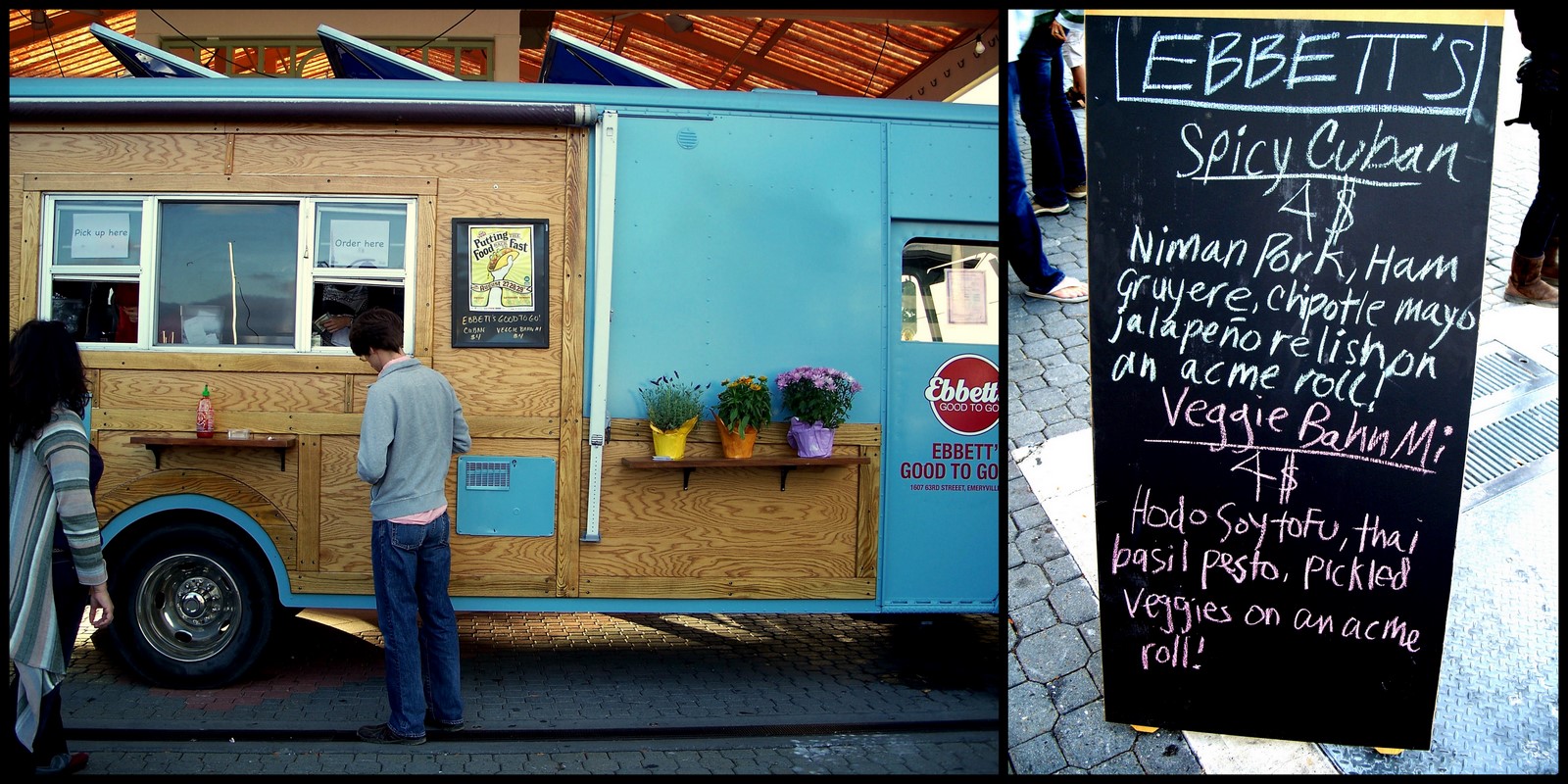
It was either Chinese-style chicken or pork, I can’t remember, on two tiny corn tortillas for $4. The taste was well worth the price, though. Besides, the line was quite short, much more so than Kara’s Cupcake two trucks over, however longer than Ebbett’s Good To Go, who should win Best Decoration with flower pots on bright blue:


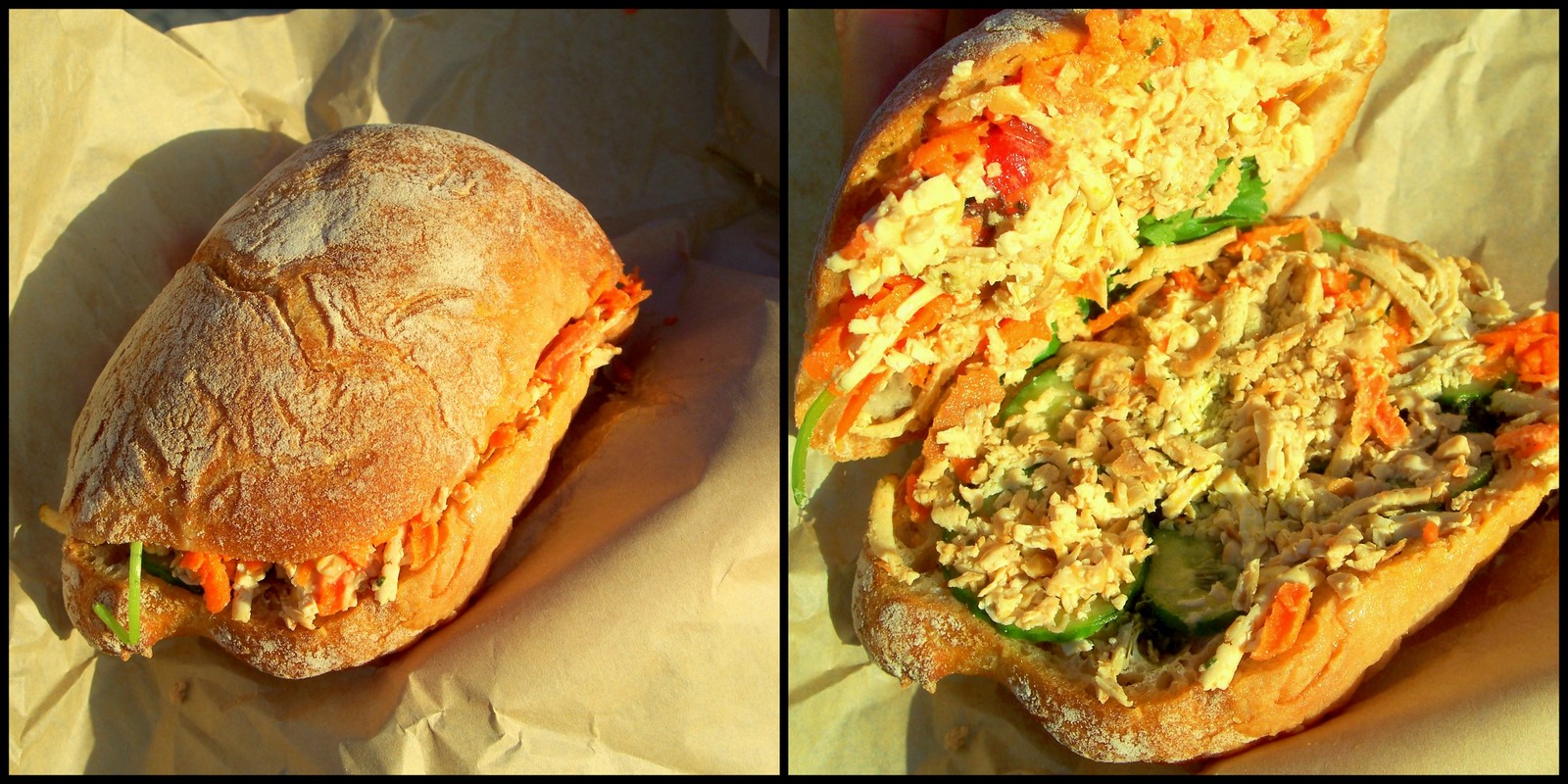
We opted for vegan banh mi ($4) with tofu, Thai basil pesto, and pickled carrots. It was nowhere near banh mi, as they spelled it “bahn mi” anyway. Nice try.


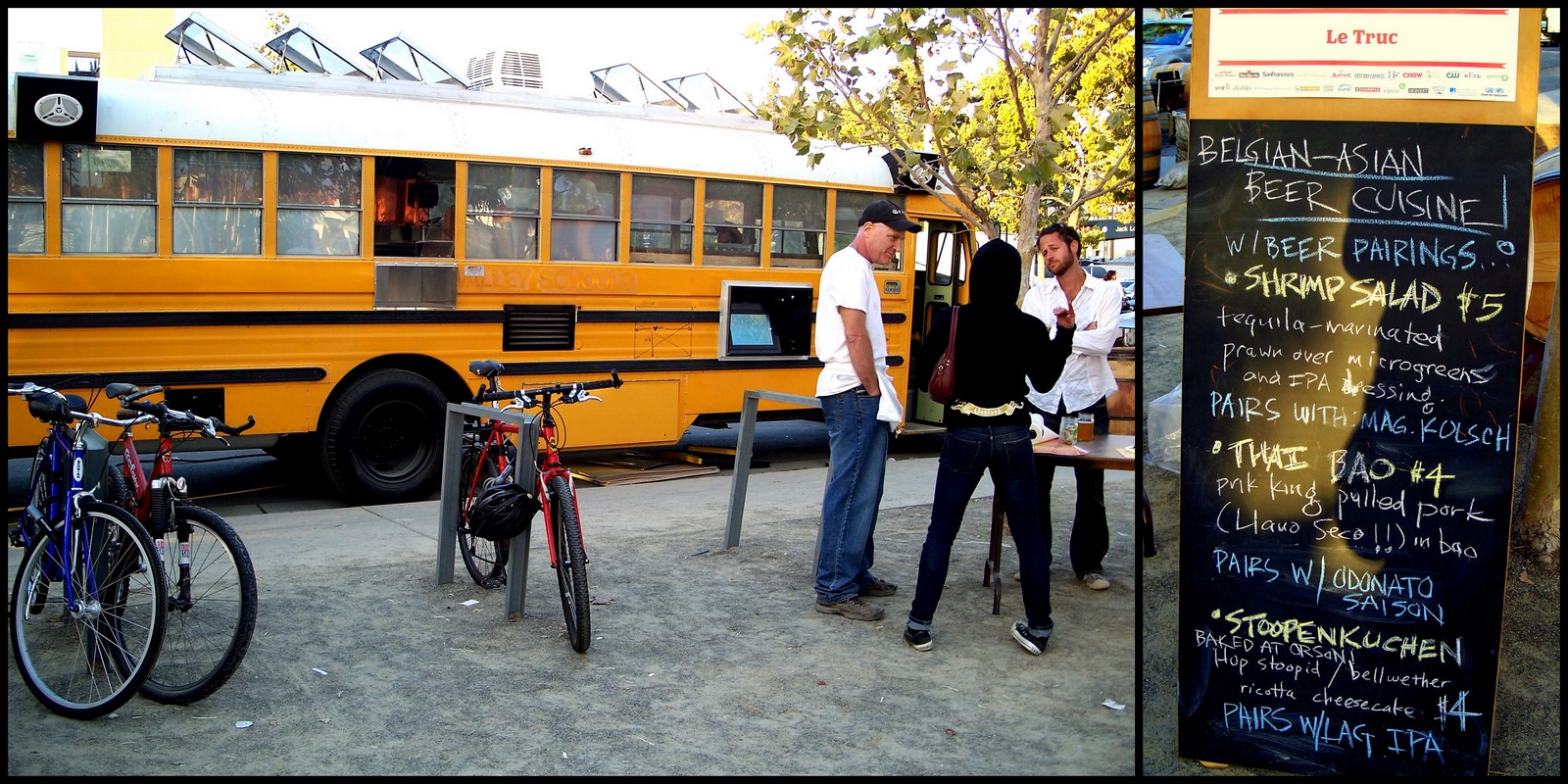
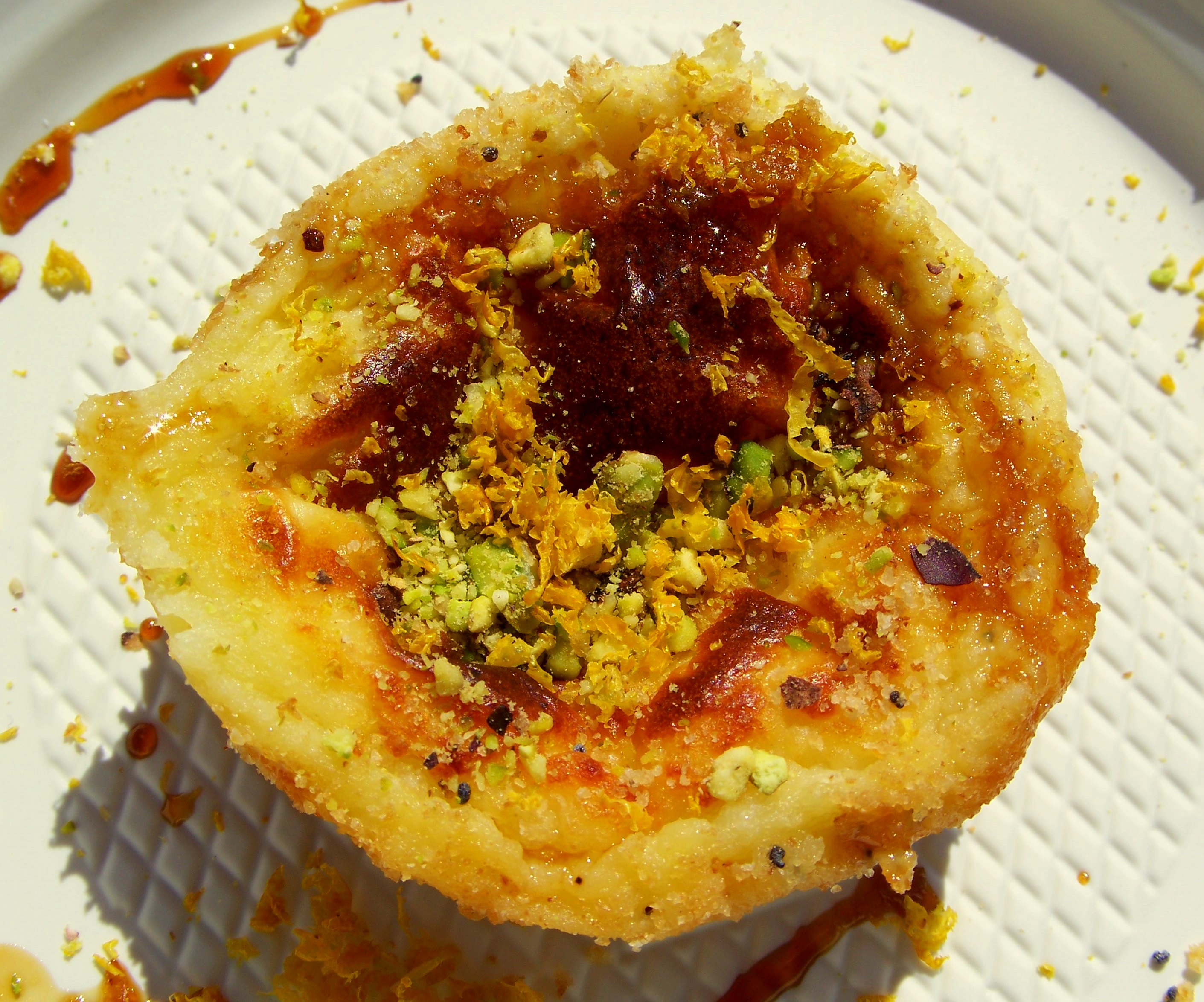
BUT, it was still pretty acceptable. Tummy filling at the least. I wish I could say the same about Le Truc‘s one-bite-sized hoppy cheesecake, delivered fresh and fast from a big cheddar school bus:


Look good, eh? Taste like hop. Now maybe it’s good if you’re into beer, but none of us liked it. It’s not the sweet luscious cheesecake we expected. It was stinging bitter at first, then if you haven’t expectorated it already, thick and salty like old cheese on the tongue. The shiny brown sauce was even worse. Consider $4 flipped into the trash.


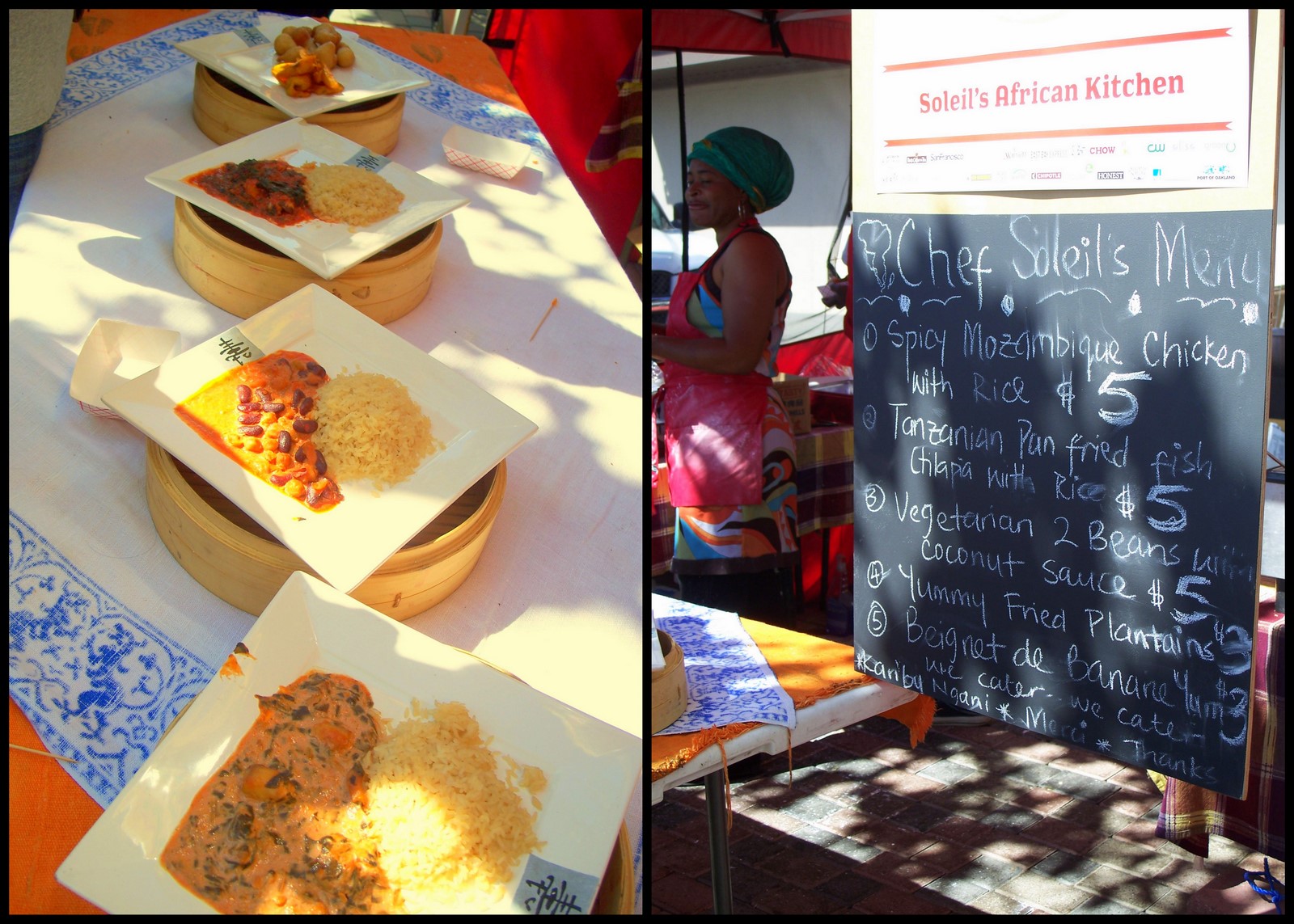
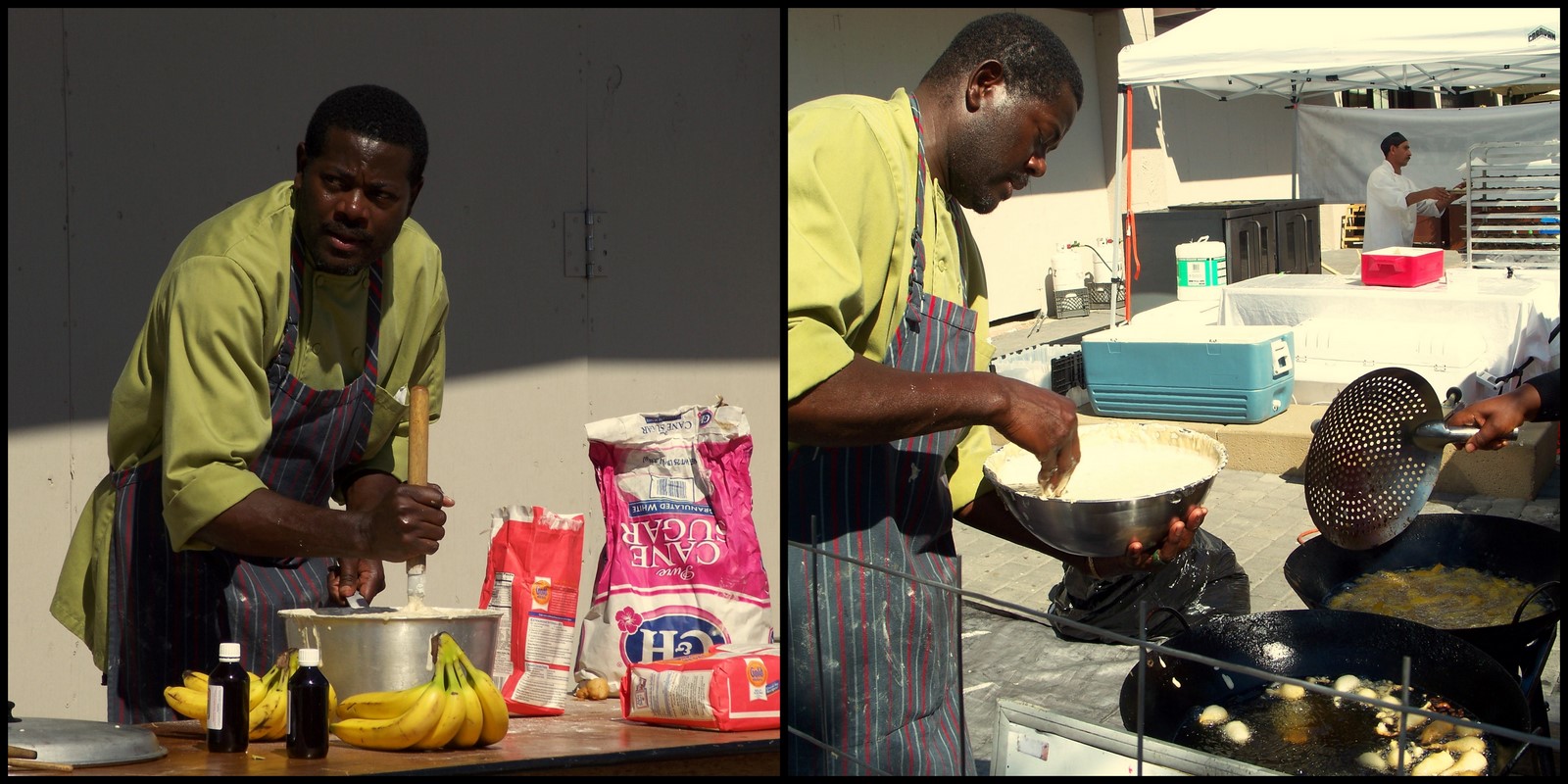
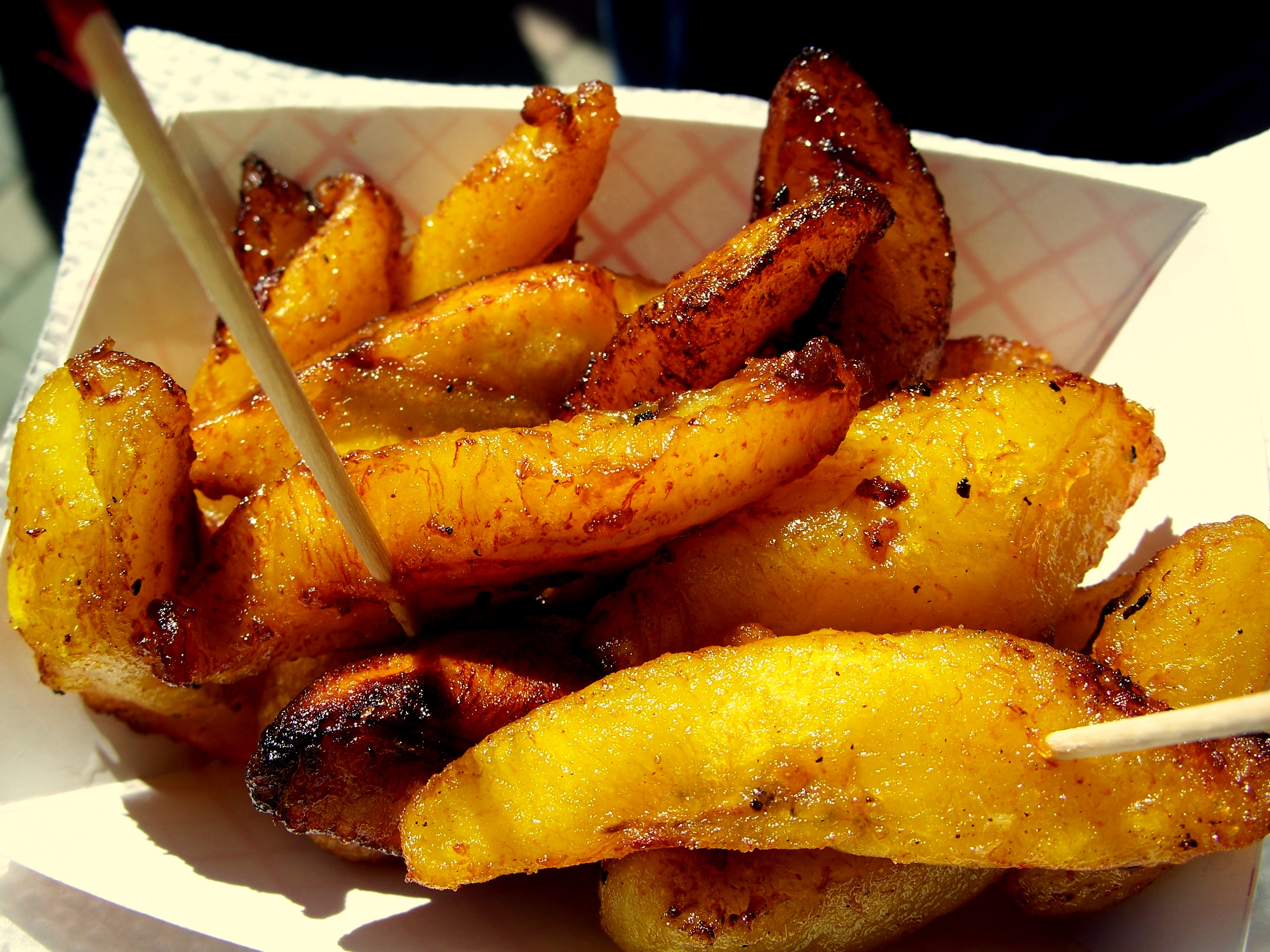
On the other hand, what was good was excellent. Like the fried plantains ($3) from Soleil’s African Kitchen.


No need for words. The line was fifty persons long under the blazing sun, and kept on growing. But I would do it all again for these salty sweet little beasts. My only complaint: they don’t have a restaurant that I can frequent!

To conclude the day, what’s better than some ice cream?


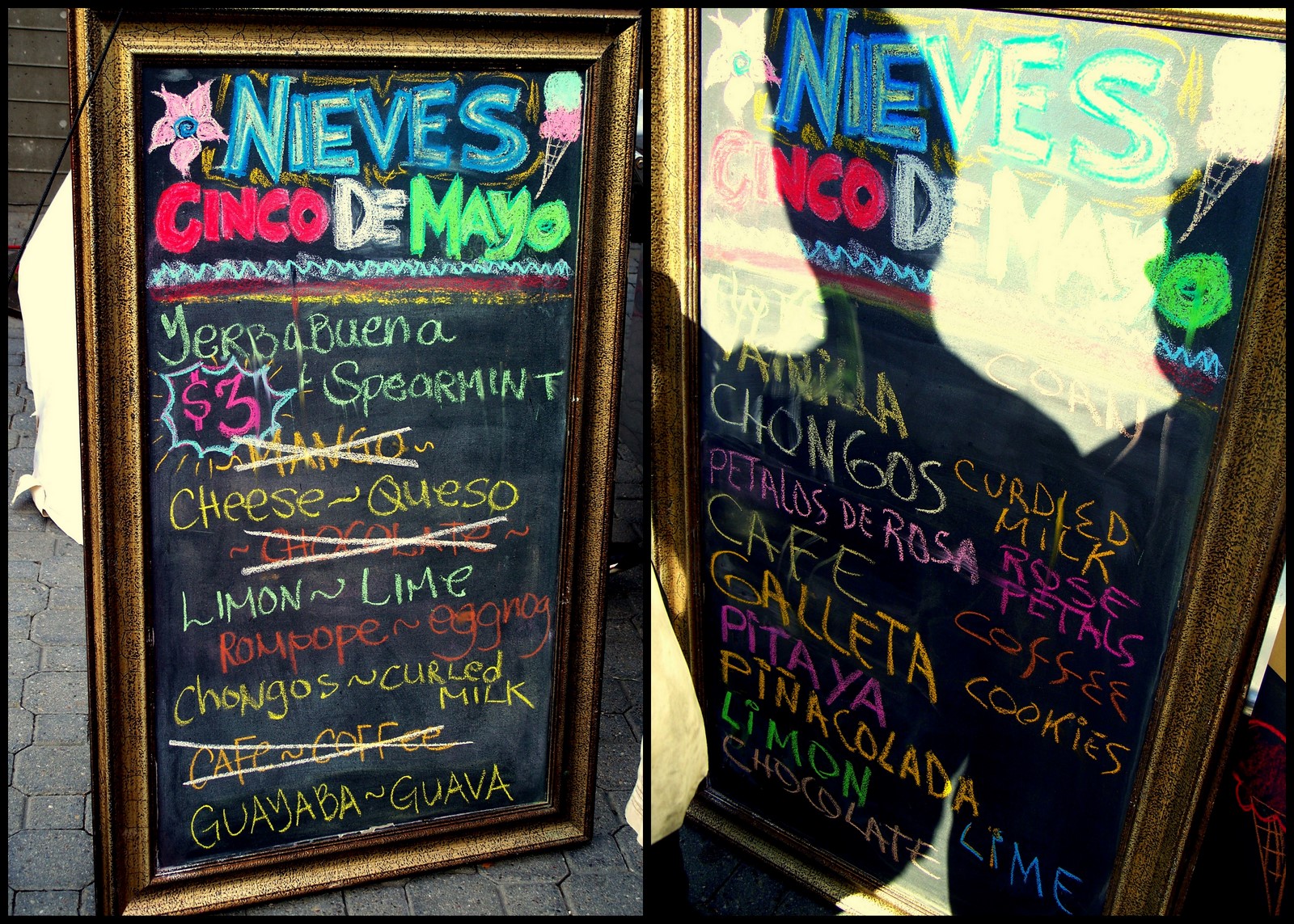
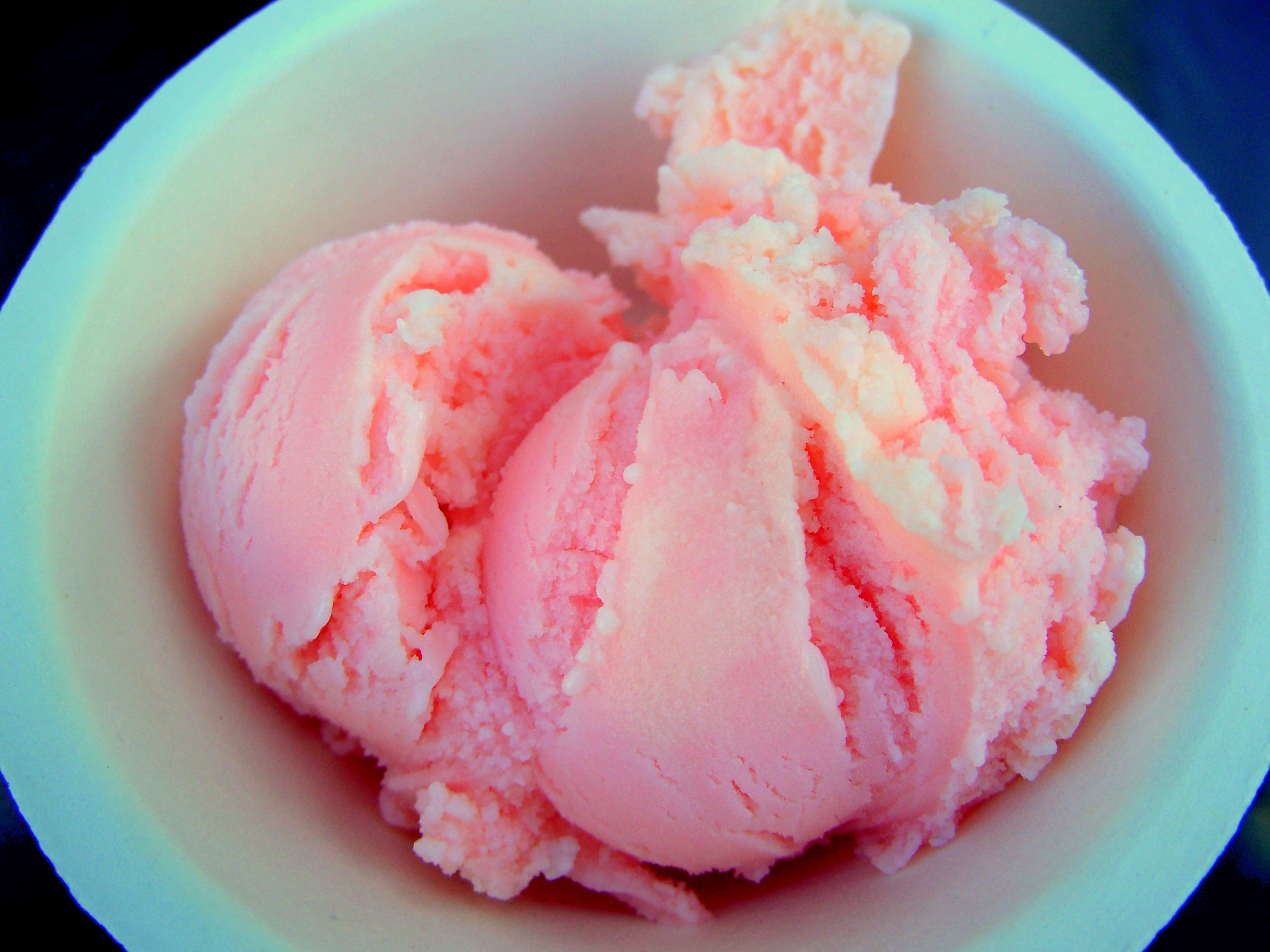
Nieves Cinco de Mayo let you sample their colorful snows before committing to the scoops. Guava was unexpectedly similar to strawberry, both in hue and in taste (unlike the green apple guava Vietnamese school kids munch with chili pepper salt). I opted for the rose petal flavor, which was more exuberantly rosy than Ici’s cardamom-rose version. It’s the pleasant awakening of every taste buds for merely 3 bucks.

Things we didn’t do at Eat Real Festival this year:


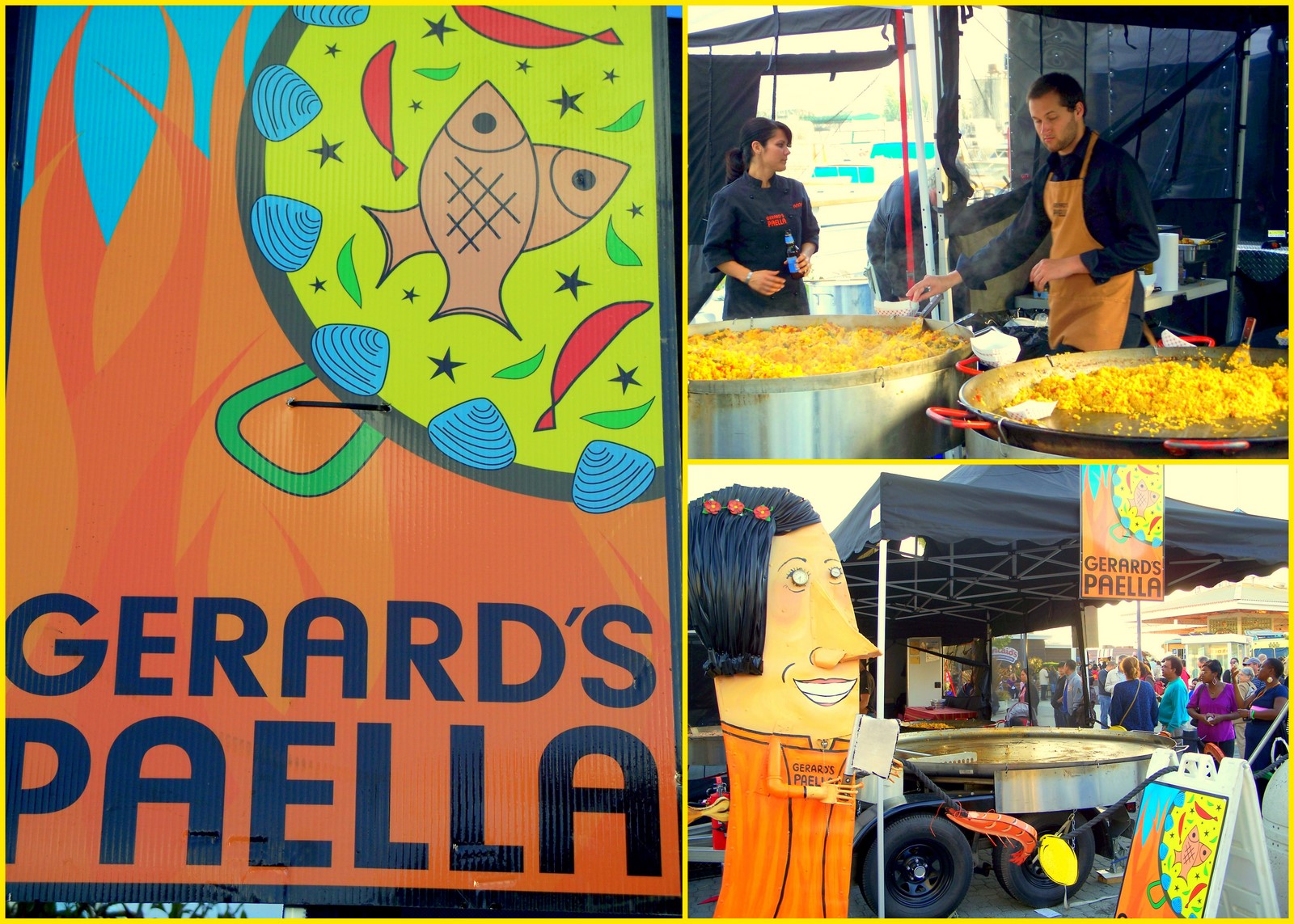
Eat paella;


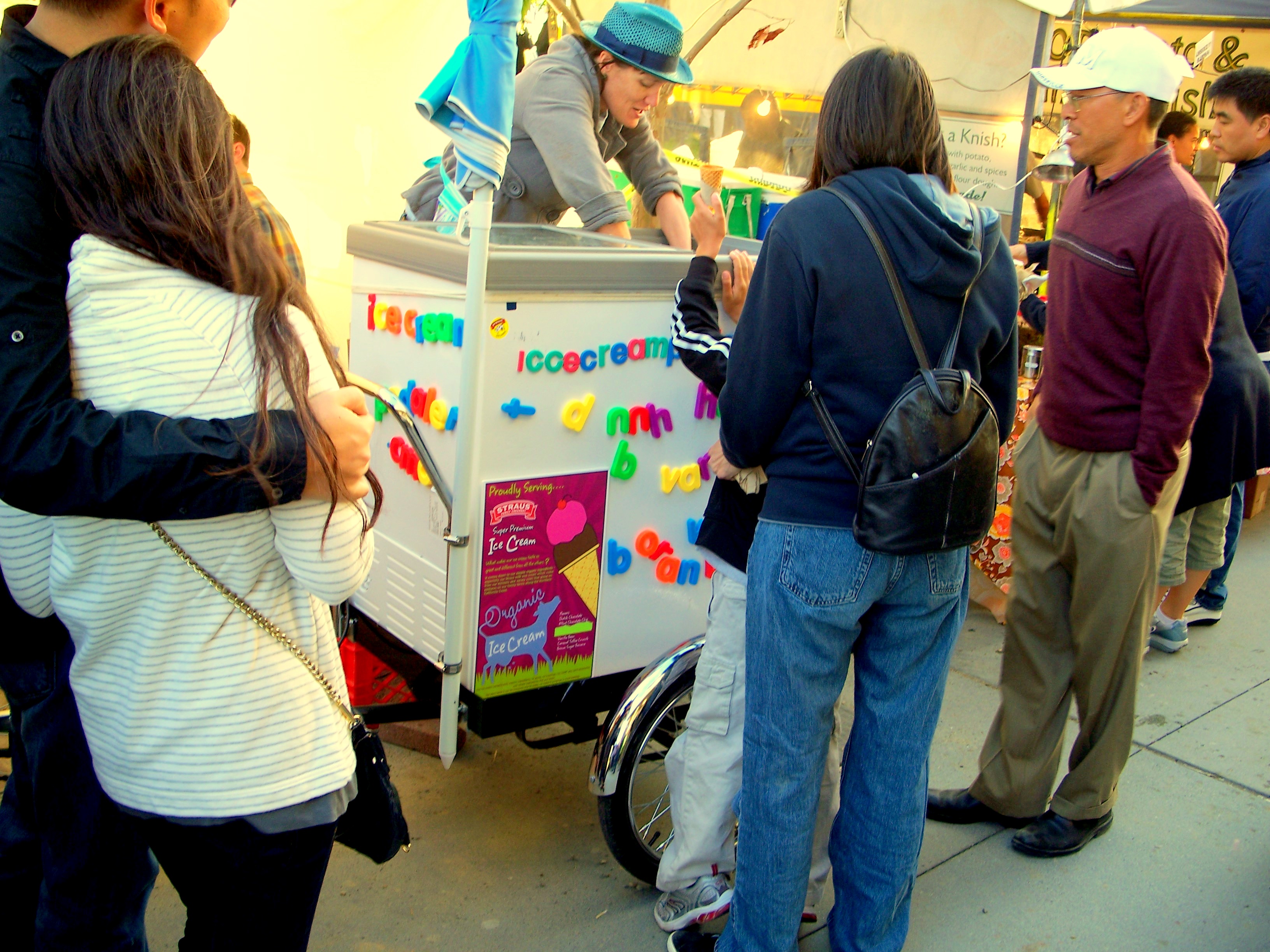
Eat ice cream from a classic colored ice cream cart;


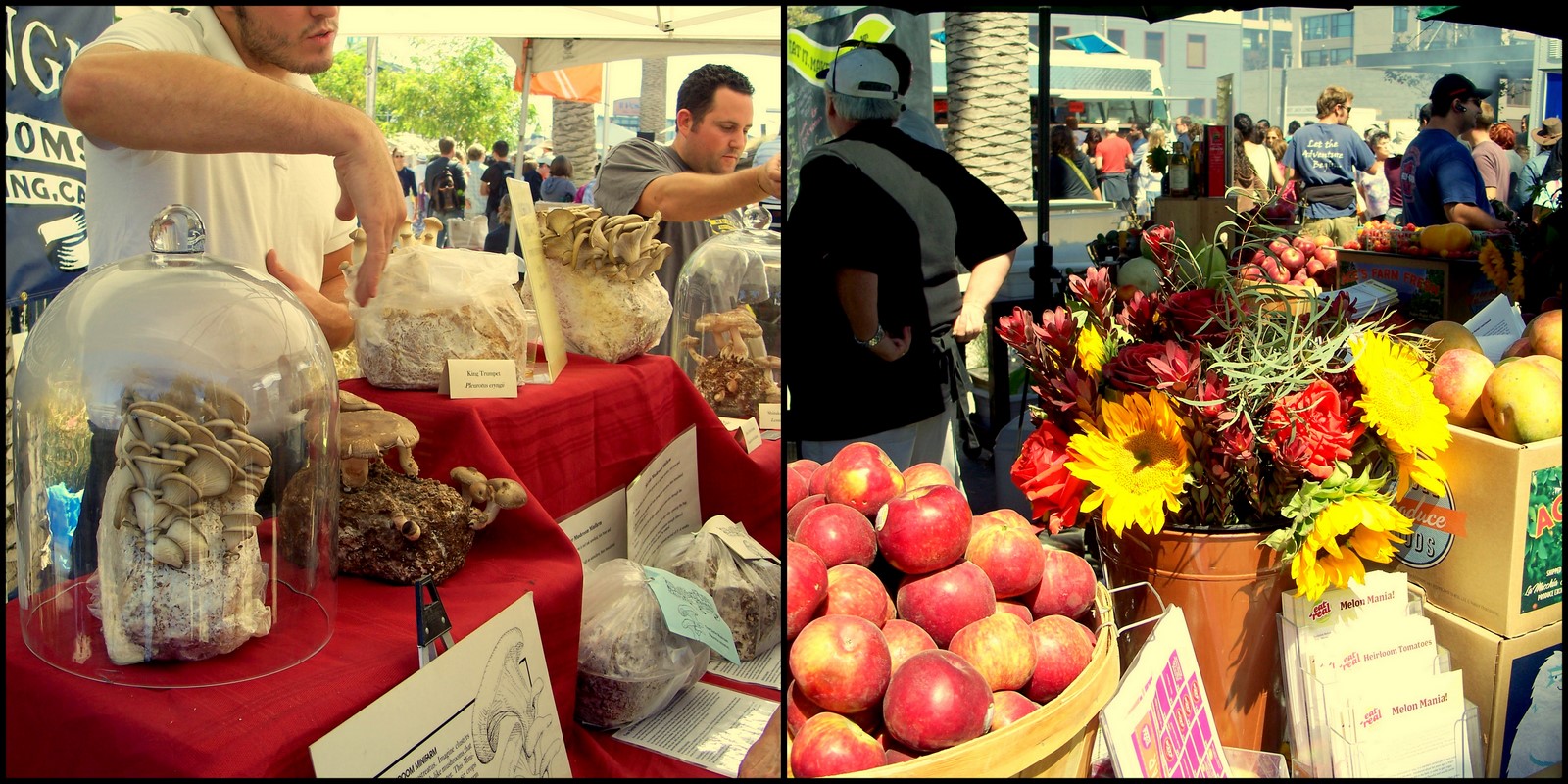
Learn how to grow mushroom and buy fresh fruits;


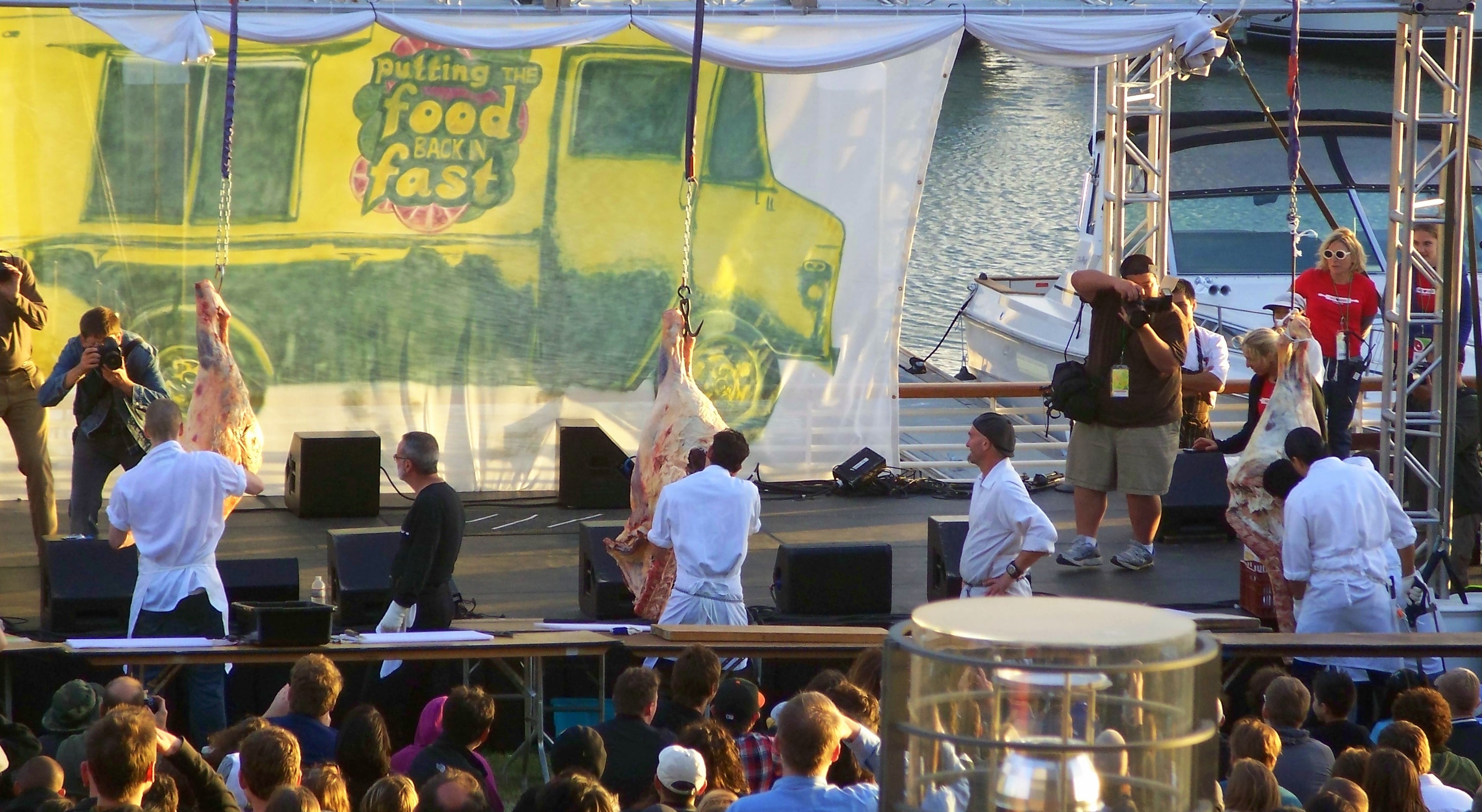
Get better pictures of the butchery contest – the guy on the right was superfast with his pink carcass;


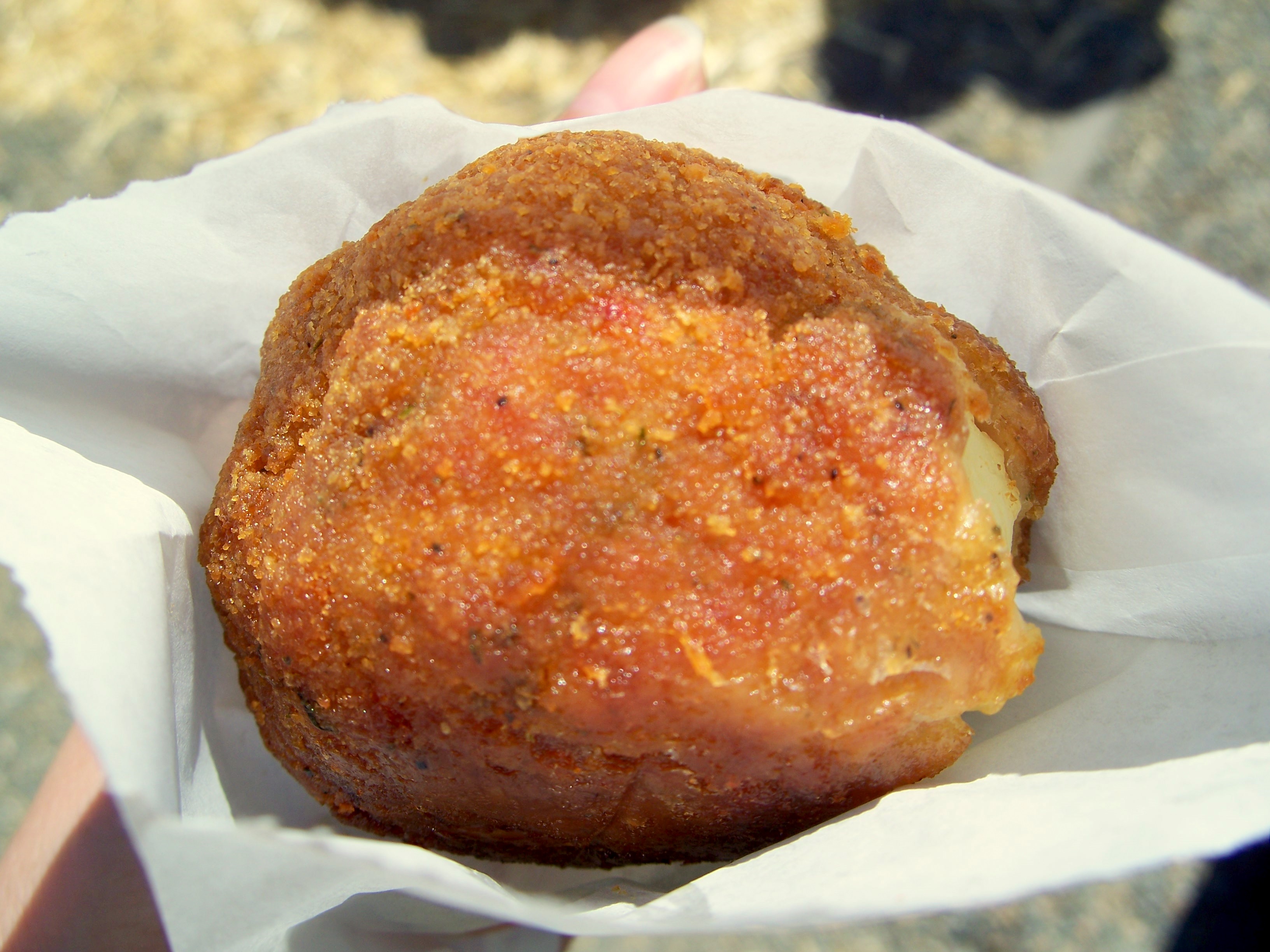
And learn the name of the kitchen that made Scotch eggs – $4 a hard-boiled egg coated in meat and batter, deep fried. Overpriced, but yummy.


There’s always next year.

Tags:

Resto-next-door Champa Garden

June 17, 2010 By: Mai Truong Category: California - The Bay Area, Comfort food, sweet snacks and desserts


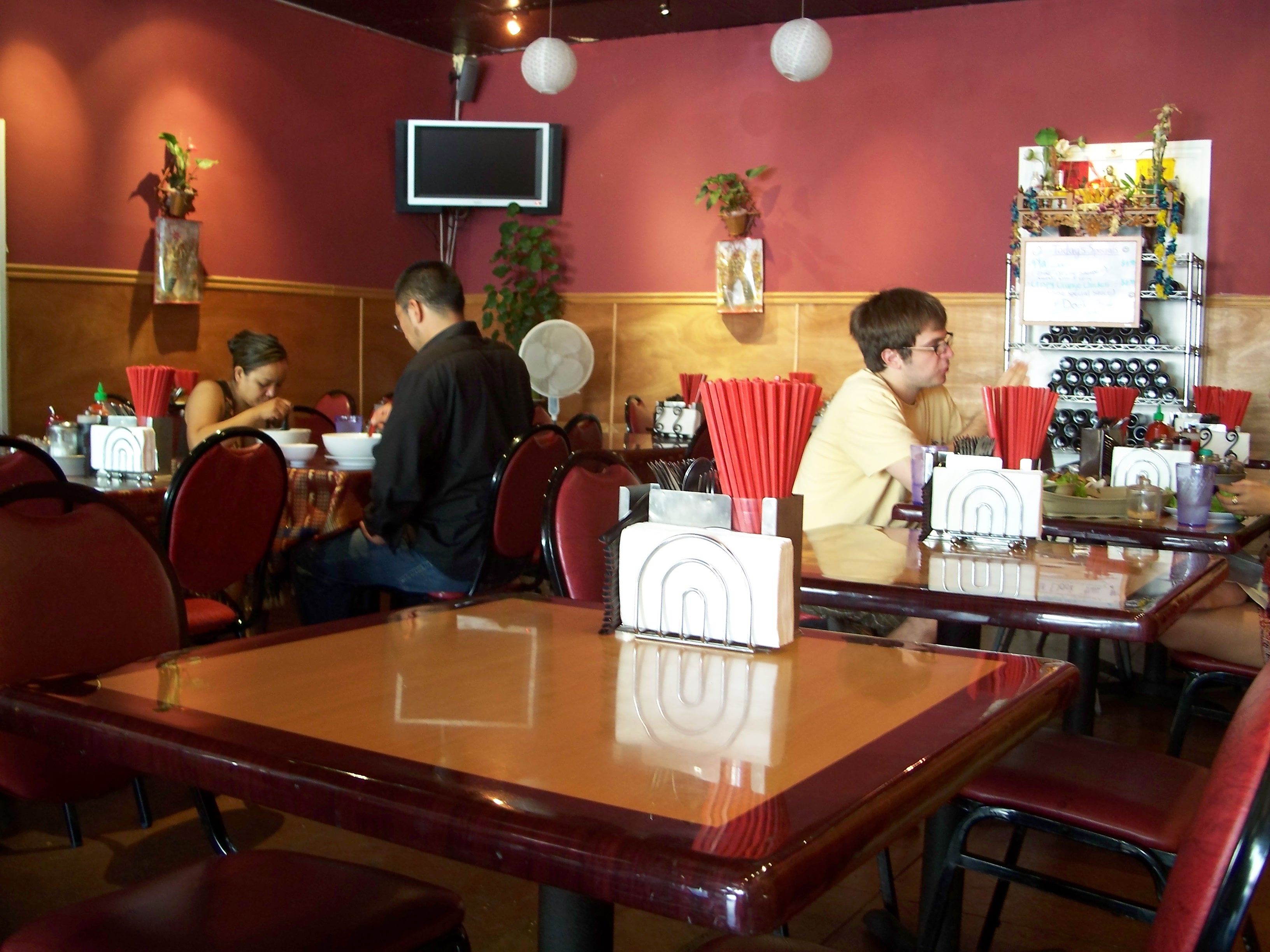
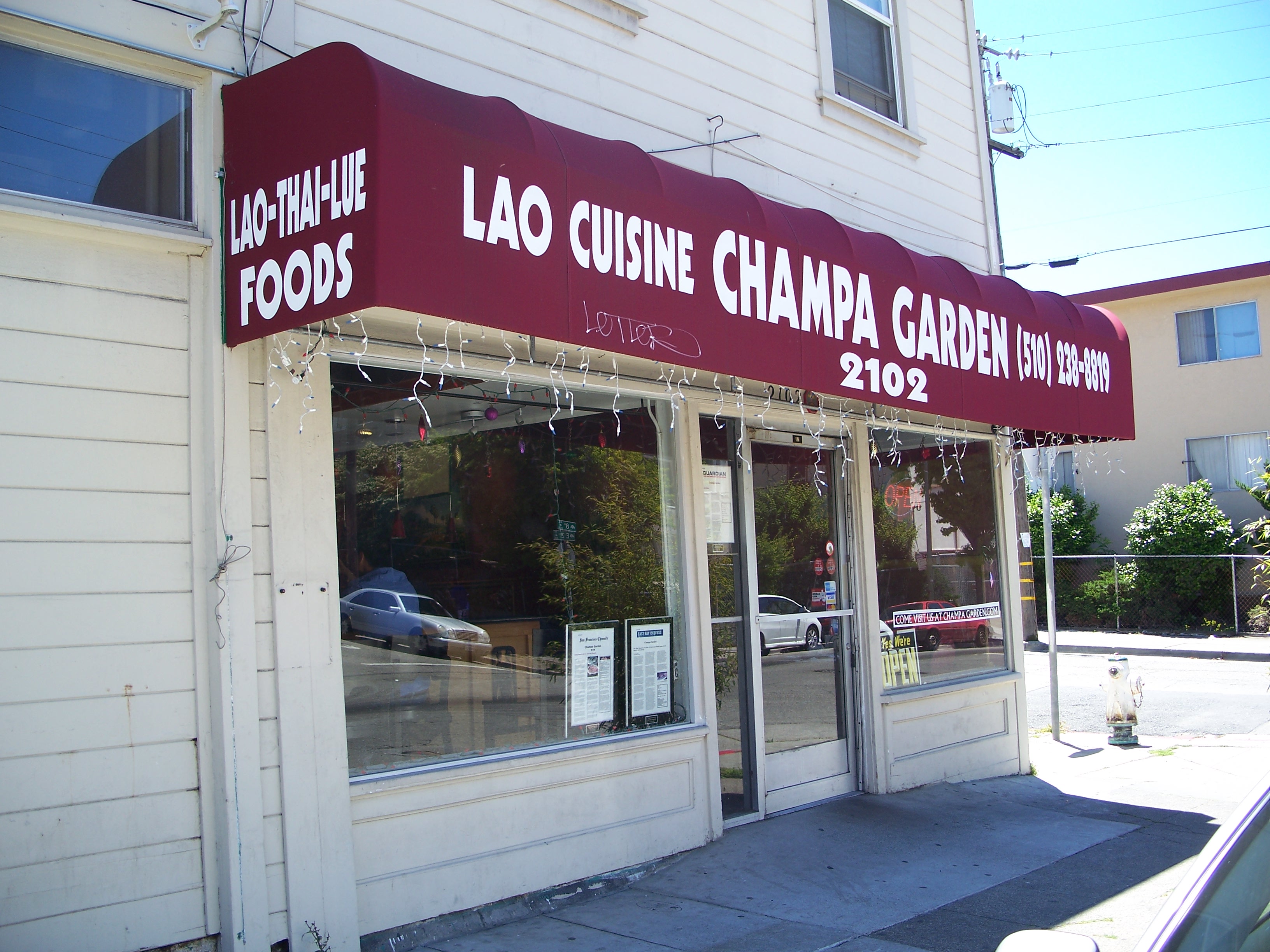
If you’re going to open a restaurant, where will it be? The city center where hungry passengers get on and off the subway station, a shopping mall where everyone gets the thirst for icy juice, the busiest street bordering campus, or a quiet neighborhood? If steaming delicious carts and baskets are literally a stone’s throw from your door in Vietnam, more often than not you need to wheel yourself a good ten minutes from home to burger joints and pizzerias here. There’s the eatery hub, then there’s the residential neighborhoods wrapping around it. So I could imagine how comfortable the folks living near 8th Street of East Oakland must feel, waking up on a lazy weekend midday. Hey, how about a bowl of kaow piak? Sure, Champa Garden‘s right across the street.

It’s utterly casual.

– How was the water?
– It’s good. Best water ever.
– Good. It’s my mom’s secret recipe.

So was the conversation between a young busboy and Mudpie at Champa Garden. In fact, he was the most talkative host in the diner. The others were nice, but they seemed to be mind-travelling in their own world. They spoke like falling leaves, looked at you with tired eyes, and smiled little. Their sweetness was saved in their food. In the brown sugar jar, for example.


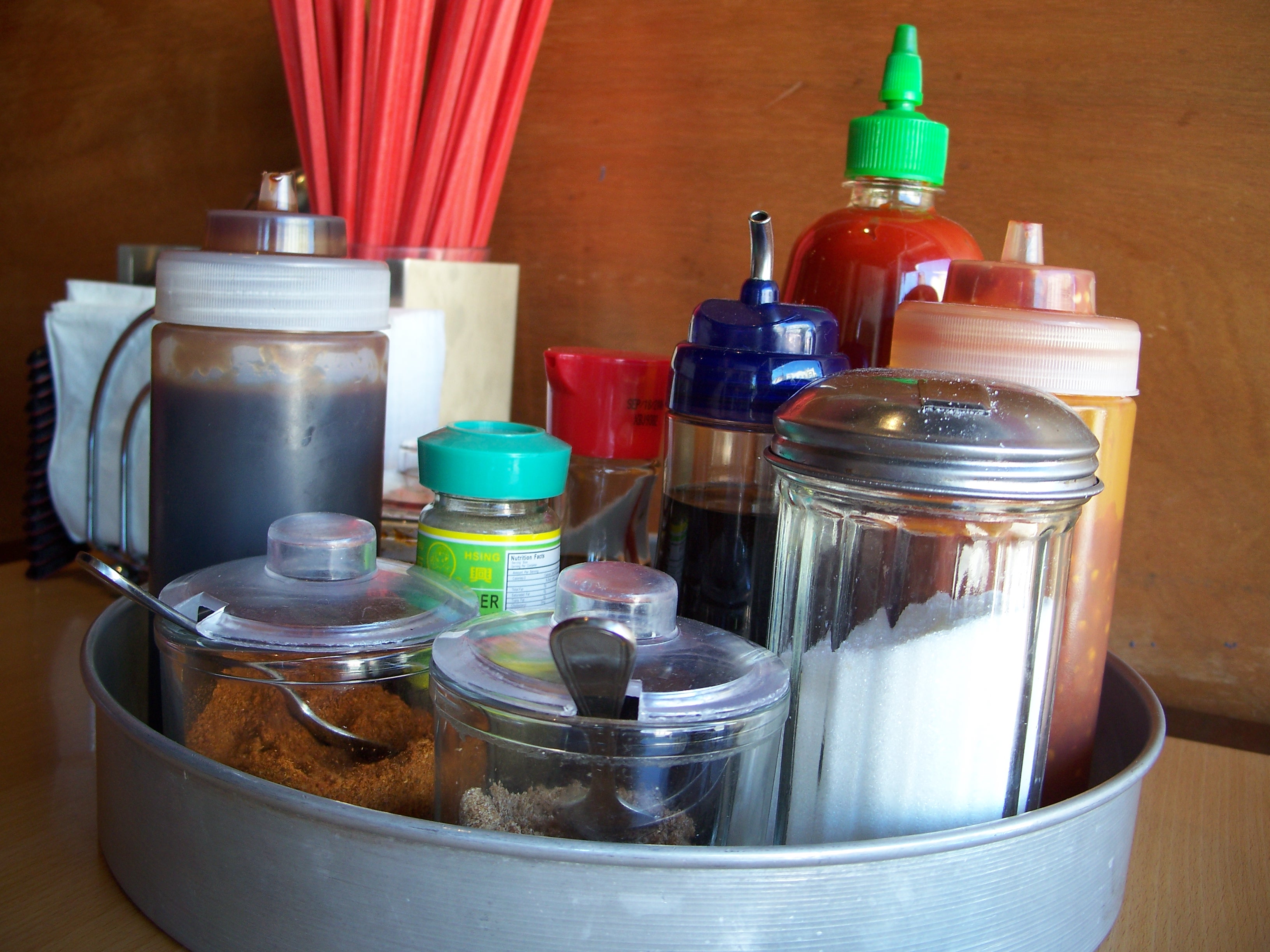
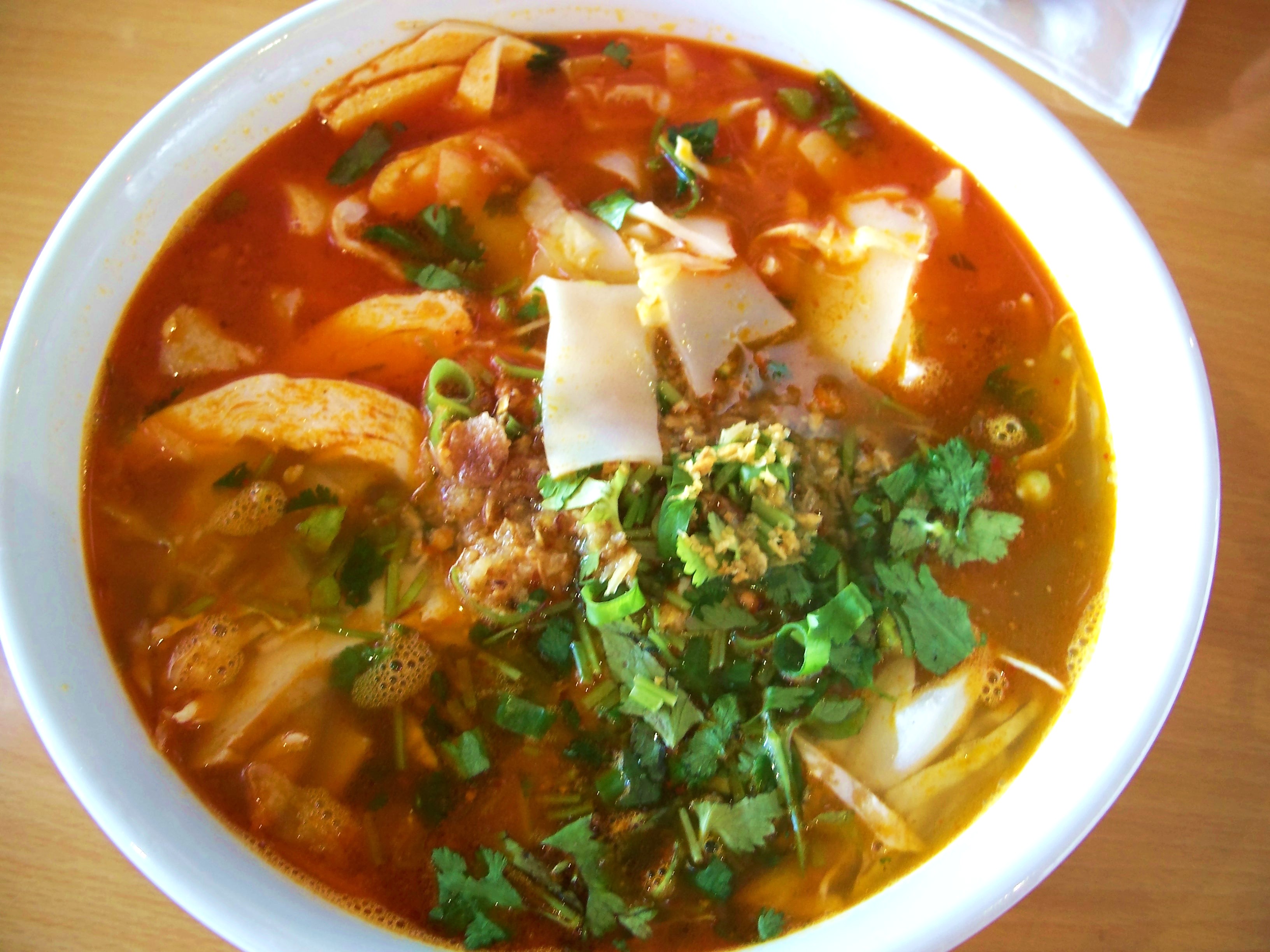
This is the biggest condiment tray I’ve ever seen. Probably to accommodate all three cuisines – Lao, Thai, and Lue – on the menu. I had to google “Lue” to find that it’s an ethnic group living in Laos and Thailand. There is only one dish attached to their name: the kaow soy, Lue’s noodle soup


Unlike the Thai version with deep-fried egg noodle, this soup walks the line between phở and bún riêu of Vietnam. The hofun rice noodles, wide and thick, cling together like wet papers, and they keep coming! The chopped carnival of pork, scallion, cilantro, and pork rind are minute. That red broth is rather mild, nonetheless with a distinctive note of fermented soy bean sauce, not unpleasant, just “fermented”.


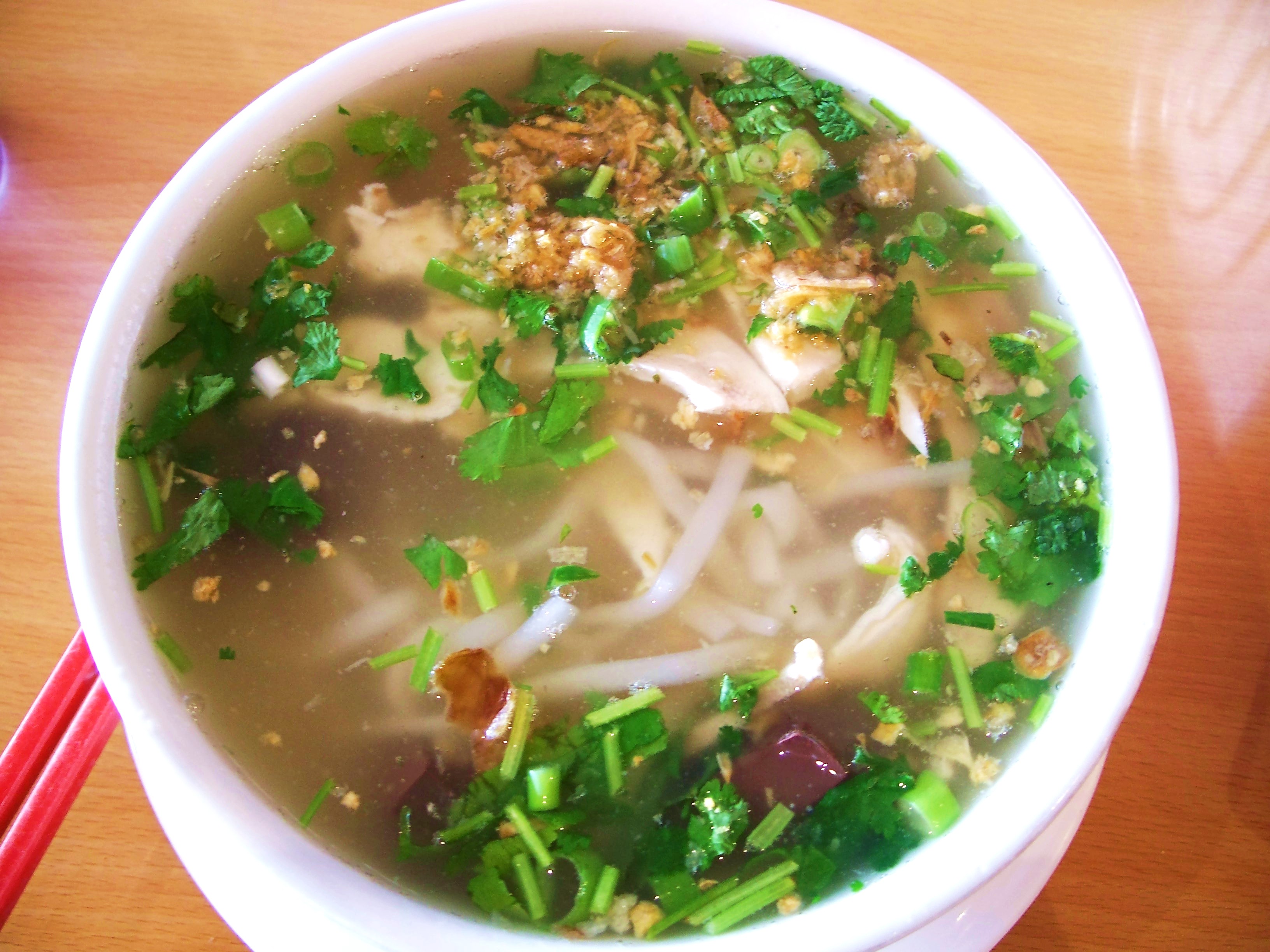
If you eat kaow soy before kaow piak, the kaow piak soup seems bland. Reverse the order, and you feel a sugary twist of Saigon’s hủ tíu and bánh canh. Sleek and chubby rice strings, chopped greens, fried shallot, white chicken, all the familiar faces. Pork blood is optional, and like jello, it hardly adds flavor. I like kaow piak‘s sweetness more than that other fermented note, while the chili kick in kaow soy charms Mudpie.

Just as the noodles, 5-6 bucks a bowl, satisfy local neighbors who wake up and walk in, Champa Garden has something on stove for the unadventurous, indifferent, playing-safe crowd: pad Thai and fried rice.


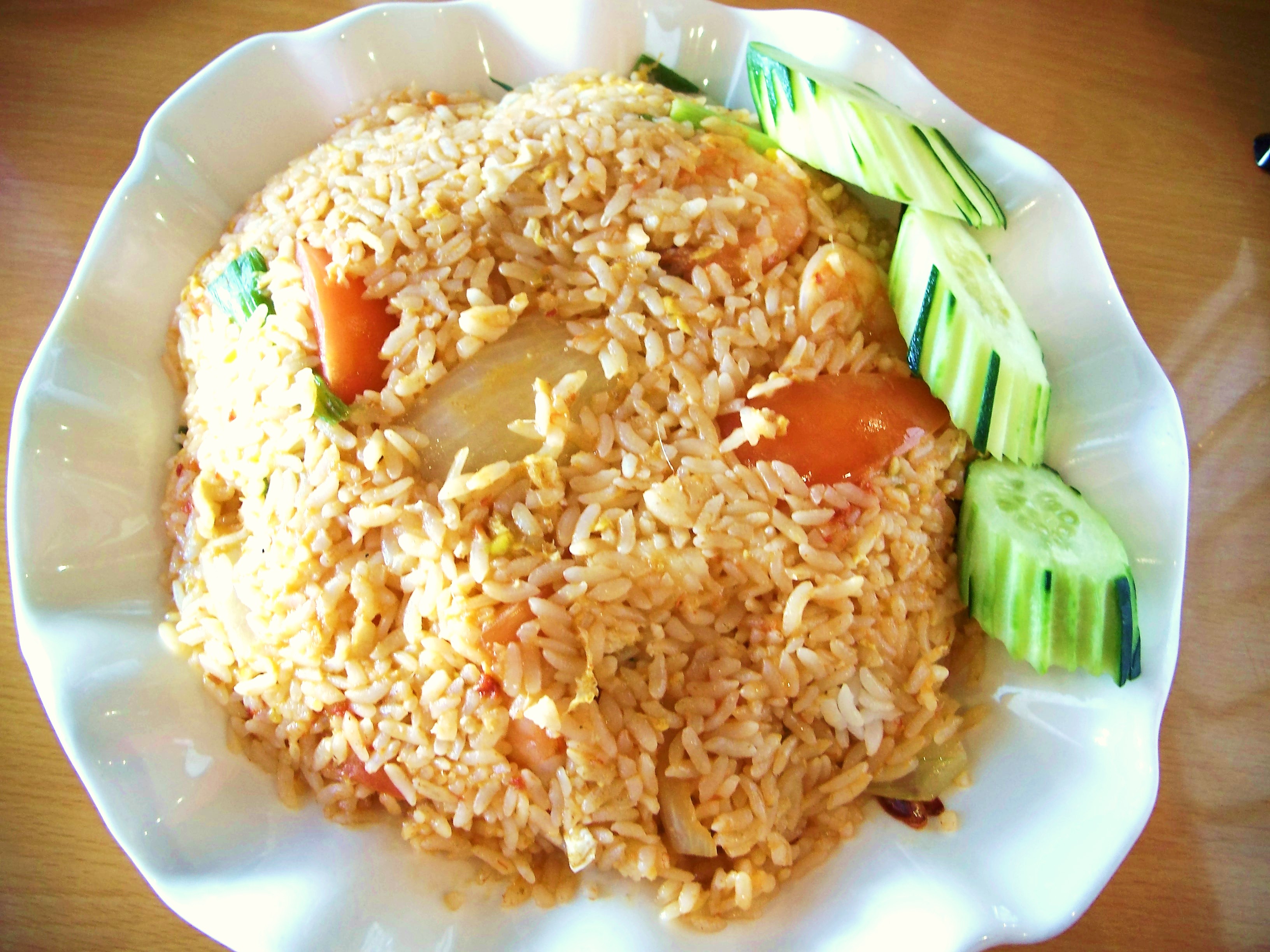
It’s just rice, shrimp, onion, tomato, green chive, and tom yum sauce. It’s just lunch. Is it worth 8 dollars? Maybe the amount, maybe not the taste. The Champa fried rice suits whoever chooses it for safety.

Then there is food for the novice diners who would catch bus 18 from Berkeley, sit through a forty-minute ride and walk up the hilly 8th street, just to check out the place recommended by their fellow foodies. These foreigners are interested in the unfamiliar names, try to taste as many plates as humanly possible, and would kill a bunny for a chance to peek into the kitchen.


Unfortunately, they aren’t allowed to go into the kitchen. I found the most awesome appetizer, I asked if I could see how they make it, and they politely shot me down.


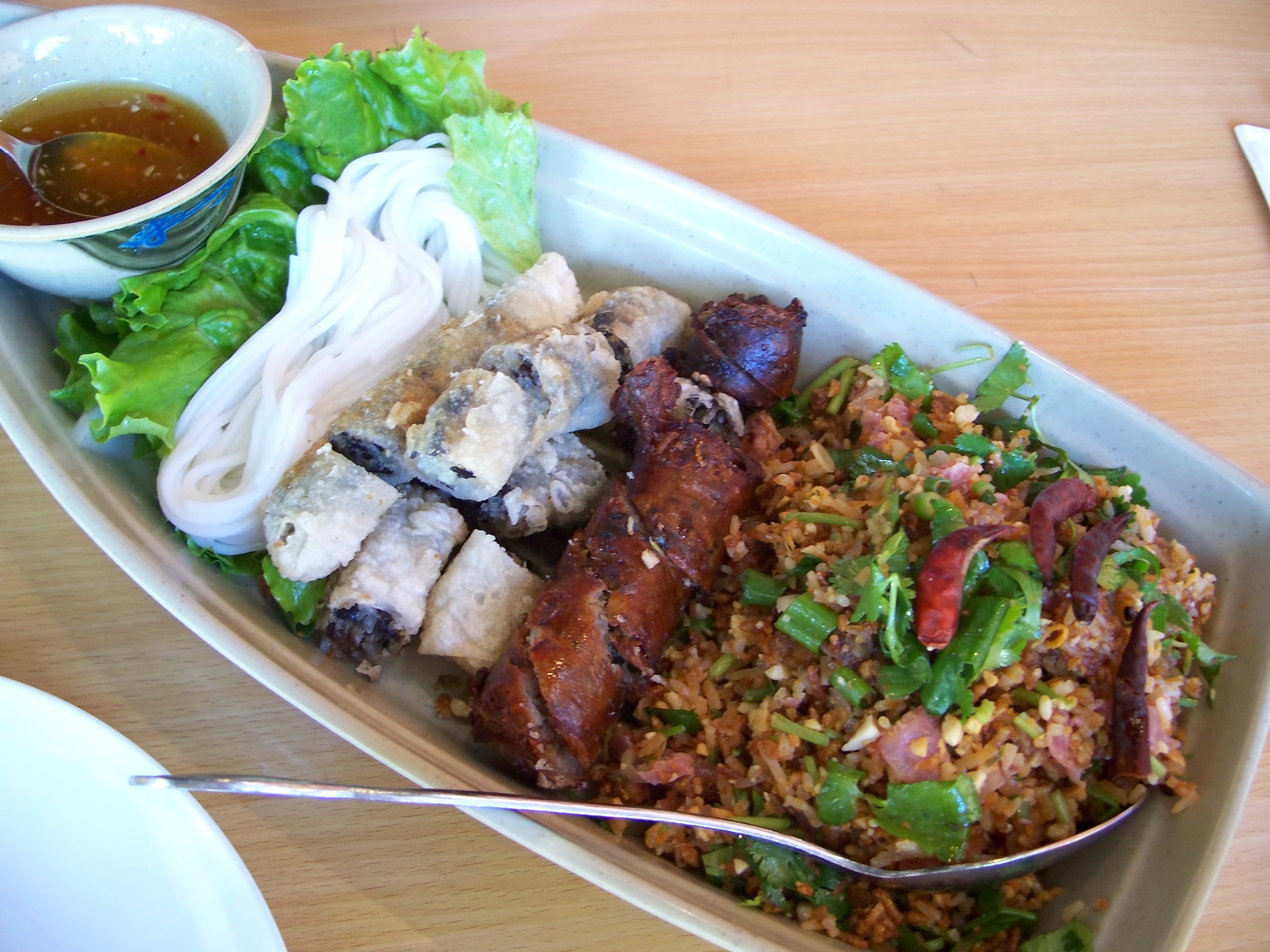
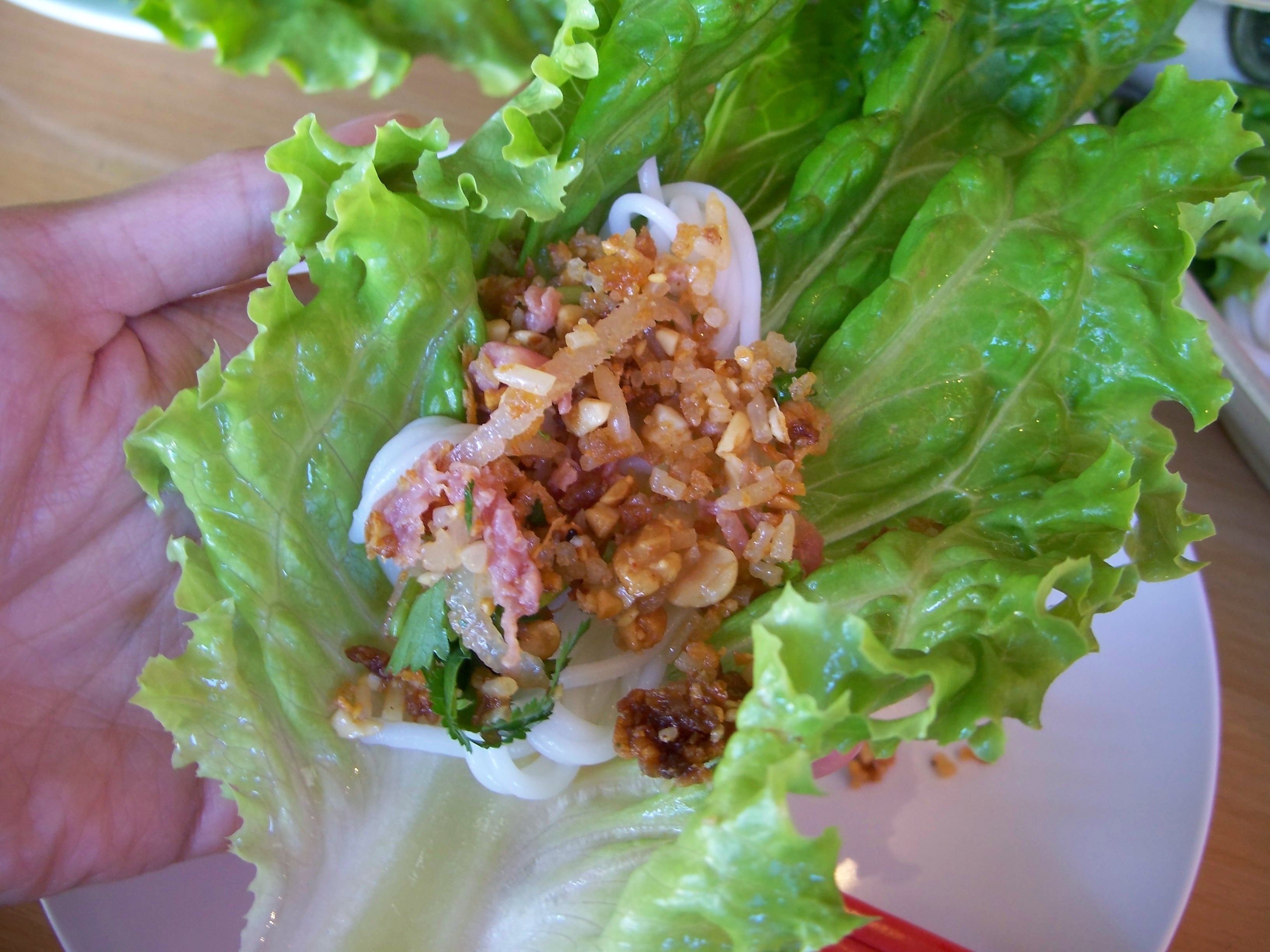
Nam kaow, crunchy fried rice with finely chopped up greens and spam, is seasoned to perfection. You wrap it in lettuce and dip into the garlic lime sauce (extremely similar to Vietnamese nước chấm), or you can avoid the mess and just eat it plain. There is nothing to complain about it. It comes in the sampler boat with Lao sausages and yor chiun (deep fried rolls of vermicelli, woodear mushroom and ground pork wrapped in rice paper), both are yummy but must bow to the nam kaow.


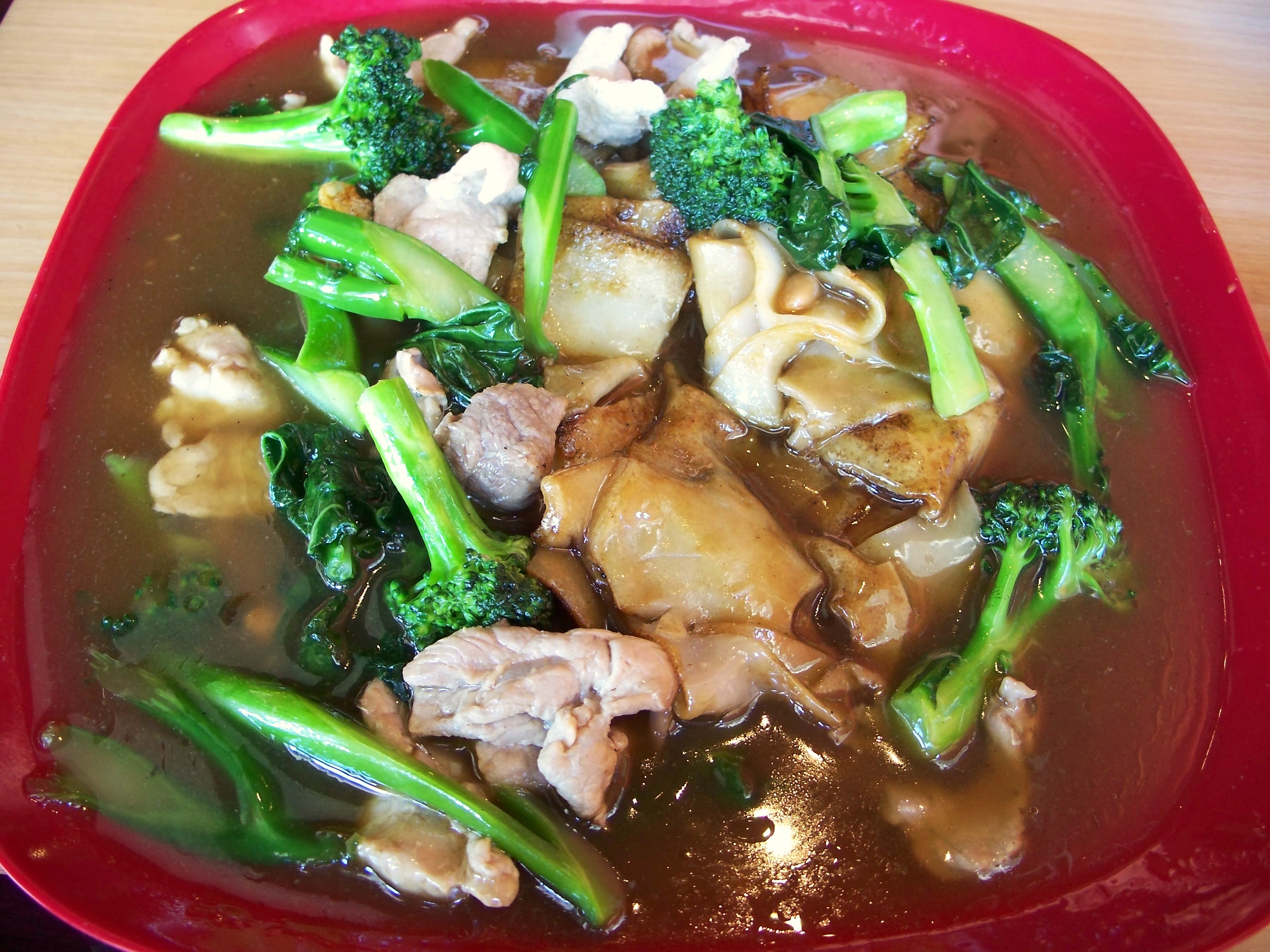
Just when we get mightily excited over a great start, the luck gets thin. For entree, lat na turns out just so so, borderlines boredom. You know that feeling when the food kinda sticks in your throat and just wouldn’t go down? Not that it really gets stuck, but somehow it prevents you from eating more. Thick sheets of rice noodle in a thick, sweet sauce does that. Just too thick. Perhaps a different kind of noodle would have been better, because the broccoli soaked in this sauce is pretty nice.


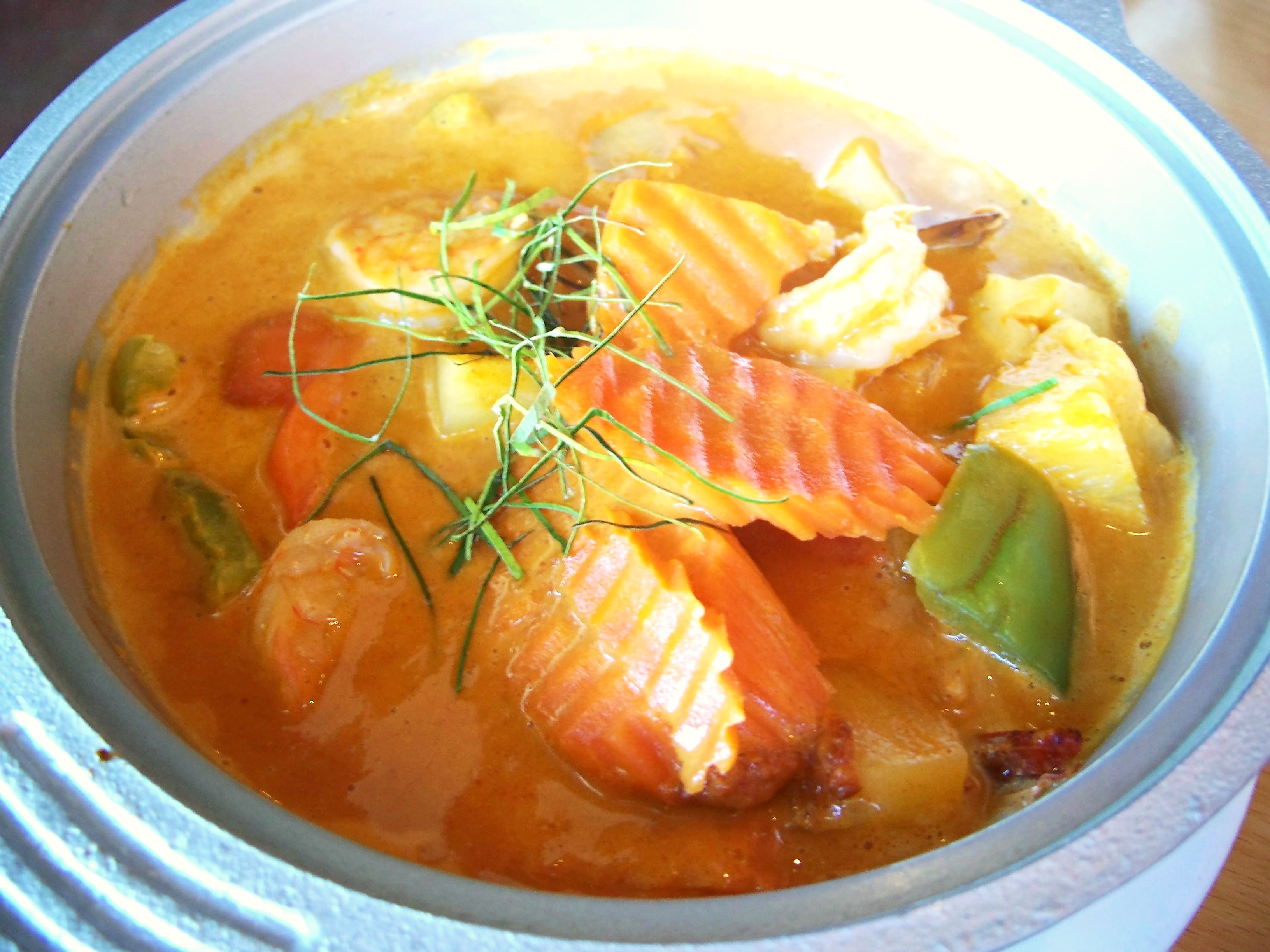
On a sweeter note, shrimp “claypot” fares well. There’s nothing clay pot about it, just shrimp, pineapple and veggie in, again, thick and sweet coconut curry sauce. Very coconuty.

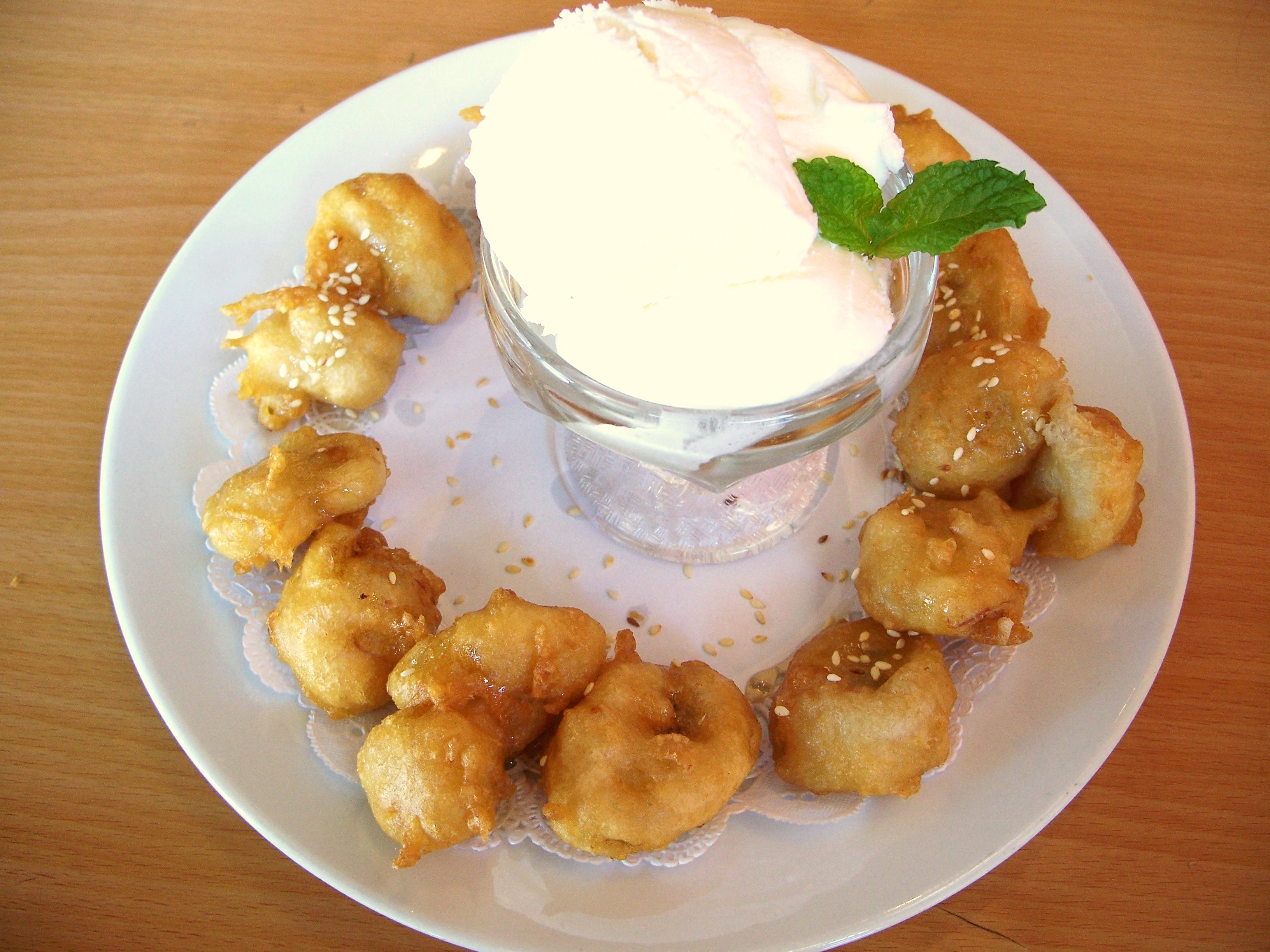
As if the whole course had not been sweet enough, the novice foodie stubbornly demands fried banana and coconut ice cream for dessert.

In hindsight, I could do without the fried banana. Battered, oily, crunchy pockets with mismatching sweet hot goo inside isn’t what I expected. But ice cream makes everything better. It’s not so coconuty as it is pineapple-y. It is, again, thick and sweet. But it clears the throat like nothing else.


So there, whether you’re a local on 8th street hungry for a warm breakfast near home, a safe eater, or a foodie seeking little-known edible gems, as long as you have a ten dollar bill and a sweet tooth, you’re guaranteed to roll out of Champa Garden full and smiling like a tangerine.

Address: Champa Garden (East Oakland)
2102 8th Avenue
Oakland, CA 94606
(510) 238-8819

At the Mountain Top (Sahn Maru)

May 15, 2010 By: Mai Truong Category: California - The Bay Area, Comfort food, Korean


Nothing beats mom’s cooking. Things may come close, or they may be enchantingly as good as mom’s cooking albeit in some different way, but nothing can top a familiar taste that you grew up with, when you’re fed with love. Remember how Ego dropped his pen and dived into Remy’s ratatouille dish upon recalling the aromatic smell of his mother’s boiling pot? In episode 5 of Gourmet, tears of joy wet the eyes of a renowned food critic as he savored a bowl of  boodae jjigae (부대 찌개), the kind his mother used to make for all poor children in the village and the taste he has longed for in several decades. The concept is universal: mom’s cooking is the best. Lately I’ve been steering away from Vietnamese restaurants, not because they aren’t good, but because  my mom makes better. So I seek out to the food my mom has never made, yet a part in me still wants a sense of home.  And what’s more home-like than the thin, ruffled floral cotton cushion pads loosely tied to some wooden chairs?


Korean food always makes me feel warm and fuzzy inside. I’m not talking about the chili heat and the bubbling sizzling dolsot and the oksusu cha (옥수수 차), even if that’s part of the reason. If you take off the tongue-torching taste, Korean food is actually very similar to some Northern Vietnamese food, especially the soups and the stir fries. Neither cuisines go down the slippery slope of lard overdose or drown the plates in curry sauces and coconut milk, and both embrace a sweet-savory harmony topping a lot of rice.

But above all, it’s the feel of a Korean restaurant that charms me. It always feels slow. Even if it’s like OB Chicken Town, where the lone waiter has to rush between tables, love songs blast all around, basketball players run across the big TV screen, time still goes by slowly at that wooden table where you’re sitting.  Time swirls around in the tea cup. Time lingers like the steam above your dark stone bowl. Time precipitates in each little morsel of banchan that you get served a few minutes after placing your order. Maybe it feels slow because you don’t have to rush shoving food into your mouth, or clearing the table so that the later course can come. It feels slow just like eating at home, when each dinner would take hours because I talked to my mom instead of eating.


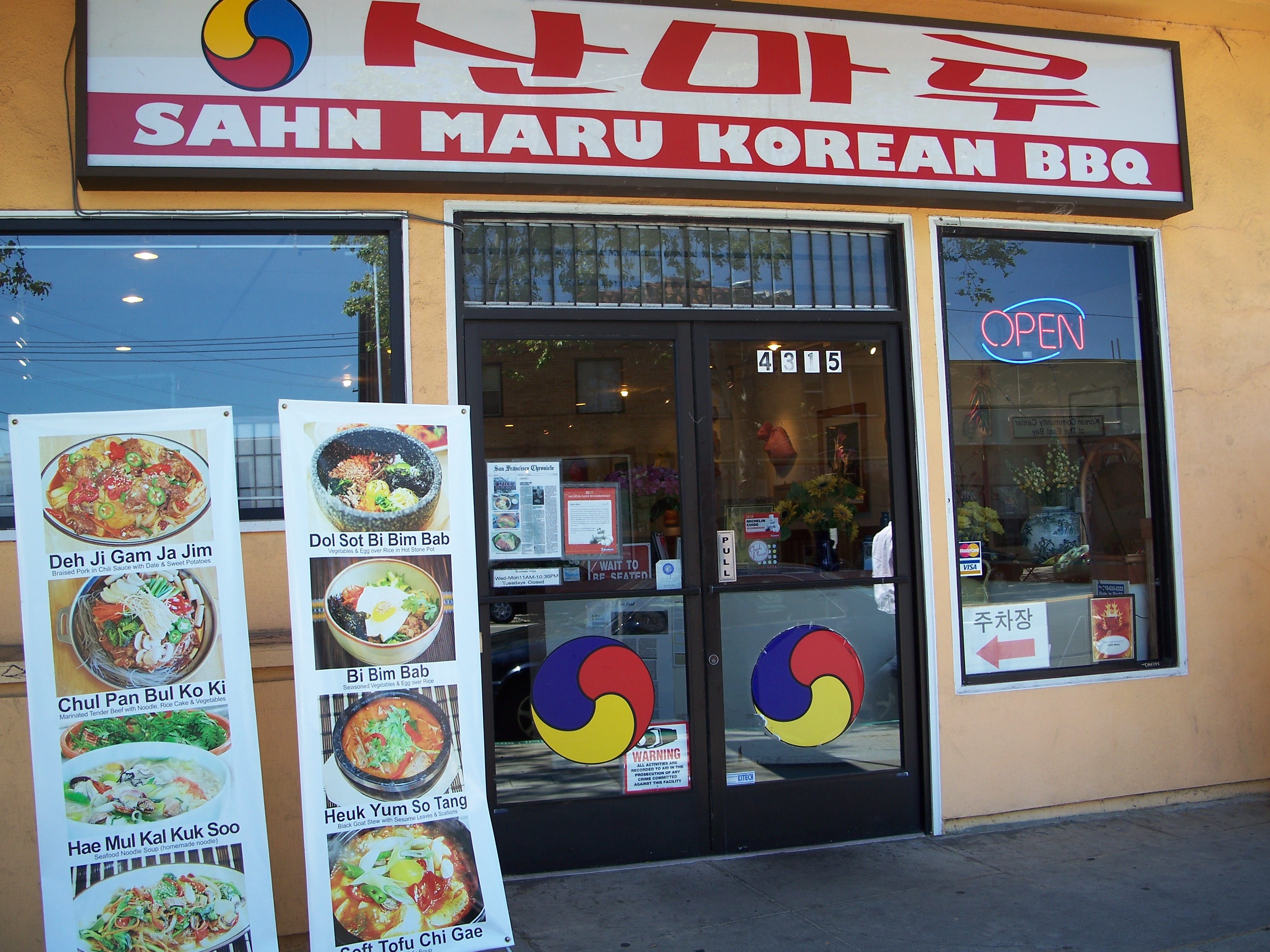
So I feel happy at every Korean restaurant I’ve been to, with every Korean dish I’ve tried. I feel happy at Sahn Maru (산 마루) in Oakland. This chulpan bulgogi (출판 불고기) is another pleasant find. I like my choice of mild sauce because the lack of chili paste lets other flavors flourish, but you can choose spicy. The ddeokbokki (떡볶기) is a playful texture that could be done without, while the cellophane noodle buried under a mountain of beef and soaked in marinade is just too great.


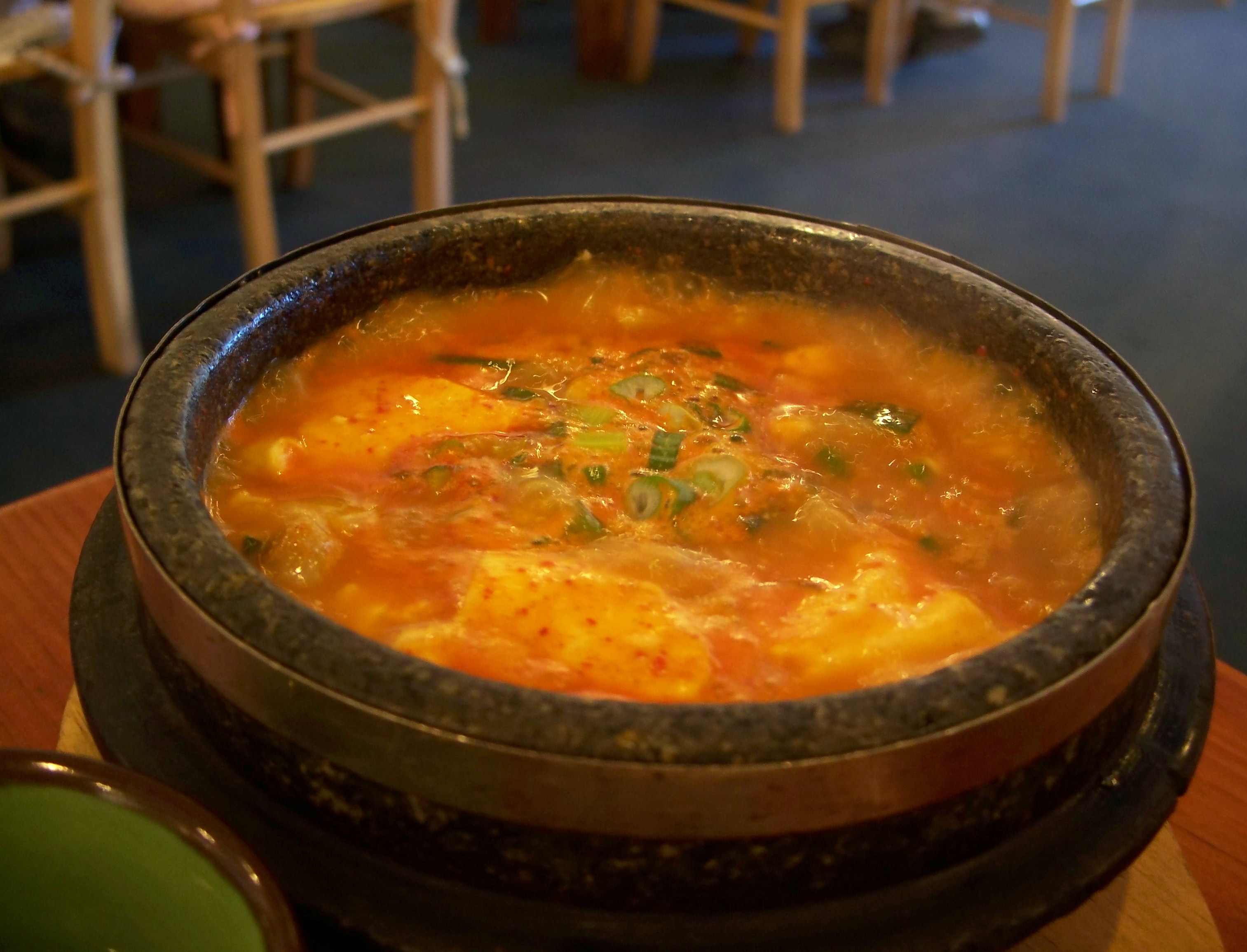
On the hot side we have bubbling soondubu jjigae (순도부 찌개). The soft tofu is creamy like scrambled eggs. Pour a few spoons on top of rice, mix it up. You won’t notice the meat, and the meat is totally dispensable. This stew is good because of the fish sauce, the heat, and the creamy tofu.

At the end, the bill gets served with a cup of  cold sujeonggwa (수정과). I’m not a fan of  cinnamon, but anything sweet and cold just cleanses the throat so nicely. There was no dried persimmon, though.

And I would have said that Sahn Maru was another pleasant experience. But something among the banchan (반찬) makes me change my mind.


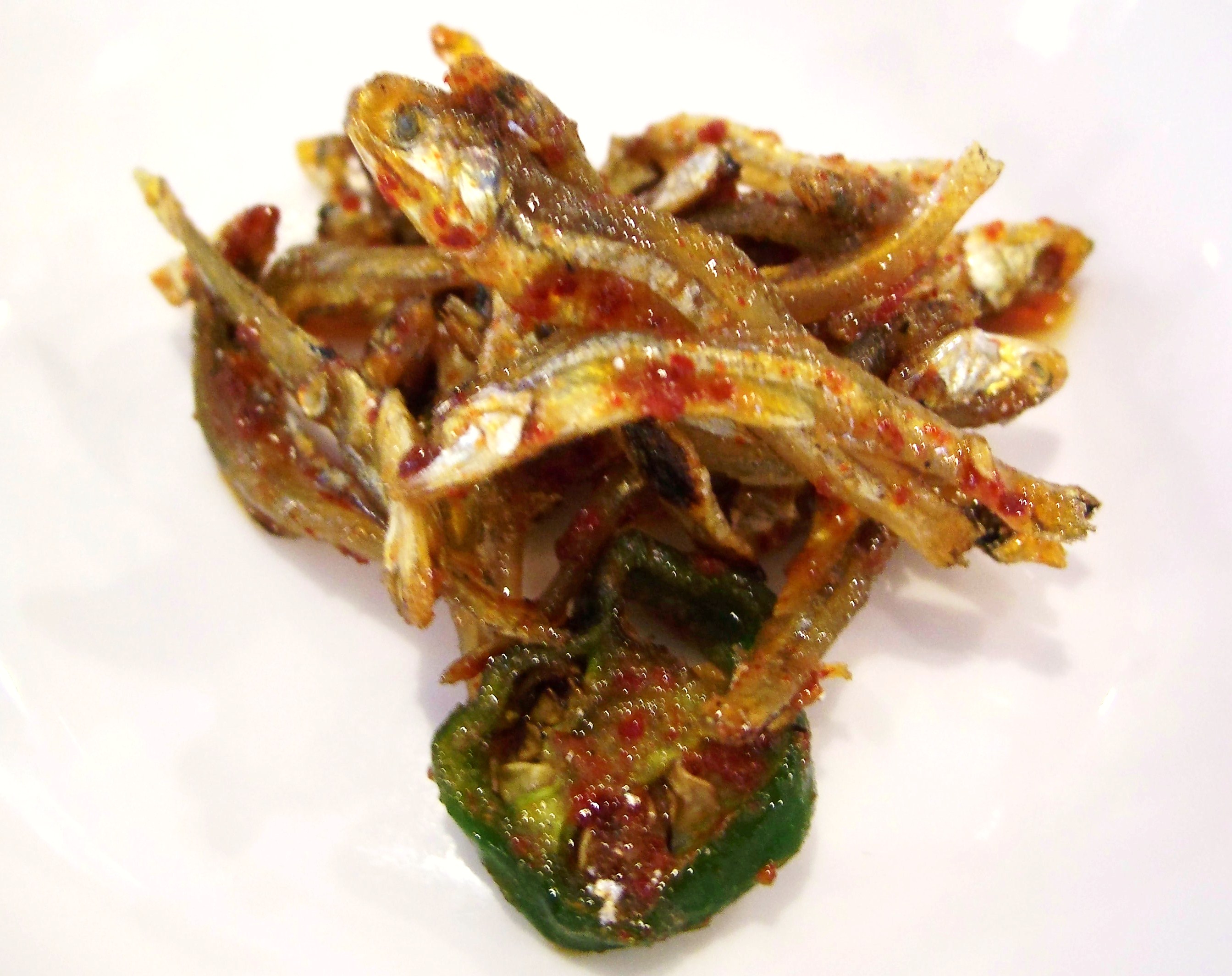
The dried anchovies. I’ve had the other things before, odeng bokkeum (오뎅볶음 fried fish cake), buchu jeon (부추전 chive pancake), kimchis, nokdumuk (녹두묵 mungbean jelly), but this is the first time I have myulchi bokkeum (멸치 볶음), stir fried dried anchovies with heads intact. Whatever little flesh the fish used to have has crystallized into tiny perfections of salty sweetness. The fish taste like candied orange peel. I just can’t get enough of it.

Because of the anchovies, Sahn Maru is not just another pleasant experience. Sahn Maru is a place I will visit and revisit, even if it costs a notch above all other Korean diners I’ve come to like.

Those little fish provoke memories of my mom’s ca kho tieu.

See more pictures of Sahn Maru’s dishes at my web album Photon Flavors.
Address: Sahn Maru Korean BBQ
4315 Telegraph Avenue
Oakland, CA 94609
(510) 653-3366

Dining dollars: chulpan bulgogi ($20.95) + soft tofu soup ($11.95) + tax = $36.10
UPDATE: We have also tried a variety of other dishes here, from the usual dolsot bibimbap, japchae, seafood pancake and kalbi tang to the less-known bibimnaengmyun (비빔 냉면, cold buckwheat noodle), joki gui (조기 구이, fried king fish), and duehji kamjajim (돼지 감자찜, braised pork in mild chili sauce with dates and sweet potato). So far, all of them are the best of their kind. 🙂

Steak Search 1 – The Alley

April 28, 2010 By: Mai Truong Category: American, California - The Bay Area, One shot


Once a Texan, you’re always a Texan.
Earlier last week I exchanged a few words with my friend about our food logging endeavour, and I got reminded of steak. (Yes, Sarah, you’re responsible ;-)). I thought it was gone. That evil desire of eating an innocent cow who just a few days ago was wandering the meadow with dreamy eyes. It has resurfaced. Granted I recently enjoy the occasional meatballs from Ikea, a Whopper at the Burger King on San Pablo, and various Top Dog‘s sausages, I haven’t had a chunky slab of steak for months. Now that’s serious. When I’m in Houston, we go to Potatoe Patch almost every other week. When I’m in College Station, I can always rely on Sodolak’s for a hearty fill. Where can I go in Berkeley?

Yelp reveals a gargantuan list of six “steak” locations in the area (for comparison, Humble (TX) has twelve, and Humble is half the area of Berkeley). So starting today I will eat at and blog about every steak house East of the Bay, alphabetically. First stop: The Alley.


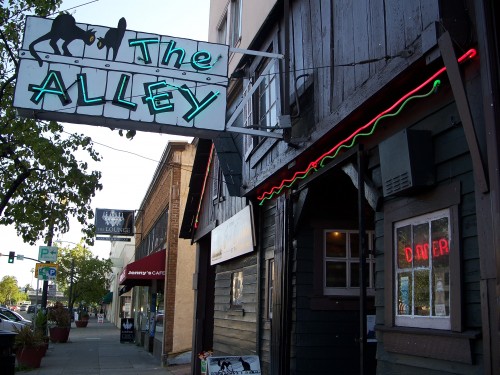
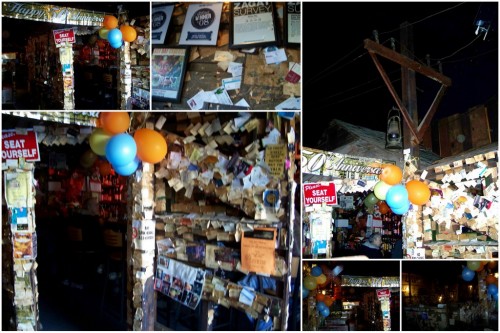
It’s the shadiest little hole in the wall I’ve ever been to. The inside is dark and frumpy like the sluggish voice of old black men at the bar counter sharing stories about job and children. The walls are blackish wooden planks, covered in thousands of staples and business cards, like a flaky fish deep fried with scales on and forgotten until it turns ivory with mildew dots. How do they say it, this place got character.


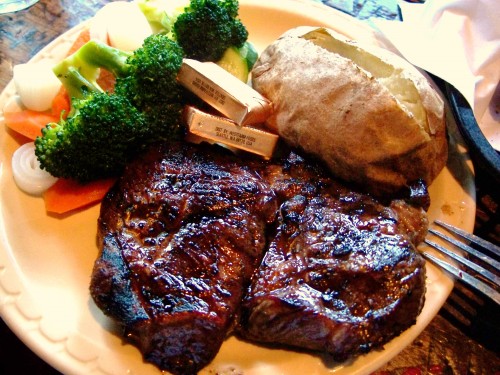
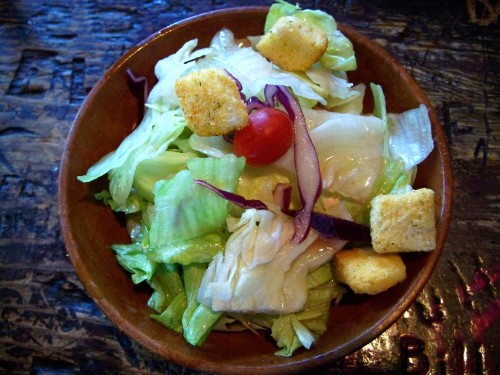
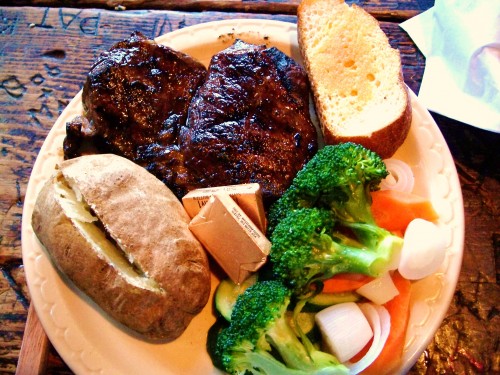
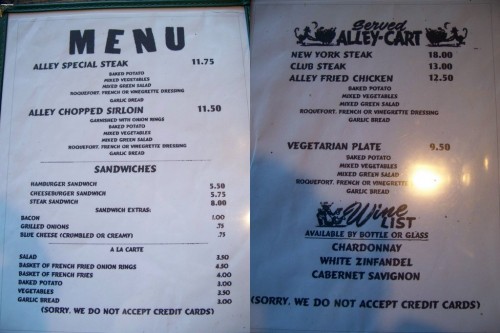
Whatever, I just want my steak. The Alley Special comes with a small bundle of iceberg lettuce, a slice of cucumber, and one cherry tomato. The typical salad of guilt that always comes with cheap steaks and dressed in crocodile’s tears of vinaigrette. For 11.75 we get a 12 oz slab, some half cooked vegetable, garlic bread, and a baked potato.


We ask for no sour cream on our potato, but I’m not sure if that was necessary, as the potato comes simple and spare. No cheese, no chives, no bacon bits, two butter packets still wrapped and melting on the hot steak. We are also given one skimpy knife and one fork each, the knife blade is narrow like a snake’s tongue.


We slice and chew, industriously. This is steak that you can make into mattresses, springy and resilient, and taste like hard work. The steak juice flavors well the half cooked onion, broccoli, and carrots. The garlic bread feels hasty. The bare baked potato fits stupendously beautiful with butter and generous shakings of salt, as it should. Its burnt skin, soaked with steak juice, is something I’ve learned to eat and enjoy, but this time it easily peels off to reveal the tastiest part of a perfect baked potato: the dry, hard shell between the skin and the moist flesh. It’s like pie crust without gooey sugar mess.

So that’s it. The Alley lives true to its name: a dark hangout that only accepts cash in exchange for a recharge reeking of grill smoke, cigarette smoke, beer, old men’s stories, and our backstreet side.

Address: The Alley
3325 Grand Avenue (between Elwood and Lake Park)
Oakland, CA 94610
(510) 444-8505
(parking on the street)


Next on Steak Search: Buckhorn Grill (Emeryville)

Tags: ,

Banh cuon, bun, and beyond – Tay Ho #9

March 04, 2010 By: Mai Truong Category: California - The Bay Area, Central Vietnamese, Comfort food, noodle soup, Northern Vietnamese, Vietnamese

bun_moc
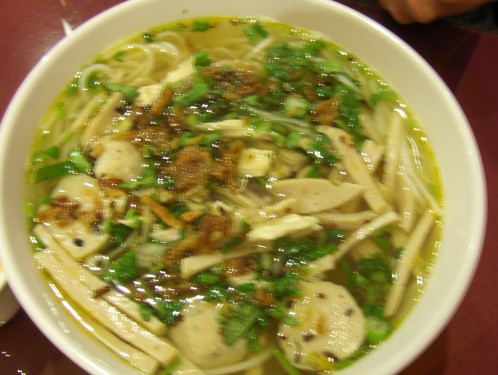
I have discovered another great soup. My fingers trembled with anticipation over the sweet aroma, the shining aurulent broth, those fragile fatty bubbles that form a thin film on the surface, the promising dapple of fried shallot,… and the pictures got all blurry. So just squint your eyes and pretend for the moment that you’re hunching over a bowl of piping hot succulence and the steam makes your eyes hazy. Can you smell that sweet aroma? No? Grab a chair at Bánh Cuốn Tây Hồ #9 in North Oakland, ask for a bowl of bún mộc, and find out for yourself.

Before diving thy chopsticks into the noodle soup, let us start with the name. It can be spelled either bún mọc or bún mộc, the hat on the “o” changes the word’s meaning and thus the name’s origin, but nobody is certain which one is correct. “Mộc” means “simple”, the broth is simply boiling water savorized by salt, pepper, nuoc mam, pork, shiitake, and wood ear mushroom.  “Mộc” also means pork paste (twice-ground or pounded pork, seasoned, known as “giò sống” in Vietnamese), which is the central ingredient in the original soup but not in the rendition at Tay Ho #9. I like gio song, but sliced meatballs and cha lua (silk sausage) make a trustworthy substitution. The cook here also threw in some shredded chicken breast as a reassurance of familiar fixings. Now if you drop the hat on the “o”, “Mọc” is the nickname of the former village Nhân Mục, a part of west Hanoi today. This village can very well be the hometown of the meat-laden rice noodle soup, hence the noodle soup’s name. However the spelling goes, all we southerners know is bun moc comes from the north and is less than popular in Saigon. Most Vietnamese immigrants in the Star Flag States are southerners, so bun moc is even harder to find on the menus here. But as long as there’s a kitchen somewhere churning out these mouth-warming, bellicious bowls, there will be my pair of chopsticks eager for a hearty winter fling.

In the mood for something a little more adventurous?

bun_bo_Hue
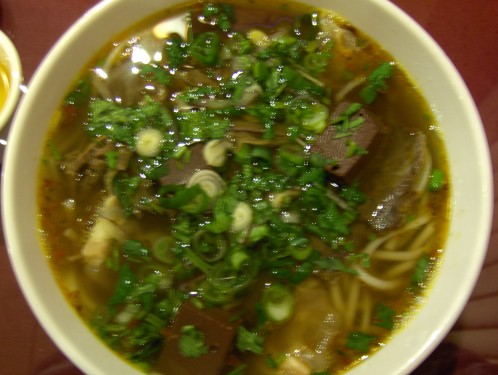
If bun moc might seem on the mild side, you know, ground pork and white meat, and healthy mushroom for crying out loud, then bun bo Hue would spice up the buds. Bun bo Hue is synonymous with chili paste and satay, there’s just no way out of the heat. There’s no way out of the brutal assortment either, beef chunks, gelatinous cubes of congealed pork blood, some hasty slanted cuts of pig trotter. The blood cube doesn’t taste bloody though, it’s rather bland (naturally, it’s cooked and unseasoned) and only for textural purposes. I’ve sampled this beef noodle soup at Kim Son and Bun Bo Hue Co Do, but third time is indeed a charm, I enjoyed it at Tay Ho. Either that or the hostess’s friendliness, a rare delight to diners in Vietnamese restaurants, which alone makes me want to go back to this place.

Banh_Cuon_Tay_Ho_9_Oakland

1 bún bò Huế + 1 bún mọc + 1 large bánh cuốn to-go for lunch the next day: $22.67

Address: Tây Hồ Restaurant – Bánh Cuốn Tây Hồ #9
344B 12th Street
Oakland, CA 94607
(510) 836-6388

More on Bánh Cuốn Tây Hồ: Tây Hồ #8 in San Jose and Tây Hồ #18 in Bellaire, Houston.

Also check out Bánh Cuốn Hoa II in Houston, they have nice duck noodle soup (bún măng vịt).

Spice it up at OB Chicken Town

February 23, 2010 By: Mai Truong Category: California - The Bay Area, Comfort food, Korean


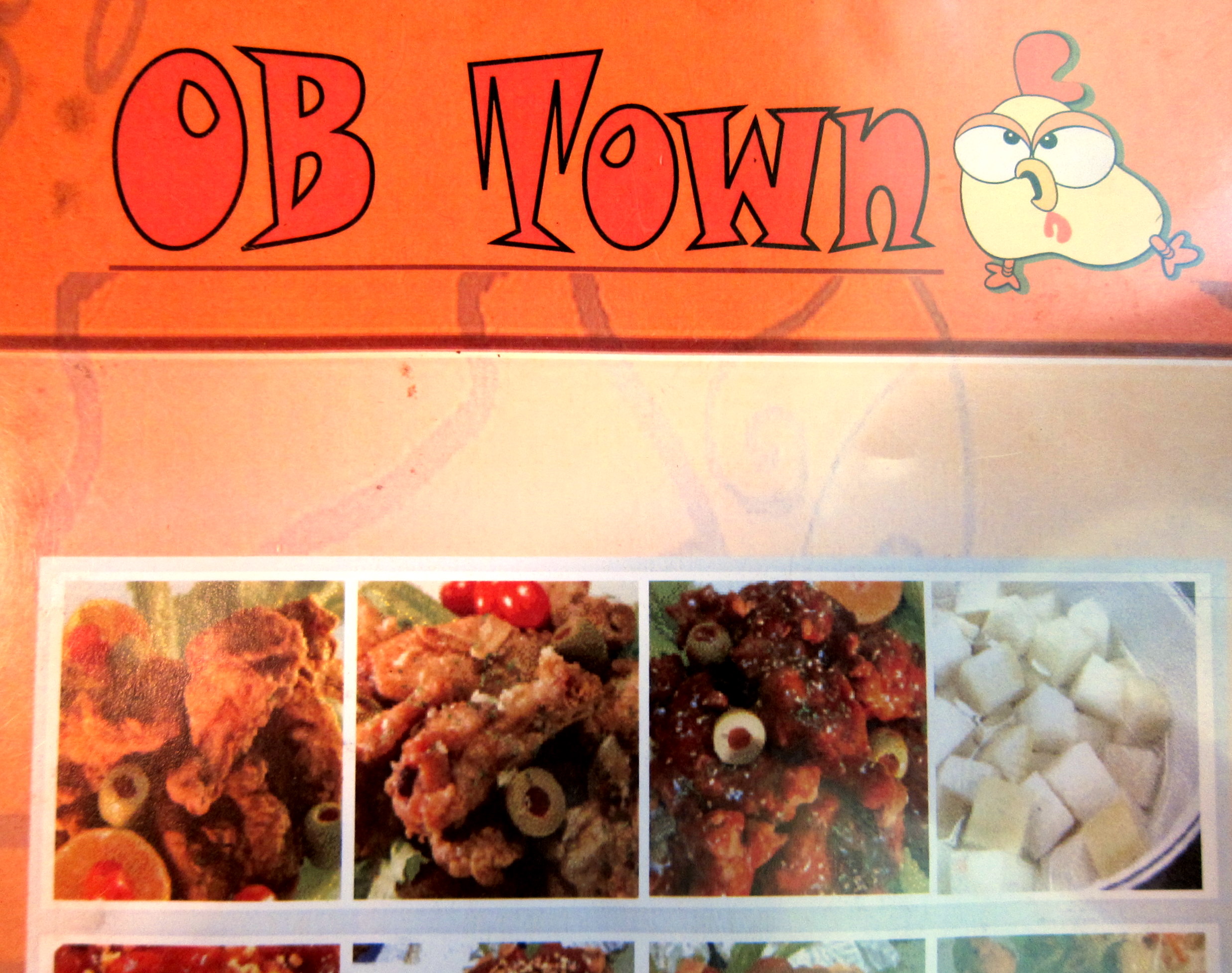
There are two things that I secretly wished for when I went to this Korean fried chicken joint in North Oakland: a better camera to take picture in the dark and a better tolerance for chili powder. [UPDATE: better camera obtained] I mean, just look at the jumping chickie on their menu, isn’t he all fired up?


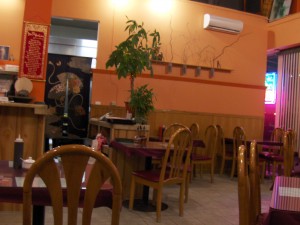
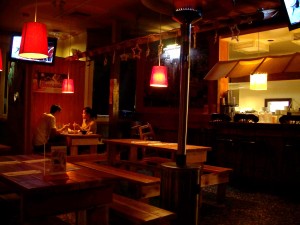
OB-interiorLate February, at 7pm. The moment we stepped in from the cold damp parking lot outback, I fell enamored with the ambiance. Dim light, warm air, seats divided up into small sections with straw thatched roofs overhead and modest curtains to ensure privacy and a sense of lonesomeness amidst the crowd. The fire post watched over quiet customers, most of whom are Korean. I’m saying this because it feels oddly heartwarming to listen to conversations that I don’t understand, and if you’re like me, then OB Town is the place to go when you’re in the mood for nostalgia.
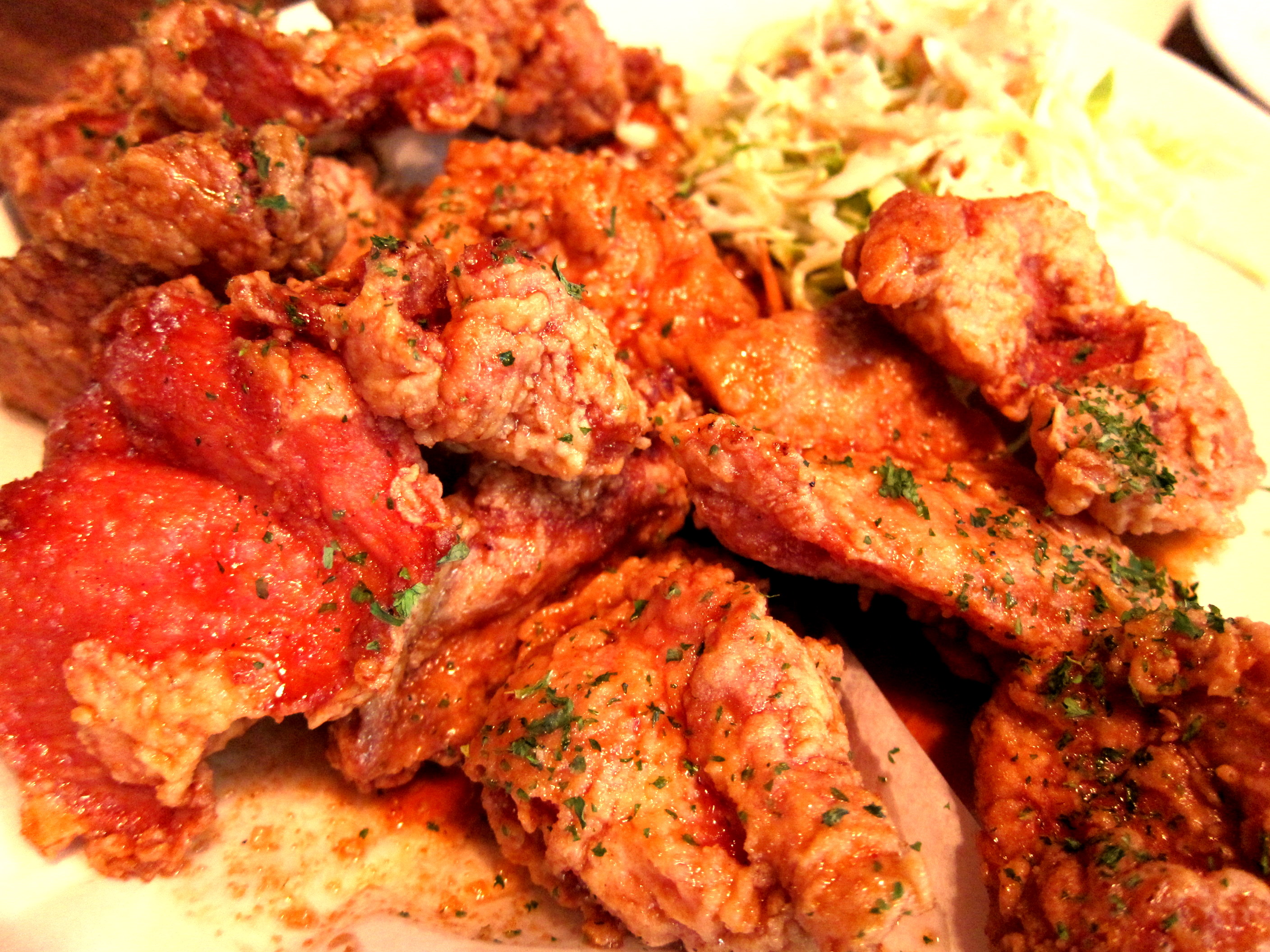
And fried chicken too, of course. A plate of garlic and soy sauce fried chicken (gan jang chicken) is more than enough for one, maybe two if neither is too hungry. The sweetness was addictive. I don’t know how many things were added to the mixing bowl, but no single flavor was too blatant, everything blended together to make a perfect package. The crispy coating was great, but what’s inside was so much better. Juicy, tender, flavorful strips of meat, and yes, even the white meat was great. I savored every bite.

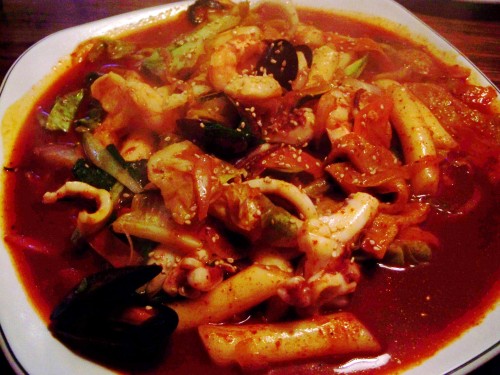
Which is not something I could do with the ddeok bokki (spelled “dduck bog i” on the menu), at least with the first few bites. I learned about the “spicy rice cakes” from Korean movies, and was prepared for the fiery blunder. What I wasn’t prepared for, and blame no one but my imagination, is the lack of a sweet taste. Chili powder, gochu jang, jalapeno, whatever it was, was on full strike with no masking flavor. Was it because I ordered seafood ddeok bokki? Are all ddeok bokki this spicy?

seafood_ddeokbukki
Wimpy as I am though, I like the dish. The smooth and chewy texture of garaeddeok (rice cake) hooked me, and I dug in. The mussels, shrimps, and squids were definitely for good change of texture, but those oversize noodle tubes fare best with the thinly sliced carrots and sauce soaked cabbage. Burning outside, soft and plain inside, the garaeddeok was pure pleasure. And although the sauce was quite strong, its scorching touch faded quickly with a sip of water and a few nibbles of cole slaw, allowing us to sample every visible piece of ingredient: rubbery sleeves of eomuk (fish cake), bitter herbs, mushy onions, gummy mushroom. The plate was a textural party. One tiny mismatch: the pungent jalapeno doesn’t belong there (just as it doesn’t belong in bánh mì and phở).

bacon-wrapped-asparagus-kebob
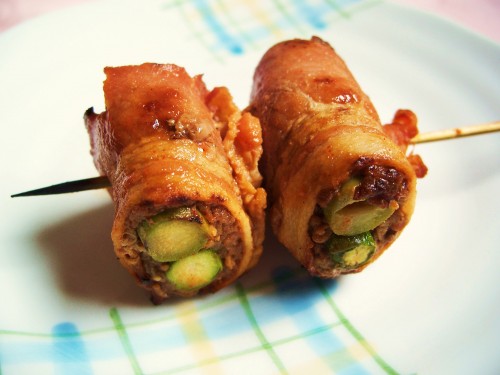
We washed the spice down with two awesome skewers of bacon wrapped asparagus kebob. It’s cute how they made the asparagus look like bones, and they were actually crunchy like cartilage too. (I’m suddenly reminded of pig feet, cooked and uncooked.) A savory high note to end the night.

Was my tongue dead because of the chili? Yes, I made a funeral for it with lots of milk chocolate. Will I go back to OB Town? You bet. The chicken feet are calling me.

OB-chicken-town

Wallet thinning: 1 gan jang chicken (15.50) + 1 seafood ddeokbokki + 1 kebob (<3.00)+ tax = $34.35

Address: Oriental BBQ Chicken Town
6101 Telegraph Ave.
(across the street from KFC)
Oakland, CA 94609
(510) 595-5338

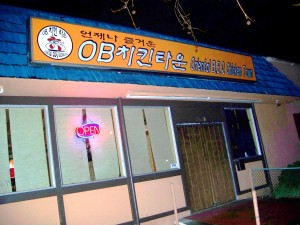
It looks a bit shady outside, but that’s just another indication of how tempting the food is inside.

Oriental BBQ Chicken Town in San Francisco on Fooddigger