Flavor Boulevard

We Asians like to talk food.
Subscribe

My first taste of Battambang
February 22, 2011 By: Mai Truong Category: California - The Bay Area, Comfort food


It happens on Broadway Street, Oakland. Dishes with names so hard to pronounce, ingredients and tastes so similar to Vietnamese food. I learn of the second largest city of Cambodia, smaller only than Phnom Penh. I share my first simple Cambodian dinner, complete with a salad, a meat, and a dessert.

Here’s a little language snippet: to Vietnamese people, salad is called “gỏi” |ghoy| in the South and “nộm” |nom| in the North. To my surprise, “nhorm” is its romanized name in Cambodia. Listening to the other customers at Battambang, Mudpie comments that Khmer and Vietnamese sound similar, to which I first protest, but perhaps it holds a grain of truth after all.

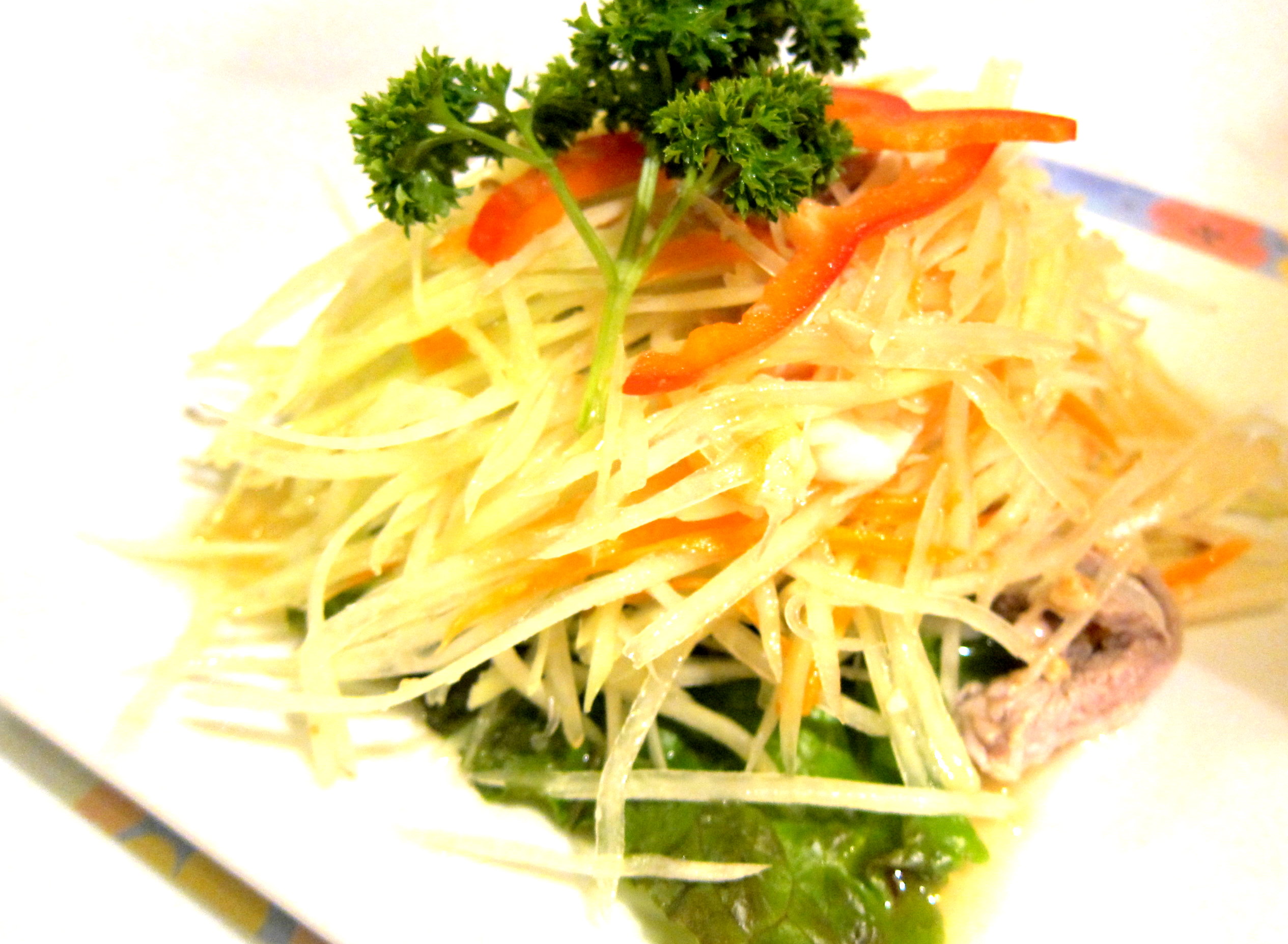
Here we have nhorm lahong. If there’s any salad that never goes wrong, it must be this green papaya salad of Southeast Asia. Delicate, raw, and soaking fruit shreds retain nothing but a tightening chew, the sweet lime dressing sends a quiet smell of fish extract. Battambang’s batch is a drop more watery than Dara’s som tum/tam mak hoong, on the plus side there’s plenty of sauce to make rice go quickly down the pipe.
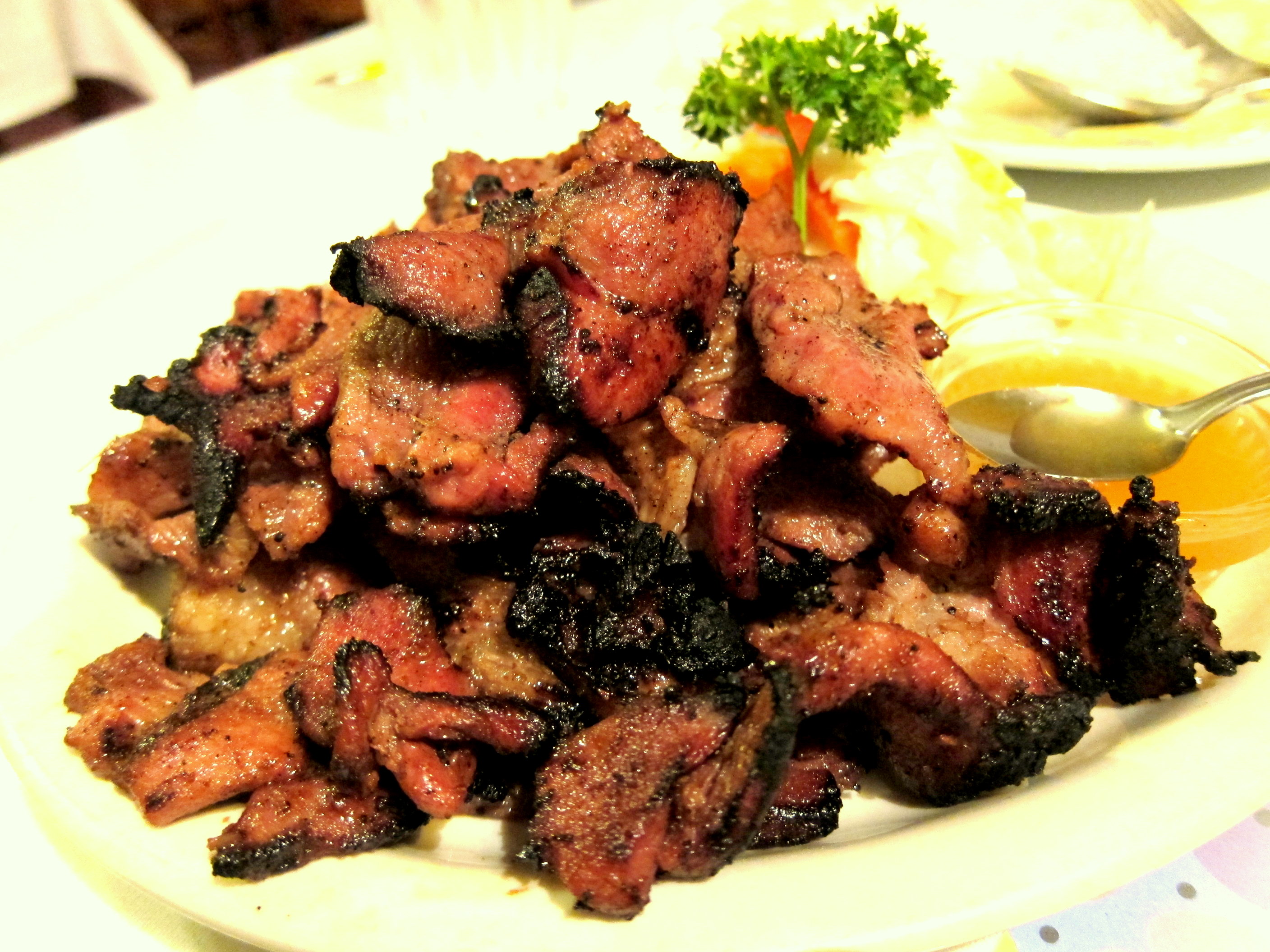

To make rice go even quicker comes sach chrouk aing. I don’t think I’ll be able to handle a full Khmer sentence of words like these, but now that I’ve known pork is sach chrouk and grilled is aing, I can survive in Cambodia ;-). Long version: sliced pork marinated with lemongrass, charbroiled, served with sweet lime nuoc mam and boiled cabbage on the side. Short version: godly.
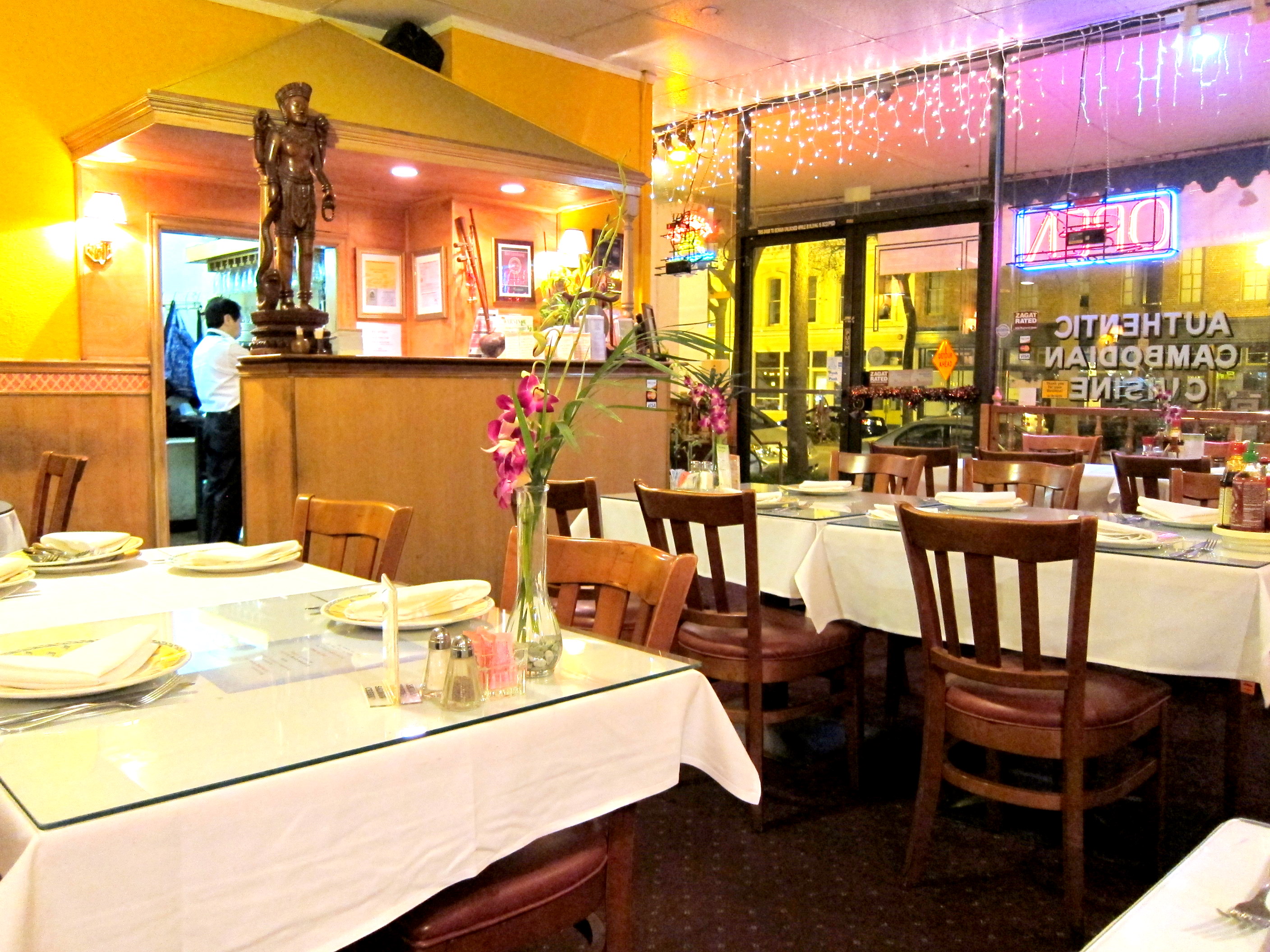

Like at most family operated Asian restaurants, the check will be brought out before you can order dessert, but we don’t let that stop us from ending our dinner on a sweet note. The dessert menu stands next to the salt, pepper, sweeteners, and a slender vase of real orchids.
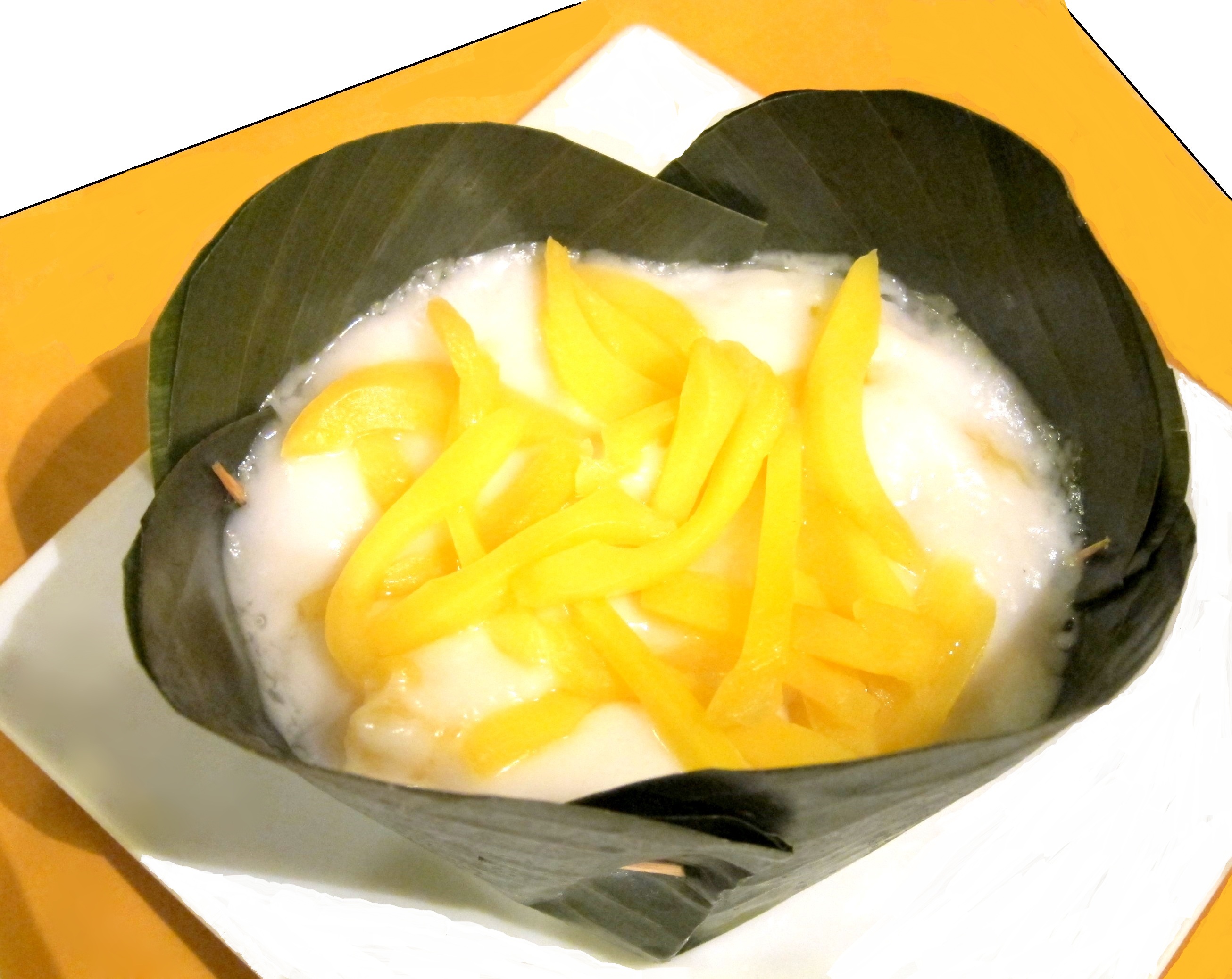

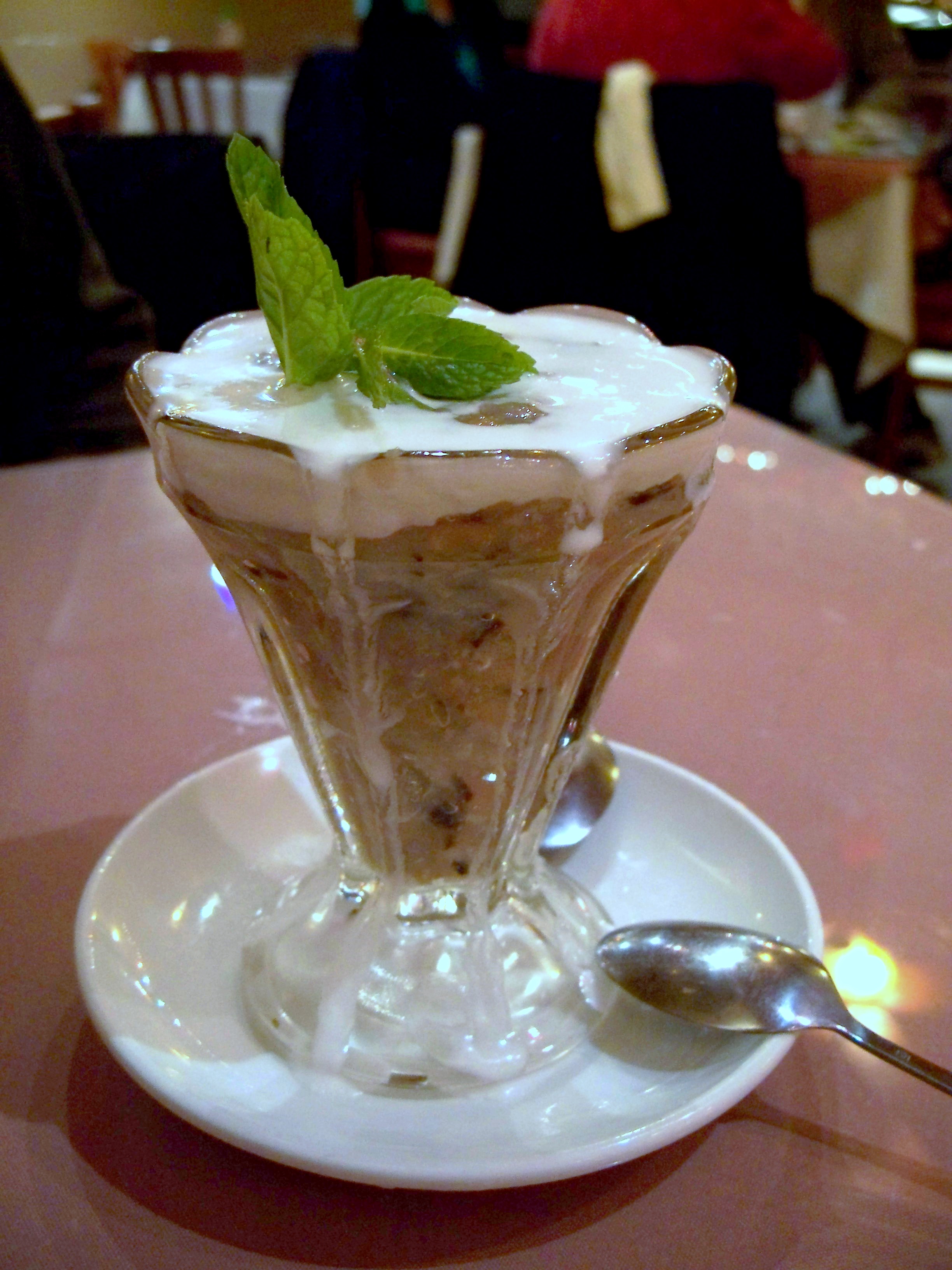
I ask our hostess to recommend either amuk knor or chake ktiss, and with no delay she says “Amuk knor for sure”. I then ask if it’s whole jackfruit or just some kind of paste or flavoring, and I must sound pretty stupid, the whole jackfruit is huge, at least as big as a 30lb turkey, but she (and you?) knows what I mean. Amuk knor is a kind of coconut milk custard with jackfruit slices, all steamed in a banana leaf cup. It breathes tropical and countryside, warm and mild. We scrape every corner of the leaf.
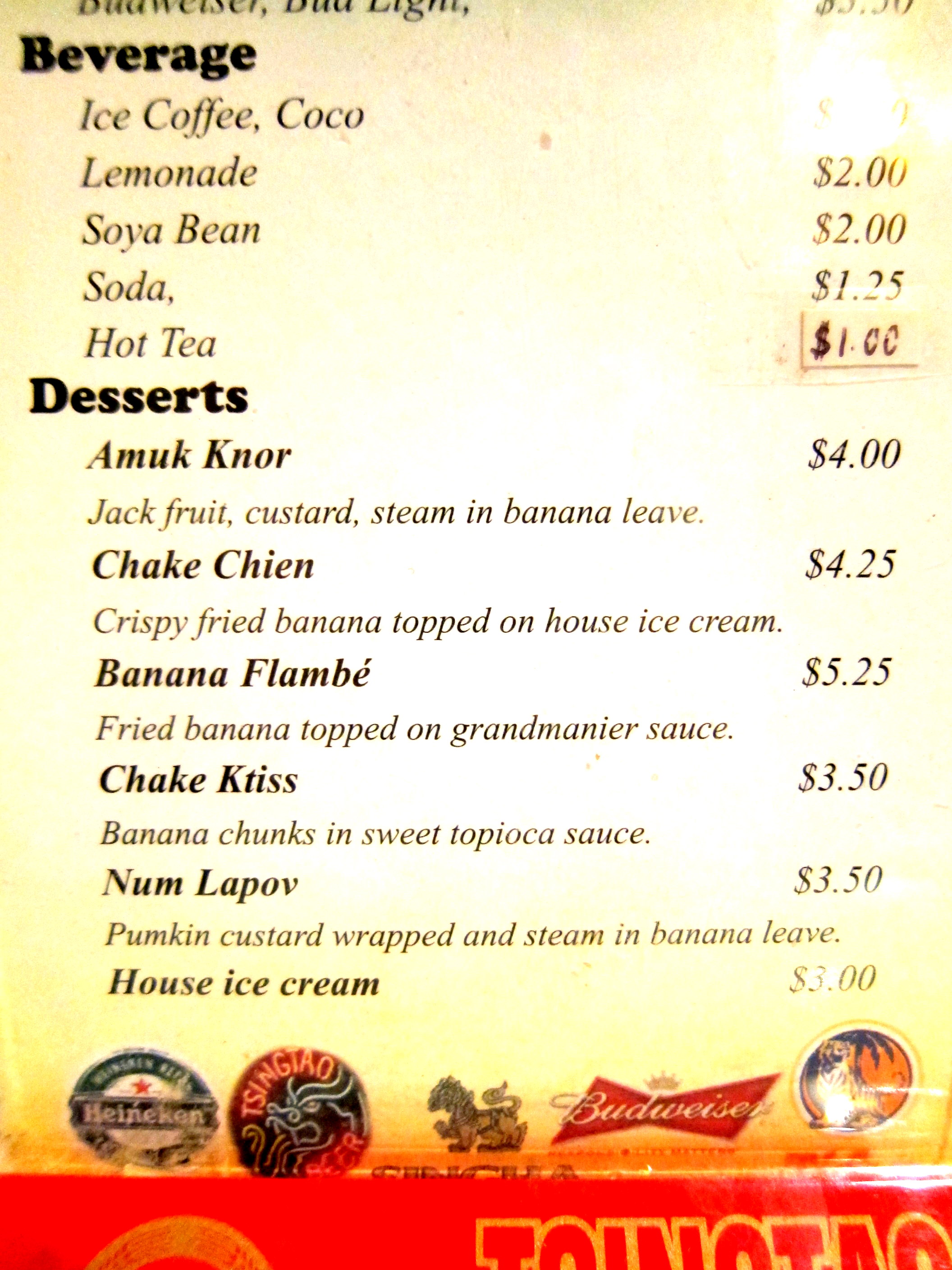

(I can only guess that chake ktiss is similar to chè chuối chưng).

Address: Battambang Restaurant
850 Broadway Street,
Oakland, CA 94501
(510) 839-8815

Battambang’s menu online
Money matter: $24.70 a dinner for two.
Casserole House – Jeongol in Oakland

February 18, 2011 By: Mai Truong Category: California - The Bay Area, Comfort food, Korean


If you’ve had Vietnamese hot pot and liked it, you’d like the Korean hot pot better. If you haven’t had Vietnamese hot pot, try it, and then try jeongol (전골 Korean hot pot), and then you’d like jeongol better. There goes my motherland loyalty, but Vietnam has bánh cuốn and gỏi cuốn, so I’m not too worried.

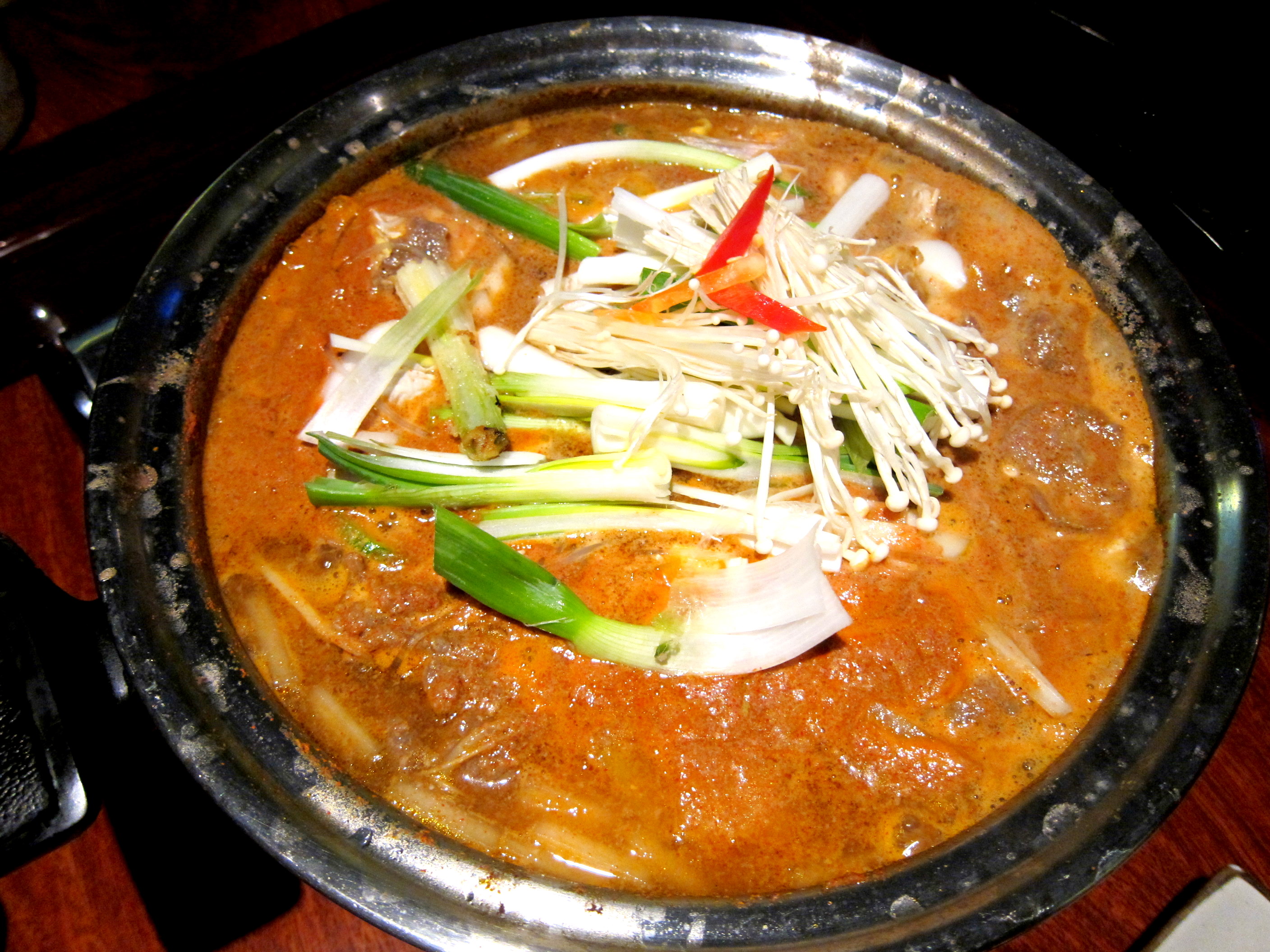
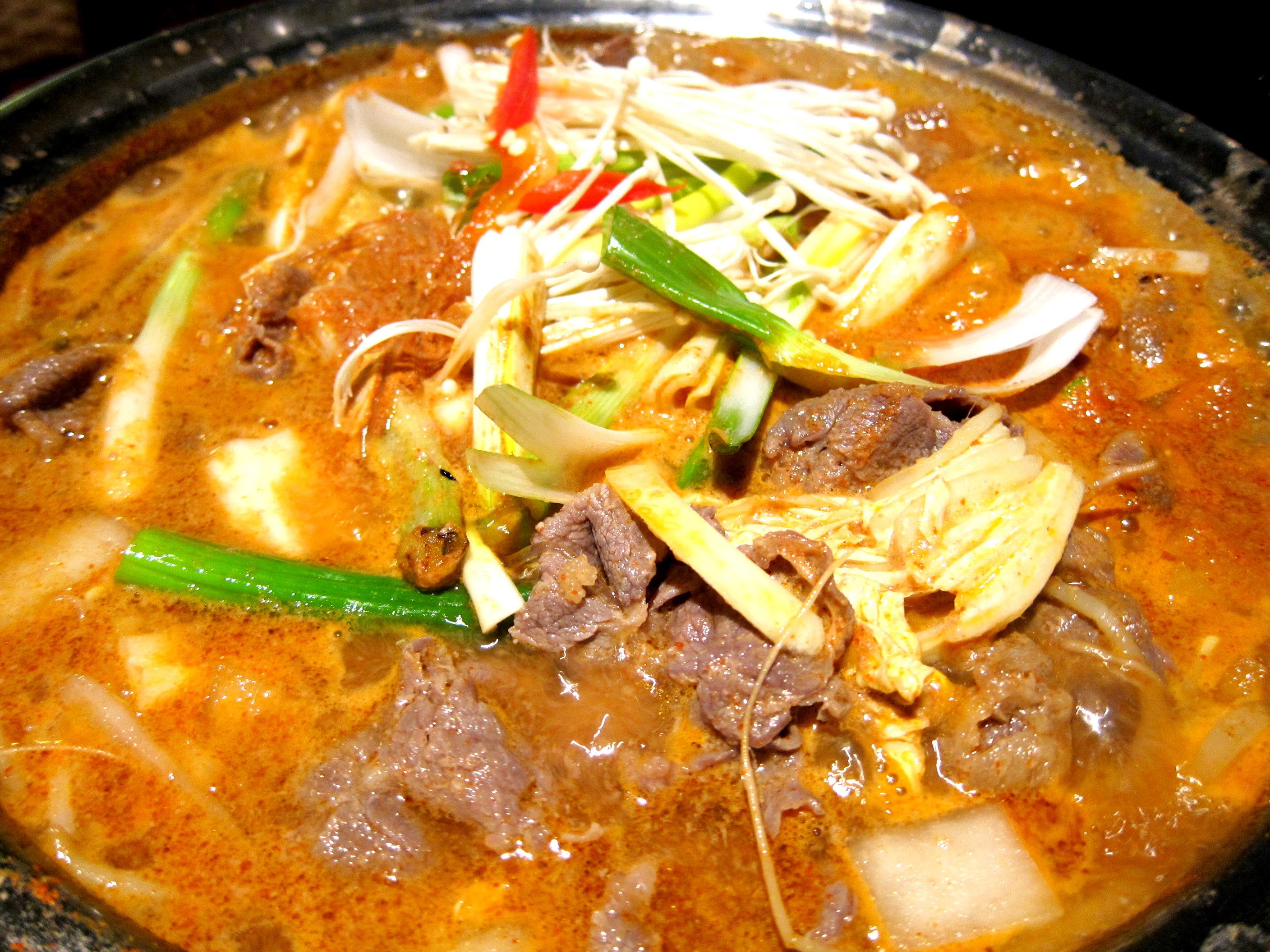
Lots of beef, lots of mushroom, green onion, bean sprout, tofu, cucumber, cabbage all snuggling in a pasty sunny broth. The pot is more like a deep tray on a gas stove, and the bubbling conglomeration is like a spoiled teenager threatening to run away from home. The bulgogi junggol comes to us wild and daring. We ladle right in.


Casserole House has these big bright pictures on the wall of beef, spam, vegetables, and seafood neatly arranged in a round dish or bobbing in broth. The real stuff in action also hides some tteokbokki (떡) for chew and dangmyeon (당면) for engtanglement with the enokitake that just wait to drip the broth between the plates or fling a fortunate dot onto your shirt. I don’t know why they would call jeongol “casserole”, the word brings to mind a square glass dish with crispy-top green beans swearing hot from the oven, which, as yummy as it is at Thanksgiving, is far less exciting than a hot pot. (As a guy said in a Super Bowl ad, “it’s where the action is”.)


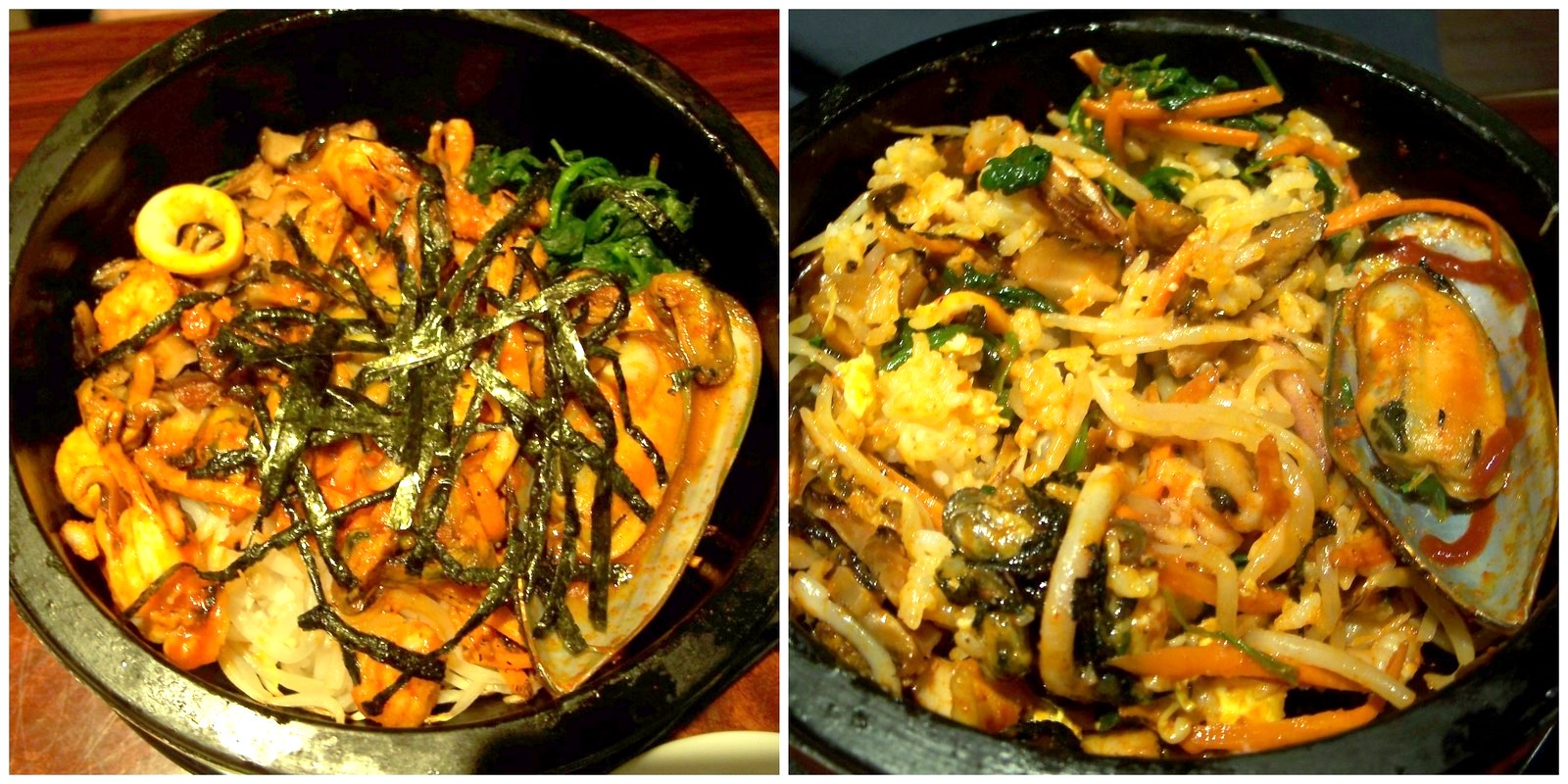
Like true Americans, we didn’t get jeongol the first time we ate at Casserole House. It’s not a mistake per se, because the seafood bibimbap had quite some scrumptious crust and chewy squid for kicks, and if you scan over my favorite post list, you’d know I have a soft spot for pig feet.


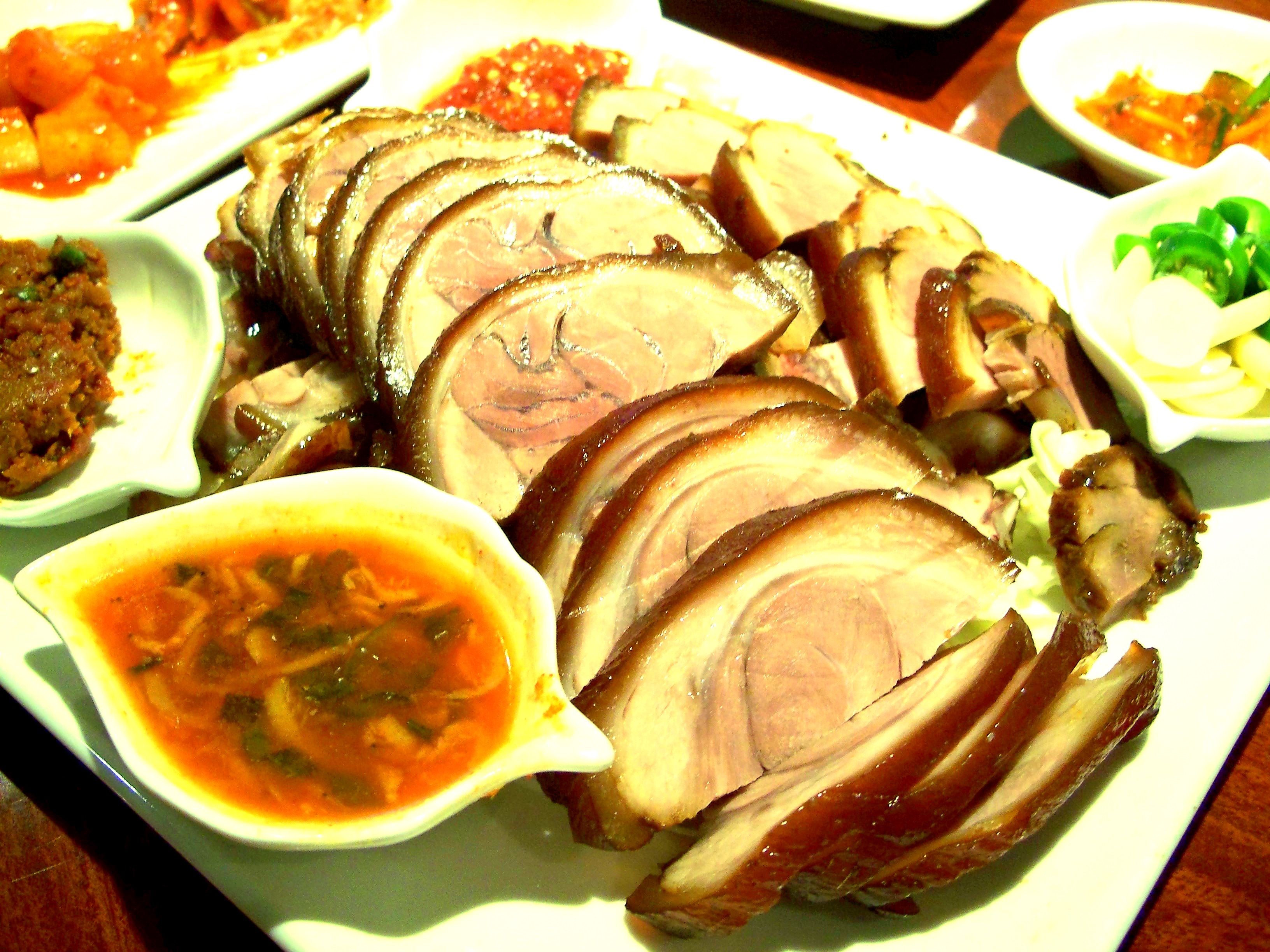
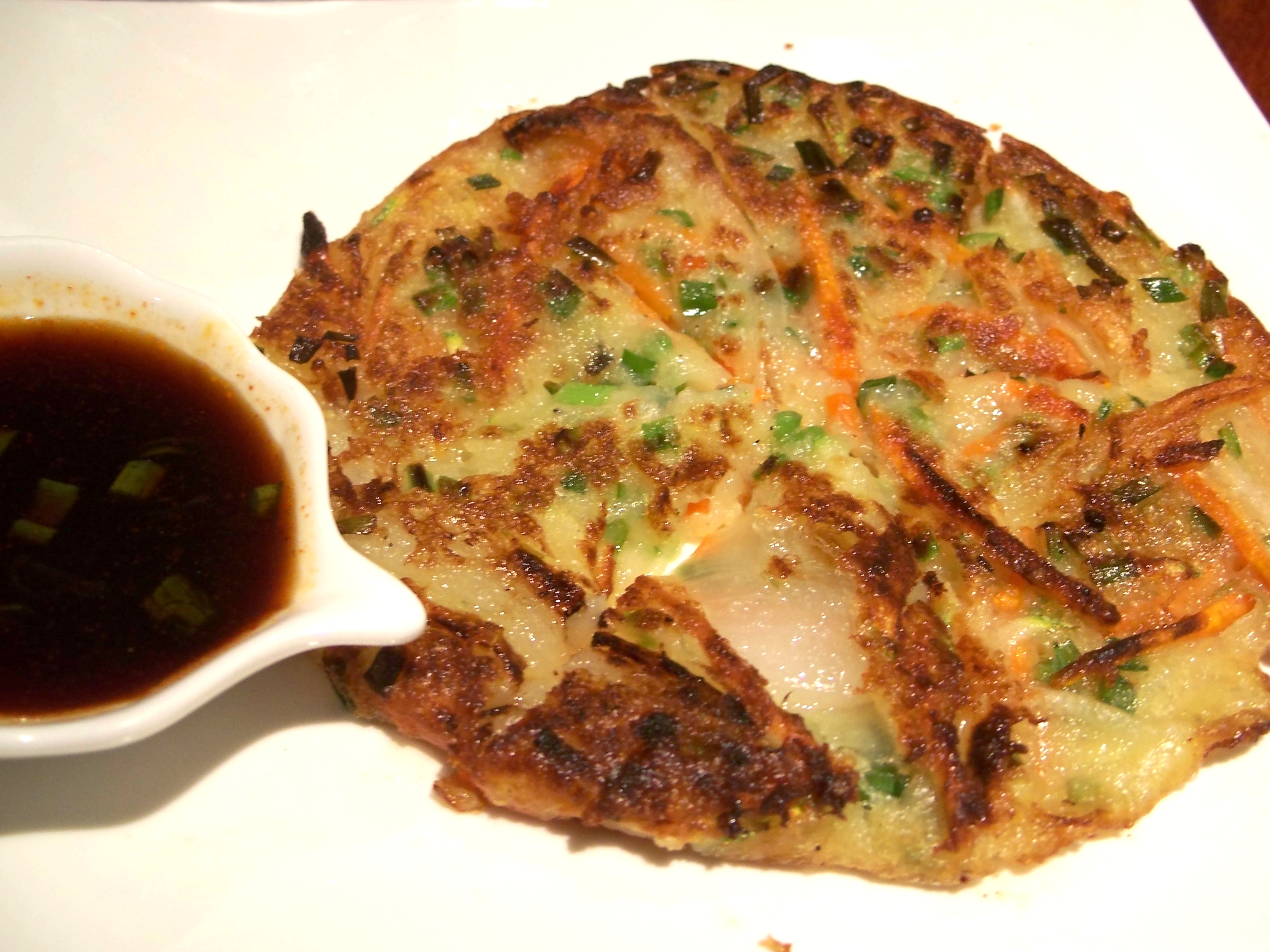
But the pig feet at Casserole House aren’t very soft. Jokbal (족발) is a cross between boiled and roasted, the skin is taut, hardened to nearly a crunch, the meat takes every chance to get stuck in your teeth. I like it. I wrap one or two slices in a lettuce leaf and smear on a chopstick’s tip of doenjang. I lick a taste of saeu jeotkal (새우 젓갈), but objectively speaking, Vietnamese nước chấm is better :-D. And seriously, for $17.95 the plate has enough meat to feed five people, if they also clean out the banchan and order an extra pajeon.


Speaking of money, I haven’t seen jokbal on any other menu, so it’s a must-get here. But there are three reasons to get out of the bibimbap comfort zone and get the jeongol while you’re at Casserole House: 1. it’s in the name, 2. despite it costing a scary $29.95 each scary pot, it’s enough for 3-4 people to share, 3. it’s metal-chopstick-licking good.


And when you’re there next year on Jan 22-25, make sure you wish the ladies a happy new year. They’re sweet, like the sikhye (식혜) they give us for dessert. I drank Mudpie’s cup, too.
Address: Casserole House (right next to Sahn Maru)
4301 Telegraph Ave
(between 43rd St & 44th St)
Oakland, CA 94609

Treasure in the Jung

December 12, 2010 By: Mai Truong Category: California - The Bay Area, Chinese, One shot, sticky rice concoctions


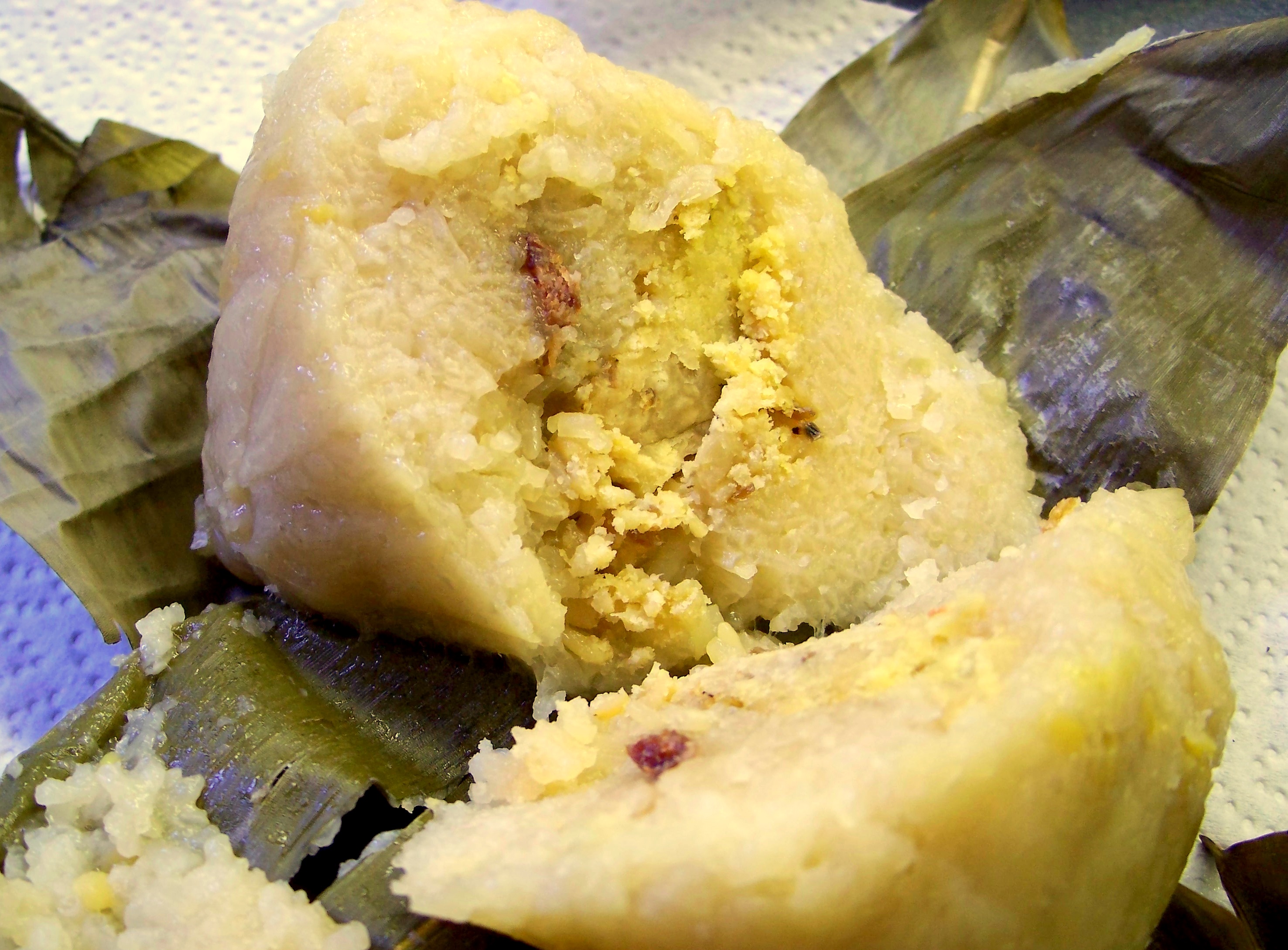
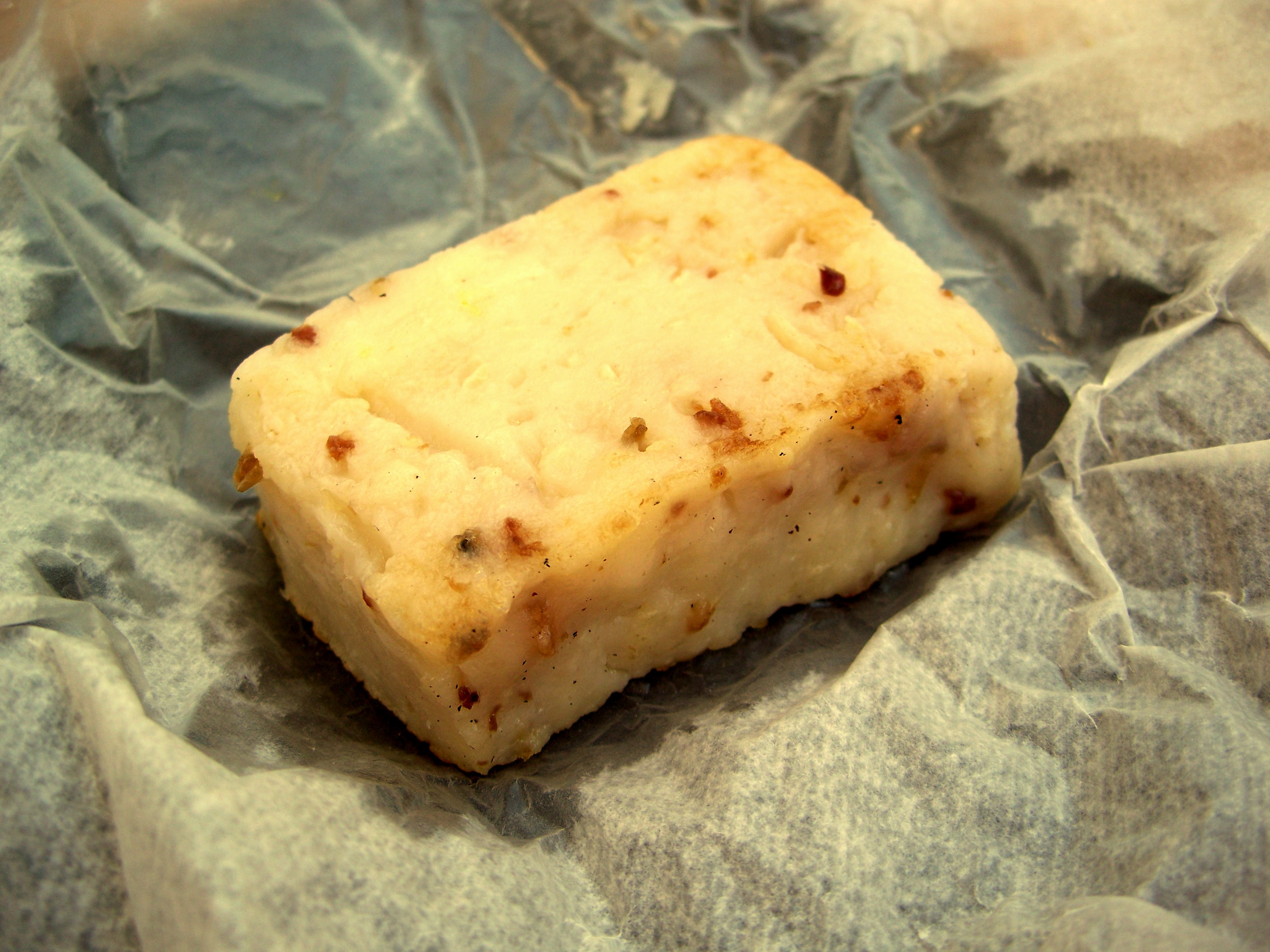
Oakland Chinatown, except for places like Tây Hồ, Bình Minh Quán, and the Korean restaurant on 13th street, carried on its everyday business on Thanksgiving as if it were a town in China. The Chinese dedication is admirable and to be grateful for. Without it I would haven’t had two meals worth of $1.75 wrapped in bamboo leaves. Yes, two meals.
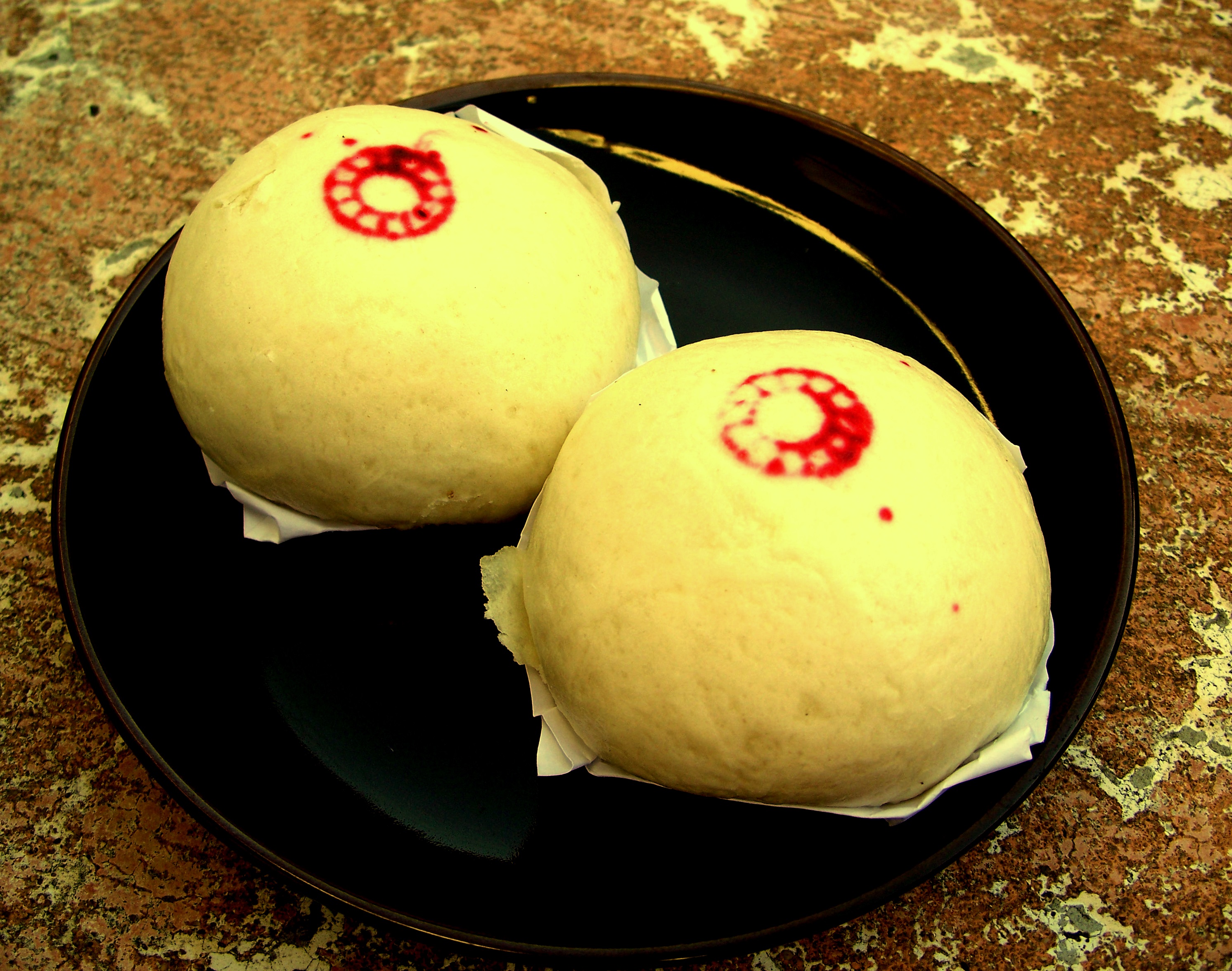
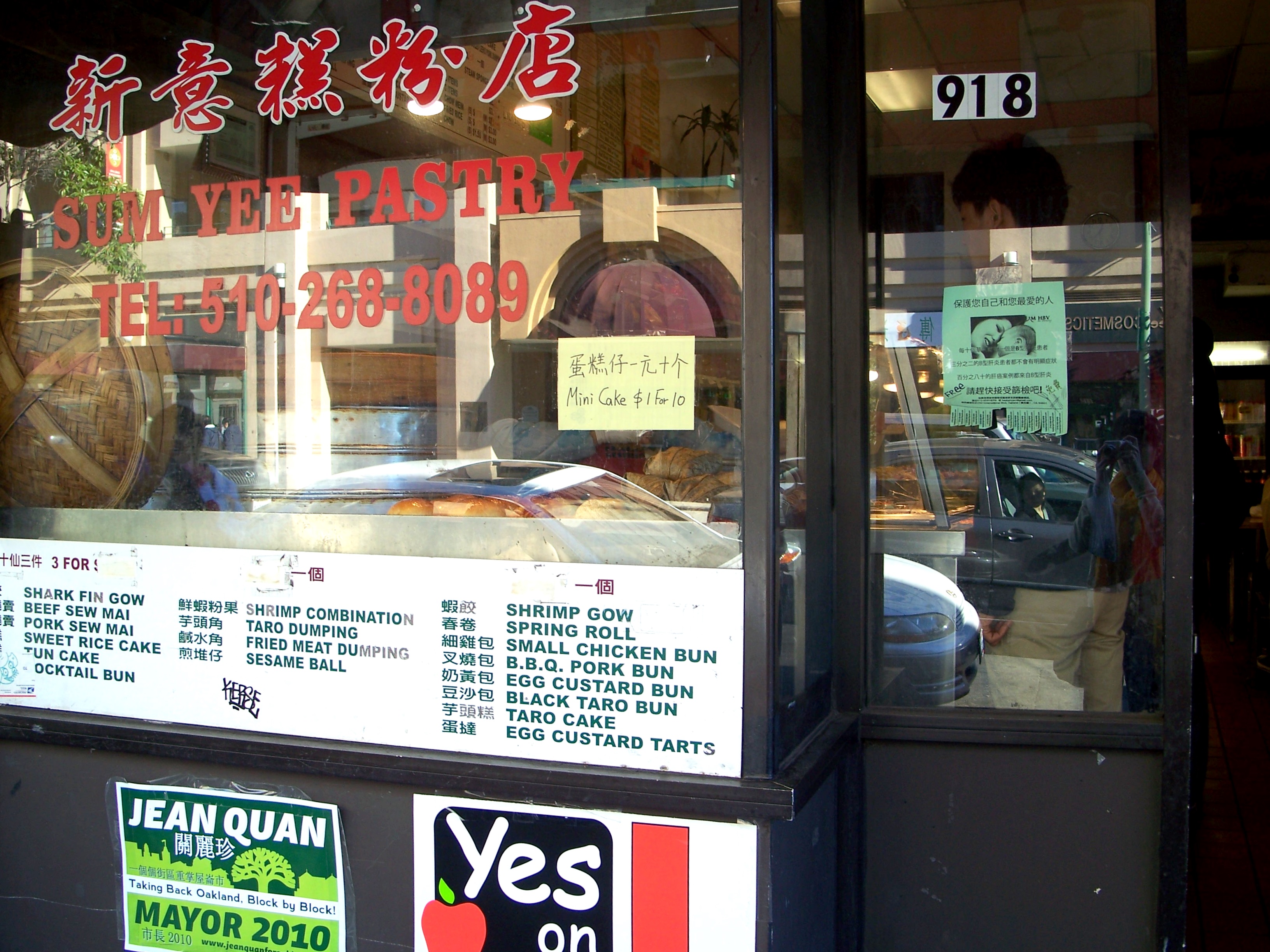
Jung, as the lady at Sum Yee Pastry pronounced, is a heavy deal. At first I thought it was a Vietnamese banh gio, except for the leaf wrapper being dried instead of smooth, damp, and waxy. I asked her for the name and couldn’t make out what she was saying, I asked her to write it down but she didn’t know how, she then asked if I was Vietnamese and switched to my mother tongue in her mixed Chinese tongue to explain that this thing is eaten on May 5th just like banh chung is eaten during Tet. Aha, so it’s zong zi, the great great great grandfather of banh u tro! Turns out zong zi (just a different, and much more common, pinyin name of jung) are sold year round nowadays.


This zong zi in particular has different fillings from its regional variations in China or Malaysia, and certainly bears little resemblance to the sweet version (gan shui hong dao sha joong), as its main feature is mung bean paste. (Sum Yee has the peanut type for the same price, too, though I’m not sure if it’s peanut paste or whole peanut.) The barbecued pork and lap cheong are rather dry, the sticky rice cements my stomach, I reluctantly wrap up one half for dinner. Little do I know I’ve saved the better half for last. There is a salted egg yolk embedded in that corner. 😀 *Dancing hearts*


Address: Sum Yee Pastry* in Oakland Chinatown
918 Webster St
(between 10th St & 9th St)
Oakland, CA 94607
(510) 268-8089

(*) It actually has a whole long array of savory dinner dishes, steamers of pork buns and relatives, and if my memory hasn’t failed, just one corner of pastries

Rolling business in Tay Ho Oakland

December 11, 2010 By: Mai Truong Category: California - The Bay Area, Comfort food, Northern Vietnamese, savory snacks, Vietnamese


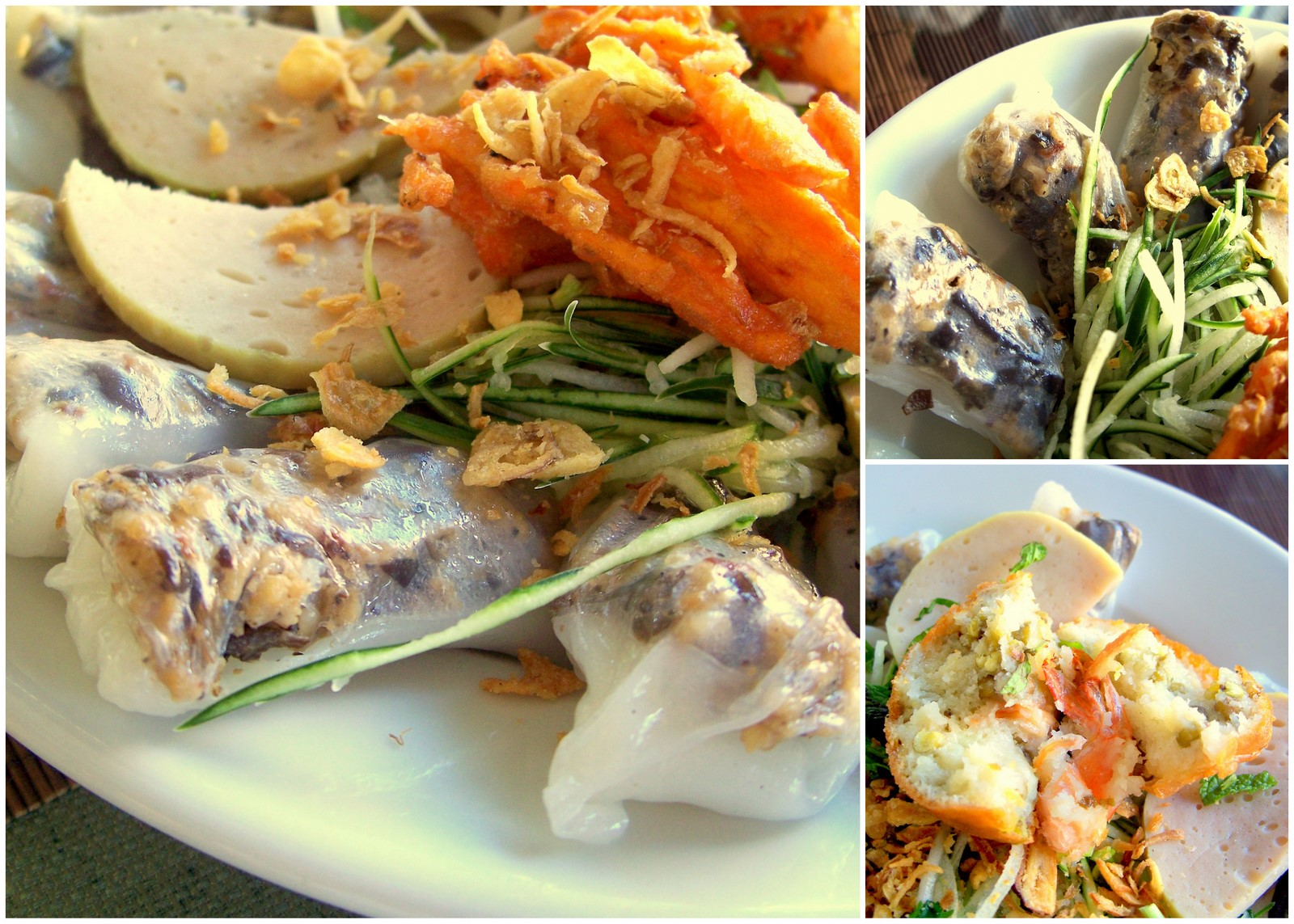
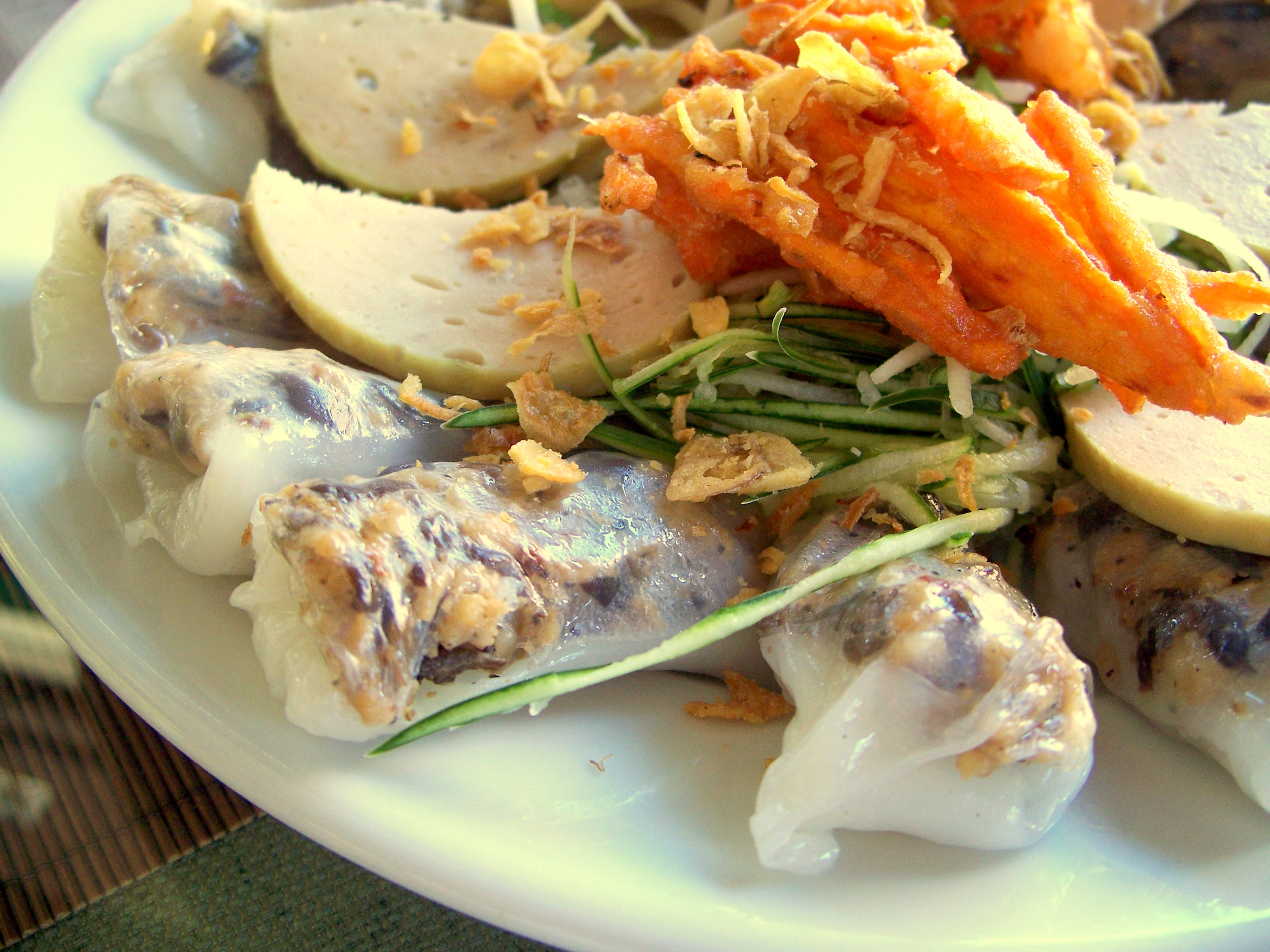
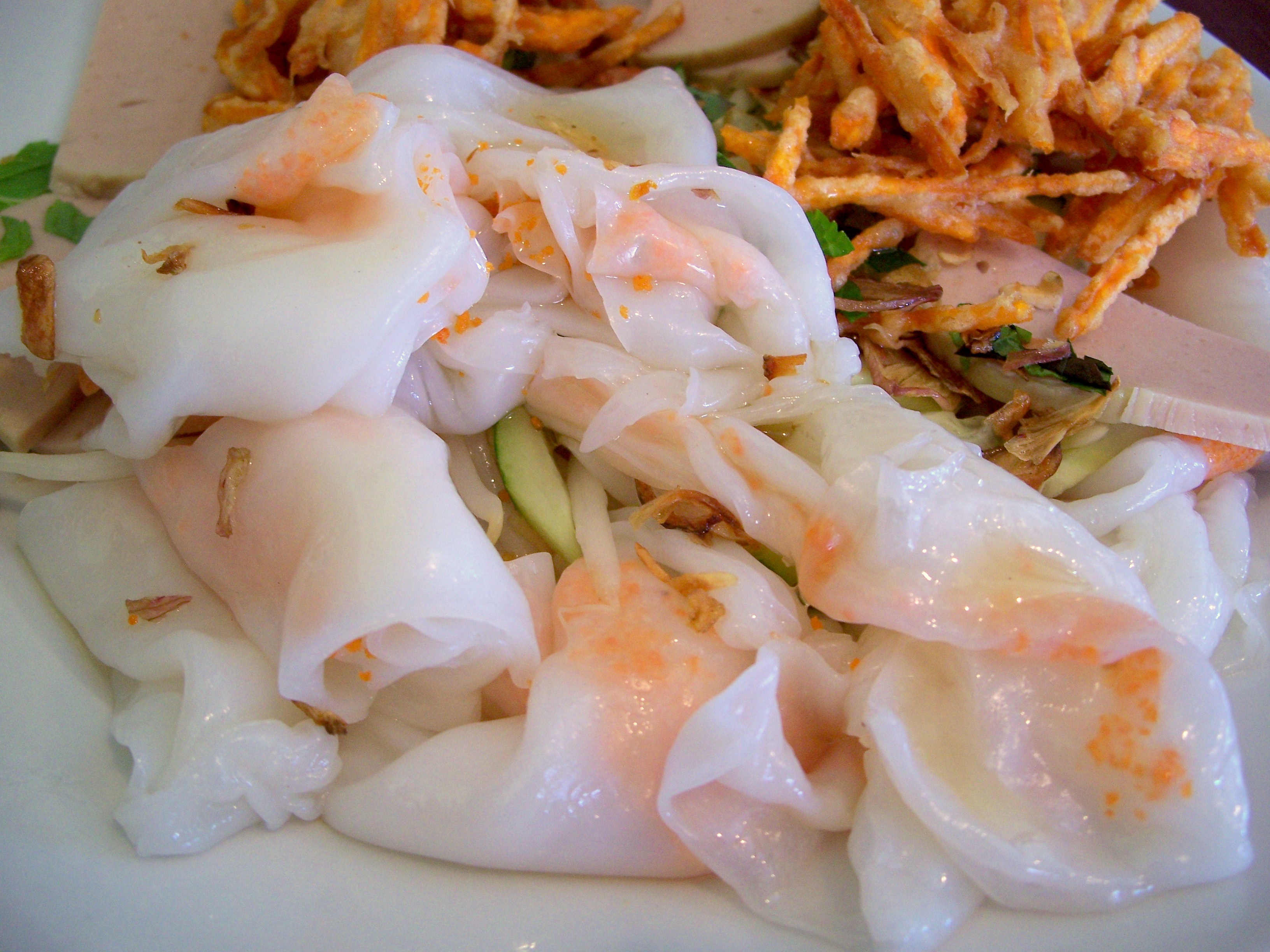
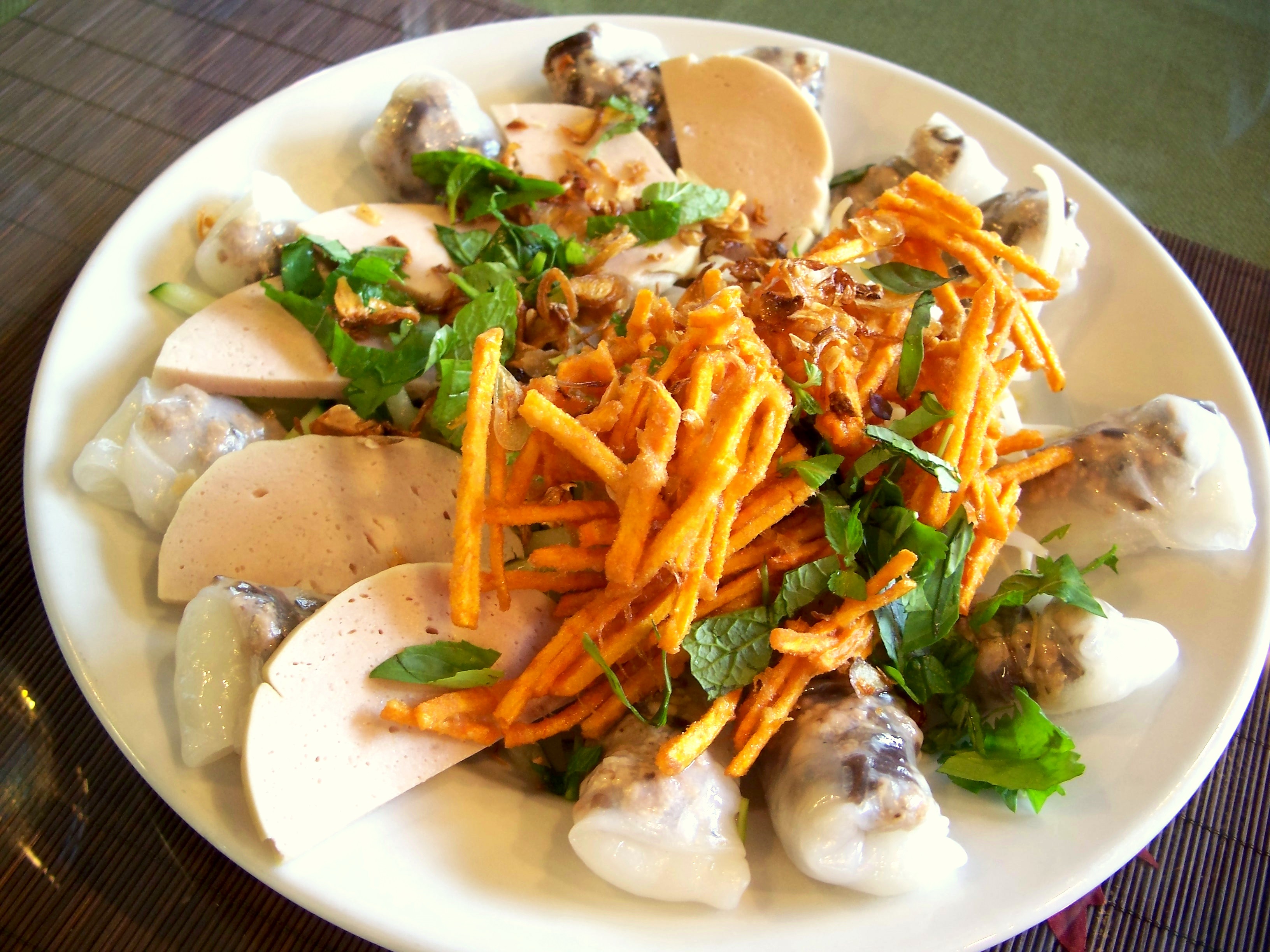
Not many Vietnamese diners roll out steamed rice leaves stuffed with pork and mushroom, and among those that do, not many actually do it right. A good roll of banh cuon must be slick but not oily, delicate but not crumbly, the flour leaf thin but springy, the stuffing visible, almost poking through, on one side and hidden on the other, served warm. A good nuoc cham must be more sweet than salty, with a little zest of lime, and spicy is not necessary. You then pour as much of that honey-colored dipping sauce as you want all over the plate, soaking the cucumber, the bean sprout, the cha lua, and especially the rolls. You then savour. When it comes to banh cuon, Tay Ho rules, from Vietnam to America. But among the Tay Ho’s of the Bay, Tay Ho #9 in Oakland makes it best.


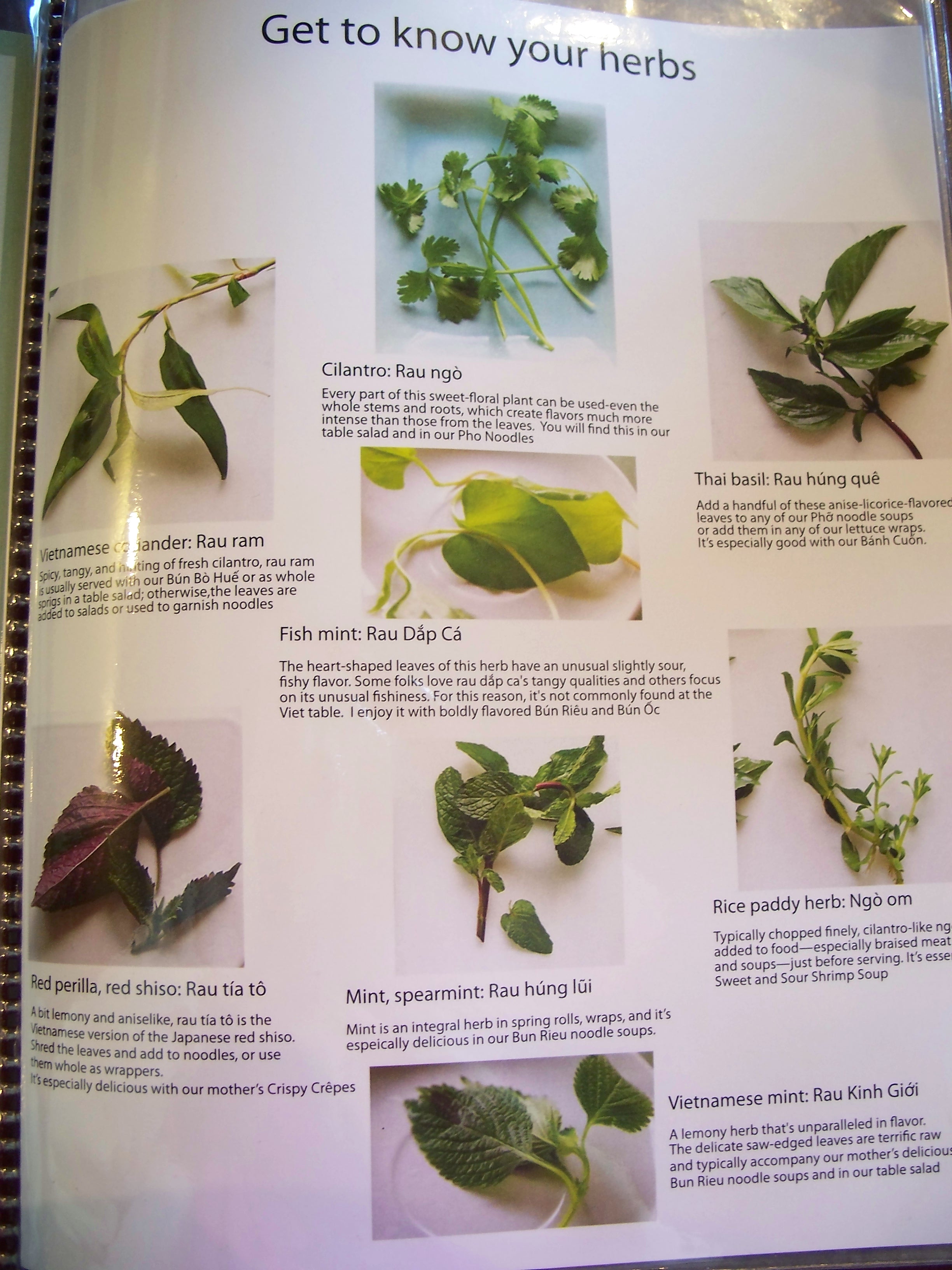
After taking over the business from her aunt, Duyên transforms Tay Ho Oakland into an all-American restaurant with fluent-English-speaking staff (herself on weekdays and with another girl on weekends), attentive service, credit card accepting, and a list of common herbs on the last page of the menu, something I haven’t seen at any other Vietnamese restaurant. It helps me at least, finally after 24 years I know which name goes with which plant. (Click on image for full-sized version). The food authenticity, of course, is preserved.


The menu features four types of banh cuon. The first, order #8, is the definitive authentic unadulterated version of steamed rolls that the Northerners had created and the whole country has fallen in love with: bánh cuốn nhân thịt (steamed rolls with meat). The more I eat it the more I crave it. The best part: flat, slick, crunchy pieces of wood-ear mushroom that accidentally fall out of the rolls.


The second type of banh cuon, for non-meat-lovers like my mother, is bánh cuốn tôm chấy (rolls with dry-fried shrimp). The shrimps, peeled and fried without oil or any liquid, get dried up and broken into a flossy powdery entanglement. That’s if you make it at home. Here I suspect the kitchen uses some prepackaged shrimp powder for efficiency, which has a beautiful scarlet hue but little texture and flavor. The rolls, though practically just steamed rice leaves, are still savourastic when soaked and glossed in that honey-colored sweet and salty nước chấm.


The third type is a modern spinoff with thicker rice leaf, bigger rolls, stockier stuffing that features grilled pork, bean sprout, and cucumber all in one, also at a heftier price (4 rolls for $6.95). Bánh cuốn thịt nướng is more of a filler than a delighter, but who says it can’t lift your mood while settling your stomach. Instead of grilled pork, shredded pork skin is also used, making the fourth type: bánh cuốn bì.


If banh cuon thit nuong‘s savoriness from grilled pork saves it from getting drowned in nuoc cham, the shredded pork skin (with some meat) in banh cuon bi are merely for textural pleasure, leaving chilipeppered peanut sauce to dress up the rolls. I have faith that nuoc cham would be a better roll-dresser though.


Occasionally I like to fool around with these variations, but in the end banh cuon nhan thit is still the winner in taste, just as Tay Ho Oakland is the winner in reliability.

Address: Tây Hồ Restaurant – Bánh Cuốn Tây Hồ #9
344B 12th Street
Oakland, CA 94607
(510) 836-6388

Ethiopian at Cafe Eritrea D’Afrique, maybe?

December 06, 2010 By: Mai Truong Category: California - The Bay Area


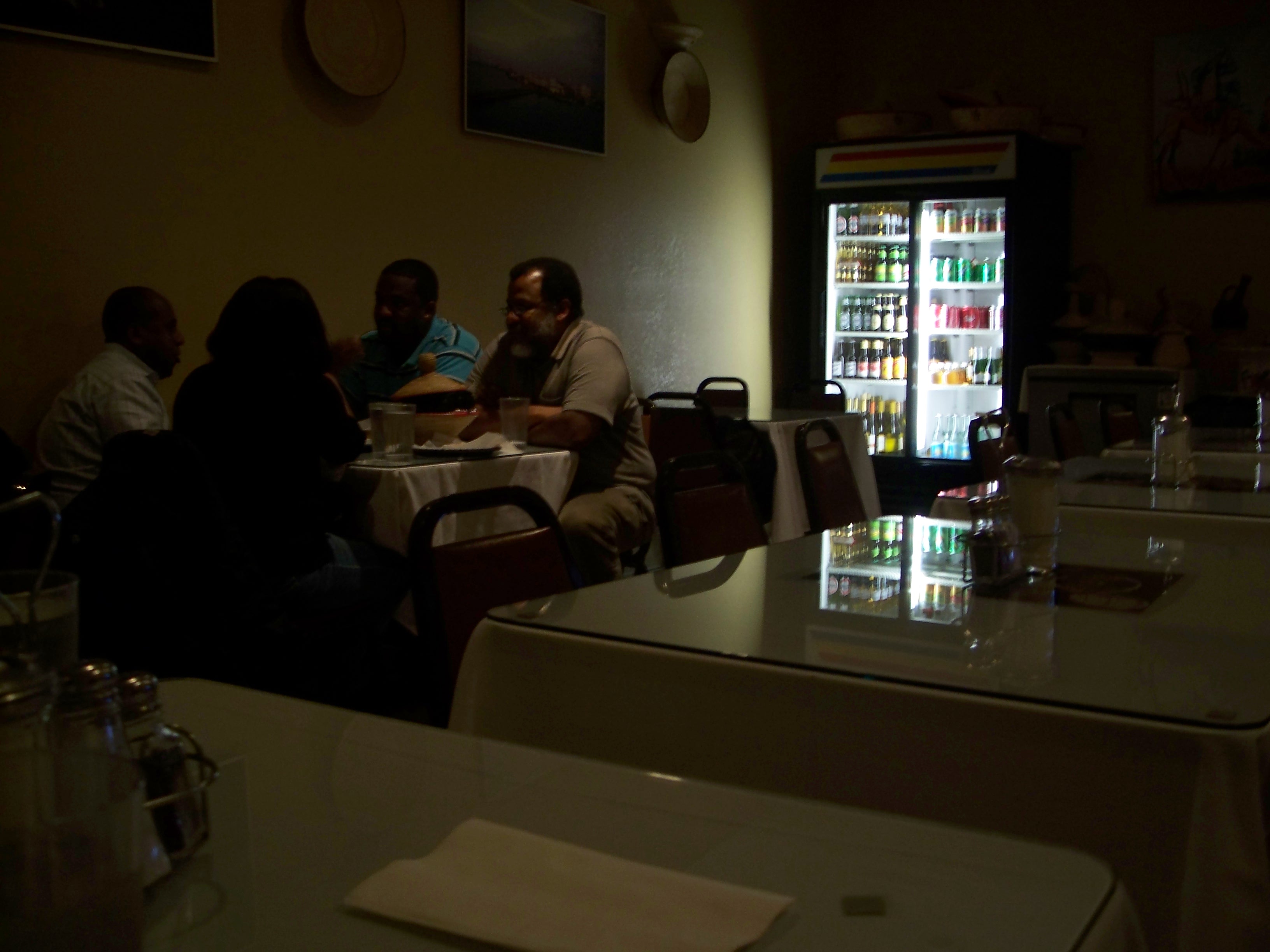
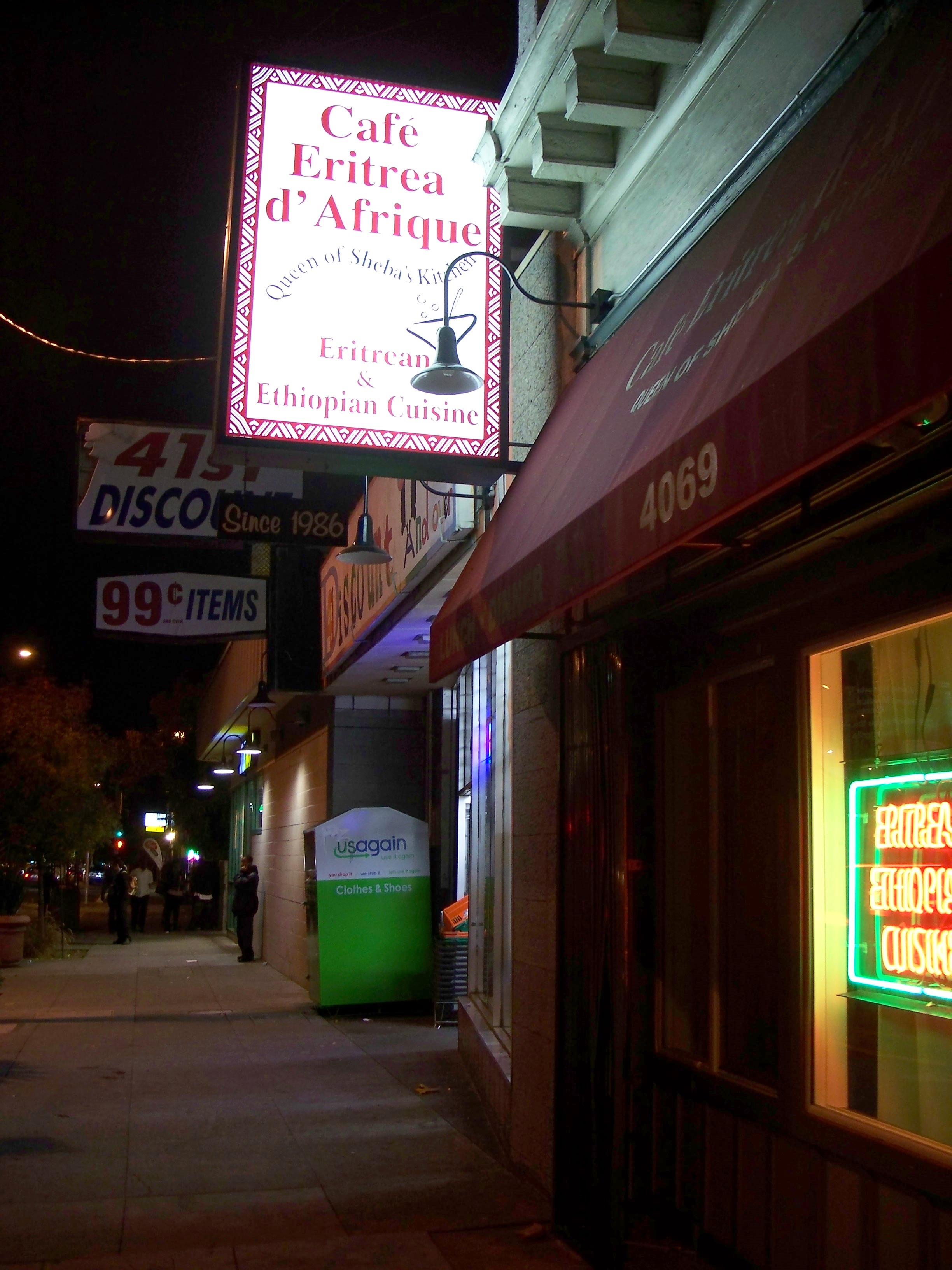
Usually I have no problem remembering restaurant names, both foreign and English. But Eritrea D’Afrique is for some reason a tricky business, I have to search for the receipt to get the name right. And it’s not just the name, its entrance is tricky too. We see the sign, we see people inside, we try what we think to be the door, which is locked. Confused and slightly embarrassed with bypassers, we look through another door to its right and see a bar. It turns out the bar is part of the cafe. Inside, the spacious, curtained and dimly lit dining room has three table occupied, all by Africans who seem quite at home with the place and converse in their own language. Always a good sign.

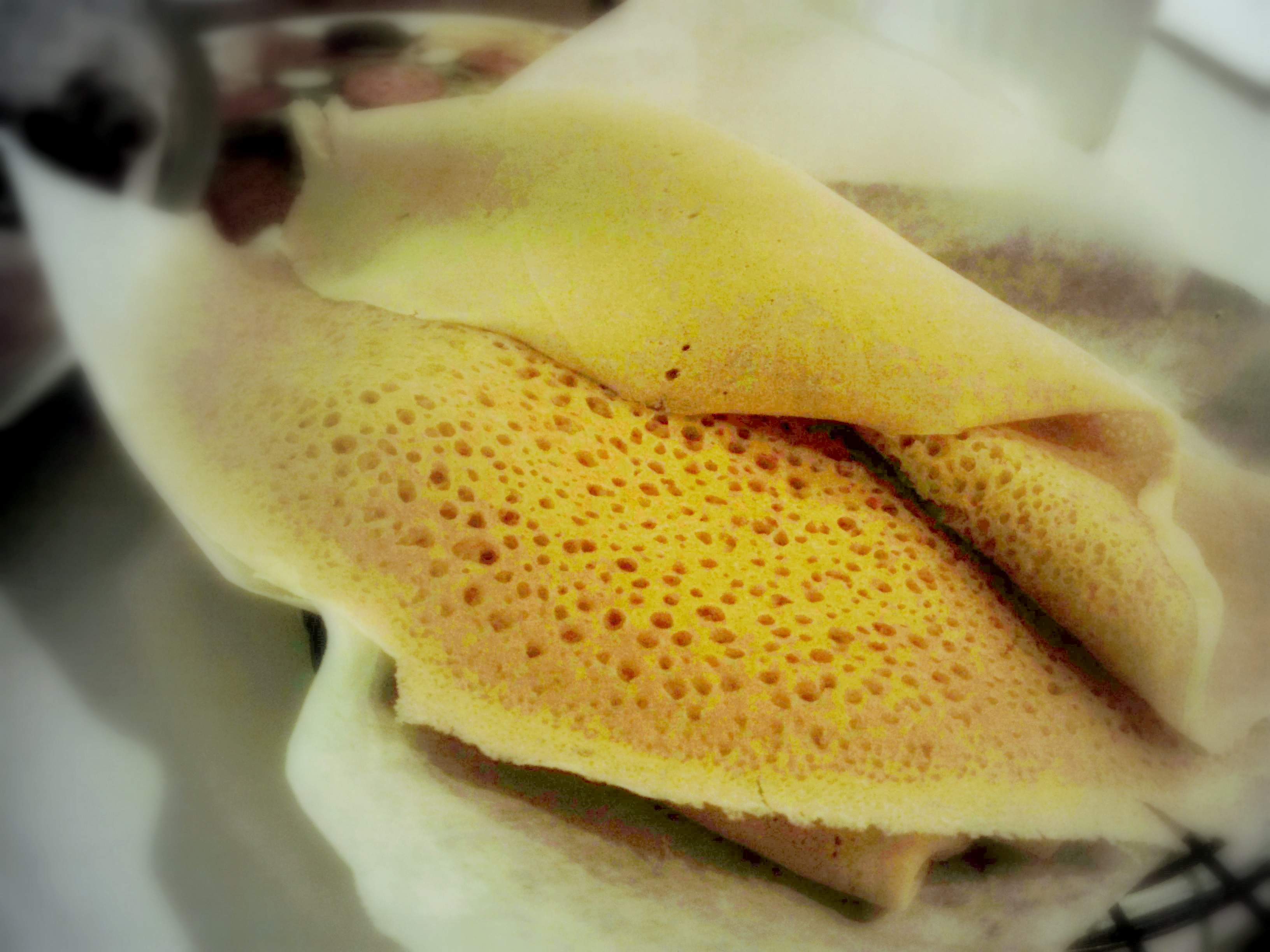
I notice them using their hands to scoop up food, just like the Indians, and a thought of worry comes. Sure, we eat pizza, spring rolls, goi cuon, fruits, bread, fried chicken, ribs, and a gazillion other things with hands, but it’s dubious how much bean and salad I can gather with the tip of my fingers. It’s the efficiency, not the messiness, that makes me consider a fork, which turns out to be unnecessary. Because unlike the Indians, the Eritreans use more than just fingers to scoop. In fact, their injera should win the prize for the most efficient utensil out there.


First of all, it’s thin, resilient, and easy to handle. You tear a piece, you scoop, you wipe the plate. Secondly, its porous side grasps, soaks, and holds soft food like no other. And finally, it’s edible. How many utensils in the world can be stuffed in the mouth and digested in the stomach? It’s airy, spongy, it’s a little sour, it’s a snack by itself and a flavorful addition to other foods. It’s brilliant.


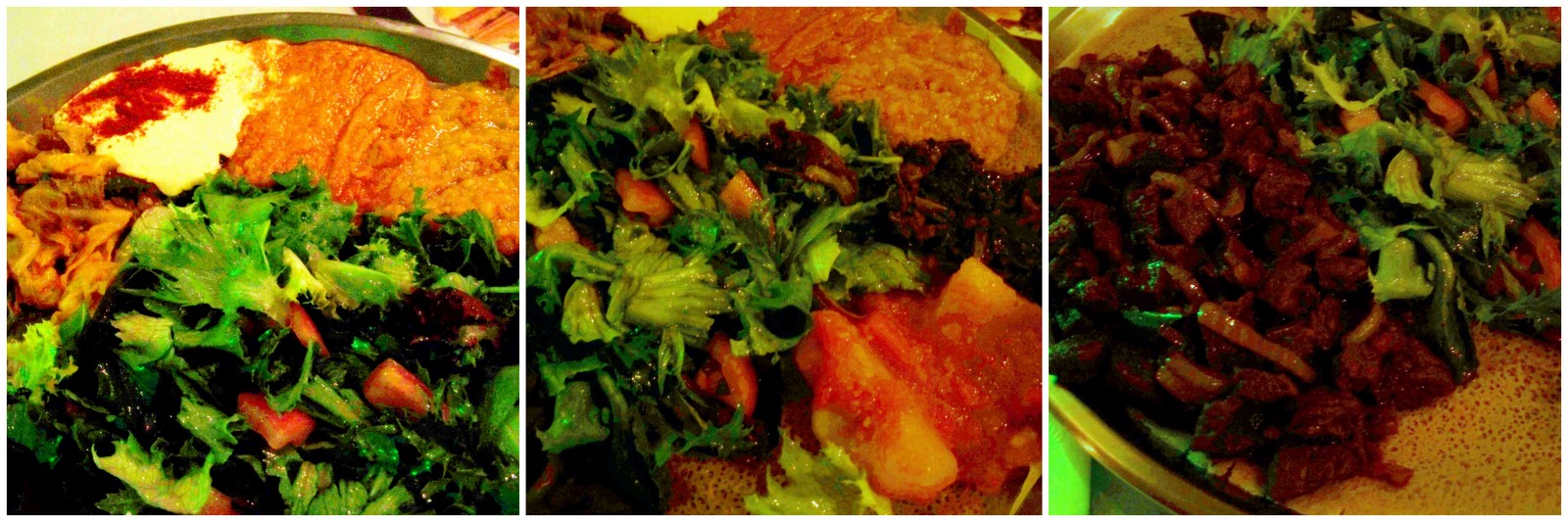
Not to mention it’s also a serving plate. Topped with our seven-coursed veggie samplers and a heap of stir fried beef. The veggies remind me of Istanbul Grill‘s appetizer collection: there’s humus, cabbage and green beans, hamlee (collard greens), shiro (chick pea puree), birsin (split lentil stew), potatoes, and salad in the middle. The shiro and birzin are expectedly similar, both with a natural subtle sweetness of legumes, but birsin resembles creamed corn while shiro is closed to Mexican refried bean. I’m not crazy for humus, the hamlee can go, but I wish they gave us more of that mushy, saucy, savory cabbage.


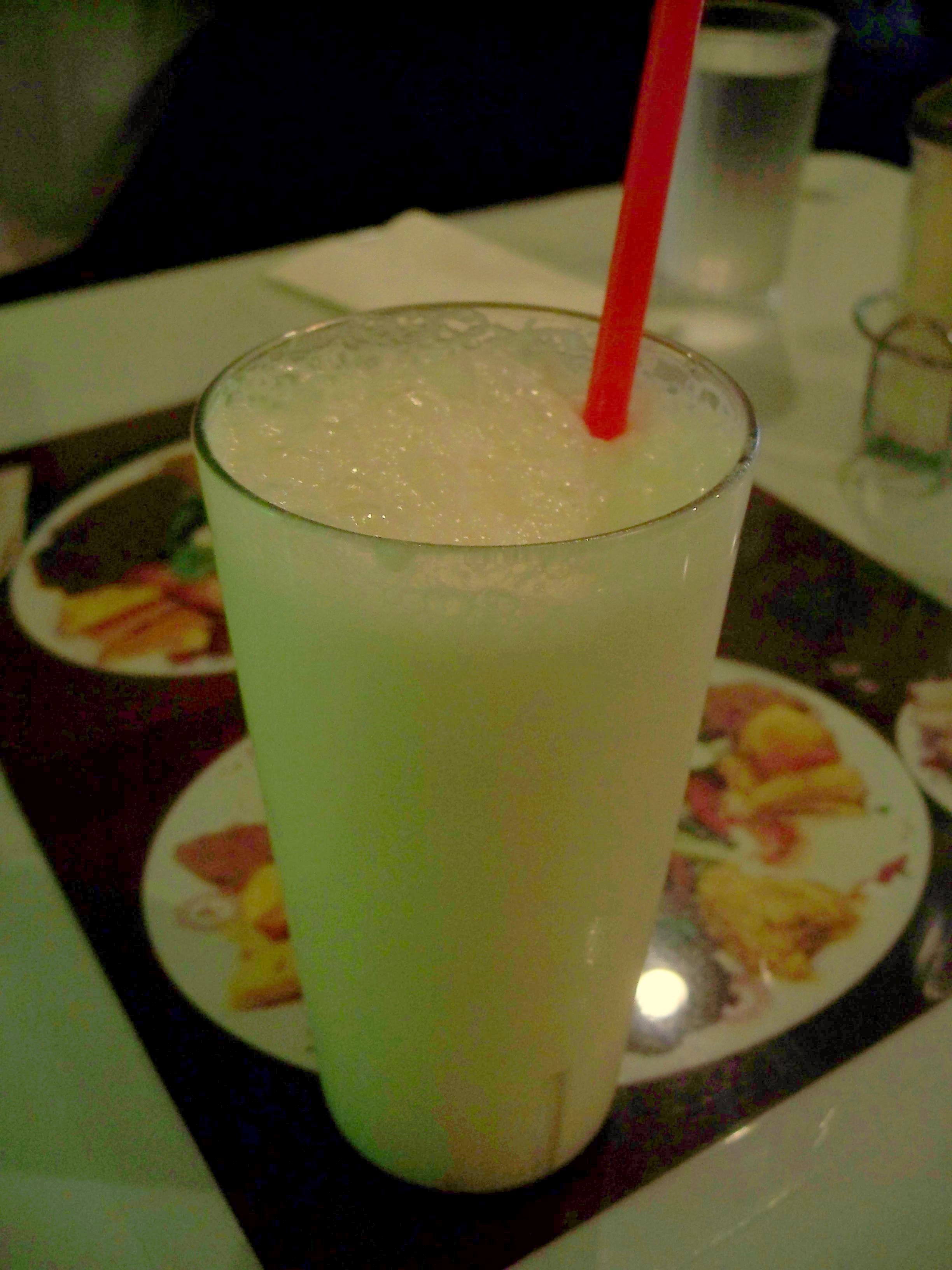
I wouldn’t mind a total vegan Eritrean meal, since the veggie flavorings are not too different from the meat flavorings. The texture contrast, however, is a nice change, going from mushy cabbage and beans to charred, hardened, cubed beef. Mild kulwa, beef stir fried in spiced butter, garlic, onion, and pepper, does not sound like something that can easily go wrong, and it doesn’t.  In some way, it’s just a smaller, sharper, tangier version of the Vietnamese bo luc lac. In the end, my Asian palate prefers some sweetness in the savories, so the frothy orange cream with ever-so-subtle orange juice and honey is a heavenly nectar. Even the sound of them squeezing and frothing it in the kitchen is music to my ears.


Prior to today I’d known of Ethiopia but not Eritrea. The geographical proximity of the two countries must imply cuisine similarities, but how similar? Is it like Lao and Thai? Or is it more like Korean and Japanese? Considering Oakland has a whole street of Ethiopian restaurants (while the whole East Bay has only one address for Indonesian food), I felt both excited and obligated to try Ethiopian for the first time, but perhaps this is more like my halfth time?

Address: Cafe Eritrea D’Afrique (North Oakland)
4069 Telegraph Ave
(between 40th St & 41st St)
Oakland, CA 94609
(510) 547-4520

Desserts at Vietnamese restaurants

December 02, 2010 By: Mai Truong Category: California - The Bay Area, Comfort food, sticky rice concoctions, sweet snacks and desserts, Vietnamese


Raise your hand if you’ve ordered dessert at a Vietnamese restaurant. What? Vietnamese restaurants have desserts? Yep, they do. But they’re always on the last page of the menu, which you never get to because you stop at number 1 – Pho dac biet (special noodle soup) or summ’n. Besides, nobody ever bothers to ask if you’d like to have dessert before they bring out your check. And besides, pho usually fills up the once empty cavity, so no more room for sugar loads. But next time it’s okay to leave some broth and some noodle behind, cuz they do have some delicious sweet deals outback. Not bubble teas.


Black eyed pea che is one. Mushy, plump peas dissolve on your tongue with gooey sticky rice and coconut milk. I adore che dau trang at Kim Son and at Lee’s Sandwiches in Houston, but this beauty in a glass served at Le Regal does not disappoint either. Of course, do NOT eat the mint, as much as I’m for flavor mixings, this mint is purely a matter of decor.


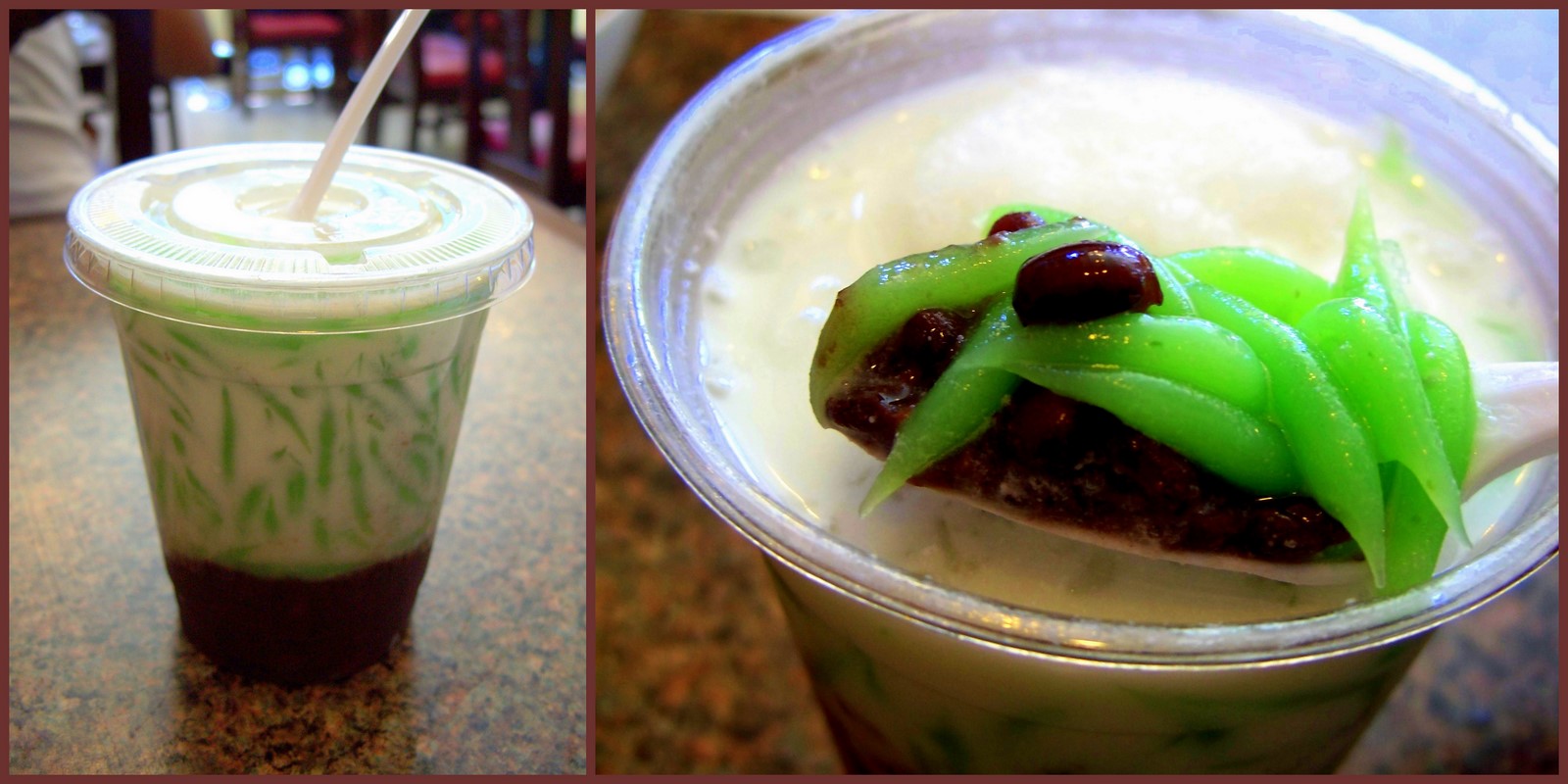
Also che, but without sticky rice is chè đậu đỏ bánh lọt: sweety sweet and mushy red bean at the bottom, bland chewy green tapioca worms floating in coconut milk and shaved ice on top. Personally I think the shaved ice can get lost because it only dilutes the coconut milk, but this chilled cup of che is more revitalizing than eating ice cream in wintry days (no sarcasm, if you haven’t tried ice cream in the cold, you’re missing out big time). Kudos to Banh Cuon Tay Ho #8 in San Jose for this beany treat.


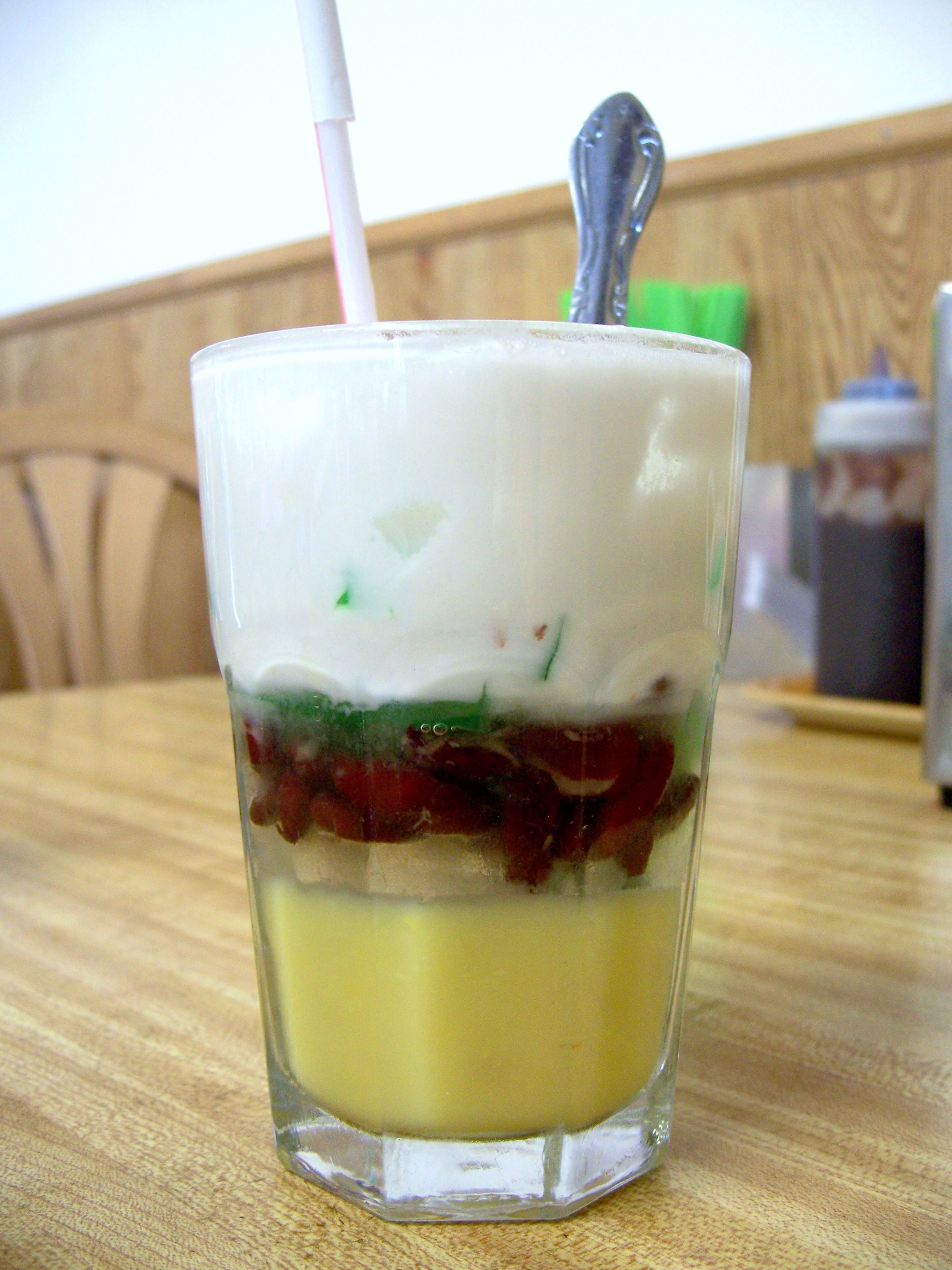
Yet another che. You got it, there’s coconut milk :-P. I can’t quite figure out why Phở Hòa Lão II (Oakland) probably calls this thing chè ba màu, or tricolored che, where it actually has four colors: yellow of mung bean paste, red of red beans, green of tapioca, and white of buttery coconut milk, unadulterated by ice as the che is refrigerated. The only complaint would be its capability to fill me up for hours for only $2.10.


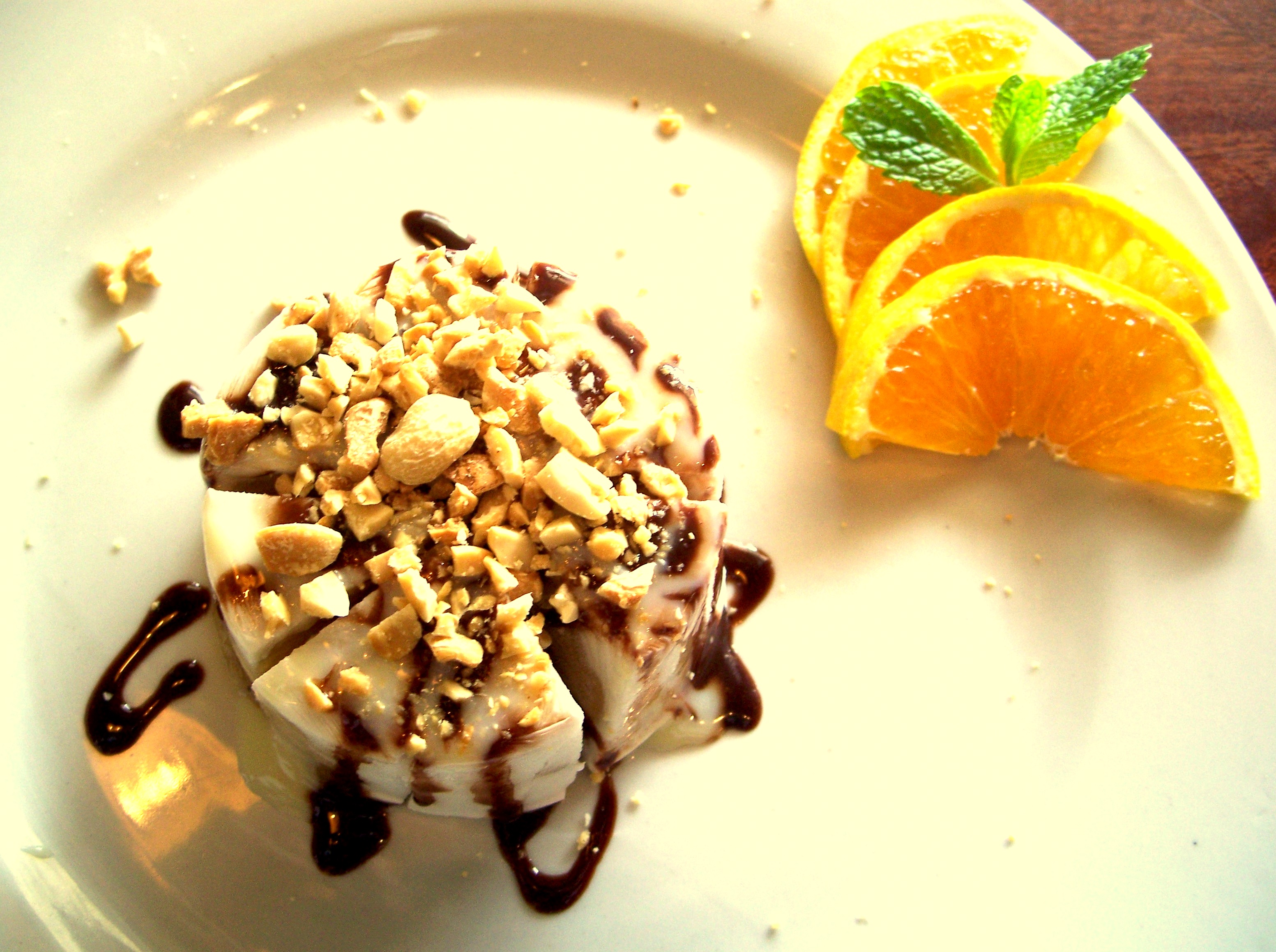
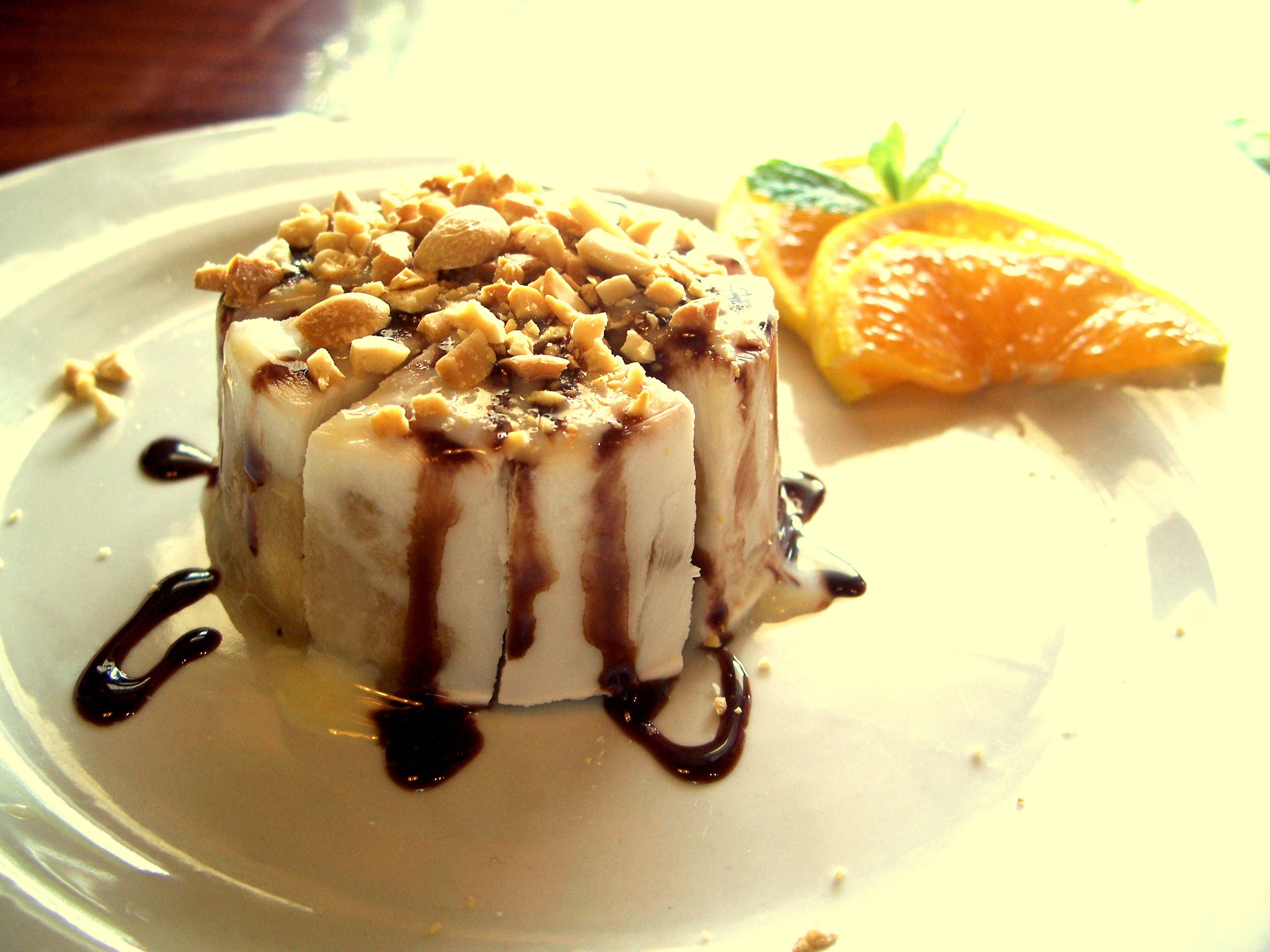
Desserts at Binh Minh Quan cost slightly more, ranging from $3-5 each, but they also have more than just che. This beautifully crafted block of kem chuoi (frozen banana) is a three-buck wow-er: sliced banana with coconut milk hardened together, drizzled with chocolate syrup and crusted with ample peanut bits. The icy salty sweetness sends shivers down my spine.

Bánh Cuốn Tây Hồ #8 (San Jose)
2895 Senter Rd
San Jose, CA 95111
(408) 629-5229
Le Regal (Downtown Berkeley)
2126 Center Street
Berkeley, CA 94704
(510) 845-4020
Bình Minh Quán (Oakland Chinatown)
338 12th St
Oakland, CA 94607
(510) 893-8136
Phở Hòa Lão II (Oakland Chinatown)
333 10th St
Oakland, CA 94607
(510) 763-8296

Bánh mì Ba Lẹ Oakland

November 05, 2010 By: Mai Truong Category: California - The Bay Area, Comfort food, sandwiches, Vietnamese


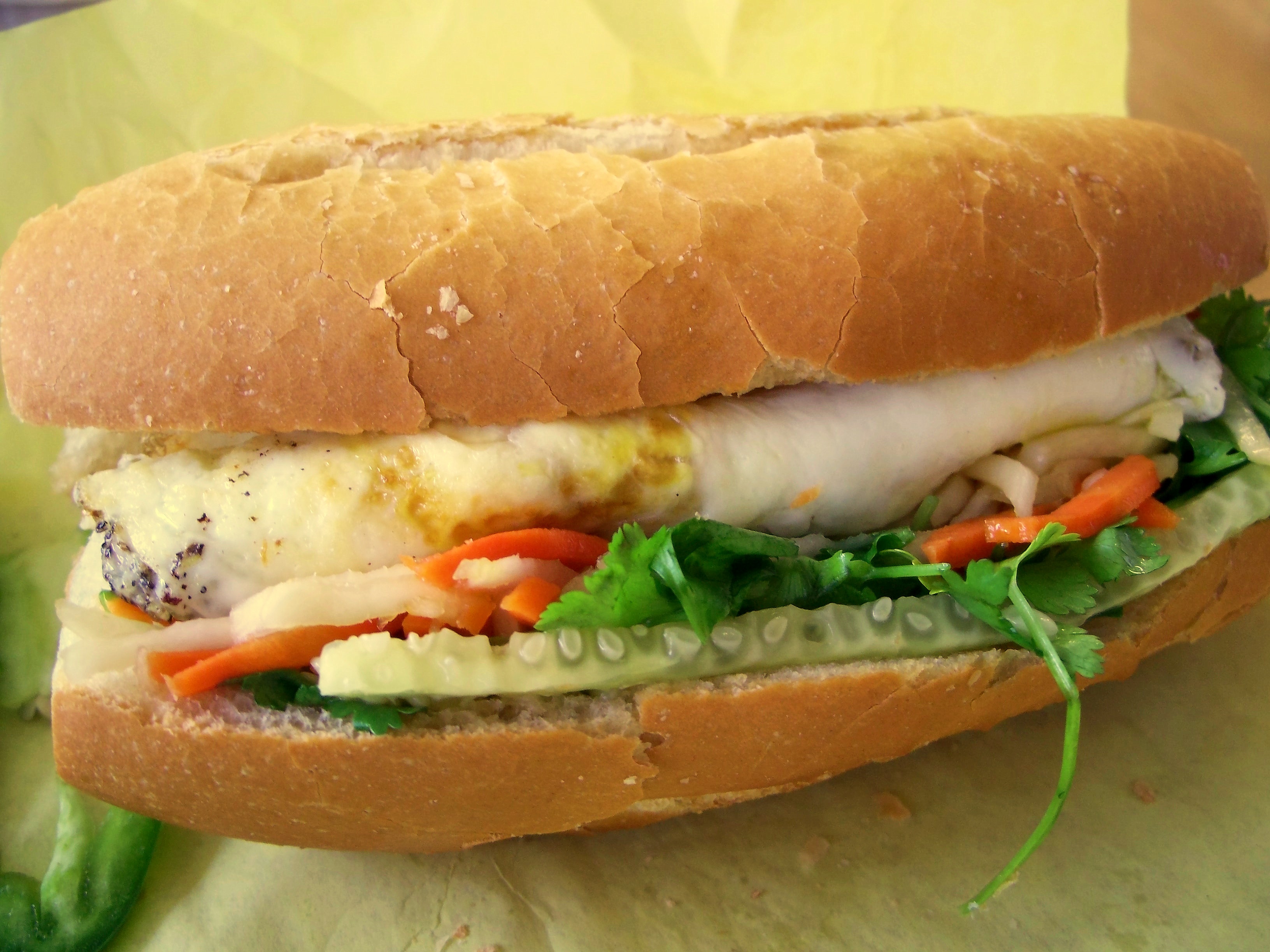
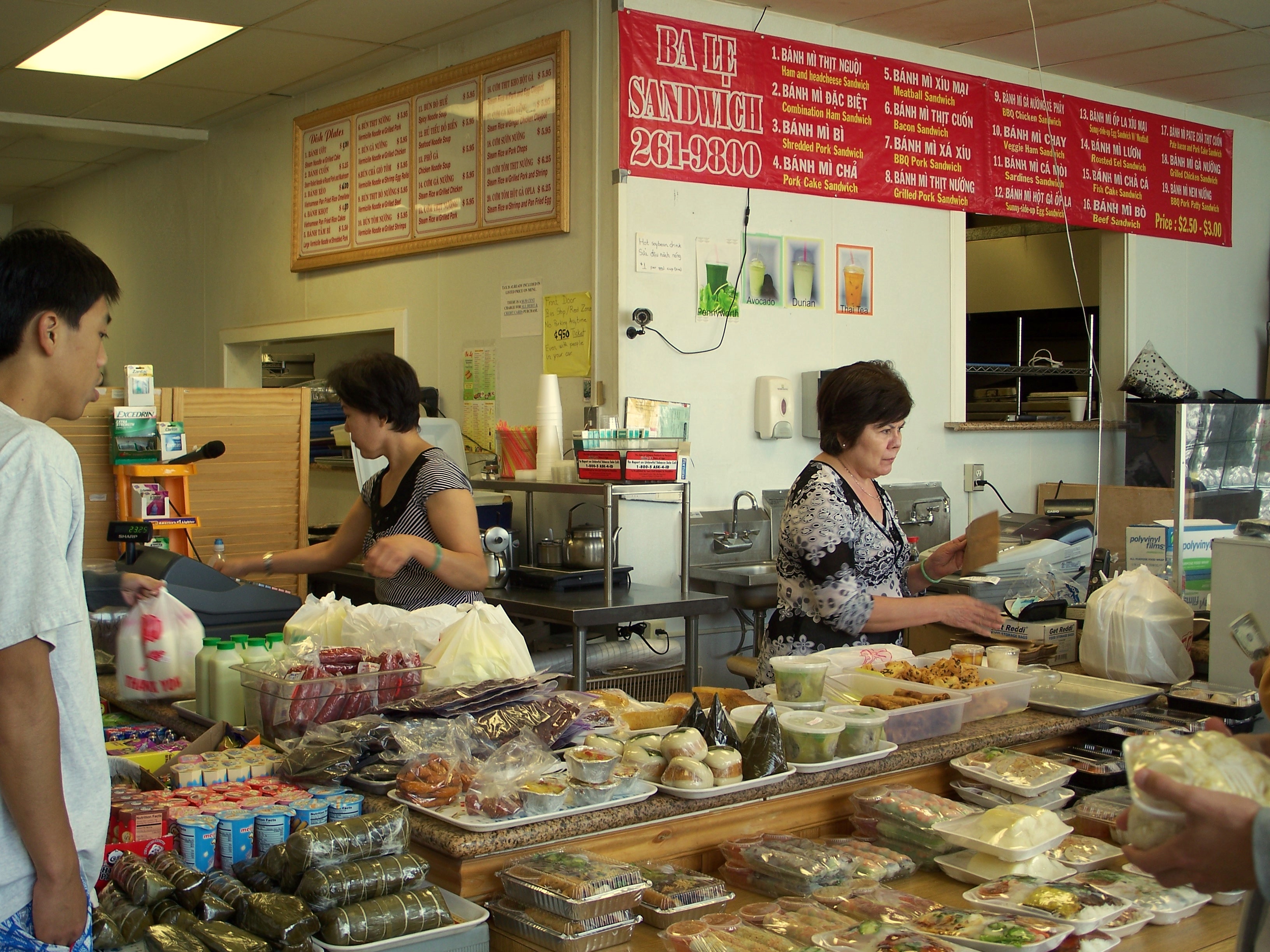
Must have been at least seven years since I had a bánh mì ốp-la (bánh mì with sunny-side-up egg). Most Vietnamese sandwich stores in the States don’t put eggs in their breads, but ốp la (probably a strayed pronunciation of “omelette” in French colonial days) is the most common type of bánh mì stuffing you can find on the streets in Vietnam.


This store contains as much variety as twenty street food stalls: about 15 kinds of banh mi, with meats, pate, vegetarian, and even sardines (cá mòi), ranging from $2.50-$3 each. Then there are bò kho, bún bò, bánh cuốn, rice plates, bánh dầy, bánh tét, and a thousand other things. Thank god there is no phở here.


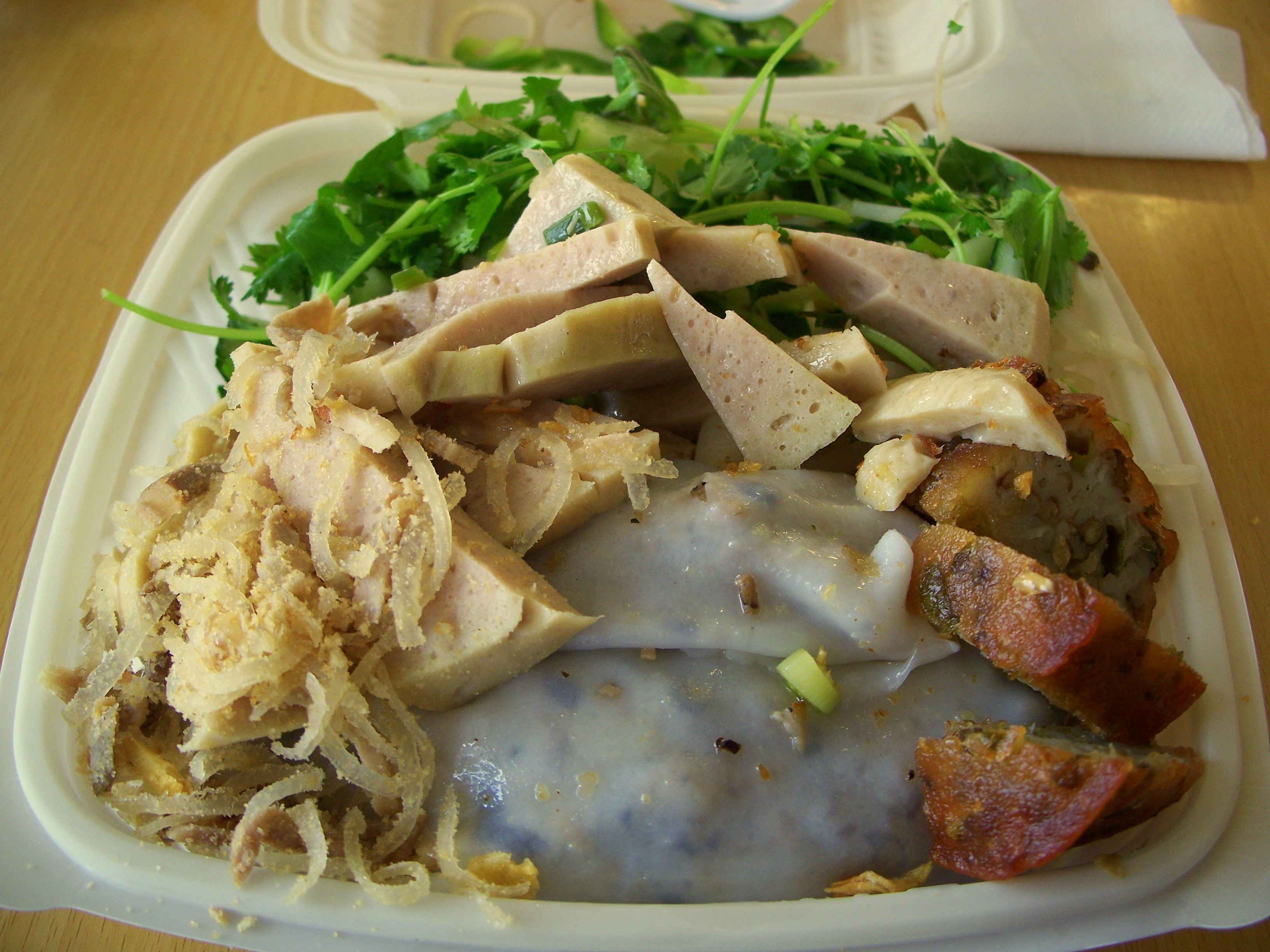
Ba Lẹ’s bánh cuốn comes with a garden, finger-thick cuts of chả lụa, and cubes of deep fried mung bean batter named bánh cóng. It’s not as good as the shrimp-and-sweet-potato tempura accompanying Tây Hồ‘s bánh cuốn, but it has a lot more rolls than Tây Hồ’s for a lower price. Tây Hồ still has the best rolls, but these are good too. Except they aren’t pre-halved in length. Oh well. Sloppiness is street-foodieness.


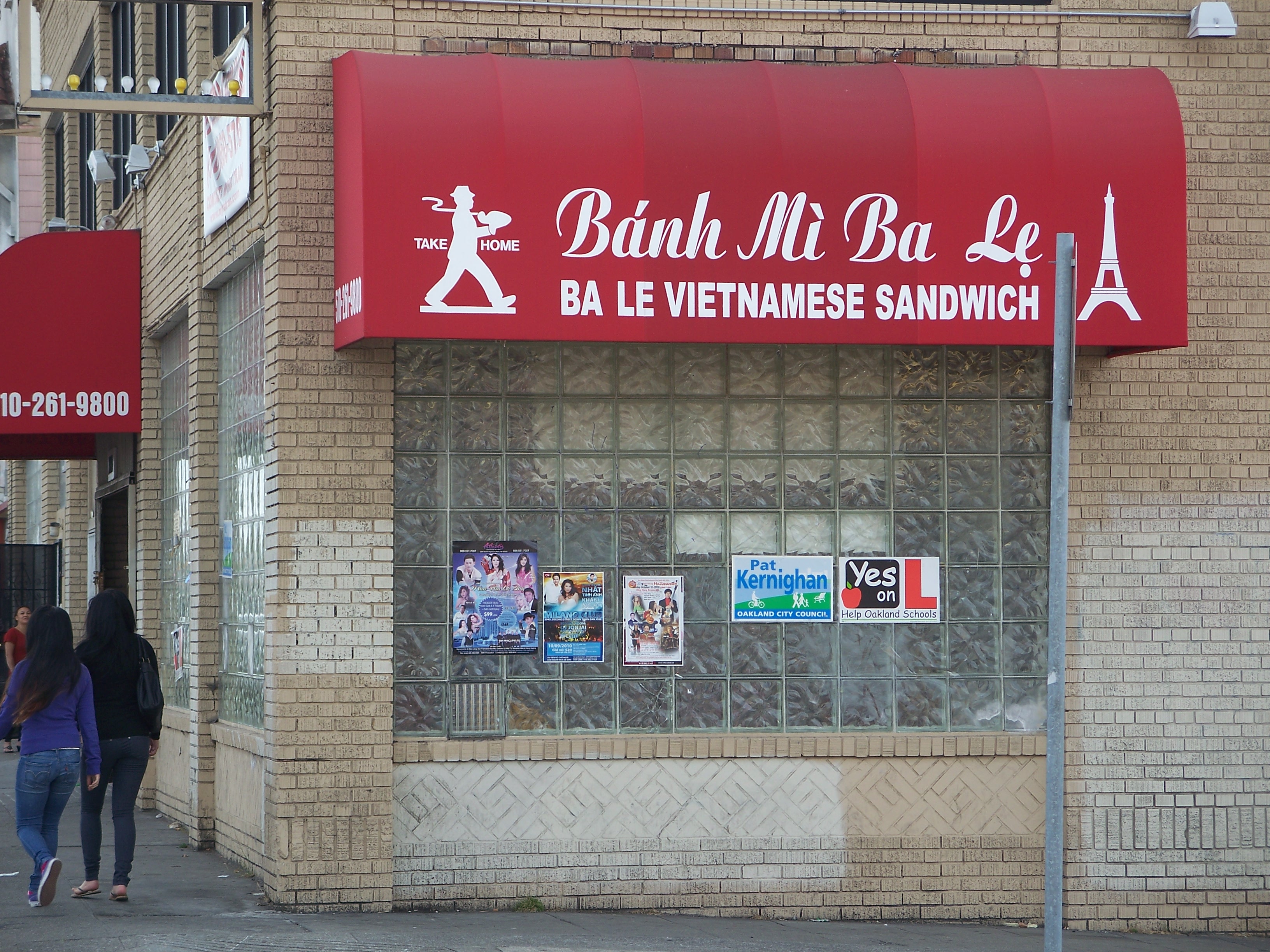
The location is less than appetizing to the eye. On rainy days, you see worn down bricked alleys with puddles. On dry day, you see worn down brick alleys with unkempt people. The buildings are old, the paints have faded. But the steady flow of customers even on rainy days confirms that Ba Lẹ isn’t just a name from the pre-1975 Saigon. It’s one of those real banh mi’s.

Address: Bánh Mì Ba Lẹ (East Oakland)
1909 International Blvd
Oakland, CA 94606
(510) 261-9800

I tried I Squared

October 21, 2010 By: Mai Truong Category: California - The Bay Area, Won't go out of my way to revisit

What is the product of Italian and Iranian food? It’s I Squared‘s food. Clever name. Clever combination to get the oddivores, those who seek to eat oddities at odd places, like me, hooked. While looking for a nice eggplant parmesan to properly celebrate Ashley’s birthday, we were presented with a choice among the traditional Ristoranti italiani, the eggplant parmesan sandwiches, or I Squared. It’s clear what we picked.

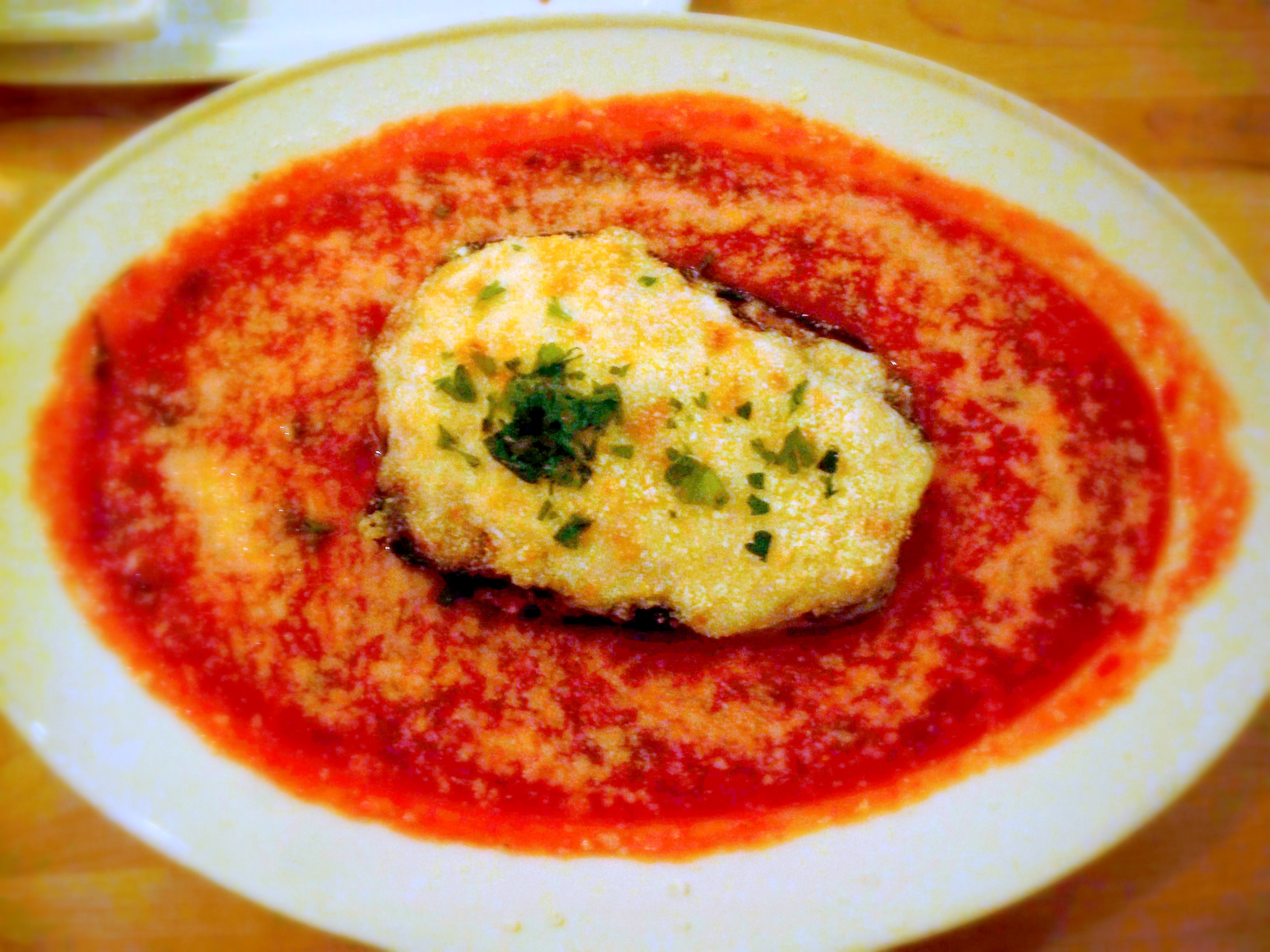
Eggplant Parmigiana from I Squared - Baked layers of eggplant and Napoli sauce topped with fresh mozzarella and Parmigiano Reggiano cheeses

The eggplant parmesan of I Squared is among the healthier, lighter kind of eggplant parmesans, where the eggplant slices are baked instead of battered and fried, and there is hardly any cheese between layers. The wilted, sinewy eggplant peel adds a dried-apricot-like chew, the bread crumb and melted cheese on top makes every bite sink and bounce in lushness. The palm-sized portion drowns in a pool of tomato sauce sprinkled with mozzarella. I find it best to eat each layer of eggplant by itself, just plain, when it’s neither like fruit nor vegetable. The texture is amazing.


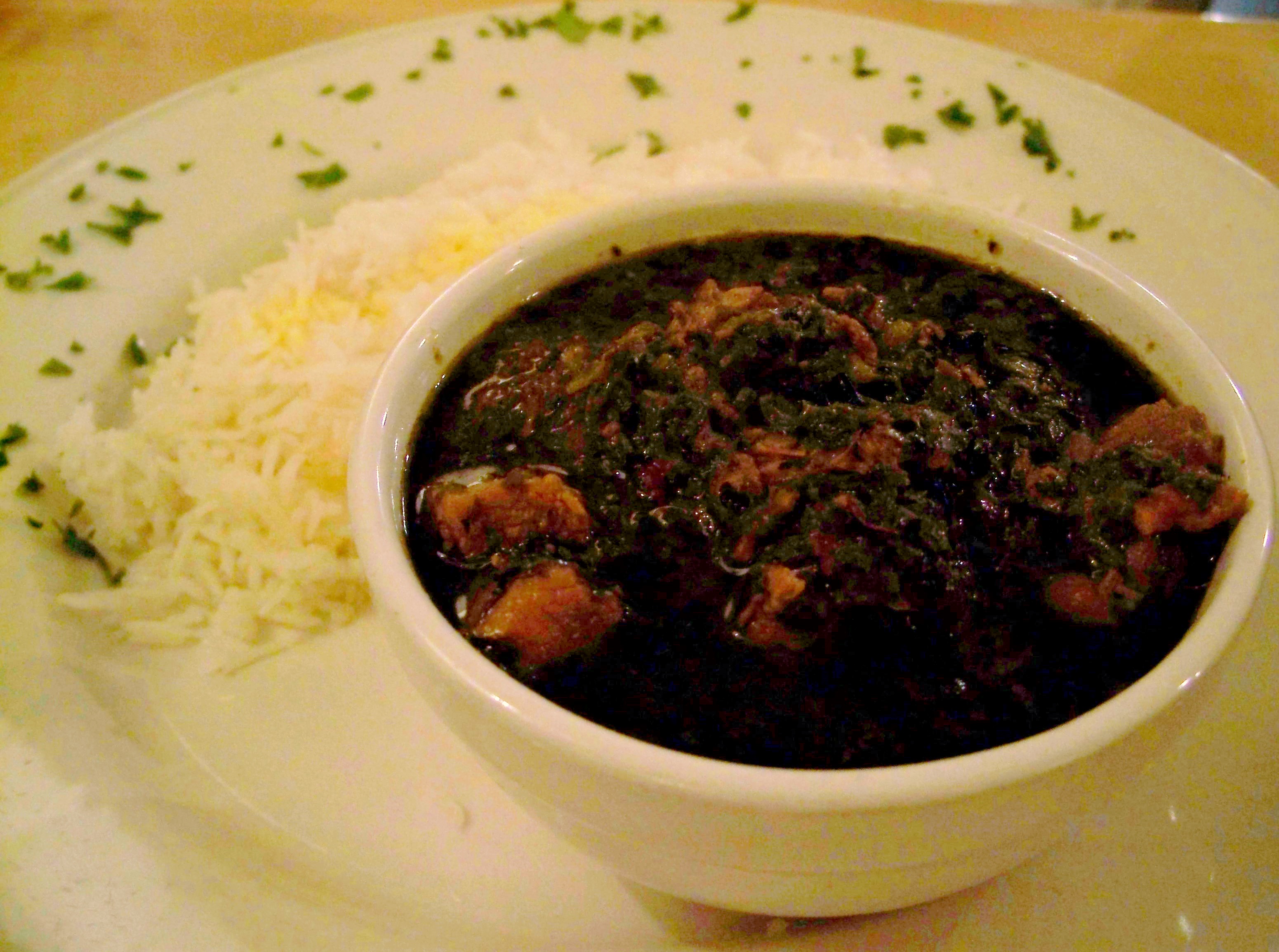
Also among the house specialties is ghormeh sabzi, “Iranian stew with saffron braised beef, baby leaks, fresh parsley, mint, dried Iranian limes, red kidney beans and fenu Greek, served with basmati rice”. This mixture of spices and vegetables is quite harmonious, however bland. To quote Mudpie, “it is good at what it does, but what it does isn’t good”. Nonetheless, the longer and slower you eat it, the more you appreciate the subtleties hidden in that small, melting tender chunk of beef, that unintelligible bundle of green mush, even that watery broth on rice. Suddenly it’s all gone, and you miss it.


Address: I Squared Restaurant
5403 College Avenue
Oakland, CA 94618
(510) 658-4400

Dinner for two under dim light, attentive friendliness of the staff, and a grown-ups’ atmosphere: $26.34 🙂

Tags:

Szechwan slurpings in Oakland Chinatown

October 04, 2010 By: Mai Truong Category: California - The Bay Area, Chinese, noodle soup


What would you prefer to order, something whose name you don’t understand, or something whose name you do understand but the combination of ingredients is strange to you? The biggest problem we face at Chinese restaurants in Chinatown is that the waitresses don’t know much English, and we know zero Chinese. We can’t ask about the dishes and have to rely solely on the English description, if it is written, which leads to the second problem: all the descriptions are the same.

Not just that. If you are not Chinese and have spent many years eating $7 Chinese buffets like me, you probably know that there’s hardly any difference between Szechwan chicken, orange chicken, sweet and sour chicken, and whatever chicken. Same goes for fried rice, chow mein, vegetables, and other edibles, which appear identical everywhere (unless it’s really bad). So imagine my excitement of spotting “tai lou mein” and “pickle and pork rice noodle soup” as I flipped through the menu at Szechwan Restaurant on 8th Street. We’ve never heard of those things.


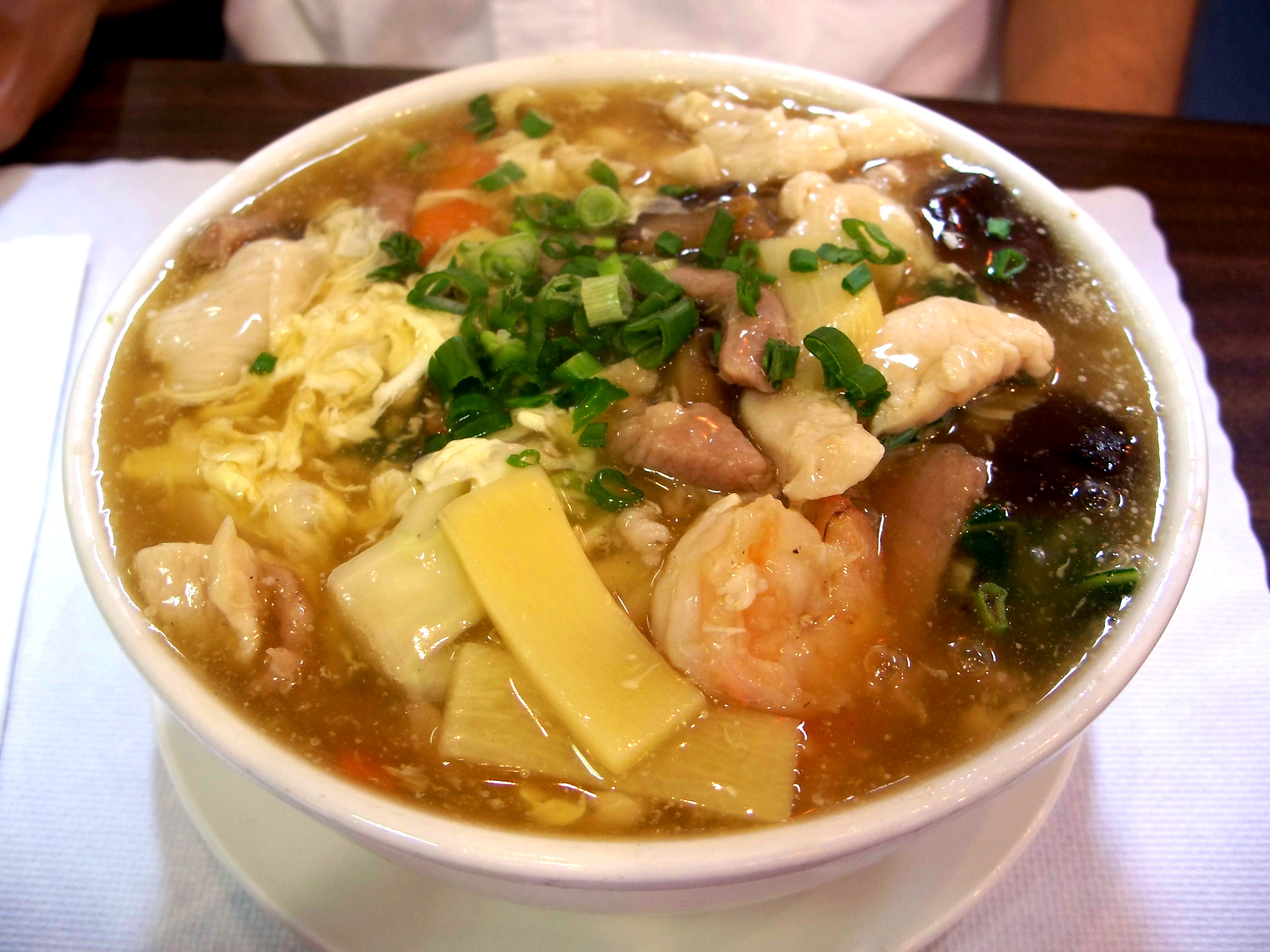
The tai lou mein is, unexpectedly, a bowl of noodle soup. (We thought we’re in for stir fried noodles.) It’s the same thick round egg noodle in chow mein, drenched in a very slightly corn-starchy sweet broth with fresh bamboo shoots, shrimp, pork, chicken, mushroom, carrots, and a cracked egg (which the waitress called “scrambled egg”), topped with green onions. It turns out a safe good bet. From a reliable source we learn that perhaps the pinyin transcription of the name should be da lou mein instead of “tai lou mein”.


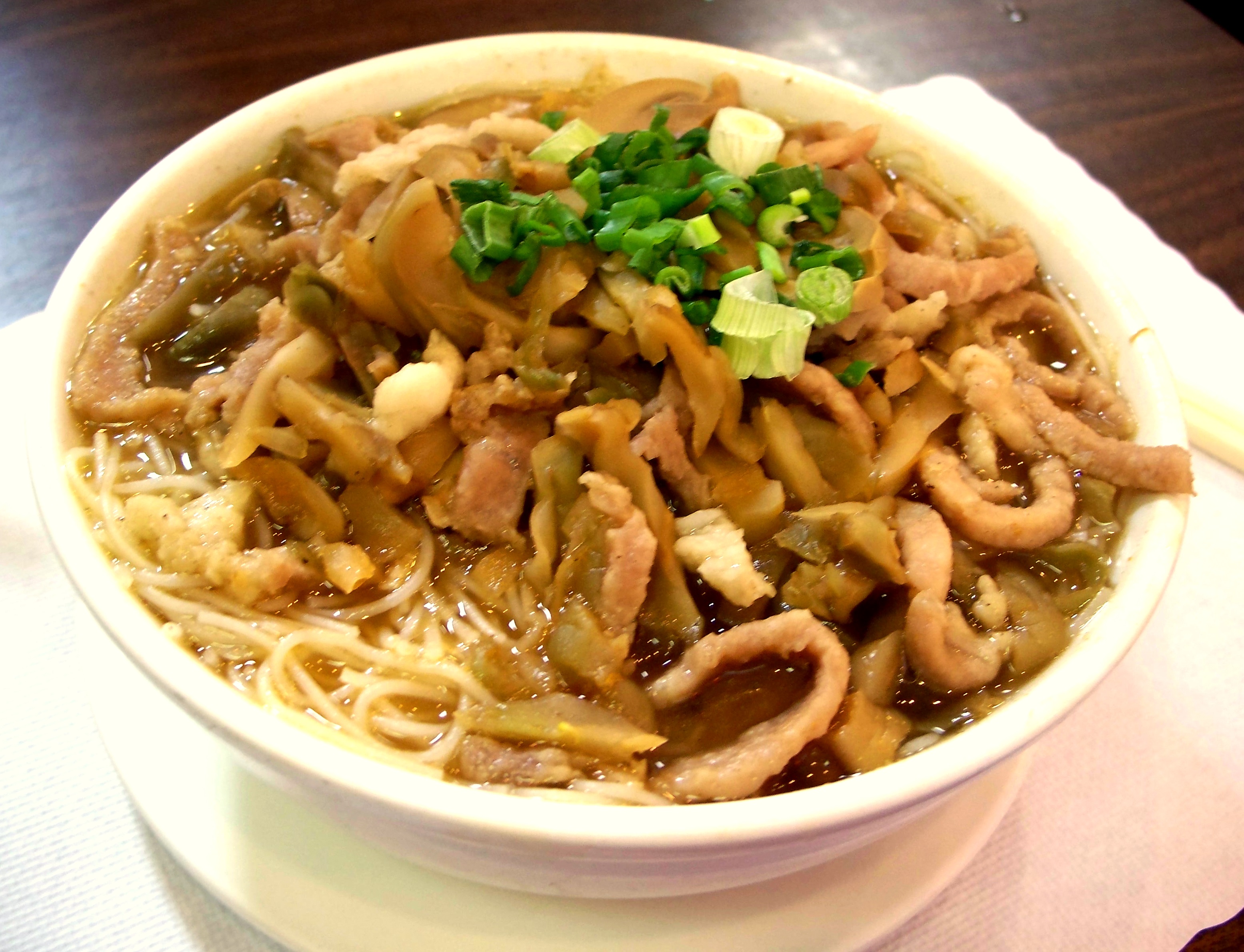
The pickle and pork noodle soup (榨菜肉絲麵 zha chai rou si mein) is my new love. Compared to da lou mein, it has far fewer visible ingredients, but the balancing of flavors and healthiness are superb. I’ve never had pickles in noodle soup, but the idea is not too far stretched from Vietnamese sour soups with pickled bokchoy (canh dưa chua), so why worry? The pickle (zha chai) in zha chai rou si mein is made from knobby stems of a type of mustard green. Sliced into short strips, zha cai resembles stir fried bitter melon in texture (solid and crunchy with a soft core). Eaten alone, zha chai has a salty zing to keep your tongue on its toes (and Mudpie away from the bowl). Meddled with shredded pork and noodle, the zing diminishes almost completely. Its sourness clears and freshens the broth like white paint on old walls. Rice noodle makes an even better match. On a sick or cold day, I’d rank zha chai rou si mein right up there with phở and bún mộc.

The two giant bowls cost under $6 each, and unless you have a whale stomach it’s unlikely that you would have room for dessert. Now, if you do want to order dessert (soybean curd, almond jelly, and some two other things), it’s best to get a menu and point it out to the waitress, or speak Chinese. The waitresses do not know the word “dessert”. And be patient, because they are very cordial to you. 🙂

Address: Szechwan Restaurant (Oakland Chinatown)
366 8th Street
Oakland, CA 94607-4241
(510) 832-7878

Delicious Food Co. is one fourth delicious

September 28, 2010 By: Mai Truong Category: California - The Bay Area, Chinese, sweet snacks and desserts, Won't go out of my way to revisit


Let us all agree that food tasting is subjective, and totally unrelated to the food’s affiliation. That means even if I hate goat cheese I still find goats quite cute, and if I choose instant cup noodles over a meat-filled burrito it doesn’t mean I have something against Mexican immigrants. Now that we’ve made that clear, I’ll get to the point: I don’t like the Cantonese turnip cake (luobo gao).


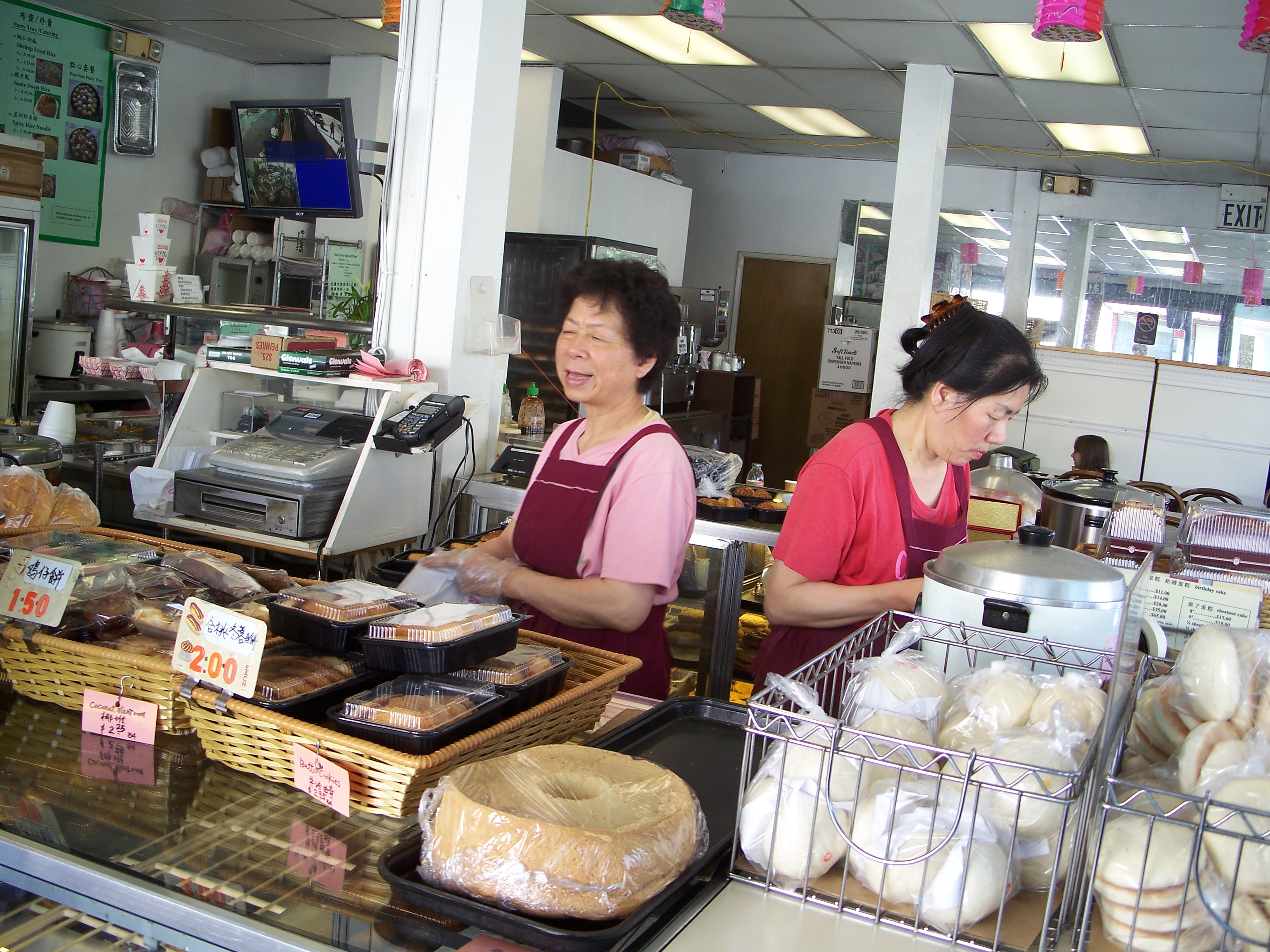
We got it at a very crowded Chinese bakery in Oakland Chinatown this weekend. One white lady in line before us asked for 3 turnip cakes, and I want to stress “white” because her Western palate gave us assurance that this treat is among those rare Asian ones that are happily consumed by white people, aka it must be at least “normal” (white people, especially Caucasian Americans, are not always up to trying “new” food). So we thought we’re in for a safe bet. Turns out, turnip cake (a misnomer for daikon cake), unlike crumbly carrot cake, is an oily soft chunk most resembling a used oversize eraser, except not as gummy.

It’s neither sweet nor savory nor bland. The taste clings to the back of your throat as if you were drinking seawater covered with oil. Won’t buy again. As for the other things we got from Delicious Food Co., because I believe in happy endings, they will appear in increasing order of deliciousness.


#3- Black bean bun – the middle ball of black bean, only one spoon worth, is fine, but the dough is as dry as Sahara sand.


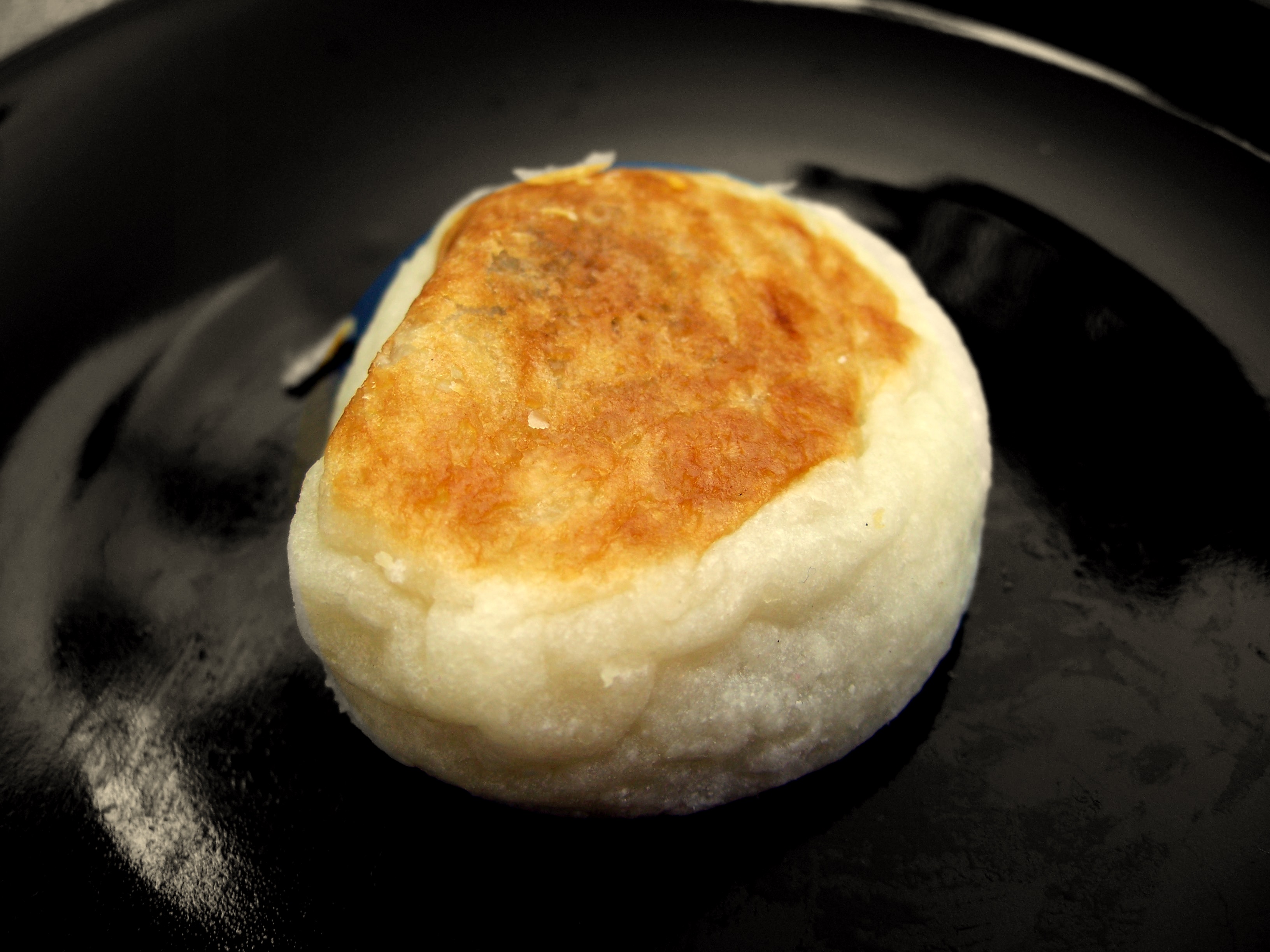
#2- No-name red bean mochi-like minibun – the mochi part is too chewy and a bit dried up, but I’d rather chewy dry than crumbly dry. Mudpie prefers the black bean bun though.


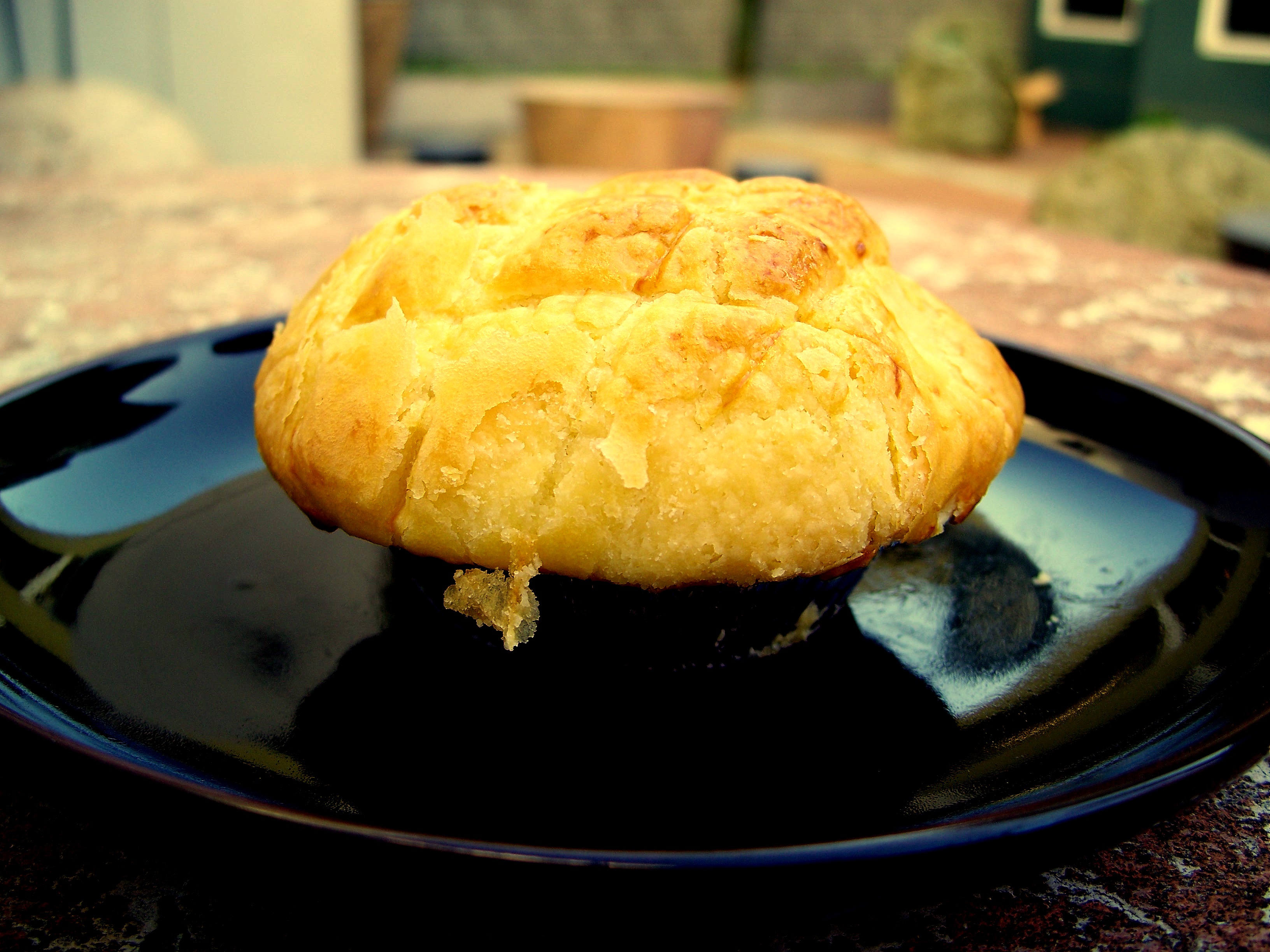
#1- Mini apple pie in foil cupcake cup – As good as you can expect from a good apple pie. The crust is moist on the inner side and crumby outside, the apple innards is just as sweet as a spoon of honey. Every bite leaves your lips a little buttery gloss, enough to make you stick your tongue out and ask for more.


I can’t say that I was impressed by anything but the extremely inexpensive price at Delicious Food Co. Four black bean buns and one of each of the other three pastries swung merely a total $5.25. That said, I’d rather them charge double that and make it taste good.

Address: Delicious Food Company (Oakland Chinatown)
734 Webster Street
(between 7th St & 8th St)
Oakland, CA 94607
(510) 893-2288

Tags: