Flavor Boulevard

We Asians like to talk food.
Subscribe

Lychee and mung bean che (Chè đậu xanh trái vải)

January 24, 2012 By: Mai Truong Category: RECIPES, sweet snacks and desserts, Vegan, Vietnamese


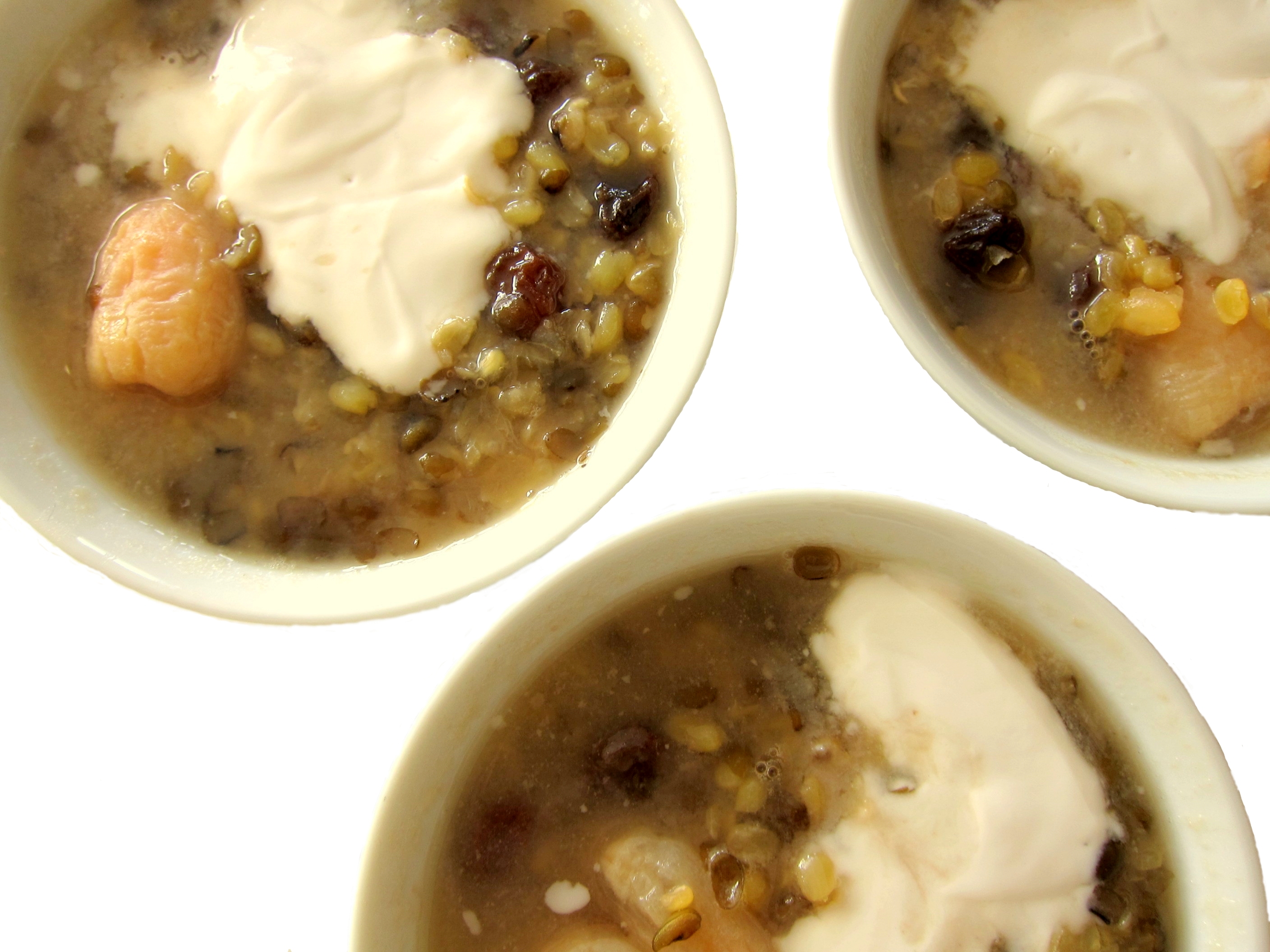
This dessert requires no skill in the making, but it ranks way up in the chè hierarchy, topping taro che and my own banana tapioca pudding. Beside the fact that Little Mom invented it, I always like things with lychee. 😉

Because everyone’s sweet tooth differs, it doesn’t make sense to have a fixed recipe for this simple dessert. One package of halved mung bean (with the green skin on), 1 can of whole lychee, 1 can of coconut milk, raisins, sugar and water are all there is to the pot.

The mung bean need to be soaked in water overnight to soften and cook faster. The coconut milk and the syrup from the lychee can are mixed with water to cook the bean. More or less water depends on how thick you like your chè; the more liquidy chè served cold, which I prefer, is suitable as a palate cleanser after a big meal, and the thicker version is best as a midday snack. When the mixture boils and the bean becomes soft enough to dissolve in your mouth, add raisins and sugar to taste. Wait until it boils again to add the lychees, and you’re done cooking.

If the famous Chinese imperial consort Yang Guifei could have a taste of this chè, I’m sure it’d become her favorite dessert. 😉 Happy Tết! May the Year of the Dragon be sweet for everyone!

Tricitronnade – Three-in-one Lemonade

January 08, 2012 By: Mai Truong Category: Drinks, RECIPES, Vietnamese


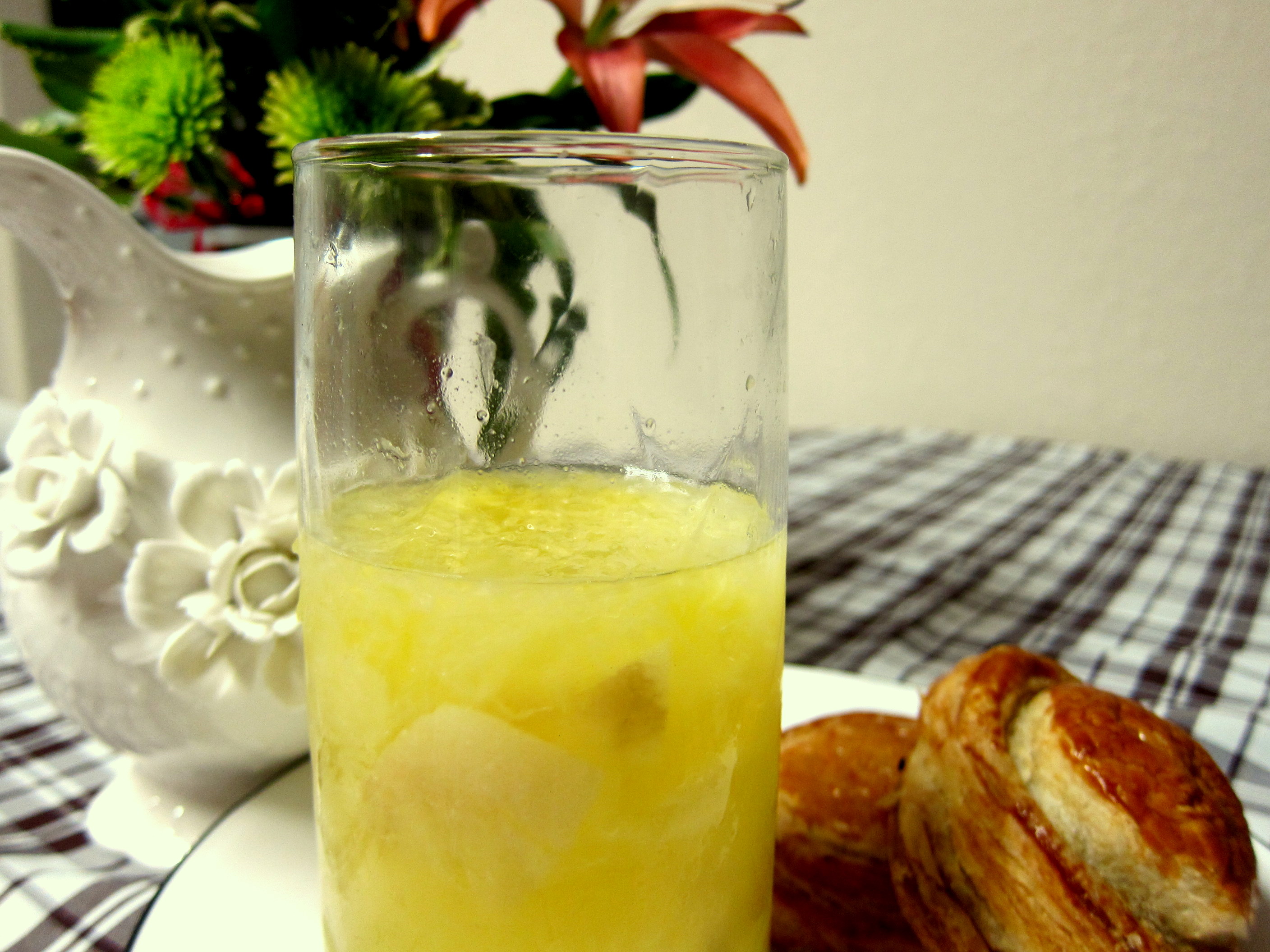
The triple punch from Little Mom: orange, lemon, and salted lime.

Like instant ramen and popsicles, it all started from the leftovers: half a glass of a-little-too-salty salted lime drink, half a too-sour-to-eat orange, another half glass of normal lemonade (although Little Mom’s lemonade is not quite like any other lemonade, in a good way), and an ounce of reasoning. There was no sense in keeping them separately. The combined power shines a sweet yellow of tourmaline, smells like an orchard near the harvesting season, and tastes good enough to get me all poetically cheesy.

Below is Little Mom’s recipe for the salted lime. As for the recipe of this “tricitronnade”, I would imagine that the orange doesn’t have to be sour. 😉

Vietnamese Salted Lime (Chanh muối)

Step 1: zest the limes. You can do this by shaving off the zest (flavedo) with a peeler or rubbing the limes on a rough surface until it loses most of its green color. But keep the white pith (albedo) in tact; if the albedo breaks and the juice leaks out, that lime is no good to make salted lime.
Step 2: blanch the zested limes. Then leave them out to cool.
Step 3:
– Boil salt water. For every 12 limes, mix 14 cups of water with 1 cup of salt and boil.
– Let the salt water cool.
– In a clear plastic/glass jar, submerge the blanched limes in the salt water. Cover.
– Put the jar under sunlight for 1 week. I asked Mom if the jar can be opaque (like a clay jar), and she said that she has only seen chanh muối made in translucent jars. I guess you want the limes to see the sun, not just feel the heat. 🙂
– Discard the liquid after 1 week.

Repeat Step 3 three times, but for the last week, keep the liquid. By now the limes should expand to the size of lemons, their peels are melting soft, they can be eaten whole, and they stay good forever. Smash up one lime in water and add sugar to make 2 glasses of chanh muối.

Year in, year out, savoring the savoriest of pork

December 31, 2011 By: Mai Truong Category: Comfort food, One shot, Southern Vietnamese


If you had to choose, what is the most Vietnamese dish? If you are a Vietnamese expat, what would make your mouth water the most just thinking about? What is the food, the smell, the taste that when you see or hear some stranger is savoring, you’d immediately think, “hey, he must be my fellow countryman”?

One of my friends lives in Freiburg, Germany. There is one Vietnamese restaurant 1 km away from the University, der Reis-Garten, and it is the only Vietnamese restaurant in a 40-km radius (the next one is across the border: Le Bol d’Or in Wintzenheim, France). For over 6 years living away from home, he survived on pasta and tomato sauce, students don’t have time. One day, external circumstances have finally driven him to decide that he no longer needs to suppress his cravings out of consideration towards his Germanic housemates. He bought a bottle of fish sauce. The next day he made thịt kho. That makes it official: he’s Vietnamese, and he hasn’t forgotten it.
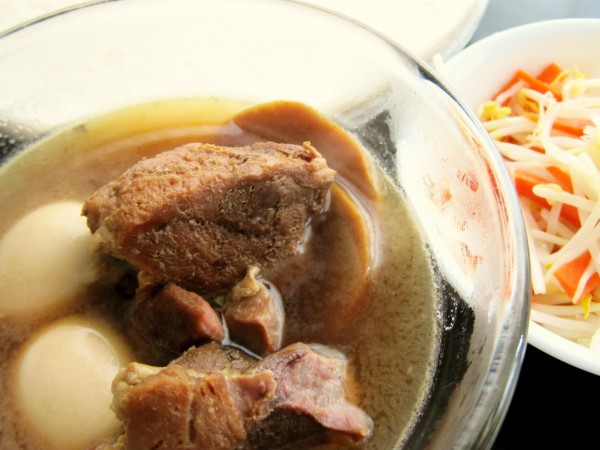

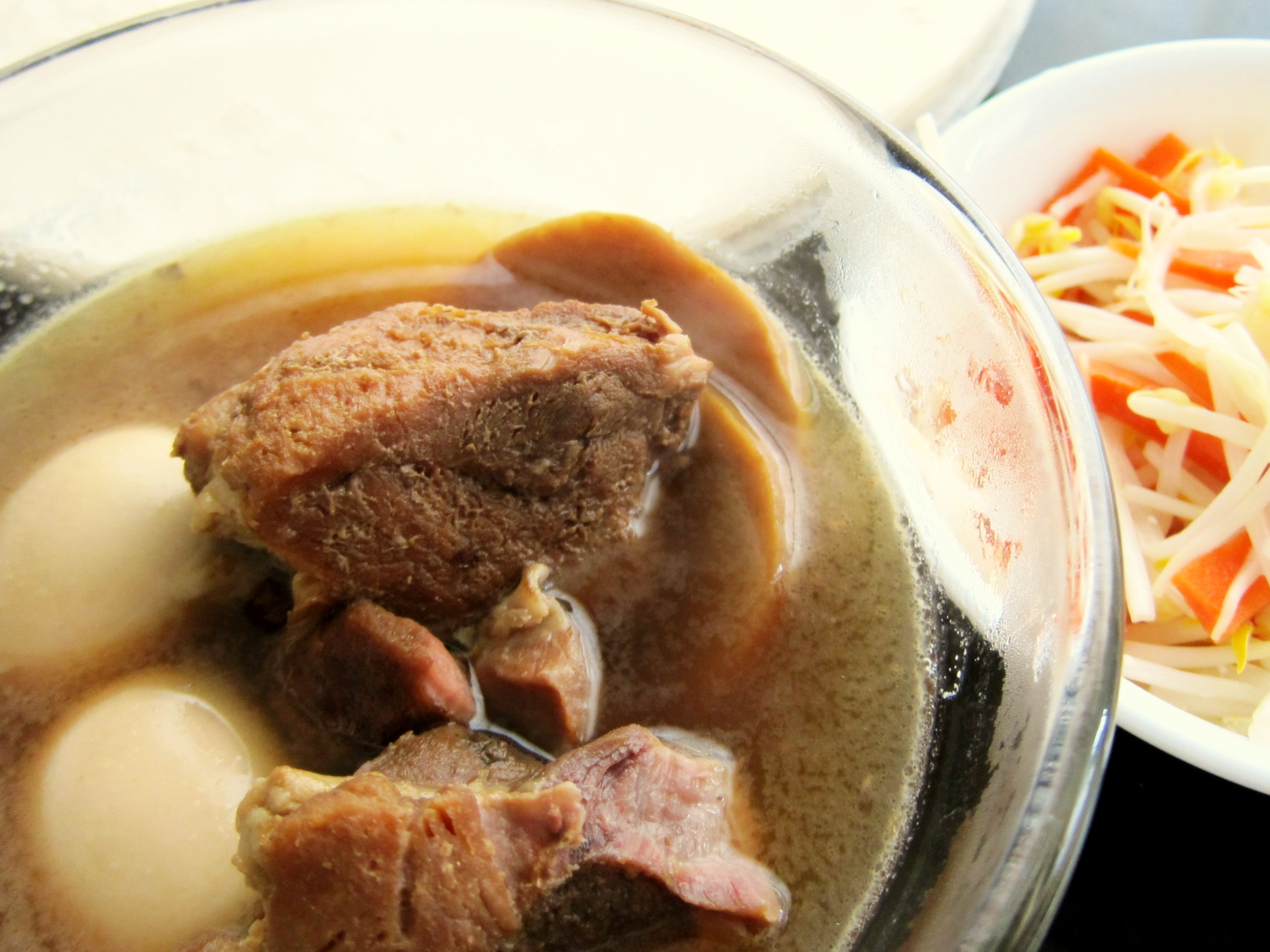
“Success?” “Did you add coconut juice?” “Do you have eggs in the pot?” “Do you have chả lụa too?” The questions come showering on Facebook. We cheered him on with the same salivating imagination no matter which region of Vietnam we are from and where we are living: the fatty chunks of pork so tender that a plastic chopstick can cut through, the amber sauce, with which the hard boiled eggs are imbrued from yolk to white. The fatty, sweet, and salty pork must be freshened up with the crunchy, sour, cold dưa giá (pickled beansprout). The pure fish sauce makes an intoxicating savory smell that permeates the whole house, seeps through the window into the courtyard to the next door neighbor, induces a Vietnamese to lick his lips thinking of his mother’s meals and perhaps, a Westerner to cringe. But why should a cringe matter? The pure fish sauce deepens the savoriness of the meat sauce, making it the best thing to pour over a steamy bowl of white rice. My friend said all he need is this amber meat sauce and dưa giá to down a few bowlfuls. Of course, I agree.

The first weekend I got home, Little Mom sat me down in front of thịt kho, dưa giá, rice, and rice paper. All kinds of rice papers come from all over Asia, but those are for calligraphy and painting. Edible rice paper comes from Vietnam and Vietnam only. A pet peeve of mine is getting served those “spring rolls” made with wonton wrappers in American Vietnamese eateries, like a lumpia. A Vietnamese spring roll must be rolled with the translucent, veil-thin, made-of-rice-flour rice paper. Rolling it with any other kind of wrapper is an unpatriotic insult to Vietnamese cuisine. Anyway, my mom sat me down in front of her succulent slow braised pork, pickled beansprout, rice, and rice paper. Then she said go for it, and boy did I go. I made little wraps of pork and sprouts to dip into the sauce. I poured the sauce over rice. I dipped plain rice paper into the sauce. I made some more wraps and filled another rice bowl. It’s almost barbaric. The comfort of an old country taste is multiplied by the comfort of home. The eyes and tongue are no longer the principle critics, but all five senses are involved: the smell of the sauce, the sound of the sprouts collapsing between bites, the delicate touch much needed in rolling the rice paper. Each bite I took embodied the ordinary, simple, honest Southern cooking and the skillfully honed tradition of hundreds of years: thịt kho is a must-have in our Tet feast, like the turkey at Thanksgiving, the songpyeon on Chuseok, or the ozoni for Shogatsu. Well, it’s not Lunar New Year now, but it is a New Year. Maybe I’ve grown old, but I find that nothing beats celebrating the holidays at your family’s dinner table with family comfort food. 🙂

As I’m writing this post, the fireworks are going off right outside the windows, talk about food setting off fireworks ;-). Happy 2012! And may Vietnam be delicious always! 🙂

Mom’s cooking #2: Sizzling the Vietnamese steak (bò bíp-tết)

March 19, 2011 By: Mai Truong Category: Comfort food, RECIPES, Vietnamese

Guest post by Mom, translated by me


My little family has three people, and two of them like beef. Ever since we settled in Texas, the land of cheap, good beef, my husband and daughter almost always order something cow related when we go out, even as they love these loving-eyed animals when they’re alive and grazing the fields too. Sometimes I join them in forking red meat, and of those few occasions the American steak does not quite sing to me, but rather they sink a little hard and a bit salty. I guess the blame lies with either the meat quality or the cooking method, and mostly the latter.

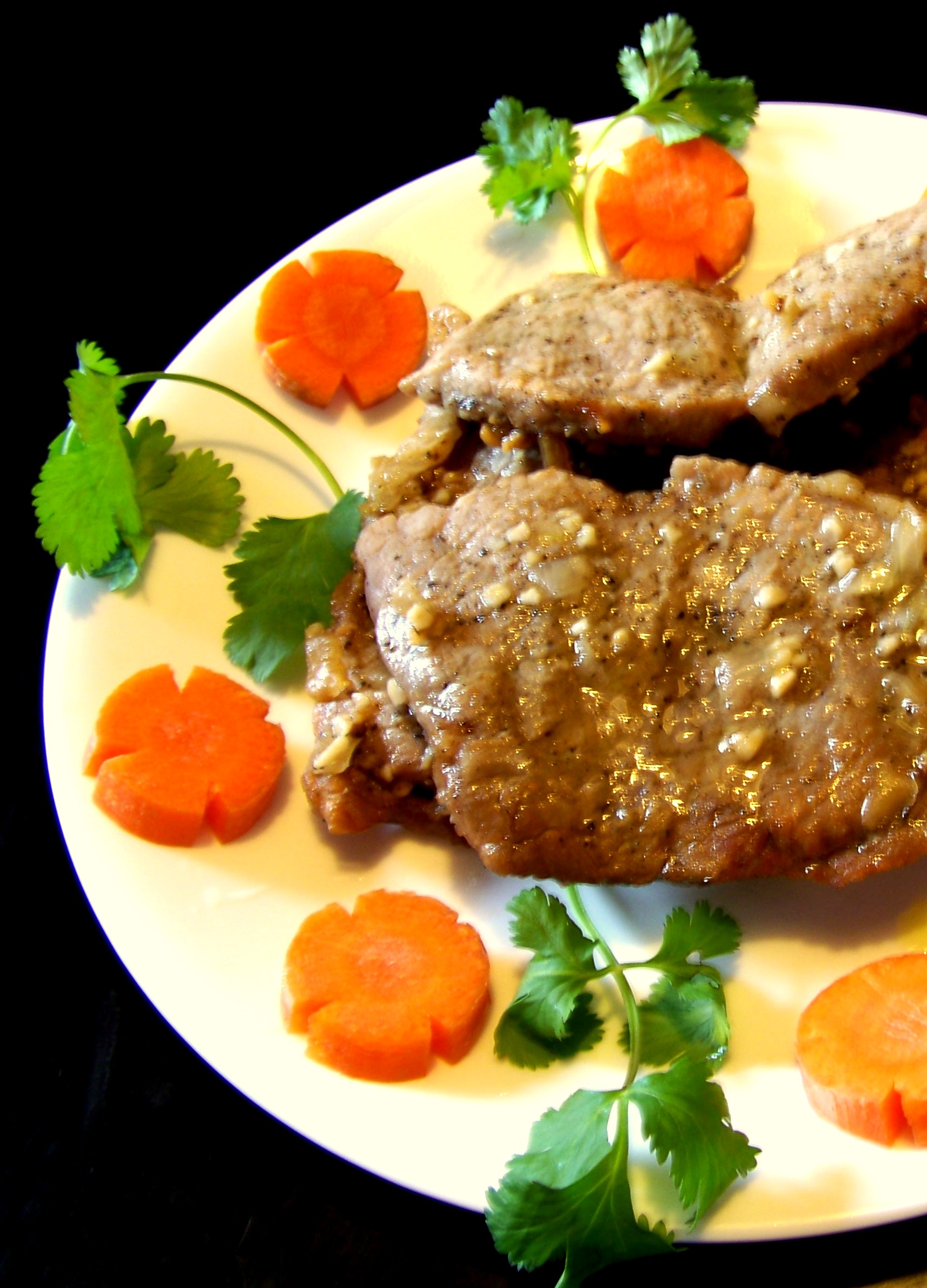
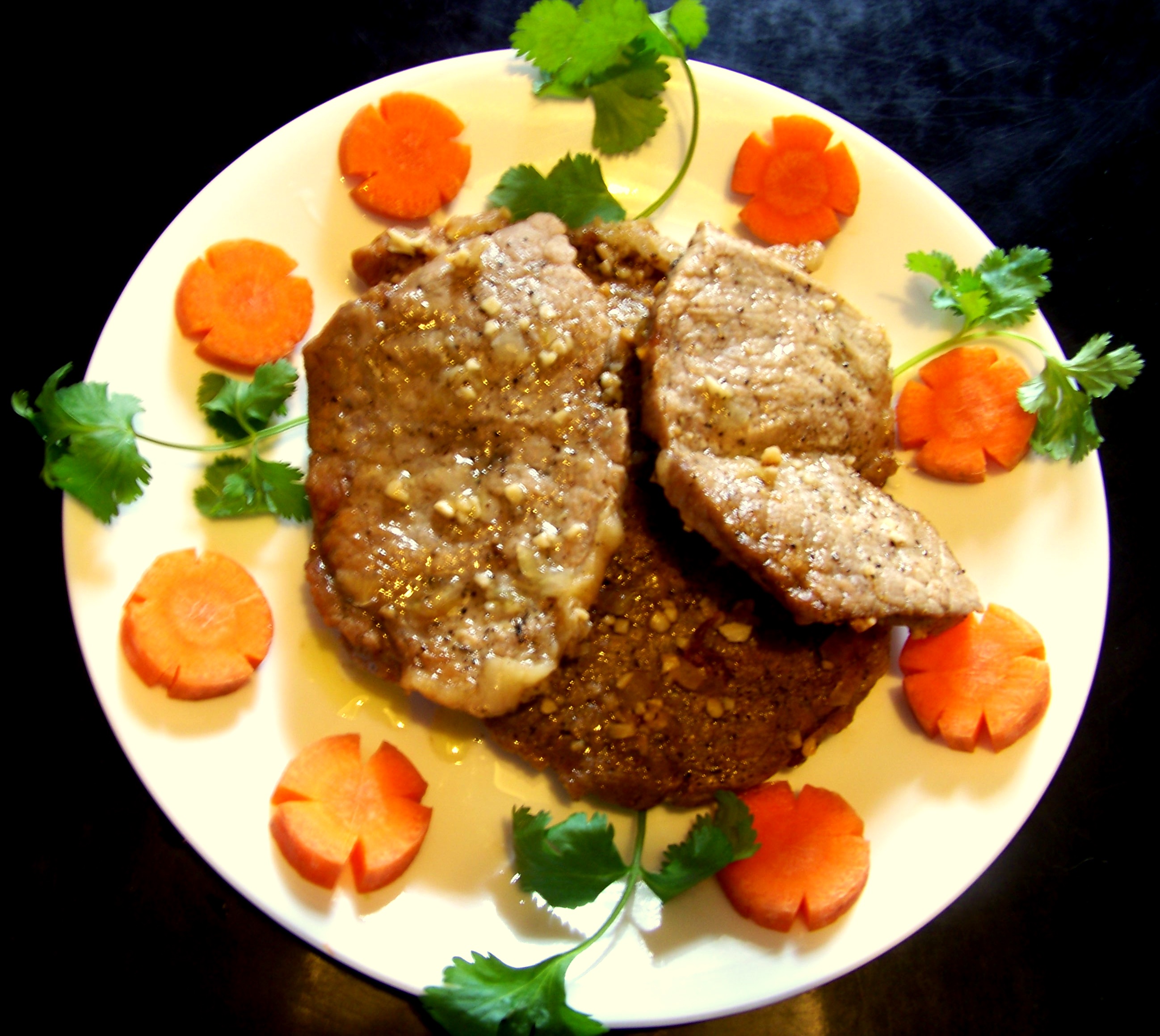
So I buy some steak fillet and try out the way we used to make back in Saigon. I slice ’em thin, marinade and fry, and not trying to toot my own horn here, but my steak is better than them restos’ steaks. 😛 Even Mai’s dad agrees. Its first highlight is the tenderness: it’s so tender I can bite it off with my teeth, who needs the knife and elbow grease to butcher that poor fillet. Its second highlight is the mouthwatering fragrance of garlic, onion, and pepper infused in every strand of muscle. Its last highlight, and also my principle of cooking, is that it doesn’t take long to make.


Vietnamese Steak (bò bíp-tết)

Ingredients:
– 1 lb beef filet
– 1 tbs chopped garlic
– 3 cloves of fresh garlic, smashed to flatten
– 4 purple onions, or half a sweet onion, chopped
– 2 tsp sugar
– 1/2 tsp salt
– 1/2 tsp pepper
– 2 tbs olive oil

Wash the filet, cut into slices of roughly 1 cm (1/3 inch) thick. Marinade the beef with chopped garlic, onion, sugar, salt, and pepper for an hour.
In a skillet, heat up oil on high heat. Throw in the three smashed cloves when the oil is really hot, wait until the garlic turns golden and smell good to add the beef.
Fry the beef slices for about 1 minute, flip over, and fry another 1 minute. Turn off heat and the meat is done.

We eat ’em hot with homemade fries and broccoli. This combination of Texas beef and Vietnamese cooking suits those who don’t have much time (or don’t really like meticulous labor in the kitchen), like me, best.