Flavor Boulevard

We Asians like to talk food.
Subscribe

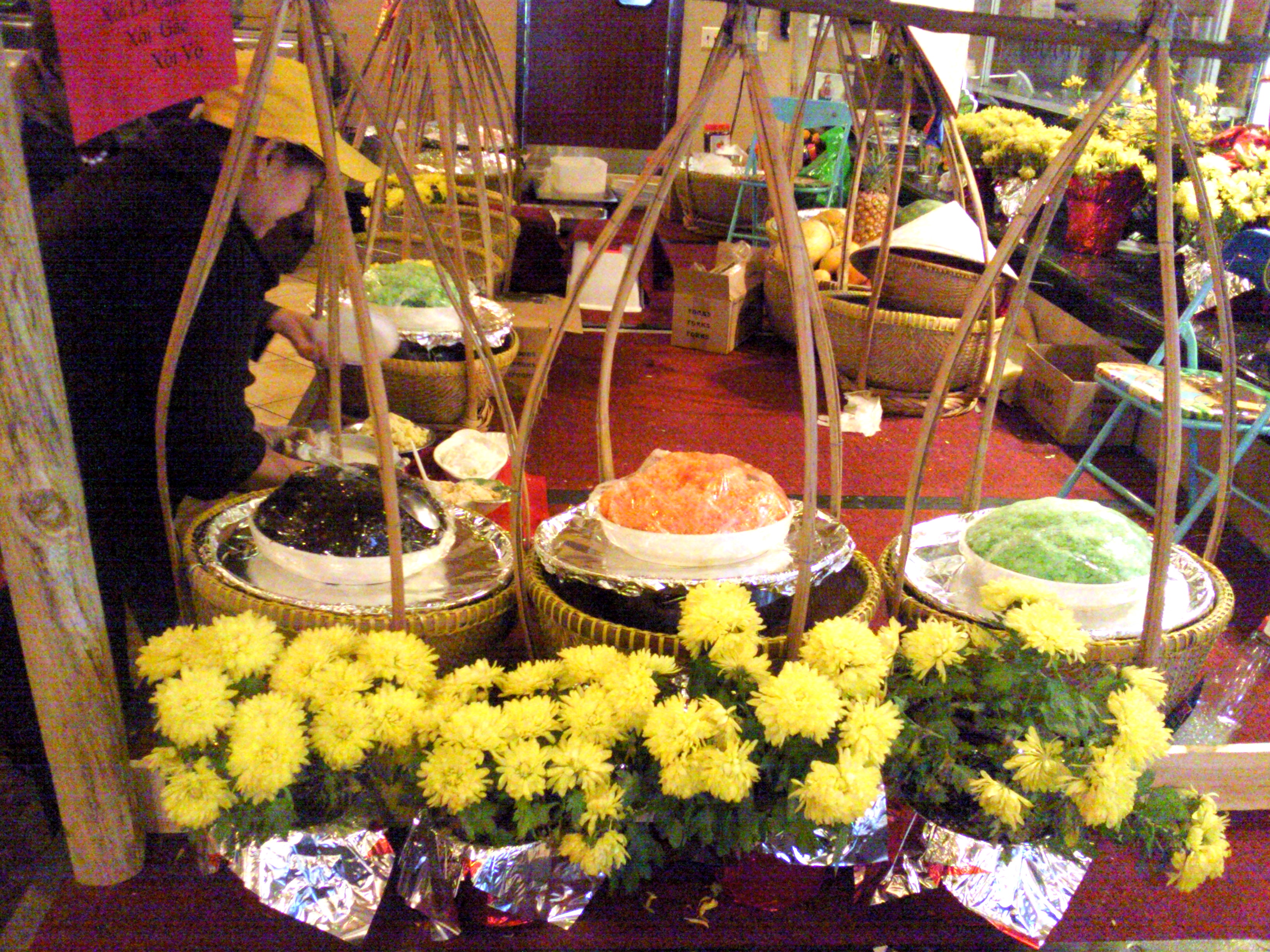
Kim Son’s Tet in woven baskets

February 09, 2011 By: Mai Truong Category: Festivals, Houston, noodle soup, Vietnamese

*Guest post in Vietnamese by my Mom, translated by me*
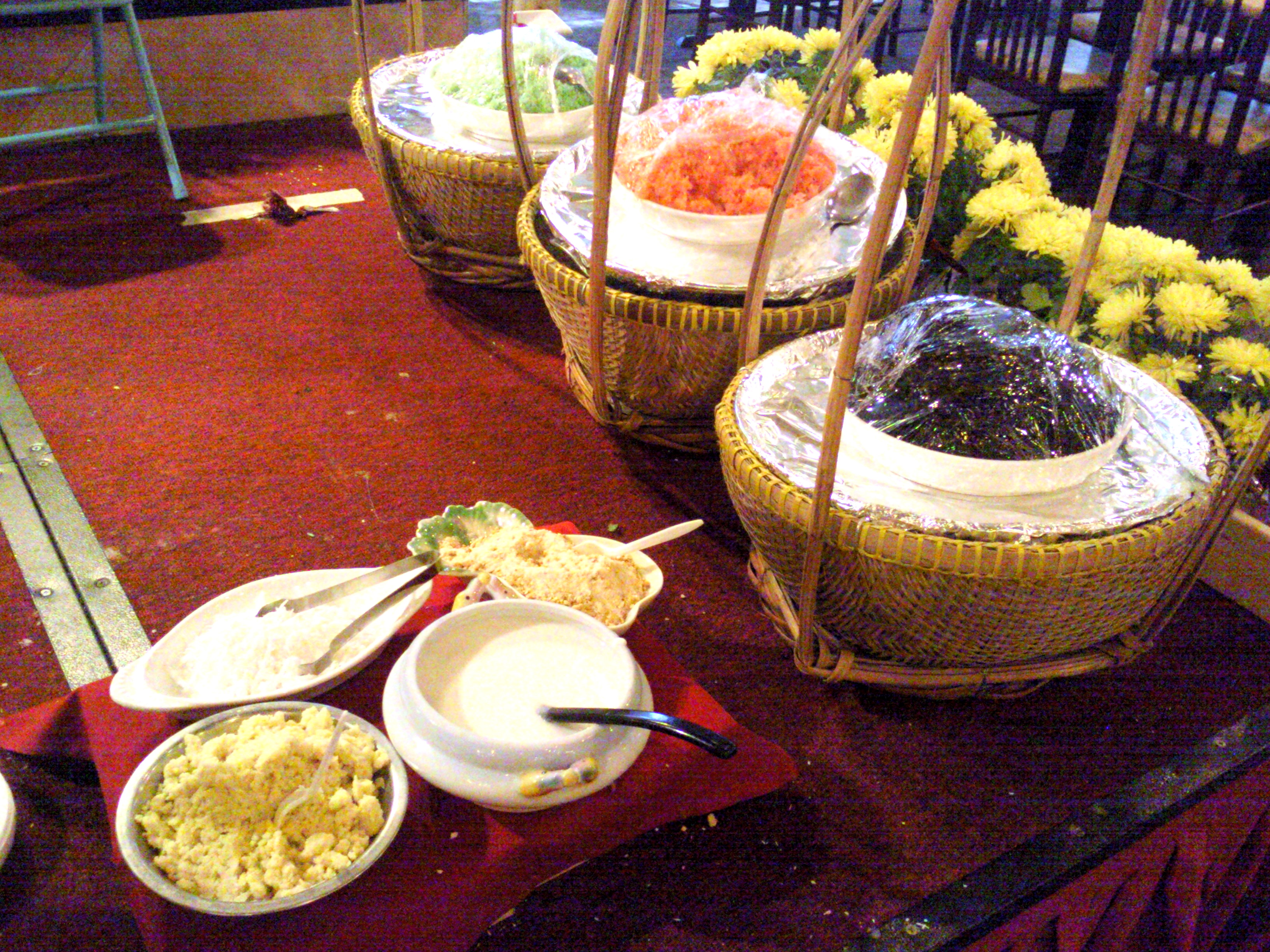

Back in the day, I seldom ate from street stalls or vendors’ baskets, my conscience imprinted with my mother’s unmovable doubt on the street food’s cleanliness. Nonetheless, I scurry with no hesitation to make it to Kim Son for lunch today, just because the TV news last night showed that Kim Son has a 9-day New Year food festival where the goodies are sold in baskets, mimicking the vendor stalls in Vietnam.
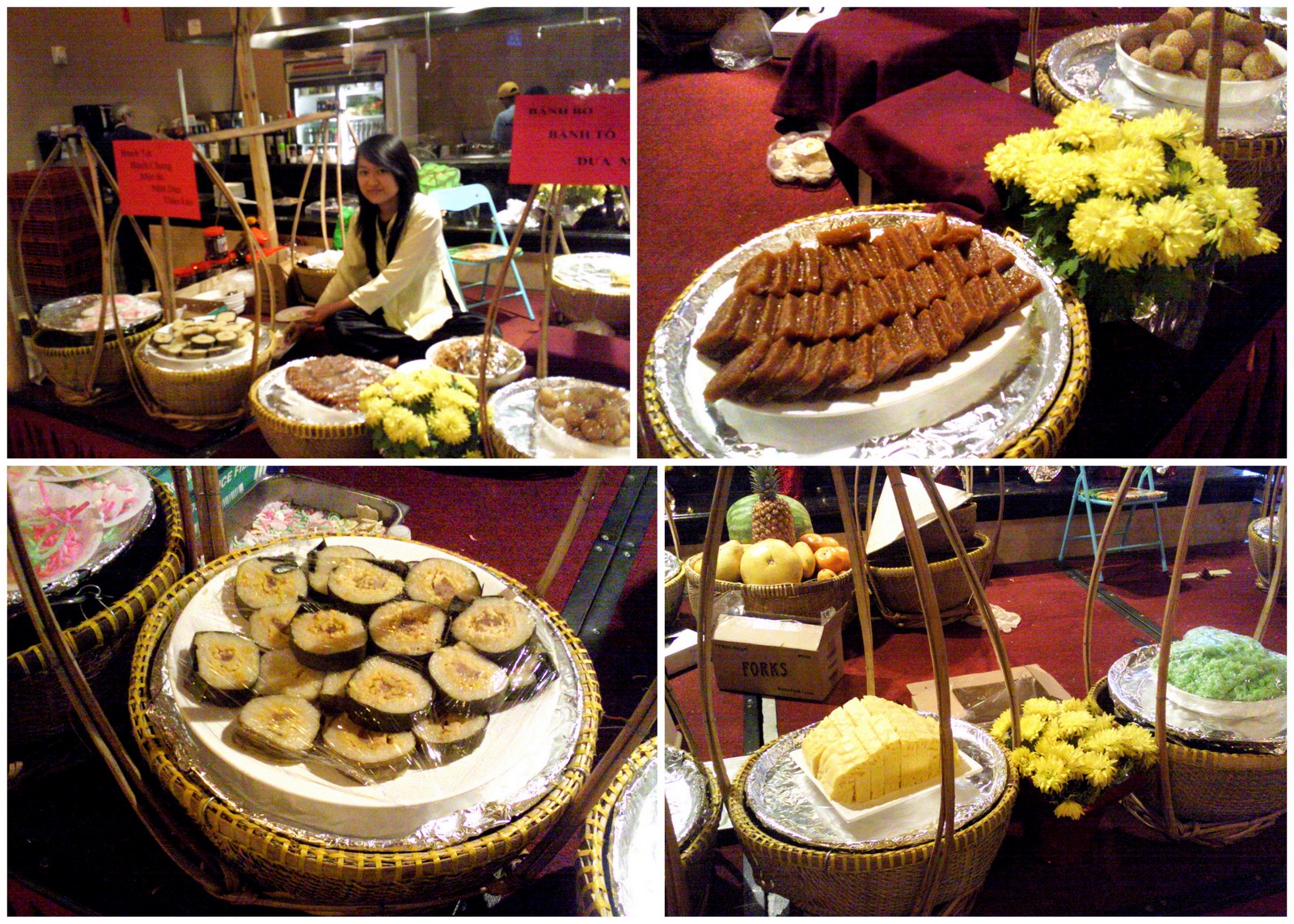

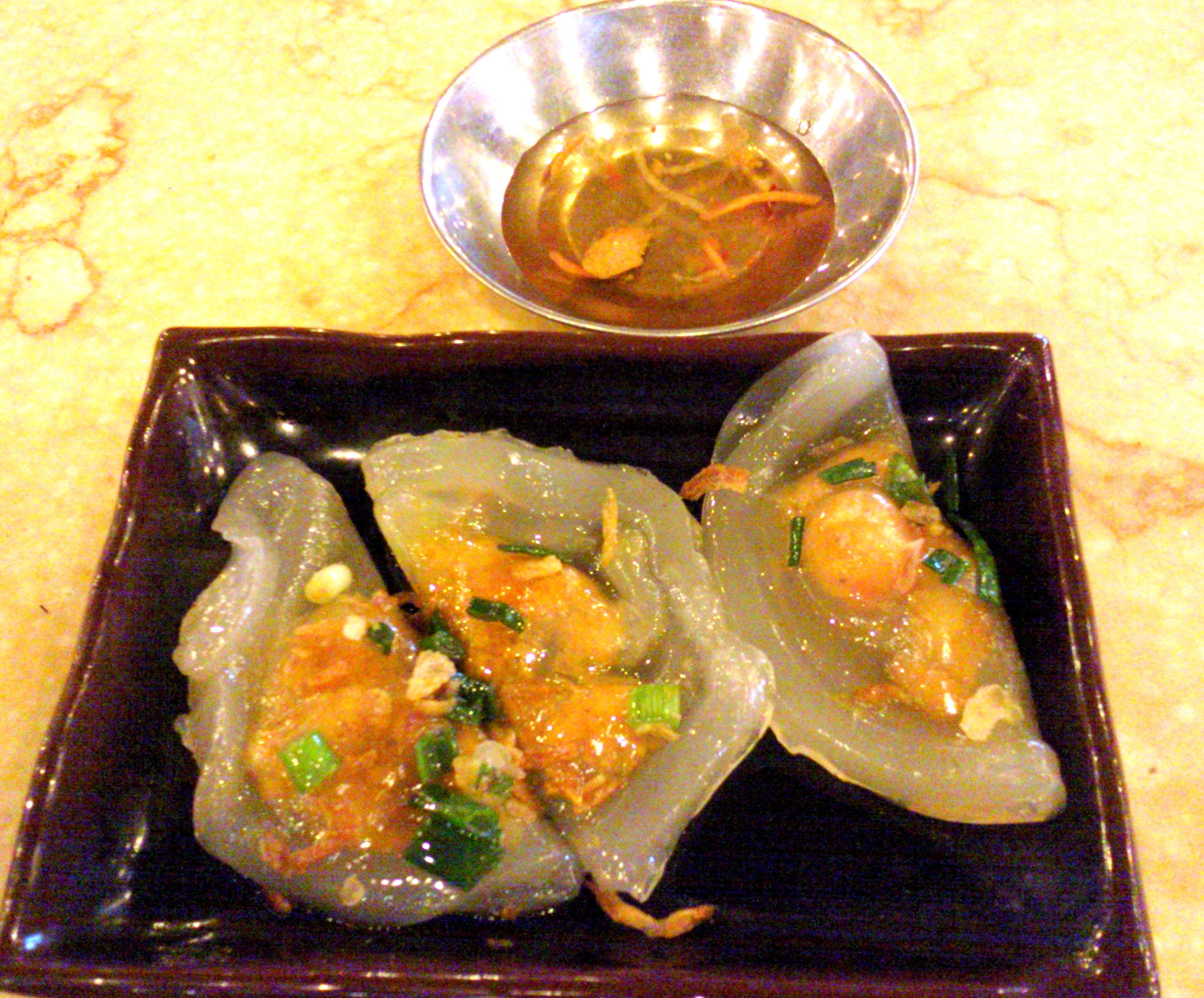
Like usual, the display is a buffet style, but this week the dining hall is decorated with flowers, fruits, and Tet greetings, the food selection is also larger and more interesting than normal days. I notice thịt kho and dưa giá (slow braised pork and pickled bean sprout, two traditional Tet savory dishes), bánh xèo (sizzling crepe), bánh bèo (water fern banh), bánh bột lọc (translucent banh) bánh cống (mung bean fried muffin).

In the baskets lie a few types of xôi, bánh tét, and mứt. A tightening mix of homesickness and joy rushes through me as I see woven baskets, bamboo shoulder poles, and the waxy green banana leaves holding and covering morsels of Tet.
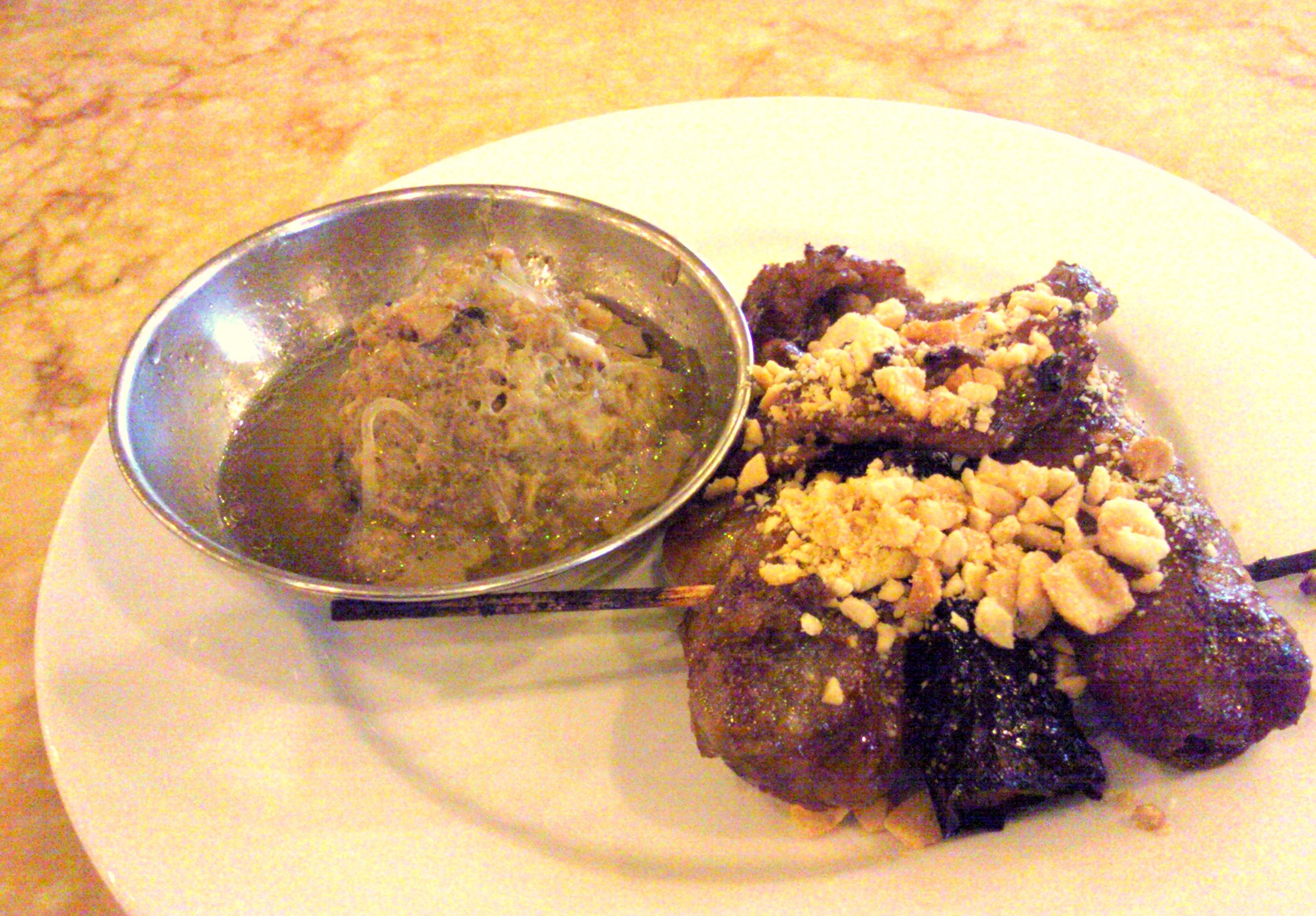

We load our first plate with seven-course beef, though the kitchen churns out only four: grilled beef (bò nướng vỉ), beef loaf (bò chả đùm), lolot beef (bò nướng lá lốt), and beef sausage in omental fat casing (bò mỡ chài). The little pinky-length fat beef sausages are extraordinarily tender, grilled on medium fire and so well seasoned they have the sweet smell of talents.
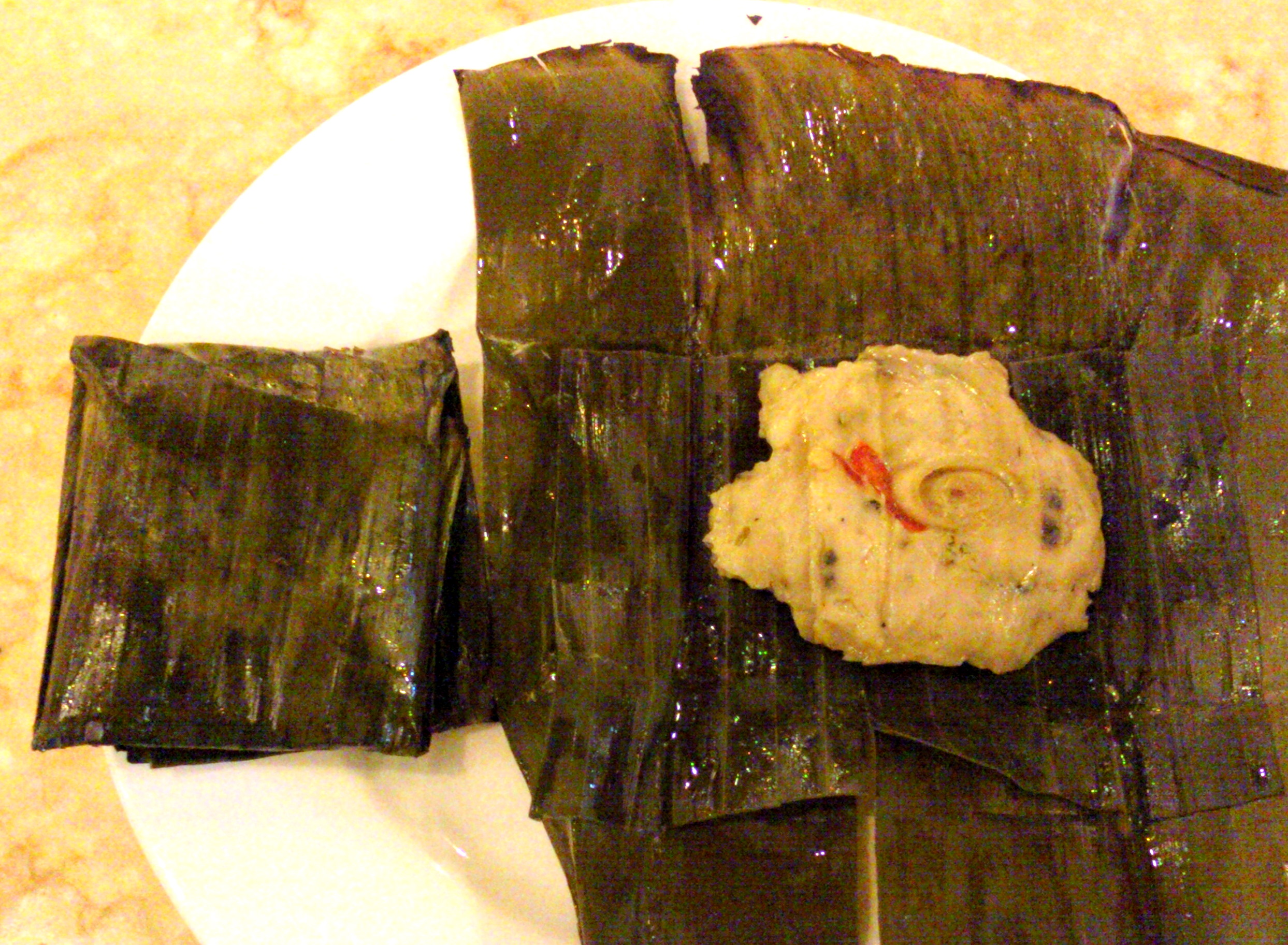

Meanwhile, my husband chooses the restaurant’s recommended special of the day: grilled snail sausage in banana leaves. I don’t like snails but have a taste anyway just out of curiosity. It is slightly spicy, but I get blown away. There is no hint of the wet and grassy snail scent that used to give me goosebumps when I was little. The banana leaf wrapping protects the velvety sausages from the burnt smell of open fire grilling, and gives it a sweet green aroma of summer breeze. As much as I like fish, I must admit these are better than the Indonesian fish sausages I’ve had a few months ago.
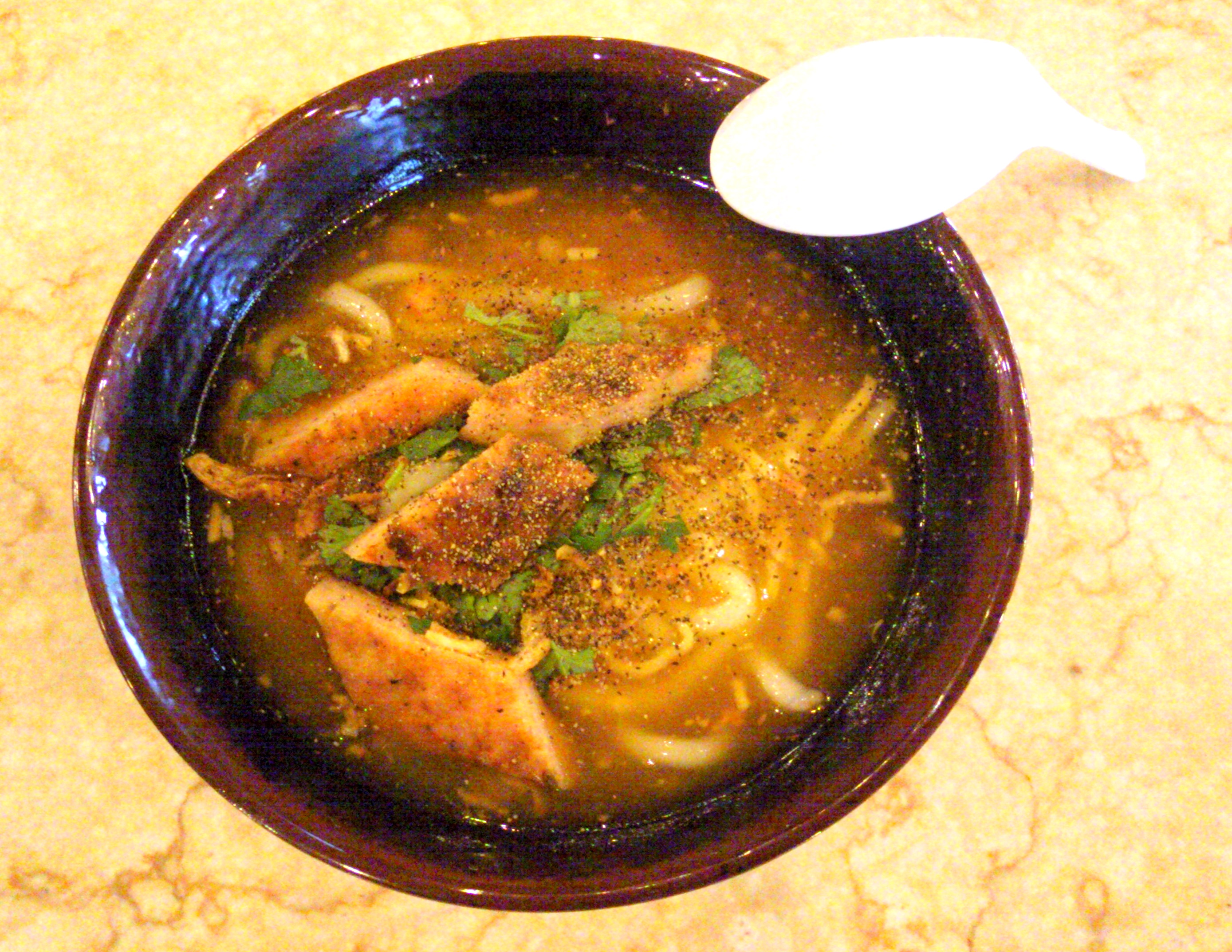

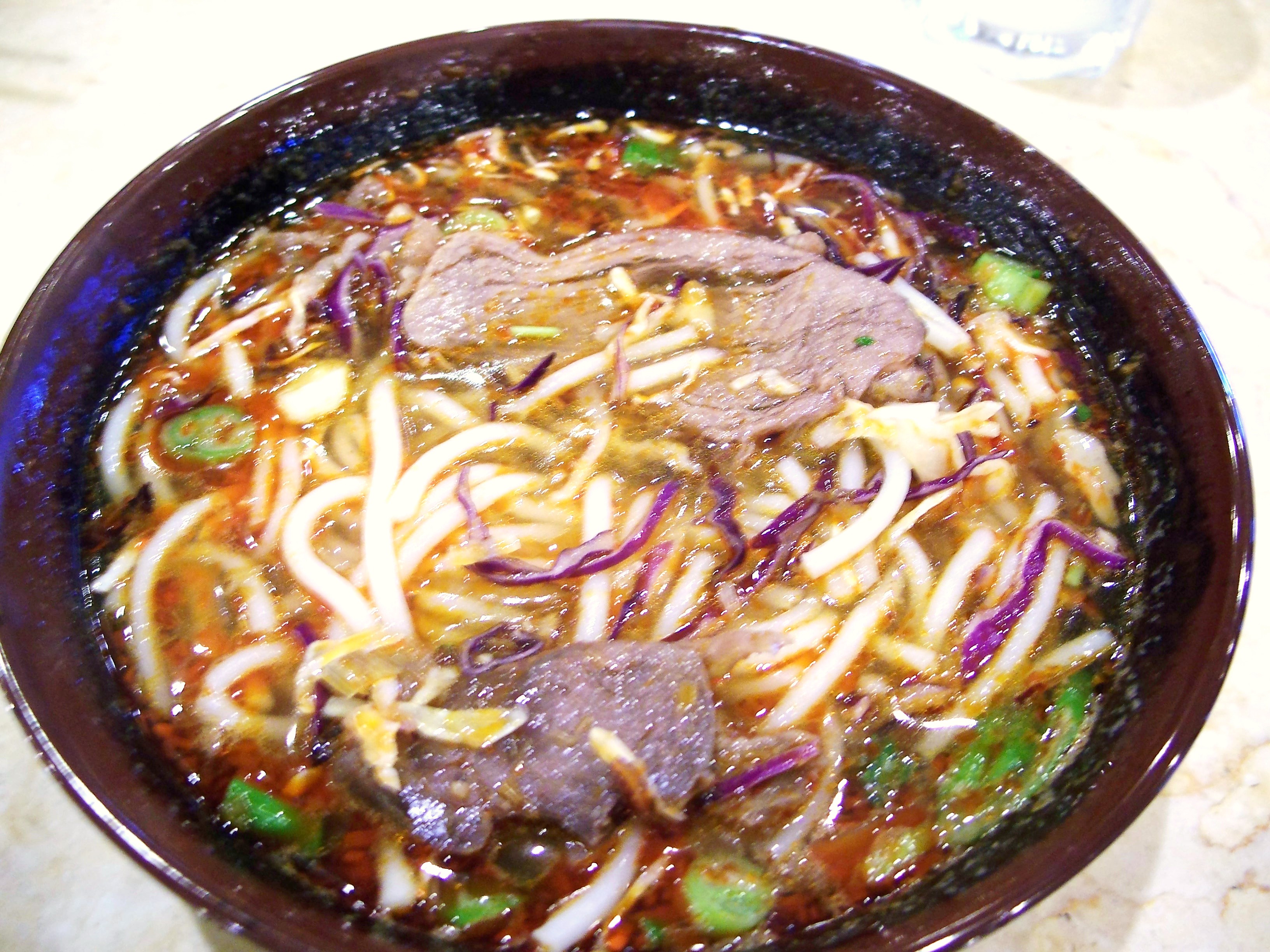
Another special is bánh canh cua Nam Phổ. I only learned about Nam Phổ, a village in central Vietnam, and its famous udon-like noodle soup from books, so I am overjoyed to see the real thing on the menu today. Bits of crab meat amidst chubby slick chunks of banh canh in a scarlet broth rich of crab sauce is the loveliest sight of all noodle soups. Banh canh Nam Pho, unlike banh canh of the South, doesn’t have loads of shrimp or pork, the broth isn’t starkly clear, yet its thickness delivers just a mellow natural sweetness. The first bite reveals little taste, but the second, the third, and a few sips of the broth in between start to sweep in waves of riverbank wind and meadow fragrance.
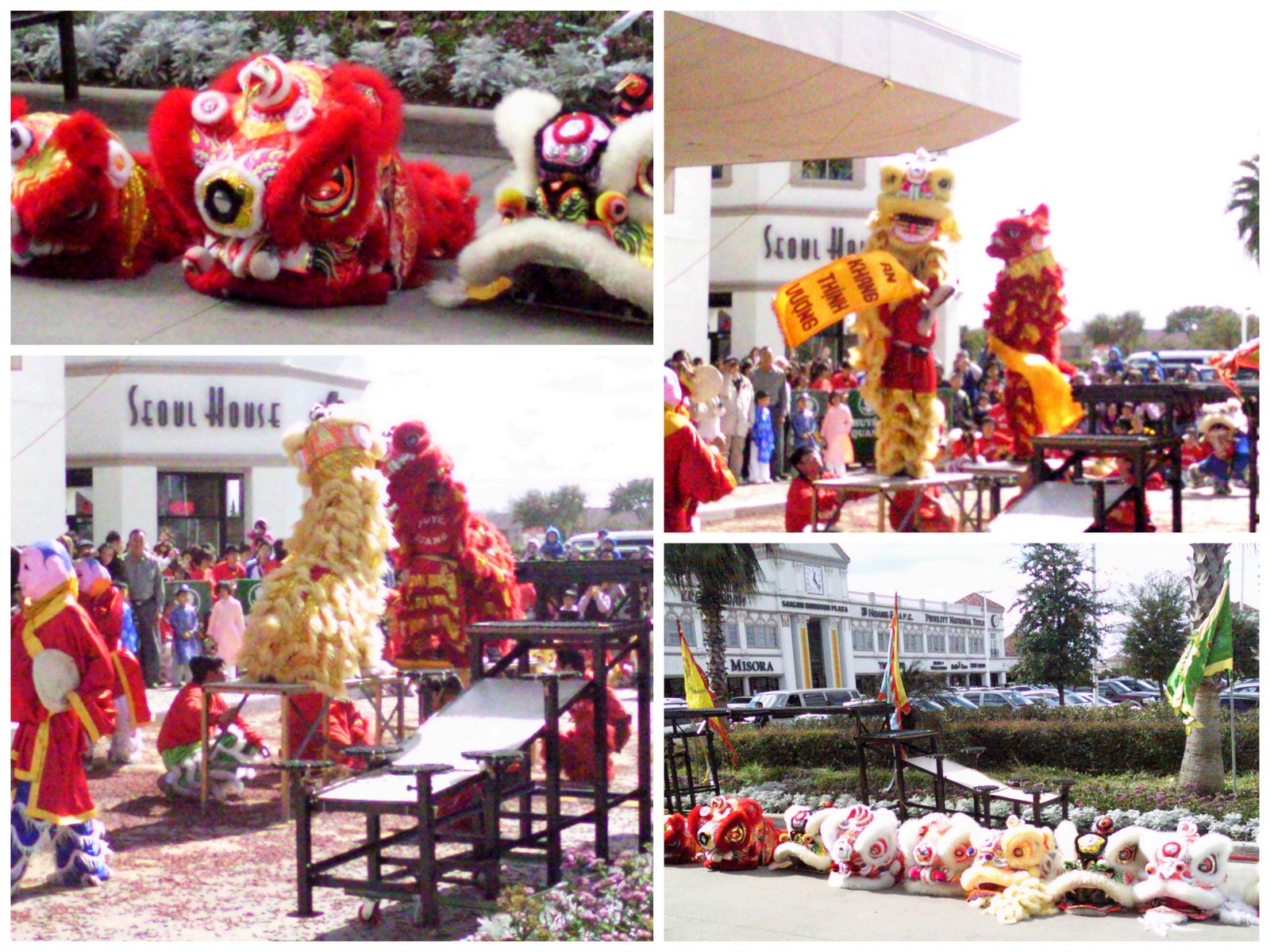

The country lunch sets us back $35.75 and 90 minutes. As we get ready to leave at 12:30, the parking lot gets ready for a massive lion dance and firecracker show. The sight of sixteen gaudy lions and hundred-meter long red squib strings and their boisterous sounds follow me all the way home, as I think of how we, the Asian expats, try to bring with us our lunar new year and our motherlands wherever we go.

Address: Kim Son Restaurant
10603 Bellaire Blvd
Houston, TX 77072
(281) 598-1777

This post is included in the February 2011 edition of Delicious Vietnam, a blogging event organized by Anh from A Food Lover’s Journey and Hong and Kim from Ravenous Couple.
More starchy sweets

June 25, 2010 By: Mai Truong Category: Comfort food, Houston, sticky rice concoctions, sweet snacks and desserts, Texas, Vegan, Vietnamese

Do you have those times when you keep craving something sweet, even after you wiped clean a cereal bowl worth of Double Fudge Brownie, exterminated many prunes, and skillfully chewed up four pirouette cookies like a mafia boss smoking cigars? I’ve started to see such danger of staying up late, but sweet stuff is always easier to eat than savory stuff in those wee hours. To avoid having my belly exceed my face, I started going through pictures of food (it helps more than studying and thinking about food), and found some munchtastic  sweet treats I meant to but never got around to blog about.


1. Chè khoai môn (taro che)

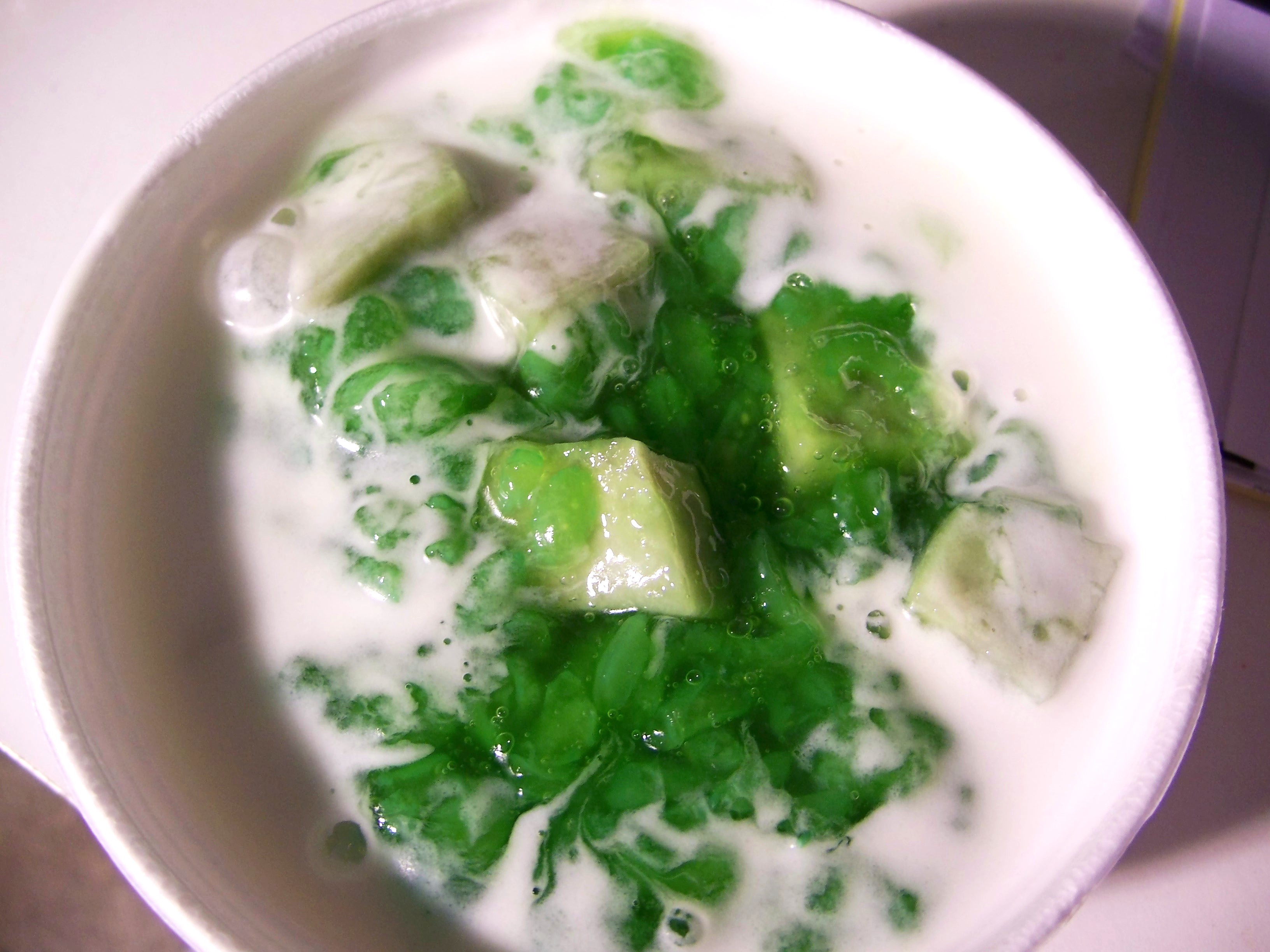
One of the few country treats without mung bean paste. Depending on each root and how long it’s cooked, the purplish pale taro cubes can be grainy, nutty, a little chewy, or al dente, like scallop potato minus the butter. However they are, they serve as a textural contrast to the gooey pudding-like sticky rice base. I’m particularly charmed by the vibrant green color in this Lee’s Sandwiches‘ rendition, hopefully from pandan leaf extract. You know it’s a skilled cook when the sticky rice grains are still visible, yet so soft you don’t need to chew. Taro che is less sweet than other kinds of che, as coconut milk alone gives much of its sugary taste.


2. Chè bắp (corn che)

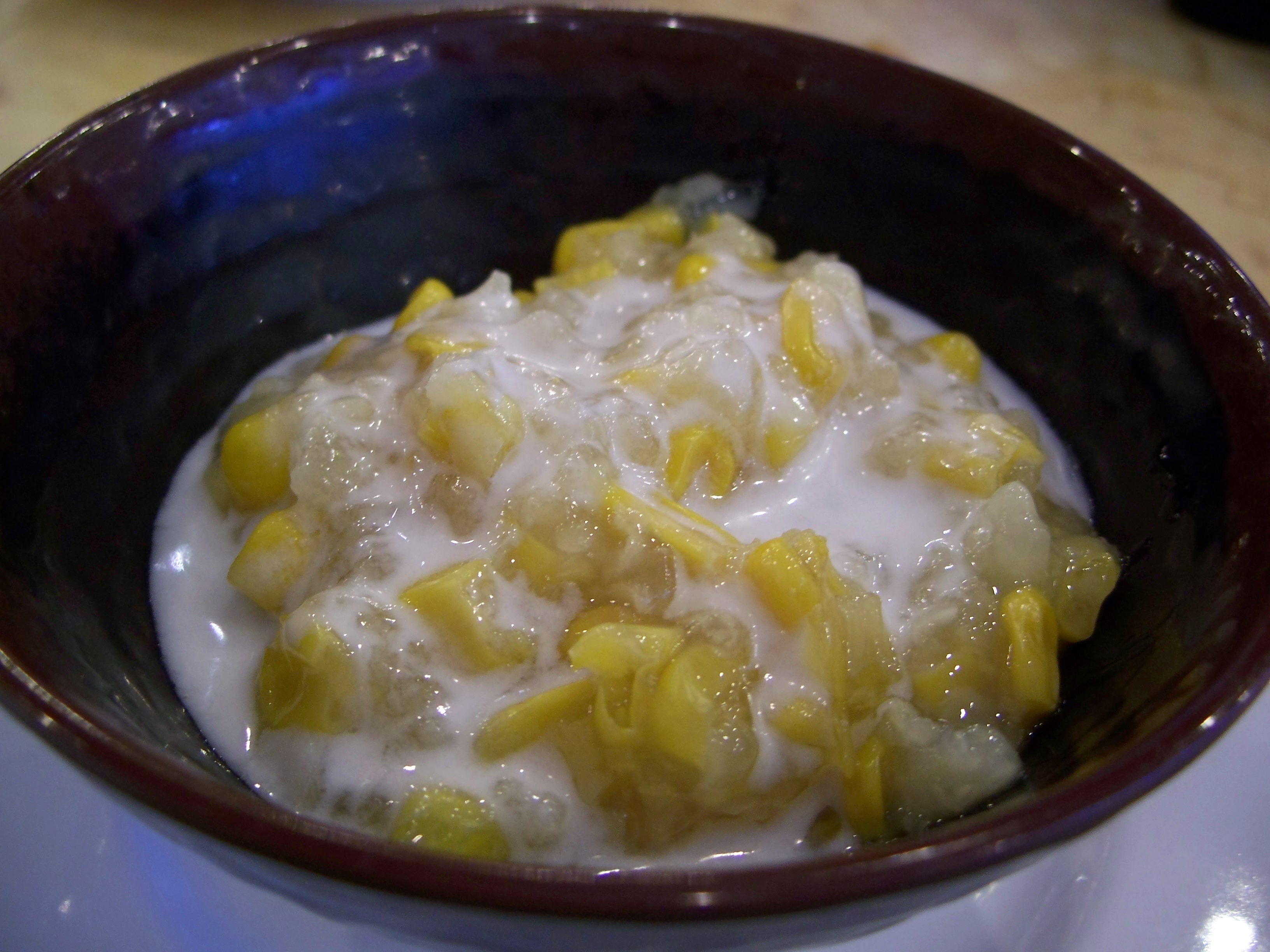
Another rare sticky rice concoction without mung bean intervention. Another pair of contrasting textures: crisp and firm kernels versus luscious goo. Another mild pudding sweetened by coconut milk. Bellaire Kim Son’s kitchen strayed from the common recipes that call for shaving the kernels off the cob, and used whole kernel sweet corn straight out of the cans. A simple, cheap, inhomogeneous toothsome mess.

More than 18 months ago: chè đậu trắng, chè bột báng, chè trôi nước

Afterschool treats

January 20, 2009 By: Mai Truong Category: sweet snacks and desserts, Vietnamese

First day of school is exciting. After a long break, we got up early again, felt motivated, felt ready to be hardworking. This may be the only day in the semester we get up early by choice, but let us not stress that. We checked our emails to see if the professor is in town and will hold class. Yes he is. He even came on time and commented on the president’s inauguration speech, not that there is much to comment. We hung around the undergraduate lounge, tried to read, but we were still in web-surfing mode. Our friends saw us for the first time after 5 weeks, some said they built a fence over the break, some said some said they shouldn’t have drunk so much the night before, some expected this to be an easy last semester. The usual day, the usual bunch. Our professor asked us what on earth is going on with our other professor, from whom we hadn’t heard since our last email 2 weeks ago, so we truthfully said we have no idea. We heard, but couldn’t focus during the lecture, mind wandering what should we blog about today. We forgot to bring lunch because we felt so motivated in the morning. We had only 1 class today from 12:45-2:00, but we were hungry.


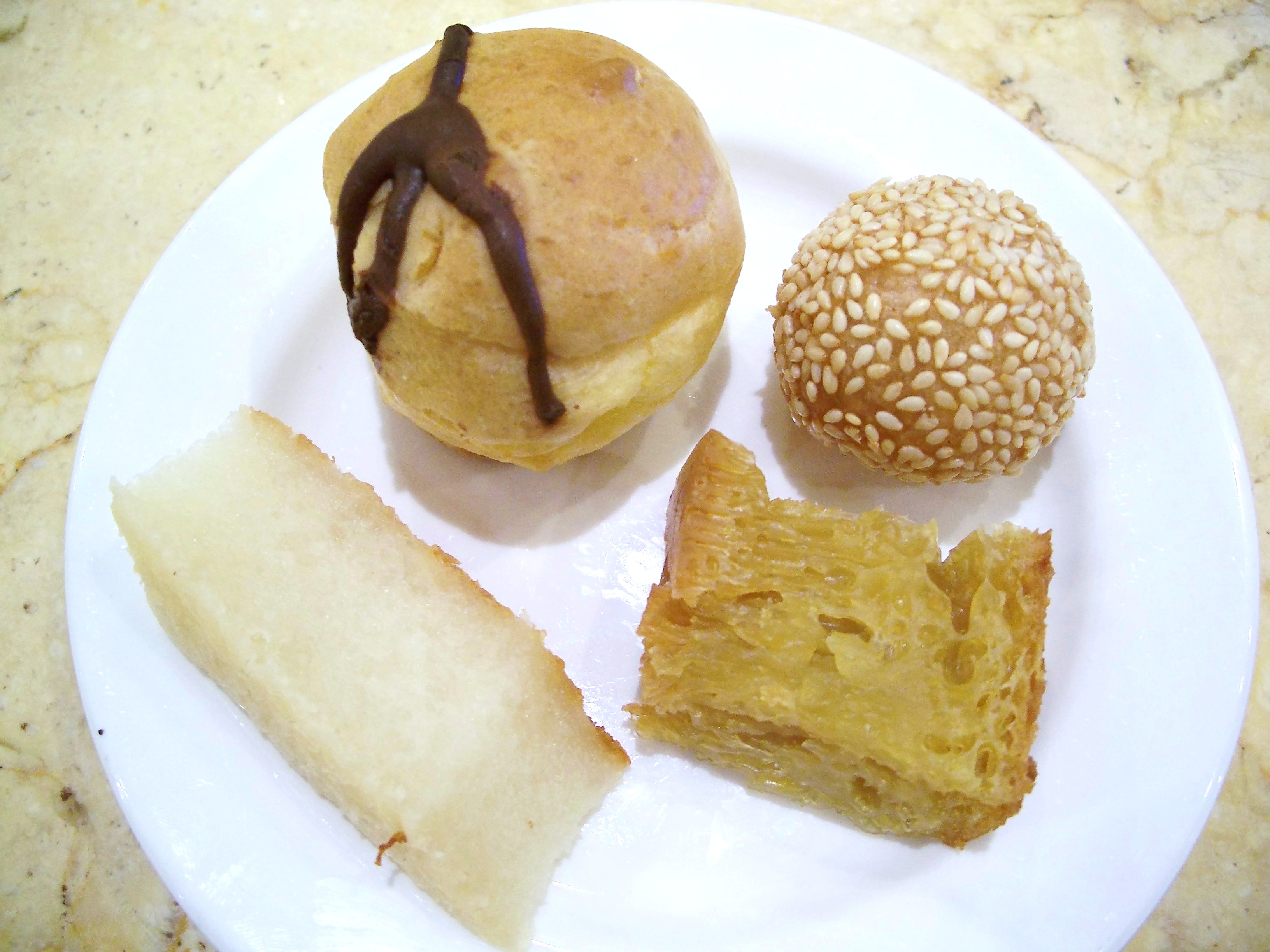
School kids in Vietnam have vendors waiting for them outside the school gate. As soon as they get out, they swamp the vendors’ modest environs. Clockwise from bottom southwest:

banh khoai mi nuong (baked cassava banh): white, firm, sleek, sweet. Too sweet, maybe? Easily tiresome after a few bites.

banh su kem (chou à la crème – cream puff): avec du chocolat pour la présentation seulement. More chocolat et less pastry would have been nice. Too little creme inside. But I do prefer these bite-sized hollow balls to monstrous orange-sized puffs in Vietnamese boulangeries.

banh cam (“orange” banh): sesame ball is the commonly identification in America, which obviously makes more sense than “orange” balls, when the balls contain absolutely no orange or citric element. Perhaps it refers to orange the color, eh? Or the shape? Another item seriously shrunk after immigration. It was actually the size of a small orange when it was in Vietnam. Sugared bean paste inside, deep fried flour shell outside. Best freshly made. Soon afterwards, the crunch leaves and each bite is a stream of oil. The thinner the shell is, the less oily the ball is. Average snack.

banh bo nuong (toasted banh bo): so… is beef (like pho bo, you know…), but fear not, this dessert does not contain animal product, much less animal flesh. Why call it bò? Perhaps because it looks like cow tripe? Who knows. Just leavened rice flour. I can’t tell if it has sugar or whatever else. It’s just light. Fluffy, lightly sweet, lightly sour. Untoasted banh bo is white like a feather ball. Toasting is supposed to strengthen both the texture and the taste. I had never liked it, because of the sourness, and I don’t now.

This is what the dessert selection at Kim Son has become after they stopped serving dau hu nuoc duong (soft tofu in sugar water). Do I regret not eating from vendors when I could? Maybe. I don’t know most street foods, don’t know who make them best, don’t know how differently they taste compared to their Americanized cousins. But wherever it is, however it’s made, dessert is like the first day of school, not too much of a celebration in its honest self, simple or extravagant, it’s a delight we all look forward to.

Multitaste soup – canh chua ca at Kim Son

January 10, 2009 By: Mai Truong Category: Comfort food, Houston, Southern Vietnamese, Texas, Vietnamese


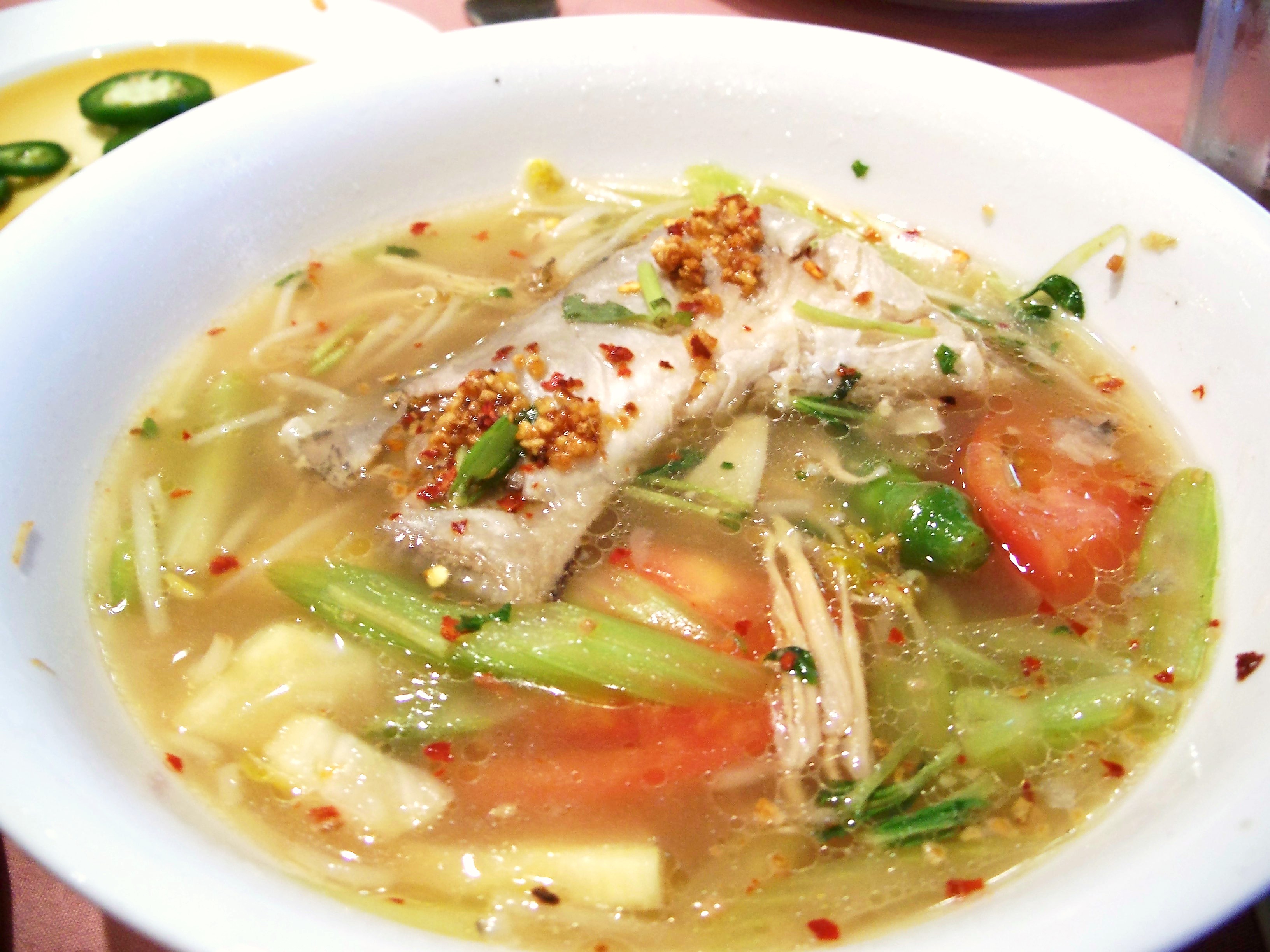
They never blink. They never wag their tails. They never mutter a sound. I can never tell what they are thinking or feeling when I look at them. I like them deep-fried, or pan-charred with salt, lemongrass, and pepper, but that’s mostly because of the seasoning mix they’re fried with. By themselves, they are cold-blooded creatures with a distinctive smell, tiny bones resembling oversized needles, very little fat, and worst of all, flaky meat. They’re quite abundant in Vietnam, both alive and cooked. I even like the dipping sauce made out of them. I just don’t like them. Something about their meat freaks me out, or perhaps it’s the childhood memory of having a bone of them stuck in my throat that damages my feeling for those footless fellas. I would have never done it, but my mom, craving for some motherland’s taste, ordered canh chua cá (fish sour-soup) when we went to Kim Son the other day. How could she… fish and soup? Well, it turned out to be the best dish on the table.

Canh is soup. Usually the vegetables in canh are leafy greens, and because canh came about before the French and potatoes arrived in Vietnam, there is no canh with potato. There are, however, canh with taro corm, cassava, sweet potato, and other kinds of starchy roots. A special kind of canh most suitable for summer weather is canh chua (sour), because the mix taste of sour, pepper-spicy and sweet is just cool. The sourness comes from tamarind (fruit and young leaves), starfruit, pineapple, tomato, or lá dang, a kind of sour leaf. Is there sour soup in Western cuisines?

Usually I am indifferent to canh chua at my best mood, because usually canh chua is inseparable from our footless flaky friend. The combination canh chua and fish is adored across the delta, in various menus, and has followed the southern Vietnamese immigrants overseas. It is so southern and so countryside that almost certainly the delta farmers would invite you a bowl of canh chua when you visit them during lunch time. There is also canh chua with shrimp and pineapple, and somewhere in her memory, my mom knows that there is canh chua with chicken, however rare. Fatty meat (pork, duck, beef, etc.) is not allowed. The broth must be clear. The fish must be from fresh water: catfish, snakeheads, climbing gouramis, “pangasius krempfi” (ca bong lau),… Canh chua can’t be cooked with seawater fish because they’re too fishy to be overpowered by the sour benefactors. Ok, what else is there for background check… a bowl of canh chua often has many kinds of vegetables beside the citric star of the act, these add-ons include bean sprout, the stems of night-scented lily (I learn so many new names blogging!), okra,… Native villagers use almost every edible plants they can find in gardens and ponds, so there is hardly any fixed recipe for canh chua. That’s the beauty of it, food is not supposed to be fixed.

The bowl of canh chua we had at Kim Son has every criterion of tasty canh chua, from the sweet-n-sour clear broth to the finishing touch of hot pepper paste. Pangasius krempfi is no longer fishy, just a tender, juicy piece of white flesh (sorry, I just can’t bring myself to saying any fish is good). If you look at the top corner of the picture, there it is, nuoc mam nguyen chat (pure fish sauce) in all splendor, no additional seasoning, a dapple or two into your canh chua to trigger the salty-crave taste buds. Frankly I am quite disappointed at the sight of jalapeno in that nuoc mam. Authentically it must be red pepper, cayenne, thai, etc. Jalapeno is Mexican, canh chua is Vietnamese, and this is not the time for cultural exchange.

What do I like the most in canh chua? The night-scented lily stems. In Vietnamese people call it a dangerously misleading name, “mint”. Minty? Not really. It’s crunchy, finely porous, similar to lotus stem, it stores the broth so well that each bite pours in your mouth a stream of warm, peppery, sweet and sour. Sensational!

Sleeky banh soup

January 09, 2009 By: Mai Truong Category: Central Vietnamese, Comfort food, Houston, noodle soup, Southern Vietnamese, Texas, Vietnamese


Almost every Sunday we make a trip to Bellaire to get the usual supply of patechaud, cha lua, banh gio, and the like. Almost every Sunday the question’s asked: where will we eat today? Well, there are two choices: the all-too-familiar Kim Son, and the more adventurous find which can be anything Little Mother saw in the local Vietnamese newspaper ads. We’ve had our handfuls of adventurous finds, all are good, but as usual smaller places don’t have a big selection, the menus are either common banh mi and pho, or grandiose names we don’t particularly care for. Mother is also easily shy away by the appearance of a restaurant: if the setting doesn’t look good, the food won’t taste good. So back we headed to Kim Son today…

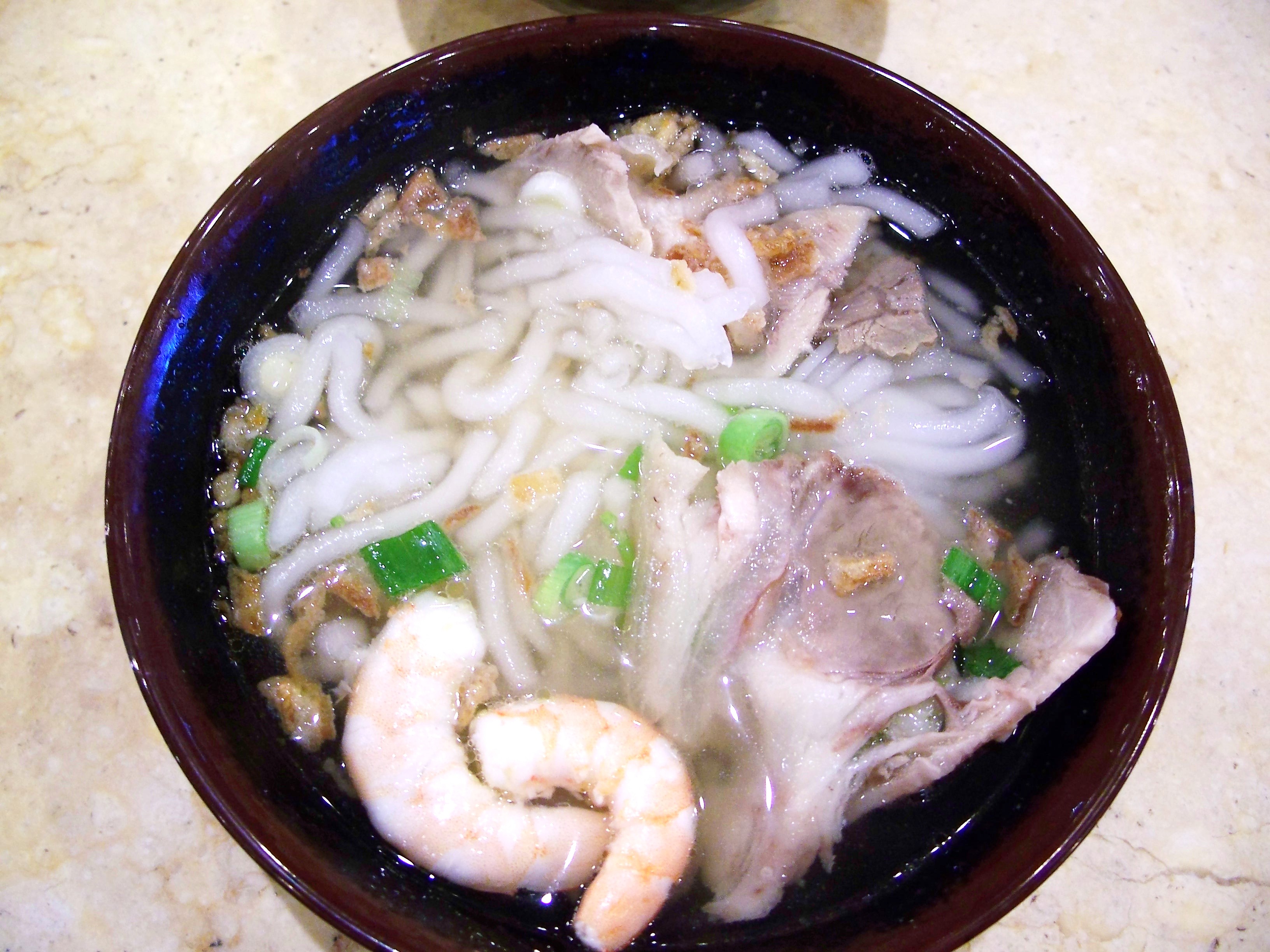
We opted for the popular choice of a lunch buffet. We got there early enough, meaning at 11, when it’s just opened and there was banh canh. 15 minutes later and it was all gone. Out of banh canh noodle they said. The soup is not left unattended like the rest of the food trays known and visited by many. No, that would have reduced the availability to 5 minutes. It’s hidden in the right corner of the diner, in something can appropriately be called a kitchen box, with fellow roasted ducks and another noodle soup of the day. You go over there, order, stand around watching the cook slap a bunch of noodle, shrimp and pork, and pour a couple ladles of steaming broth into your bowl, you go back to your seat and start slurping. It’s really slurping, even chopsticks have a hard time holding the noodles in place long enough, don’t even try spoon and fork. They’re quick, short, round, and annoyingly feeble. It’s too easy to break them, but it’s hard to put them in your mouth before you flick a drop of broth to somewhere it shouldn’t be. The taste is worth the sloppy embarrassment, though. Banh canh and hu tiu are somewhat similar, the final touch in each bowl is a dollop of mo hanh (chives stir fried in lard and fried shallots). It adds savoriness, enhances the mix of meaty and sweet. A very hearty soup. I even drank the broth. The small bowl is a perfect belly hit.


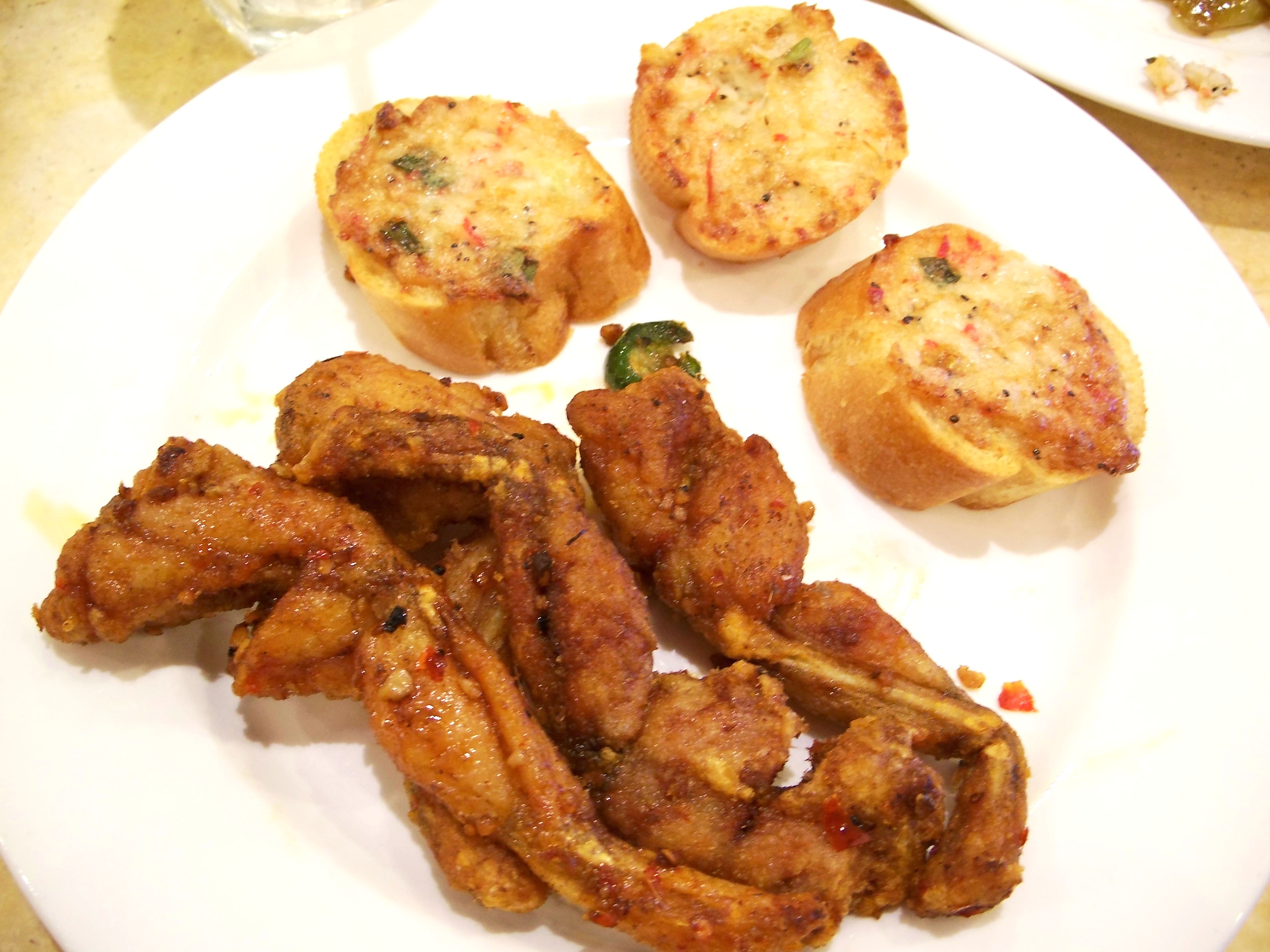
Not to be healthy I packed a few frog legs and fried shrimp-pasted toasts down my throat afterwards. Great baguette. Frog legs would have been great too if not for the irritatingly overloaded hot pepper. When something’s hot, it’s just hot. Hot overpowers everything. Can’t taste another daggum flavor, if there were any. Dunno about you but I find that boring. The meat is kinda dry (I would be too if I were covered in hot pepper) and sinewy. But they do look sporty, don’t they? 🙂


The other soup of the day was bun bo Hue, which we’ve had, and I’ve blogged, here. Looks good, eh? Spicy, too. It’d be good to have intermittent sips of water, given you have a full glass. Kim Son is usually crowded after 11:30, at which time there are too few waiters for too many tables, and it’s expected that you fend for yourself. Yes, that means no refill. Vietnamese scoffers are used to drinking only after the meal anyway. They believe that drinking during eating would result to feeling full immaturely, or making your belly bigger. Maybe that’s why my jeans feel tight…

Sweet New Year began with chè

January 01, 2009 By: Mai Truong Category: Comfort food, Houston, sweet snacks and desserts, Texas, Vegan, Vietnamese

We heard dapples of fireworks last night, other than that, everything was normal. TV had the usual shows, roads had the usual cars, the usual air, the feeling of a usual day. Isn’t that strange? New Year came quietly in this town, but with all the bombing and protesting around the world, I suppose a quiet peaceful New Year’s Eve is a nice New Year’s Eve. No champagne, no confetti, no wishes, no counting down. We slept.


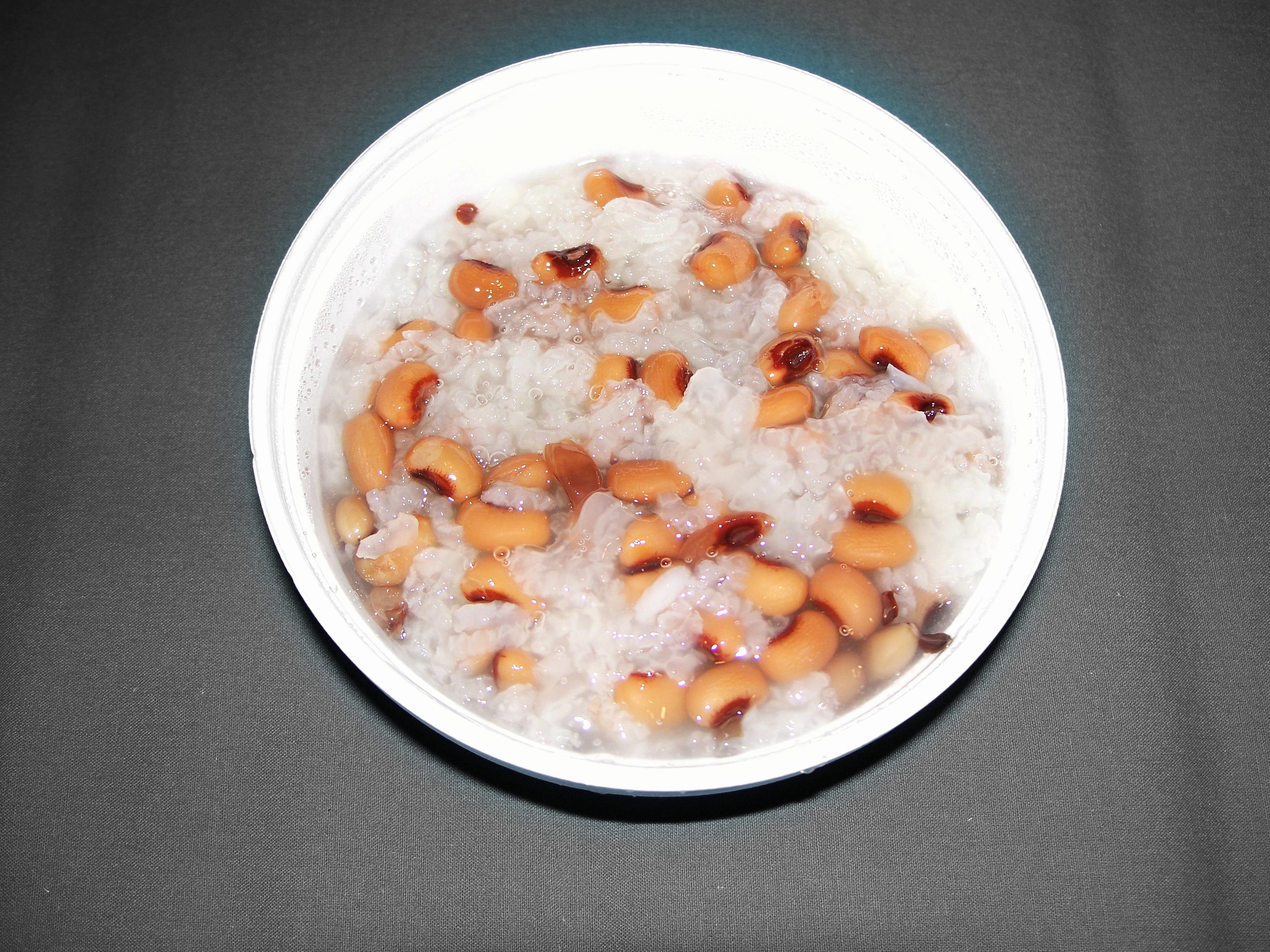
But how about some black eyed pea? 🙂 Not only is it a traditional American New Year’s food, it always appears in a baby’s first (and most important) birthday in Vietnam (quite a connection, I know… but a good bean, isn’t it?). The word “đậu” for bean, or pea, has the same spelling with the word for passing (an examination), chè is a dessert, so chè đậu trắng is a sweet food of good luck for the beginning of something. Cooked until soft, washed with cold water, the hard “black eye” part of the testa taken off, then cooked again with sticky rice and preferably brown sugar, the beans melt in your mouth. In an average pot of che dau trang, you see the sticky rice makes a gluey protection of the beans, the seed coat is still just a tad chewy, your jaws and tongue will enjoy a mix of texture. This might be exclusively enjoyable for those with an eye on texture food, myself included. In a good pot of che dau trang, you can see each grain of sticky rice and each shapely pea, but each spoon will only give you a sweet, nutty, almost homogeneous mixture. Oh, can’t forget the slightly salty, thick and fat coconut milk, of course. Coconut milk makes everything aptly better.


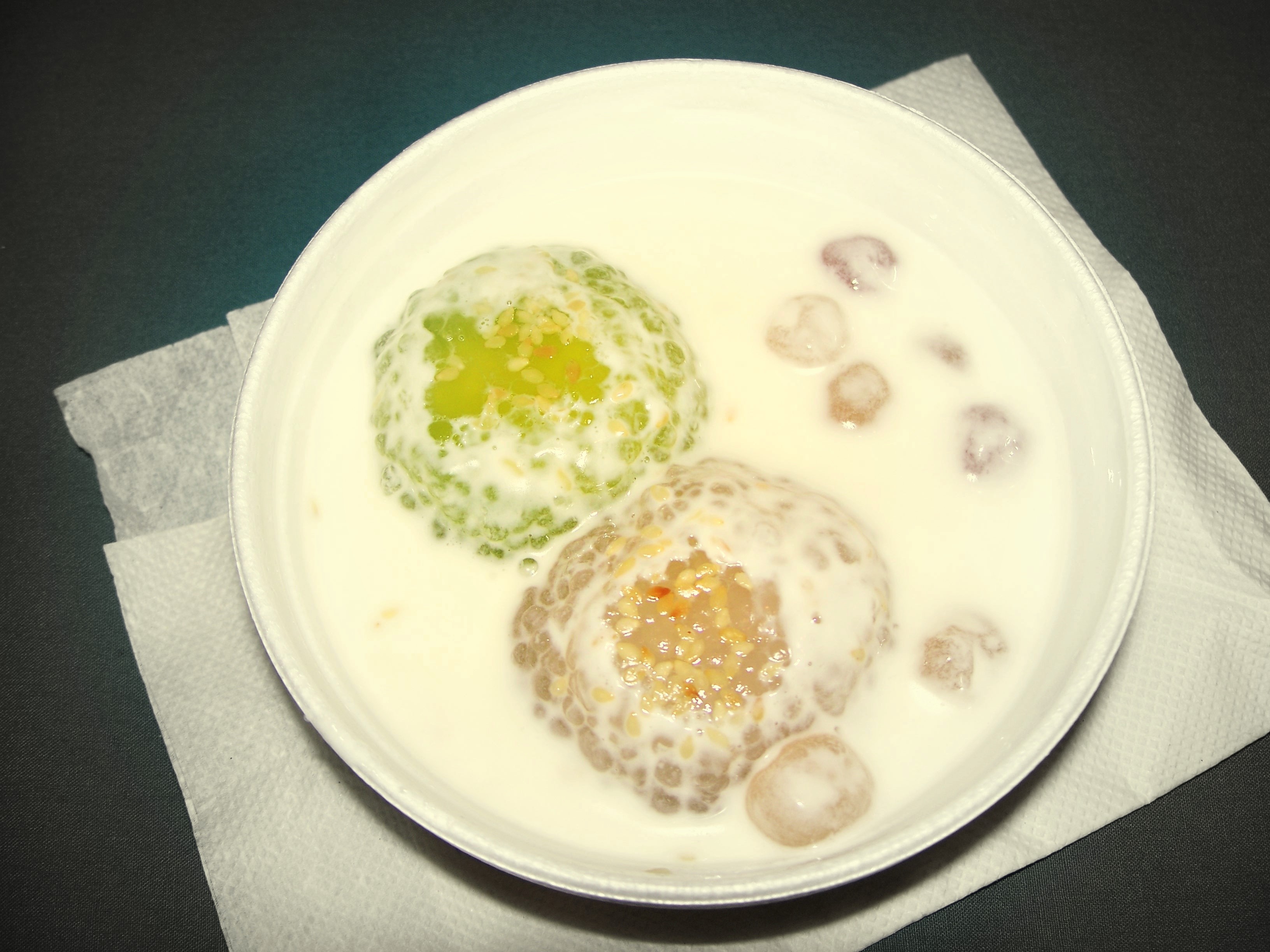
Coconut milk sneaked in here too… A small cup of chè bột báng (tapioca chè) from Lee’s Sandwiches. The big pink and green balls have mung bean paste inside, the little ones are your usual tapioca marbles in bubble tea (only slightly bigger and not dark brown). There is no sticky rice, but there is a teaspoon of pan-dried sesame seeds atop. Chewy and sweet is the main theme che bot bang shoots for. It’s pretty light.


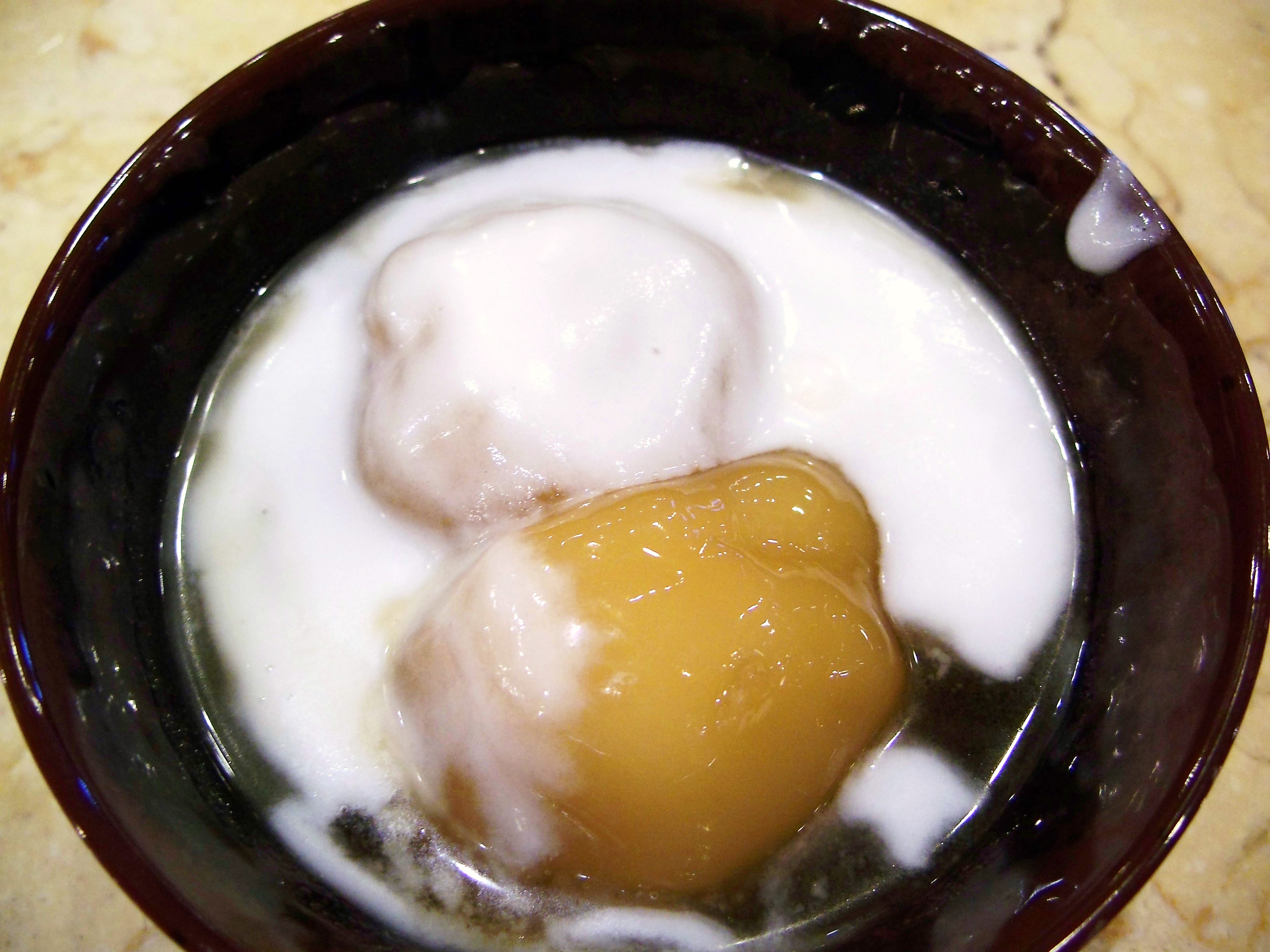
Che is a vegan snack. Sticky rice, bean and coconut are about the main ingredients in any kind, some have fruits or roots, but eggs and milk stay out of this business. So how many variations of che do you think there are? Quite a few, actually. Chè bắp (corn), chè bột báng (tapioca), chè bột khoai, chè củ năng (water chesnut), chè củ mài (a kind of yam), chè chuối (banana), chè đậu xanh (mung bean), chè đậu đen (black bean), chè đậu đỏ (azuki bean), chè đậu trắng (black eyed pea), chè hạt sen (lotus seed), hạt mít (jack fruit seed), chè hạnh nhân (chesnut), chè nhãn (longan), chè khoai lang (sweet potato), khoai môn (taro), khoai mì (cassava root)…, and many others I haven’t tried. Are there similar desserts in other countries? I don’t know, but certainly not in the US, where people say ew to soy milk (and not to raw clams). Kim Son, quite to my disappointment, has stopped serving che dau trang for some while, but still has chè trôi nước, another familiar dessert of the Vietnamese, especially in the North, where some call it bánh trôi, as it’s a ball floating in sugar liquid. Such simple name is made simpler, pronunciatively, by the Southerner, when they turn it into chè xôi nước: xôi – sweet sticky rice (the coat of the ball is indeed made of sticky rice flour), in nước – (sugar) water. The stuffing is, surprise surprise, Mung Bean Paste. Sweet outside, mild and nutty inside. A beast to work your jaw. Doesn’t it remind you of banh it? Sprinkle some sesame seeds and spoon in coconut milk for a homey taste of the countryside.

Off to a well-seasoned new year, everyone! 🙂