Flavor Boulevard

We Asians like to talk food.
Subscribe

Noodle soup: Banh canh Que Anh & Que Em
April 23, 2014 By: Mai Truong Category: Central Vietnamese, Comfort food, Houston, noodle soup, Southern Vietnamese

qae-banh-canh-tra-vinh
Quite possibly the cheesiest name of a store I’ve ever seen: Bánh Canh Quê Anh & Quê Em – “bánh canh [from] your hometown and my hometown” (it doesn’t sound cheesy translated into English, but trust me, it’s like Twilight’s Edward Cullen in noodle soup form). Which is actually fitting, since banh canh is commoner’s grub, not a bourgeois lunch. You won’t find a classy madame dressing up just to go out for banh canh. The poor thing will never be elevated to the level of pho. I love it.

I grew up eating it before I was born (literally). Backstory can be told in person, but despite eating so many bowls, I never knew that there was so many types of banh canh. Que Anh & Que Em offered 30 types (see menu at the bottom), 14 of which are no more traditional than the Spider Roll, but the other 16 are attached to geographical regions in Vietnam, and thus, in this case, more meritable.

Banh canh is a thick, chewy, slippery rice noodle (with tapioca starch). It’s similar enough to udon in appearance and texture (as the shop aptly translates it to “Vietnamese udon”), but also entirely different (udon is made from wheat).
qae-banhcanh-closeup
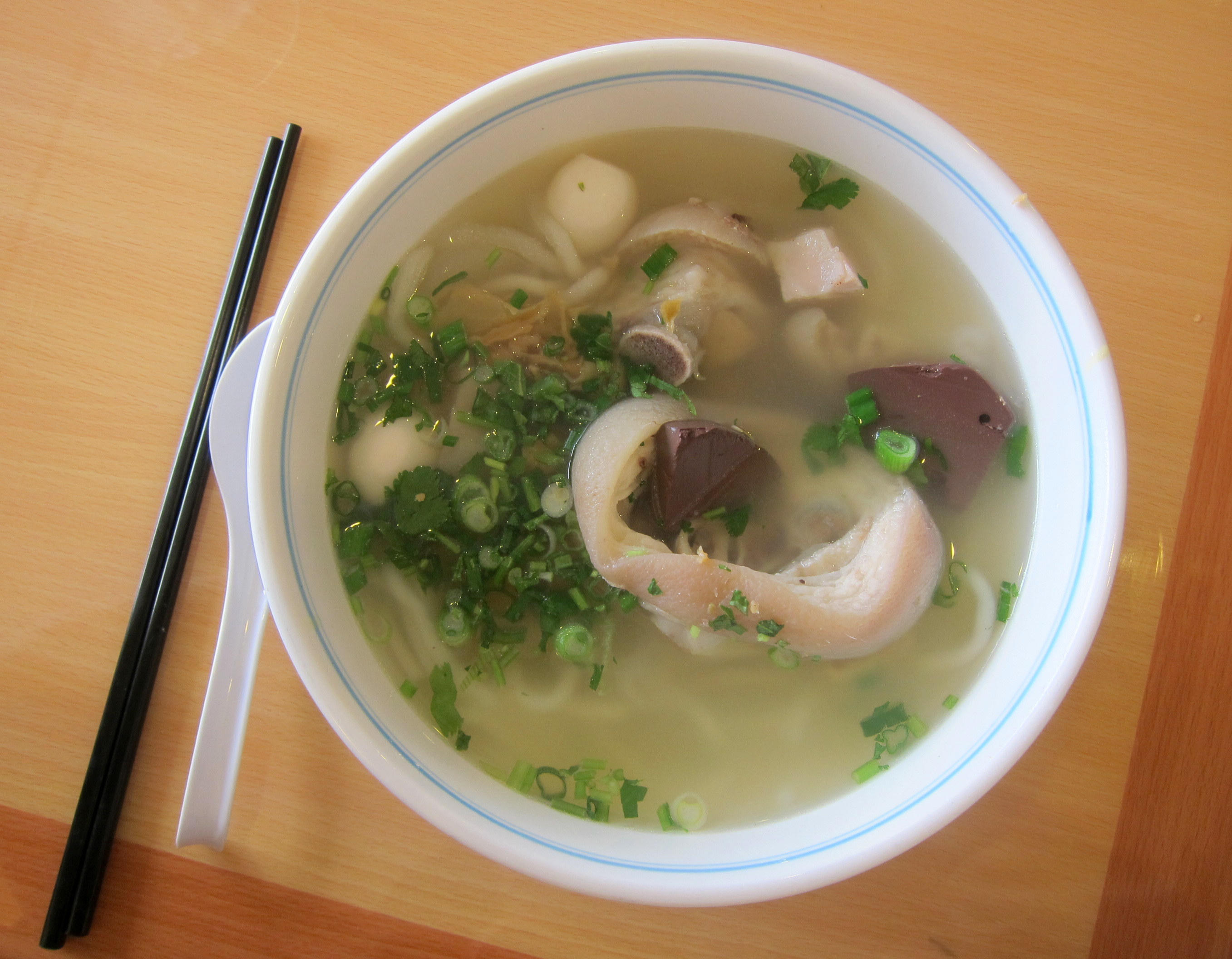
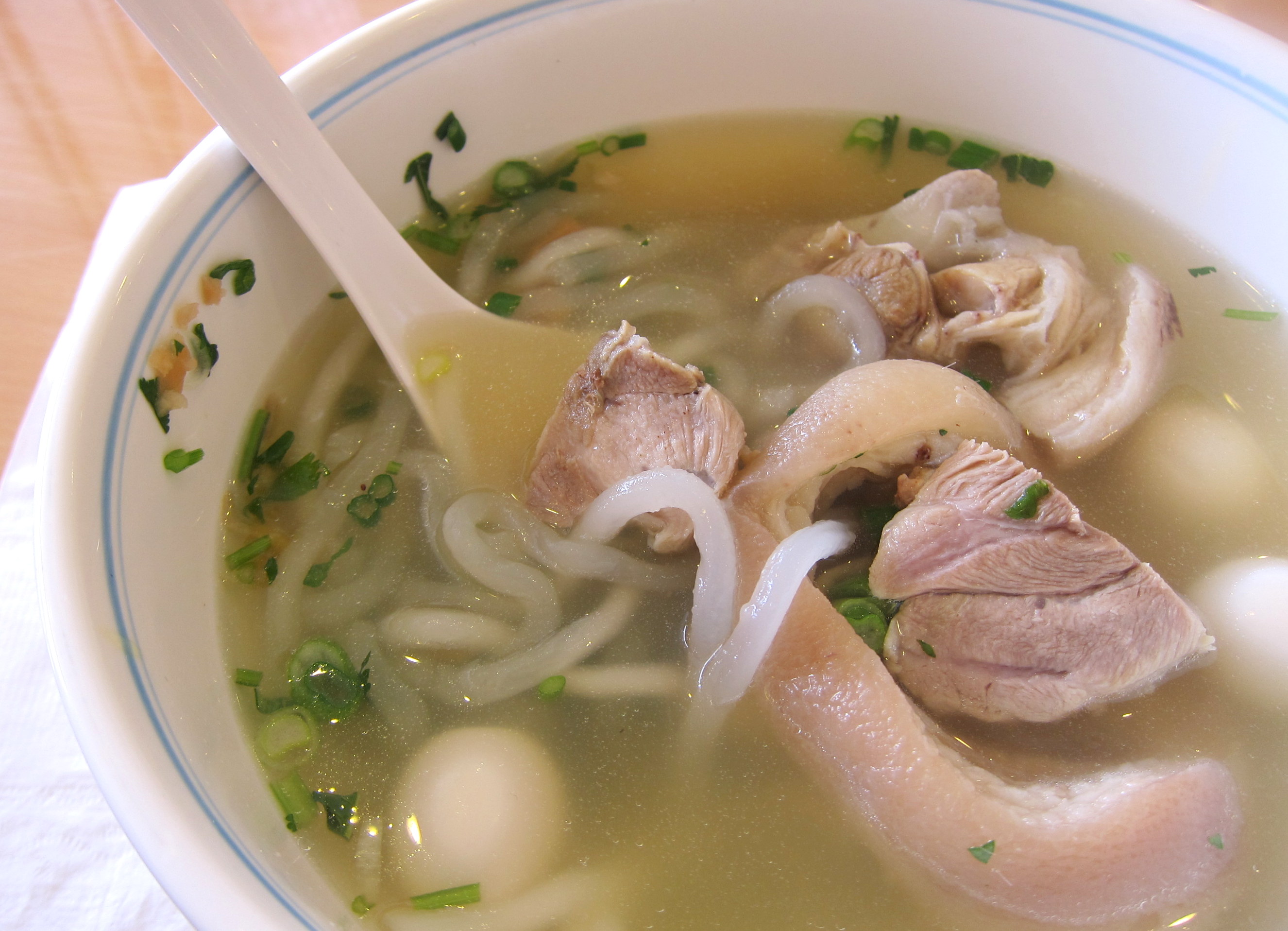
Close-up of my order: banh canh Tra Vinh – pork, pig trotter, quail eggs, pig blood in a clear, light broth. The classic when people think of banh canh. I can do without pig blood, which I transferred to Dad’s bowl, and the quail eggs (fresh quail eggs are great, but these taste like the canned version). In fact, the noodle and the broth alone are sufficient.
qae-bc3mien-bchoanggia
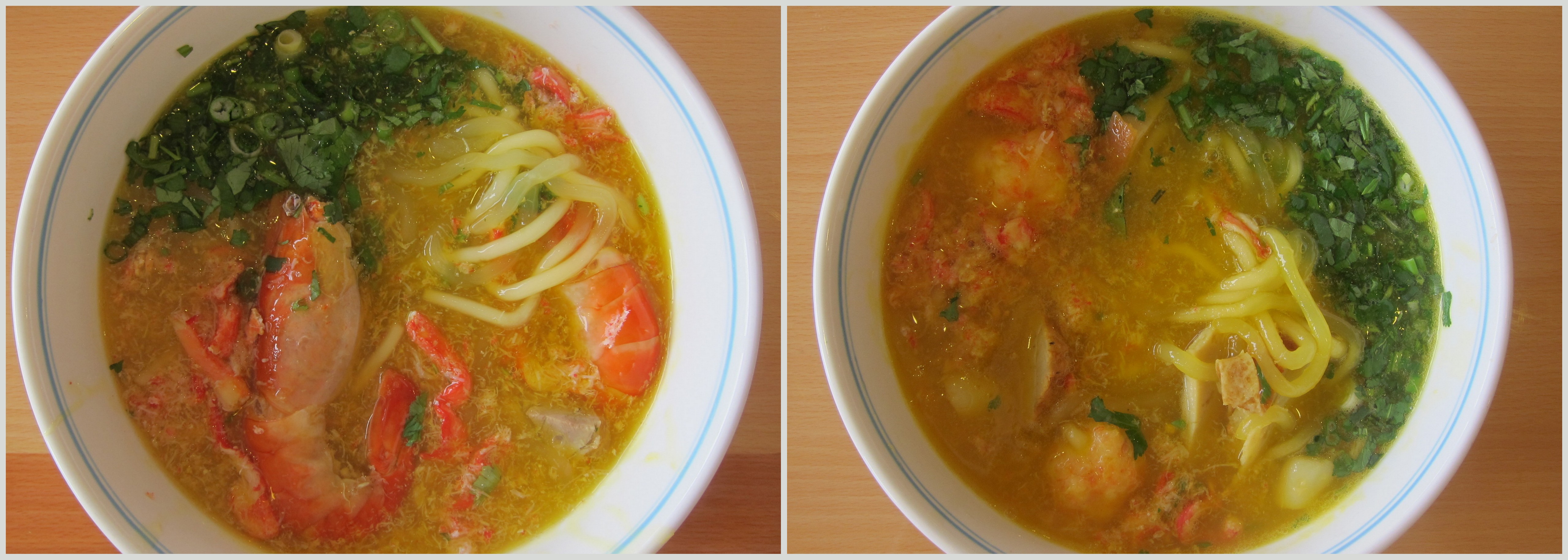
From left: Dad’s and Mom’s orders: banh canh 3 mien (“banh canh of all three regions”) and banh canh hoang gia (“royal banh canh”). Both names are only meant to illicit interest, the same way “Pho Dac Biet” is really not all that special. The broth of both bowls is thickened, yellow (with turmeric?) and taste richly of seafood, as both are loaded with crab meat and shrimps.
qae-che-longnhanhatsen
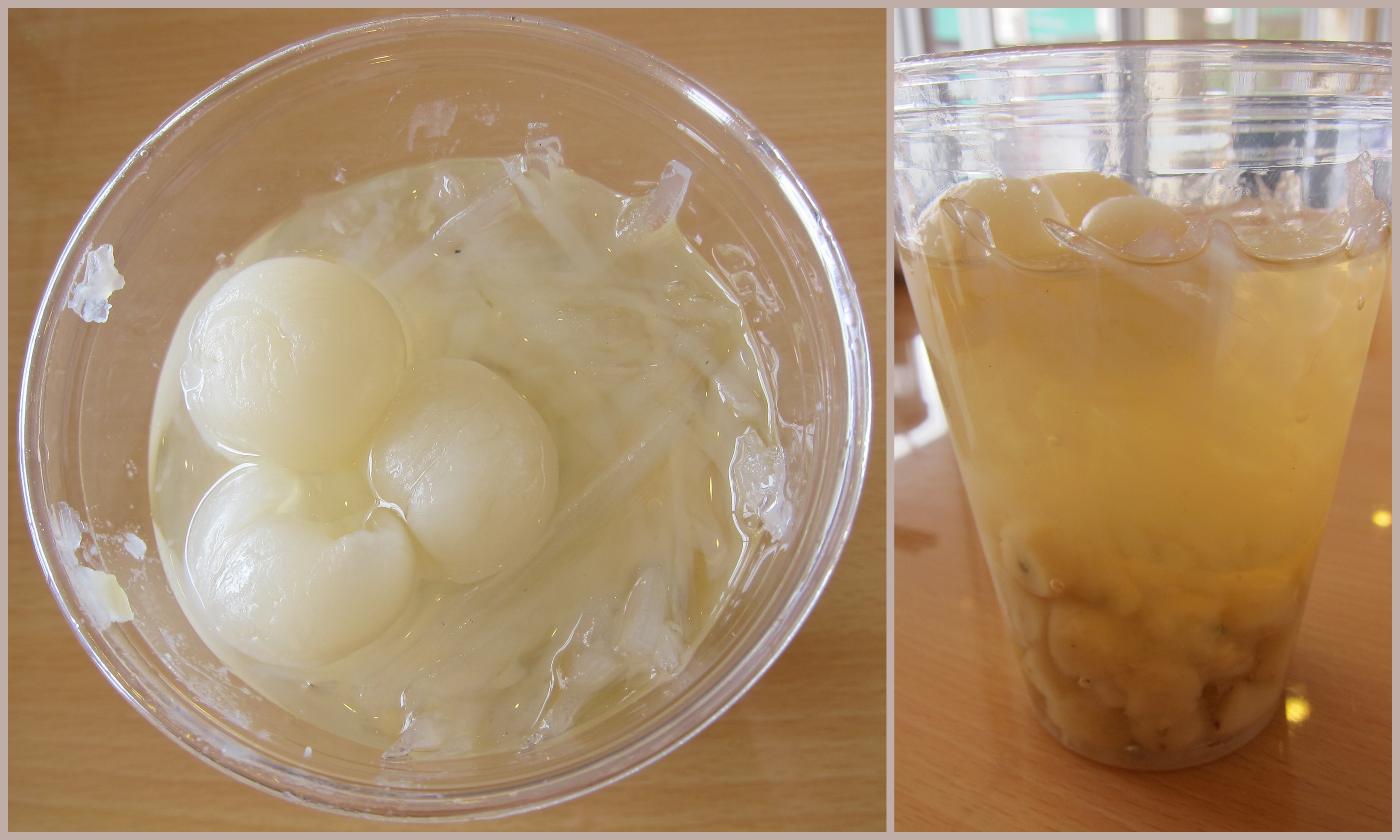
Desserts, of course. che long nhan hat sen – longan and lotus seed che… (I got the same thing at Danh’s Garden too, it’s gently sweet, fruity, and hard to get tired of.)
qae-chekhucbach
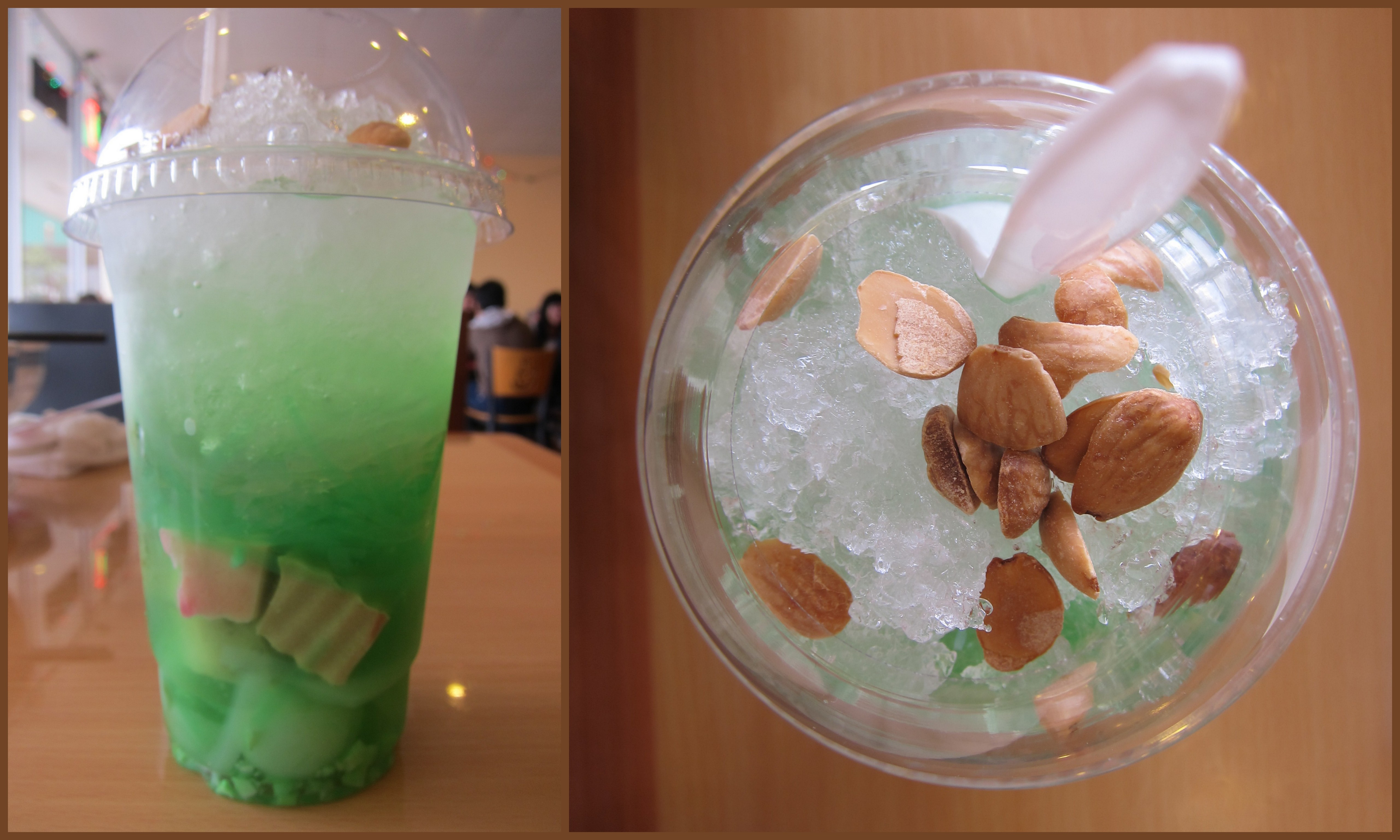
… and che khuc bach – lychee, some chewy tapioca thing, some chewy milky jello thing, and some nuts. A popular che in Vietnam these days.  Here’s a video to make che khuc bach, which the author loosely calls “almond panna cotta lychee dessert”.
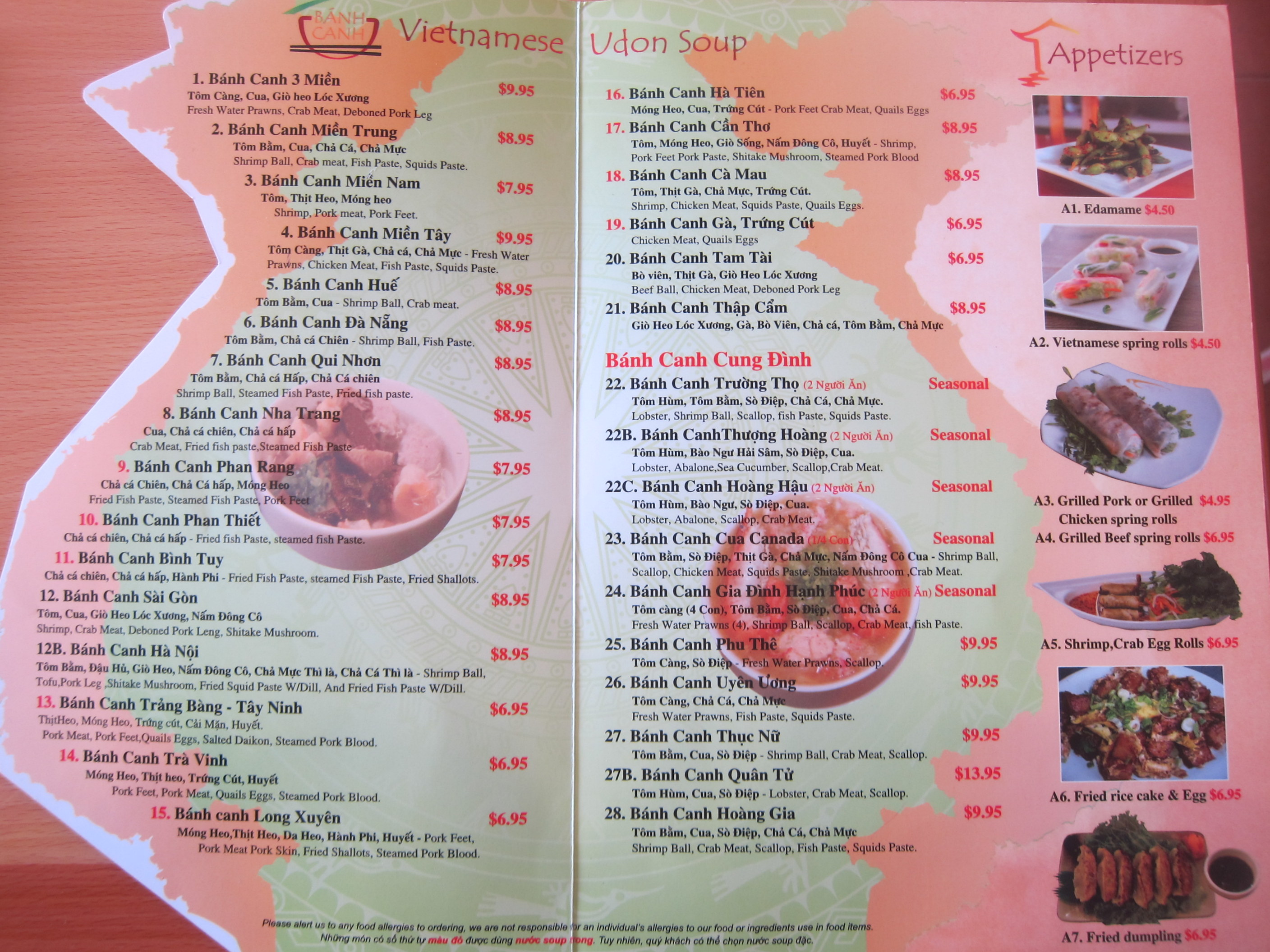
qae-menu
I miss Vietnamese food. It’s been only three days since I left for the mountain on another observing run. Every time I’m in the mountain I’m reminded of what a privileged life I have. I miss being a stone’s throw away from darling nigiri, banh mi, mordin, etc. There’s no Asian restaurant in Big Pine, the nearest congregation of human from the observatory. Then again, it’s already a huge privilege to stay at CARMA, with a private bedroom and bathroom, eating juicy fresh apples and having nutritious meals hot and ready twice a day…

Address: Banh Canh Que Anh & Que Em
11210 Bellaire Blvd, Ste 133
Houston, TX 77072
(281) 416-5316
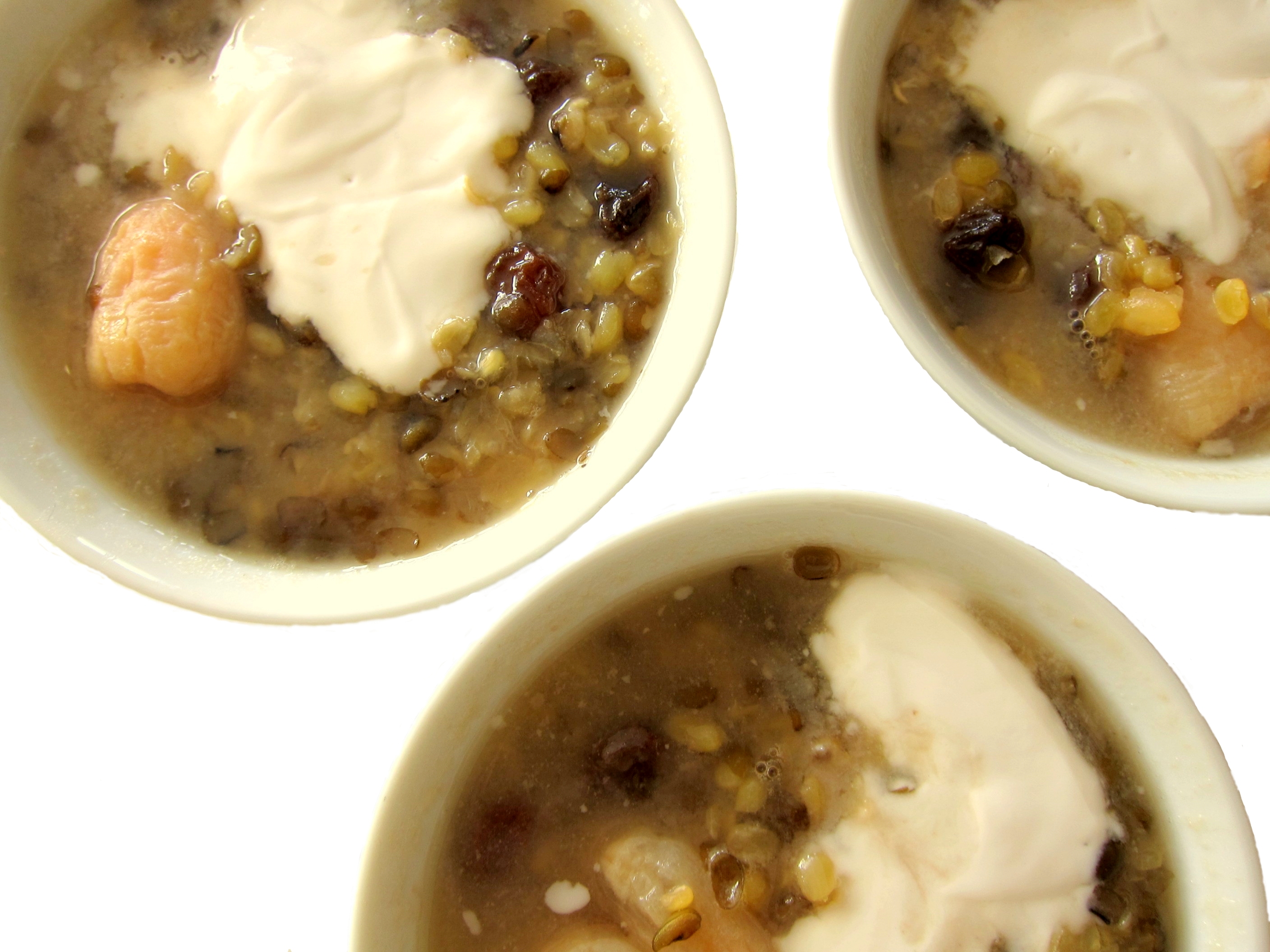
Lychee and mung bean che (Chè đậu xanh trái vải)

January 24, 2012 By: Mai Truong Category: RECIPES, sweet snacks and desserts, Vegan, Vietnamese


This dessert requires no skill in the making, but it ranks way up in the chè hierarchy, topping taro che and my own banana tapioca pudding. Beside the fact that Little Mom invented it, I always like things with lychee. 😉

Because everyone’s sweet tooth differs, it doesn’t make sense to have a fixed recipe for this simple dessert. One package of halved mung bean (with the green skin on), 1 can of whole lychee, 1 can of coconut milk, raisins, sugar and water are all there is to the pot.

The mung bean need to be soaked in water overnight to soften and cook faster. The coconut milk and the syrup from the lychee can are mixed with water to cook the bean. More or less water depends on how thick you like your chè; the more liquidy chè served cold, which I prefer, is suitable as a palate cleanser after a big meal, and the thicker version is best as a midday snack. When the mixture boils and the bean becomes soft enough to dissolve in your mouth, add raisins and sugar to taste. Wait until it boils again to add the lychees, and you’re done cooking.

If the famous Chinese imperial consort Yang Guifei could have a taste of this chè, I’m sure it’d become her favorite dessert. 😉 Happy Tết! May the Year of the Dragon be sweet for everyone!

Red Pier on Milam Street

February 20, 2011 By: Mai Truong Category: Comfort food, Houston, noodle soup, sweet snacks and desserts, Vietnamese


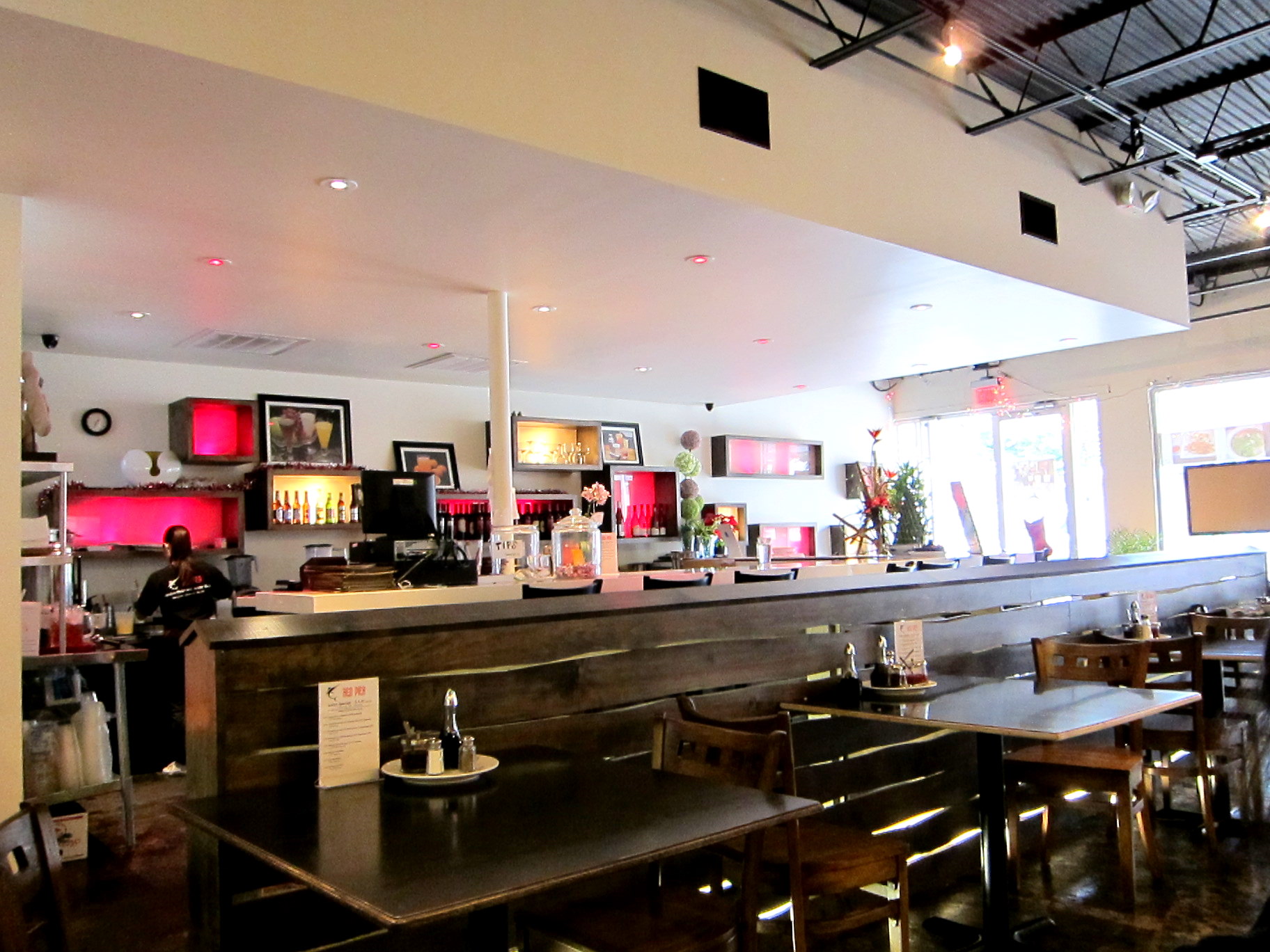
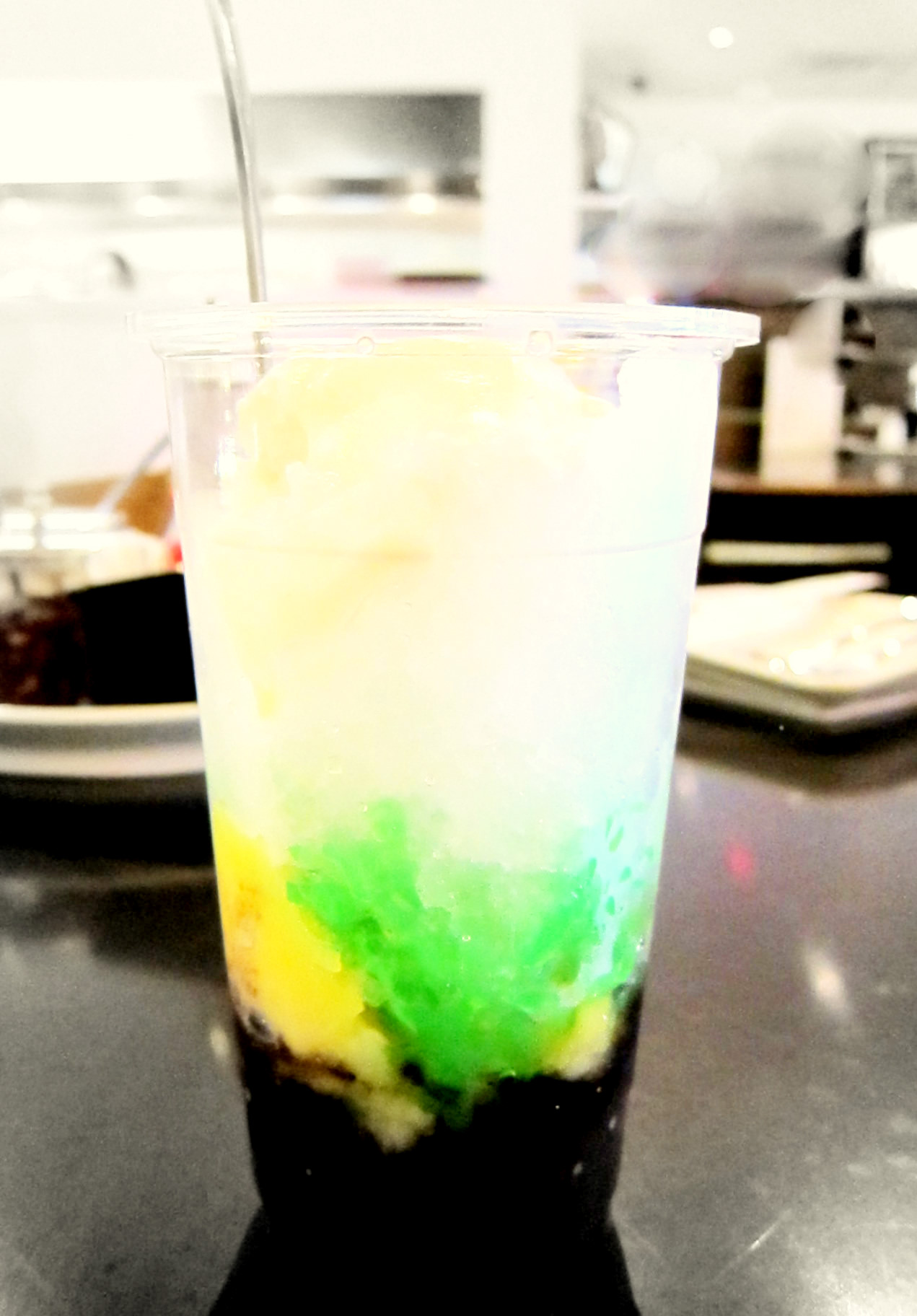
Among the countable Vietnamese restaurant owners that ever bother to make their menus available on the web, Kim Châu and her husband put together quite a decent site for their Red Pier: black background, colorful foods, dazzling images of the bar and the walls, names and prices of 166 dishes minus dessert. Red Pier is a go-to when you work in the ‘hood, have an hour for lunch, and just want some normal noodle soup or vermicelli at a reasonable price. Or when you crave something sweet and cold and nutty, like a chè ba màu (trichromatic bean and tapioca ice).


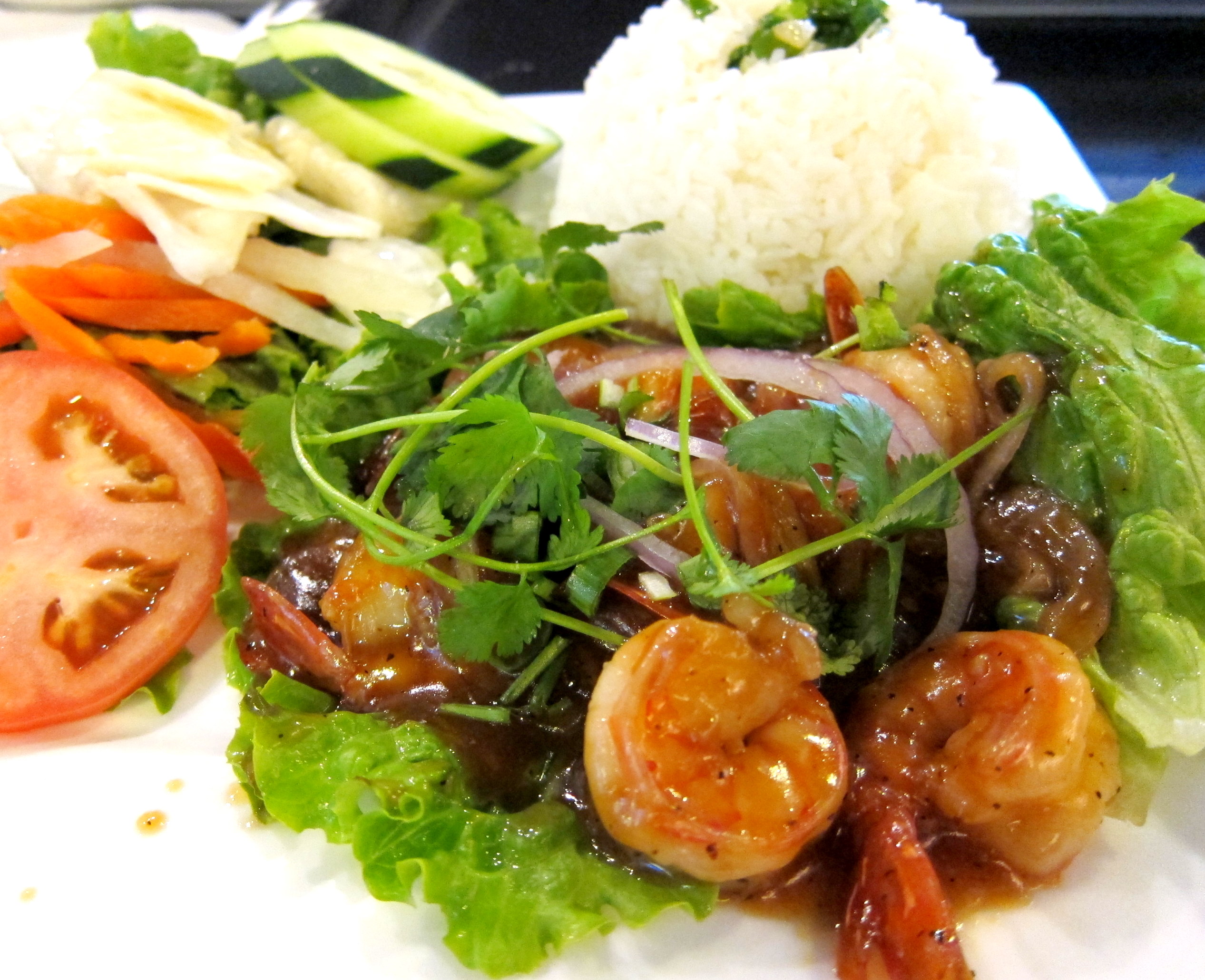
Don’t drive too fast down the one-way Milam, you’d miss the restaurant for sure. It took us a few loops around until we pulled into the right parking lot, just across the street from the proprietors’ other business, Kim Châu Jewelers, on the left side. Also, don’t order Cơm Tôm Rim (rice with caramelized shrimp), unless you’re having salt-deficiency. If you must, Chè Ba Màu proves to be a comforting three-buck companion.


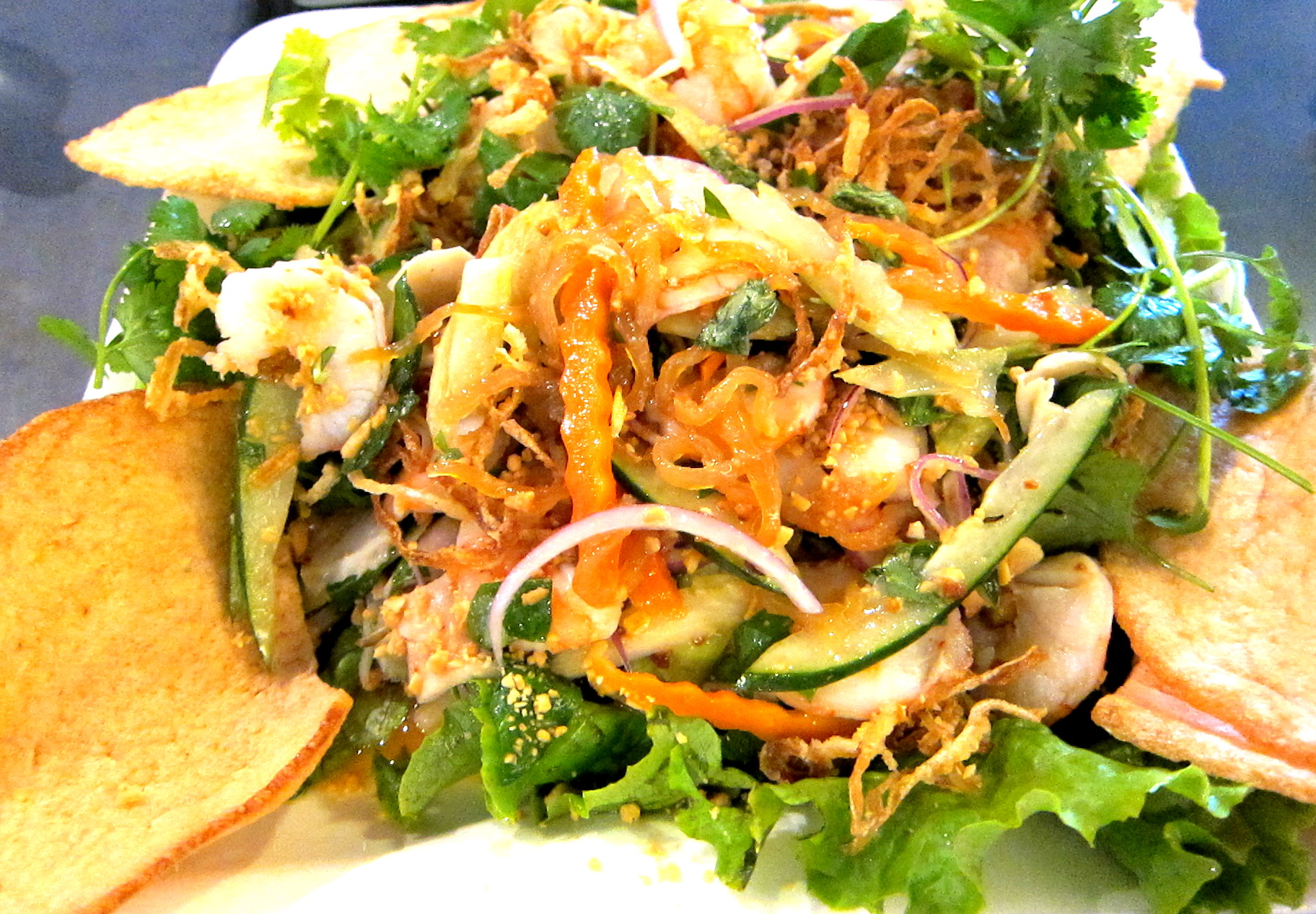
Do order #1: Gỏi Sứa Tôm Thịt (jellyfish salad with shrimp and pork), the only setback is its chilipepper overload, which I’m sure you can ask the cook to take it down a few notches. The thinly sliced  jellyfish blends rather too well with carrots and cucumber strings you’d have to look to notice its cold, clean elastic crunch. Gỏi Sứa Tôm Thịt is one of the house specials that Red Pier emphasizes on their TV advertisement, and combined with large shrimp crackers it’s certainly a better execution of jellyfish than duck tongue and jelly fish at Chinese dim sum halls.


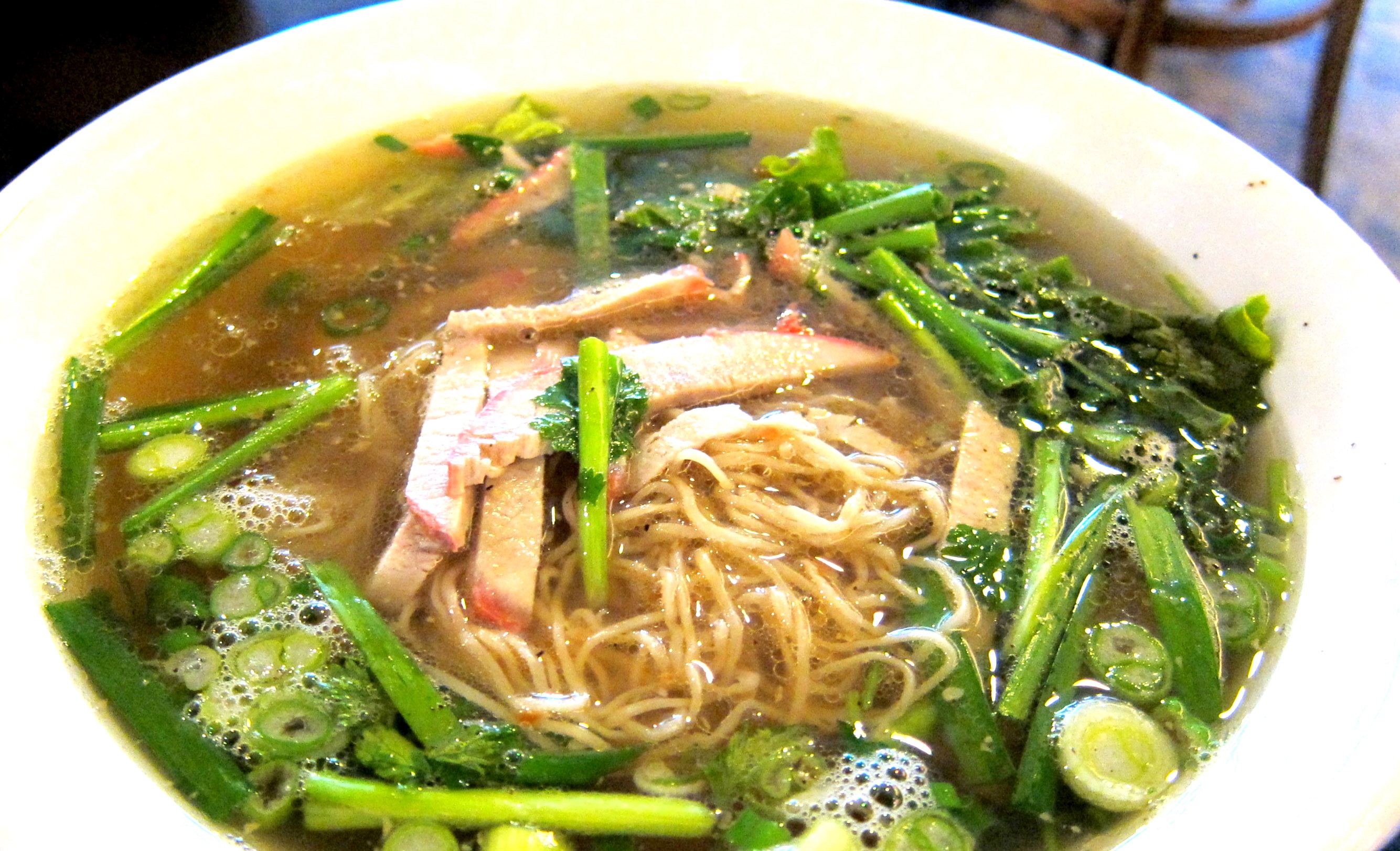
Do order #2: Mì Xá Xíu (char siu egg noodle soup). This is a cheap (only $6.25) and satisfying deal. It’s slightly more involved than Wiki Wiki’s saimin bowl, with crispy green onions and a meaty sweet broth.


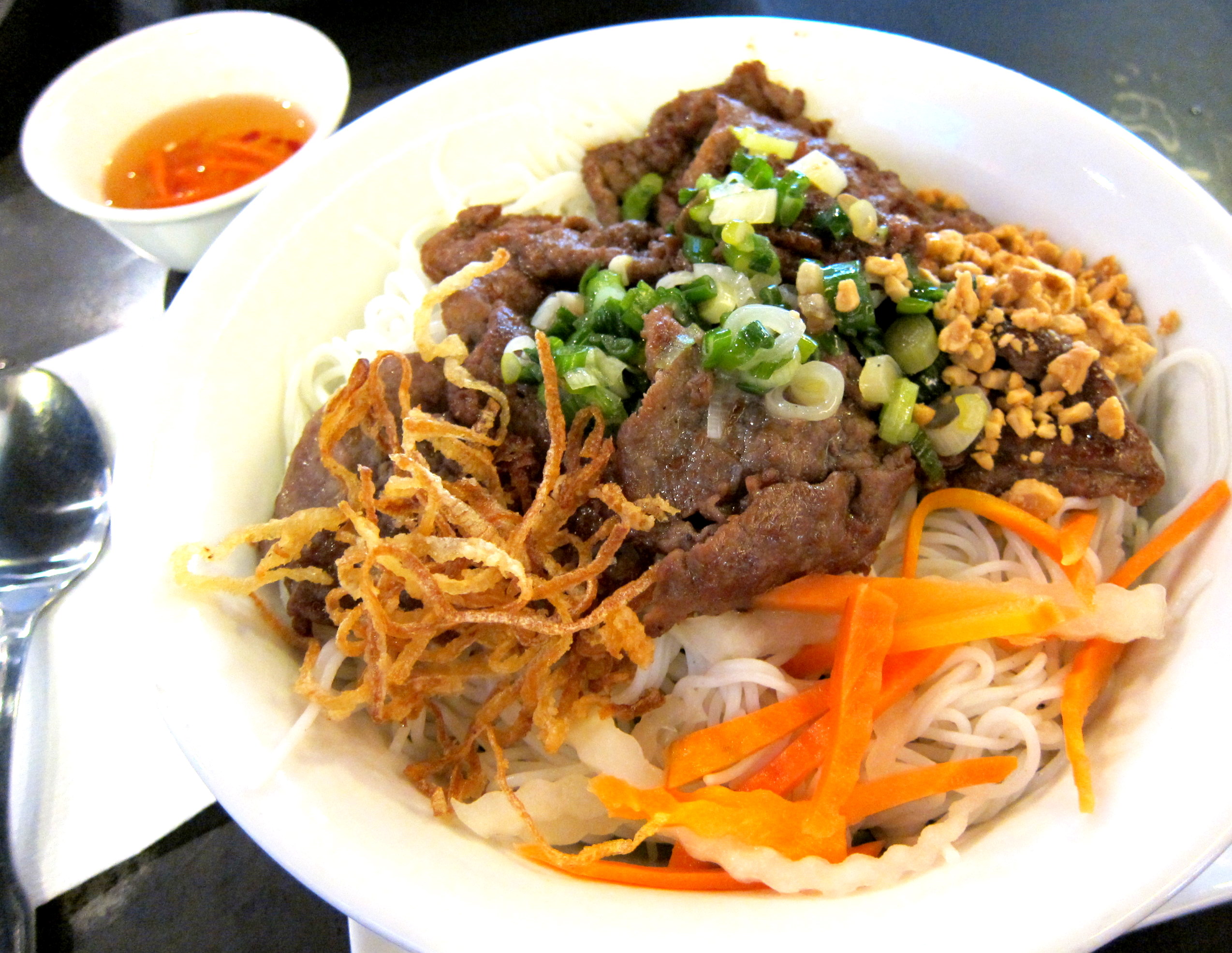
Do order #3: the classic cold rice vermicelli (Bún) with the not so classic grilled beef (Bò Nướng), certainly bathed in nước mắm and garnished with chopped green onion seasoned in lard (mỡ hành), crushed peanuts, fried shallots, pickled carrots and daikon. For the greens lovers there’s that hidden pile of bean sprouts and shredded cucumber at the bottom, whose texture matches that of neither bún nor beef. (Now that I think of it, bibim nangmyeon also has bean sprout and cucumber, so it must be a cold noodle thing.)


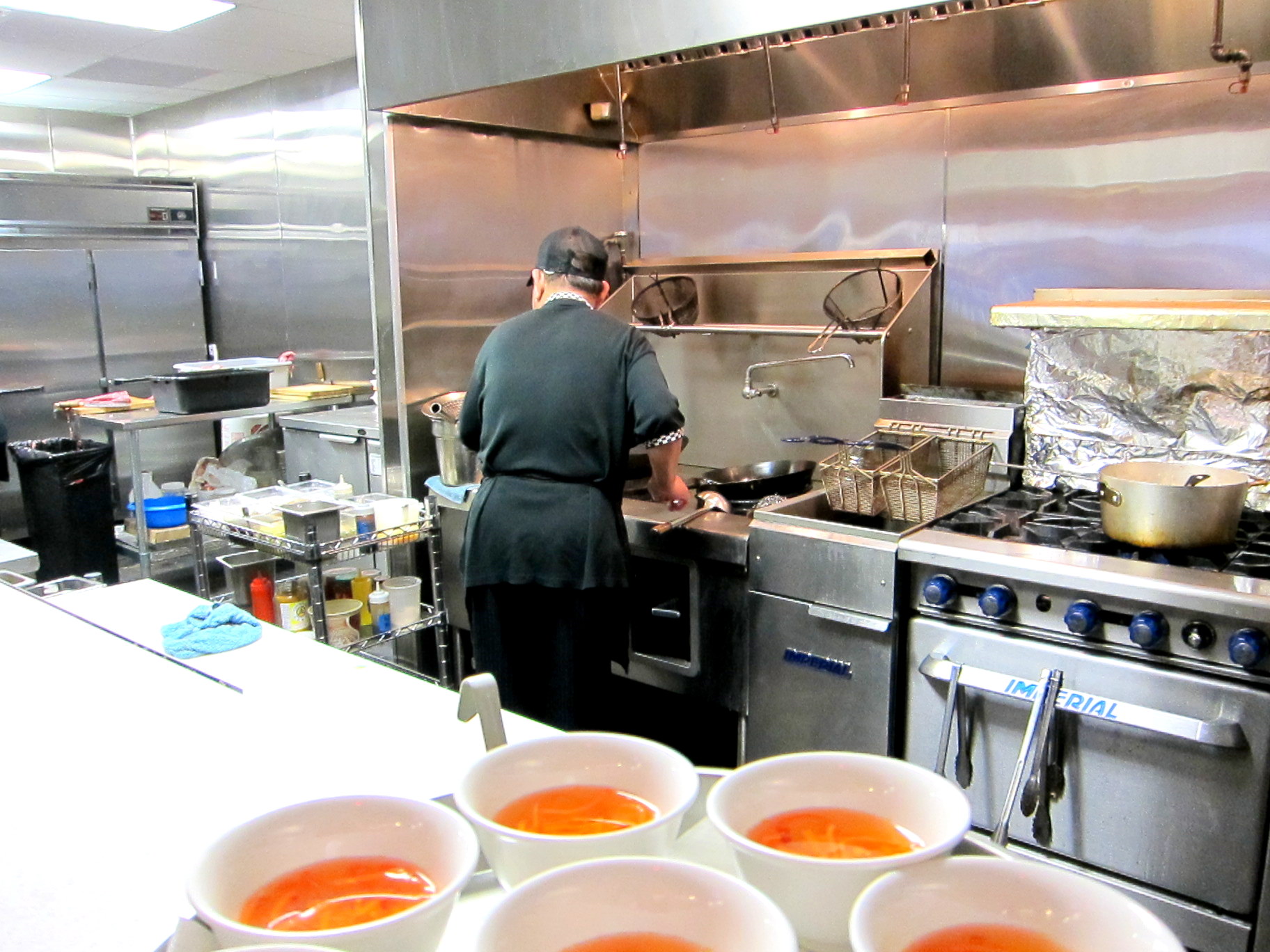
Overall, Little Mom found the place less than pristine as the stir-fry smell sweeps over the metallic kitchen counter into the dining area. Red Pier’s chefs also take a tad too much liberty with the seasonings. But not all Vietnamese restaurants have jellyfish salad and friendly service, and usually the ones with 166 items on their menu don’t execute any of them too well, so I’d give Red Pier a B if the red-and-ebony dining box were a student in my class.

Address: Red Pier Vietnamese Restaurant
2704 Milam St
Ste C
Houston, TX 77006
theredpier.com
(713) 807-7726
(information from der Miller: Red Pier and Les Givral’s Sandwiches are sister businesses, both on Milam St.)


Lunch for 3:
Medium jellyfish salad (9.95) + grilled beef vermicelli (6.95) + rice & caramelized shrimp (7.75) + char siu noodle soup (6.25) + bean & tapioca ice (3.00) + tax
= $36.70

Chè chuối chưng (banana tapioca pudding)

February 08, 2011 By: Mai Truong Category: Comfort food, RECIPES, Southern Vietnamese, sweet snacks and desserts


Every once in a while when the planets align the right way with the constellations, I get into cooking mode. Then I ask my mom how to make certain things, usually easy stuff, spend at least an hour at the grocery, another half a day in front of either the sink or the stove, washing, churning, tasting, sprinkling, and tasting again. Saying that I like to cook would be like saying students hate holidays, but somehow the little accomplishment at the end of a cooking session always makes me glee, partly because I wouldn’t have to worry about dinner in the few days after. (Since the first day I had a kitchen(ette), I’ve only made savory dishes.) This time is special: I didn’t spend half a day in the kitchen, and the little accomplishment is a dessert.

Now this might actually means I have che instead of rice for dinner in the next few days :-P, but all is well as my banana che is not in the least coyingly sweet like che from sandwich shops.


Recipe adapted from Mom’s instruction:

Chè chuối chưng (banana tapioca pudding) (“chưng” means “display”, in this case to indicate the type of banana one would use for this dessert, not “tapioca”)

Ingredients:
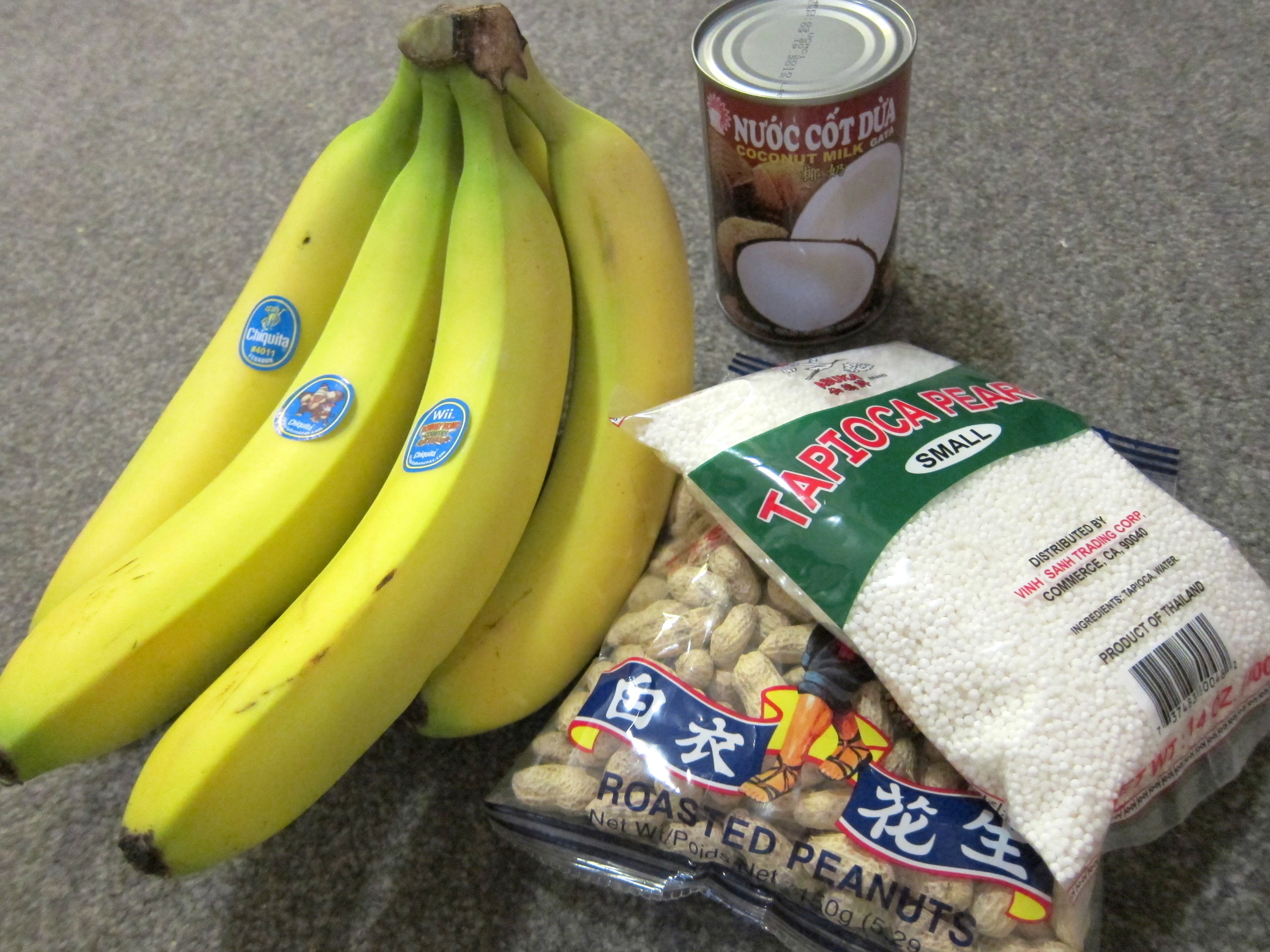
– About 3 lbs of just-ripe banana (~6 big Cavendish bananas, or 12-15 chuoi su if you can find them).
– 1 can of coconut milk
– 100-150g tapioca pearl (bột báng), the small kind (packaged as dry white dots ~1.5mm in diameter). I got a 400g package from 99 Ranch Market in El Cerrito, so I’d imagine every Asian market has a few packs tucked on their shelves.
– water, sugar, salt
– roasted peanuts (the plain, unflavored kind)


Preparation:
– Gently wash and rinse the bot bang with cold water once, then leave it soak in water.
– Cut the bananas into 2-3 inch long sections, soak in salt water (2 tsp salt for roughly half a big pot of water, the same pot you’re going to cook che in) for 5-10 minutes. This step is to get rid of, or at least reduce, the clinging underripe aftertaste of Cavendish banana in Vietnamese desserts; you can skip this step if you use chuoi su.
– Shell peanuts if necessary, then crush ’em up. (Mudpie puts them in a ziploc bag and pounds on them with an ice cream scoop, it works well :D)
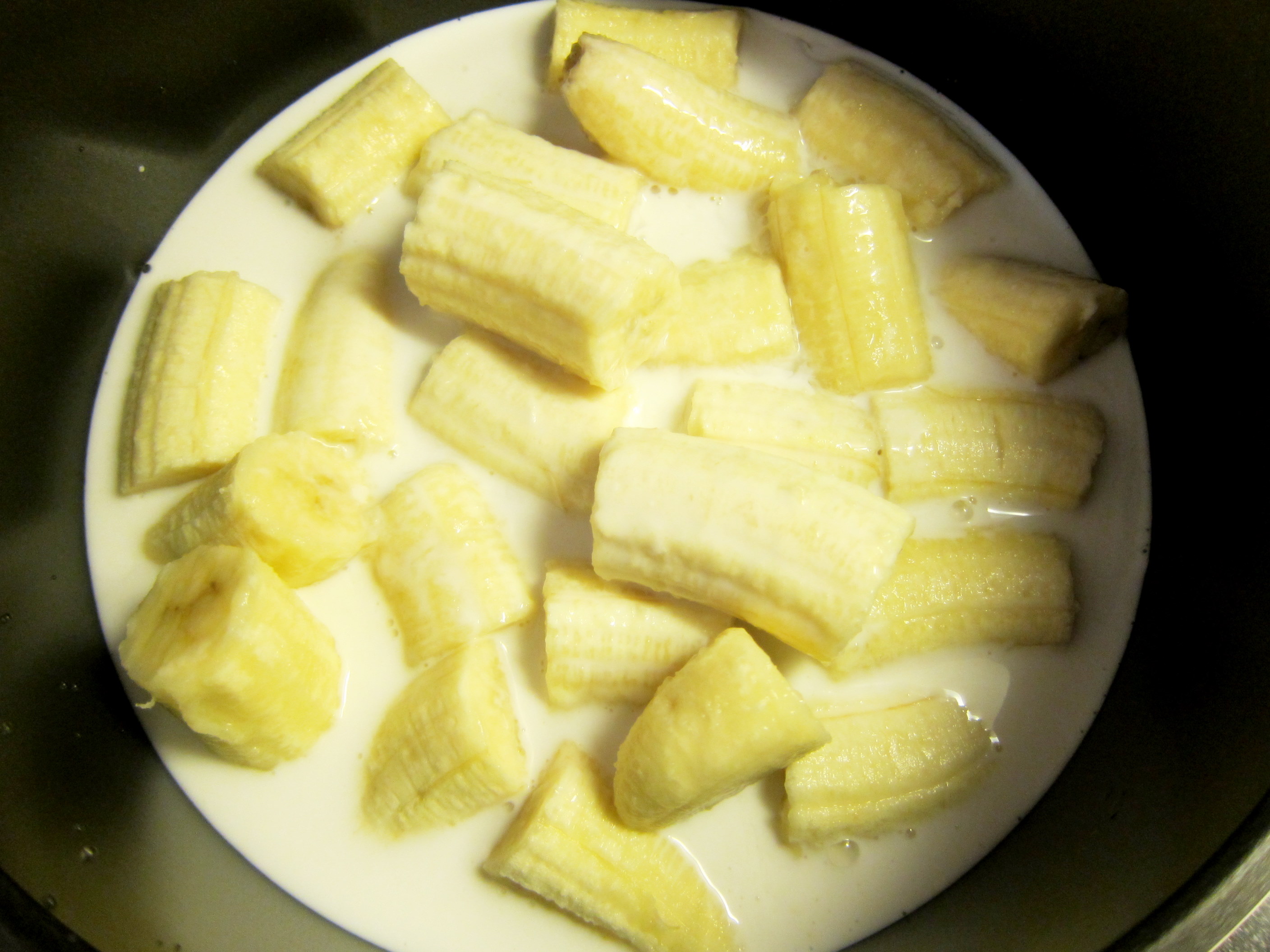
– Take out the bananas, drain water, wash pot, put bananas back in. Pour 1 can of coconut milk into pot, then use the same can to measure and add 2 cans of water.


Cooking
– Wait for banana, coconut milk and water to boil, add a pinch of salt and a lot of sugar to taste. (I added about 10 tbs sugar when Mudpie expresses some concern, tastes, and stops me.)
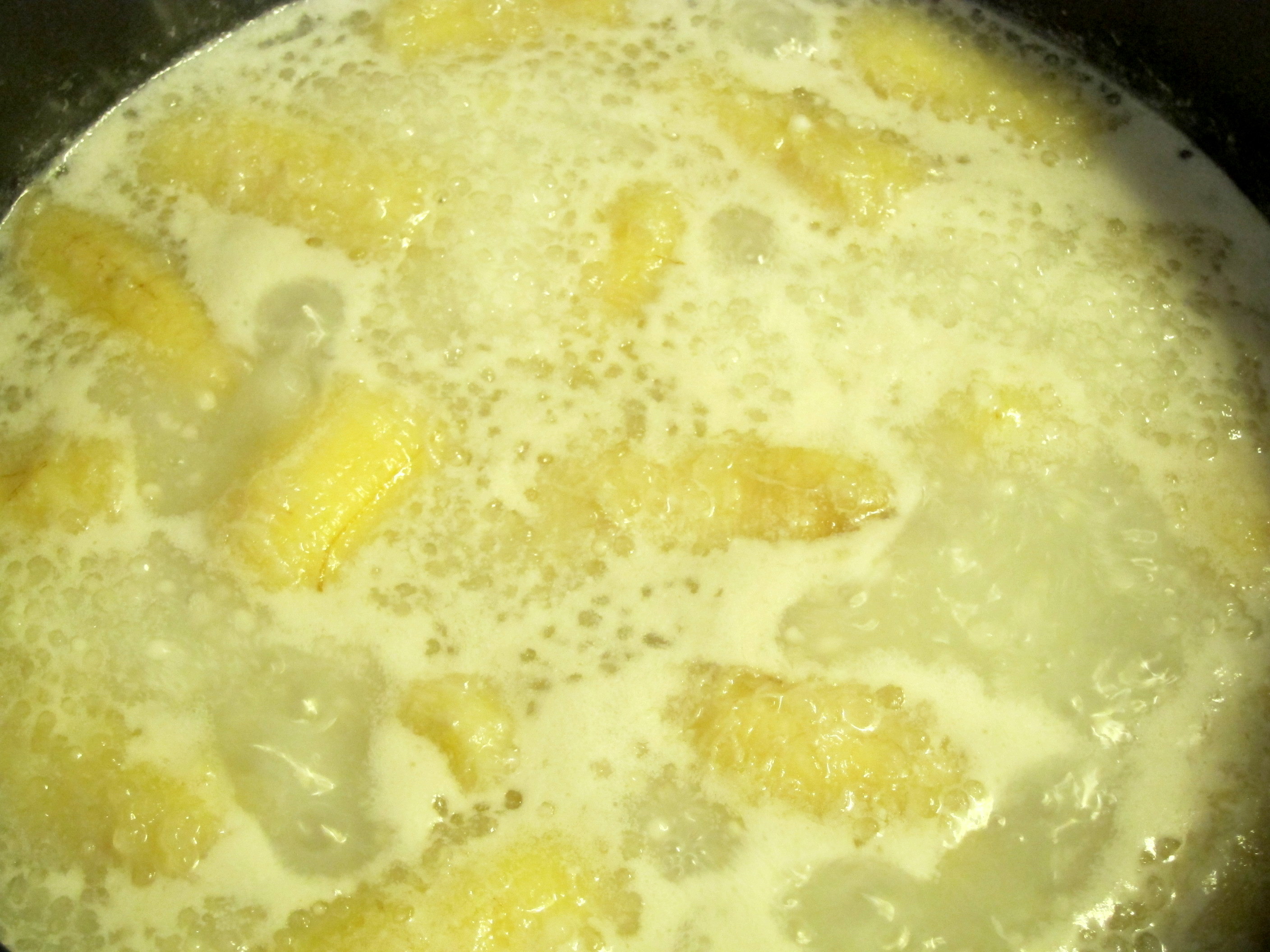
– When the mixture boils, add bot bang (after draining them, of course), gently stir once or twice to spread them out evenly in the pot.
– Bot bang will expand, at least quadruple in size. Do not stir too much or you’d burst the pearls and get tapioca porridge. Let the pot bubble until the bot bang all turn completely translucent (if you see a tiny needle-point size dot of white in the center, it’s not cooked yet).
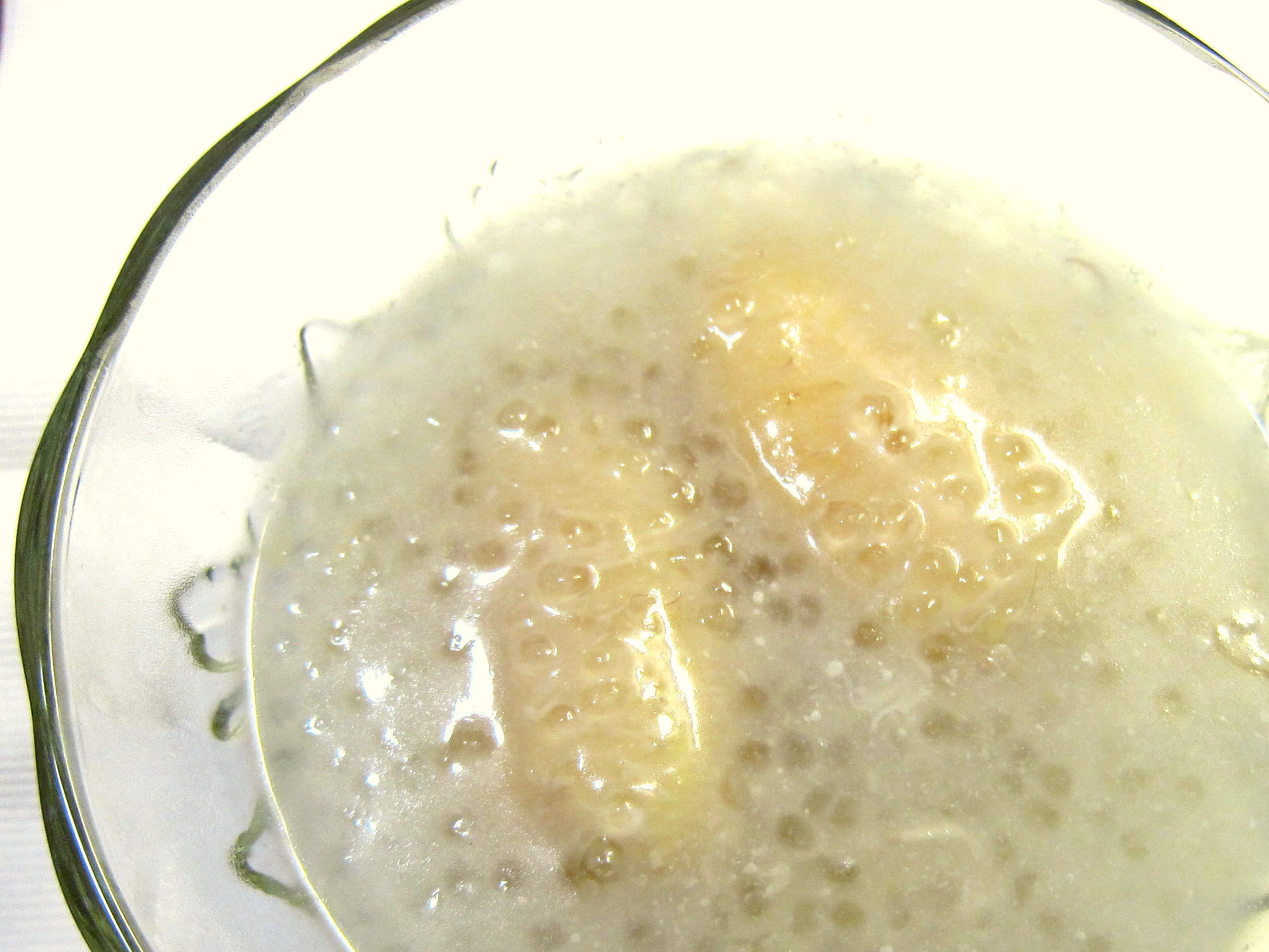
– Turn off the heat. The pudding will be quite fluid when it’s still hot, and will thicken as it cools down.

Serving
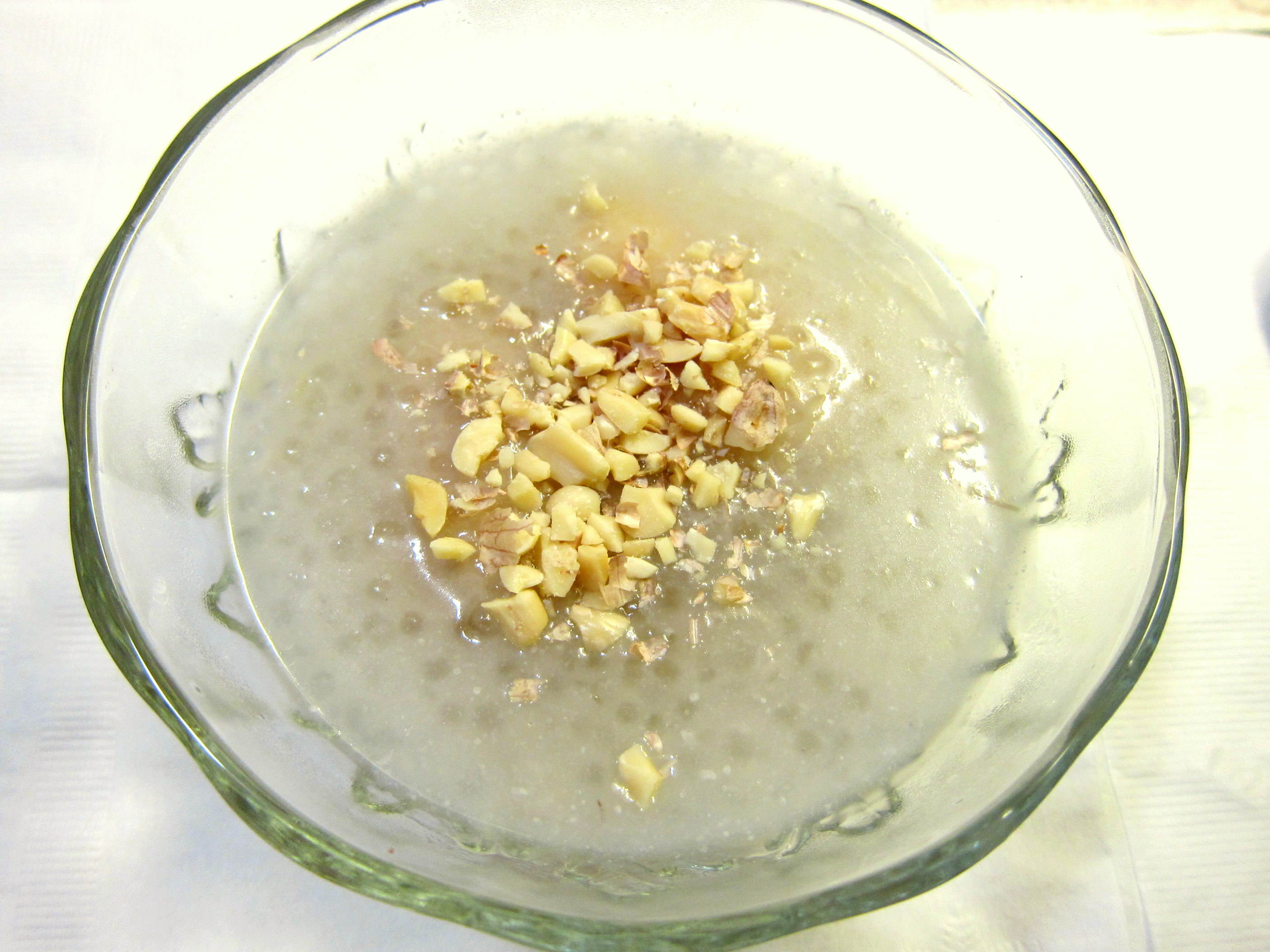
It can be served either hot or chilled, with or without some crushed roasted peanuts on top. Mudpie prefers it warm fresh from the pot, my mom prefers it refrigerated.


A small variation of che chuoi chung is chè bà ba, where you add taro (or cassava), cubed and cooked in coconut milk and water before the bananas. My mom says che chuoi chung is the simplest kind of che to make. As long as the bananas are soft and sweet, the tapioca pearls chewy and fully puffed, the coconut milk gives just a shy squeeze of fruity richness, and the pudding smells like a ripe summer afternoon, you know someone will come back for a second bowl of your chè chuối chưng.


– Submission to Delicious Vietnam 10, a monthly blogging event created by Anh of A Food Lover’s Journey and Hong & Kim from Ravenous Couple – This February edition is hosted by me, so send your delicious writings (your name, your blog’s name, post title, and a brilliant image of the dish) to mai [at] flavorboulevard [dot] com by Sunday February 13. 🙂

Desserts at Vietnamese restaurants

December 02, 2010 By: Mai Truong Category: California - The Bay Area, Comfort food, sticky rice concoctions, sweet snacks and desserts, Vietnamese


Raise your hand if you’ve ordered dessert at a Vietnamese restaurant. What? Vietnamese restaurants have desserts? Yep, they do. But they’re always on the last page of the menu, which you never get to because you stop at number 1 – Pho dac biet (special noodle soup) or summ’n. Besides, nobody ever bothers to ask if you’d like to have dessert before they bring out your check. And besides, pho usually fills up the once empty cavity, so no more room for sugar loads. But next time it’s okay to leave some broth and some noodle behind, cuz they do have some delicious sweet deals outback. Not bubble teas.


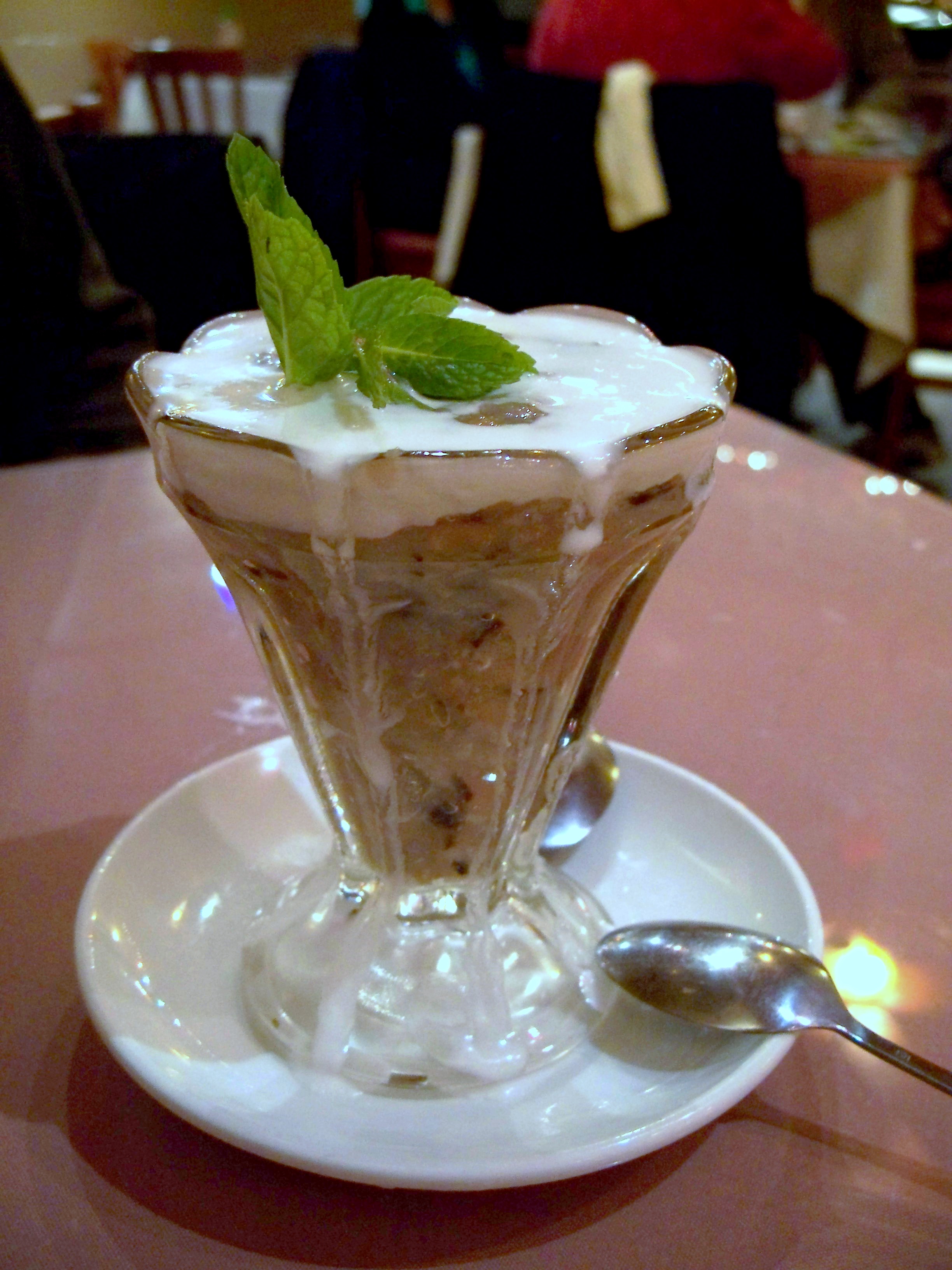
Black eyed pea che is one. Mushy, plump peas dissolve on your tongue with gooey sticky rice and coconut milk. I adore che dau trang at Kim Son and at Lee’s Sandwiches in Houston, but this beauty in a glass served at Le Regal does not disappoint either. Of course, do NOT eat the mint, as much as I’m for flavor mixings, this mint is purely a matter of decor.


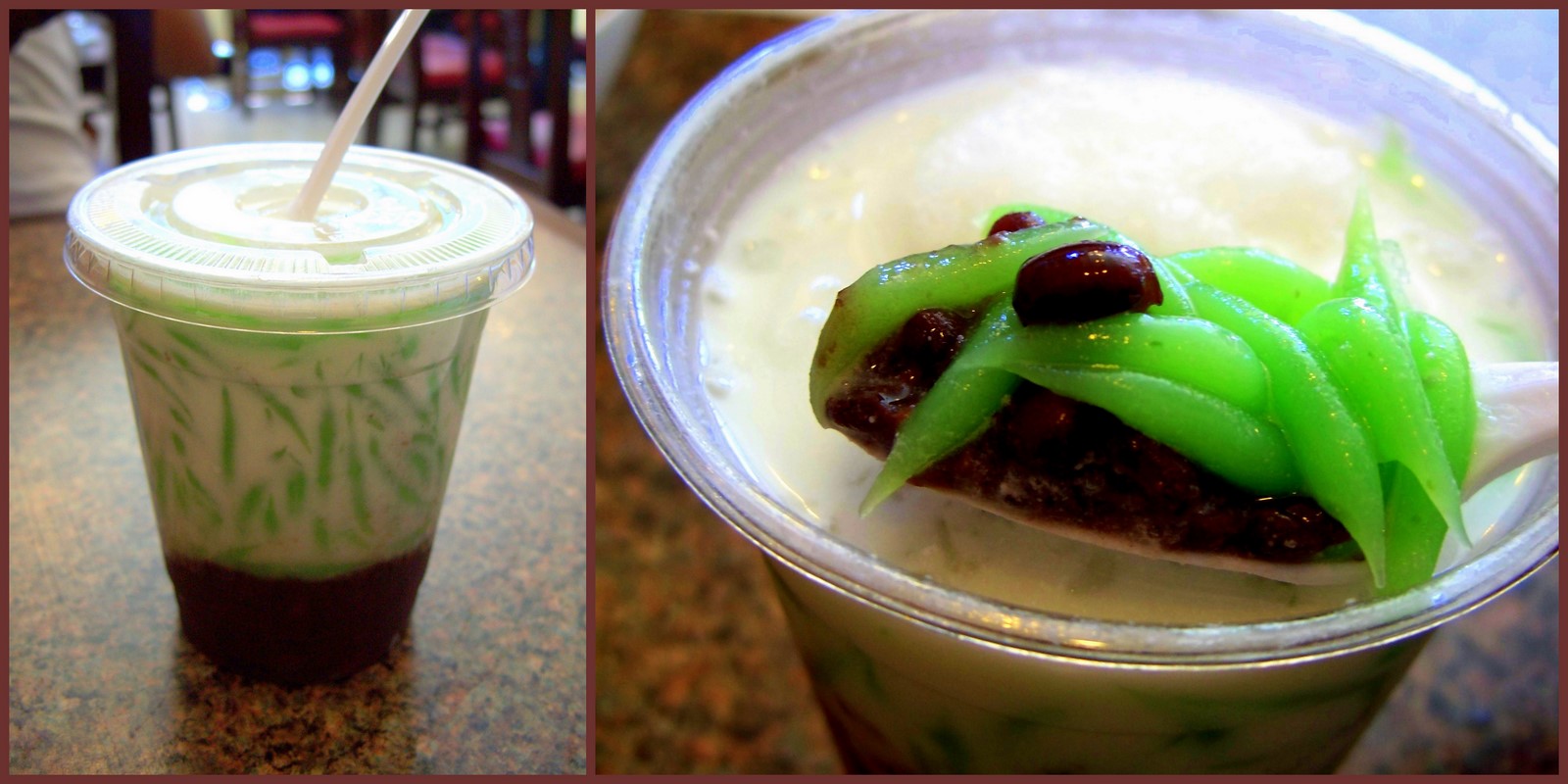
Also che, but without sticky rice is chè đậu đỏ bánh lọt: sweety sweet and mushy red bean at the bottom, bland chewy green tapioca worms floating in coconut milk and shaved ice on top. Personally I think the shaved ice can get lost because it only dilutes the coconut milk, but this chilled cup of che is more revitalizing than eating ice cream in wintry days (no sarcasm, if you haven’t tried ice cream in the cold, you’re missing out big time). Kudos to Banh Cuon Tay Ho #8 in San Jose for this beany treat.


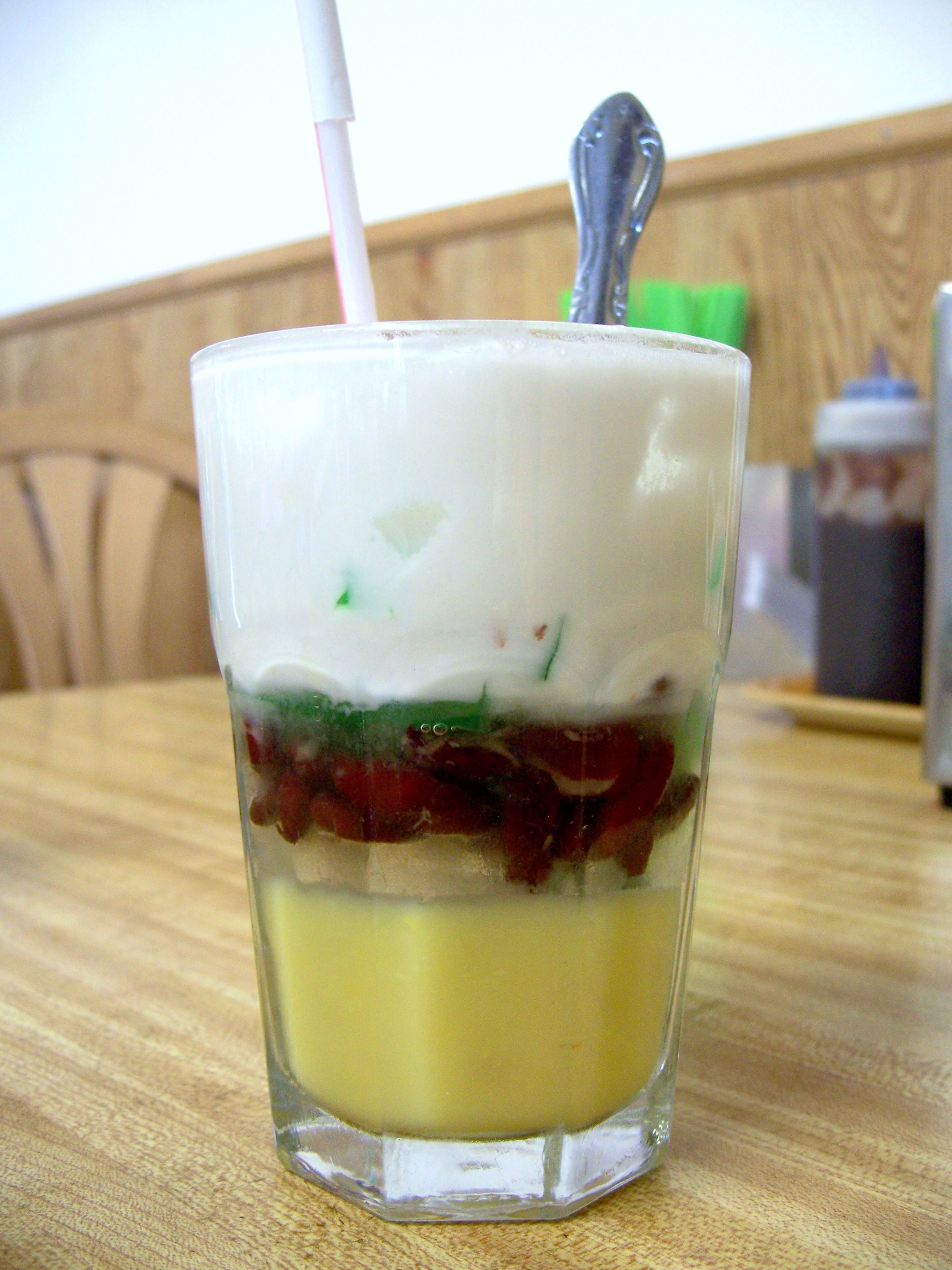
Yet another che. You got it, there’s coconut milk :-P. I can’t quite figure out why Phở Hòa Lão II (Oakland) probably calls this thing chè ba màu, or tricolored che, where it actually has four colors: yellow of mung bean paste, red of red beans, green of tapioca, and white of buttery coconut milk, unadulterated by ice as the che is refrigerated. The only complaint would be its capability to fill me up for hours for only $2.10.


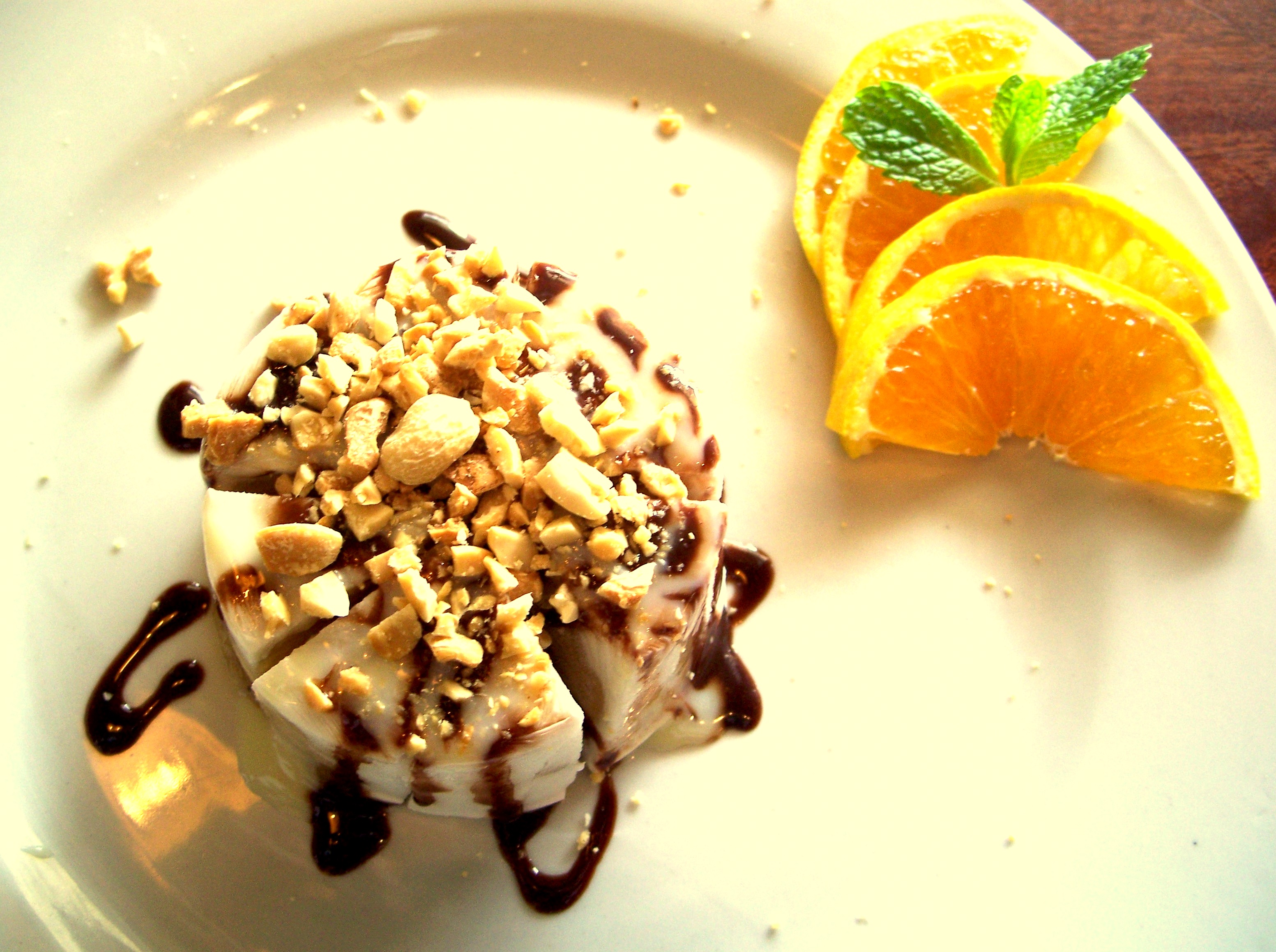
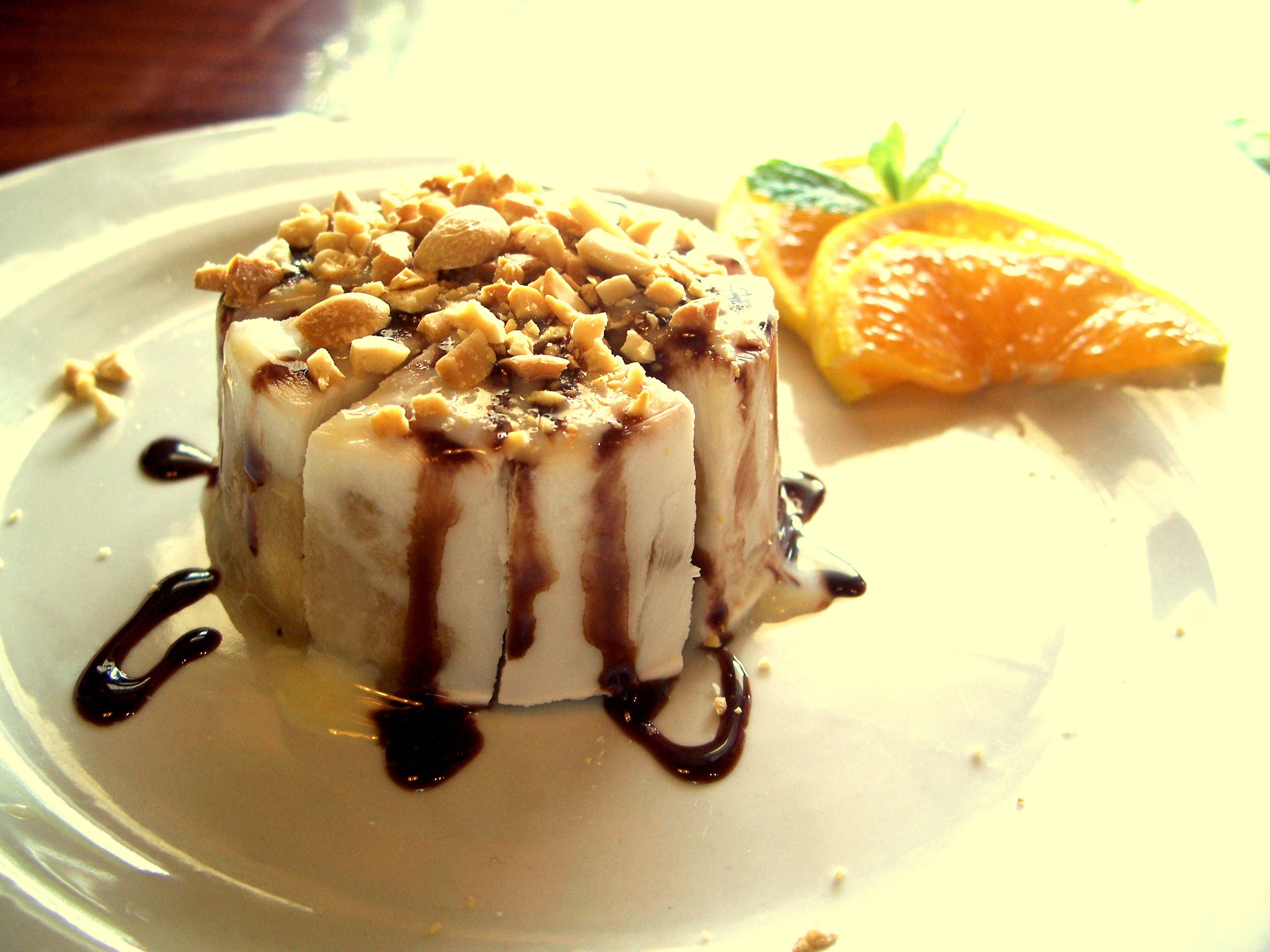
Desserts at Binh Minh Quan cost slightly more, ranging from $3-5 each, but they also have more than just che. This beautifully crafted block of kem chuoi (frozen banana) is a three-buck wow-er: sliced banana with coconut milk hardened together, drizzled with chocolate syrup and crusted with ample peanut bits. The icy salty sweetness sends shivers down my spine.

Bánh Cuốn Tây Hồ #8 (San Jose)
2895 Senter Rd
San Jose, CA 95111
(408) 629-5229
Le Regal (Downtown Berkeley)
2126 Center Street
Berkeley, CA 94704
(510) 845-4020
Bình Minh Quán (Oakland Chinatown)
338 12th St
Oakland, CA 94607
(510) 893-8136
Phở Hòa Lão II (Oakland Chinatown)
333 10th St
Oakland, CA 94607
(510) 763-8296

More starchy sweets

June 25, 2010 By: Mai Truong Category: Comfort food, Houston, sticky rice concoctions, sweet snacks and desserts, Texas, Vegan, Vietnamese

Do you have those times when you keep craving something sweet, even after you wiped clean a cereal bowl worth of Double Fudge Brownie, exterminated many prunes, and skillfully chewed up four pirouette cookies like a mafia boss smoking cigars? I’ve started to see such danger of staying up late, but sweet stuff is always easier to eat than savory stuff in those wee hours. To avoid having my belly exceed my face, I started going through pictures of food (it helps more than studying and thinking about food), and found some munchtastic  sweet treats I meant to but never got around to blog about.


1. Chè khoai môn (taro che)

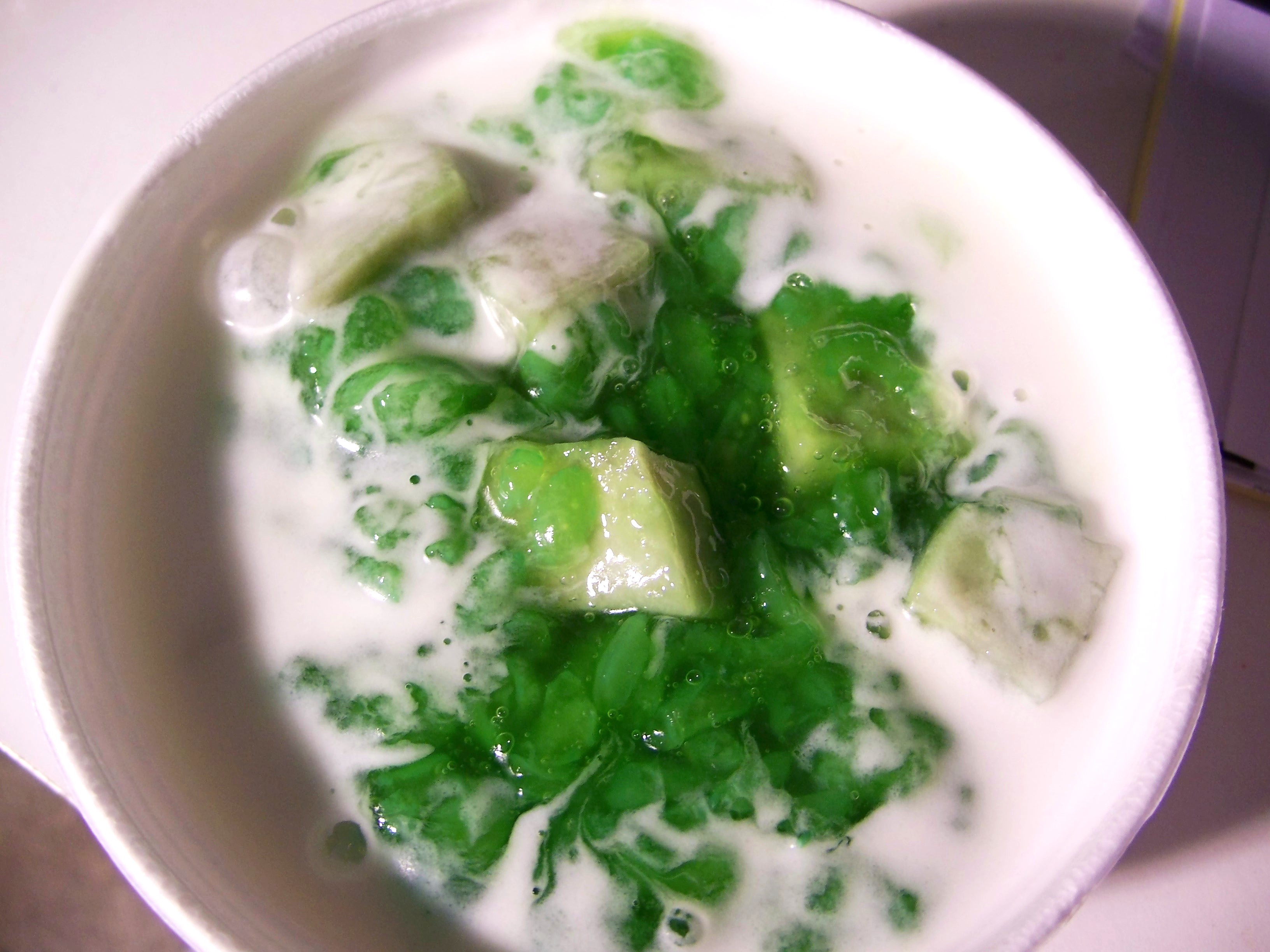
One of the few country treats without mung bean paste. Depending on each root and how long it’s cooked, the purplish pale taro cubes can be grainy, nutty, a little chewy, or al dente, like scallop potato minus the butter. However they are, they serve as a textural contrast to the gooey pudding-like sticky rice base. I’m particularly charmed by the vibrant green color in this Lee’s Sandwiches‘ rendition, hopefully from pandan leaf extract. You know it’s a skilled cook when the sticky rice grains are still visible, yet so soft you don’t need to chew. Taro che is less sweet than other kinds of che, as coconut milk alone gives much of its sugary taste.


2. Chè bắp (corn che)

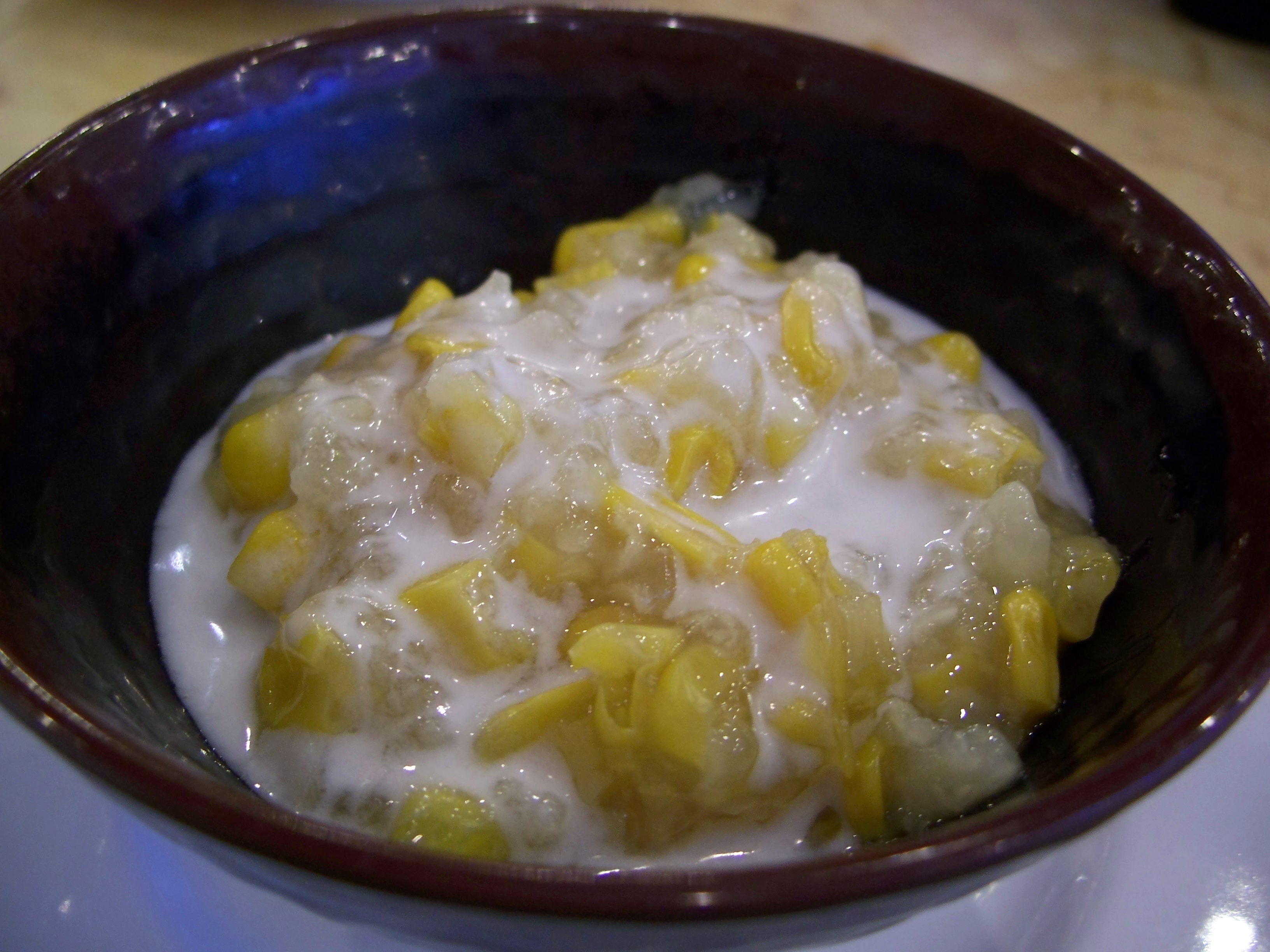
Another rare sticky rice concoction without mung bean intervention. Another pair of contrasting textures: crisp and firm kernels versus luscious goo. Another mild pudding sweetened by coconut milk. Bellaire Kim Son’s kitchen strayed from the common recipes that call for shaving the kernels off the cob, and used whole kernel sweet corn straight out of the cans. A simple, cheap, inhomogeneous toothsome mess.

More than 18 months ago: chè đậu trắng, chè bột báng, chè trôi nước

Sweet New Year began with chè

January 01, 2009 By: Mai Truong Category: Comfort food, Houston, sweet snacks and desserts, Texas, Vegan, Vietnamese

We heard dapples of fireworks last night, other than that, everything was normal. TV had the usual shows, roads had the usual cars, the usual air, the feeling of a usual day. Isn’t that strange? New Year came quietly in this town, but with all the bombing and protesting around the world, I suppose a quiet peaceful New Year’s Eve is a nice New Year’s Eve. No champagne, no confetti, no wishes, no counting down. We slept.


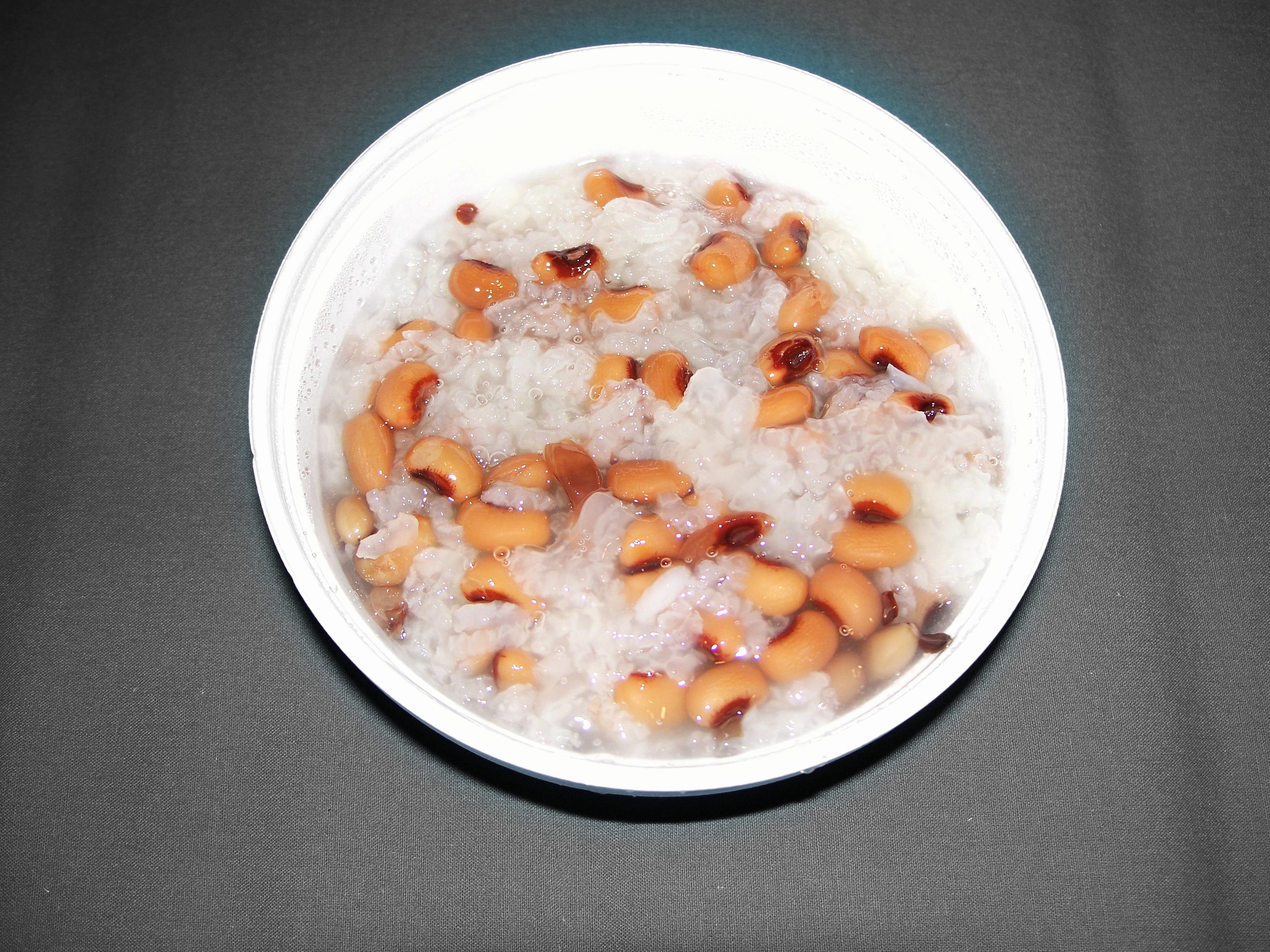
But how about some black eyed pea? 🙂 Not only is it a traditional American New Year’s food, it always appears in a baby’s first (and most important) birthday in Vietnam (quite a connection, I know… but a good bean, isn’t it?). The word “đậu” for bean, or pea, has the same spelling with the word for passing (an examination), chè is a dessert, so chè đậu trắng is a sweet food of good luck for the beginning of something. Cooked until soft, washed with cold water, the hard “black eye” part of the testa taken off, then cooked again with sticky rice and preferably brown sugar, the beans melt in your mouth. In an average pot of che dau trang, you see the sticky rice makes a gluey protection of the beans, the seed coat is still just a tad chewy, your jaws and tongue will enjoy a mix of texture. This might be exclusively enjoyable for those with an eye on texture food, myself included. In a good pot of che dau trang, you can see each grain of sticky rice and each shapely pea, but each spoon will only give you a sweet, nutty, almost homogeneous mixture. Oh, can’t forget the slightly salty, thick and fat coconut milk, of course. Coconut milk makes everything aptly better.


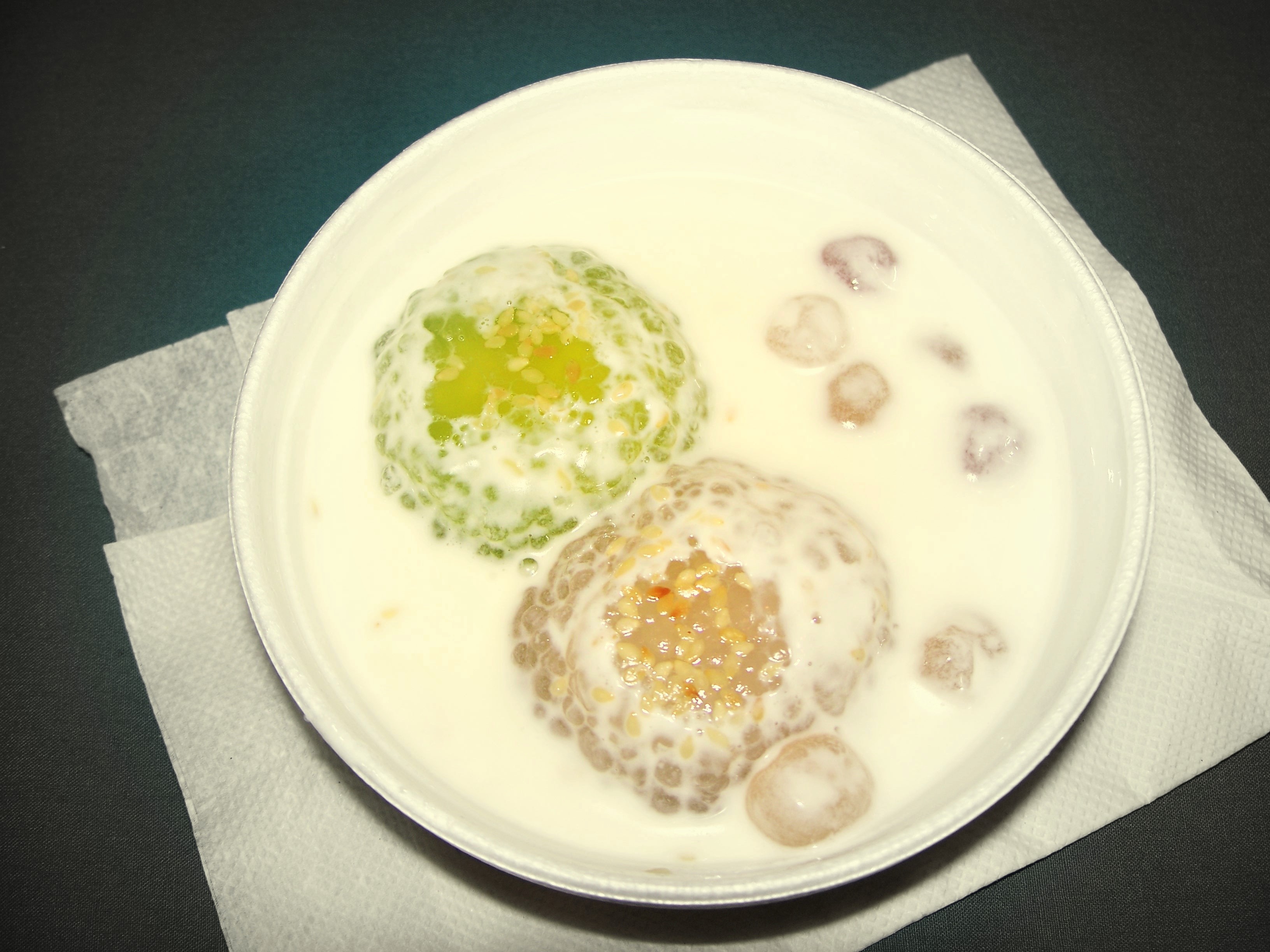
Coconut milk sneaked in here too… A small cup of chè bột báng (tapioca chè) from Lee’s Sandwiches. The big pink and green balls have mung bean paste inside, the little ones are your usual tapioca marbles in bubble tea (only slightly bigger and not dark brown). There is no sticky rice, but there is a teaspoon of pan-dried sesame seeds atop. Chewy and sweet is the main theme che bot bang shoots for. It’s pretty light.


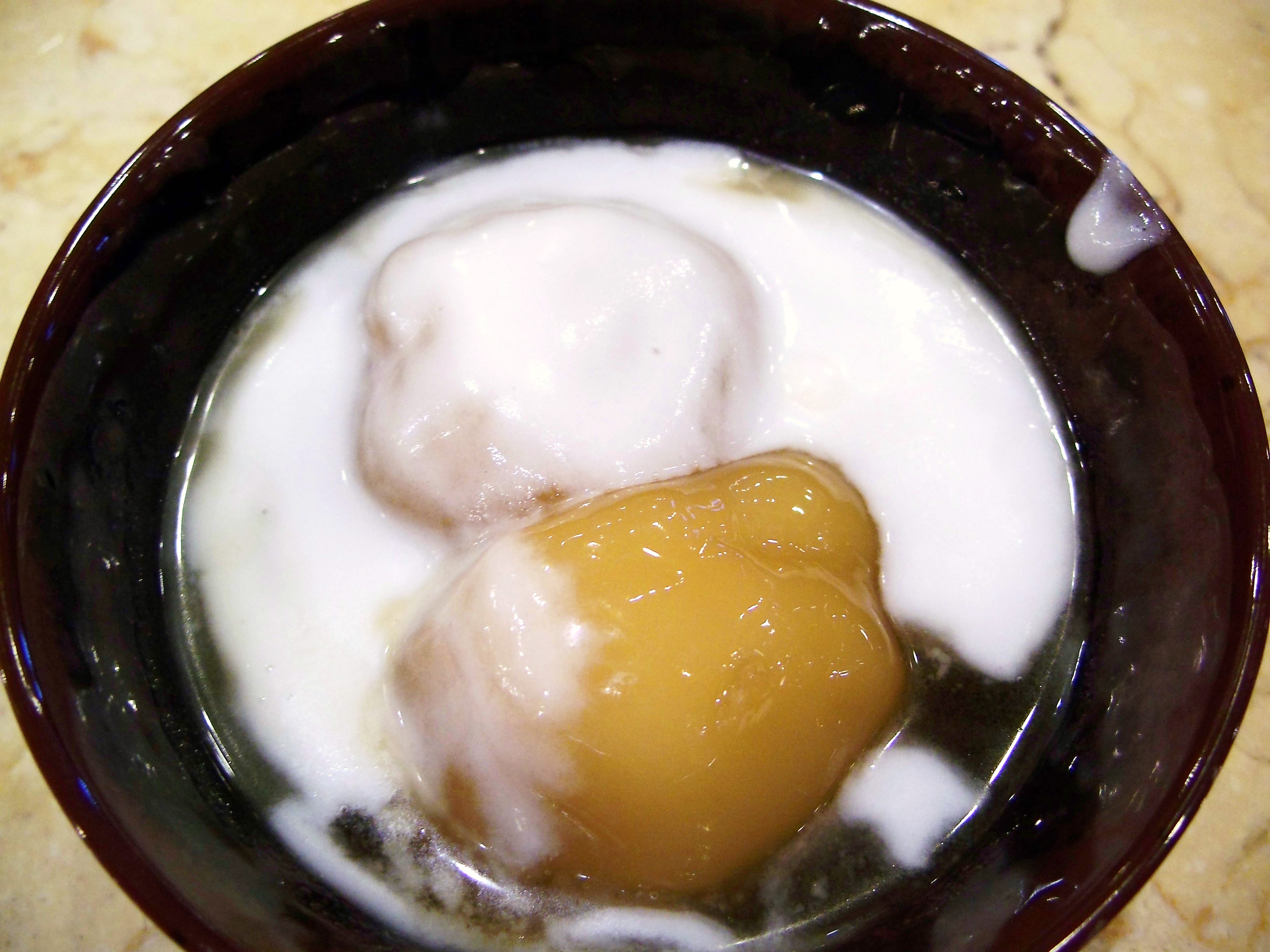
Che is a vegan snack. Sticky rice, bean and coconut are about the main ingredients in any kind, some have fruits or roots, but eggs and milk stay out of this business. So how many variations of che do you think there are? Quite a few, actually. Chè bắp (corn), chè bột báng (tapioca), chè bột khoai, chè củ năng (water chesnut), chè củ mài (a kind of yam), chè chuối (banana), chè đậu xanh (mung bean), chè đậu đen (black bean), chè đậu đỏ (azuki bean), chè đậu trắng (black eyed pea), chè hạt sen (lotus seed), hạt mít (jack fruit seed), chè hạnh nhân (chesnut), chè nhãn (longan), chè khoai lang (sweet potato), khoai môn (taro), khoai mì (cassava root)…, and many others I haven’t tried. Are there similar desserts in other countries? I don’t know, but certainly not in the US, where people say ew to soy milk (and not to raw clams). Kim Son, quite to my disappointment, has stopped serving che dau trang for some while, but still has chè trôi nước, another familiar dessert of the Vietnamese, especially in the North, where some call it bánh trôi, as it’s a ball floating in sugar liquid. Such simple name is made simpler, pronunciatively, by the Southerner, when they turn it into chè xôi nước: xôi – sweet sticky rice (the coat of the ball is indeed made of sticky rice flour), in nước – (sugar) water. The stuffing is, surprise surprise, Mung Bean Paste. Sweet outside, mild and nutty inside. A beast to work your jaw. Doesn’t it remind you of banh it? Sprinkle some sesame seeds and spoon in coconut milk for a homey taste of the countryside.

Off to a well-seasoned new year, everyone! 🙂