Flavor Boulevard

We Asians like to talk food.
Subscribe

Delicious Food Co. is one fourth delicious

September 28, 2010 By: Mai Truong Category: California - The Bay Area, Chinese, sweet snacks and desserts, Won't go out of my way to revisit


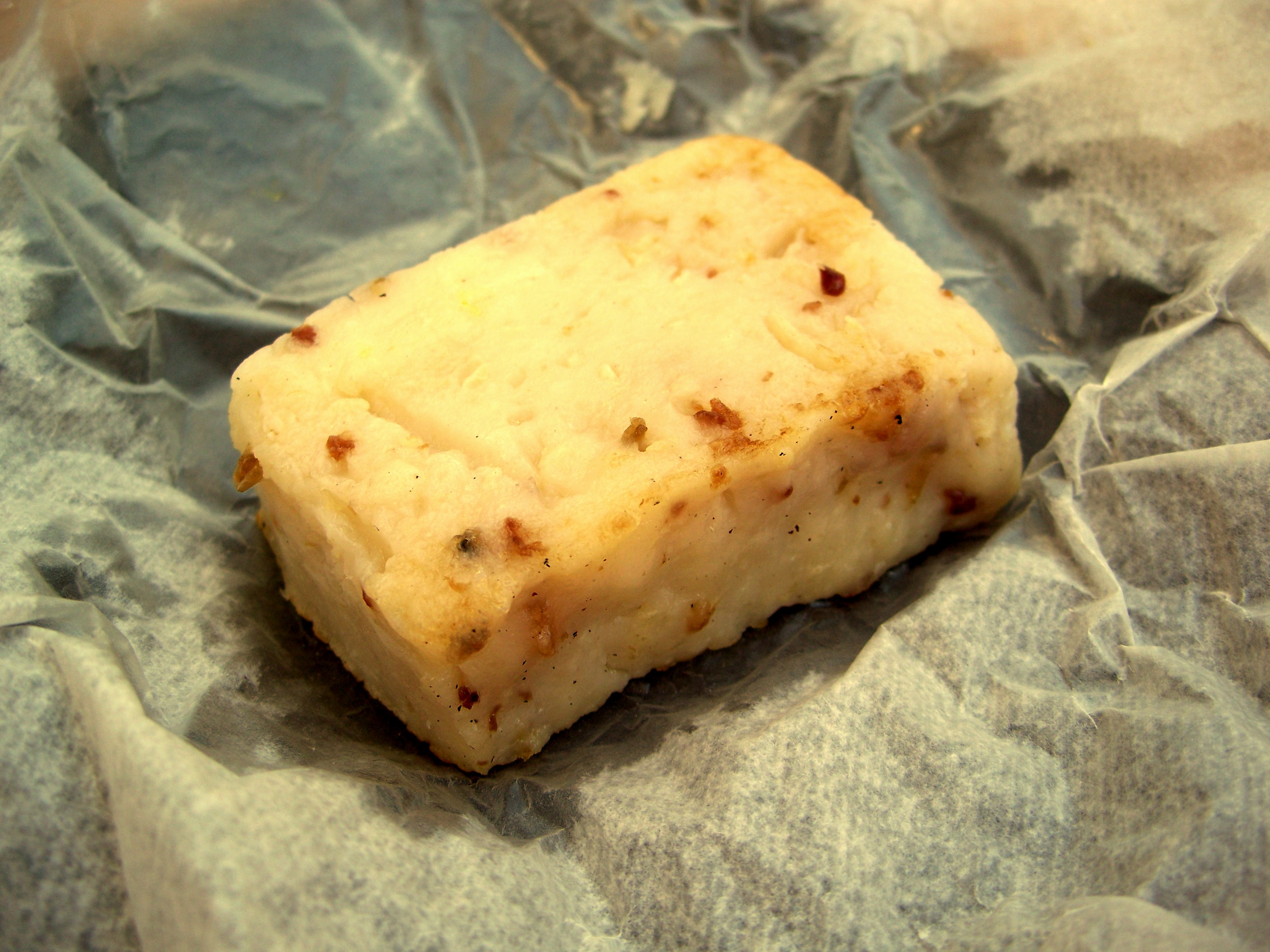
Let us all agree that food tasting is subjective, and totally unrelated to the food’s affiliation. That means even if I hate goat cheese I still find goats quite cute, and if I choose instant cup noodles over a meat-filled burrito it doesn’t mean I have something against Mexican immigrants. Now that we’ve made that clear, I’ll get to the point: I don’t like the Cantonese turnip cake (luobo gao).


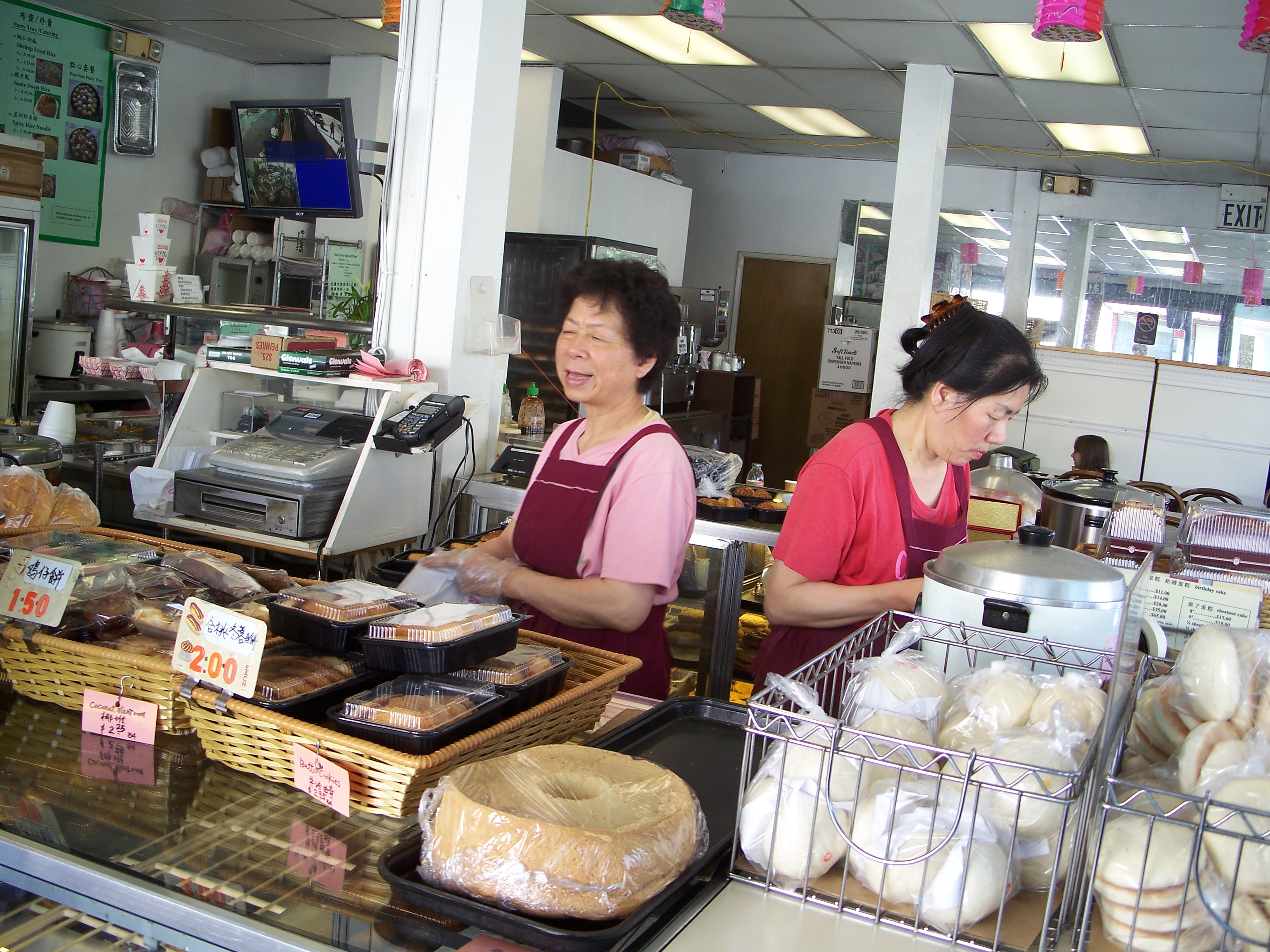
We got it at a very crowded Chinese bakery in Oakland Chinatown this weekend. One white lady in line before us asked for 3 turnip cakes, and I want to stress “white” because her Western palate gave us assurance that this treat is among those rare Asian ones that are happily consumed by white people, aka it must be at least “normal” (white people, especially Caucasian Americans, are not always up to trying “new” food). So we thought we’re in for a safe bet. Turns out, turnip cake (a misnomer for daikon cake), unlike crumbly carrot cake, is an oily soft chunk most resembling a used oversize eraser, except not as gummy.

It’s neither sweet nor savory nor bland. The taste clings to the back of your throat as if you were drinking seawater covered with oil. Won’t buy again. As for the other things we got from Delicious Food Co., because I believe in happy endings, they will appear in increasing order of deliciousness.


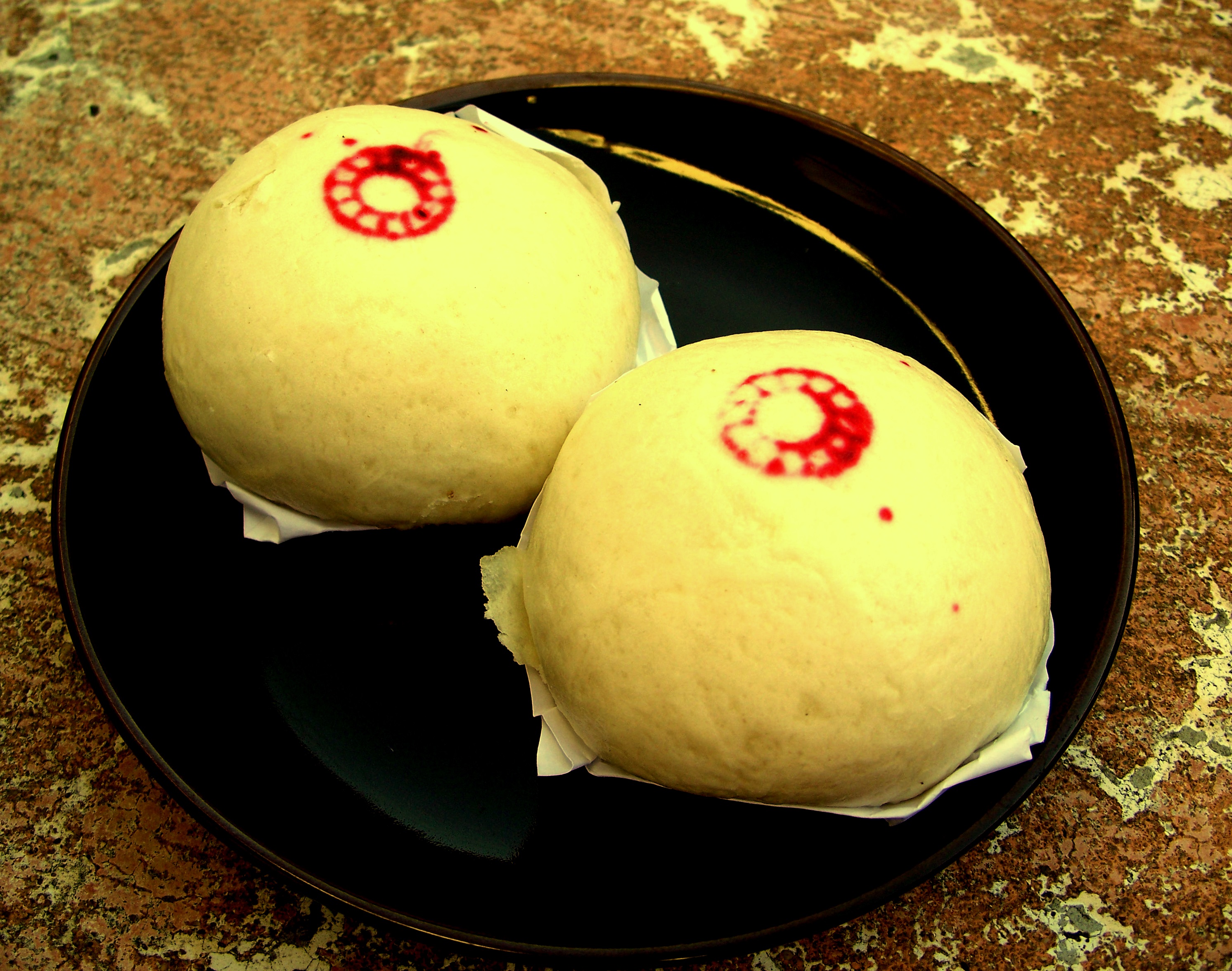
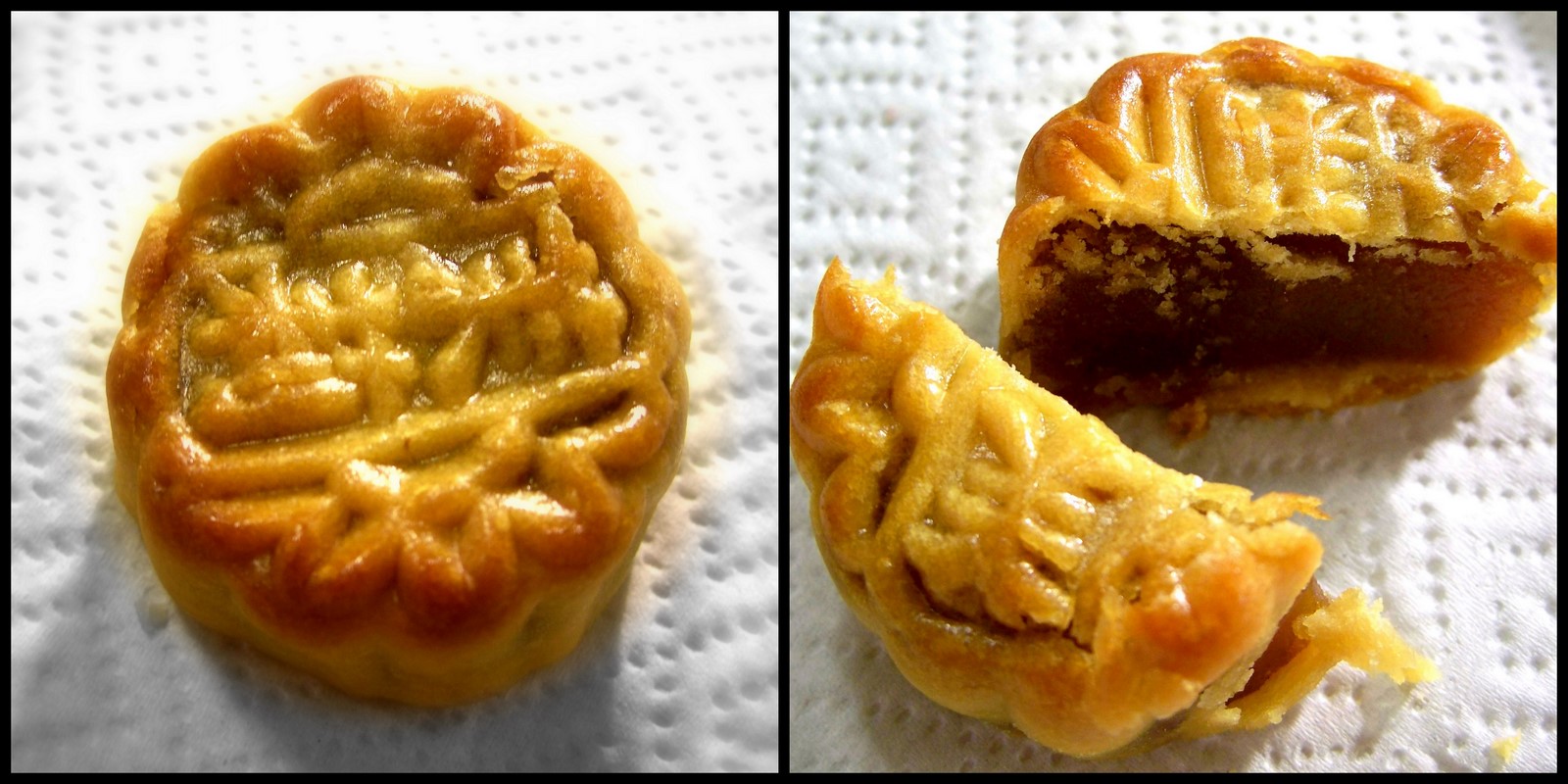
#3- Black bean bun – the middle ball of black bean, only one spoon worth, is fine, but the dough is as dry as Sahara sand.


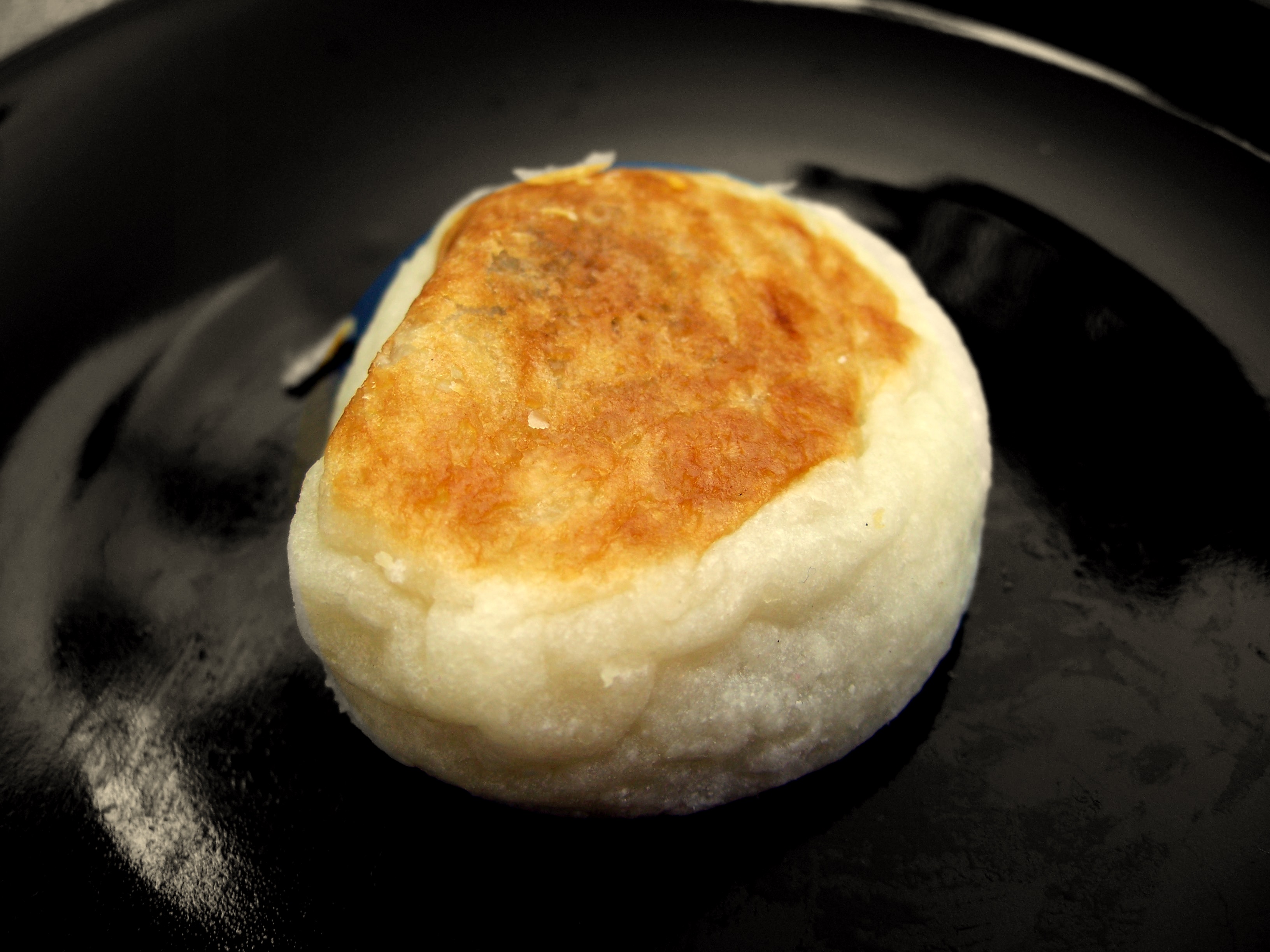
#2- No-name red bean mochi-like minibun – the mochi part is too chewy and a bit dried up, but I’d rather chewy dry than crumbly dry. Mudpie prefers the black bean bun though.


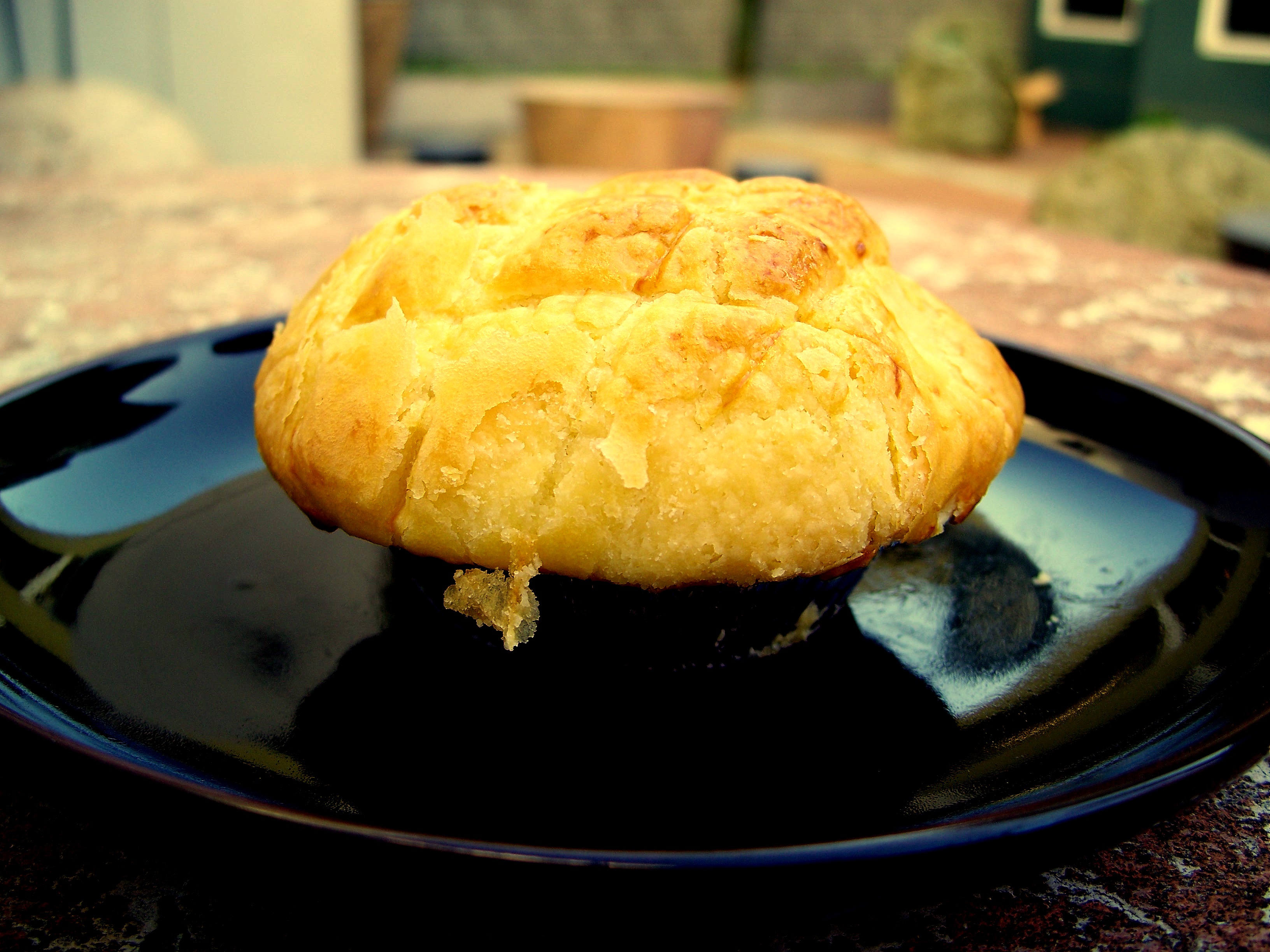
#1- Mini apple pie in foil cupcake cup – As good as you can expect from a good apple pie. The crust is moist on the inner side and crumby outside, the apple innards is just as sweet as a spoon of honey. Every bite leaves your lips a little buttery gloss, enough to make you stick your tongue out and ask for more.


I can’t say that I was impressed by anything but the extremely inexpensive price at Delicious Food Co. Four black bean buns and one of each of the other three pastries swung merely a total $5.25. That said, I’d rather them charge double that and make it taste good.

Address: Delicious Food Company (Oakland Chinatown)
734 Webster Street
(between 7th St & 8th St)
Oakland, CA 94607
(510) 893-2288

Tags:

Bún bung, sort of…

September 25, 2010 By: Mai Truong Category: Comfort food, noodle soup, Northern Vietnamese, RECIPES, Vietnamese


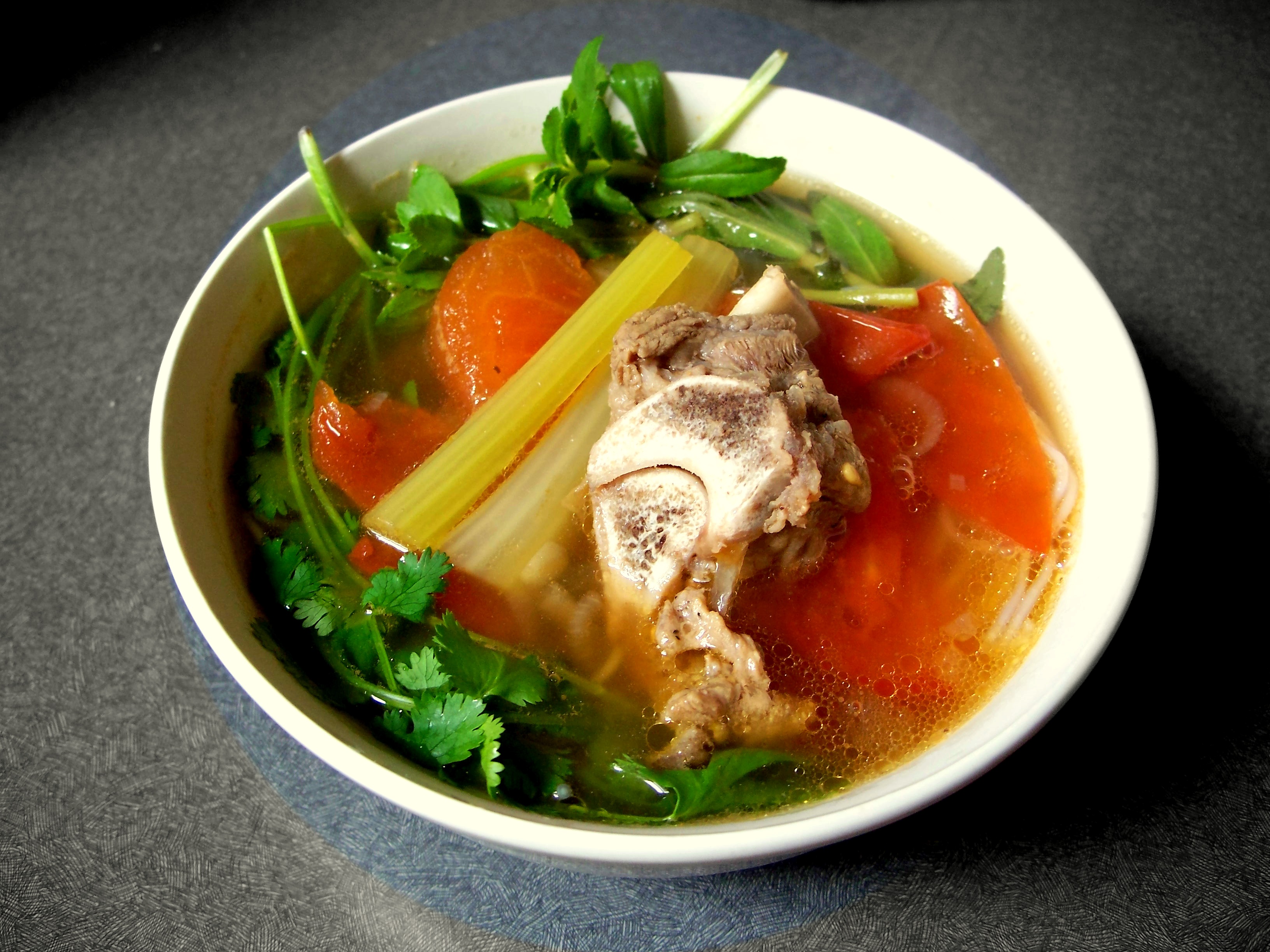
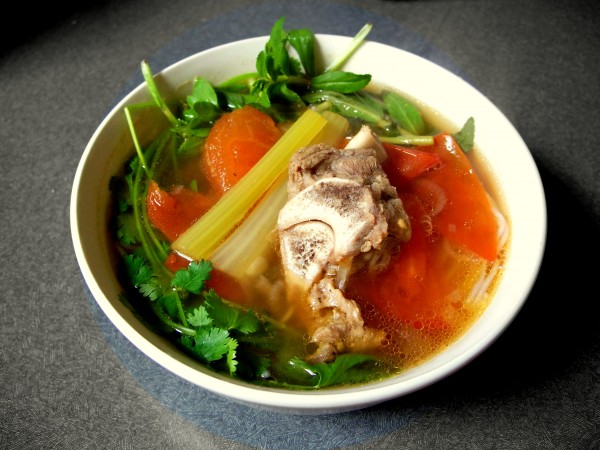
The scent pierces through the air, half like fresh lime and half like mint, liberating. The broth is fulfilling like juice from a just-ripe fruit, coating every strand of vermicelli and making them supple like newly washed hair. There is red, white, bright green, fall-leaf yellow green, and the earthy sepia tone of bone meat. My first bowl of bún bung.

Bún bung is a noodle soup of the North. Not having been to Hanoi, I learnt about bún bung from the interweb and tasted it via imagination. My mom has heard of it, but Saigon doesn’t have it, and I don’t know how popular it is in Hanoi today. It wouldn’t surprise me if the old fashion noodle soup is only half surviving in the baskets of old ladies dressing in brown and having their teeth dyed black. Anyway, it has a funny name. Bún (pronounced like “boon” with a quick rising accent) is just the usual rice vermicelli. Bung (pronounced like “bung” in “übung” in German – English doesn’t have this sound) is the method of cooking: stir fry first, then simmer until boil in water. There’s no adequate translation of the name into English, other than “bung noodle soup”. But to me, it’s funny because bung sounds like boom, or bloom (as in flower blooming). For sure, the soup is a flavor bouquet.
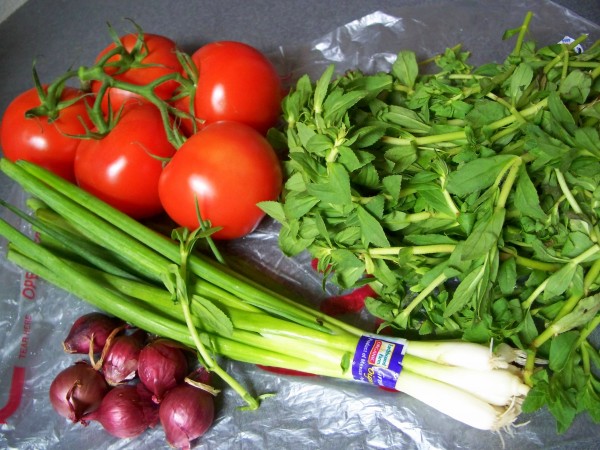

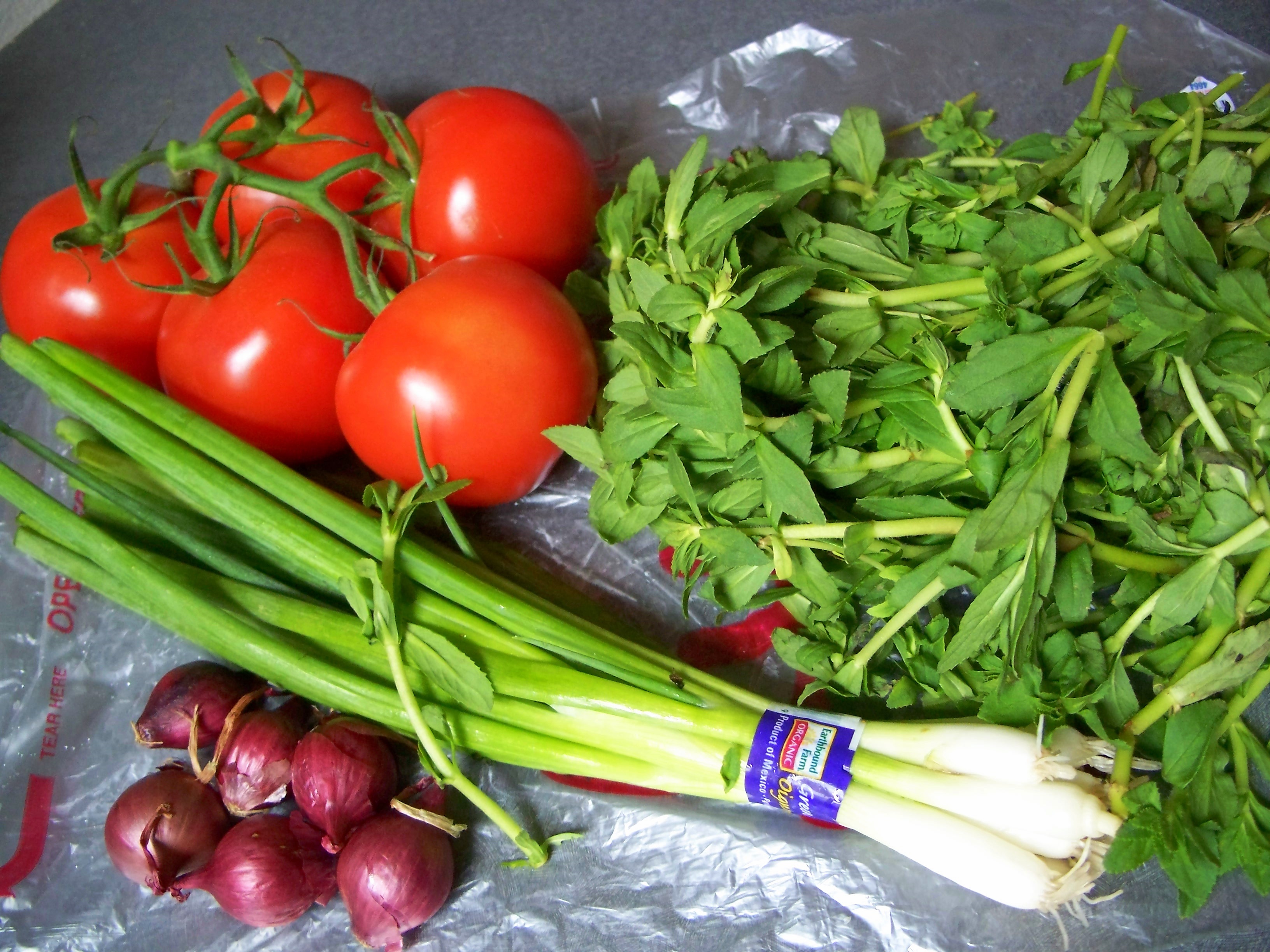
Compared to other noodle soups, bún bung requires little time, few ingredients, and not so much attention. It is sort of close to canh chua (sour soup) in the South, but instead of fish they use pig trotters to get the protein sweetness, and instead of rice it’s eaten with bún. It’s also a little close to canh bún cá (fish noodle soup, also of the North), except for the sour taste, because of the use of rau ngổ (L. aromatica, or rice paddy herb, top right corner in the above picture).

What does “ngổ” mean? I have no idea. But the taxonomists couldn’t be more right labeling it “aromatica,” because its scent permeates the room like a direct spray of Febreze, once just after I open the bag and the second time when I pour hot broth over it.  The scrawny, airy stems with slender leaves taste a little bitter eaten raw, but comfortably sleek and crunchy like water spinach. In Vietnam,  rau ngổ is dirt cheap. In America, it’s $8.99/lb (at 99 Ranch Market). Thankfully the quarter pound bunch I get is more than enough for 6 servings of bún bung.

Also an important ingredient in bún bung (as well as other Vietnamese sour soups) and also named for its aroma is dọc mùng (night-scented lily). Its soft spongy texture is irreplaceable by other vegetables, but good luck finding it in grocery stores. I have to use celery to substitute. The upside is that celery is much easier to wash, while night-scented lily can give you some itchy hands.

That aside, my bún bung uses beef neck bone instead of pig trotters, soy sauce instead of fish sauce, and skips the tumeric powder entirely. But I bunged the bones, so it is bún bung. 🙂

— für Đại

Mai’s bún bung (due to lack of ingredients at the grocery stores she goes to):
(Prepping and cooking time: 2 hours – 6 servings)
– 1.5lbs beef neck bones (or any kind of chunky bone with meat on it)
– 5 tomatoes, cut into wedges (this is a lot of tomatoes, since I don’t have any sour fruit)
– a few celery stalks cut and split into small sticks
– 300g rice vermicelli
– coriander, purple pearl onion, green onion, rice paddy herb (rau ngổ)
– 2 tbs soy sauce, salt and (a lot of) sugar to taste

1. Marinate the bones in diced onion, chopped garlic, 1 tbs salt and 4 tbs sugar.
2. In a big hot pot, sauté purple onion with oil until it smells good (which is pretty quickly), then dump the bones in and stir-fry until brown. Pour as much water as you want (this is the soup stock) and let it simmer. Skim off the foamy fatty layer on top to keep the stock reasonably clear.
3. Meanwhile, cook the rice vermicelli (like cooking pasta), drain and set aside. Wash and cut the greens (night-scented lily, rice paddy herb, green onion, coriander).
4. When the stock boils, add tomatoes into the stock. Wait until boiling again, add 2 tbs of soy sauce, salt and sugar to taste. Add the celery sticks. Keep it hot for serving.
5. Serving: in a bowl put some noodle and vegetables, then pour a few ladles of broth over, make sure you get some tomato and celery too. I also like to eat the meat off the bones. Sprinkle some green onion, coriander, and pepper on top.


Actual bún bung:
(Recipe translated from source, not sure how many servings this gives)
– 1 pig foot (doesn’t sound enough to me, maybe they meant 1 leg? But that’s too much…)
– 4 night-scented lily (dọc mùng) stems, cut into 2-3 inch sticks.
– 6 tomatoes, cut into wedges
– 1kg rice vermicelli
– tamarind or some sour fruit
– tumeric powder, coriander, purple pearl onion (sliced), green onion, rice paddy herb (rau ngổ)
– fish sauce, salt, sugar, black pepper

1. Cut the pig trotter(s) into big chunks and marinate in 2 tbs fish sauce and 2 tbs tumeric powder.
2. In a big hot pot, sauté purple onion with oil until it smells good (which is pretty quickly), then dump the trotters in and stir-fry until brown. Pour as much water as you want (this is the soup stock) and let it stew (pig trotters take time to soften).
3. Meanwhile, cook the rice vermicelli (like cooking pasta), drain and set aside. Wash and cut the greens (night-scented lily, rice paddy herb, green onion, coriander). Mix them with a little bit of salt. Let sit in 5 minutes. Gently squeeze off some water, wash the greens again and mix it with a pinch of tumeric powder.
4. When the trotters are soft, add tomatoes and the sour fruit into the stock. Wait until boil, sift out the sour fruit and add seasonings to taste. Add the night-scented lily sticks. Keep it hot for serving.
5. Serving: in a bowl put some noodle and vegetables, then pour a few ladles of broth over, make sure you get some pig trotter cuts, tomato and night-scented lily sticks too. Sprinkle some green onion, coriander, and pepper on top.

Bon appetit!


– Submission to Delicious Vietnam, a monthly blogging event created by Anh of A Food Lover’s Journey and Hong & Kim from Ravenous Couple

Tags:

Wiki Wiki Hawaiian BBQ – What would be cut?

September 22, 2010 By: Mai Truong Category: California - The Bay Area, noodle soup

Speaking of unpopular authentic dishes taken off the serving tray, I’m reminded of the Hawaiian place on Shattuck. I overheard the owner say that he would have to remove some stuff from the now-three-page menu. There’s business, most are lone diners and take-outs, but naturally business is not the same for every item. Once a middle-aged man ordered 20 spam musubis to-go, and I imagine this is nothing unusual for a $2 nori-wrapped solid brick of rice with one slice of browned processed succulence. It’s just a good deal, it tops the chart in terms of convenience times filling factor divided by cost. If you’re a Berkeley student, I guarantee you can’t dig up a better combination of those quantities in this area. So the spam musubis are safe, but who are (not) on the chopping block?


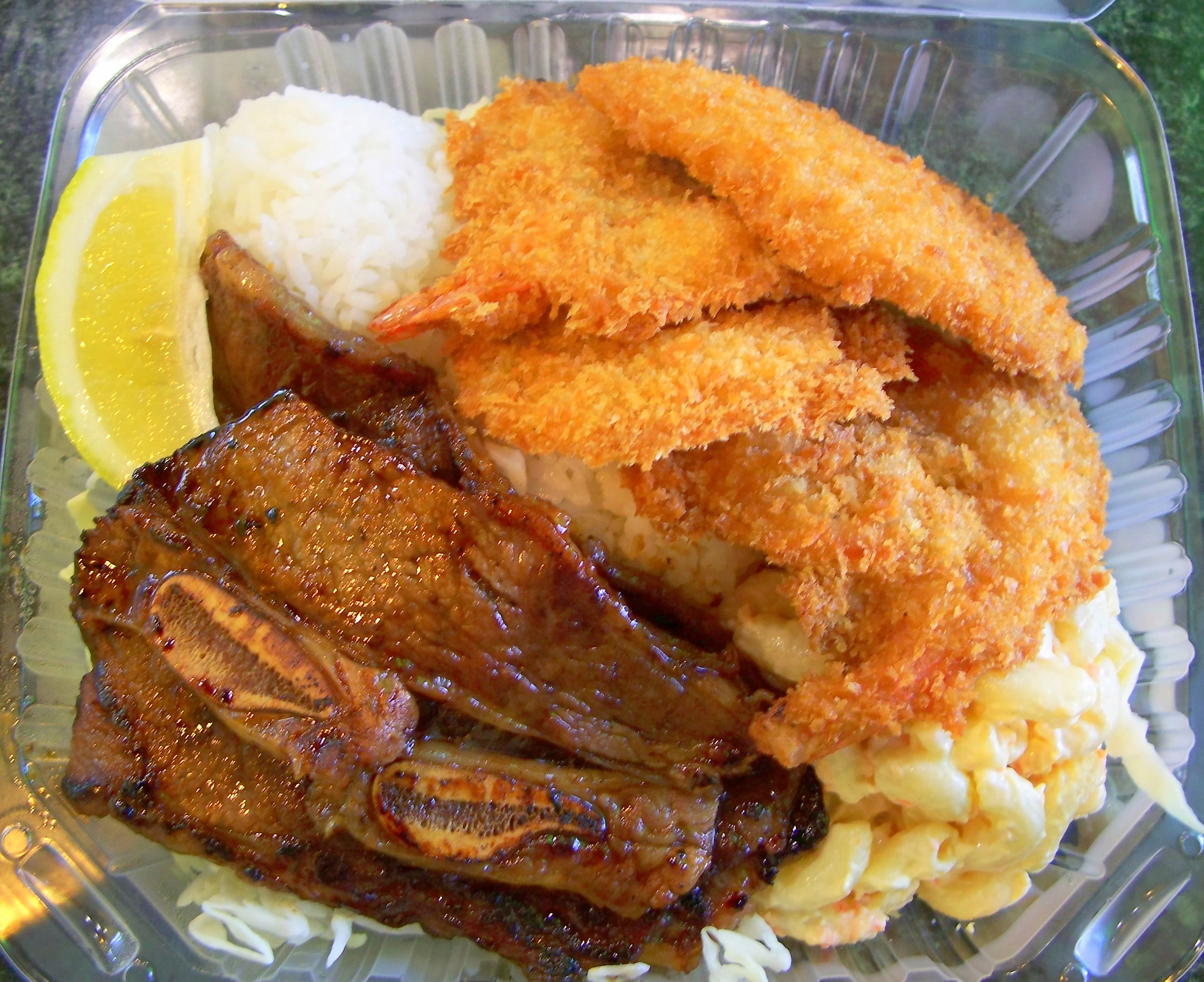
The barbecued meat and fried seafood? I don’t think. BBQ is in the name. You can snob up your chin about meat quality, but don’t tell me that the smell of caramelized grilled short ribs doesn’t wet your tongue. Crunchy fried mahi mahi and fan-shaped split shrimp offer more texture than taste, so I might worry a tad for them. For $8.25, the seafood combo (pictured) doesn’t deliver as much as the $7.75 BBQ mixed plate (teriyaki steak, short ribs, and chicken).


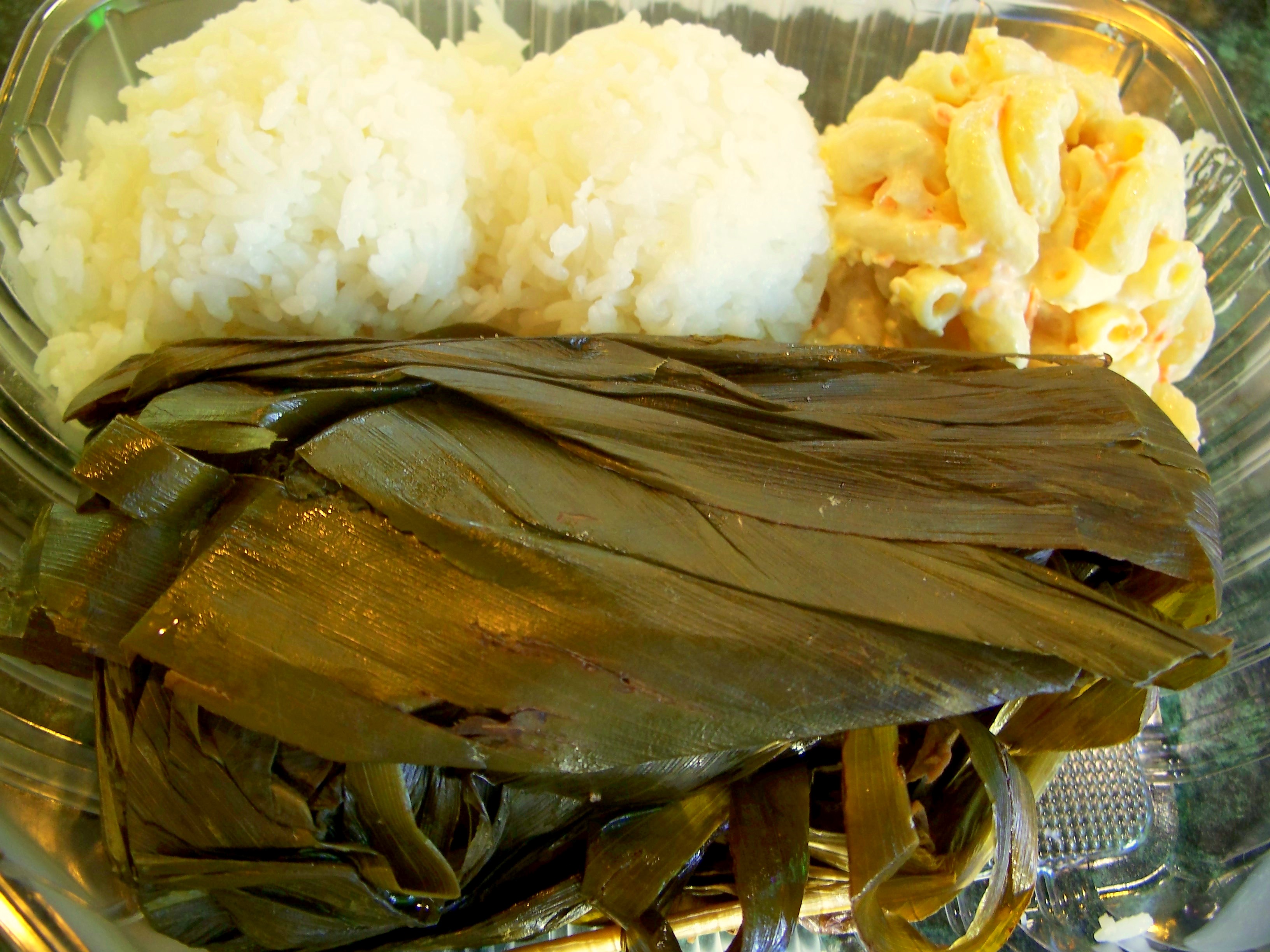
Not all meat is popular, though. Take fresh pork lau lau for instance. You are presented with a leaf bundle next to the usual three scoops, one of cheesy cold macaroni salad and two of white rice. You unwrap the leaves like one unwinding a silkworm’s cocoon, only to find more greens inside that baffles you “is this edible? should I keep unwrapping?” You sample a bit of that green mash, and feel smoothness sliding down your throat. It’s like overcooked spinach coated with beef fat. The meat is similar, like a plainer sister of the Vietnamese meat kho minus the sugar and the sauce. Then something fishy creeps up to the base of your teeth. Fish that you can’t see but it is there, so well woven into the pork and the greens that the taste is but a wisp of its slippery skin. You may notice that the whole experience sounds like a butter pool, and indeed it is. Plain and fattily smooth. Perhaps it slides down too smoothly to grab hold of my interest. $7.25 is quite reasonable for a fistful load of “taro leaves, pork, butterfish, and salt, all wrapped in Ti leaves“, but if you didn’t grow up with the taste, you wouldn’t miss it. I suspect pork lau lau will say bye bye. :-/


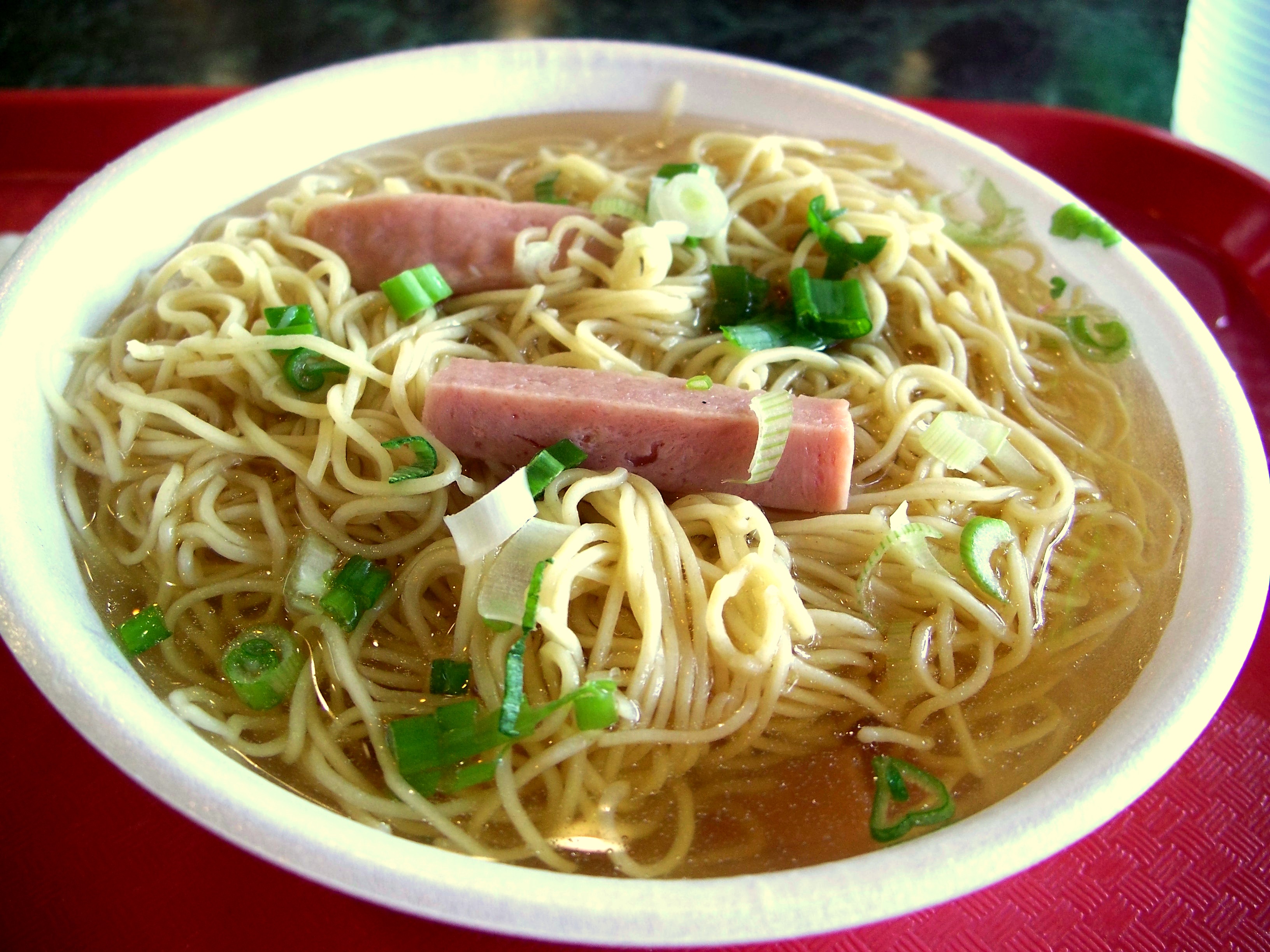
Saimin is likely another go-er, though for a different reason. If pork lau lau is at the very least respectable for its interesting ingredients, the barebone saimin’s simplicity doesn’t justify its price. At $3.25 you get a wad of egg noodle in salted broth, four rosy fingers of spam and a sprinkle of green onion rings. But, to be fair, I’d like to try Wikiwiki saimin with egg and BBQ chicken before I finalize the sentence.


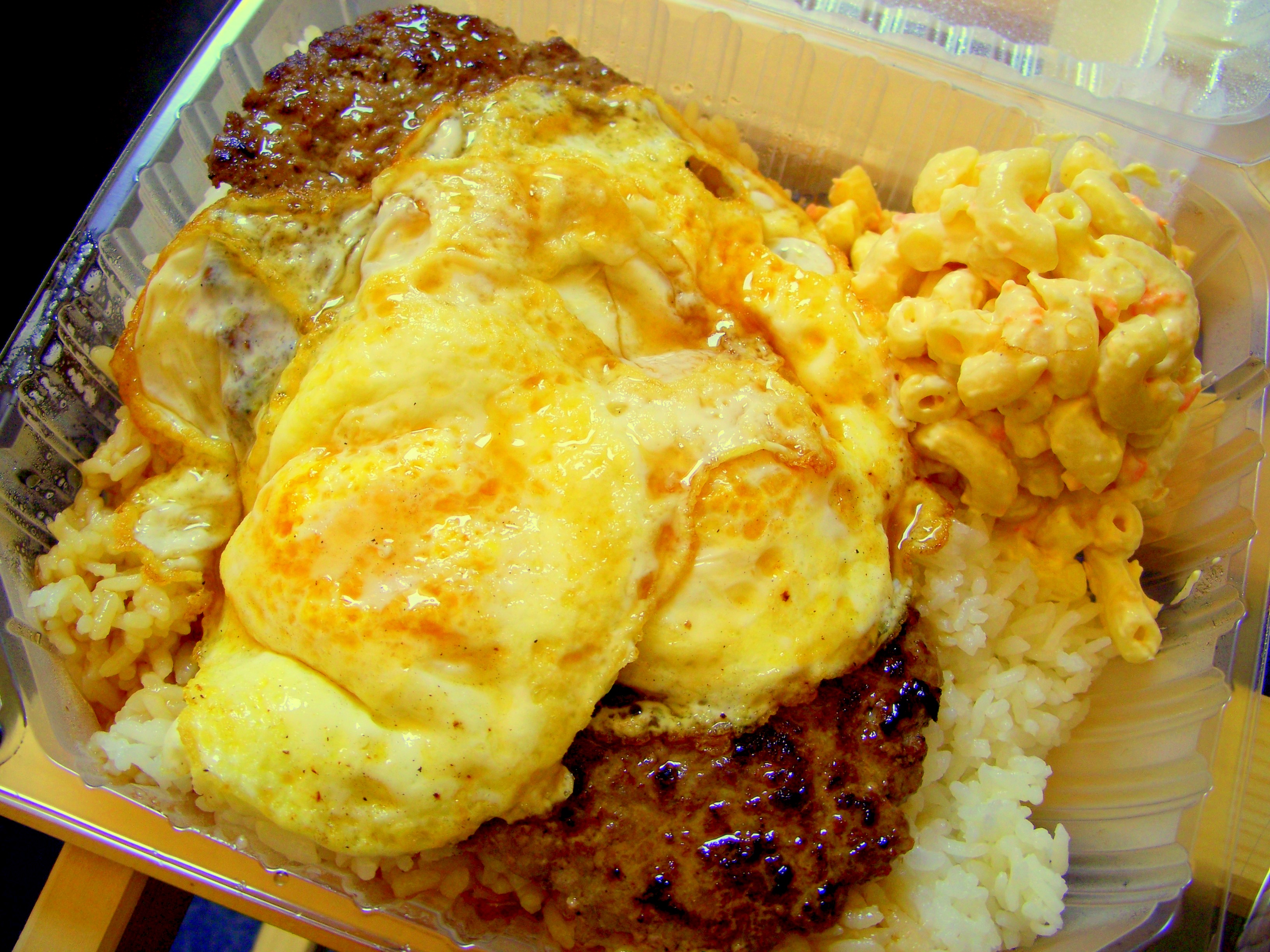
The one thing that Wiki Wiki should keep even till word’s end is in this last picture. When you hear that sizzling sound the patty makes on the grill, suddenly something’s awake in you. But the meat isn’t the best part. It’s the rice smothered in a thick peppery gravy, further thickened by two running yolks. Every spoon glosses your upper lip. It’s just yellow and brown and unpretentious like an old friend’s laugh.

The loco moco made me like Wiki wiki, just like the oksusu cha sprouted my love for Berkel Berkel. Something about it (most likely its $6.50 price :-P) connects generations of Cal bears. I was reading Zach Mann’s post at The Eaten Path and I saw “that Shattuck Blvd discount diner,” and suddenly I felt that Zach Mann wasn’t a stranger anymore. Well, I’m sure I’m still a stranger to him, but hey, we ate at the same place, perhaps sat at the same shiny metallic table, and independently felt the same way about a meal sold in transparent plastic box. You can trust us on our assessment of Wiki Wiki’s loco moco. It won’t go off the menu. It can’t.


Address: Wiki Wiki Hawaiian BBQ
2417 Shattuck Ave
Berkeley, CA 94704-2022
(510) 548-3936

Tags:

Taiwanese pastries from Sheng Kee Bakery

September 20, 2010 By: Mai Truong Category: California - The Bay Area, Chinese, sweet snacks and desserts


Just last autumn the celebration was marked with a little piggy from Singapore. In a blink of the eye the maple tree in front of my apartment has started turning radiant again, telling us that it’s time we find ourselves in front of countless beaming mooncakes.


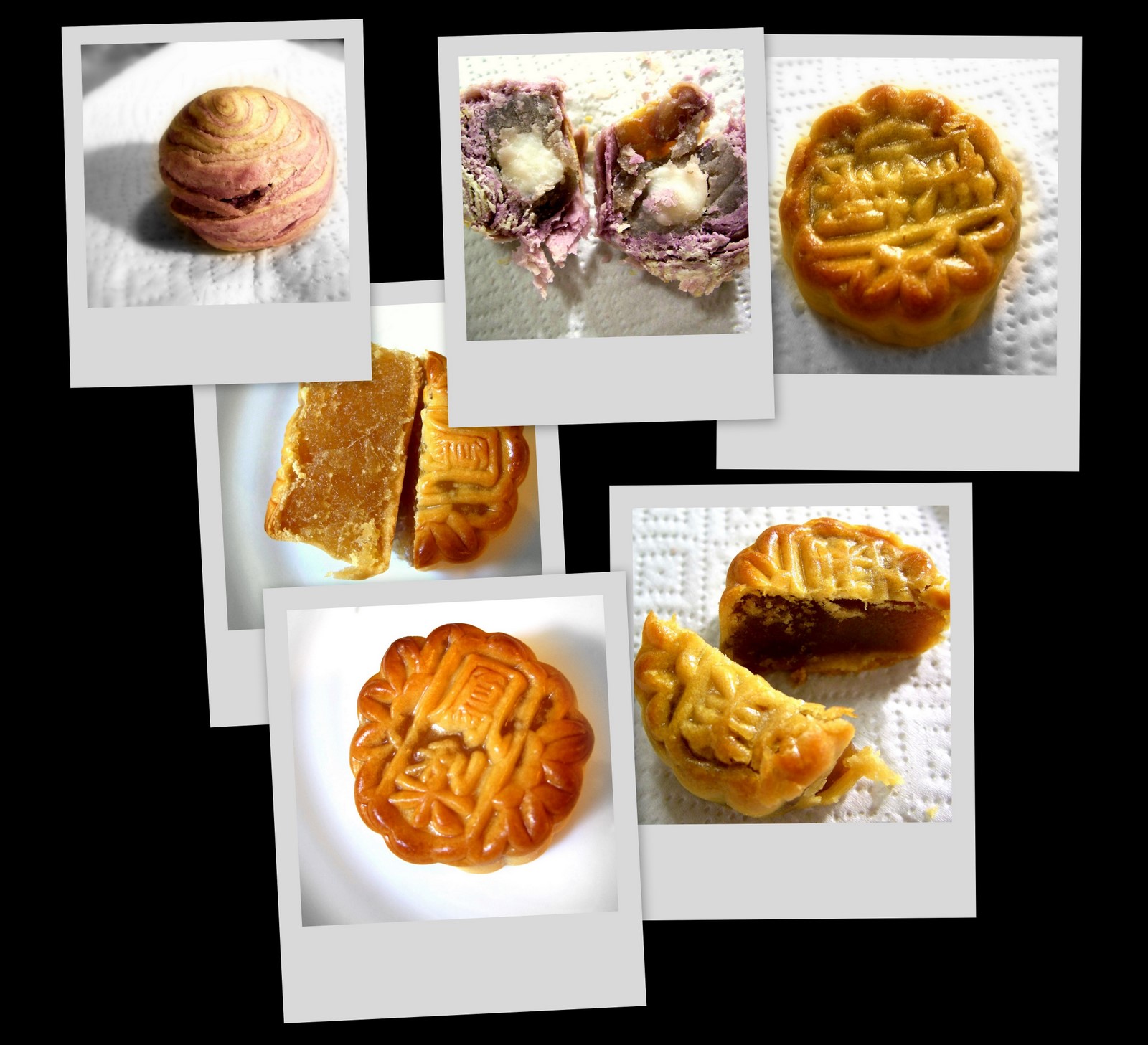
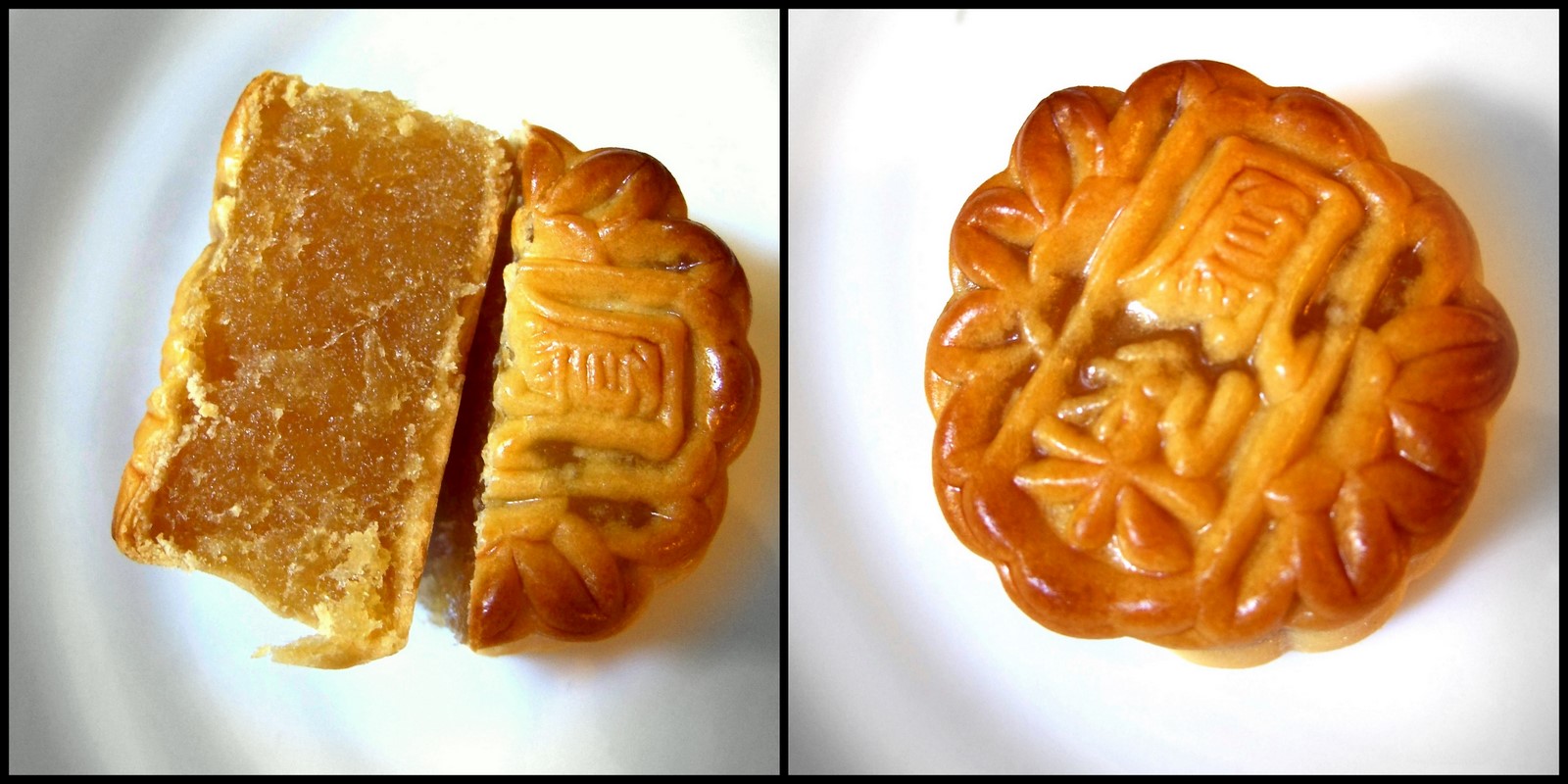
This tiny pretty bite is pineapple mooncake from Sheng Kee Bakery in the 99 Ranch Market plaza. As my reader, new friend, and Chinese food expert Kathleen Chen told me :-), 99 Ranch Market is Taiwanese-owned and the most reliable sign that a bakery is Taiwanese instead of Chinese is the pineapple cake (鳳梨酥). Well, the pineapple mooncake is certainly tasty, but if you know me, my taste buds are slightly influenced by my political and cultural preferences, so DOUBLE thumbs up for Taiwanese pineapple mooncake! 🙂

The nicest thing about the pineapple mooncake is that it’s not too sweet. The pineapple didn’t lose all of its tangy signature but rather just had the edges smoothened out, so to speak. Meanwhile, a little shreddy, uneven texture makes the paste more interesting.


Jasmine tea mooncake is also not too sweet, and it has the bonus aromatic herbal flavor of dried blossoms that I adore. There’s a multitude of other tea flavored mooncakes here, like oolong, black tea, and chrysanthemum and others whose names I can’t remember.


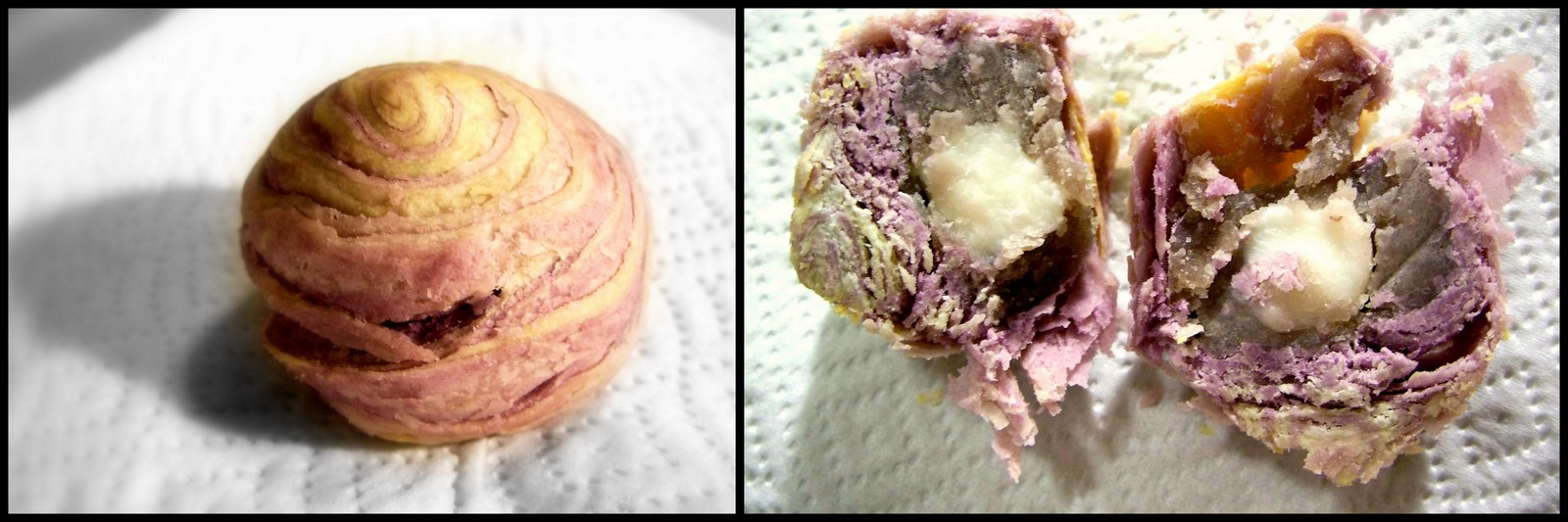
Here’s something else that looks interesting but I don’t know how to call it other than taro pastry. The outer layer is rather sweet, flaky, and practically melts in your mouth. There’s taro paste in the middle layer, which is mild and rooty nutty (taro-ey, if you know what I mean). Then there’s a soft, creamy, sweet white ball at the core and I have no idea what it is. The pastry is like a mini planet. 🙂 Hmm… maybe they should start naming new planets after food. 😀

Address: Sheng Kee Bakery & Cafe – inside 99 Ranch Market Plaza – Richmond
3288 Pierce St. #C 133
Richmond, CA 94804

Money matters: taro pastry – $1.85, small moli (jasmine) tea mooncake – $1.95, small pineapple mooncake – $1.60
The bakery also has beautiful sets of mooncakes (all sizes) in ornate boxes, but you gotta pay more for the look – ~$36 for each box with 4 large mooncakes.

Eating missing

September 17, 2010 By: Mai Truong Category: California - The Bay Area, Opinions


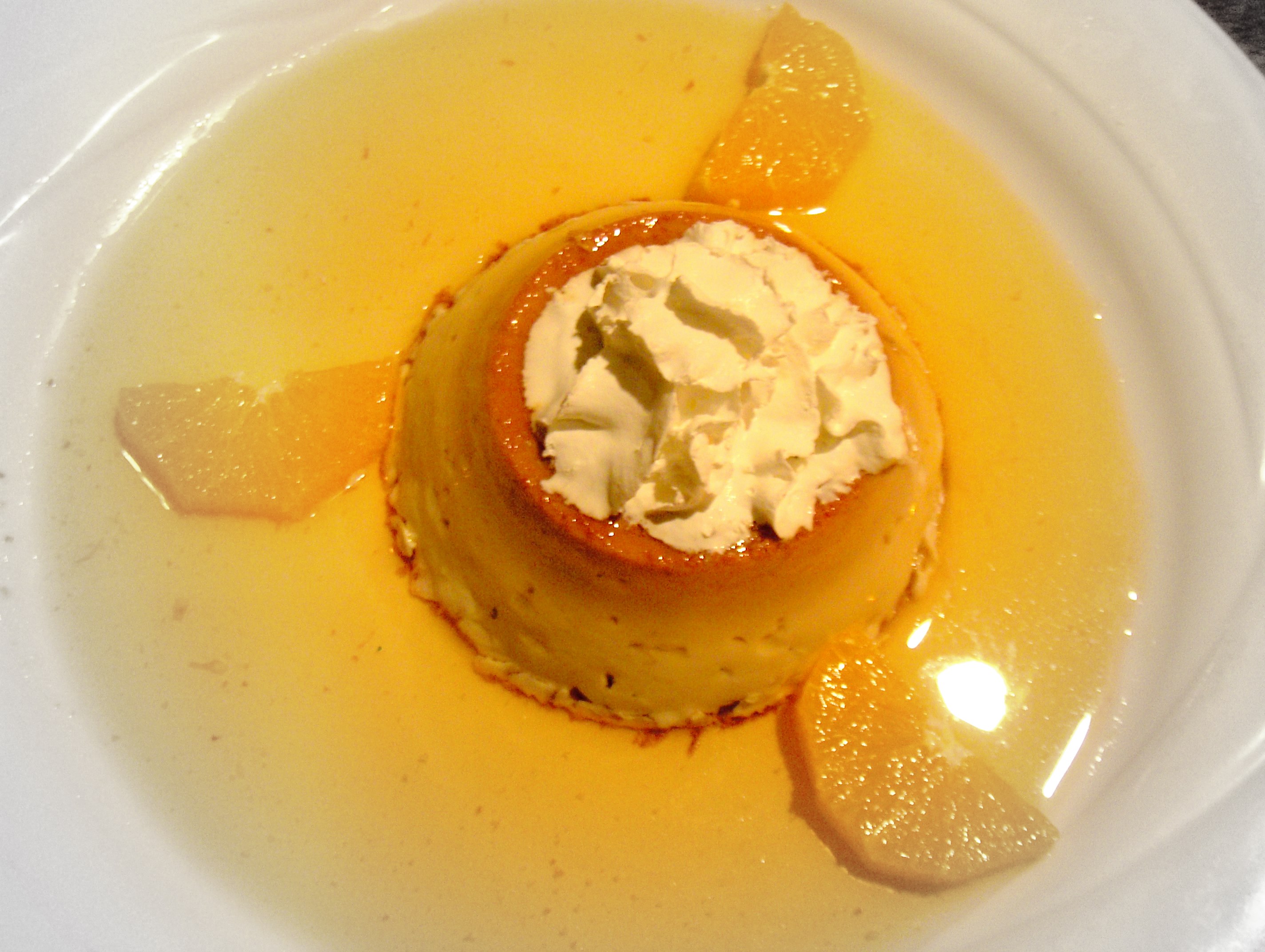
No more flan. Giovanni on Shattuck has closed its door after 25 years in business. I’d been there once when I suddenly had a craving for Italian pastas. Not that it had amazing Italian, but it certainly was unique. Anything old is unique. There was the bar in the front. In the back there was a big warm brick fireplace around which tables were set, the old school fireplace with a real log burning and real fire sparkles you know. And it’s also the only place in Downtown Berkeley that actually had flan. Not amazing flan, but any flan was better than none. UPDATE: Giovanni is back!

Not sure if it’s the economic downtime or just the common evolution of restaurants that is turning certain dishes into forlorn memories. Phở Hòa has been replaced by PunToh Fresh Thai Food, and of course that means no more bò kho (beef stew), something that’s really hard to come across even in San Jose. Bánh Cuốn Tây Hồ #9 in Oakland has a new owner, Duyên – the niece of the old owner, who schicked up the place with a young, modern, Westernized vibe. Their business takes off, but so is bún mộc from the menu. People only order it once or twice every two weeks, said Duyên, and she finds no point in straining the pot for something so unpopular.

Anzu-shi

September 15, 2010 By: Mai Truong Category: California - The Bay Area, Comfort food, Japanese


I was first deceived by its genteel green color to taste a spoonful all at once. Ever since, the wasabi has been a turnoff. Ever since, I also scoff at sushi, “pieces of overpriced cold rice, cold veggie and tasteless seafood” I labeled them. Well, they’re still overpriced, still cold, but definitely not tasteless. Be it the oksusu cha, the small salad with Korean mayo dressing, the creative rolls, or my infatuation with anything Korean (even when it’s just Korean-made Japanese food), the sushi at Anzu taste wonderful to me.


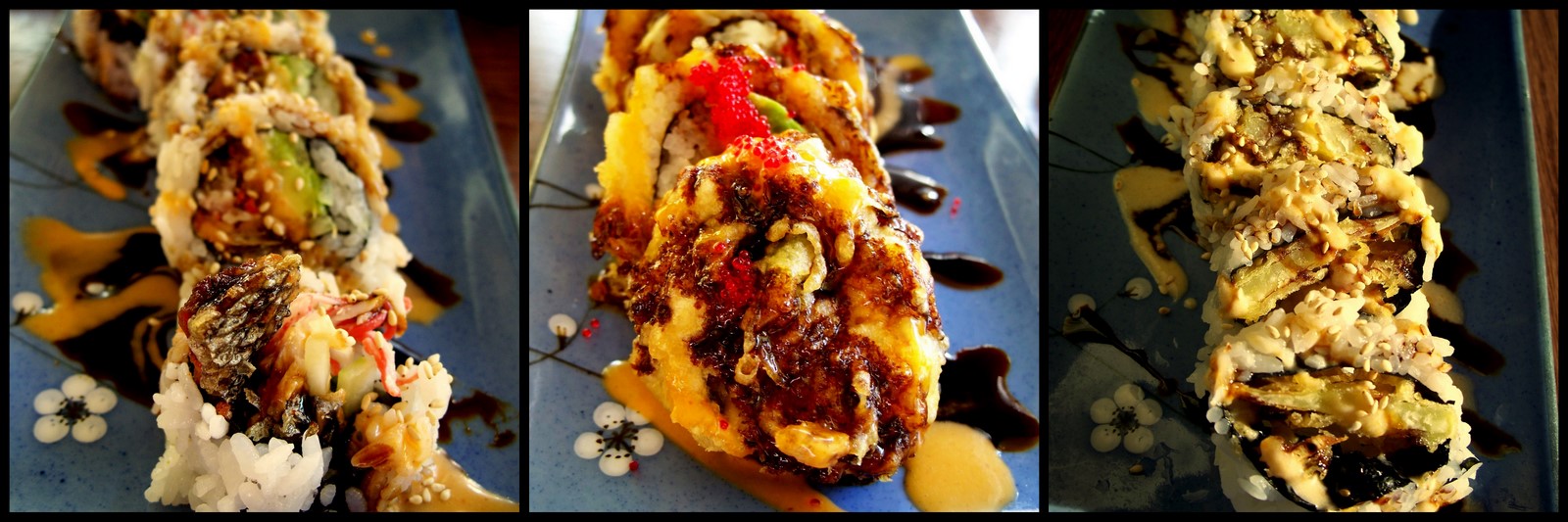
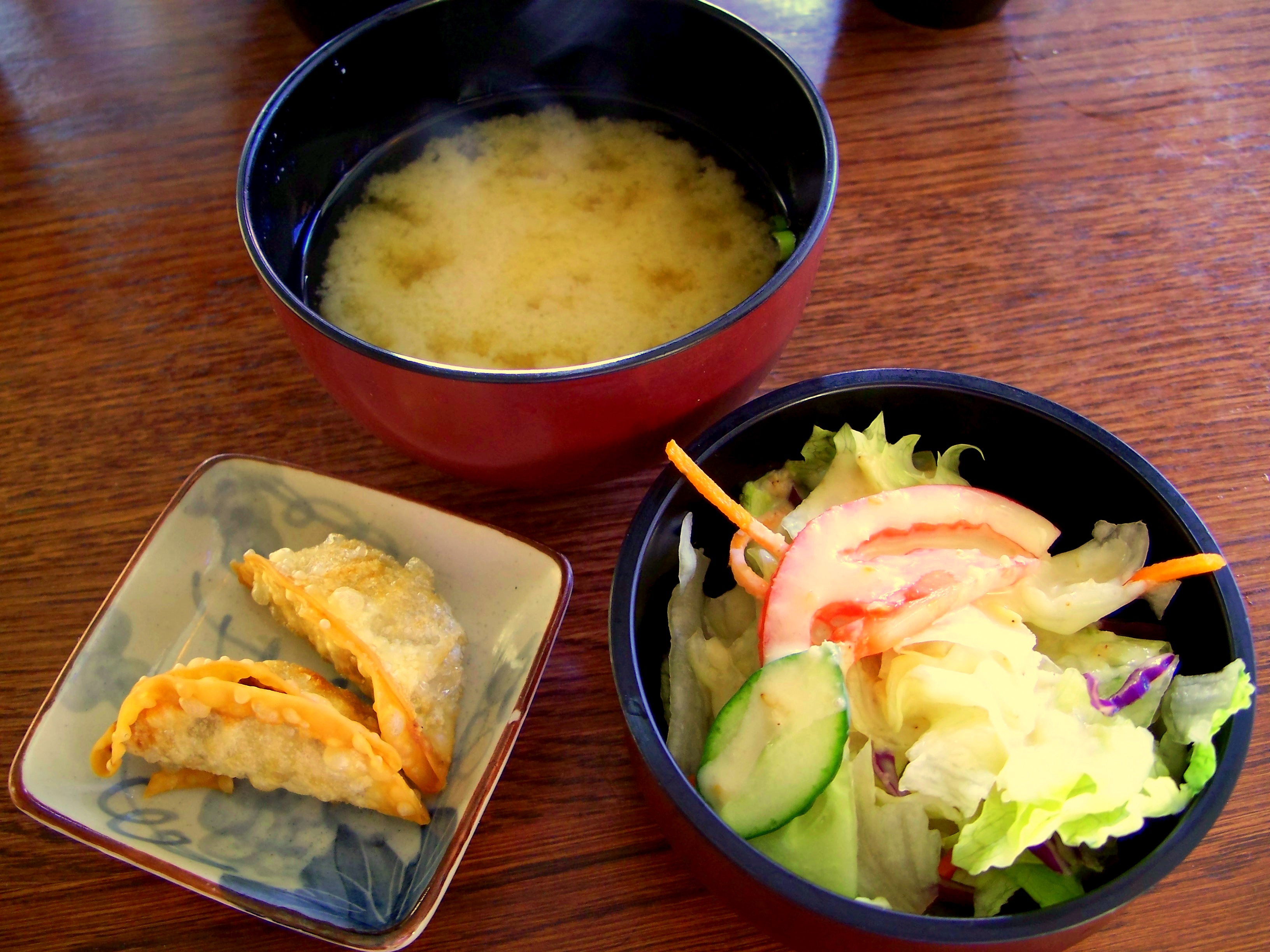
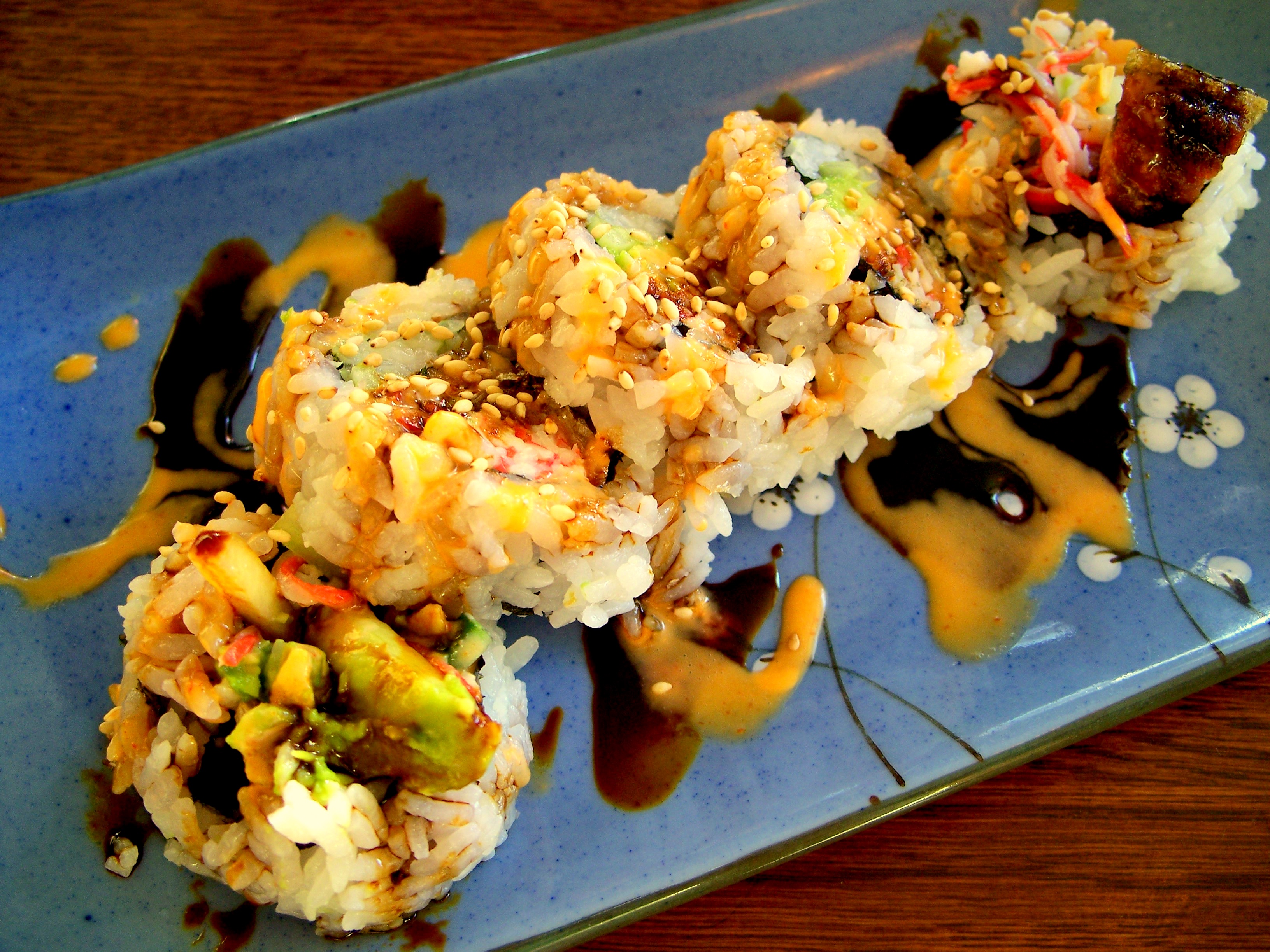
I’ve blogged about Anzu twice already, but it would be incomplete to talk about Anzu without talking about their sushi menu. The selection is countless: nigiri/maki, vegan/non-vegan, normal/fried/baked/crunchy, etc. Yah yah yah, this is uramaki (Westernized sushi) with the nori inside, avocado, cream cheese, names like Avatar and Golden Gate. But the point is they’re good. They also give you free soup, salad, and either edamame, fried tofu, or gyoza for appetizer. This would be one of the first places I’d take my little sister out to eat, had the US Embassy granted her a travel visa to enter the States (they wouldn’t do it unless she were married and had her husband stay in Vietnam). But since it’s so difficult to come here legally, guess we’ll have to celebrate Sou‘s birthday with pictures of sushi. 🙂


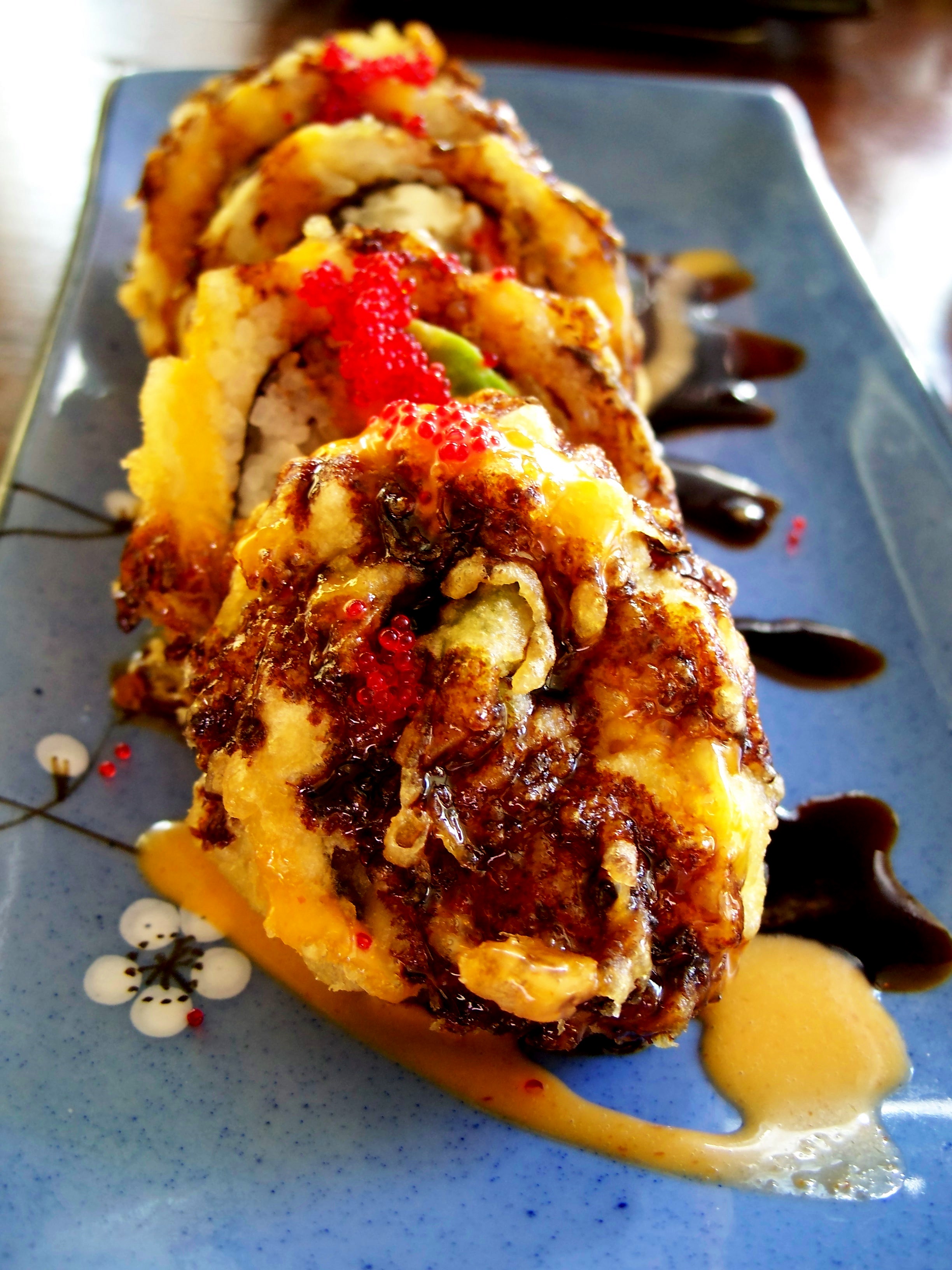
Calamari tempura roll ($4.99)- calamari, cucumber, avocado, kamaboko, roll over with spicy mayo and mango sauce.


California tempura Jr. roll ($5.25) – unagi (eel), cream cheese


Crunchy ebi roll ($4.25) – ebi (shrimp), unagi, cucumber roll over and looks like a catepillar. It’s fun to eat, but it also hurt the roof of my mouth a little bit.


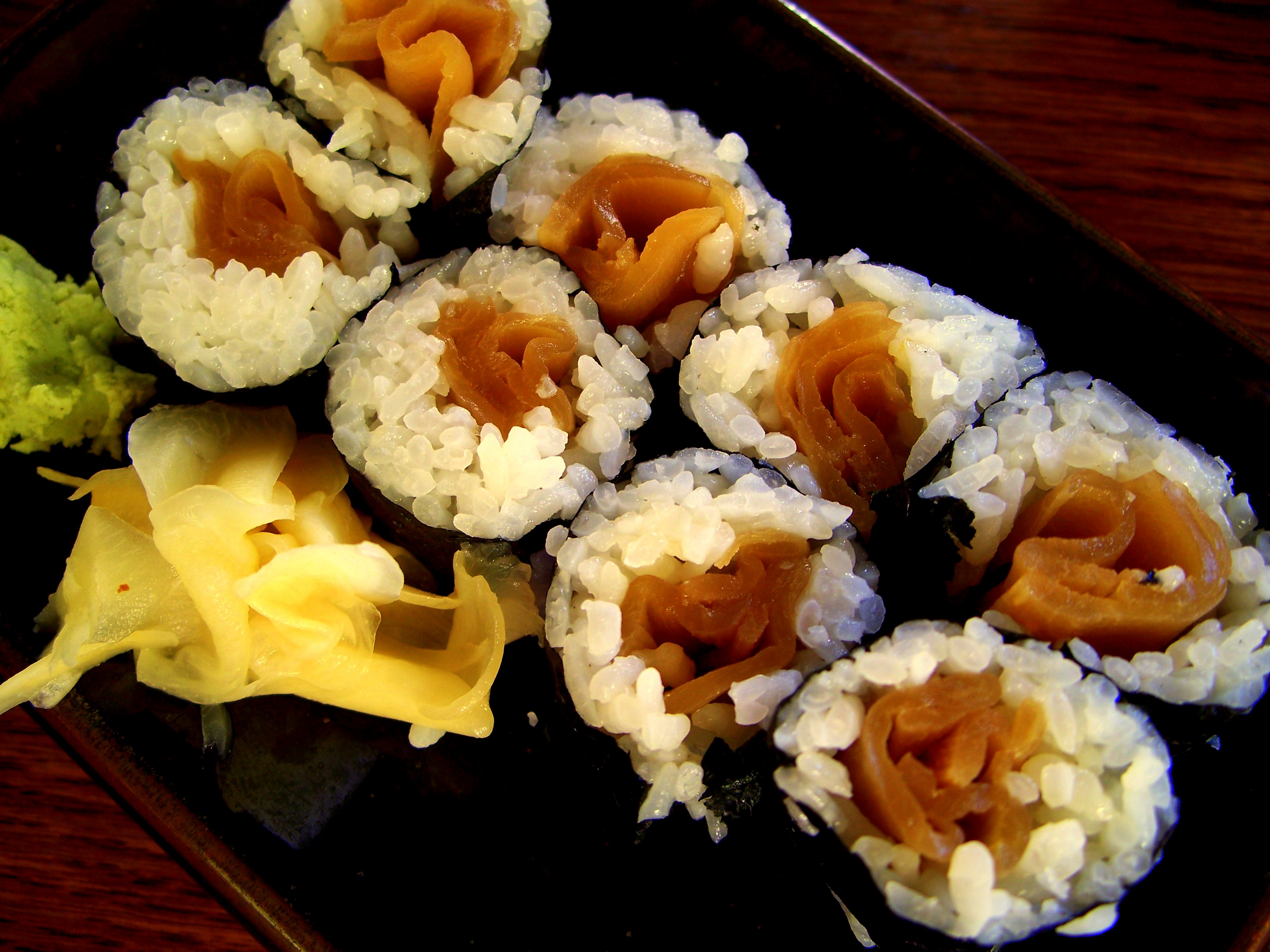
Kanpyo roll ($2) – dried squash – I especially love this one for its simplicity yet addicting flavor.


N’jin roll ($4.95) – fried salmon skin, avocado, cucumber, kamaboko – The fried salmon skin is very crunchy, a little overpowering, but I like skin. 🙂


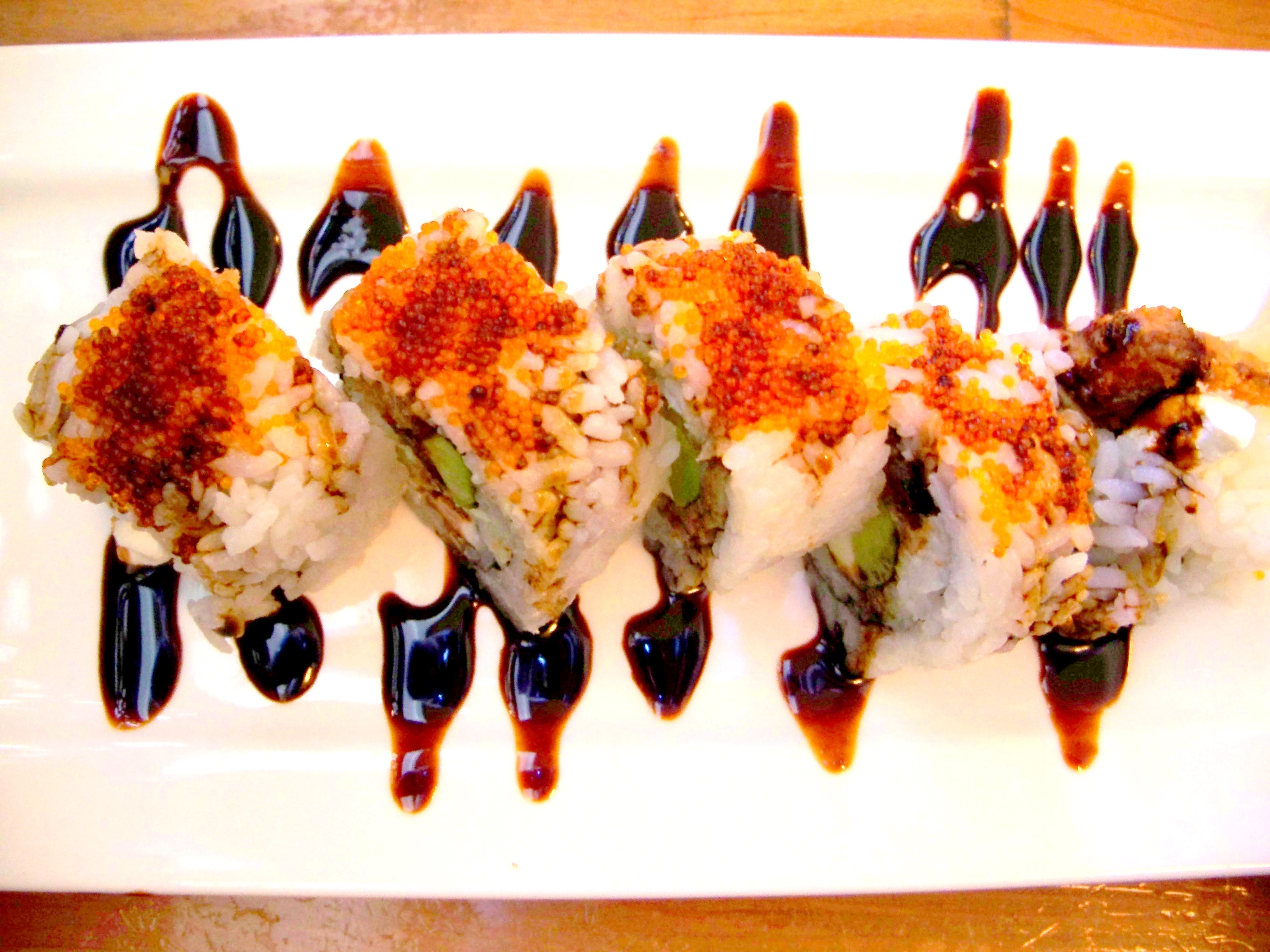
Spider king roll ($5.99) – soft shell crab, cream cheese, avocado, topped with tobiko (flying fish roe). This one is a bit salty and naturally it gets saltier as it sits longer in the soy sauce. The tobiko adds texture and little flavor.


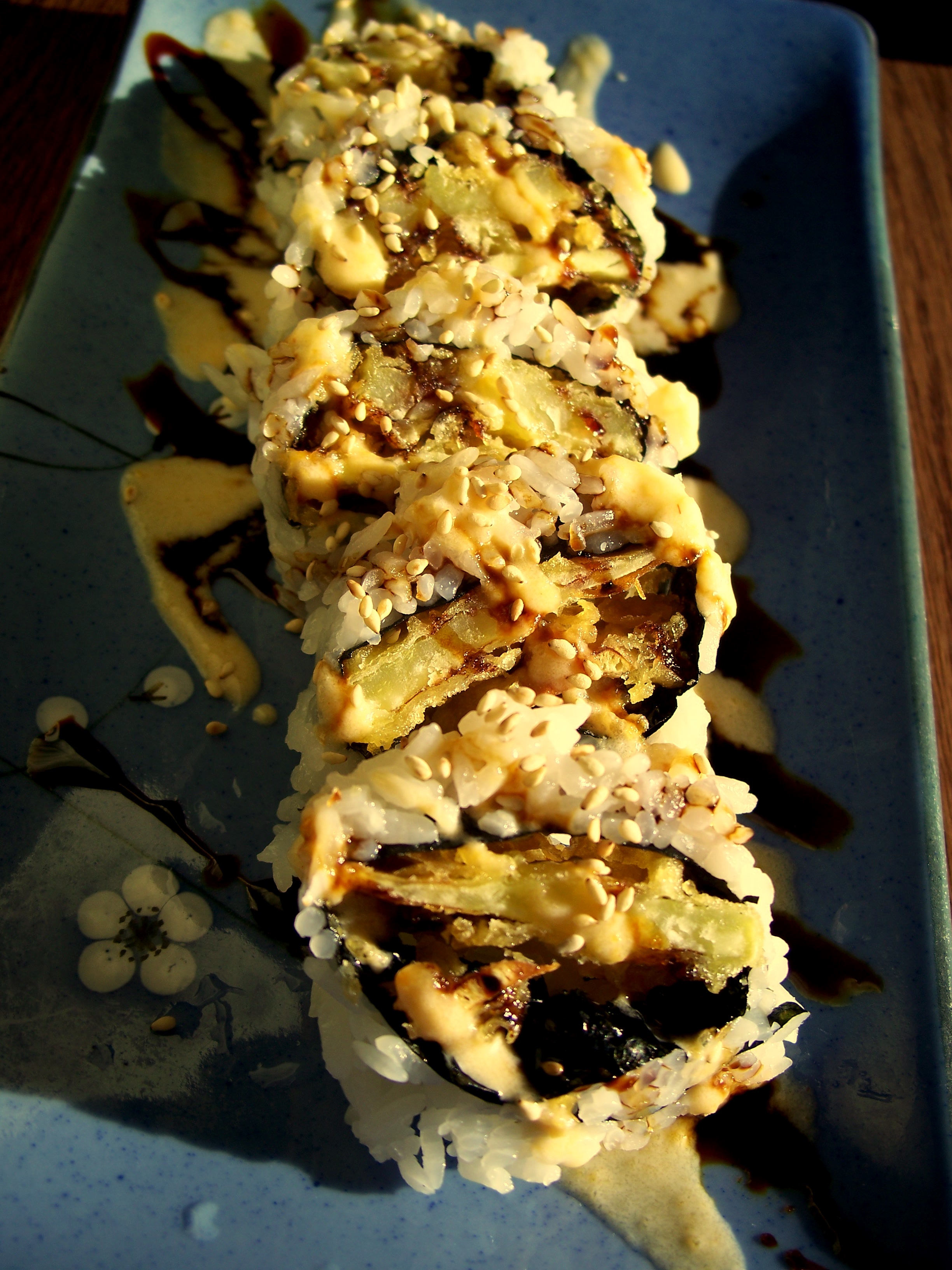
Sweet potato roll ($5.50) – deep fried sweet potato, topped with sesame, spicy mayo and soy sauce.


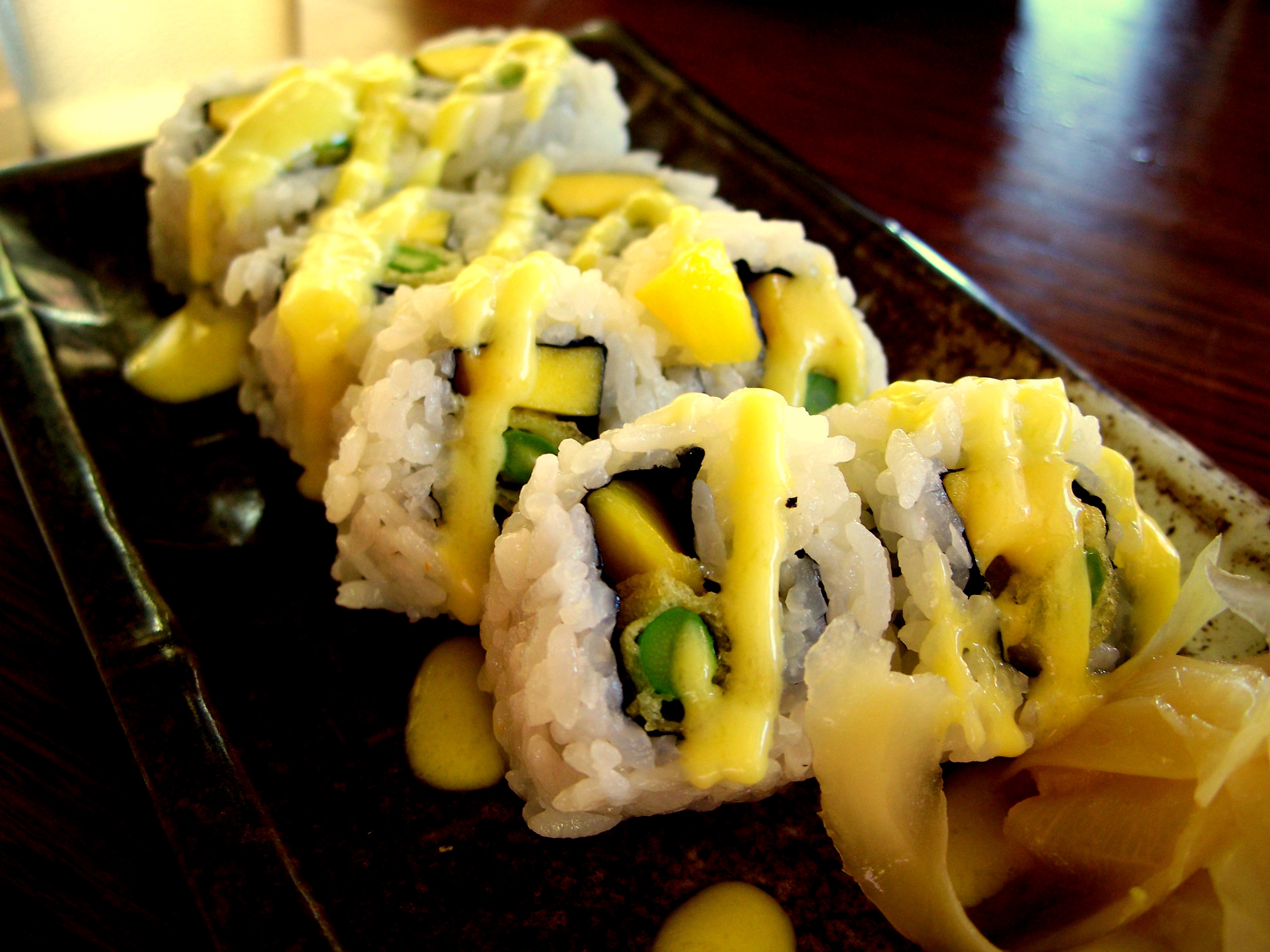
Tropical roll ($2.95) – batter-fried asparagus and fresh mango in mango sauce.


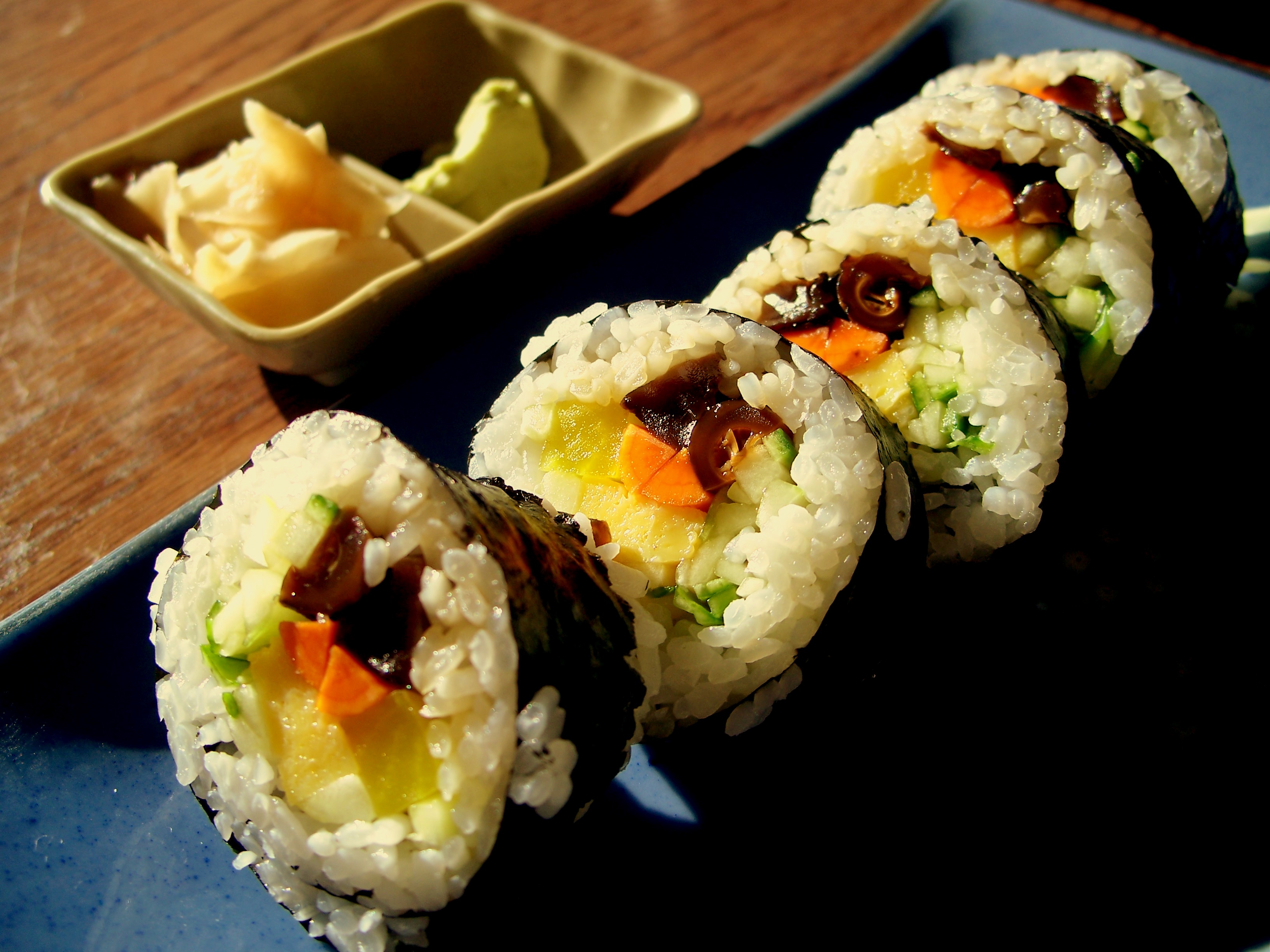
Good old Futomaki ($5.25) – mixed vegetables (carrot, cucumber, kanpyo, takuan, and something like pineapple (?))

I like them all.

Address: Anzu Japanese Cuisine
2433 Shattuck Avenue
Berkeley, CA 94704
(510) 843-9236

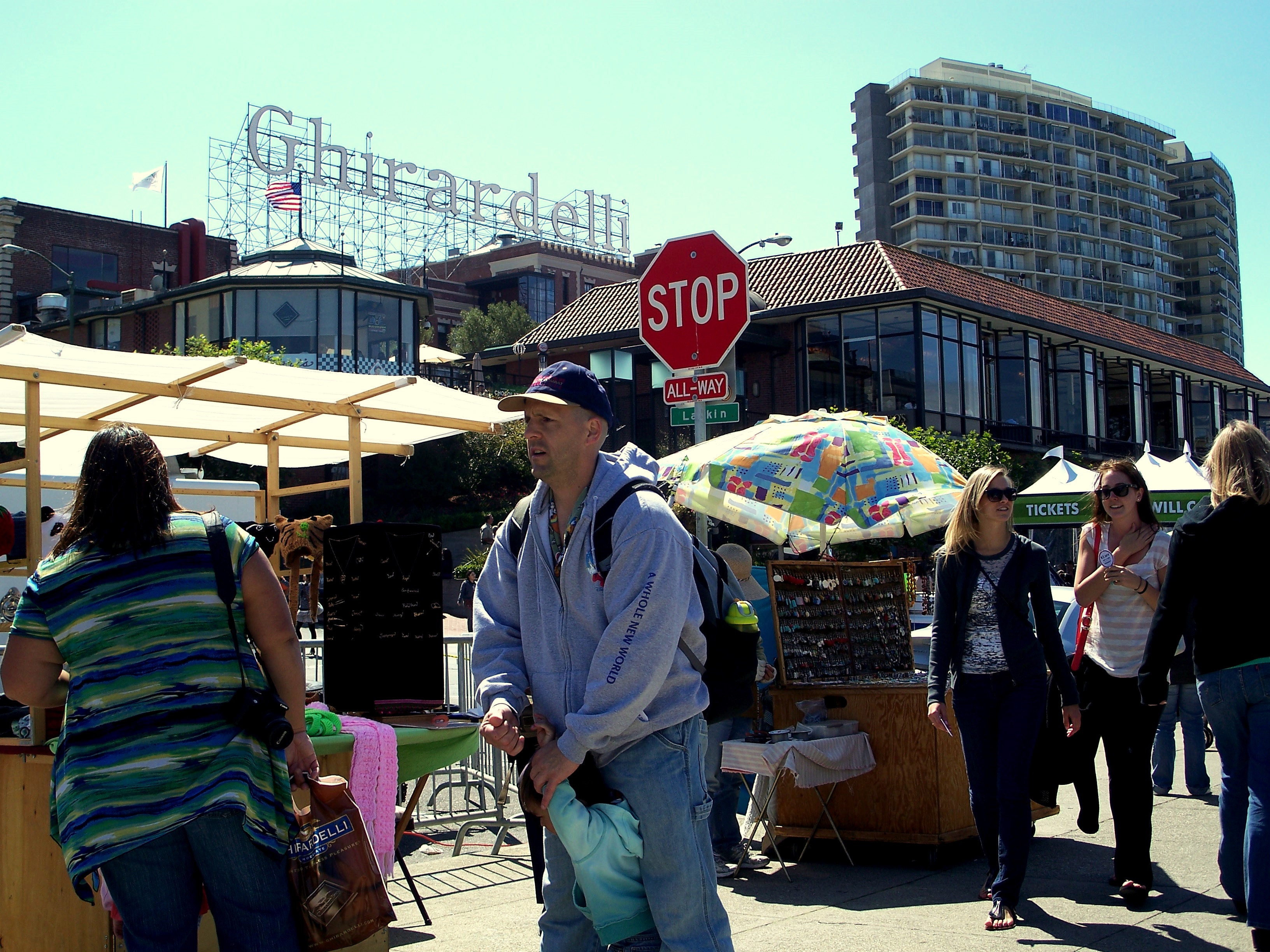
Chocolate festival at Ghirardelli Square

September 14, 2010 By: Mai Truong Category: California - The Bay Area, Festivals, sweet snacks and desserts


What’s with this time of the year that festivals keep popping up every weekend? Just two weeks ago my friends and I were strolling among some 60 food trucks at Jack London Square; then last week we had some awesome grilled chicken at Martin Luther King Park; and this past Sunday we wound up queuing in the shivering bay wind for some artisan desserts at Ghirardelli Square. If we keep this up(*) I will become quite athletic, all that walking and standing in (long) line build muscles, you know. 😛


So here’s the deal with the 15th annual Ghirardelli Chocolate Festival: you get a $20 ticket to try 15 samples (there are 31 total, some of them are chocolate favored alcoholic drinks); supposedly the booths started giving samples at noon, but lots of people got there earlier and lined up in front of the booths. Kara’s Cupcakes is one of those booths with a 100 feet line before it even opened. I’m not crazy about cupcakes (yeah… you can tell I’m not American) so I didn’t contribute to that line’s ridiculous length. I did contribute to the line wrapping around McCormick & Kuleto’s, but it was worth it.


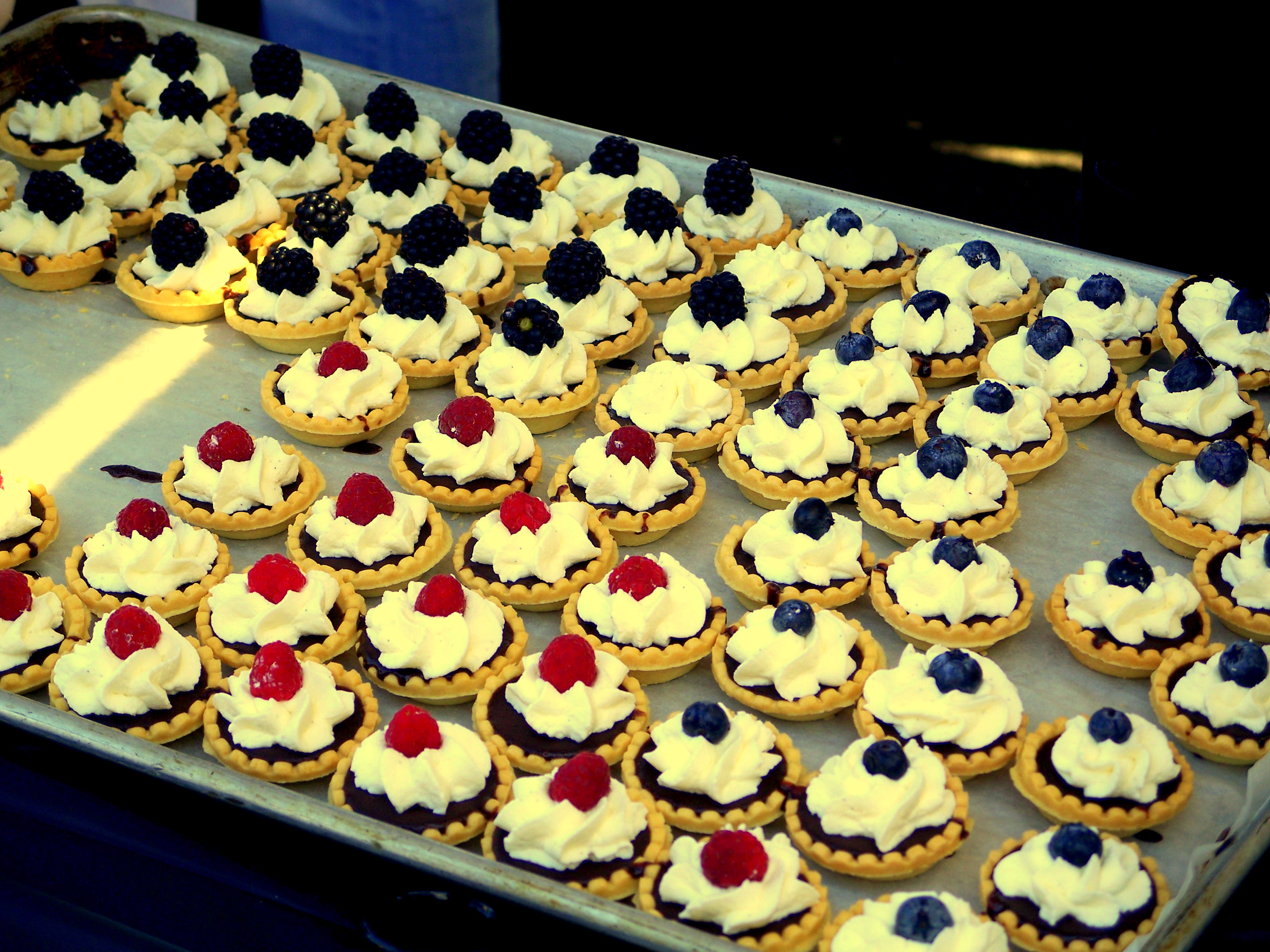
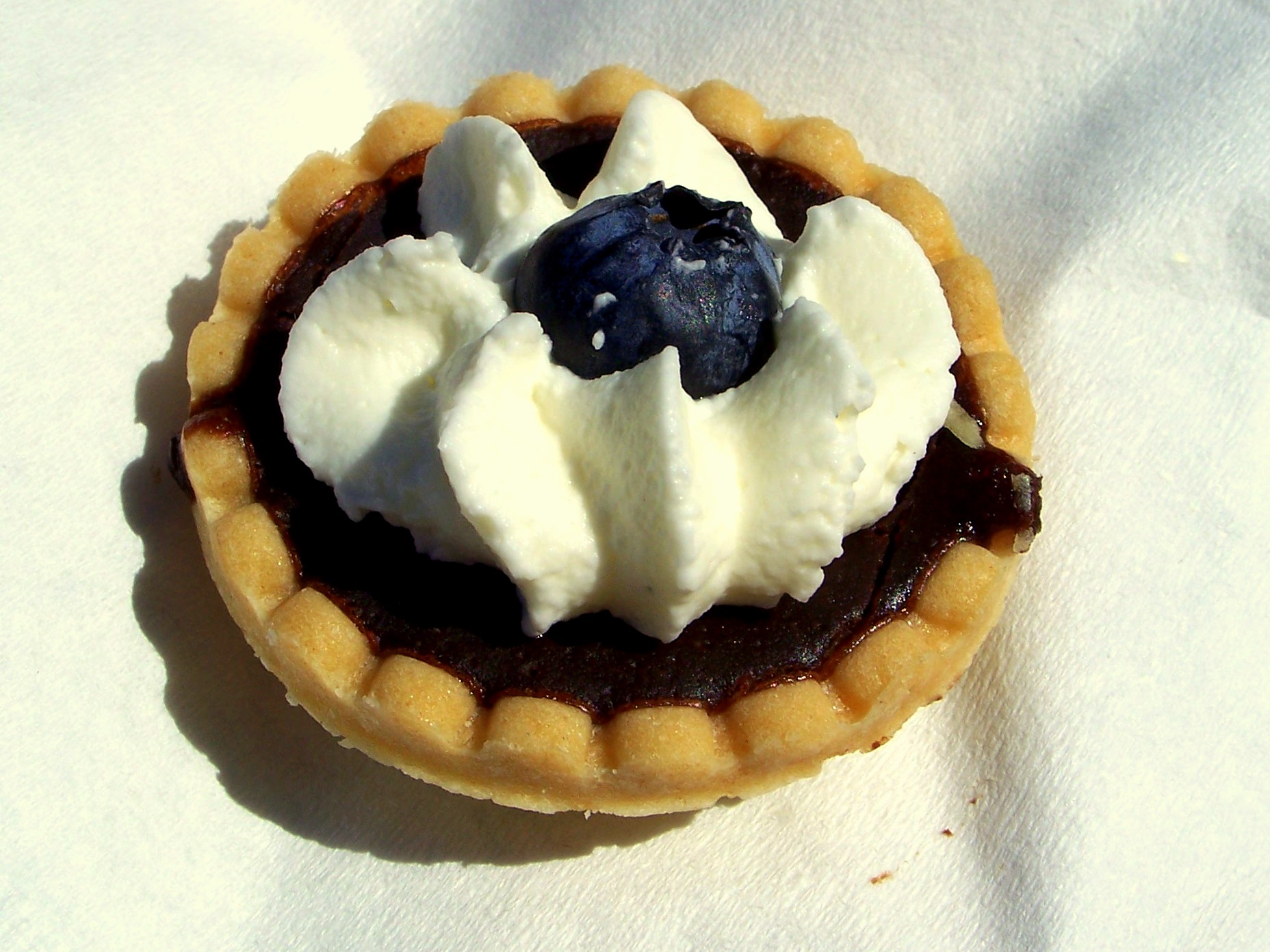
They are a seafood restaurant chain, but at this festival they whipped out flourless chocolate truffe cakes, with raspberry, blueberry, or blackberry on whip cream. The bite-sized sample was quite rich.


But it was among the best at the event. For one thing, we actually got a whole truffle cake, while Sweet simply gave a full spoon of crème brulée for each mark off the sampling ticket.


It tasted good (to quote other triers, “it tastes divine”), but one spoon? Seriously? The ticket is $20 for 15 samples, that’s $1.33 per sample, and don’t tell me an average spoon of creme brulee costs that much. Disappointed me by the rip-off.


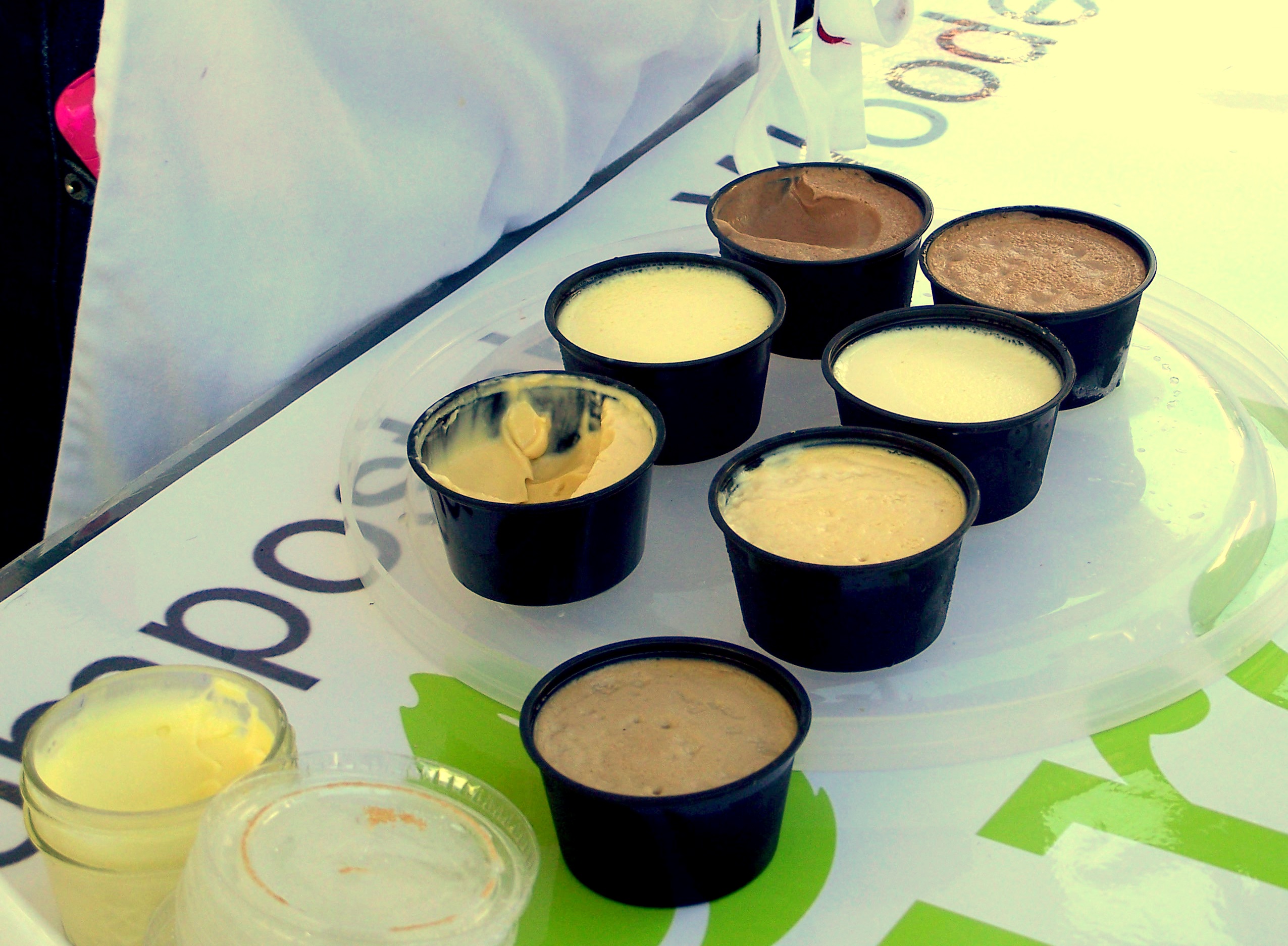
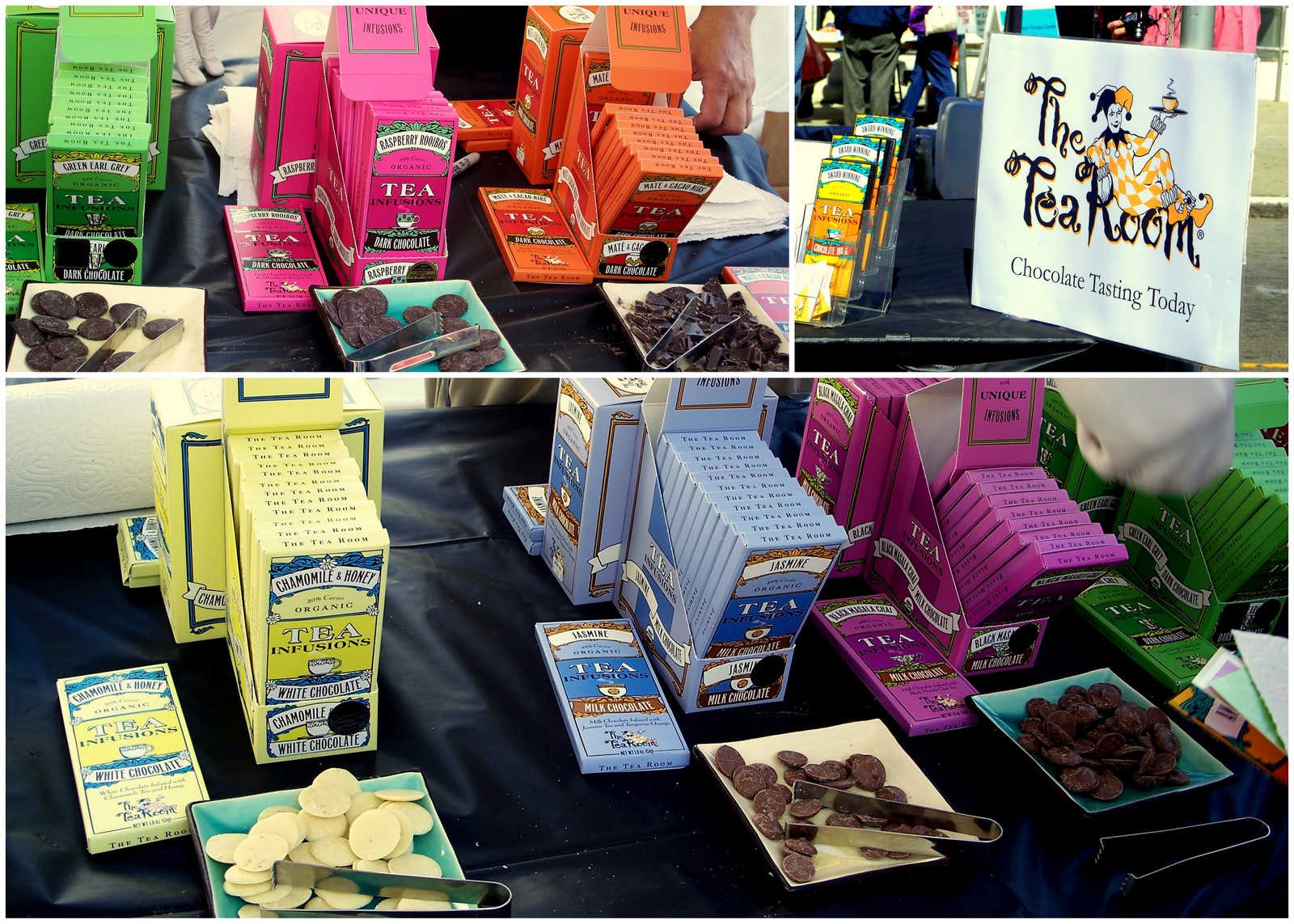
The Tea Room Chocolates gave a much better deal. We got to sample 6 types of tea-infused chocolate: 72% dark with green mate, star anise & nibs (orange), 58% dark with raspberry rooibos tea (pink), 58% dark with green earl grey tea (green), milk with black masala chai (purple), milk with jasmine tea (blue), and white with chamomile tea & honey (yellow).  The pink and the green bars were the best.


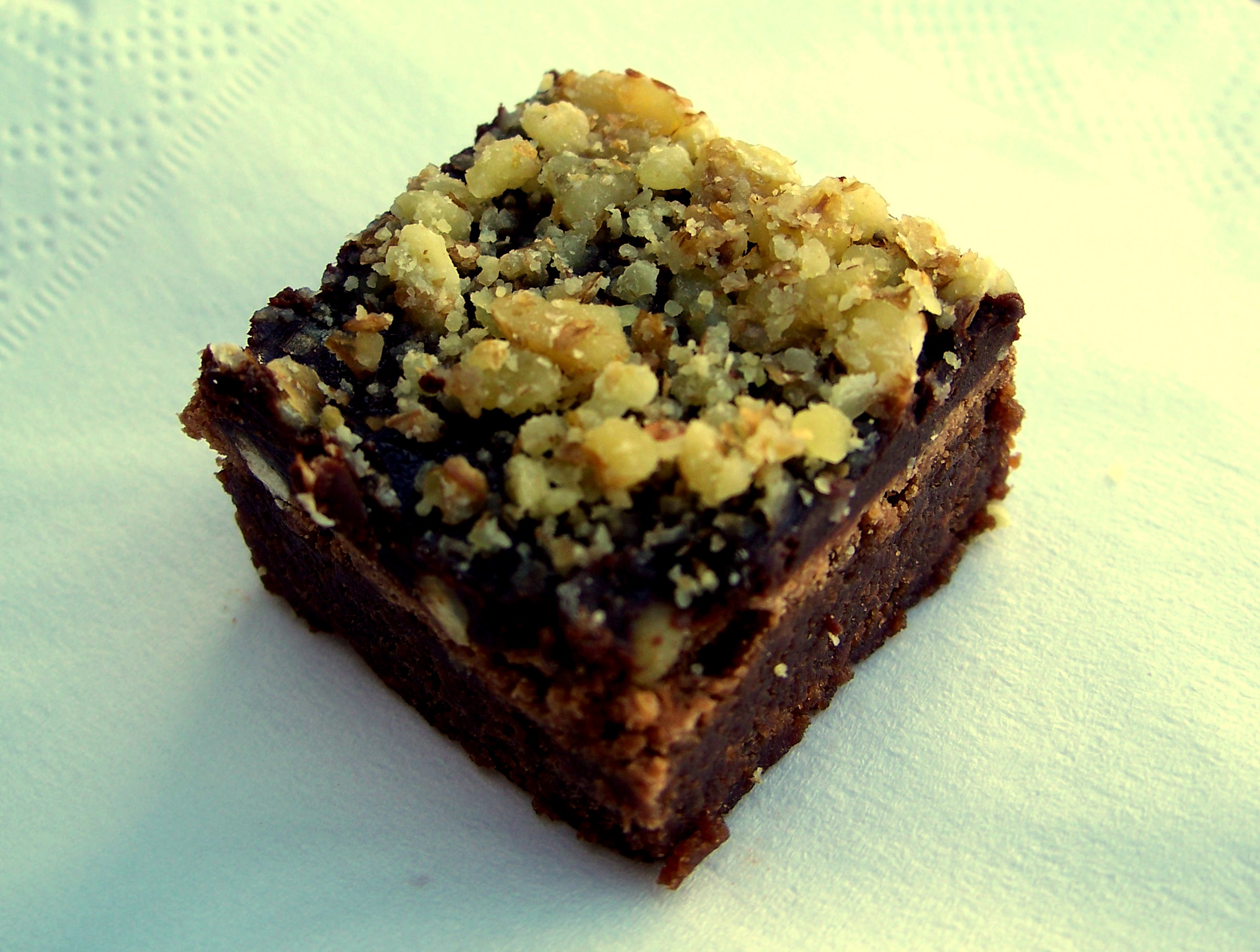
Next to Tea Room Chocolates was Ana Mandara‘s booth. According to the brochure Ana Mandara had chocolate mochi, but actually they had brownie. Very good and moist brownie, but mochi would have been a better score. On a side note, this place has an interesting (and affordable) lunch menu, which we would have tried had they not closed at 2:30. :-/


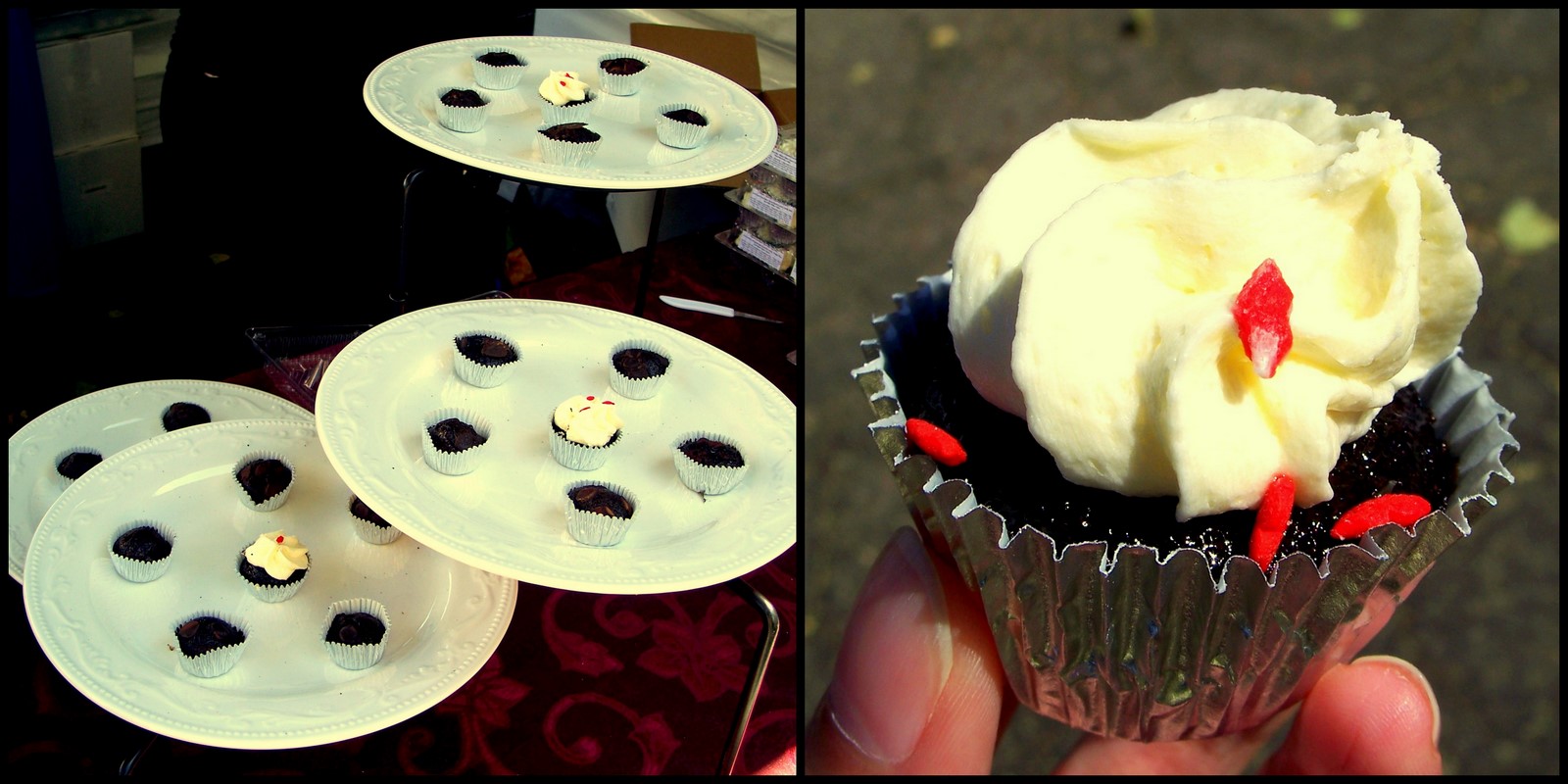
Another disappointment was the mini vegan cupcake from Eat My Love For You. It’s a cute little chocolate bite with lustrous vanilla butter cream on top. It was great during the first few seconds, but like most loves at first sight, the dazzles wore off and we got a burnt oily aftertaste. Maybe it was just an off batch.


DeLise Dessert Café offered slightly more choices, cupcakes and brownies among them (surprise!), and the line was also “slightly” longer. But at least it looked out to the beach instead of others’ backs, and we can kill time watching seagulls preening themselves under the sun…


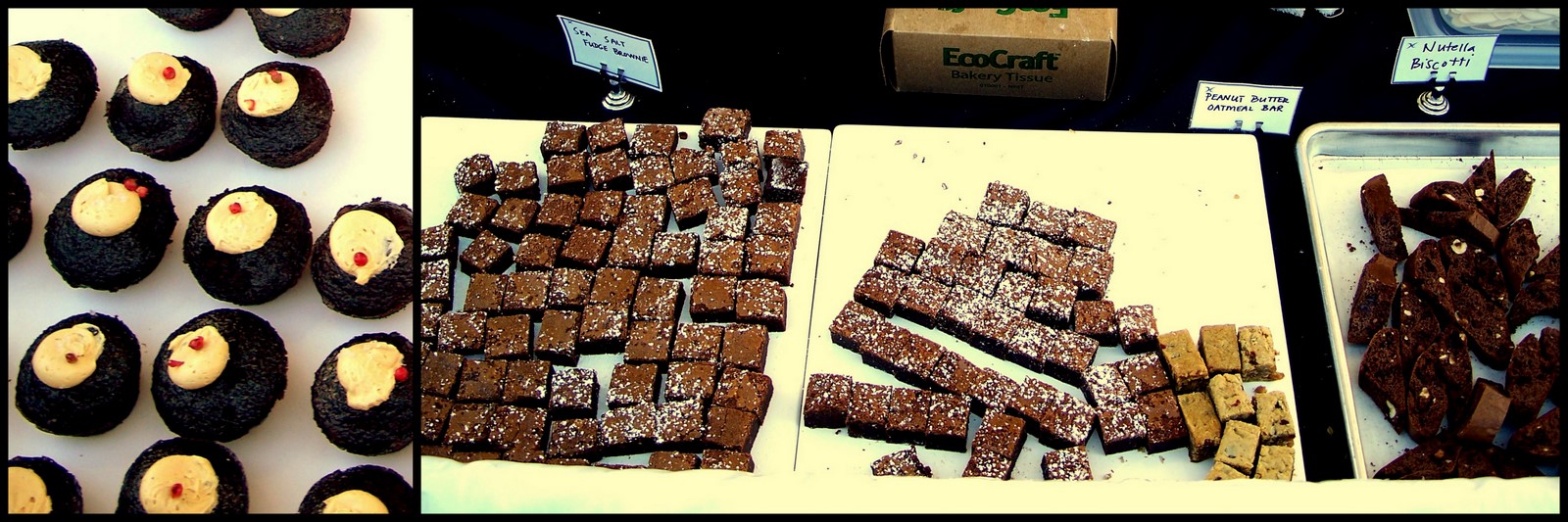
…Until we got to the goodies. The sea salt brownie was super popular, but we opted for the nutella biscotti (which was just like any other biscotti), and lemongrass ice cream. THIS ice cream alone makes the trip worth it. The lemongrass fragrance wasn’t apparent until it melted down at the back of your throat, then gently rose back to the palate like herbal tea.


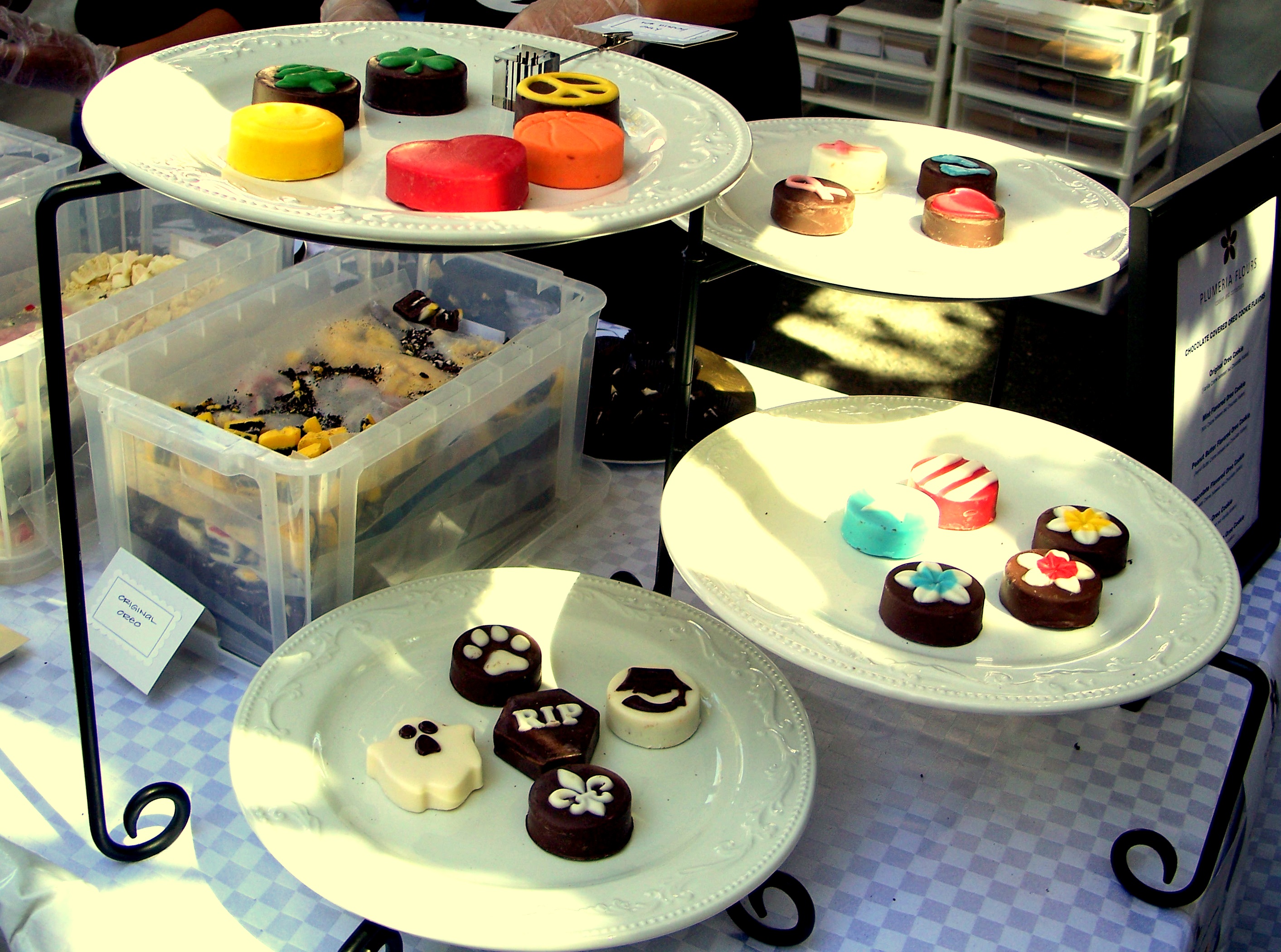
Mudpie was more enthused by the chocolate covered Oreo cookies from Plumeria Flours. You got to pick 2 types of cookies for each sample’s worth; the peanut butter and the mint were, again, good but uninteresting.


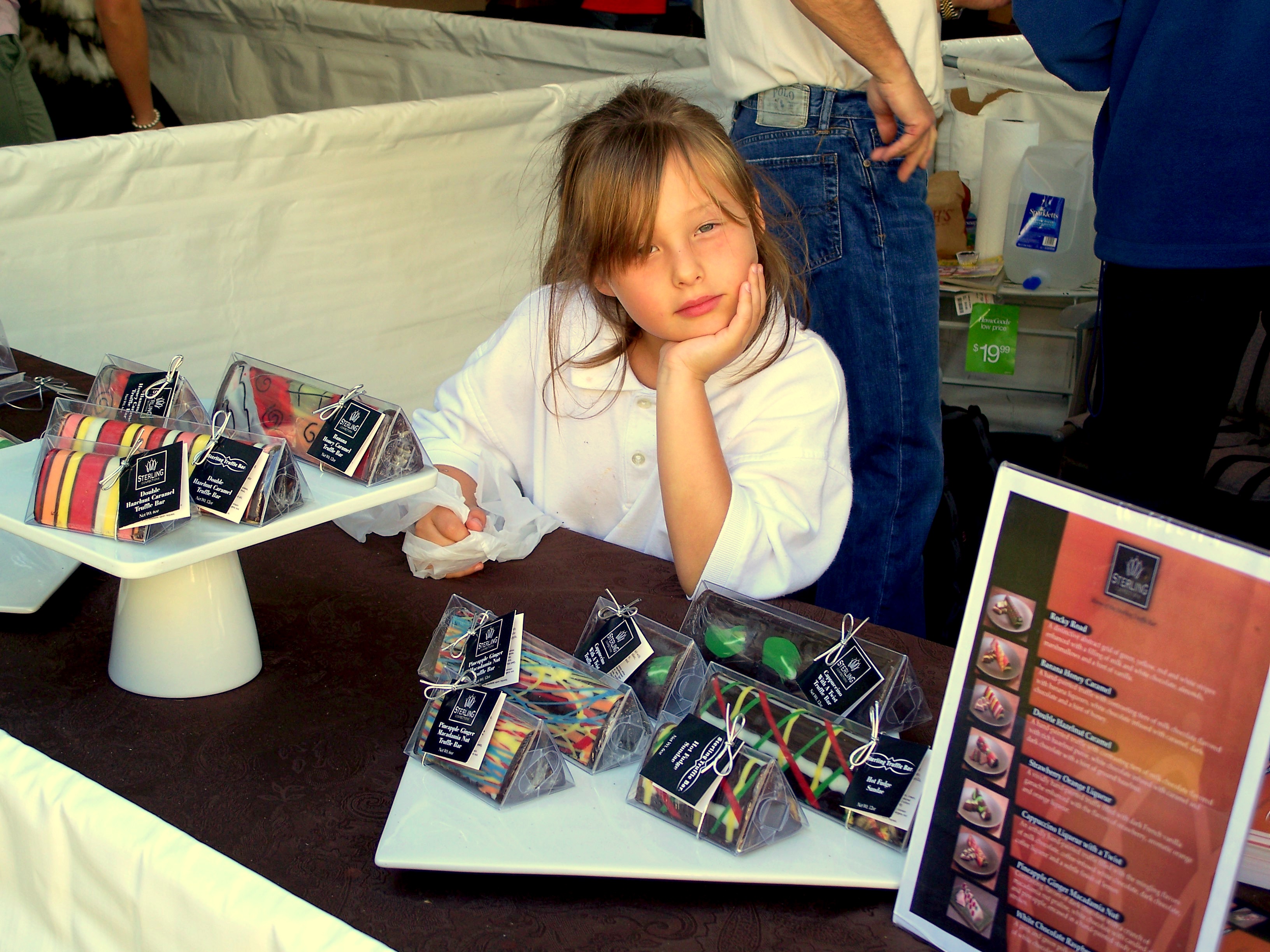
The same can be said of Sterling Confection‘s banana honey truffle bar. These intriguing sushi-looking blocks cost a whopping $25 each at the festival. Most have liqueur flavors and some (a bit too sweet) fruity touch, but the colors are the only thing exotic about them.


The upstairs (the Fountain Plaza area)  had a few more choices, not as splendidly colored as the Lower Plaza, but more (ful)filling.


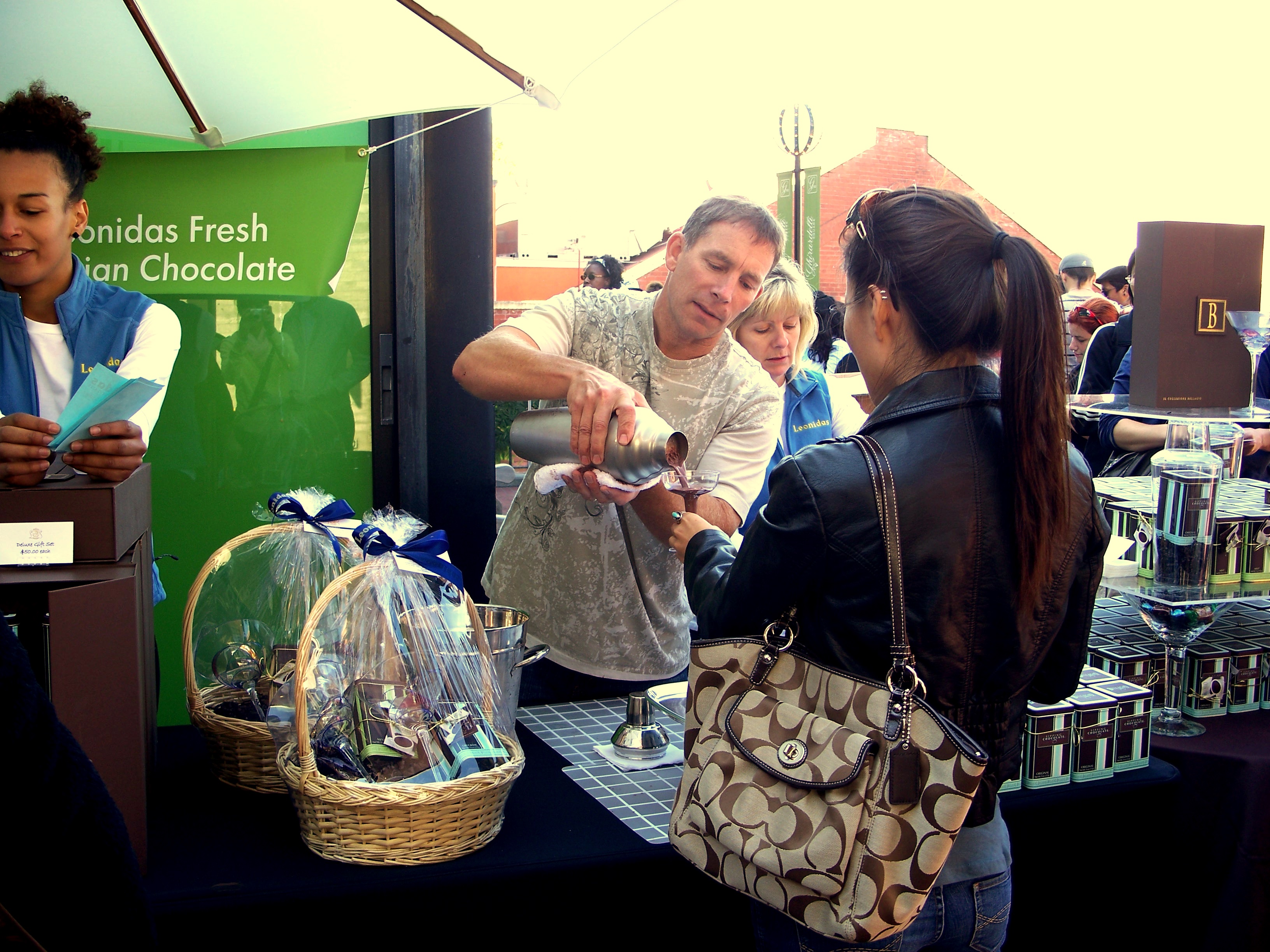
Leonidas‘ chocolate martini was exceedingly popular, the line practically connected the upper and lower plazas.


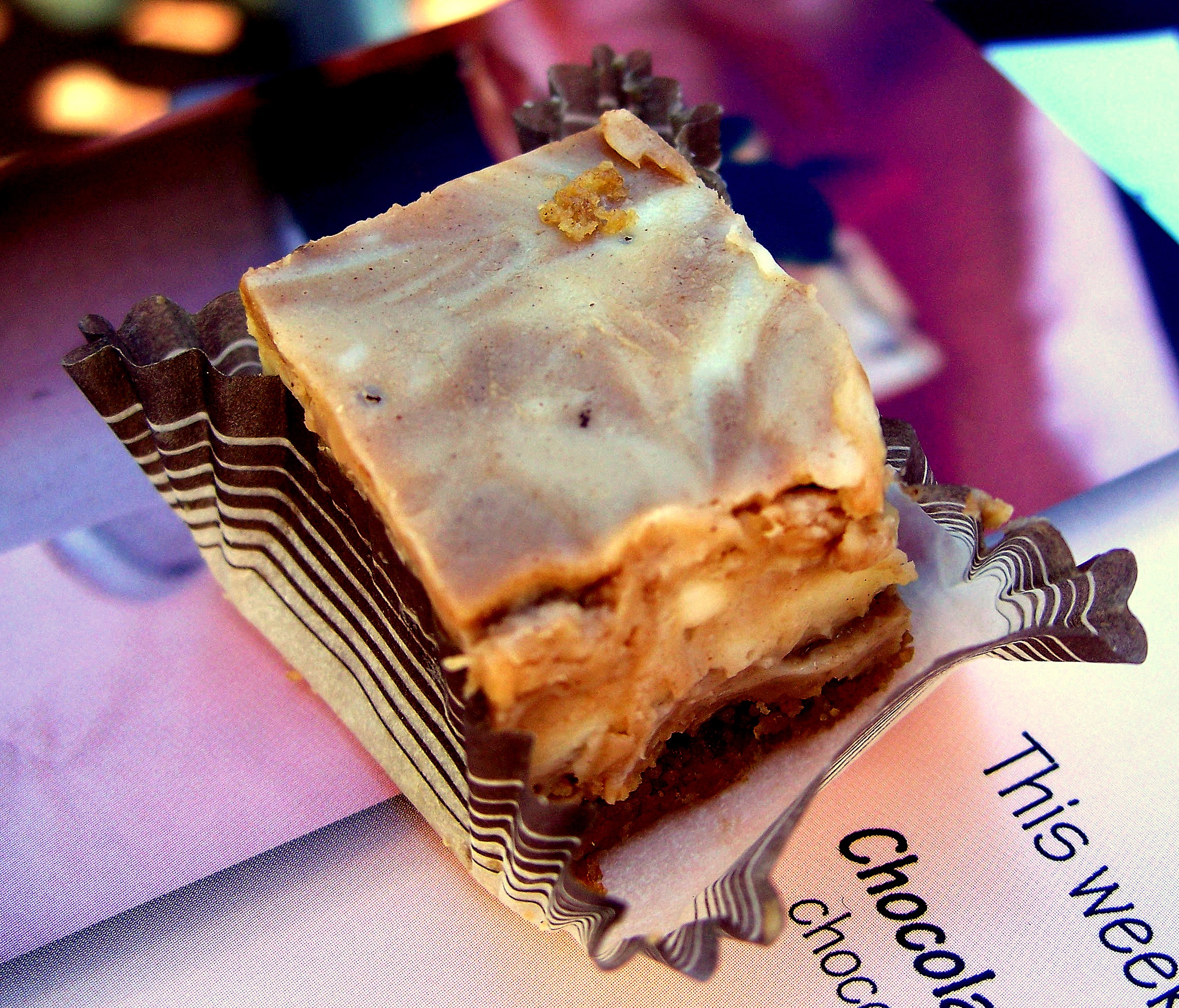
Reuschelle’s marble cheesecake bite was rich, perhaps a bit too rich. At this point all I could dream about was a full glass of ice cold water. One can only handle so much sweets in one day.


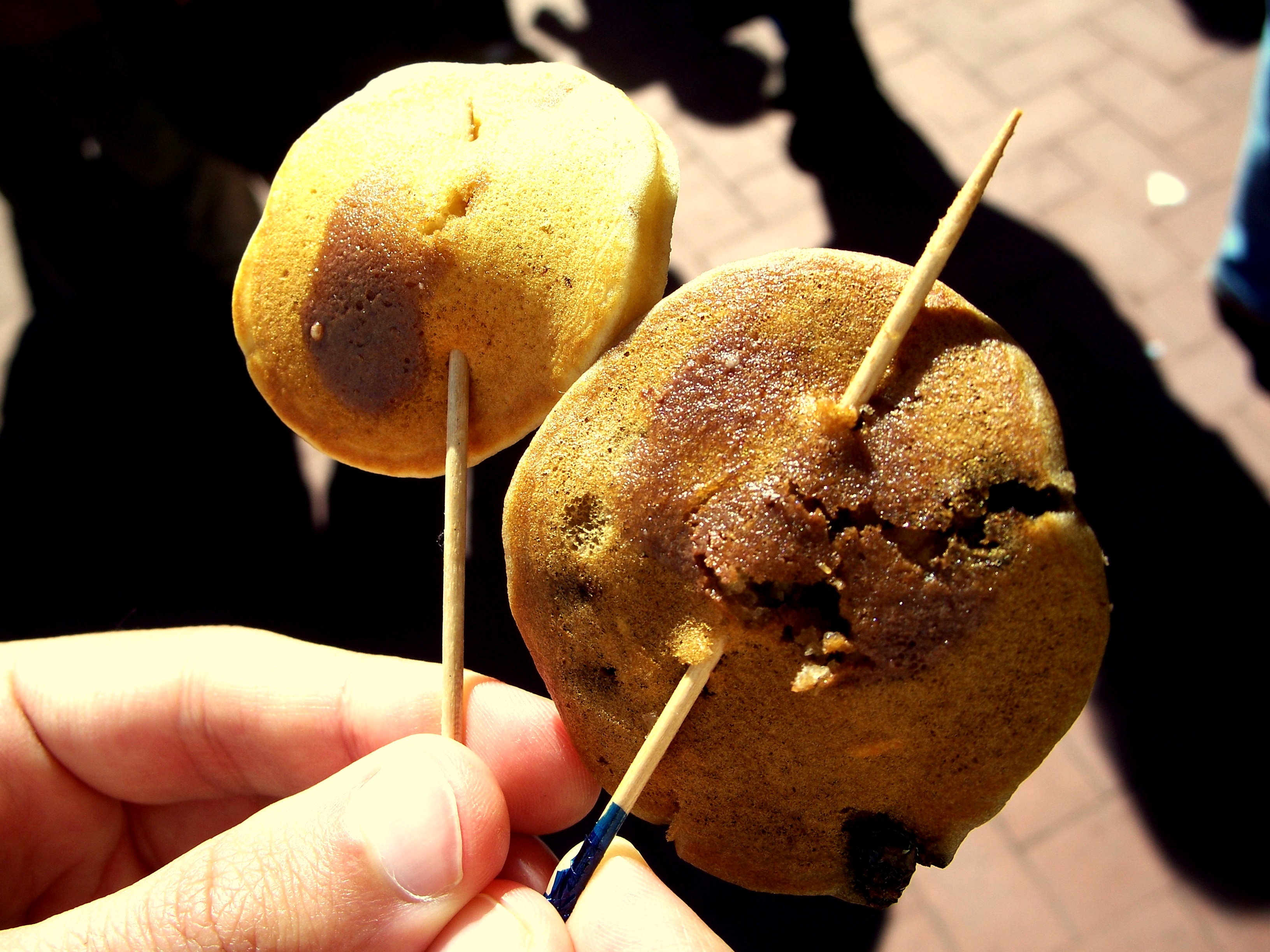
Bo’s chocolate and vanilla mini pancakes… I was getting thirstier, and wanted some real food…


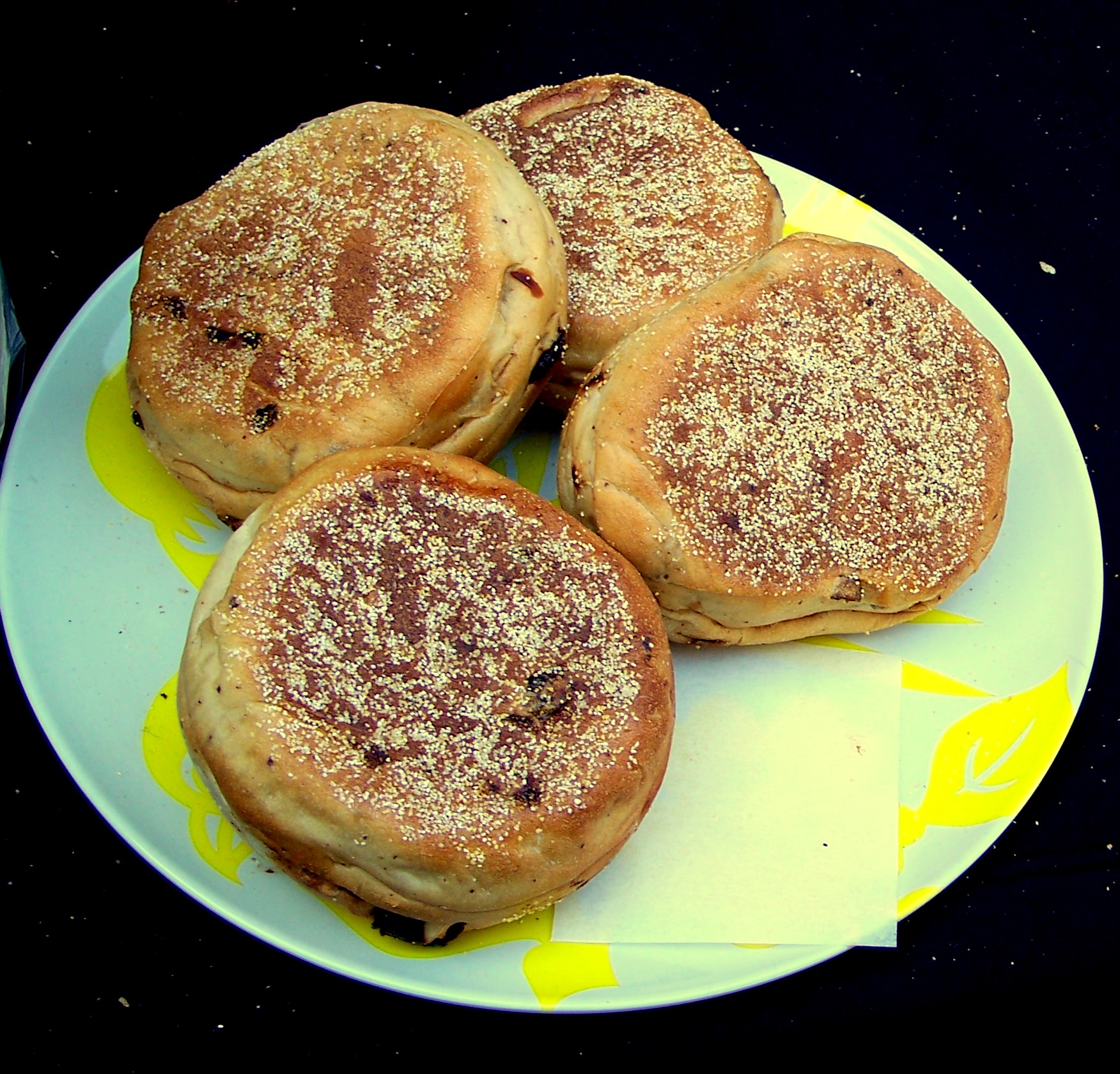
… Which explains why a piece of toasted and buttered cherry chocolate English muffin had never tasted better. Thank you, Leadbetter’s Bake Shop.

So, how was Ghirardelli’s 15th Annual Chocolate Fest? Besides the awesome lemongrass ice cream from DeLise and the tea-infused chocolates from The Tea Room, everything fell a little… unimaginative. In fact, nothing sums up the day better than the expression of this little girl at Sterling Confection‘s booth.

(*) Should I go to another food fest at the end of this month? Women of Taste sounds pretty good. 😛 But is four food festivals in one month a bit too much?

Beef wrap n’ roll

September 11, 2010 By: Mai Truong Category: California - The Bay Area, Comfort food, Southern Vietnamese, Vietnamese


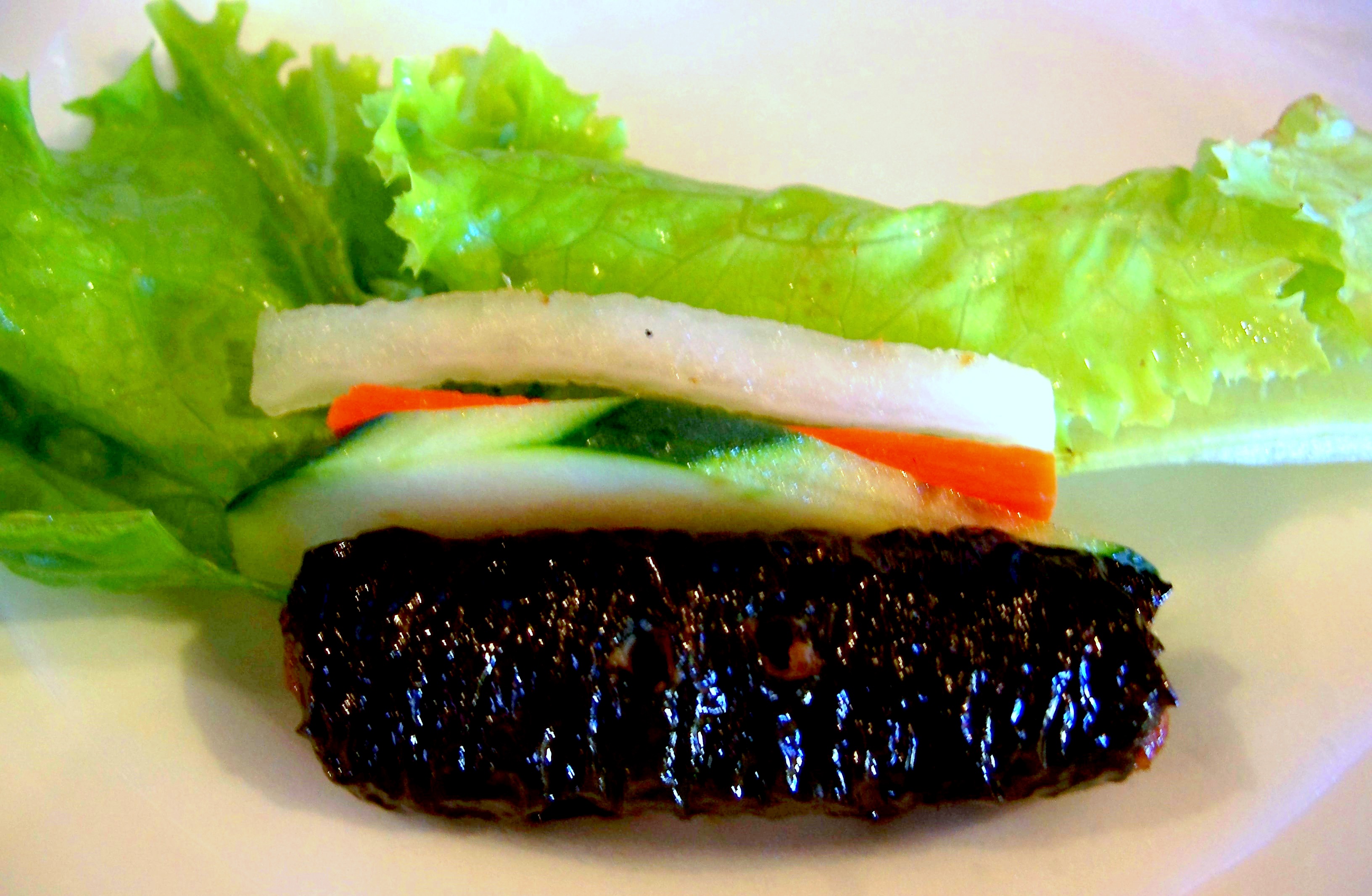
It took me six years eating steaks and potatoes and one evening of eating beef sausages rolled with greens and rice paper to realize that perhaps the best way to eat meat is to eat it with vegetables. No hard feelings, dear steak, you are like pure chocolate, and bulgogi in lettuce wrap is like orange flavored chocolate. Then you add pickled carrots and daikon, minty herbs, rice paper, sweet and sour nước mắm, and the beef is bound to take off just like the Apollo 11.


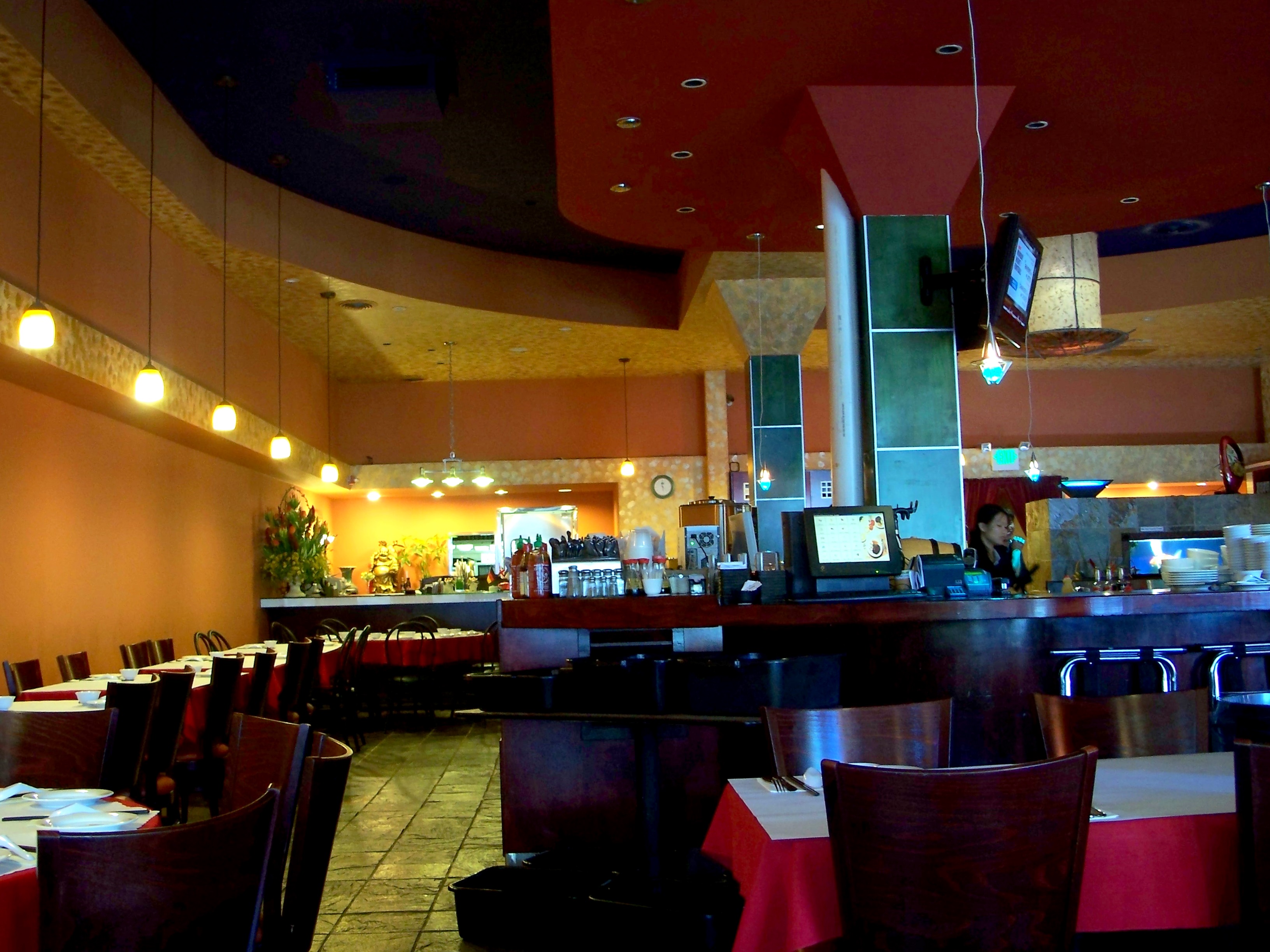
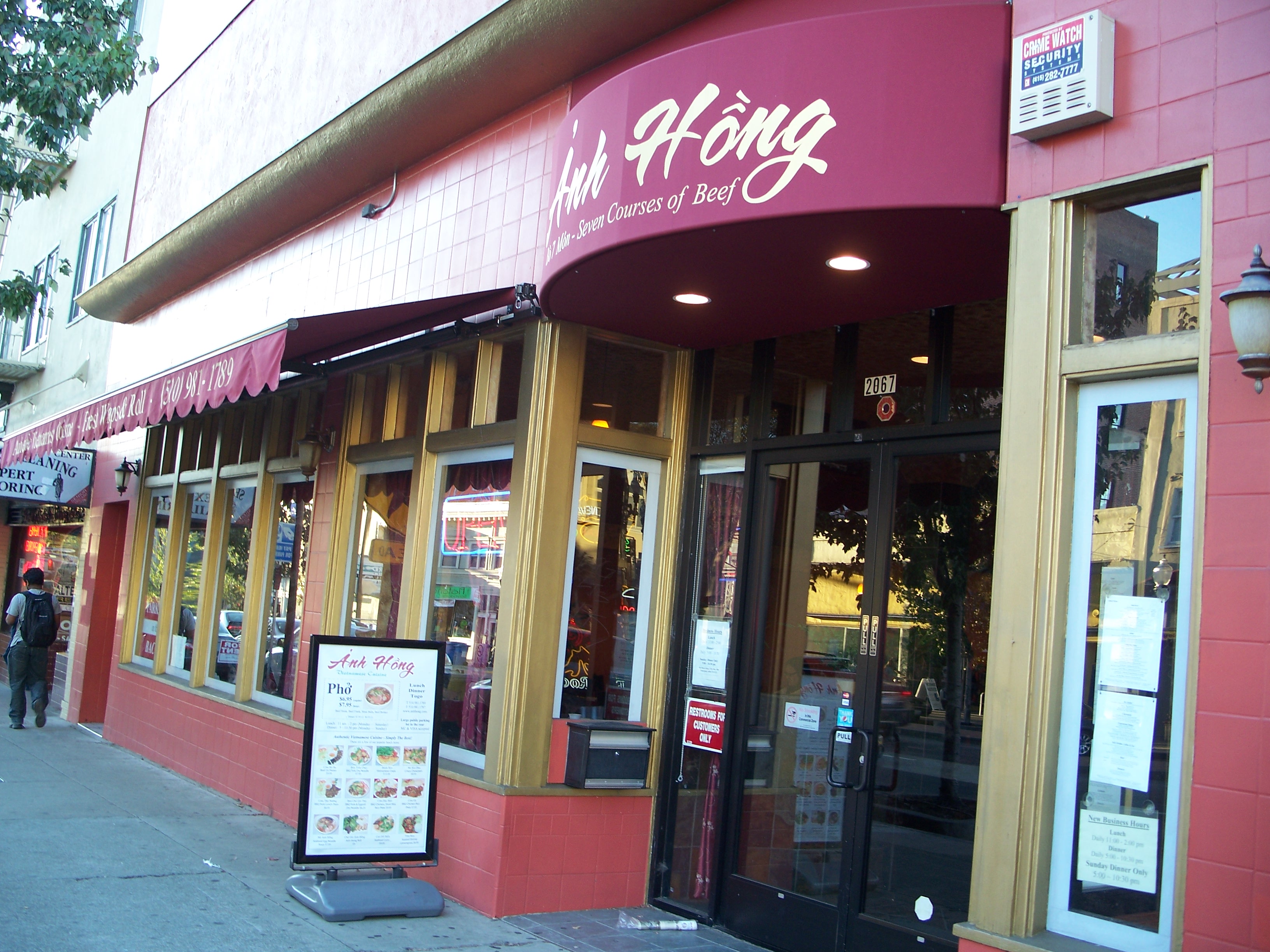
Such revelation dawned on me when I took the first bite of a bò lá lốt roll at Ánh Hồng in Berkeley. Ánh Hồng was famous in the old Saigon for their creation of the seven courses of beef, a menu that other Vietnamese restaurants quickly imitated to serve big parties. Despite knowing the menu’s popularity, I rarely thought of its main items as desirable, simply because, for instance, I wasn’t a fan of the wild betel leaf (lá lốt in Vietnamese and cha phloo in Thai) that wraps outside the ground beef. It’s usually a little bitter, and it overshadows the meat flavor. But Ánh Hồng really proves that their popularity (4 locations in North California and another 2 in the southern part) is backed up by some solid tasty goods. Somehow, unlike any I’ve tried before, their bò lá lốt is not at all bitter.


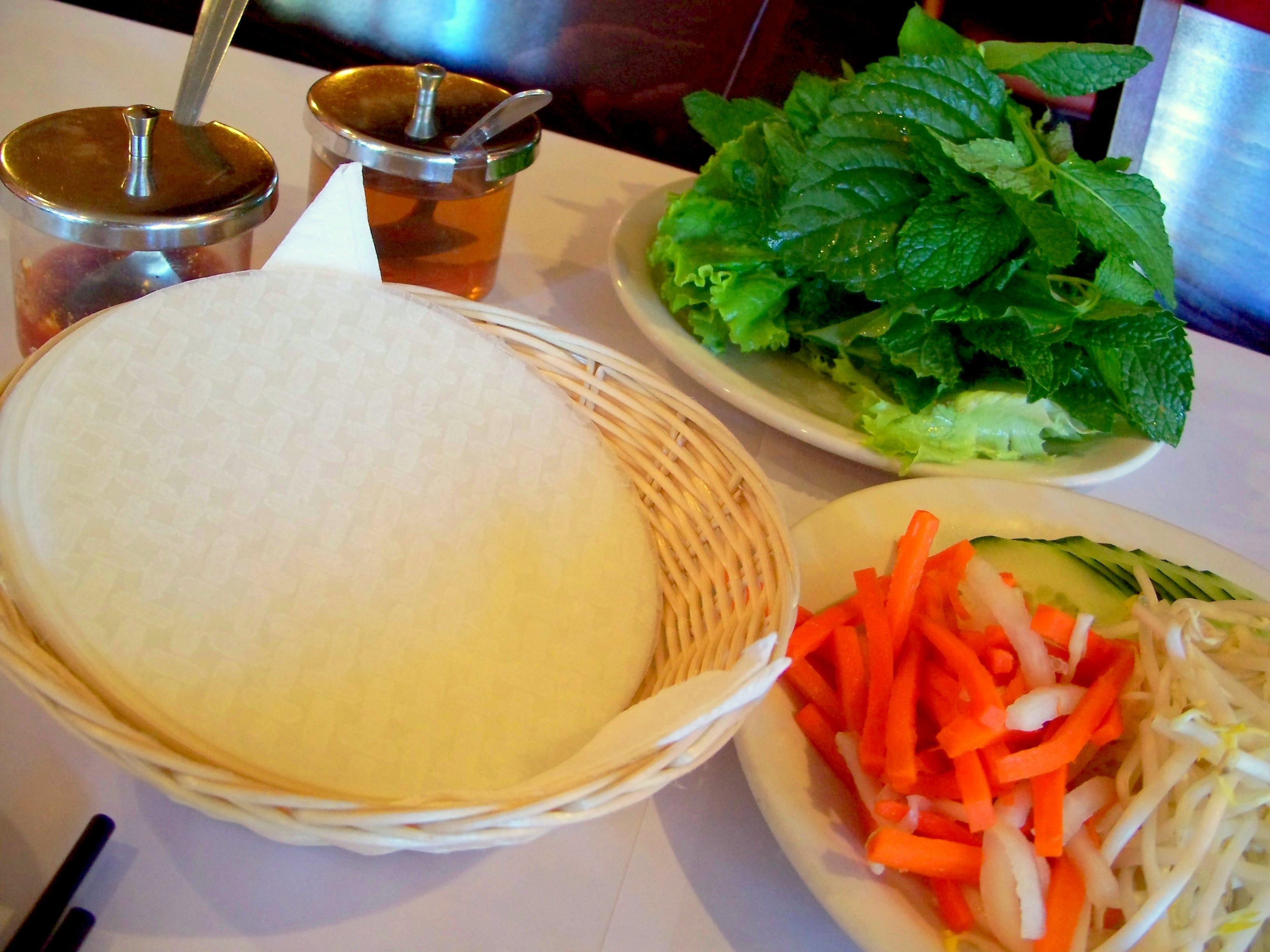
Their bánh tráng (rice paper) is also perfect for making fresh spring rolls, thin enough so that you can taste every ingredient, yet elastic enough to stretch and wrap up the sharp corner of lettuce stems without rupturing. The traditionalcondiment to dip the rolls is mắm nêm (fermented fish paste), but to accommodate foreigners (and Vietnamese like me :-P) who aren’t familiar with the sauce’s pungency, Ánh Hồng serves things up with sweet and sour nước mắm (salty fish extract mixed with lime, chili pepper and sugar). It’s amazing how nước mắm works with everything. But, because the meat is already so well seasoned, you don’t have to dip the rolls into any sauce to make the flavors shine.


The pickled carrot and daikon can be a little too sour, but their texture blends better with the ground meat than fresh bean sprouts’ does.


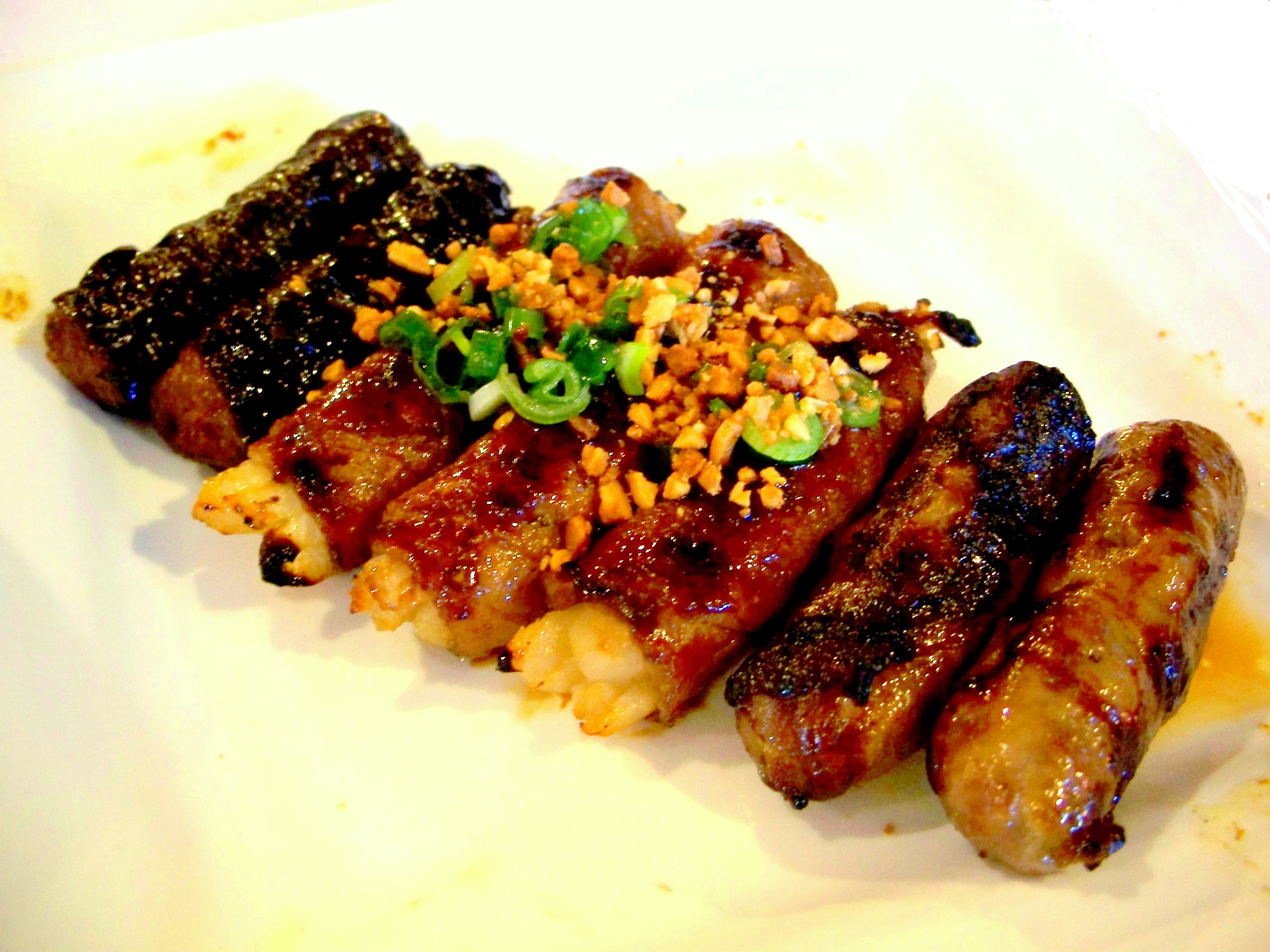
As much as the bò lá lốt turns out far better than expected, I would still say that it’s not the best course in the set. Bò nướng sả (lemongrass grilled beef slices) rolled up with sauteed sweet onion in the core raises the bar by a slight amount, and the succulent sausages of bò mỡ chài (ground beef wrapped in a thin, lacey layer of pig’s omental fat) definitely takes first place. Of course, all taste best when wrapped in greens.

What’s even better is the joy of legitimate playing with your food: you pick , you wrap, you roll, you dip. It’s a feast whether you go alone or with company. It’s feasting South Vietnam style.


Address: Ánh Hồng Restaurant – 7 Courses of Beef
2067 University Avenue
Berkeley, CA 94704
(510) 981-1789

Sample plate – 3 courses of beef (bò lá lốt, bò nướng sả, bò mỡ chài): 9 rolls for $12

*Why would I walk half a mile to feast alone on a Friday evening? Because this post is to celebrate my “uncle” turning 23. He likes Vietnamese, meat, and Southerners’ dishes. Happy Birthday, Nguyên! 🙂

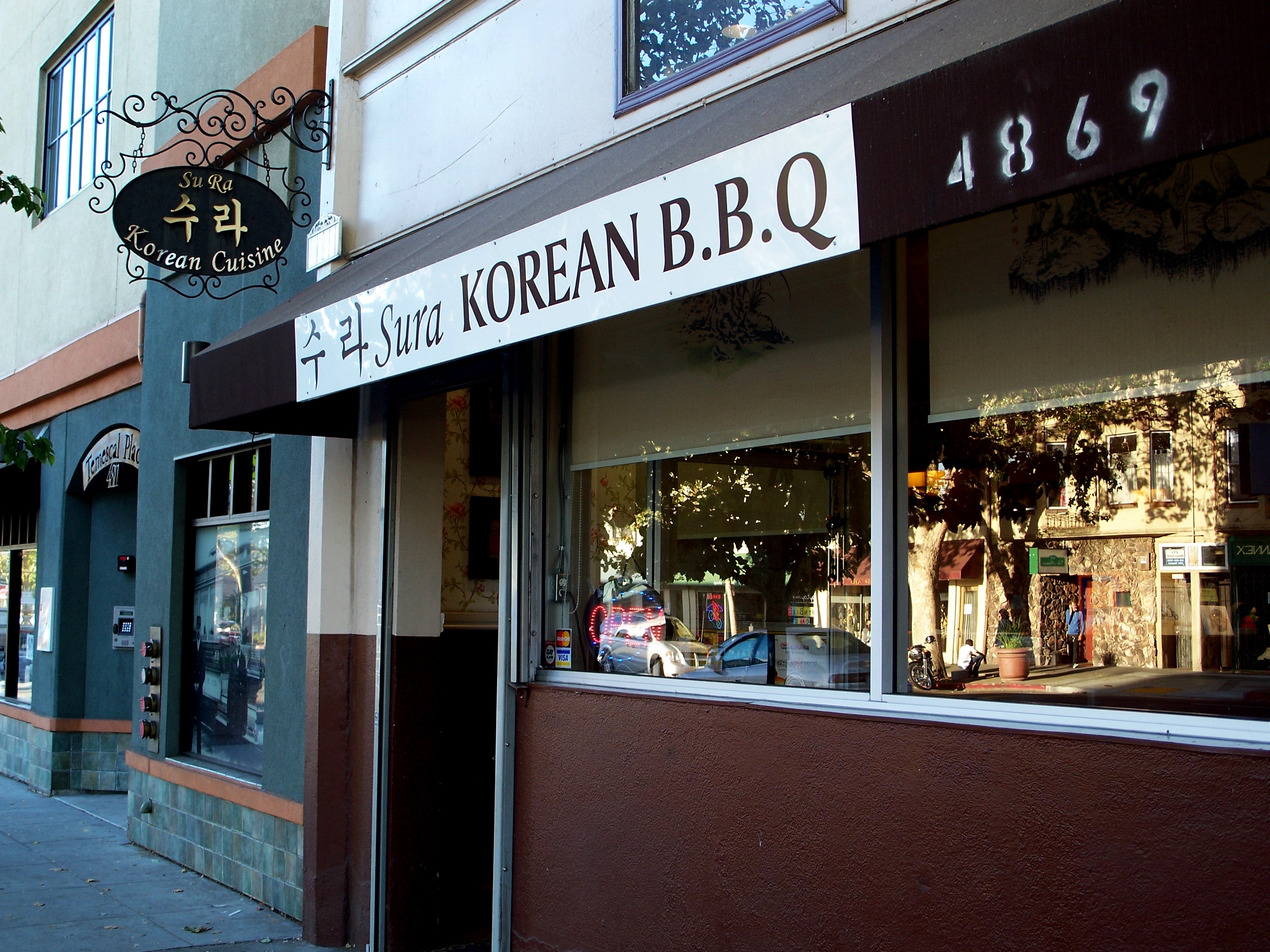
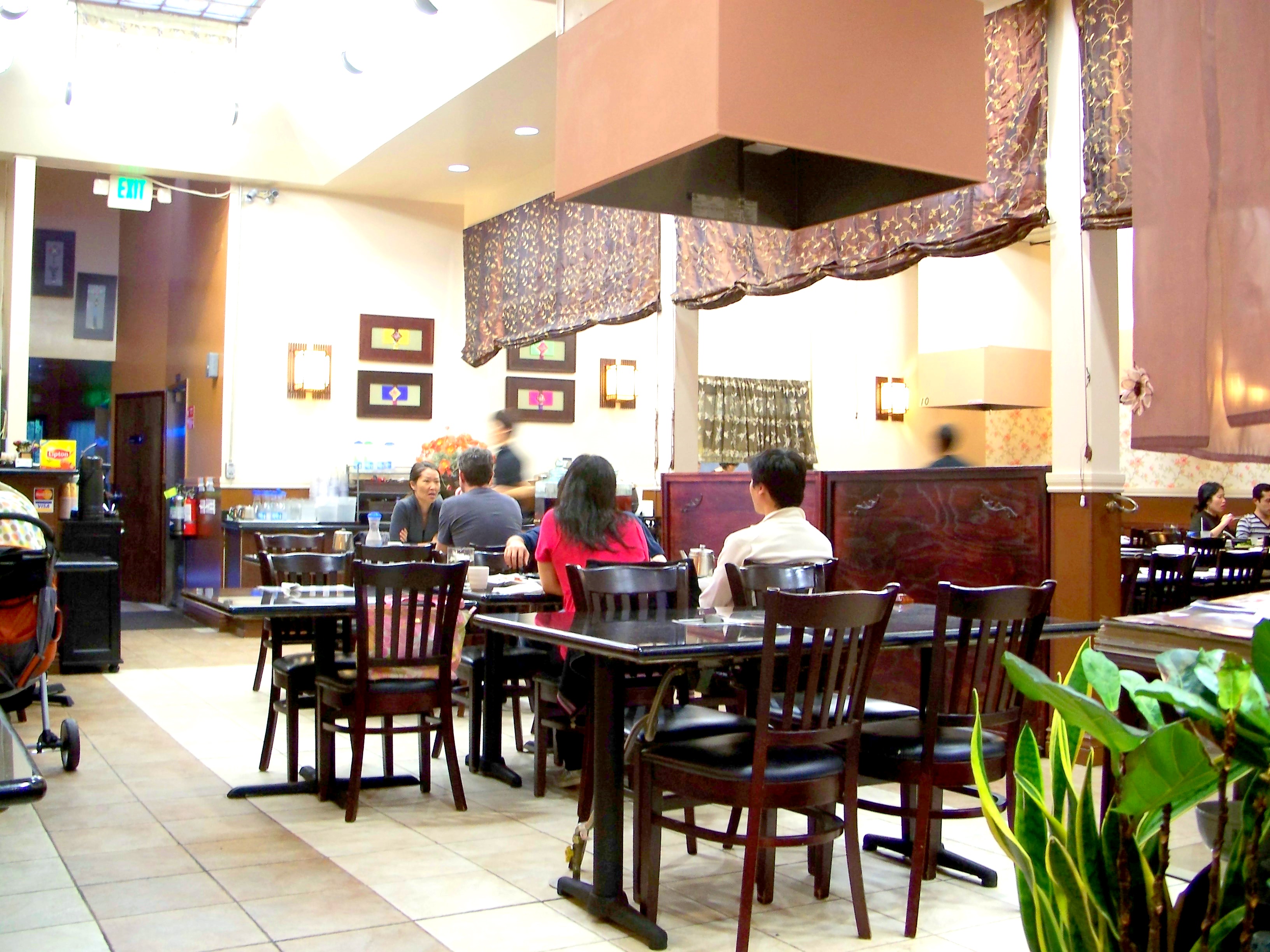
Sura in Oakland – A banchan chapter

September 10, 2010 By: Mai Truong Category: California - The Bay Area, Comfort food, Korean


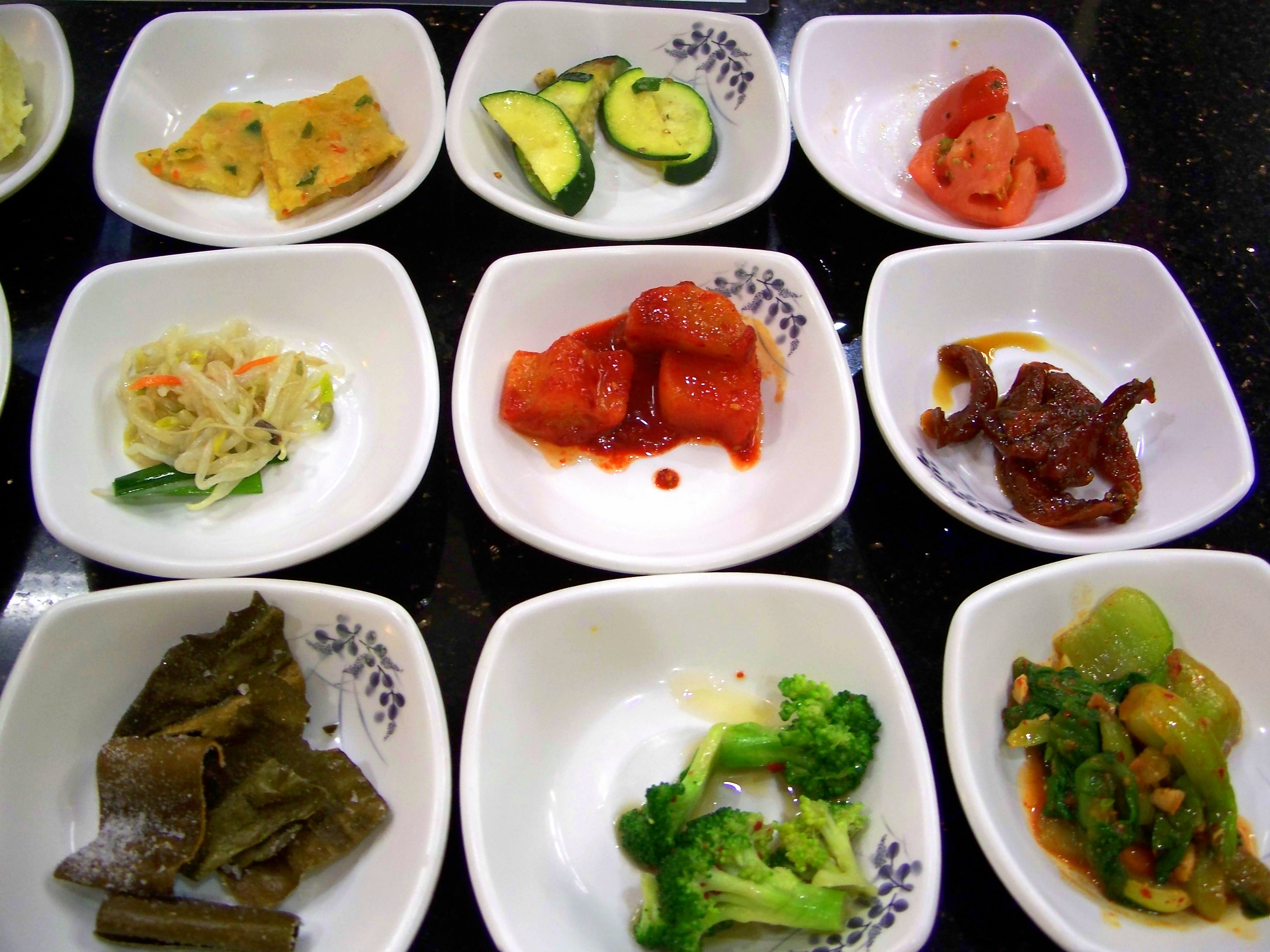
The one thing you can be certain about when you go to Korean restaurants, regardless of their size and price and menu, is that you will always get full. I’ve never been to a Korean restaurant where I think “hmm, maybe I have room for some more” when I leave. Korean restaurants always give you big portions, and on top of that, there is the banchan (반찬).  When you sit down all starving because of the steaming broth or the grilled meat smoke from nearby tables, the banchan is the first thing to nibble on and ebb the hunger. You can either get a lot of coleslaw and dongchimi (동치미, pickled white radish in this case), or an array of little bitty plates that look too colorfully appetizing to disturb. Naturally, the size of your bill corresponds to the variety you can sample. And the biggest sample of banchan I’ve had so far is at Sura.


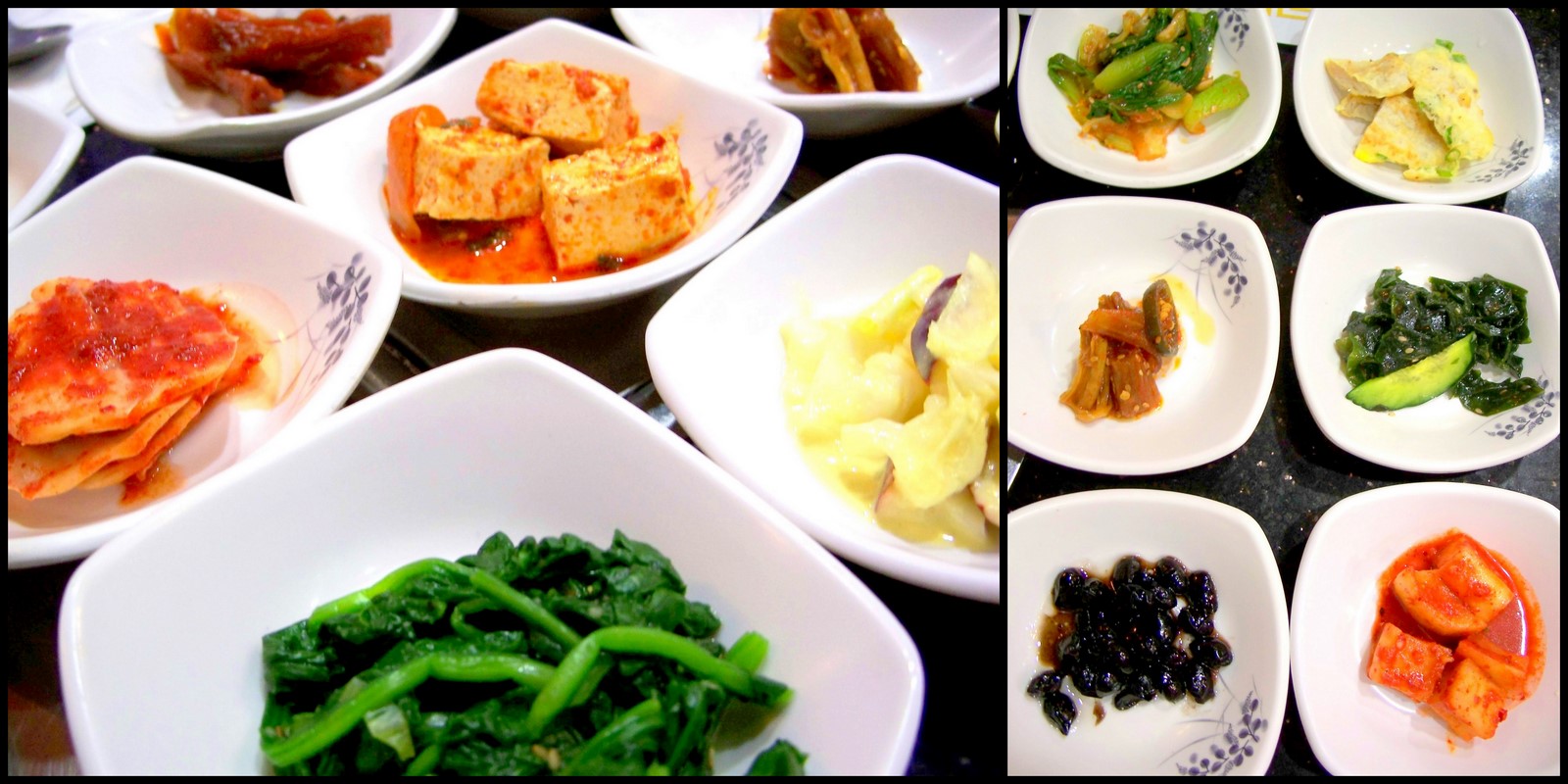
Here’s what to prepare your tummy for when you’re at Sura: 1 starter, 18 side dishes,  whatever you actually order (which comes with either brown rice or white rice), 1 dessert. If you order gogi gui (고기구 이barbecue), then you also get a heap of lettuce to wrap. If that’s not enough, you can ask for more side dishes. So let us begin.


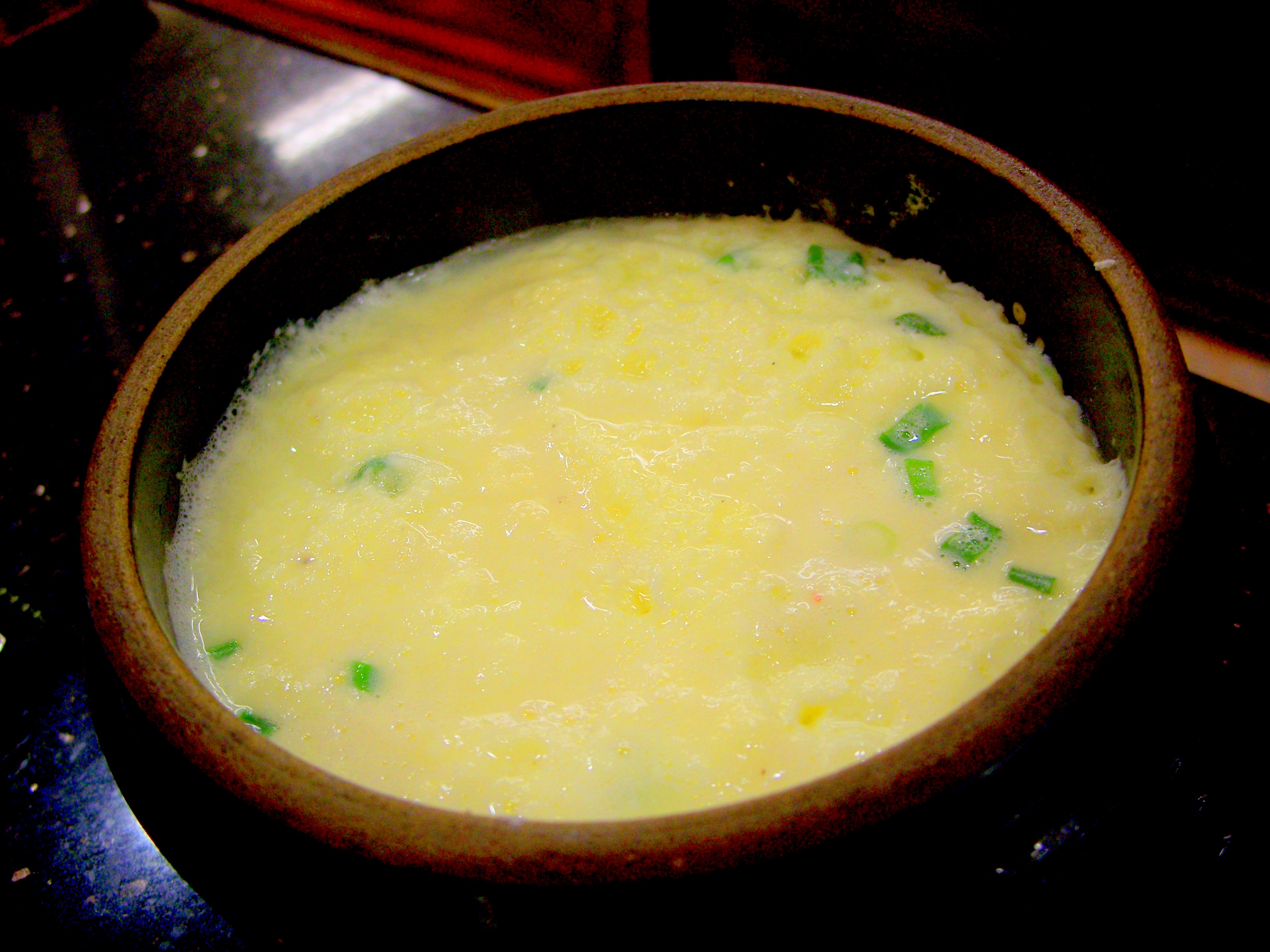
Starter: gaeran jim (계란찜 steamed egg) in a dolsot (돌솥), still bubbly when brought out. It’s really mild, bland even, with dots of green onions and an airy texture.


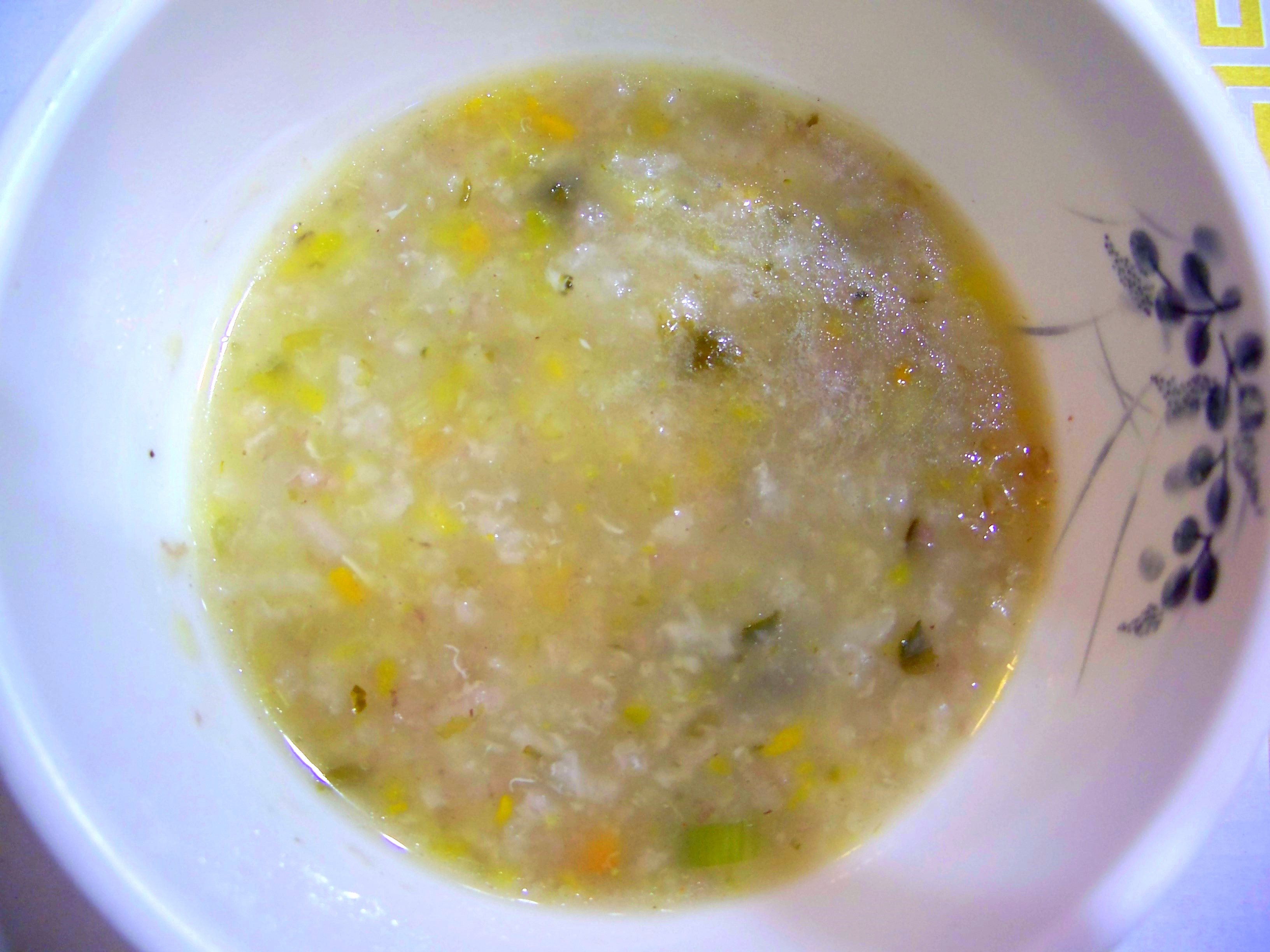
Starter: a small ladle of thin juk (죽 rice porridge) with vegetable bits. Also very mild.


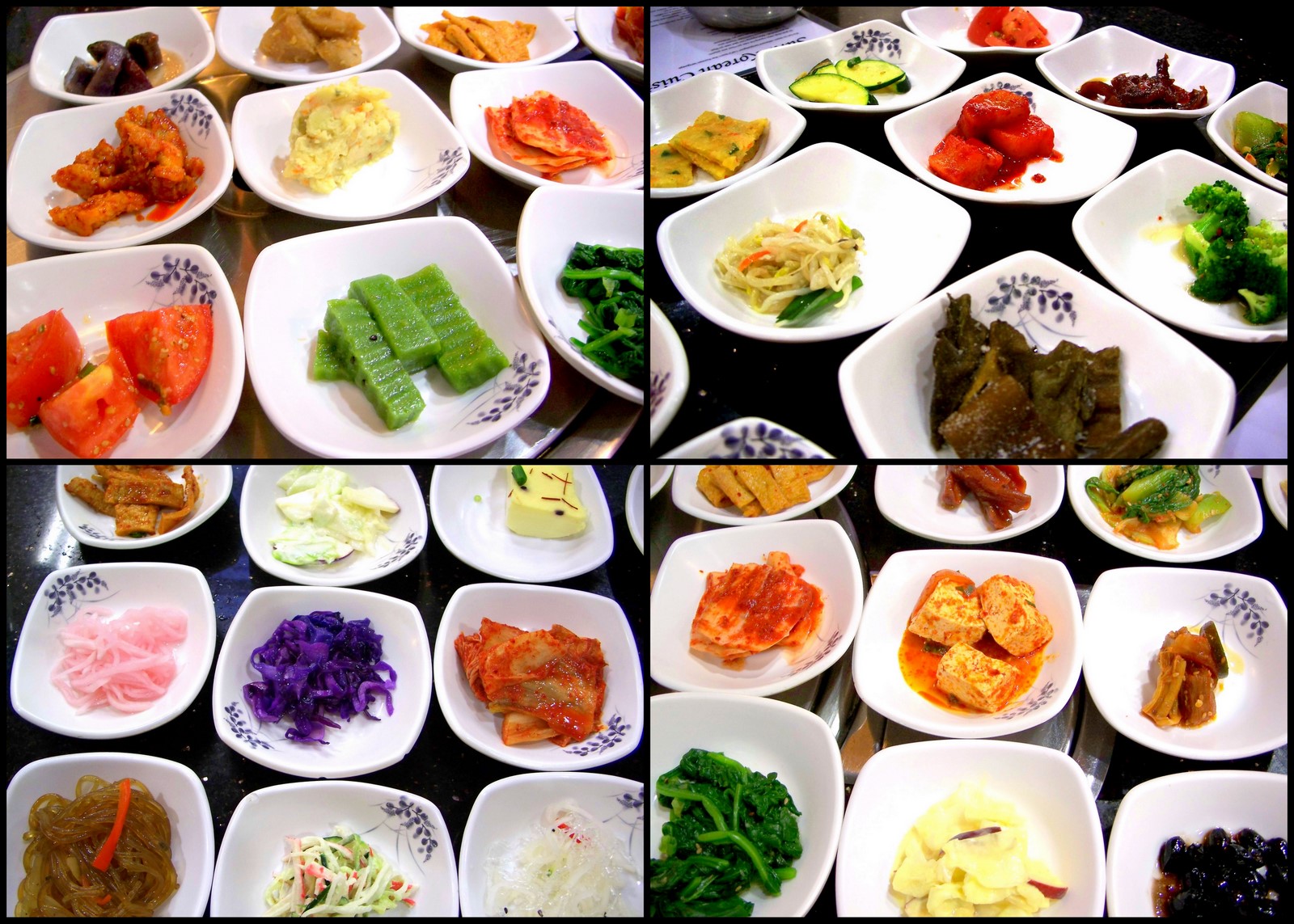
And here comes the banchan. There’s the usual stuff: tomato, broccoli, bok choy kimchi, oisobakki (오이소빅이 cucumber kimchi), ggakdugi (깍두기 radish kimchi), kongnamul (콩나물 boiled and seasoned soybean sprouts), pajeon (바전green onion pancake)…


odaeng (오뎅 stir fried sweet fish cake), japchae (삽채 stir fried cellophane noodles), baechu kimchi (napa cabbage), sliced kohlrabi (the pink thing) and cabbage (the purple thing)…


… tofu, cauliflower, spinach, kongjaban (콩자반 sweet black beans), kaji kimchi (가지 김치 eggplant kimchi), and chwinamul (취나물 a crunchy stir fried leaf vegetable)…


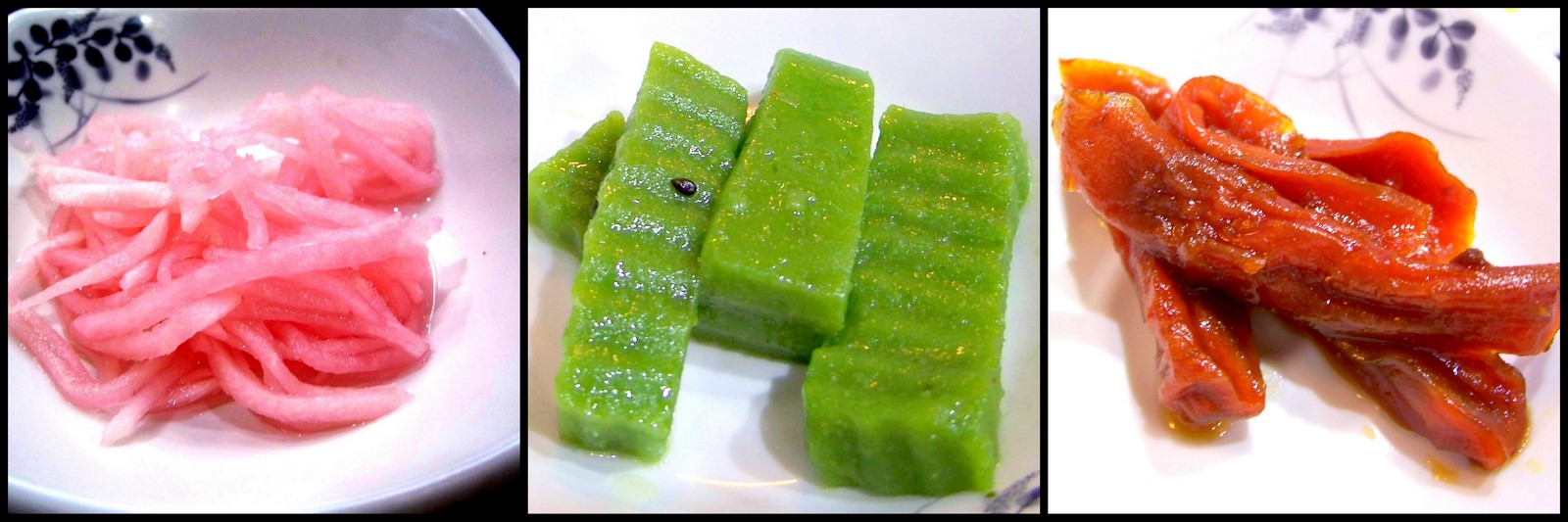
… potato,  sweet potato, fried chicken bits, and muk (묵 jelly). (Mudpie *really* liked the chicken and the potatoes.) Now, most of these side dishes didn’t set off any fireworks for me, the japchae was even a bit dull, but there were some BIG exceptions:


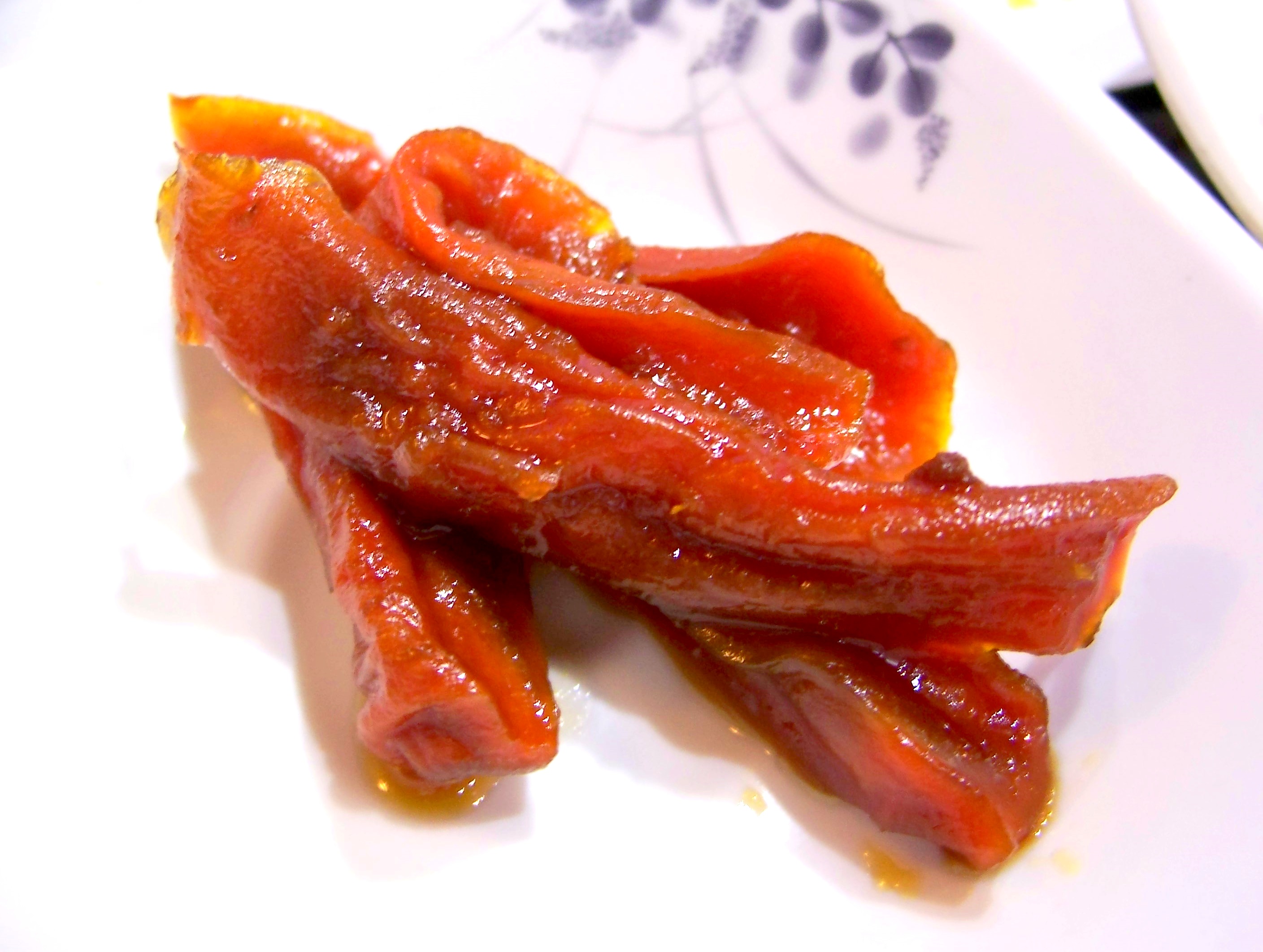
This is Carrot. AMAZING. AMAZING. AMAZING. Somehow it is sweet like honey and chewy like dried apricot. If I could have carrots like this everyday, I’d love carrots a lot more than I do now.


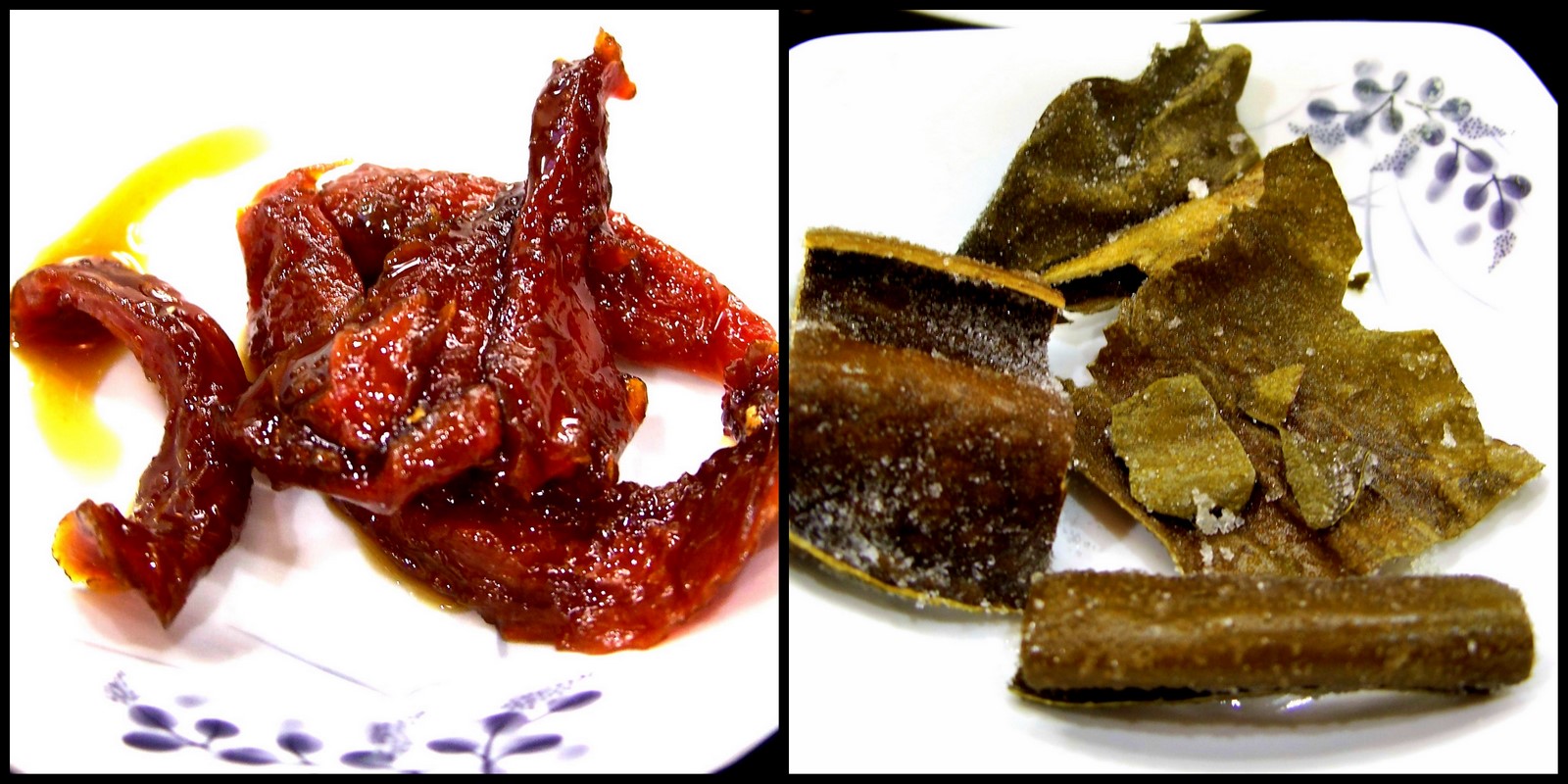
This is Clueless. On the left is something similar to the carrots, but a lot more dried-fruity, like a dried persimmon. The texture is denser and crispier, but it could just have been an older batch of carrots, who knows. On the right is some dried leafy thing dried kelp (dashima (다시마) in Korean, or kombu in Japanese), which was crunchy like Pringle’s chips, dusted with crystals of sugar and salt. When microwaved, it gets soggy and similar to chwinamul but I have no idea what kind of leaf it is.

Get on with the main course.


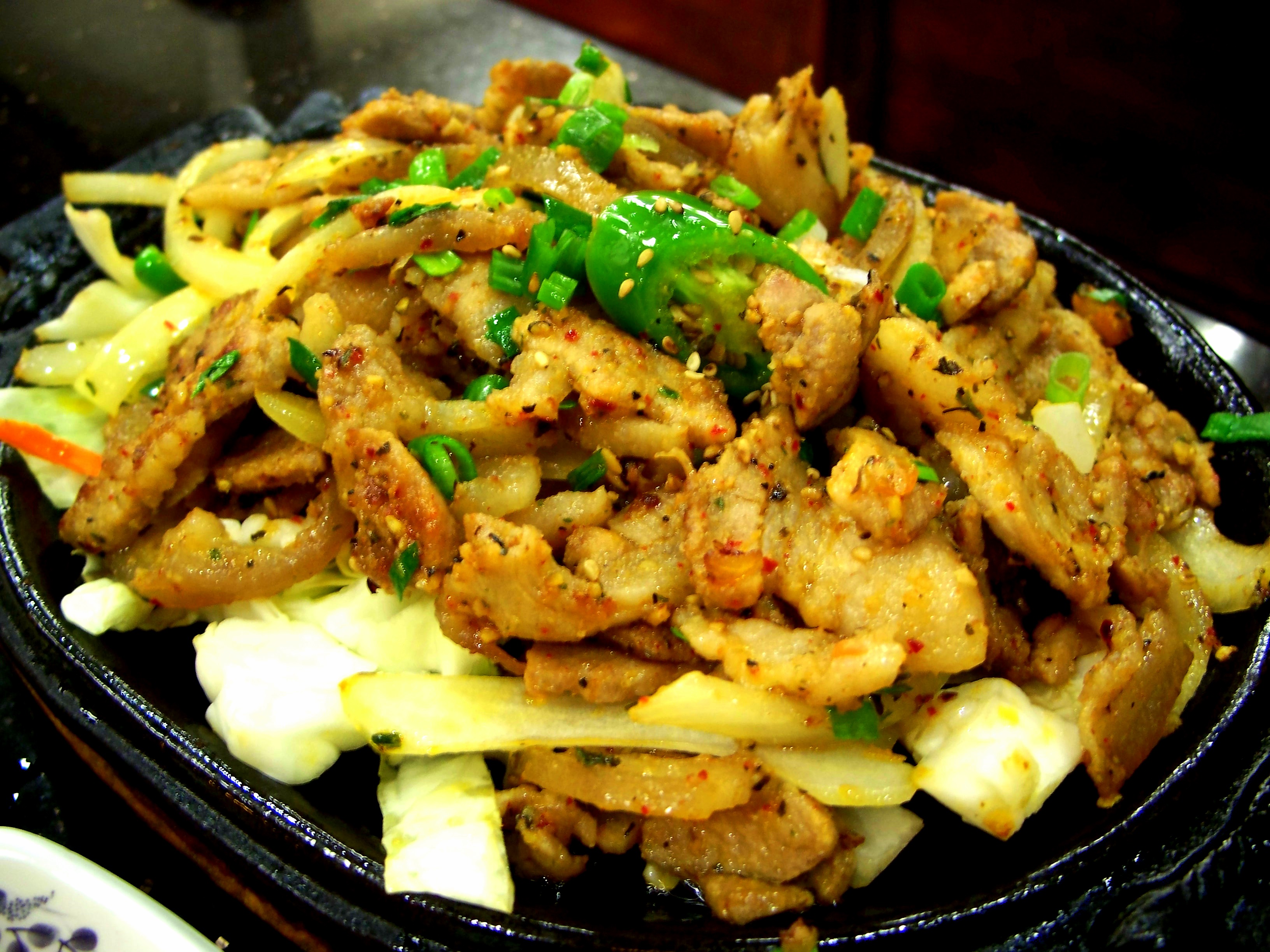
Doenjang samgyeopsal (삼겹살) – grilled pork belly with soybean paste ~ $18. Mudpie felt uneasy with the fatty layer, but really it wasn’t fatty fat, it’s crunchy fat, just like skin. The doenjang (된장 fermented soybean paste) has a distinctive flavor, and is most like the Vietnamese chao.


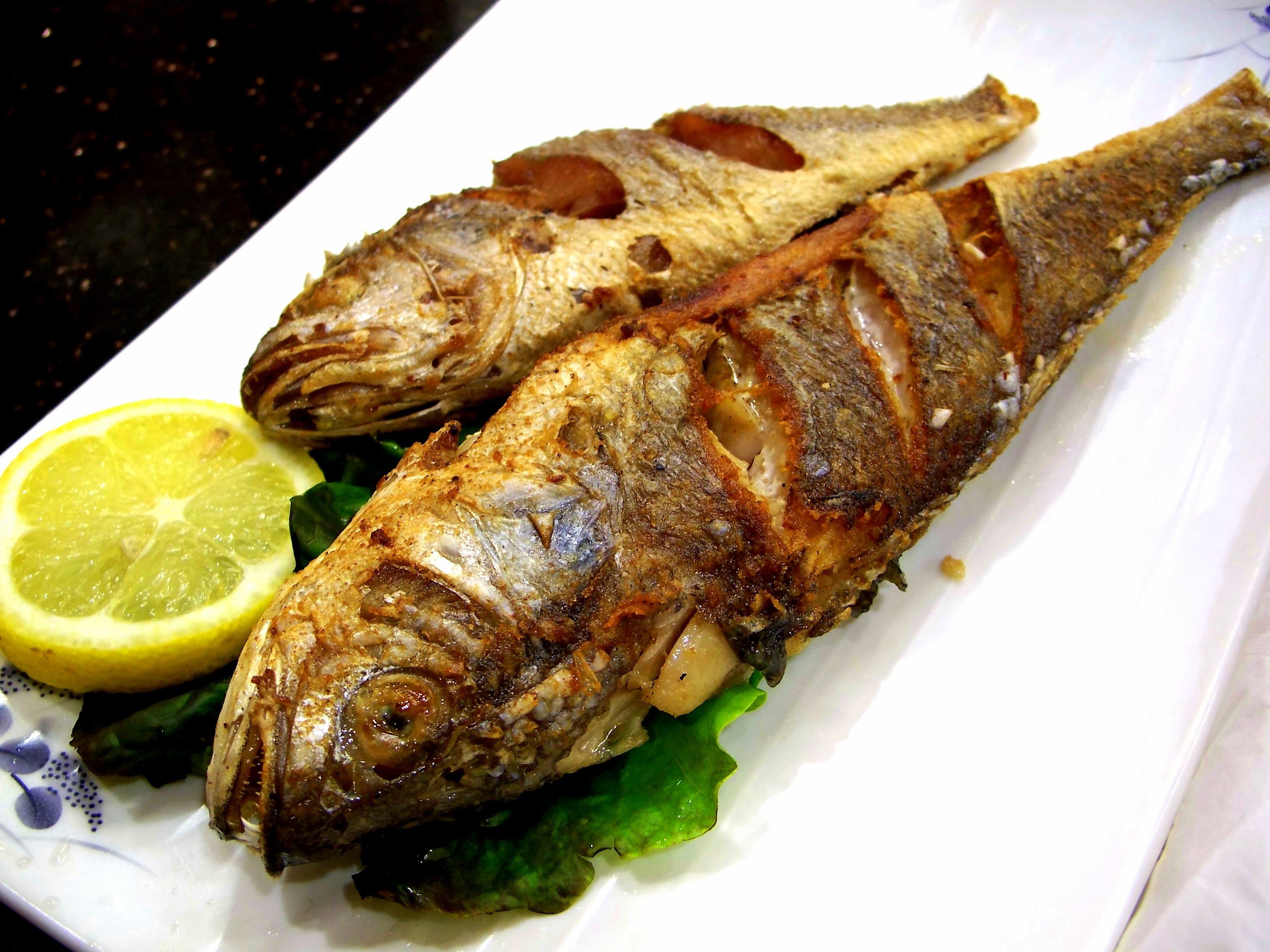
Jogi gui (조기구이) – grilled “king fish” on the menu ~ $18, Google says it can be either yellow corvina or yellow croaker, and I’m no ichthyologist to tell the difference. Look at those teeth. The head was hard and not so fun to eat (very little brain, and I suppose grilling drained all the liquid away), but the body was well seasoned and perfectly crisp. Have fun picking out the bones.


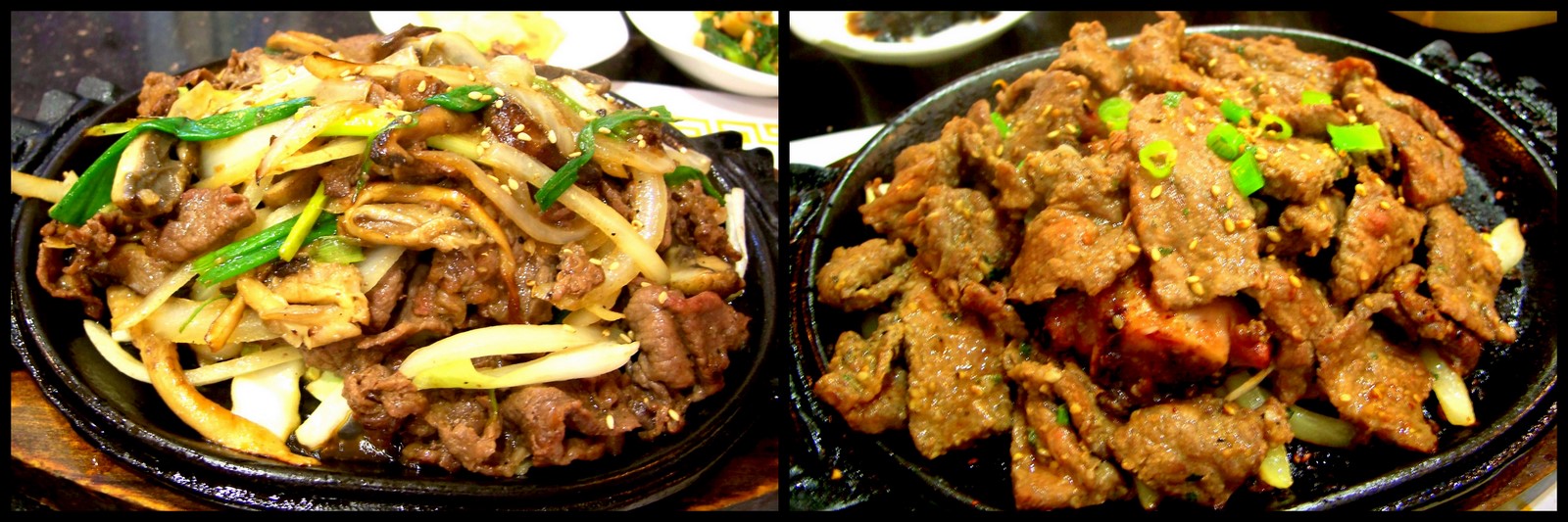
Bulgogi (불고기) – good old barbecue ~ $25 each. The one on the left is marinated in a sweet mushroom-onion sauce, while that on the right is green tea bulgogi with, naturally, a delicate herbal, grassy taste. The meat came with doenjang, chilipepper, and garlic, but I didn’t include any of those in my lettuce wraps.

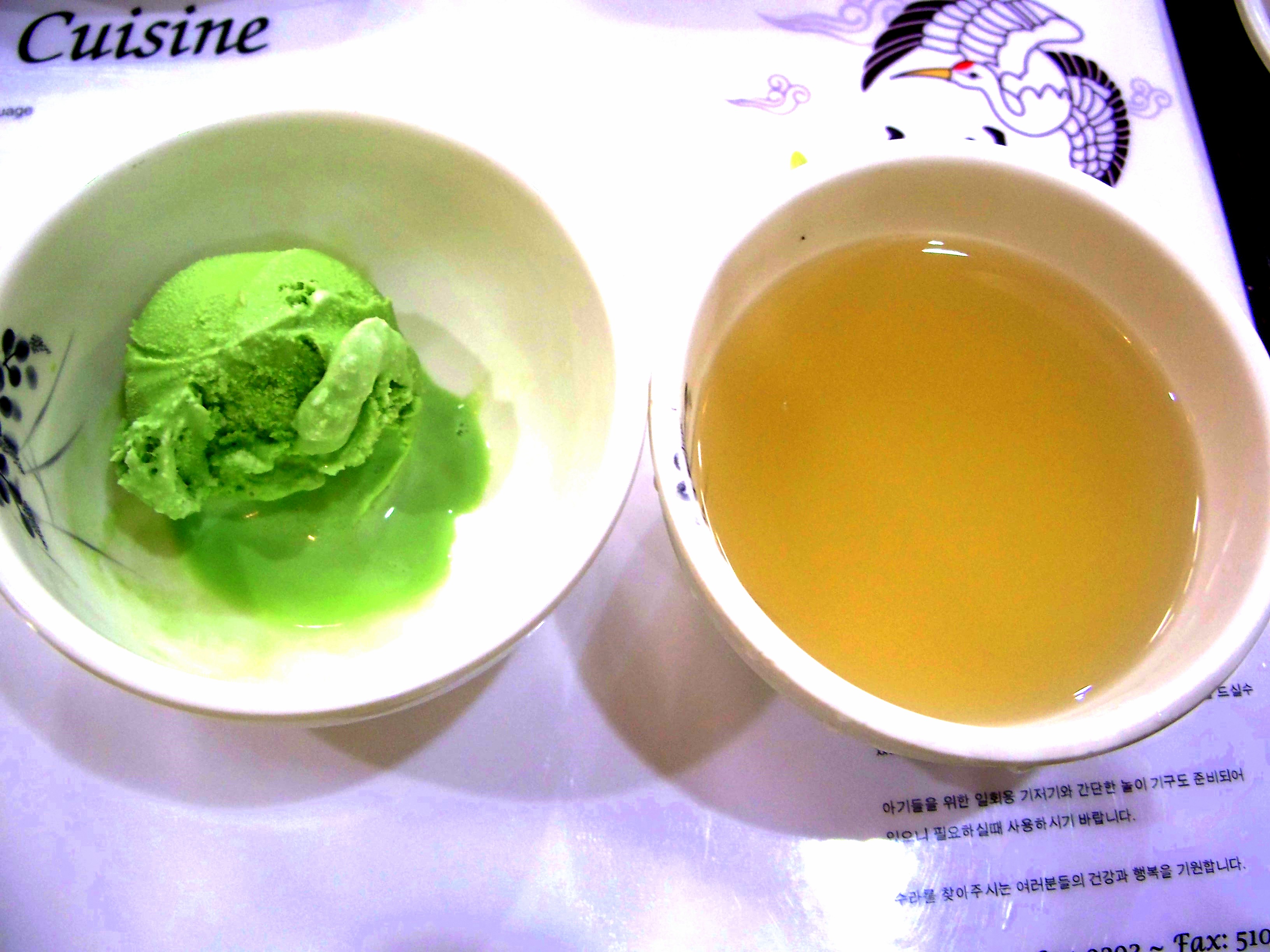
And finally, complimentary dessert of the house is either green tea ice cream or shikhye (식혜) (sweet rice punch):


Lovely both.

I should add that this place has a huge menu, with inviting names like ginseng chicken soup (samgyetang (삼계탕)) and crab stew (kkotge jiggae (꽃계찌개)). The bill is wholesome too, of course, but it feels all better when the friendly staff smiles at you with the most soothing, genuine smile in their single-lidded eyes.


Address: Sura (Nulbom Korean Cuisine) (수라)
4869 Telegraph Ave.
Oakland, CA 94609
(510) 654-9292

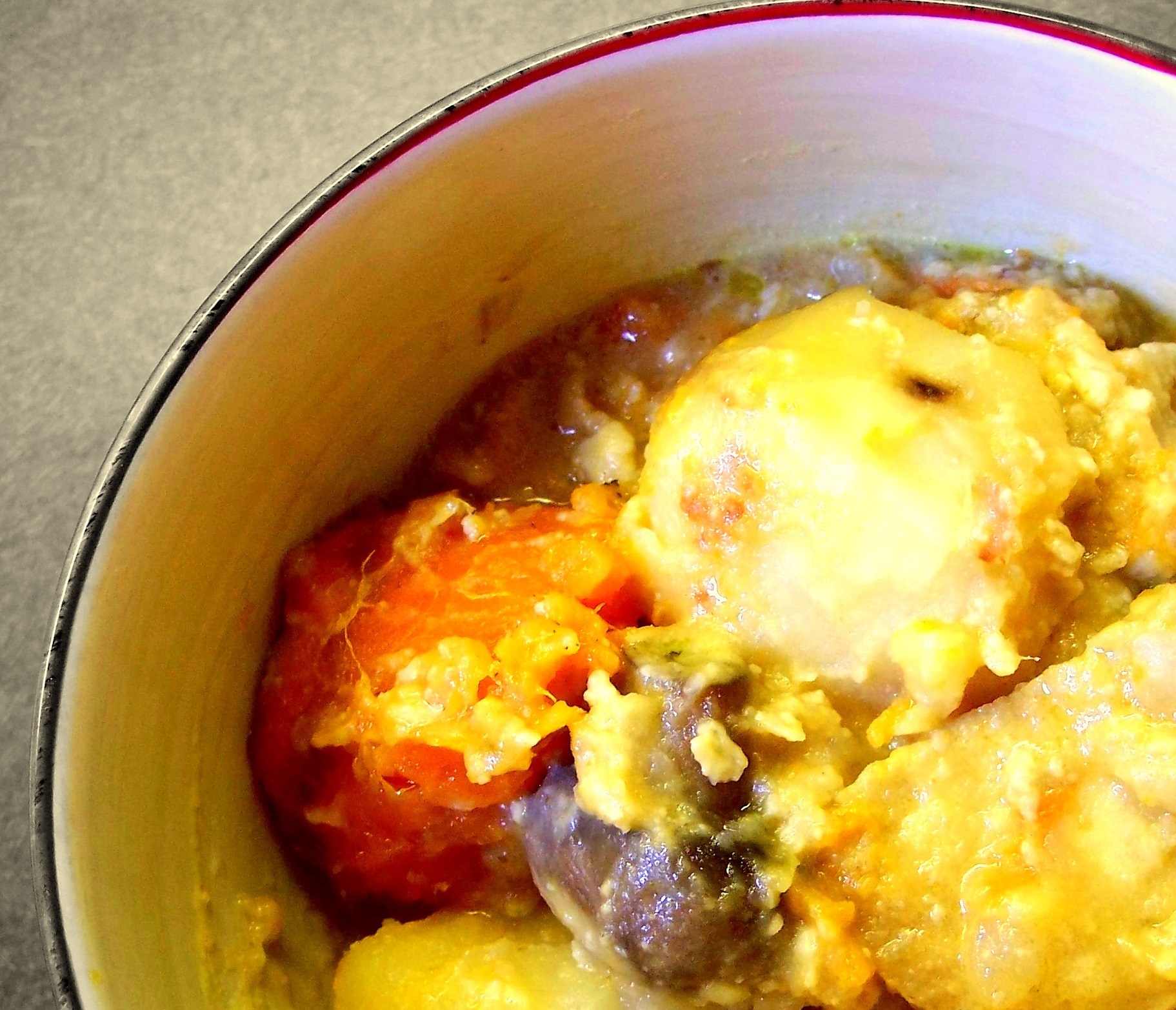
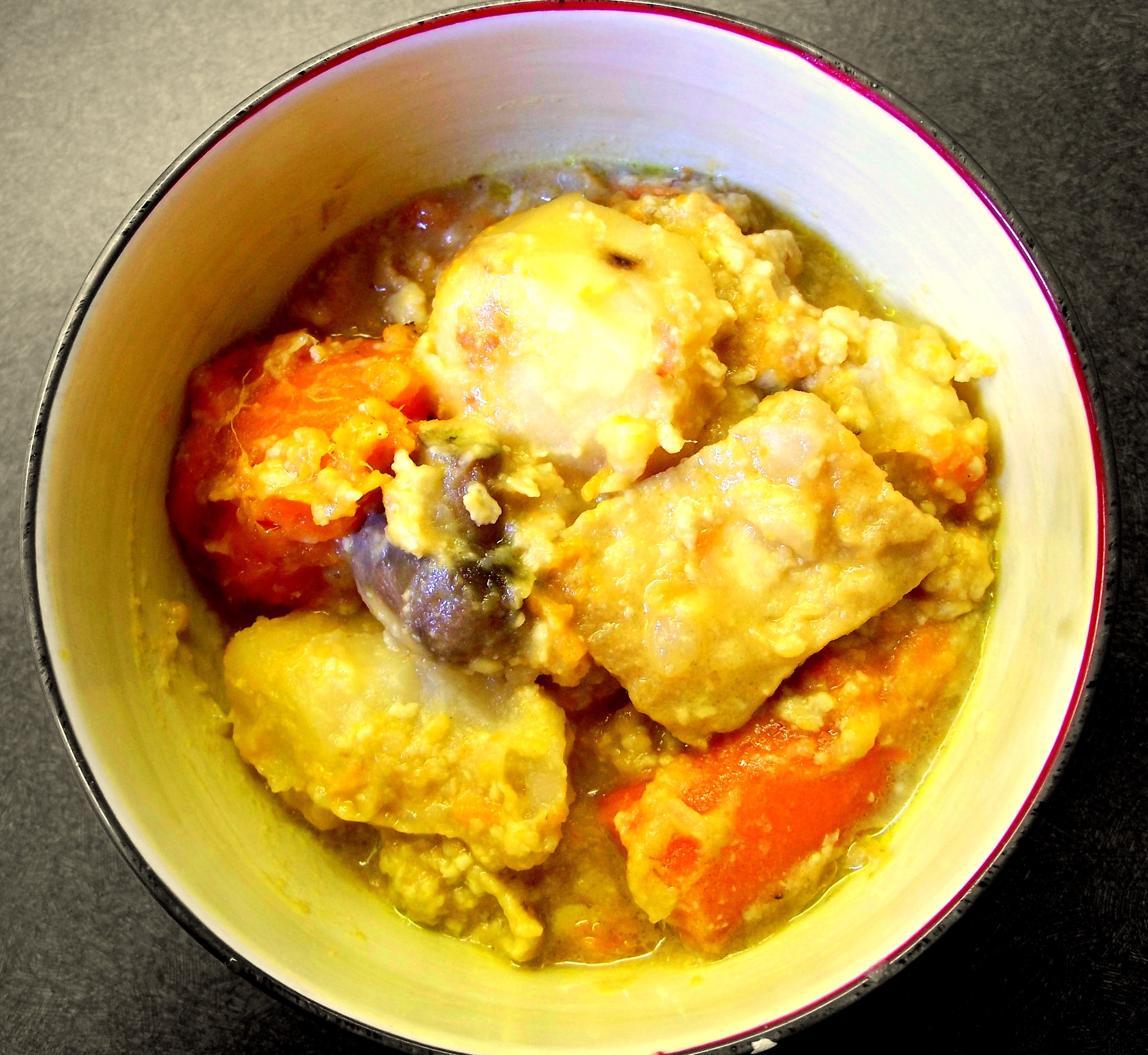
Got time? Make vegan curry.

September 07, 2010 By: Mai Truong Category: RECIPES, Vegan

CAUTION: Don’t make this curry when you’re in a hurry. If you’ve got half a day to kill, then a trip to to the groceries and a couple of hours in the kitchen might be fun.


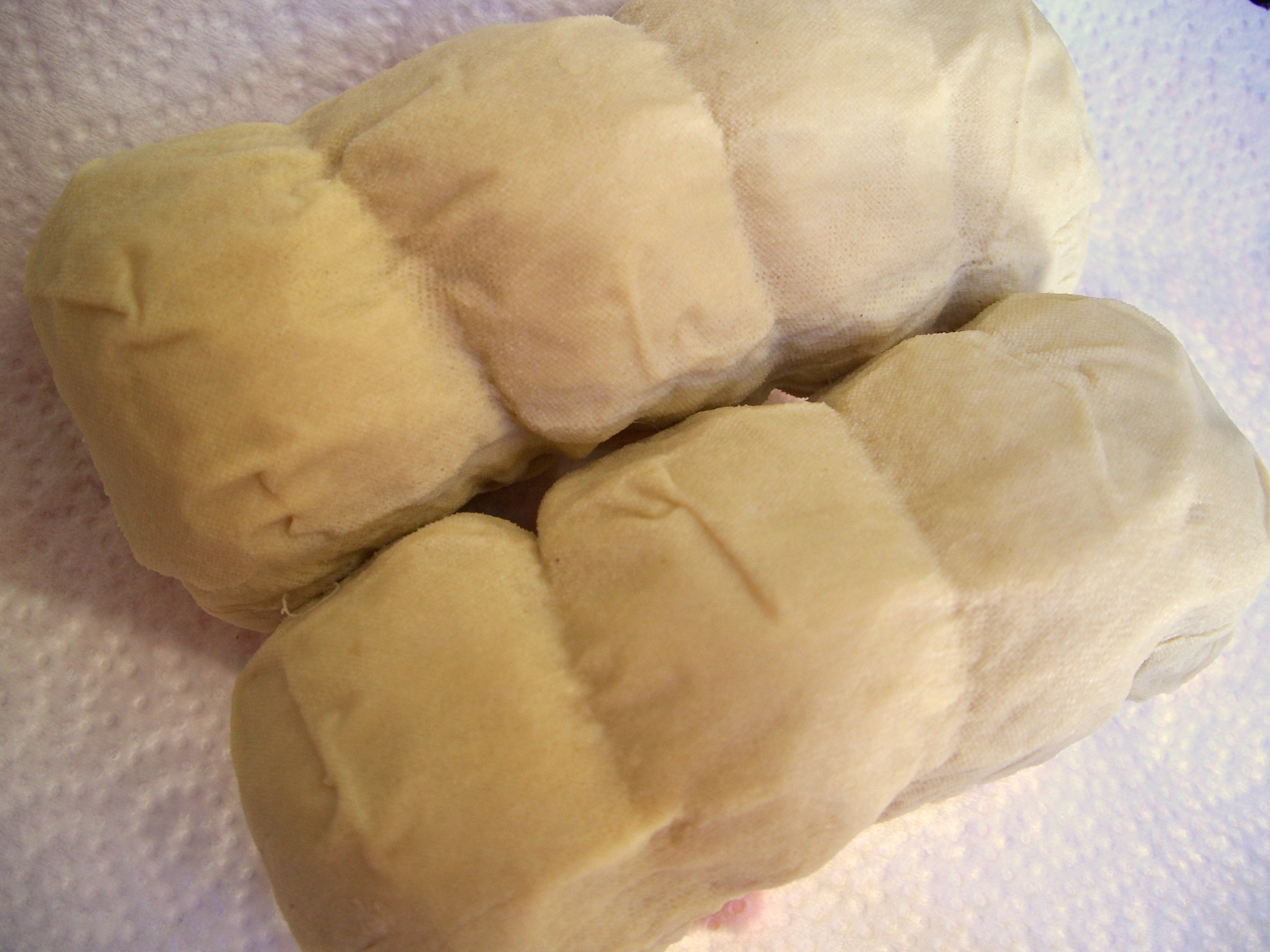
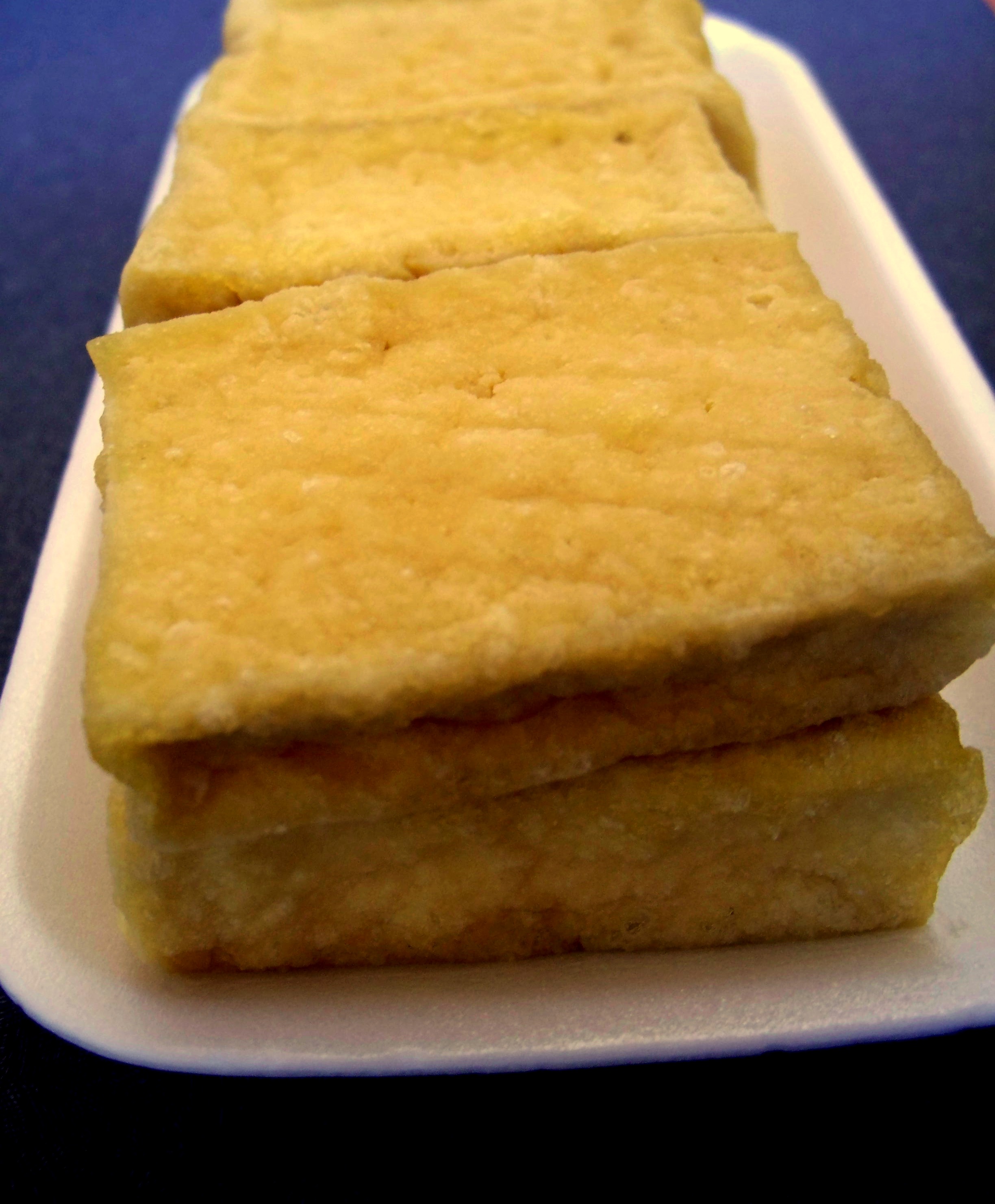
At the groceries: grab 3-4 plump potatoes, 2-3 red yams/sweet potatoes, carrots, mushroom, yellow fried tofu, fresh gluten meat, 1 can of coconut milk. The fresh gluten meat is white, slightly layered, with a wet, bouncy texture, usually sold in packages of 2-4 blocks. Do not get the canned kind, or the kind that looks like bread. If fresh gluten meat is nowhere to be found (as happened to me at 99 Ranch Market), “vegan chicken” might substitute.


At the sink: peel all potatoes, sweet potatoes, and carrots. Cut them into big chunks (at least a finger digit thick) so that they won’t just dissolve in the curry later. Cut the fried tofu and gluten meat into similarly thick chunks.


At the stove:

STEP 1: Fry everything (except the mushroom) separately. This is the time consuming part, since you have to oil the pan, heat the pan, fry the potatoes until one side is brownish golden, flip to the other side and do the same, take out the potato, and do it again for 4 more ingredients. Frying helps firming the surface of the chunks (again, to prevent dissolving) and adds flavor to the curry. Remember to use vegetable oil only, since this is vegan.


STEP 2: Sauté diced garlic in a pot until golden. Turn off the heat. Put the fried ingredients and mushroom into a big pot. And I mean a really big pot. It’s amazing how just a few tuberous roots, chunks of tofu, and a small box of mushroom can fill up the whole pot.

STEP 3: Seasoning. Add sugar, salt, and curry powder into the pot. My mom’s recipe calls for the salt:sugar ratio of 1tsp:4tbs, that means for a pot like this you’ll need about 2.5 teaspoons of salt and 10 tablespoons of sugar. Add curry powder to your liking, 1 tsp is enough for coloring, 3 tsp should be enough for flavoring. I used the curry powder that has garlic, ginger, clove, fennel, and cumin.
Side note: you don’t need to get the exact seasoning formula at this stage. You can always add more salt, sugar, and curry when it’s done cooking. It’s easier to taste everything then.

STEP 4: Add 1 can of coconut milk into the pot. Yes, the whole can. Add water until everything is just submerged in liquid.

STEP 5: Cook uncovered on medium heat until boil. Then keep cooking for another 15 minutes. Check to see if the potatoes are cooked by inserting a chopstick (or anything similar) into a chunk of potato, if the chopstick goes through easily, then it’s done.
Side note: Stirring is not necessary while cooking. You can stir if you want, but then you’d risk turning the sweet potatoes and/or the “vegan chicken” into mush (like me :P). Fresh gluten meat wouldn’t turn mushy, so if you can get it you’re in good shape.

Finally


At the table: serve warm with bread or rice.

Tags: