Flavor Boulevard

We Asians like to talk food.
Subscribe

Archive for the ‘Vietnamese’

Dinner with Rau Om

September 06, 2011 By: Mai Truong Category: California - The Bay Area, Japanese, Vietnamese


Early September. Monday night. An adorable meal that combines various elements of two Far Eastern cuisines. The parts harmonize, the mixture represents a cuisine of its own: the kind that you can only find in a home kitchen and enjoy with friends in the living room. We sit on the floor, we share twelve courses plus some, we listen to a record of traditional Vietnamese instrumental, we drink chrysanthemum tea in wine glasses. We talk fooding. We feel luxury, “like the wealthy landlords of the old days” as Dang put it. 🙂 A dinner with Oanh and Dang, the Rau Om lady and man, is fine dining without the frilly designed plates, the crisp white napkins, and the pompous lighting. Each of the twelve courses has just enough twists to wow us while retaining enough familiarity to comfort us. But what I like the most about Rau Om creations is the way Oanh and Dang use one country’s familiar ingredients in the other country’s familiar dish, surprising (at least) me with the compatibility and similarities between the two cuisines. It’s the fusion of the authentics.

My ladies and gentlemen, the September 5th Japanese-Vietnamese (+ a little Korean) dinner by Hoang-Oanh Nguyen and Linh-Dang Vu-Phan of Rau Om:
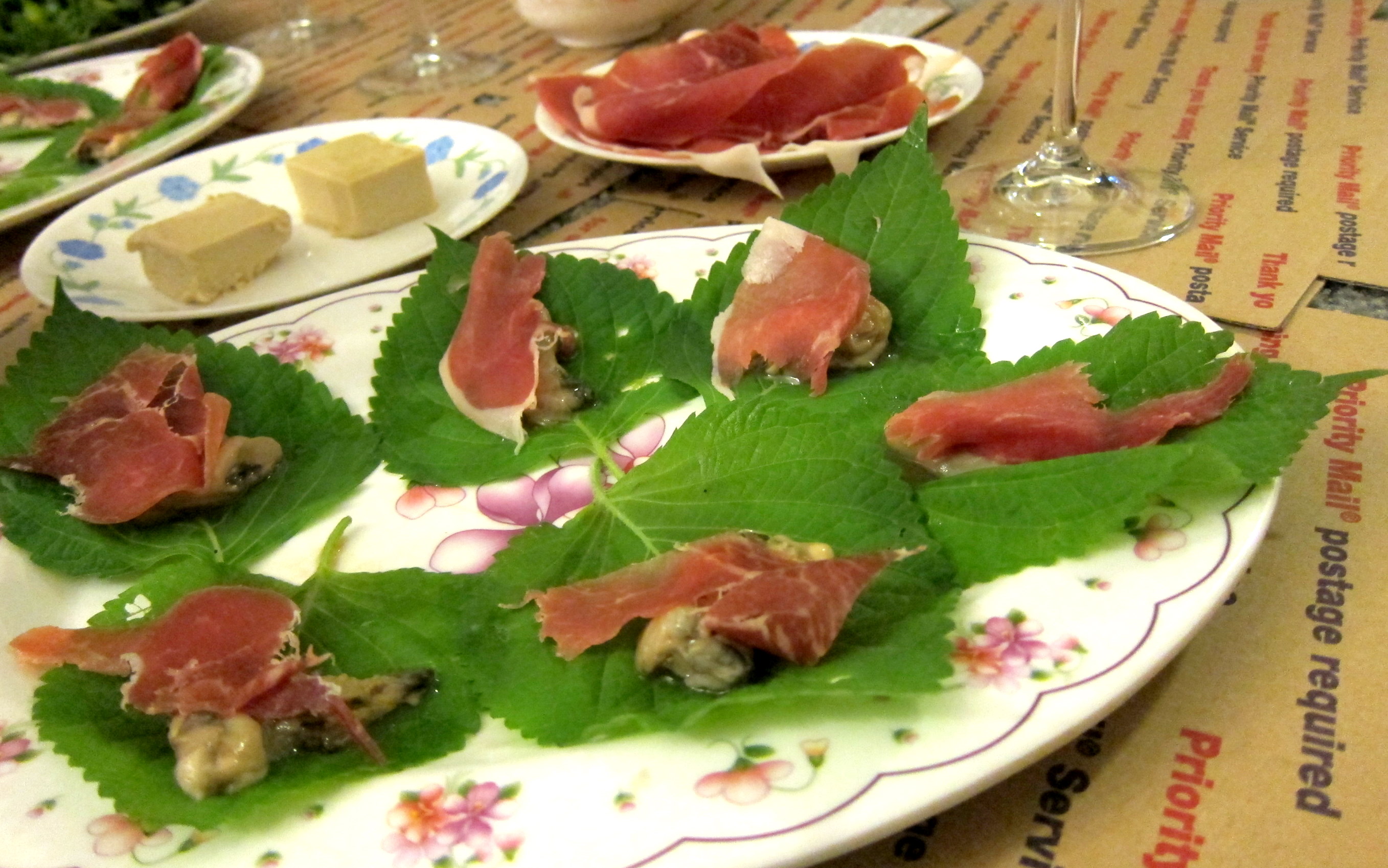

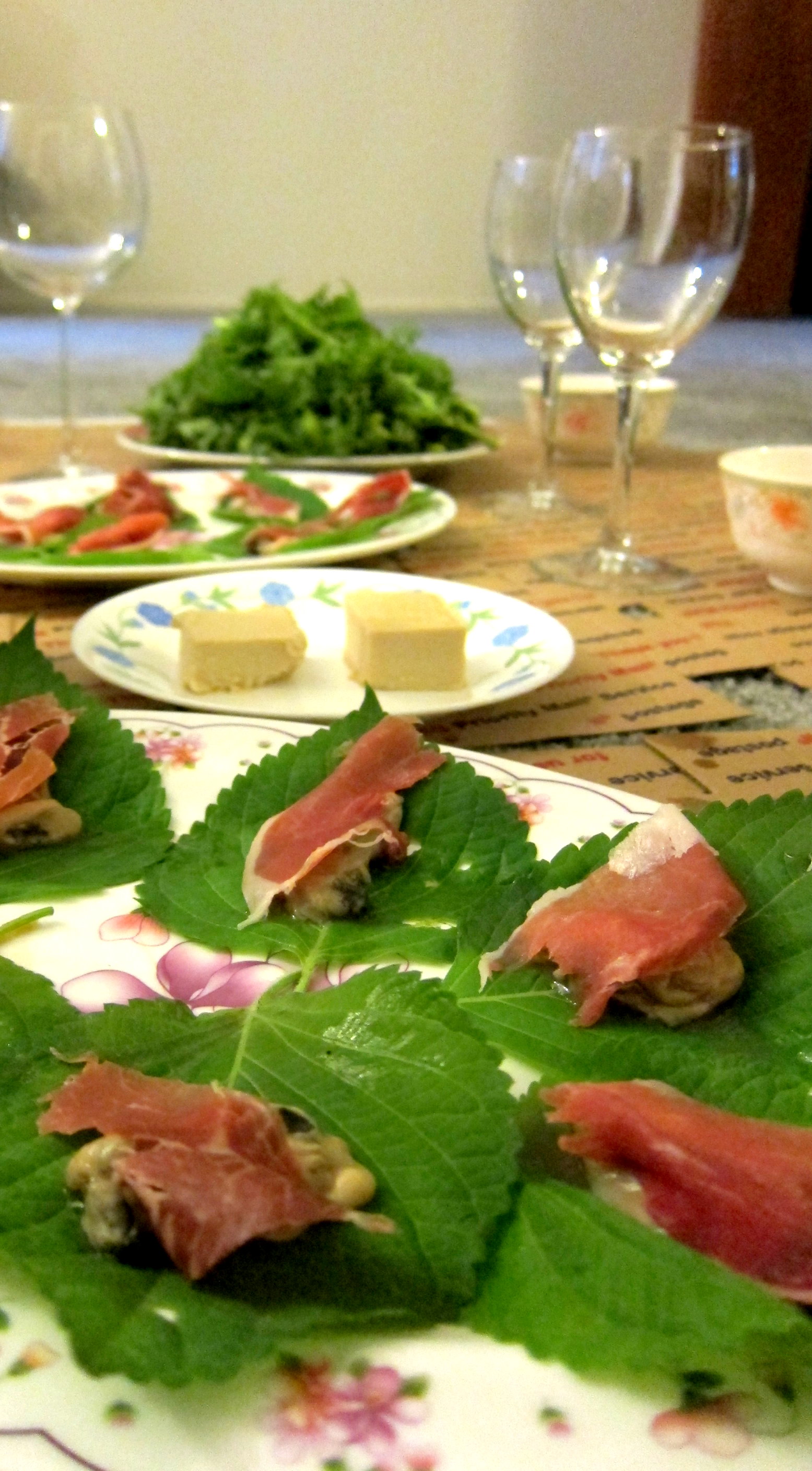
On the foreground is No. 1 – Bossam-styled Oyster con Prosciutto: the oyster was low-temp-cooked (read: “semi-cooked”) at 48°C for 20 minutes in bossam (보쌈) broth in a closed jar, rendering a literally melt-in-the-mouth texture while its fishiness is subdued by the tangy sesame leaf and the briny prosciutto.
In the background are two blocks of No. 2 – Tofu Misozuke, tofu wrapped in miso for at least 2 months. It’s creamy, briny, accented with a herbal afterthought. It’s cheese, but vegan, and better than cheese because the taste evolves in your mouth. We were also introduced to Rau Om’s experimental Kombu Tofu Misozuke, tofu misozuke wrapped in miso and kelp for a less salty but more aged taste.
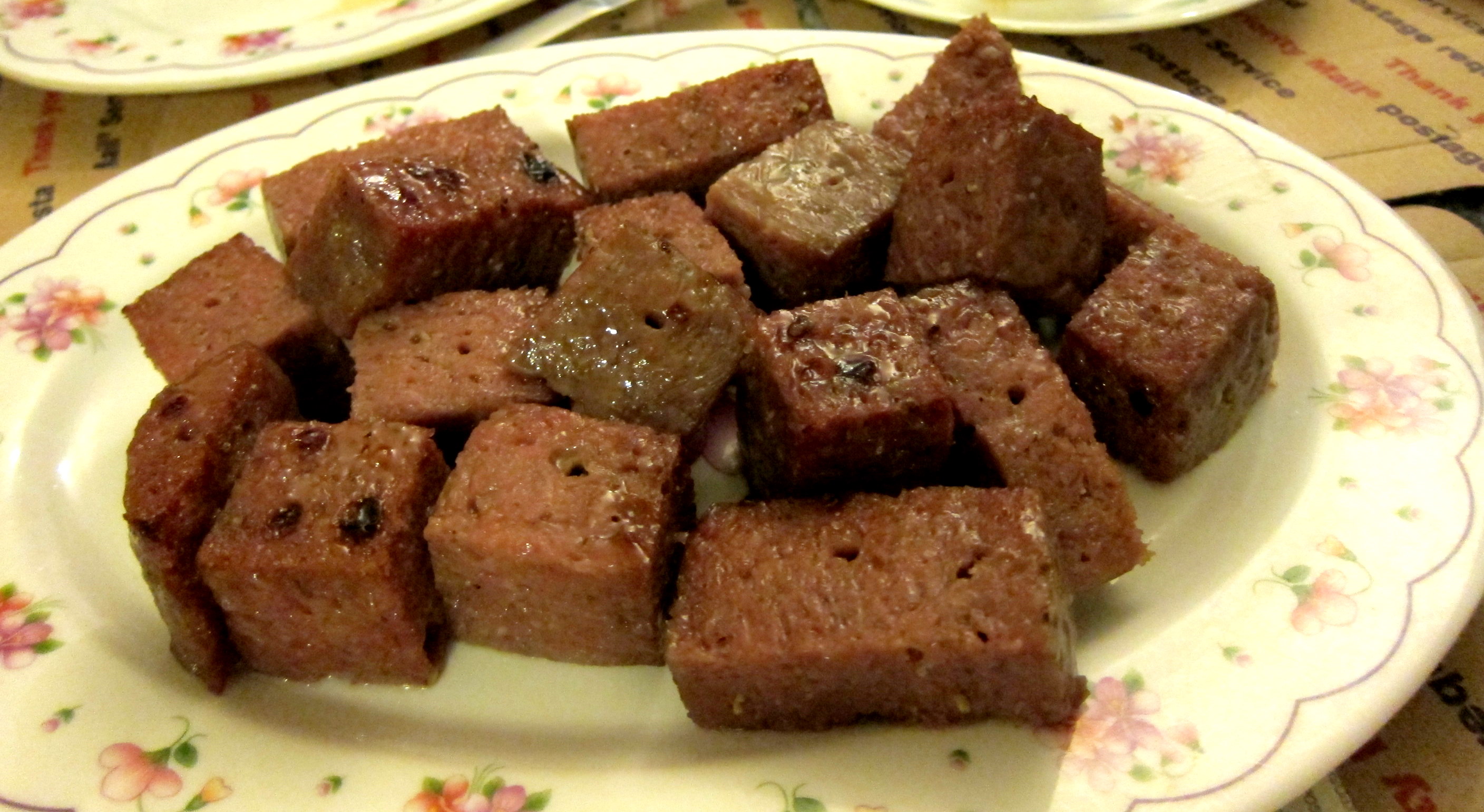

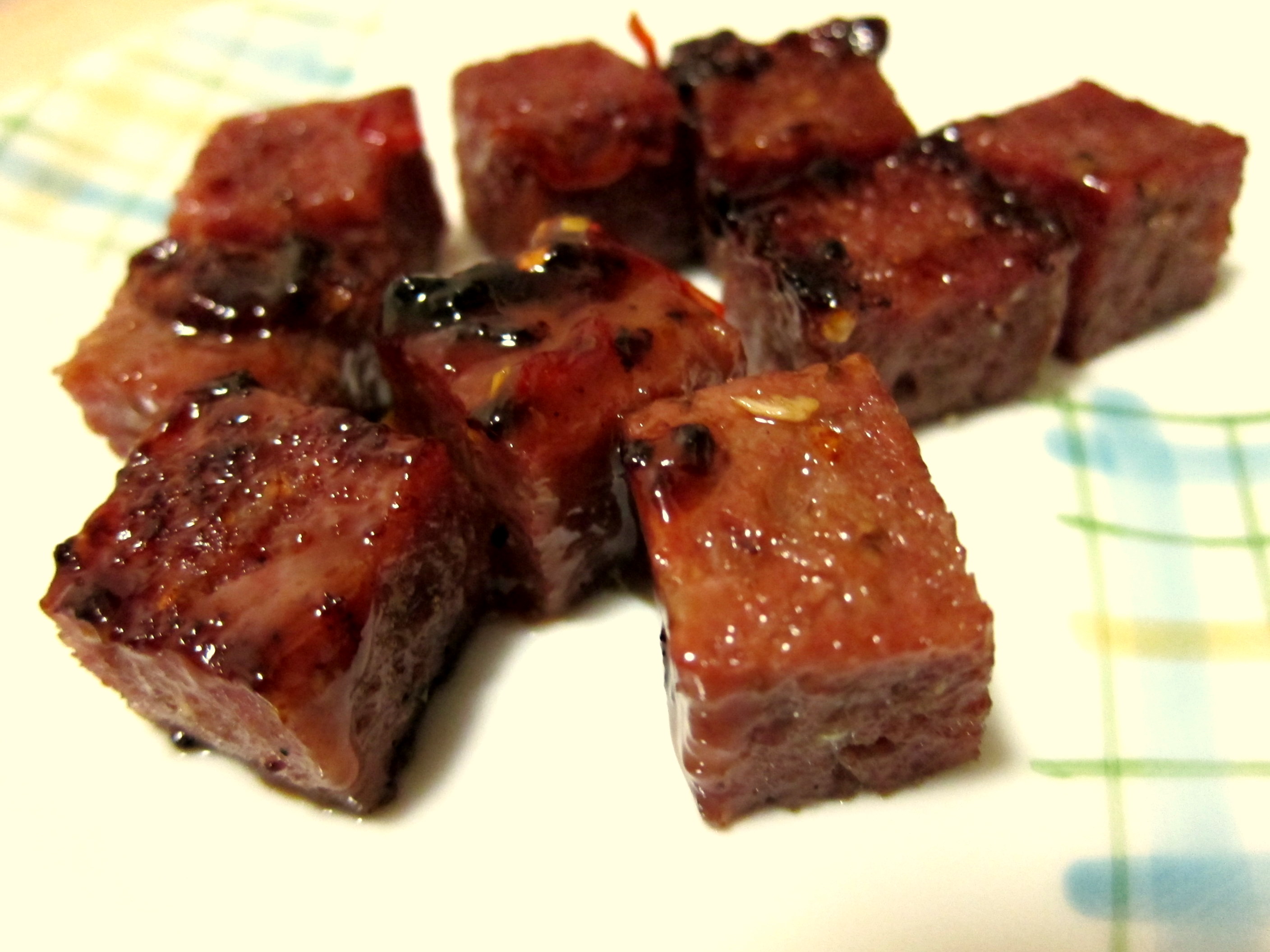
No. 3 – Grilled Lamb Nem. I’ve tried Rau Om beef nem before, fresh and fried, and this lamb version sings a better tune for me. The texture is smooth (they use less pork skin here), grilling keeps them moist, both the lamb scent and the sourness of cured meat are subdominant.
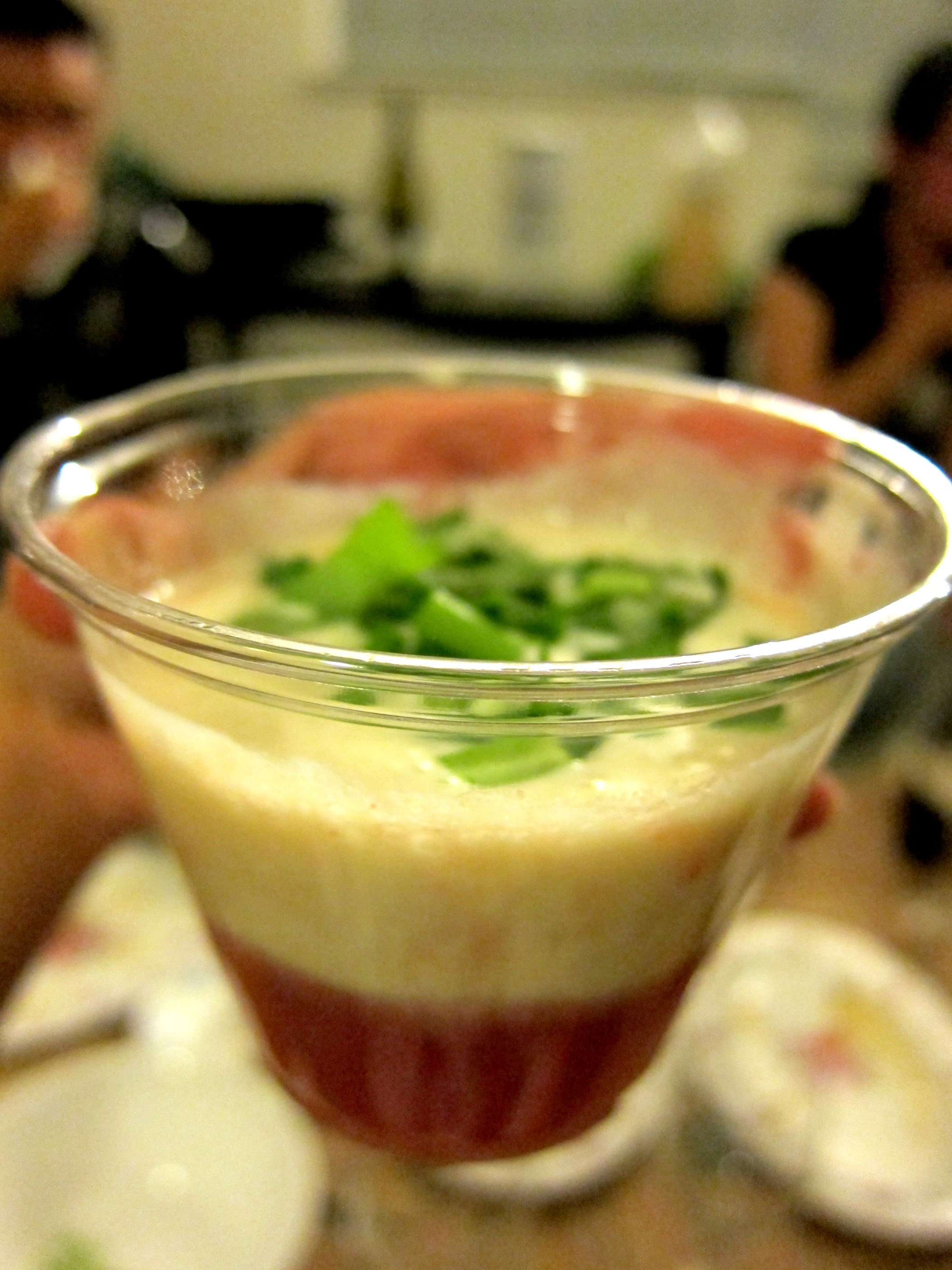

The intermezzo No. 4 – Chilled Tomato Soup topped with Yuba Cream. The frothy soy based cream makes all the fireworks. This soup is the epitome of refreshment. I wanted more.
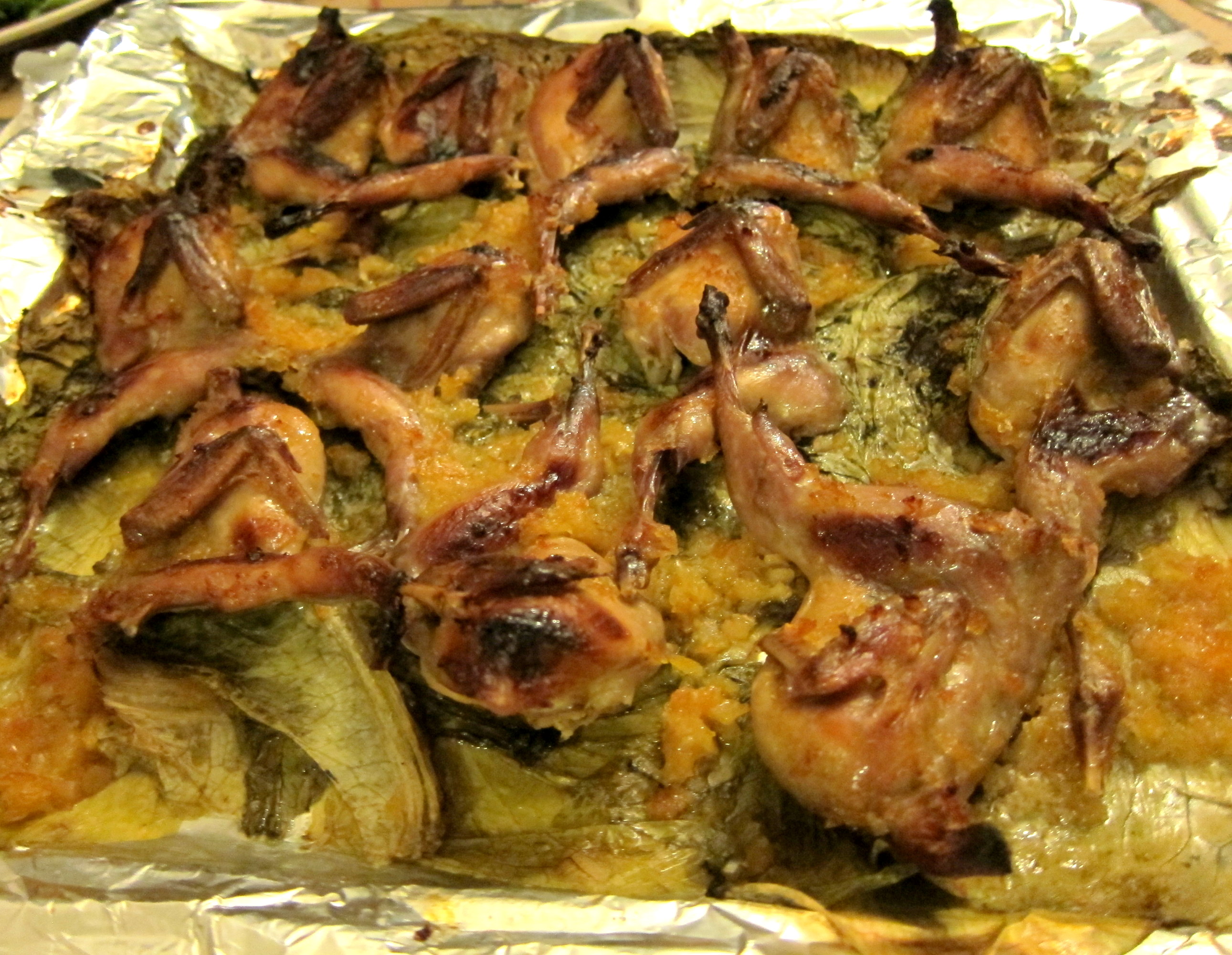

No. 5 – Salted Kumquat Quail, grilled on a bed of lettuce to keep it juicy. The kumquat scent so subtly infuses the bird that all we can feel is a clean herbal flavor, not salty, not fatty, just l(r)ight.
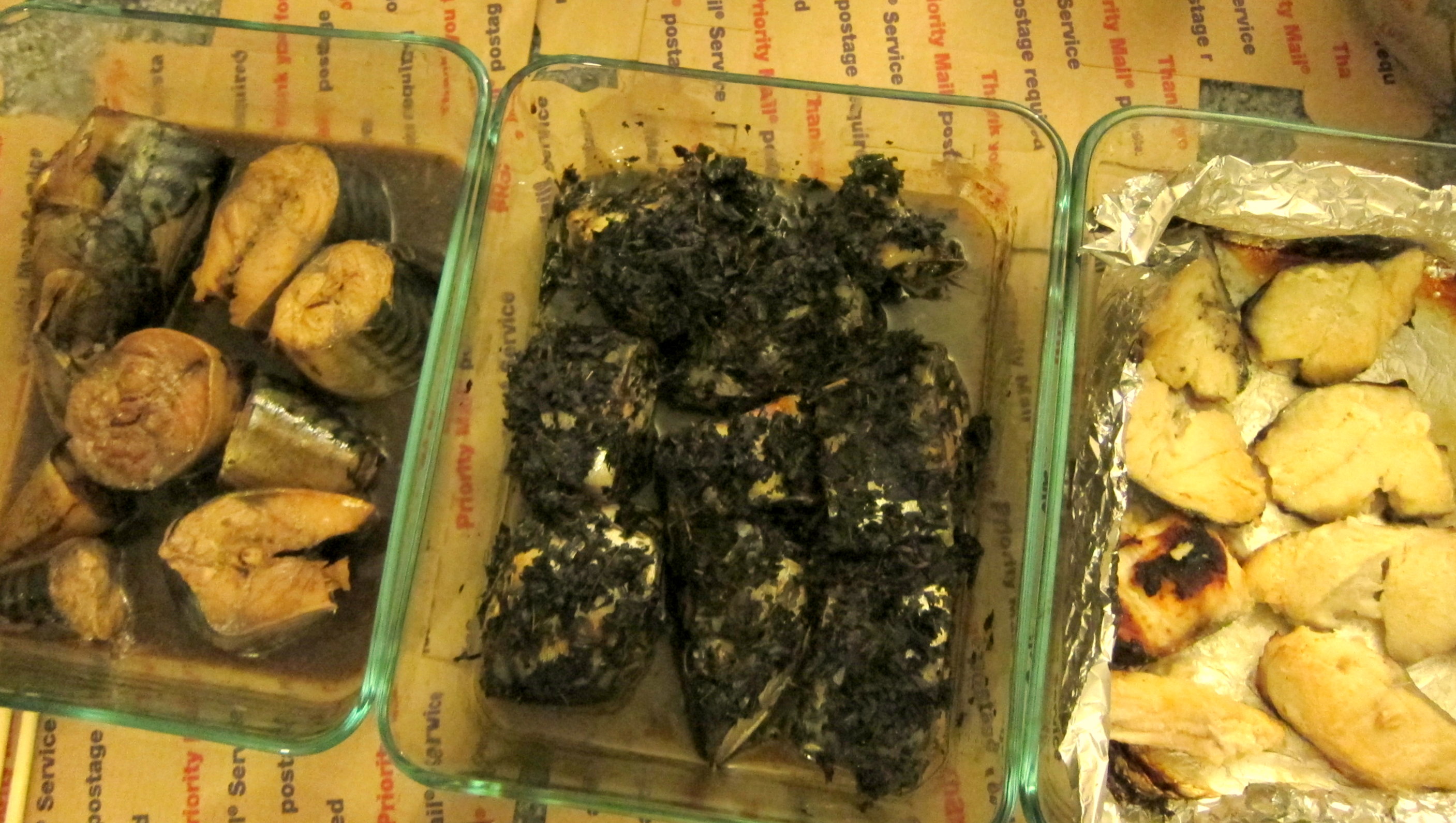

From right to left, because we’re going Japanese, No. 6, 7, and 8 – Sake Kasu Grilled Cod, Mackerel braised with Green Tea Leaves, and Mugicha Mackerel (mackerel braised in barley tea). The braised mackerels, minus the tea, are done in the traditional Vietnamese way (cá kho) with coconut water, sugar and fish sauce. The green tea leaves add a sharp crunch for textural contrast, and once again, the herbal touch dominates the tastes. Personally, I have a soft spot for a lot of coconut water and sugar in a braised dish, but that might prevent the tea from shining through in this case, and at least one of us ranked the braised mackerels top of the list, so Oanh and Dang must be on the right track. 🙂 Tea aside, the fish also got served with the best pickle ever: green cantaloupe in a mild chilipepper and vinegar sauce.  The pickle zest makes the sweetest pair with the mugicha mackerel plumpness.
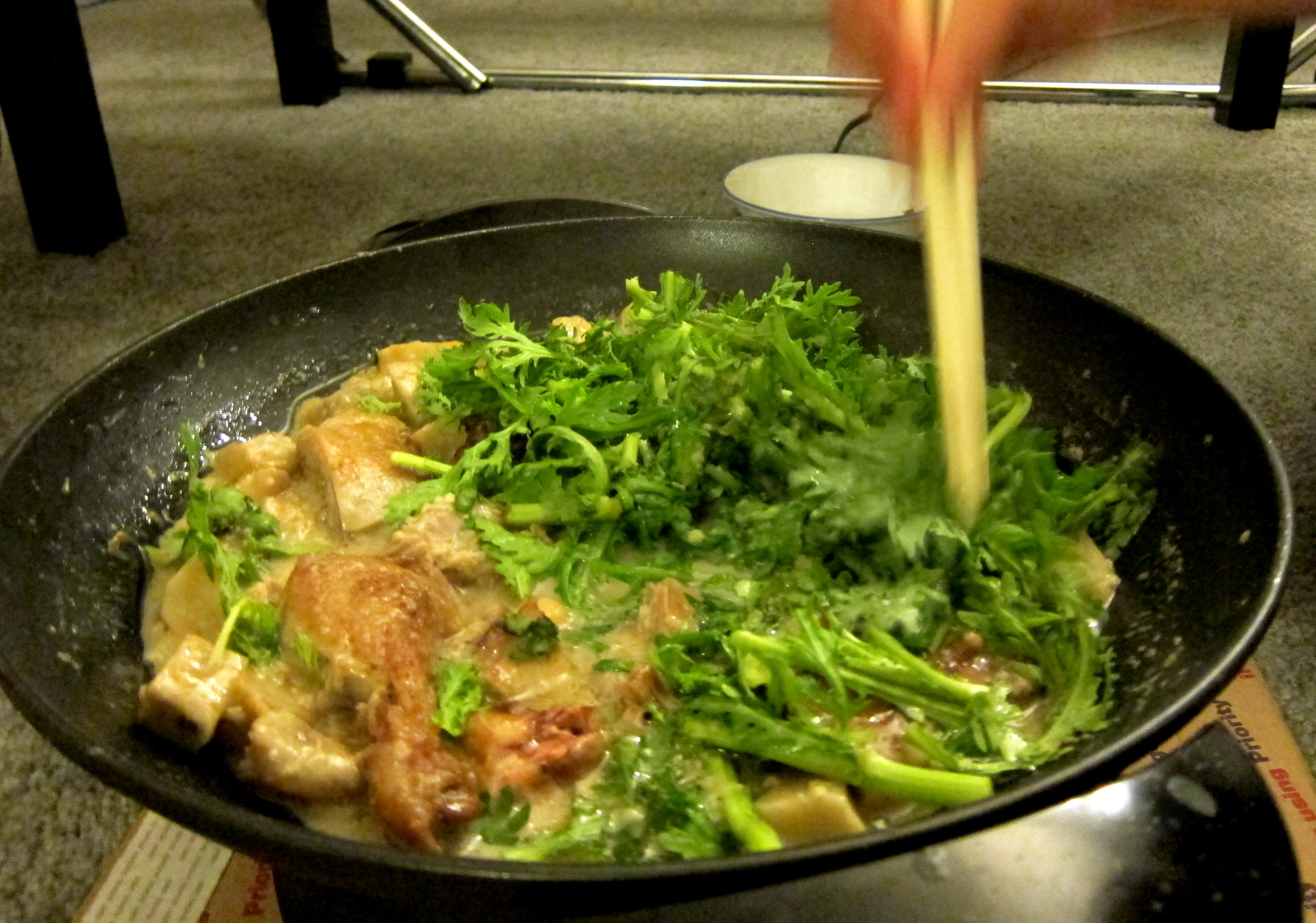

No. 9 – Tofu Misozuke Duck: a twist on the Vietnamese lẩu vịt nấu chao (duck hotpot with fermented tofu), where the chao (fermented tofu with rice wine and salt) is replaced by the tofu misozuke, which is less salty and biting than chao but still as rich. I love the chrysanthemum greens (tần ô or cải cúc) soaked in this thick sauce.
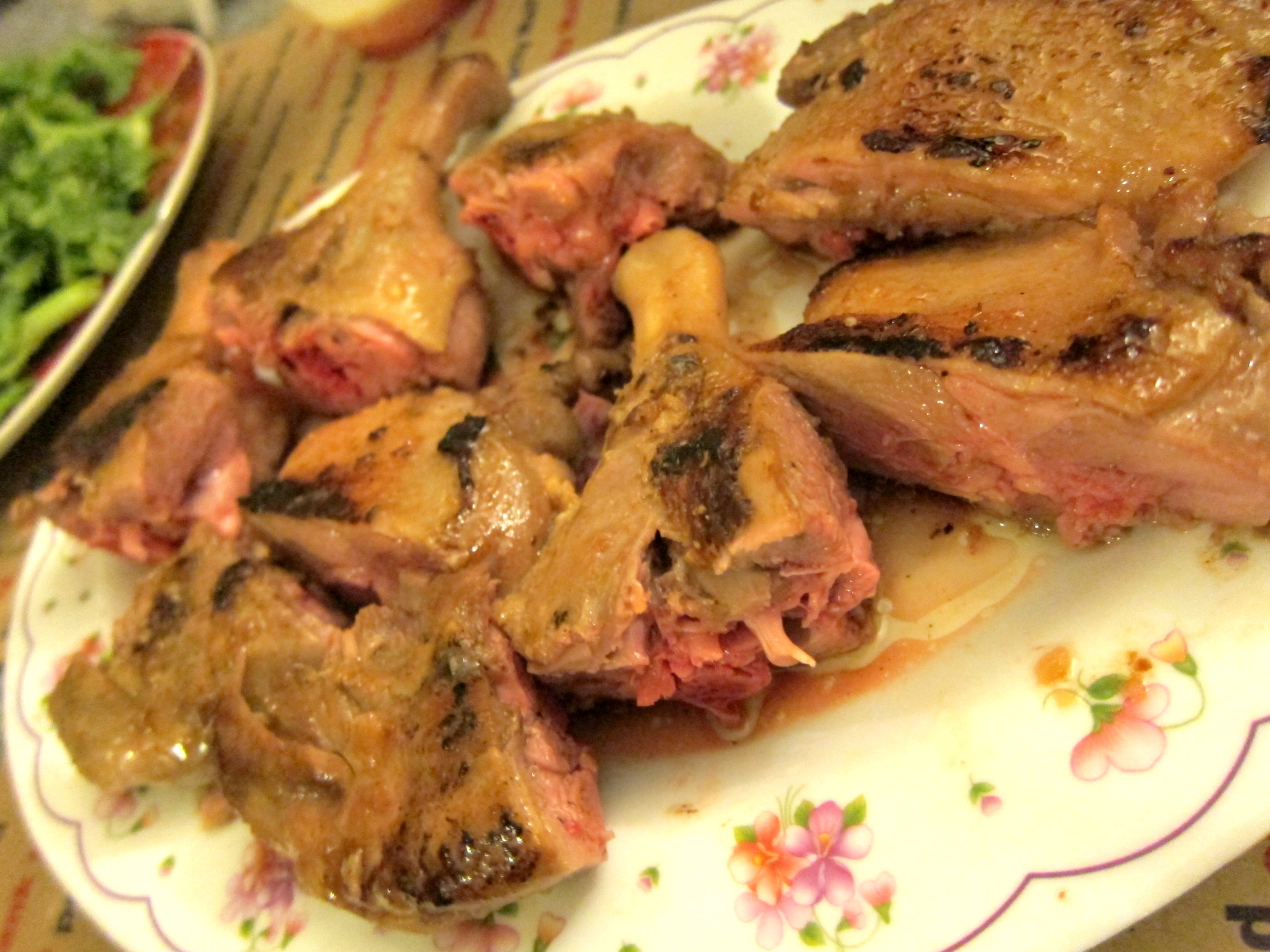

No. 10 – Sous-vide Chao Duck: this time the duck is marinated with chao and cooked sous-vide until pink, then quickly pan-fried for a charred skin. (Side note: The Western palates are accustomed to treating duck breast like steak, but the Vietnamese never eat duck anything less than well done.) Biting into these succulent thighs and legs is like falling onto a giant bed of pillows, y’know wadda mean? 😀
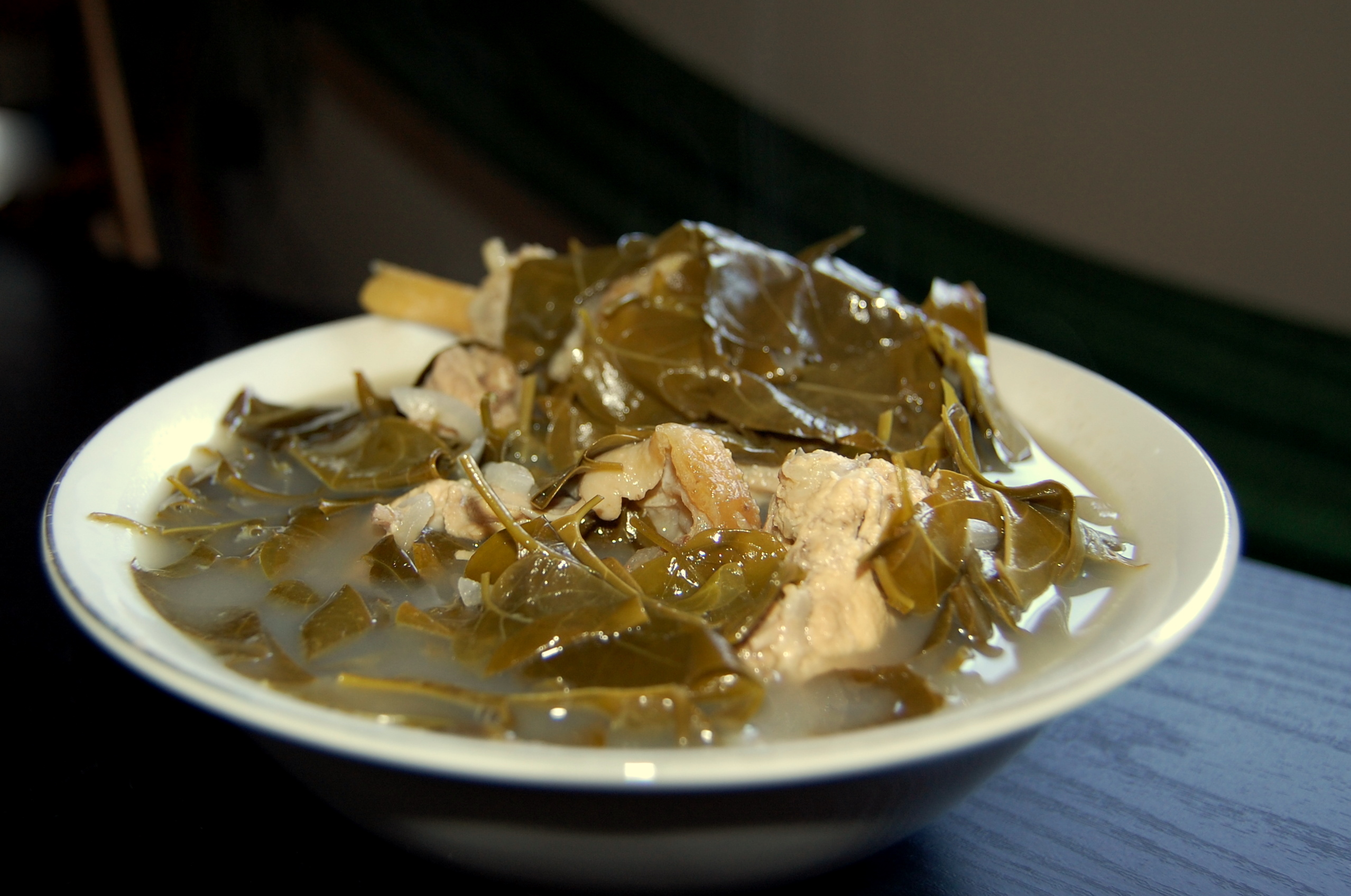

No. 11 – La Giang Sour Soup with chicken (Picture courtesy of Rau Om). Lá giang is the leaf of the Aganonerion polymorphum plant, which has a gentle sourness (as opposed to the piercing sourness of tamarind or dracontomelon (sấu) that is typically used in the Vietnamese canh chua). Ending the meaty main courses with a refreshing sour soup is brilliant, and this simple bi-gredient sour soup is pure genius.
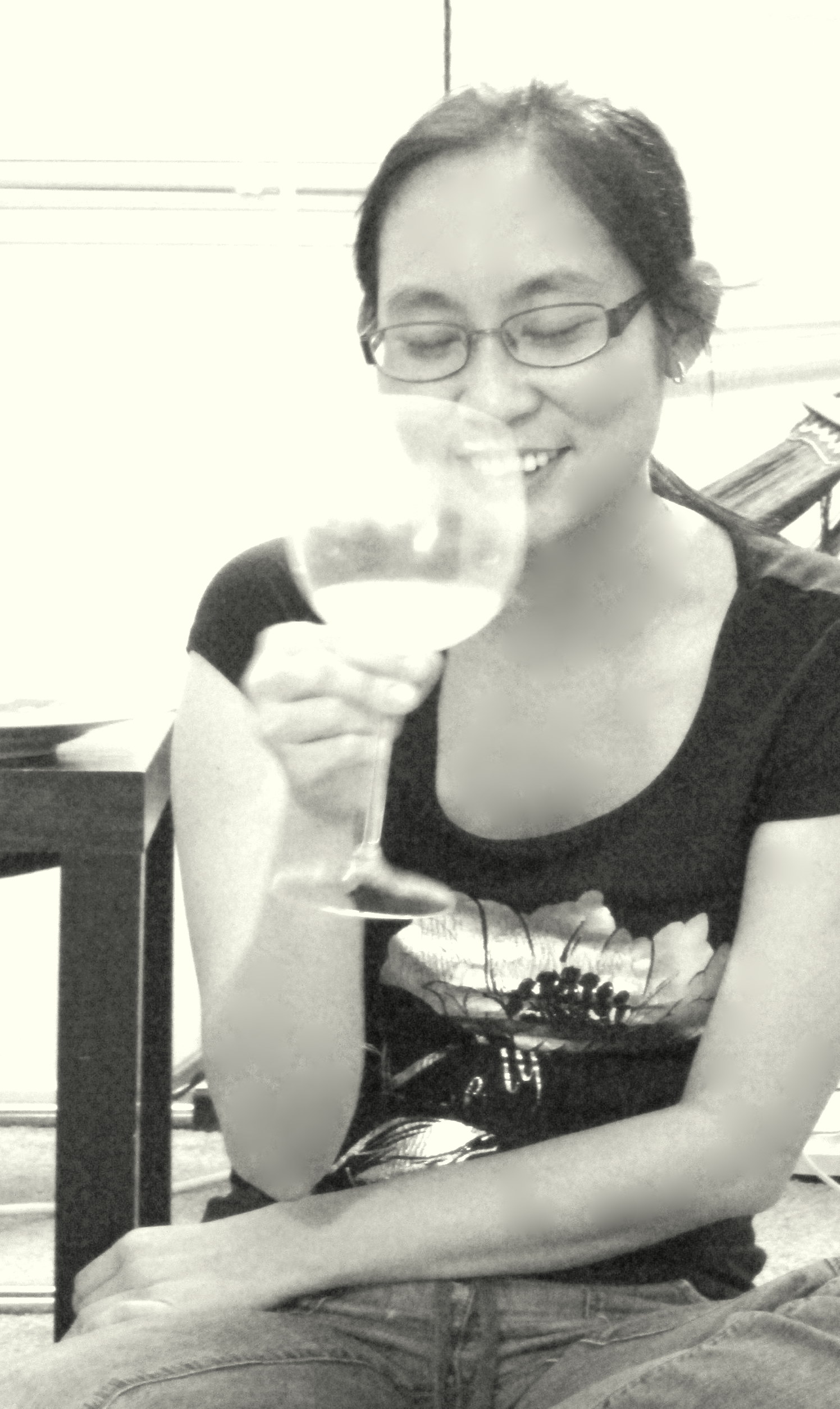
Oanh Nguyen, the mastermind behind the elaborate dinner

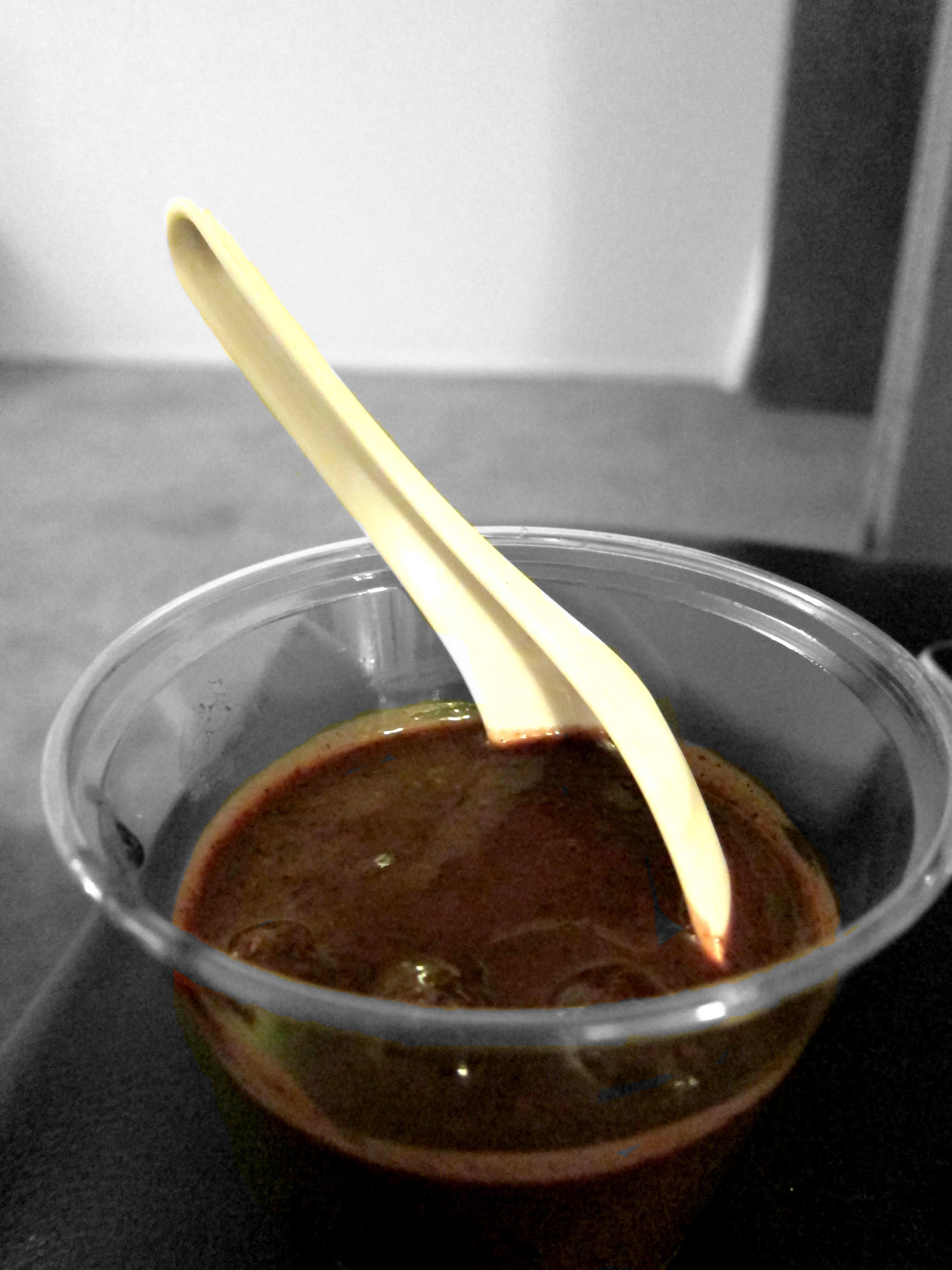
No. 12 – Black Amazake served warm: Rau Om signature Japanese dessert made from Vietnamese black sticky rice (nếp than). The sweetness and the fragrant come directly from the cooked rice, no sugar is added, no grated ginger for flavor, a couple of dried longans garnish the amazake for texture. By itself, the amazake has a smooth porridge-like consistency dappled with the occasional stiffened rice bits.

We pair the meal with chilled sikhye (식혜) and red wine; for the postlude come fresh jujube and lychee to accompany whole chrysanthemum tea and homemade salted kumquat drink. How could we go home when such goodness keeps on flowing?

On one hand, I can’t wait for the day Oanh opens her first restaurant and I’ll get her autograph. On the other hand, I won’t be able to enjoy these relaxing dinners with Oanh when she’s busy with a restaurant. The selfish Mai feels torn. 🙂

——————————————————-
For detailed recipes, visit the Rau Om blog.

——————————————————-
This post is our contribution to the September Edition of Delicious Vietnam, hosted by Phuoc from Phuoc ‘n Delicious. 🙂
All-natural nem by Rau Om – Rediscovering the Vietnamese meat curing art

August 28, 2011 By: Mai Truong Category: Food product, The more interesting, Vietnamese


My most vivid memory nem happened one summer afternoon at a fishing park in the suburbs of Saigon. Nem is one of those more favored snacks to accompany conversations among friends, and while the adults were toasting away the sunlit hours grilling their freshly caught fish, the ten-year-old Mai made friends with this tiny black-haired guy with her share of nem. He enjoyed the nem so very much that he kept reaching out to her and holding her finger. Oh it was such joy watching him nimbly bite into the succulent pink pieces of meat, smiling innocuously. It’s been fifteen years. I wonder how that little pet monkey is doing now. His hair is probably all white, if he’s alive.

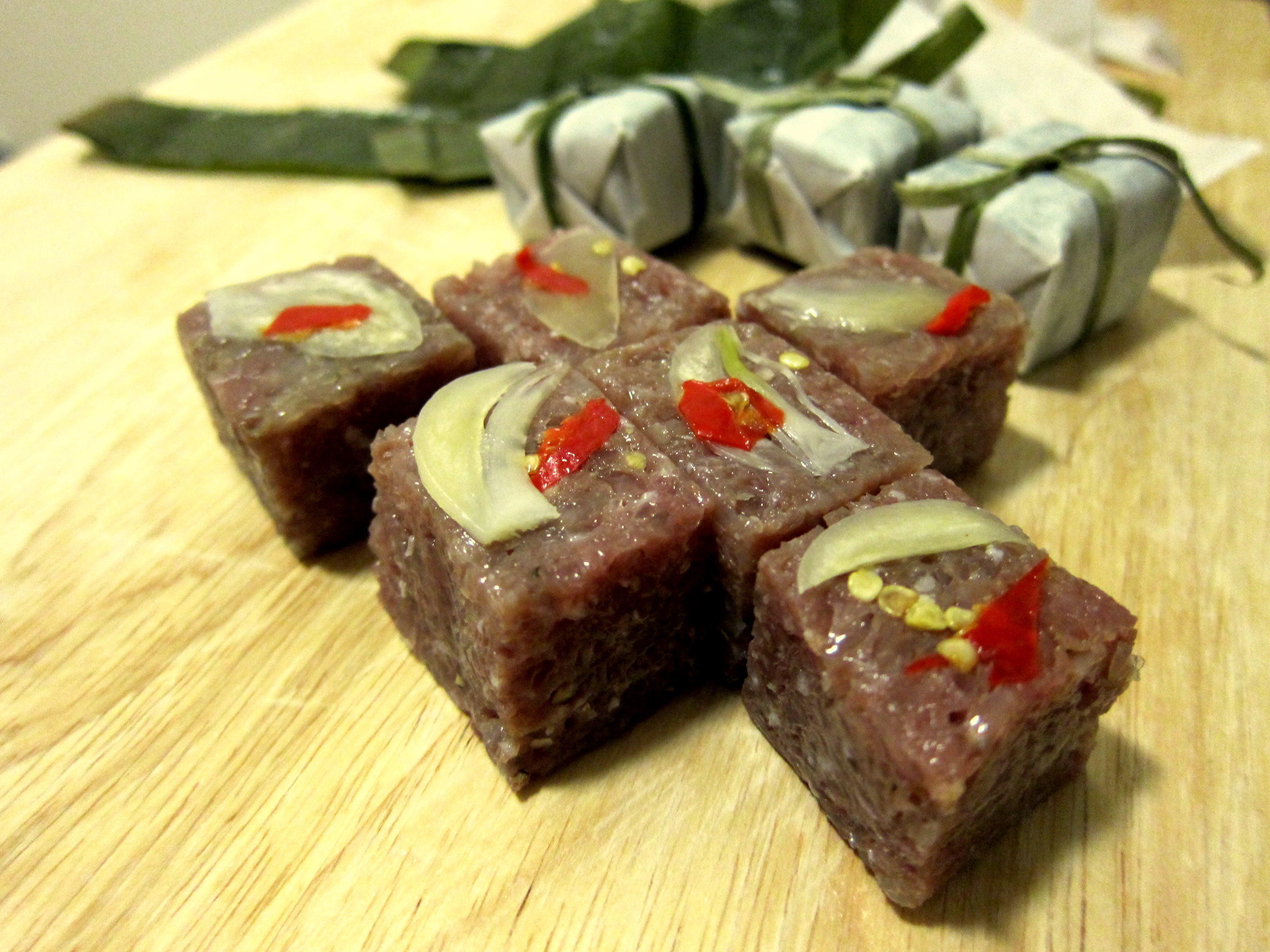
I didn’t have much nem to give him, maybe two or three pieces, each the size of half a thumb. Little Mom had no idea that I was giving them to the monkey, she probably would have given me more if she did, because she’s very hesitant to let me eat nem. First, it’s uncooked meat. Second, ambiguous chemicals are involved in the curing process to make nem. So aside from that happy memory of nem and monkey, Mai grew up indifferent toward those pink meat snacks wrapped in banana leaves. But one day, the twenty-five-year-old Mai, while reading Rau Om, saw that her blogger friends have discovered an all-natural, chemical-free way to make the meat snacks, and the interest arose.

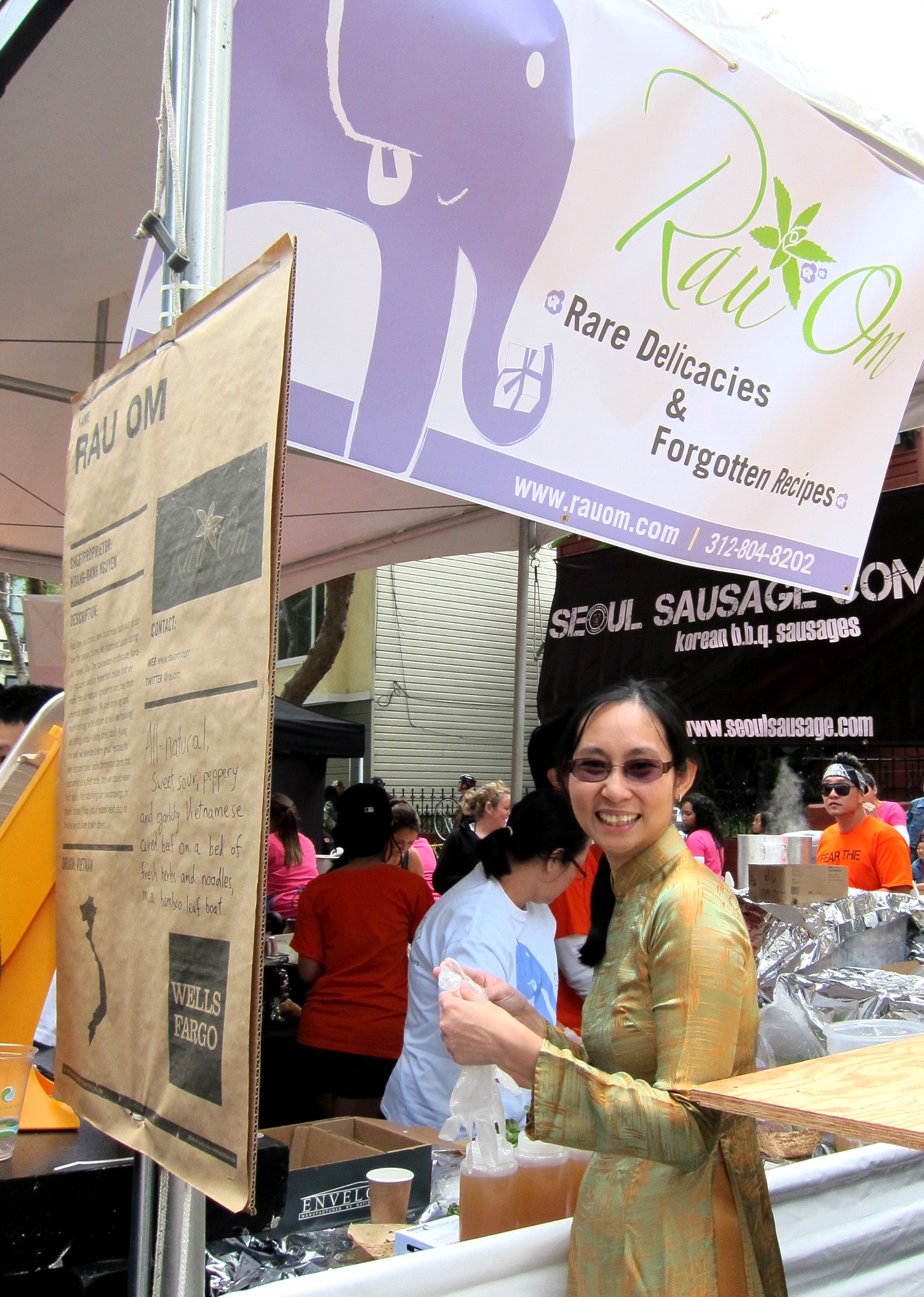
Oanh of RauOm.com at San Francisco Street Food Fest, August 2011

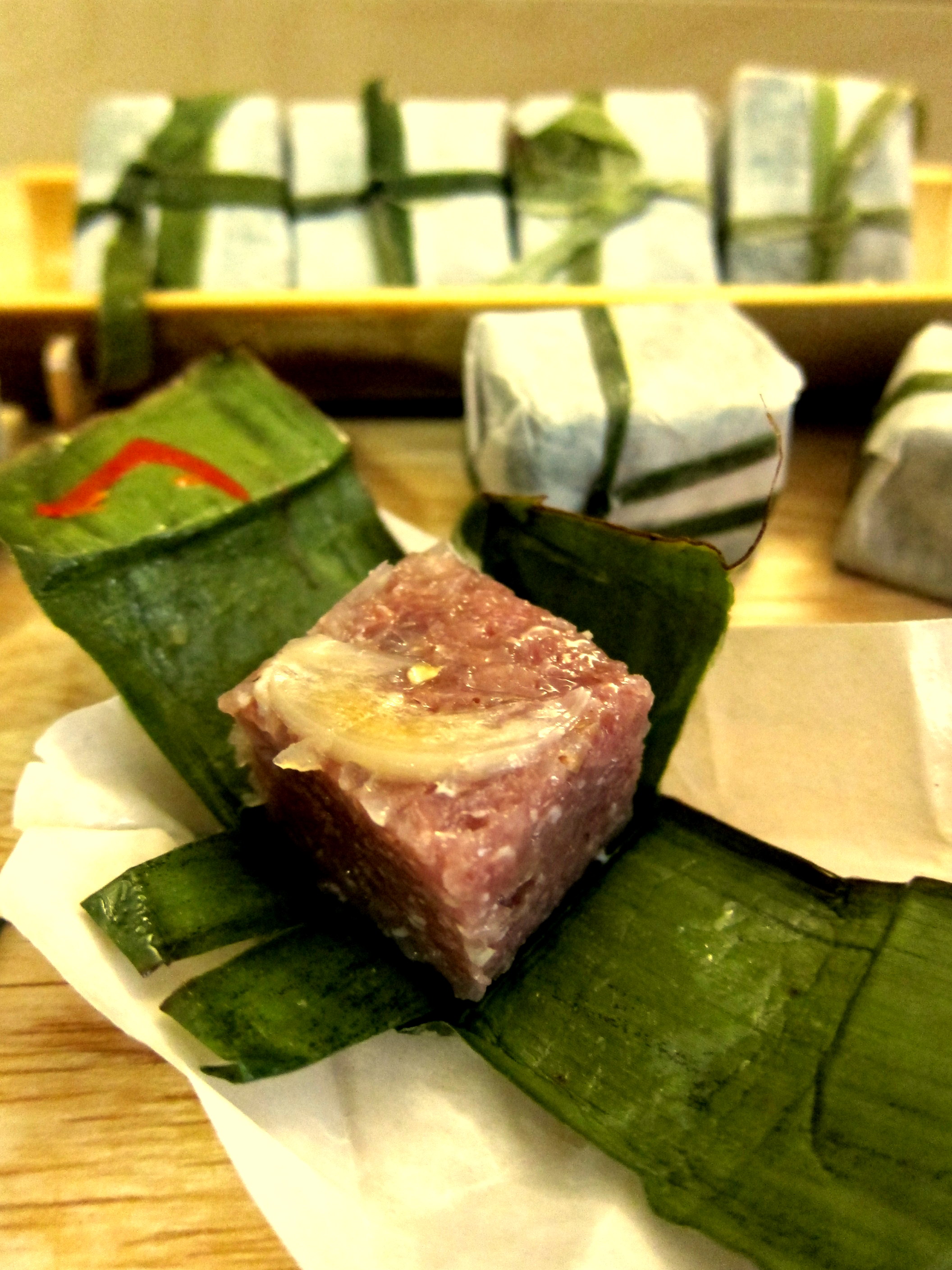
In my previous post, which was a hundred years ago due to web hosting issue, I mentioned that Rau Om‘s nem was the main reason I joined the San Fran Street Food crowd this August. If there’s anything I regret not doing that day, it would be not eating the nem the way Oanh and Dang prepared it at the festival: on bánh hỏi, with rau răm and a dash of mixed fish sauce, in a bamboo leaf boat. I didn’t have bánh hỏi and rau răm at home, so I just ate nem solo out of the leaf. I was surprised by how good it was.

Eaten soon after the curing time finished, Rau Om‘s nem has merely a quick hint of sourness, one paper thin slice of garlic and another of cayenne pepper still smell crisp, and the grease from the pork skin and the beef keep all of those flavors linger on the tongue. It’s intriguing to say the least. But most importantly, Oanh and Dang did not use any random “nem/nam seasoning package” in Asian grocers, which has always been known as the crucial ingredient to make nem. They are scientists, and they do experiments to replace the black box with natural ingredients. As it turns out, there’s only one special ingredient.


Oanh’s answers to my questions about Rau Om’s all-natural nem:

FB: What ingredients did you put in your nem? I know there’s ground beef, pork skin, garlic, chili pepper, salt, sugar, but is there anything else?
Oanh: The only other ingredient we add is celery juice powder (which is exactly what the name indicates, powder made from celery juice), which helps cure the meat and also prevents spoilage. Otherwise, there’s absolutely nothing else. That was the whole point of all our research into making nem the traditional, all natural way.
Also, the ground beef isn’t the regular ground beef. We actually bought whole lean eye round and ground it finely (twice or three times). This is where nem is different from regular sausages: nem can’t be made with regular store-bought ground beef because there’s just too much fat and connective tissues, it messes up the nem texture. With high quality lean meat, nem is more like ground ham than sausage.

FB: How long is the fermentation/curing process?
Oanh: 2-3 days

FB: How long can nem stay good after cured?
Oanh: If you put it in the freezer right away, it could keep for 2-3 months. Thawing should be done in the fridge and nem consumed within 3-5 days.

FB: How would things be different if you use pork instead of beef? Can chicken be made into nem?
Oanh: Pork and beef are neutral tasting enough that it doesn’t make a tangible difference in nem. We also make lamb nem, where we can taste the difference because lamb is a pretty assertive meat (grill lamb nem is really fragrant and yummy). Good question about chicken – I don’t think it’ll work, Dang thinks there’s only one way to find out. Also, now he wants to try duck nem.

FB: Usually, nem has a bright reddish hue, but Rau Om’s nem is more brown with a pink tint. Is this because you didn’t use the seasoning package?
Oanh: We are still tinkering with the process to get the color to be more pink. Most recent batches got a bit little bit more of the pink hue. I don’t think we can ever match the color of nem made with the nem powder, though. The amount of nitrate in that powder package is probably really high…too high for us to feel comfortable matching.

FB: Why does nem have to be individually wrapped in small packages like that? Is it to aid the curing process or just to make them easy to eat?
Oanh: I think just easy and convenient to eat on the go as a street snack. There are also bigger rolls of nem (just like we have bigger blocks) for eating at home, so the smaller packages aren’t necessary for curing.

FB: Does the banana leaf help enhancing the flavor/curing? Would it be okay to wrap it with foil or something beside banana leaf?
Oanh: In fact, most of the nem you find in Vietnamese delis in San Jose would be wrapped in foil and/or saran wrap. Even the banana leaf wrapped ones have the leaf itself wrapped in saran wrap. What we found was that direct contact between the leaf and the nem does give nem a distinctive flavor.
Nem also used to be wrapped with lá vông (tiger claw leaf), lá chùm ruột (star gooseberry leaf), or lá ổi (guava leaf). We haven’t been able to get lá vông, but we have experimented with lá ổi and cherry leaves. Speculation: these leaves don’t impact the flavor as much as provide the ingredients and enzymes that helps with curing, playing the same functional roles as the celery juice powder.

Honestly, I’m still not sure what celery juice powder means, so I’ll bug her to show me next time I see her. And how did she even think of celery juice powder? Lots of admiration sent her way. 🙂

I did my share of nem experimenting. Not having a grill or any appropriate grilling facility, I threw a handful of nem onto a skillet smeared with hot oil. Little Mom did warn me about pork skin and oil in the past, so I wore long sleeve shirt, wrapped both hands in plastic bags, stood three feet away from the burner, and used long chopsticks to flip the nem. Midway through the frying session, I also had to use a chopping board as a shield between me and the skillet. The aftermath was a stove with as many oil dots as stars in the Milky Way. I’m not kidding, frying nem was like lighting fireworks. But they go great with white rice and kimchi. 🙂
My clumsiness aside, making nem is not easy, and making nem without chemicals has been unheard of, but Oanh and Dang have succeeded in reviving the lost art of all-natural Vietnamese meat curing. I felt excited just being one of the many tasters of Rau Om‘s nem. The same kind of excitement I had playing with that pet monkey in the fishing park. If you’ve held hands with a monkey, you know it’s like a human hand, but it’s not, isn’t it the strangest feeling? Well, nem is raw meat, but it’s not, isn’t it an interesting food? 🙂
Disclaimer: The author of this post did not receive any monetary profit for writing about the product, so if you decide to trust her taste, you can buy Rau Om‘s nem online at rauom.com. $20 for a package of ten nem. 🙂

DISCLAIMER: I received no free product or monetary gift in exchange for this review.

The Koreans make good pho

August 11, 2011 By: Mai Truong Category: California - The Bay Area, Korean, noodle soup, Vietnamese


Every time I ride the bus on Telegraph, Kang Nam Pho stands out to me like a supernova. (There are these “sorta” cosmologically important exploded stars that have been on my mind for quite some time now, which is an excuse for the sparse blogging of late.) I’ve seen Chinese-owned pho places, but they never have a Chinese name. Pin Toh on Shattuck, which used to be Phở Hòa, has pho cooked by Chinese chefs, but it’s a Thai diner (talk about incognito). In my American pho encounters, Kang Nam Pho is the first instance of a Korean-owned Vietnamese diner with a Korean name. They even put the whole “Phở” with accents on their white-on-red sign, next to “강남 윌남국수” (Kang Nam Wilnam guksu, i.e., Kang Nam Vietnamese Noodle). I like this place already.


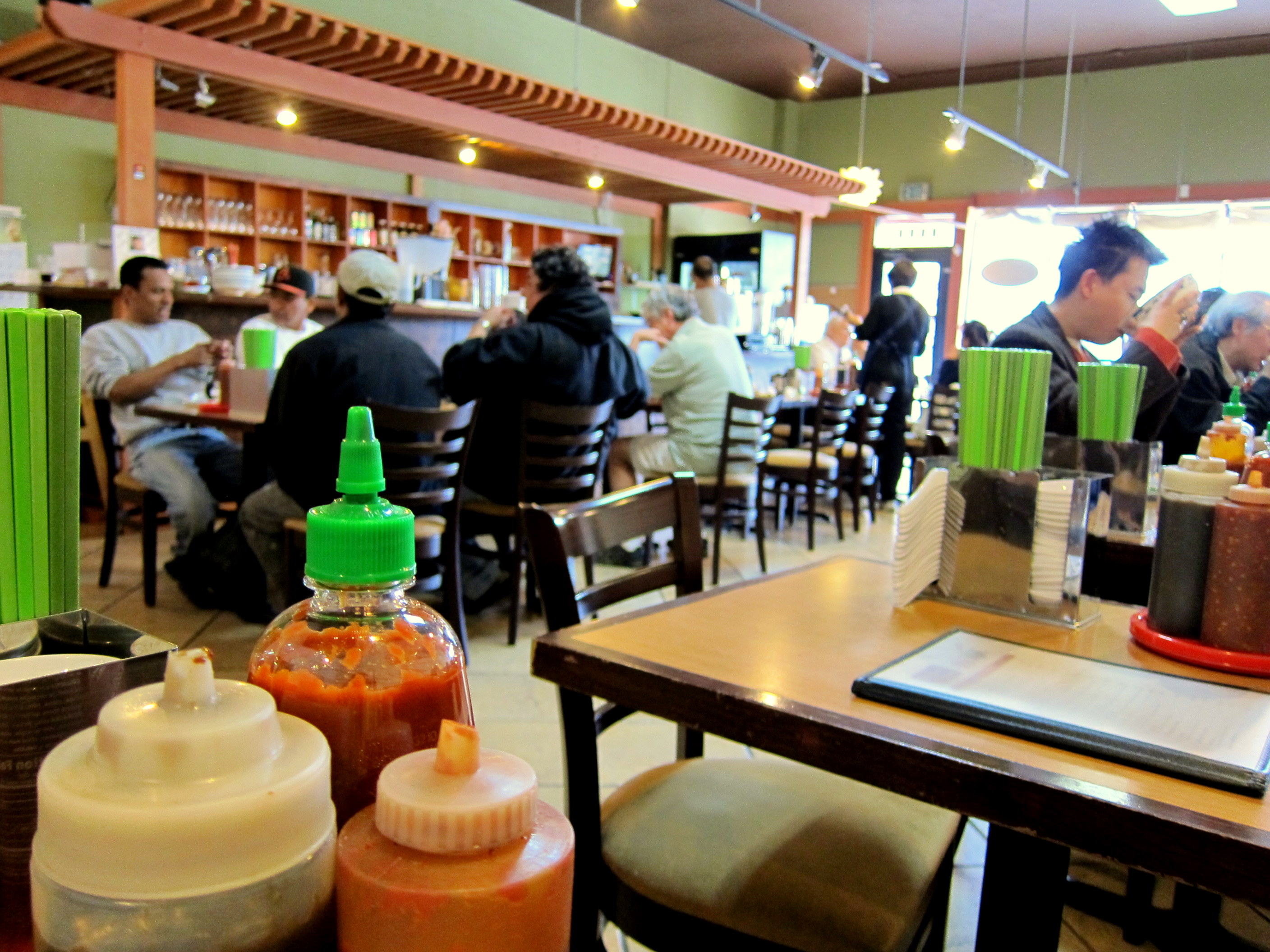
Their menu is also all in Vietnamese, again, with complete accents albeit some misspellings; there is English description under each name and very little Korean. I vaguely remember bibimbap and bulgogi at some bottom corner of a page, but Kang Nam has things that even a common pho joint wouldn’t always have, such as hủ tíu Nam Vang (kuy teav Phnom Penh) and bò kho (noodle with beef stew). The tables are even equipped with green chopsticks, hard-to-eat spoons and sauce bottles. If only the customers didn’t flock every table that day and keep the ladies moving like shuttles in a loom, I would have asked what inspired them to make the place even more Vietnamese than a Vietnamese would, for better and for worse (the spoons…).


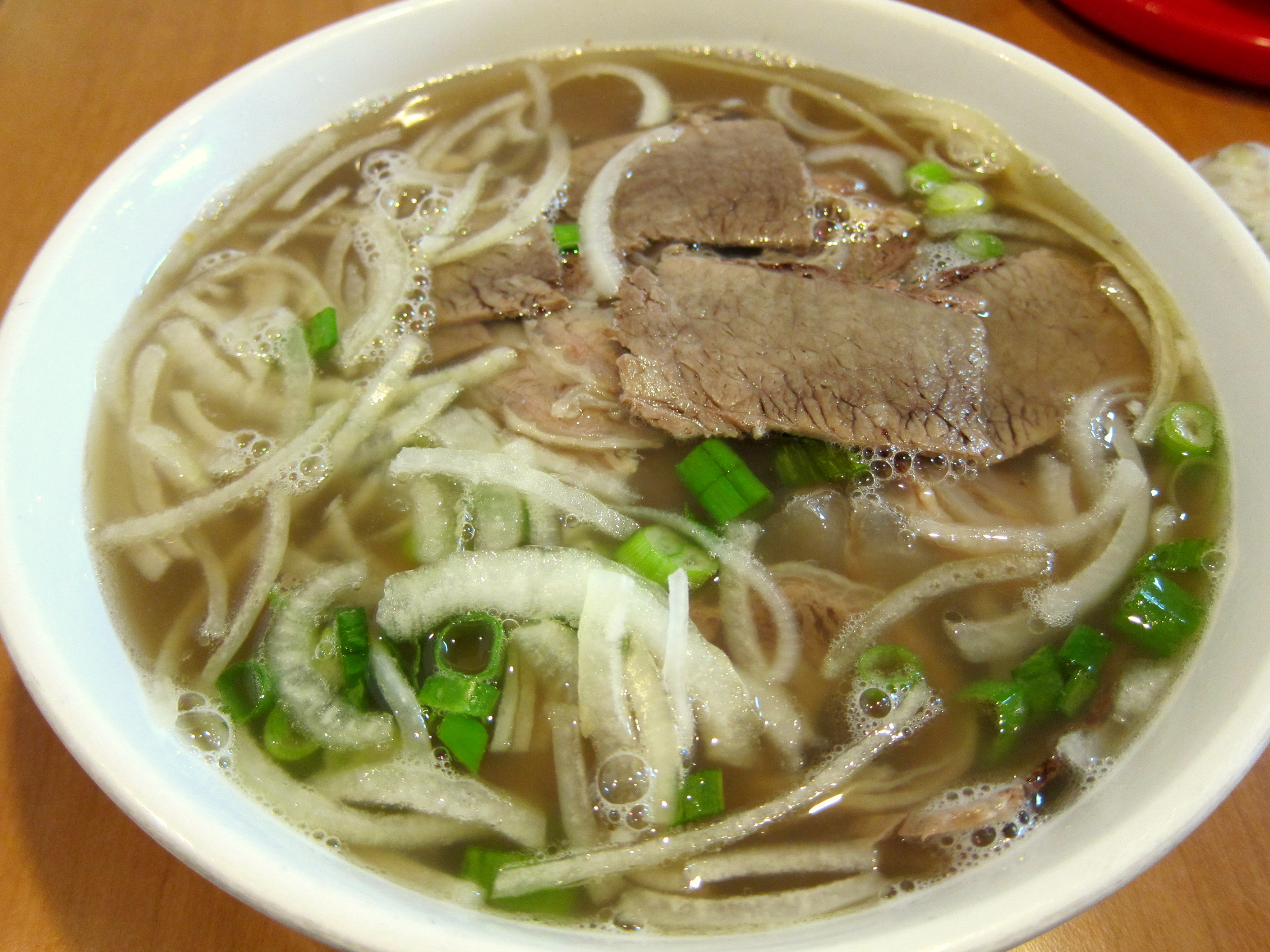
After ordering the inevitables, gỏi cuốn to start and phở chín nạm gầu gân sách (brisket, tendon, tripe) to fill, I followed the usual practice of a lone diner: pull out a book and pretend to read while eavesdropping on my neighbors. However, just barely 3 minutes into opening the book, the summer rolls arrived. Casting aside my literate facade, I started rearranging the roll halves for a good pic when the noodle soup swiftly got placed in the way. They did it fast. That’s how pho should be: you got a pot o’ broth, cooked meat, and blanched noodle ready, an order comes, they all go into a bowl. It shouldn’t take more than one minute. The problem is with me: too little time for a good picture and unable to decide what to eat first. The pho won. The rolls wouldn’t get soggy waiting.

This is one of the best pho I’ve ever had (mom-made pho not included). Deep and subtly sweet broth, chewy noodles, lots of tripe and tendon. A clean aftertaste and a warm broth until the last morsel. Little Mom, a frequent pho craver albeit a picky patron, would like this pho. Why didn’t they struct their business a little closer to campus so that I could come here for lunch? Would they serve blanched beansprout or pickle onion if I ask for it? Next time…

Whenever I ride the bus on Telegraph, I contemplate pulling a stop request for a bowl. Perhaps I’ll go tonight in the name of celebrating Little Mom’s birthday. 😀 We’re Vietnamese, but just to go along with this post’s blending spirit: 생일축하해, 엄마! 🙂


Address: Kang Nam Pho House
4419 Telegraph Ave
Oakland, CA 94609
(510) 985-0900

UPDATE: A 5-second roaming on the ‘net reveals that the Koreans like pho (I’m not surprised, they have plenty of beef based noodle soups) enough to make Korean pho restaurants, and generally Korean pho broths are described as more bland (if disliked) or more clean and fresh (if liked) than Vietnamese pho. For Kang Nam, I side with the latter. Which reinforces the consistency of my pho style. Those who have eaten pho with me often shake their heads at my indifference toward the sauces and the herbs: I don’t put veggies into my pho (not a single leaf), and I don’t adulterate my broth with Sriracha or the black bean sauce. I like my pho pure: beef and noodle. More Korean pho samplings are necessary before I can confirm the difference. When the supernovae start making more sense, the new quest will start. But is this quest possible in the Bay Area?

This post is submitted to Delicious Vietnam #16, August edition, hosted by Chi Anh from Door to My Kitchen.

Red Boat fish sauce – Good enough to sprout crazy ideas

August 04, 2011 By: Mai Truong Category: Food product, Southern Vietnamese


“It’s sweet, and it shines like honey,” my mom recalls. She was in fifth grade, her teacher, whose family also owns a fish sauce plant, gave each student in the class a sample of the condiment in a mini plastic pouch. When my mom took it home, it took her mom no time to see that this was the Ninth Symphony of fish sauce. It didn’t take the Vietnamese grandmothers in the Bay Area very long either, Rob Bergstrom said, and I quote, to “limp out of the store carrying a full case” of Red Boat’s.

I met Rob because of a half-a-month-late comment that I left on Ravenous Couple’s glowing review. Rob is a man who goes around grocery stores and the world to taste fish sauce straight out of the bottle by the spoonfuls (I don’t recommend doing it at home if you’re under 18). And Rob was moved by my mom’s fifth grade experience, which, he said, is similar to a few sparse stories among the older Vietnamese about an excellent-quality fish sauce that some have once tasted in their lifetime and never again. Especially not in the States, where a “Nước Mắm Phú Quốc” bottle, in big font Vietnamese, reads “Product of Thailand” in the small prints.

For those who know fish sauce, skip the rest of this paragraph. For those who don’t know fish sauce, yes I agree, “fish sauce” does not sound candle-light-and-roses to the ear. It’s a lose translation of “nước mắm“, whose literal translation isn’t any more poetic either (I’d translate it if you ask). The sauce itself is actually subjected to many chuckles and jokes among Vietnamese. But it’s the backbone of Vietnamese seasonings. It’s used to marinate meat, to caramelize claypot dishes, to flavor-ize broths, to make dipping sauce for a myriad of wraps and rolls. Fish sauce to Vietnamese food is like soy sauce and sesame oil to Korean food, curry to Indian food, and BBQ sauce to Texas barbecued brisket. (Savory Vietnamese food, unless made by my mom, needs fish sauce to taste good.) What is the sauce made of? Fish and salt. In a barrel lie layers of fish and layers of salt for months, by osmosis and high salt concentration on the outside, the juice inside the fish is sucked out, the flesh collapses and degrades, the mixture ferments (don’t cringe, wine is fermented stuff too, and old country ham grows mold on the crust). At the end of several months, you open the spout at the bottom, and out comes an amber liquid. That’s the first press of fish sauce. Then water and salt are added to the now mostly, if not all, disintegrated fish, more fermentation takes place, out comes the second press. Then the third, and might as well the fourth. By this time, it’s practically salt water.

The bottles in the markets, even in Vietnam, do not contain pure fish sauce (fish and salt) but also water, fructose, and “hydrolyzed wheat protein”, a more sophisticated name of MSG. The producers have to add those things to boost the taste because the base sauce is not the (first) concentrated extract that comes out of the spout, but what comes after. You might think that there would be a big lucrative market for premium sauce such as this in Vietnam, but sadly, much of it is used by large companies for blending with other additives to produce large volumes of second grade sauce, which is often mislabeled as first quality. Because of this, authentic first pressing Phu Quoc fish sauce is very hard to come by, even in Saigon.

So Cường Phạm brought his family’s first press to the States. Obviously a good move. An even better move is when he shook hand with Rob Bergstrom, who helped him expanding the American market, and last I heard, the New Zealand market too. You gotta hear Rob talk to see how he much adores it. Here’s a few things I learned about Red Boat from him (that Ravenous Couple haven’t covered already):

M: What is the ratio between anchovy and salt in Red Boat fish sauce?
— Rob: The ratio depends on the leanness of any given catch of anchovy, but roughly somewhere between and 4:1 and 2.5:1 fish to salt (by weight).

M: What about the barrel construction?
— Rob: Red Boat uses hand made wood barrels, in the unique traditional Phu Quoc style, instead of concrete or clay ones. The barrels are kept indoors but some sunlight is let in and fresh coastal air is circulated through the building. The wood imparts a unique character on the sauce.

M: How long is the fermentation process?
— Rob: It usually takes 12-16 months to make the sauce, the longer fermentation yields greater protein concentrations and associated richness and depth.

M: What is the market spread of Red Boat now? Where can I find it around Berkeley?
— Rob: Red Boat has been very well received by Asian cooks and chefs. Often when Vietnamese folks try it they remember it as the flavor of the best fish sauce from home and will pick up a whole case. It has also become a “secret” ingredient used by chefs at many high end restaurants and it can currently be found at some of the best specialty food shops on the West Coast. Geographically, we get shipping orders from all over the country and hope to be in Asian and specialty markets nationwide by the end of the year. The enthusiastic reception by people using this in all types of cuisines has been fantastic.
(UPDATE: I met Rob 3 weeks later, when Berkeley’s Monterey Market and The Pasta Shop, among others, are now under the Red Boat spell.)

M: Is it sold in Vietnam?
— Rob: Not currently, but the sample tastings in Vietnam have been extremely well received so it is something that we are considering.

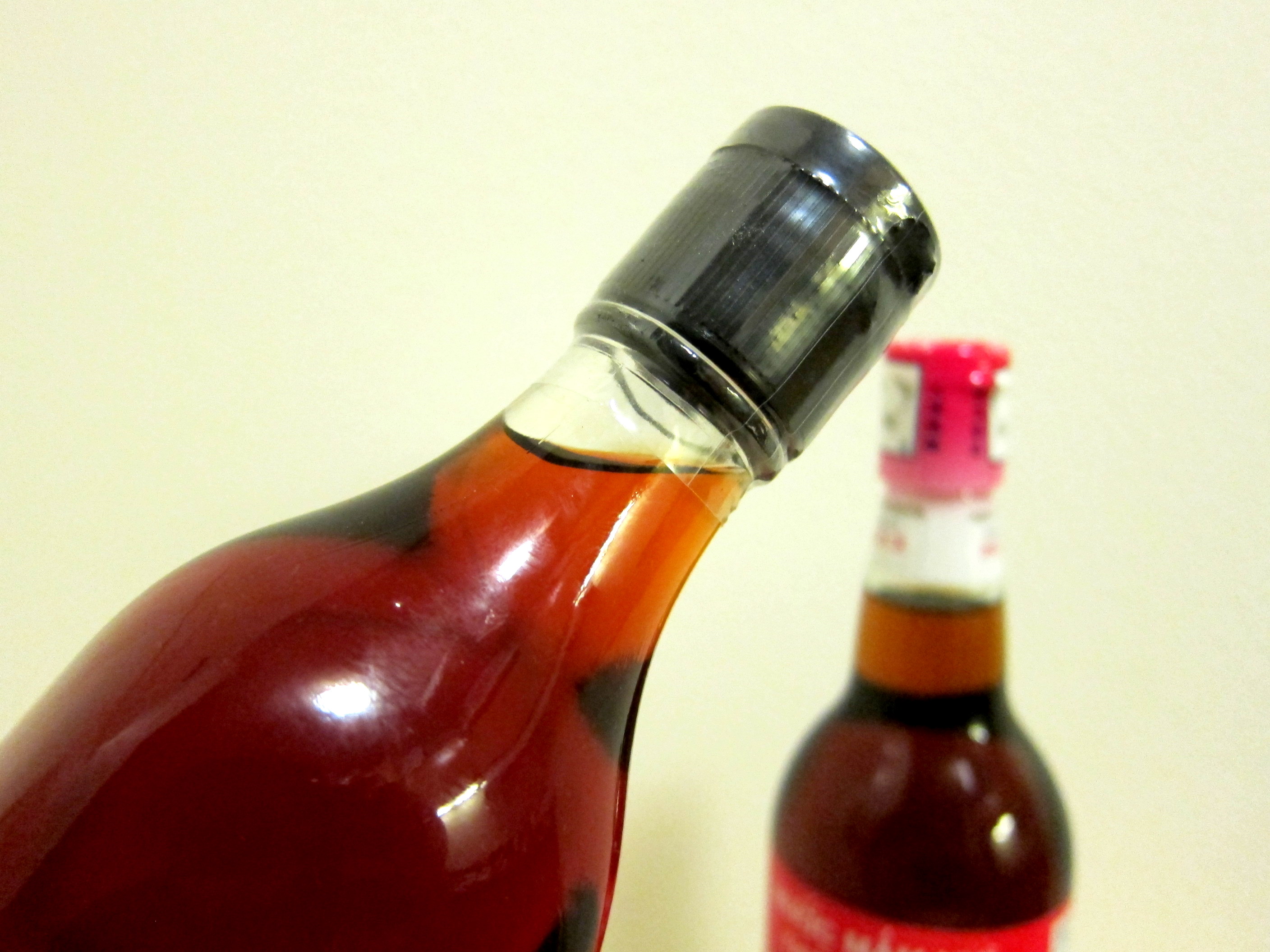
My interest was piqued. The glass bottle is stylishly shaped, the label has a clean design. Is this really the wonder liquid that my mom still remembers for years after tasting it once?

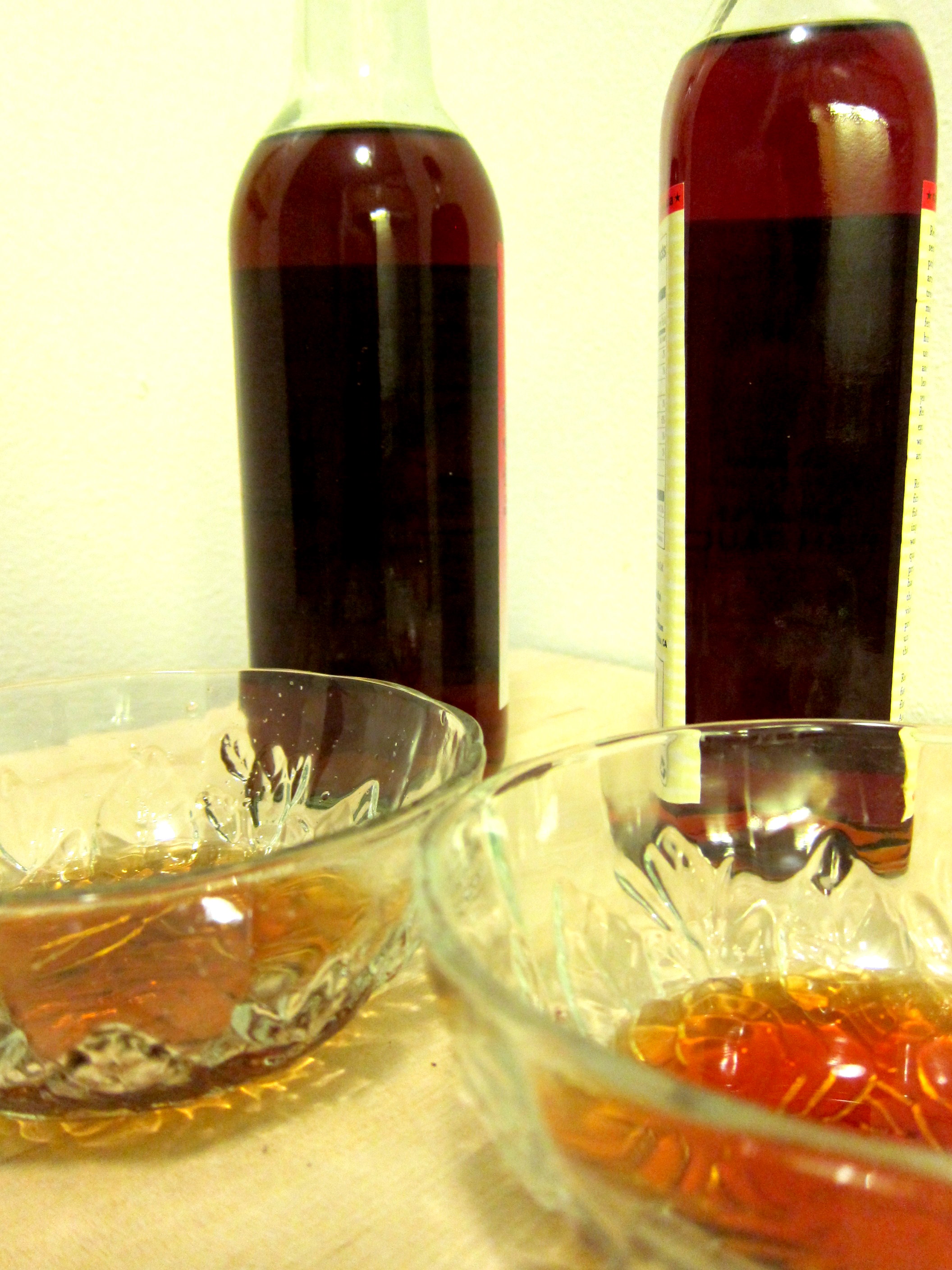
My pantry has a bottle of “Shrimp & Crab Brand – Premium Quality Fish Sauce” (Product of Thailand) that I bought some time ago on a whim. Now it comes in handy. First, a visual check.


Red Boat: light brown with a red glow; S&C: dark brown with a dead yellow hue. I usually like yellow, but red wins this time.

– Viscosity check: S&C joyously streams out of the bottle like first graders out of school, while RB takes its time forming droplets at the hole. The discrepancy is slight but noticeable, especially if you check with a spoon.

– Smell check: RB is more solid but more pleasant than S&C.

– Taste check: [this is proof of my dedication to blogging. A lot of Vietnamese, my grandfather for example, put fish sauce (out of the bottle) on rice like people put butter on bread. I can’t. But this time, I taste a teaspoon of S&C, drink some water, and taste another teaspoon of RB. Then I repeat.] S&C: tastes like salt water with a stinging residual, RB: the immense saltiness dissipates after a few seconds, giving way to a faint but lasting sweetness at the back of the throat. This fish sauce is actually pleasant in its pure form!


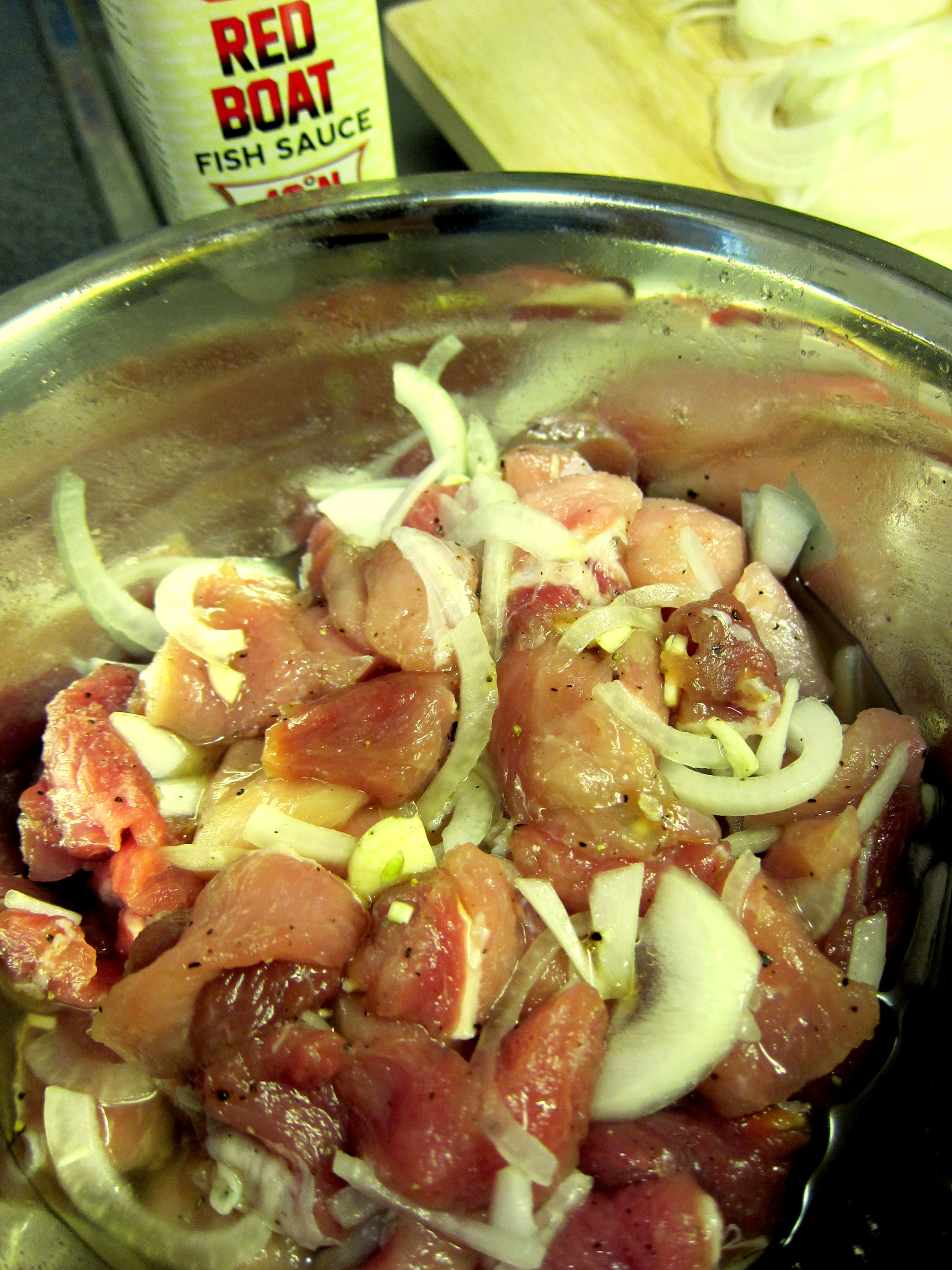
I marinate my pork with it. Bob has used it in every one of his inventions with meat. Rob has tried it in a Bloody Mary. All of them are great. Bob jokes about incorporating it into ice cream, which can be quite reasonable if it’s to balance out a caramel-laden scoop. How about a simple lemonade with Red Boat instead of the common salted lemon drink (chanh muối)? How about Red Boat in sugarcane juice? Red Boat cupcakes? Red Boat mousse? Red Boat truffle? Red Boat key lime meringue? Okay I’ll stop.

DISCLAIMER: Beside one free bottle of Red Boat, I made no profit in exchange for this review. This review was written completely out of my own interest for the product. 

Taro and I

July 10, 2011 By: Mai Truong Category: sweet snacks and desserts, The more interesting, Vegan, Vietnamese

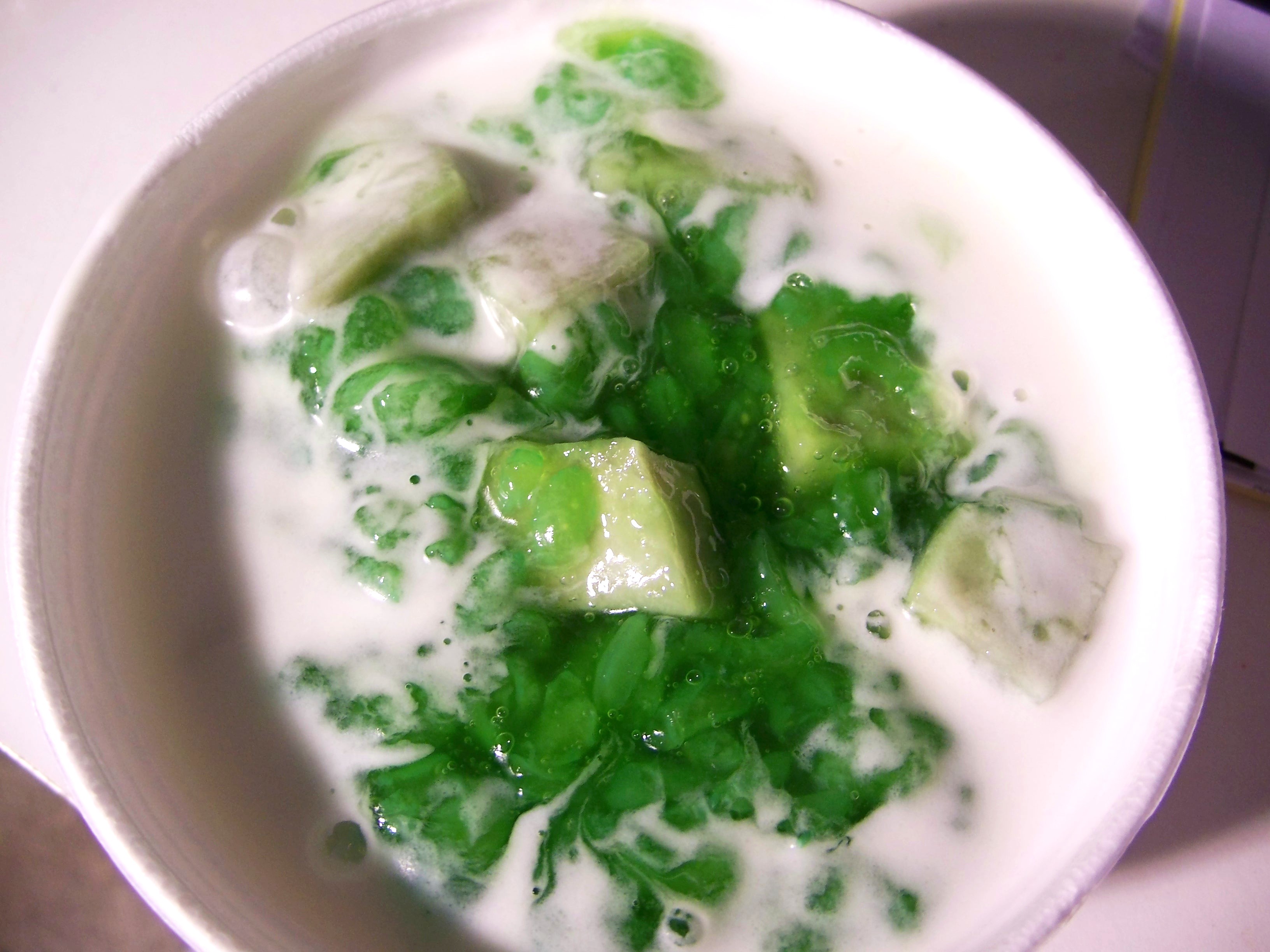
Taro and sticky rice pudding with coconut milk

If you don’t like taro, I don’t know if we can be friends.

I used to be aghast when people asked me what taro was. It’s a root, like potato, you know? Then slowly I realized that I was the obnoxious one for not realizing that not everyone is Vietnamese. But when you grew up with something so abundant, don’t you get the feeling that everyone else must have grown up with it too? Next time someone says “What, you haven’t seen Star Trek?!”, I’m gonna ask “have you eaten taro?”. (Just my luck, they’d say yes and I’d have to go to Blockbusters. :D)

To be fair, Vietnam is not the only country that has taro in its kitchens, the roots are also in China, India, Korea, Japan, Cameroon, you name it. But to this Vietnamese taro-fan, it’s Vietnamese heart and soul. It’s not recognized everywhere, but its growth spreads everywhere. It adapts easily in both sweet and savory dishes. Its sweetness lies somewhere between the red sweet potato and the usual potato. It’s nutty like boiled peanuts in some parts, dense and moist like cassava in others.


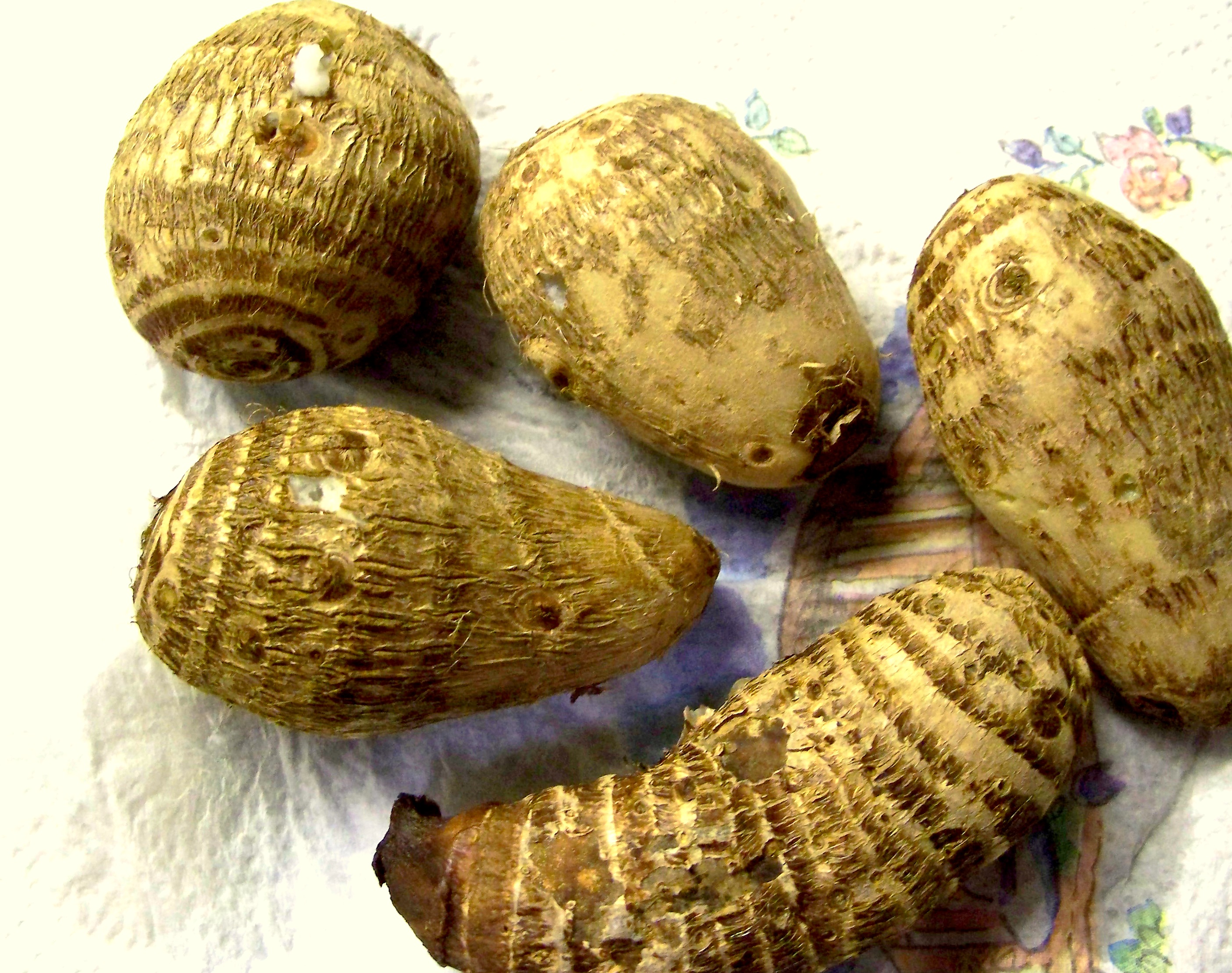
It’s not pretty (are roots ever pretty?). It’s hairy, brown, with several nodes and spots. It can cause a slight itch if washed with bare hands. Most small taros are just a tad bigger than a chicken egg. The only thing I know how to do with them is to boil them, like eggs, for roughly 30 minutes (from cold water). Then I peel them while they’re still warm, dip them into sugar, and savor their nuttiness.

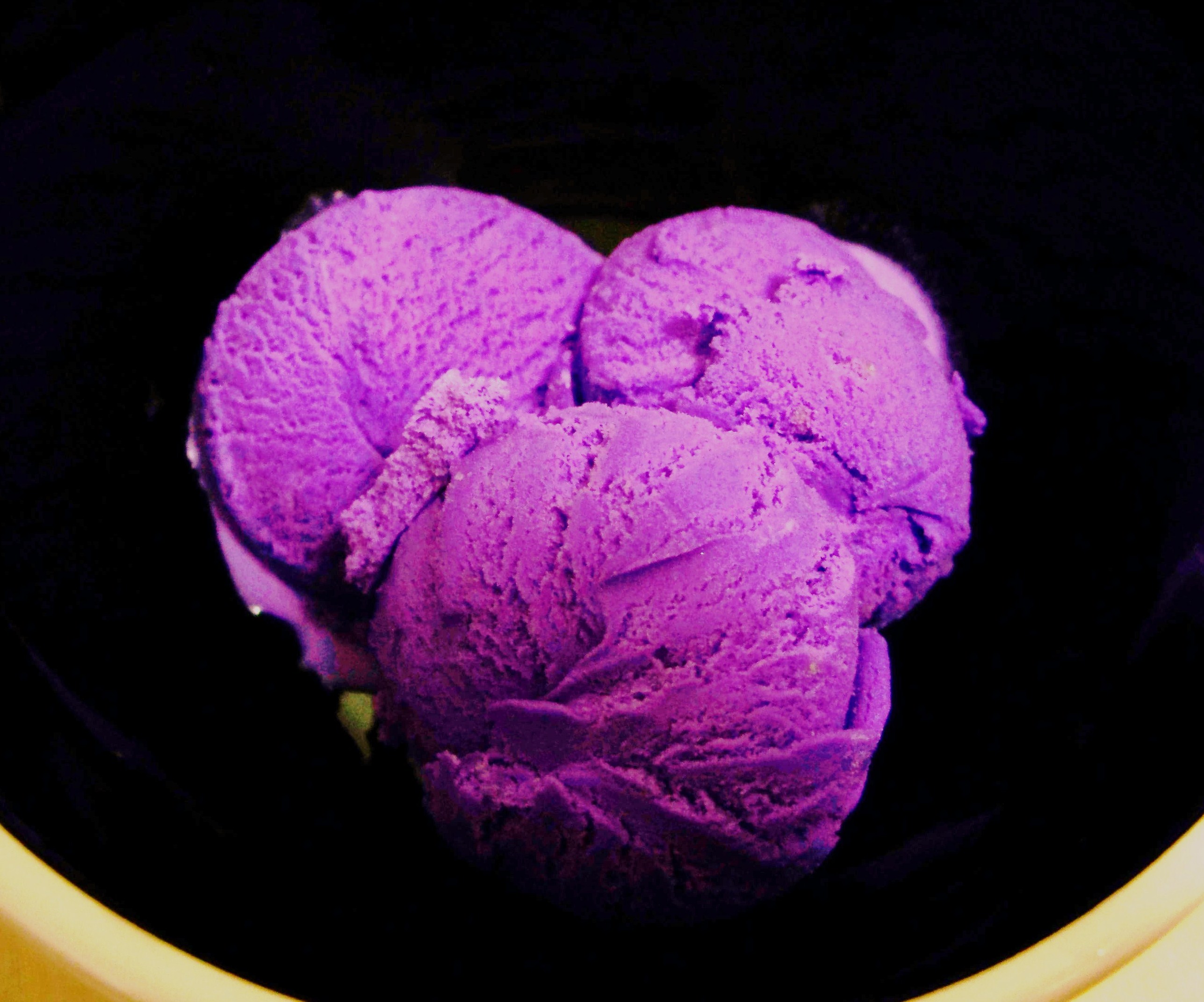
Magnolia's taro ice cream from 99 Ranch Market

Actually, the taro here doesn’t taste that great. It’s too bland, too mushy, too dense, and it barely tastes like taro. Back home, Little Mom used to make taro soup (canh khoai môn): chunky slices of taro, chopped green onion, pork, dried shrimp (tôm khô), water, salt and sugar to taste. There might have been a teaspoon or two of fish sauce and fish sauce to taste. It’s my favorite canh, and my grandfather’s too. But Little Mom doesn’t make it anymore because 1. she doesn’t like taro in its root form, and 2. she doesn’t like taro in the States.

She does like taro as a flavor in sweets, though. Once a week, we used to get a half-kilo tub of Wall’s taro ice cream, its soft lavender color was as sweet and alluring as its taste. How I long for the day when Häagen-Dazs churns out the magic purple so that I don’t have to settle with the ink-dyed Magnolia’s or wait at the mercy of Yogurt Land‘s customers. Apparently, taro frozen yogurt tops the worst-seller list in downtown Berkeley and only gets served when the other flavors are out. And I thought Berkeleyans were the adventurous type. FYI, taro pairs best with coconut.


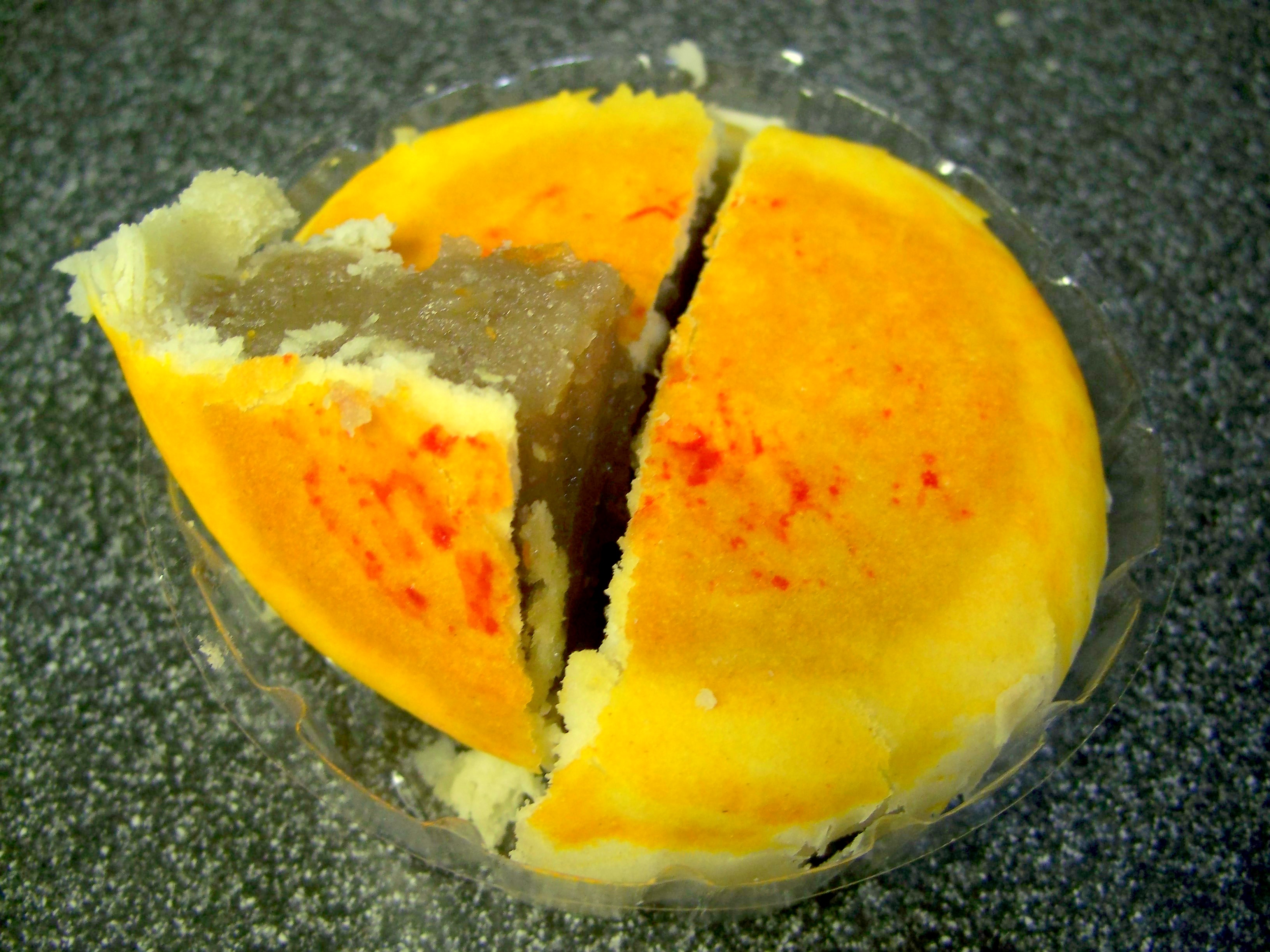
When taro is added into plain things, like yogurt, it adds flavors. When it’s added into sweet things, like mooncake and pudding (chè), it moderates the sugar and adds texture. Bánh bía khoai môn (Suzhou mooncake with taro filling) is less sweet than its common mung bean counterpart (bánh bía đậu xanh). Chè khoai môn (taro in sticky rice pudding) is a harmonious mix of chunky and soft, of nutty and chewy, of plain, salty and sweet.


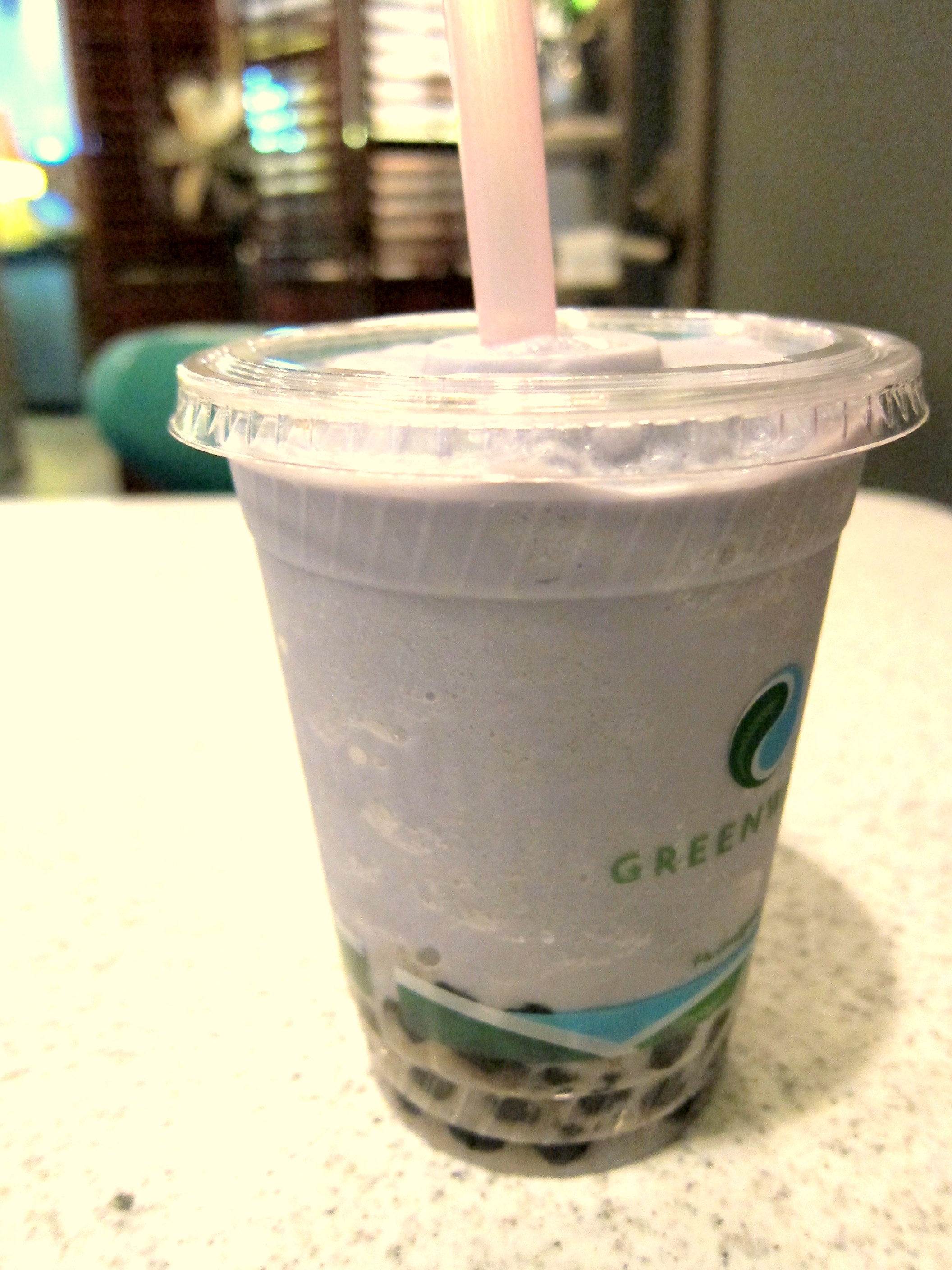
Through the internet grapevines, I’ve also heard of bánh da lợn khoai môn (taro pig-skin pie), bánh đúc khoai môn (taro rice jelly cake) with meat and dried shrimp, fried rice with taro, taro hushpuppies dipped into sweet and sour fish sauce. But if I ever get a real kitchen, the first thing I make with taro will be a bowl of soft, milky steamed taro cake (bánh khoai môn hấp), and I’ll get a cuppa taro bubble tea to complete my love.

Will they make taro milk one day?

More taro-ness: Taiwanese taro pastry

This post is submitted to Delicious Vietnam #15, July edition, hosted by Lan from Angry Asian Creations.

Steamed taro cake from Alpha Bakery & Deli

Sandwich Shop Goodies 18 – Vegan steamed taro cake (bánh khoai môn hấp)

June 28, 2011 By: Mai Truong Category: Houston, One shot, sweet snacks and desserts, Vegan, Vietnamese


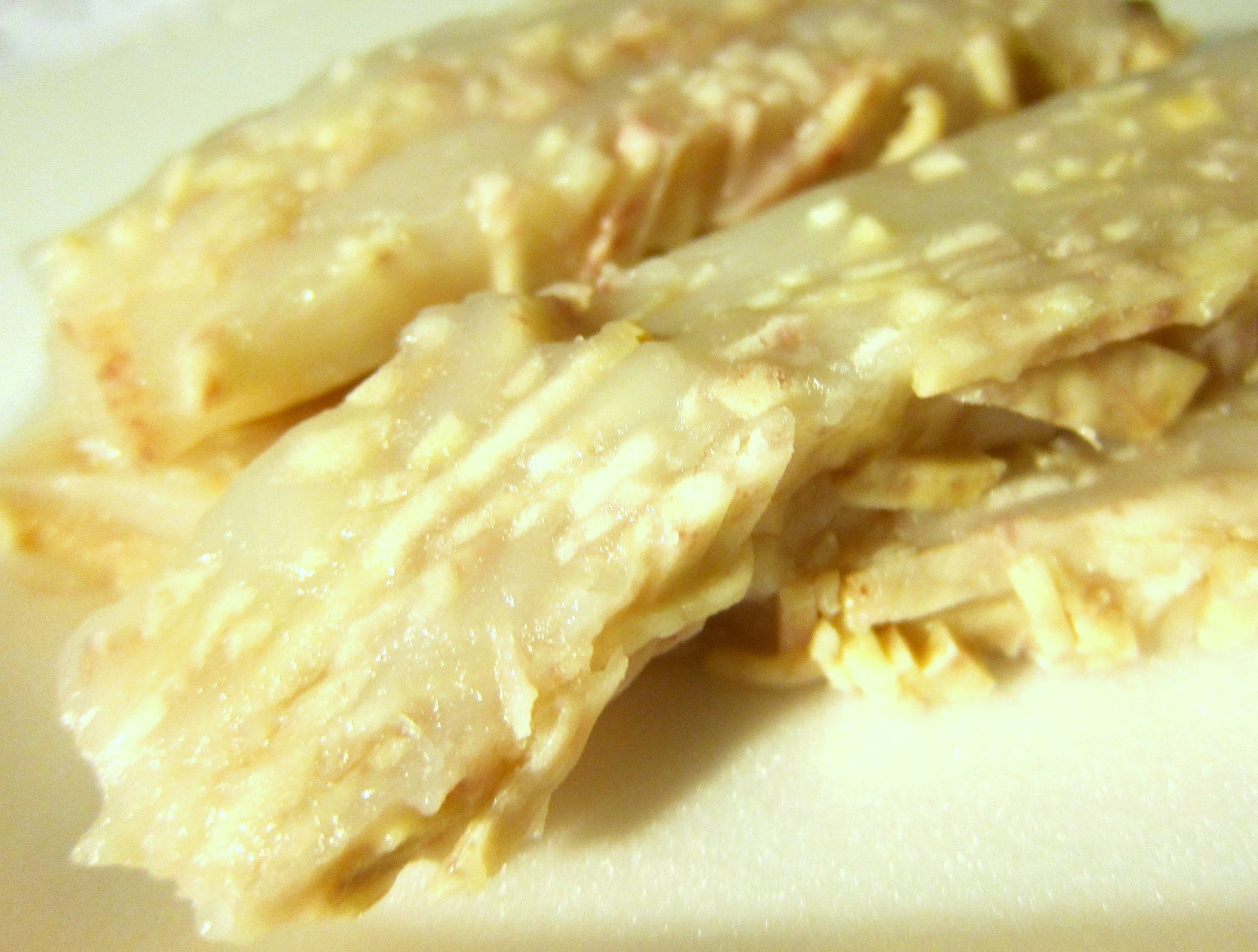
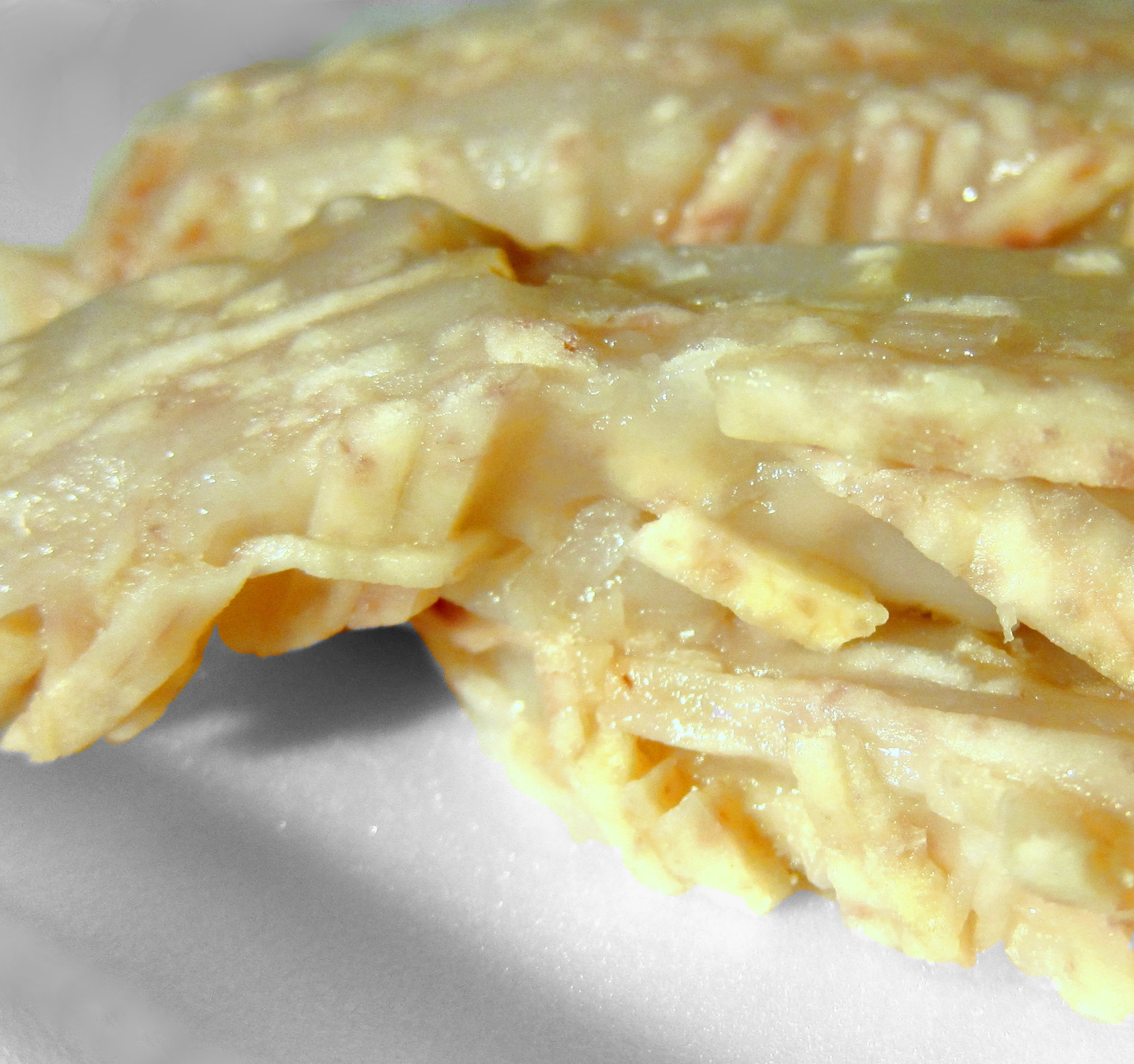
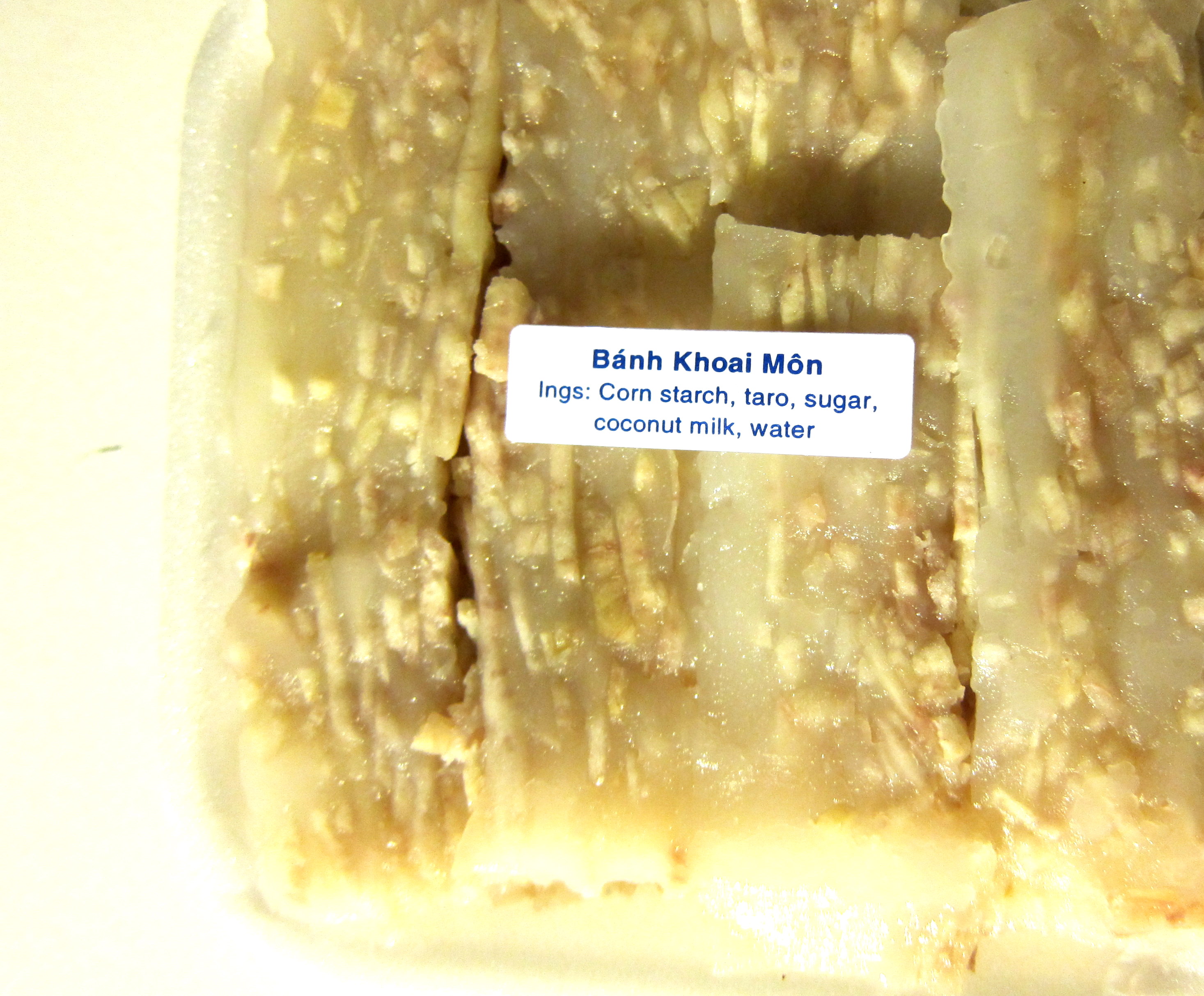
It is not pretty, but from the label I knew right away that it would be good. Strips of nutty taro embedded in soft-chewy tapioca just got on my list of things to make, if I ever feel like cooking. That can mean only one thing: the online recipes seem that simple.


If you google “bánh khoai môn hấp“, and presumably you read Vietnamese, the first links you find will contain something like dried shrimps (tôm khô) and pork, perhaps some mỡ hành (green onion in lard), too. That version is similar to Woo Tul Gow (or Woo Tau Ko). I haven’t tried that nor seen it in any cling-wrapped styrofoam plate at banh mi shops. If you don’t read Vietnamese, well… that’s why you have me :D: I translate. Here’s the Vietnamese recipe of the (vegan) steamed taro cake from Thư Viện Phật Học (The Library of Buddhist Studies), which most resembles what I’ve gotten from Alpha Bakery & Deli. Actually, this recipe sounds better.

Like most Vietnamese recipes online, this one lacks precise measurement (which I agree with to some extent, but that’s beyond the scope of this post). So I searched around and found a more detailed but also more complicated recipe, and here’s my wanna-be-clever combination of the two:

The minimalist’s vegan steamed taro cake (bánh khoai môn hấp)

– 1 lb taro
– 1 bag (200 g) of tapioca flour (bột năng)
– 50 g rice flour
– 150 g sugar
– 2 cans of coconut milk (oooh coconuty!)
– 2 cups of water
Mix tapioca flour, rice flour, sugar, water, and coconut milk together.
With the taro roots: wash, peel, slice into strips (as thick as you’d like, but I’d imagine the thicker they are, the longer it takes to cook the cake).
Gently mix the taro strips with the batter (don’t make mashed taro or you’ll get Kanom Pheuak).
Boil water. Steam the taro-batter mix for 45 minutes or until a toothpick comes out clean.

Fancier versions would include pandan leaves and vanilla, or alternating layers of tapioca and taro.


This is one of the few times when “cake” is not too far off from “bánh“: bánh khoai môn hấp is semi sweet, soft, meatless, and too light to make a meal by itself.

If you try this recipe, do let me know how it goes.
Otherwise, I found it here once for a buck fifty:
Alpha Bakery & Deli (inside Hong Kong City Mall)
11209 Bellaire Blvd # C-02
Houston, TX 77072-2548
(281) 988-5222

Previously on Sandwich Shop Goodies: mung bean milk (sữa đậu xanh)
Next on Sandwich Shop Goodies: Chinese sesame beignet (bánh tiêu)

The charm of crunchy-skin grilled fish

June 23, 2011 By: Mai Truong Category: Comfort food, Houston, Texas, Vietnamese


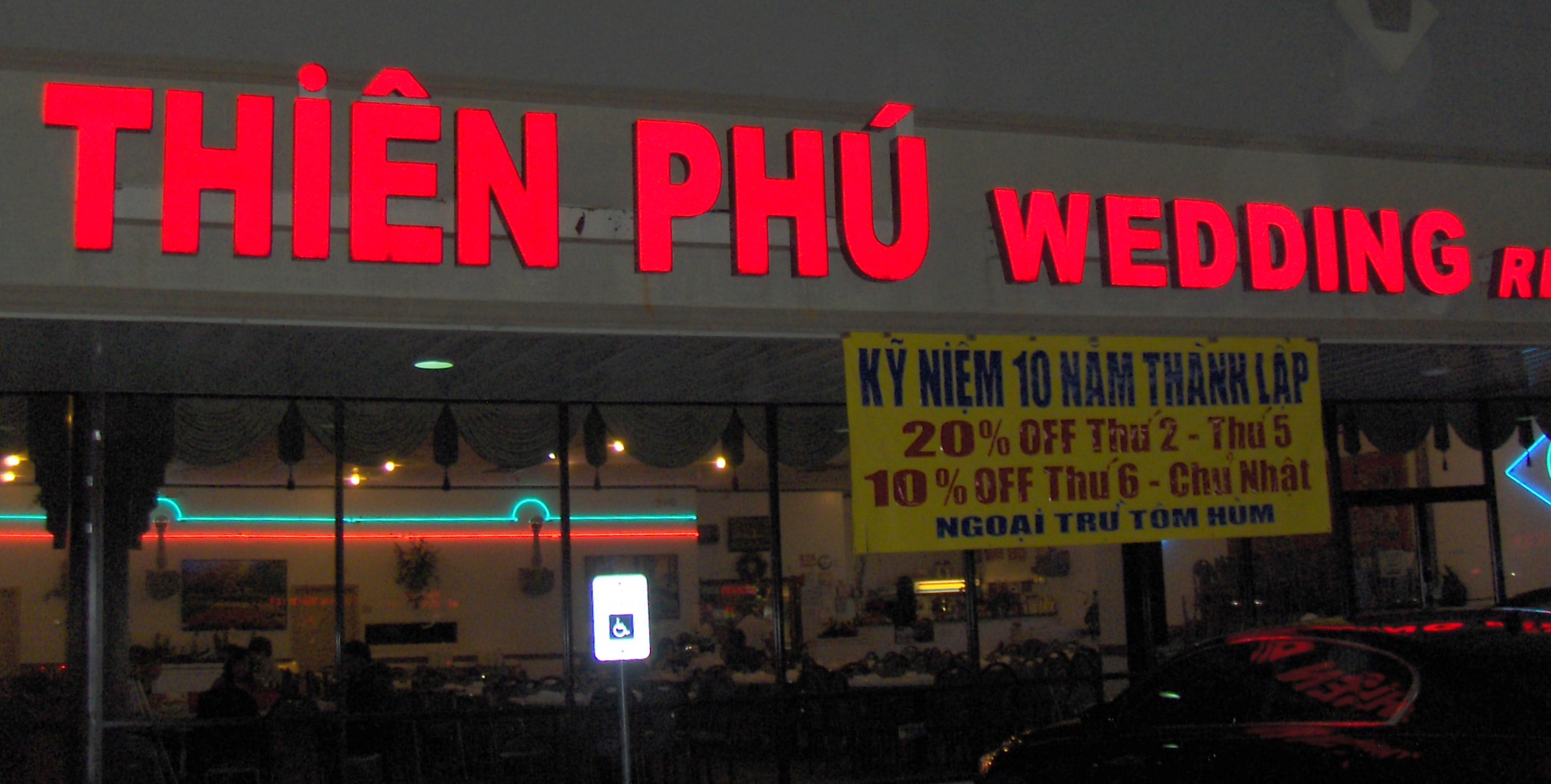
Thiên Phú has been in my draft list for over 18 months. I wanted to write a post worthy of their dishes, but a proper post requires proper pictures, and either I was too hungry at the time or I just sucked at taking pictures at the time (I still suck now, but less than before) that every single picture was blurry like a blizzard. I was more concerned about food than food blogging so I didn’t snap many shots and didn’t check the clarity of the shots I took before digging in. I also didn’t know any photo editing. Basically, I was plain dumb.

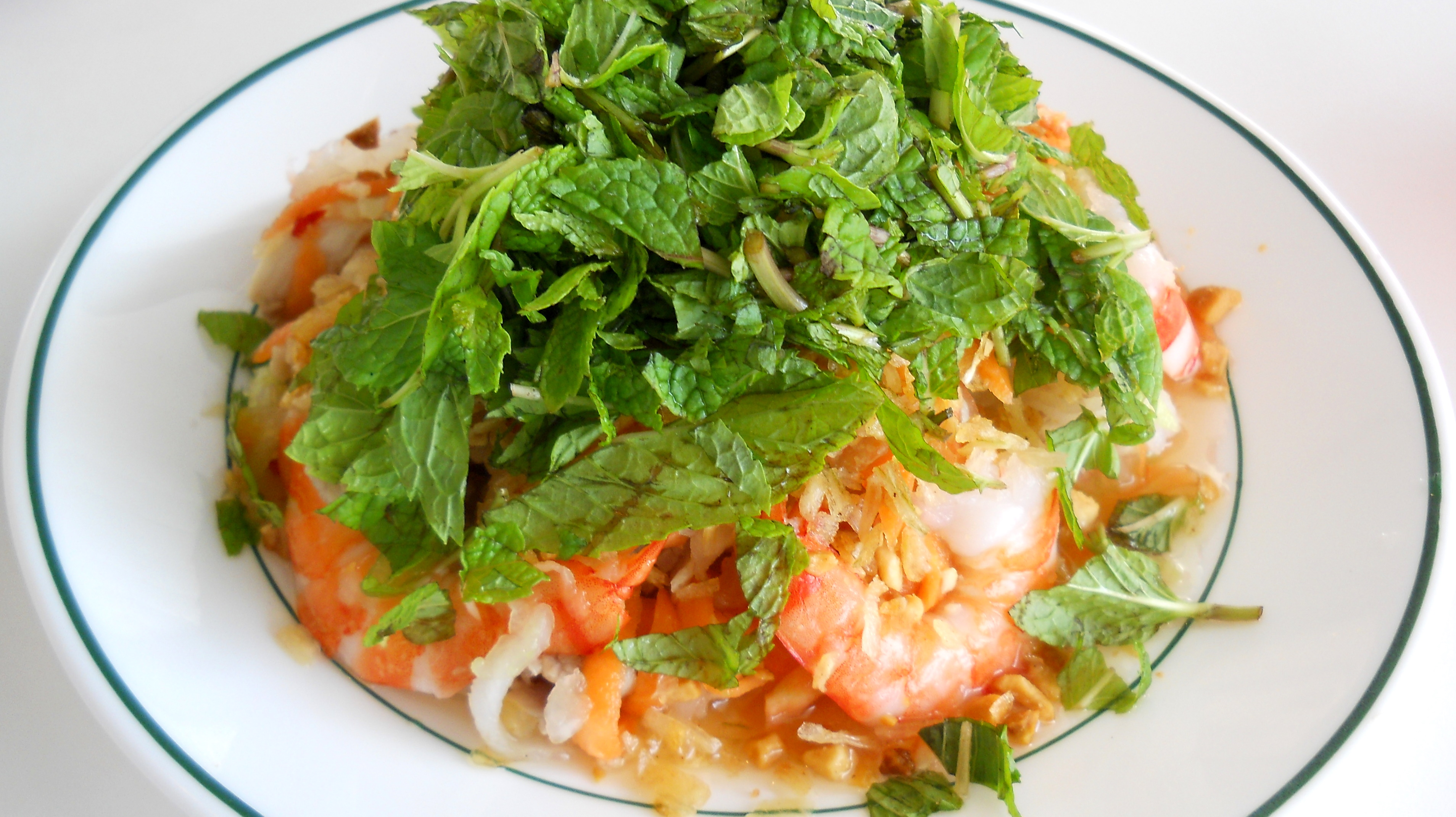
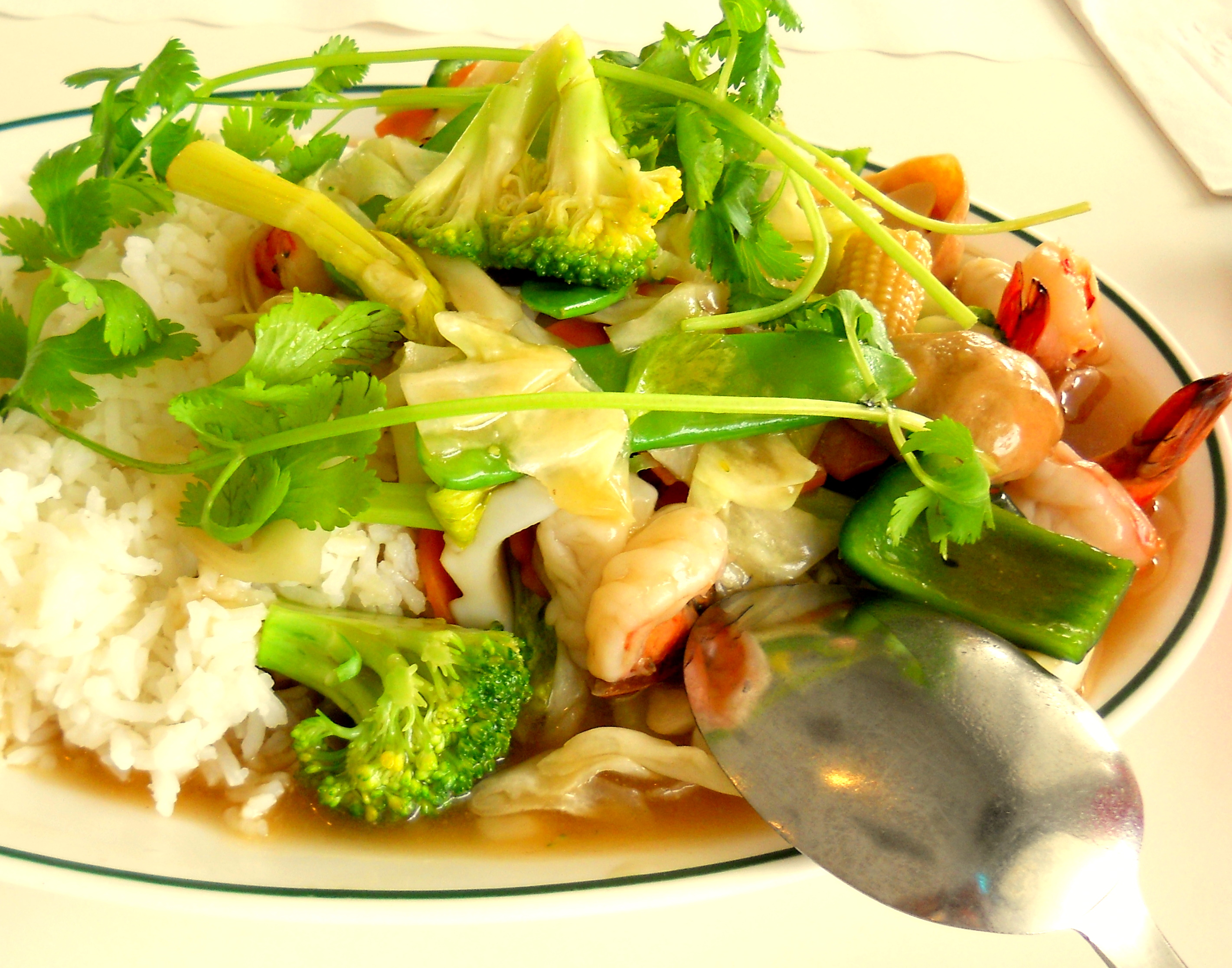
At many points I thought about abandoning the post altogether, but we had a good meal that time and I even fed the birds in the parking lot while waiting for my friends to come join us. The birds were full, we were full. The restaurant was, as usual, empty except for us (because their menu is catered to large groups and wedding parties), so we got extra attention from the staff. Such memories kept me from deleting the draft that had nothing but terrible pictures. Then my parents came to the rescue when they revisited Thien Phu in the spring and took some luminous shots, like the beef and shrimp salad above and the seafood stir fry on rice below.


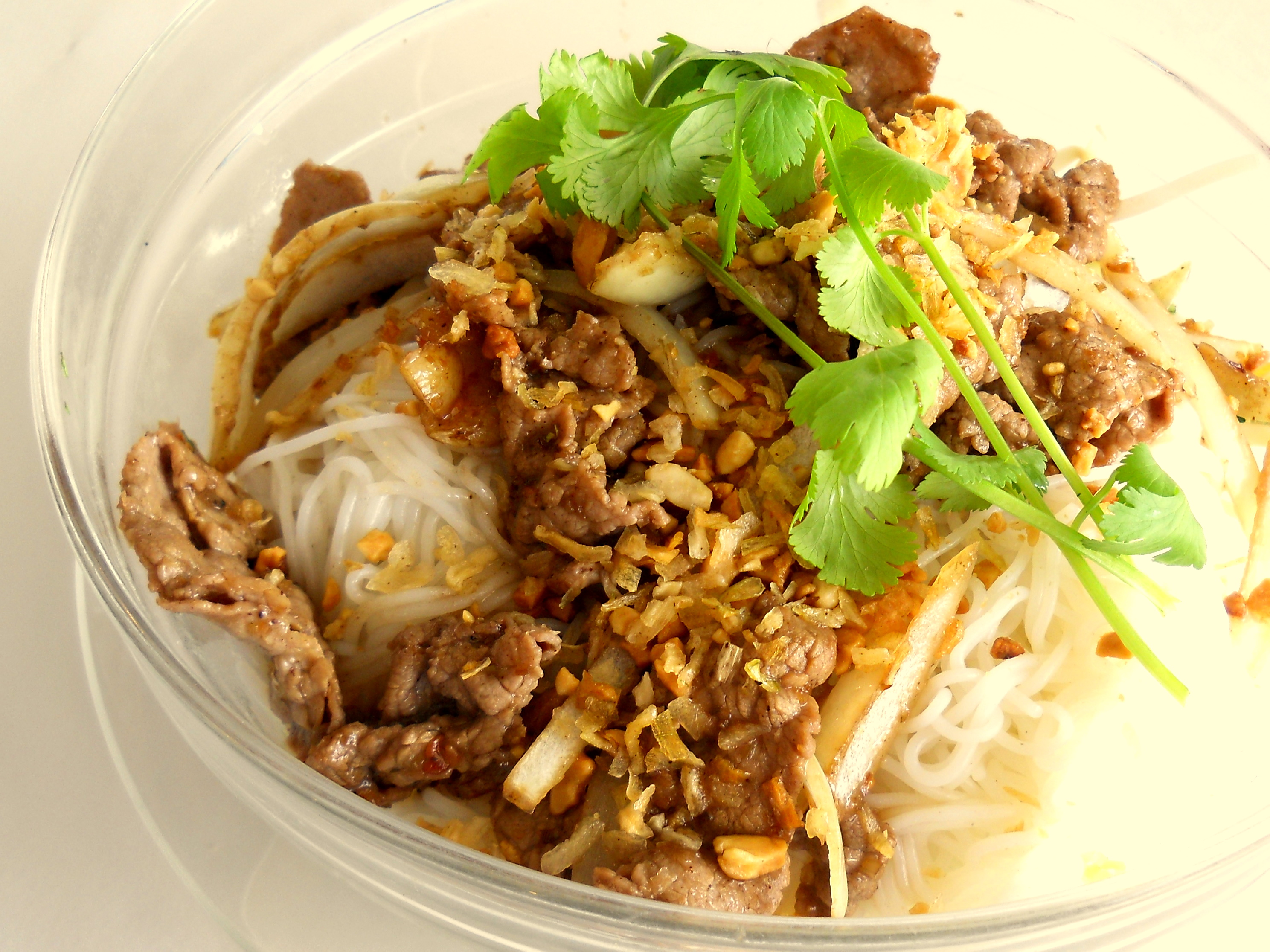
The salad, like most Vietnamese salads soaked in that half sweet, half tangy mixed fish sauce, was yummy. The seafood stir fry was nothing beyond expectation, they said, but at the very least, Thiên Phú brown sauce was not fattily thick like that goo in Phở Hà’s pan-fried phở. Dad’s vermicelli with stir fried beef was a good sweep, as evident from its picture.


If you’ve read my blog for long enough, you probably would notice that my dad almost never orders anything but beef, while Little Mom goes for shrimp or fish nine times out of ten. Naturally, Thien Phu ranks high in my parents’ list because their specialties are the 7 courses of beef and the whole grilled fish.


We’ve never tried all seven beef courses at once. We just choose a few that sound most savory, and for this party of 5, something shareable. Like beef that can be wrapped in rice paper and dipped in sauces. The chunky, fatty steamed beef balls (bò chả đùm) was broken into coarser bits to be scooped with a rice crackers or wrapped with lettuce. Razor-thin leaves of still red beef were dunked into heated vinegar for a simple, tender, and tangy completeness of bò nhúng dấm. Halved shrimps joined the beef in a similar fashion to make tôm nhúng dấm. Dad even dipped it in mắm nêm (ground anchovy sauce) to tighten the taste.


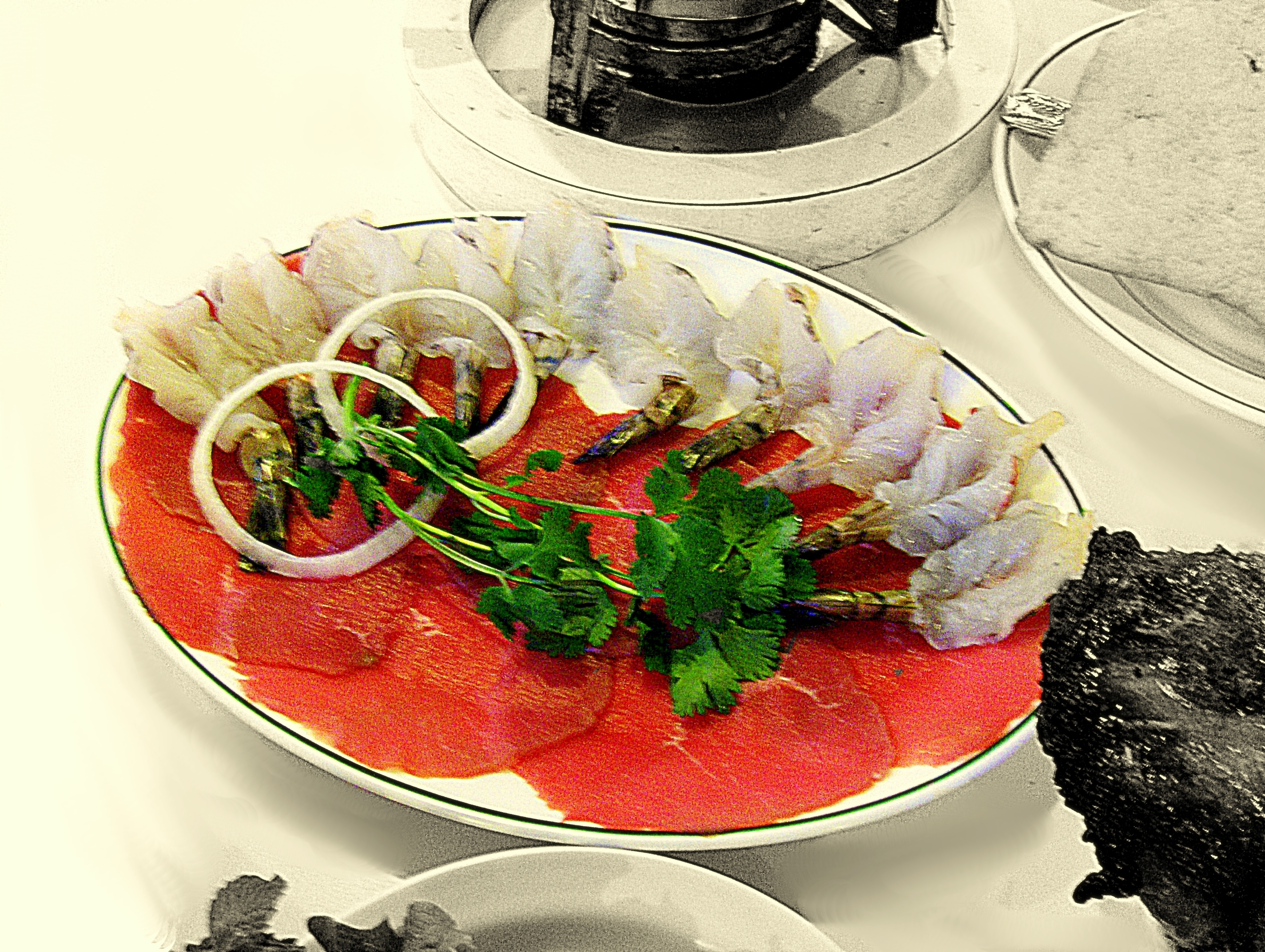
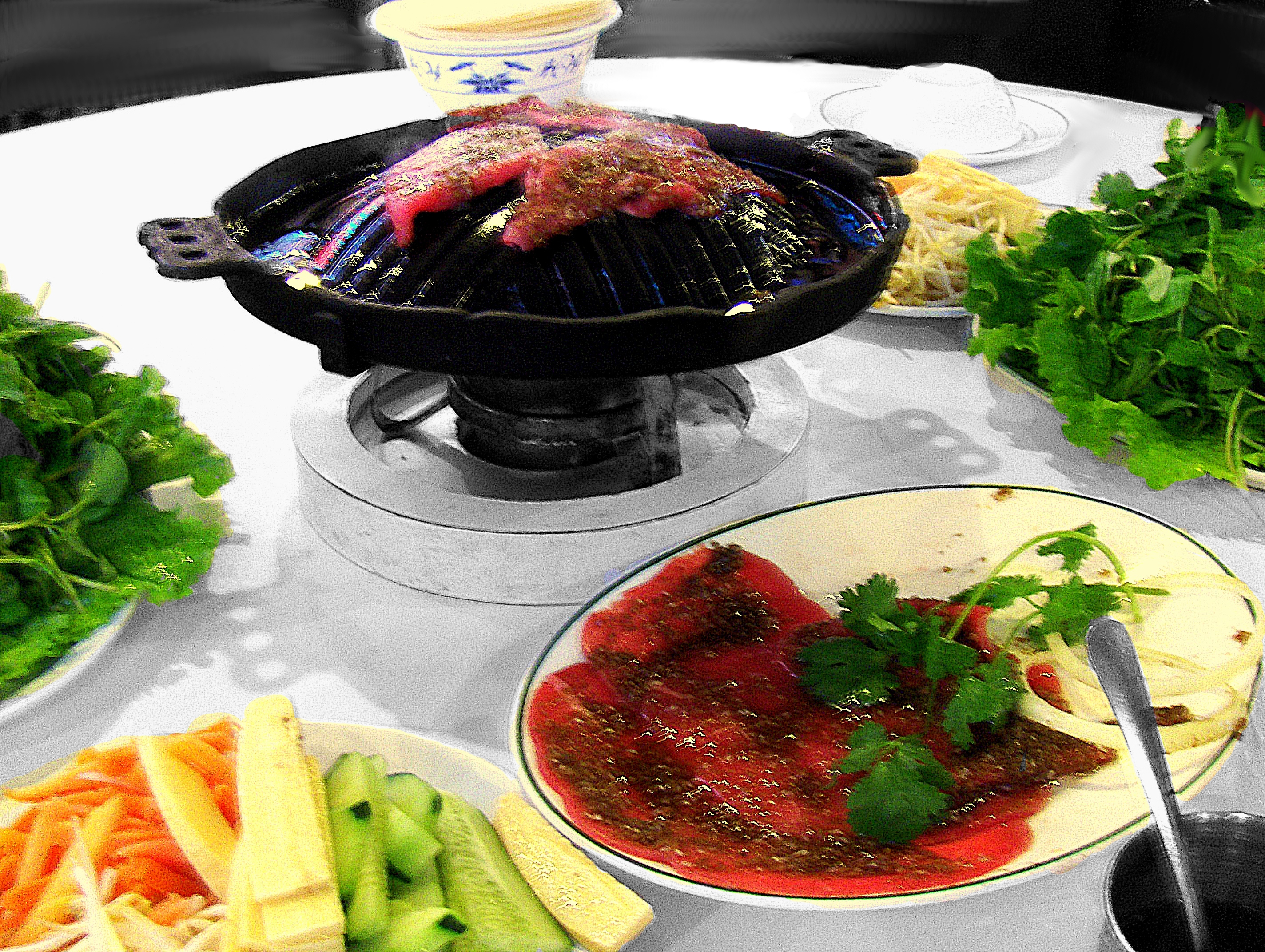
Then there’s the good old style of flopping beef slices on a hot black grill pan and hearing it sizzle while loading the wet rice paper with bean sprout, herbs, pickled radish and daikon. I also put a slice of unripe banana in my bò nướng vỉ roll because its cookie-like texture and clinging aftertaste are fun, although they don’t add much to the roll as a whole.


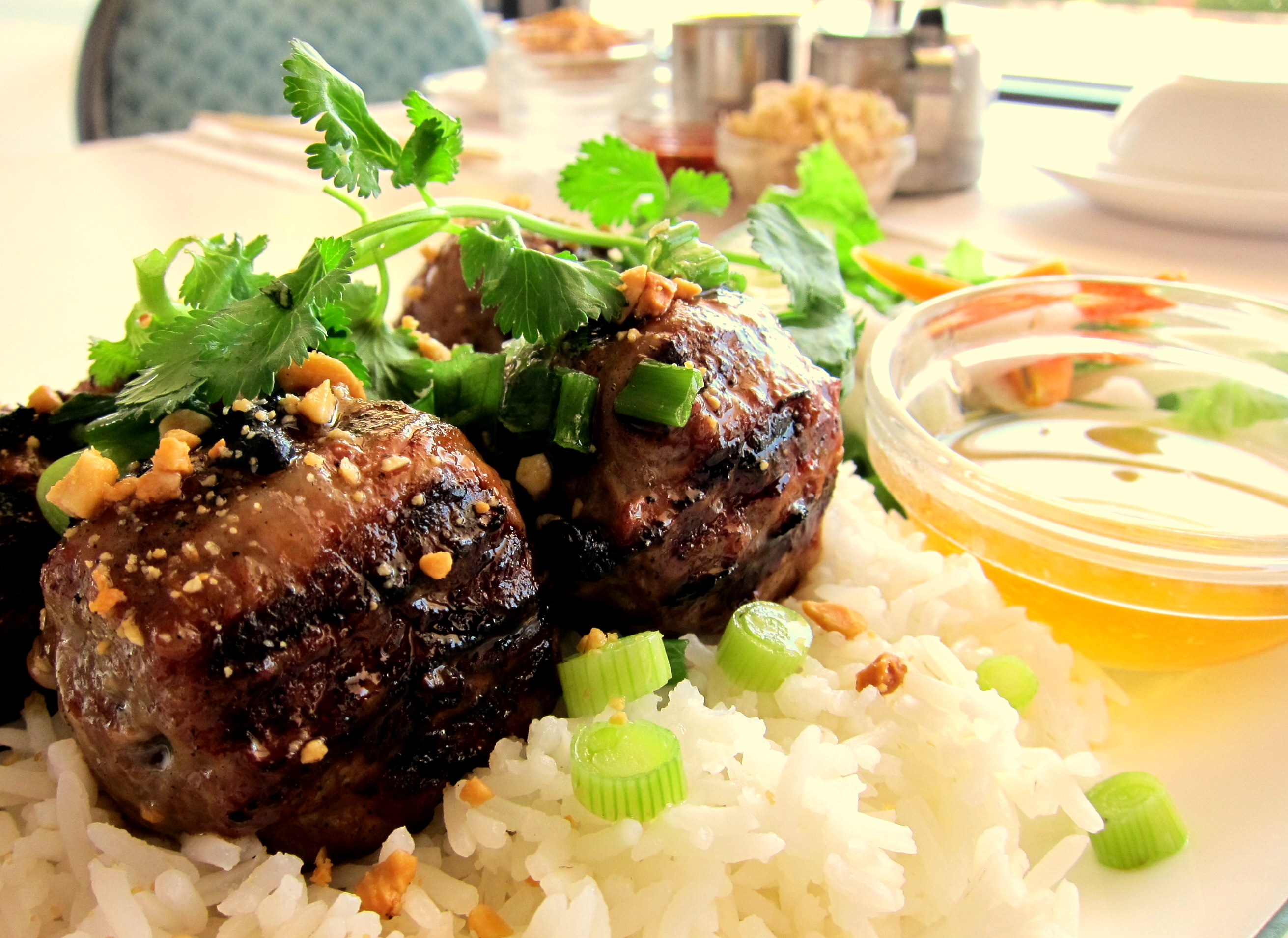
Leaving the blurry images of December 2009, we’re back to the present: grilled beef ball on rice. The marinade was sealed inside its smooth, gritty texture, each ball was so juicy it would shame a plump mango.


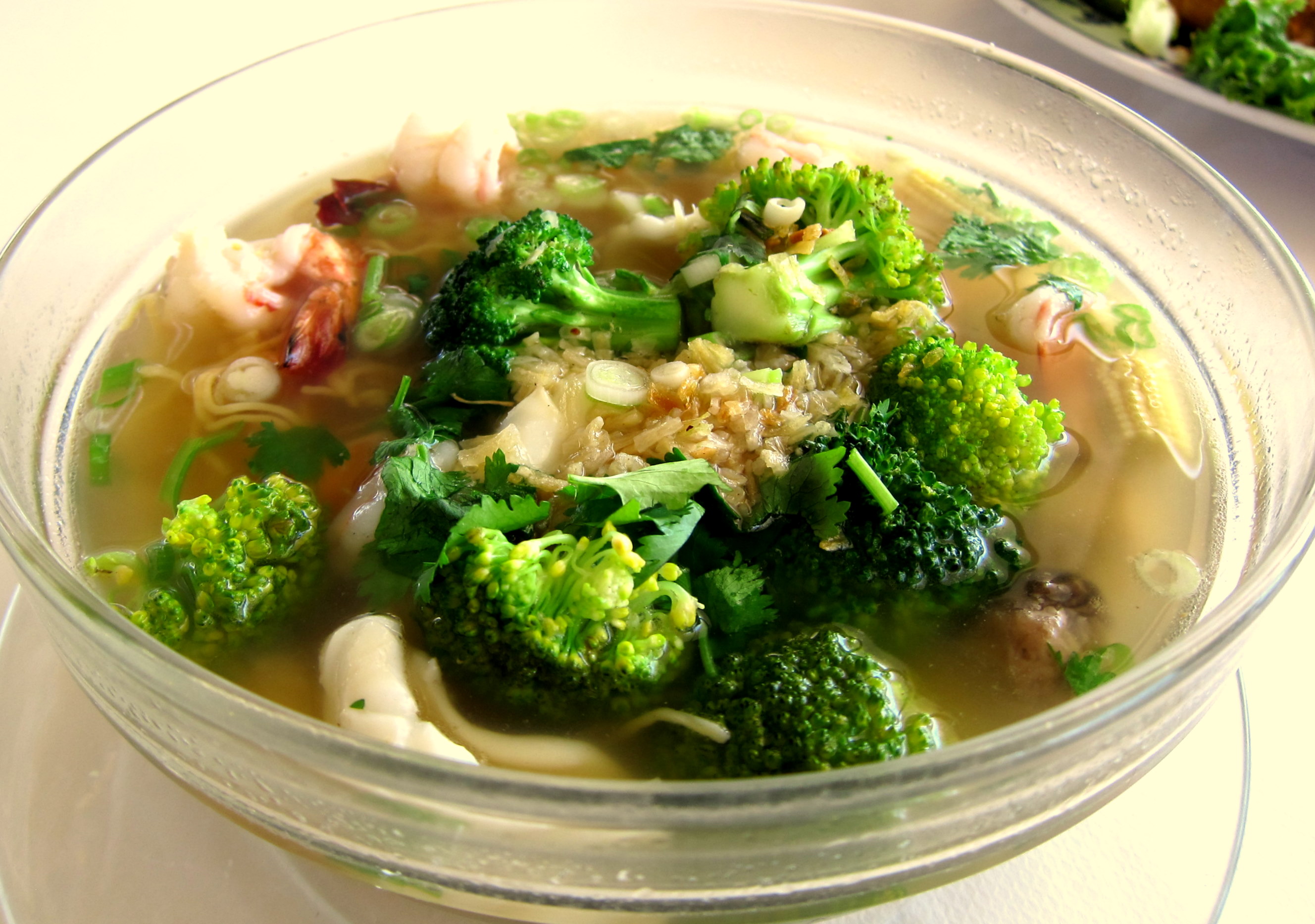
The seafood dishes are not subpar either. Loaded with shrimp, squid, and broccoli, mì hải sản (seafood noodle) had the sweetness of hủ tíu Nam Vang (Phnom Penh ka tieu) and the strength (and curly noodles) of ramen. The more broth we drank, the more delicious it got.


But there is one thing that everyone gets when they go to Thiên Phú: the crunchy-skin grilled fish (cá nướng da giòn). The whole catfish is enough for two by itself, grilled hiddenly in the kitchen until its skin breaks a crackling sound and glisters like topaz, then it’s brought out to you topped with crusted peanuts, cilantro and lime wedges. Its flesh stays white, juicy and soft. Roll up a side piece, you can savor its pristine, naturally sweet taste or dip it in nước mắm. The second grilled fish I had here this May was better than the one I had in December 2009, and so were their beef dishes. It’s good to see a good place gets better.

Just watch out for bones.


Address: Thiên Phú Restaurant
11360 Bellaire Blvd Ste 100
Houston, TX 77072
(281) 568-1448
(in the same parking lot as Giò Chả Đức Hương)

Lunch for 5: $76.03

Nutty sticky rice

June 14, 2011 By: Mai Truong Category: Comfort food, Houston, One shot, Southern Vietnamese, sticky rice concoctions, Vegan


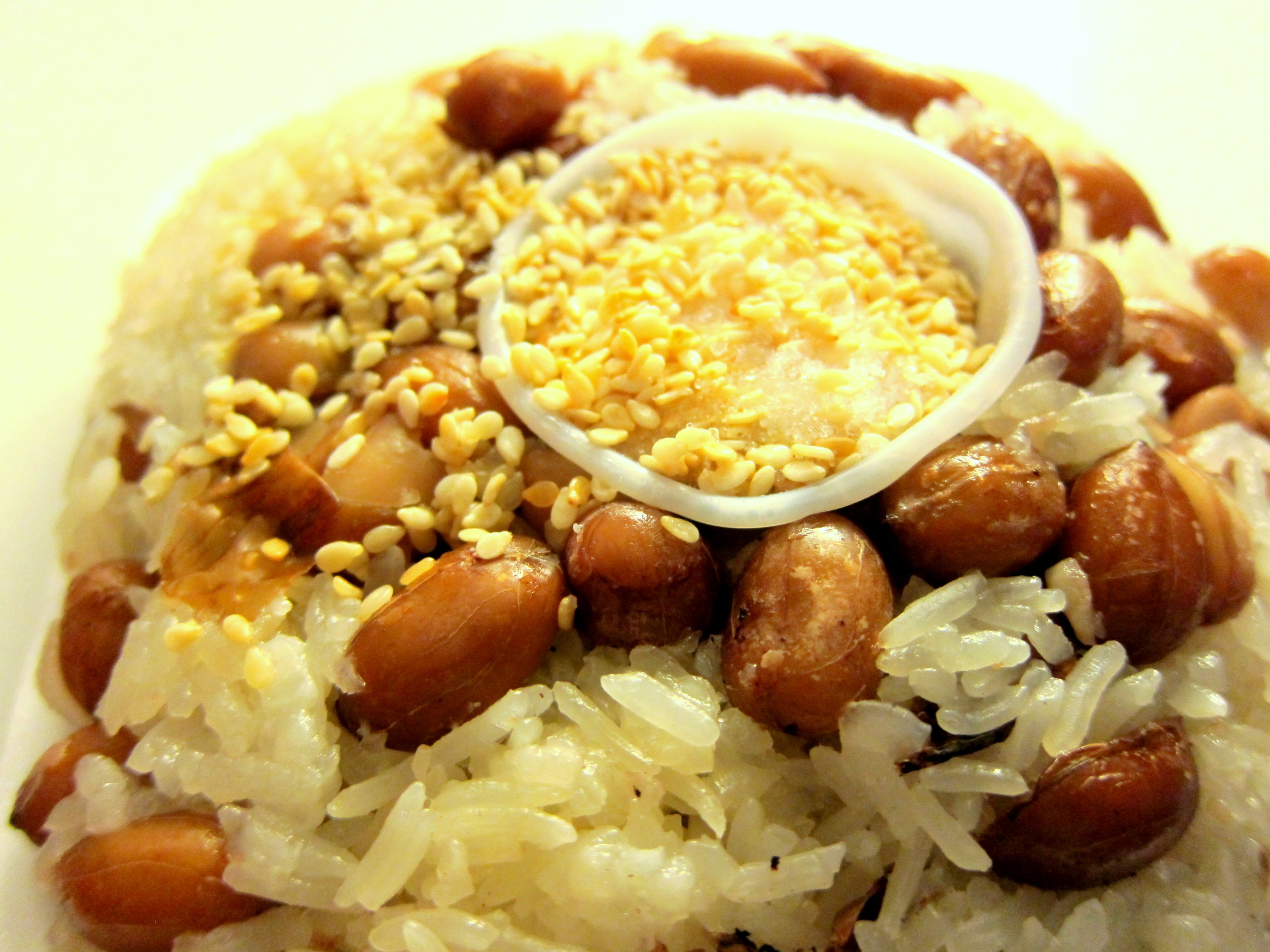
What hits the spot in the morning better than a hot packed handful of sweet sticky rice with muối mè (sesame-sugar-salt mix)? A hot packed handful of sweet sticky rice with soft steamed whole peanuts and muối mè. Xôi đậu – my forbidden childhood love.

$1.50 for a full tummy.

Mom did not want me to eat too much xôi đậu in the past because peanuts are known for producing gas excess.

Address: Alpha Bakery & Deli
11205 Bellaire Boulevard
Houston, TX 77072
(281) 988-5222

A quadruple mix at Saigon Buffet

May 21, 2011 By: Mai Truong Category: Comfort food, Houston, Vietnamese


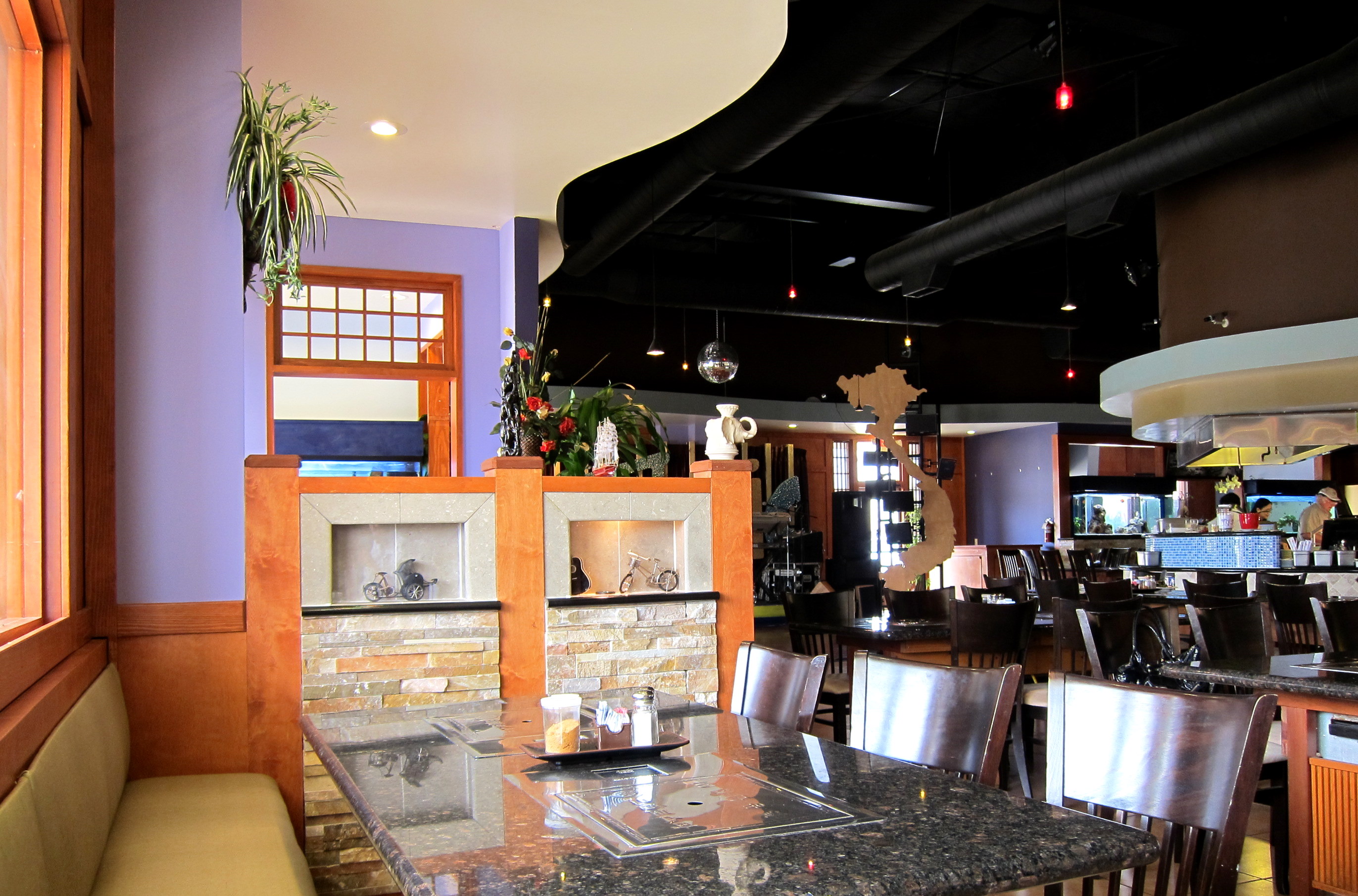
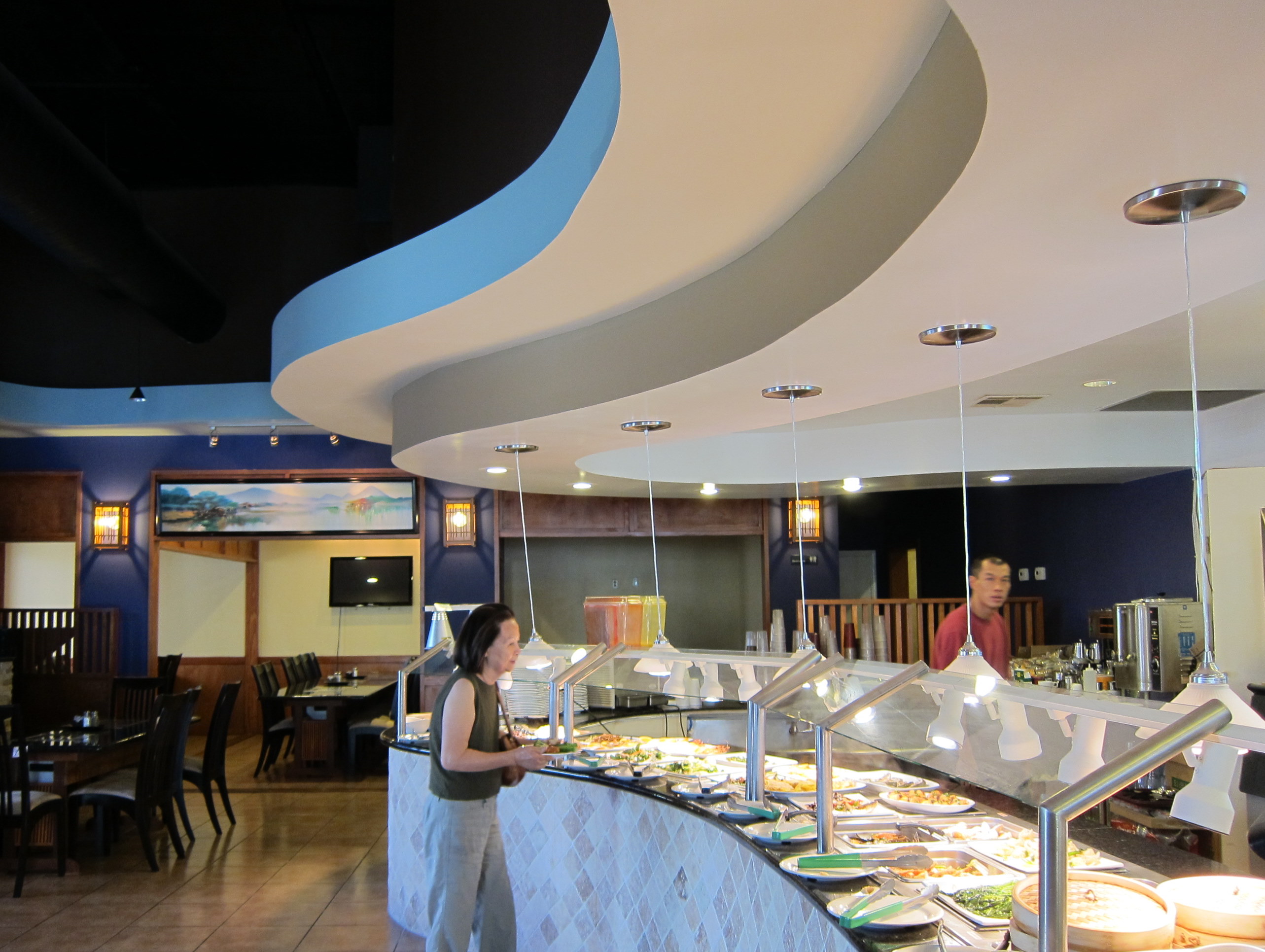
A Japanese chef, a former Korean restaurant interior, a Vietnamese manager, and a buffet menu combining all three plus Chinese. Sounds unauthentic and one-star fusion? I thought so too, I didn’t plan on blogging about Saigon’s Buffet until I was a third way through my plate. Then I scrambled for the cam to snap a few from my mom’s. Good thing it’s a buffet, can always go back for seconds.


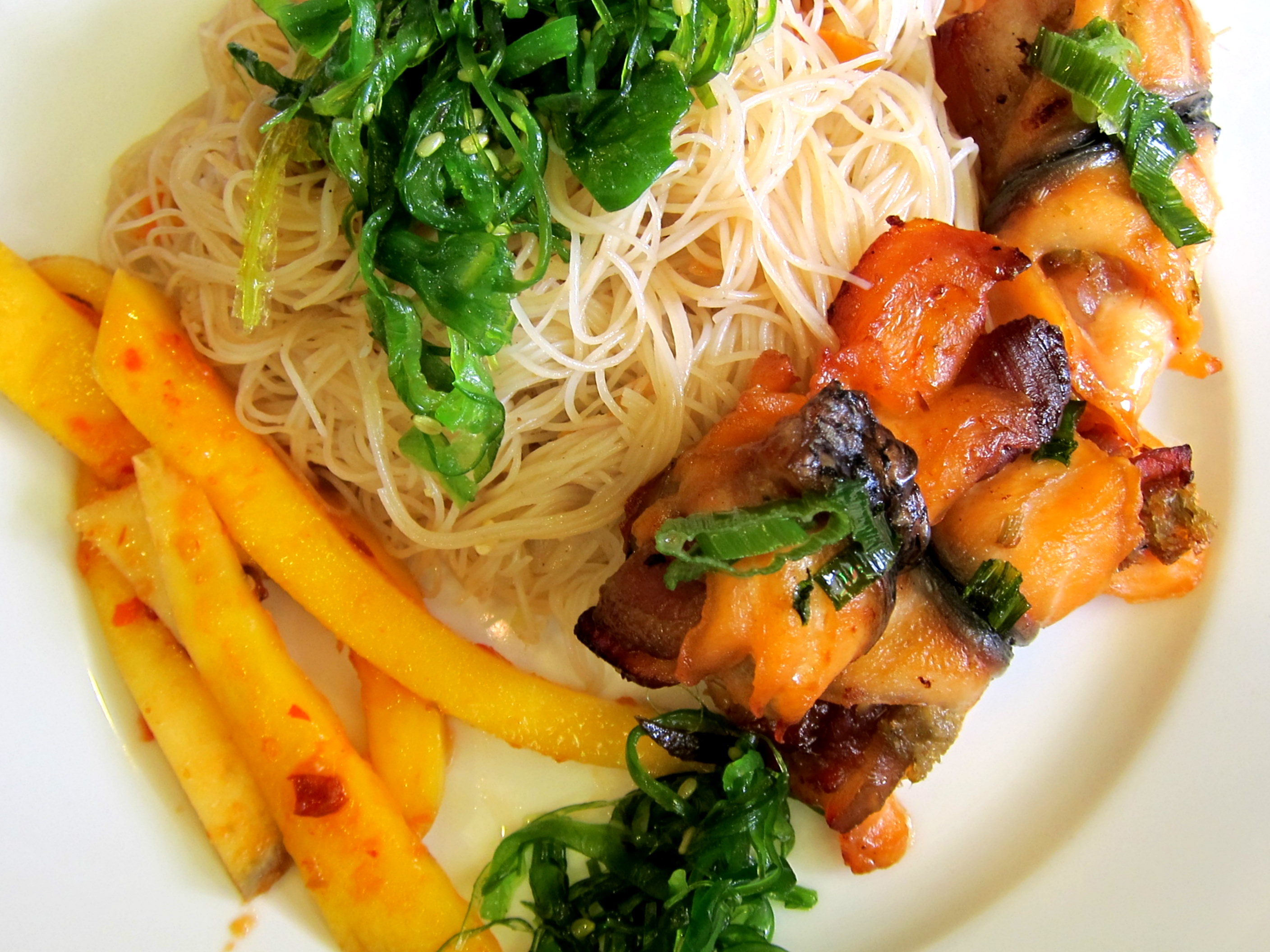
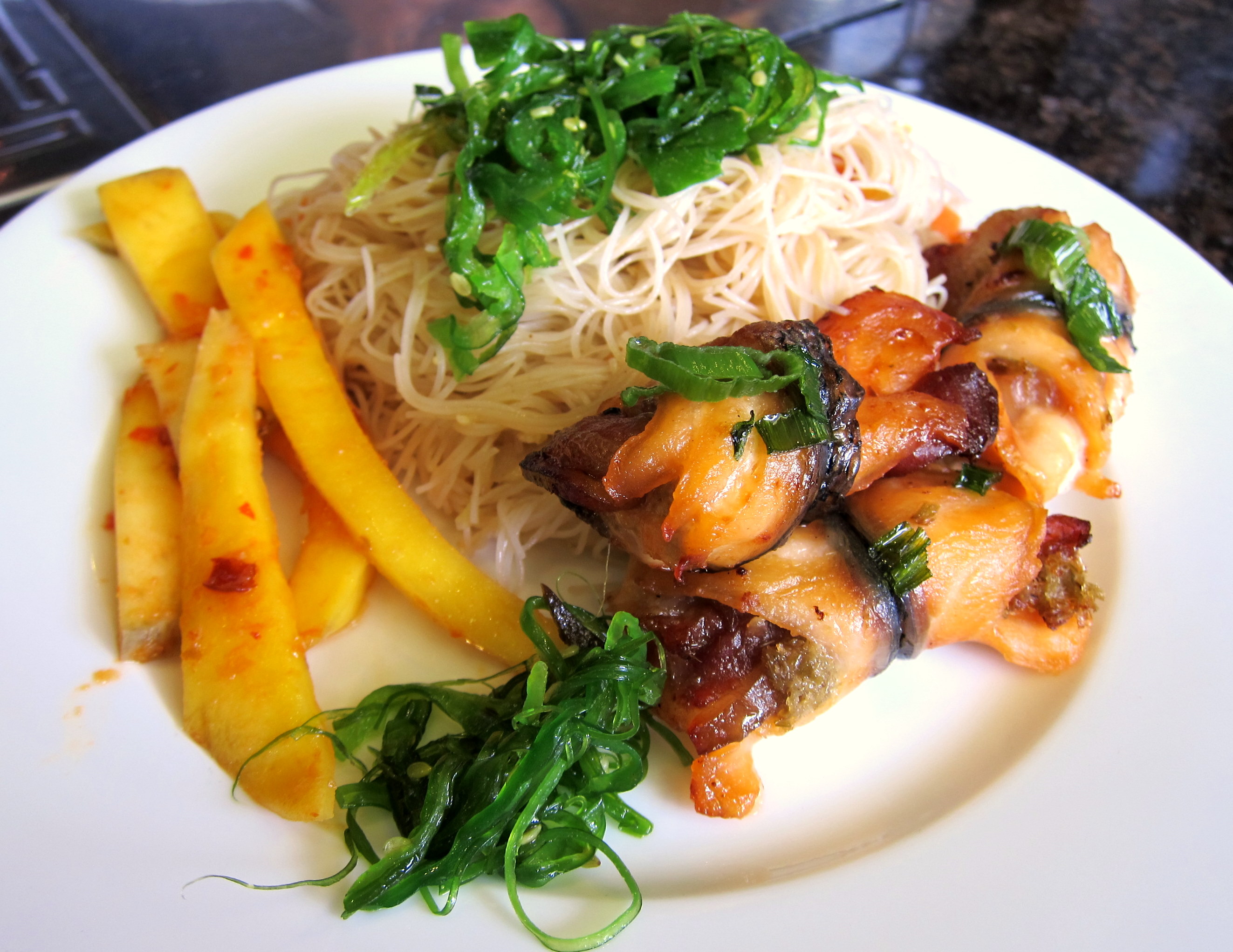
From the far right end we gandered first through the kimchis and namuls, grouped with a bright yellow ripe mango salad mixed with gochujang and something soakingly flavorful similar to either pickled sweet onion or green papaya salad. To its left are sushi rolls and plump chunks of red tuna and orange salmon, and a few stubby octopus tentacles that I really wanted to get but didn’t know where to fit on my heaping pile.


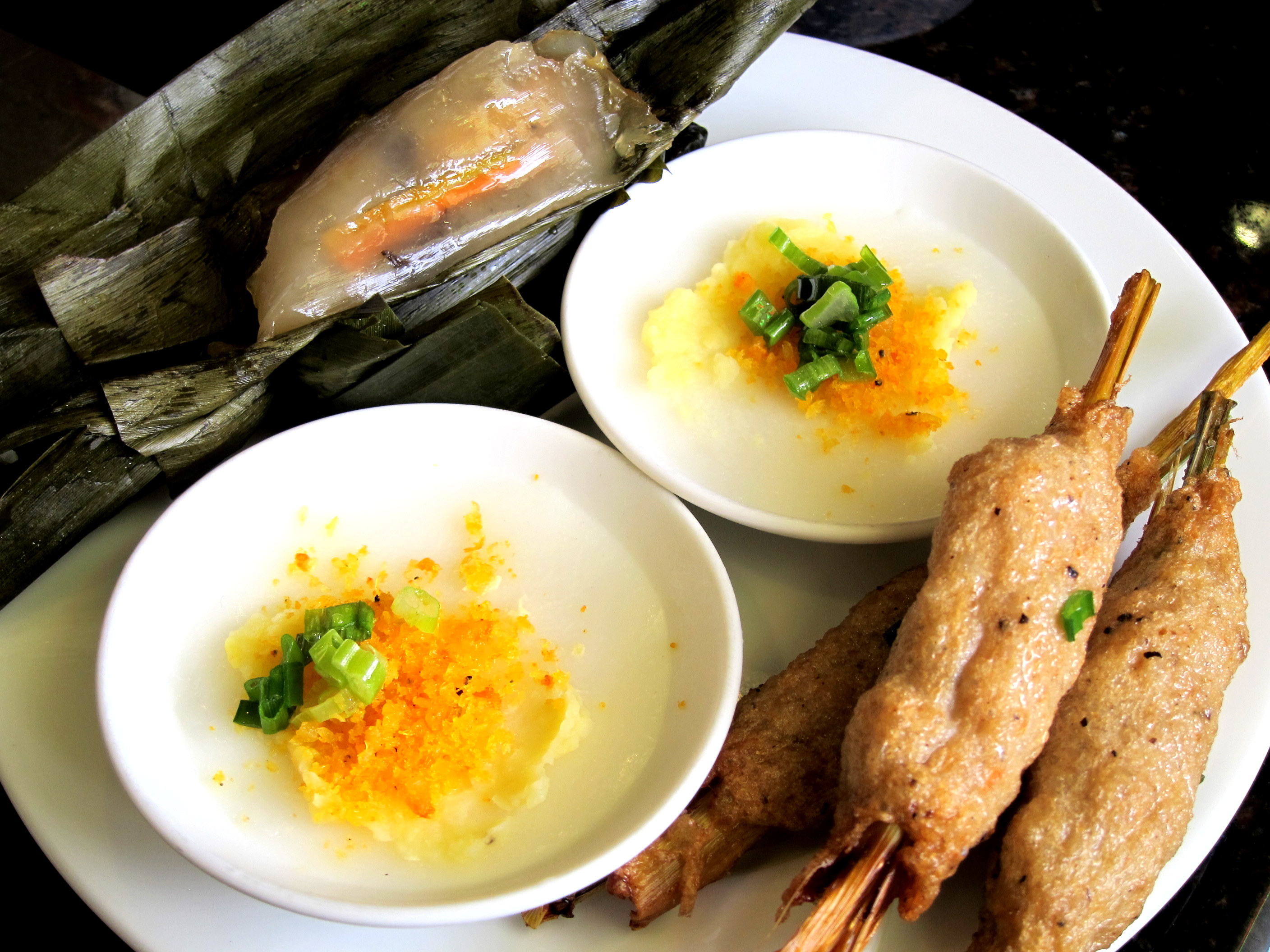
From the far back of L-shape buffet counter are fried rice, chow mein, and lightly mixed rice vermicelli (similar to bún xêu) that goes exceedingly well with the sesame-oil-sweet-smelling, cucumber-free wakame salad. Trays full of shrimps, baked salmon-wrapped pork, and grilled shrimp paste on a lemongrass stalk shine next to the more Vietnamese familiars: bánh xèo, bánh bèo, stuffed tofu in tomato sauce


Little Mom fell for the all-around-crunchy and coconut-sweet sizzling crepes right away (“better than Kim Son‘s,” said she), while I grew on the chewy leaflets of semi-translucent steamed flour encasing carrots, mushroom, and pork, which looks halfway like a bánh bột lọc and tastes halfway like a bánh giò.


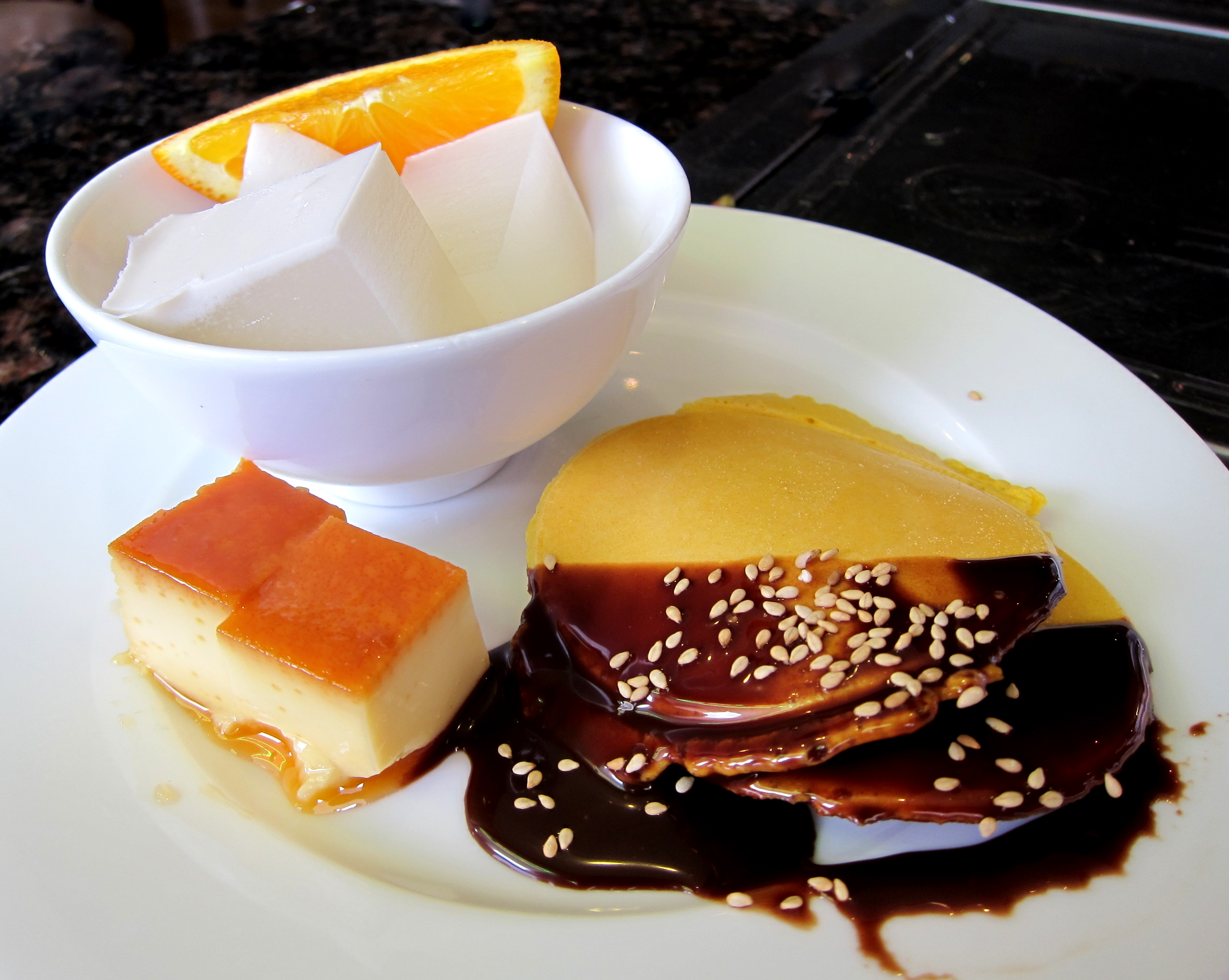
The dessert section lies between the octopus tentacles and the cashier, which is at the corner of the L. Simple, but sufficient for a cool washing-down, are the coconut milk jelly and the fruits, classic silky and Bi’s favorite is the flan, while the wafers dipped in chocolate and sprinkled with sesame seeds hit home in a nutty cheerful crunch. “Take a lot the first time,” obviously it’s not because they “charge for seconds” like the manager jokes, but because you don’t need to sample things here to be safe; everything’s better than expected. Everything’s yummy.

As we waited for the machine to print our receipt, the manager told Little Mom that the chef just brought out bún bò xào (stir-fried beef rice vermicelli), Little Mom said oh Bi likes that, had it come out earlier he woulda stuffed himself with it. And who woulda thought, the manager offered us a free to-go box with bún bò xào! It could just be the opening month (when they charge only $12.99 instead of $15.99 per person) and the beaming summer spirit, but Saigon Buffet surely had us this time. Come back we will.

Address: Saigon Buffet (previously Korean Garden Grille)
11360 Bellaire Blvd
Houston, TX 77072
(281) 879-0228

Tags:

Sandwich shop goodies 17 – Mung bean milk

May 13, 2011 By: Mai Truong Category: California - The Bay Area, Comfort food, Drinks, One shot, Vietnamese

Do you like soy milk?
No? Well, someone once told me that if you don’t expect milk when you drink soy milk, then you’d enjoy it.
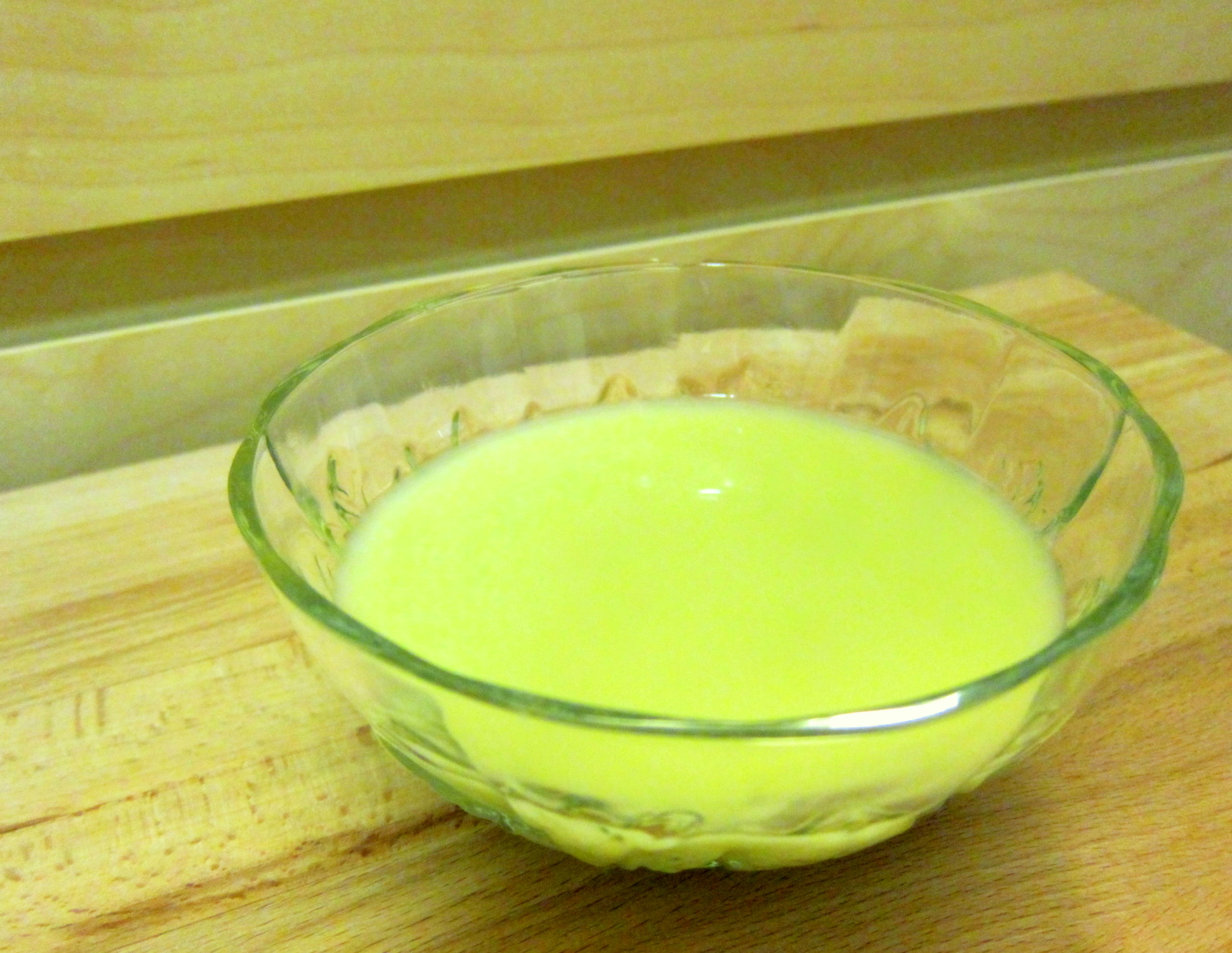
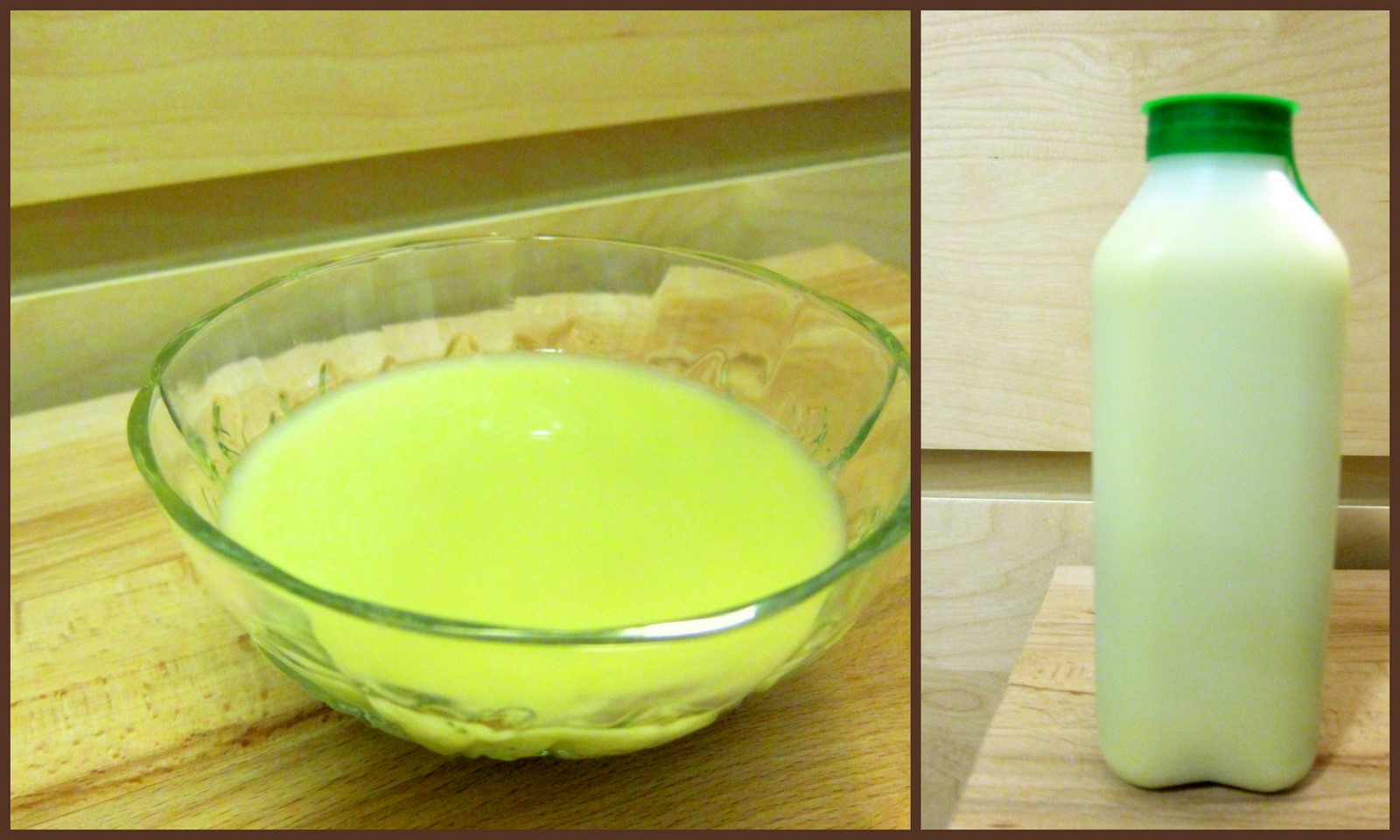
Yes? Then you might just prefer this luscious, green, liquefied nourishment to soy milk.


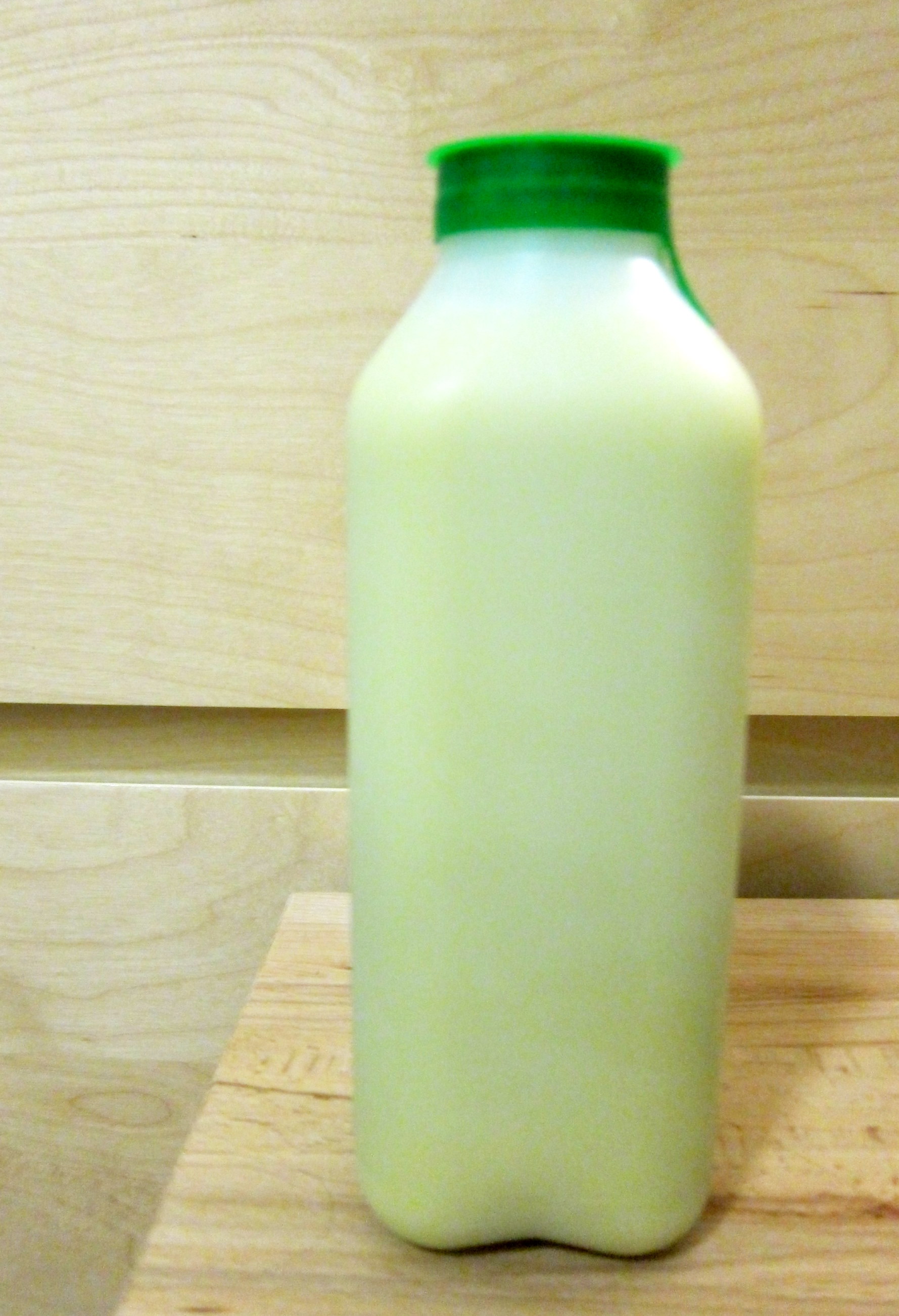
Not only is it nuttier, mung bean milk also feels more natural and more local than the modern soy milk. From the cheap plastic bottle with a green plastic cap and no label (that means no half-stamped “Sell by…” either), you can probably tell that it didn’t go through any metallic machine with pulleys and tubes. Whoever makes this mung bean milk probably soaks the beans overnight in a dented aluminum basin, boils the extract at 2 am in a sooty pot, and bottles the final liquid via a red plastic funnel that looks just like the one they always use for oil change. It doesn’t really matter as long as the delivery of a fresh batch comes at 6. The sandwich shop unstretches its iron folding doors. The customers start buzzing in. At 11 I came. I grabbed a bottle at the cashier. It was warm.


Two and a half hours later I got home and the milk got cold. I packed the 16 oz bottle into my minifridge next to the banh mi and banh bao (from the same store), sighing in relief that it’s just short enough to stand fit on the upper shelf. Was the bottle I had back then also about this size? How many years ago since I had last tasted that nuttiness in a glass? I dialed, “Mom, guess what I bought today! Sữa đậu xanh!”

On the other end of the phone I could hear her eyes widened and her lips part into a half moon shape. She’s happy. Every day for some time between my fourth and sixth years, Little Mom used to buy me a pint of mung bean milk from a grandmother of one of Dad’s students, and it had to be that grandmother because of her indisputable cleanliness. When I was 6, we switched to the packages of Vinamilk’s pasteurized fresh (cow) milk, a more convenient alternative to get in loads per week. Actually, I remember the cow milk packages with light blue words printed on white and the typical picture of a black-and-white Holstein cow, but not the mung bean milk bottles, barely the fact of drinking it every day. The point is, even in the Saigon of the ‘80s, mung bean milk was rarer and pricier than cow milk. Today, Bánh Mì Ba Lẹ in Oakland sells $2.50 for every 16 oz bottle, roughly six times more expensive than a gallon of cow milk, which you can get on average for $2.99 at your local grocery. Not that the price always represent the taste, but if I were a cow I would sulk a little, knowing that those helpless bird-eye seeds could produce something more valuable than my giant rectangular body could.

Now, about the taste… I’ve tried mung bean milk both ways: chilled in the fridge and warmed up in the microwave. Warm is better. Warm embraces the sweetness instead of masking it. Warm sooths your sensors from the tongue all the way down the esophagus. Warm also elevates the fragrance of pandan leaves and mung bean.


I wanted to stock up on the stuff so much I came back the next Sunday afternoon to buy off their last 4 bottles: 2 on the counter and 2 from the fridge. I refrigerated them all and refrained from drinking them that night; like a poor drug addict I tried portioning whatever little amount I had for the whole week: 1 bottle per two days seemed satisfactory. But ah the best-laid schemes gang aft agley, Wednesday morning one bottle turned sour on me.

“There goes three precious pints down the drain,” thought I. But it turned out the remaining two were fine. ‘t was one from the counter that got ruined. The cold ones stayed for 6 days. So unless you drink it within two days, buy the refrigerated bottles, keep fridging, then shake it well and warm it up with a microwave when you drink.


One last bit to tell you how stingy I get when it comes to mung bean milk: I drank and drank and at the bottom there was the thick beany leftover, I poured in some water, shook it up, more mung bean milk for me.

Address: Bánh Mì Ba Lẹ (East Oakland)
1909 International Blvd
Oakland, CA 94606
(510) 261-9800

Previously on Sandwich Shop Goodies: nước rau má (pennywort juice)
Next on Sandwich Shop Goodies: bánh khoai môn hấp (vegan steamed taro cake)

This post is submitted to Delicious Vietnam #13, May edition, hosted by Jing of My Fusion Kitchen.